Categories
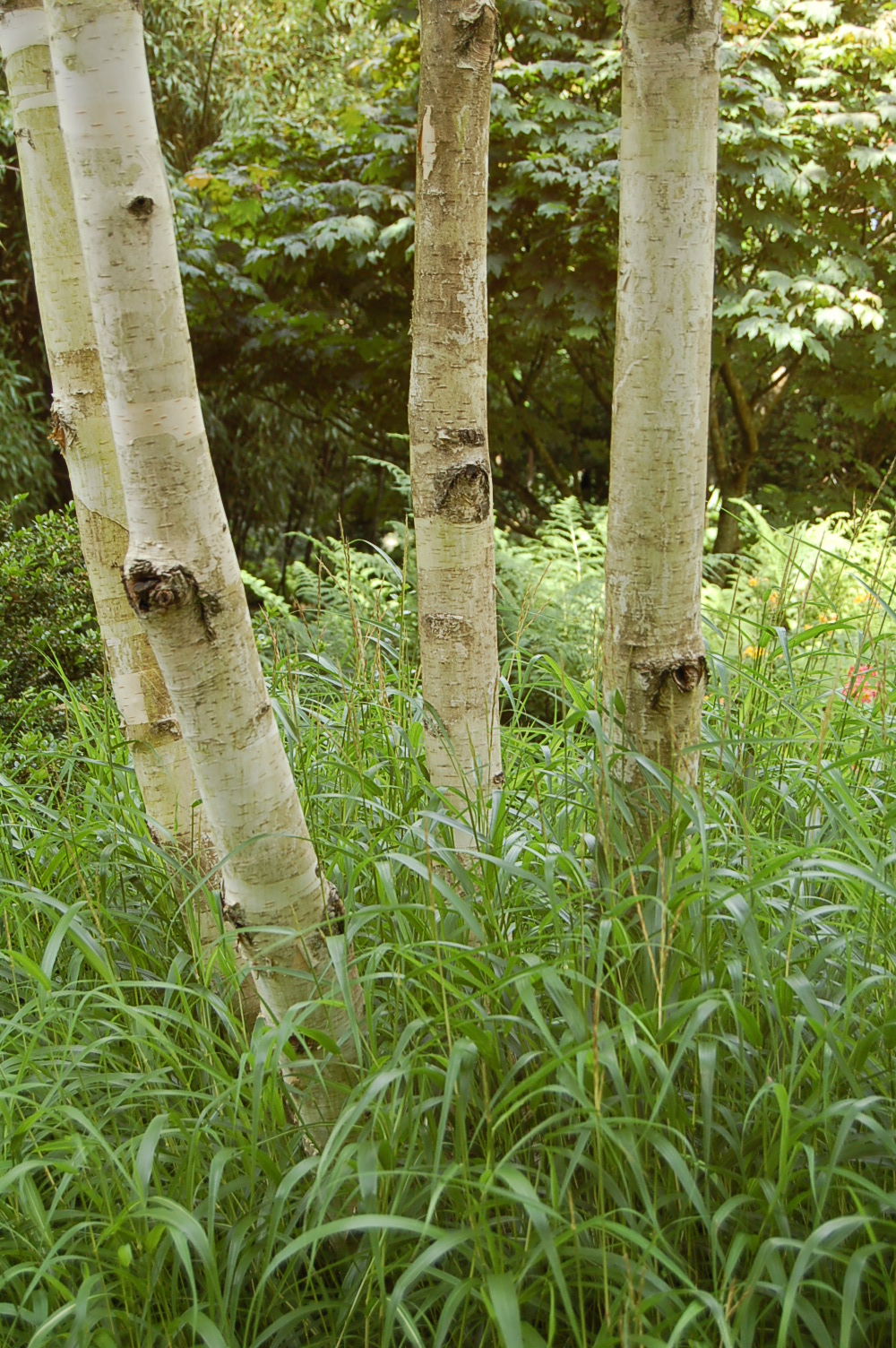
autumn garden design garden photography gardening hardy perennials ornamental grasses ornamental trees and shrubs photography roses Shropshire

A Wander around our Garden in October

The tenth post in this series of wanders around our garden already! Just two to go! What shall I do for a monthly garden post instead next year? Any ideas for me?

October started off with days of endless heavy rain but after a fortnight it changed to steady drizzle. A bit of sun would be welcome right now.

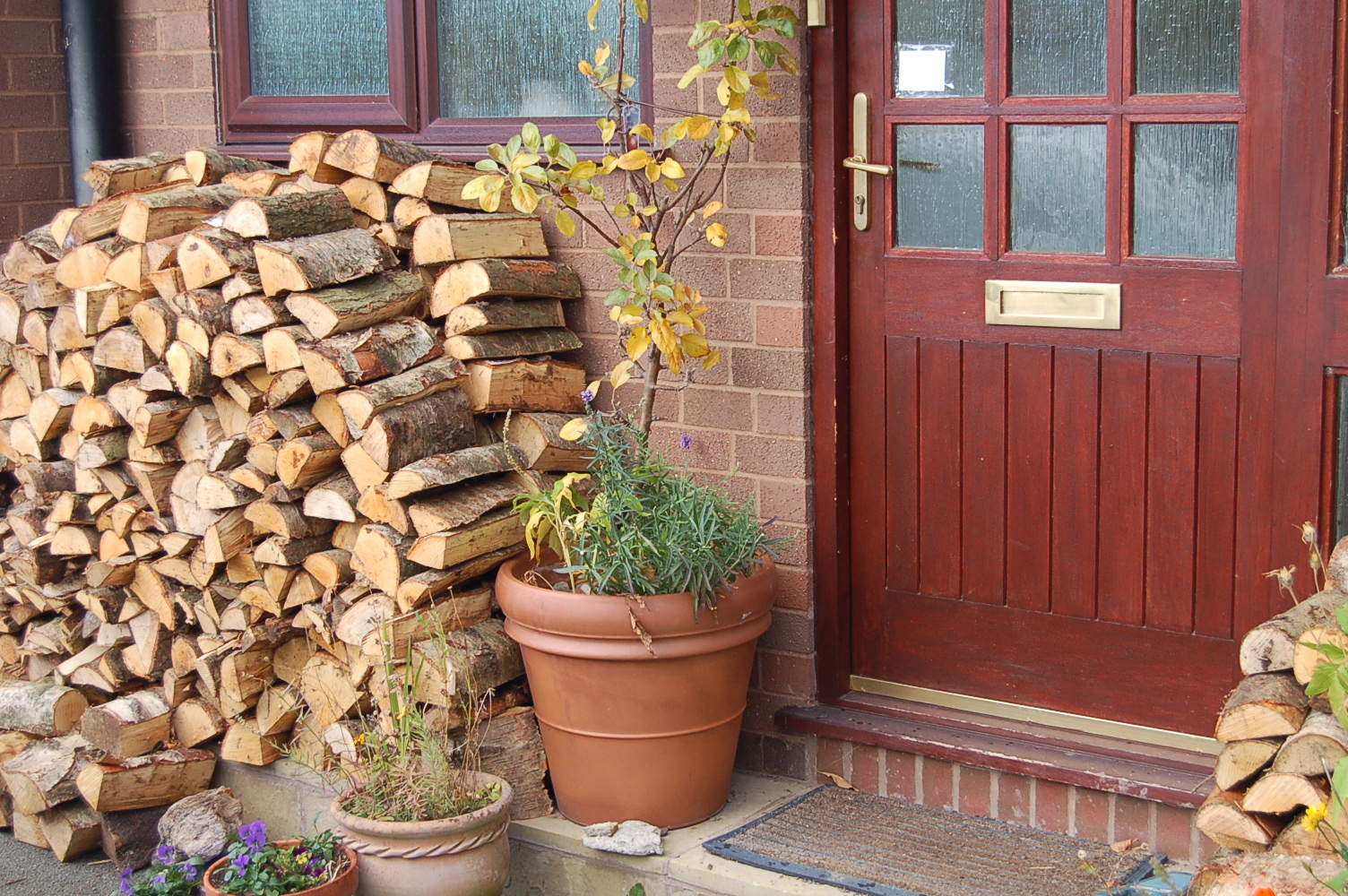
The first frosts have visited us forcing us to bring the Aeoniums, Echeverias and our other tender plants under cover. We shall have to keep them safe in the “bubble wrapped” greenhouse, by giving them virtually no water and removing any dry or damaged foliage and when the temperatures drops below -15 C give them additional snug coverings of fleece and bubble-wrap. Another sign of autumn is the log delivery which was tipped off the back of a truck onto our drive mid-month. We sorted them and stacked them around the front door. The wonderfully evocative woody aroma of oak and birch trees mixes with the sweet scents of the woodland floor. The scents of the season.
We visited the gardens at our favourite nursery yesterday, The Dingle at Welshpool, a superb autumn garden on a sloping hillside leading down to lakes. (Look out for my post in the next week or so) As usual we returned with a few acquisitions – a tiny orange Kniphofia, Cornus canadensis and Clerondendron bungeii.
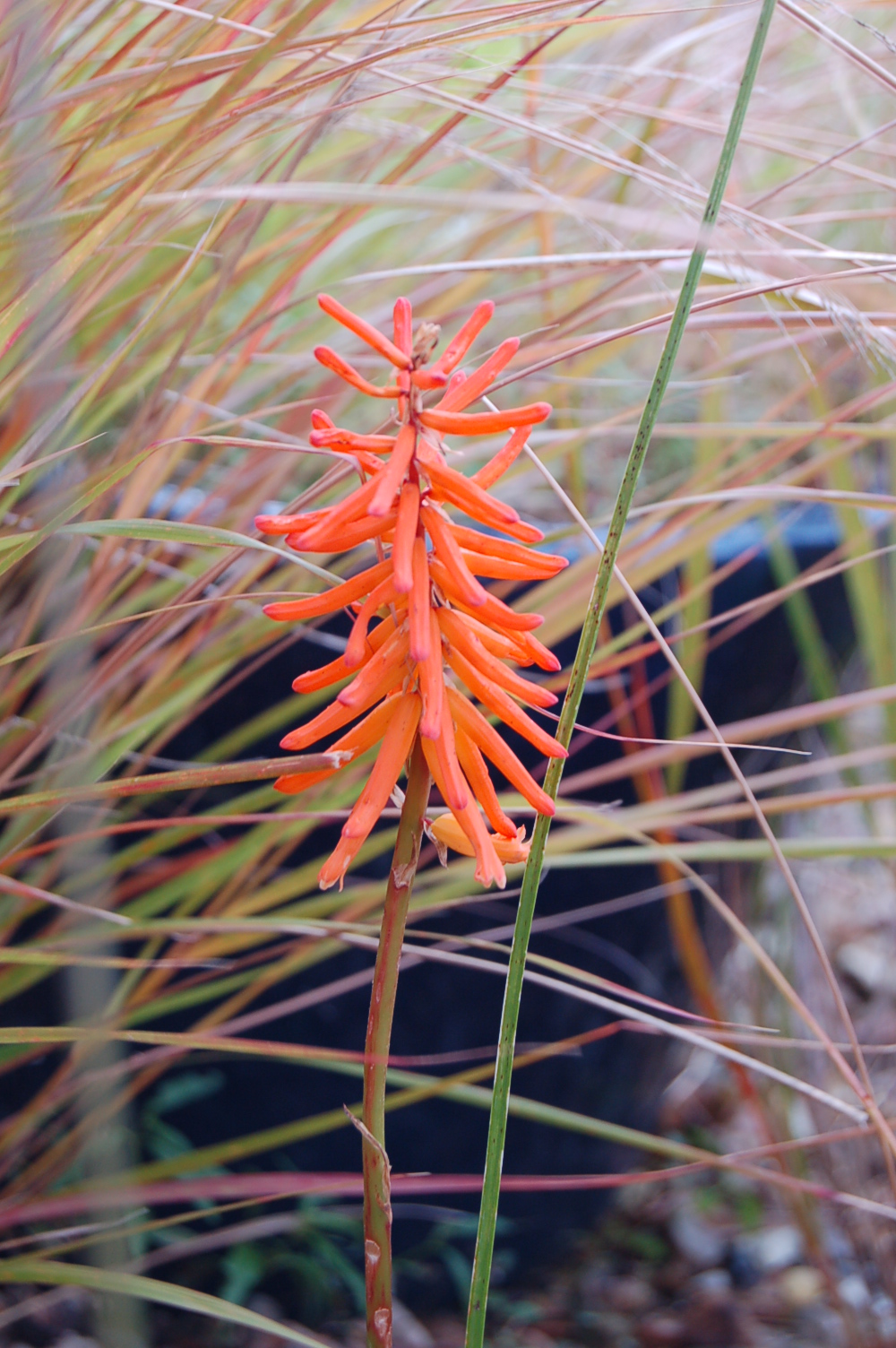
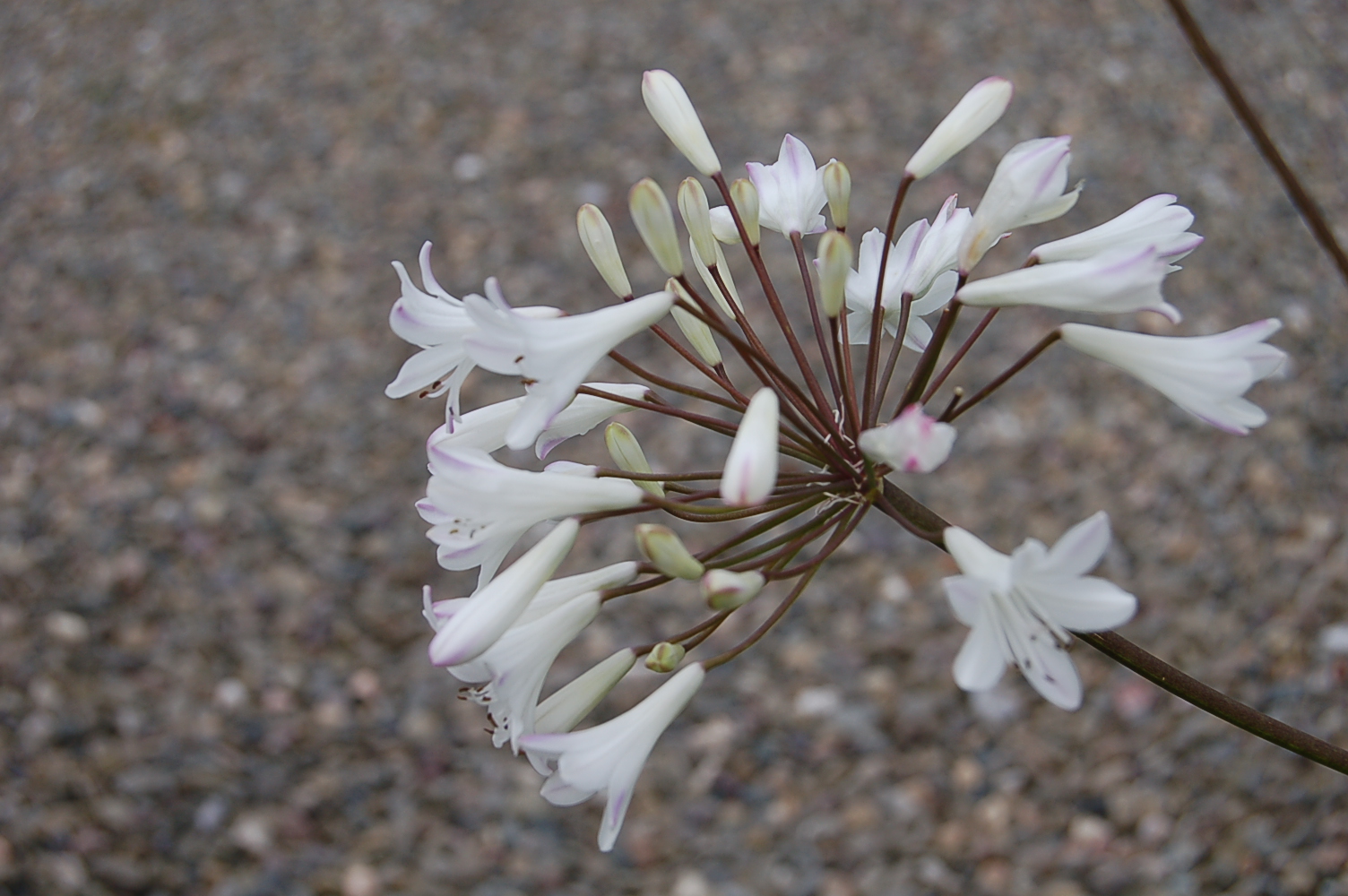
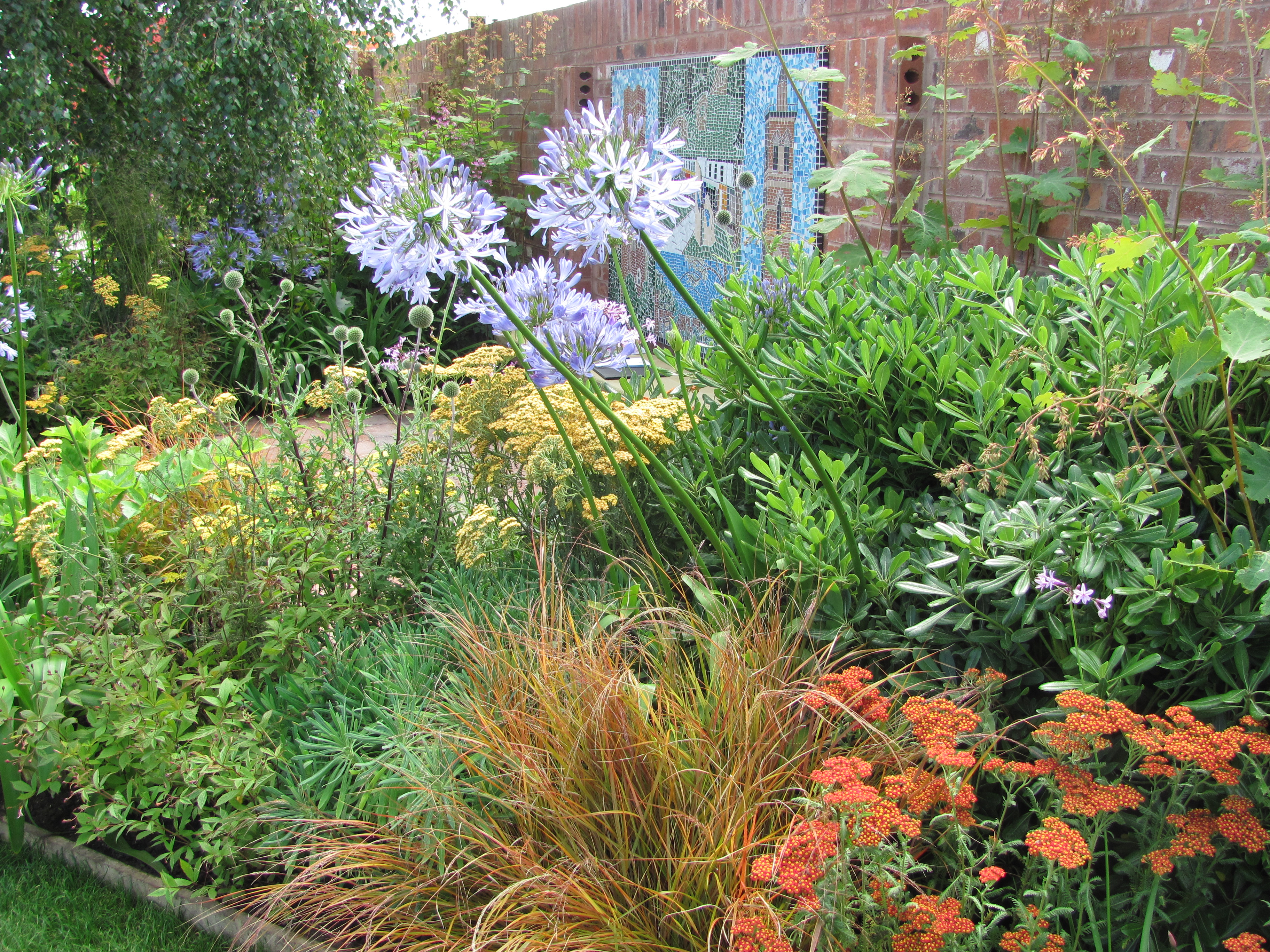
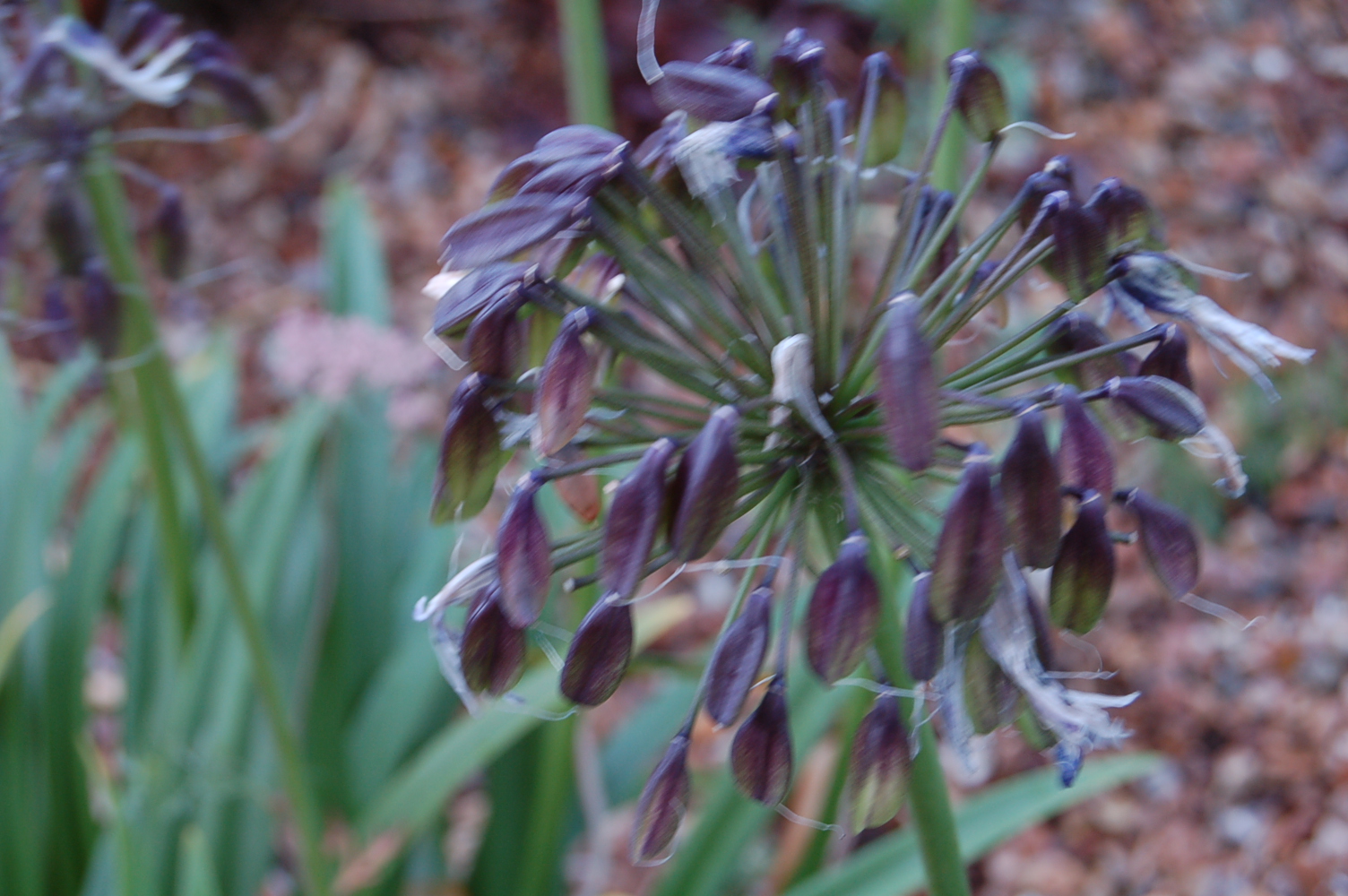
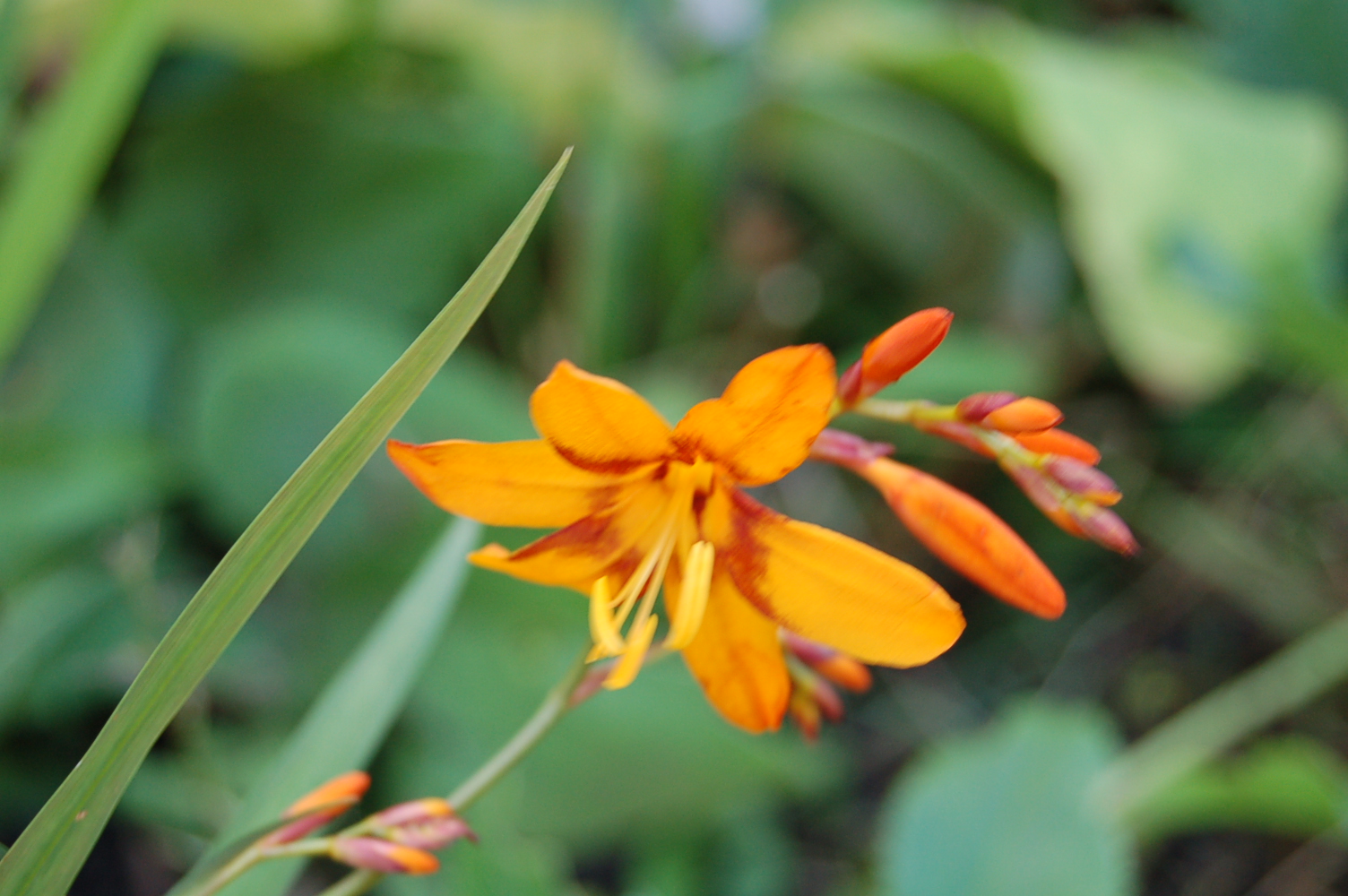
We have planted the Kniphofia with a trio of bronze-leaved grasses and near to our darkest blue Agapanthus. As the “poker” is flowering now, its head of tubular orange flowers glows alongside the Agapanthus’ developing seed heads of blue and pewter.
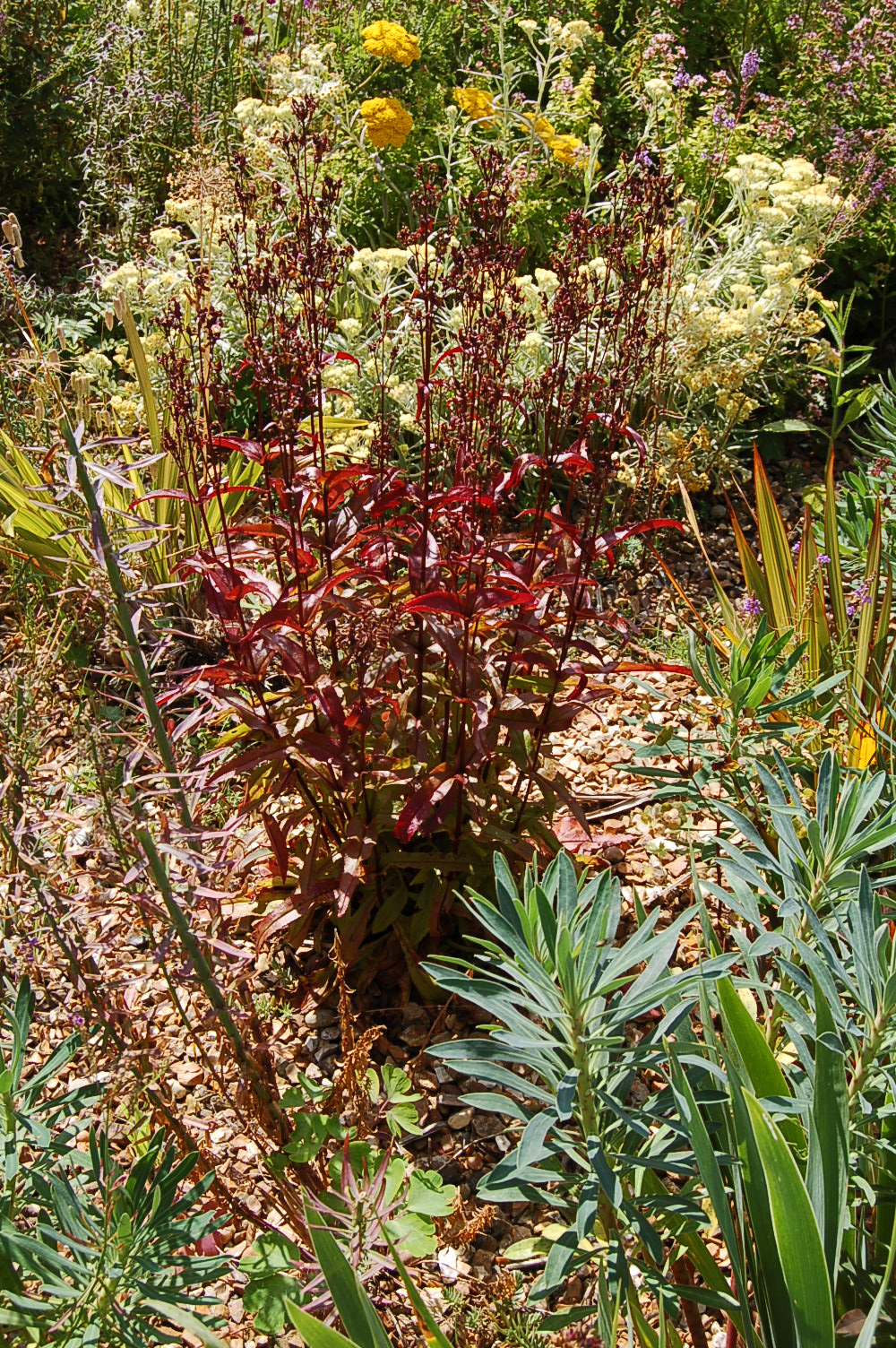
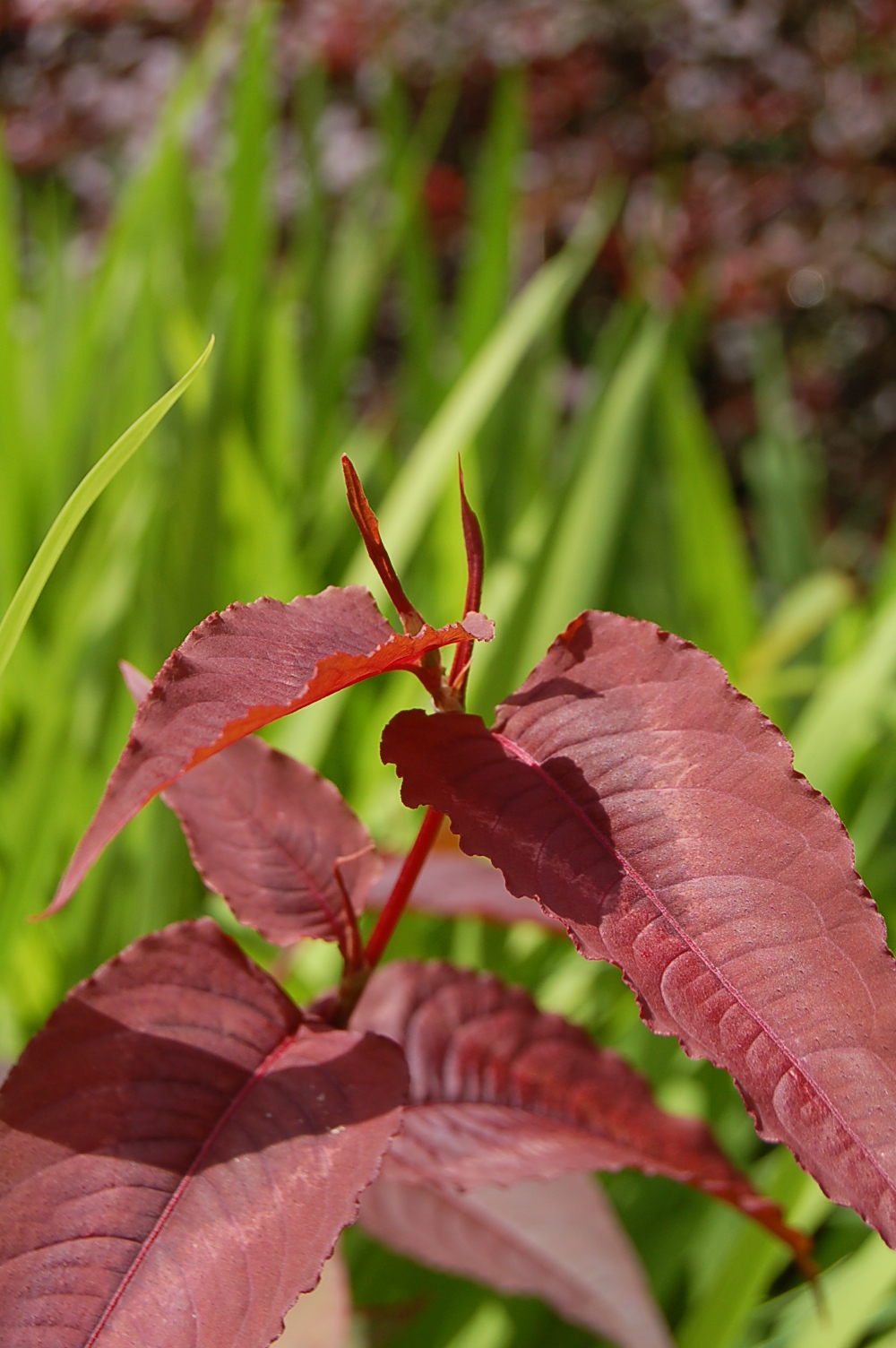
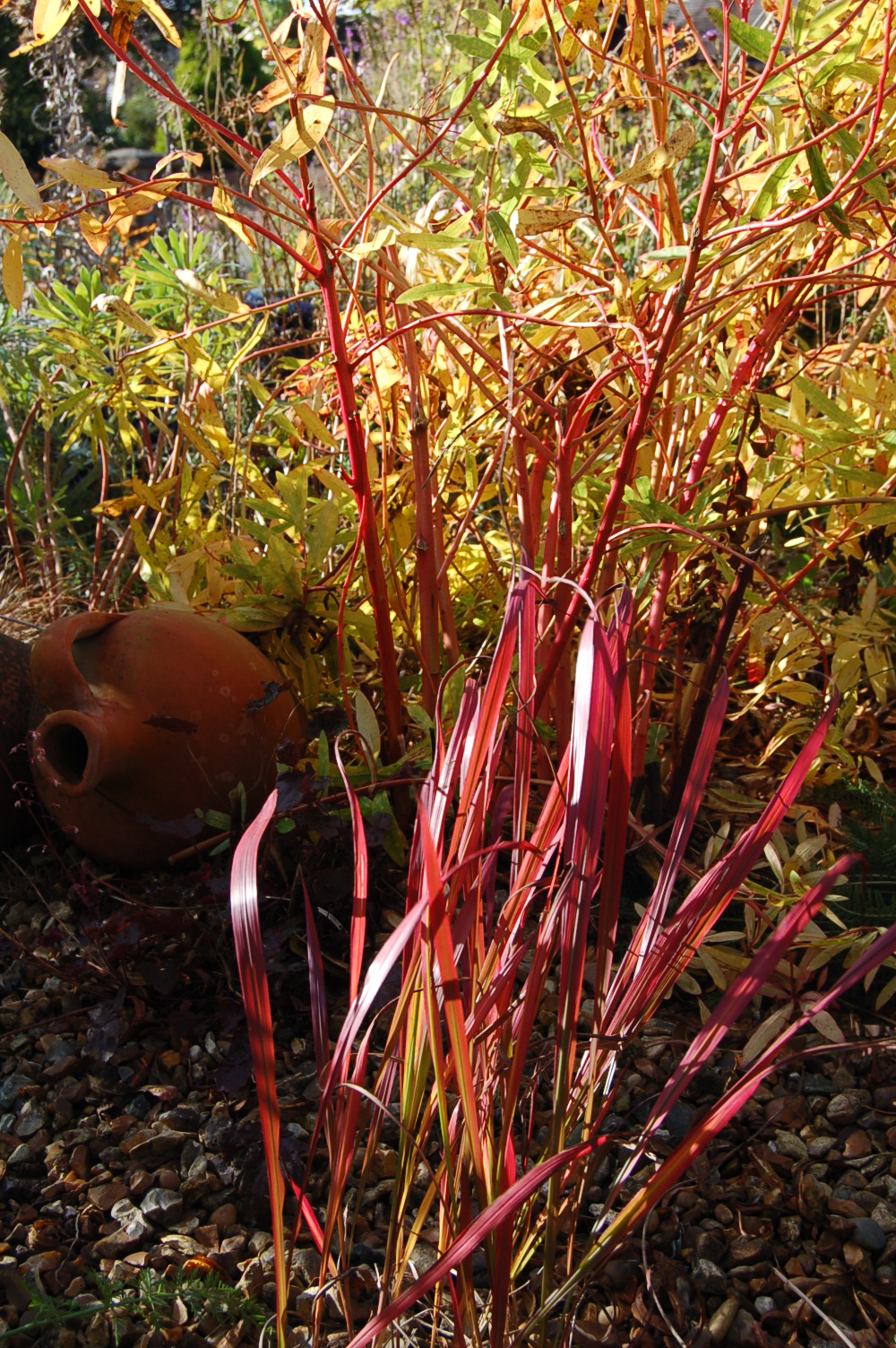
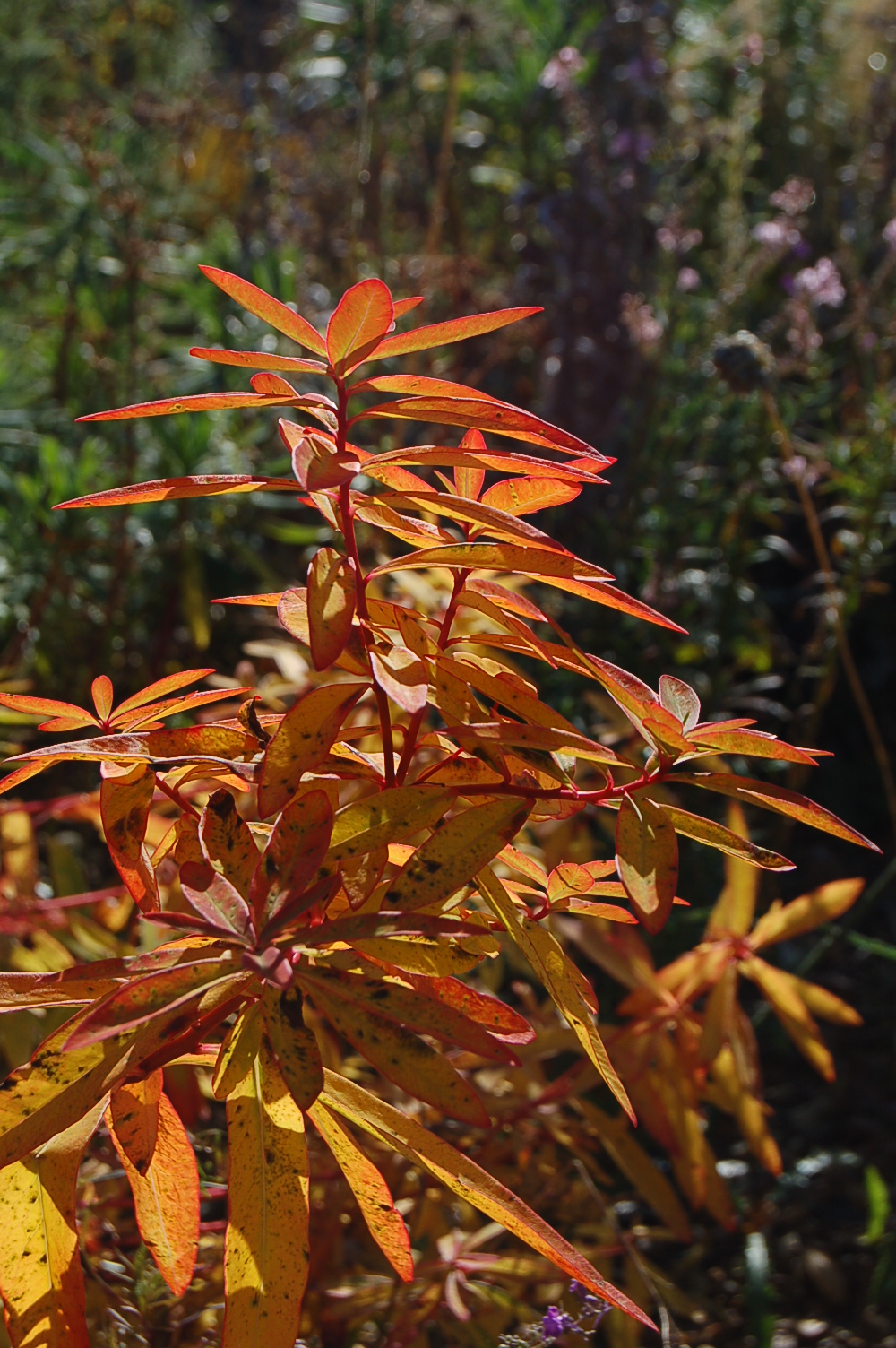
Sometimes autumn hues aren’t just provided by deciduous trees changing the colours of their leaves but by foliage on perennials, grasses and shrubs. Euphorbias are a fine example, as are grasses which have the added bonus of seed heads. Look out for the pic of our Pentstemon Huskers Red which always surprises with its deep red autumn explosions.
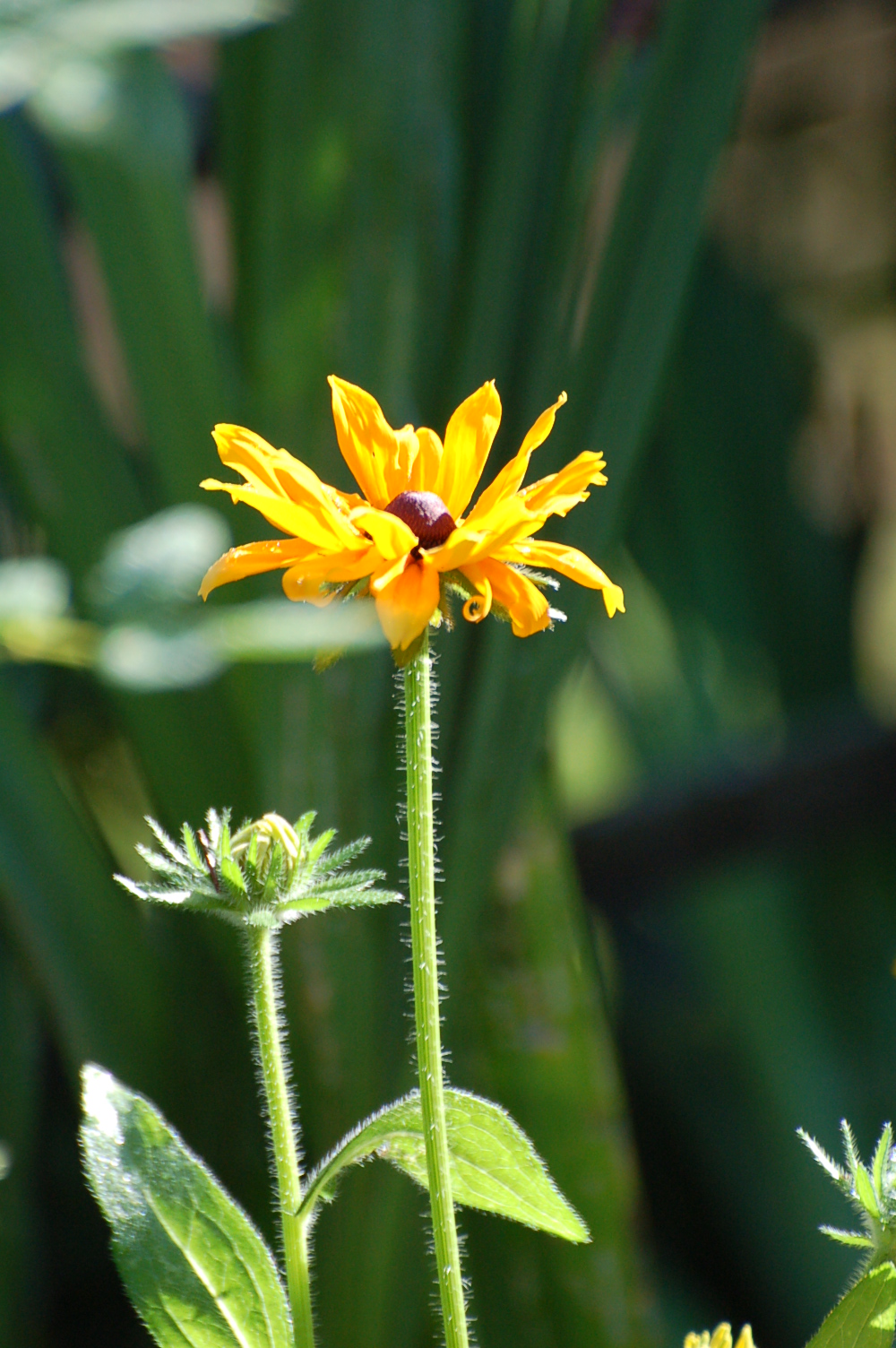
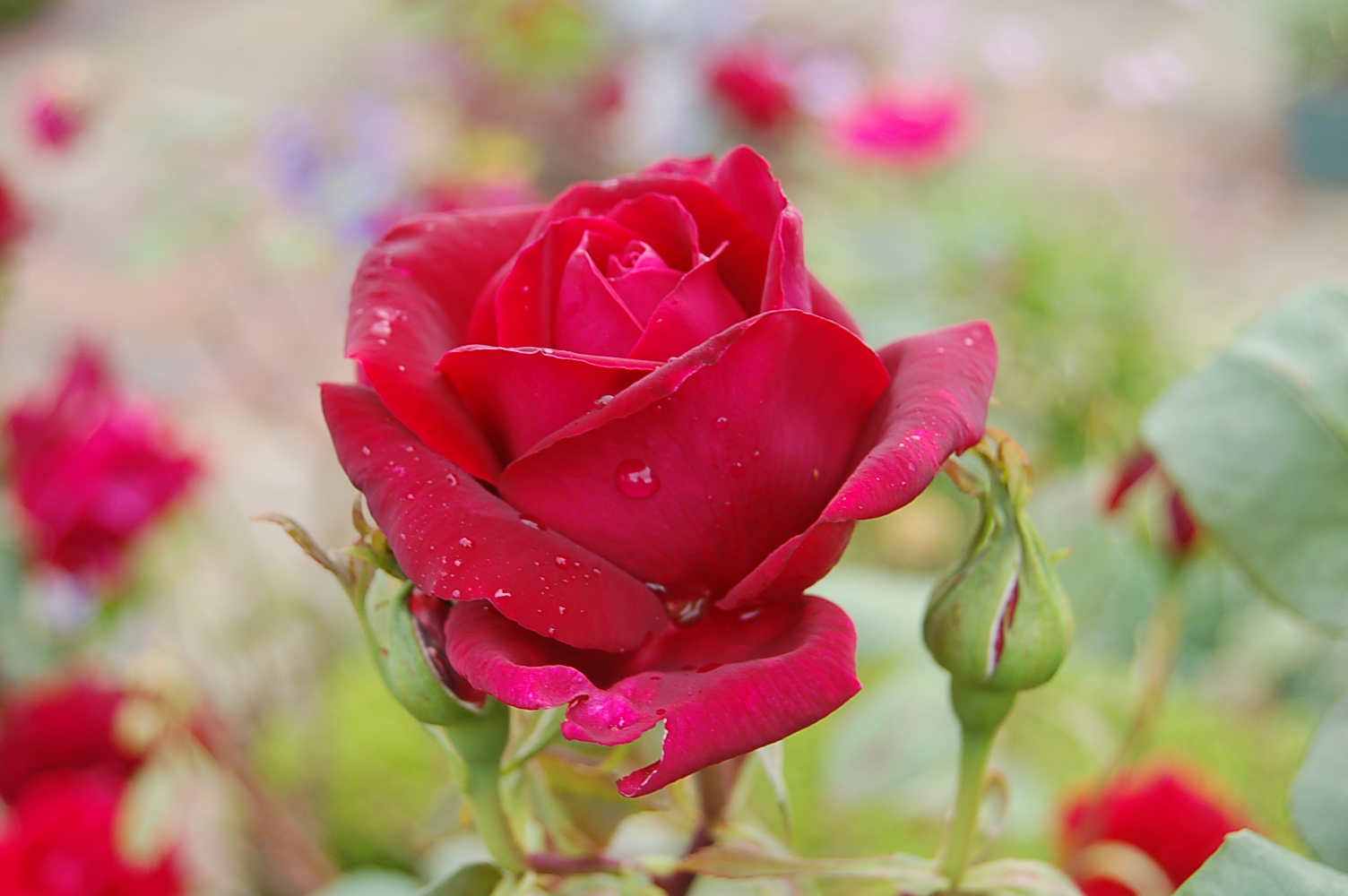
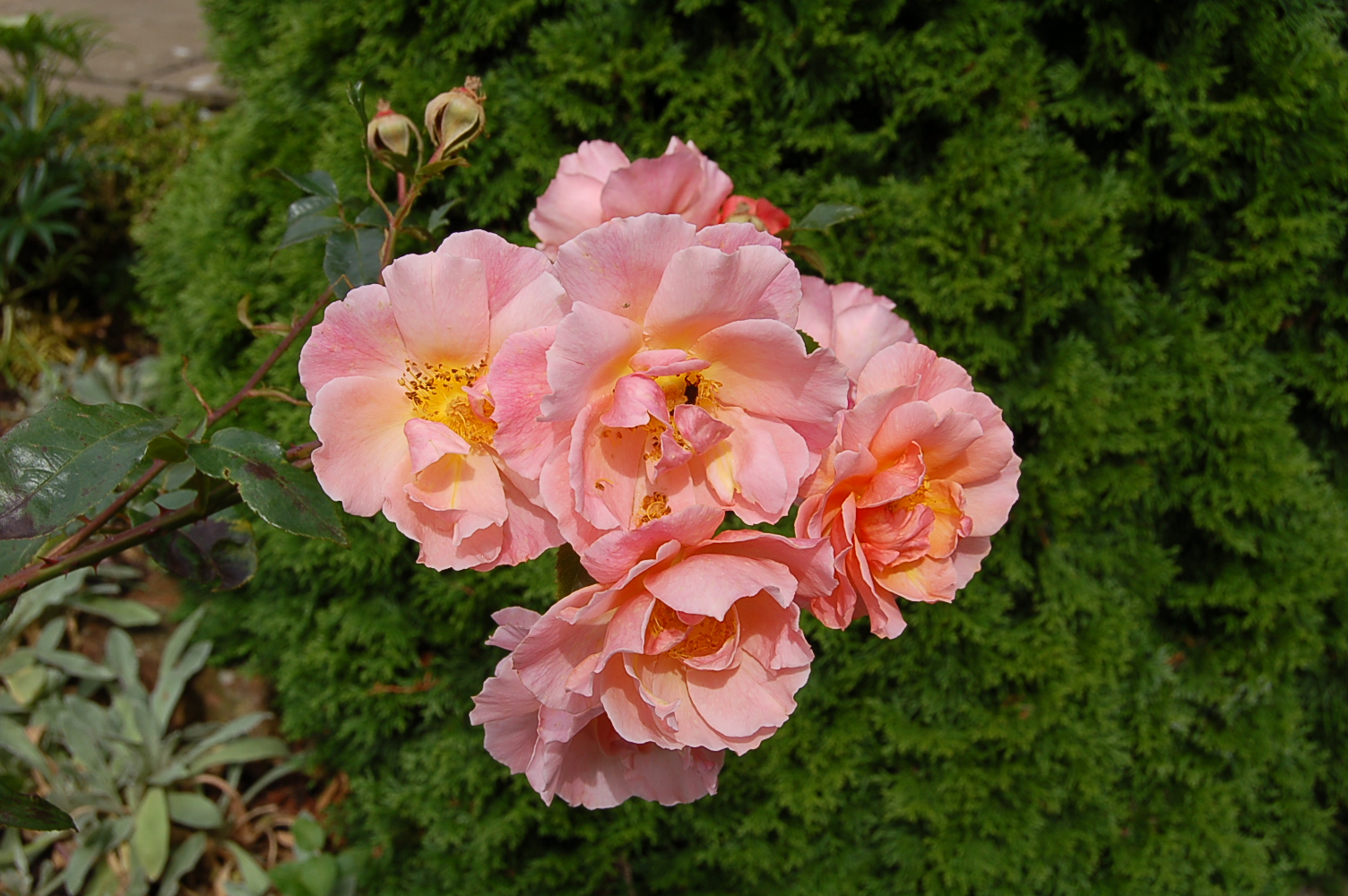
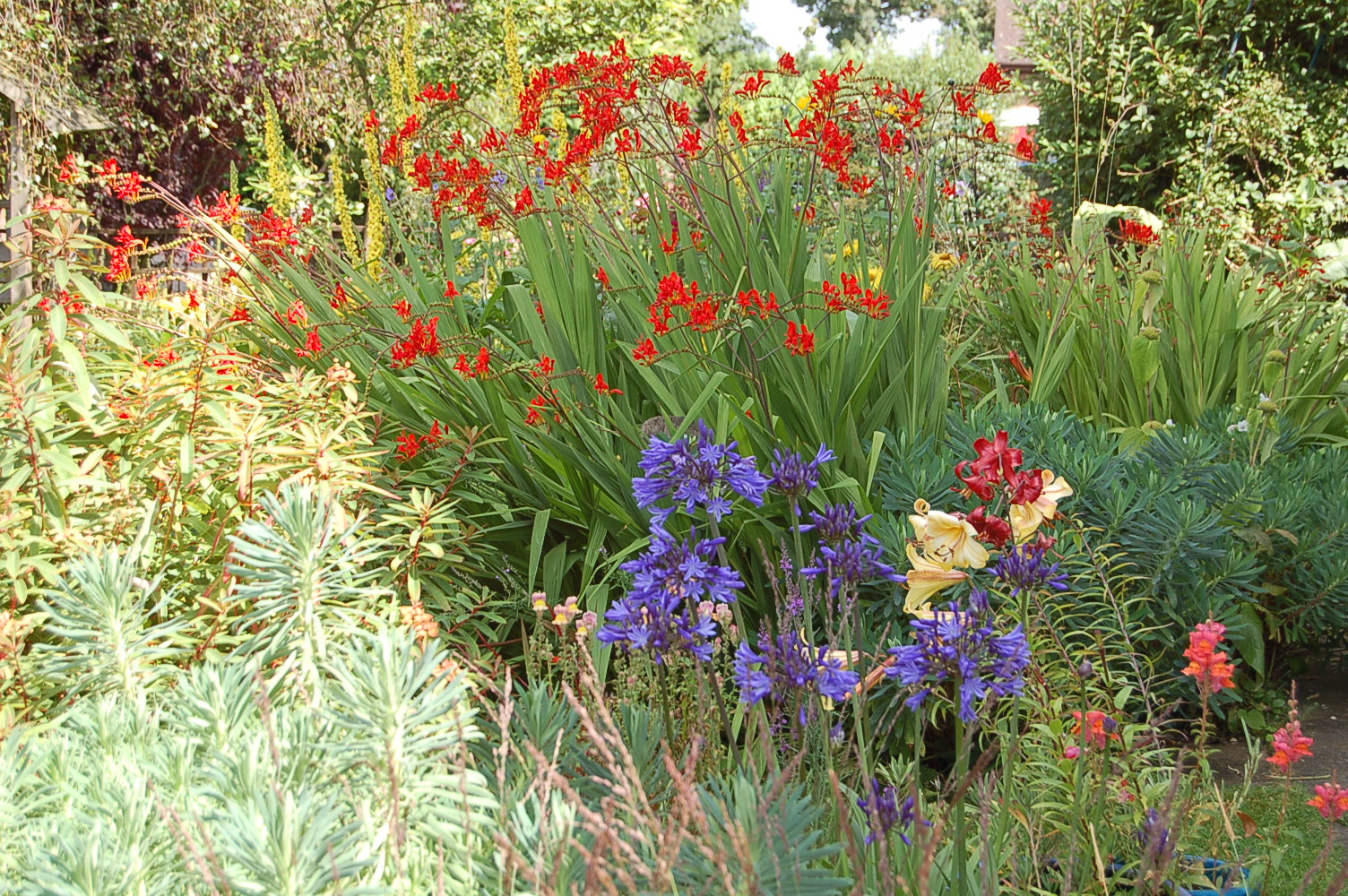
But amongst all this red hot foliage we mustn’t lose sight of the flowers that continue to add colour to the garden. There are now fewer so each one is a precious jewel.

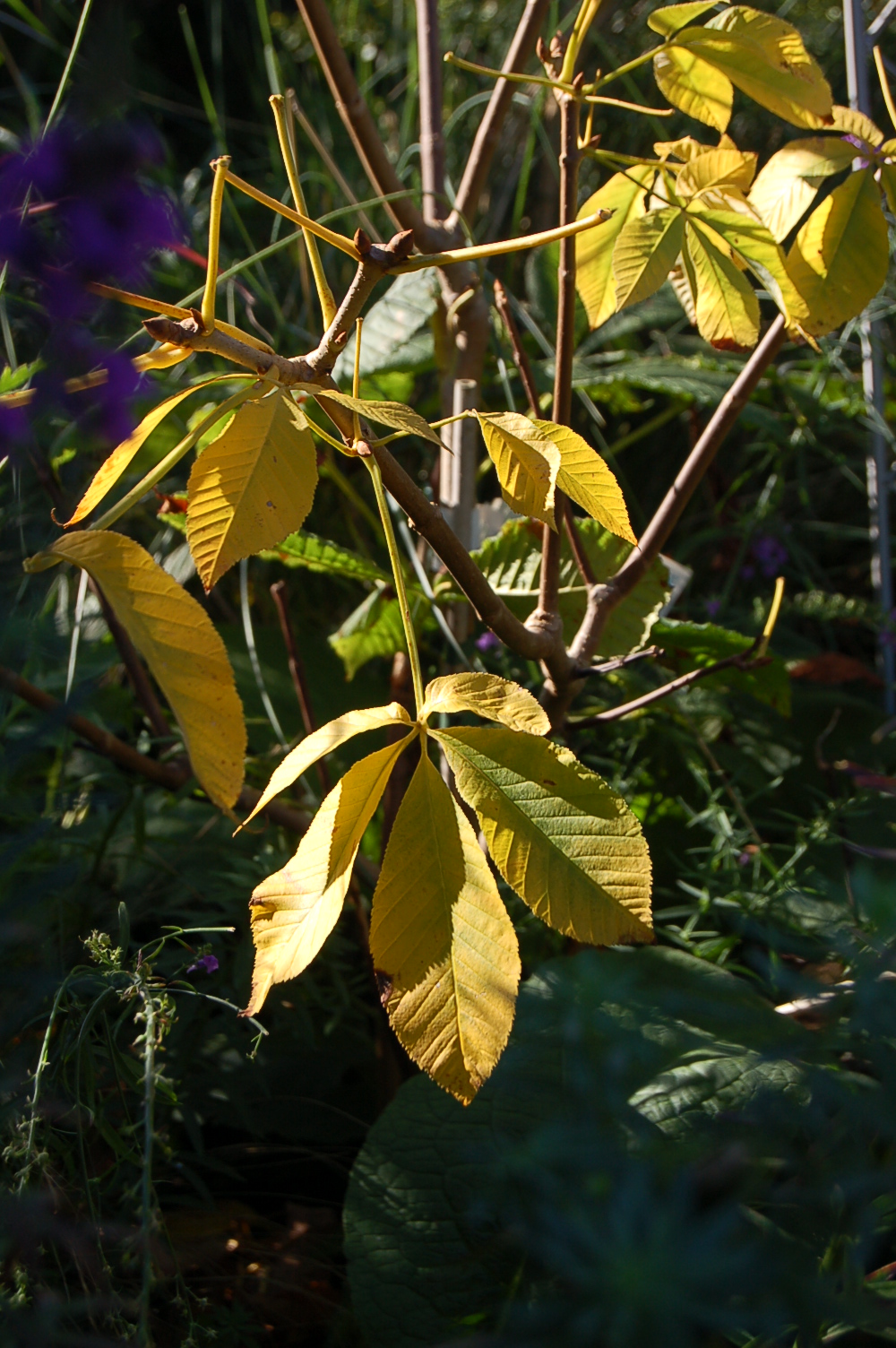
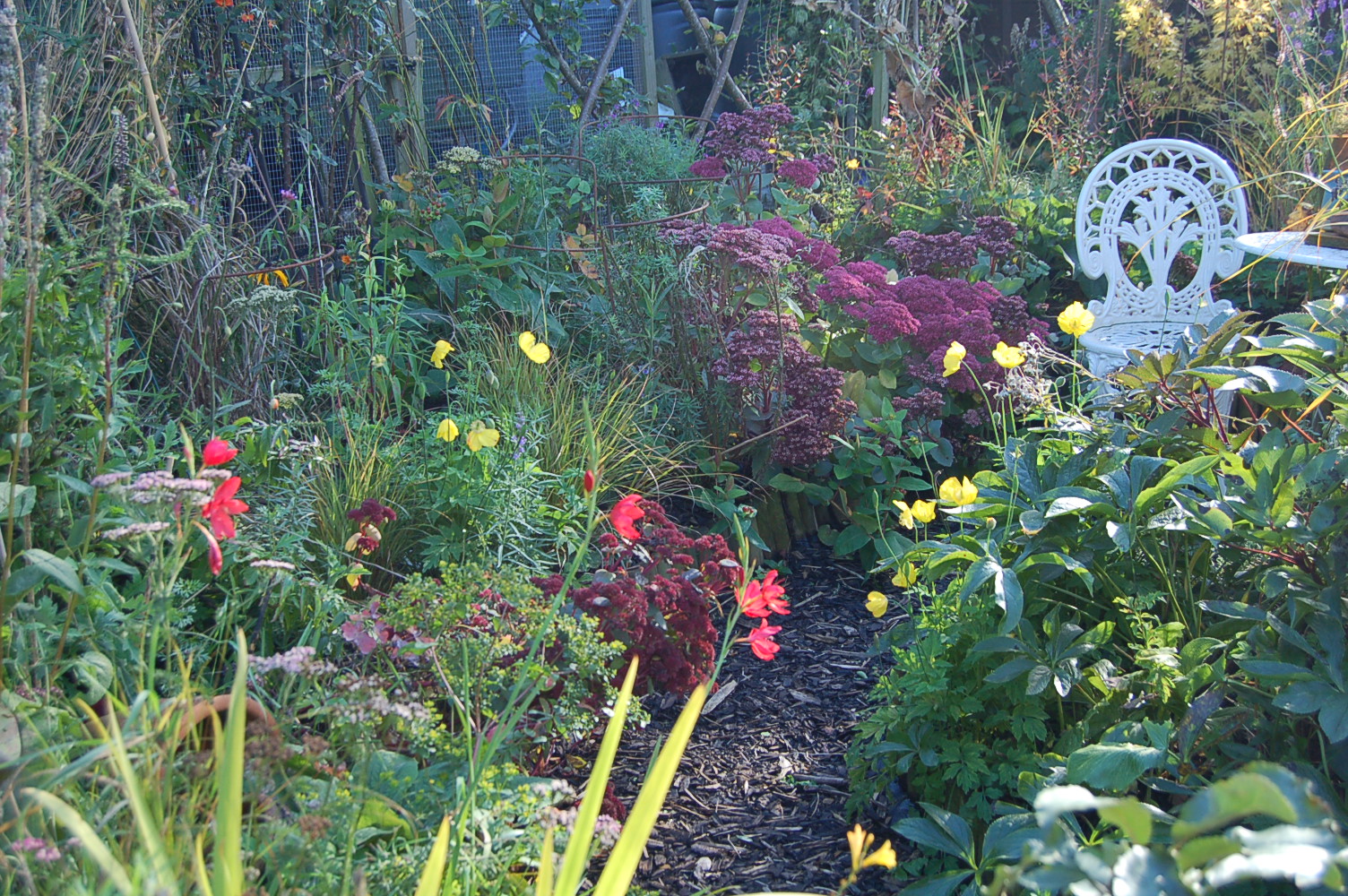
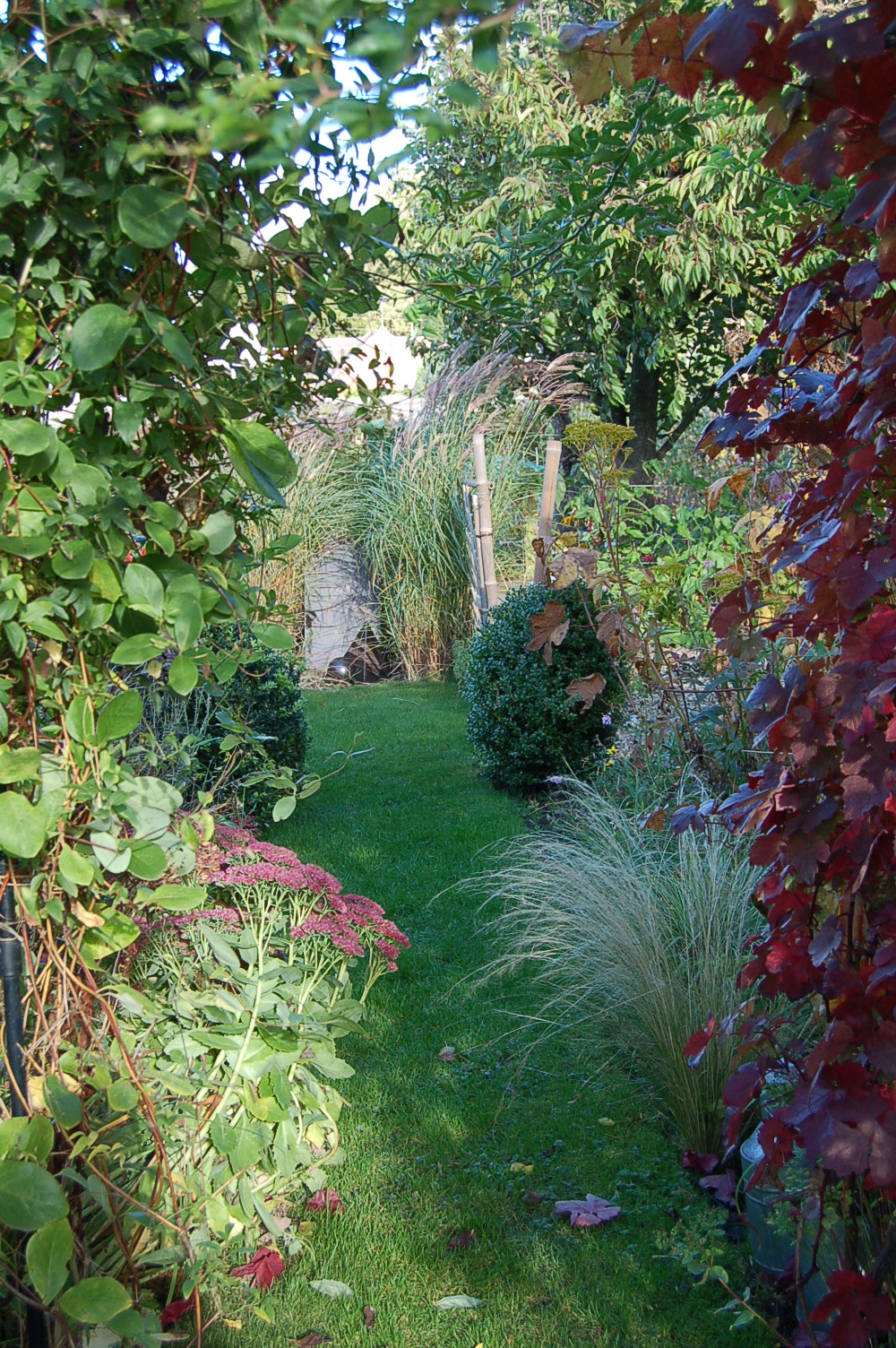
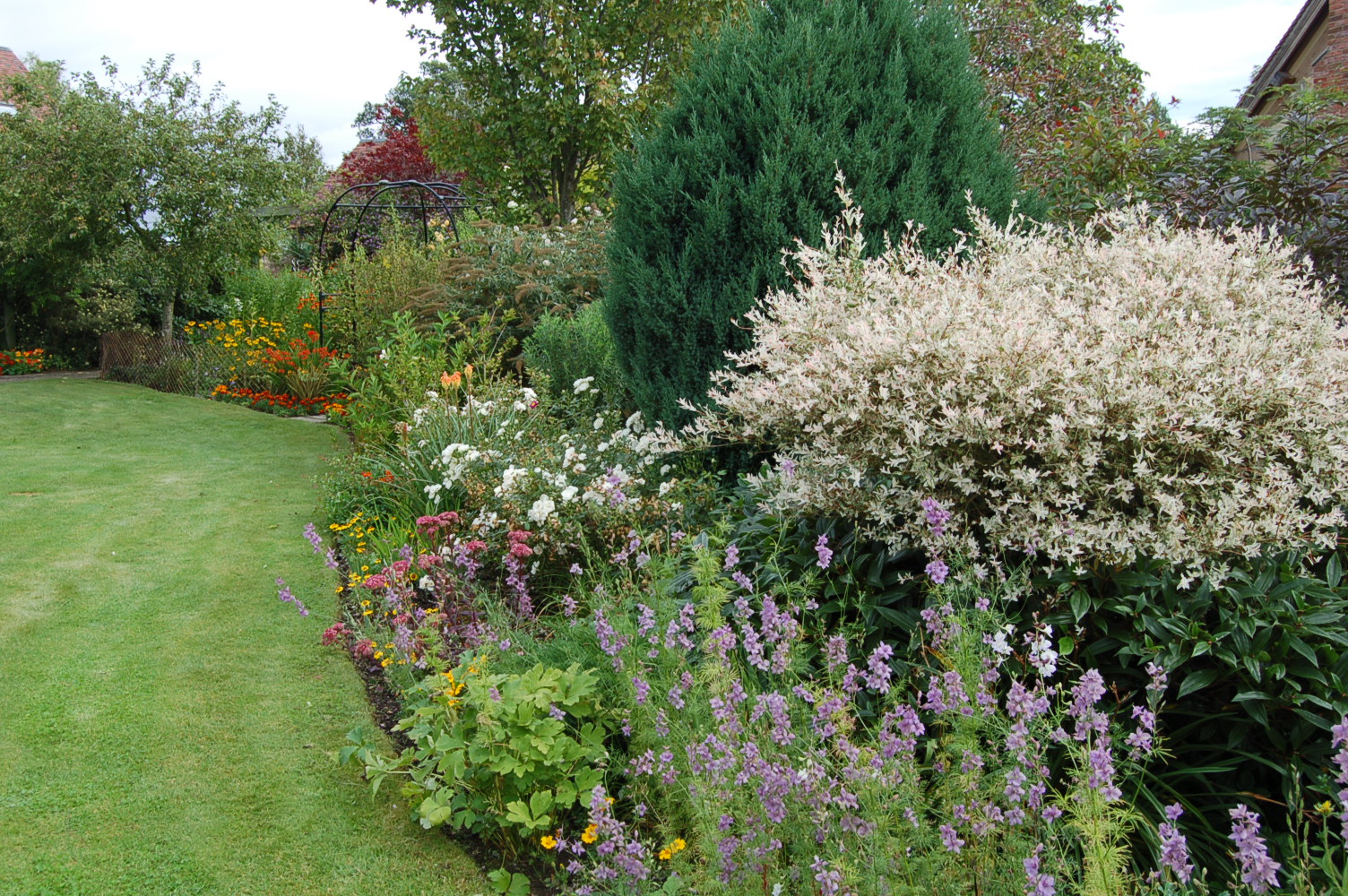
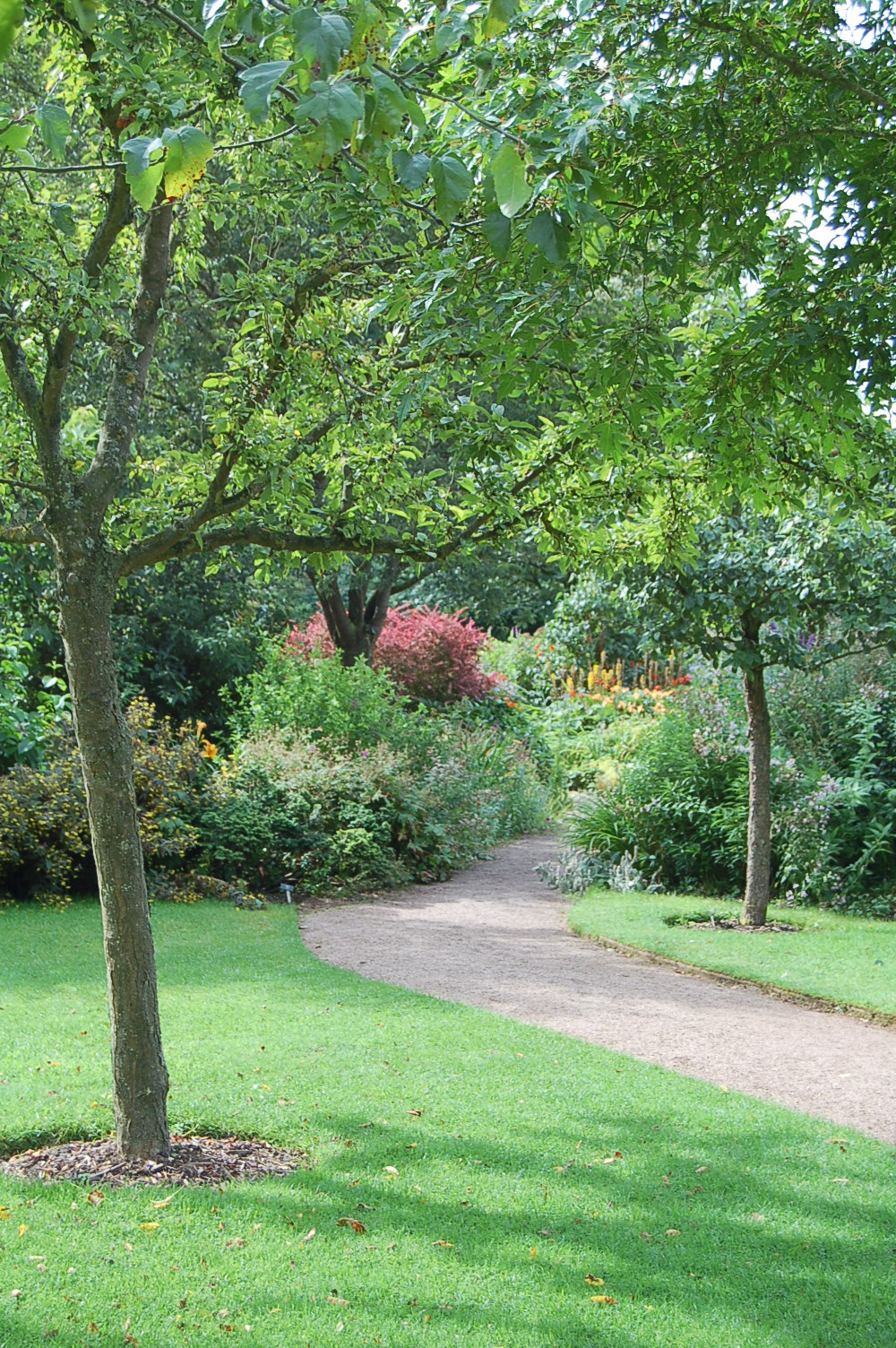
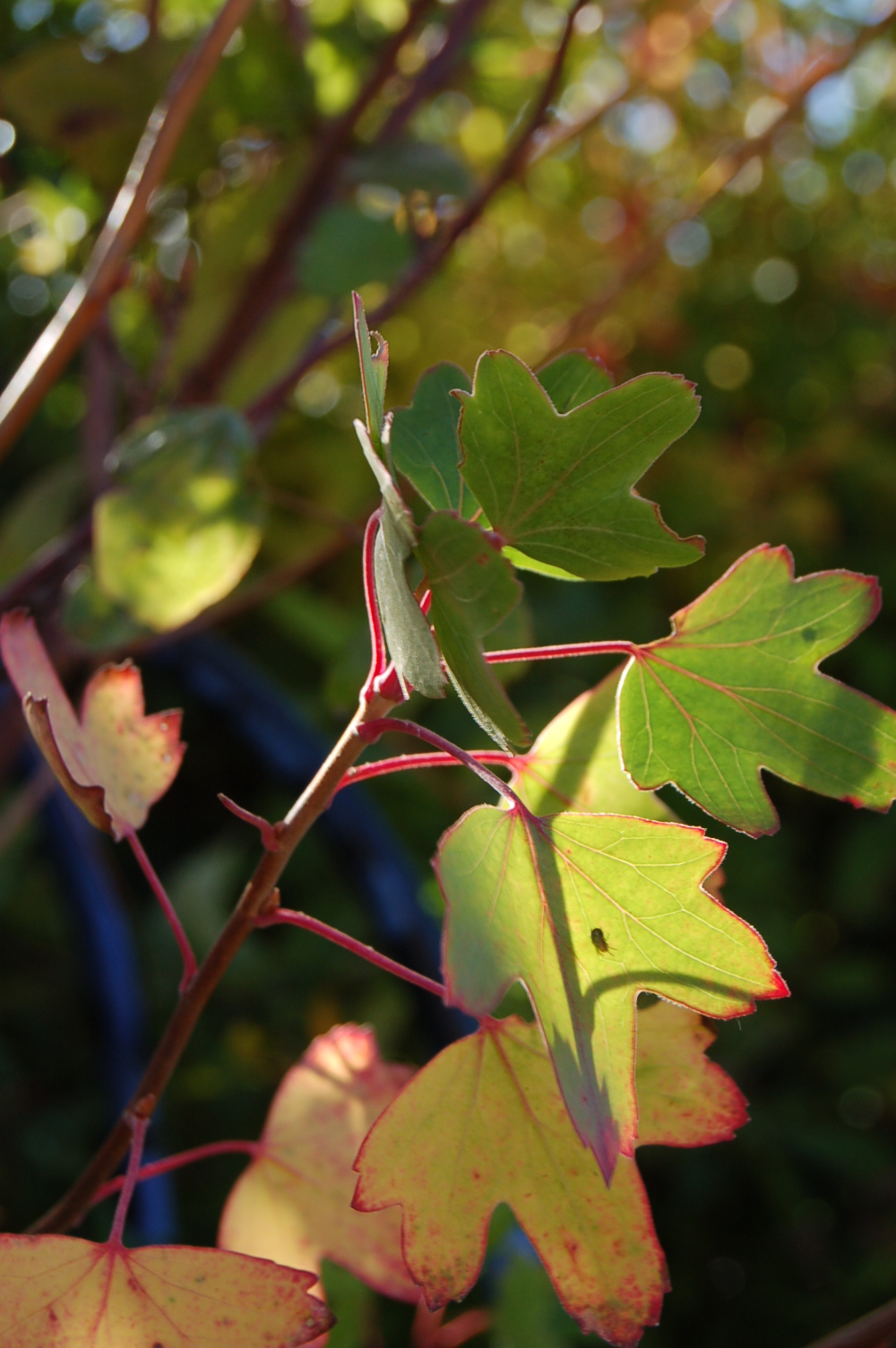
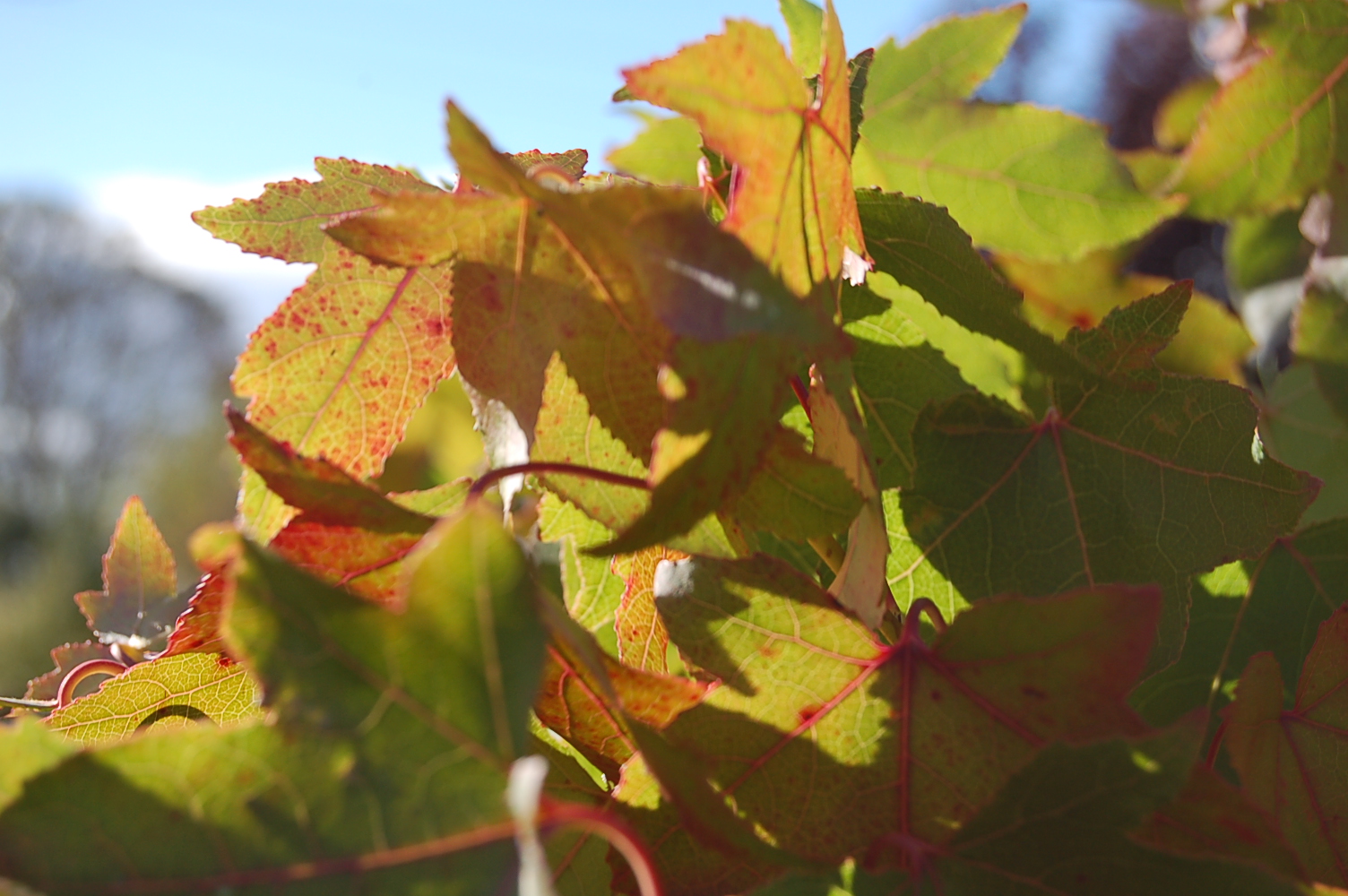
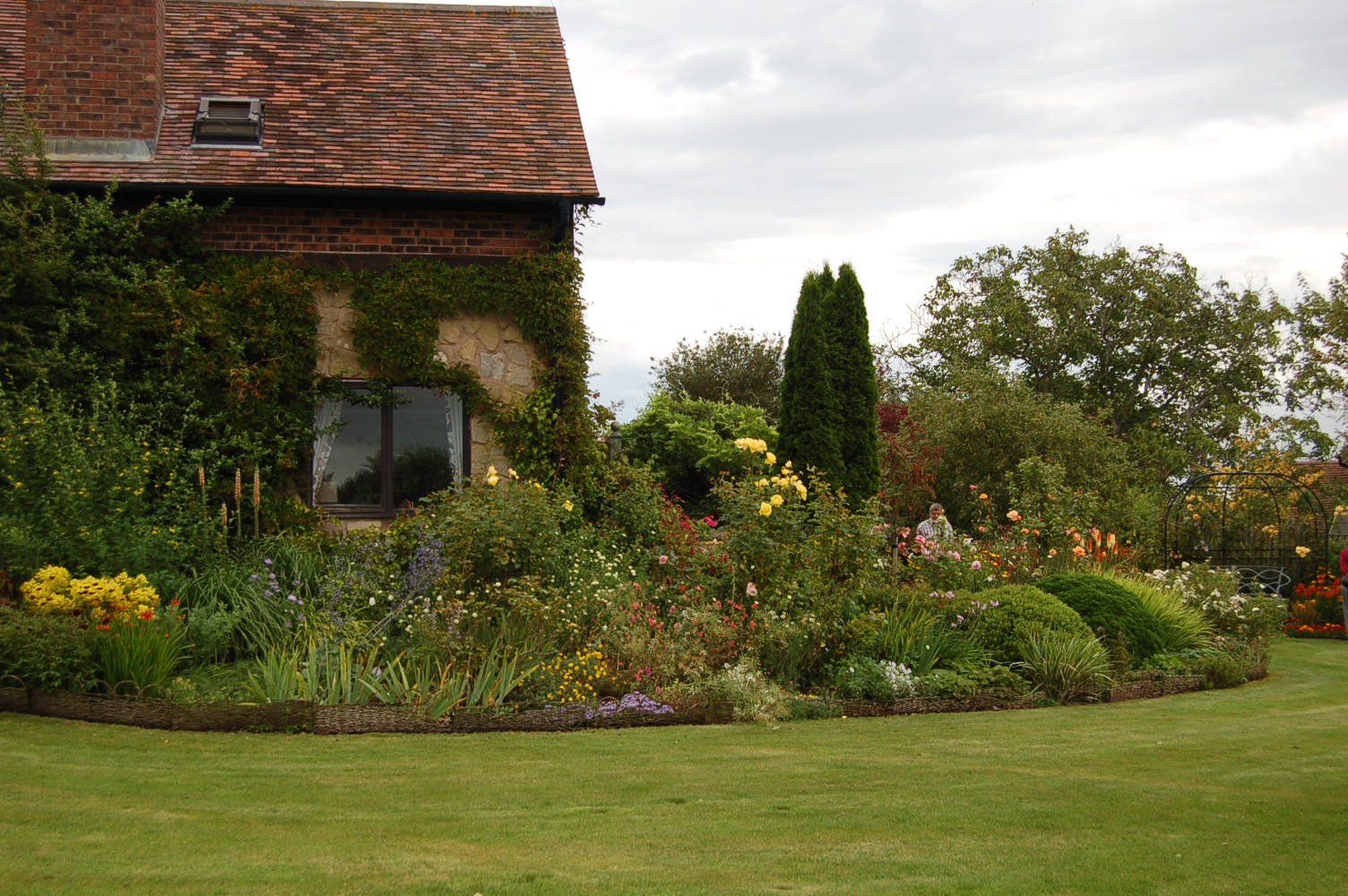
I shall finish off with a few pics of autumn coloured leaves, just what you expect in October! And then take a look at one border and take a walk down just one of our many grass paths.
Categories
autumn birds garden design garden photography garden wildlife gardening hardy perennials ornamental grasses ornamental trees and shrubs photography poppies roses Shropshire

A Wander Around Our Garden in September

September is a month I love for the richness of its colours which are intensified by the lower light of early Autumn. But It is a month I dislike as it marks the end of summer and initiates the dropping of temperatures. I enjoy watching the fruits and berries ripening and their changing colour. I am saddened by the silence in the sky as Swallows and House Martins leave us for warmer climes. Leaves begin to show signs of changing their colours too and in September we are given hints of what is to come.
Throughout the September garden we find individual buds and flowers hanging on after the thrusts of the summer lush display. Droplets of moisture sit on the blooms as the first frosts melt away.

These little gems of individual blooms which are flowering out of season add so much colour to the borders, flowering alongside those plants which are traditionally the true flowers of September. Two flowers which we look forward to in early autumn are Lobelia tupa and Salvia uliginosa which display unusual colours and shapes.

The light in September creates a different atmosphere, no longer the direct overhead light of the summer. Now there is increased contrast between light and shadow.

Our grasses begin to come into their own in September. Their seedheads glow and their colours get paler and more silvery.

I shall finish my September wander with a few plant portraits.

The garden is still full of colour, texture and patterns but is missing the life flying above it. The Swallows, House Martins and Hobby have left the daytime sky quieter. At night we miss the cries and calls of the Little Owls even though at times we curse them for keeping us awake.

Categories
climbing plants garden design garden photography gardening hardy perennials Land Art ornamental trees and shrubs outdoor sculpture photography roses Shropshire trees

A day out with the Shropshire Hardy Plant Society

Today was a special day spent with friends from the Shropshire Branch of the Hardy Plant Society, with the morning spent visiting a plantsperson’s garden and the afternoon listening to a talk with photographs of a botanist’s garden.

The garden was called Stevenshill close to Wenlock Edge venue of our recent woodland walk featured in a recent post. The owners were so full of enthusiasm and plant knowledge, and the garden full of rare and colourful delights.

It had far-reaching views of Wenlock Edge and plenty of varied, comfortable places to sit and enjoy the scents and sights of the plants.

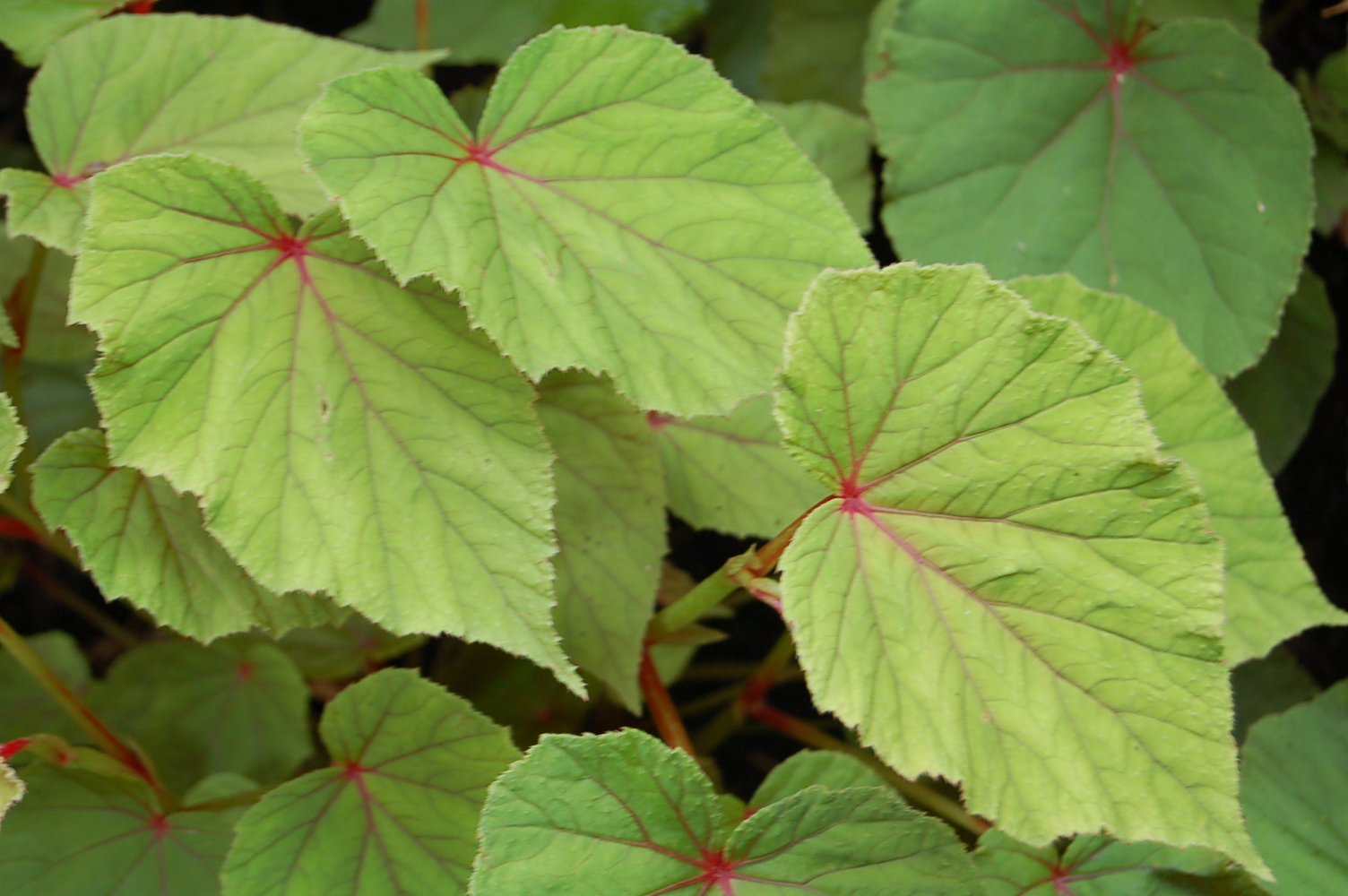
It was one of those gardens with lots of plants to confuse and mystify even the most experienced hardy planters. Lots of head scratching about unknown and forgotten plants. Luckily the garden’s owners have put lots of labels in and have good memories for plant names. Their plant sales table held some unusual specimens and many went home in the hands of hardy planters, including ourselves. We selected a hairy leaved bergenia, Bergenia ciliata and a shrubby Teucrium, Teucrium “Paradise Delight”. Now where are we going to place those?

Throughout the garden were sumptuous Agapanthus and deeply coloured, richly scented roses often strategically placed next to enticing seating.

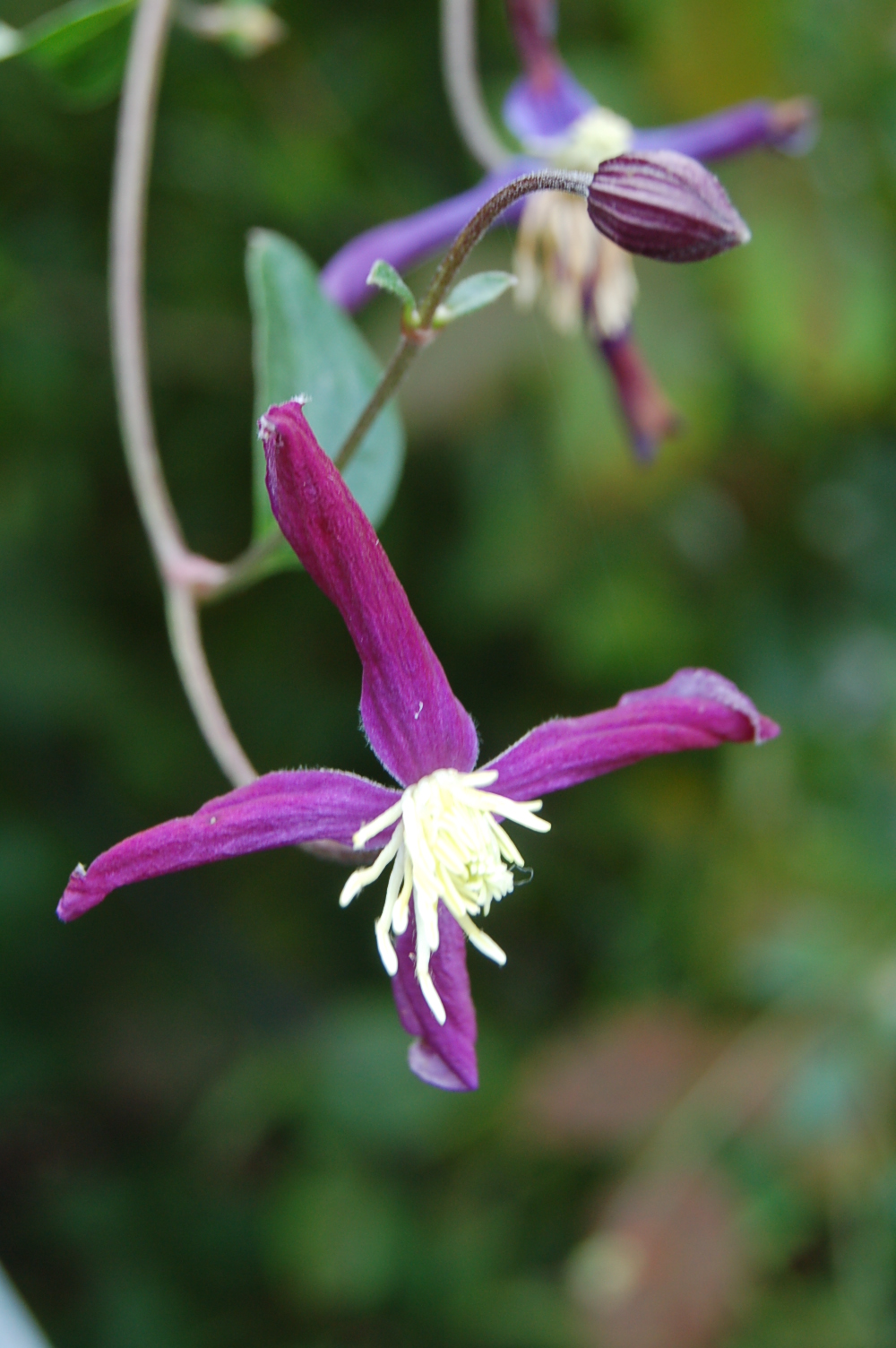
This yellow rose graced an arbour over a seat in the hot border. It was strongly scented. With it was planted Clematis aromatica with its tiny simple purple flowers scented with mouth-watering vanilla.

Buddleias were scattered in the borders giving height and attracting hoards of butterflies.

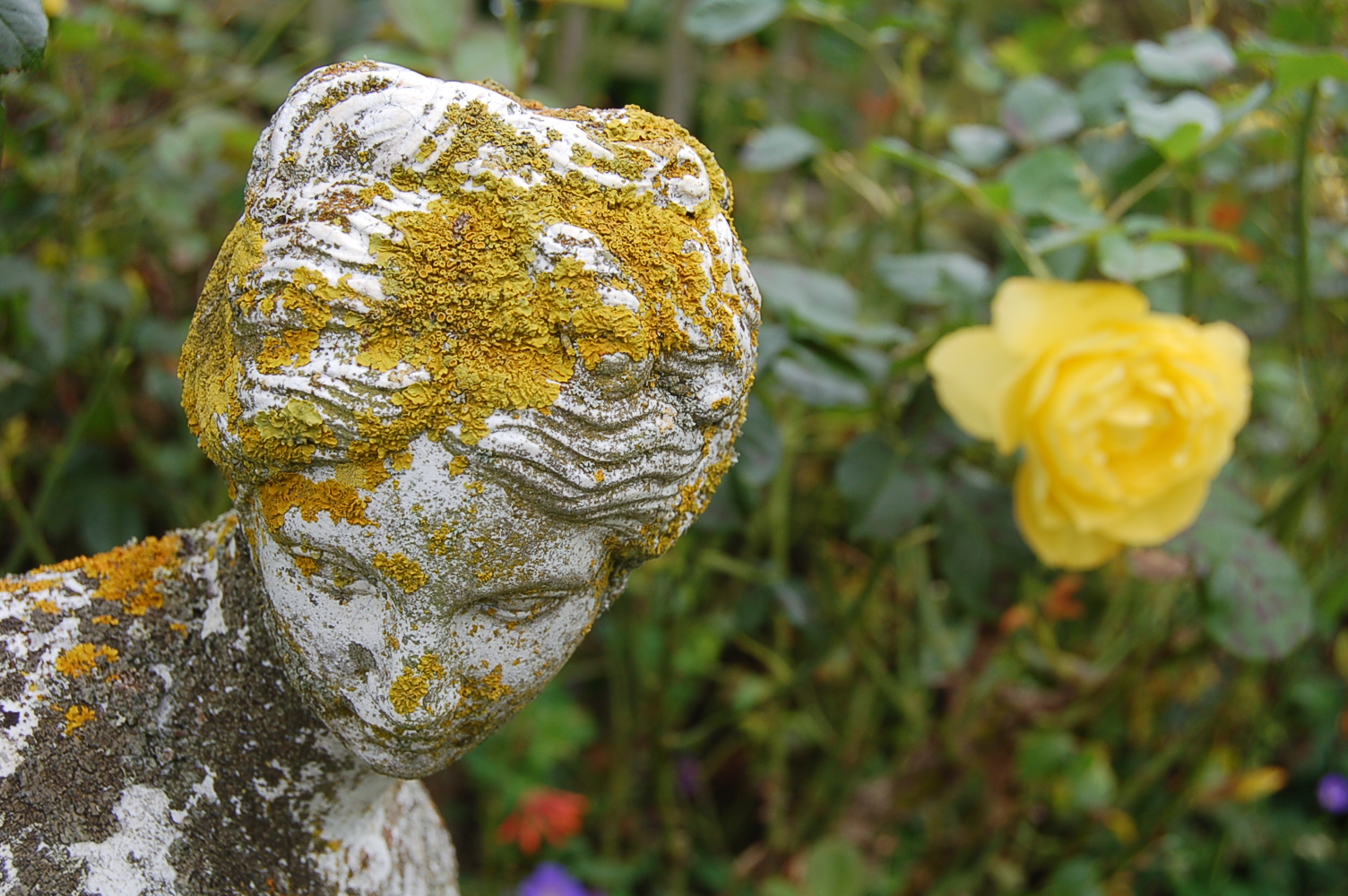
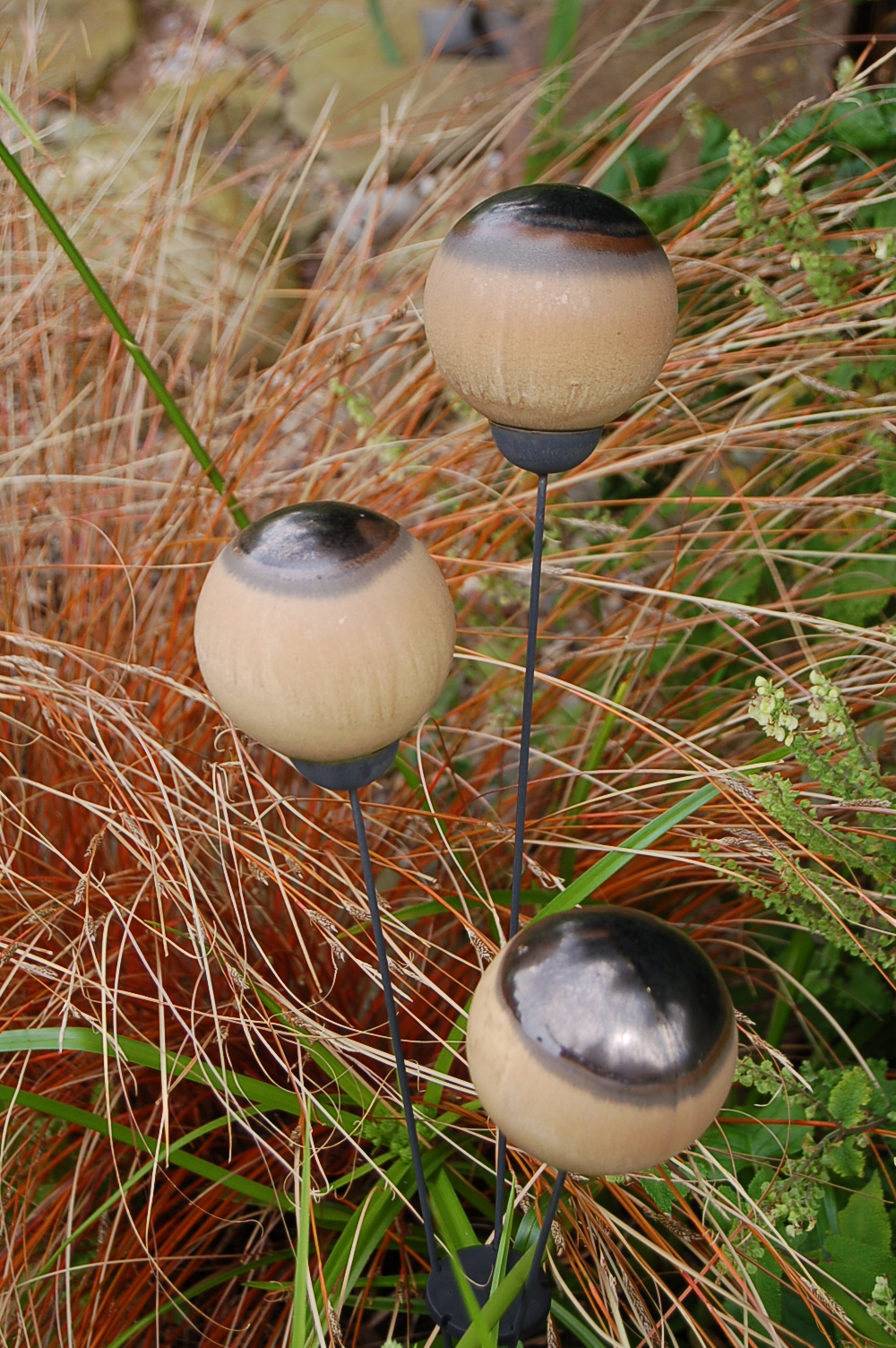
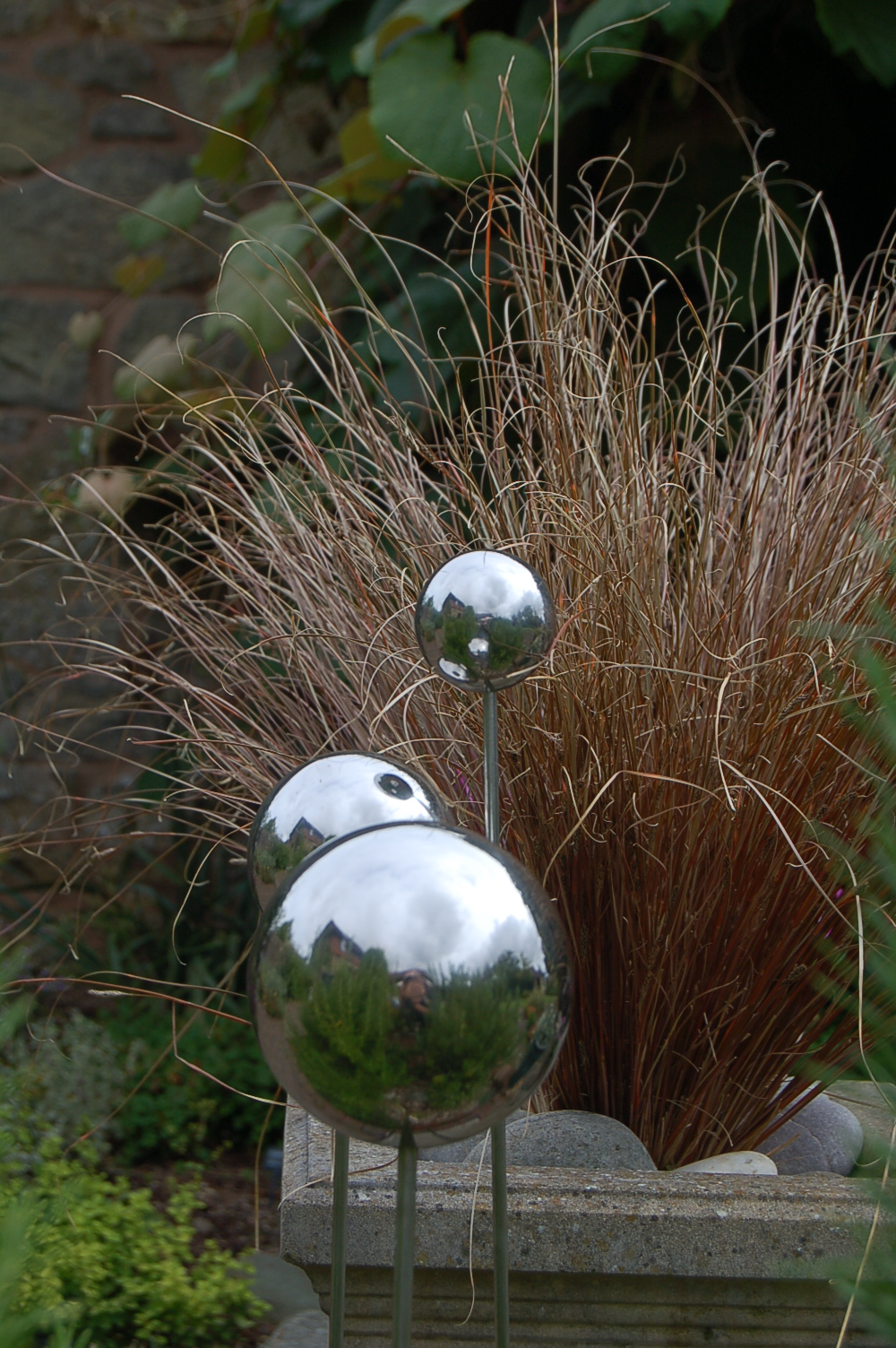
A selection of sculpture gave another layer of interest, from this classical figure to sinuous modern metal pieces.

But the true stars of this garden were the plants.

After a break for tea and cakes we travelled over to Bicton Village Hall where we hold our meetings, where we were looking forward to a talk entitled “A Botanist’s Garden” presented by John Grimshaw who until recently was Head Gardener at Colebourne in Gloucestershire, a garden famous for its mass displays of unusual snowdrops. In the last few weeks he has moved to Yorkshire for a new challenge, to develop the arboretum at Castle Howard. The talk was as good as we had hoped for. John illustrated his talk with a Powerpoint presentation featuring photos of the highest quality. We came away enthused and carrying another plant, Sedum telephium “Arthur Branch”.

To find out more about John and to see some of his beautiful photos visit his Garden Diary blog, www.johngrimshawsgardendiary.blogspot.com.

Categories
allotments fruit and veg garden design garden photography garden wildlife gardening grow your own hardy perennials ornamental grasses ornamental trees and shrubs outdoor sculpture photography roses trees wildlife

Barnsdale – a garden of memories

We return to Barnsdale Gardens every few years on a trip down memory lane. Barnsdale was the garden of TV gardener Geoff Hamilton the nation’s  favourite gardener for many years. He was the gardener on the BBC’s “Gardeners World” programme so he visited many gardeners’ homes every Friday evening for years. He was the first truly organic TV gardener and as such he promoted these sound garden principles and backed them up by conducting experiments and sharing the results on his show.

As well as Gardeners World he made several series of gardening programmes based on making gardens such as “The Cottage Garden” and “The Paradise Garden”.

He sadly died at a young age when taking part in a sponsored cycle ride for charity, but he has never been forgotten.

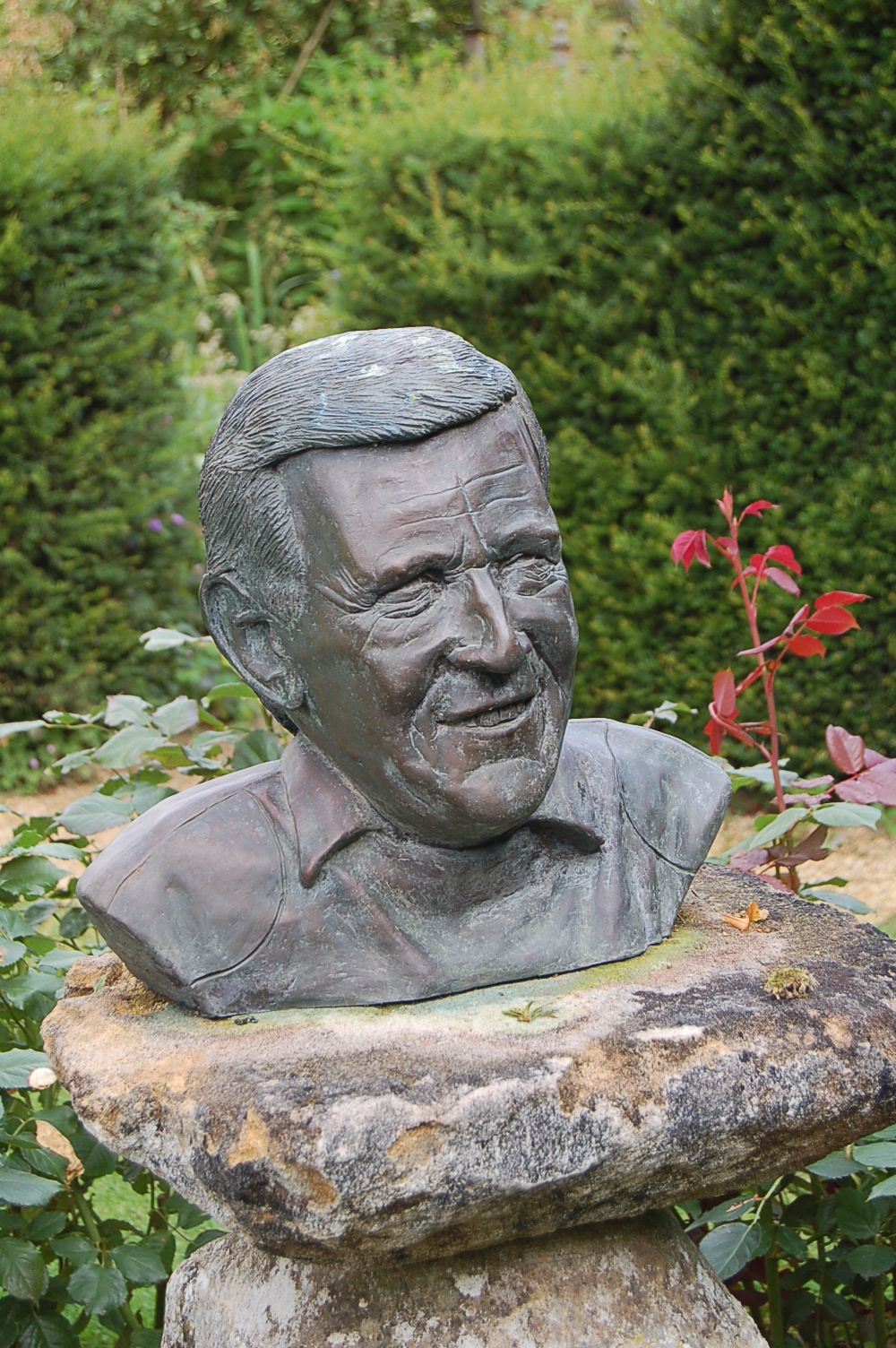
The Barnsdale Gardens still display all the model gardens Geoff made and others have been added since his death. The garden and the nursery attached  are run by his son and daughter-in-law. His other son created this bronze sculpture that graces the garden.

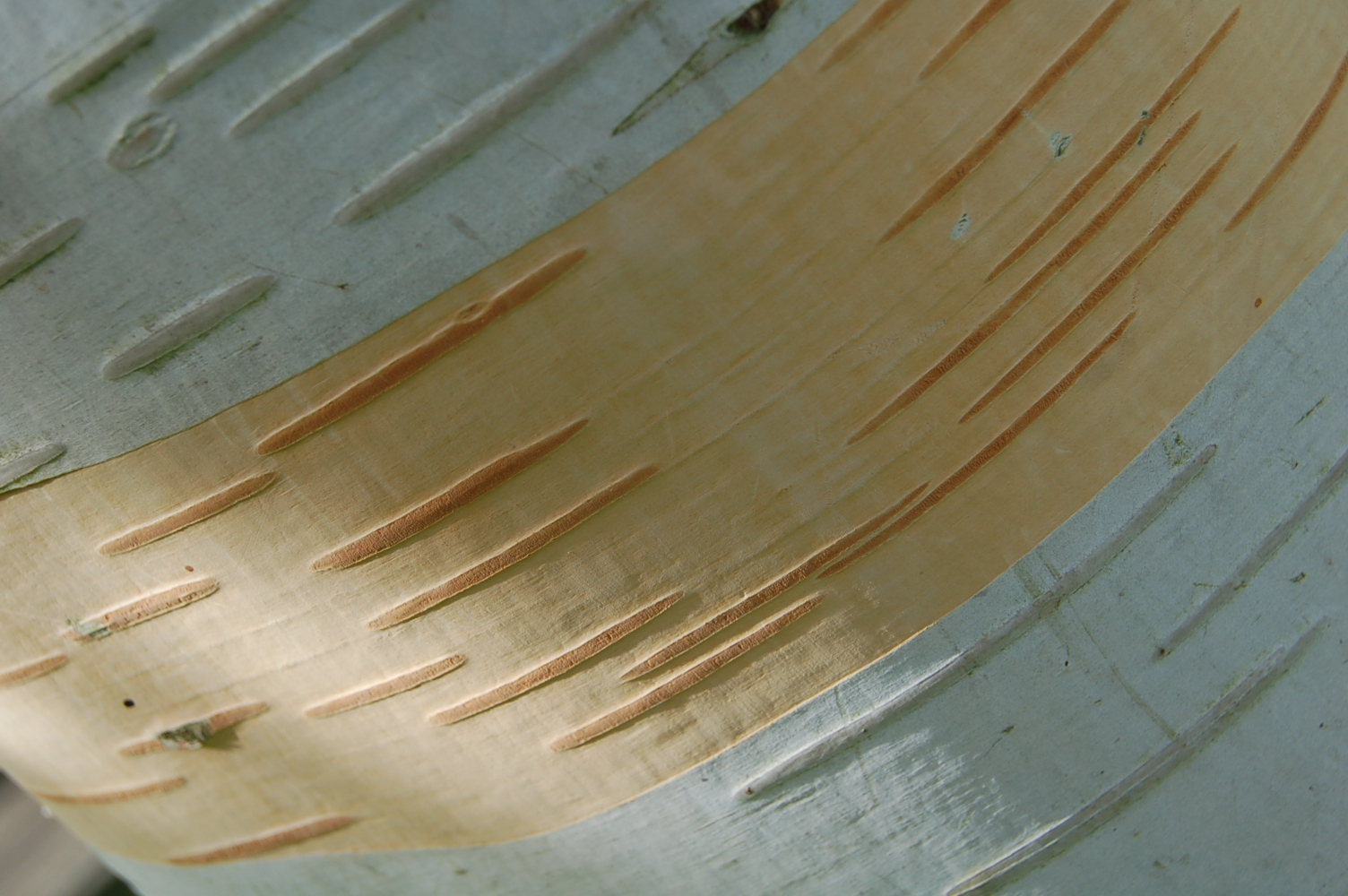
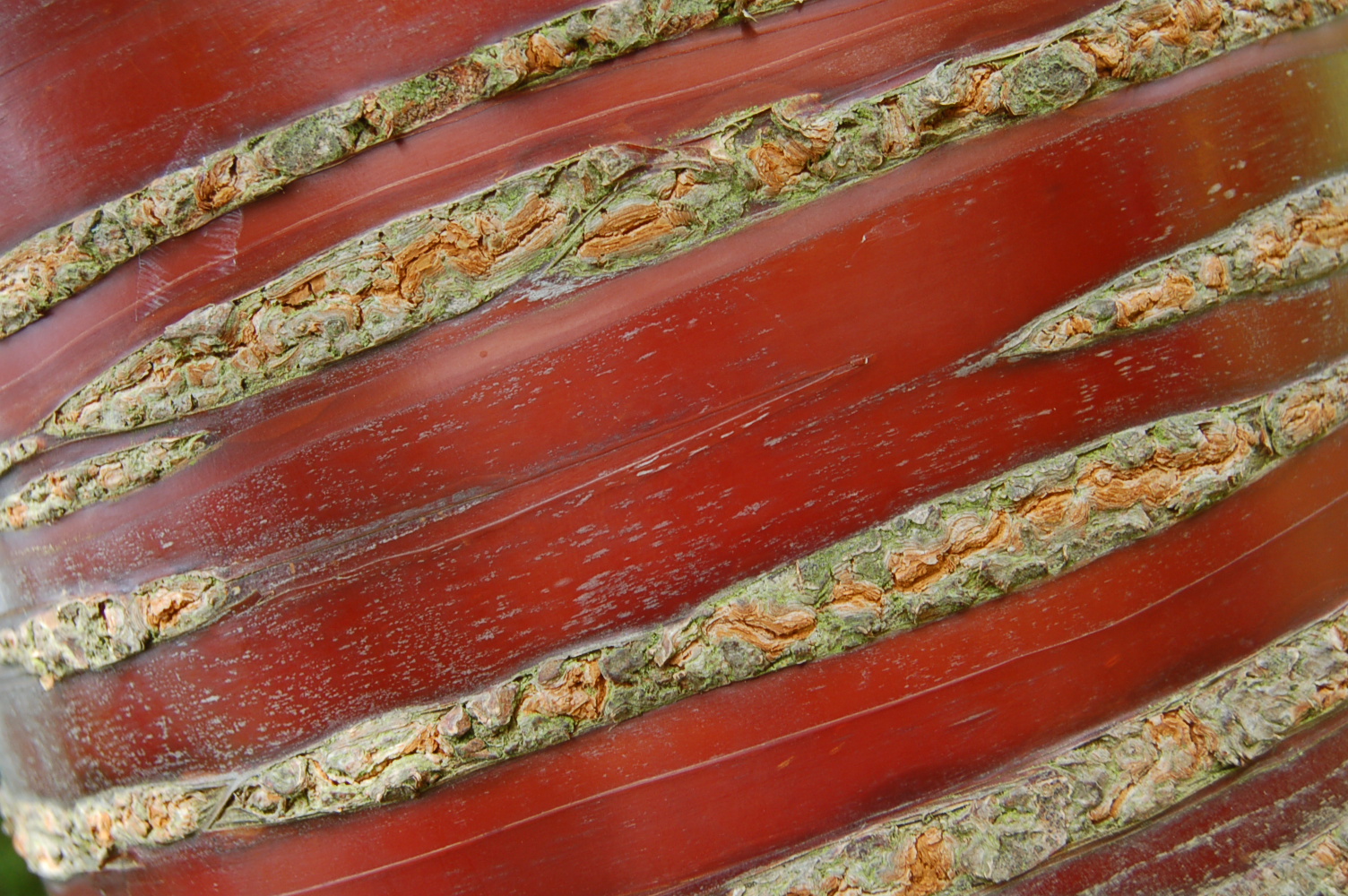
The trees that we saw Geoff plant many years ago are now impressive specimens and display interesting bark colours and textures.

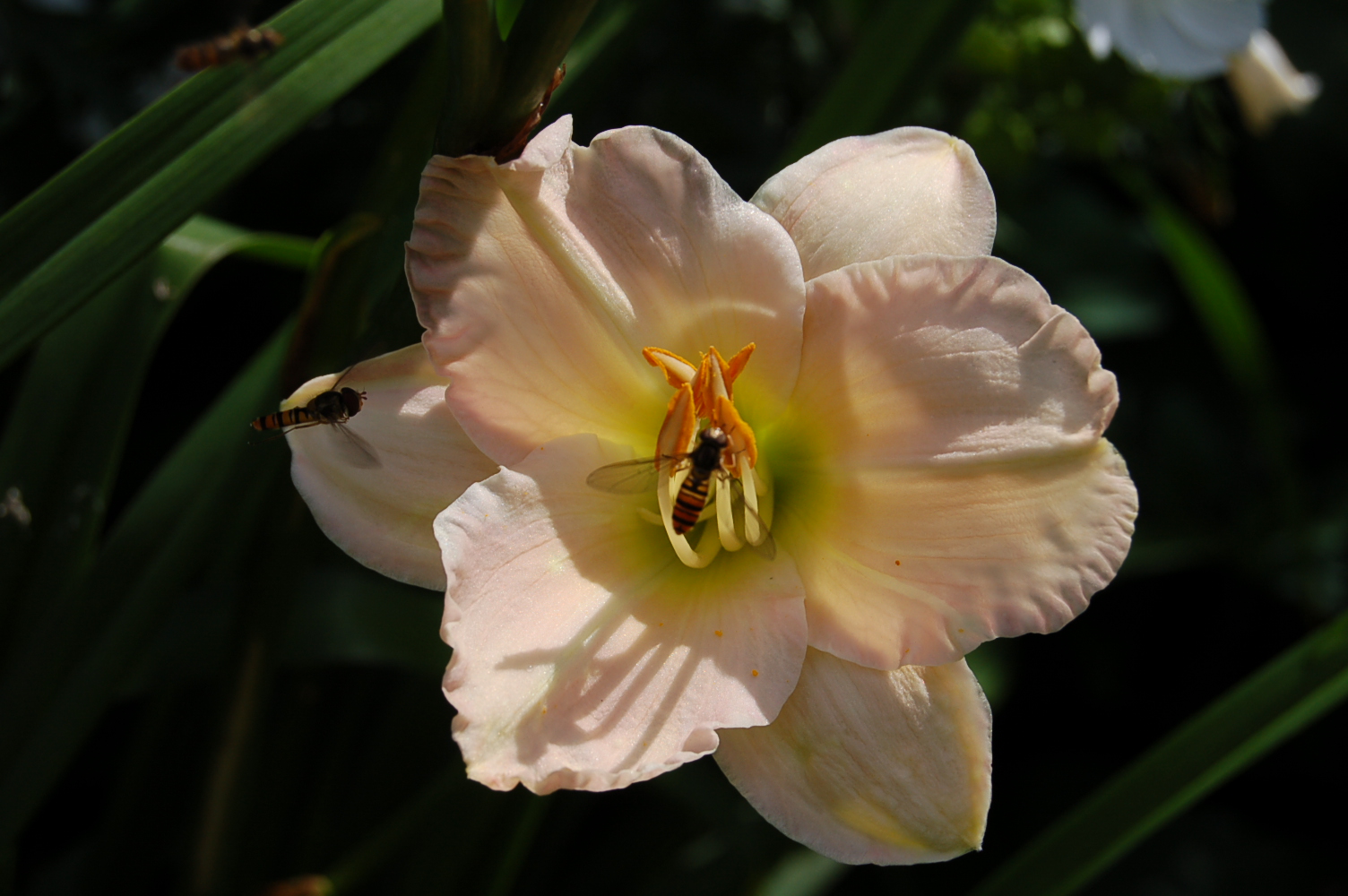
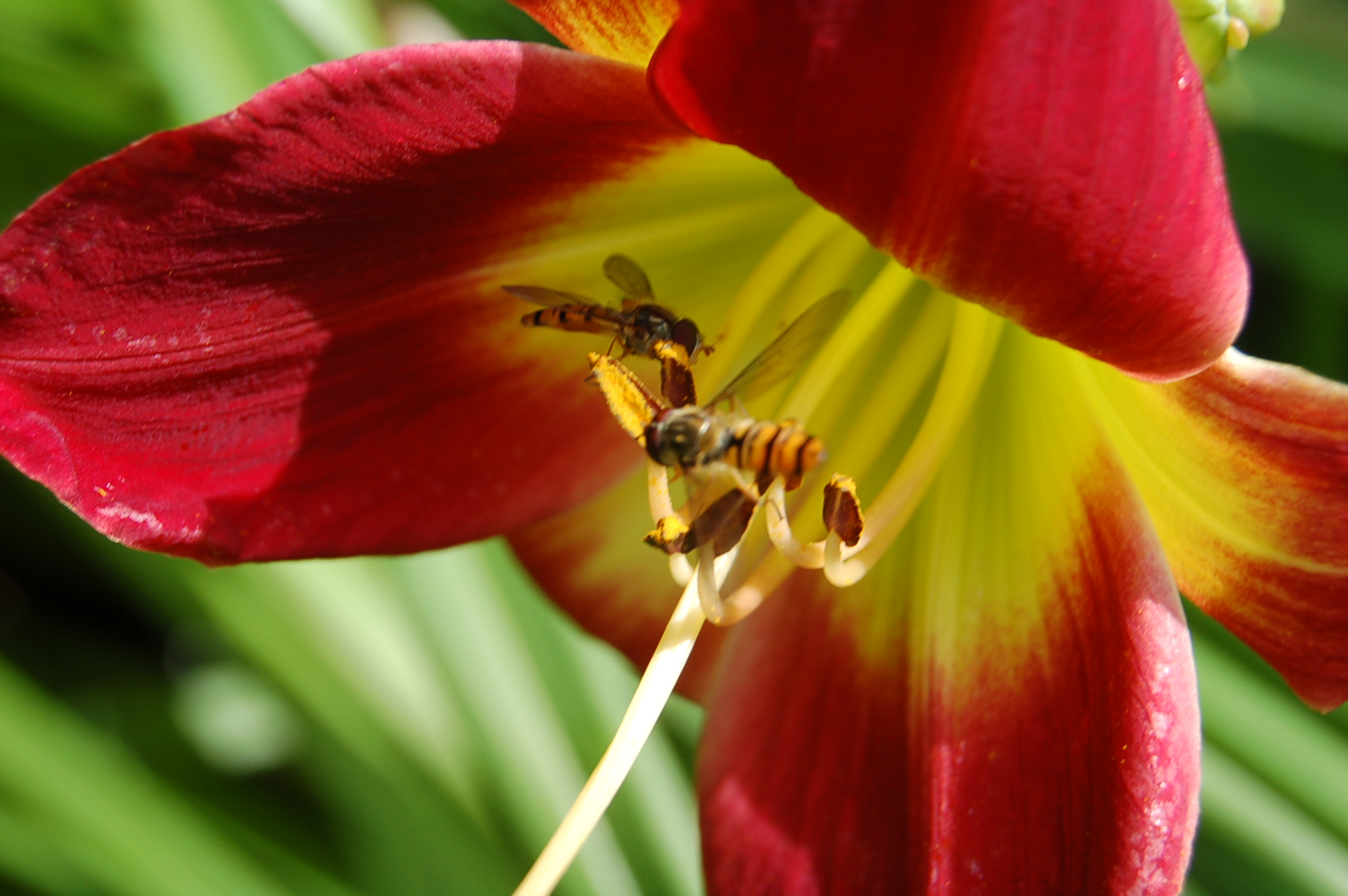
One of his favourite flowers was the Day Lily and many remain in the gardens still. Coming a close second as his most popular garden plant must be the rose.

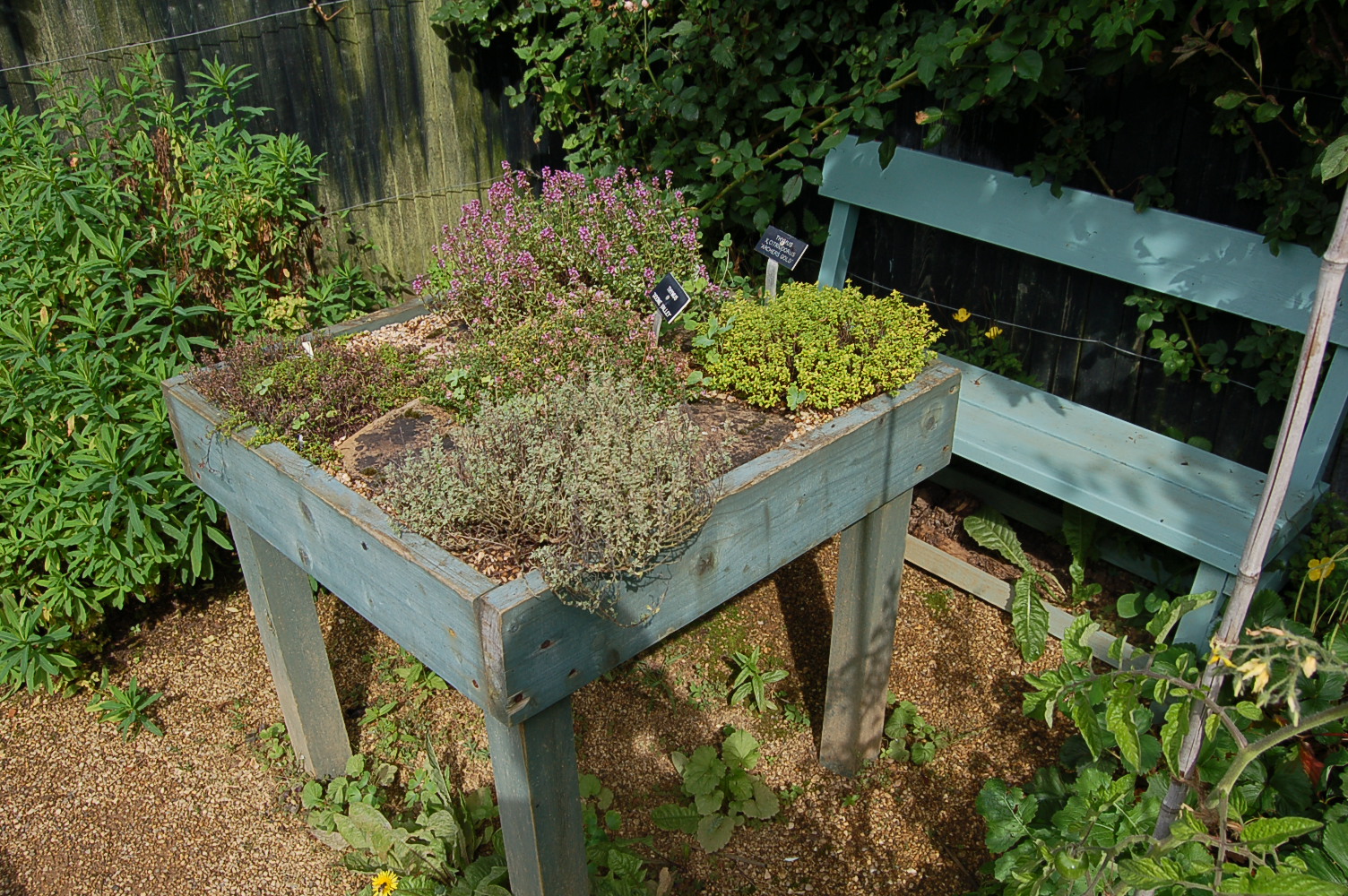
A popular feature of “Gardeners World” was Geoff’s do-it-yourself projects – he was always making furniture and garden features, to try to save his viewers money. Below is his garden bench with matching herb coffee table made from recycled pallets with old roof slates built in as coasters.

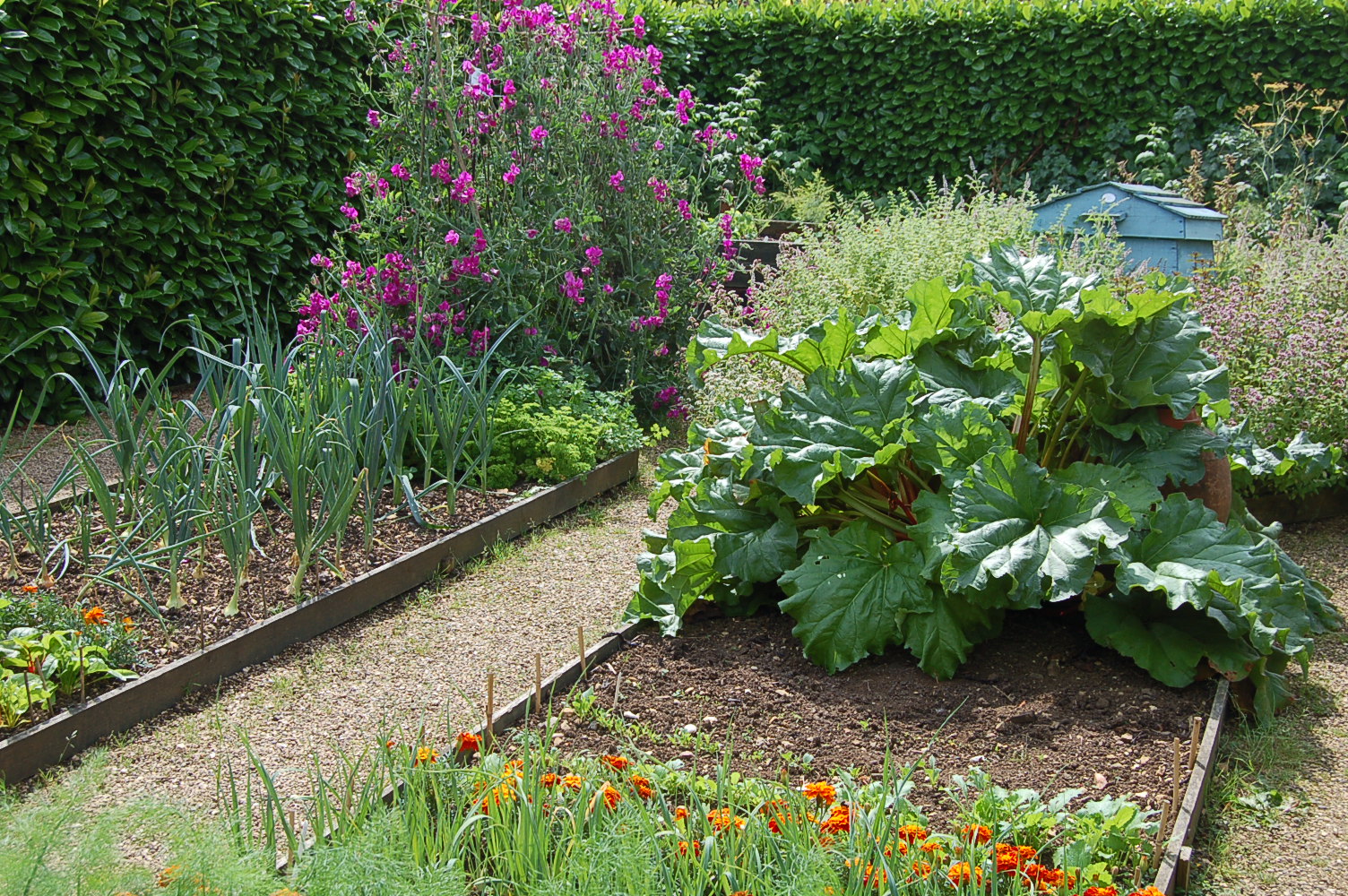
He also constructed this compost bin disguised as a beehive and accompanying garden store, both created from recycled wood.

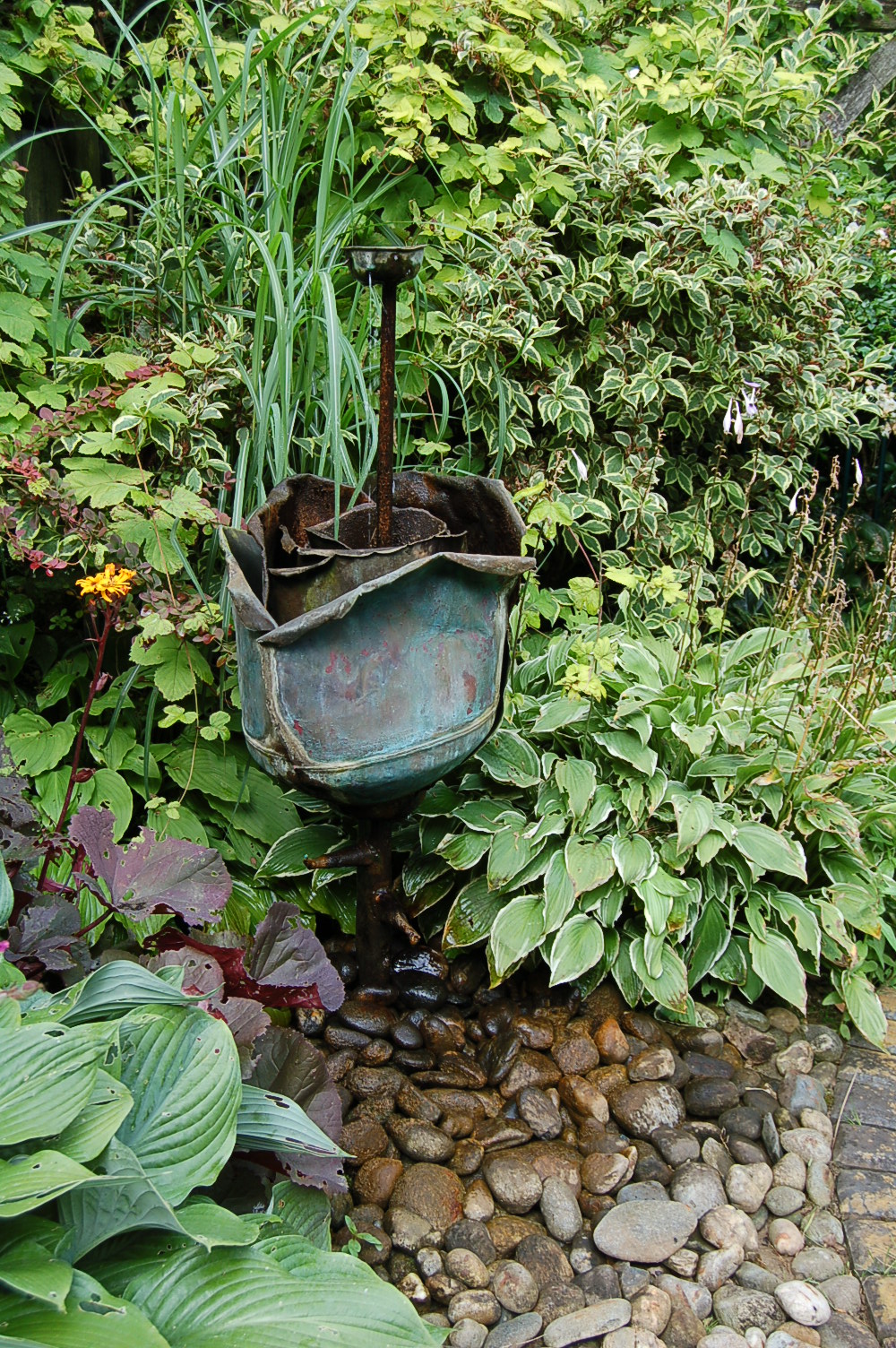
He even made a water feature from an old copper water cylinder!

Although he encouraged gardeners to construct things for their own gardens he also extolled the virtues of craftsmen and his garden diaplays many works by craftsmen local to Barnsdale. In particular he brought locally made furniture into the garden.

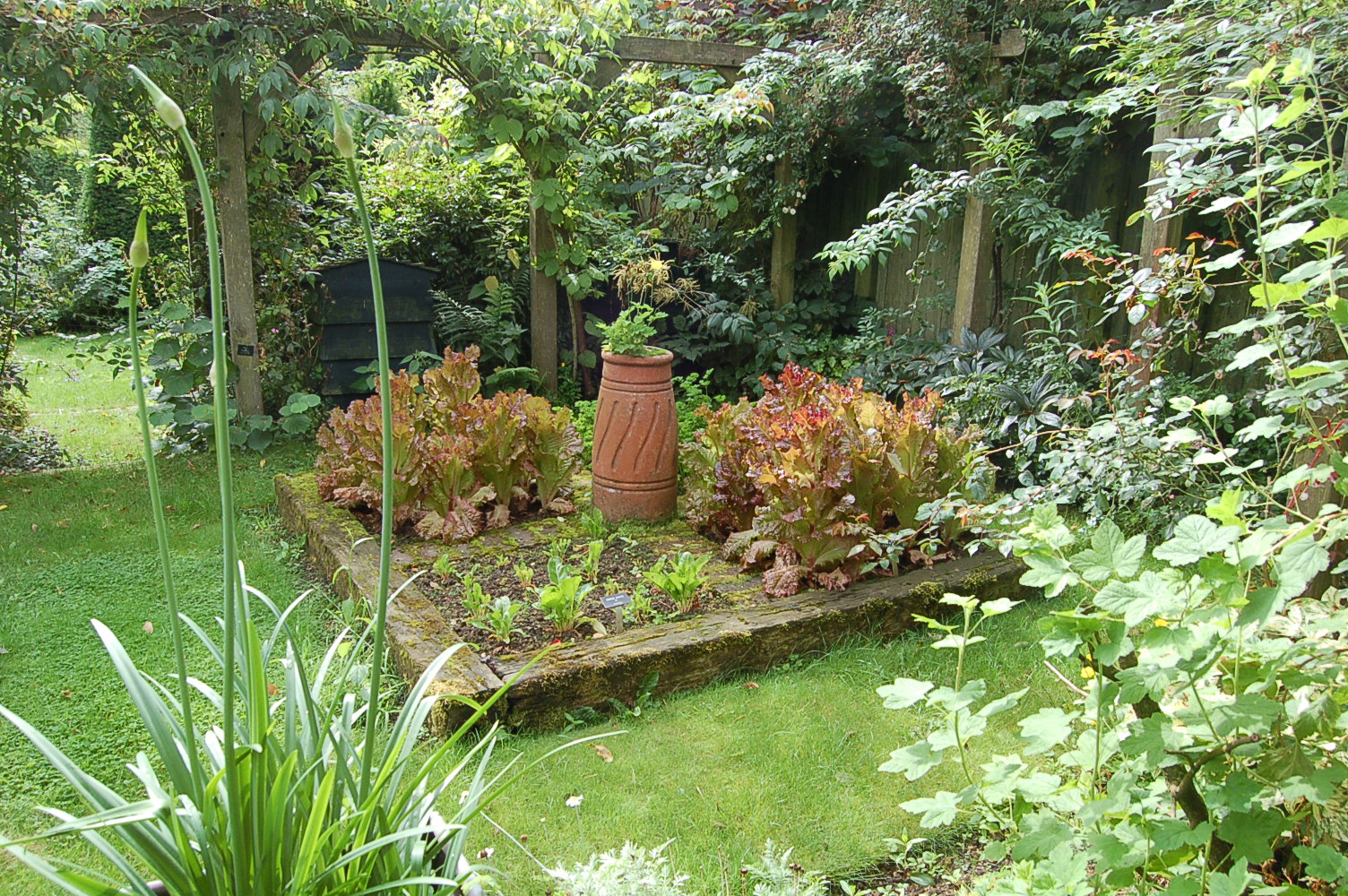
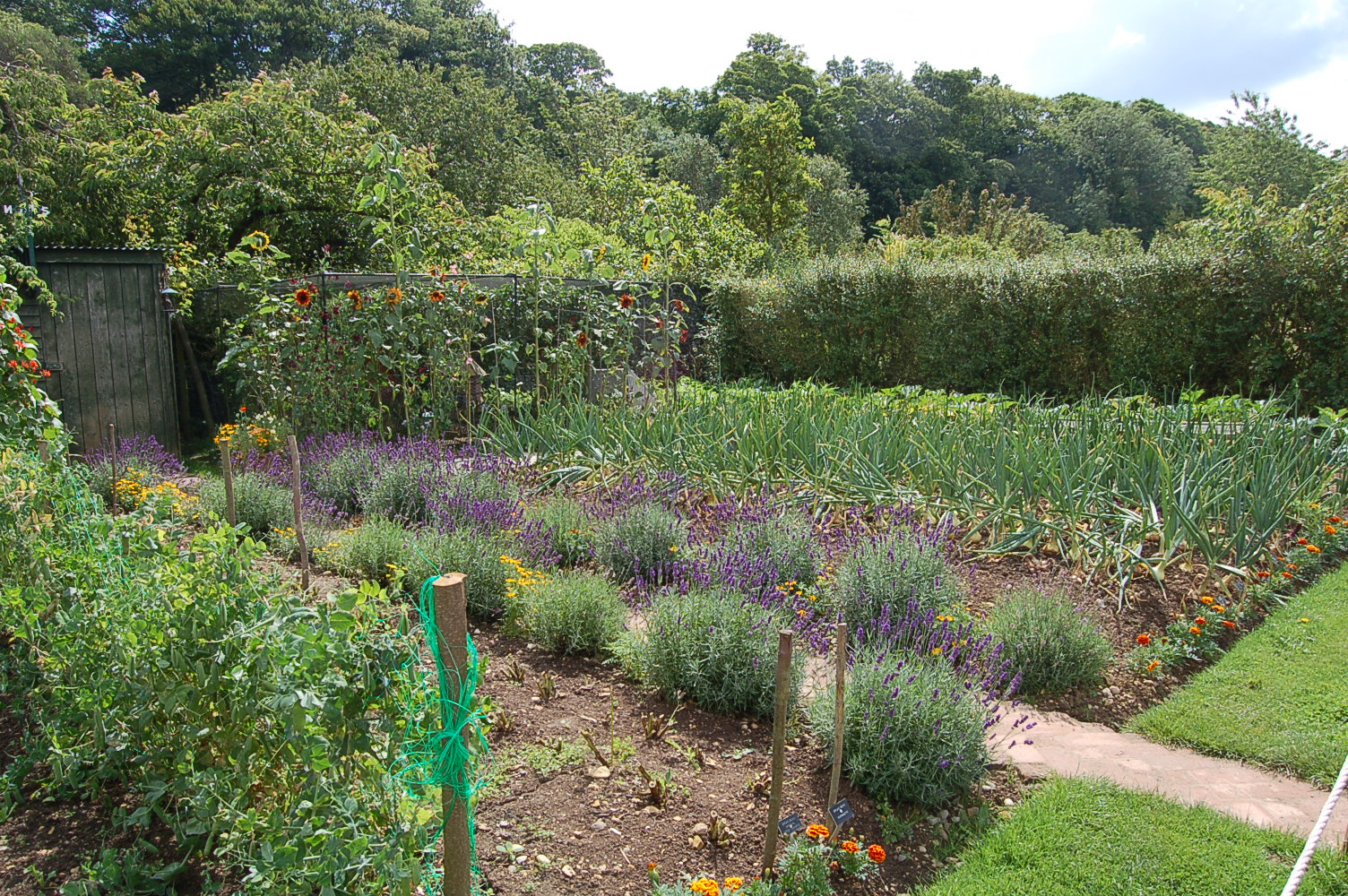
Productive gardening – fruit, veg and herbs – played a big part in his programmes, magazine articles and books. Several of his productive plots are still at Barnsdale, such as an allotment, the Ornamental Kitchen Garden, an Elizabethan Vegetable Garden. the Fruit Orchard, an Apple Arch and Herb Garden.

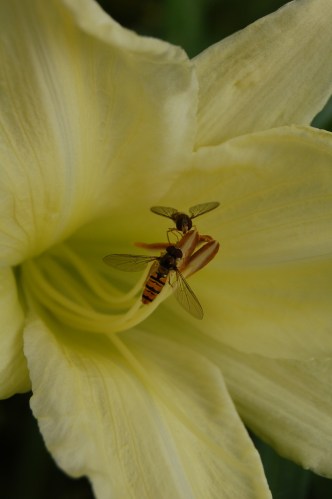
Geoff was definitely ahead of his time, encouraging organic principals and attracting insects into the garden. he recognised them as pollinators and predators of garden pests.

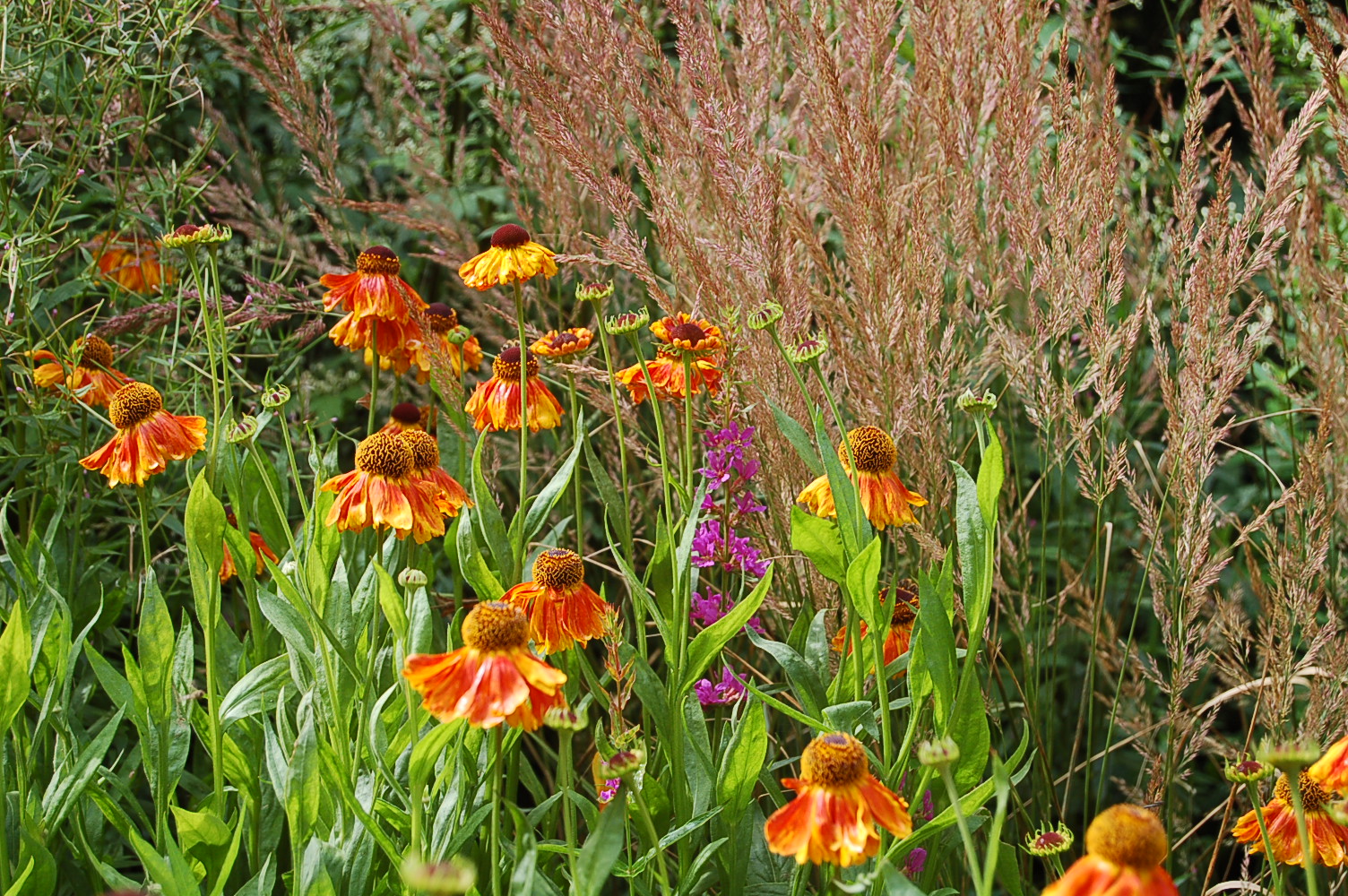
He featured plants such as Achilleas, Heleniums and other hot coloured flowers, and using lots of different grasses. These are all popular now.

Since Geoff’s untimely death the garden has continued to develop. His son, Nick and daughter-in-law have created new gardens so now Barnsdale is described as “39 inspiring gardens, all in one place”

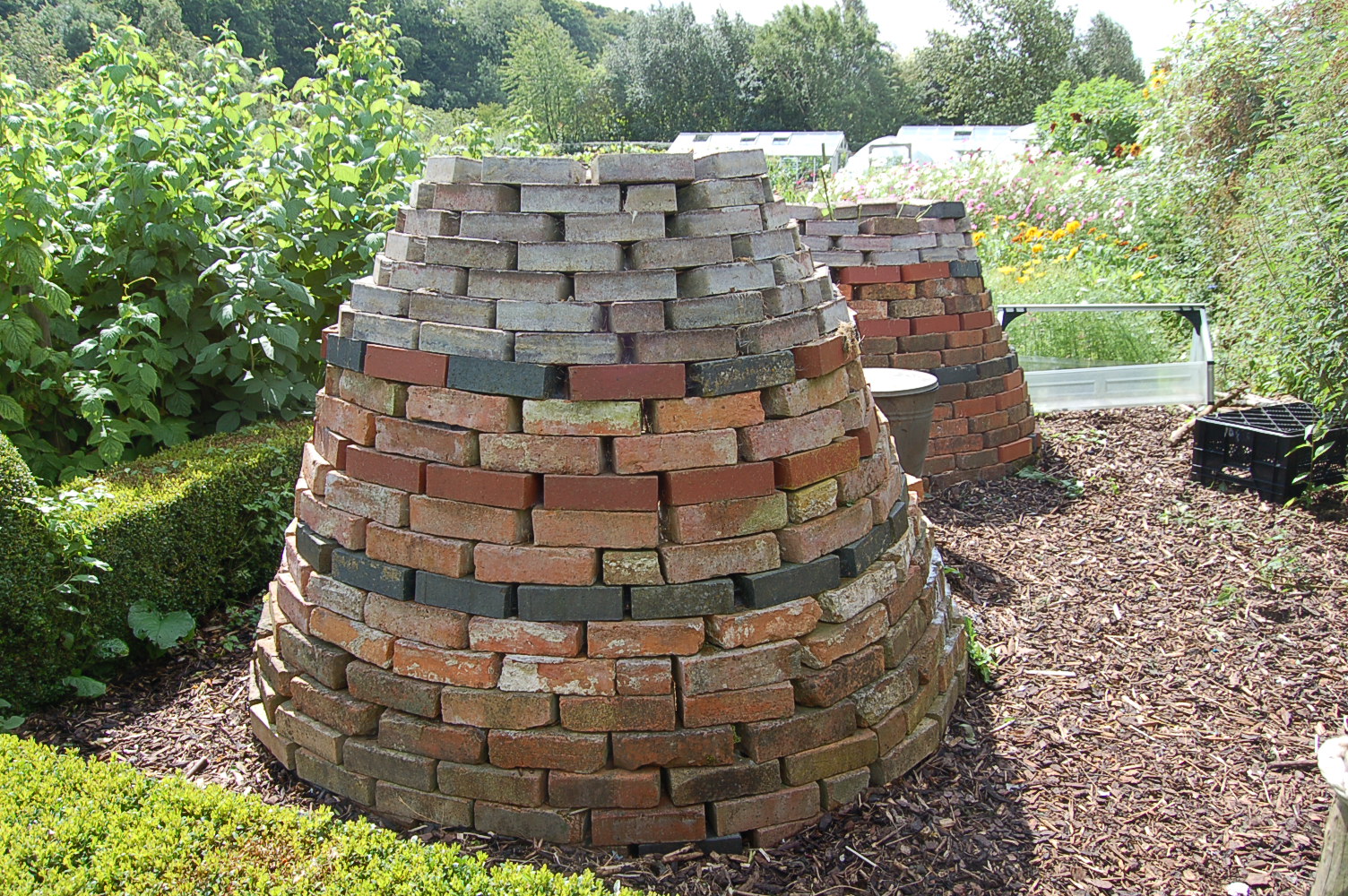
A sign of just how popular and influential Geoff Hamilton was is the fact that his book on Organic Gardening is still in print and has been updated and revised on several occasions. He was a great believer in the importance of compost and found all sorts of ways of making it efficiently. How about this brick-made composter. The bricks would absorb warmth from the sun and heat up the composting material inside and speed up its decomposition.

I shall end this visit to Geoff Hamilton’s Barnsdale with a few more views of the garden.

Categories
birds climbing plants garden design garden photography garden wildlife gardening hardy perennials ornamental grasses ornamental trees and shrubs photography Shropshire trees village gardens wildlife

A Wander around our Garden in August

Our garden in August is a bright, colourful place full of lush growth, rich scent and so much wildlife to enjoy. Our wild birds are mostly quiet at present as August is the time when they hide away as they go through their annual moult. They have gone to ground and gone silent.

Above our heads however avian activity is busy and exciting. The Swallows and House Martins are feeding up in anticipation of their migration south. The sky is full of them, but the screaching of Swifts is absent as they began their own long journey a few weeks ago. For a few days there is a gap in the sounds – we miss them for their excited calls and aerial displays.

The calls of the young Buzzards can be heard above the Swallows and Martins, as they excitedly search out thermals and discover the joy of riding them. The Peregrines have reappeared now that their breeding season is over so we can watch the adult pairs rising in ever-higher circles until they disappear from view. Our eyes become incapable of seeing them as they become smaller, become dots and are then gone. They have the luxury of far better long distance vision than us – they will see the movement of their prey from hundreds of feet up in the air. A real treat is to spot them as they stoop, travelling down at speeds of over 200 miles per hour with a pigeon in their sights.

Yesterday when deadheading in one of our borders we were surprised by a low-flying, high speed Green Woodpecker who zoomed close to us, just a few feet away. A real treat!

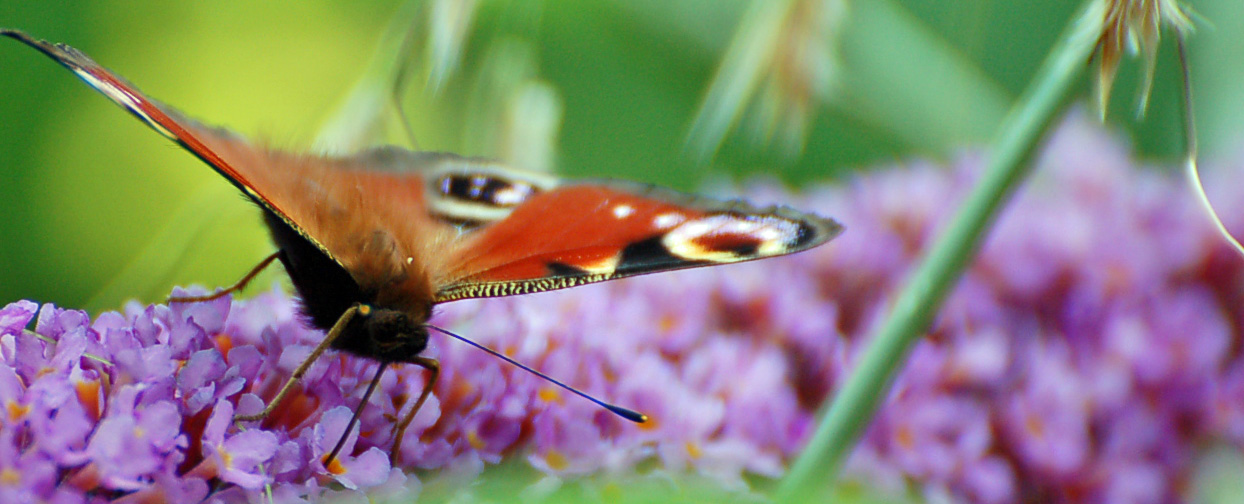
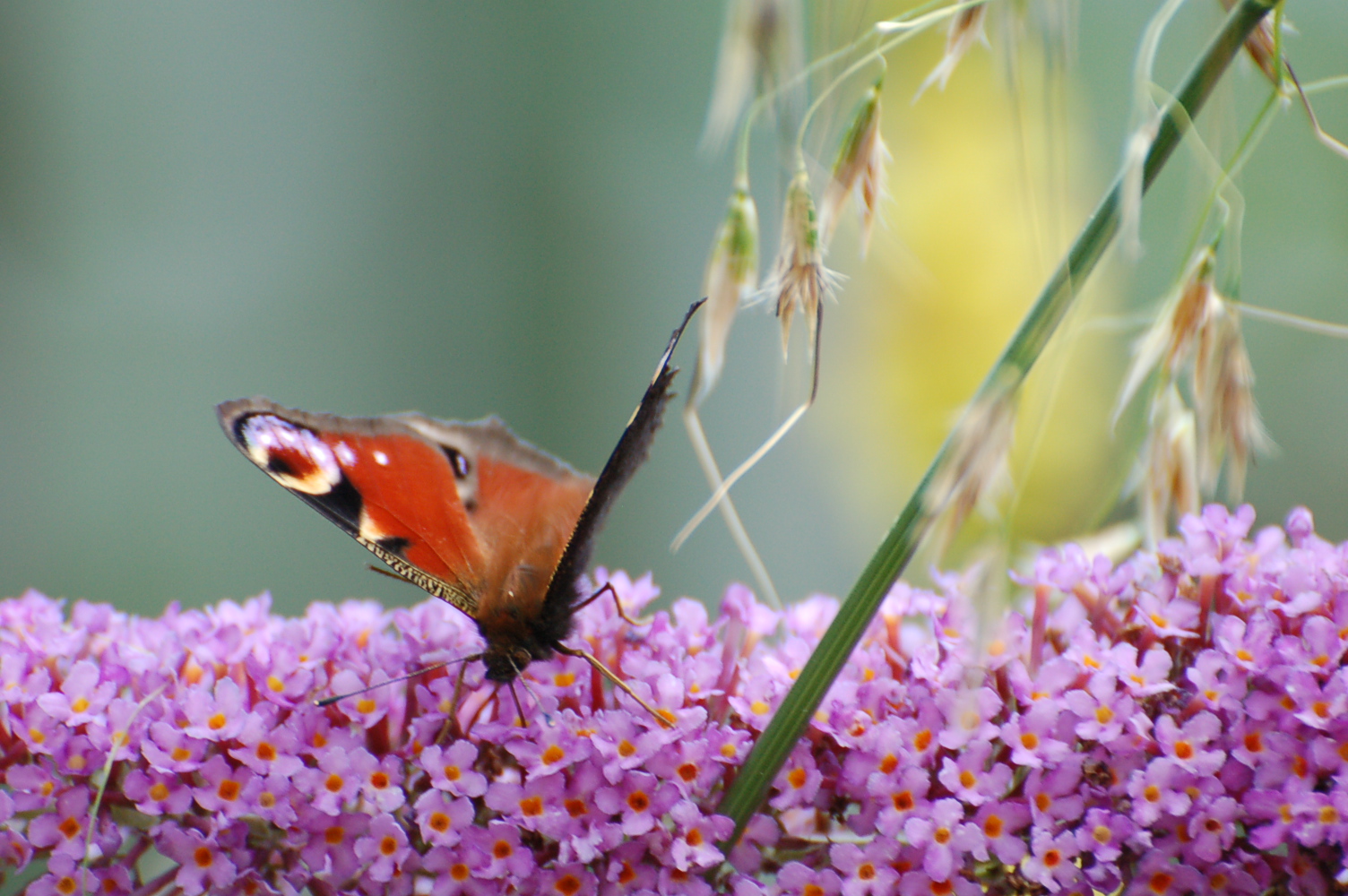
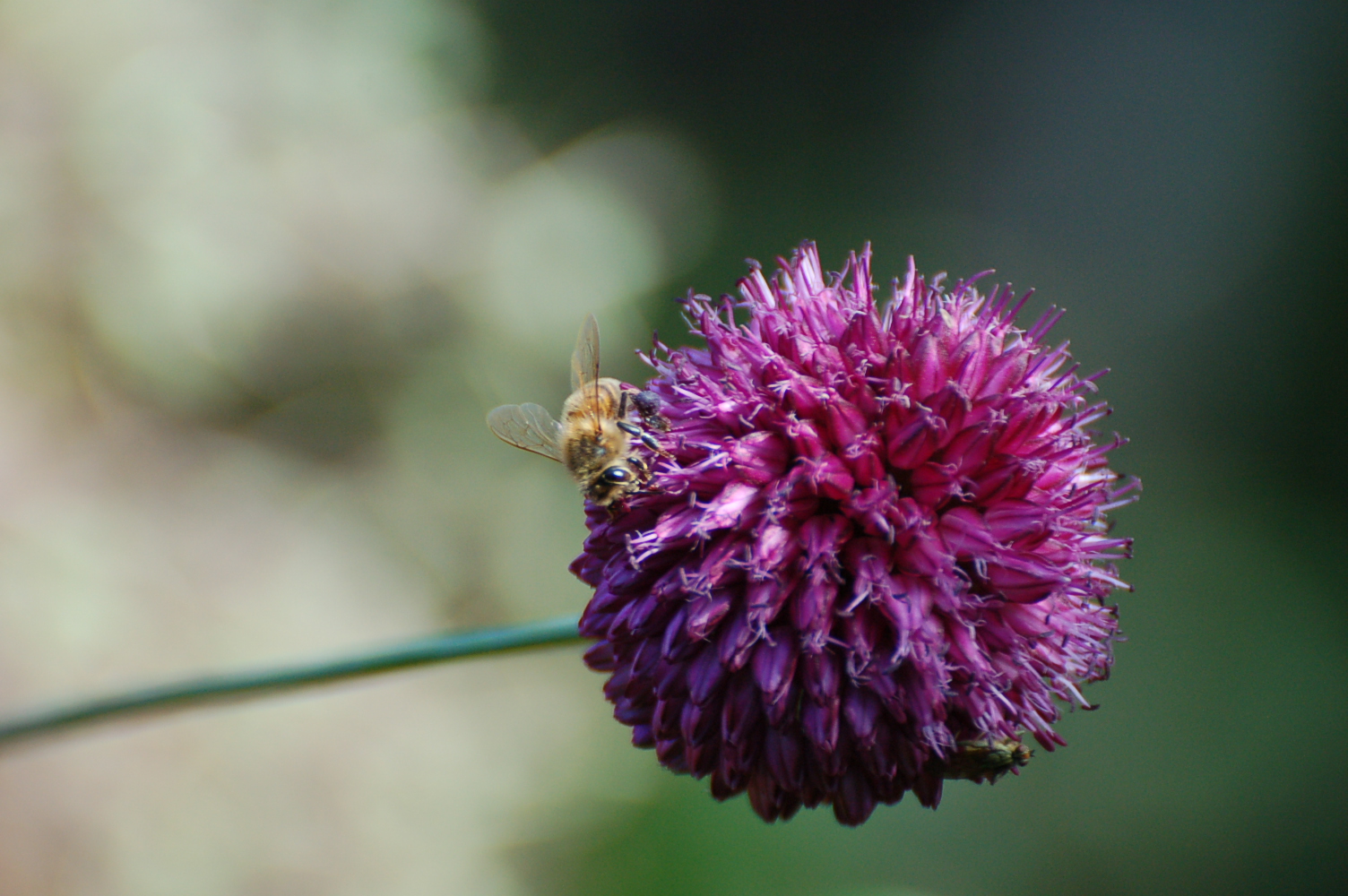
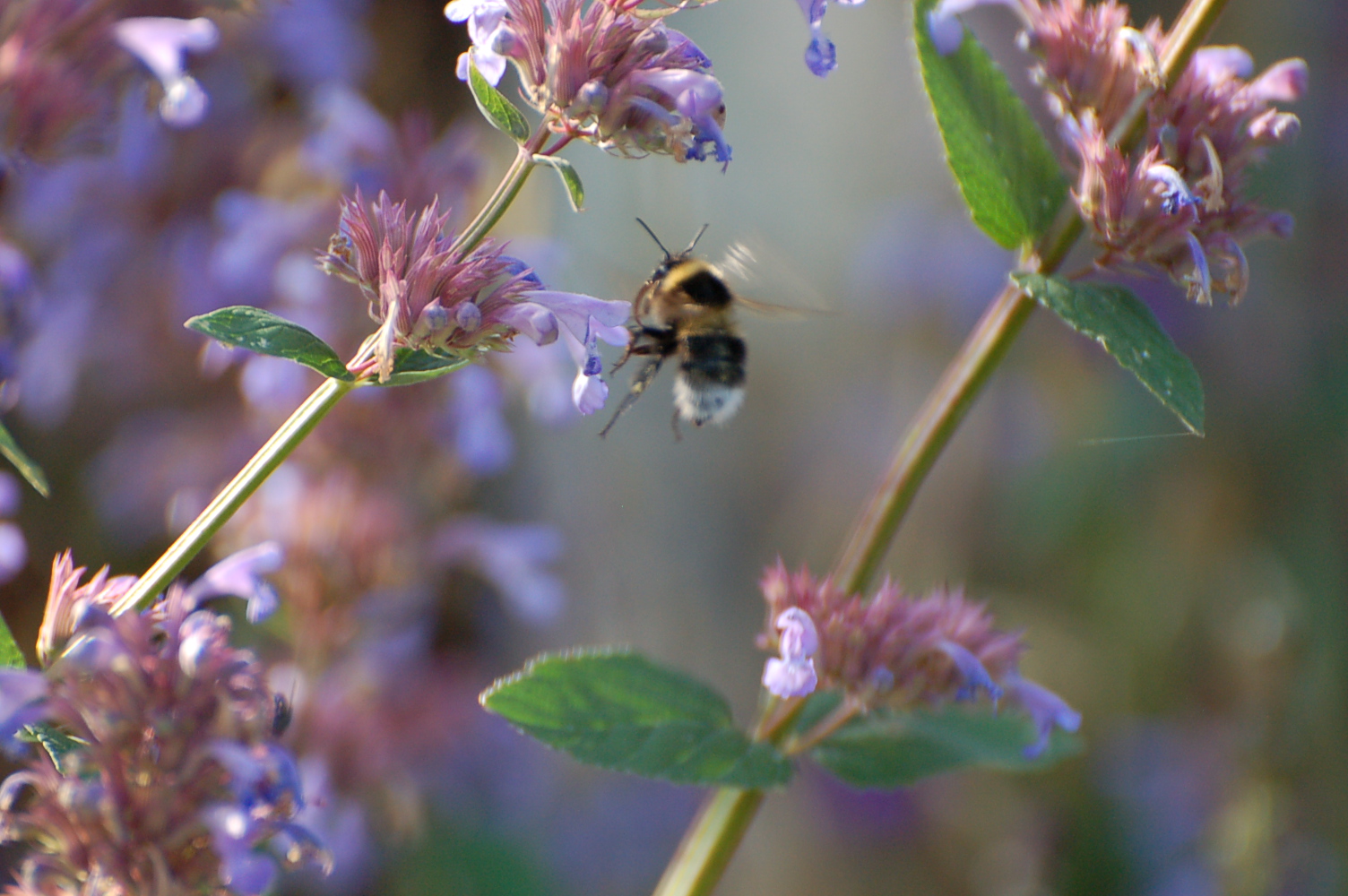
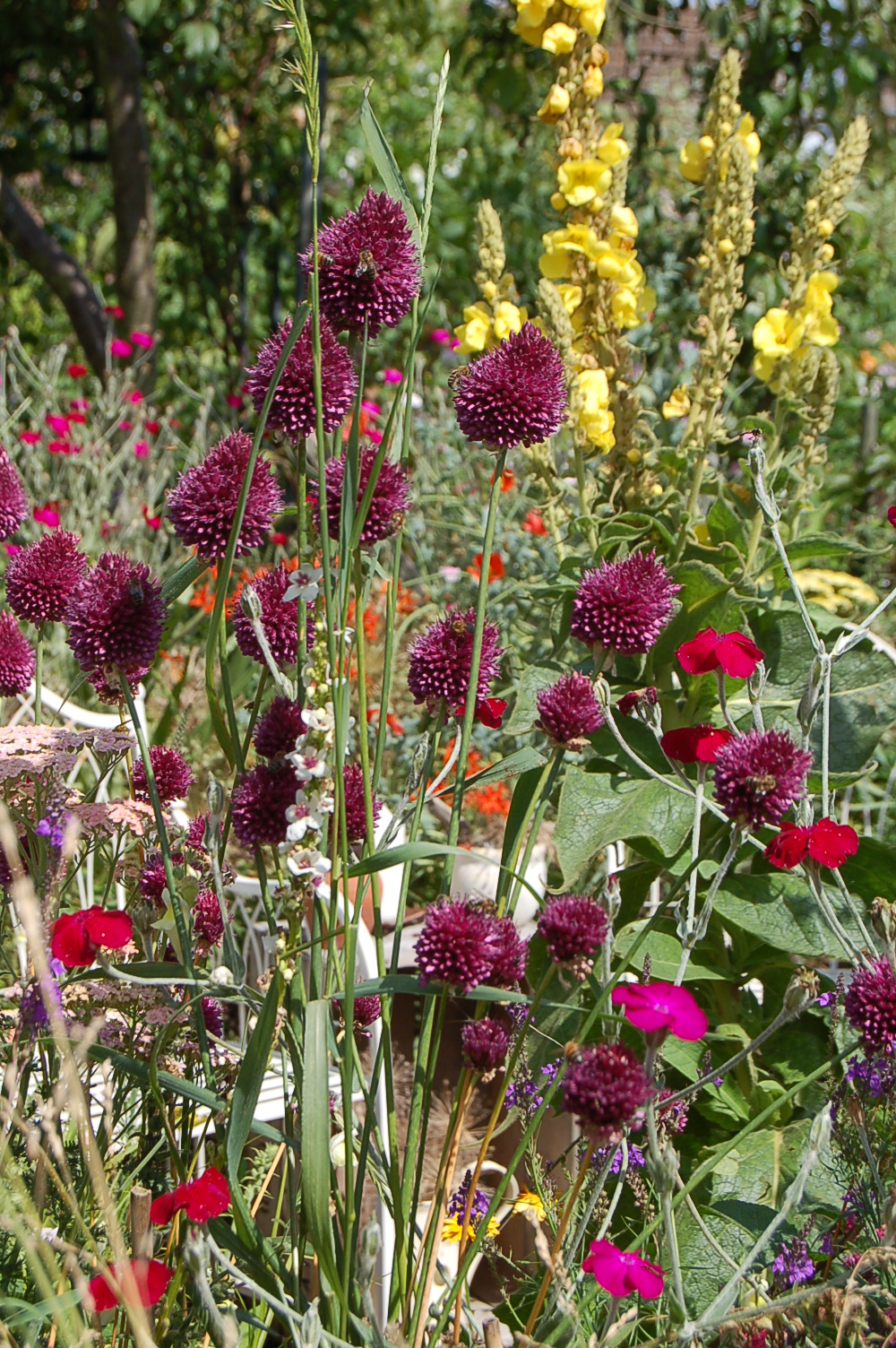
Insect life is flourishing. On any warm bright day a variety of insects can be seen hunting out nectar and pollen. Butterflies, bees and hoverflies are attracted to Buddleias, Alliums, Salvias, Nepetas, Lavenders and Echinops. There are so many Peacock Butterflies around at the moment but you can’t have too many of them. The Holly Blues are much scarcer and flit continuously rarely seeming to settle.

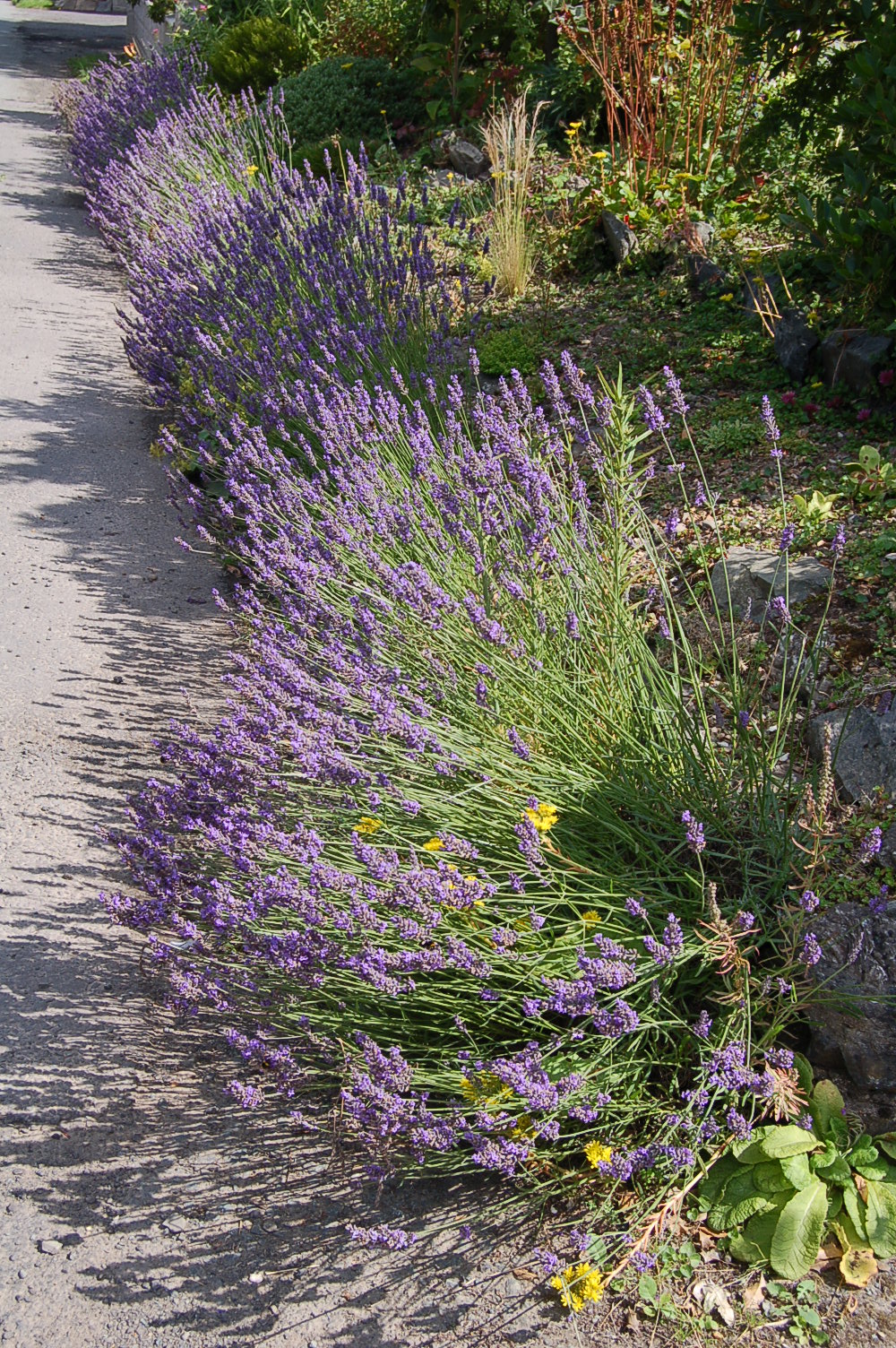
Bees and hoverflies are attracted to our Lavender hedge which borders the lane which passes in front of our garden.

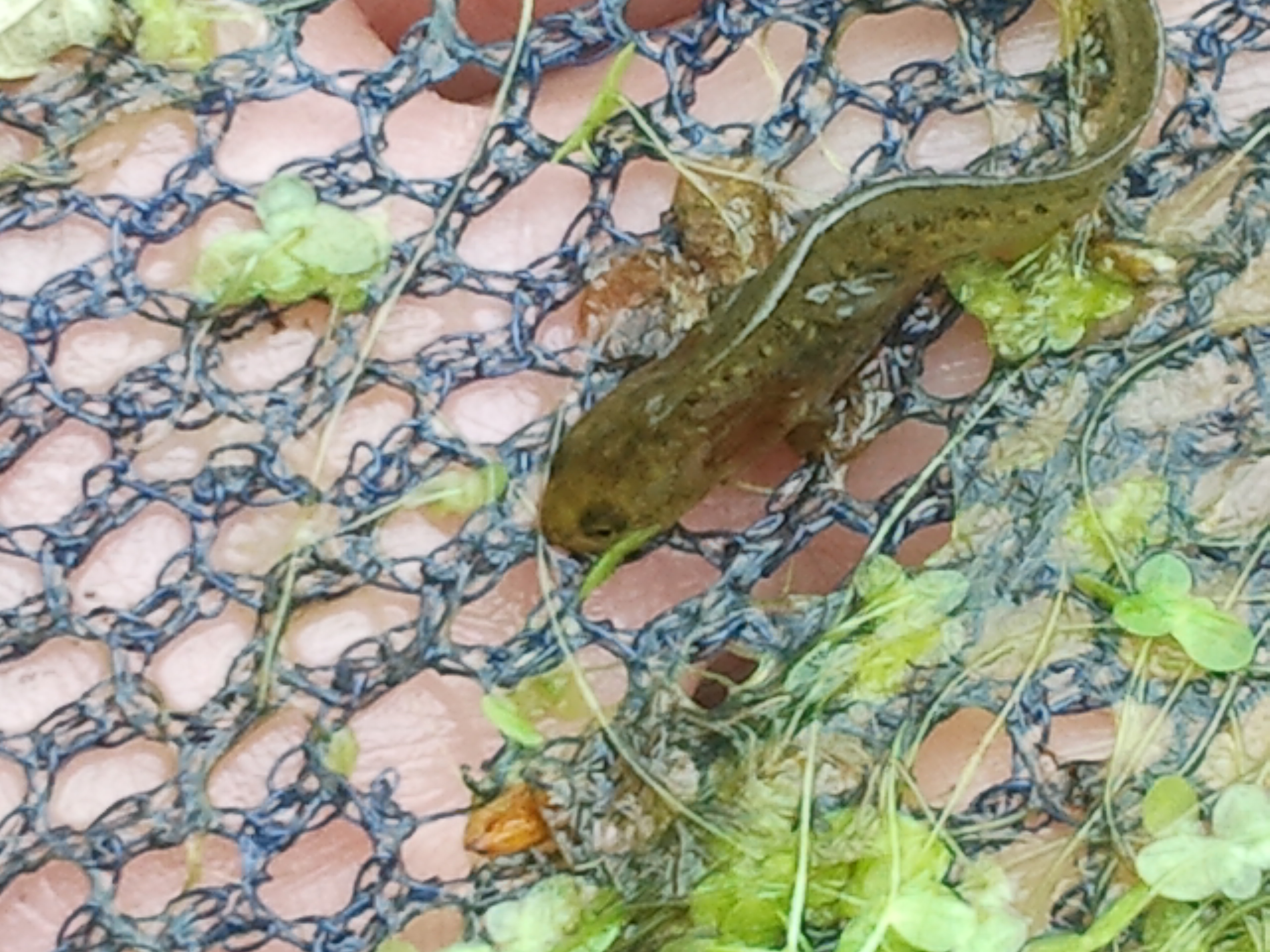
The ponds are full of life with shoals of young fish basking in the shallows, diving Beetles and Boatmen moving up to the surface and back to the bottom regularly. On the surface Pondskaters pace out the length and breadth of the pond surface. Young newts regularly appear at the surface take a gulp of air and drop back down. When Jude the Undergardener nets the duckweed and blanket weed from the pond she catches newts every time. She is delighted with every newt that graces her net. I am convinced that removing the weed is an excuse for her newt catching exploits. In August the majority of newts Jude catches are youngsters.

The front garden is looking good! So much colour! The Hot Border is HOT!

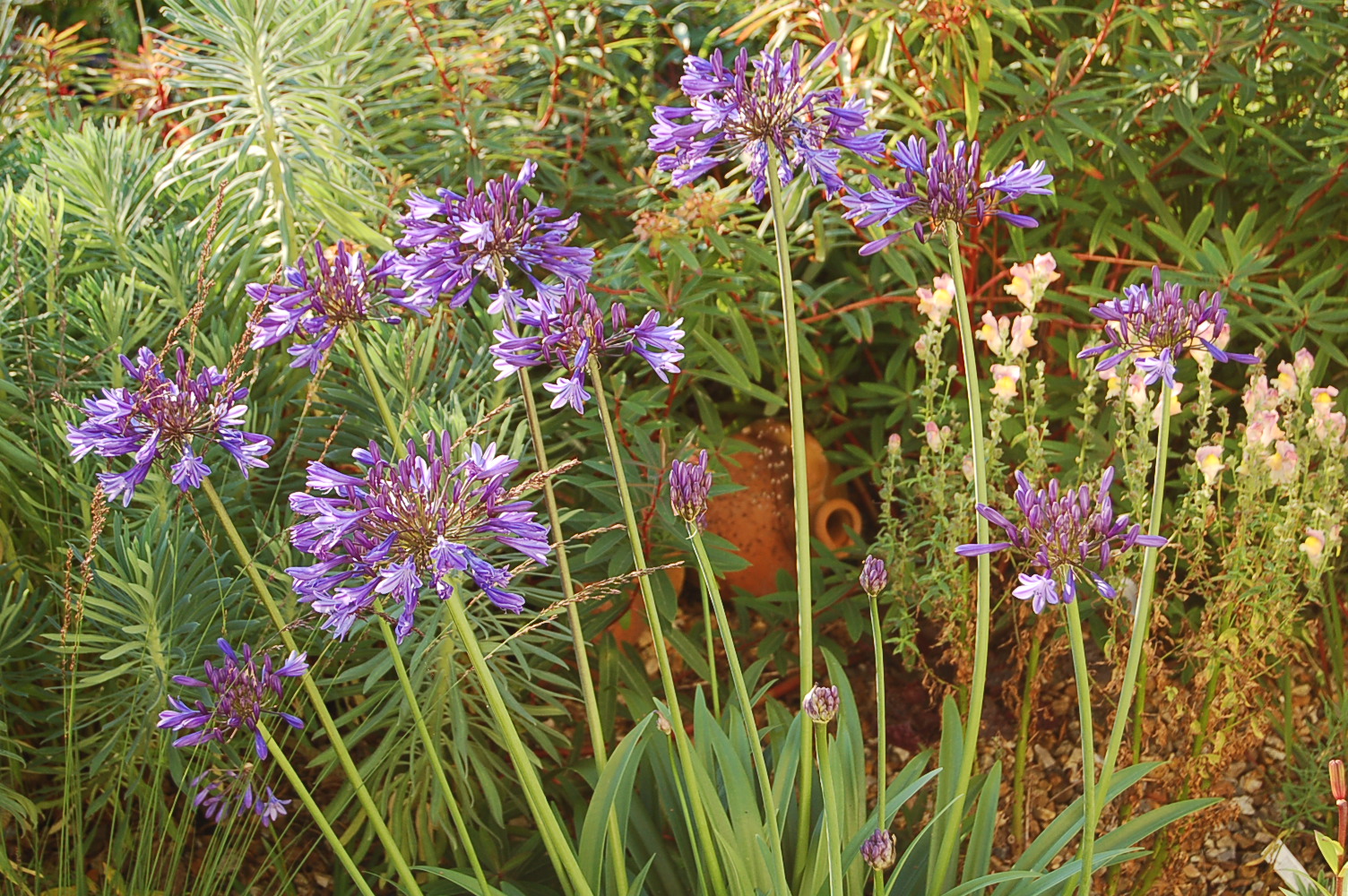
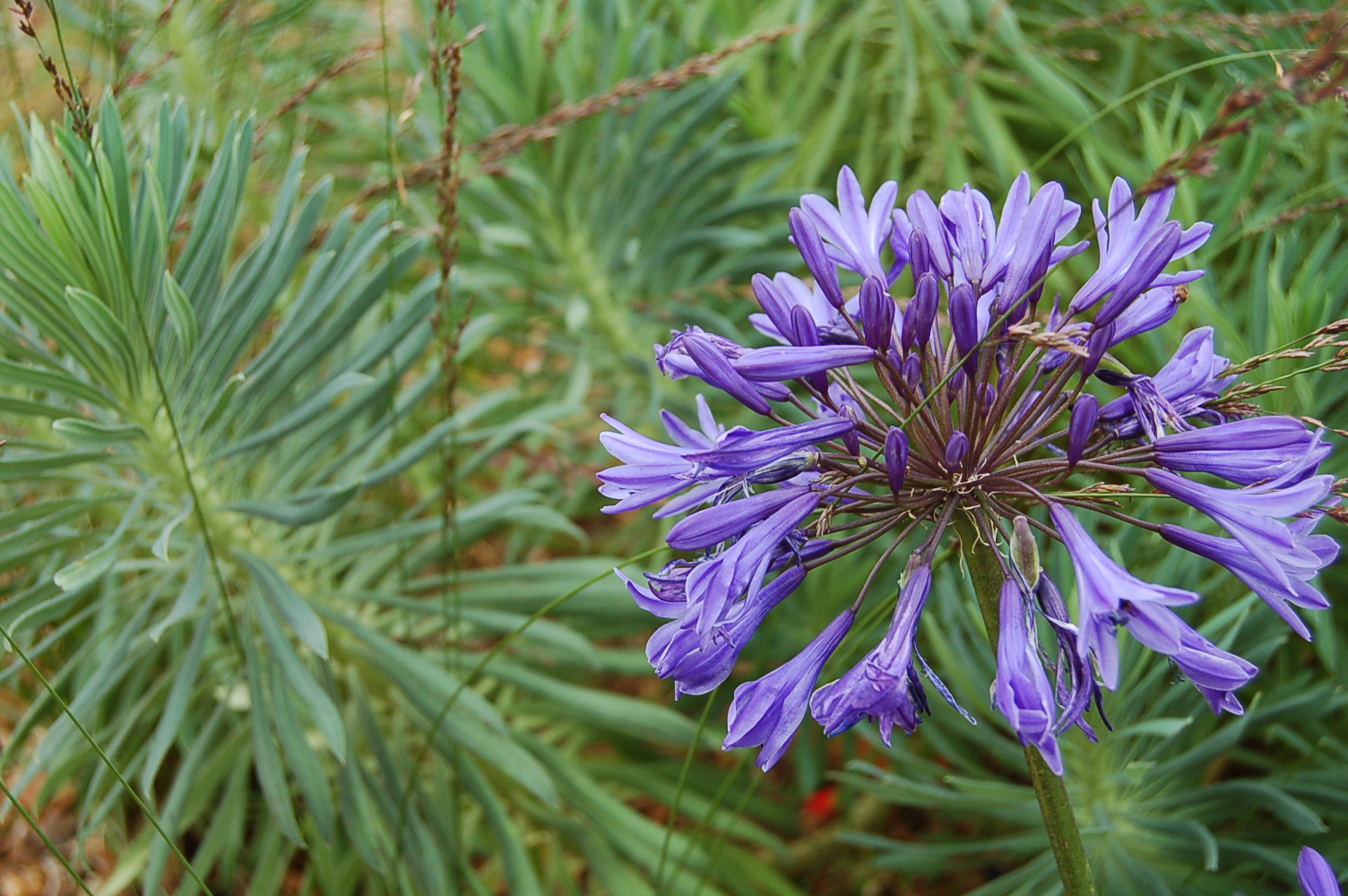
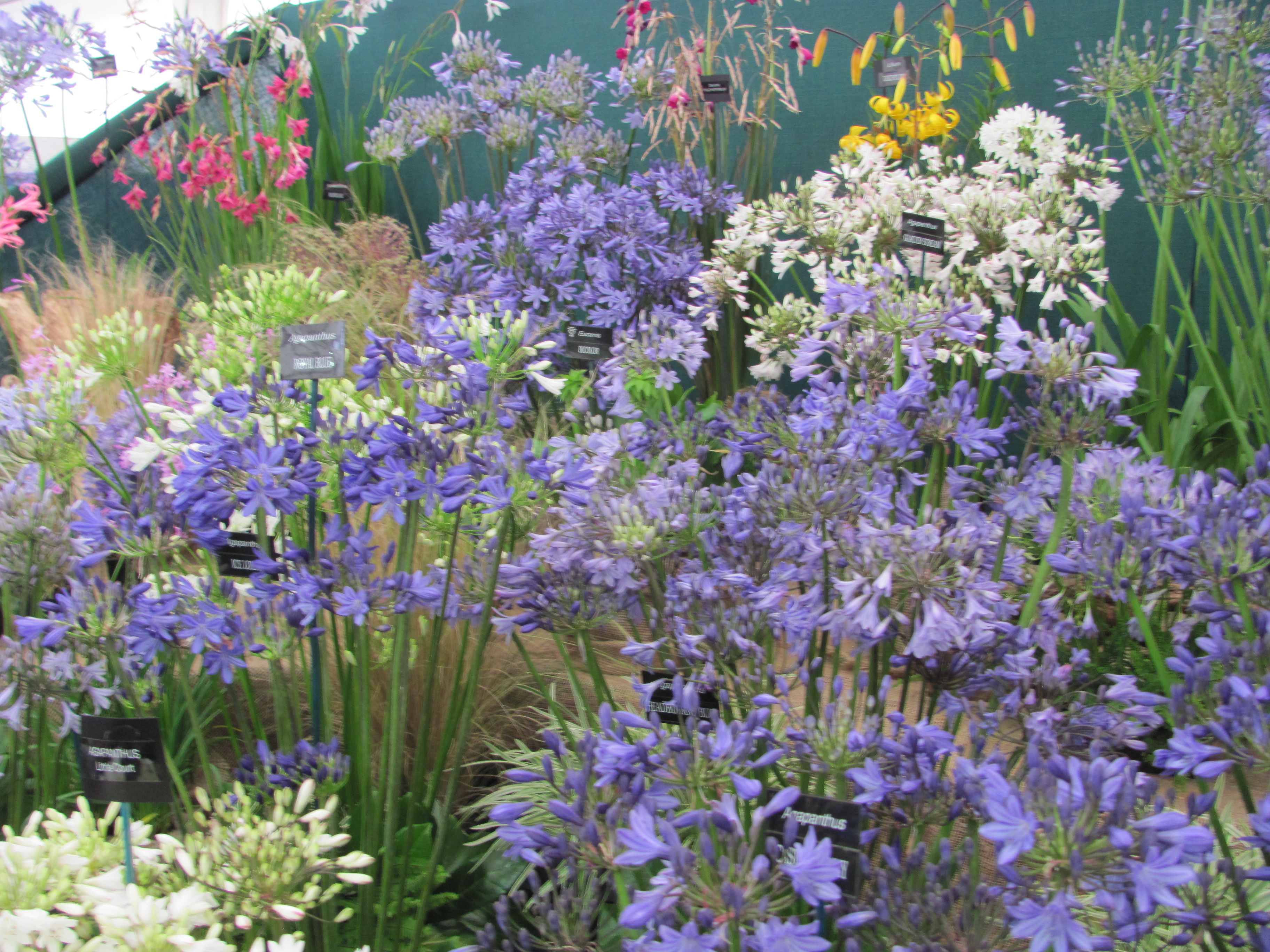
The “Beth Chatto Garden”, our gravel garden, is full of interest with Agapanthus taking centre stage. These Agapanthus were actually bought from the Beth Chattos Gardens nursery.

Early in August the front garden was dominated by yellow – even Jude the Undergardener was wearing yellow – but after a few weeks all the other colours caught up.

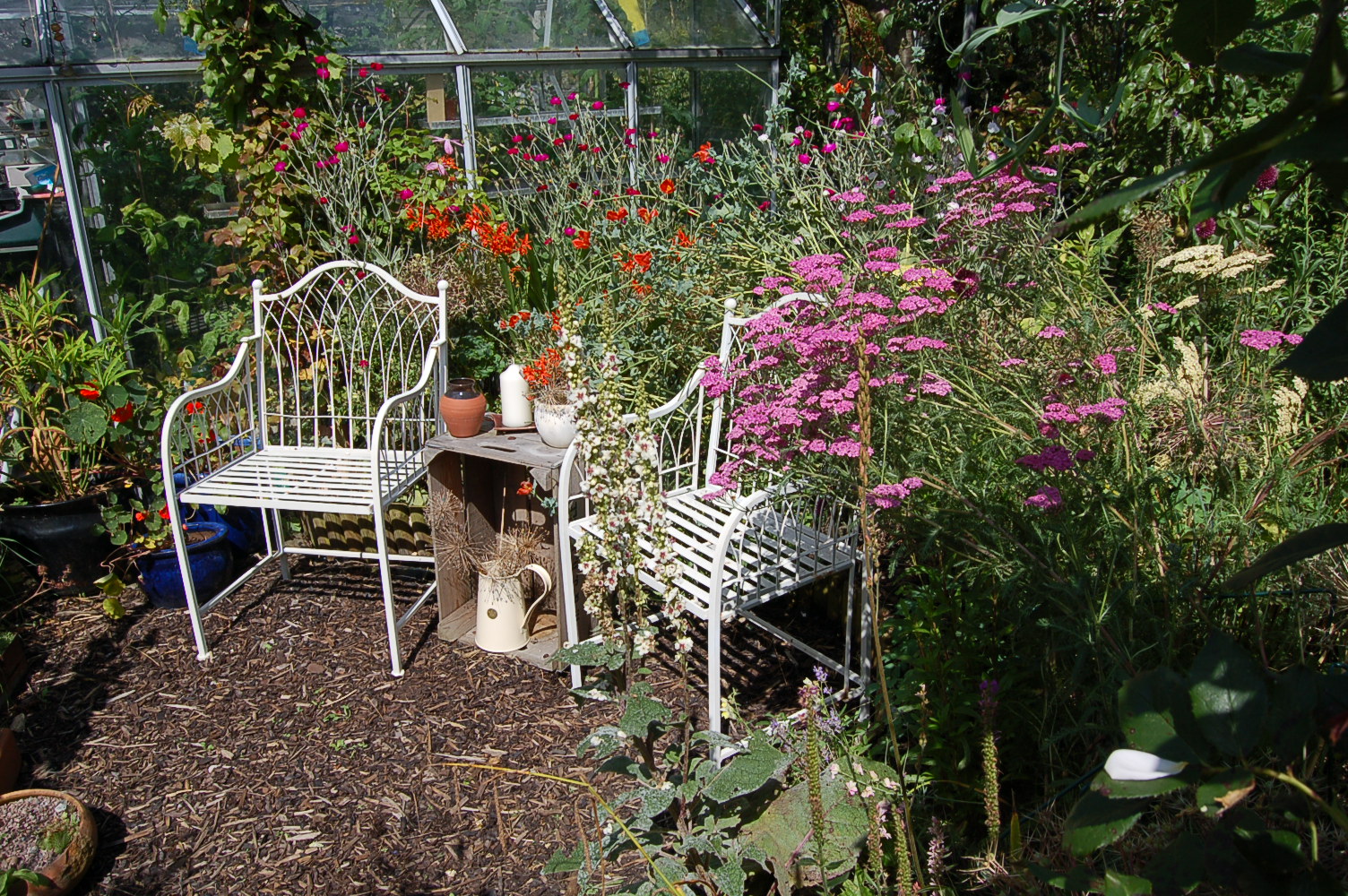
In the back garden the growth in our Secret Garden is exuberant to say the least. The foxgloves are going over but the achilleas, lychnis and alliums are still giving us a full performance.

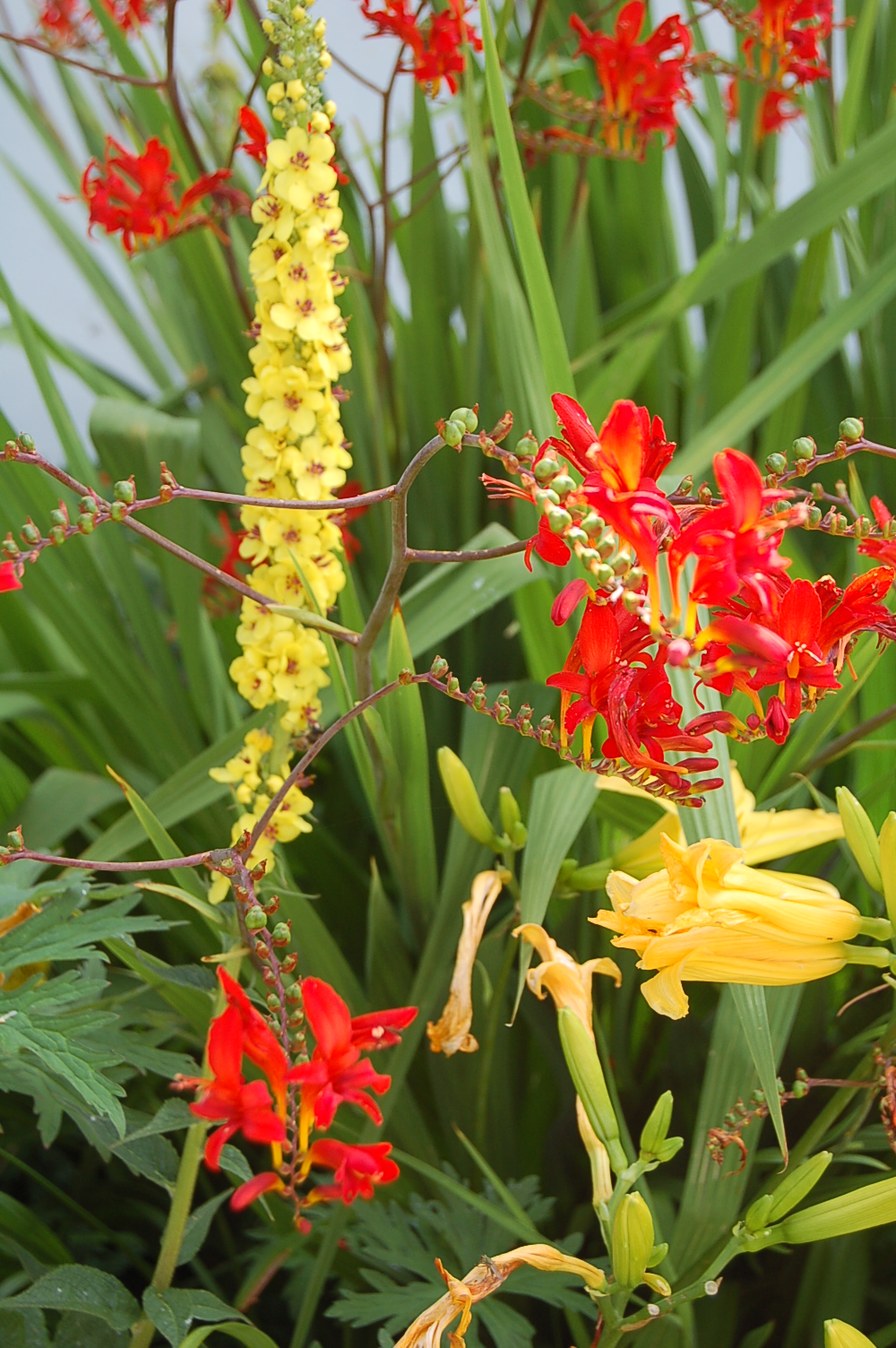
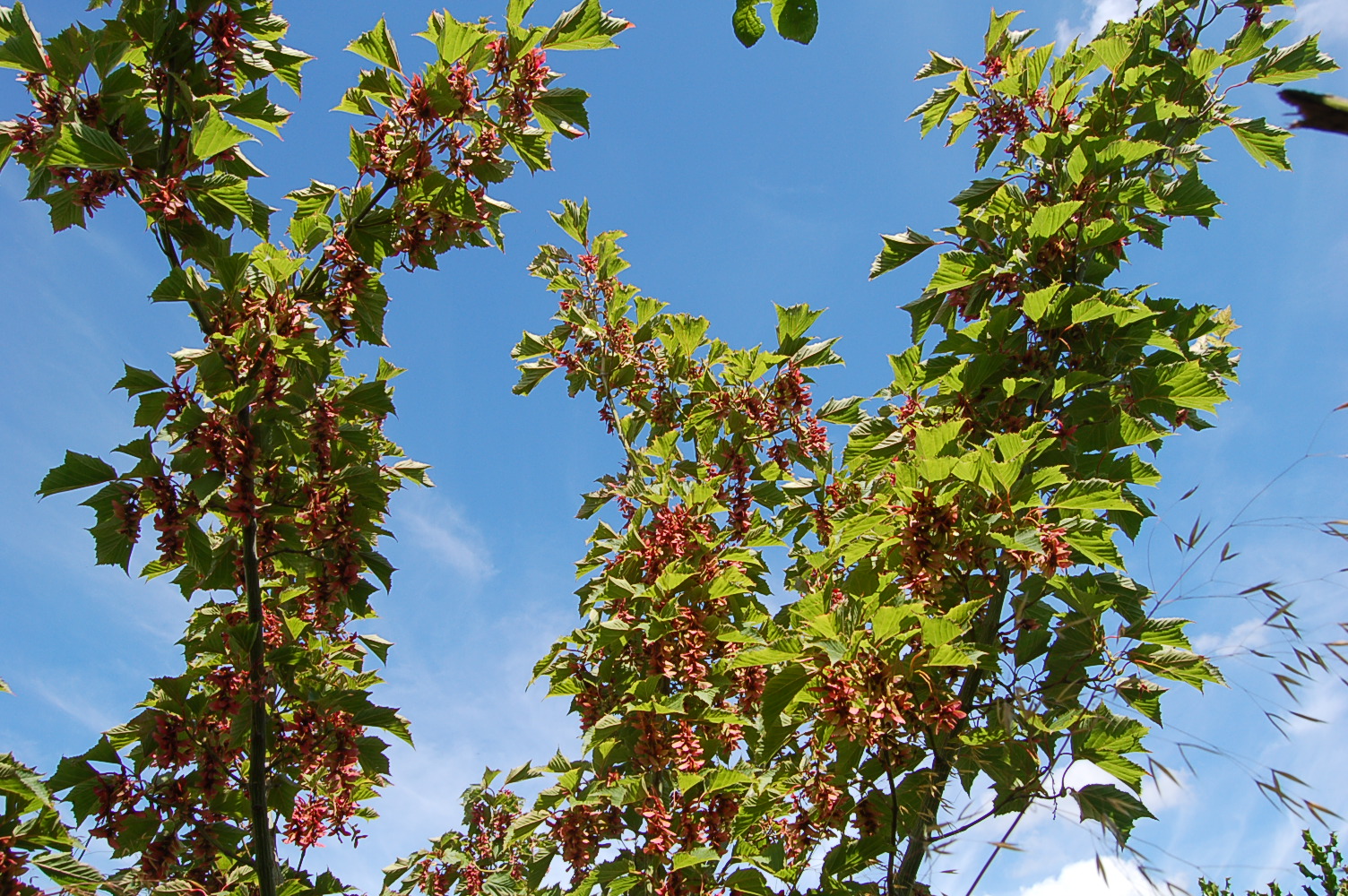
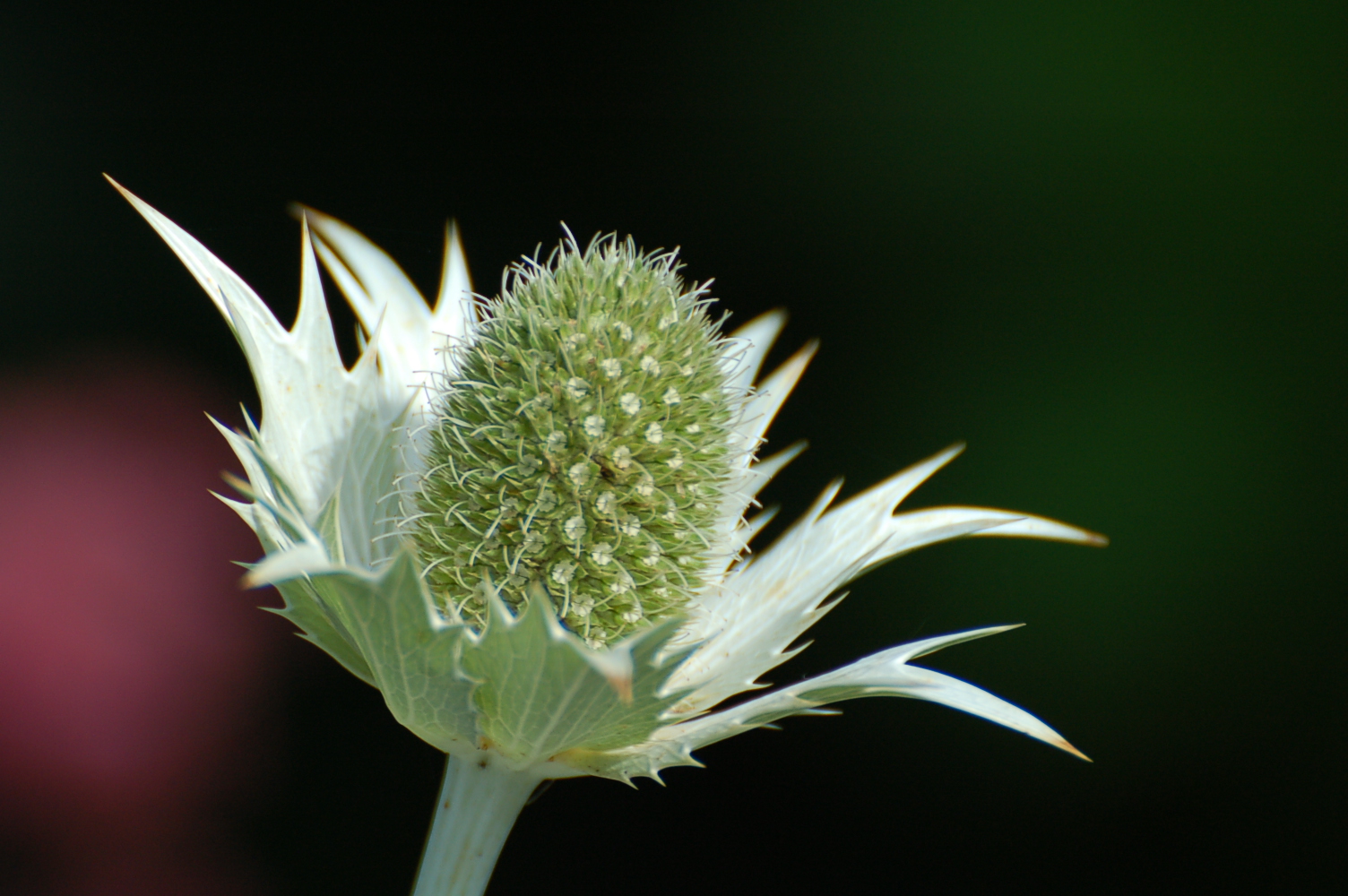
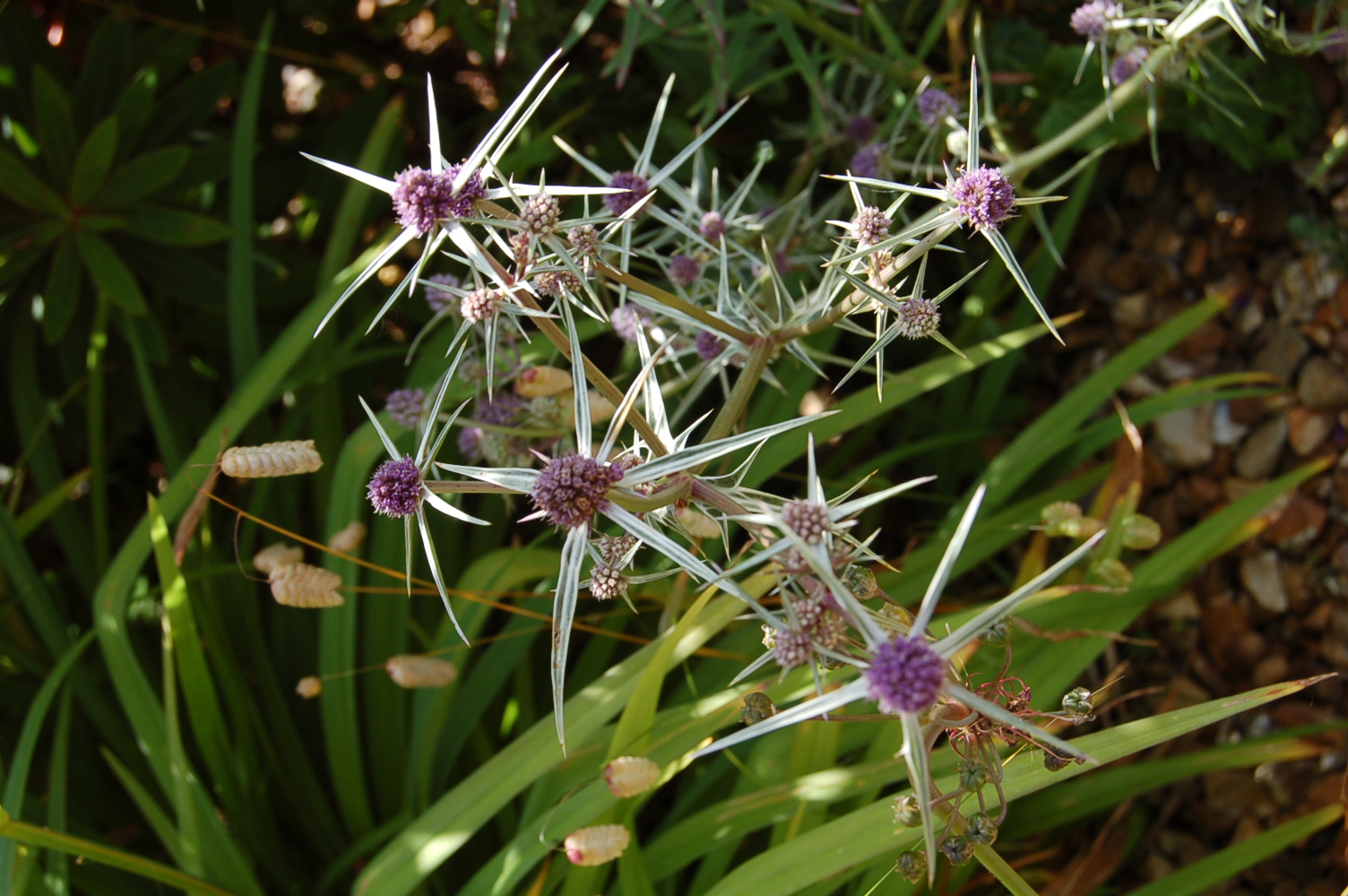
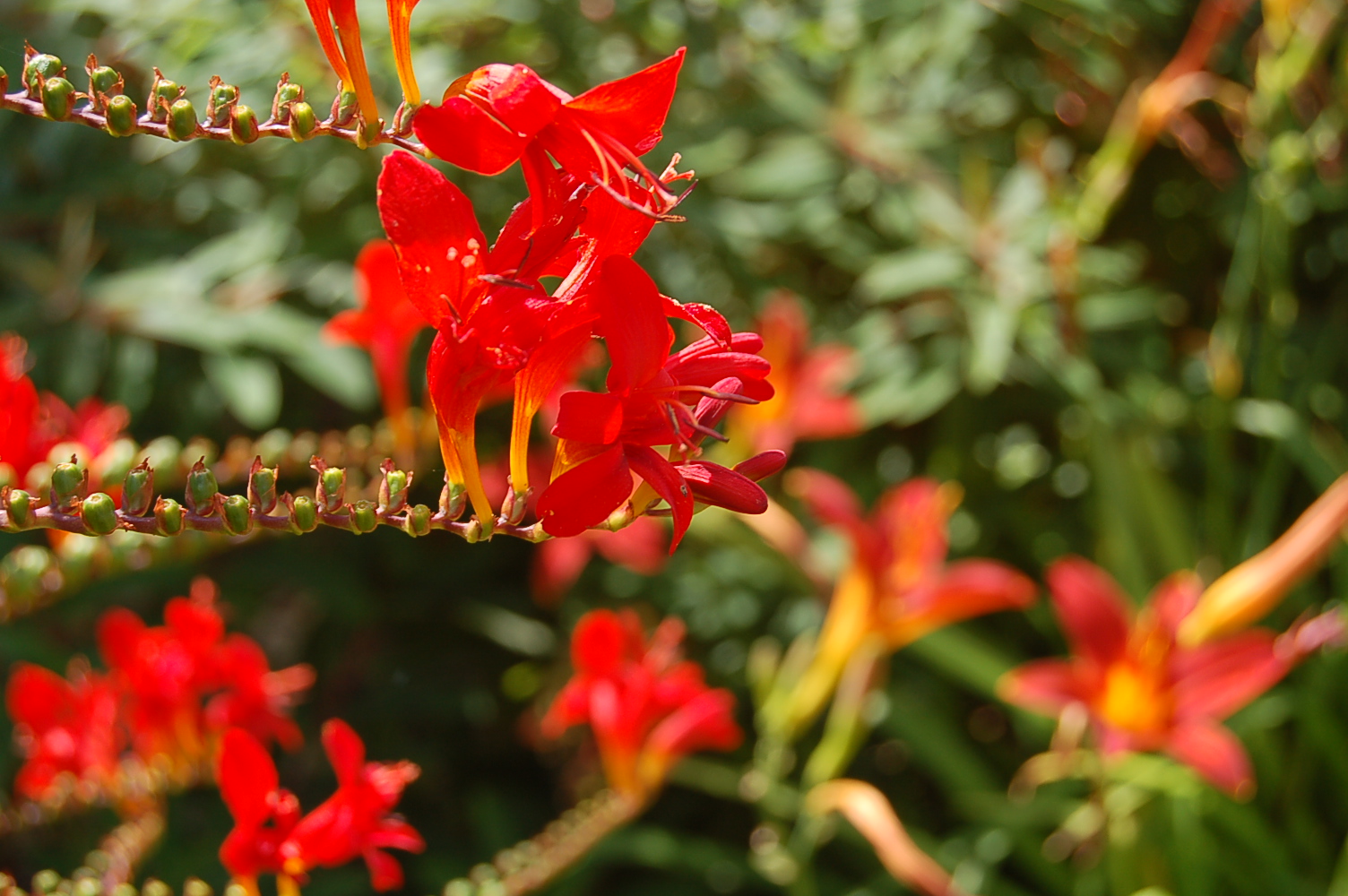
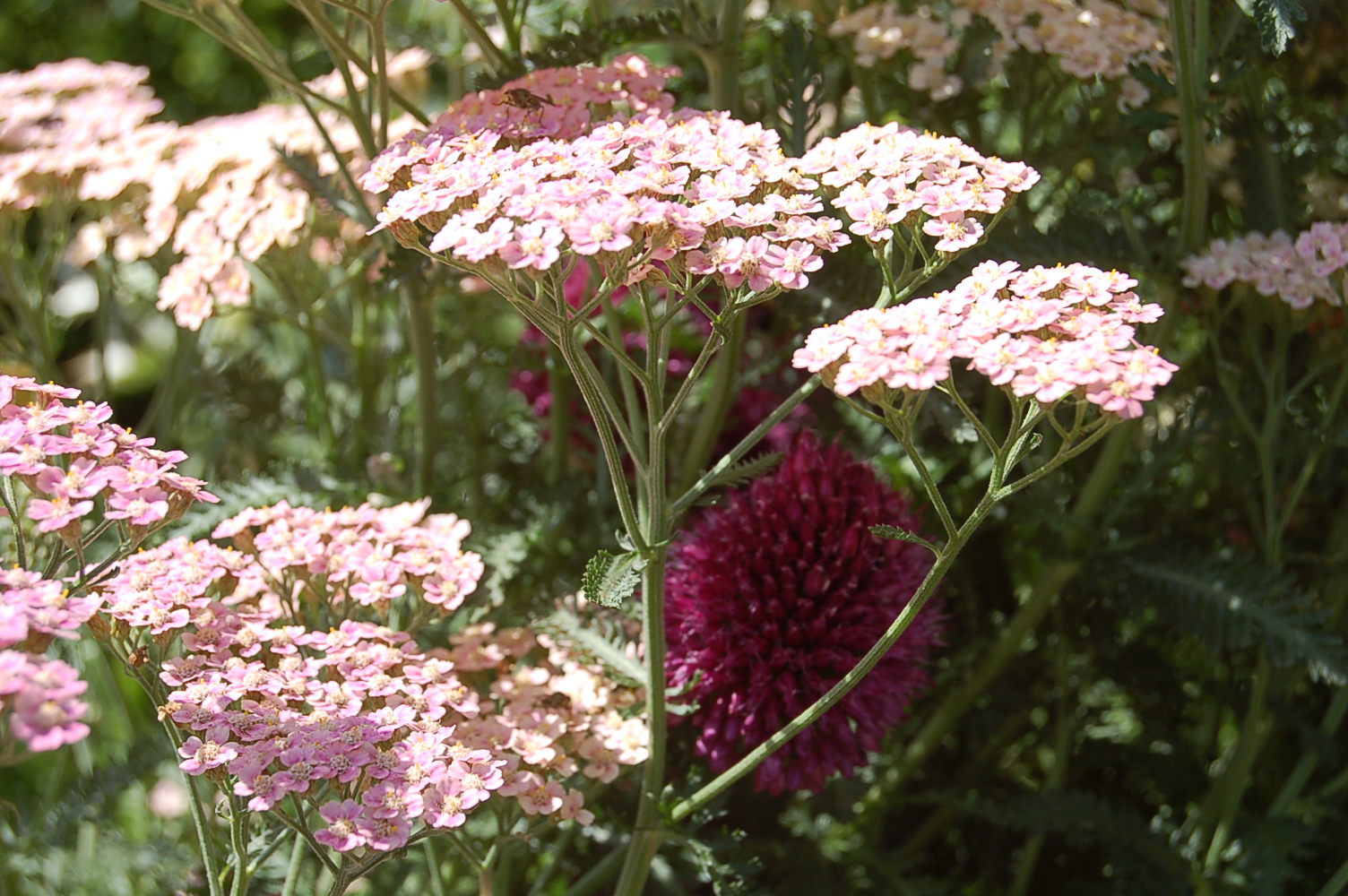
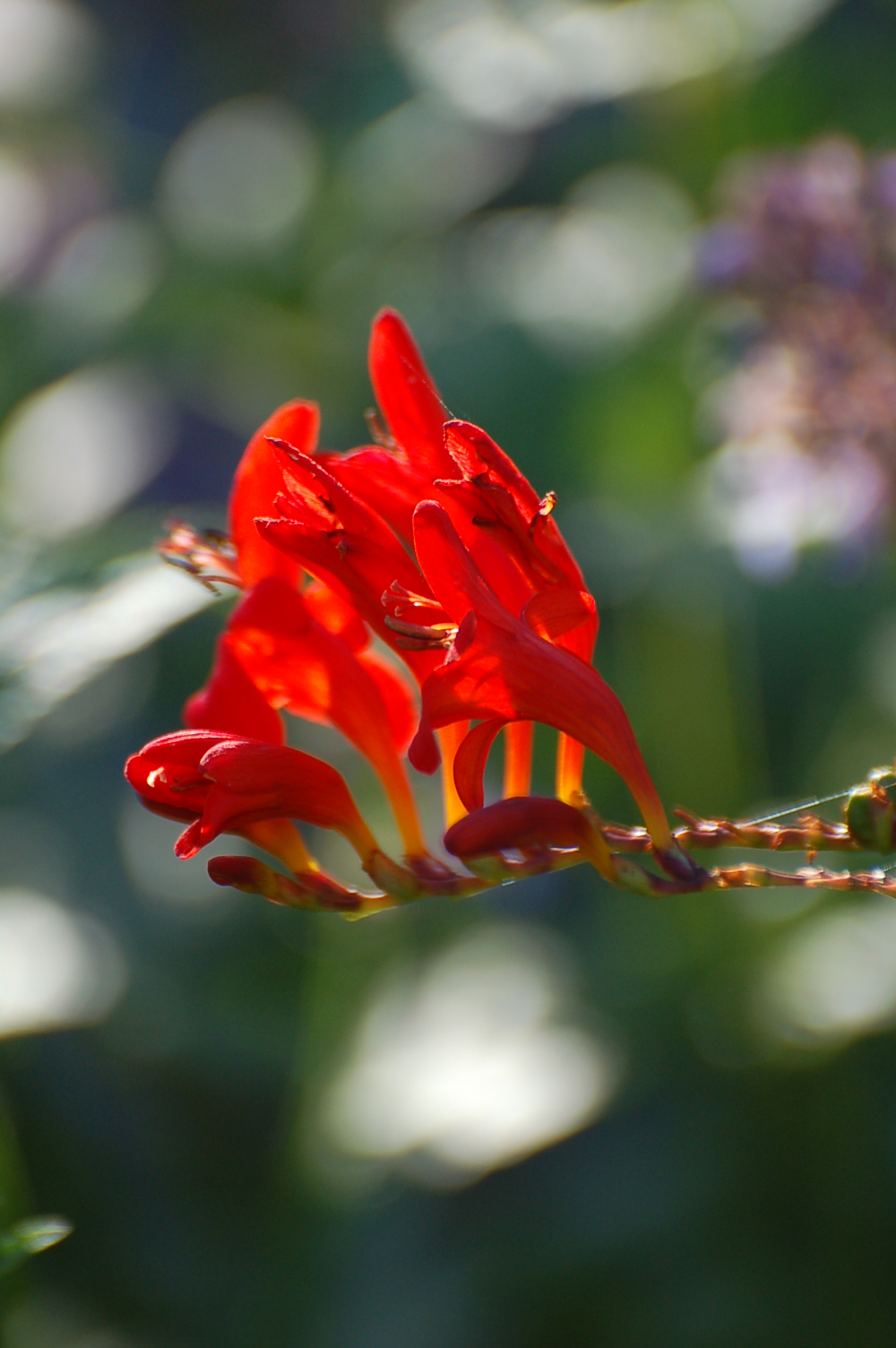
Elsewhere in the borders of the back garden the seedheads of our Snakebark Acer add rich reds, Crocosmias give every shade of yellow, orange and red, Achilleas add subtlety and the spiky Erigeron flowers provide silver.

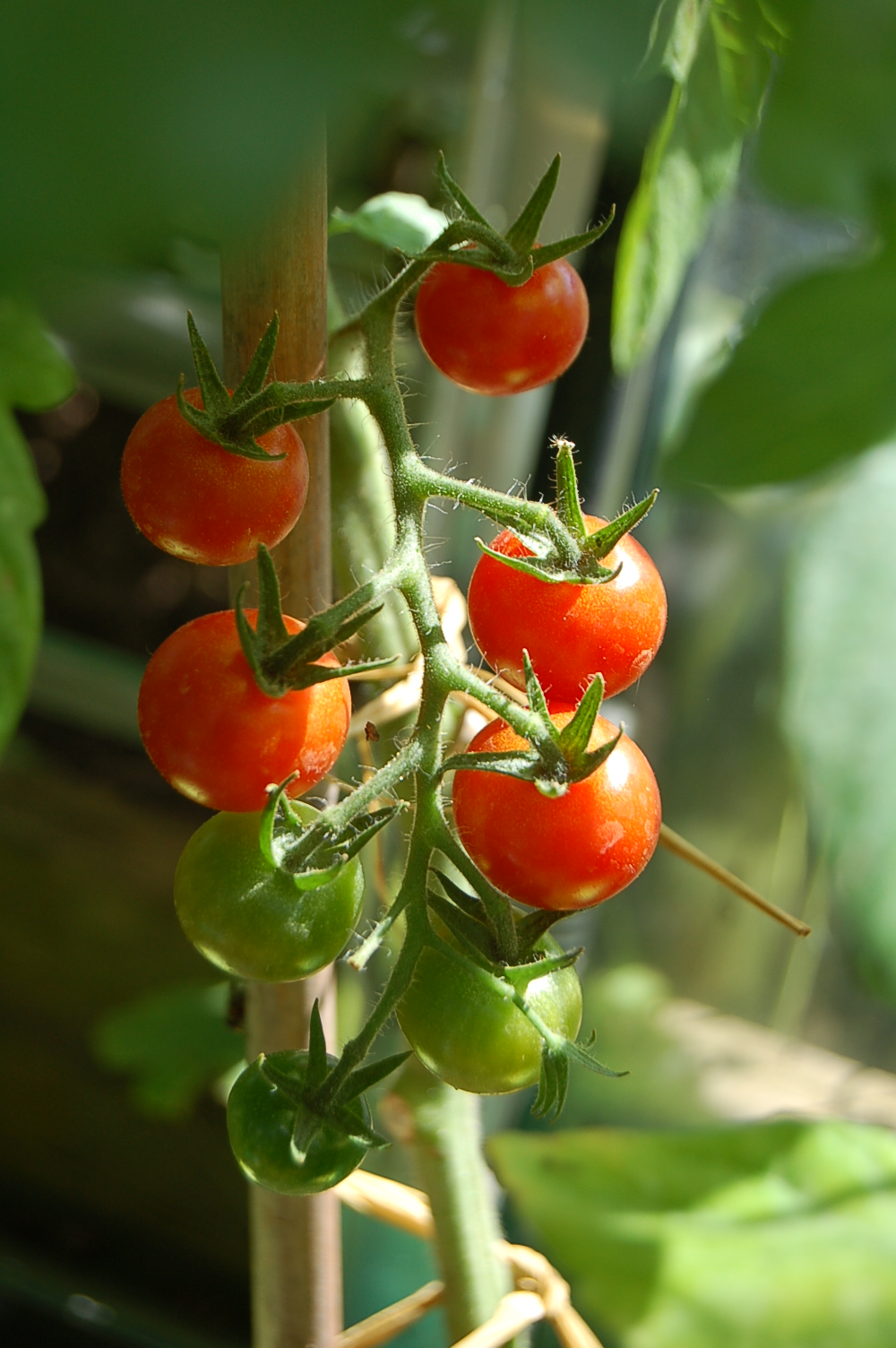
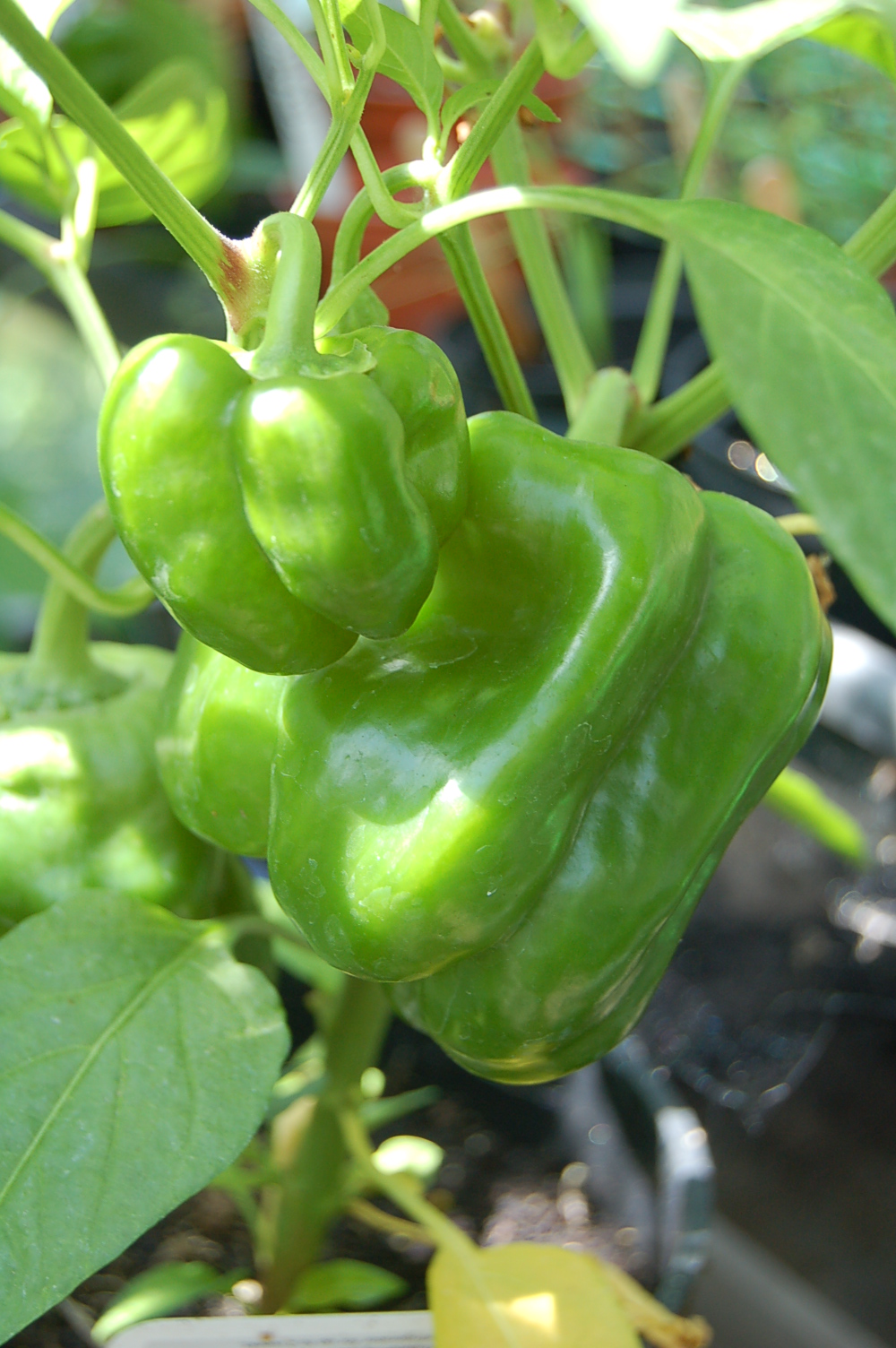
In the greenhouse tomatoes, cucumbers and capsicums are adding sweetness and freshness to the cut-and-come-again mixed leaves of ours summer salads.

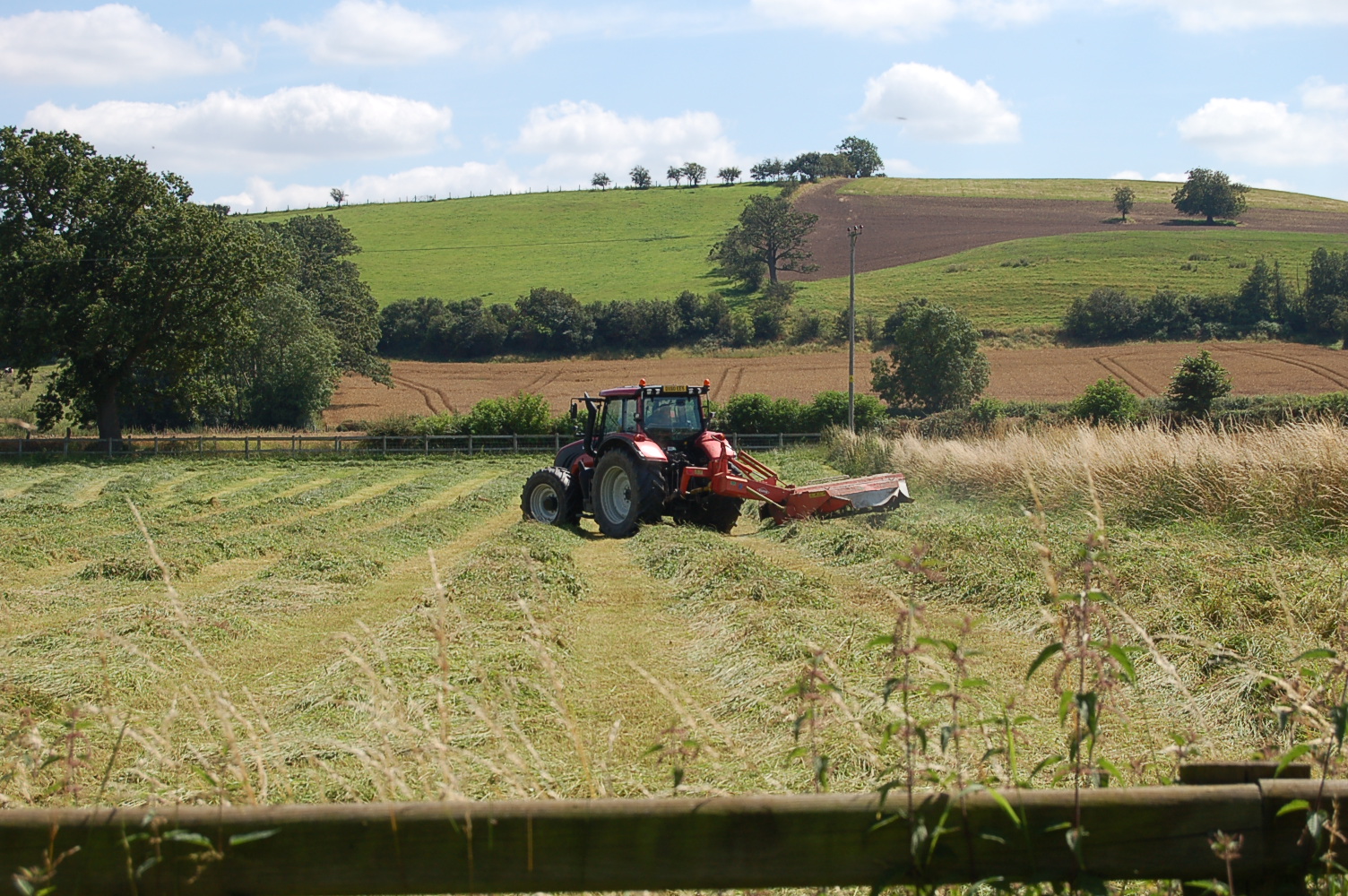
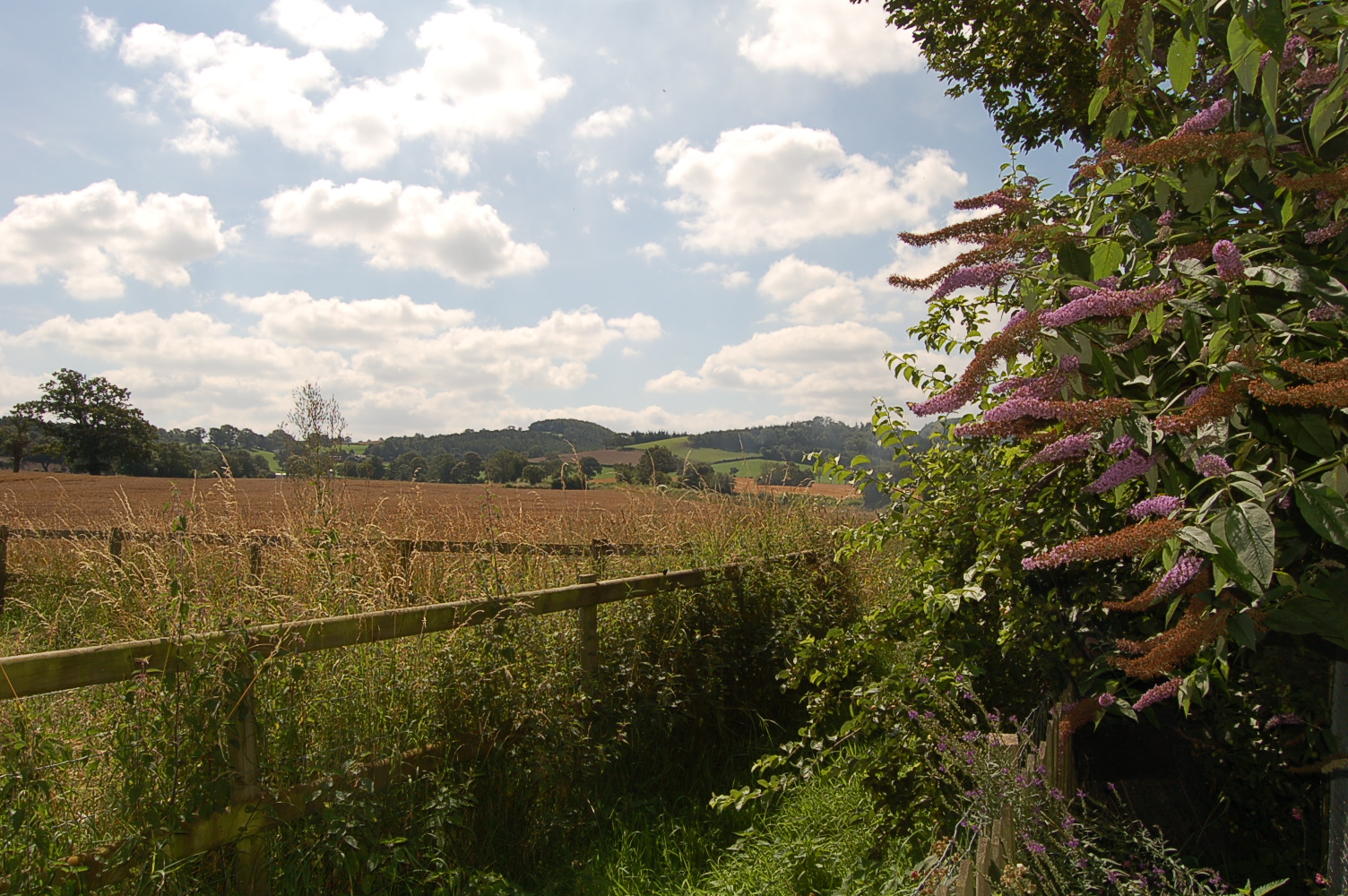
The world beyond our garden is changing this month as in our borrowed landscape the hay in the paddock has been cut and baled and the wheat fields turn gold and are being harvested one by one. By the time my September garden wander comes around the skys will seem empty as the Swallows and Martins will be on their way to warmer climes, but the garden will be getting busier with mixed feeding flocks of titmice and Goldcrests, and others of mixed finches.

Categories
flower show garden design garden photography gardening hardy perennials July ornamental grasses ornamental trees and shrubs outdoor sculpture photography poppies RHS town gardens

Third Visit to the Tatton Park Show

The third and final post about this summer’s RHS Tatton Park Flower Show begins by visiting the Back-to-Back Gardens, the small show gardens with masses of interest and appeals. These gardens are full of ideas for gardeners whatever the size of their gardens with inspiration for planting combinations, furniture and features.

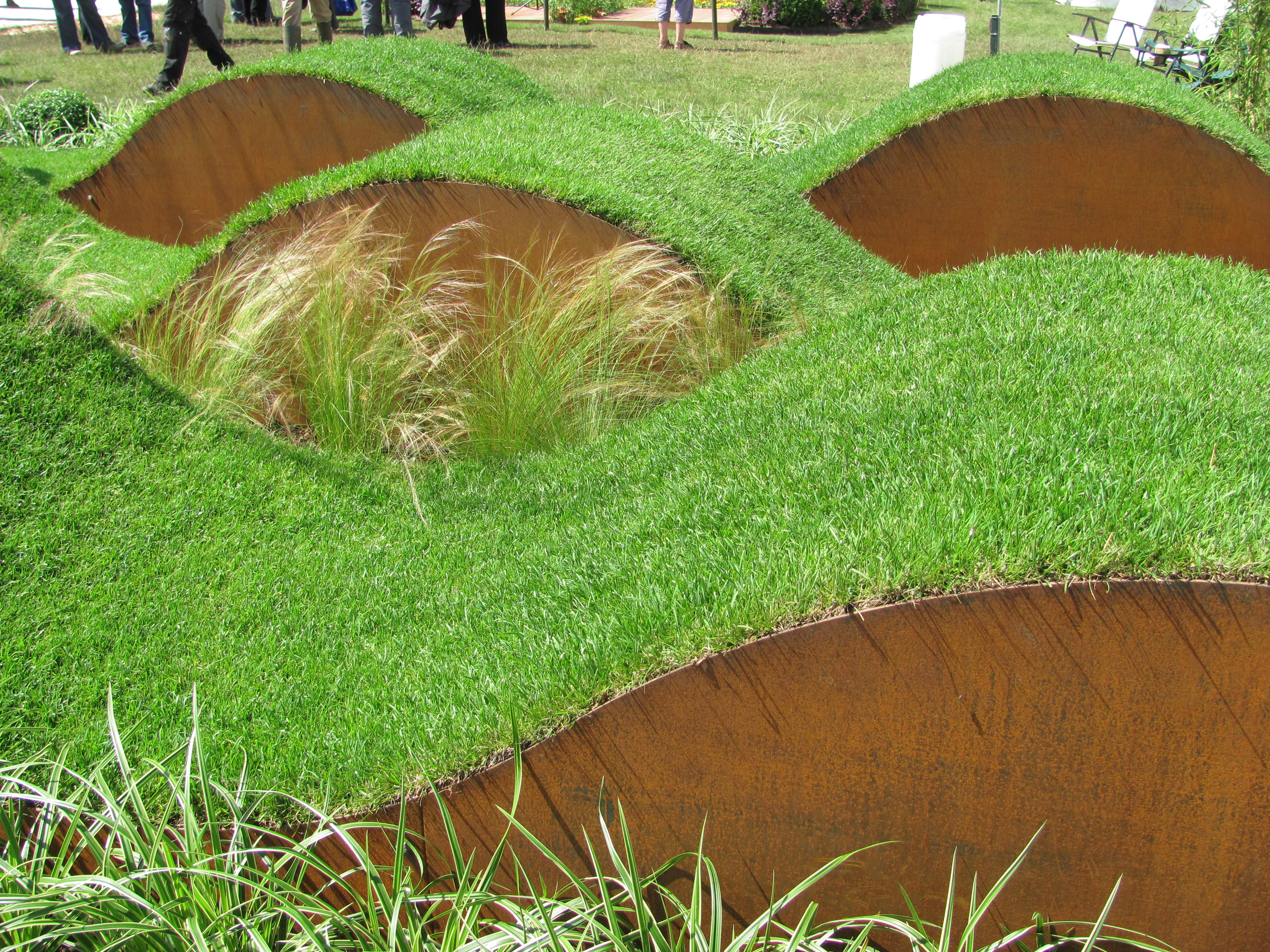
There was a group of small show gardens designed around the theme of “The Orchestra” and these turned out to be our favourites. The garden designers had risen to the challenge and seemed to have really enjoyed creating such imaginative gardens. Each one evoked harmony and rhythm and the rise and fall of a musical piece.

But this garden of rhythmic grass was a true delight to the eye. It was very difficult to fully capture its effect with a camera, but not as difficult as it would be to cut the grass!

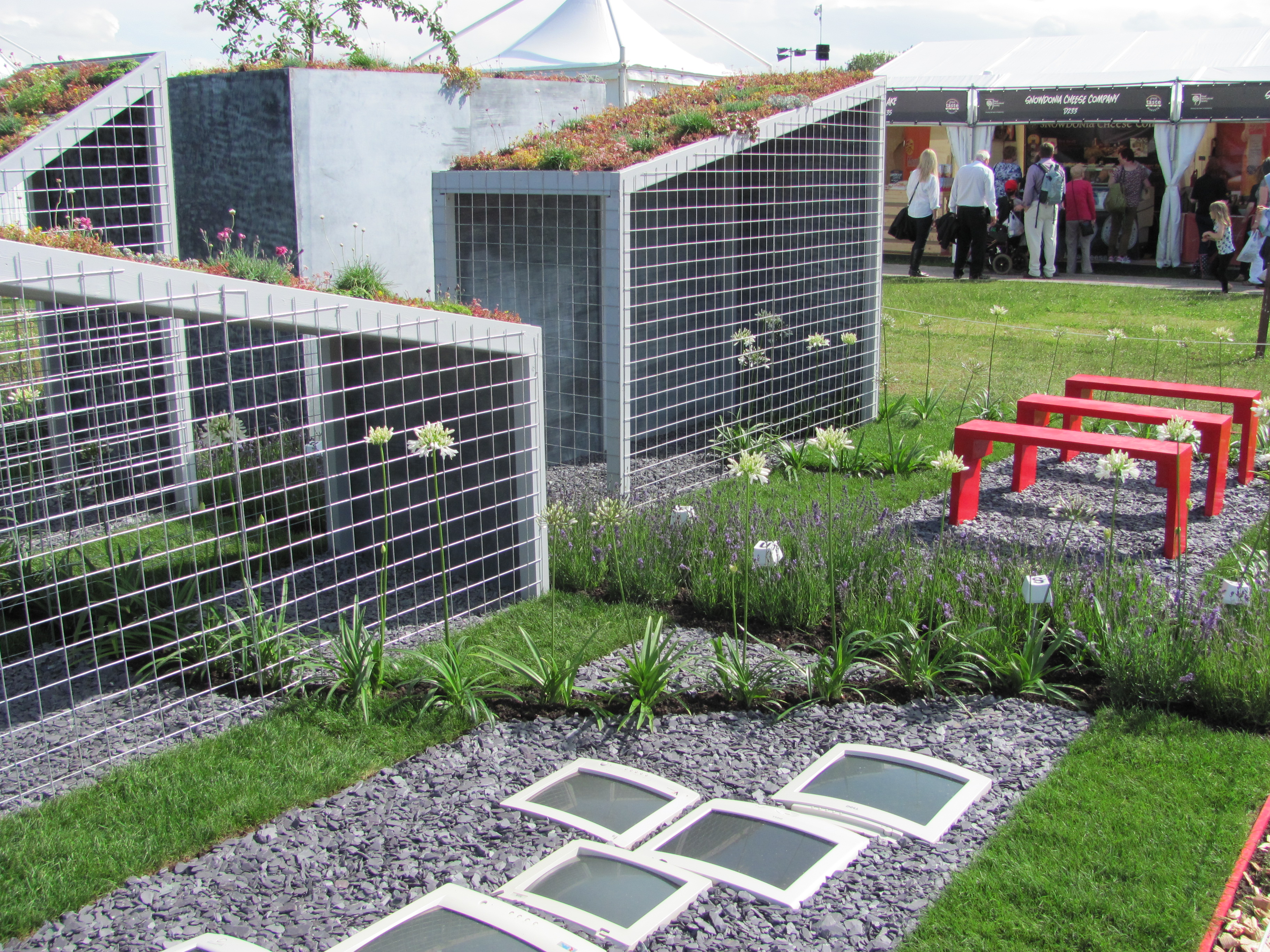
In complete contrast to the Orchestra Gardens were the Conceptual Gardens, a set of three designs intended to present ideas, sometimes controversial, and make the viewers think. We do not always appreciate such designs but the trio this year were full of meaning and original design ideas.

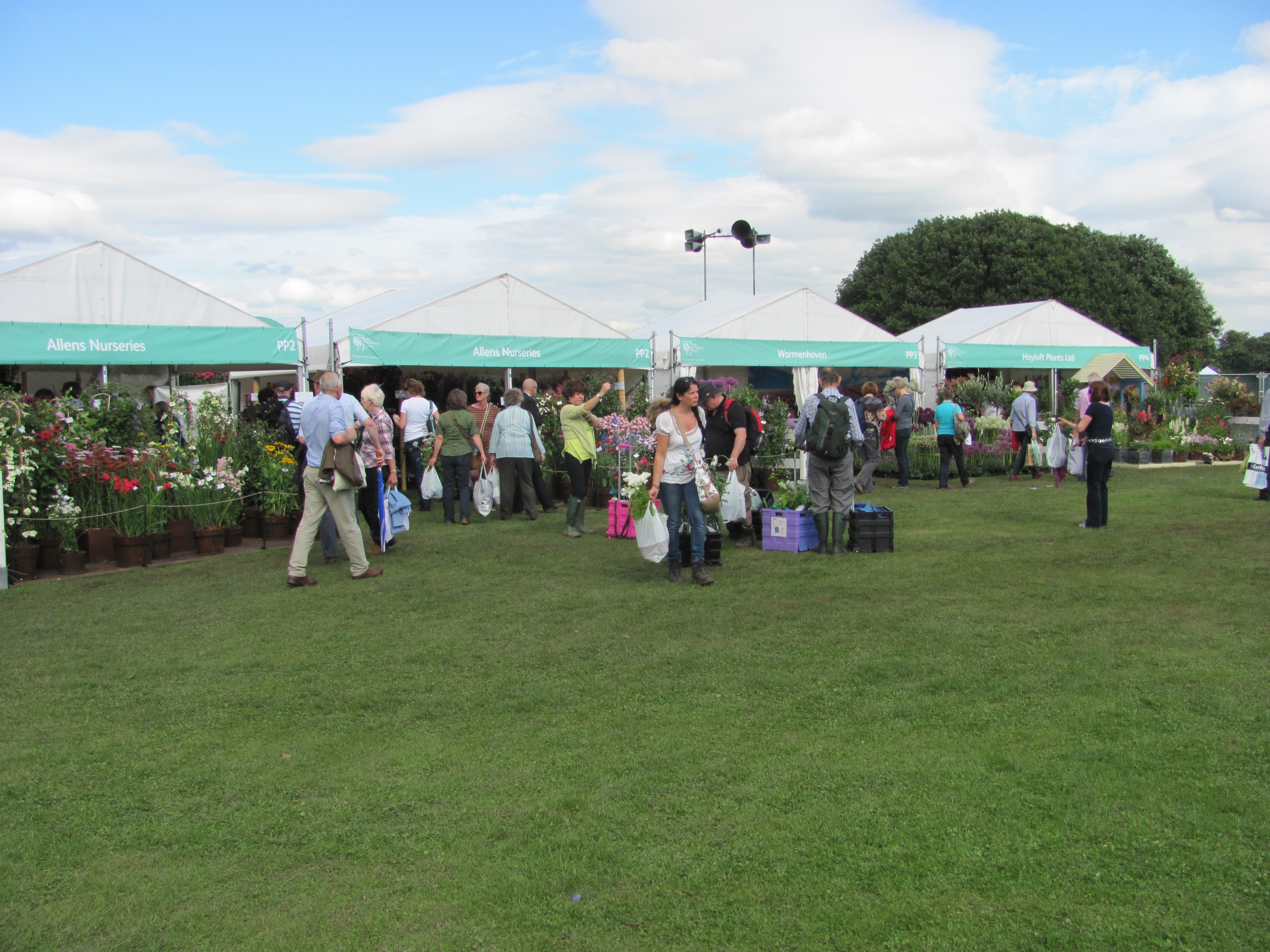
We always enjoy a wander around the nursery stands at these shows and Tatton always attracts a good variety. We only bought one little plants this time though, an Aeonium that sports leaves of deepest, shiny purple almost black, called Logan’s Rock.

But this nursery stand all based on pink was empty. The discerning gardener this year definitely dislikes pink!

Categories
community gardening flower show fruit and veg garden design garden photography gardening grow your own half-hardy perennials hardy perennials July ornamental grasses ornamental trees and shrubs outdoor sculpture photography RHS town gardens

More from the Tatton Park Flower Show

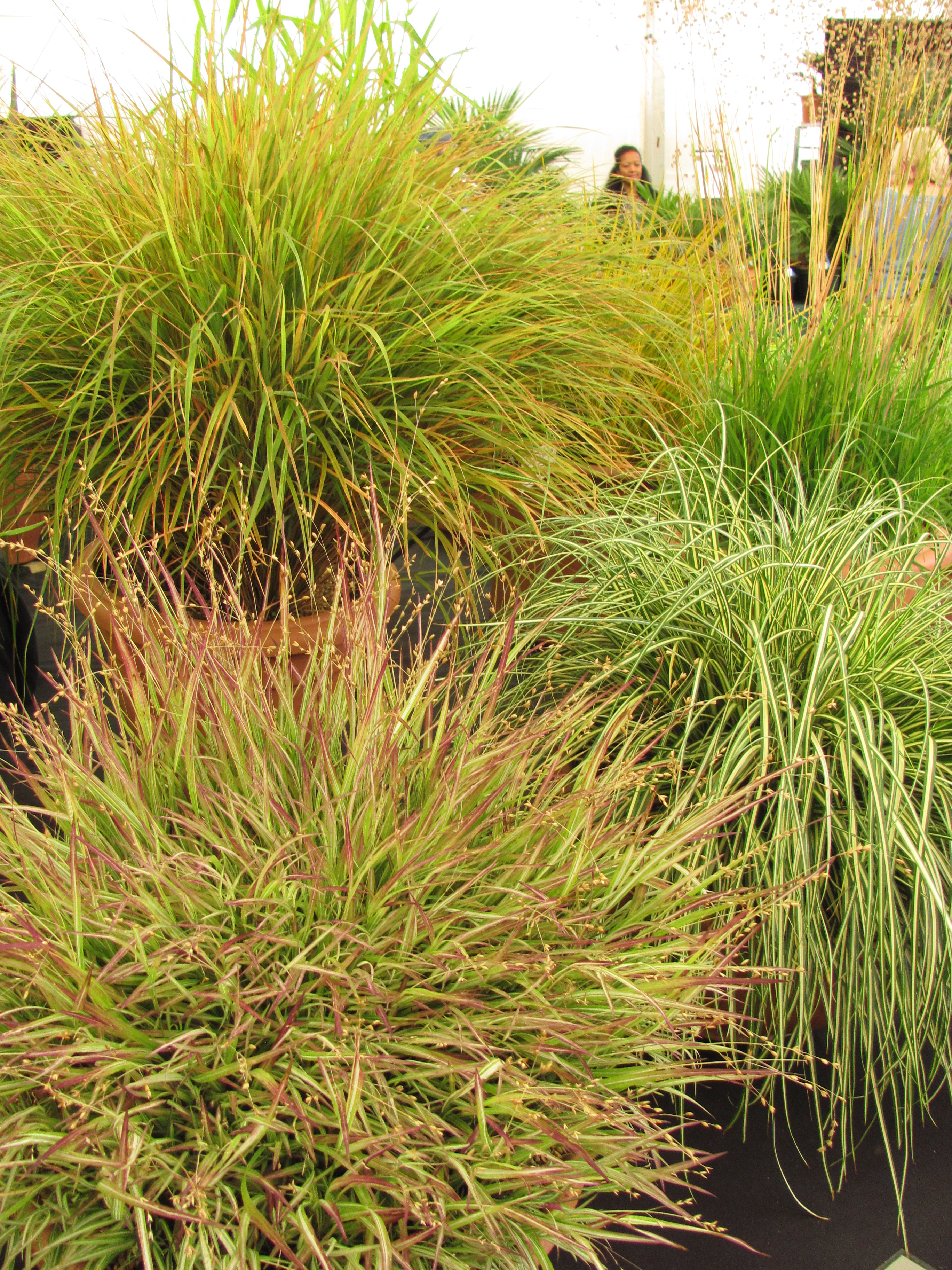
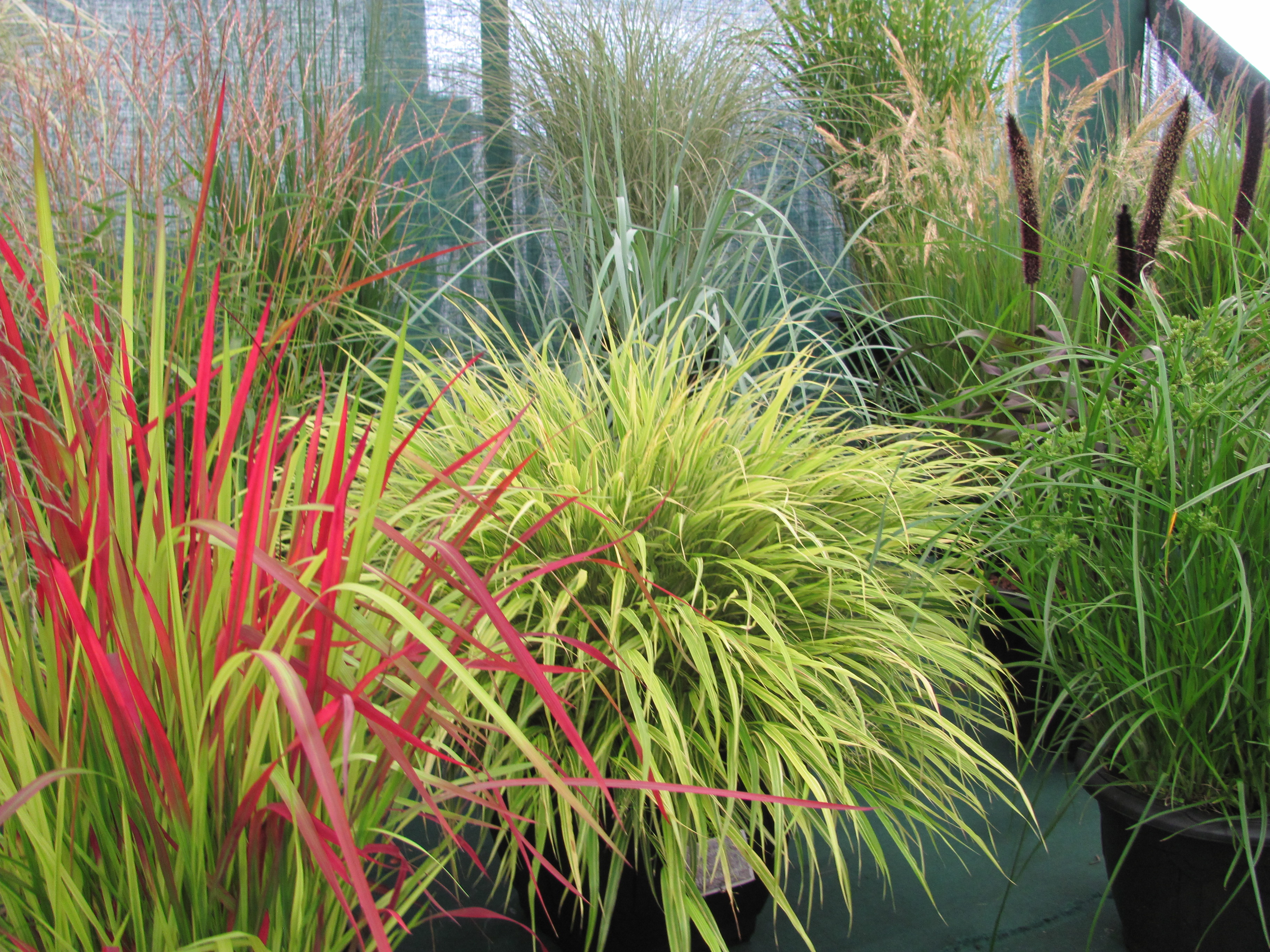
We always enjoy visiting the Floral Marquee at any RHS Show and try to sneak a good look around before they get too crowded. At Tatton Show we just made it as the crowds began to build. It was worth it as there were some wonderful plants to look at some of which were beautifully displayed. As usual our favourites were the grasses.

Within the plants on display there were some effective little details that drew out attention to have a closer look.

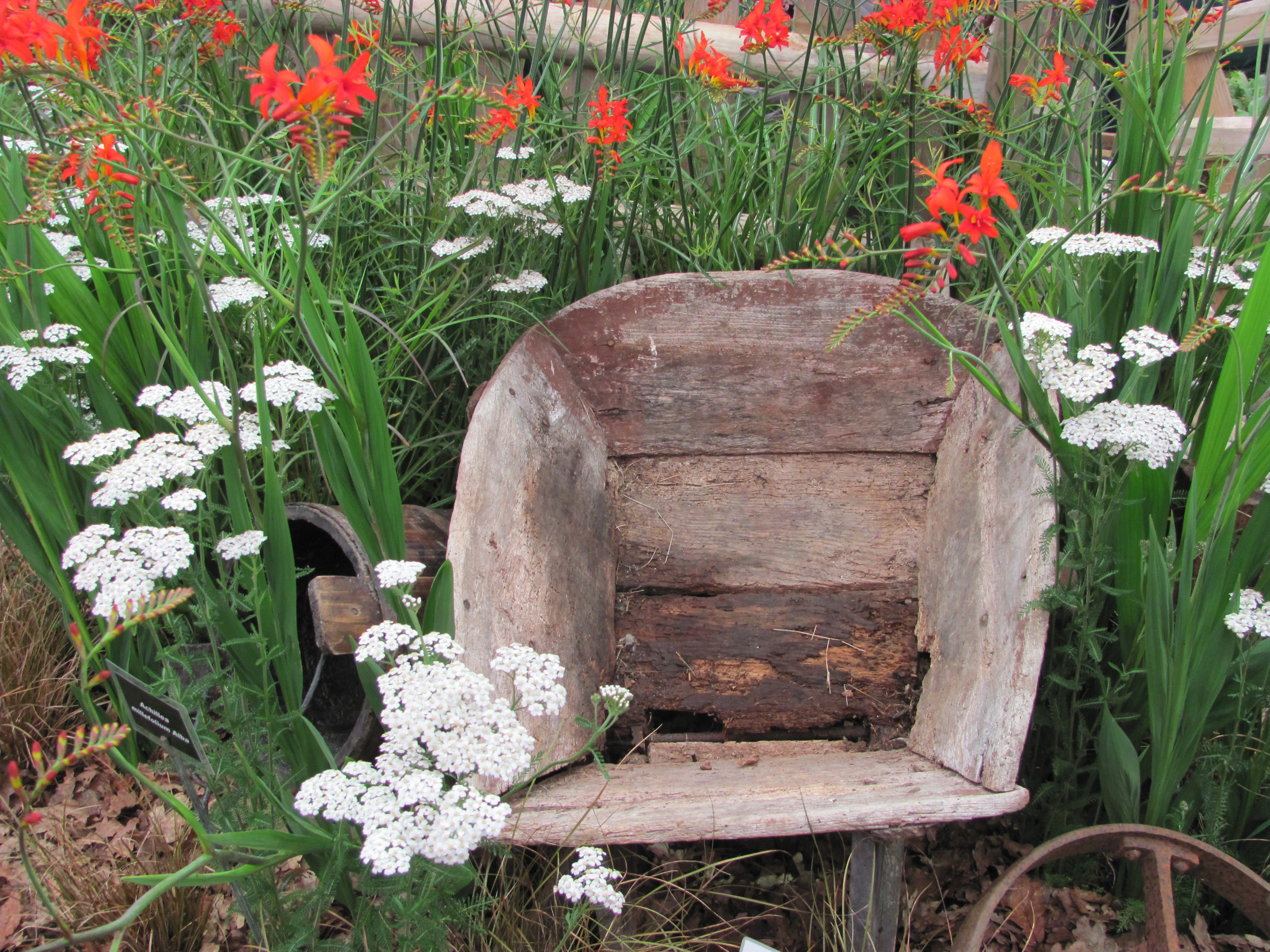
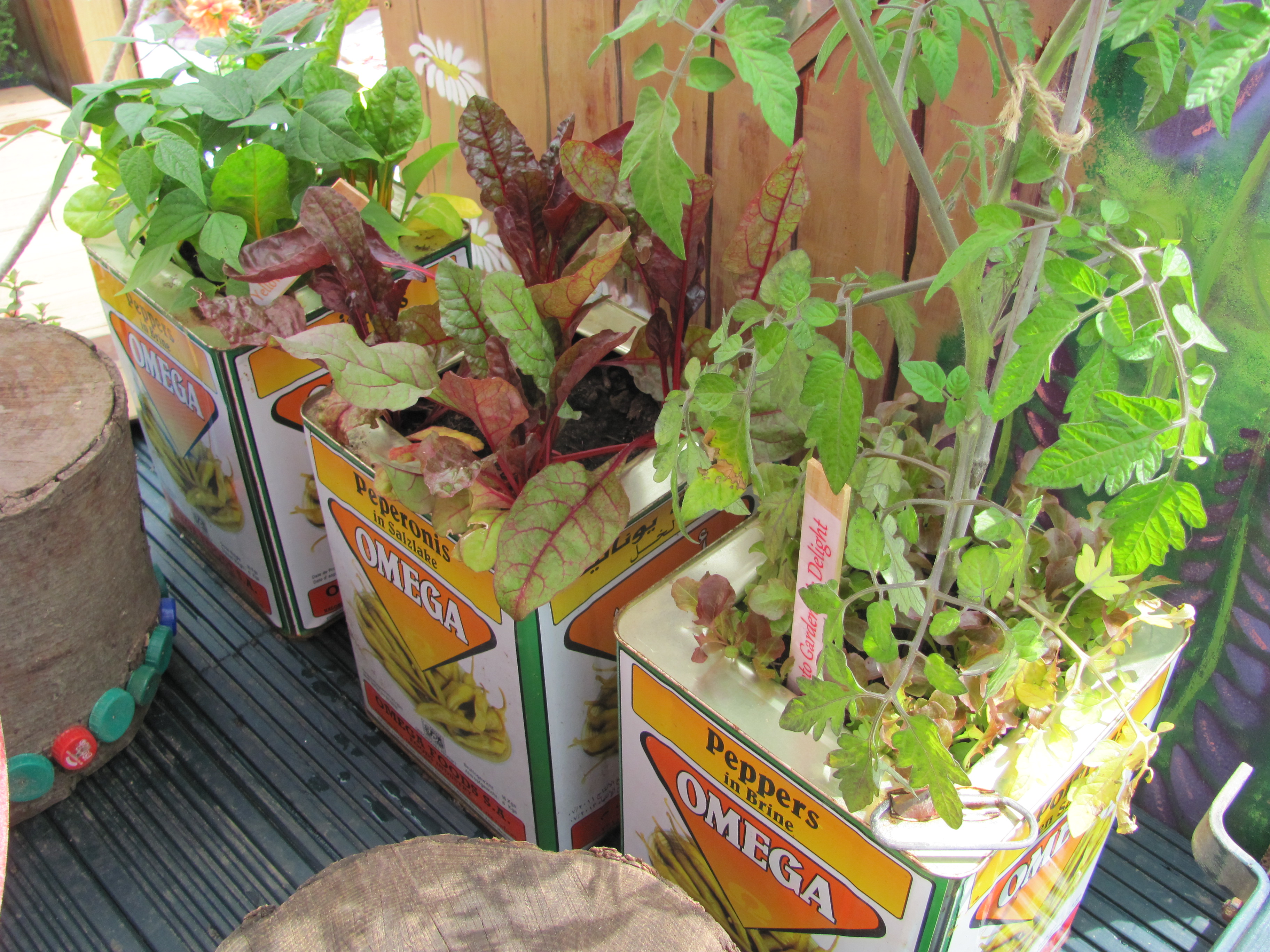
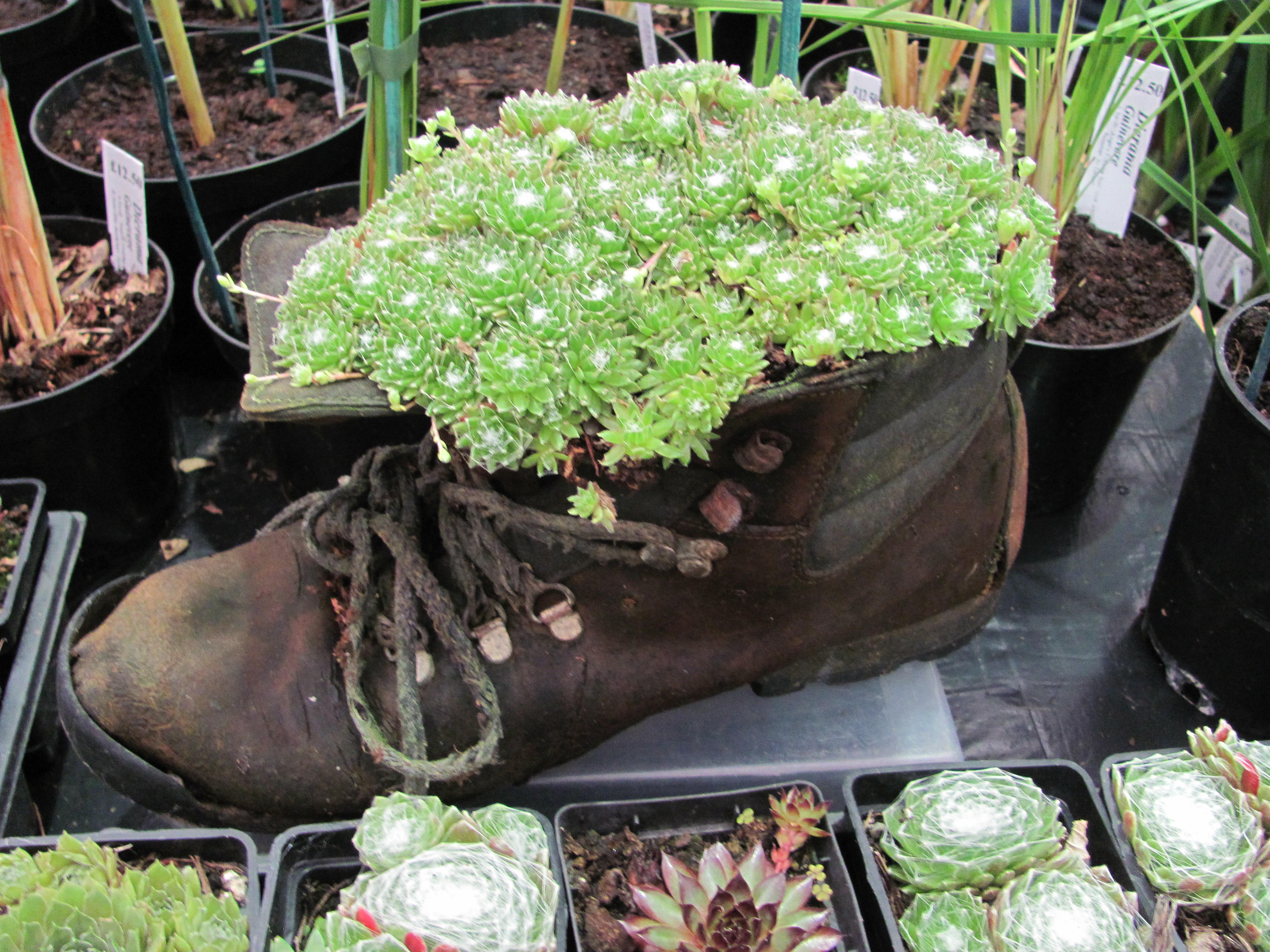
Throughout the showground were unusual containers used as planters from old boots to oil cans.

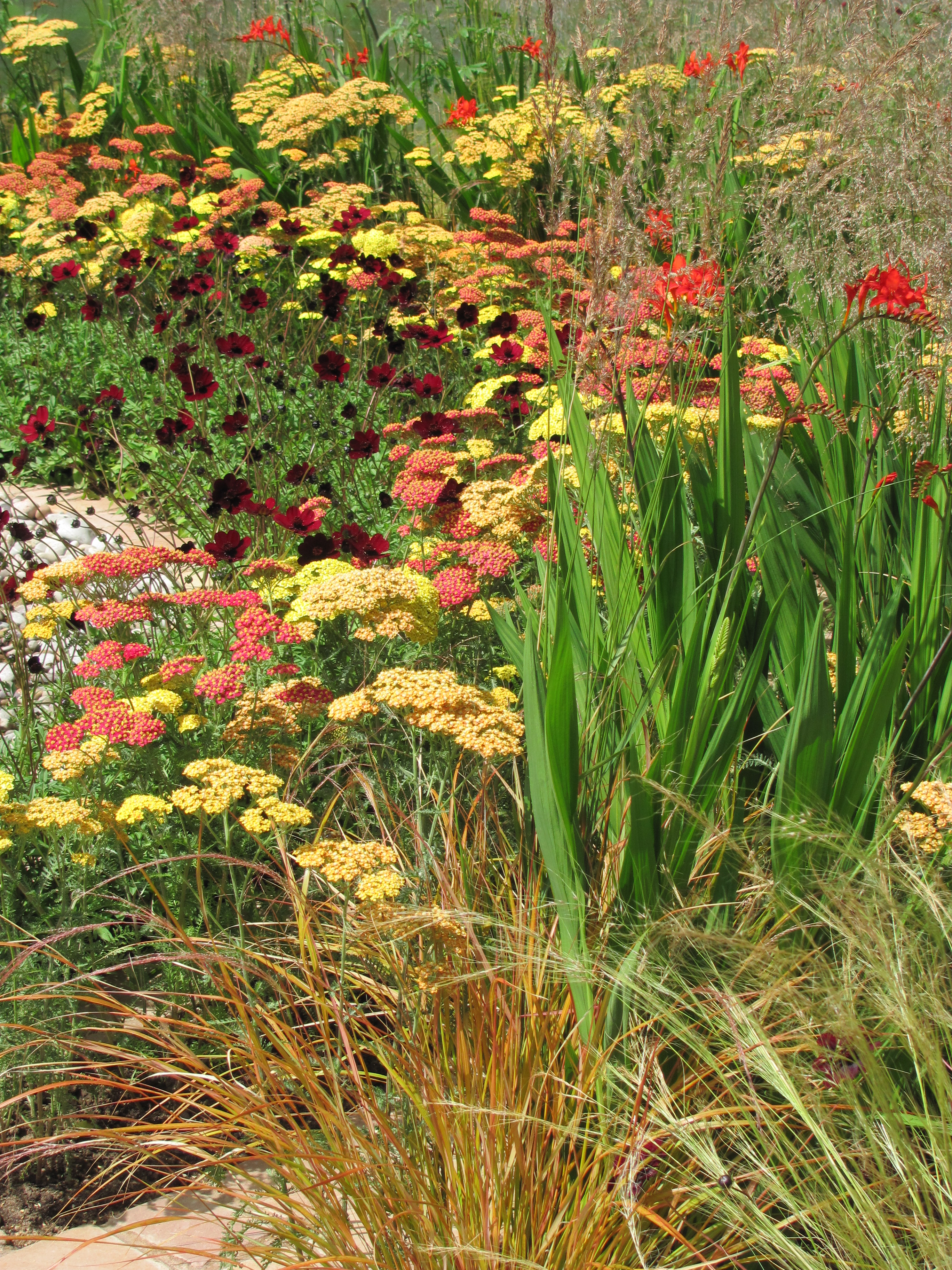
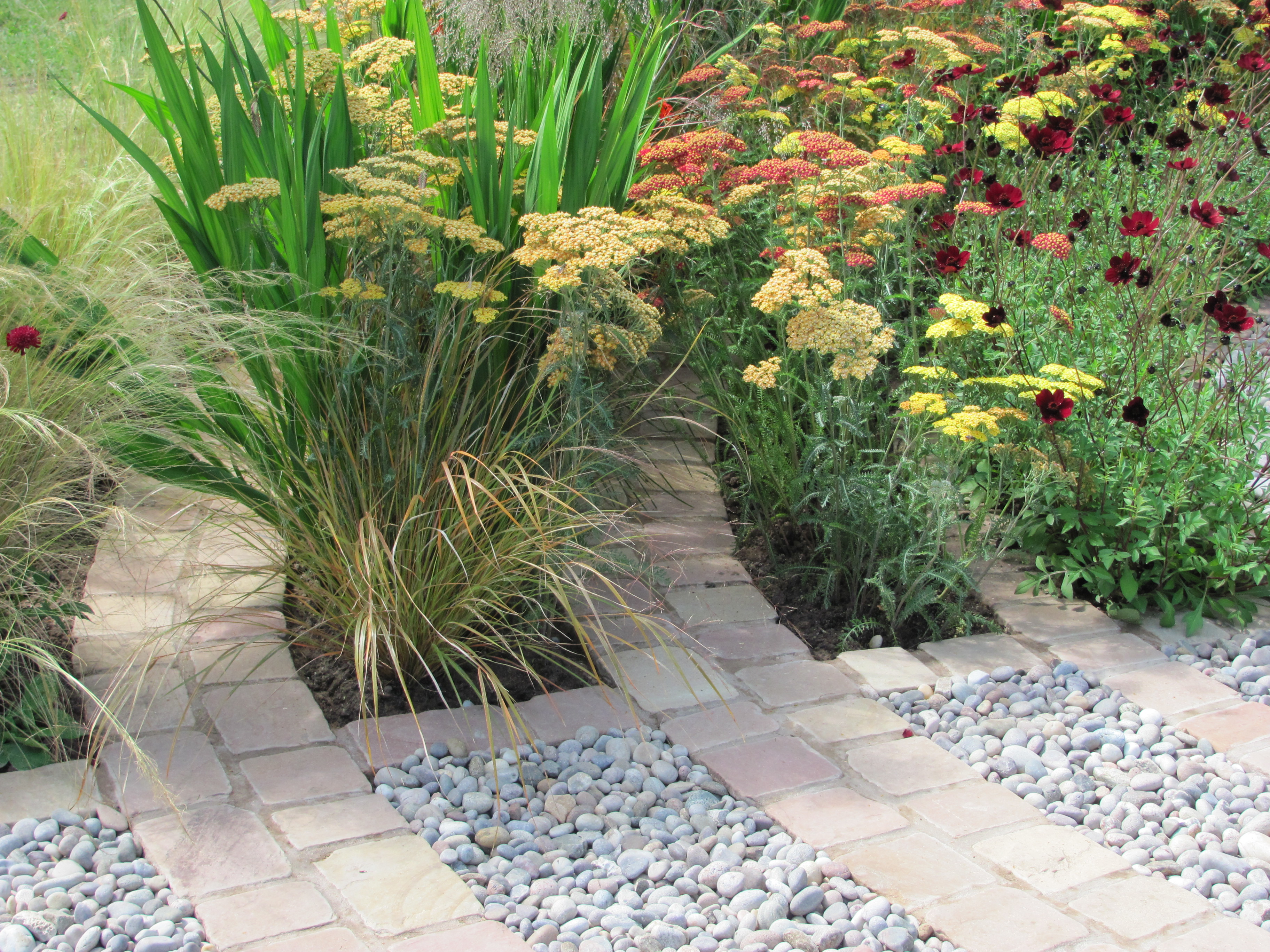
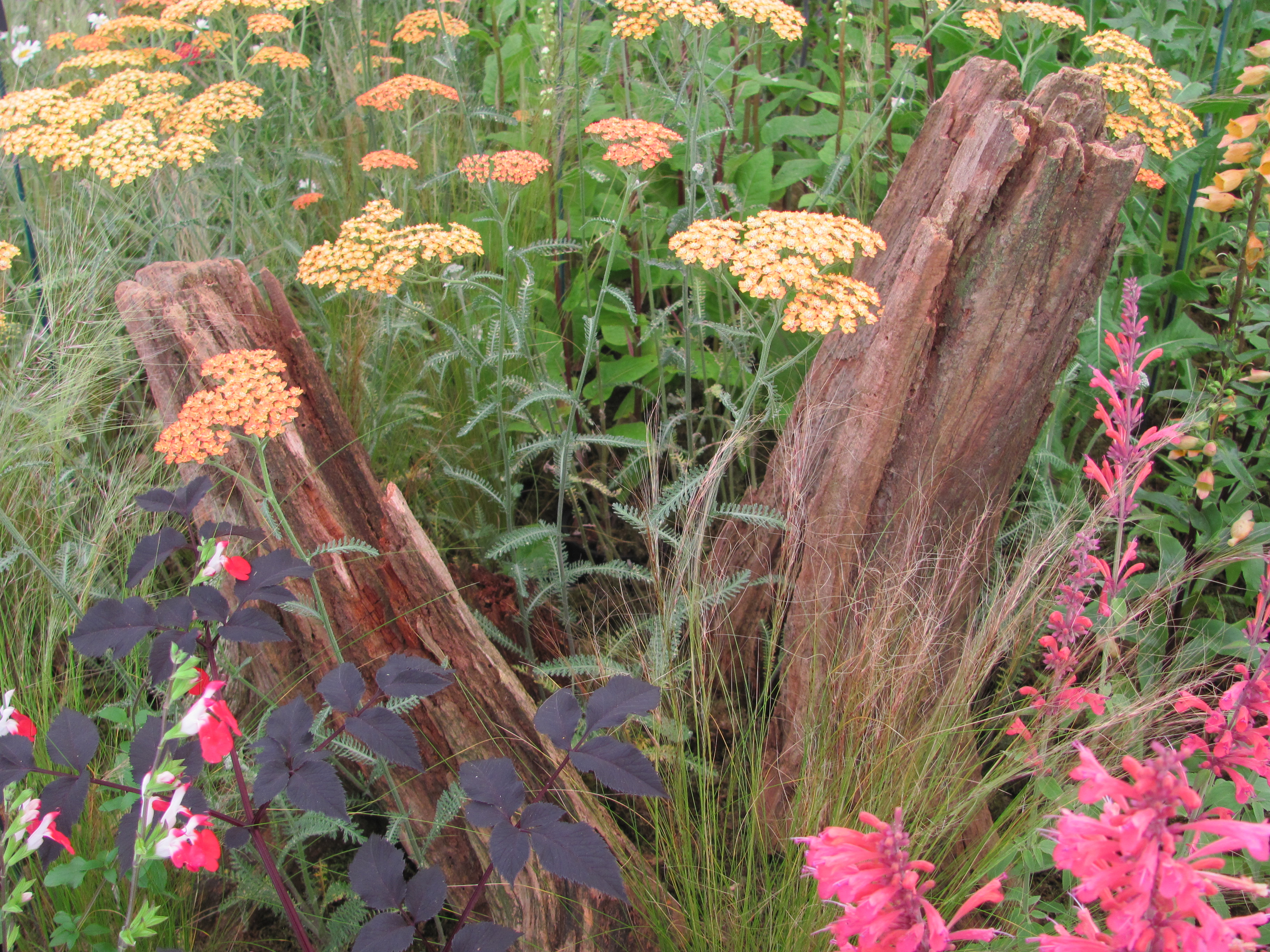
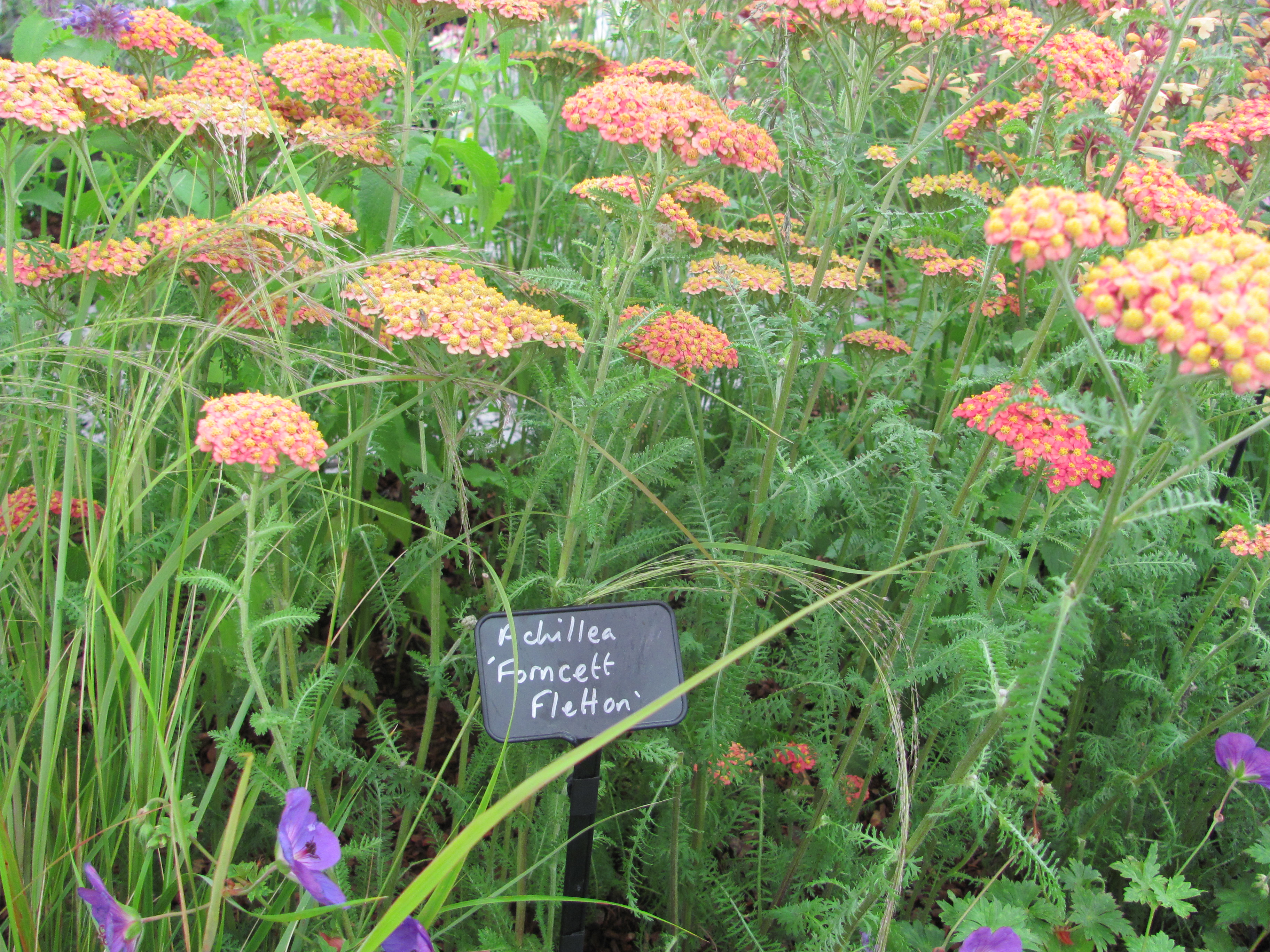
But as always the stars of the show were the plants. the trend in this show was for combining grasses with Achilleas particularly those with cream, russet and orange flowers.

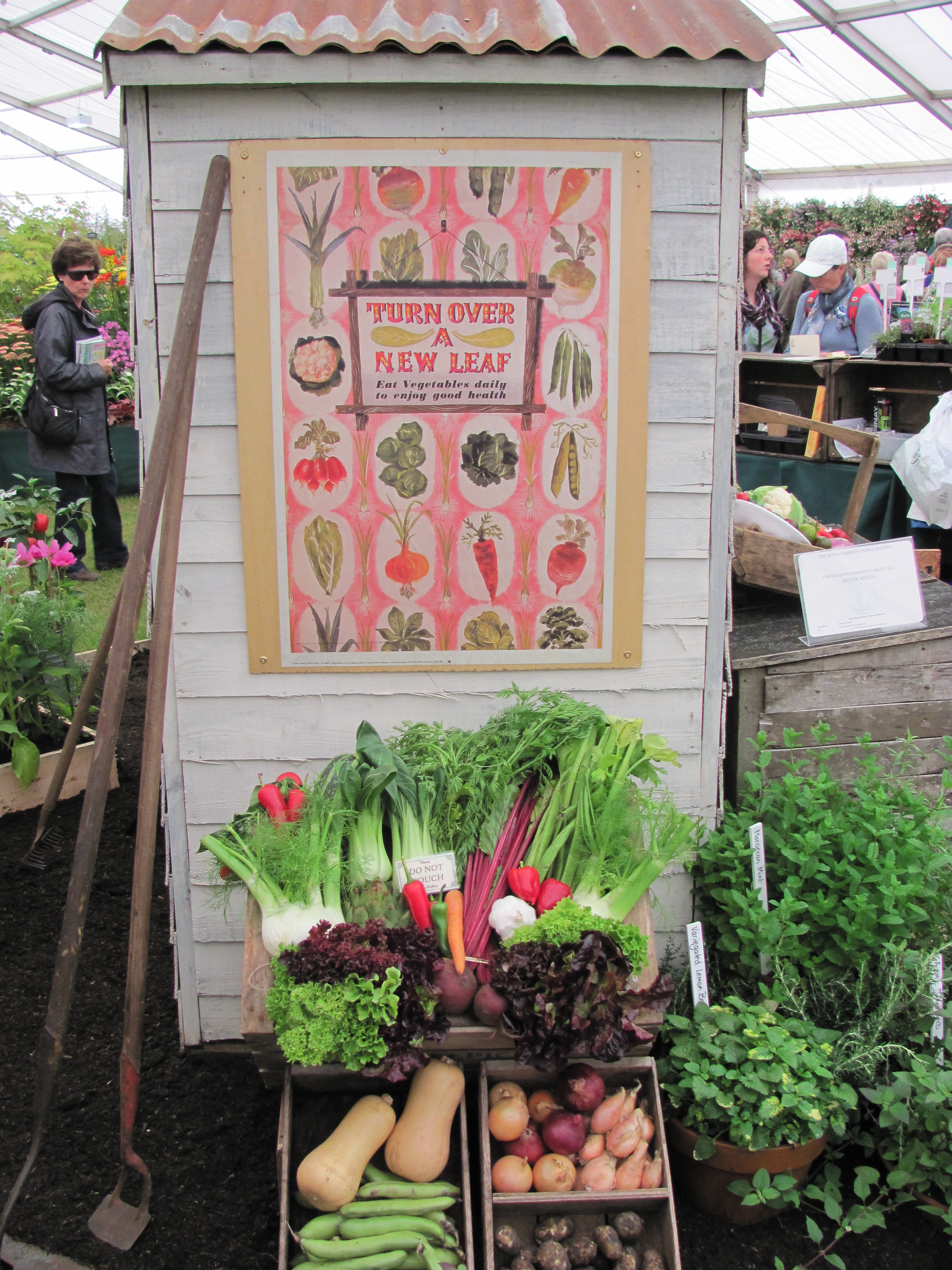
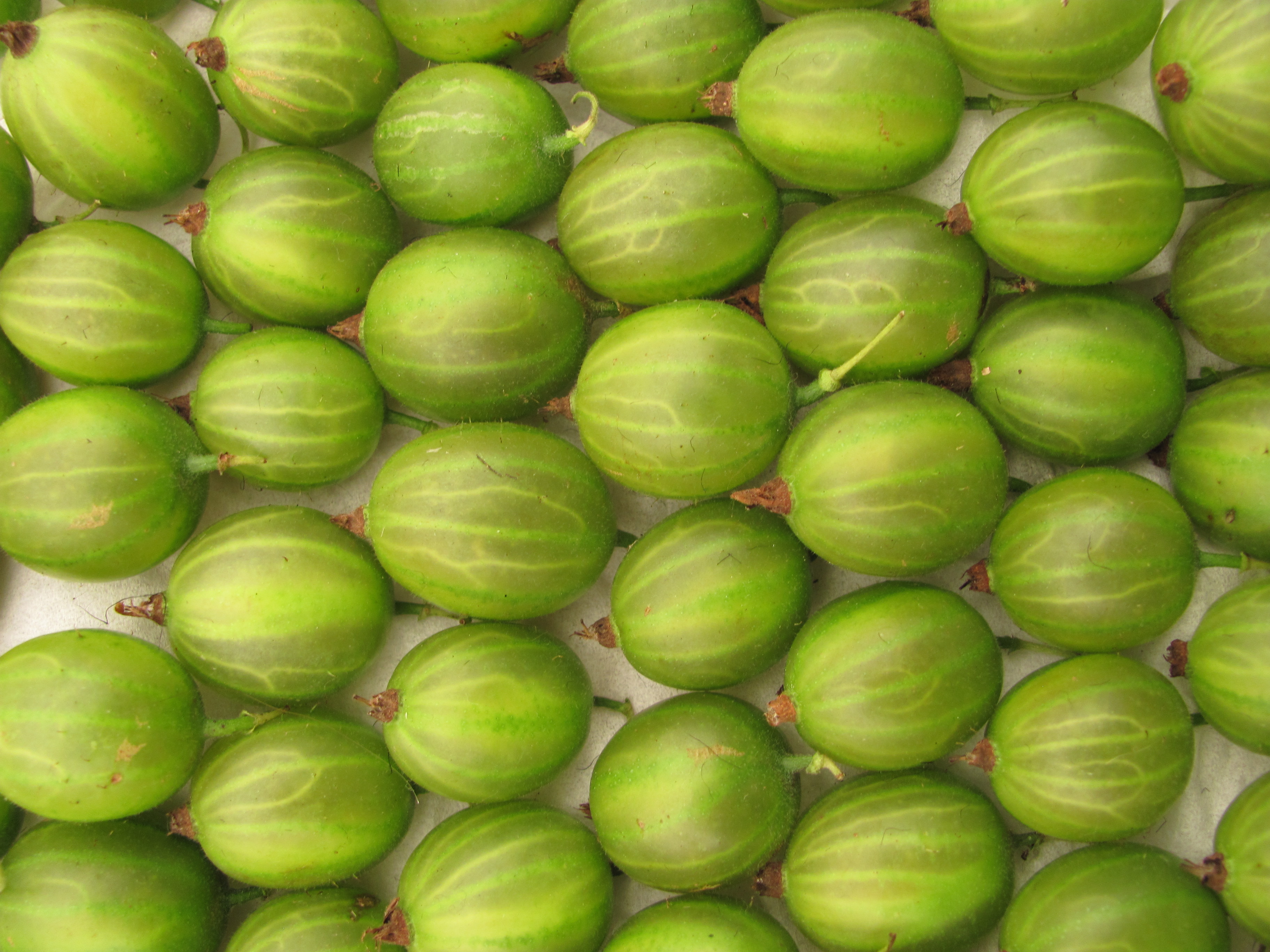
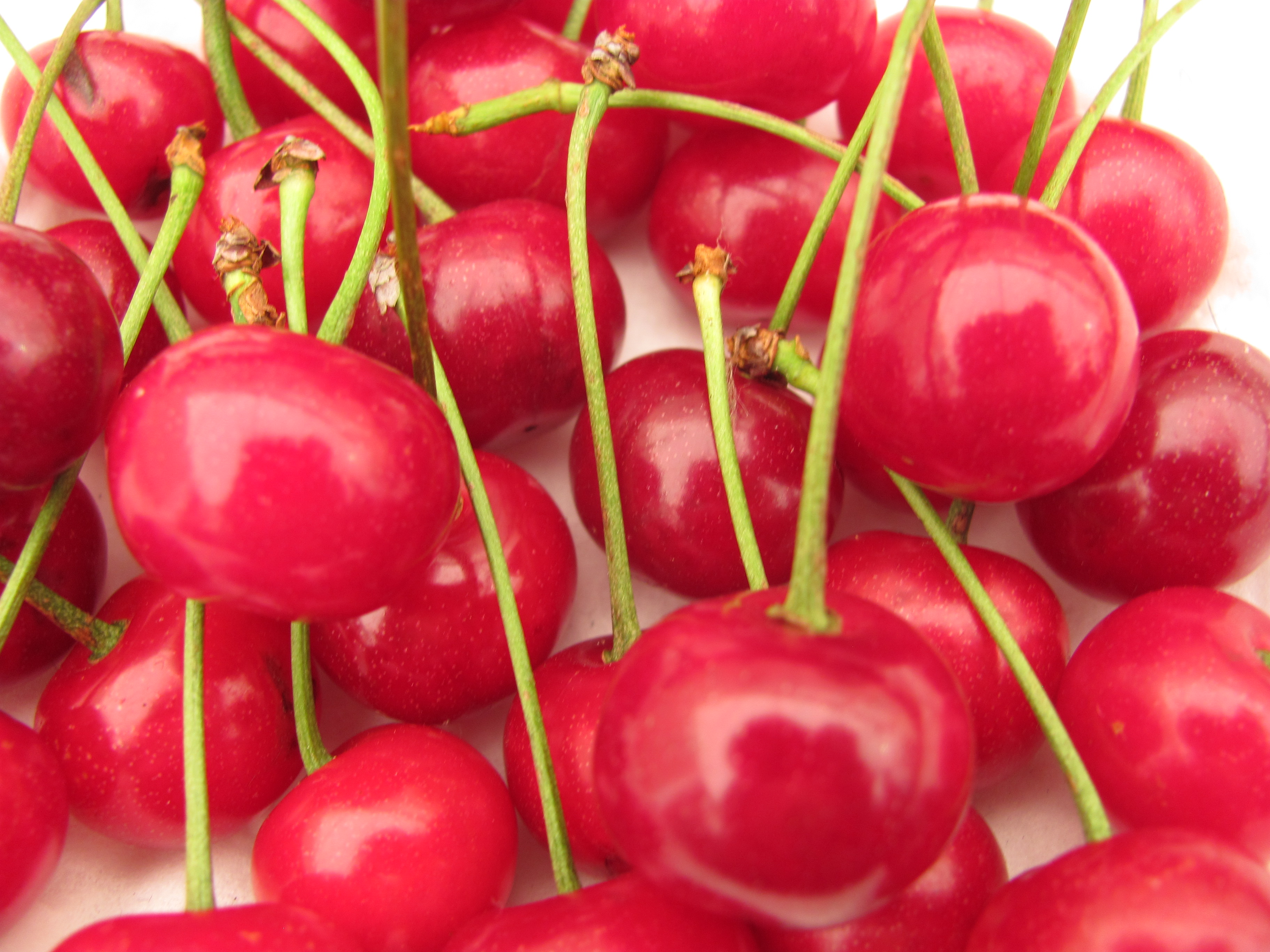
As with all RHS shows in recent years fruit and veggies starred alongside the flowers.

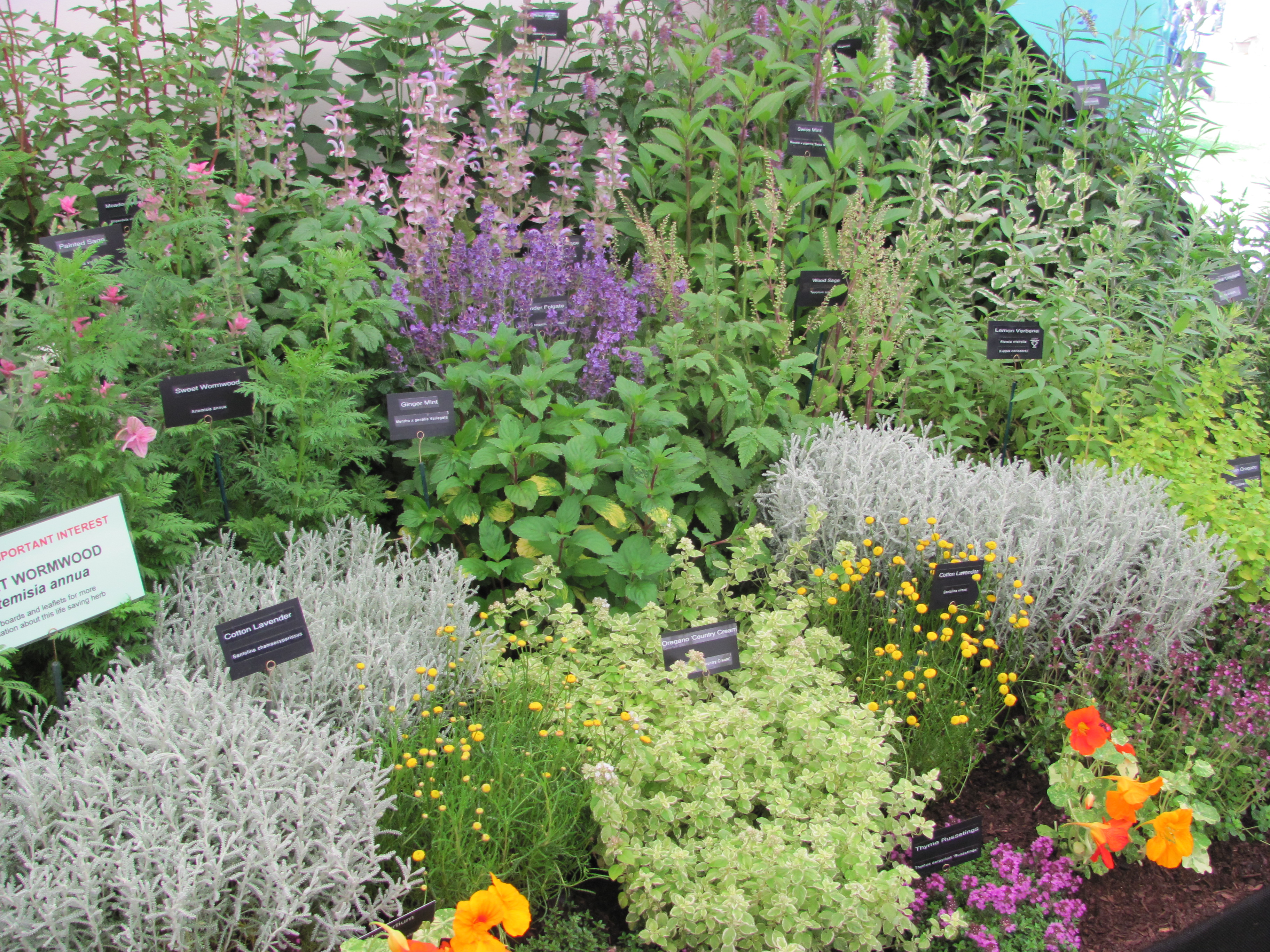
And we mustn’t forget the herbs.

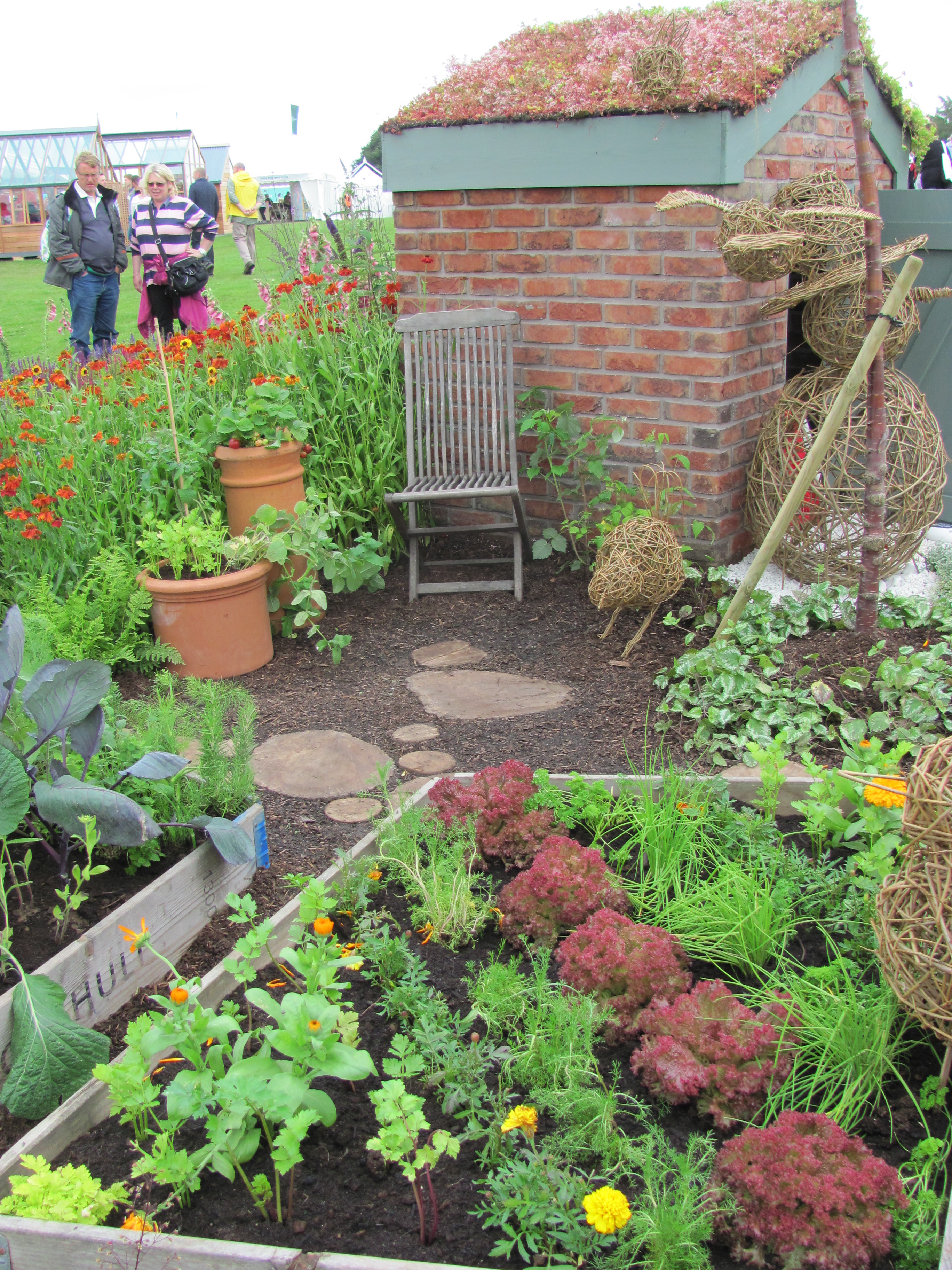
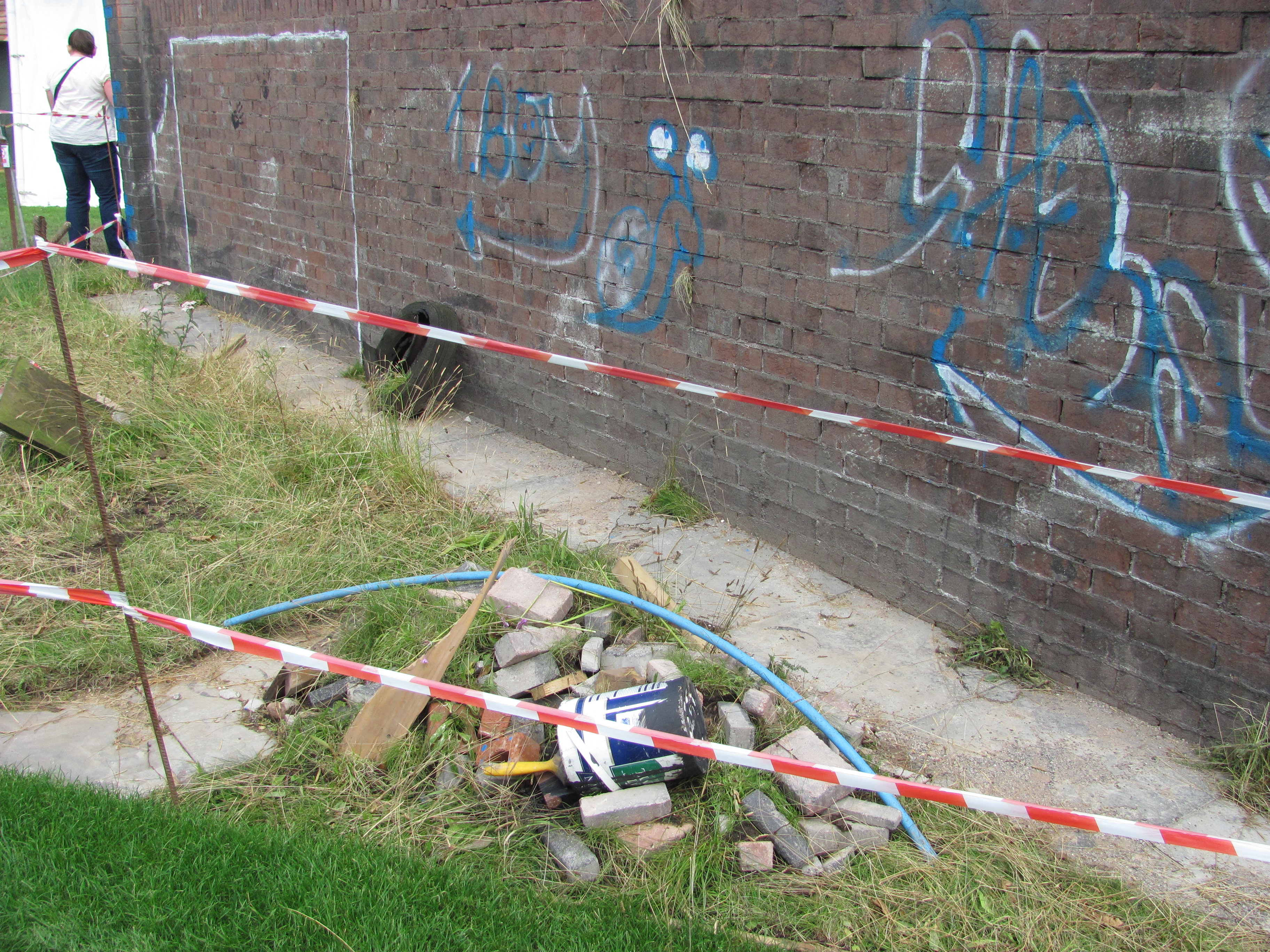
We were interested to see a garden devoted to the importance of community gardens and in particular the RHS “Its Your Neighbourhood” scheme as our allotment site is part of it. The before and after garden was designed by Chris Beardshaw one of the UK’s best garden designers as well as a writer and TV gardener. His garden showed how groups of volunteer gardeners can improve an urban derelict wasteland.

The before ……….

……….. and the after!

In the final report about Tatton Park RHS Show my post will be about the Conceptual Gardens, the Back-to-Back Gardens and the plant sale area.

Categories
conservation flower show garden design garden photography garden wildlife gardening hardy perennials July meadows ornamental grasses ornamental trees and shrubs photography RHS The National Trust wildlife

A Day at the RHS Flower Show Tatton Park

We have been to the Chelsea Flower Show, Harrogate Flower Shows and The Autumn and spring Malvern Flower Shows but the one we enjoy the most is always the one set in the grounds of Tatton Park. Luckily this is the RHS show closest to home. Although Chelsea is often called the greatest flower show, having visited once we have no desire to go again. But we frequently go to Tatton.

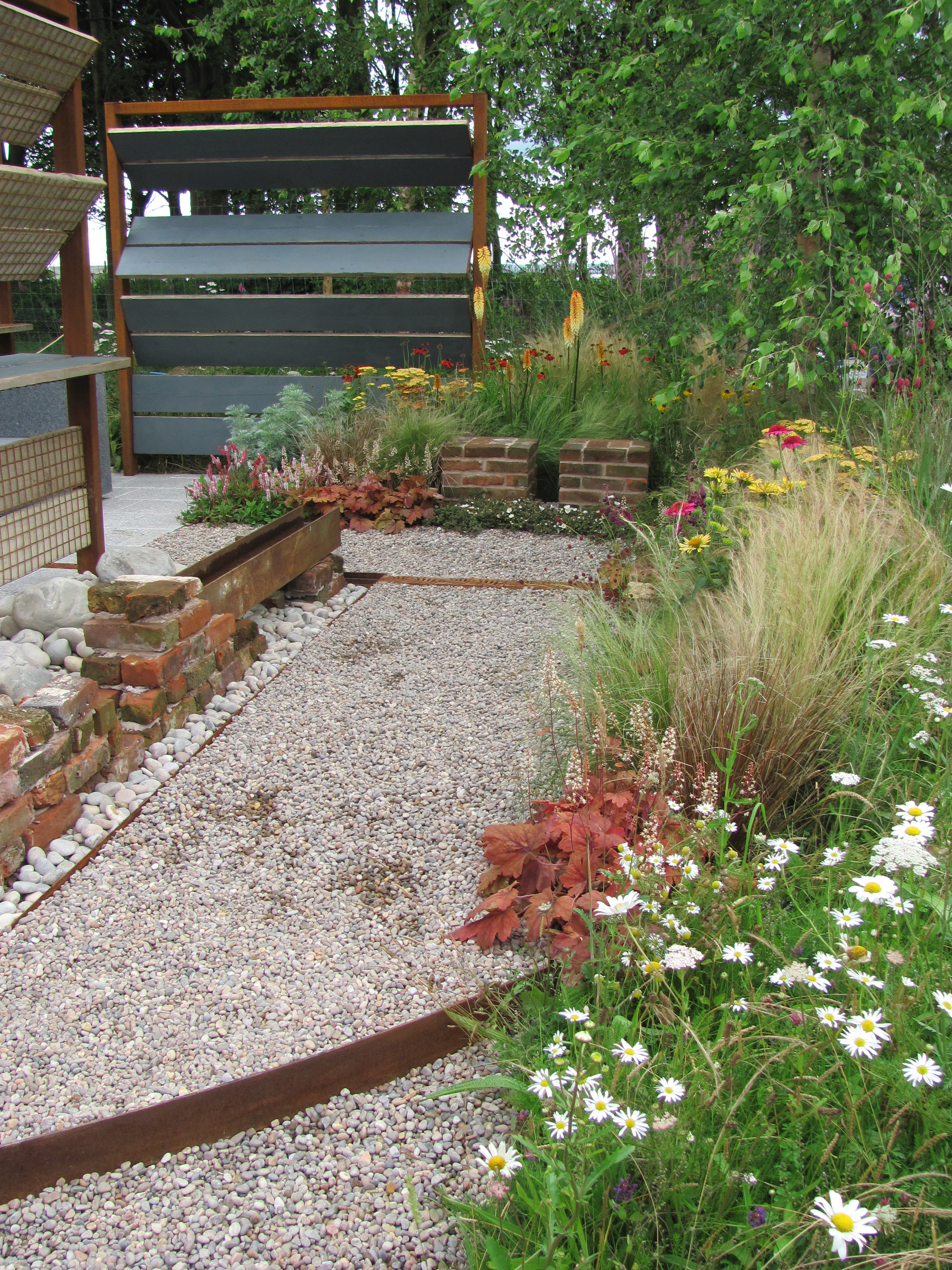
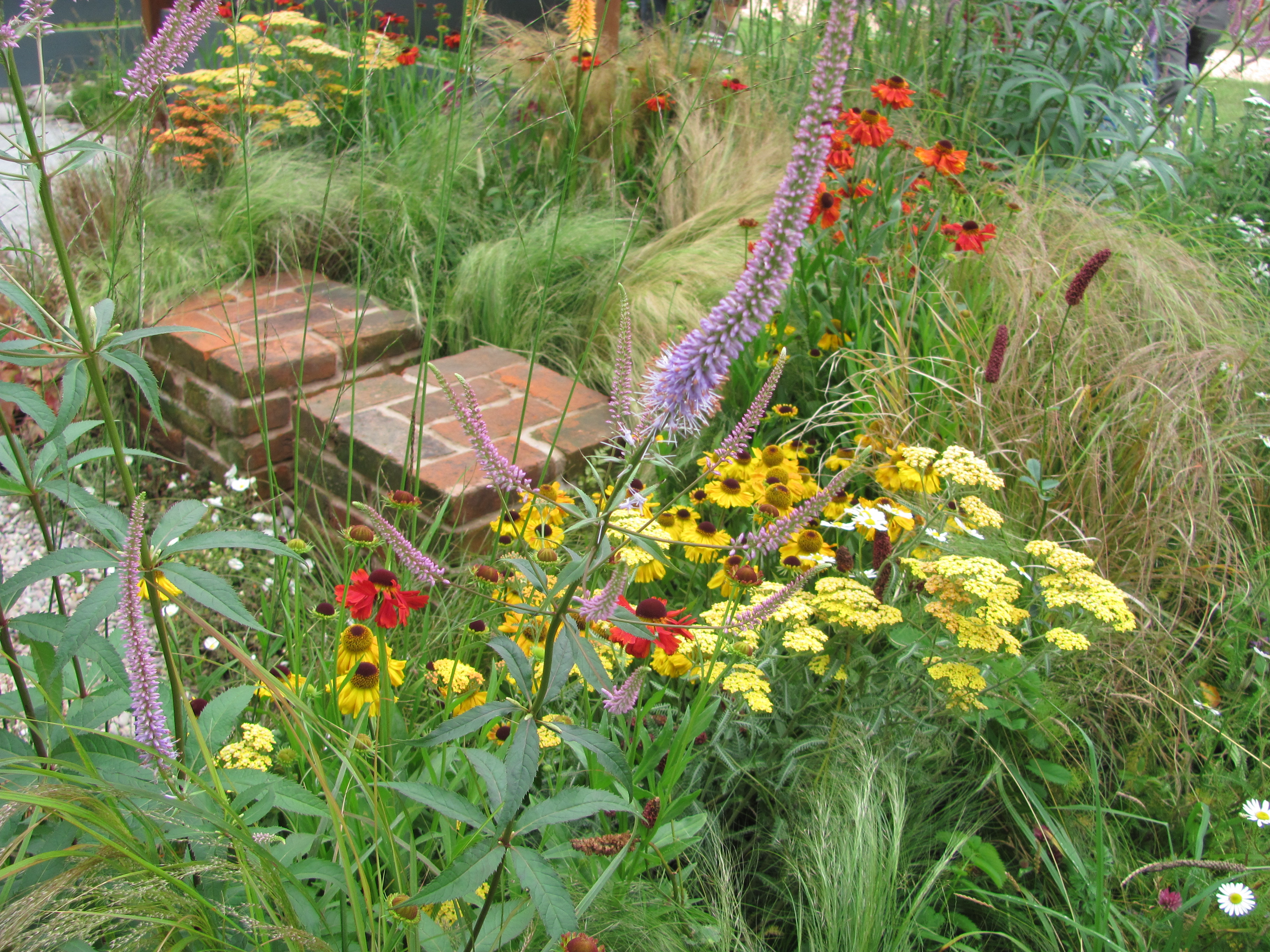
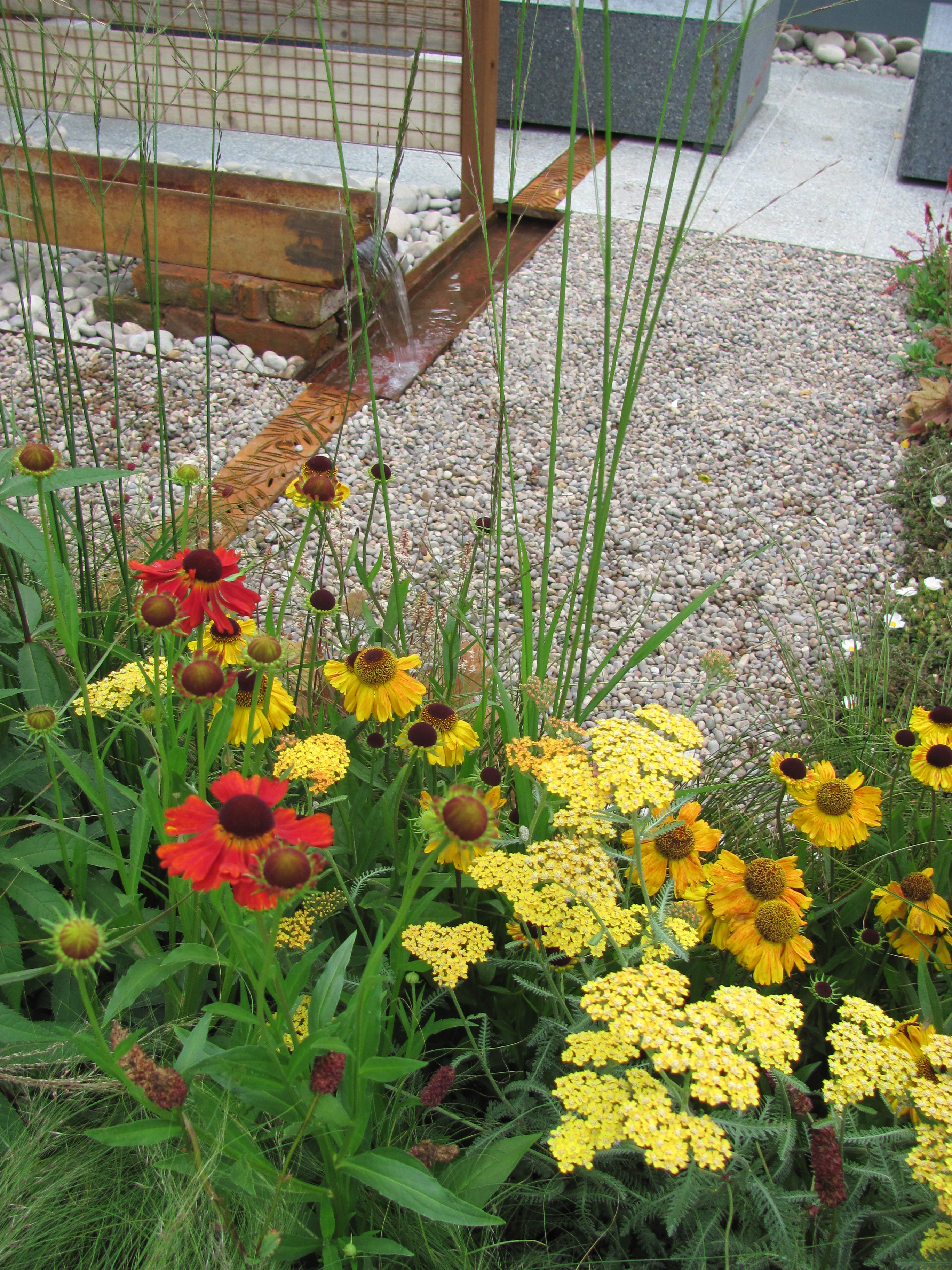
Tatton Park Show is described as “the North’s greatest garden party”. We enjoy its large show gardens, its “Back to Back” gardens and children’s gardens but most of all those designed by young garden designers. This is where the UK’s garden designs of the future lie and the standards are always so high. The designers have to be under 28 and this year their brief was to design a garden based on the theme of “colour”. We were so pleased when we learnt that the designer of our favourite one of these gardens had won the accolade of “RHS National Young Designer of the Year”. Tristen Knight designed this garden using recycled materials and it was full of interesting and original ideas and design feature. The colour of his planting of perennials and grasses was beautiful, all orange and biscuit. He studied for a BA in Industrial Design and Technology before training in garden design at Writtle College. He spoke with great enthusiasm and excitement about his garden and he told us about the materials he had chosen and how they were all items from building sites. For example the rill was formed from a an “H” beam and the flexible screening was created from scaffolding boards. I found it hard to take photographs that did justice to this brilliant young designer’s work. We enjoyed his garden and talking to him about it.

We moved on to the main large garden show gardens, some of which we liked whereas others we did not like at all. But that I suppose is what design is all about. If we all liked the same plants and designs wouldn’t gardens be boring?

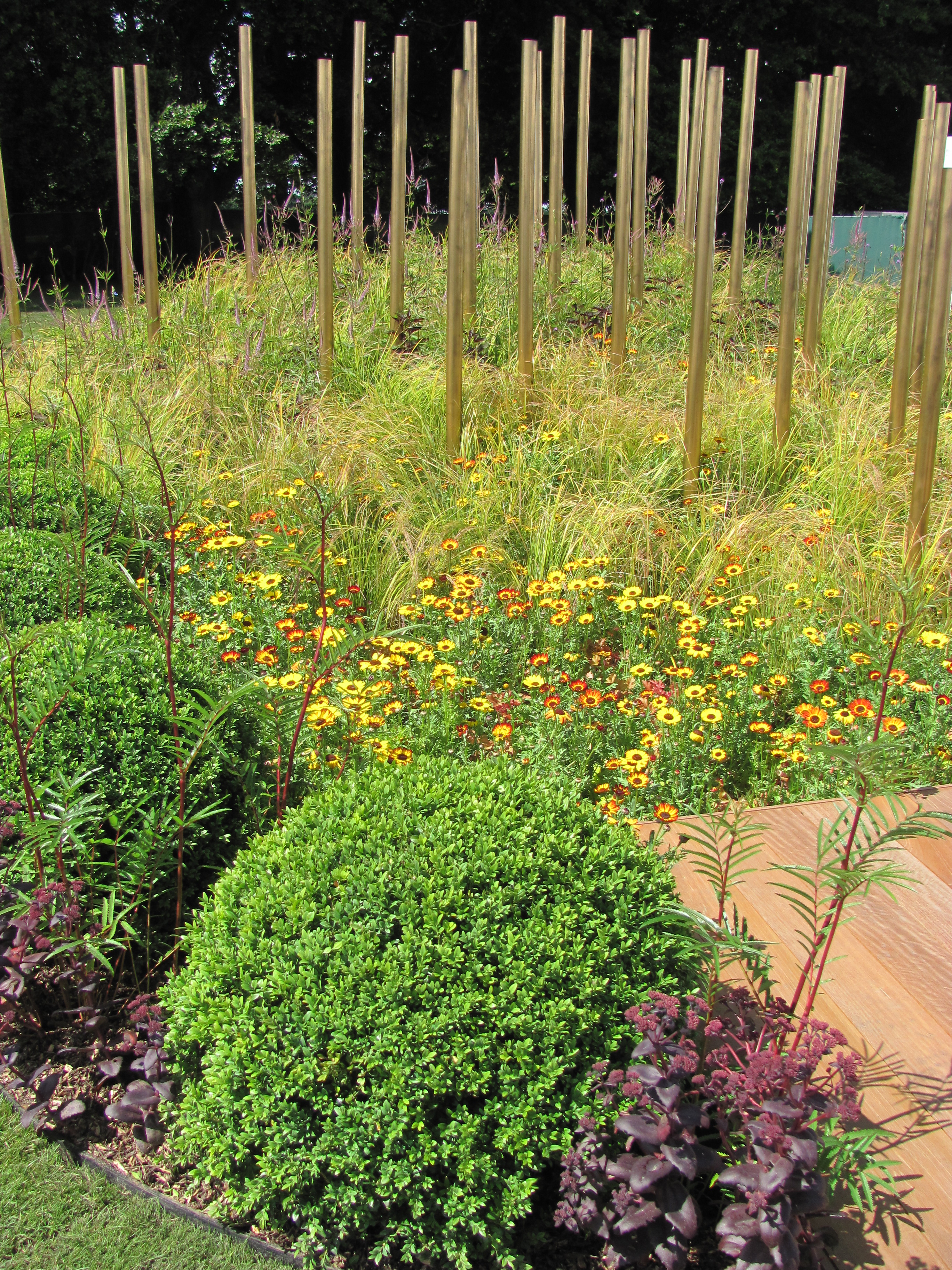
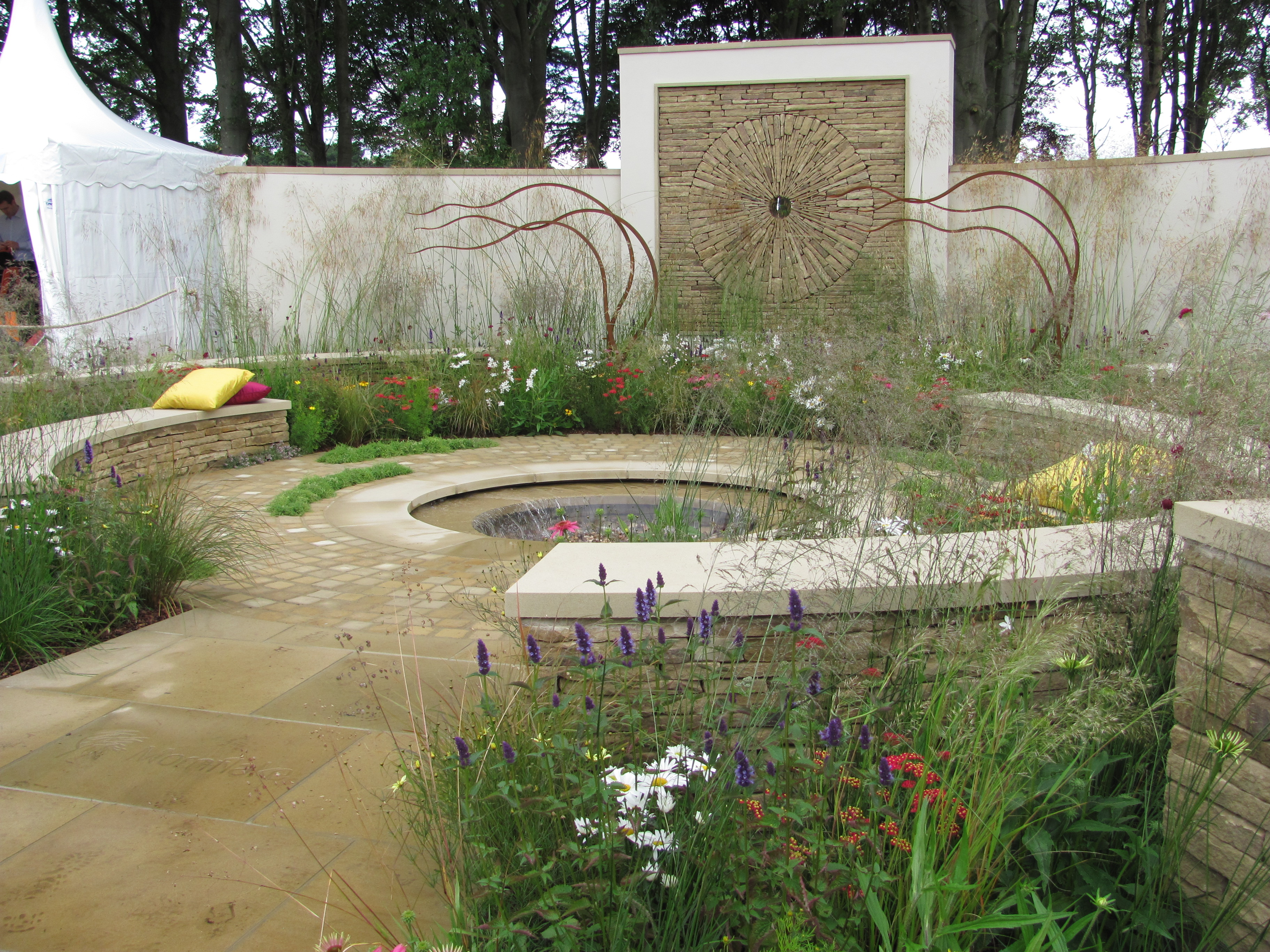
I begin looking at this set of gardens by featuring our favourite, a garden based on circles achieving a wonderful peaceful atmosphere through the planting which was light and wispy. It relied heavily on grasses to do so, with one planting area consisting of just grasses and one variety of allium.

It received the Best in Show award!

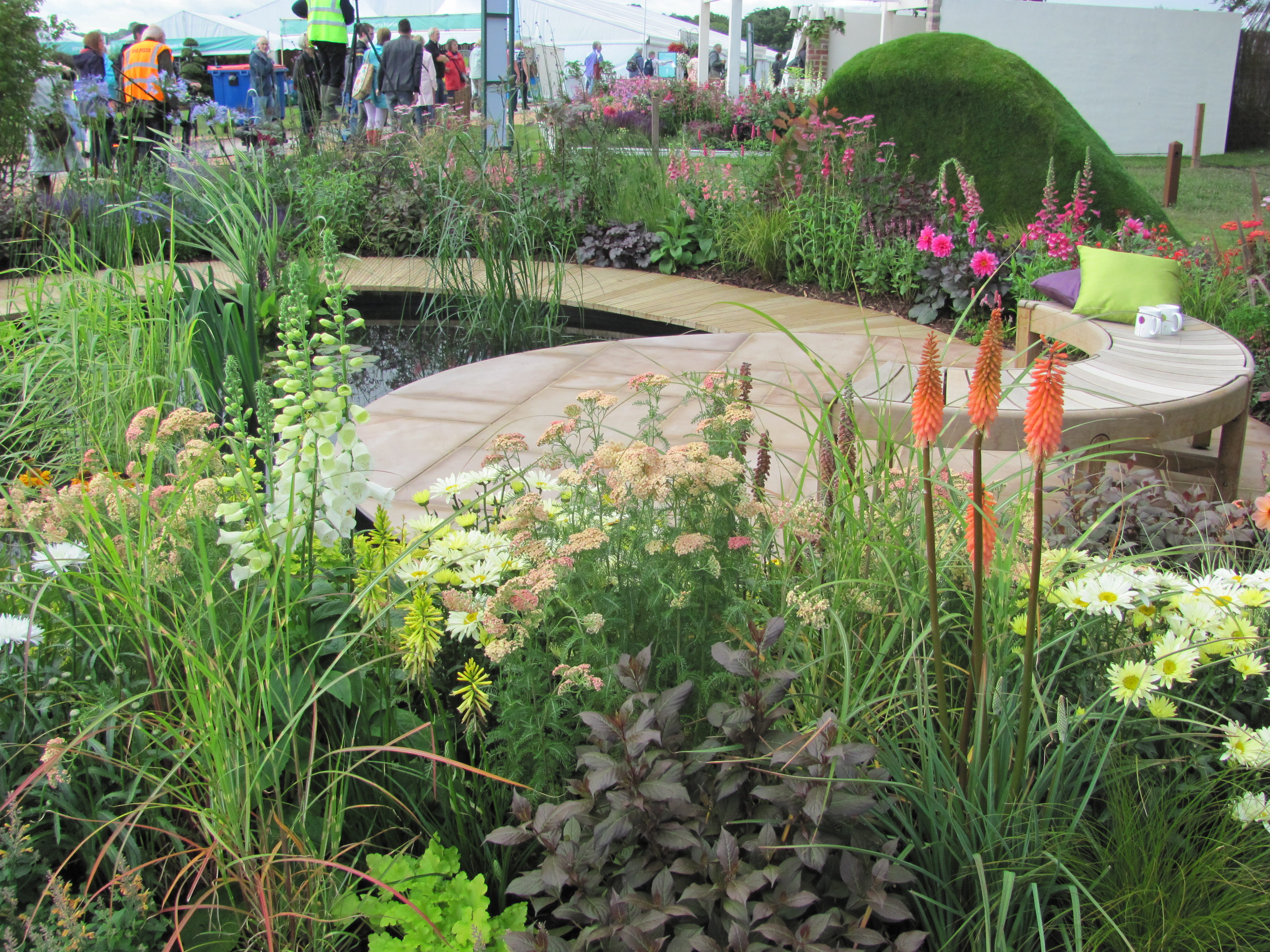
This show garden featured decking curves and colourful planting choice.

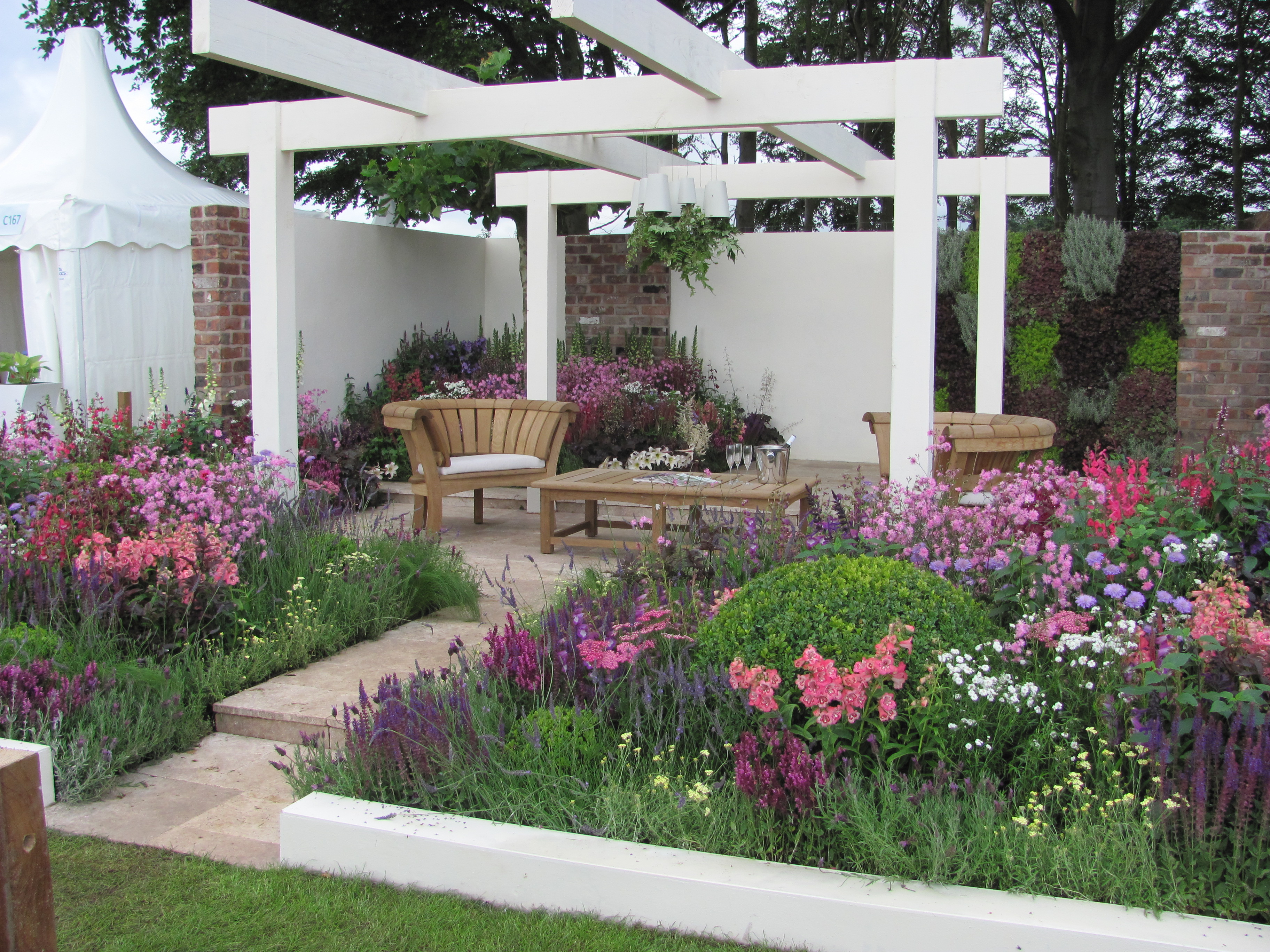
The next sequence of photos illustrates the wide variety of show gardens at Tatton. Enjoy the tour.

Once we had enjoyed the large show gardens we made a bee line for the garden designed by students and staff of Reaseheath College, partly because their garden is always so interesting with elements of attracting wildlife but also because this is the college where I followed some of my horticulture training several decades ago. This year their garden excelled, with such vibrancy in the planting and in its features. Again the design integrated beautiful features created to attract wildlife.

To finish my first post about the RHS Tatton Park Flower Show I want to share a couple of photos of children’s gardens celebrating the Queen’s Jubilee. In the next post we shall visit the Floral Marquee and the smaller show gardens.

Categories
community gardening garden design garden photography gardening hardy perennials July ornamental trees and shrubs photography Shropshire shrubs village gardens

A Village of Gardeners – part two, after the tea break.

We sat in the village hall enjoying our lemon drizzle cake and cups of tea, while we planned our route to see the afternoon gardens which, all but one, were out in the countryside, along narrow lanes.

So suitably refreshed and legs rested we made our way to the last of the gardens in the village itself, which was described as a small cottage garden. It didn’t disappoint!  After wandering up a narrow lush lane we crossed a ford where a shallow stream of crystal-clear water rushed over the tarmacadam. There were so many well-kept plants in busy planting schemes with narrow grass paths to lead you round. We loved it!

Once we had relished this lovely crowded cottage garden we returned through the ford and turned right where another narrow lane sent us up a gradual slope into the countryside away from the village, to the next garden. We passed this tumbling down barn the home to many swallows and colourful natural hedgerow borders.

This garden was larger than the last we visited, with sweeping areas of grass, an enclosed vegetable plot, interesting plant combinations and a beautiful wildlife area featuring a pond with woodland enhancing its banks.

Sadly the last two gardens we wished to visit were miles into the countryside at the foot of the Stretton Hills so we had to take the car. The first garden was one that invited you to wander with interesting  plantings.

The final garden was up a lane with grass growing down the centre and we had to park on a very soggy field. But it was worth it as a beautiful atmospheric garden sat alongside a rippling stream running through a wooded valley. The sound of bird activity around the feeding stations in an enclosed part of the garden and their song in the surrounding borders and woodland enticed us to sit comfortably with another cup of tea and another slice of home-baked cake.

We managed to visit just nine of the sixteen gardens open before we ran out of time. We enjoyed the variety of gardens created and maintained by a variety of gardeners. These gardeners all had the advantage of living in such a beautiful little village with a strong community spirit. The last garden we visited had the added benefit of an amazing view.

Categories
garden photography gardening ornamental trees and shrubs photography RHS shrubs trees

Who needs flowers when foliage will do?

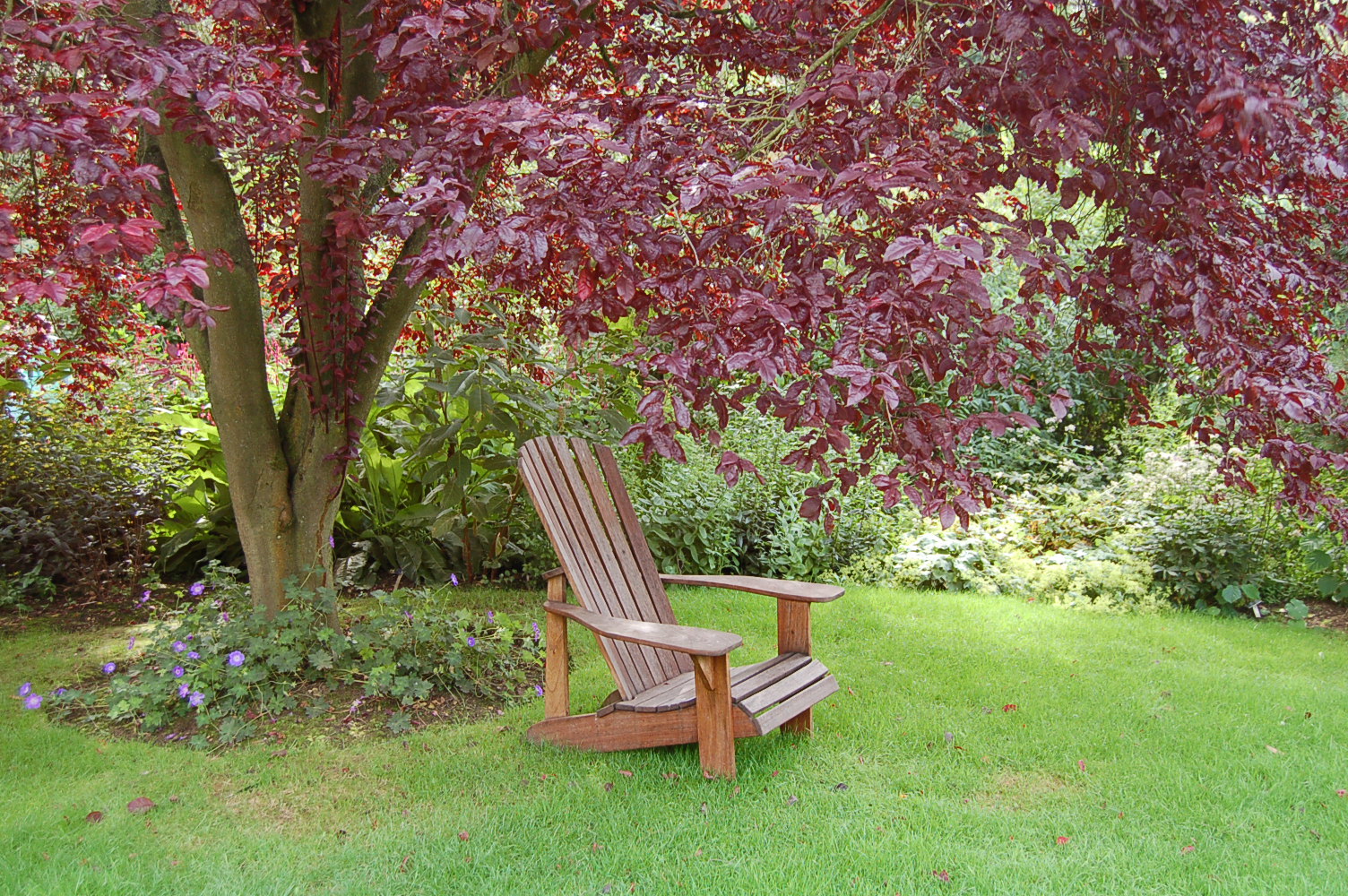
You will be glad to know this is a rhetorical question. If asked to find an answer it would be a simple response – we all do! But, on a recent visit to the Royal Horticultural Society’s garden in Devon, the wonderful Rosemoor, I took this collection of photographs featuring foliage with occasional interesting bark. Not a flower in sight.

This Veggie Life

A Vegetarian | Nature Lifestyle Blog

Rambling in the Garden

.....and nurturing my soul

The Arch City Gardener

Journeys In St. Louis Gardening and Beyond

Garden Dreaming at Châtillon

Consult the genius of the place

Storyshucker

A blog full of humorous and poignant observations.

gardeninacity

Notes from a wildlife-friendly cottage garden

PlayGroundology

...an emerging social science

The Official Blog of British Wildlife

'The most important and informative publication on wildlife of our times' - The Independent. This blog is a member of The UK & Ireland Natural History Bloggers group: www.uknhb.blogspot.com

iGrowHort

Inspire - Cultivate - Grow Native Plants - Restore Landscapes

Bishops Meadow Trust

To create and protect a semi-natural wild space for the people of Farnham to enjoy and experience an array of British wildlife in our town

Gardening with Children

The www.gardeningwithchildren.co.uk Blog

UKbirdingtimeline

birding through the seasons, why birds matter and how to conserve them

NATURE WALKER

with a camera in hand

Jardin

Transform your outdoor space

Eva's space

My allotment, cooking and other interests

Old School Garden

my gardening life through the year

LEANNE COLE

Trying to live a creative life

fromacountrycottage

trying to live as lightly as possible on our beautiful planet

Good Life Gardening

Nature lovers from Leicester living the good life.

mybeautfulthings

Finding the beautiful in the everyday

mawsonmichelle

Michelle's Allotment

In and Out of My Garden

thoughts from and about my garden

Greenhousing

Big plans for a small garden

The Scottish Country Garden

A Walled Country Garden in South East Scotland

The Fruity Chicken

Life at the fruity chicken

willowarchway

Off grid living. Self sufficient. "PERMAGANICS RULE".

St Anns Allotments

Nottingham's Grade 2* Listed Allotments and Community Orchard

Manifest Joy Harvests

a journey in suburban vegetable gardening

Allotmental

The madness of growing your own

Penny's Garden: a harvest beyond my front door

A novel approach to vegetable gardening

arignagardener

Sustainable living in the Irish countryside.

NewEnglandGardenAndThread

Master Gardener, amateur photographer, quilter, NH native, and sometimes SC snowbird

dianajhale

Recent work and work in progress and anything else that interests me

planthoarder

a chaotic cottage gardener

Lens and Pens by Sally

a weekly blog that creates a personal philosophy through photographs and words

Dewdrops and Sunshine

Stories from a sassy and classy Southern farmbelle.

The Pyjama Gardener

Simple Organic Gardening & Seasonal Living

gettin' fresh!

turning dirt into dinner

JOY...

today the world is created anew

Garden Birds

Notes from a Devon garden

ShootAbout

Life Through The Lens

Adapting Pixels

A photography blog showcasing the best photography pictures and videos on the internet

Wildlifegardening's Blog

Just another WordPress.com site

naturestimeline

personal observations from the natural world as the search continues for a new approach to conservation.

LATEBLOOMERBUDS

The Wonders of Life through my Eyes, my Heart, my Soul