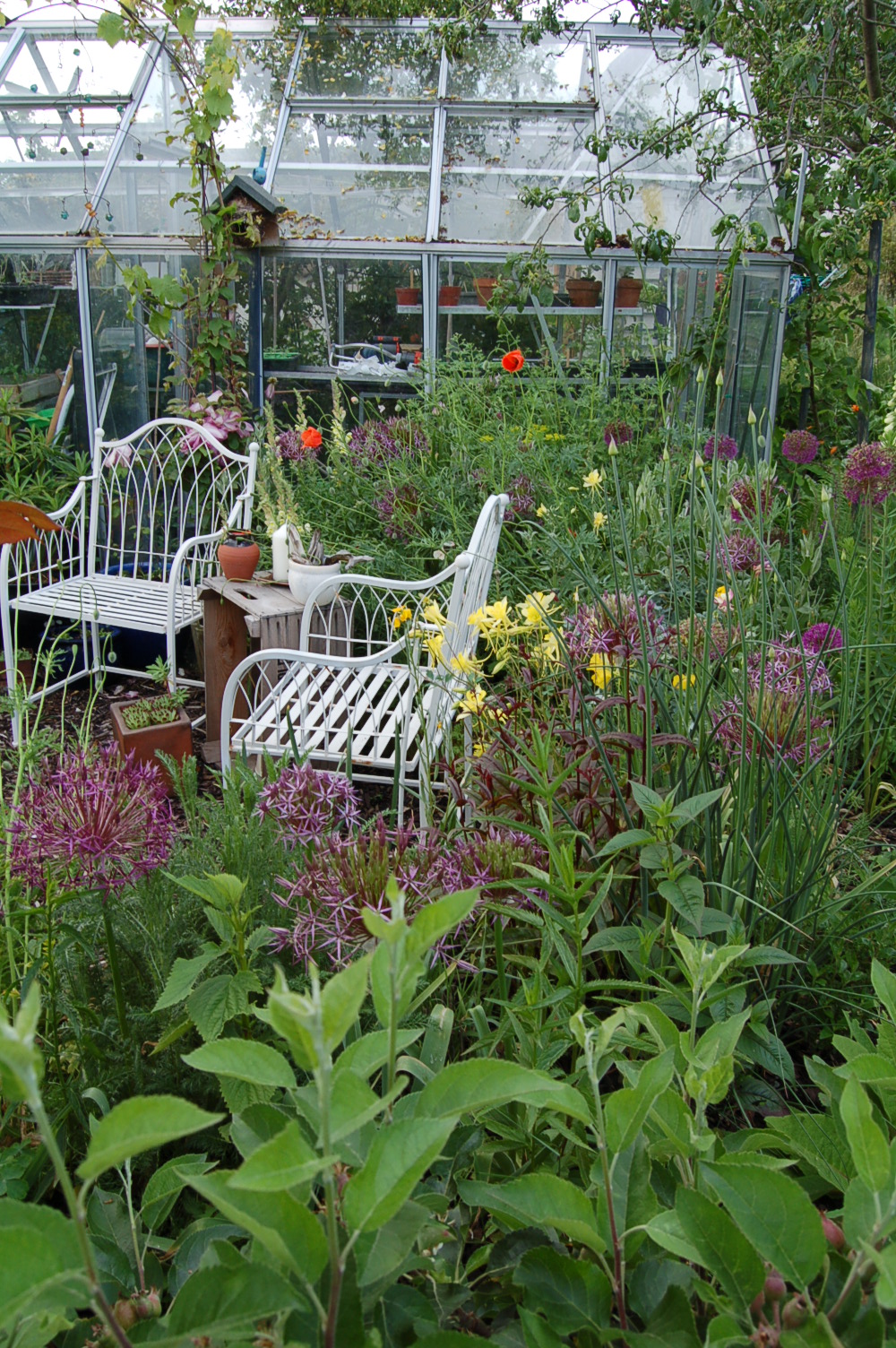
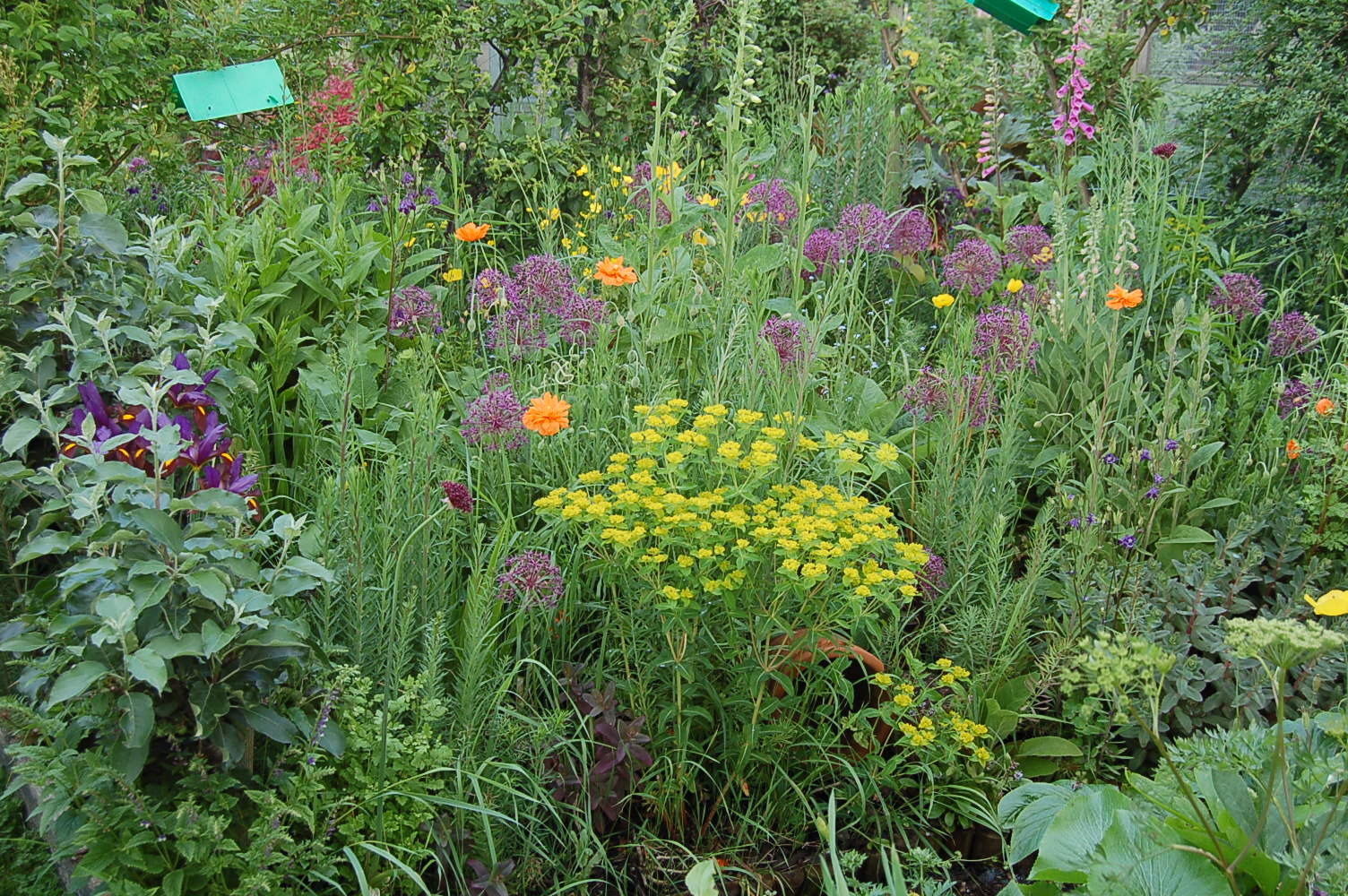
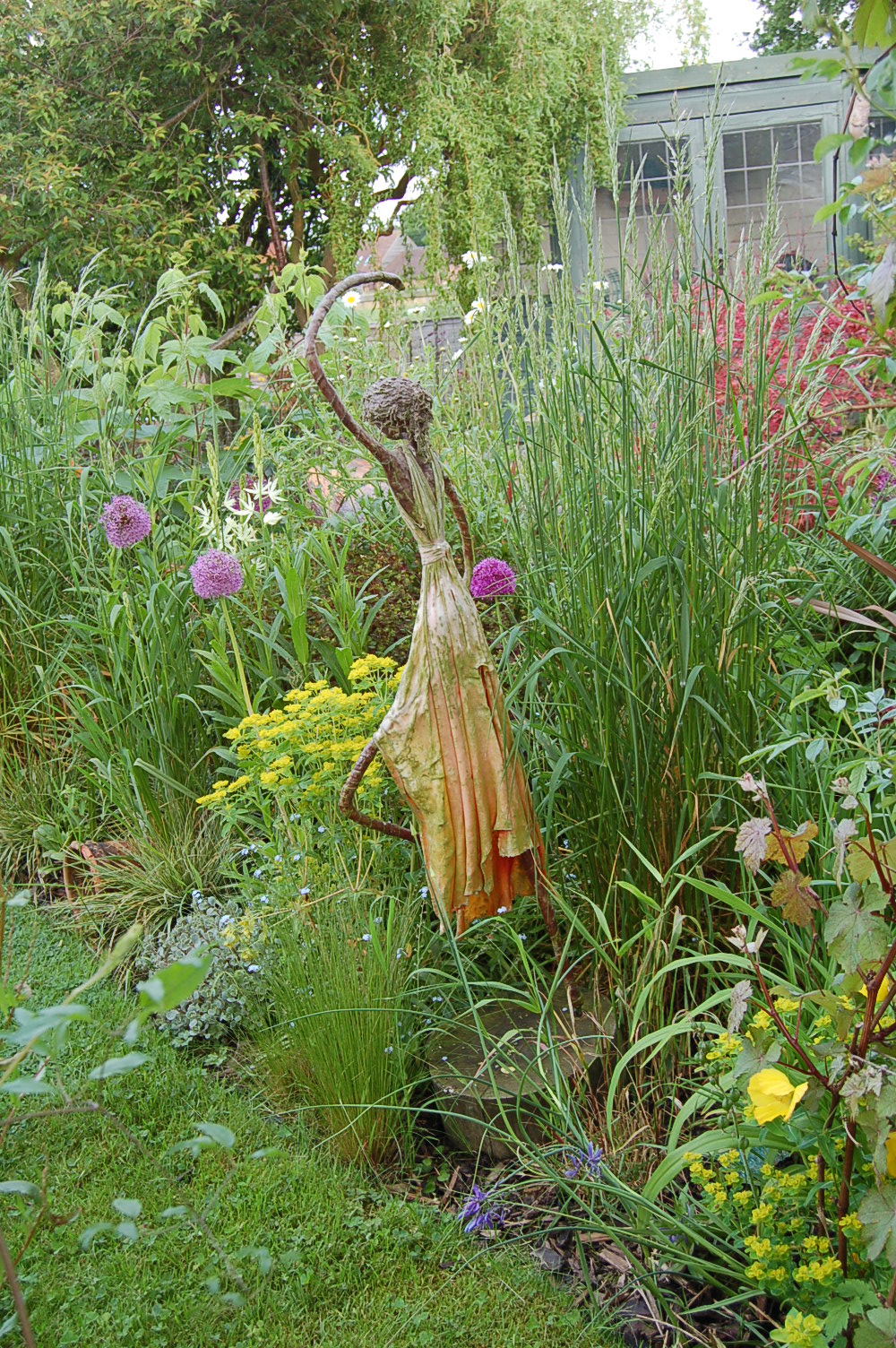
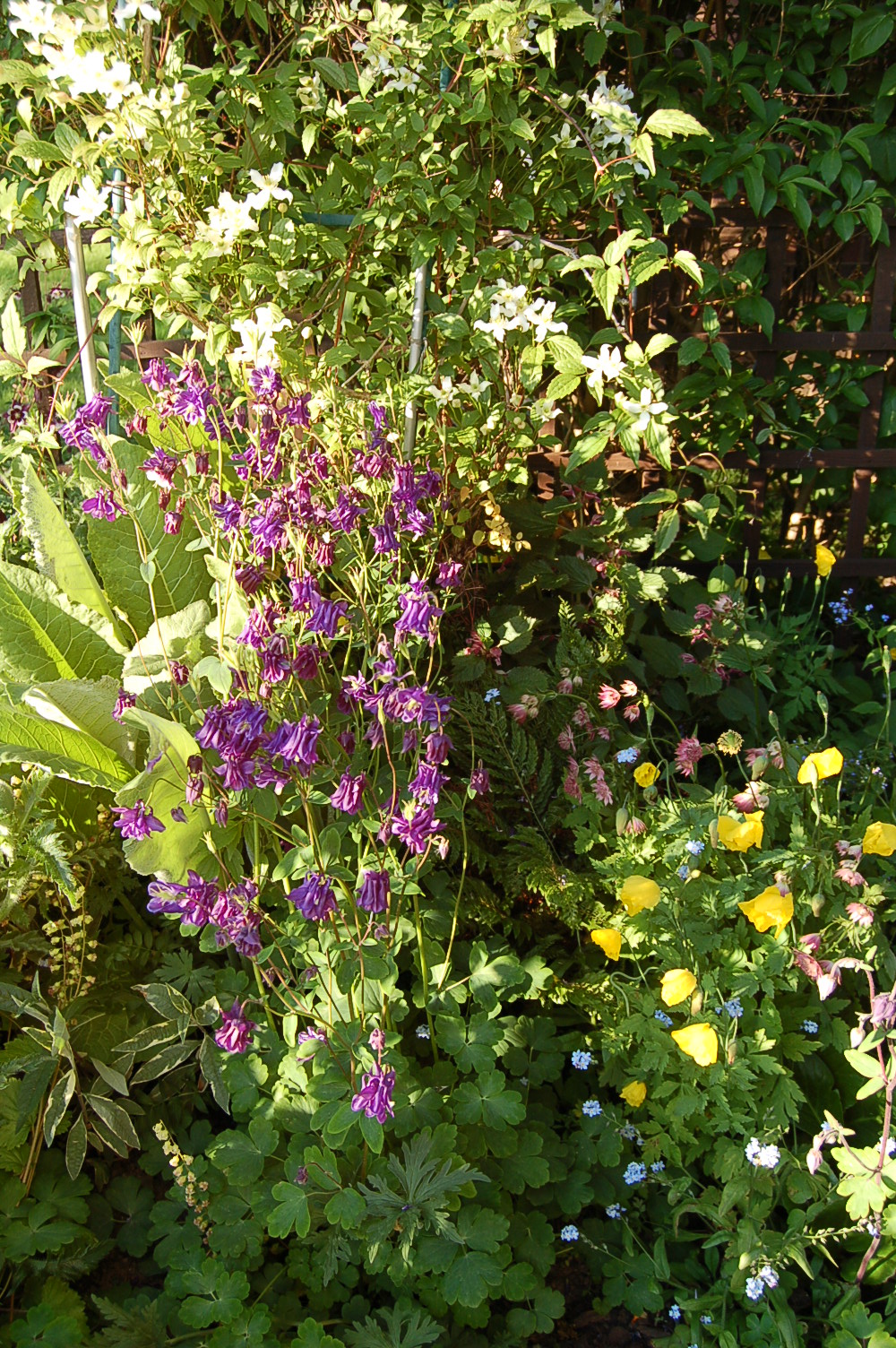
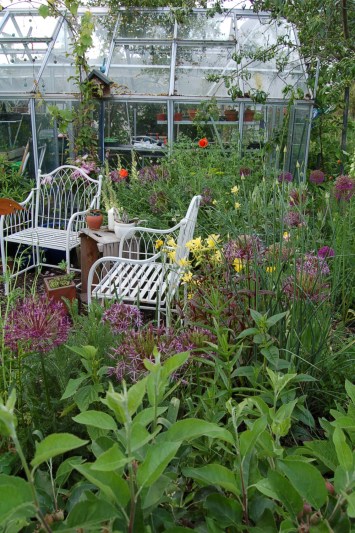
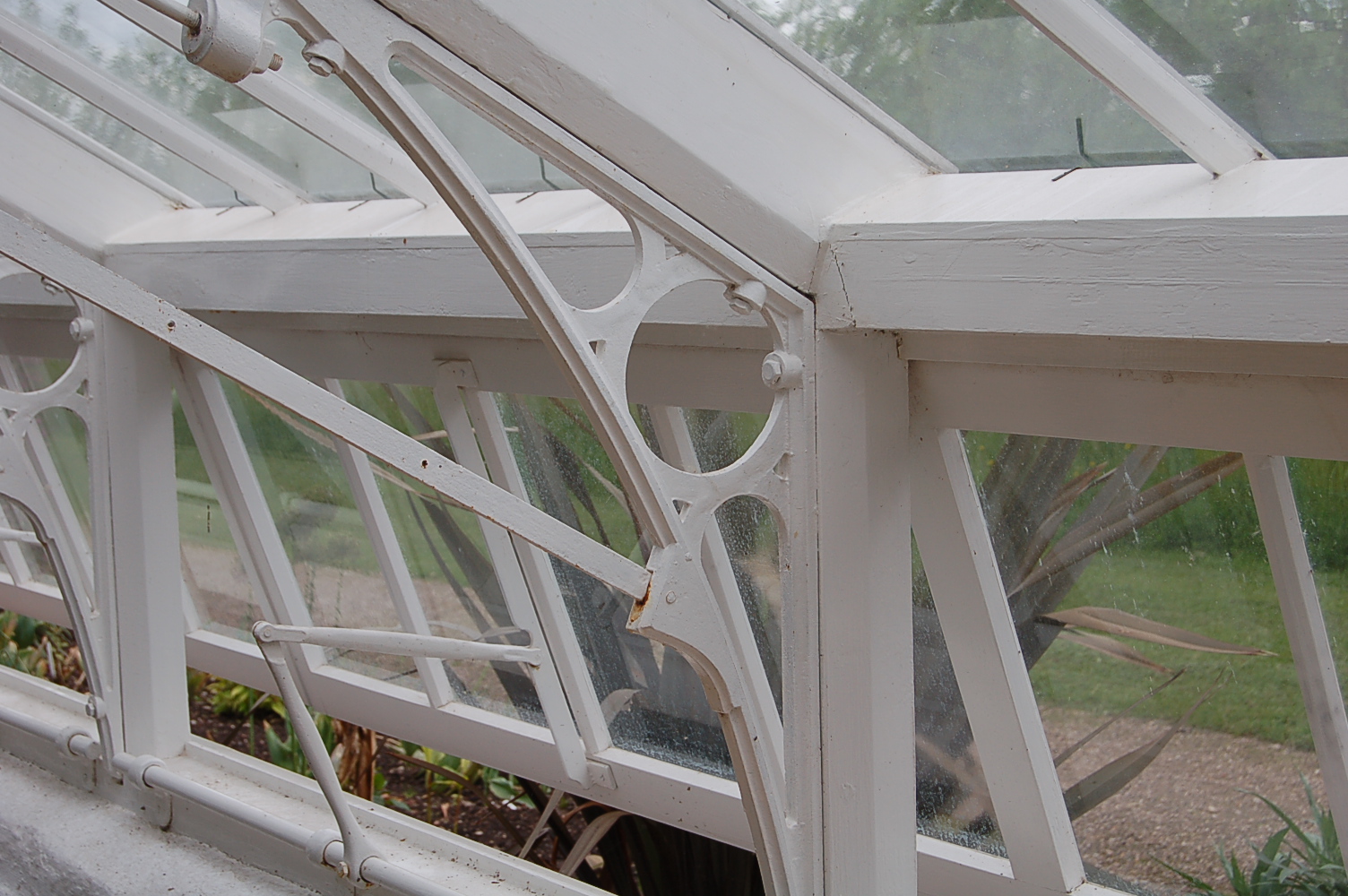
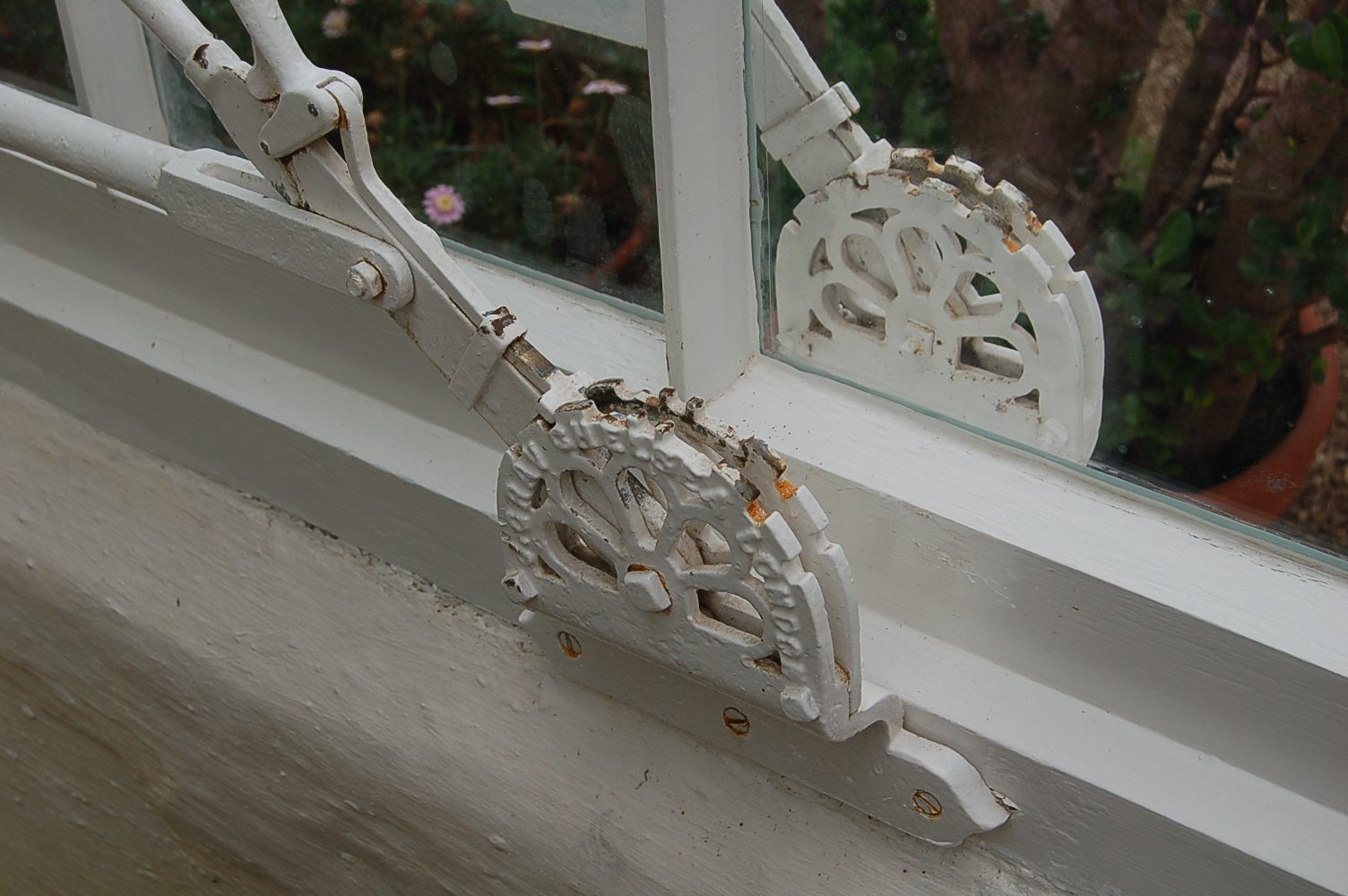
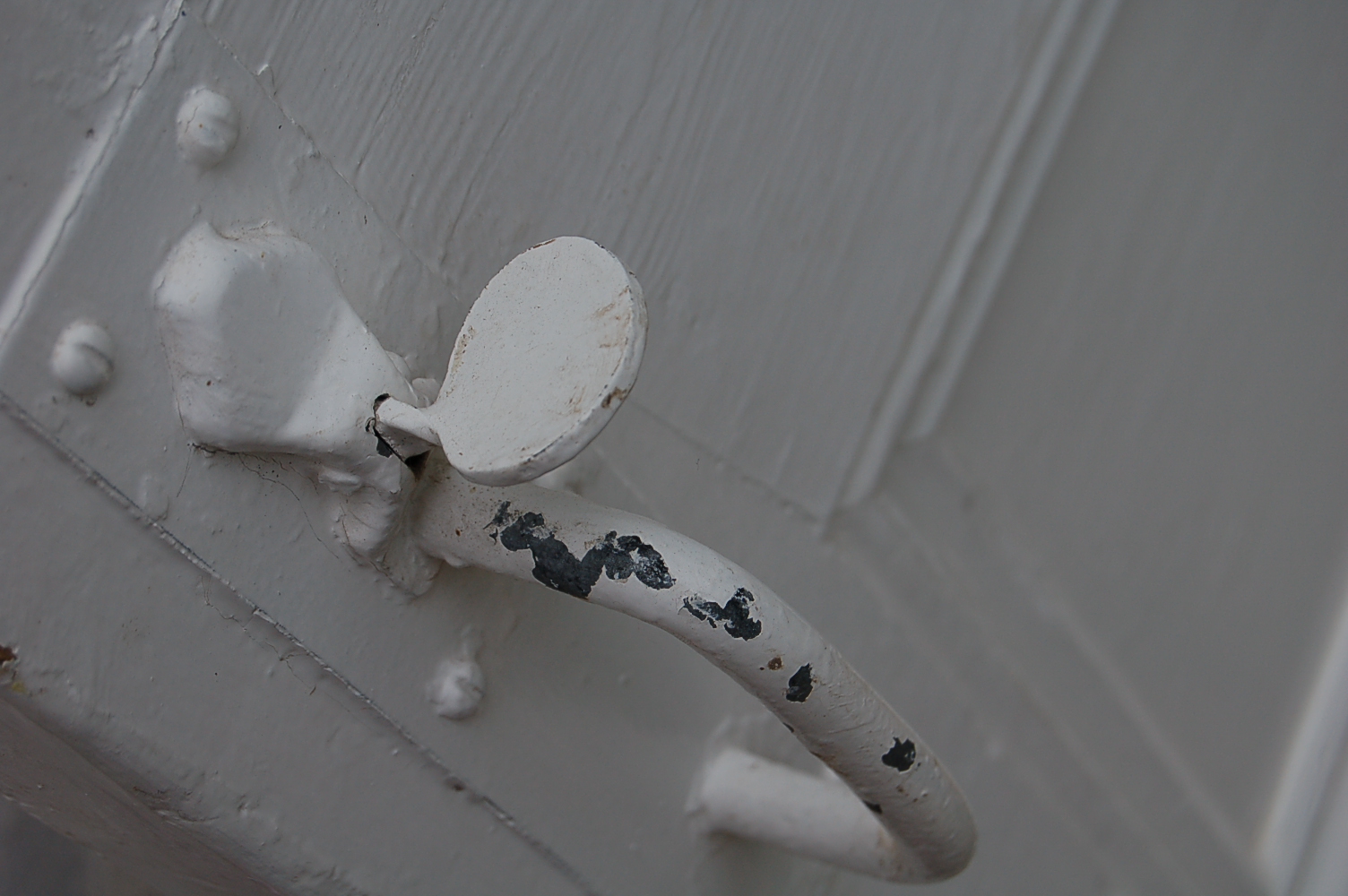
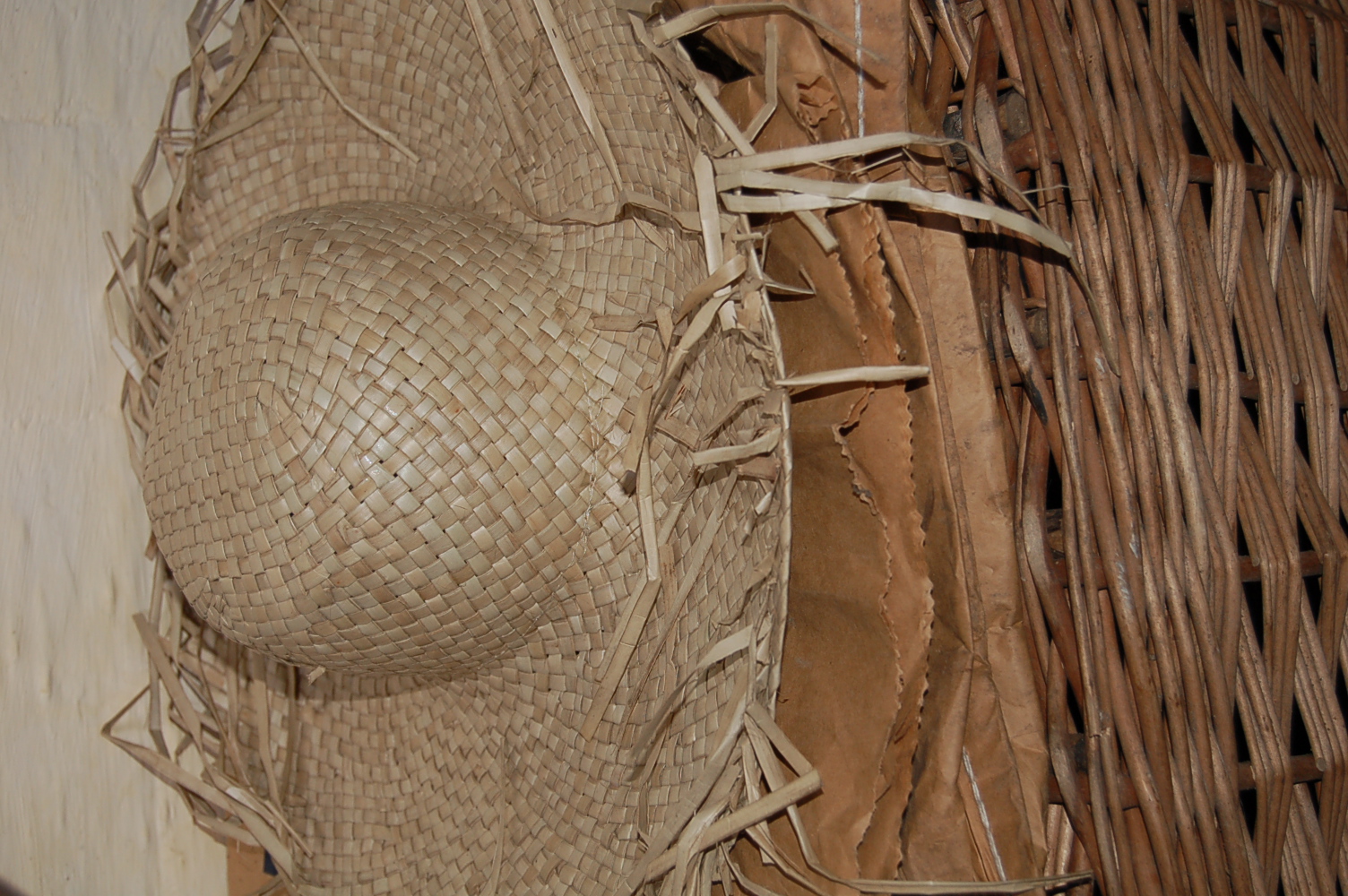
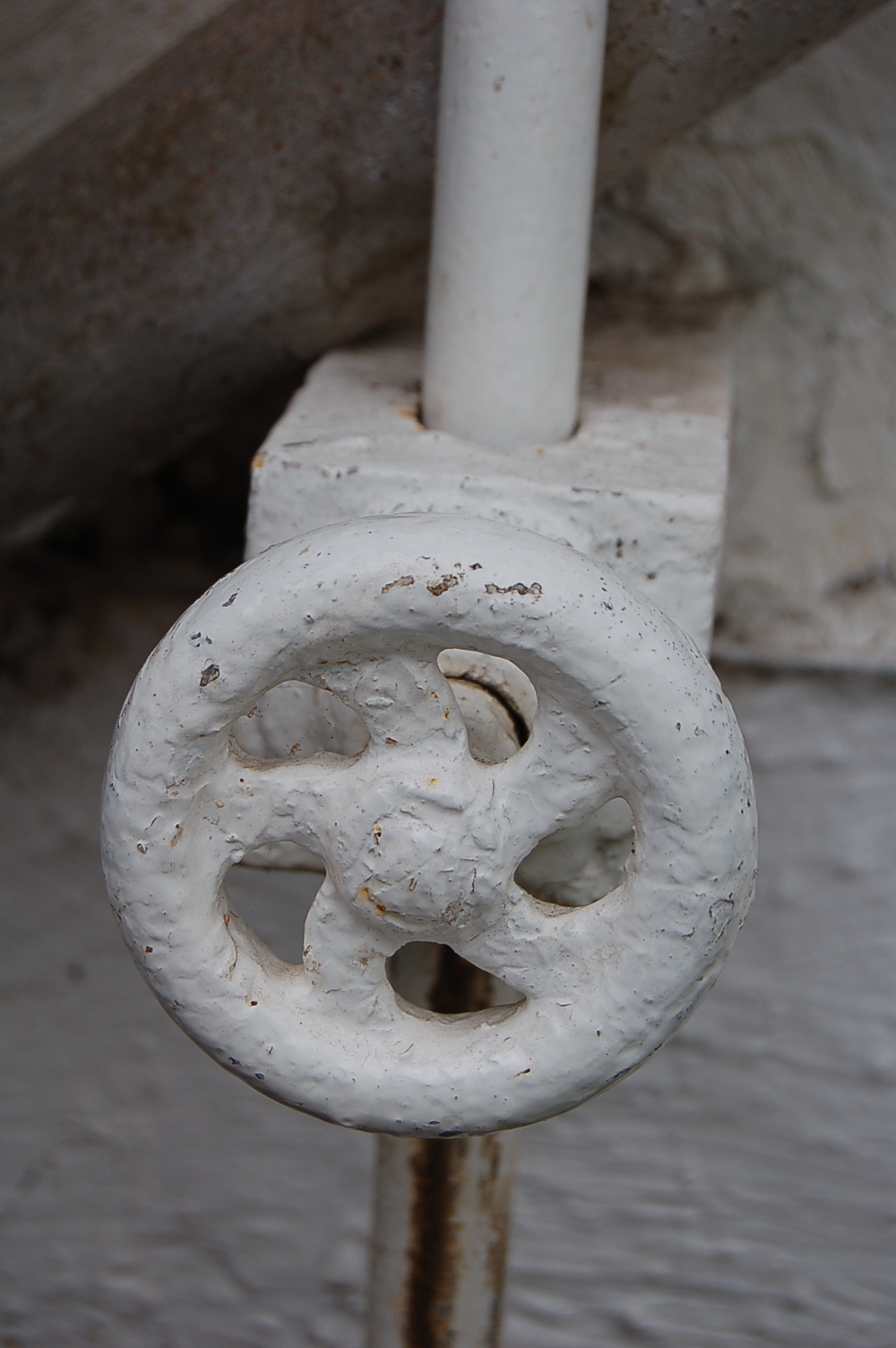
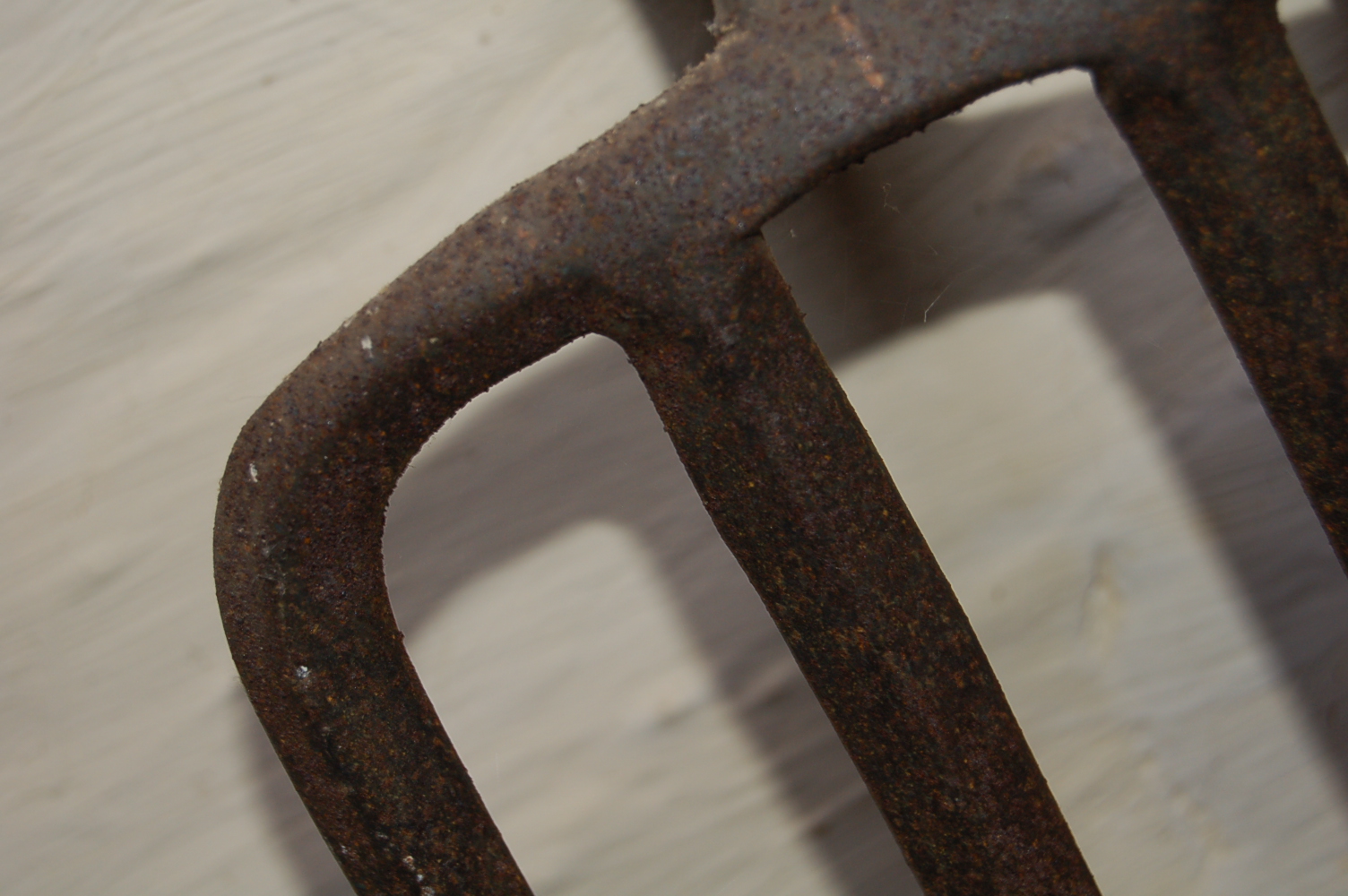
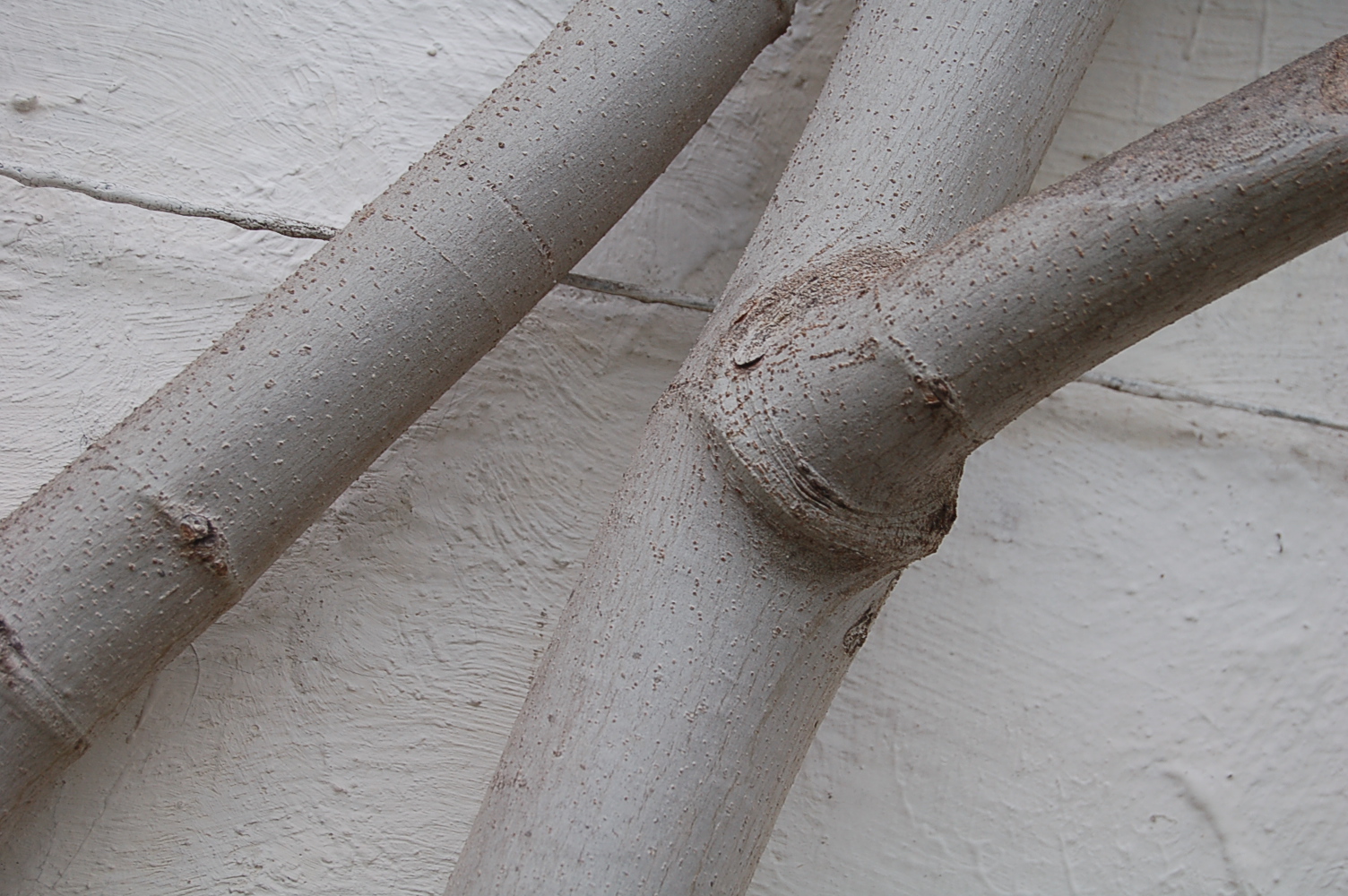
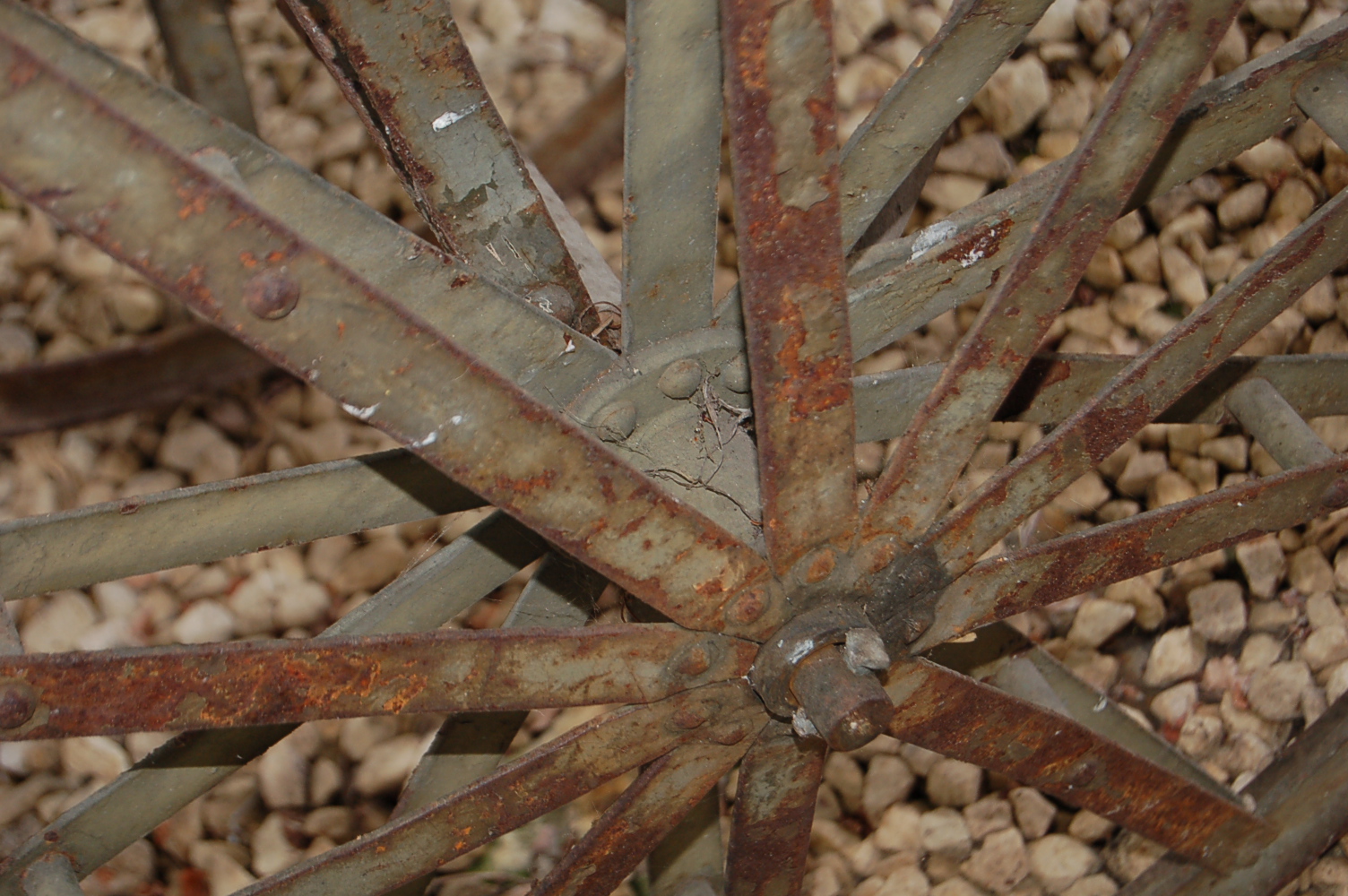
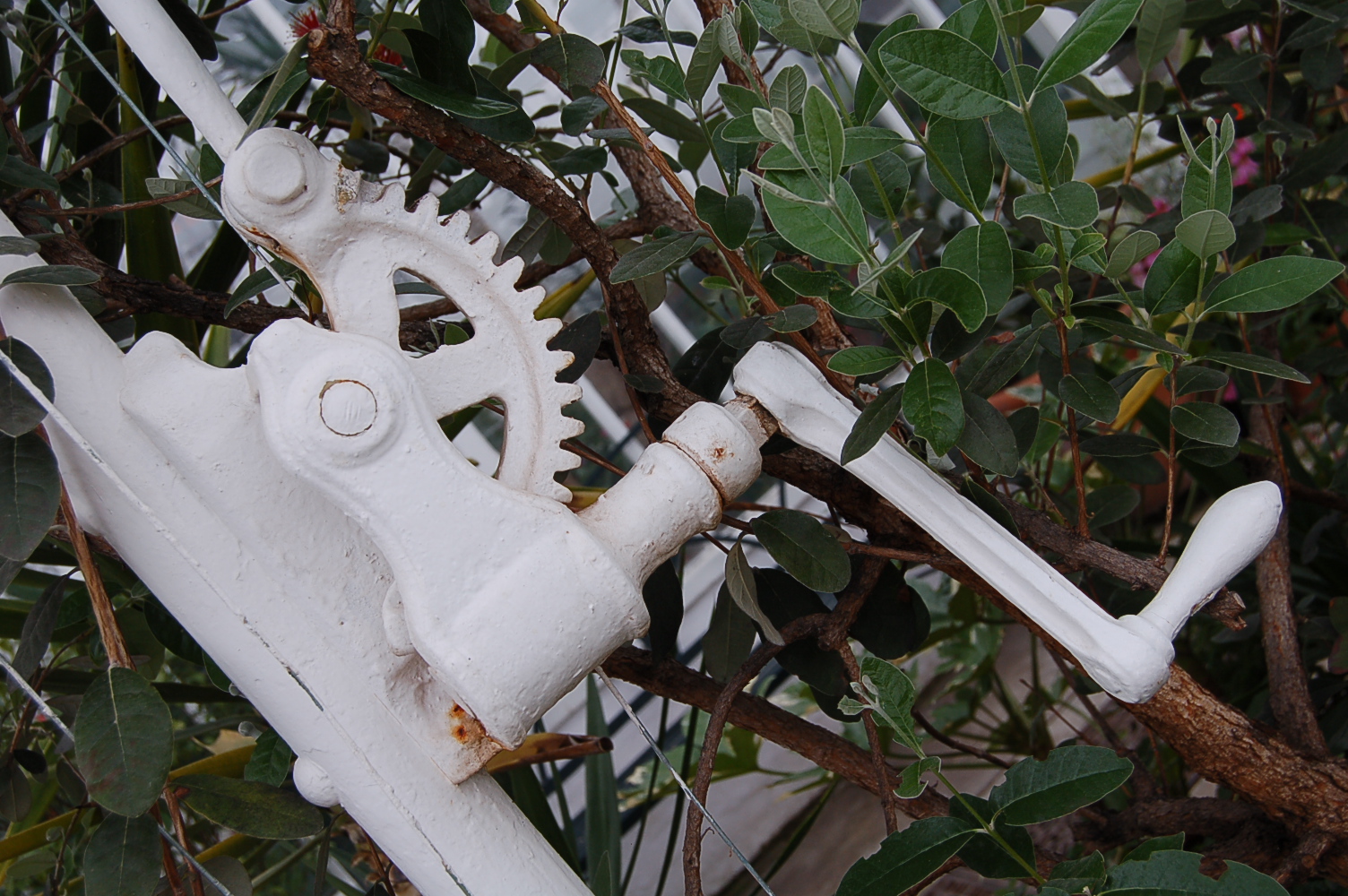
Clumber Park, a National Trust property in Nottinghamshire, is famous for its walled garden and we recently spent a few hours wandering around enjoying the productive beds, orchards and herbaceous borders, but the highlight has to be the huge renovated Victorian greenhouse. We were enthralled by the details. Enjoy sharing them with us.
Tag: gardening
Throughout May and into early June we have been involved in creating two new features of our Green Spaces on our allotment site, Bowbrook Allotment Society (www.bowbrookallotments.co.uk). Around the site we have four special gardens called “The Gardens of the Four Seasons” and we added a further bed to the Autumn Garden. The beds were developed with the aid of a grant from the Peoples Postcode Trust who support us so generously.
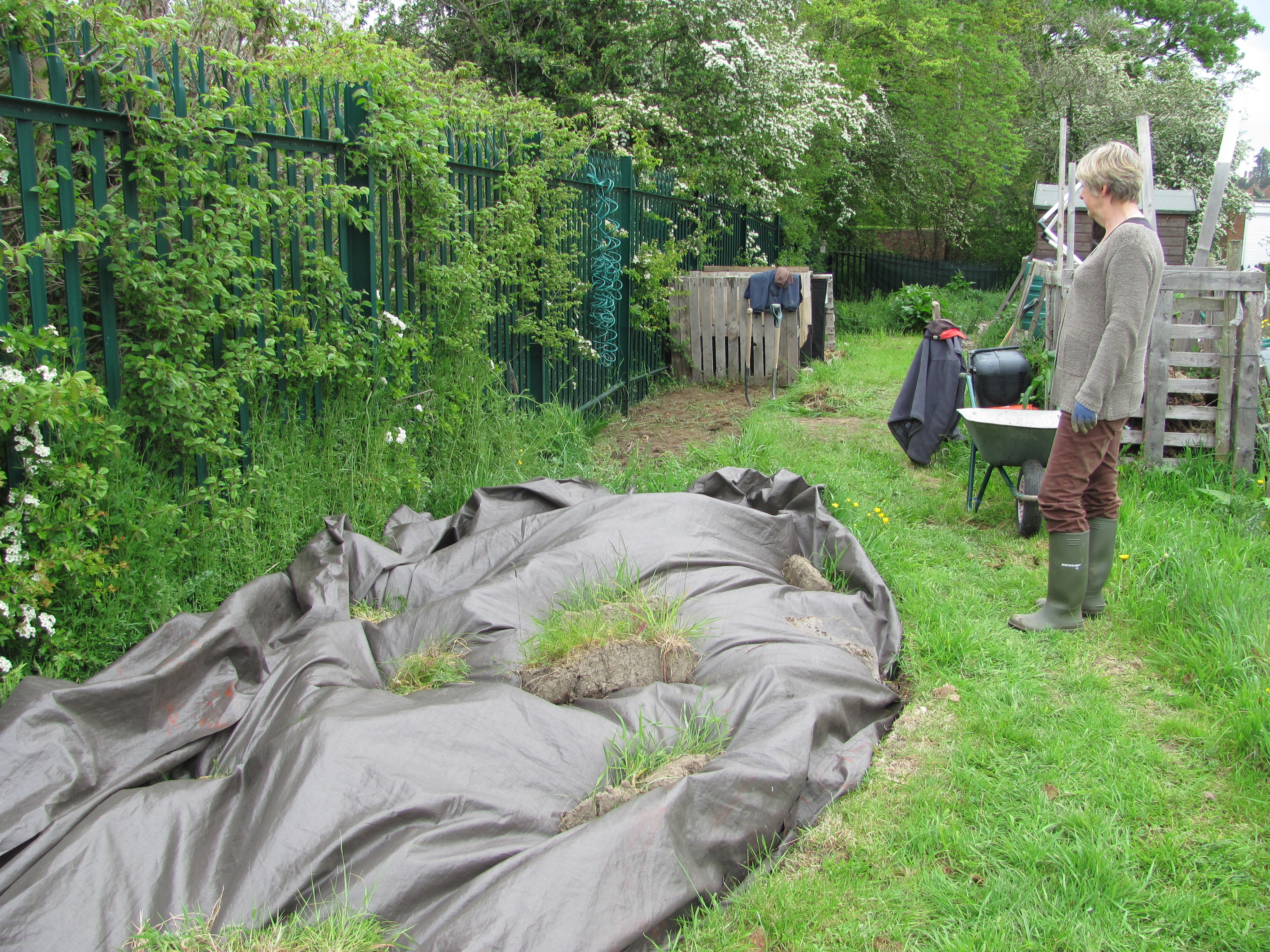
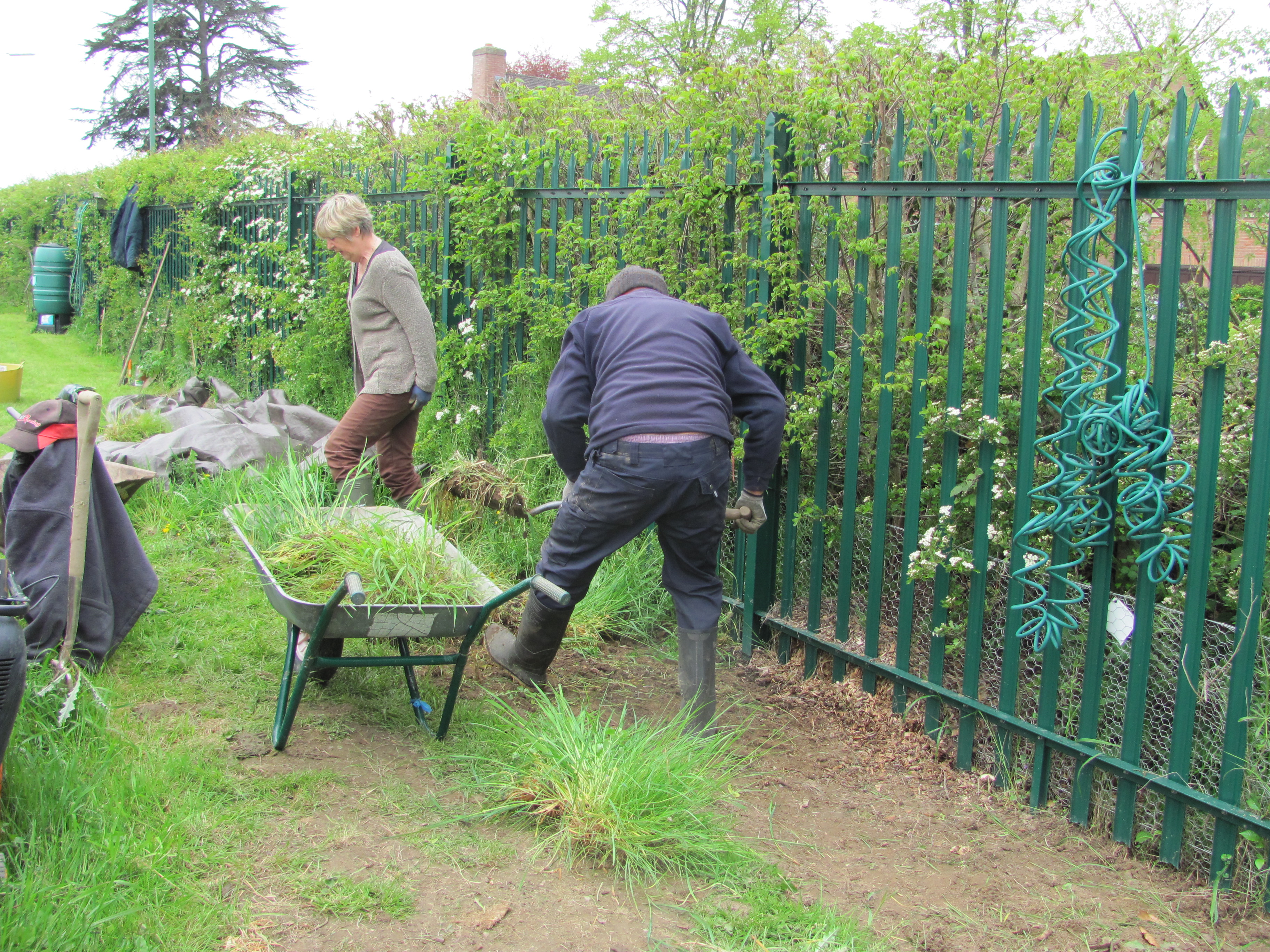
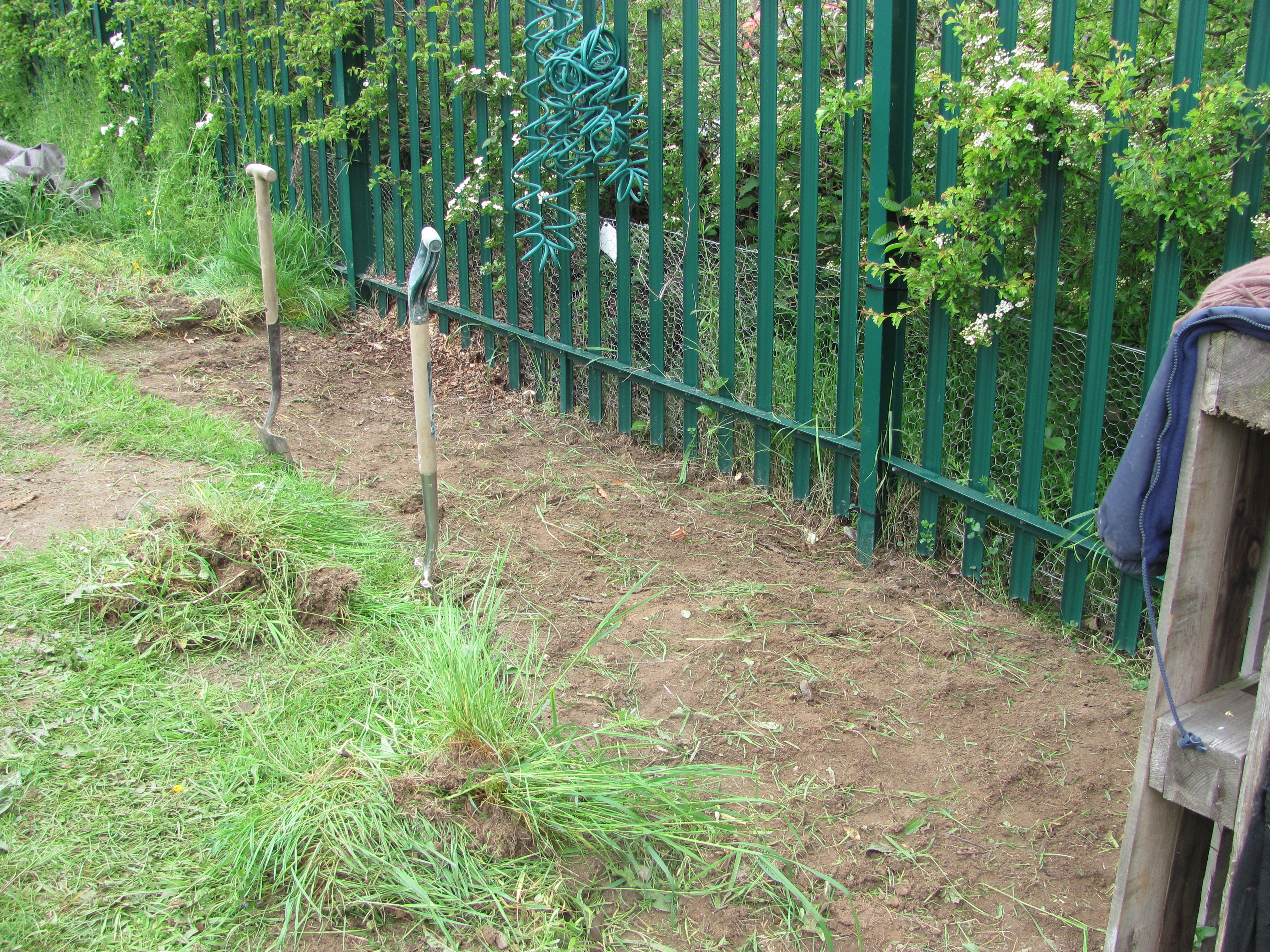
We made the new bed on an area of rough grassland between plots and the boundary hedge. The patch was full of tough weeds and stones. The first task was to clear the vegetation off, some of this going into compost heaps and some to help level a rough area. This fits in with our aim of removing as little natural material as possible from site, and our aim to reduce, re-use and recycle.
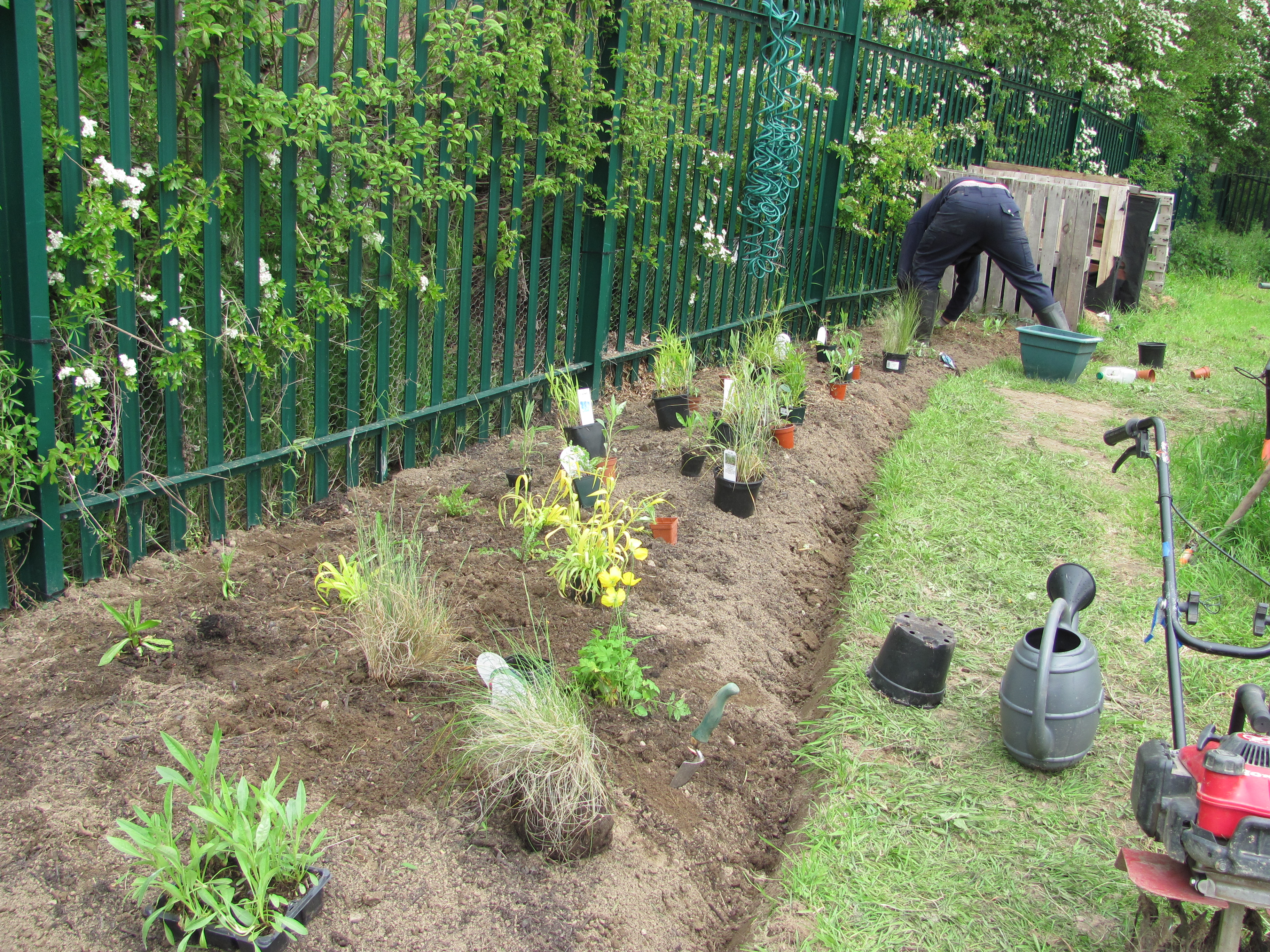
Once roughly dug over the bed was rotovated and raked level in readiness for planting up with ornamental grasses and flowering perennials which peak in the autumn season. Many of the plants were donated by allotment community members or were bought with a community grant. We can now look forward to years of colour.
When we first starting clearing the patch of land we part covered it in tarpaulin to stop the weeds growing any more.
The first task and the most difficult was removing the thick layer of tough grass and weeds. Once cleared we dug over the area roughly before rotovating in readiness for planting.


Plants were then arranged to test out the best arrangements. We moved them about many times before we were satisfied enough to get on with the planting.
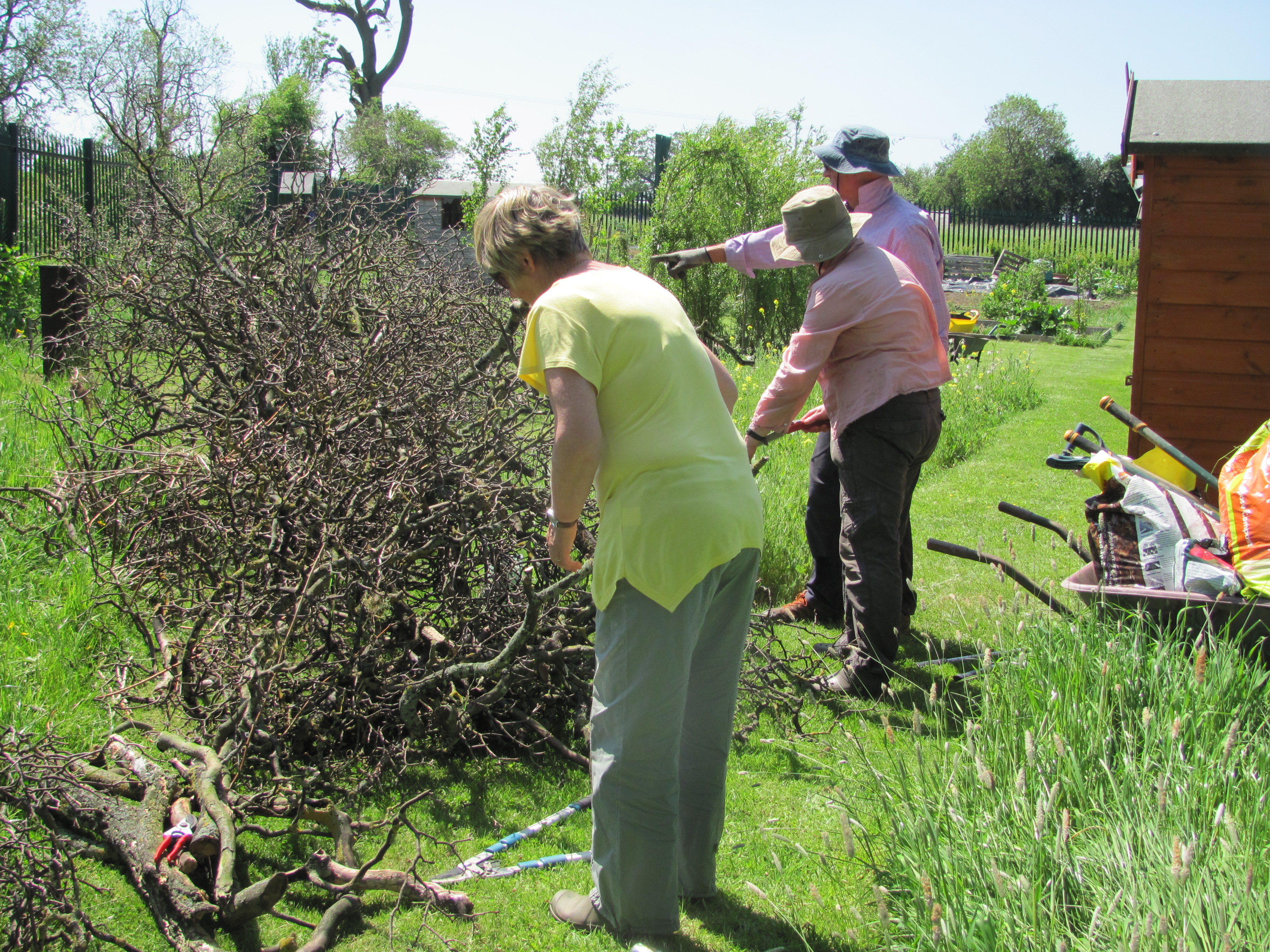
The second new feature was created during our May Working Party on a hot humid day so we were so glad that this work was planned for an area within the mottled shade provided by our big Oak tree. A few months ago we had tree surgery work administered to our mature trees and we were left with huge piles of branches and logs of all shapes and sizes from Oak, Ash and Sycamore. Once again to reflect our reduce, re-use, recycle ethos and being determined not to remove natural materials from site we designed a feature to use all this tree material and create a new wildlife feature. We wished to make a “dead hedge” to attract beetles, insects, birds and fungi. At our last Green Spaces Committee we decided it needed a name and came up with “dedge” – a shortening of dead hedge. We knew others existed in other wildlife gardens in the UK but could not find a name for them., so we think we have not just created a new feature but also a new word.
We began with a pile of brush wood and logs,
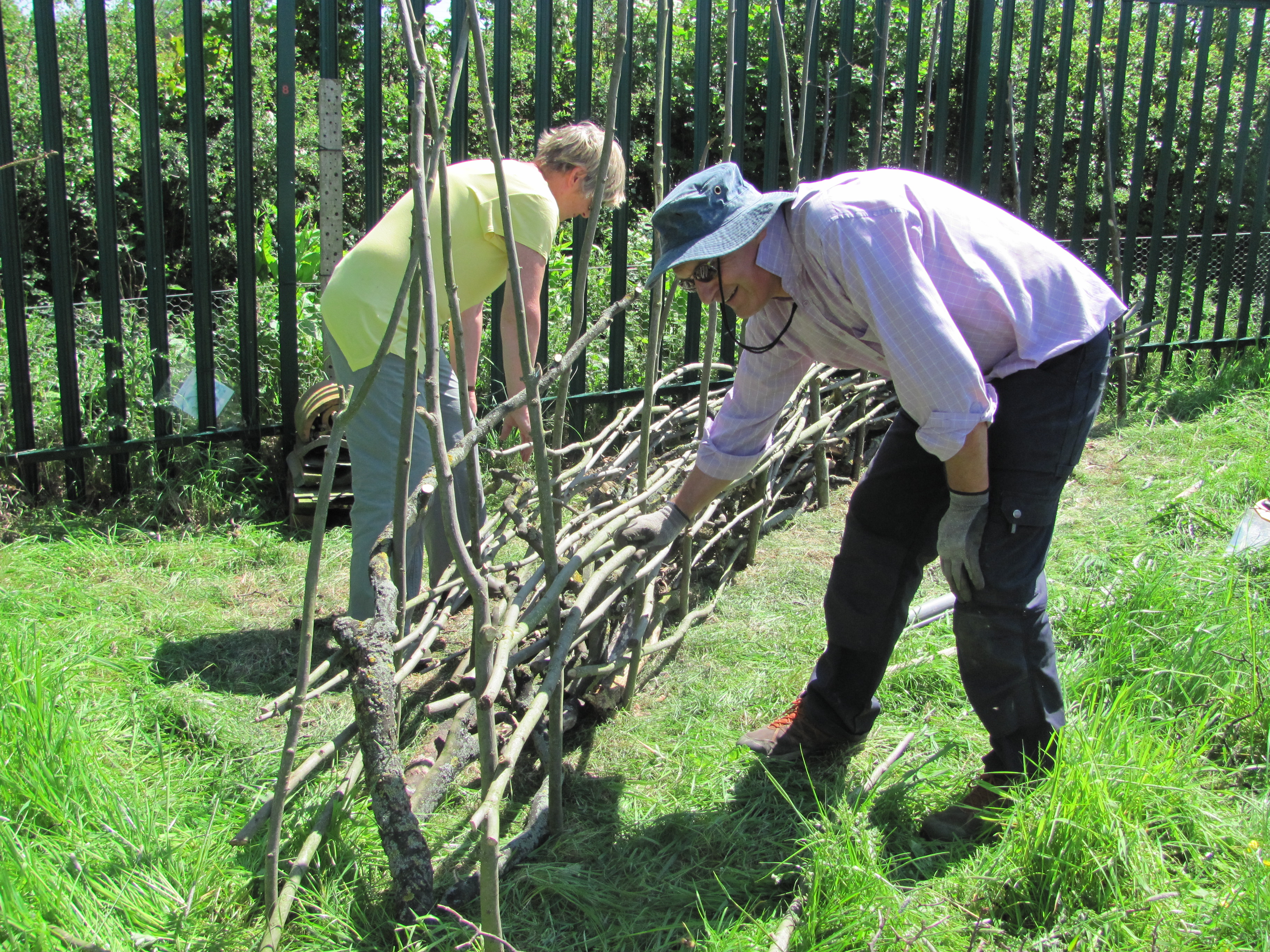
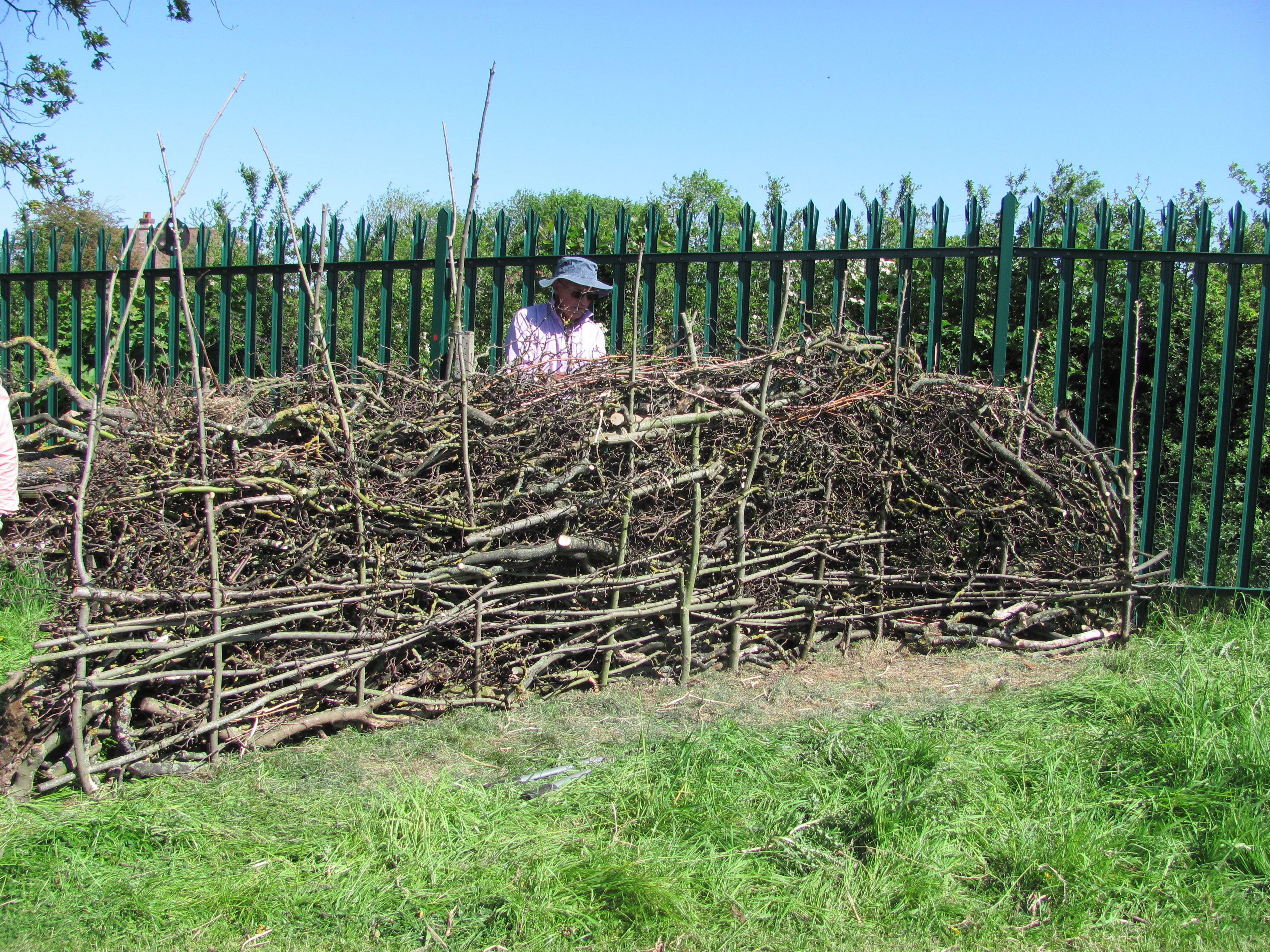
and began to build our “dedge” by hammering in uprights of freshly cut hazel rods,
and filling in between with logs, branches and twigs.
Meanwhile the pile of brash was being pruned into smaller pieces,
Almost there,
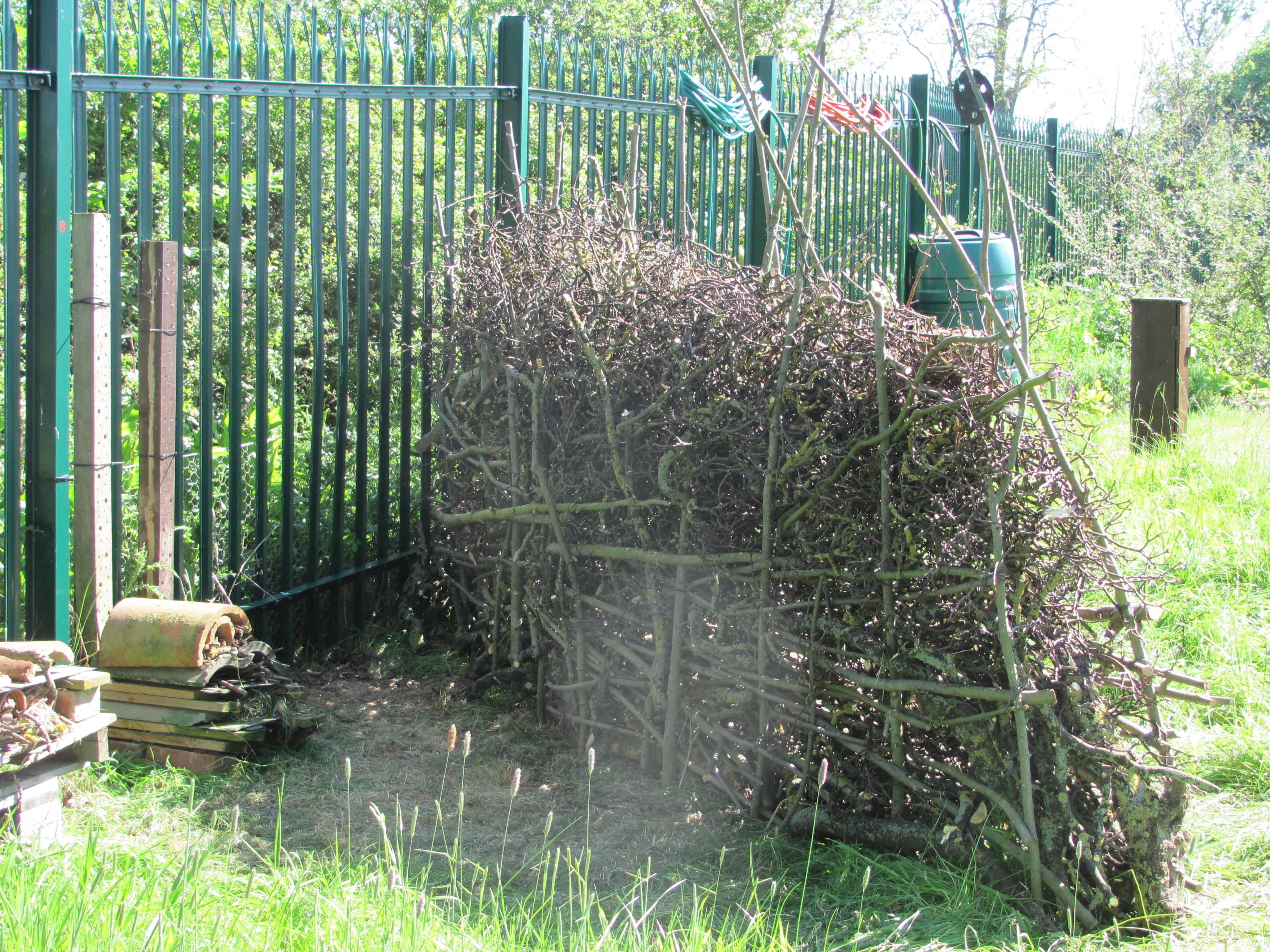
Eventually there were no logs or branches left in the pile and the “Dedge” had reached a good height and felt strong.
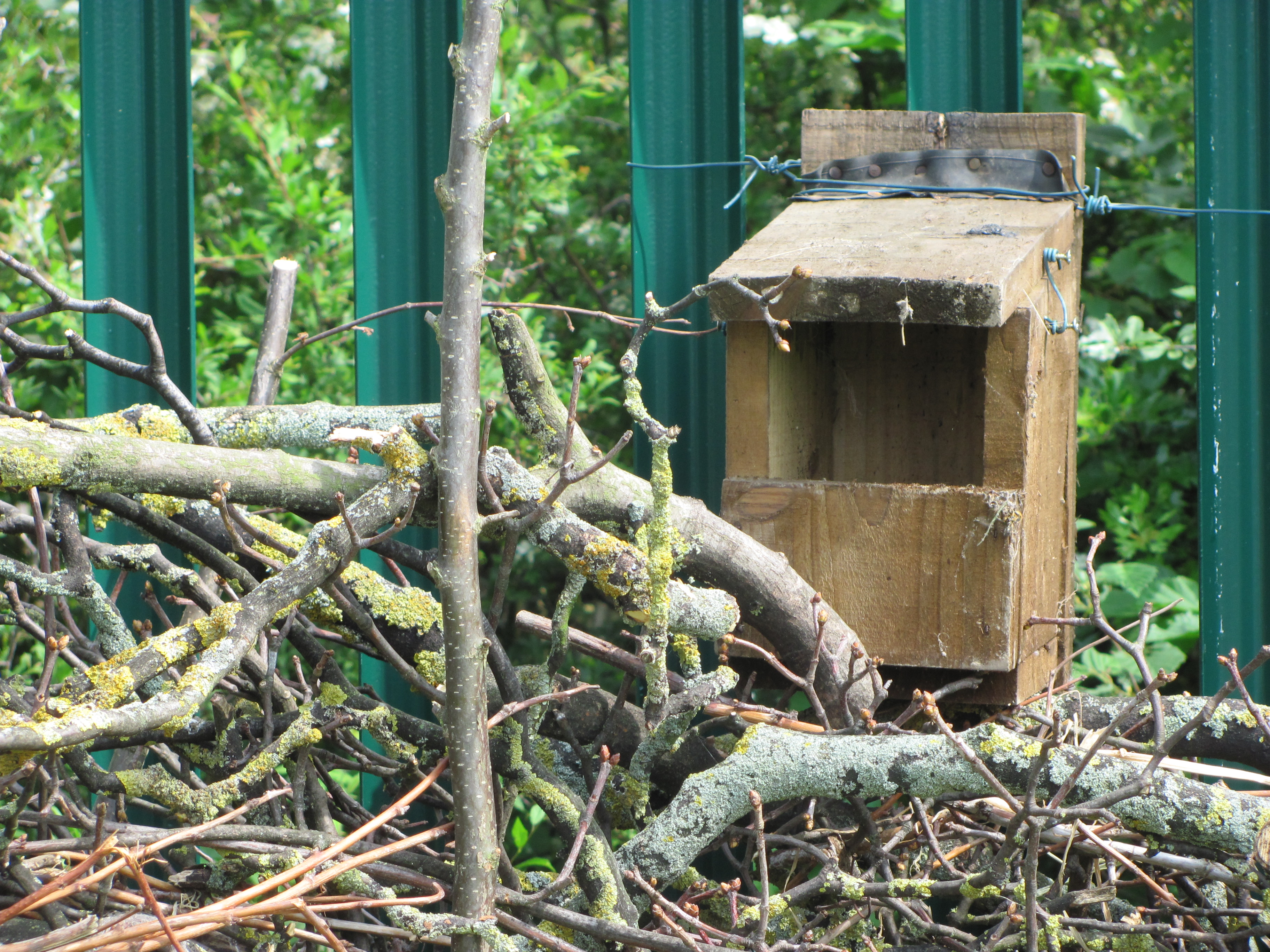
The final touch was the addition of a Robin nest box.
Greenbenchramblings is one year old today! Yes, I have been rambling away from my old green bench on my allotment for a year to the day. Each time I celebrate a birthday with a nought in it I give myself a challenge. When I was 30 I decided to get up before first light, taking a not so willing family with me, travel to a nearby area of deciduous woodland and await the dawn chorus. It was pure magic! The song of each bird as it awoke joined in the chorus until the wood reverberated with song celebrating the new day. The atmosphere was electric – an unforgettable experience.
When I reached 40 I decided to buy some new walking boots as a stimulus to get out into the beautiful Shropshire countryside more.
At 50 I began studying a garden design course.
A year ago I reached 60 and decided to start my Greenbenchramblings blog, to record my musings and photos related to our garden, our allotment, gardening and wildlife. So Happy Birthday Blog! I have been delighted with the response to it, enjoyed the comments and feel I have met new friends from almost every continent. I share all my gardening visiting, my lottie gardening, the development and maintenance of the garden at home and the walks in the countryside with Jude, also known as The Undergardener or Mrs Greenbenchrambler.
The surprise of the blogging year was when Willow Cottage Gardeners nominated my blog for a Versatile Blogger Award, hence the rather handsome green logo on the top right of my blogs. As a part of this award I have to write a list of 7 things about myself that readers of my blog might not know and suggest 15 blogs for nomination for the award.
So here goes with the 7 things you might not know about me;
1.Forty years ago I had an altercation with a lorry and the lorry came out best. I was put back together and I am now registered “Bionic”.
2,My favourite gardeners are Beth Chatto, Dan Hinckley, Carol Klein and Monty Don.
3.I have had allotments for over 20 years.
4.I have been a fisherman since I was 4 years old. When I retired my ambition was to catch a 30 pound carp. The biggest so far is 29 pound 15 ounces.
5.I talk to my chickens and they talk back.
6.My favourite garden designers are Dan Pearson, Piet Oudolf, Tom Stuart-Smith and Cleve West.
7.If I could choose anywhere in the world to live it would be in the South Shropshire Hills. I live in the South Shropshire Hills!
My 15 nominated blogs;
1. www.lensandpensbysally.wordpress.com
2. www.aerialediblegardening.wordpress.com
3. www.latebloomerbuds.wordpress.com
4. www.fennelandfern.co.uk/blog
5. www.soulsbyfarm.wordpress.com
6. www.gardeninginthelines.wordpress.com
7. www.mytinyplot.wordpress.com
8. www.gettingfreshblog.wordpress.com
9. www.gardeningcanuck.wordpress.com
10. www.100squaremetres.wordpress.com
11. www.pbmgarden.wordpress.com
12. www.arignagardener.wordpress.com
13. www.grandparentsplus2.wordpress.com
14. www.wanderingwoody.wordpress.com
15. www.indiansummerfarm.wordpress.com
As followers of greenbenchramblings know I carry a camera around with me wherever we go and my favourite subjects are plants, especially plant portraits, allotment gardening, and the creatures who live in our gardens, on our allotment and on the plants. It seems apt to finish this One Year On posting with a few pics of these favourite subjects.
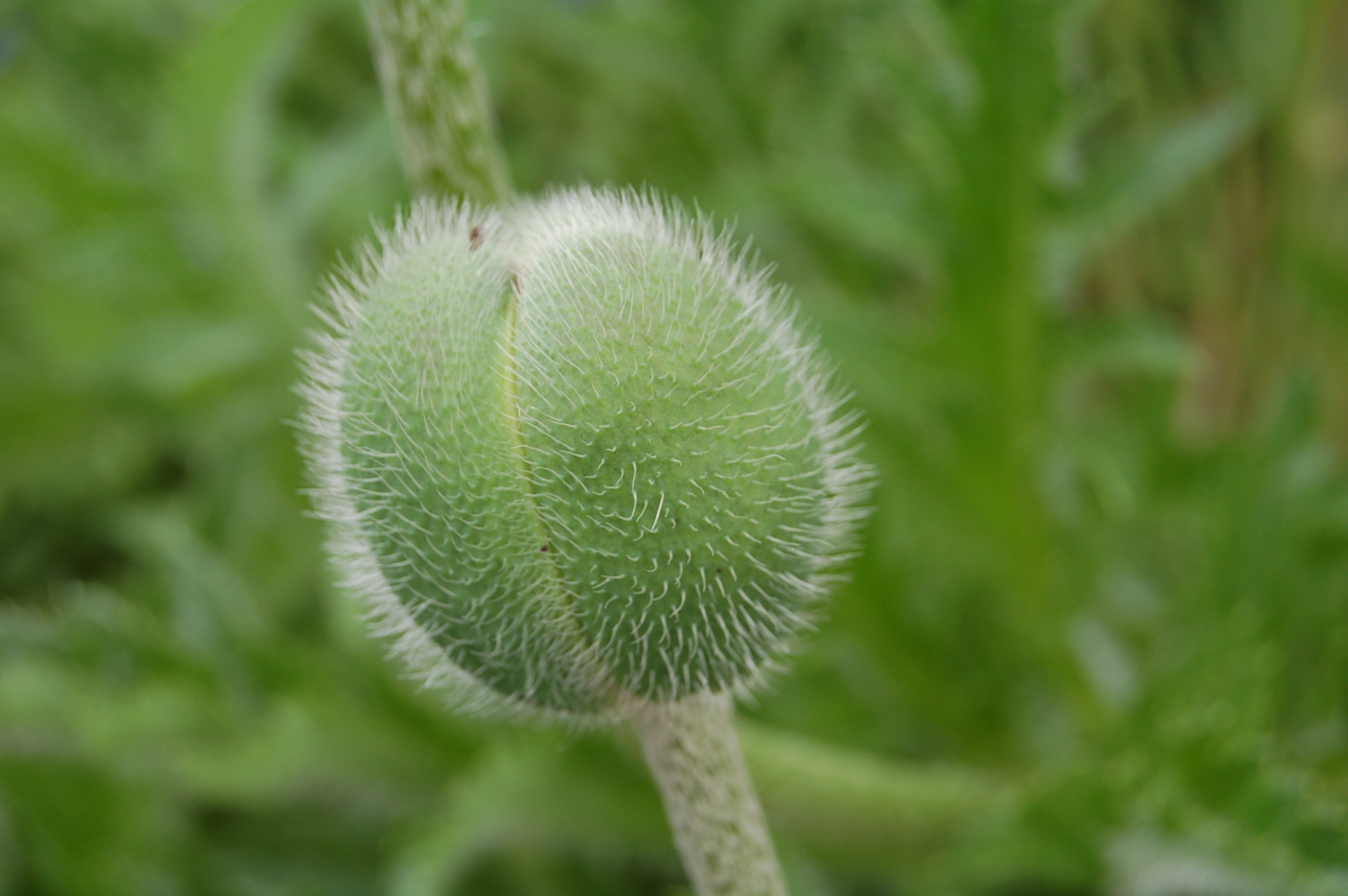
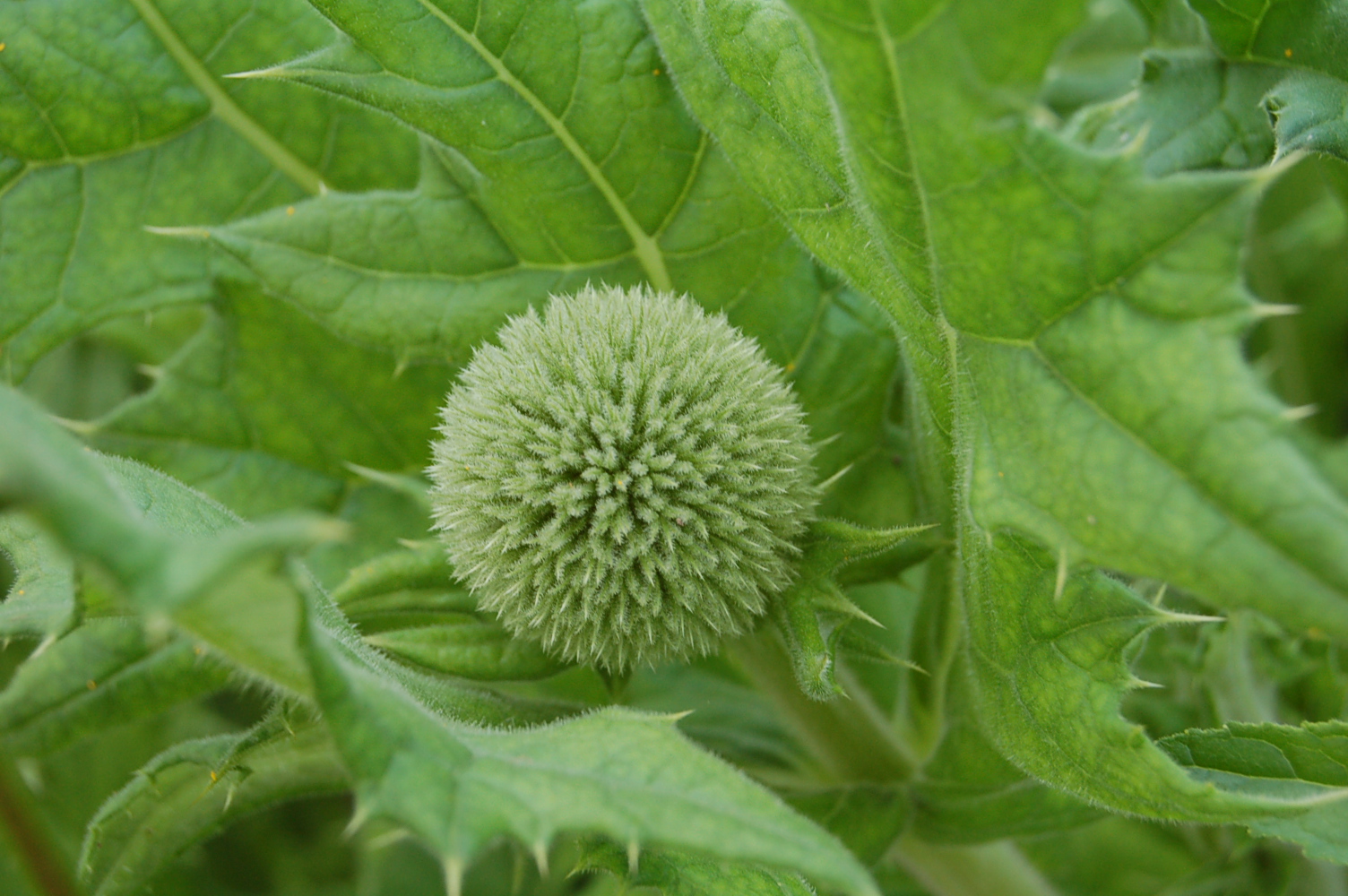
We can start the second part of our wander by looking again at the front garden. Buds give us hints of blooms to come in midsummer, Phlomis, Oriental Poppies, Erygiums and Echinops. Promises of yellows, reds and steely blues.
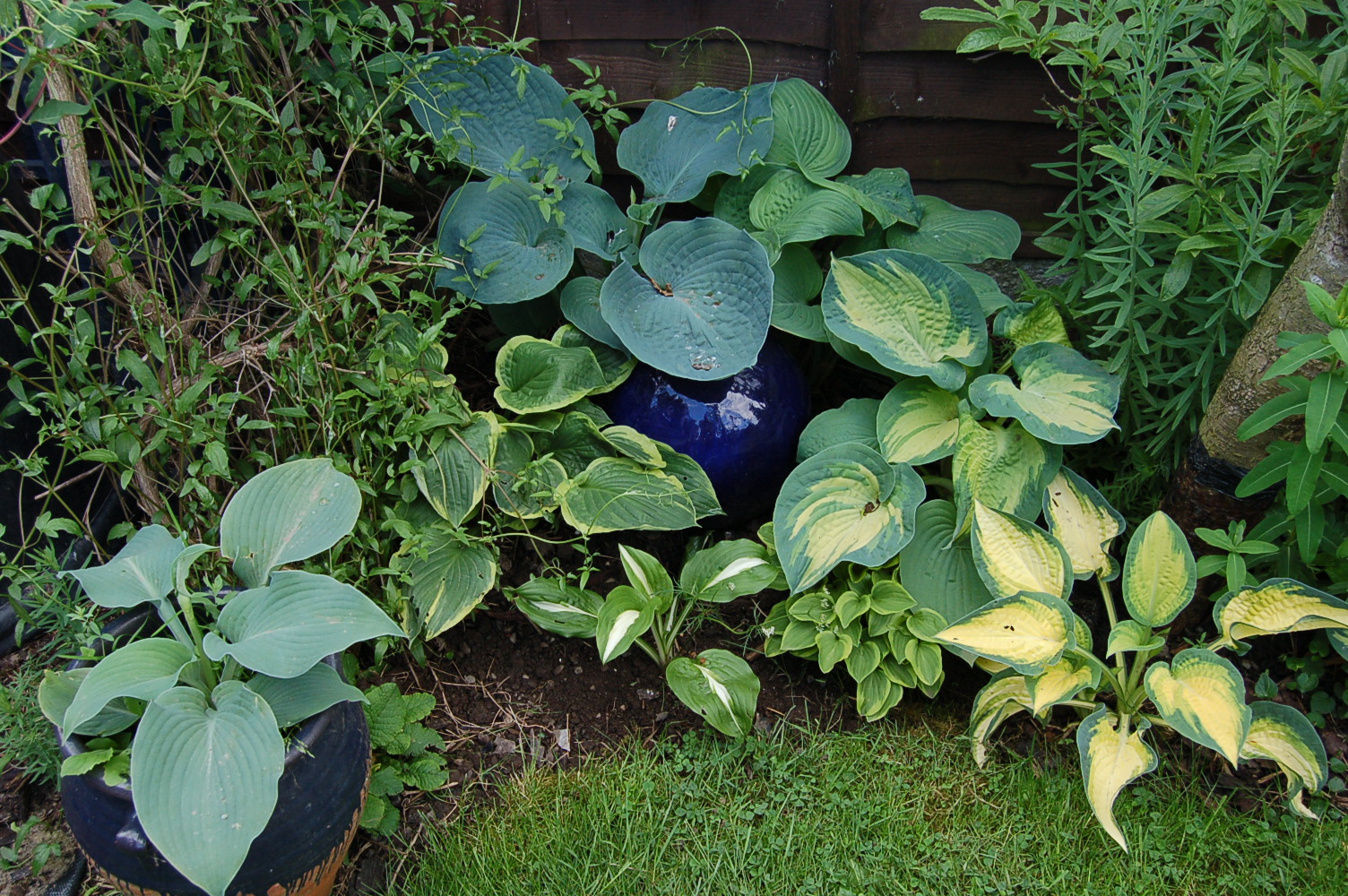
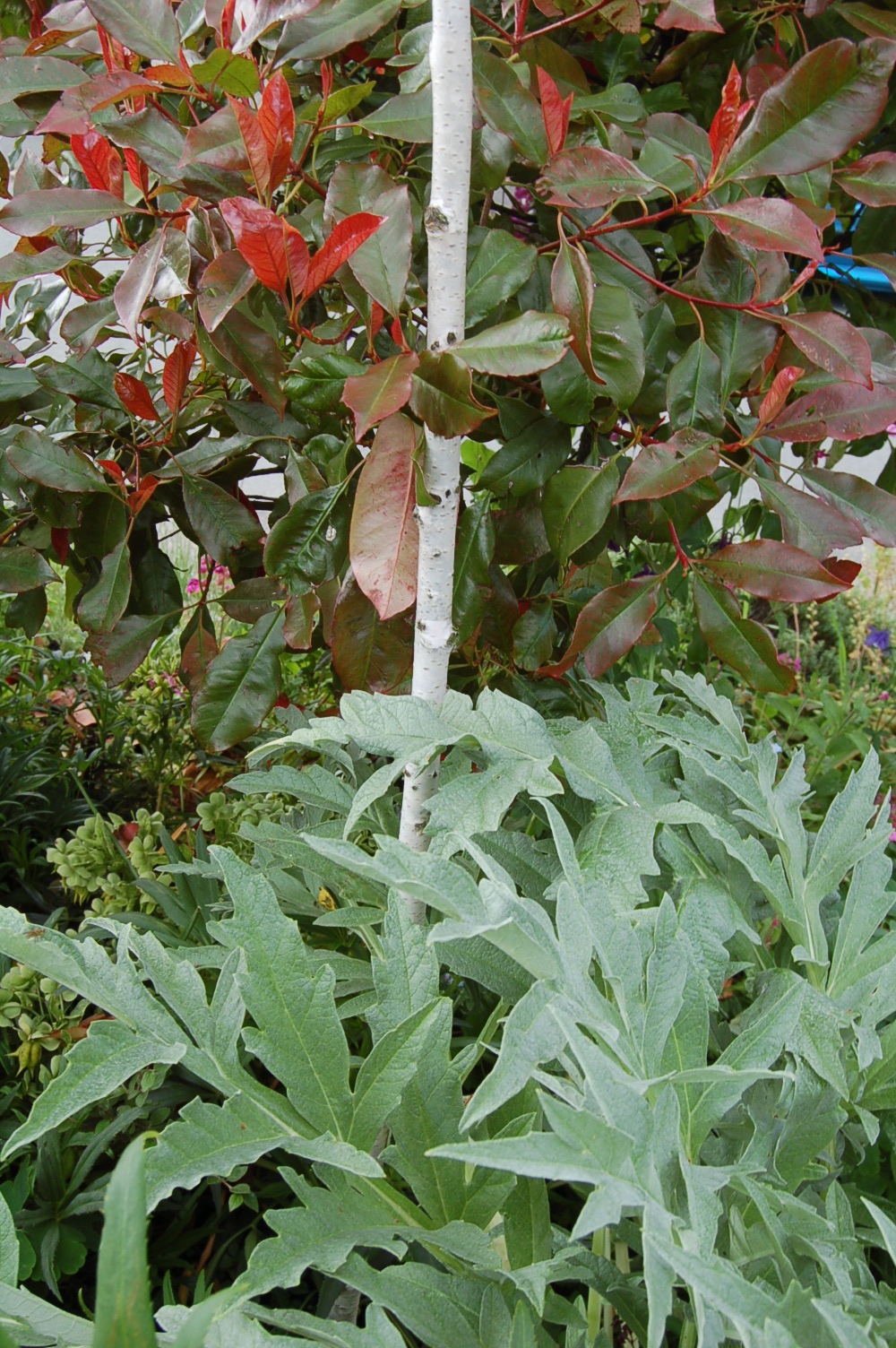
Foliage colour and texture can be as striking as the most colourful of flowers.
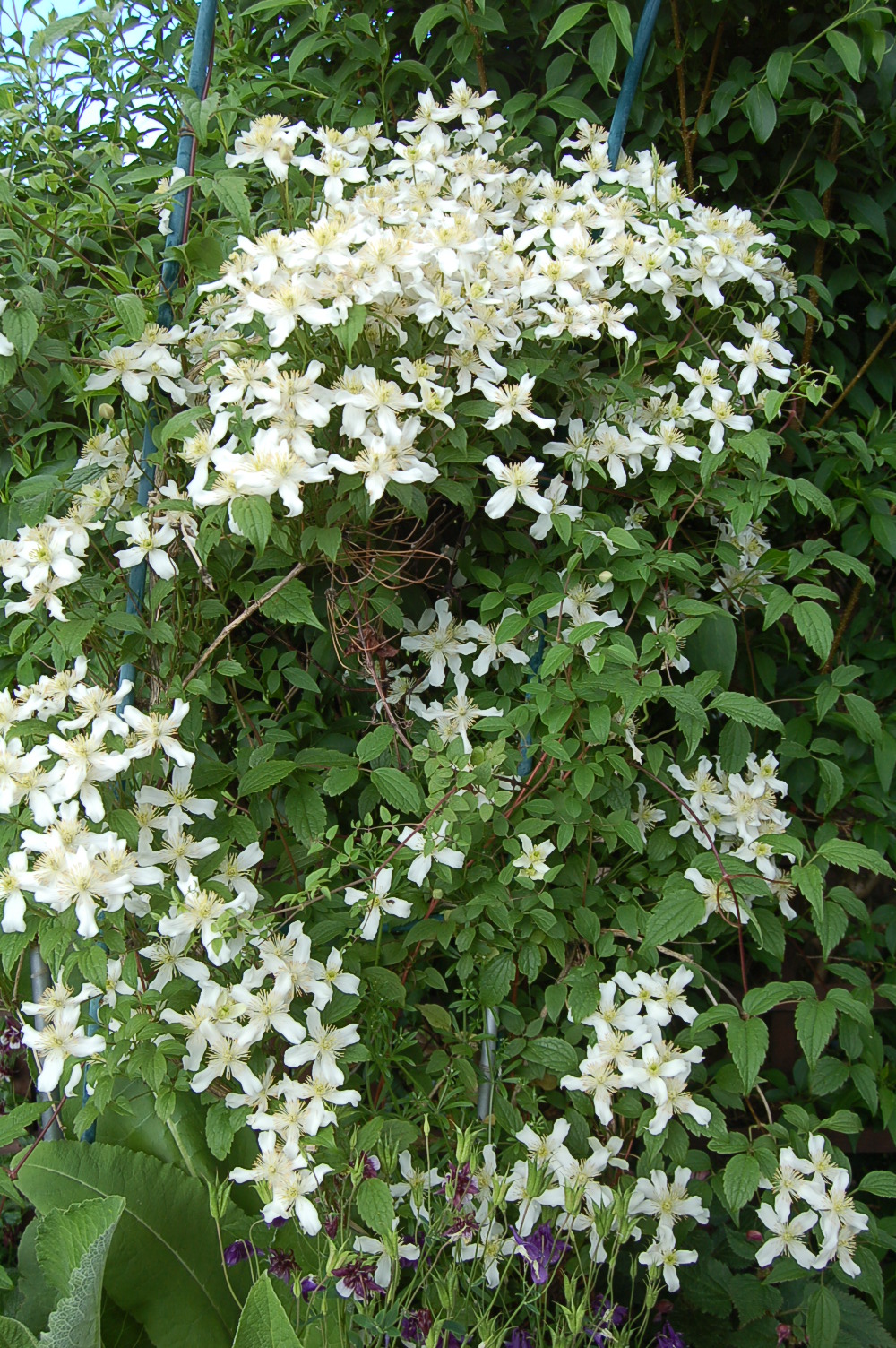
Our collection of Clematis are beginning to flower and others are covered in robust buds.
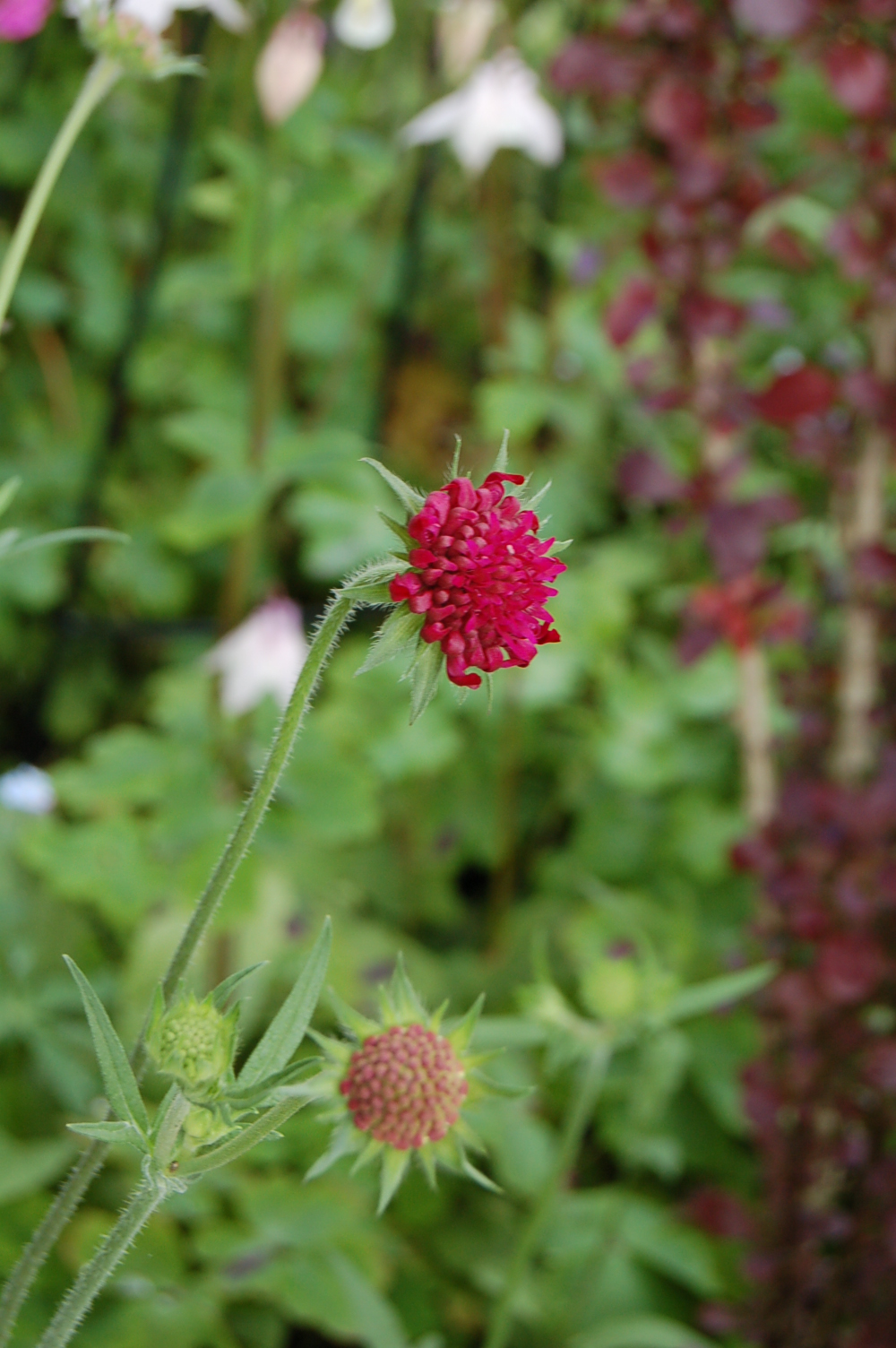
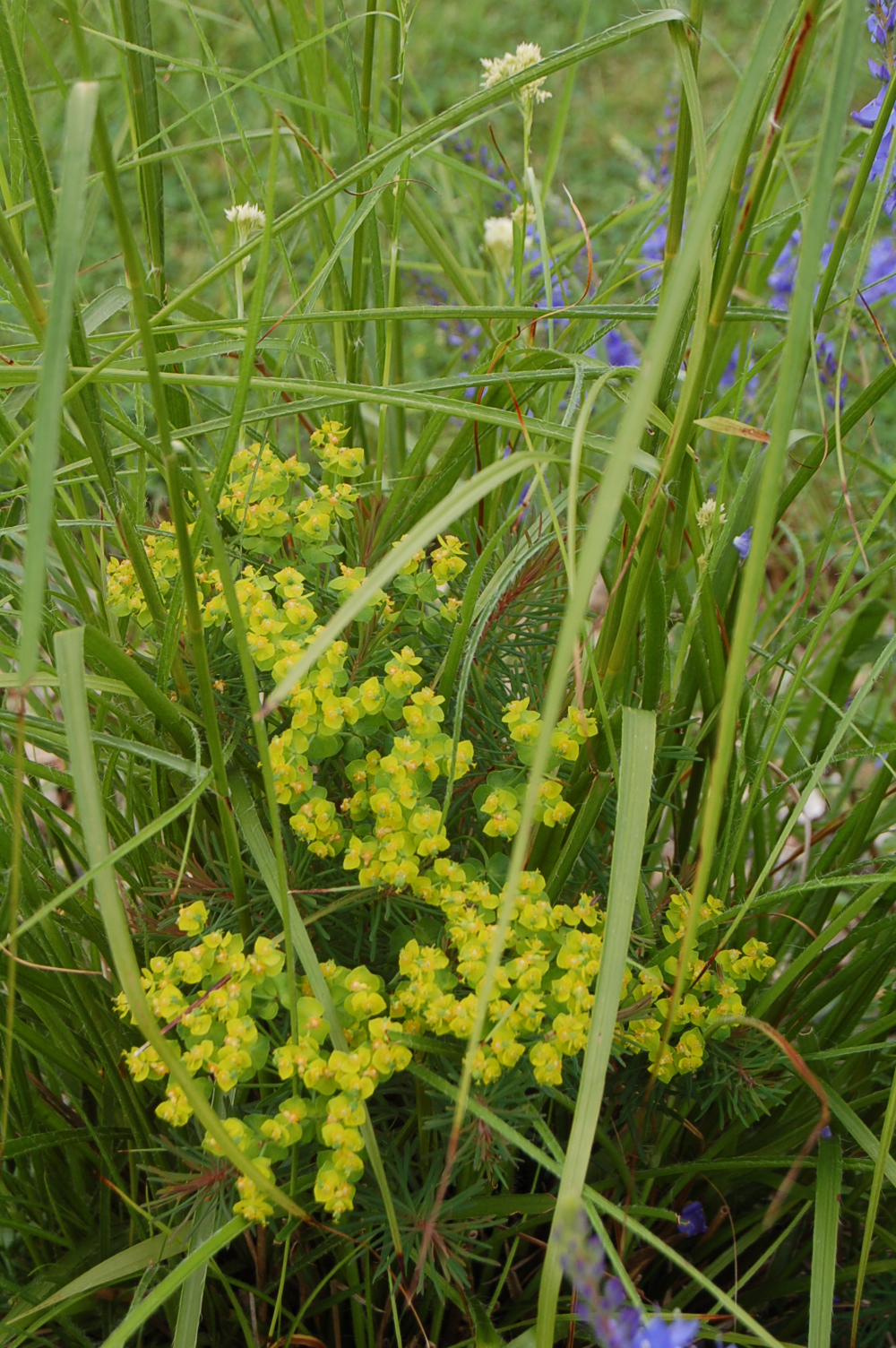
Flower colours have been so important during the first few weeks of this month simply as an antidote to dull days and dark skies. It matters not whether it is a gaudy cerise beauty or a subtle green or white.
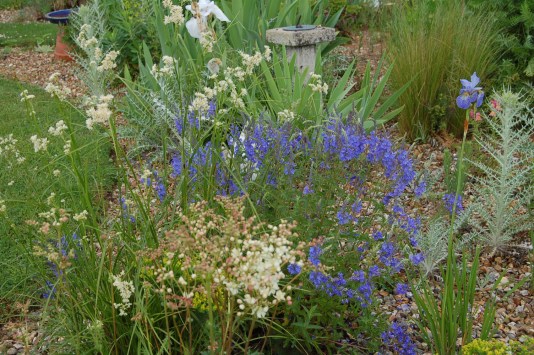
Blue on blue.
Another view of our Freda Border.
Our mini-meadows in their pots are developing well. We think we may be onto a winner.
The Shed Bed created on the site of an old shed which we demolished when we moved in, is really pleasing as below the shed we found just rubble, gravel, broken pots and sand. We added wheelbarrows of compost to improve it and now every little flower is a true gem.
A vine grows over one end of the greenhouse acting as a natural shading agent as well as feeding the gardeners. The startlingly red flowering currant has hitched a lift along it so the vine drips with red droplets.
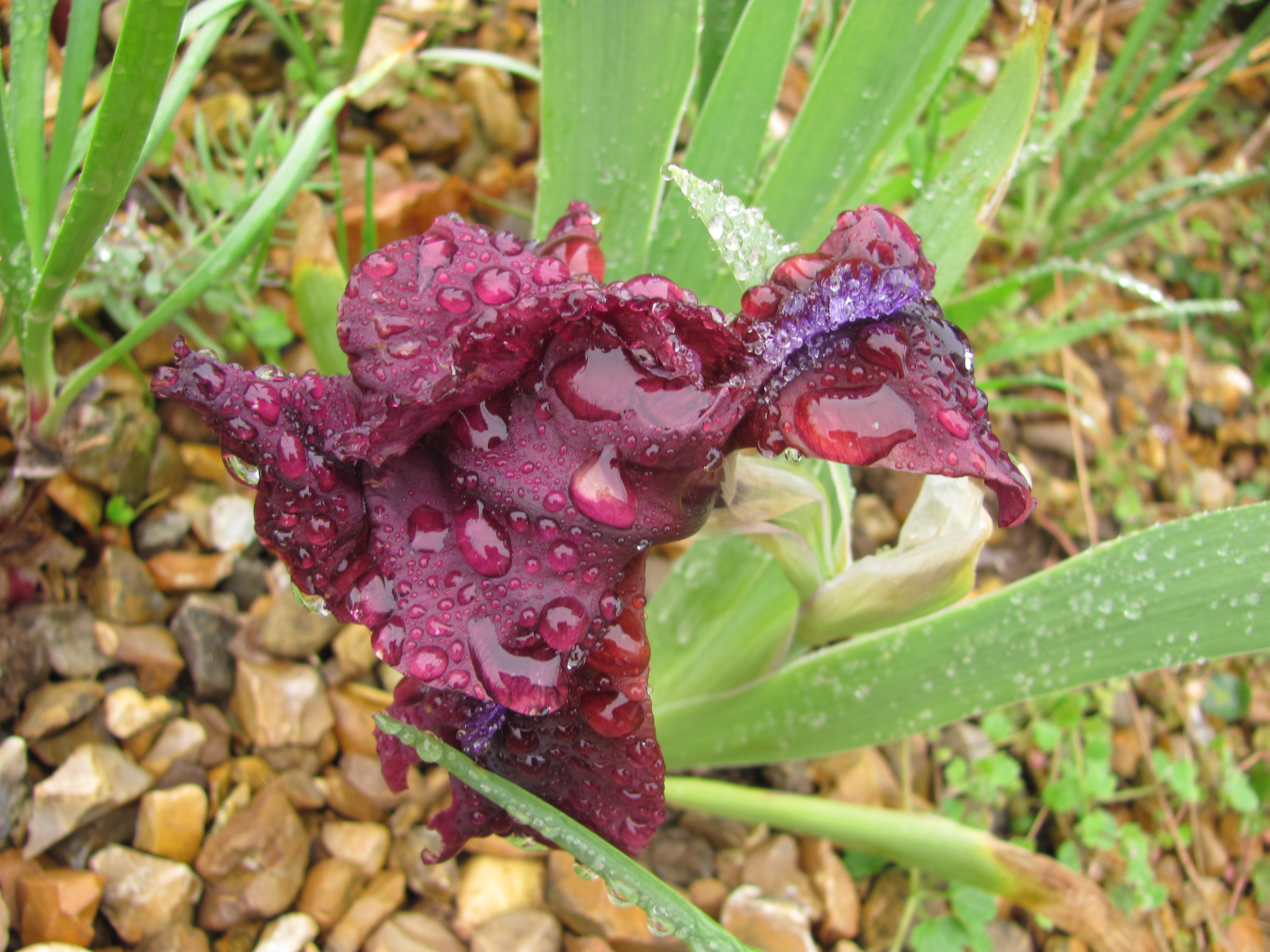
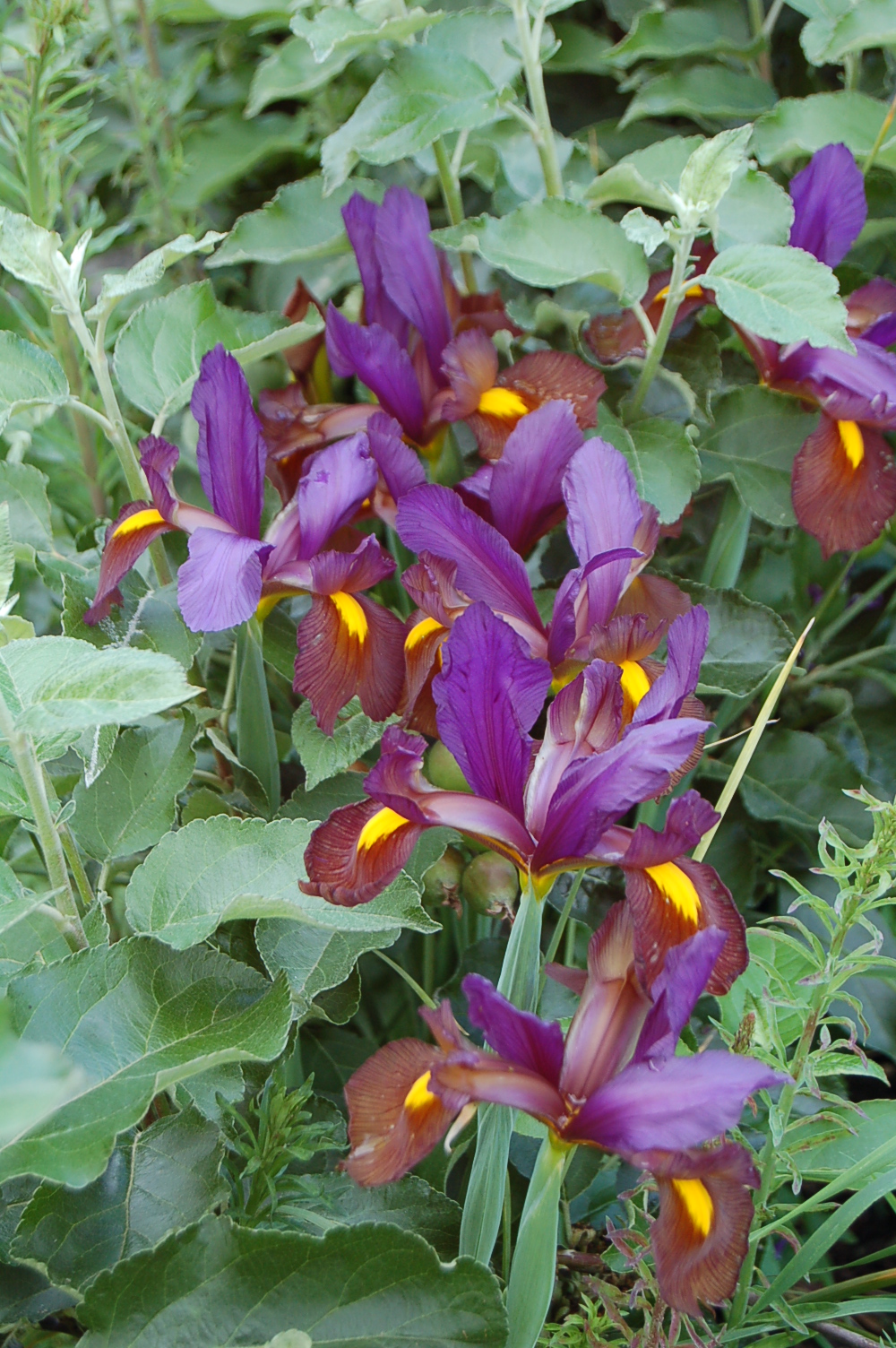
We enjoy these irises as cut flowers but bees take advantage of them before we pick them. This clump is growing through our stepover apples. Double harvesting – cut flowers followed by apples.
The planting around the pool has closed in and made it an intimate area. Nearby the Prairie Garden is bursting with fresh blooms.
In the Secret Garden Aquilegias and Alliums look good alongside the purple foliage of Pentstemon Huskers Red.
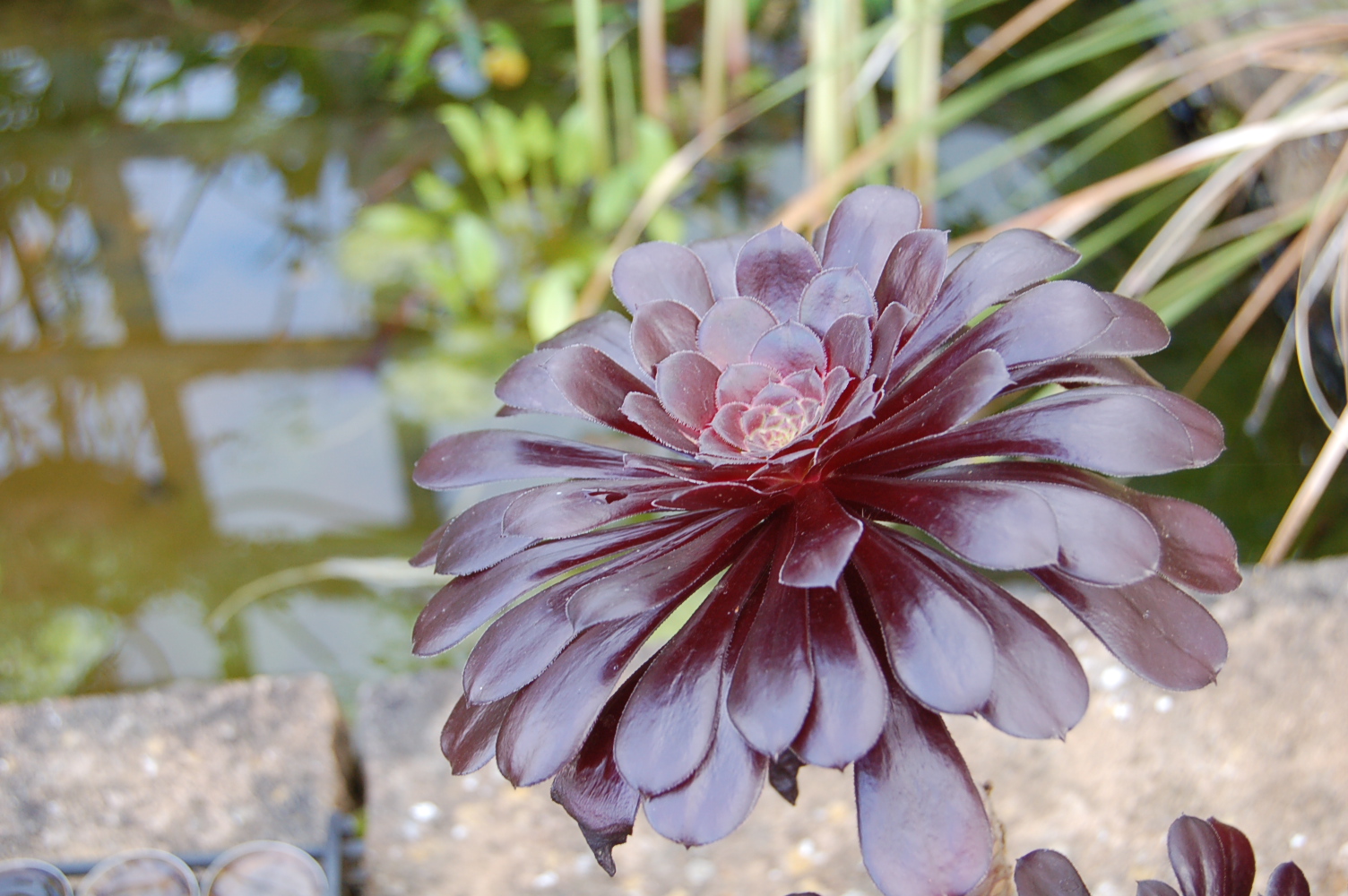
These aeonium enjoy the hottest part of the garden, the Rill Garden.
To one side of the rill we grow a snake bark maple, with silver and green striped bark, cream and red seed capsules and in autumn it has amazing rich red foliage. A wonderful specimen tree to finish this garden wander underneath.
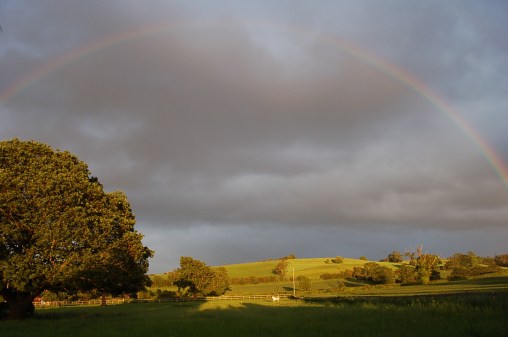
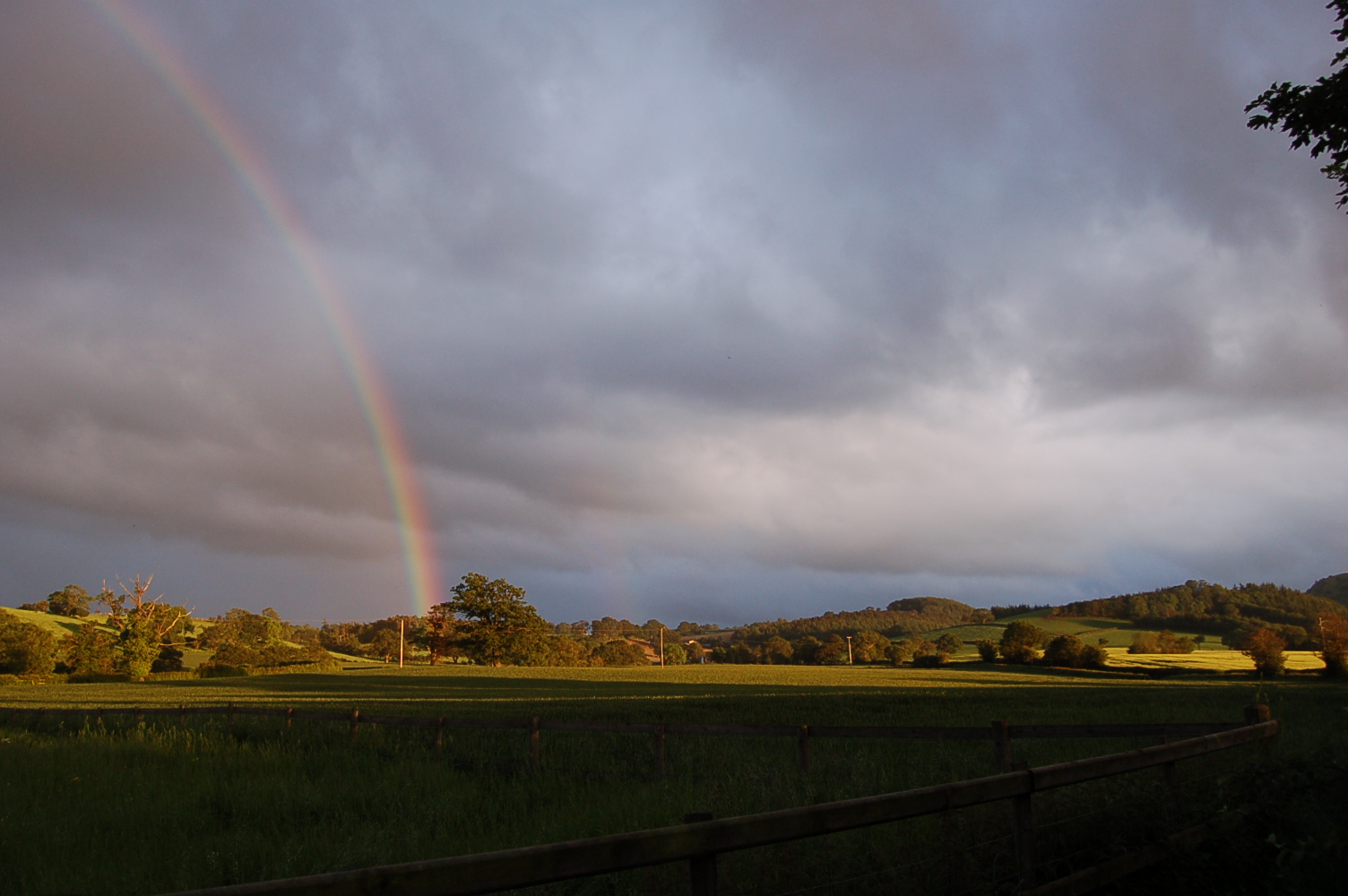
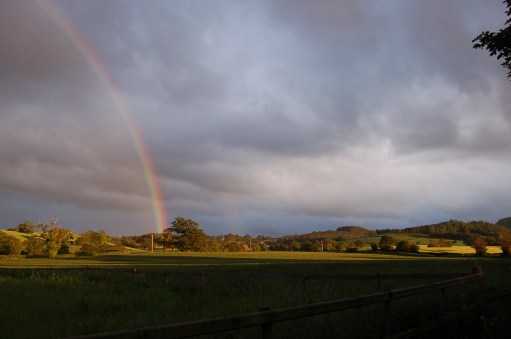
Half way through the year already where these monthly garden wanders are concerned. It should be warm and sunny as befits the Summer season but it has mostly been raining. We get occasional dry, pleasant days but they have been few and far between. Just look at this interesting early evening light colouring the landscape beyond our garden gate. One field is in the spotlight, I wonder why it was chosen?
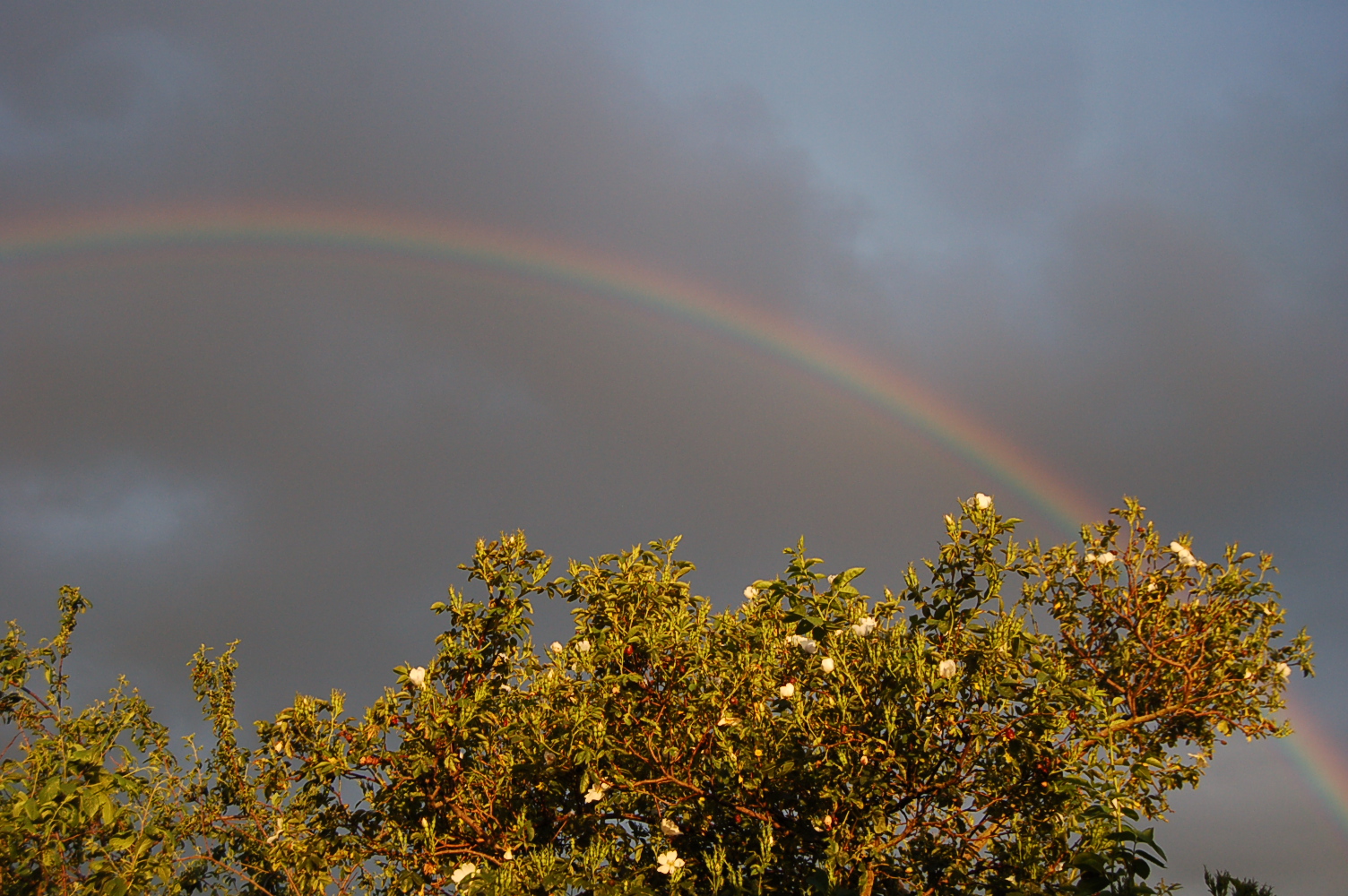
In the garden I shot this photo looking up at the sky above our big, white-flowered rambling rose.
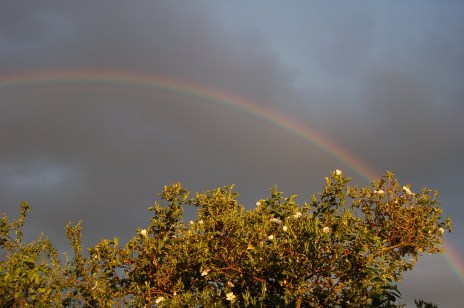
But, one afternoon as the rain went quiet for a while out I went camera in hand to follow my garden wander. The borders are burgeoning, blooms are getting bigger and brighter by the day and we enjoy every moment in our June garden.
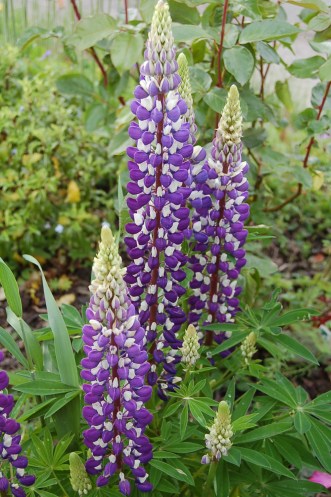
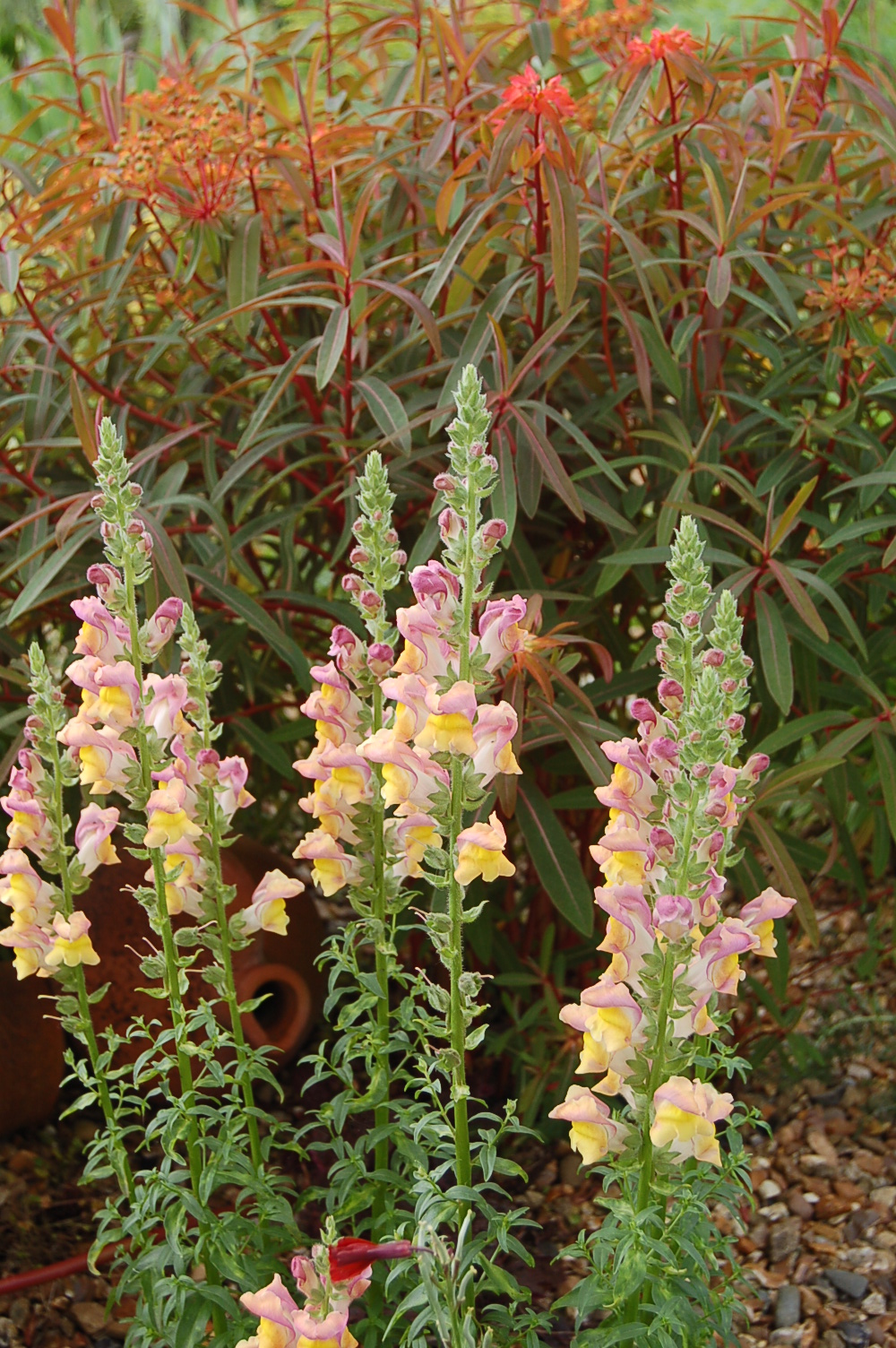
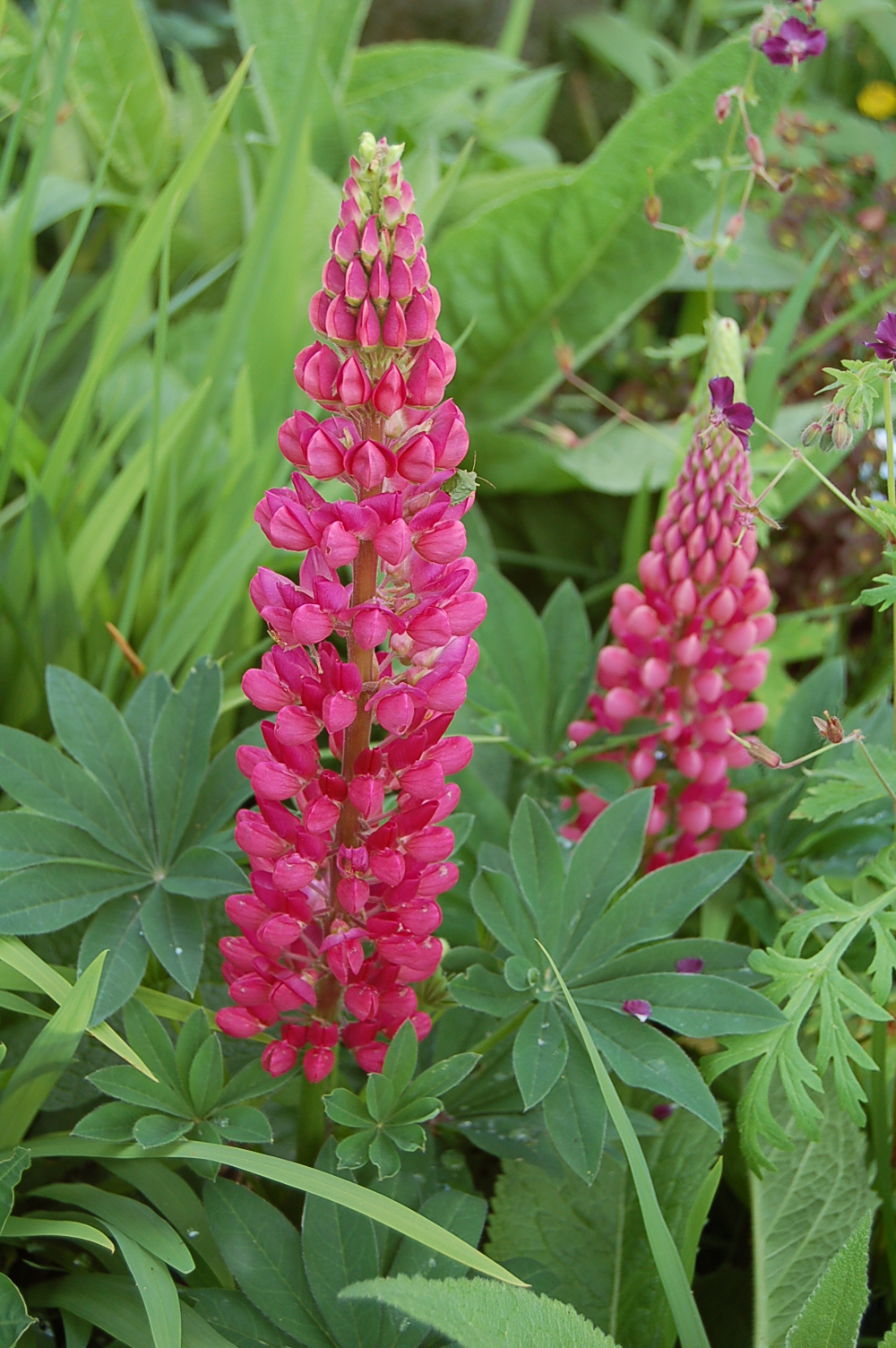
Spires reach for the sky in every border, Foxgloves, Antirhinums and Lupins.
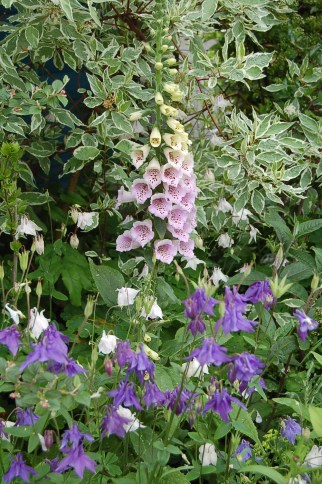
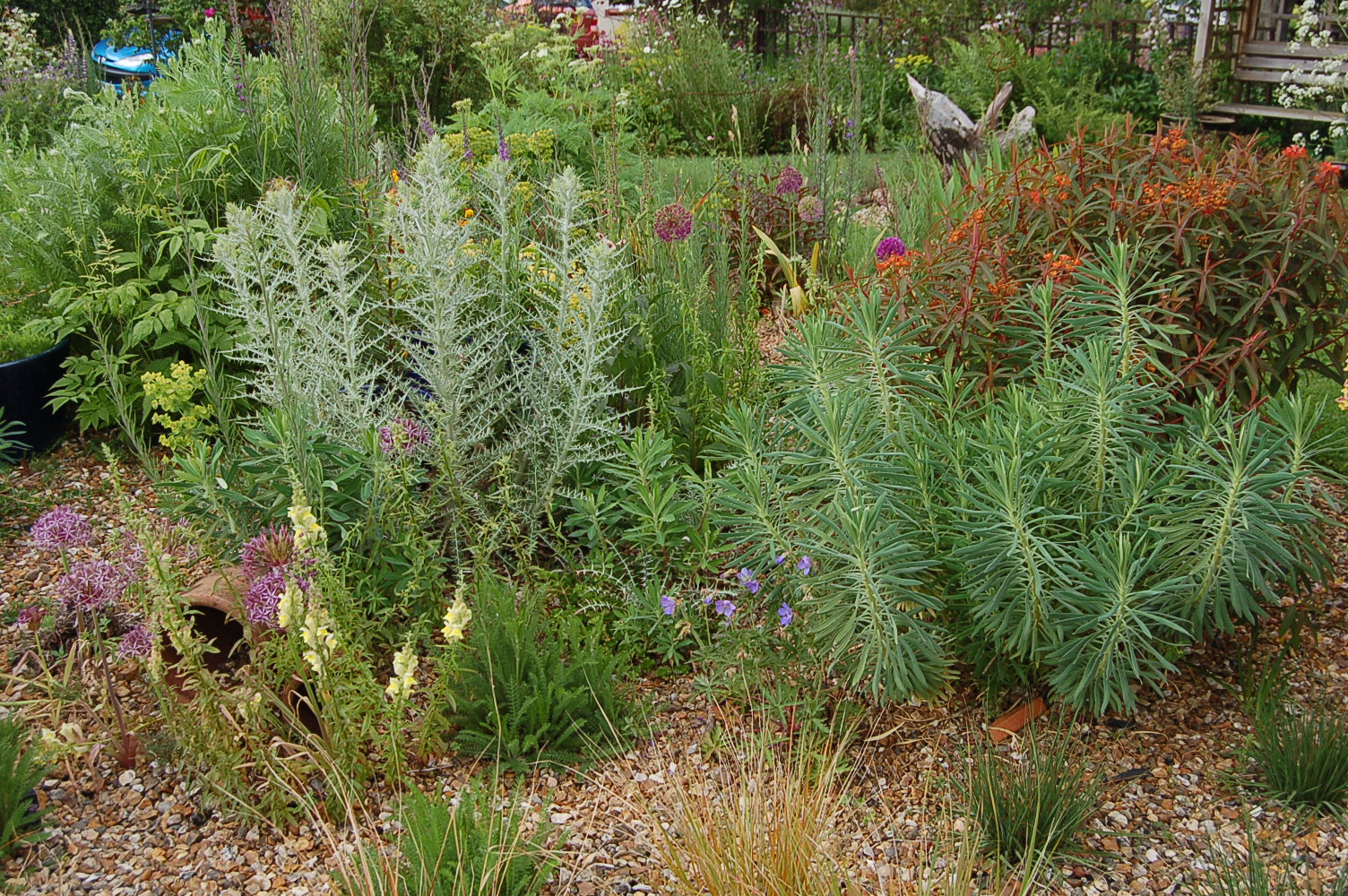
Let us visit the front garden and see how the borders have developed since our May post. There is far less gravel visible now as foliage increases sideways and upwards.
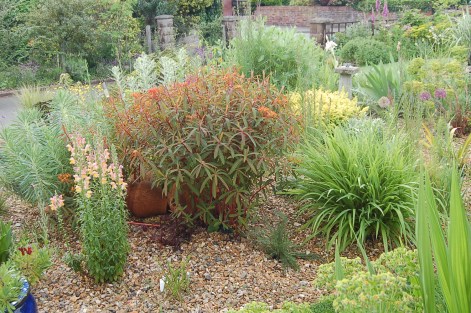
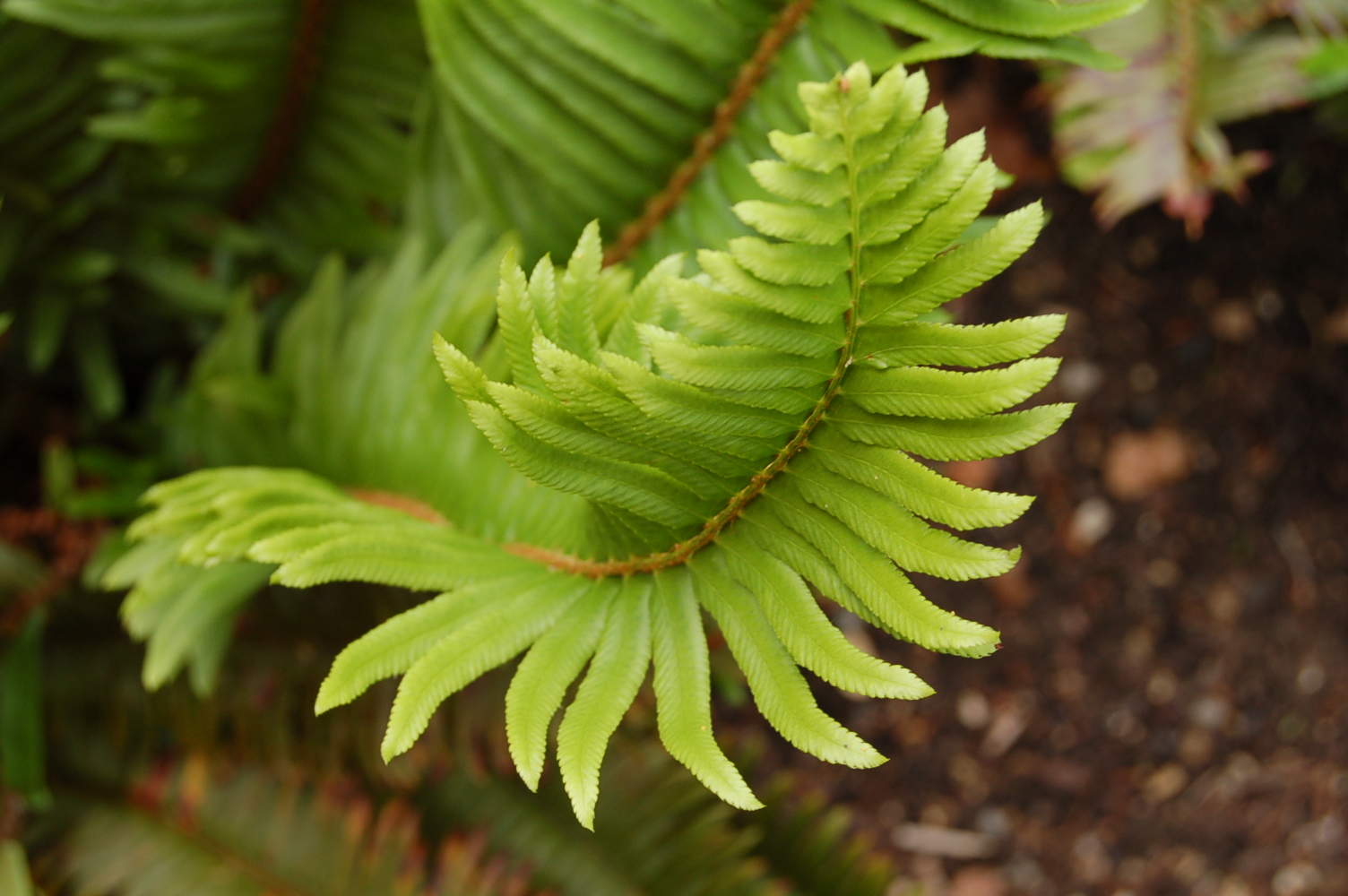
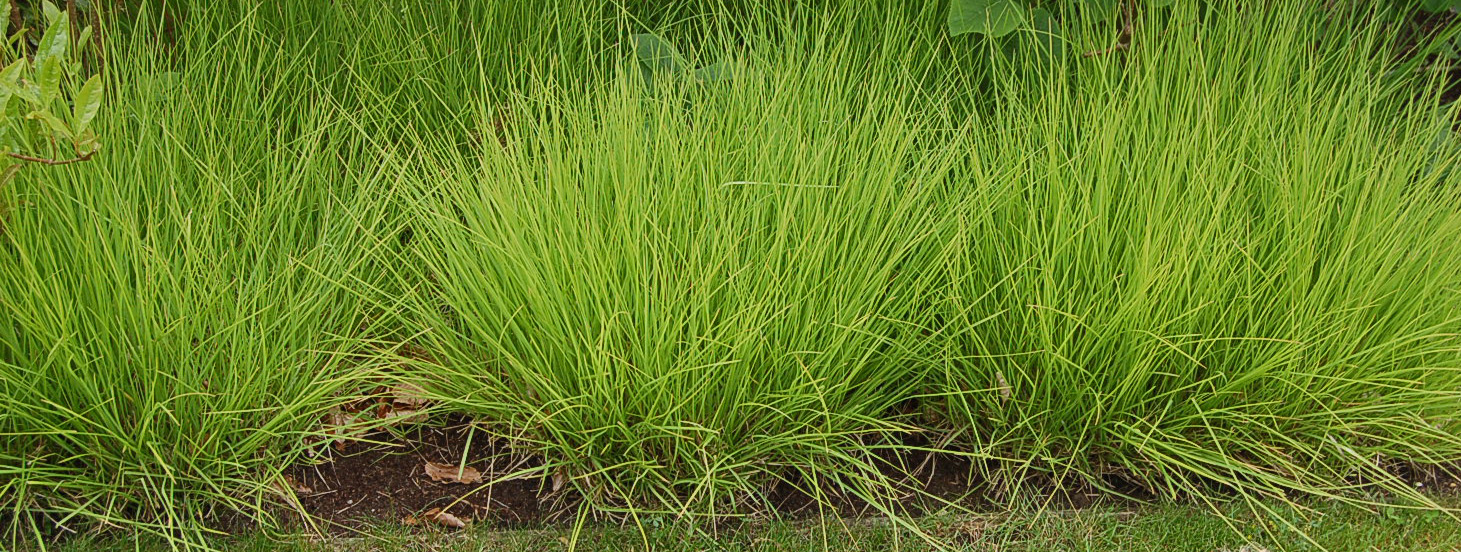
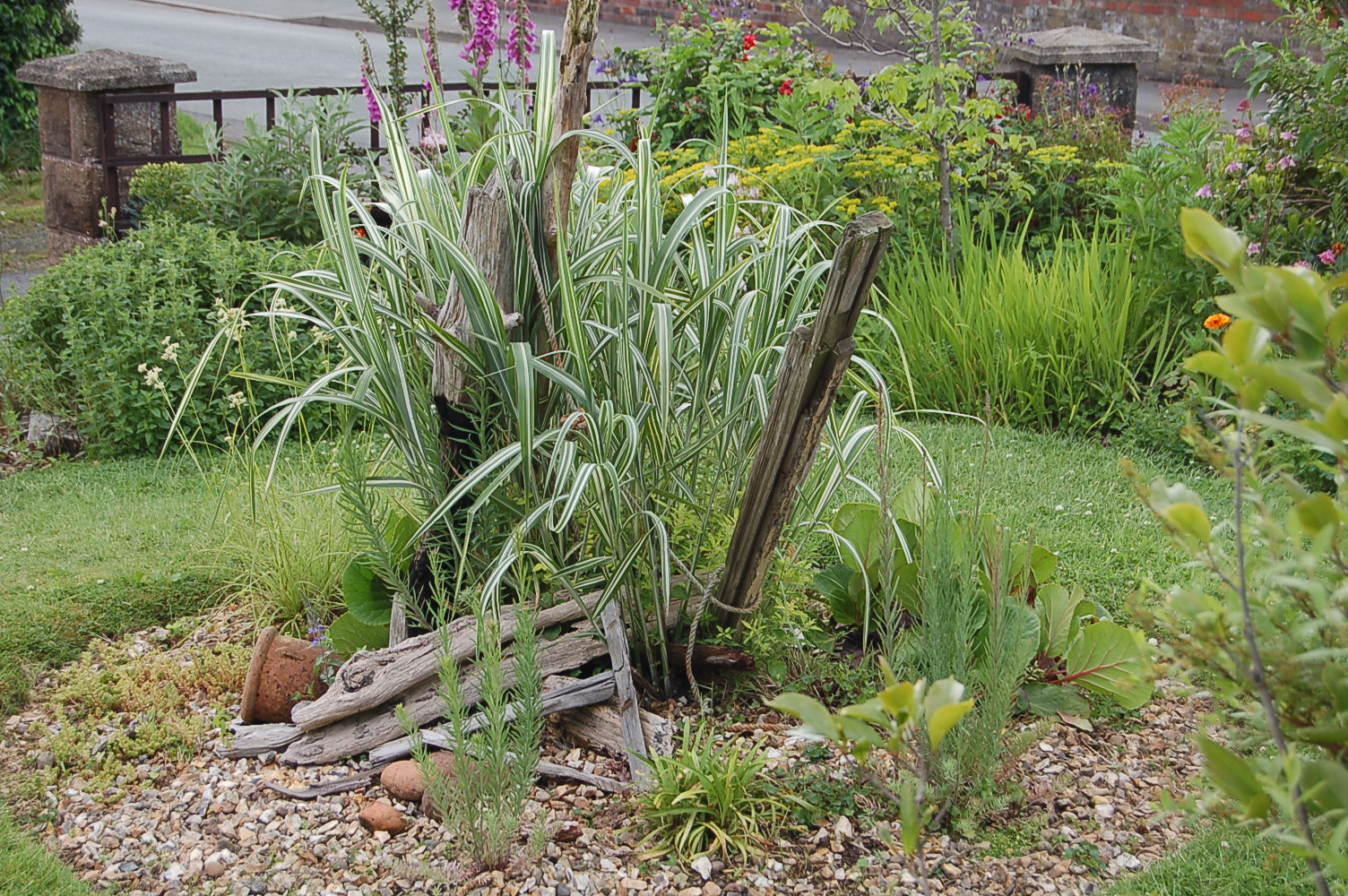
The ferns in the Stump Circle have grown considerably and the grasses in our other circle are now a good 4 feet tall.
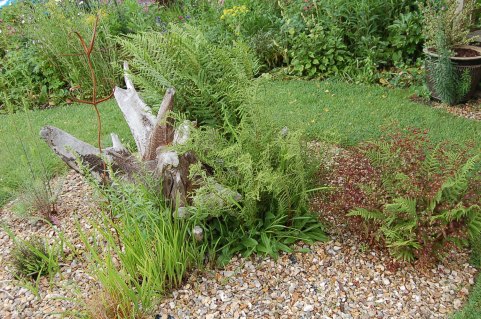
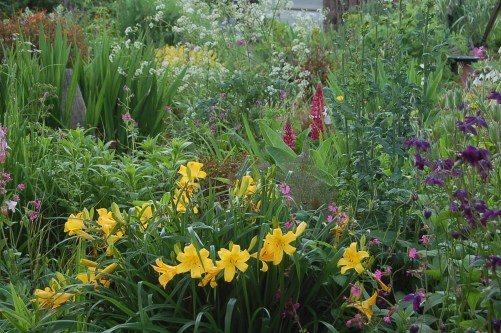
The Hot Border is full to the brim with colour, rich colours against vibrant greens.

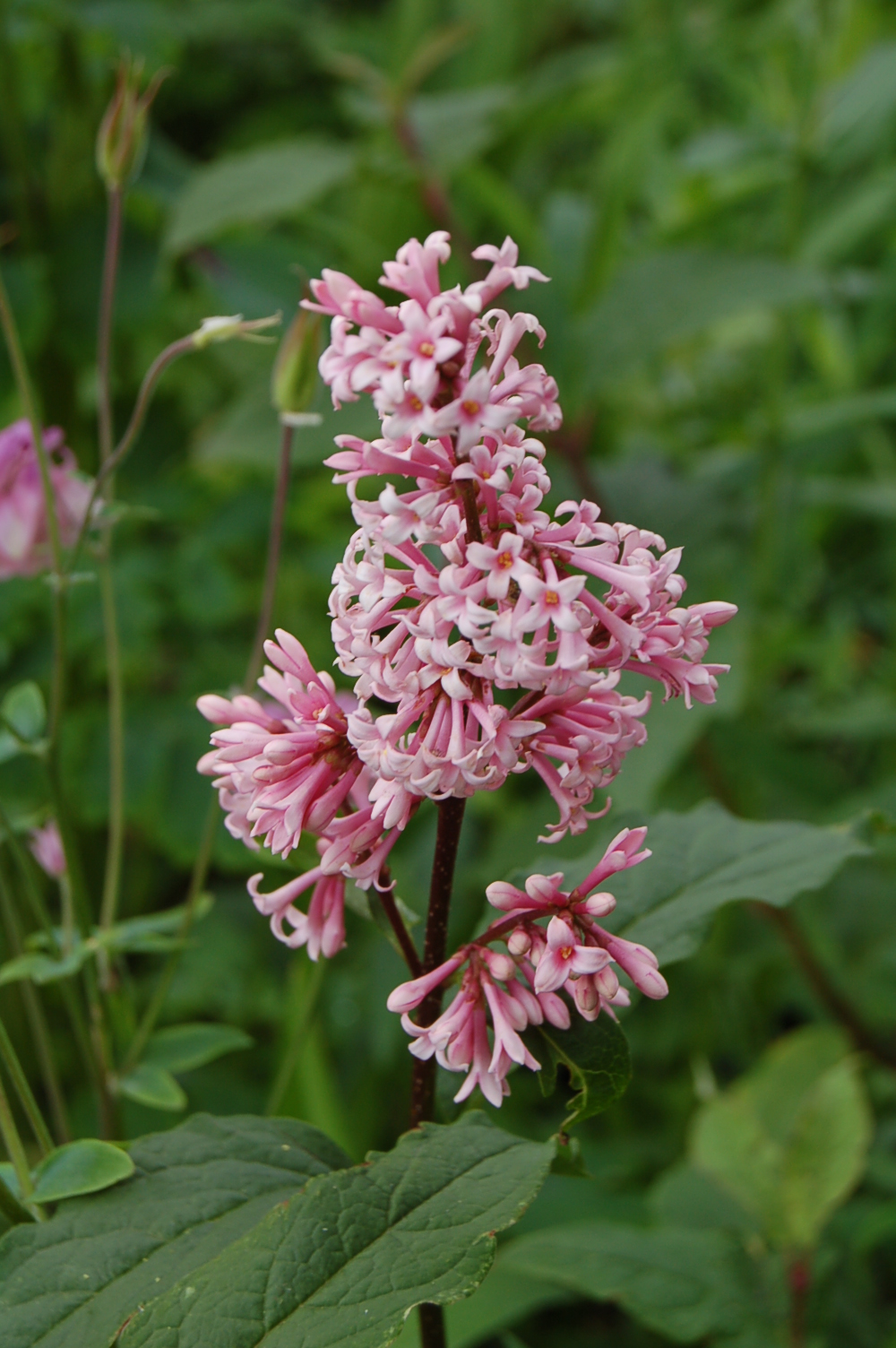
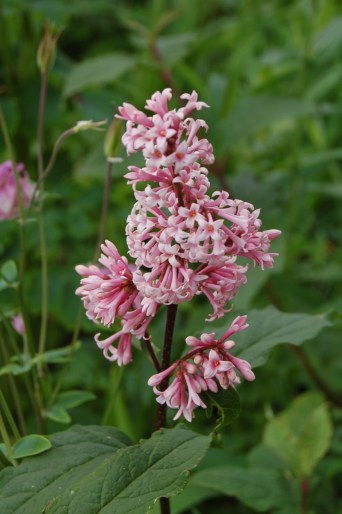
Jude’s Border is also full of colour from the blooms of shrubs such as this Weigela and Syringa.
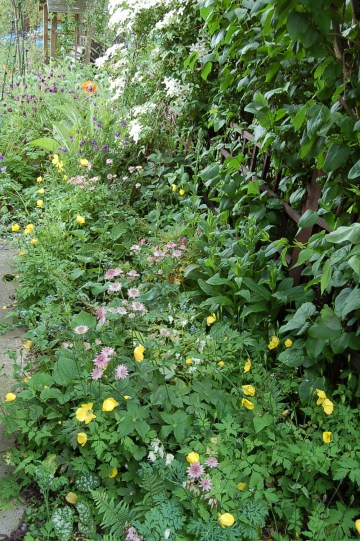
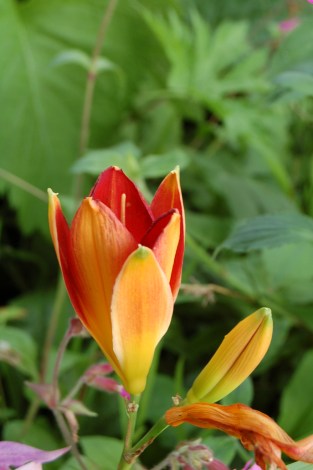
The Shade Garden continues to glow with colours against vibrant greens.
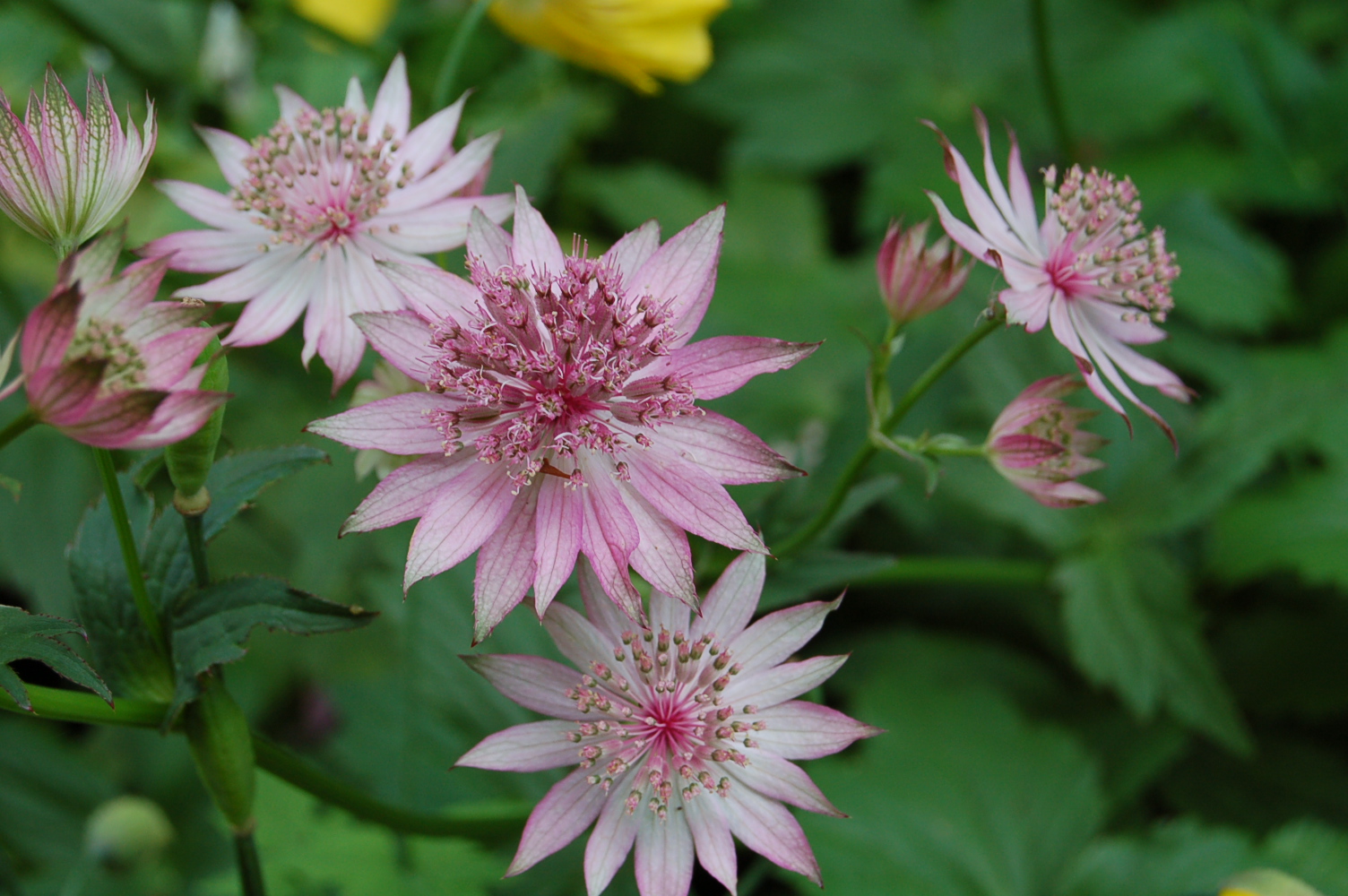
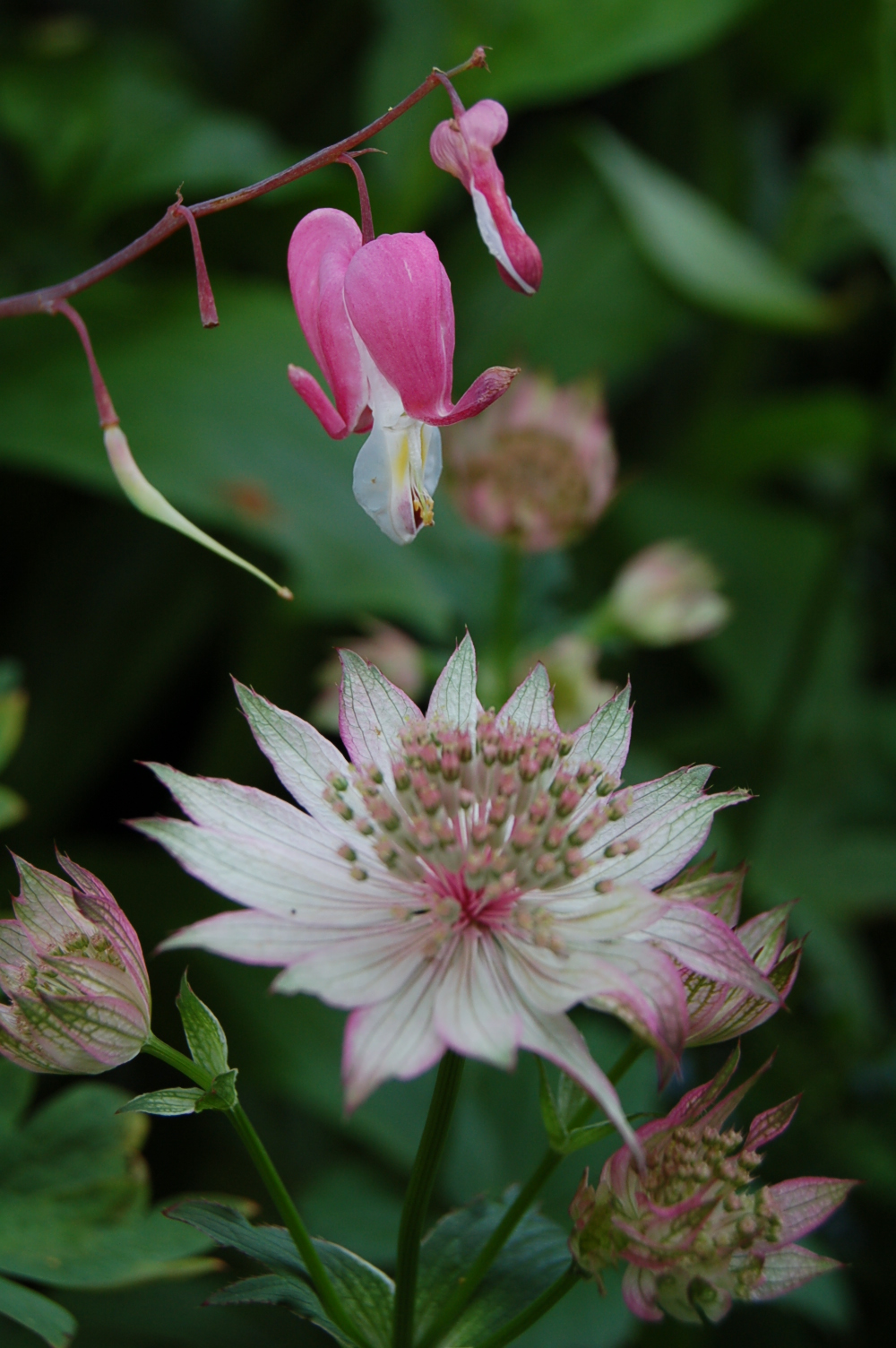
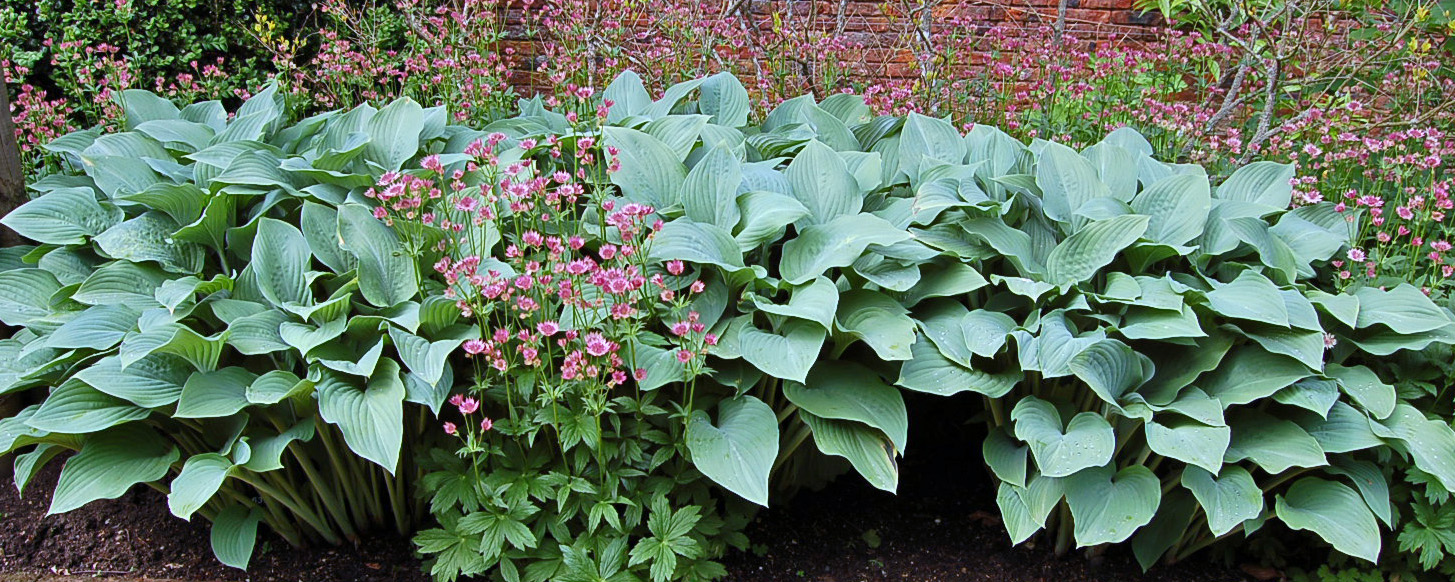
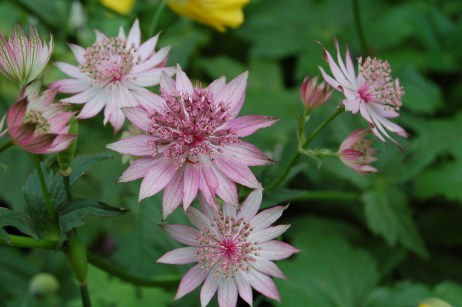
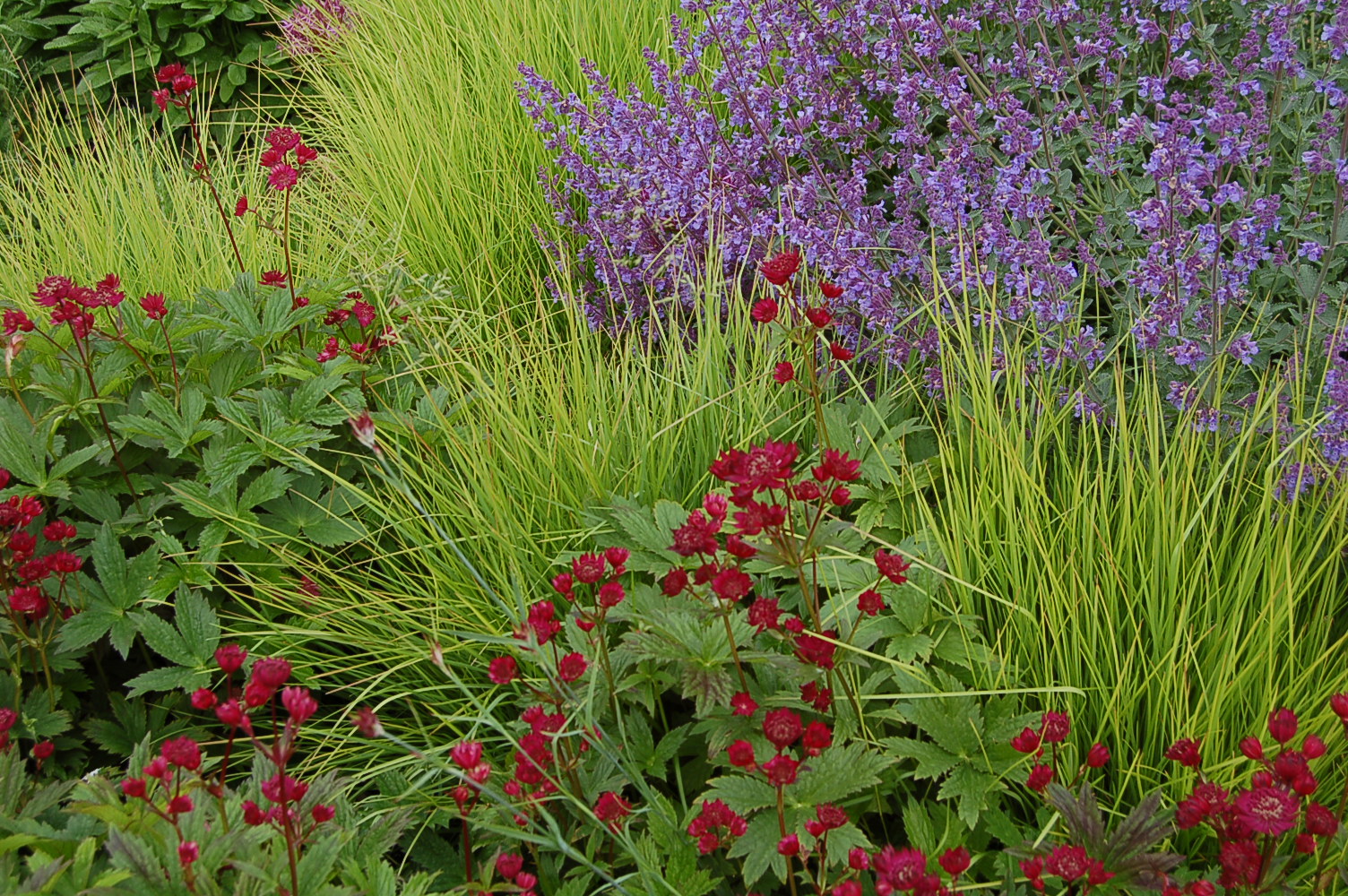
Anstrantias love it here in the shade but we do grow them throughout the garden. They flower best in the shade and grow taller. There are so many to choose from starting with whites through all different shades of pink to the deepest reds.
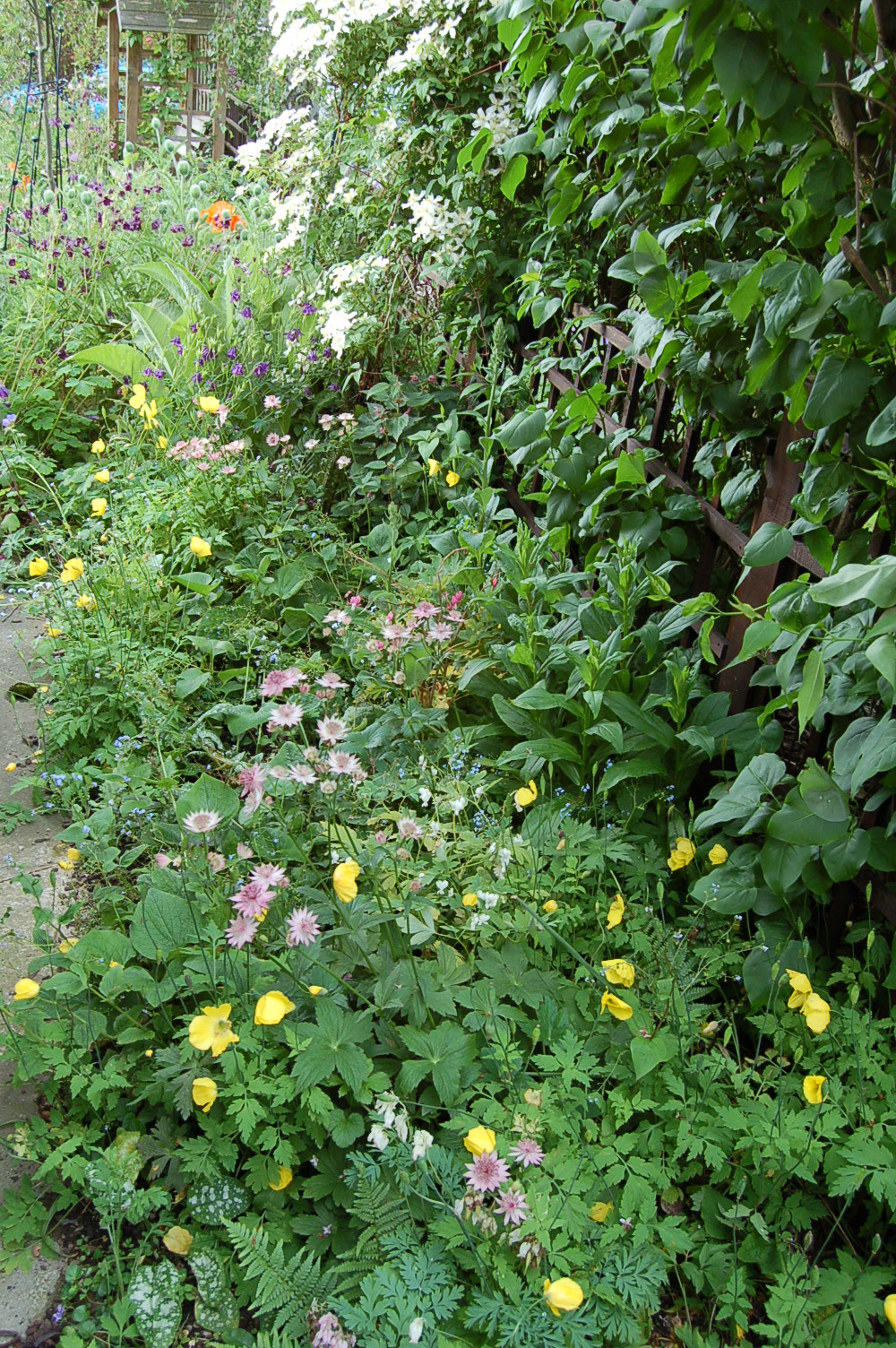
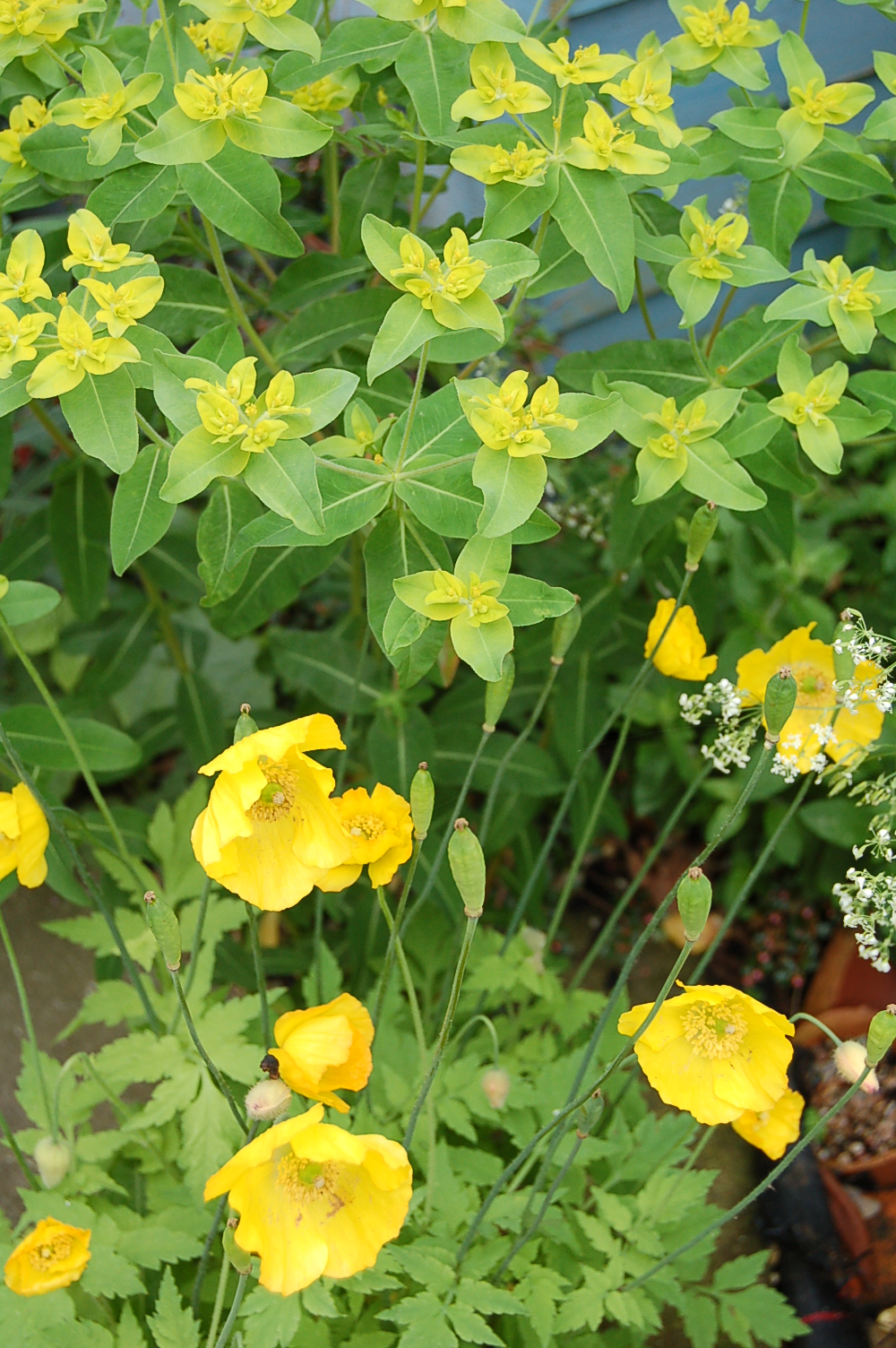
The Freda Garden is at its peak in June, when our orange-flowered Honeysuckle creeps along the fence top, the Pyracantha and Weigela flower together, and the border is full of Oriental Poppies, Foxgloves, Aquilegias and Euphorbias all doing their own thing.
Throughout the garden the promiscuous Aquilegias self seed and create new plants in various colours, shapes and sizes. Now this little white one was a surprise! At just 1 cm across it is the tiniest I have ever seen – a true gem! And to top it all it grew alongside this Euphorbia.
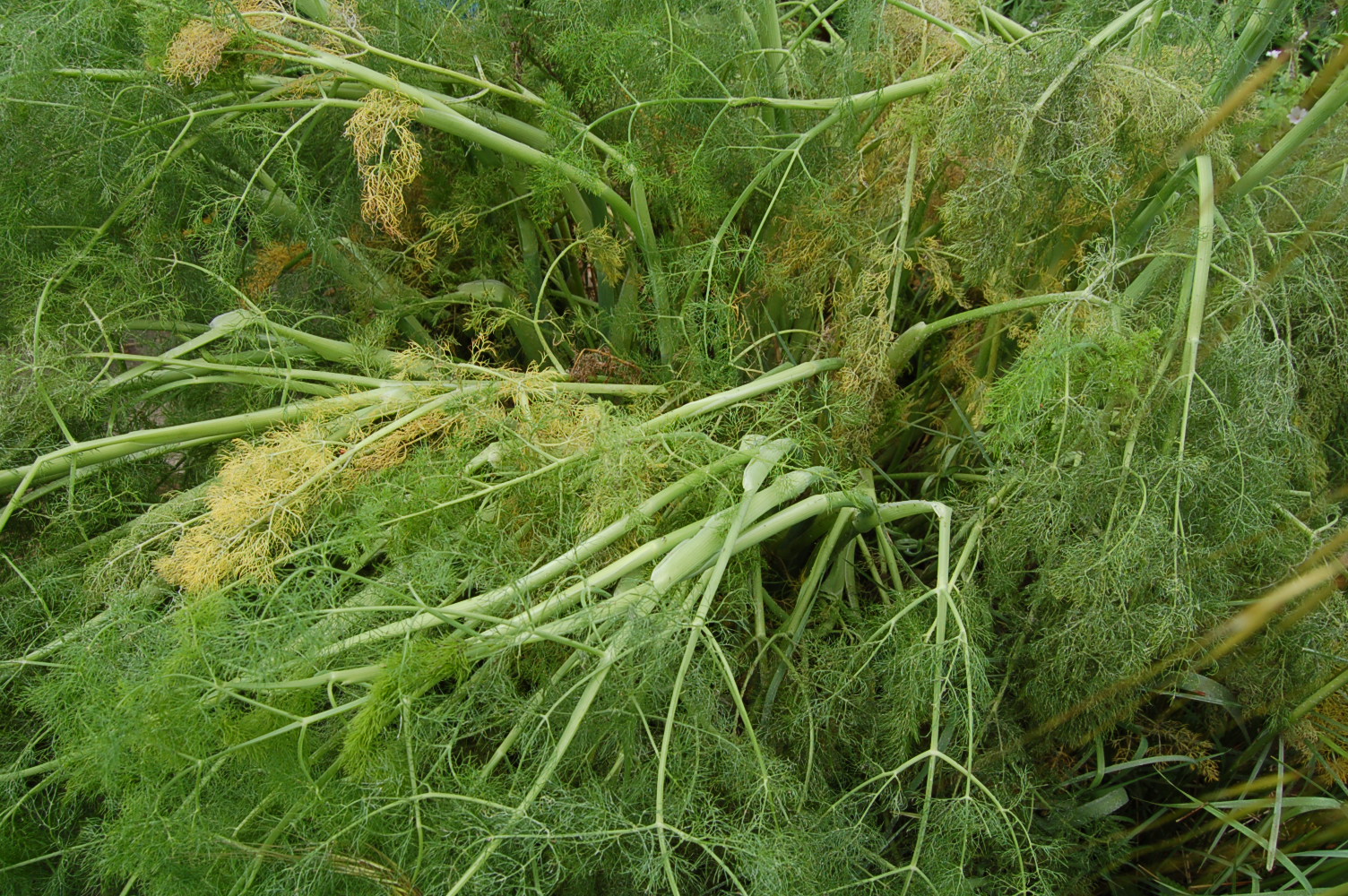
When I had finished my garden wander and taken all the photos to select from, the weather deteriorated, heavy rain and strong wind lashed our garden. The Fennel in the picture below was tall and healthy around 5 feet tall but the weather bent all the stems down. The fresh stems of our rambling and climbing roses which would carry blooms next year were snapped off at the base. I only hope they have time and energy to make up some new growth.
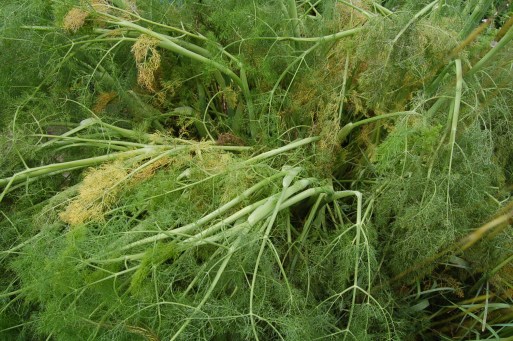
All the borders in the back garden are full of interesting foliage with varied texture and colour as a foil for the plethora of flowering perennials.
The most beautiful plant must be our miniature chestnut (Aesculus) which is now 3 feet tall, a third of its final height, covered in blooms, spires of salmon.
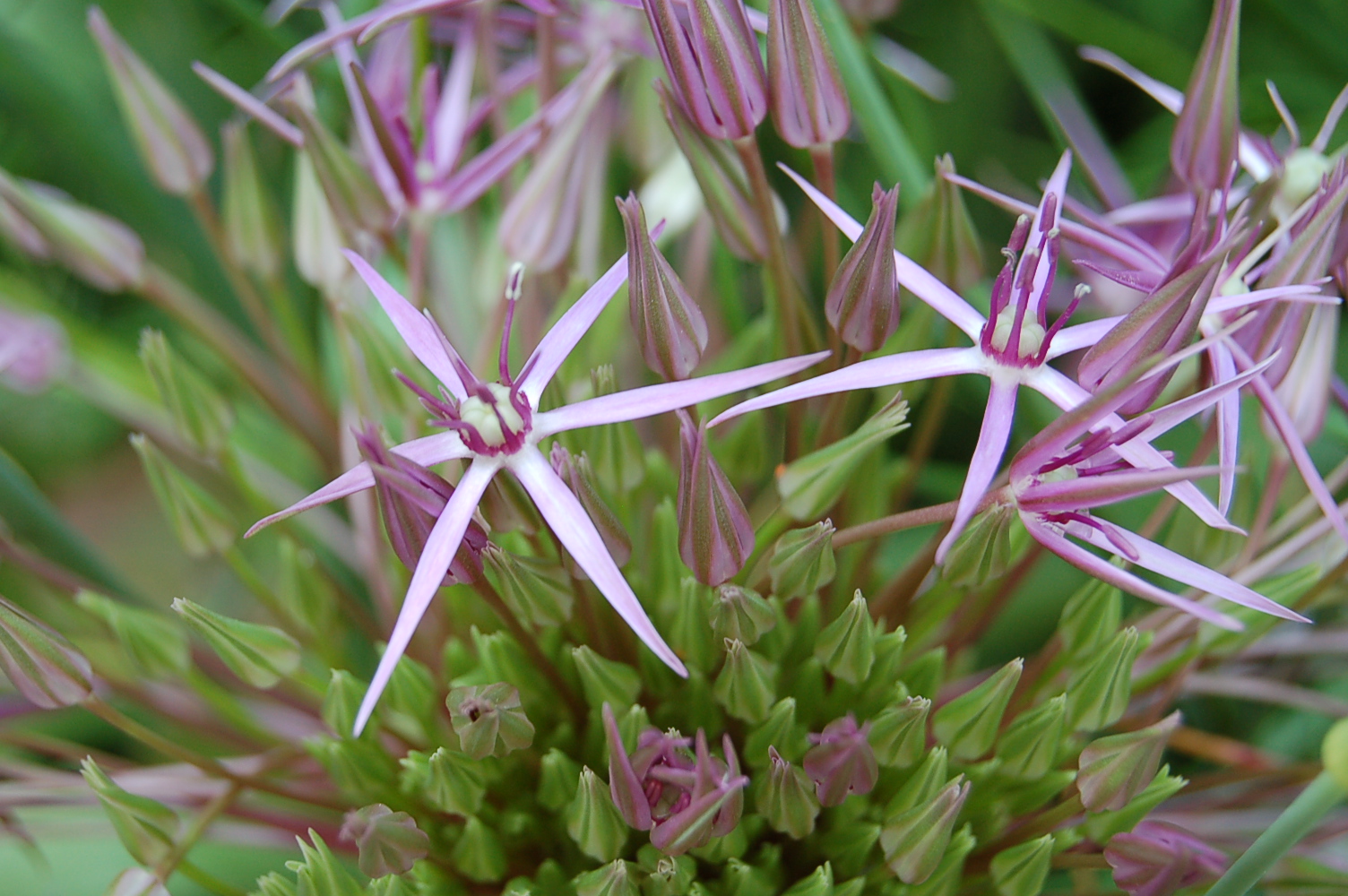
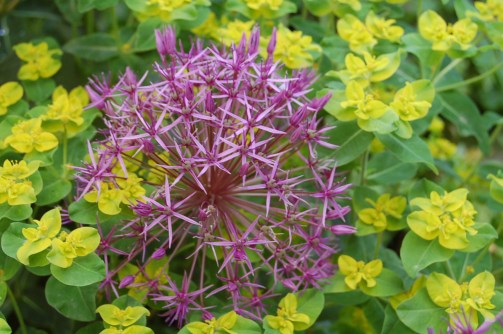
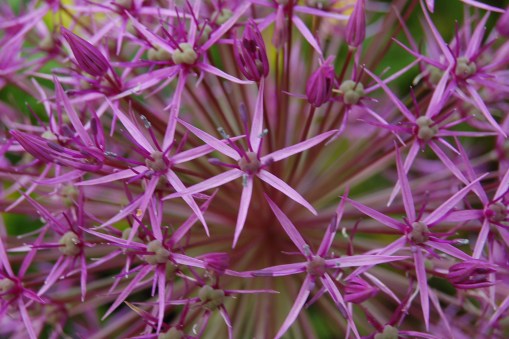
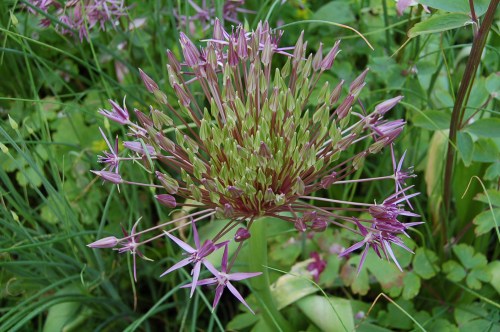
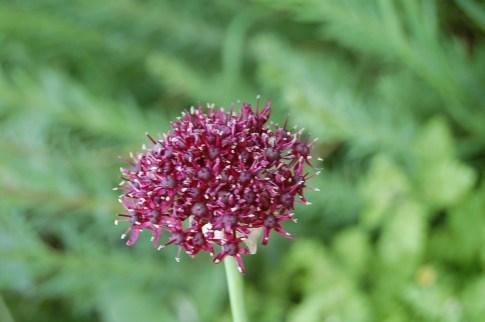
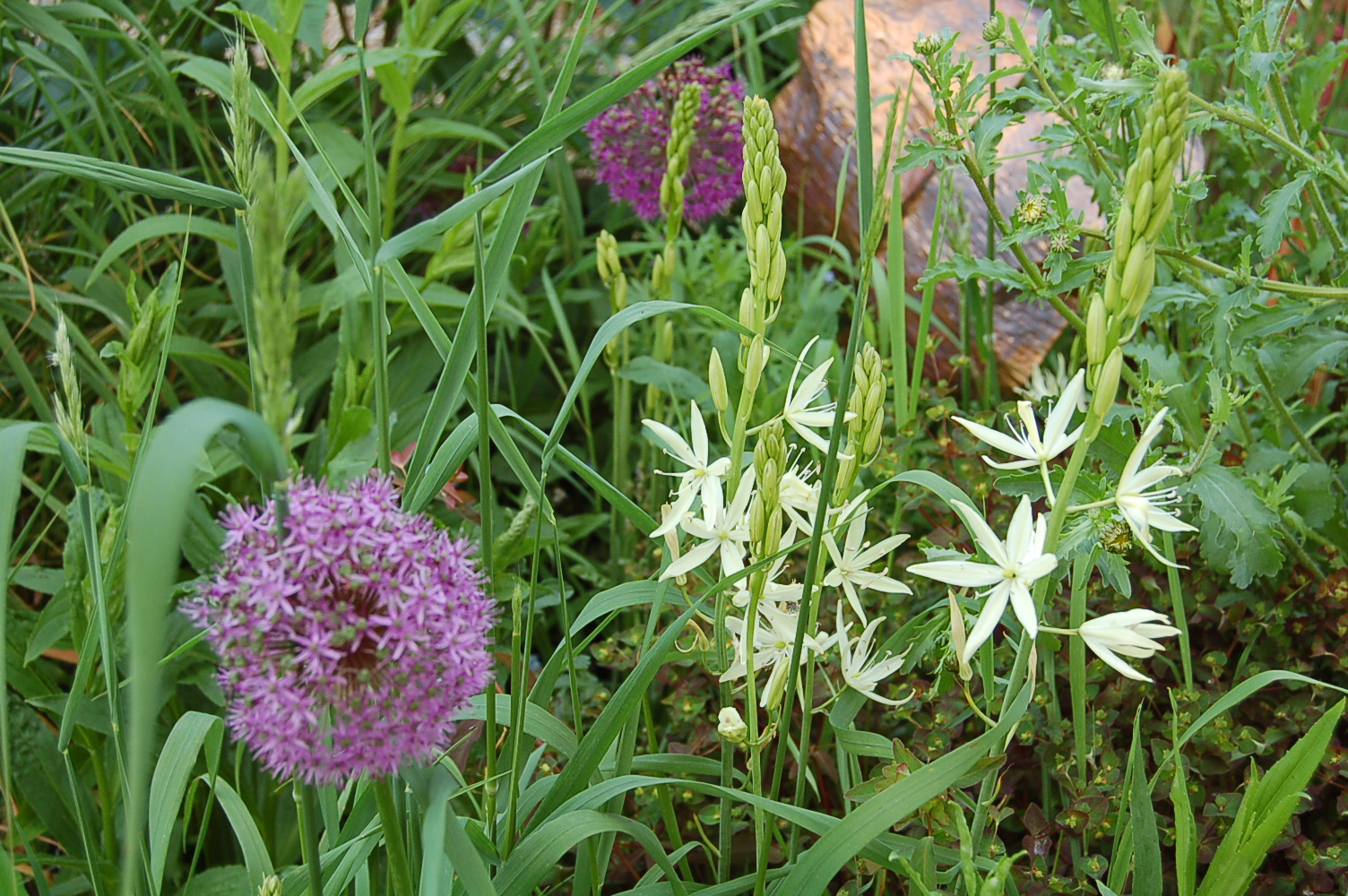
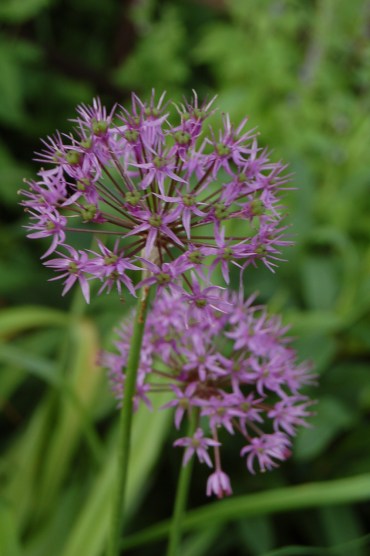
Alliums are stars throughout the back garden. They have only been in a few years and are so happy they are spreading like wildfire. They really need thinning out!
I shall finish this garden wander with a few shots of some of the borders, as a taster for my next blog, “Another Wander Around our Garden in June”. There is simply too much to show, too much I want to share.
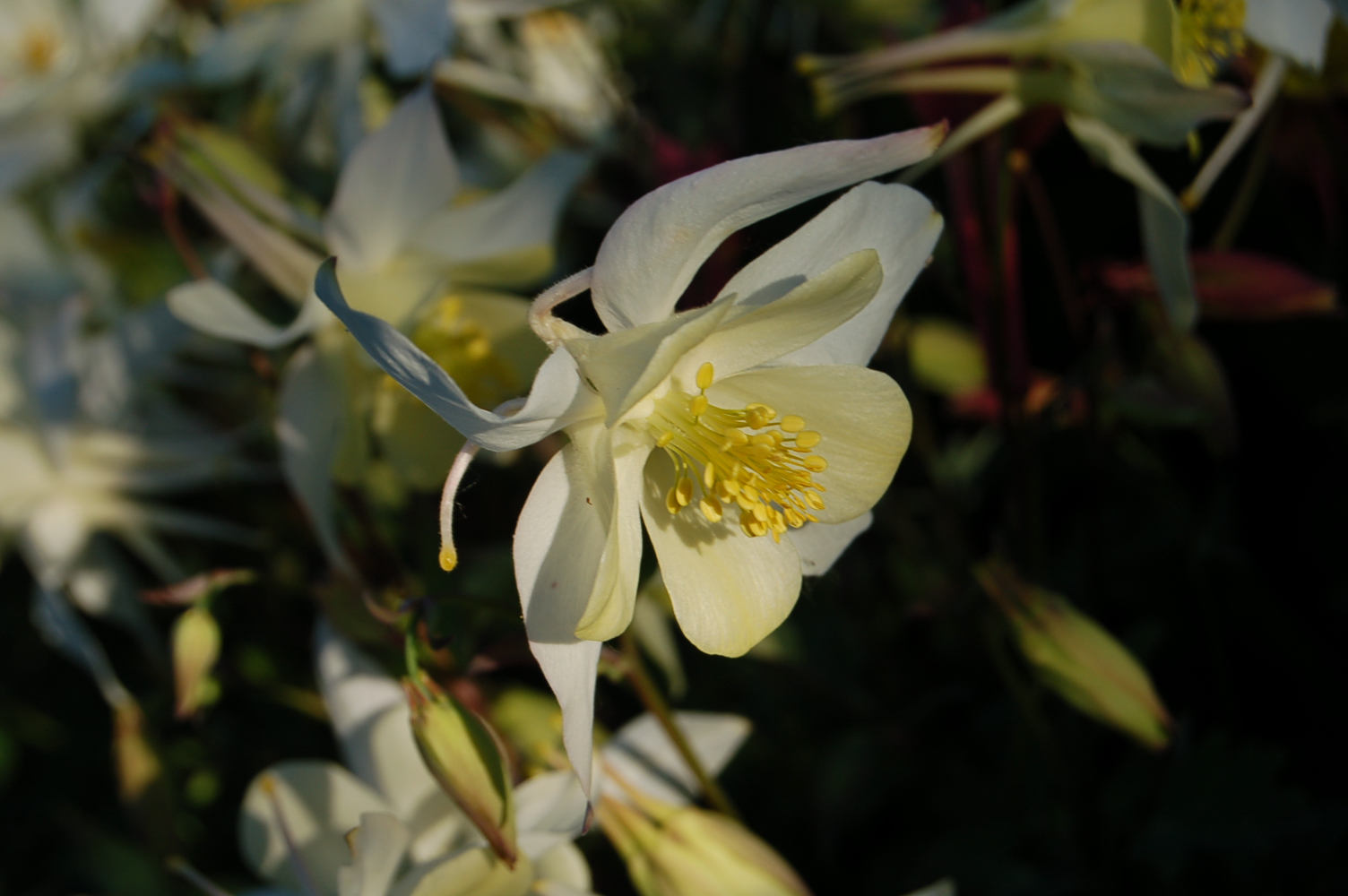
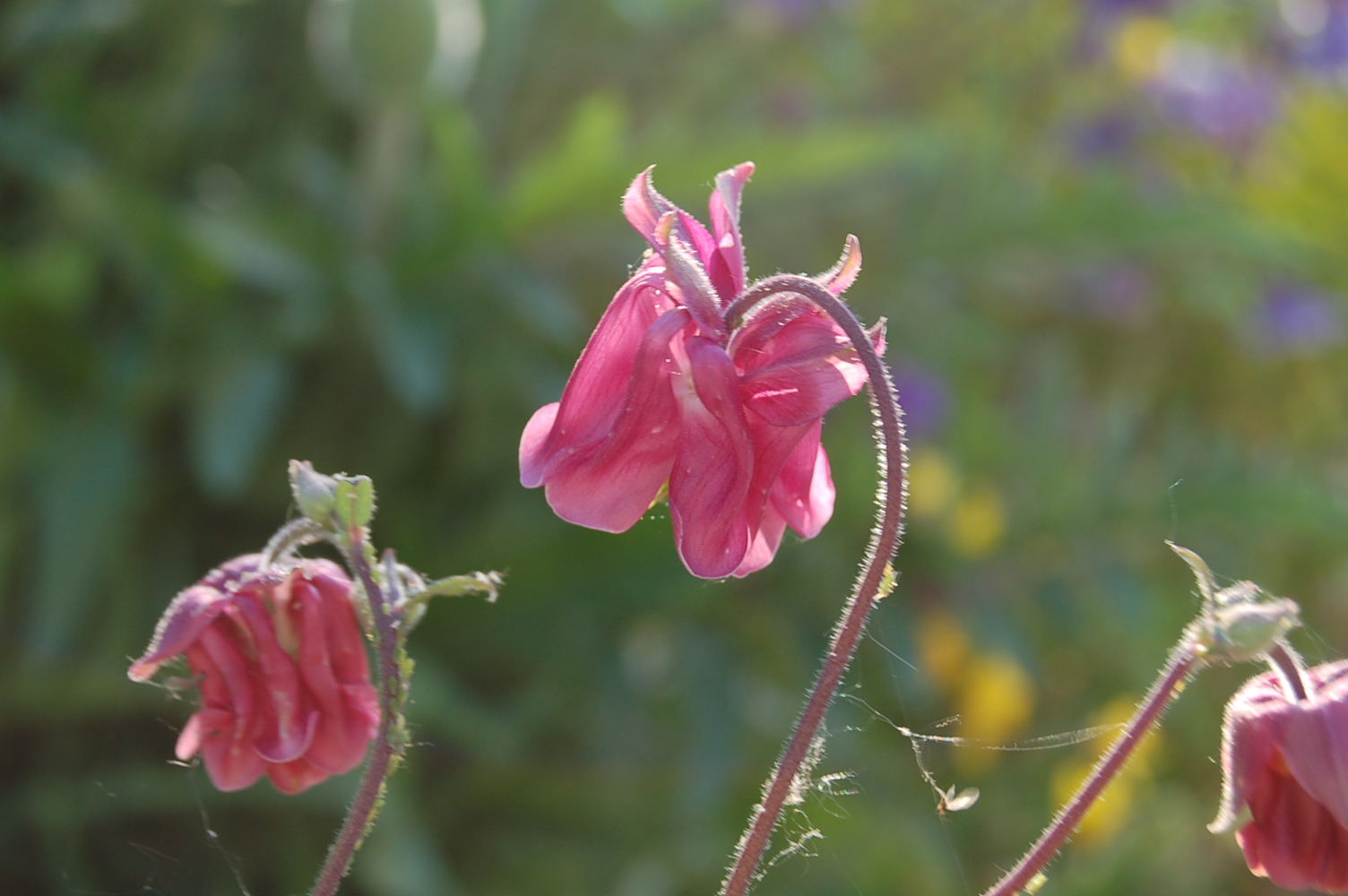
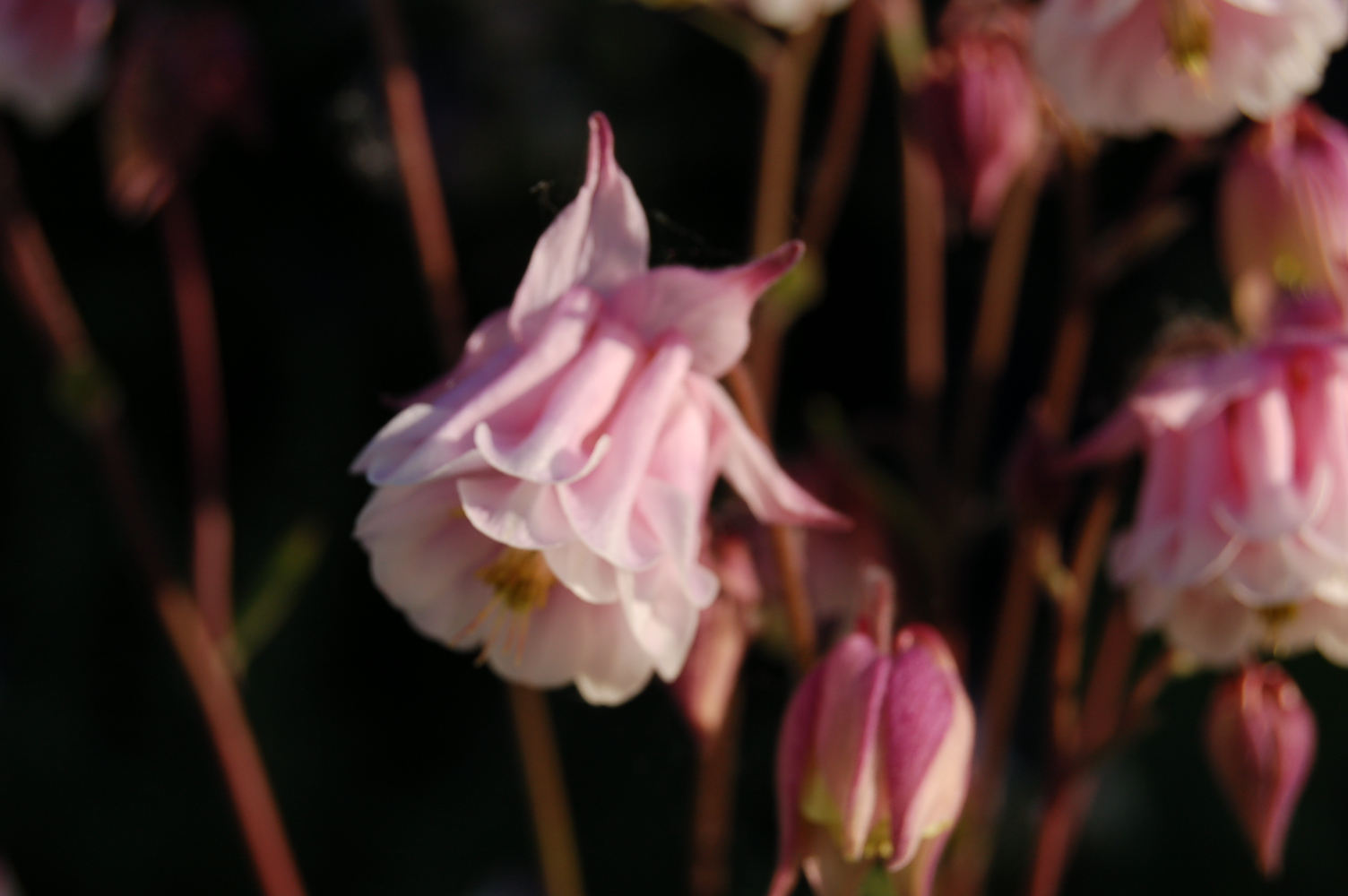
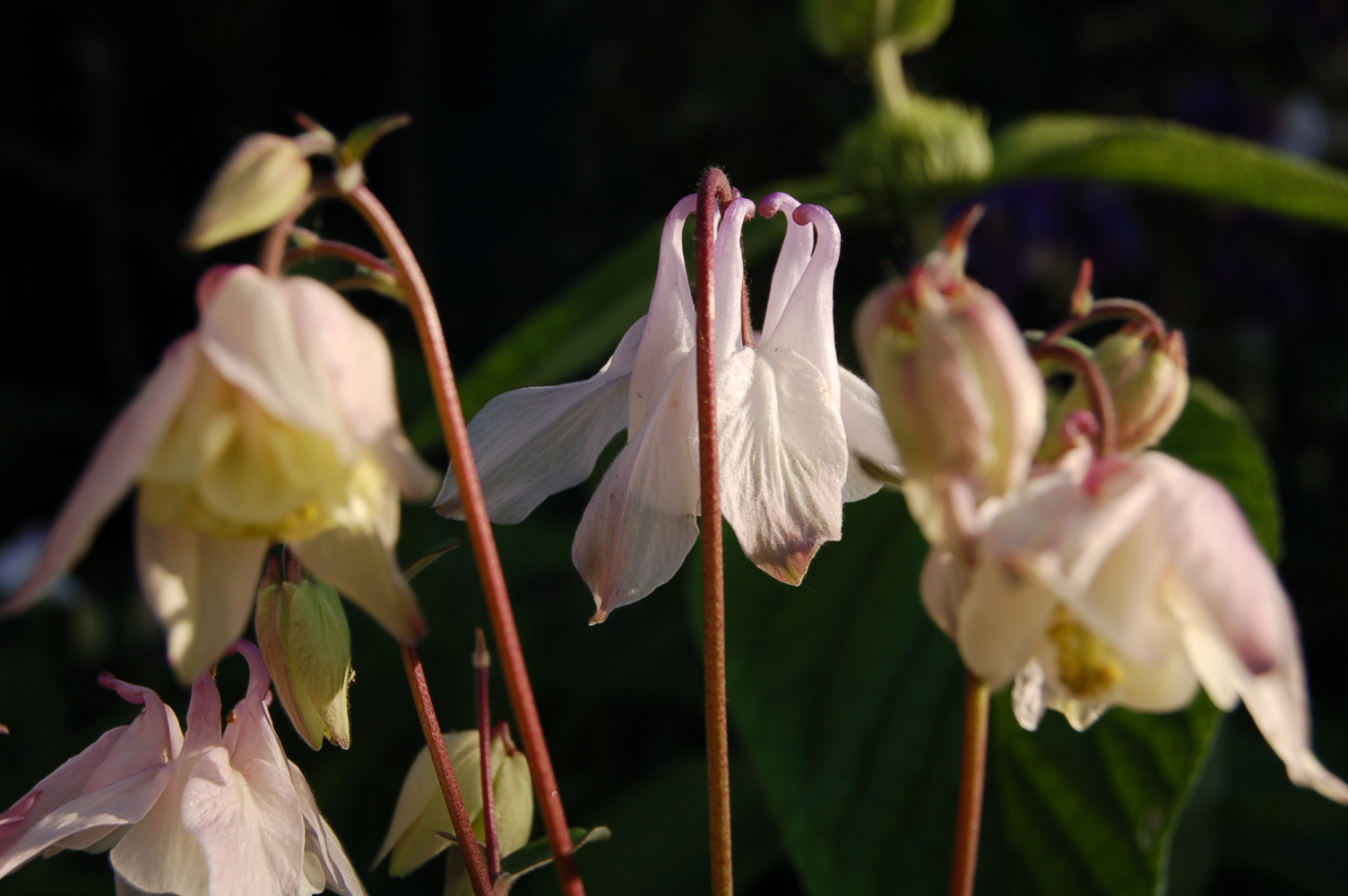
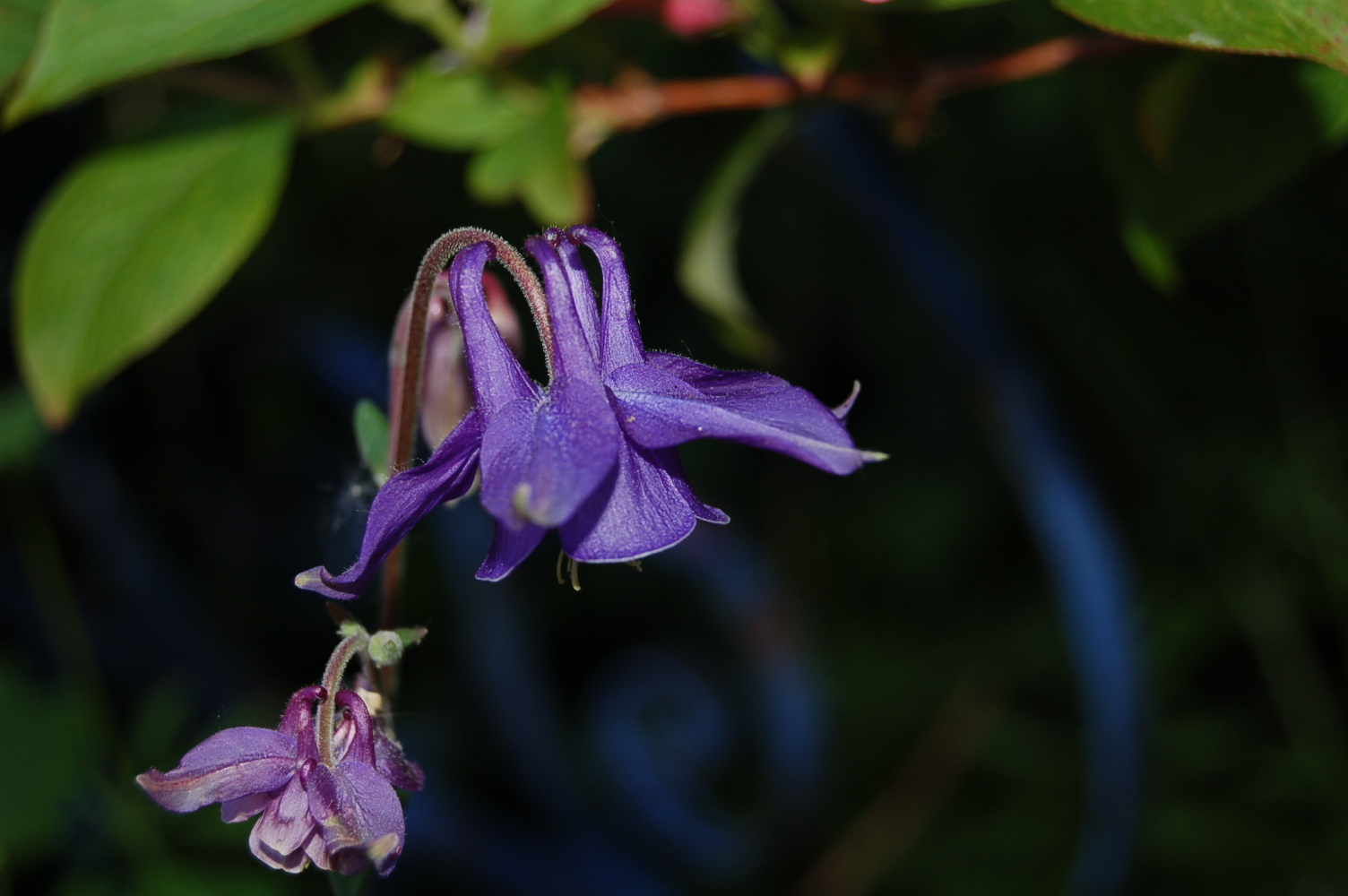
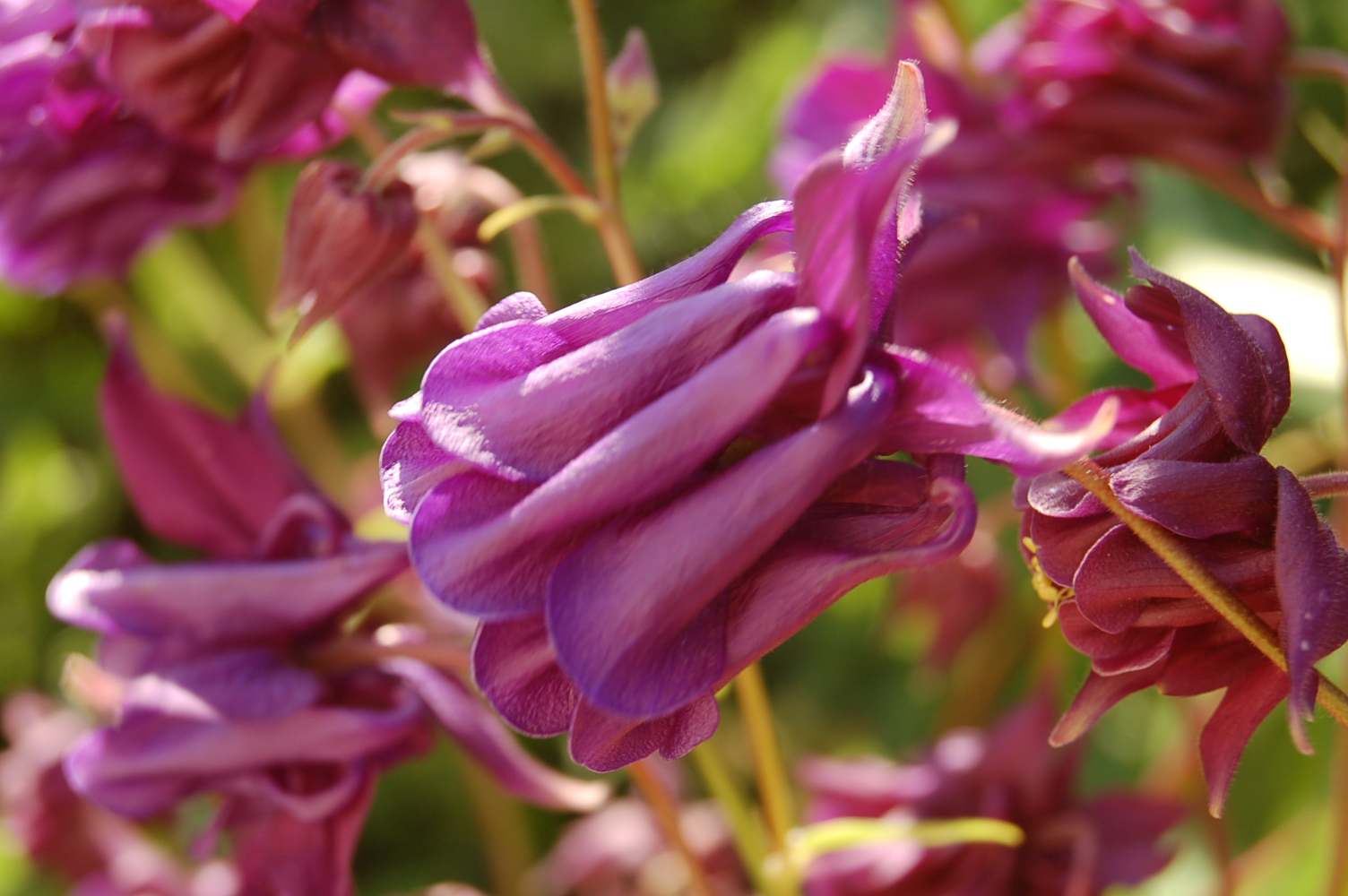
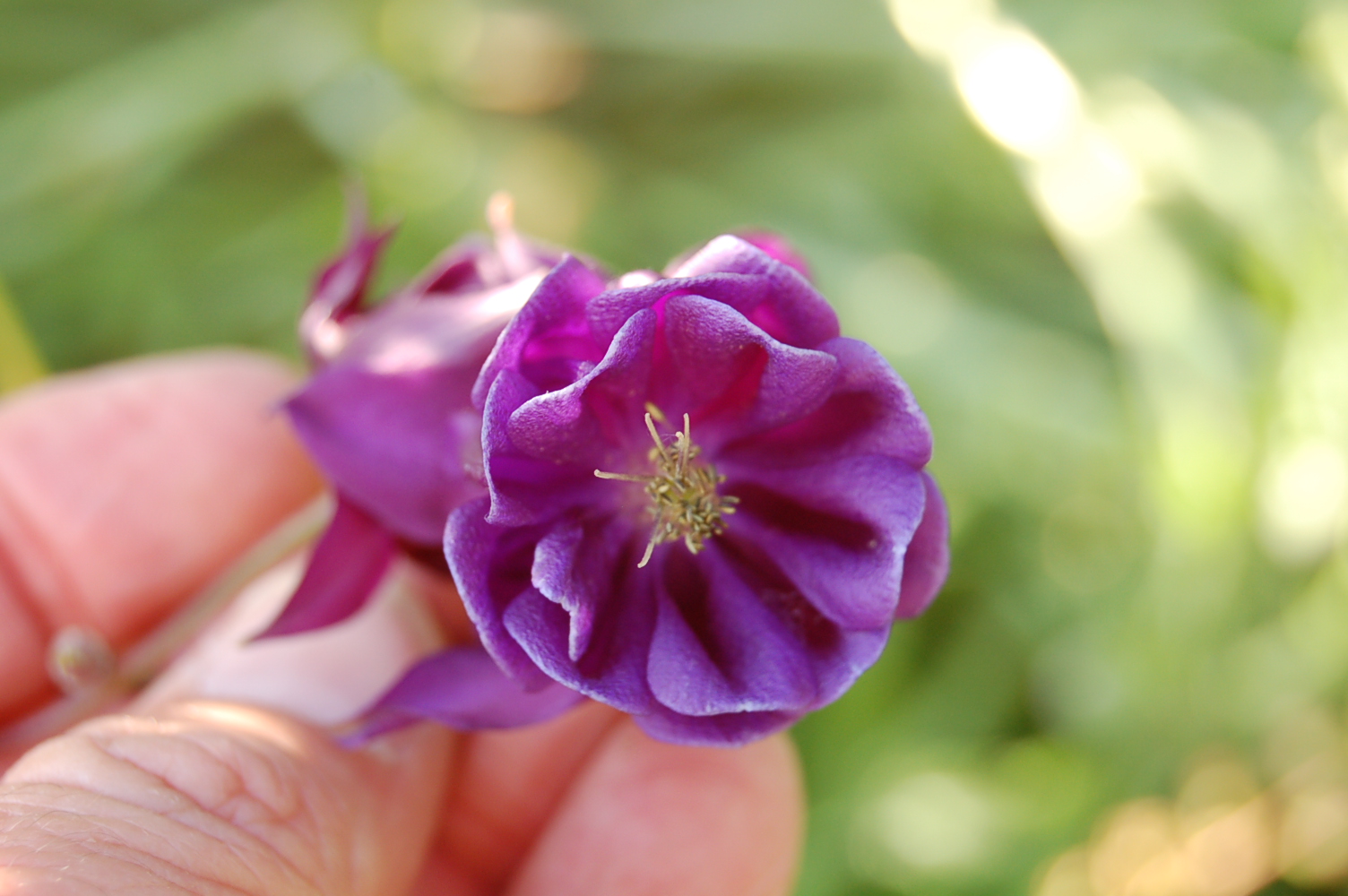
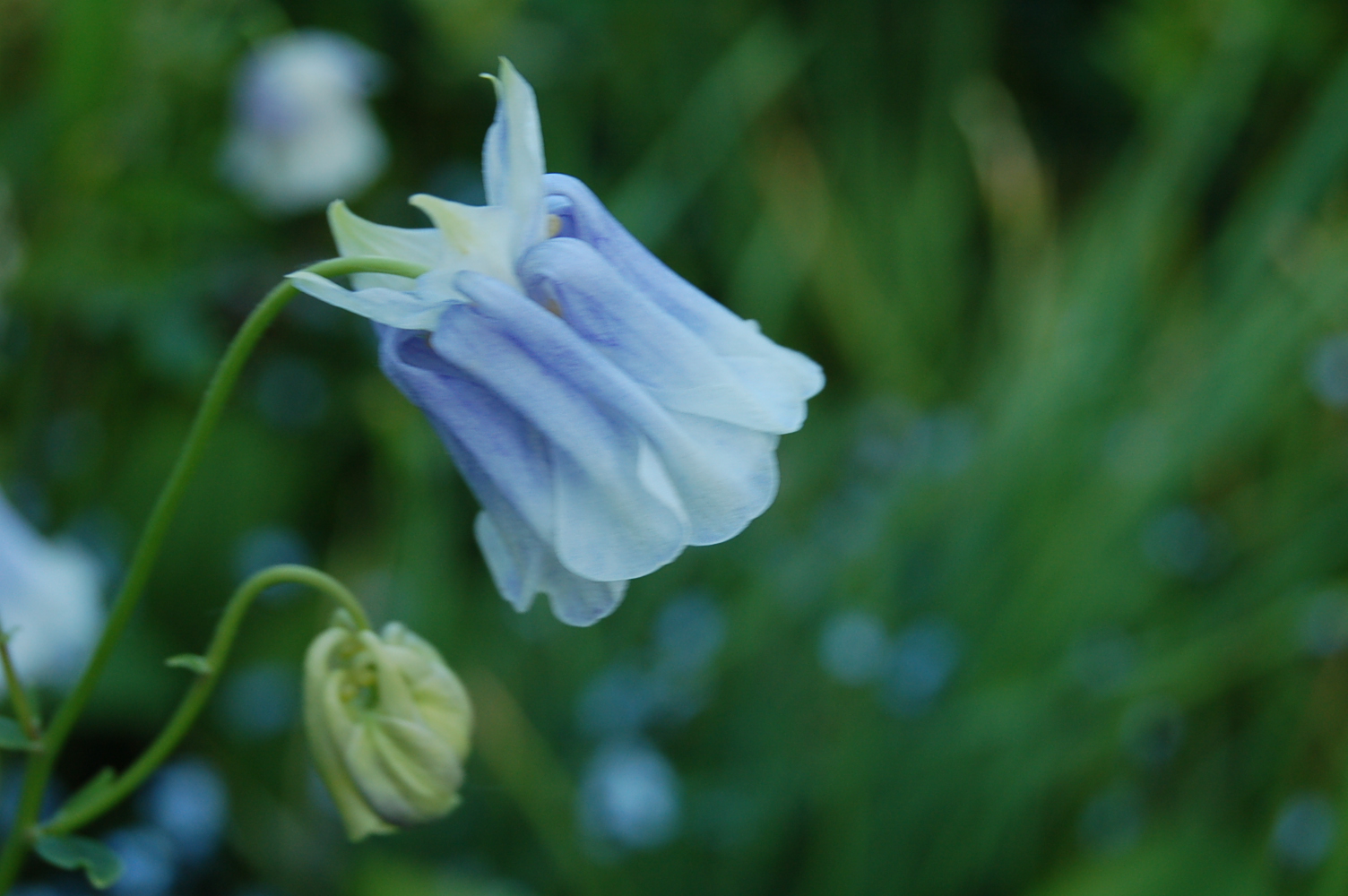
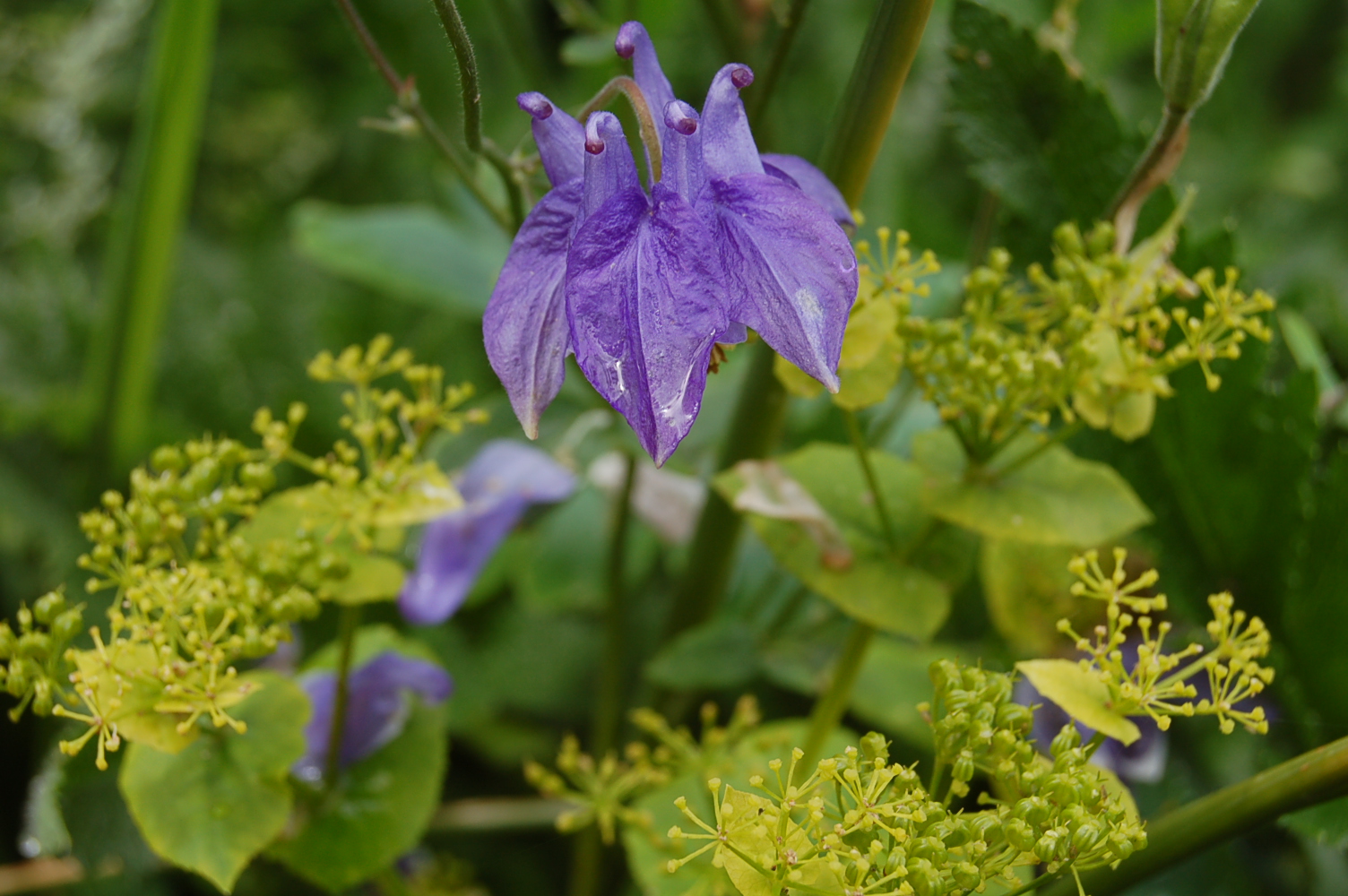
What would the early summer be like without the wonderful aquiligeas? We look forward to them as soon as the spring bulbs begin to go over, knowing they will be the next big feature in every part of the garden. We never know where they will appear as they self seed and cross-breed freely. We let them get on with it until we feel they need some new blood. We select interesting colours and shape and leave them to add their genes to our pool of aquiligeas.
They come in so many colours, shapes and sizes but they all have interestingly shaped foliage a little reminiscent of over-sized thalictrum.
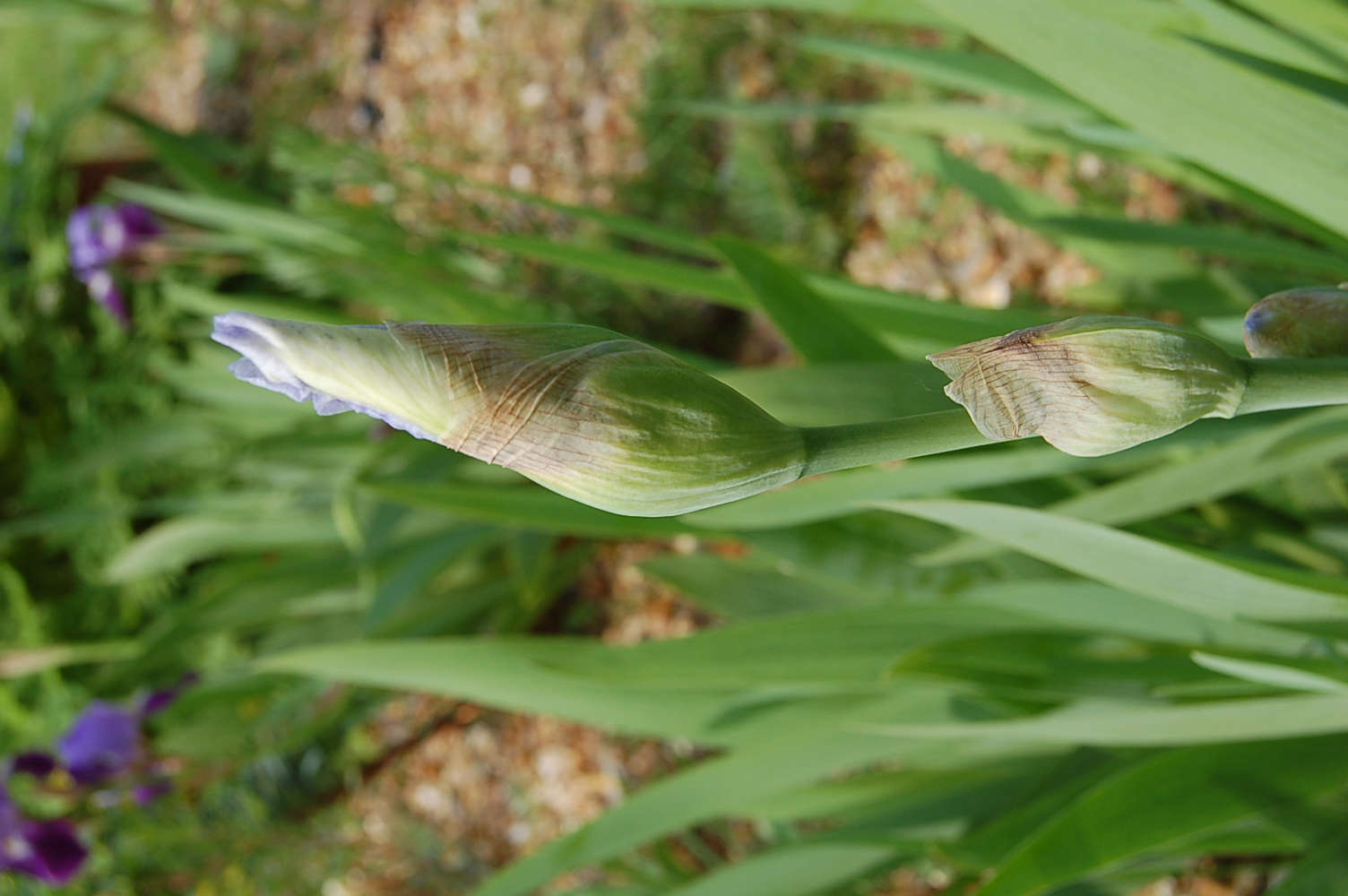
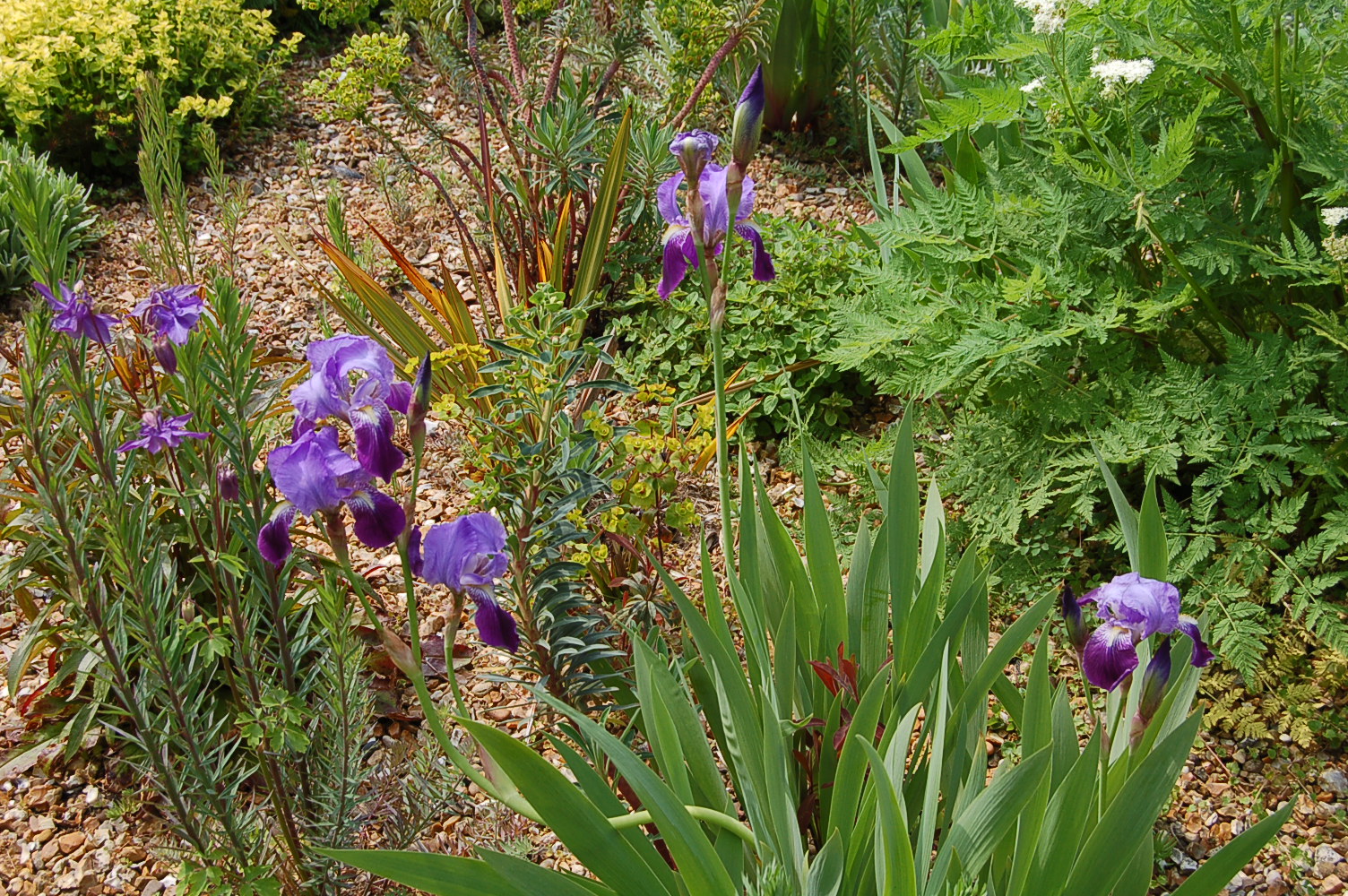
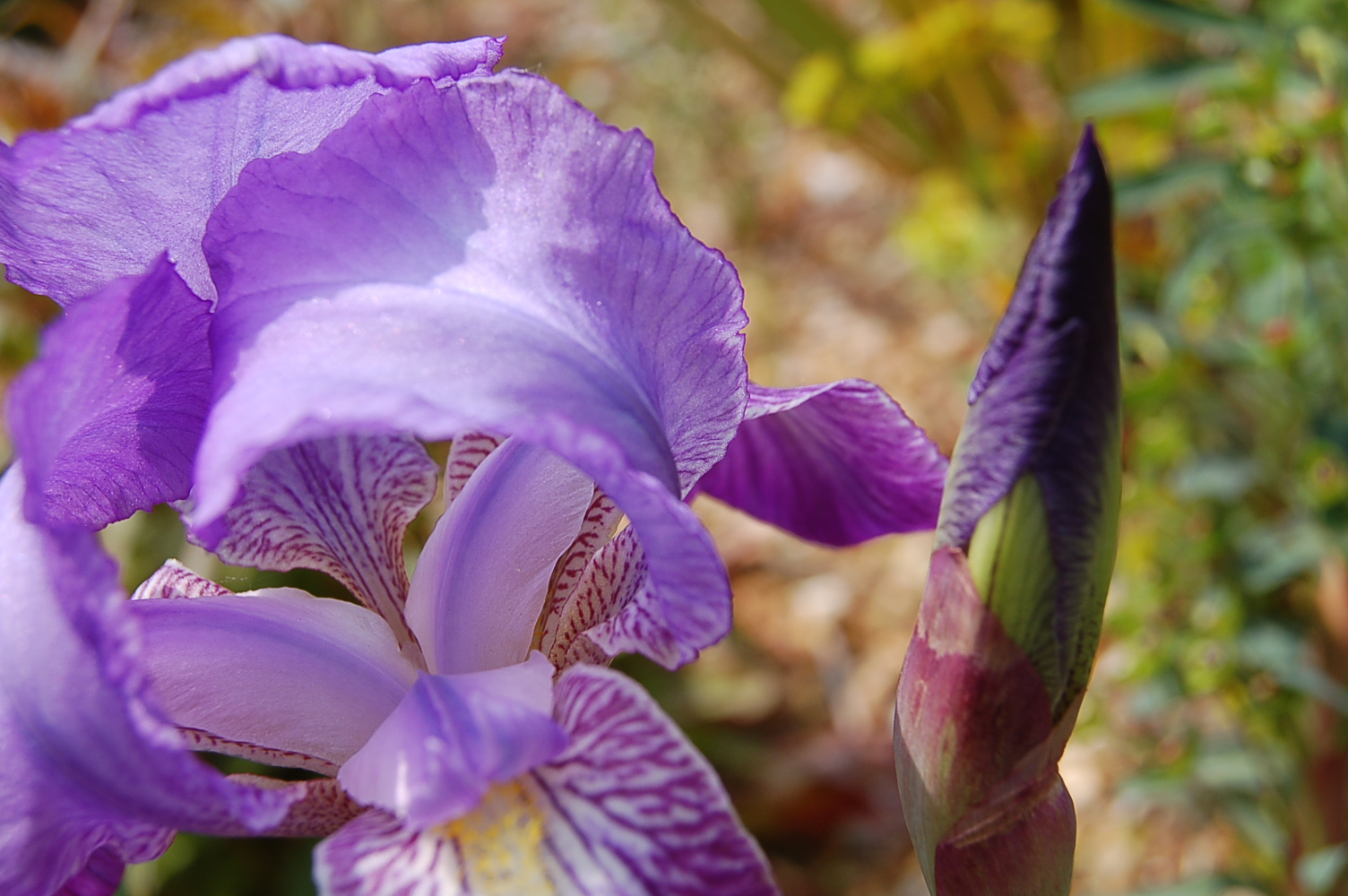
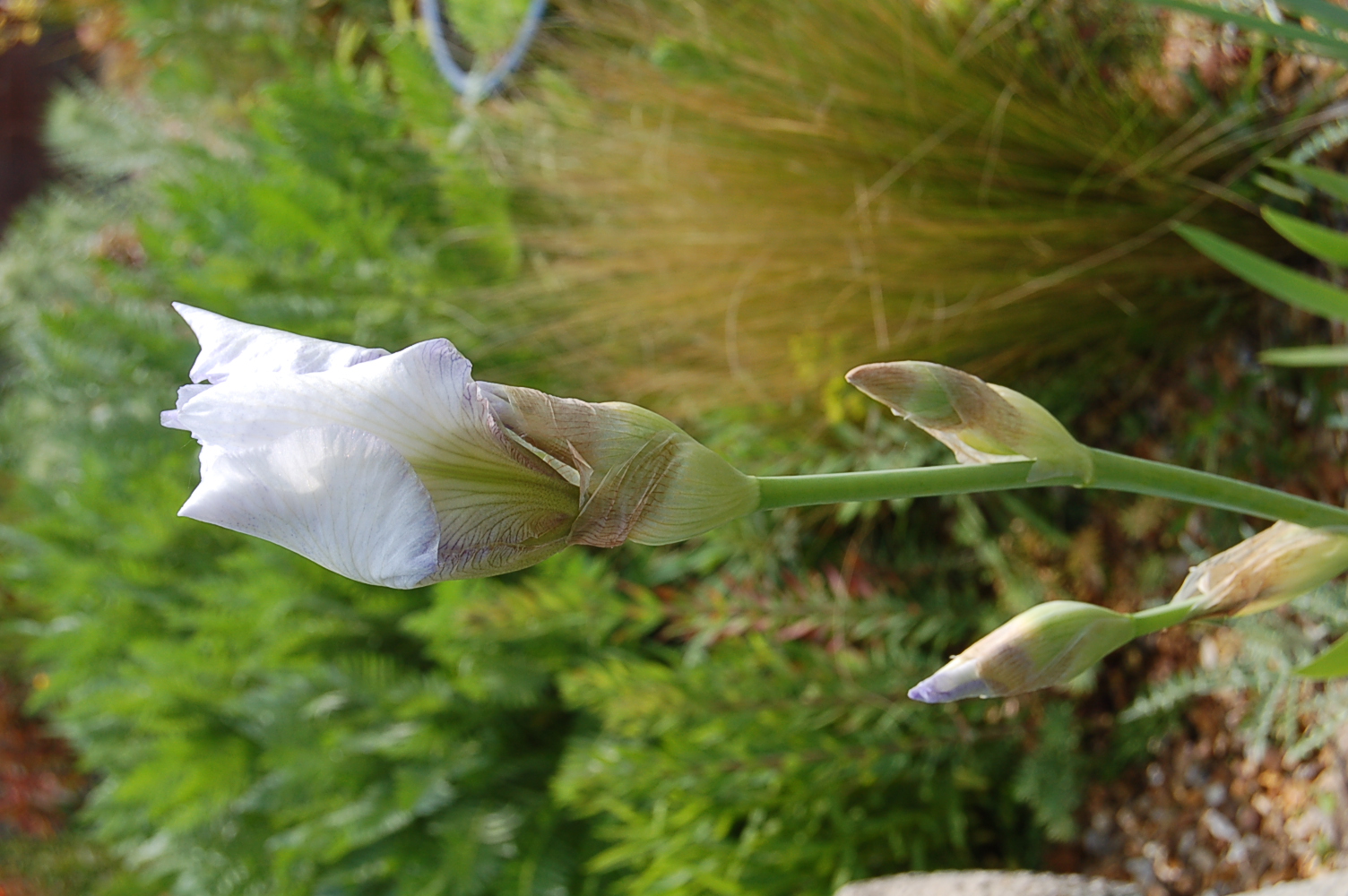
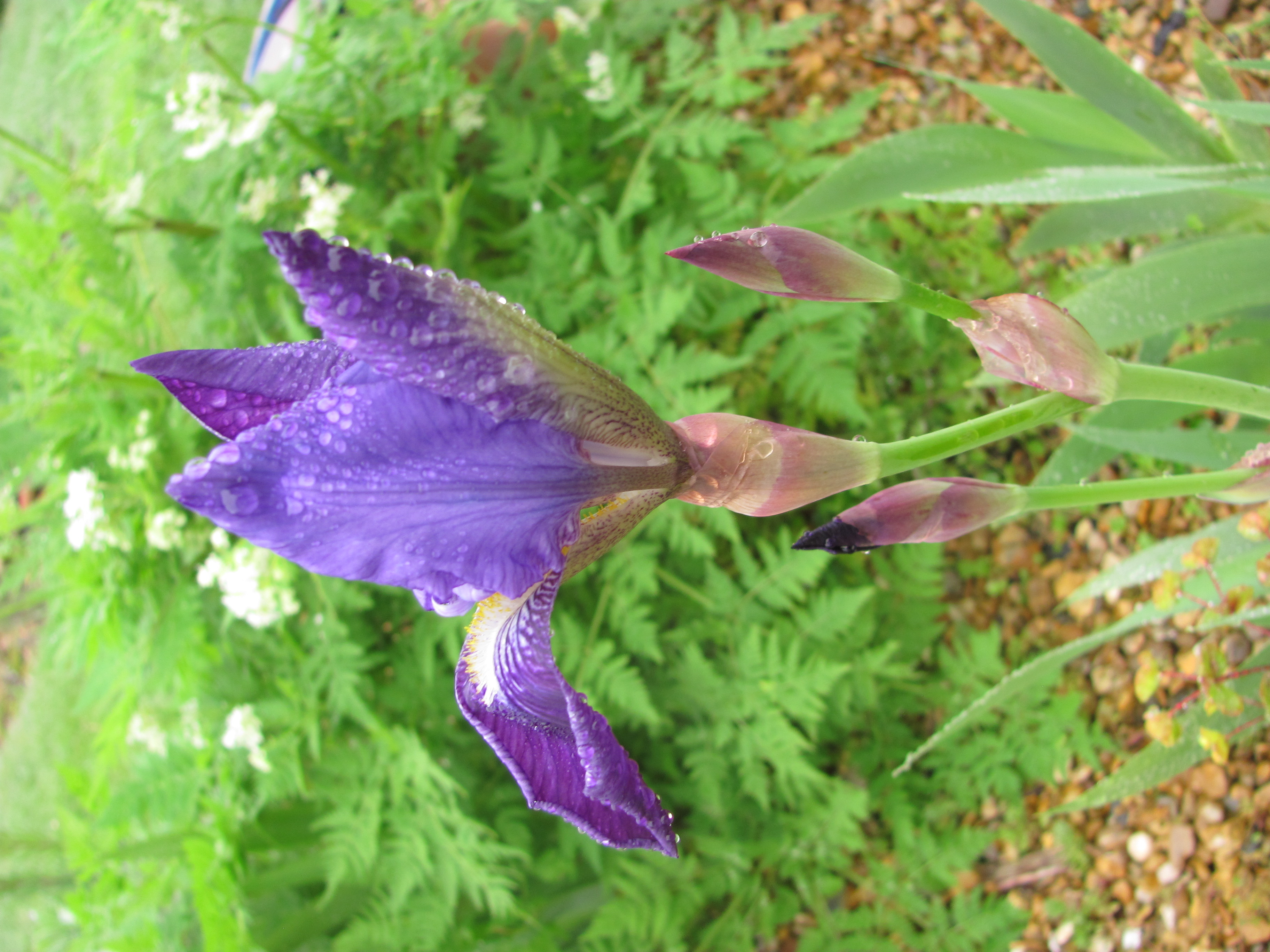
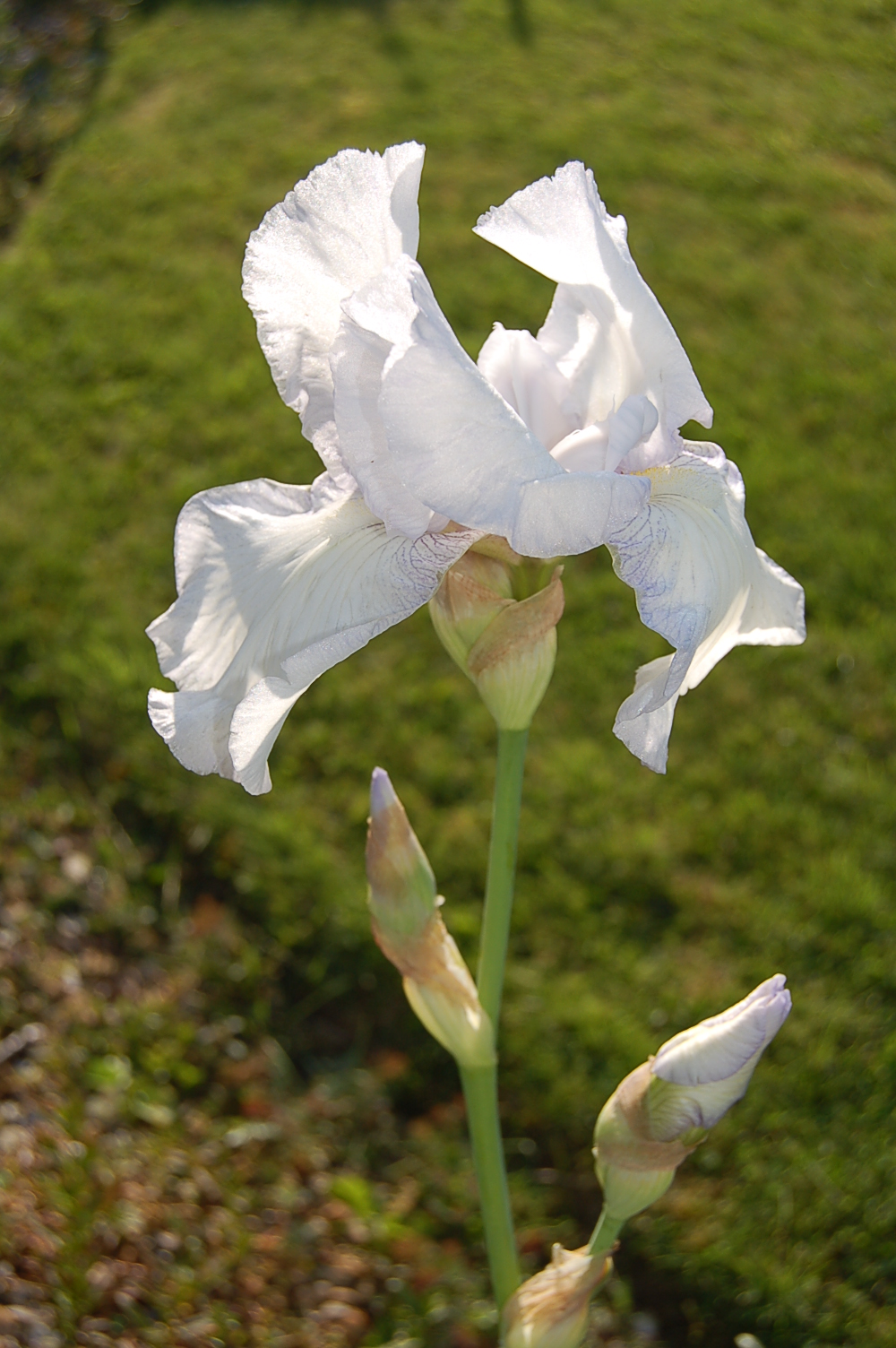
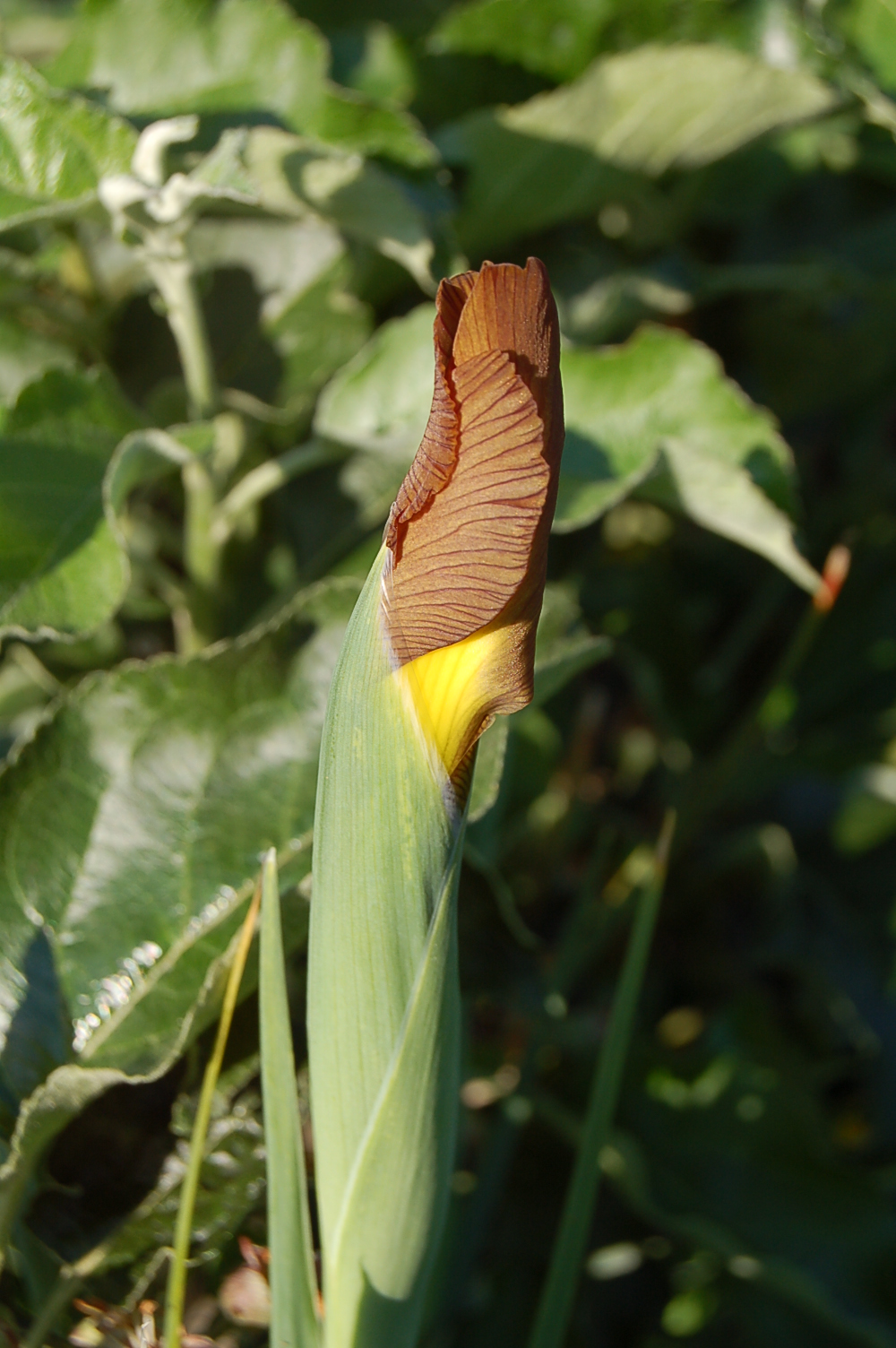
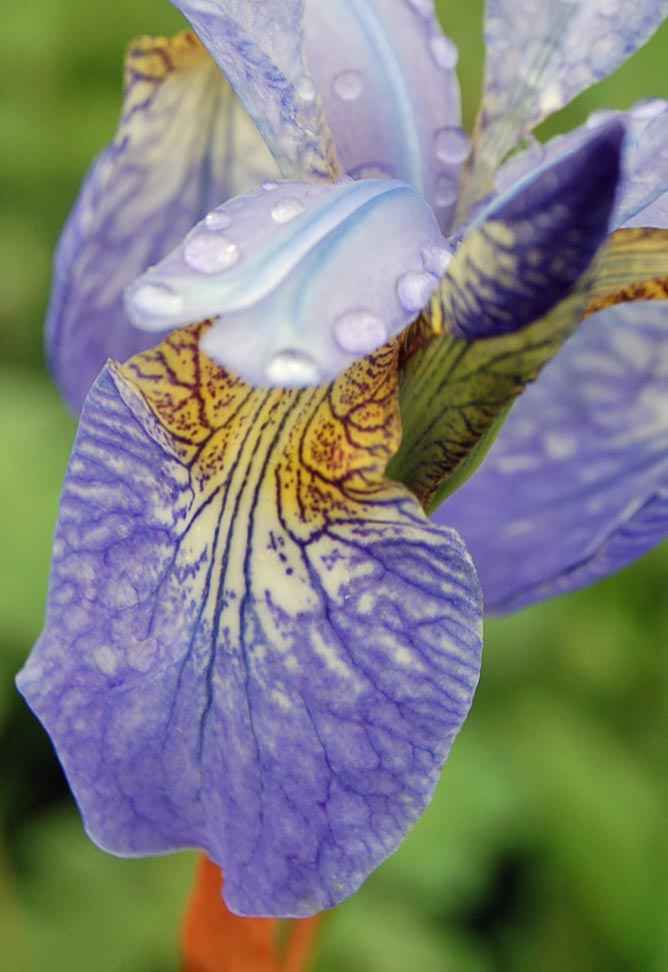
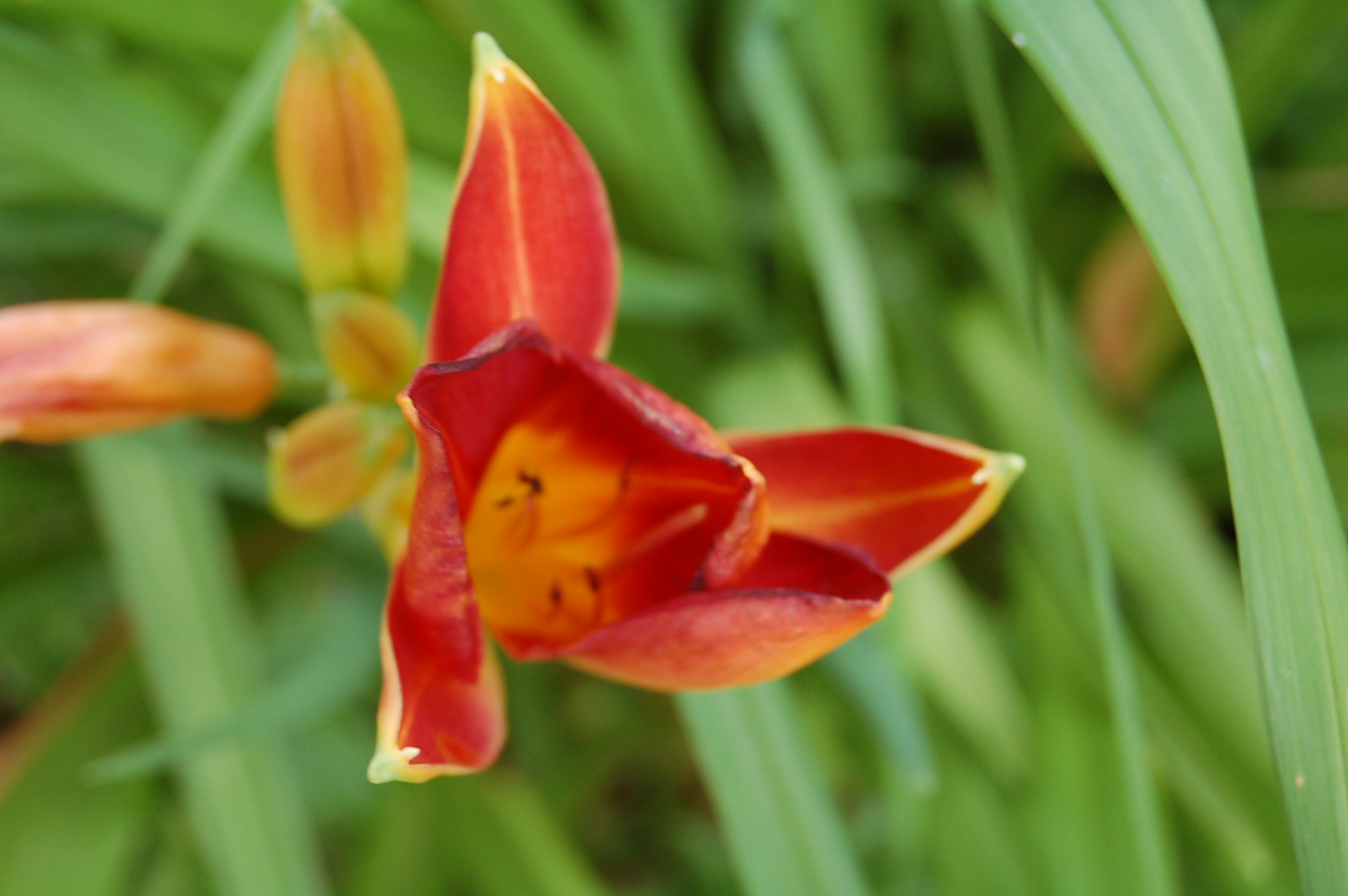
Early summer sunshine is the best time to see irises and appreciate their beauty. The brightness of colours illuminated by the sun gives them an ethereal quality that no other flowers possess.
A journey around our garden and our allotment site with camera in hand tells all there is to say. The first set shows the irises on our “Beth Chatto Garden”, the gravel bed, where they find the conditions ideal. They can sunbathe for hours!
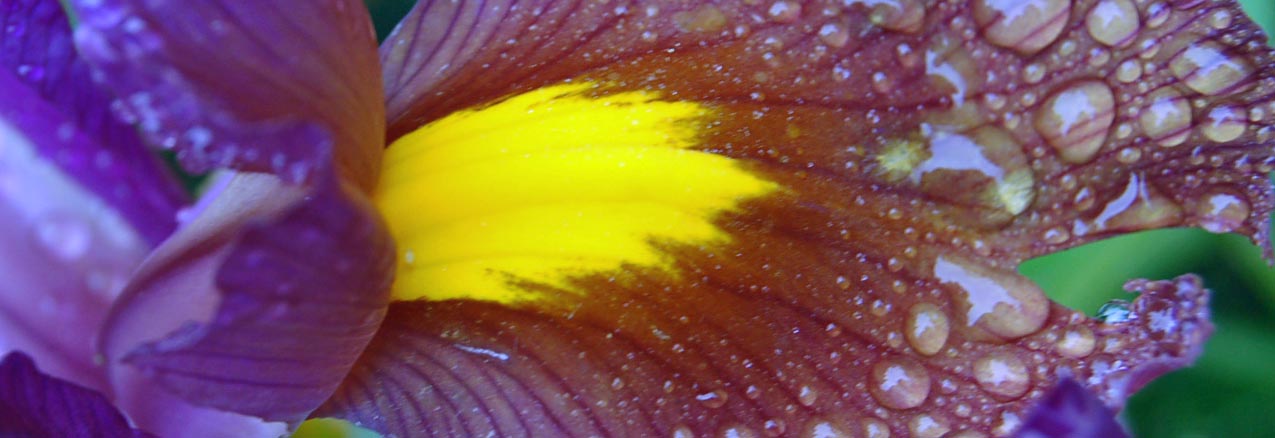
The borders in the back garden are generally too densely planted for Bearded Iris to thrive, but we do grow Dutch iris as cut flowers and Iris sibirica, the bearded’s more subtle cousins. Our Dutch Iris are unusually coloured, one in a combination of blue and yellow and the other a combination of purple and brown with bright yellow centres. We grow them underneath our stepover apples.
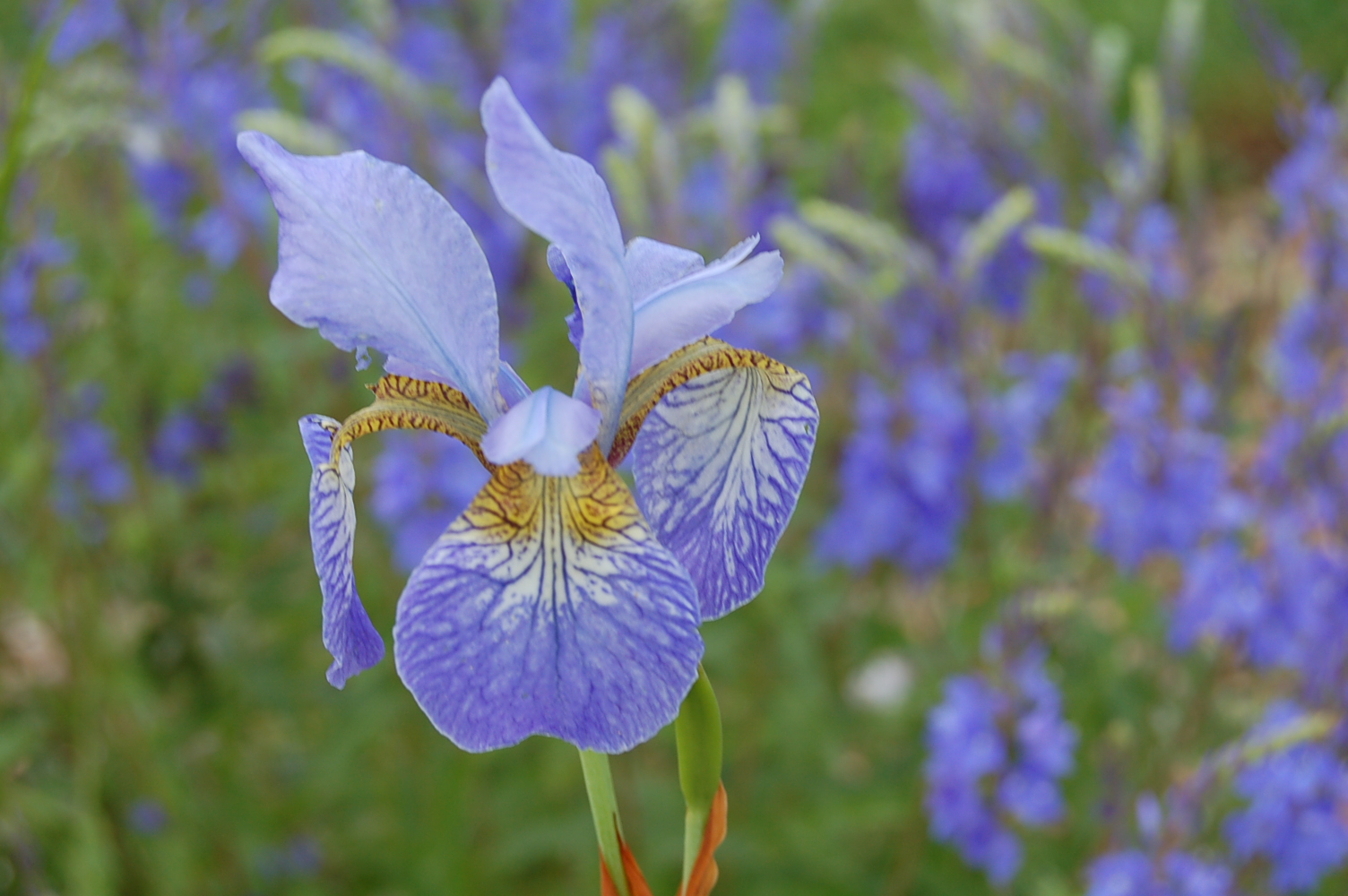
Iris sibirica are tall, slim and delicate, and send up masses of flowers in various shades of blue. They develop large clumps in just a few years so need regularly dividing but friends enjoy receiving the offsets.
On our allotment site several plot holders grow Bearded Iris on their plots and we have planted groups of Iris sibirica in the community gardens.
Why is it that however much effort we put into planning colour combinations of flowering plants in our garden, Mother Nature comes along and shows us how to do it properly and to show she is the boss.
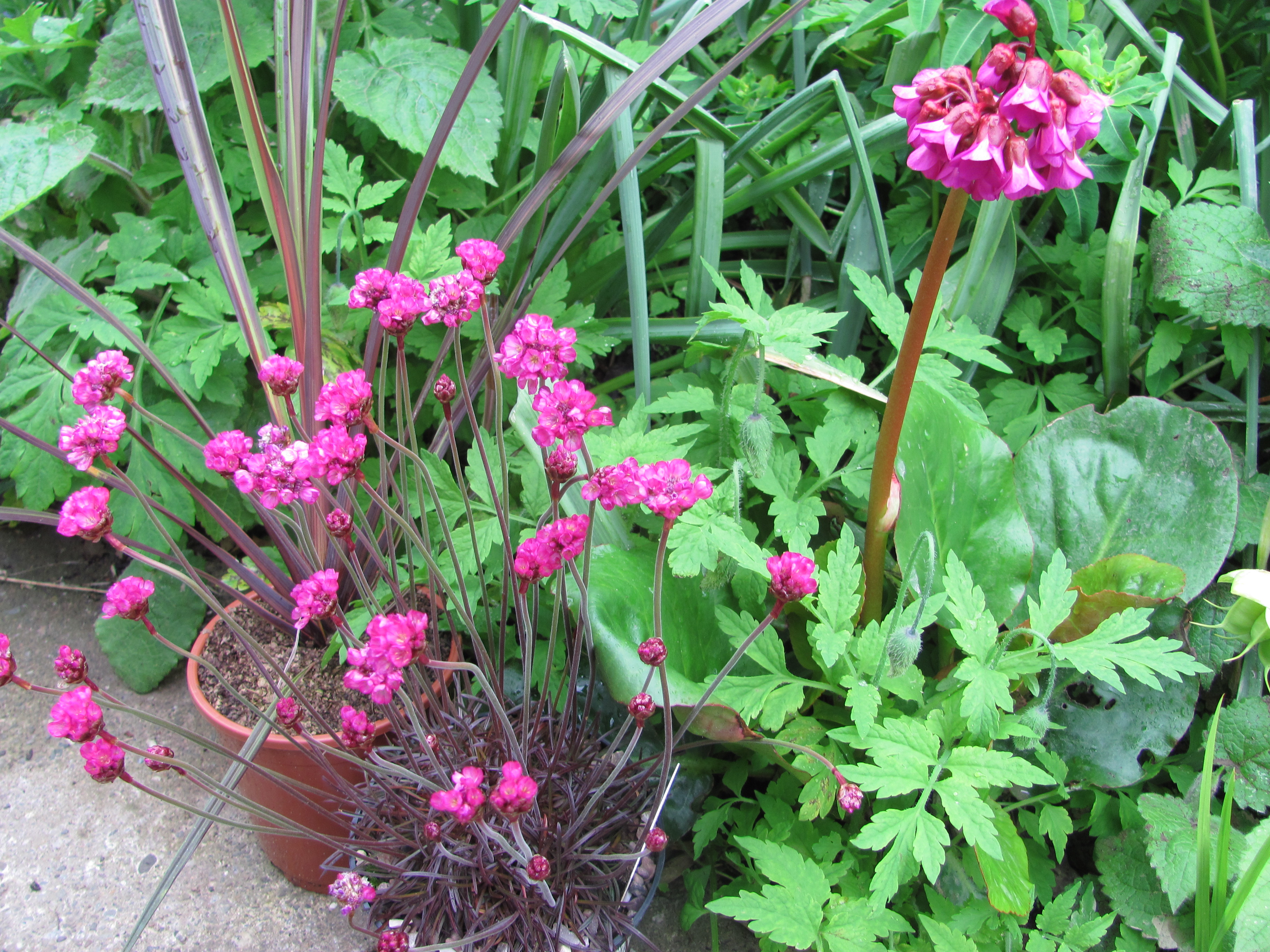
We bought a beautiful new Sea Thrift with deep cerise flowers and contrasting purple foliage a few days ago and without thinking placed it next to a Bergenia. Walking past today I noticed that the flowers matched perfectly. Just check this out!
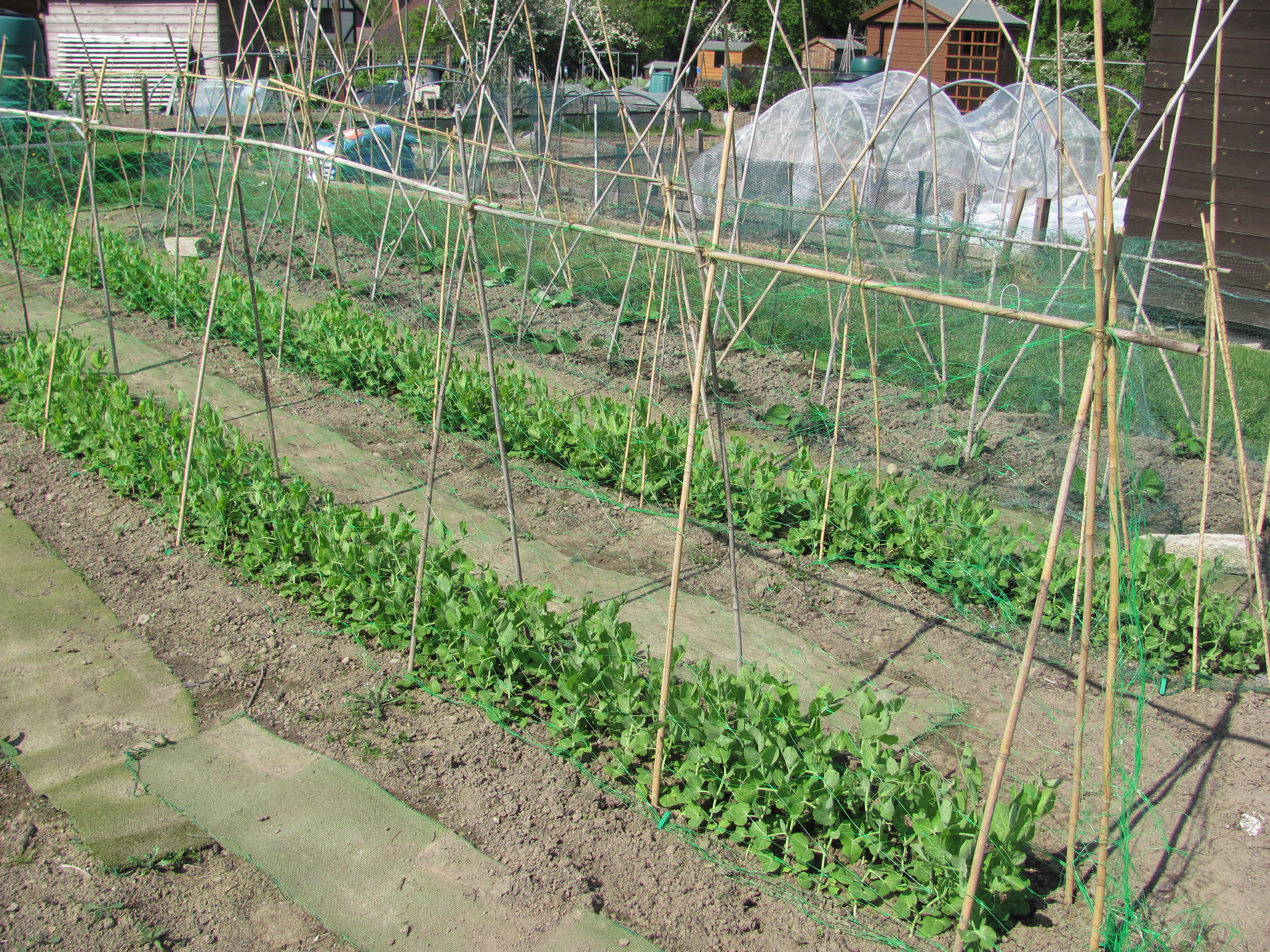
May is a busy month on the allotment, seeds need sowing, seedlings need thinning, weeds need hoeing and early crops reward us with early harvests. And of course our grass paths separating the four areas of the plot need regular mowing.

The wildlife all around is equally busy, seriously going about the business of breeding with all its inherited trials and tribulations. The weather, predators, prey availability and the search for food for both adults and nests full their young all contrive to make their lives difficult.
We shall begin our May lottie wander on our own plot to see what is going on. The soil is now easily worked so using the hoe to remove seedlings is easy so the plot is looking tidy.


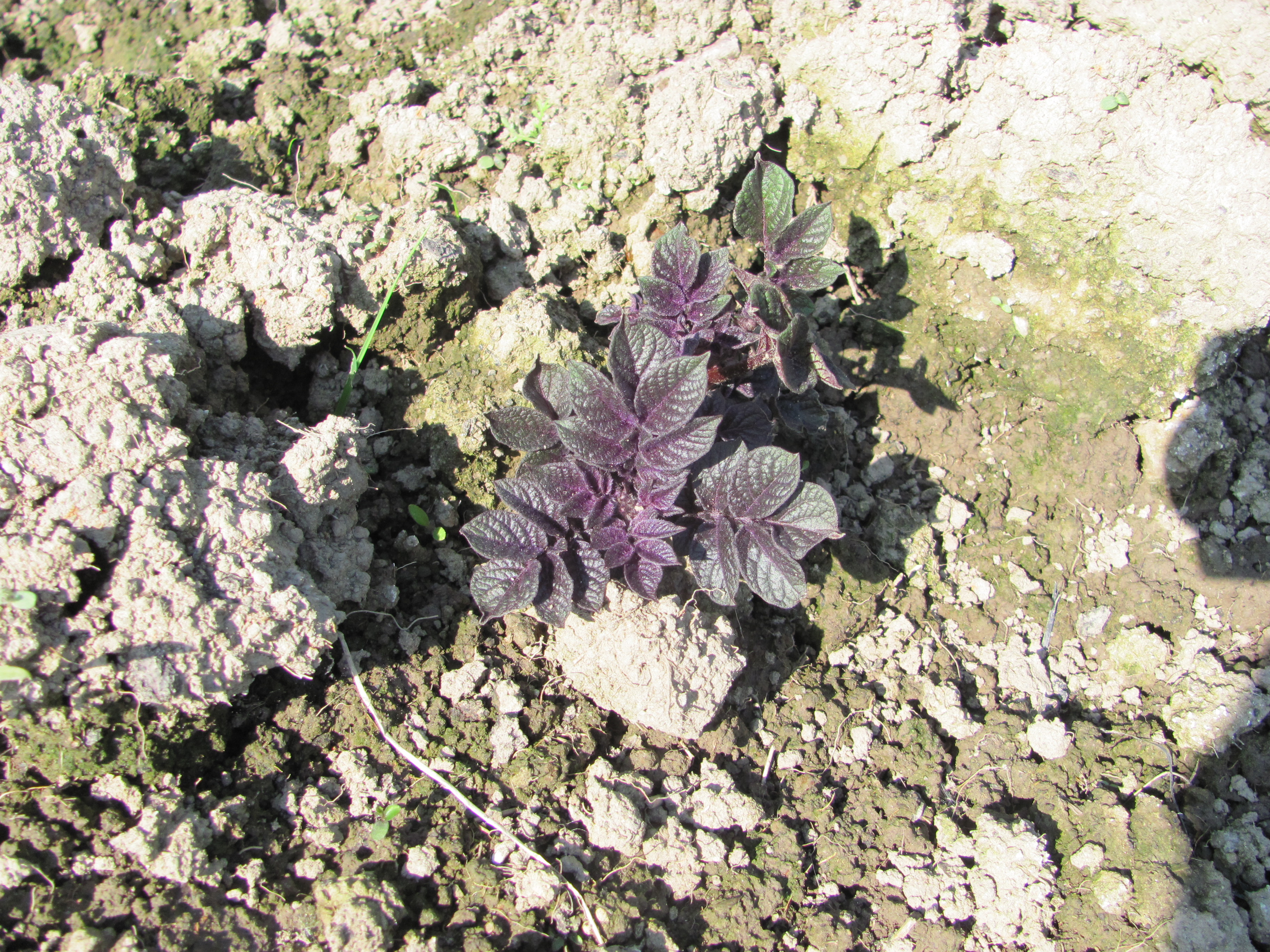
Whenever we are working our plot or helping maintain the green spaces around the site, we are entertained by birds of prey, Buzzards and Kestrels soaring or hovering over our heads and around our feet Robins, Blackbirds, Blue and Great Tits, and Song Thrushes search for food for their young hoping we disturb grubs and bugs with our digging, raking and hoeing. More secretive in their search for fodder for young are the Black Caps, Woodpeckers and Nuthatches. Overhead the hirondelles, (Swallows, Swifts and House Martins), having recently returned from their winter haunts greedily scoop up insects on the wing.Although the weather has been warm and dry for a few days now the end of our plot where the clay comes nearest the surface and the topsoil is very thin, water still saturates the land, making working it impossible. But in this wetness in the ridged soil our Red Duke of York potatoes are pushing their purple tinted foliage out towards the sunshine.

In the orchards and over the meadows wildflowers are blooming alongside naturalised ornamental bulbs, attracting butterflies, the crinkle winged Commas, the Orange Tips with orange tips to their wings and the wonderful ethereal Holly Blues.


The Buddleia Borders are coming to life now and the Spring Garden remains very colourful.
Two plot holders, Phil and Doreen, have created a new bed in a shaded area near their plot and made it accessible for all to enjoy.
Most plots are ready for sowing and planting or partly planted up and sown.
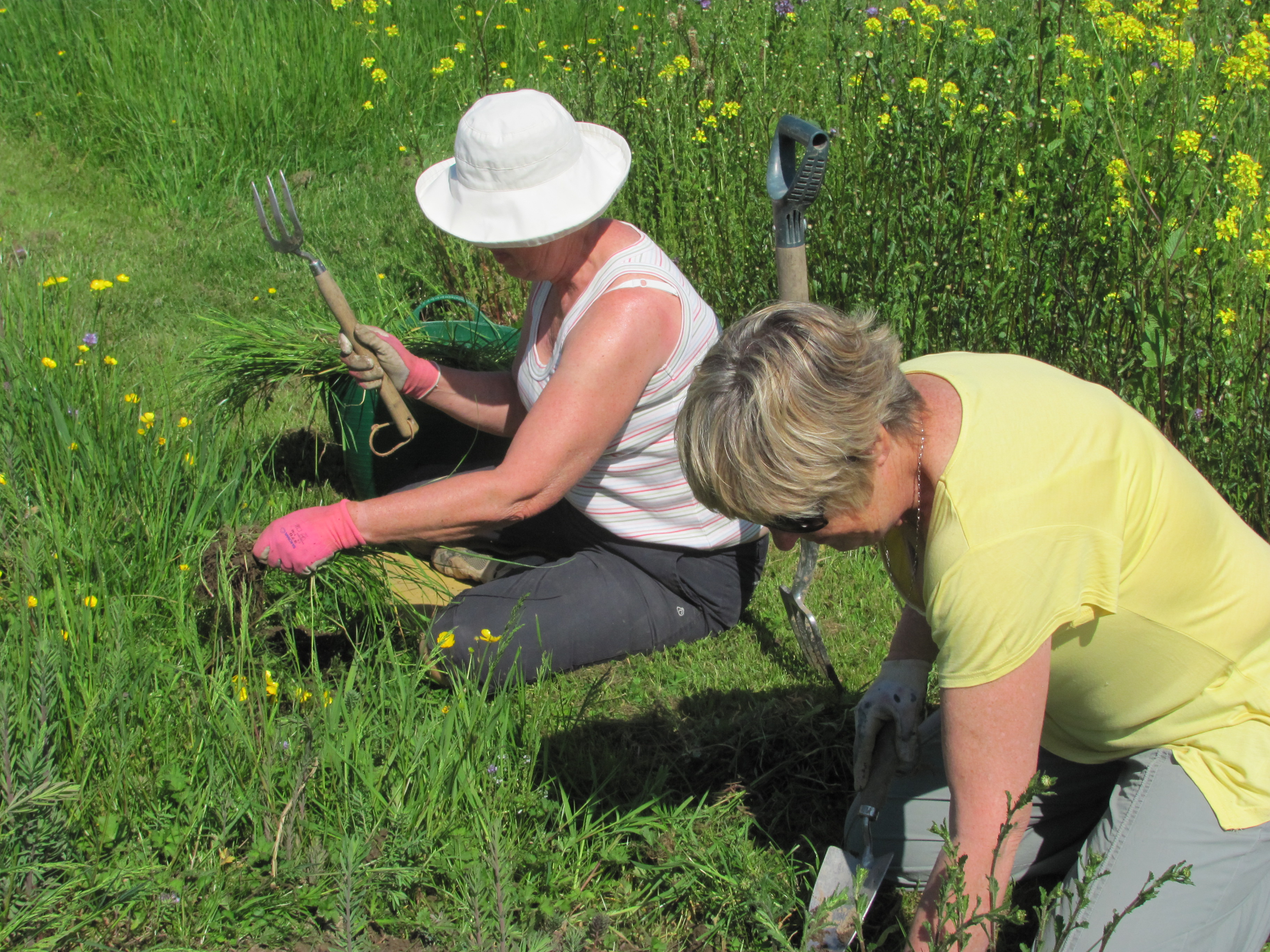
Our May Working Party jobs were decided upon by where the shade was, as it was too hot to work in the full sunshine. We managed to get most of our tasks completed though.


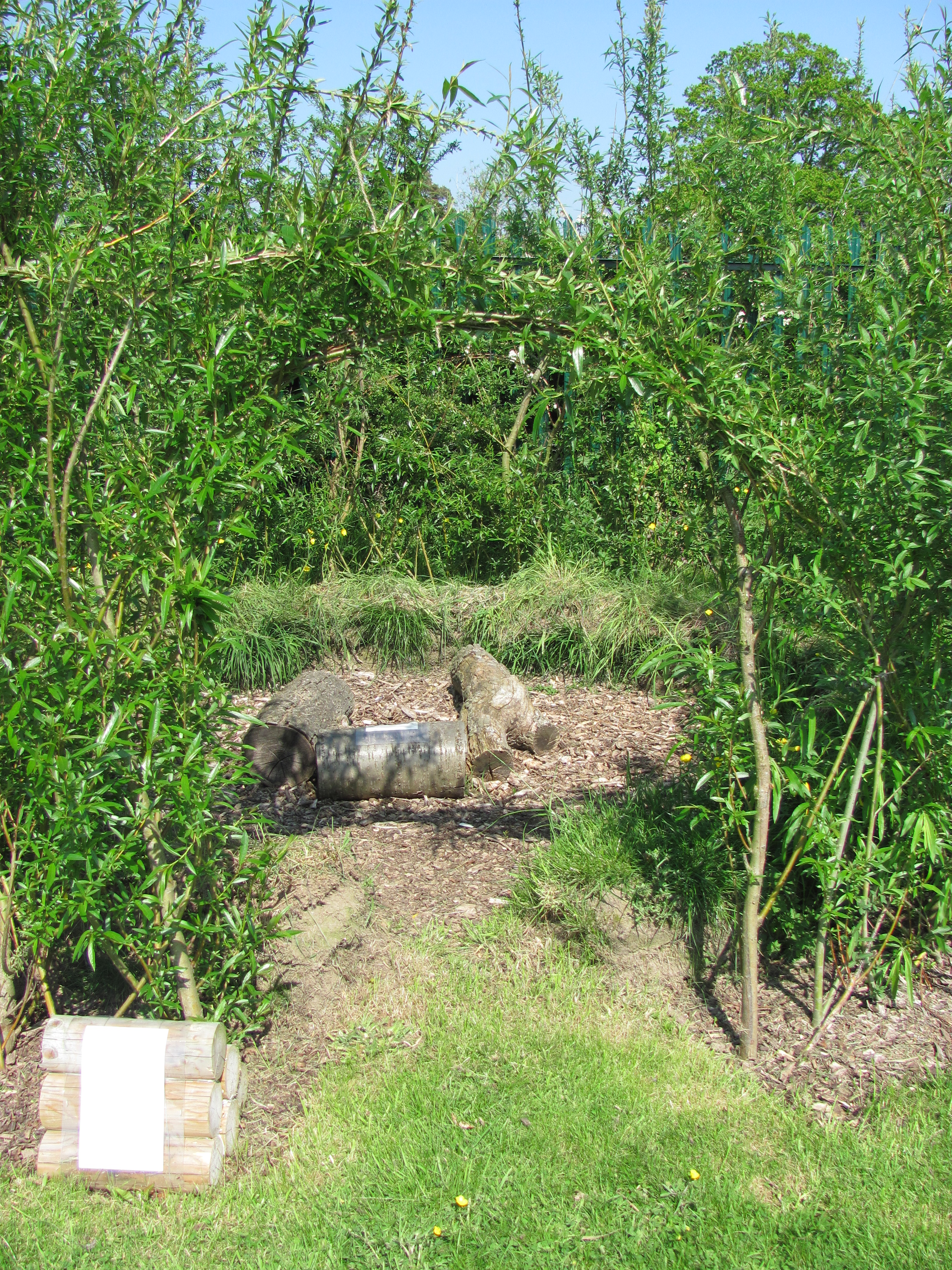
Our Willow Dome has had its doorway and windows woven and neatened up and the sides pruned and woven. It is a favourite feature with children as somewhere to listen to a story, or as a play den, and as adults for somewhere to escape to at coffee time from the heat of the day.
As we have recently launched our site’s Wise Watering Campaign it is heartening to see guttering and butts appearing on several sheds.