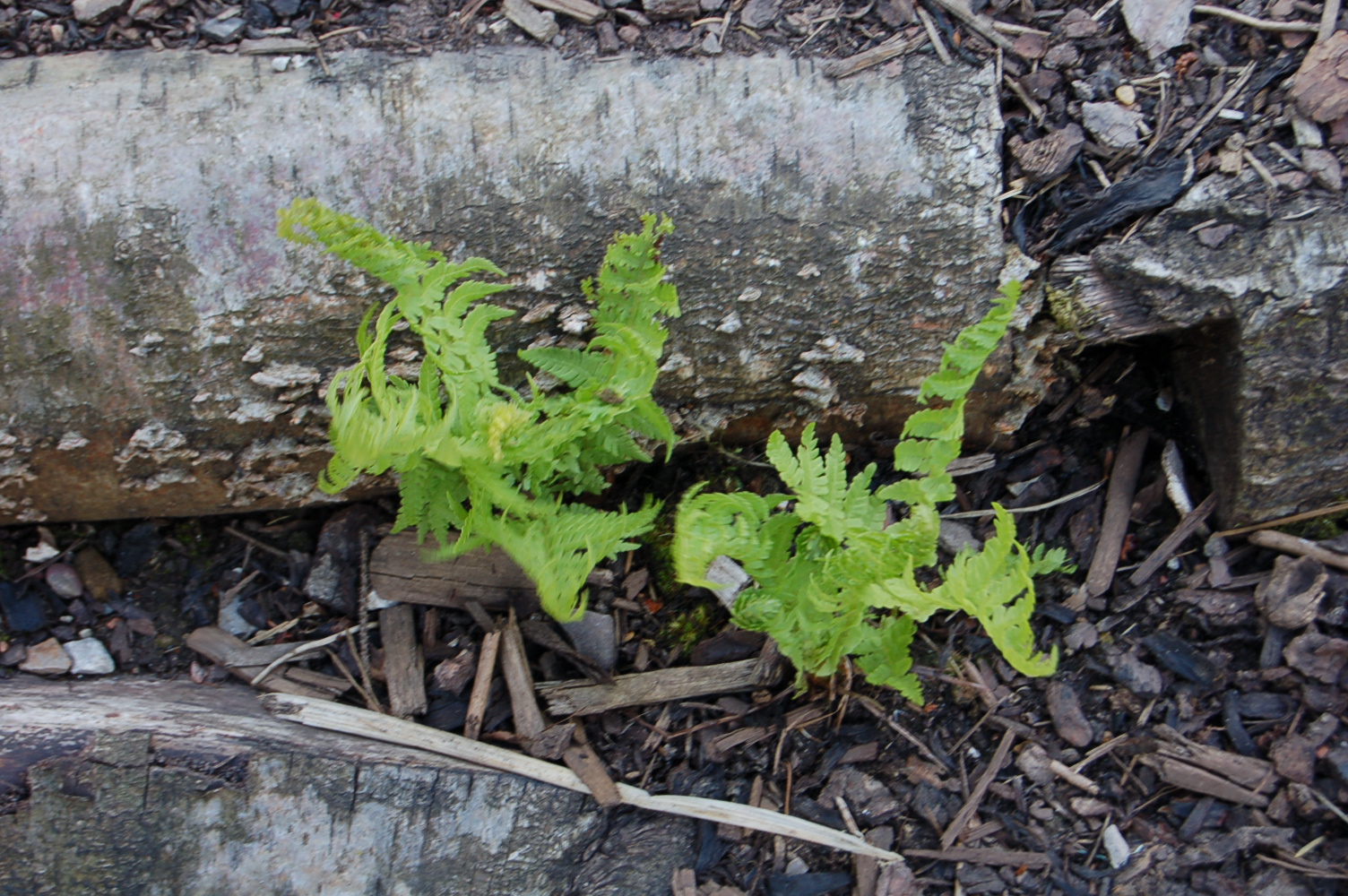
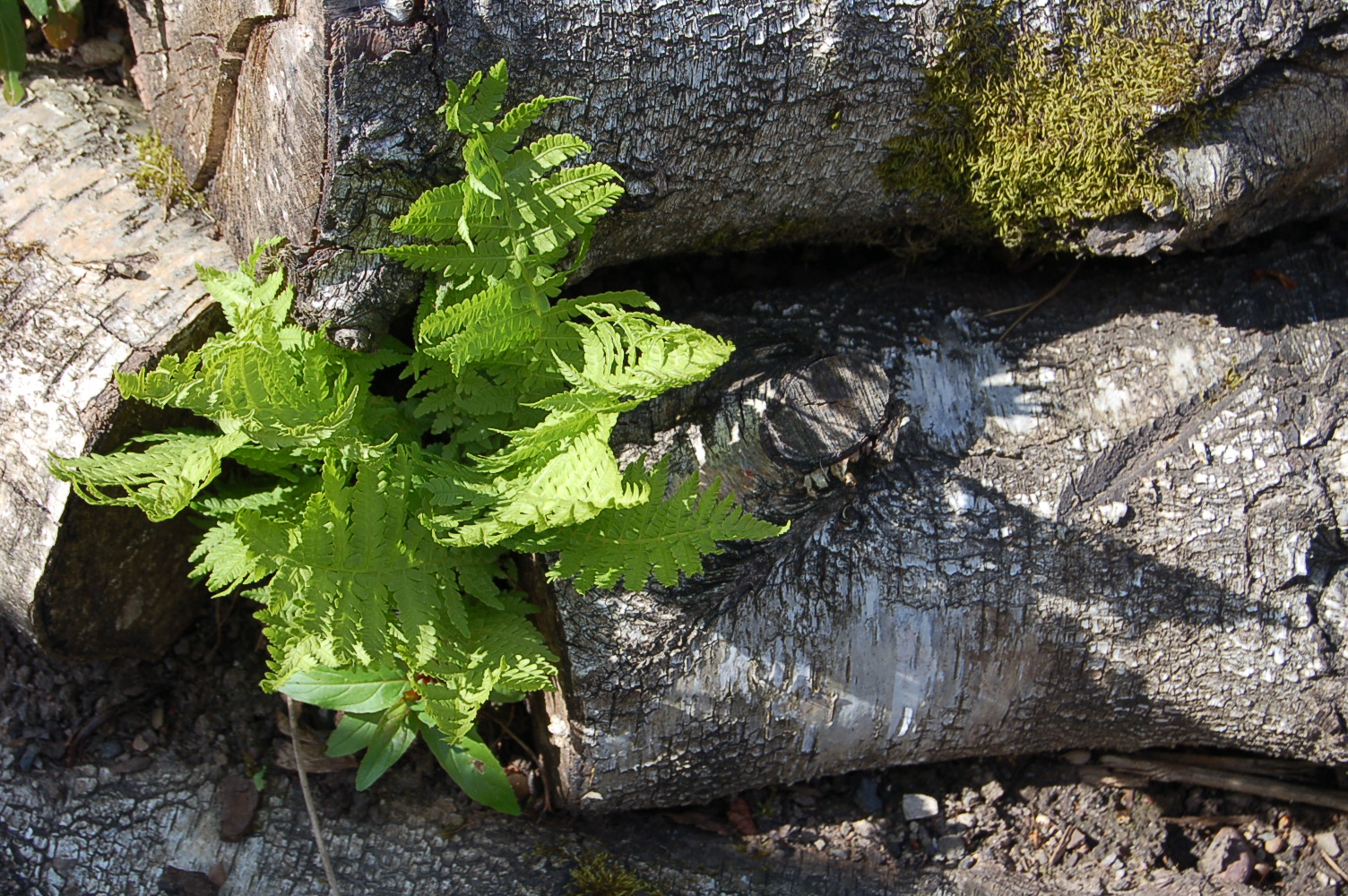
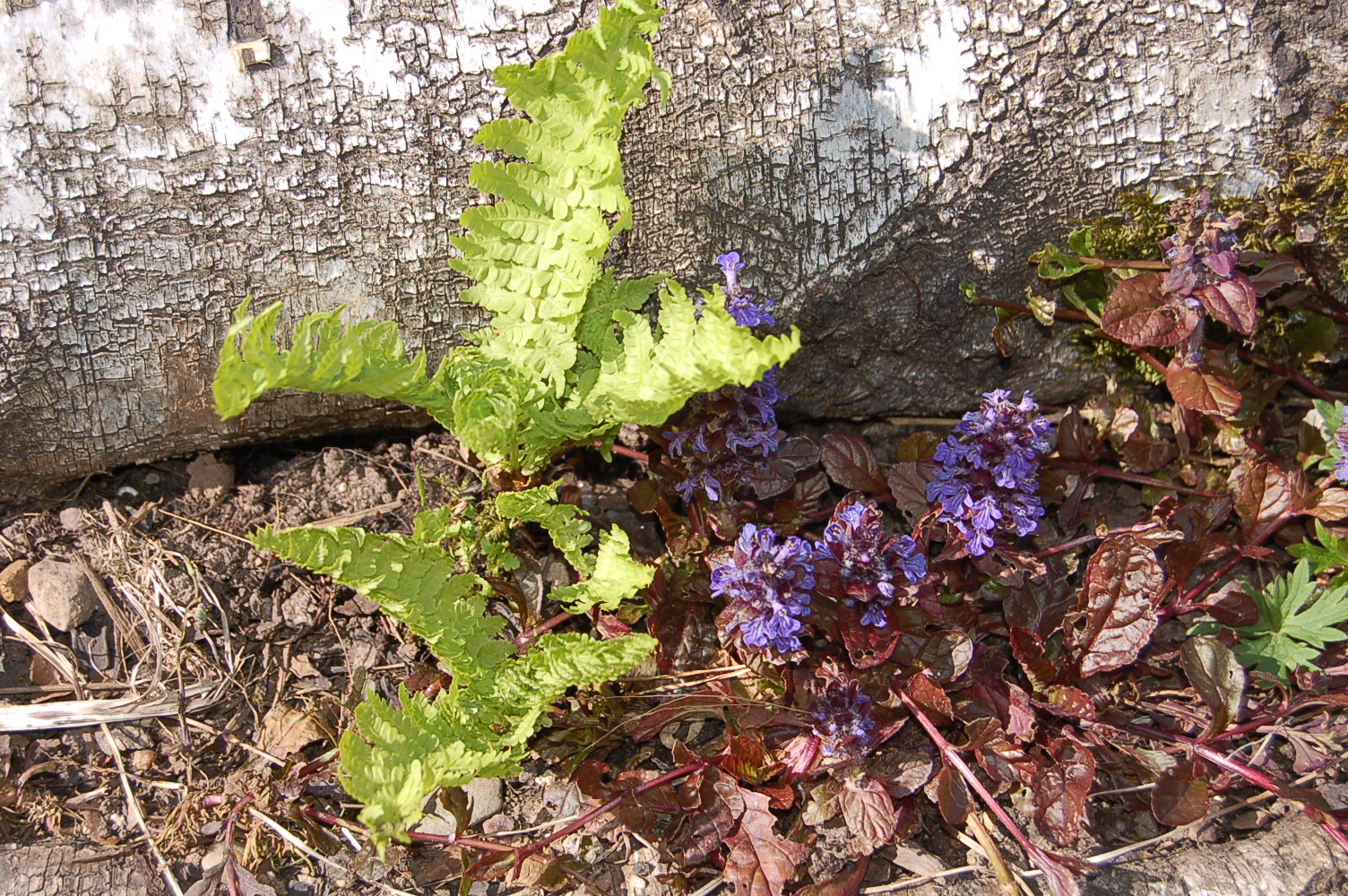
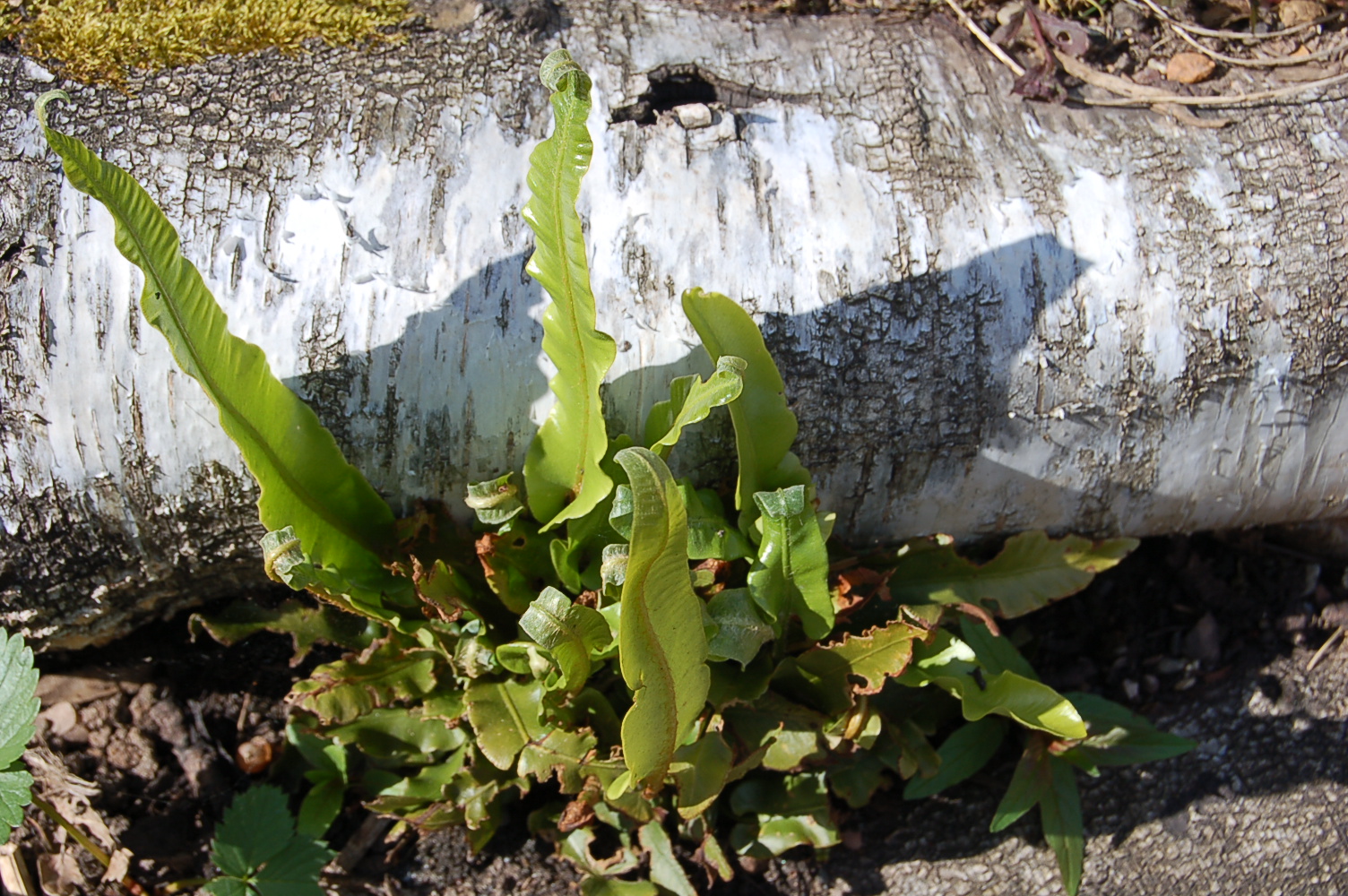
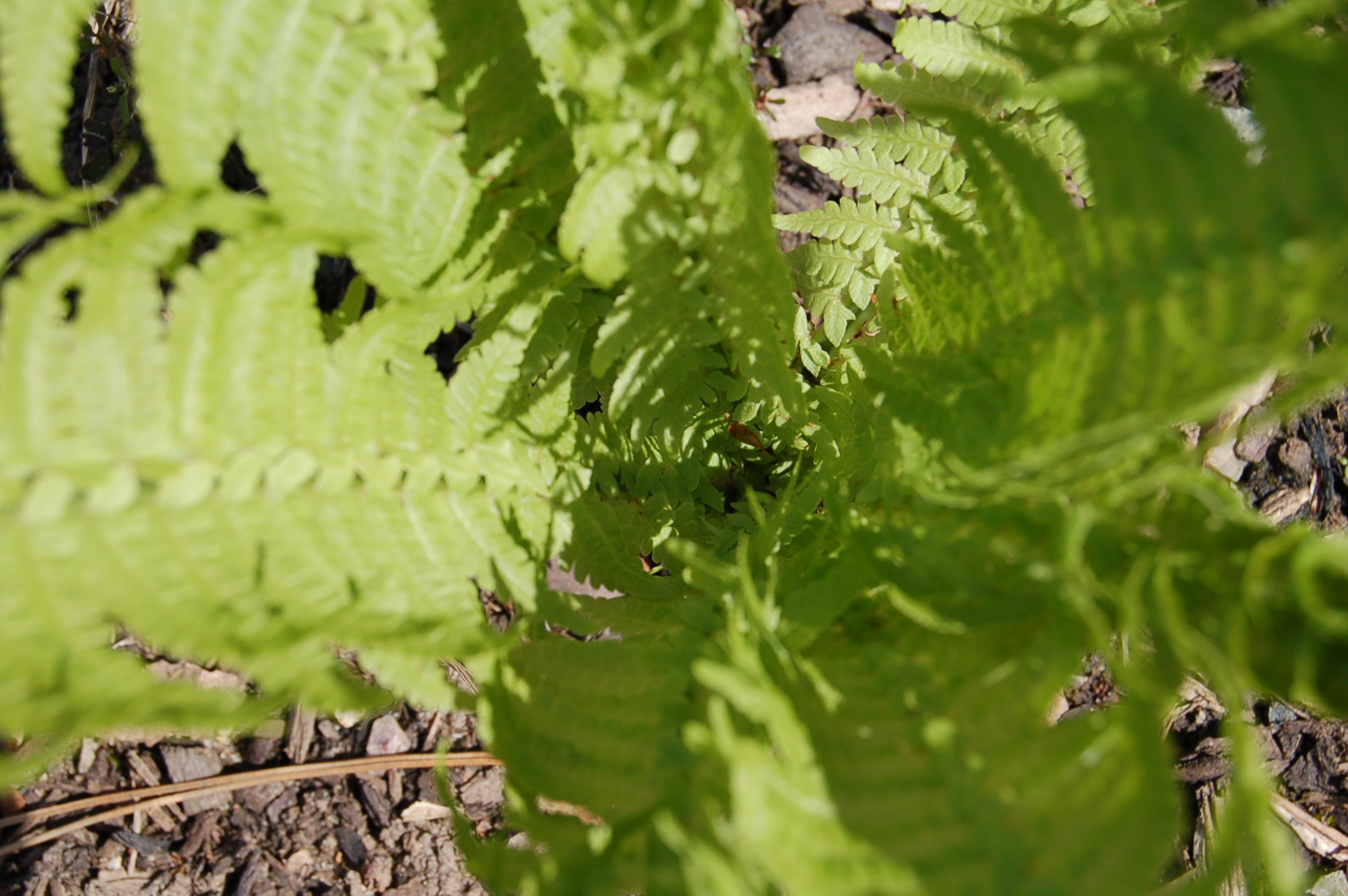
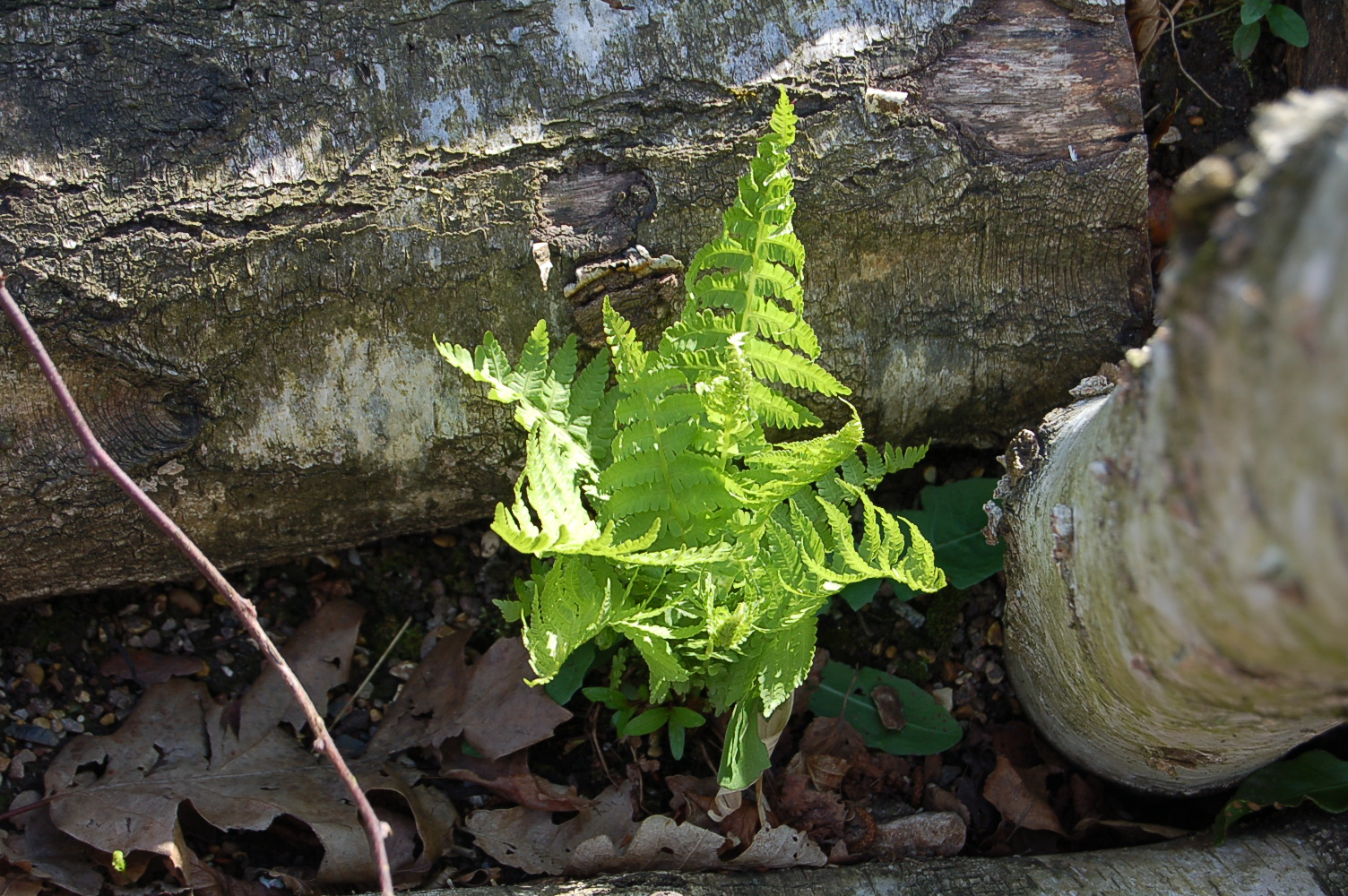
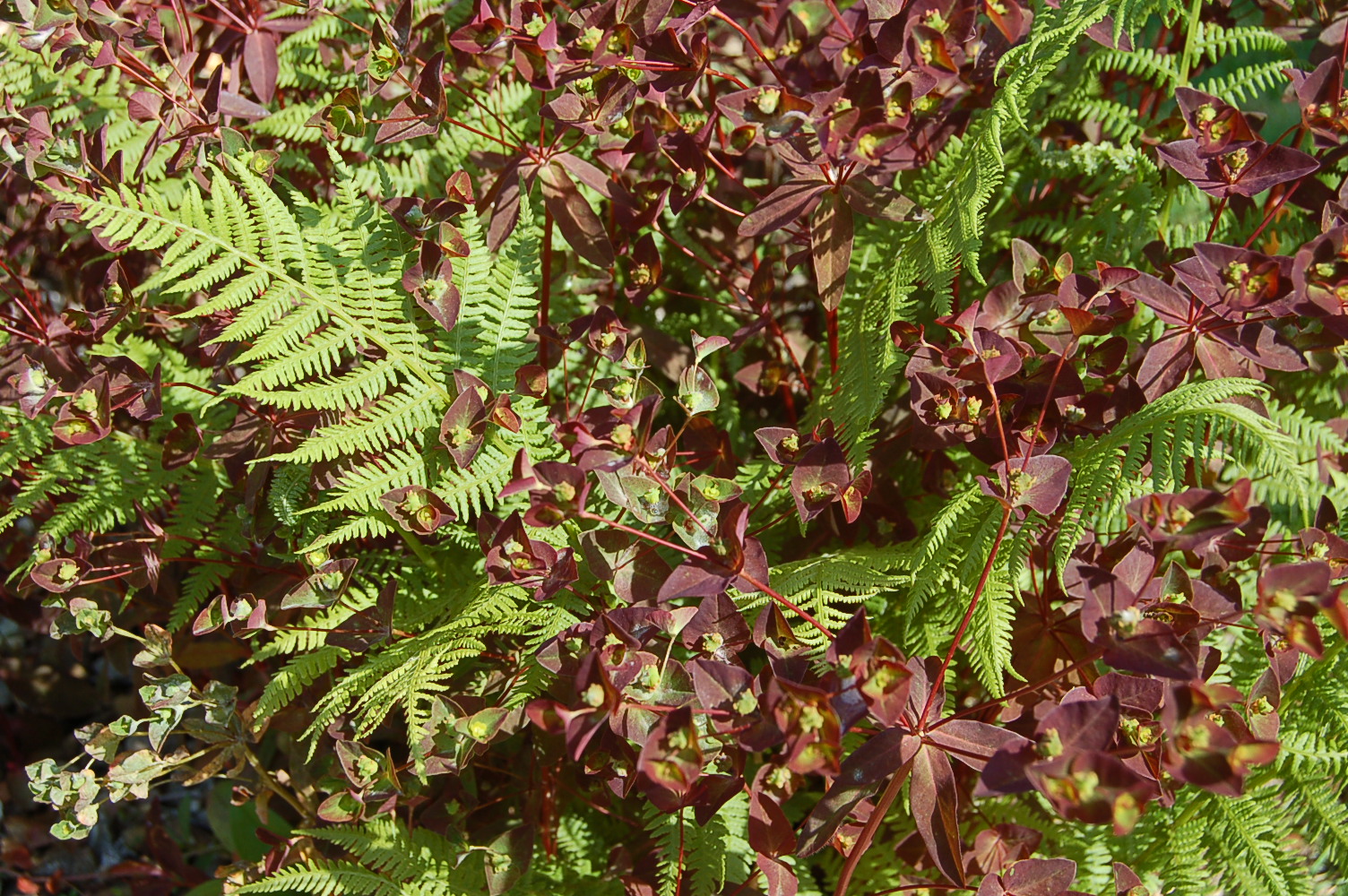
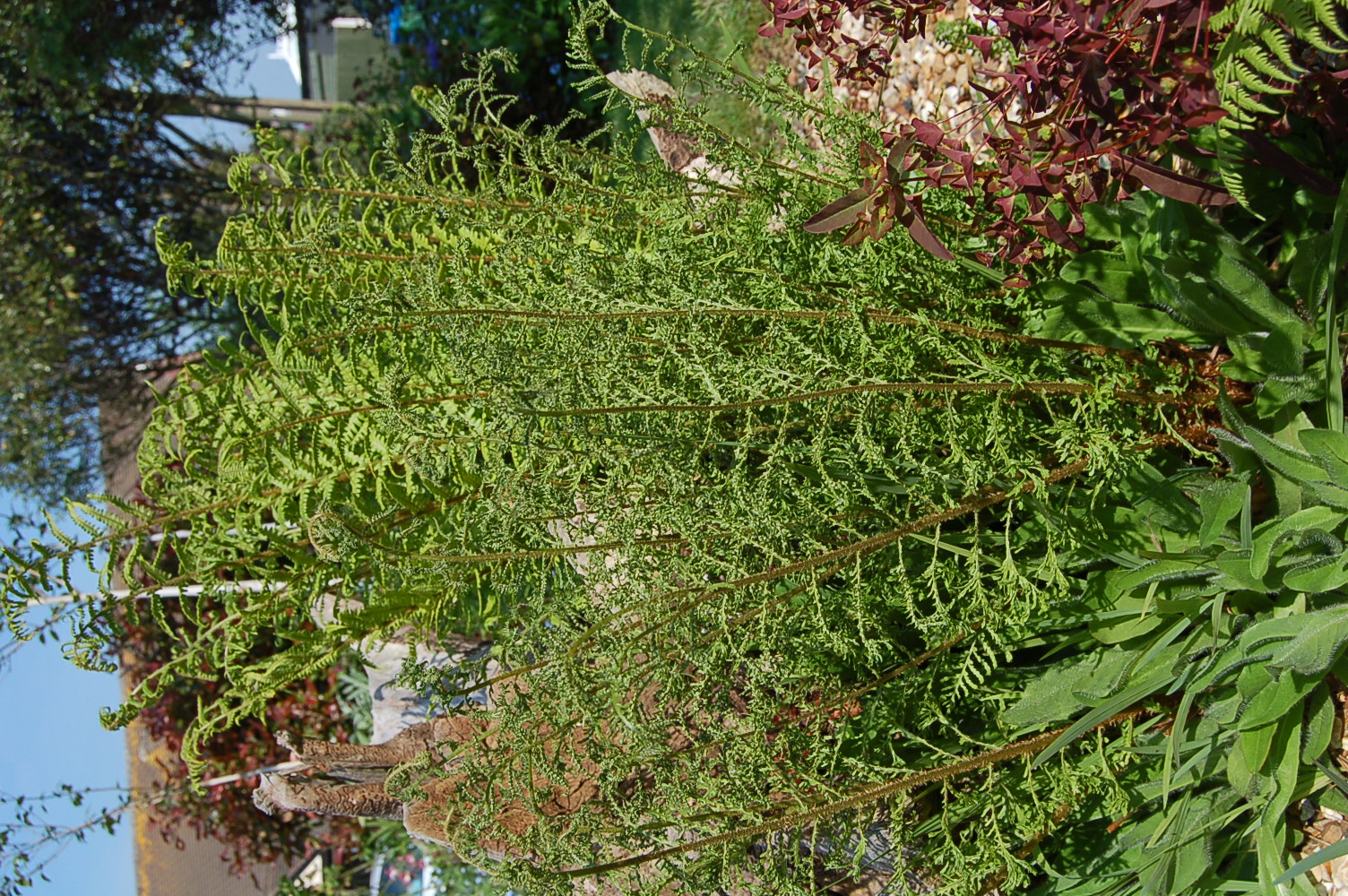
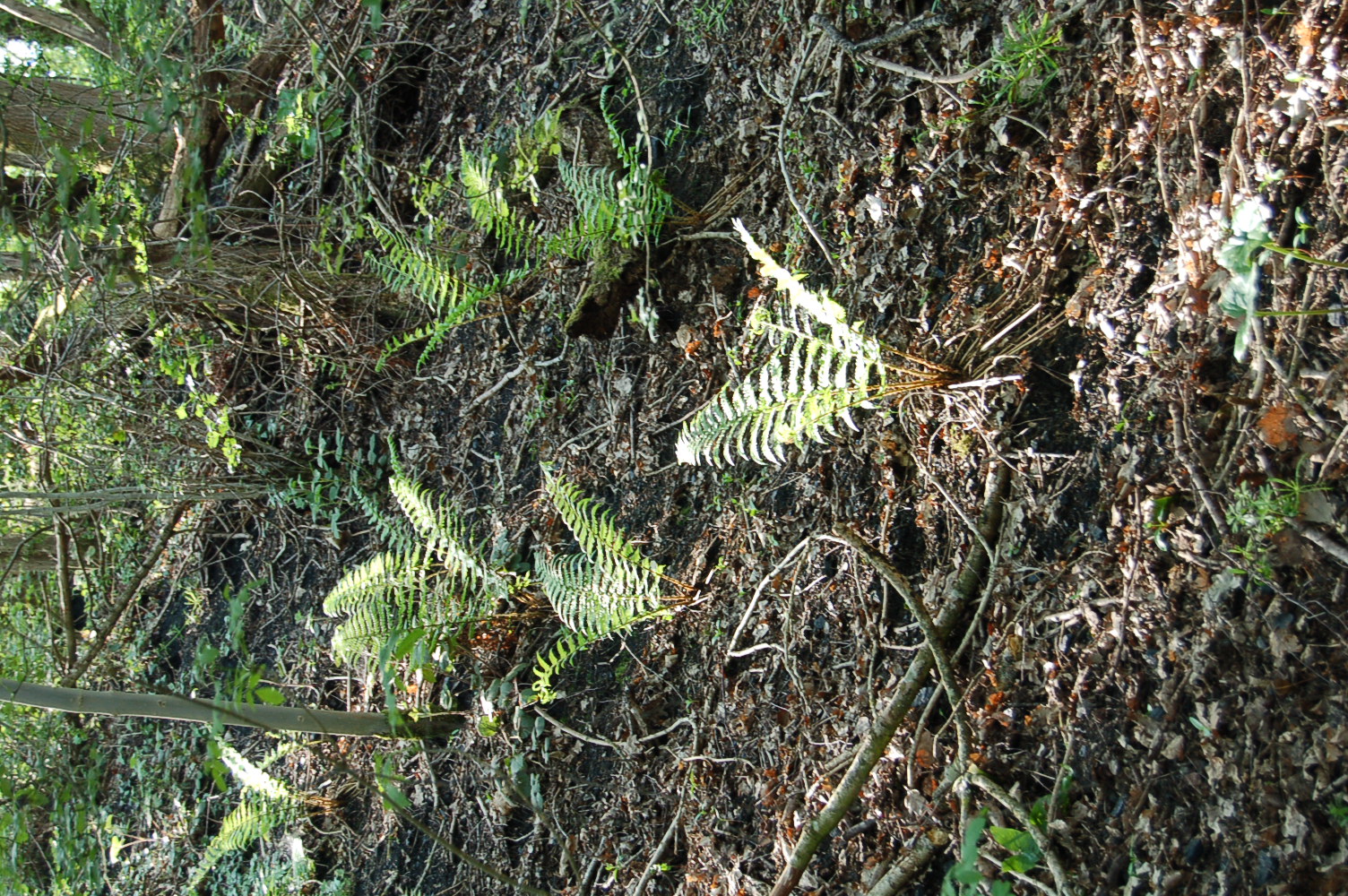
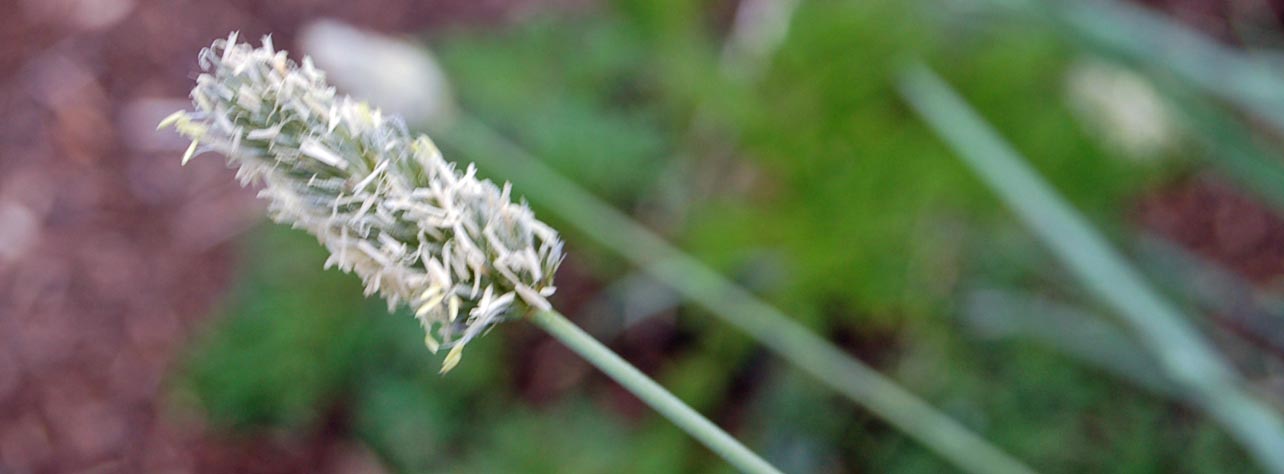
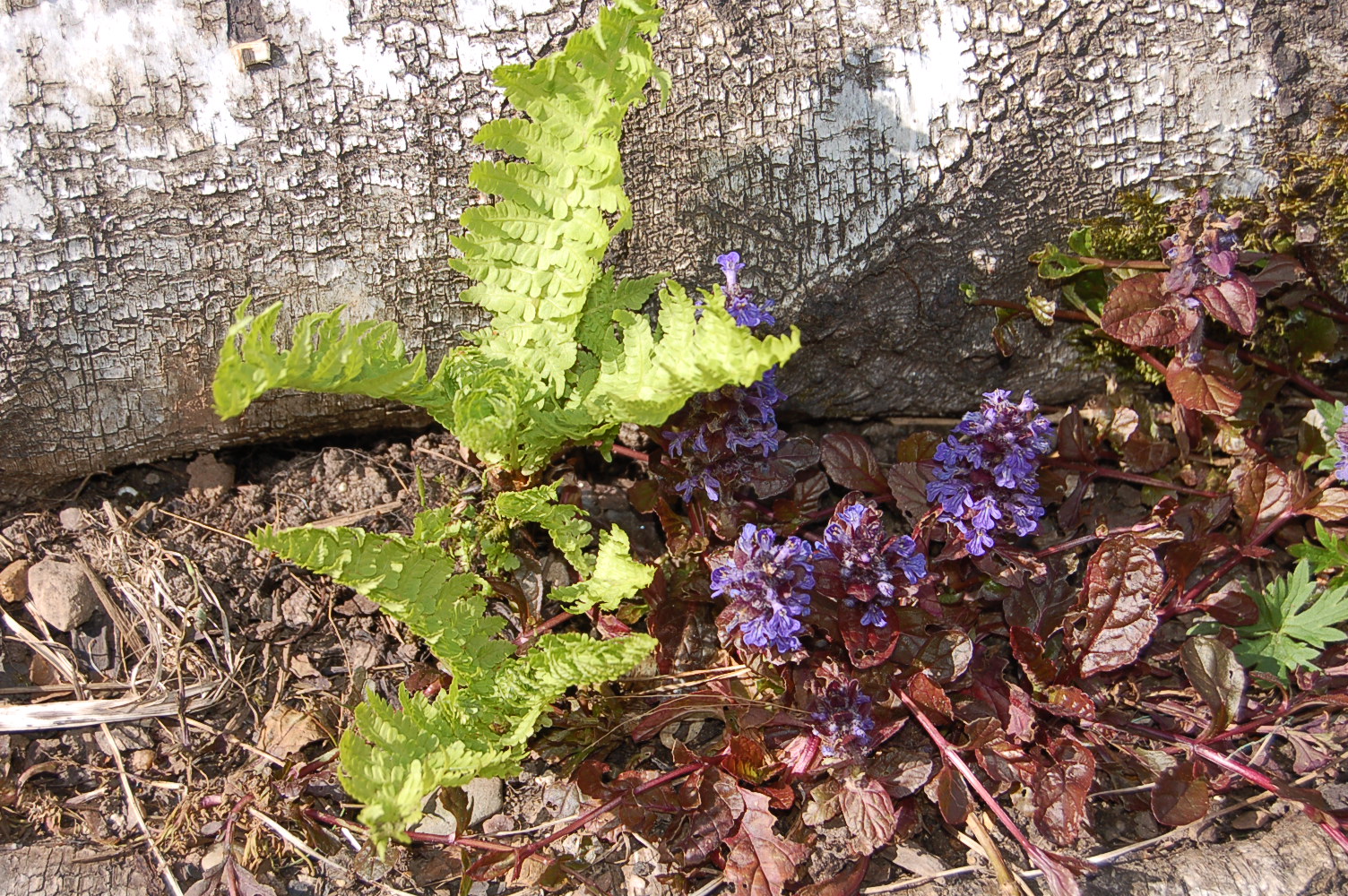
When plants self-seed they often find perfect niches in which to set up home. In a garden recently we found young ferns which had found just such places, but I suppose they self-spore rather than self-seed. All around the edge of a curling path edged with silver birch trunks little ferns were establishing themselves.
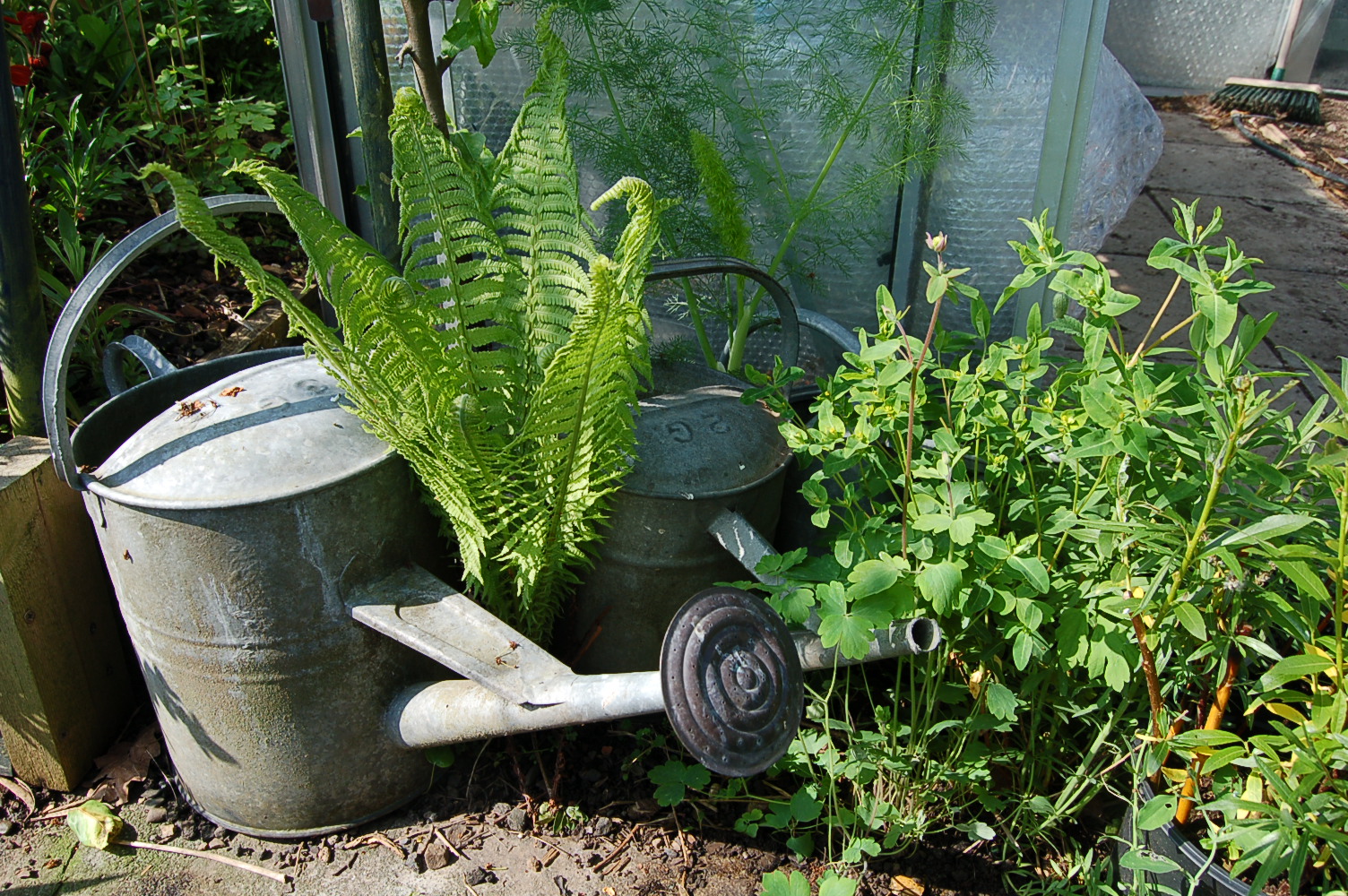
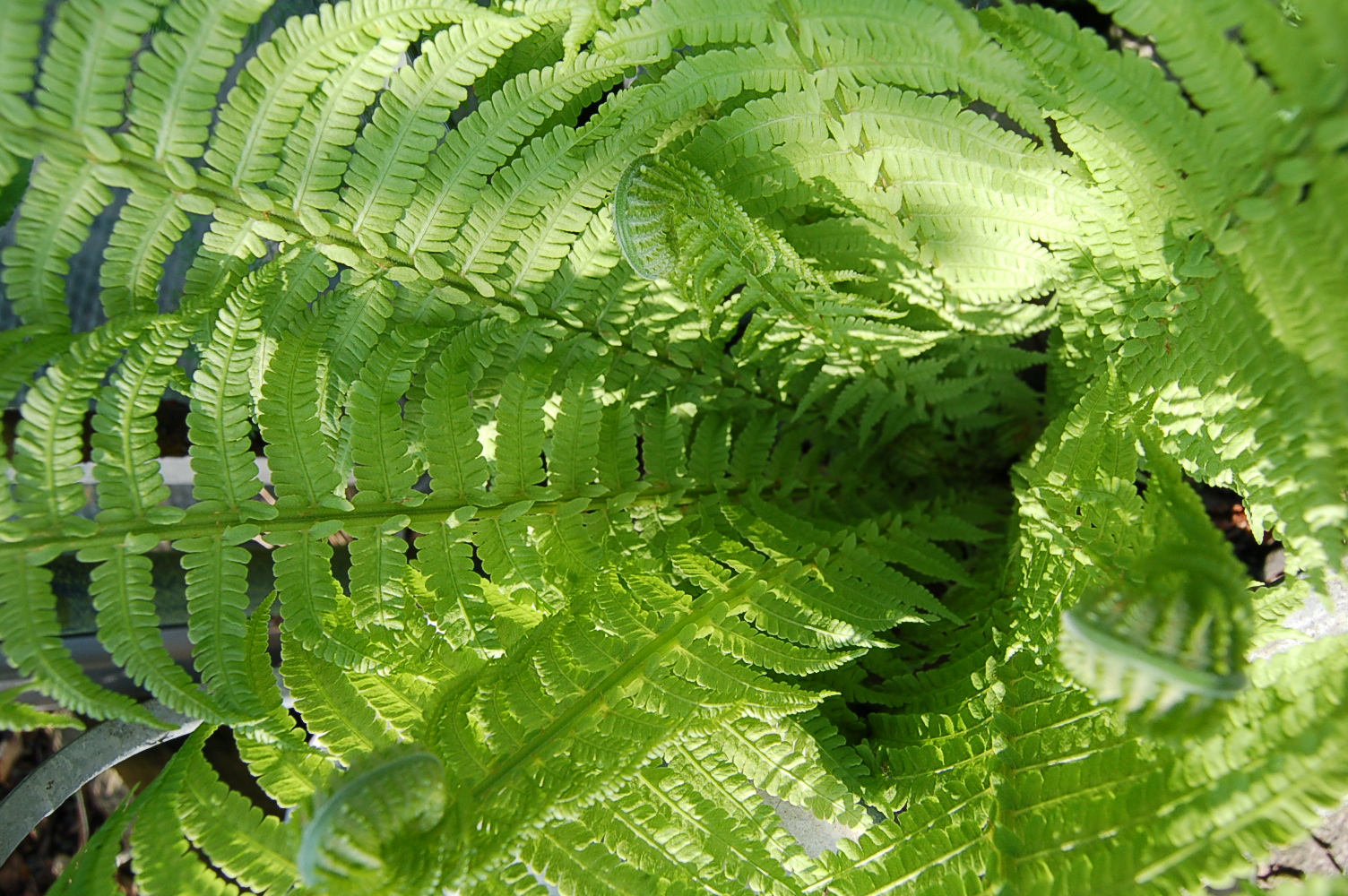
After putting these photos into the blog I had to go out with the camera into our own garden to see what our ferns were getting up to.
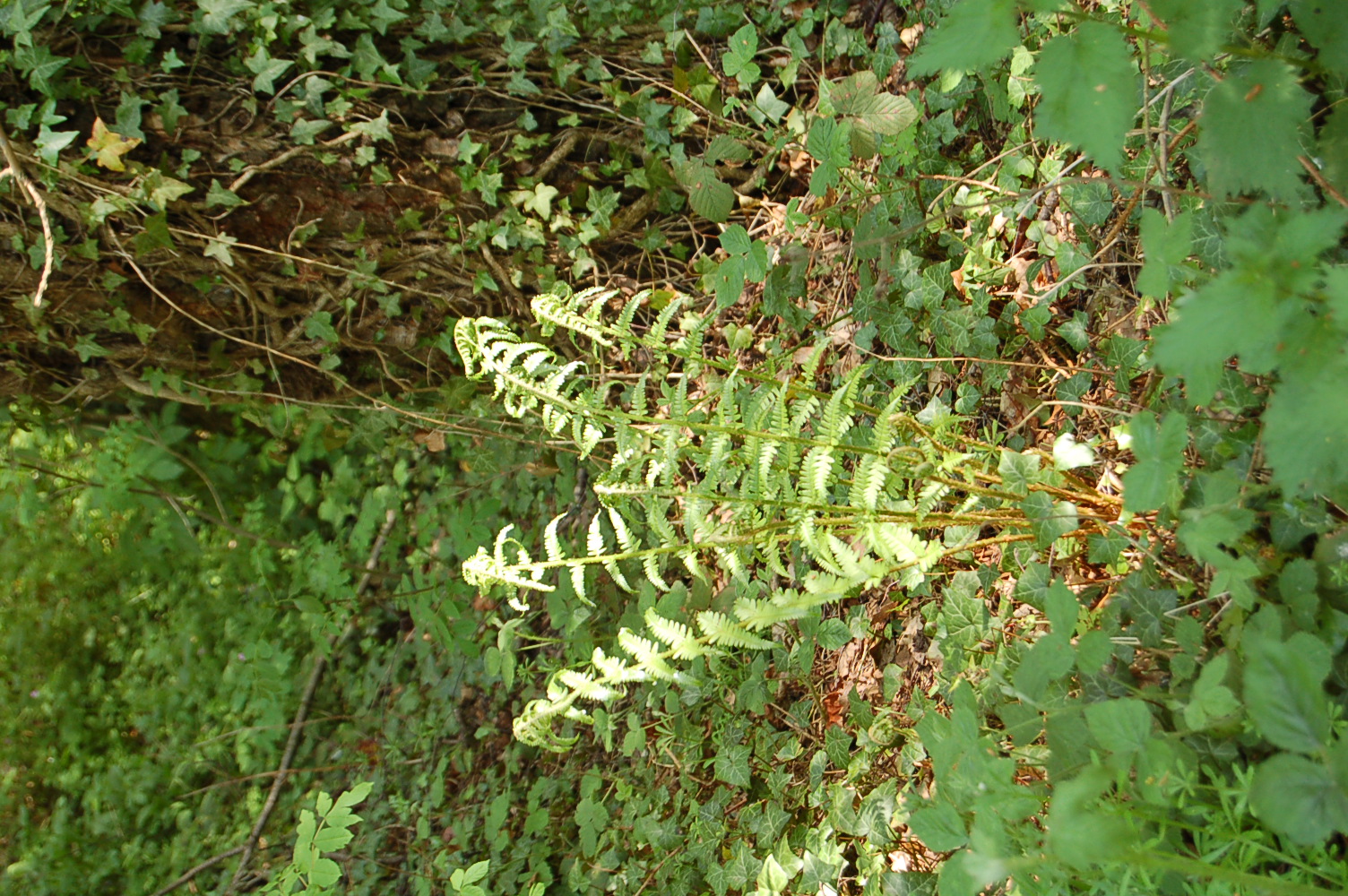
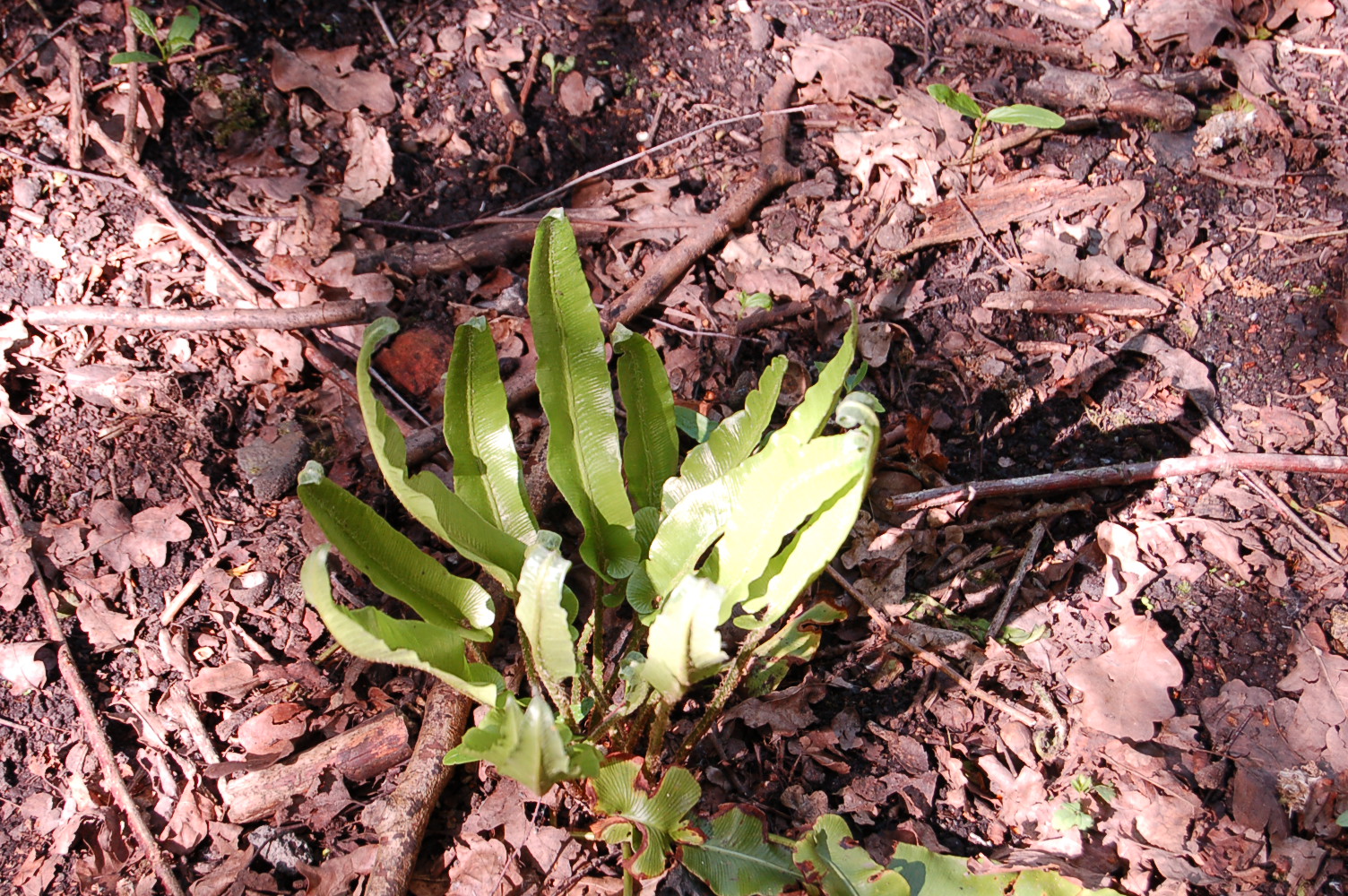
Having started this post and saved it to finish later we went for a woodland walk and discovered two of our native ferns growing happily in the dappled shade.
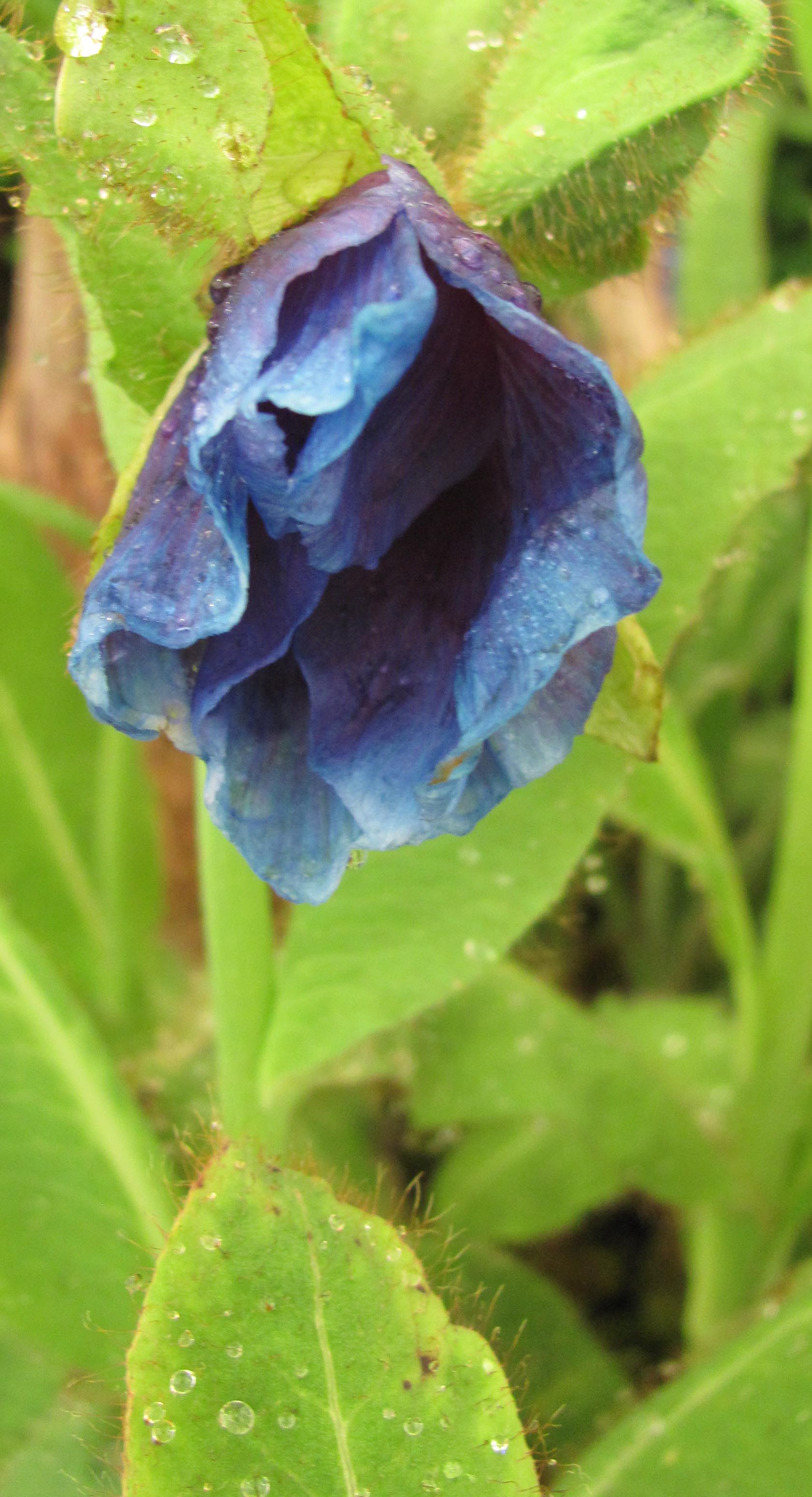
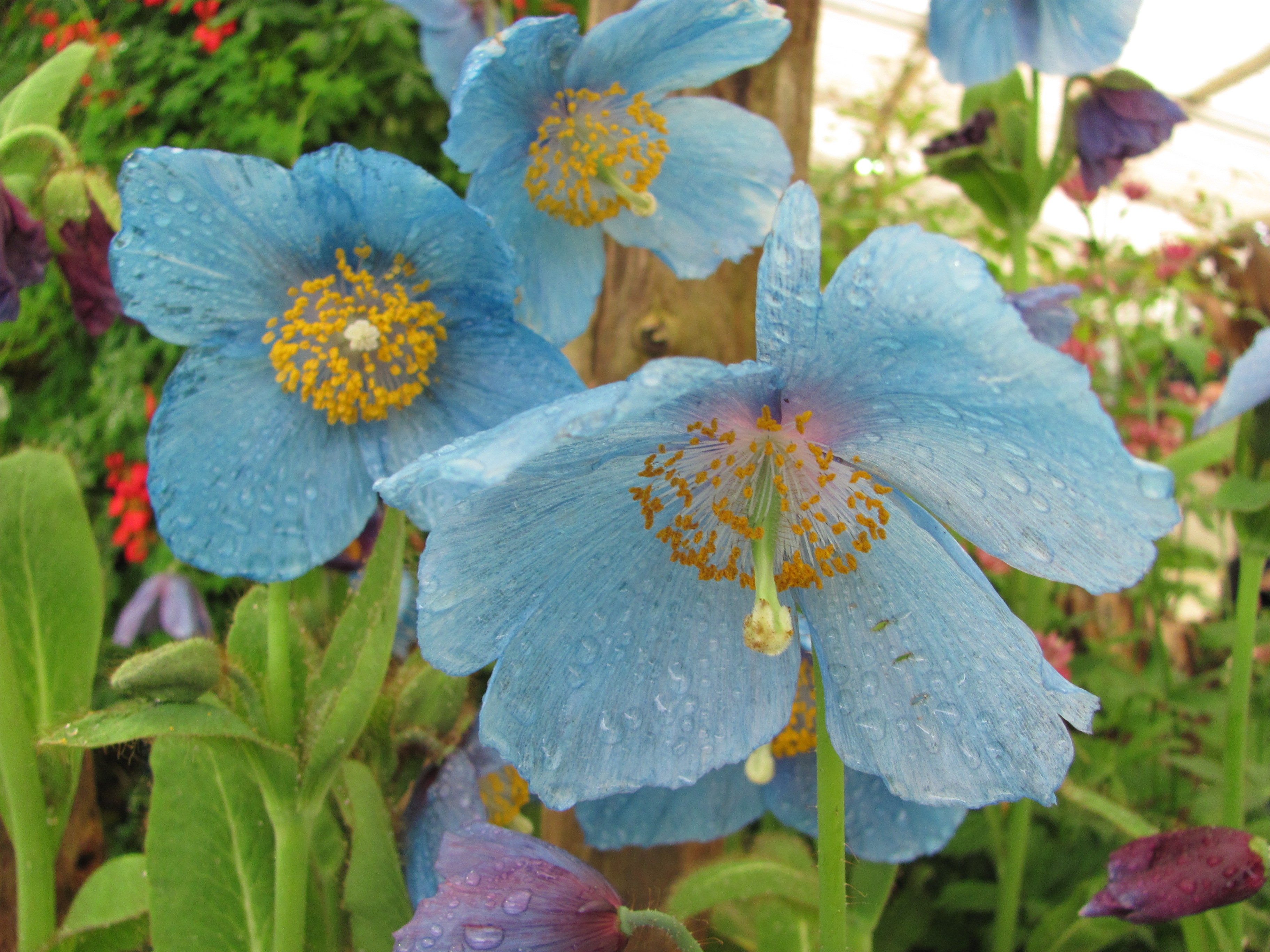
Blue meconopsis (Meconopsis grandis) are a challenge to grow and many gardeners are tempted to give it a go once they have seen them growing healthily. Their delicate almost see-through petals look too thin to survive the slightest whiff of wind or a drop of rain landing on them. Within their blue purity are slight hints and veins of red seen only when the light from the sun falls on them. In contrast to their blue petals golden centres and stigma grace the centre of each bloom.
To grow successfully the gardener must provide the exact conditions this poppy demands. Unfortunately our garden doesn’t have the right conditions at the moment, but we are working on it, so I took these pics at the RHS Malvern Spring Gardening Show.
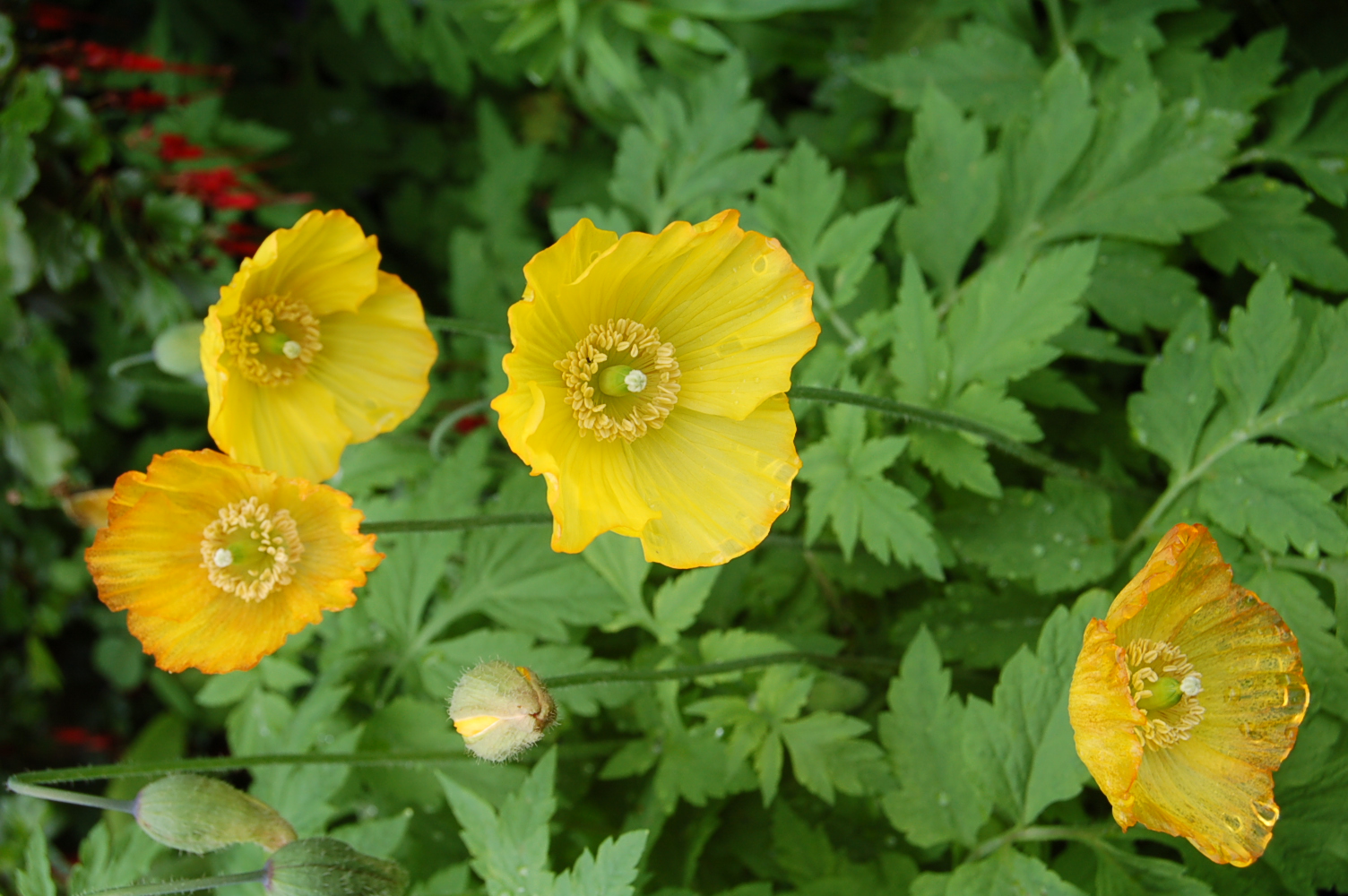
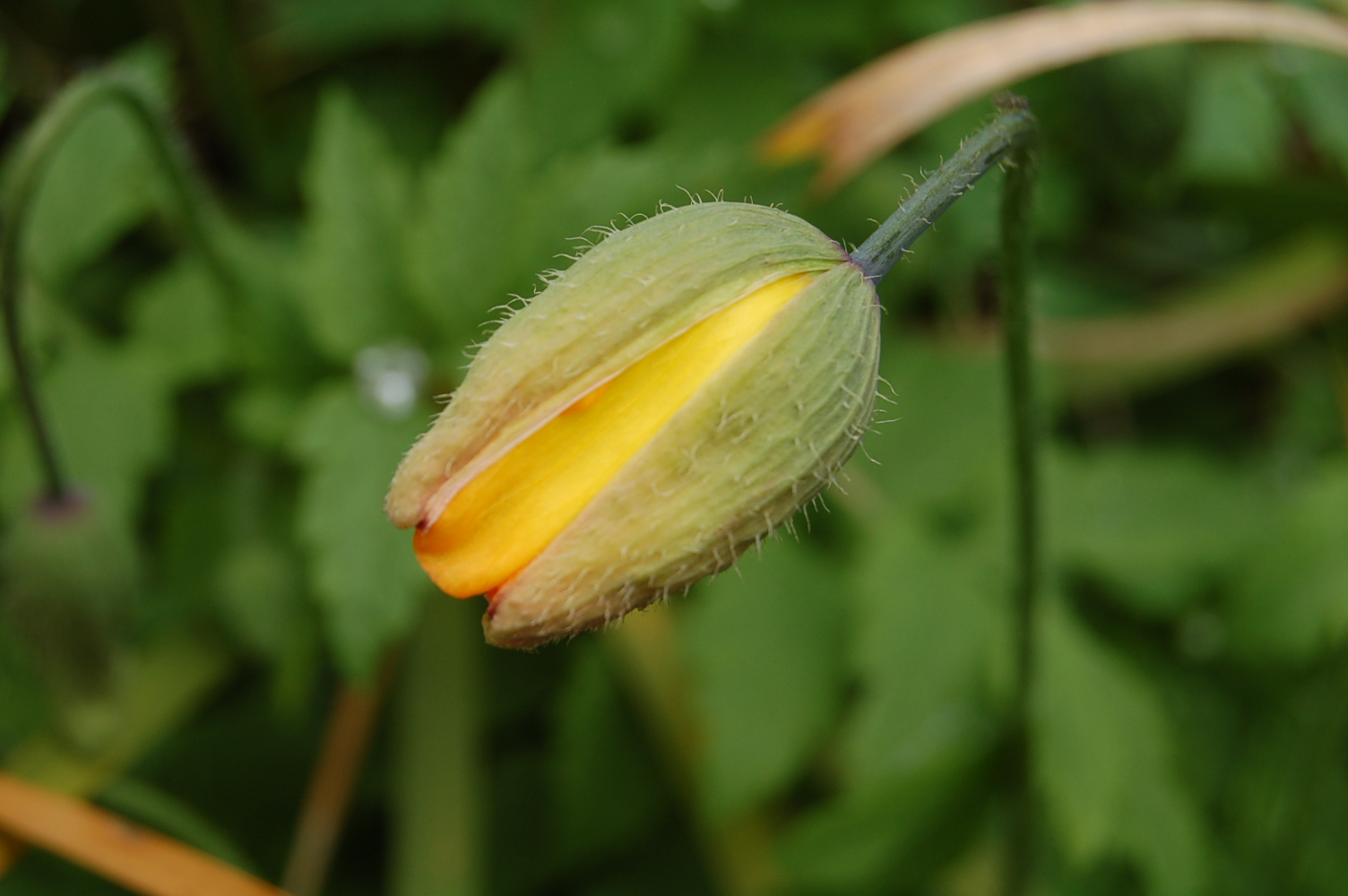
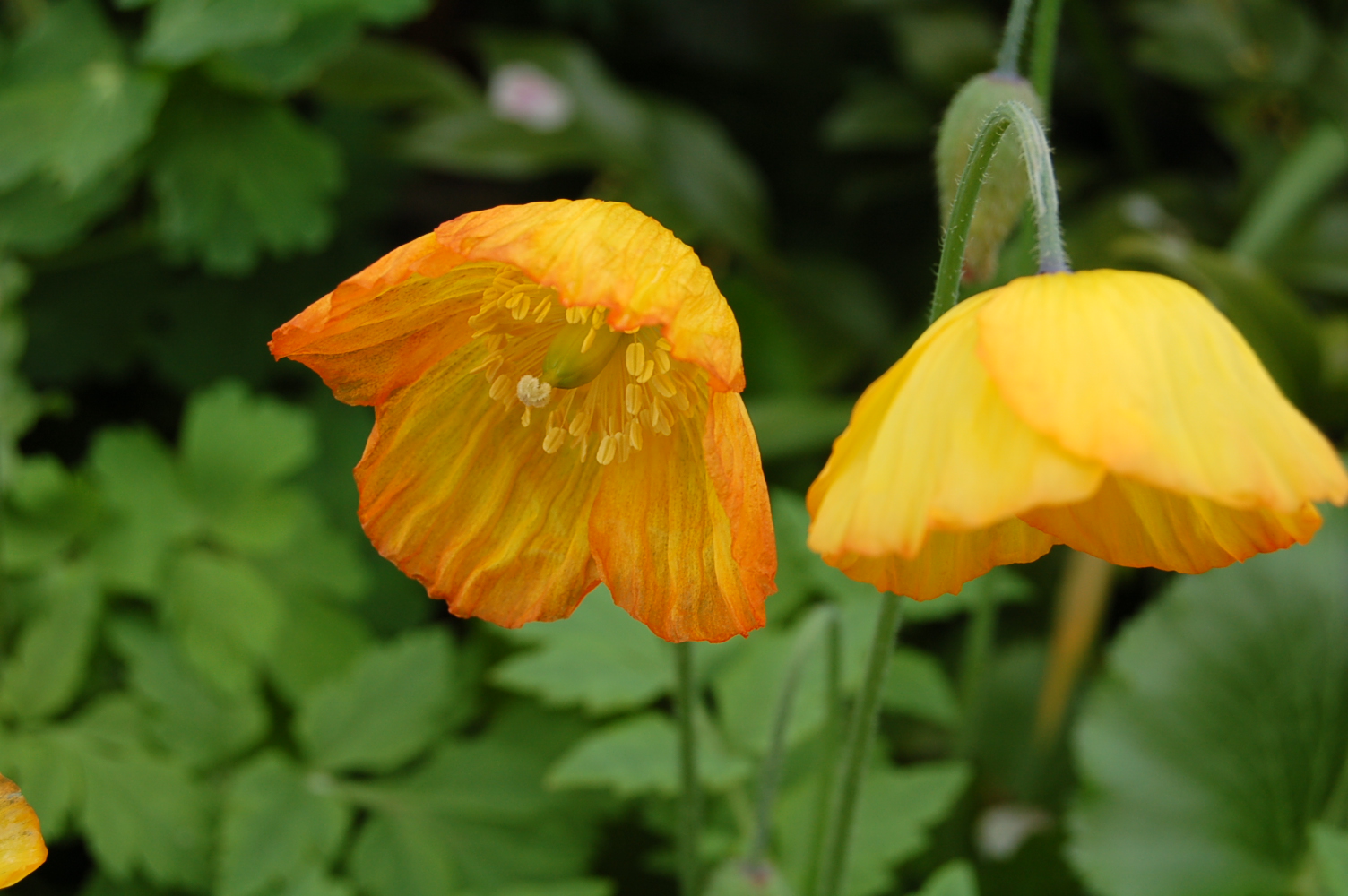
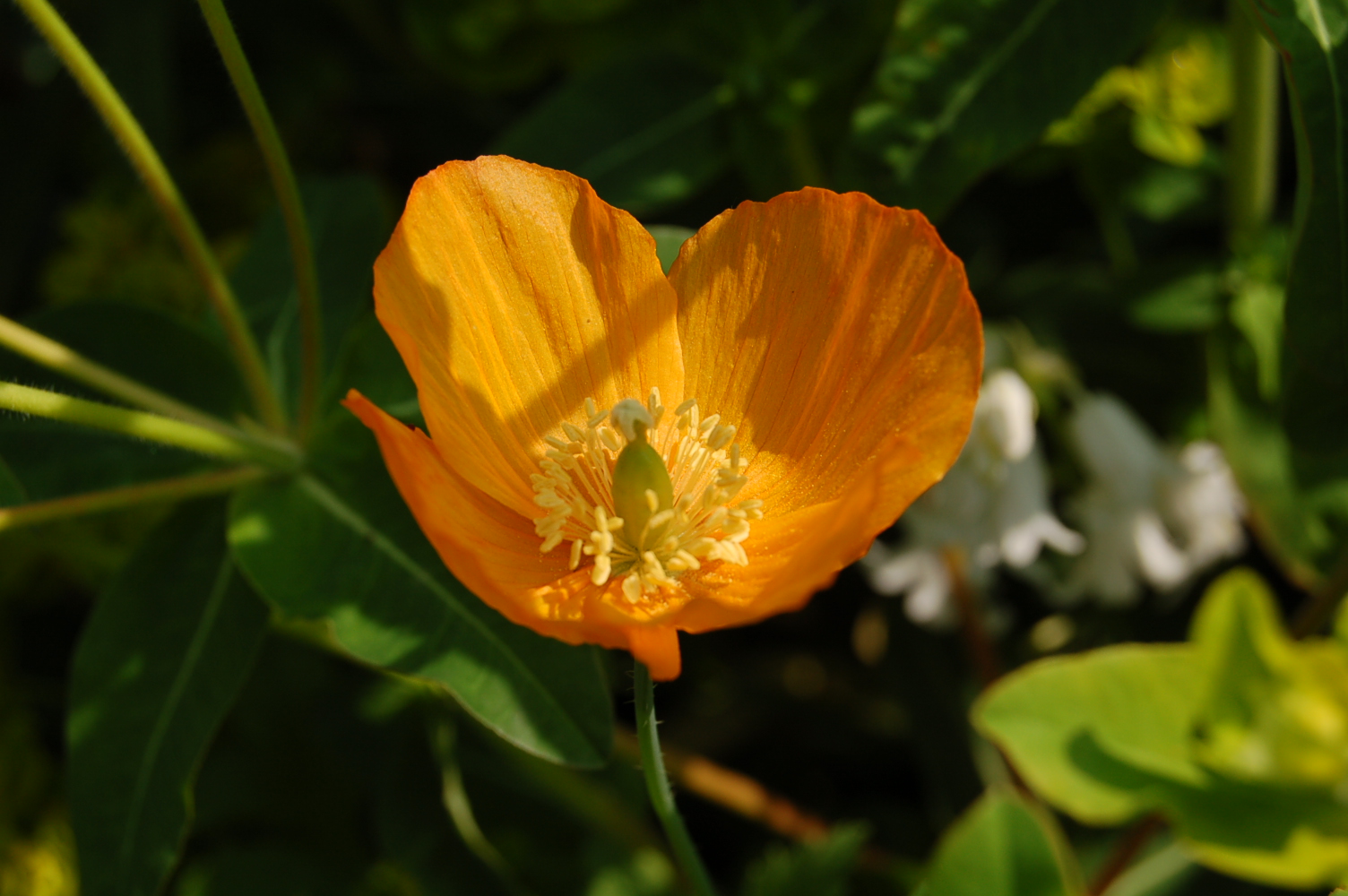
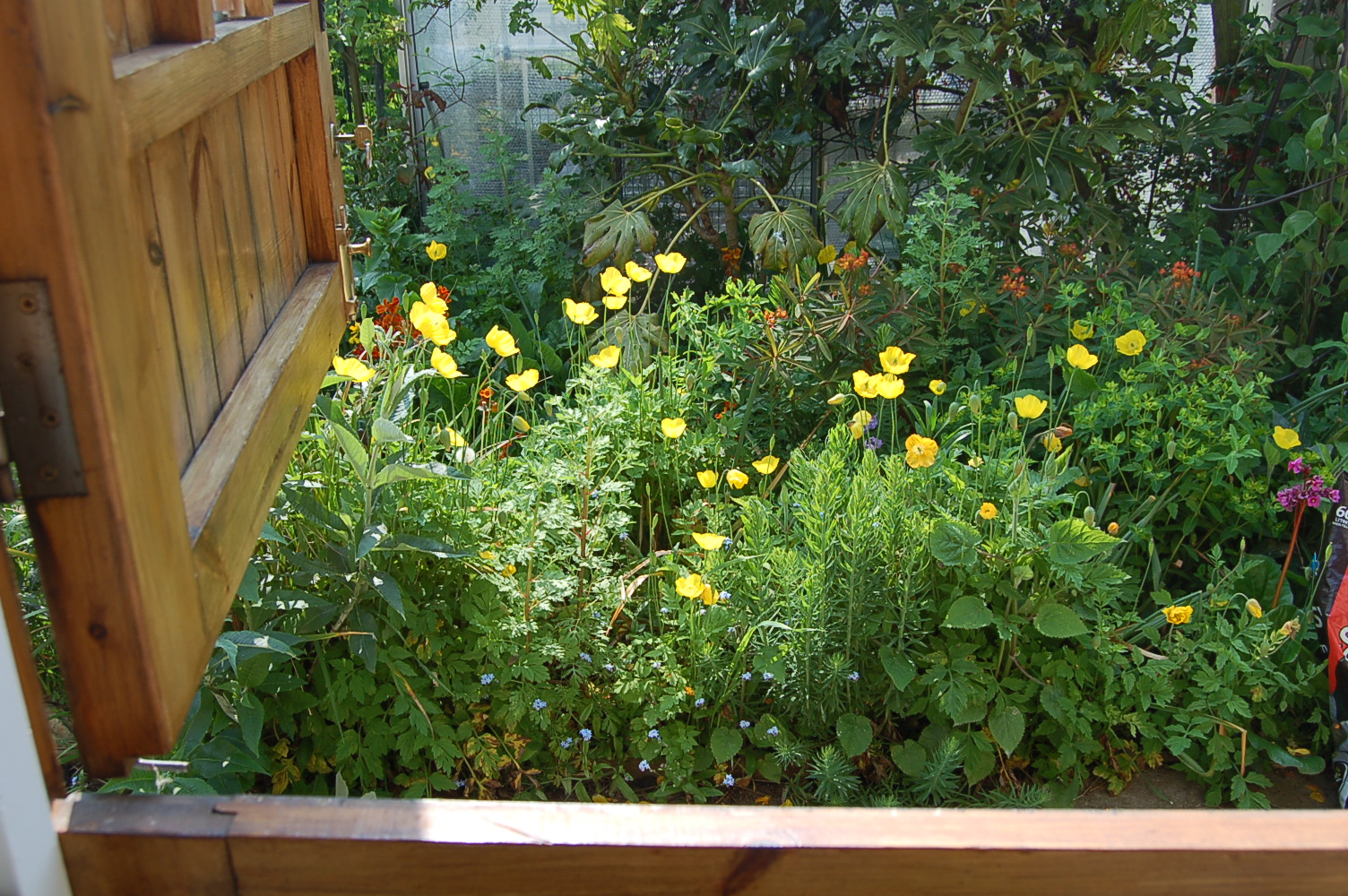
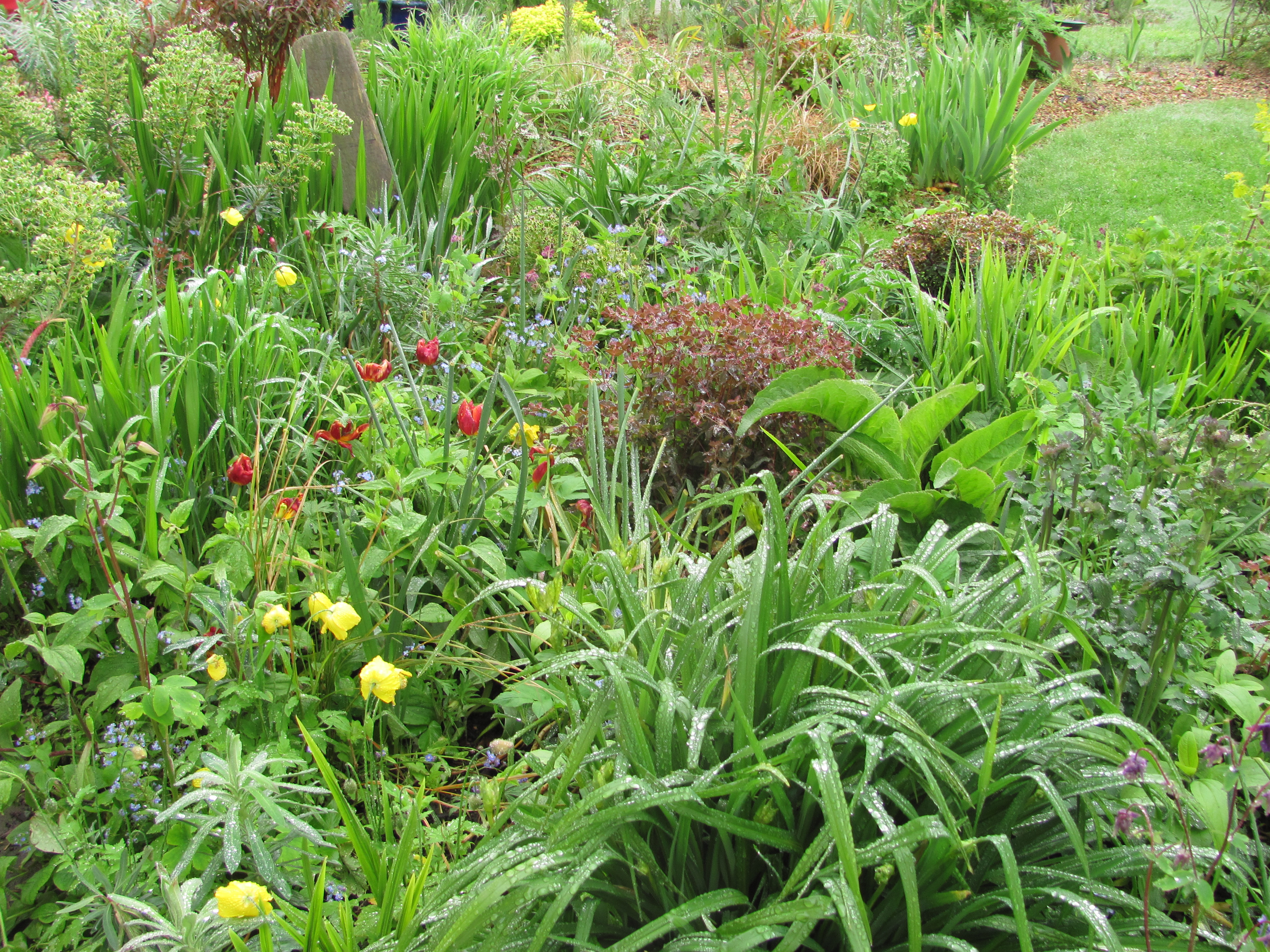
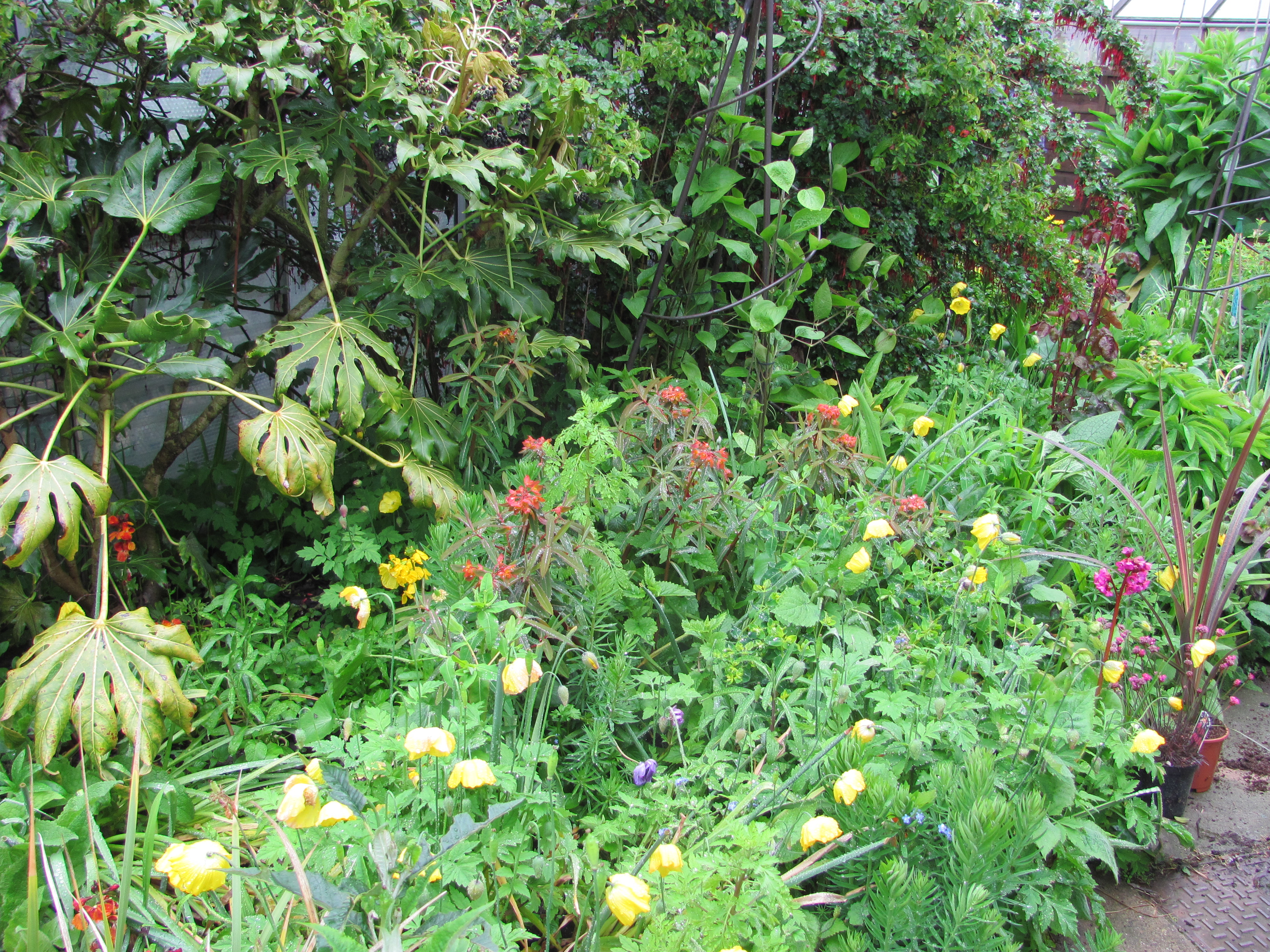
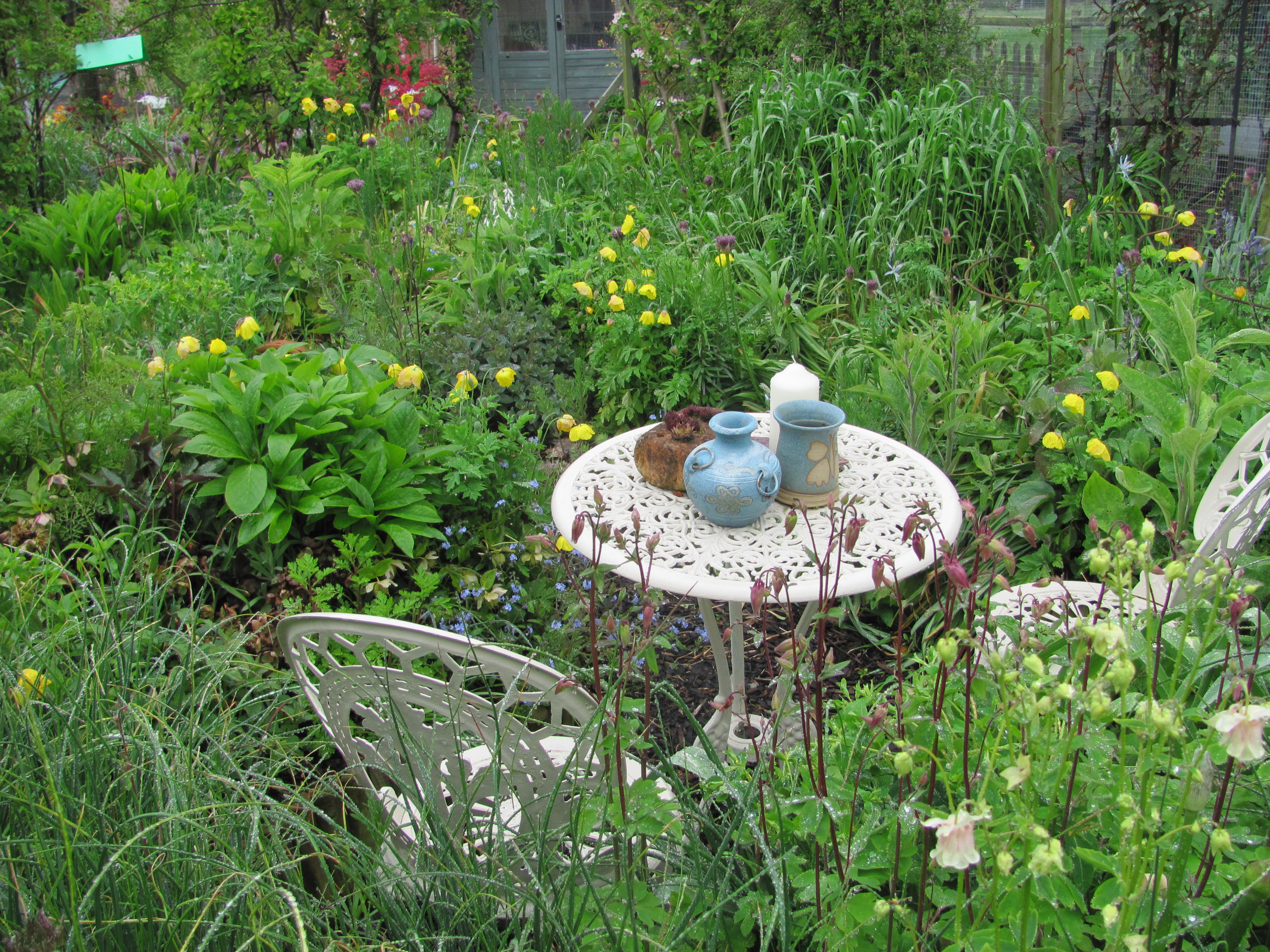
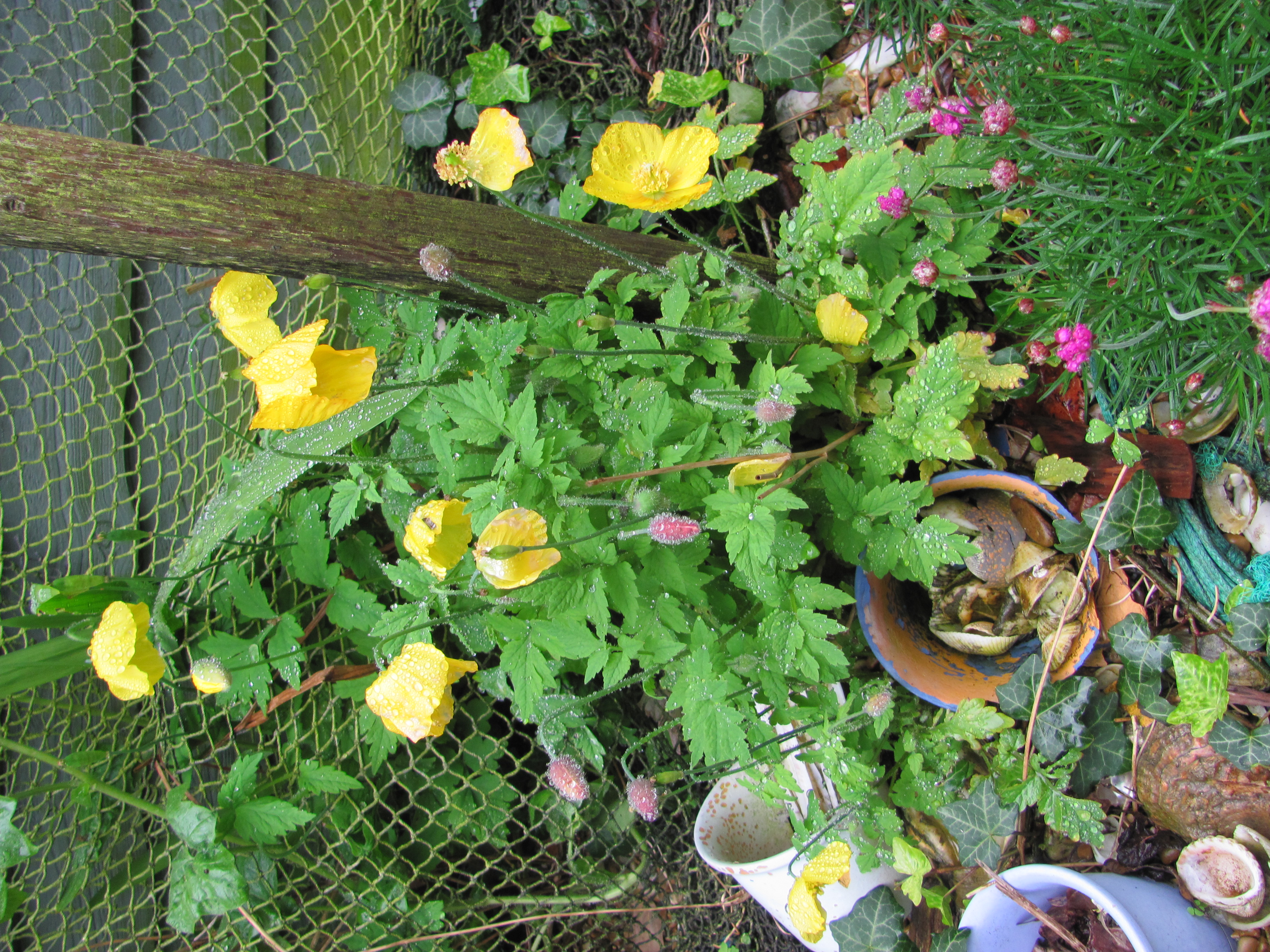
Just as beautiful but very easy to grow are the yellow Welsh Poppies, Meconopsis cambrica. They self seed throughout our garden and we enjoy them appearing just where they choose to do so in May each year. Their yellow petals also display hints and veins of red when the sunlight falls on them. They too are almost transparent and look too delicate to survive everything the British weather subjects them to.
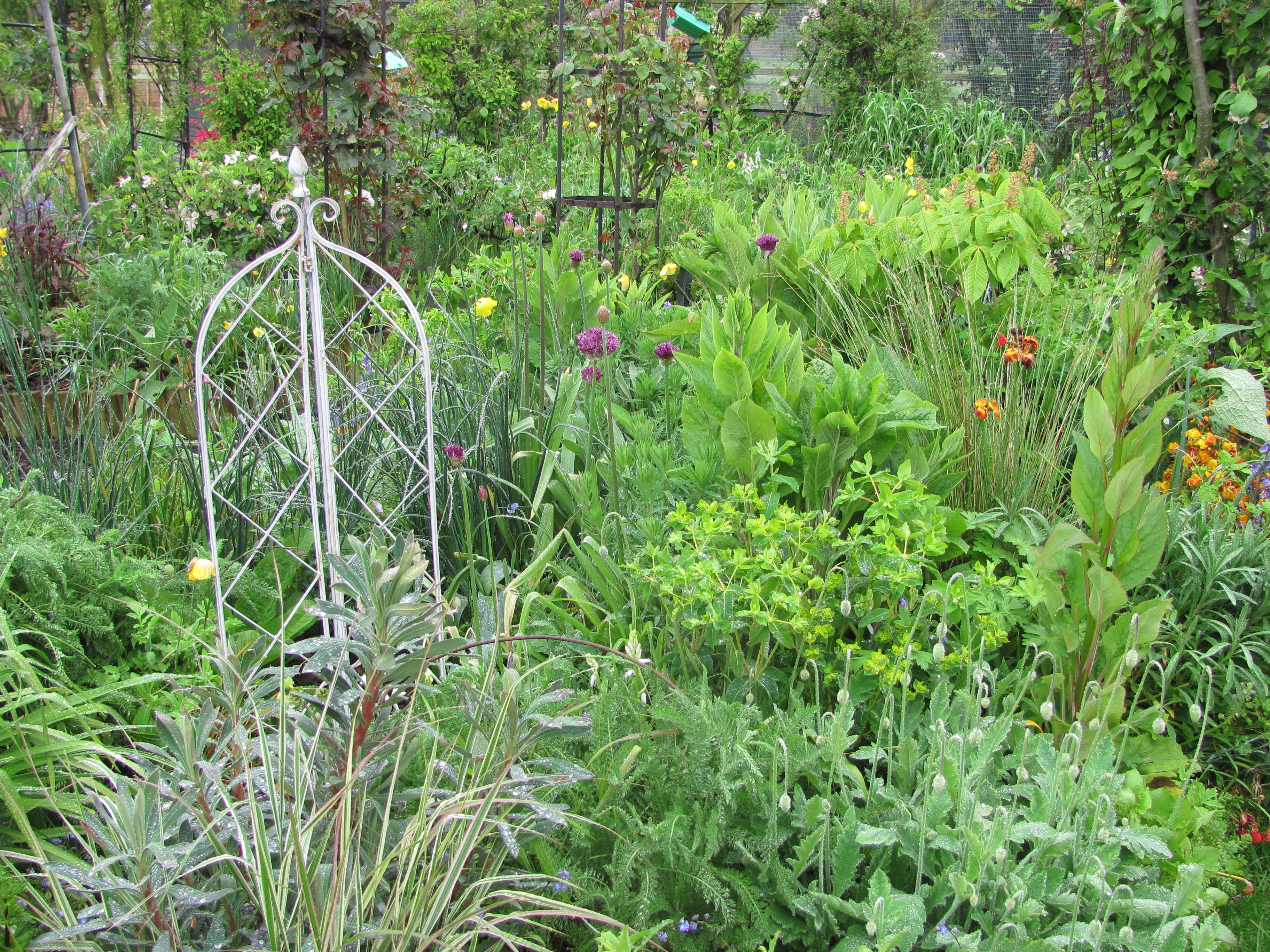
When they self seed they select their partners in the borders with care looking good wherever they land up. I wandered around our garden one sunny May day to see where they had chosen to appear this year. Although it is the most prolific self-seeder in our garden there is no way it can be called a weed, for if a weed is a plant in the wrong place, the Welsh Poppy always lands in the right place.
Where the blue poppy enjoys shade, its yellow Welsh relative opens out its flowers spreading the petals wide when the sun comes out but as evening falls they close back up to hide from the darkness. These delicately petalled poppies come in all shades of yellow from the palest lemon to almost orange, with one of the prettiest being the yellow with a slim fringe of orange.
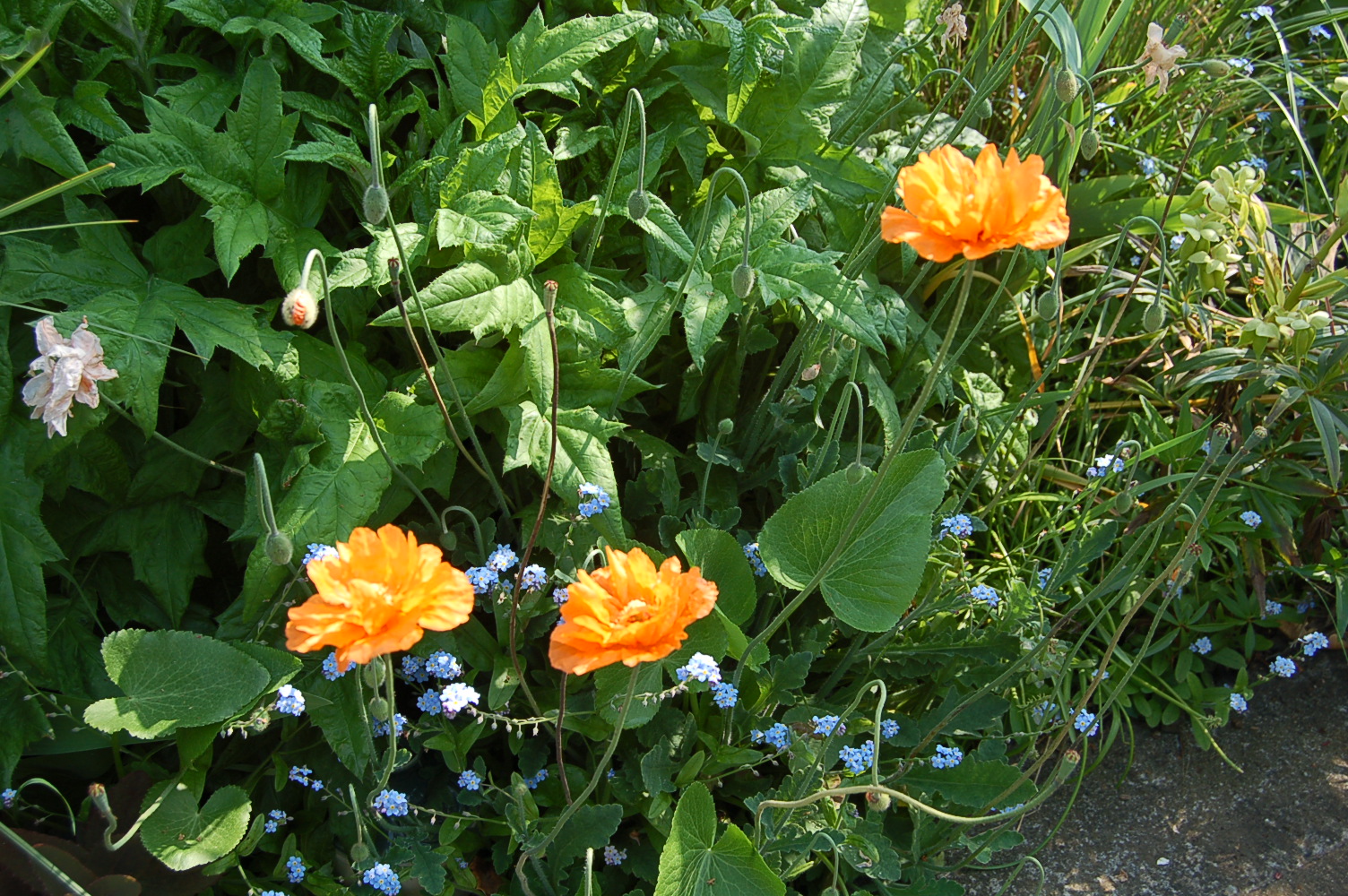
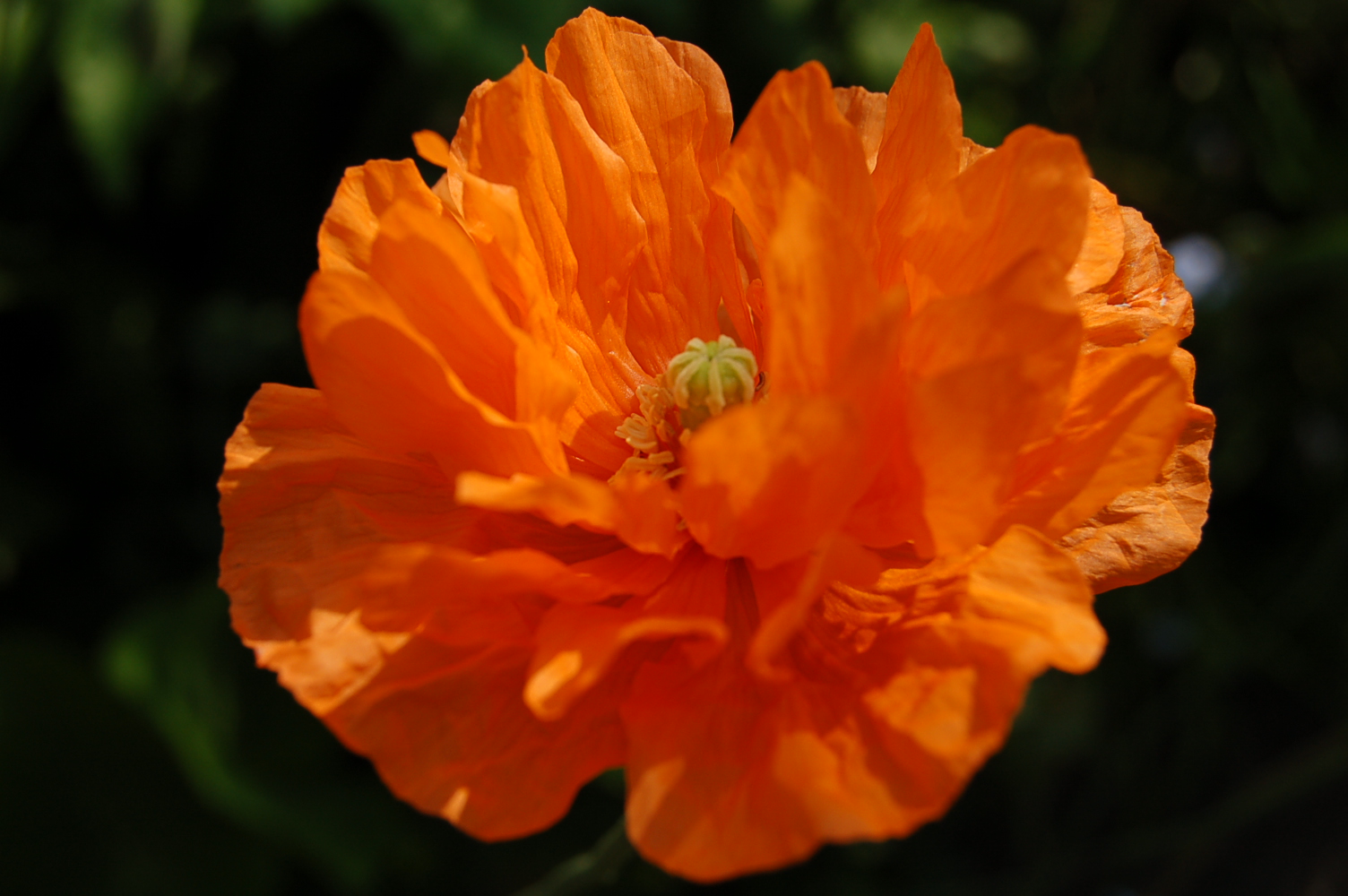
While in the garden shooting pics for this post I couldn’t resist the temptation to include this exquisite double orange flowered beauty, which although a poppy is not a Meconopsis, but a papaver. Papaver rupifragum which I grew from seed eight years ago and they continue to appear each year.
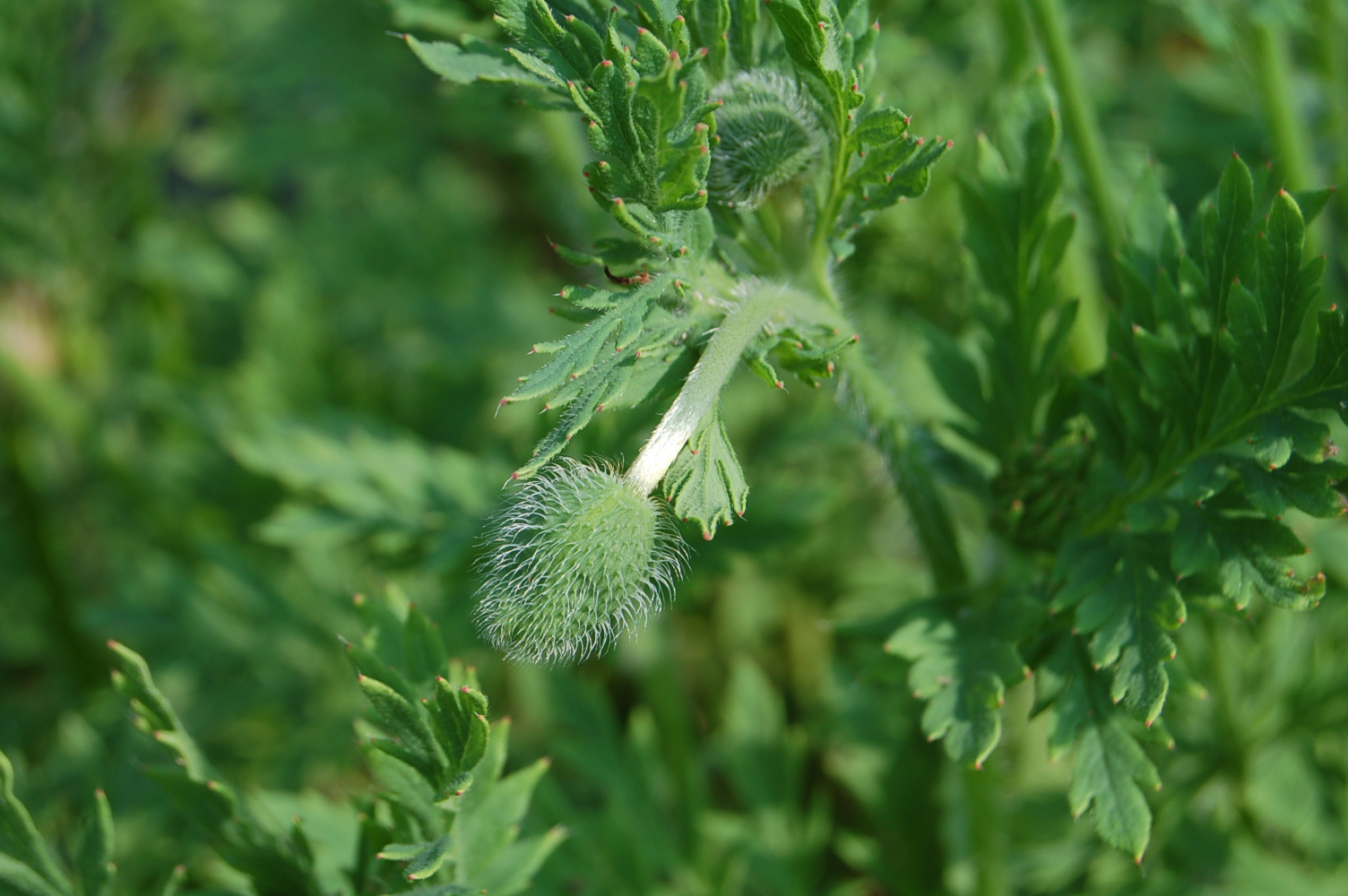
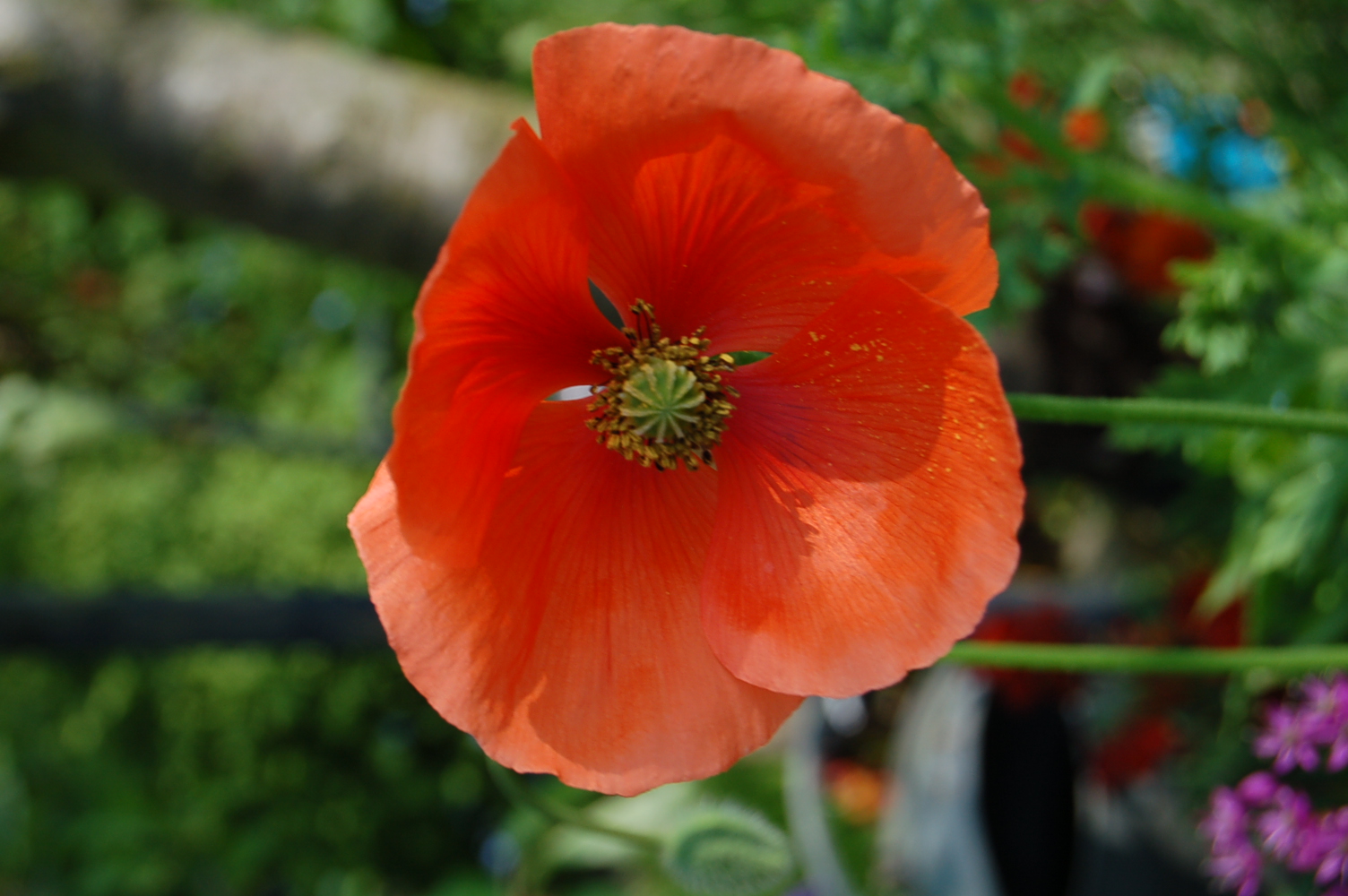
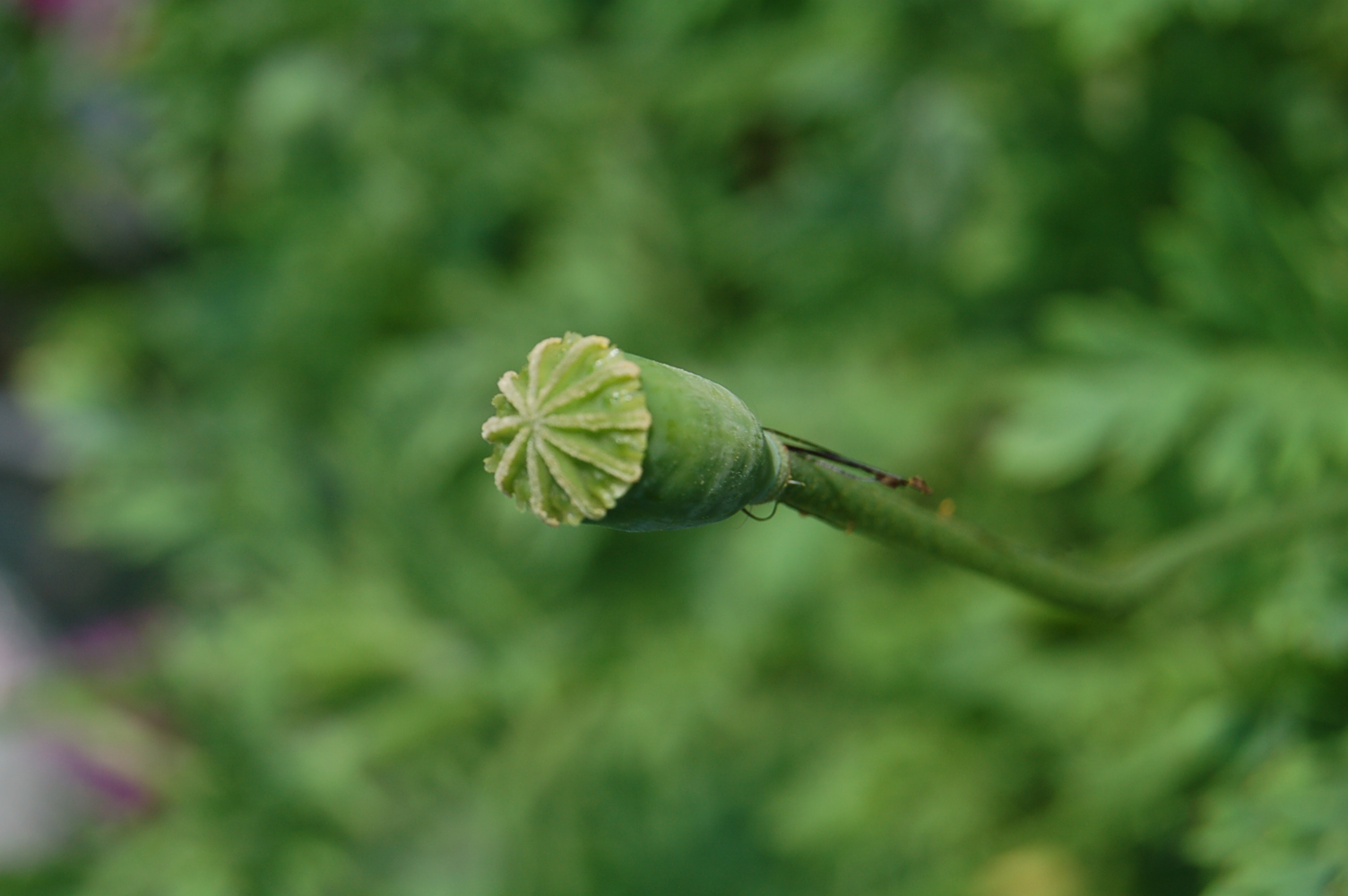
And while photographing these I spied through the corner of my eye the first plant of our native red poppy to be flowering. It looks equally good in bud, flower or seedpod. This poppy is known botanically as Papaver rhoeas, but seems to collect common names including Field Poppy, Corn Poppy and Flanders Poppy.
The wonderful Welsh Poppy greets us each morning as we enter the garden through the stable door. What a cheerful way for the garden to say welcome us!
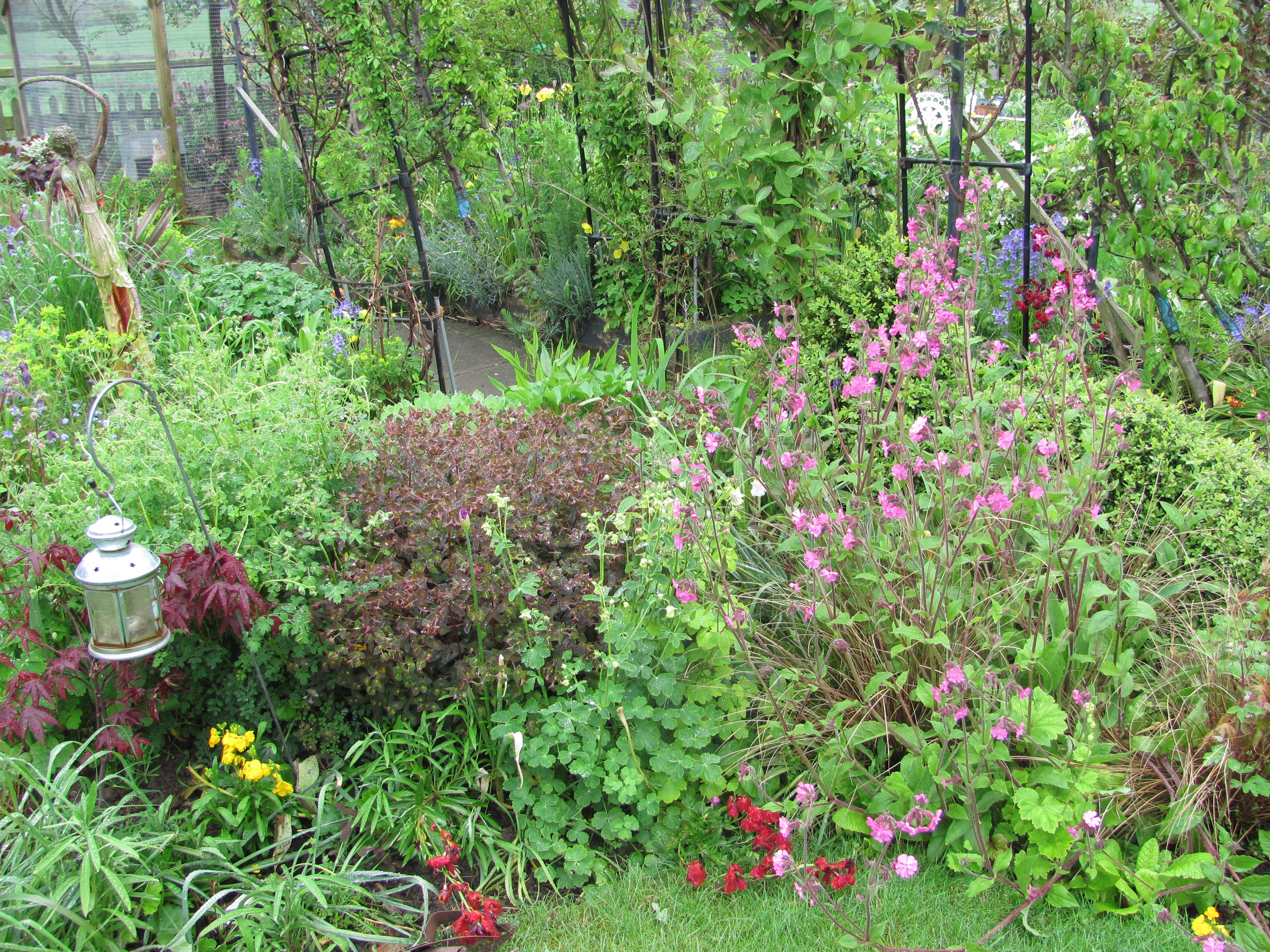
Here we are with the fifth garden wander post. And the garden is looking good! Take a wander with us and have your nose at the ready as the scents are strong.
Throughout the garden Bluebells and Wallflowers are sending out their rich sweet scent messages for all to enjoy, permeating every nook and cranny. Birdsong dominates the early hours of daylight and youngsters begging their parents for more food can be heard in every nest box. A family of fledgling Robins have taken to following us around the garden hopping and hoping our gardening activities disturb a bug or two.
We begin our wander in the front garden where we are entertained by a Spotted Flycatcher who perches on the topmost branch of the holly and sits waiting to ambush any passing insect at which he launches himself and then returns to exactly the same place to enjoy his prey and to begin all over again.
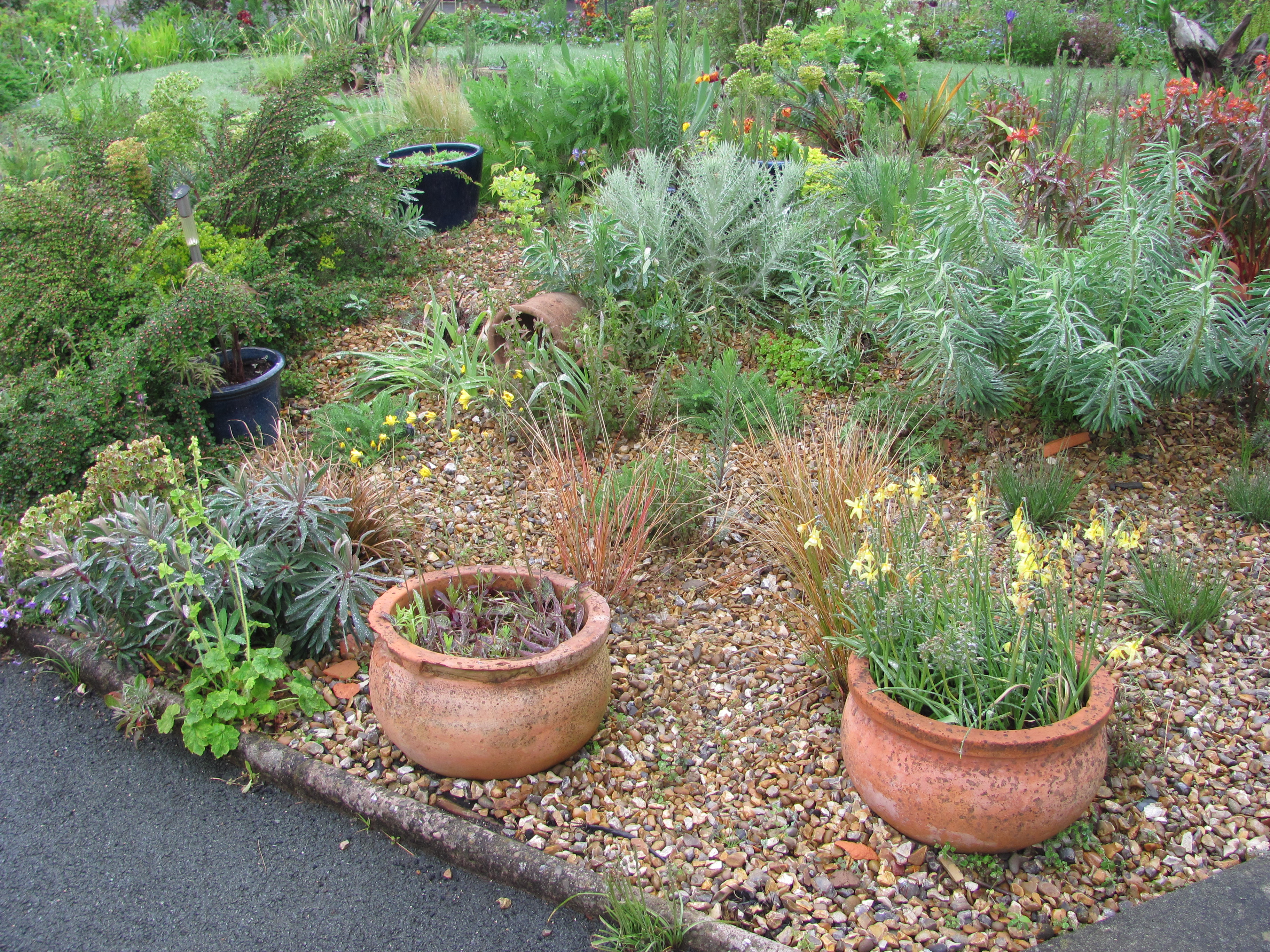
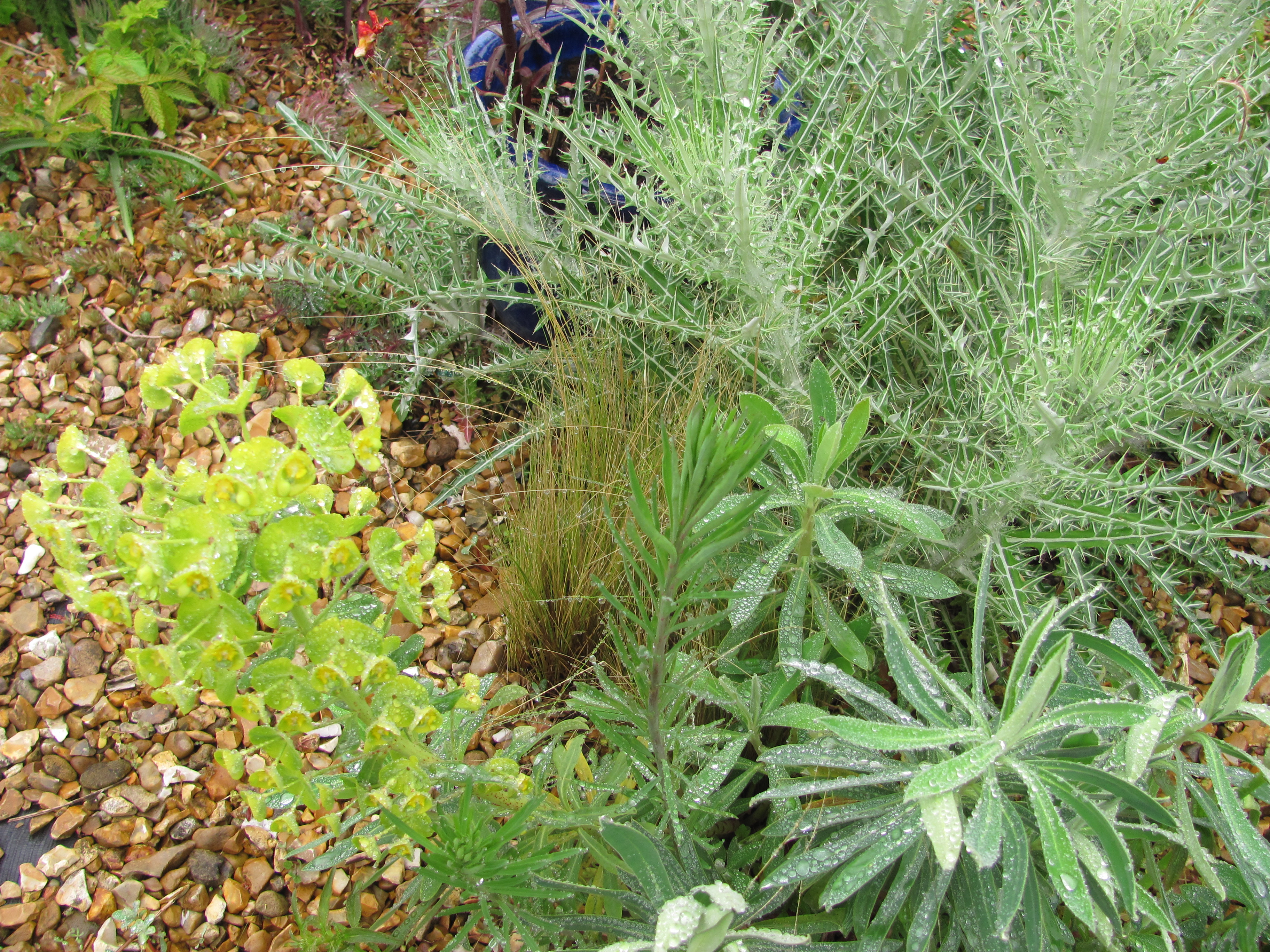
Here is our gravel garden which we call the Chatto Bed, after Beth Chatto, as after making a couple of visits to her garden we were determined to create a gravel patch which would never need watering and in true Beth Chatto style we chose plants to suit the conditions.
On the gravel our bearded irises are in healthy leaf with buds fit to burst, all but one which is already flowering, the dark, sultry Iris Cherry Garden.
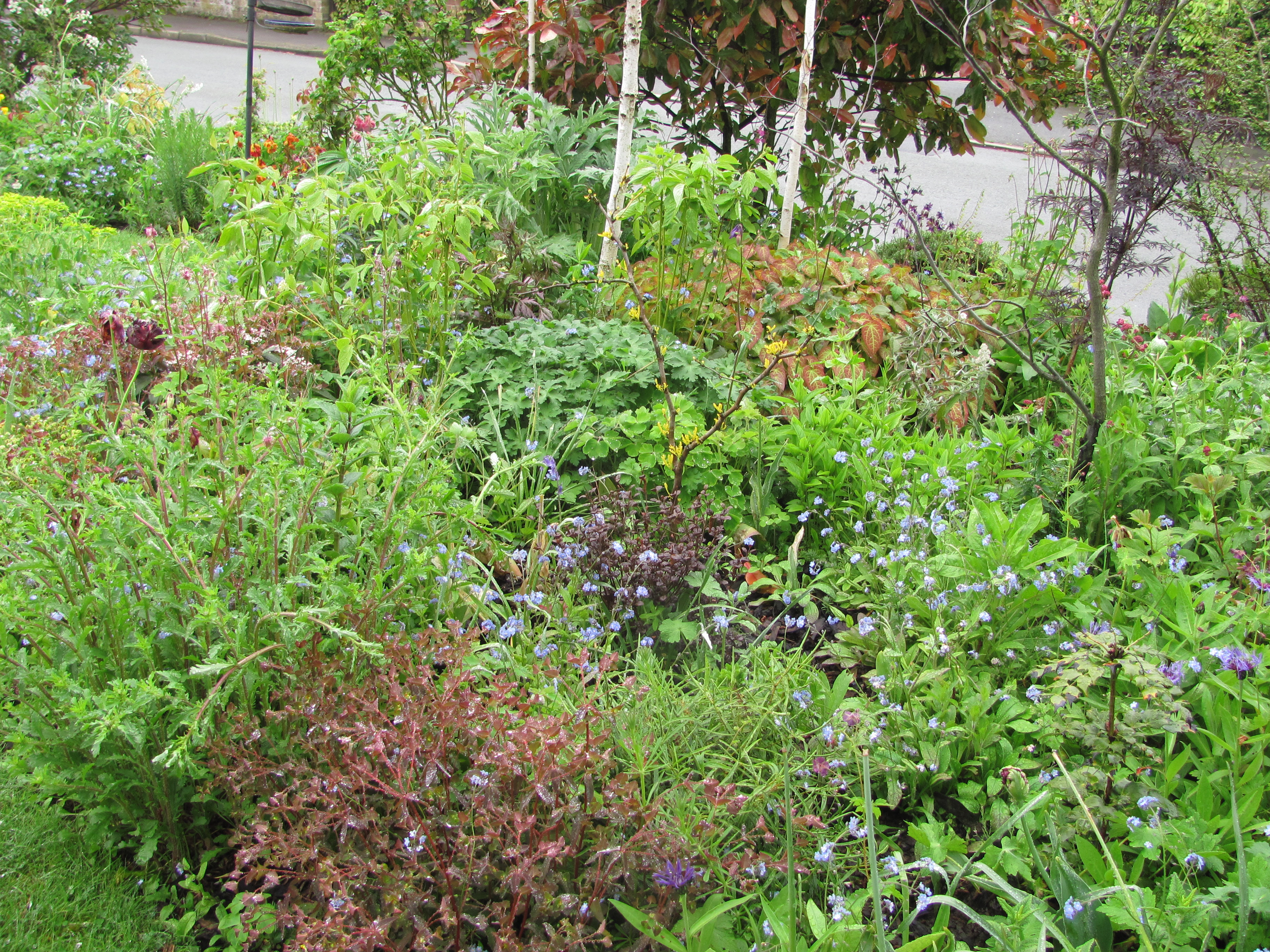
Entering the shade garden we are struck by the lushness of the foliage dotted with special blooms. Apart from the Welsh Poppies and Bluebells all blooms here seem to be in unusual shades of pink at the moment.
Our Hot Border is not yet hot but gradually warming up – just on the verge of luke warm I’d say. Opposite this is Jude’s Garden which she claims is more tasteful than my Hot Border.
Moving to the side garden opposite our main house entrance is our Freda Garden, named after a lovely lady and impressive gardener who died too young a few years ago. We grow plants here that she loved.
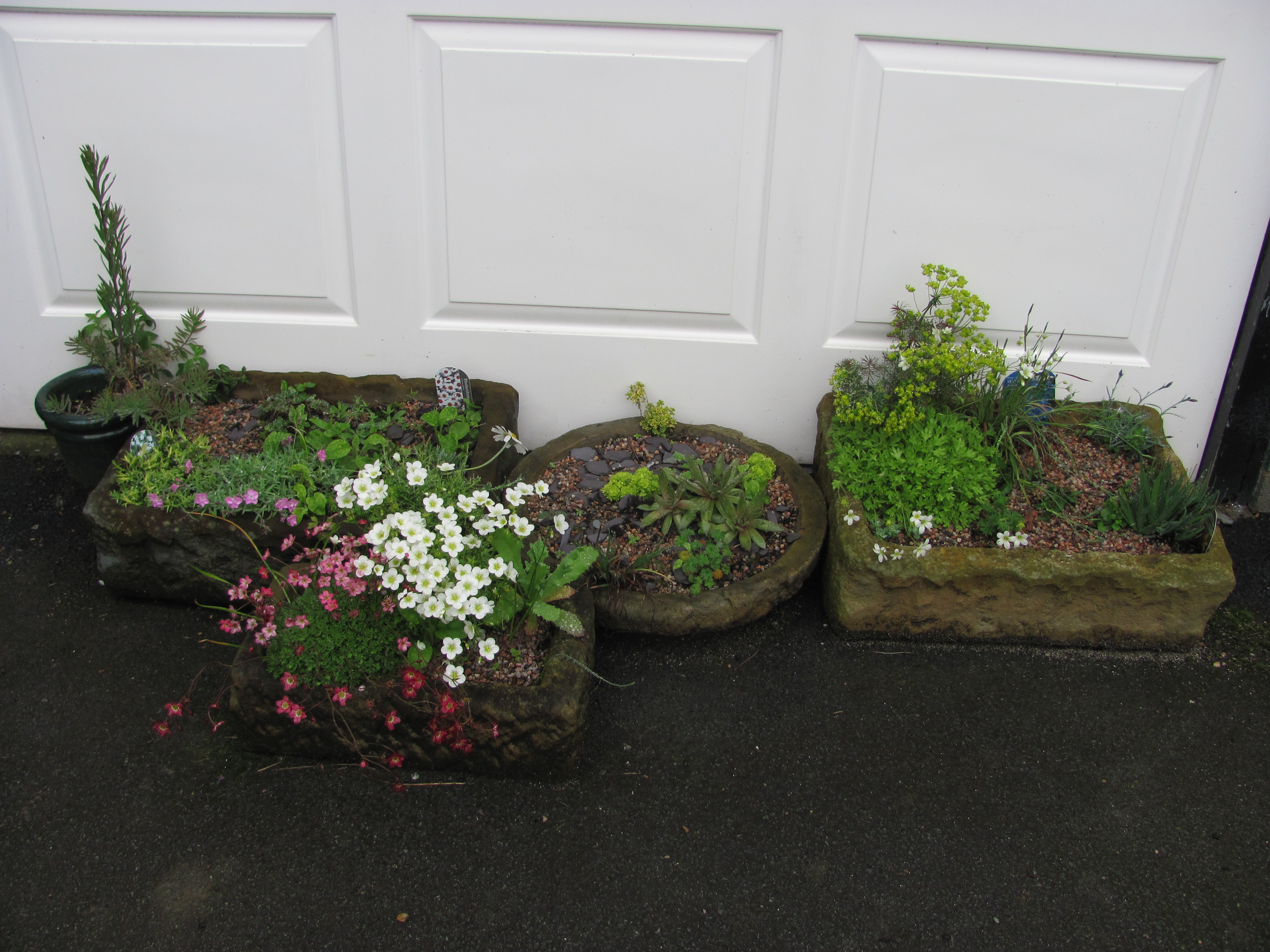
Close by is our small collection of alpine troughs still looking good, especially the Sempervivum.
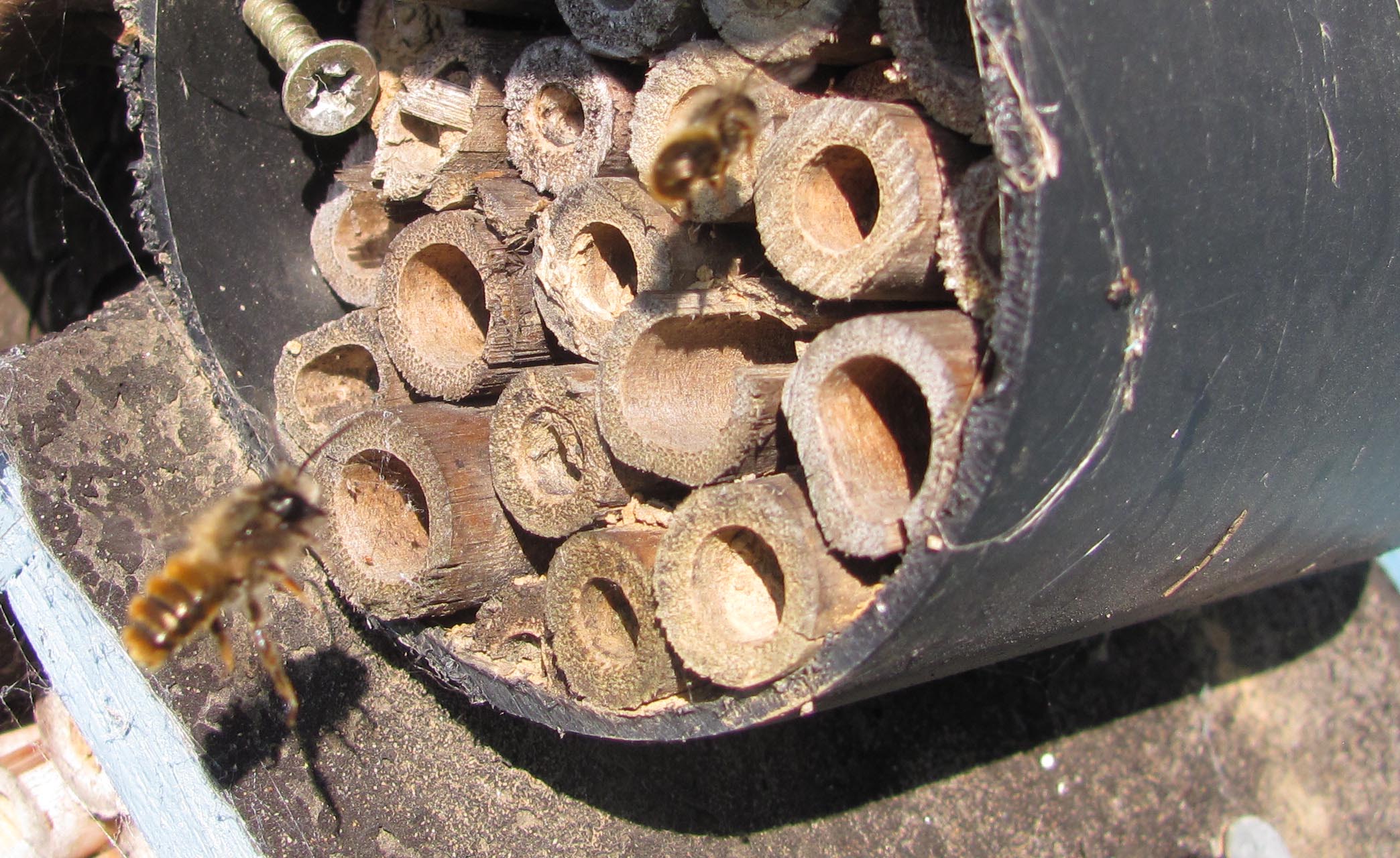
As we pass the garden shed on our way to the back garden the buzzing sounds of bees fills the air, for as the temperatures have risen in the last few days the solitary bees in our bee shelters have been hatching and emerging constantly, literally hundreds of them. They immediately head for the flowers of the Comfrey and Ceonothus we provide for them. I love this moment every spring!
And so into the back where the scent of Wallflowers and Bluebells afford us the luxury of rich sweet perfume. Rich colours burst from the vibrant fresh spring greens.
It has been a strange May so far, no flowers on any rose bushes but some narcissus still in bloom. The Cuckoo has been calling incessantly for weeks as have the Skylarks. We are bit fed up with the repetitive two note call of the Cuckoo but the beauty and complexity of the Skylark’s song means we still love listening to it.
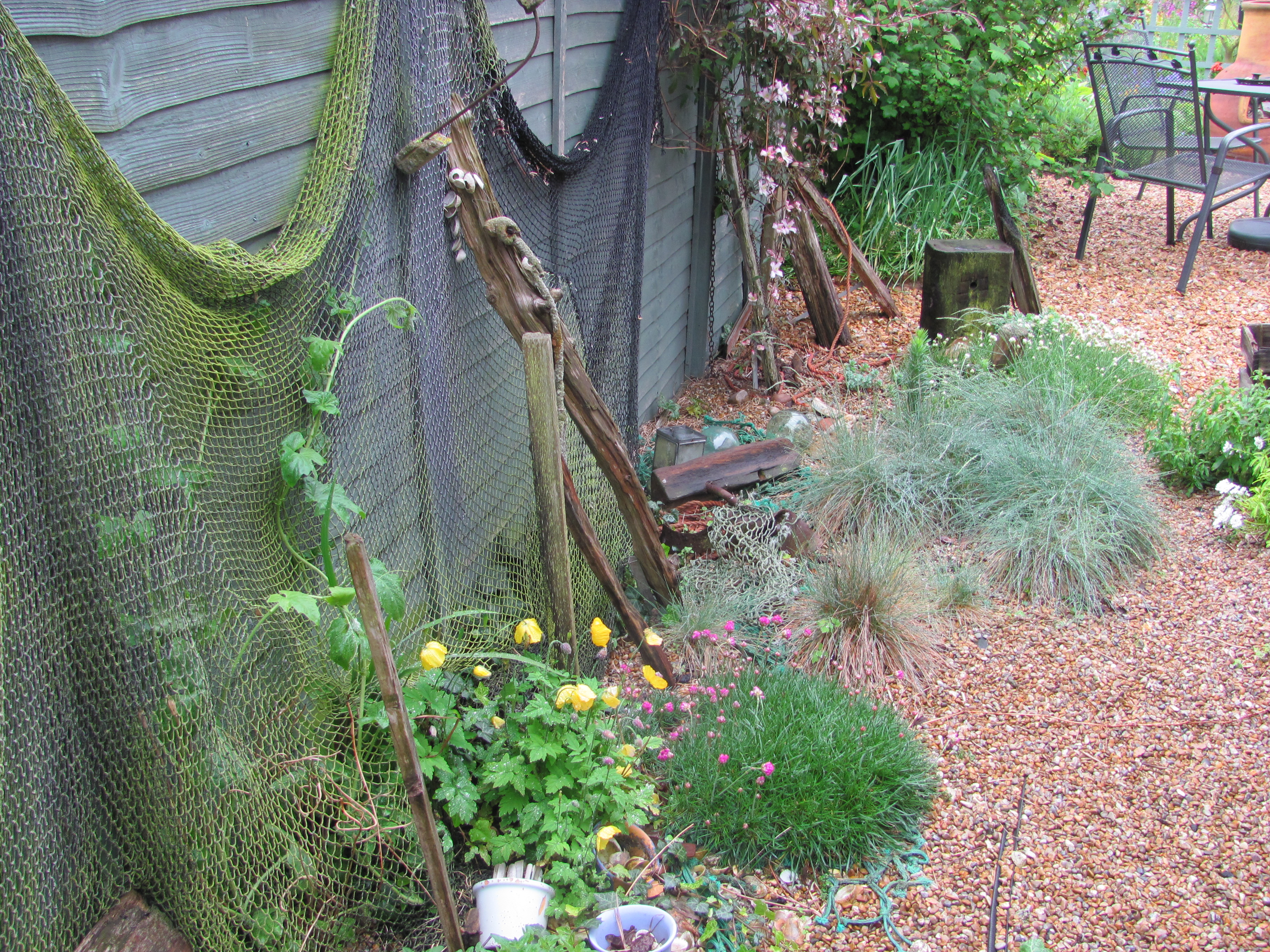
We shall finish this wander in our Seaside Garden, part of our plot not yet featured much in my blog. Perhaps a separate post all about it will appear soon?
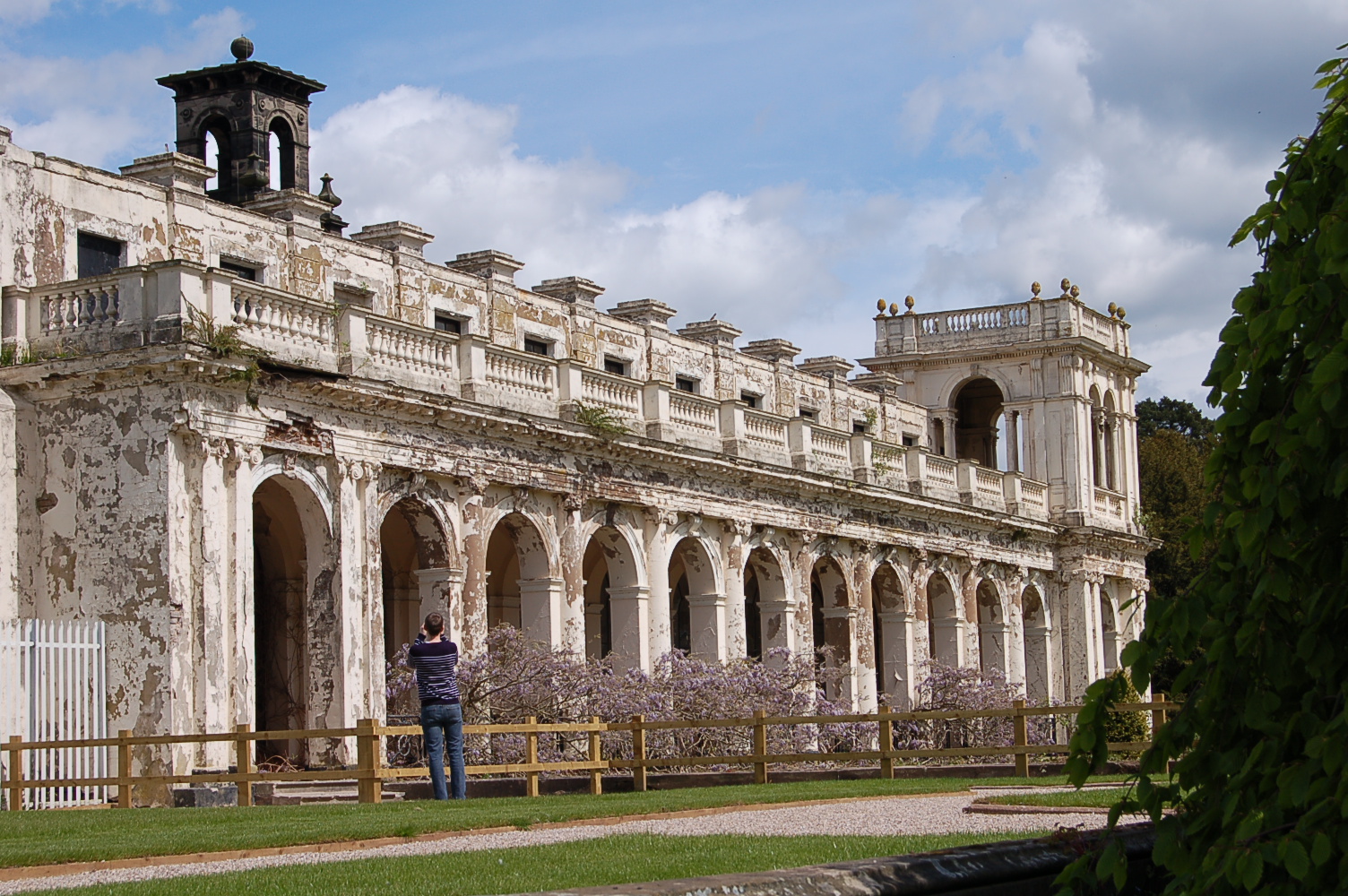
We have visited the wonderful Trentham Gardens in Stoke-on-Trent several times already but never in springtime. So last week we took the family along to share it with us. Our son Jamie and girlfriend Sam and our daughter Jo with husband Rob met us in the coffee shop just after the gardens opened. Jude the Undergardener and I took Sheila, Jude’s mother in the car with us. Thus three generations enjoyed the wander around these magnificent gardens.
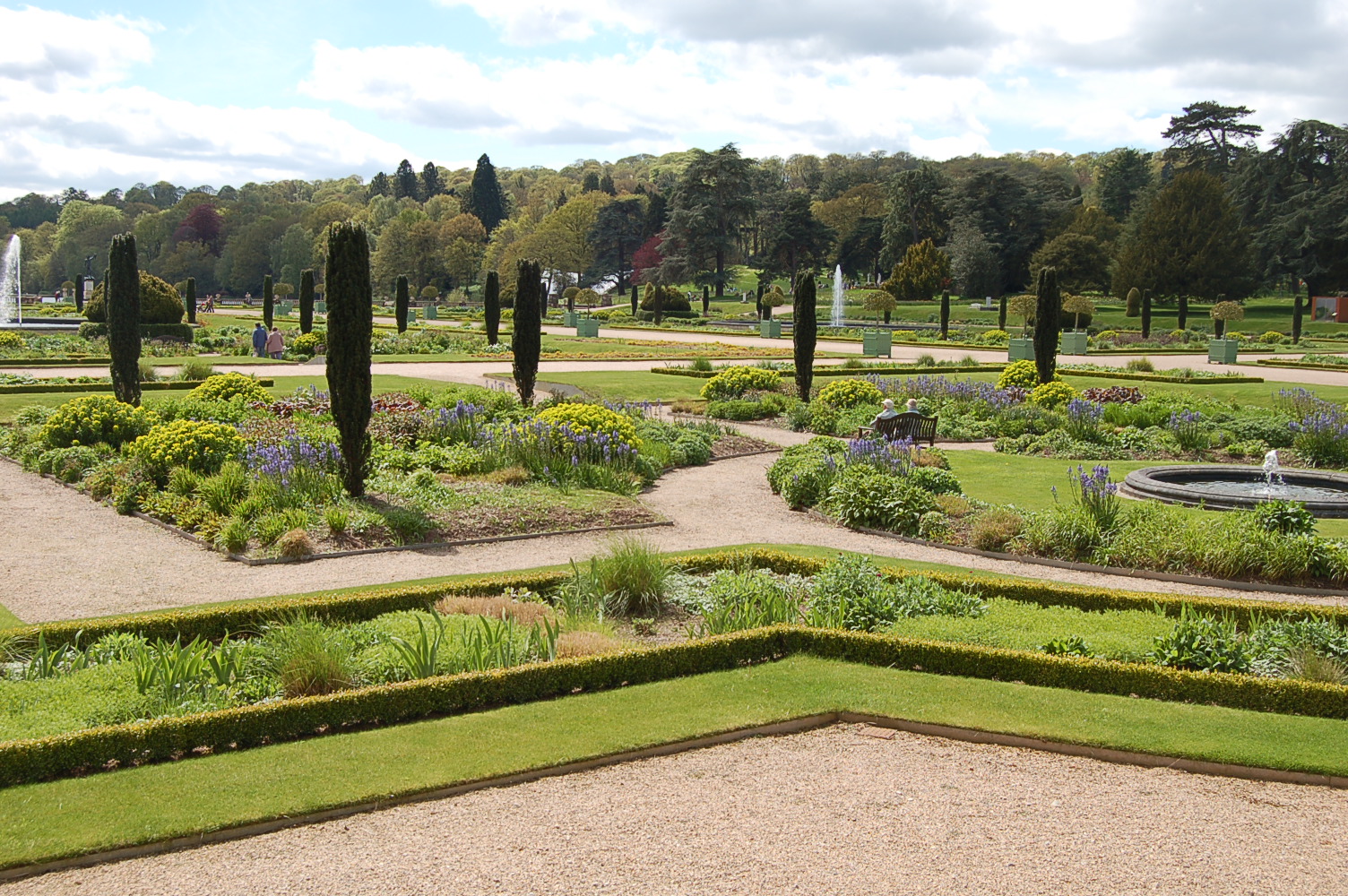
Come with us and my camera as we wander through the garden, where spring is all about contrasting foliage, texture, colour and shape, with a few special early flowers.
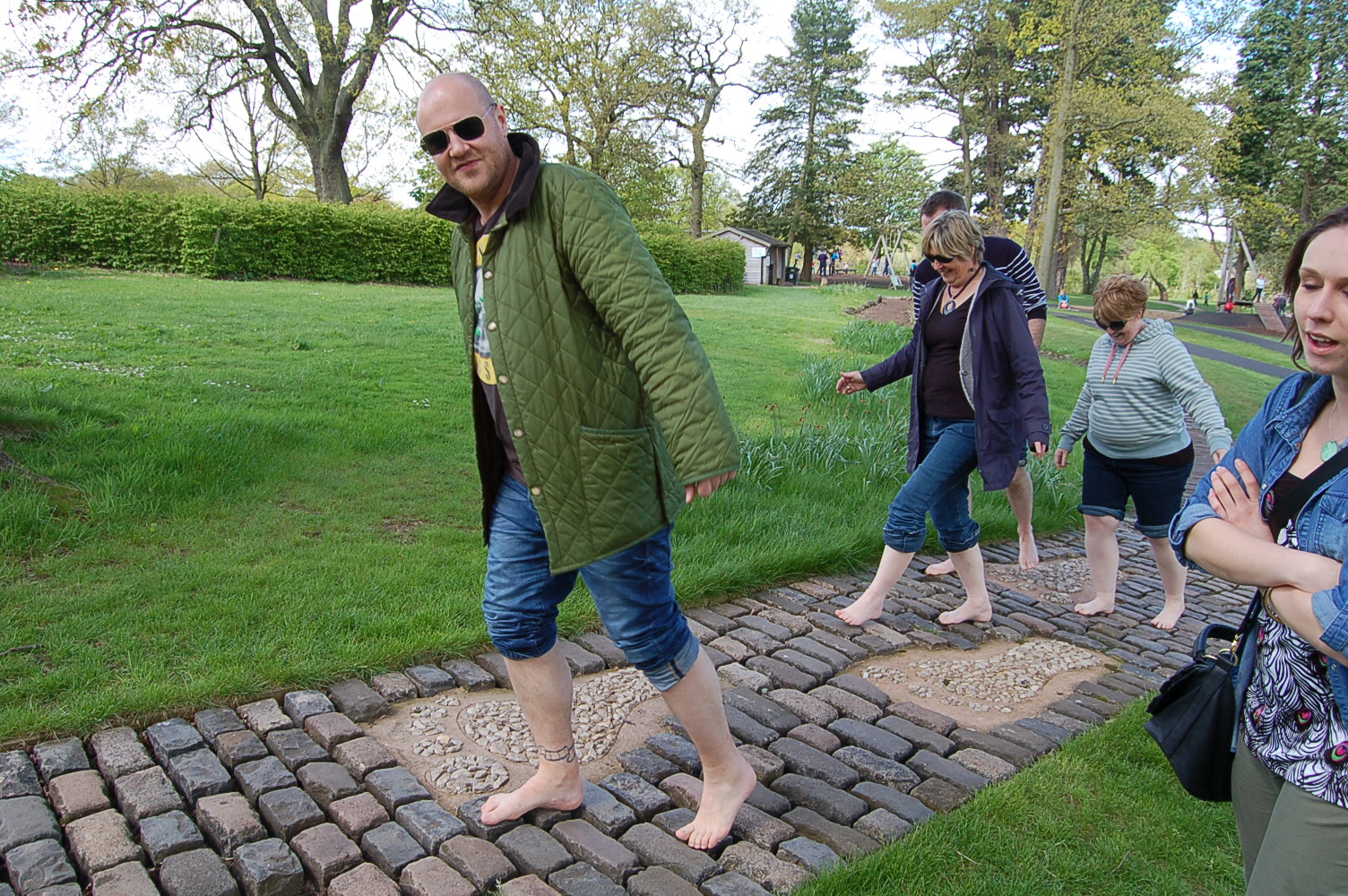
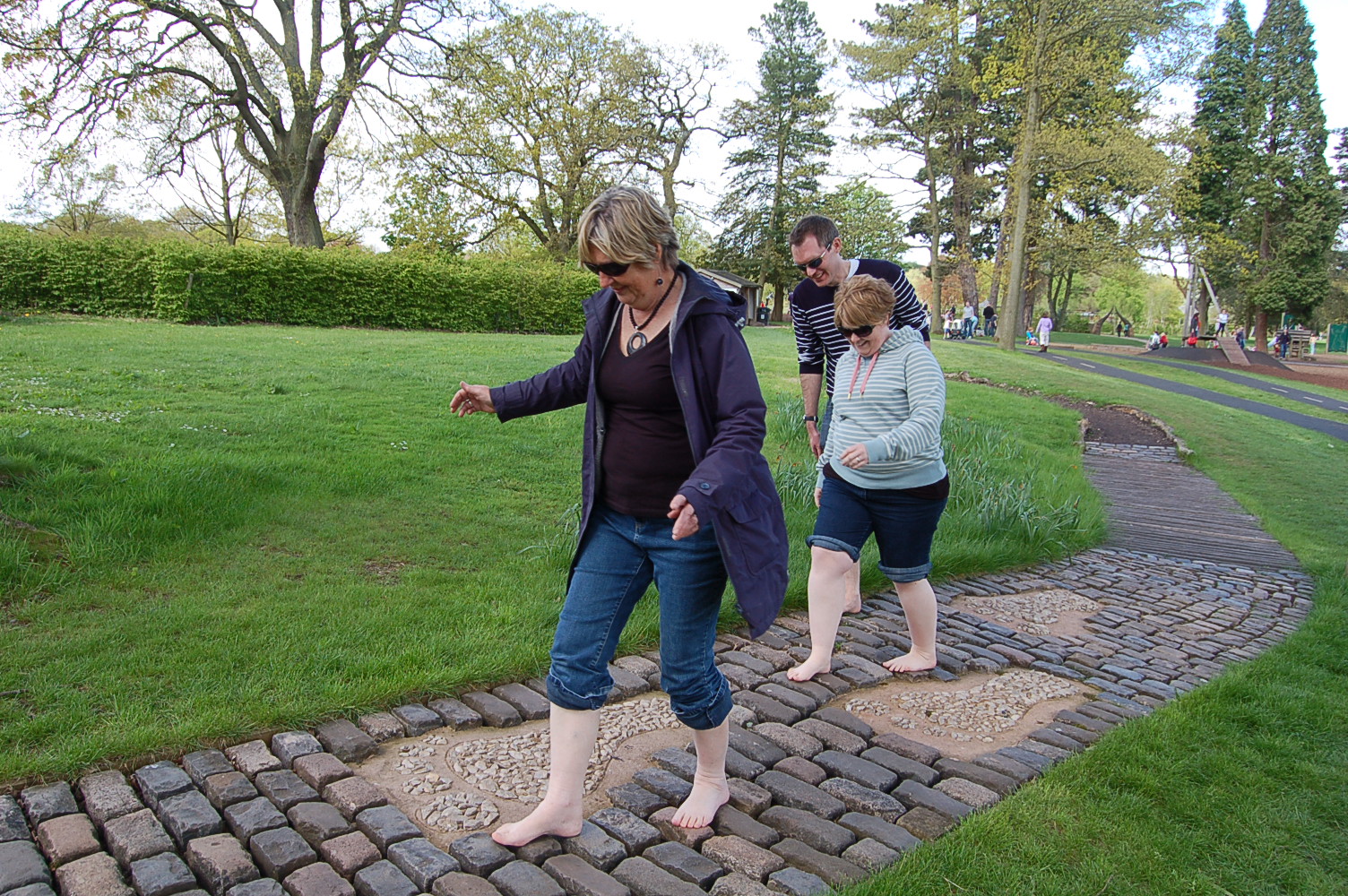
A brilliant design feature at this garden is having a most excellent coffee shop half way round. Should be compulsory! After refreshing ourselves we continued our wander but within a short walk of the coffee shop those of us who are young at heart were delighted to find a sensory walk. A ramble through the woods on a path made up of sections of all sorts of textured materials, bark, gravel, sand, tarmac and best of all a mud pool full of black sticky mud.
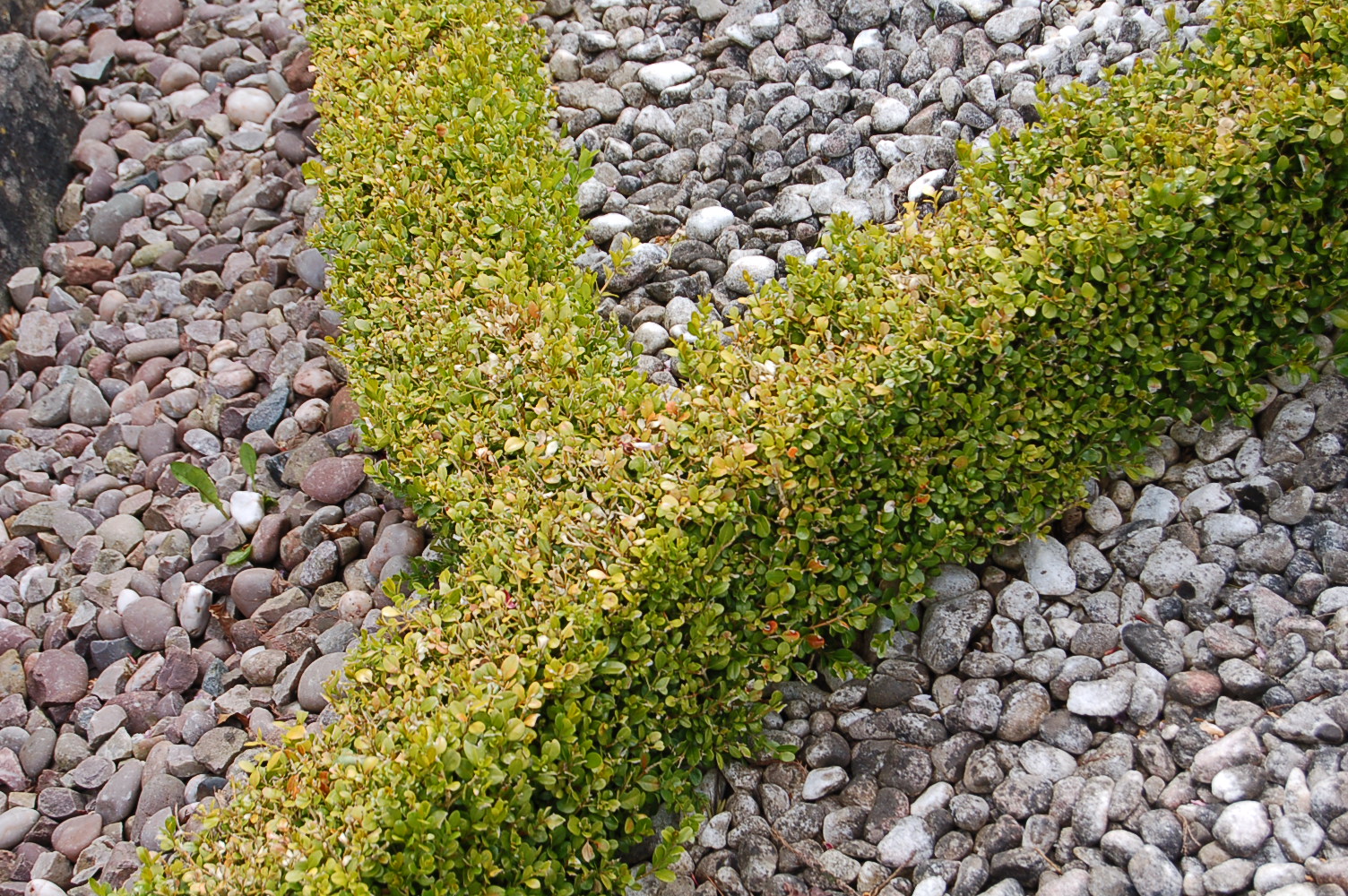
In the more formal part of the garden where modern planting overlays Italianate designs, patterns and structures emerge.
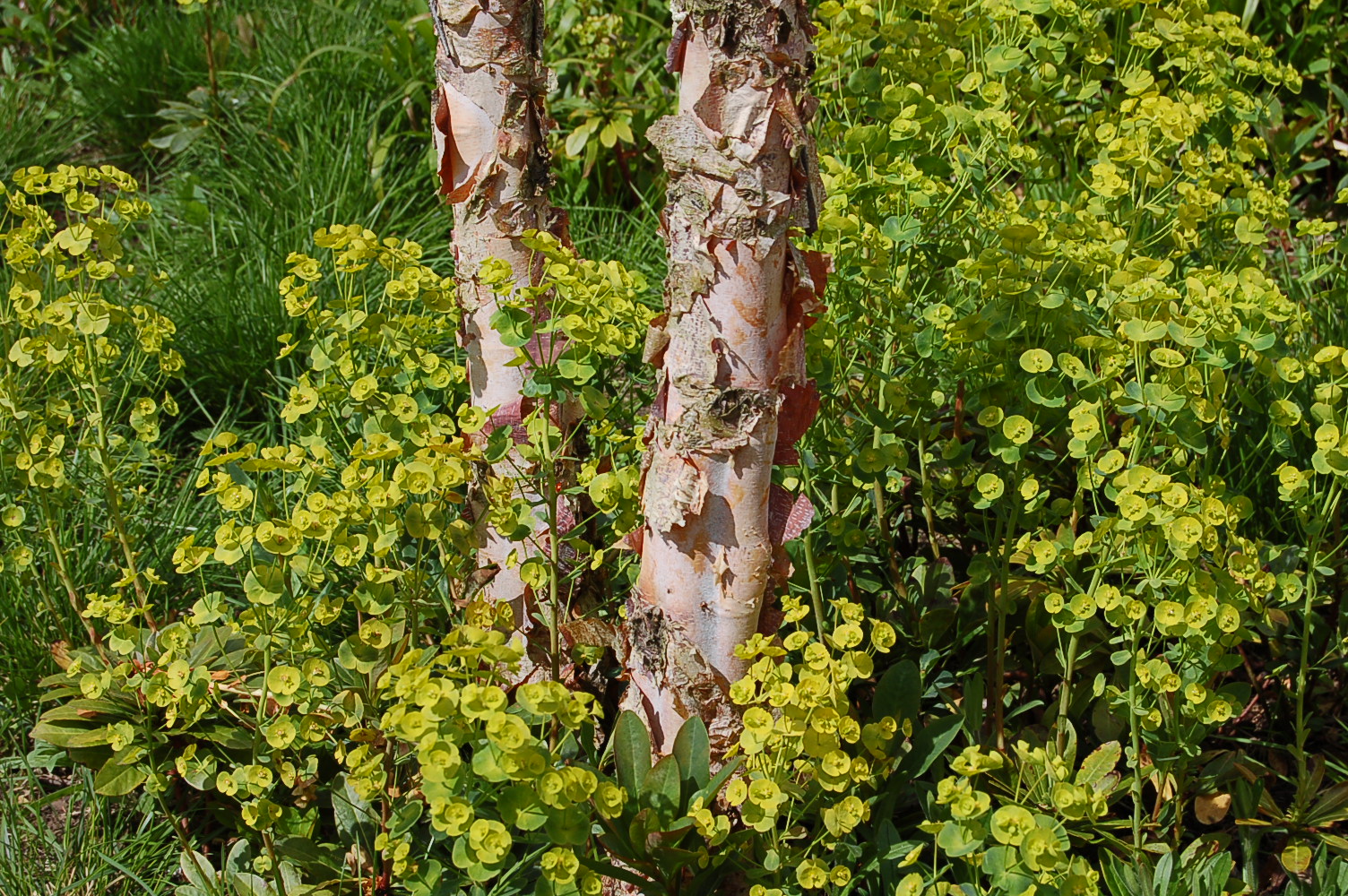
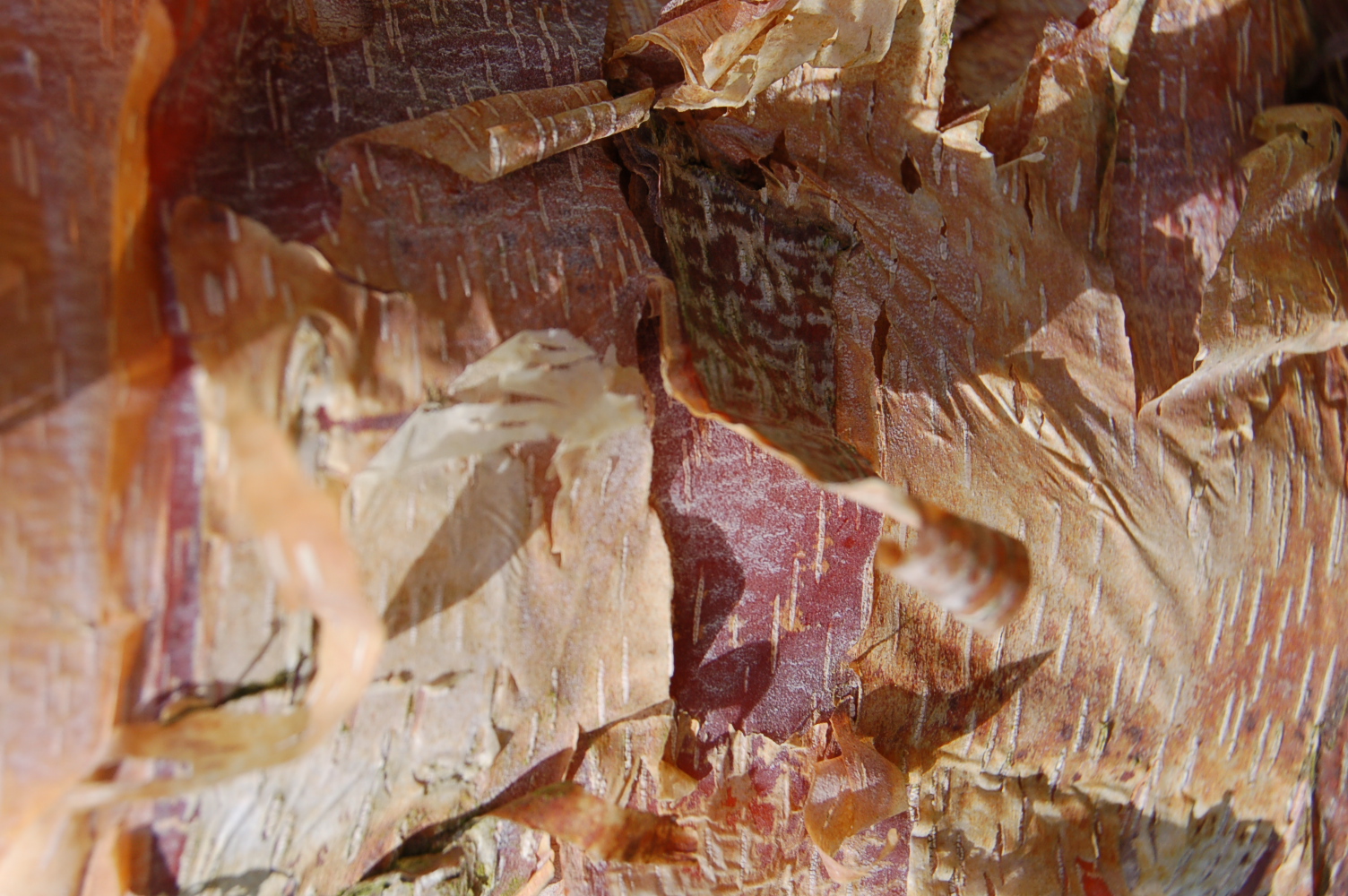
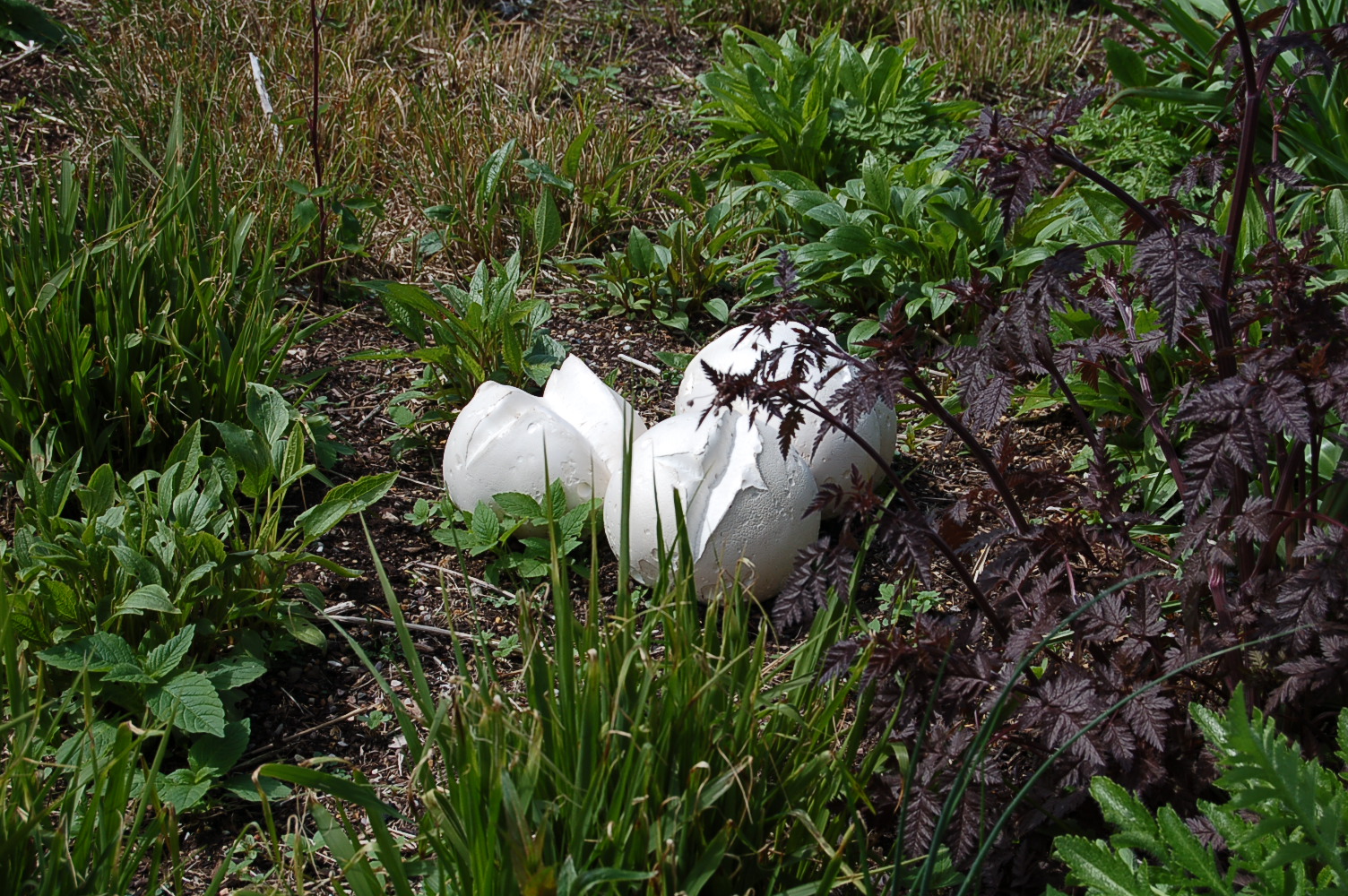
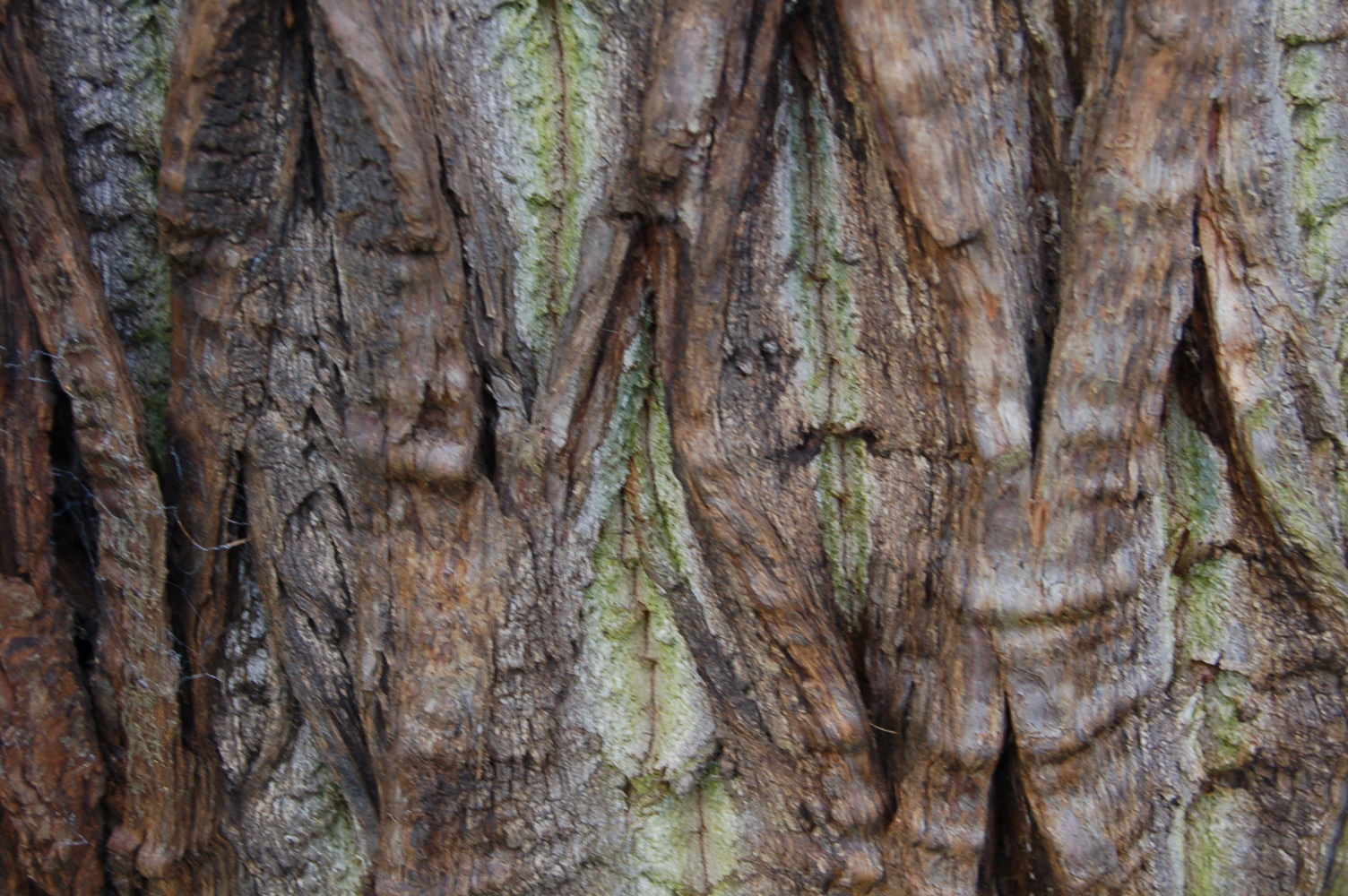
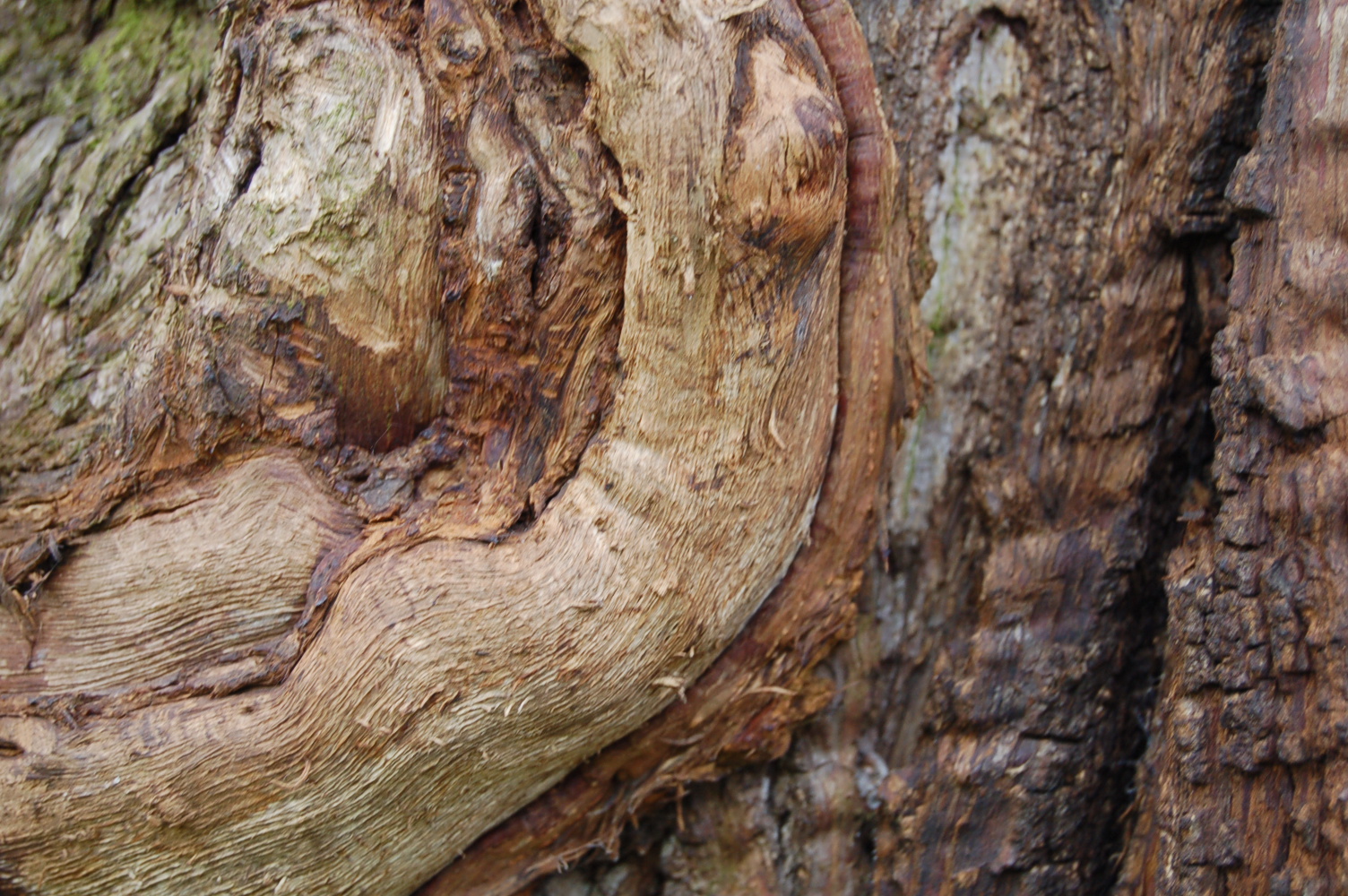
Textures leap to the fore as the light reaches its peak in the early afternoon, texture in trunks of trees, building materials and leaf surfaces. In one border Giant Puffball fungi with the texture of polystyrene, erupted from the bark mulch.
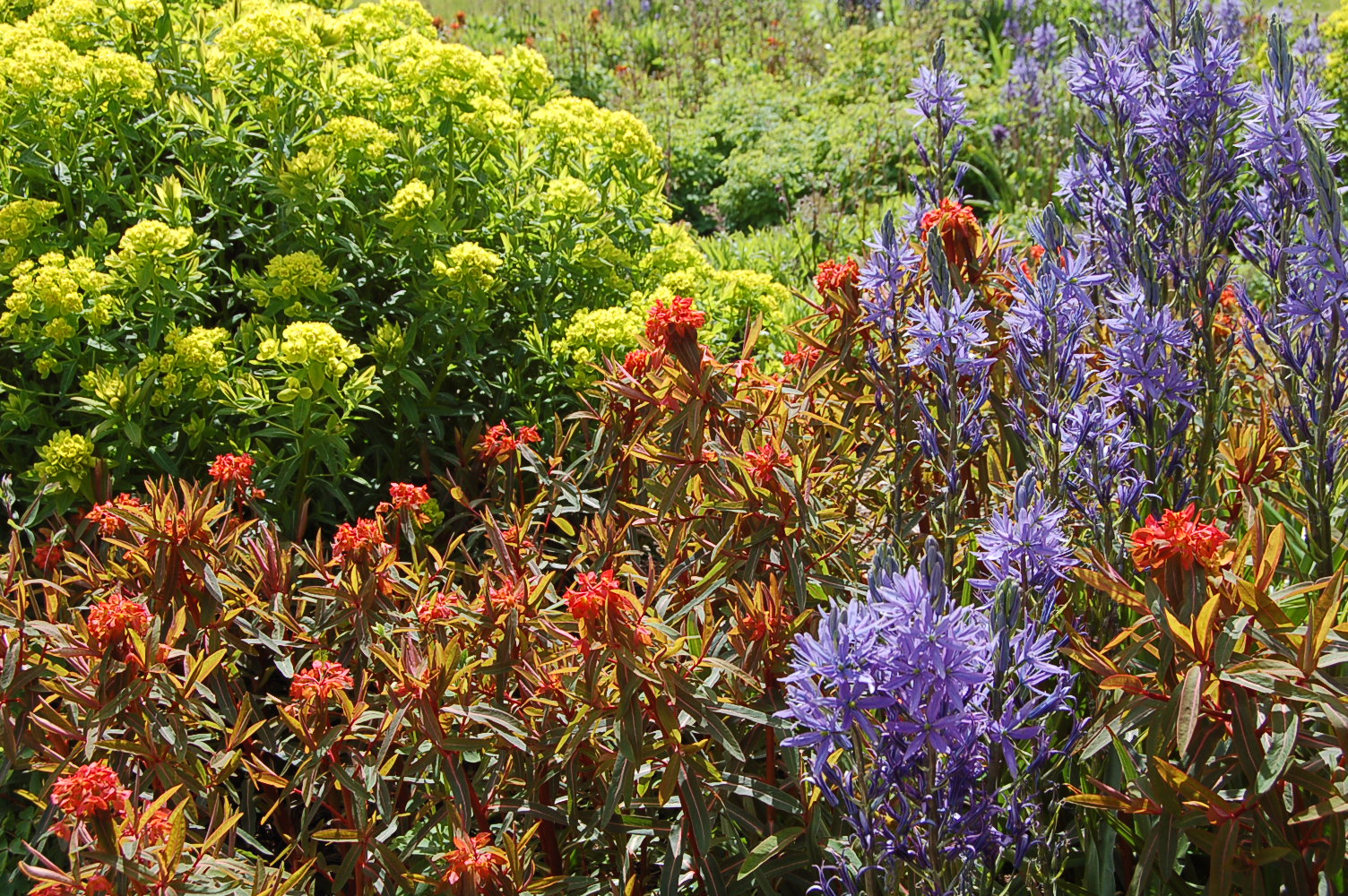
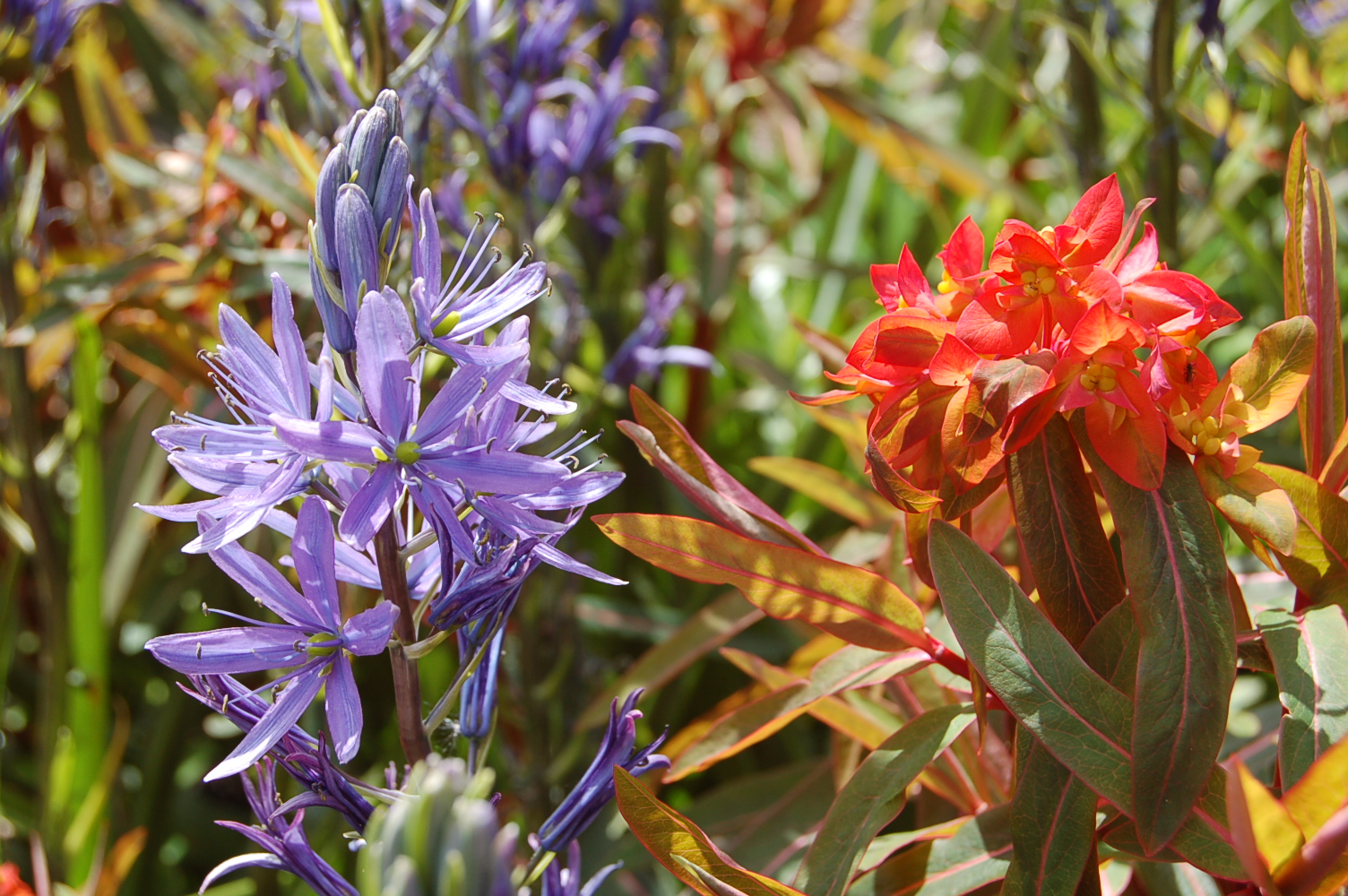
Even this early in the year fabulous colour combinations are there to impress.
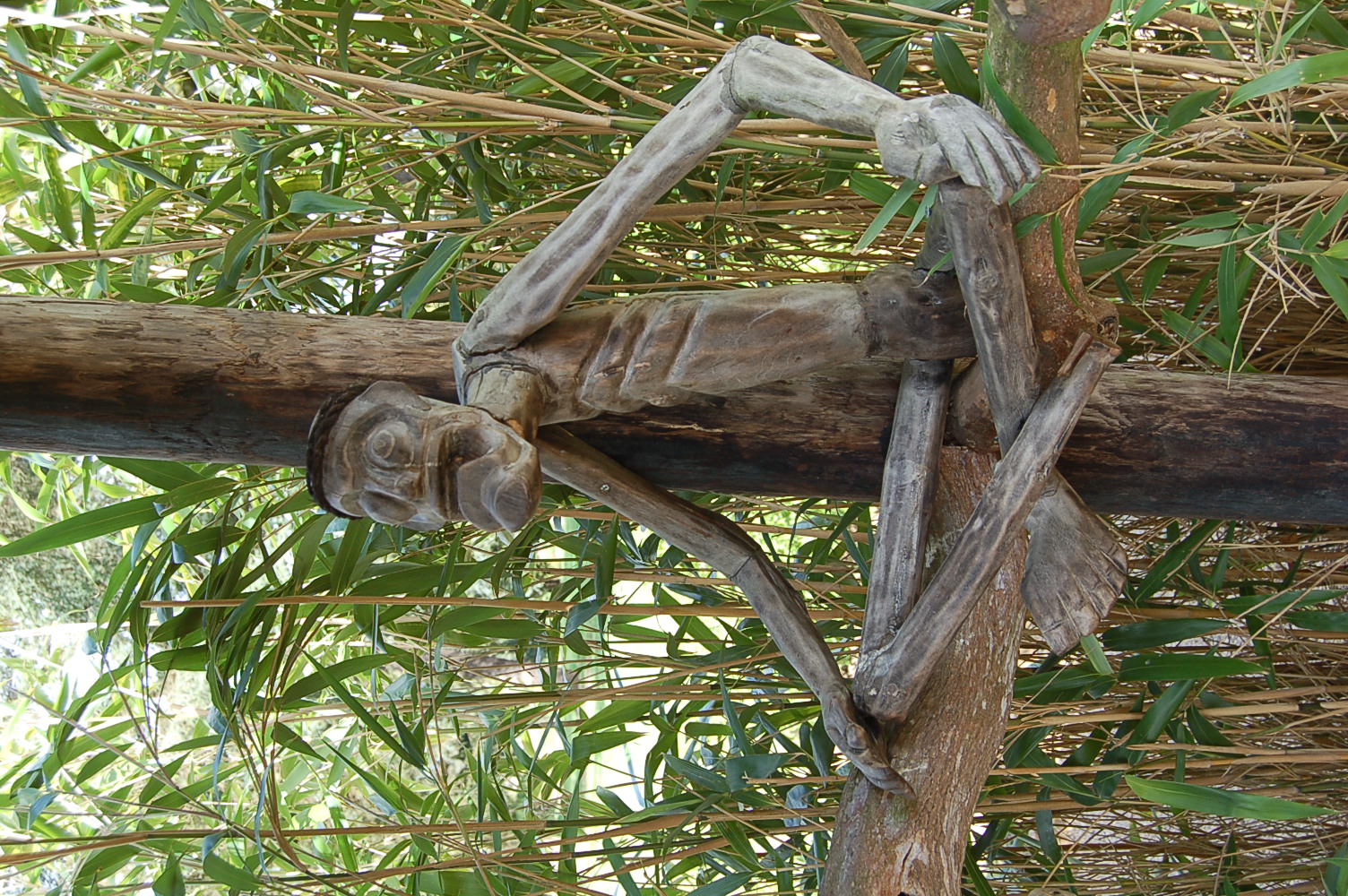
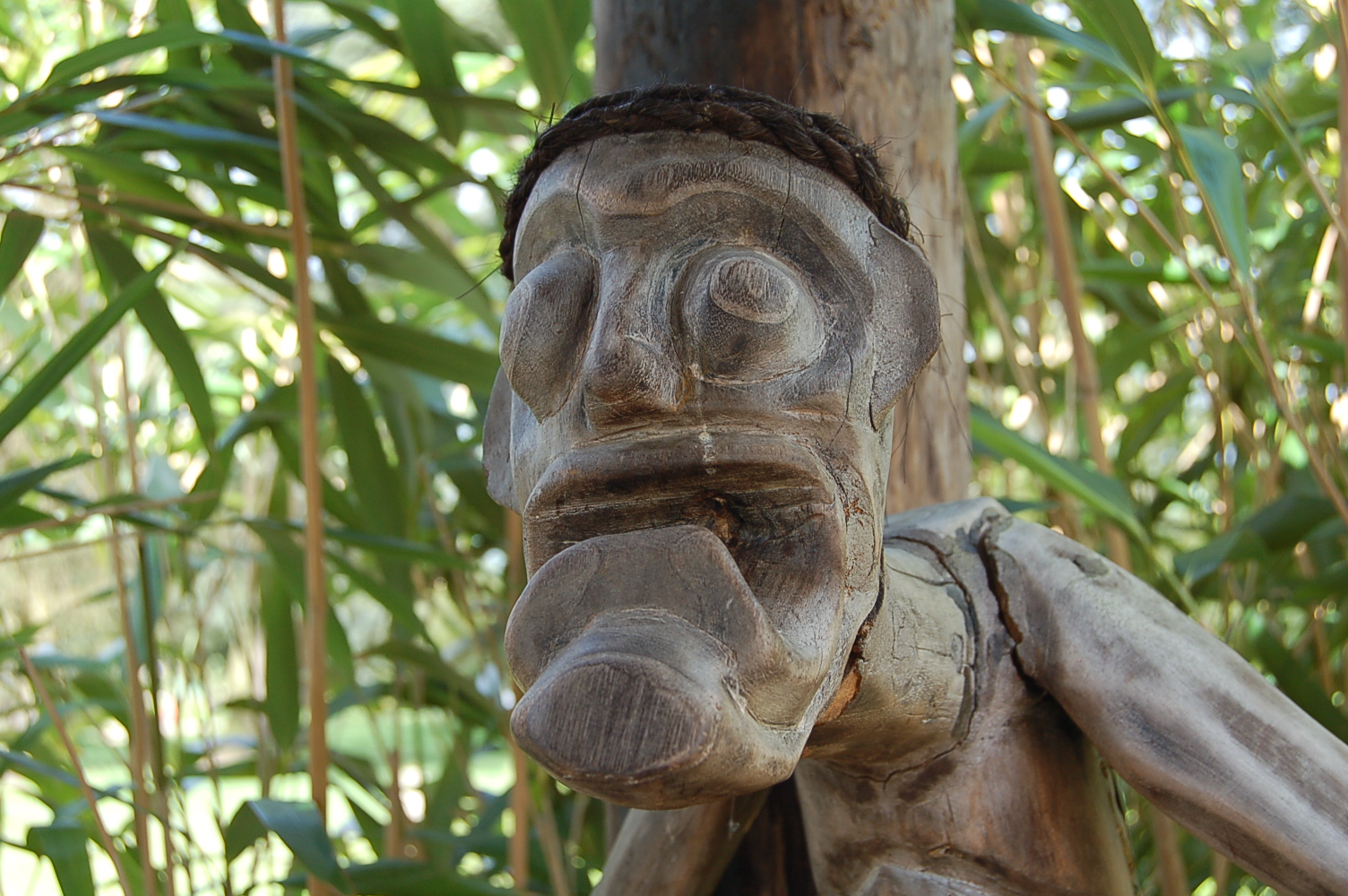
When visiting gardens we often meet interesting characters and on this visit we met this chap, who had little to say and looked most disturbed about something.
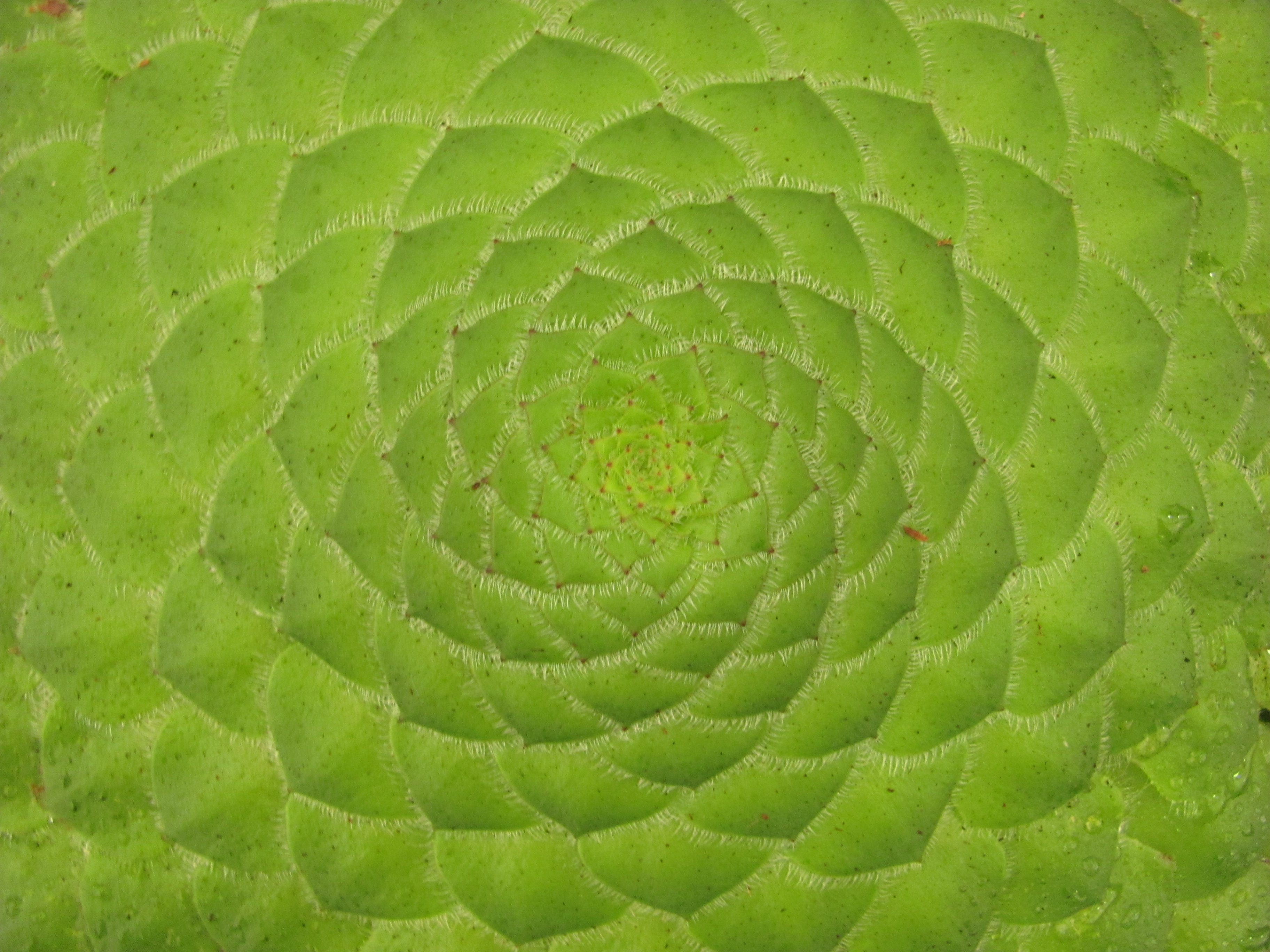
For our second blog about the Malvern Spring Gardening Show we shall explore the plants in the Floral Marquee and the gardening sundries in the trade stands looking for patterns to photograph.
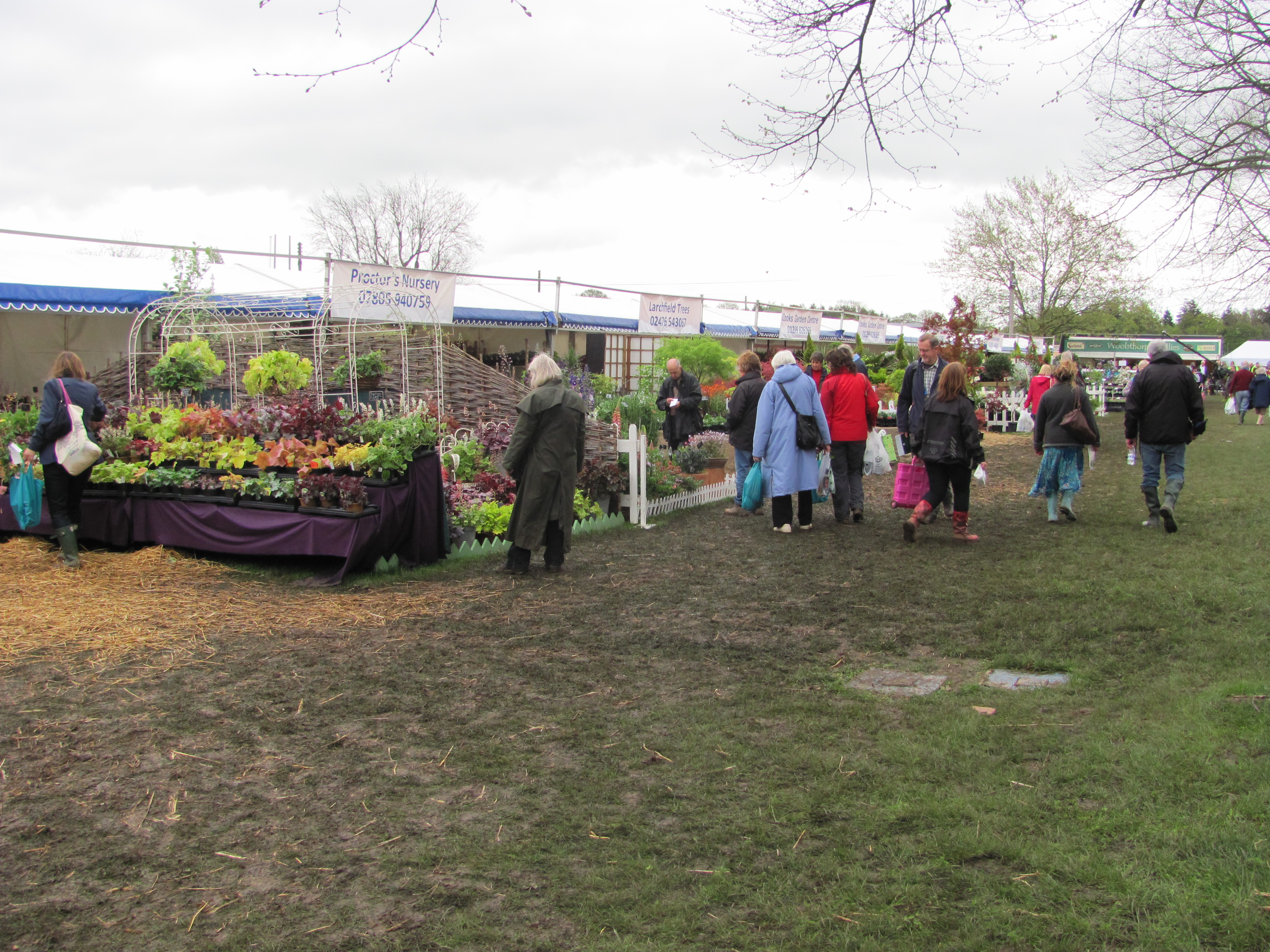
We had a great day out at the RHS Spring Gardening Show at Malvern but we did wonder why it was called a “Spring” show, as on the day of our excursion it felt far from spring-like. Drizzle, strong bursts of cold wind and very little in the way of sunshine. As we wandered around dark threatening clouds rumbled over dark threatening hills. Underfoot the effects of the recent relentless rain could be felt. The paths got muddier and muddier as the day wore on and the groundsmen raced to put down straw and bark chip.They were just about winning the battle.
Shoppers looking out for unusual and special plants in the rows of nursery stands braved the mud underfoot and filled bags and boxes with their booty.
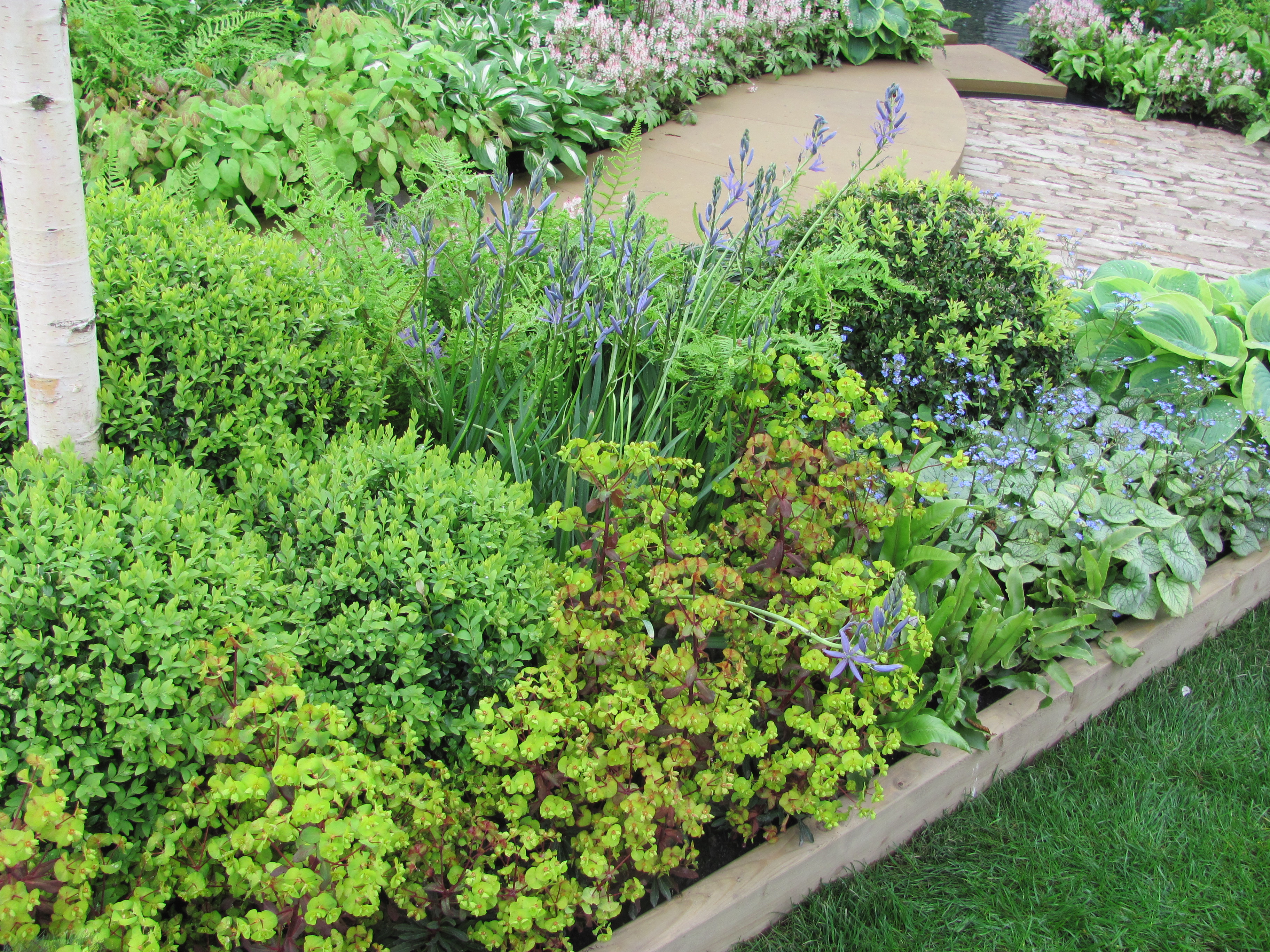
We were disappointed with the show gardens – we only liked parts of each one. The team responsible for the garden which was awarded the much-coveted “Best in Show” card sat at the back of their garden surrounded by empty champagne bottles and looked absolutely exhausted. We could only guess at what time they had finished their build, probably at some hour in the early morning. The planting in their garden was lush and densely packed in displaying the true spirit of the spring garden.
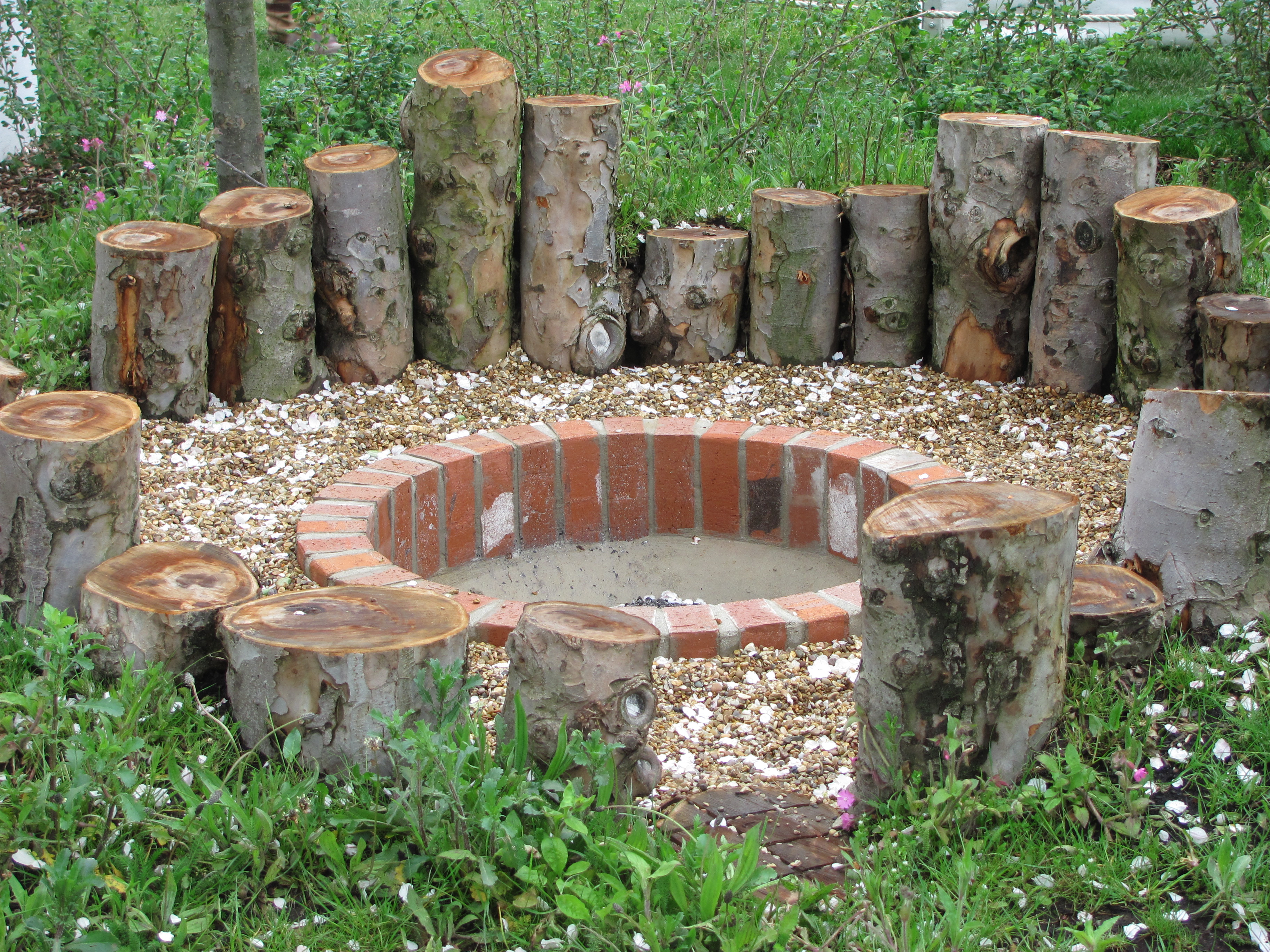
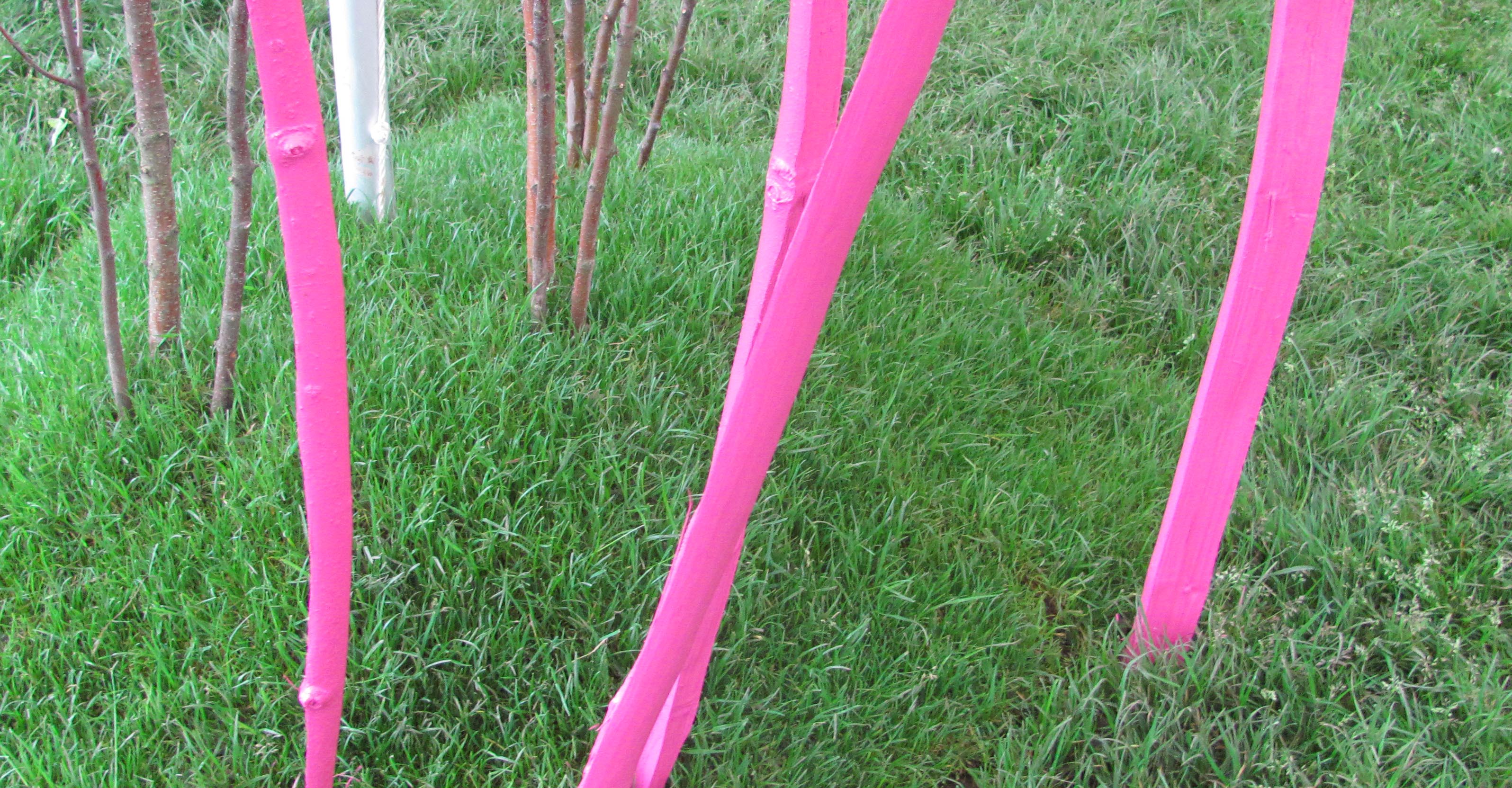
In other show gardens there were ideas to glean – the fire pit with wooden poles, the pink-painted sticks, beautifully planted original pots and a hollowed out tree trunk as a seat.
However the smaller gardens designed and built by school children were so impressive. We spoke to the youngsters who had created these gardens based on the theme “Sustainability for All”, and were so impressed with their knowledge and skills of communication.
This garden called “Yesterday’s Garden” was based on the post-war era when gardens were designed to provide food.
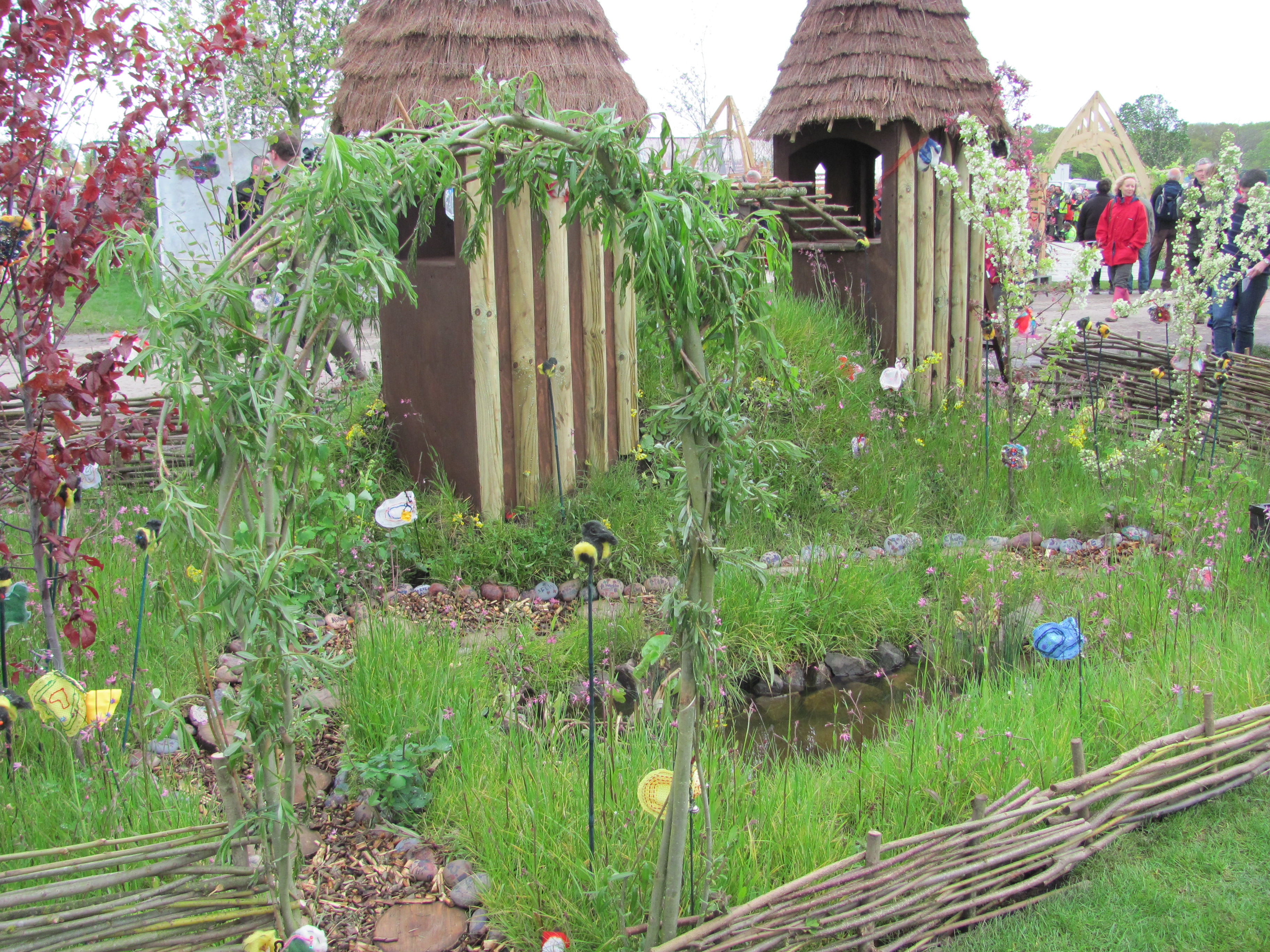
Wildlife was welcomed in this garden.
The pupils who created this unusual garden looked at how nature reclaimed places abandoned by man.
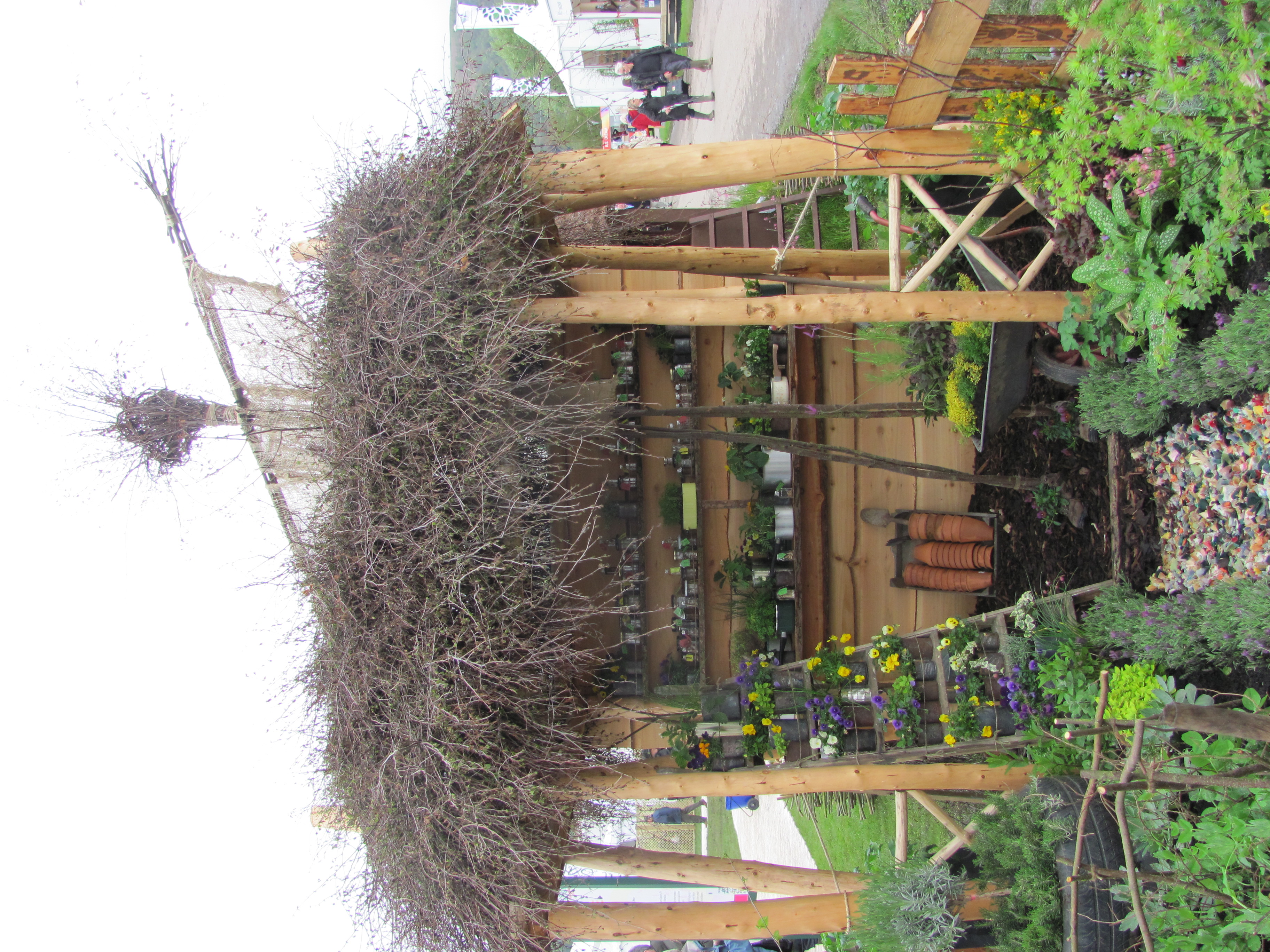
The following garden was designed and created by pupils from a middle school and featured this green roof on a shed which the pupils also built. There was a vegetable plot and other borders contained plants chosen to attract wildlife.
On top of the shed in this garden was a stick scarecrow looking down admiring the planting.
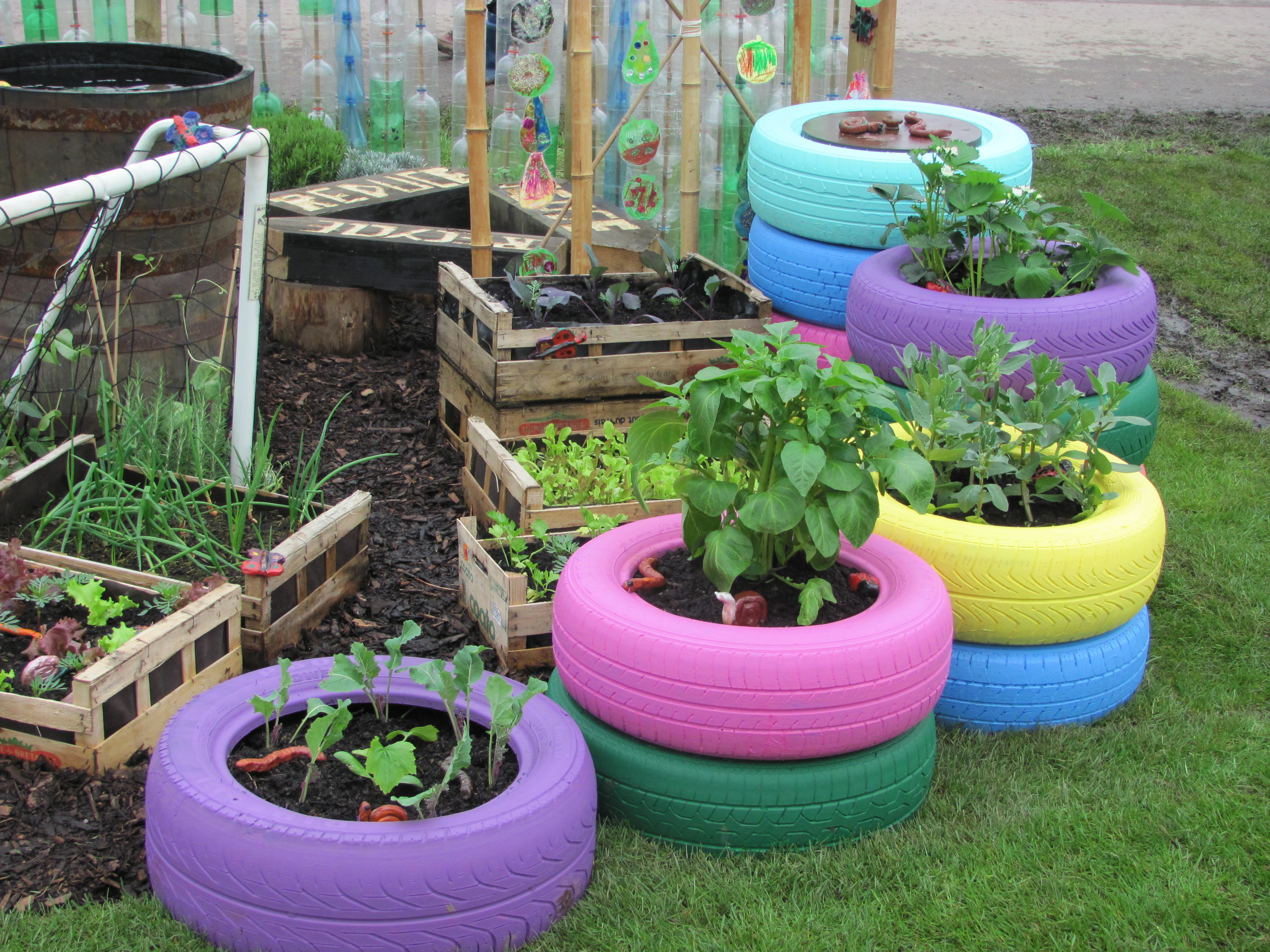
Recycling was paramount in the minds of many of the young designers. Here raised beds are made from old tyres and the far tower of tyres is a composter.
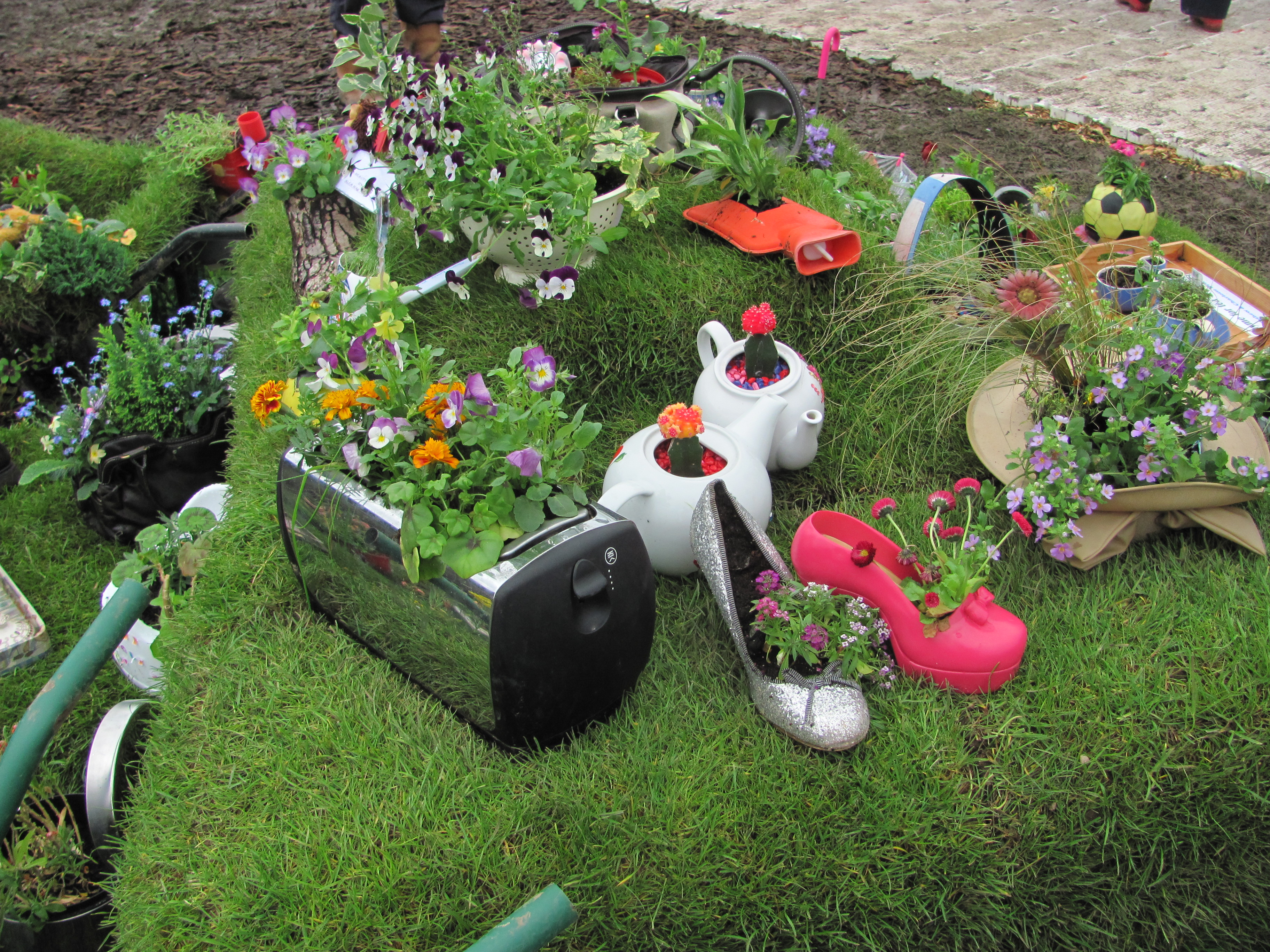
One group of pupils challenges other local schools to find recycled materials to use as planters.
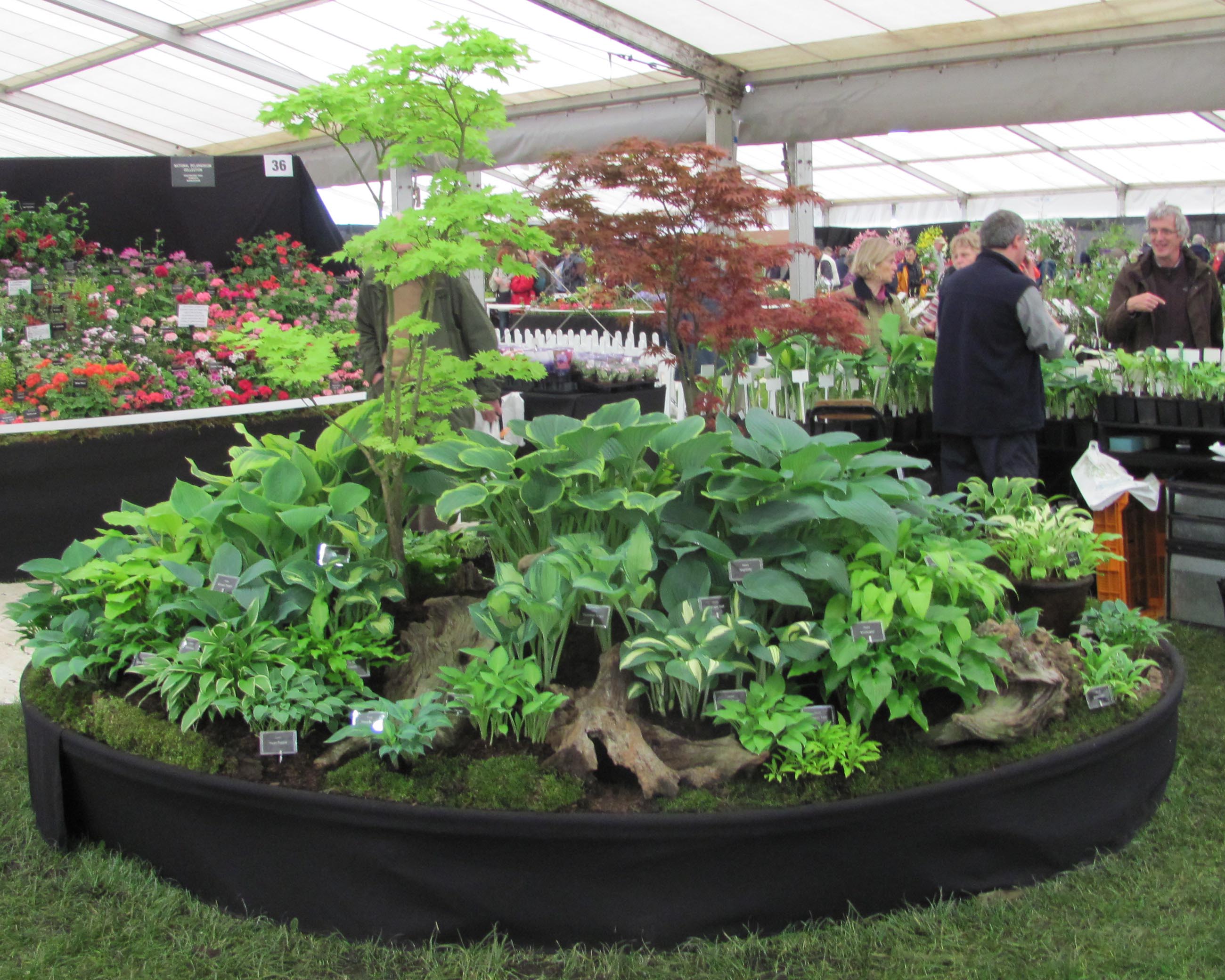
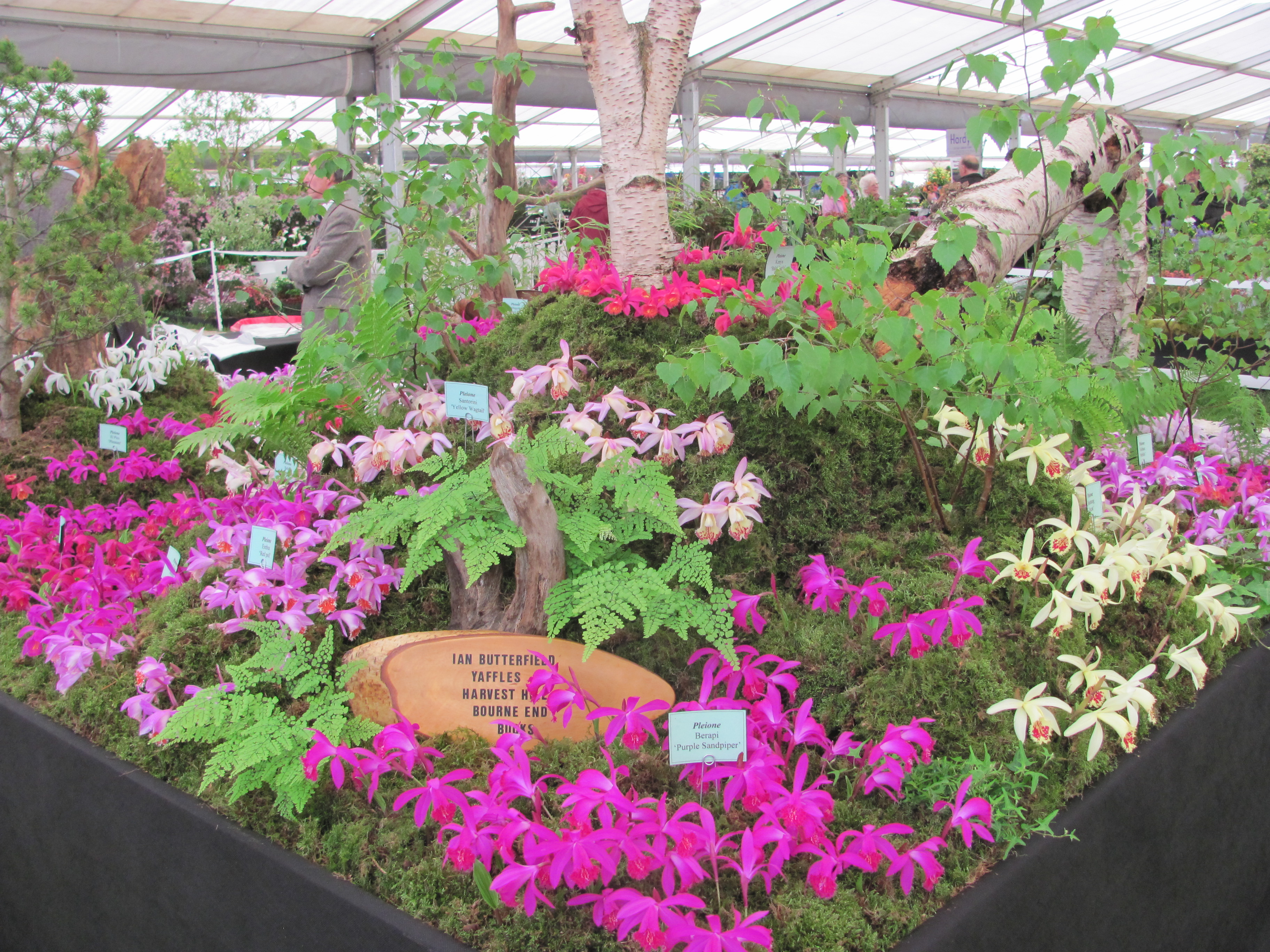
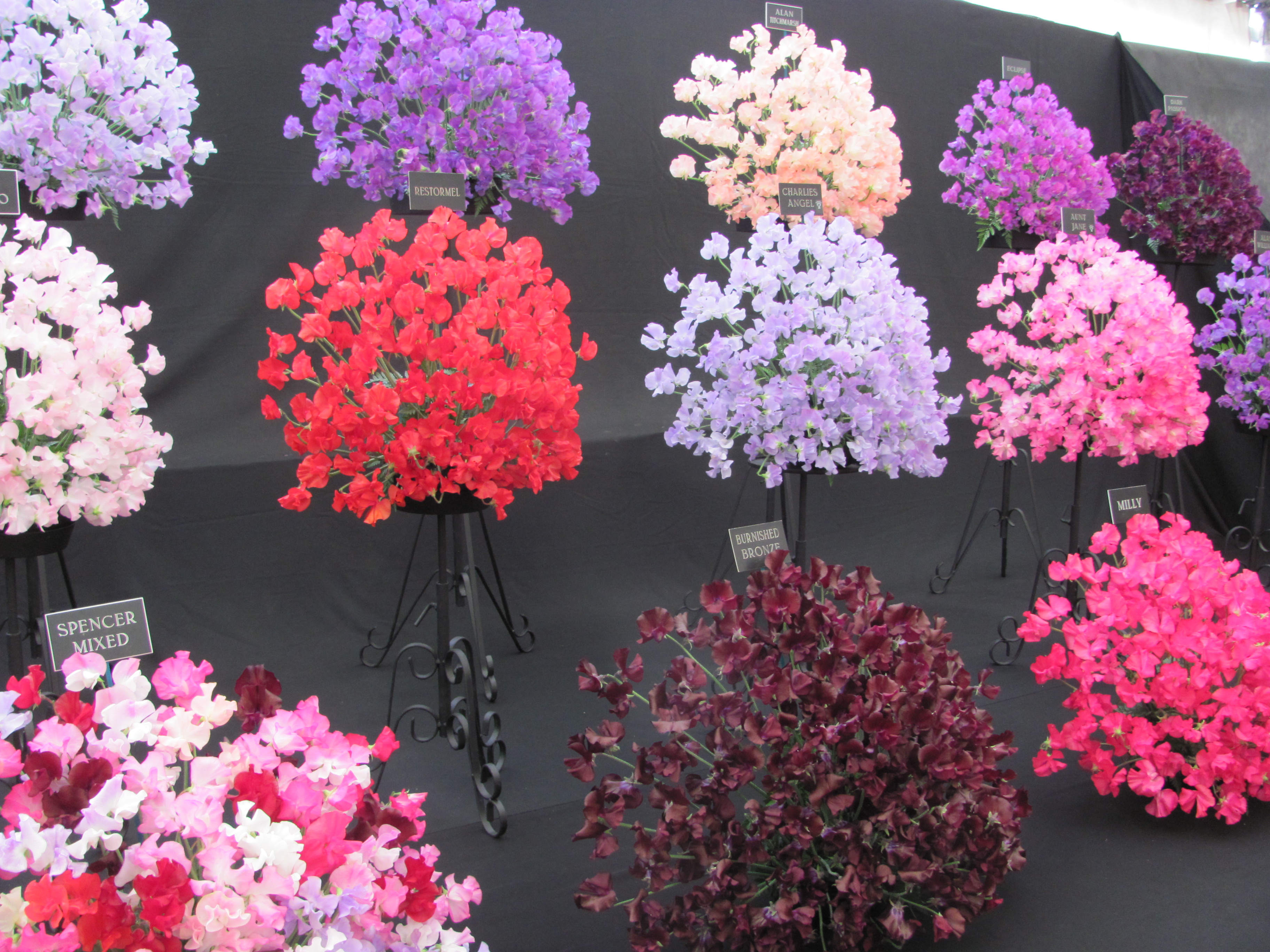
As soon as we entered the floral marquee the senses were aroused, scents, sights and sounds, and we turned into two kids in a candy shop. Familiar nurseries displayed their wares alongside excited but nervous new-comers but every one was special in its own way. We were particularly taken with the acers, meconopsis, hostas, orchids, sweetpeas and insect-eating plant displays.
As usual we were on the search for new ideas for attracting wildlife to our garden and allotment – we were not to be disappointed.
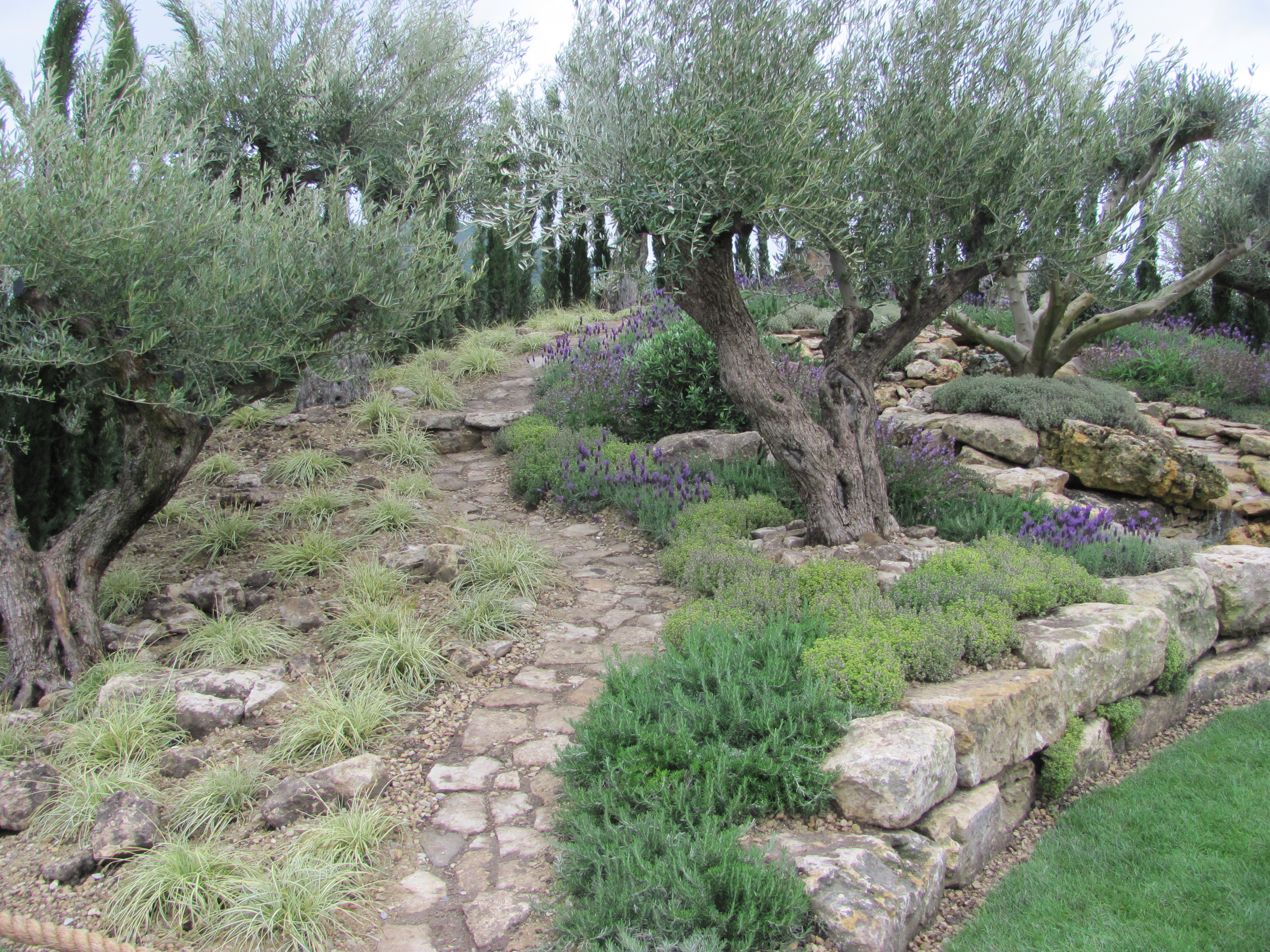
One garden that seemed to be defying the wet weather was based on a dry hillside dotted with ancient olive trees and lavenders.
In my next blog we return to our day at the RHS Malvern Spring Show and look at patterns we found in plants and in gardening sundries.
A week into May the rain stopped, the temperature rose a little and the skies cleared, bird song increased in volume and in response the garden had a burst of growth. Fledgling Robins, although only hours out of the nest began to follow us around the garden as we worked as if they had an inbuilt knowledge of the link between gardeners and Robin food.
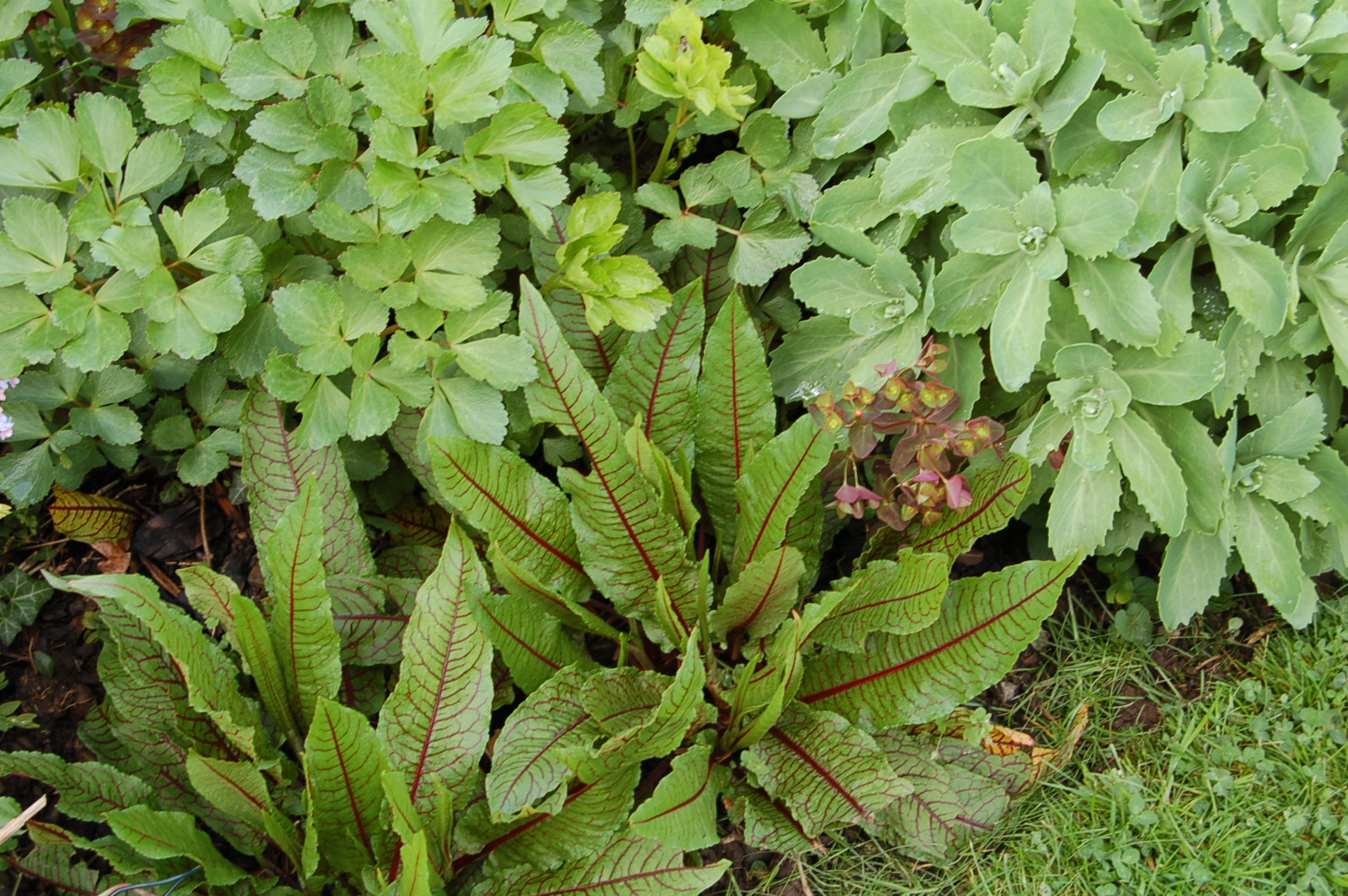
Variations in foliage colour is strong in early May light.
Leaf buds on trees and shrubs started to unfurl and herbaceous plants looked greener and fresher with the new leafy growth. Flower buds fattened ready to open in the next few days.
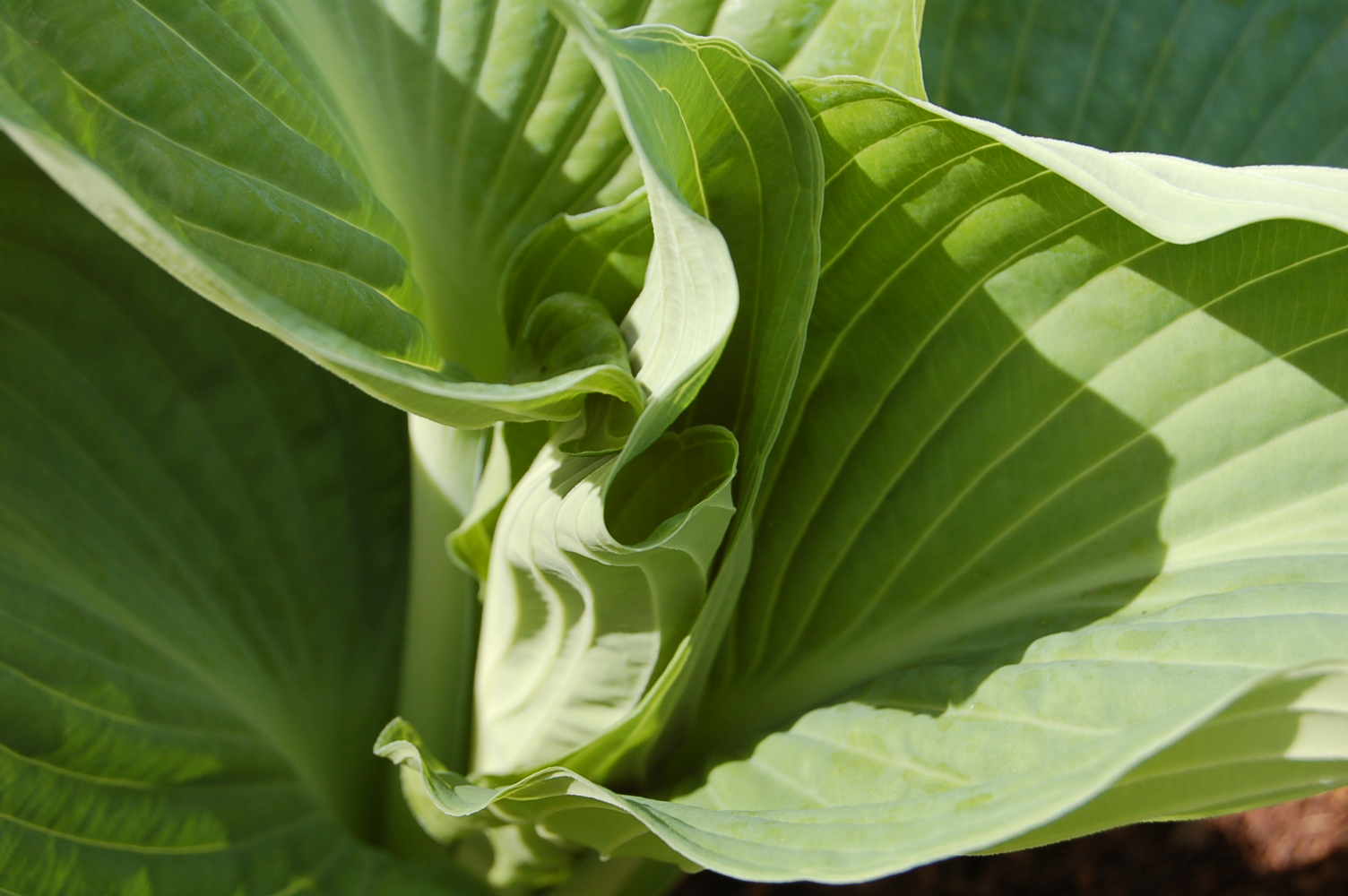
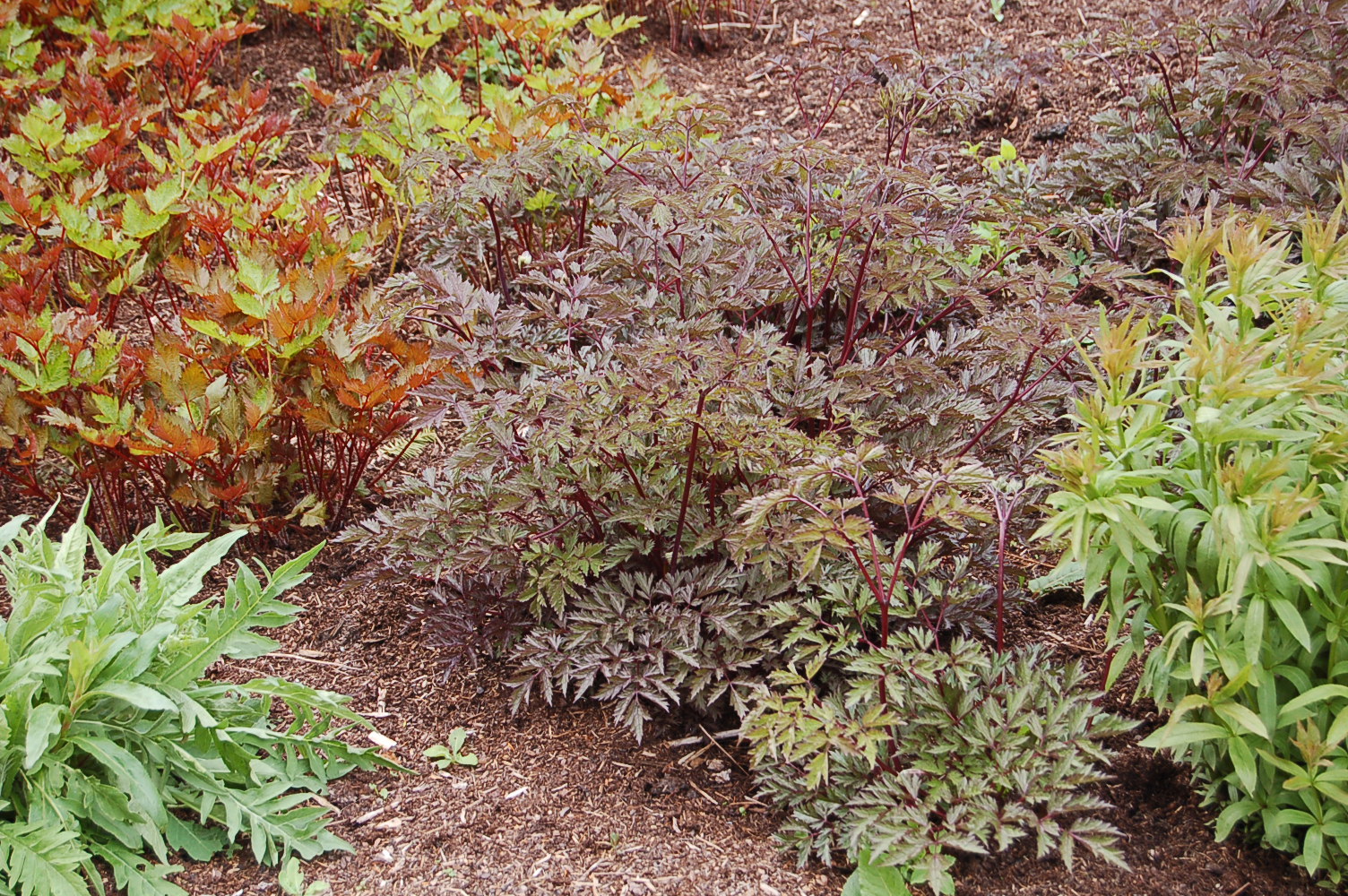
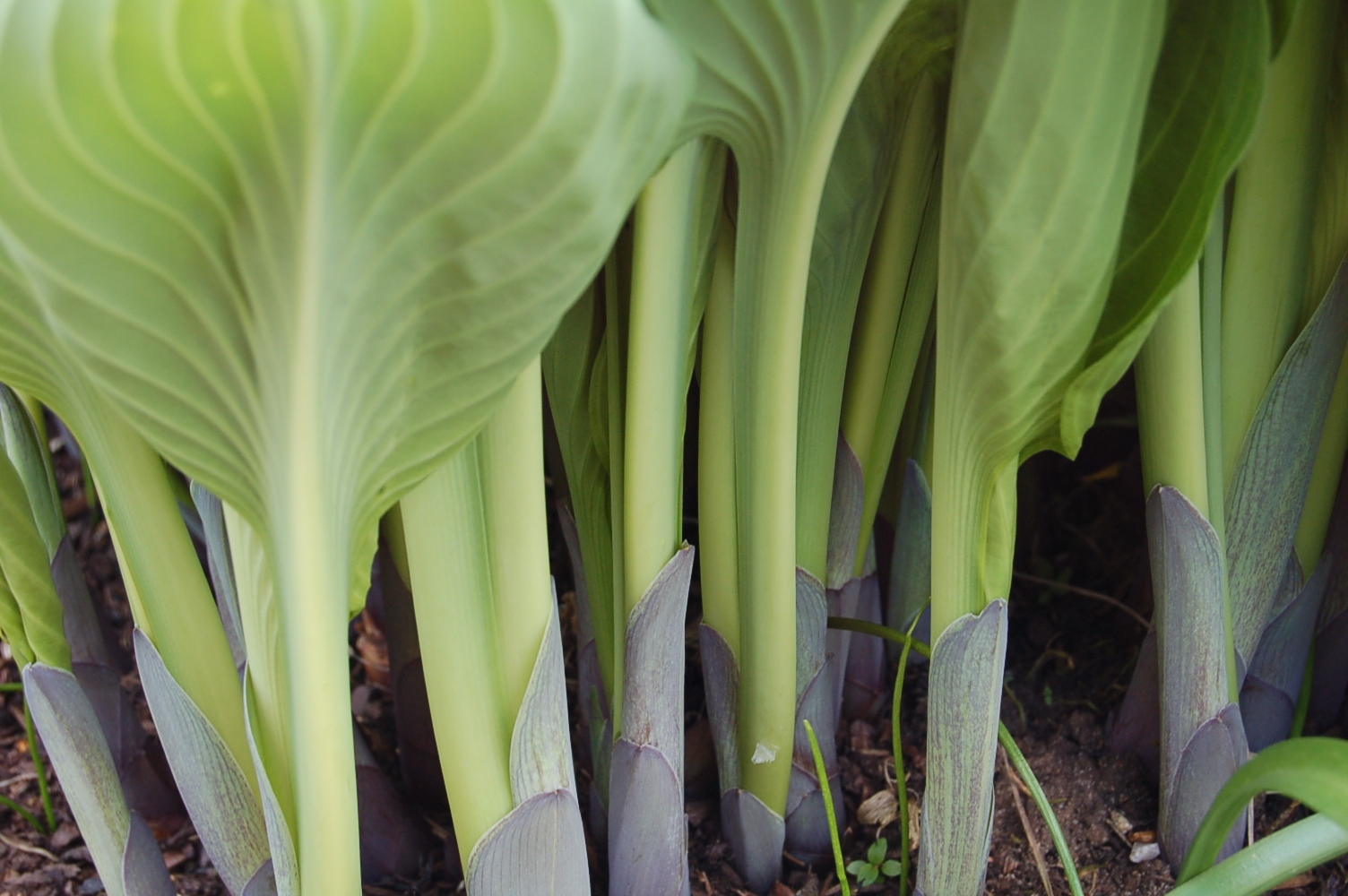
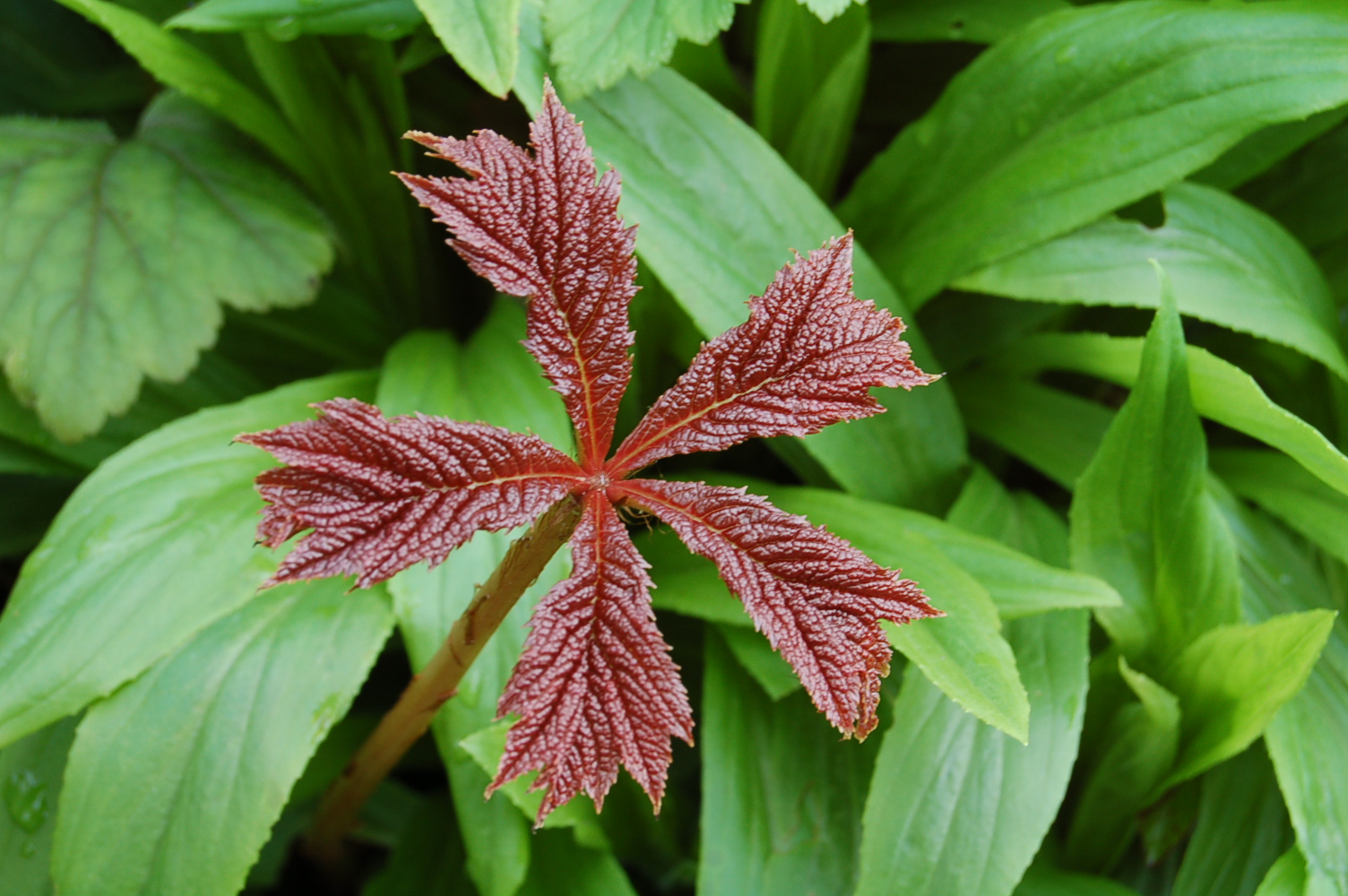
New seedlings of mixed salad leaves.Fresh growth on Bowles Golden.The deep reddish bronze foliage of this Rogersia contrasts beautifully with its green-leaved neighbours.Aquilegias are about to flower in every border. Can’t wait!Grey Hosta spear soaring skyward.This herb valerian self seeds throughout the garden and its scent is welcomed wherever it blooms.
The surge of growth will hopefully allow Mother Nature to catch up a little. The rose bushes are often clothed in fat buds a few of which burst before the end of the month, but at the moment their leaves are still not fully out. Similarly the flowers of the Cercis are usually out now flowering on the bare stems and trunk but their buds are tight shut while the foliage is bursting into life.
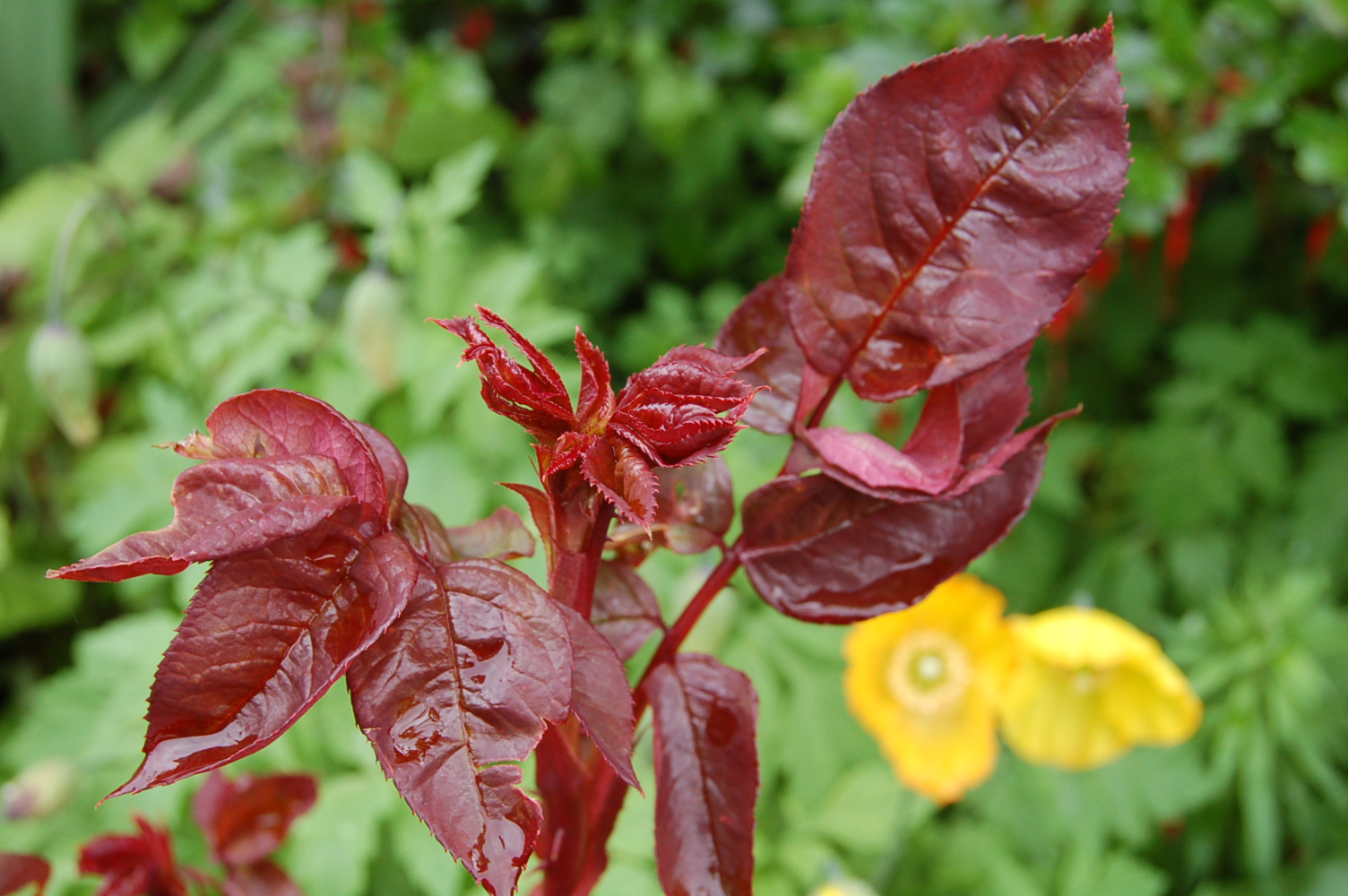
Rose foliage emerges a deep shade of red.The new fresh leaves of Cercis display a deep bronze colour.
Our fruit trees do not want to miss the fun – their leaf and blossom buds burst into life.
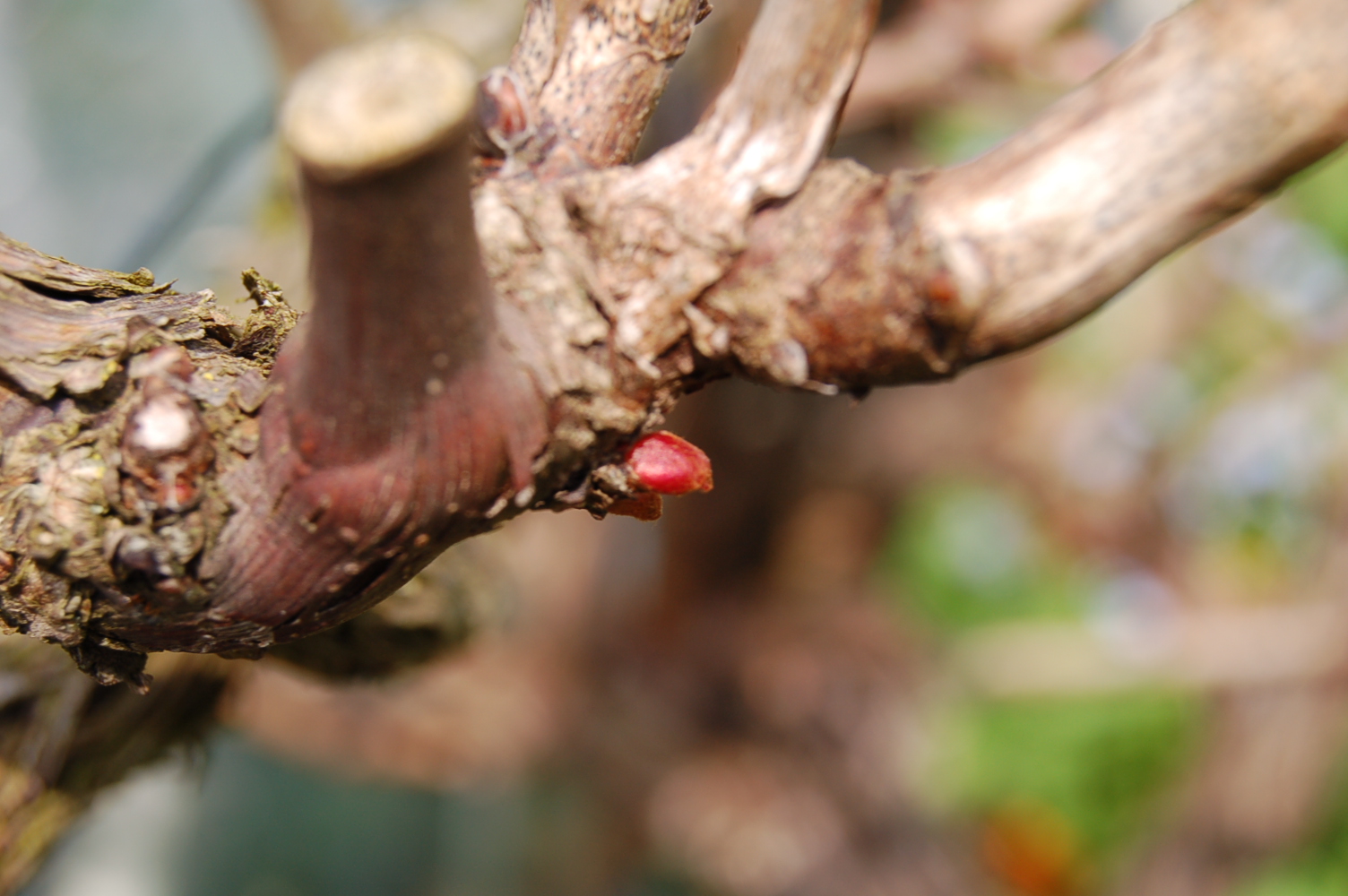
Apple blossom gives us so many shades of pink to enjoy.Very late emerging bud on our Hampton Court vine.
Flower buds are bursting – they do not want to be left out!
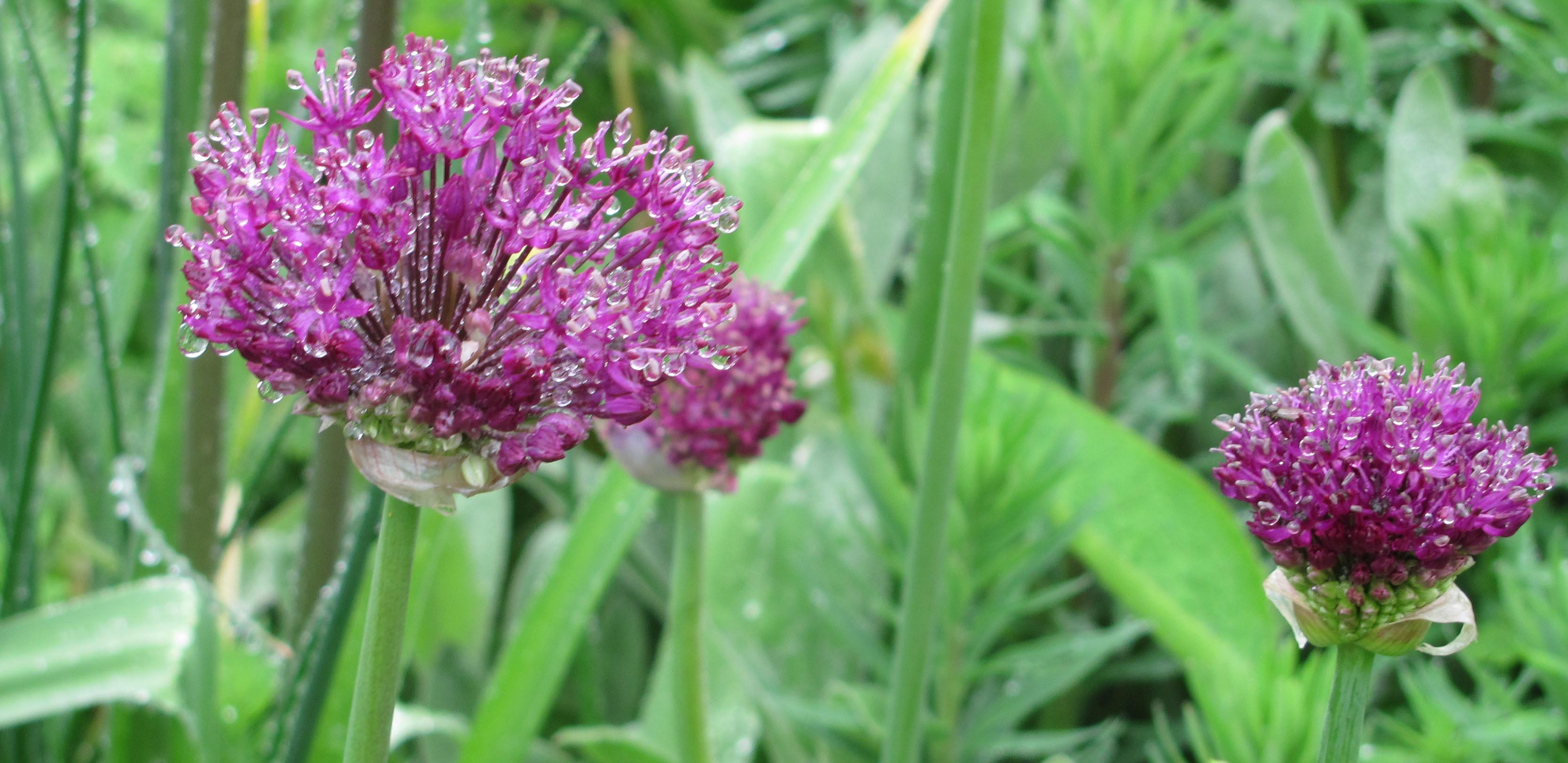
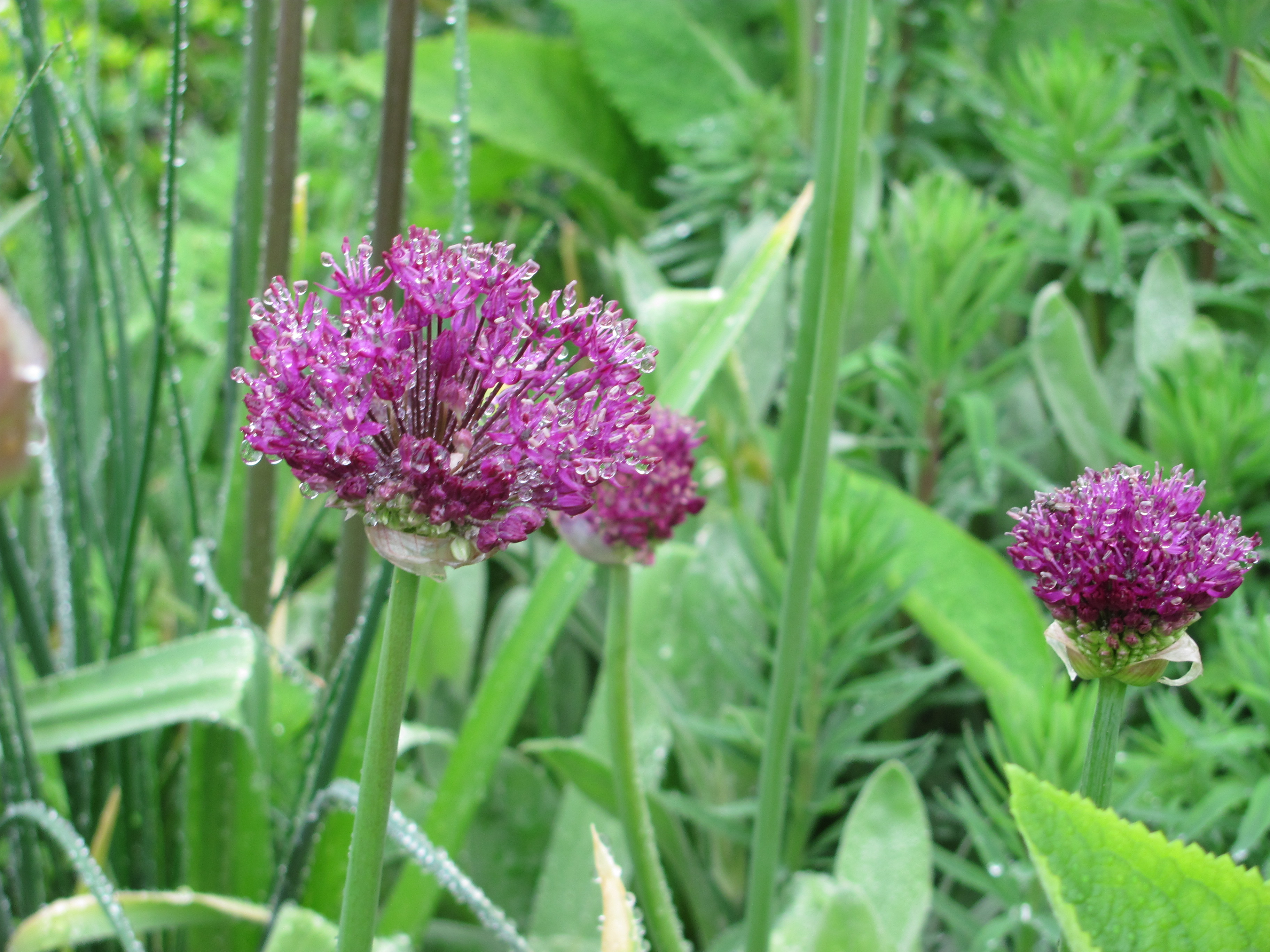
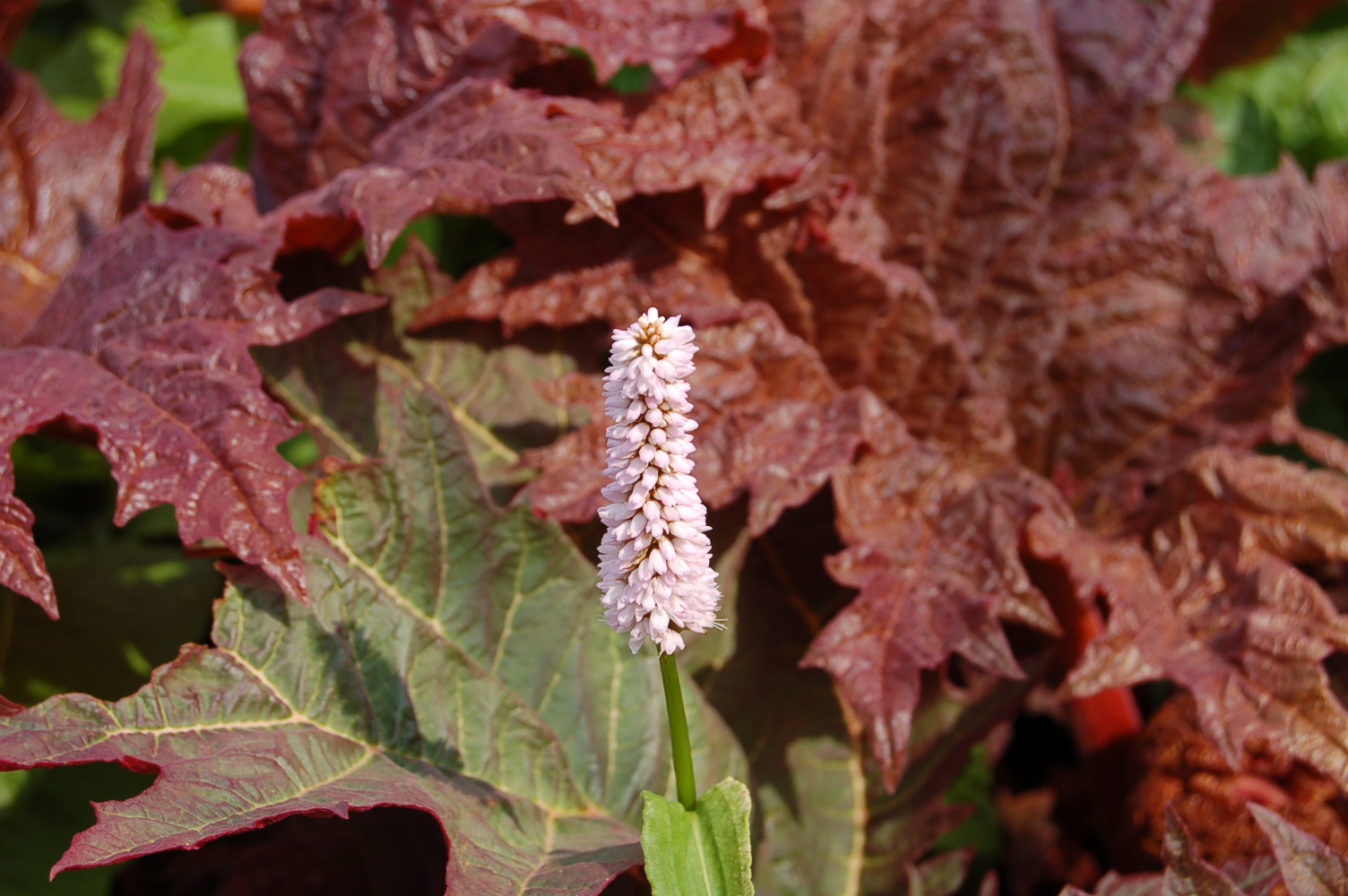
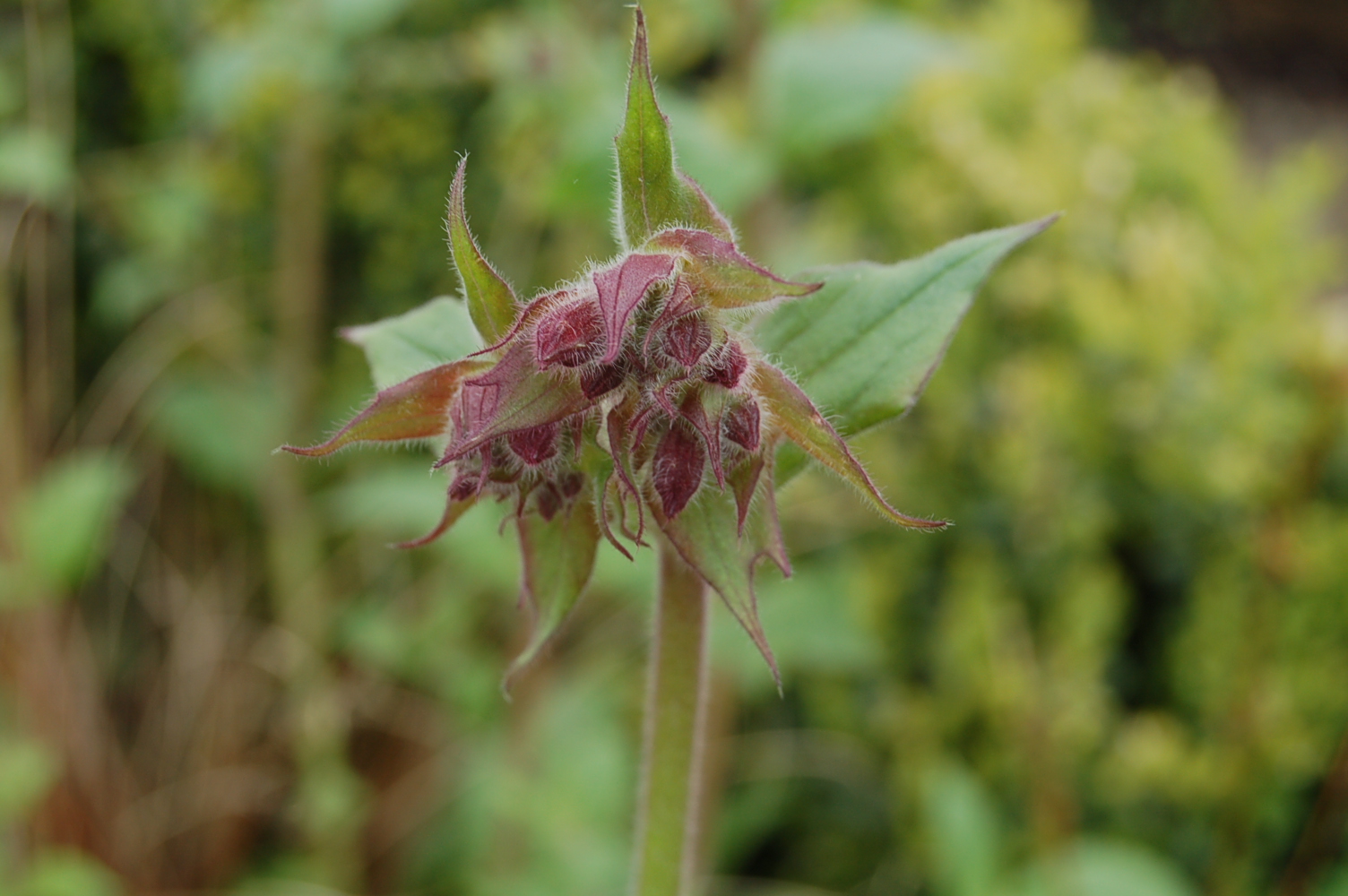
The first flower of the Persicaria bistorta stands alone in the lush foliage of the Bog Garden.The yellow scented flower of this deciduous rhododendron are nearly with us.Misty blue Cammasia buds opening.Fat Allium bud rising from the whorl of leaves.Red Campion buds ready to burst cluster atop their stem.
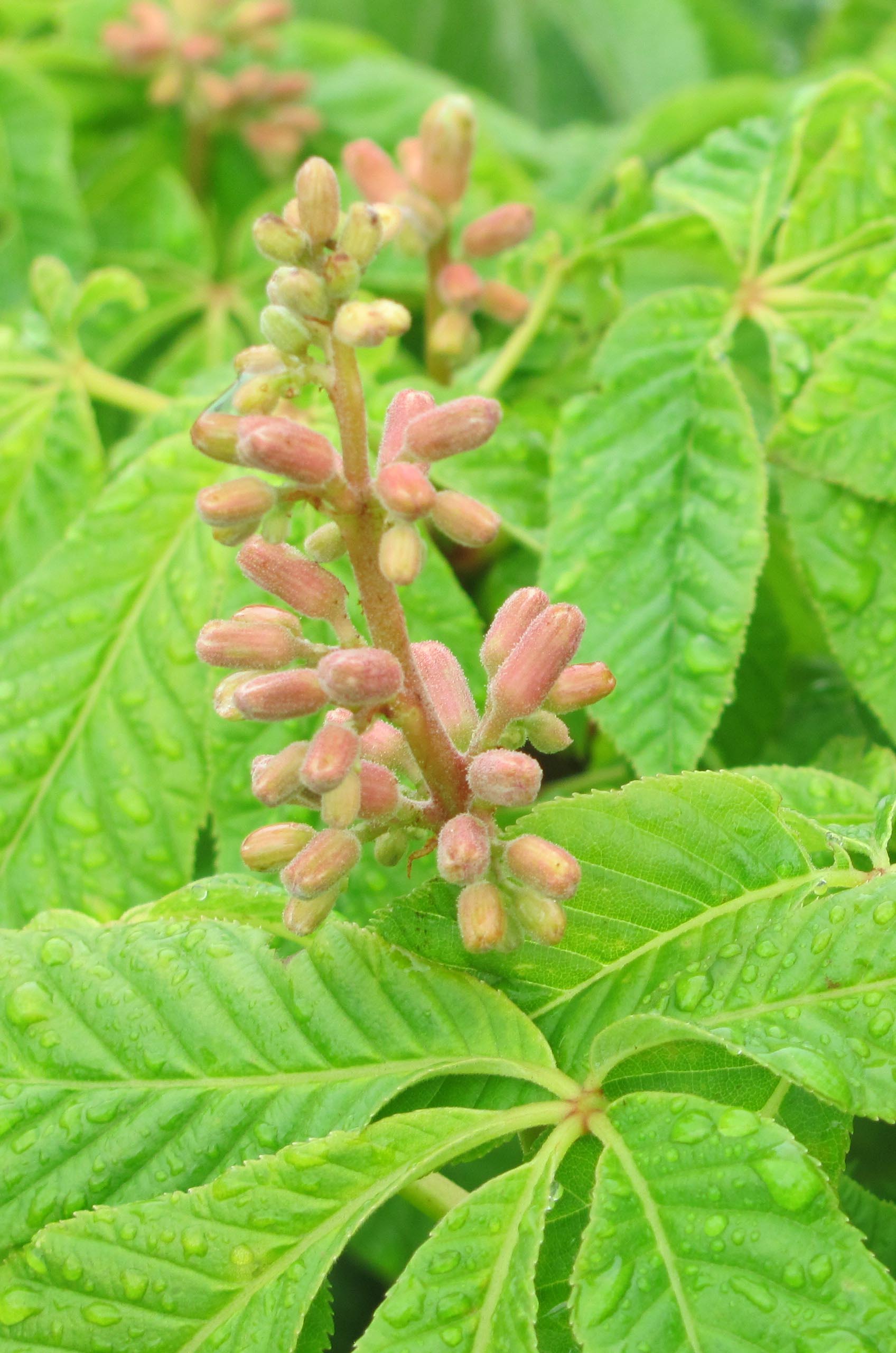
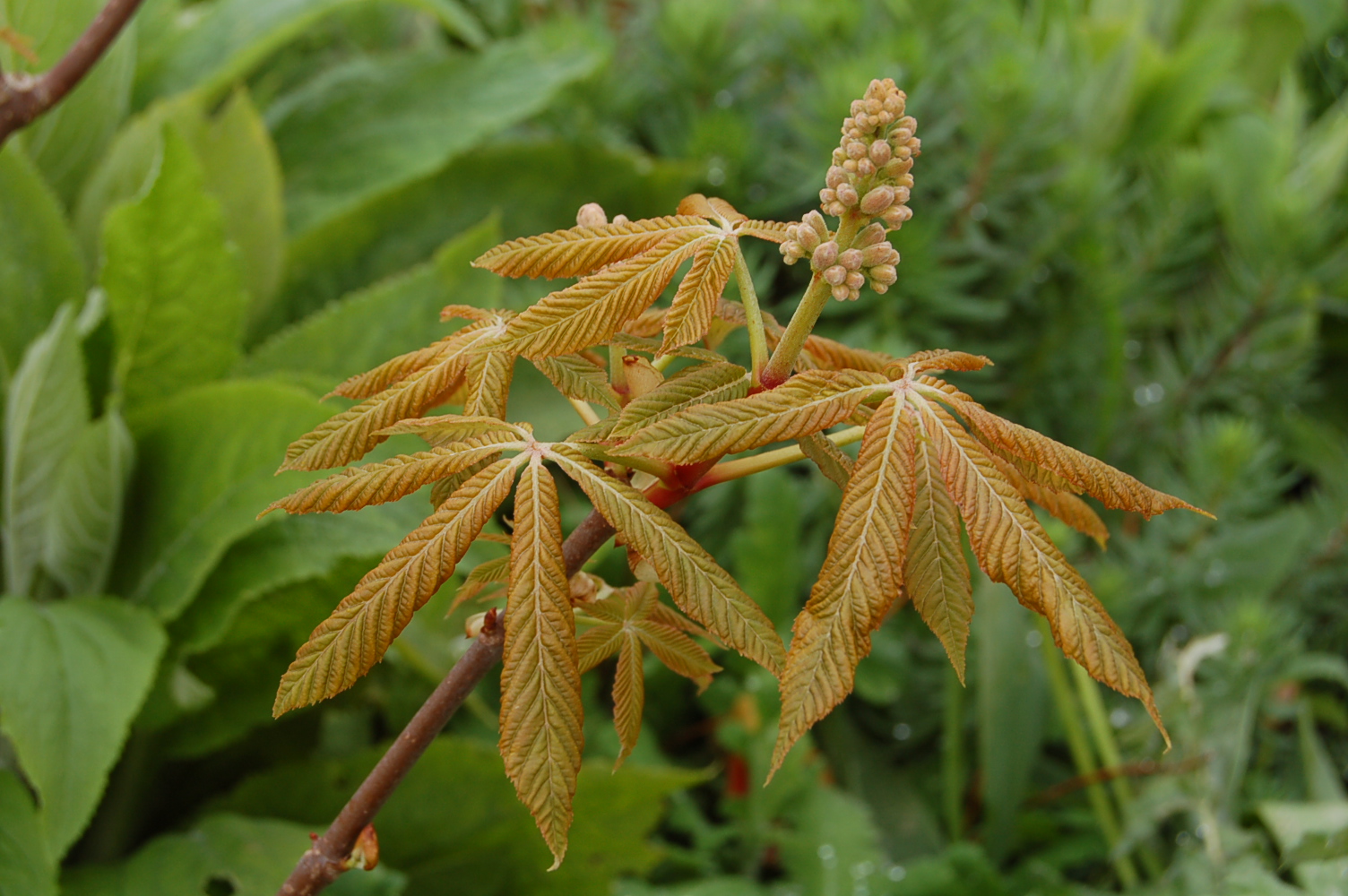
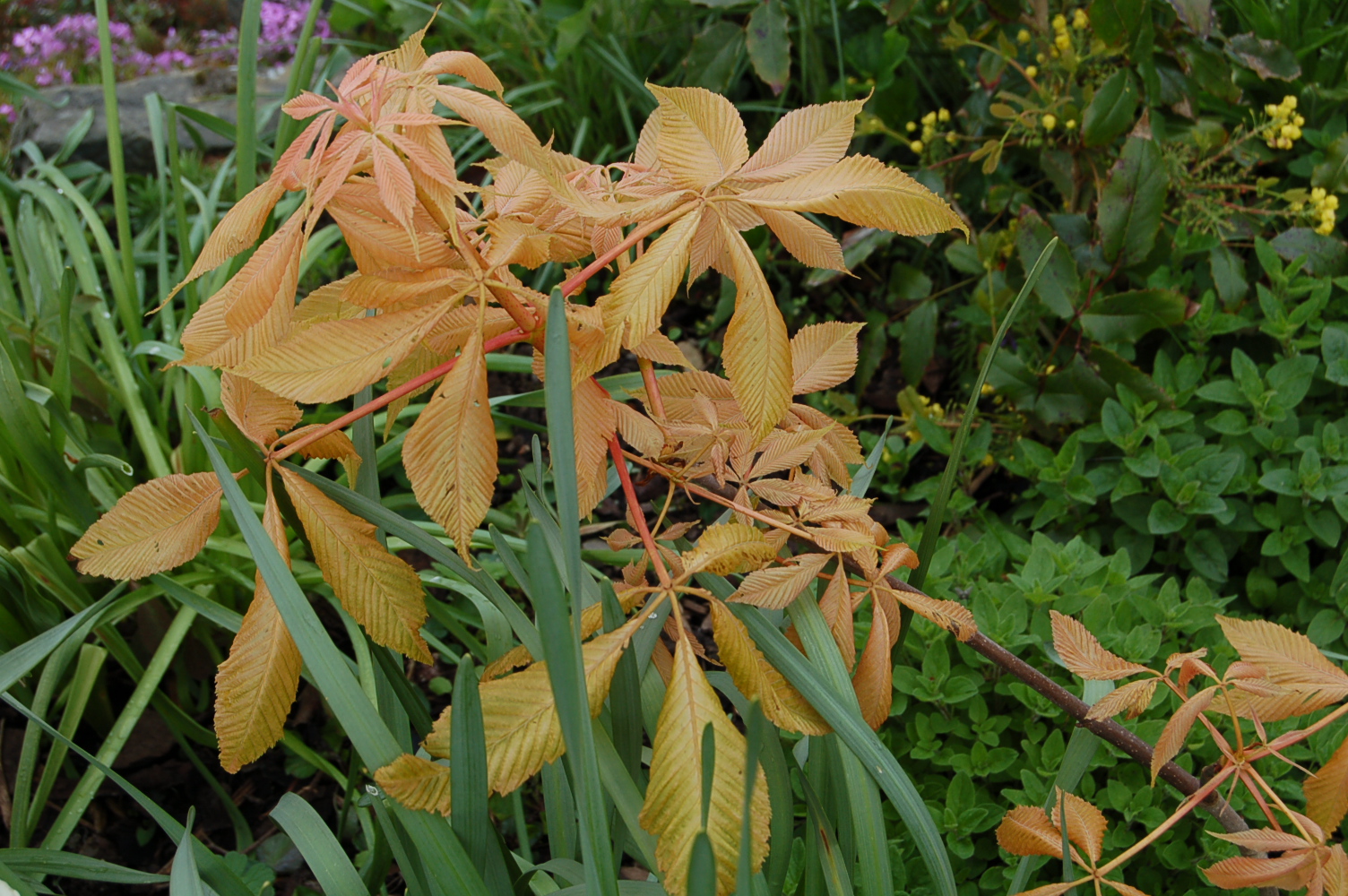
The most unusual coloured new buds appear on our two miniature Horse Chestnuts.
Delicate pale bronze new hands of chestnut leaves.Salmon pinky orange?
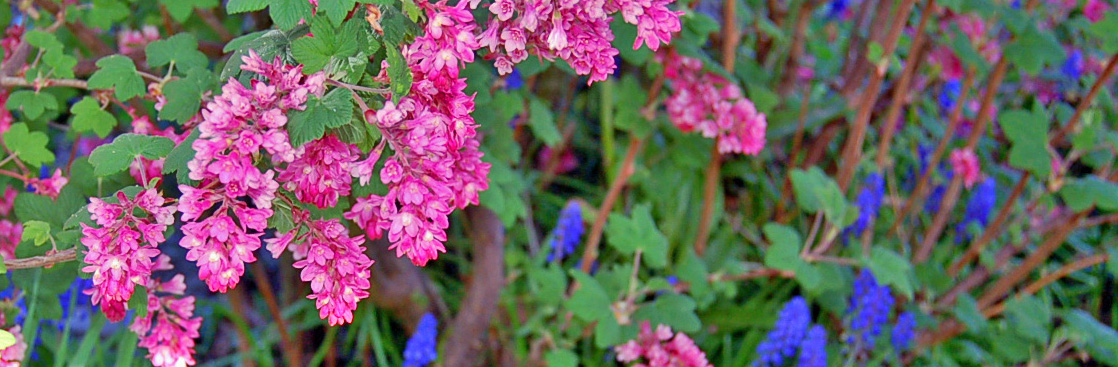
In each of our four gardens that we have developed we have grown the commonest of flowering currants, Ribes sanguinium (above) but here in our garden at Plealey we are also growing two other less common ones.
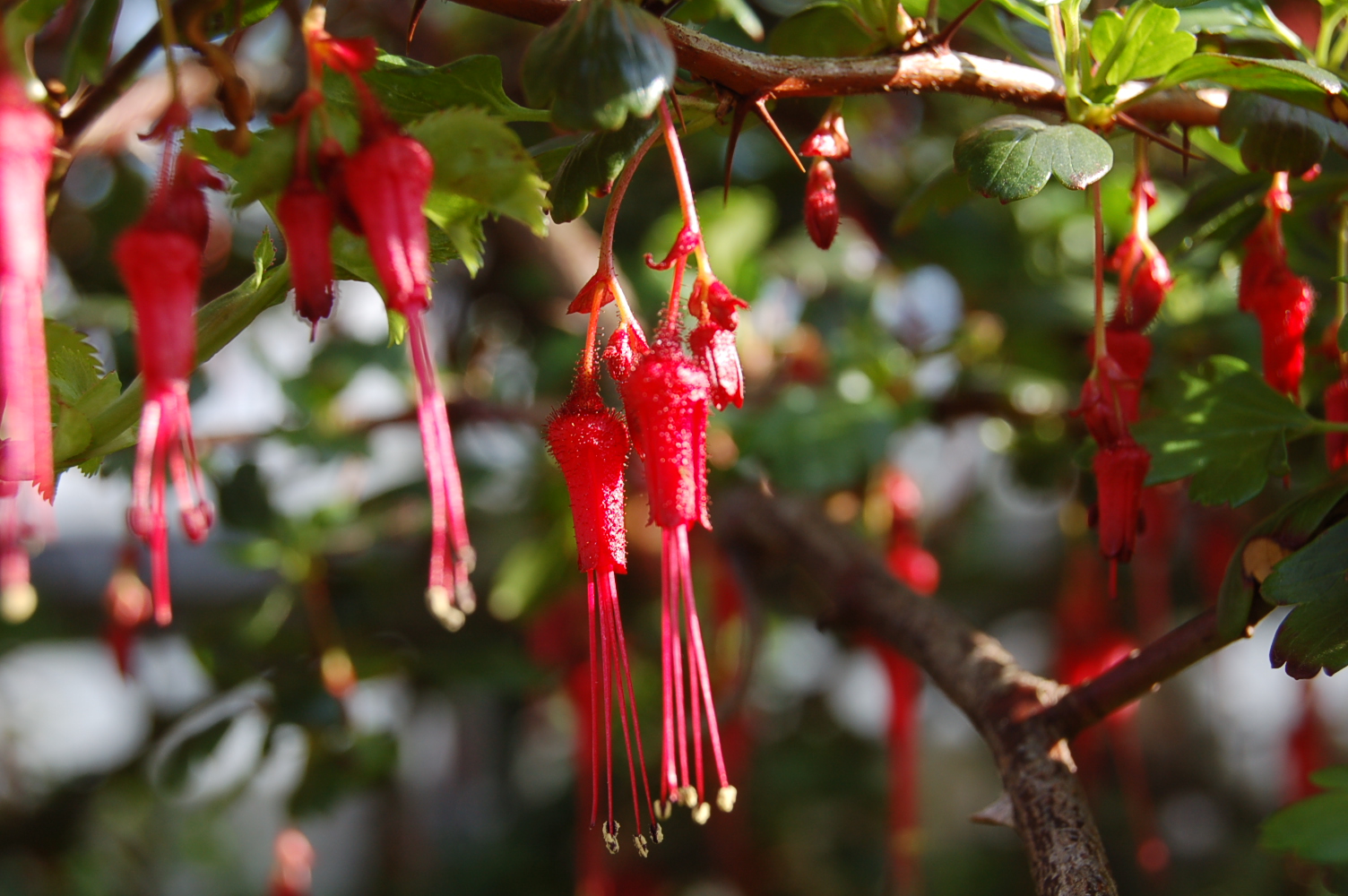
The photo below shows our specimen of the “Fuchsia-flowered Currant”, Ribes speciosum, which we grow in a sheltered spot against the greenhouse as it is supposed to be tender around here. The spiny arching stems grow up tall reaching the top the the greenhouse and peering over. Its new young branches start off a deep rusty red colour and are absolutely covered with bristly spines. Its flowers are like long fuschias in a rich deep red with long red stamens protuding. These flowers seem to be around in varying numbers just about all year. It is a true beauty!
When we bought ours from a tiny nursery hidden away in Herefordshire we didn’t know what it was when we saw it growing on the side of an outbuilding. The nurseryman told us that most people asked if he sold any cuttings of his climbing fuschia. One look at the flowers below and you can immediately see why.
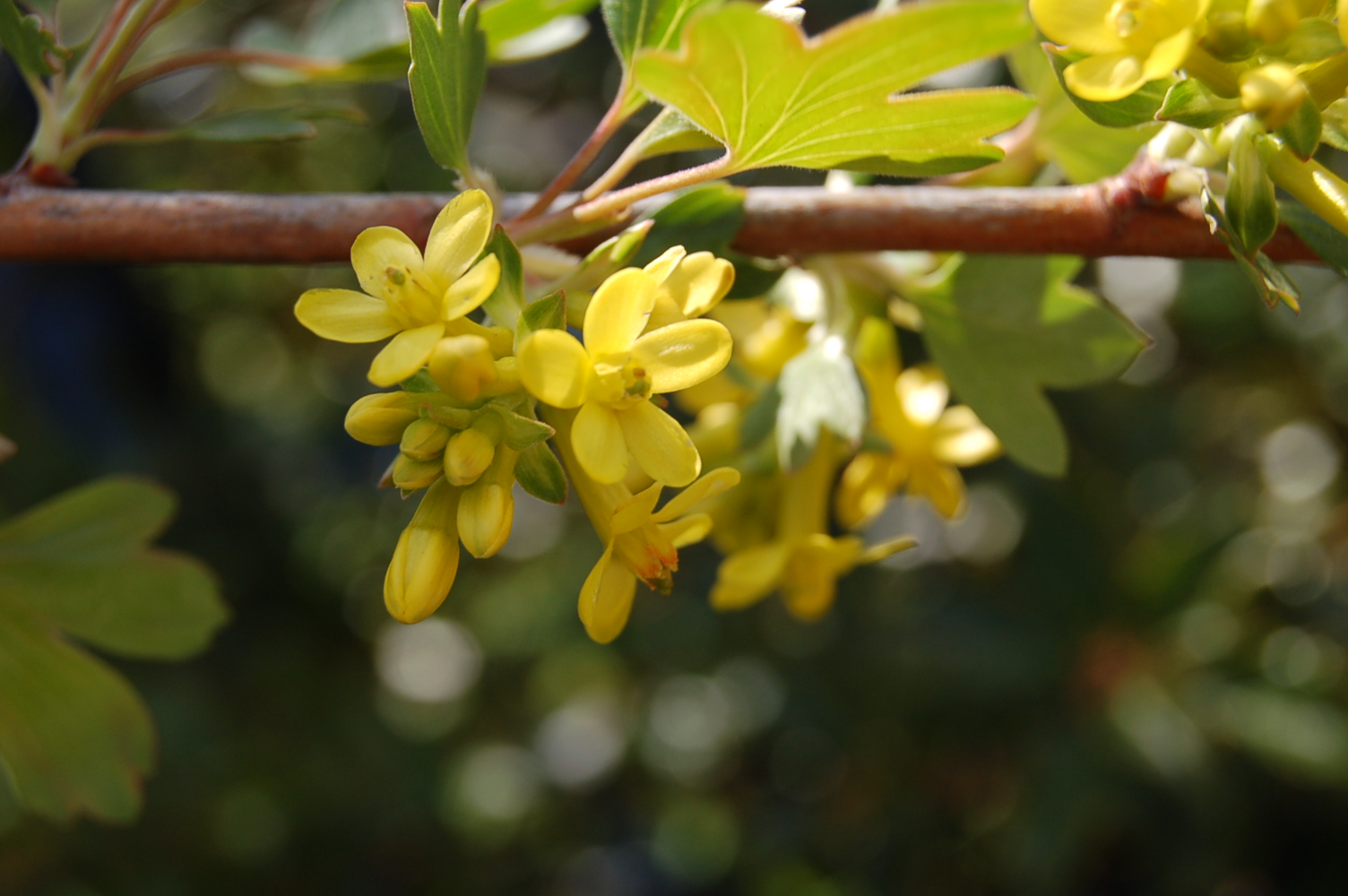
Our third currant is a yellow-flowered shrub called Ribes odorata, or the Buffalo Currant. Its lovely yellow racemes of flowers are gently scented, a much more pleasant scent than that of the more common Red Currant which smells of black currant leaves, although it has to be said that Jude the Undergardener claims it smells like cat pee! The brightness of the yellow flowers is emphasised by the fresh green of the foliage. In the autumn the leaves take on hints of red and purple.
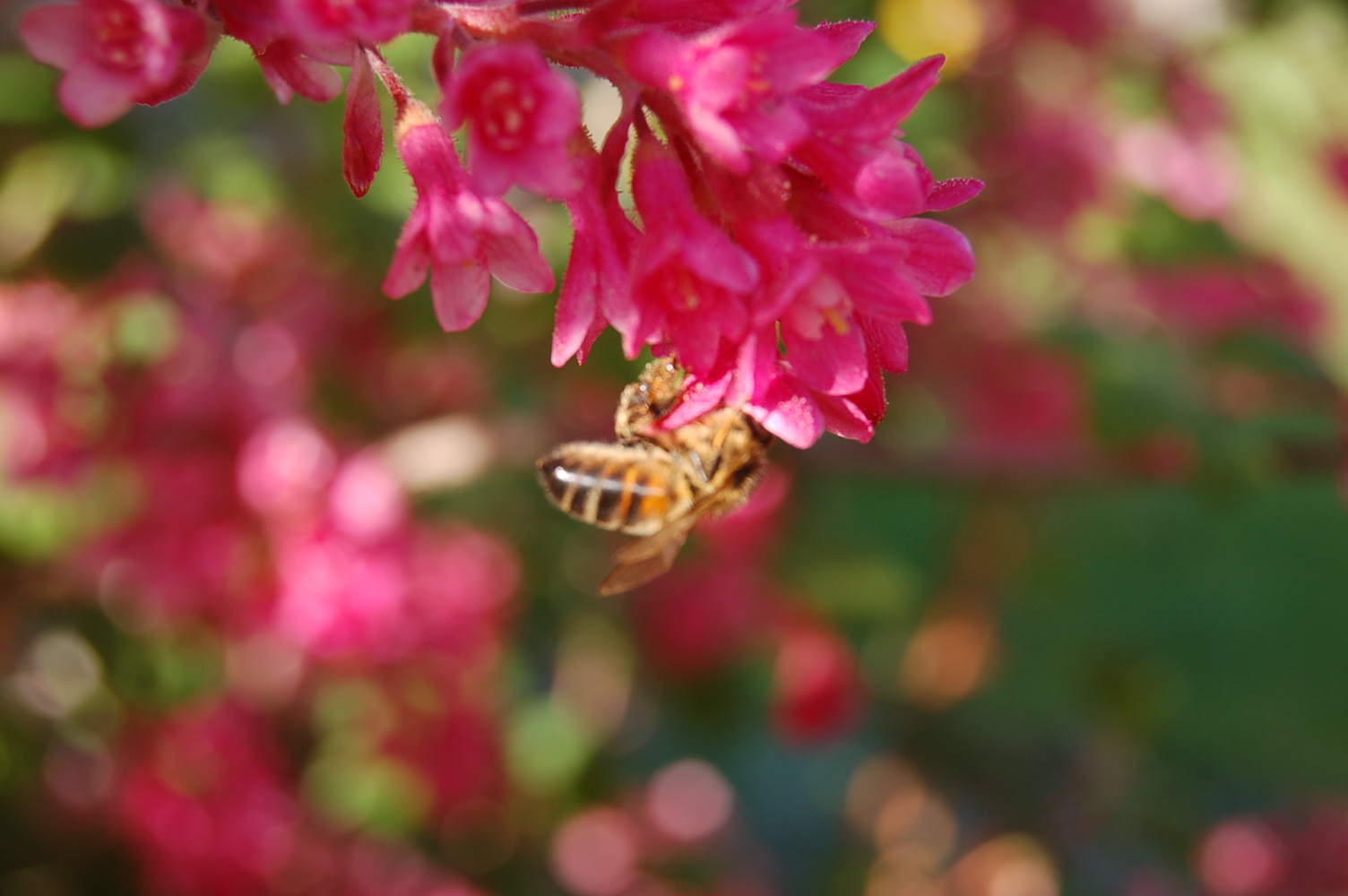
One of the main resaons for growing flowering currants, in addition to their hanging racemes of flowers is their attraction to insects especially bees and hoverflies, early in the year.
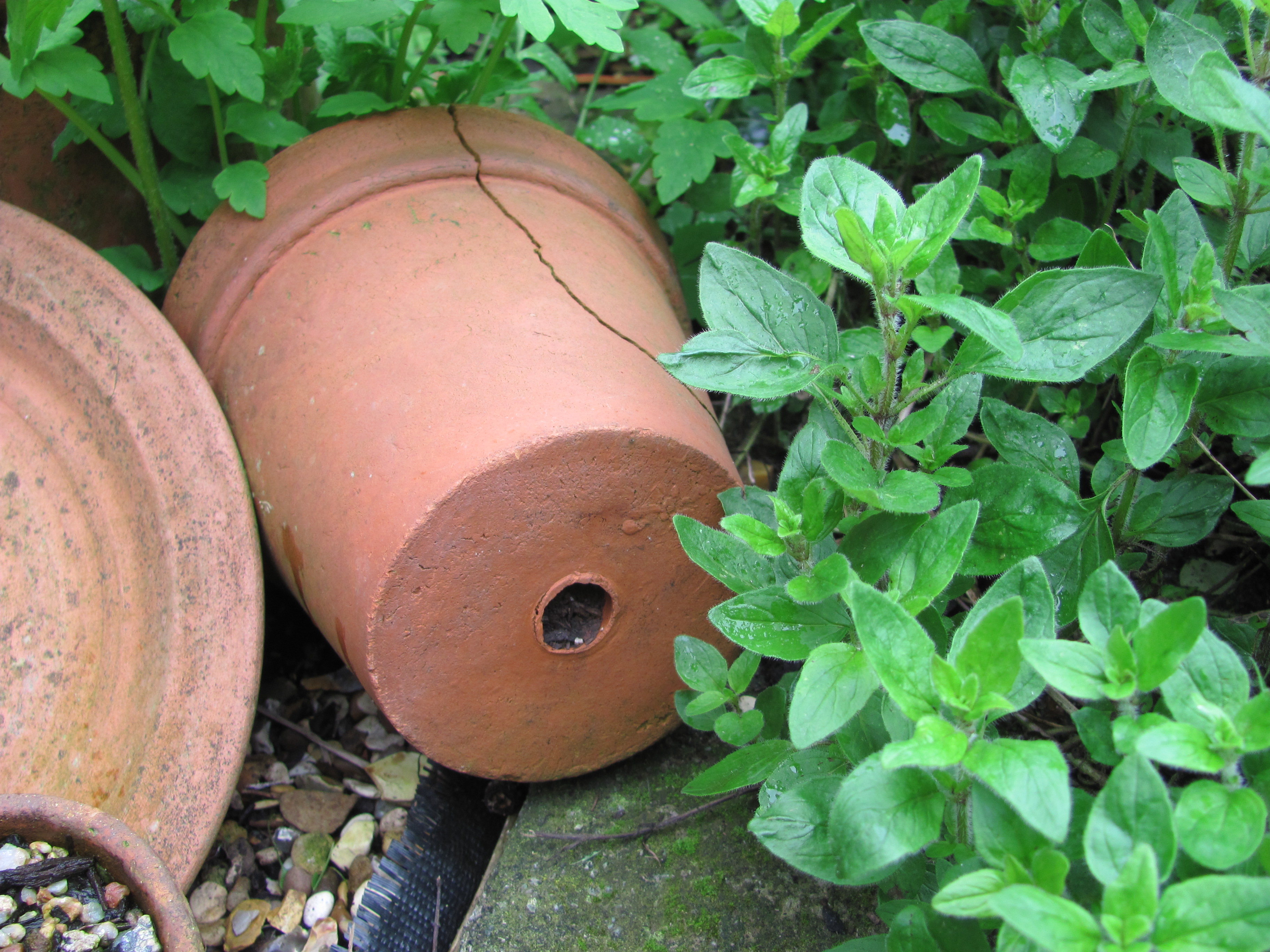
It is easy to create secretive and decorative nesting places for bees.
We always describe our garden as being wildlife friendly. But what makes it good for wildlife? What elements of our garden invite wildlife in? We are proud of the fact that we have gardened with organic principles at the front of our minds for decades. A garden cannot be regarded as wildlife friendly if the gardener is not working with these principles constantly driving what goes on.
We make deliberate decisions to attract wildlife by providing food, shelter and nesting places. Each time a plant is bought, a bed restructured or new beds made, wildlife is a factor. Equally how we manage the garden has to be friendly towards our natural friends.
But let’s be honest, we don’t do all these things just for wildlife, as there is a selfish element to it. We like being surrounded by birds, butterflies, insects et al. We need to hear, see and experience the natural history of our plot. A cup of coffee outside is all the better if accompanied by the song of birds, the movement and colour of butterflies and the constant flittering of insects.
I have recently read a wonderfully informative and thought-provoking book by John Walker entitled “How to Create an Eco Garden”, and in it he proposes the concept of “eco-fitting” your garden. This idea is all about making the garden “more self-sustaining, less wasteful of valuable resources, more reliant on renewable sources of energy and friendlier to wildlife”. This will provide a useful guide when considering the content of my blog, and it will be at the forefront of my mind as we go on a journey around our garden looking at how we make it good for wildlife.
Throughout the garden, the trees and shrubs we have planted were chosen partly for their berries to feed the birds, blossom to attract pollinators and how well they give shelter, homes and nesting places.
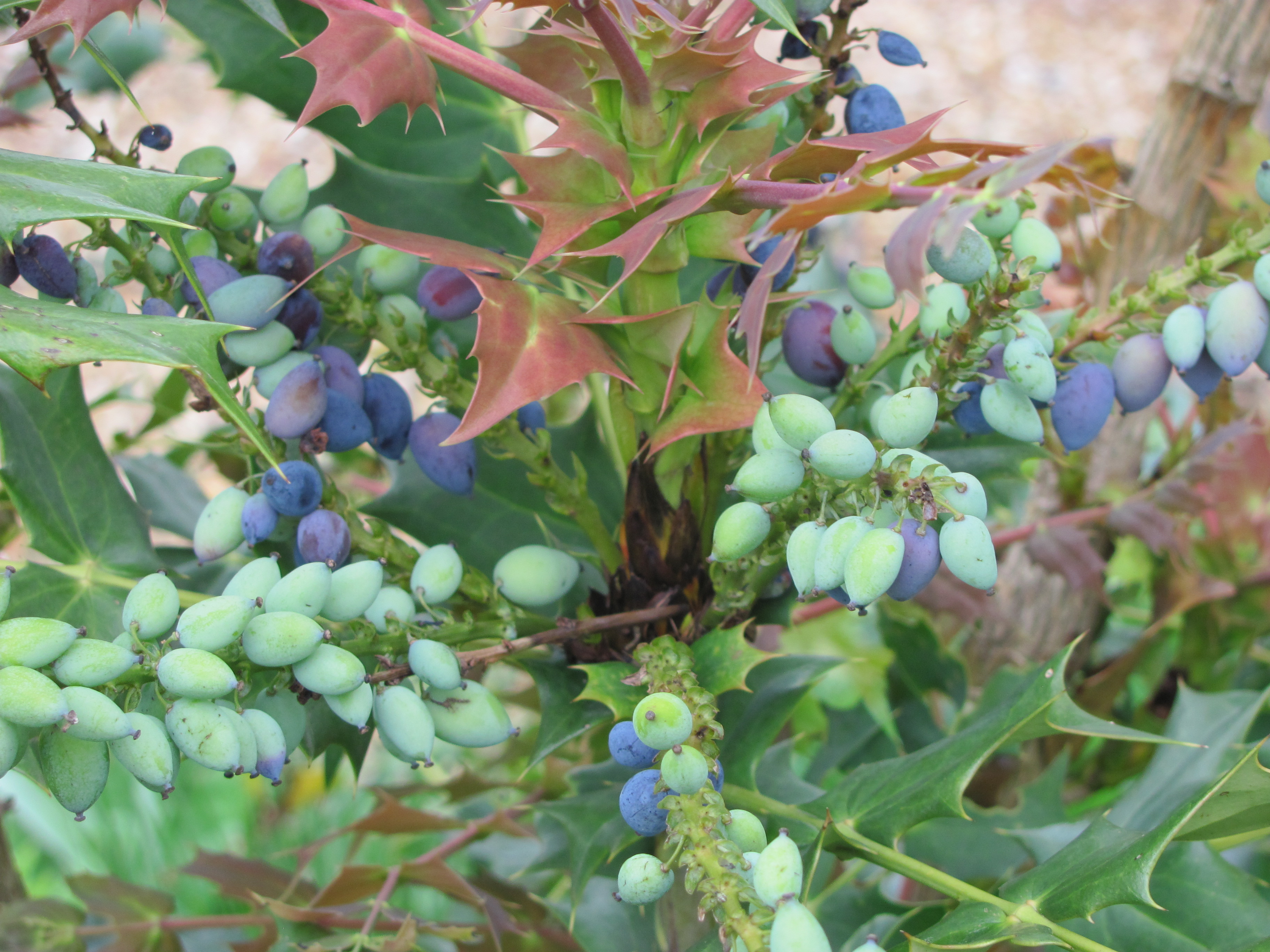
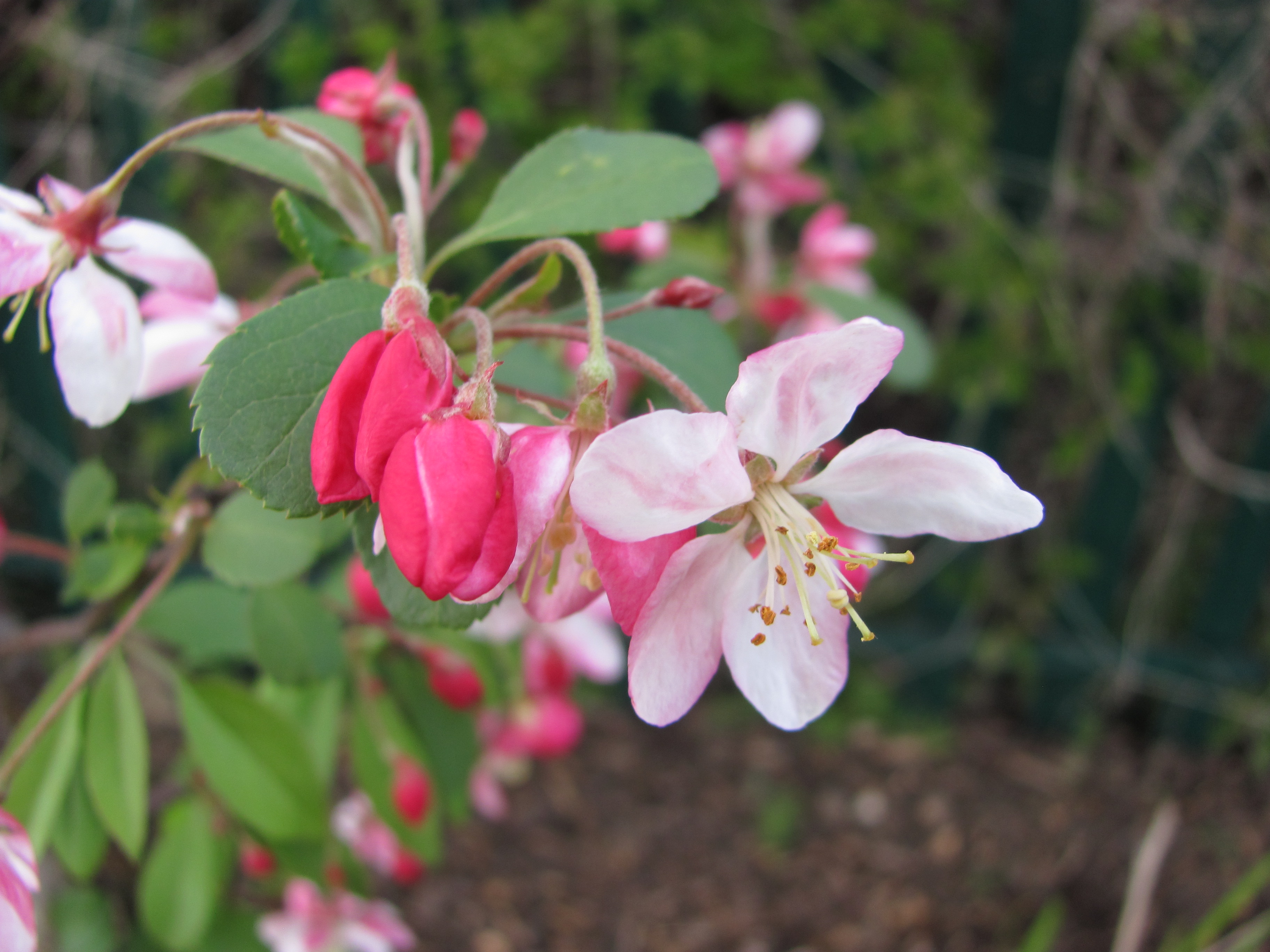
The dark berries of mahonias are enjoyed by Blackbirds but only after all the red berries around have been eaten.Apple blossom provides pollen for bees and hoverflies early in the year and fruit for us later on. Fruit that rots in store or goes too wrinkled is put out for Blackbirds and Thrushes to enjoy.
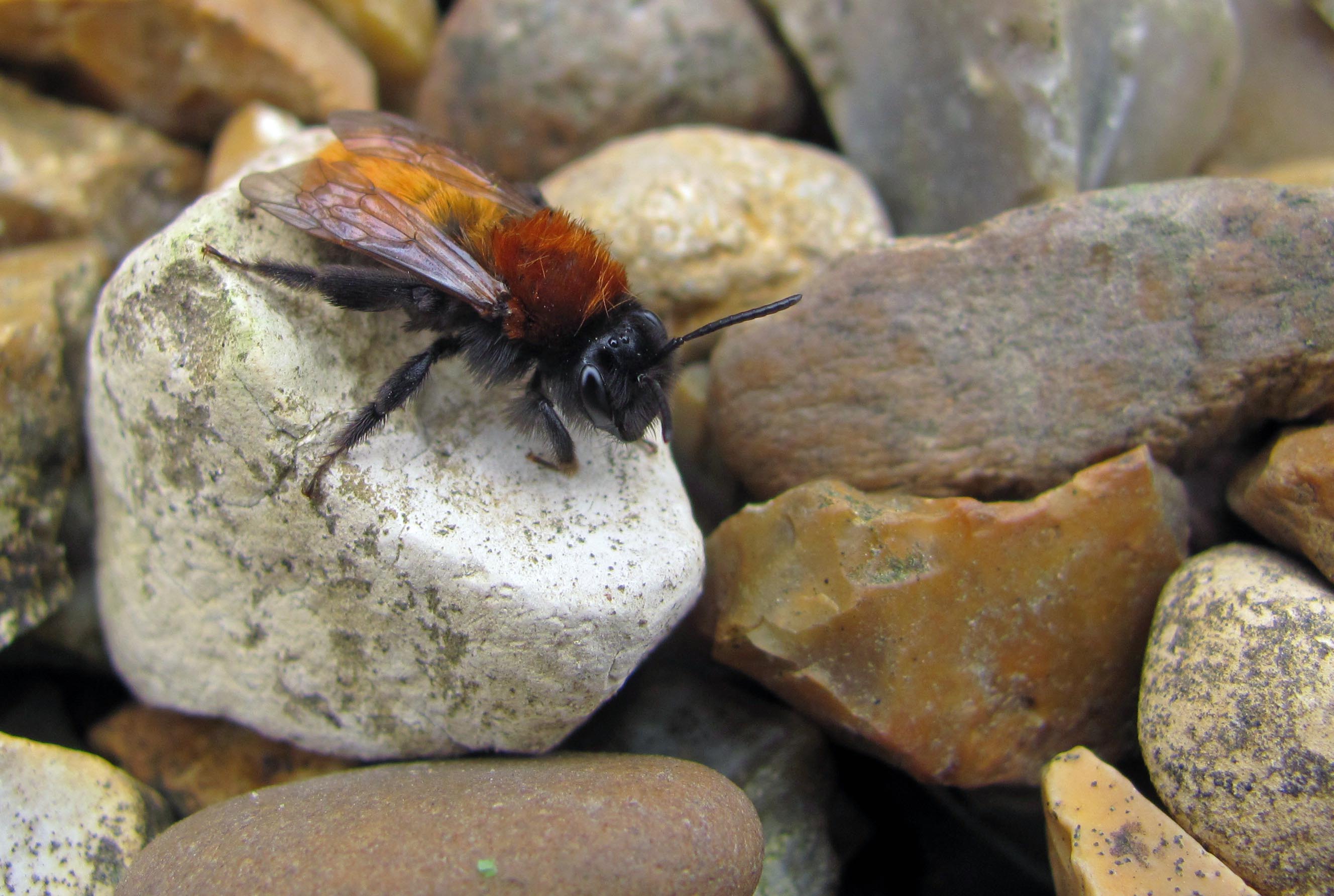
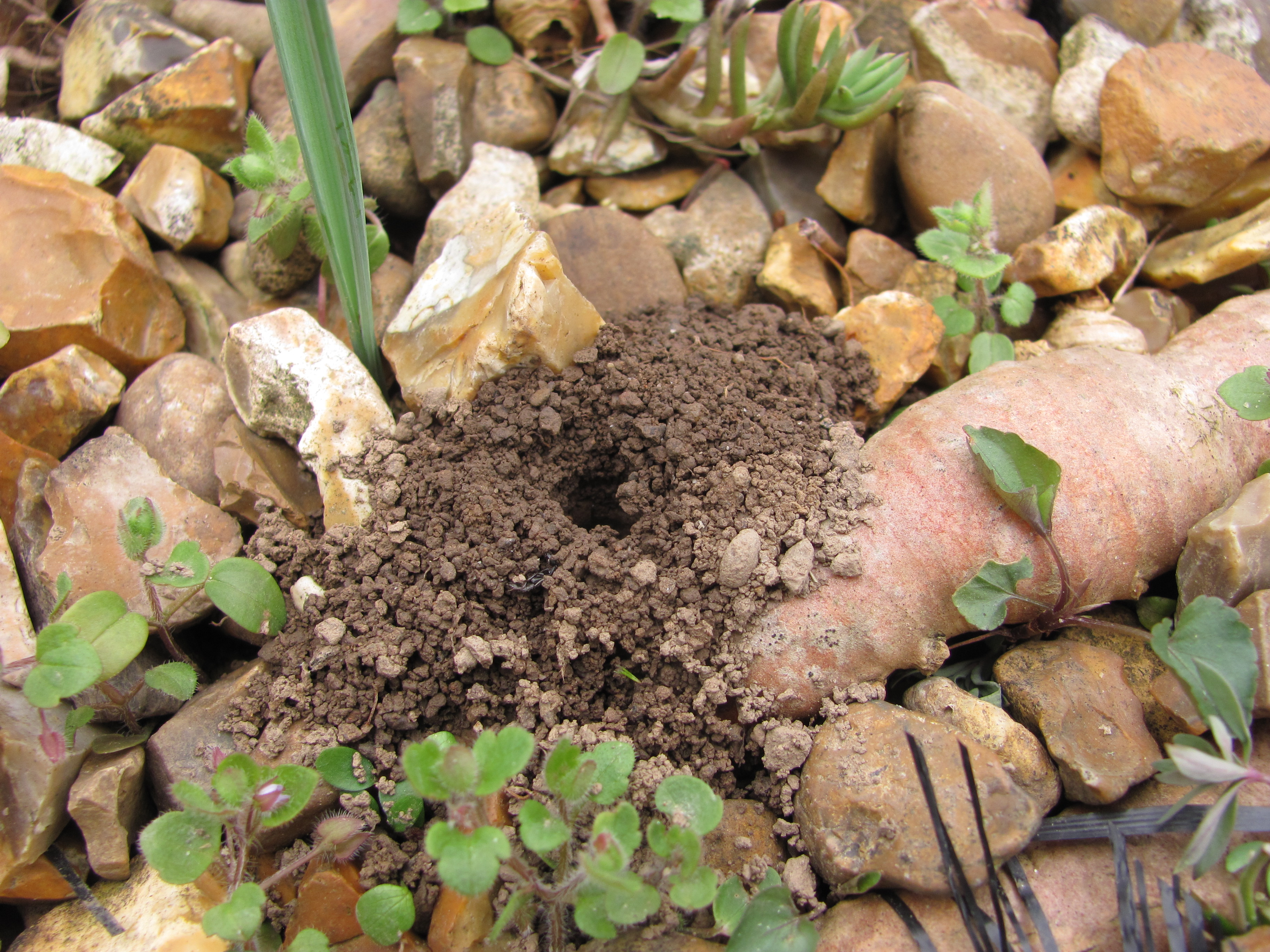
Look into our front garden and in full view of all windows is one of our three bird feeding centres where we provide mixed seeds, peanuts, suet balls and suet blocks. The front lawn supports White Clover and Dog Violets both loved by bees. Although we cut the grass and keep it quite short these wildflowers react by flowering on shorter stems. We use no weed killers or fertilisers on our grass as we enjoy knowing that Blackbirds can safely feed there. Tawny Lawn Bees make their homes here and in the gravel patch alongside. They make miniature volcano shaped piles of fine soil as they construct their tunnels.
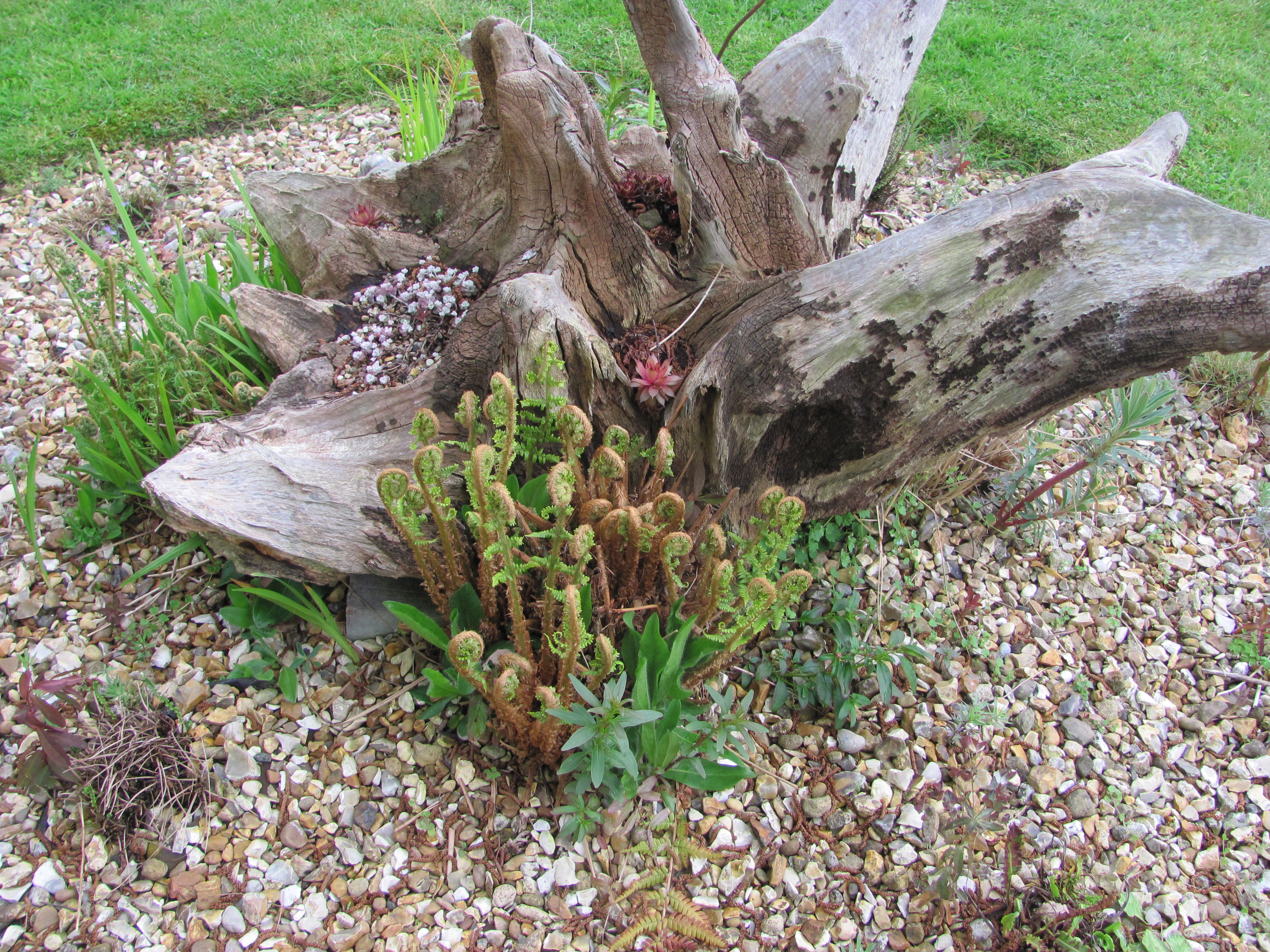
The beautifully coloured miner bee, the Tawny Lawn Bee.A mini-volcano on our gravel made by a bee.The old Oak stump as ferns and grasses are just beginning to grow in early May.
We have an old Oak stump around which we grow ferns and grasses. The Wrens, Robins, Warblers and Dunnock soon recognised this as a home for the insects they enjoy eating.
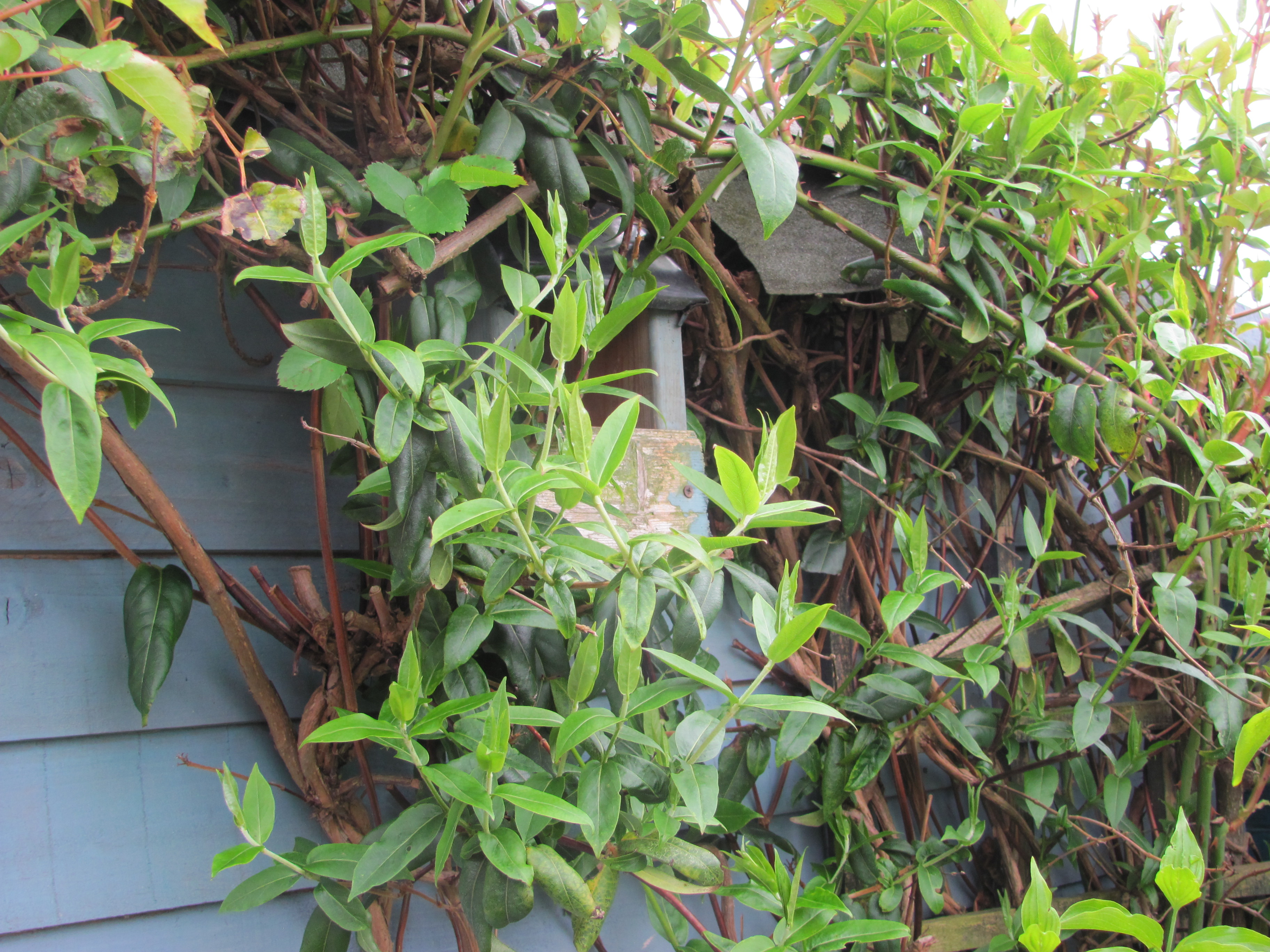
All of our outbuildings are clothed with climbers to provide shelter, food and nesting places for wildlife. You can just spot the robin box in amongst the honeysuckle and rose.The old trug hides behind climbers to attract blackbirds to nest
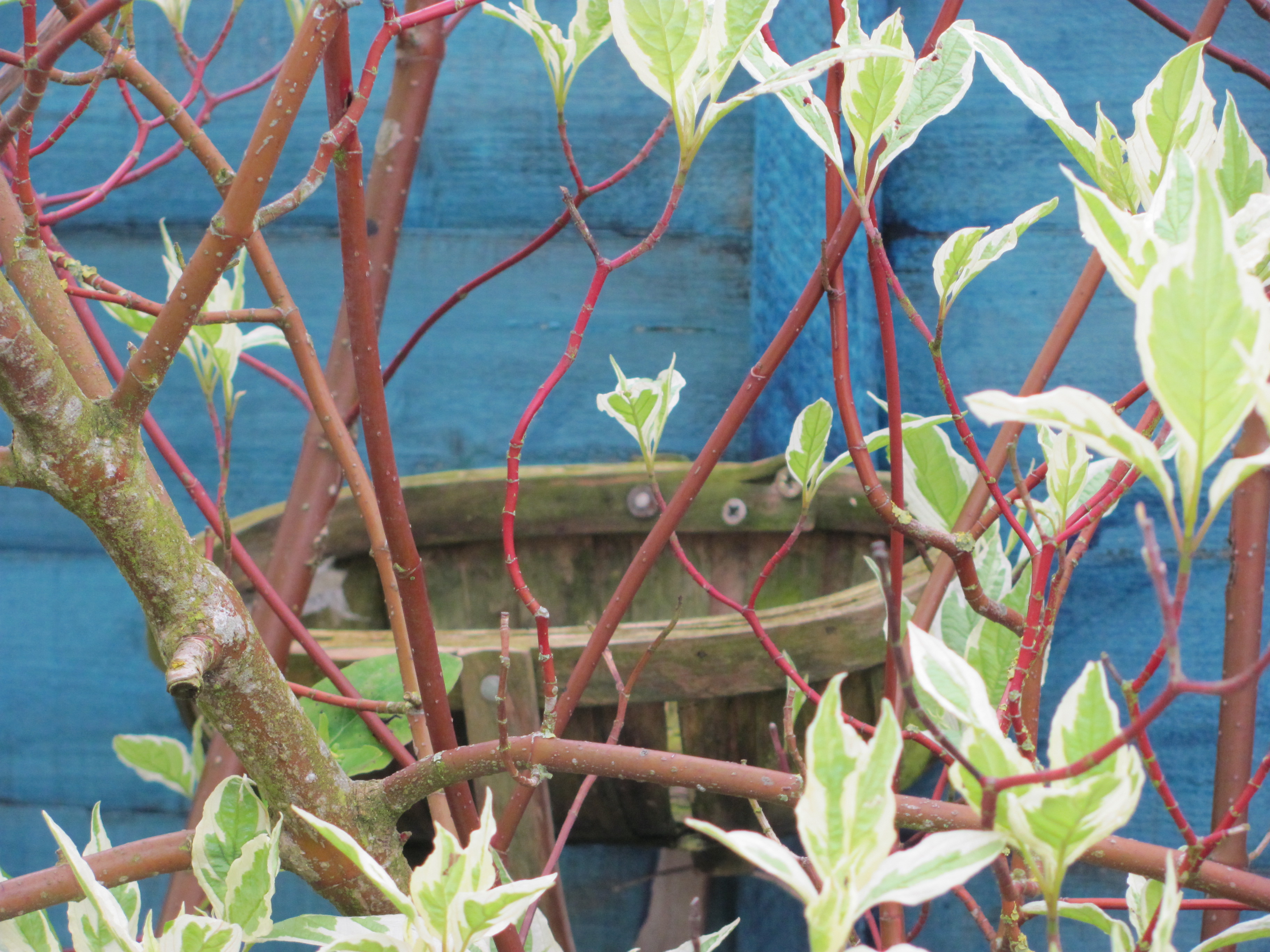
In our side garden opposite our main door are bird boxes for Robins, Tits and House Sparrows and an old trug was placed in a dogwood to provide a nest shelf for Blackbirds. On the shed there and the fence we grow Honeysuckles and Climbing Roses to provide shelter for wildlife and nest sites for Wrens and blackbirds. The Apple Trees growing in large terra-cotta pots are favourites of bees early in the spring, and in other large flower pots we have sown mini-meadows of wild flowers.
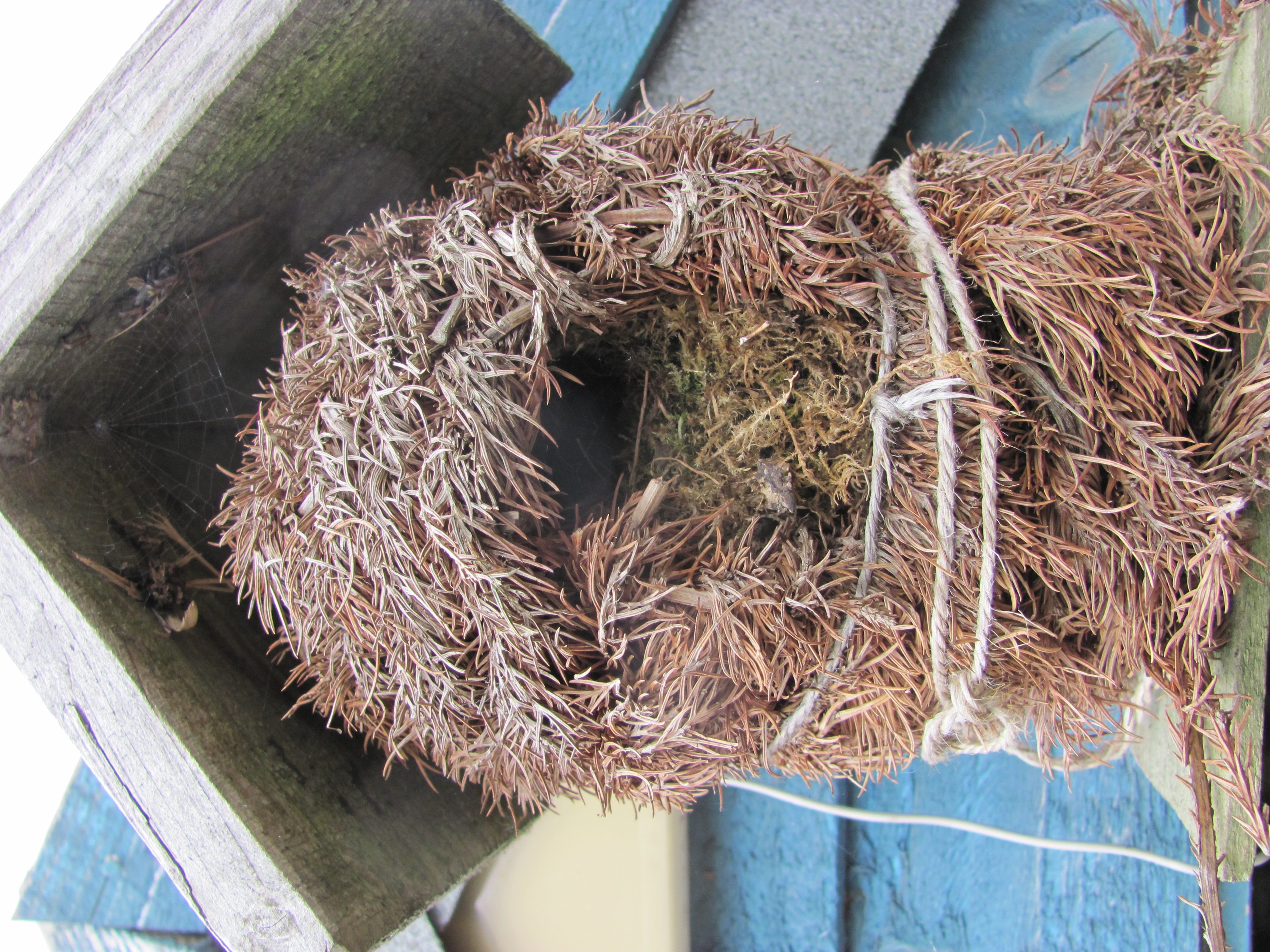
An assortment of insect shelters and nesting holes on the garden shed, attract droves of solitary bees who nest in the holes.Wrens nest in the roosting pouch every year even though it is right above the shed door.
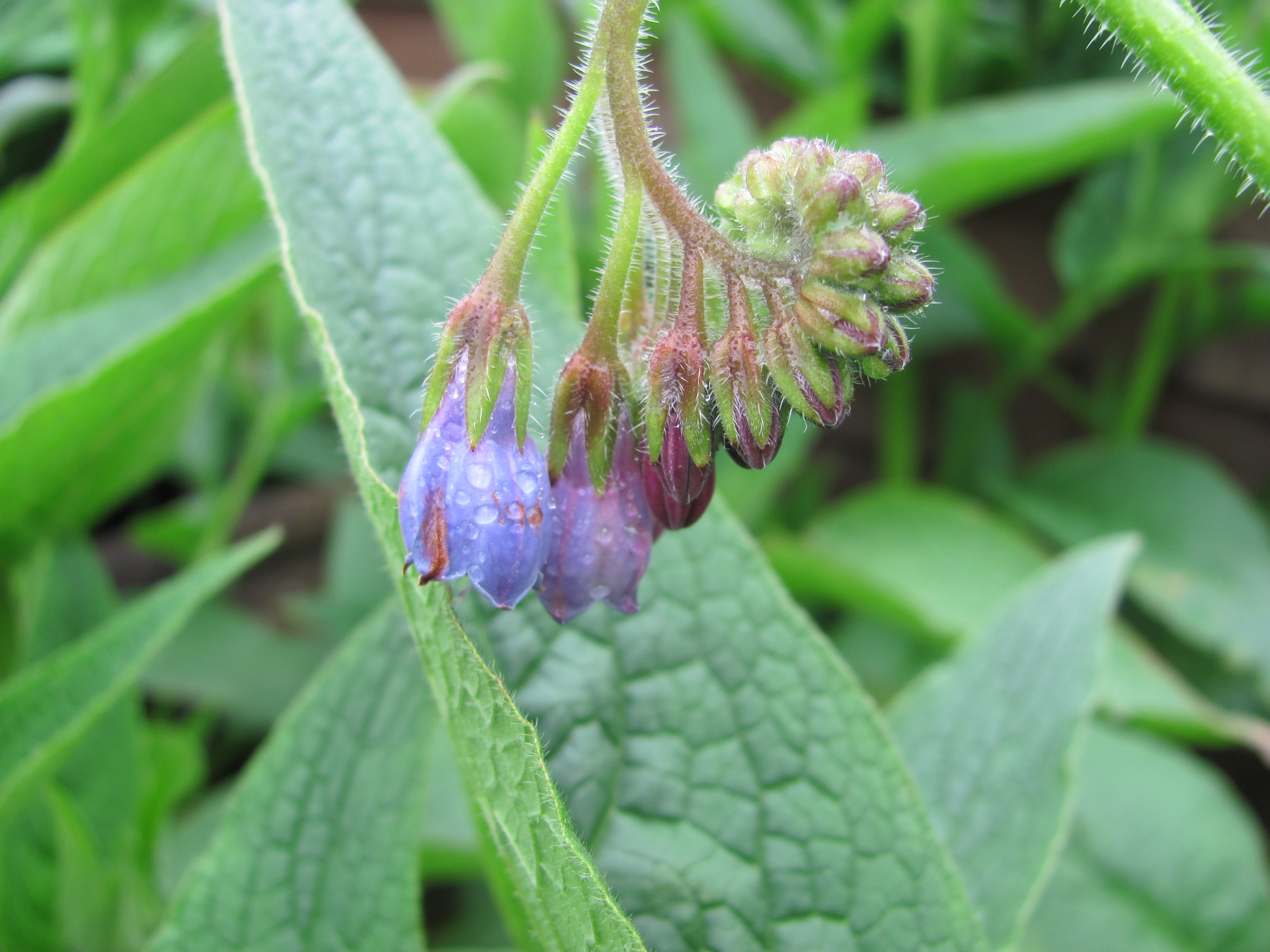
Into the back garden and immediately we spot the insect hotel, which sits in amongst our comfrey bed. The leaves of the comfrey provide us with our organic plant food and their flowers are loved by bees and hoverflies.
Luxury accommodation for beneficial insects.
Nest boxes are scattered throughout the garden wherever we can find a suitable space. Most are used by members of the Titmice family or Robins. Our trained fruit trees and climbing roses are favourite nesting places. Last year a pair of Goldfinches nested in a climbing rose called Goldfinch – they must have read the label!
A favourite with our Robins.A Blue Tit nest box in the Cherry Arch.A pair of Collared Doves is nesting on top of one of our Apple Arches. We can see the eggs and sitting adult dove through the twiggy nest as we pass beneath.
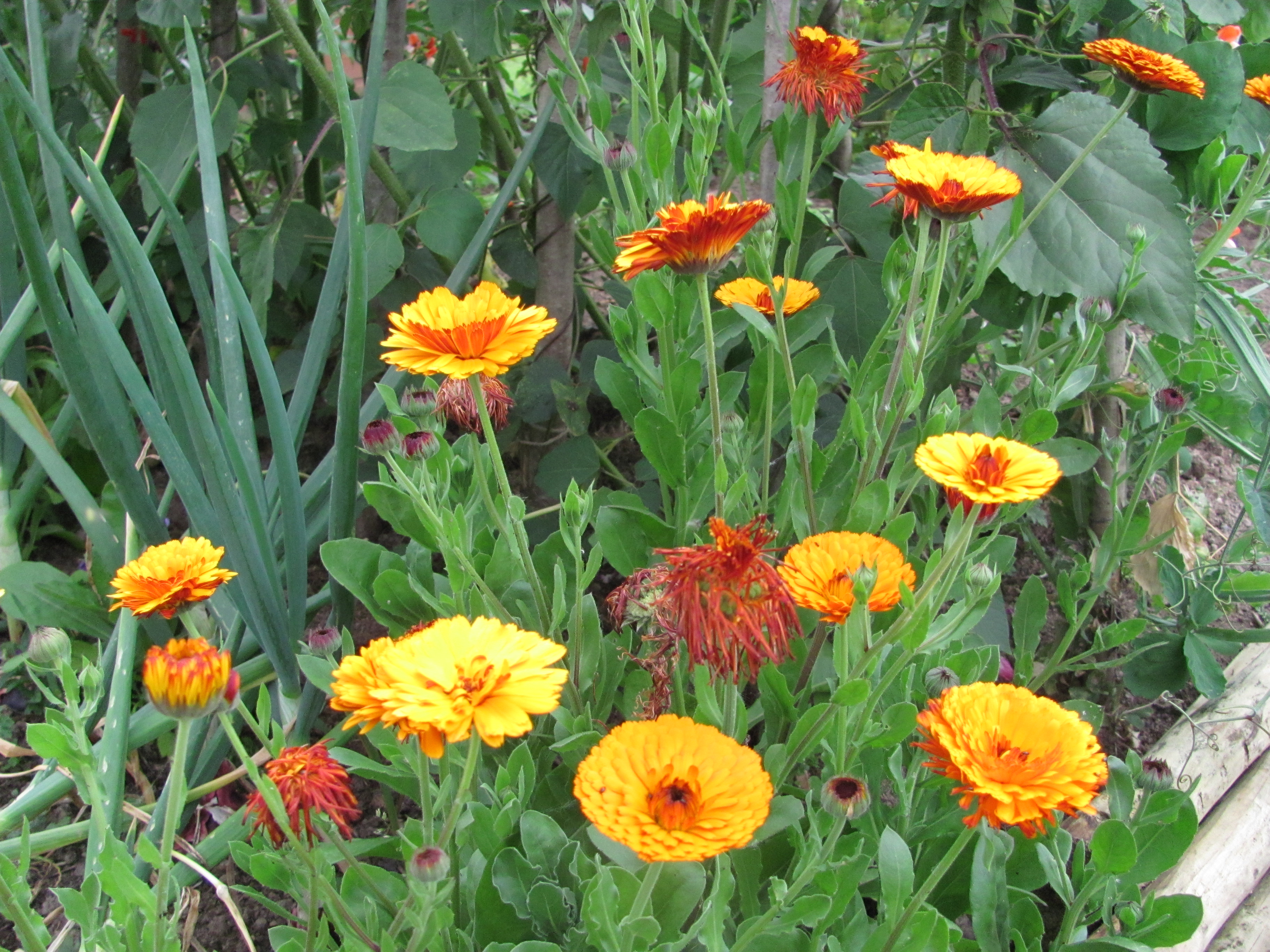
Throughout the borders we select plants with simple flowers, rarely doubles, and grow several native plants such as Red Campion, Cowslip, Foxglove and Cow Parsley.
Calendulas are true insect magnets.The beautiful flowers of our native Red Campion.
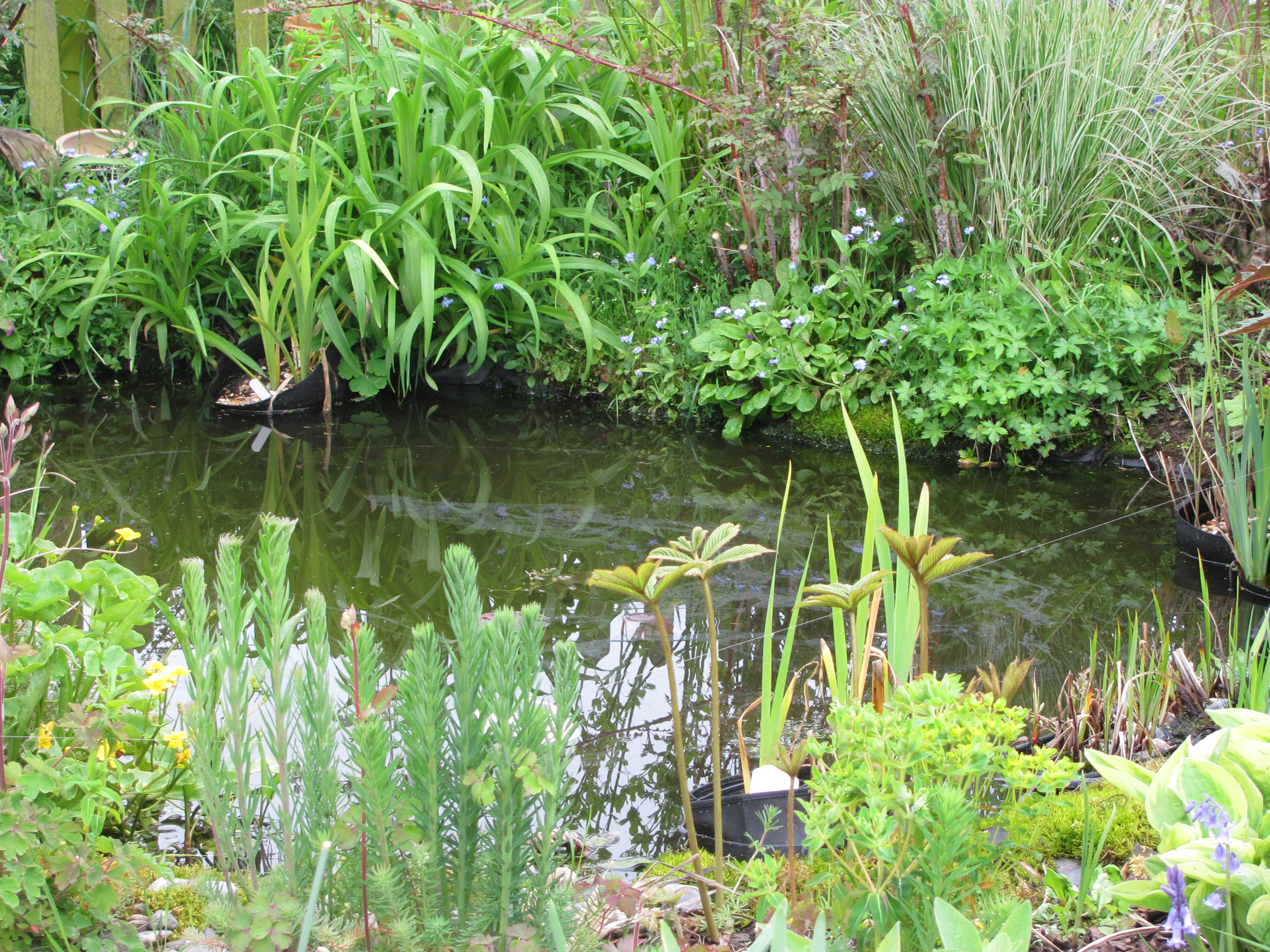
Towards the bottom of the garden is our wildlife pond all planted up with native plants, whereas the bog garden alongside is a mix of native and more exotic plants. The pool and bog are popular with our resident amphibians, toads, frogs ands newts as well as Dragonflies and Damsel Flies which breed in the pool. Birds use the shallow pebble beach area for bathing. Beneath the water live diving beetles and water boatmen, and on the surface Pond Skaters skim arouns on the surface film.
Our wildlife pool – a favourite place to watch wildlife.
Beyond the pool and chicken run is a strip of wild grass about 6 feet wide which gives us access to the surrounding countryside. We cut this grass to attract Green Woodpeckers who come down to feed here. We grow a pair of Hazel bushes here which gives safe place to approach one of our bird feeding stations in the winter, give nuts for Jays in the autumn and every few years gives us poles to use as bean poles and brash to use as pea sticks.
One of our Hazel bushes just prior to coppicing.
This quick wander around our garden shows some of the wildlife friendly features we enjoy. Our whole garden is a little reserve where we hope wildlife can feel welcomed and safe.
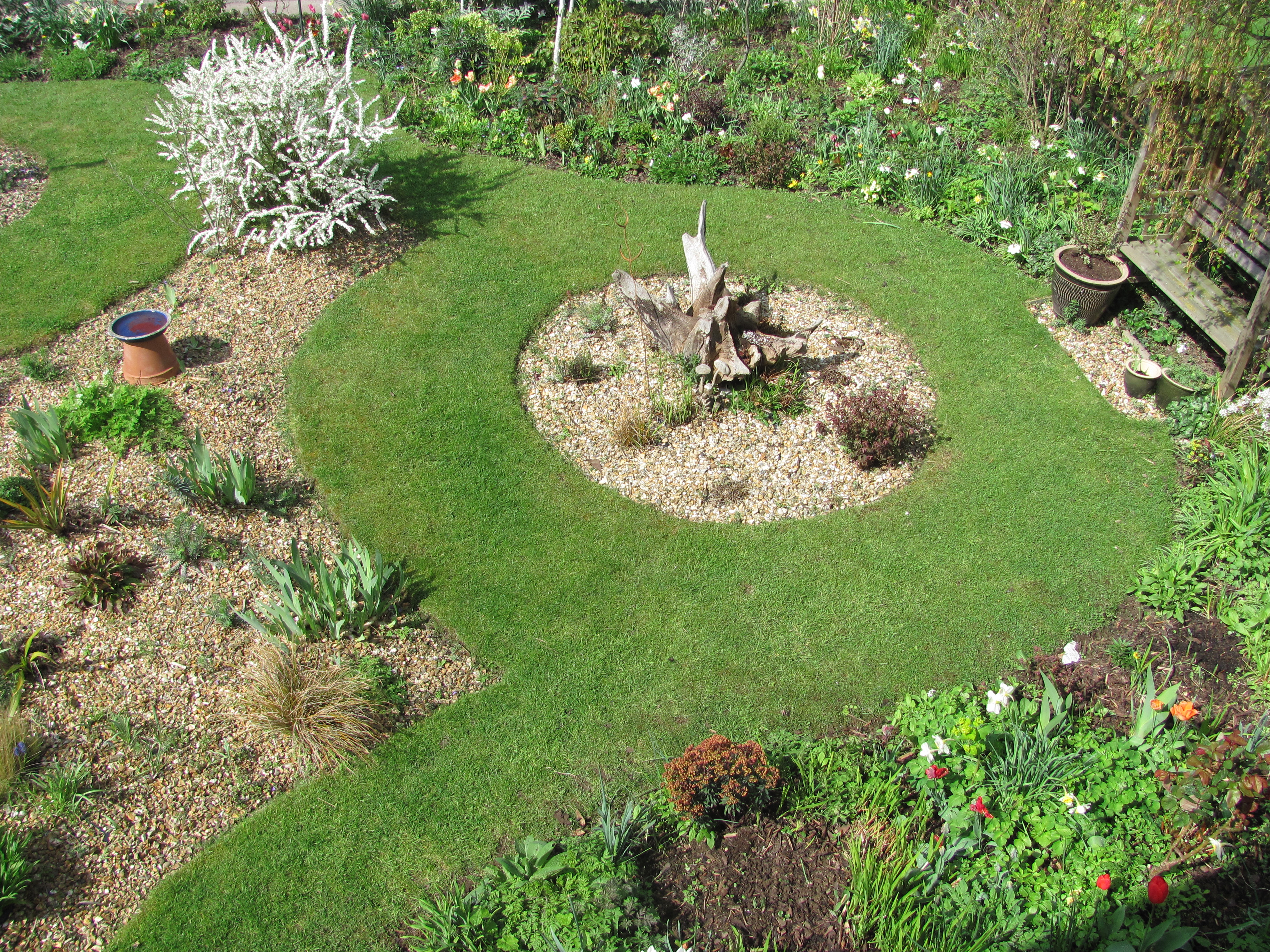
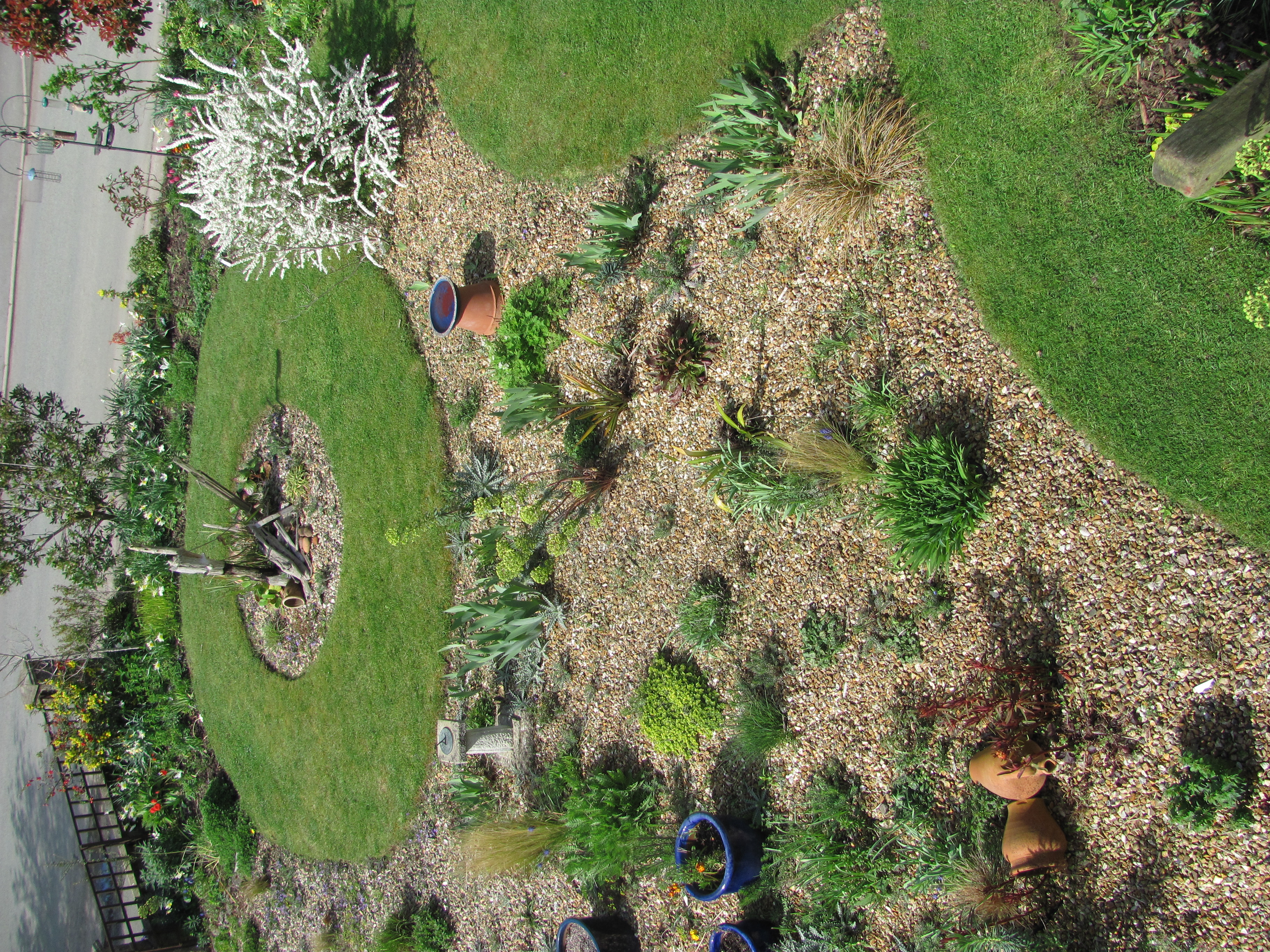
Looking down on your garden gives you a chance to study the design and exposes any re-shaping of beds that is required. So we occasionally take photos from our upstairs windows. The photos of parts of our front garden in early spring show the design based on circles and flowing lines with grass reduced to a minimum to give a route which is soft underfoot.
We shall take the same views in different seasons to see how effective the design is through the seasons.
'The most important and informative publication on wildlife of our times' - The Independent. This blog is a member of The UK & Ireland Natural History Bloggers group: www.uknhb.blogspot.com























































 greenbenchramblings