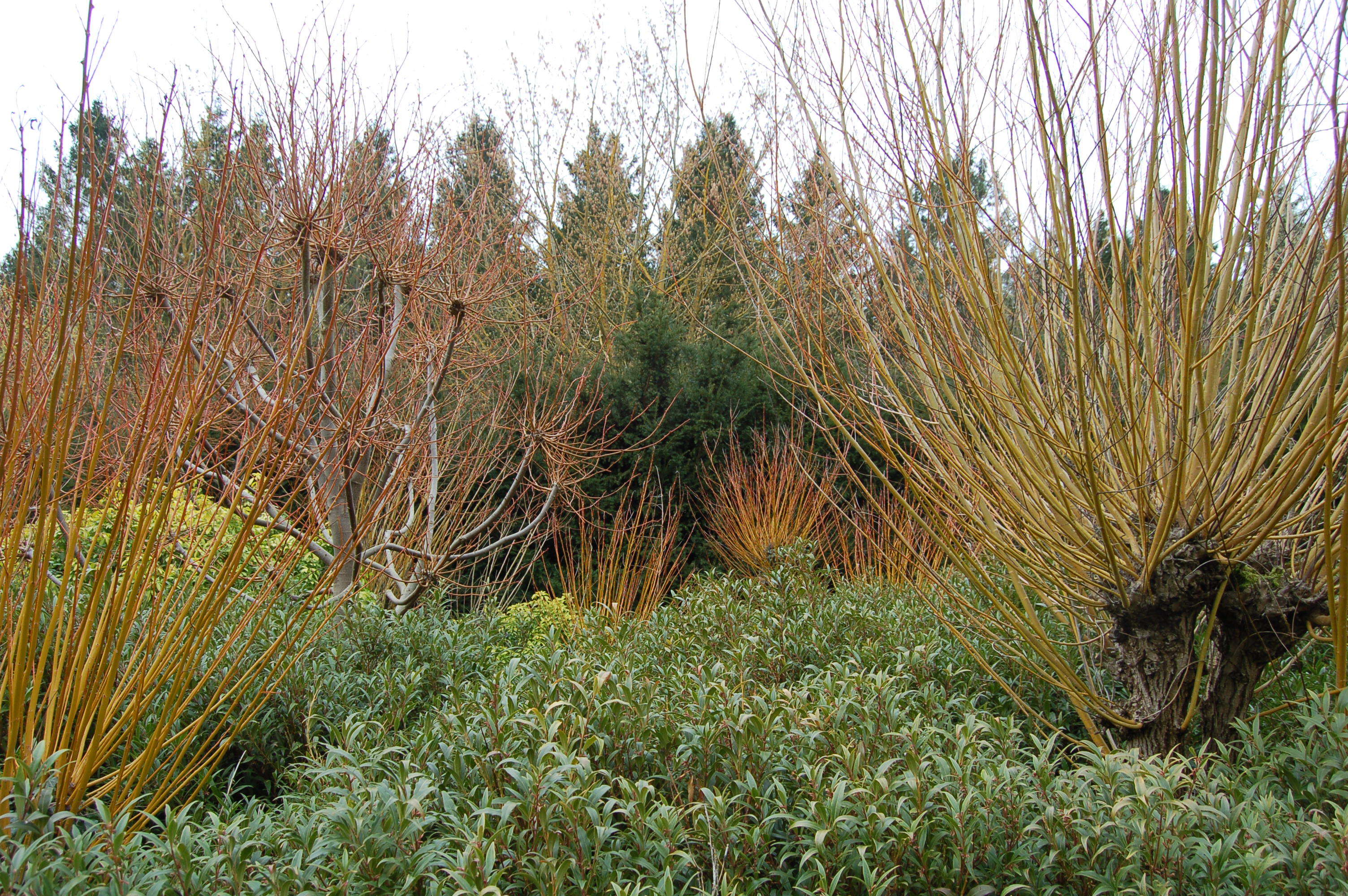
Categories
colours garden design garden photography garden wildlife gardening gardens hardy perennials ornamental grasses ornamental trees and shrubs outdoor sculpture sculpture Shropshire shrubs succulents village gardens

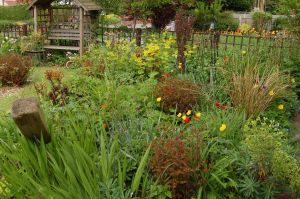
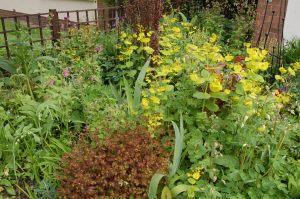
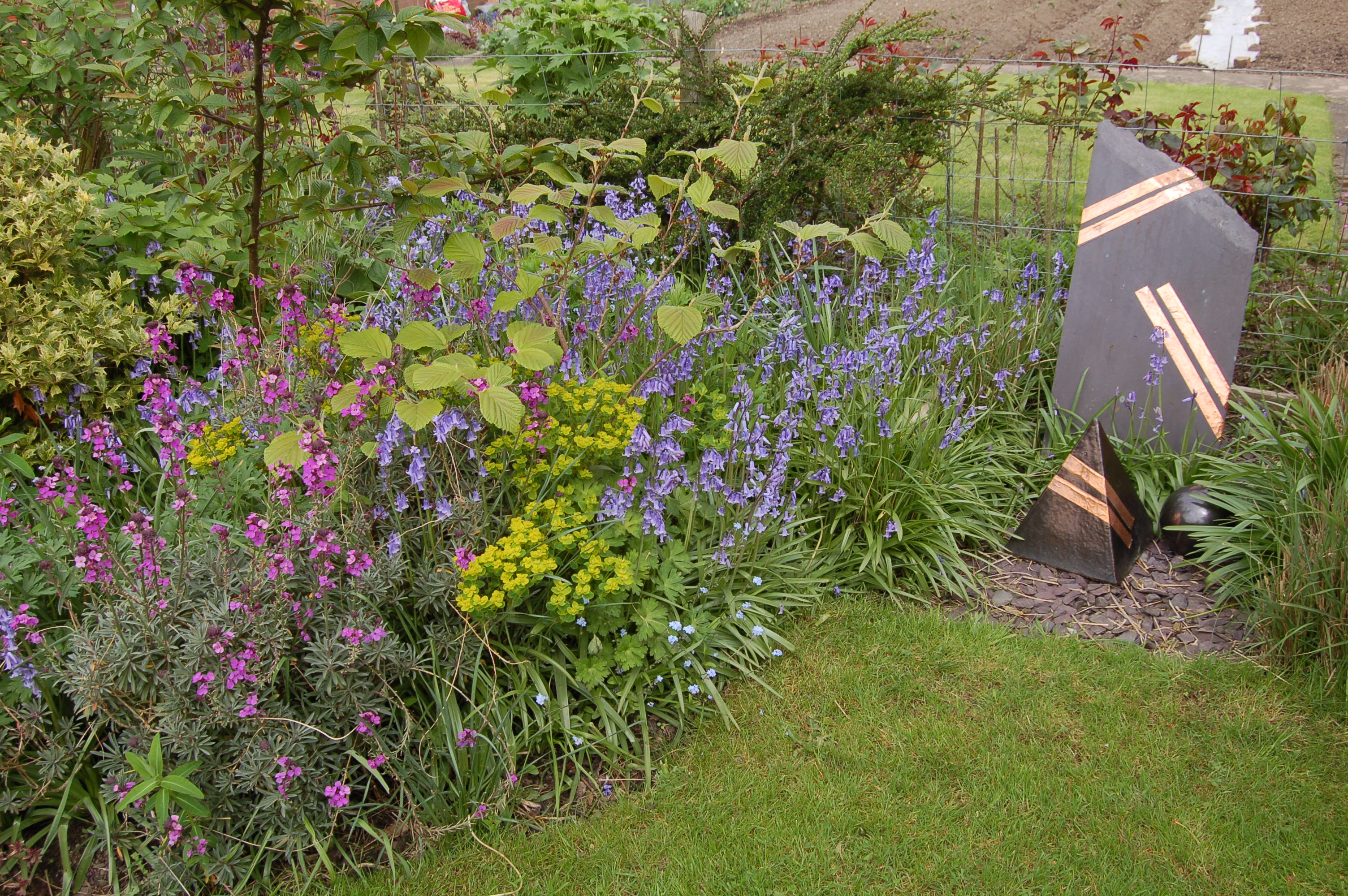
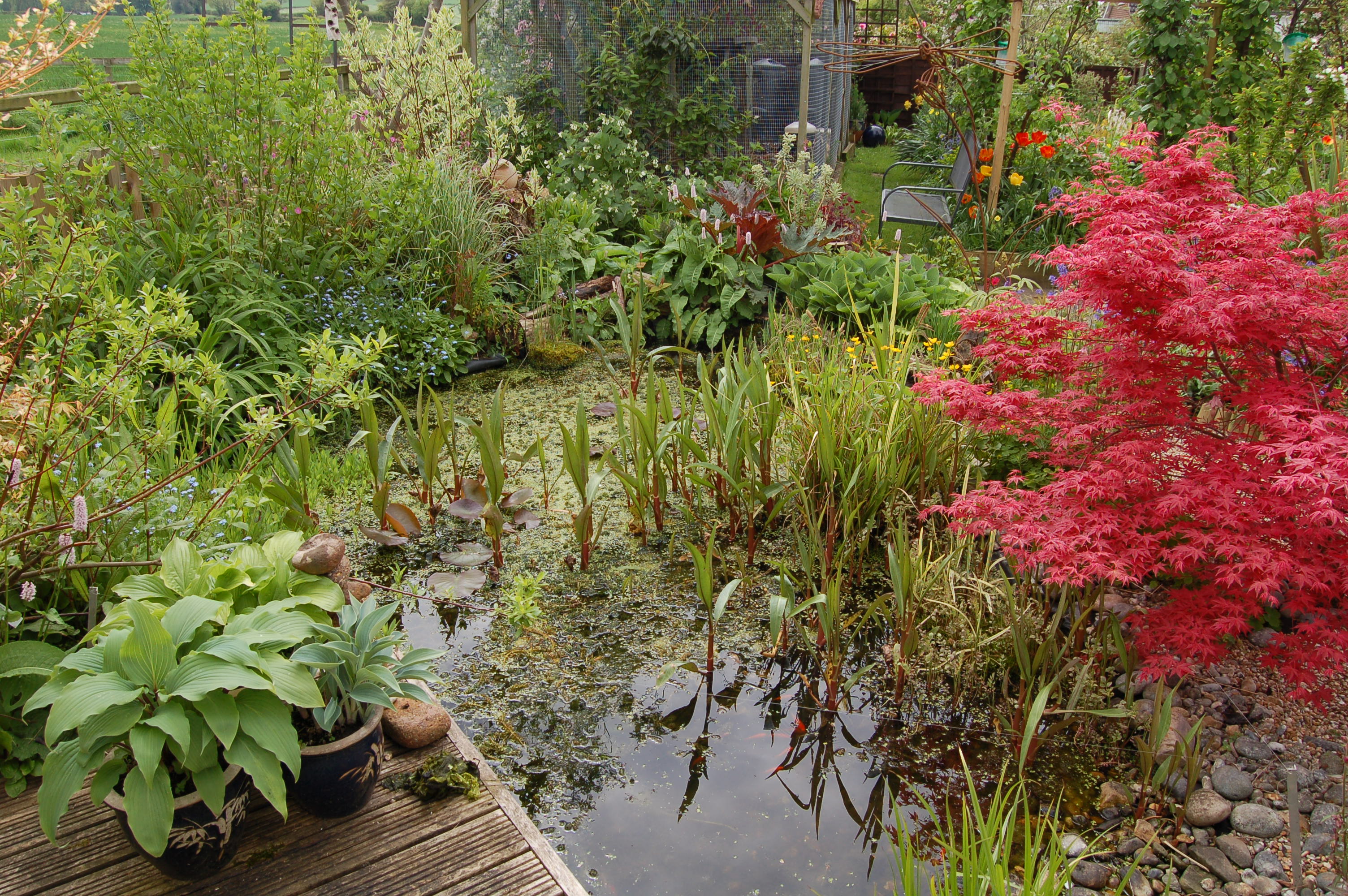
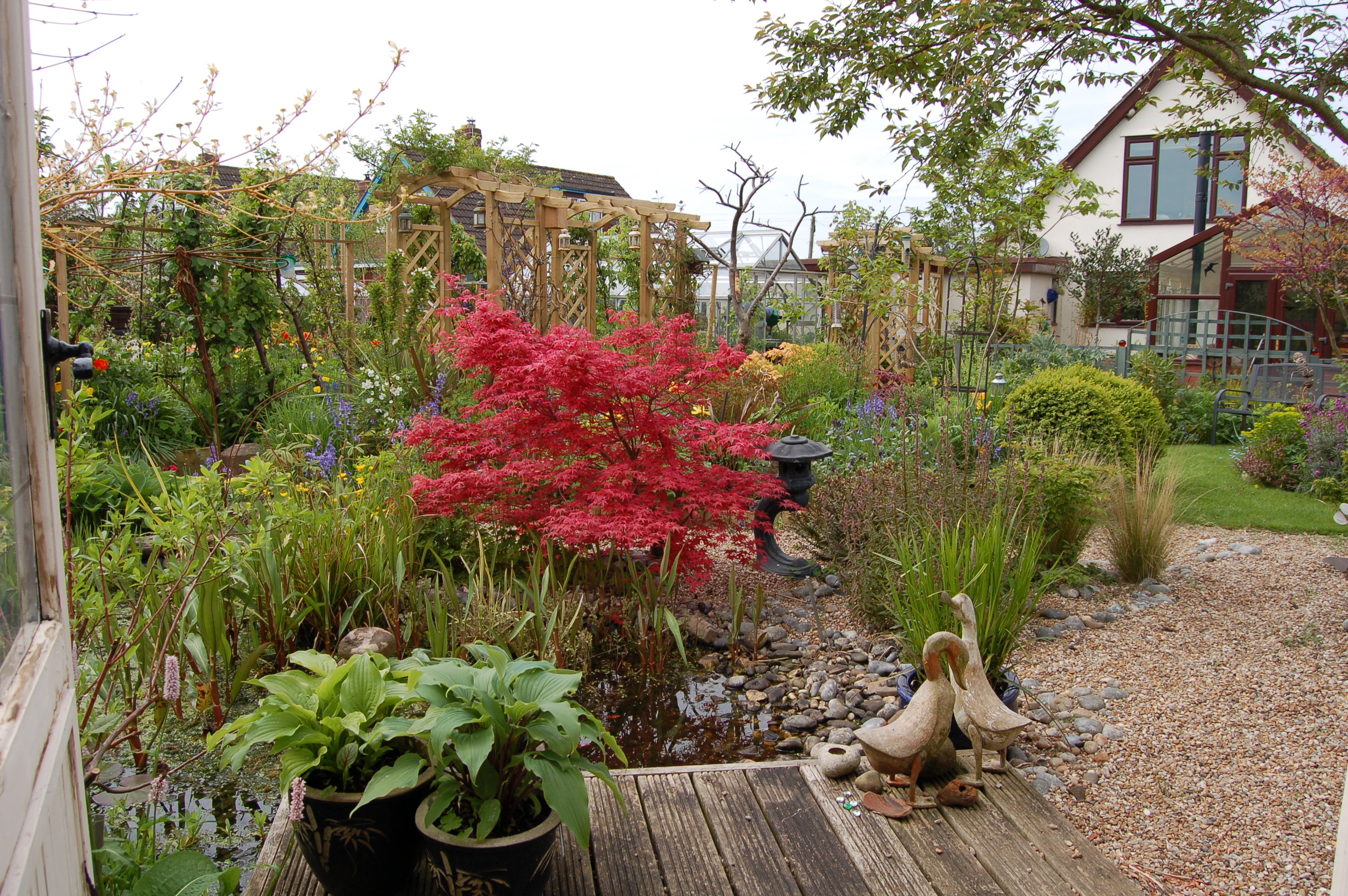
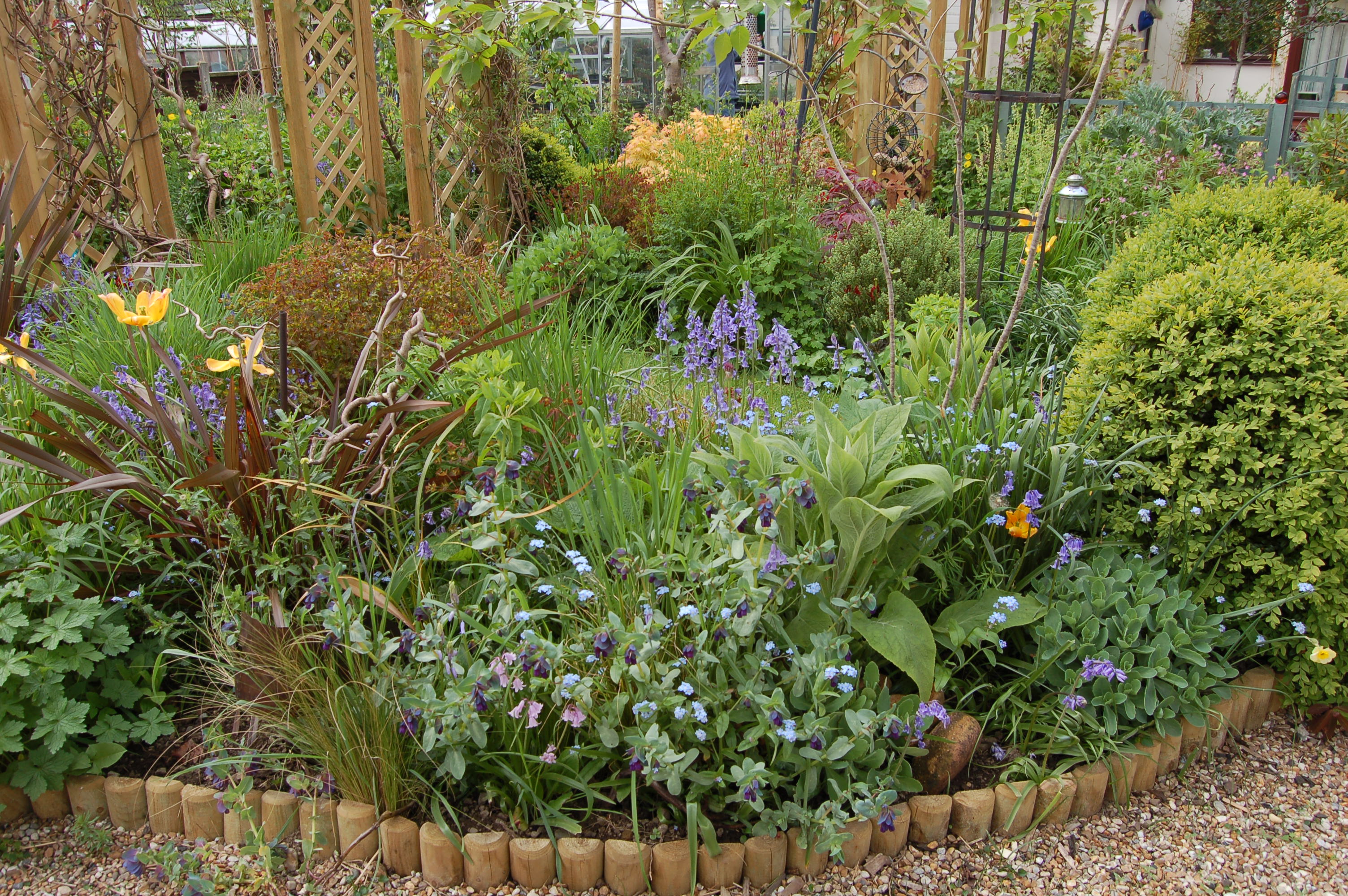
Aiming for a year round garden – our garden in August.

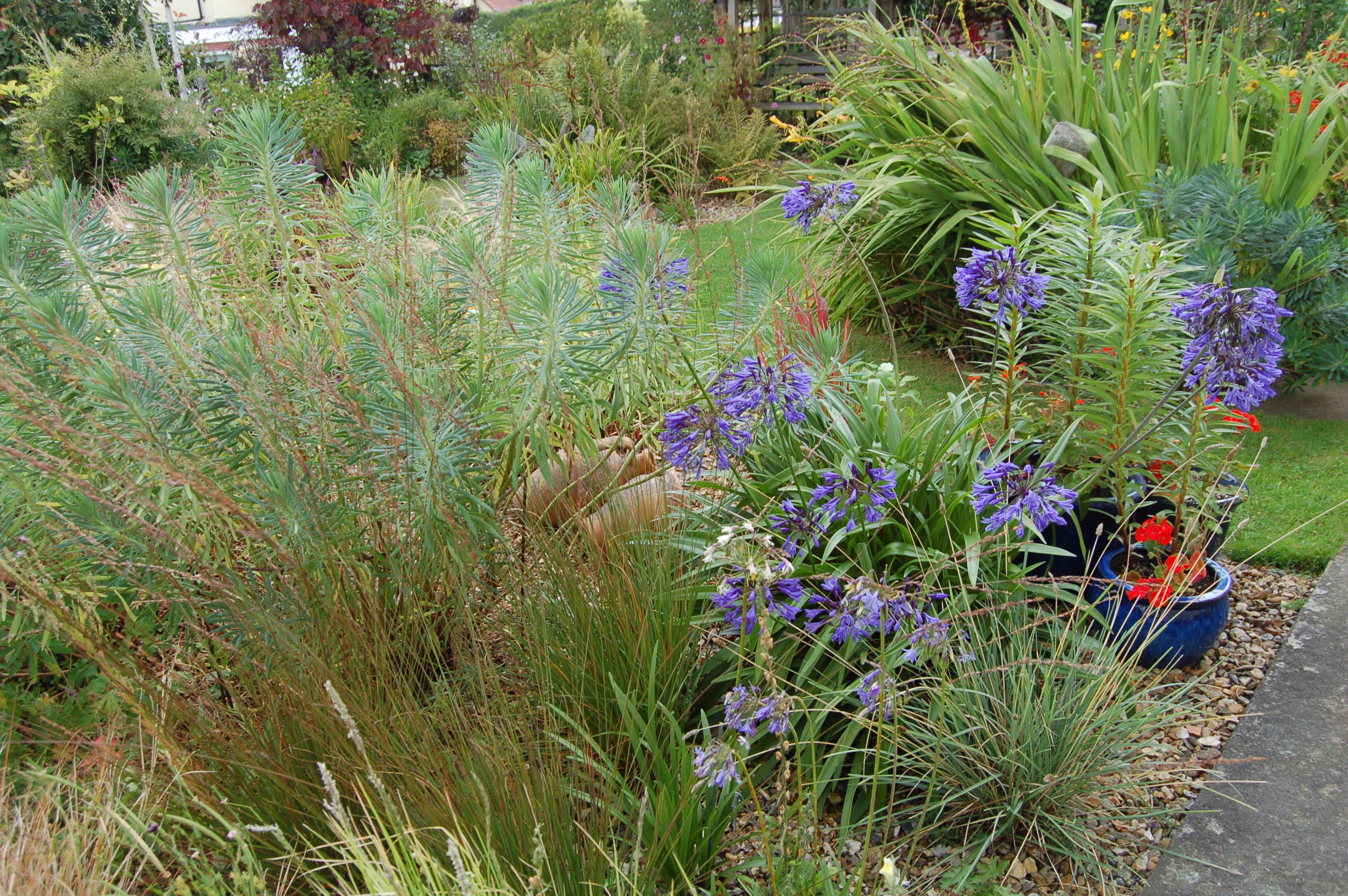
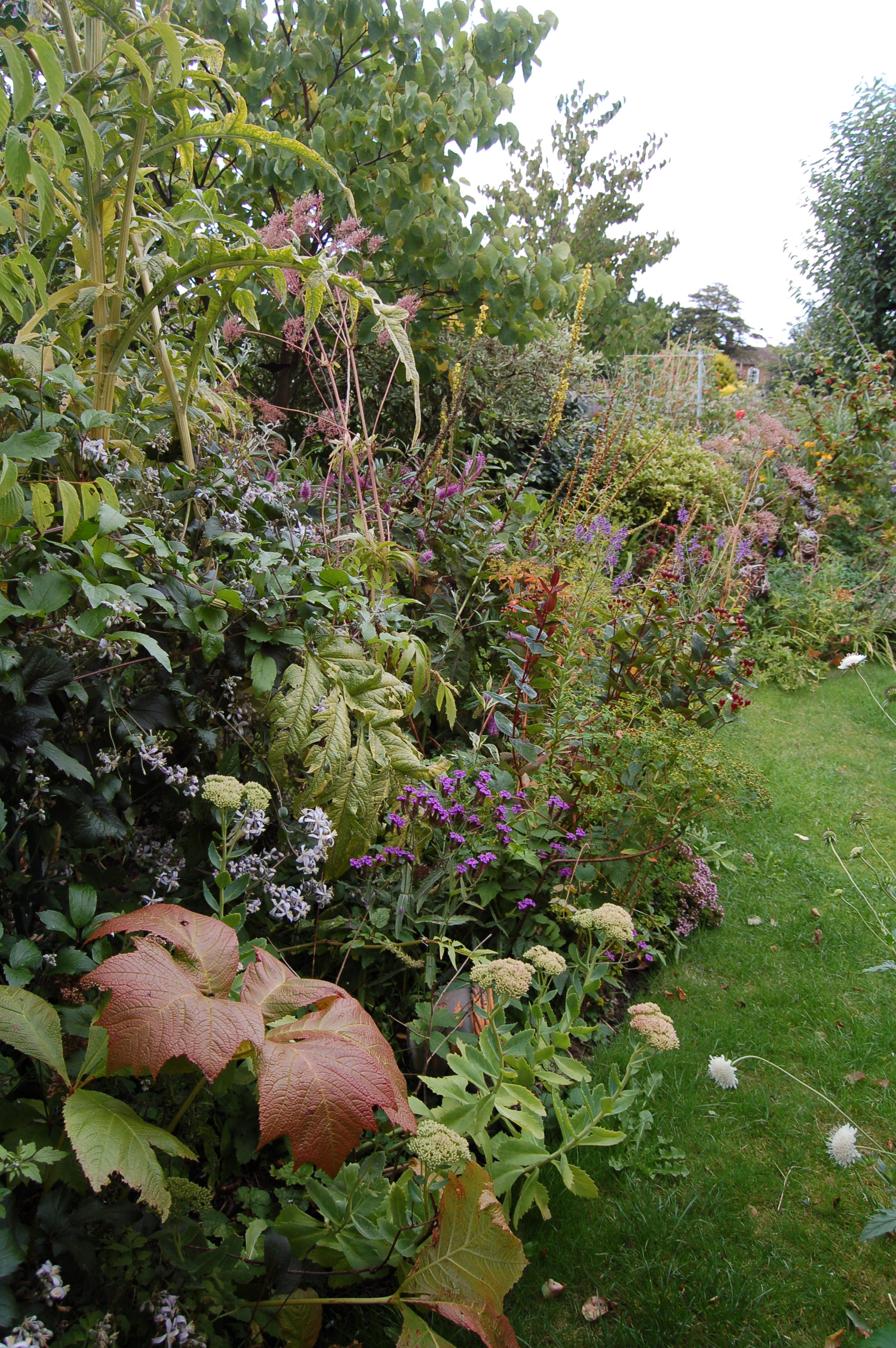
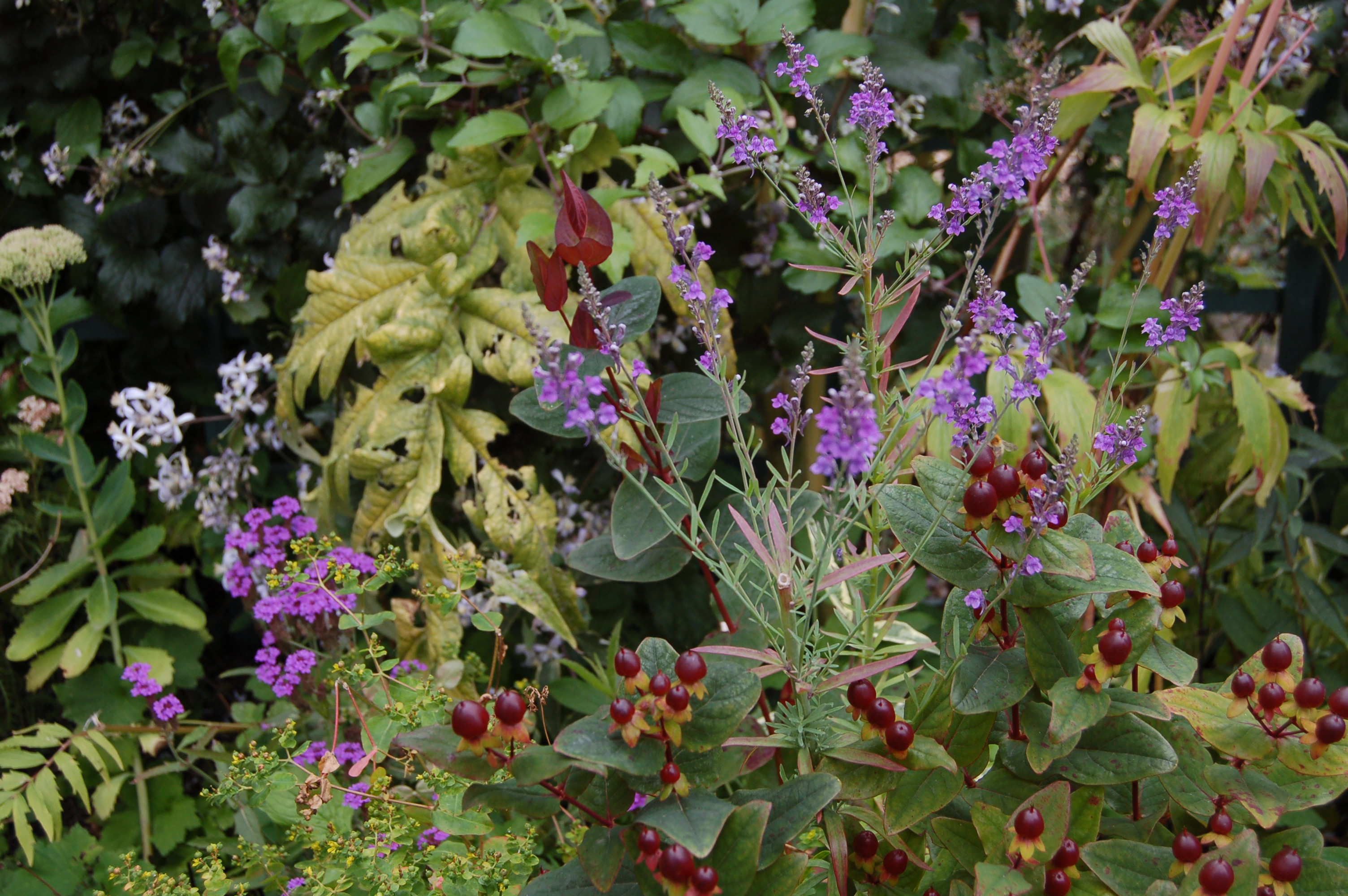
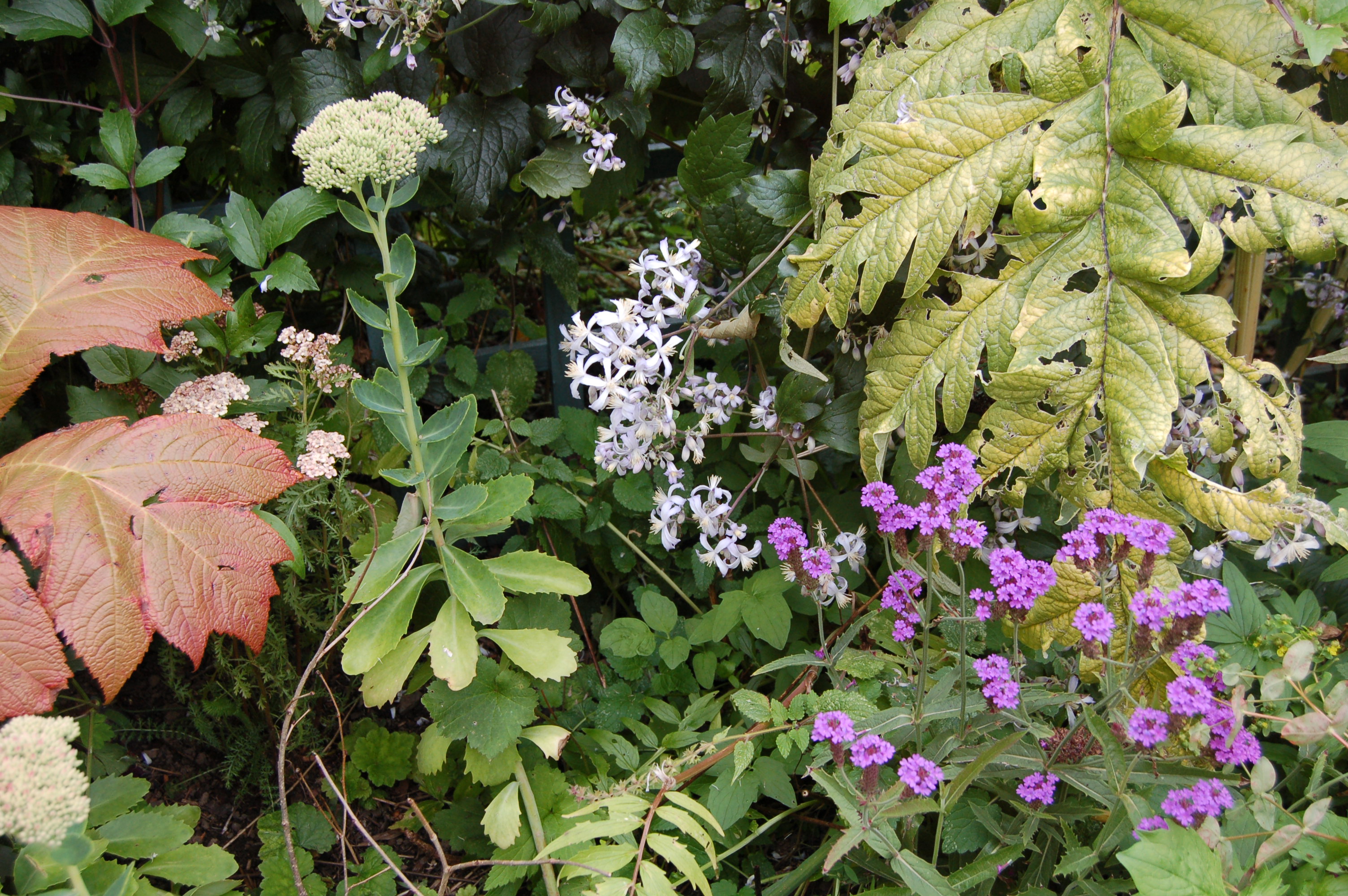
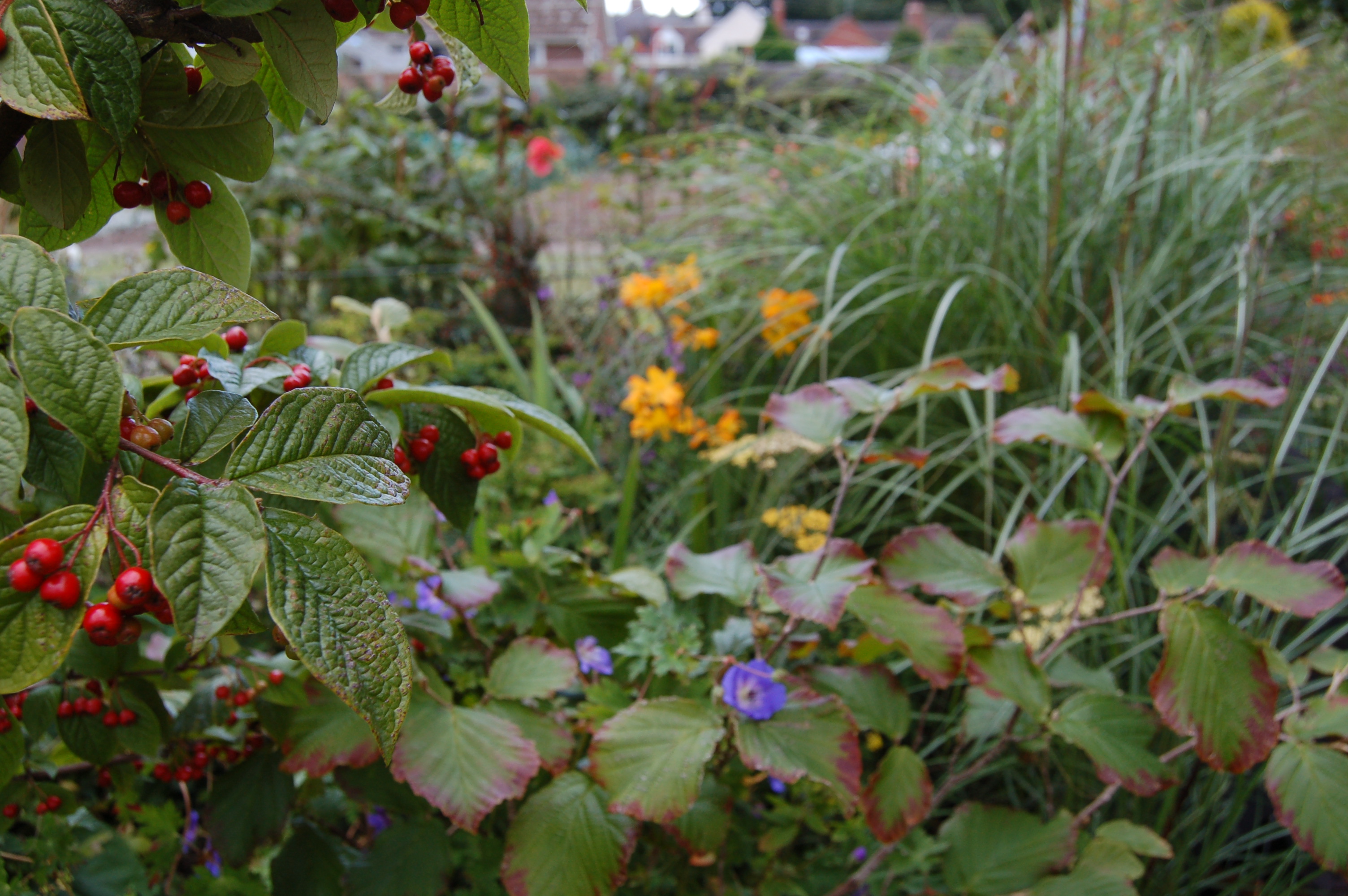
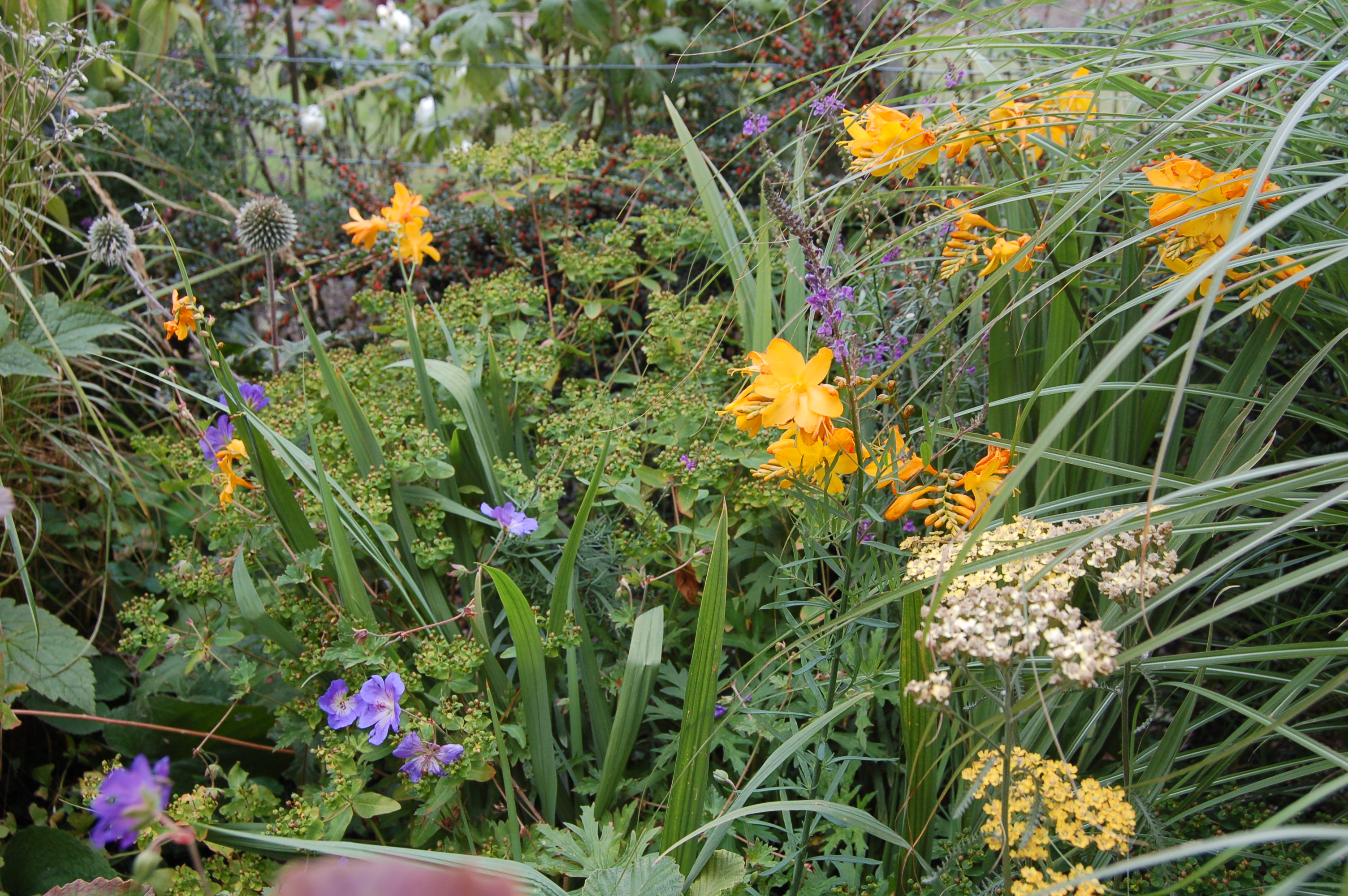
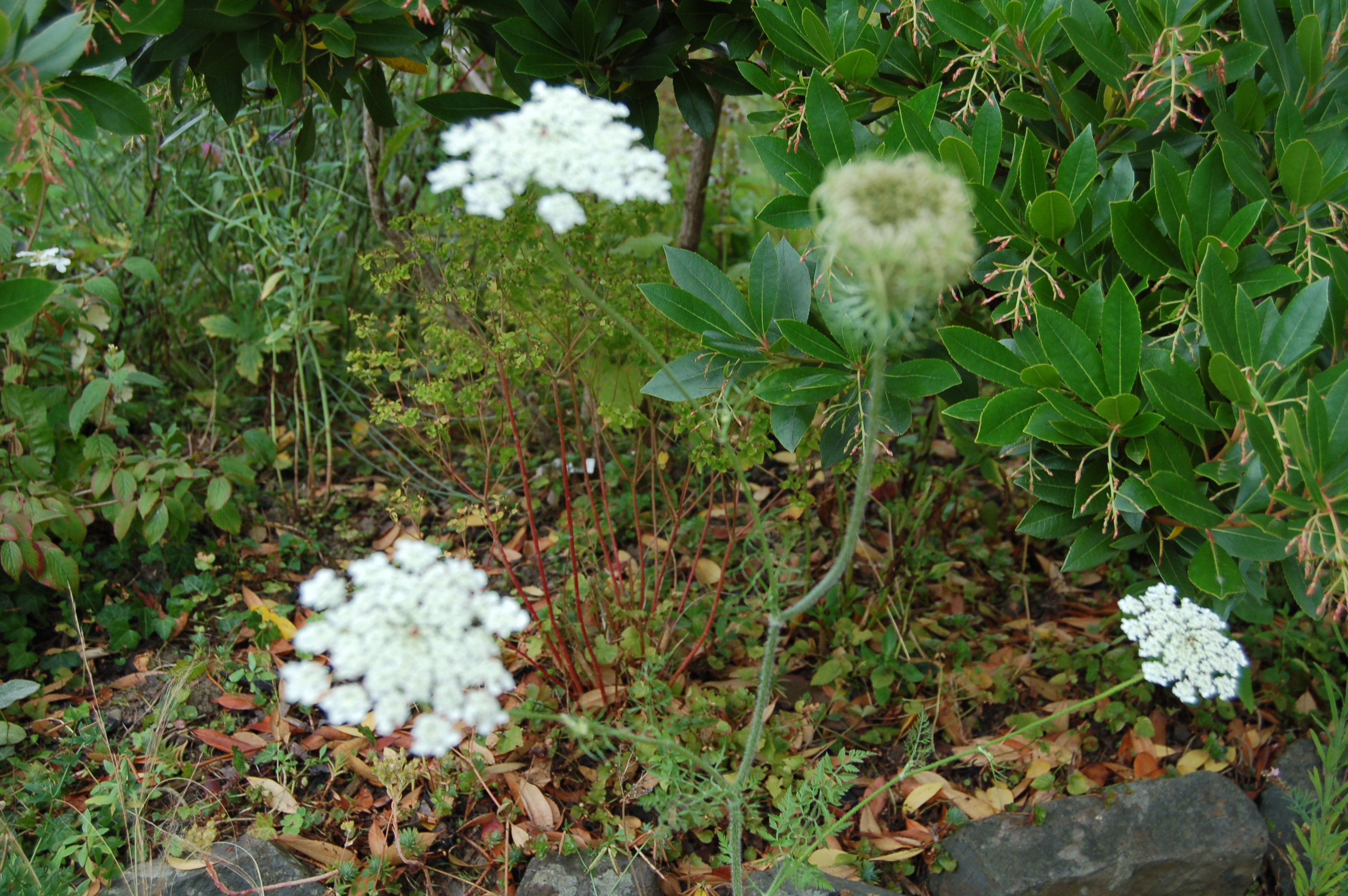
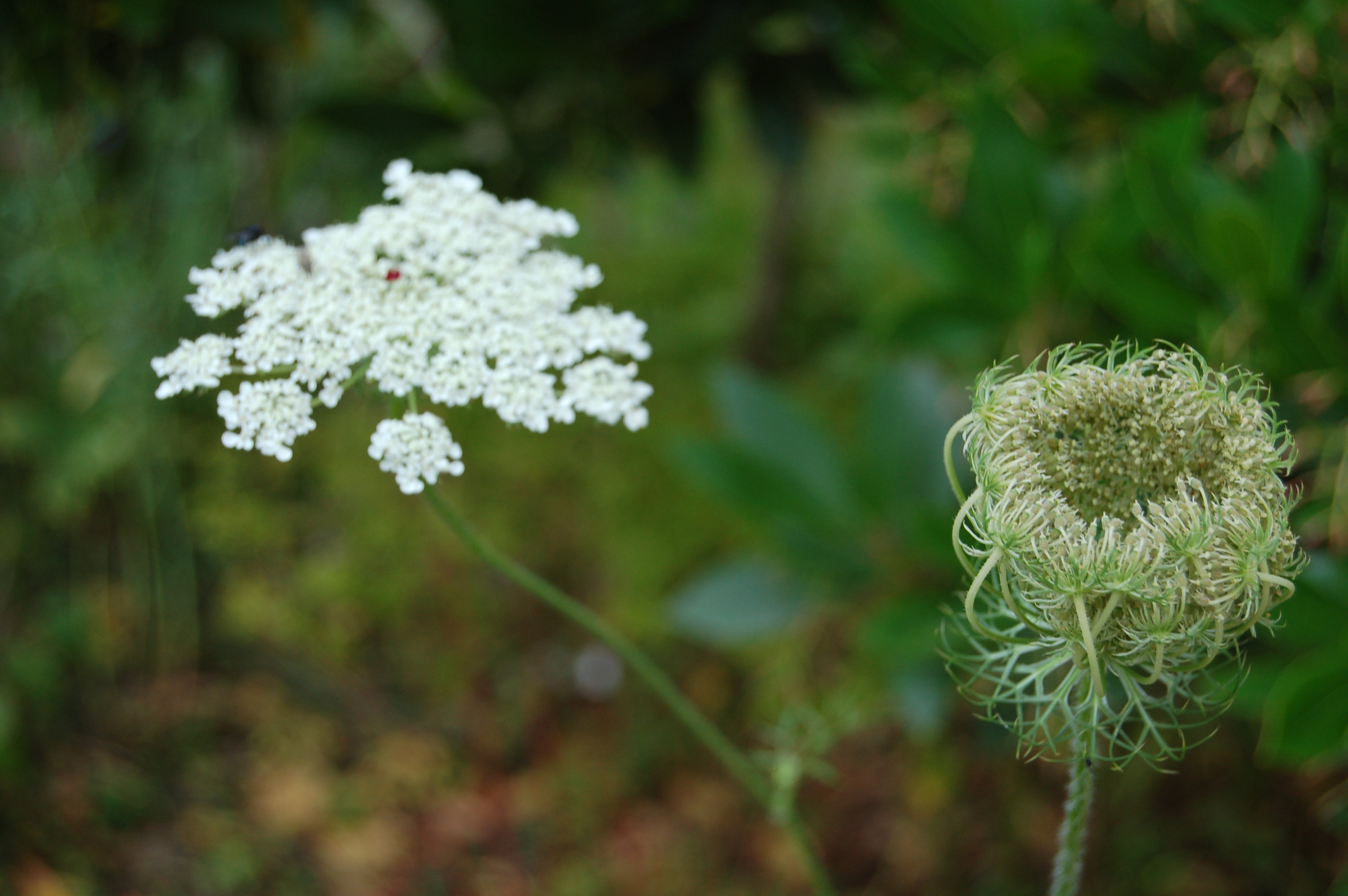
This series aims to check out if we have been successful in creating a garden for all seasons with interest throughout the year. In this post we look at our Avocet garden here in Plealey in the first week in August, a time when summer is going off a bit and autumn is trying to sneak in by the back door. The wild carrot below is beginning to set its seeds in our wildlife strip behind the lavender hedge alongside the lane.
2014 08 19_3880 2014 08 19_3881

We have one more garden group yet to visit us which happens in about a fortnight so this post as well as checking on how well we are achieving our aim of a year round garden will also be a way of checking out how it will look to our next visitors.

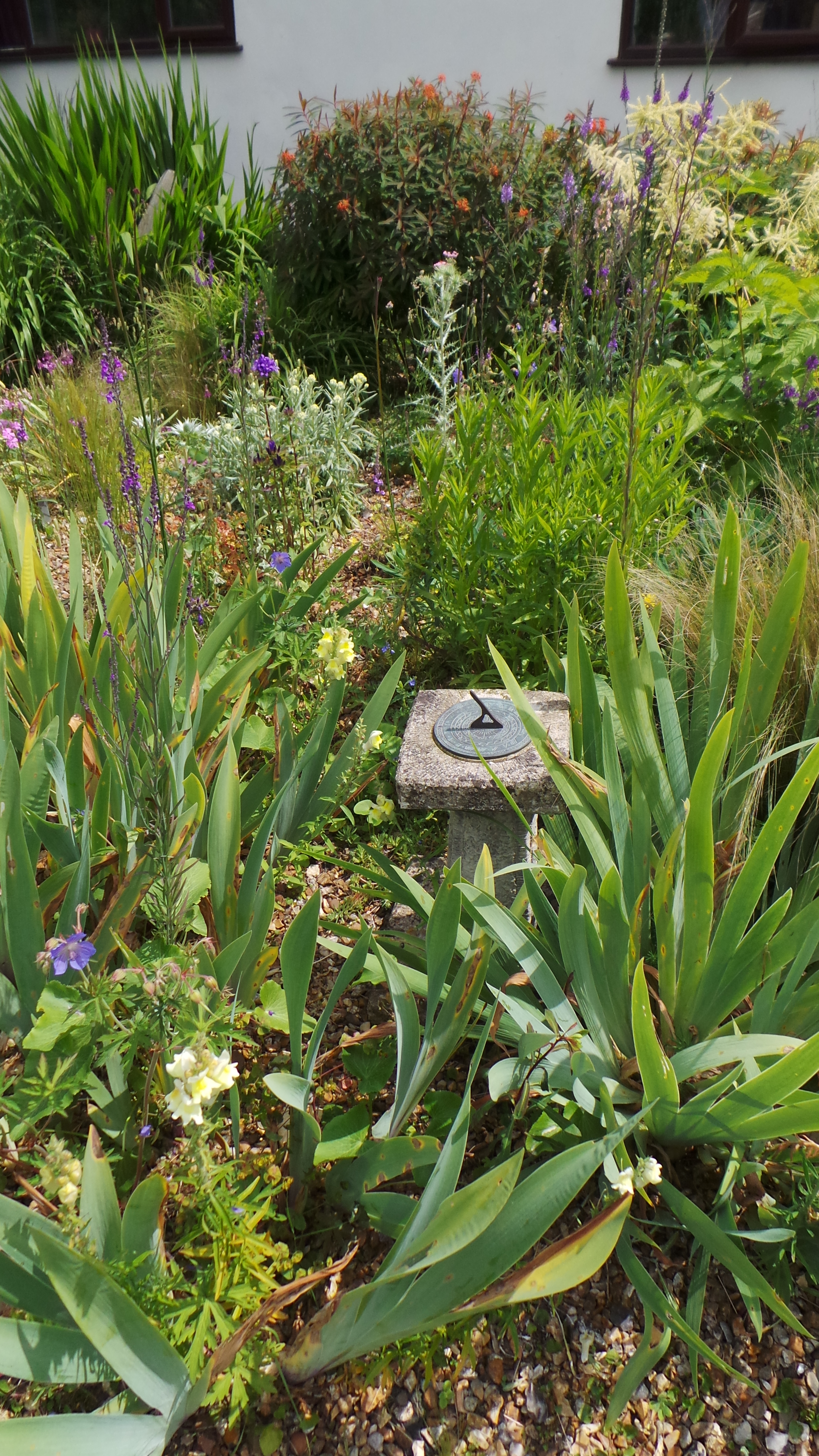
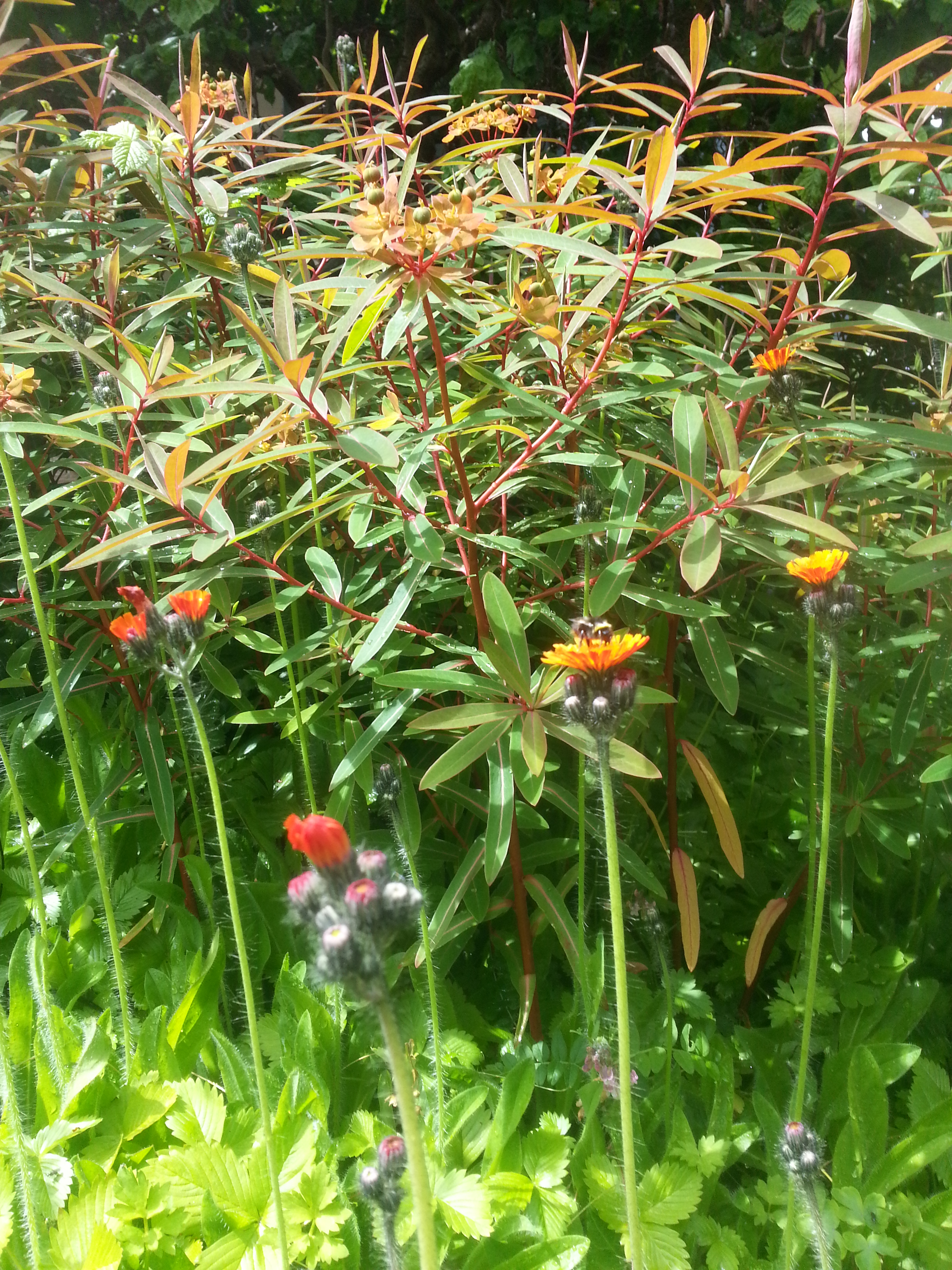
The” Beth Chatto Garden” still has plenty of interest but sadly the strange weather this year has meant that we have already had to cut down the Eophorbia griffithii Dixter which normally we can rely on for colourful winter stems of the brightest ruby red.

2014 08 19_3883 2014 08 19_3884 2014 08 19_3885 2014 08 19_3886 2014 08 19_3887 2014 08 19_3882

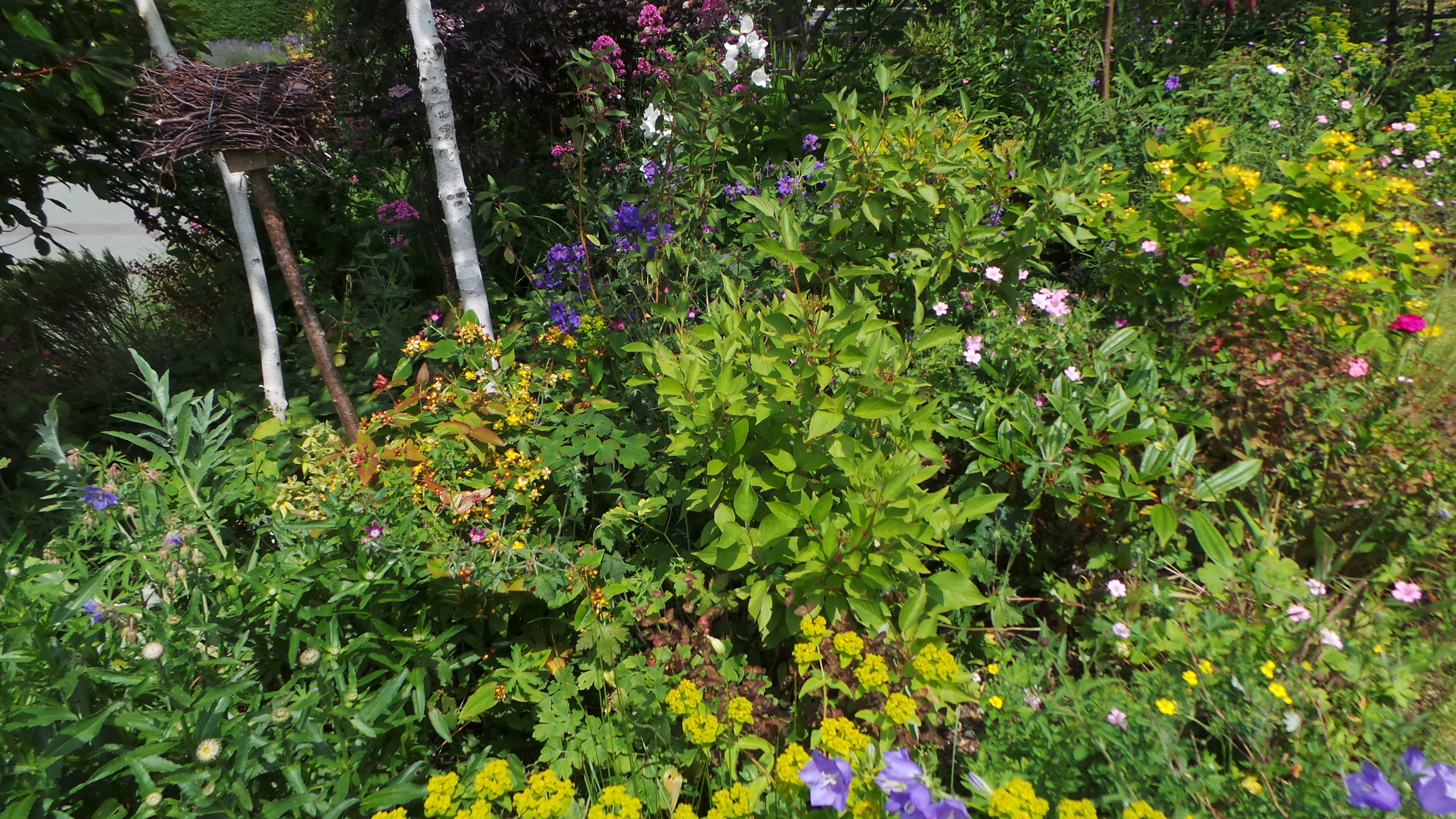
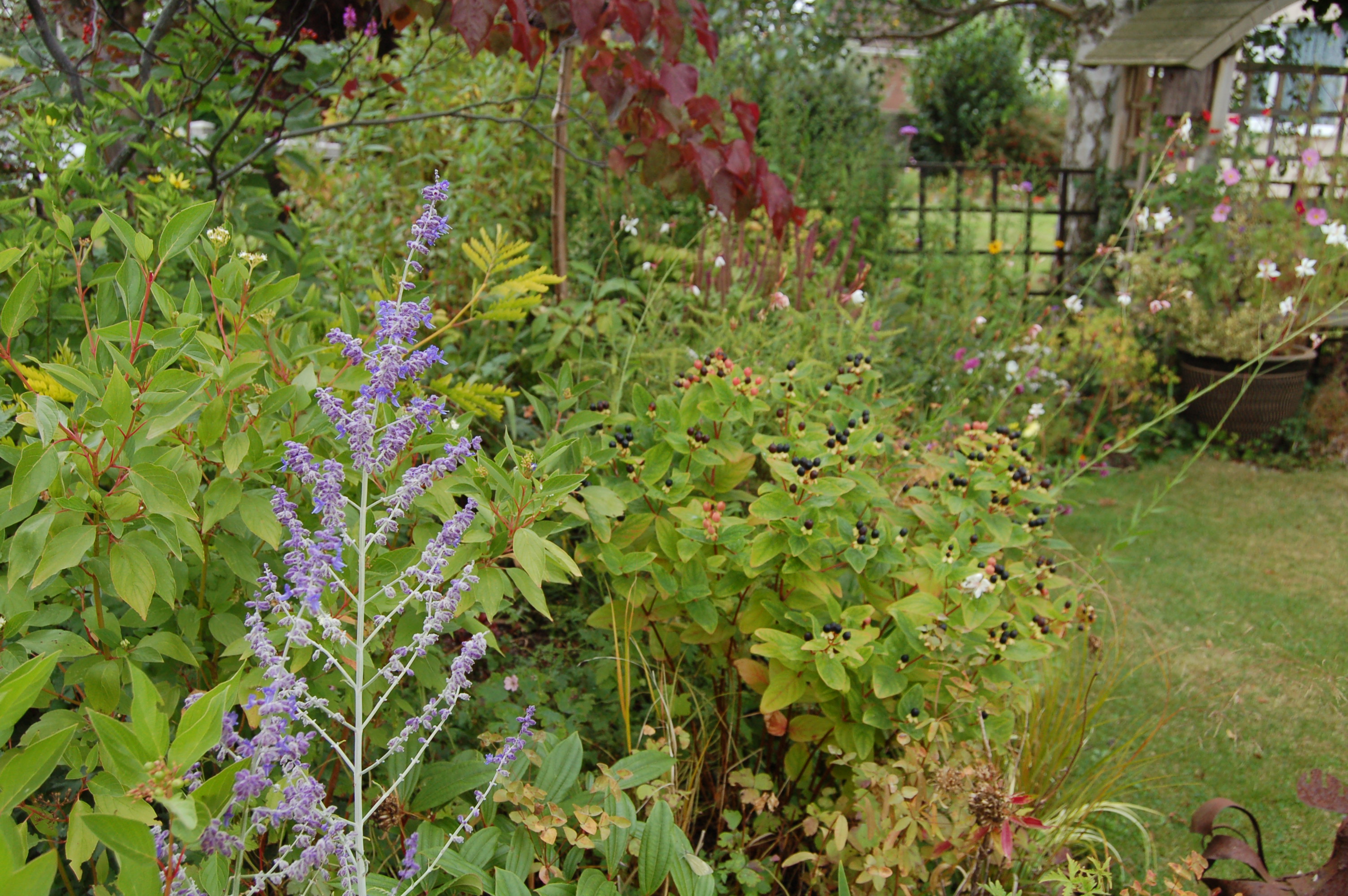
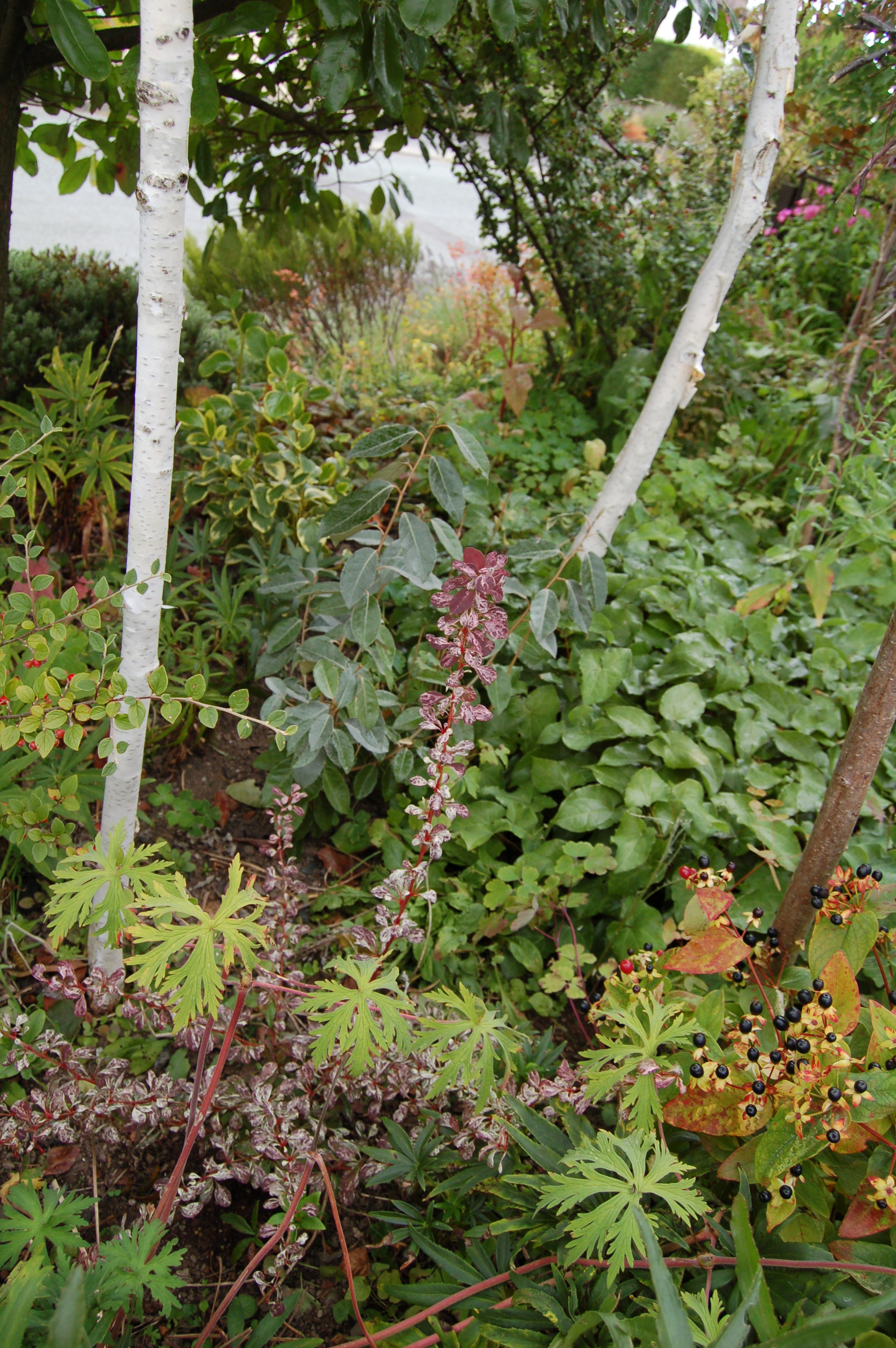
The other front garden borders still have patches of colour with the Perovskia’s pale blue flower spires looking good in a patch dominated by the white barked silver birches and purple leaves of Cercis Forest Pansy, Sambucus nigra Black Lace and Physocarpus Diablo.
2014 08 19_3888 2014 08 19_3889

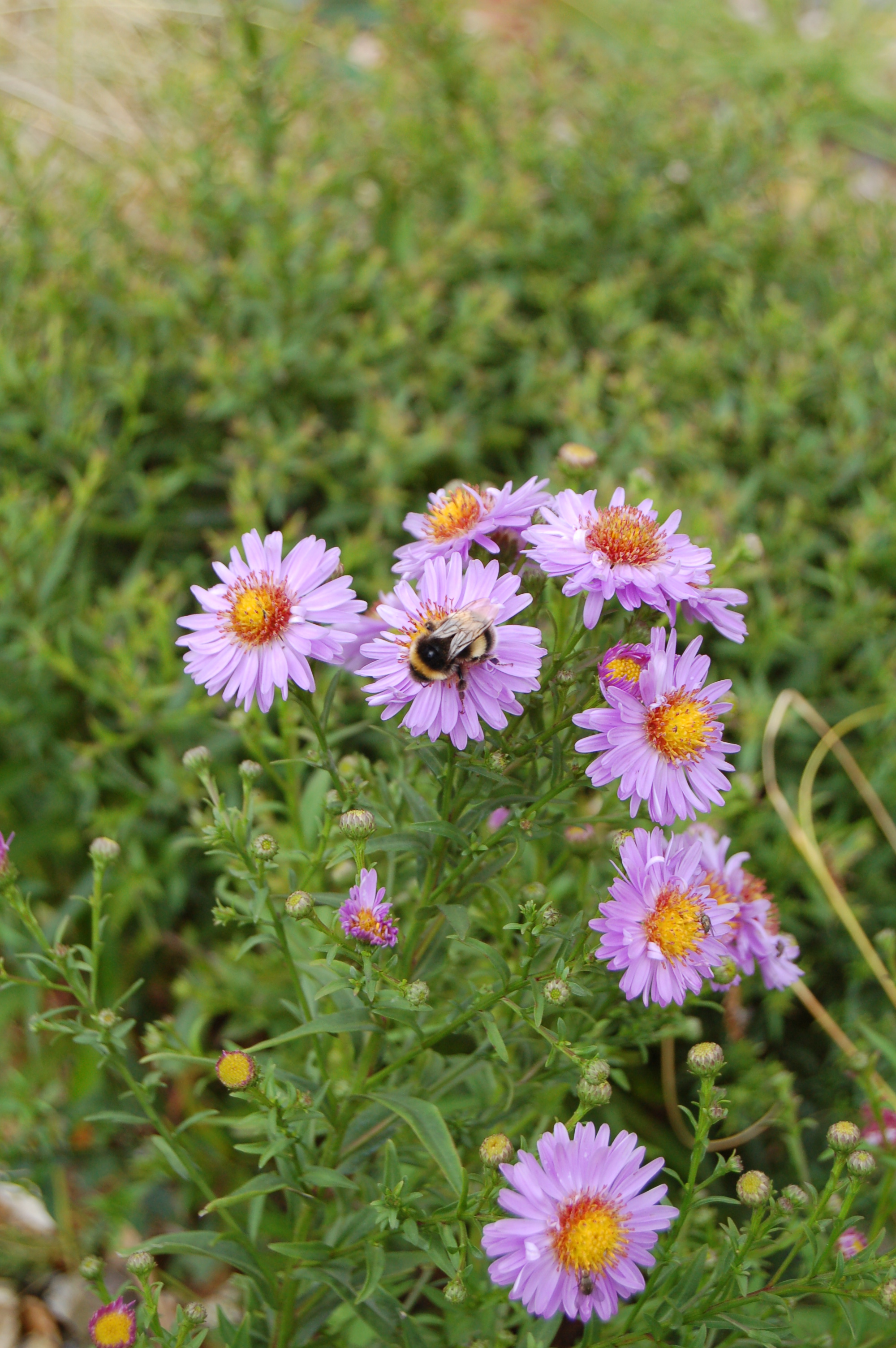
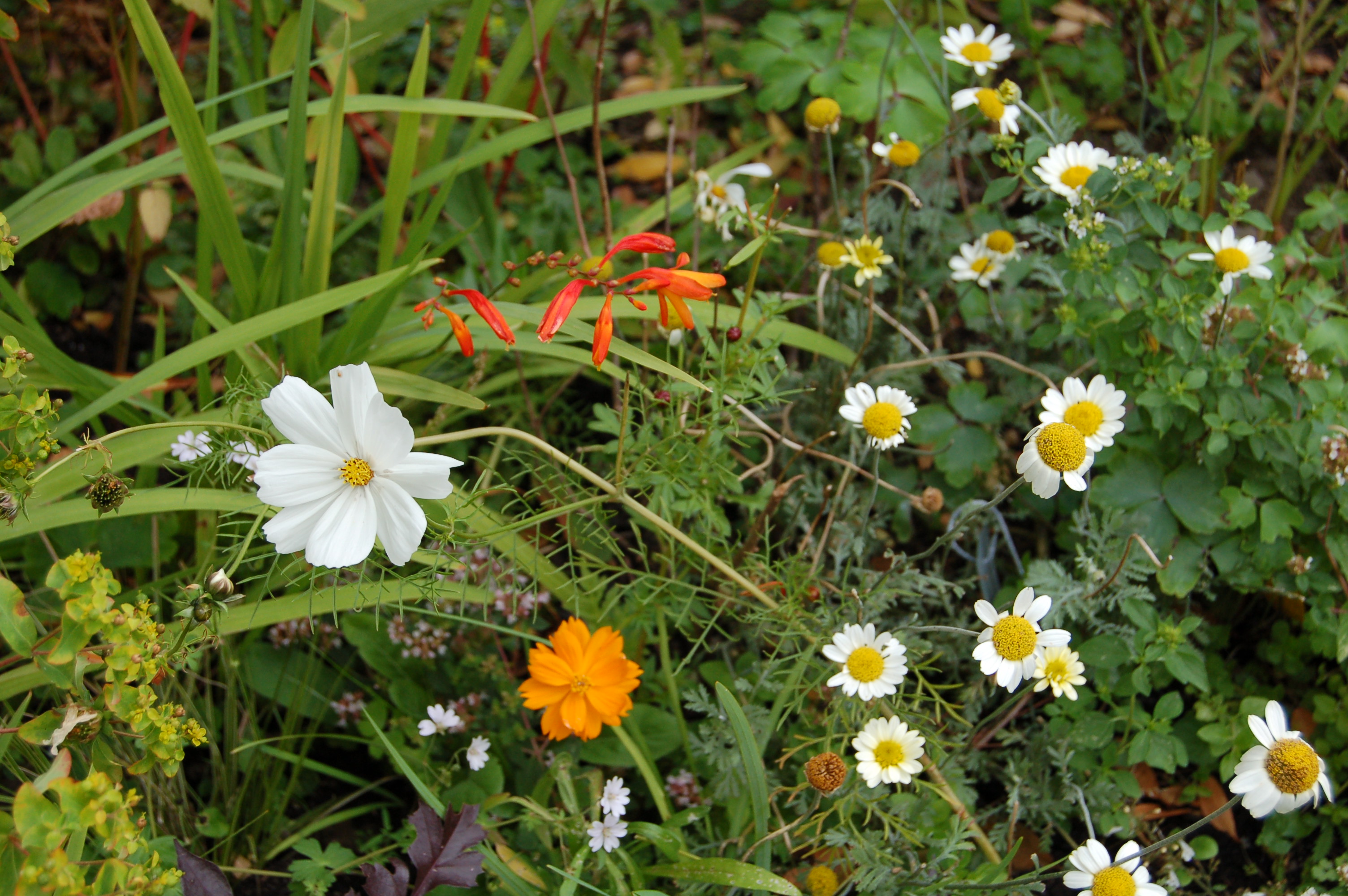
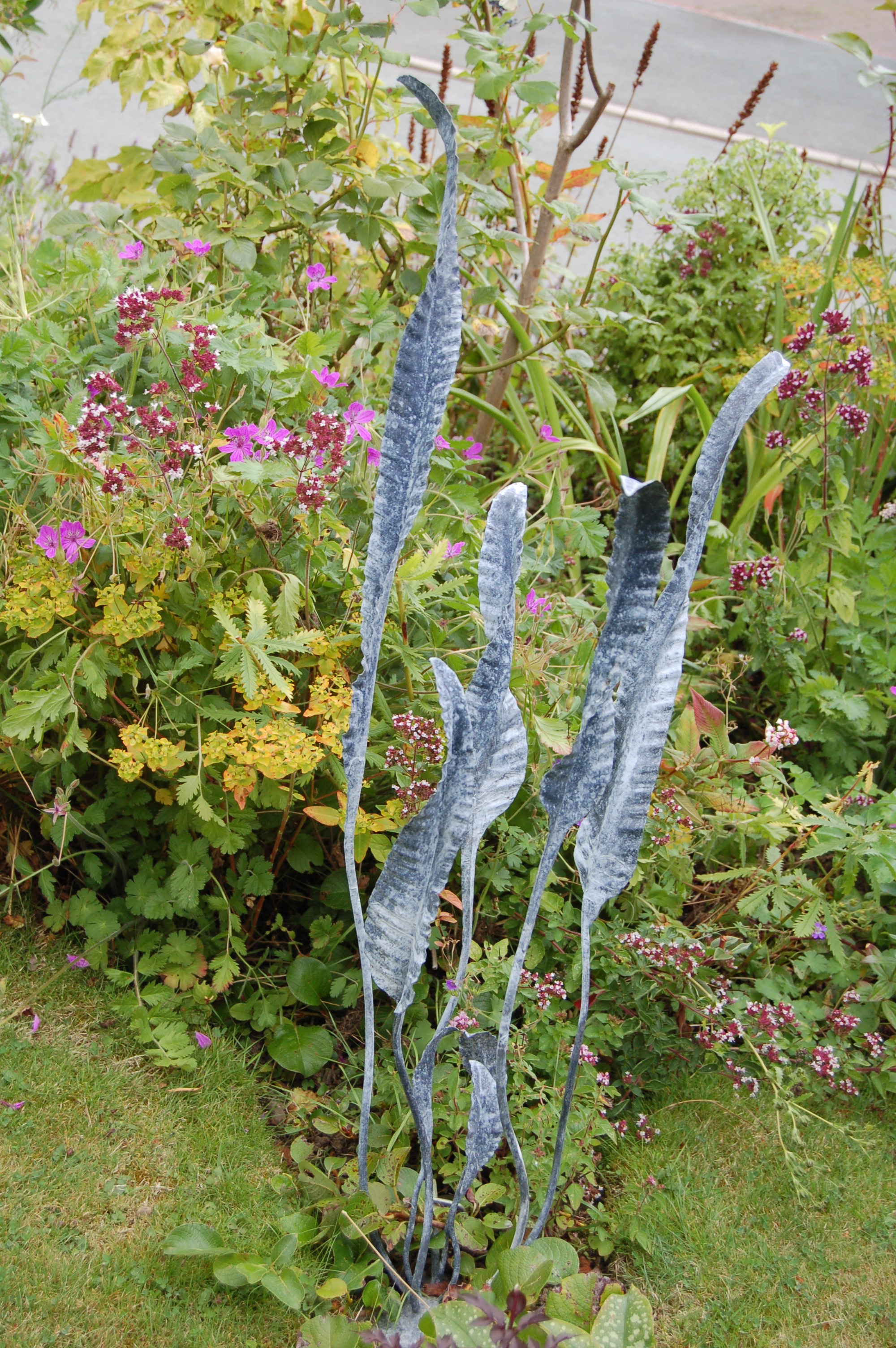
Our new sculptural piece is looking good starring with the flowers of Leucanthemum “Shaggy”, several Asters (sorry but I can’t yet accept their new botanical names!), Salvia uliginosa, Gaura linheimeri and various annuals that Jude the Undergardener grows from seed.

2014 08 19_3890 2014 08 19_3891

2014 08 19_3892 2014 08 19_3894

2014 08 19_3895 2014 08 19_3898

The photos below show two very different looking plants which are in fact both Lobelias, the one on the left a cardinalis and the one on the right Lobelia tupa.

2014 08 19_3901 2014 08 19_3904

It is good to see the wildlife busy on the blooms every time the sun shines.

2014 08 19_3893 2014 08 19_3899

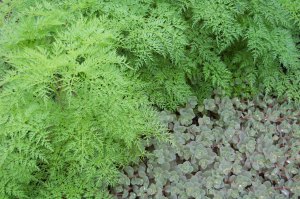
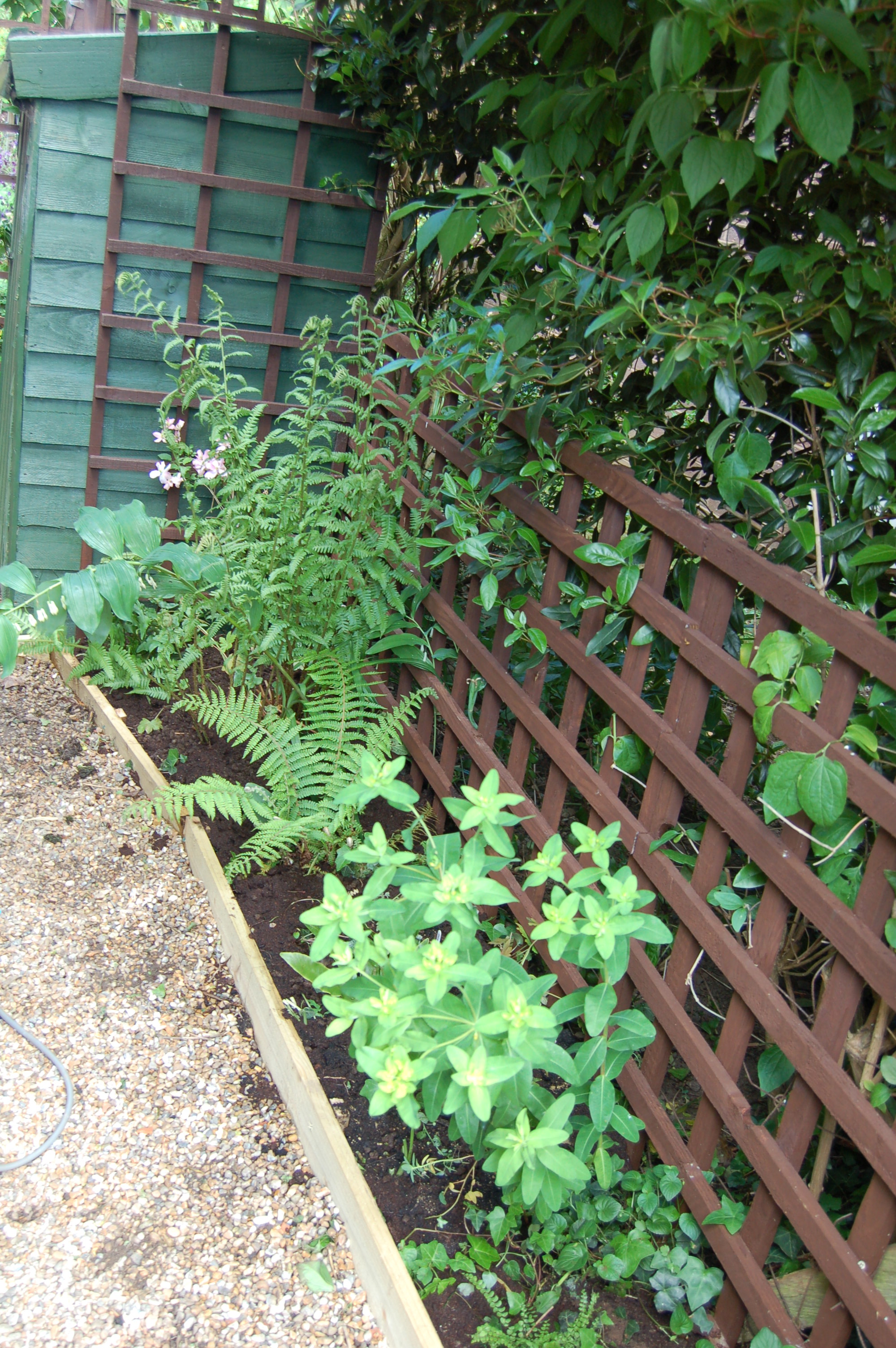
The ferns border developed earlier this year is looking better as the ferns get more established. From there you can look back along the Shade Garden through the archway towards the Hot Garden.

2014 08 19_3905 2014 08 19_3906

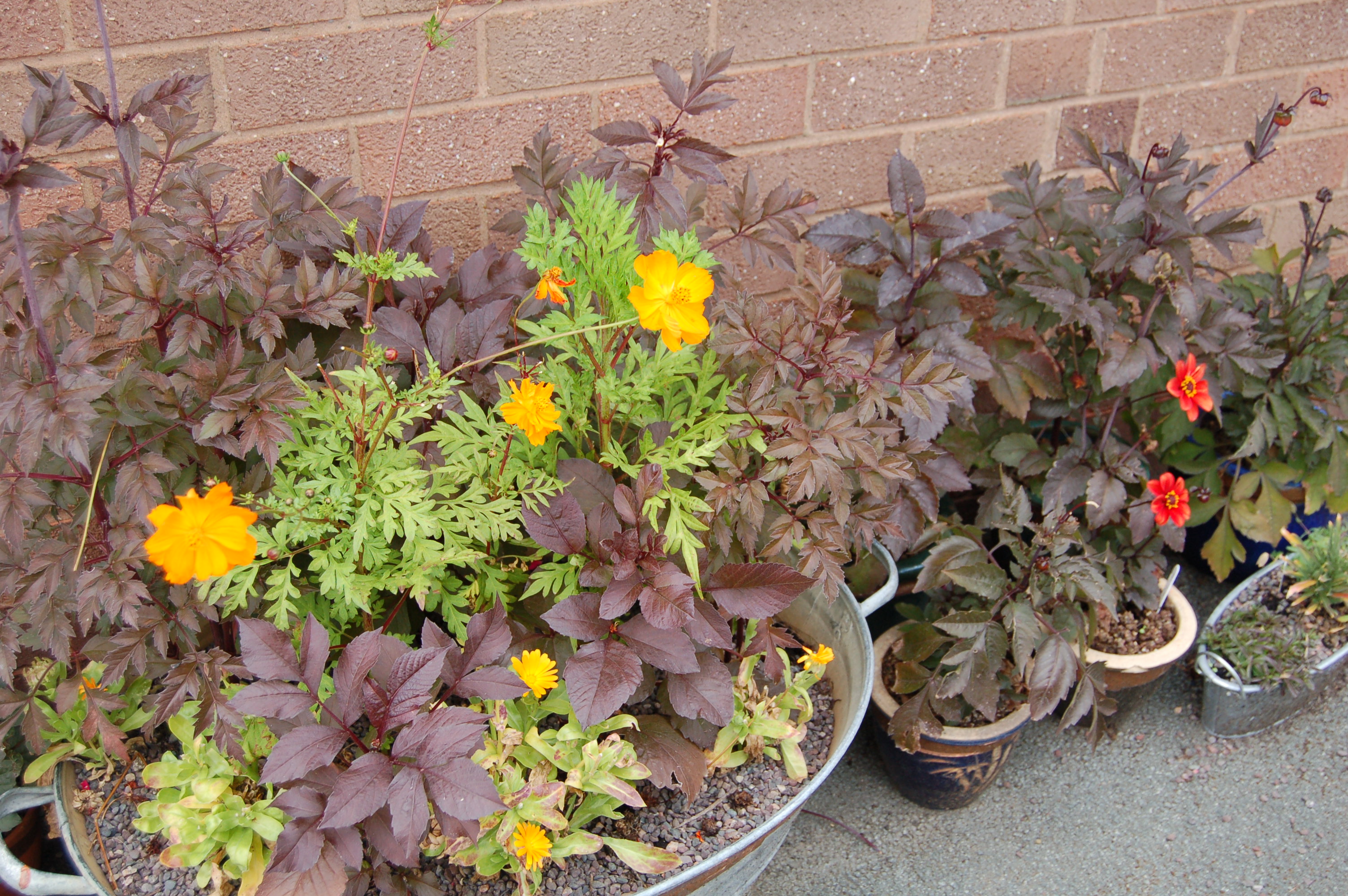
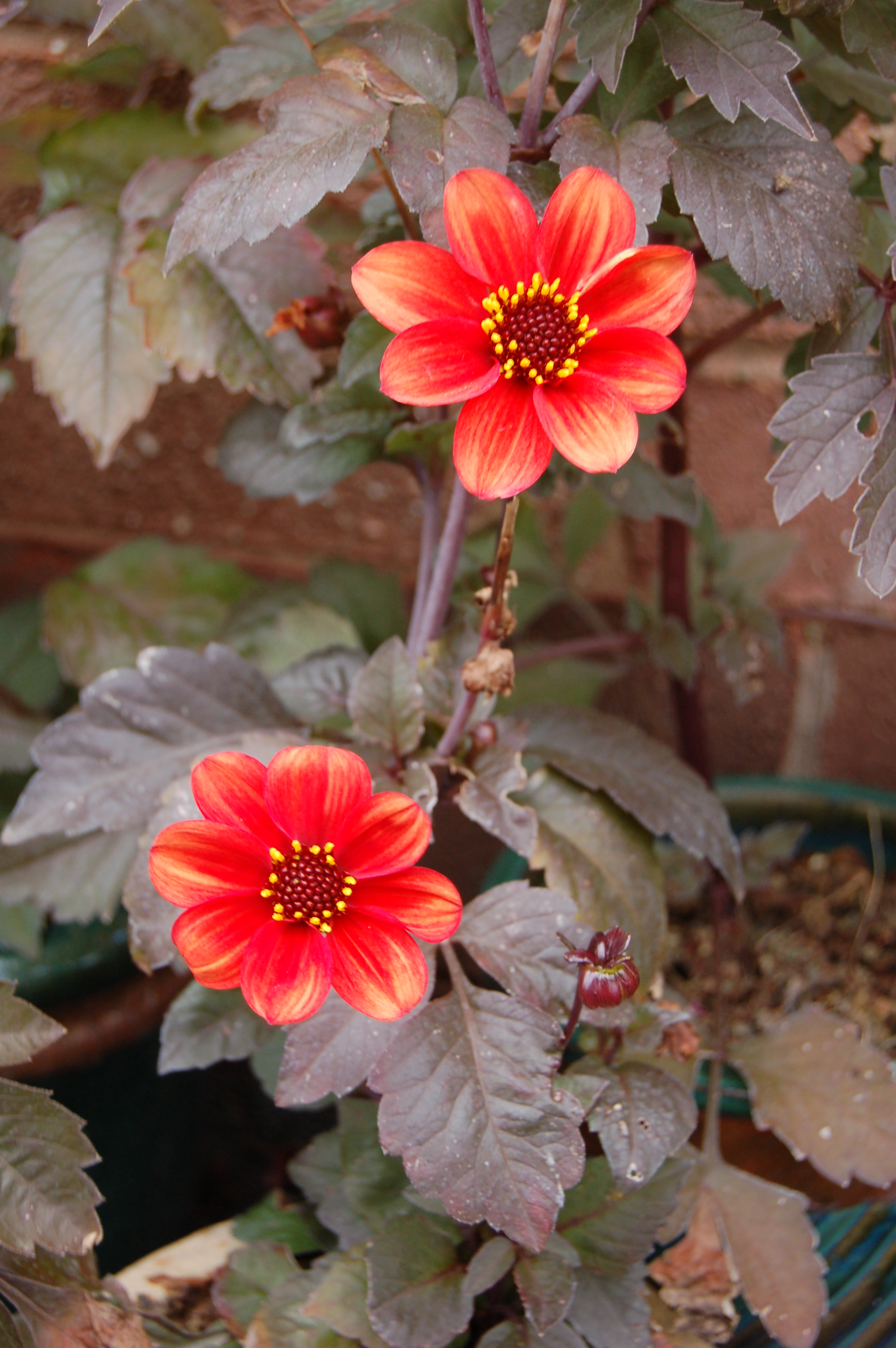
The Dahlias in the vintage galvanised containers along the house wall are still flowering but having a bit of a rest before hopefully producing more flower buds to delight the eye in a few weeks time.


2014 08 19_3907 2014 08 19_3908


Opposite them the” Freda Border” is looking cheerful with oranges and yellows and the odd white highlight of this honey-scented Buddleja.

2014 08 19_3913 2014 08 19_3914 2014 08 19_3915


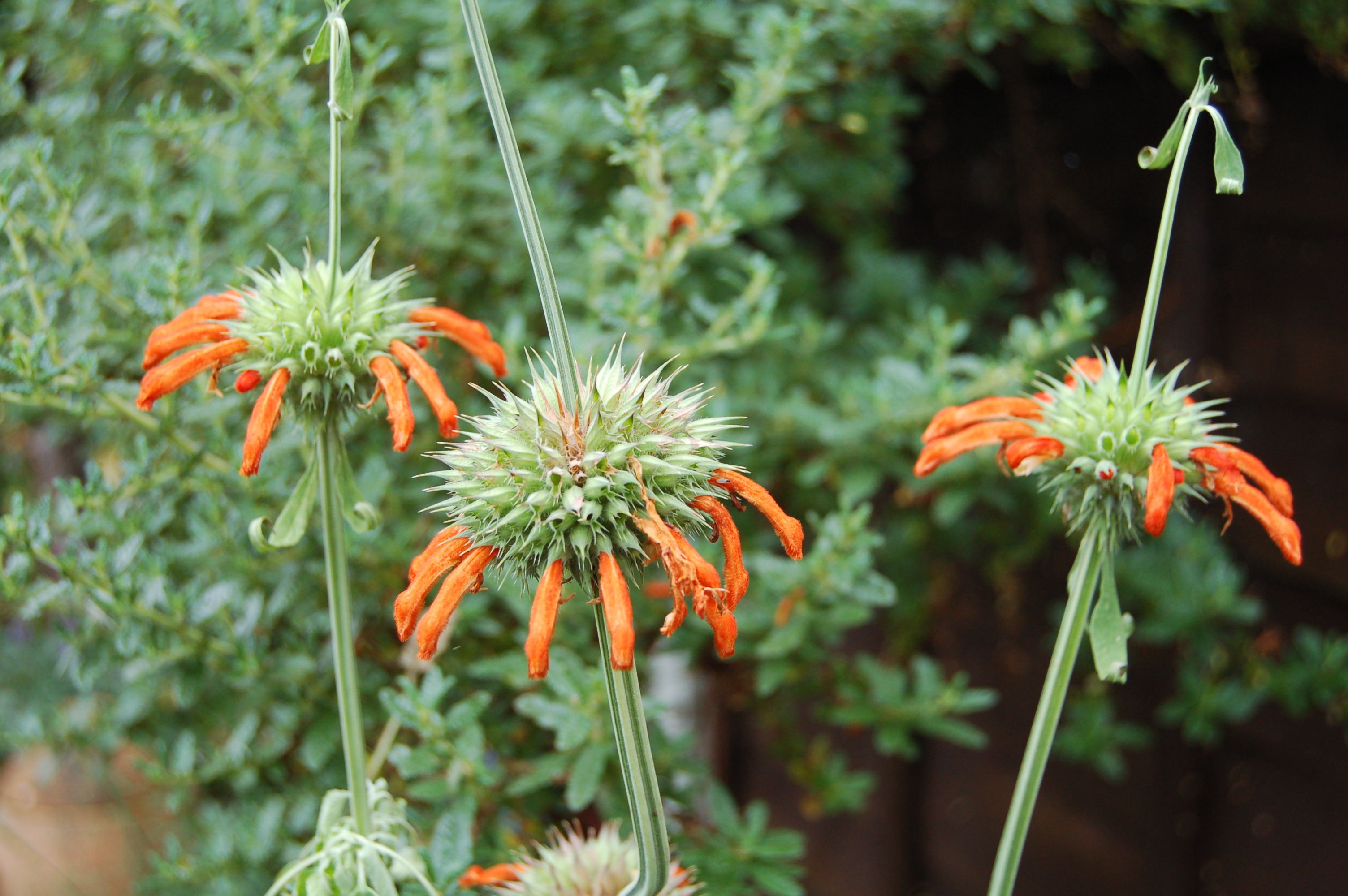
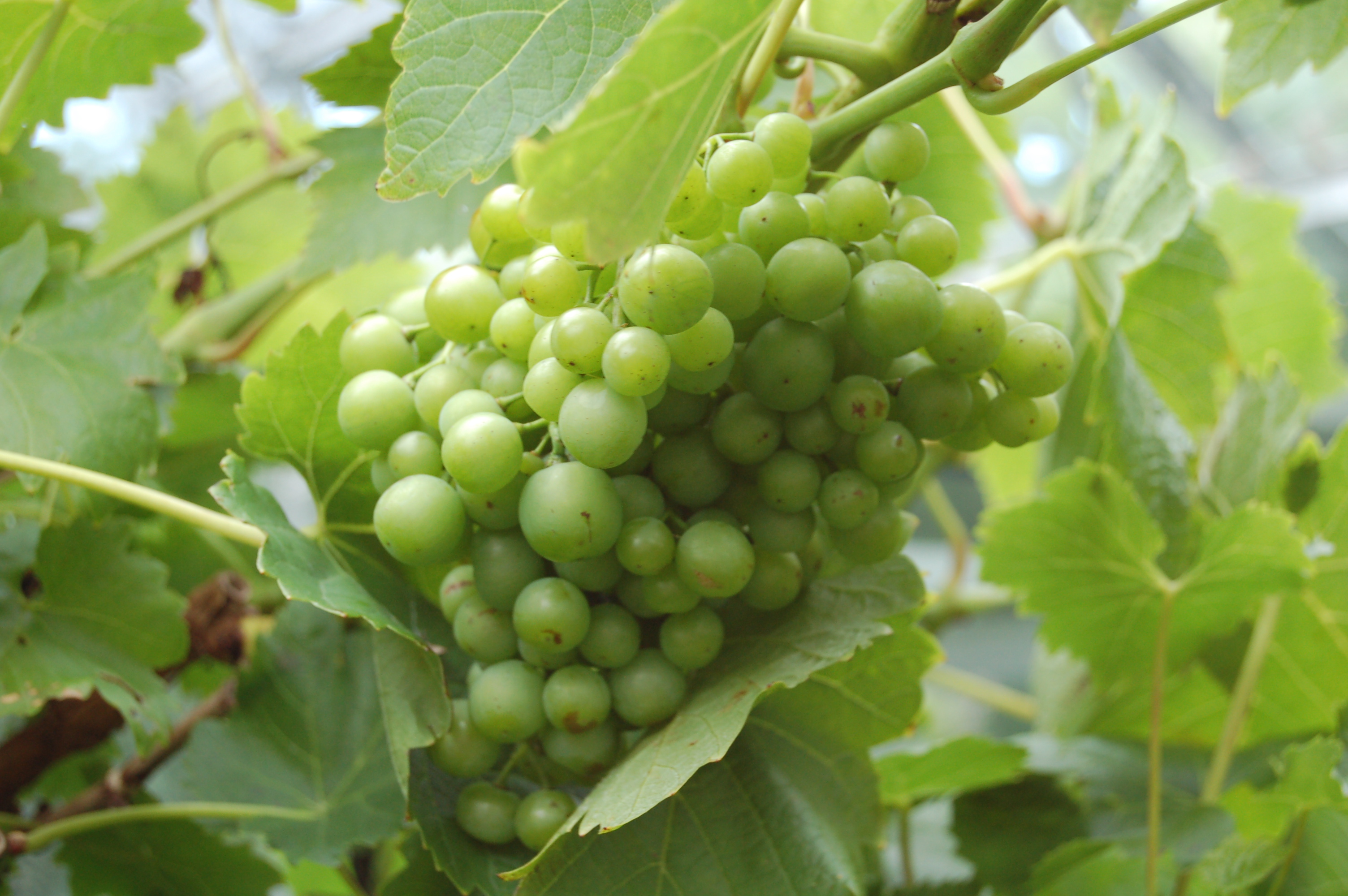
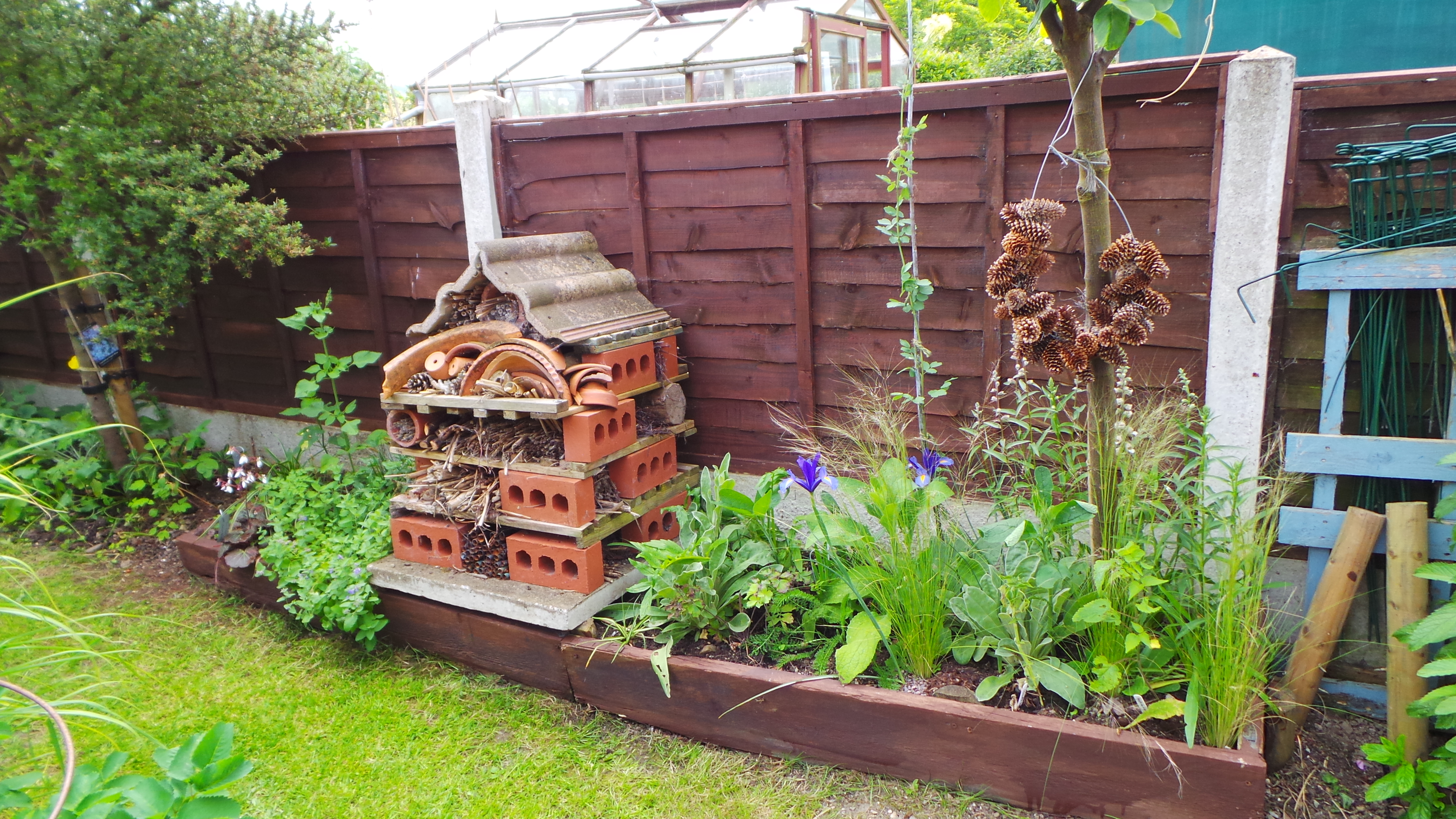
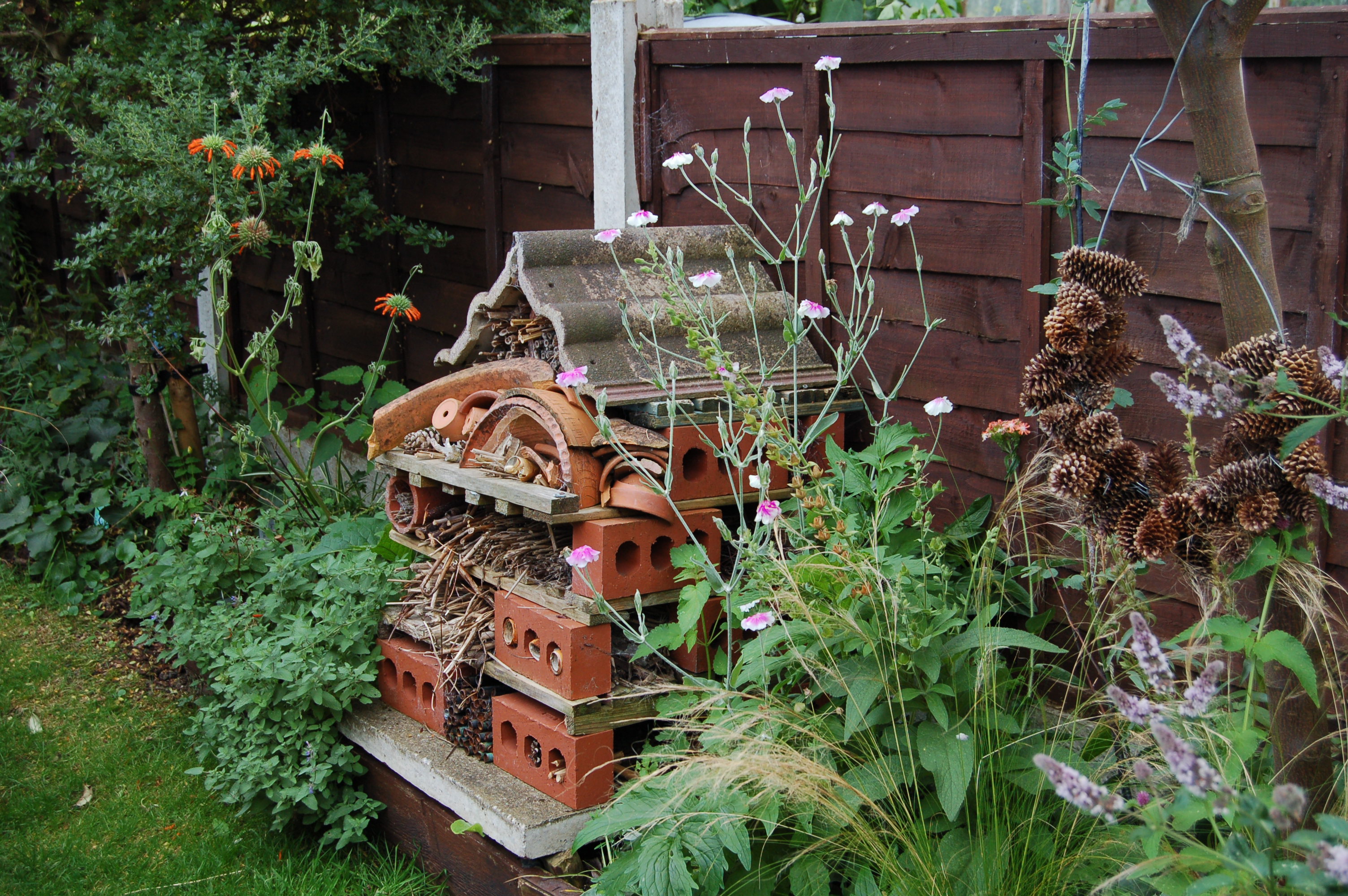
The Tulbaghias continue to produce their delicate pale lilac flowers on their wiry stems. Close by the insect hotel snuggles within the” Pollinator Border”. Here the brightest flower of all must be the annual Leonotis leonora, which has become a real favourite in the garden this year. Opposite the heavy cropping grape vine continues to produce “water shoots” which need regular pruning to let the sun access the fruit to ripen it. The harvest is looking hopeful!



2014 08 19_3916 2014 08 19_3917 2014 08 19_3918 2014 08 19_3920


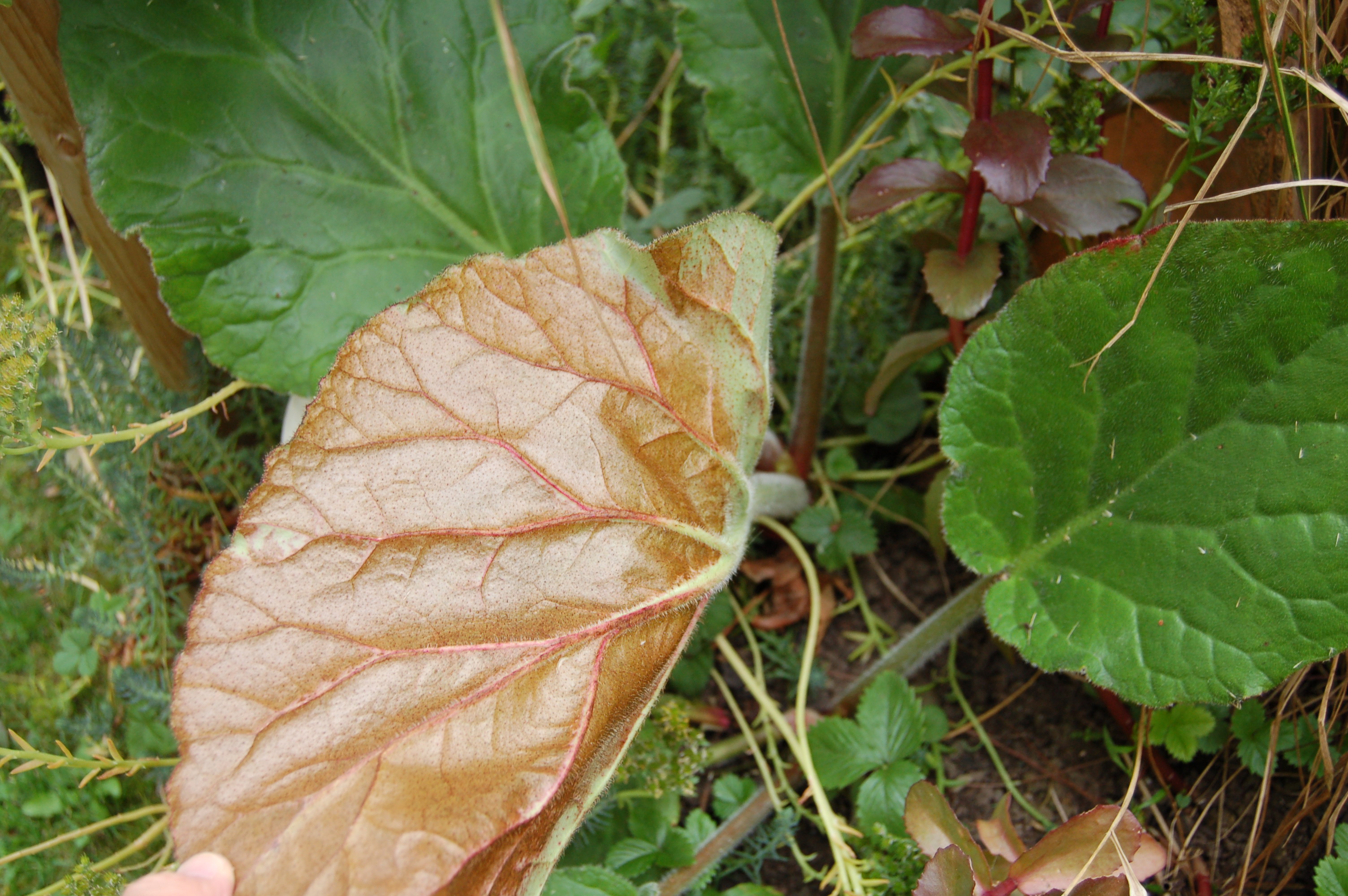
The pathway I take to feed the hens is full of plants that stop me on my way. Eryngium Miss Wilmott’s Ghost is turning from silver to biscuit and Geranium “Rosanne” clambers through any close plant. A real star of this pathway is the Bergena ciliata, a hairy leaved Bergenia with bronze colouring to the reverse of each leaf. I turn a leaf over each time I pass. It has big arching sprays of pale pink flowers in spring too! A great plant but rarely grown.

2014 08 19_3919 2014 08 19_3922 2014 08 19_3923 2014 08 19_3924

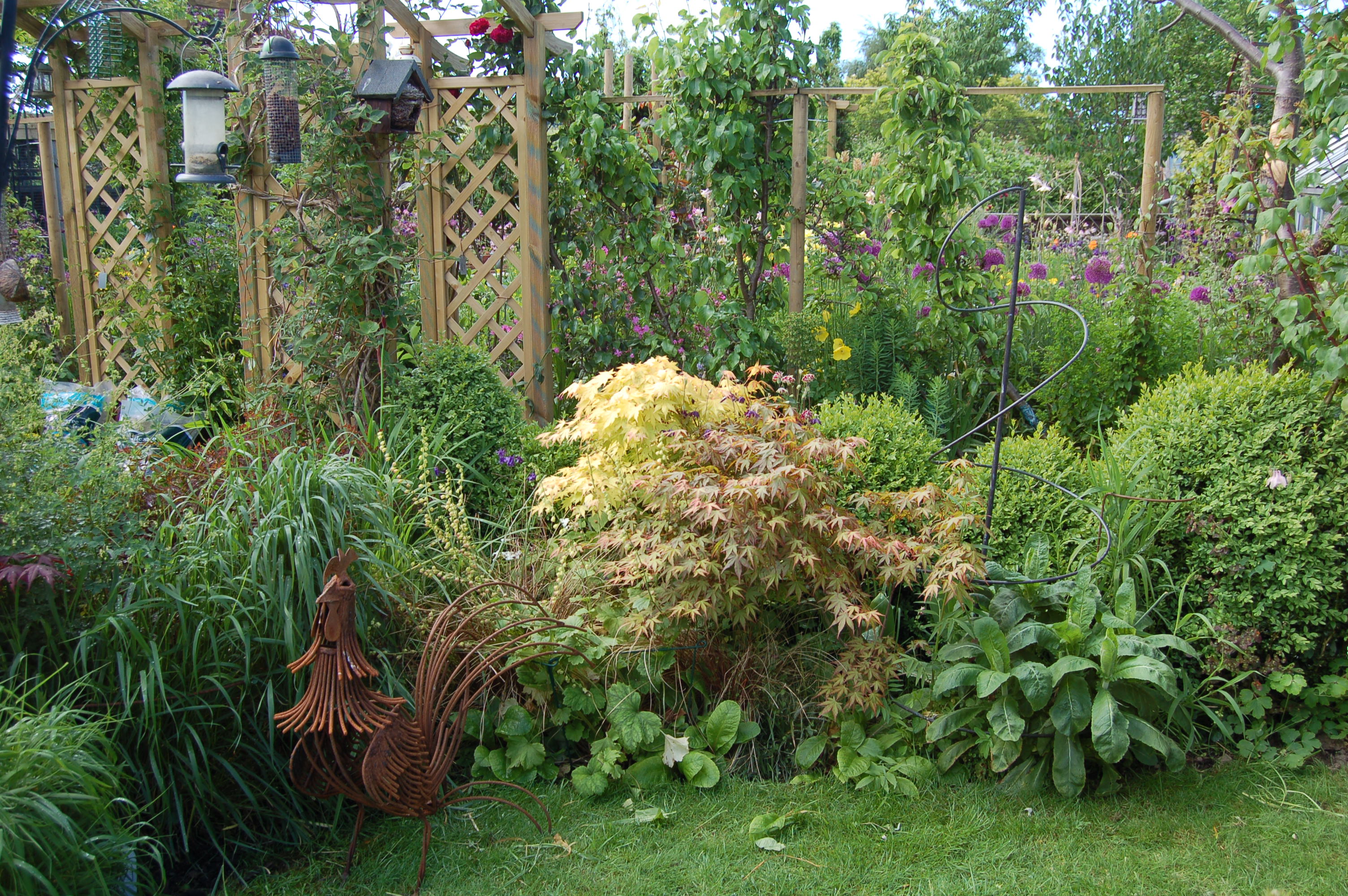
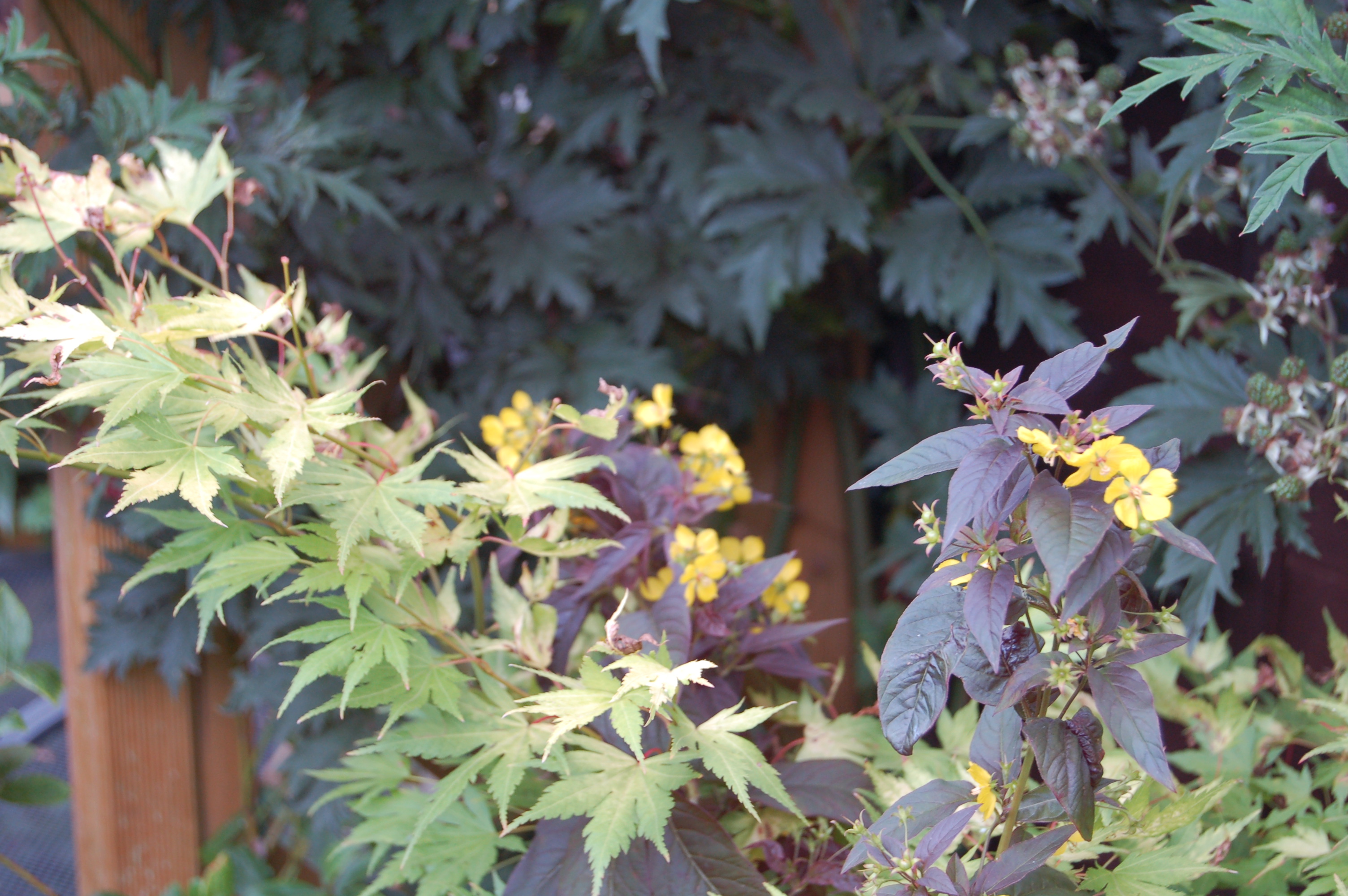
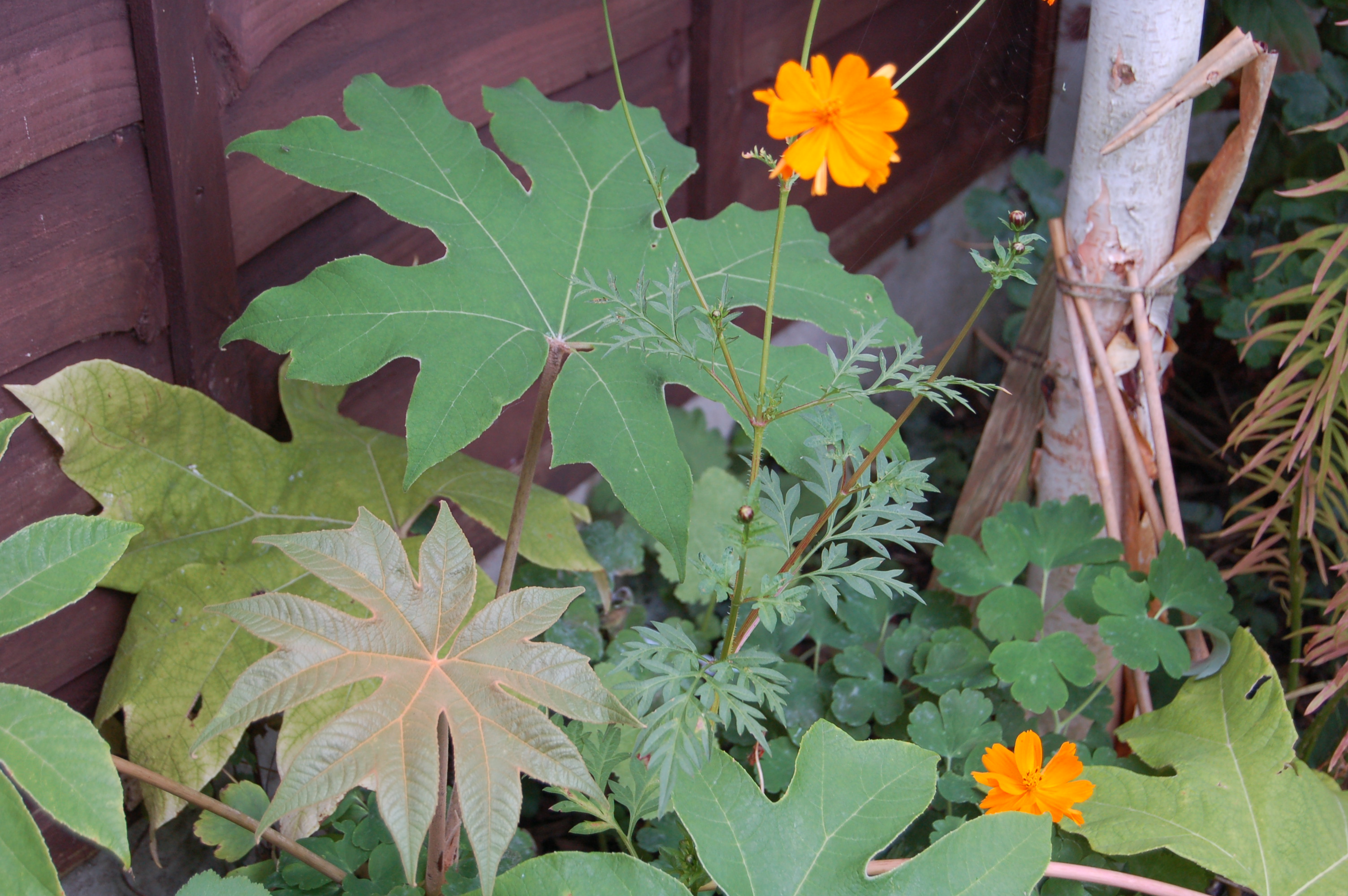
On the other side of this path we have the” Spring Garden” where the palmate leaves of the Acer japonica and Tetrapanax papyfer “Rex” sit close to each other. The Acer partners a couple of purple-leaved Lysimachia “Firecracker” and the deep green leaves of our thornless blackberry. The Tetrapanax is thowing up new leaves which are glossy but turn matt with the passing of time.


2014 08 19_3925 2014 08 19_3926

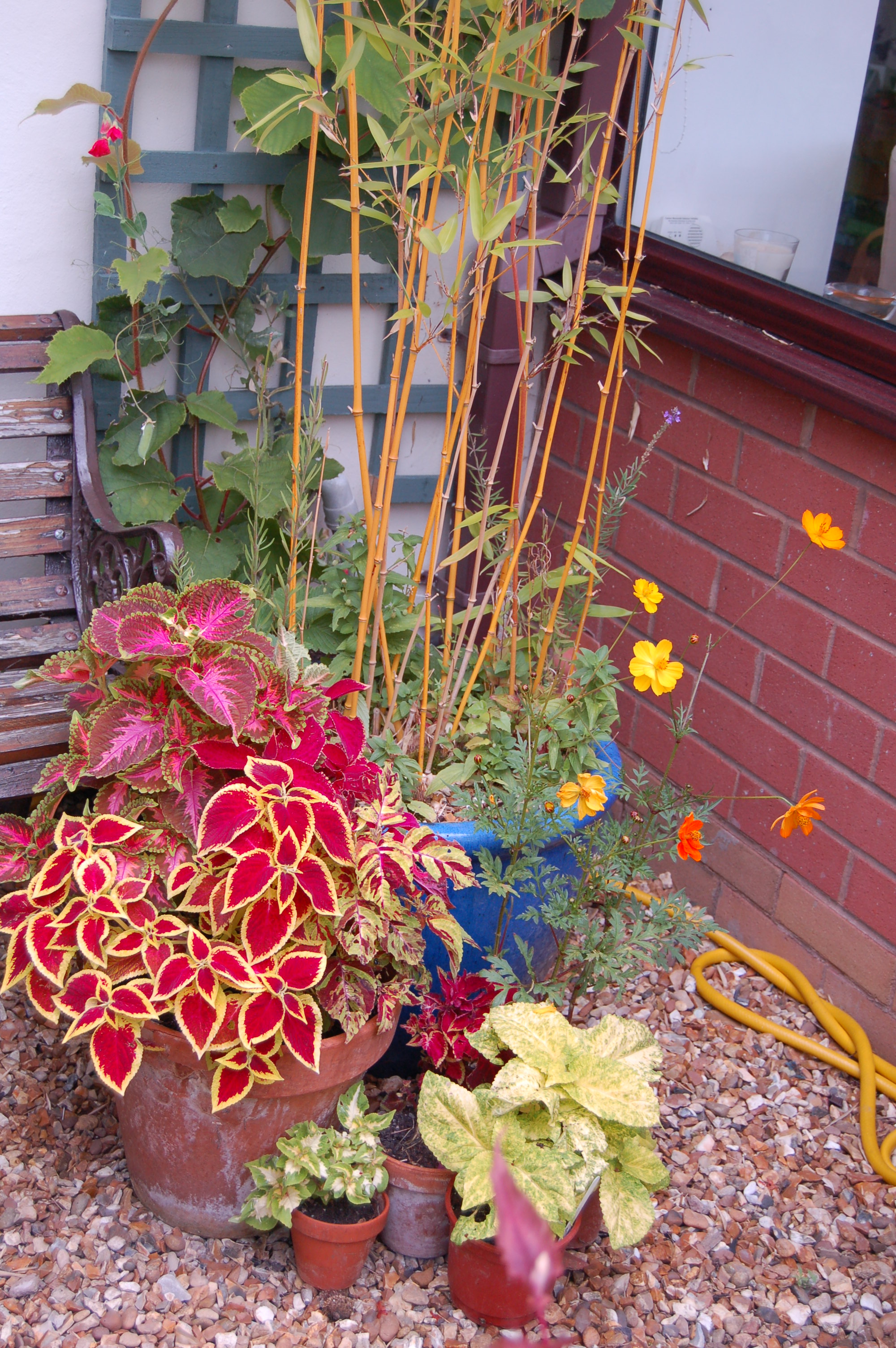
The Tropical Garden which was one of this year’s projects is looking particularly good at the moment. It is so full of contrasts. Contrasts in flower colour, leaf shapes, textures and colour.
2014 08 19_3929 2014 08 19_3930 2014 08 19_3931 2014 08 19_3932 2014 08 19_3933 2014 08 19_3934 2014 08 19_3935 2014 08 19_3936

The pale blue fish continue to swim through the Seaside Garden. Behind the chimenia a bright yellow flowered crocosmia seems to glow beneath the standard holly.


2014 08 19_3937 2014 08 19_3938

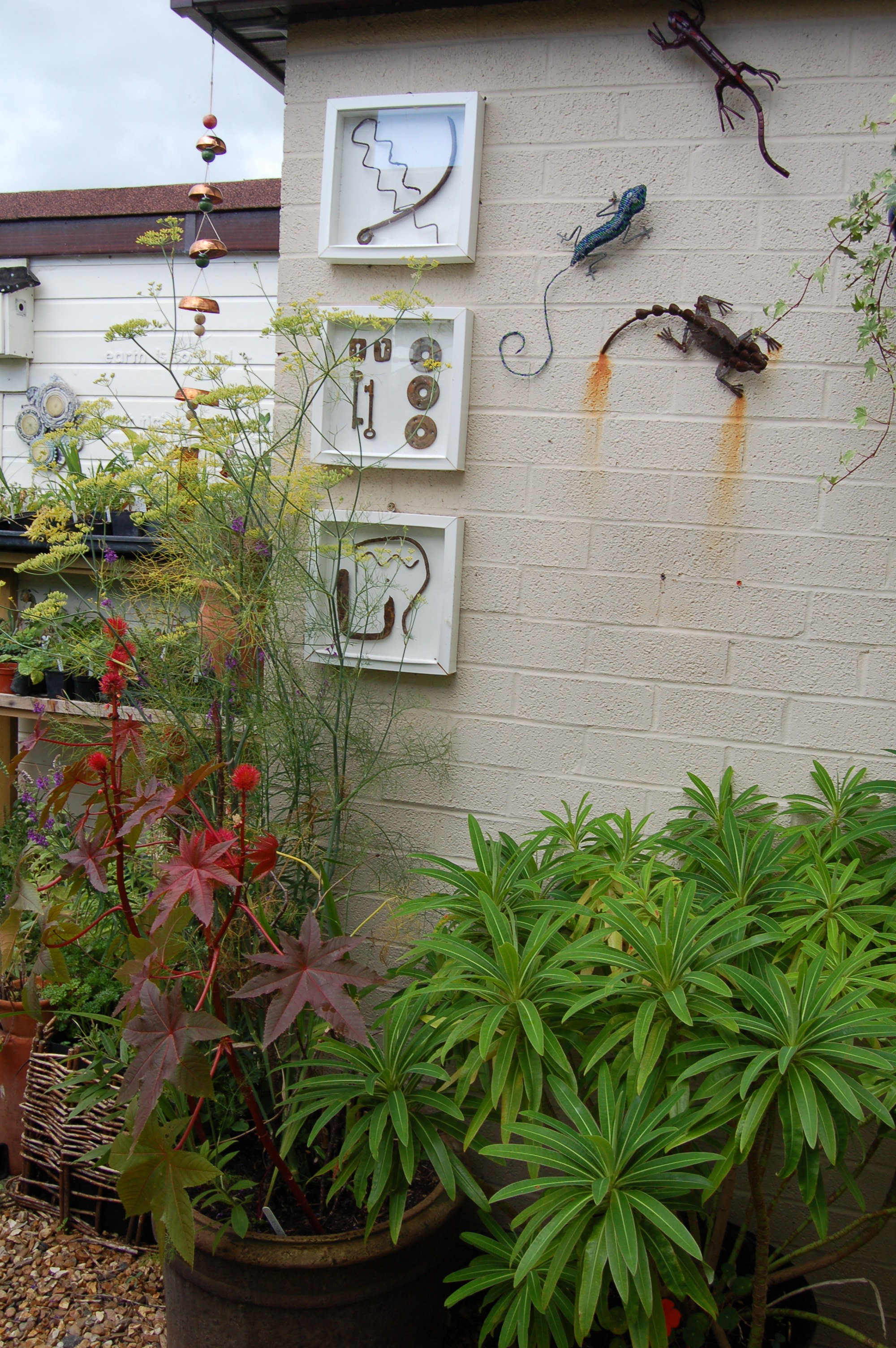
The Shed Bed has bright splashes of colour provided by Ricinus, Verbascum and Crocosmia.


2014 08 19_3927 2014 08 19_3928


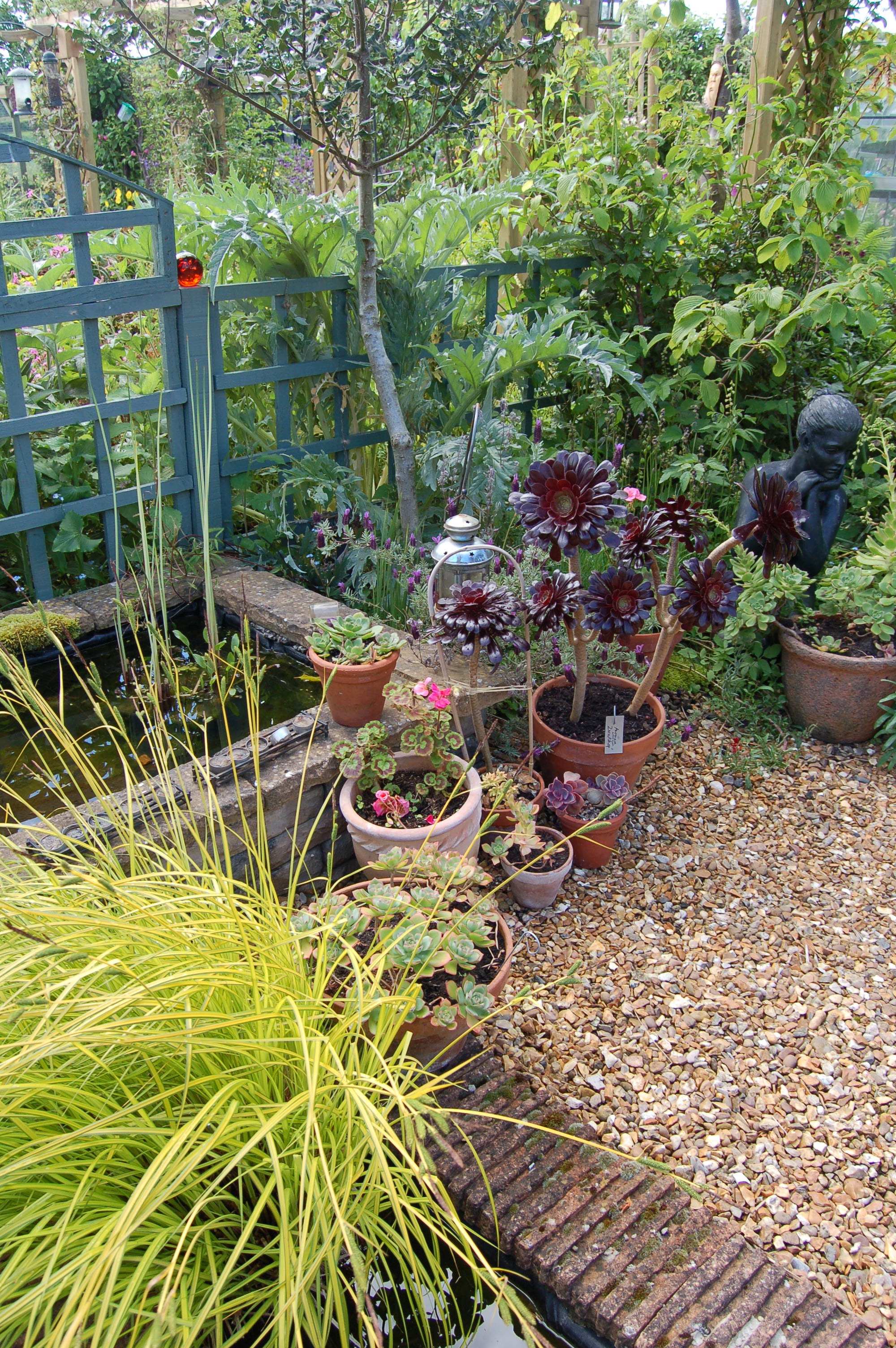
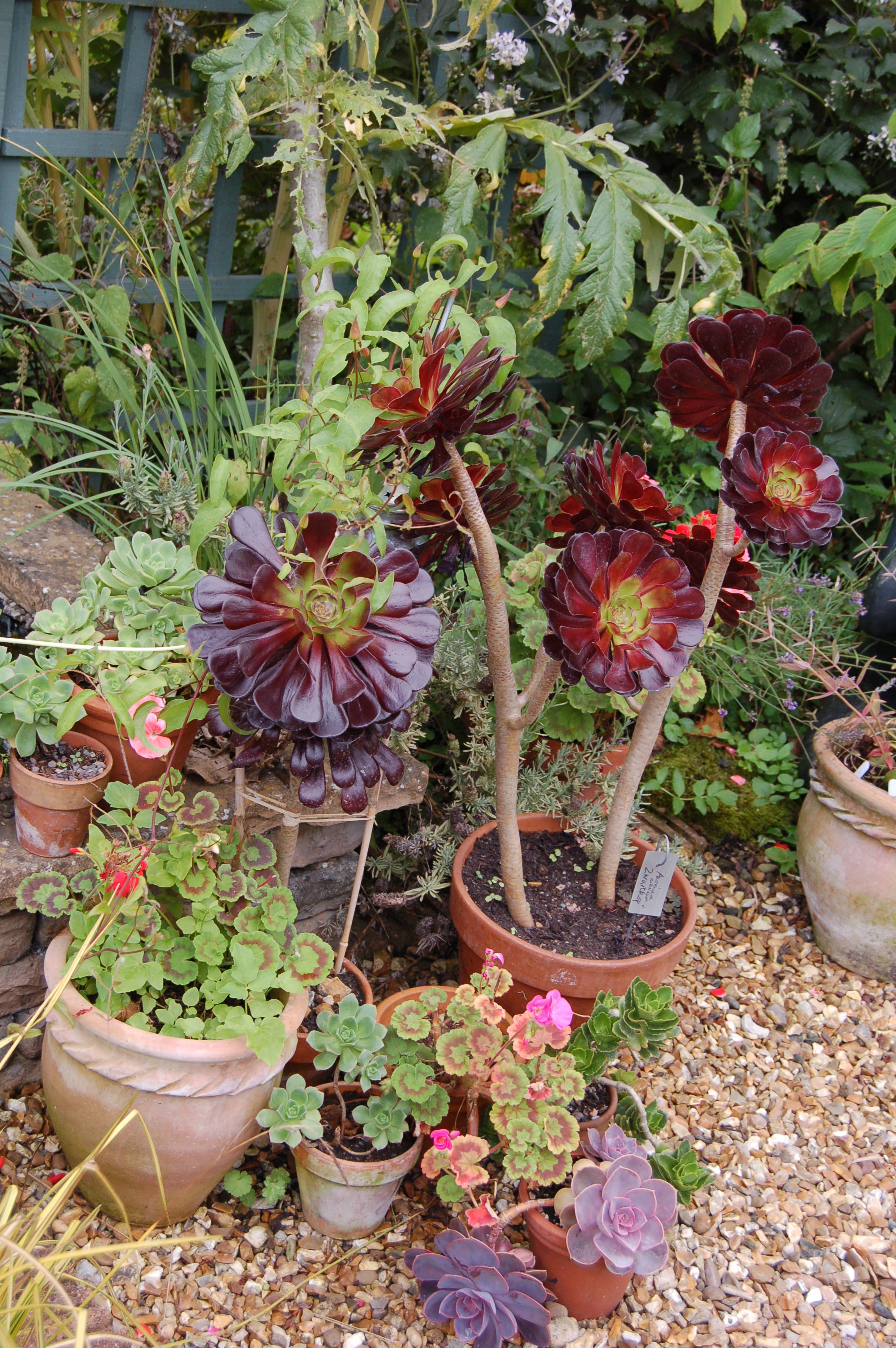
In the Rill Garden the Aeoniums are all doing well showing great leaf colour but best of all must be Aeonium arboreum” Schwarzkopf” which is tree like in form with the blackest glossiest leaves possible.
2014 08 19_3939 2014 08 19_3940 2014 08 19_3941

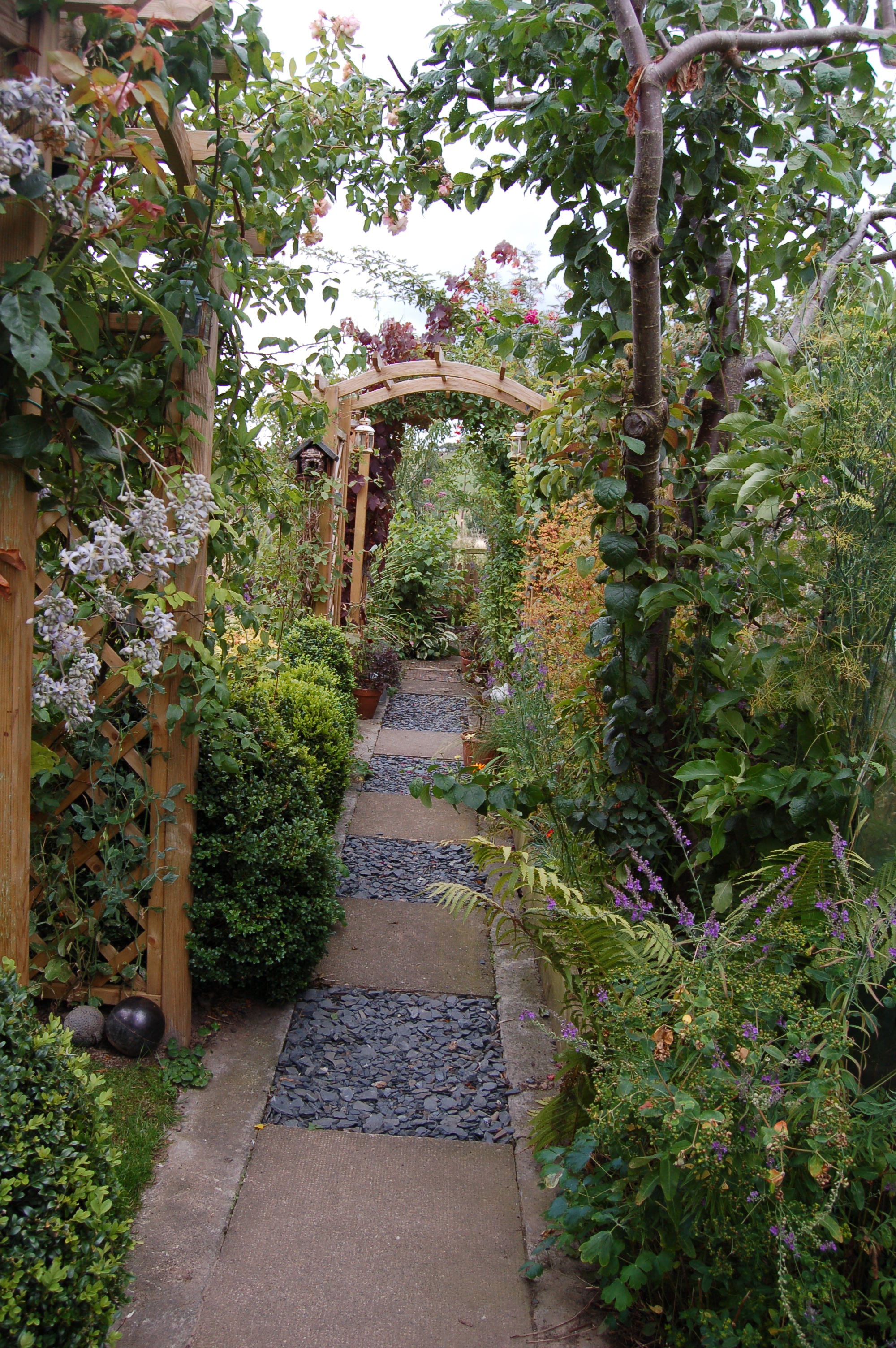
If we move further into back garden now we can look through the arches down the central path. Off this path to the left are the “Crescent Bed”, “L Bed” and the “Long Border”.


2014 08 19_3942 2014 08 19_3943 2014 08 19_3945 2014 08 19_3946 2014 08 19_3947 2014 08 19_3948 2014 08 19_3949


2014 08 19_3950 2014 08 19_3951

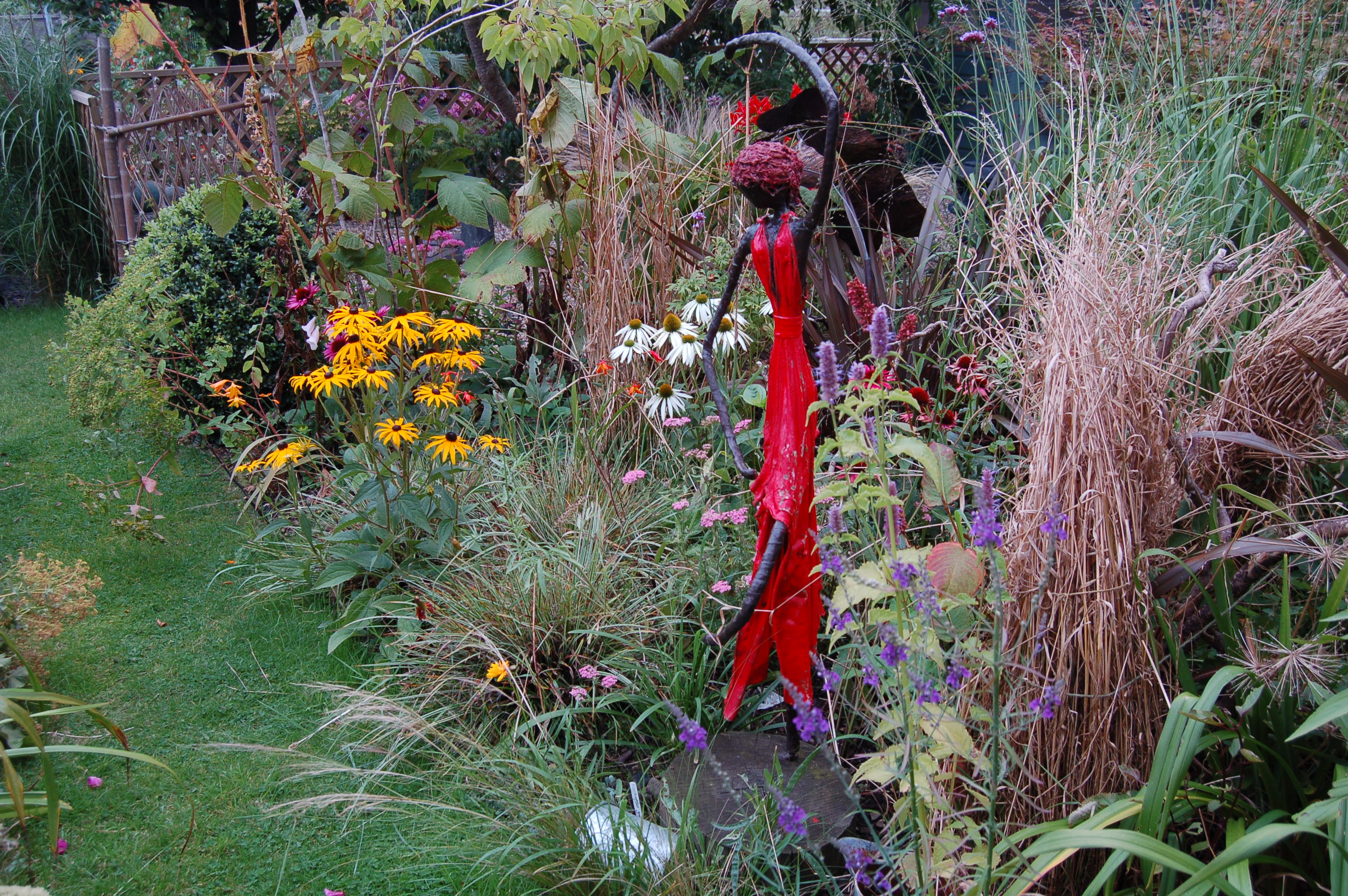
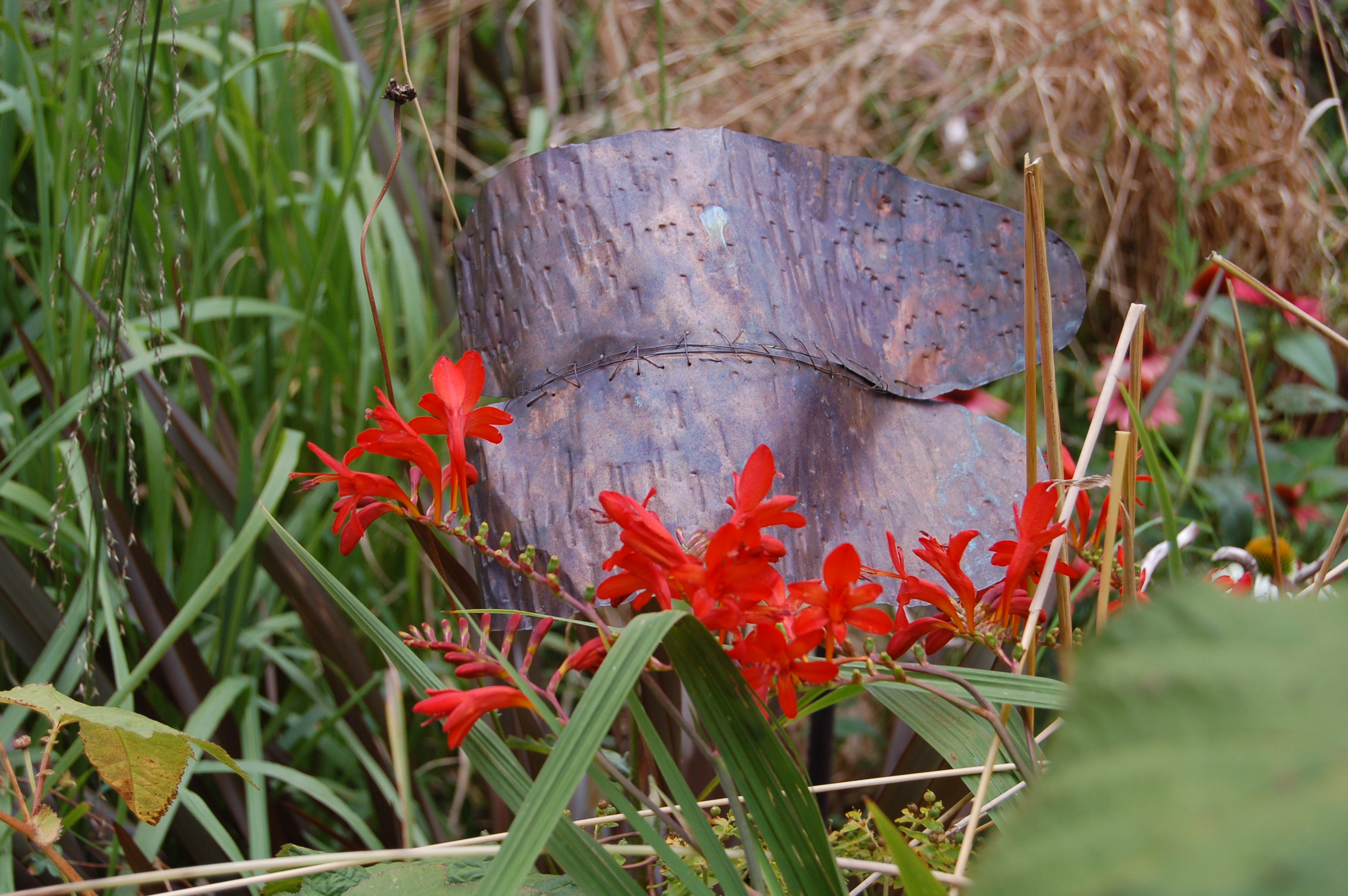
If we cross the grass path at the far end of this patch we enter the” Japanese Garden” with the” Prairie Garden” to the right, which features two of our sculptures, the Copper Leaves made by our daughter Jo and the dancing figure of “Amber” created by a local artist.



2014 08 19_3952 2014 08 19_3954 2014 08 19_3955 2014 08 19_3956 2014 08 19_3957 2014 08 19_3958


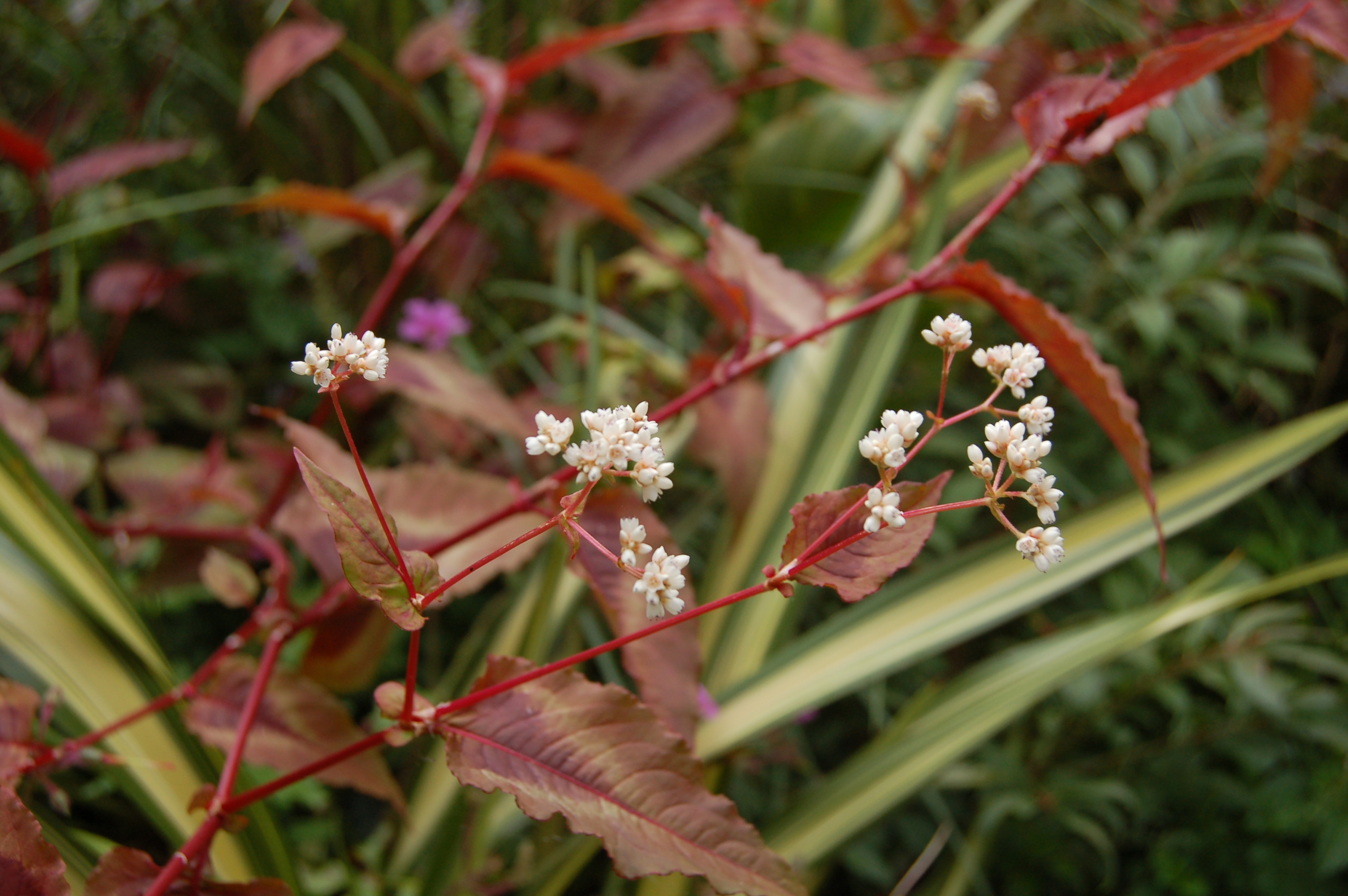
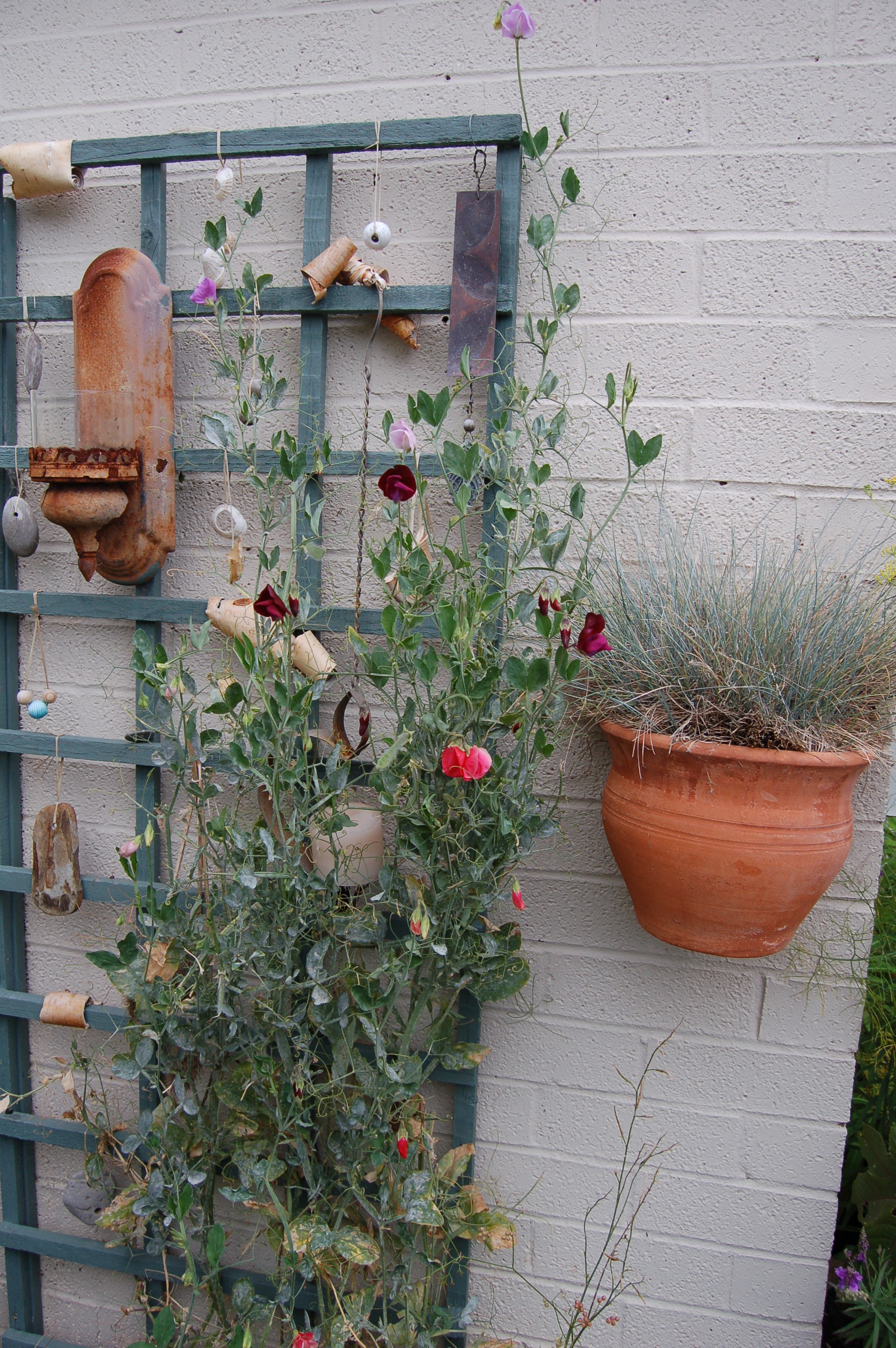
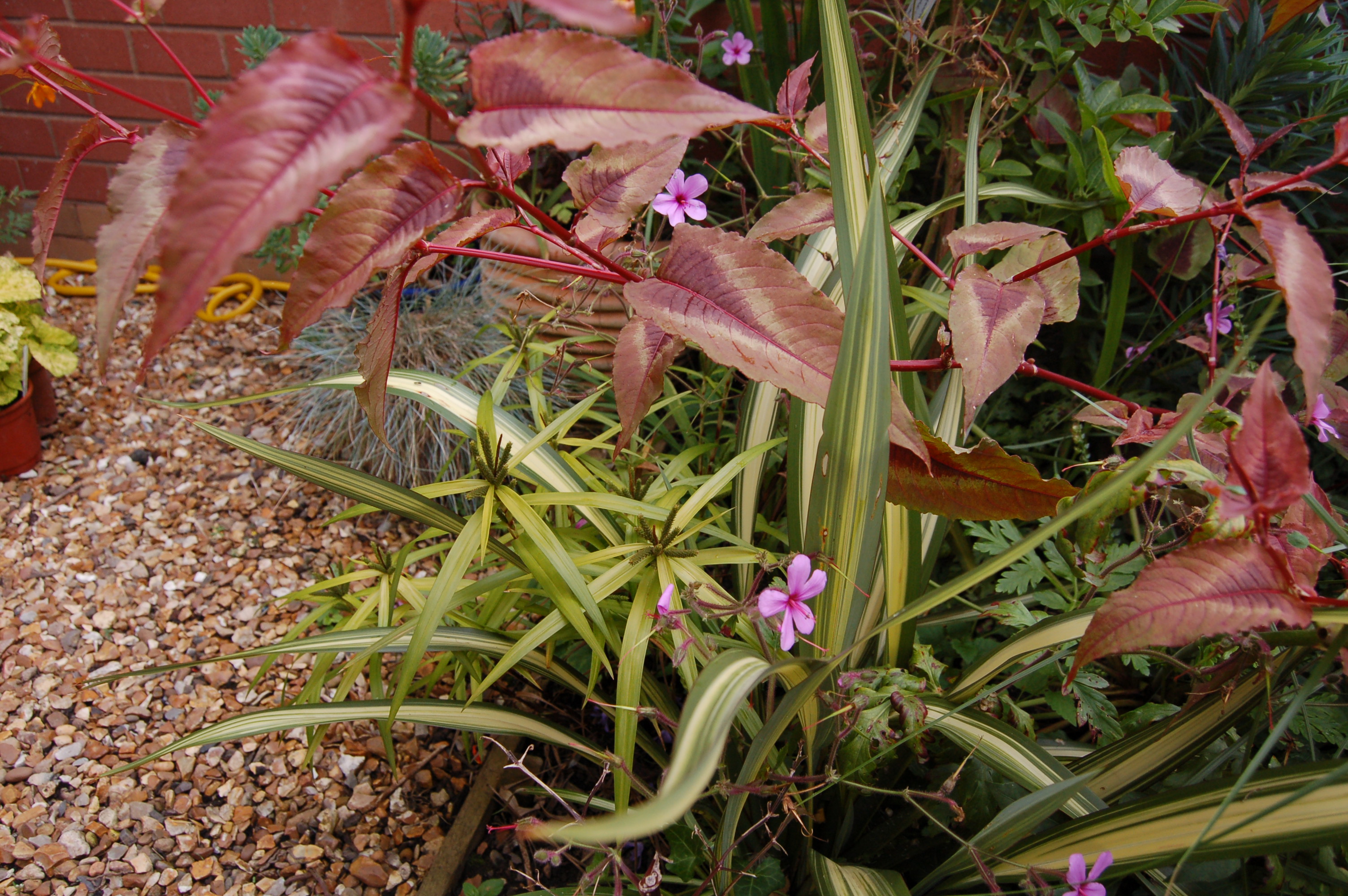
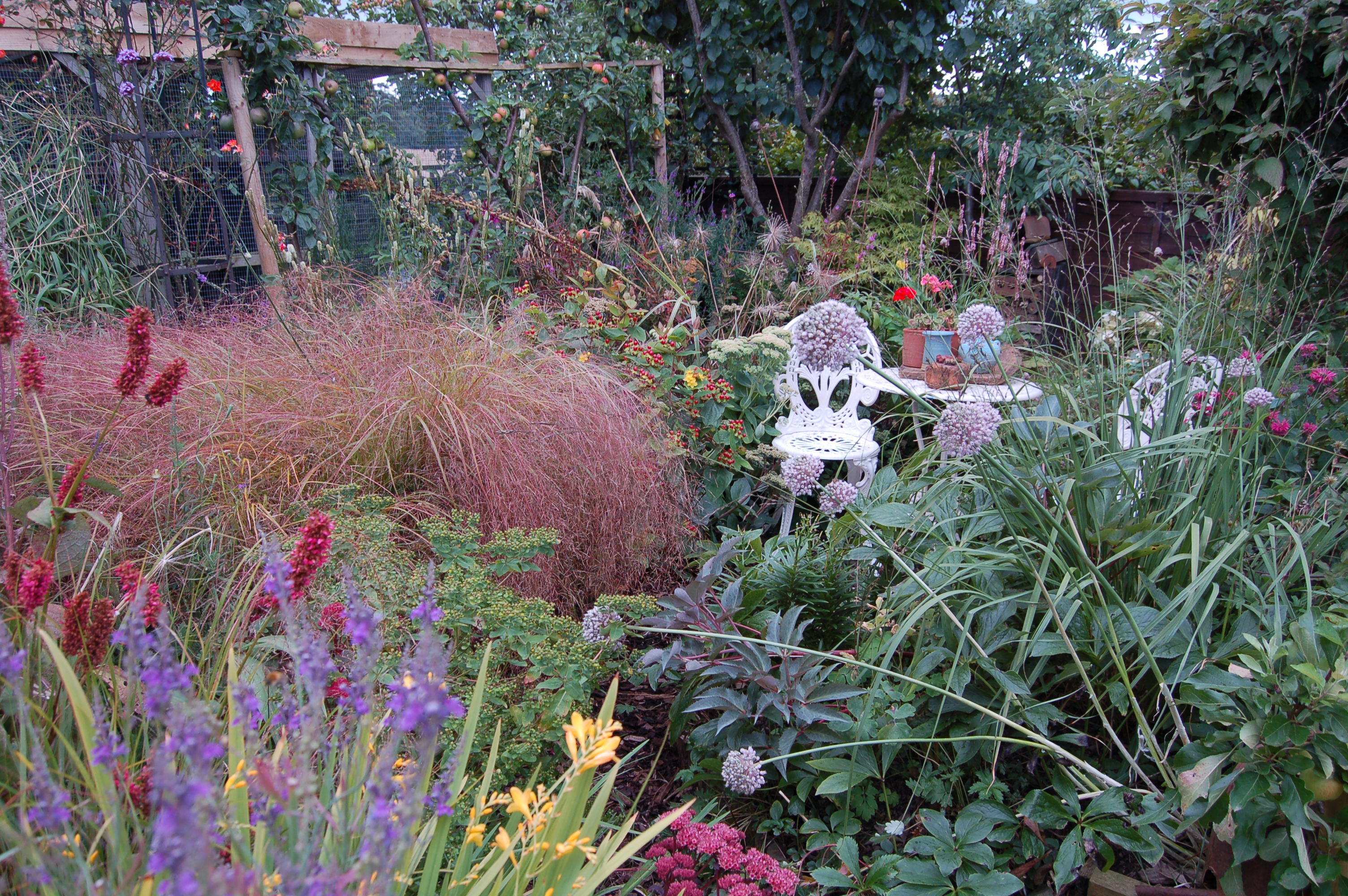
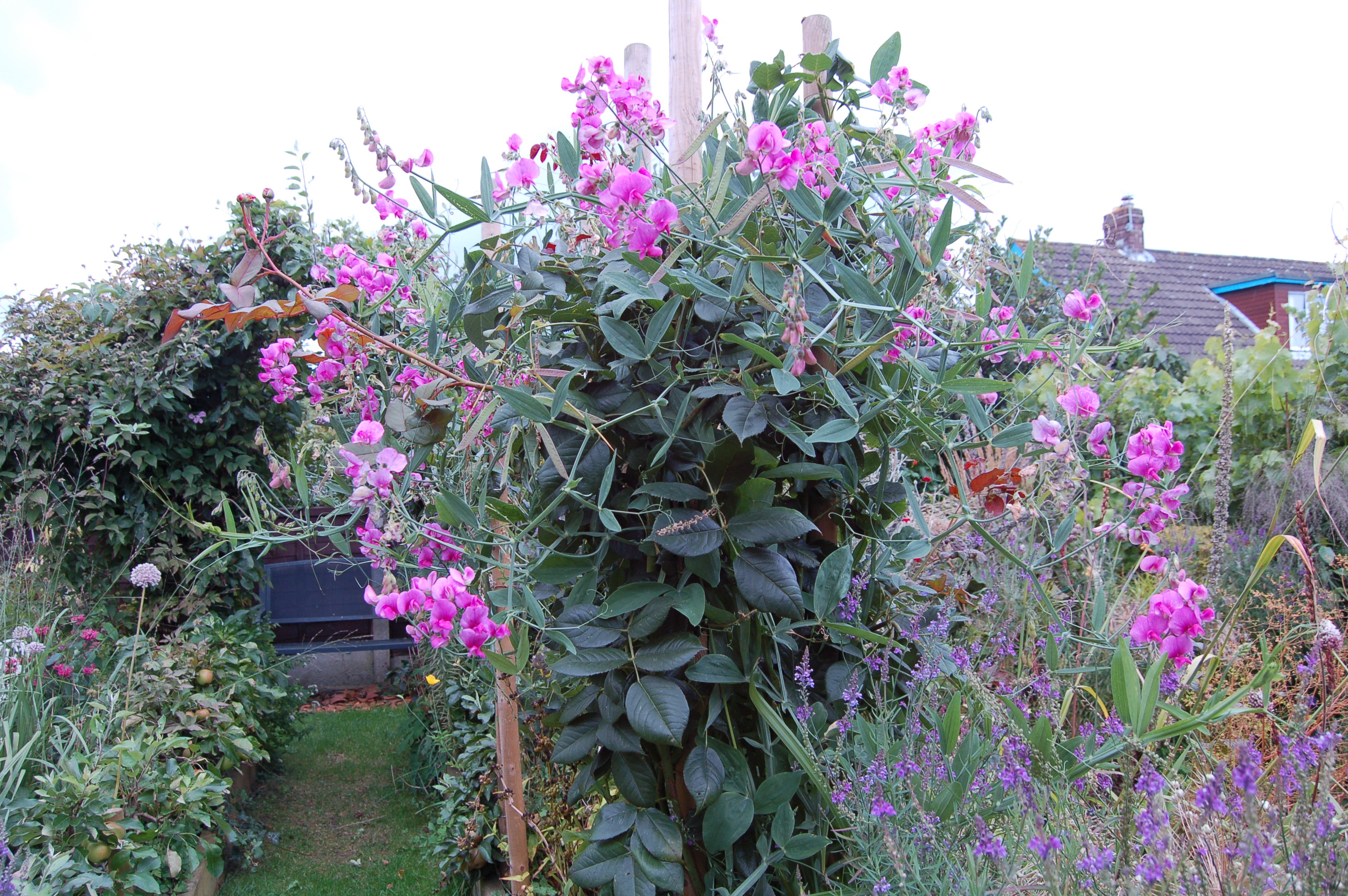
And finally across the central path again to the” Chicken Garden” and the” Secret Garden” which are still looking very colourful. The first photo is of our everlasting sweetpea which although perennial so easier to grow than the annuals it is sadly without scent. The red poker shaped flowers in the second photo are Persicaria amplexicaulis “Firetail” which is so long flowering and attractive to wildlife as a bonus.
 

2014 08 19_3959 2014 08 19_3960 2014 08 19_3961 2014 08 19_3962 2014 08 19_3963 2014 08 19_3964 2014 08 19_3965 2014 08 19_3966 2014 08 19_3967 2014 08 19_3968


So that is the study of our garden in August, hopefully still confirming that it is an all season garden. Next month we will probably be seeing the first signs of autumn colour and seedheads beginning to take on more importance.


Categories
climbing plants colours garden design garden photography garden ponds garden pools garden seating gardening gardens grasses half-hardy perennials hardy perennials Hardy Plant Society HPS National Garden Scheme NGS ornamental grasses ornamental trees and shrubs roses Shropshire The National Gardening Scheme" water in the garden Yellow Book Gardens

Aiming for a year round garden – our garden in June – how our visitors saw us.

This year, 2014 will be the year we open our garden under the auspices of the National Garden Scheme, so we saw our garden details published in the famous Yellow Book. This is a landmark for any gardener in England and Wales, albeit a pleasing one and a worrying one. So many questions pour into your mind when you see the description of your garden in print.

I had to provide 9 photographs of our garden taken in previous years at the same time of year we are due to open. It was hard to choose shots that gave the right “feel”. We wanted to give a taste of what our plot is all about and these pictures give further ideas for the visitor after they have read the paragraph we presented to the NGS. Luckily I could look back into the archives of my blog. To check out the photos I selected go to the NGS website, http://www.ngs.org.uk, click on “find a garden” and type in Avocet where you are asked for a garden name.

We have also been asked by a couple of garden groups if they could visit. So the first of these we set for mid-June and we felt it would provide a practice run for the big day in August. The group were the Shrewsbury Mini-group of the Shropshire Hardy Plant Society, so we knew them already which made the day a bit less daunting. I took a series of photos in the morning of the day they were coming to give an idea of how they would see our little quarter acre of garden.

This post also serves as part of my series on “Aiming for a Year Round Garden” where I look around our garden to see if our aim to have interest throughout he year is working.

The first photos show how we welcome visitors as they find our gateway and look up the drive.

2014 06 22_0988 2014 06 22_09892014 06 22_09902014 06 22_0991


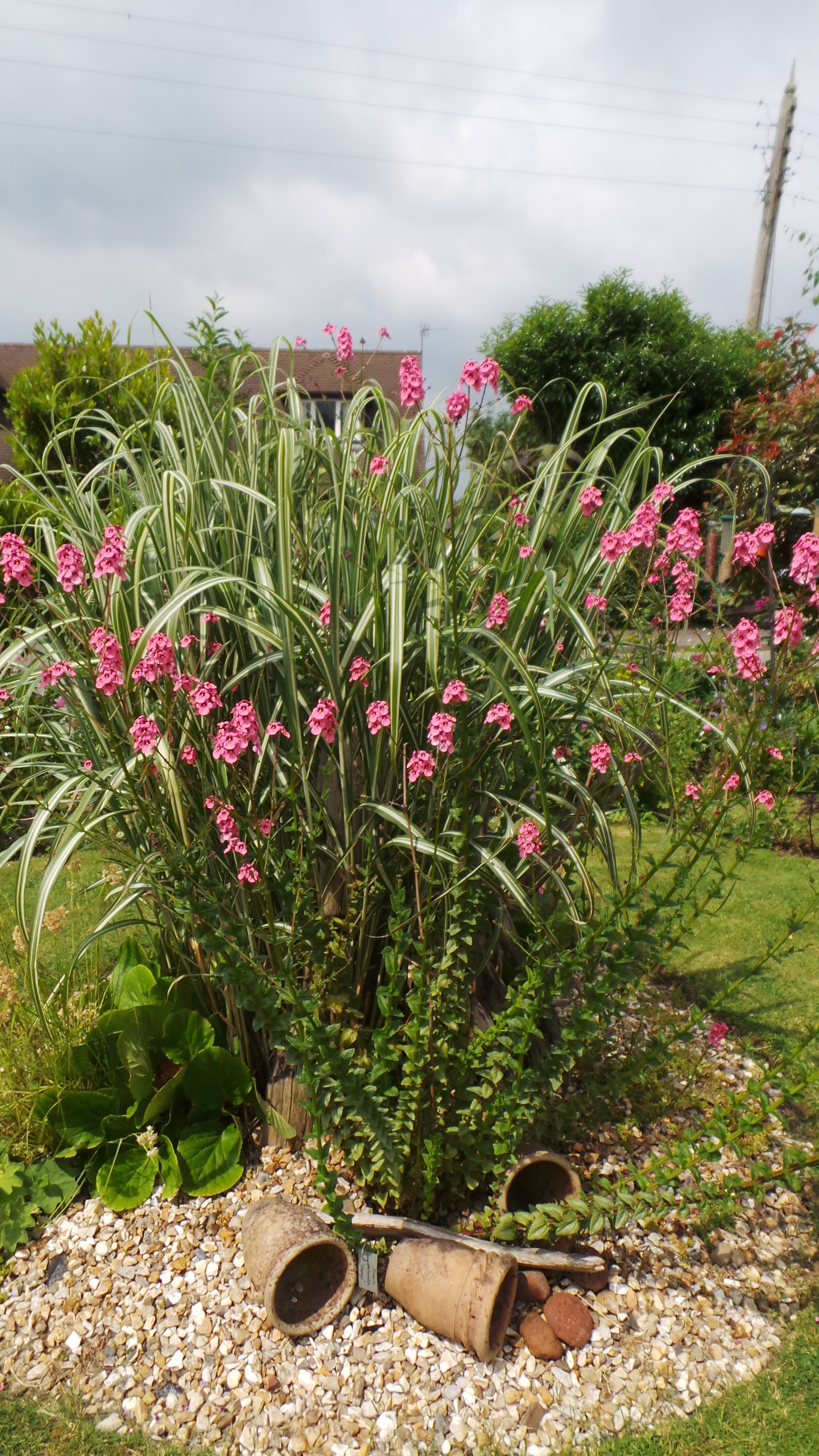
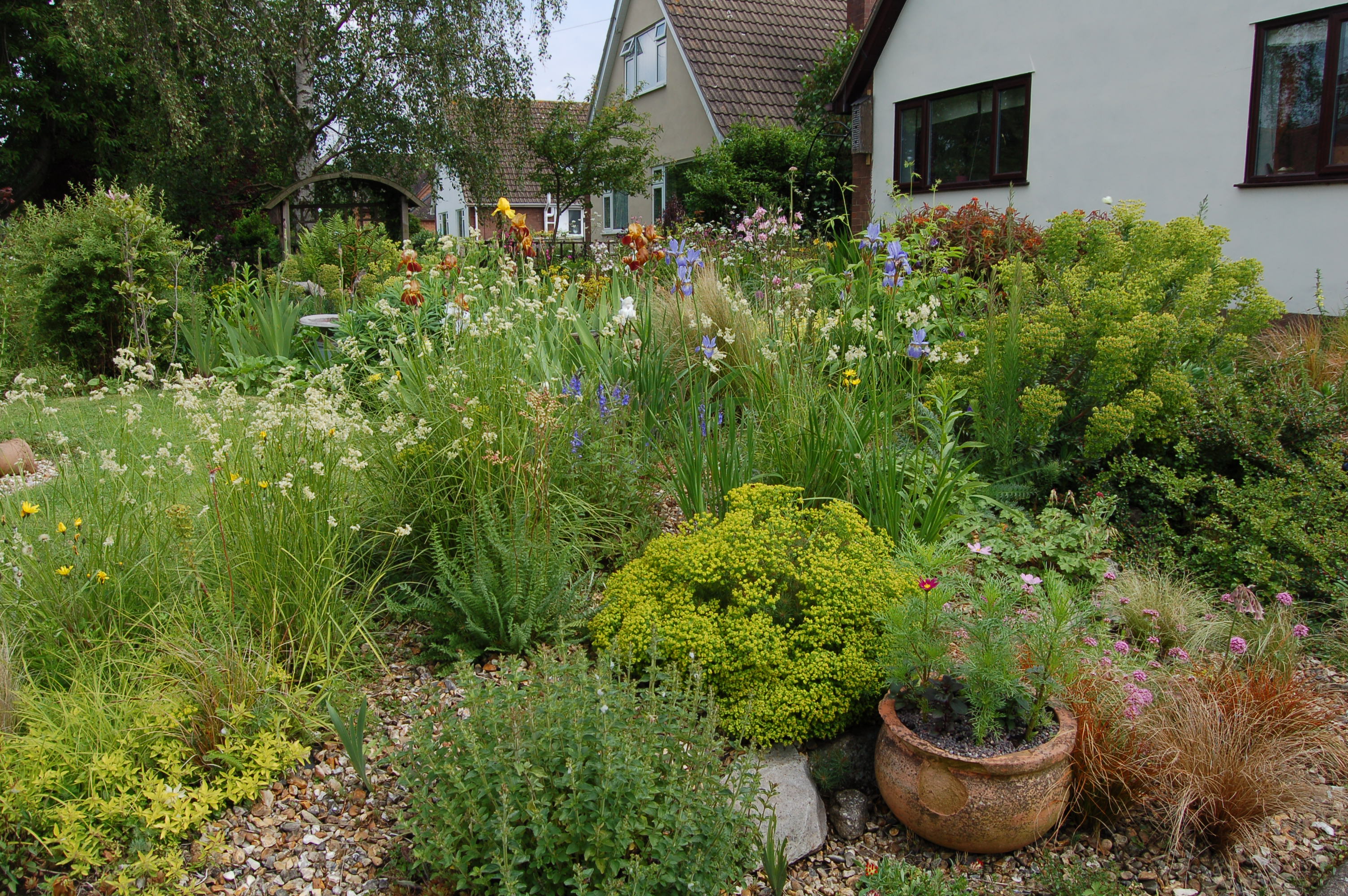
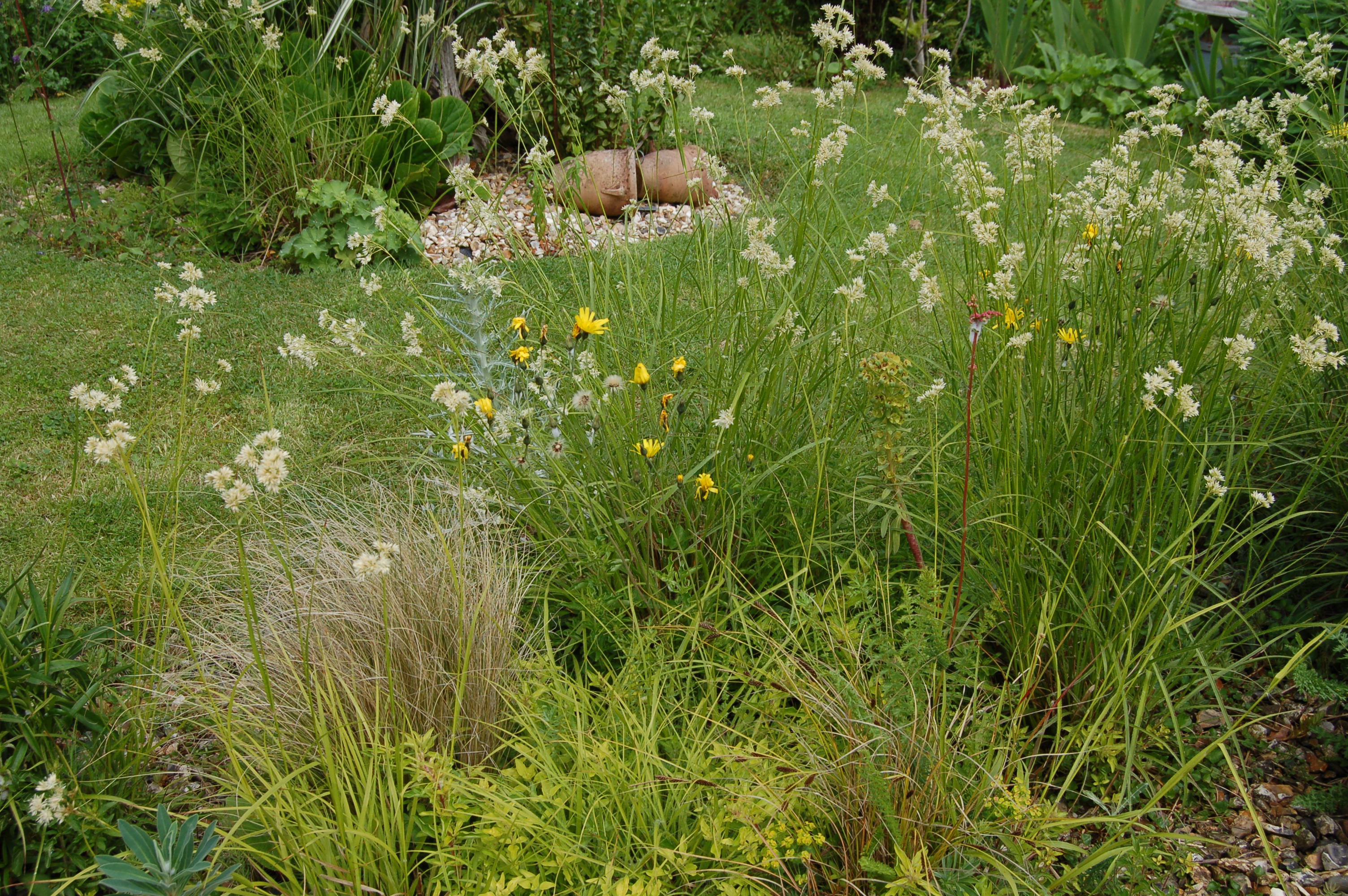
Next we take a quick wander around the front garden to view the gravel garden (The Beth Chatto Garden), the stump circle and the driftwood circle, as well as the mixed borders around the lawn.

2014 06 22_0992  2014 06 22_09942014 06 22_0995 2014 06 22_09962014 06 22_0997 2014 06 22_09982014 06 22_0999 2014 06 22_1000 2014 06 22_1001 2014 06 22_1002 2014 06 22_1003 2014 06 22_1004 2014 06 22_1005 2014 06 22_1006 2014 06 22_1007 2014 06 22_1008 2014 06 22_1009 2014 06 22_1010 2014 06 22_1011

We have worked hard this year to make the drive and the side of the house more welcoming using antique galvanised containers planted up with Dahlias and Calendulas and brightly coloured Pelargoniums are planted in the hanging baskets and other containers.

2014 06 22_0993

The next “port of call” is the Shade Garden followed by the “Fern Garden” and then into the “Seaside Garden”. I always seem to follow a set pathway around the garden when taking photos but I have to admit that I designed the garden to give visitors choices and so have created a situation where no two people wandering around need to follow the same route. I want each section of the garden to be viewed and approached from several directions. So although I am trying in this post to show our garden from our visitors’ viewpoint it is in reality just my own personal route.

2014 06 22_1013 2014 06 22_10122014 06 22_1014

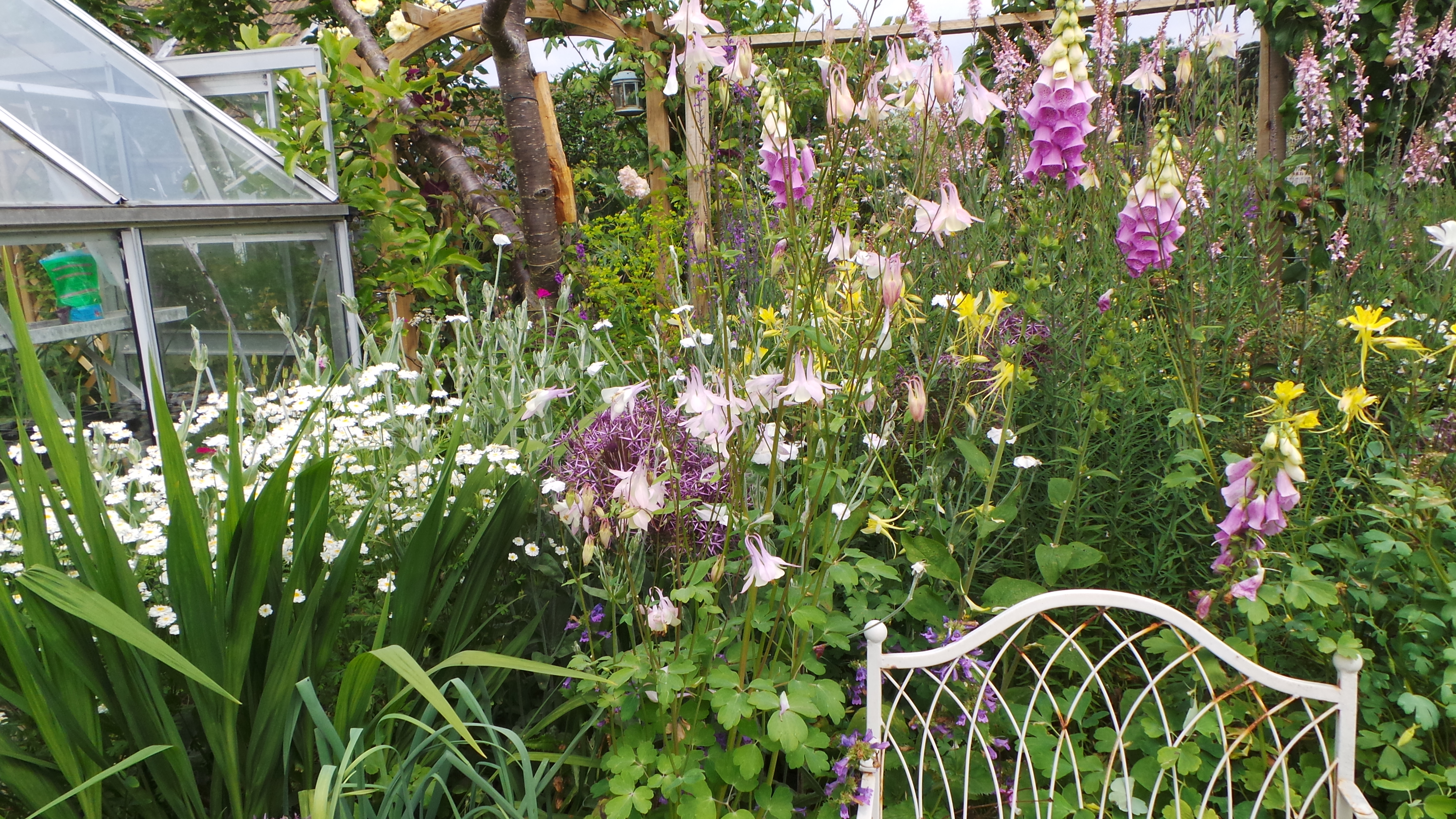
And so to the back garden which has a different feel to it altogether as the individual garden compartments are all hidden in some way. It is a garden where you have to go looking – you cannot sit and look and take it all in in one go. Unlike the front, where from the seat under the arbor you can view most of the garden borders in one go, there are parts you can’t see so you are enticed to go to them for a close look.

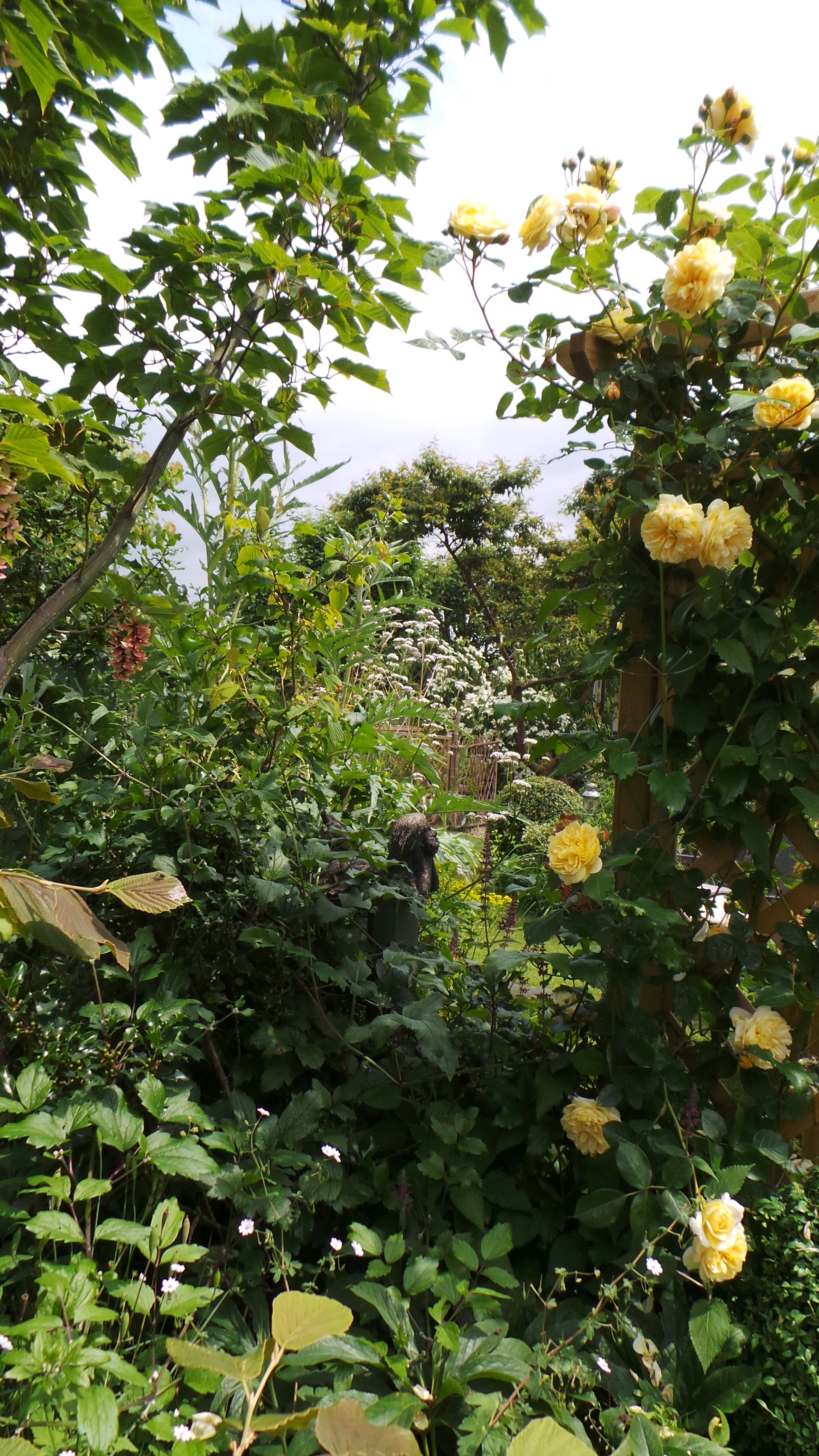
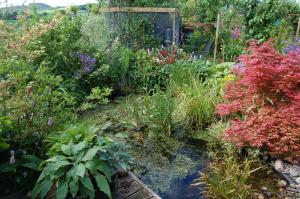
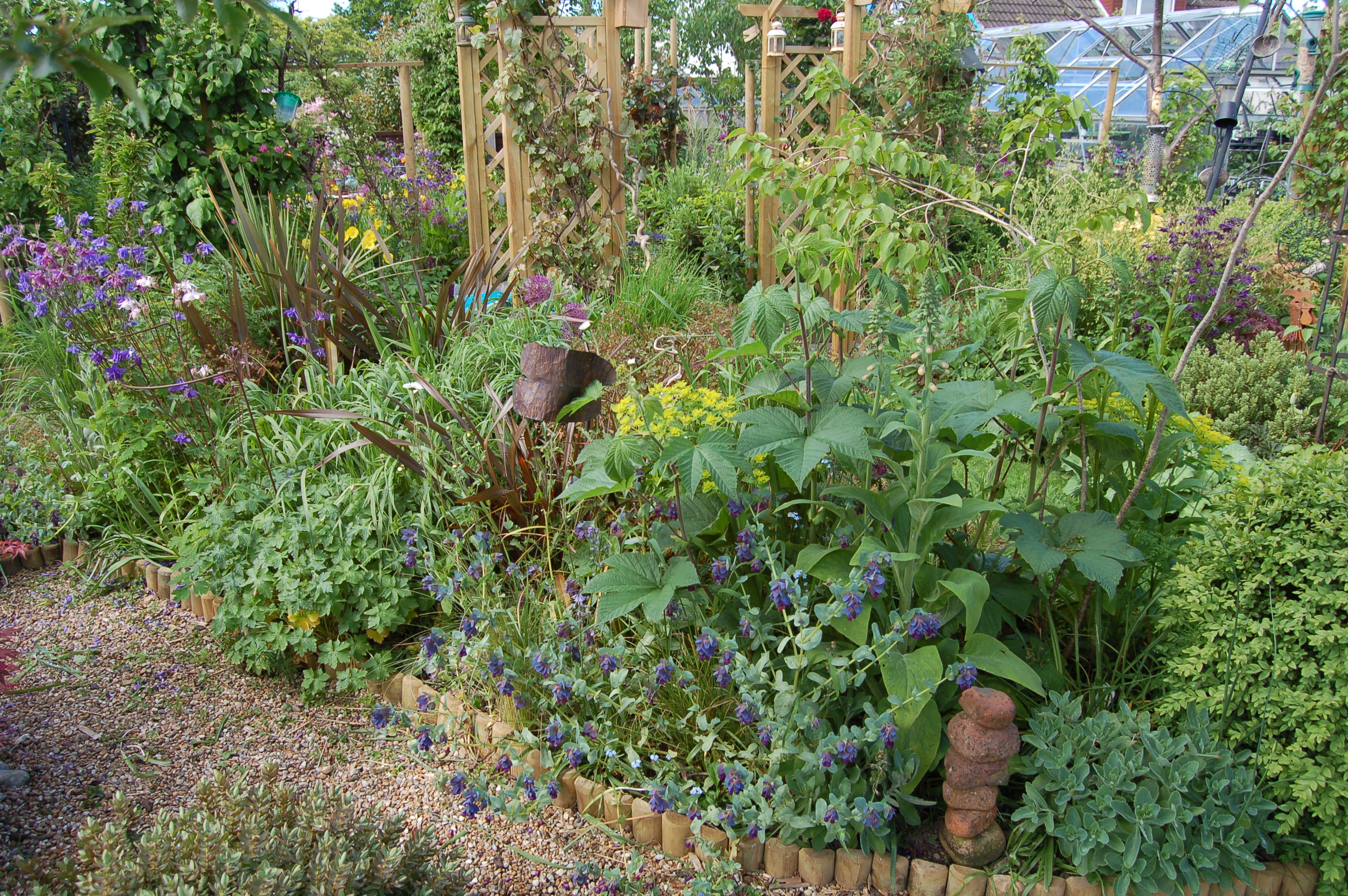
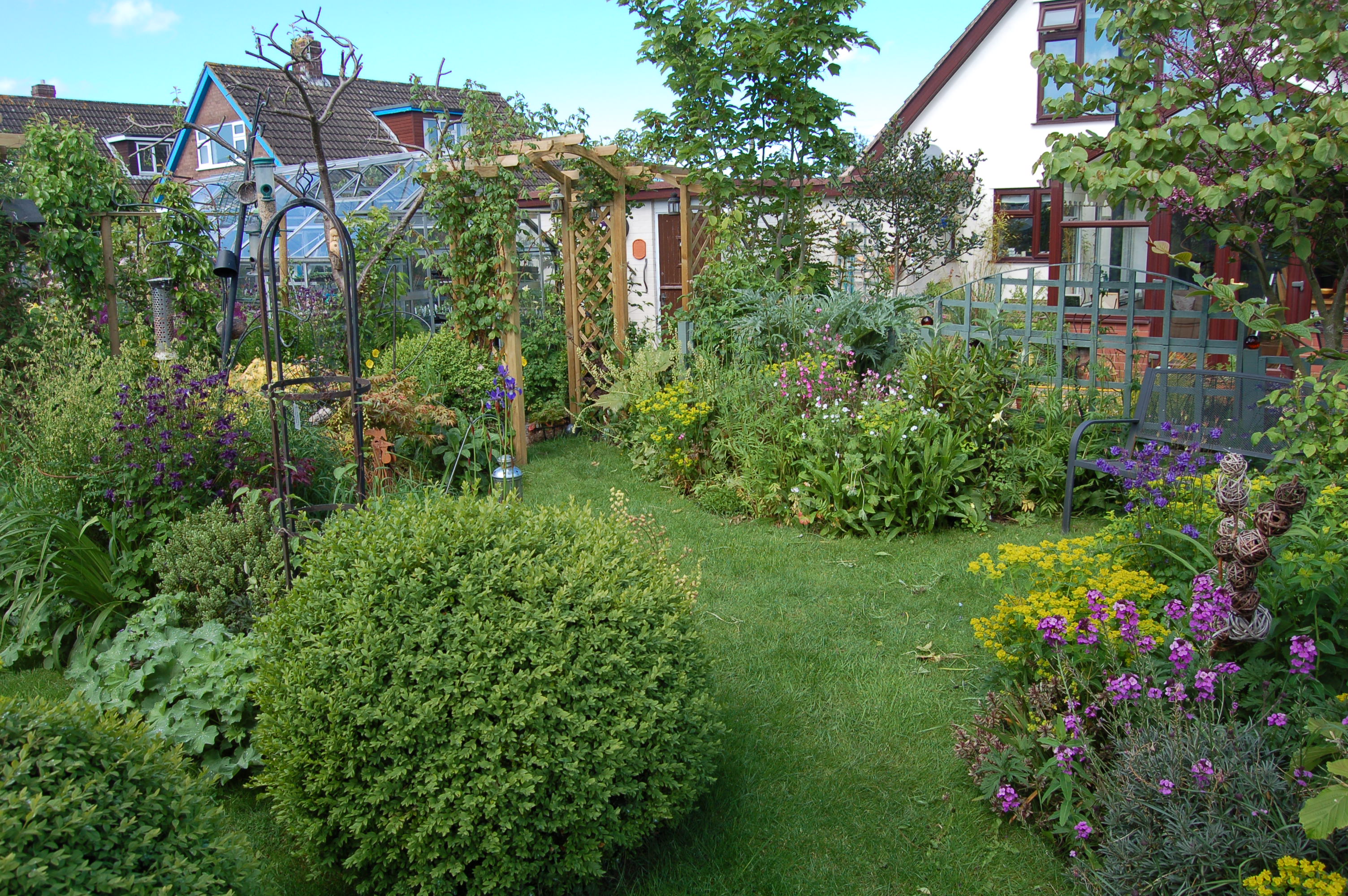
In the back garden we find the water feature among Hostas and Toad Lilies on the end of the Shed Bed and from there you can look down the central path with arches draped with trained apple trees, roses and clematis. Another arch to the side of the main path affords glimpses of more borders.

2014 06 22_1047

2014 06 22_1020 2014 06 22_1021 2014 06 22_1022 2014 06 22_1027 2014 06 22_1028

From the central path we can peer over the cloud pruned box hedge into these borders, which hopefully will entice the visitors to explore further.

2014 06 22_1029 2014 06 22_1030 2014 06 22_1031 2014 06 22_1032

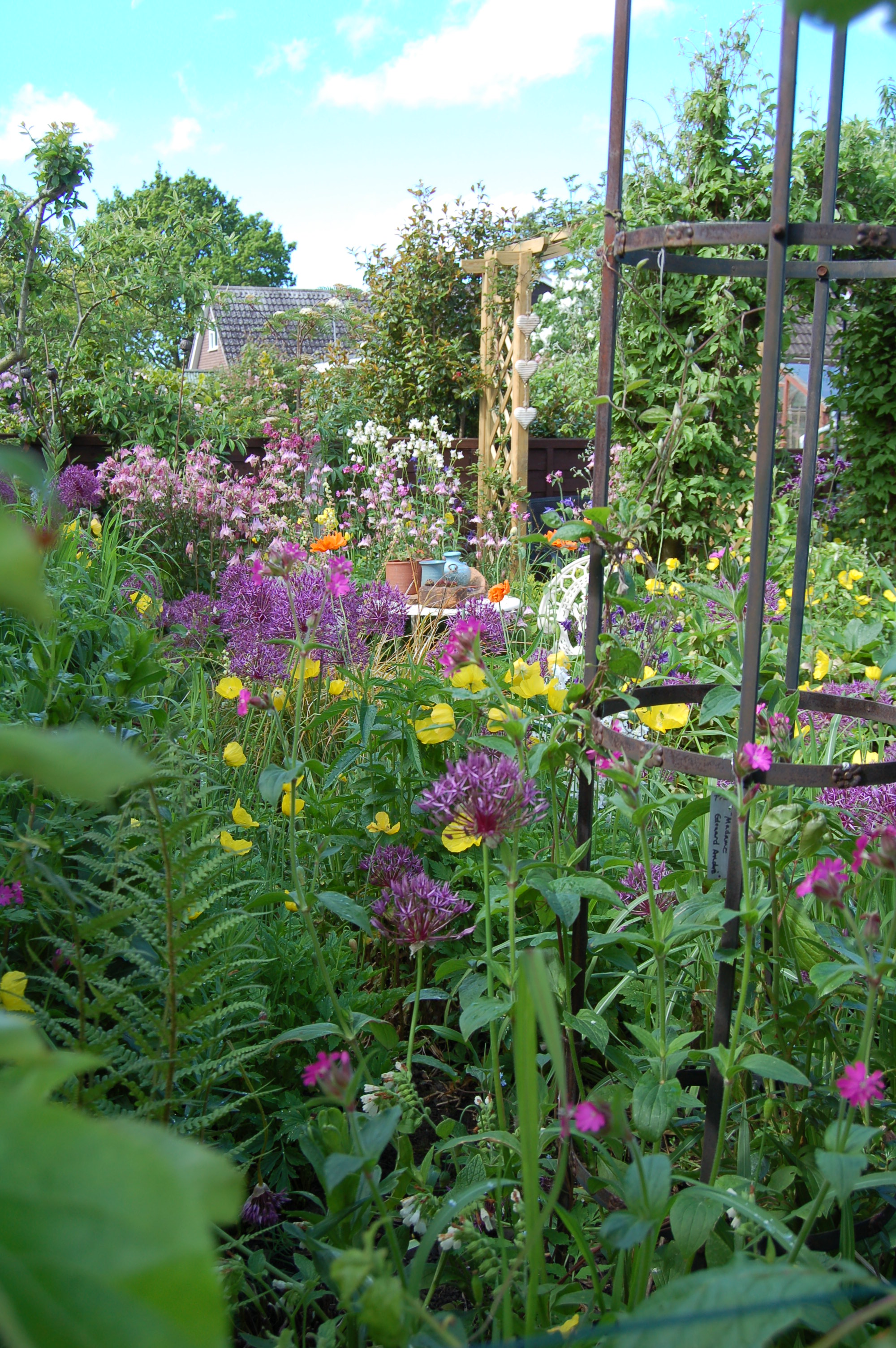
By turning right off the central path visitors find themselves between the Chicken Garden and the Secret Garden and after a mere half dozen steps must choose which one to look at first.

2014 06 22_1038 2014 06 22_1039

2014 06 22_1033 2014 06 22_1034 2014 06 22_1035  2014 06 22_1037

Within the Secret Garden alongside a comfortable cream coloured seat visitors can enjoy our latest creation, the Alpine Throne.

2014 06 22_1036

If however our visitors chose to go left at the central path they would find further choices, the Japanese Garden, the Wildlife Pond and Bog Garden to the right or the Long Border and Crescent Border to the left.

2014 06 22_1040 2014 06 22_10412014 06 22_1042 2014 06 22_1043 2014 06 22_1044 2014 06 22_1045 2014 06 22_1046

Back closer to the house we can find the “Pollinators’ Border” complete with insect hotel, the Shed Scree Bed and the new Tropical Border.

2014 06 22_1049 2014 06 22_1048

2014 06 22_1050

So there we have a quick tour of our garden in mid-June just as our first group of garden visitors saw us. We enjoyed the kind comments they left and felt it had been worthwhile, particularly when several said they would be back when we opened for the NGS in August.

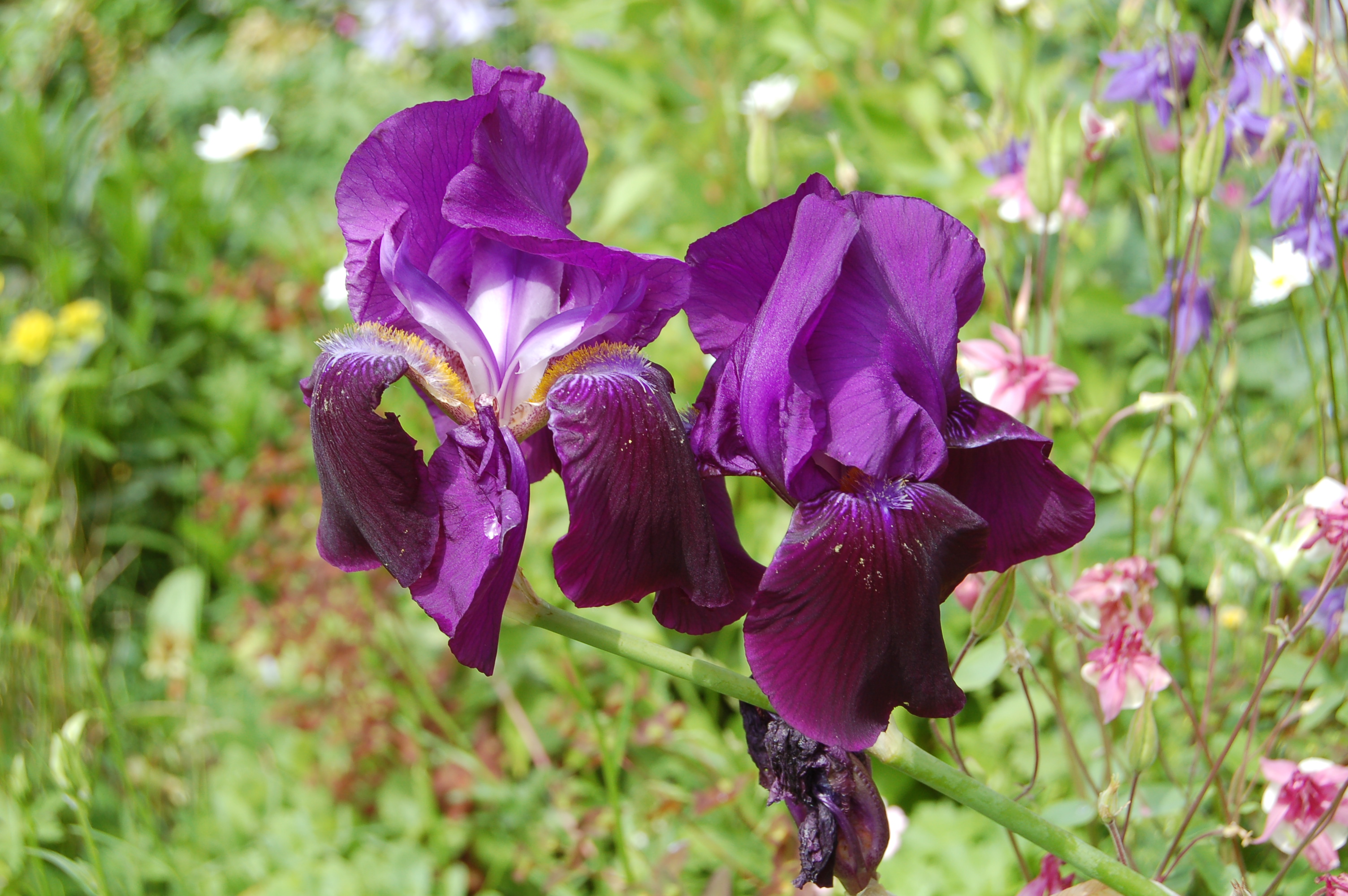
The only downer was that the Bearded Iris had given us their best show ever, a true extravaganza for the three weeks or so prior to the visit. On the day just one bloom remained to show everyone what they had missed. Gardeners always say “You should have come last week.” and for us this may well have been true, at least where the Iris were concerned.

Our next big day is our NGS Open Day on the 3rd August so we are hoping we can maintain interest in the borders until then. A second mini-group of Shropshire Hardy Planters will be visitors a month after that so we will have to be “on our toes” for a while yet!

Categories
colours garden design garden photography gardening gardens grasses half-hardy perennials hardy perennials irises light light quality meadows National Garden Scheme NGS ornamental grasses ornamental trees and shrubs Powis Powys The National Gardening Scheme" trees Wales woodland

Three Welsh Gardens – Part Three – A Garden of Two Halves

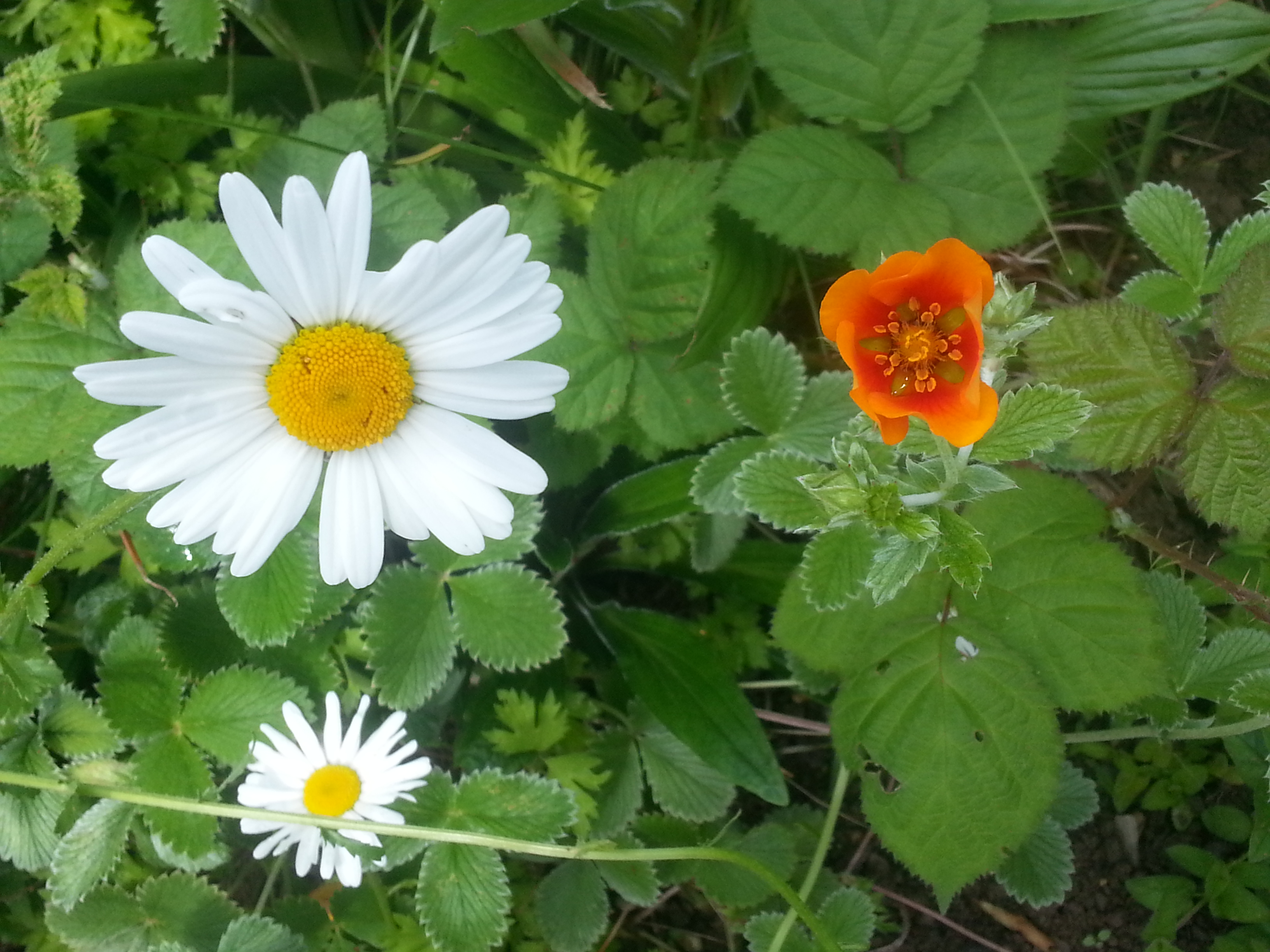
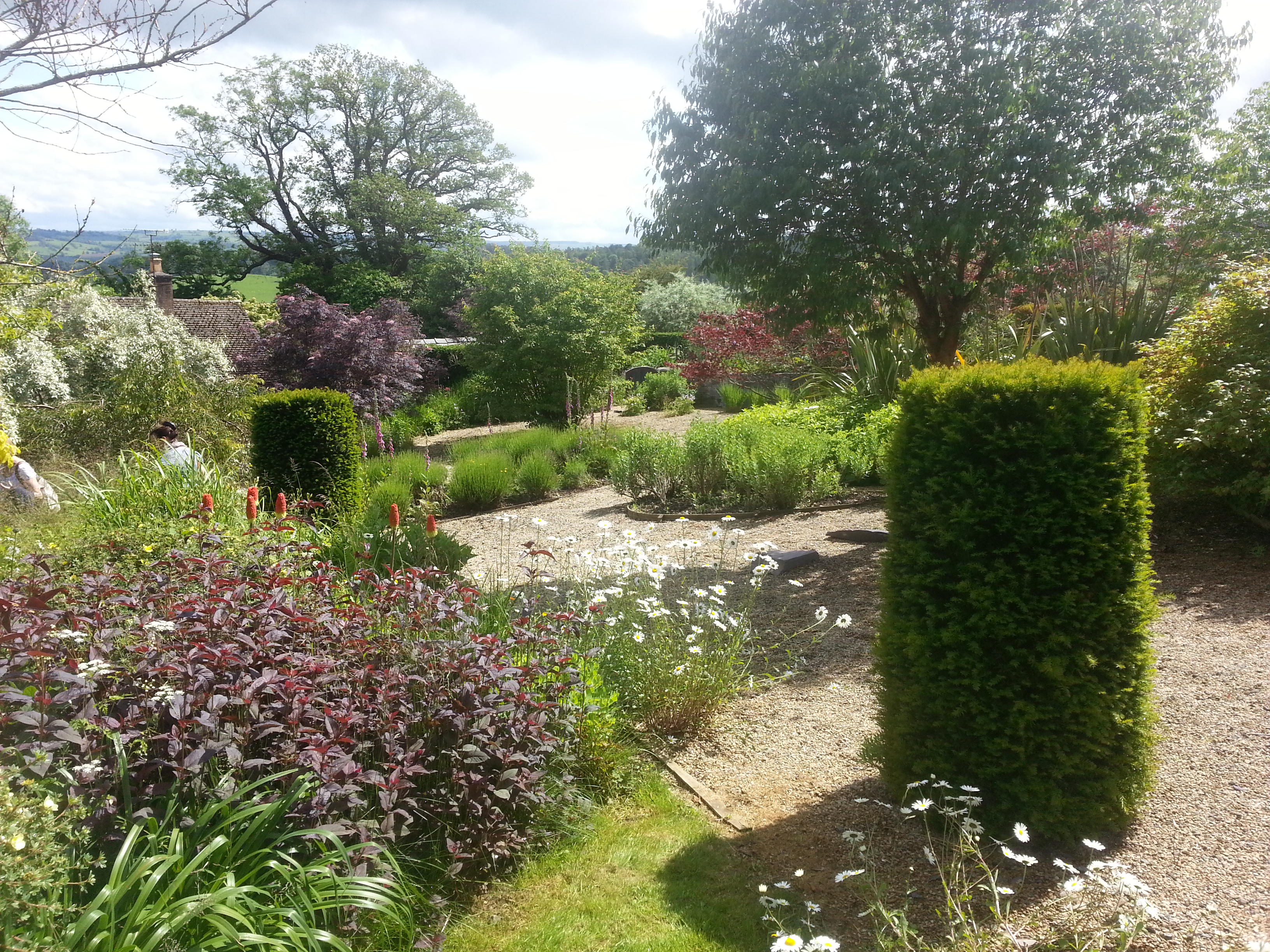
We visited another garden in the countryside of Powis, our neighbouring county. It proved to be very much a garden of two halves. We approached “Cil y Wennol” on foot up a gently sloping curved driveway with trees on both sides dotted around in grass. Closer to the more formal front garden there were interesting land forms with a small meadow facing the sun on an embankment. Moon Daisies shone out almost glaring in the sunshine. As you have gathered from that statement we were experiencing bright sunshine.

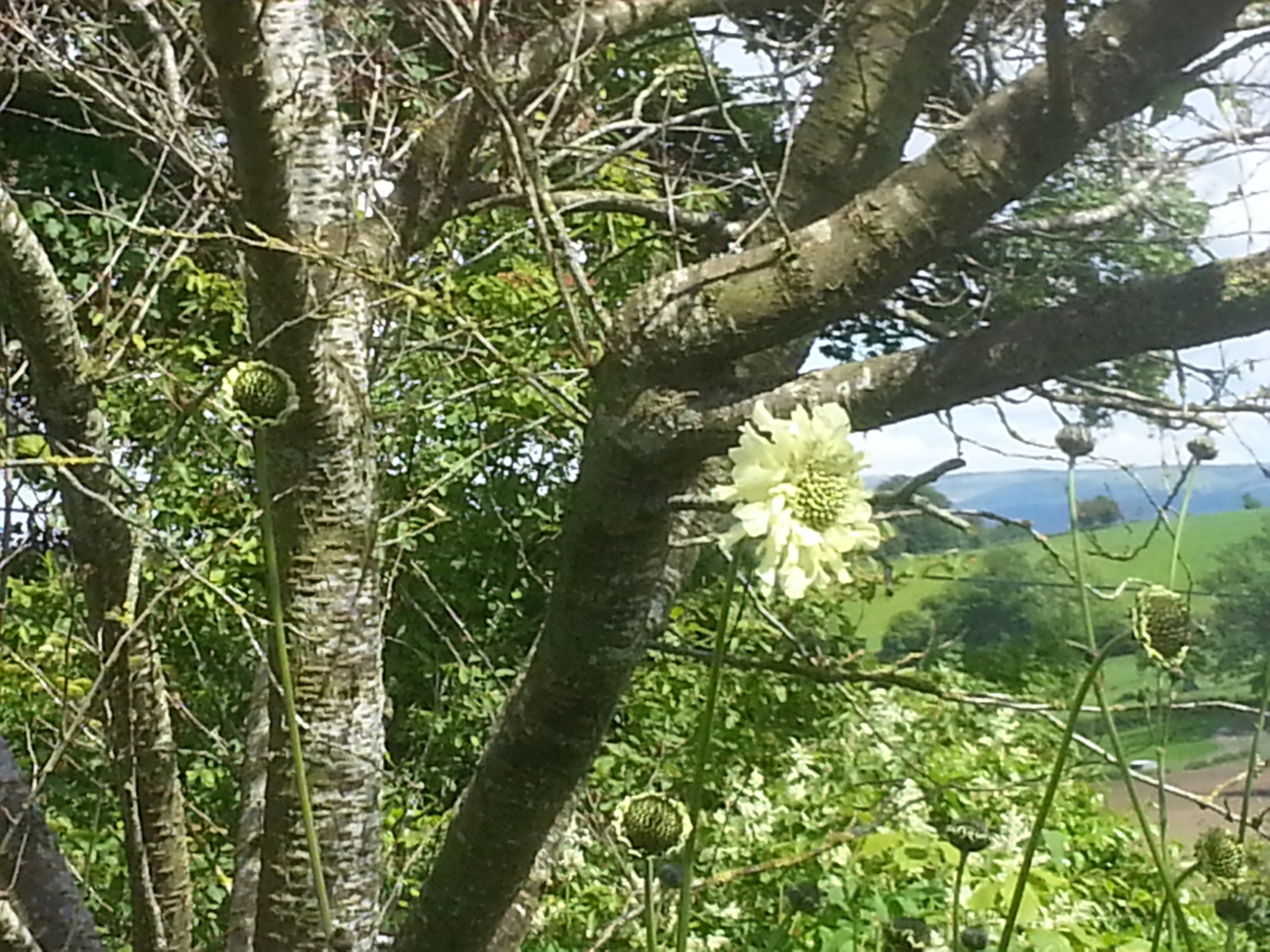
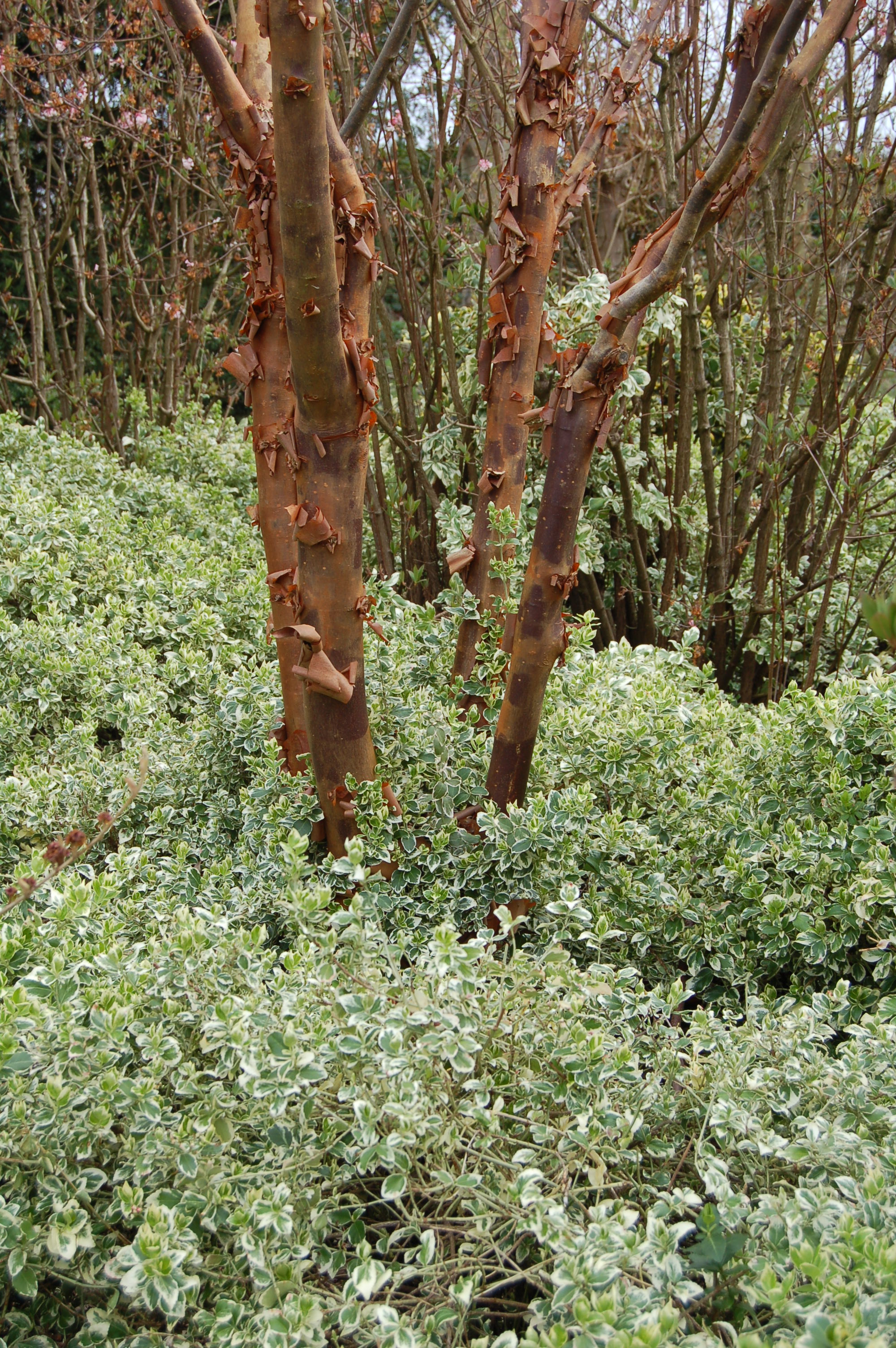
This Betula with its beautifully coloured peeling bark had enticed us up the long drive where we were greeted by this bank of smiling daisies.

2014 06 07_0046 2014 06 07_0047

The front garden was a typical cottage style with interesting plants such as Astrantias, Lilies and Irises dotted throughout.

2014 06 07_0049 2014 06 07_0050 2014 06 07_0051 2014 06 07_0052 2014 06 07_0053

We had now realised that we had visited this garden years ago so we were not surprised by the sudden change in the garden design that greeted us as we entered the back garden. Here the design was much more modern. It was a garden to explore slowly taking advantage of the invitations presented through good design.

2014 06 07_0054   2014 06 07_0068 2014 06 07_0069 2014 06 07_0070

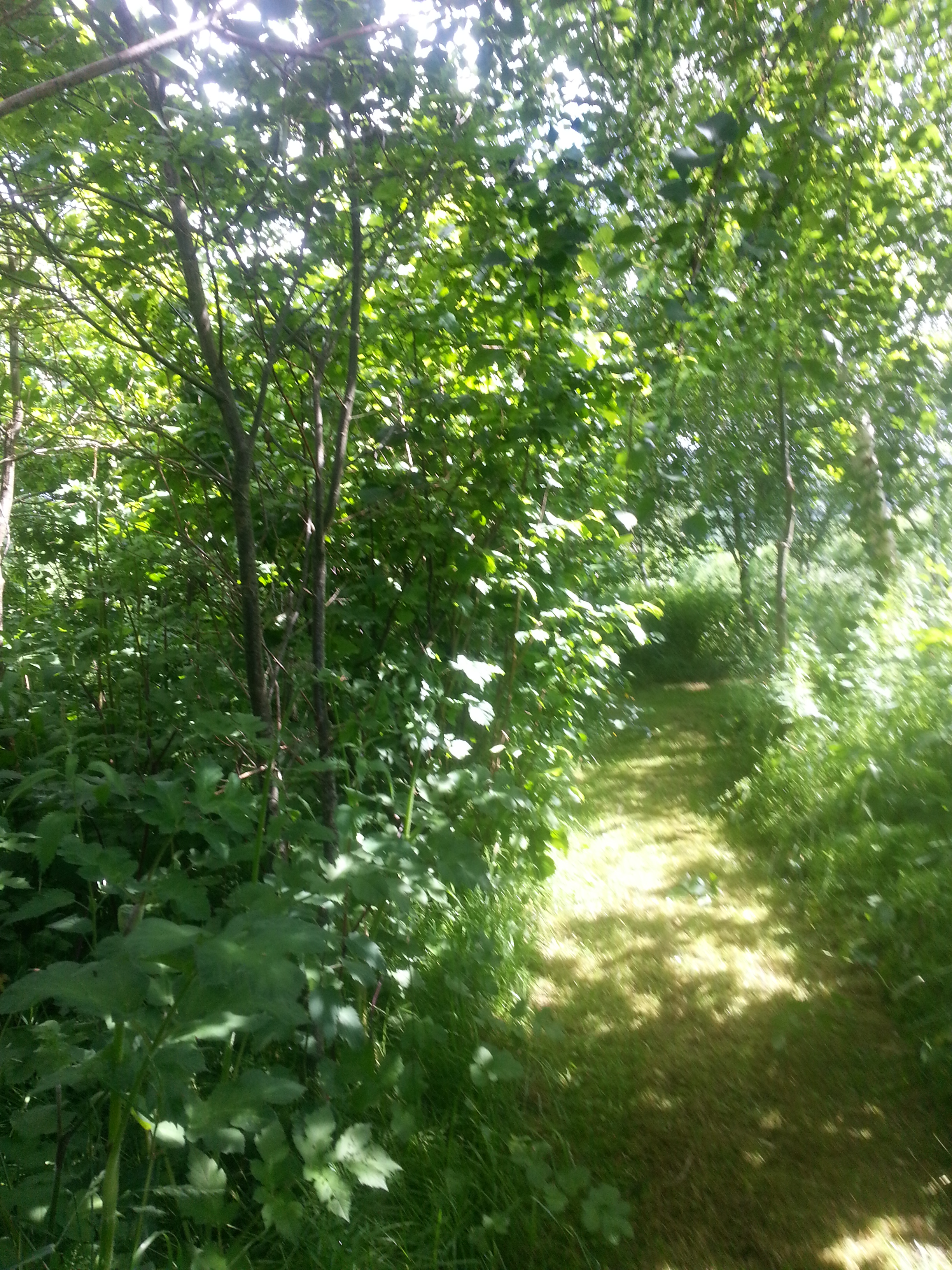
One path invited us into woodland, a relief for a while from the brightness and warmth of the sun. We were impressed by how a beautiful woodland can be created with the commonest of tree species. It proved you don’t have to have rarities to impress. Here the gardeners grew just native Birches, Rowans, Cherries and a few non-natives to add a touch of spice. A lovely atmosphere pervaded this space.

2014 06 07_0071 2014 06 07_0072 2014 06 07_0073

Leaving the woodland we were again presented with several options, different paths to take with different views and different plants.

2014 06 07_0074 2014 06 07_0075

2014 06 07_0080 2014 06 07_0081 2014 06 07_0082 2014 06 07_0083

Closer to the house a gravel area gave a completely different feel. Here were neatly trimmed conifers and Cotinus with their skirts lifted to expose twisted limbs. Soft planting among these features reflected the planting in the nearby borders.

2014 06 07_0084 2014 06 07_0085

2014 06 07_0104 2014 06 07_0103

2014 06 07_0086 2014 06 07_0087 2014 06 07_0088 2014 06 07_0089


Moving around the side of the property we found another path to take through gap in the hedge where we discovered a swimming pool overlooked by a summerhouse.

2014 06 07_0091 2014 06 07_0092

We walked from here along a narrow path below a wall with soft planting above, beautifully backlit by the sun.

2014 06 07_0095 2014 06 07_0096 2014 06 07_0097 2014 06 07_0098 2014 06 07_0099 2014 06 07_0100 2014 06 07_0101 2014 06 07_0102

This was most definitely a garden of many parts beautifully linked with winding paths found through enticing arches and gaps in hedging.


Leaving the garden along the central pathway of the front cottage garden we enjoyed the view behind this wonderful gate. A great garden – it was good to return.


2014 06 07_0048

Categories
climbing plants colours flowering bulbs garden designers garden photography gardening gardens gardens open to the public grasses hardy perennials irises Italian style gardens meadows ornamental grasses ornamental trees and shrubs outdoor sculpture Piet Oudolf roses sculpture Staffordshire Tom Stuart-Smith trees water in the garden

A Garden in May – Trentham

Here we are with post number 5 of this series looking at the gardens at Trentham where we are trying to discover if Trentham really is a “garden of all seasons”. For our May visit we were hoping for better weather as rain has greeted us on every other visit. It may seem a bit late to be posting this post but we have been so busy getting our garden ready for our summer visitors and the allotment community gardens ready for our NGS Open Day we are now behind with everything. We are getting behind at being late!

But the day dawned wet yet again.

2014 05 29_9874 2014 05 29_9827

We were amazed by the number of people around and the queue of visitors waiting to get through the turn styles. The majority of these visitors were young families. Soon we saw clues about what was going on – balloons, bunting and banners. It all pointed to the day being a special one for Trentham Gardens – their 10th birthday since reopening.

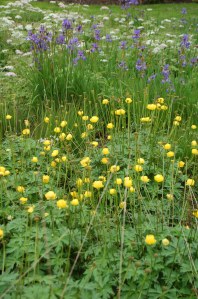
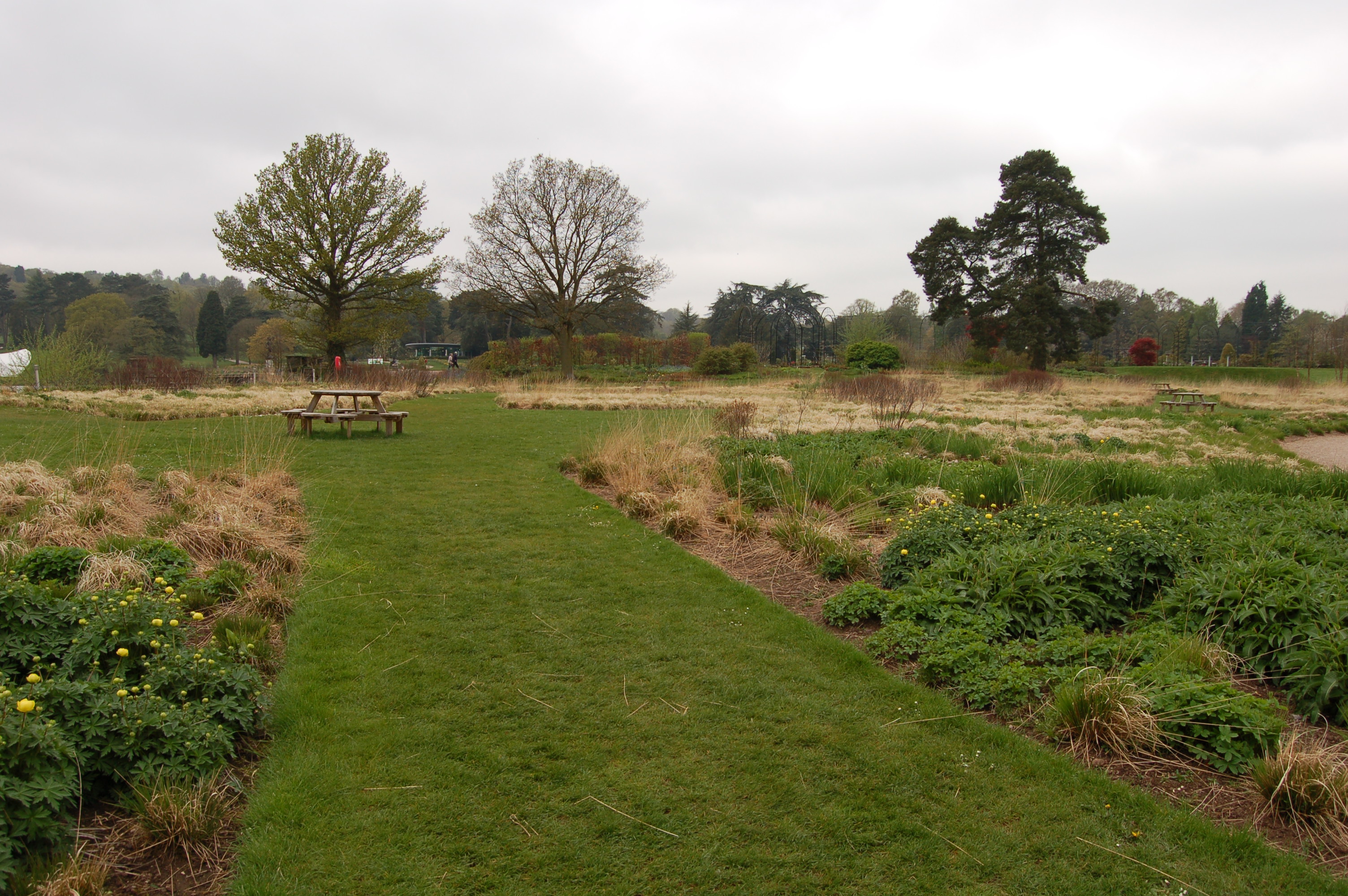
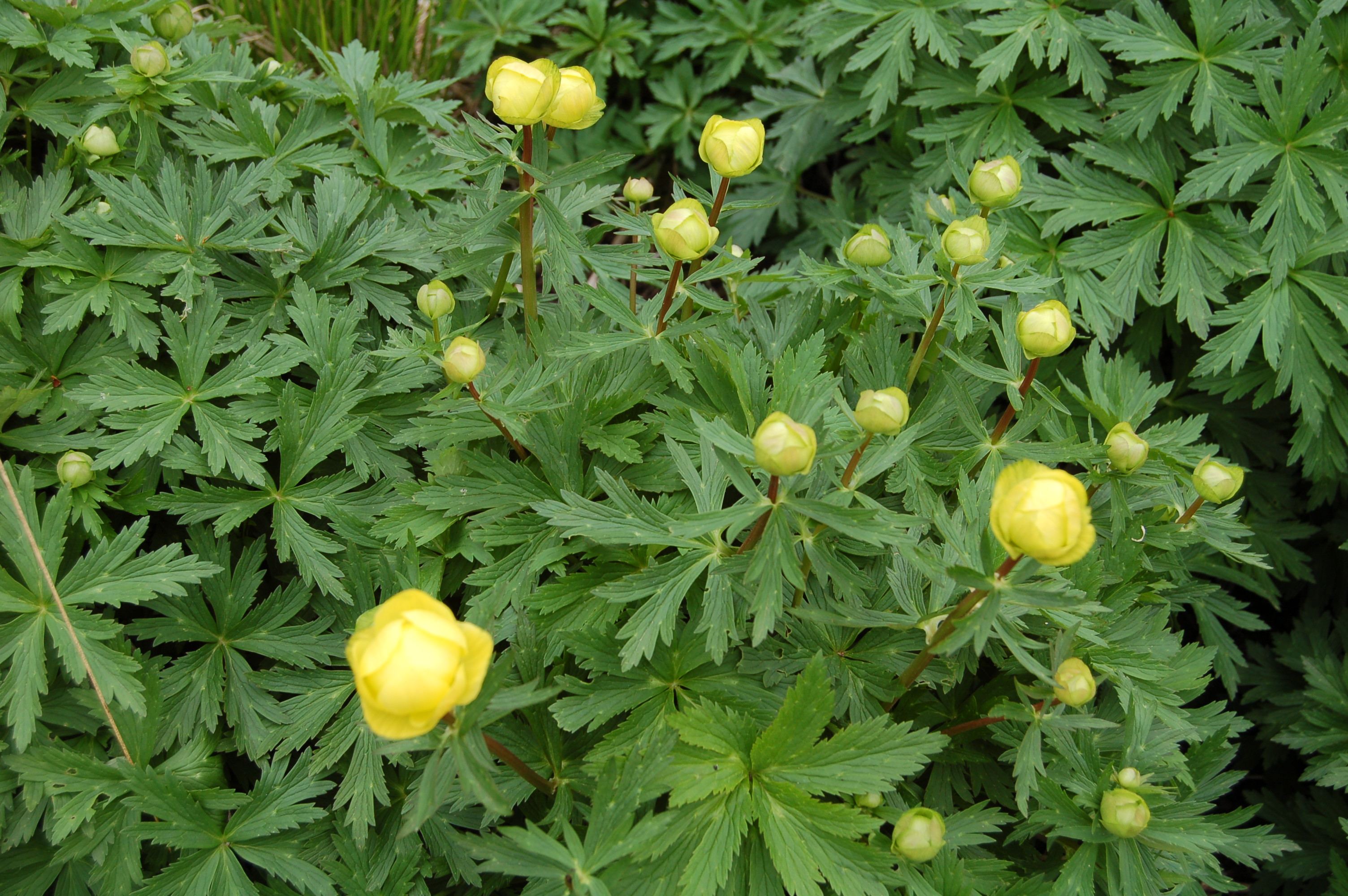
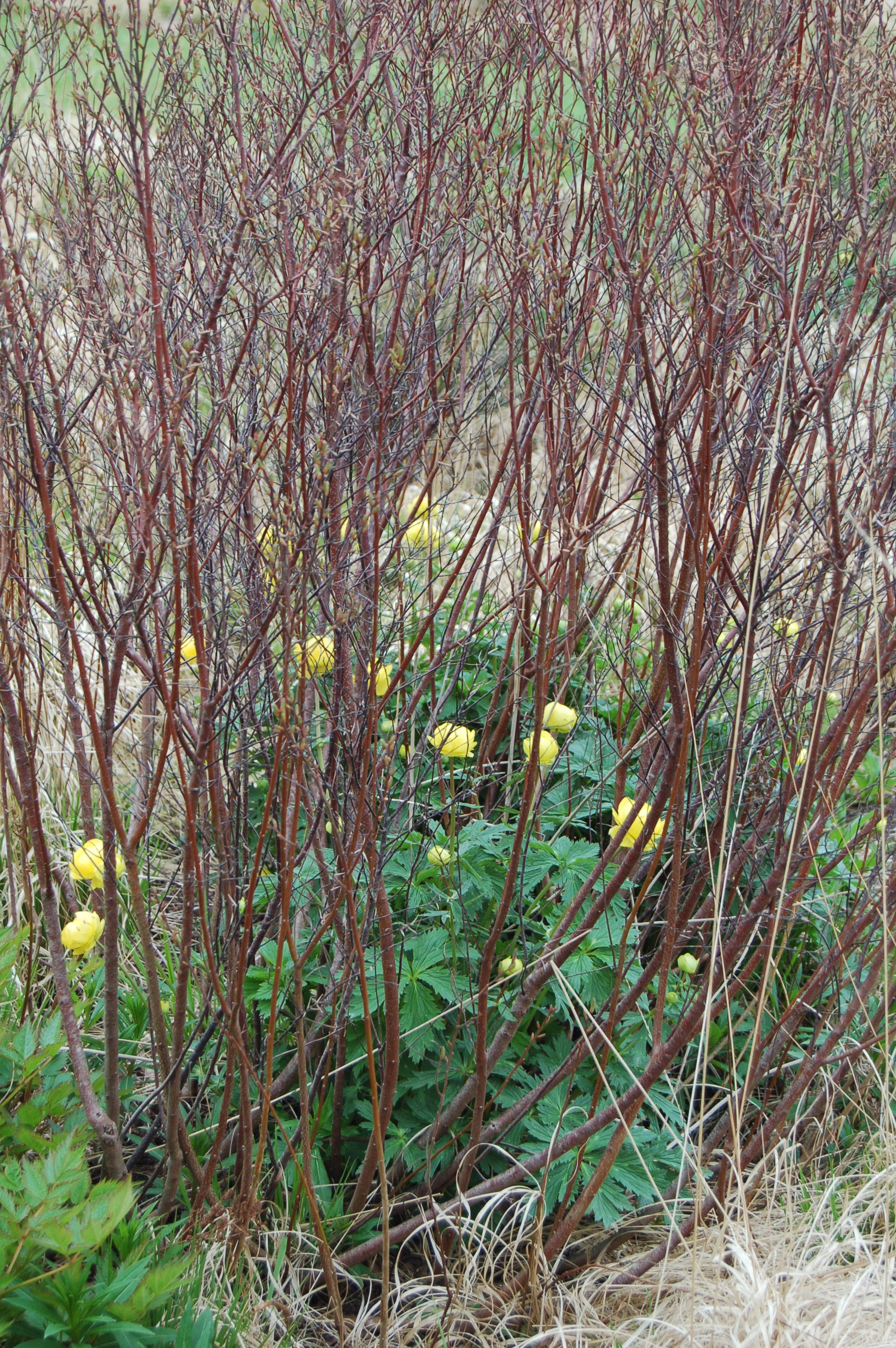
The area called the River of Grasses designed by Piet Oudolf has gained a lot of patches of colour from perennials among the strongly growing grasses. Persicaria bistorta, Amsonia and Trollius were particularly in evidence.

2014 05 29_9685 2014 05 29_9686

2014 05 29_9689 2014 05 29_9687

2014 05 29_9690 2014 05 29_9688

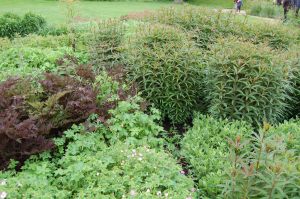
When we moved into the Piet Oudolf prairie borders we noticed that the growth of the herbaceous plants since out last visits was amazing.

2014 05 29_9695 2014 05 29_9697

2014 05 29_9692 2014 05 29_9698

2014 05 29_9693 2014 05 29_9696

2014 05 29_9691 2014 05 29_9694

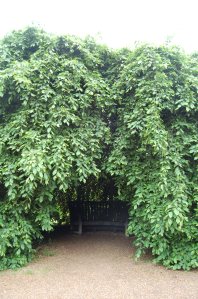
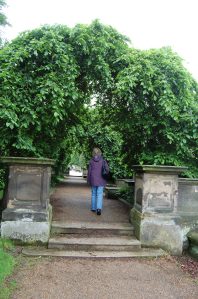
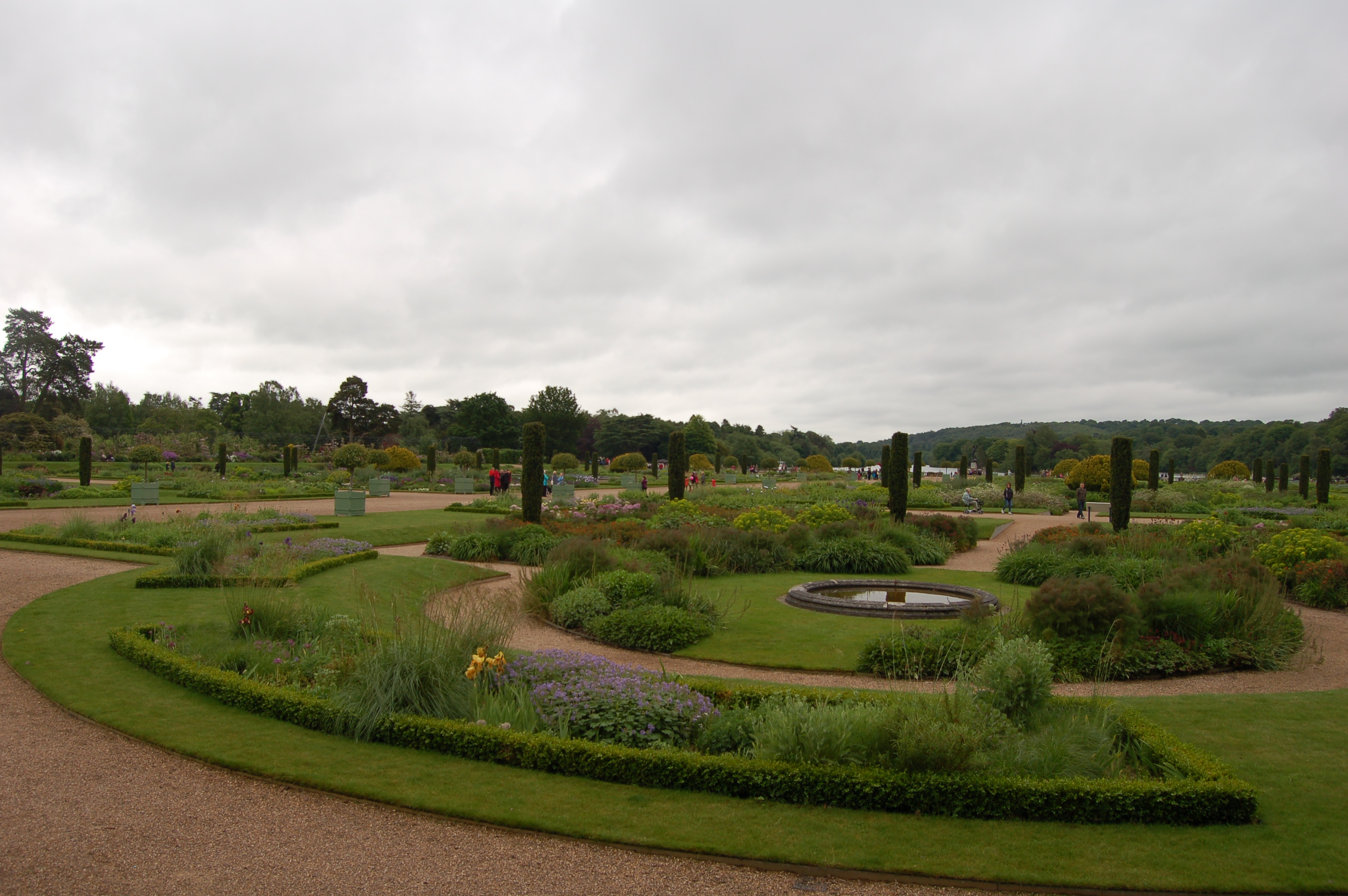
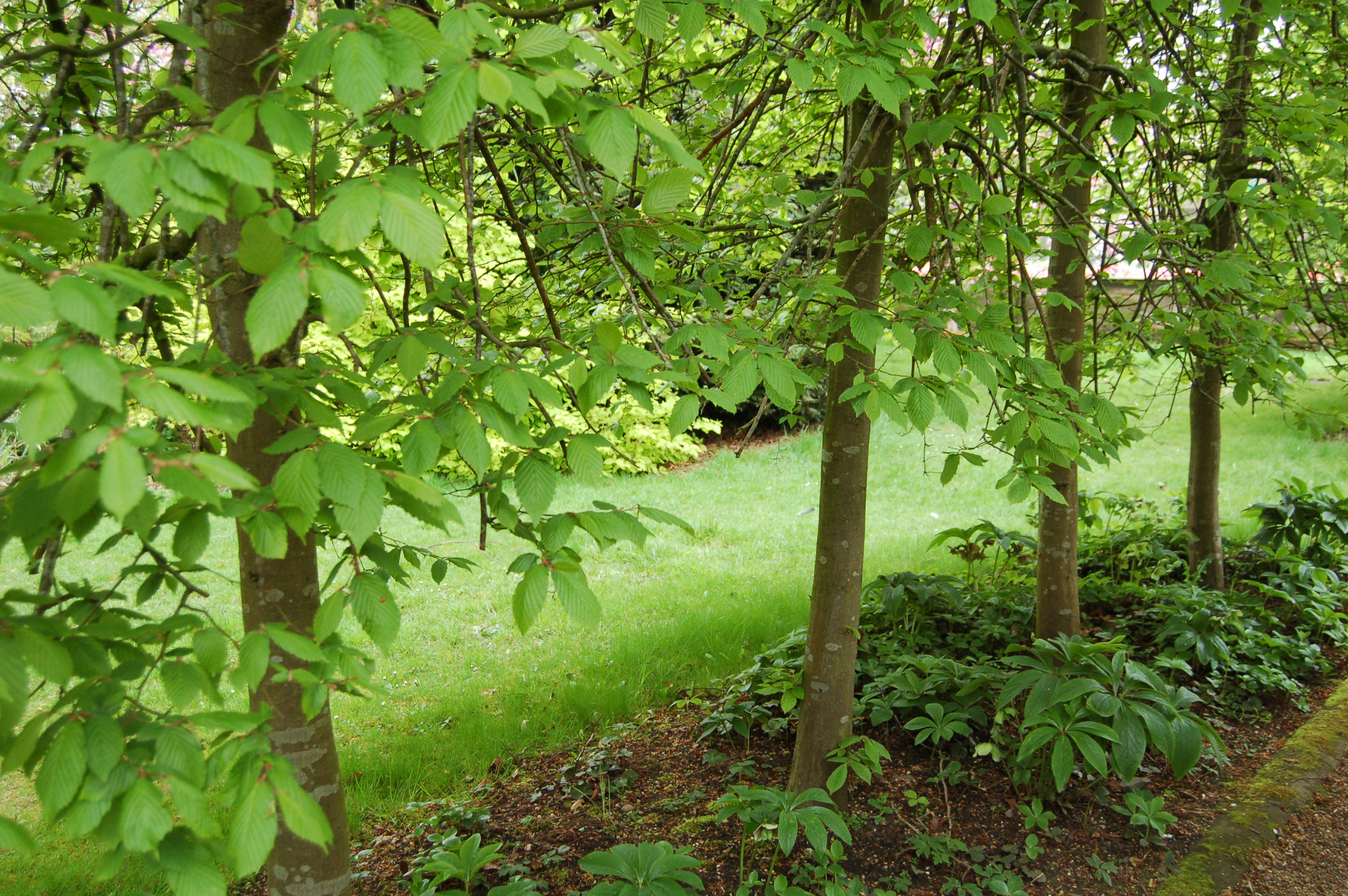
After enjoying the fresh colours in this area we wandered across neatly mown grass towards the Italianate Garden, and on the way we passed the Hornbeam Arbour and through a Hornbeam archway. We found evidence of the newly cut area where seagulls of crocus and snowdrops were earlier in the year (see earlier posts in this series). Now they appear as ghosts in the grass.

2014 05 29_9700 2014 05 29_9701 2014 05 29_9702 2014 05 29_9699

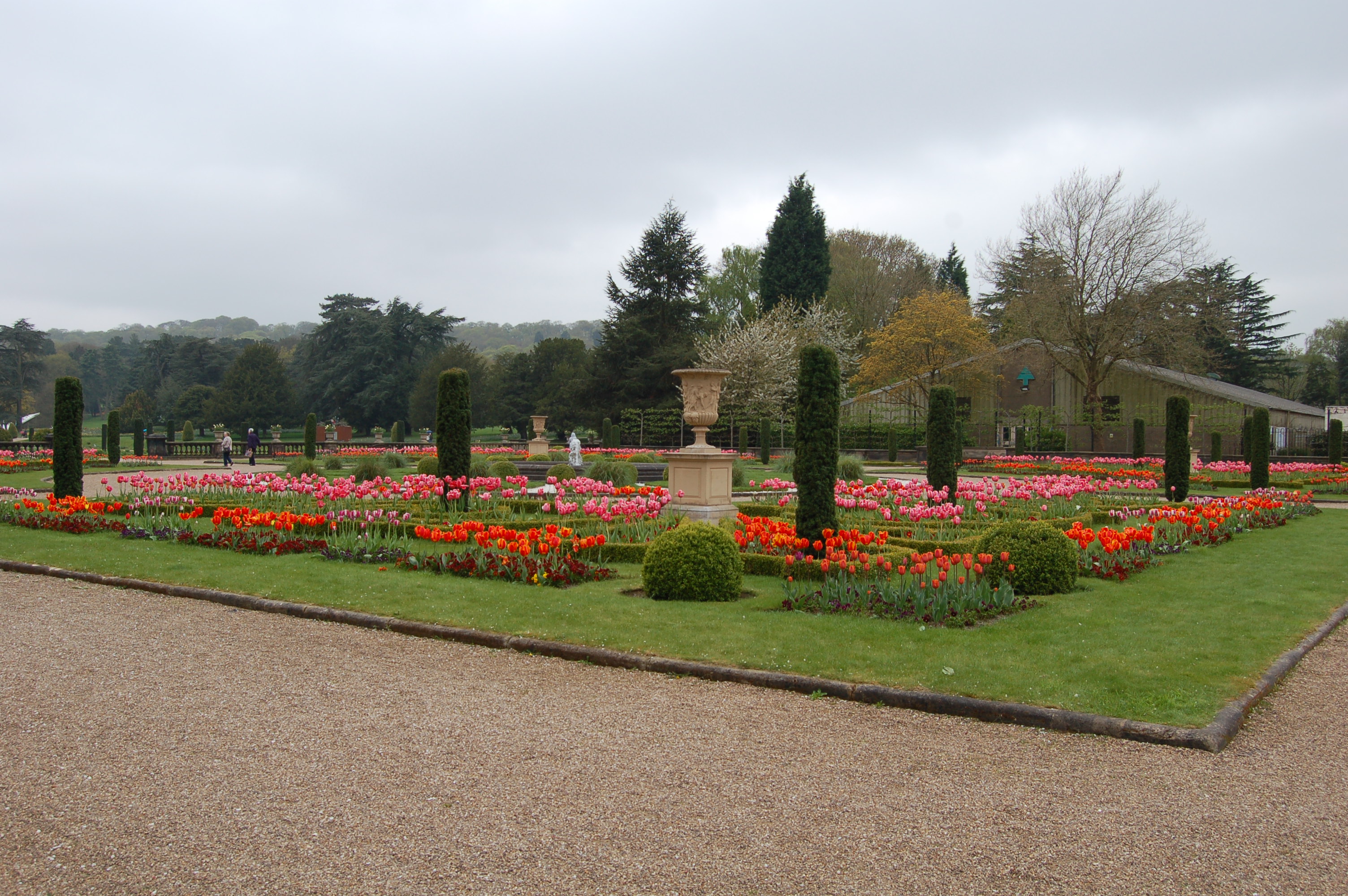
In the Italianate Garden the gardeners were planting out large specimens of Cannas with huge incredibly marked and coloured leaves.

2014 05 29_9703 2014 05 29_9704

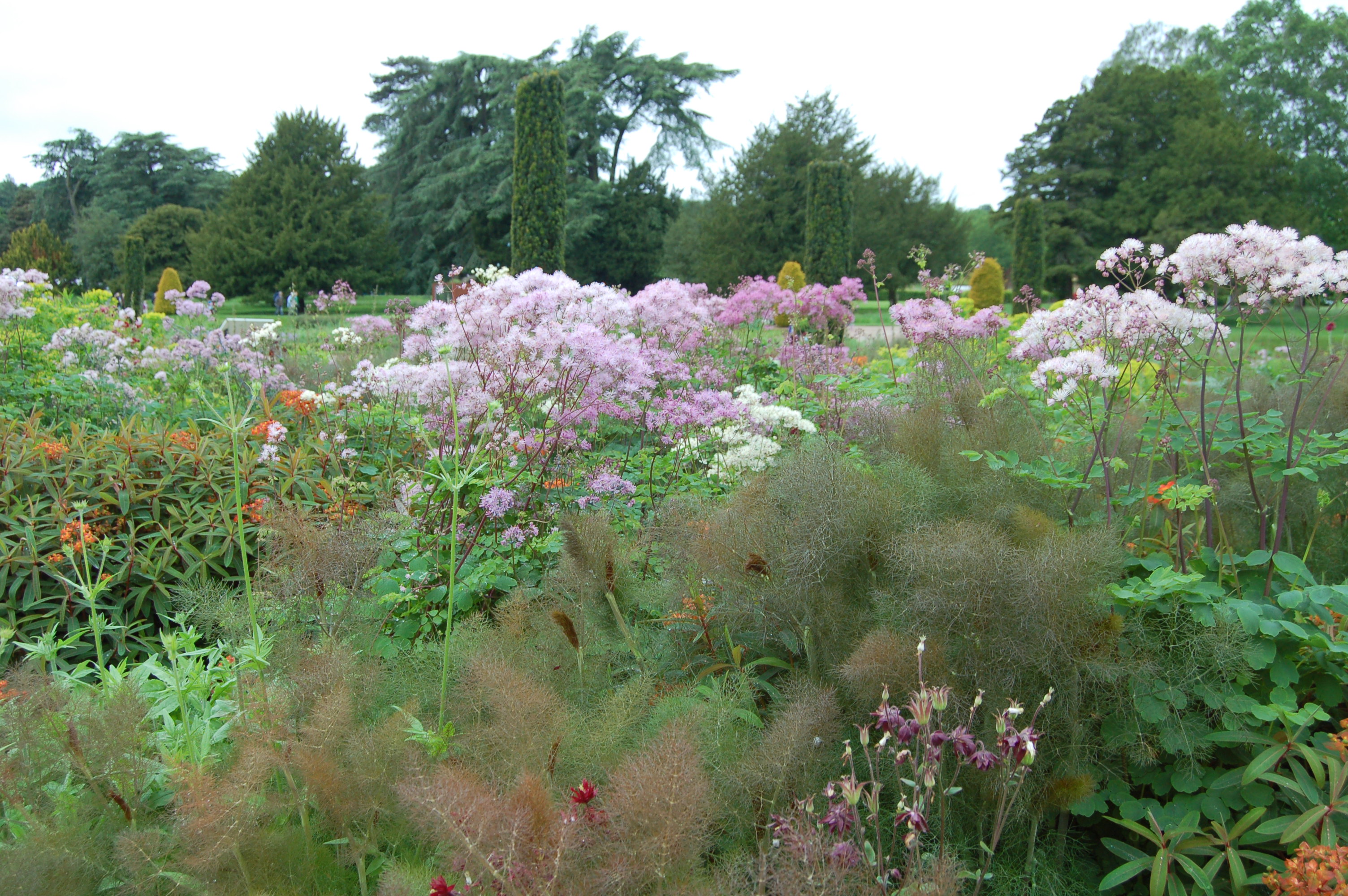
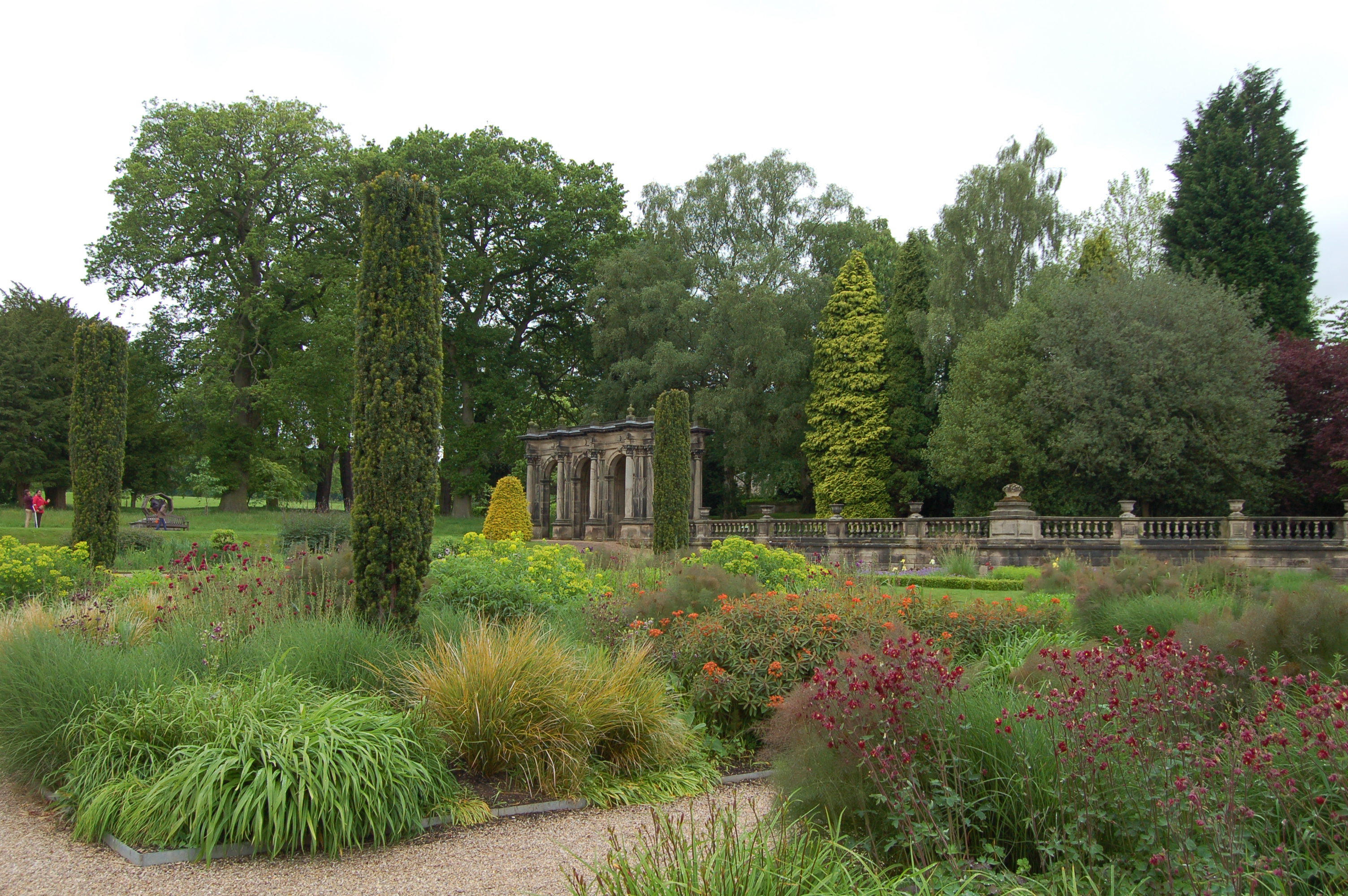
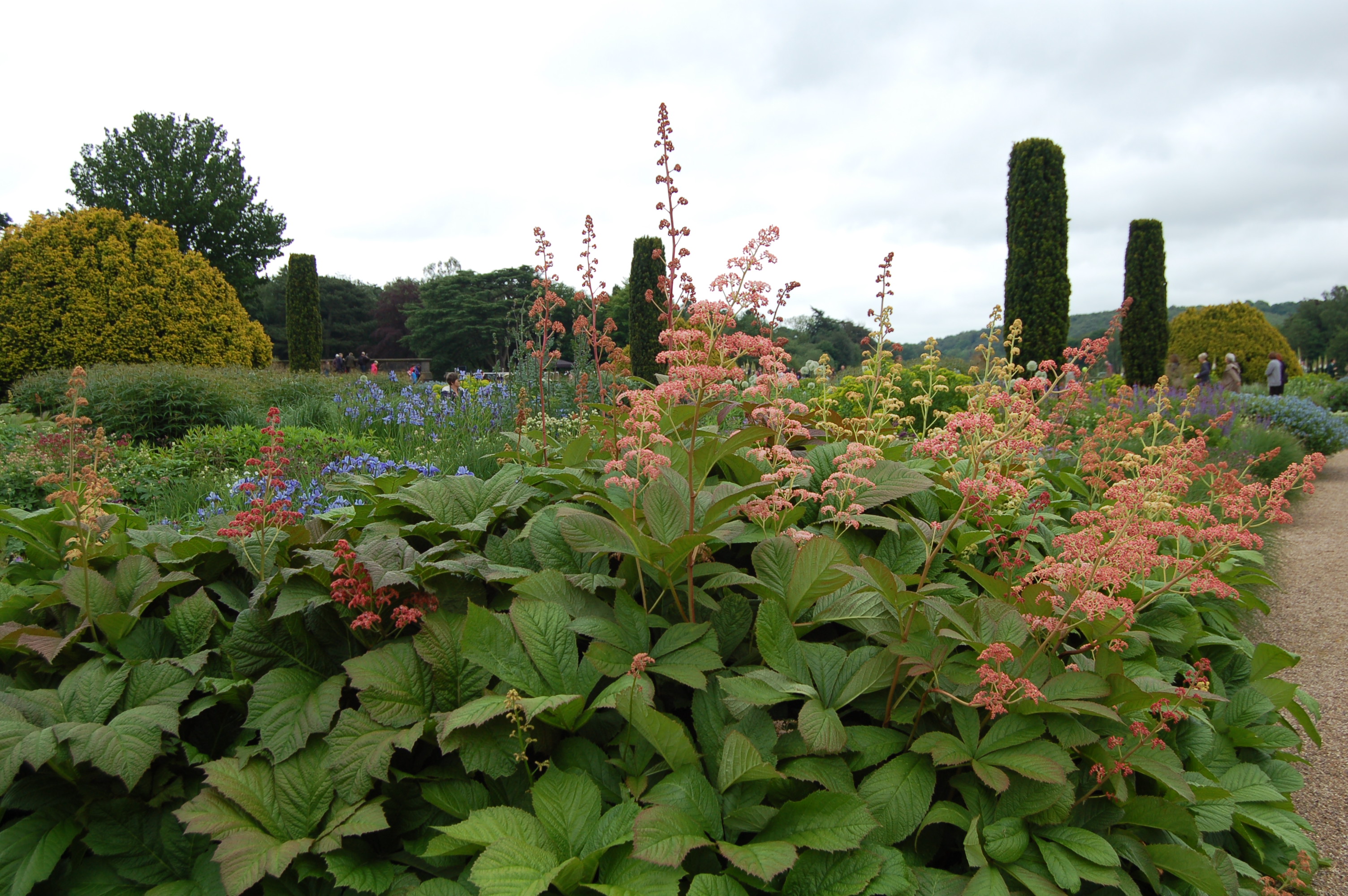
From the Italianate Garden we get our first views of the garden designed by Tom Stuart-Smith, where he imposed modern style herbaceous plantings onto the original Italian Garden. Since last month these borders are showing so much colour and to begin with it is hard to identify what plants are providing all the colour.

2014 05 29_9707 2014 05 29_9708 2014 05 29_9709 2014 05 29_9710

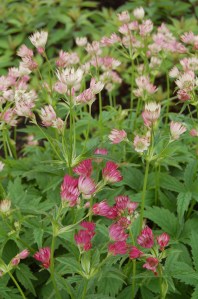
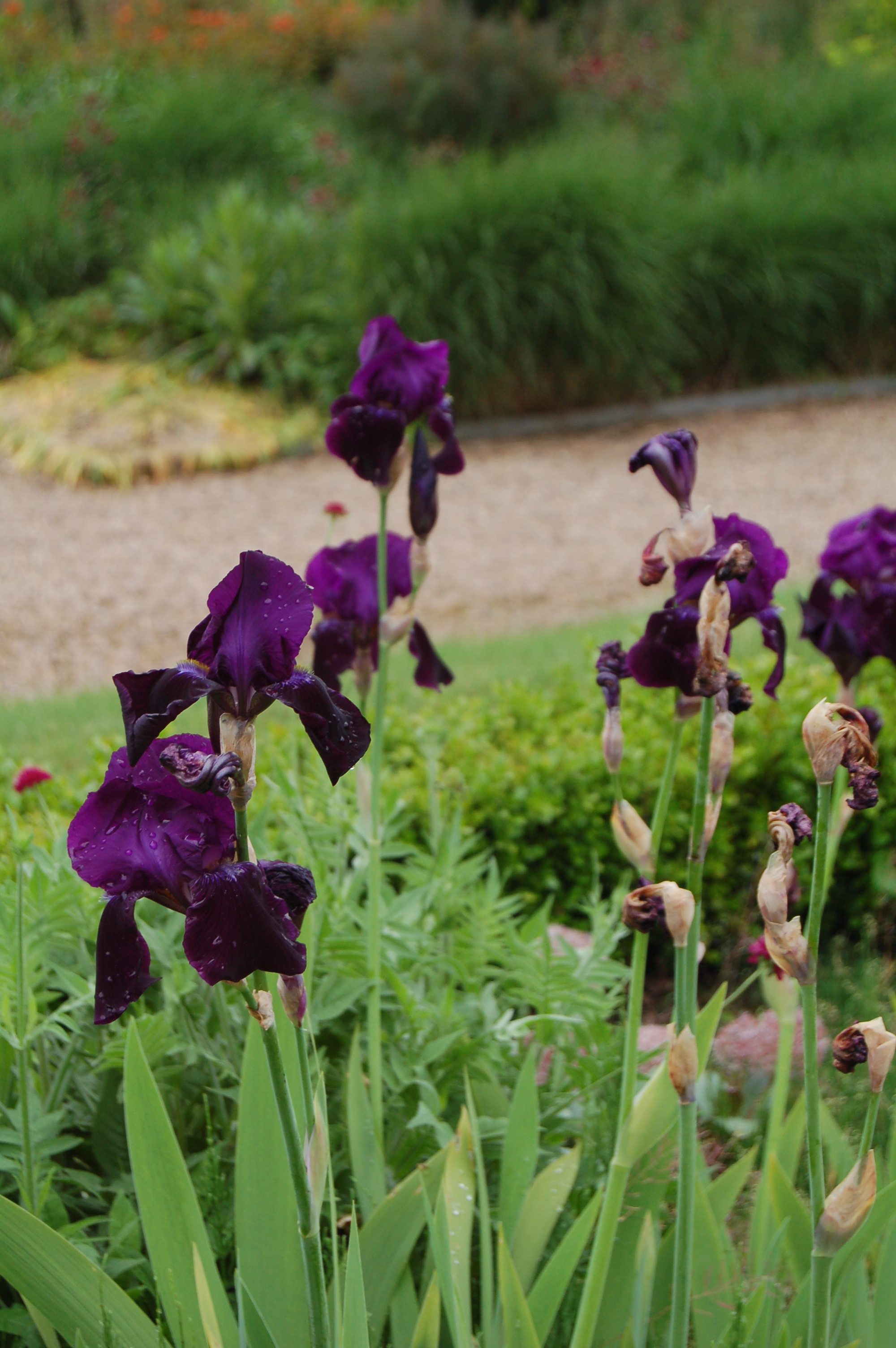
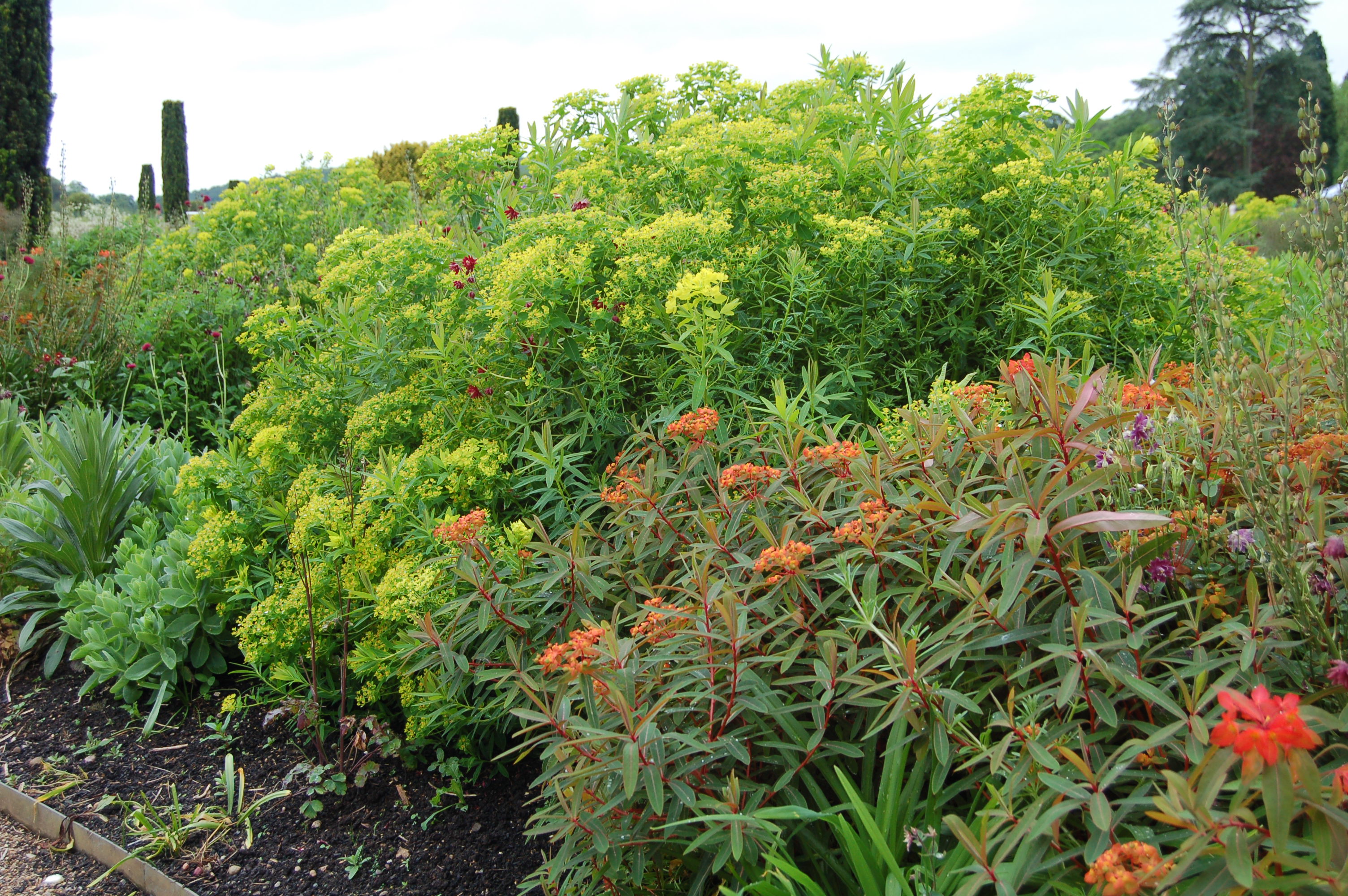
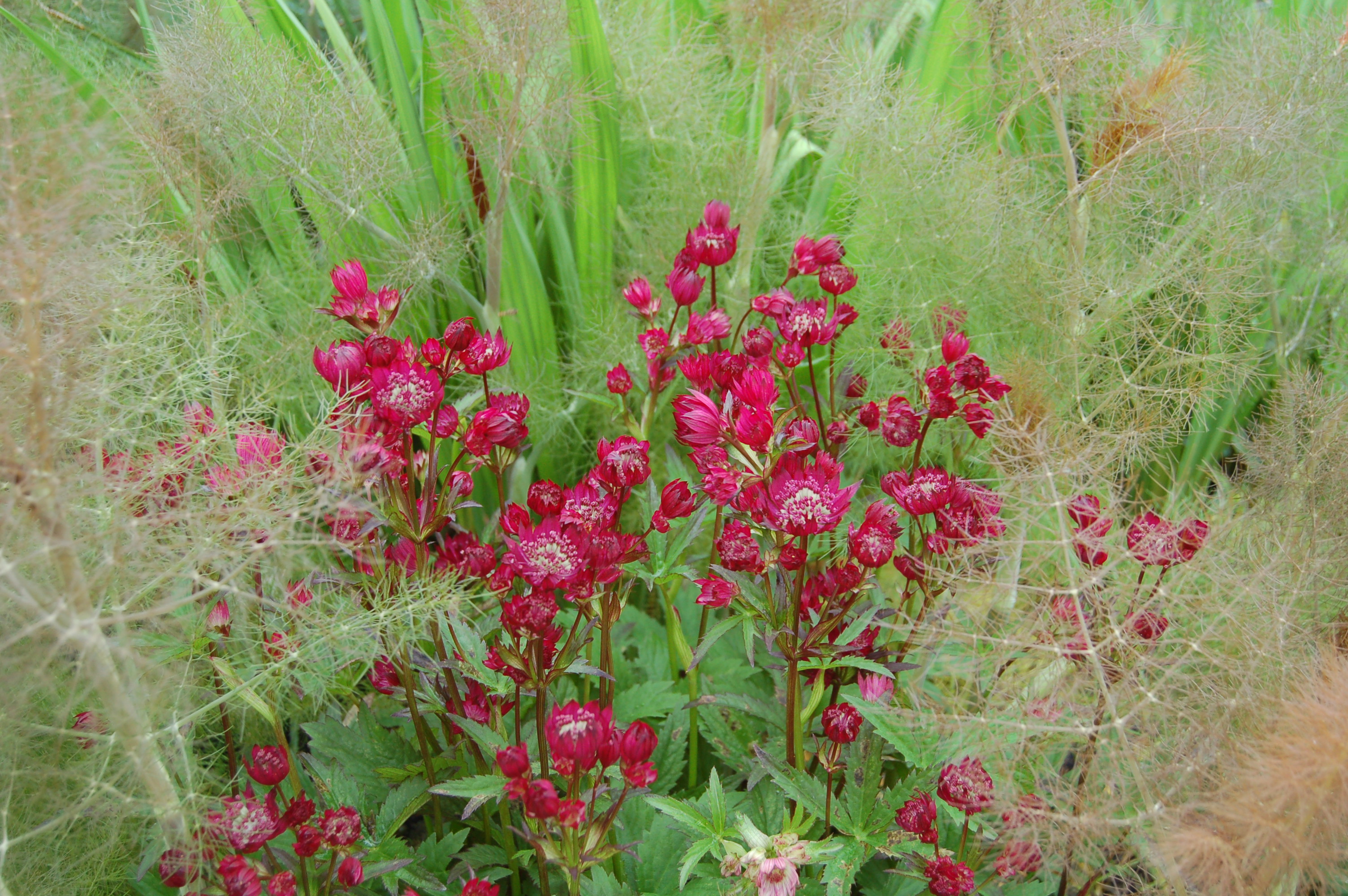
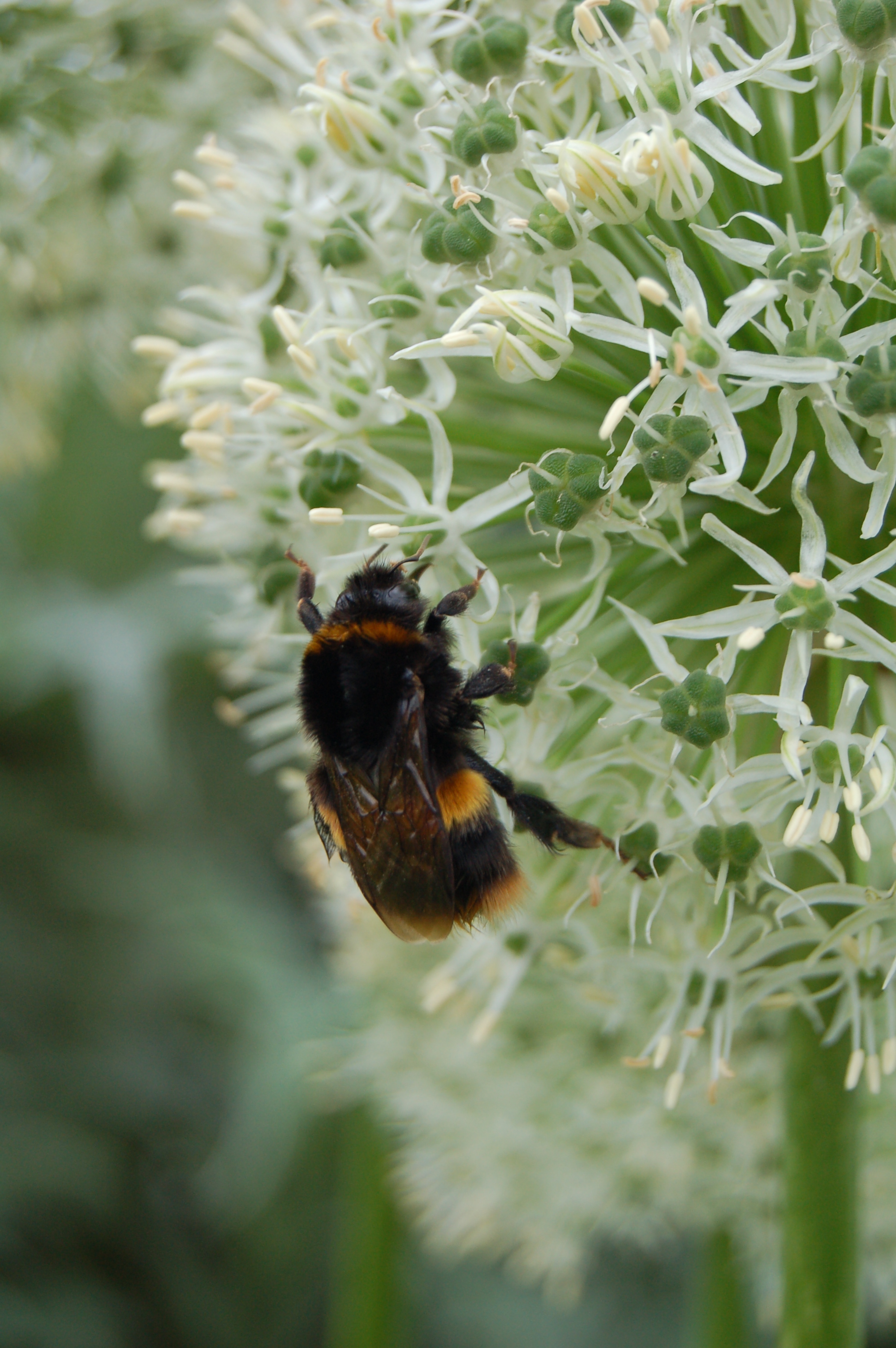
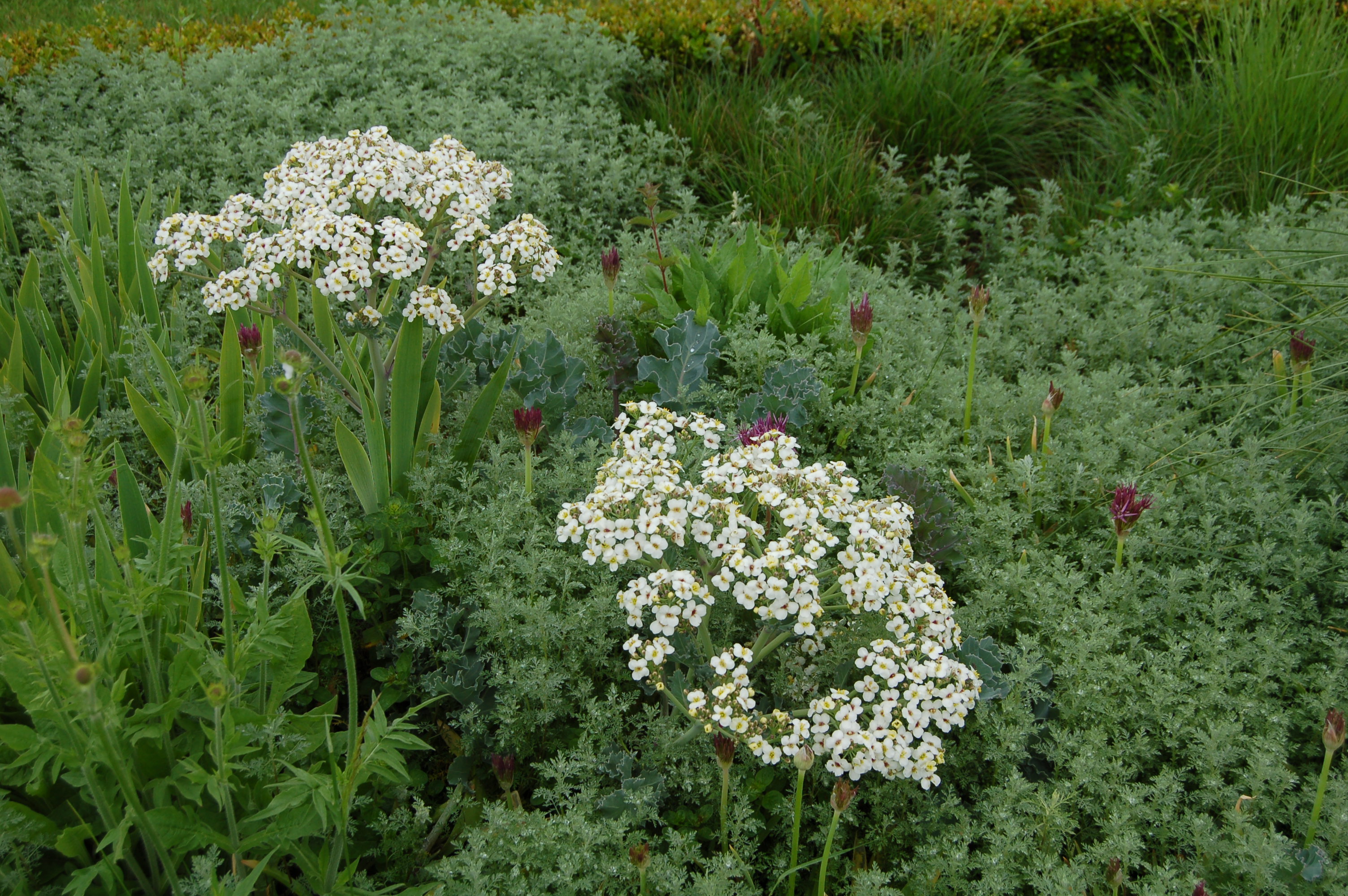
Closer up we found the colour was from Alliums, Euphorbias, Amsonias, Irises, Rogersias and Astrantias. Enjoy a tour of these borders.

2014 05 29_9712 2014 05 29_9714 2014 05 29_9715 2014 05 29_9719

2014 05 29_9723 2014 05 29_9724 2014 05 29_9725 2014 05 29_9727 2014 05 29_9735 2014 05 29_9748 2014 05 29_9749 2014 05 29_9750 2014 05 29_9751 2014 05 29_9752 2014 05 29_9755 2014 05 29_9757 2014 05 29_9758 2014 05 29_9760

2014 05 29_9767 2014 05 29_9768 2014 05 29_9769 2014 05 29_9770 2014 05 29_9781 2014 05 29_9782 2014 05 29_9783 2014 05 29_9784 2014 05 29_9791 2014 05 29_9795

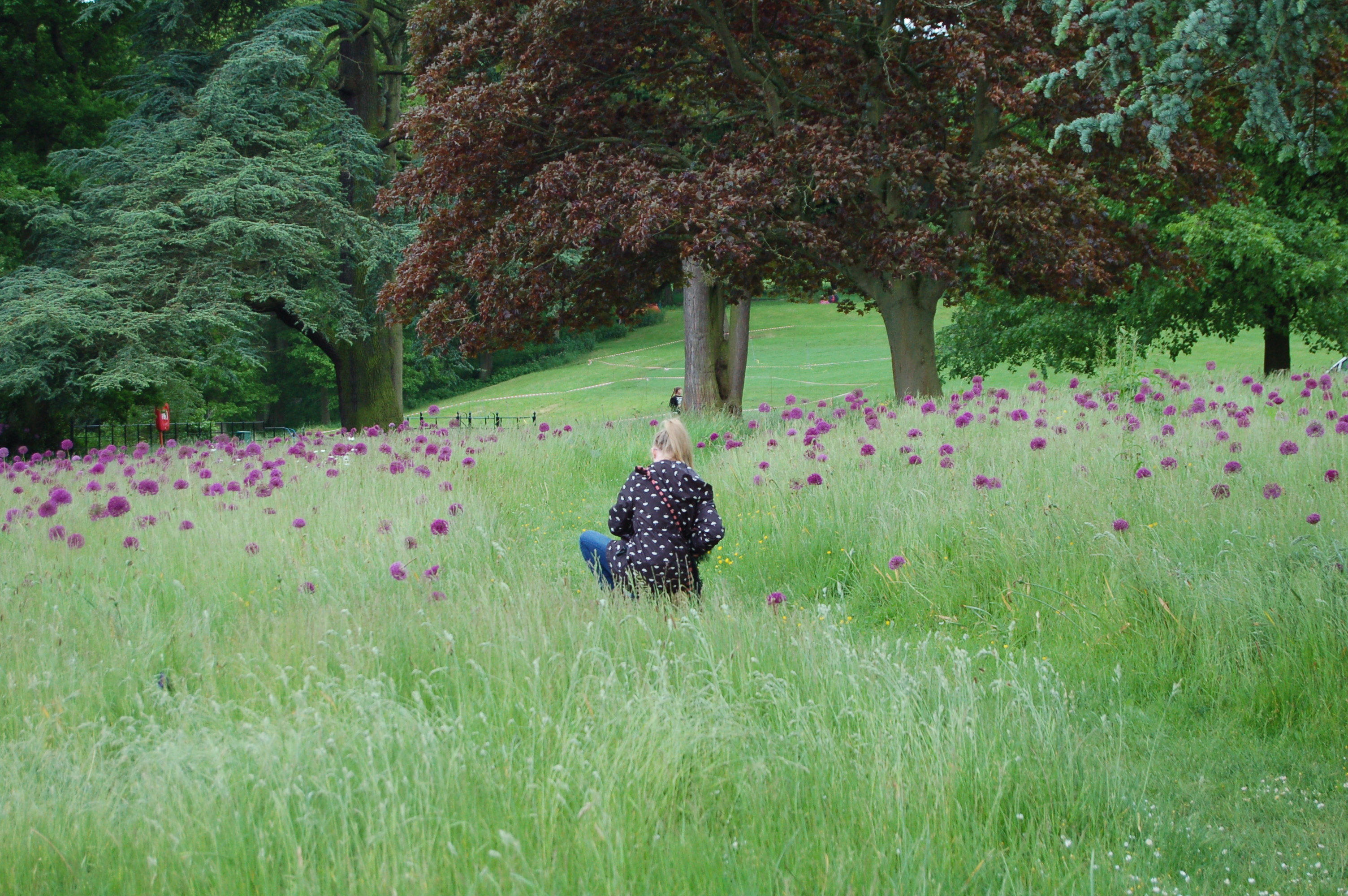
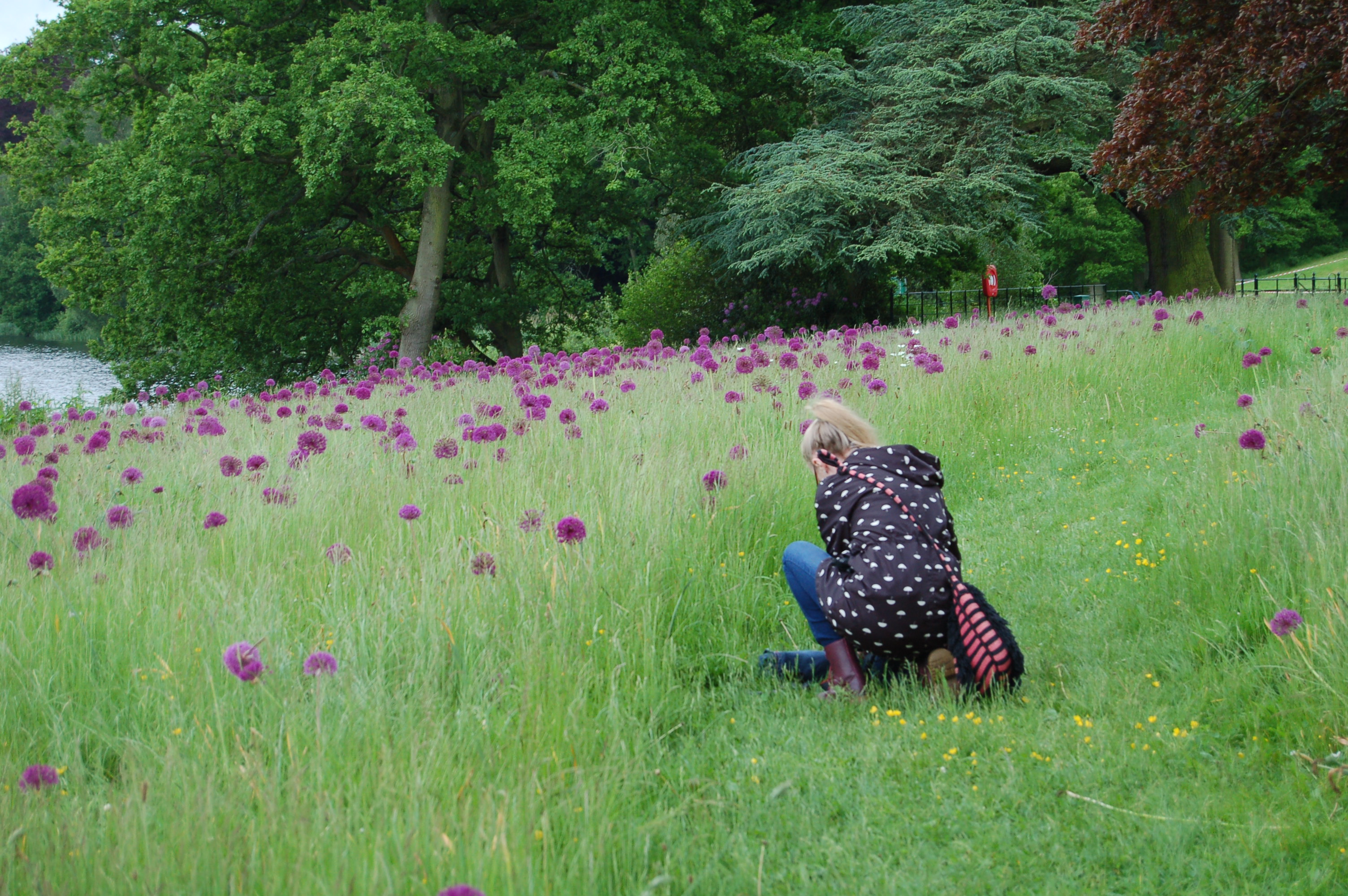
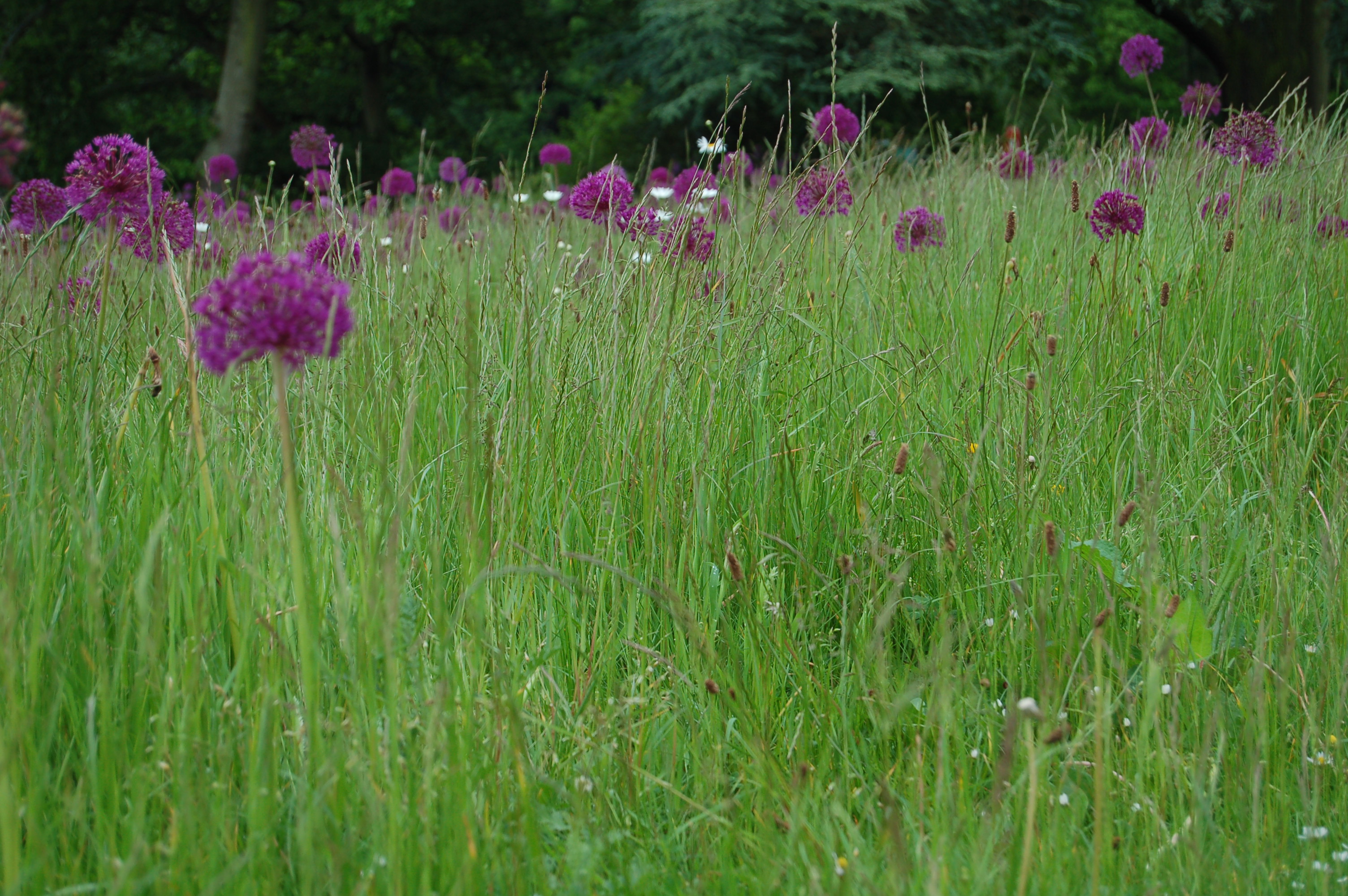
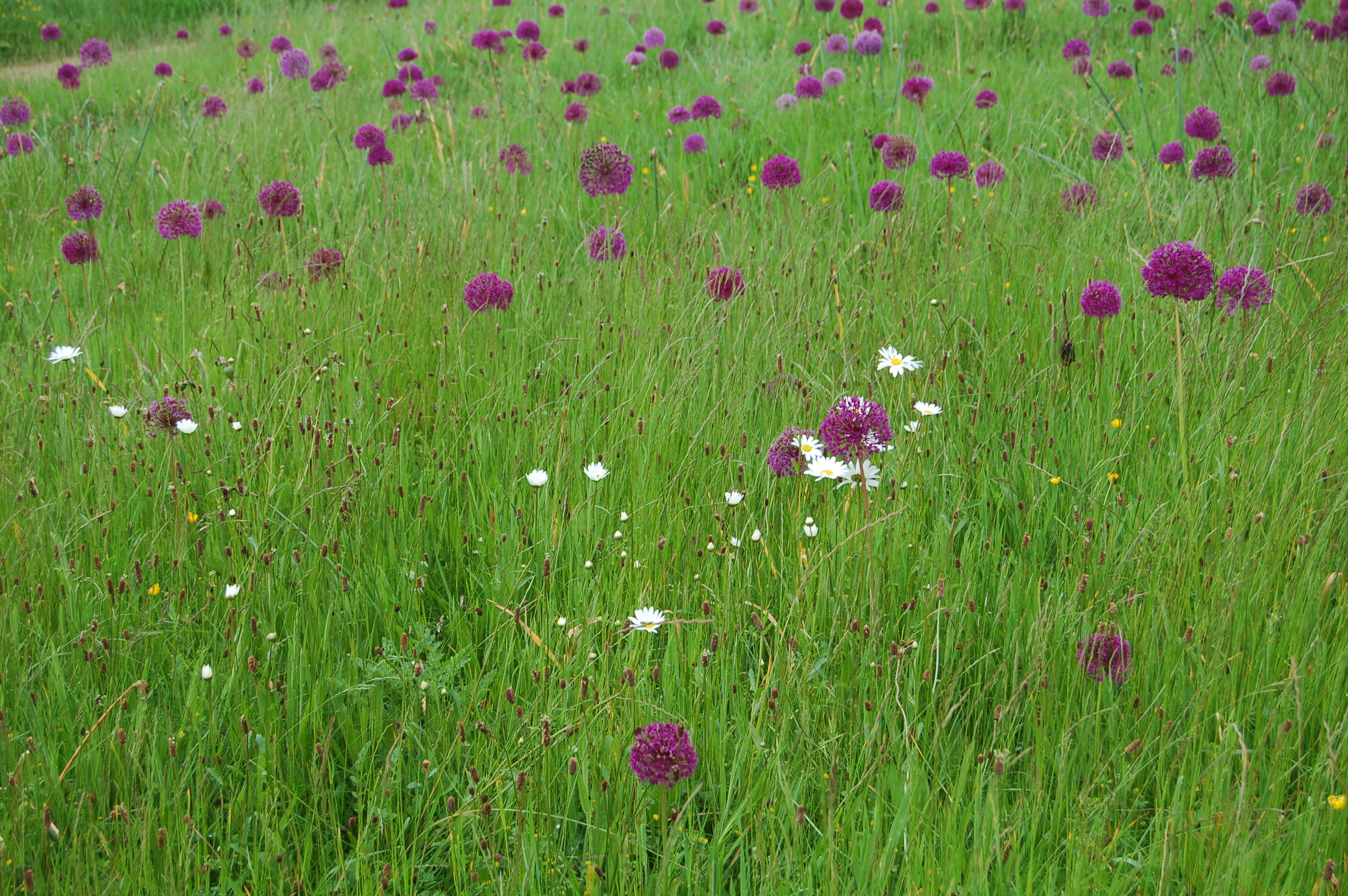
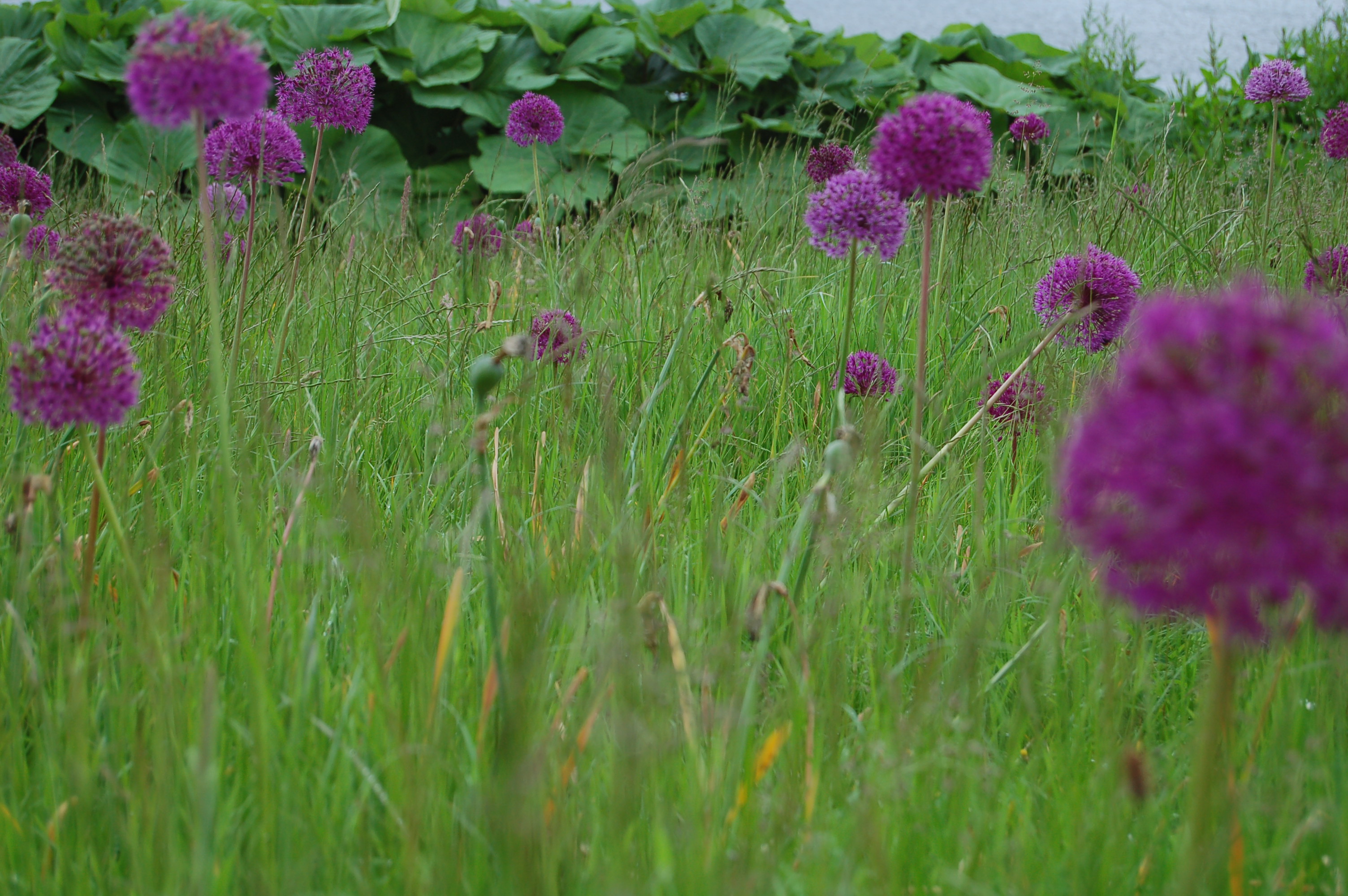
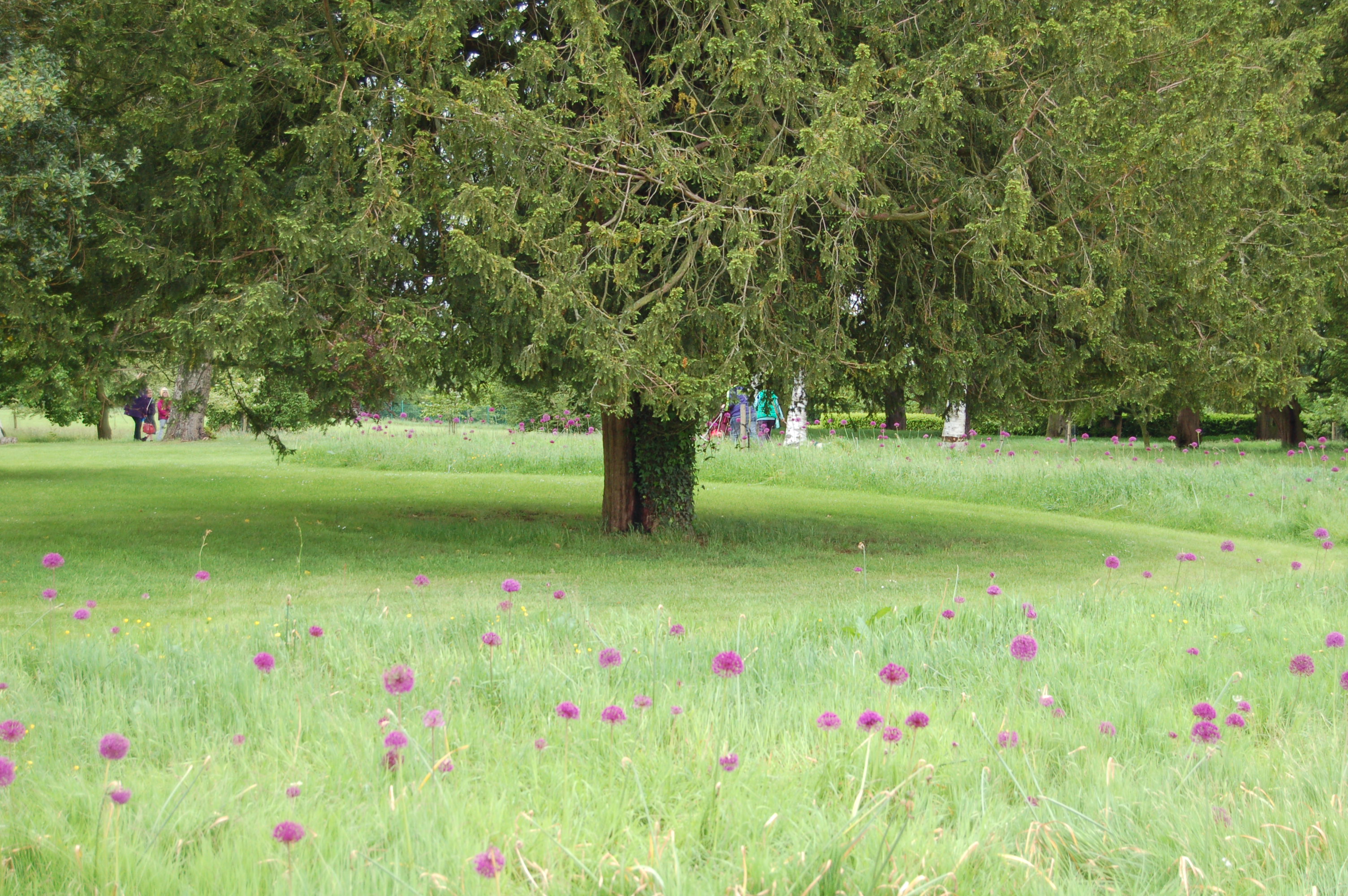
Last time we were here the gardens above the Tom Stuart-Smith borders was yellow with daffodils naturalised in the grassed banks. On this visit the colour was purple and it was provided by hundreds of purple globes of Alliums. A young photographer was snapping away.

2014 05 29_9804 2014 05 29_9805 2014 05 29_9806 2014 05 29_9809 2014 05 29_9808 2014 05 29_9807

A new woven figure has appeared on the grassed banks.

2014 05 29_9810 2014 05 29_9811

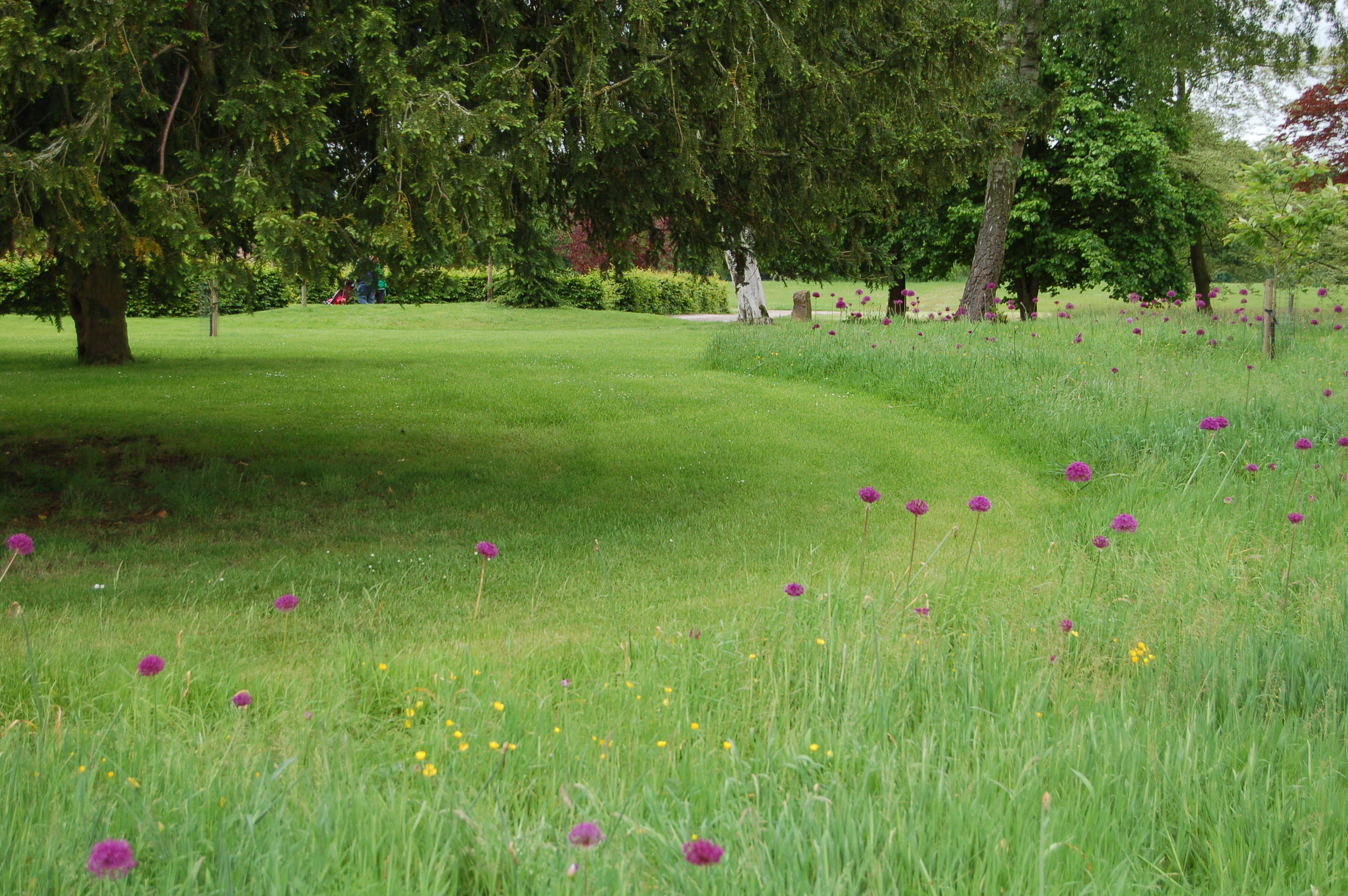
More Alliums were naturalised in the grass beneath the mature trees from the otiginal parkland plantings. They added colour to our walk over to look at the Display Gardens.

2014 05 29_9814 2014 05 29_9815

Here the newly planted gardens were taking shape.

2014 05 29_9818 2014 05 29_9819 2014 05 29_9821 2014 05 29_9822 2014 05 29_9823 2014 05 29_9825

As always our wanderings around the gardens at Trentham finish with a walk along the Rose Walkway. Yet more Alliums grew here in between the roses.

2014 05 29_9856 2014 05 29_9857 2014 05 29_9858 2014 05 29_9859 2014 05 29_9860 2014 05 29_9861 2014 05 29_9862 2014 05 29_9863

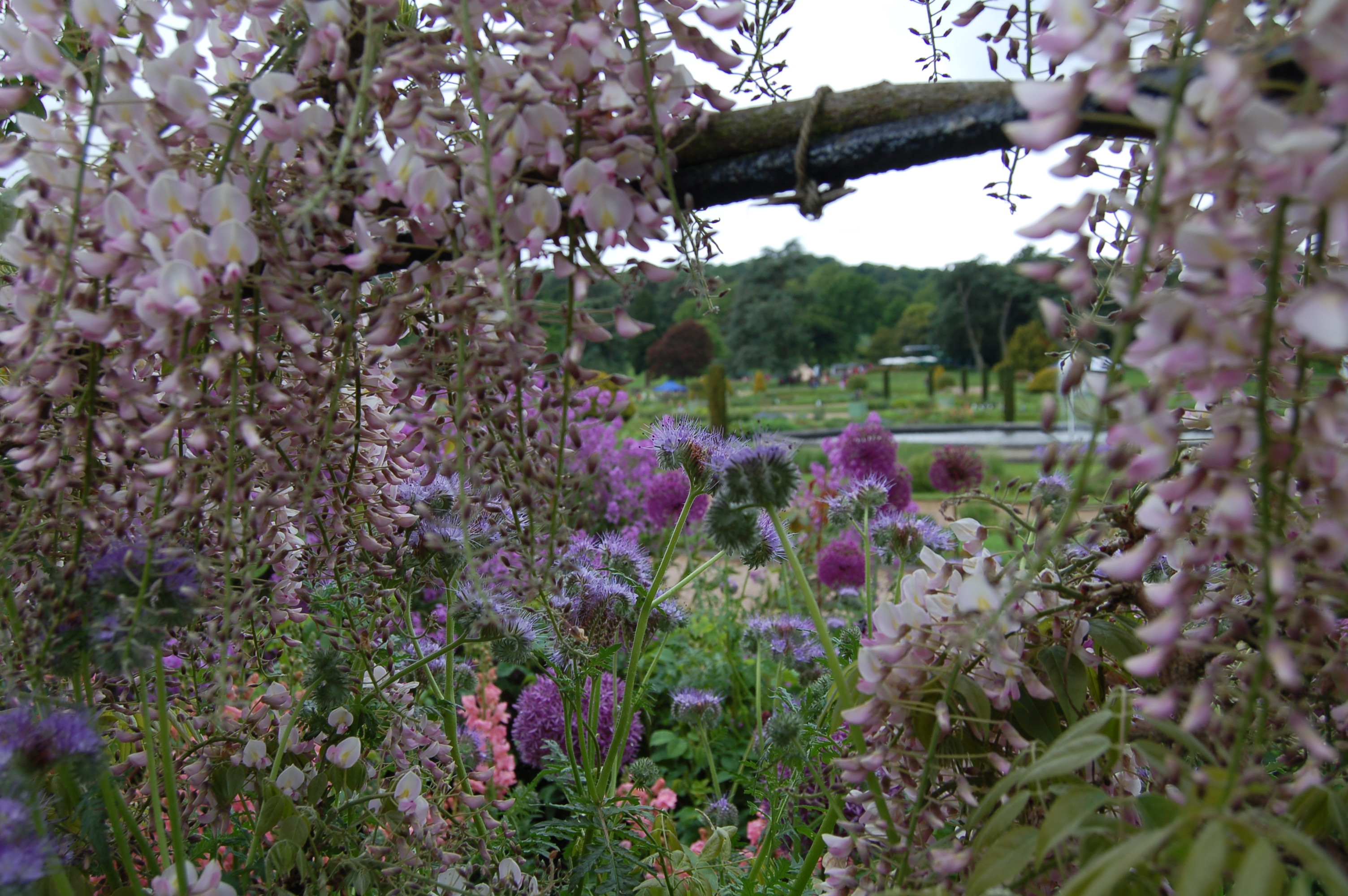
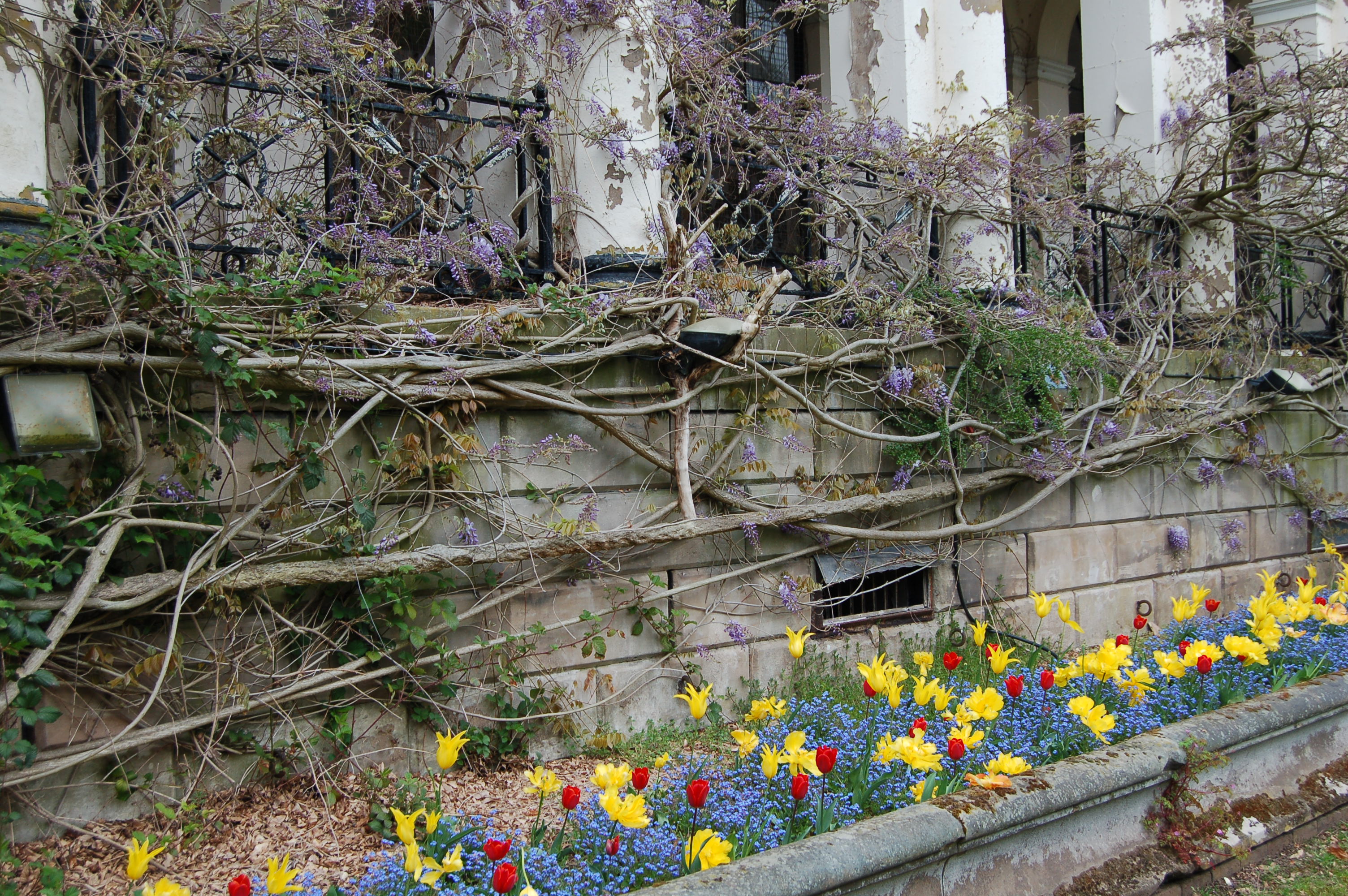
Wisterias were flowering as they climbed over the metalwork and added colour and scent to our walk.

2014 05 29_9864 2014 05 29_9865

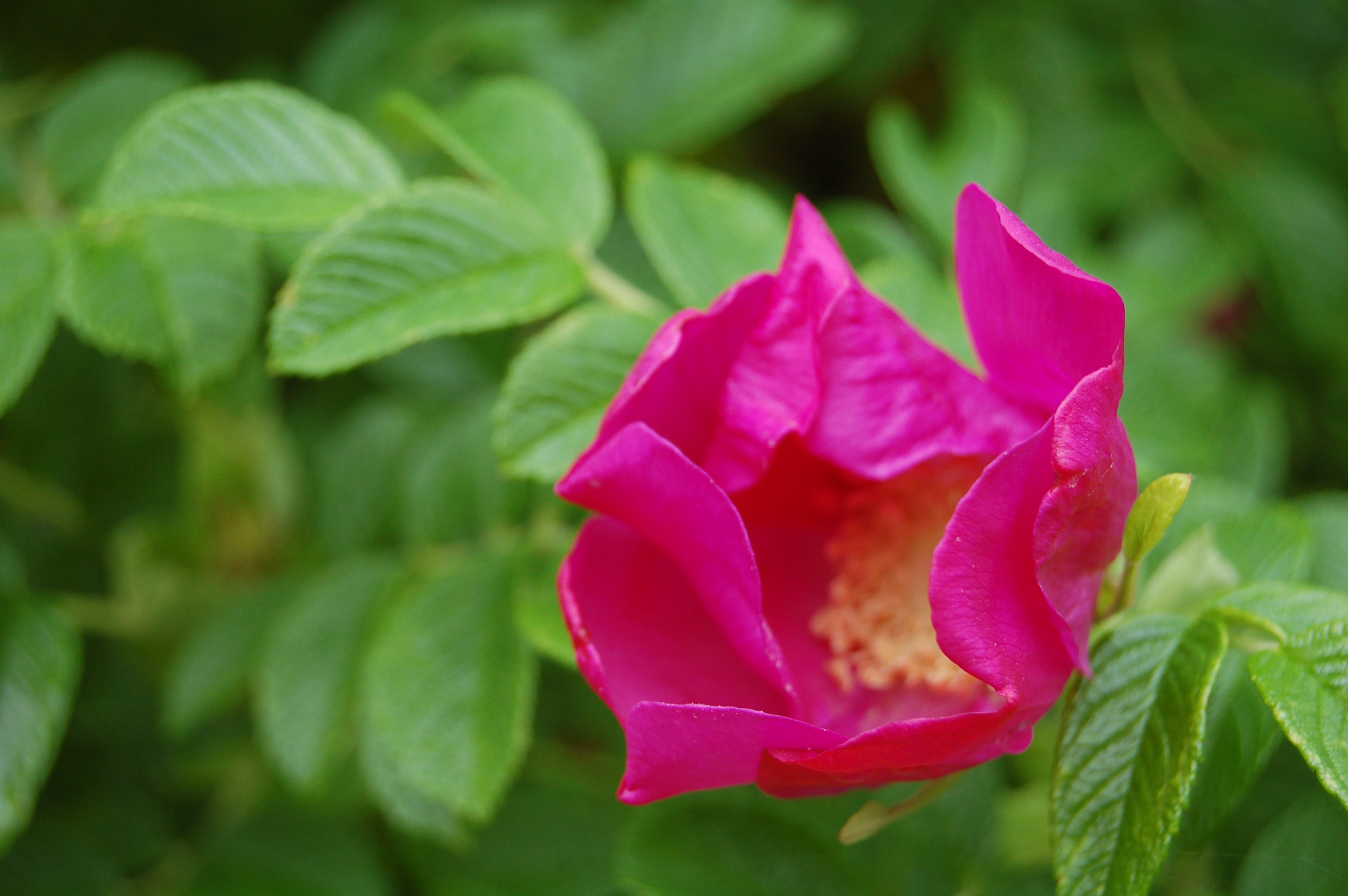
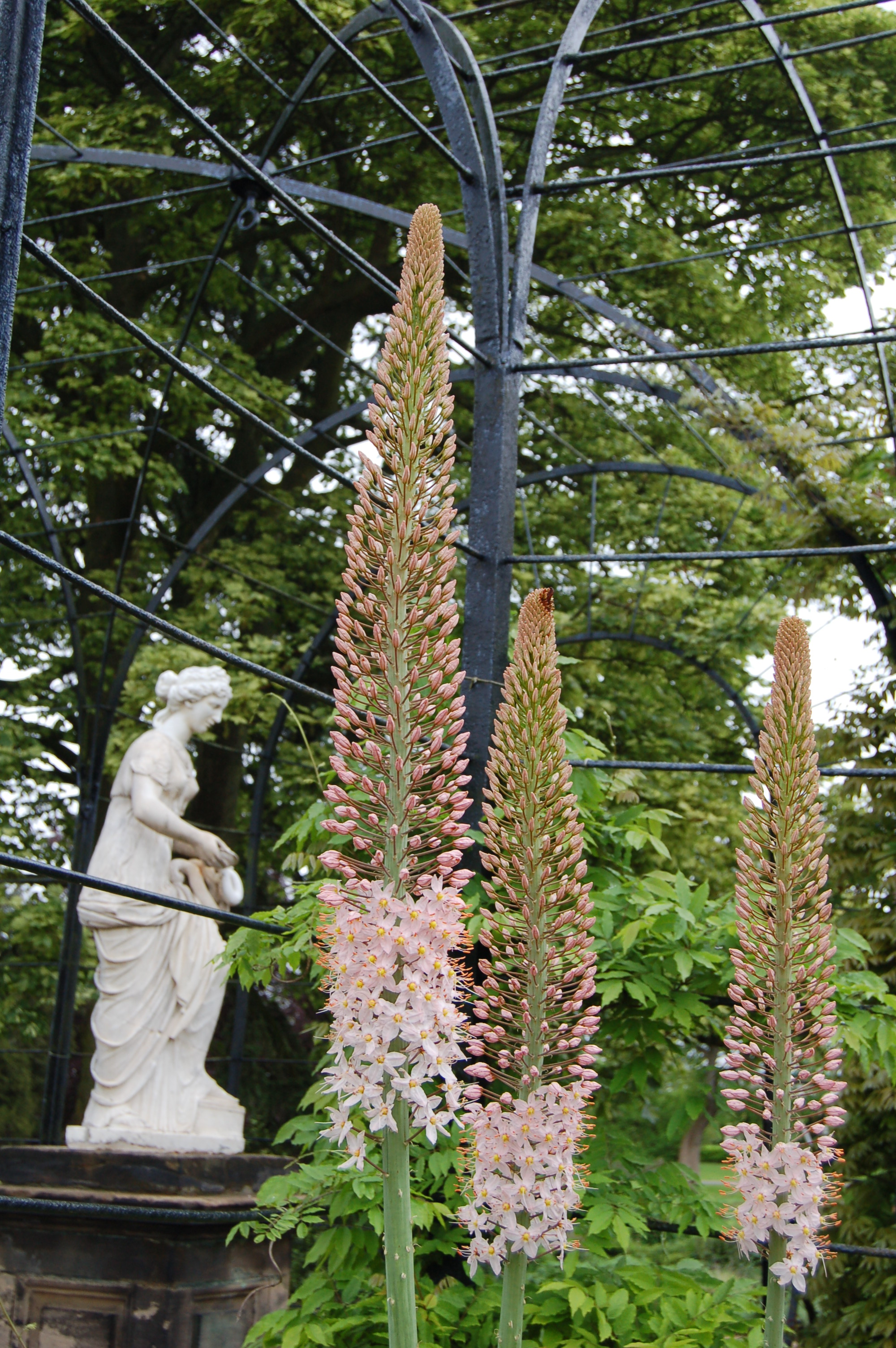
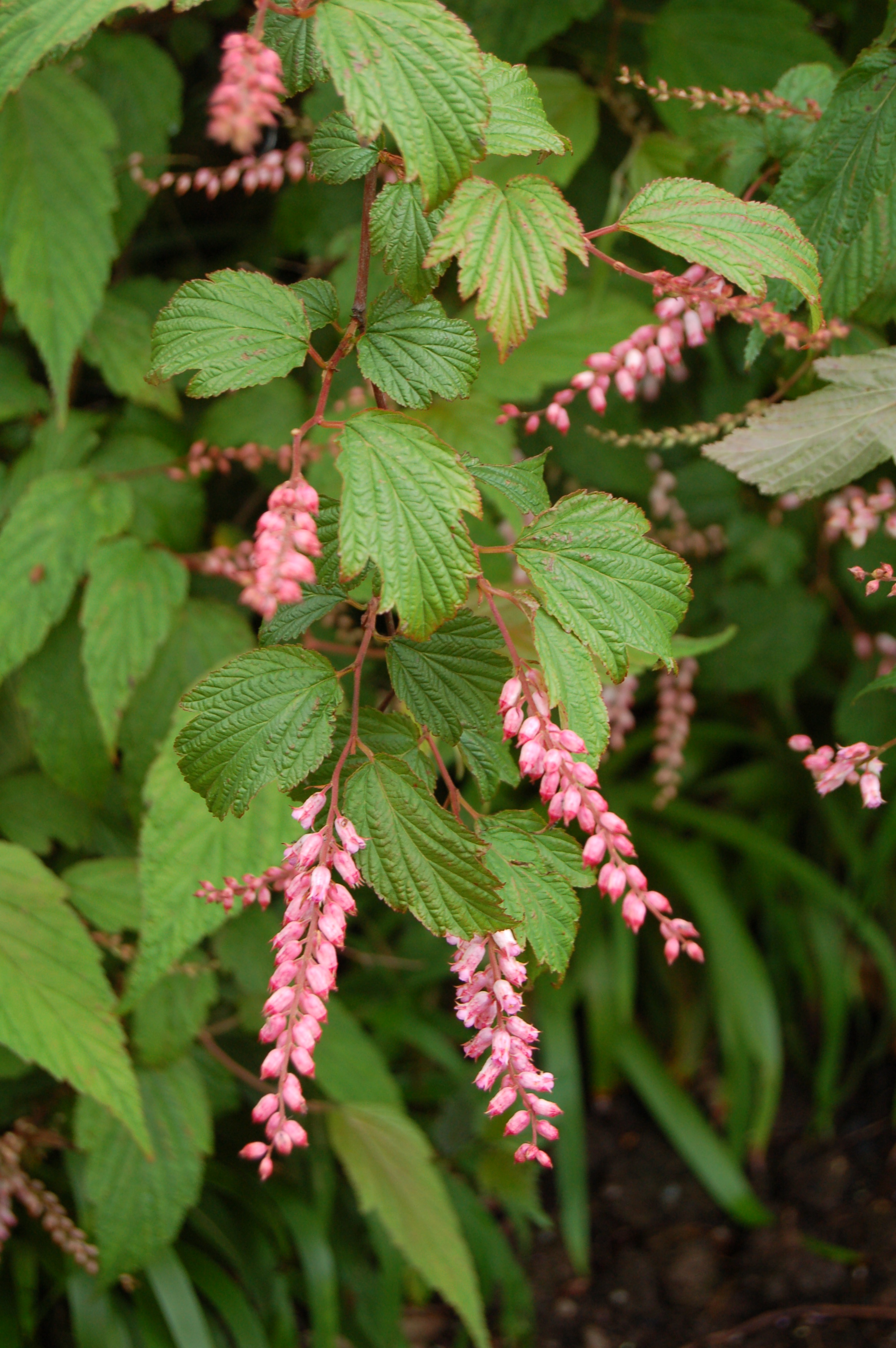
We came across this pink flowered shrub which although we had seen it before we could not remember what it was. It was a beautiful shrub. Any ideas?

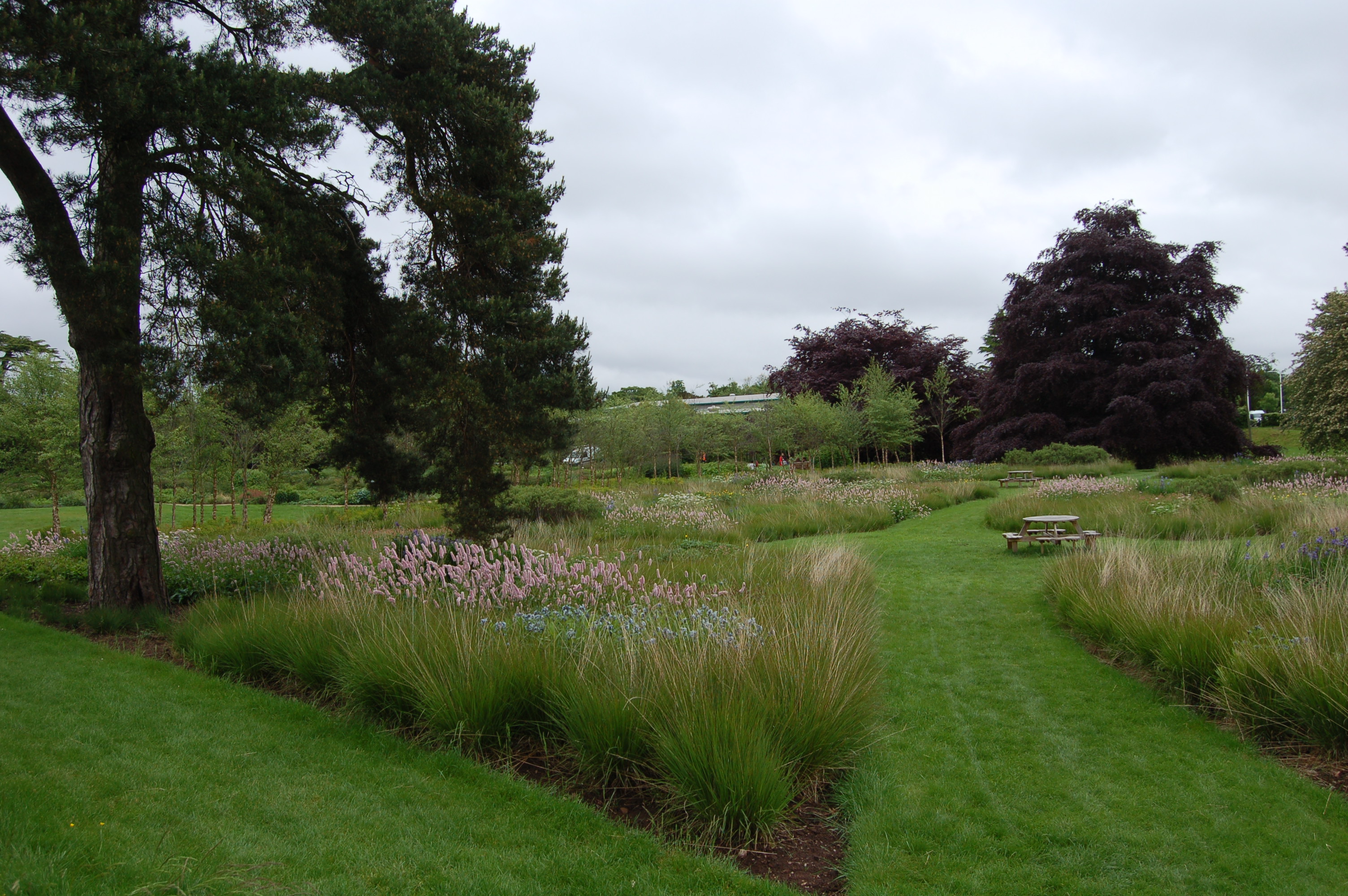
I finish our May wander of this amazing garden with a few views from the rose walk looking over the River of Grasses.

2014 05 29_9867 2014 05 29_9869 2014 05 29_9870 2014 05 29_9871


Categories
colours flowering bulbs fruit and veg garden buildings garden design garden photography garden ponds garden pools gardening gardens grow your own irises light light quality ornamental grasses ornamental trees and shrubs Shropshire shrubs succulents water garden water in the garden

Aiming for a year round garden – early summer.

Number four in this series of posts concerning our aim at ensuring that our garden all year round sees me and my trusty Nikon wandering the paths of our garden in the last week of May. so come with me and see what you think. Are we still on track?

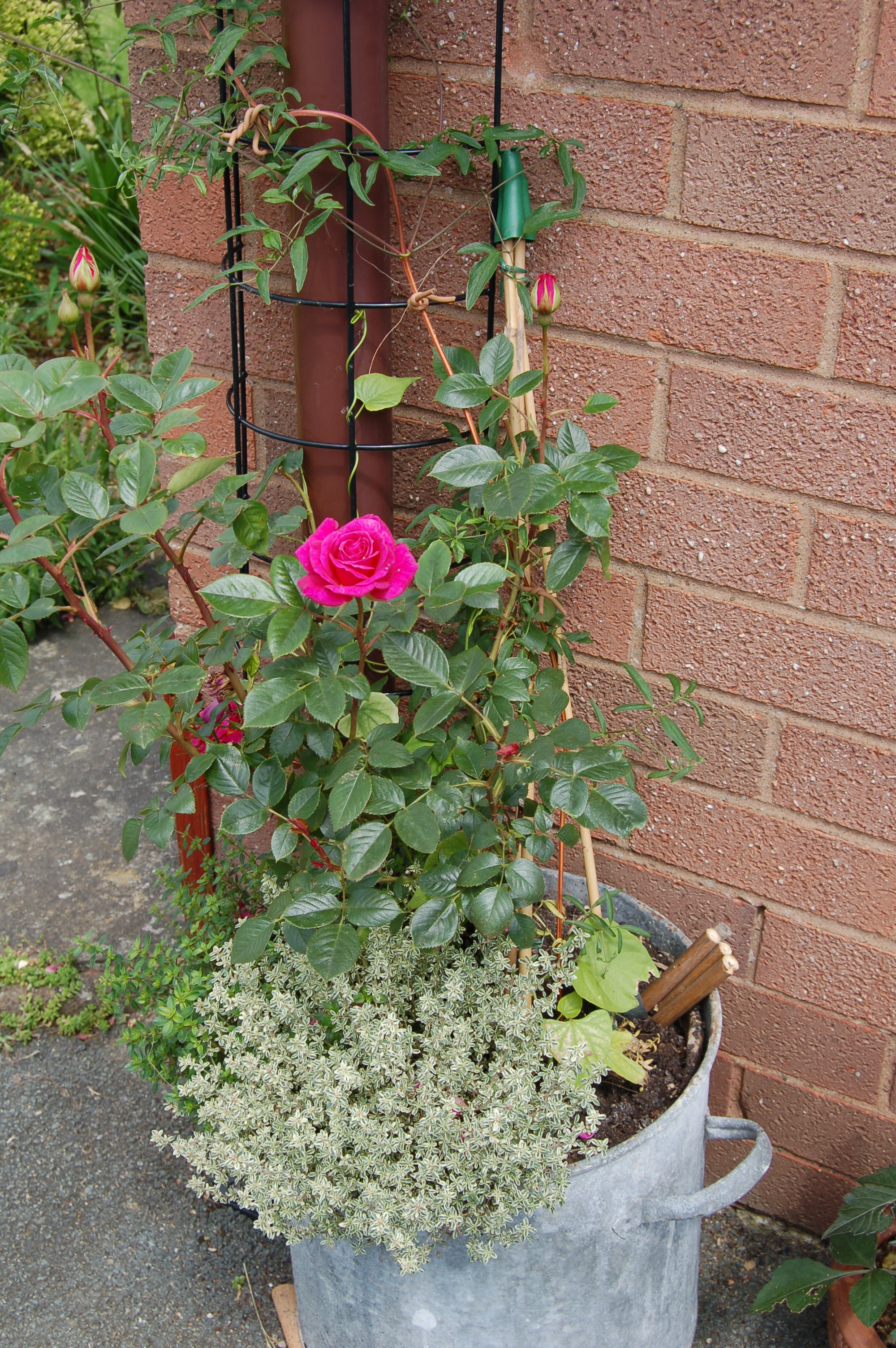
As usual we shall begin our wanderings in the front where right by the front door we find our personalised trug and our climbers growing in the old galvanised container. Opposite the front door the Freda Border is looking full of interest.

2014 05 27_9661 2014 05 27_9662

2014 05 27_9660

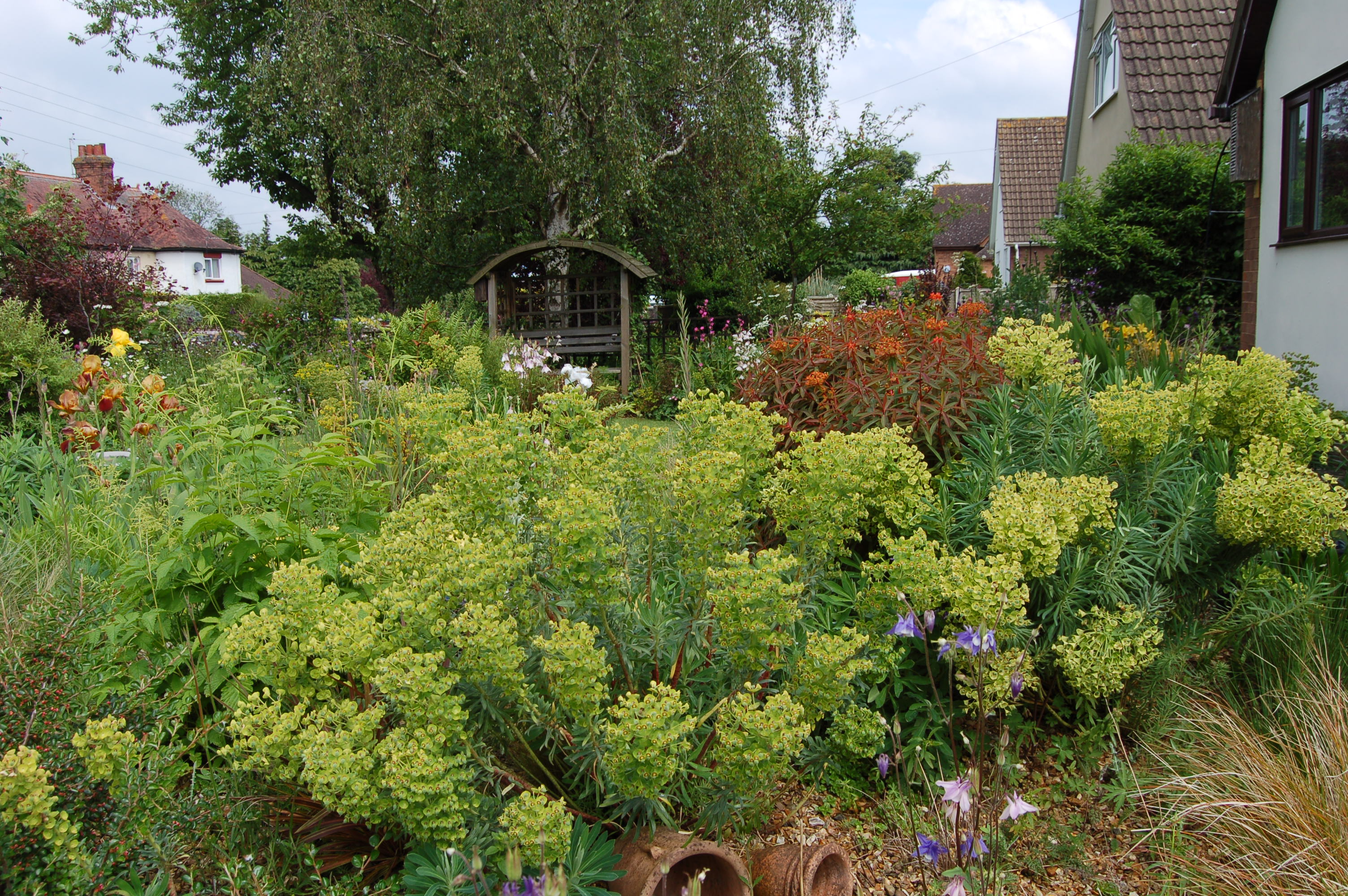
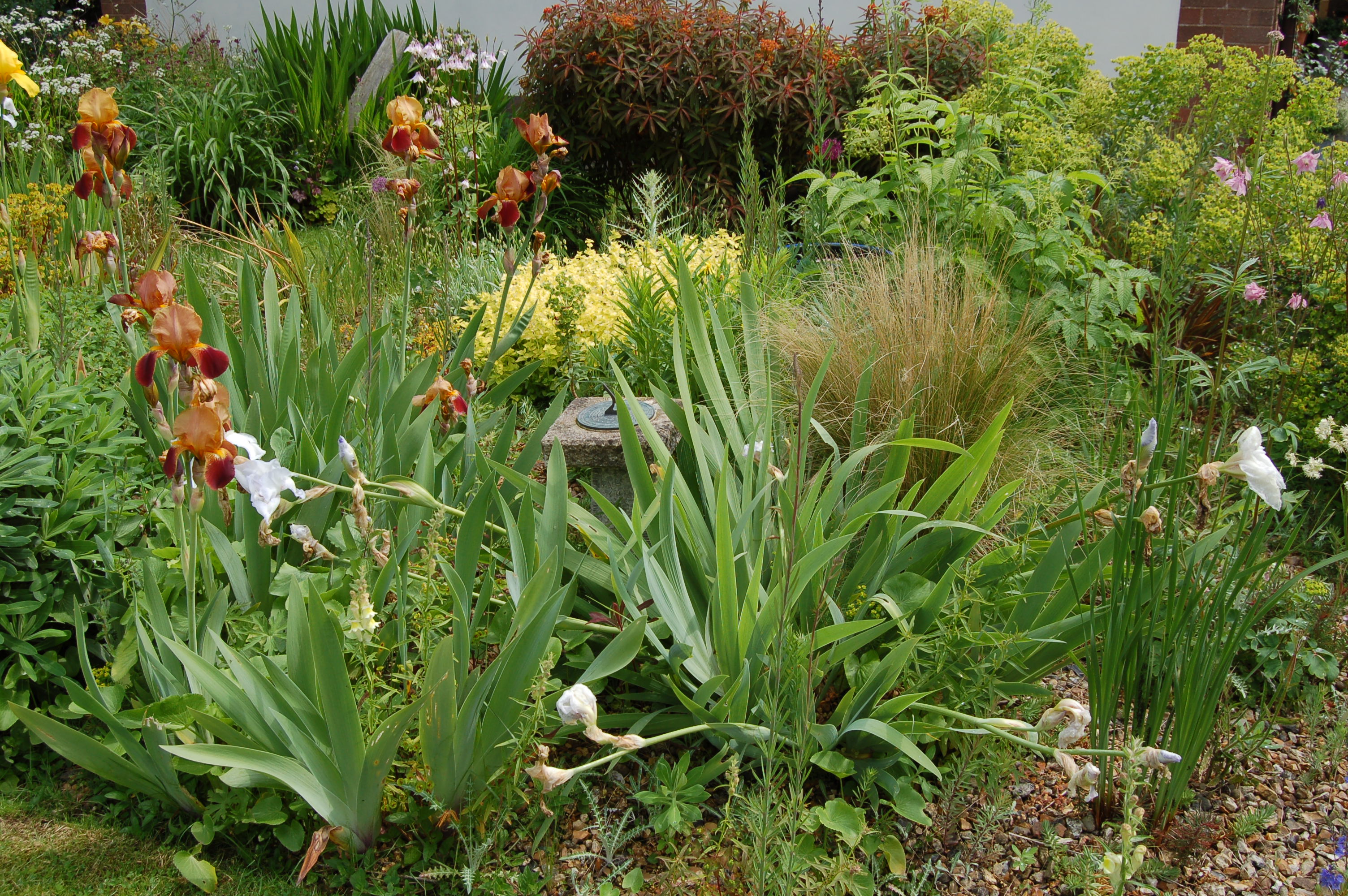
Round the front of the house the Chatto Garden seems full of chartreuse highlighted with brightly coloured Irises.

2014 05 27_9663 2014 05 27_9664 2014 05 27_9665 2014 05 27_9666 2014 05 27_9667 2014 05 27_9669 2014 05 27_9670 2014 05 27_9671 2014 05 27_9672

Our mixed borders are full of many different textures, shapes and colours provided by the herbaceous plants and the shrubs.

2014 05 27_9673 2014 05 27_9674

As we move into the back we find our lush colourful planting in the Secret Garden and the Chicken Bed. On a sunny day you need sunglasses to appreciate these areas.

2014 05 22_9497 2014 05 22_9503 2014 05 22_9504 2014 05 22_9505 2014 05 22_9506 2014 05 22_9507 2014 05 22_9508 2014 05 22_9509 2014 05 22_9535

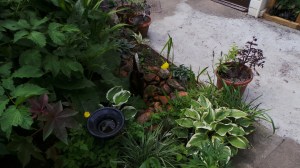
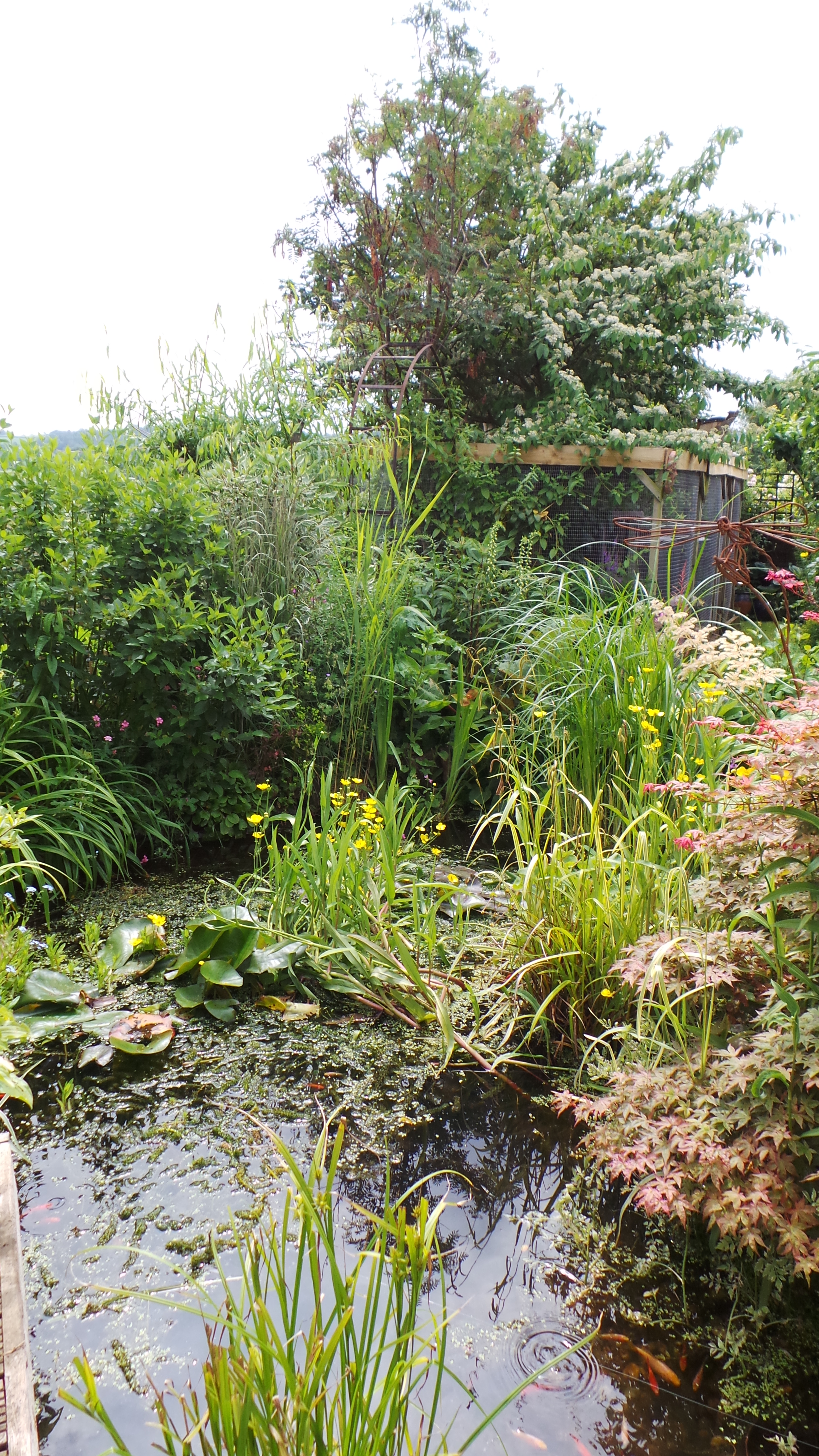
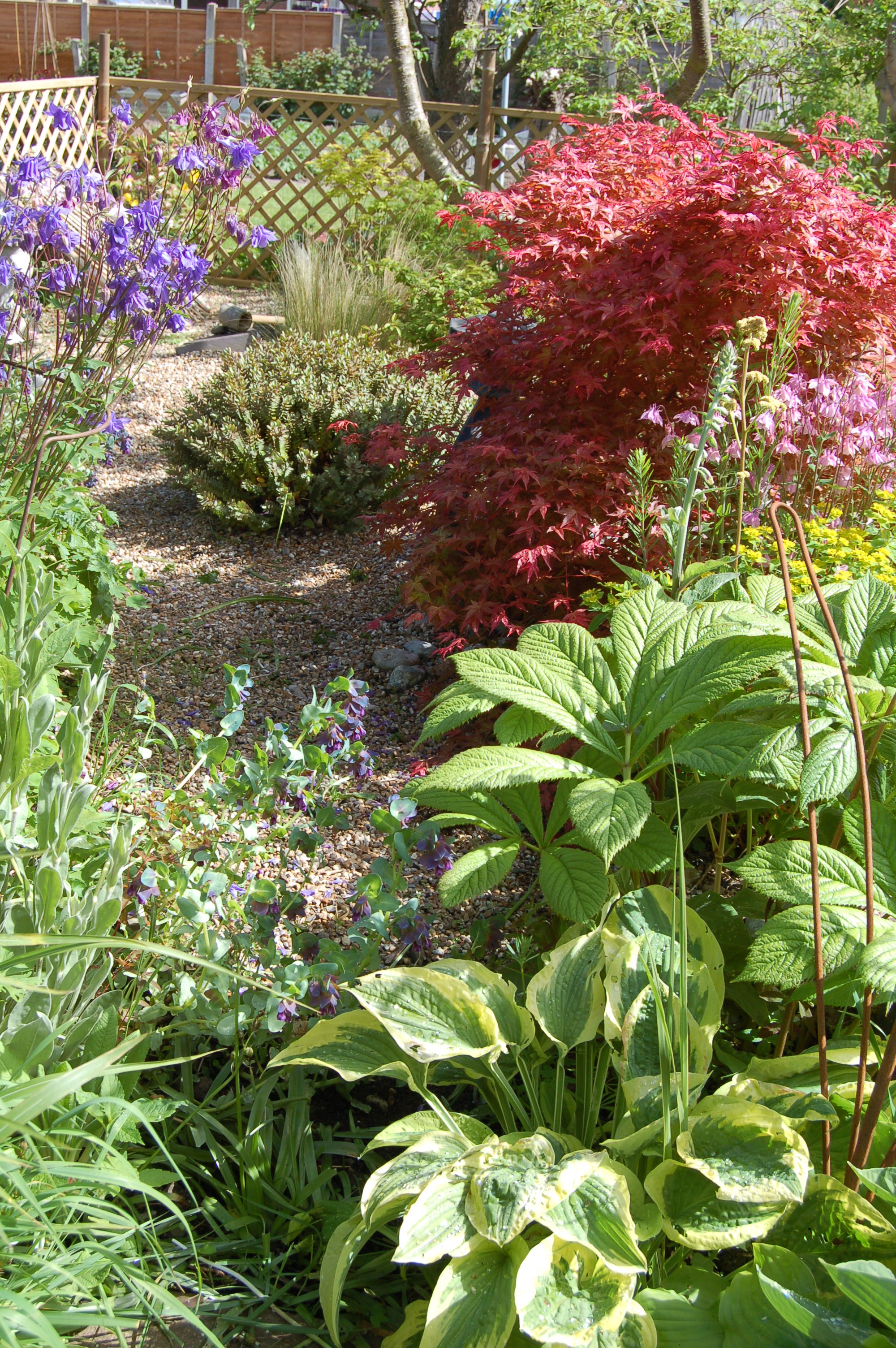
Down by the pool the Japanese Garden is dominated by the Acers but in the Bog Garden the big leaves of the Rheum and Hostas pick up any shaft of sunlight.

2014 05 22_9510  2014 05 22_95122014 05 22_9517 2014 05 22_9514

How about this for a self-seeder, an Anthirinum in the deepest pink possible with tiny splashes of yellow and orange growing alongside a red leaved Acer.

2014 05 22_9520

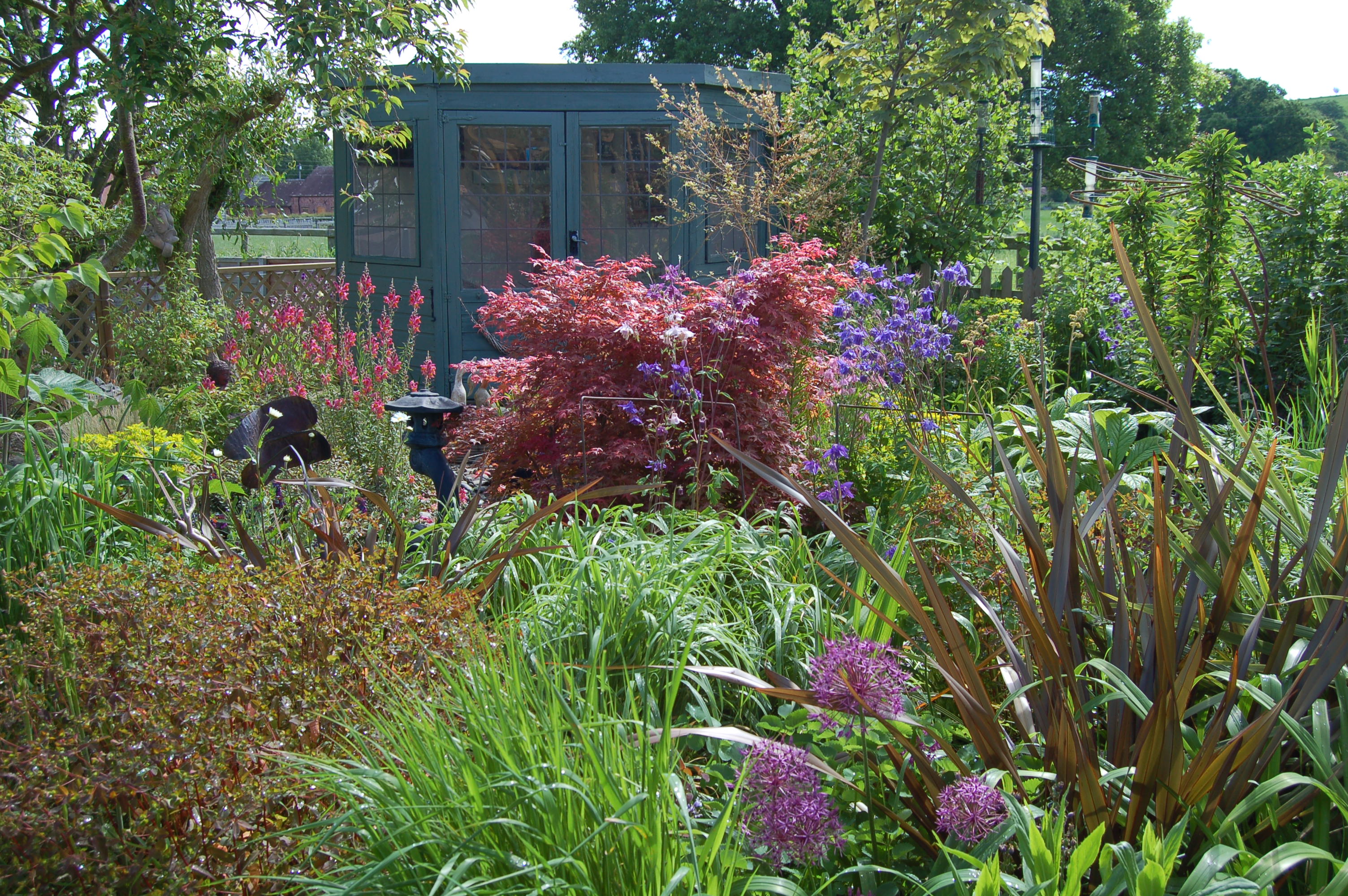
Looking from the Summerhouse the garden looks full of, so is now a lovely place to sit with a coffee and enjoy our hard work.

2014 05 22_9518 2014 05 22_9519

2014 05 22_9515 2014 05 22_9516     2014 05 22_9521 2014 05 22_9522 2014 05 22_9513 2014 05 22_9511

Moving back towards the greenhouse we can take a look at the Crescent Bed and around the Rill Garden. Just look at this little flower hovering above the leaves of the Aeonium.

2014 05 22_9524 2014 05 22_9526 2014 05 22_9527 2014 05 22_9523 2014 05 22_9525

From the Rill Garden we can see the Seaside Garden which we recently revamped.

2014 05 22_9528 2014 05 22_9530

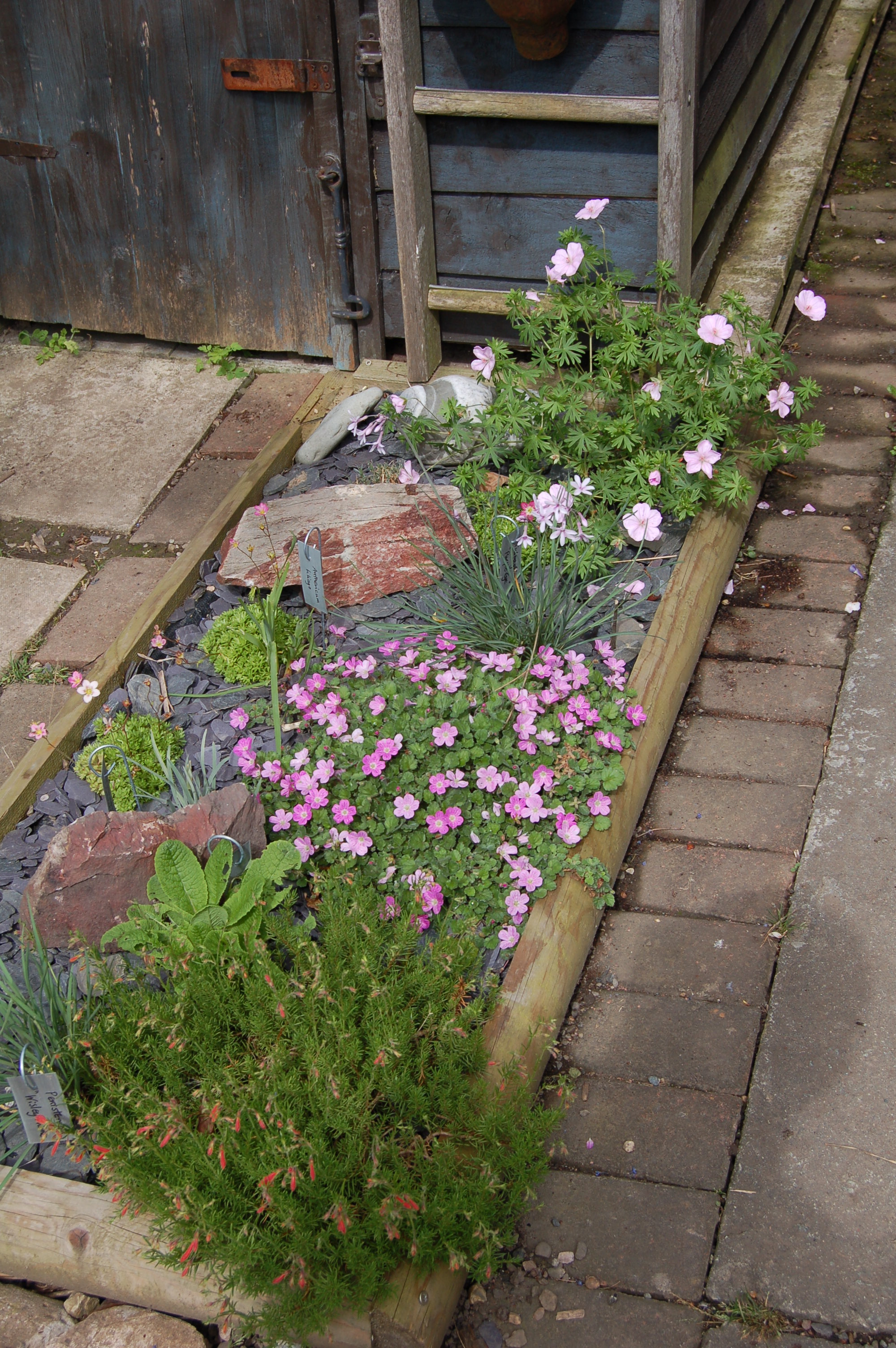
We often miss out the mini-gardens on our wandering blog posts so we shall have a look now at the Fern Border, Shed Slate Garden, the Salad Beds and the Slate Scree Garden.

2014 05 22_9529  2014 05 22_9532 2014 05 22_9533  2014 05 22_9536

So there we have it, our garden in early Summer. We hope it is still looking good. The next post in this series will be in mid-Summer when we shall be fast approaching our first ever opening under the National Garden Scheme. Seeing our own garden in the famous Yellow Book certainly makes you look closely at our garden.

Categories
colours garden design gardening gardens grasses hardy perennials ornamental grasses succulents

Our New Planting Boxes

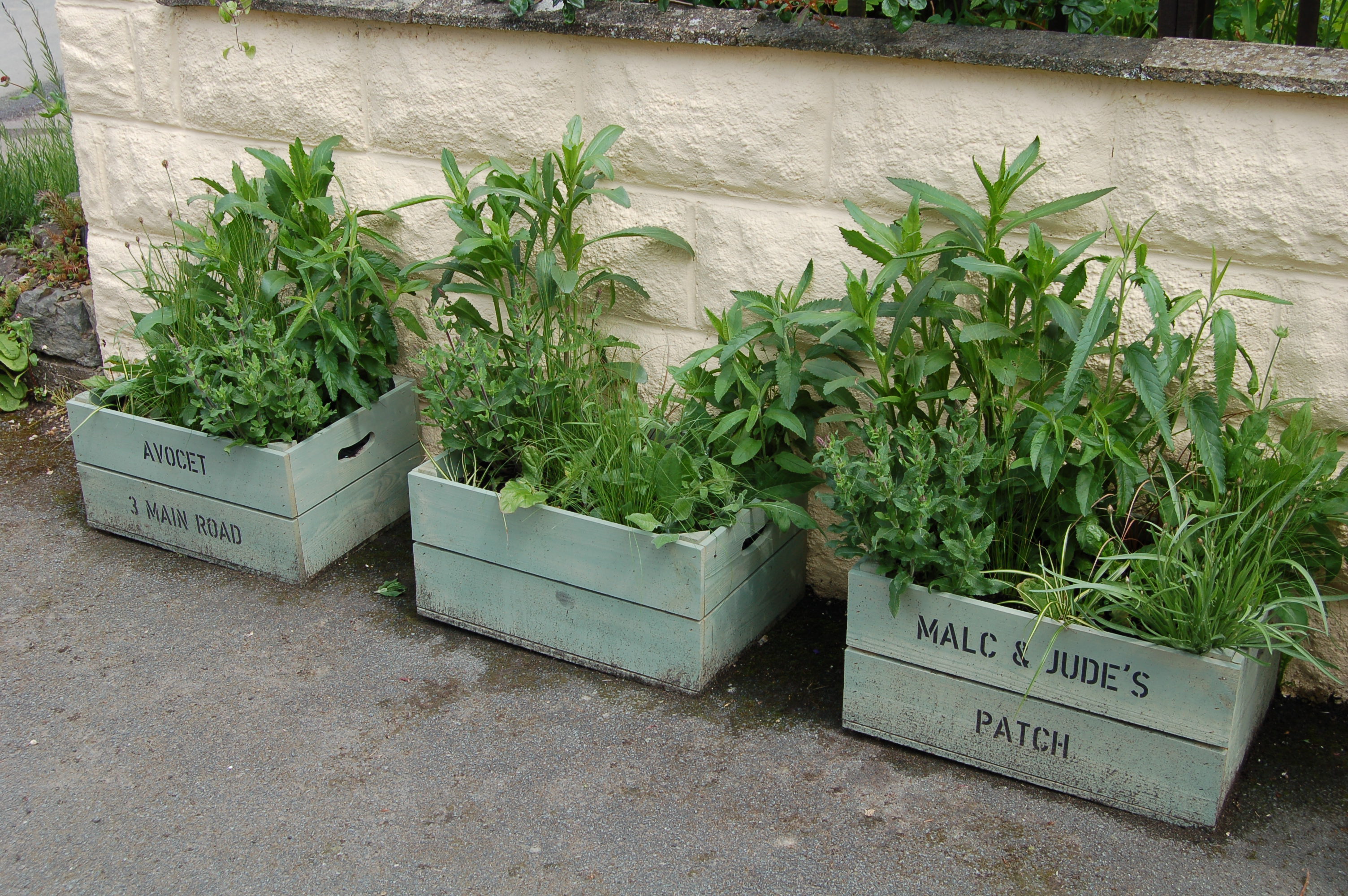
We must all have parts of our garden which disappoint us every time we pass by. Our disappointing bit is a part of the garden we not only walk past but also drive past as we enter our property and it is the first thing visitors see. We have a gateway at the end of our drive with a walk creating a funnel effect. Sadly this wall is not made from beautiful stone or old brick but dingy old 1960’s reconstituted stone or perhaps even concrete. It is an eyesore and at last we have got around to doing something about it – it has only taken 11 years to get started!

We decided to paint the wall a pale cream to match the house and then place some planters in front of it. We hope this will create a feeling of a warm welcome as you enter the driveway.

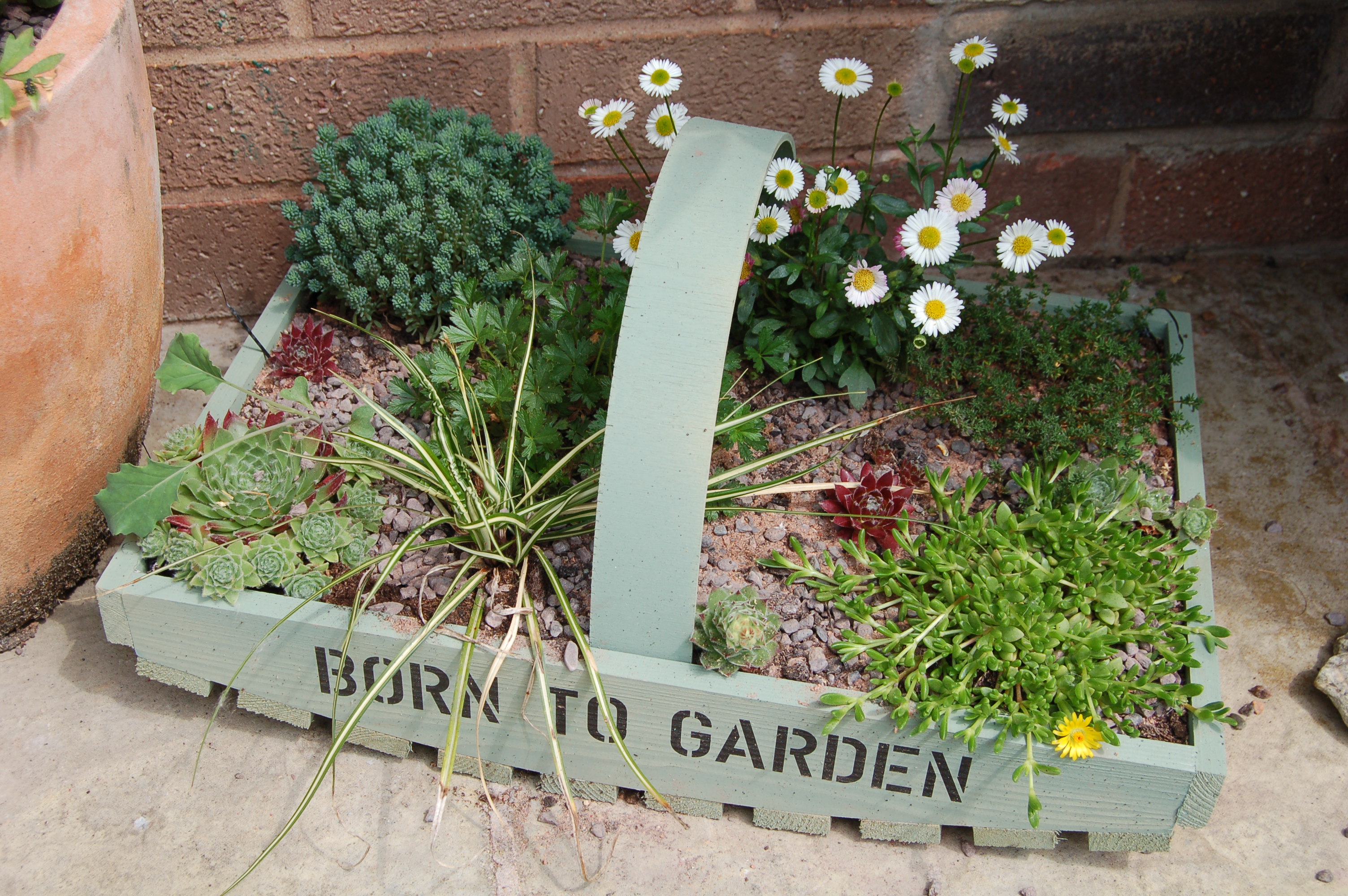
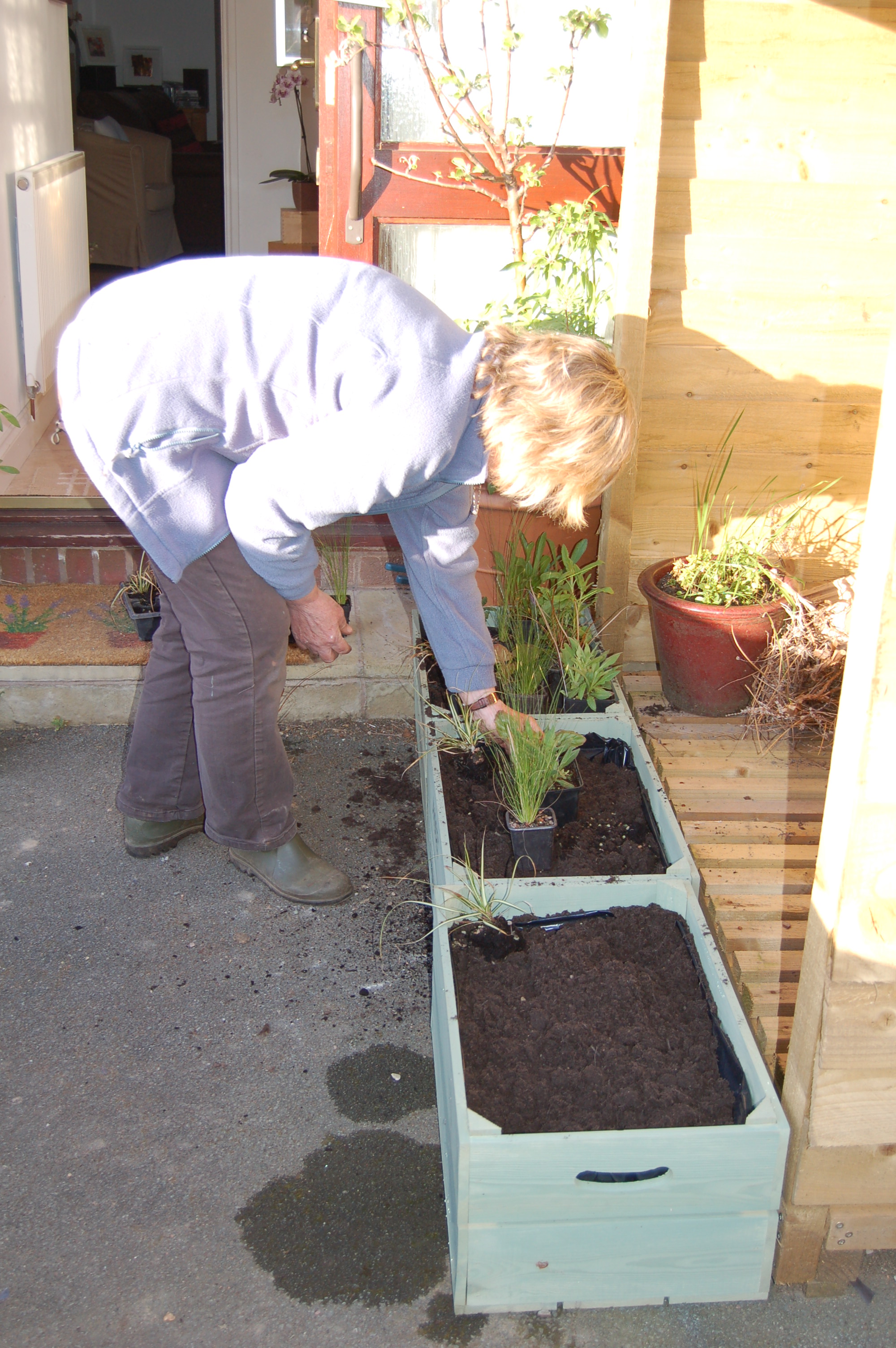
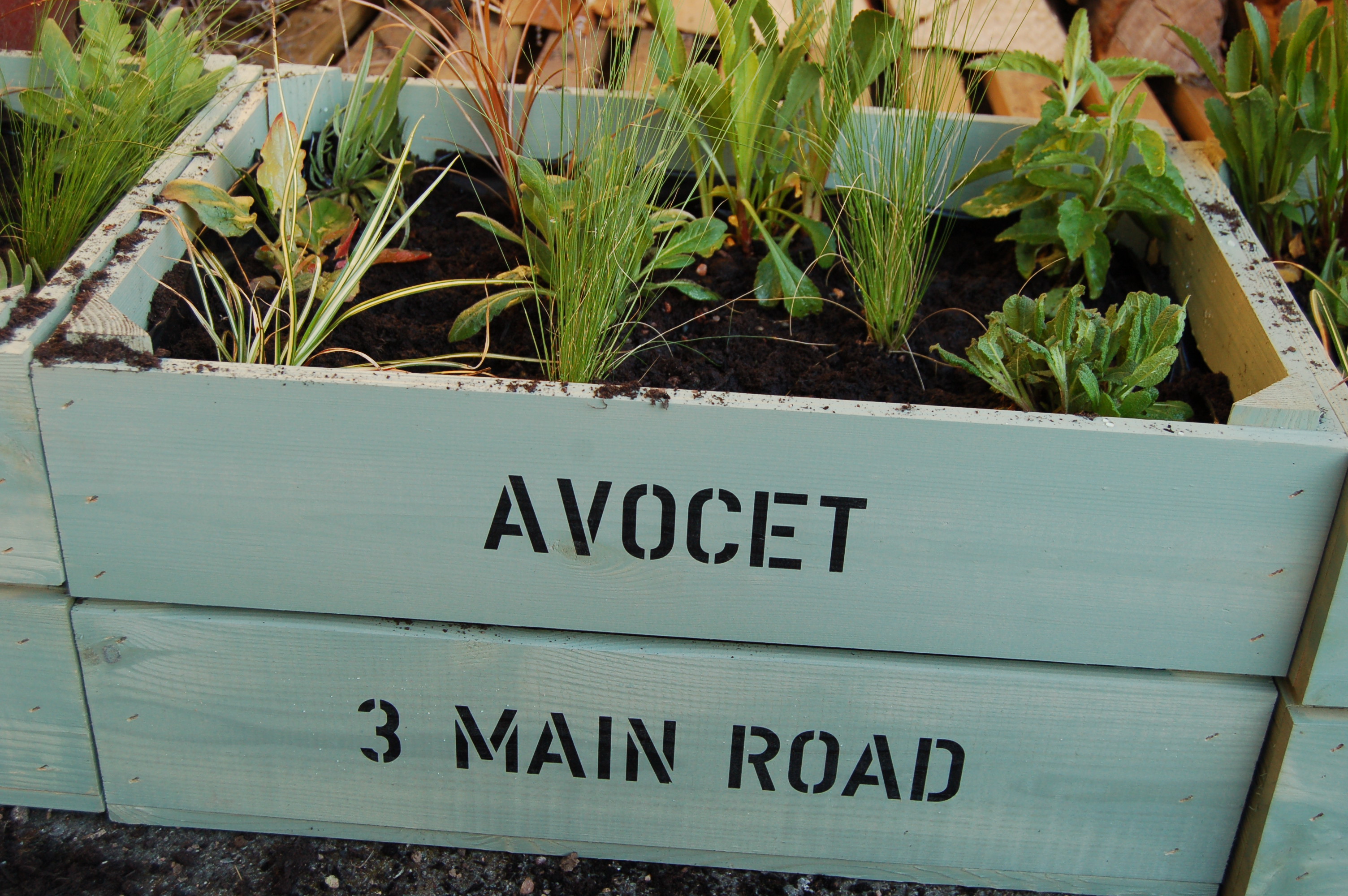
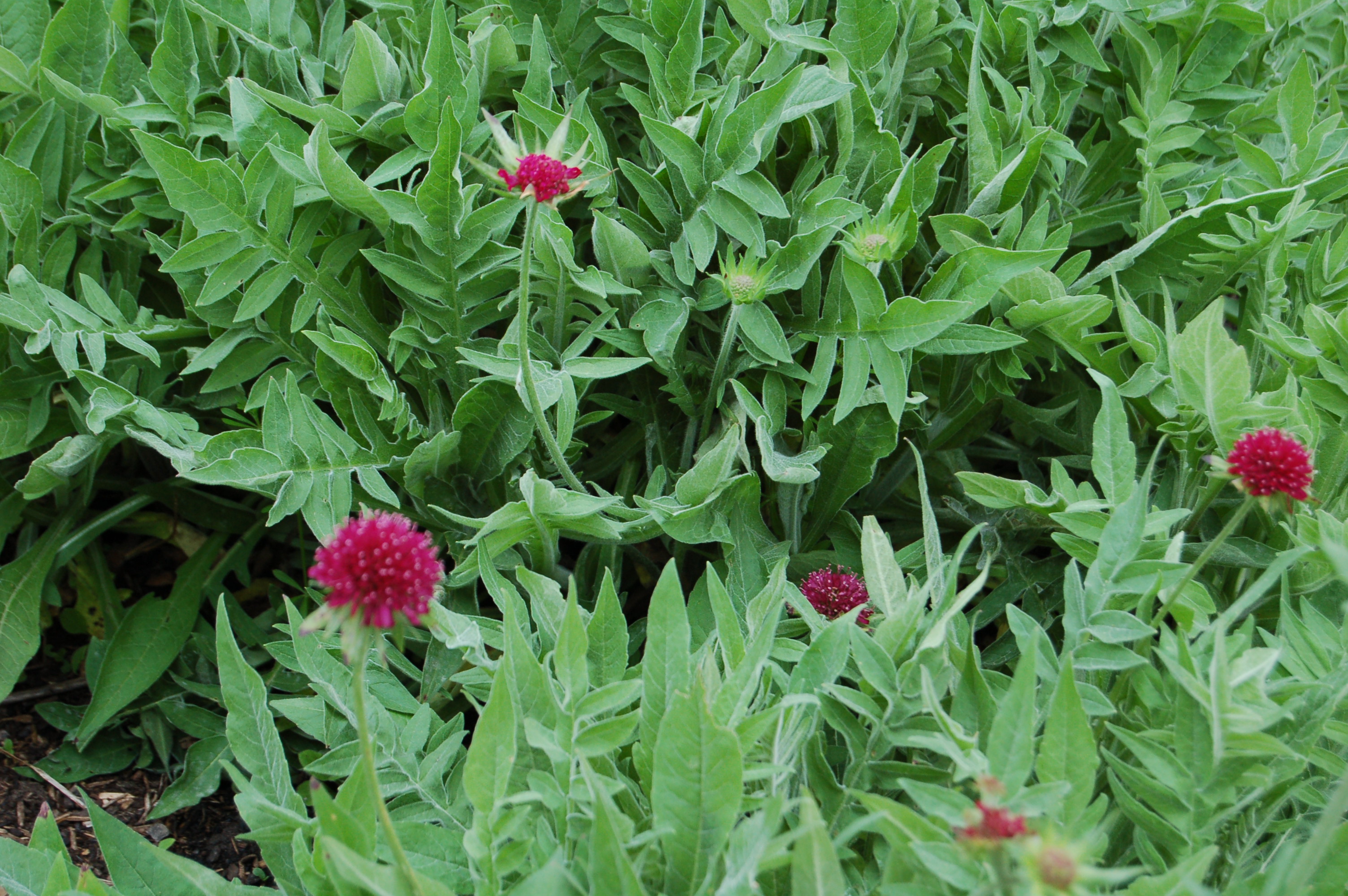
We bought three personalised planting boxes and a trug and went off to our favourite nursery, where after our usual coffee and carrot cake we bought a selection of perennials for the boxes and alpines for the trug. We bought 3 each of five different perennials and planted them out with our own seedlings of grasses which Jude had nurtured and brought on to suitable size. The perennial hardy herbaceous plants we bought were Catananche caerulea “Alba” with white flowers similar to cornflowers with the added interest of contrasting dark purple centres and yellow stamens, Salvia superba  with its bright purple-blue spikes of flowers, Knautia macedonica with deep red “pin cushion” flowers, Veronica longifolia “Blue” the tallest of all with its elegant spikes held 3 feet high and the lovely white daisy Leucanthemum superbum “Alaska”. Fingers crossed now that they thrive in our boxes and give a warm welcome to our summer visitors.

2014 04 18_8217  2014 04 18_8219 2014 04 18_8220 2014 04 18_8221 2014 04 18_8222 2014 04 18_8223   2014 04 18_8224 2014 04 18_8218

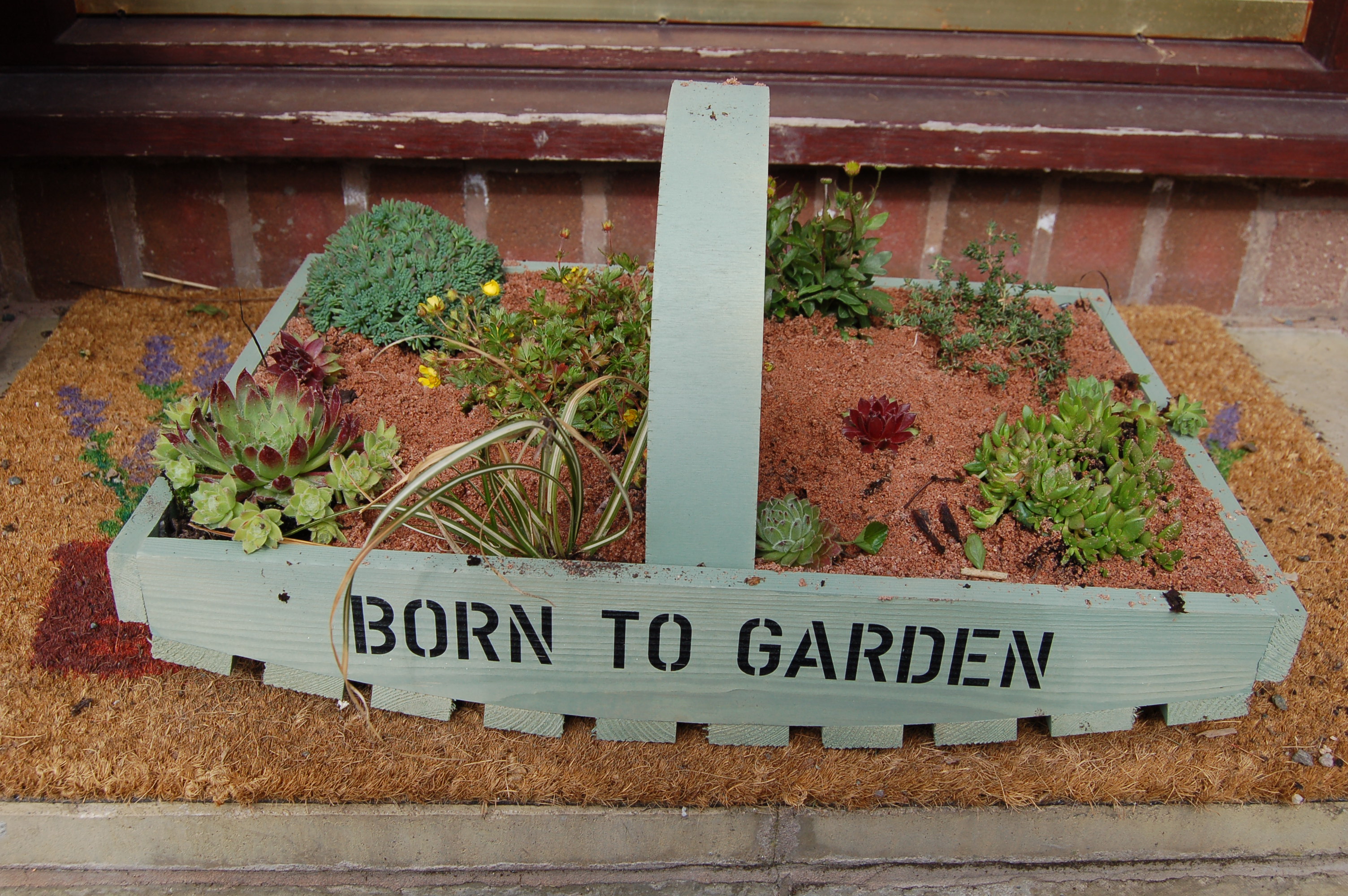
As well as the boxes we had a wooden trug stenciled with the words “born to garden”. This was a saying I first saw when visiting a Yellow Book open garden a few years ago. There the phrase was on a sign cut from wood and displayed on the inside wall of a summer house. I sought out the gardener to ask where he had found the sign but he was unable to help as it was a gift. And I have been looking out for it ever since. when we ordered our personalised boxes it seemed a good opportunity to make our own version.

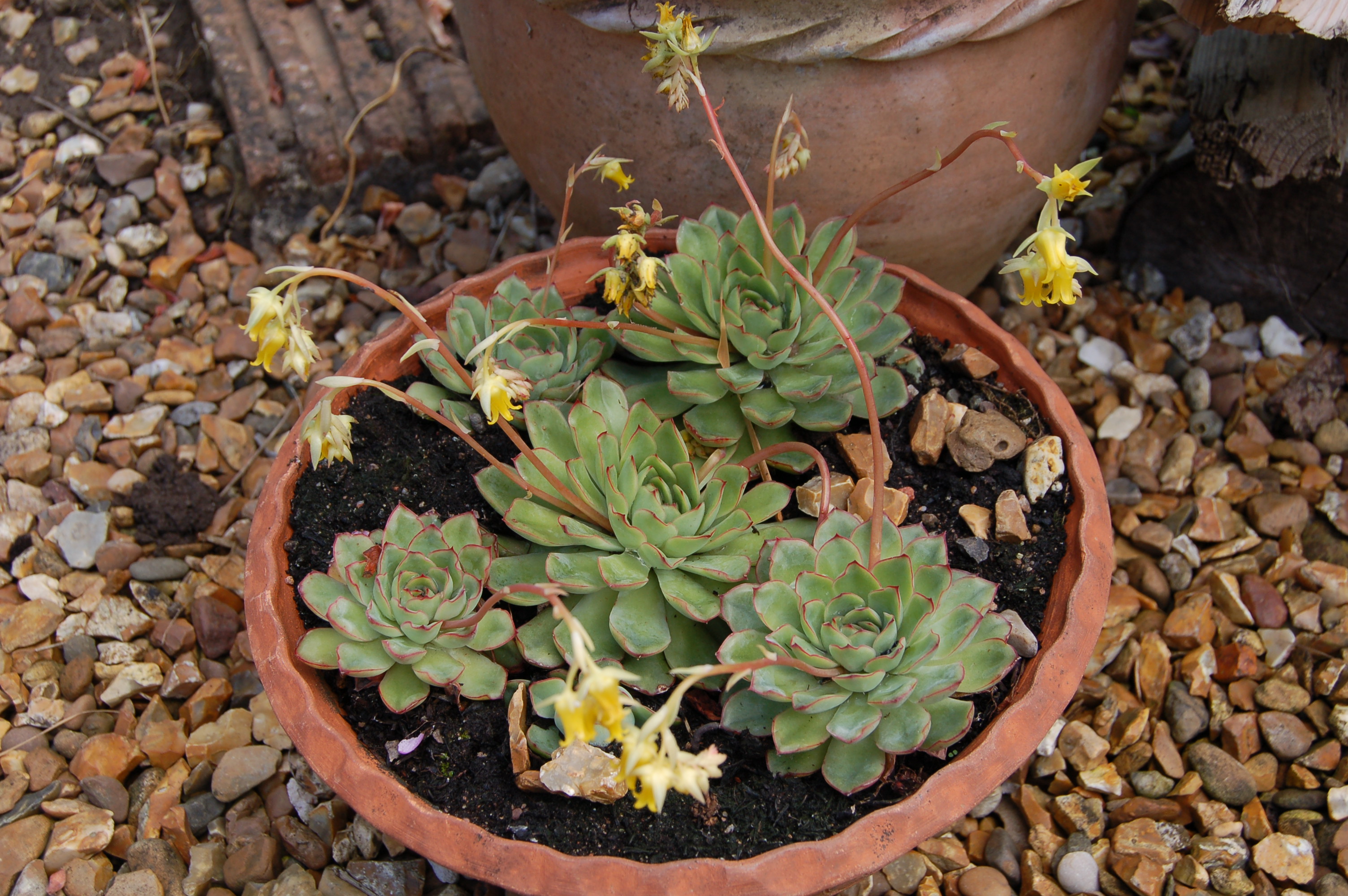
We planted a selection of alpines and succulents in it after adding a mixture of grit and multi-purpose compost – Frankenia thymifolia with its small pink flowers, Sedum glaucophyllum “Lizard a succulent which forms a low mound of rosettes with tiny white flowers in the summer, Delosperma nubigenum with its vivid yellow daisy like flowers, Sempervivum x fauconetti a house leek with a  spider web covering, a yellow flowered alpine Potentilla and the tiny daisy Erigeron karvinskianus “Profusion”.

2014 04 19_8225 2014 04 19_8226

2014 04 19_8228 2014 04 19_8227

We left all the new plants to settle into their new homes in the shelter of our wood-store before putting them in their final homes by the newly painted new gateway wall.

Just a month later they look like this – can’t wait to see them in flower!

2014 05 27_9668

Categories
colours flowering bulbs garden design garden photography garden ponds garden pools garden seating gardening gardens hardy perennials irises light quality ornamental grasses ornamental trees and shrubs poppies Shropshire shrubs spring bulbs spring gardening succulents water garden water in the garden

Aiming for a year round garden – late spring.

It is only a few weeks since I published my post looking at our garden in early spring, but it is time for another look to see how we are doing where our aim of trying to establish a year round garden is concerned. It is amazing how much has changed in that time.

Come for awalk with me and my camera!

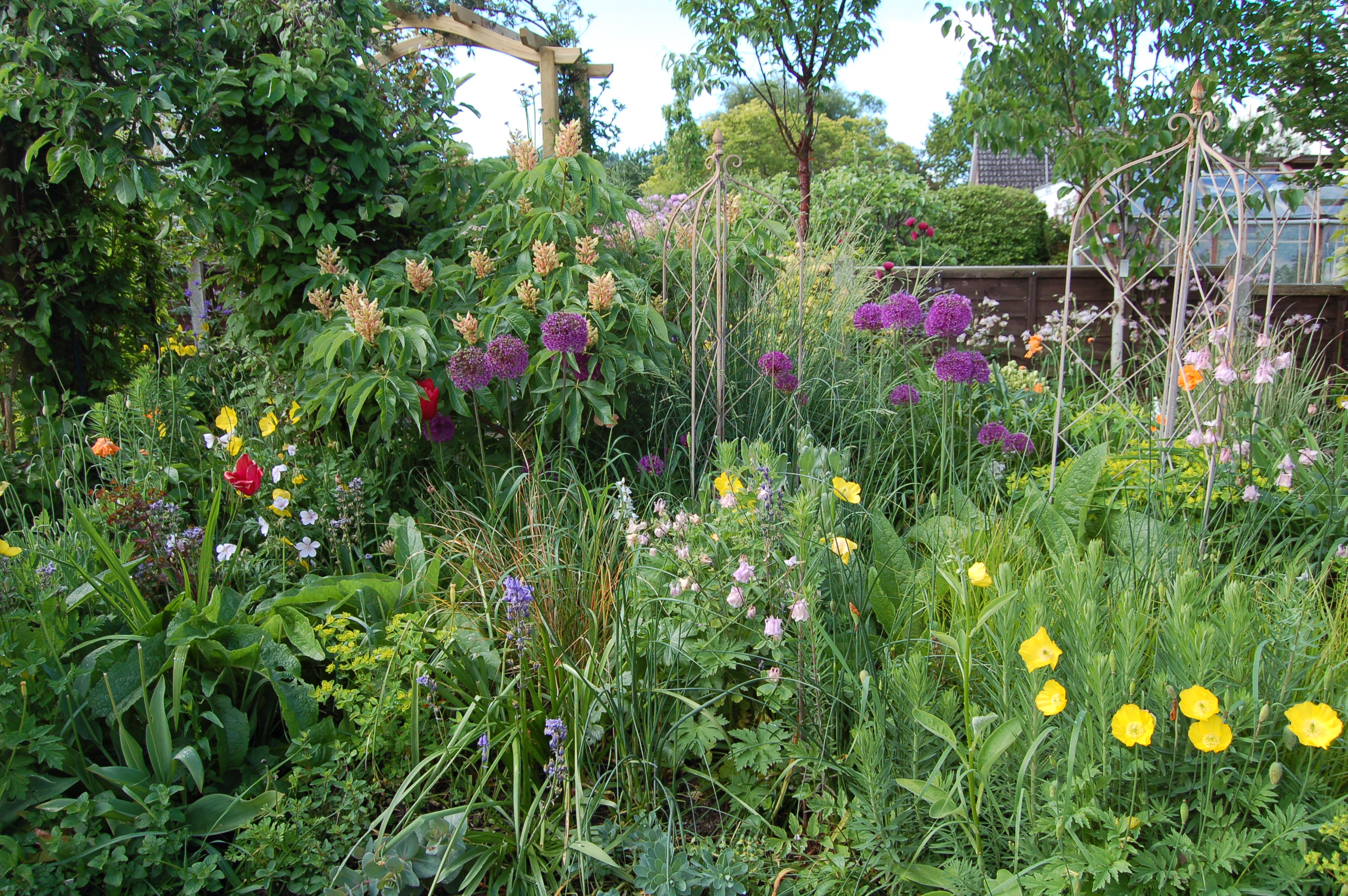
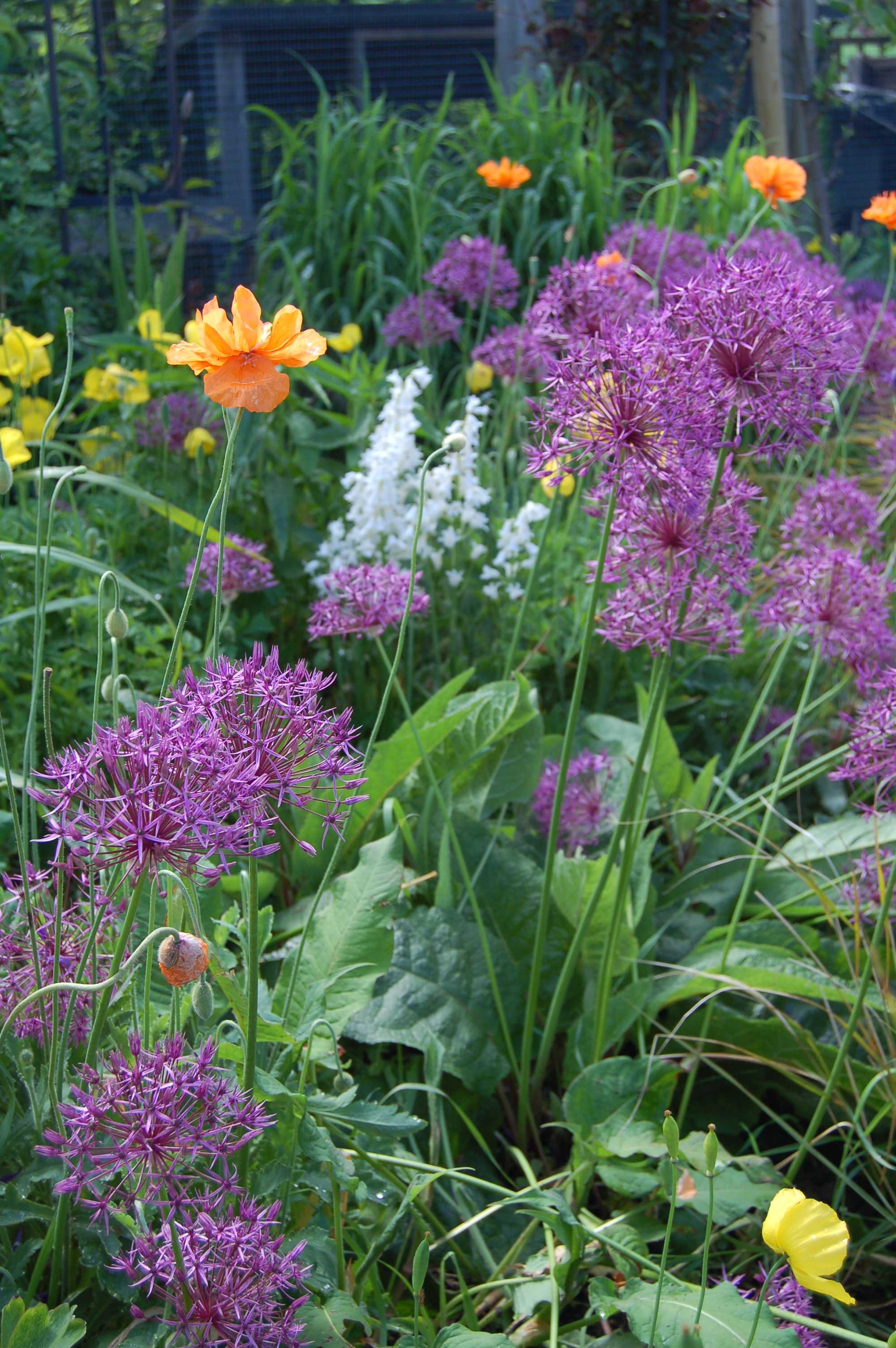
Let us start in the front garden with a look at our gravel garden, The Beth Chatto Border, where we find the brightest of colours radiating from various Euphorbias. In sharp contrast a near black Iris crysophagres has flowers of the darkest indigo.

2014 05 03_8852 2014 05 03_8853

2014 05 03_8854 2014 05 03_8858

2014 05 03_8859

2014 05 03_8860 2014 05 03_8866

In the other borders in the front garden the last of the spring bulbs mingle with the earliest of the herbaceous perennials.

2014 05 03_8855 2014 05 03_8856

2014 05 03_8857 2014 05 03_8864

2014 05 03_8868 2014 05 03_8861

2014 05 03_8862 2014 05 03_8865

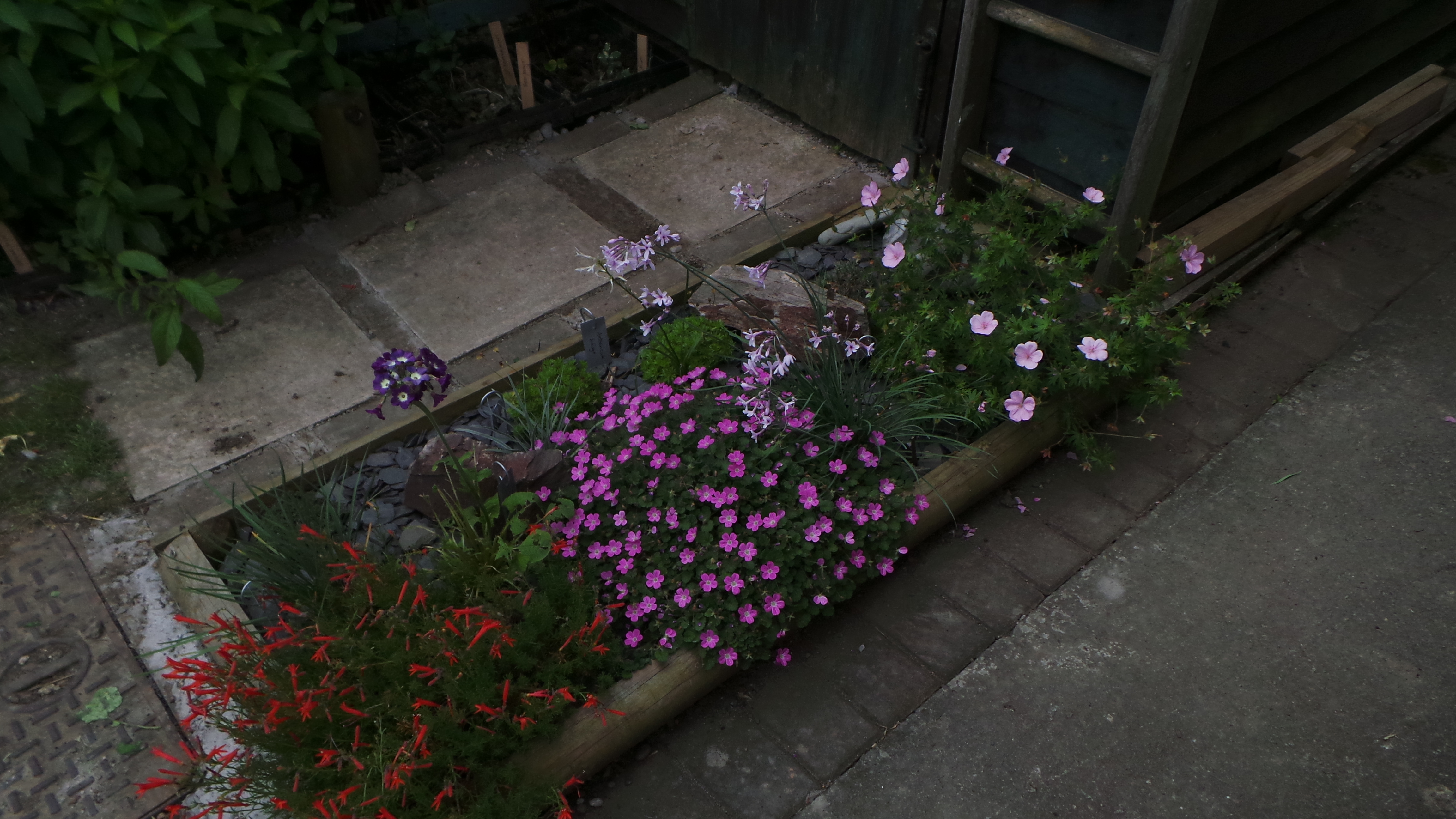
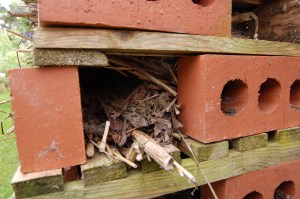
The Shed Bed also rings with the colour of Euphorbia and the newly revamped water feature gives a gentle bubbling sound for us to enjoy. This water feature is created from metal objects we dug up when we first made the garden and we have now planted miniature Hostas and different varieties of Tricyrtis around it. The view down the path to the chickens is framed by the richest of blues of the Ceanothus. The little slate border by the shed is displaying the first flower on our Tulbaghias along with the tiny pink blooms of the Erodium. In the insect hotel a pair of Dunnock have built their nest just a few inches above the ground and about 6 inches from the path.

2014 05 03_8845 2014 05 03_8878

2014 05 03_8879 2014 05 03_8846

2014 05 03_8848 2014 05 03_8847

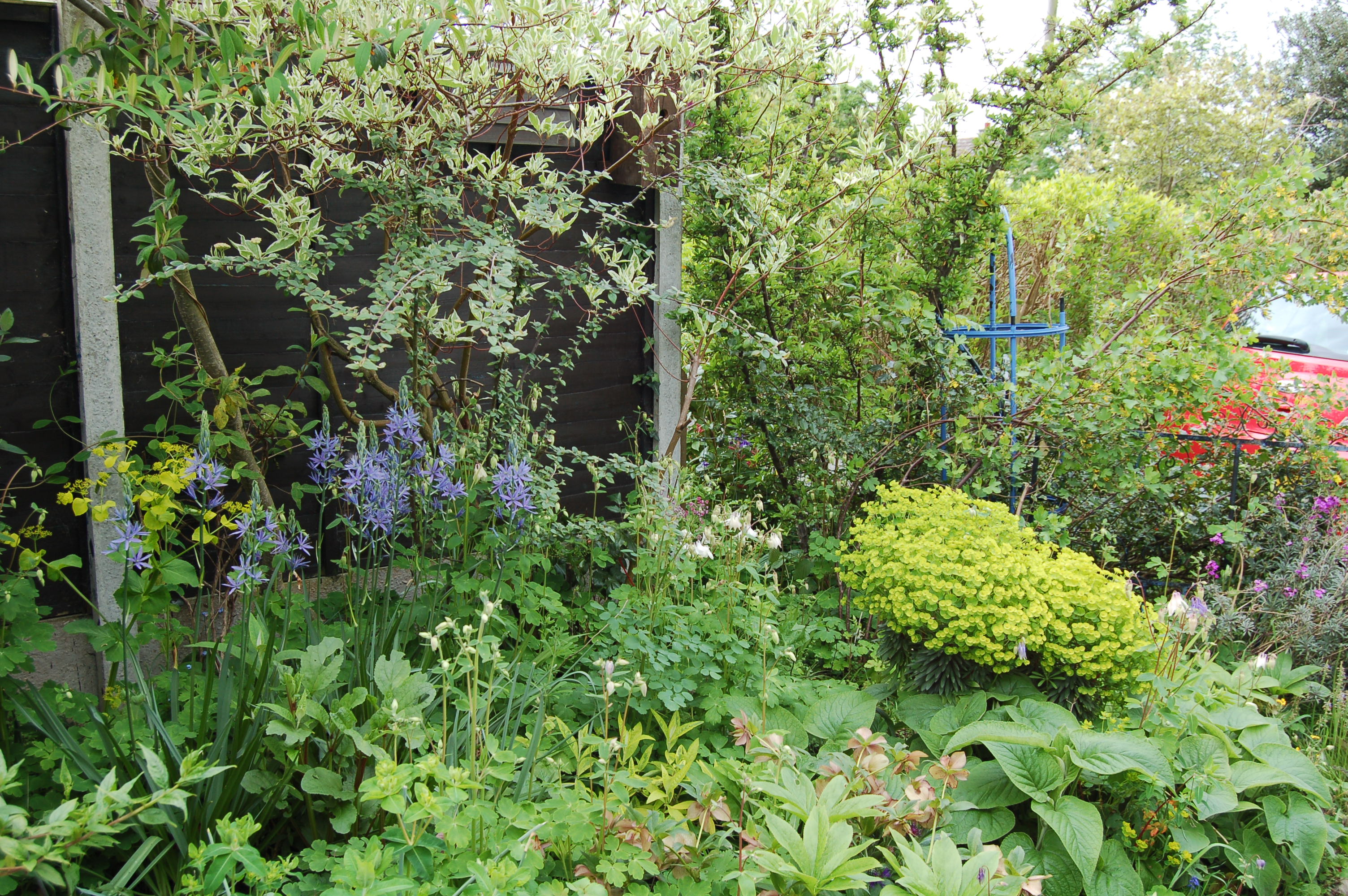
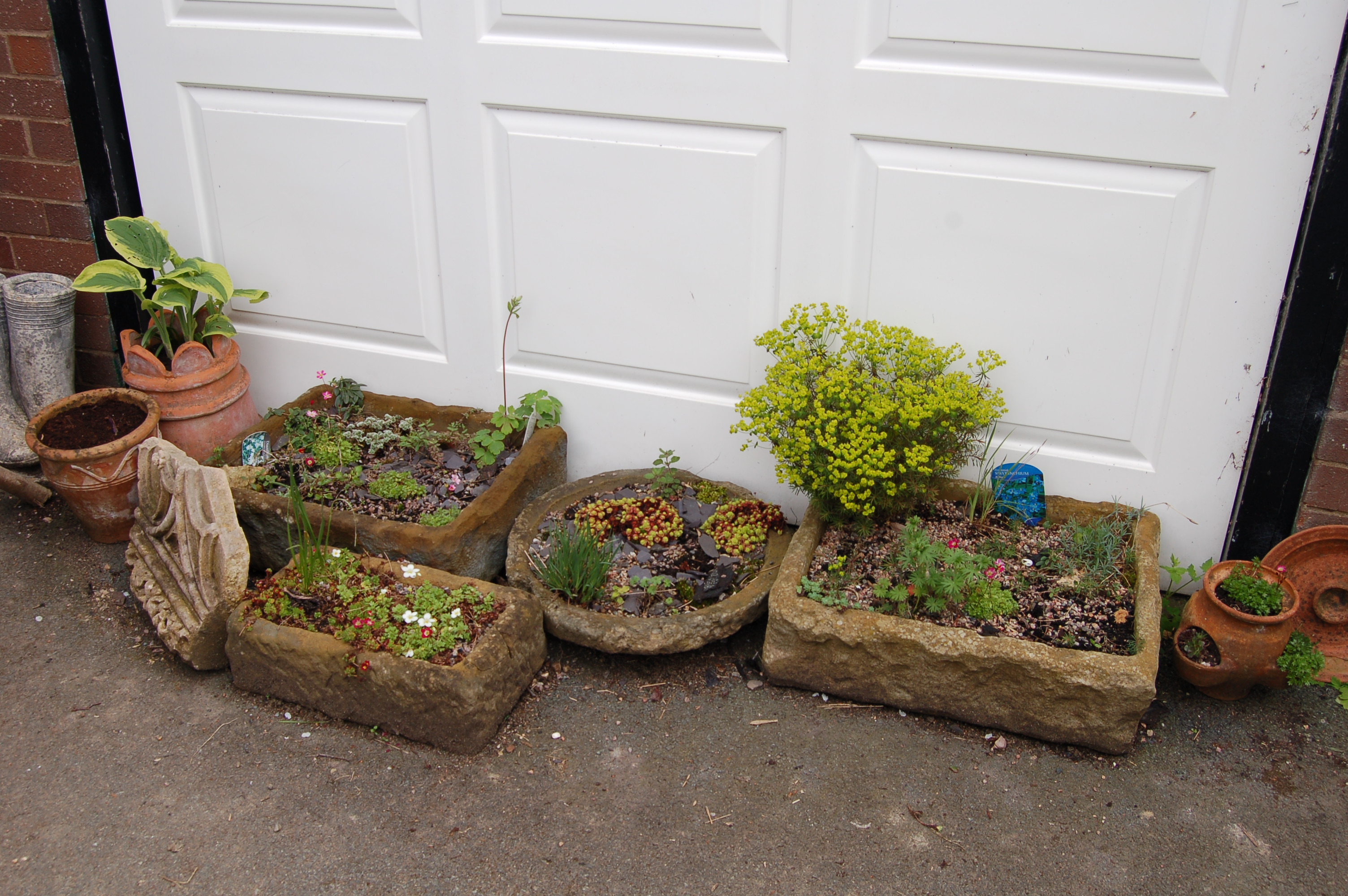
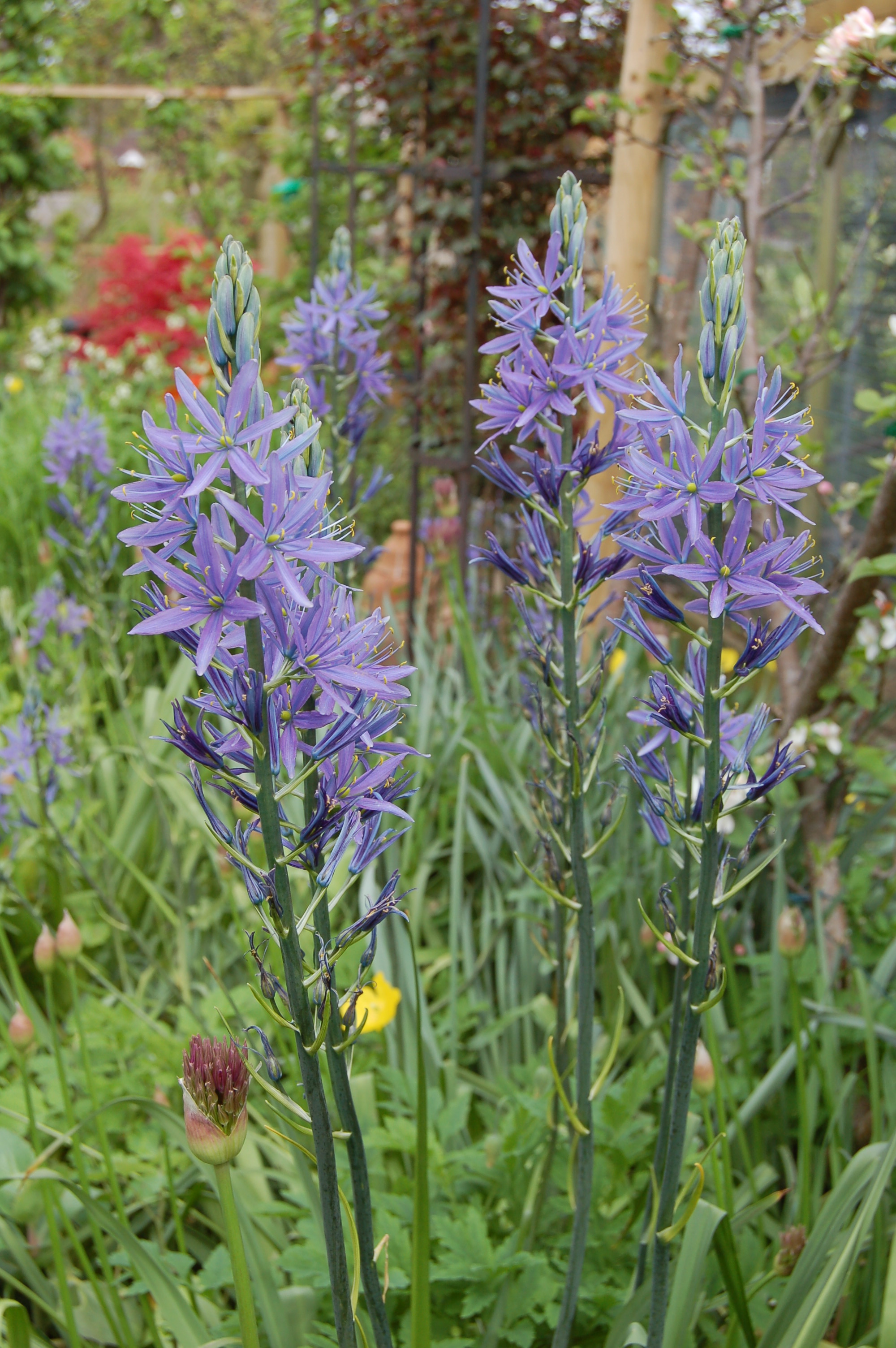
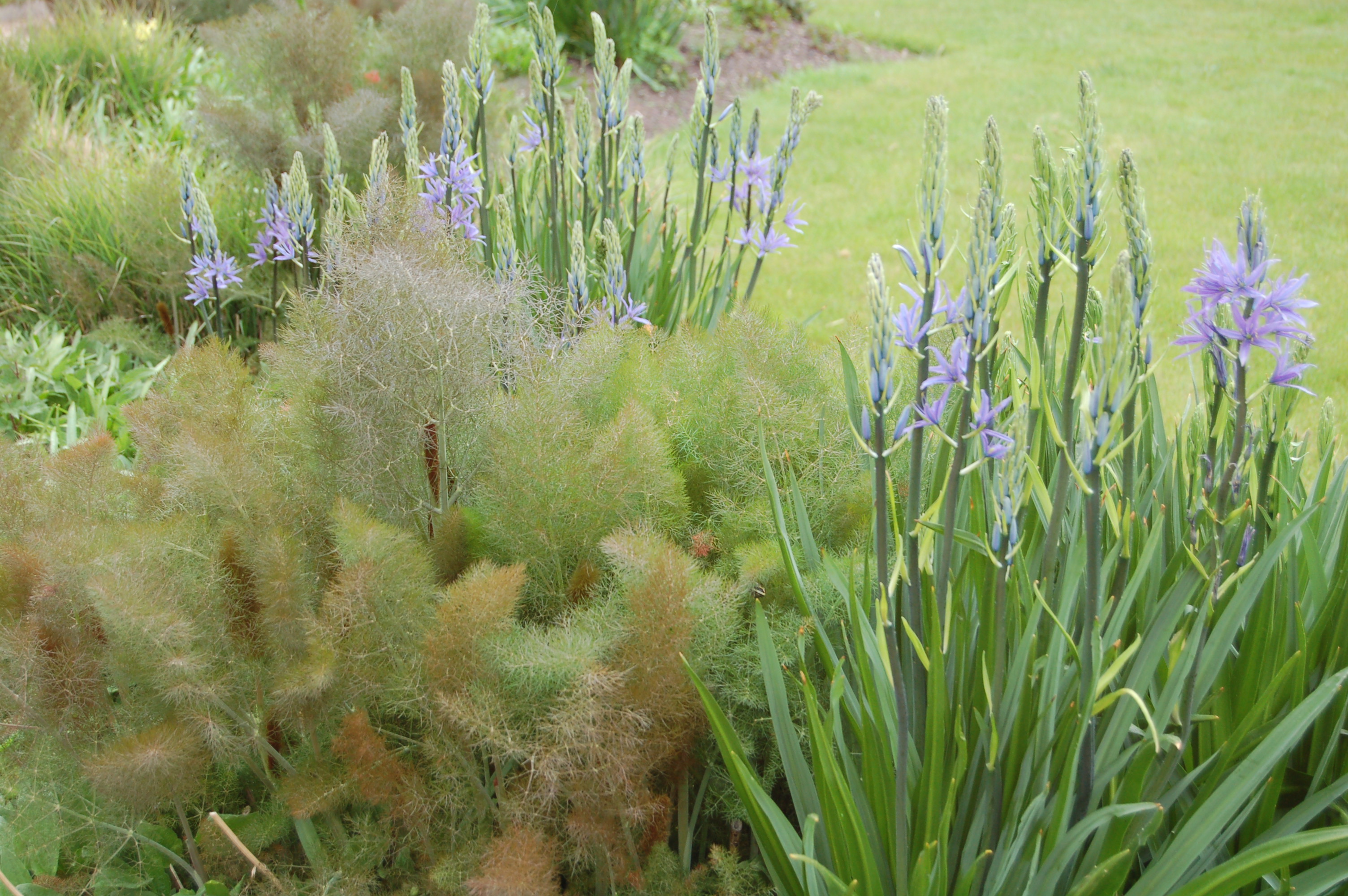
The Freda Border is full of every shade of green punctuated by the pale blue of the Camassias. Nearby in the alpine troughs and crates the Saxifragas flower like myriads of tiny red gems.

2014 05 03_8849 2014 05 03_8850 2014 05 03_8851

On the opposite side of the house the Shade Garden, the only part of the garden which is shaded, looks lush and lively.

2014 05 03_8869 2014 05 03_8870 2014 05 03_8871 2014 05 03_8872 2014 05 03_8874

Moving along from the Shade Garden towards the back garden we wander through the Seaside Garden and into the Rill Garden.

2014 05 03_8875 2014 05 03_8876 2014 05 03_8877

From the Rill Garden we can take the central path past the greenhouse, where Jude aka Mrs Greenbench or The Undergardener, is busy tending her hundreds of seedling veggies, annuals and perennials. It is a very productive place!

2014 05 03_8880 2014 05 03_8881 2014 05 03_8882 2014 05 03_8883  2014 05 03_8885 2014 05 03_8886

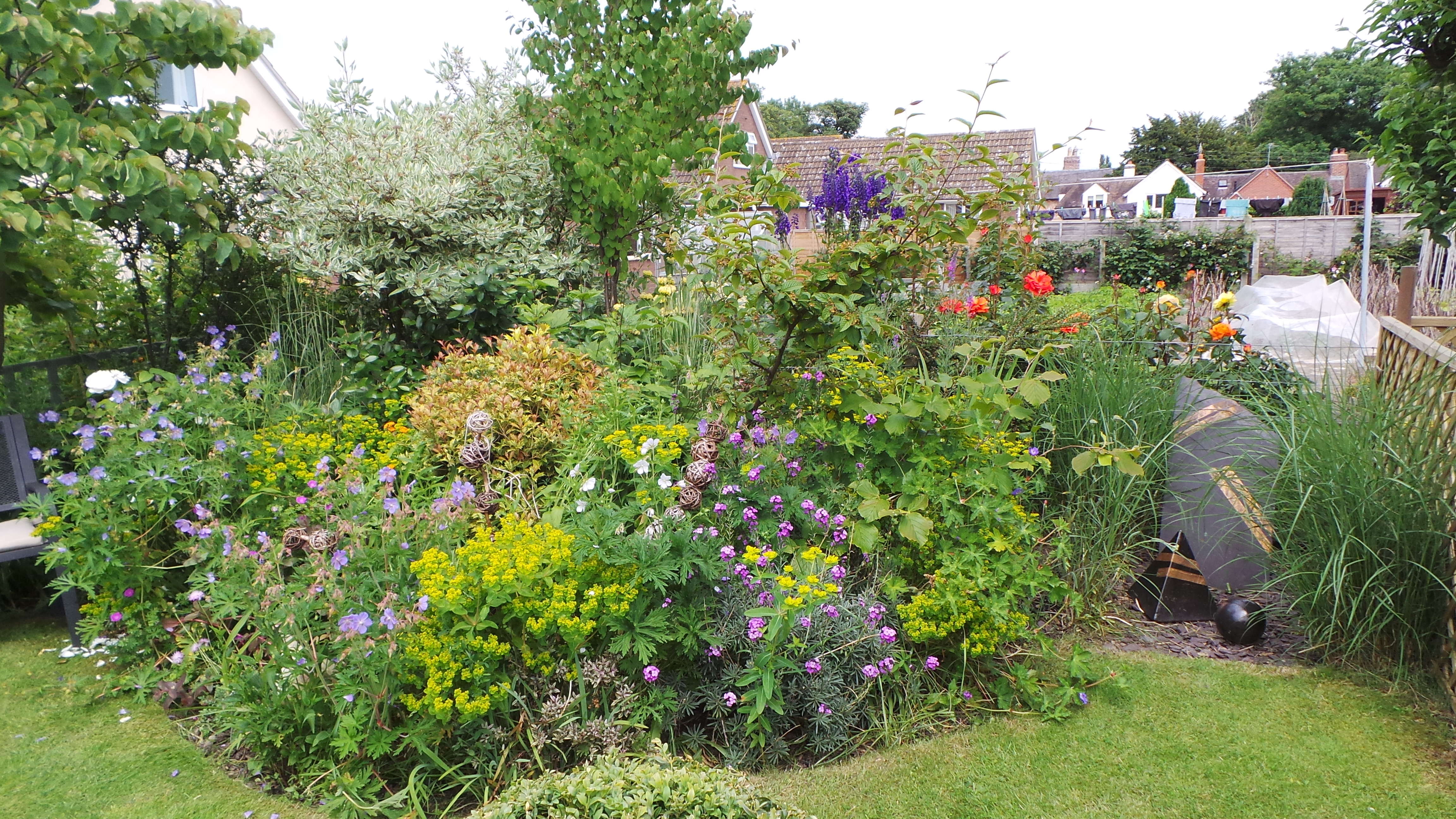
Turning left just past the greenhouse the borders surrounding our small lawned area are bursting with late spring colour and fresh growth.

2014 05 03_8887 2014 05 03_8888


2014 05 03_8889 2014 05 03_8891 2014 05 03_8892 2014 05 03_8893

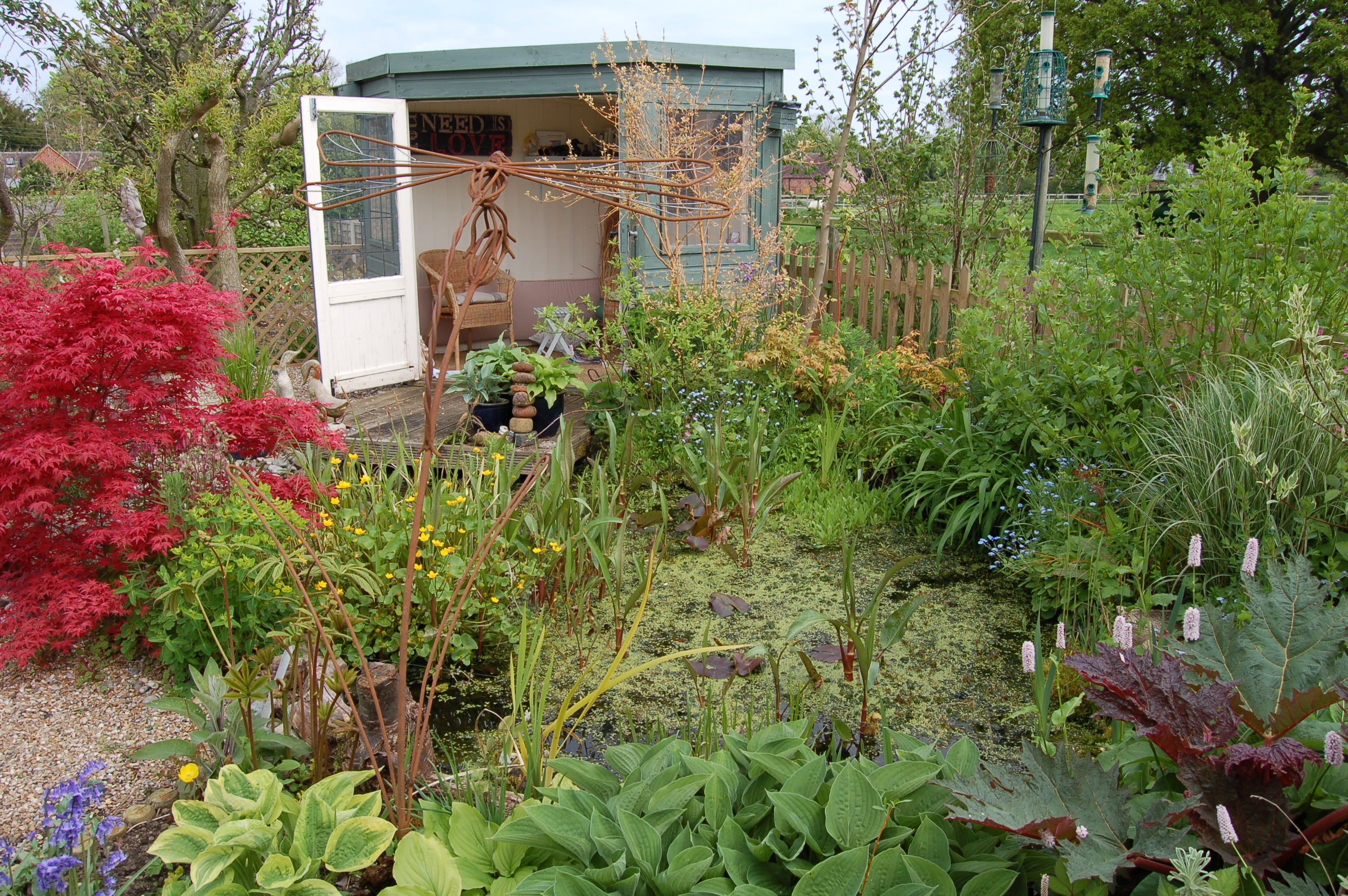
Just off this lawned area we enter the Japanese Garden with its pool which is an essential element of any oriental garden but here it doubles up as a wildlife pool.

2014 05 03_8894 2014 05 03_8895 2014 05 03_8896 2014 05 03_8897

We can wander along a gravel path back towards the central pathway and along the way we can look at the Prairie Garden on our right and the Bog Garden on our left.

2014 05 03_8898 2014 05 03_8900

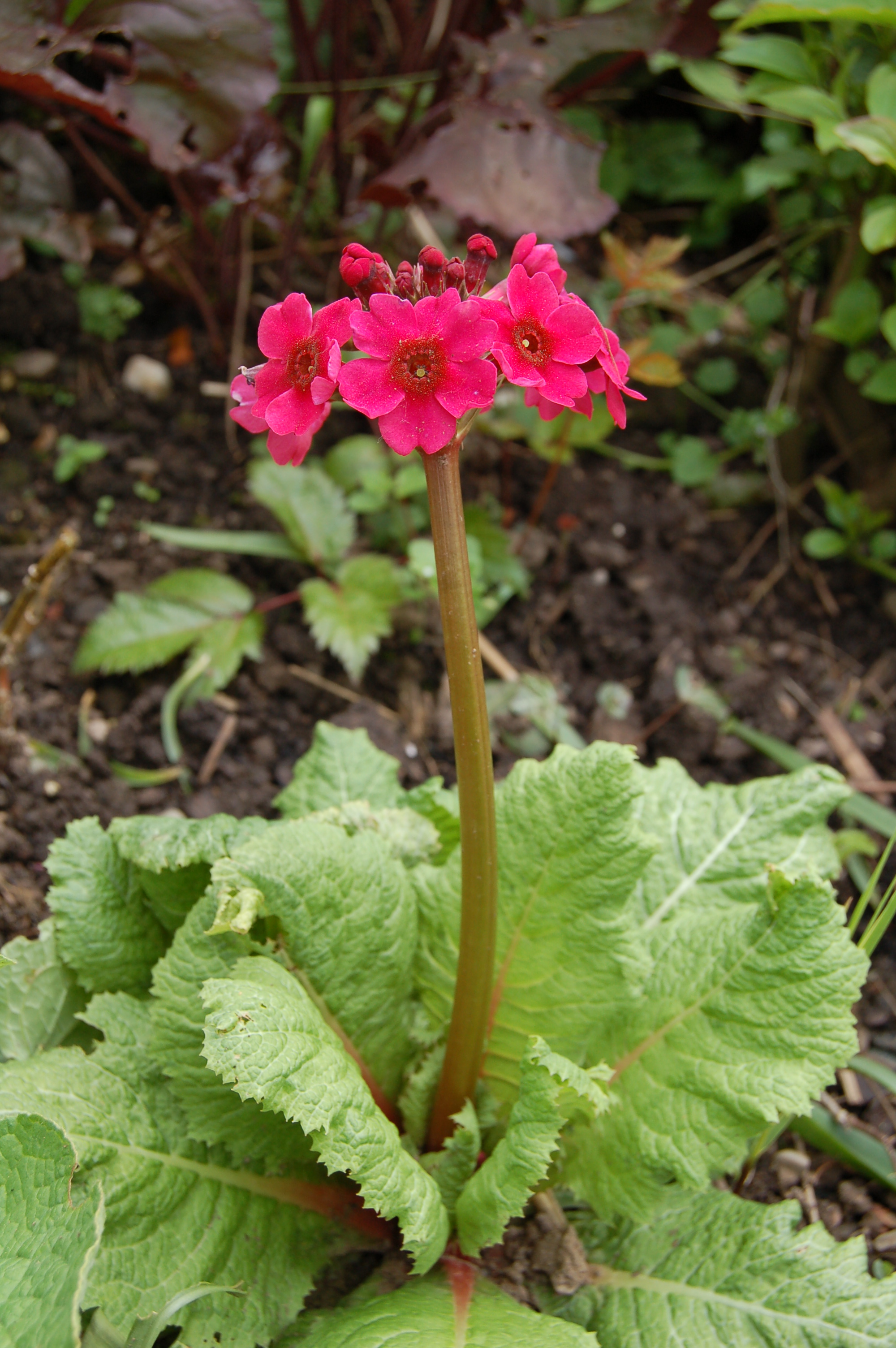
In the Bog Garden foliage predominates with Hostas, Ligularias and Rheum purpureum. One flower worth a close up look is this stunning Primula which sadly we don’t know the name of.

2014 05 03_8899 2014 05 03_8901

A glance over our shoulder gives us the chance to look back over the pool towards the Summerhouse.
2014 05 03_8903

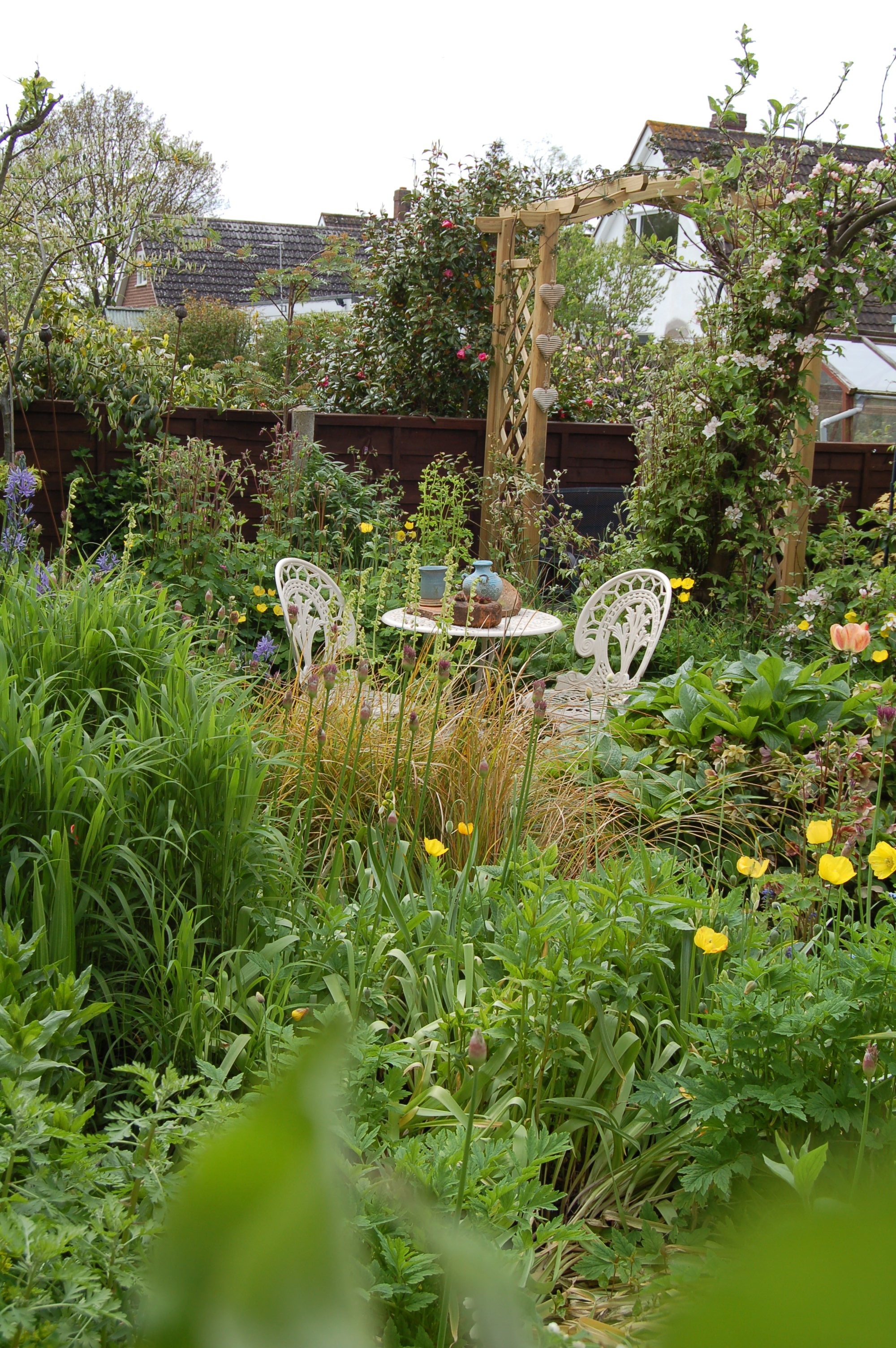
On the opposite side of the central pathway we find the Chicken Garden and the Secret Garden both now still full of colour from spring bulbs but bursting with the burgeoning growth of the herbaceous perennials.

2014 05 03_8904 2014 05 03_8906 2014 05 03_8907 2014 05 03_8908 2014 05 03_8902

2014 05 03_8909 2014 05 03_8910 2014 05 03_8911 2014 05 03_8912

Wandering back along the path towards the shed we can appreciate close up the beauty and complexity of the Camassia flowers.

2014 05 03_8913 2014 05 03_8914 2014 05 03_8915

Our little Slate Garden is colourful now with Auriculas and Primulas in full bloom.

2014 05 03_8917

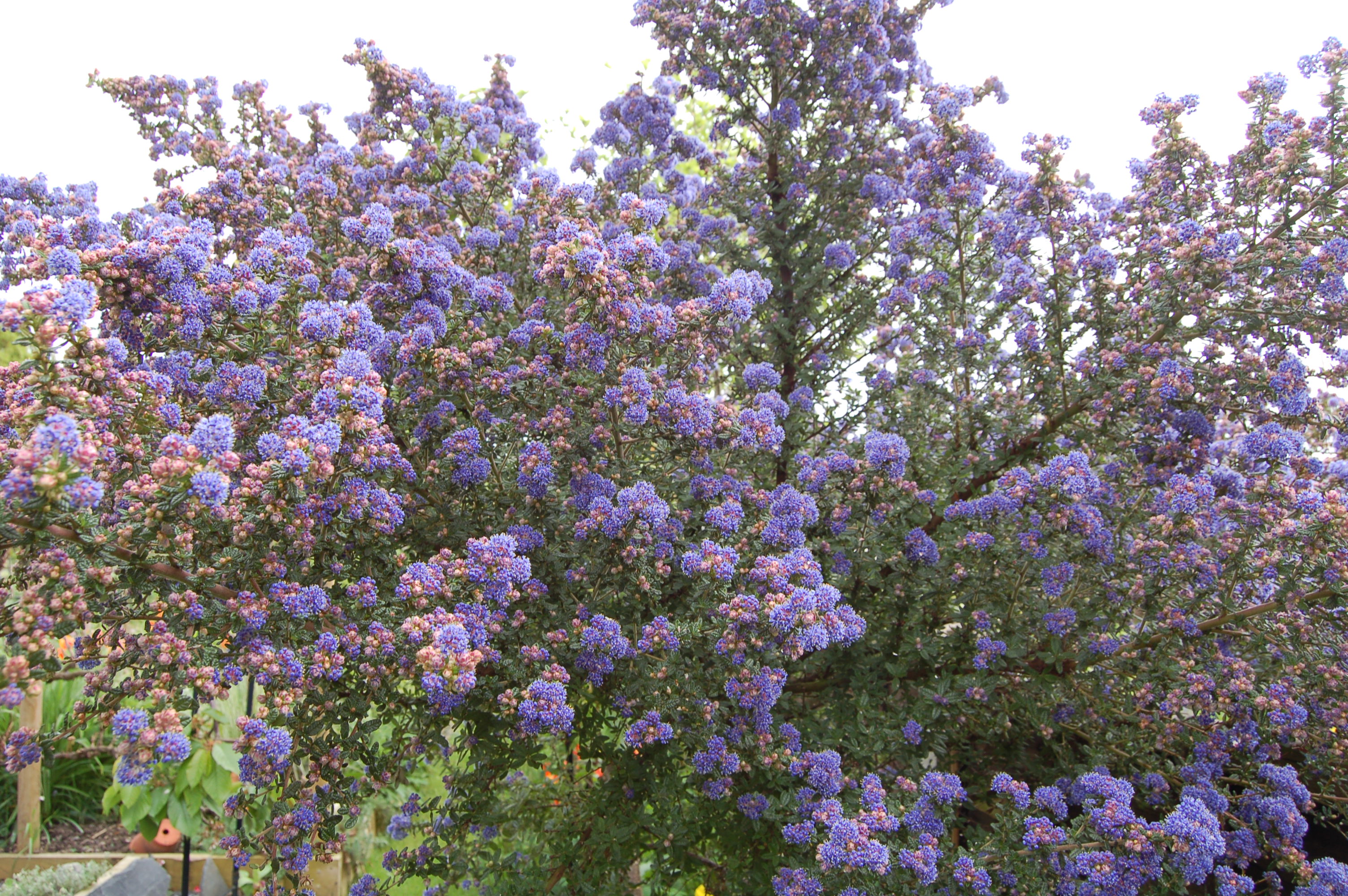
So there we have it –  a gentle wander around our garden in early May. It all looks very different now just a few weeks after my early Spring post. The next post in this series will be in early Summer when I guess we can look forward to even bigger changes. I shall finish this post with a photo of the Ceanothus that kept getting blown out of the ground root and all during the gales of Winter. But just look at it now! It illustrates just how resilient plants are. It has a sweet scent that welcomes us whenever we go to the shed to pick up the tools we need in the garden each day. Sadly I am not sure I like it when it flowers so heavily.

2014 05 03_8918

Categories
flowering bulbs garden design garden designers garden photography gardening gardens gardens open to the public grasses hardy perennials Italian style gardens meadows ornamental grasses ornamental trees and shrubs Piet Oudolf spring bulbs spring gardening Staffordshire Tom Stuart-Smith trees

A Garden in April – Trentham

So here we are on our April visit to the gardens at Trentham, already the fourth in this series of posts looking at Trentham Gardens throughout the year.

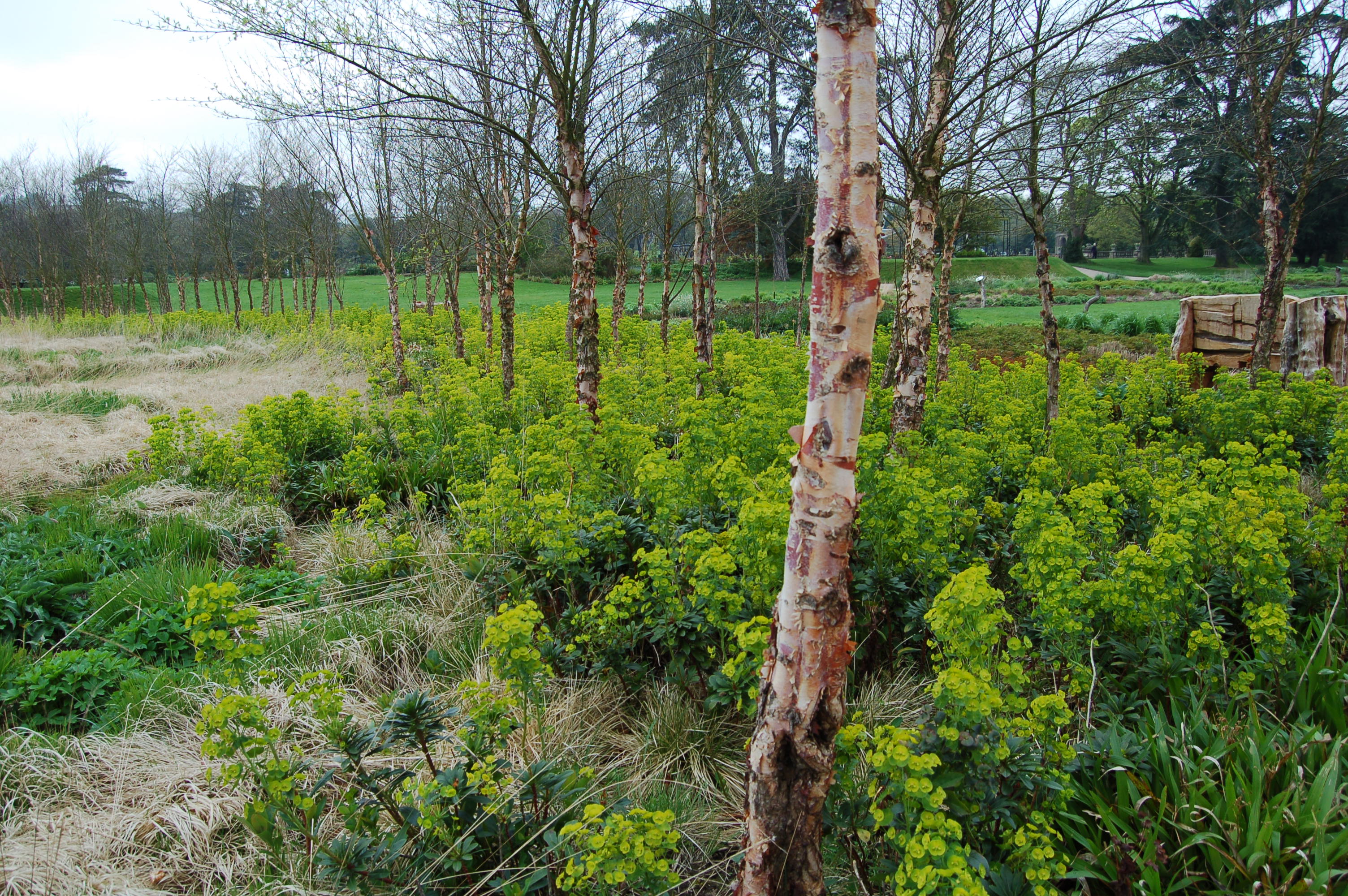
We immediately notice that the fresh growth of Spring is well underway. The grasses in the River of Grasses are no longer brown and dead but putting on strong bright green growth. The herbaceous growth huddled in the grasses is looking vigorous with Trollius adding splashes of gold. Euphorbias look vibrant under the river of birches. Leaf buds are bursting on all the deciduous trees.

2014 04 29_8789 2014 04 29_8788 2014 04 29_8790 2014 04 29_8791 2014 04 29_8792 2014 04 29_8793 2014 04 29_8794


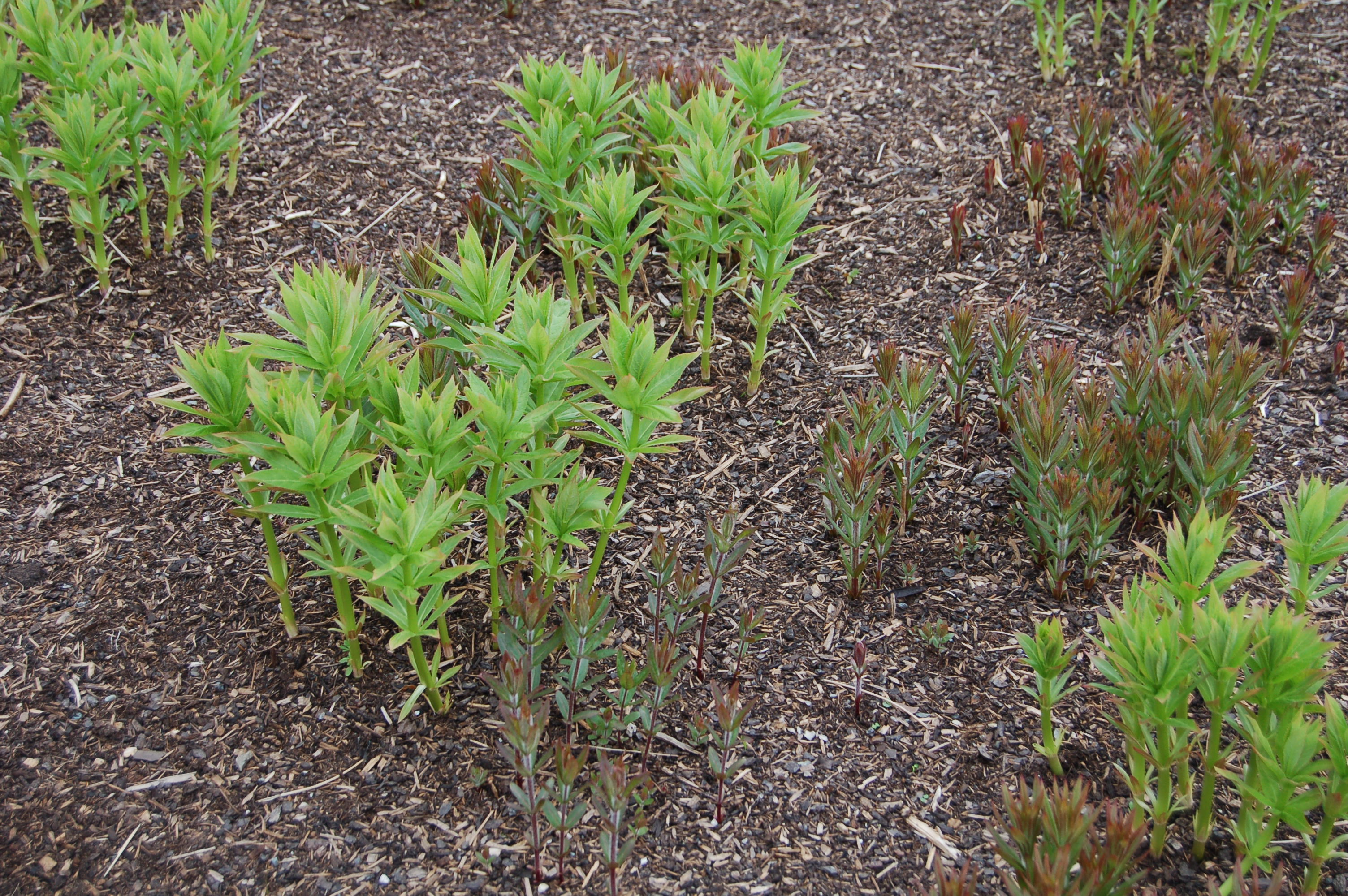
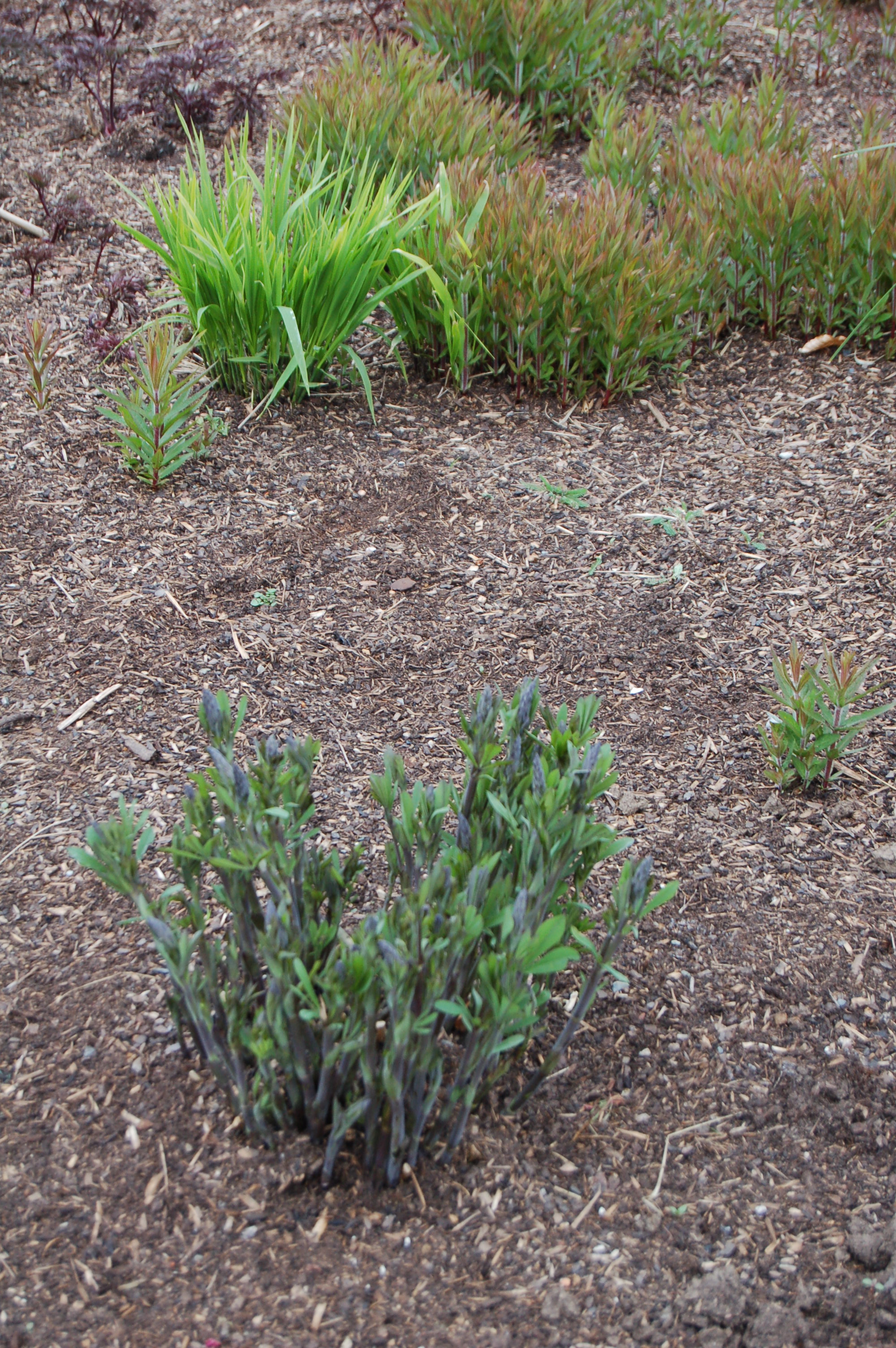
As we move into Piet Oudolf’s perennial prairie plantings some plants are well into growth where others have barely started. Thalictrum and Amsonias are looking particularly vibrant.

2014 04 29_8795 2014 04 29_8796 2014 04 29_8797 2014 04 29_8798 2014 04 29_8799 2014 04 29_8801 2014 04 29_8802 2014 04 29_8803 2014 04 29_8804 2014 04 29_8800

Leaving the Prairie area we immediately notice that the Hornbeam arbor has grown vigorously and is now looking like a big shaggy sheep. The bench is a great place to get a shaded, secret, quiet moment. The arbor looks like it could get up and walk away!

2014 04 29_8805


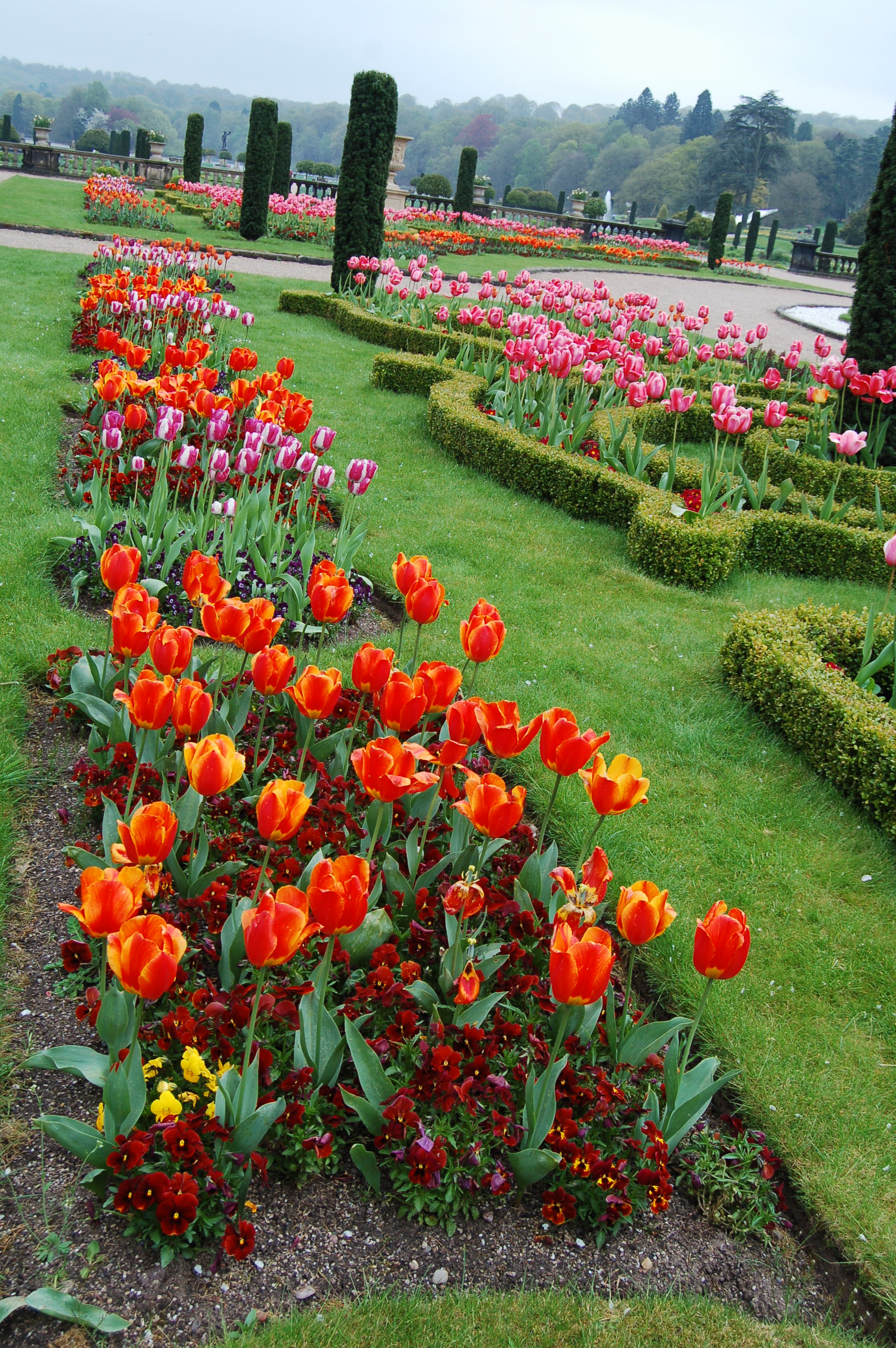
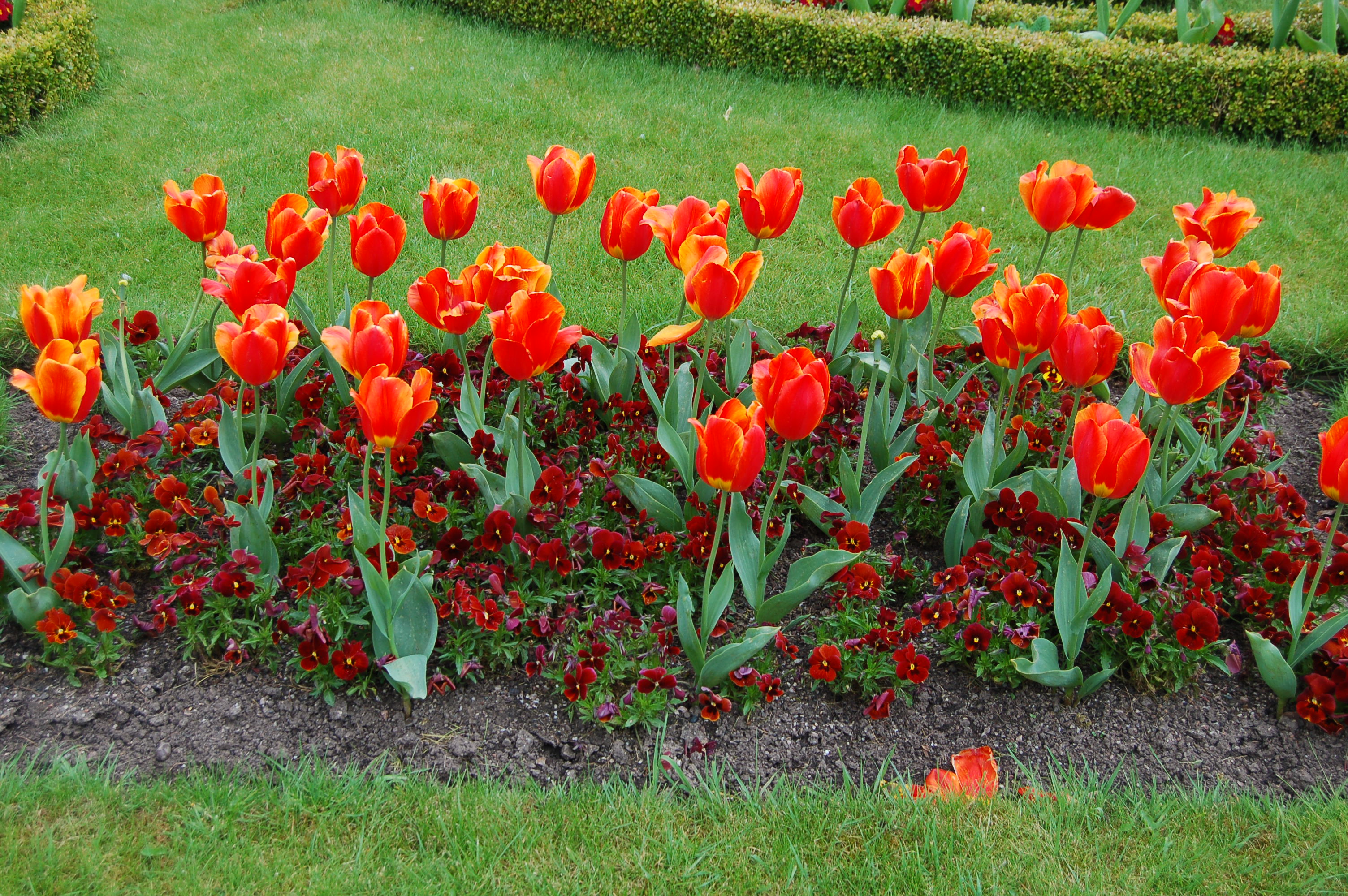
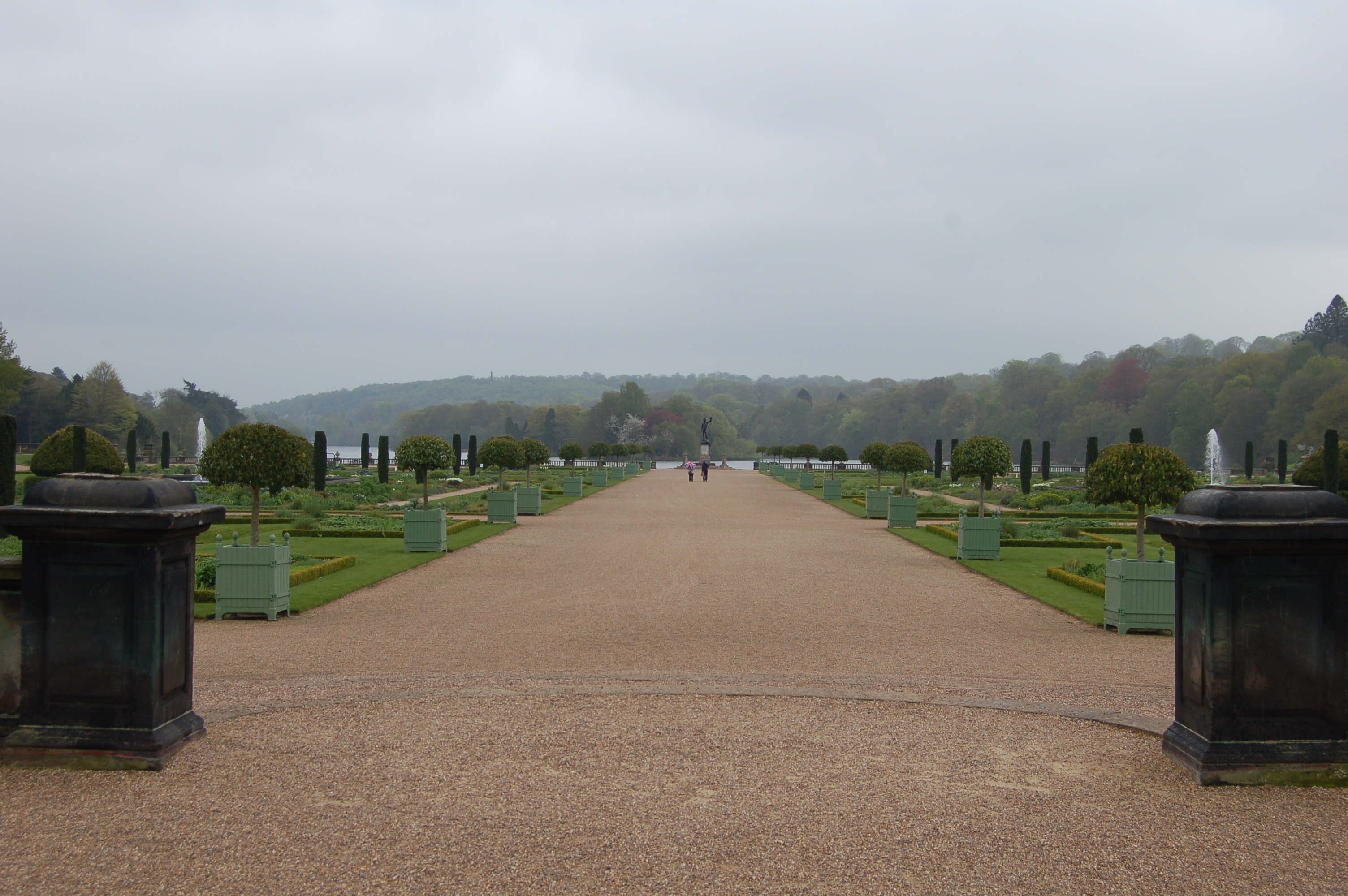
As you may remember from our earlier visits we move through grassed areas with shrub borders towards the Italian Garden, passing through an avenue of Hornbeam on the way. The tulips in this part of the garden are nothing short of startling! We are not sure at all of some of the colour combinations but they are definitely cheerful.

2014 04 29_8806 2014 04 29_8807 2014 04 29_8808 2014 04 29_8809 2014 04 29_8810 2014 04 29_8811 2014 04 29_8812

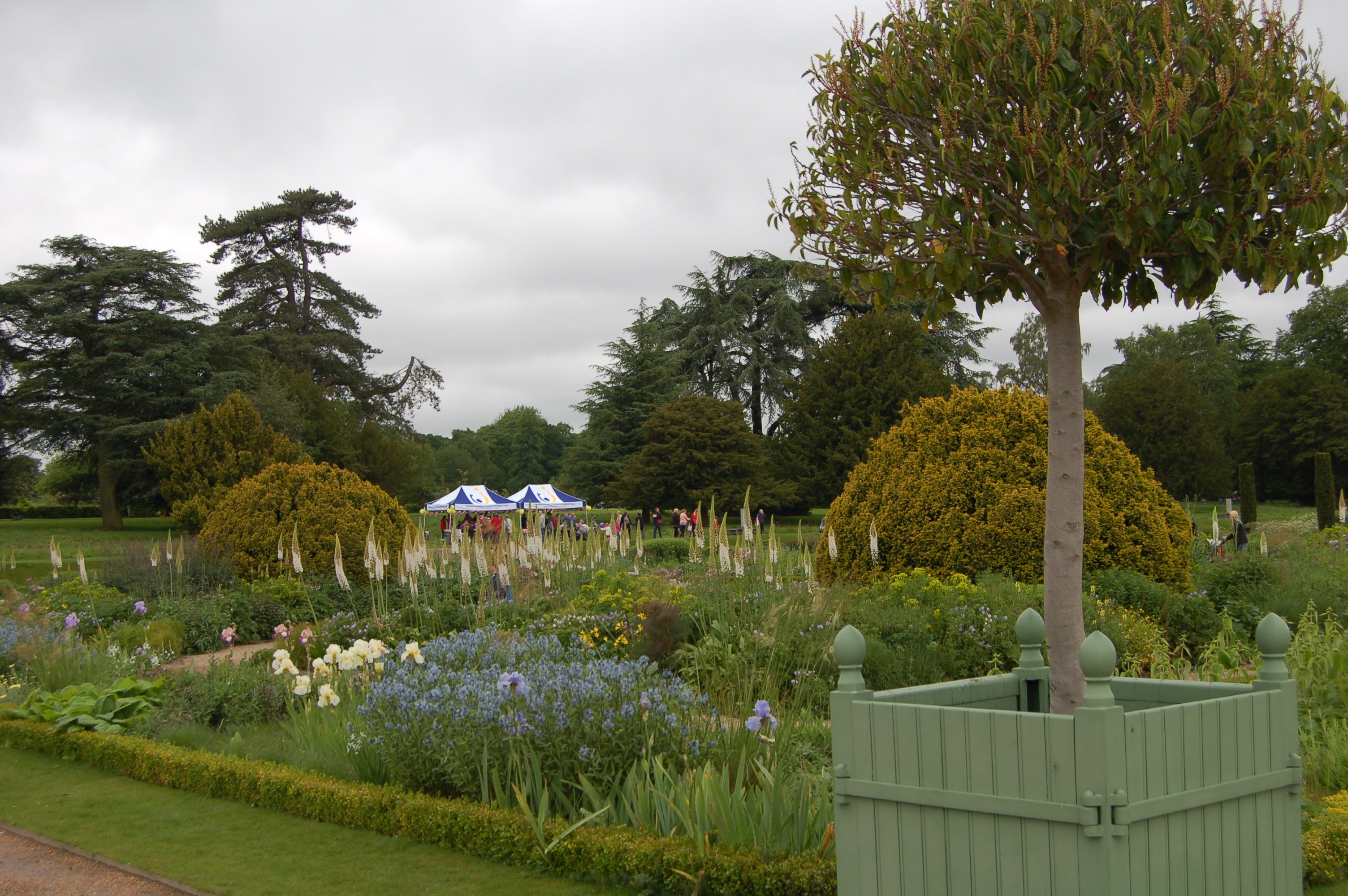
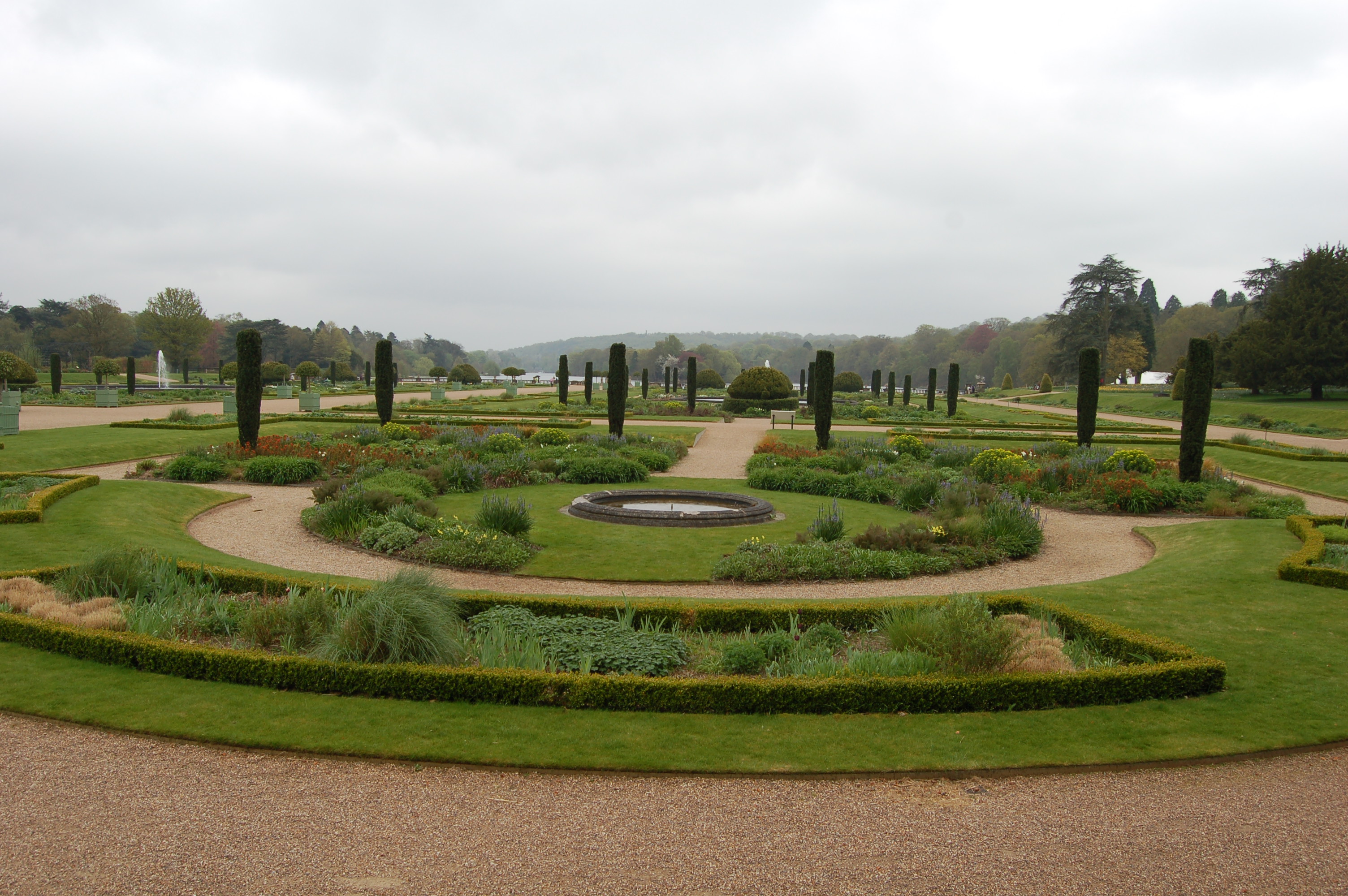
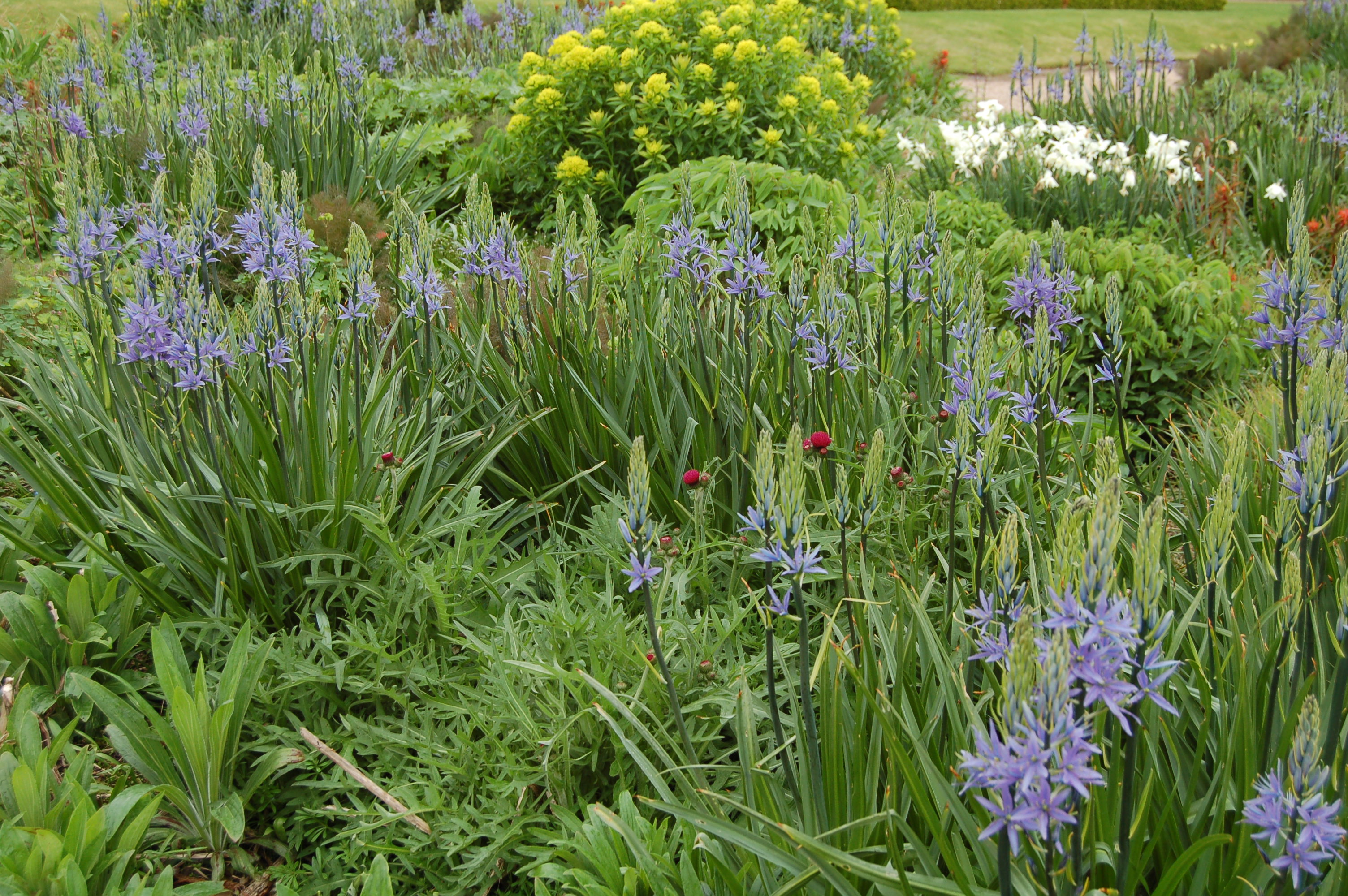
From here we take our usual look over Tom Stuart-Smith’s garden where bursts of colour mostly oranges and blues greet us. When we get closer we realise they are the colour is provided by Camassias and various Euphorbias.

2014 04 29_8813 2014 04 29_8814 2014 04 29_8815 2014 04 29_8816 2014 04 29_8817 2014 04 29_8818 2014 04 29_8819 2014 04 29_8820

Let us now have a closer look at some of the individual plants of interest.

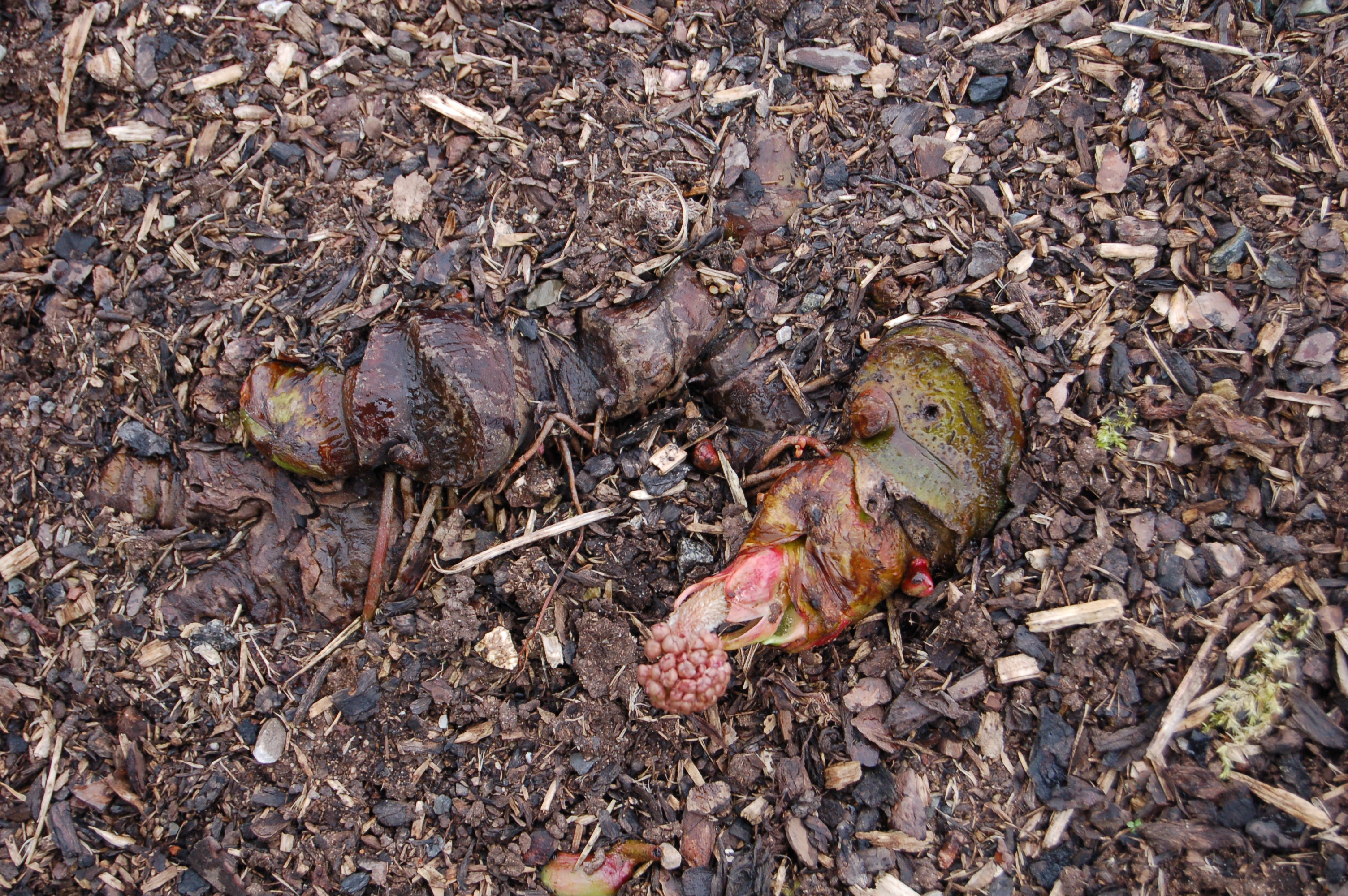
Firstly the strange Primula like flowers of Dalmera peltata looking like pink lollypops on tall sticks. The flowers come before there is any sign of the leaves and the flower stem appears out of the rizomes which sit right on the surface of the soil. The leaves when they do appear are equally dramatic – big circular leaves held right off the ground.

2014 04 29_8821 2014 04 29_8822 2014 04 29_8823 2014 04 29_8825

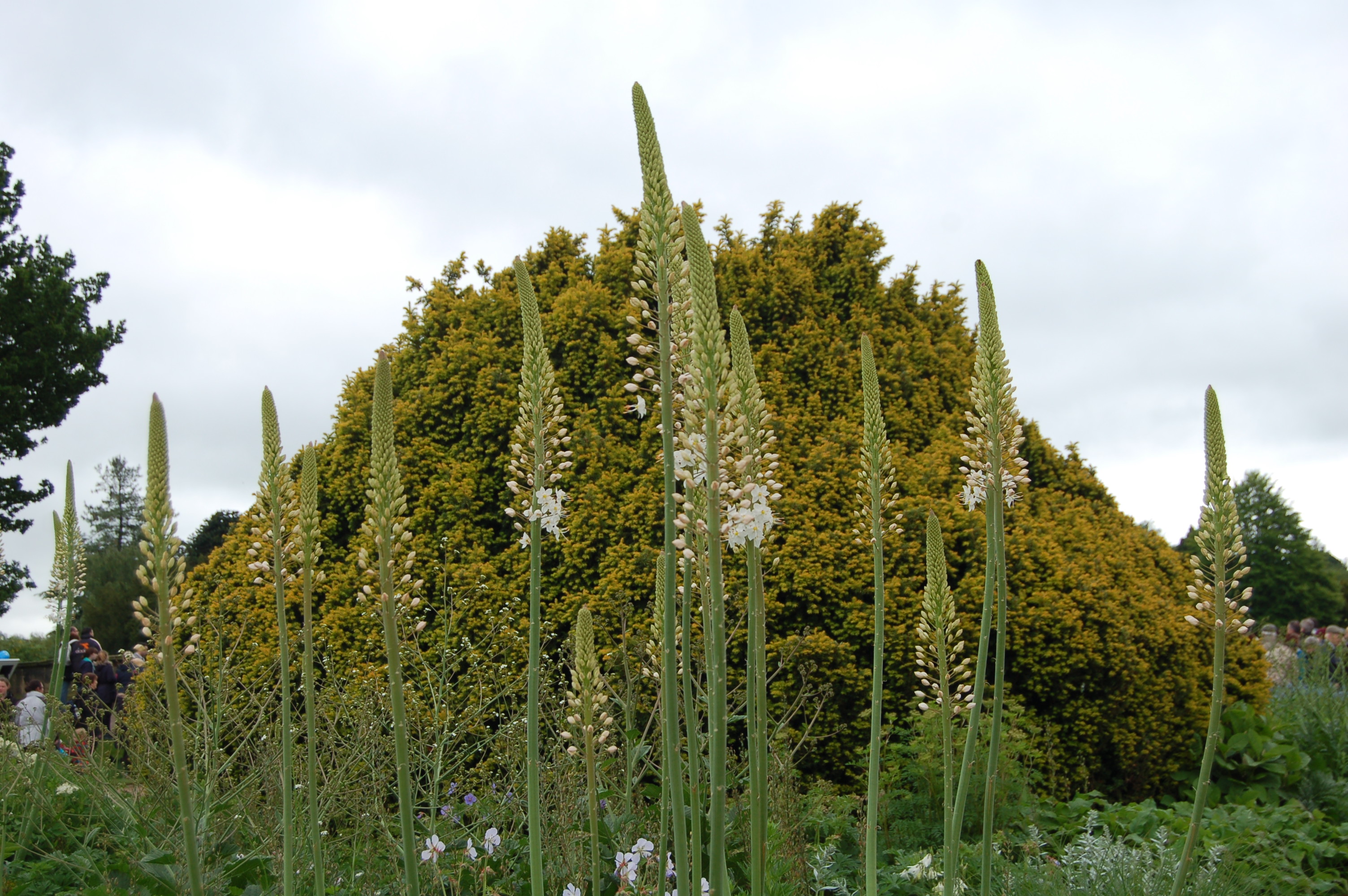
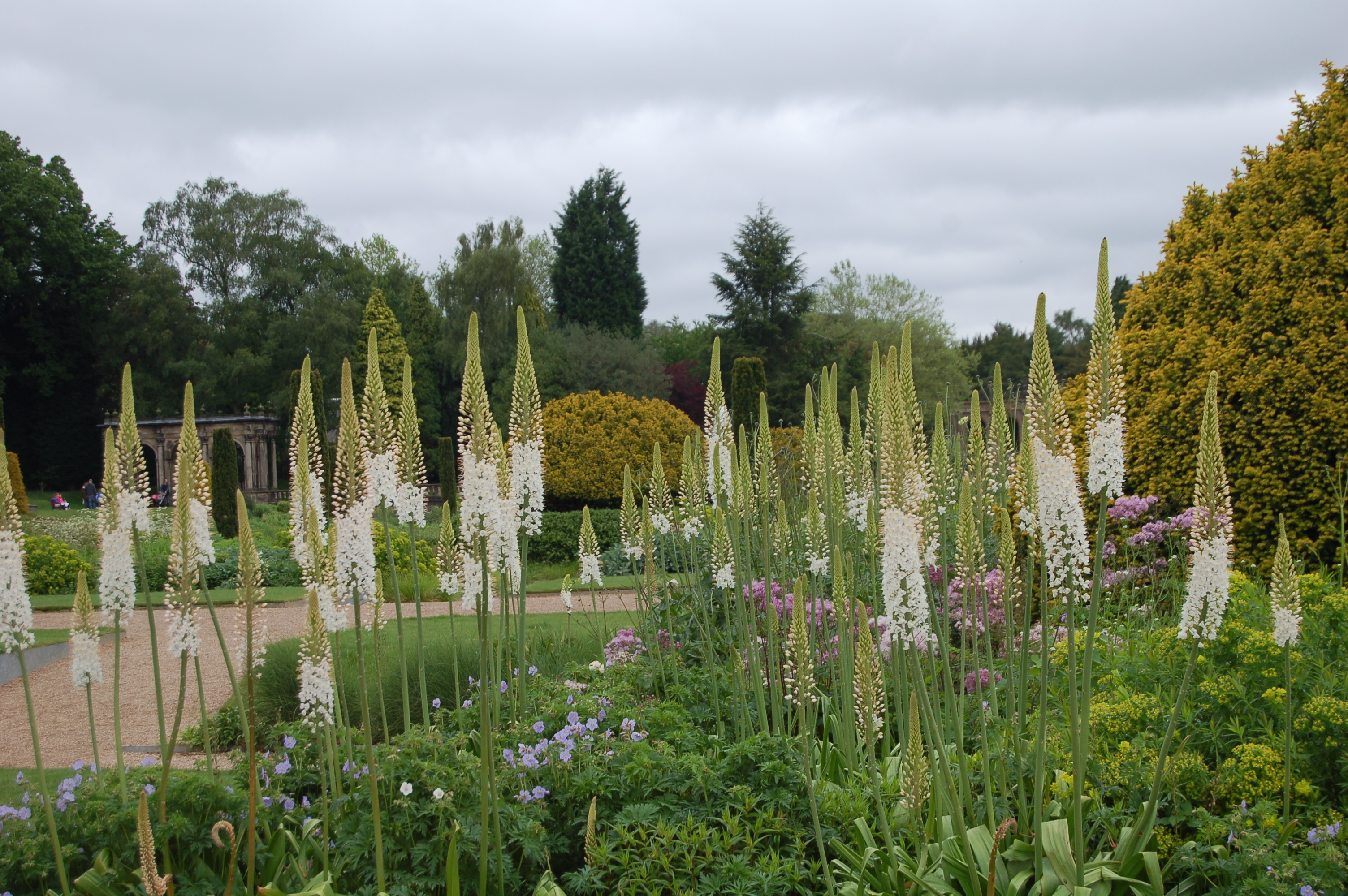
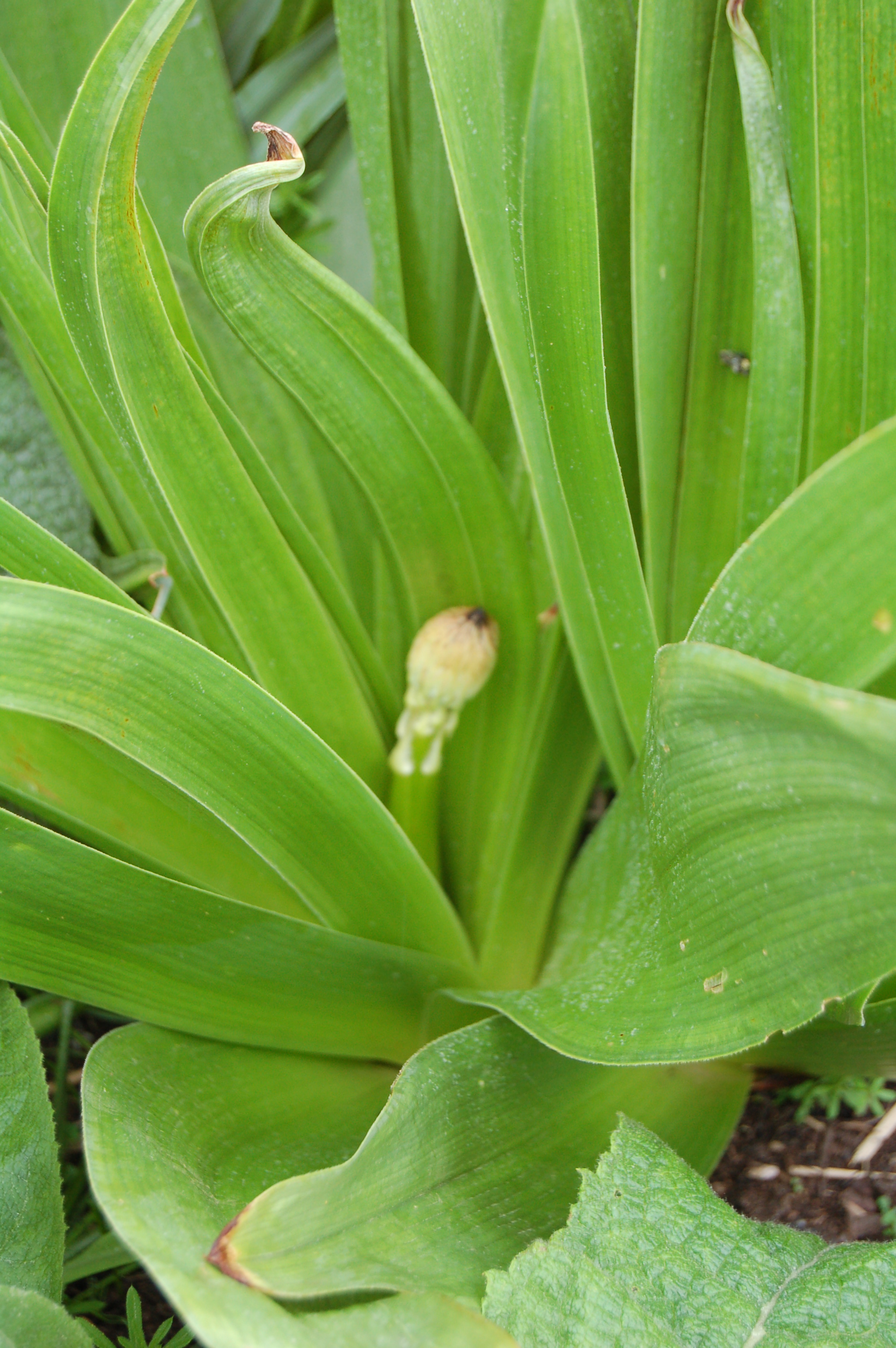
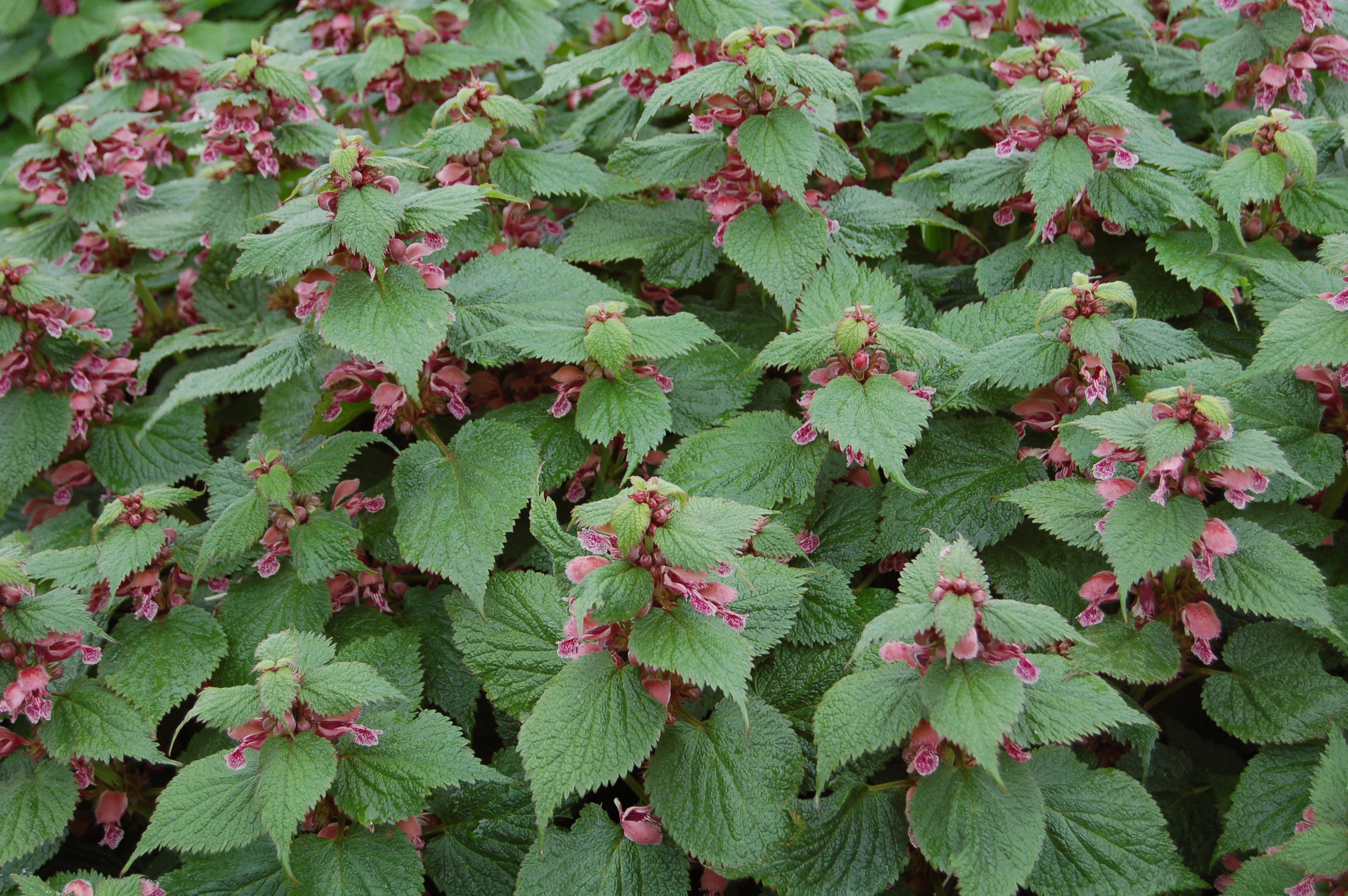
The flower shoots of Eremurus robustus, the Fox Tail Lily are appearing at the base of the whorl of leaves. These were the mystery leaves in last month’s visit. The grey-pink blooms of the Giant Red Deadnettle, Lamium orvala wrap themselves right up the stems between the leaf clusters.

2014 04 29_8826 2014 04 29_8827

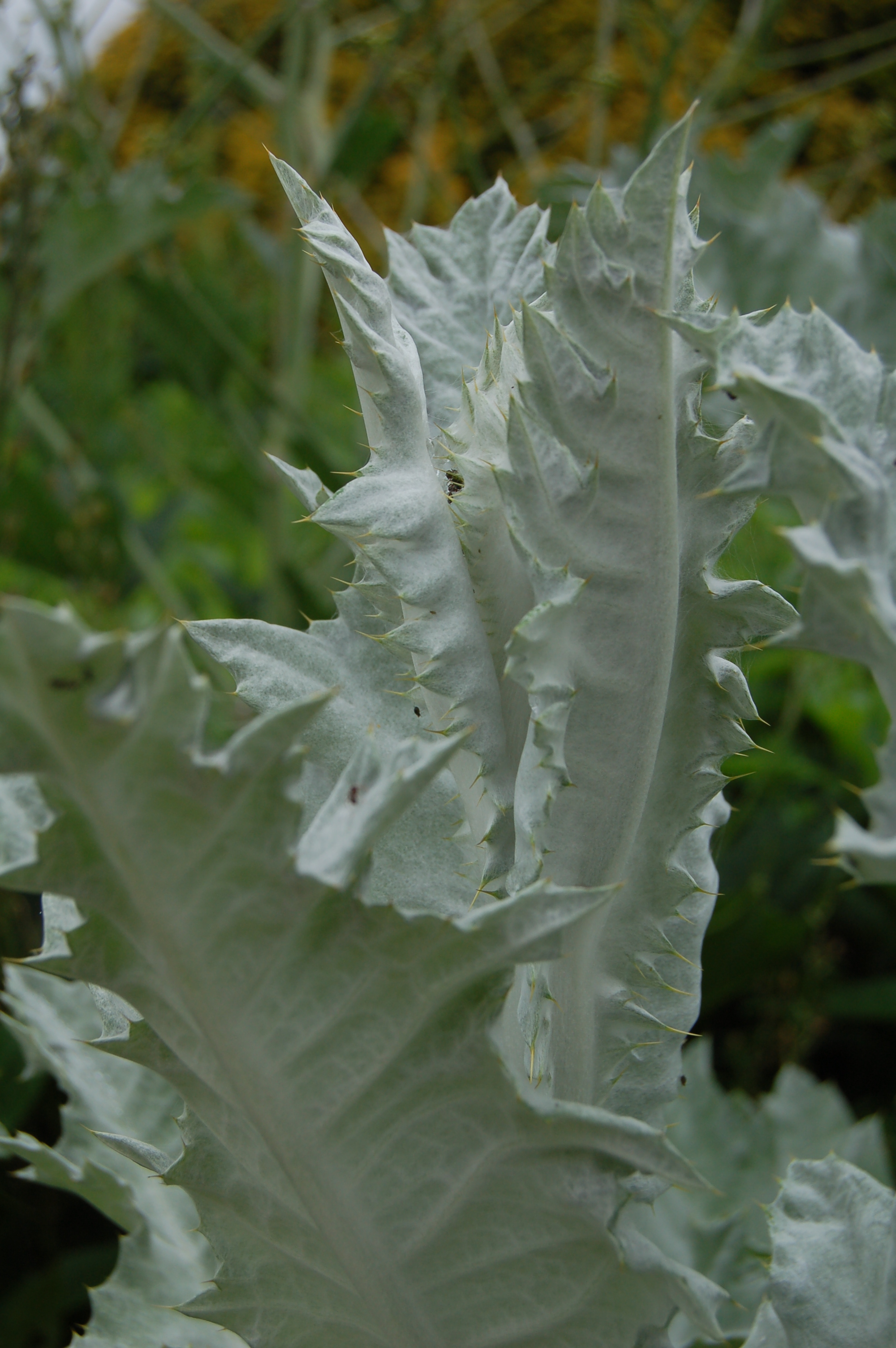
The yellow pea flowers of  the Thermopsis montana, variously known as False Lupin, Golden Pea, Revonpapu and so on,  are just freshly out and blend nicely with the silvery green leaves.

2014 04 29_8828

As we leave the Tom Stuart-Smith gardens we notice, as we follow the gravel pathway to the display gardens, that the daffodils in colour on our last visit are still presenting a haze of yellow.

2014 04 29_8829


2014 04 29_8830 2014 04 29_8831

2014 04 29_8832 2014 04 29_8833 2014 04 29_8834 2014 04 29_8835 2014 04 29_8836 2014 04 29_8837

On our return journey through the garden we notice the newly emerging flower bud of this Allium, sitting like a table tennis ball in the centre of the three leaves. The fresh leaves on a deciduous tree stand out in sharp contrast to the dullness of its evergreen companion even in dull light.

2014 04 29_8838 2014 04 29_8839

Tulips adorn the Rose Walk where the roses are budding strongly. From here we can look back on the team of gardeners beavering away heads down in their waterproof jackets.

2014 04 29_8840 2014 04 29_8841

Looking through the rose pergola we can see the green growth in the River of Grasses. Alongside this path Corydalis is flowering at ground level whereas at a higher level the red leaves of the Acer manage to look cheerful in the rain.

2014 04 29_8842 2014 04 29_8843 2014 04 29_8844

So we leave Trentham in the rain yet again and look forward to our May visit when maybe we will see a little sunshine and a blue sky!

Categories
colours flowering bulbs garden design garden photography gardening gardens grasses hardy perennials ornamental grasses ornamental trees and shrubs spring bulbs The National Trust trees Winter Gardening winter gardens

Three Winter Gardens – Part Three – Anglesey Abbey

This, the third in my series of three posts looking at winter gardens, sees us at the most well known of all winter gardens, Anglesey Abbey.

2014 03 20_7479

Situated near Cambridge within the larger gardens and grounds of this National Trust property the winter garden here is often considered to be the best of all and a big influence on all others that follow. We shall look at further aspects of the gardens at Anglesey Abbey in future posts.

We visited the winter garden at Anglesey Abbey many years ago the first year it was open to the public so it was like meeting an old friend but one who has changed a lot in the intervening years.

2014 03 20_7376

This set of gates welcomed us as we arrived at the start of the winter plantings.

2014 03 20_7367 2014 03 20_7368 2014 03 20_7369

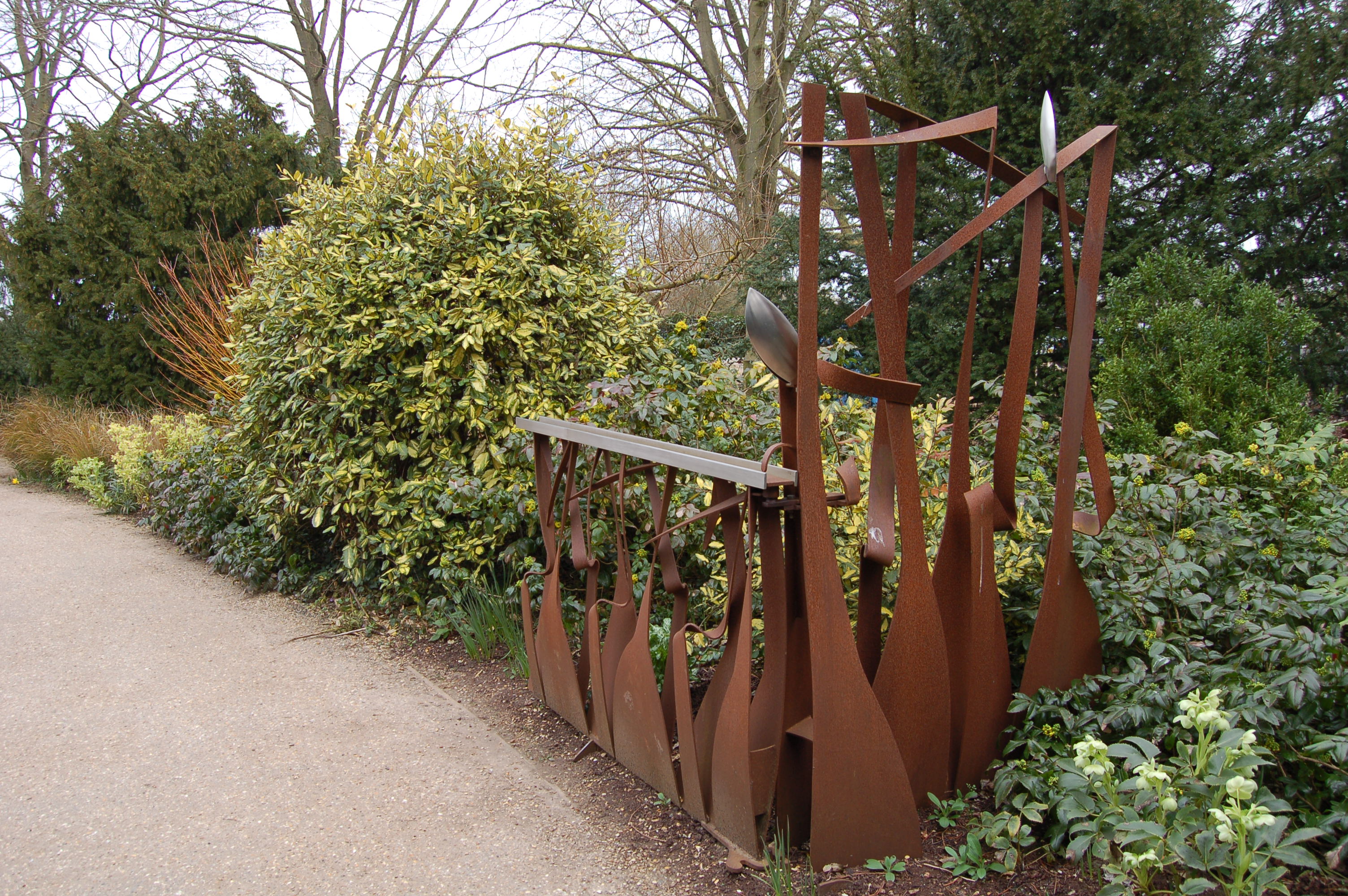
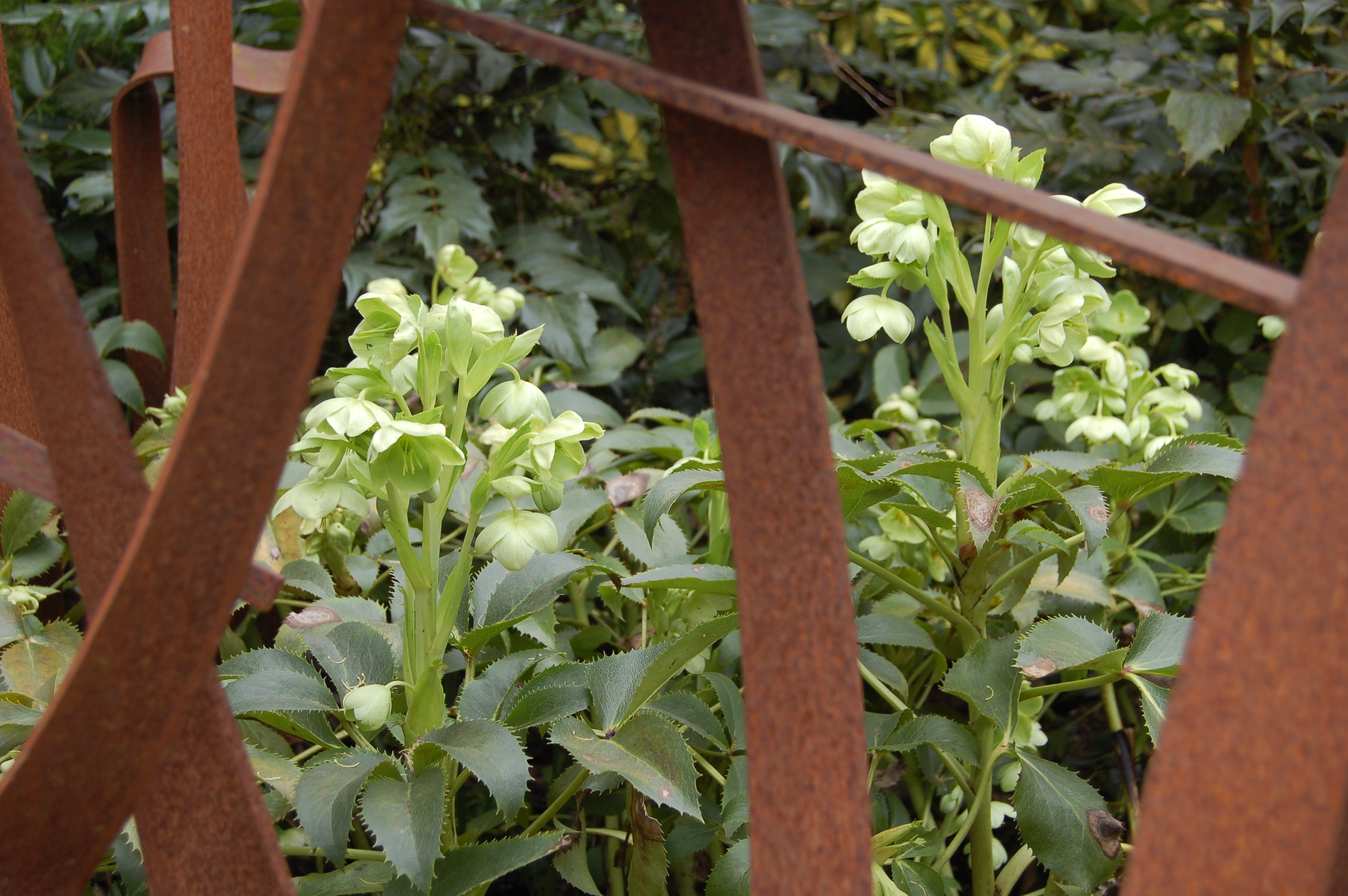
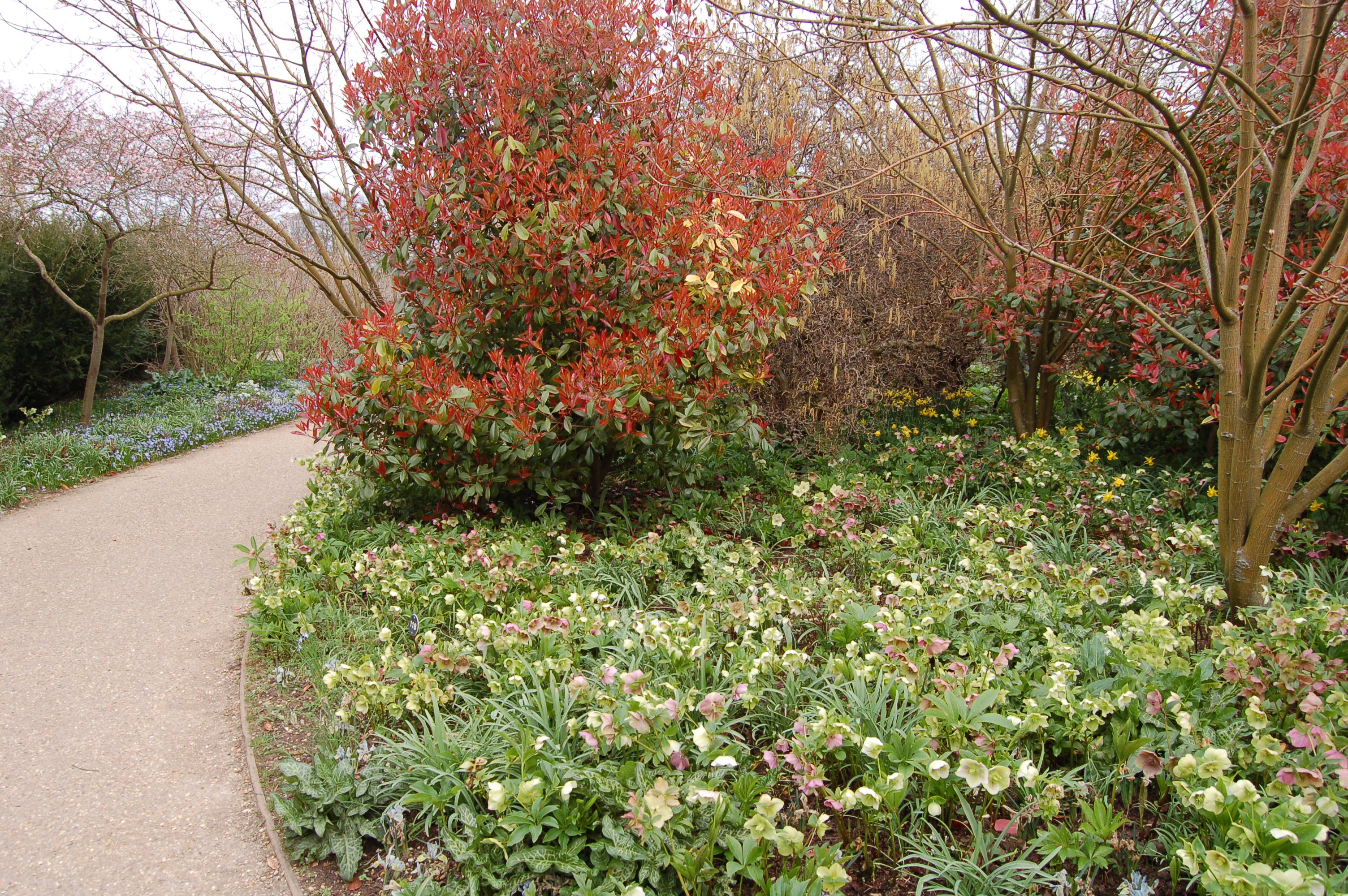
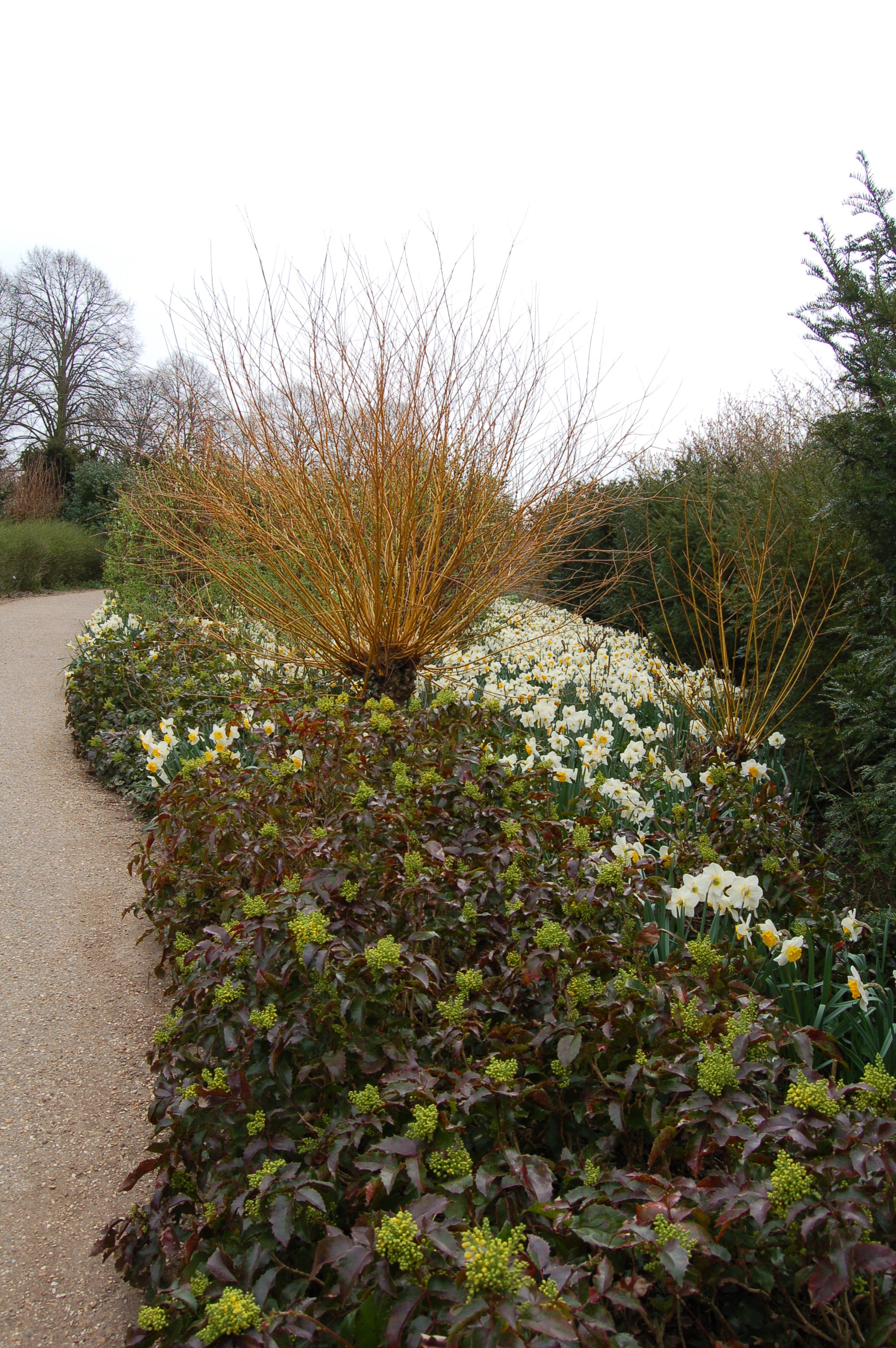
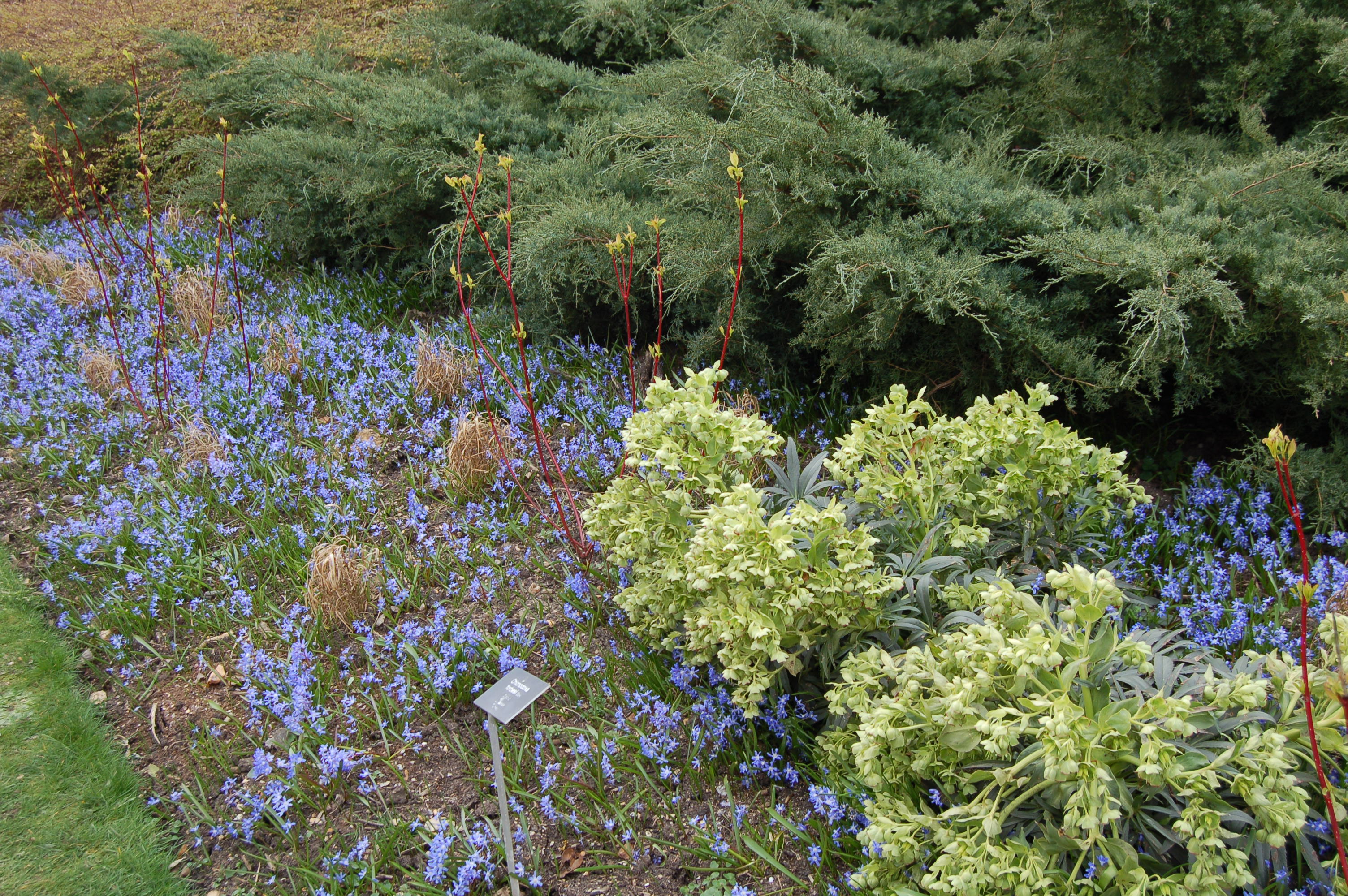
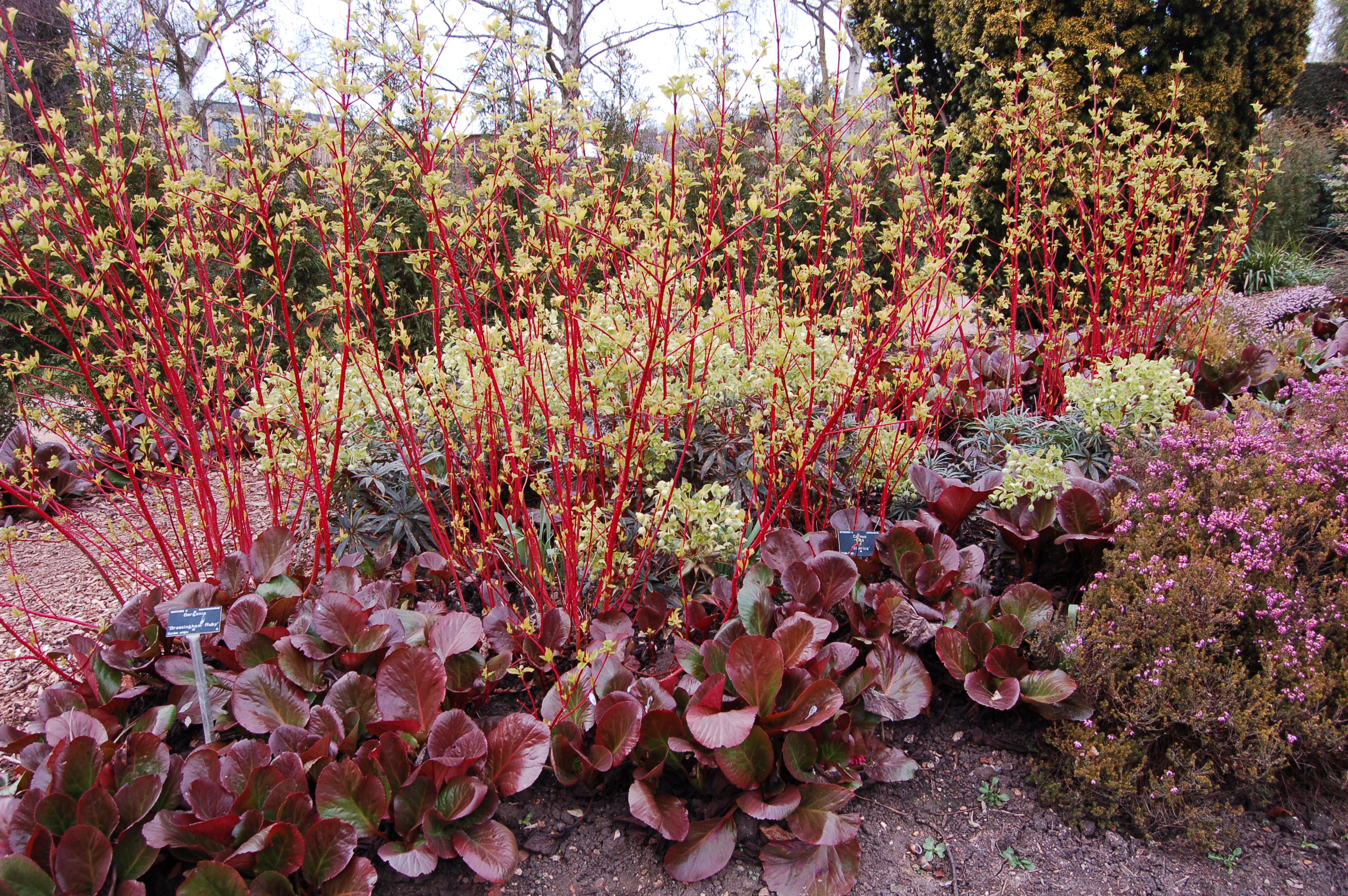
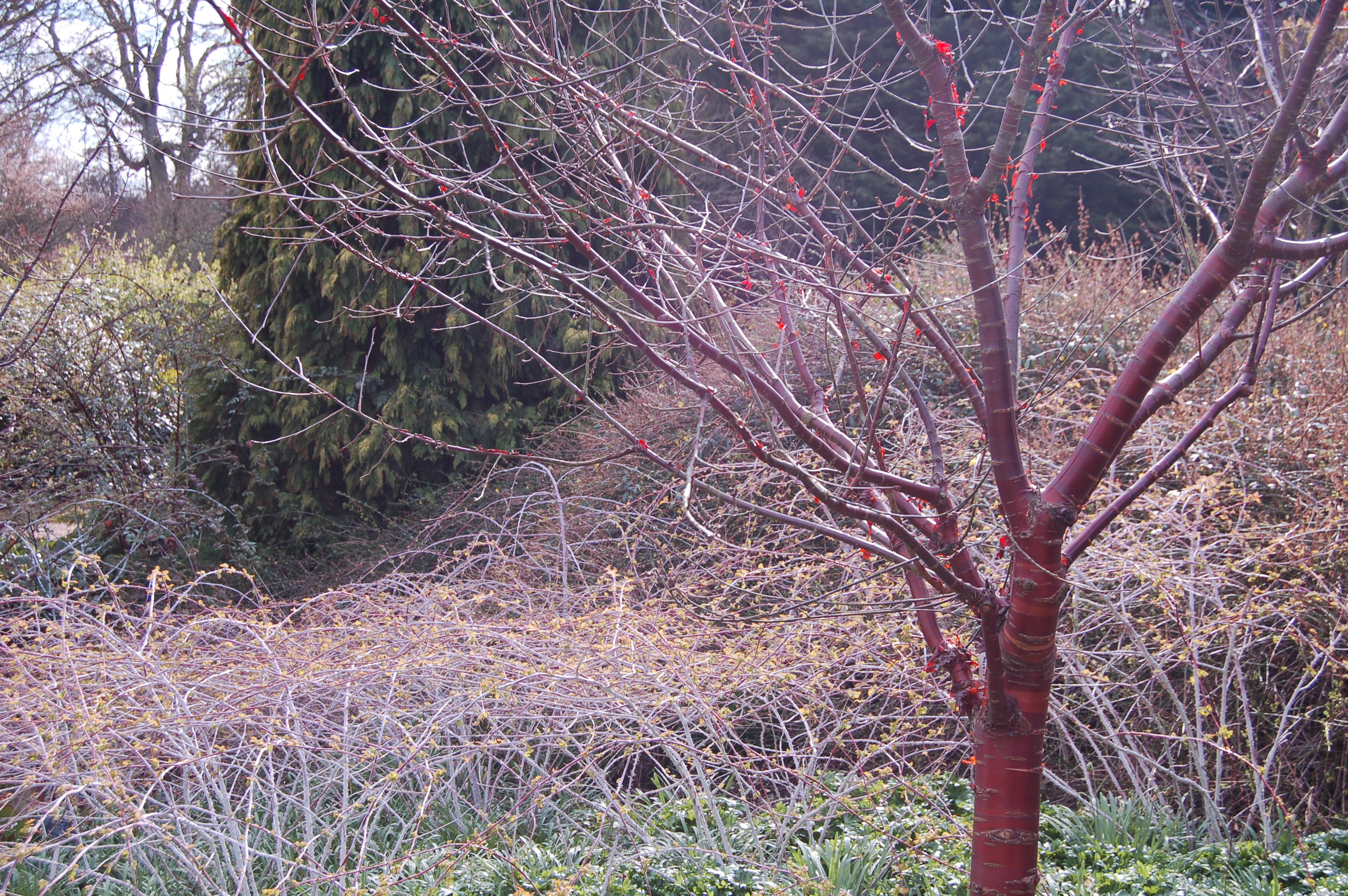
We soon met the friends we had seen in our other two winter gardens, the dogwoods, rubus and willows grown for their stem colour underplanted with hellebores and ivies. There was some wonderful pruning techniques on display here too.

2014 03 20_7370 2014 03 20_7372

2014 03 20_7371  2014 03 20_7373  2014 03 20_7375 2014 03 17_7274

2014 03 20_7378 2014 03 20_7379

2014 03 20_7390

Grasses featured strongly with their wonderful warm colours and strong structural shapes.

2014 03 20_7377 2014 03 20_7374

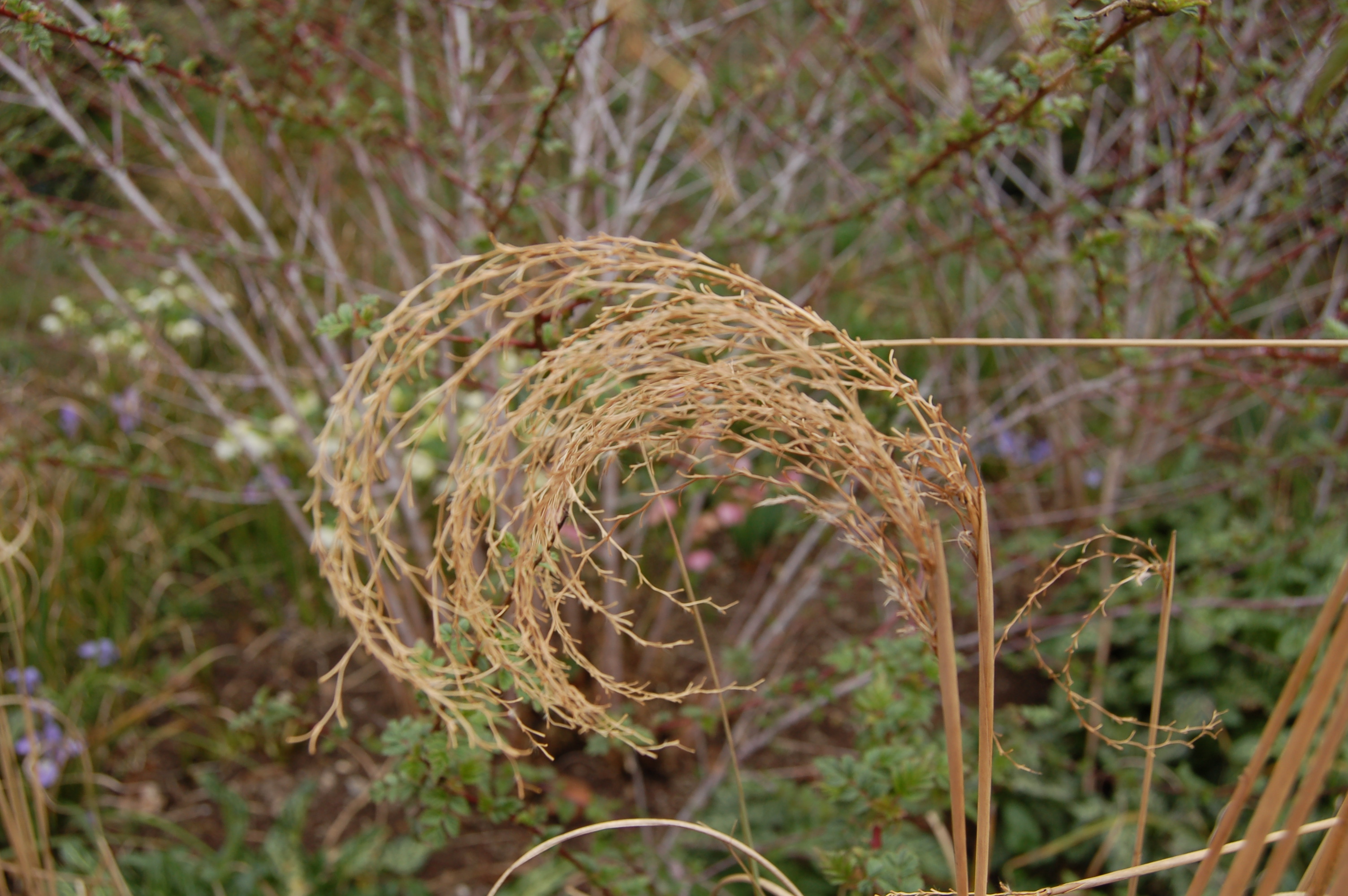
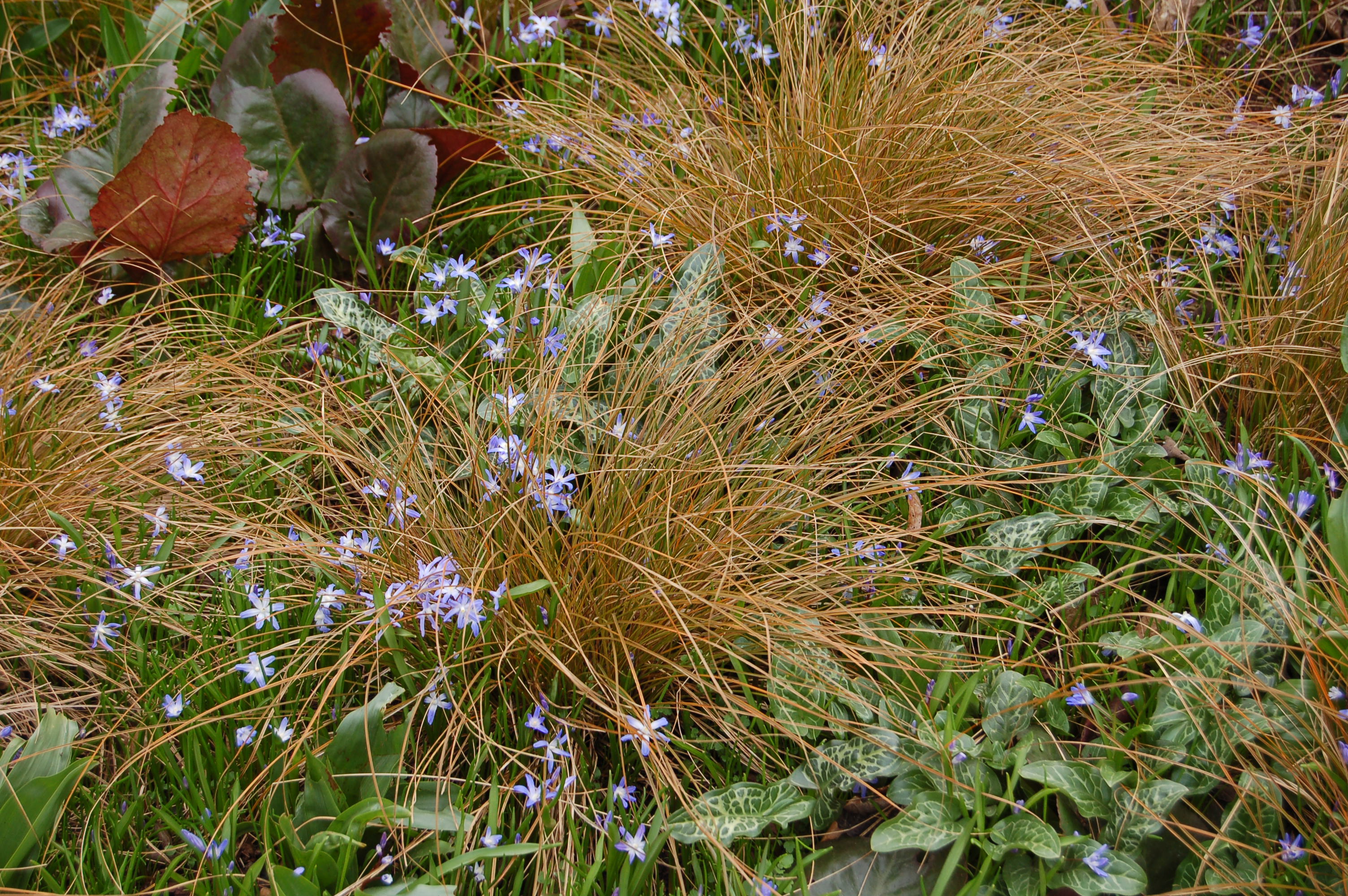
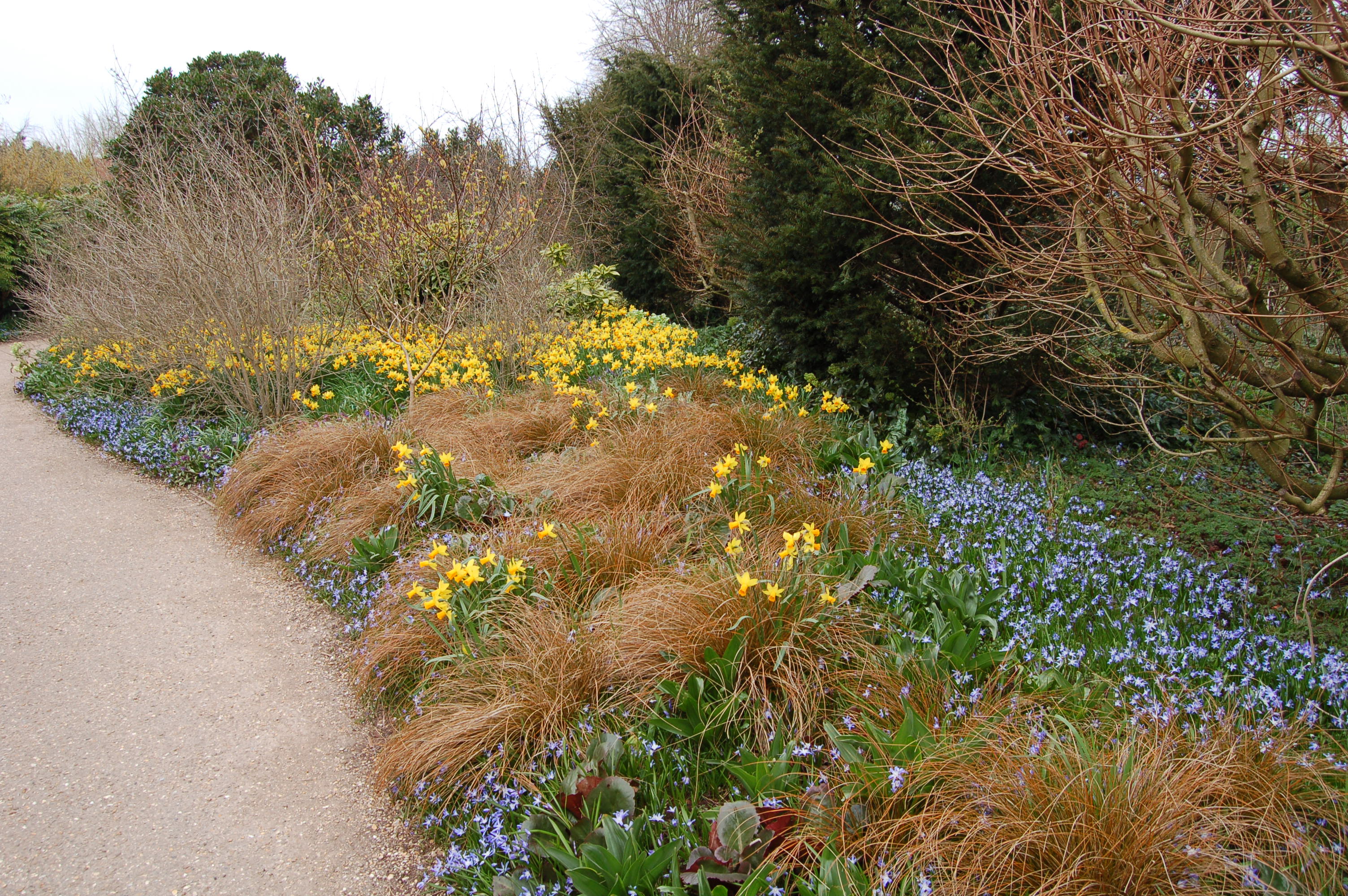
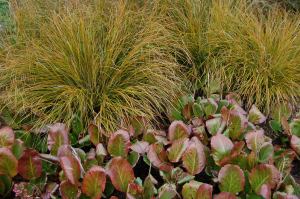
We were once again interested to see which plants the gardeners from Anglesey Abbey used as ground cover to help reduce weed growth. Various low growing grasses teamed up with Arum and Bergenias to perform this role.

2014 03 20_7380 2014 03 20_7381 2014 03 20_7382 2014 03 20_7383 2014 03 20_7384 2014 03 20_7385

All these plants acting out their roles as ground covering plants encouraged us to look down as we were seeking ideas for our allotment Winter Garden, but we were struck also by specimens higher up.

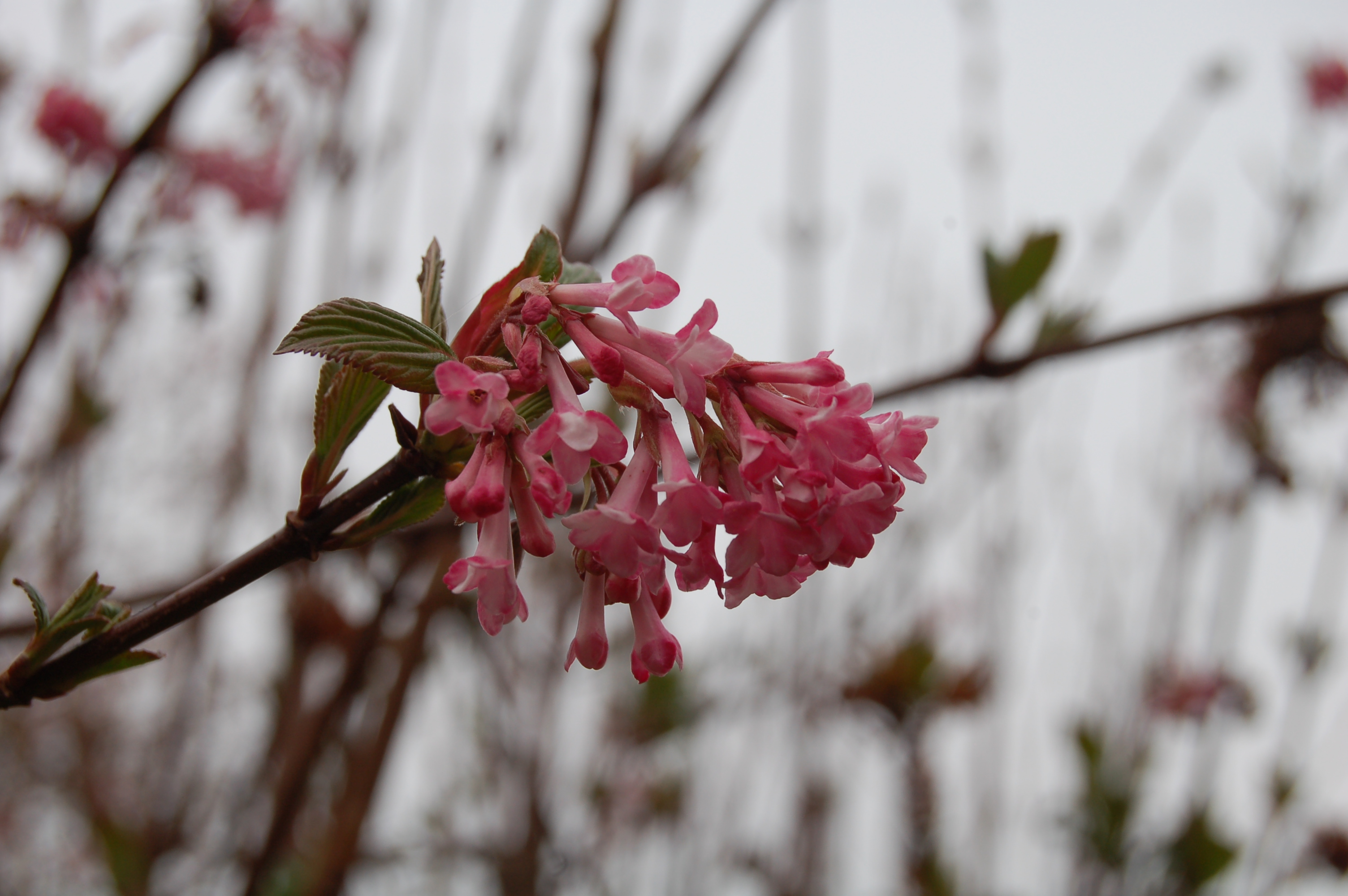
The Viburnum pictured below didn’t just look good it smelled sweetly too. The Pulmonaria has not just flowers of two colours but unusual foliage to catch the eye.

2014 03 20_7387 2014 03 20_7388


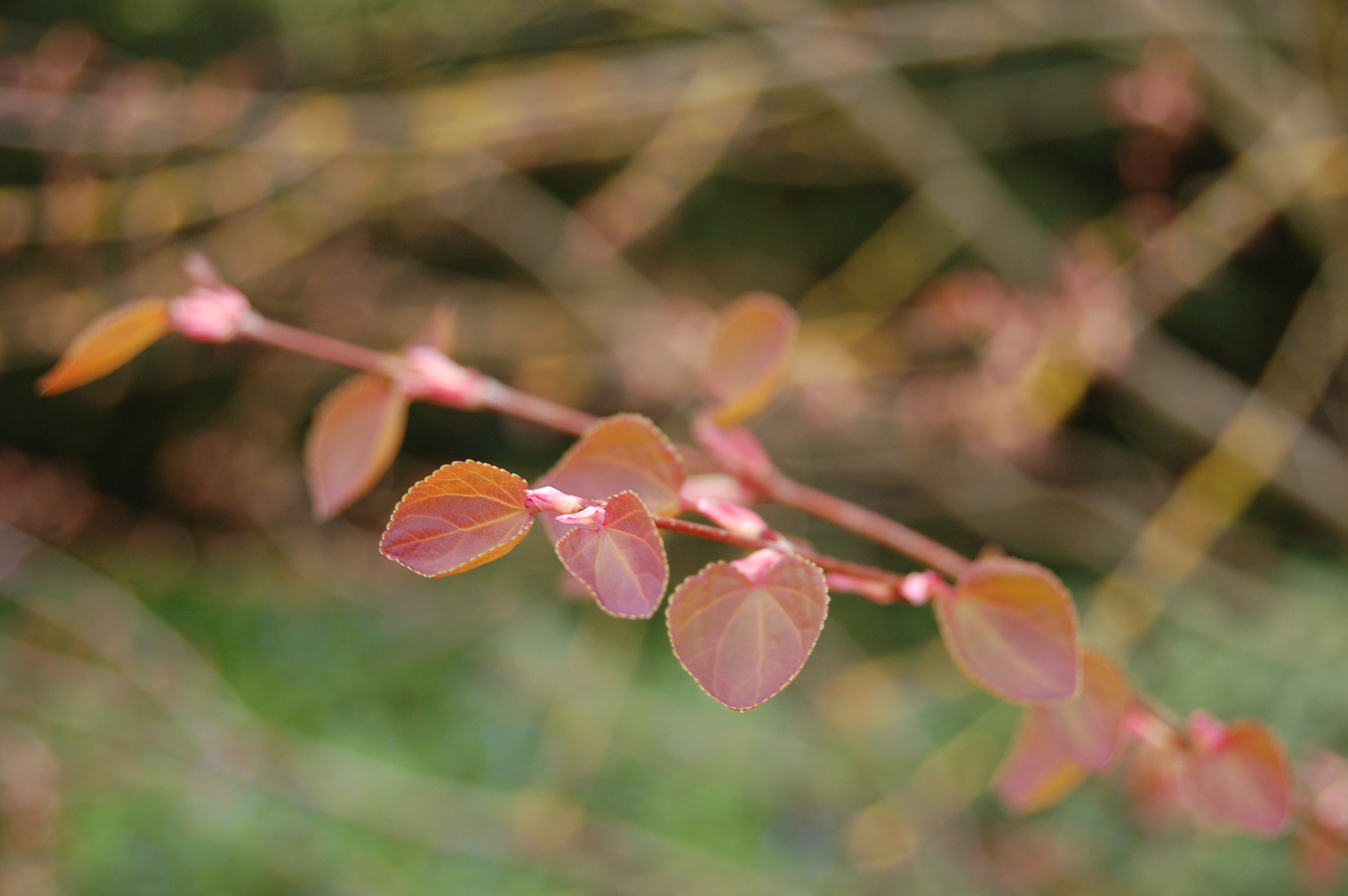
The fresh foliage of the Cercis had leaves of a delicate bronze which was a strong contrast to the much more brash reds of the Photinia “Red Robin”.

2014 03 20_7389  2014 03 20_7393

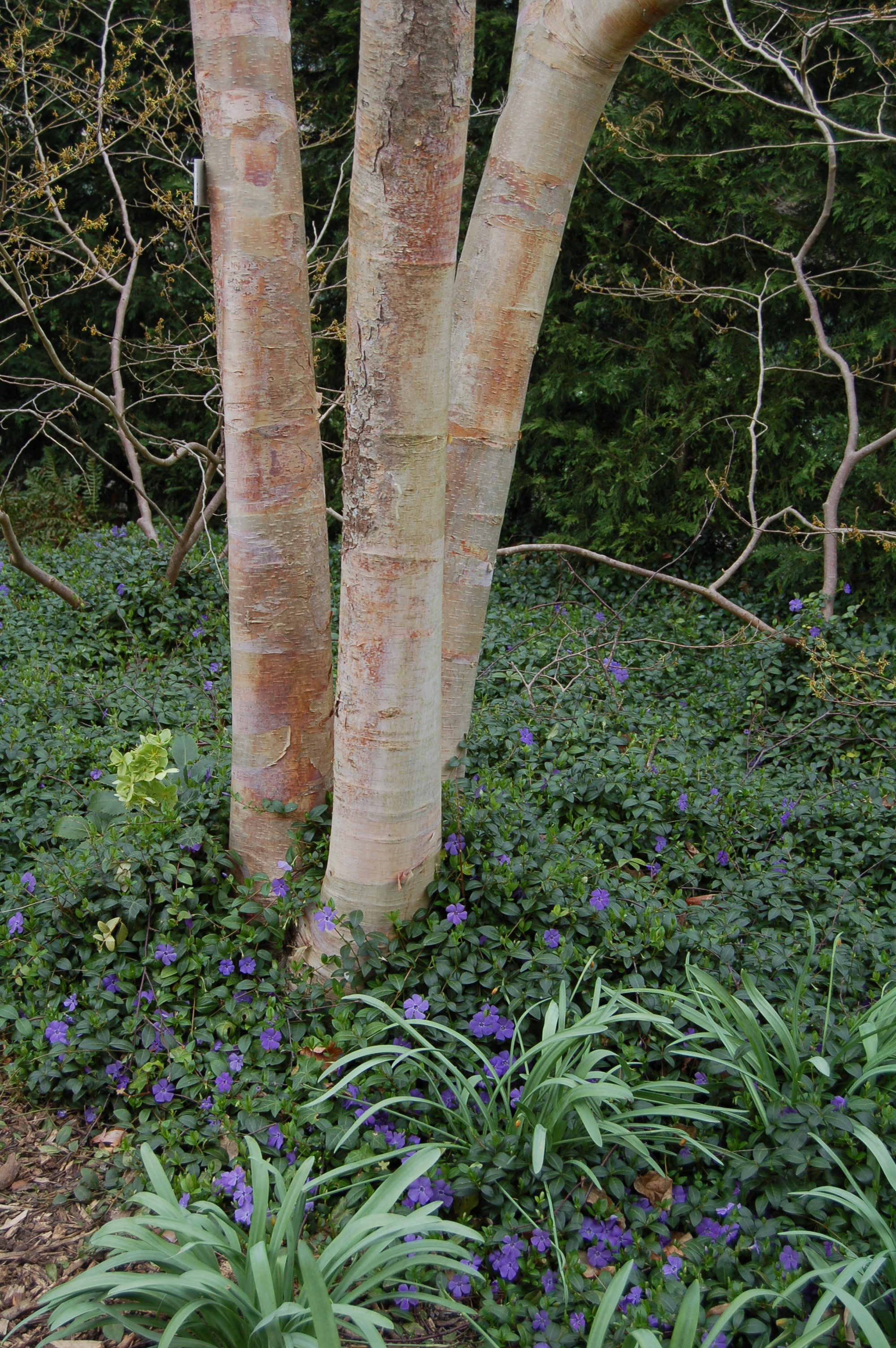
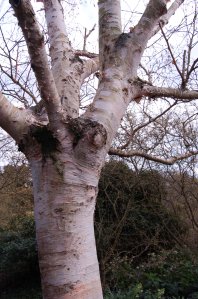
The white bark of the trunks of Betula utilis although now used in every winter garden still deserve to be centre stage. Here at Anglesey Abbey some had been “dressed” in bright colours for added humour.

2014 03 20_7408 2014 03 20_7412

2014 03 20_7410 2014 03 20_7409

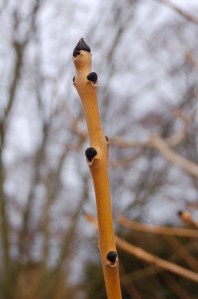
This golden stemmed ash is rarely seen in gardens but in the winter its black pyramidal buds strongly contrast with the golden stems. It is one of those plants that are simply too big for the average garden but when space allows it can be really attractive.

2014 03 20_7402

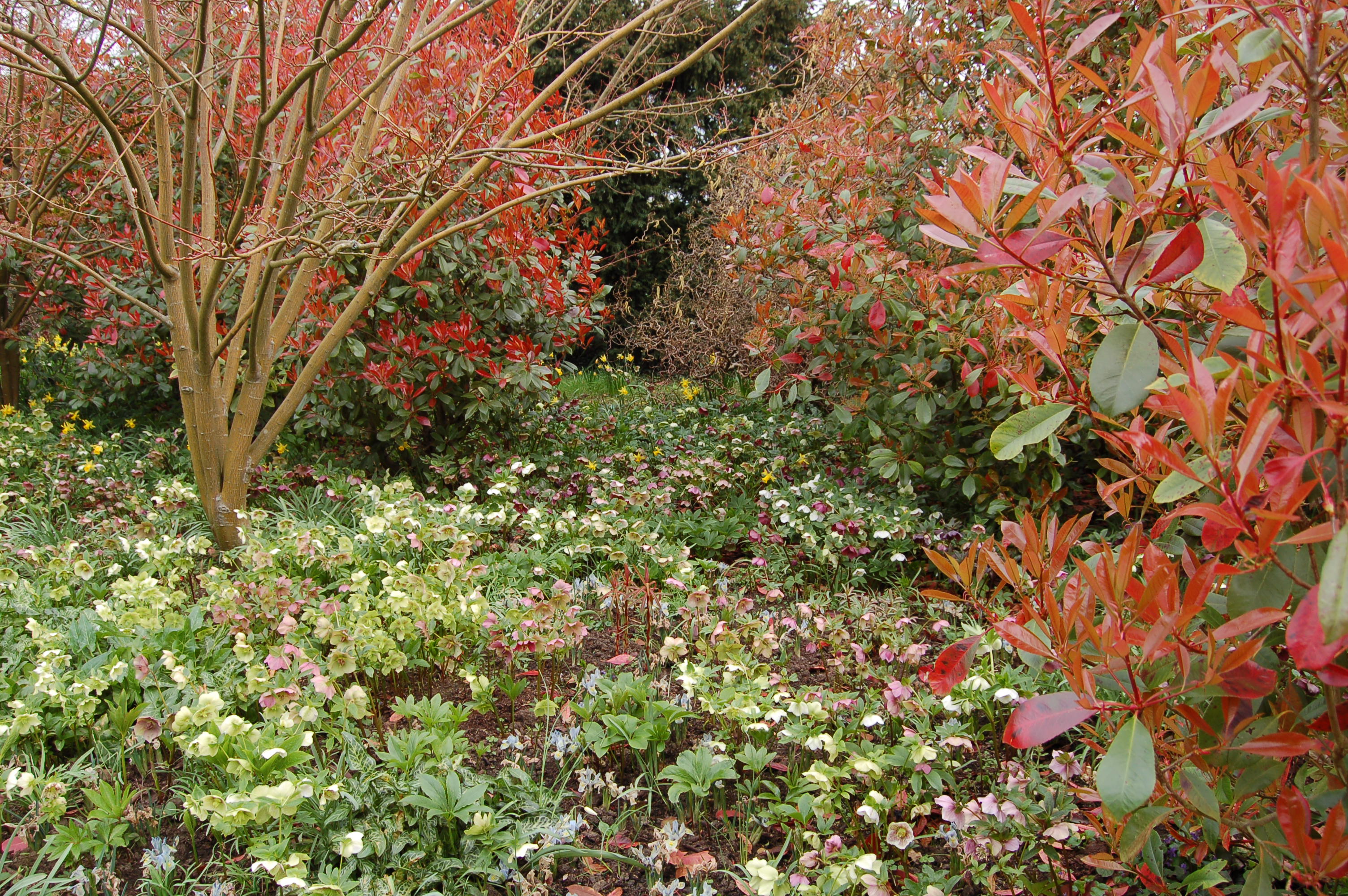
I have concentrated so far on the attributes of individual plants but we need to see how they fit in to the whole to fully appreciate their impact and the atmosphere of this amazing winter garden.

2014 03 20_7391 2014 03 20_7392  2014 03 20_7394 2014 03 20_7395 2014 03 20_7398 2014 03 20_7399 2014 03 20_7400 2014 03 20_7401

2014 03 20_7407  2014 03 20_7405 2014 03 20_7404 2014 03 20_7403

We entered the winter borders through interesting sculptural gates and we left through another. A quick look over the shoulder gave us a final chance to appreciate this brilliant garden.

So there we leave the series of three posts concerning winter gardens. Although Dunham Massey is the newcomer it looked good against the other two, but in the end it has to be said that the “original” winter garden at Anglesey Abbey remains my firm favourite.

2014 03 20_7413 2014 03 20_7406


Categories
colours flowering bulbs garden design garden photography gardening gardens gardens open to the public grasses hardy perennials irises ornamental grasses ornamental trees and shrubs shrubs spring bulbs trees Winter Gardening winter gardens

Three Winter Gardens – Part Two – Cambridge Botanic Gardens

We had never been to Cambridge before. Lots of people told us it is just like Oxford its parallel university city. We decided to put things right and find out for ourselves so spent a few days there. One day we spent in the University Botanic Gardens where we were keen to explore the winter garden as we had heard good things about it.

We were pleased we decided to visit both Cambridge and its botanic garden as we enjoyed both immensely. The Botanic Garden was good enough to make us plan to return in different seasons. If a garden impresses in winter then it will at any time.

So for part two of my “Three Winter Gardens” we shine the spotlight on Cambridge. Look out for a post in the near future looking at the rest of the garden in winter too.

We knew we were in for a treat for within the first 20 yards of our walk after passing through the gate we were mystified by a couple of plants we did not know.

2014 03 17_7183 2014 03 17_7179

Luckily they were both labelled and I shall say what they are in my post about the gardens in general but first off to the Winter Garden. We were particularly keen to see this seasonal patch as it had been created in 1989 so now it is well established. Many gardens now boast winter borders or winter gardens and we have even created one on our allotment site in the communal areas, but these are mostly immature.

2014 03 17_7254

Trees and shrubs give the impact in any winter garden often as here at Cambridge they are birches and willows.

2014 03 17_7255 2014 03 17_7277

2014 03 17_7258

We were particularly impressed with the use of ground cover, an aspect we have not used very well in our allotment version. We were to learn so much and go home full of enthusiasm to develop effective ground cover in our allotment’s winter garden. Ivies, periwinkles and hellebores added so much. We already use hellebores but not ivies and periwinkles but they present so many opportunities, with all the varieties in leaf colour, variegation and shape in ivies and flower colours in the periwinkles. Bergenias and grasses together worked well in other places, because of their unusual foliage colours and contrasting leaf shape.

2014 03 17_7256  2014 03 17_7259 2014 03 17_7260 2014 03 17_7263

2014 03 17_7265

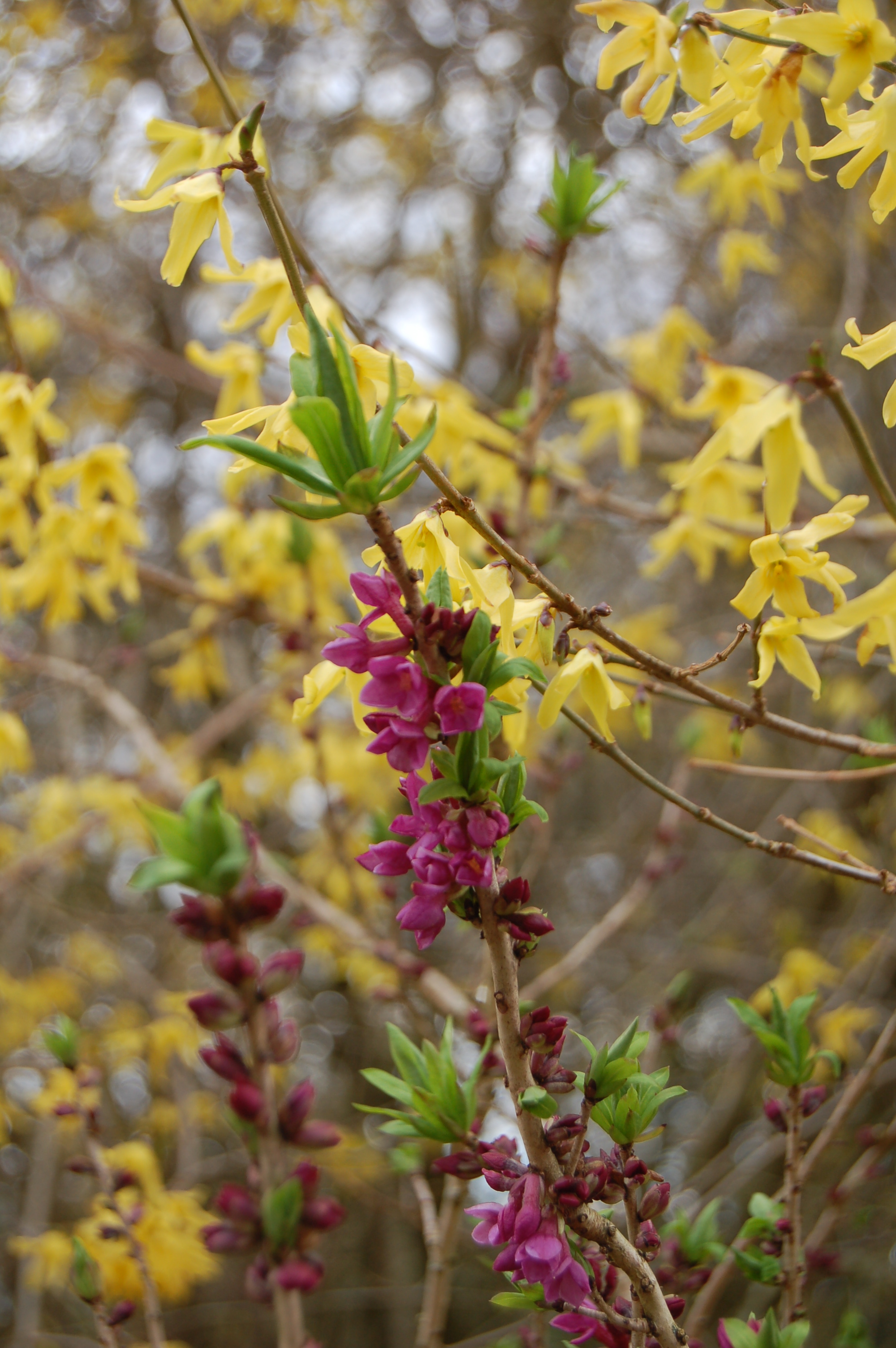
This was a very effective colour combination which in any other season probably wouldn’t have worked. Daphne mezereum and Forsythia Lynwood. Of course the daphne also provided that other essential of any winter border – sweet scent. The sweetest scent of all came from another Daphne, Jacquelin Postill.

2014 03 17_7261  2014 03 17_7262 2014 03 17_7272

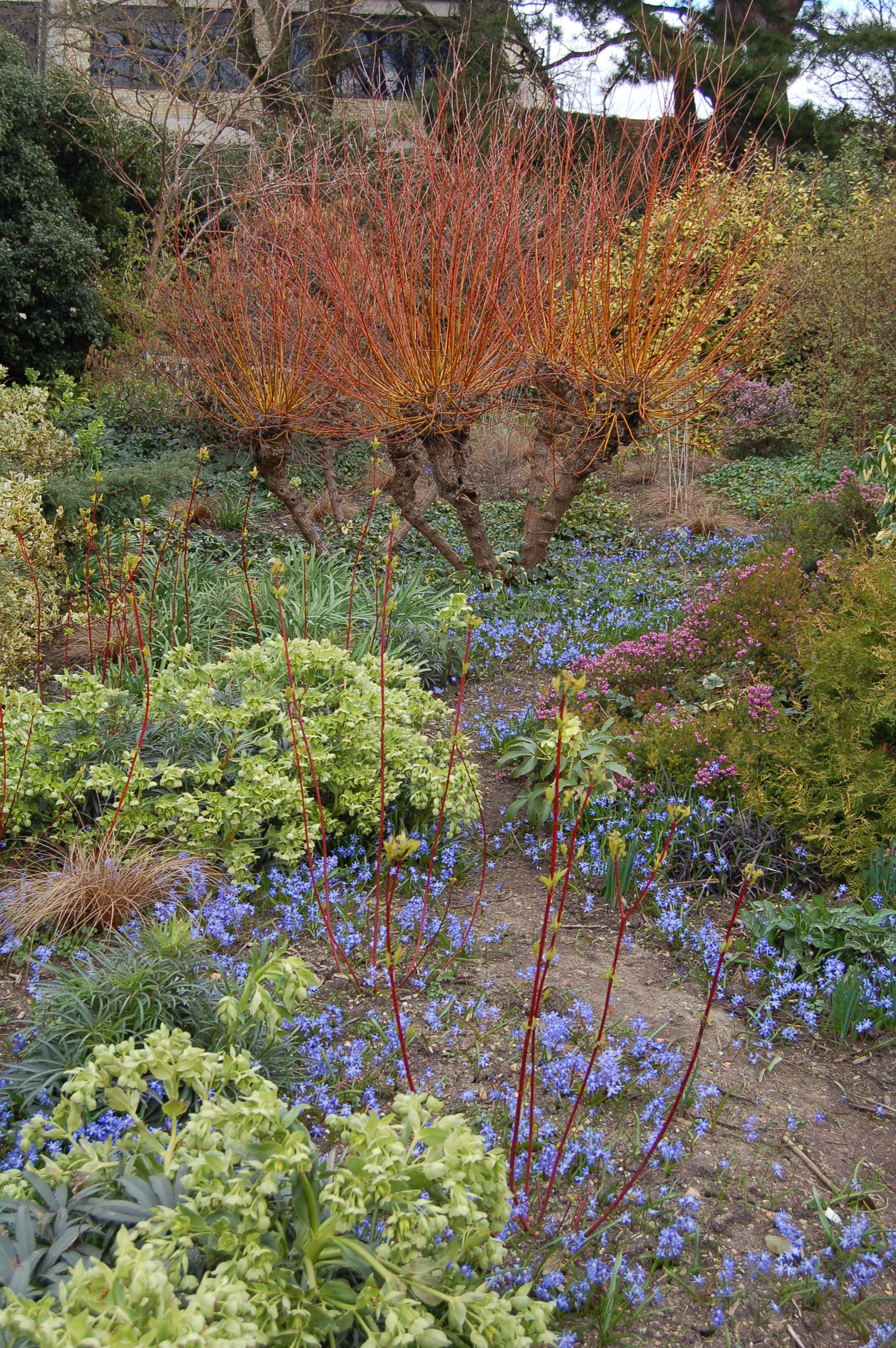
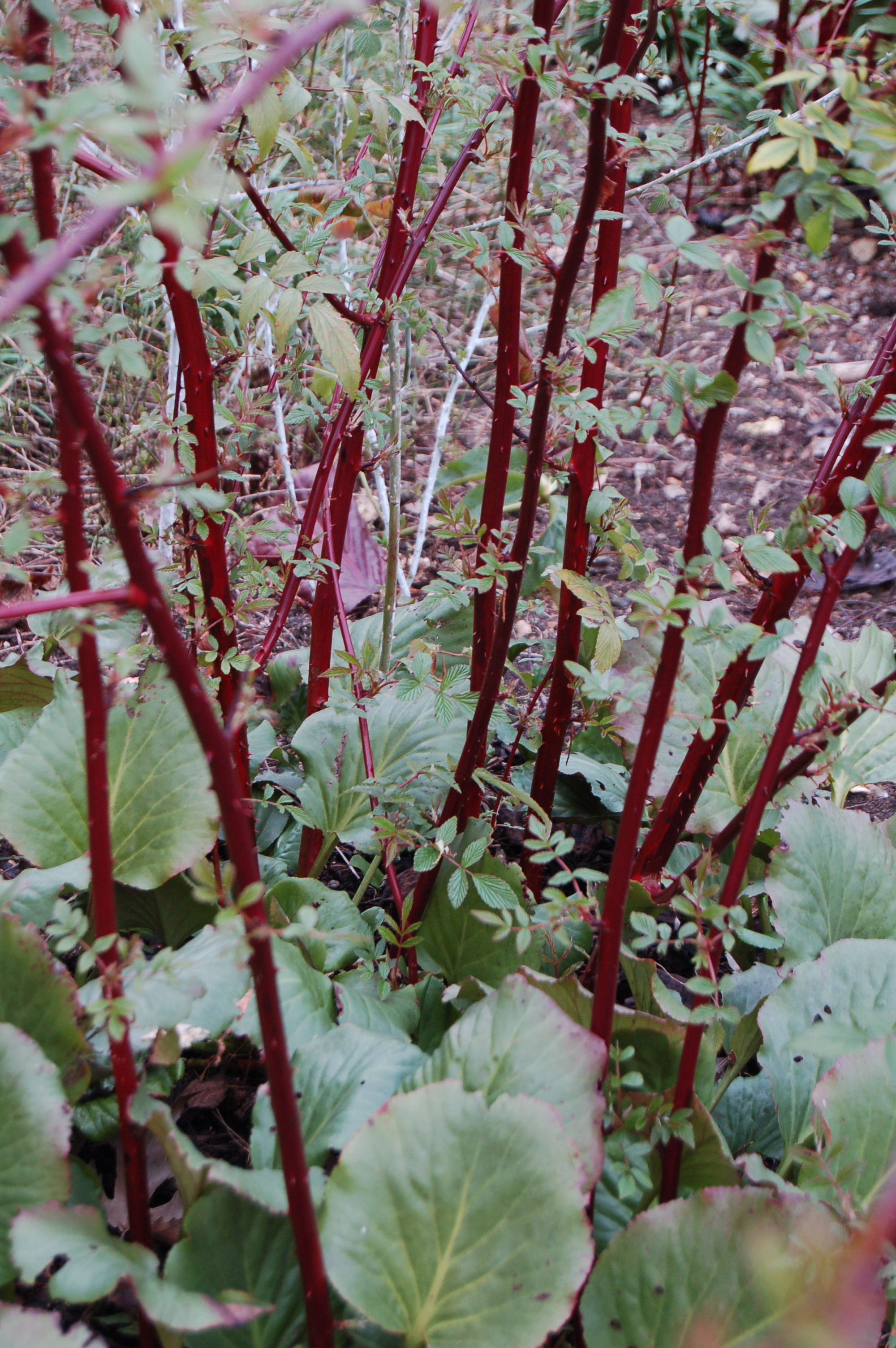
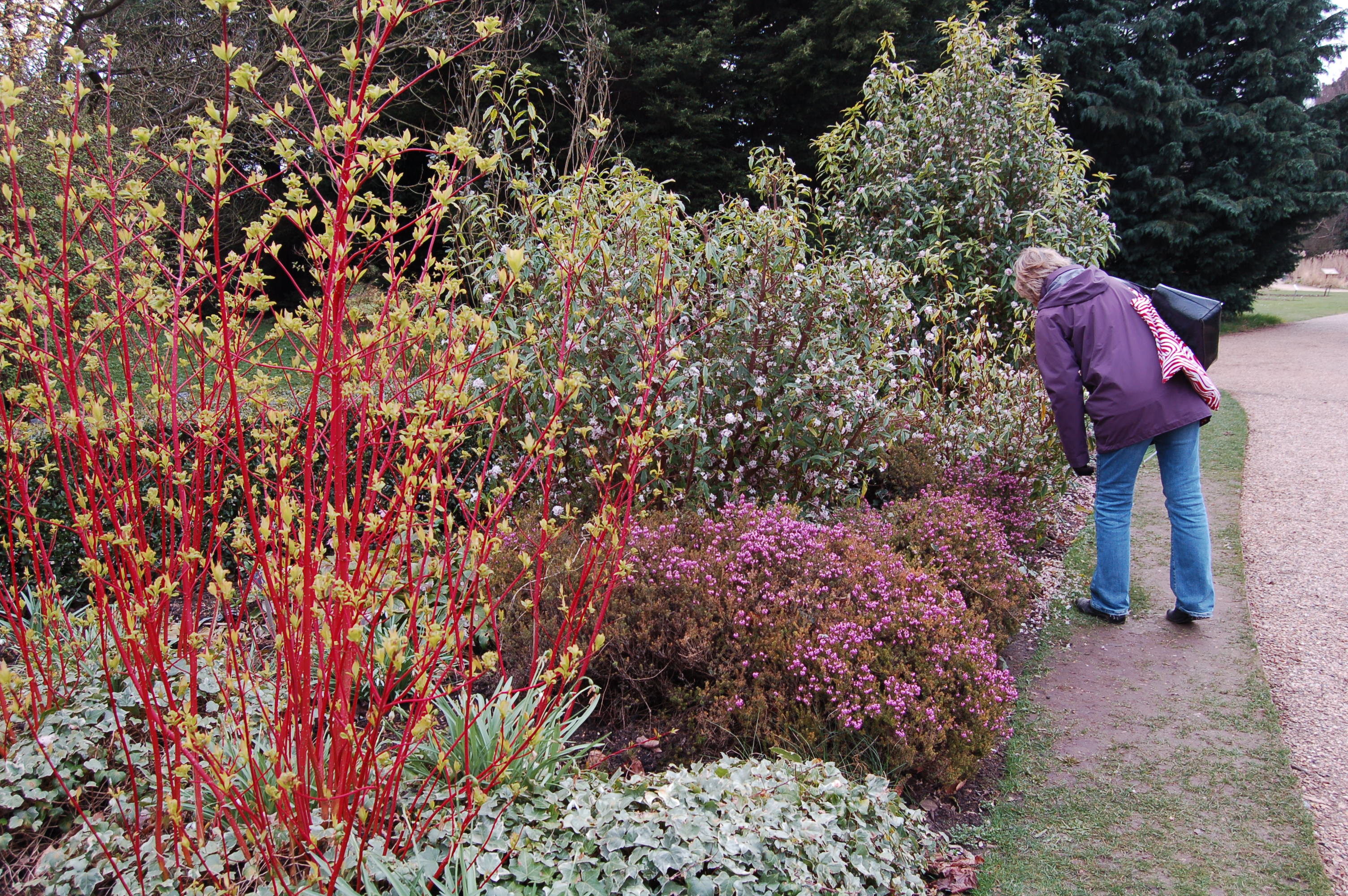
The coloured stems of coppiced and pollarded Cornus (dogwoods) and Salix (willows) have to star in any winter garden and they certainly did here along with Rubus.

2014 03 17_7264  2014 03 17_7266   2014 03 17_7269 2014 03 17_7270 2014 03 17_7271 2014 03 17_7274

2014 03 17_7273  2014 03 17_7275

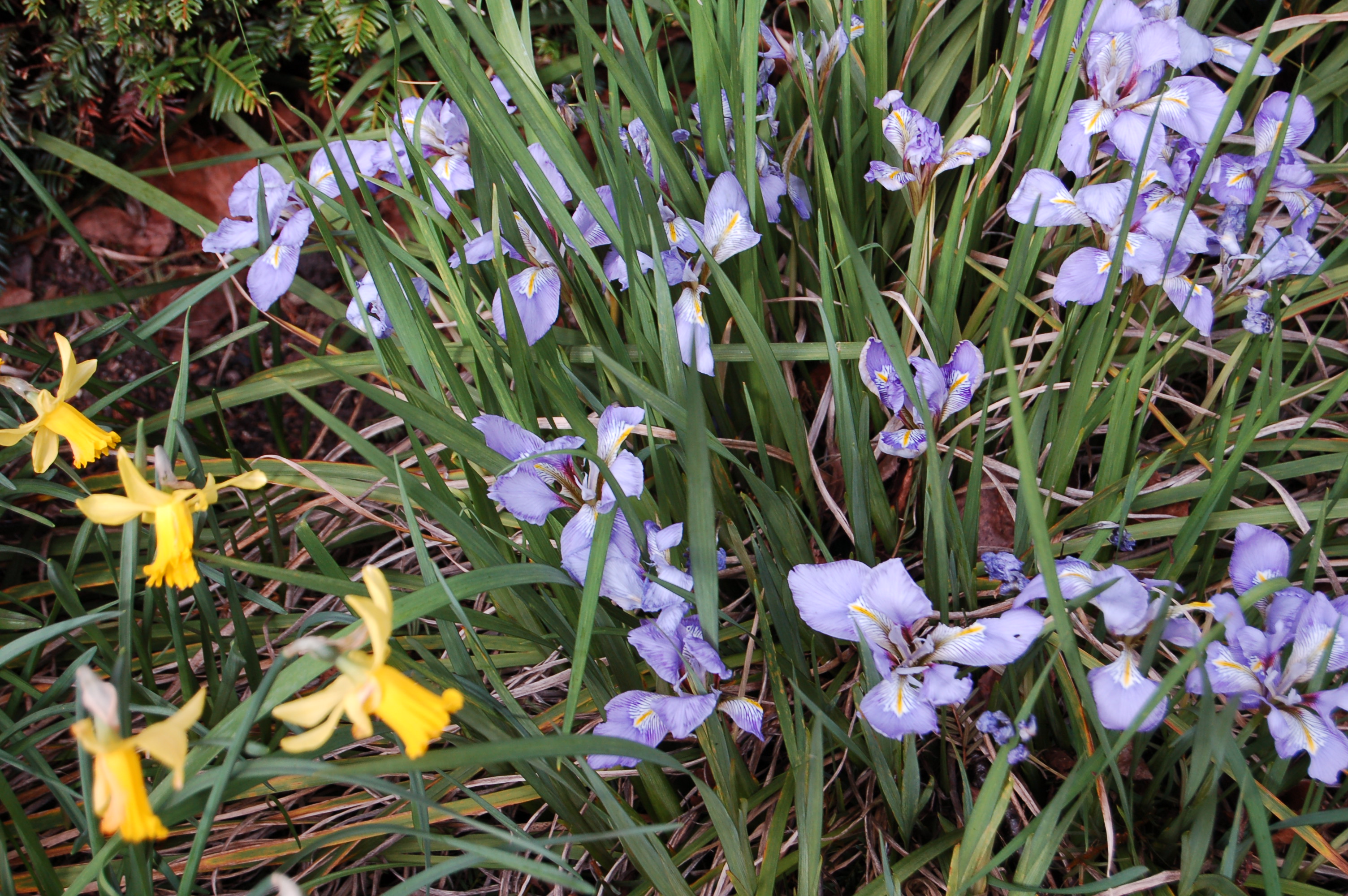
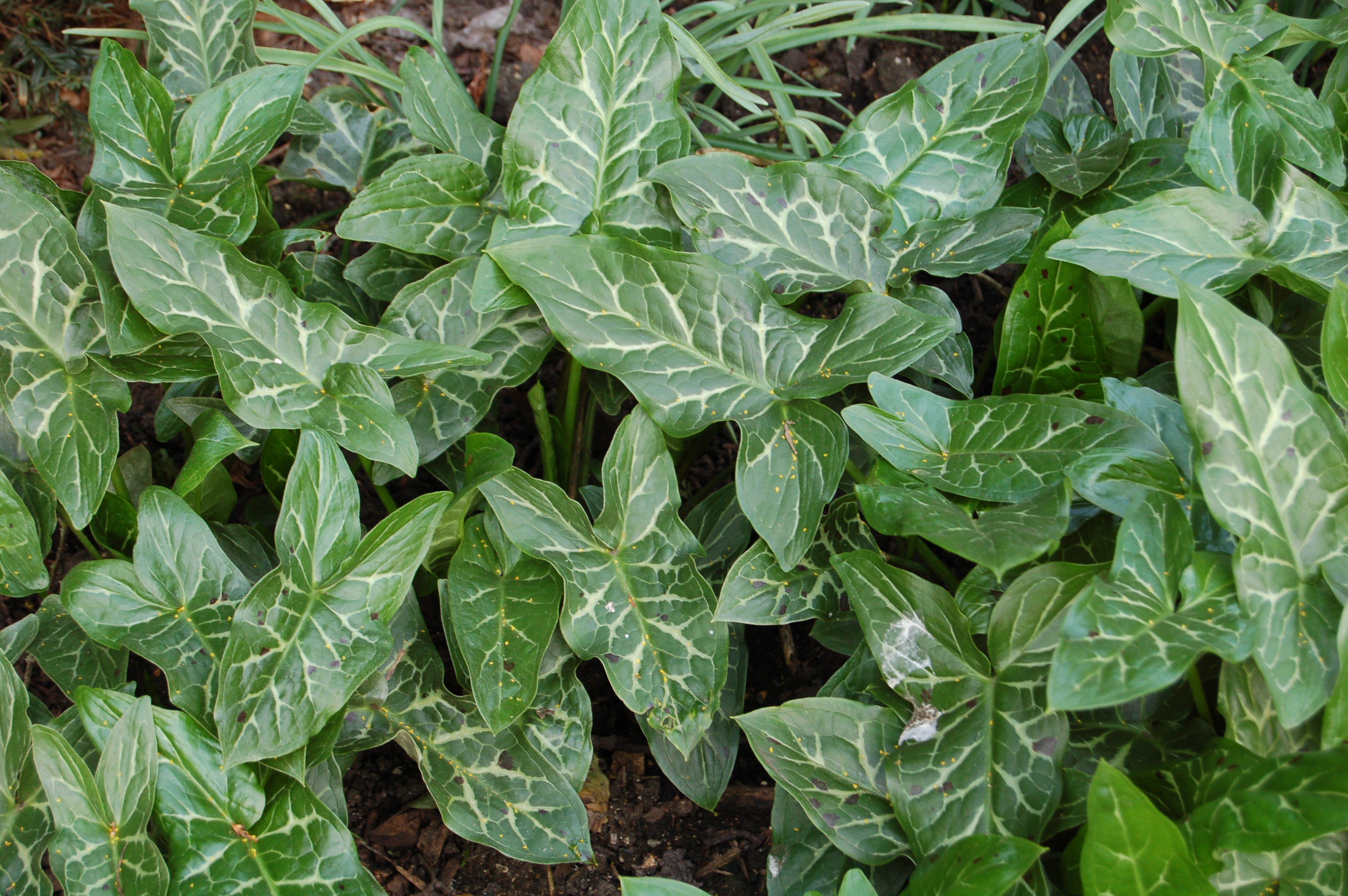
Two gems worth a special mention are the winter flowering iris and the wonderful leaves of Arum italicum marmoratum.

2014 03 17_7276  2014 03 17_7278

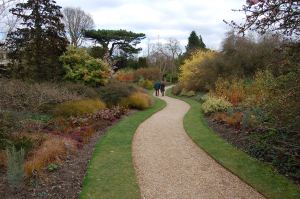
I shall finish with this photo looking back at the gently curving path through the winter border. The third of my winter garden visits will be to Anglesay Abbey, probably the best known and most polular of all the winter gardens in this country. We shall see if it deserves this accolade.

2014 03 17_7267

This Veggie Life

A Vegetarian | Nature Lifestyle Blog

Rambling in the Garden

.....and nurturing my soul

The Arch City Gardener

Journeys In St. Louis Gardening and Beyond

Garden Dreaming at Châtillon

Consult the genius of the place

Storyshucker

A blog full of humorous and poignant observations.

gardeninacity

Notes from a wildlife-friendly cottage garden

PlayGroundology

...an emerging social science

The Official Blog of British Wildlife

'The most important and informative publication on wildlife of our times' - The Independent. This blog is a member of The UK & Ireland Natural History Bloggers group: www.uknhb.blogspot.com

iGrowHort

Inspire - Cultivate - Grow Native Plants - Restore Landscapes

Bishops Meadow Trust

To create and protect a semi-natural wild space for the people of Farnham to enjoy and experience an array of British wildlife in our town

Gardening with Children

The www.gardeningwithchildren.co.uk Blog

UKbirdingtimeline

birding through the seasons, why birds matter and how to conserve them

NATURE WALKER

with a camera in hand

Jardin

Transform your outdoor space

Eva's space

My allotment, cooking and other interests

Old School Garden

my gardening life through the year

LEANNE COLE

Trying to live a creative life

fromacountrycottage

trying to live as lightly as possible on our beautiful planet

Good Life Gardening

Nature lovers from Leicester living the good life.

mybeautfulthings

Finding the beautiful in the everyday

mawsonmichelle

Michelle's Allotment

In and Out of My Garden

thoughts from and about my garden

Greenhousing

Big plans for a small garden

The Scottish Country Garden

A Walled Country Garden in South East Scotland

The Fruity Chicken

Life at the fruity chicken

willowarchway

Off grid living. Self sufficient. "PERMAGANICS RULE".

St Anns Allotments

Nottingham's Grade 2* Listed Allotments and Community Orchard

Manifest Joy Harvests

a journey in suburban vegetable gardening

Allotmental

The madness of growing your own

Penny's Garden: a harvest beyond my front door

A novel approach to vegetable gardening

arignagardener

Sustainable living in the Irish countryside.

NewEnglandGardenAndThread

Master Gardener, amateur photographer, quilter, NH native, and sometimes SC snowbird

dianajhale

Recent work and work in progress and anything else that interests me

planthoarder

a chaotic cottage gardener

Lens and Pens by Sally

a weekly blog that creates a personal philosophy through photographs and words

Dewdrops and Sunshine

Stories from a sassy and classy Southern farmbelle.

The Pyjama Gardener

Simple Organic Gardening & Seasonal Living

gettin' fresh!

turning dirt into dinner

JOY...

today the world is created anew

Garden Birds

Notes from a Devon garden

ShootAbout

Life Through The Lens

Adapting Pixels

A photography blog showcasing the best photography pictures and videos on the internet

Wildlifegardening's Blog

Just another WordPress.com site

naturestimeline

personal observations from the natural world as the search continues for a new approach to conservation.

LATEBLOOMERBUDS

The Wonders of Life through my Eyes, my Heart, my Soul