Categories
conservation fruit and veg gardening grow your own

Odd Harvests

In the last few weeks of last year we harvested two plants that we have rarely harvested before but for very different reasons.

The first crop came from the greenhouse where the plants had been growing away all summer in growing bags after being sown in the propagator early in the spring. We were given the seeds and having never tried them before we decided to give them a go. Tomatillos – the name sounding somewhat like tomatoes and the plants and fruit ending up looking somewhat like cape gooseberries.

Here is the crop, now we had to decide what to do with them. Chutney seemed to be the only answer, but I decided to turn to Google for ideas and perhaps if we were lucky, recipes.

And here they are closer up, thin pale green papery sheaths around fruit like green tomatoes. They didn’t look ready to harvest but we had heard somewhere that this is the stage to pick them and as the plants were suffering as temperatures cooled down, we went ahead and plucked them from the stems.
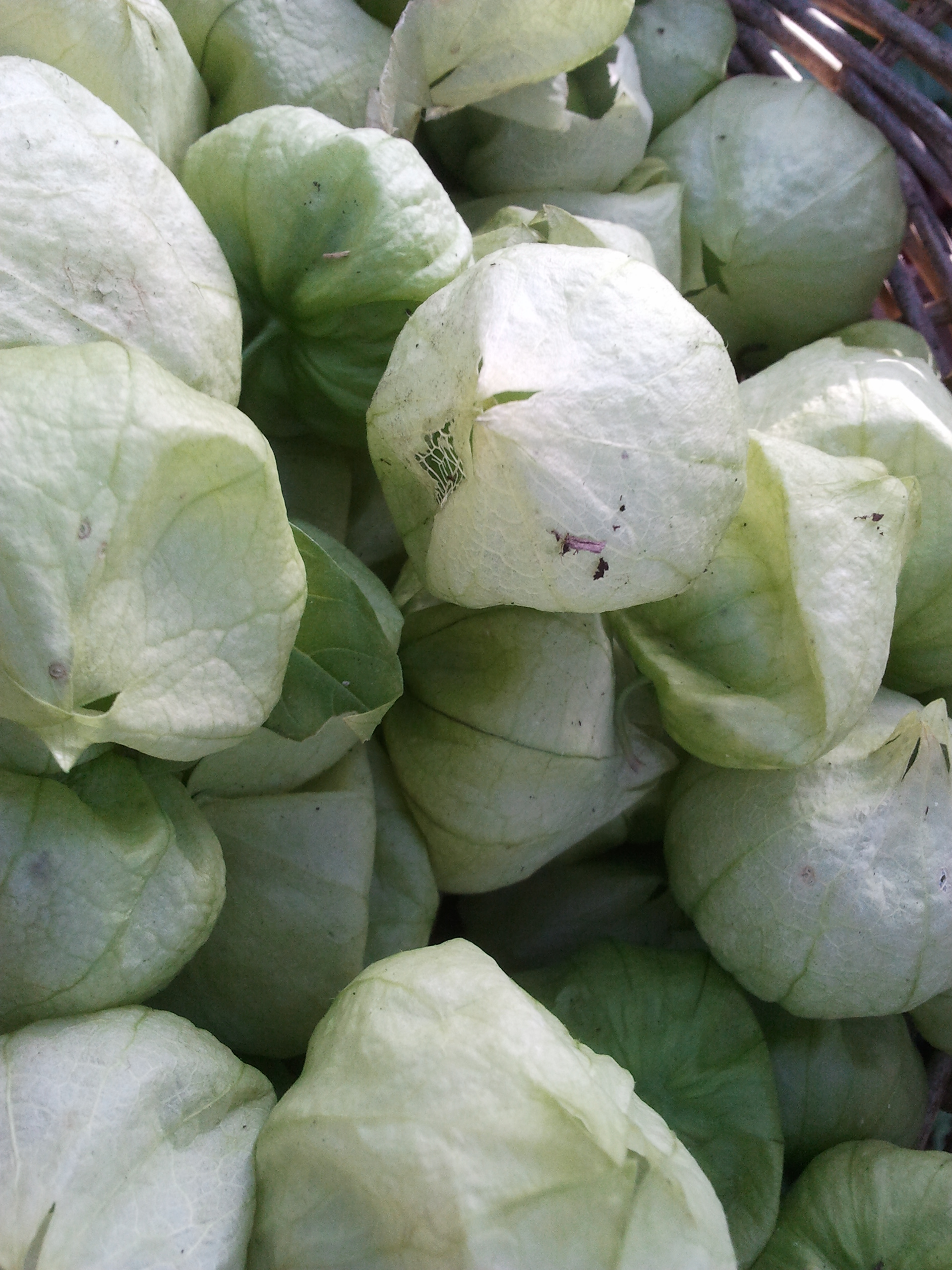
O.K. Back from a Googling session and I now knew that the botanic name for tomatillo is Physalis philadelphica, which makes it a relative of the Cape Gooseberry and a member of the Nightshade family. It originates from South America. In Mexico it is a staple food of the diet and is often used to make green sauces. Here they are called “Tomate Verde” and are most appreciated for their green colouring and sharp taste.

I found recipes for soups, stews, salsas and yes, chutney.

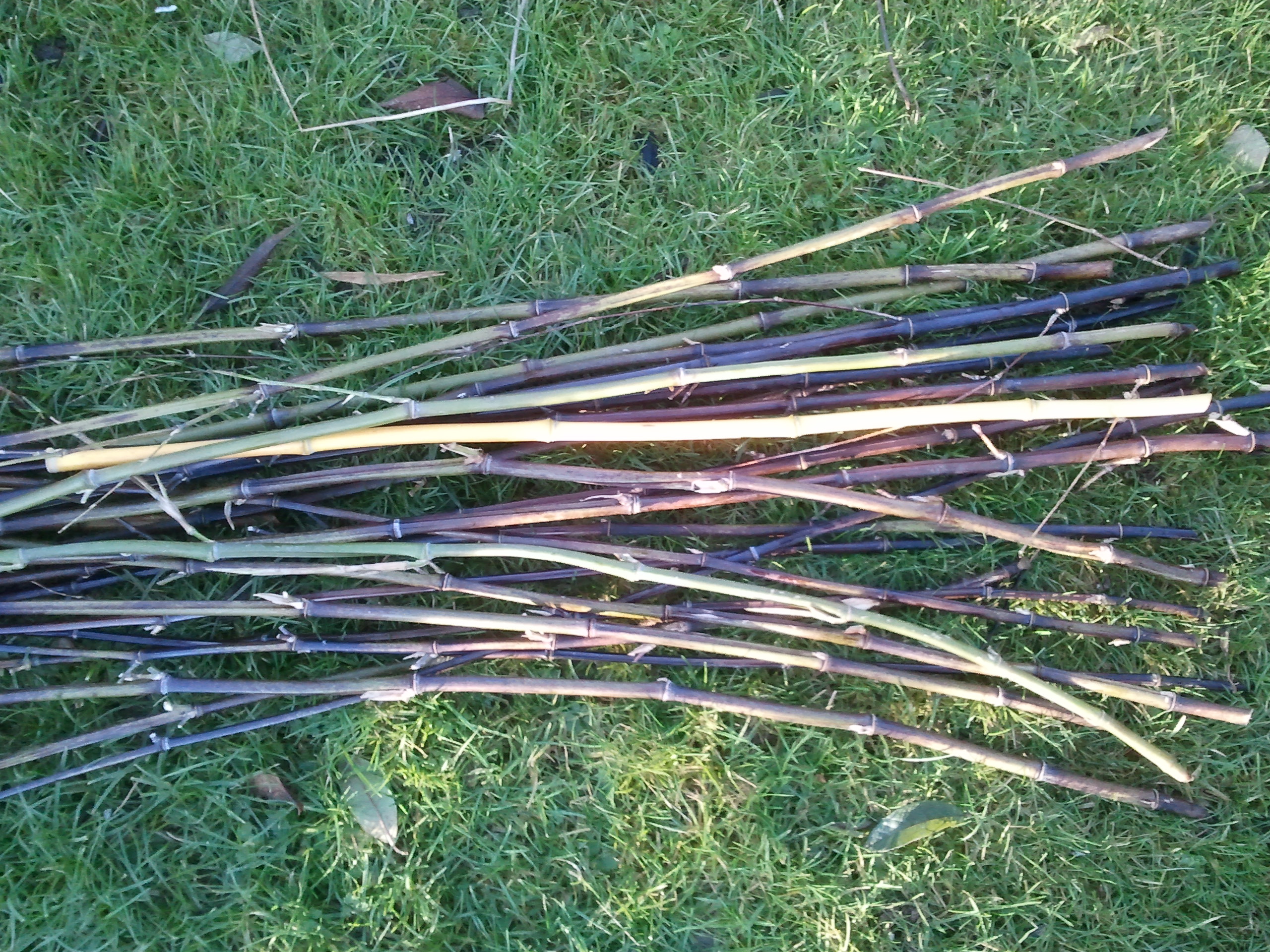
The second “odd” crop is bamboo, odd because it doesn’t often seem to be grown in the uk for anything but decorative reasons and because it is the first time we have seriously harvested our bamboo to use as garden canes. We grow three different bamboos for their different stem colours and originally planted them for their ornamental value, tall and graceful, moving gently adding sound to quiet days.
SAMSUNG

Growing your own garden canes is a good way of helping the environment. Importing them from China seems a terrible waste of resources.

It was mostly the black stemmed variety that was ready this year. Their stems are tough so I struggled with secateurs before turning to a pair of nicely sharpened loppers and getting the job done. The range of colours is very wide as the photos below shows.

SAMSUNG

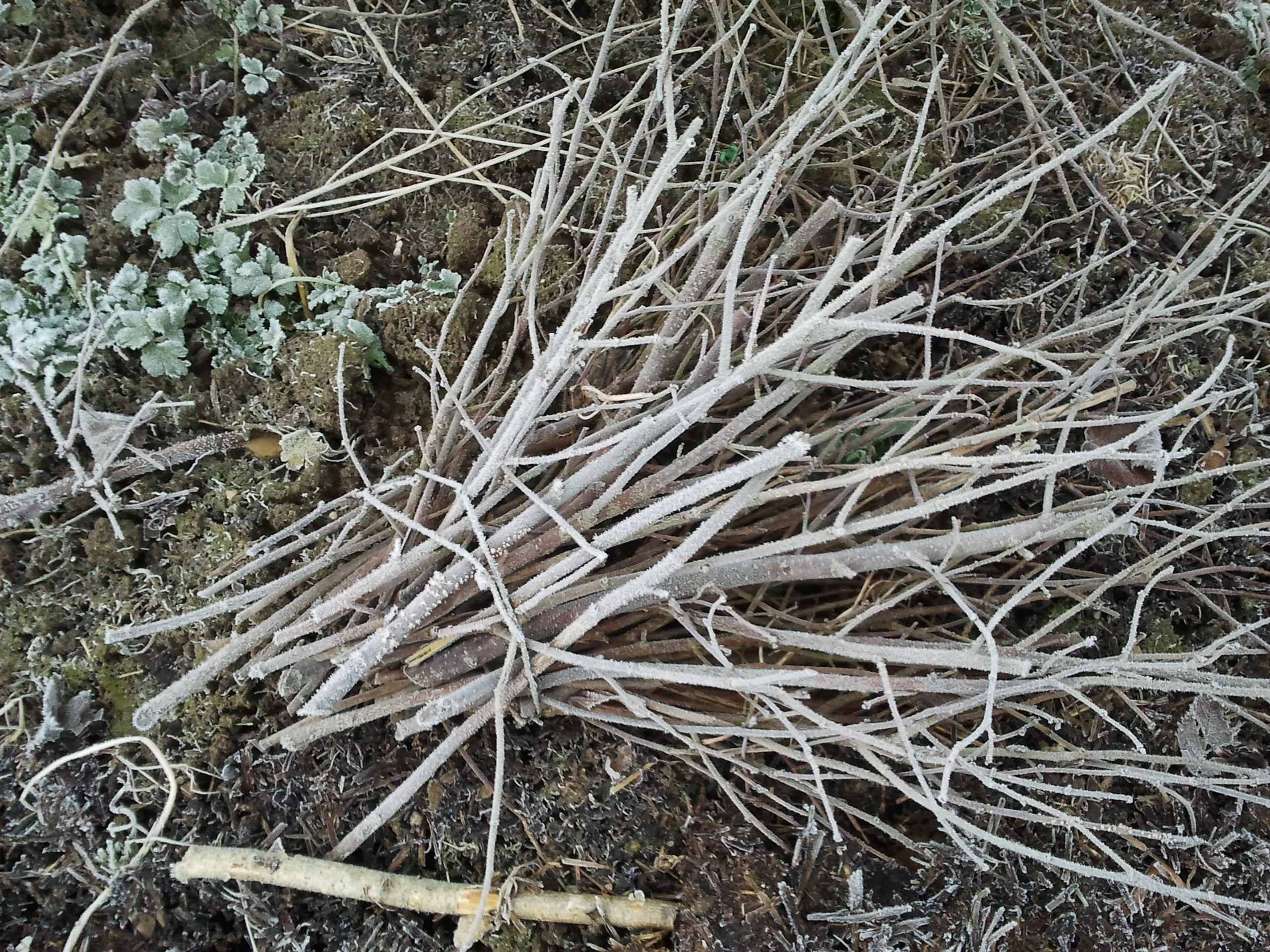
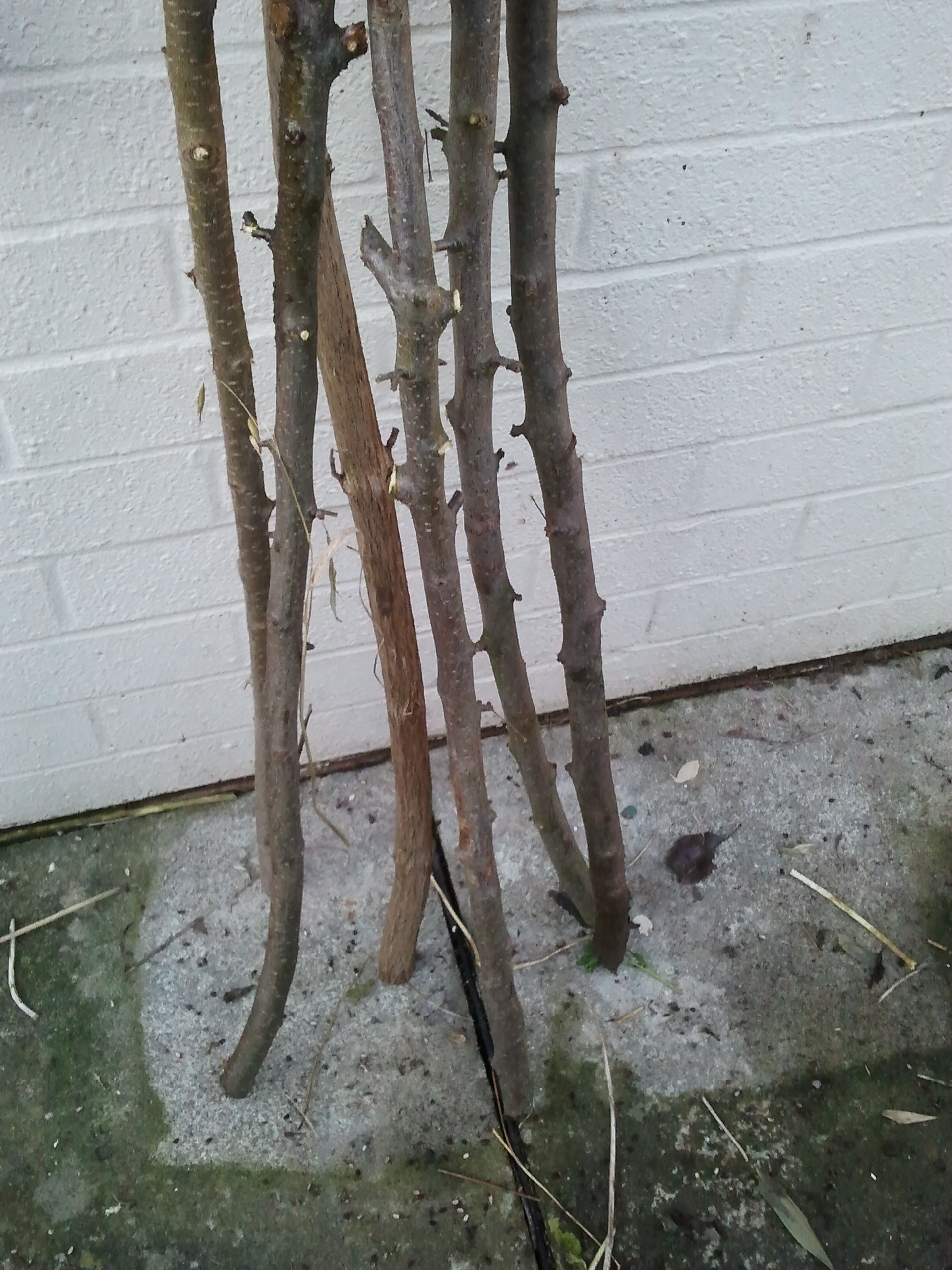
Similarly we harvest our prunings, utilising the large shrubby ones for beanpoles and the scrubbier smaller ones for beansticks. We started to harvest these last week and will continue as we sort out the garden in readiness for the coming growing season.
SAMSUNG

SAMSUNG

Peas and beans seem to like to twine themselves around these rougher sticks and poles in preference to the bamboos available in garden centres. And of course we must remember they are self-sustaining, so there is no cost to the environment.

Categories
autumn autumn colours colours garden design garden photography gardening gardens open to the public grasses hardy perennials ornamental grasses ornamental trees and shrubs photography the South trees

The Savill Garden in October

At last we have got around to visiting the Savill Garden. It was worth waiting for! The new visitor reception is an amazing building, a single storey space under a long, sinuous roof shaped like the tail of a Whale.

Looking up at the wonderful reception building.
Looking down into the garden from the reception building.

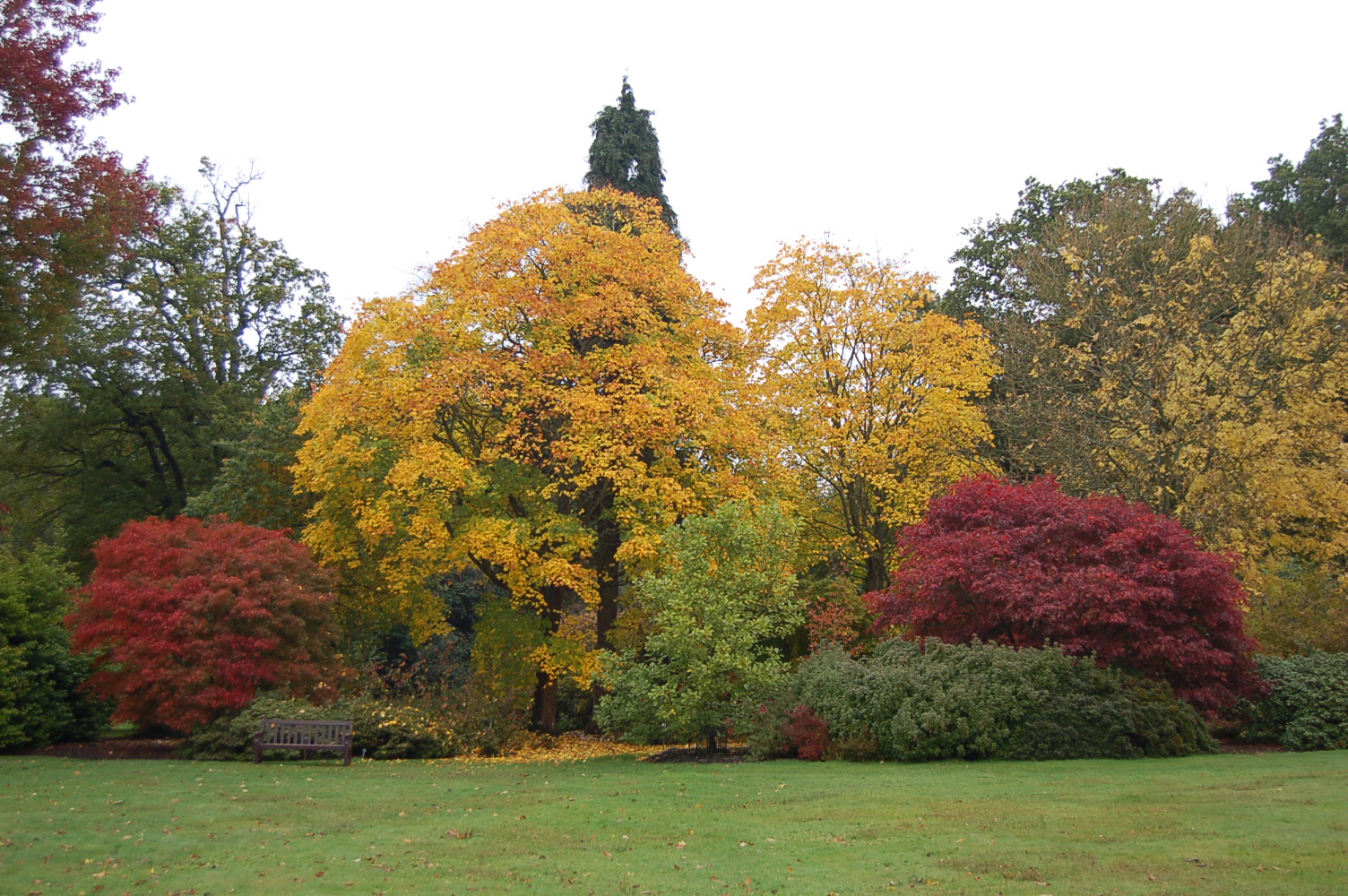
The Savill Garden is situated on the edge of Great Windsor Park and is just a small part of the Royal Landscape. We followed the recommended path around the garden so that we could see the effects of Autumn throughout.

In most areas of the garden, Savill had the typical look and feel of a stately home garden, both in plants grown, choice of design features and border arrangements, but hints of newer thinking were showing through, such as the use of grasses and new perennial plantings.

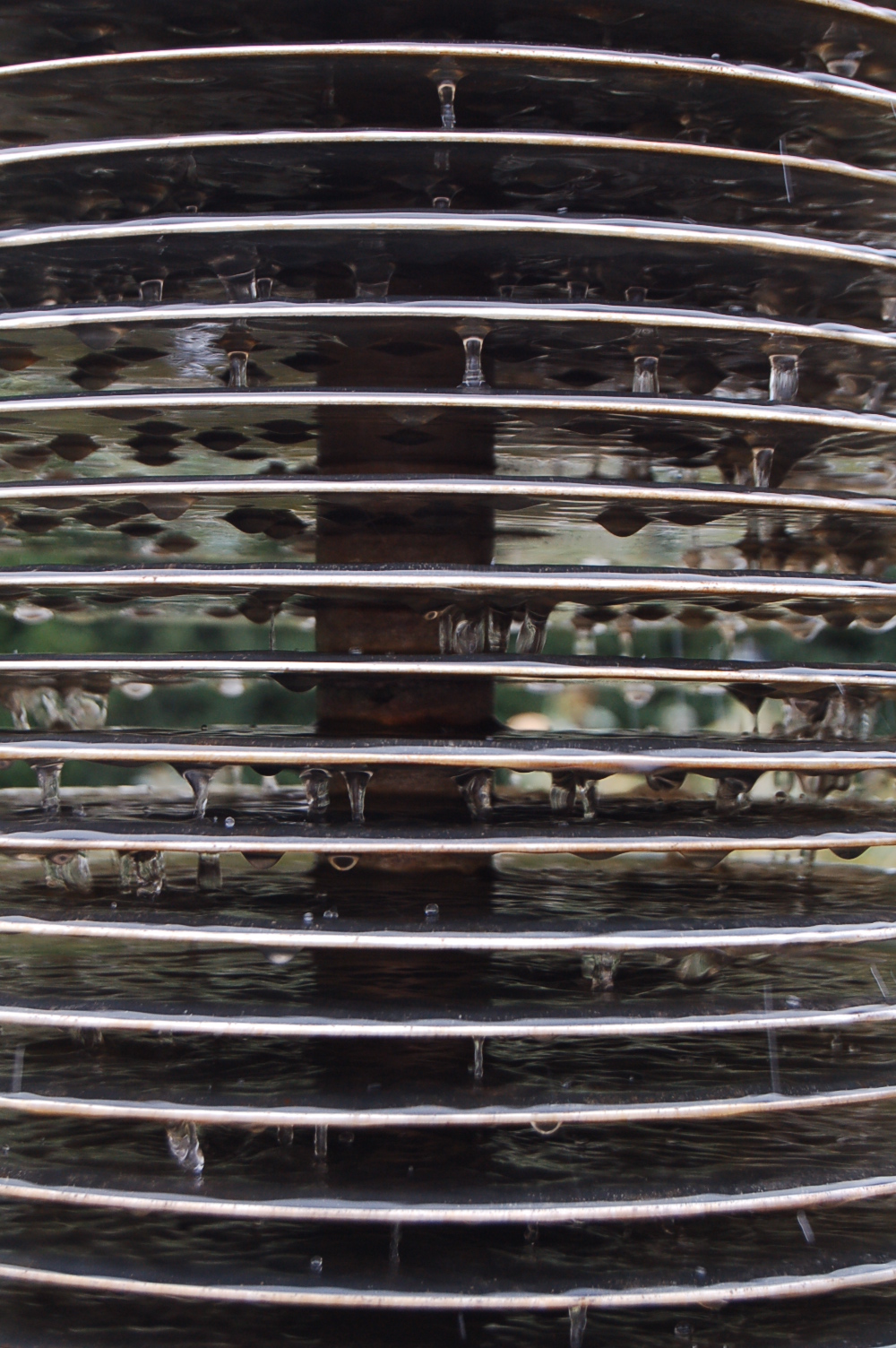
A true highlight of our visit to the Savill Gardens was the surprise at coming across this modern water feature. It looked good and it sounded good.

Although we visited the gardens at Savill in the Autumn one of the most colourful areas was the Winter Garden, already showing many interesting features. So the next post will be about the winter Garden in Autumn.

Categories
autumn birds garden design garden photography garden wildlife gardening hardy perennials ornamental grasses ornamental trees and shrubs photography poppies roses Shropshire

A Wander Around Our Garden in September

September is a month I love for the richness of its colours which are intensified by the lower light of early Autumn. But It is a month I dislike as it marks the end of summer and initiates the dropping of temperatures. I enjoy watching the fruits and berries ripening and their changing colour. I am saddened by the silence in the sky as Swallows and House Martins leave us for warmer climes. Leaves begin to show signs of changing their colours too and in September we are given hints of what is to come.

Throughout the September garden we find individual buds and flowers hanging on after the thrusts of the summer lush display. Droplets of moisture sit on the blooms as the first frosts melt away.

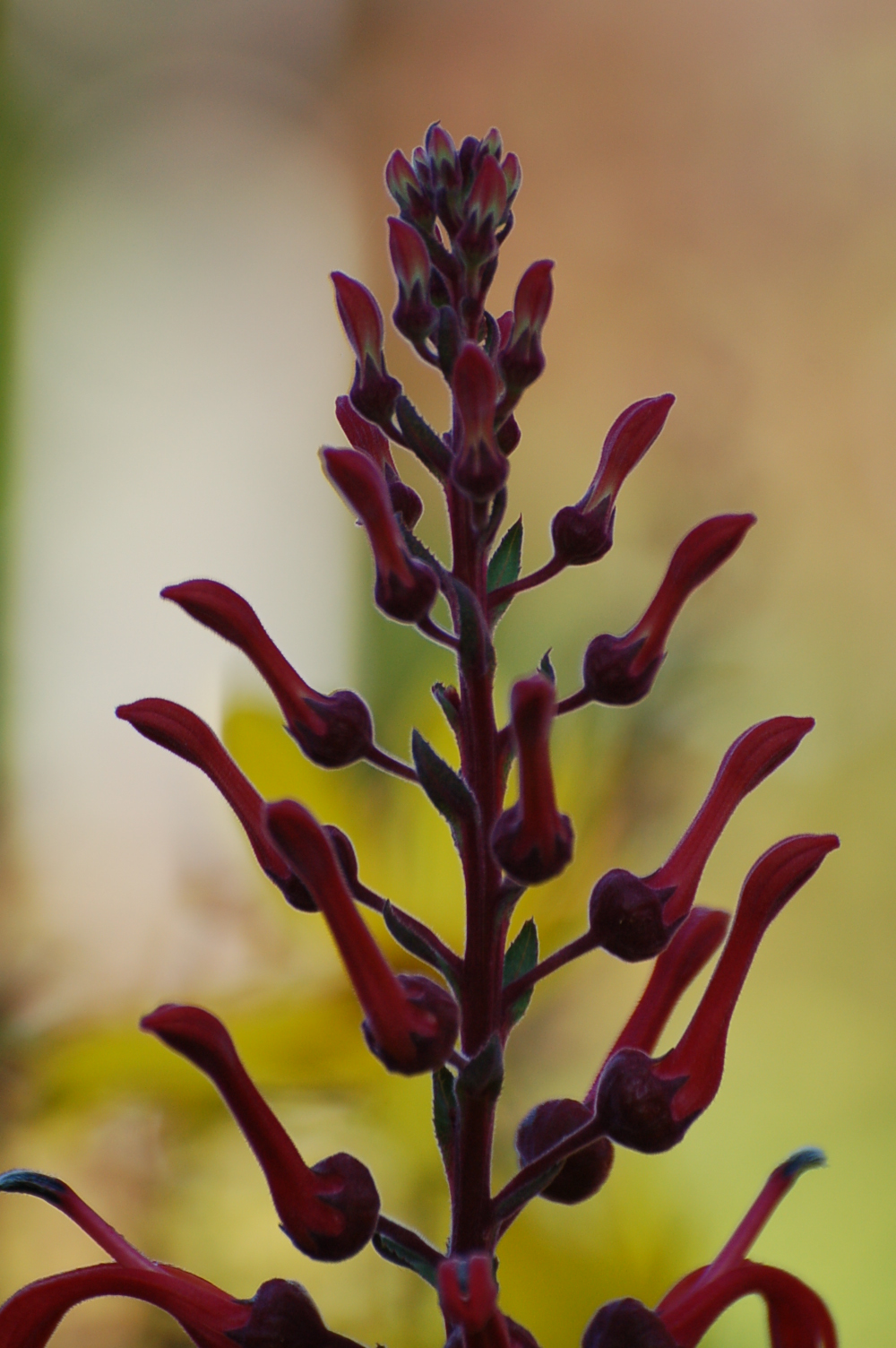
These little gems of individual blooms which are flowering out of season add so much colour to the borders, flowering alongside those plants which are traditionally the true flowers of September. Two flowers which we look forward to in early autumn are Lobelia tupa and Salvia uliginosa which display unusual colours and shapes.

The light in September creates a different atmosphere, no longer the direct overhead light of the summer. Now there is increased contrast between light and shadow.

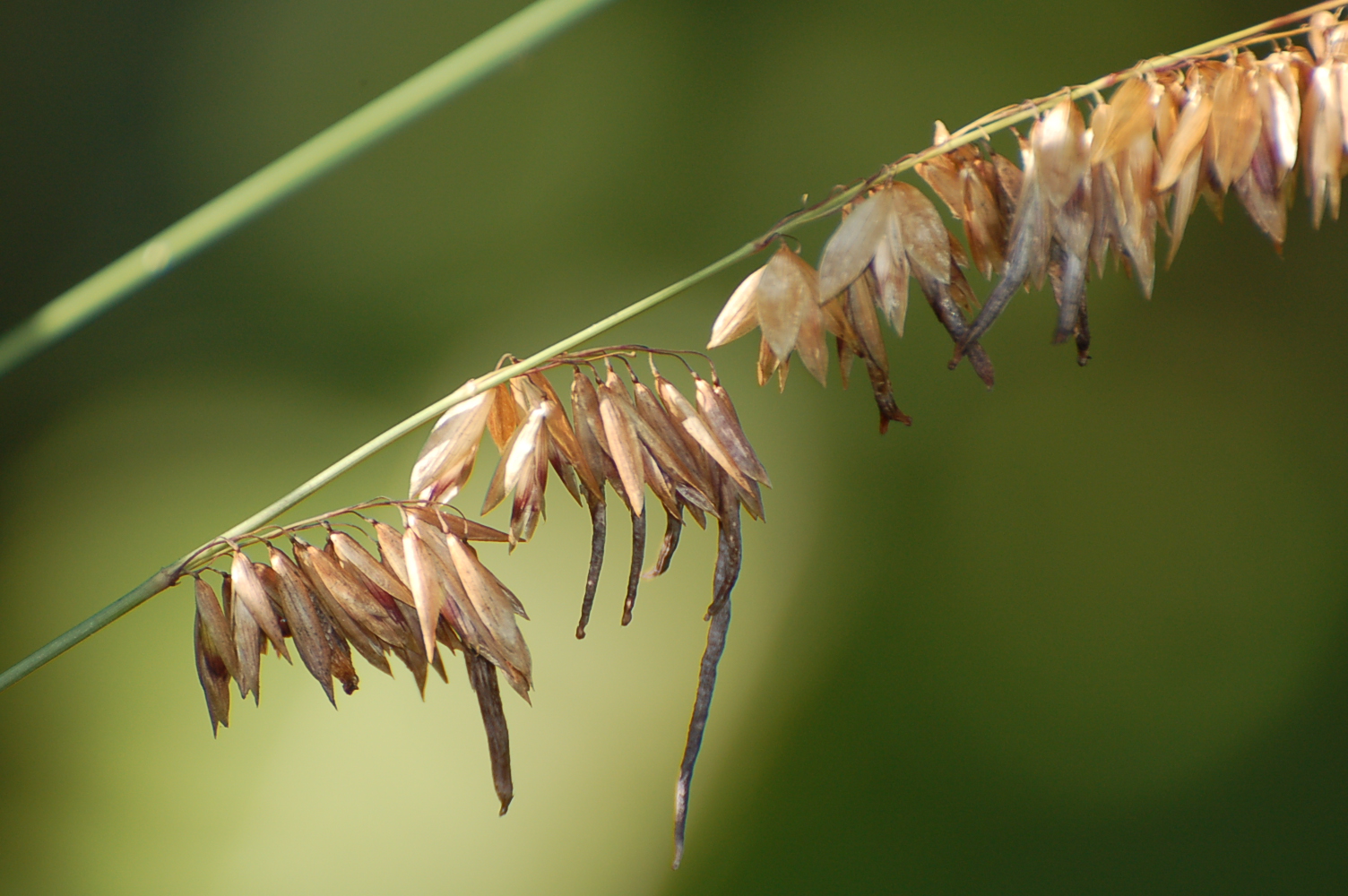
Our grasses begin to come into their own in September. Their seedheads glow and their colours get paler and more silvery.

I shall finish my September wander with a few plant portraits.

The garden is still full of colour, texture and patterns but is missing the life flying above it. The Swallows, House Martins and Hobby have left the daytime sky quieter. At night we miss the cries and calls of the Little Owls even though at times we curse them for keeping us awake.

Categories
allotments fruit and veg garden design garden photography garden wildlife gardening grow your own hardy perennials ornamental grasses ornamental trees and shrubs outdoor sculpture photography roses trees wildlife

Barnsdale – a garden of memories

We return to Barnsdale Gardens every few years on a trip down memory lane. Barnsdale was the garden of TV gardener Geoff Hamilton the nation’s  favourite gardener for many years. He was the gardener on the BBC’s “Gardeners World” programme so he visited many gardeners’ homes every Friday evening for years. He was the first truly organic TV gardener and as such he promoted these sound garden principles and backed them up by conducting experiments and sharing the results on his show.

As well as Gardeners World he made several series of gardening programmes based on making gardens such as “The Cottage Garden” and “The Paradise Garden”.

He sadly died at a young age when taking part in a sponsored cycle ride for charity, but he has never been forgotten.

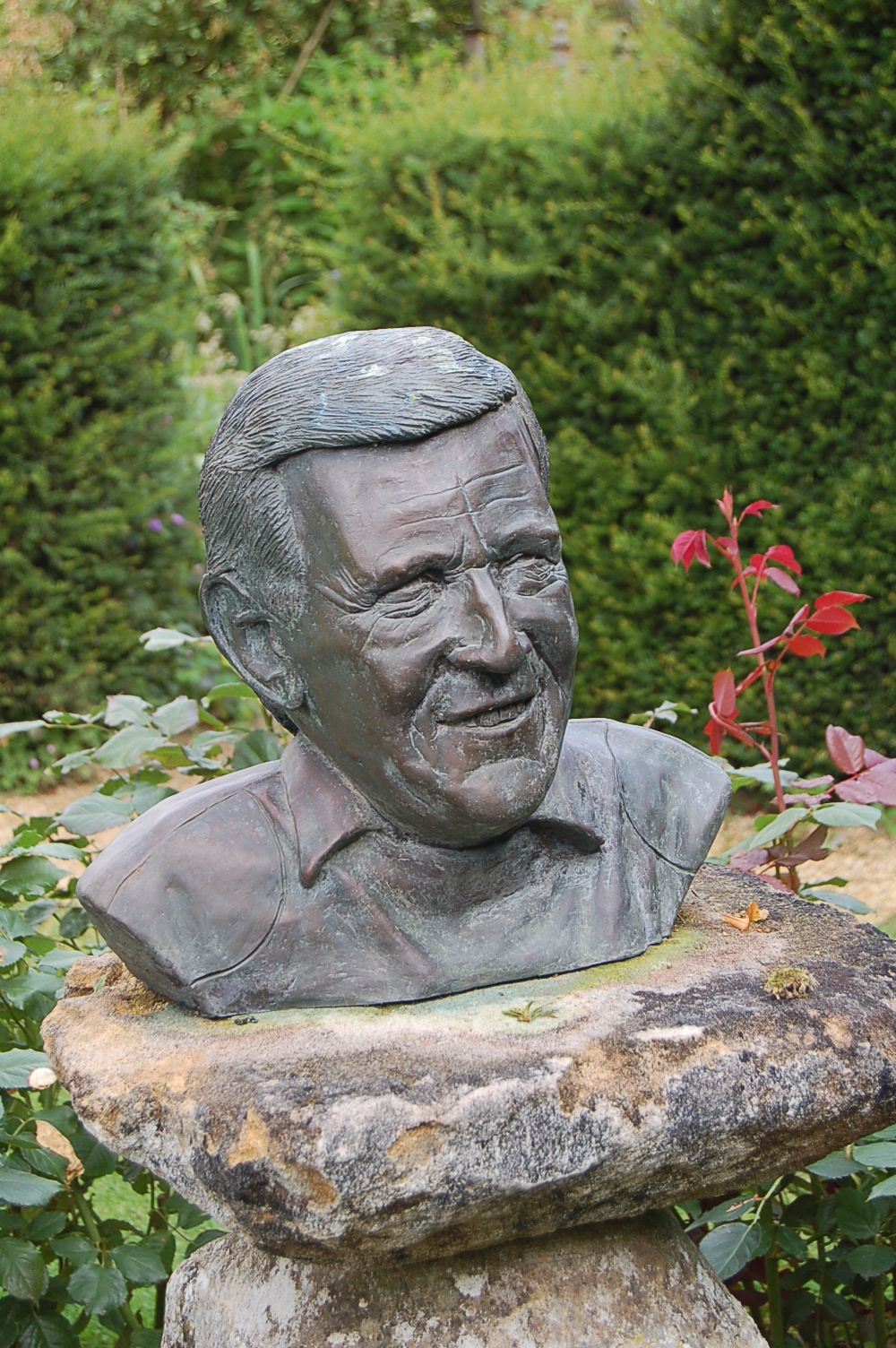
The Barnsdale Gardens still display all the model gardens Geoff made and others have been added since his death. The garden and the nursery attached  are run by his son and daughter-in-law. His other son created this bronze sculpture that graces the garden.

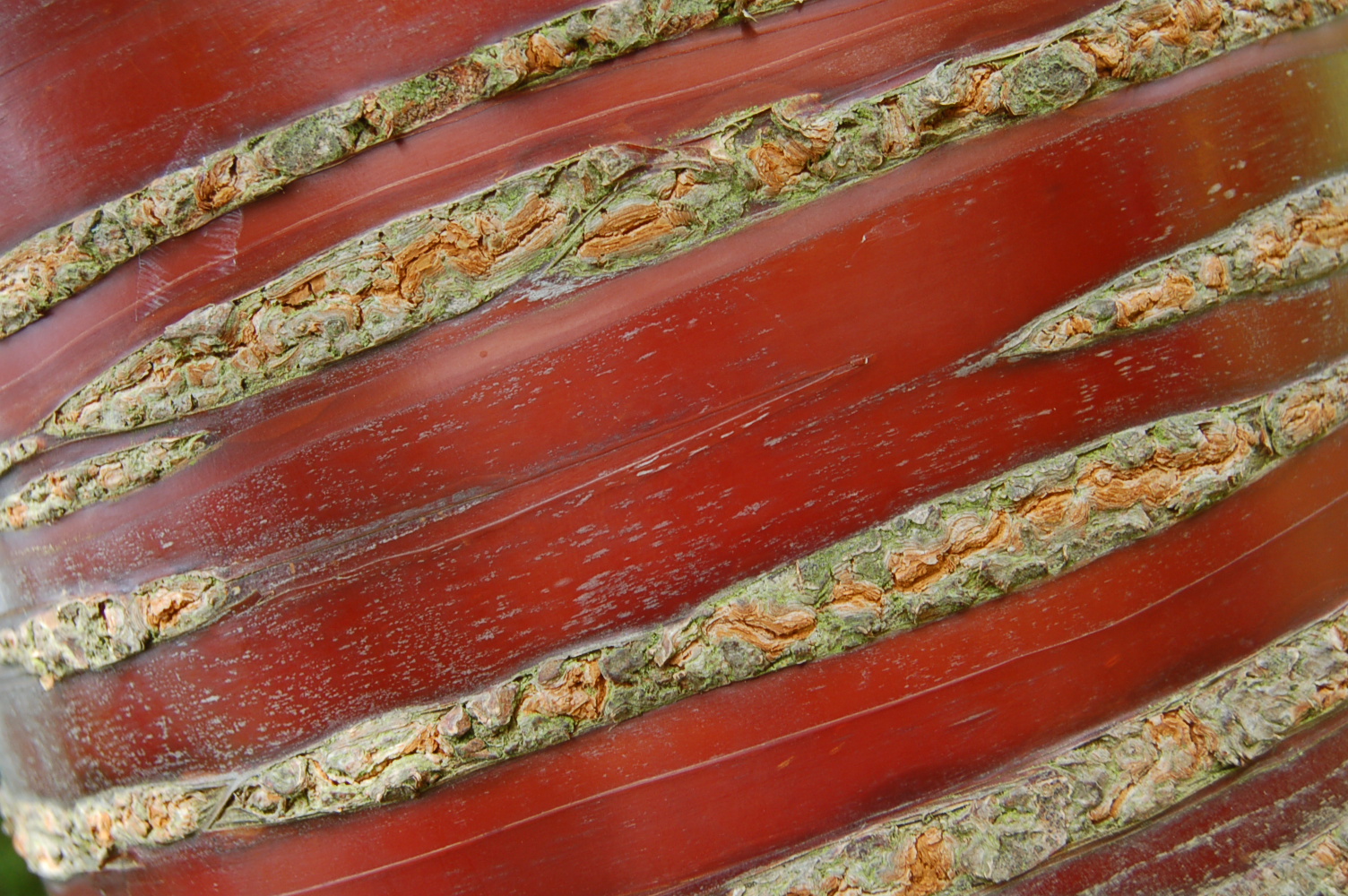
The trees that we saw Geoff plant many years ago are now impressive specimens and display interesting bark colours and textures.

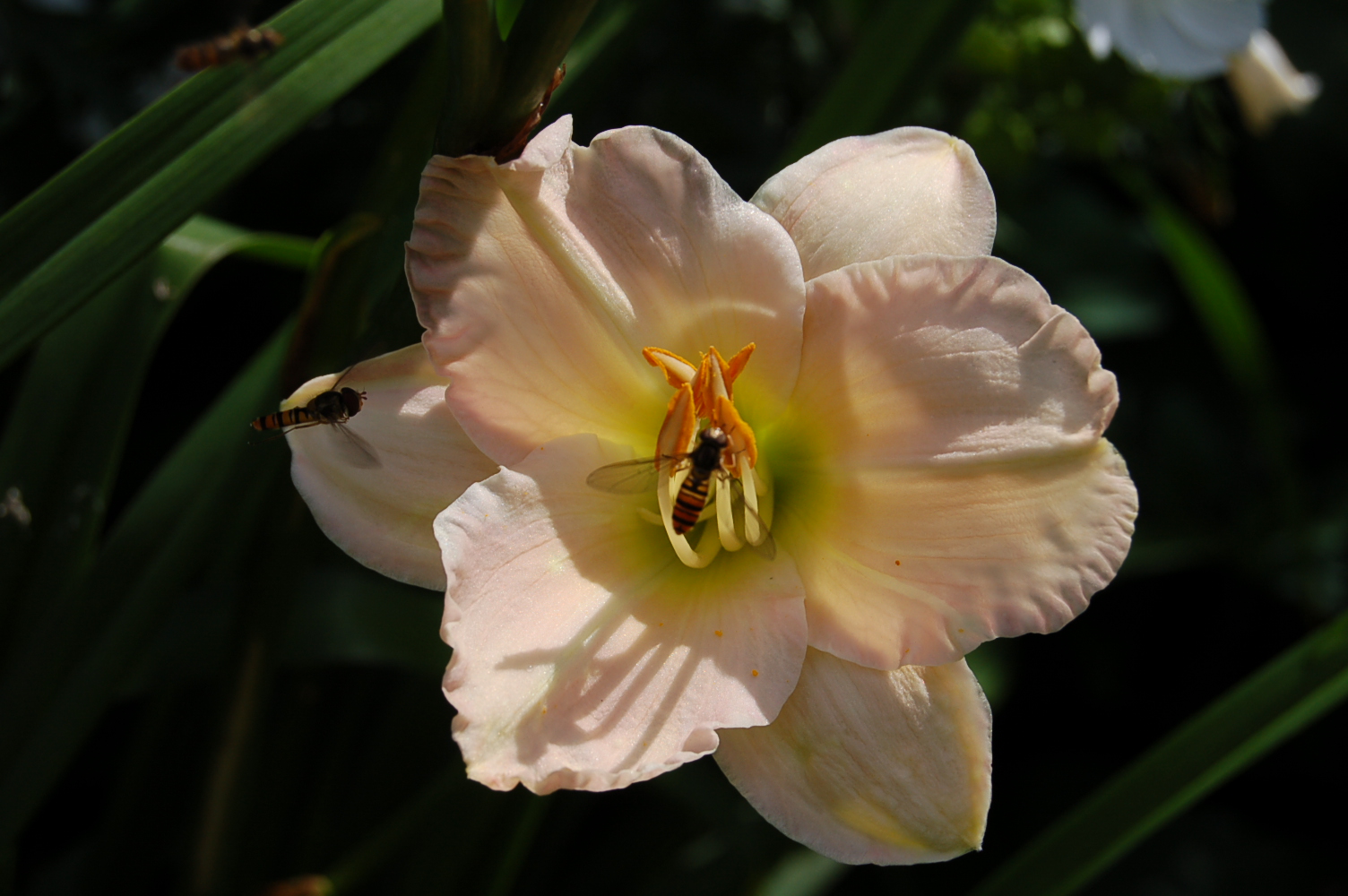
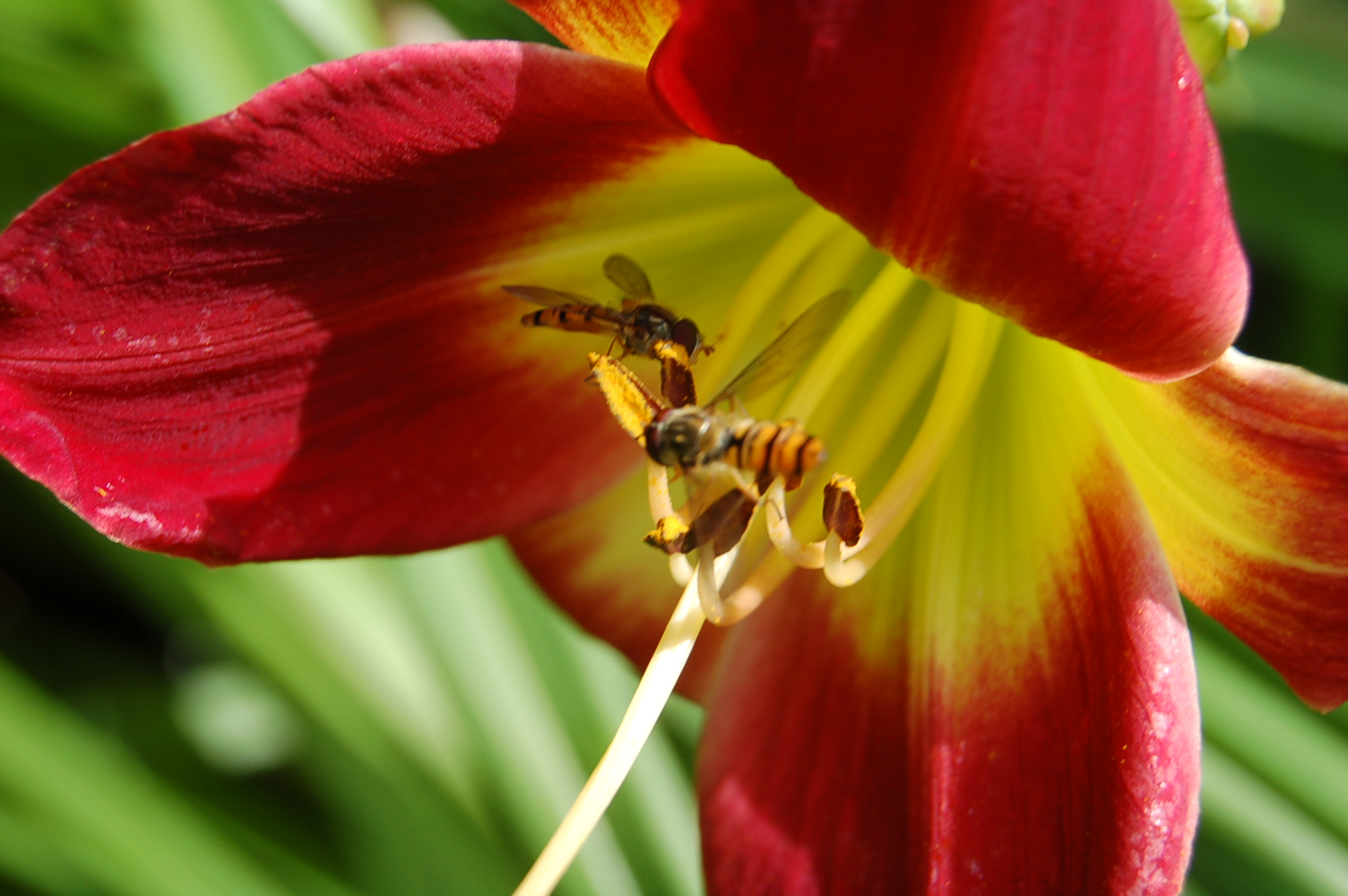
One of his favourite flowers was the Day Lily and many remain in the gardens still. Coming a close second as his most popular garden plant must be the rose.

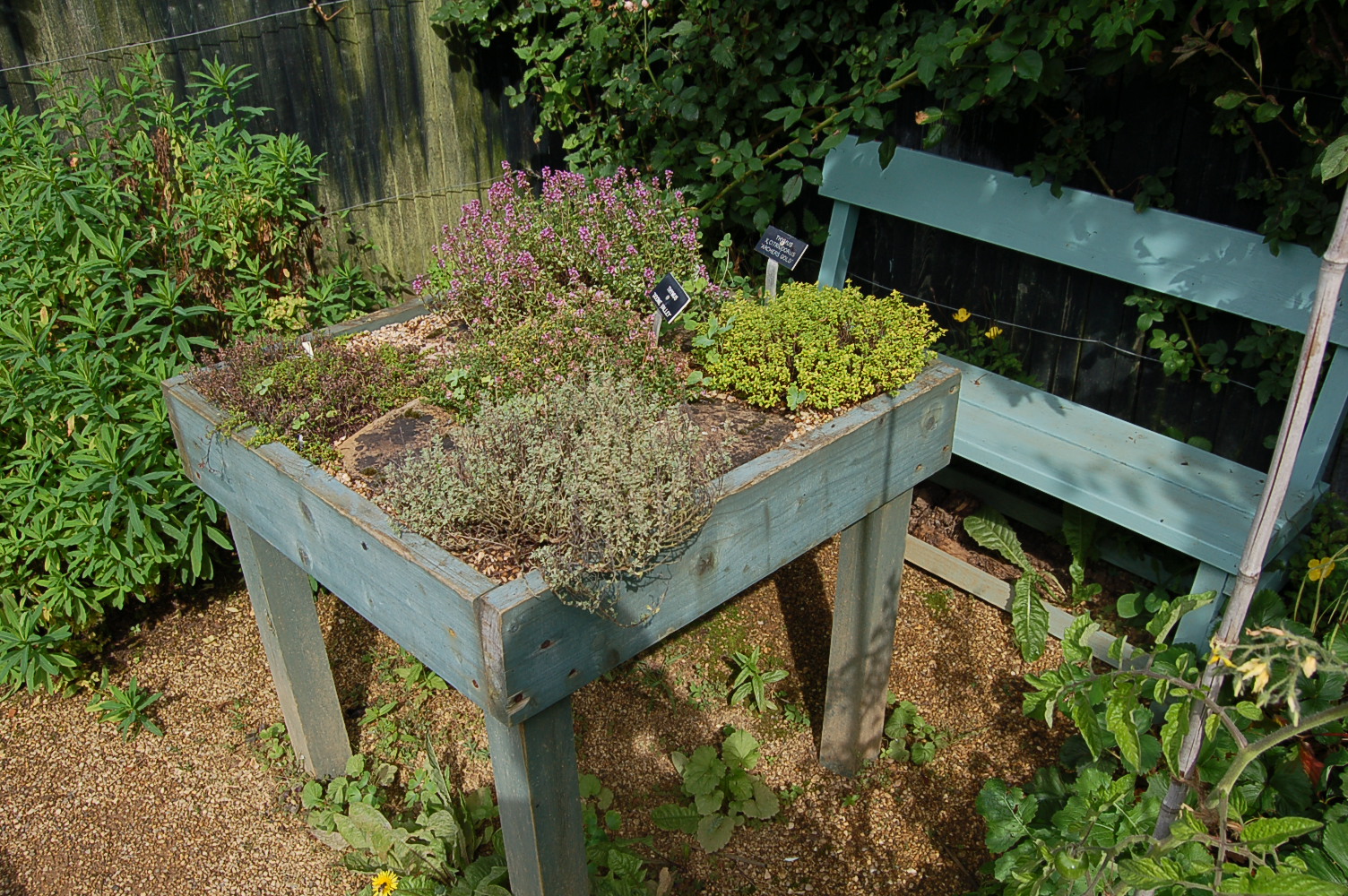
A popular feature of “Gardeners World” was Geoff’s do-it-yourself projects – he was always making furniture and garden features, to try to save his viewers money. Below is his garden bench with matching herb coffee table made from recycled pallets with old roof slates built in as coasters.

He also constructed this compost bin disguised as a beehive and accompanying garden store, both created from recycled wood.

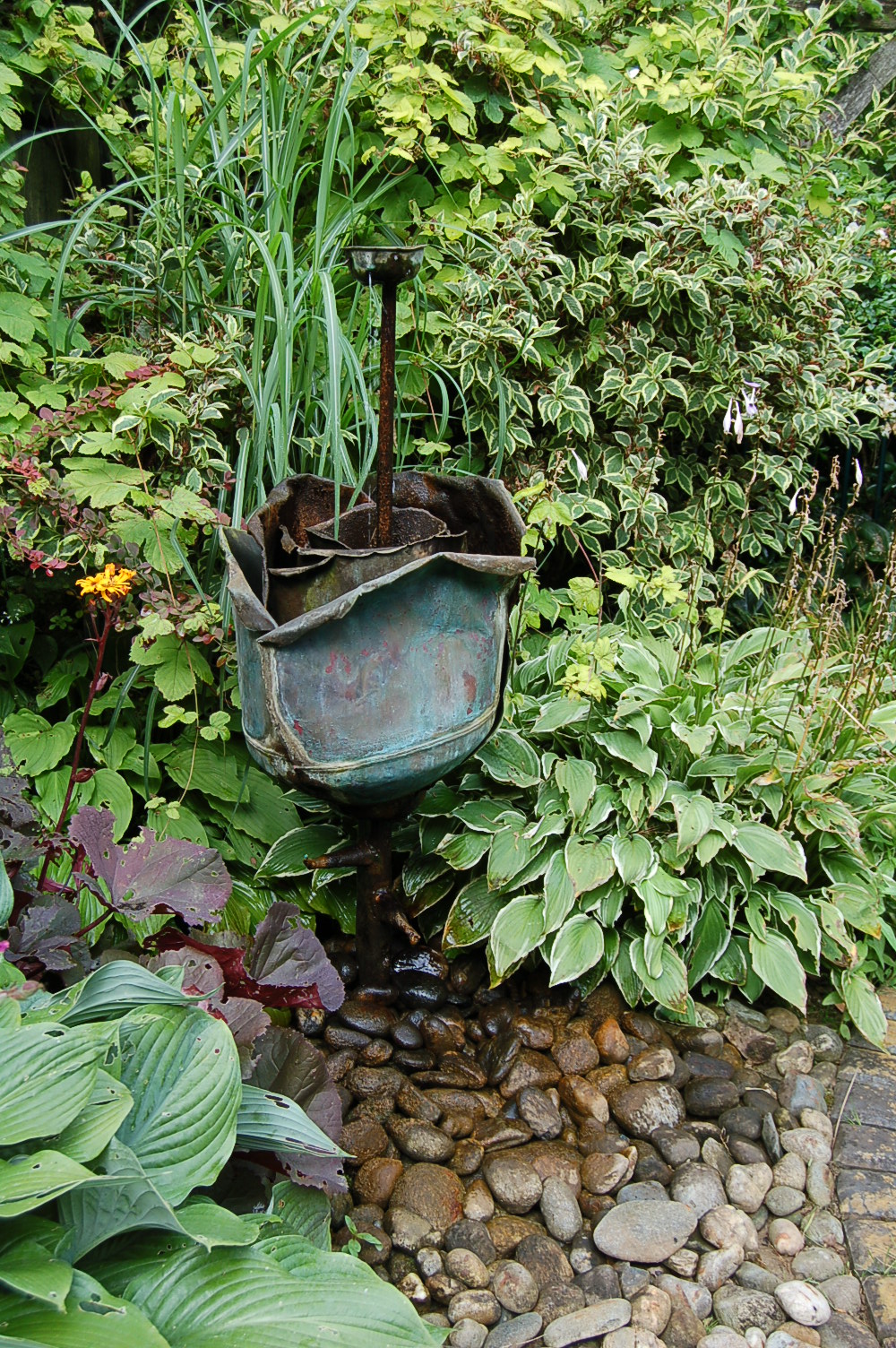
He even made a water feature from an old copper water cylinder!

Although he encouraged gardeners to construct things for their own gardens he also extolled the virtues of craftsmen and his garden diaplays many works by craftsmen local to Barnsdale. In particular he brought locally made furniture into the garden.

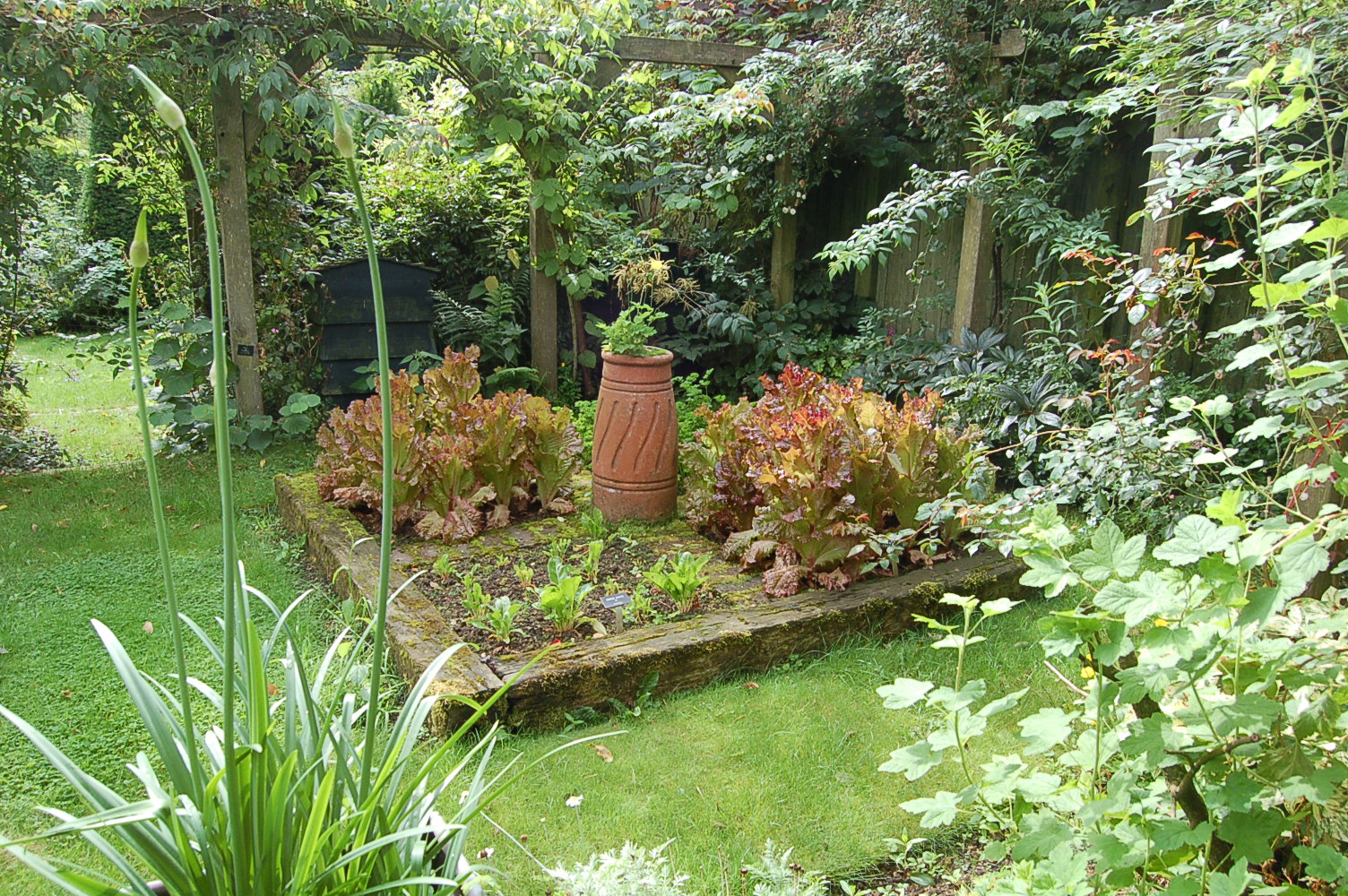
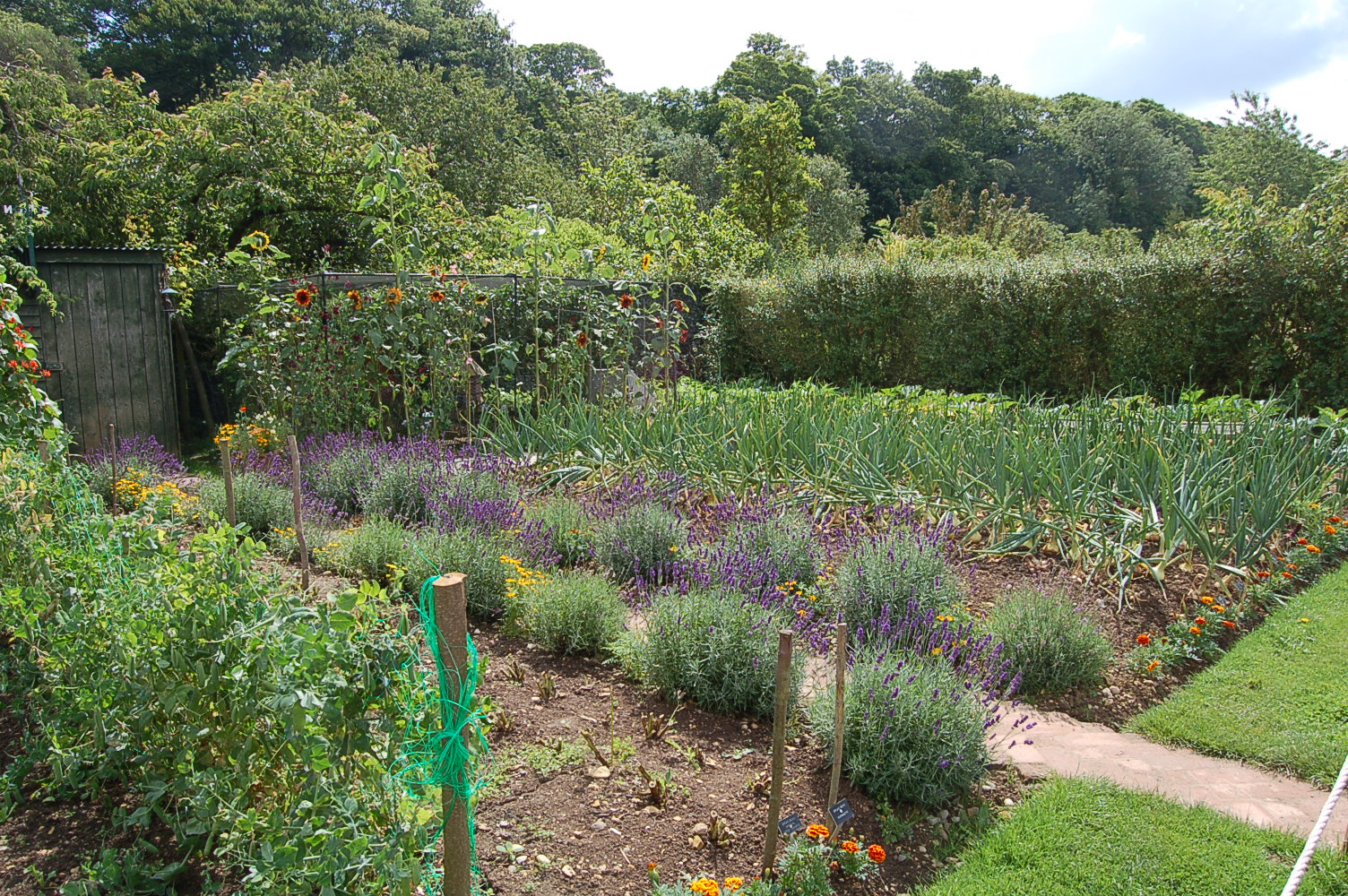
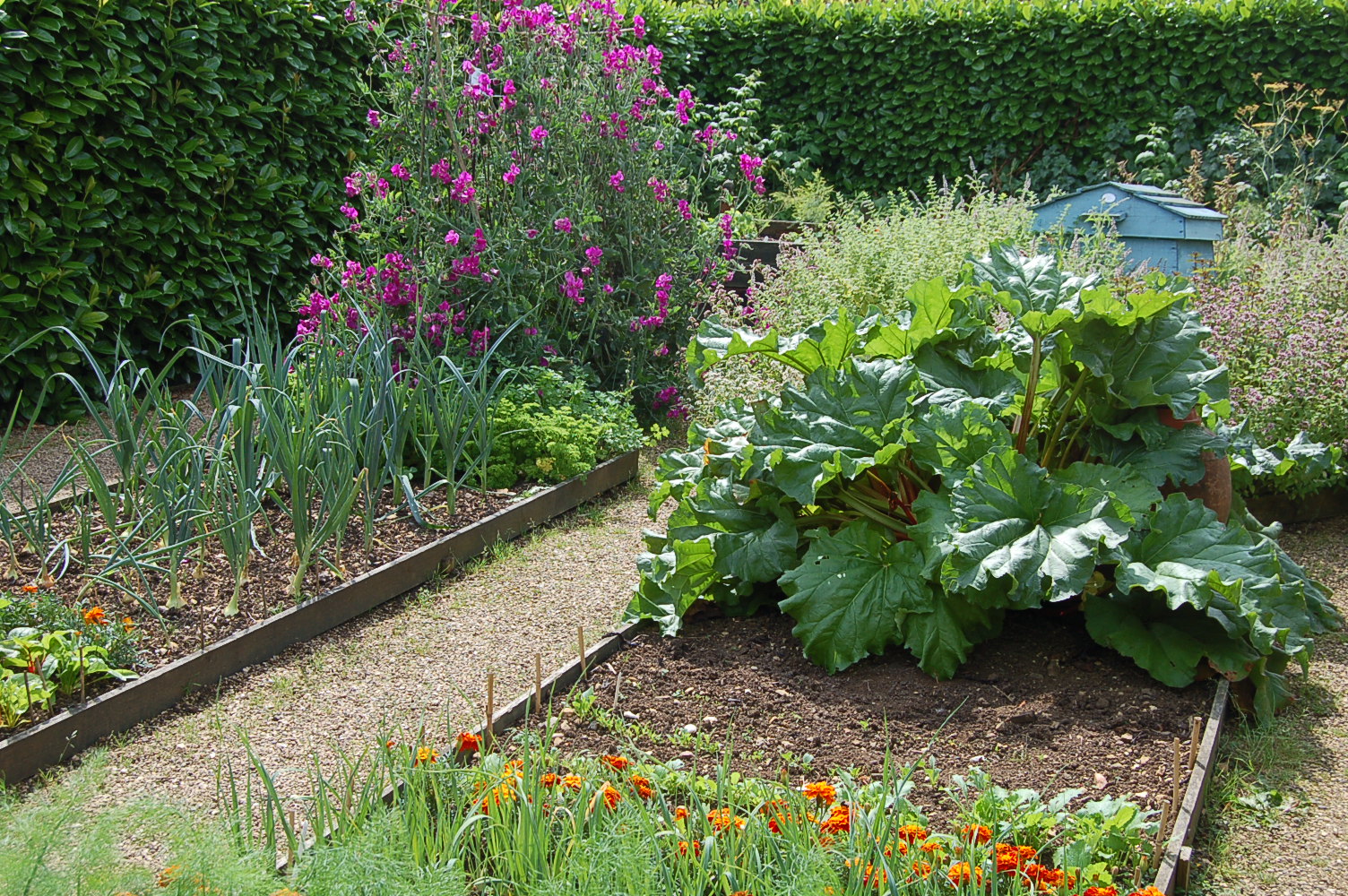
Productive gardening – fruit, veg and herbs – played a big part in his programmes, magazine articles and books. Several of his productive plots are still at Barnsdale, such as an allotment, the Ornamental Kitchen Garden, an Elizabethan Vegetable Garden. the Fruit Orchard, an Apple Arch and Herb Garden.

Geoff was definitely ahead of his time, encouraging organic principals and attracting insects into the garden. he recognised them as pollinators and predators of garden pests.

He featured plants such as Achilleas, Heleniums and other hot coloured flowers, and using lots of different grasses. These are all popular now.

Since Geoff’s untimely death the garden has continued to develop. His son, Nick and daughter-in-law have created new gardens so now Barnsdale is described as “39 inspiring gardens, all in one place”

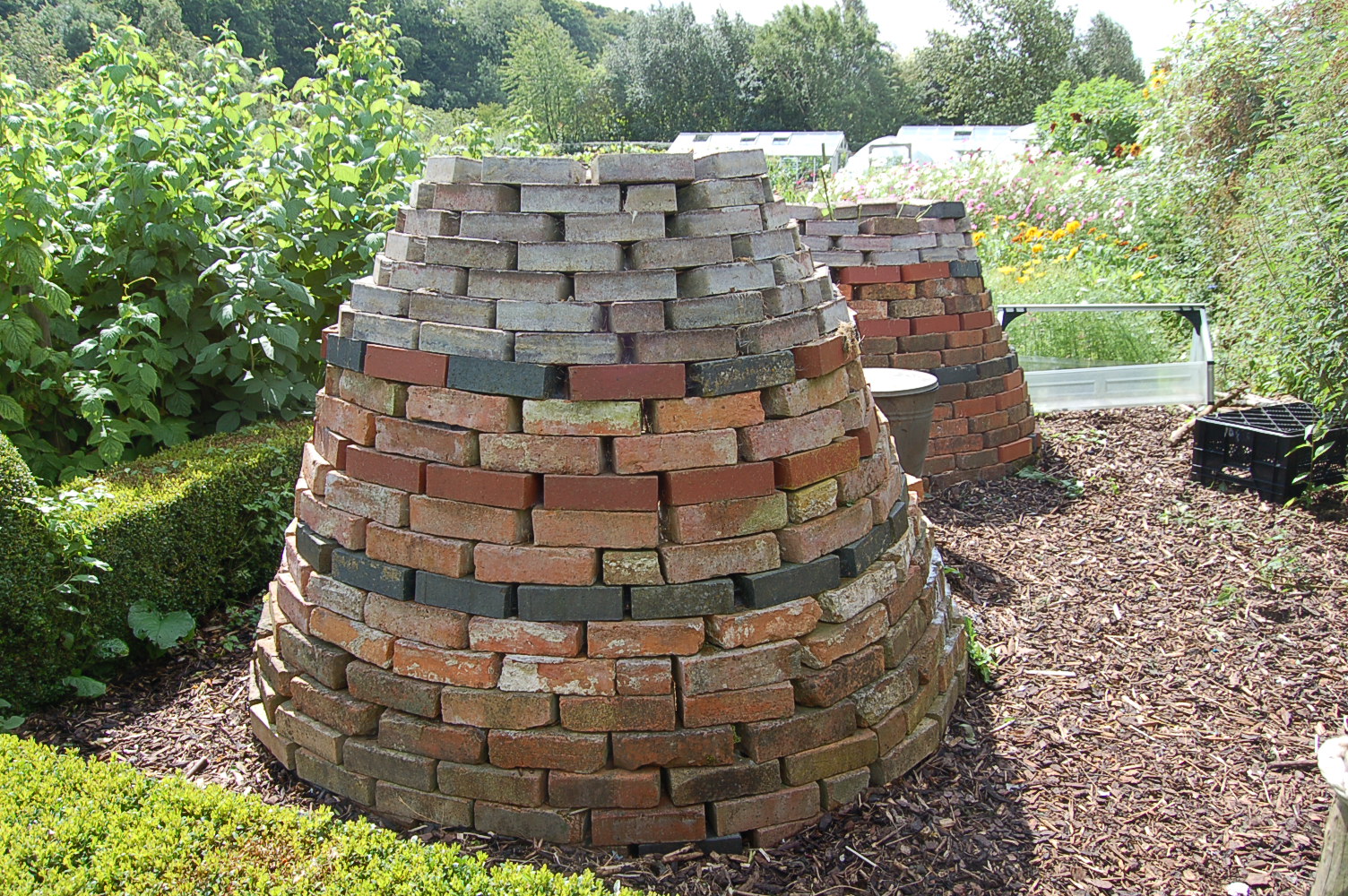
A sign of just how popular and influential Geoff Hamilton was is the fact that his book on Organic Gardening is still in print and has been updated and revised on several occasions. He was a great believer in the importance of compost and found all sorts of ways of making it efficiently. How about this brick-made composter. The bricks would absorb warmth from the sun and heat up the composting material inside and speed up its decomposition.

I shall end this visit to Geoff Hamilton’s Barnsdale with a few more views of the garden.

Categories
birds climbing plants garden design garden photography garden wildlife gardening hardy perennials ornamental grasses ornamental trees and shrubs photography Shropshire trees village gardens wildlife

A Wander around our Garden in August

Our garden in August is a bright, colourful place full of lush growth, rich scent and so much wildlife to enjoy. Our wild birds are mostly quiet at present as August is the time when they hide away as they go through their annual moult. They have gone to ground and gone silent.

Above our heads however avian activity is busy and exciting. The Swallows and House Martins are feeding up in anticipation of their migration south. The sky is full of them, but the screaching of Swifts is absent as they began their own long journey a few weeks ago. For a few days there is a gap in the sounds – we miss them for their excited calls and aerial displays.

The calls of the young Buzzards can be heard above the Swallows and Martins, as they excitedly search out thermals and discover the joy of riding them. The Peregrines have reappeared now that their breeding season is over so we can watch the adult pairs rising in ever-higher circles until they disappear from view. Our eyes become incapable of seeing them as they become smaller, become dots and are then gone. They have the luxury of far better long distance vision than us – they will see the movement of their prey from hundreds of feet up in the air. A real treat is to spot them as they stoop, travelling down at speeds of over 200 miles per hour with a pigeon in their sights.

Yesterday when deadheading in one of our borders we were surprised by a low-flying, high speed Green Woodpecker who zoomed close to us, just a few feet away. A real treat!

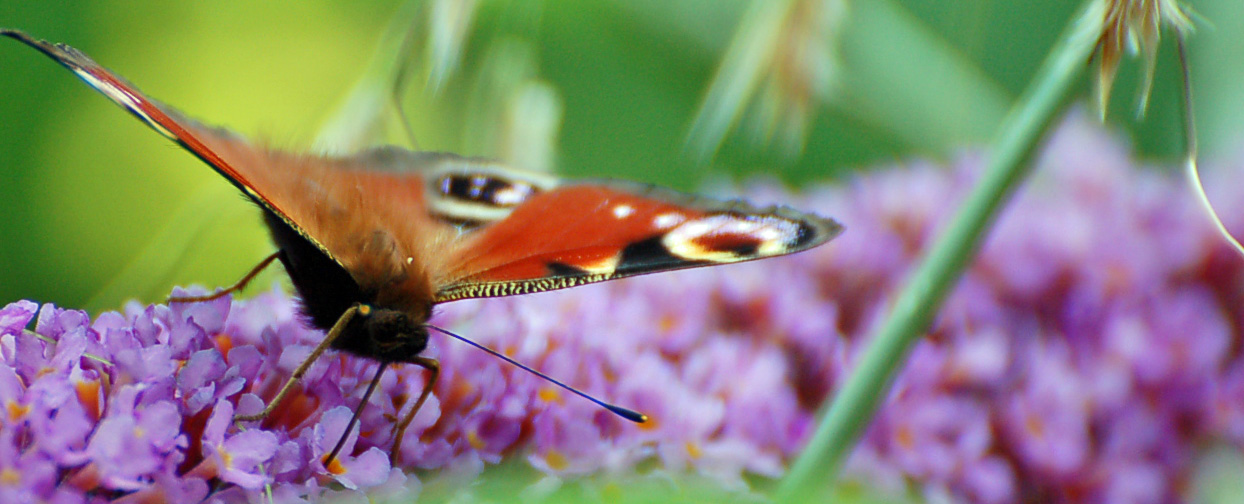
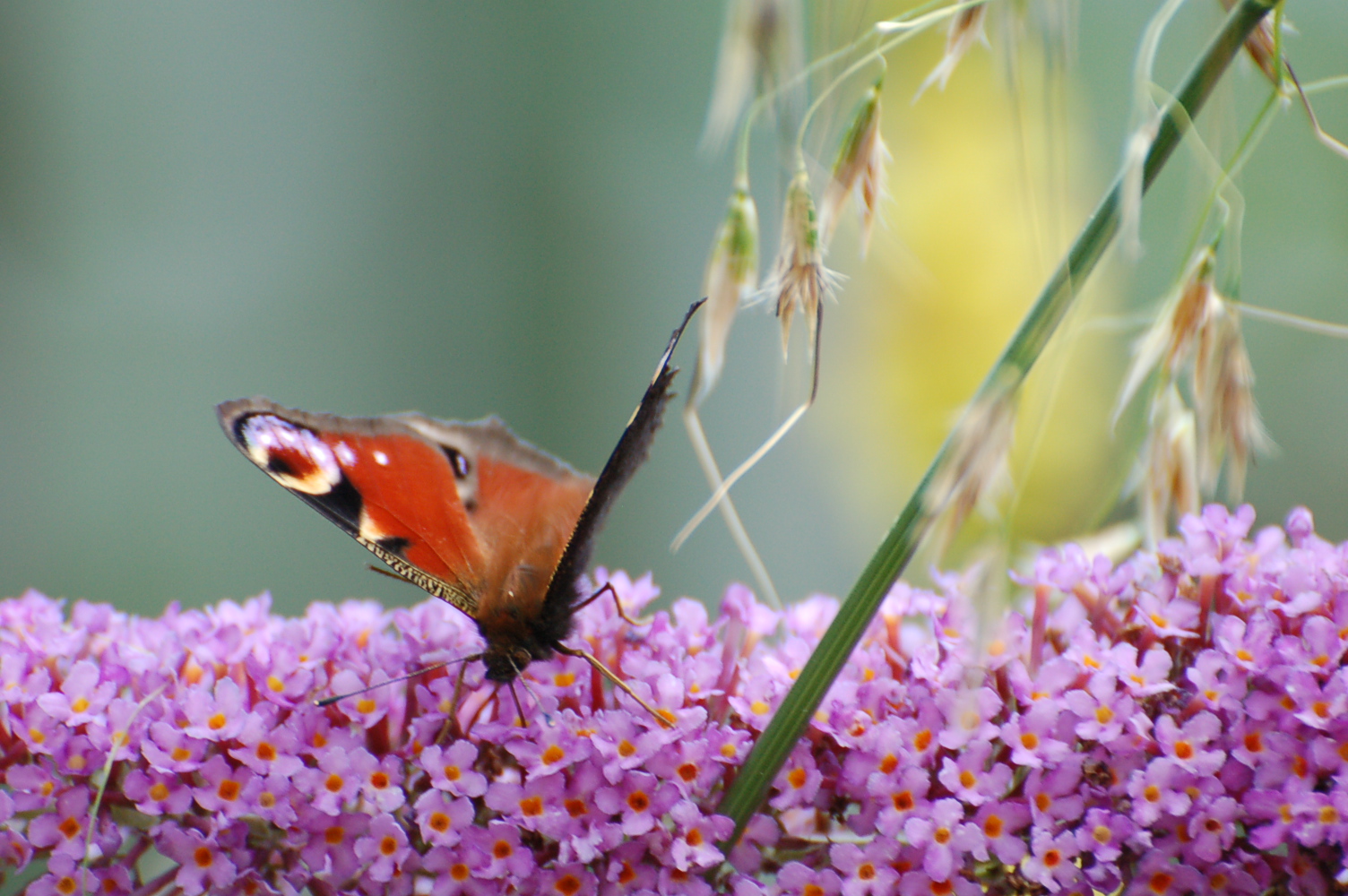
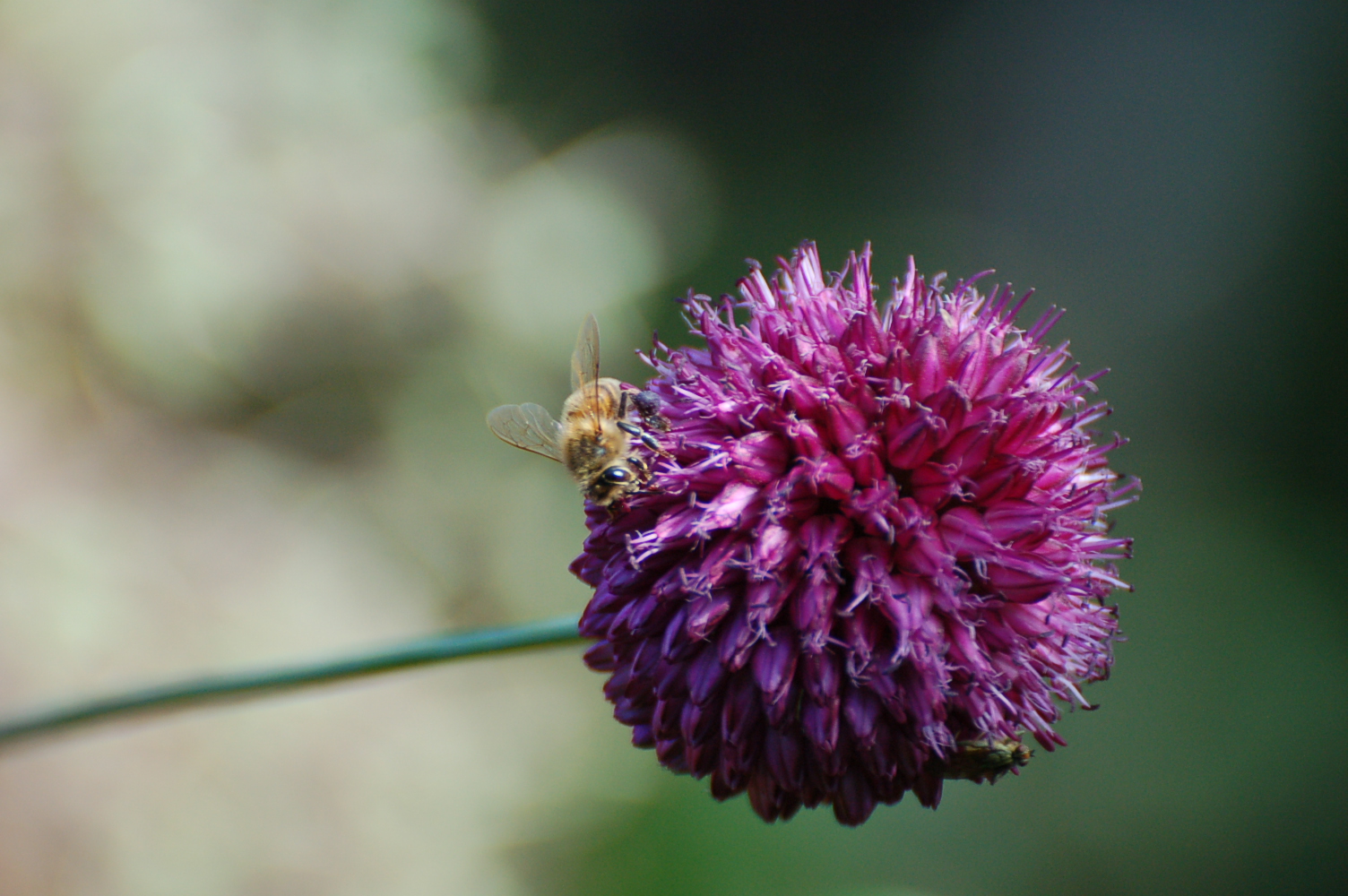
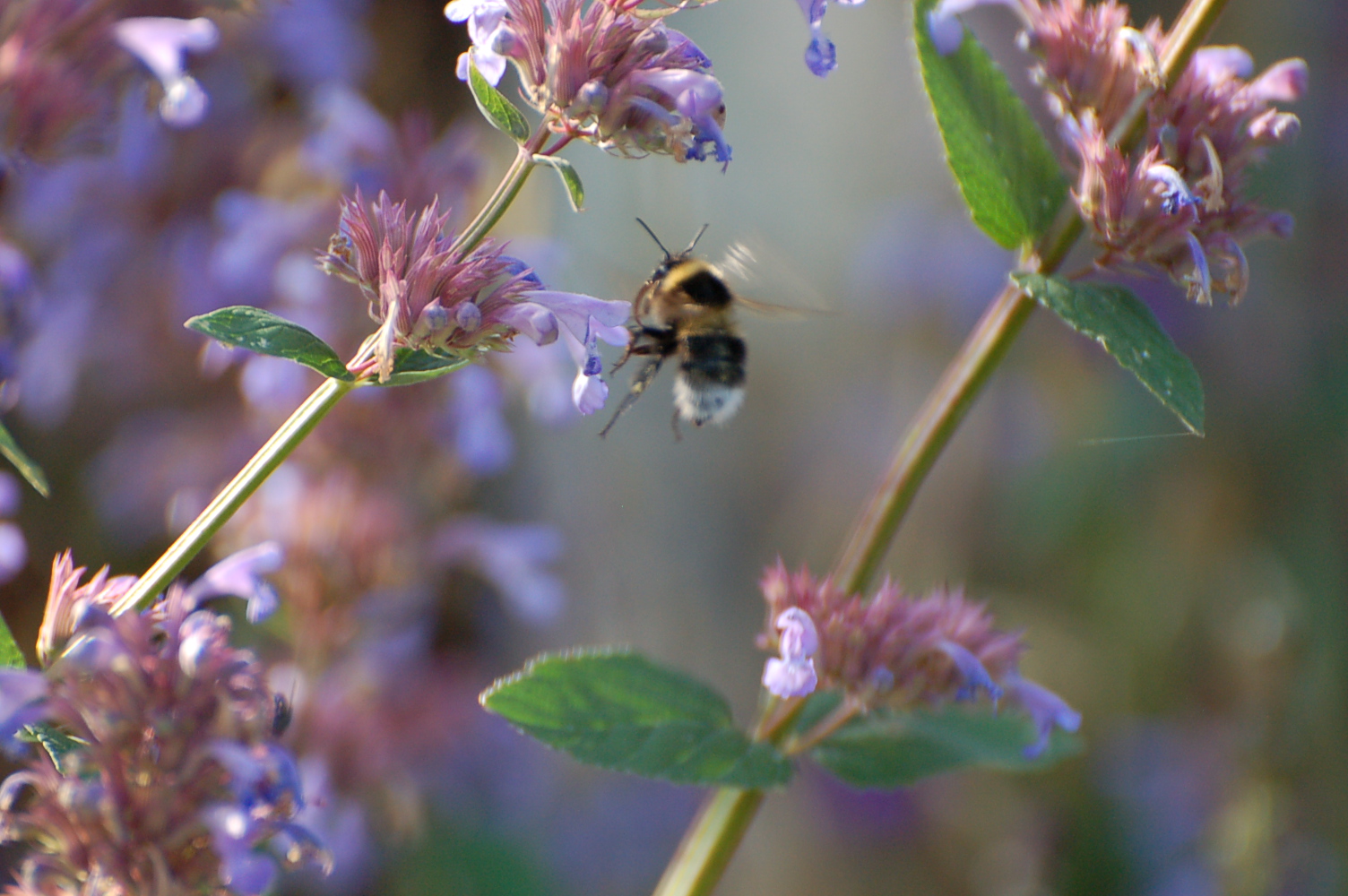
Insect life is flourishing. On any warm bright day a variety of insects can be seen hunting out nectar and pollen. Butterflies, bees and hoverflies are attracted to Buddleias, Alliums, Salvias, Nepetas, Lavenders and Echinops. There are so many Peacock Butterflies around at the moment but you can’t have too many of them. The Holly Blues are much scarcer and flit continuously rarely seeming to settle.

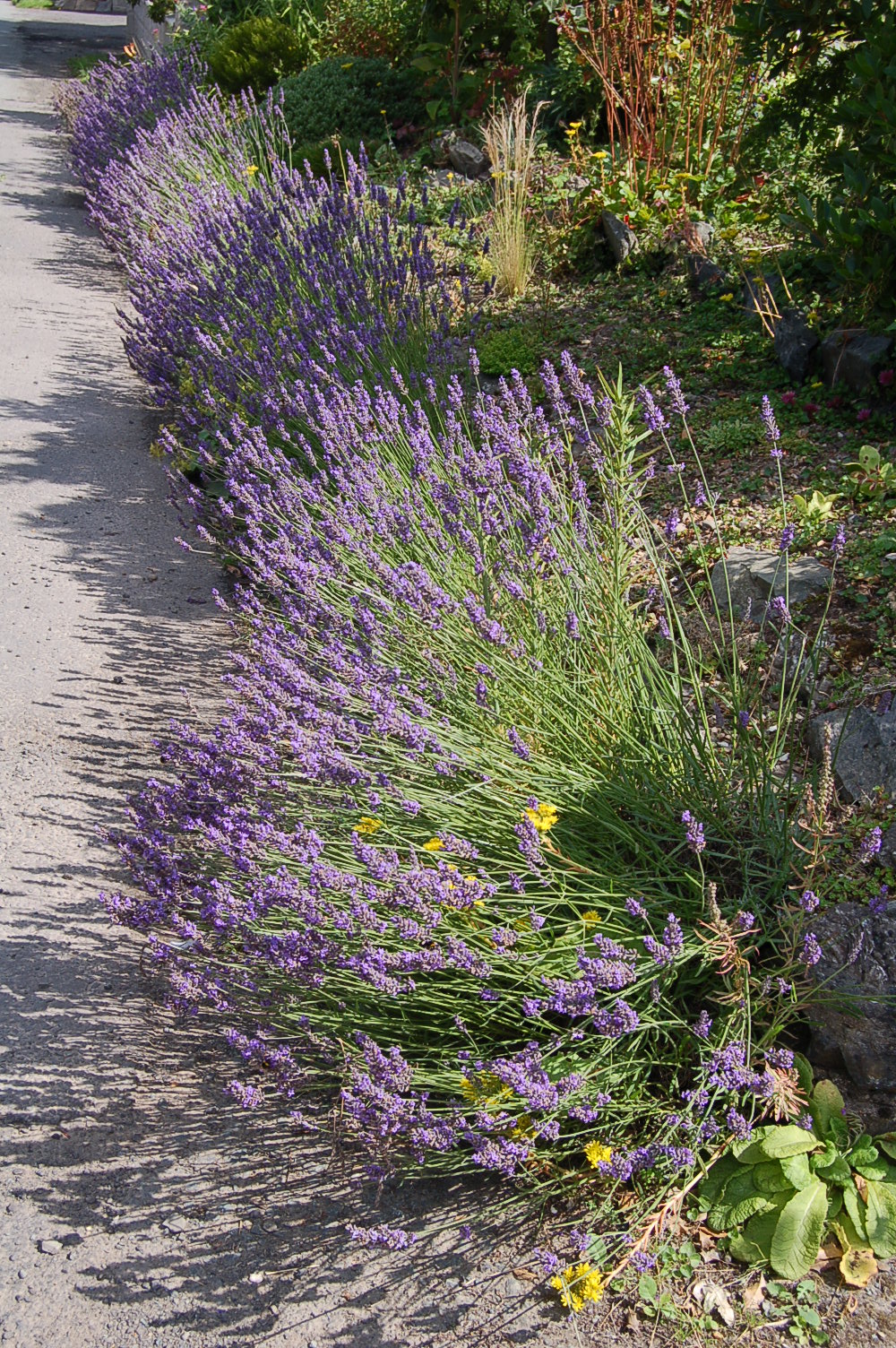
Bees and hoverflies are attracted to our Lavender hedge which borders the lane which passes in front of our garden.

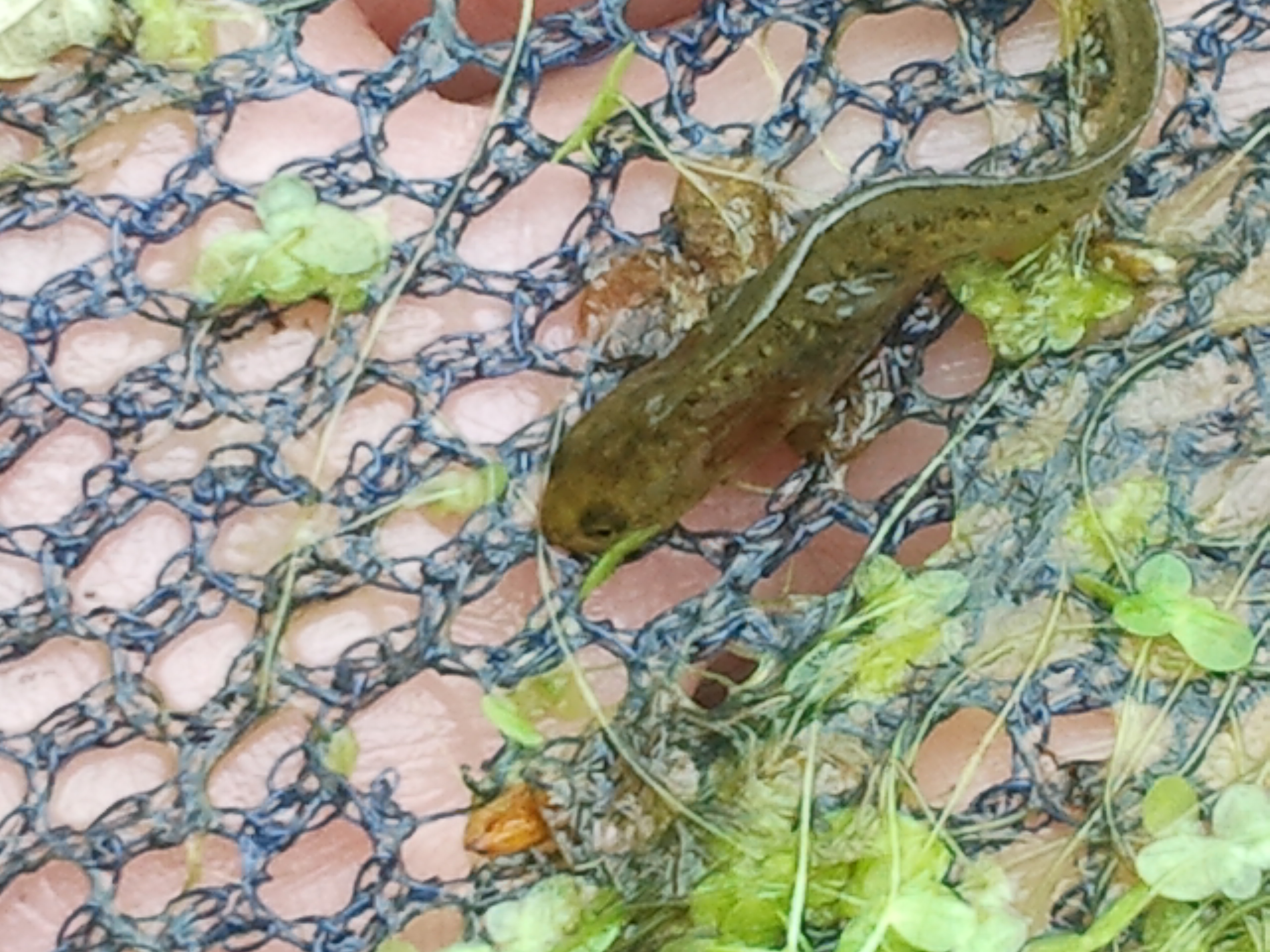
The ponds are full of life with shoals of young fish basking in the shallows, diving Beetles and Boatmen moving up to the surface and back to the bottom regularly. On the surface Pondskaters pace out the length and breadth of the pond surface. Young newts regularly appear at the surface take a gulp of air and drop back down. When Jude the Undergardener nets the duckweed and blanket weed from the pond she catches newts every time. She is delighted with every newt that graces her net. I am convinced that removing the weed is an excuse for her newt catching exploits. In August the majority of newts Jude catches are youngsters.

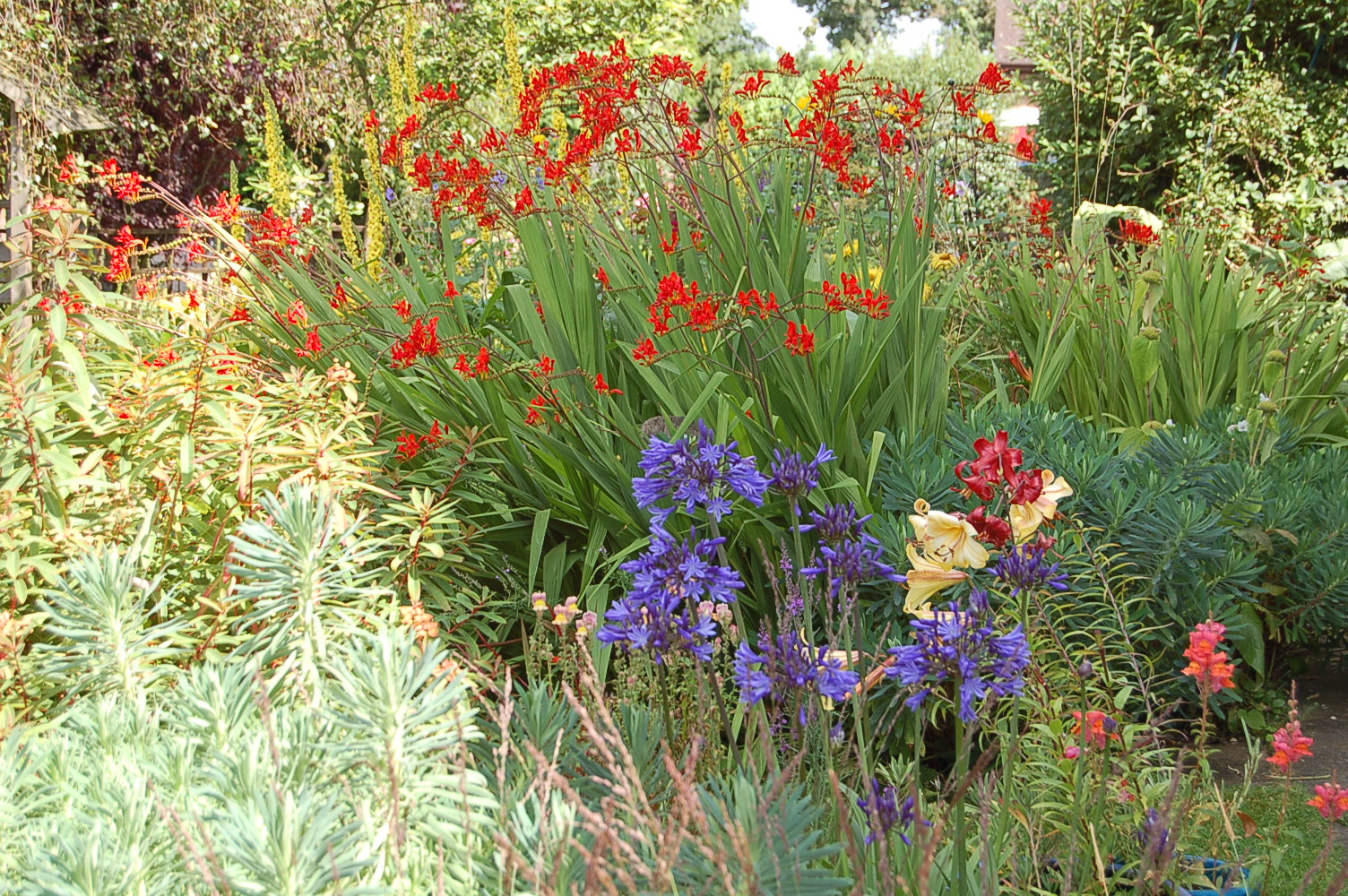
The front garden is looking good! So much colour! The Hot Border is HOT!

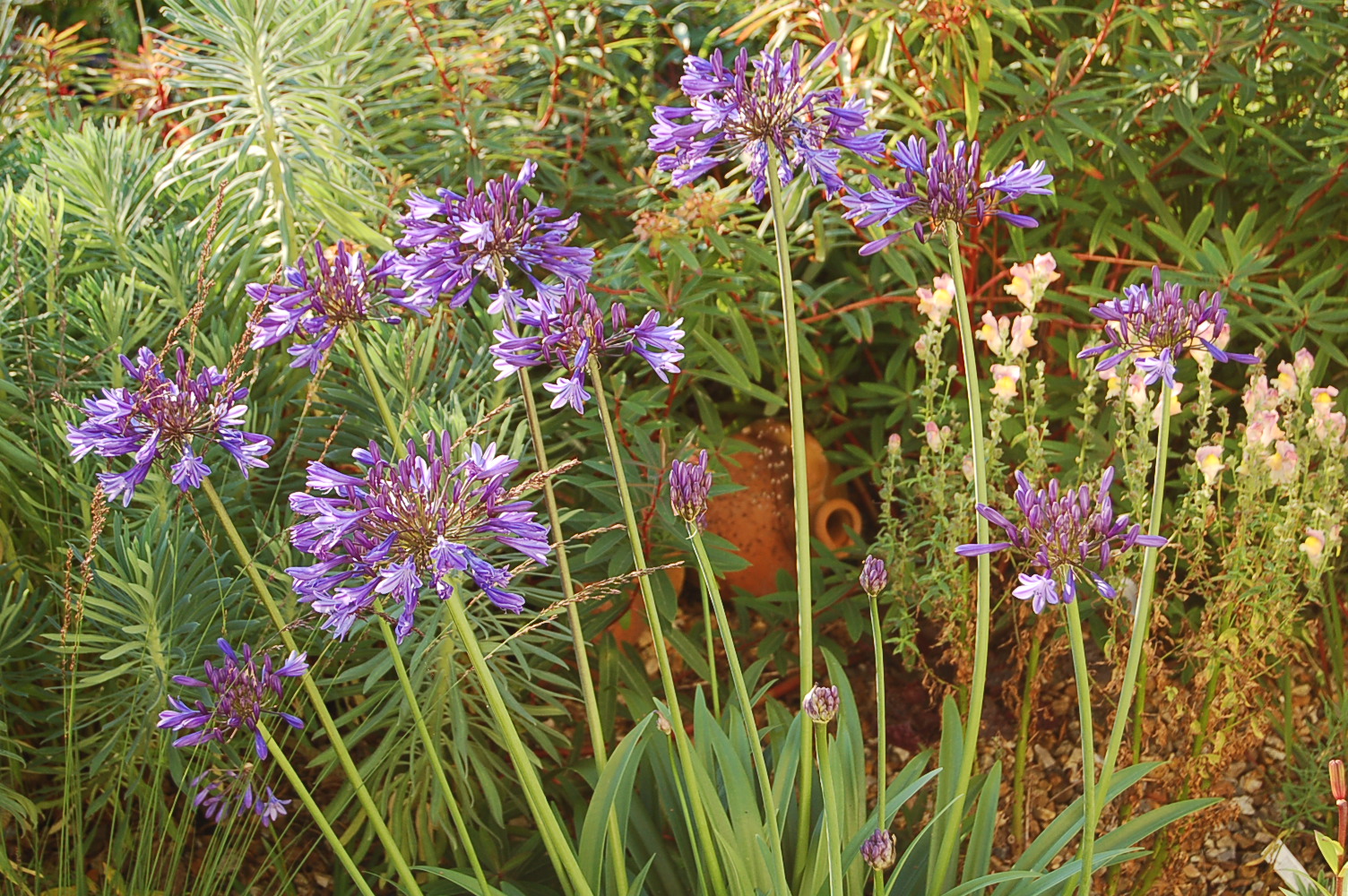
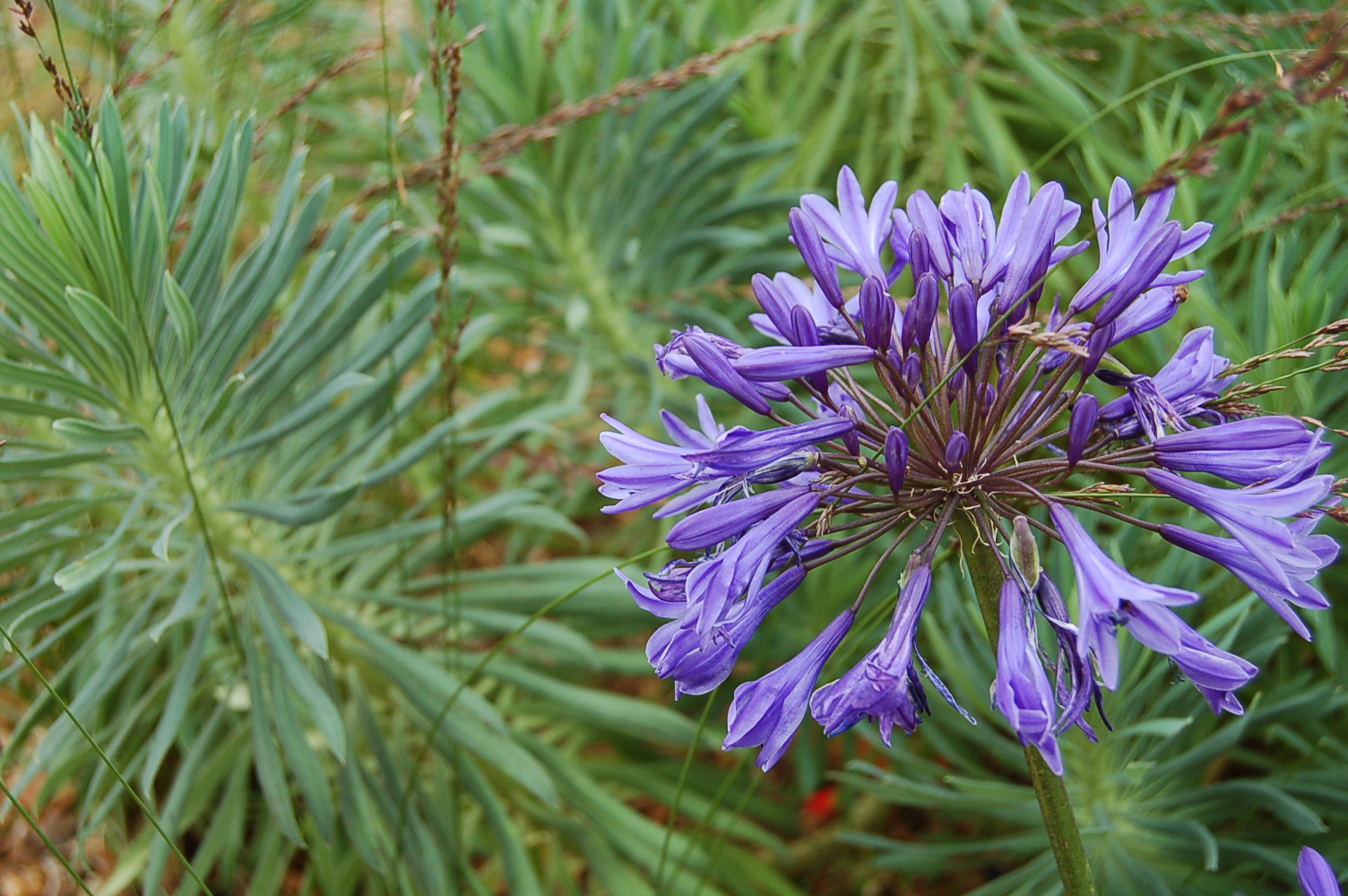
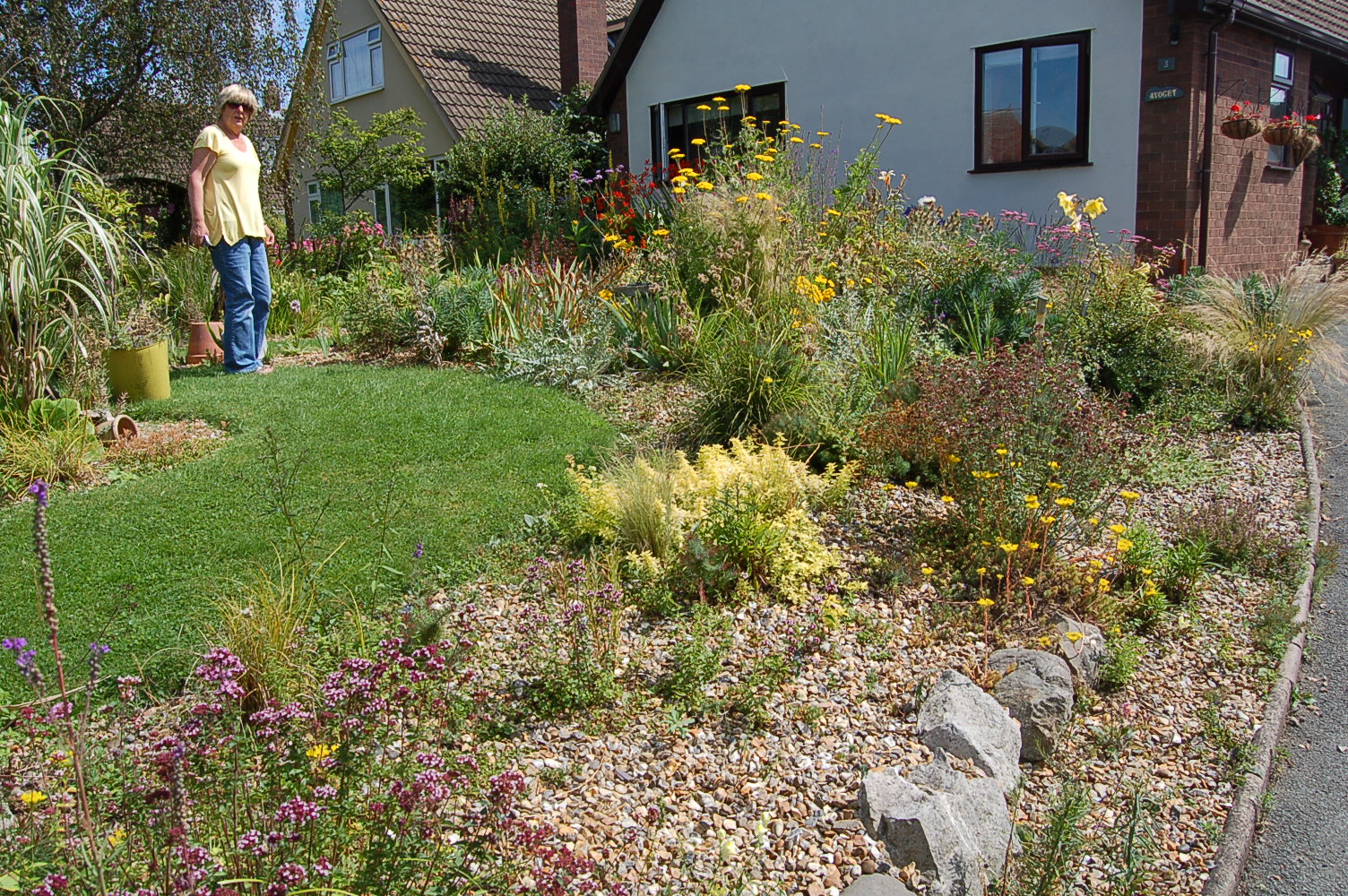
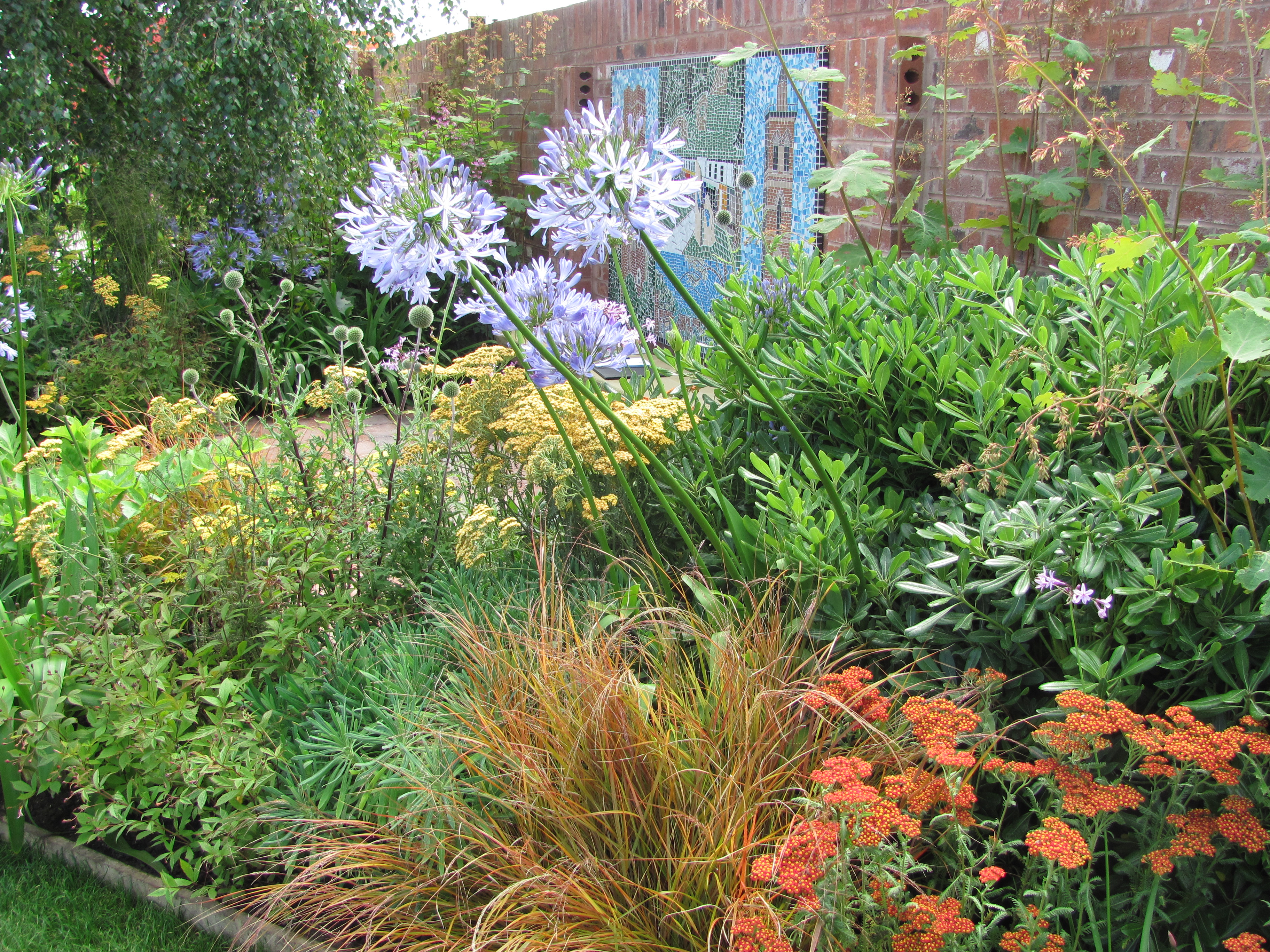
The “Beth Chatto Garden”, our gravel garden, is full of interest with Agapanthus taking centre stage. These Agapanthus were actually bought from the Beth Chattos Gardens nursery.

Early in August the front garden was dominated by yellow – even Jude the Undergardener was wearing yellow – but after a few weeks all the other colours caught up.

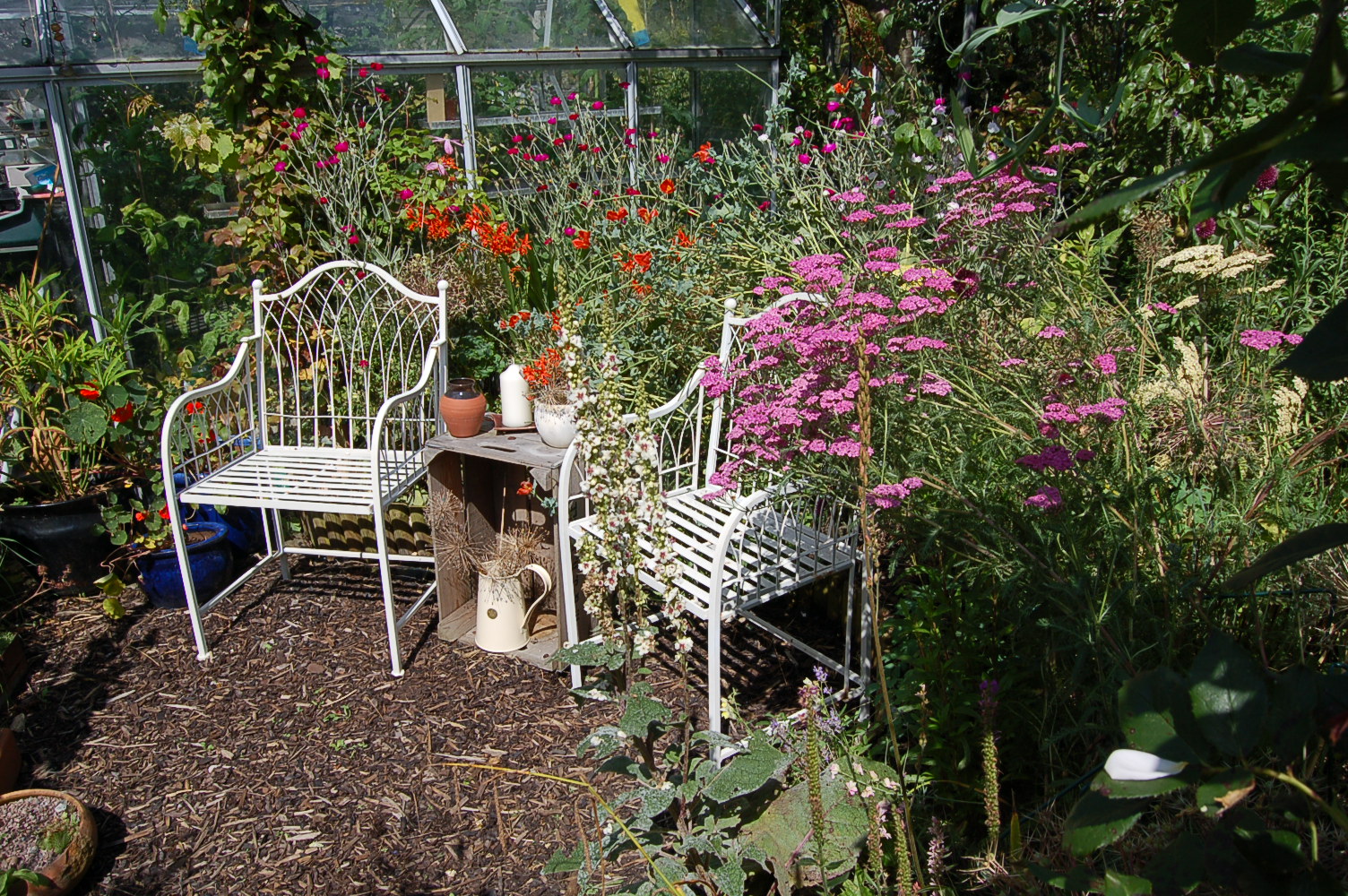
In the back garden the growth in our Secret Garden is exuberant to say the least. The foxgloves are going over but the achilleas, lychnis and alliums are still giving us a full performance.

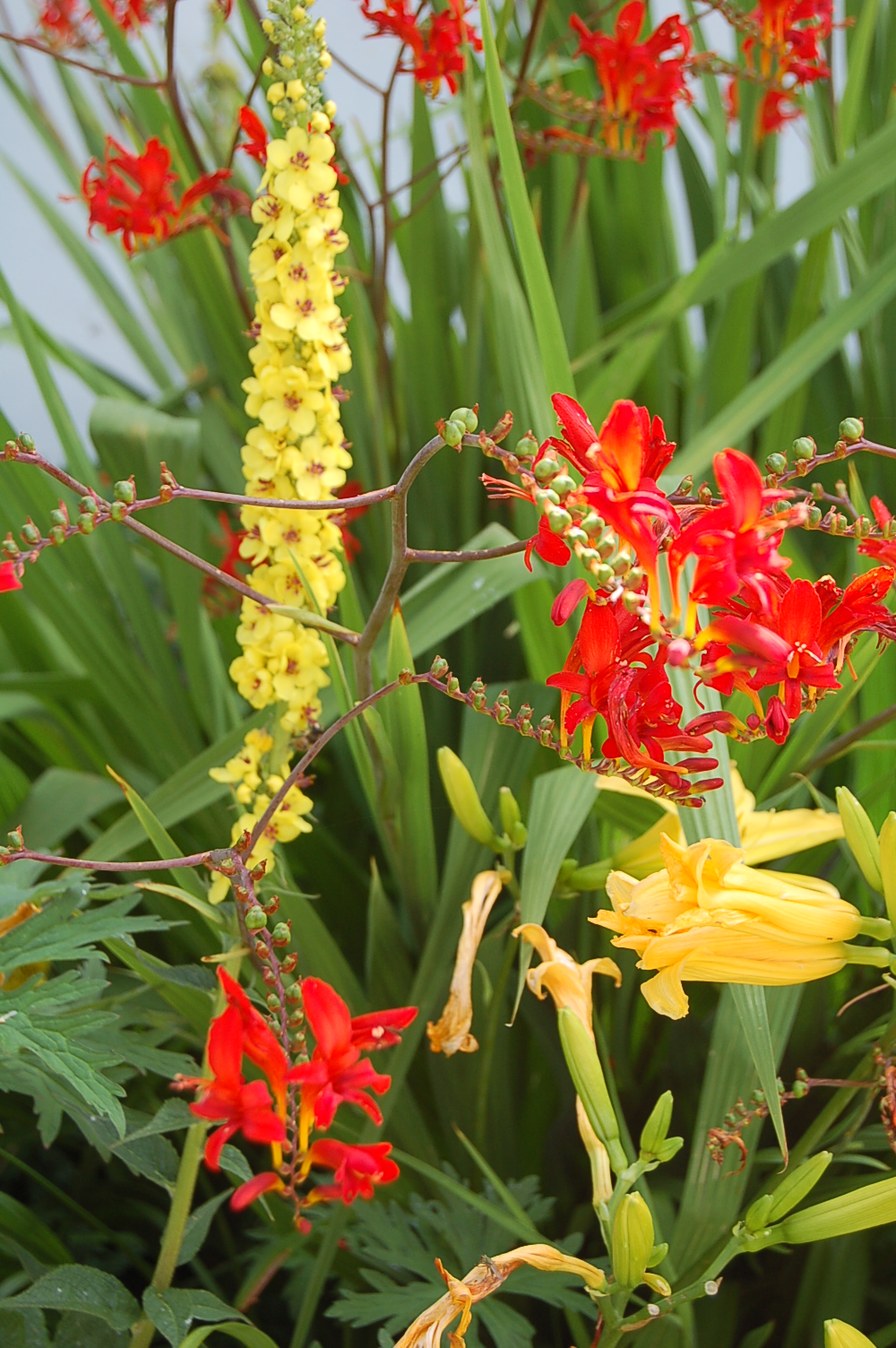
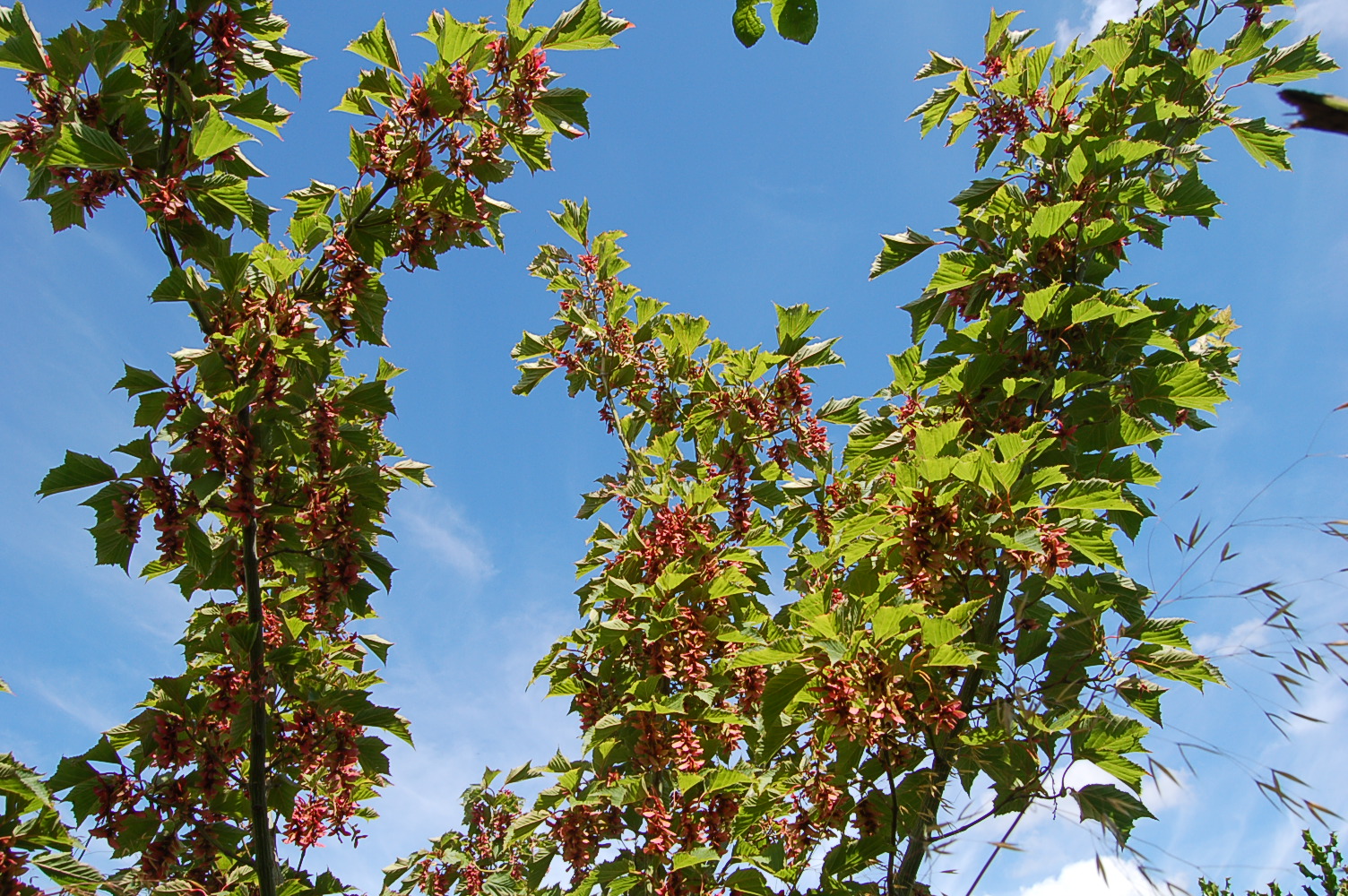
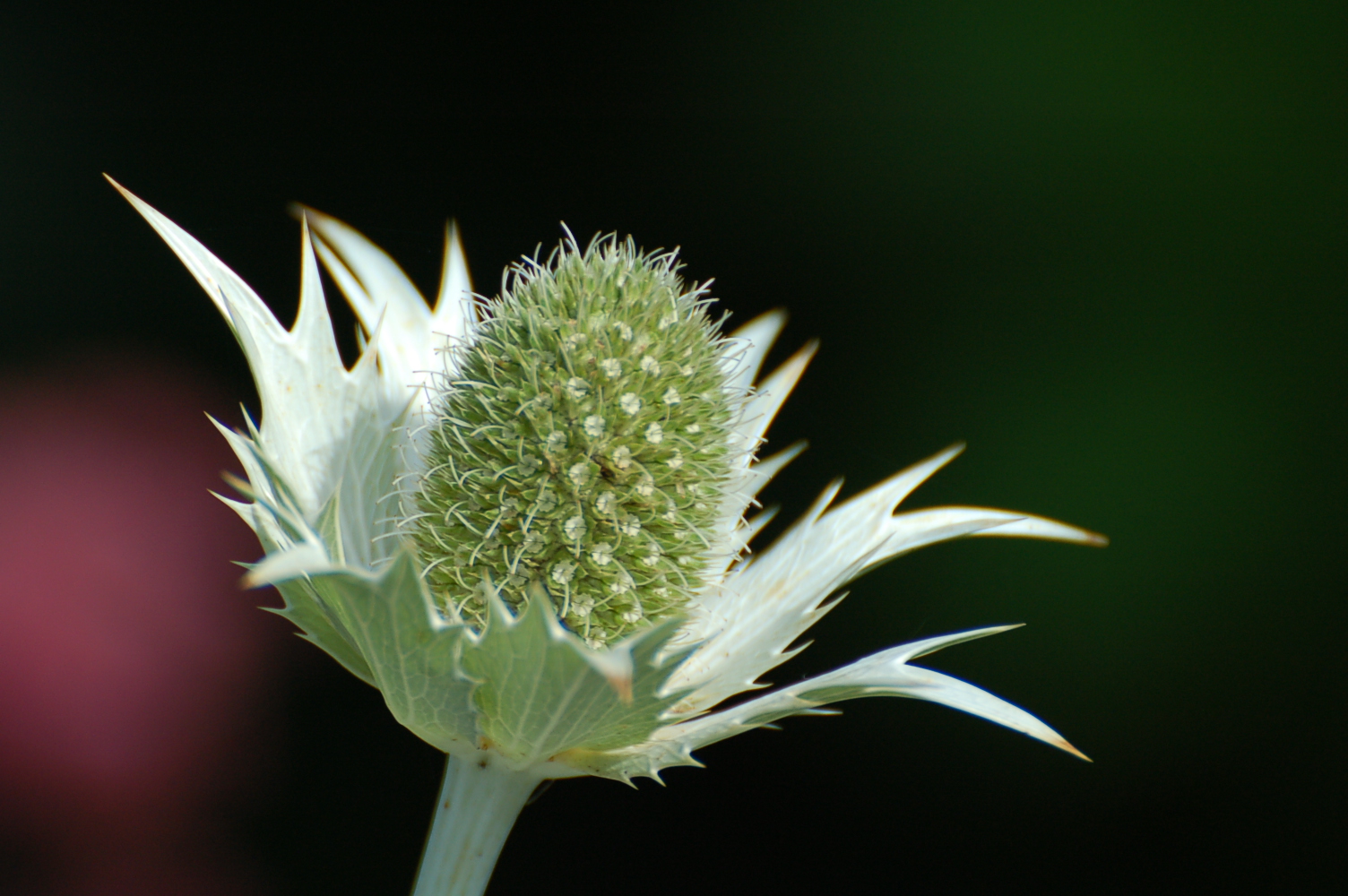
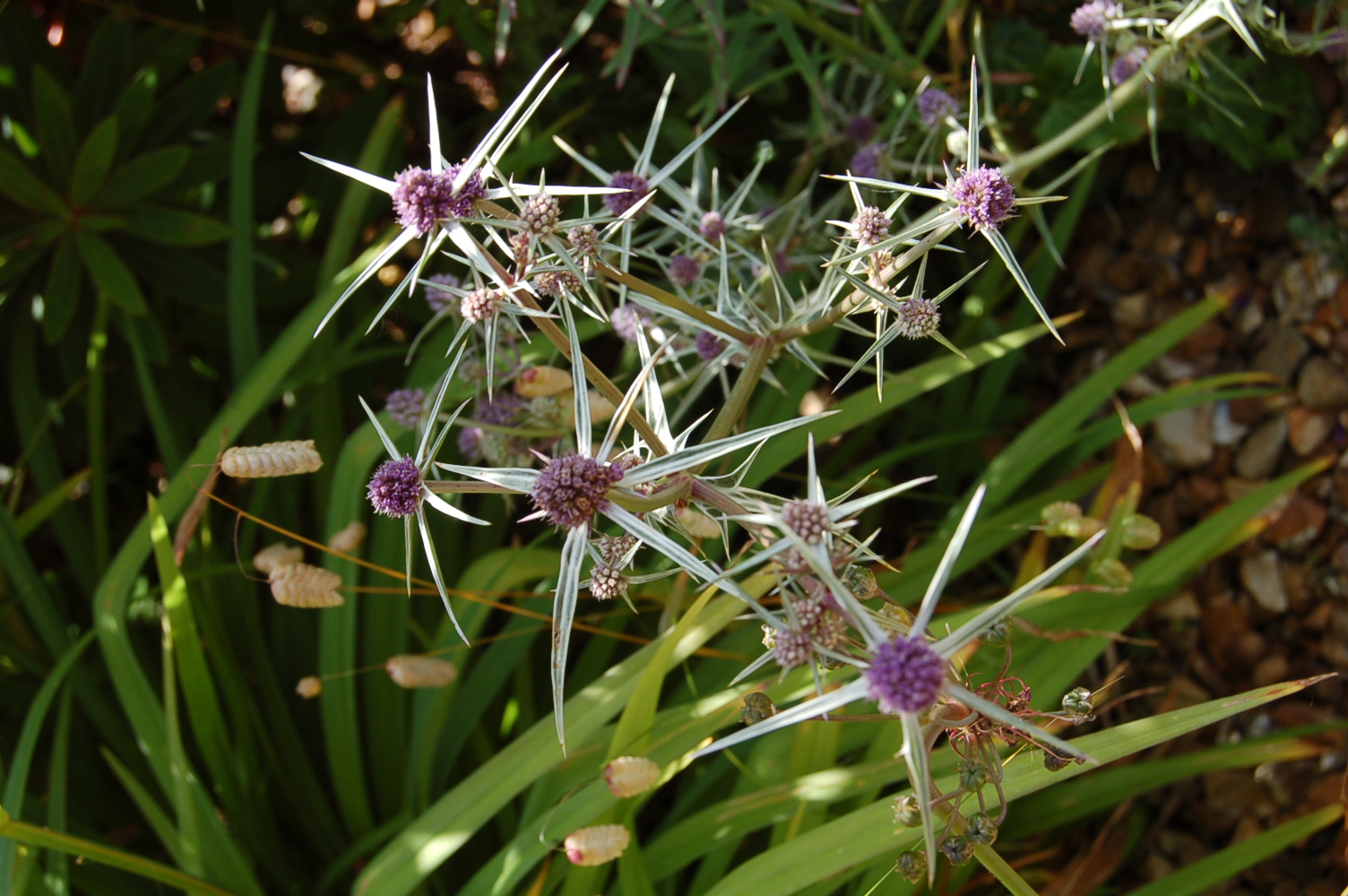
Elsewhere in the borders of the back garden the seedheads of our Snakebark Acer add rich reds, Crocosmias give every shade of yellow, orange and red, Achilleas add subtlety and the spiky Erigeron flowers provide silver.

In the greenhouse tomatoes, cucumbers and capsicums are adding sweetness and freshness to the cut-and-come-again mixed leaves of ours summer salads.

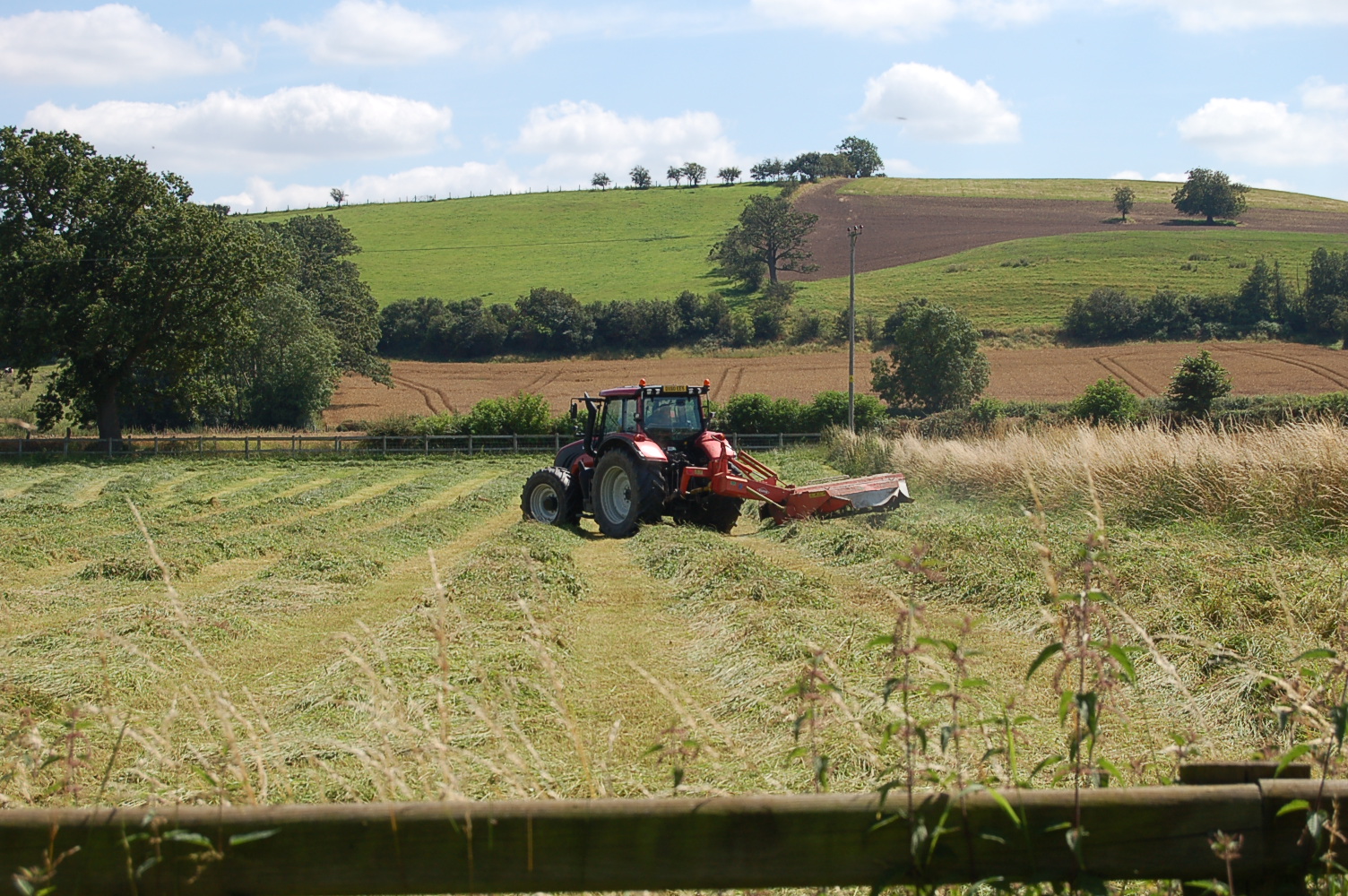
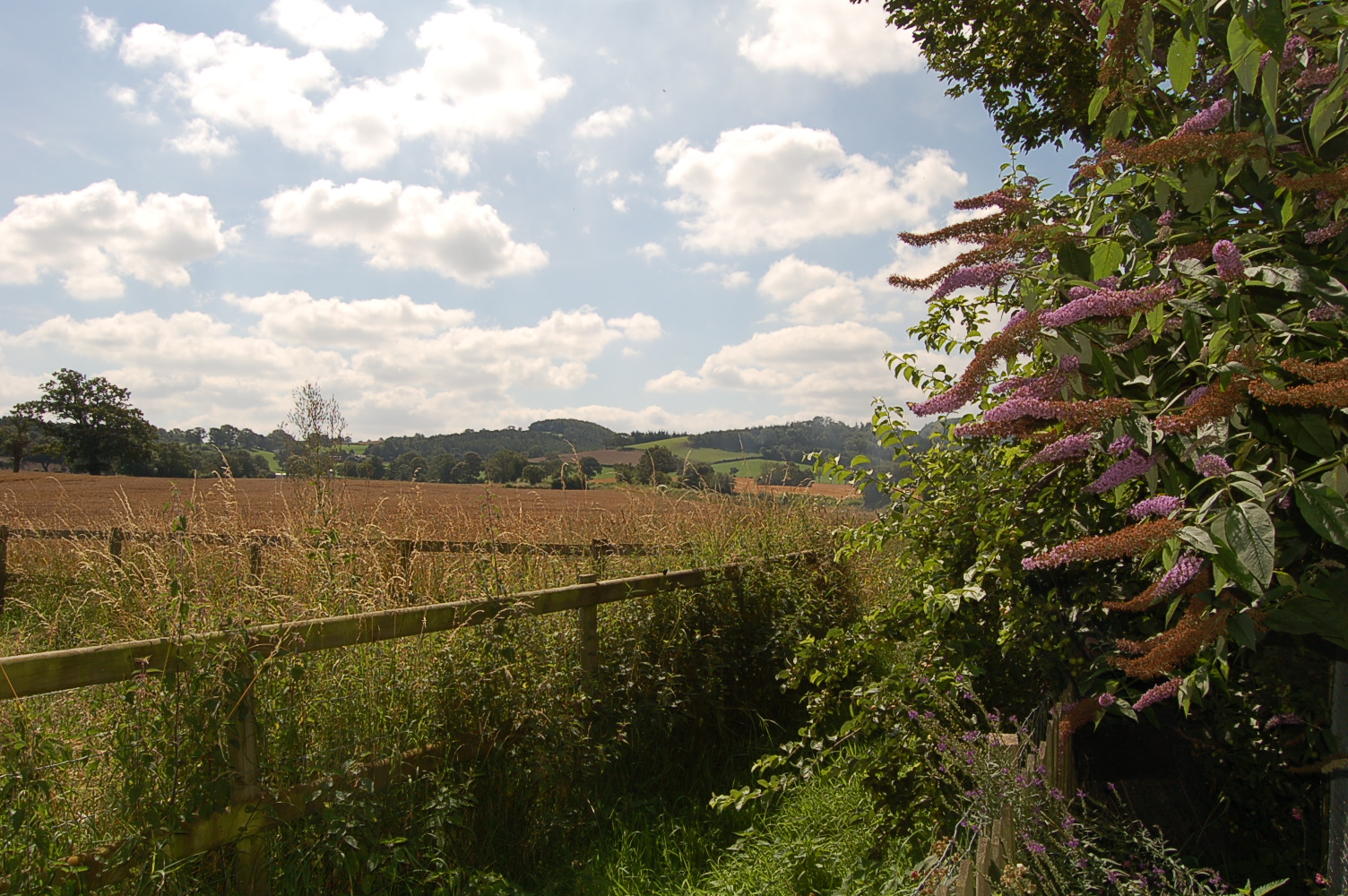
The world beyond our garden is changing this month as in our borrowed landscape the hay in the paddock has been cut and baled and the wheat fields turn gold and are being harvested one by one. By the time my September garden wander comes around the skys will seem empty as the Swallows and Martins will be on their way to warmer climes, but the garden will be getting busier with mixed feeding flocks of titmice and Goldcrests, and others of mixed finches.

Categories
community gardening flower show fruit and veg garden design garden photography gardening grow your own half-hardy perennials hardy perennials July ornamental grasses ornamental trees and shrubs outdoor sculpture photography RHS town gardens

More from the Tatton Park Flower Show

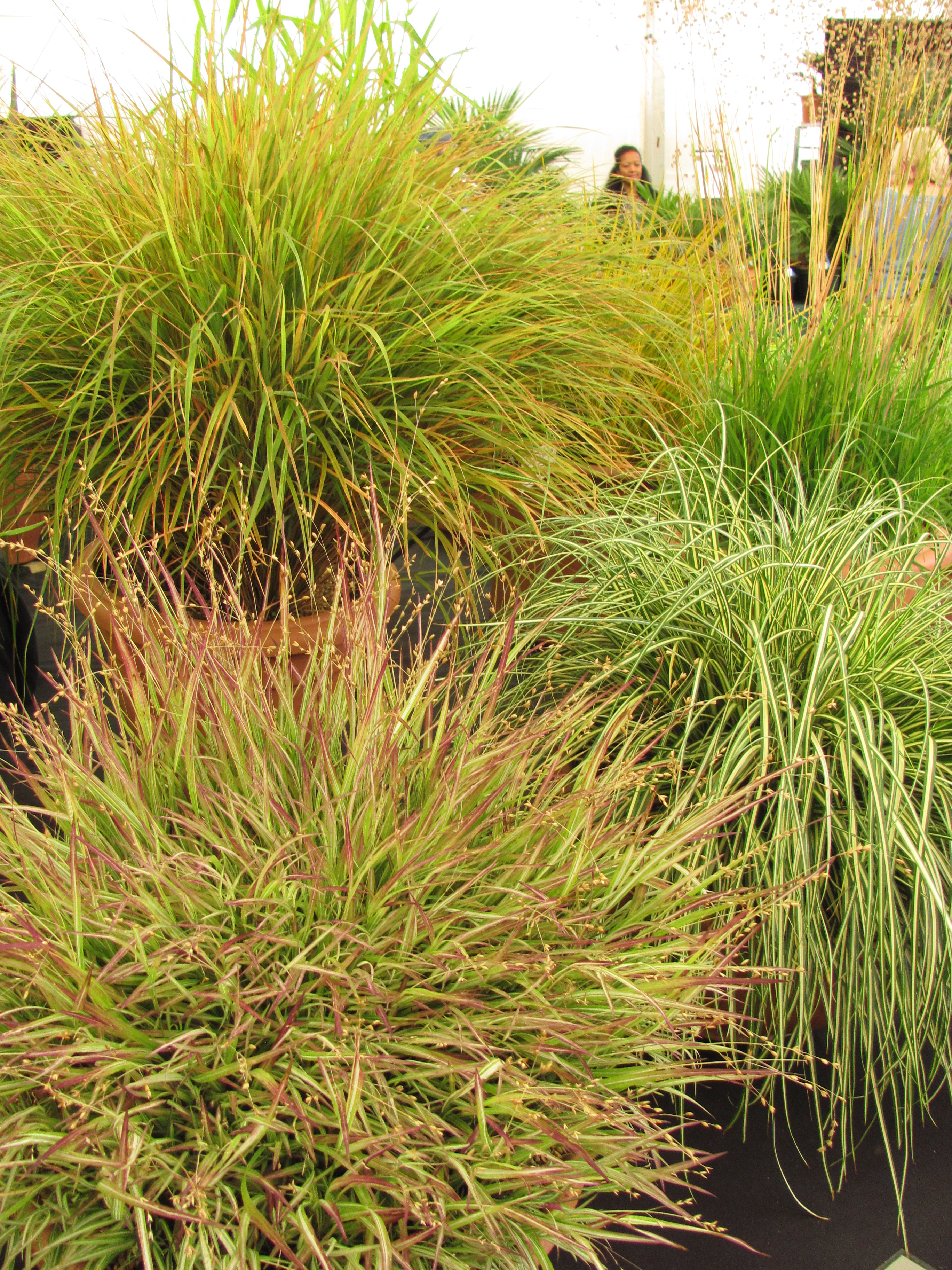
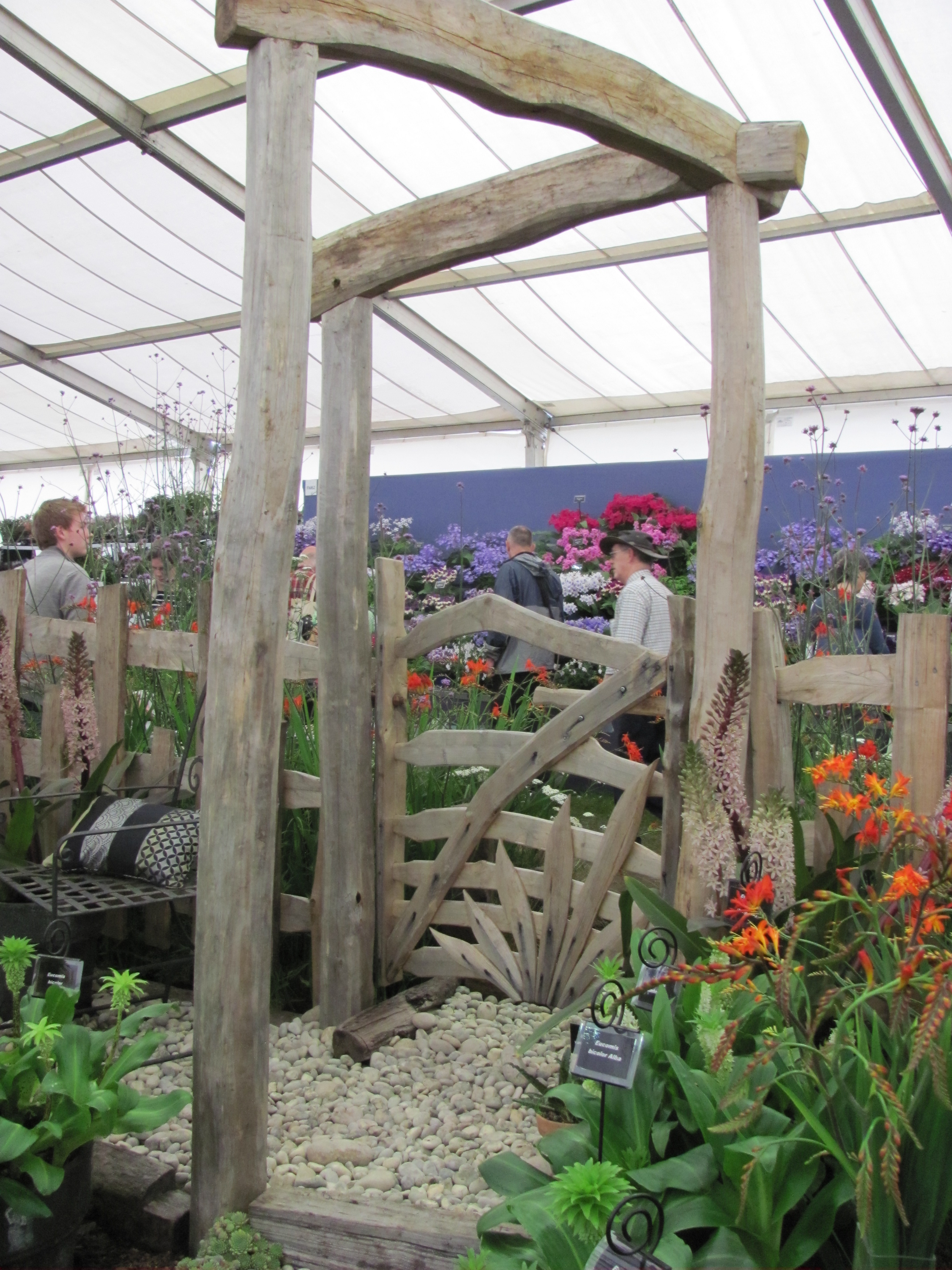
We always enjoy visiting the Floral Marquee at any RHS Show and try to sneak a good look around before they get too crowded. At Tatton Show we just made it as the crowds began to build. It was worth it as there were some wonderful plants to look at some of which were beautifully displayed. As usual our favourites were the grasses.

Within the plants on display there were some effective little details that drew out attention to have a closer look.

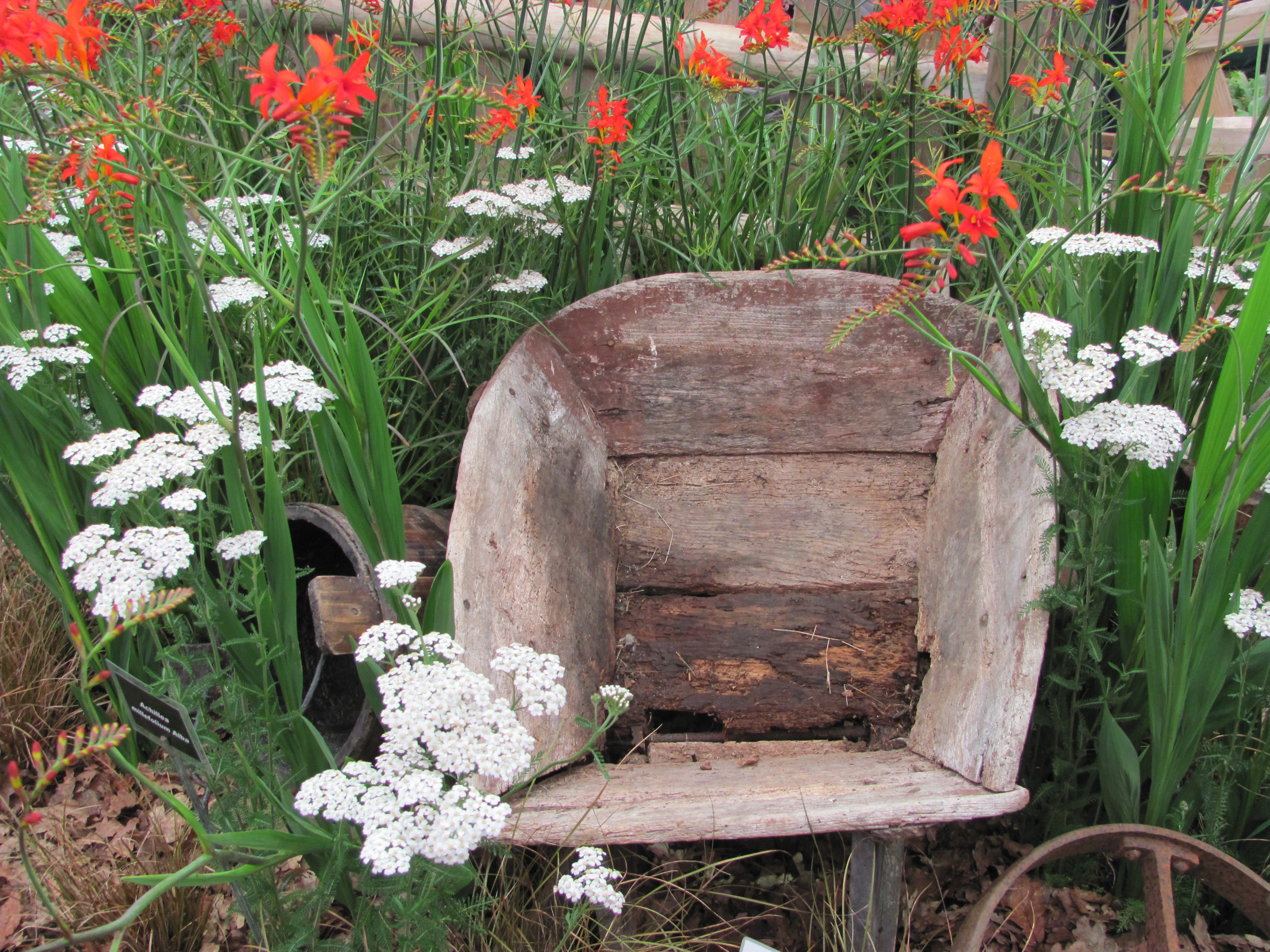
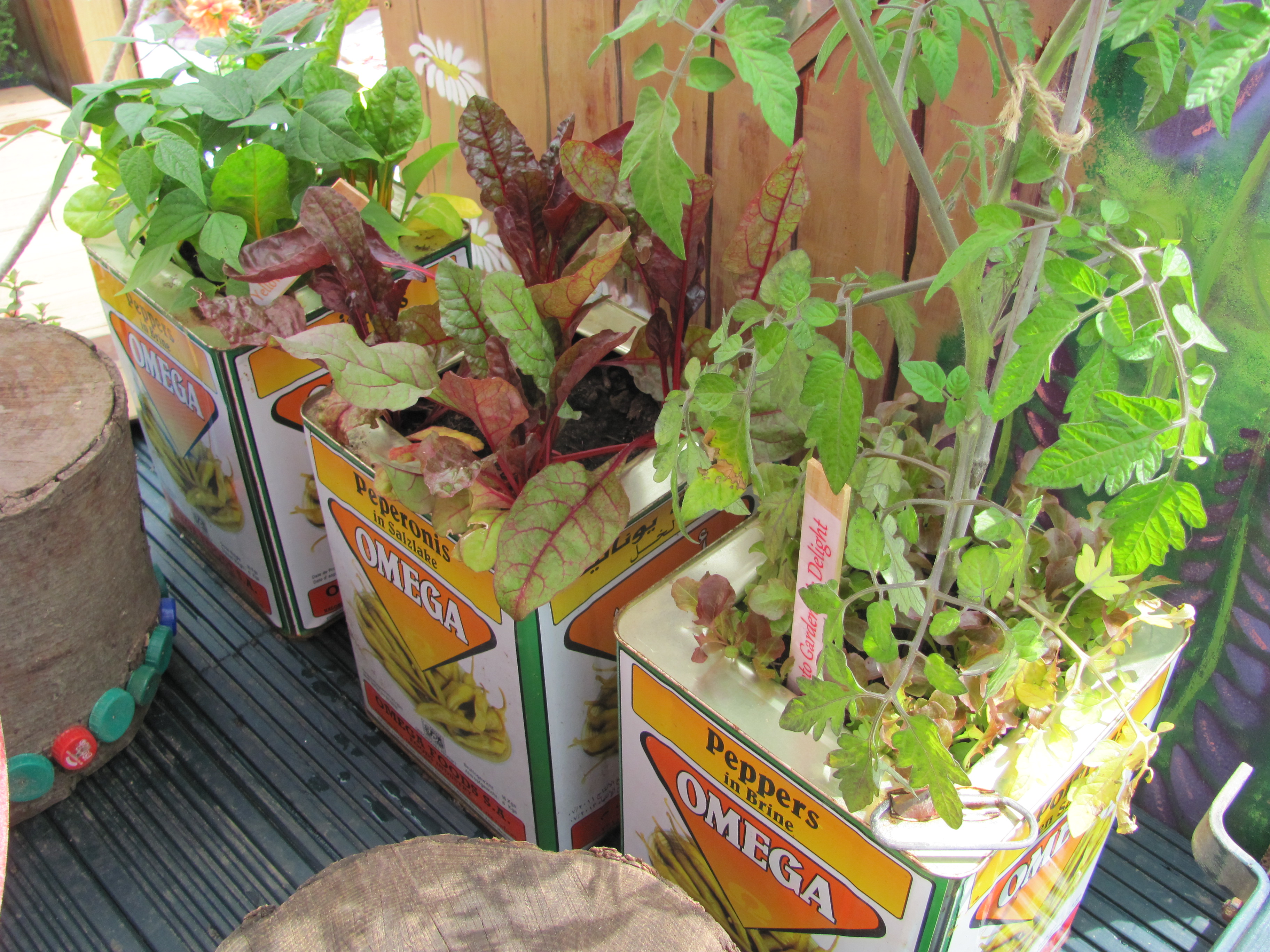
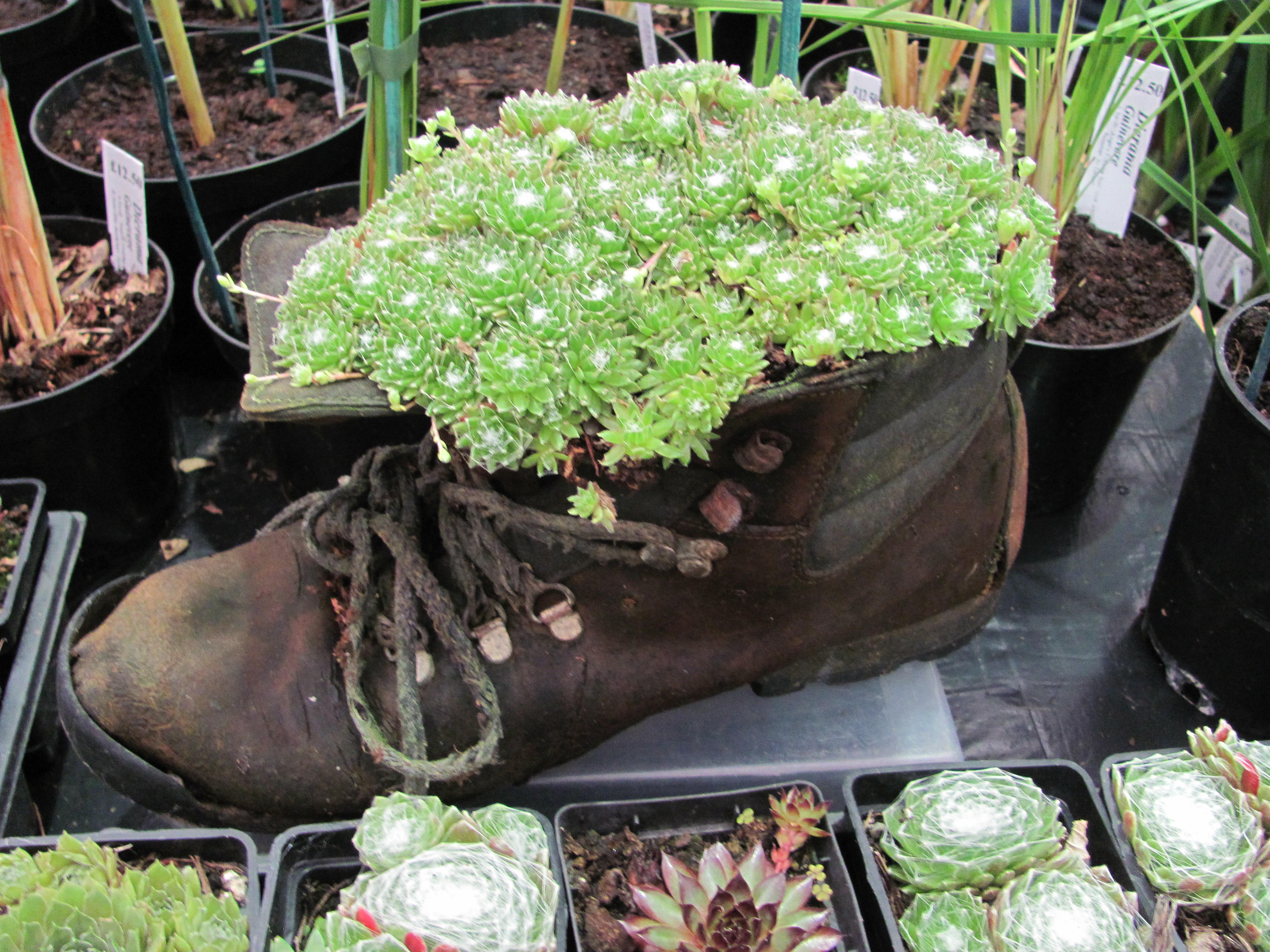
Throughout the showground were unusual containers used as planters from old boots to oil cans.

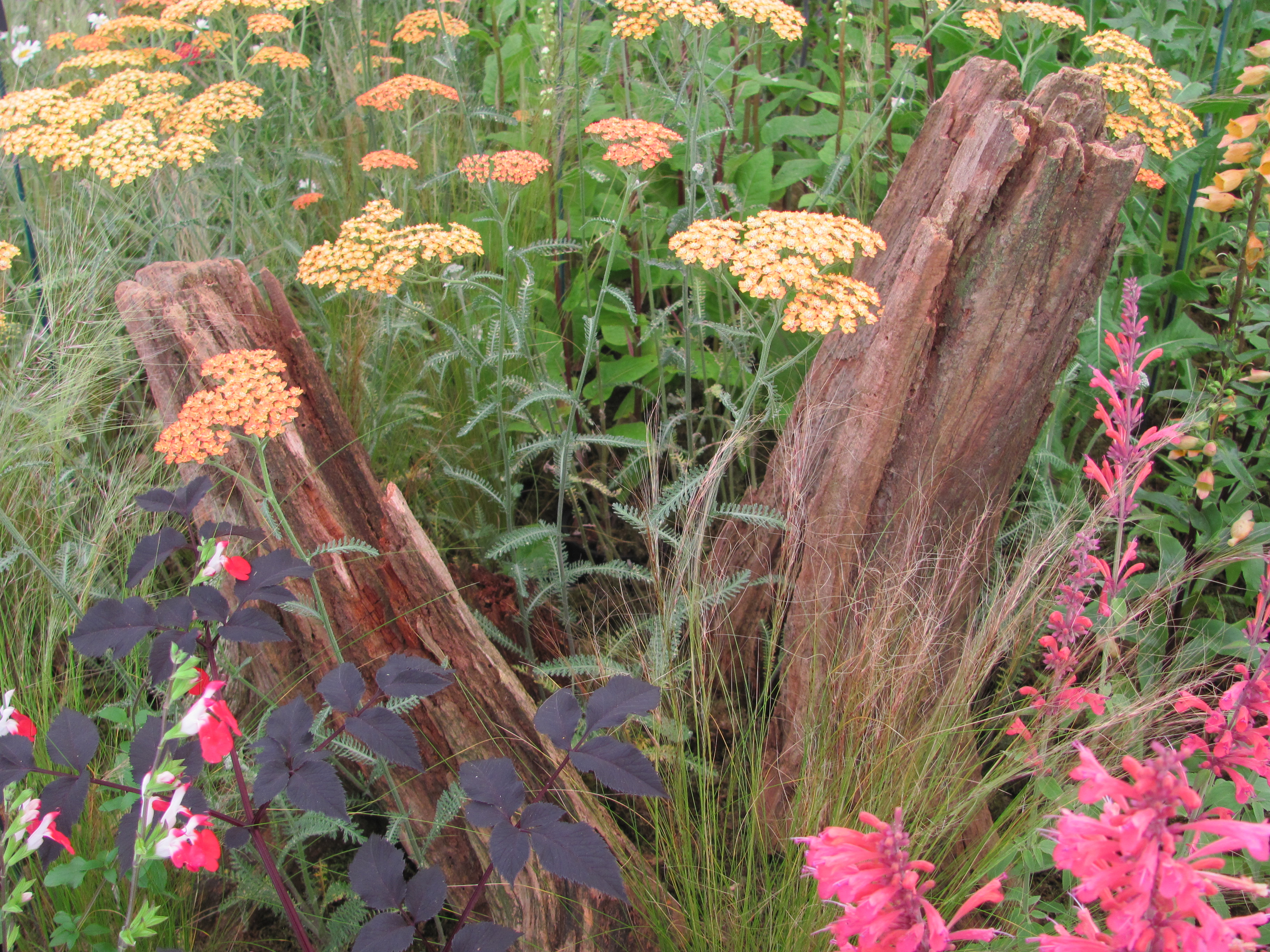
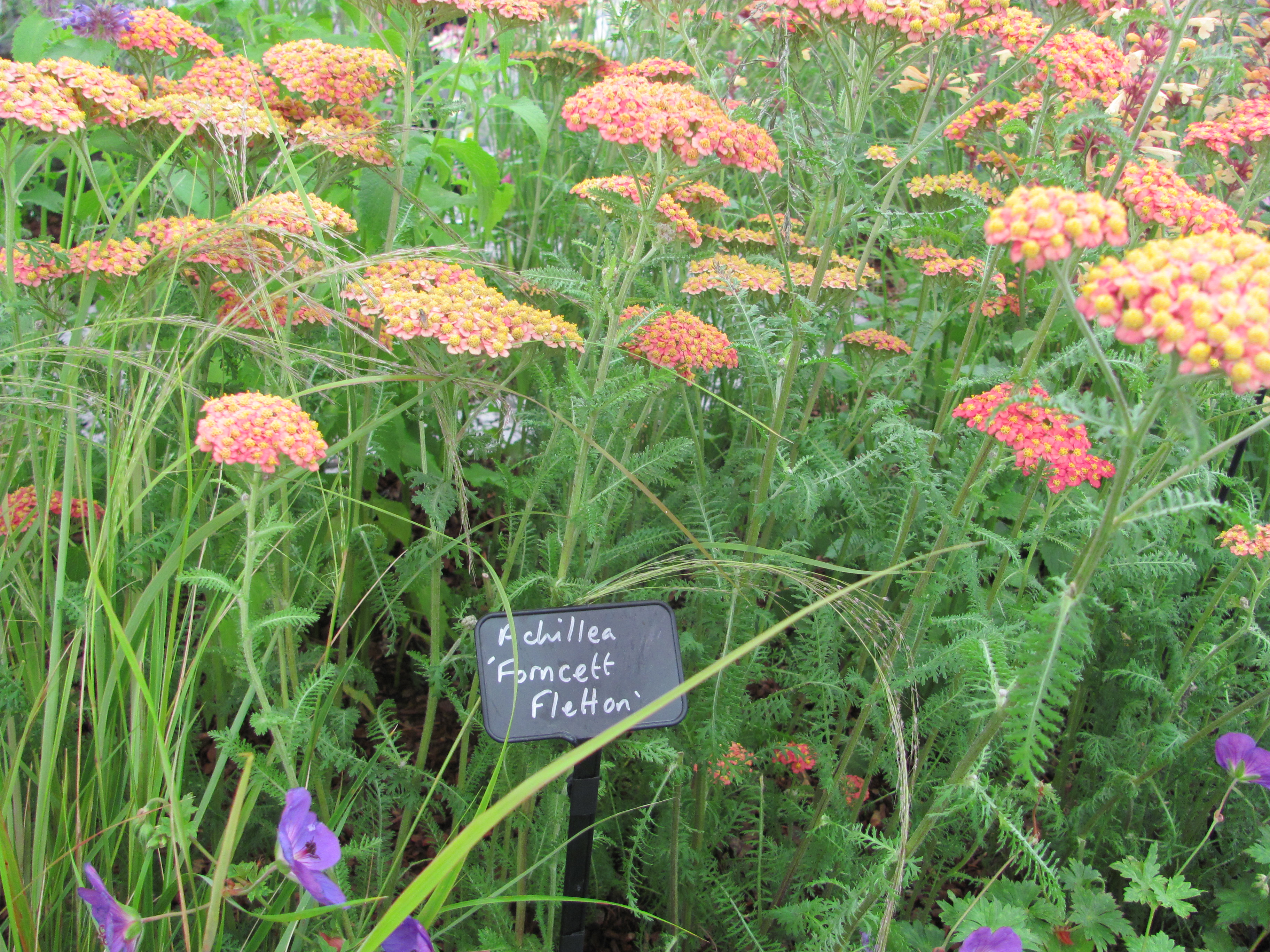
But as always the stars of the show were the plants. the trend in this show was for combining grasses with Achilleas particularly those with cream, russet and orange flowers.

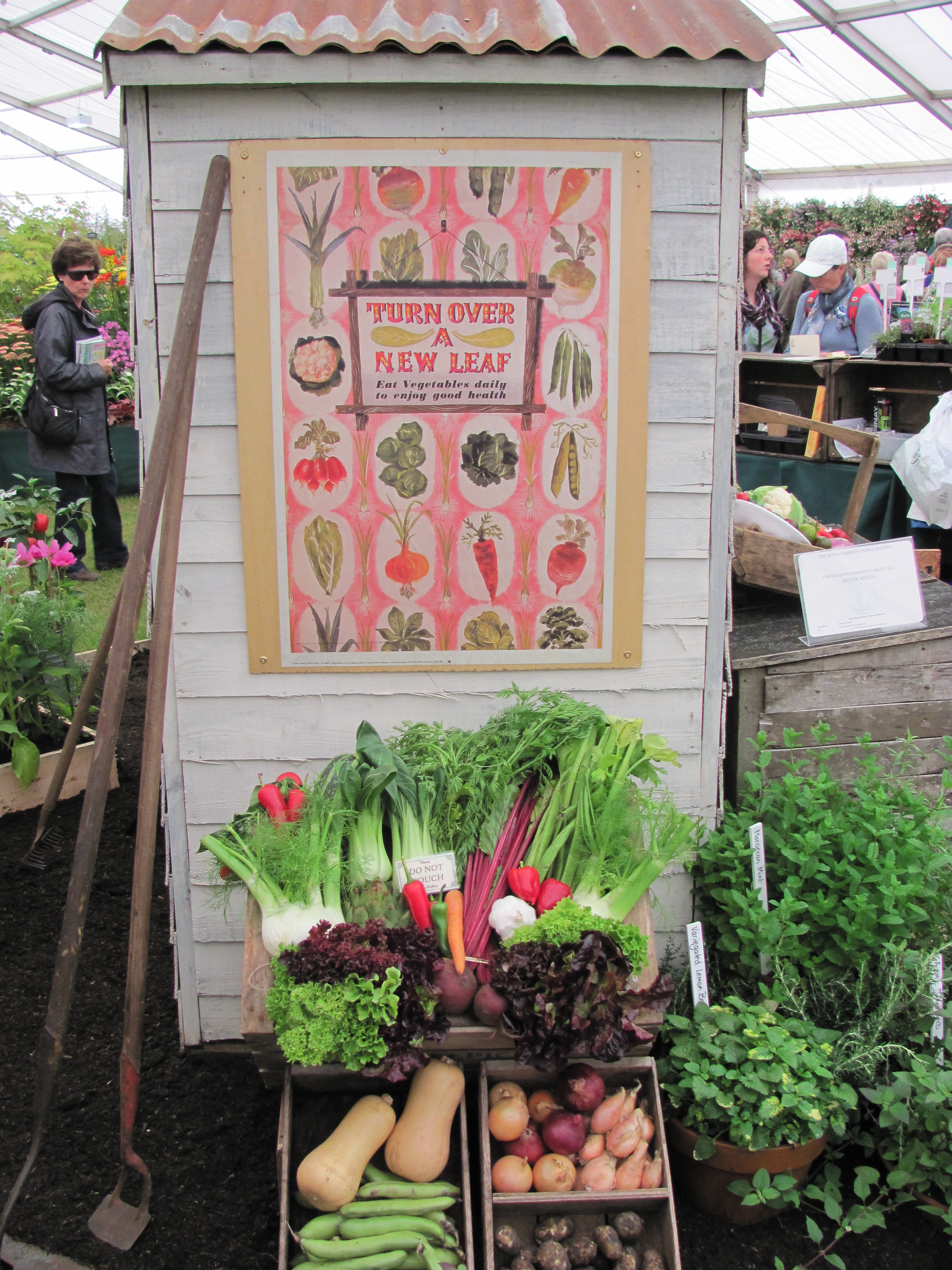
As with all RHS shows in recent years fruit and veggies starred alongside the flowers.

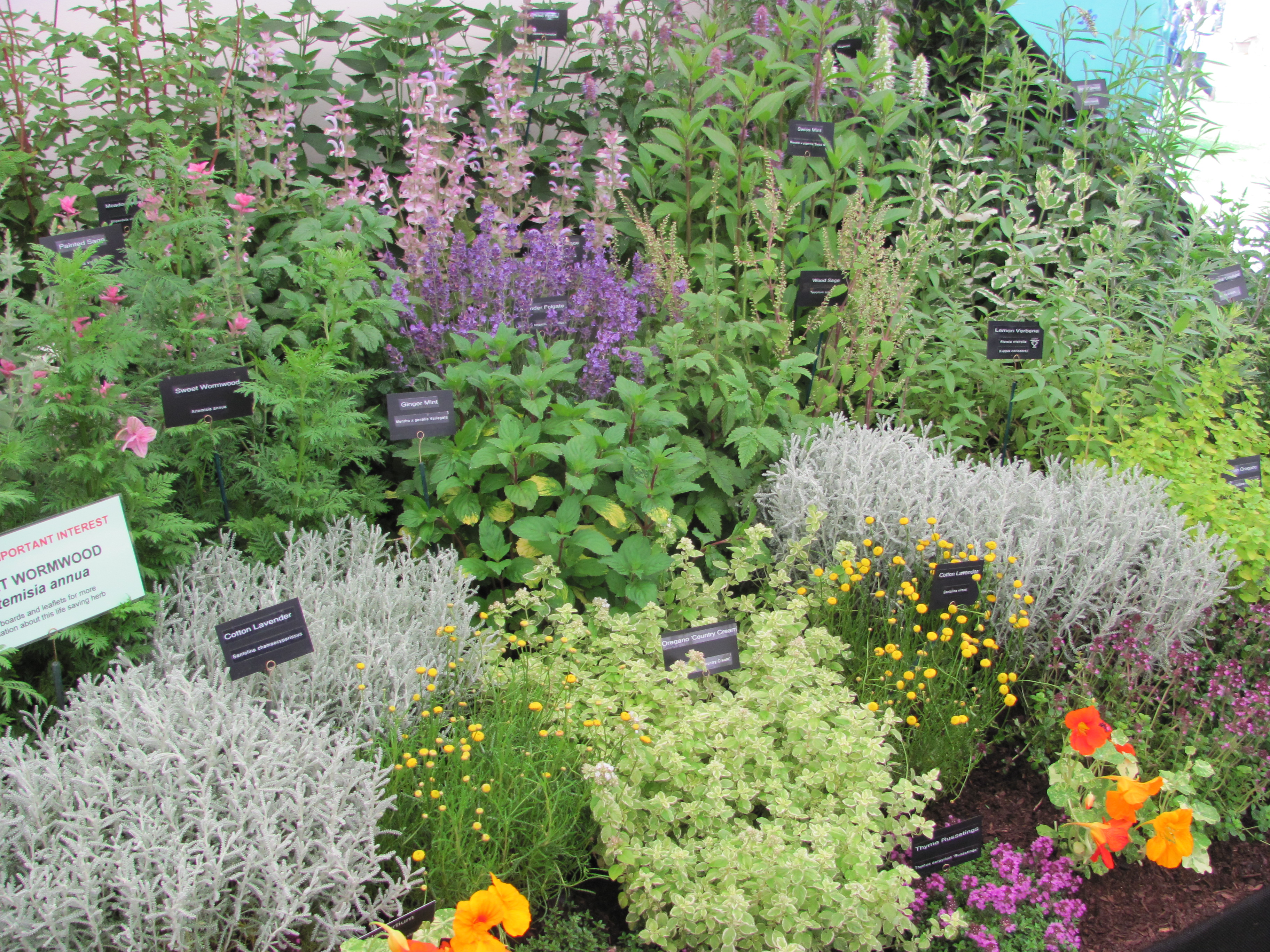
And we mustn’t forget the herbs.

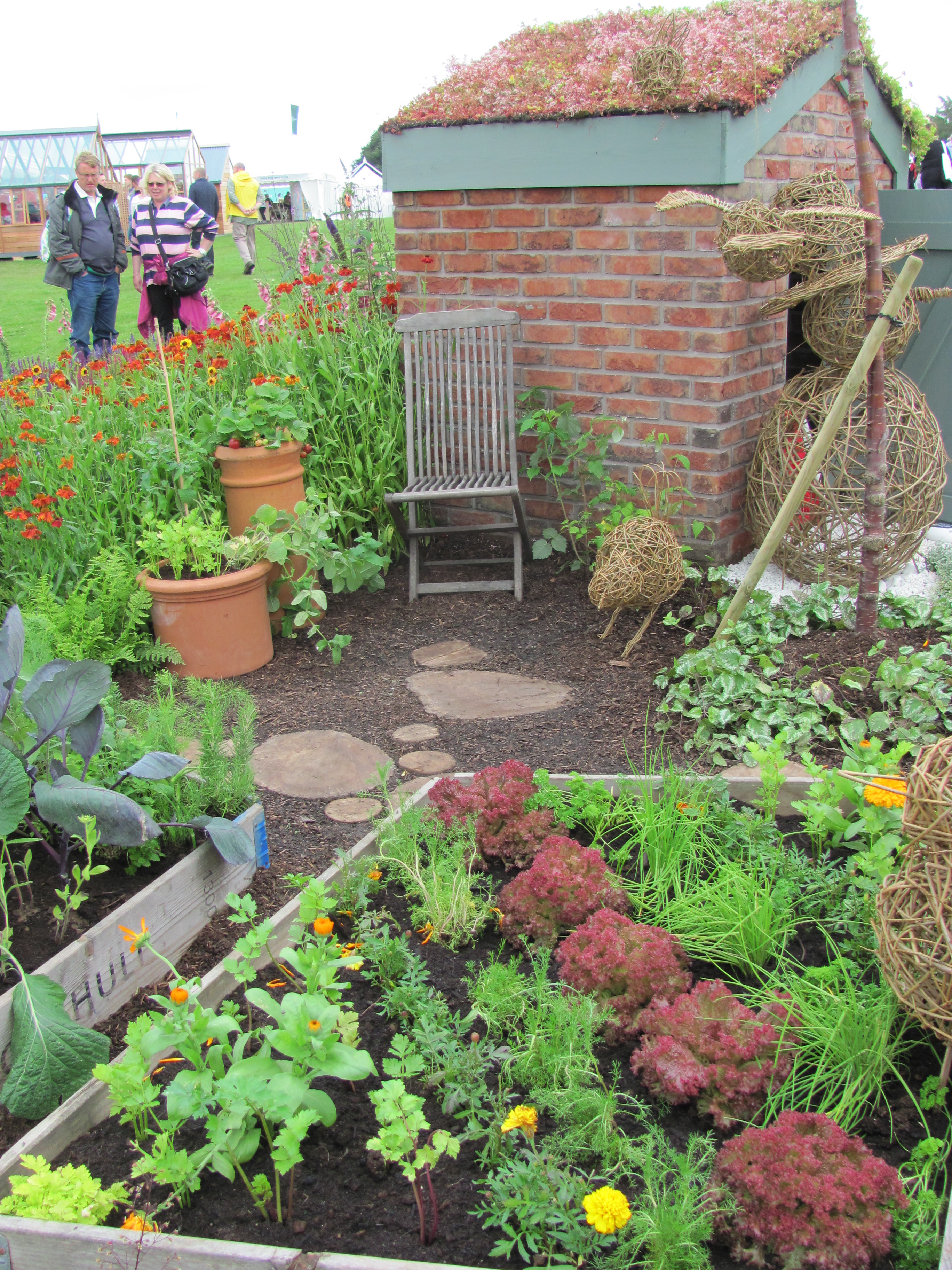
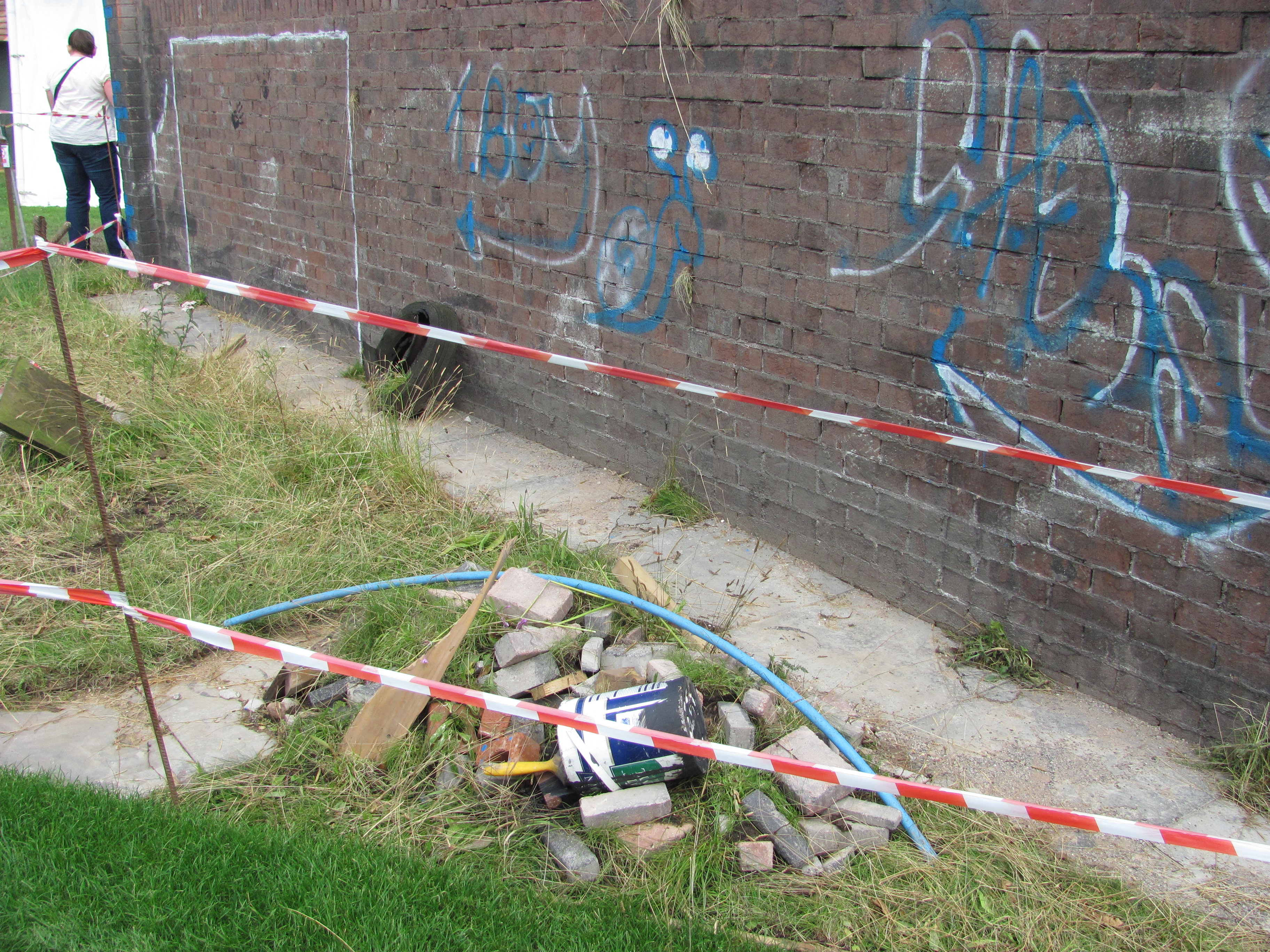
We were interested to see a garden devoted to the importance of community gardens and in particular the RHS “Its Your Neighbourhood” scheme as our allotment site is part of it. The before and after garden was designed by Chris Beardshaw one of the UK’s best garden designers as well as a writer and TV gardener. His garden showed how groups of volunteer gardeners can improve an urban derelict wasteland.

The before ……….

……….. and the after!

In the final report about Tatton Park RHS Show my post will be about the Conceptual Gardens, the Back-to-Back Gardens and the plant sale area.

Categories
community gardening garden design garden photography gardening hardy perennials July ornamental trees and shrubs photography Shropshire shrubs village gardens

A Village of Gardeners – part two, after the tea break.

We sat in the village hall enjoying our lemon drizzle cake and cups of tea, while we planned our route to see the afternoon gardens which, all but one, were out in the countryside, along narrow lanes.

So suitably refreshed and legs rested we made our way to the last of the gardens in the village itself, which was described as a small cottage garden. It didn’t disappoint!  After wandering up a narrow lush lane we crossed a ford where a shallow stream of crystal-clear water rushed over the tarmacadam. There were so many well-kept plants in busy planting schemes with narrow grass paths to lead you round. We loved it!

Once we had relished this lovely crowded cottage garden we returned through the ford and turned right where another narrow lane sent us up a gradual slope into the countryside away from the village, to the next garden. We passed this tumbling down barn the home to many swallows and colourful natural hedgerow borders.

This garden was larger than the last we visited, with sweeping areas of grass, an enclosed vegetable plot, interesting plant combinations and a beautiful wildlife area featuring a pond with woodland enhancing its banks.

Sadly the last two gardens we wished to visit were miles into the countryside at the foot of the Stretton Hills so we had to take the car. The first garden was one that invited you to wander with interesting  plantings.

The final garden was up a lane with grass growing down the centre and we had to park on a very soggy field. But it was worth it as a beautiful atmospheric garden sat alongside a rippling stream running through a wooded valley. The sound of bird activity around the feeding stations in an enclosed part of the garden and their song in the surrounding borders and woodland enticed us to sit comfortably with another cup of tea and another slice of home-baked cake.

We managed to visit just nine of the sixteen gardens open before we ran out of time. We enjoyed the variety of gardens created and maintained by a variety of gardeners. These gardeners all had the advantage of living in such a beautiful little village with a strong community spirit. The last garden we visited had the added benefit of an amazing view.

Categories
garden design garden photography gardening grow your own hardy perennials July ornamental grasses ornamental trees and shrubs photography poppies roses Shropshire shrubs succulents trees

A Wander around our Garden in July

July in the garden so far has carried on where June left off – rain! The grass paths squelch as you wander, trees drip on you and herbaceous plants soak your legs. The plants have loved it relishing in the warmth and dampness. They grow tall and lush too quickly and do so without gaining strength. As a result they get knocked over in windy spells and any heavy showers.

As rain persists each day from dawn till dusk a moment of light and dry gave me an opportunity to take photos for my July wander. After waiting all day I finally took the following pics just before 9:00 in the evening.

One plant that never fails is this wonderful tall grass with striped leaves. It is a good four foot tall and the long leaves are popular with the “Undergardener” to cut for flower arranging.

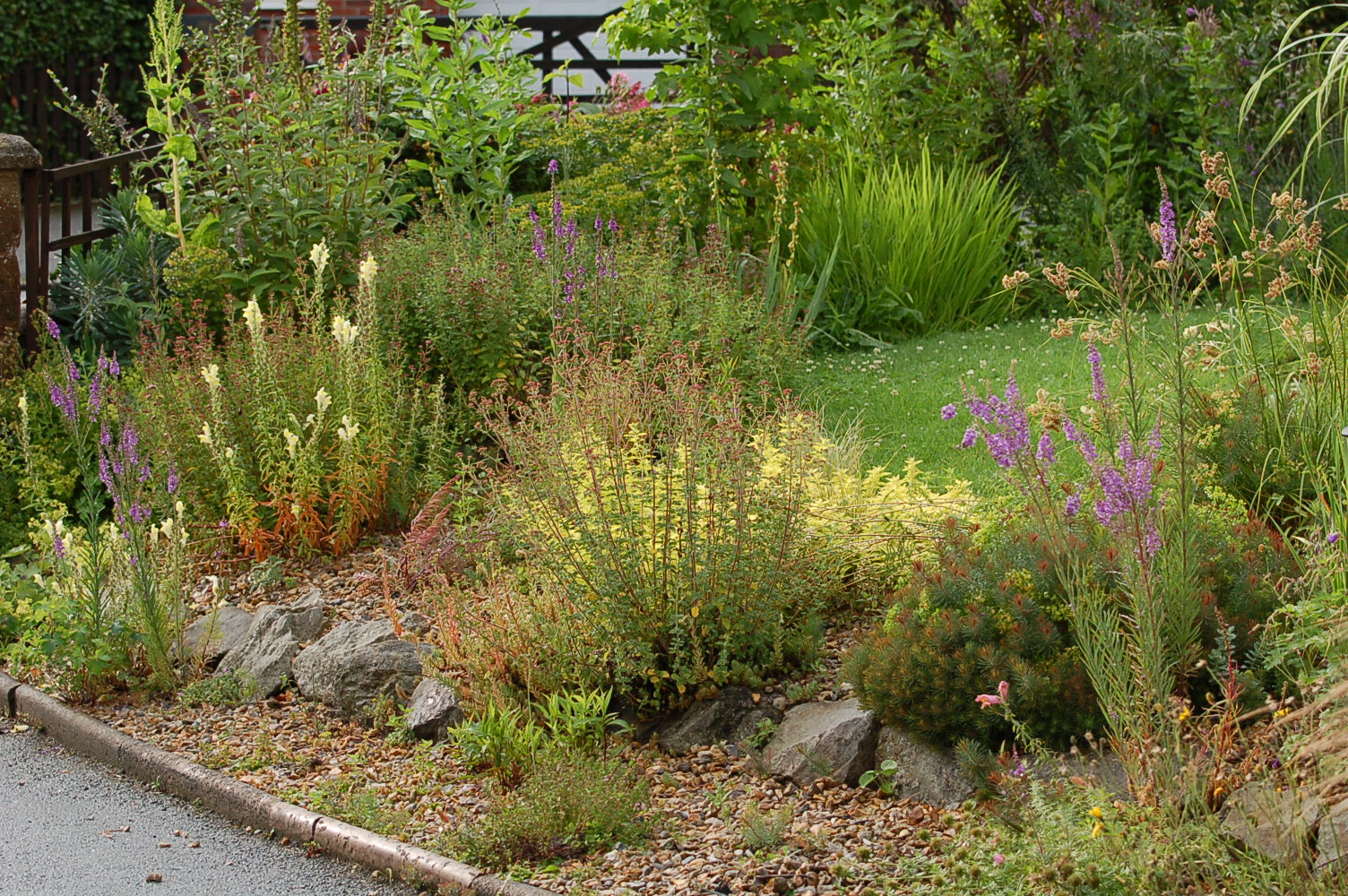
Our gravel garden, The Chatto Bed, is now full of colour, gentle yellows, pinks and purples. When the sun does come out for its short sessions the gravel bed is buzzing with bees. They are having a hard time this year with all this rain and wind.

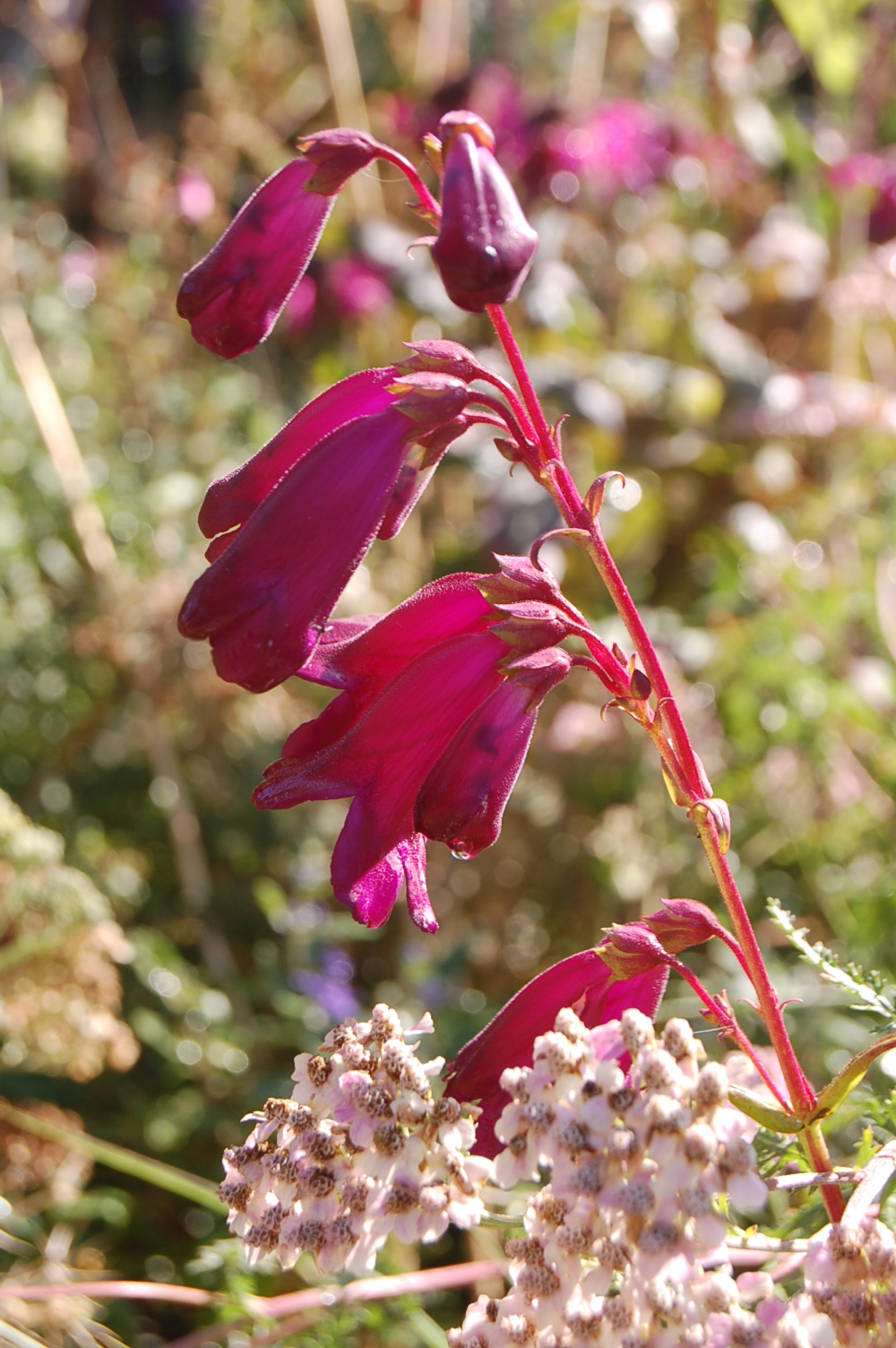
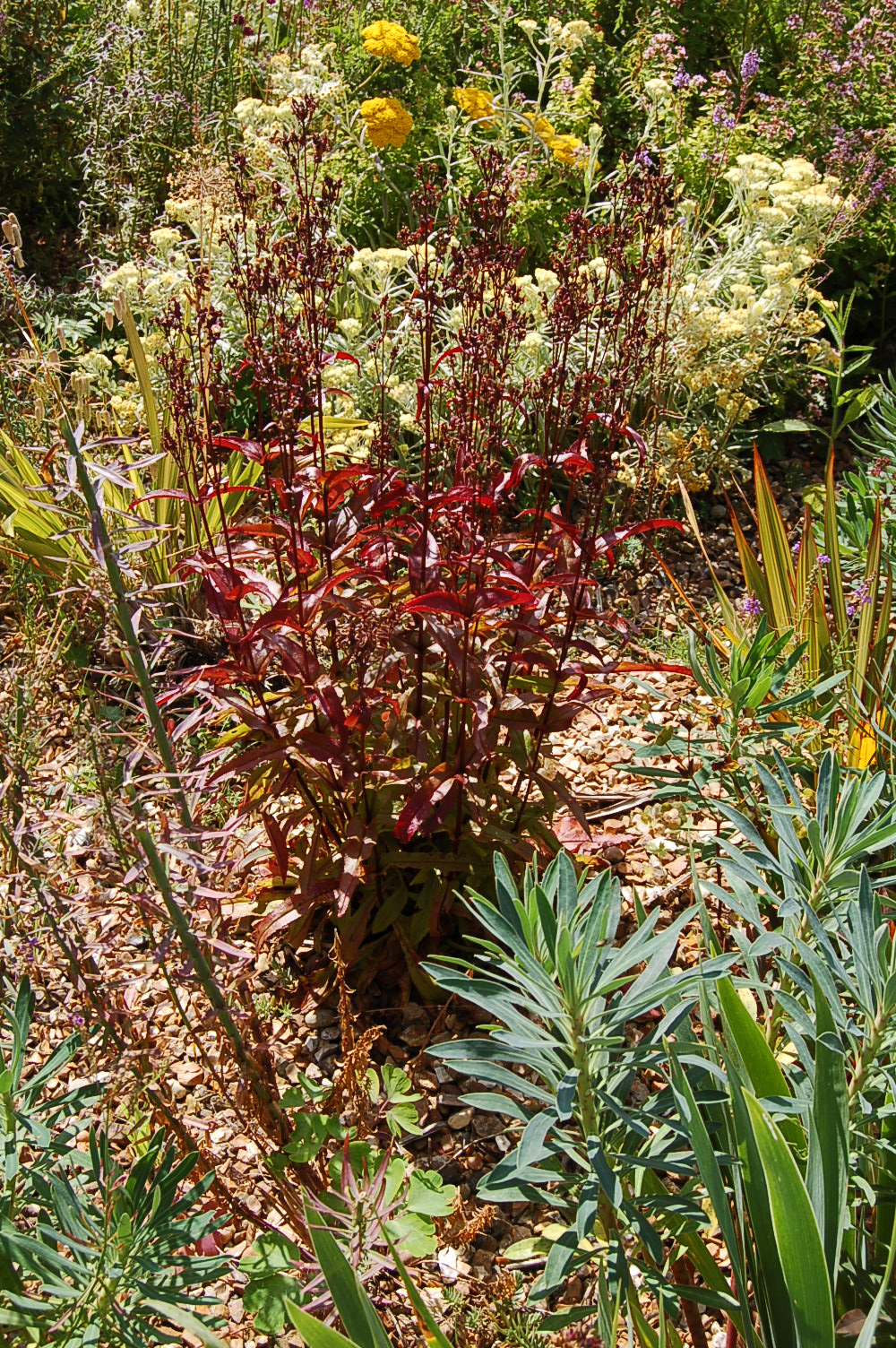
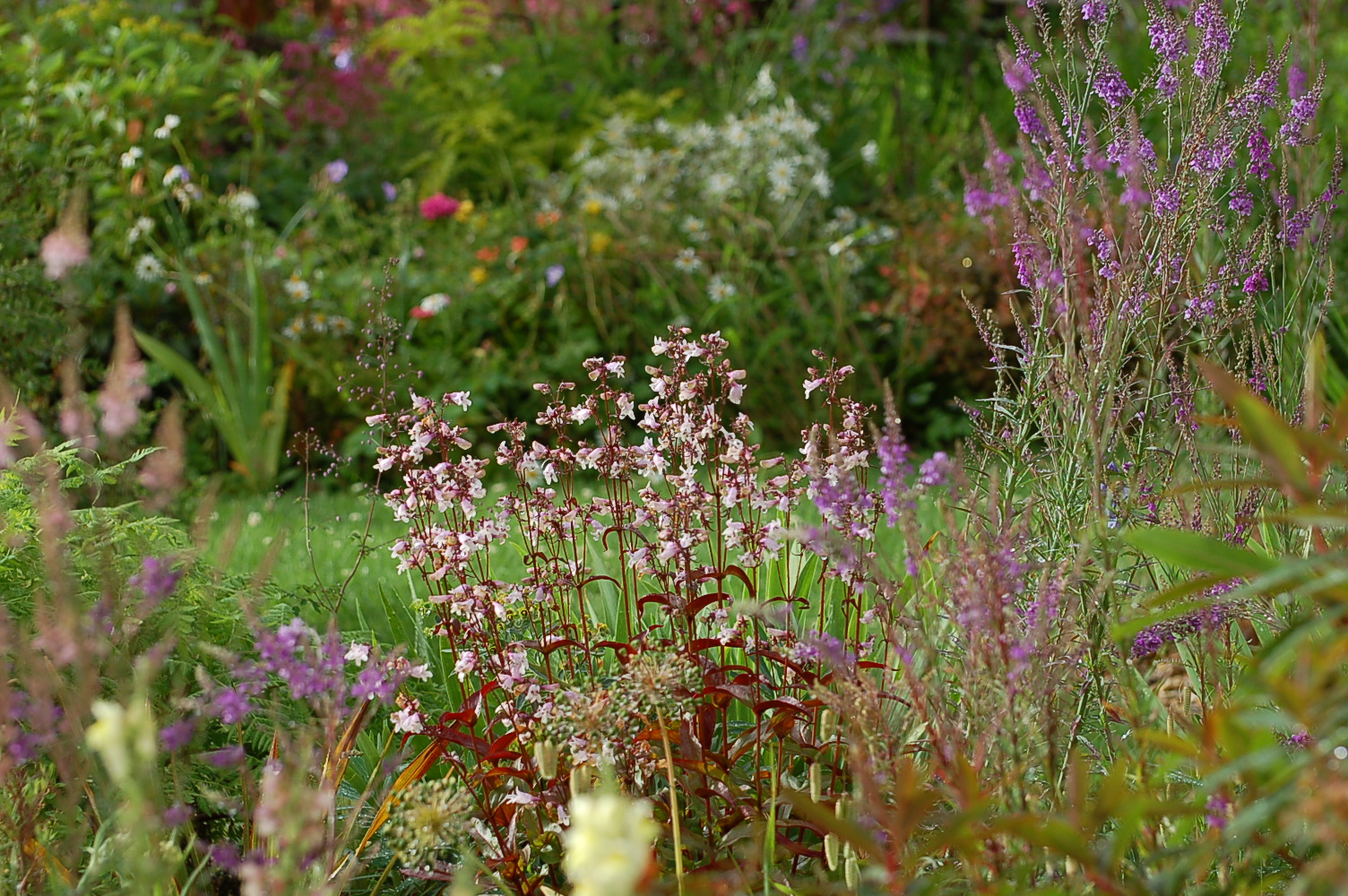
The Huskers Red Pentstemon is now at its best – what a beautiful plant it is – coloured foliage, dark stems and delicate contrasting pale flowers. Having grown this from seed sown a few years ago it feels good to see it looking so good.

The Quaking Grass, Briza maxima is also known as Nodding Grass and Sparrow Grass, presumably because it simply can’t stay still in the slightest breeze.

Jude’s Border is a rich combination of purple-leaved shrubs and contrasting perennials.

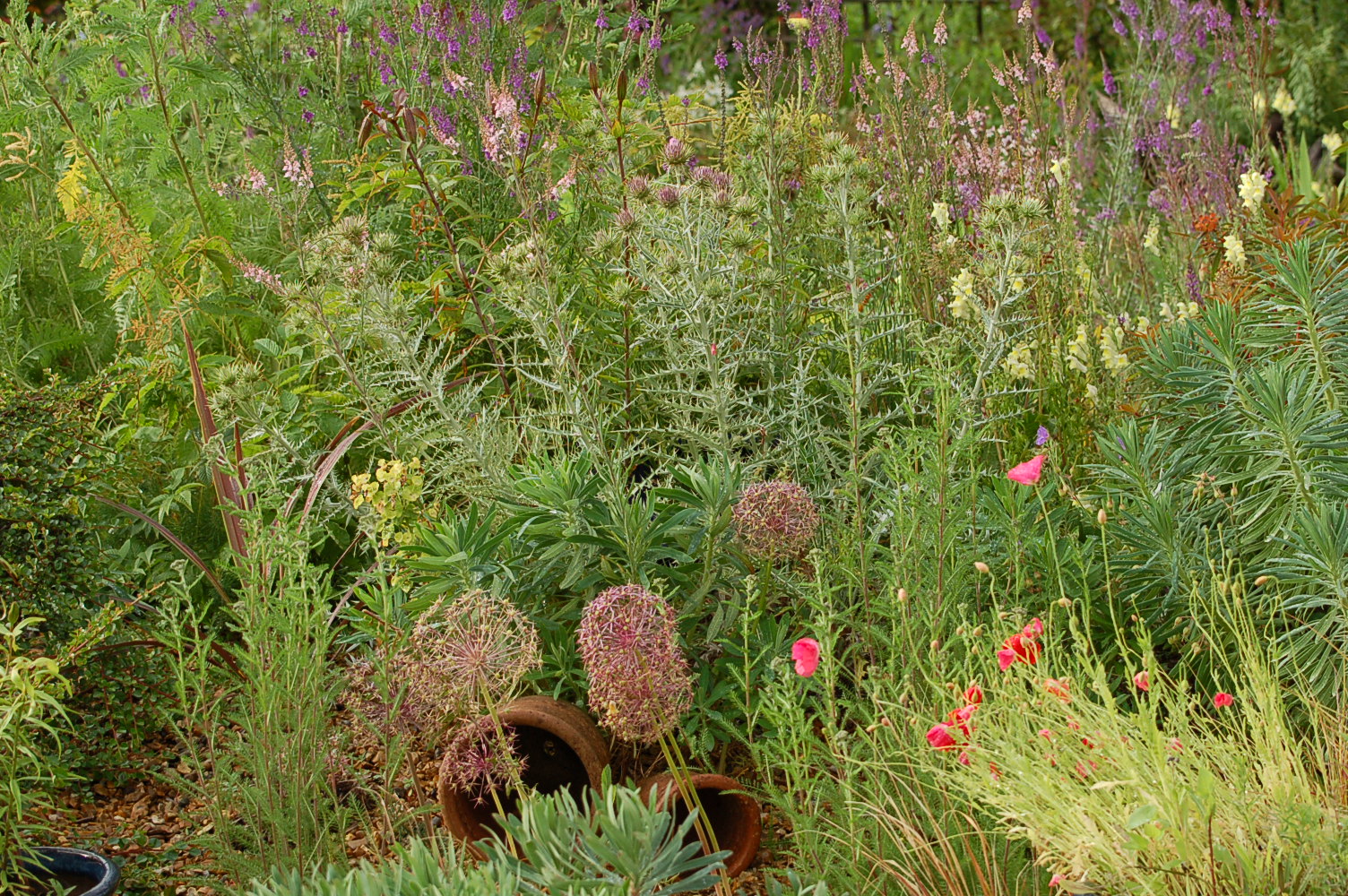
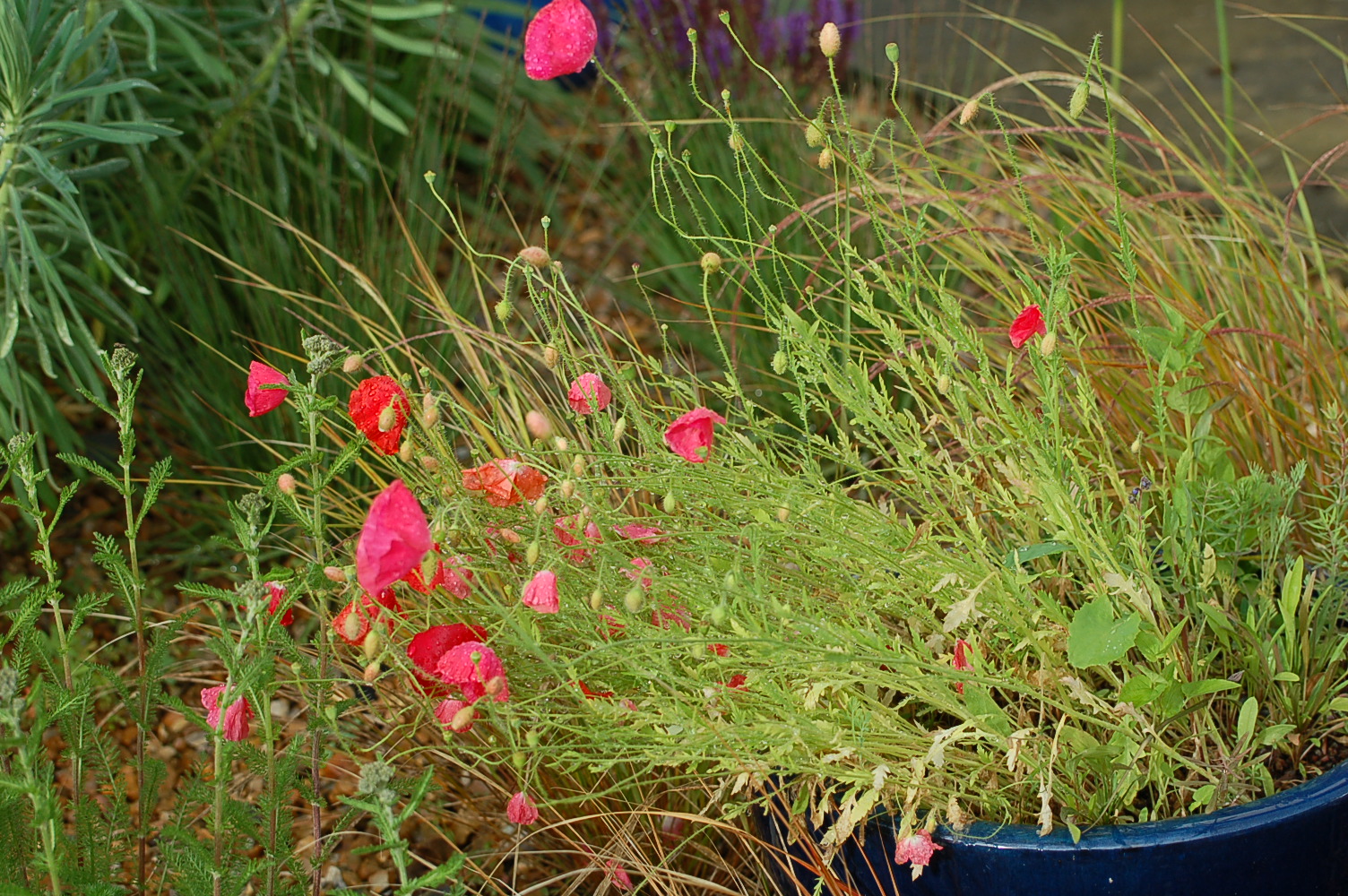
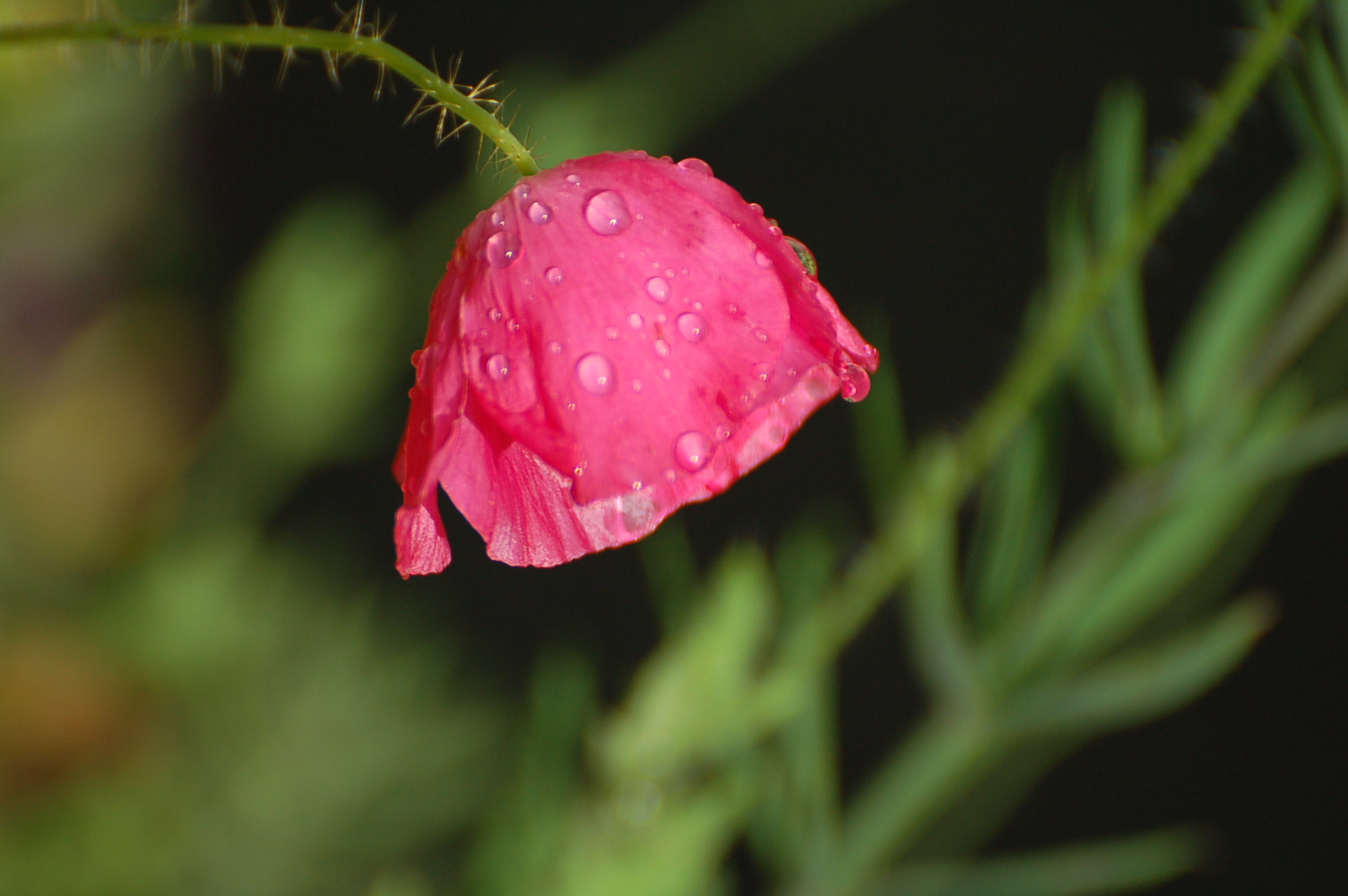
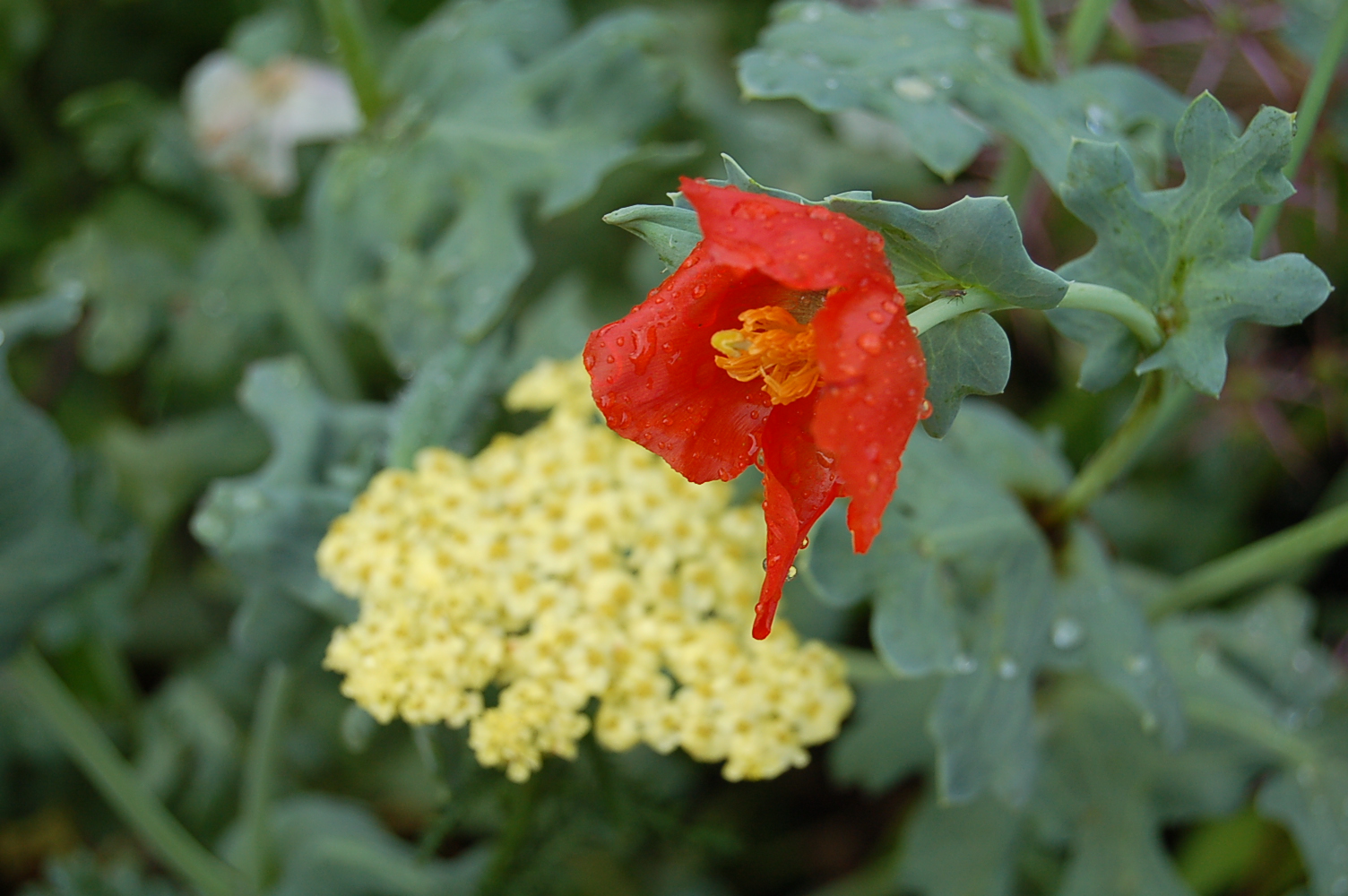
Our mini-meadows  sown in terra-cotta pots have been very successful. Different flowers appear each day. The pink poppy glows in the dullest of weather – a “dayglo” poppy.

By our front door the “Freda Border” continues to provide colour in the perennials and gentle variegated foliage in the shrubs.


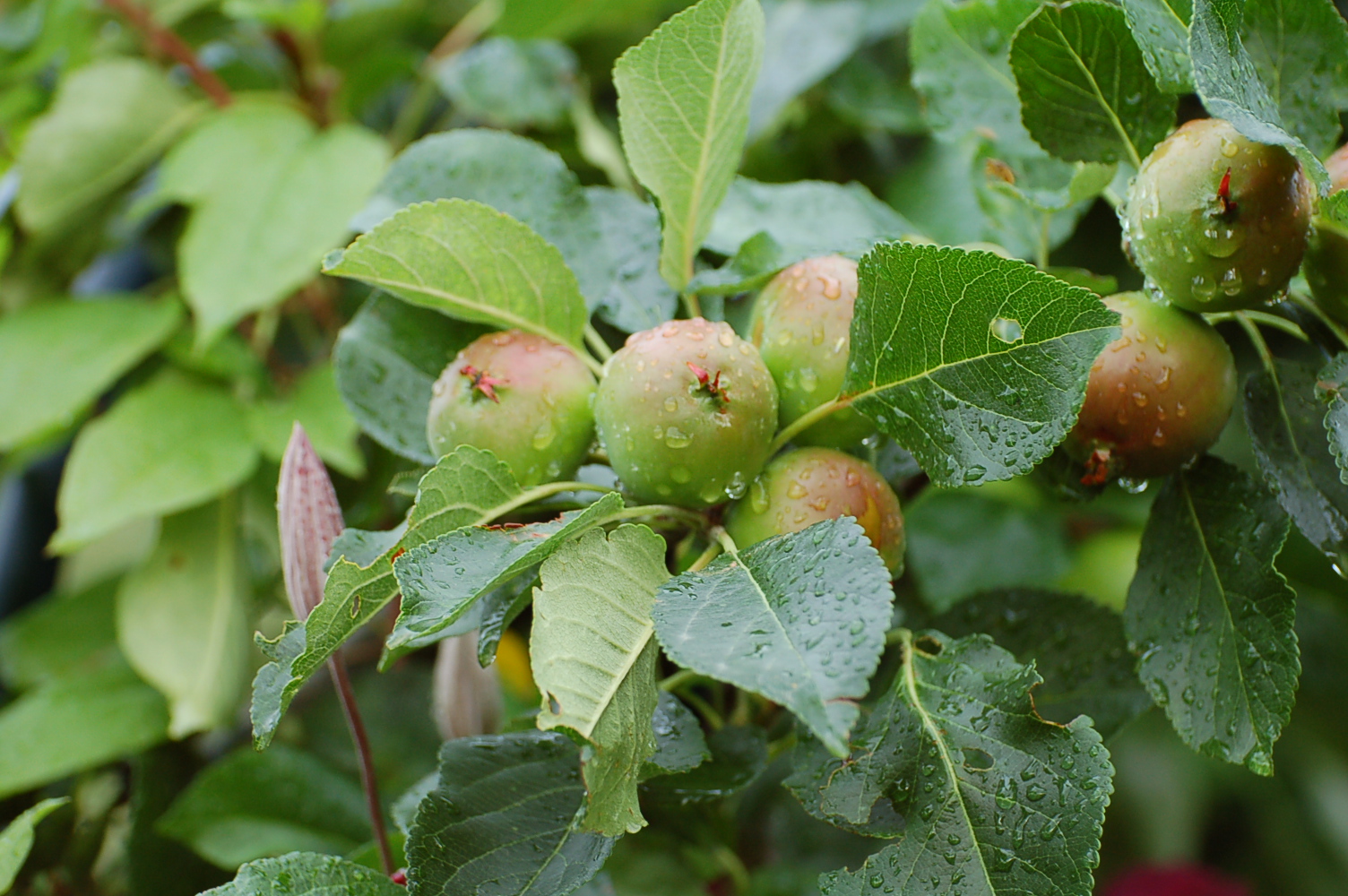
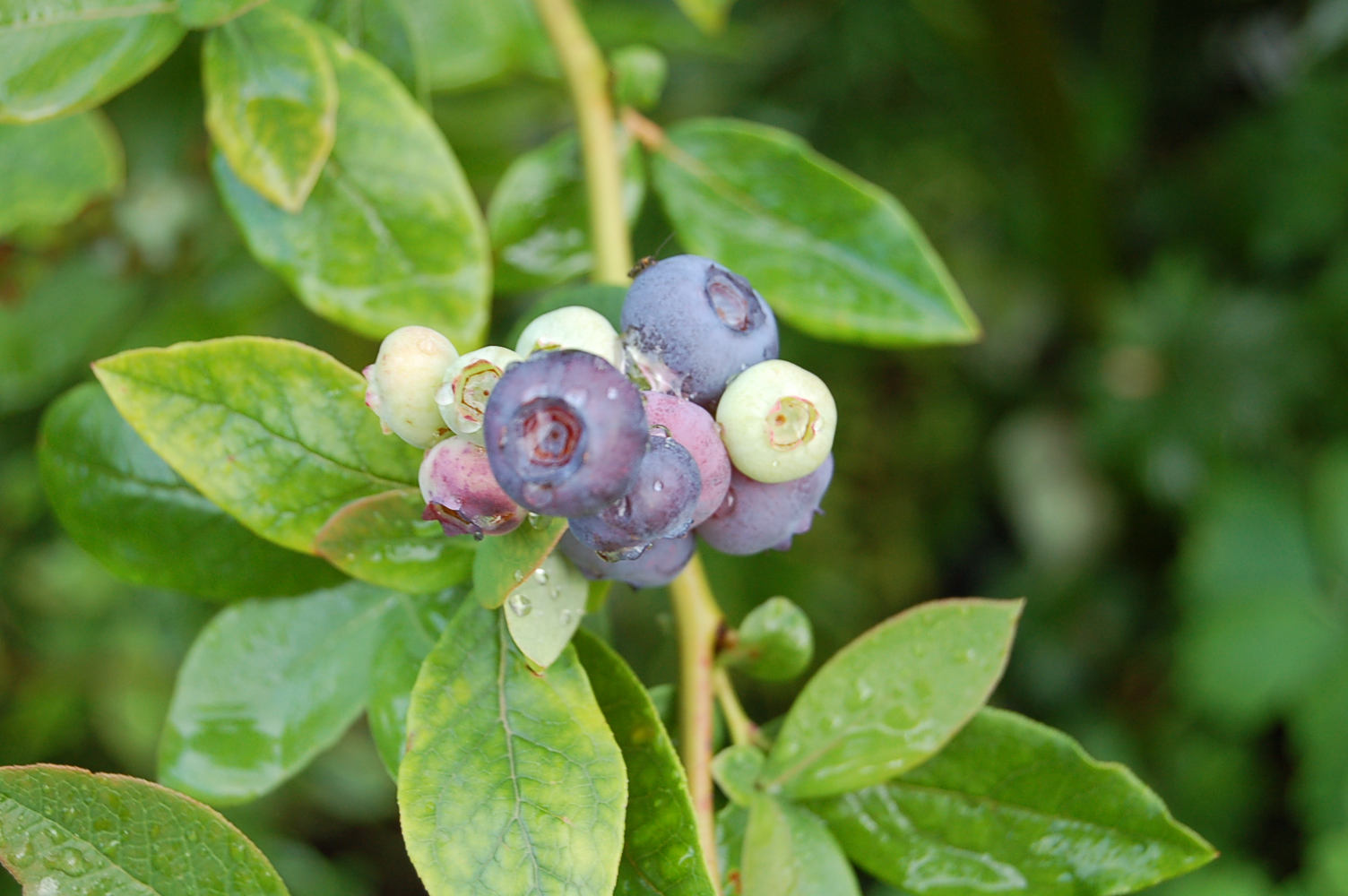
Let us now wander into the back garden and see what’s going on. Our apples are filling in nicely now and even getting a little rosiness as they start to ripen, while the Blueberries change from green to blue.

The secret garden is probably the most colourful patch at the moment.

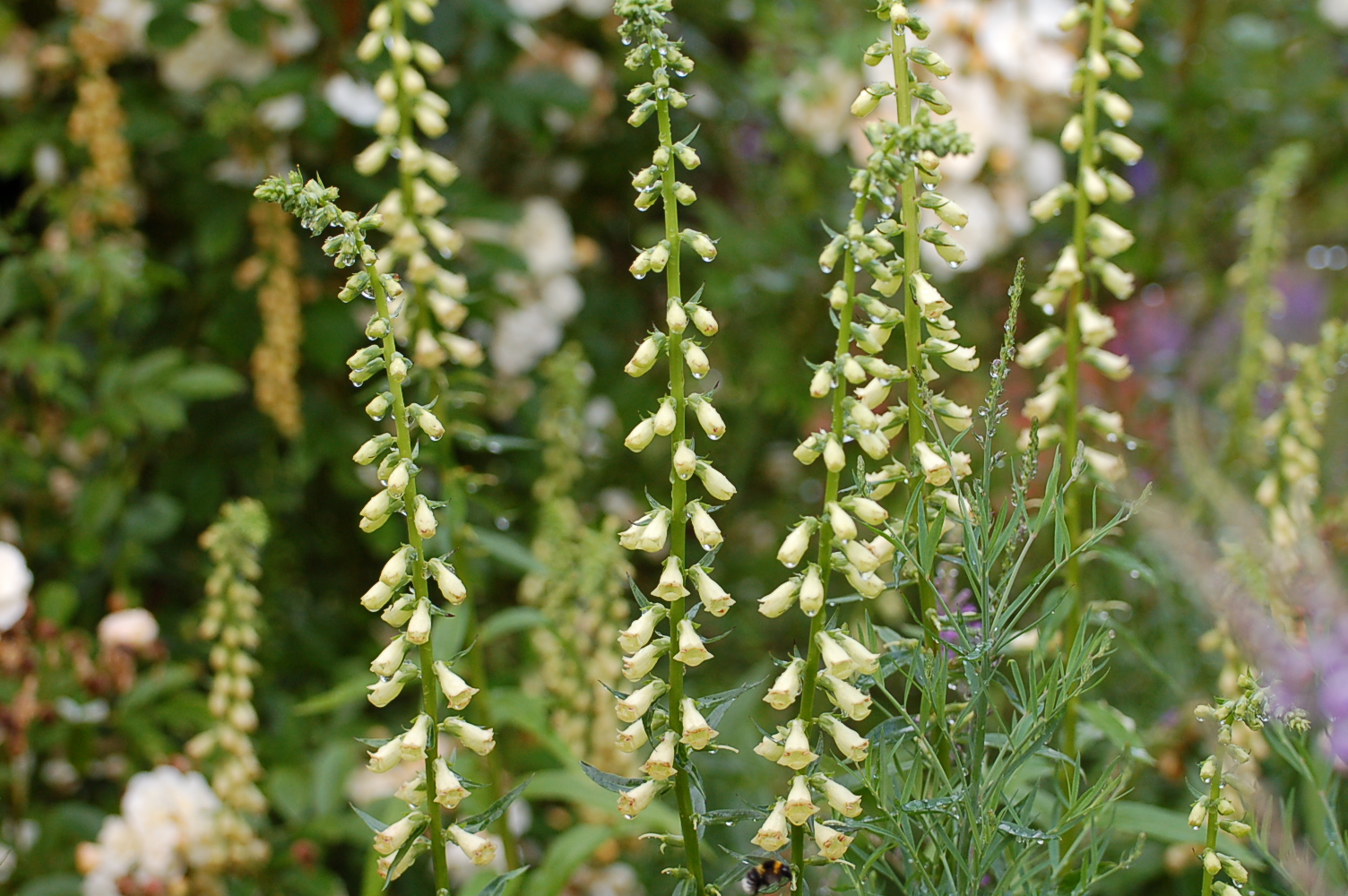
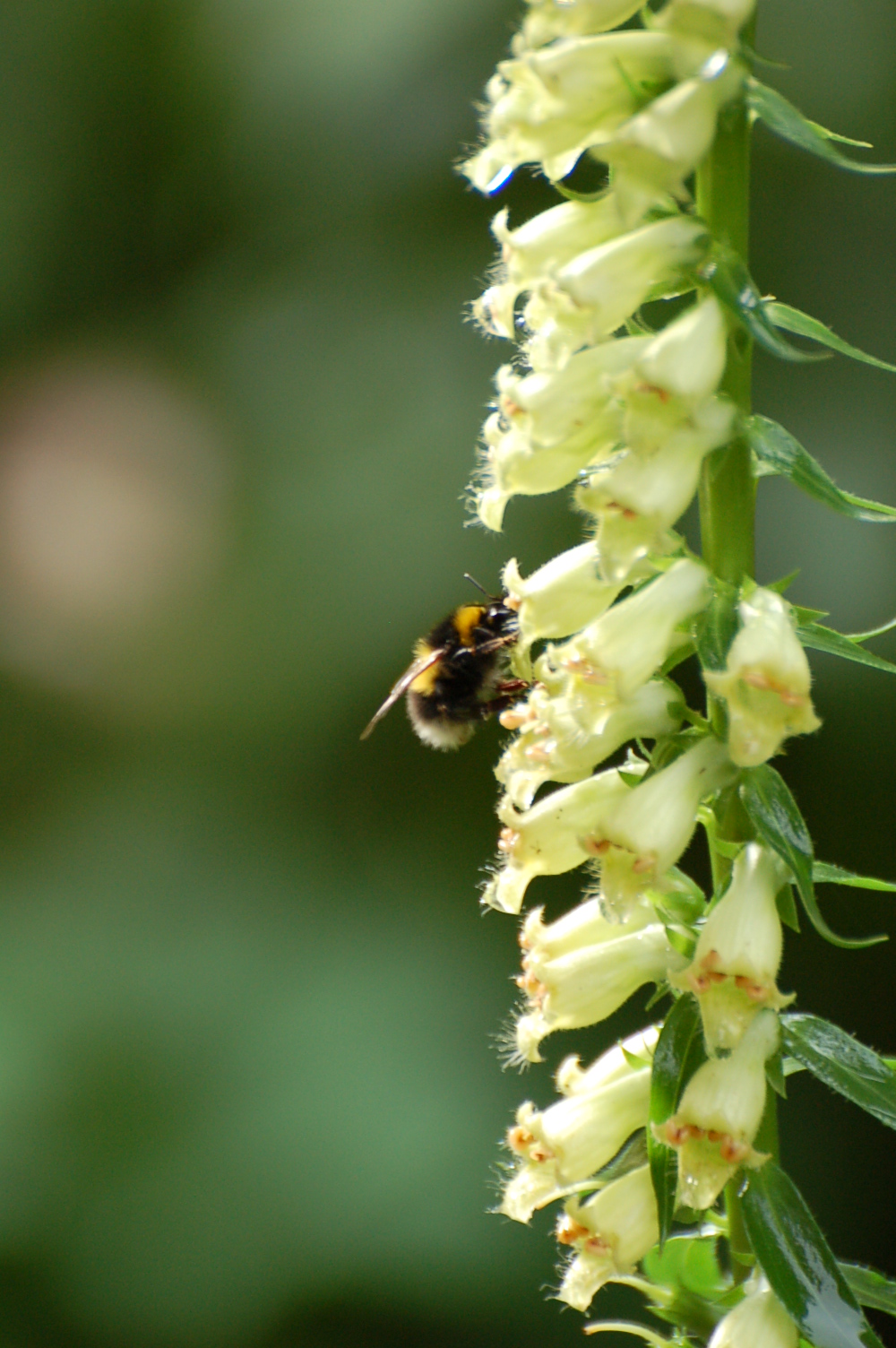
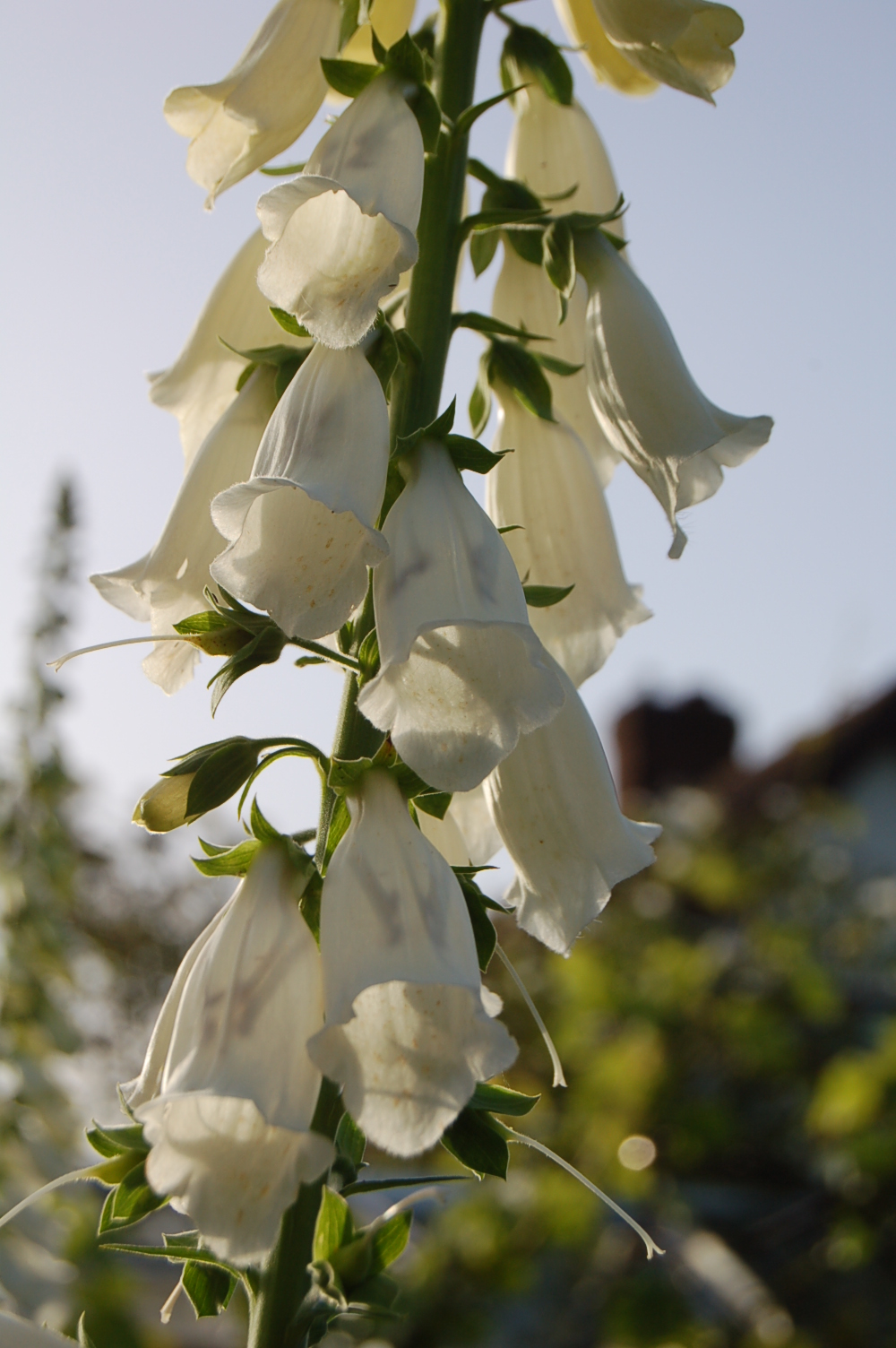
The “Chicken Garden” although less colourful at the moment as the alliums are losing their colour, has an impressive show of perennial foxgloves, favourites of the bees.

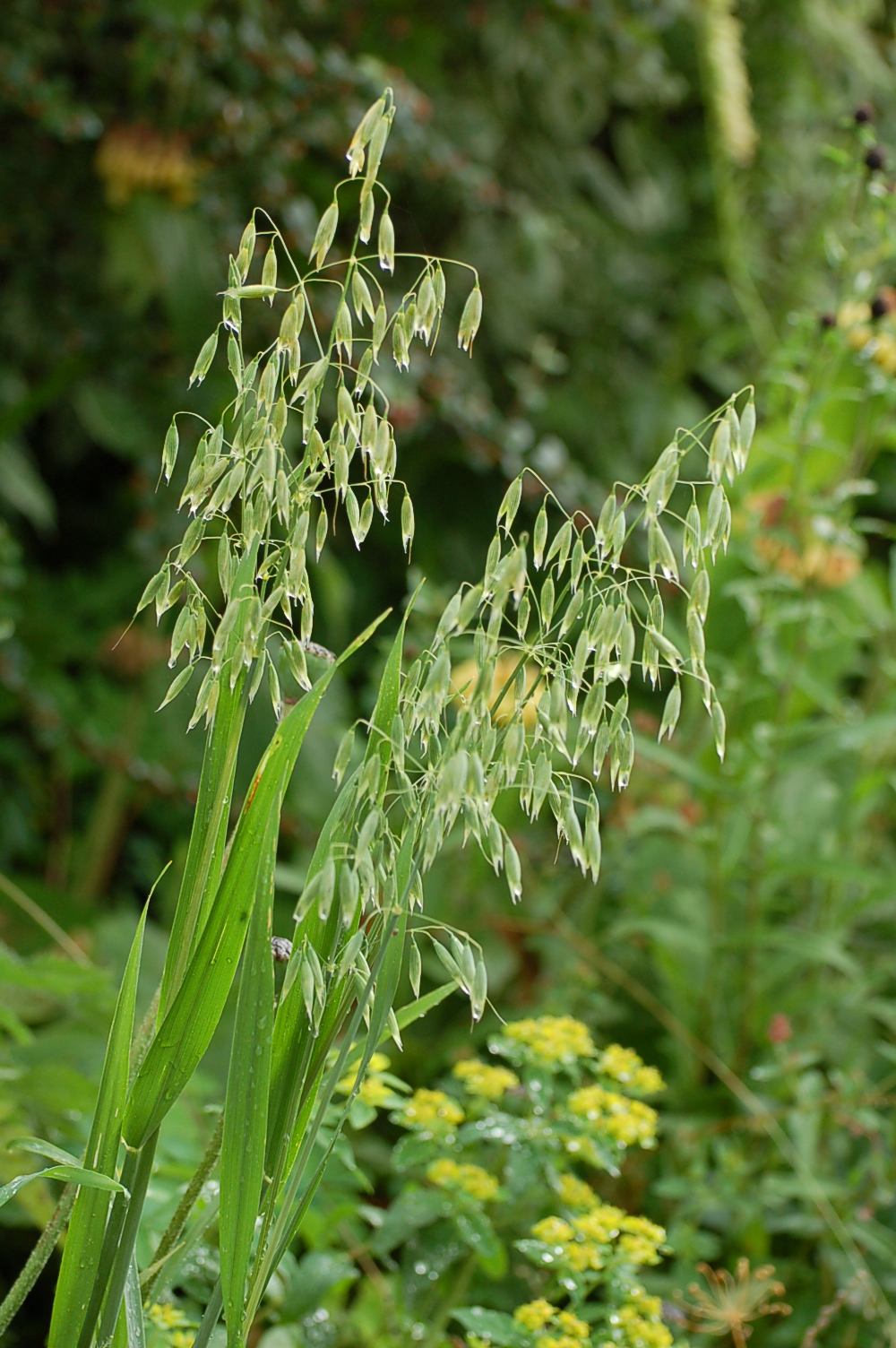
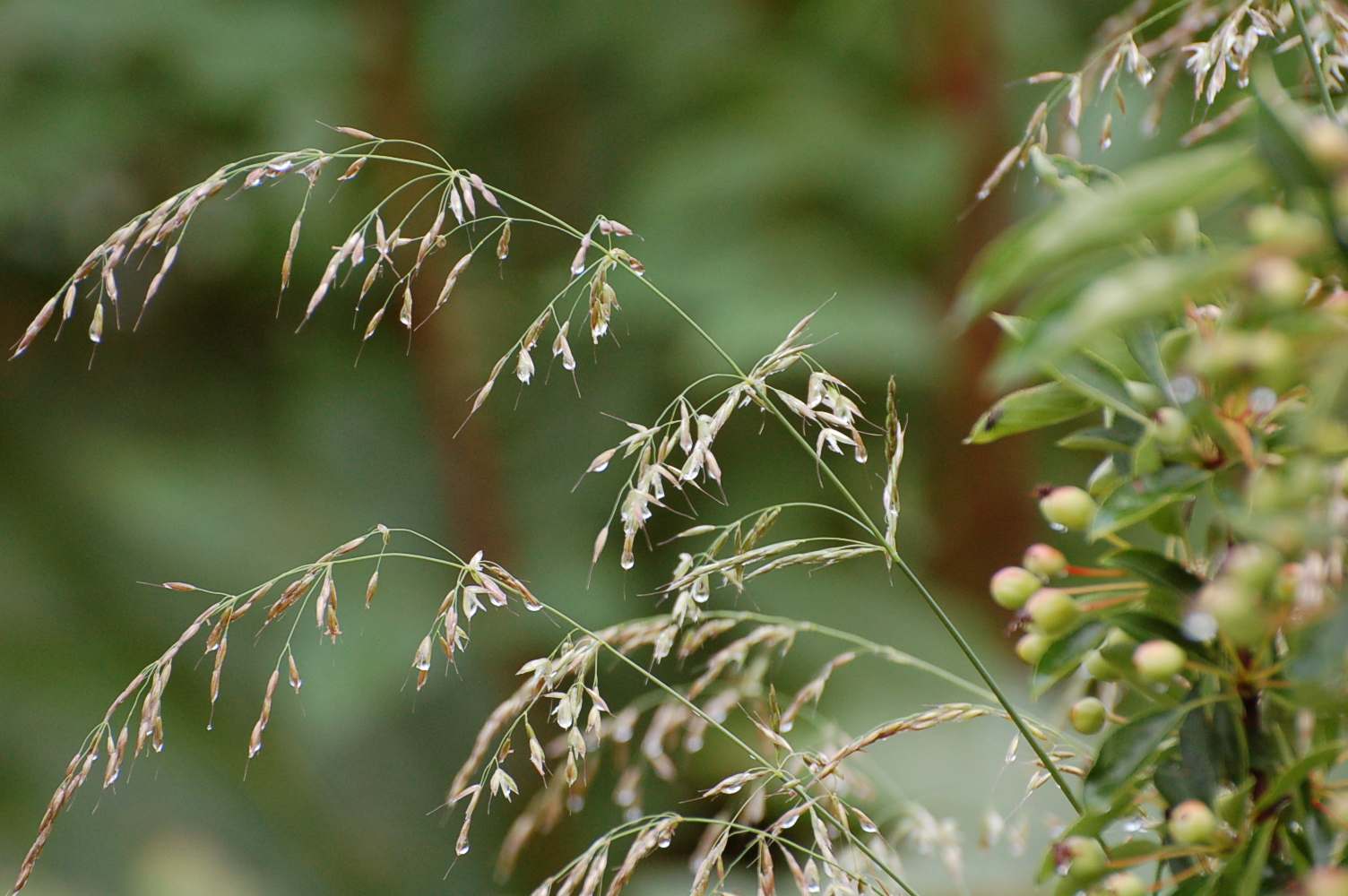
Grasses are flowering delicately in all the borders and often after a storm hold onto rain drops. The droplets of moisture act as prisms as light finds them.

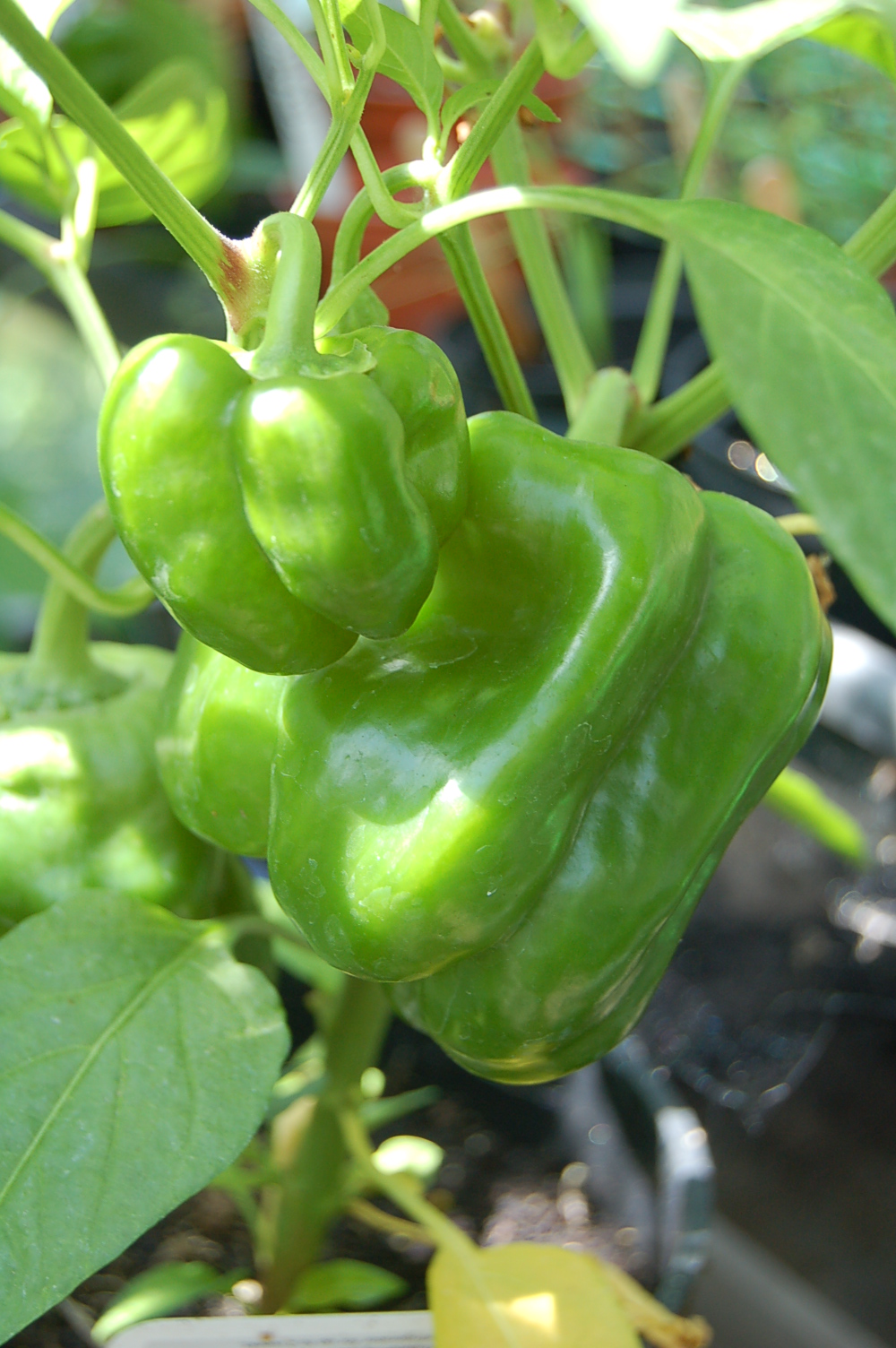
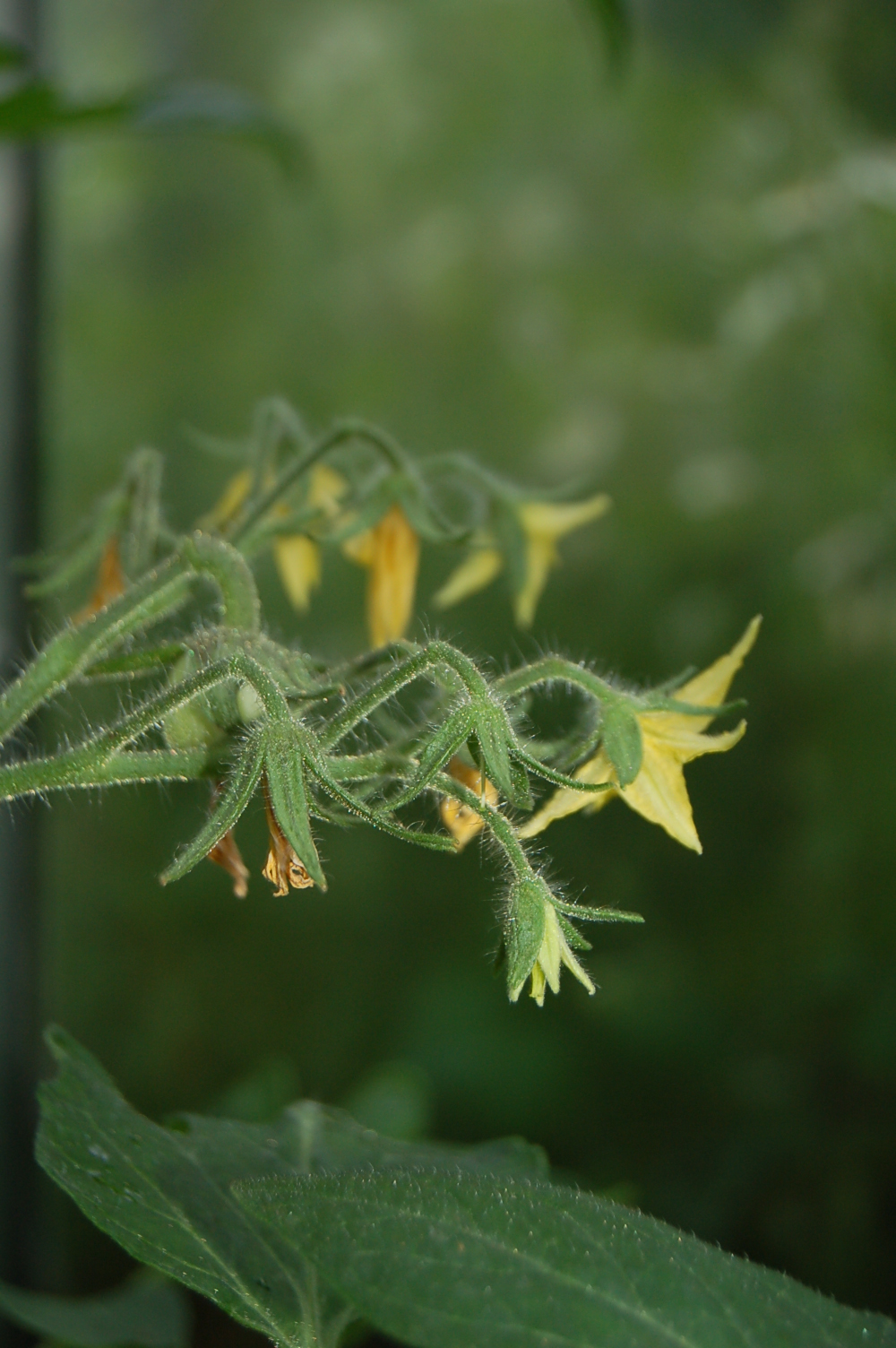
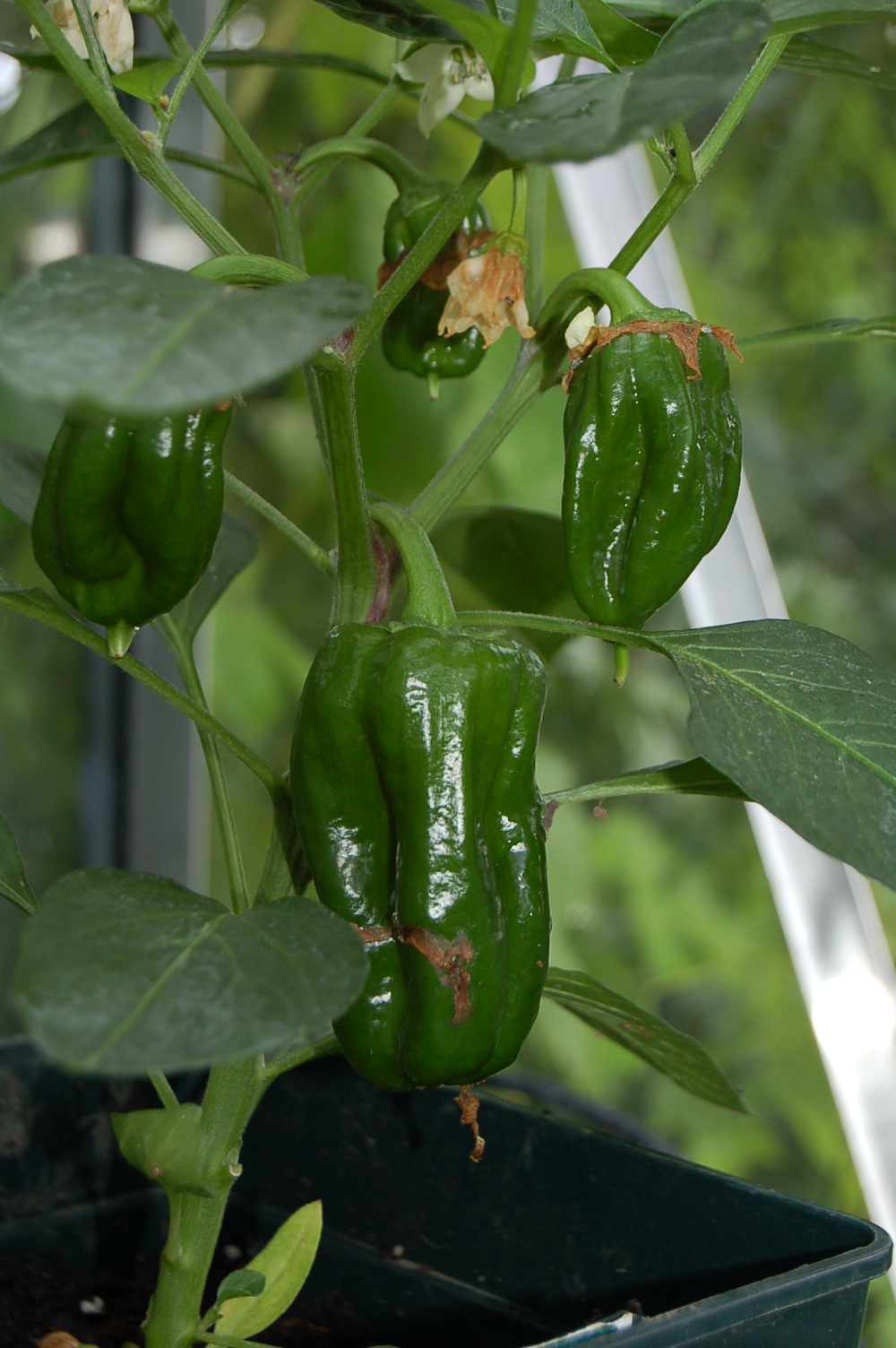
In the greenhouse tomatoes are forming on their trusses and further flowers open from their buds. Peppers like glossy green boxes promise sweetness to come.

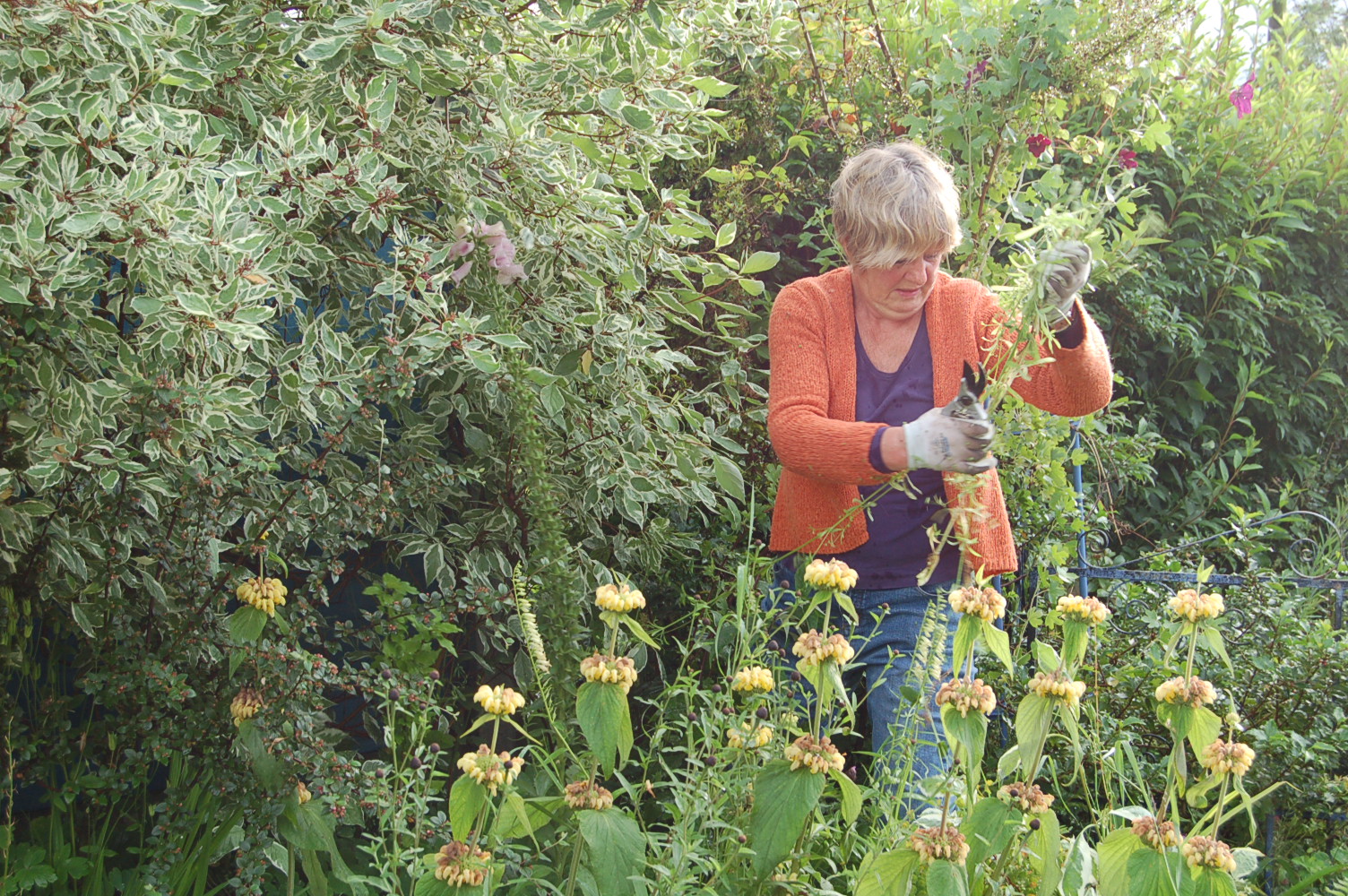
As we approach the middle of July we can but wonder what the rest of the summer can have in store for us. So far we have had the wettest summer months on record – it is hard to imagine that summer will truly arrive. It has been hard to keep up with maintenance in the garden this summer. There is so much growth that herbaceous plants need frequent deadheading and thinning and shrubs pruned to stop them overpowering the plants beneath. Jude, “The Undergardener” is pruning back the lower branches of the variegated dogwood to let light into the smaller plants below.

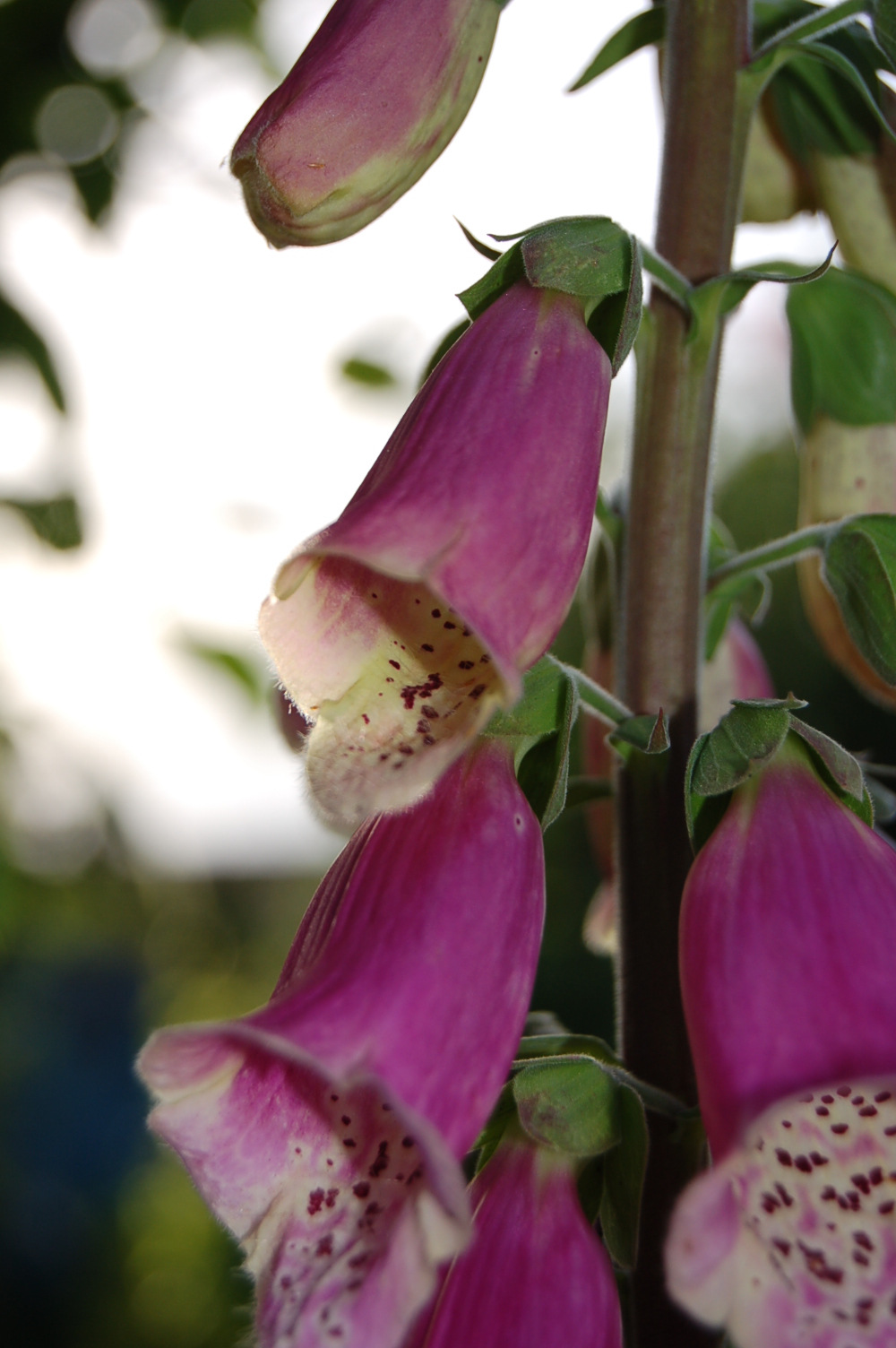
As the light began to fade I took a few photos to show it glowing through foxgloves.

Categories
allotments community gardening fruit and veg garden photography garden wildlife gardening grow your own hardy perennials meadows National Trust natural pest control photography The National Trust wildlife

Clumber Park – The Walled Garden

We have watched over the last few years how the walled garden at Clumber Park has been brought back to life. Although it is a few hours from home we visit at least once a year.

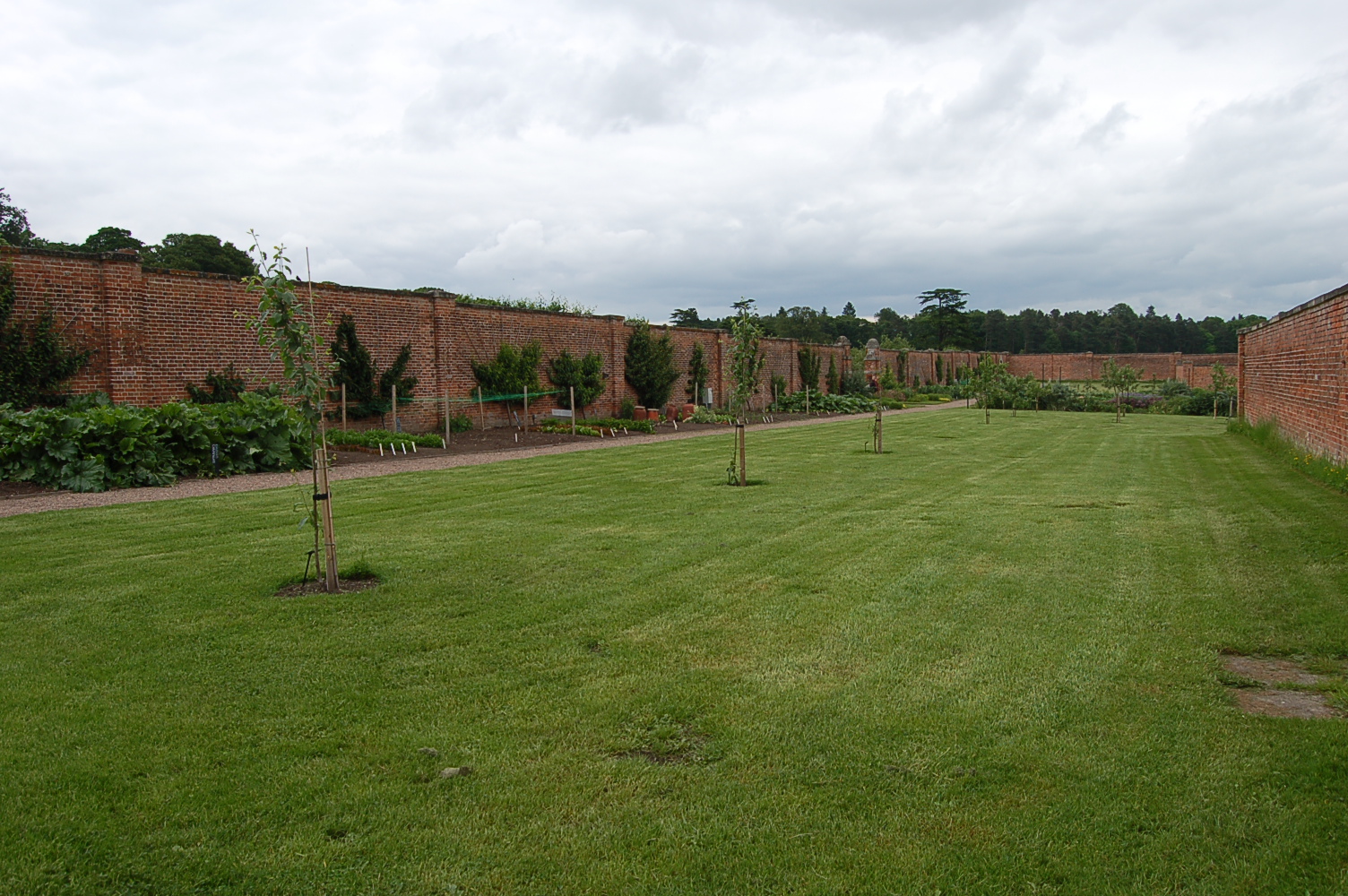
Now it is a peaceful place to wander around admiring the vegetable growing techniques, the orchards and the meadows beneath, the long flower borders, the trained fruit on the walls themselves and the national collection of rhubarb.

We were very lucky on this recent visit as we had our own personal guide who came around with us. He was grey haired and didn’t say a lot but he didn’t mind when I took his portrait.

We like to approach it along the dramatic avenue of cedars where the enticing view of the distant old gates within the warm red of the tall brick walls draws us in. The cedars themselves have such sculptural qualities and an air of mystery pervades the shadows under their glaucous sweeping branches some scooping down to touch the grass below.

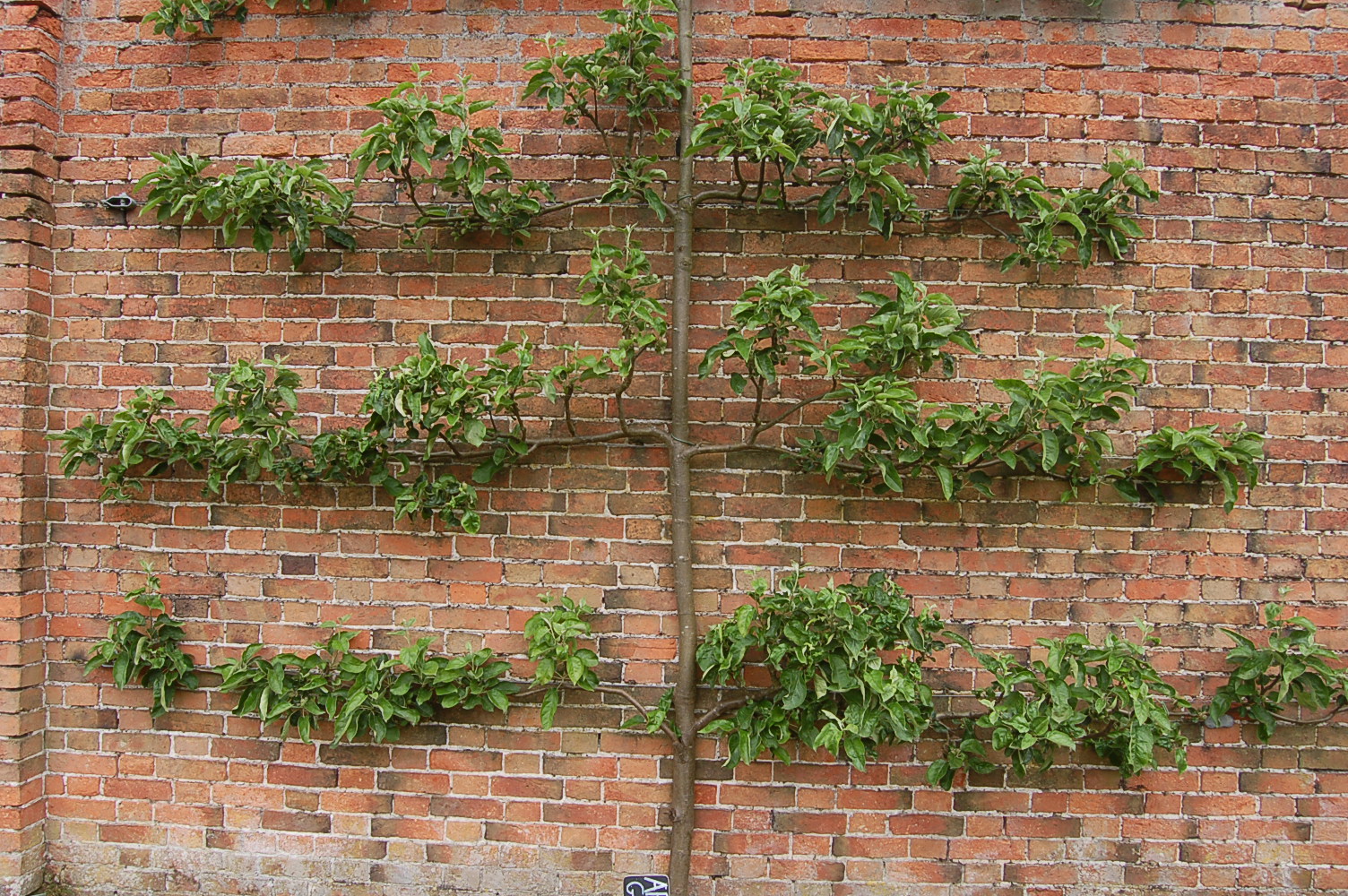
The tall warm bricked walls are now protecting skilfully trained apples, pears, peaches, cherries and figs. In the open a collection local varieties of fruit are being established and in the borders below the walls herbaceous plants, herbs and the National Collection of Rhubarb varieties flourish.

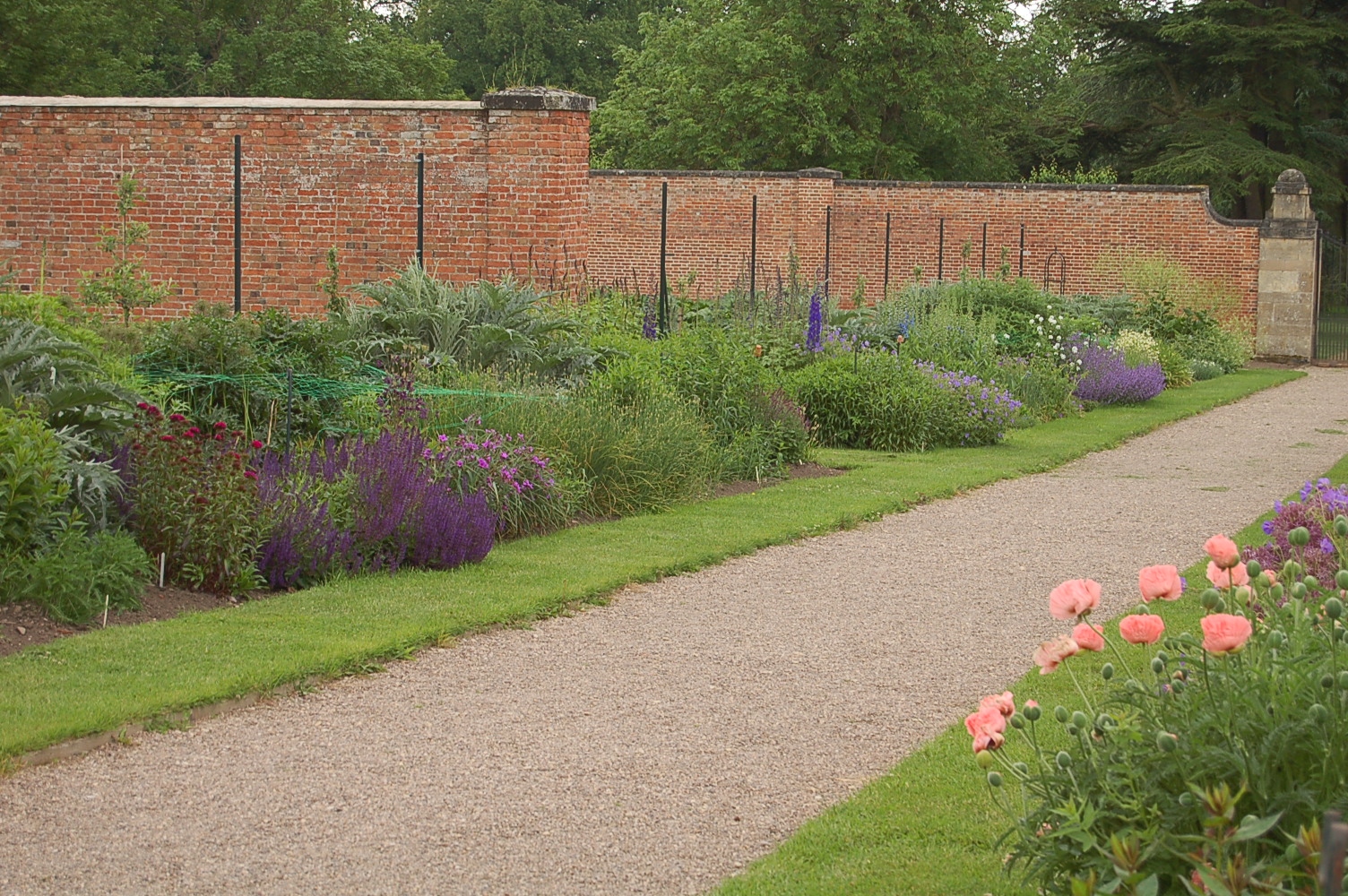
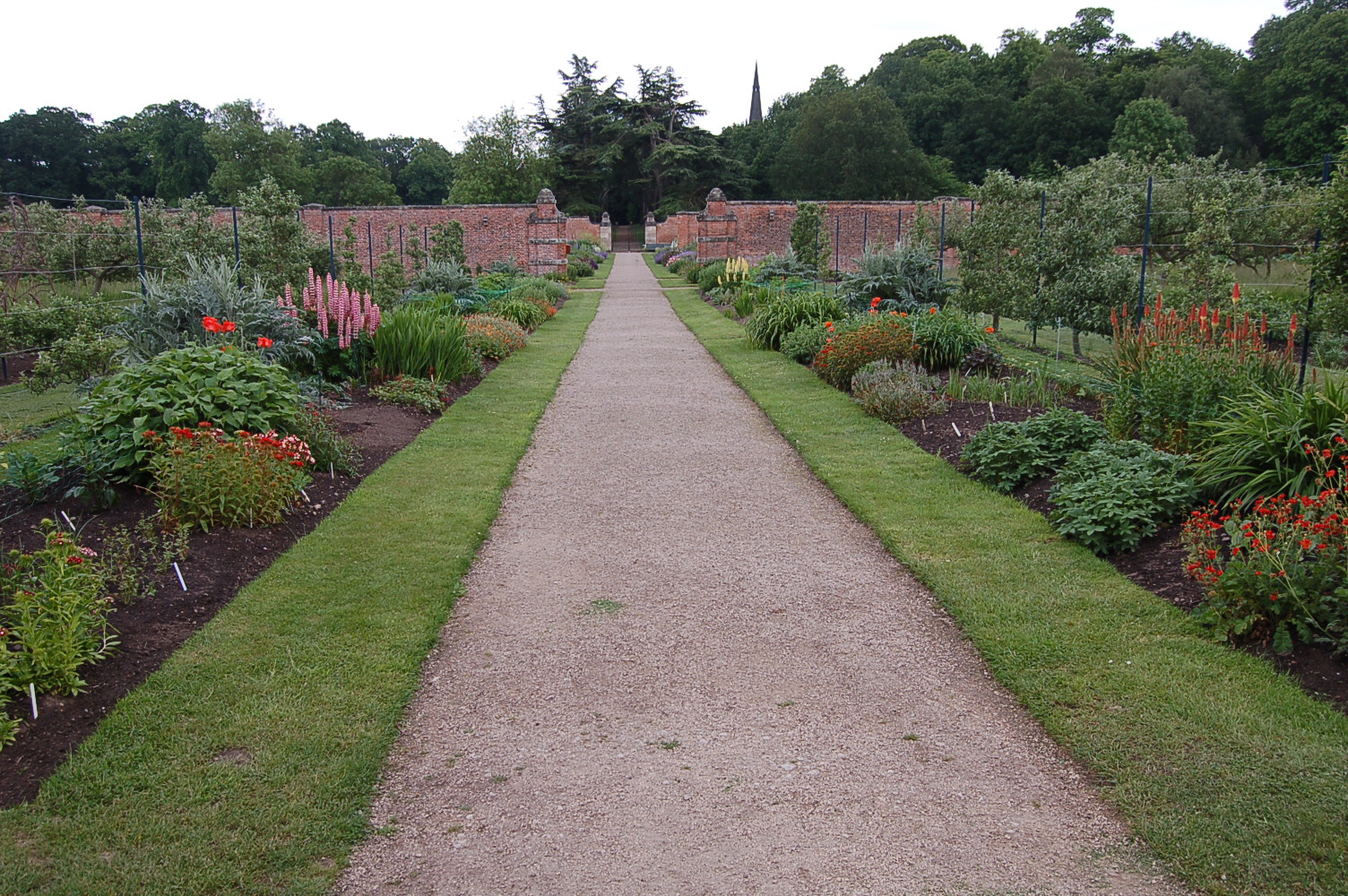
The wide central gravel path that bisects the walled garden runs from the main gates to the greenhouse. It runs between a colourful  double herbaceous border.

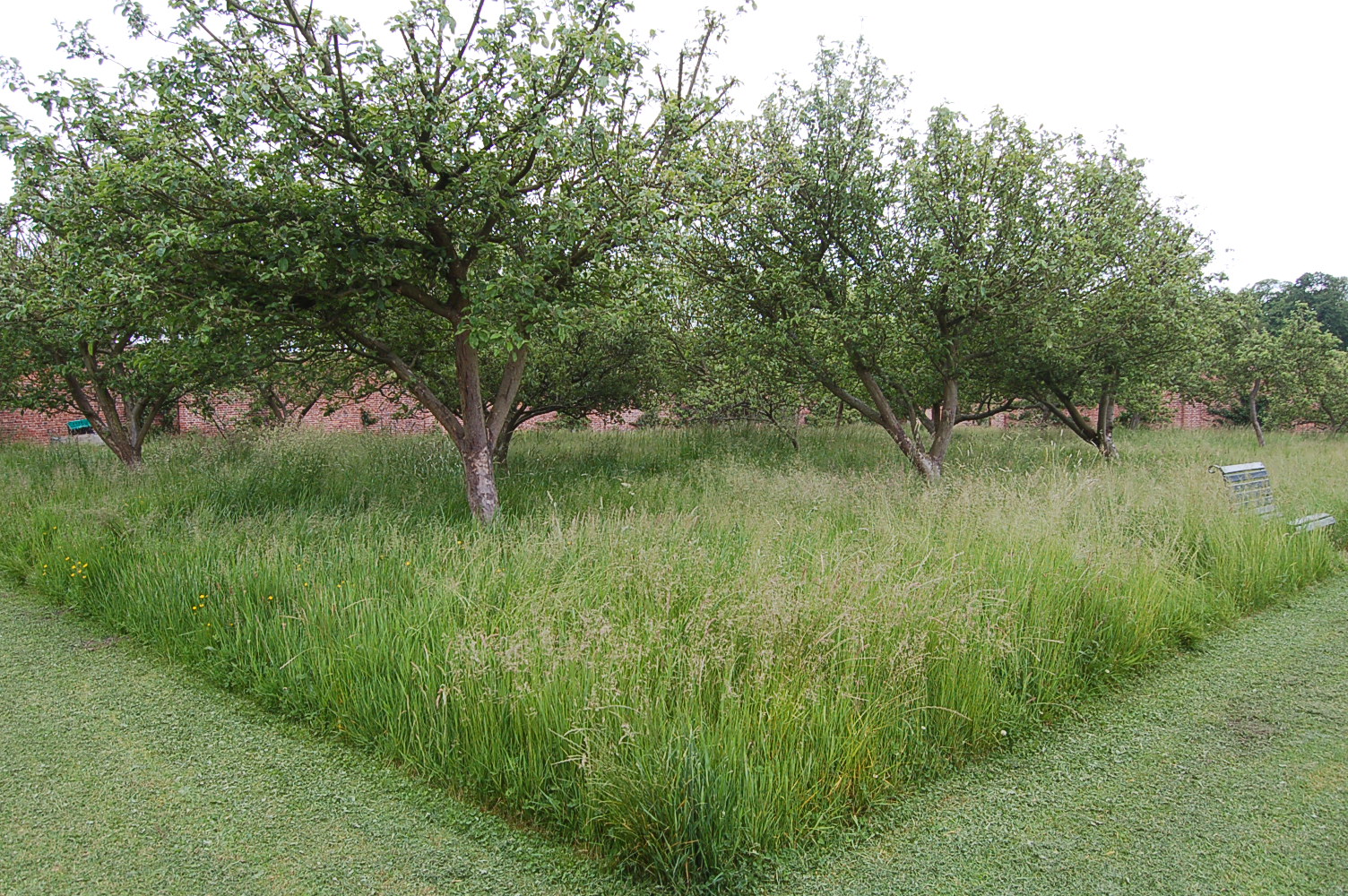
Old fruit trees remain to give a sense of continuity and sit comfortably amongst gently swaying meadows. We were delighted to see a Medlar in flower.

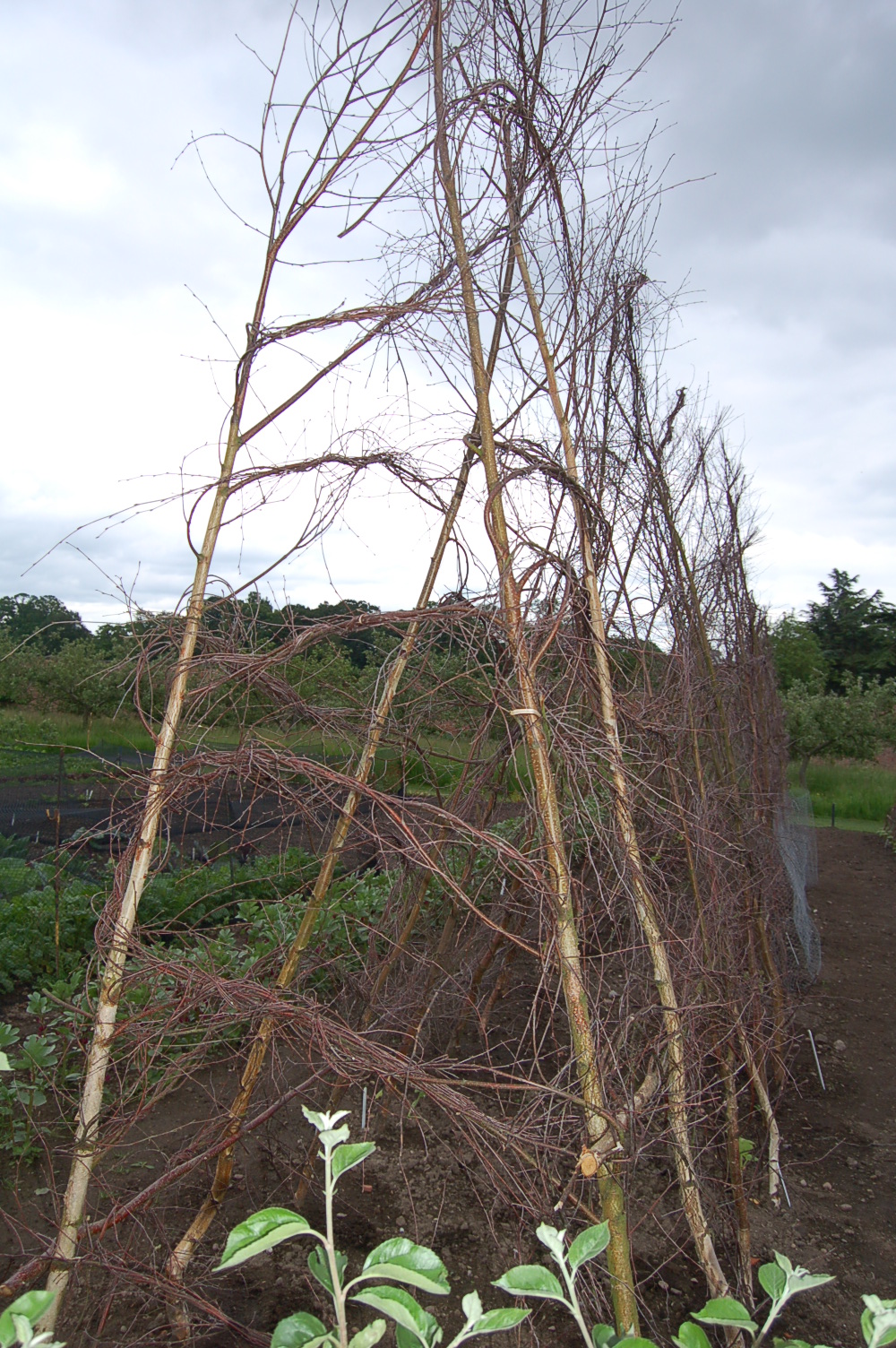
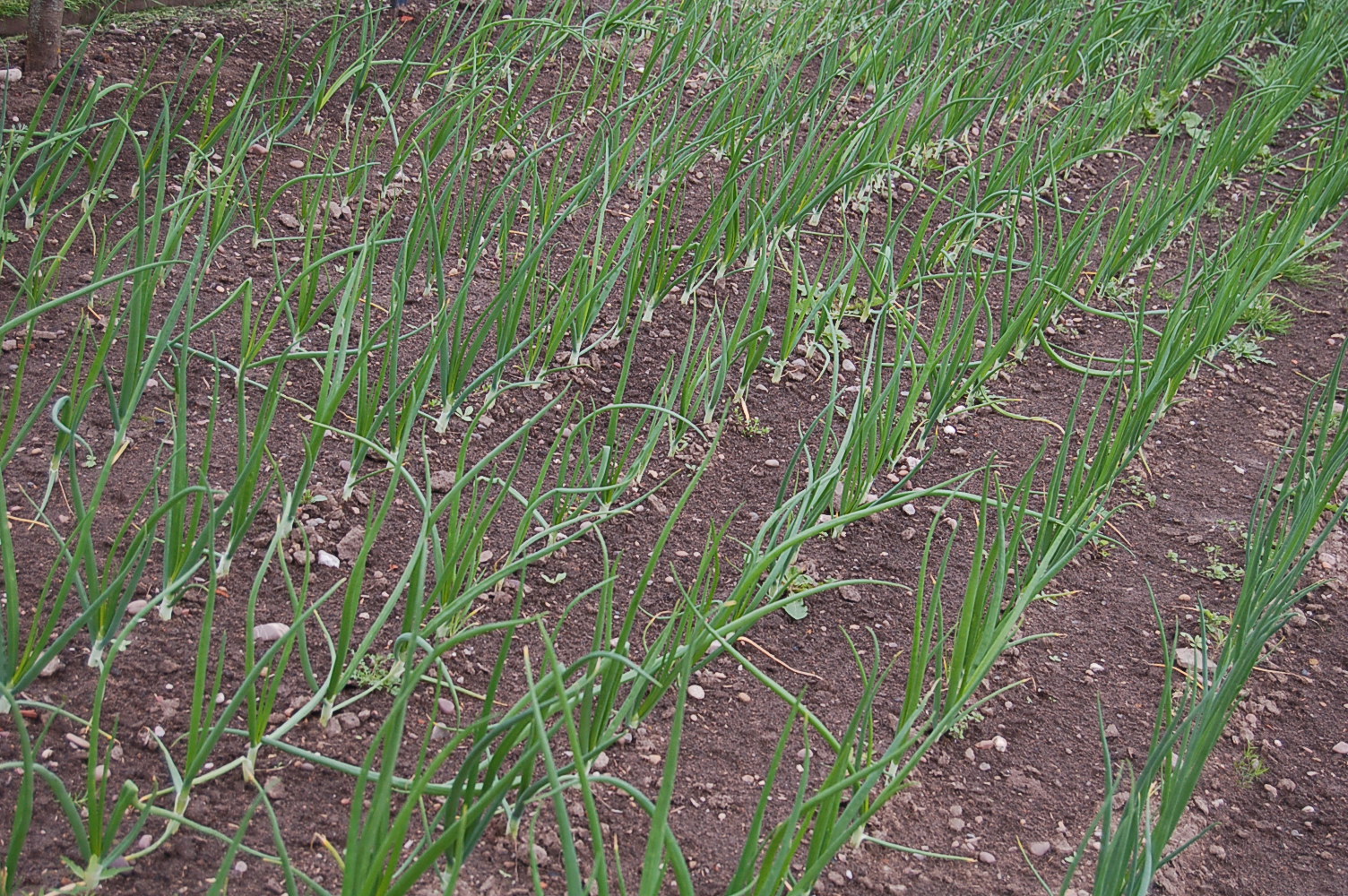
We enjoyed discovering ideas to take home with us as we moved within the vegetable growing areas, such these rustic supports for peas and sweetpeas made from birch prunings. Much of the productive planting was done in neat, long and impressively straight lines.

Being run along totally organic lines the walled garden was well-provided with bird nesting boxes and insect shelters to attract beneficial insects.

As we wandered around we noticed amongst the productive rows of veggies, this beautiful Victorian glass and metal cloche still in regular use.  It performed as well now as it always has done just like the walled garden itself.

As we prepared for our journey back to Shropshire, our helpful little cheery guide waved a small wave and wandered off.

Categories
garden photography gardening grow your own National Trust The National Trust

Pelargoniums at Clumber Park

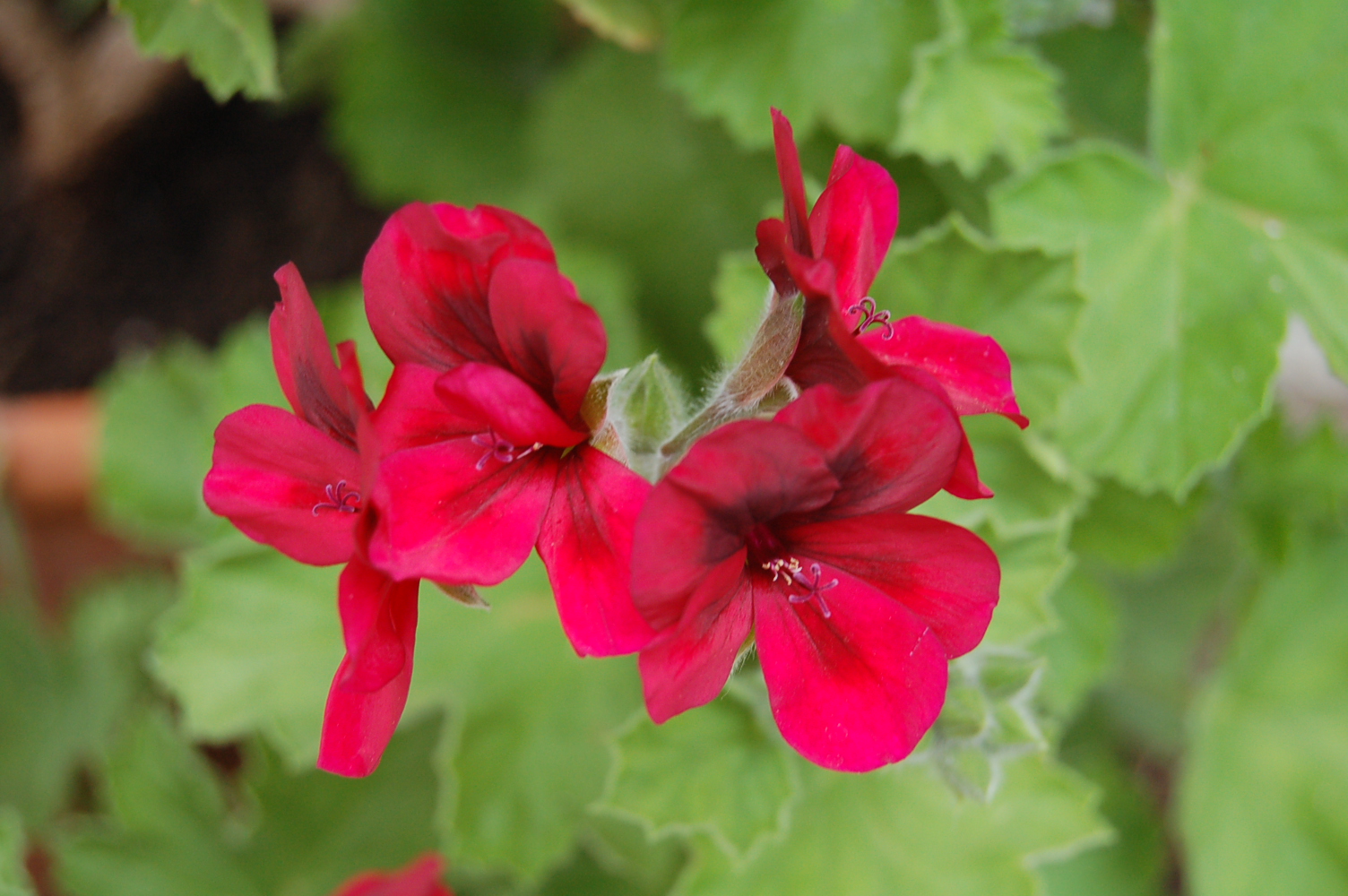
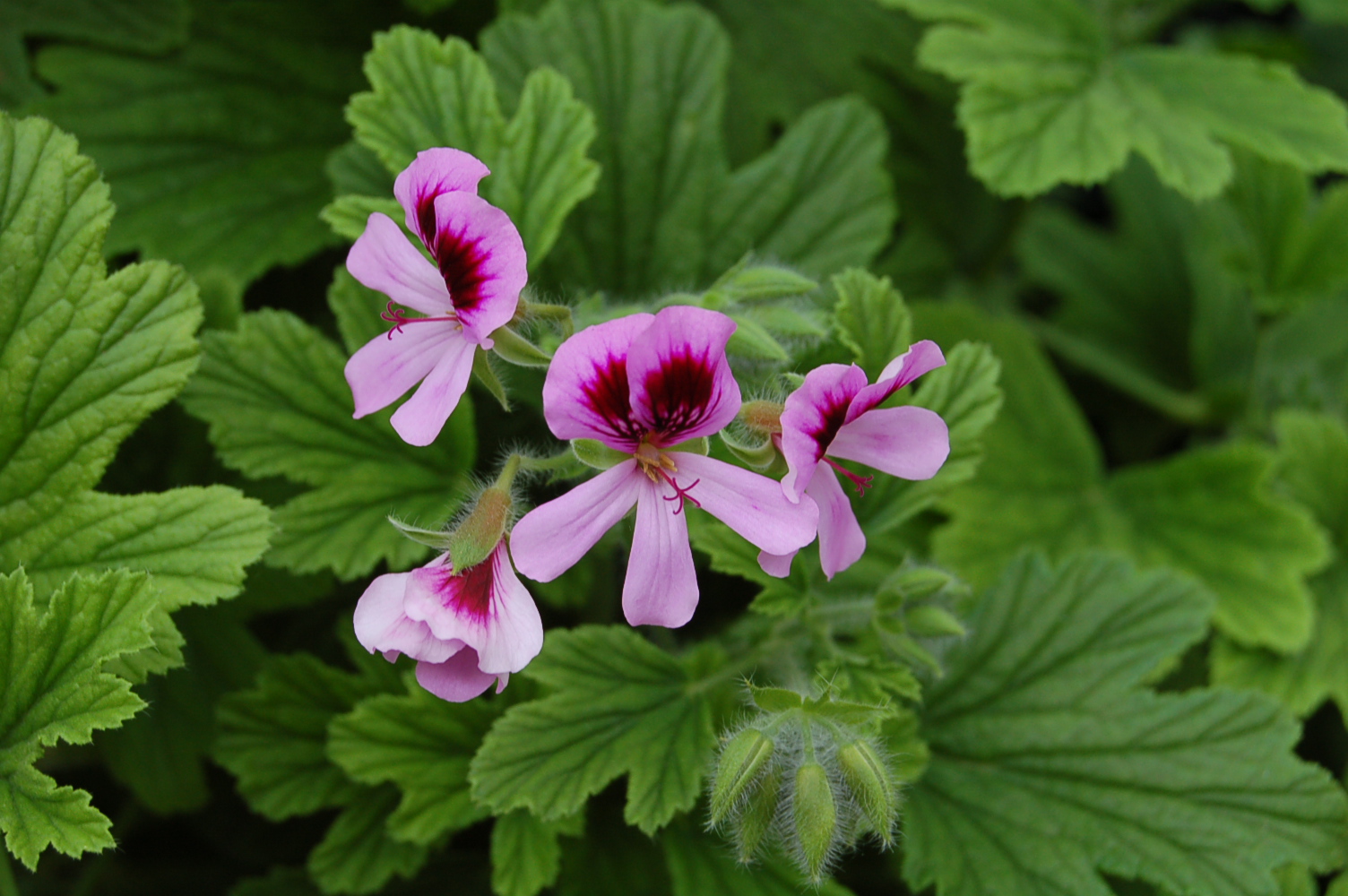
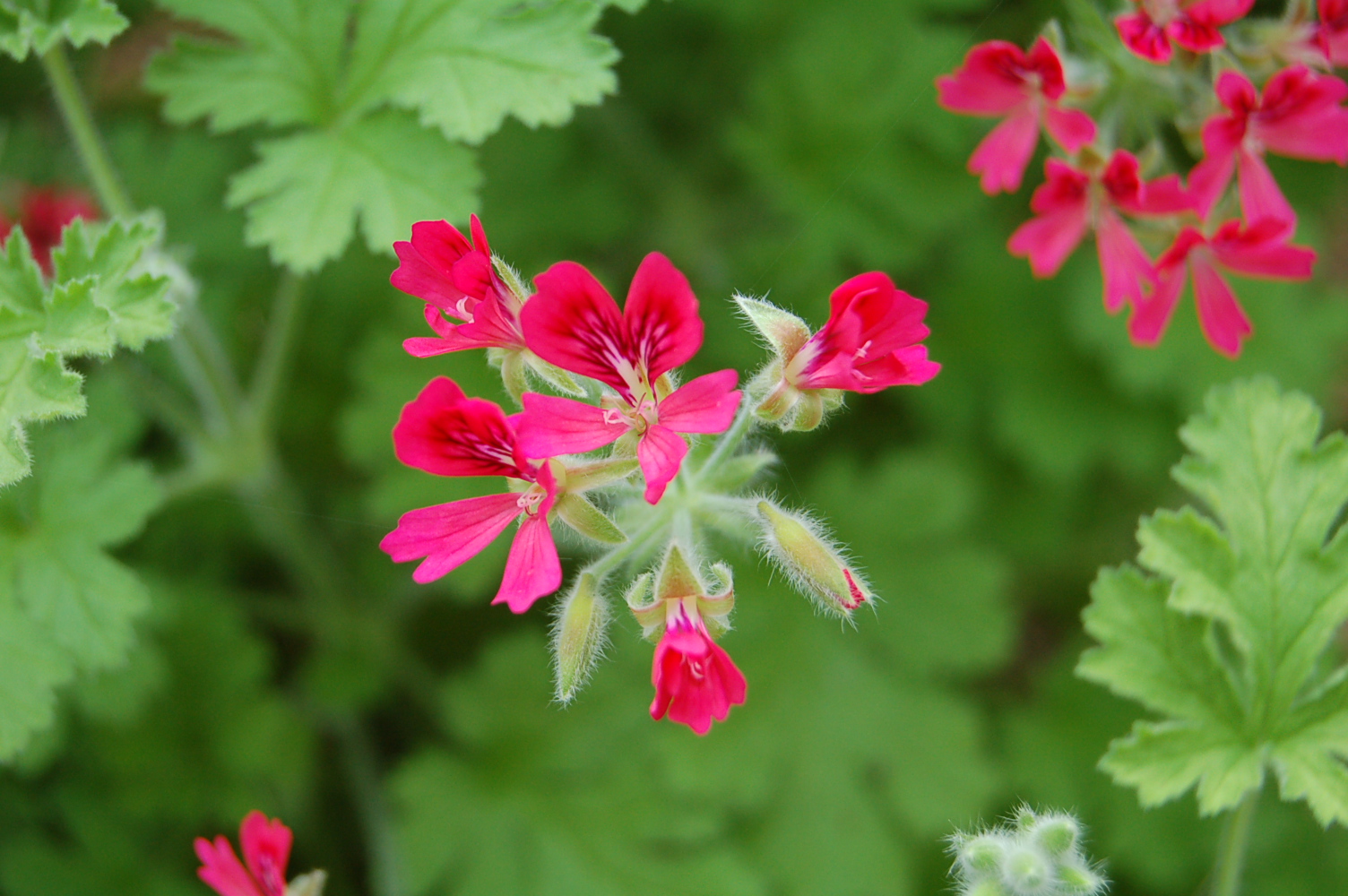
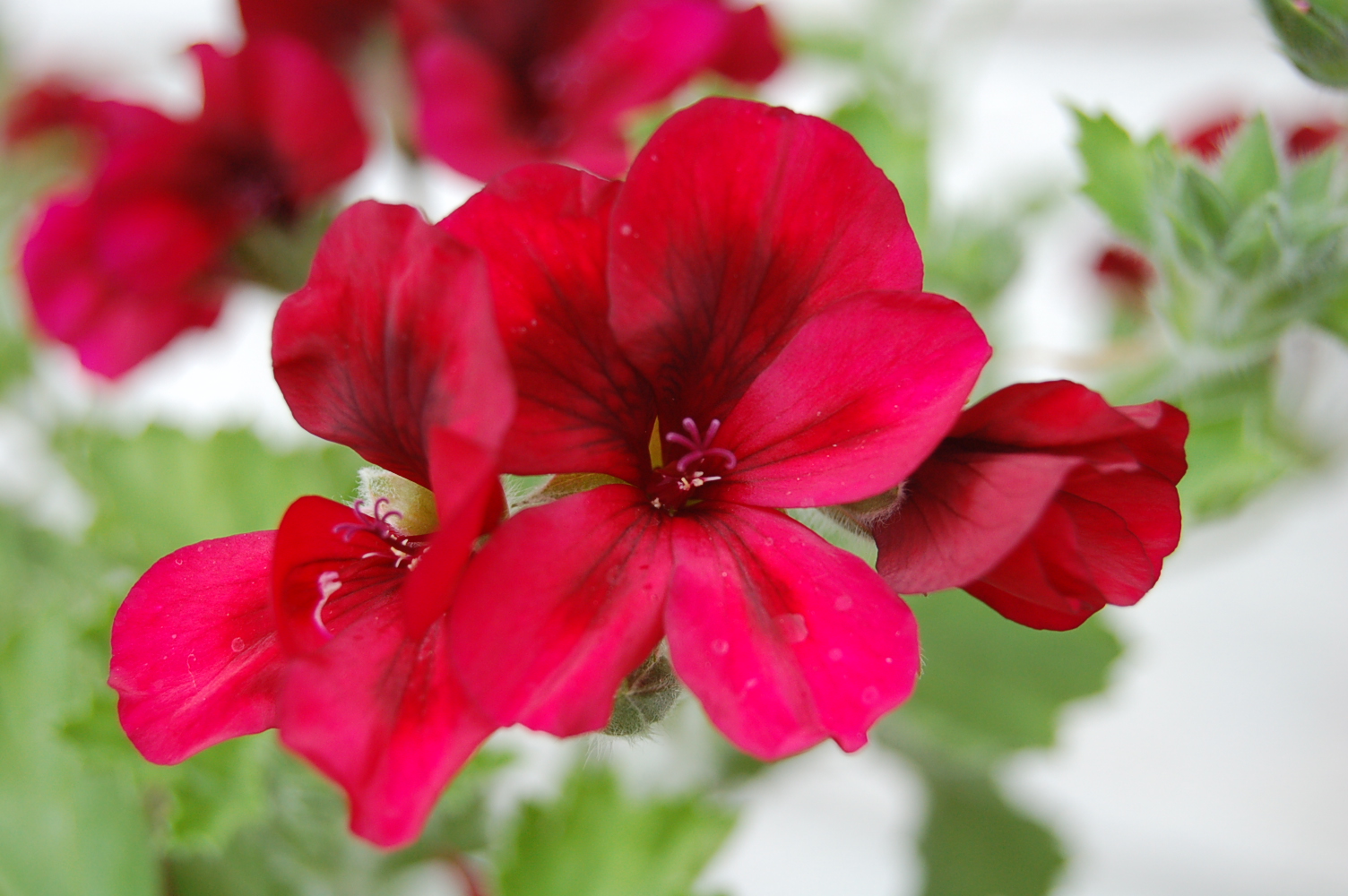
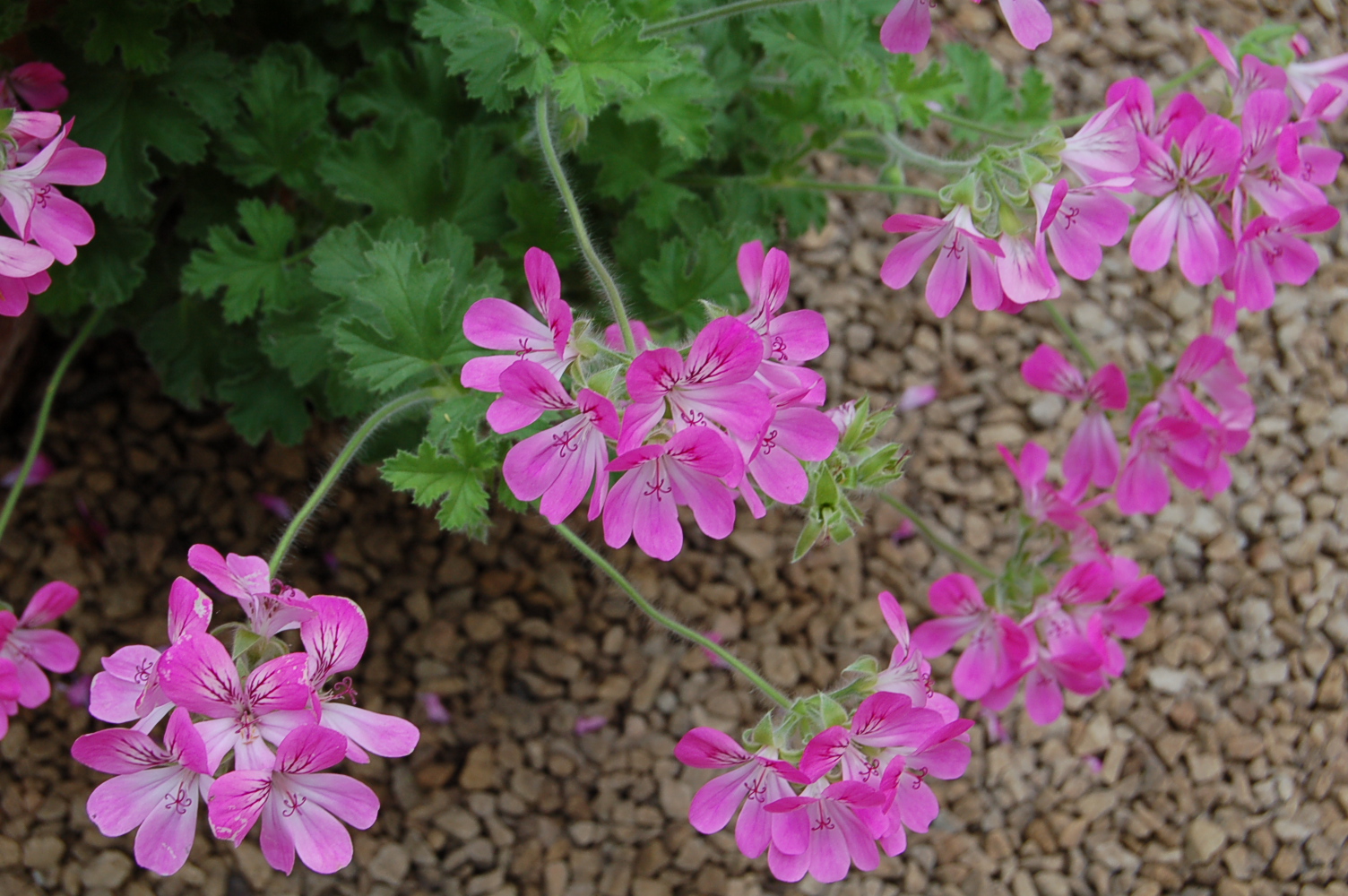
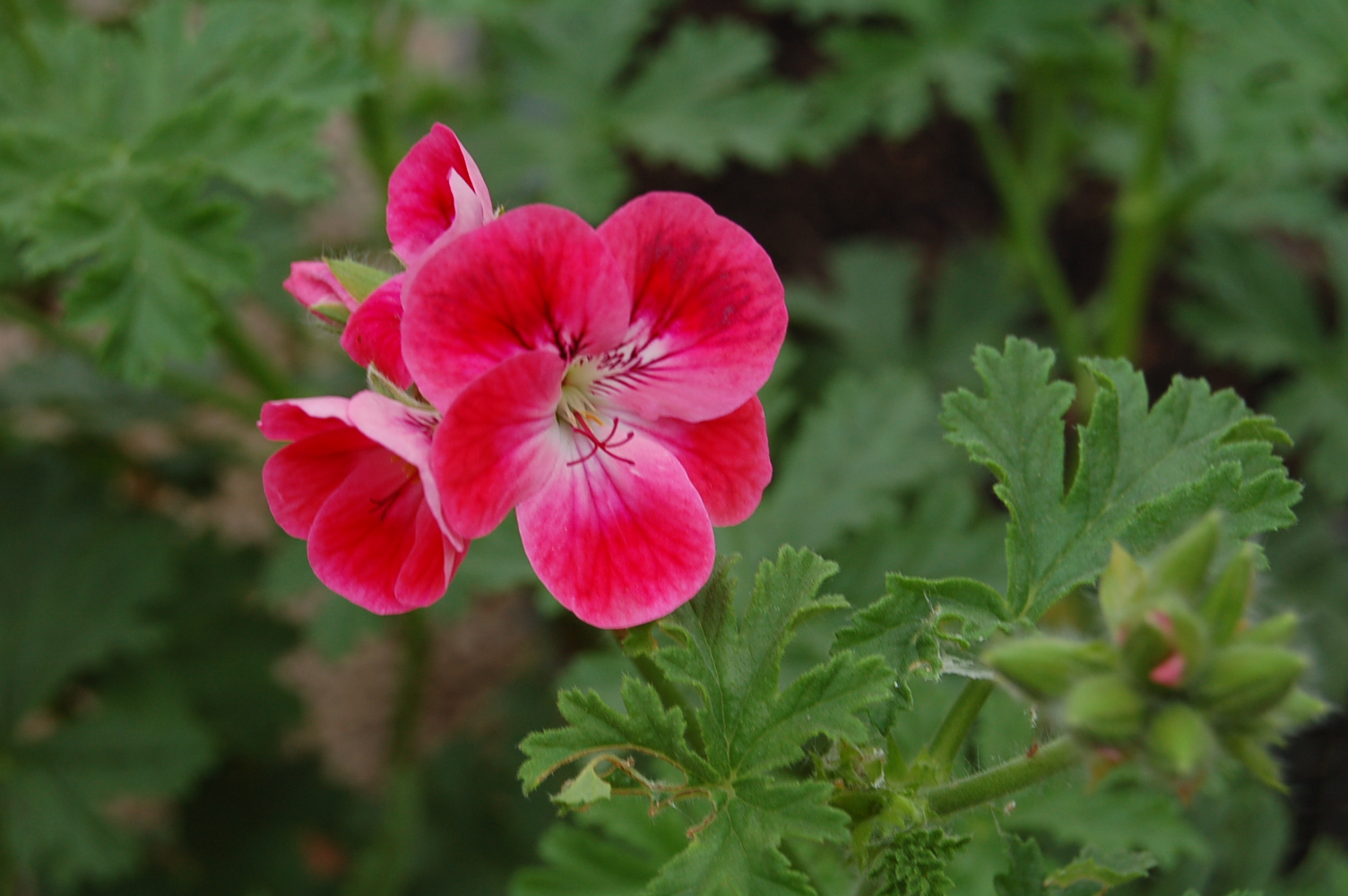
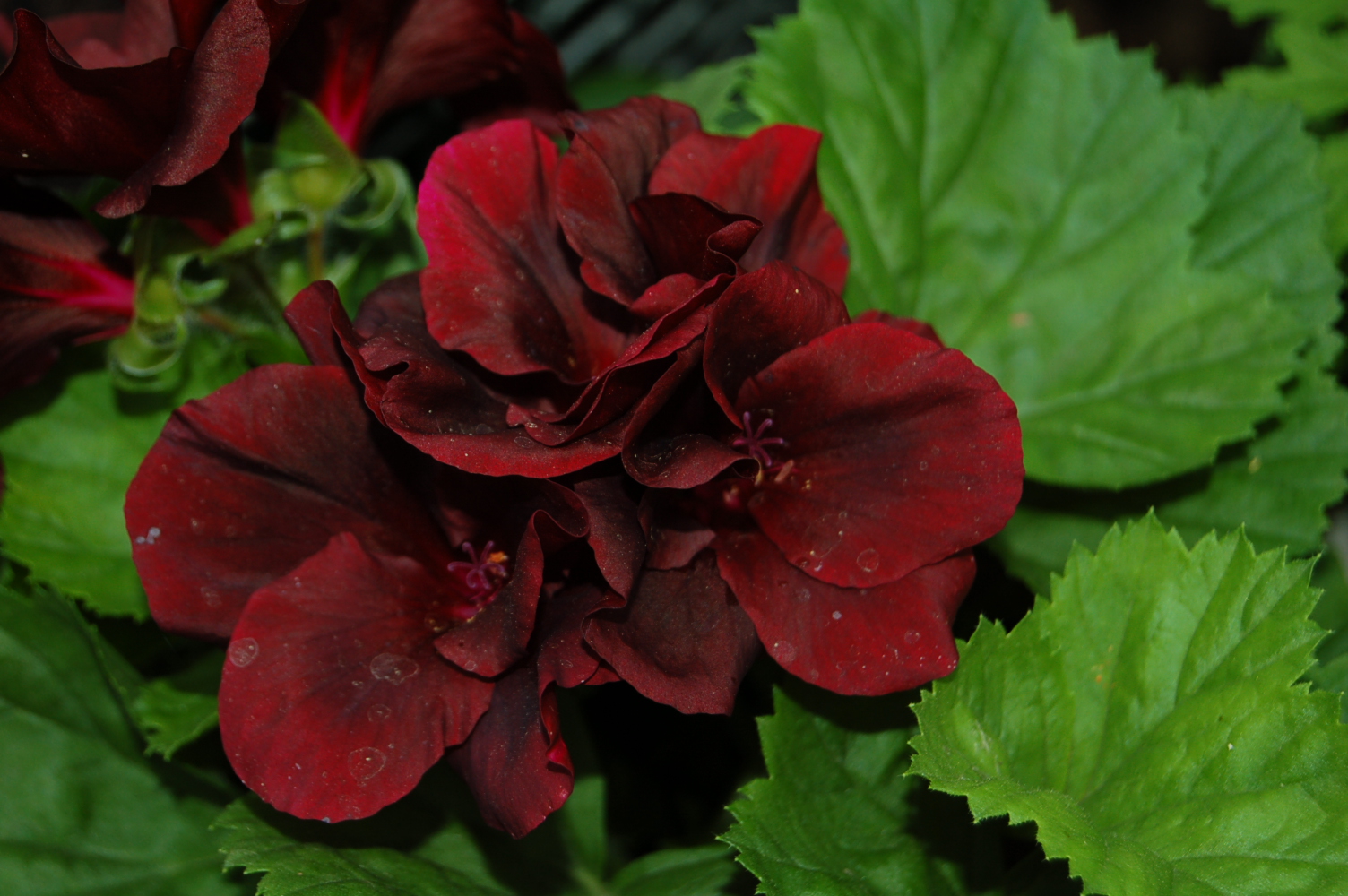
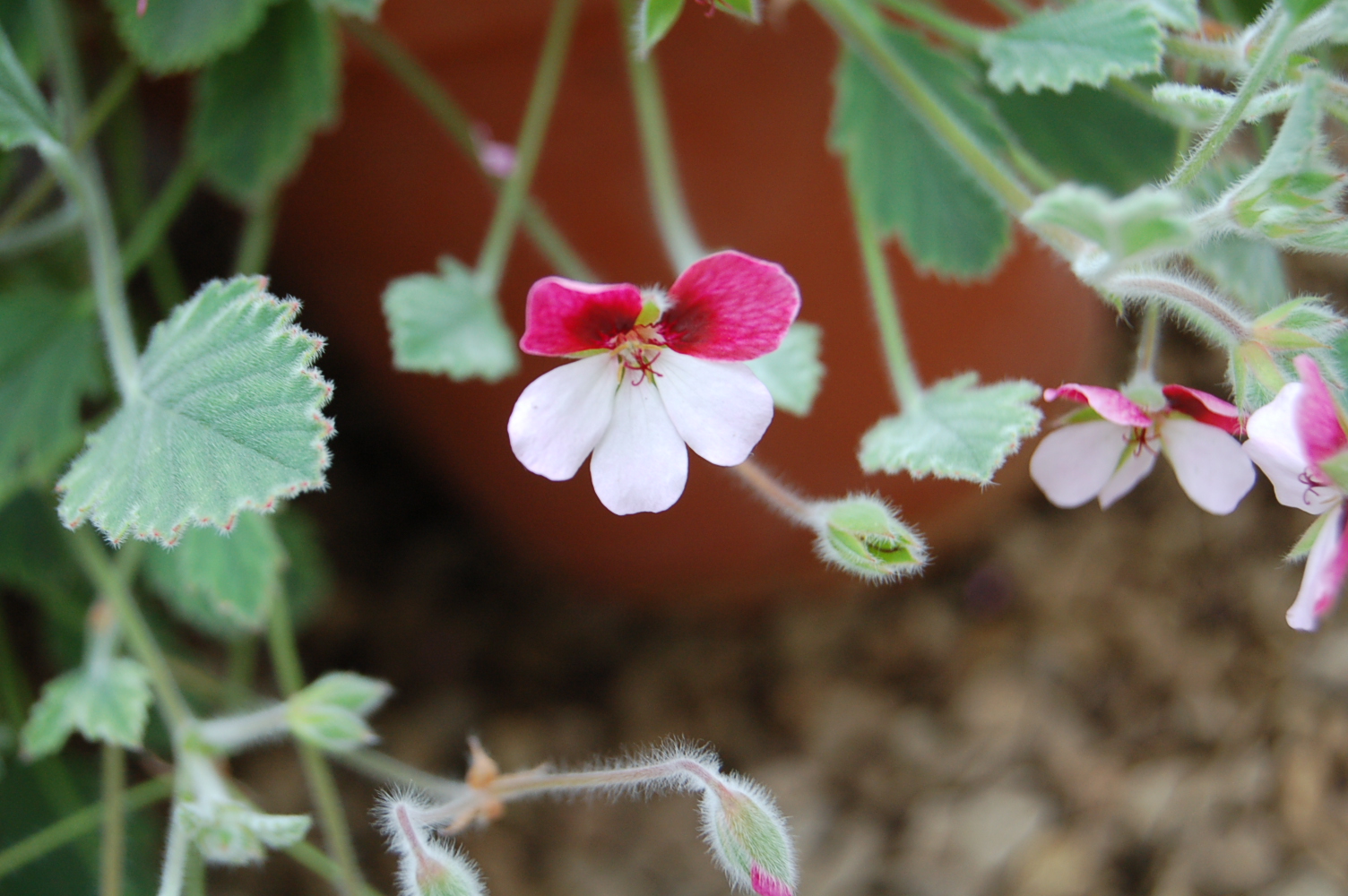
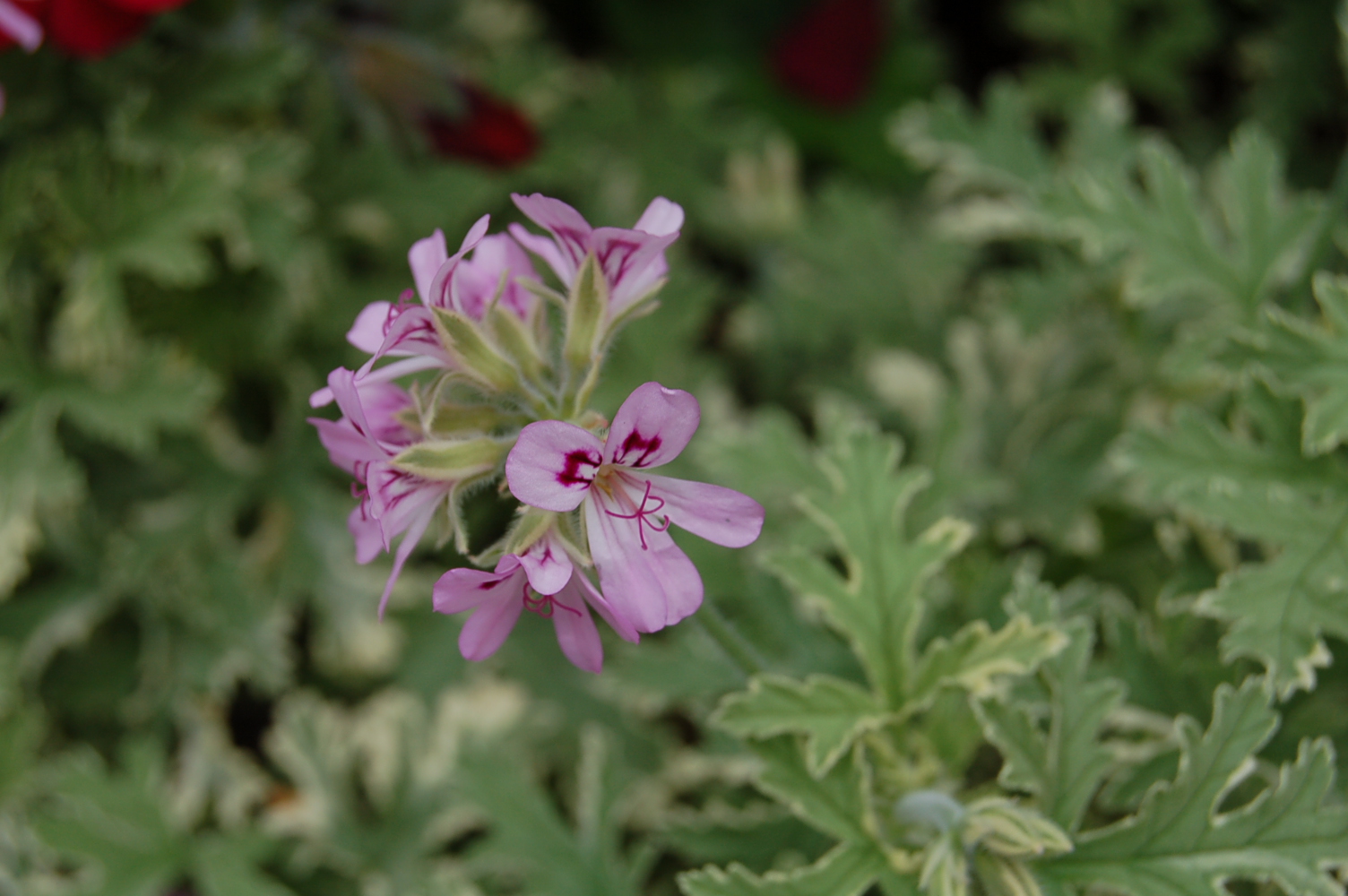
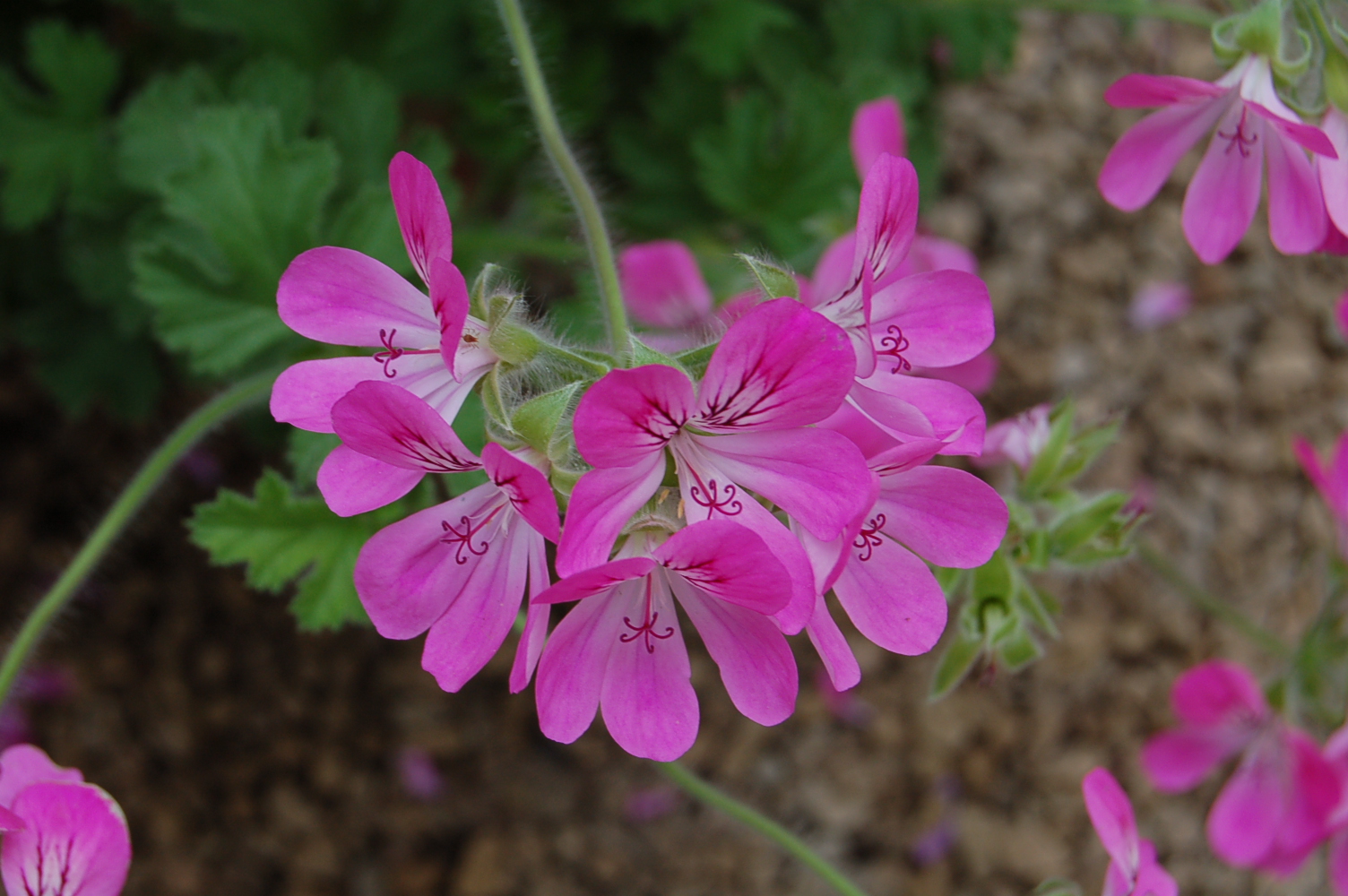
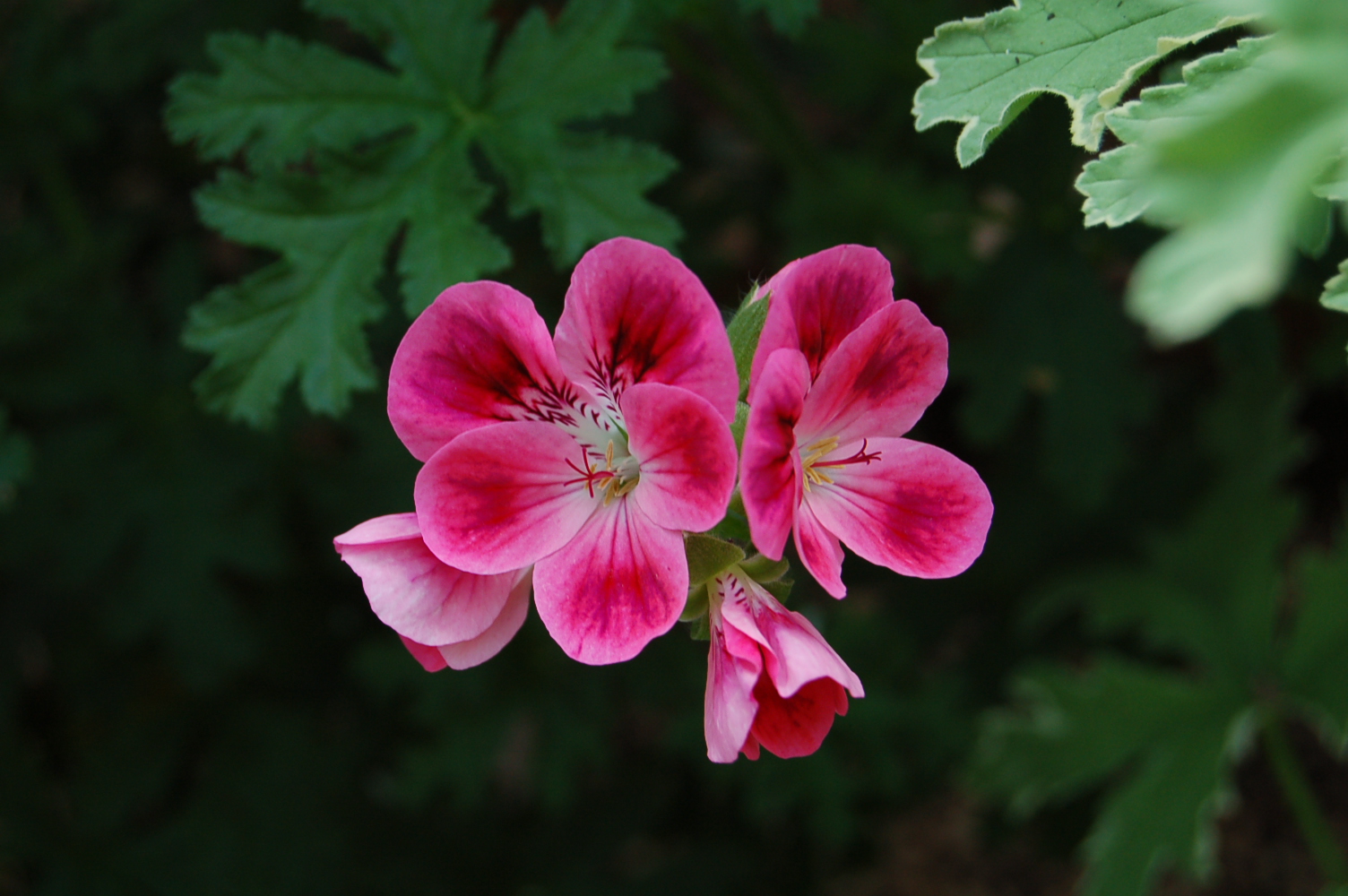
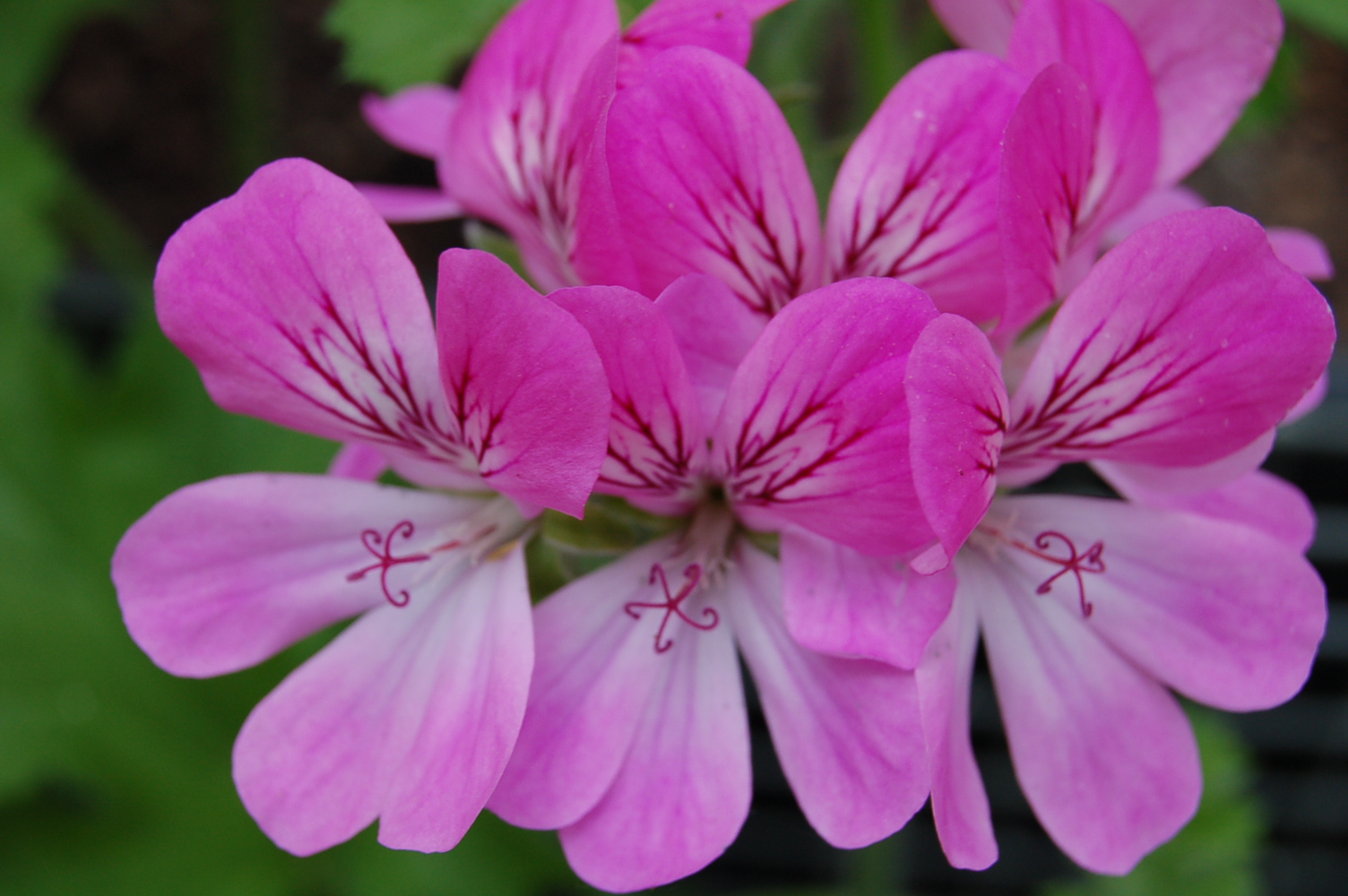
The beautiful, immensely long renovated Victorian greenhouse at Clumber Park never ceases to amaze. When we first visited Clumber the greenhouse looked sad and neglected but we discovered that plans were afoot to return it to its former glory. We were delighted to find one section which now housed an amazingly varied collection of Pelargoniums. Shades of pink. Fruity scents. Textured and patterned foliage. I can share these with you through my photographs.

A word of warning – if you have a total aversion to pink look no further!

This Veggie Life

A Vegetarian | Nature Lifestyle Blog

Rambling in the Garden

.....and nurturing my soul

The Arch City Gardener

Journeys In St. Louis Gardening and Beyond

Garden Dreaming at Châtillon

Consult the genius of the place

Storyshucker

A blog full of humorous and poignant observations.

gardeninacity

Notes from a wildlife-friendly cottage garden

PlayGroundology

...an emerging social science

The Official Blog of British Wildlife

'The most important and informative publication on wildlife of our times' - The Independent. This blog is a member of The UK & Ireland Natural History Bloggers group: www.uknhb.blogspot.com

iGrowHort

Inspire - Cultivate - Grow Native Plants - Restore Landscapes

Bishops Meadow Trust

To create and protect a semi-natural wild space for the people of Farnham to enjoy and experience an array of British wildlife in our town

Gardening with Children

The www.gardeningwithchildren.co.uk Blog

UKbirdingtimeline

birding through the seasons, why birds matter and how to conserve them

NATURE WALKER

with a camera in hand

Jardin

Transform your outdoor space

Eva's space

My allotment, cooking and other interests

Old School Garden

my gardening life through the year

LEANNE COLE

Trying to live a creative life

fromacountrycottage

trying to live as lightly as possible on our beautiful planet

Good Life Gardening

Nature lovers from Leicester living the good life.

mybeautfulthings

Finding the beautiful in the everyday

mawsonmichelle

Michelle's Allotment

In and Out of My Garden

thoughts from and about my garden

Greenhousing

Big plans for a small garden

The Scottish Country Garden

A Walled Country Garden in South East Scotland

The Fruity Chicken

Life at the fruity chicken

willowarchway

Off grid living. Self sufficient. "PERMAGANICS RULE".

St Anns Allotments

Nottingham's Grade 2* Listed Allotments and Community Orchard

Manifest Joy Harvests

a journey in suburban vegetable gardening

Allotmental

The madness of growing your own

Penny's Garden: a harvest beyond my front door

A novel approach to vegetable gardening

arignagardener

Sustainable living in the Irish countryside.
NewEnglandGardenAndThread

Master Gardener, amateur photographer, quilter, NH native, and sometimes SC snowbird

dianajhale

Recent work and work in progress and anything else that interests me

planthoarder

a chaotic cottage gardener

Lens and Pens by Sally

a weekly blog that creates a personal philosophy through photographs and words

Dewdrops and Sunshine

Stories from a sassy and classy Southern farmbelle.

The Pyjama Gardener

Simple Organic Gardening & Seasonal Living

gettin' fresh!

turning dirt into dinner

JOY...

today the world is created anew

Garden Birds

Notes from a Devon garden

ShootAbout

Life Through The Lens

Adapting Pixels

A photography blog showcasing the best photography pictures and videos on the internet

Wildlifegardening's Blog

Just another WordPress.com site

naturestimeline

personal observations from the natural world as the search continues for a new approach to conservation.

LATEBLOOMERBUDS

The Wonders of Life through my Eyes, my Heart, my Soul