Categories
colours flowering bulbs garden buildings garden design garden designers garden paths garden photography garden seat garden seating garden sheds gardening gardens gardens open to the public grasses hardy perennials light quality National Garden Scheme NGS nurseries ornamental grasses outdoor sculpture sculpture Shropshire South Shropshire spring bulbs spring gardening traditions village gardens walled gardens Yellow Book Gardens

Seasonal visits to two very different gardens

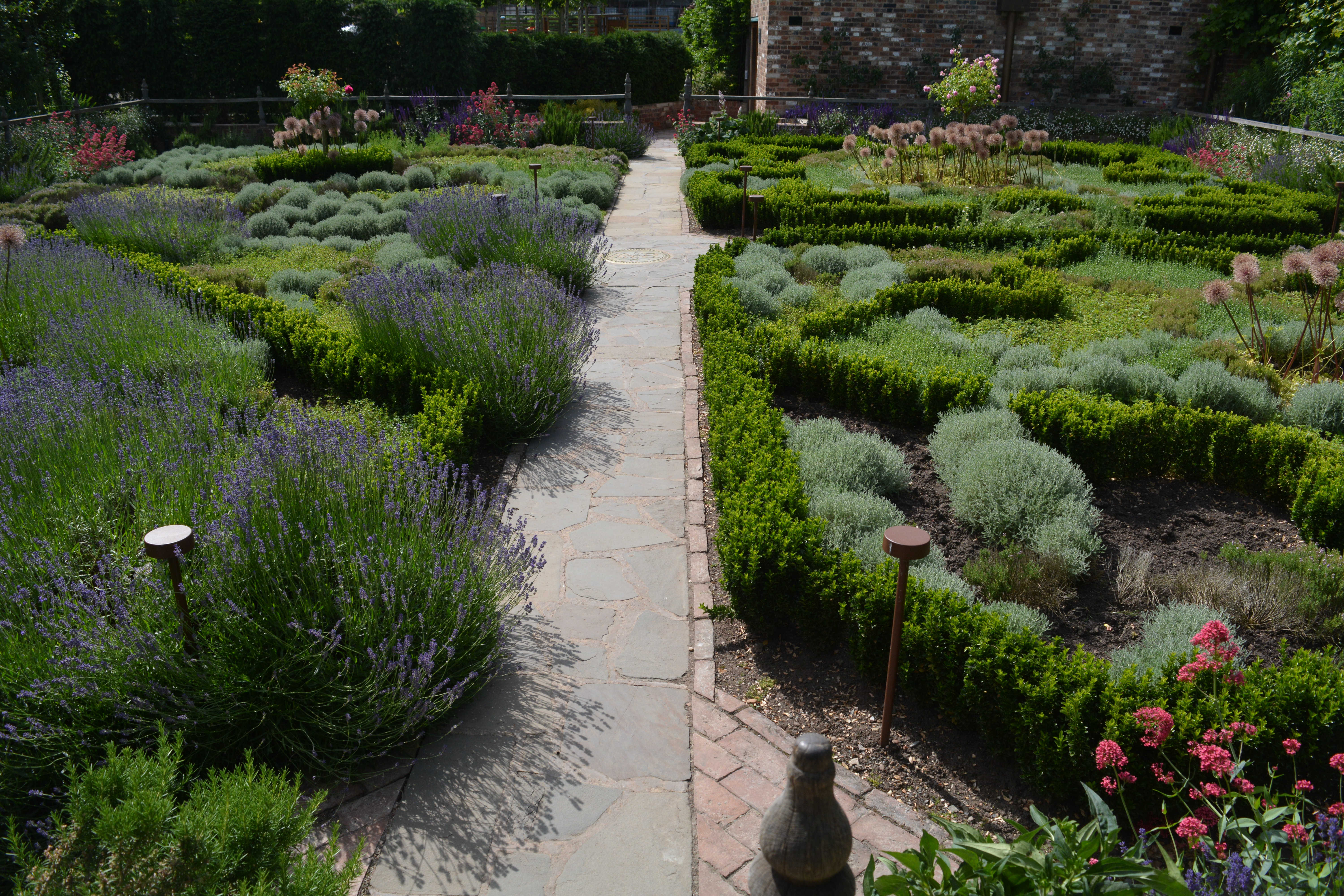
Instead of a monthly visit to the same garden for a whole 12 months I decided to look at two gardens, one small and one large. We have already visited the large one, Bodnant Gardens in North Wales already. So here is our first visit to our chosen small garden Wildegoose Nursery and Garden here in Shropshire.

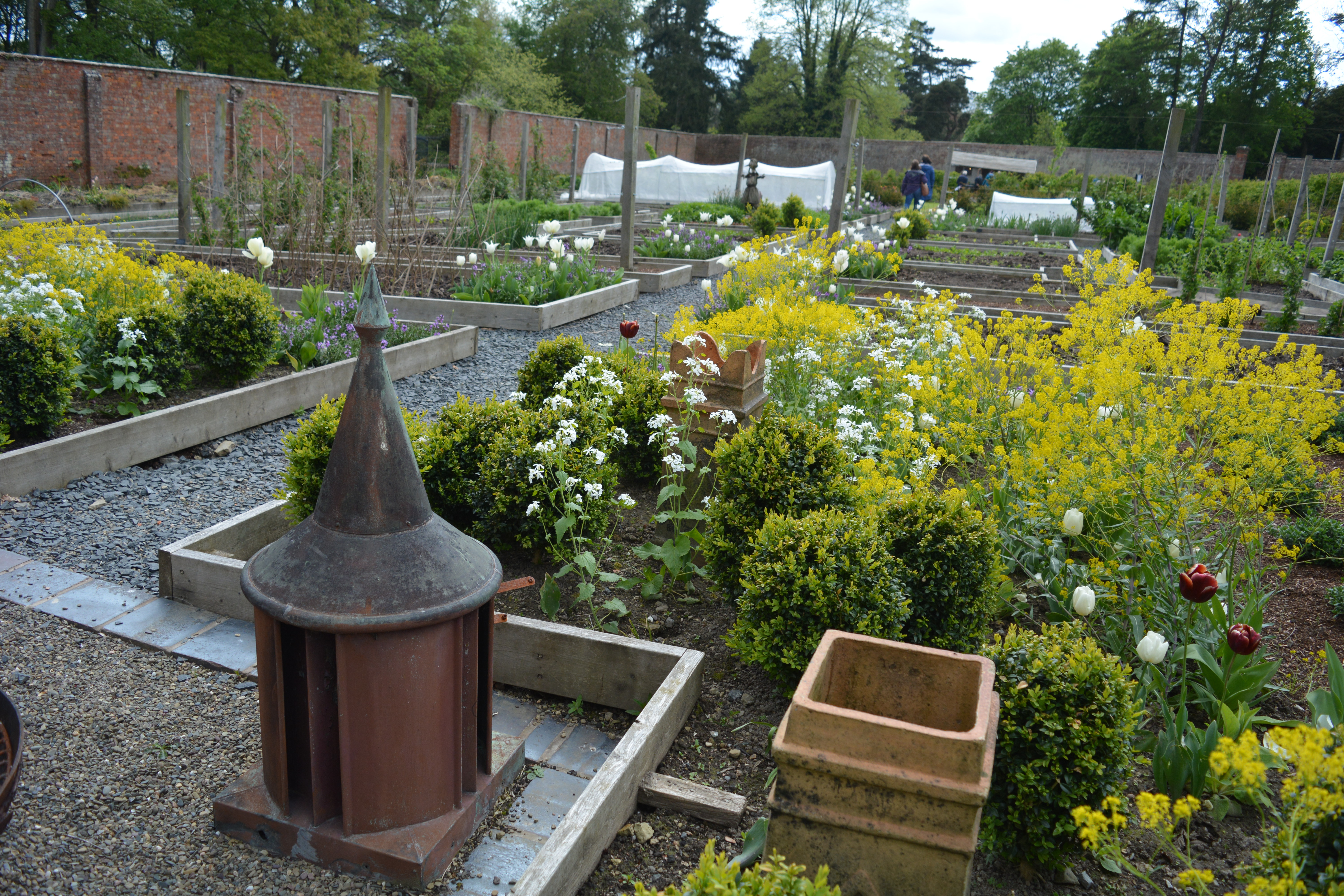
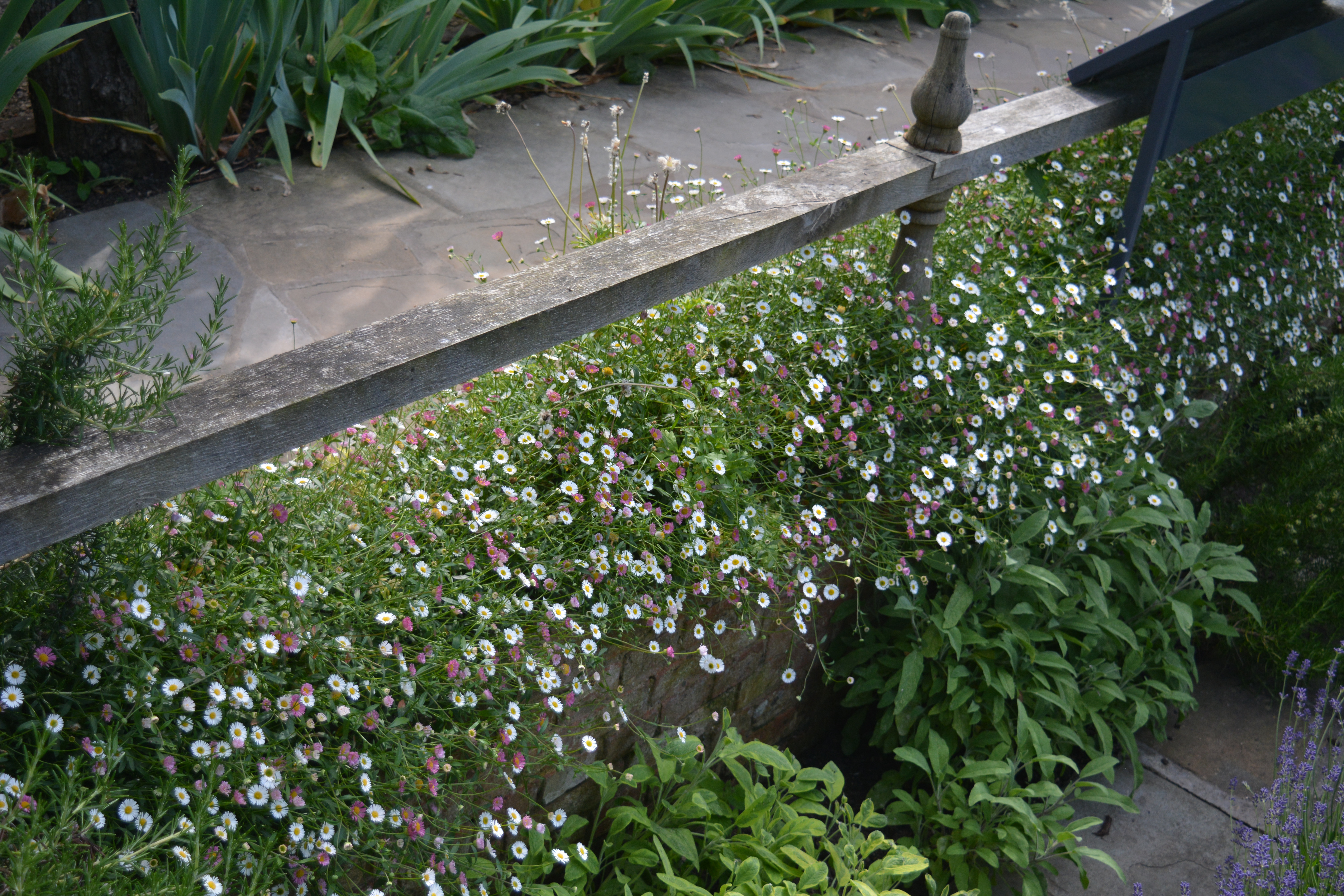
We visited on May 5th, the day that Wildegoose opens with Millichope Hall Gardens for the NGS, just as we do. Wildegoose is the restoration project of the hall’s walled garden. Here a young couple, Jack and Laura Willgoss, have set up a nursery and are developing a modern perennial style garden as well as specialising in hardy perennial violas. It is an exciting project which we love to visit often.

Our first visit for this series of posts was on May 5th, a bright day with a chilly wind but a day with great light for taking photos and enhancing the brightness of colours.

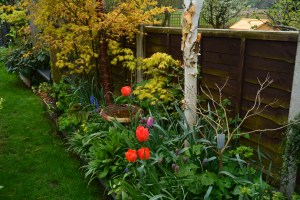
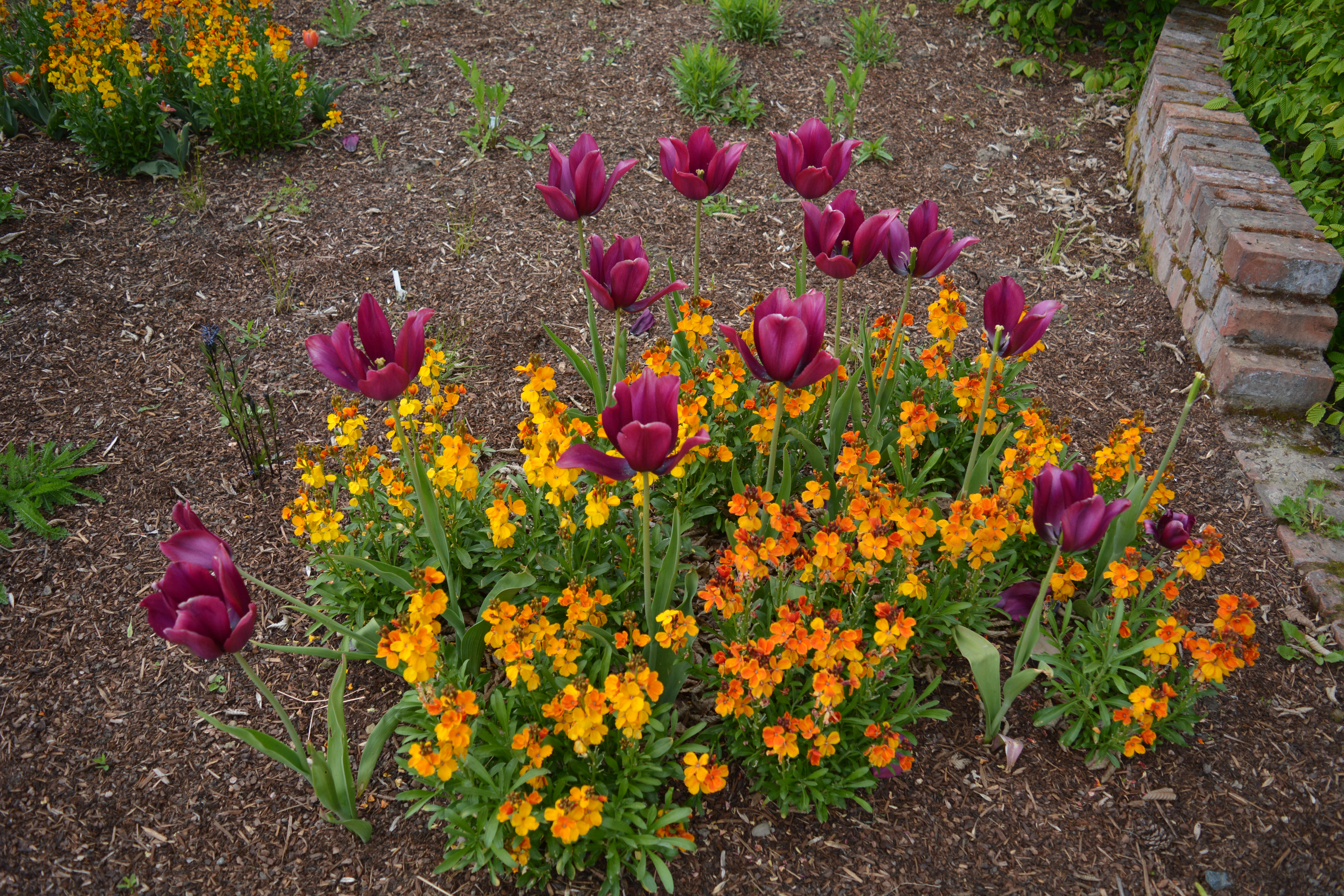
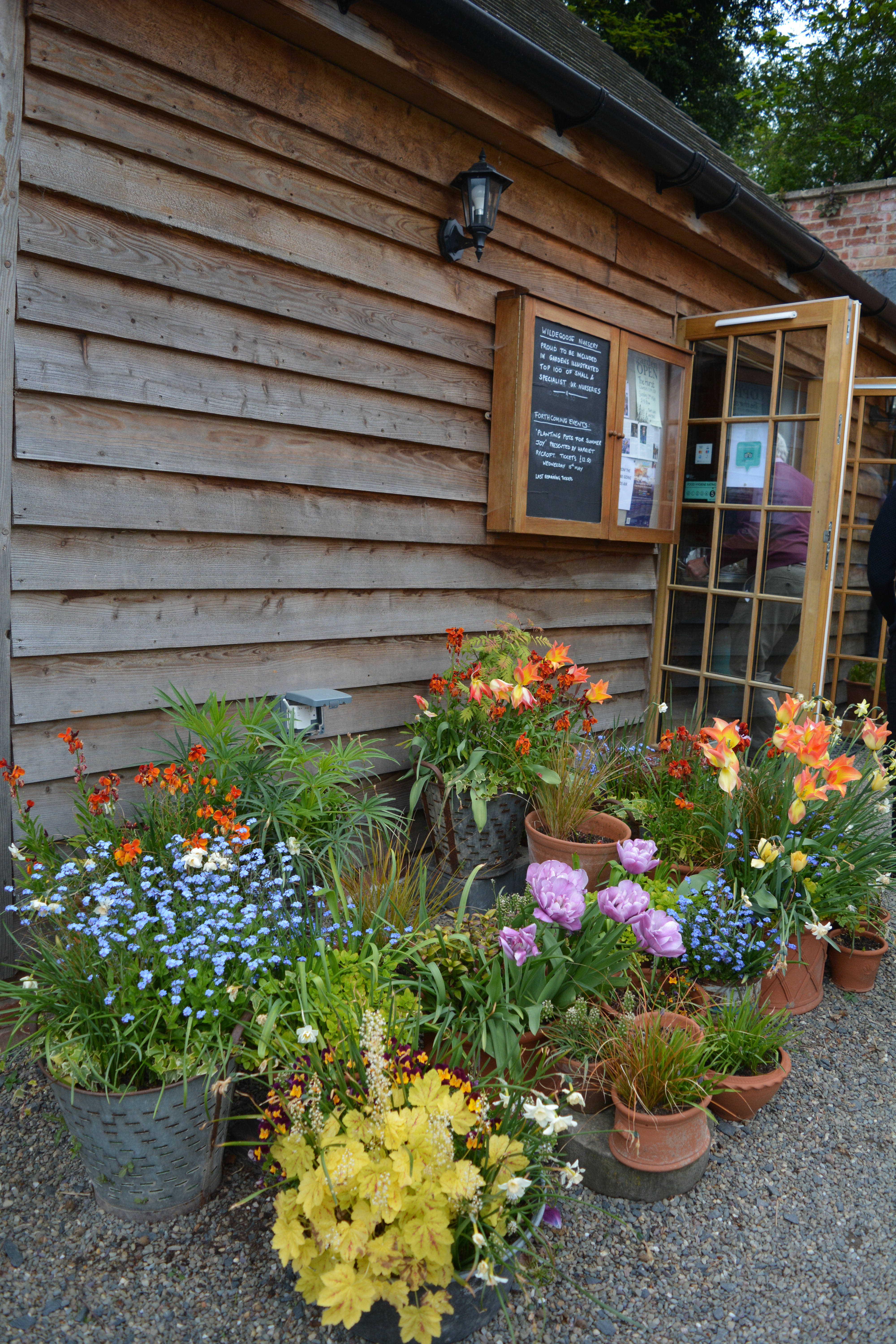
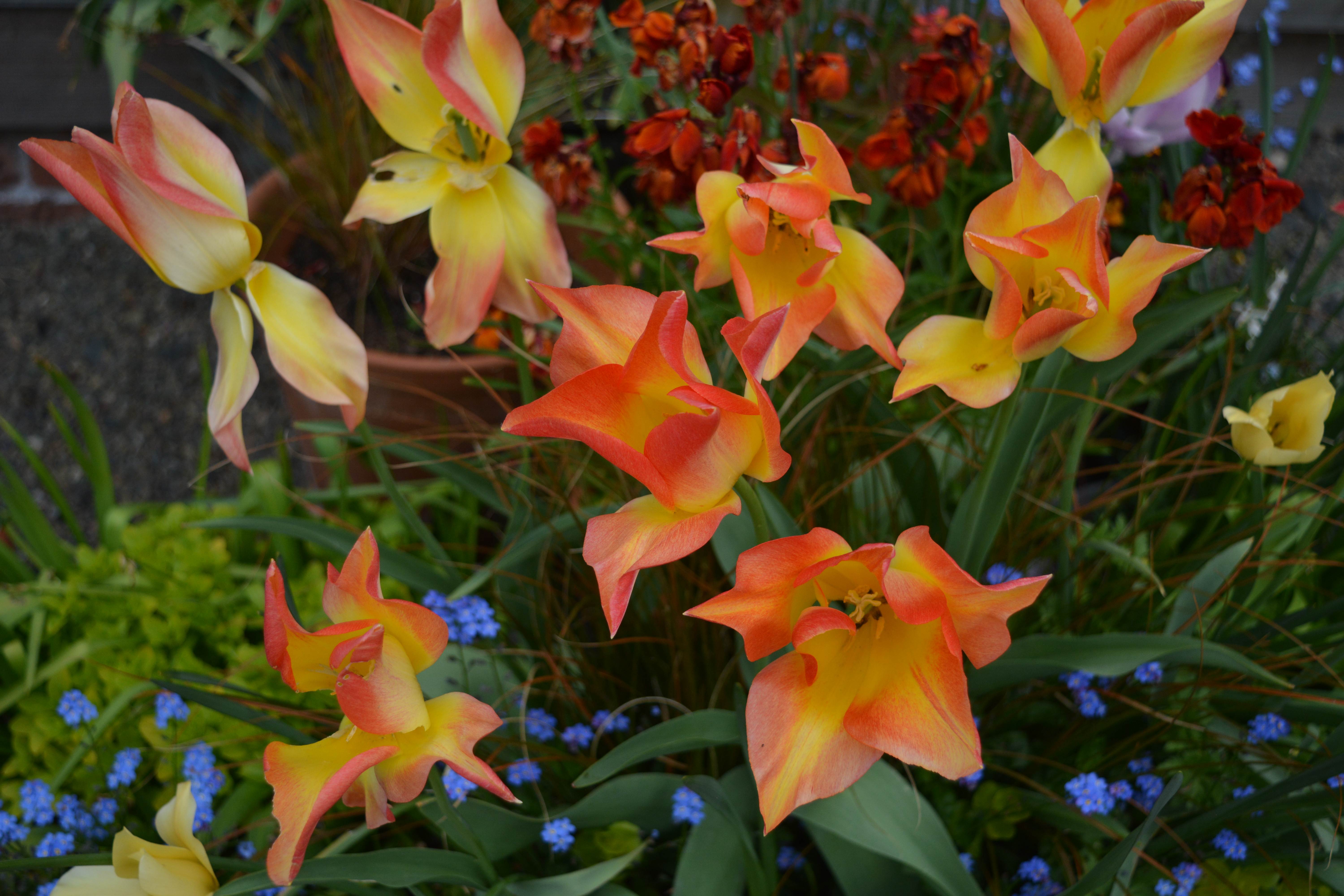
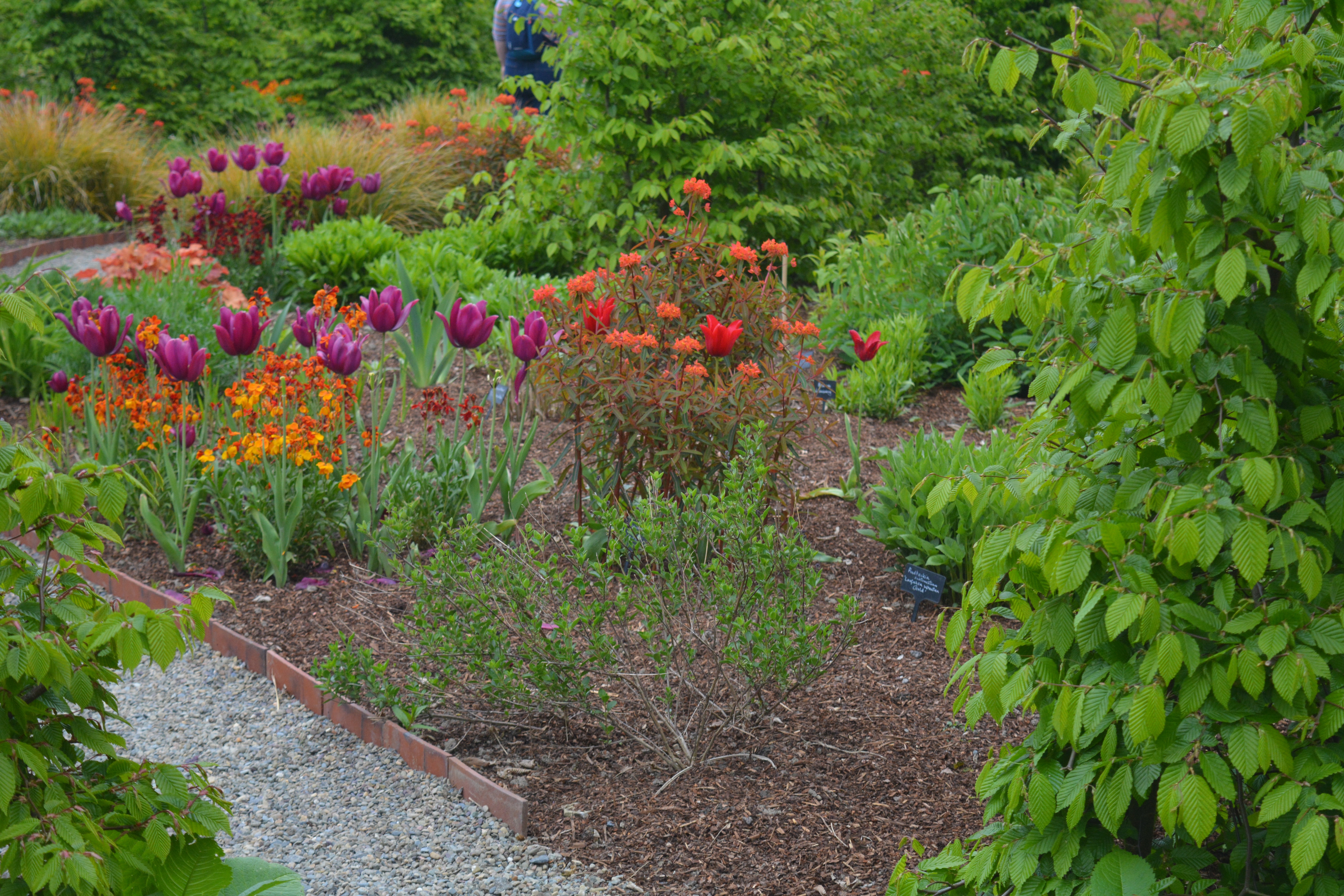
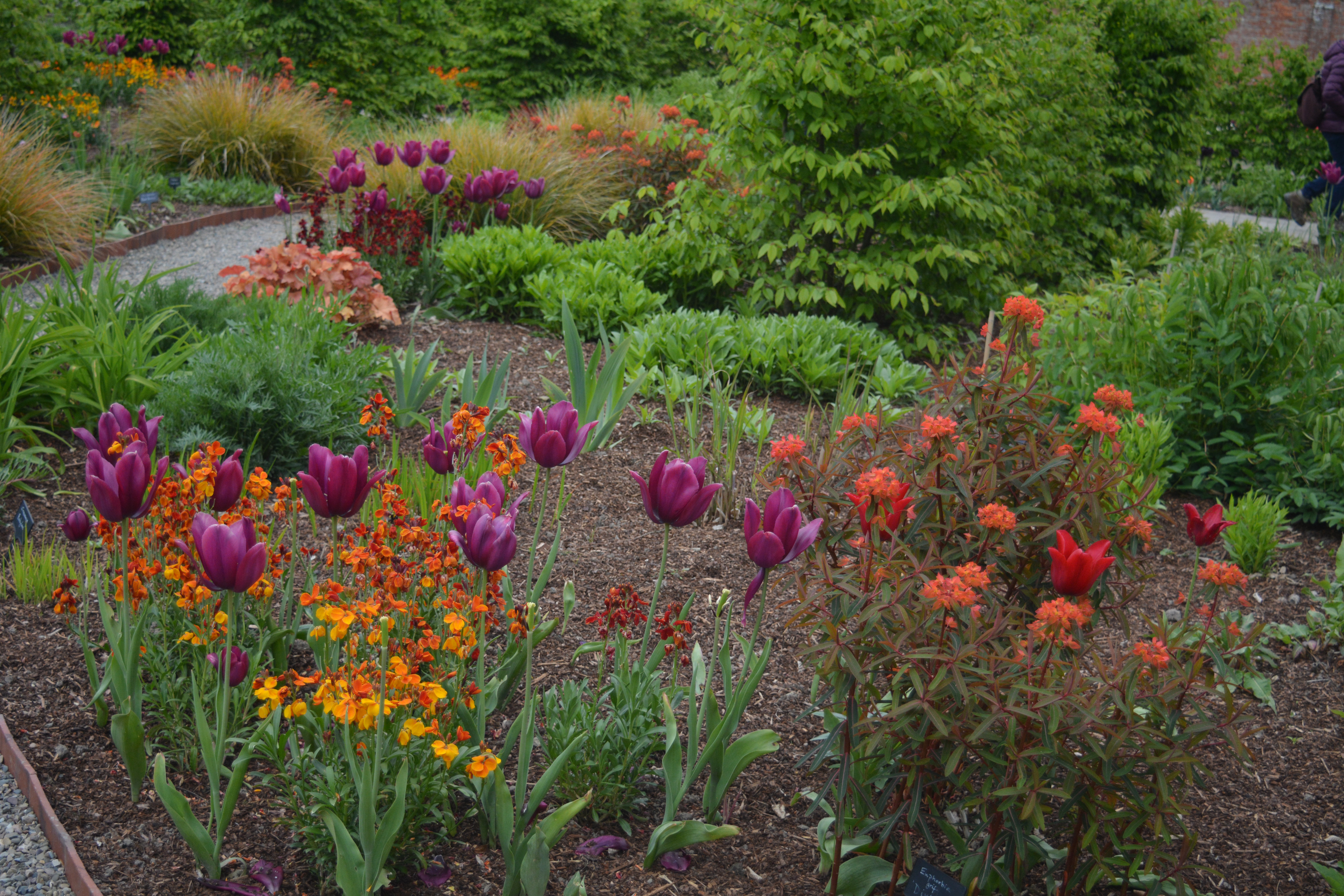
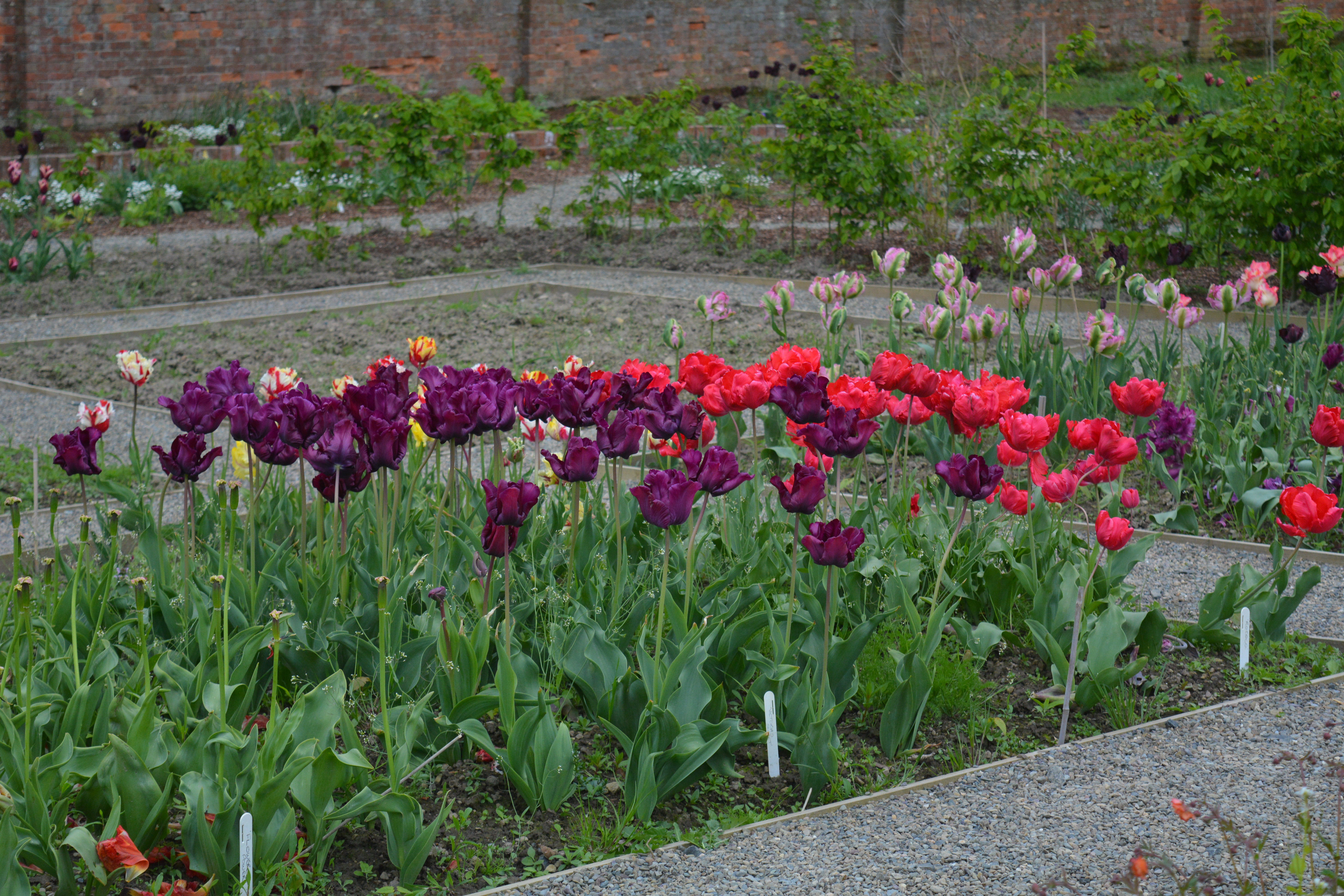
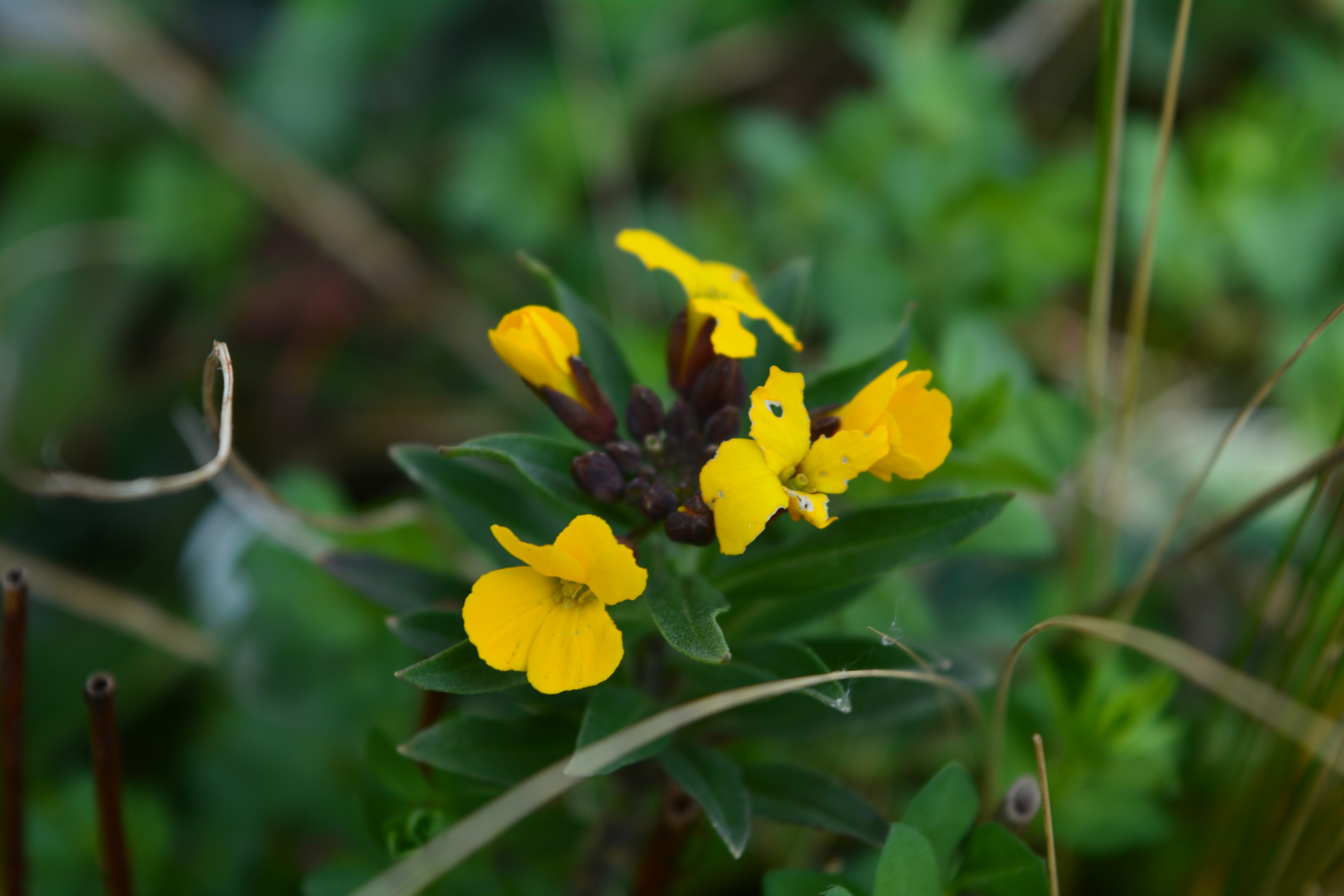
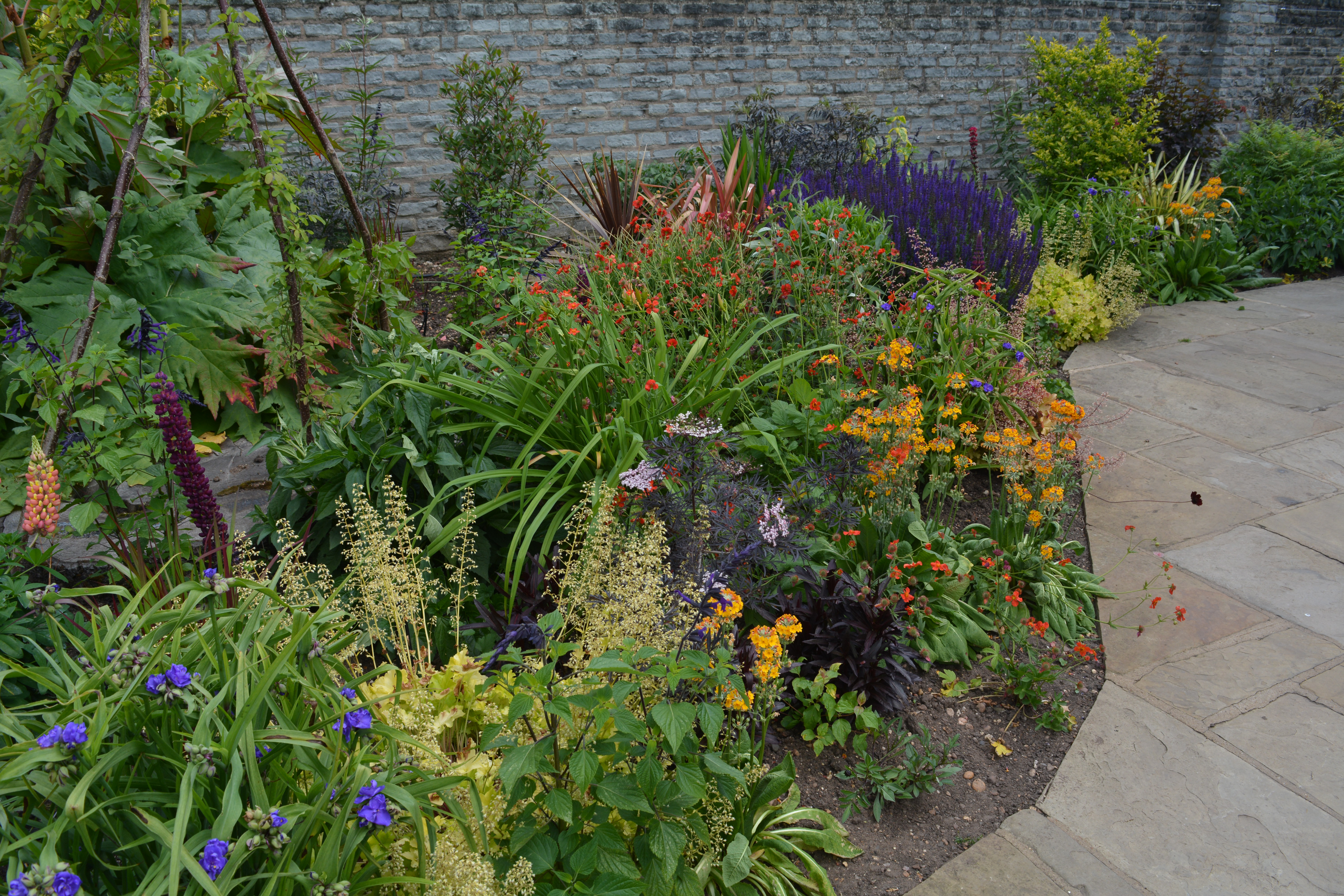
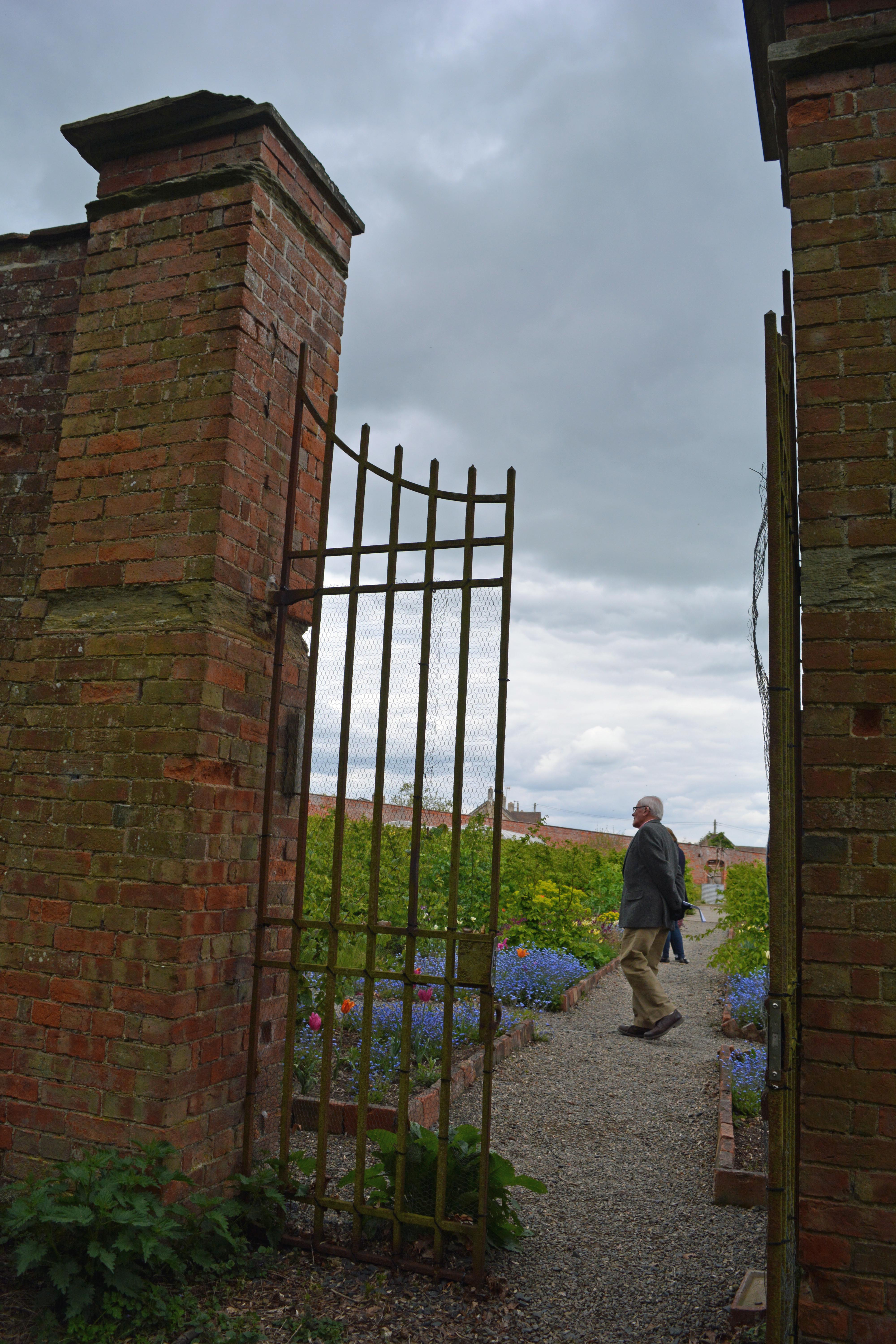
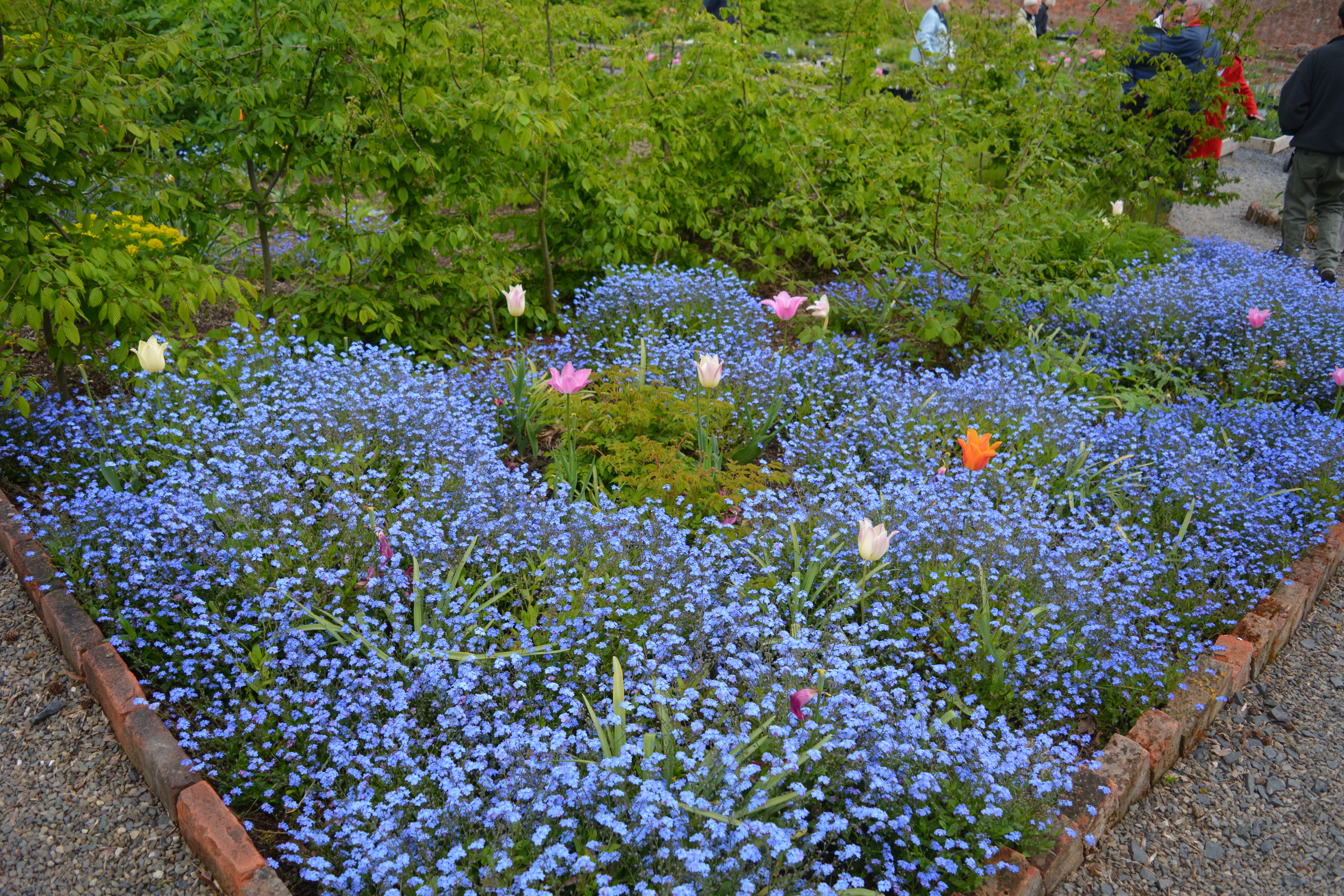
We arrived via a tall gate in the the brick walls and were immediately struck by a patch of Forget-me-nots and tulips. We soon realised that Jack and Laura had a great taste in tulip colours. These tulips complimented so effectively the strength of colours of euphorbias and wallflowers.

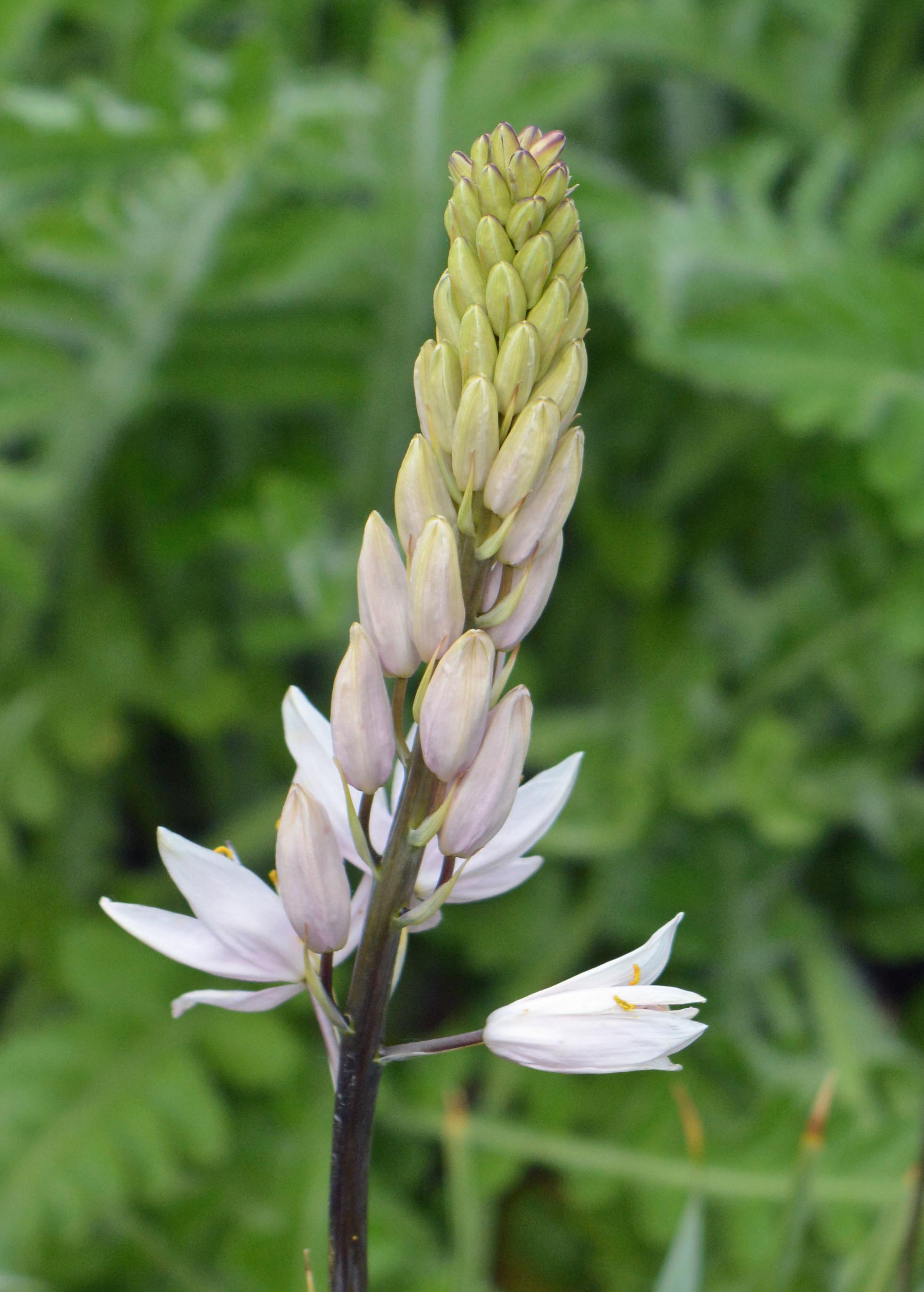
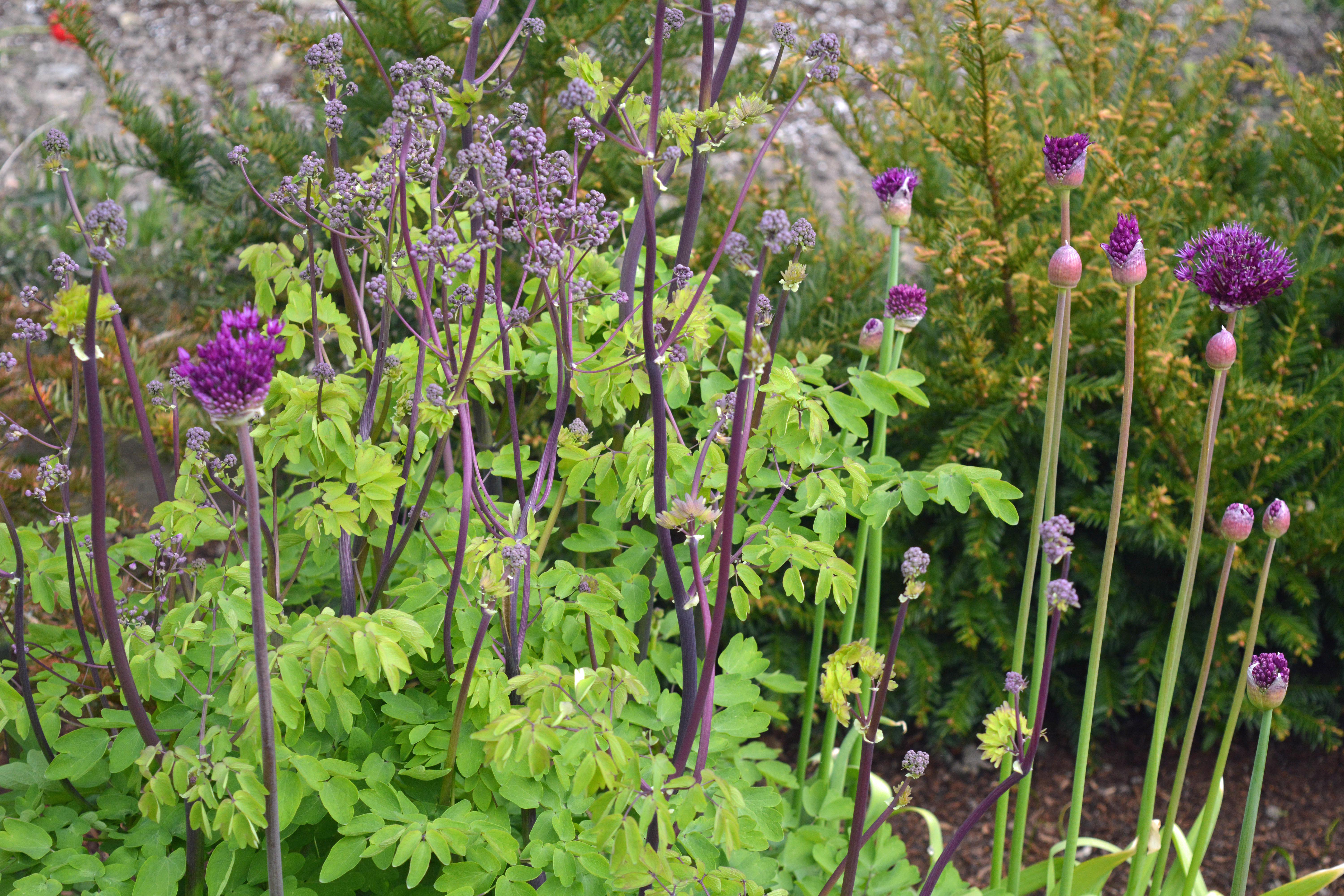
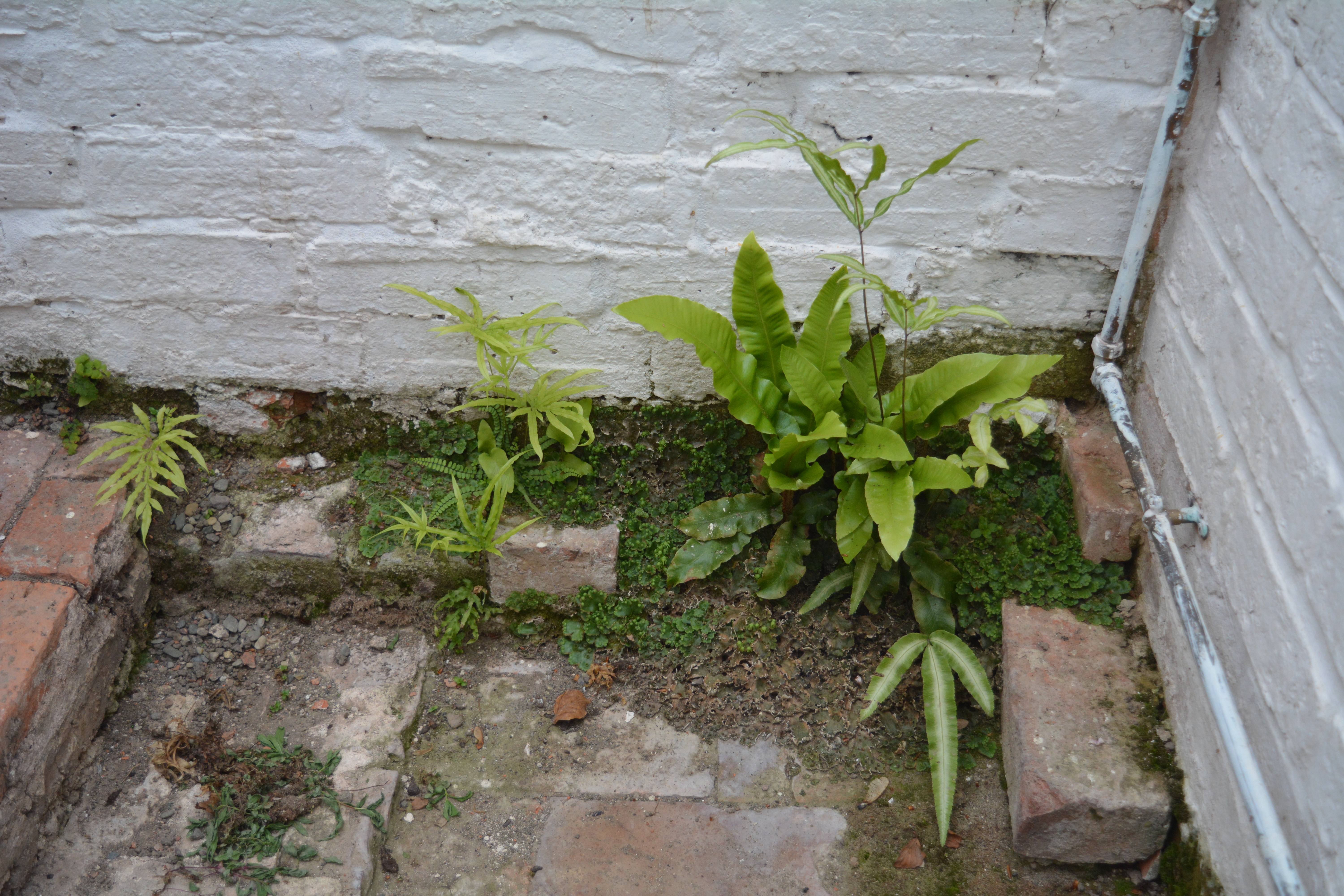
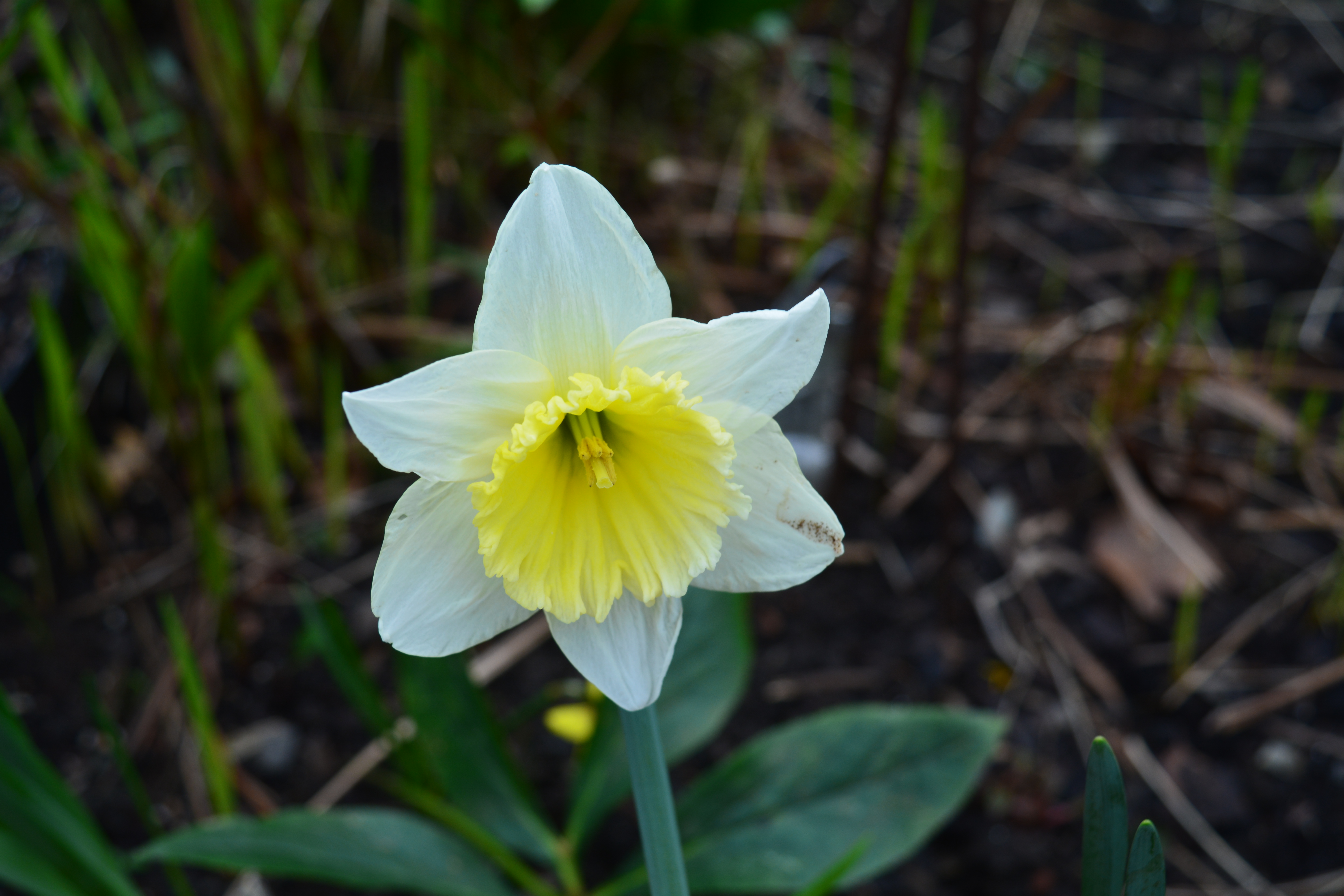
Throughout the garden, as we wandered and explored, little gems of plants caught our eyes like this unusual Cammassia and the strong stemmed Thalictrum “Black Stocking”.


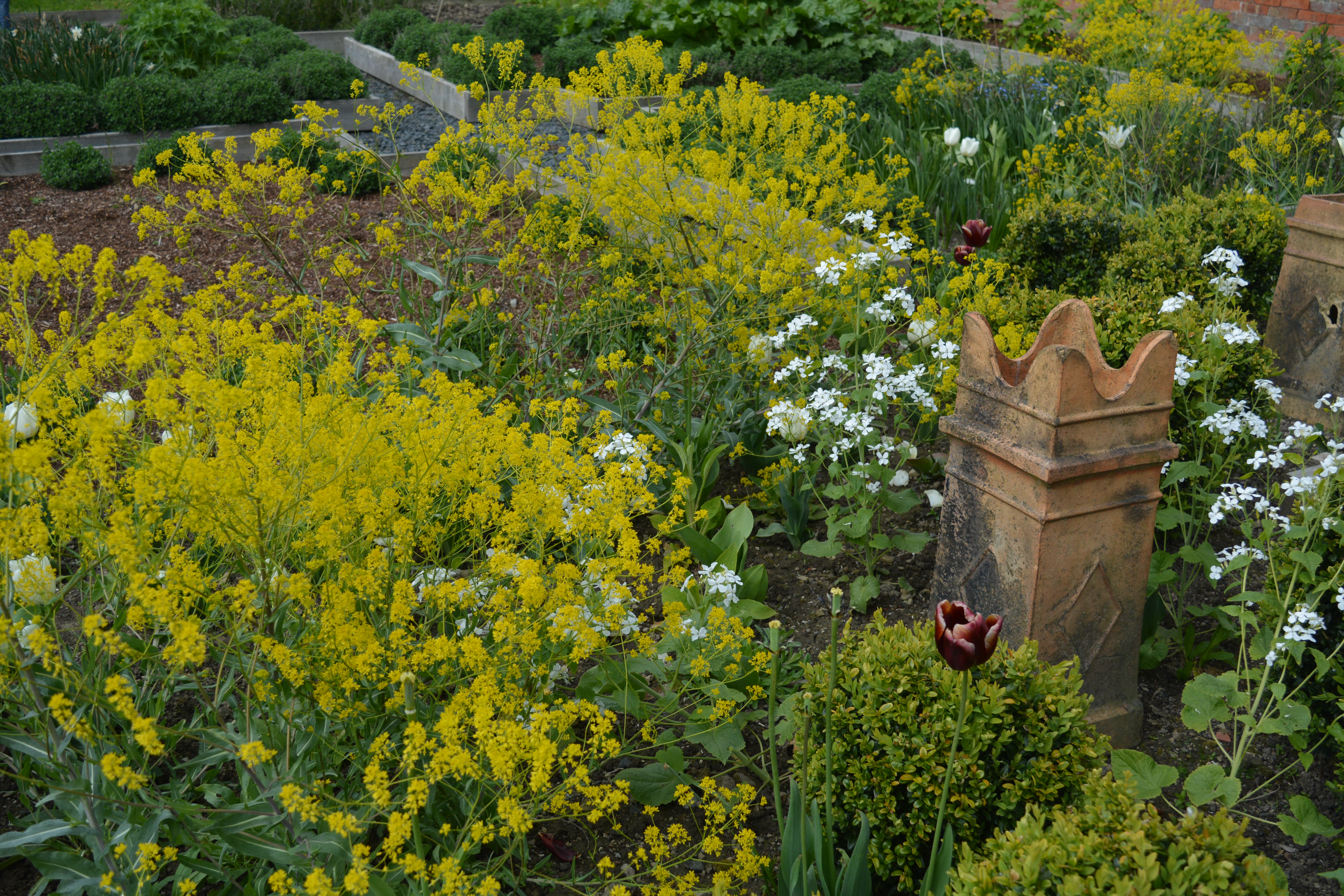
Memories of the walled garden’s Georgian origins and its history until its demise after the two world wars appear occasionally throughout the garden, and exciting artifacts integrate into the plantings.


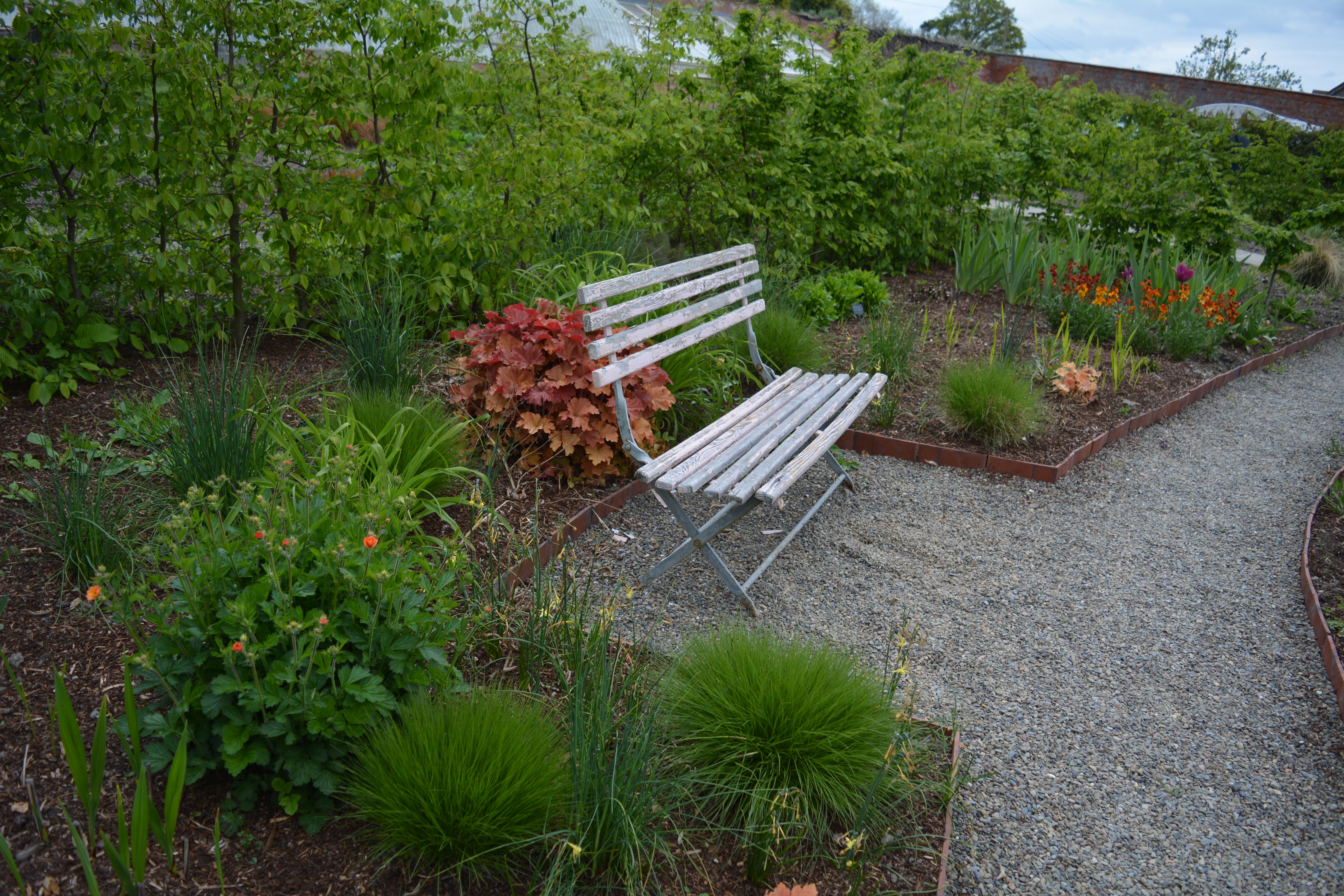
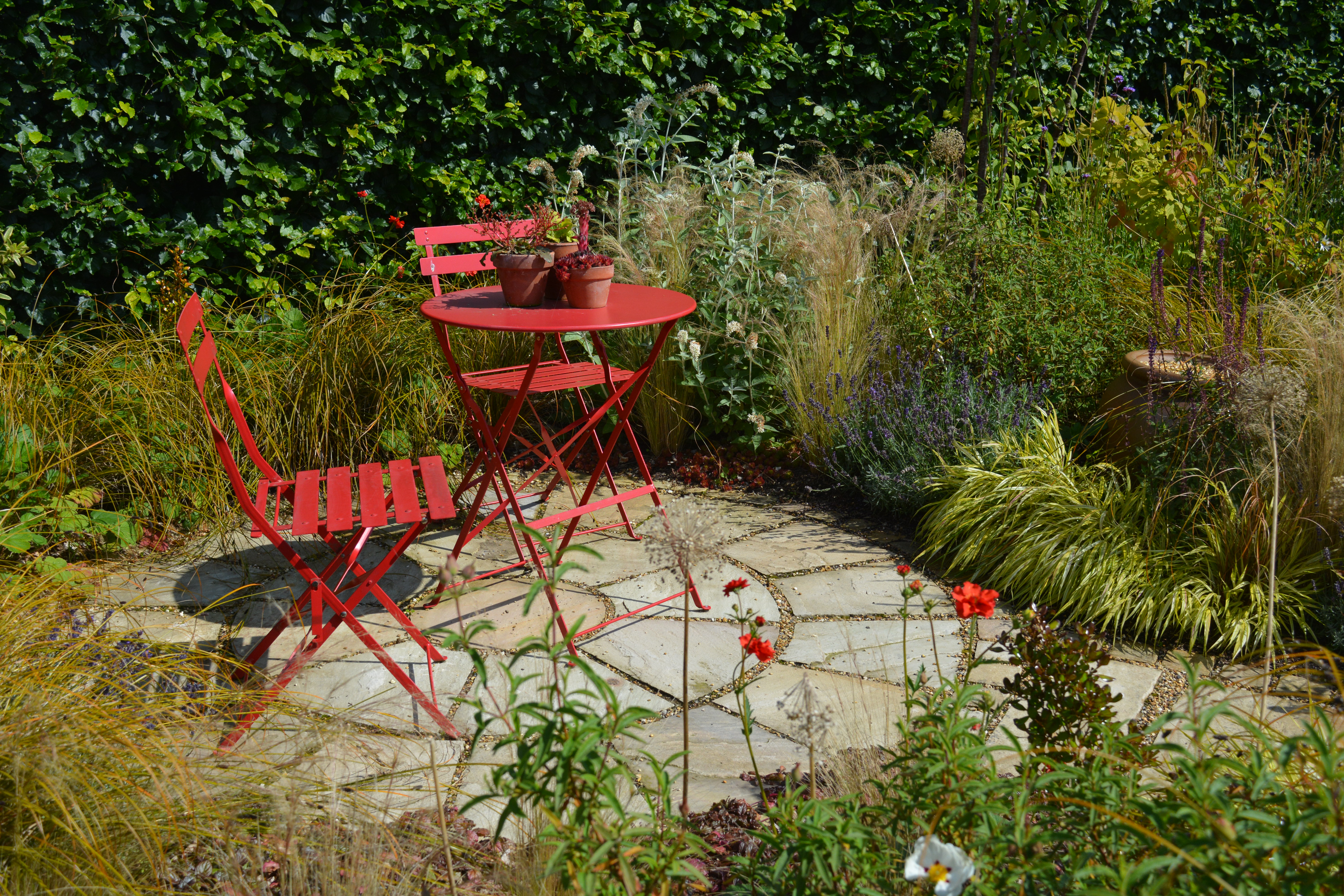
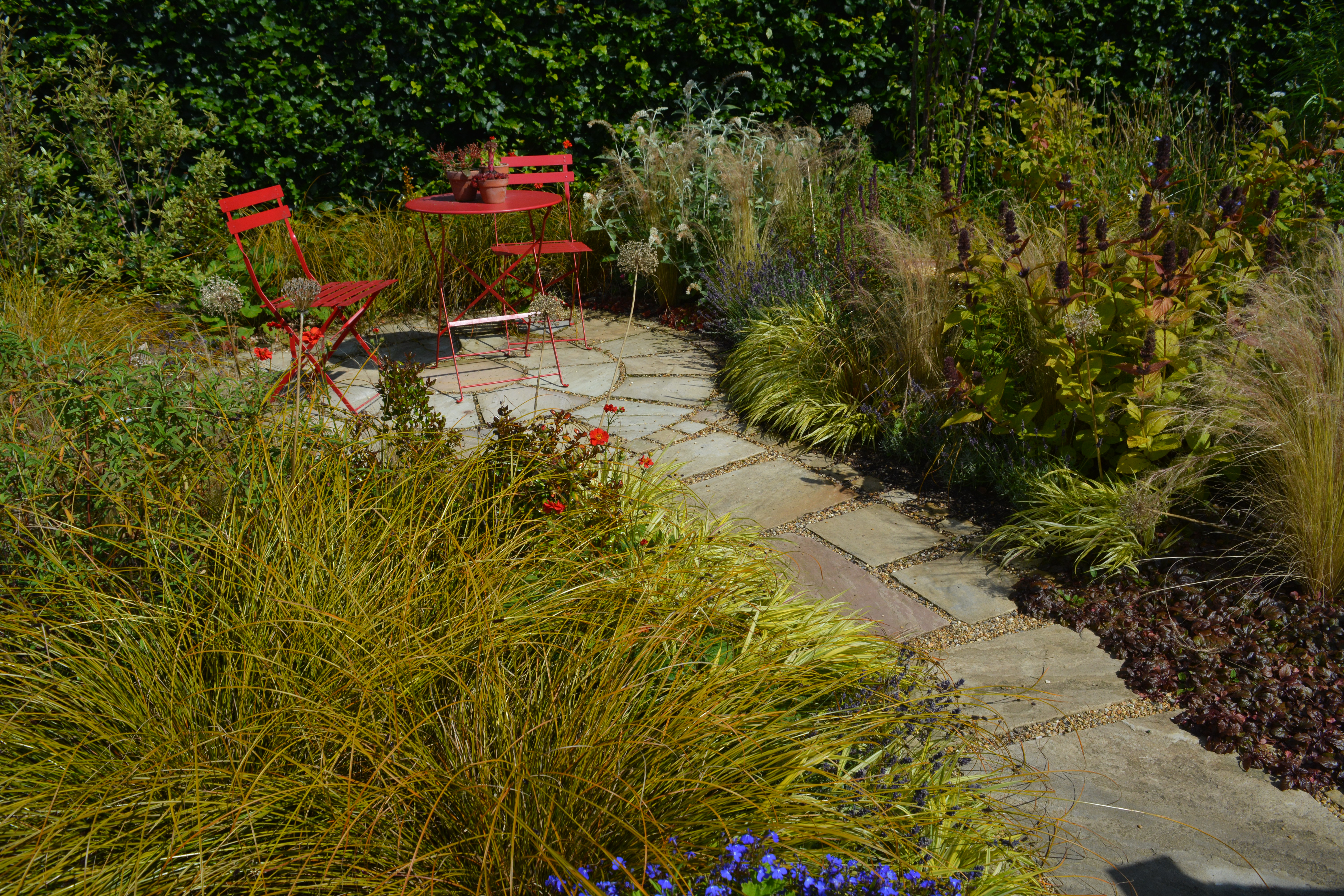
The teashop is wonderfully old-fashioned and is so welcoming with beautiful bone china crockery in which tasty tea is served along with home-made cakes. We found a beautifully coloured table and chairs within the garden. We are tempted to paint some of our metal furniture in that colour as it sits so comfortably in the garden.


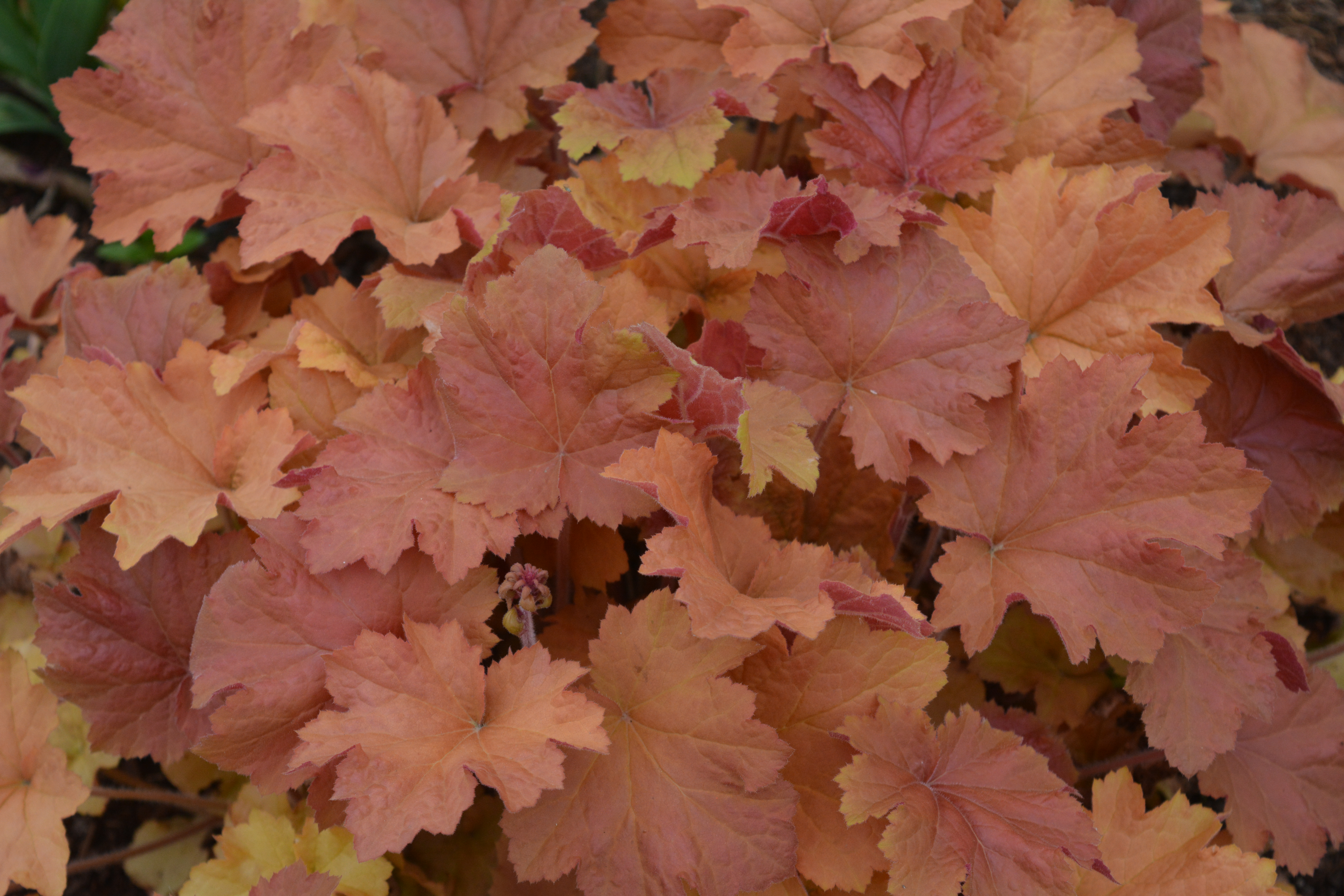
Next here is a selection of photos taken throughout the walled garden for you to enjoy.

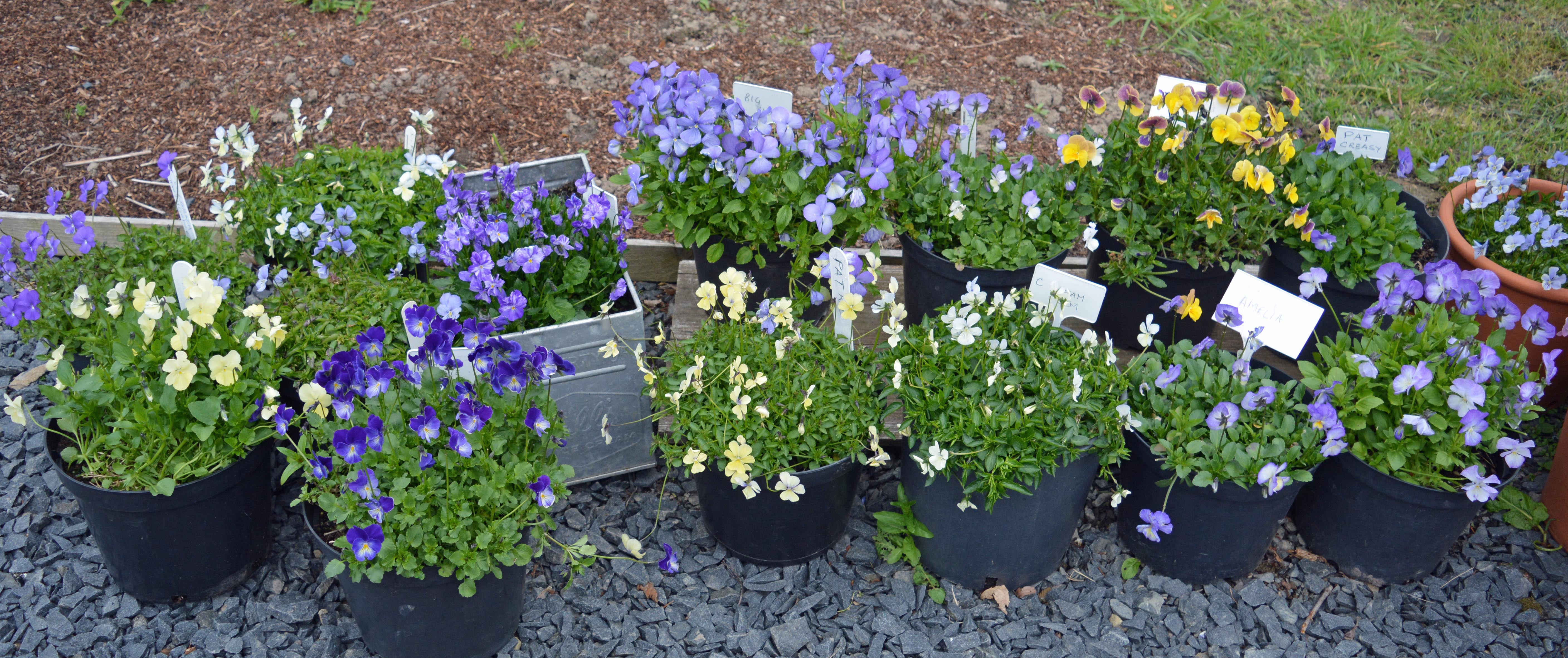
We finished our wanderings at the nursery. Always a good idea! Here we bought a selection of their hardy perennial violas – beautiful!

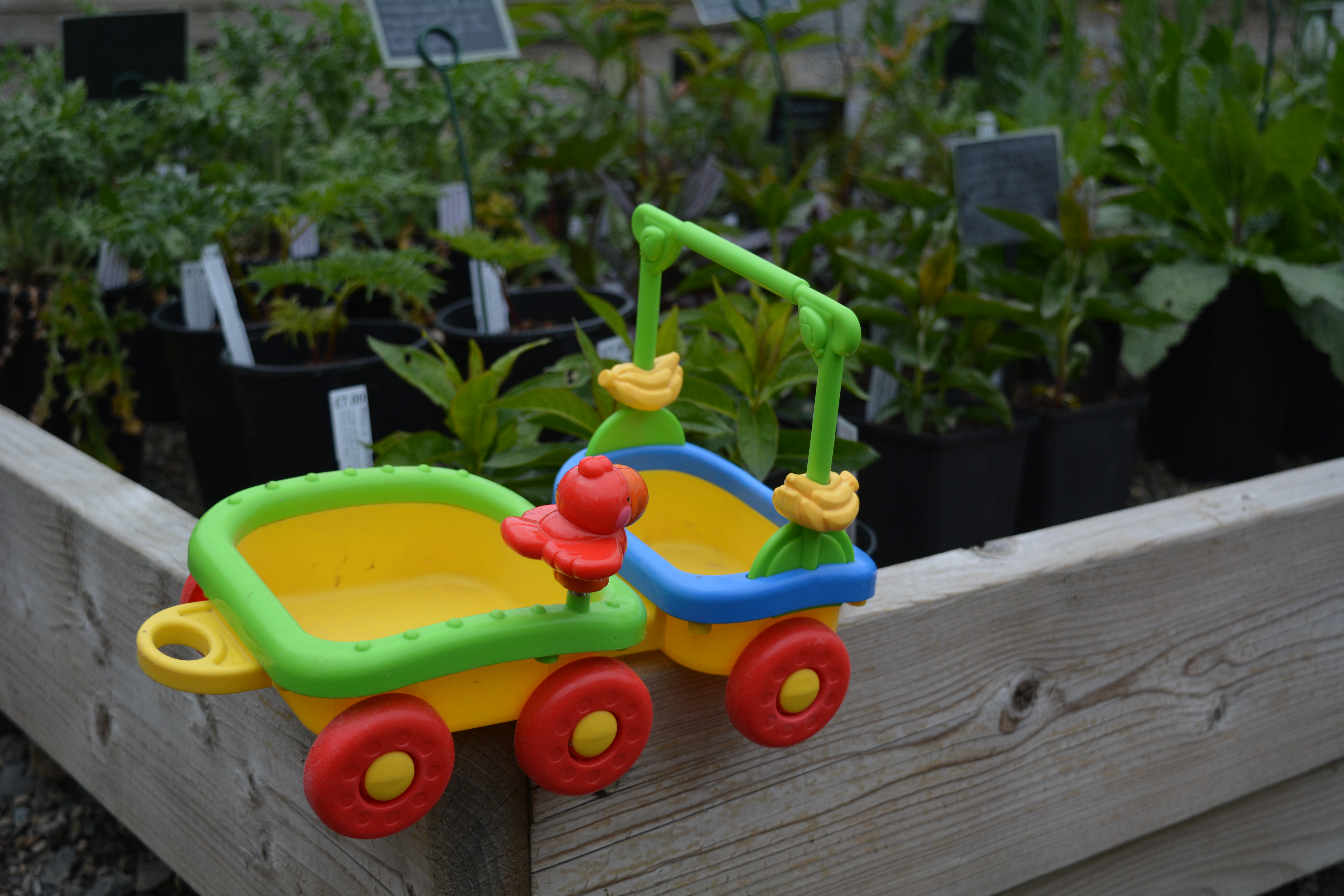
Laura and Jack’s twins always leave a surprise somewhere in the garden and today this was in the nursery beds. A nice friendly way to finish an inspirational, relaxing afternoon.

We will be back in the summer and report that exploration too.


Categories
colours flowering bulbs garden design garden photography gardening gardens grasses hardy perennials ornamental grasses ornamental trees and shrubs Shrewsbury Shropshire shrubs spring bulbs

My Garden Journal 2019 – March

It is already time for sharing my third month’s entries in my garden journal. So here are the March pages for you to enjoy and for you to see what the garden has been up to and what we have been up to in the garden.

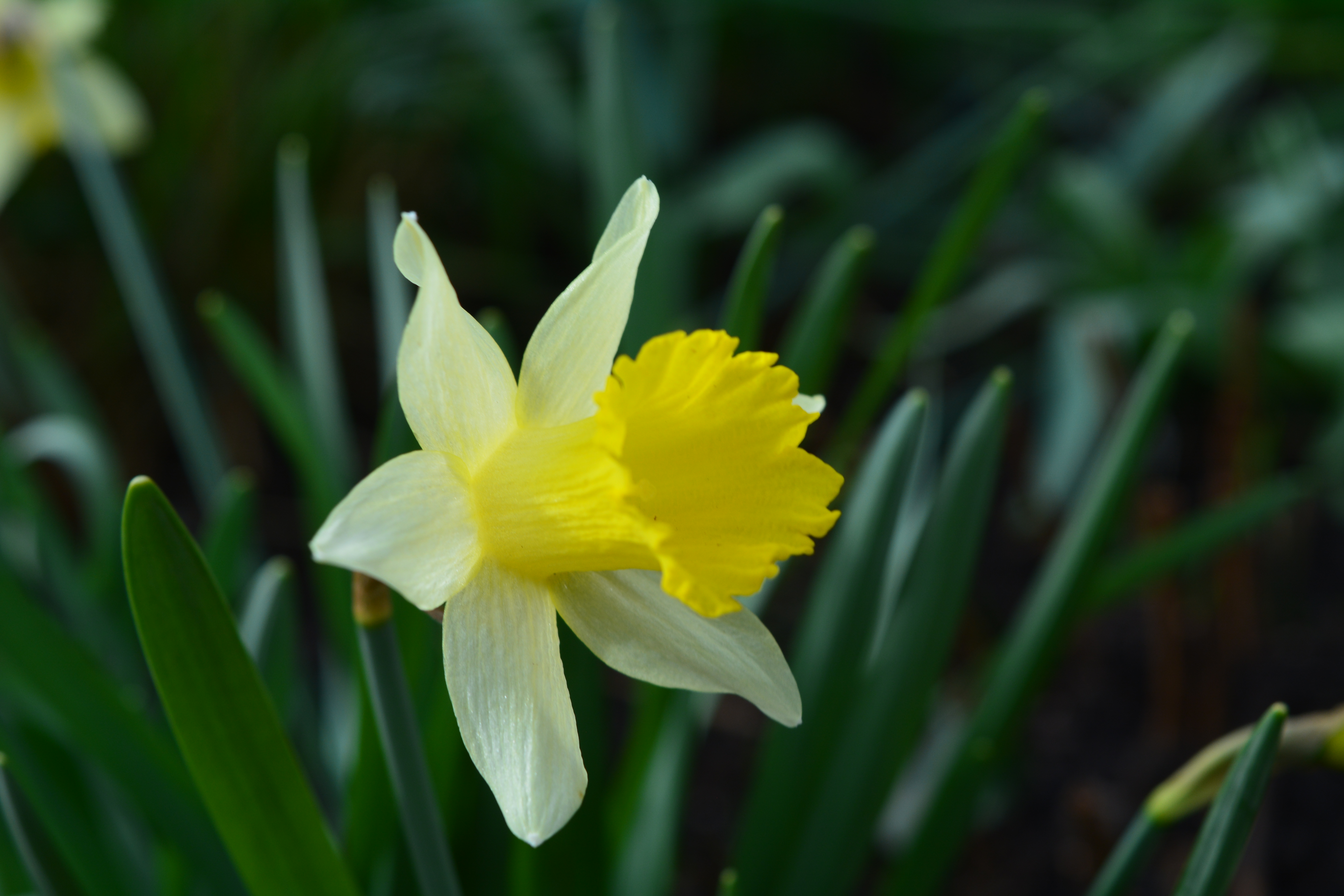
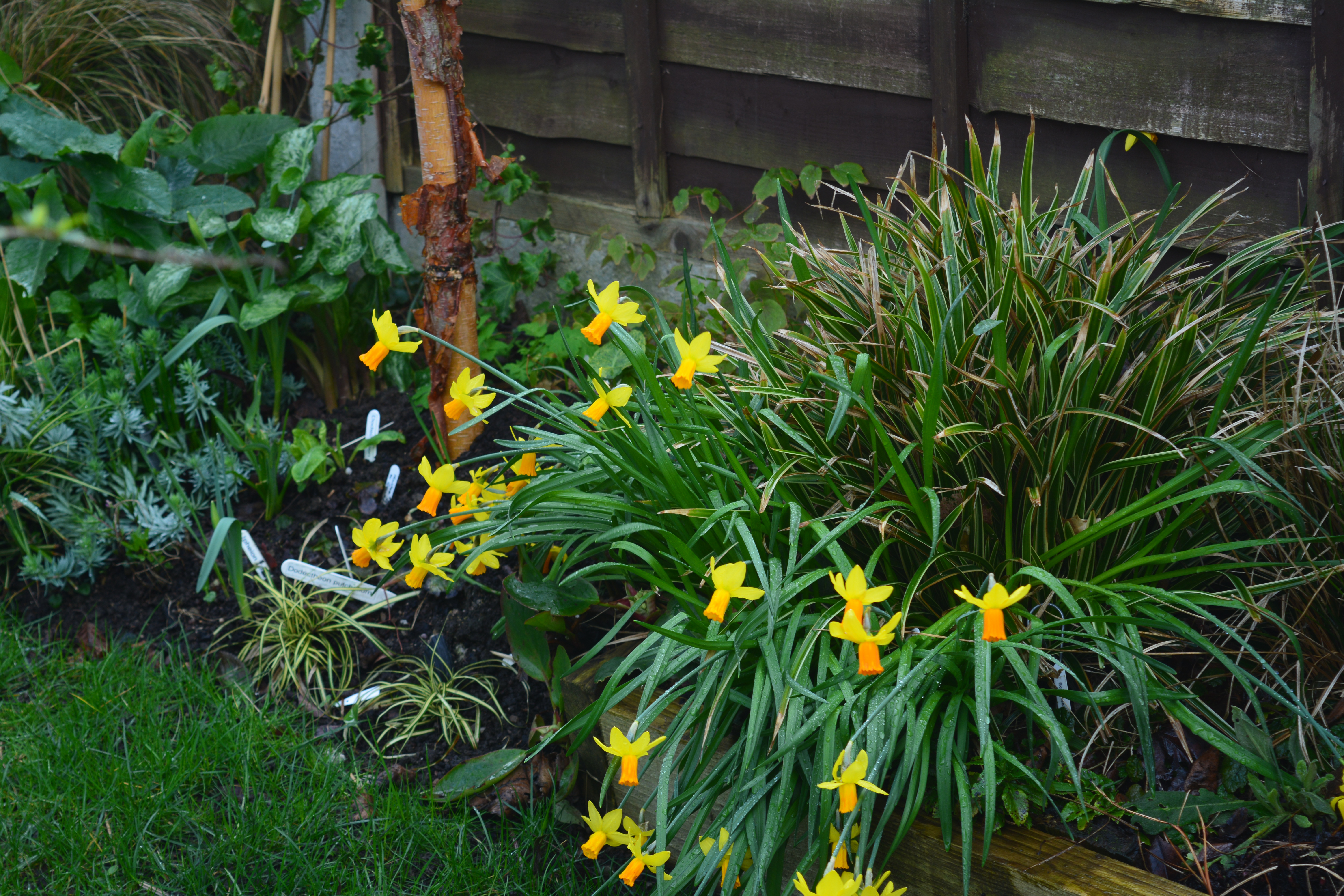
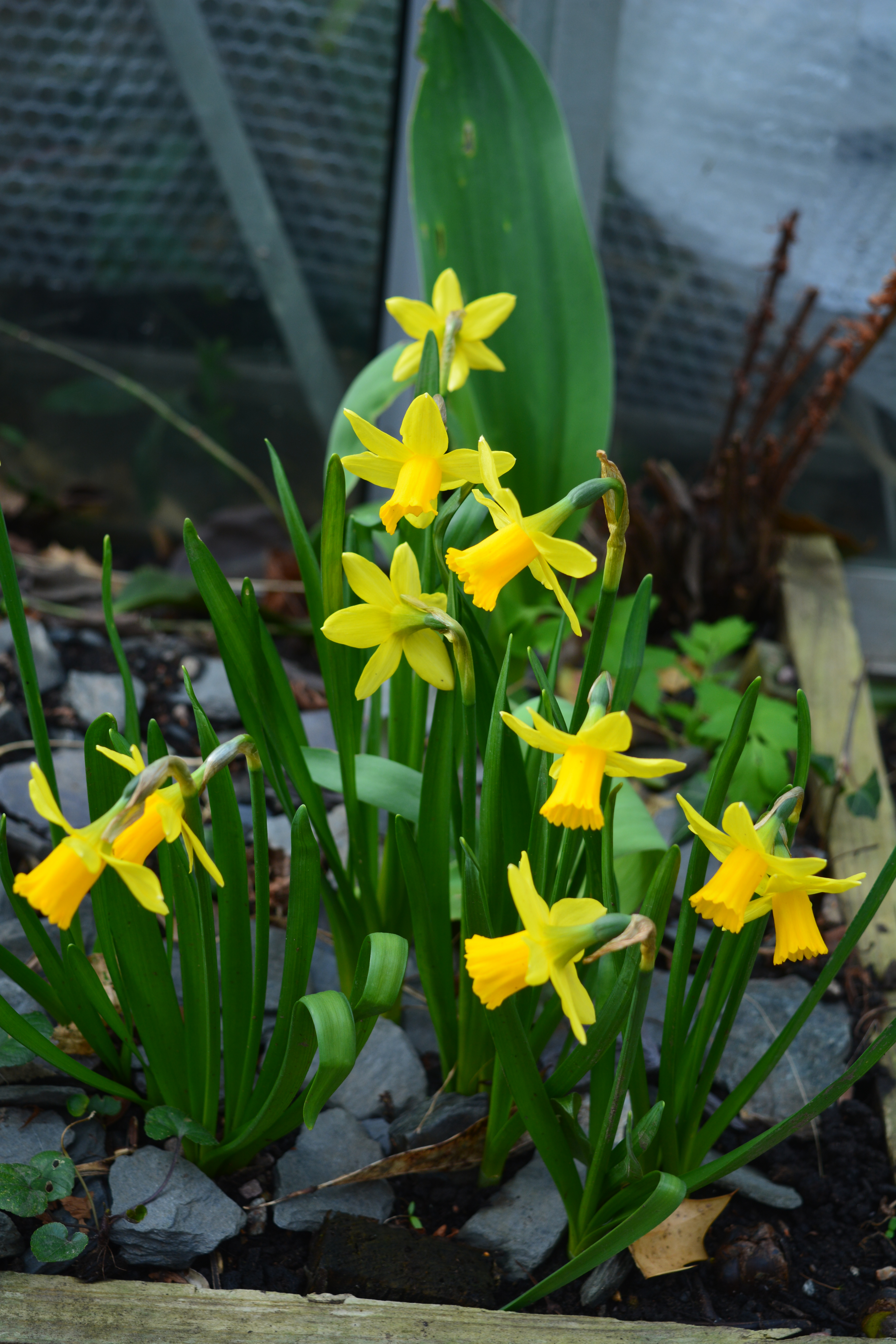
I began by writing, “March came on the scene dull, grey and lifeless looking. After the mild temperatures of the last few weeks with virtually no rain, the last day of February was very wet. Thank goodness for Daffodils, the spring bulbs that can cheer up the dullest of days.”

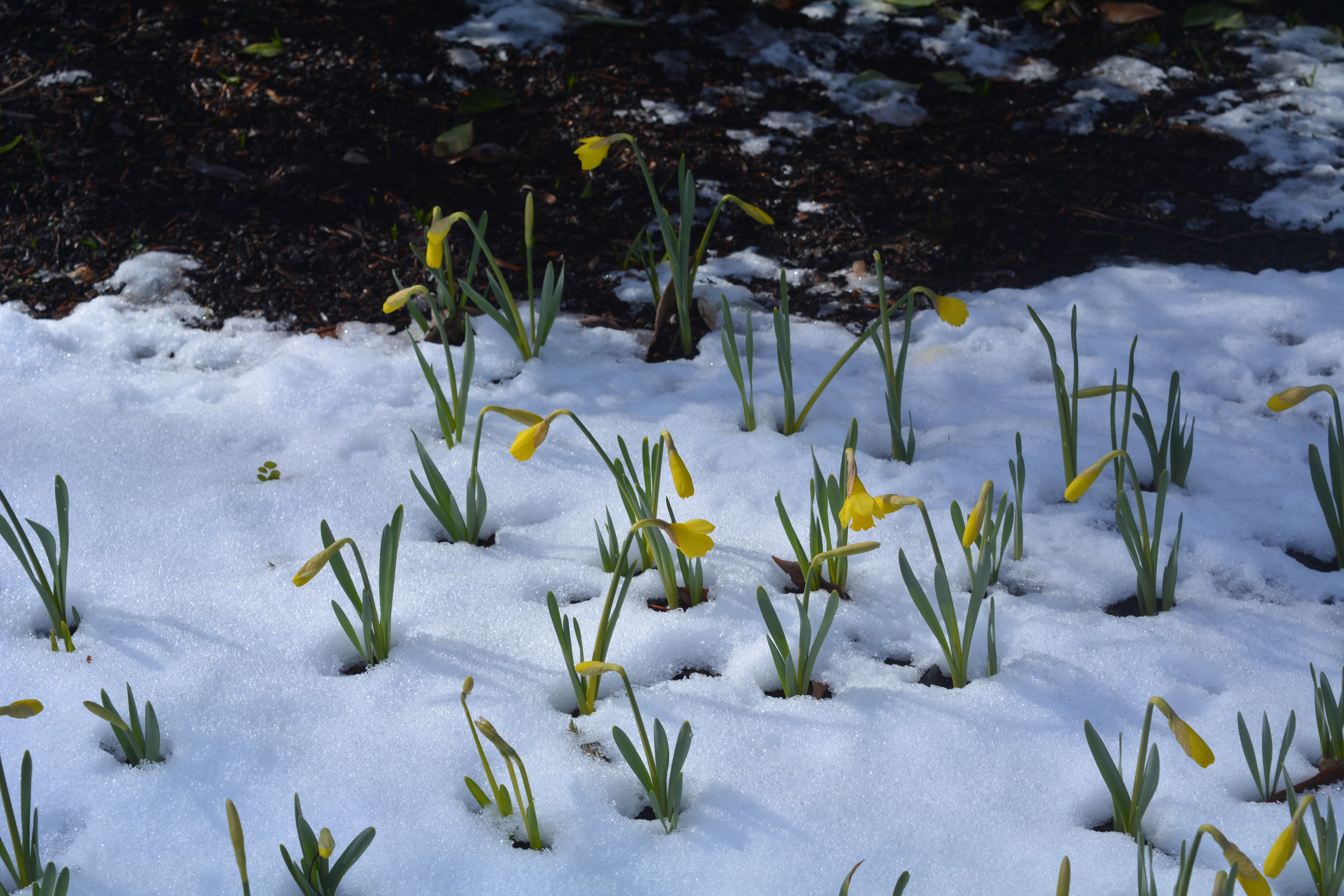
I then showed 9 photos of our wonderful early daffodils, mostly miniature narcissi.


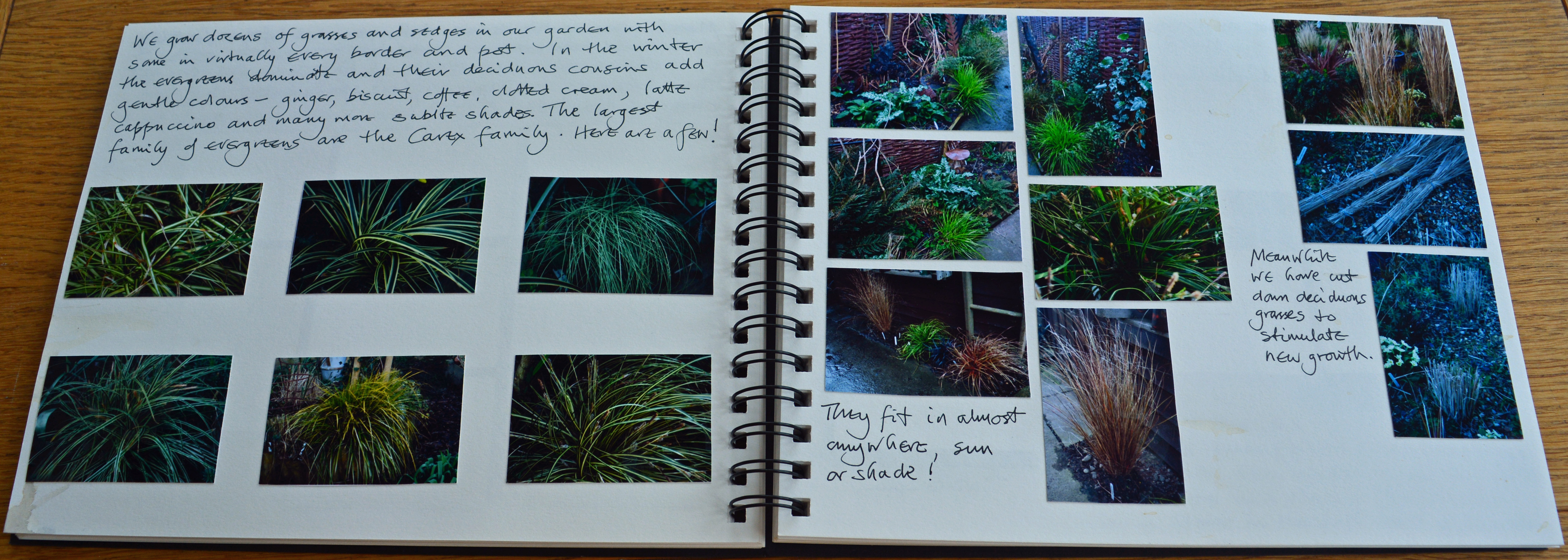
On the next page I looked at our selection of Carex.

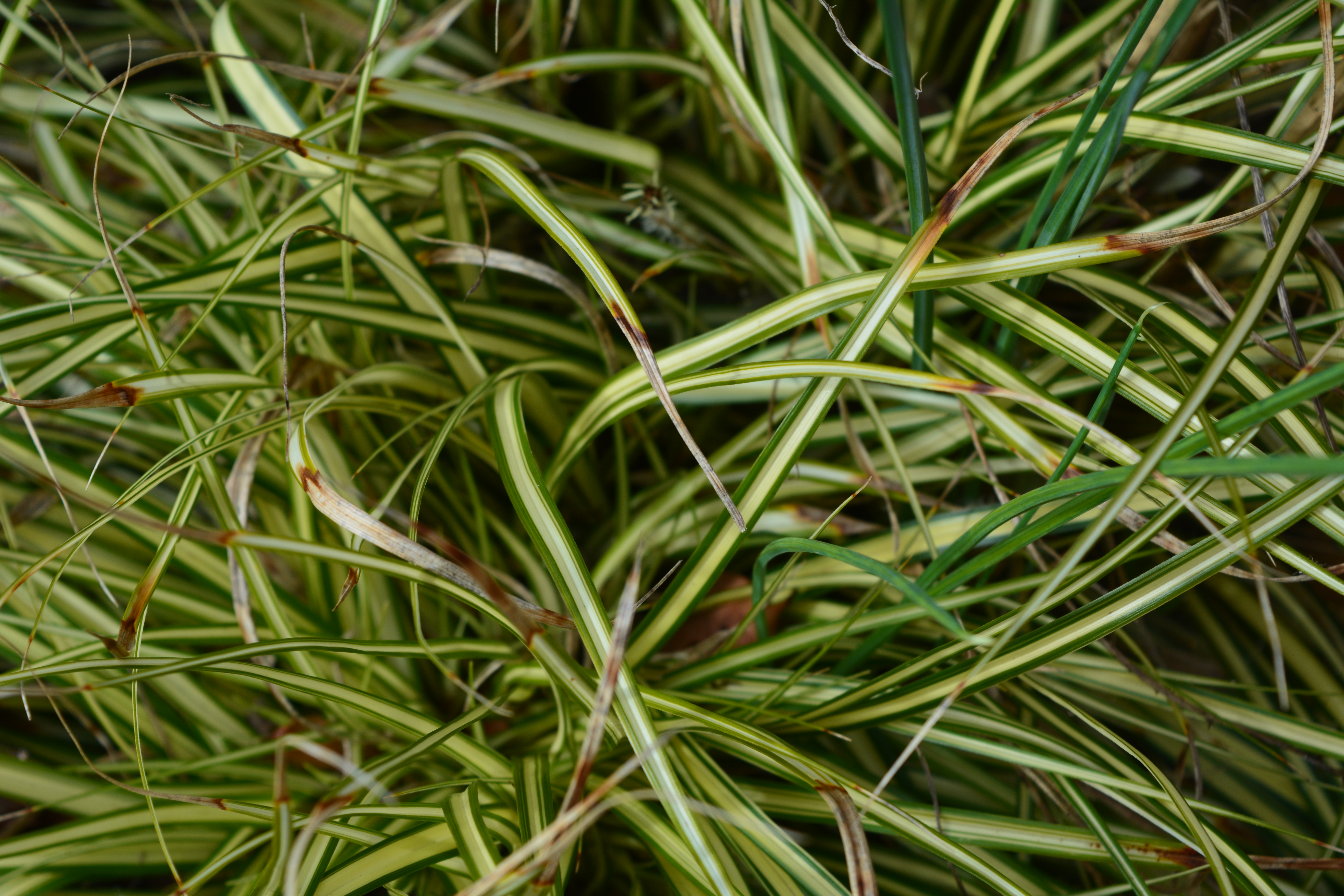
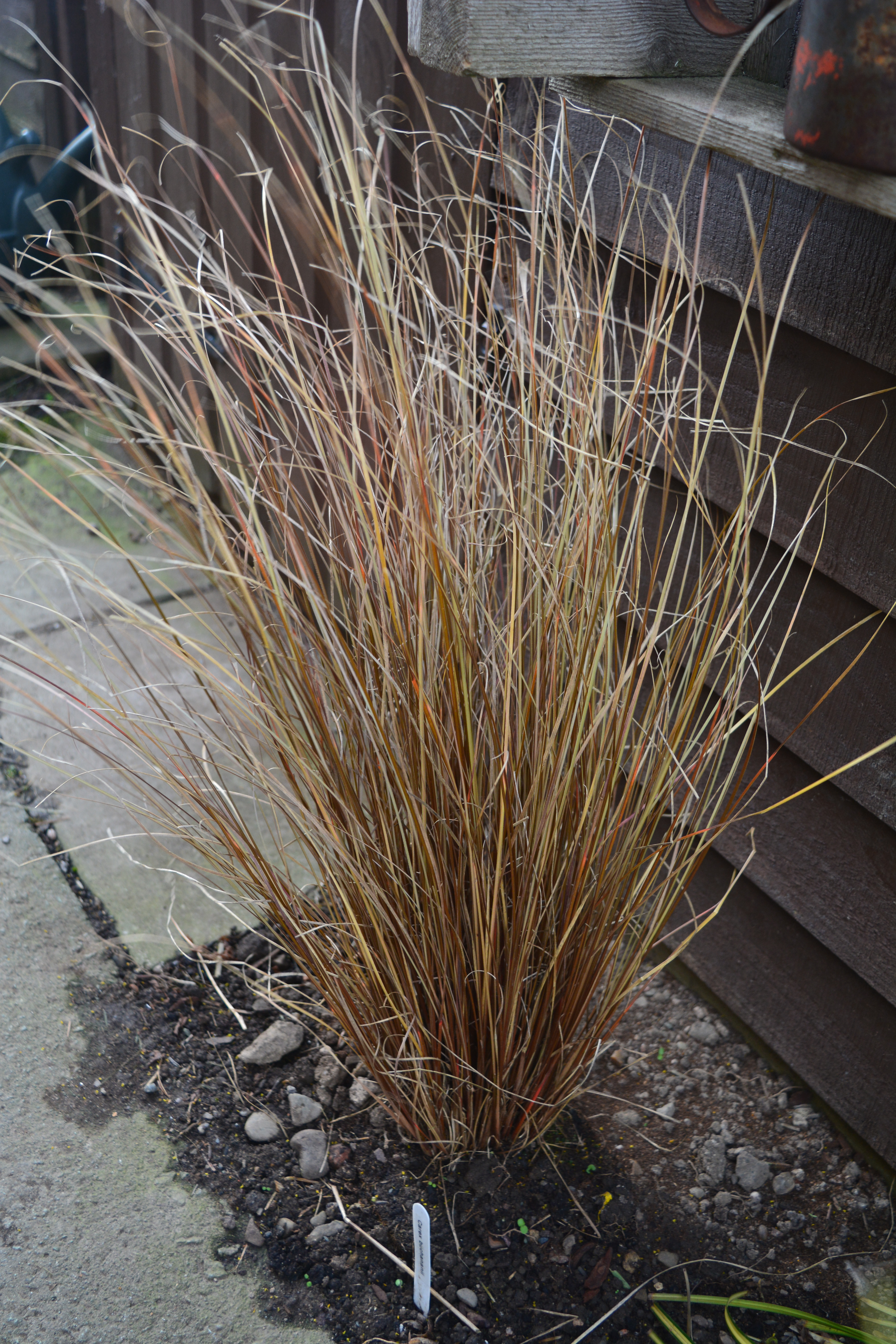
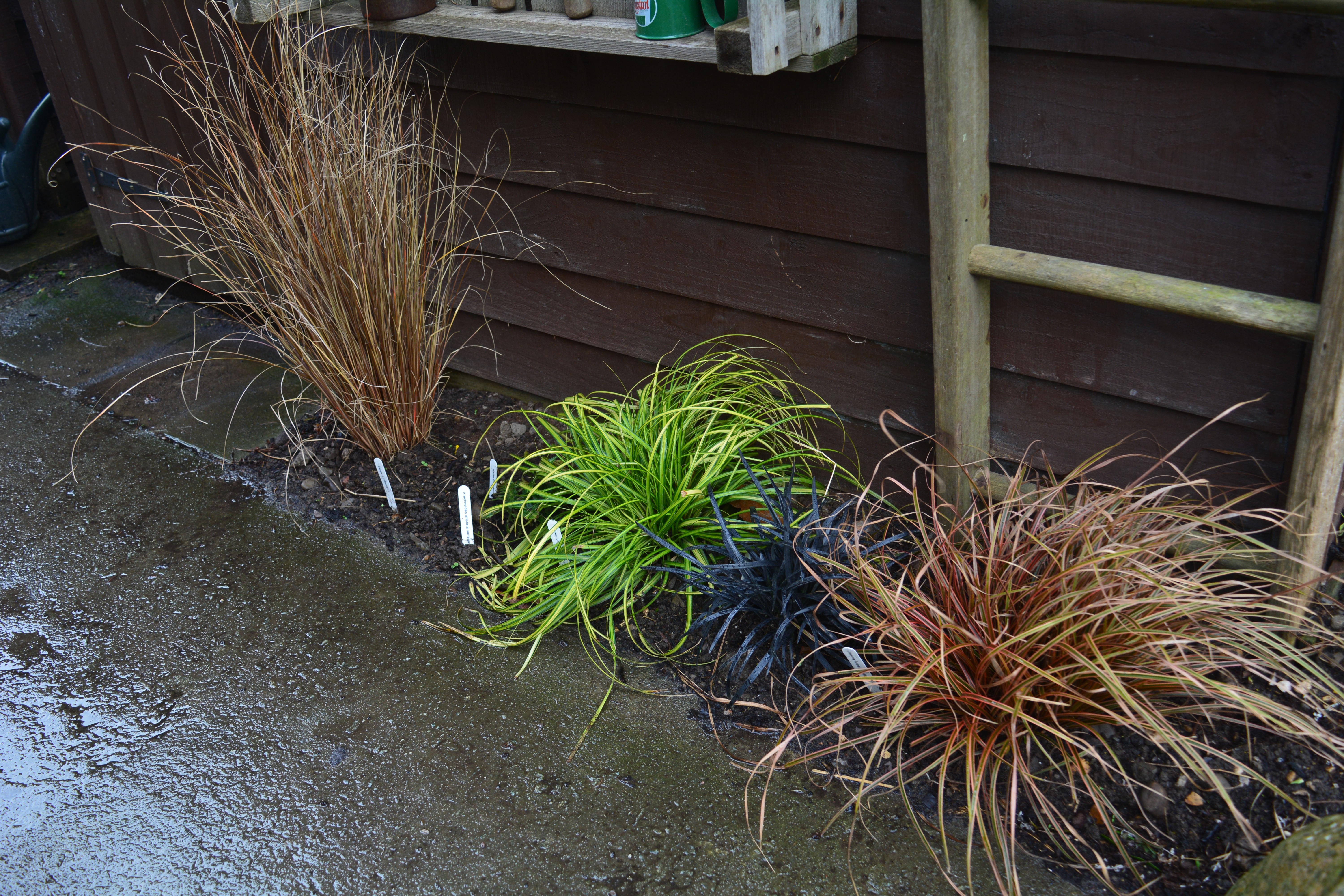
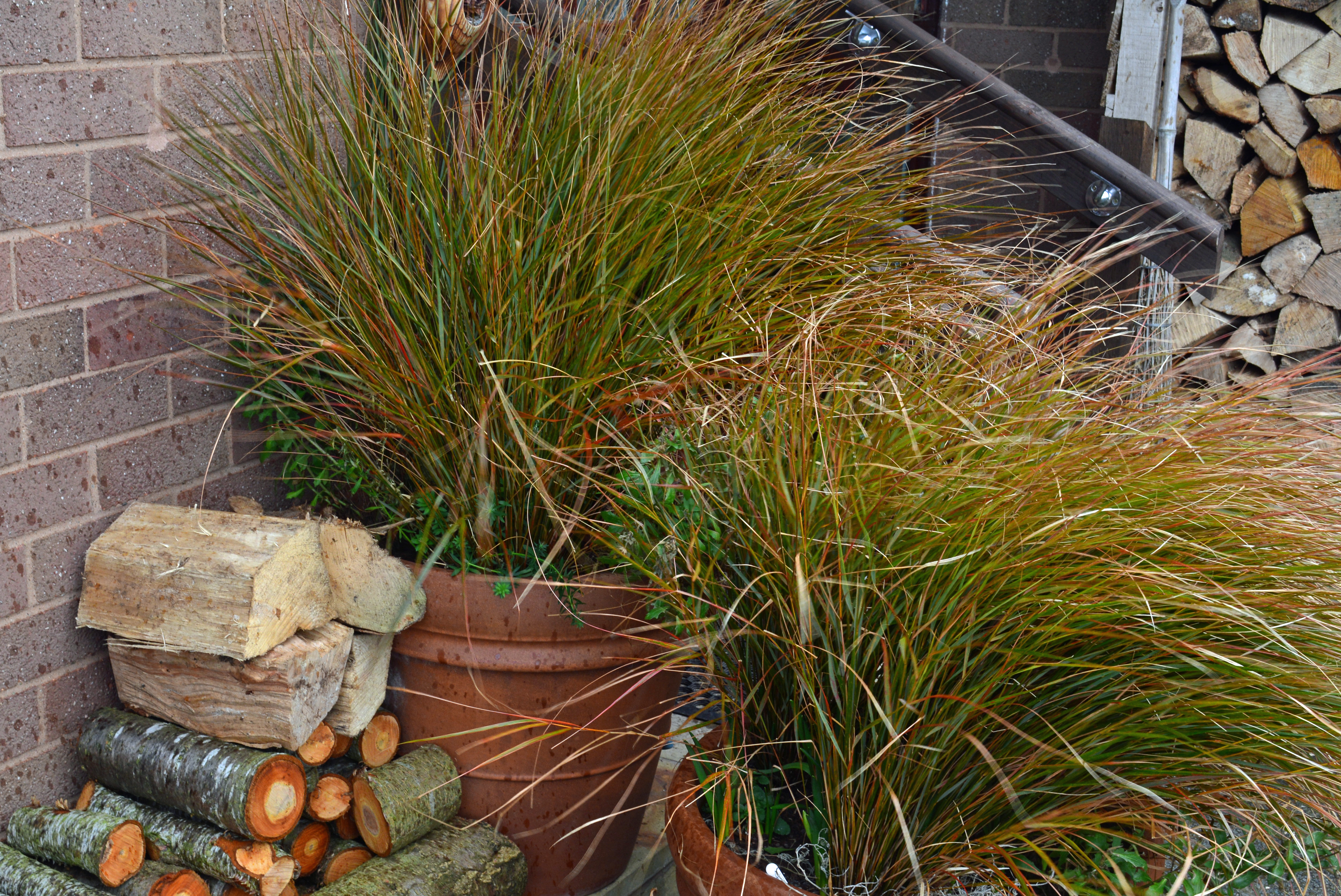
“We grow dozens of grasses and sedges in our garden with some in virtually every border and container. In the winter the evergreens dominate and their deciduous cousins add gentle colours – ginger, biscuit, coffee, clotted cream, latte, cappuccino and many more subtle shades. The largest family of evergreens are the Carex family. Here are just a few that we grow!”

Here is a selection of the many Carex we grow.

On the opposite page I consider how well the Carex family of grasses fit in with other plants and plant combinations. I wrote, “They fit in almost anywhere, sun or shade!”


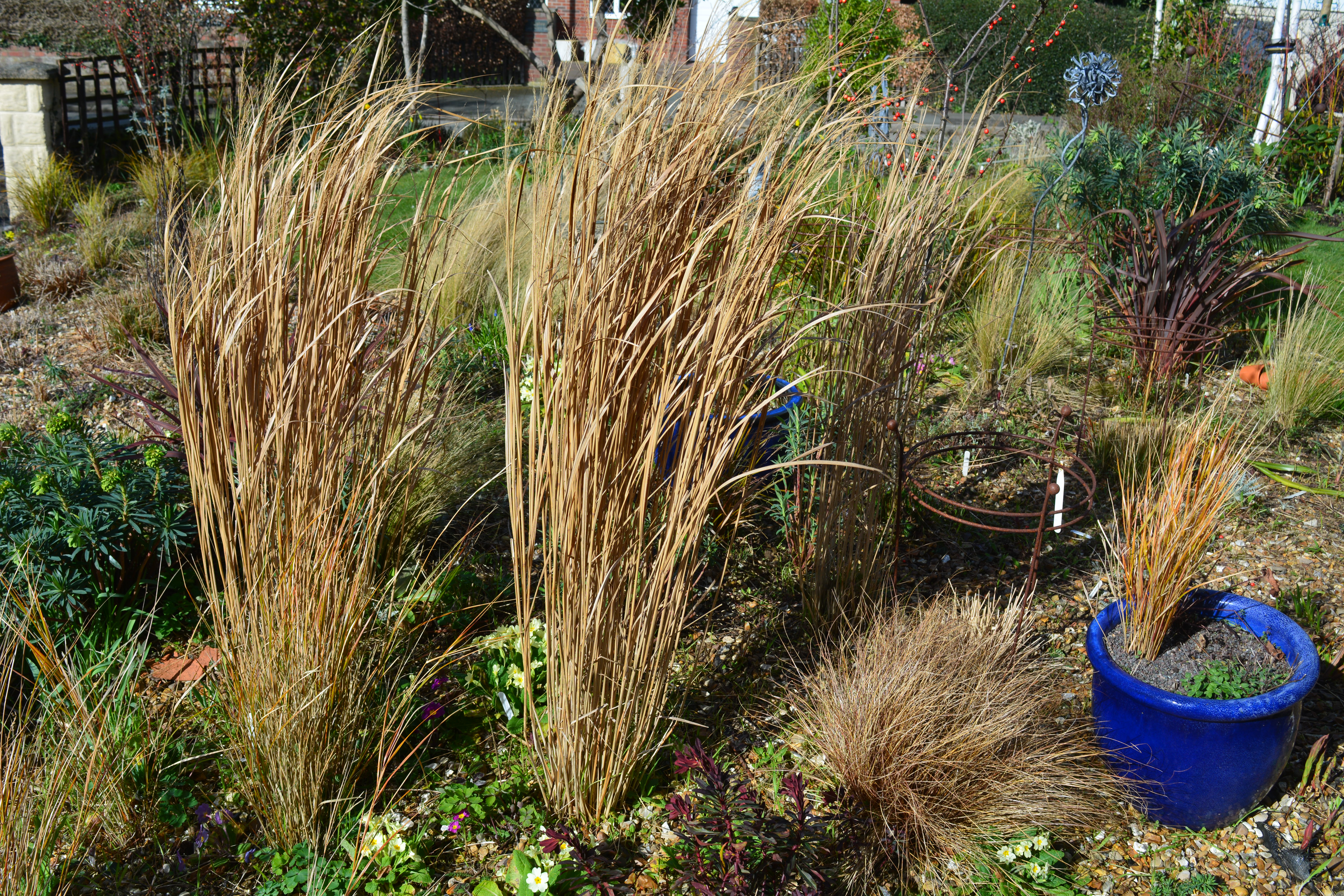
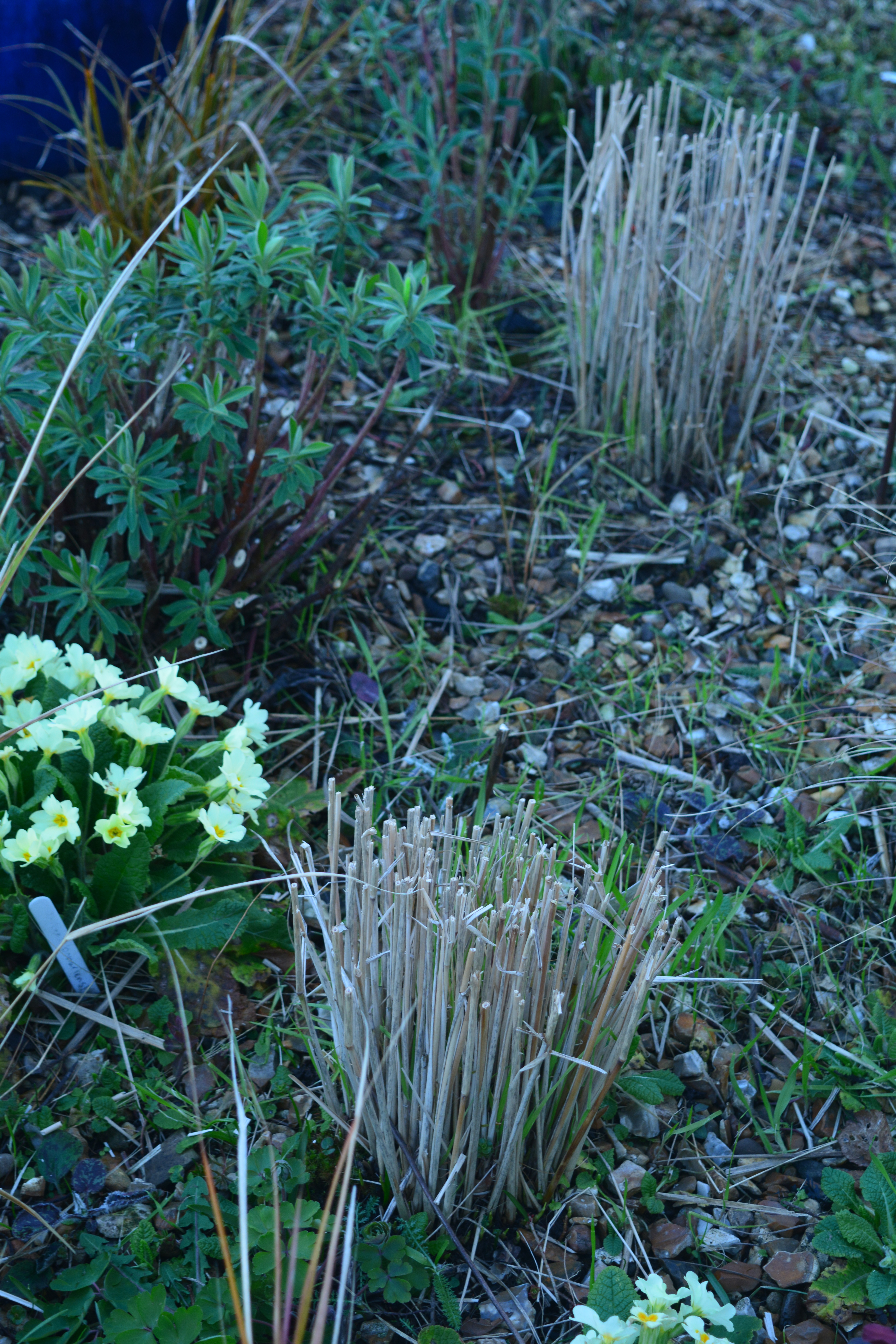
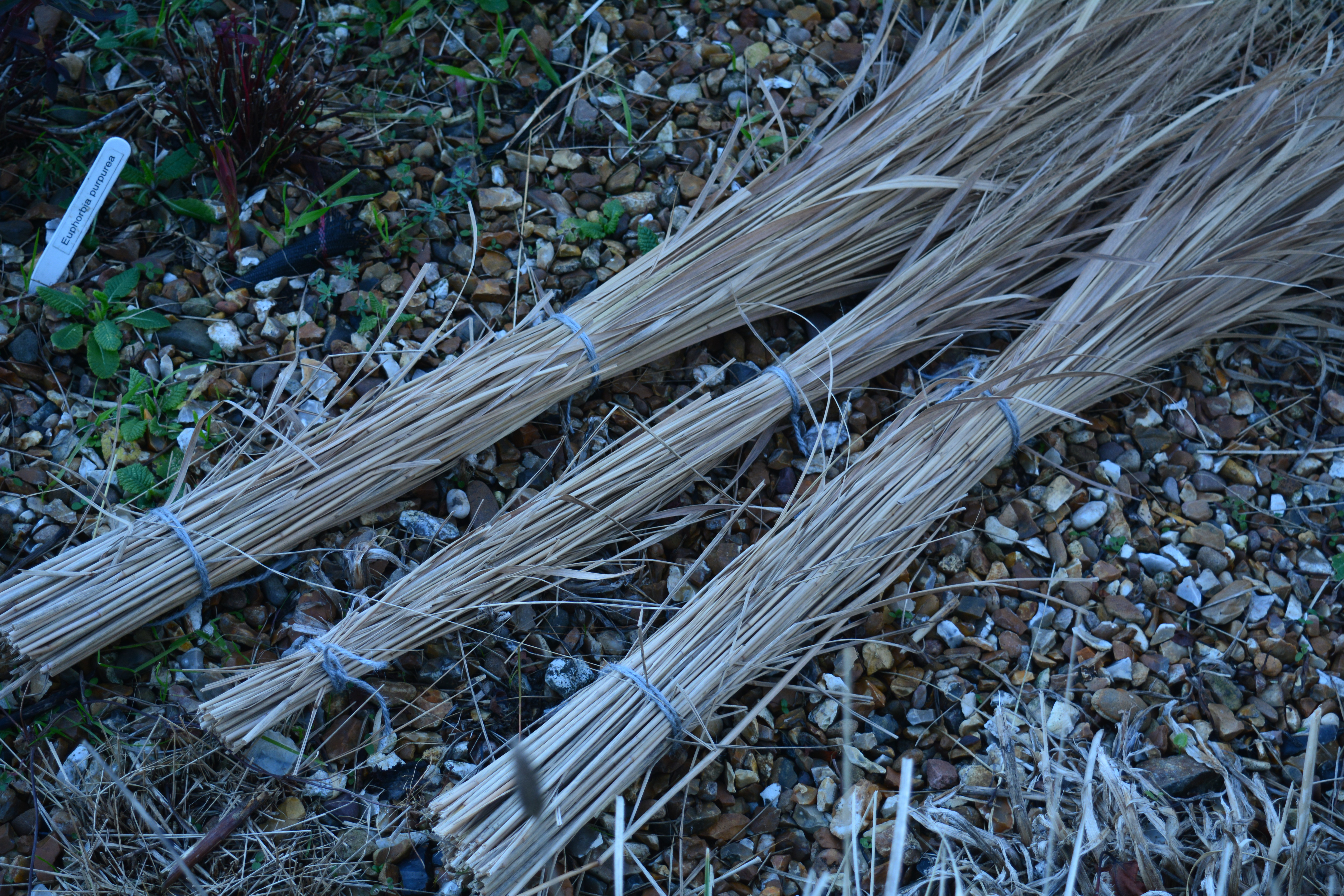
“Meanwhile we have cut down deciduous grasses to stimulate new growth.”

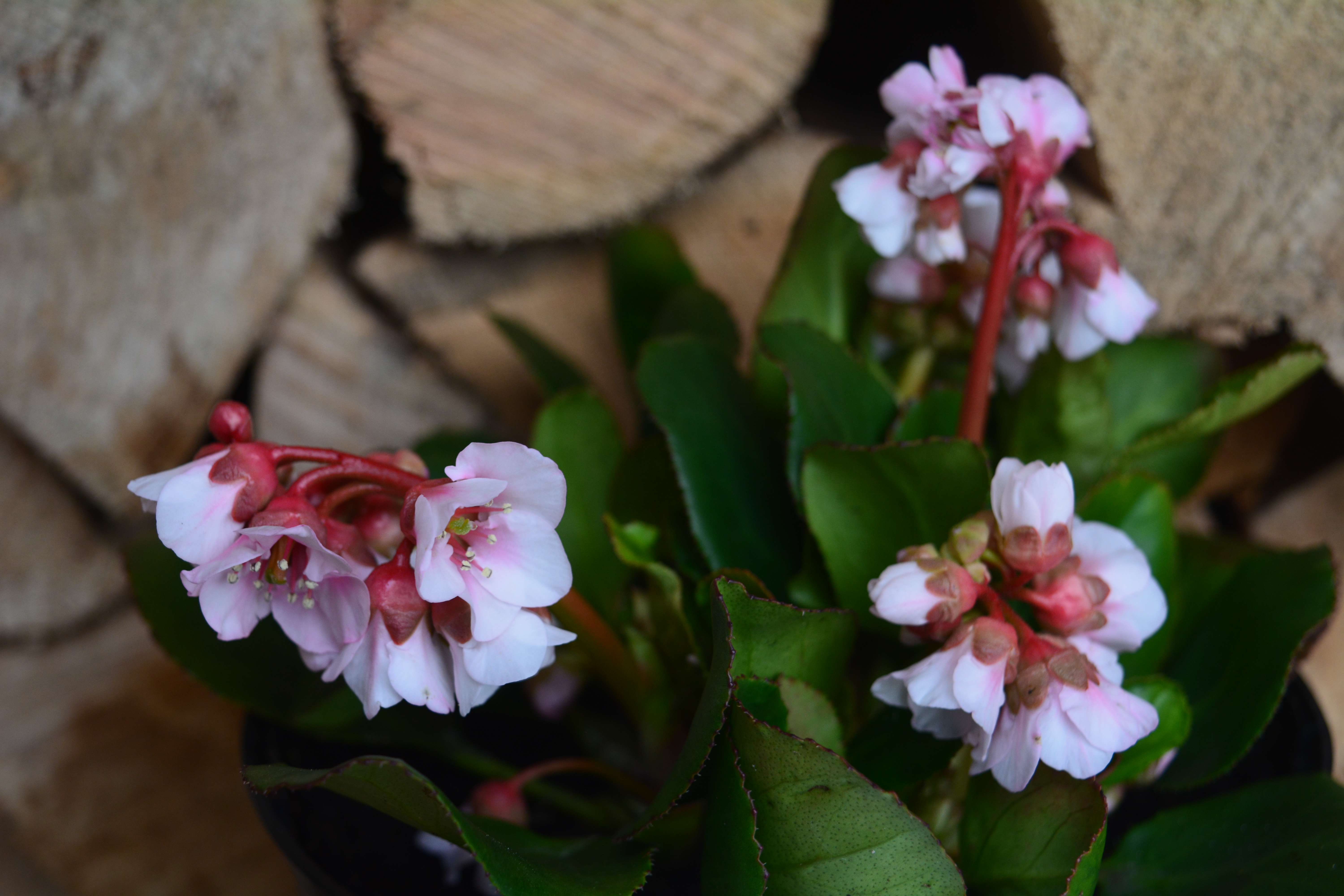
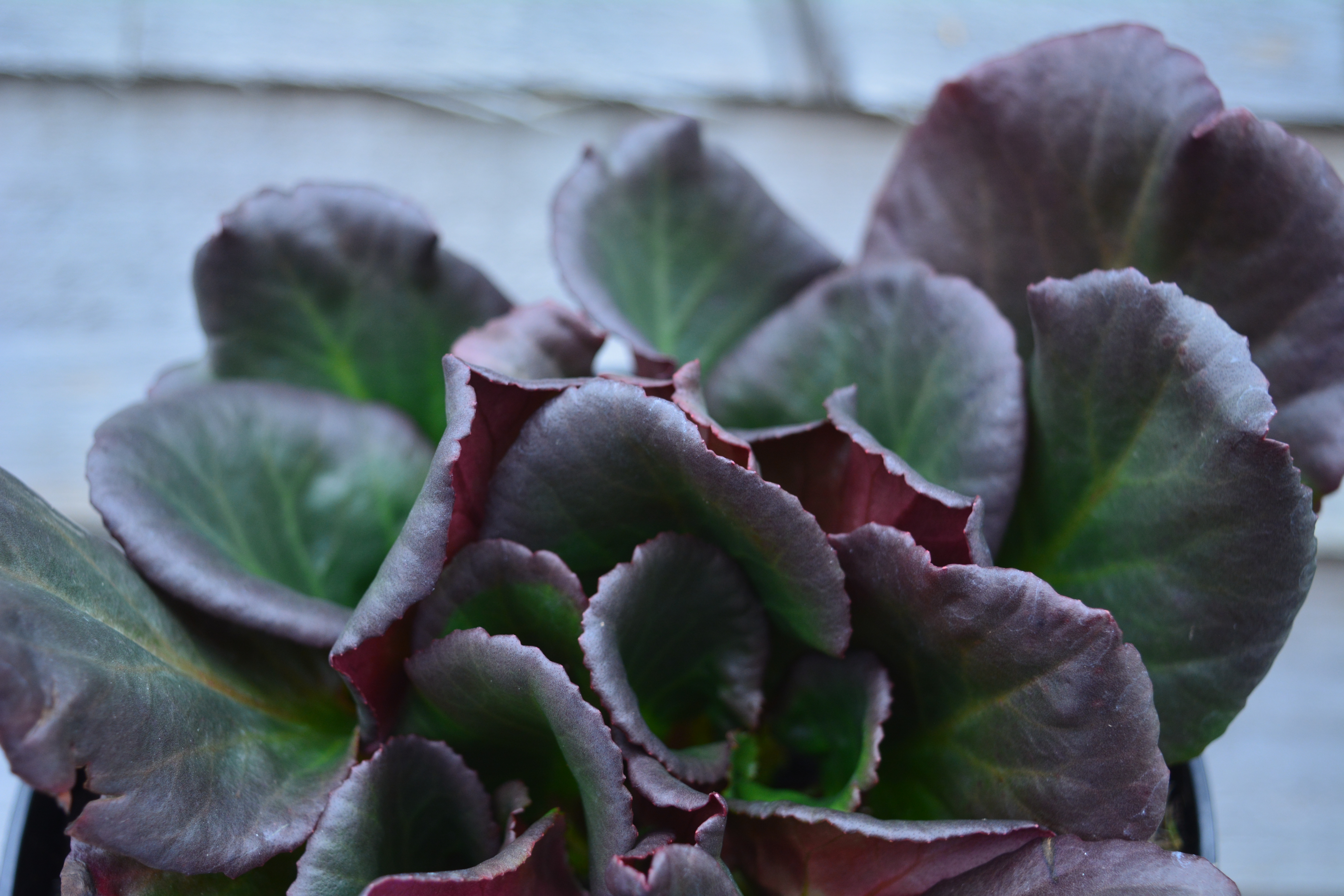
Turning over to the next double page spread I have a look at a couple of under-appreciated plants.

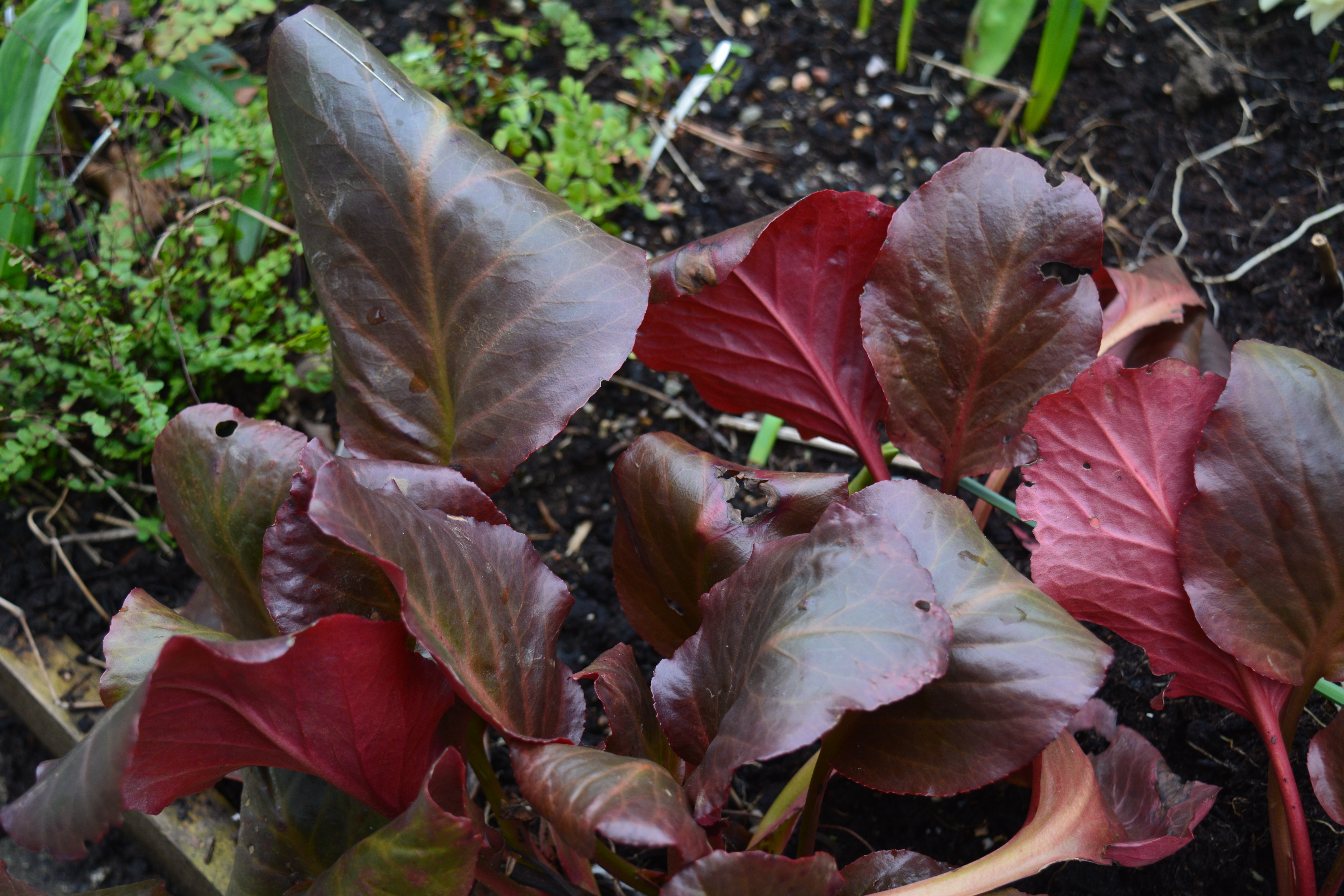
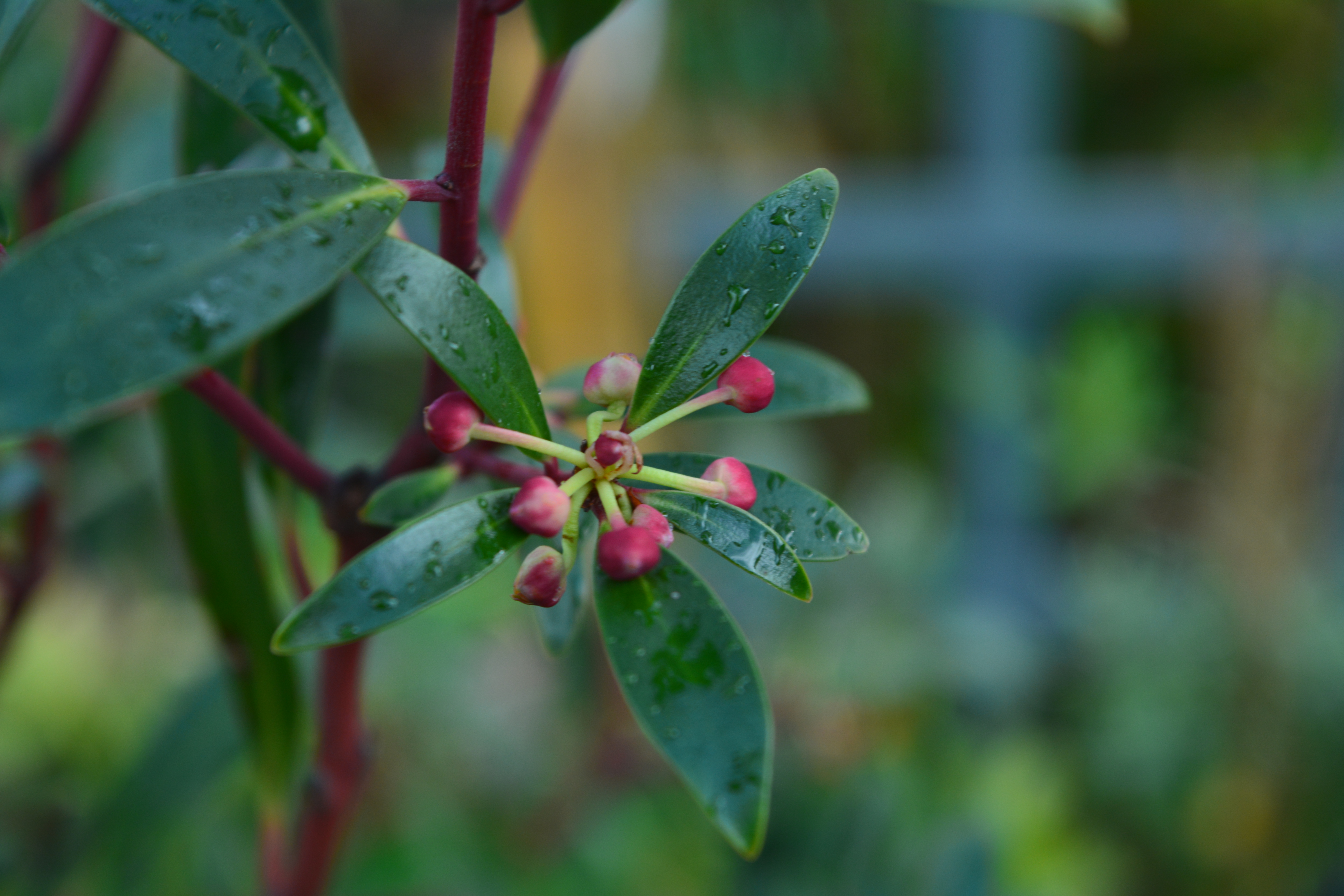
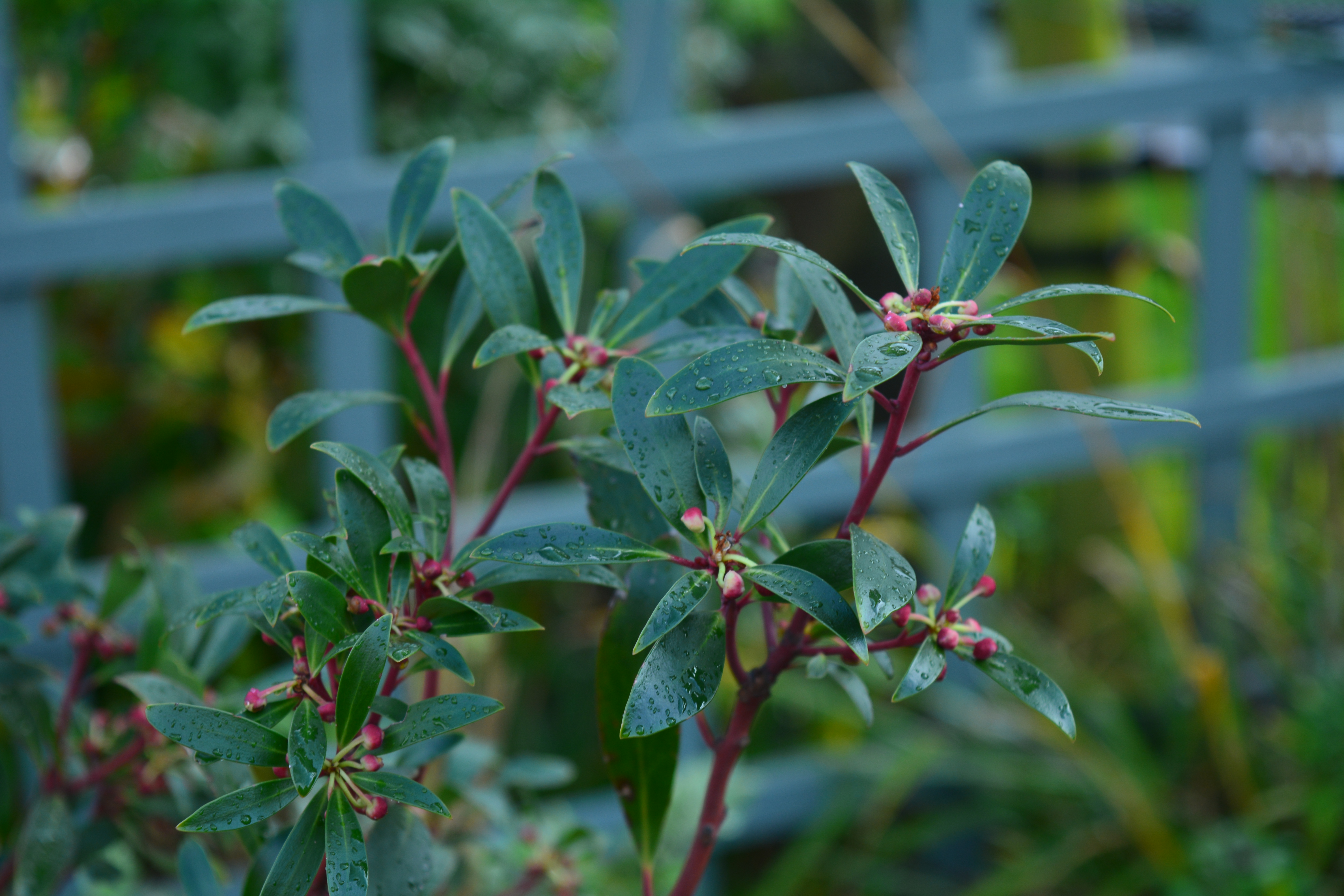
I wrote, “An unknown plant and an under appreciated plant, both stalwarts of the March garden, Bergenias and Drimys. I love them both!”

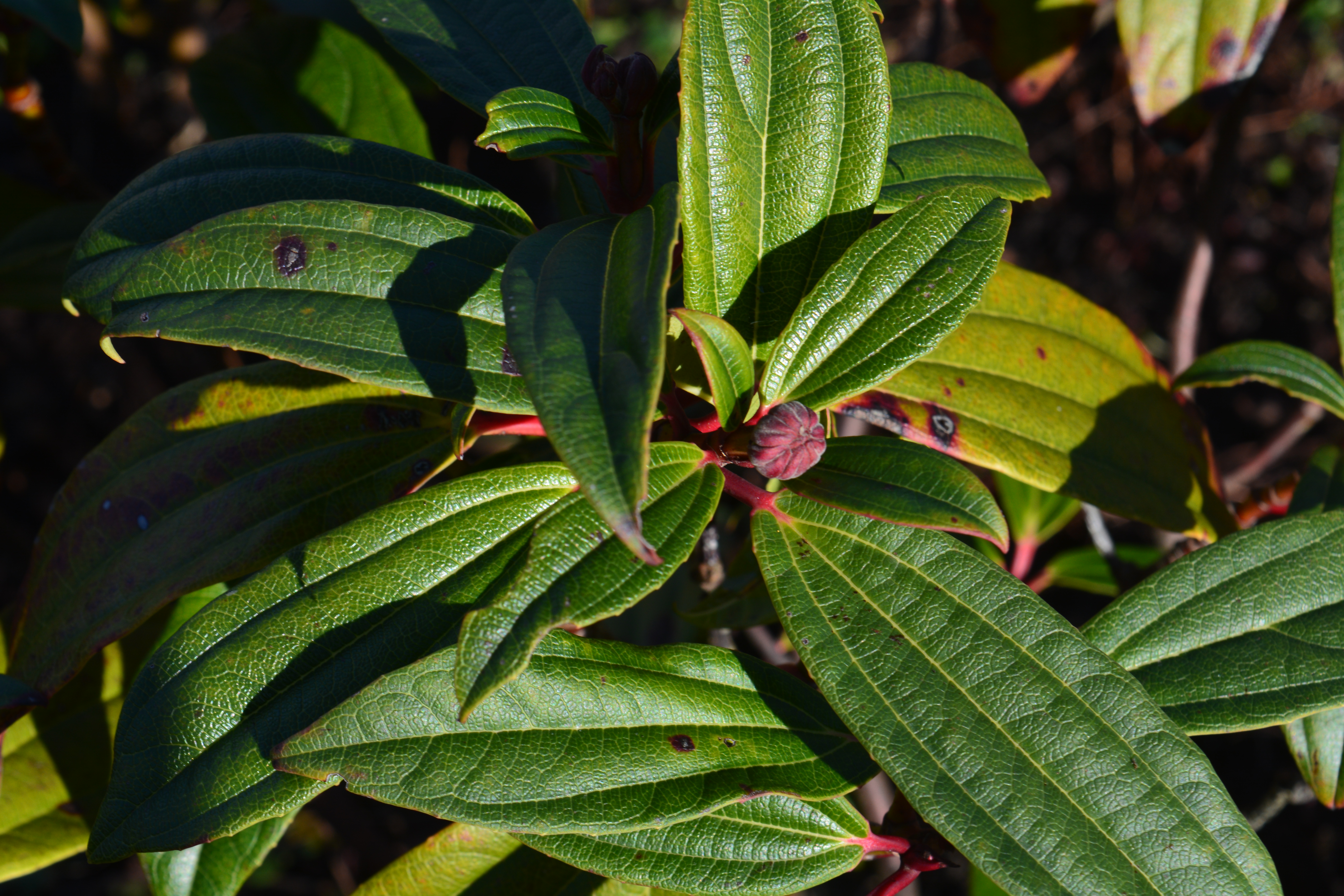
“Drimys lanceolata ‘Winter Spice’.

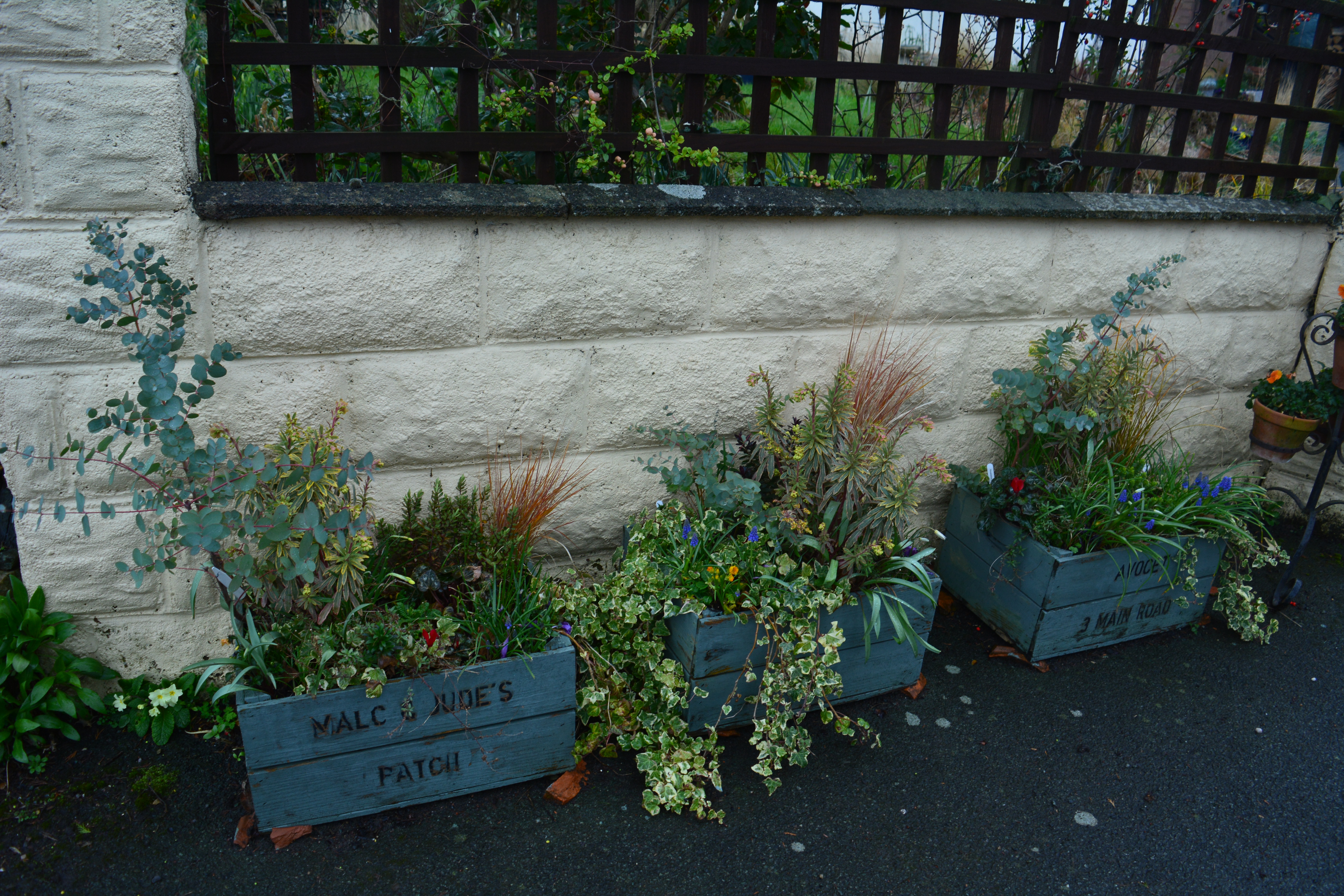
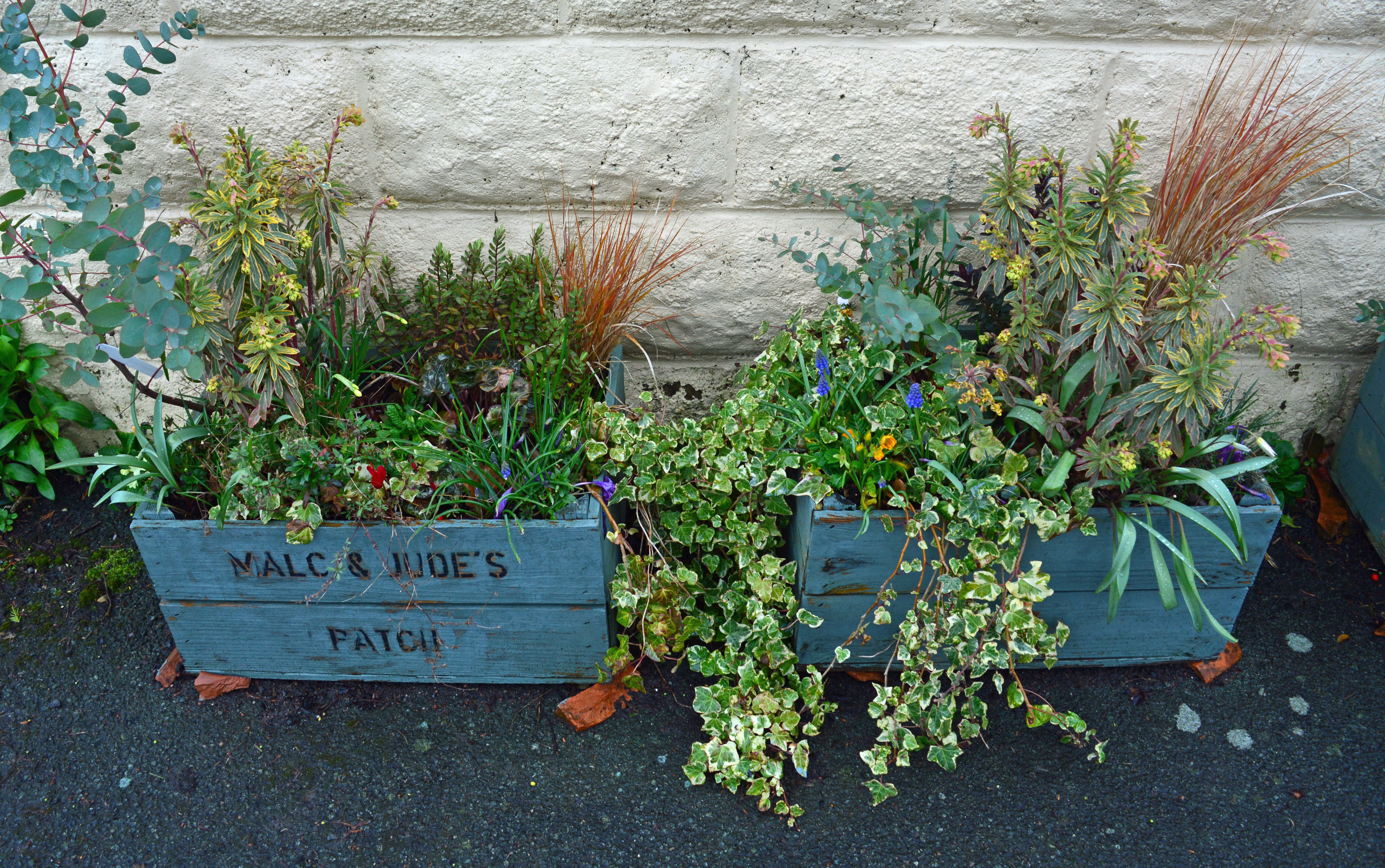
On the opposite page I looked at two places of warmth, a warm welcome and the warm greenhouse. Firstly I wrote, “A warm welcome to your garden is essential throughout the year. We welcome visitors to our Avocet patch using three fruit boxes planted up with interesting seasonal plants. Here they are in March.”

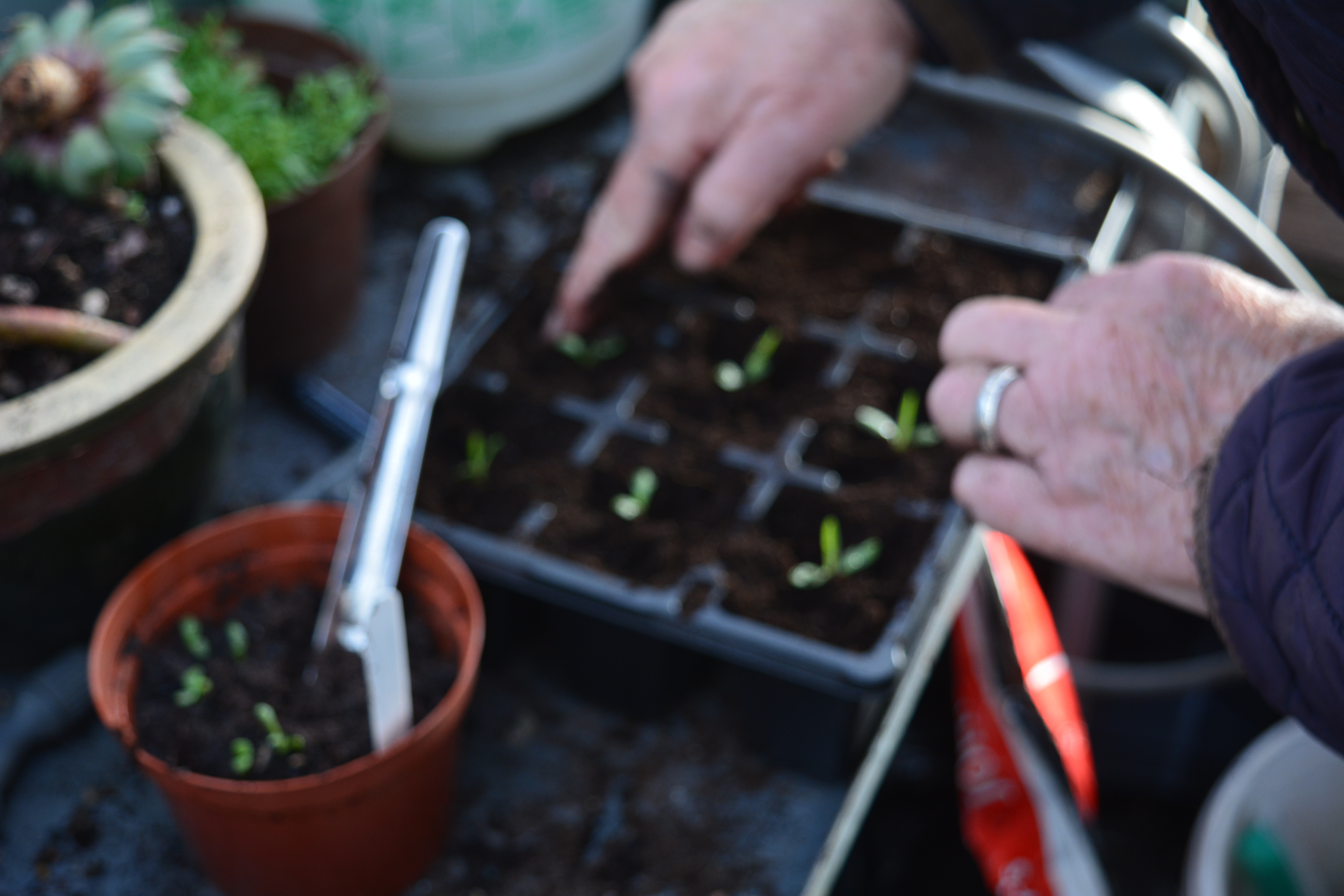
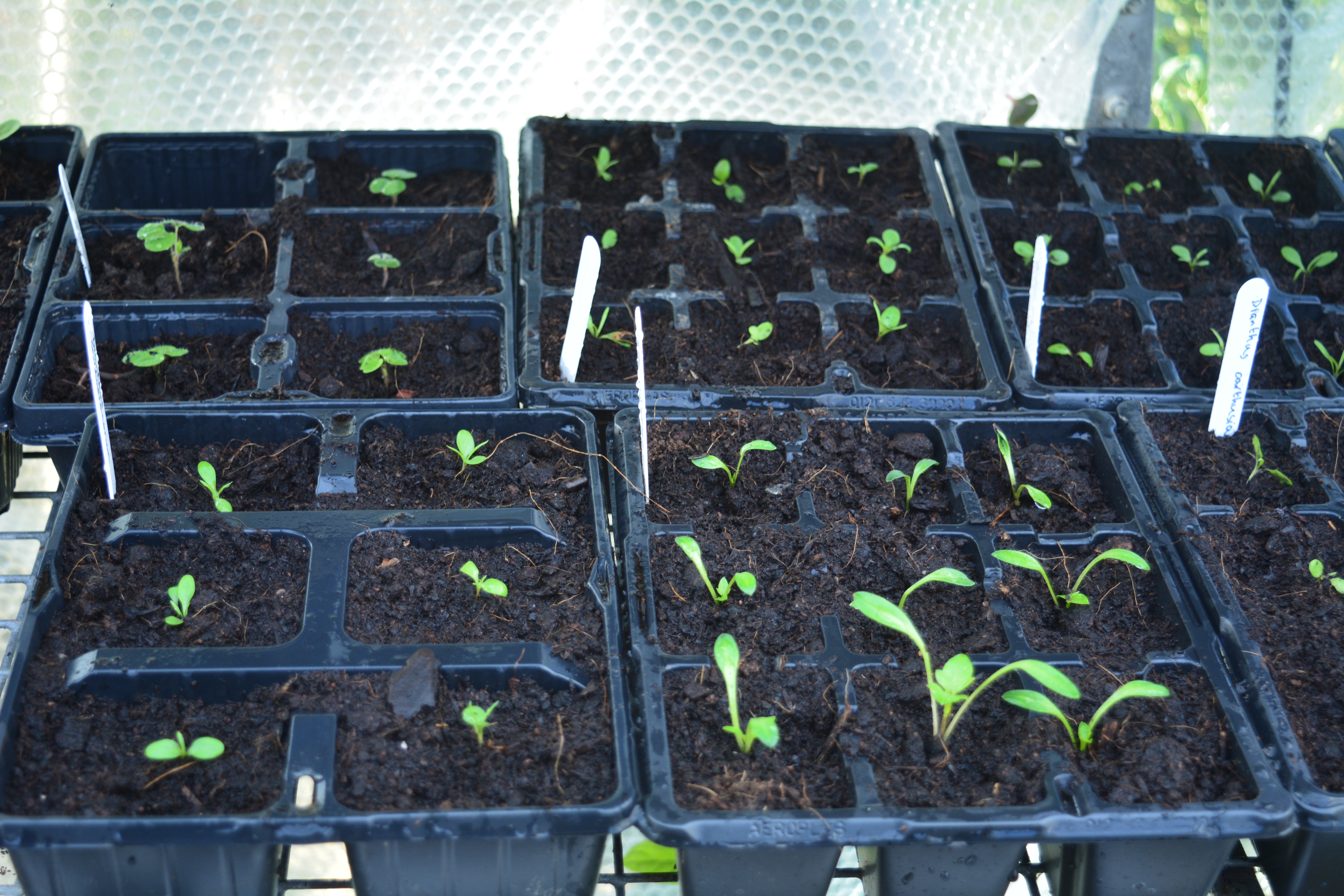
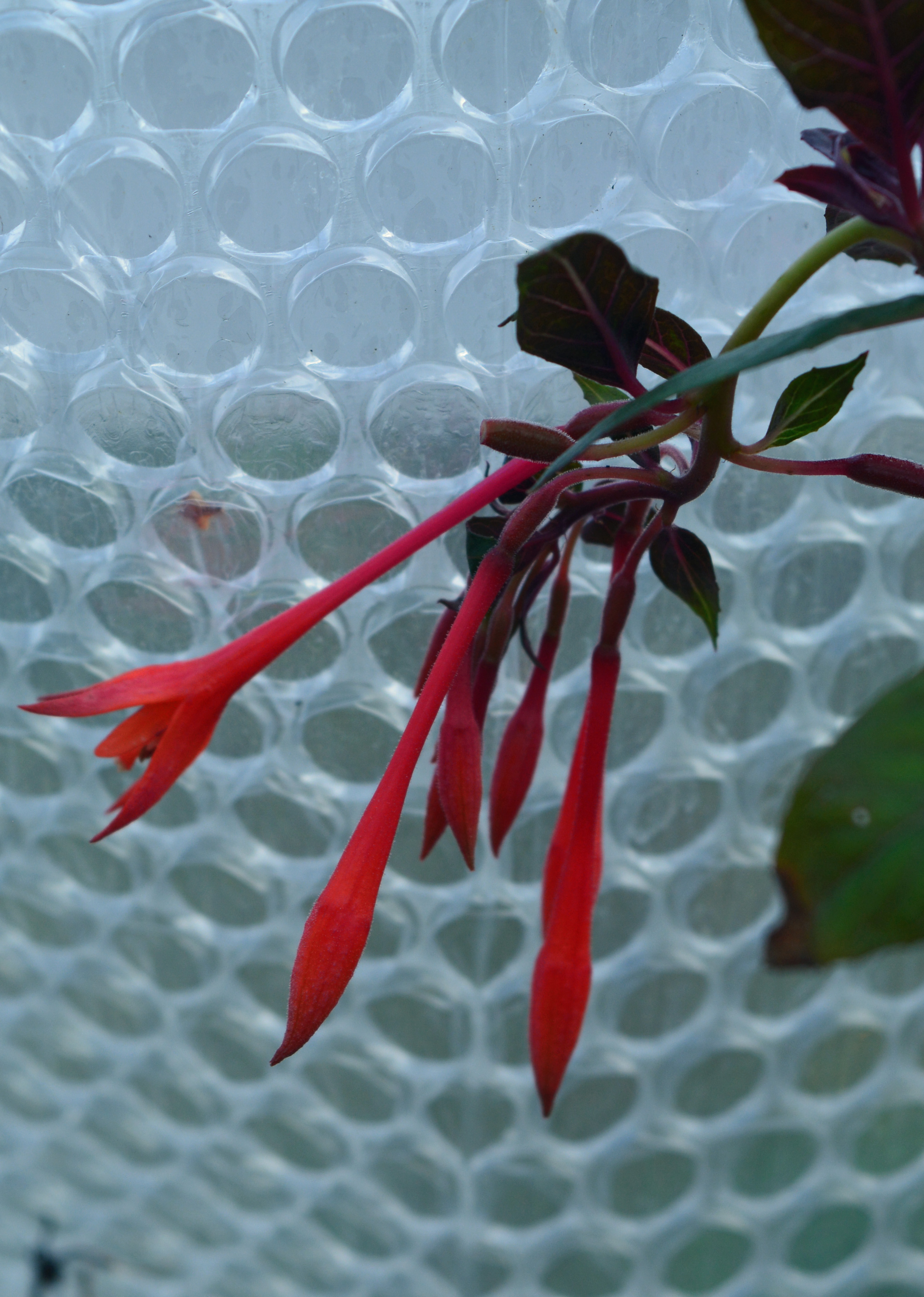
“When winter weather gets too much we retreat to the greenhouse where Jude has been pricking out seedlings and I have been nurturing my delicate succulents and Fuschia thalia which is in flower in the first week of March.”


On the next couple of pages I consider March pruning and some flowers we enjoyed in our March garden.

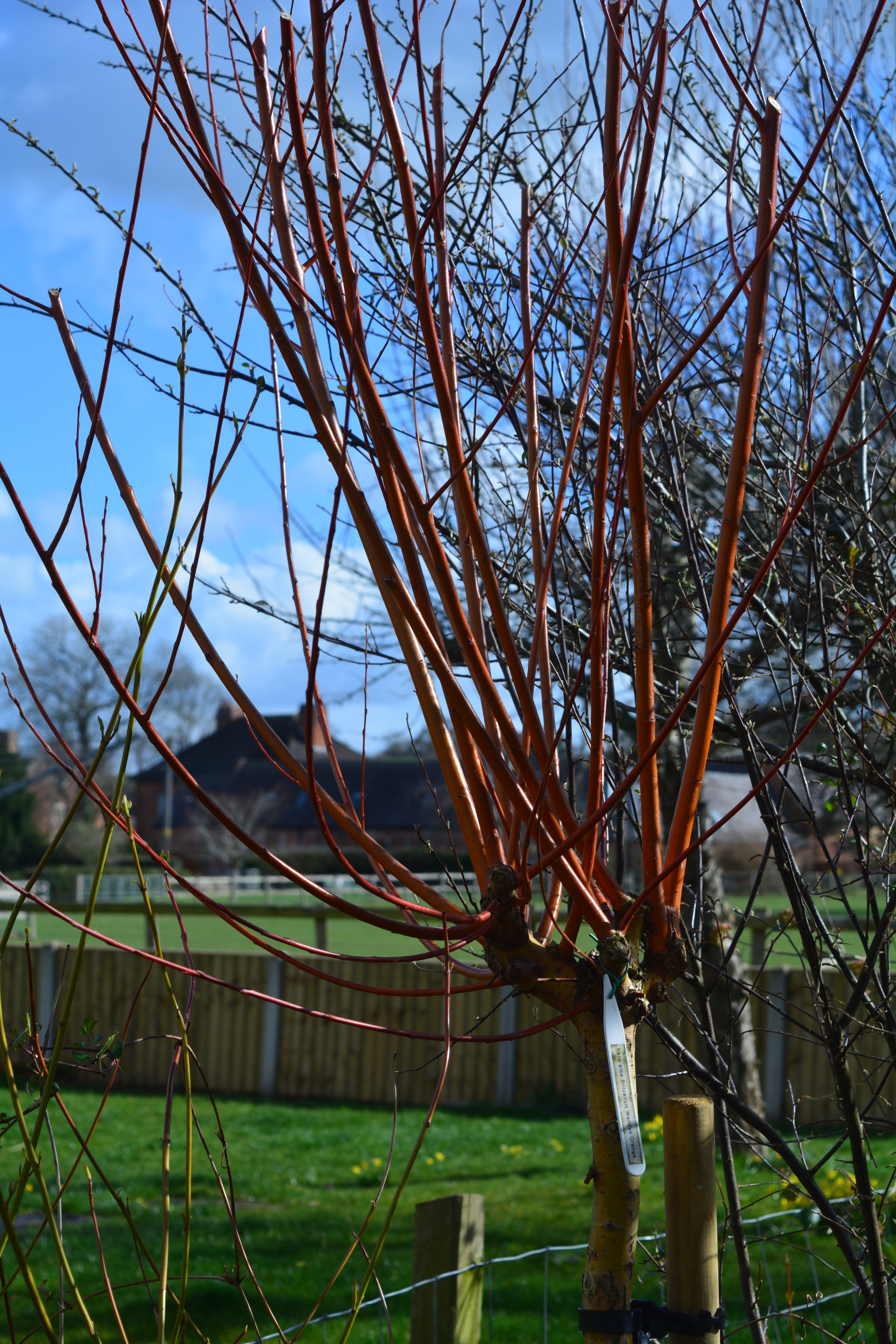
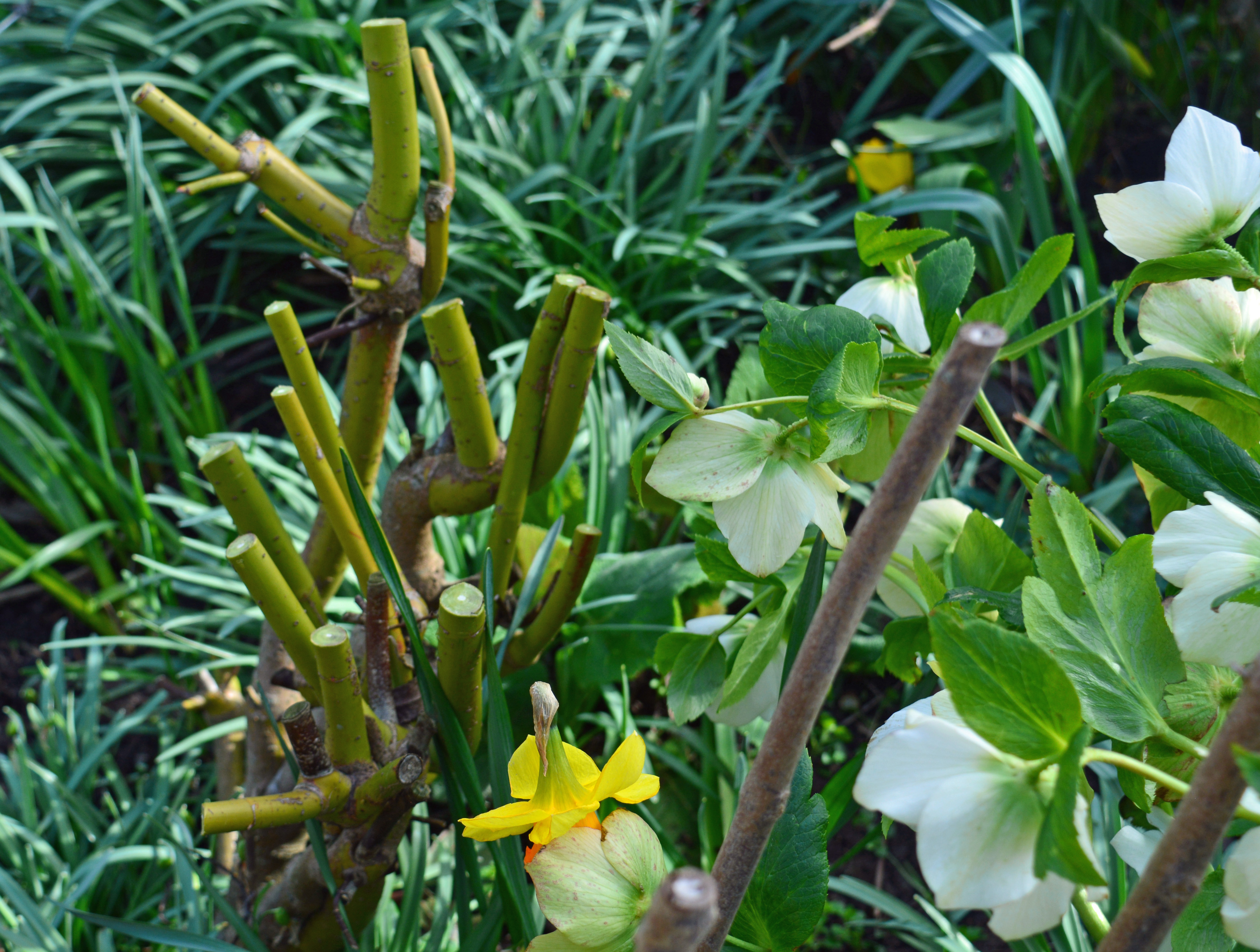
Of pruning I wrote, “March is a busy month in our garden. As well as cutting deciduous grasses rather drastically almost down to the ground we have to coppice or pollard Salix and Cornus to ensure we will enjoy their coloured stems next winter.”

“Flowers are appearing, some expected but others well out of their season.”


Over the page I moved on to consider the fresh growth appearing throughout the garden during March.

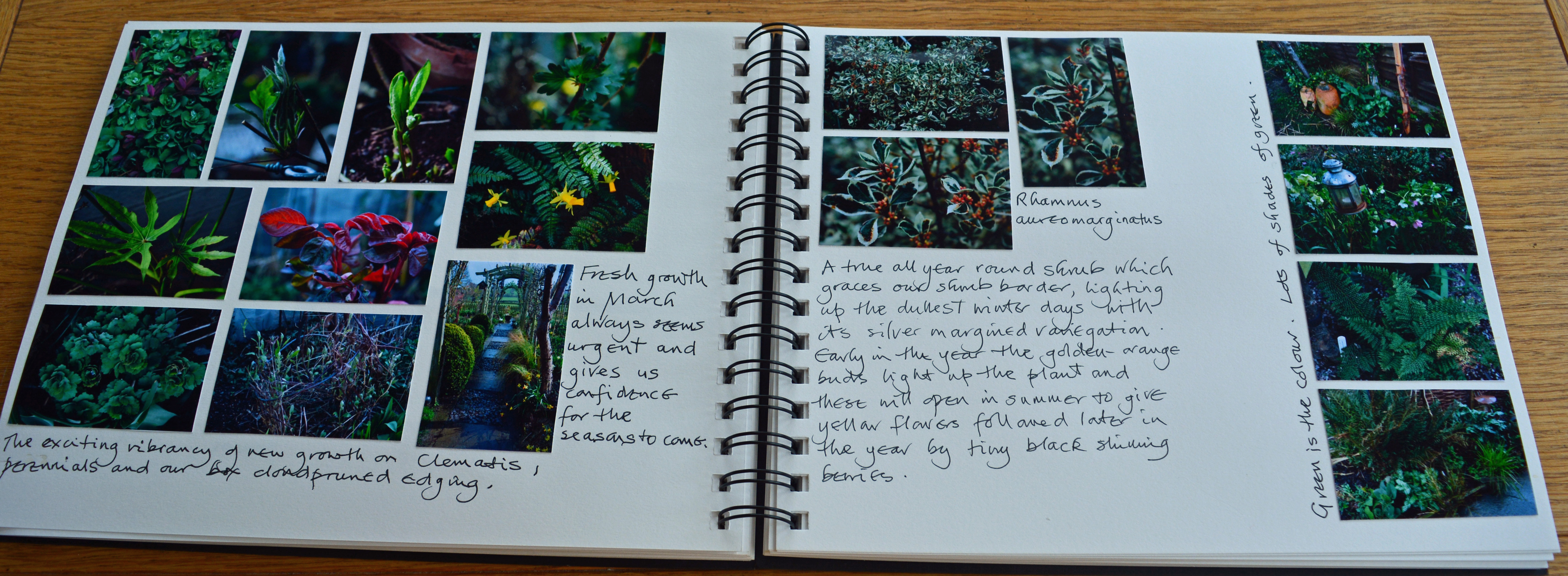
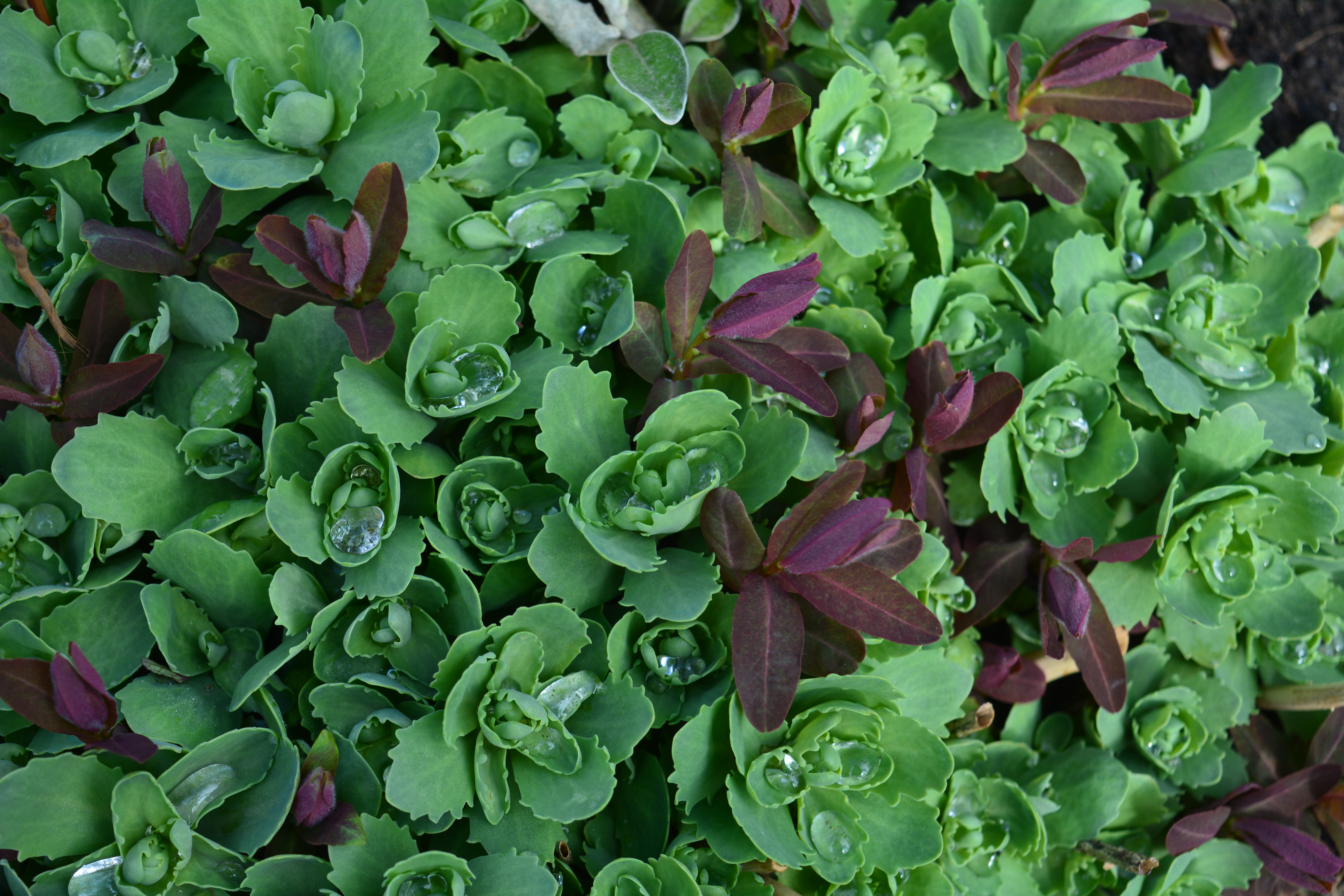
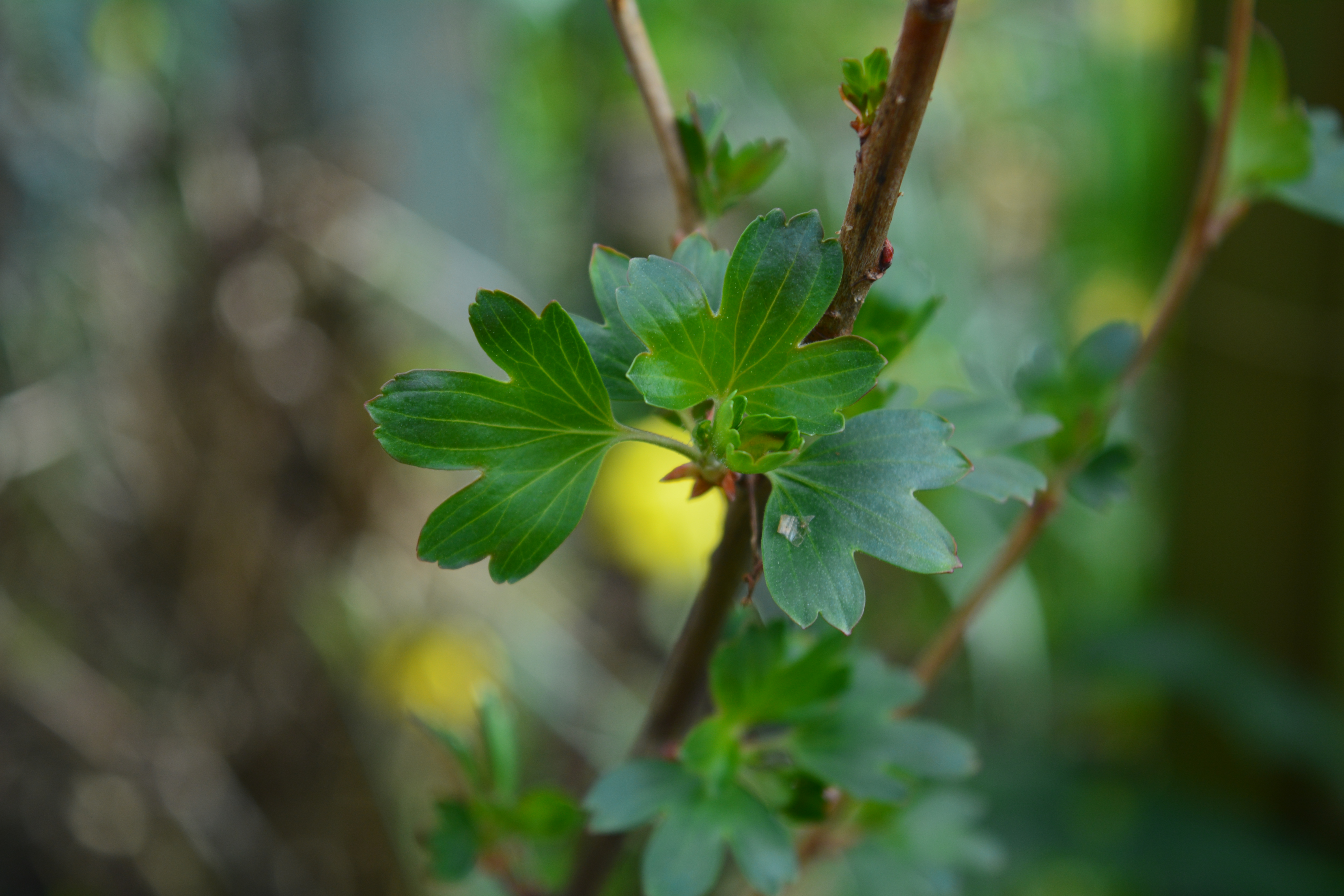
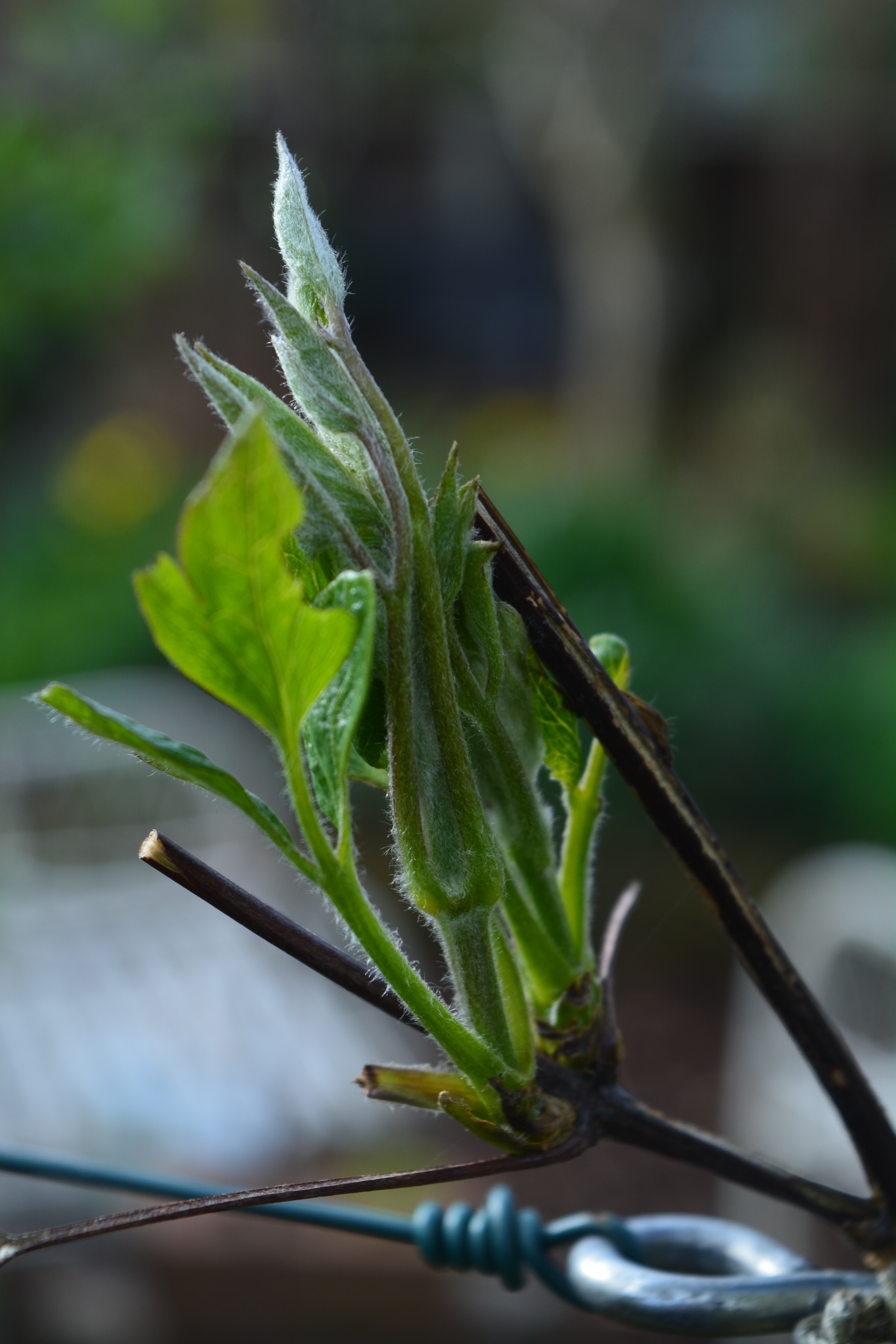
I wrote, “Fresh growth in March always seems urgent and gives us confidence for the seasons to come. The excitement and vibrancy of new growth on Clematis, perennials and our cloud-pruned box edging.”

On the opposite page I considered a favourite shrub growing in our “Shrub Border”, Rhamnus aureomarginatus, and looked at the importance of all the greens in our March garden. About Rhamnus I wrote, A true all year round shrub which graces our shrub border, lighting up the dullest winter days with its silver margined variegation. Early in the year the golden-orange flower buds light up the plant and these will open in summer to give yellow flowers followed later in the year by tiny black shining berries.”


Opposite I wrote, “Green is the colour. Lots of shades of green.”


So that is it for my March gardening report so in a few days it will be time to start on April’s entries.


Categories
flowering bulbs garden photography ornamental grasses ornamental trees and shrubs Winter Gardening winter gardens

My Garden Journal 2019 – February

Here we are visiting my garden journal for the second time in 2019 with my February entries. My first double page spread was all about the week that spanned the last few days of January which delivered snowfall and the first few days of February which gave us a heavy frost.

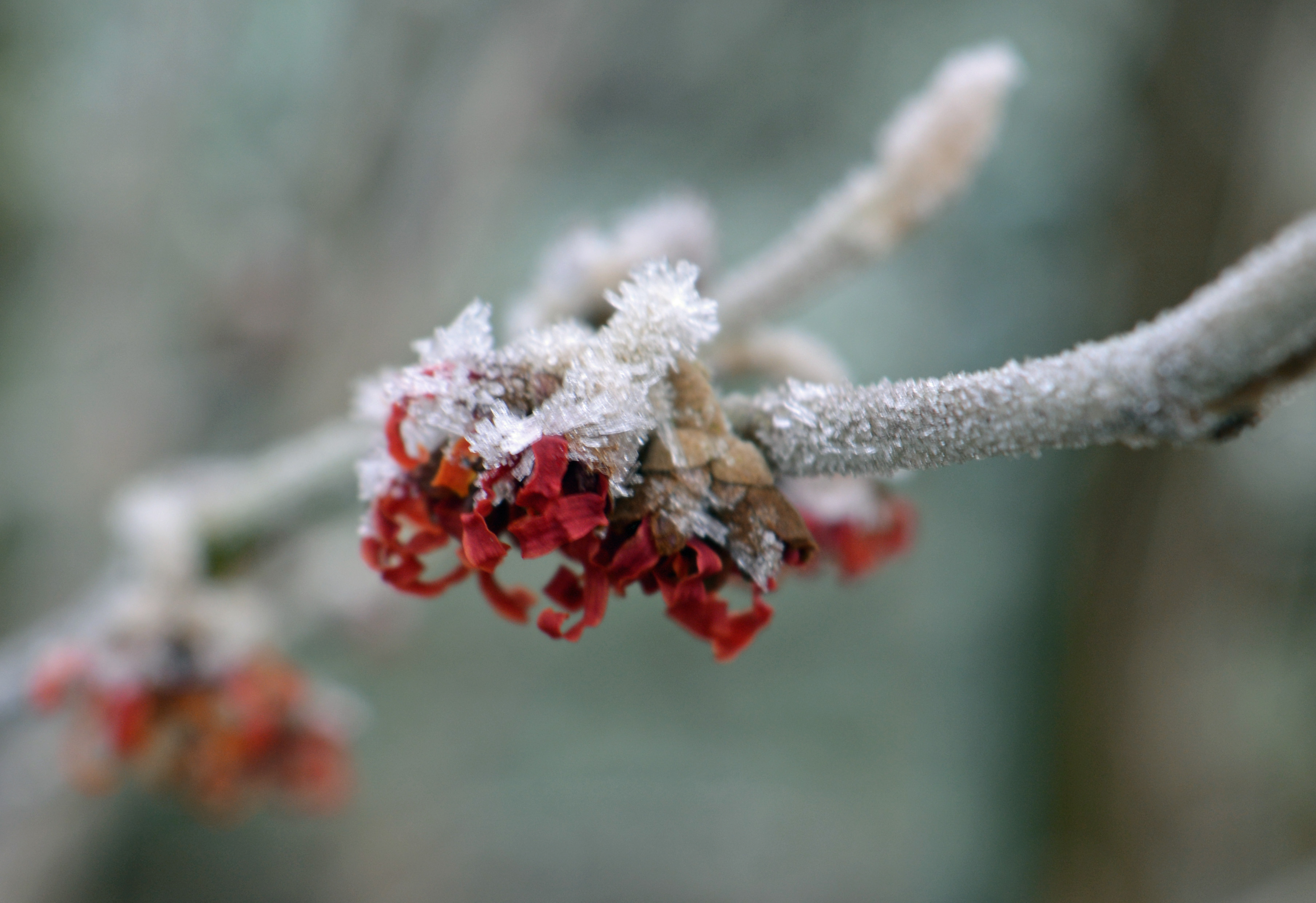
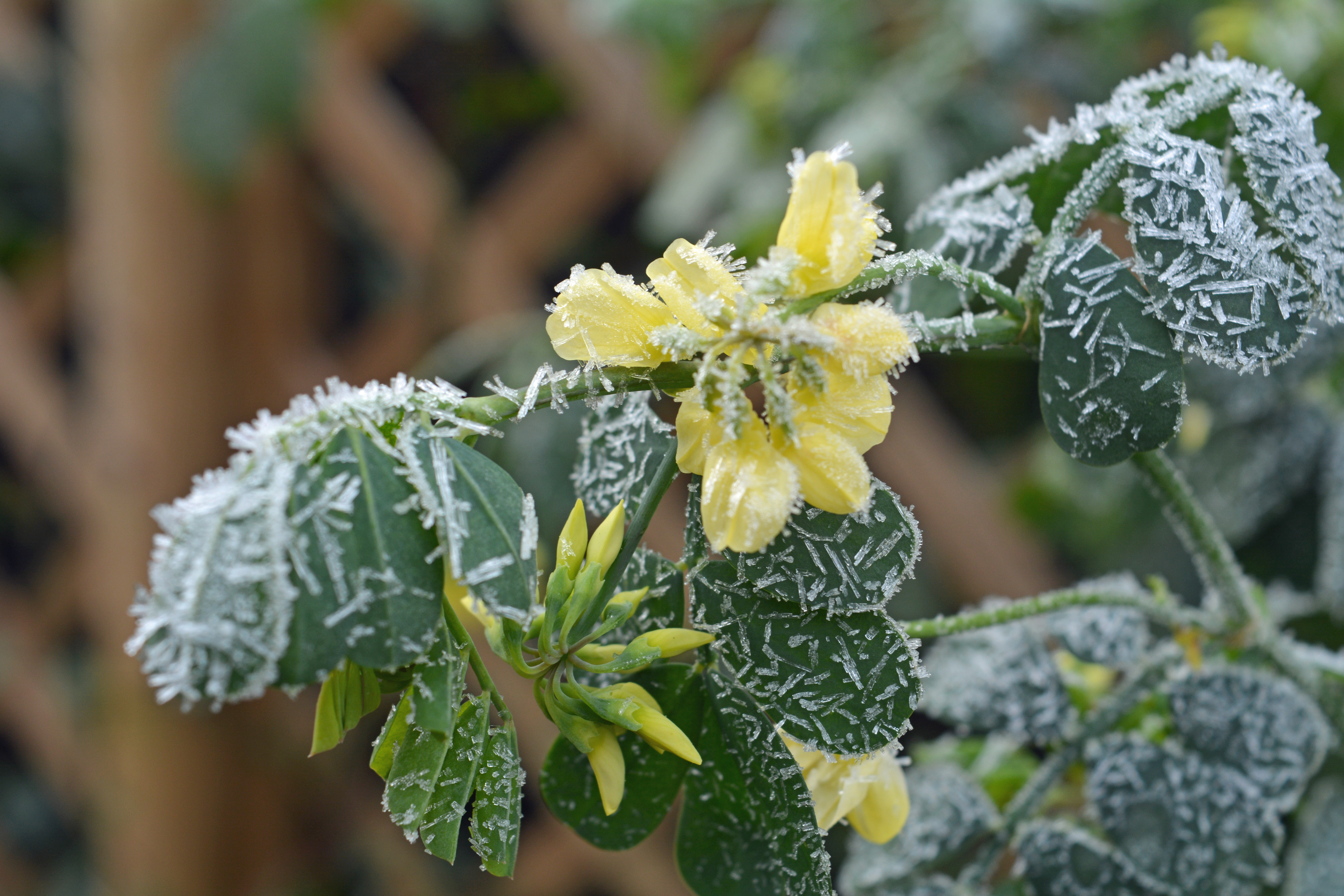
The photos on the left hand page illustrated some of our winter flowering scented shrubs topped off with a layer of deep frost. I wrote, The last few days of January shared a week with the first few days of February. It was a cold week cheered greatly by the appearance of flowers on our winter shrubs, which also delighted with their rich scents.”

“The delights of scented winter shrubs. Food for winter flying moths.”


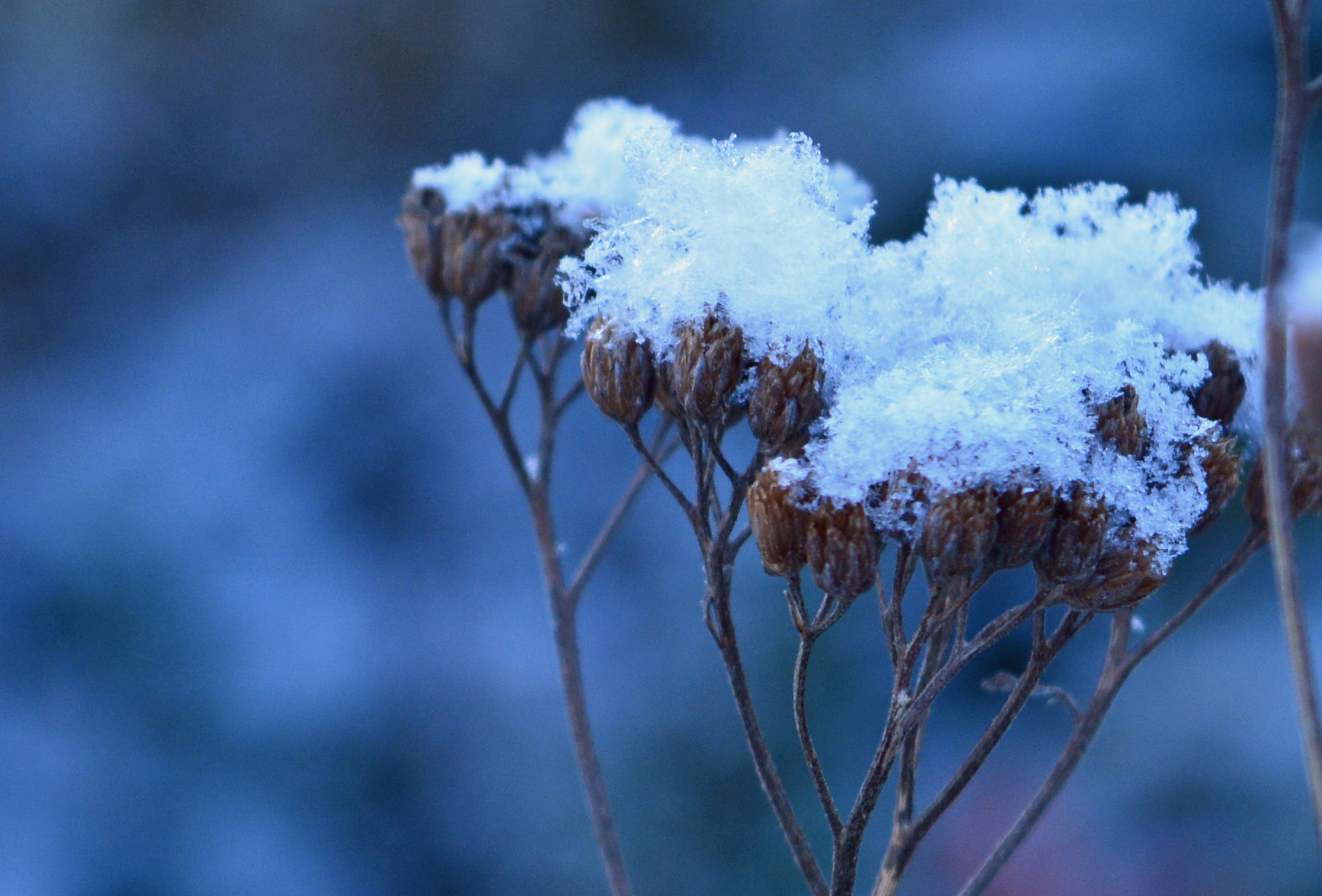
Opposite my photos showed the effects of snow on our sculpture, both man-made and created by Mother Nature, the seedleads of grasses and perennials.

“The snowfall that came and went all within a day.”


Over the page my next two pages concerned with a period of strong winds and the earliest of bulbs to flower in our patch.

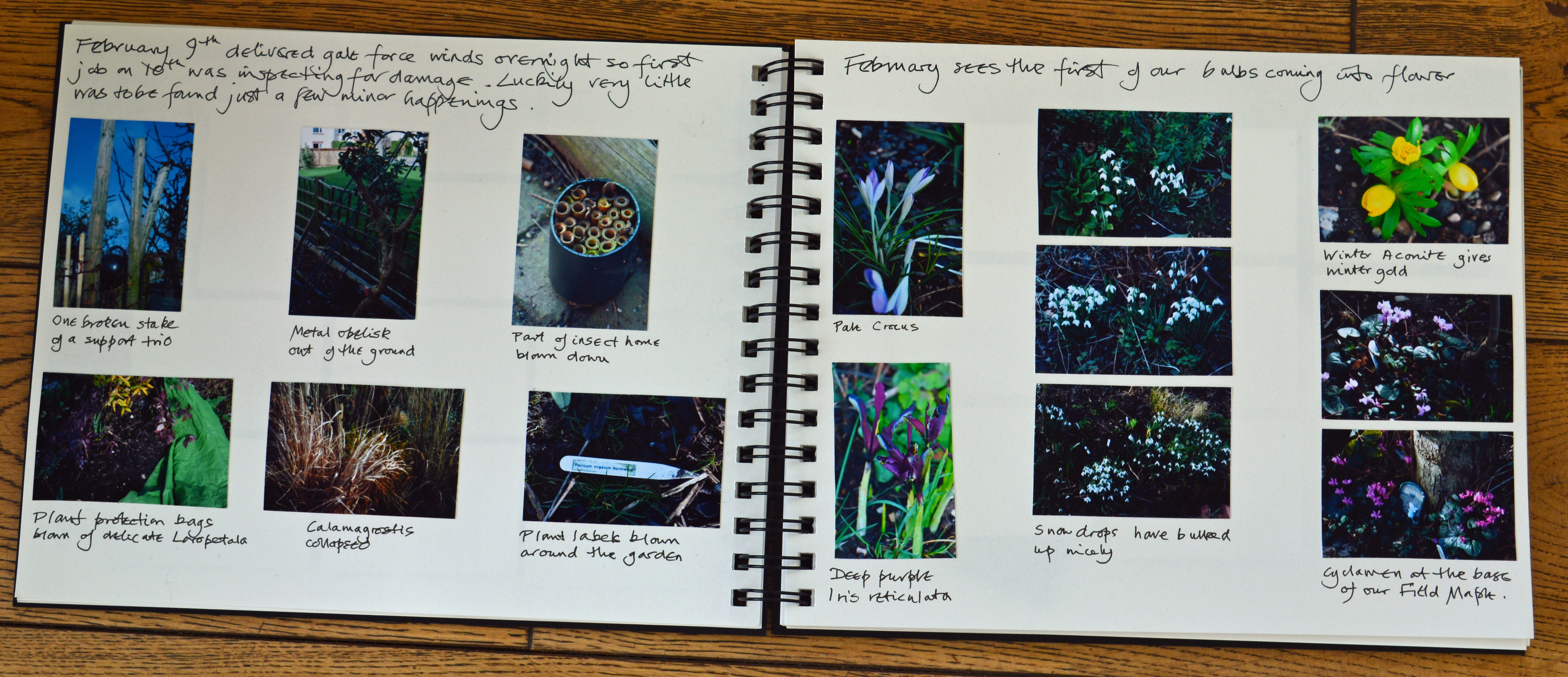
I wrote, “February 9th delivered gale force winds overnight so firstjob on the 10th was inspecting for damage. Luckily very little was to be found just a few minor happenings.” 


“One broken stake of a support trio. Plant labels blown around the garden. 

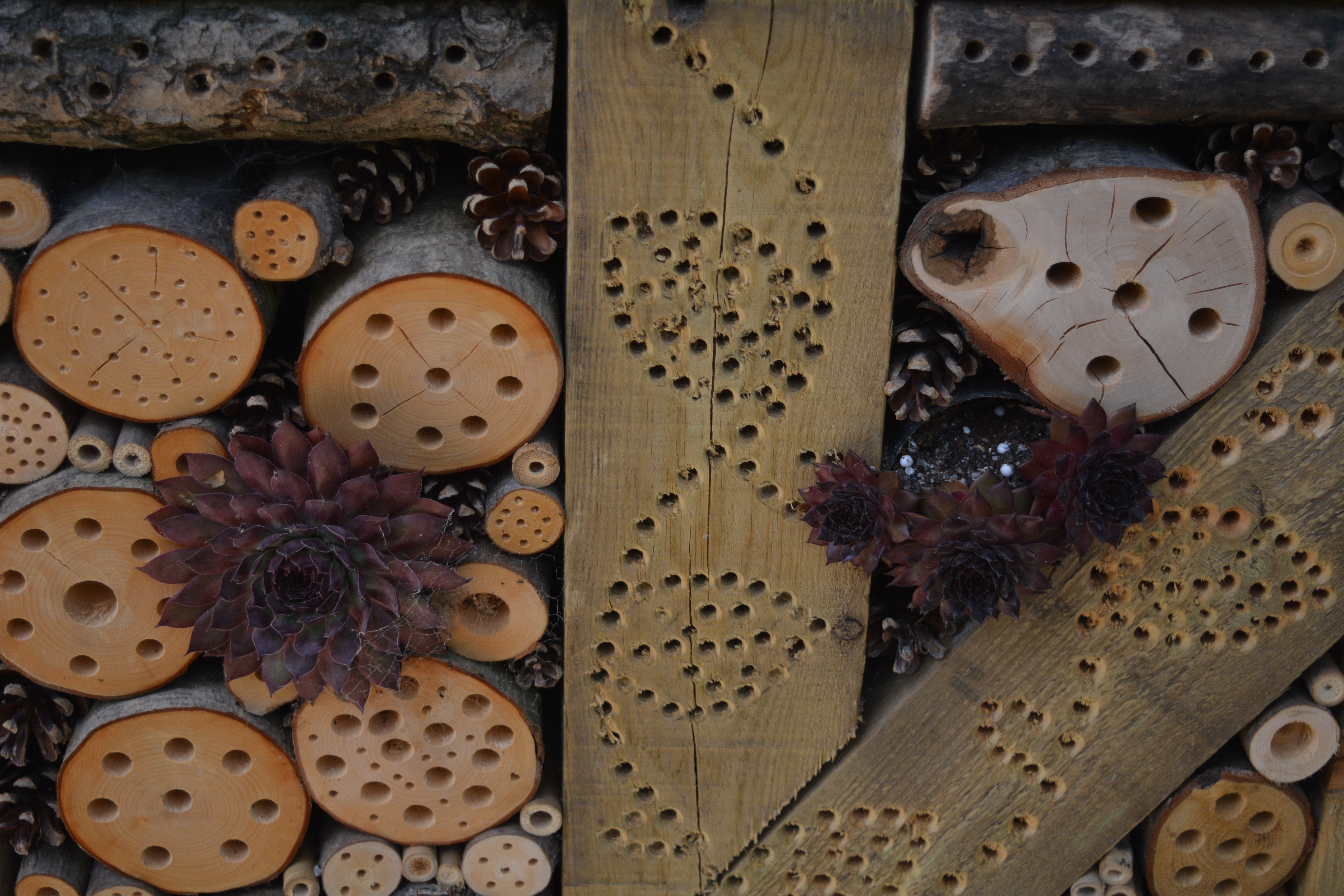
“Part of an insect home blown down. Plant protection bags blown off delicate shrub Loropetala.”

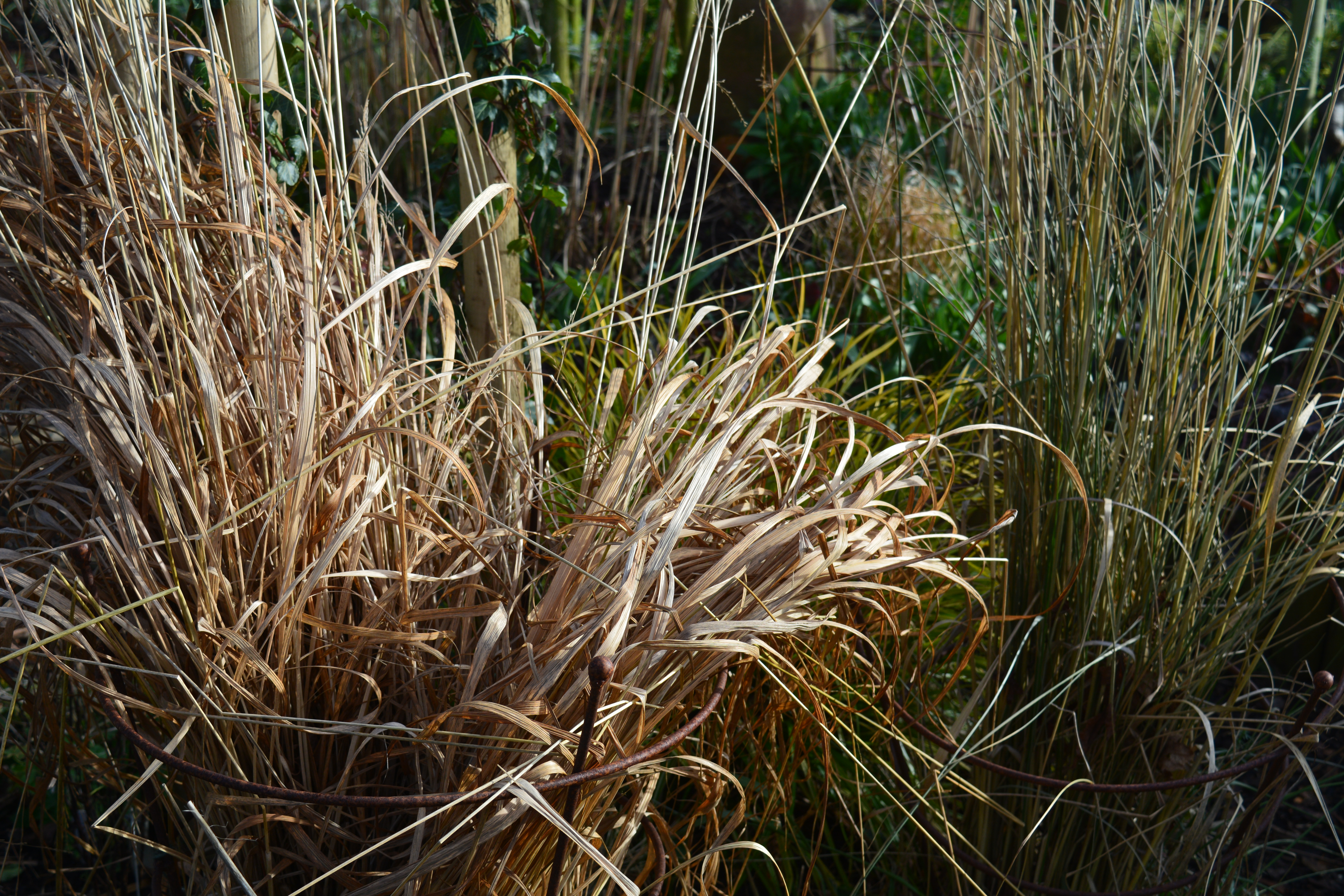
 “Collapsed Calamagrostis”

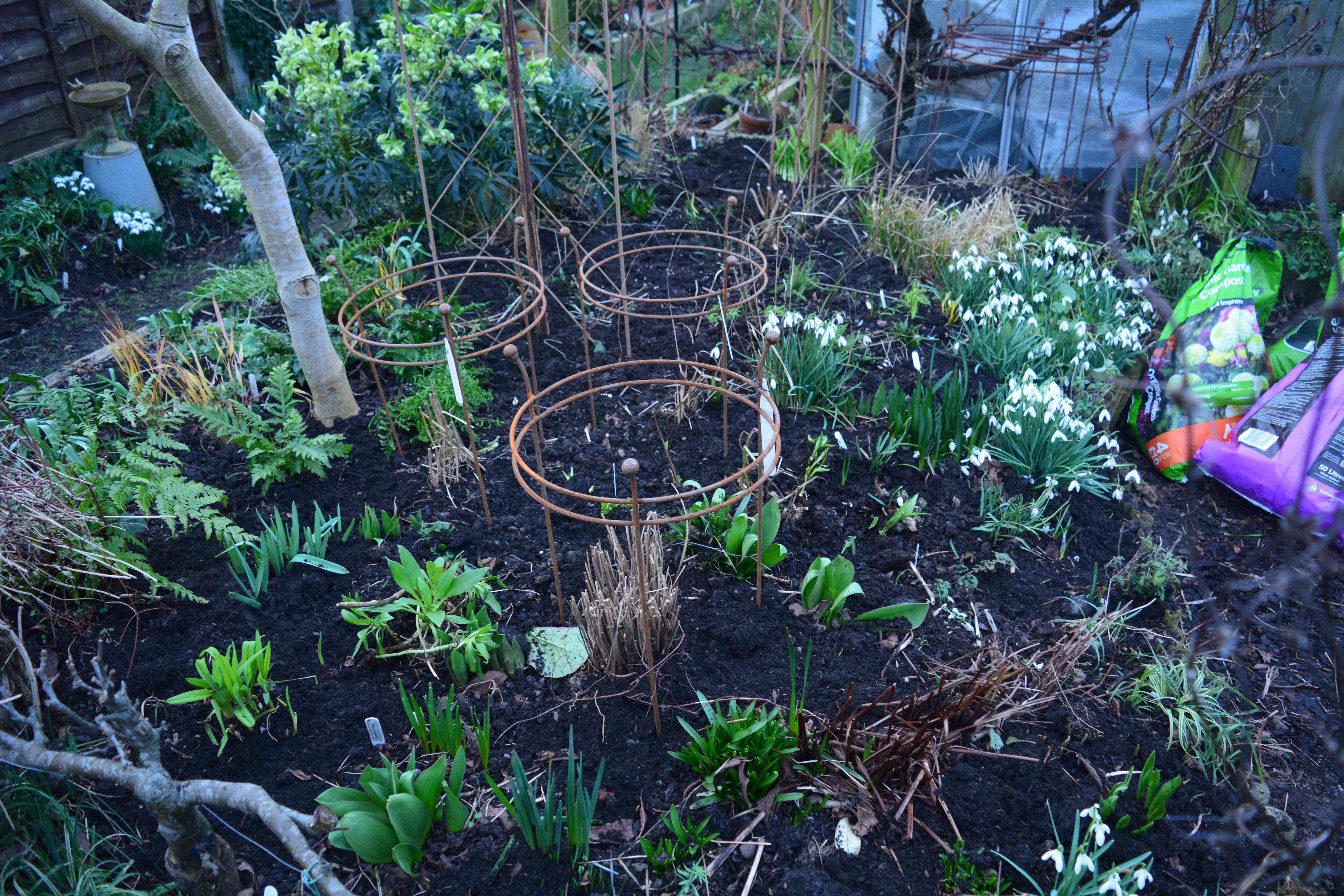
On the opposite page I wrote, “February sees the first of our bulbs coming into flower.”


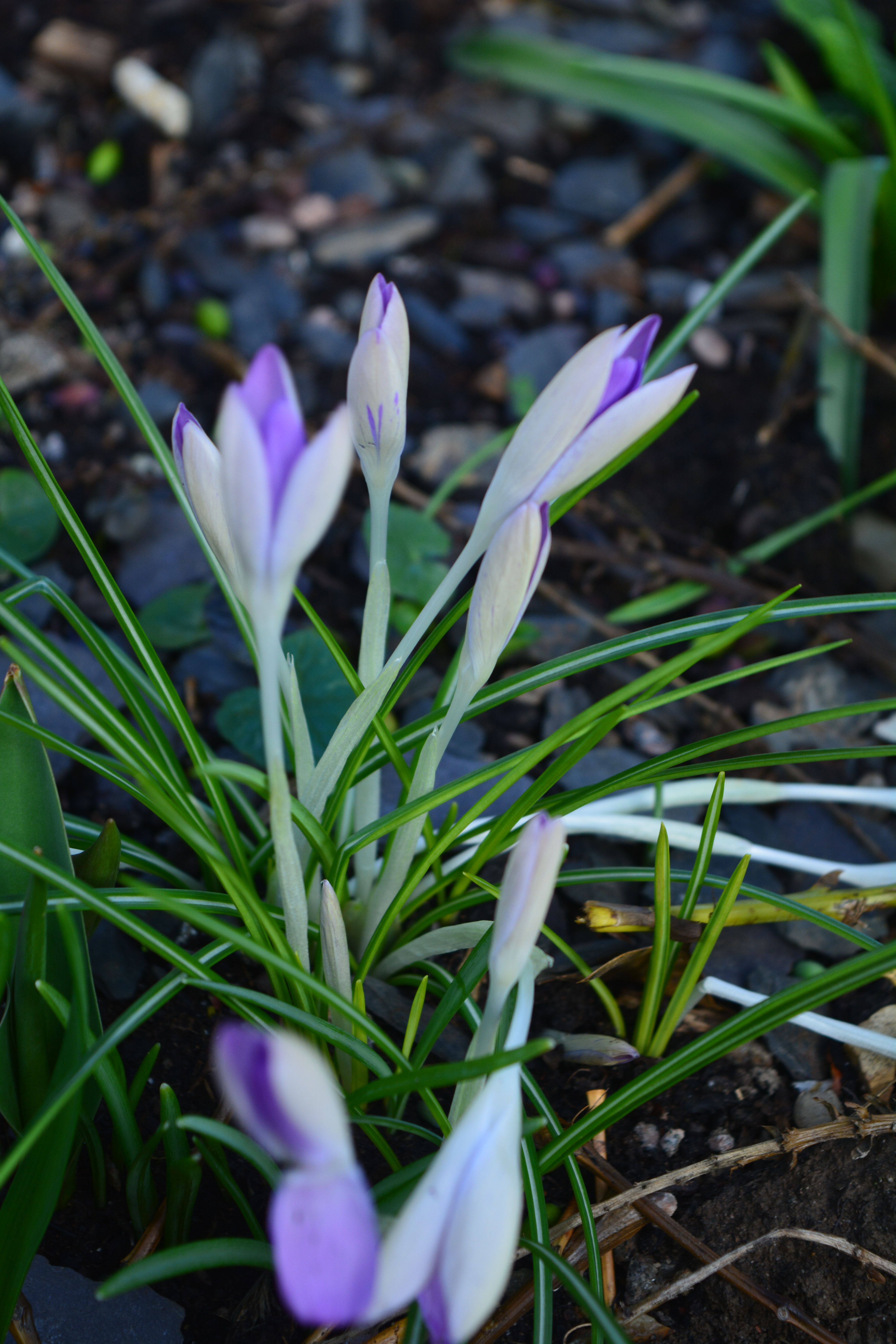
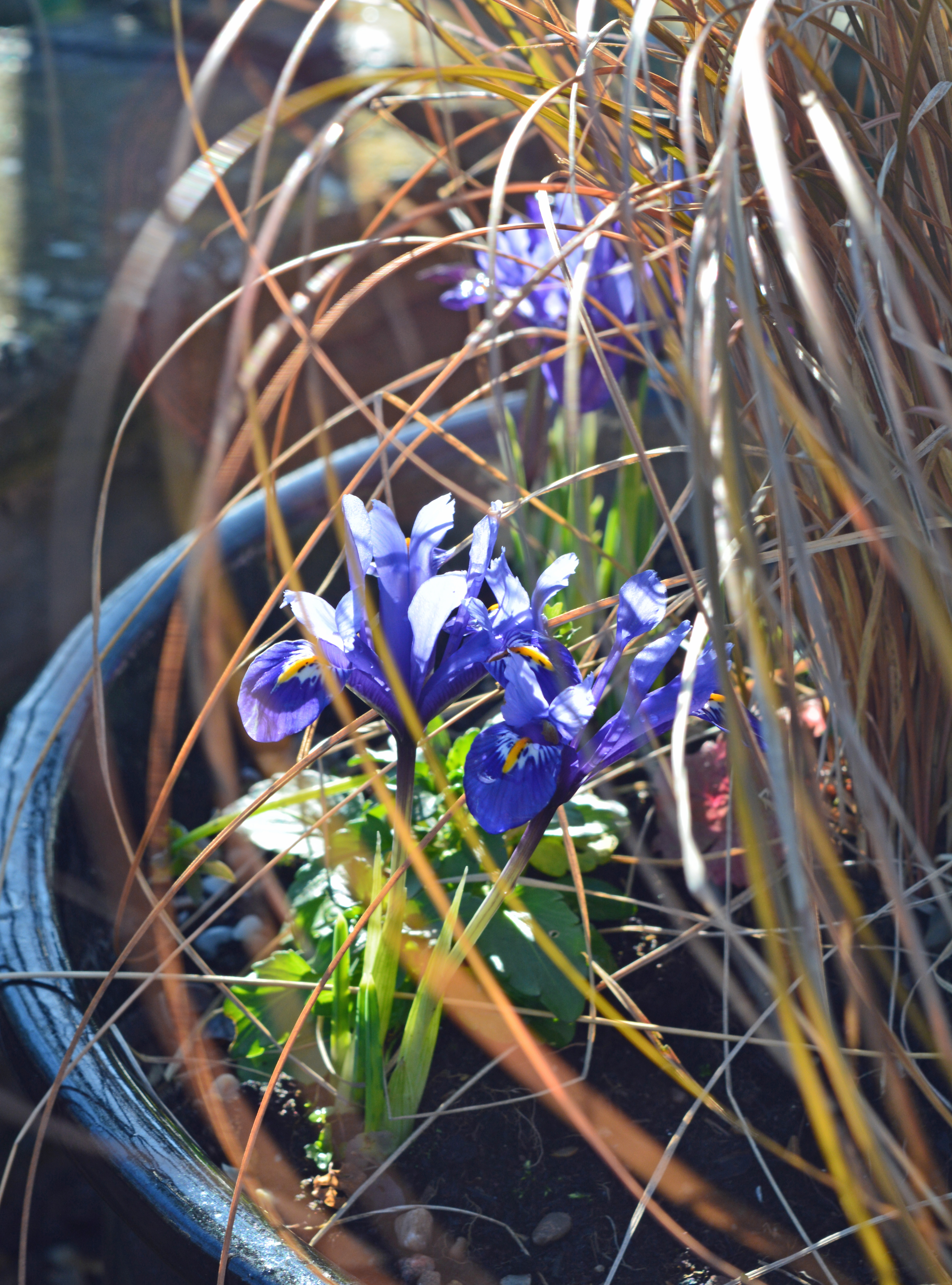
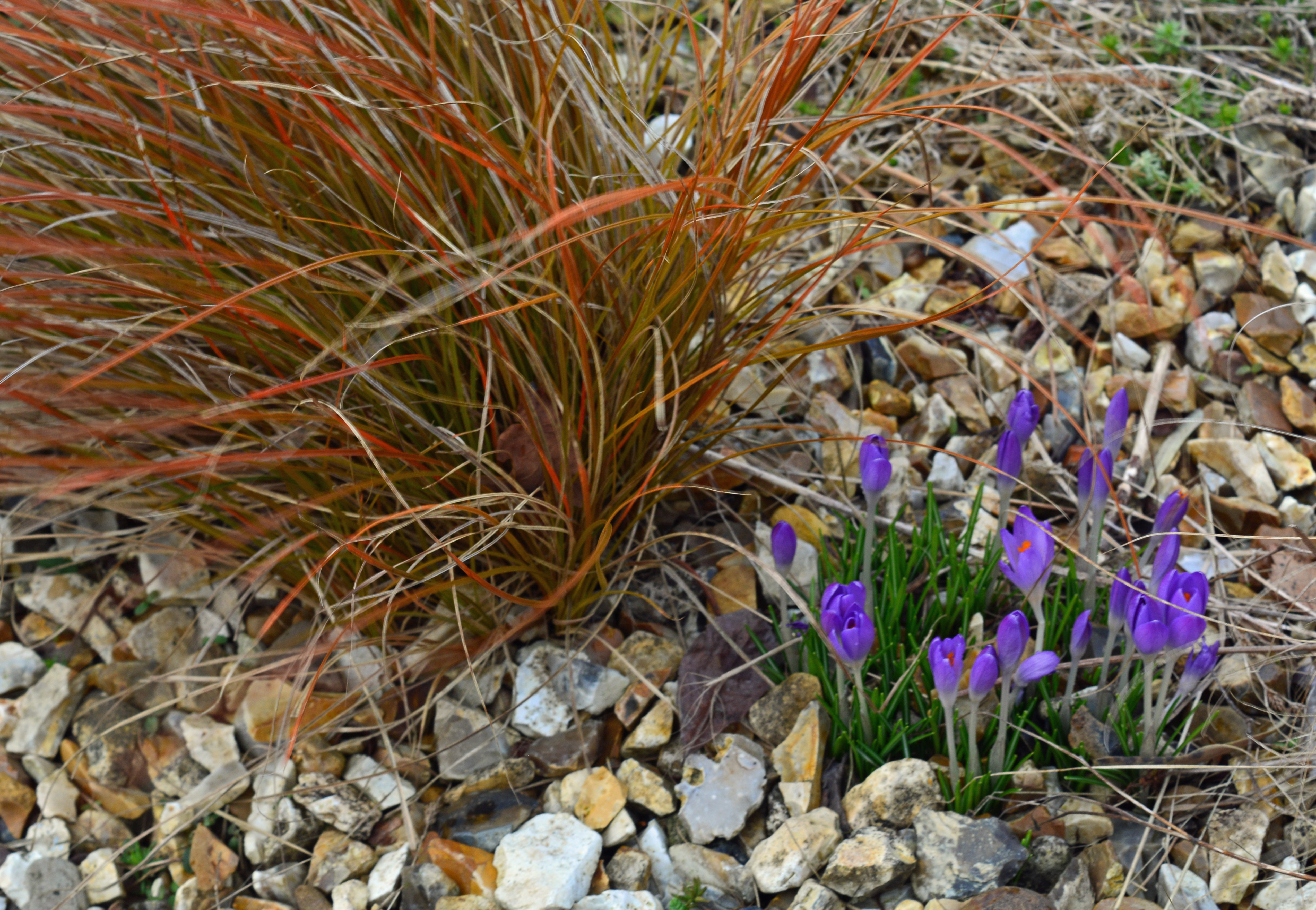
“A pale crocus and an deep purple Iris reticulata.”


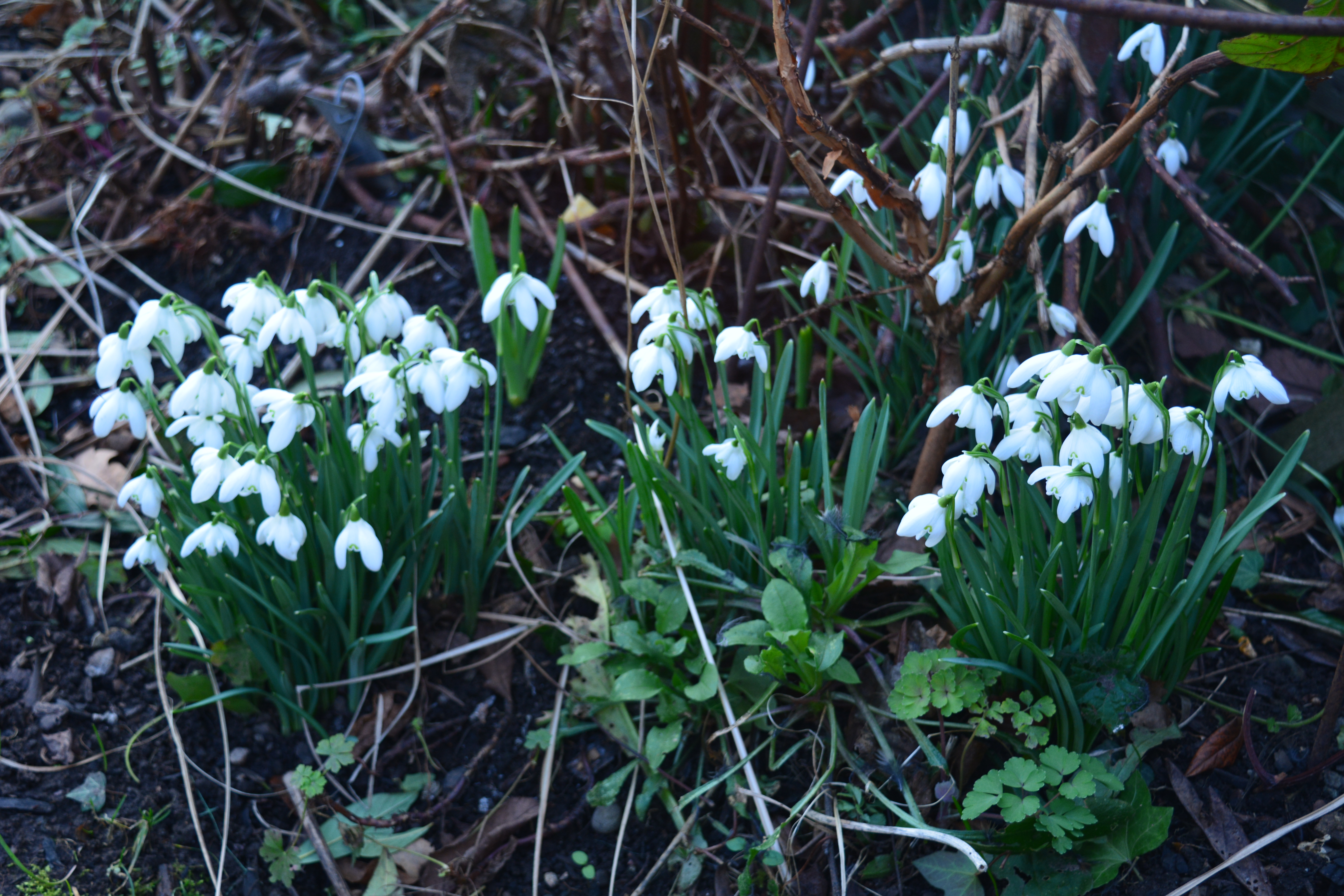
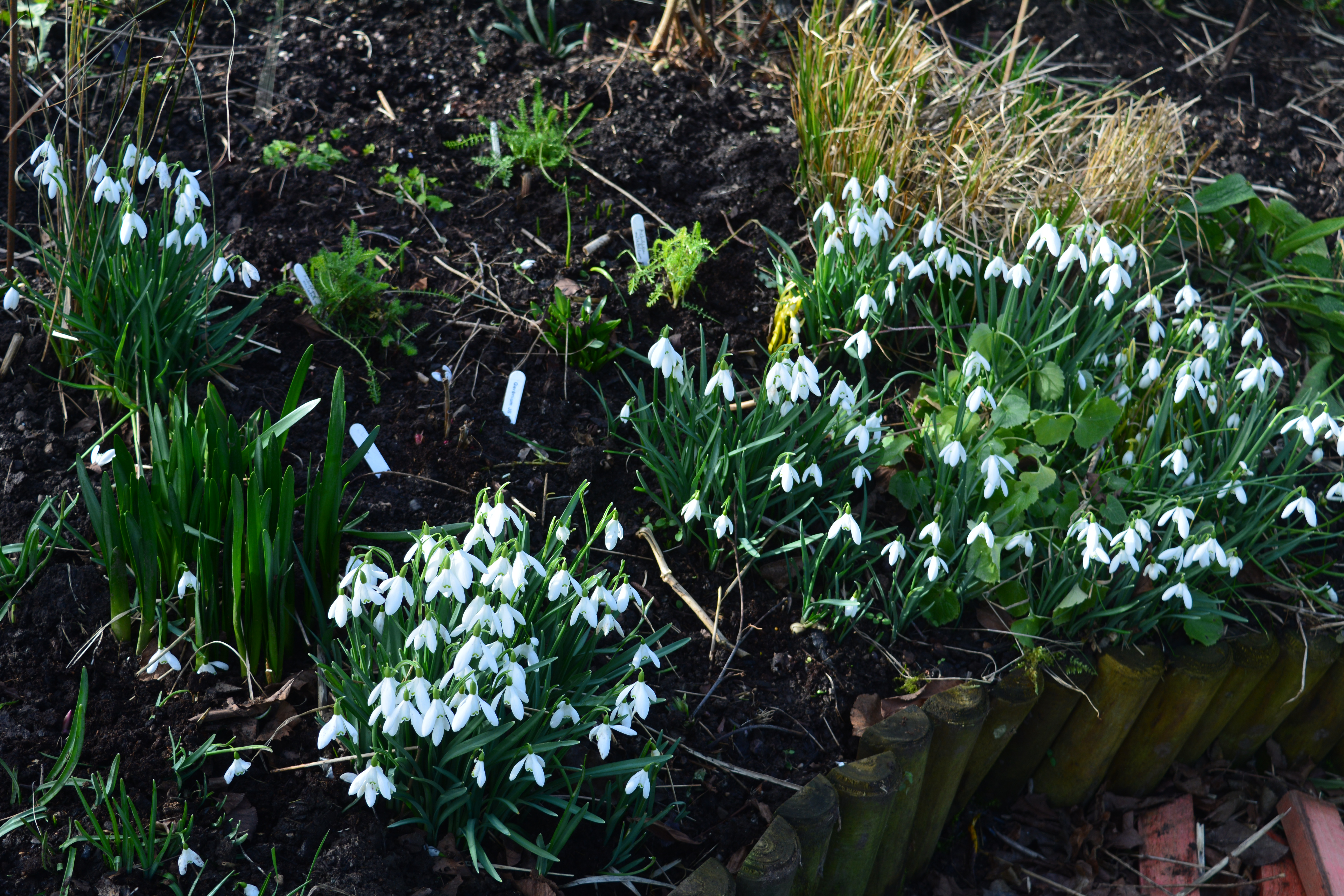
“Snowdrops have bulked up nicely.”

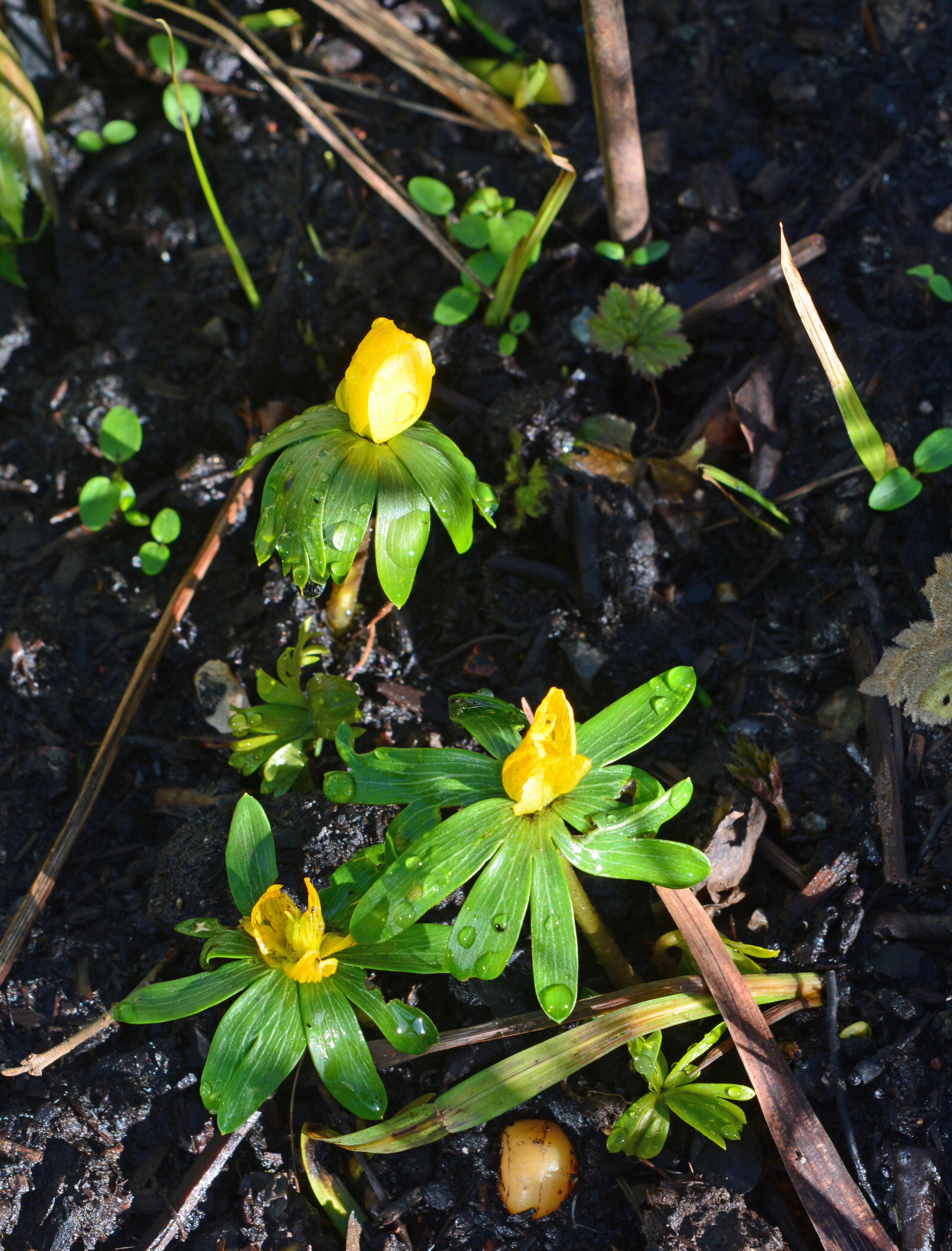
 “Winter Aconite give winter gold”  

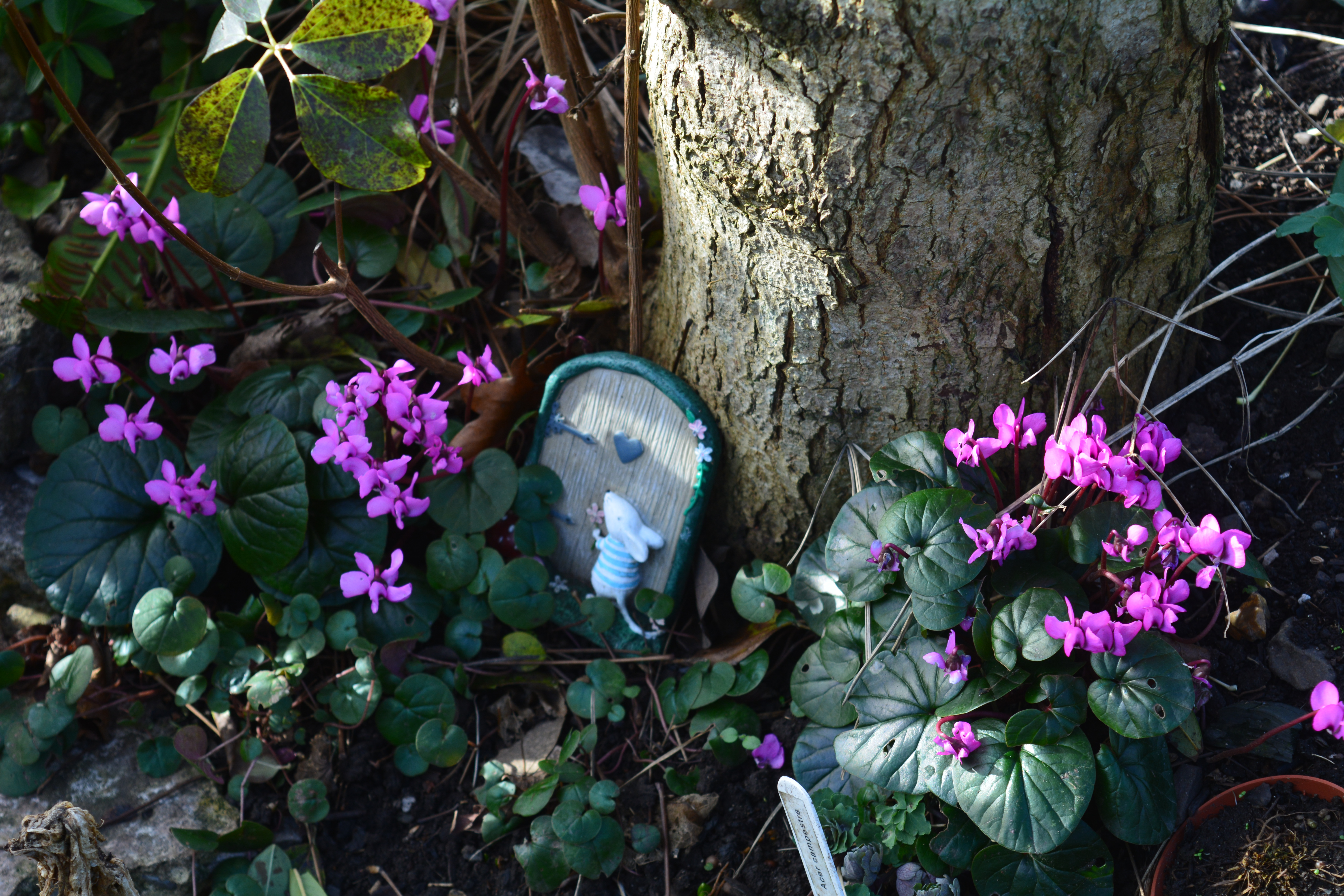
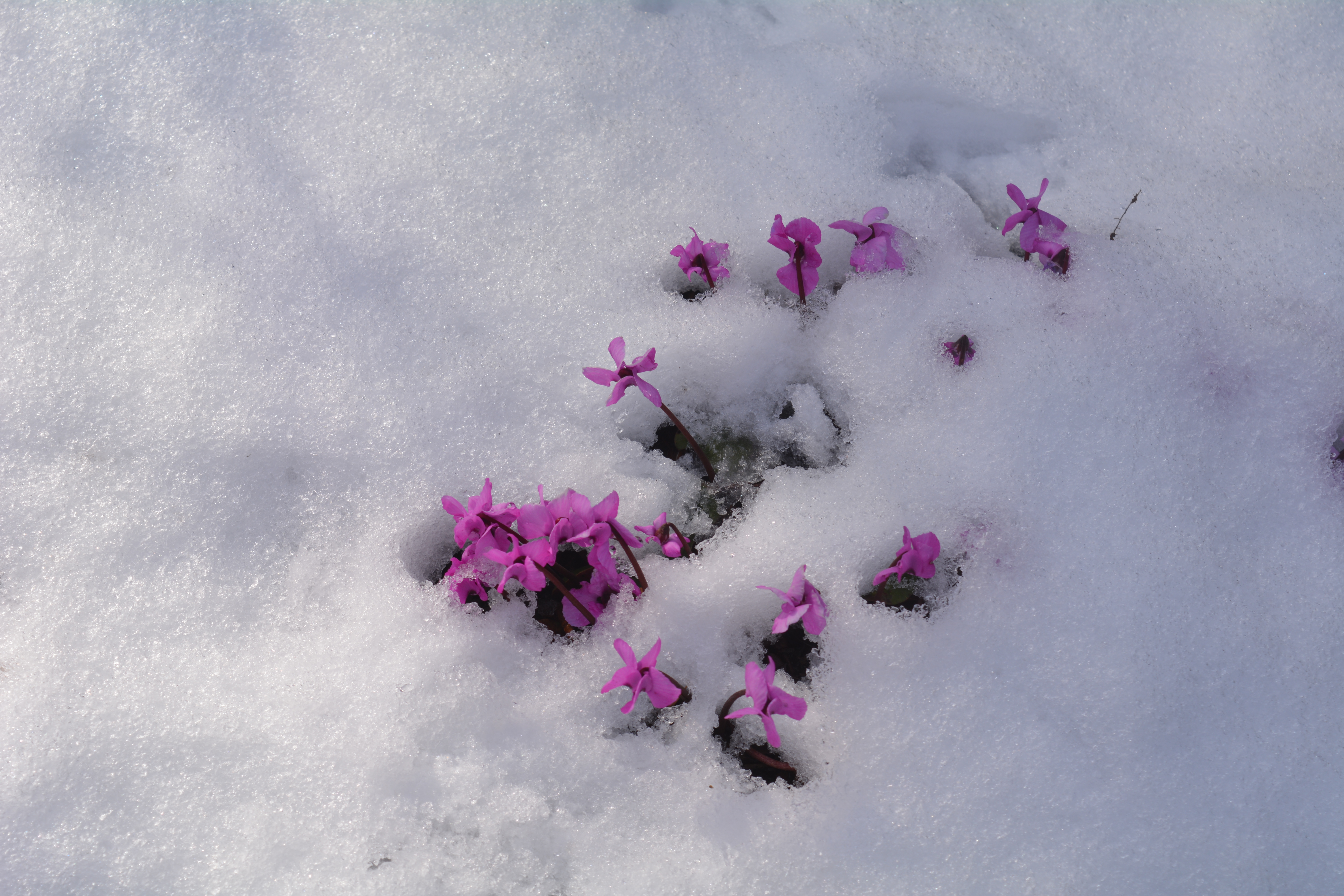
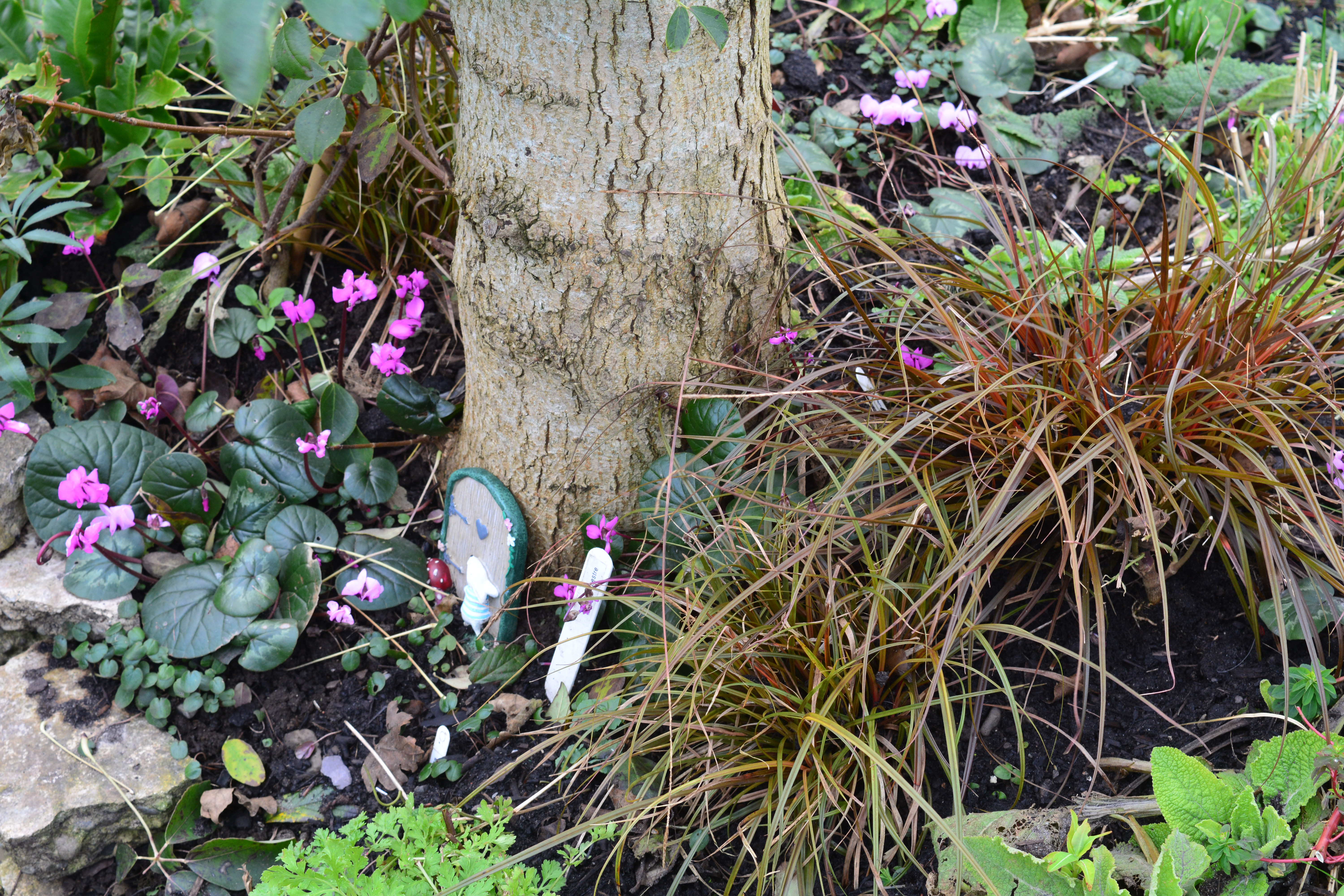
“Cyclamen at the base of our Field Maple.”

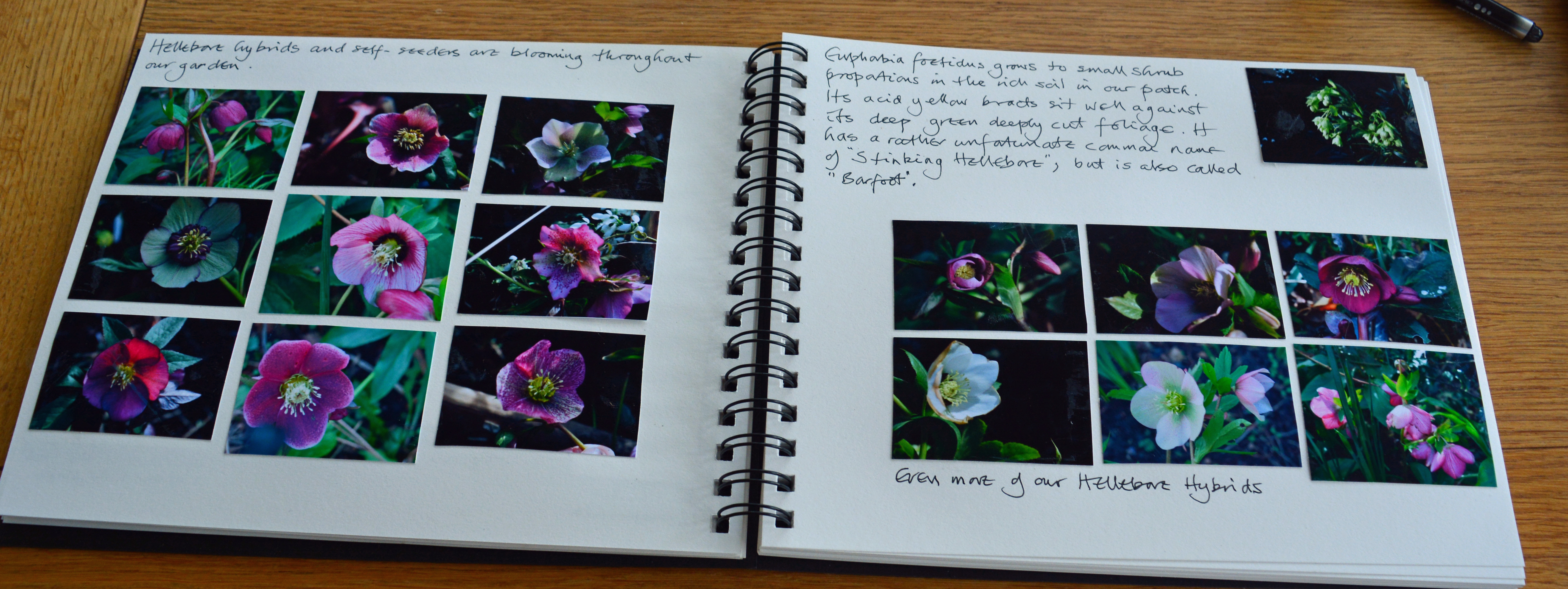
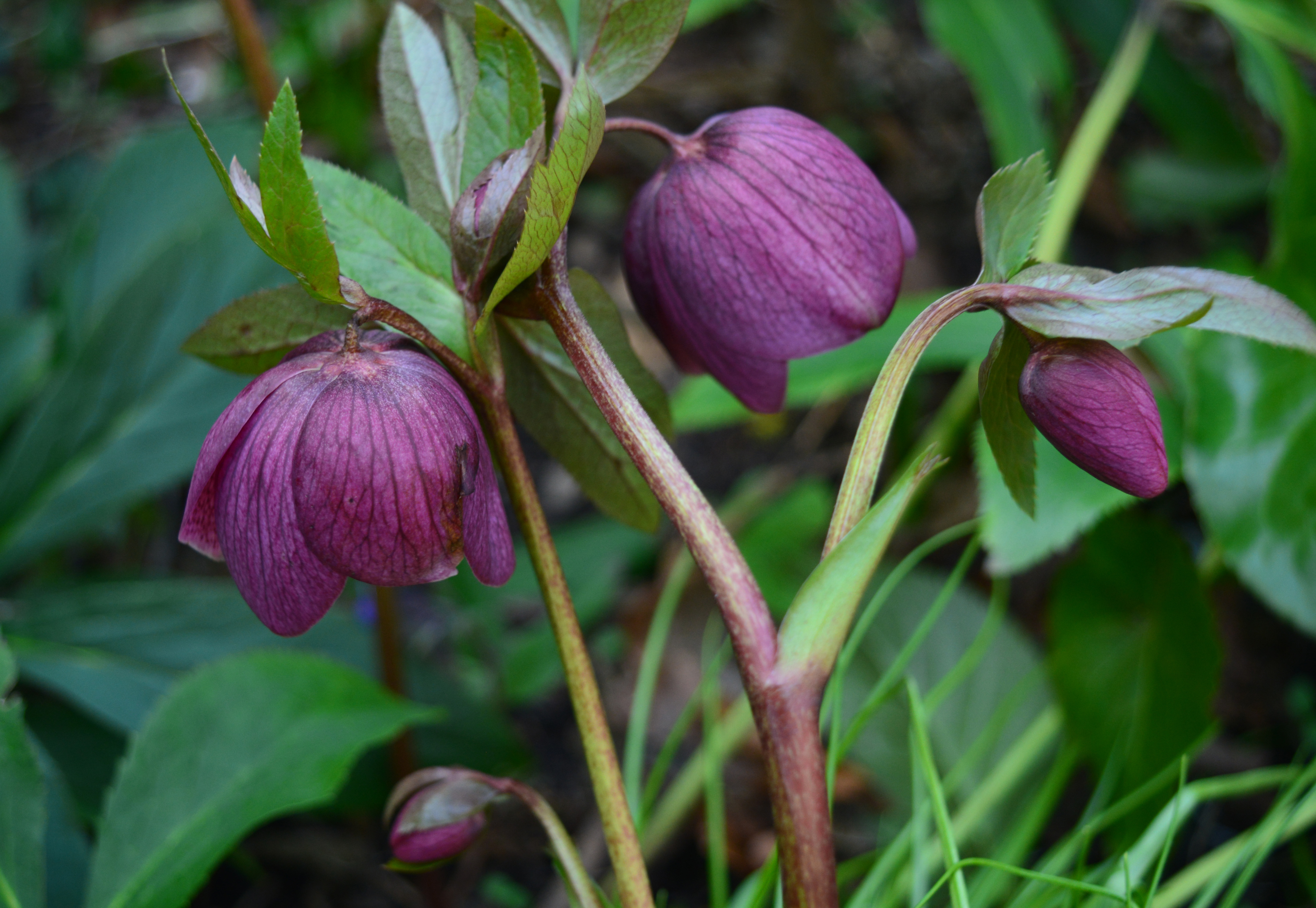
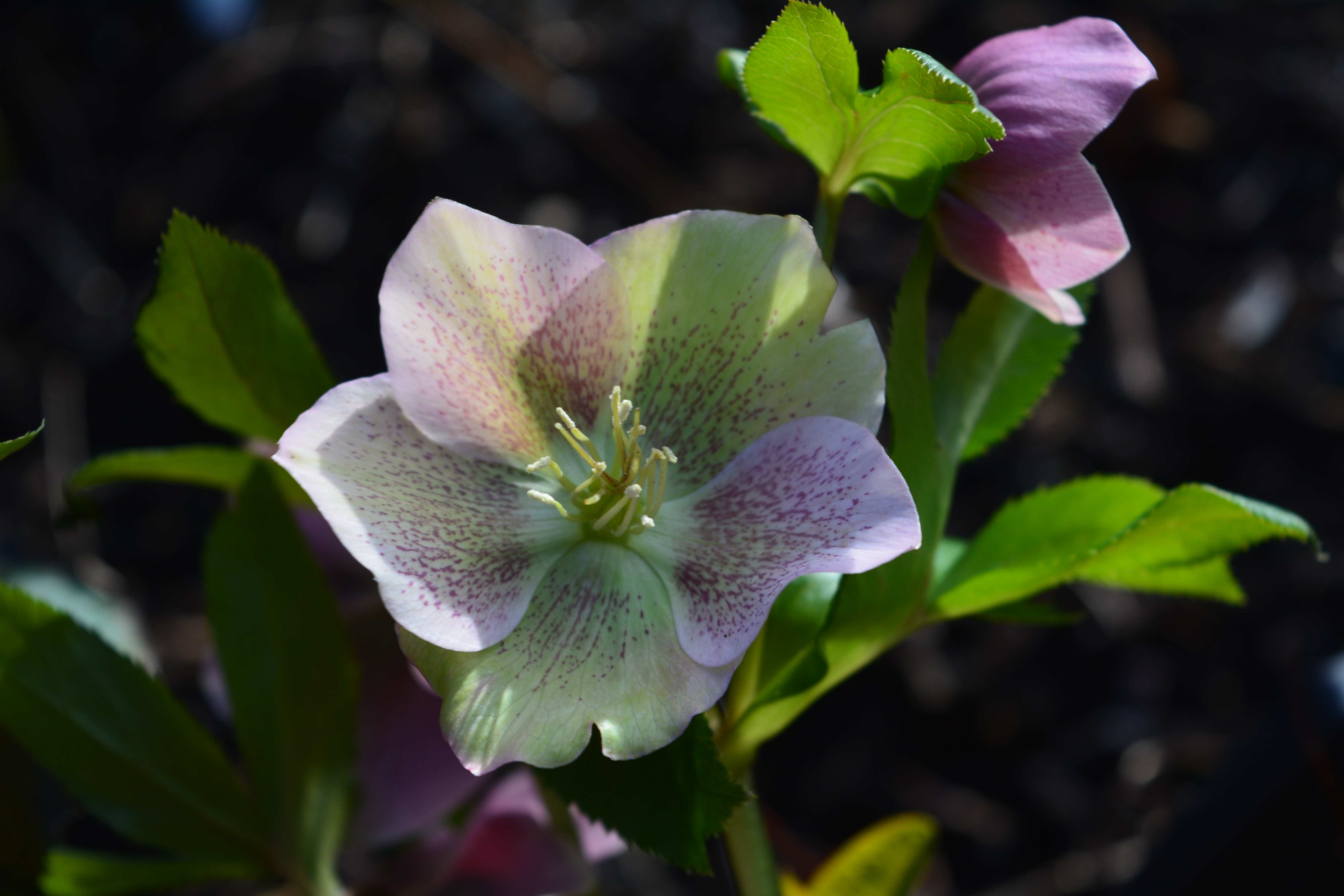
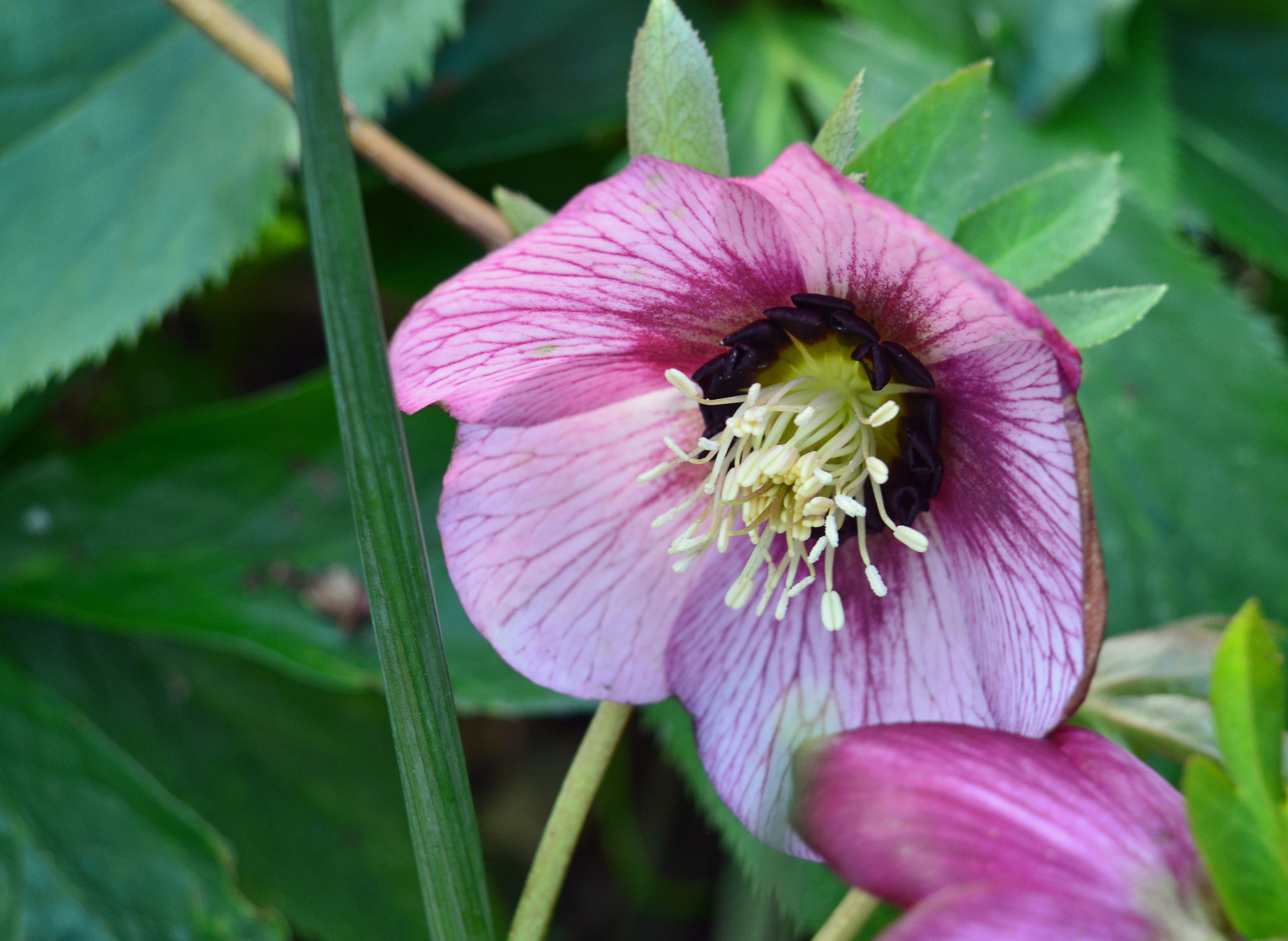
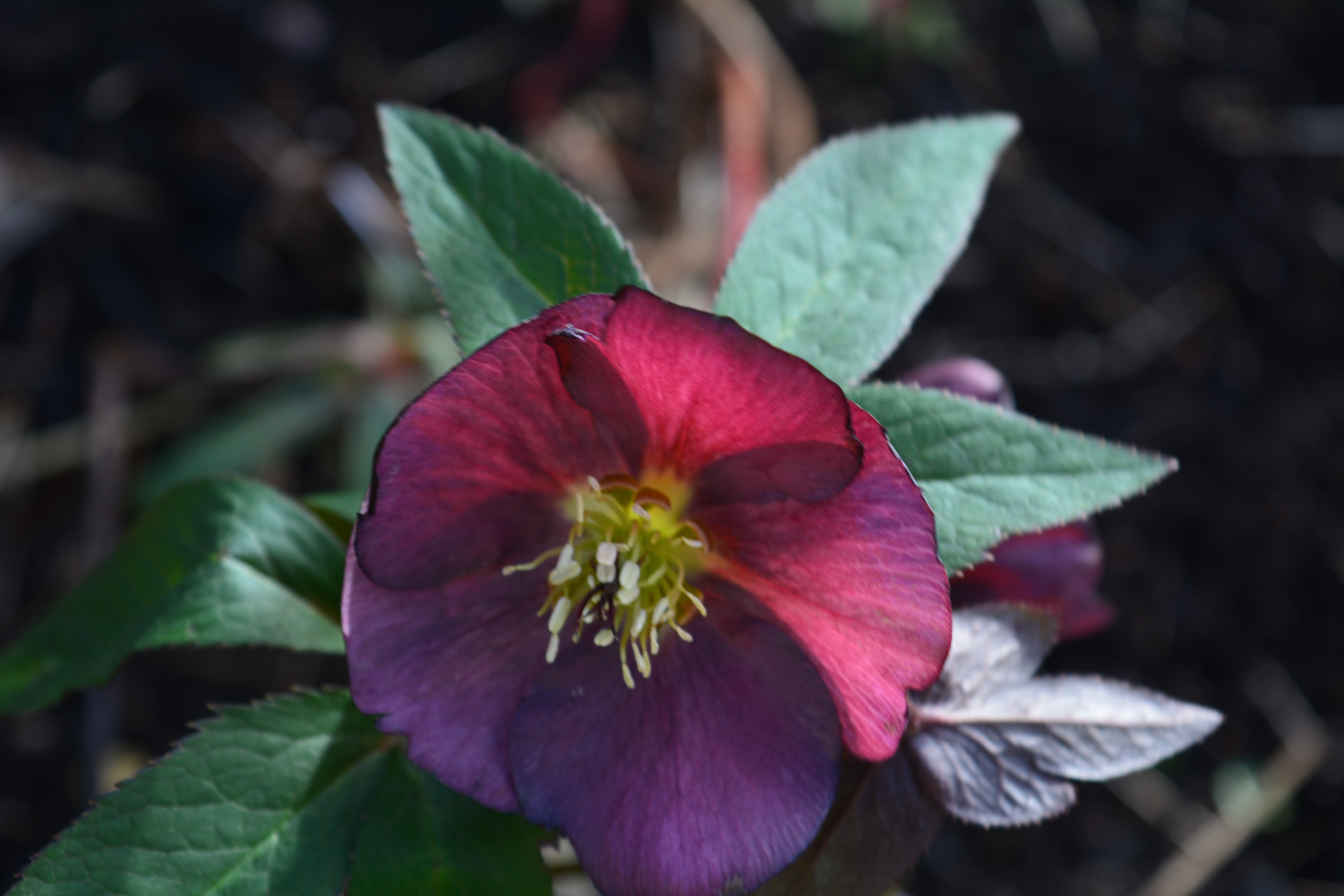
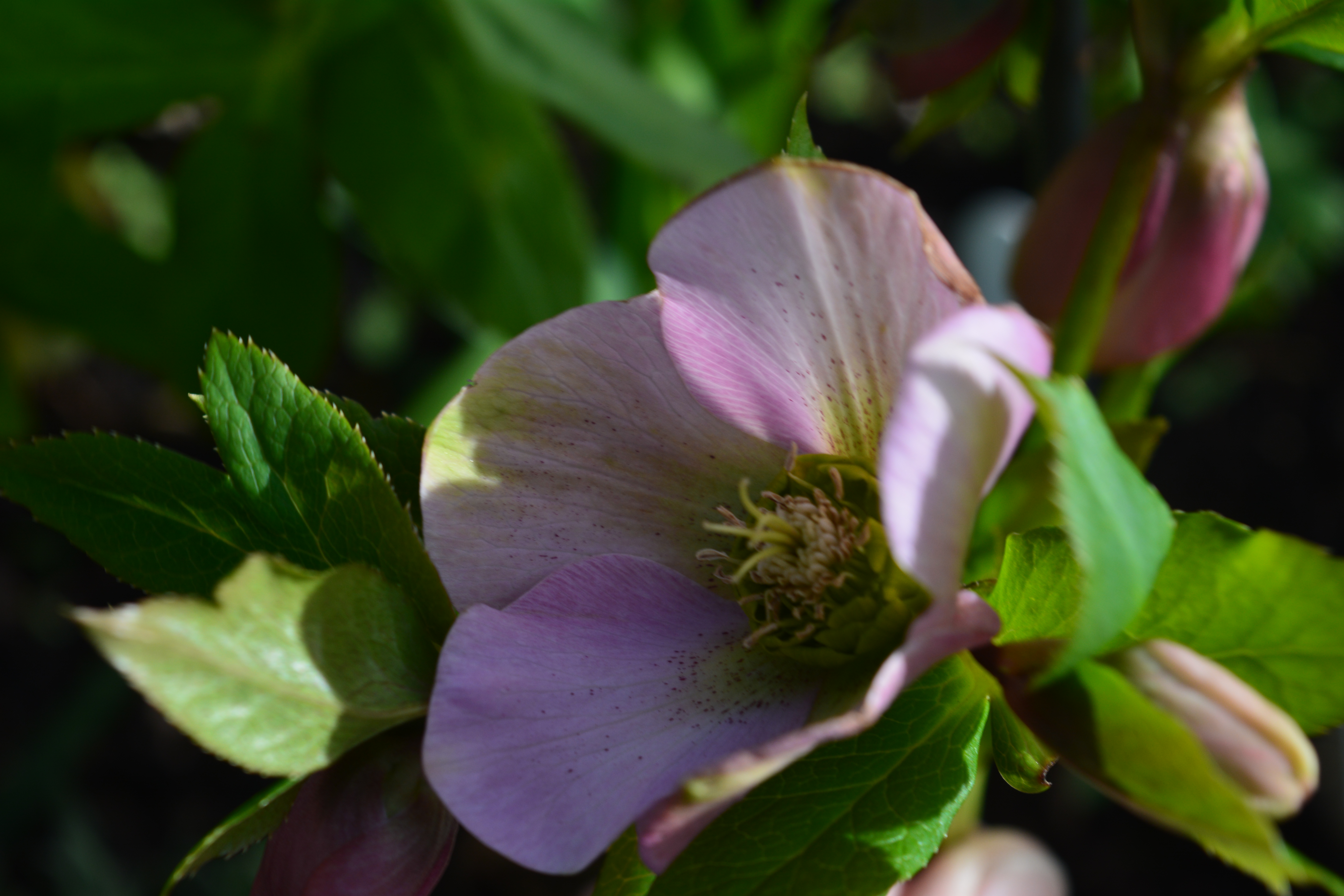
The next double page spread is all about Hellebores and we have so many.

I wrote, “Hellebore hybrids and self-seeders are blooming throughout our garden.”


“Euphorbia foetidus grows to small shrub proportions in the rich soil in our patch. Its acid-yellow bracts sit well against its deep green deeply cut foliage. It has a rather unfortunate common name of “Stinking Hellebore”, but is also called “Barfoot”.

“Even more of our Hellebore hybrids.”


Turning over the page one more time I looked at some indoor gardening related jobs and wrote, “Wet days in February afford us the opportunity to catch up on indoor tasks such as chitting potatoes, starting off Dahlias and Cannas as well as sowing seeds of perennials and a few annuals.”


I continued, “Meanwhile outside we continue to tidy up border by border. Sorting our gravel garden, the Chatto Border, is a major task so we do that work on days when Ian, our part-time gardener is around to help us. We also dug up and divided Day Lilies.”


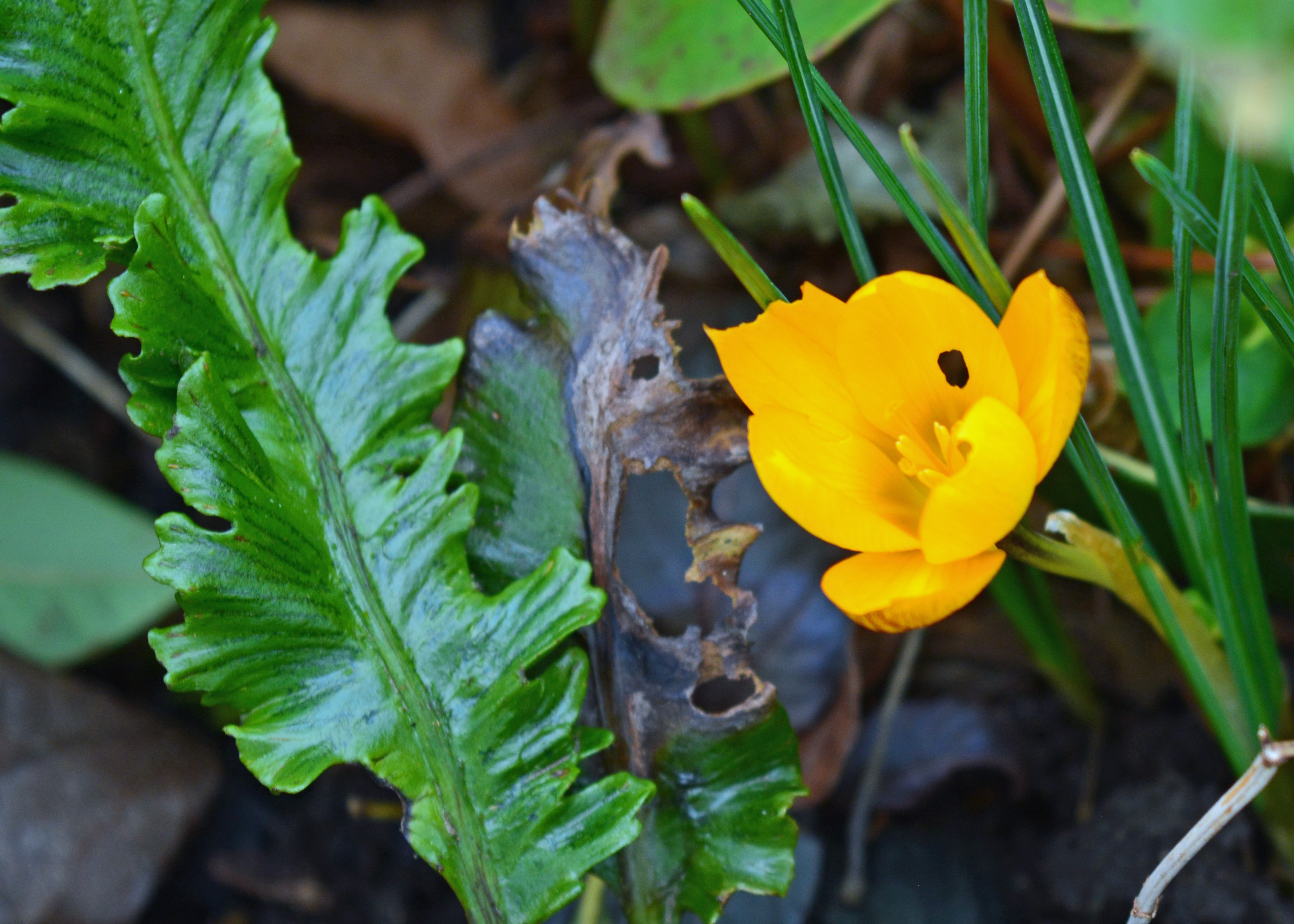
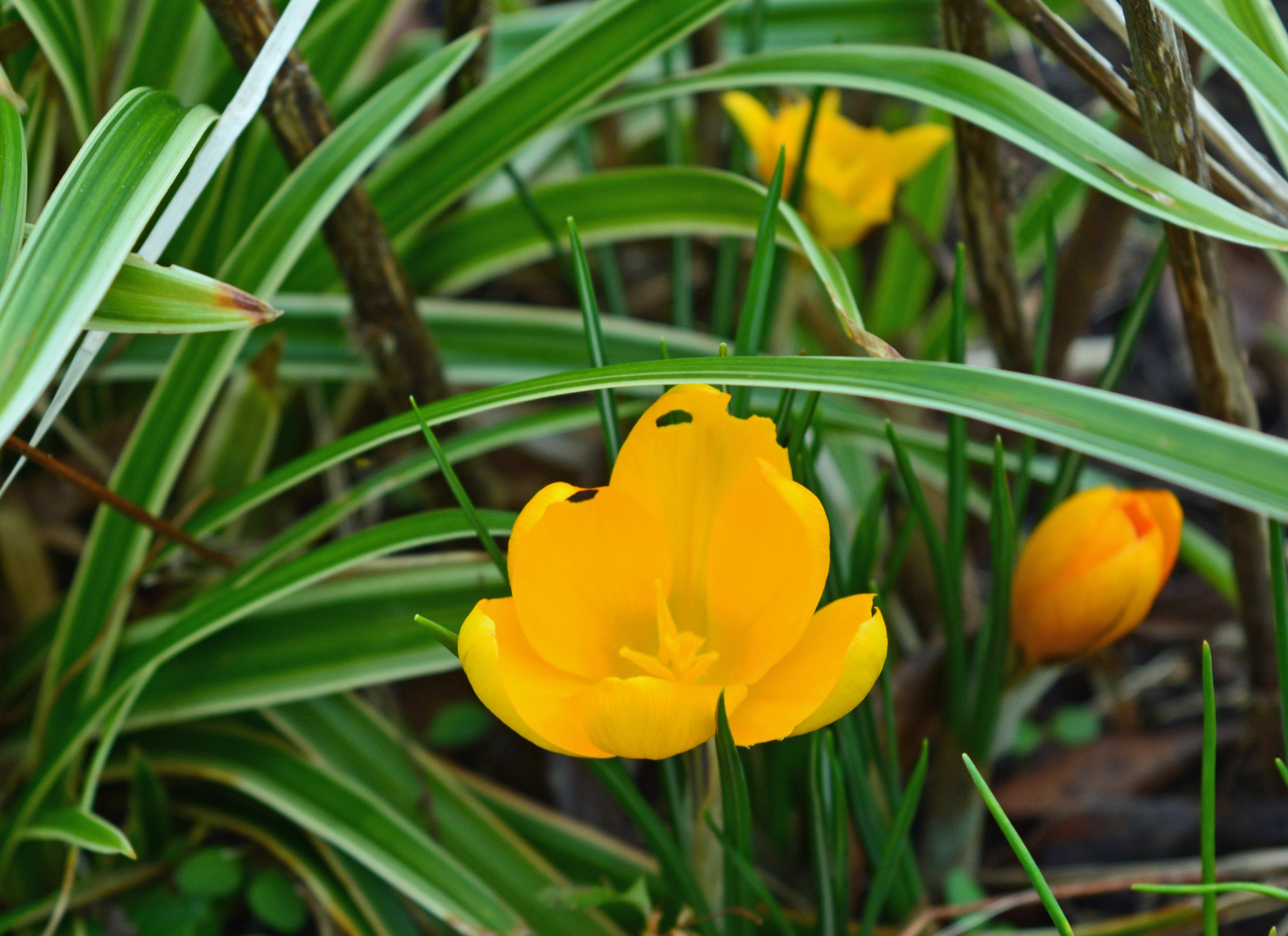
About Crocus I wrote, “Whatever the weather, sunny or overcast, the gold of Crocus shines through, even the purple coloured varieties have spots of deep yellow, almost orange.”

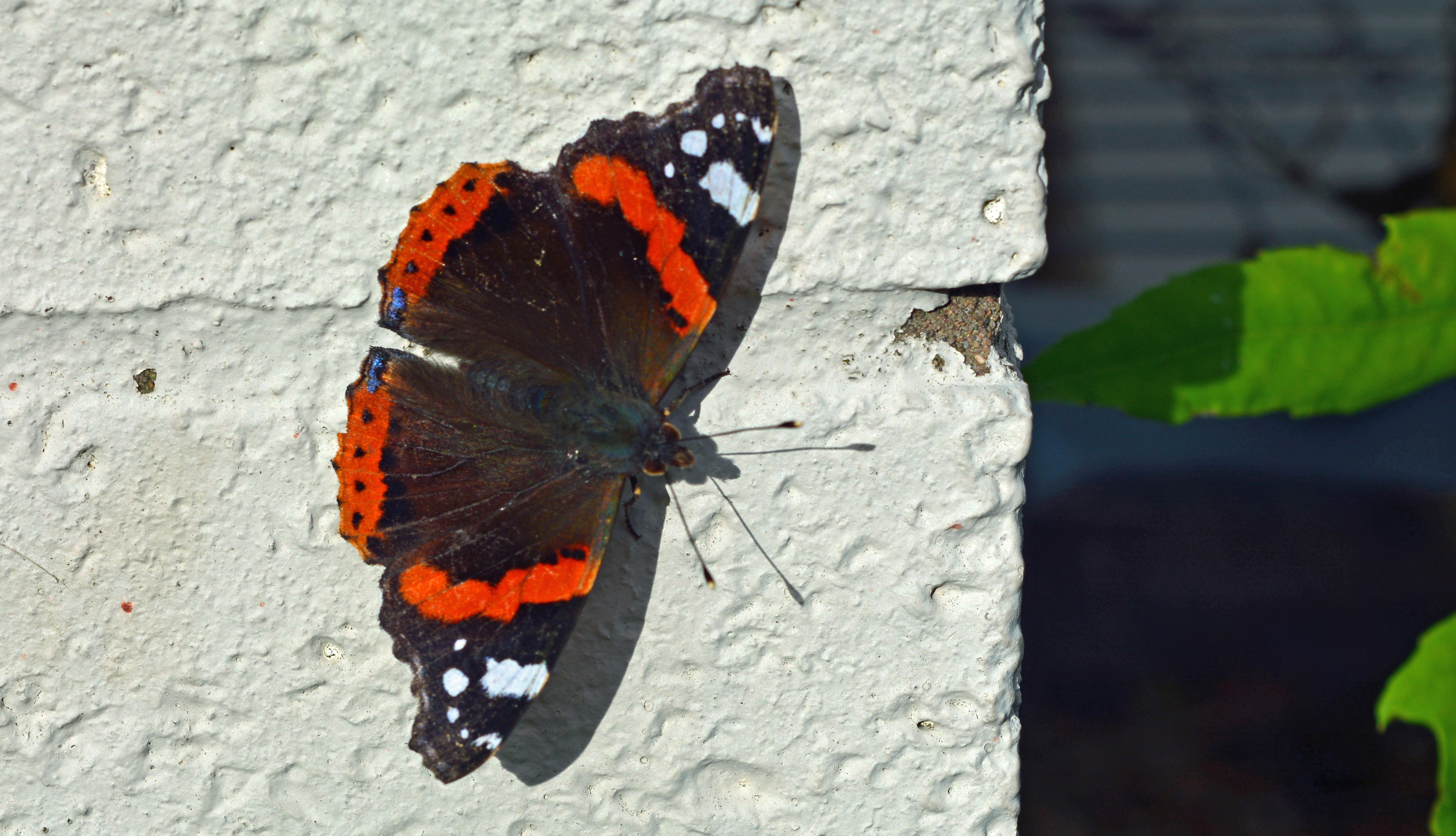
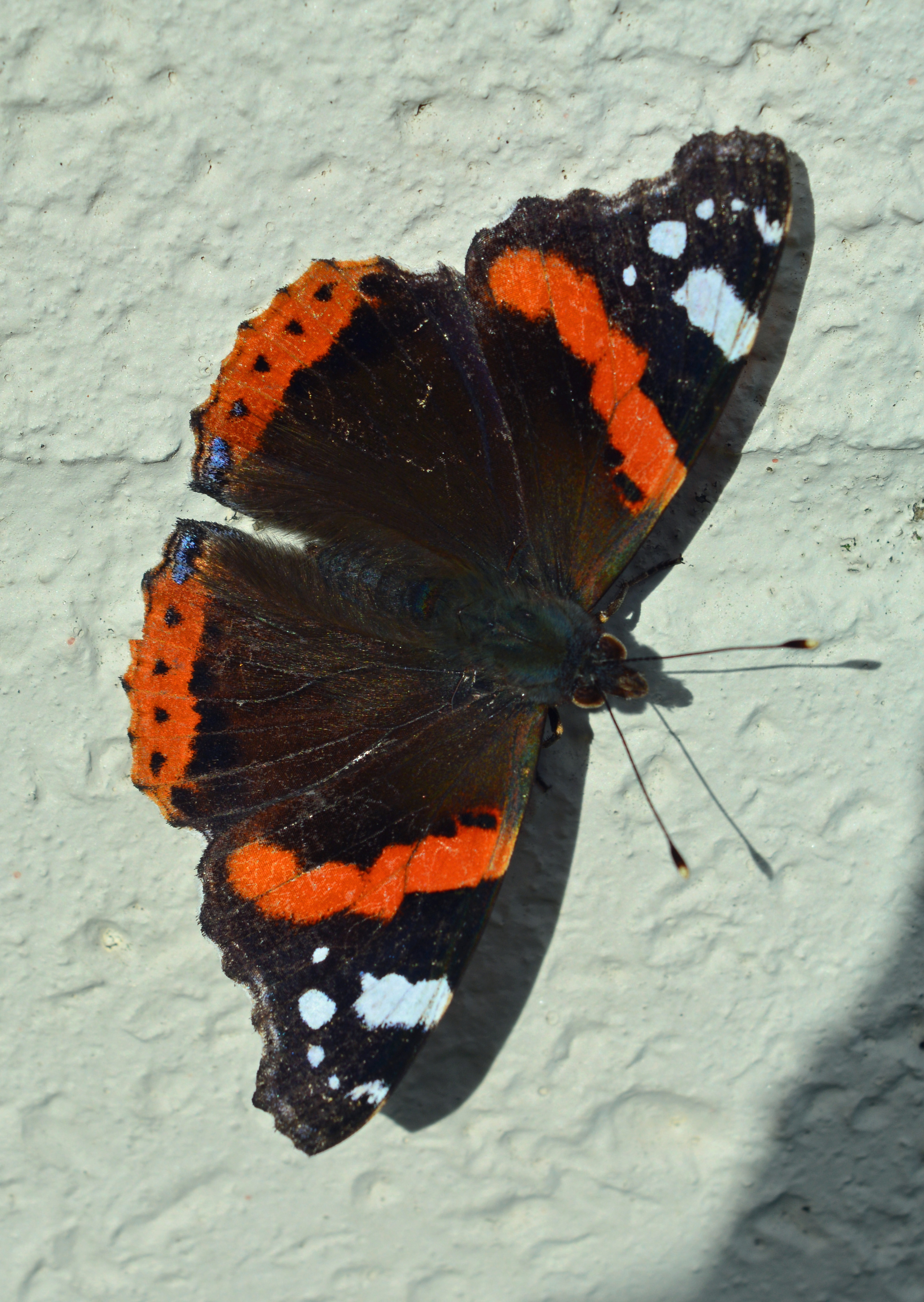
Turn over and I share the surprise of a wildlife visitor, about which I wrote, “There is a surprising amount of wildlife activity in our February garden. Recent sunny, warmer than average days have encouraged our resident birds to start singing and calling. The Song Thrush calls loudly from first light along with Robins, Dunnock and Wren while overhead Buzzards and Red Kite mewl as they soar. As the light levels drop Tawny Owls called for long periods of time. Sunshine also brings out Bumble Bees and Honey Bees to feed off early flowers of bulbs and the first butterfly of the year makes its appearance. A stunningly beautiful Red Admiral rests on a wall taking in the extra warmth of the sun on the bricks.


Categories
architecture buildings garden design garden photography garden seat garden seating gardens gardens open to the public grasses ornamental grasses outdoor sculpture sculpture town gardens

Our Short Break in Stratford-on-Avon – Part 2

Part two of this report on our short break in Stratford-on-Avon is all about the gardens of Shakespeare and his family. After spending time indoors studying the life and times of the Bard is was good to be outside discovering some outdoor history.

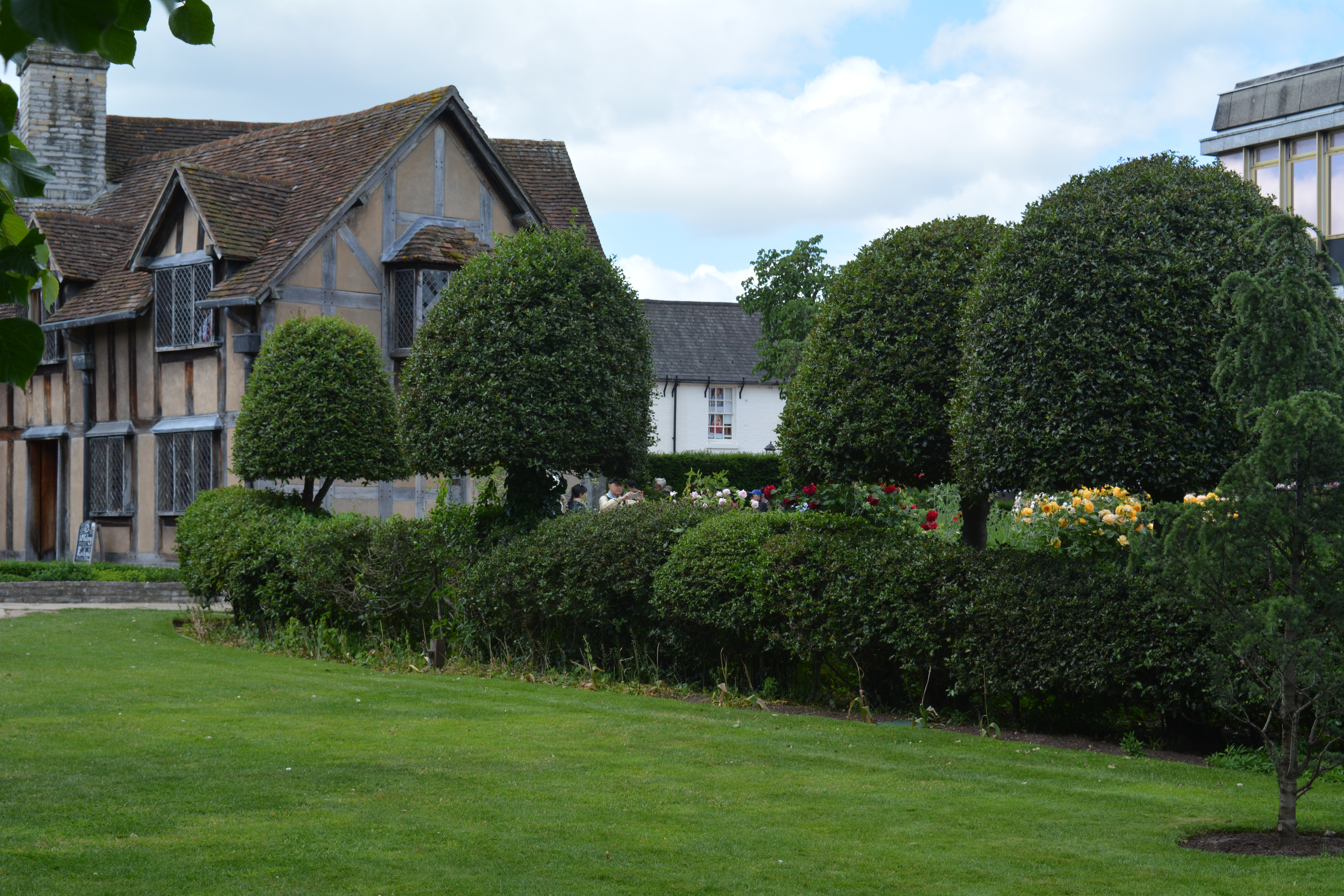
We will begin by looking at the grounds of the Shakespeare family home, where roses seem the most important plant. The planting today does not necessarily relate in any way to how it was in the Bard’s day. We loved this bronze of Shakespeare which seemed to capture his intelligence and depth of thinking and feeling, as well as the contemporary pencil sketch of the house.


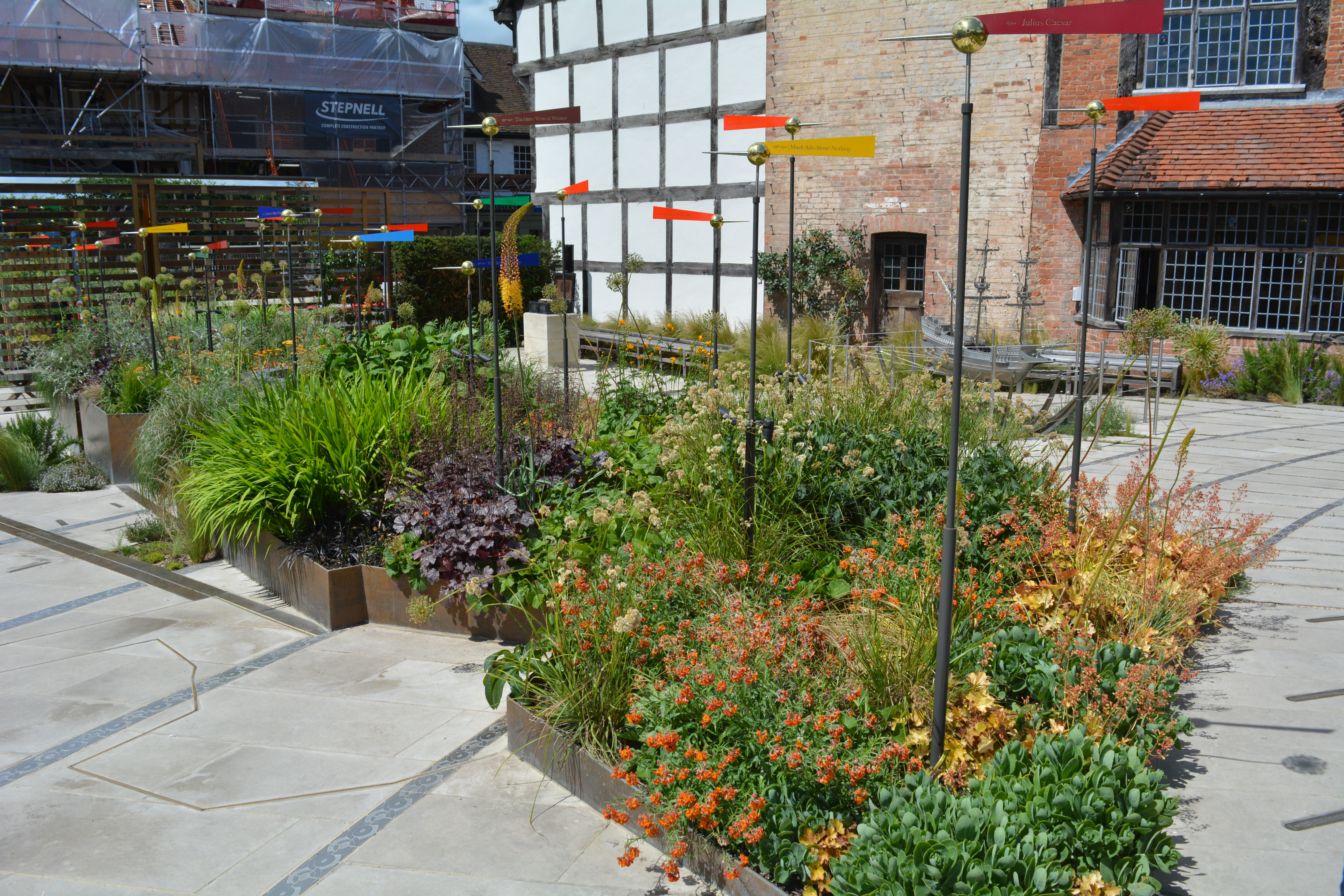
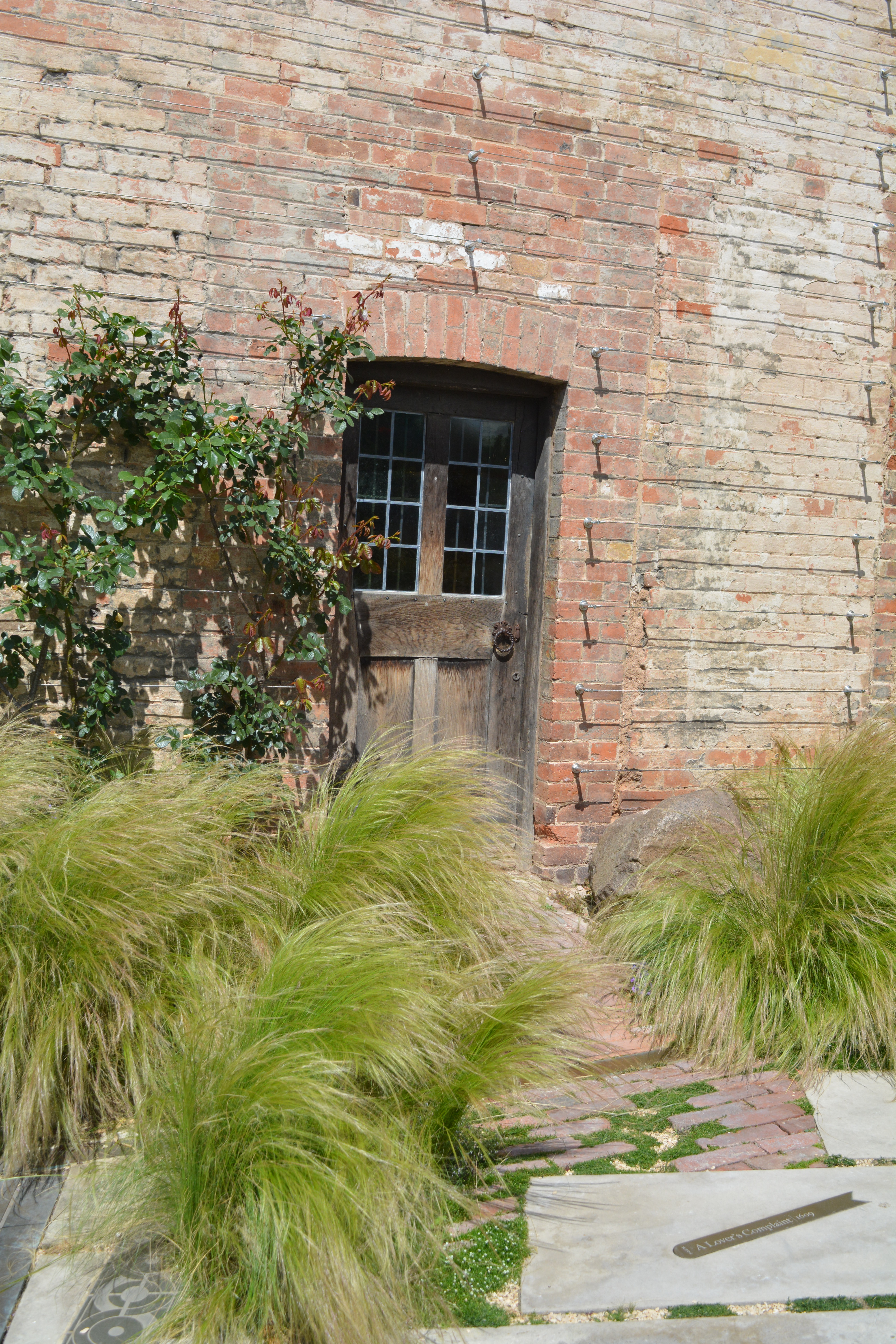
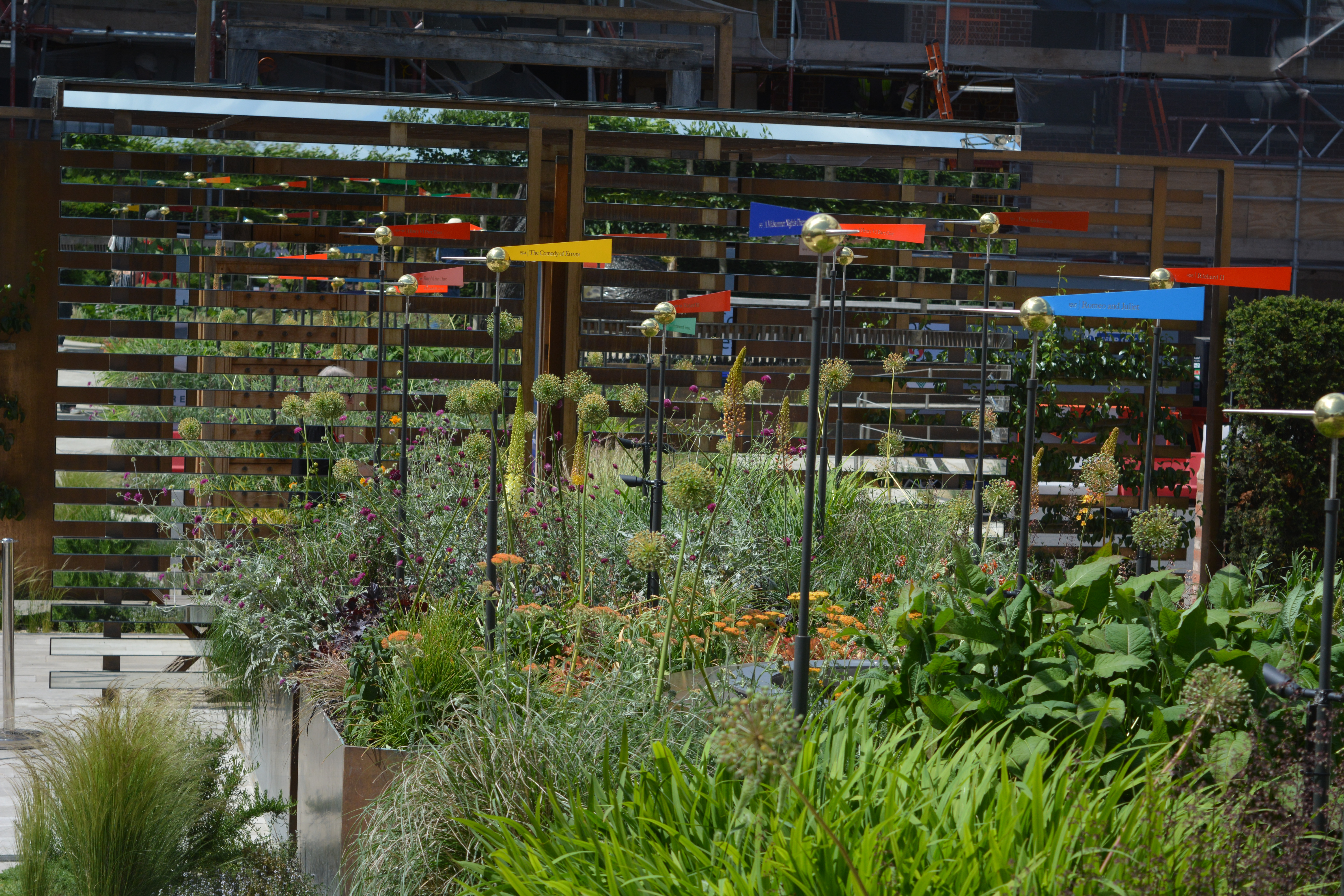
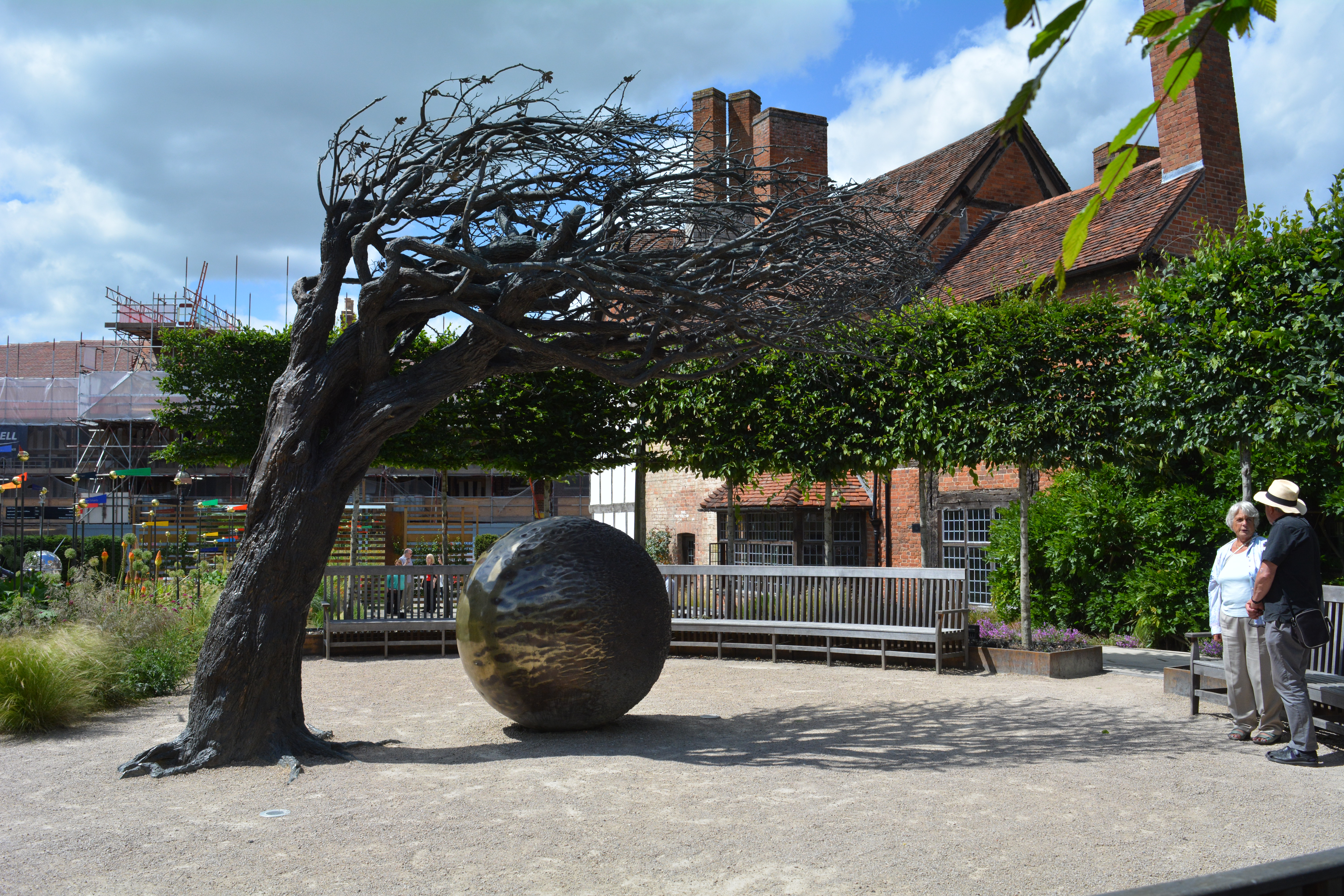
In total contrast but just a short walk away, is “The New Place”, a celebration of Shakespeare’s life with exciting modern garden design and statuary. Each piece of statuary and each plant combination provides hints of the period as well as adding atmosphere. There were brilliant plant combinations combined sensitively with modern sculptural constructions. Softening of modern hard landscaping was carried out using soft, whispy grasses such as Stipa tennuissima Pony Tails.


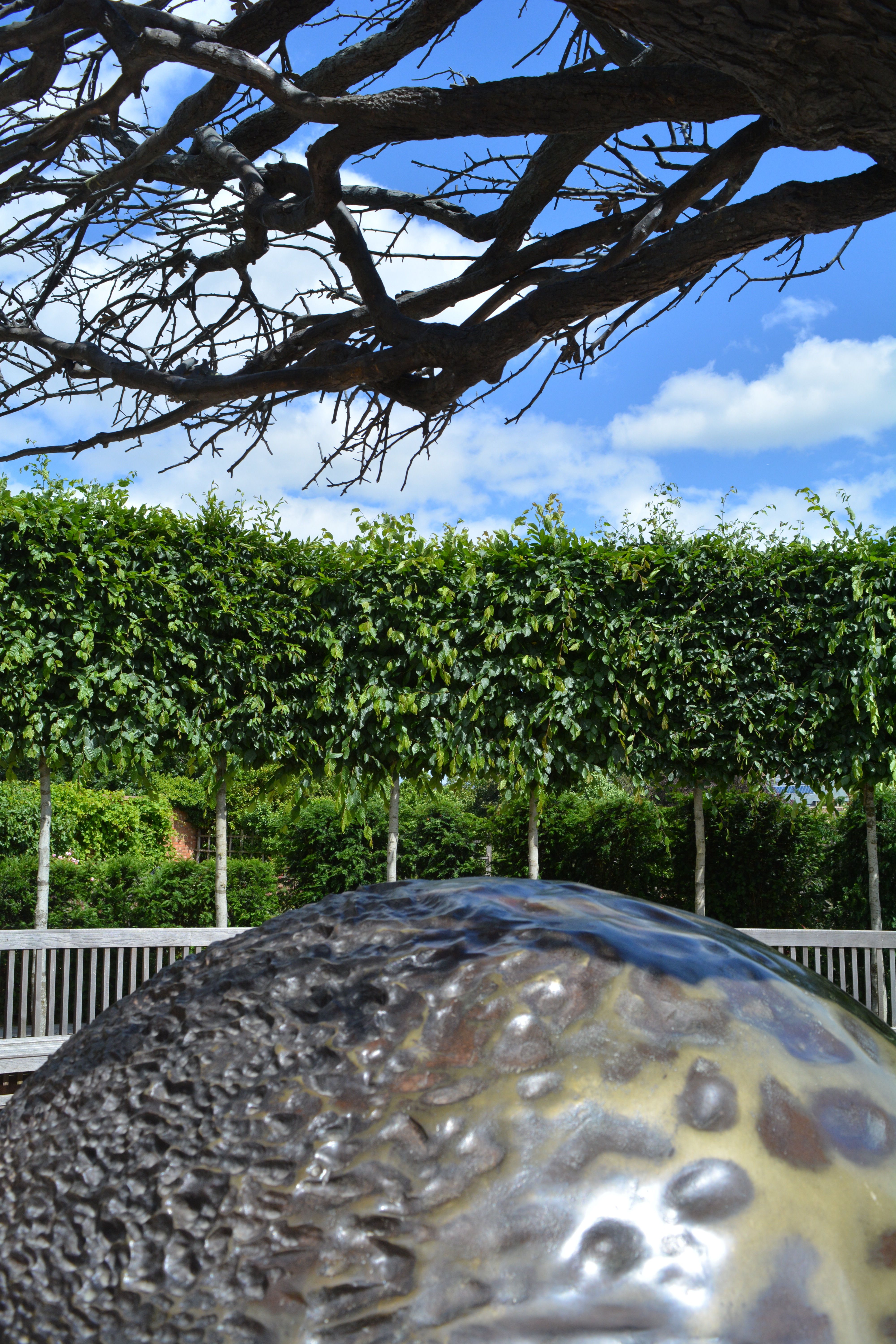
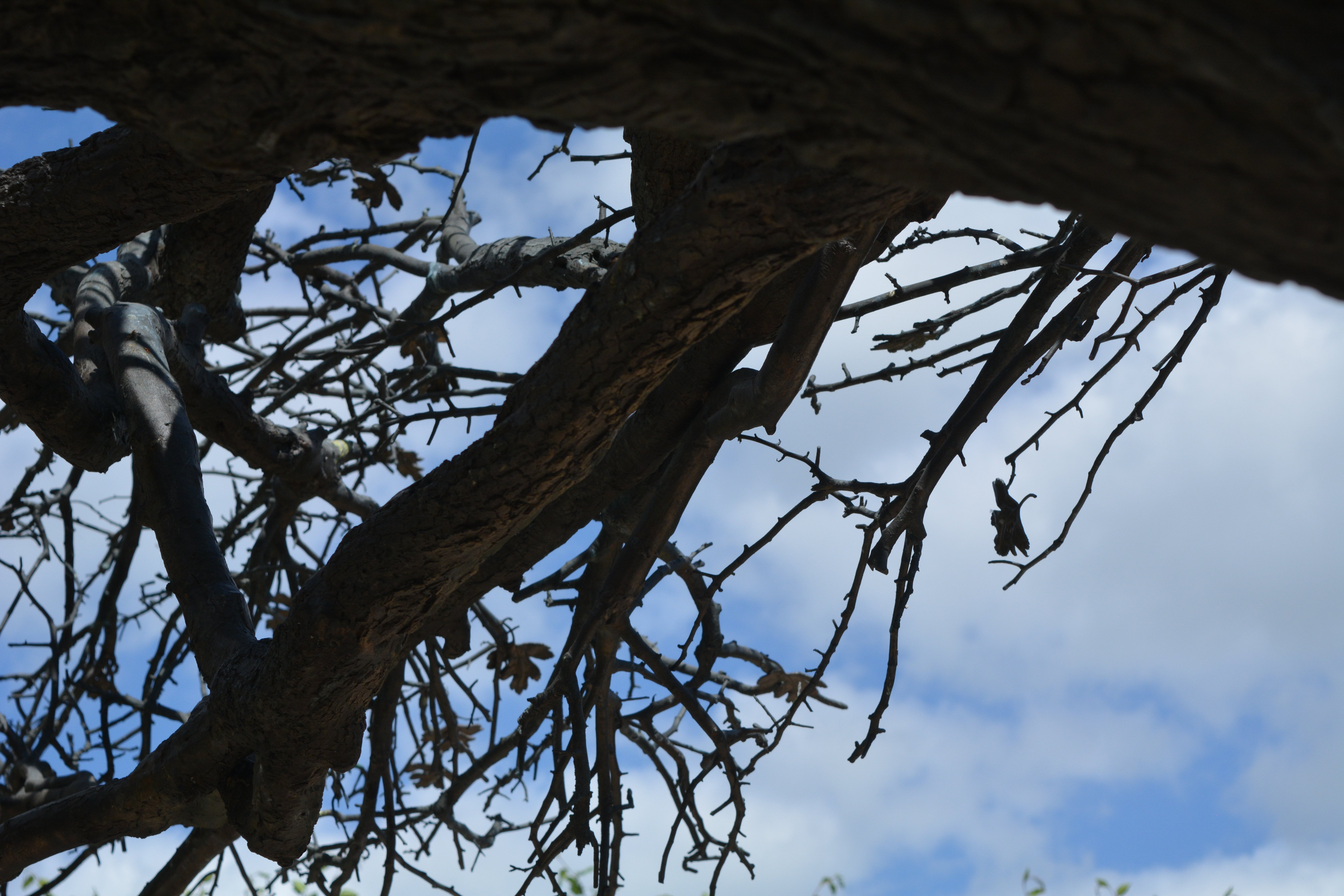
The globe under the tree feature had a real surprise in store fr when you got close to the tree you realised it was cast in bronze. Goldfinches loved it and sang from its upper branches!


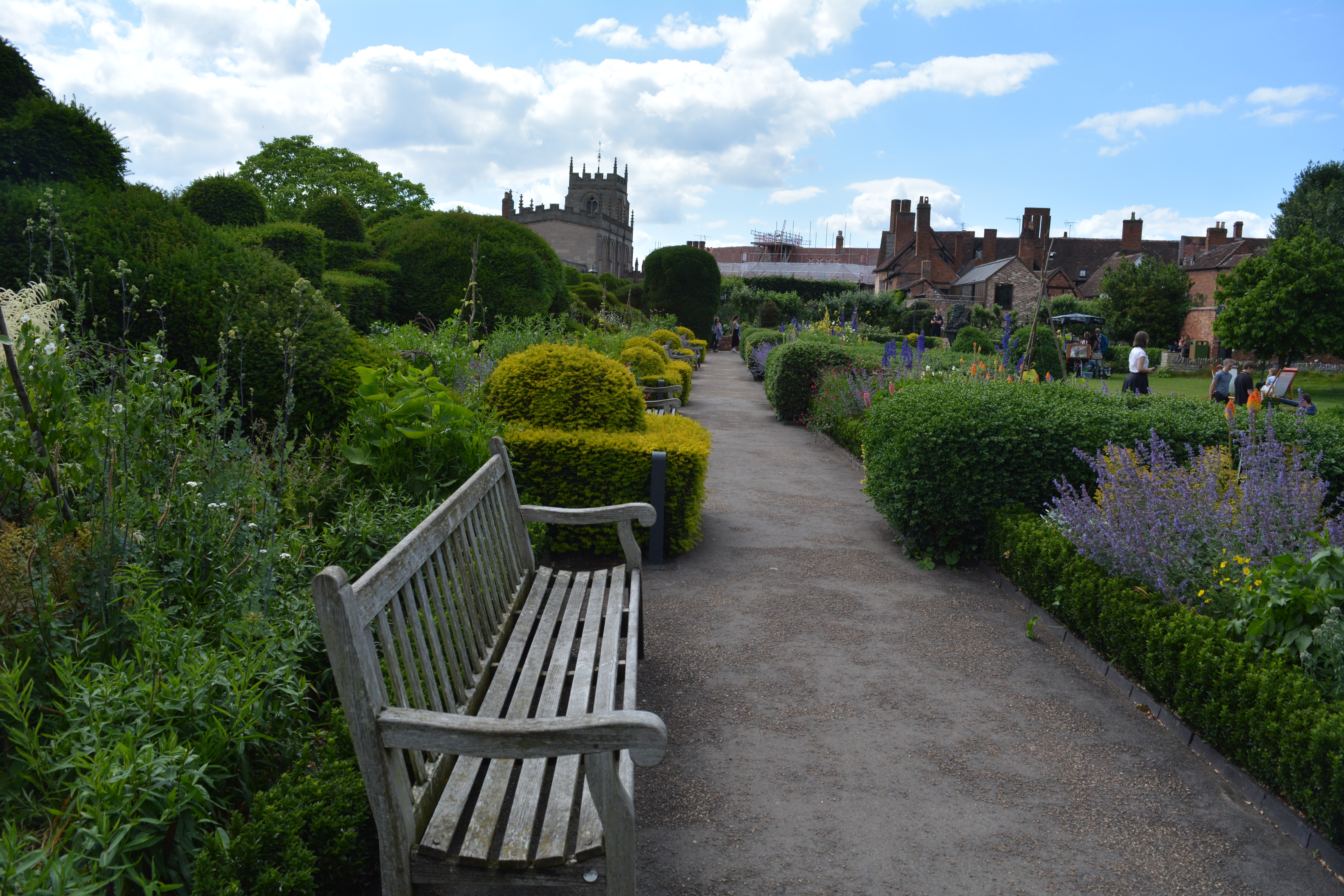
A more open space beyond he building and the modern garden area had a completely different feel to it contrasting strongly and providing a peaceful space to rest and have a quick coffee served by a barista on a bicycle. Long double borders with a central path ran along one side of the large green, with topiarised hedging and perennial planting.


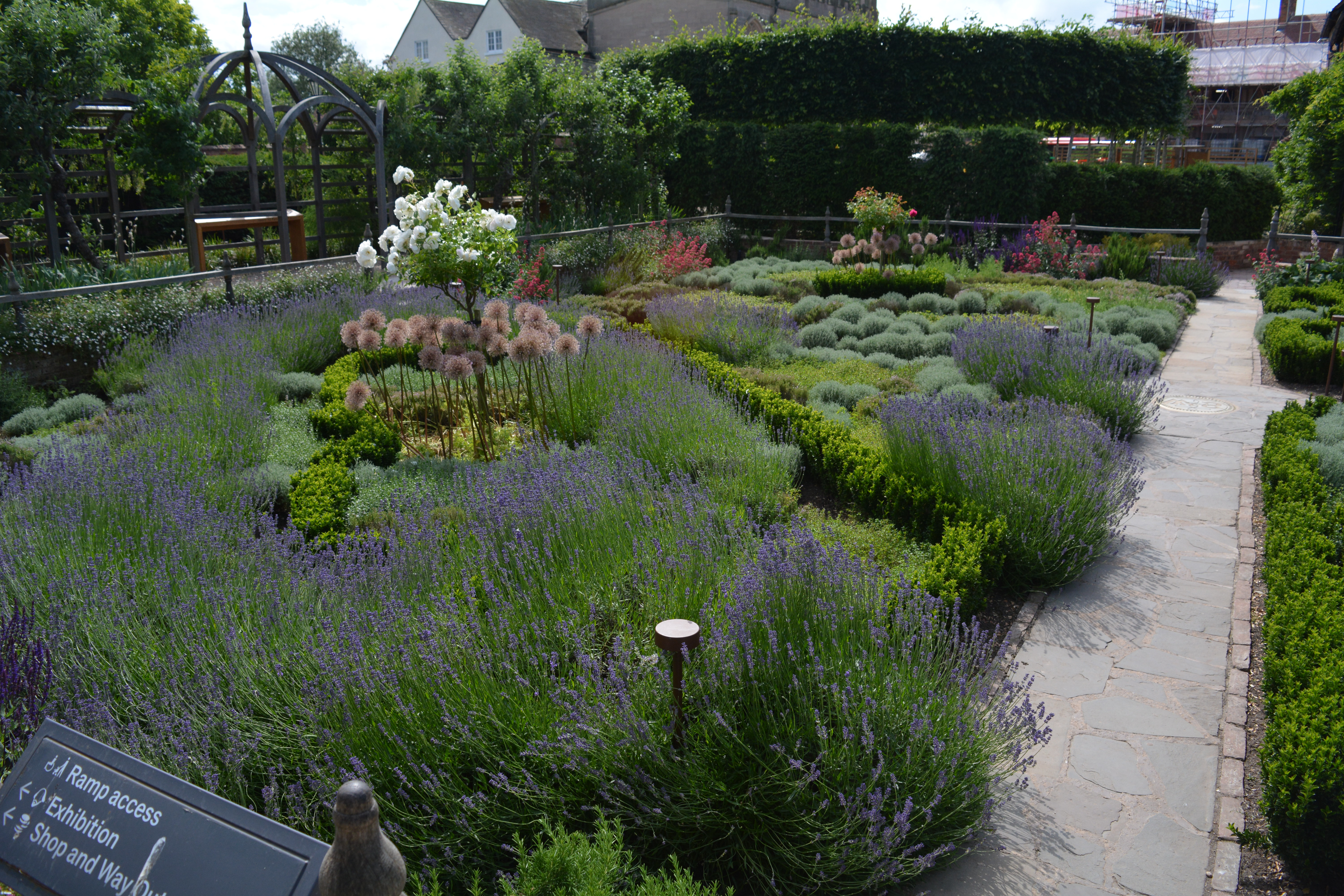
Finally a parterre area felt much more in keeping with the garden style of the Shakespearian era, providing another contrasting area to explore. Lavenders gave off beautiful gentle scent.


Categories
autumn autumn colours colours garden photography gardening gardens hardy perennials ornamental grasses ornamental trees and shrubs trees

My Garden Journal 2018 – November

This is the penultimate post in this 12 part series about my 2018 Garden Journal so here is what was happening in our patch in November.

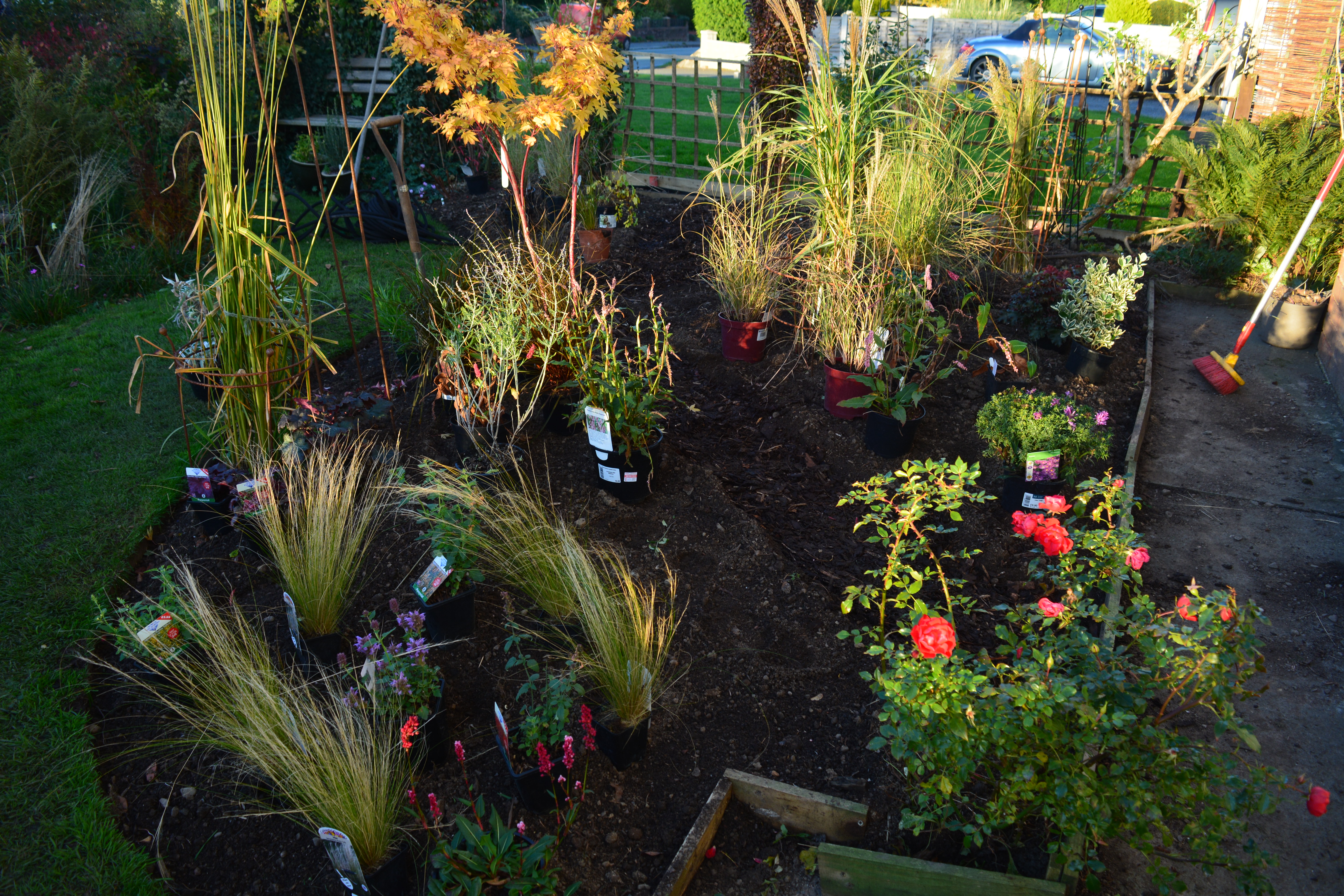
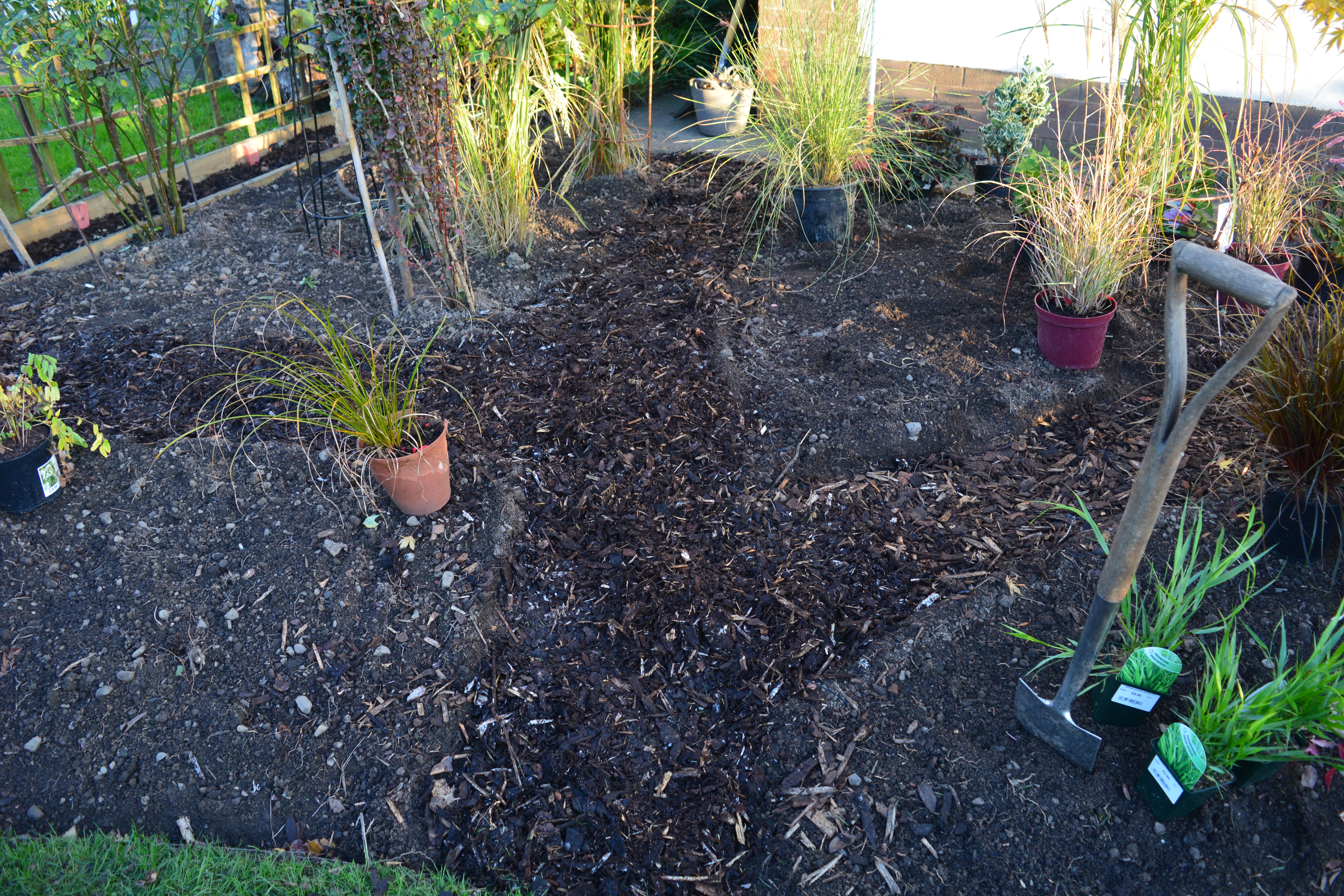
The first couple of pages dealt with the continued redevelopment of our old hot garden. We intended to give it a completely new look including bark access paths through it.

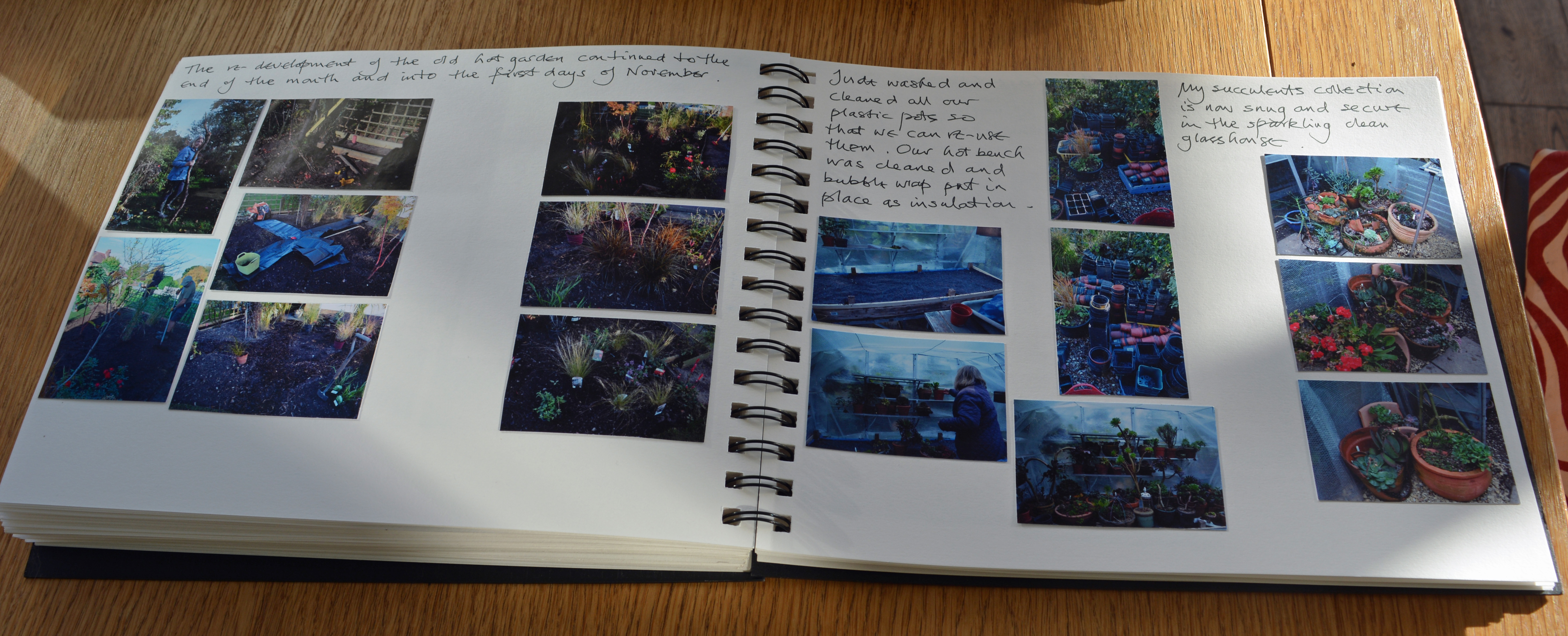
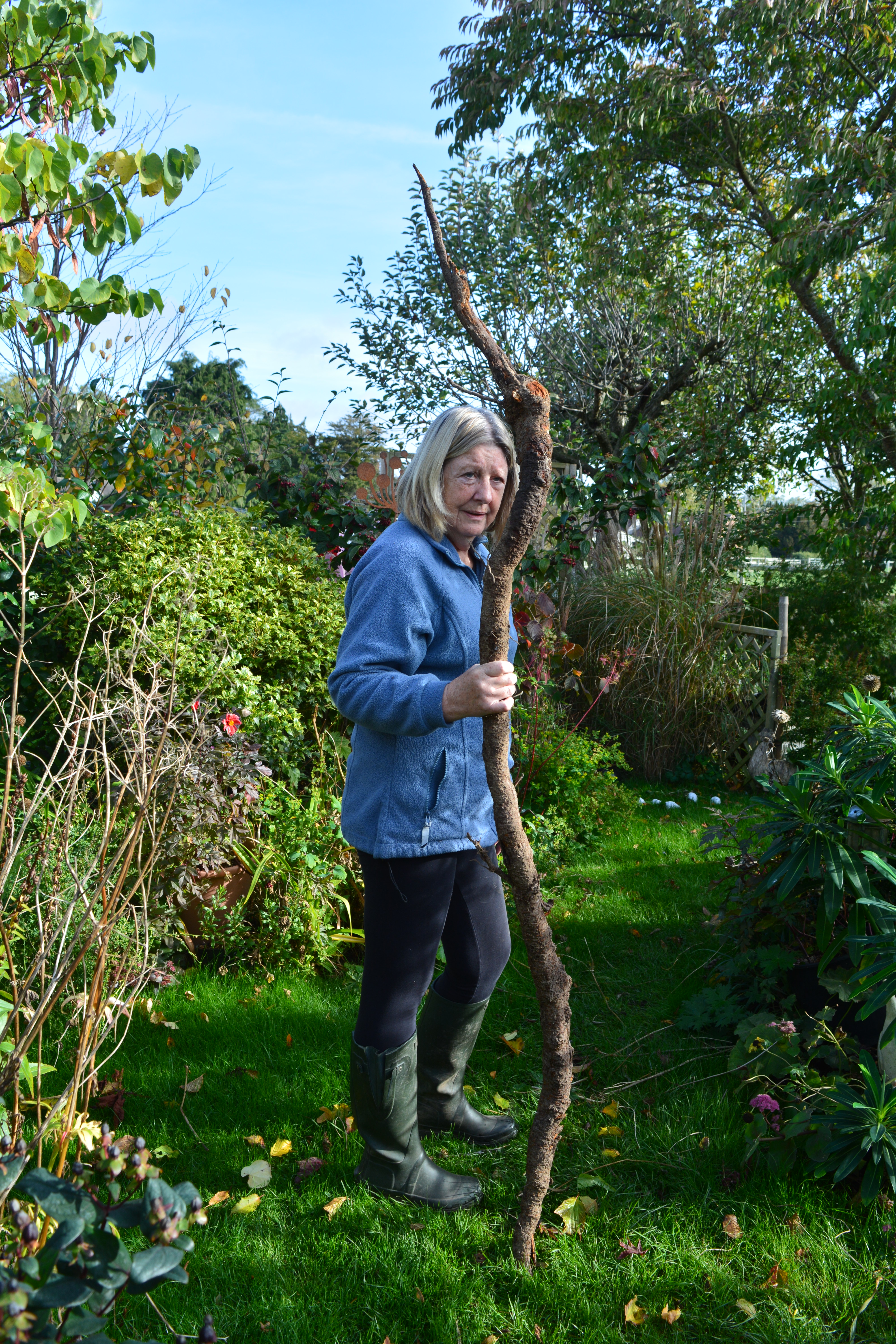
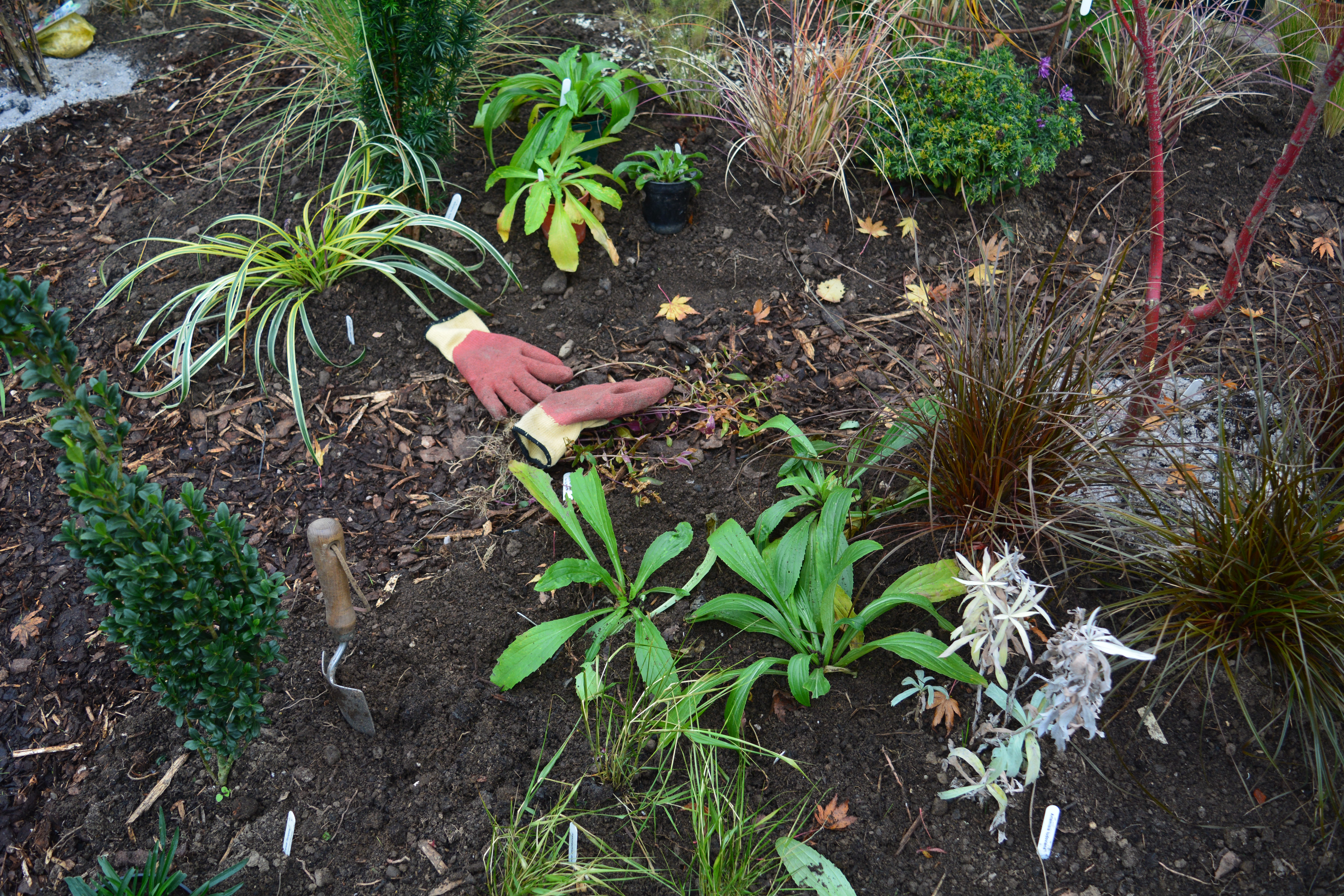
I wrote, “The re-development of the old hot garden continued to the end of the month and into the first days of November.” The first picture shows Jude the Undergardener holding up a huge root which Ian managed to dig out of the bed. He had to cut it off at both ends as it was extending beneath the lawn in one direction and out of our garden in another. It sat horizontally in the soil just above the boulder clay layer. We have no idea what plant it belonged to originally. One of our gardening mysteries! The second photo shows Ian our garden helper raking over the soil which he had meticulously double dug after adding lots of organic compost. This first addition of compost was dug in before a second batch was added as a thick mulch.


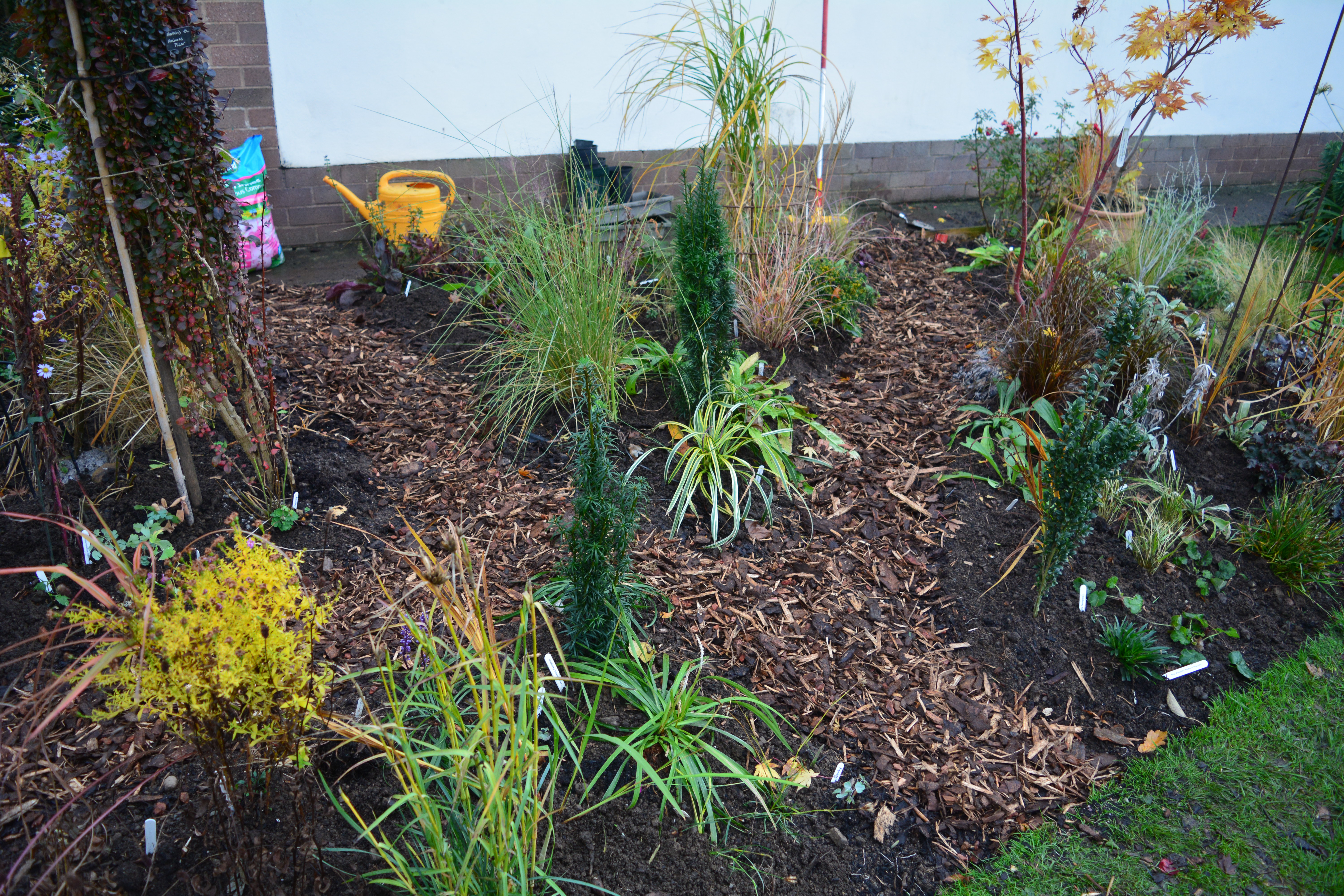
We then laid a path of bark over membrane before  getting ready to enjoy planting both our new and saved plants.


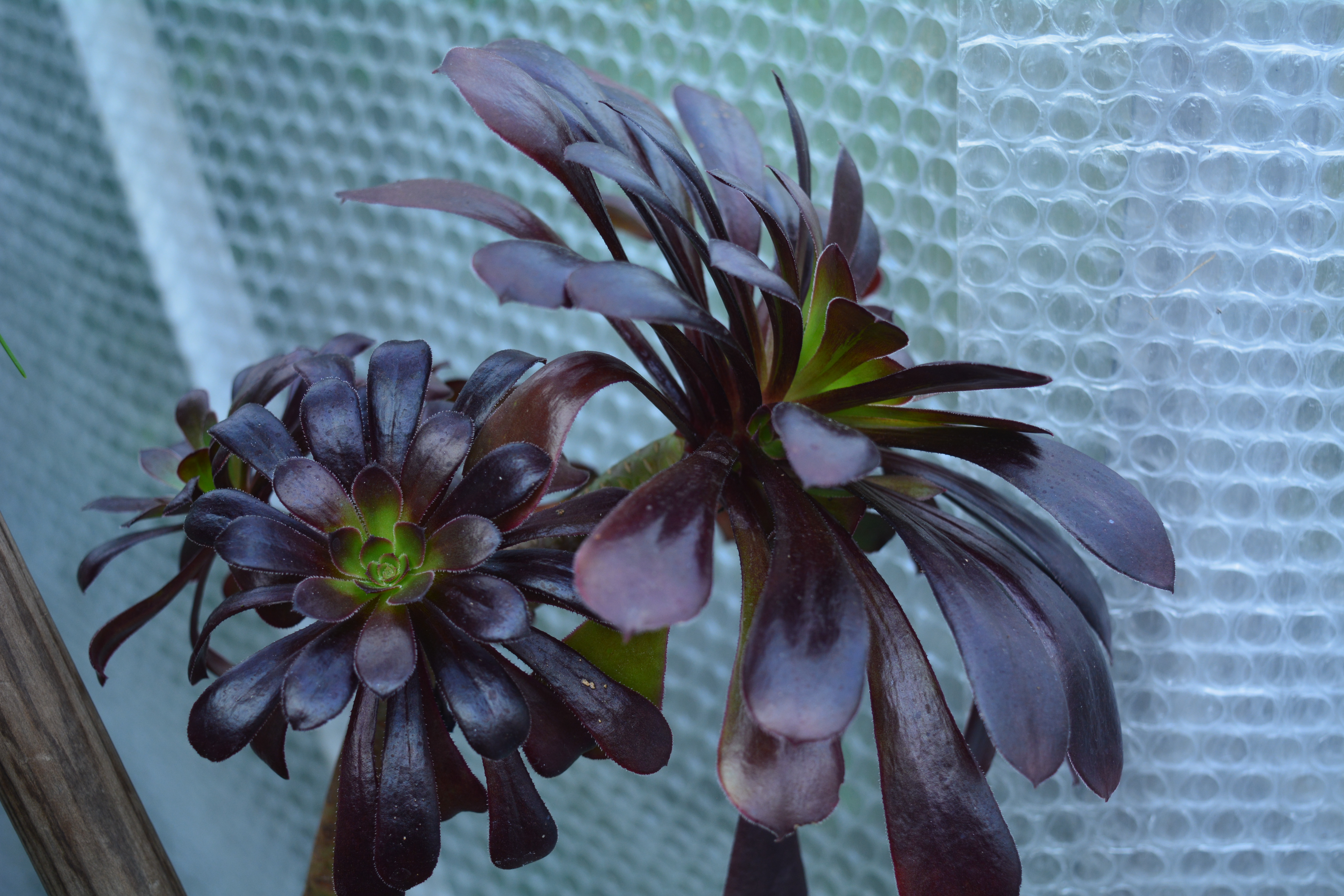
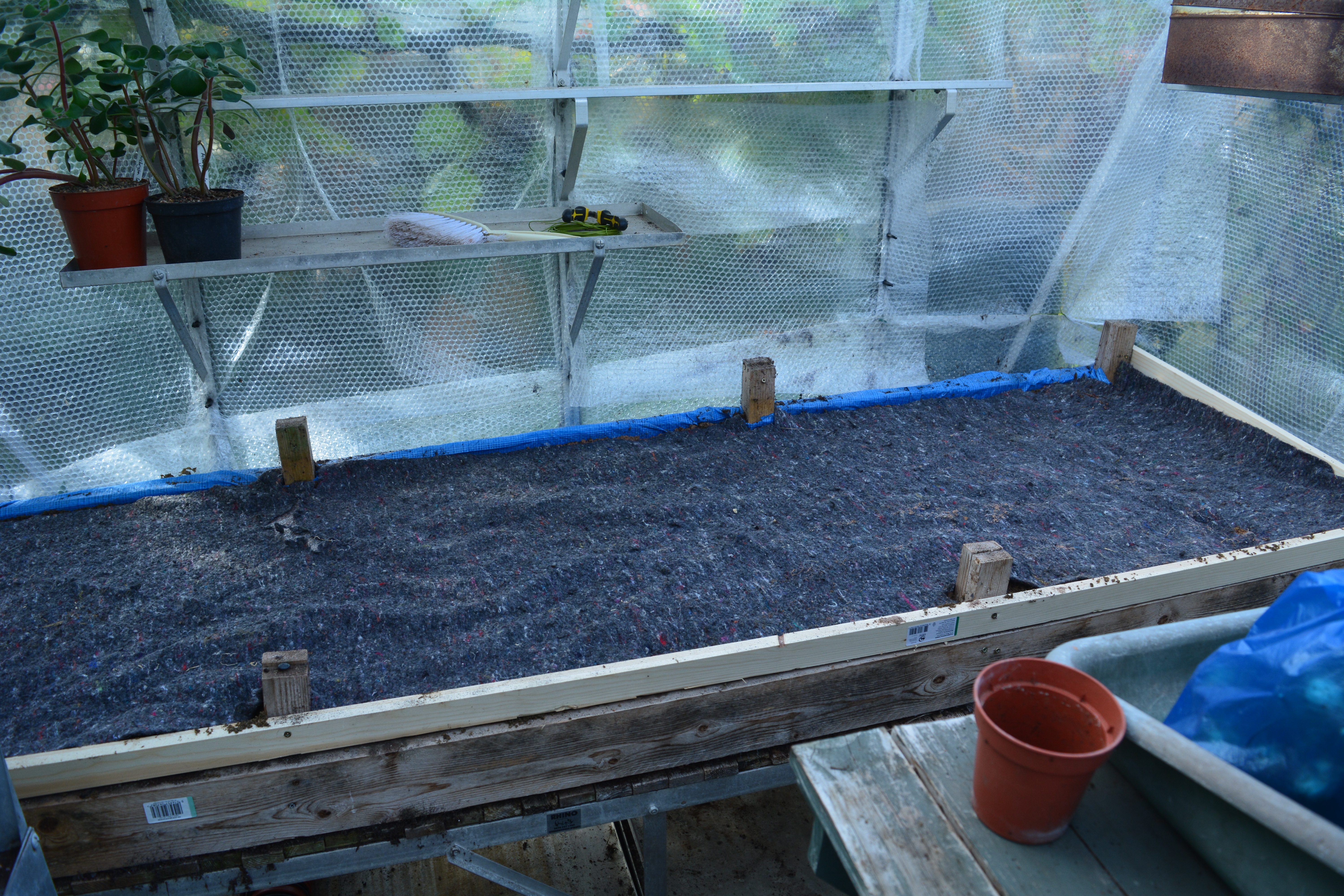
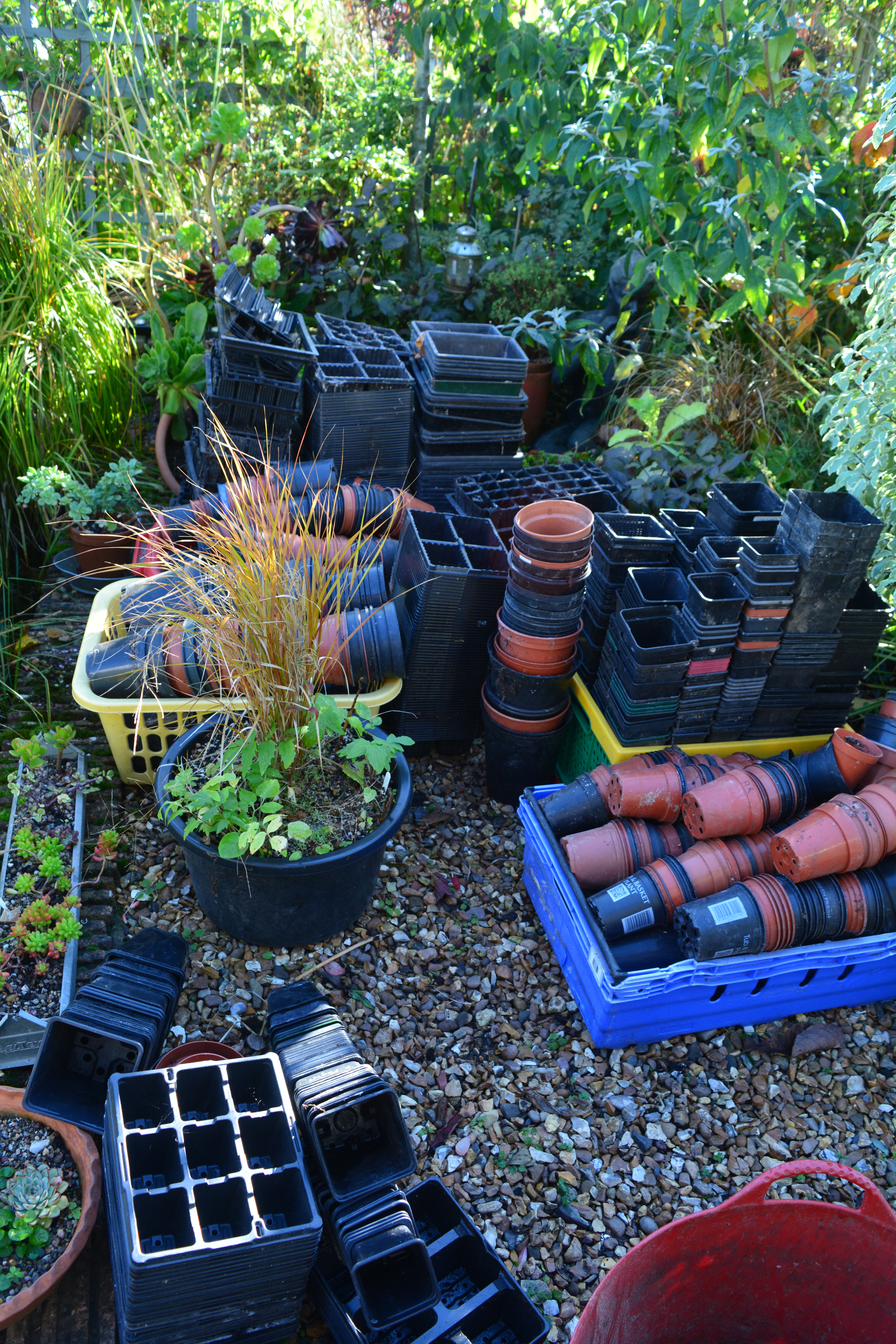
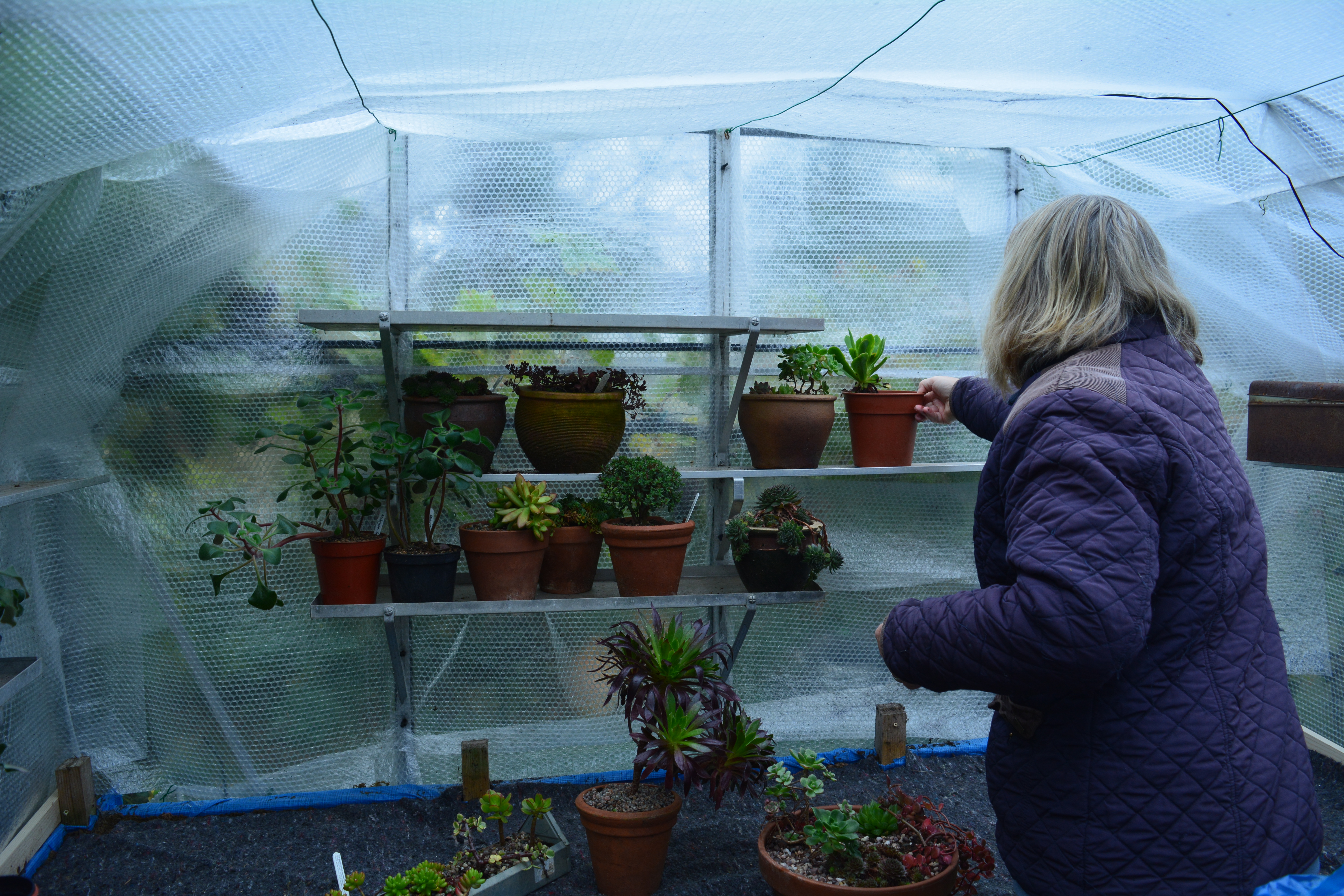
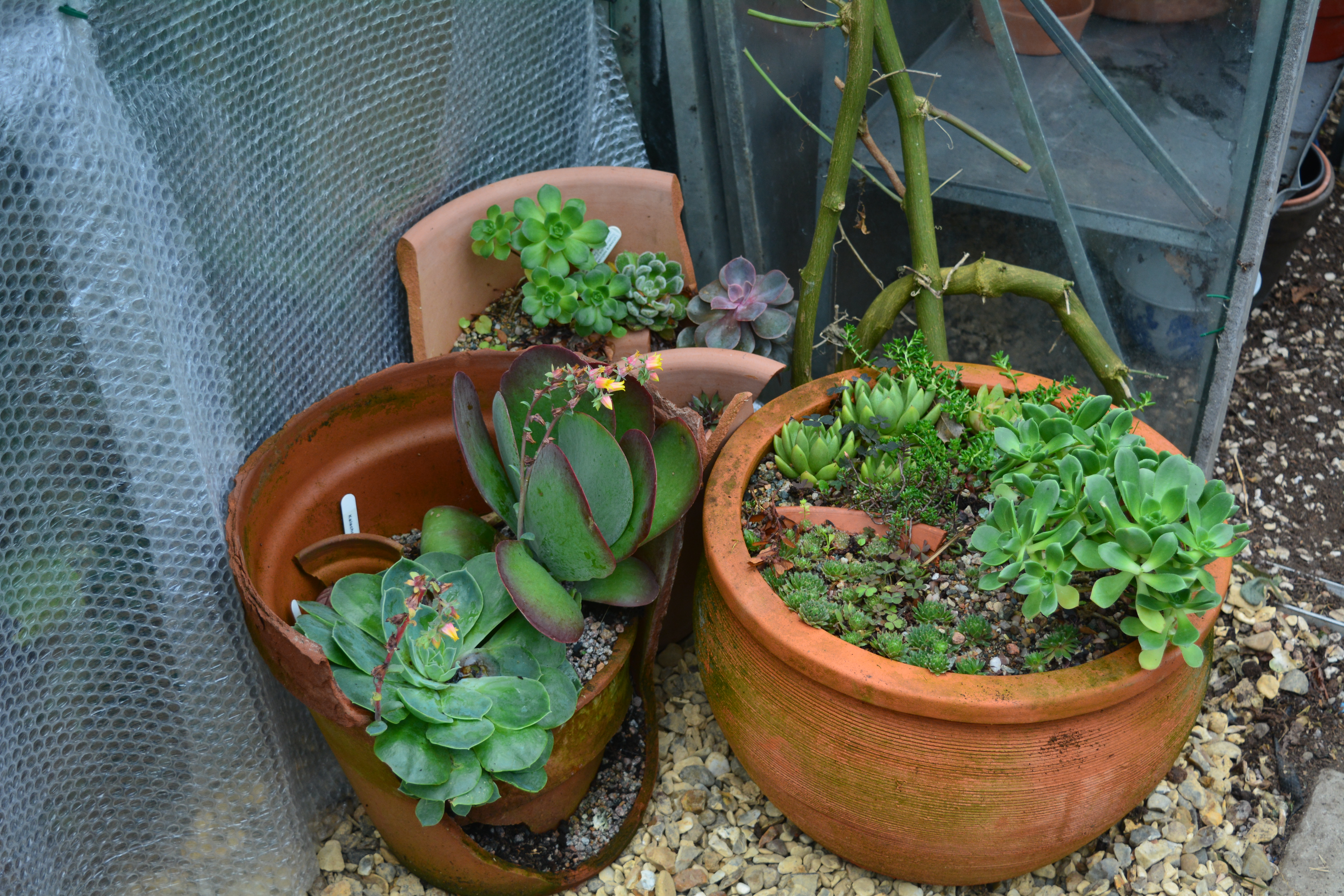
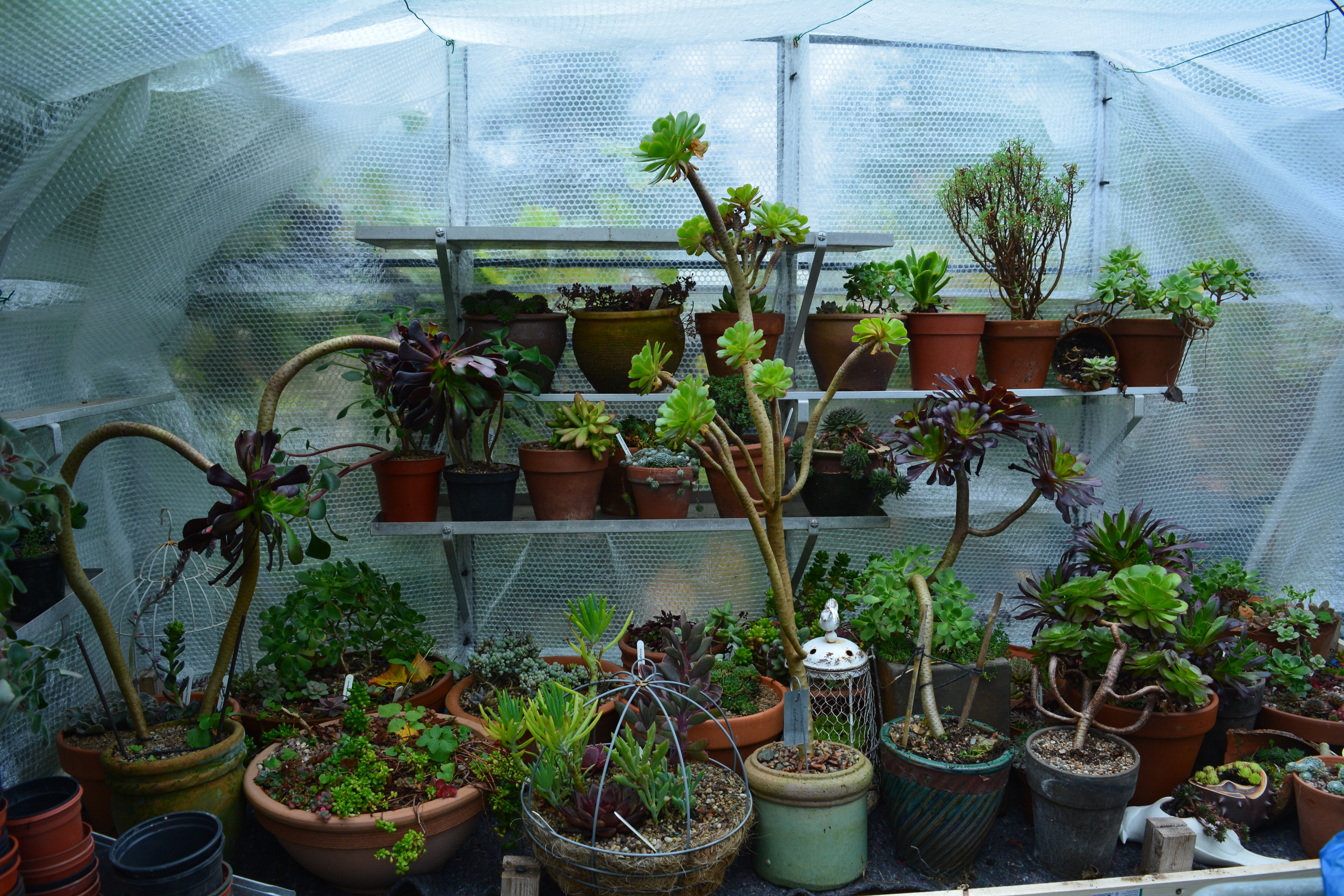
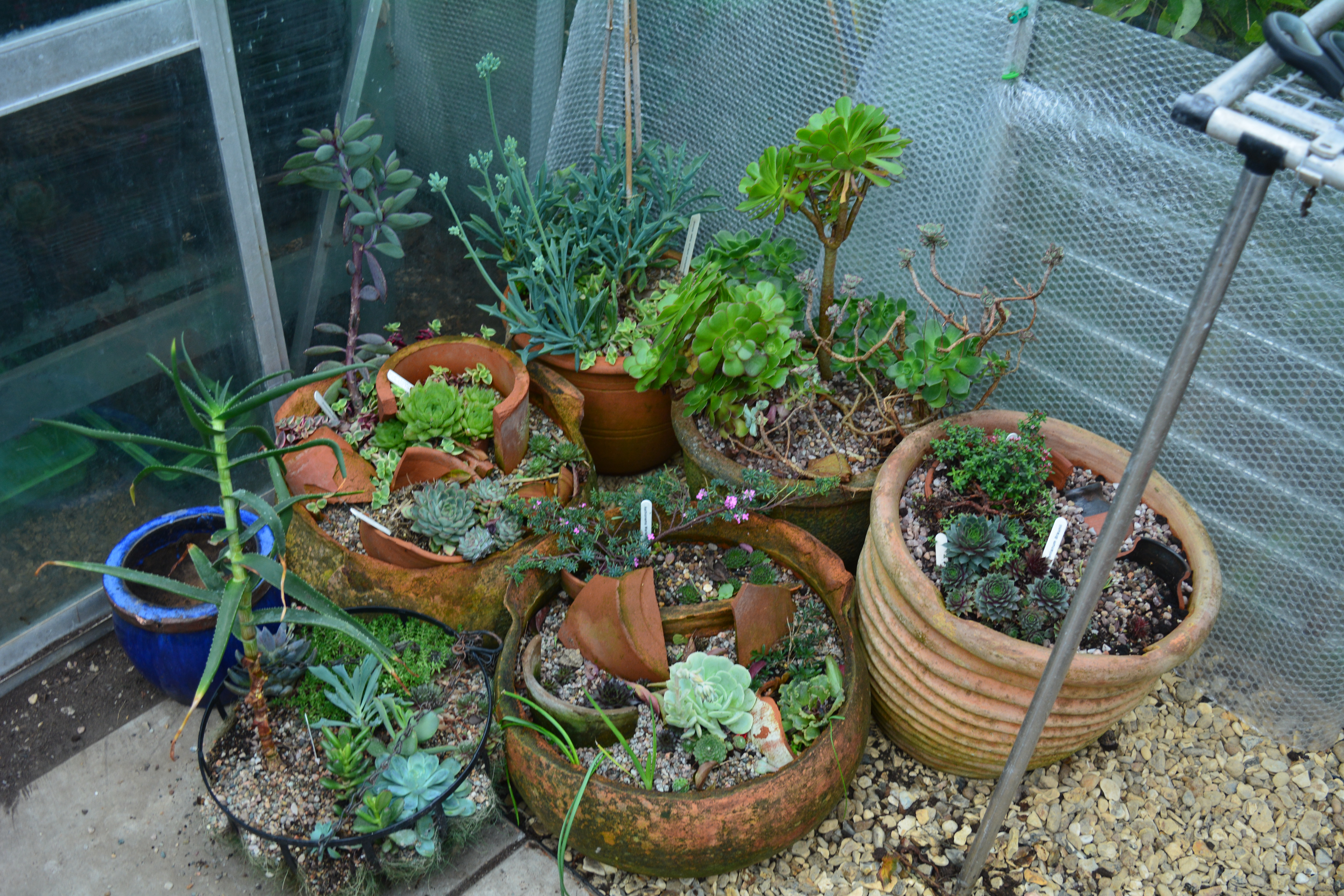
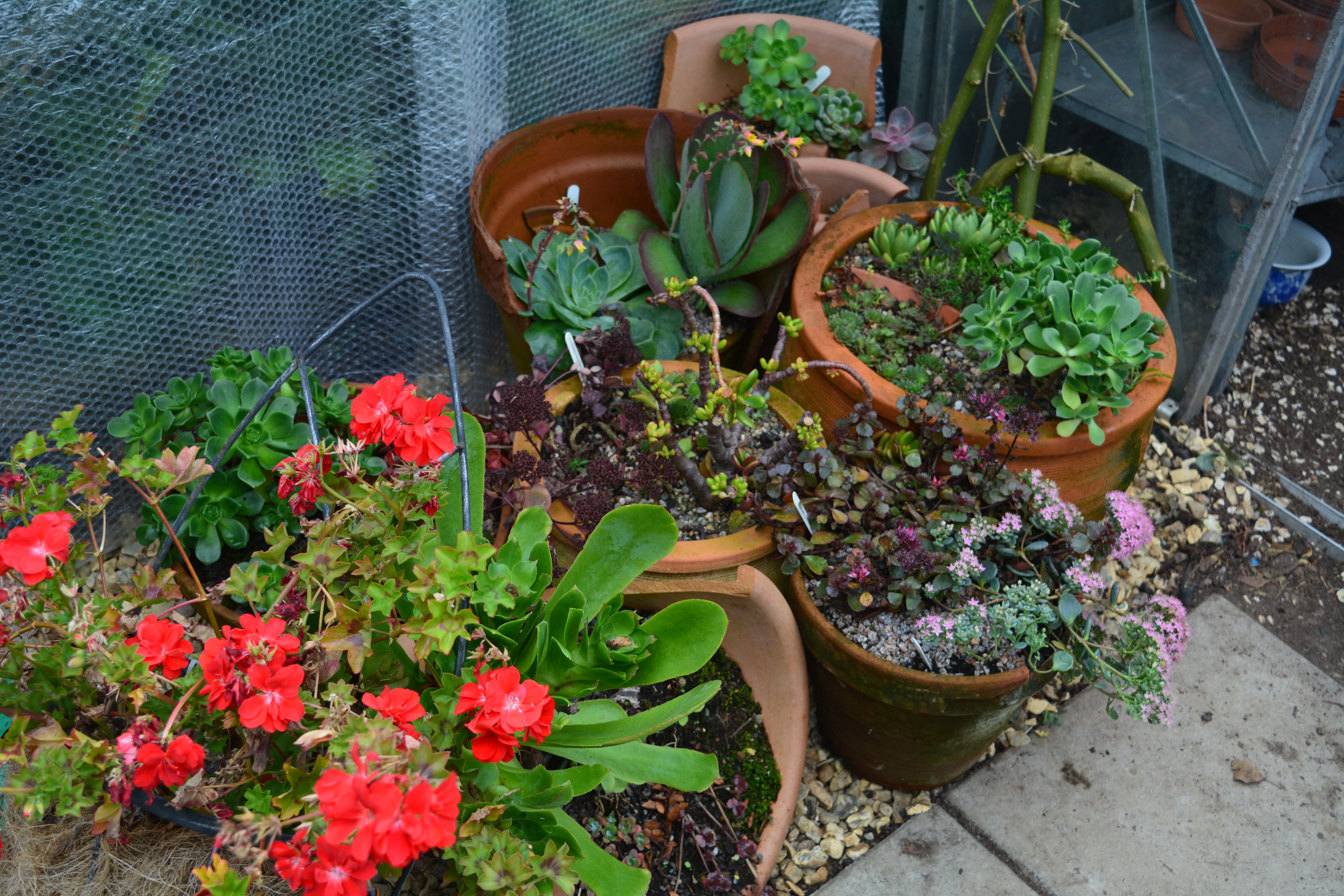
On the right hand page I looked at how Jude spent time early in the month cleaning pots, cleaning the glass in the greenhouse and putting up bubblewrap insulation. Once done this allowed us to move my succulent collection into the winter safety to be found under glass. “Jude washed and cleaned all our plastic pots so that we can reuse them. Our hot bench was cleaned up and bubblewrap put up in place as insulation. My succulent collection is now snug and secure in the sparkling clean greenhouse.”


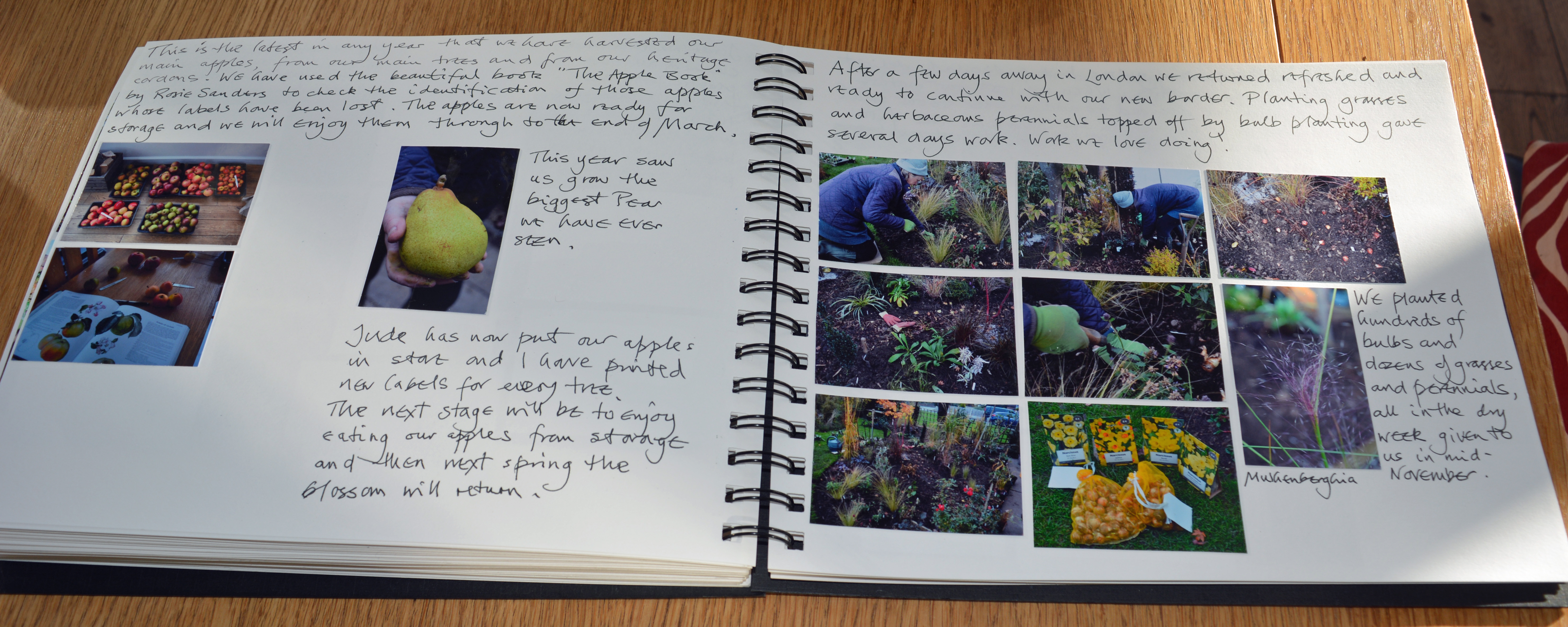
Turning over to my next double page spread I looked at our fruit and the continuation of planting up the new border.

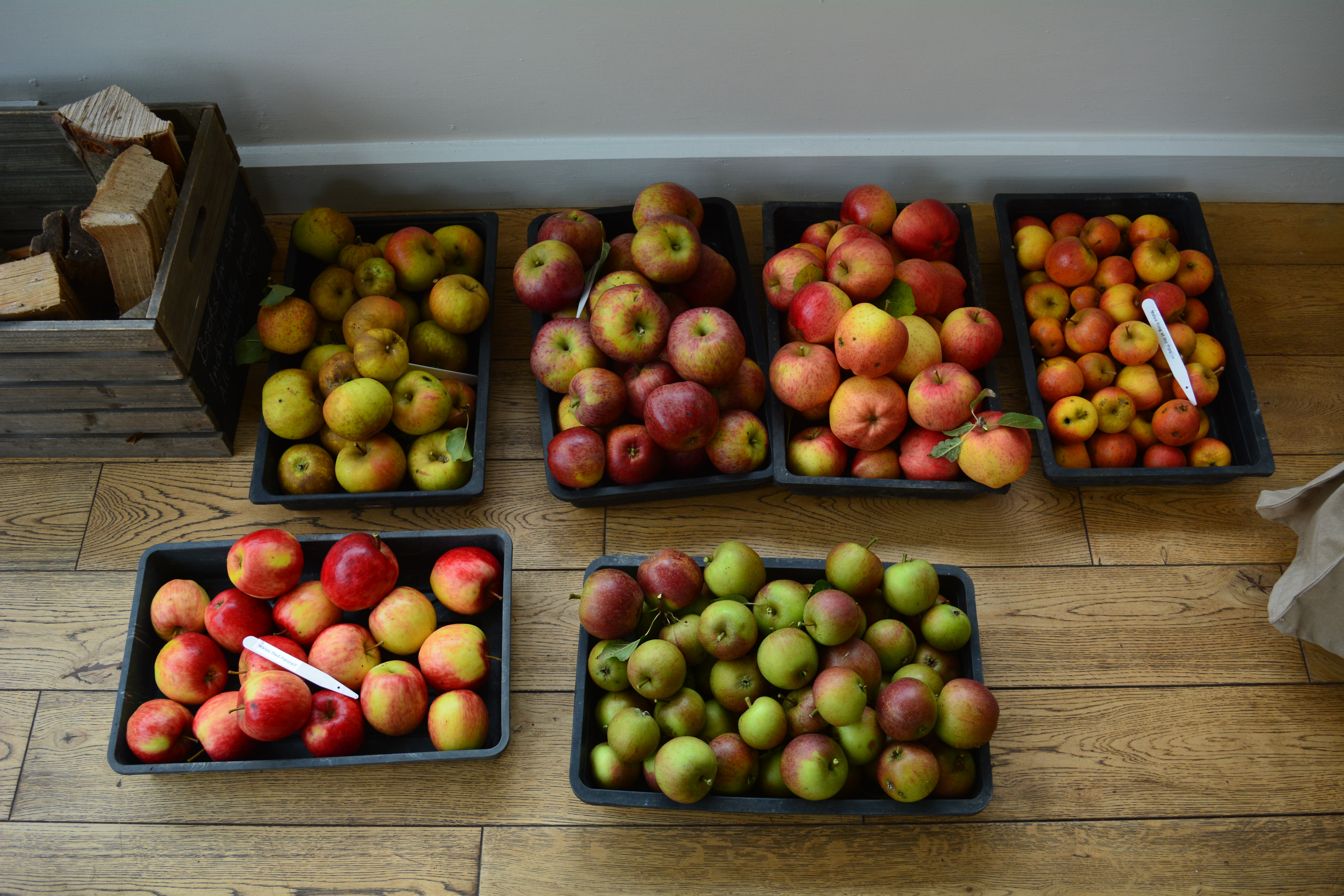
I wrote, “This is the latest in any year that we have harvested our crop of apples from our main trees and heritage cordons. We have used the beautiful book “The Apple Book” by Rosie Sanders to check the indentification of those apples whose labels have been lost. The apples are now ready for storage and we will hopefully enjoy them through to the end of March.”

Sometimes fruit can surprise us. “This year saw us grow the biggest pear we have ever seen. Jude has now put our apples in store and I have printed new labels for every apple tree. The next stage will be to enjoy eating our apples from storage and then next spring the blossom will return.”

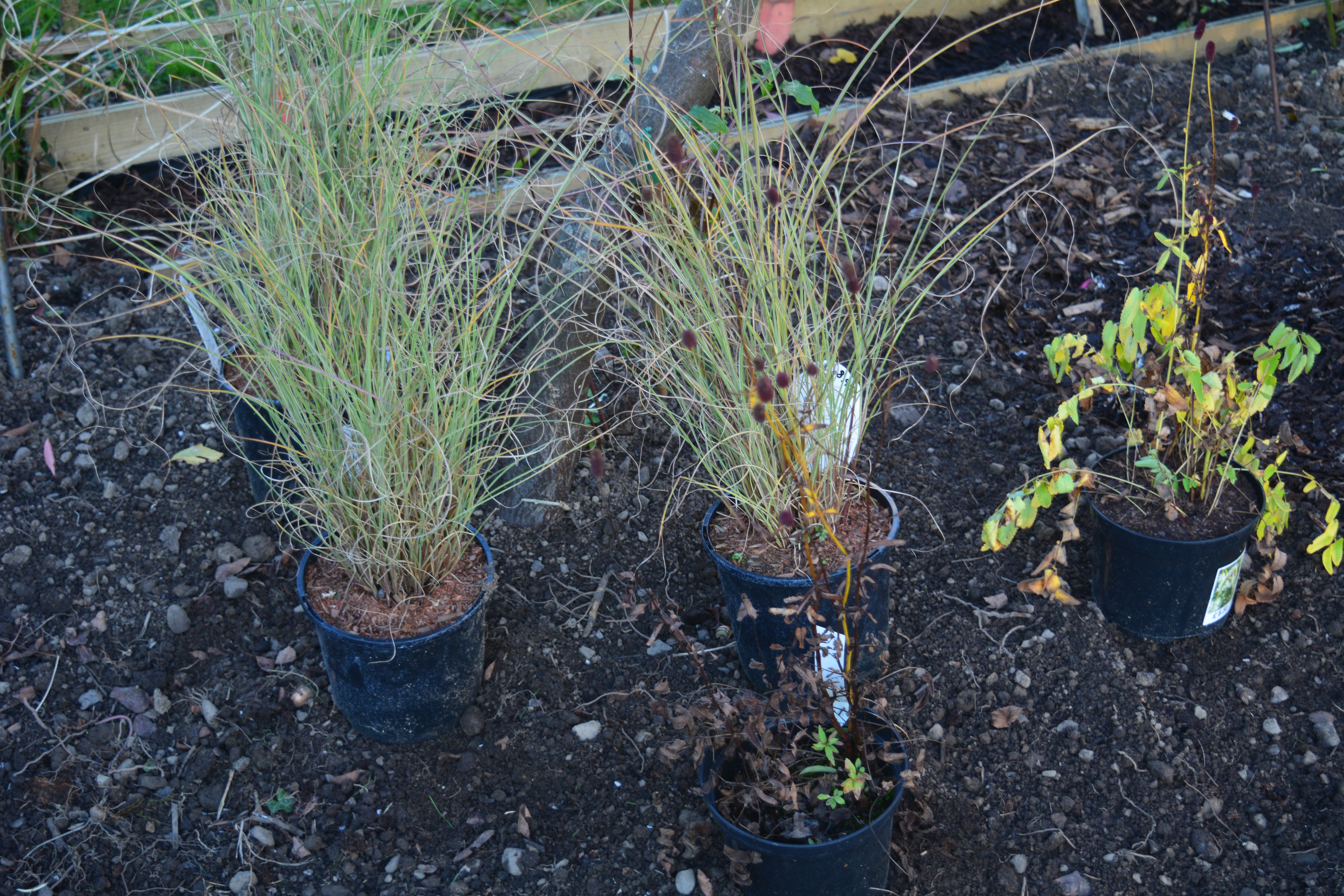
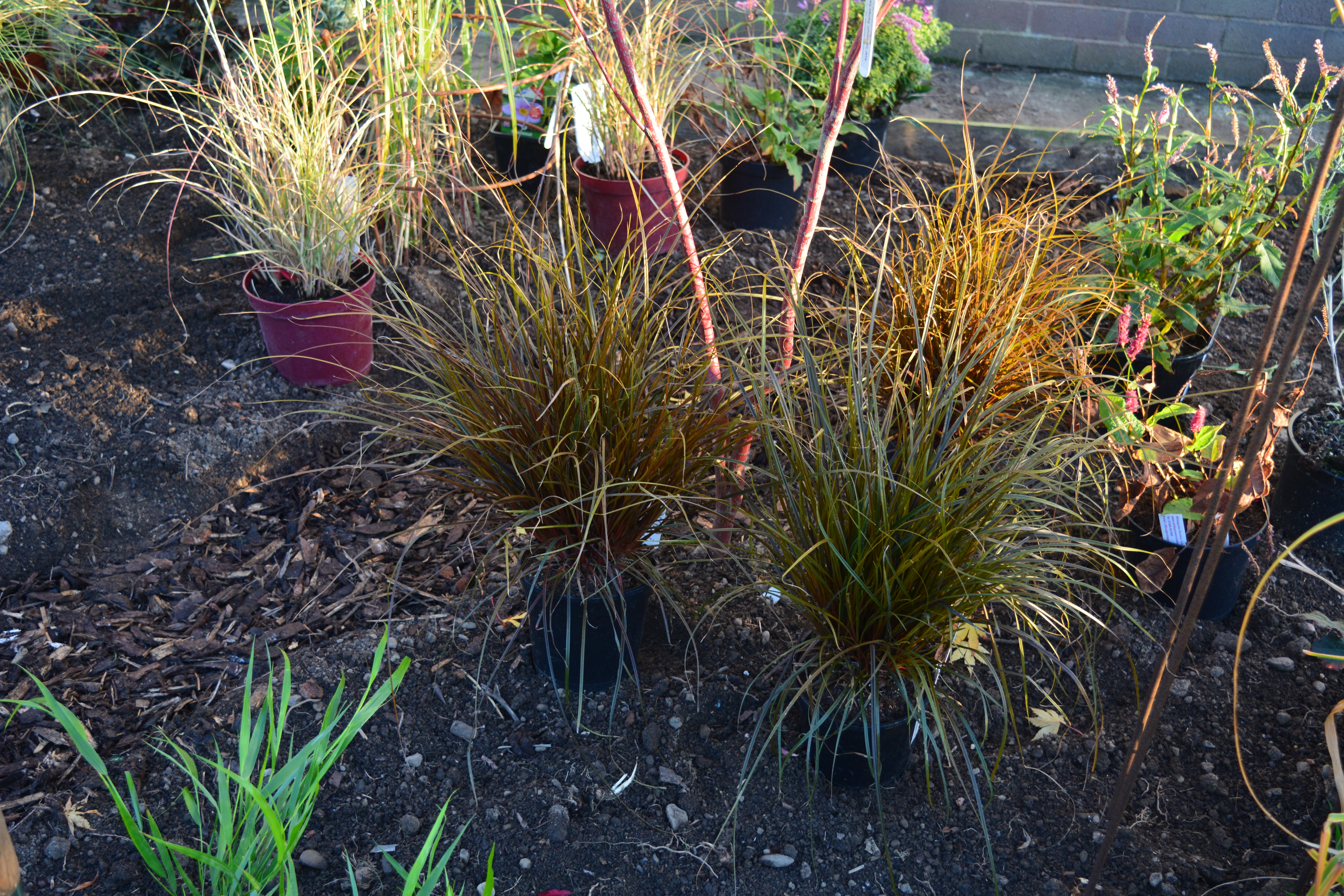
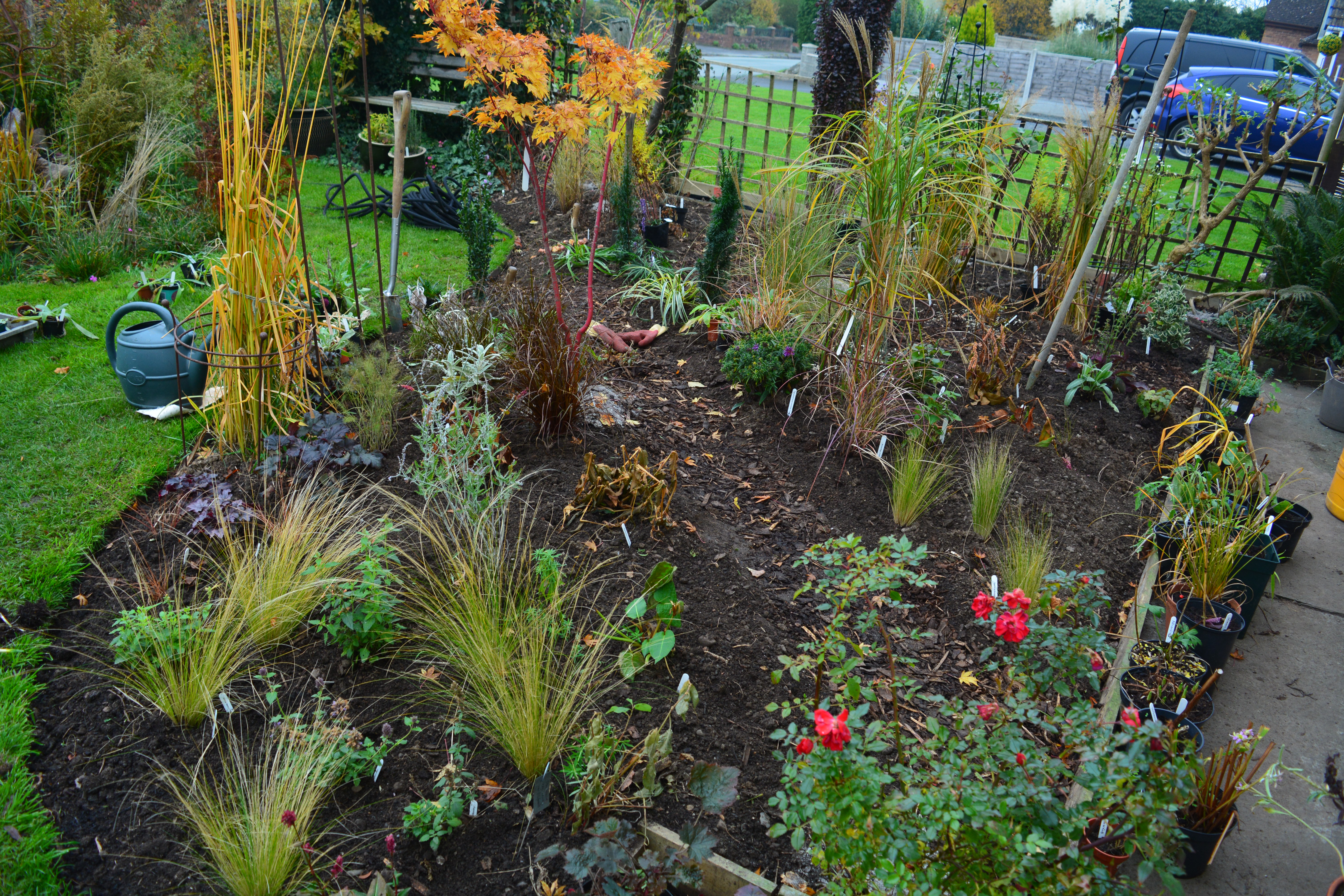
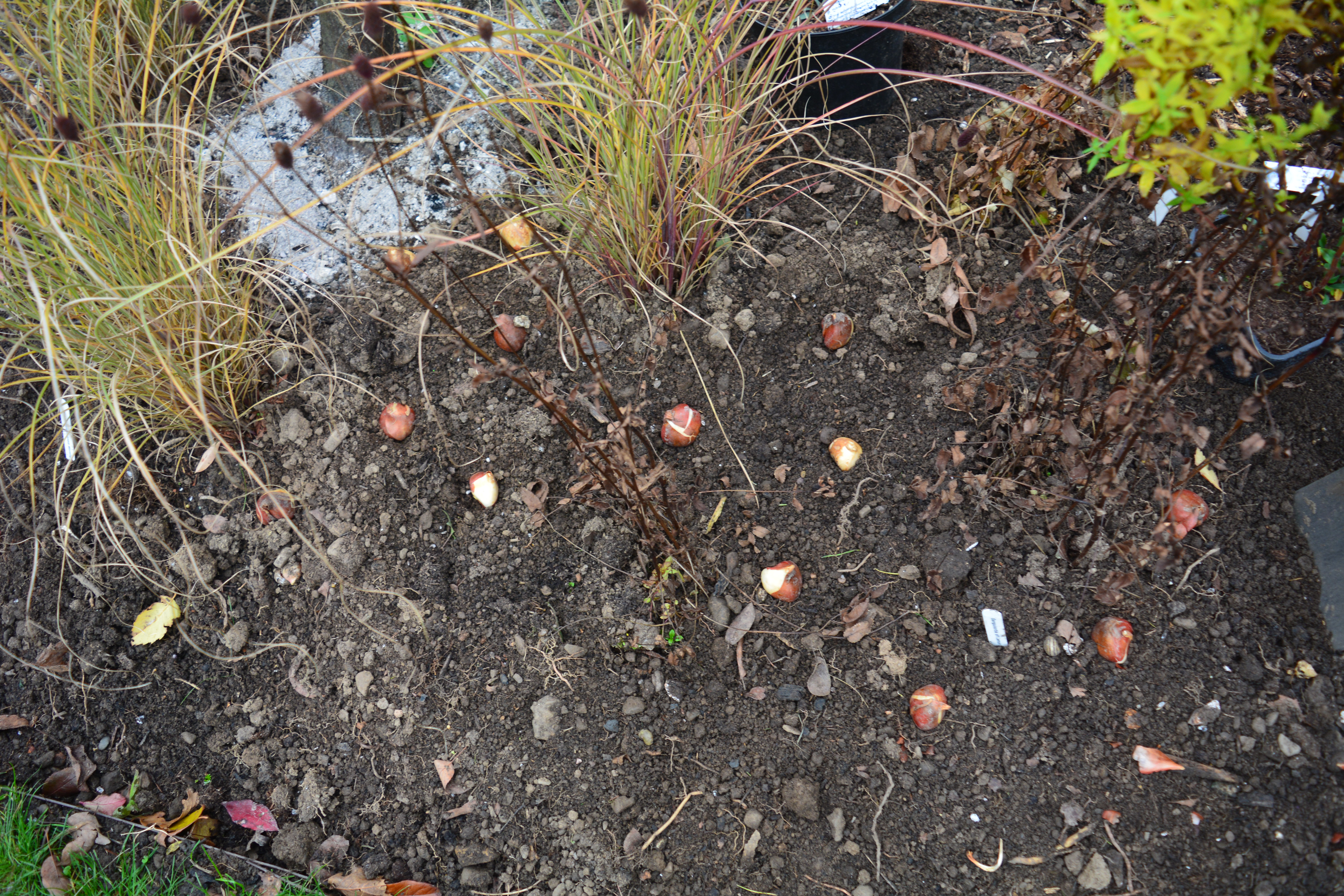
My diary moved on to look at us planting up the newly created border which used to be our Hot Border, “After a few days away in London we returned refreshed and ready to continue with our new border. Planting grasses and herbaceous perennials topped off by bulb planting gave us several days work. Work we love doing!”

“We planted hundreds of  bulbs and dozens of grasses and perennials, all in the dry week given to us in mid-November.”


Next I moved on to consider one of our favourite tree families the Sorbus and on the opposite page I sought out flowers choosing to brighten us up in gloomy November.

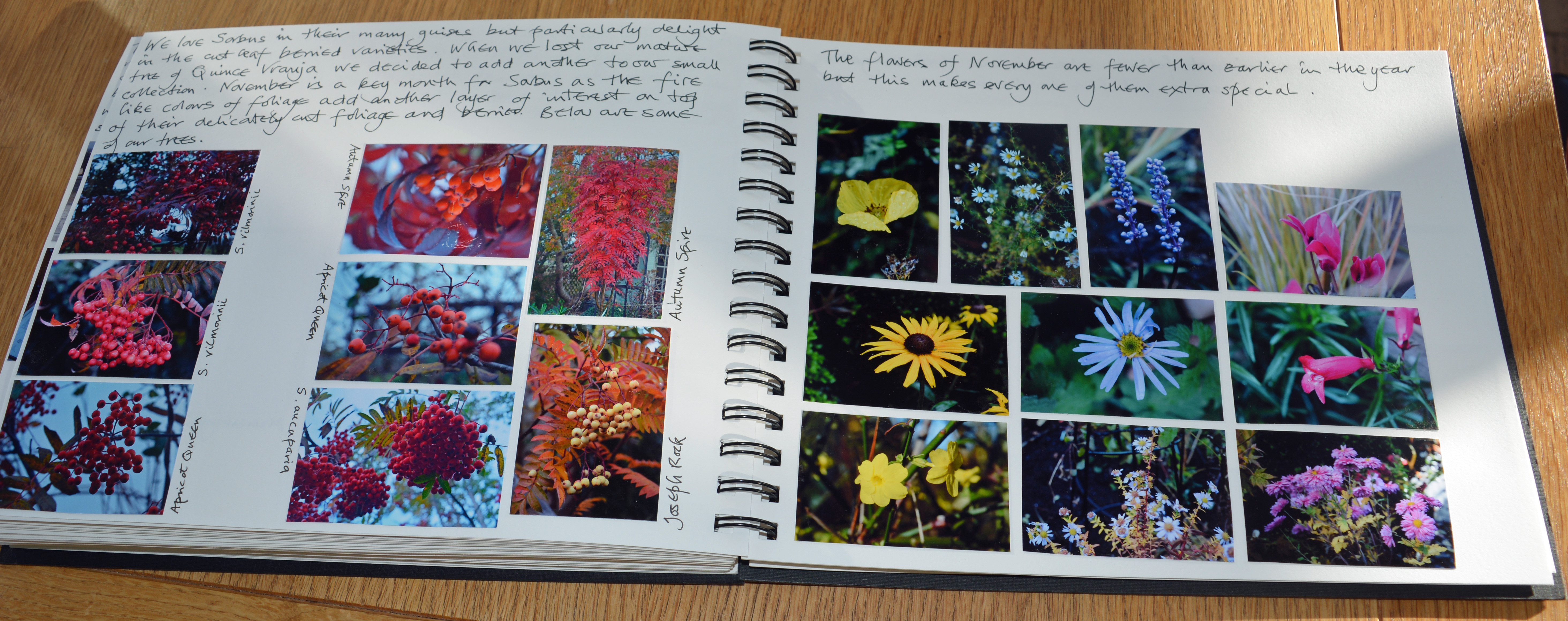
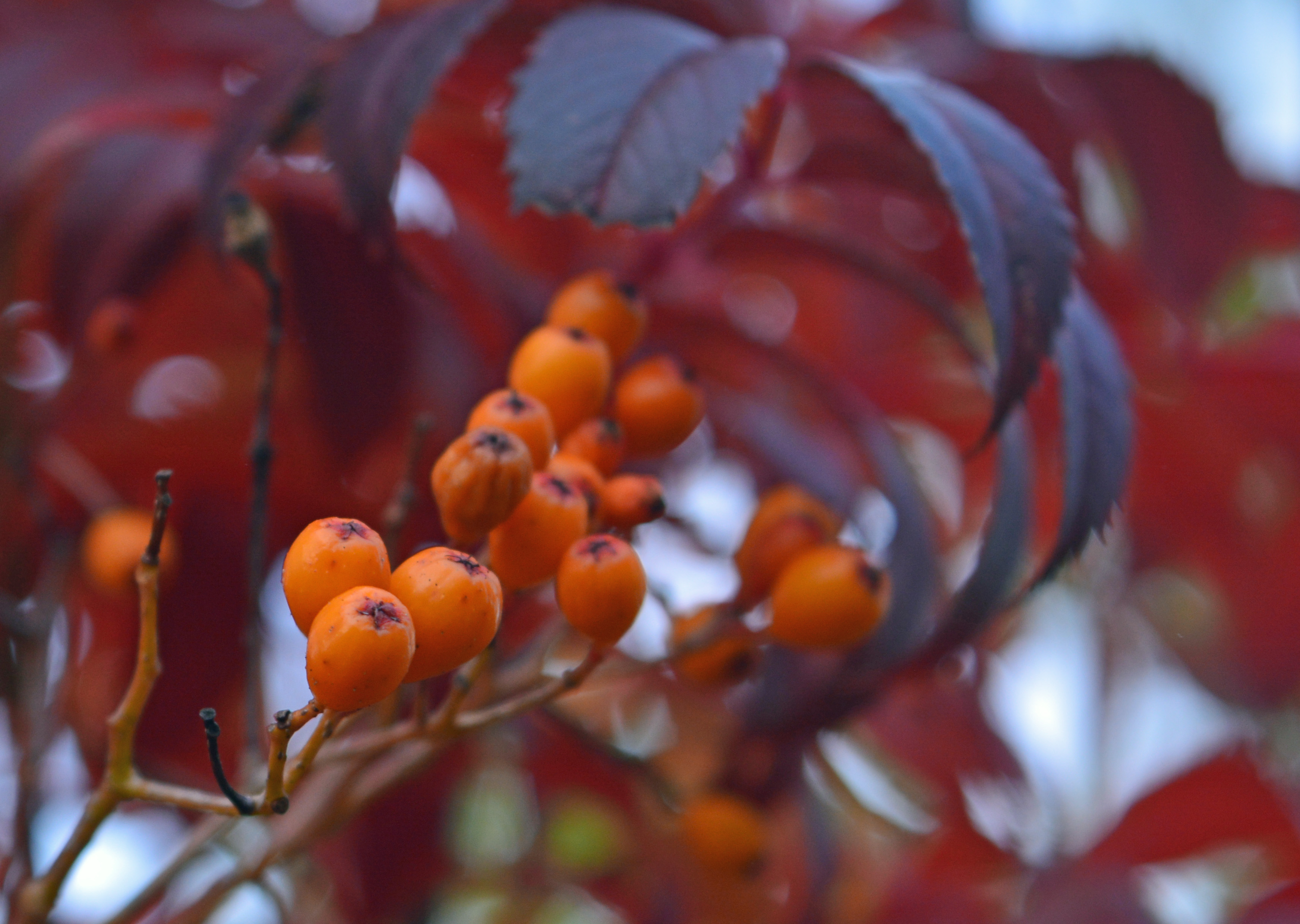
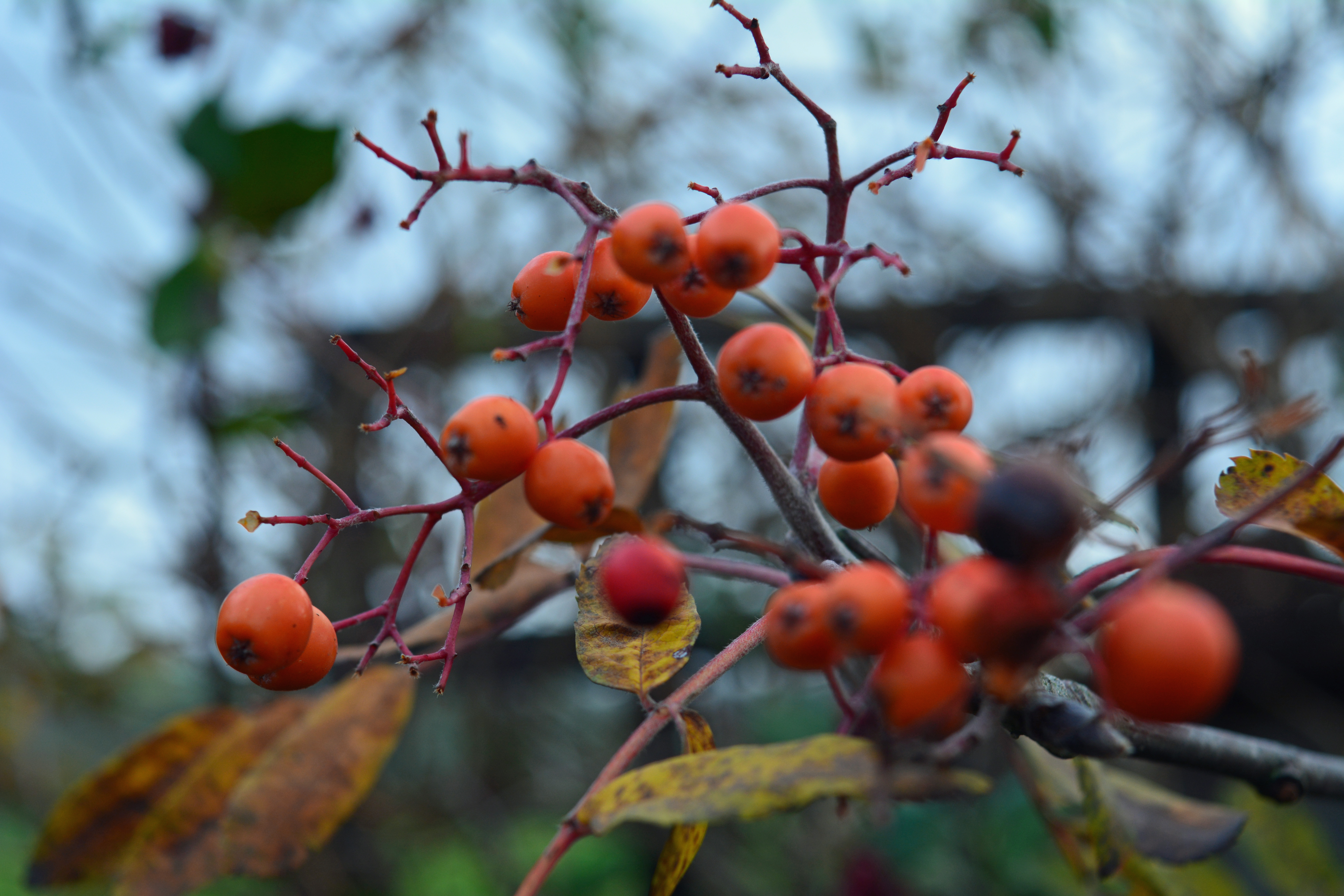
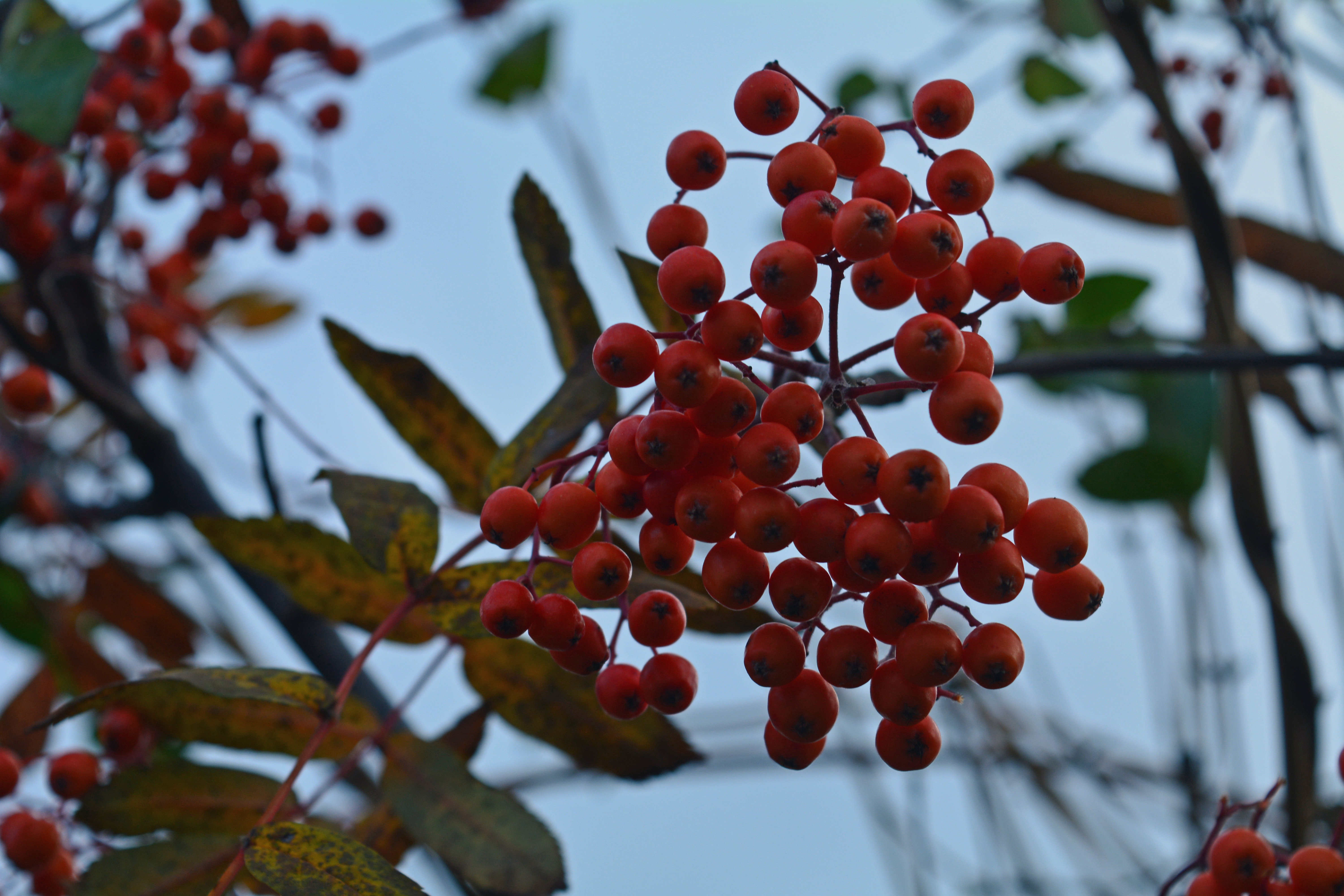
“We love Sorbus in their many guises but particularly delight in the cut leaf berrying varieties. When we lost our mature tree of Quince vranja we decided to replace it with another Sorbus to add to our small collection. November is the key month for Sorbus as the fire like colours of foliage adds another layer of interest on top of their delicately cut foliage and their colourful berries. Below are some of our Sorbus trees.

Sorbus Joseph Rock                 Sorbus Autumn Spire

Sorbus Autumn Spire                                          Sorbus aucuparia

Sorbus Apricot Queen                                       Sorbus Apricot Queen

Sorbus vilmorinii                                                 Sorbus vilmorinii

On the page opposite the Sorbus I share the flowers that cheer up the November garden.

“The flowers of November are fewer than earlier in the year but this makes every one of them extra special.”


The colour orange features on the left hand side of my next double page spread, where I look at the variety of orange featuring in our November garden.

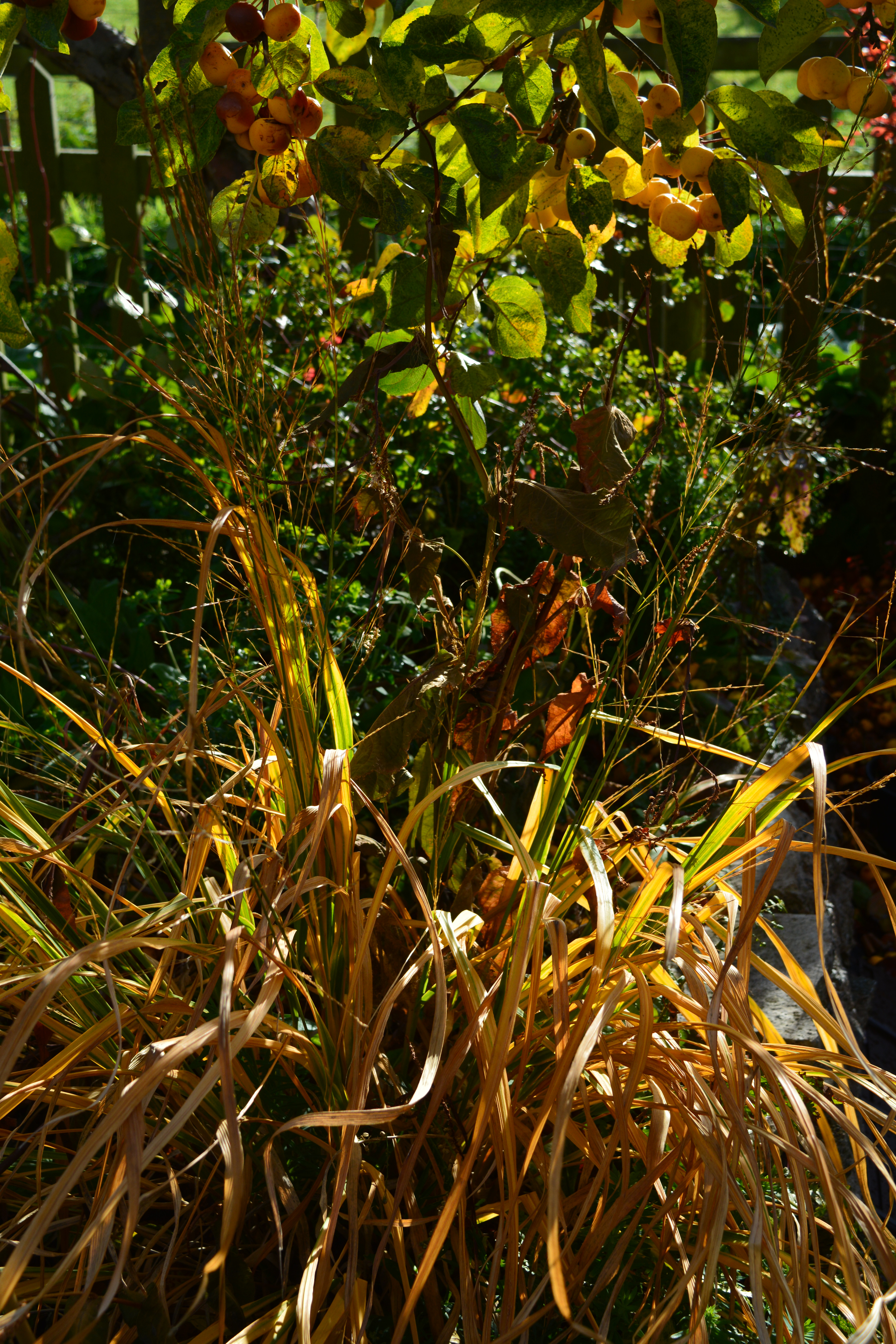
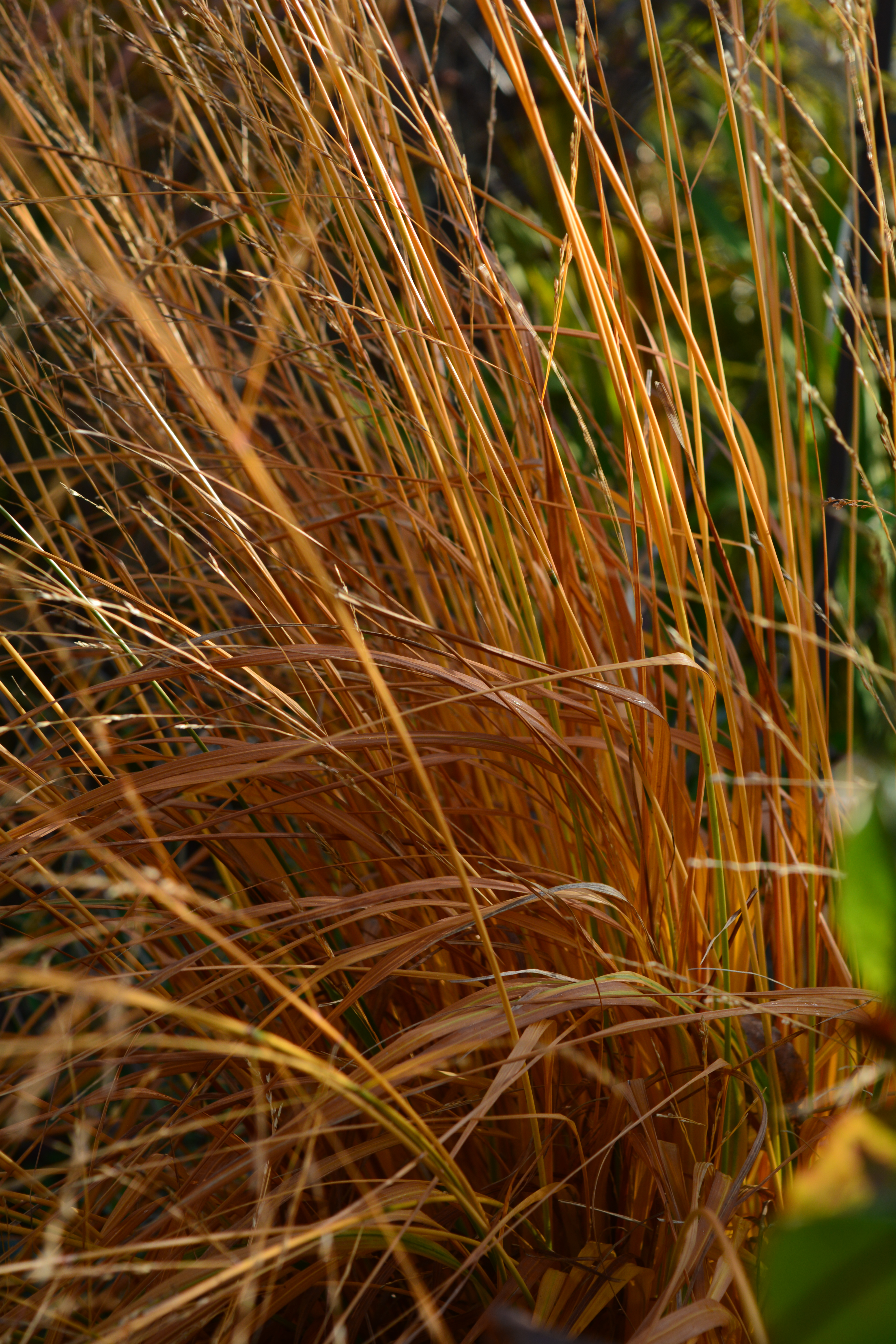
“Orange is the dominant foliage colour in our November garden, as shrubs, trees and grasses set fire to the borders.”


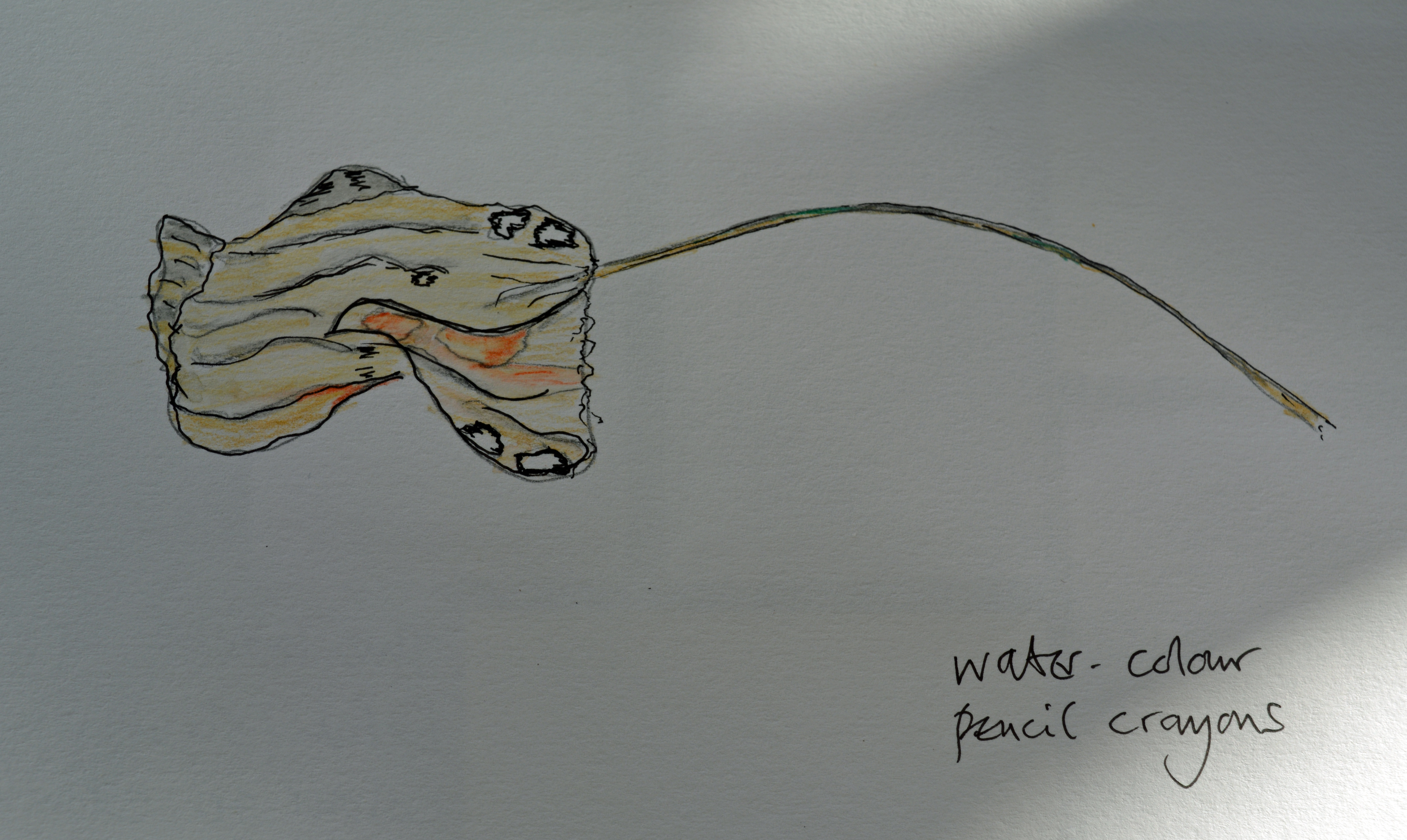
Opposite the oranges was a delicate watercolour pencil sketch of a hosta leaf, about which I wrote, “Take one leaf, a hosta leaf drying out and draining of colour.”

The final page for November considers colours once again. November was a very colourful month overall.

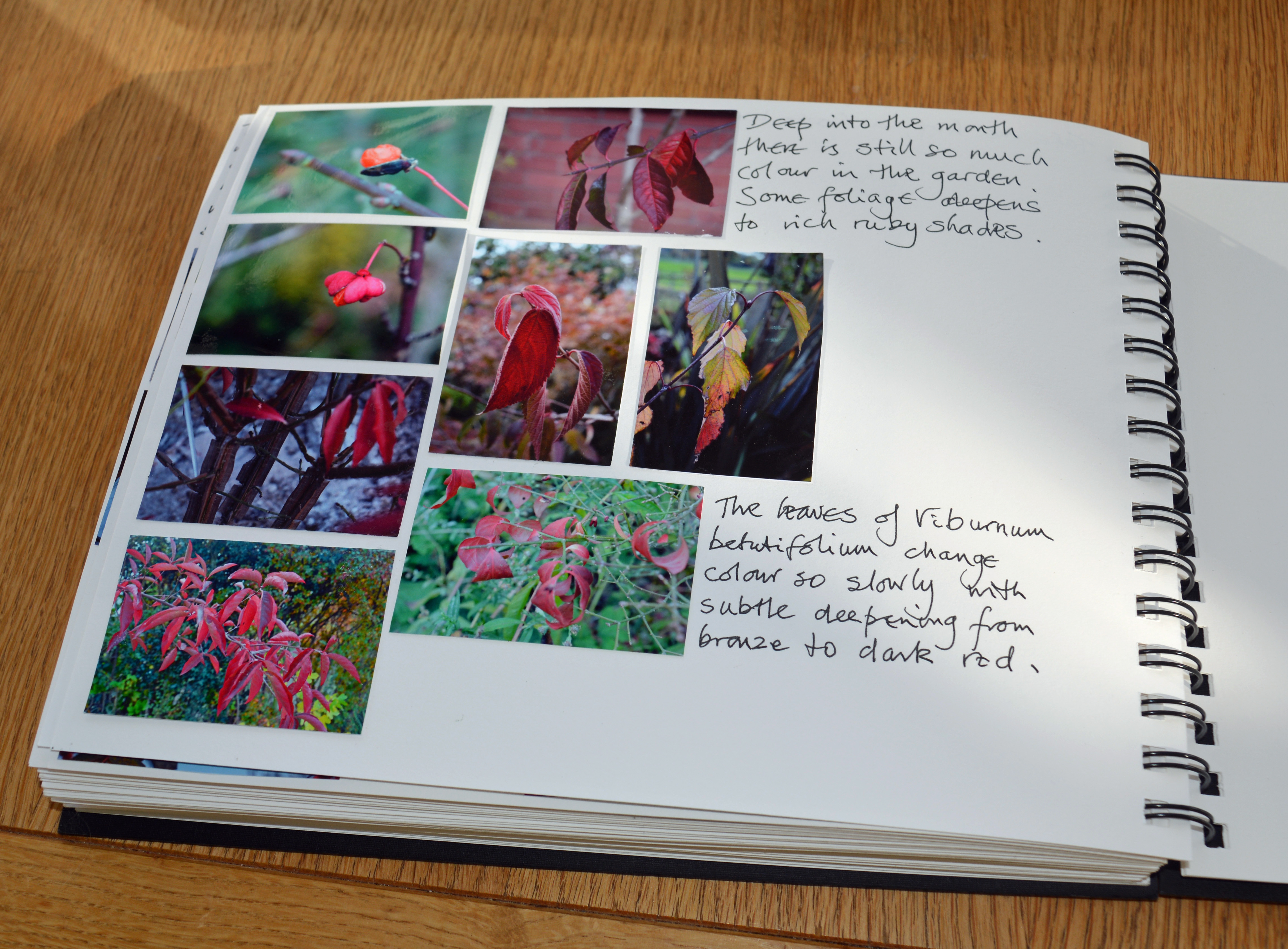
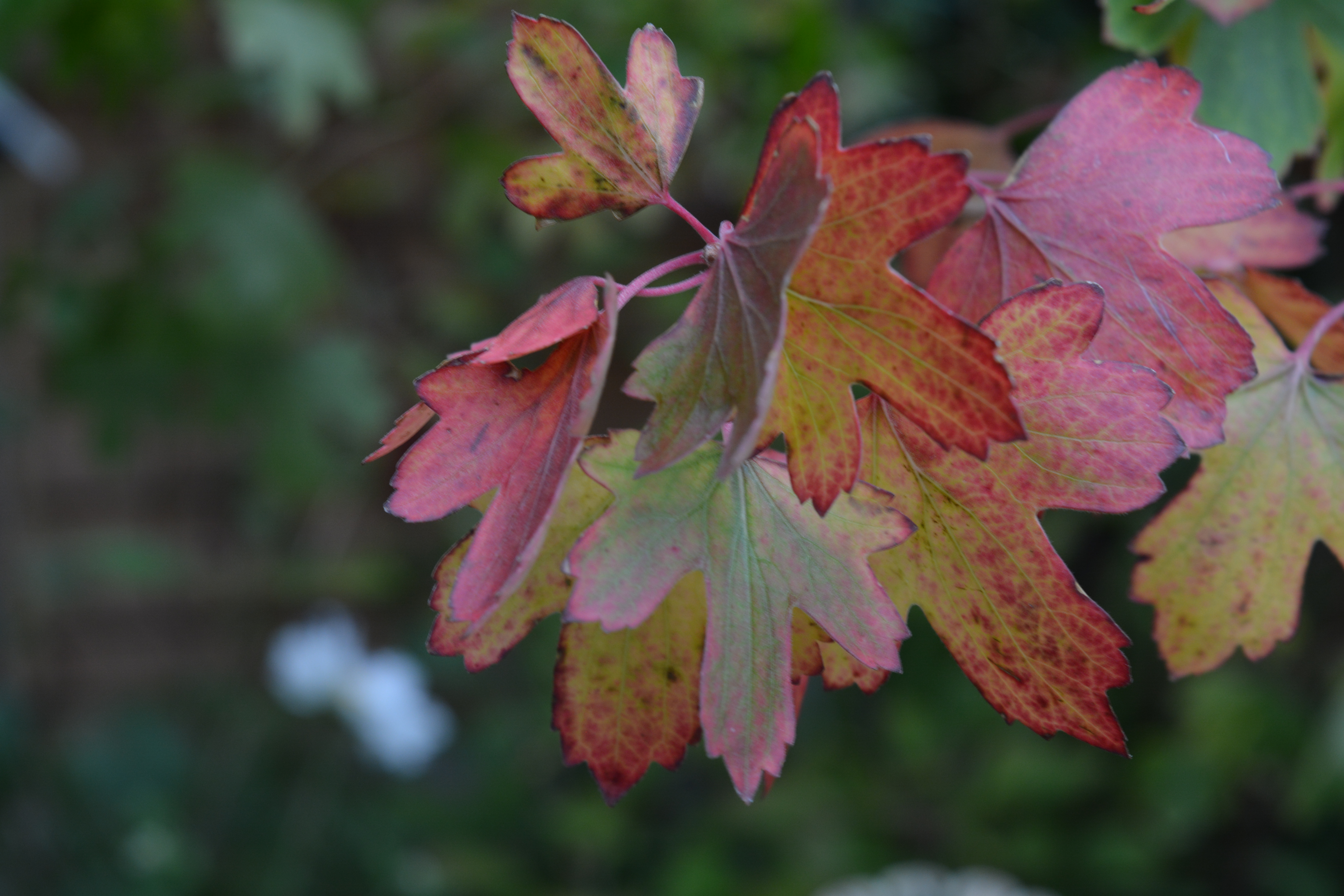
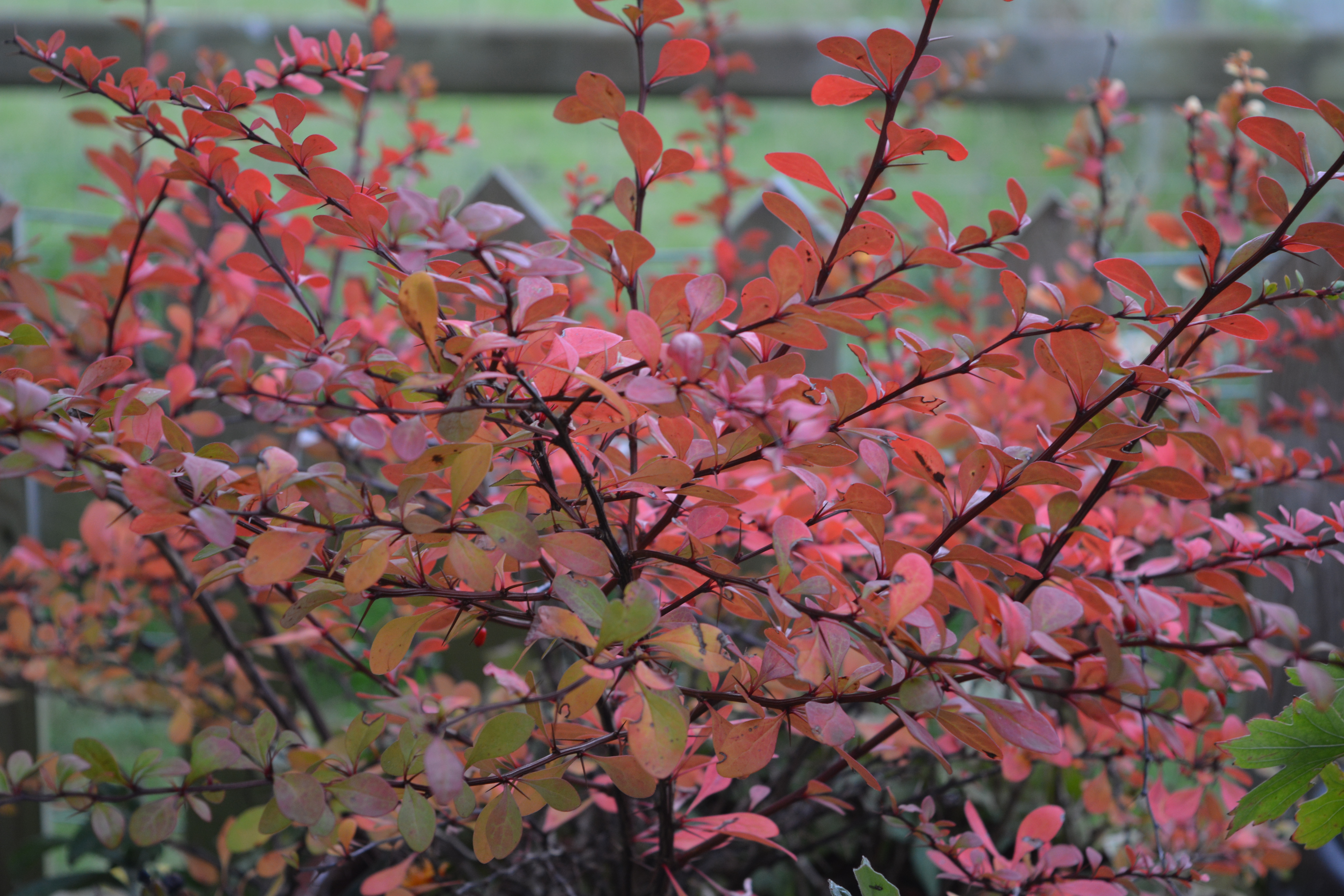
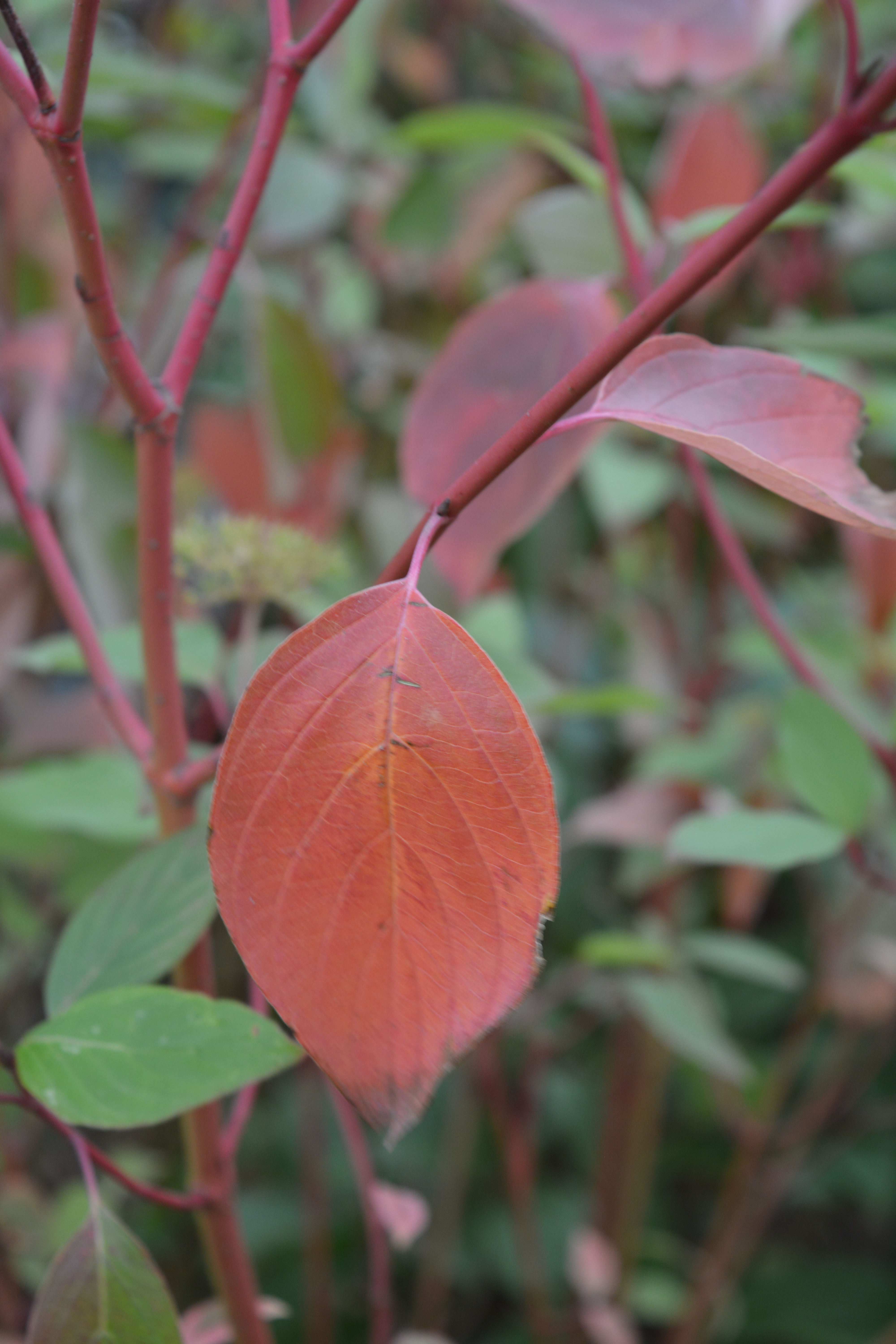
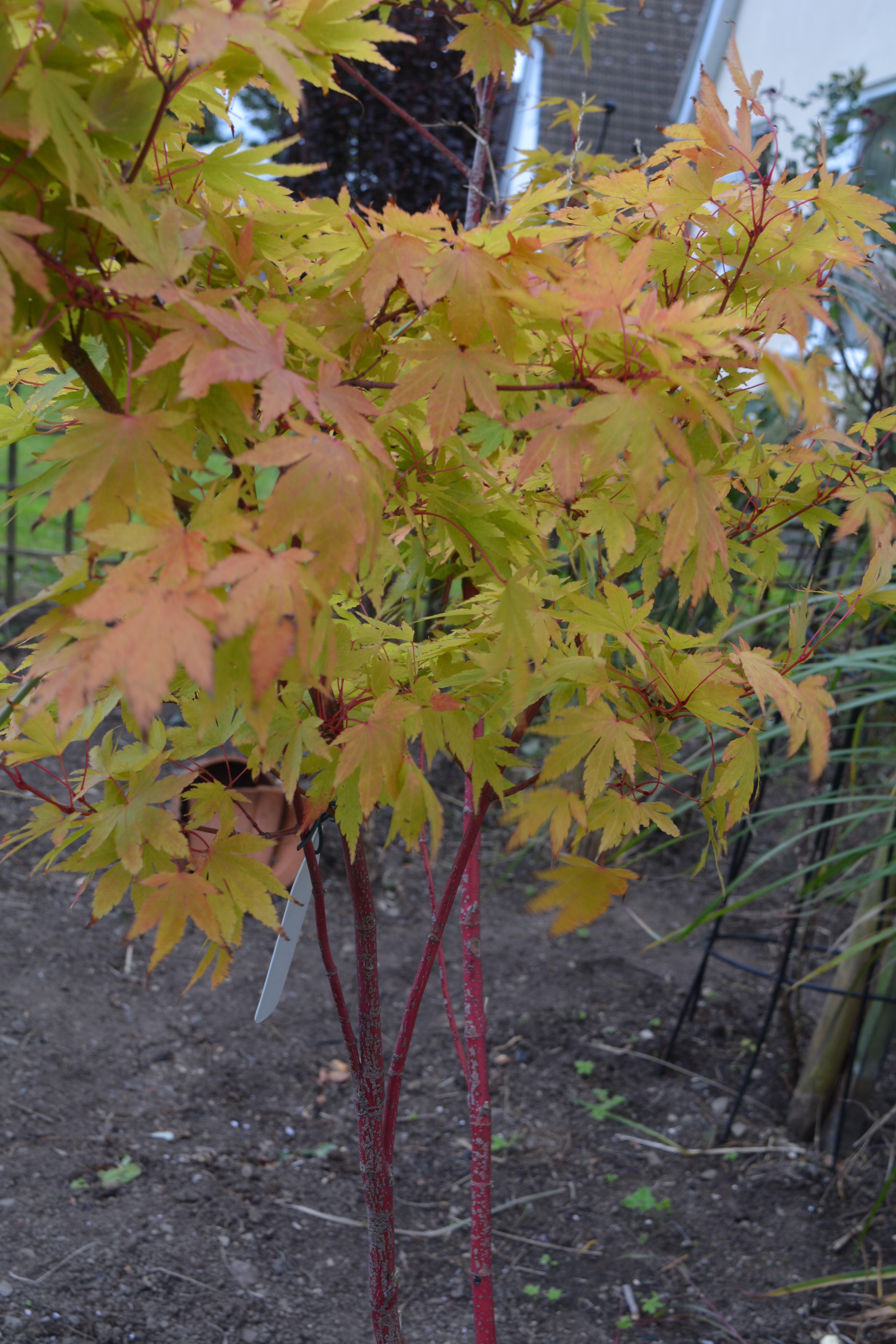
A set of eight photos display colours from our shrubs, and alongside I wrote, “Deep into the month there is still so much colour in the garden. Some foliage deepens to  rich ruby shades.”

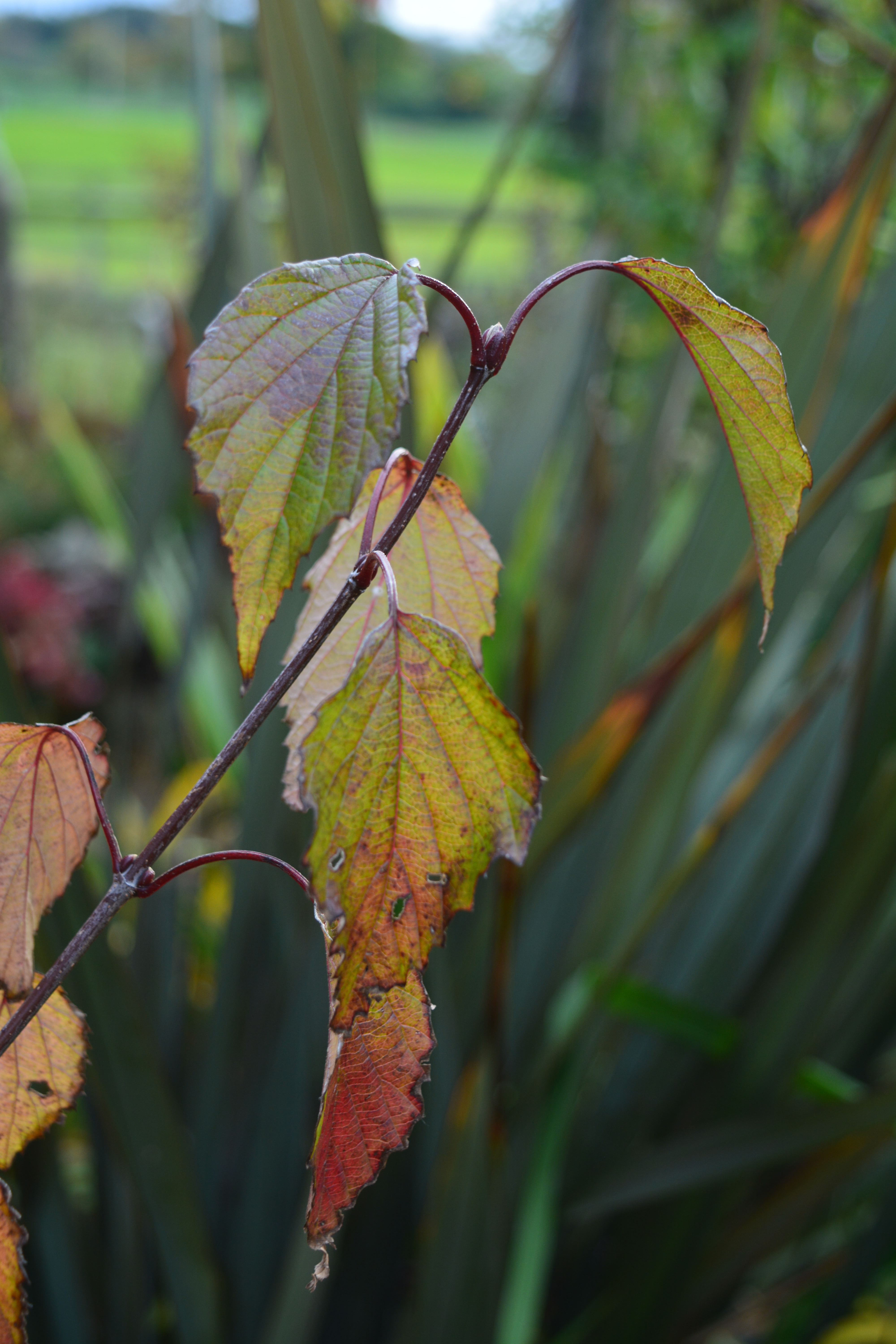
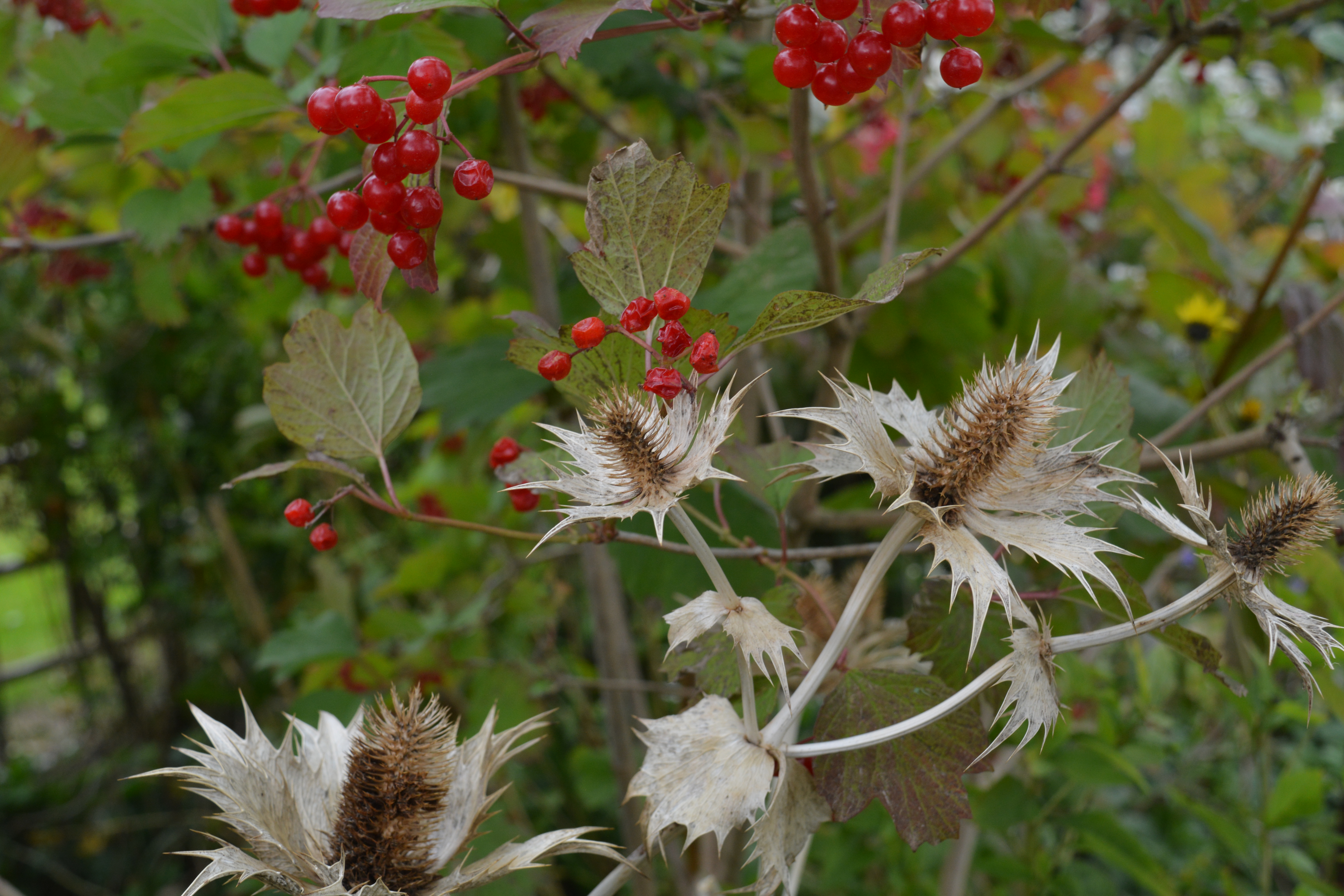
The final photo is of the foliage of a special small tree, a viburnum with leaves which make you think it is a betula at first sight. “The leaves of Viburnum betulifolium change colour so slowly with subtle deepening from bronze to dark red.”


So there is just one monthly report left to write in my Garden Journal for 2018, December, which will be my next post in this series.

Categories
autumn autumn colours climbing plants colours garden design garden photography gardening gardens grasses hardy perennials light light quality ornamental grasses ornamental trees and shrubs pelargoniums Shropshire shrubs South Shropshire

My Garden Journal 2018 – October

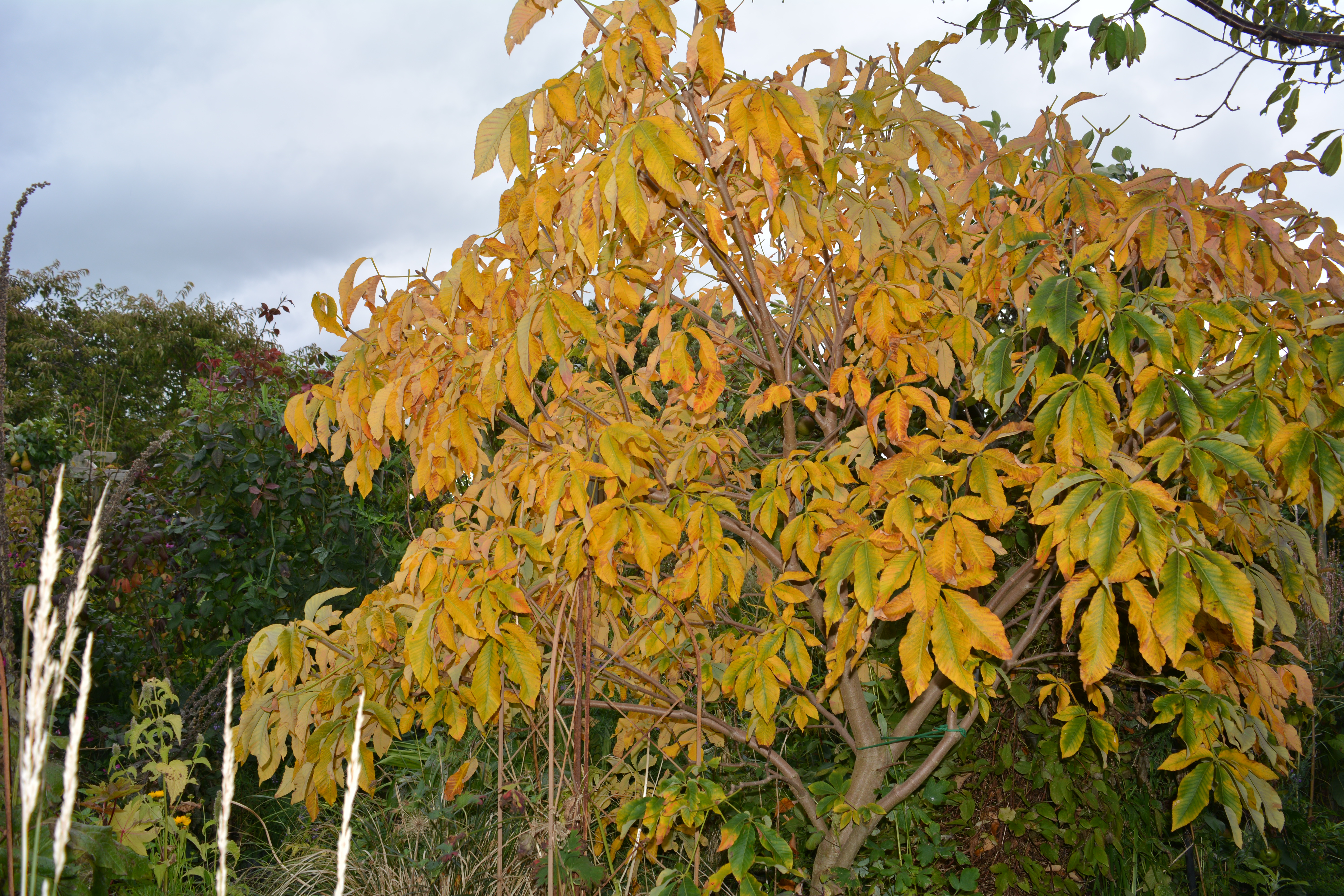
Here we are in October, my 10th visit to my garden journal this year. I love October, with its special rich light and the fire and flame colours of foliage on trees, shrubs and perennial plants alike.

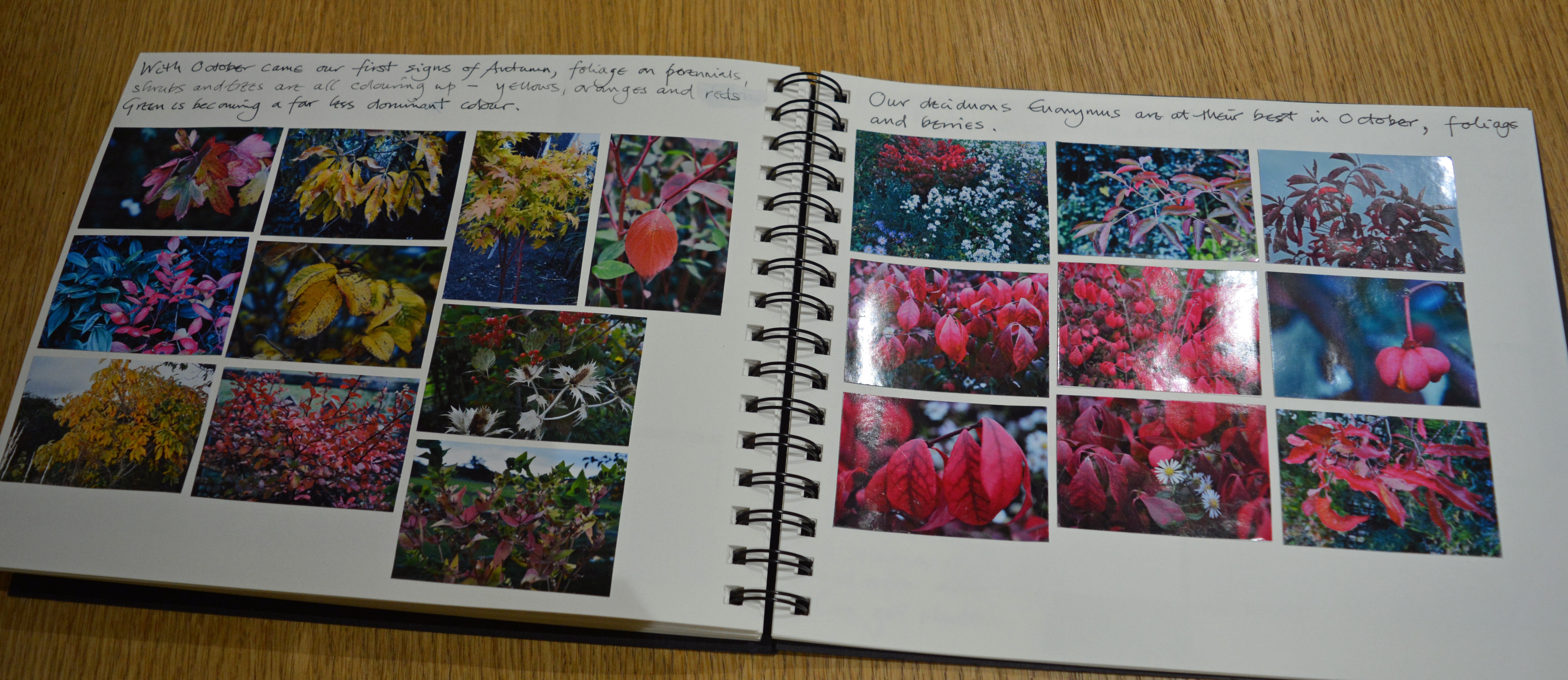
The first words in my October journal were, “With October came our first signs of Autumn, foliage on perennials, shrubs and trees are all colouring up – yellows, oranges and reds. Green is becoming a far less dominant colour.” I have taken lots of colourful photos to share what we can see each time we wander out into our garden.


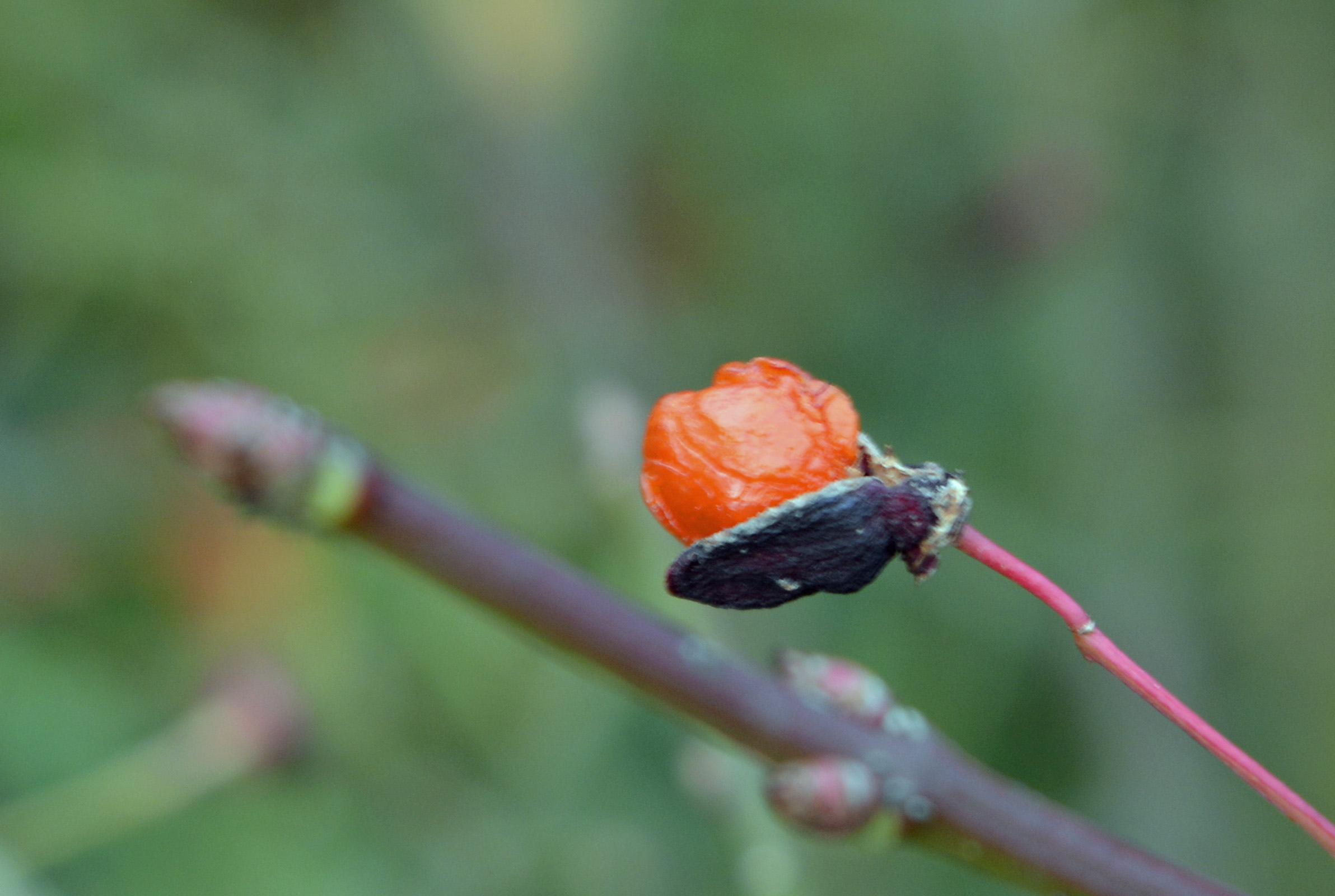
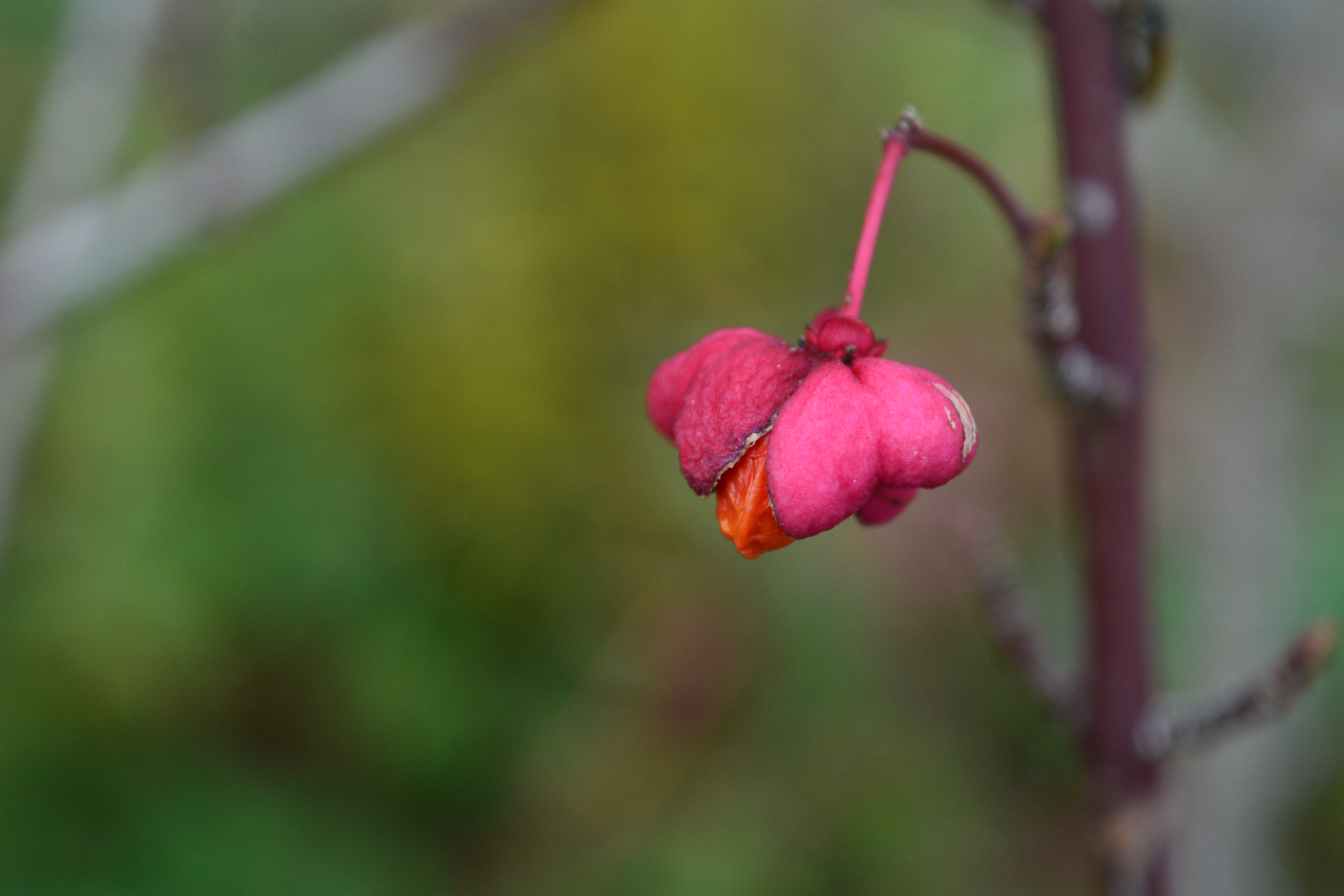
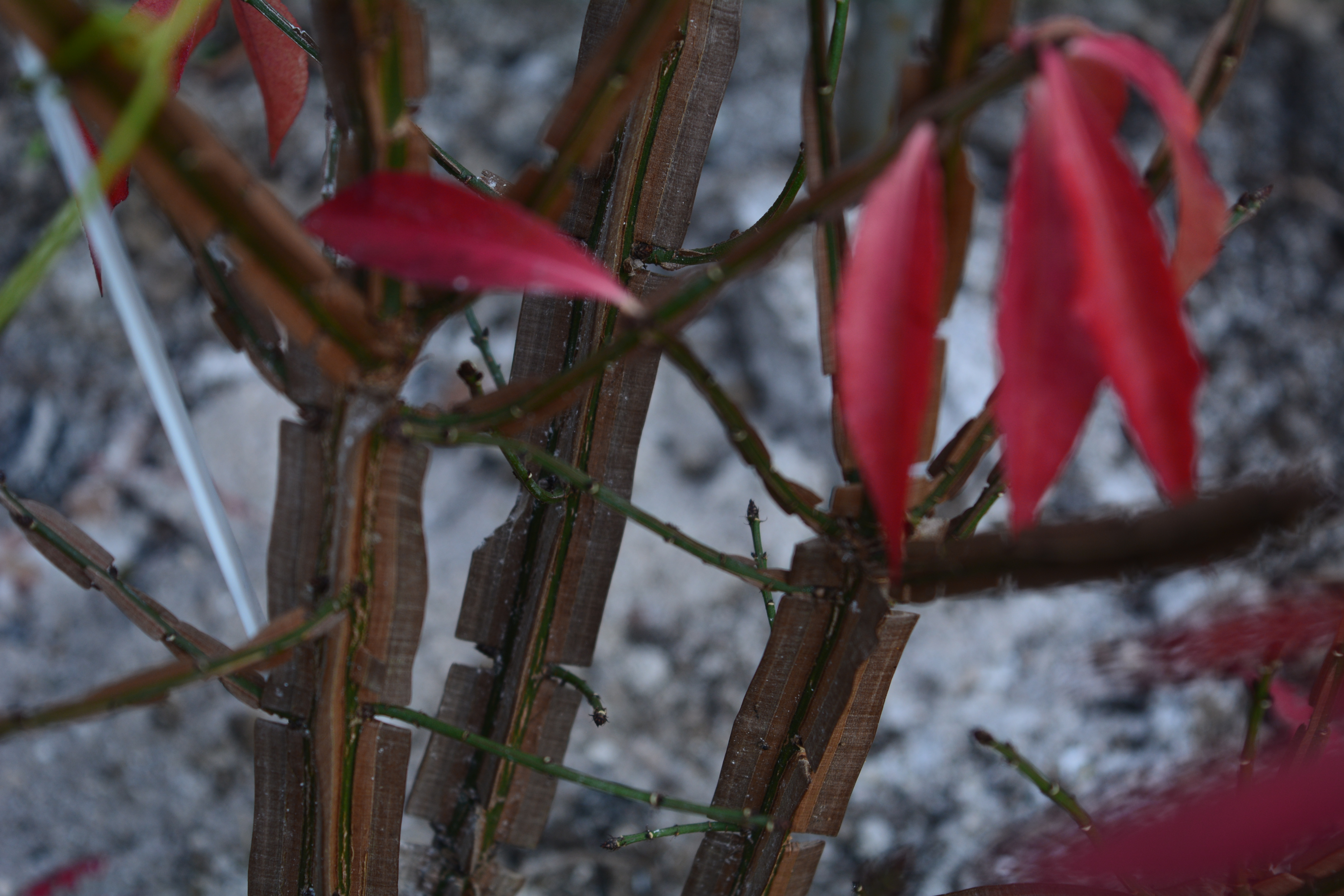
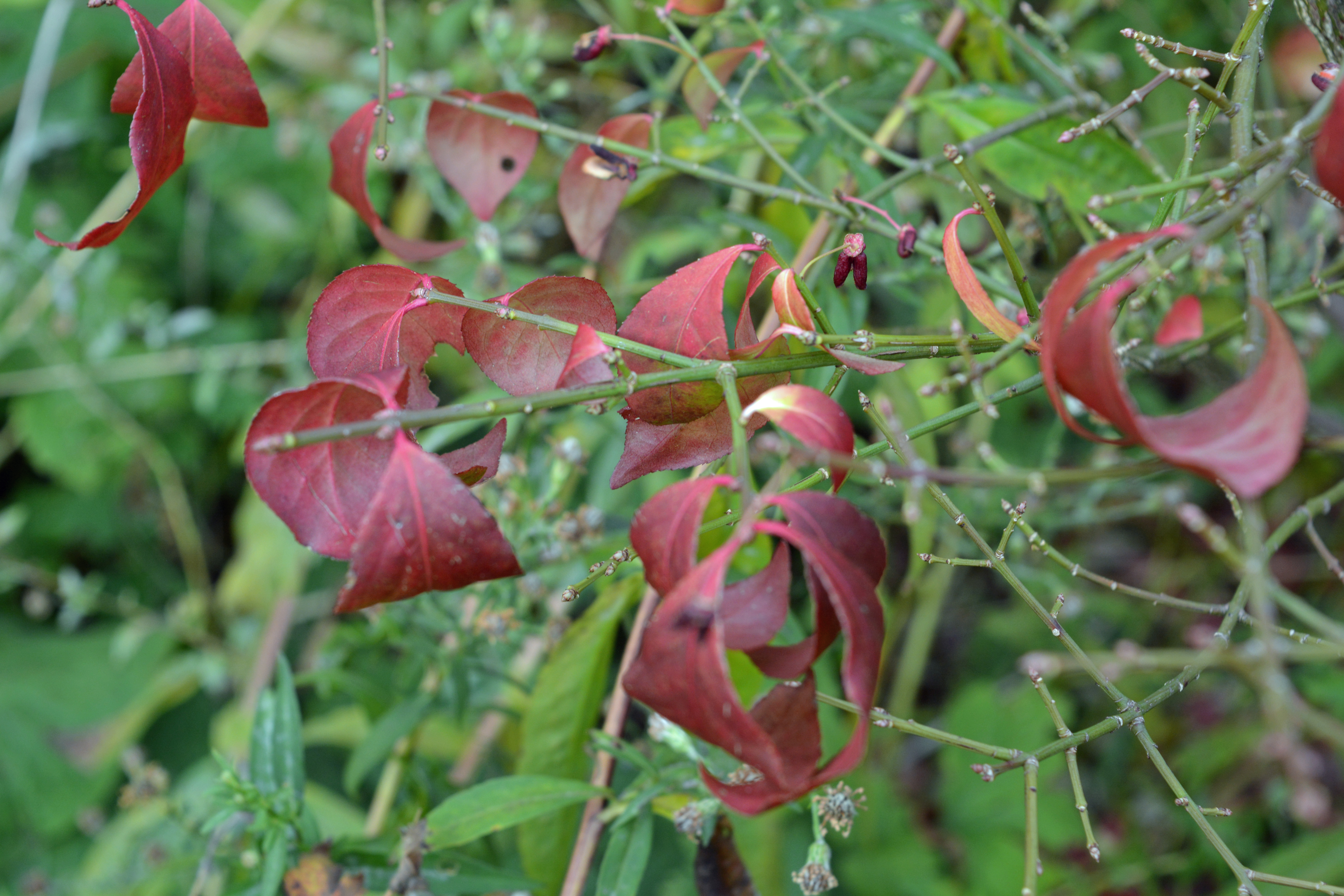
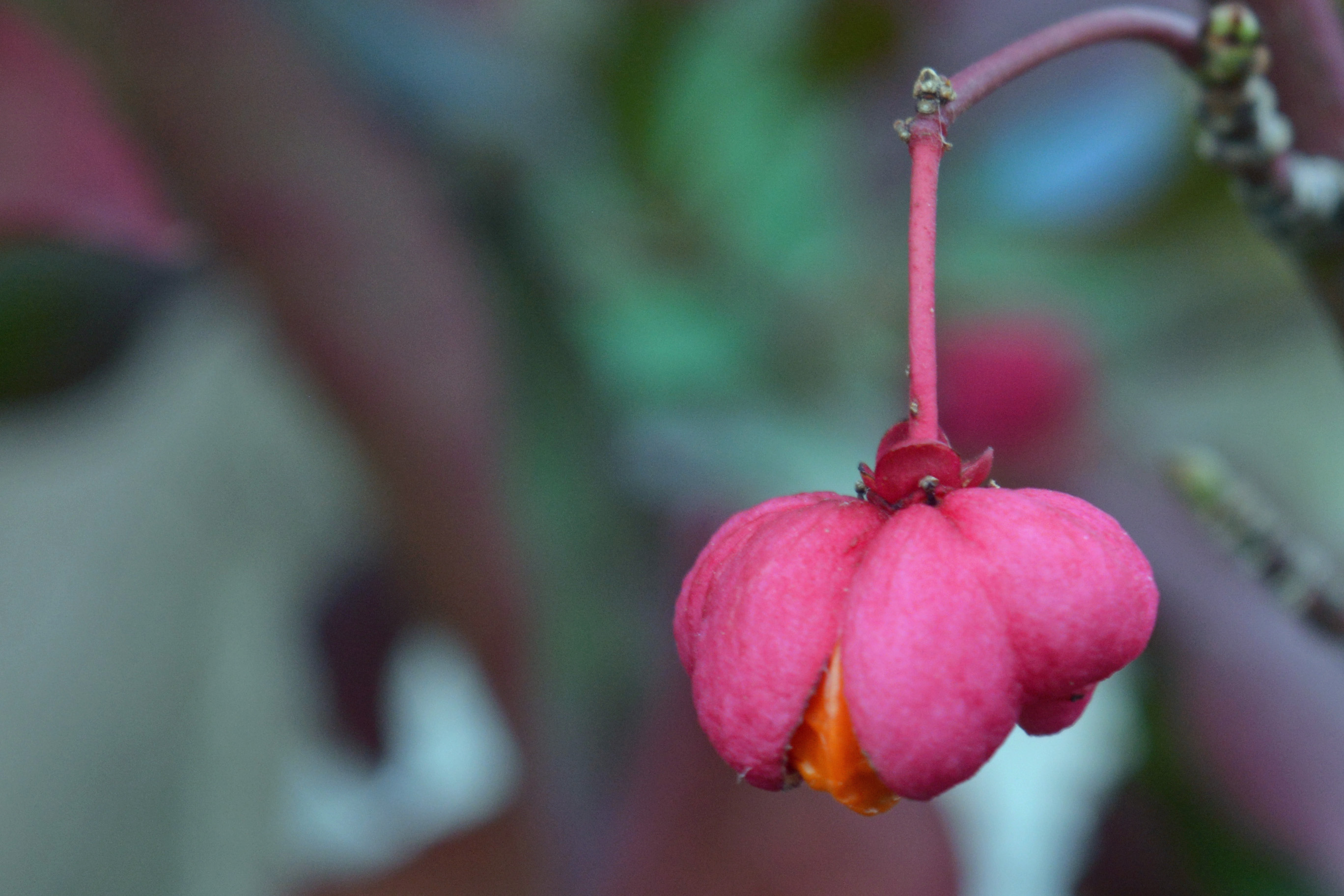
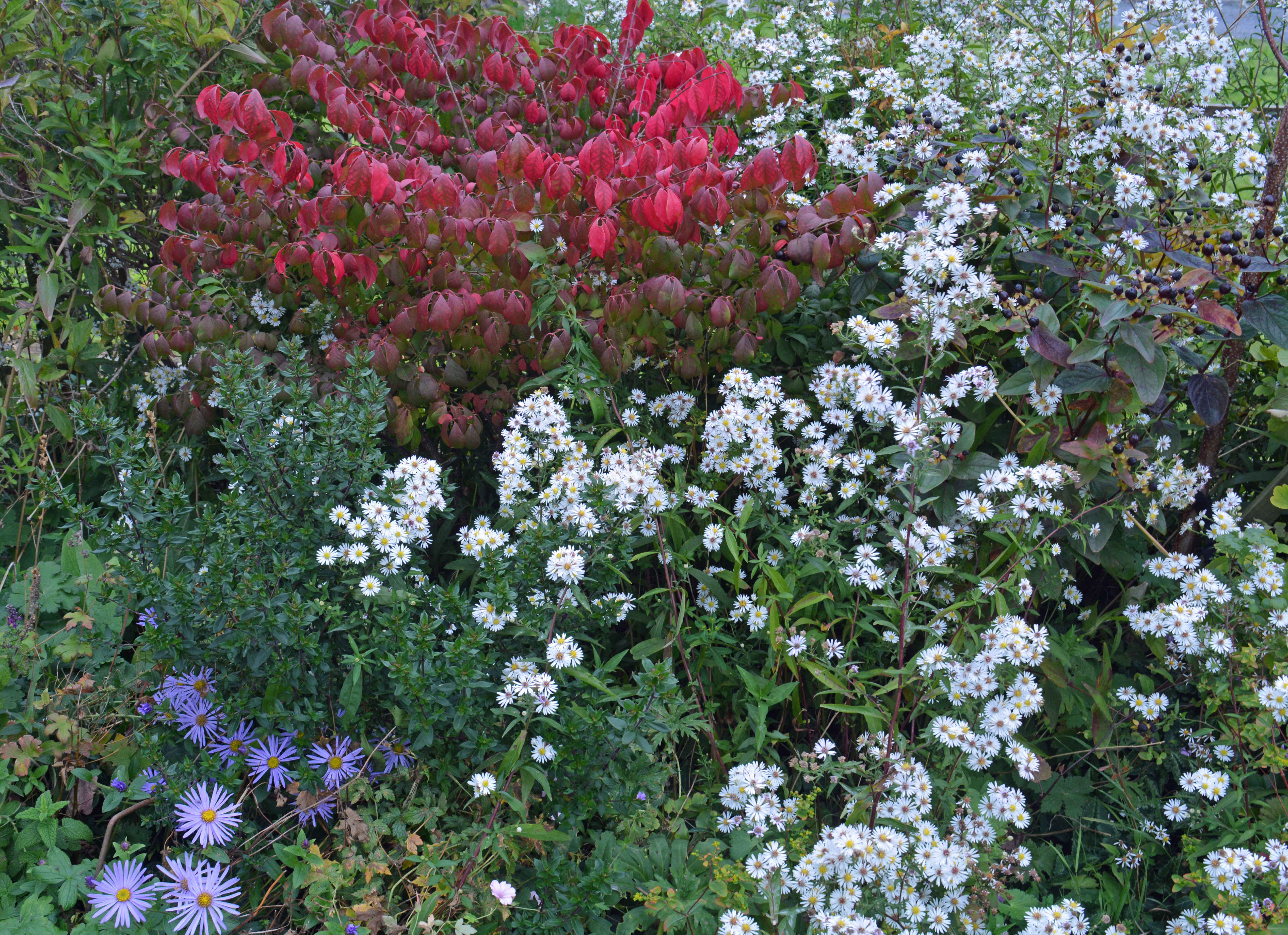
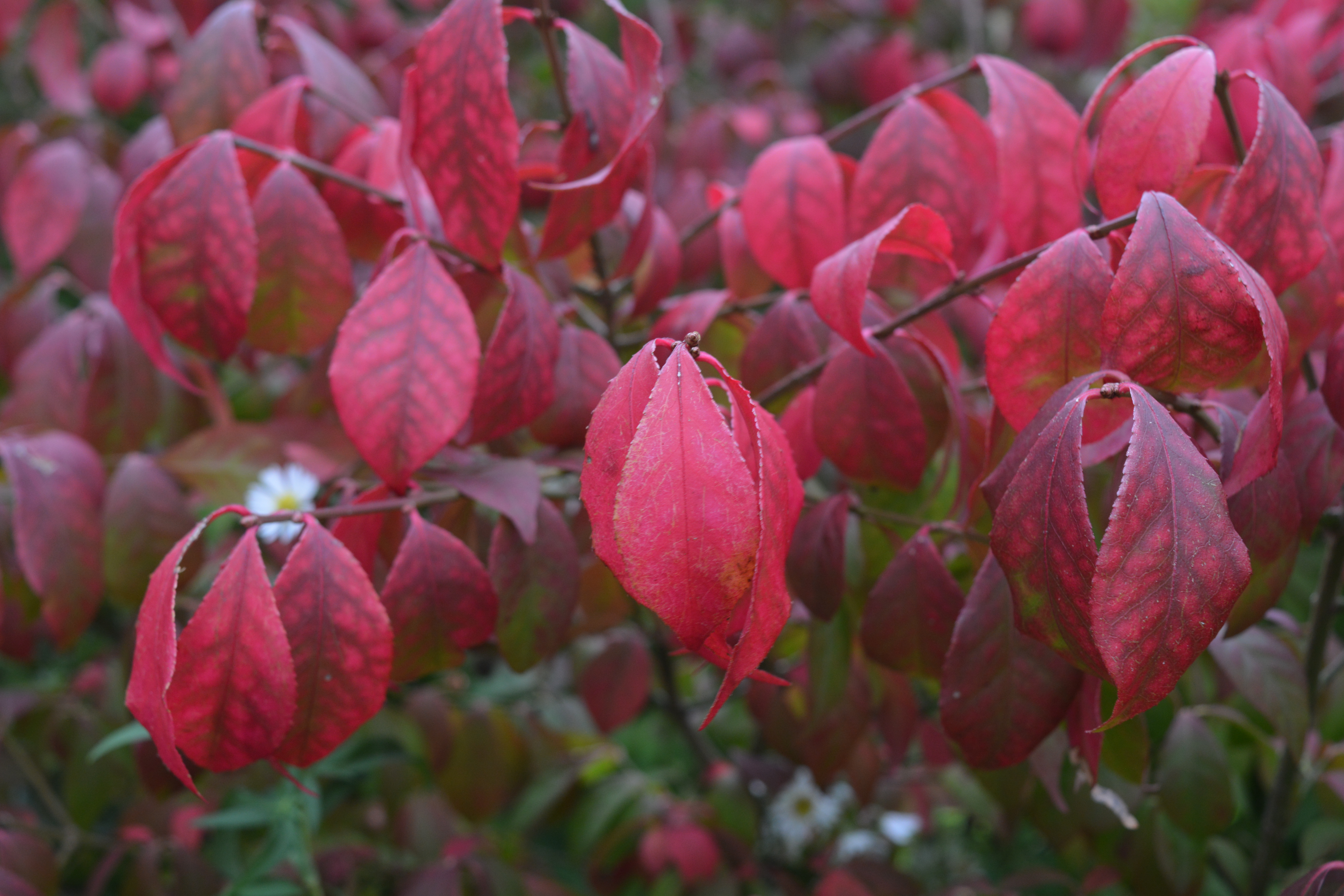
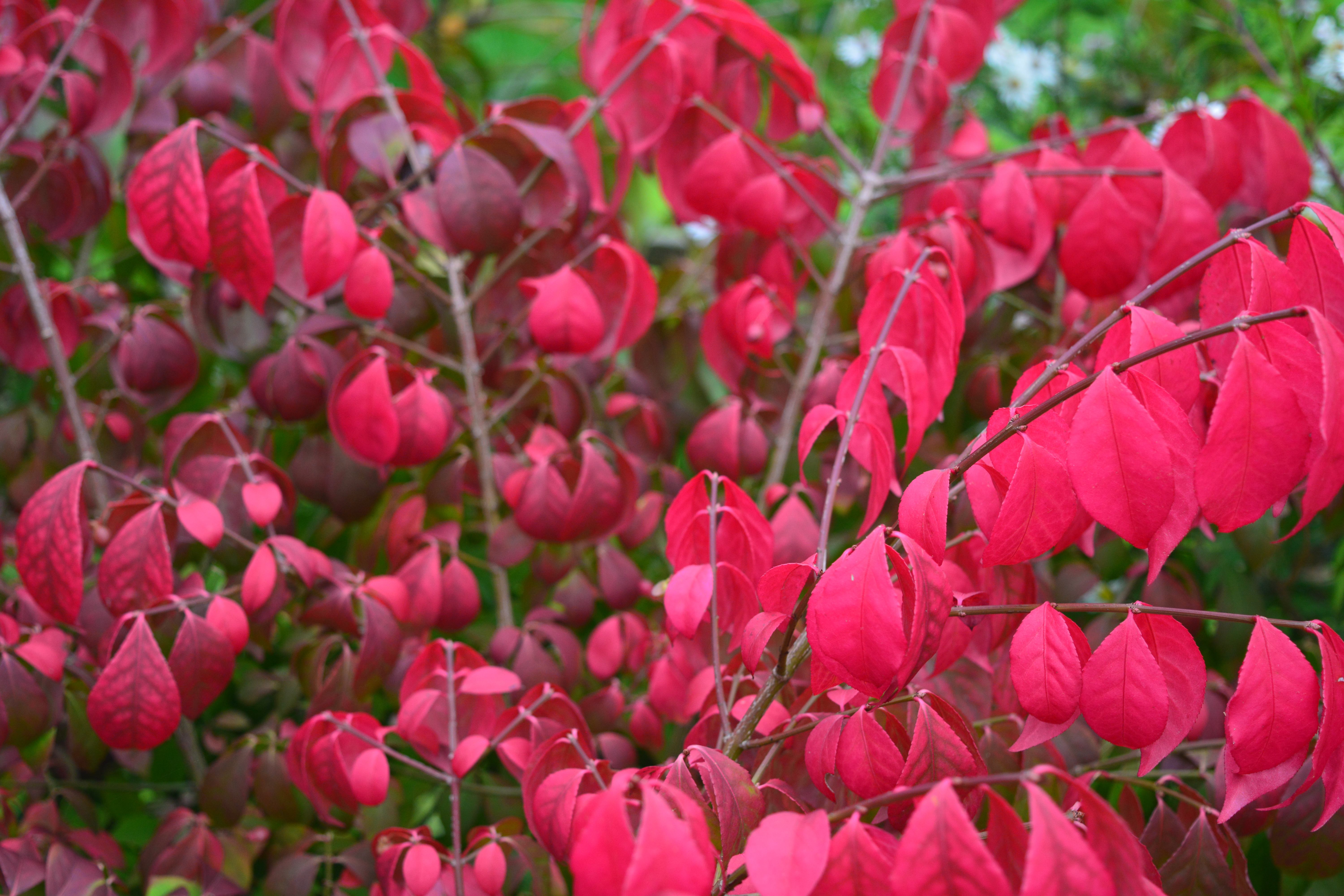
On the next page my photos one of the most colourful of all autumnal shrubs, the deciduous Euonymus, and I wrote, Our deciduous Euonymus are at their best in October, foliage and berries.”


Over on the next double page spread and on the following page too, I continued to look at our current projects.

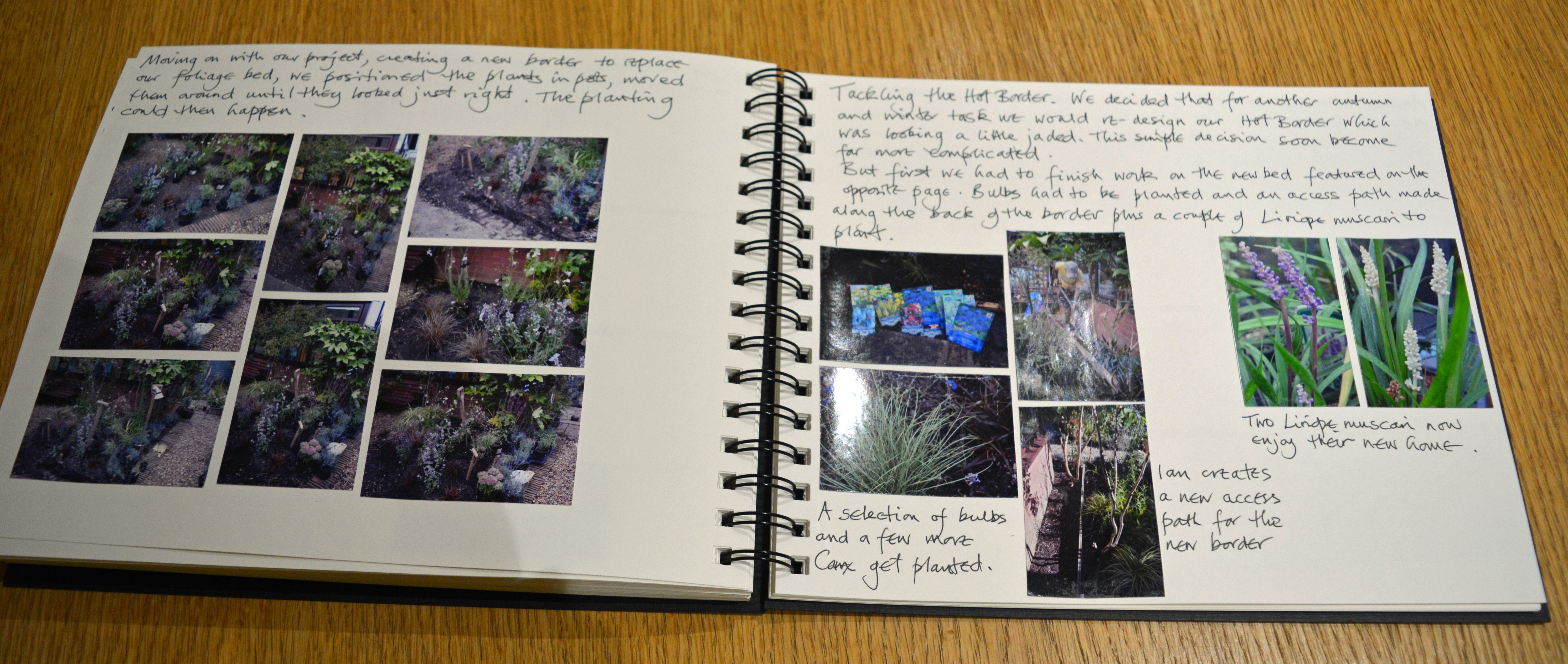
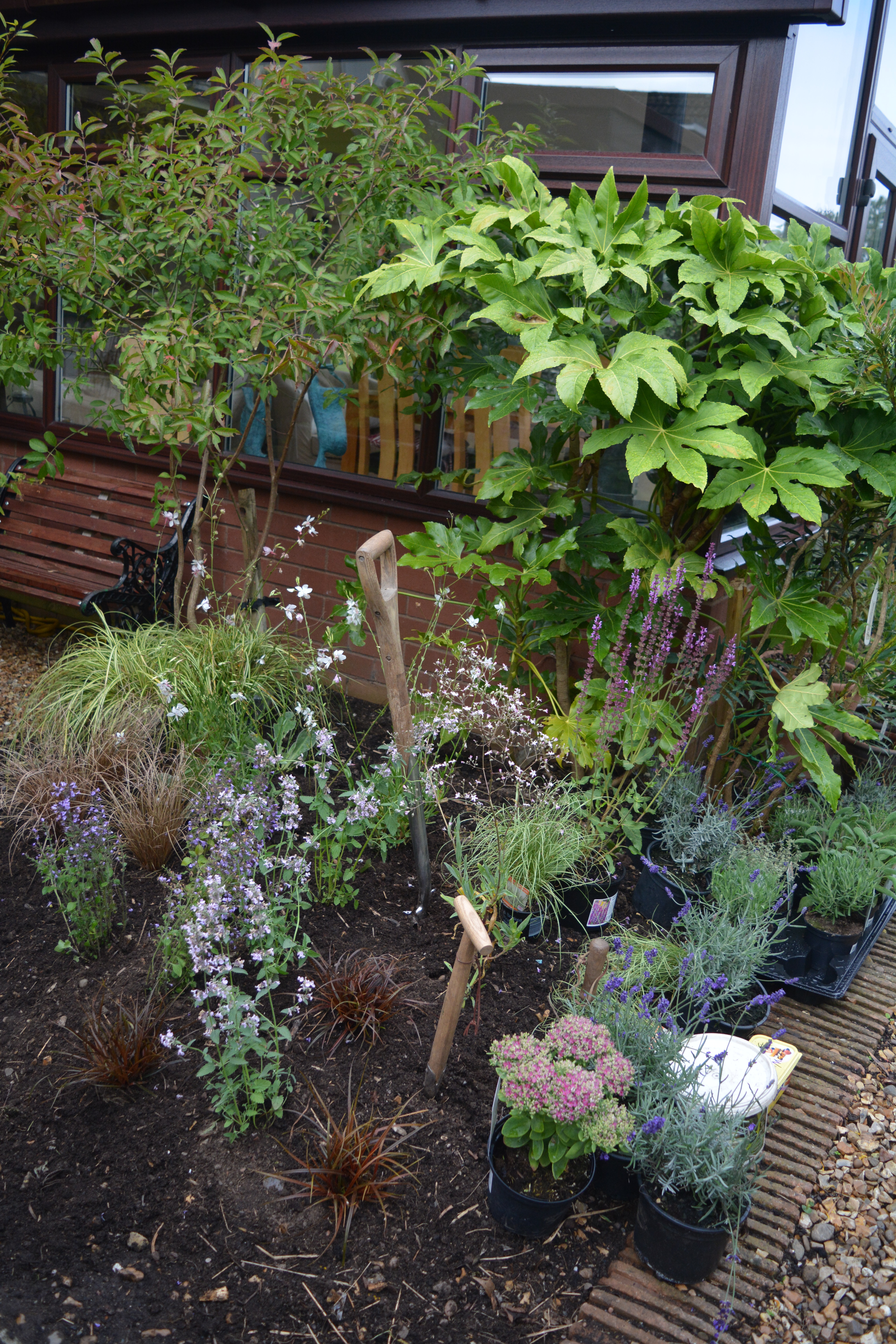
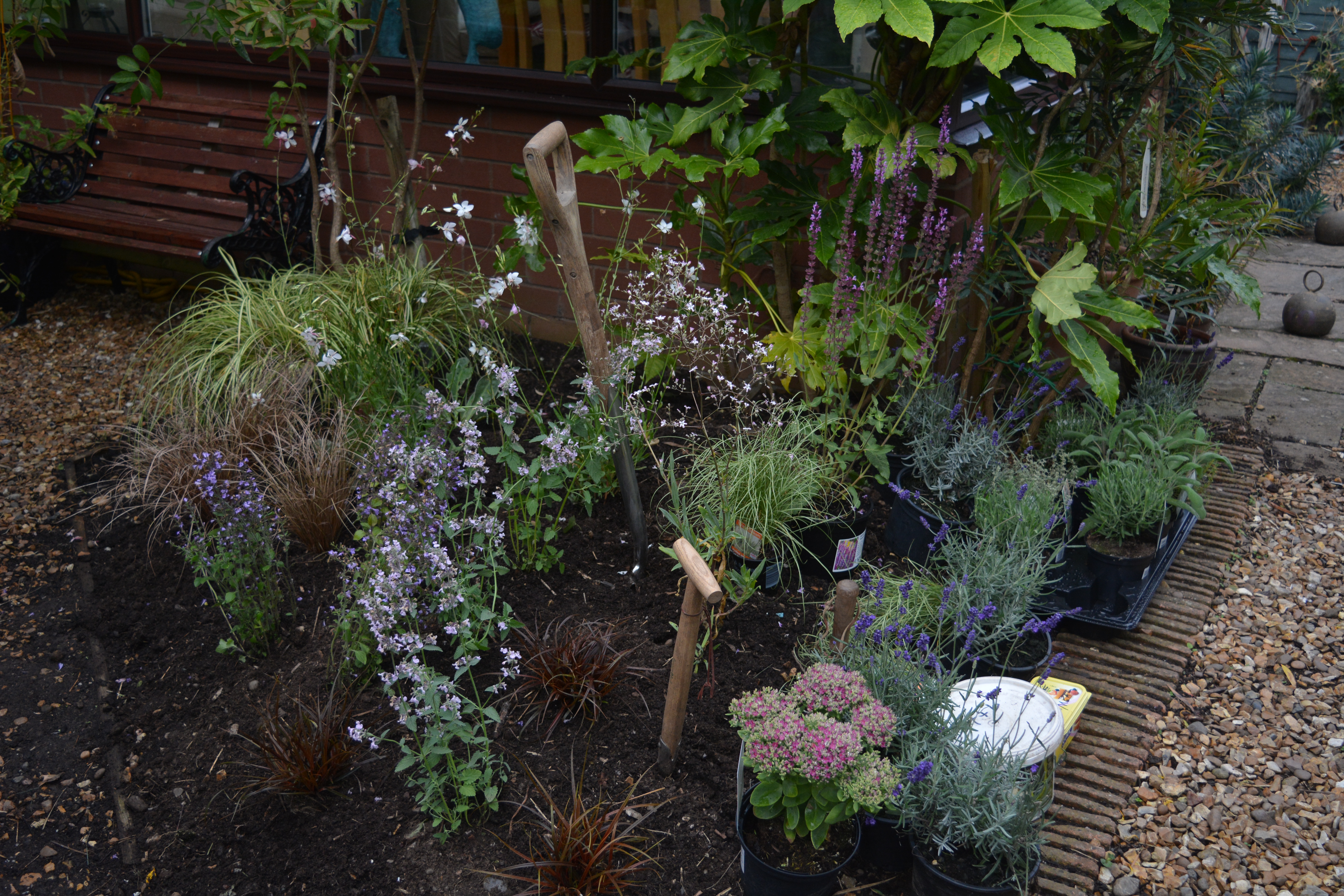
I wrote, Moving on with our project, creating a new border to replace our rather jaded foliage bed, we positioned the plants in pots, moved them around until they looked just right. The planting could then get underway.”

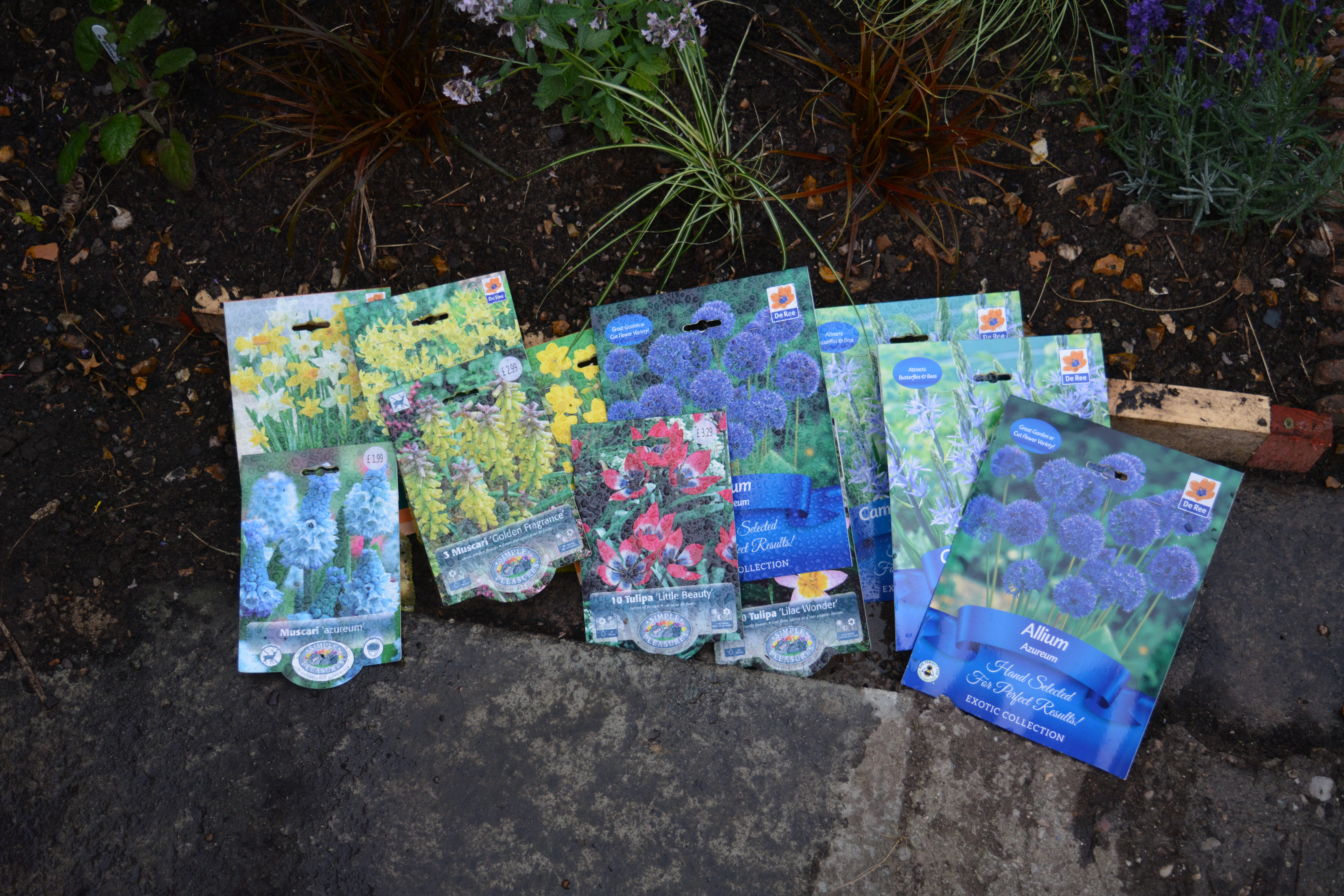
“We decided that for another autumn and winter task we would re-design our Hot Border which was looking a little jaded. This simple decision soon became far more complicated.  We ended up making the bold decision to move the new Hot Garden to a completely different part of our patch. But first we had to finish work on the new bed featured on the opposite page. Bulbs had to be planted and an access path made along the backof the border plus a couple of Liriope muscari needed planting.”

“A selection of bulbs and a few more Carex get planted.”


“Ian, our gardener, creates a new acess path for the back of the new border.”


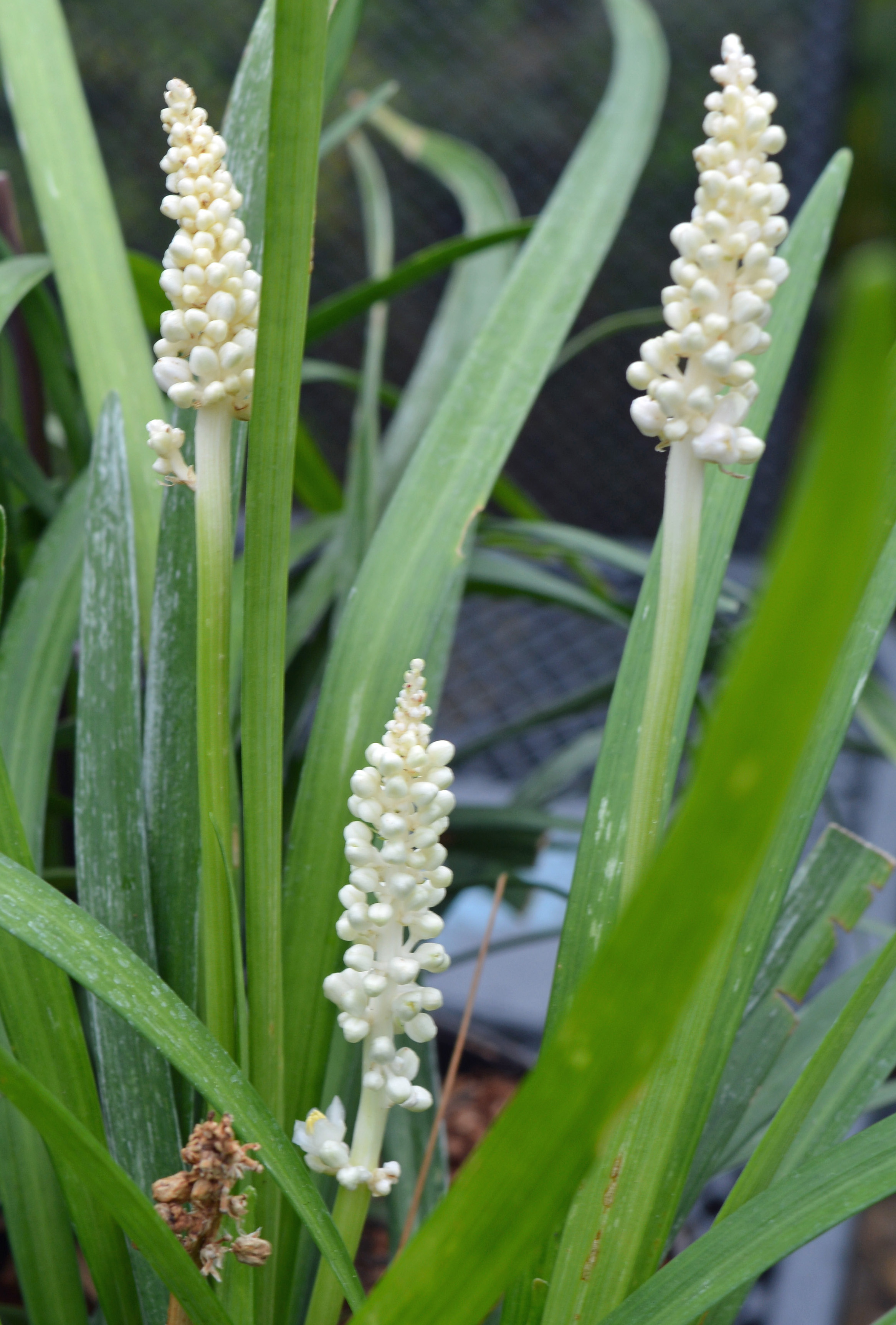
“Two Liriope muscari now enjoy their new home.”

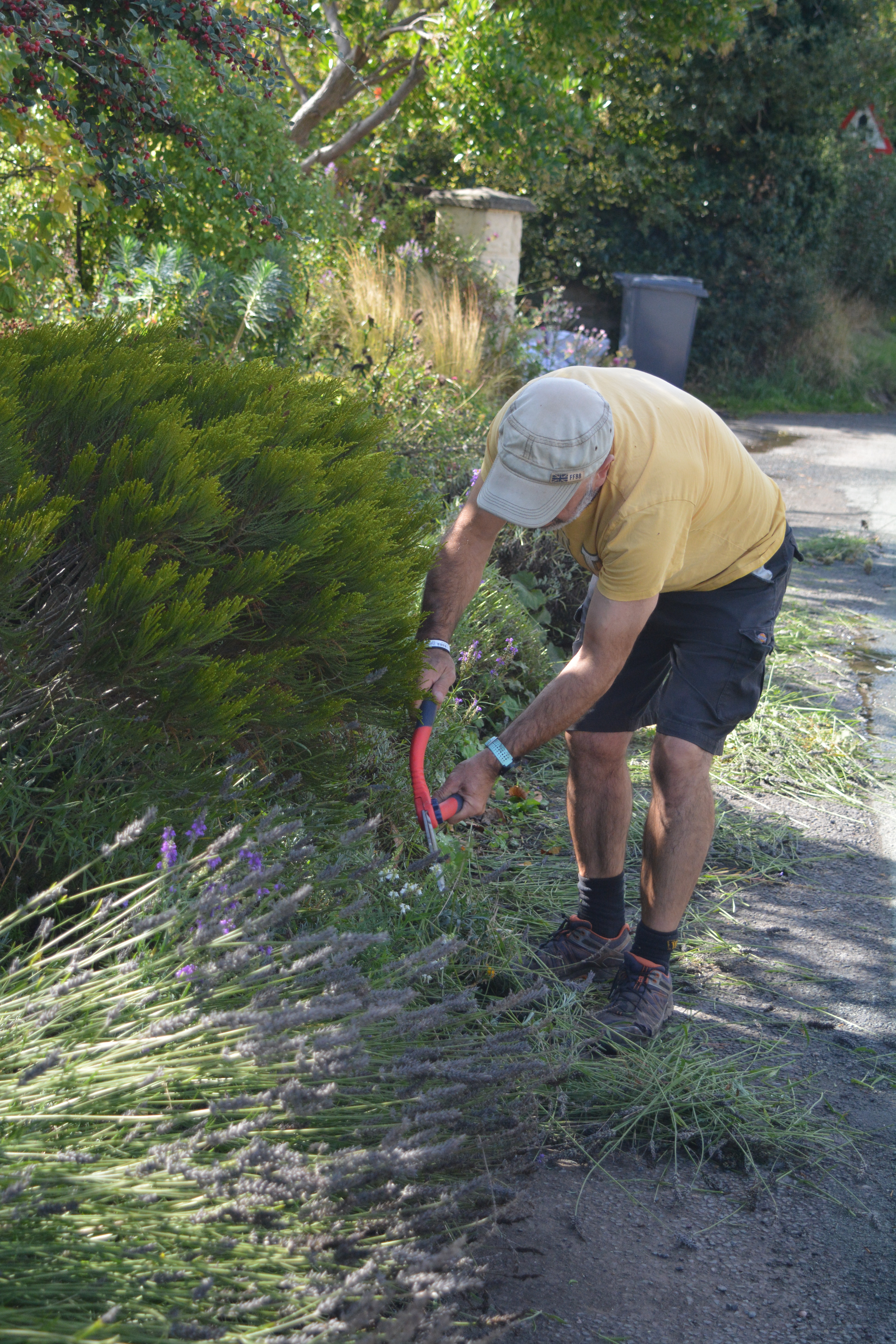
Moving on to the next double page spread I share the beginnings of developing the new front border to replace the original Hot Garden. I wrote,“As Ian trimmed our Lavender Hedge, I began stripping out the original Hot Border. As I dug plants up, Jude repotted any we wished to keep, if necessary splitting them up too.”


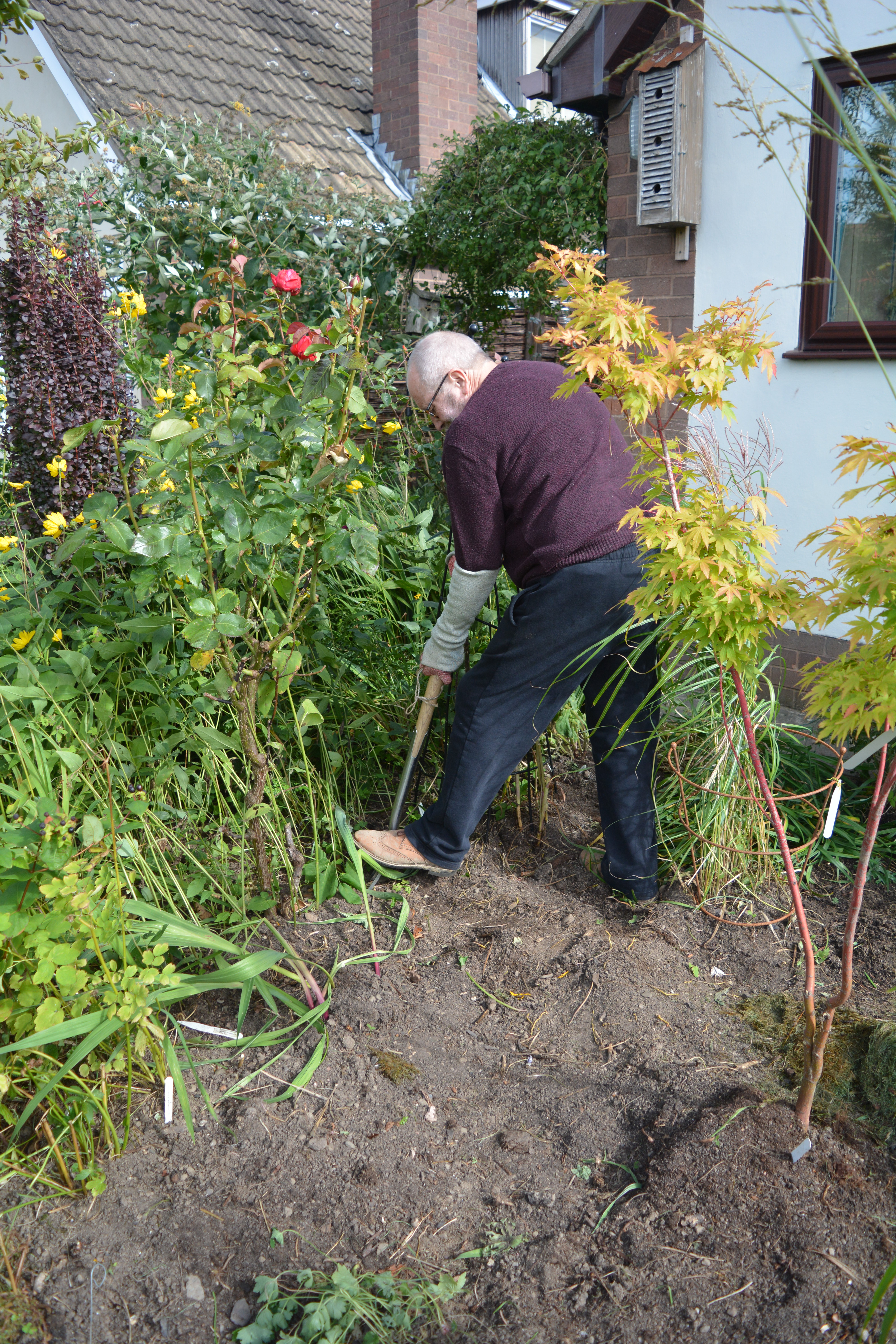
The front border soon looked empty and Ian improved the soil by double digging and and incorporating organic compost and forking it all through. It is now easily workable and feels a perfect texture.

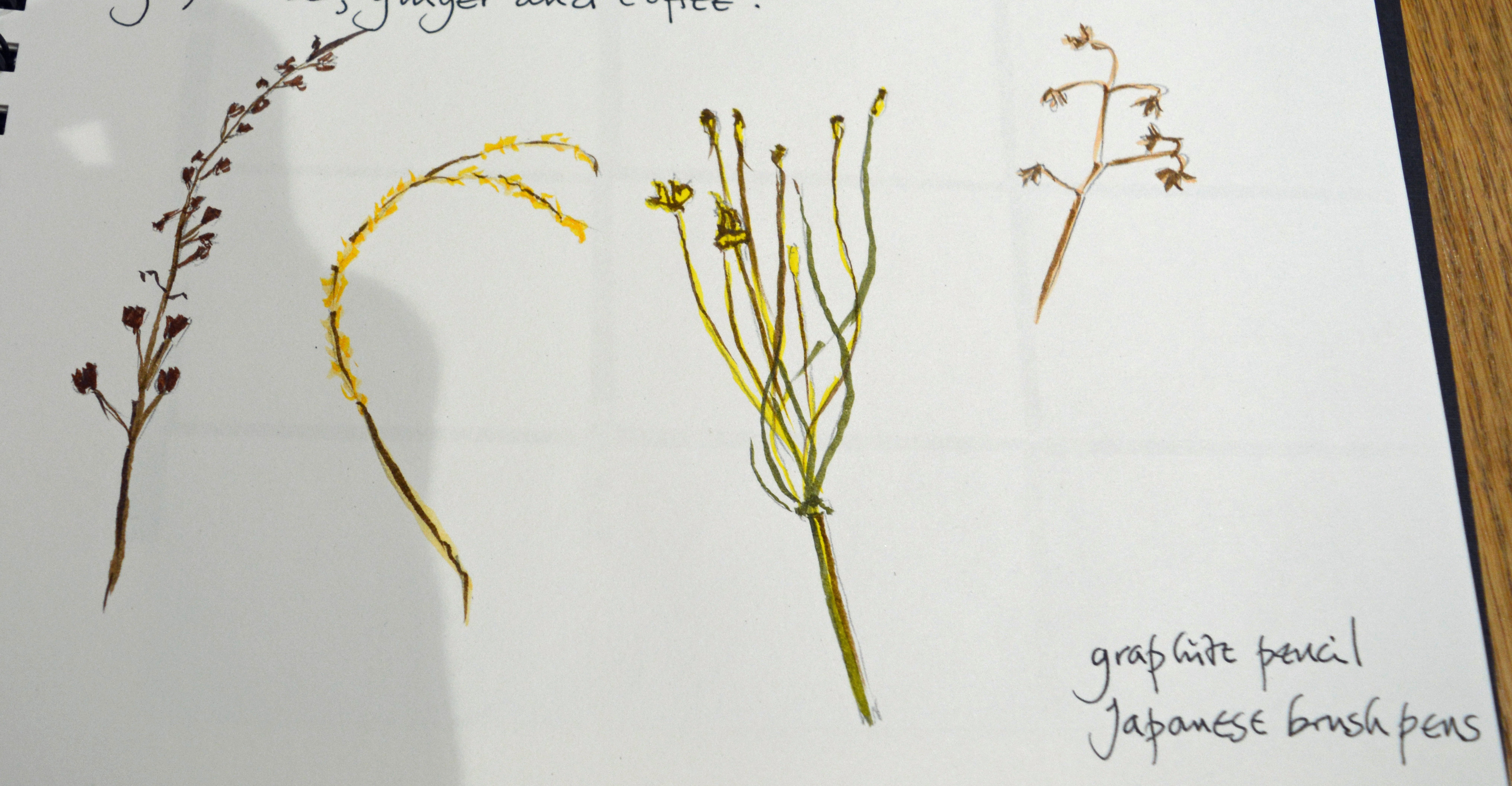
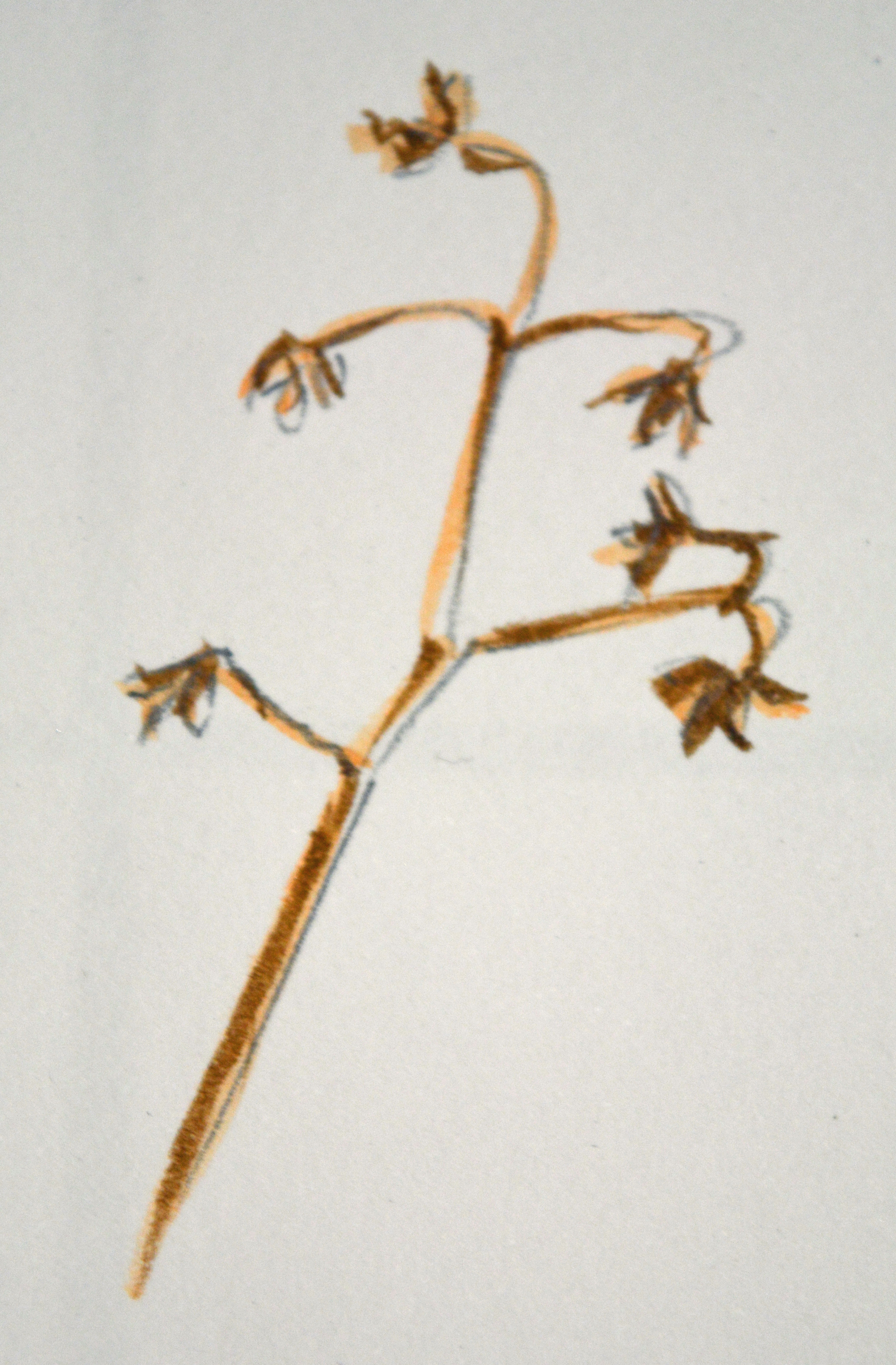
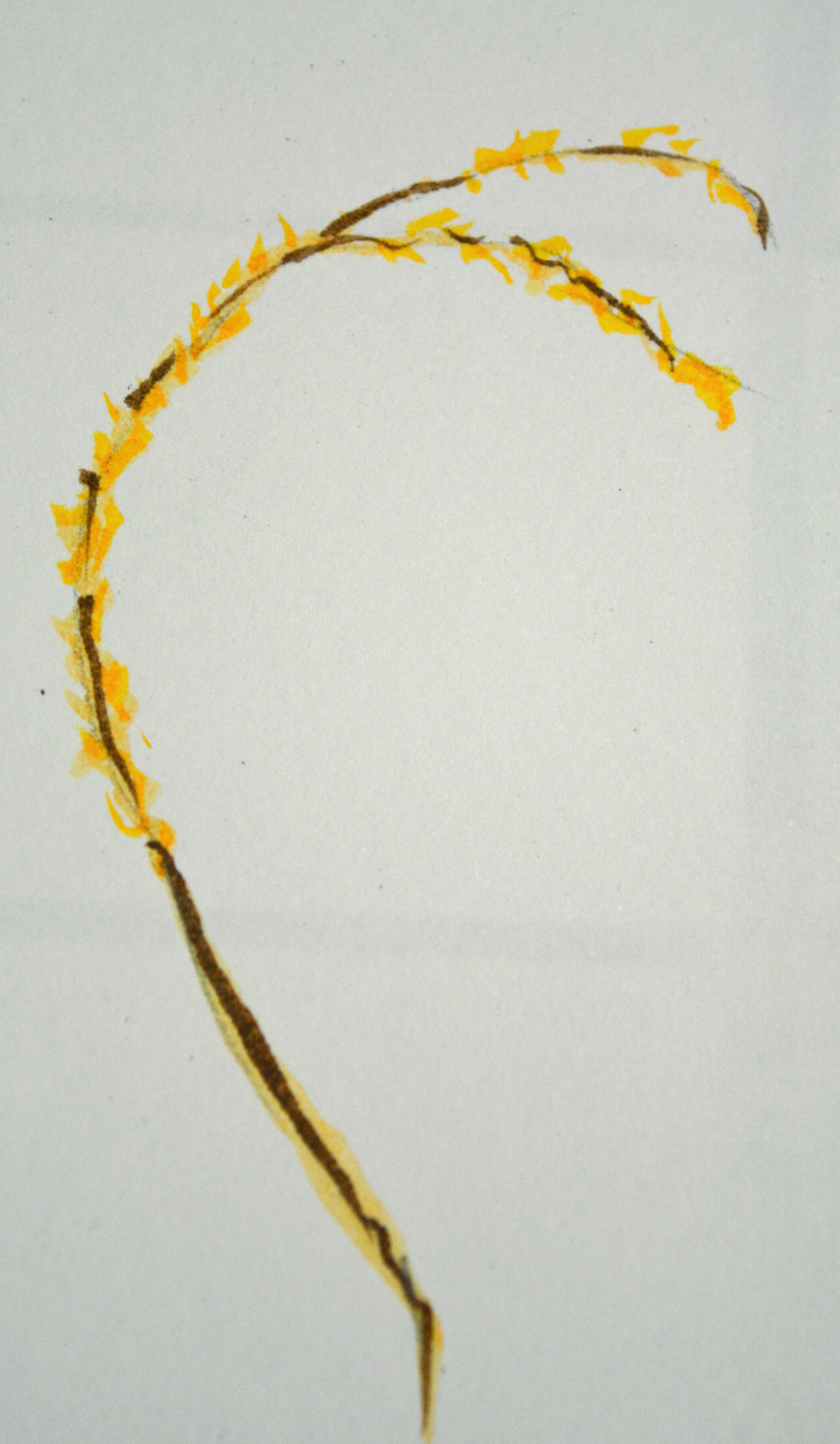
On the opposite page to our front border adventures I shared some of my paintings of October seedheads, created using graphite pencil and Japanese water colour brush pens.

I wrote, “When the sun shines bright on a dry October day, its rays catch each delicate seedhead atop the fine stems of perennials. The slightest breeze invite these lightweight beige, bronze, ginger and coffee seedheads to dance.”

The final double page spread brings colour back as we look at what is in flower during the last few days of the month. I wrote, “In contrast to the subtle colours of dried grasses and seed heads our late flowering climbers, shrubs and perennials are so bright!”


“Sharp contrasts give the garden added depth as the autumn sum dips lower in the sky.”


So we see the end of October with reasonable temperatures holding up and plenty of dry days to get out into the garden and get busy.


Categories
birds flowering bulbs garden photography garden wildlife gardening gardens hardy perennials spring bulbs spring gardening

My Garden Journal 2018 – April

I began my April entries in my Garden Journal 2018 with the words, “April this year is a month to play “catch up” as the poor weather in the first quarter of the year has held us up so!” But as will be revealed during my entries this month things didn’t play into our hands as far as the weather was concerns. It rather dashed our hopes!

I continued, We had two weeks at home to garden before we went away for a Spring holiday. There was very little sign of the new season, a few daffodils and other Spring bulbs flowered but little fresh growth on perennials. Strangely, our Witch Hazels had a quick second flush of flowers.


Coppicing and pollarding feature strongly when we turn over to the next page, two of my favourite garden activities.

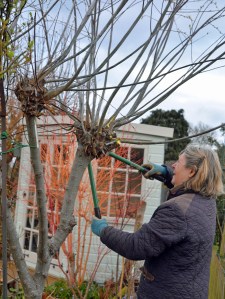
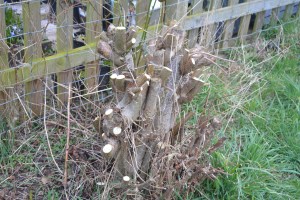
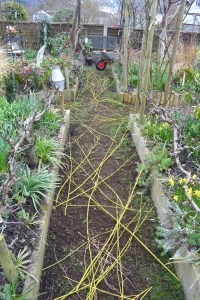
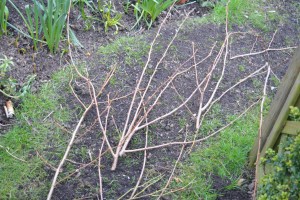
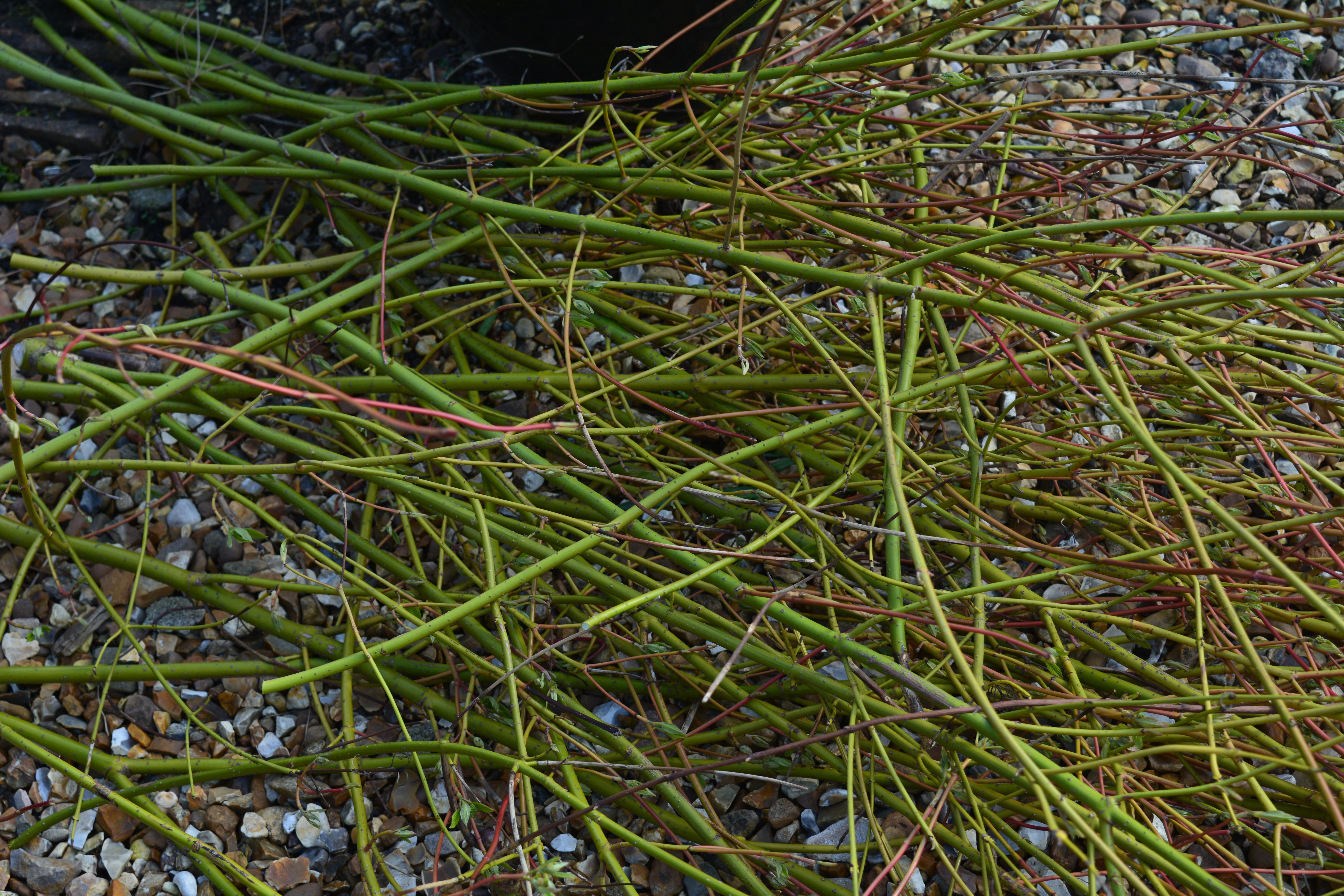
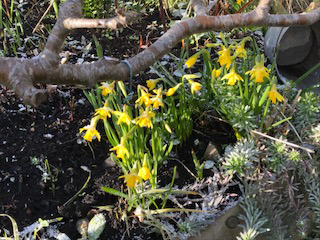
We usually aim to coppice and pollard our shrubs grown for their colourful stems, Cornus and Salix, before the end of March. The weather prevented us doing so this year so we tackled the job in early April. It is a job I love because I like to picture the results of my actions.

Some pruned stems are selected as cuttings to produce new plants to sell or as replacements.


Hazel rods become bean poles and the brash become pea sticks to be used on our allotment. We tidied up around the hazel stools and gave the footpath a mow over.


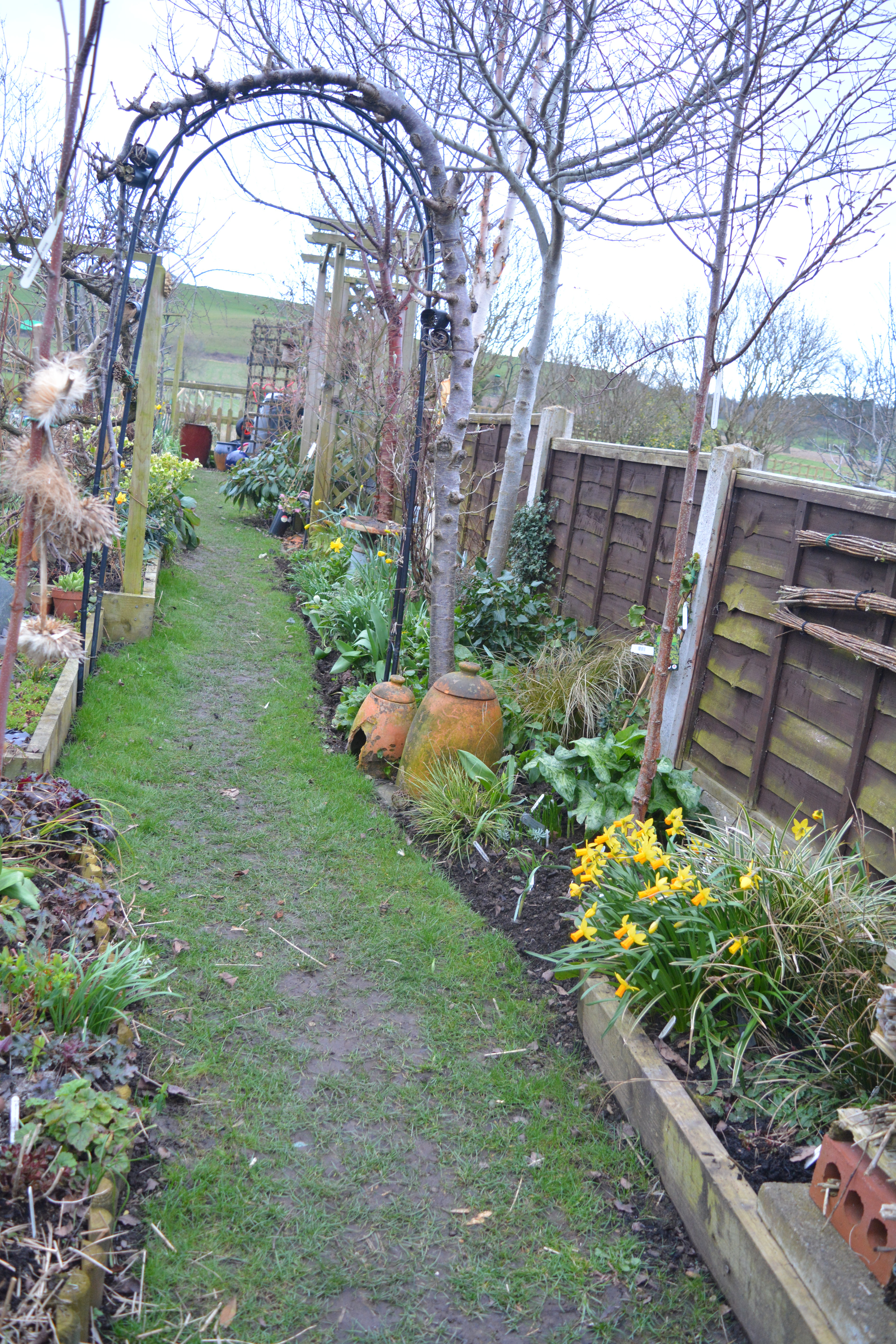
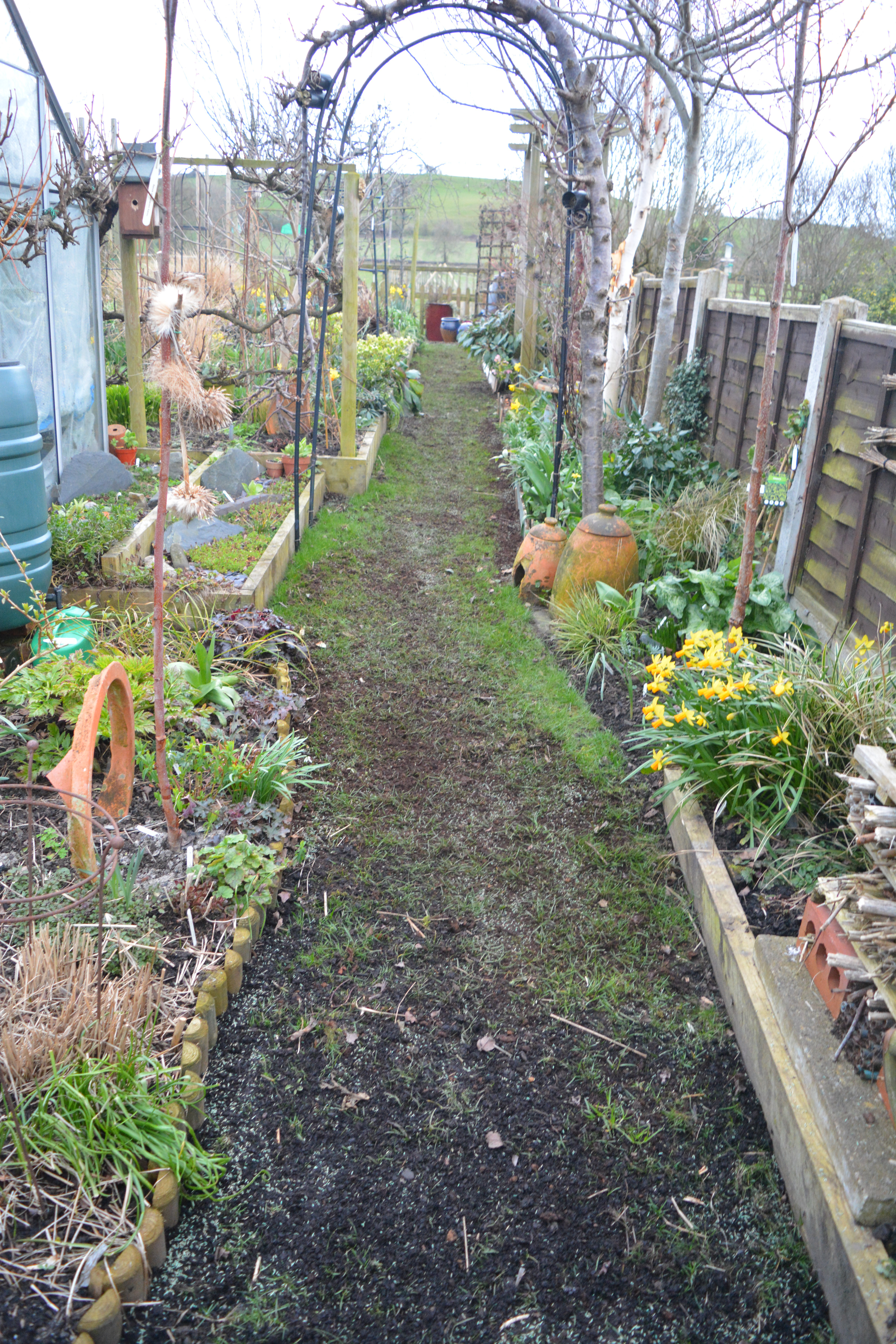
On the page opposite to the notes about coppicing and pollarding, I moved on to look at re-instating some of our grass paths, writing, A major job for this April was to repair and re-seed our grass paths. This is a result of having so many visitors when we open our garden for the National Garden Scheme.

 

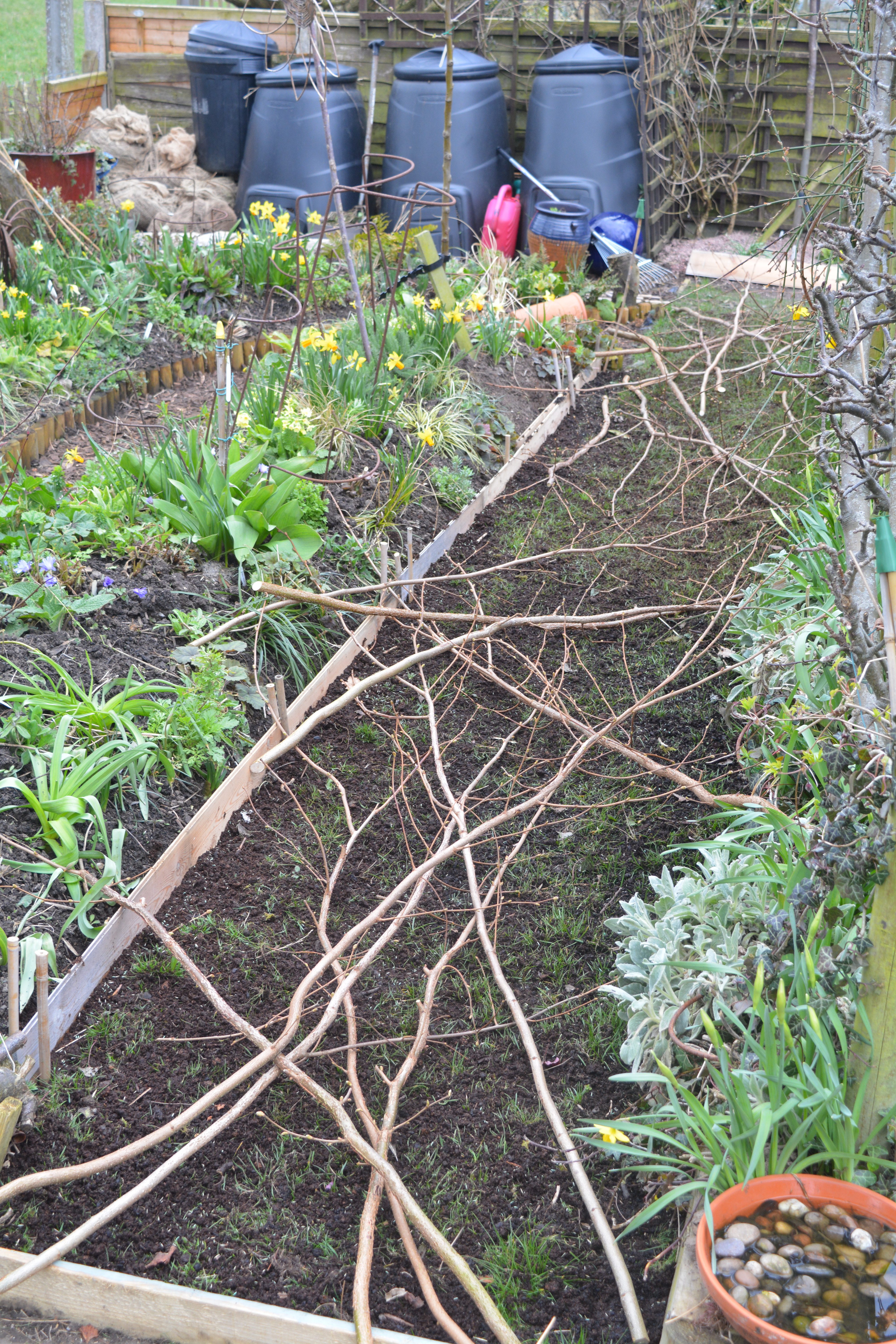
We used my big vintage Bulldog fork to spike deeply into the lawn surface and top dressed the lawn with compost. We brushed this in and added fresh grass seed into bare patches. To stop our garden birds eating too many seeds we spread prunings over the surface. 
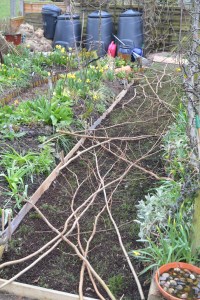
     

Over onto the next page we can see that I shared a quote from Dan Pearson’s Natural Selection, then looked at more of this month’s jobs.

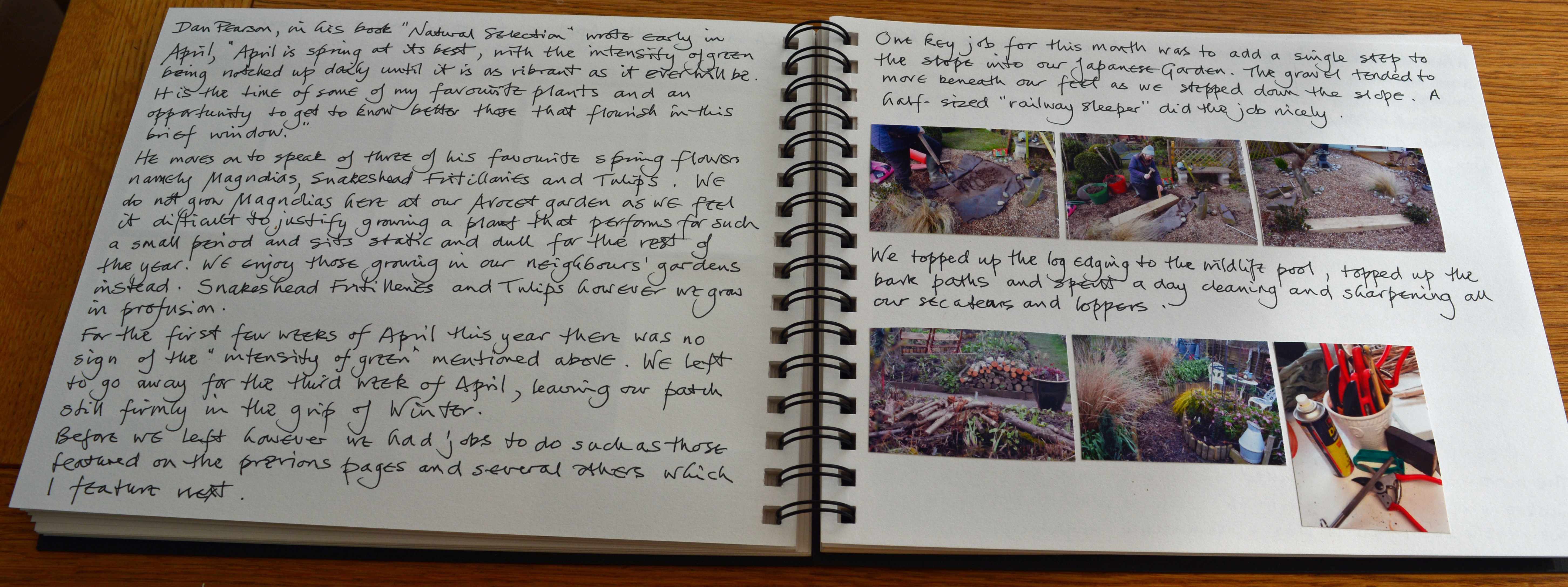
Dan Pearson in his book Natural Selection wrote early in April, April is spring at its best, with the intensity of green being notched up daily until it is as vibrant as it ever will be. It is the time of some of my favourite plants and an opportunity to get to know better those that flourish in this brief window.

He moves on to speak of three of his favourite spring flowers namely Magnolias, Snakeshead Fritillaries and Tulips. We do not grow Magnolias here at our Avocet garden as we feel it difficult to justify growing a plant that performs for such a small period and sits static and dull for the rest of the year. We enjoy those growing in our neighbours’ gardens instead. Snakeshead Fritillaries and Tulips however we grow in profusion.

For the first few weeks of April this year there was no sign of the “intensity of green” mentioned above. We left to go away for the third of April, leaving our patch still firmly in the grip of Winter.

Before we left however we had jobs to do such as featured in the previous pages and several others which I feature next.

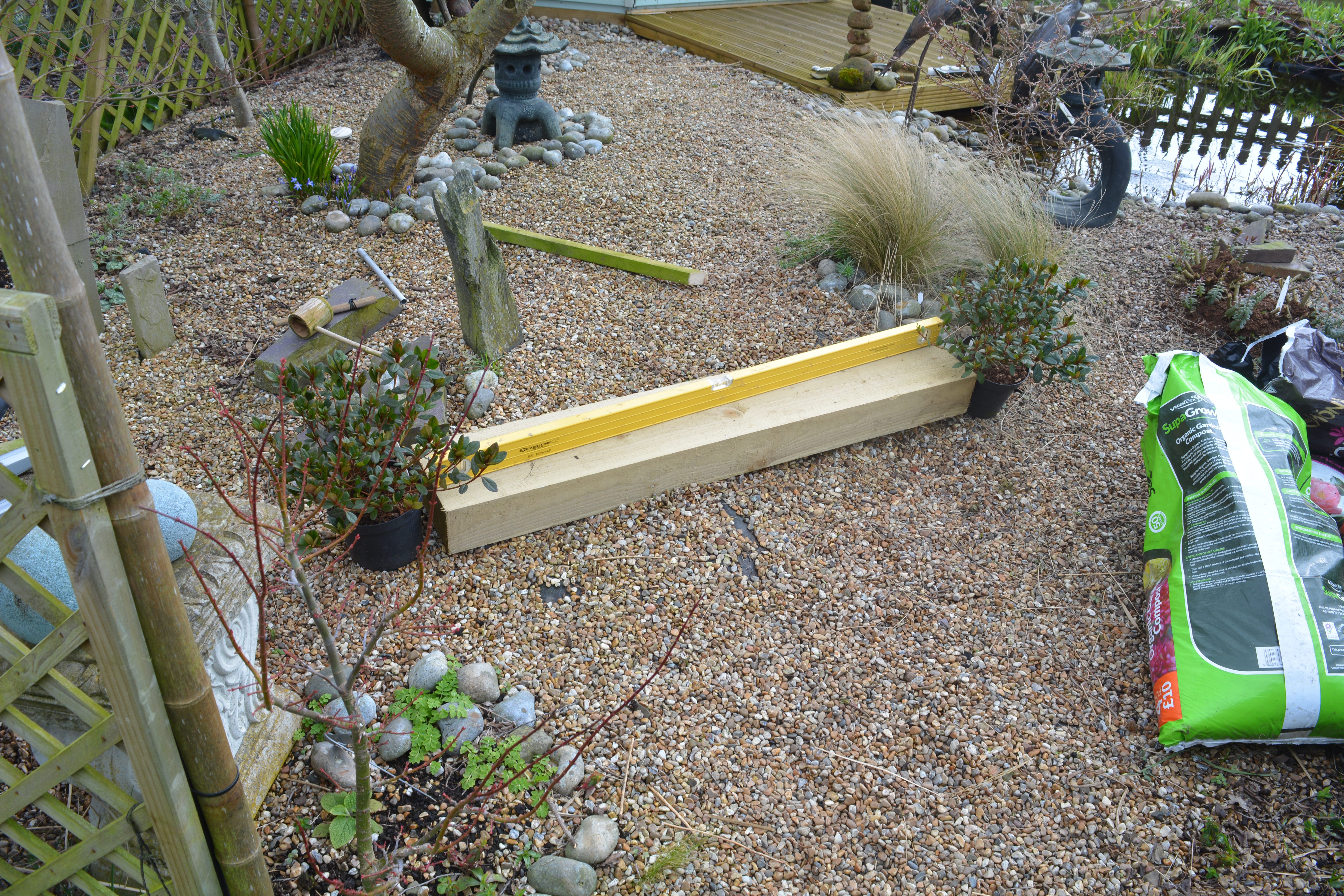
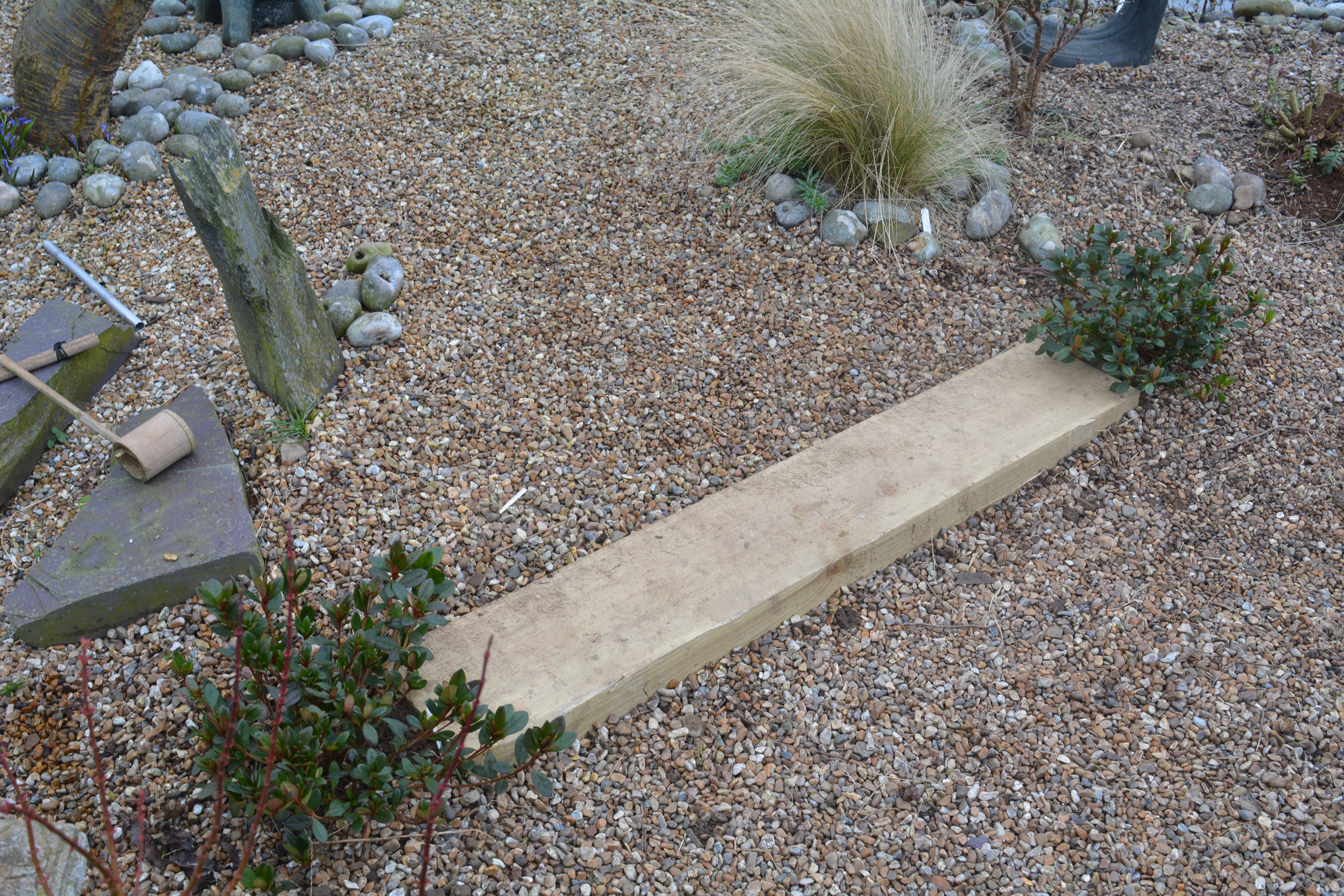
Our key job of this month was to add a single step to the slope into our Japanese Garden. The gravel tended to move beneath our feet as we stepped down the slope. A half-sized “railway sleeper” did the job nicely.


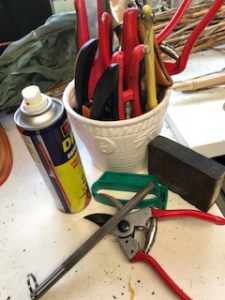
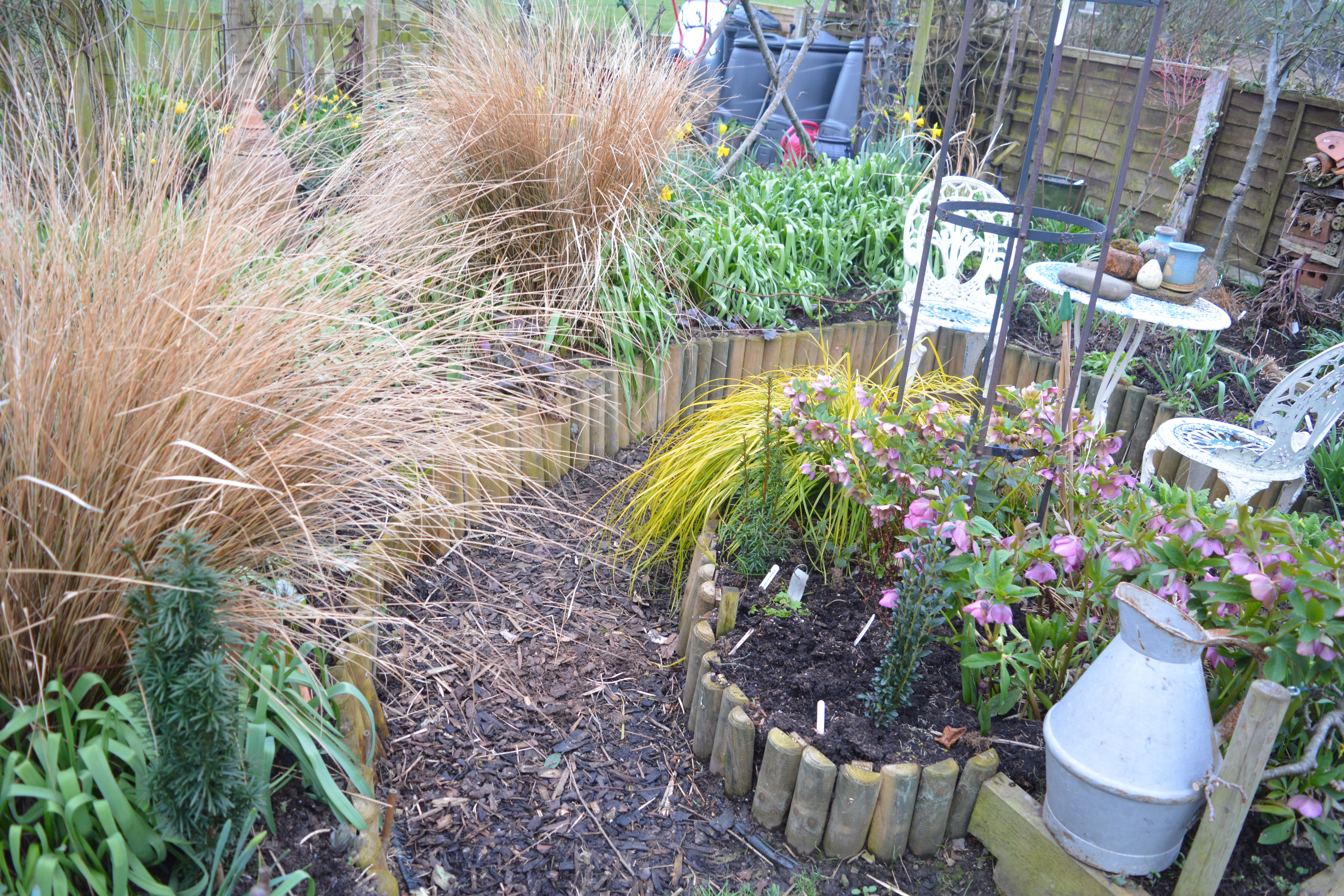
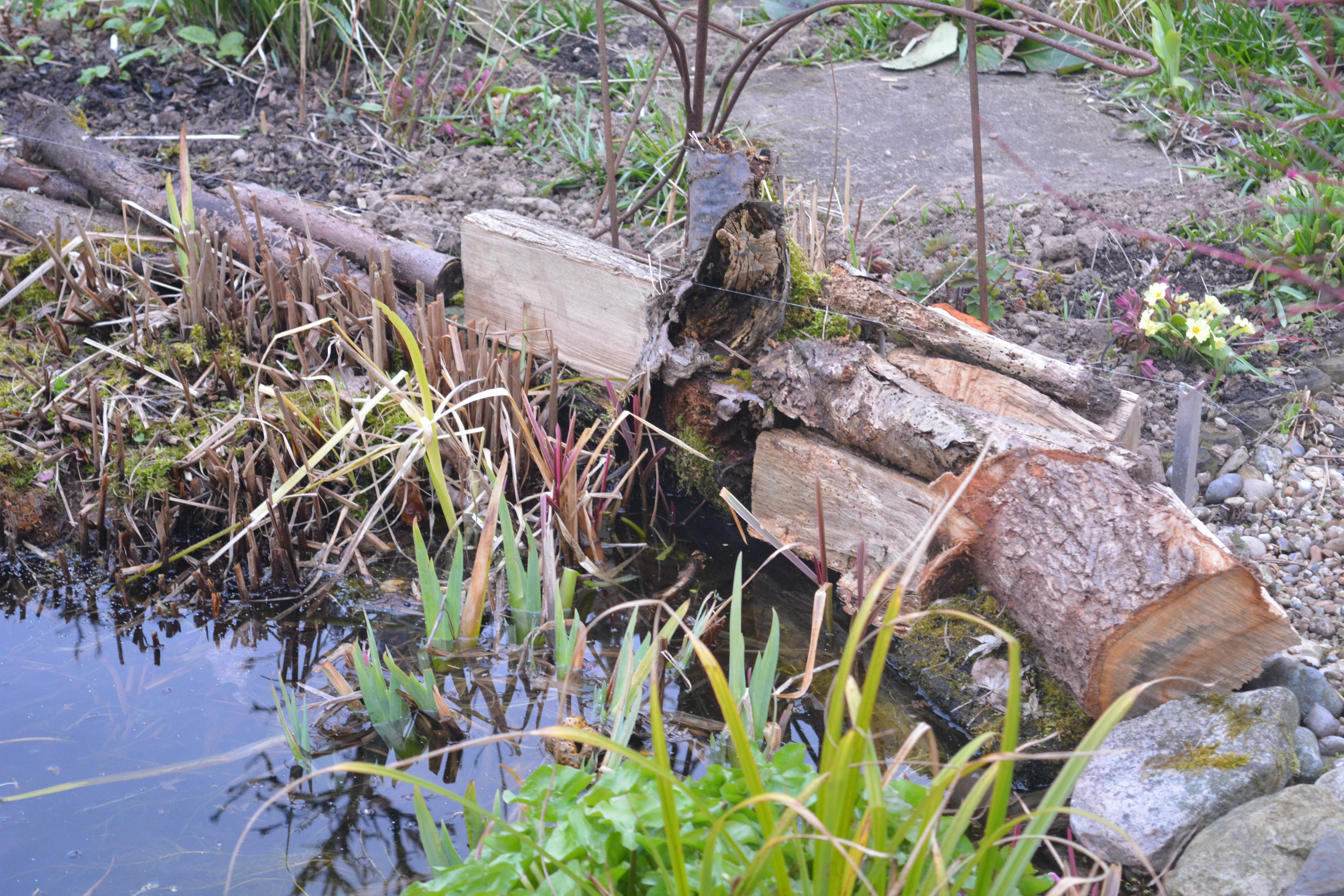
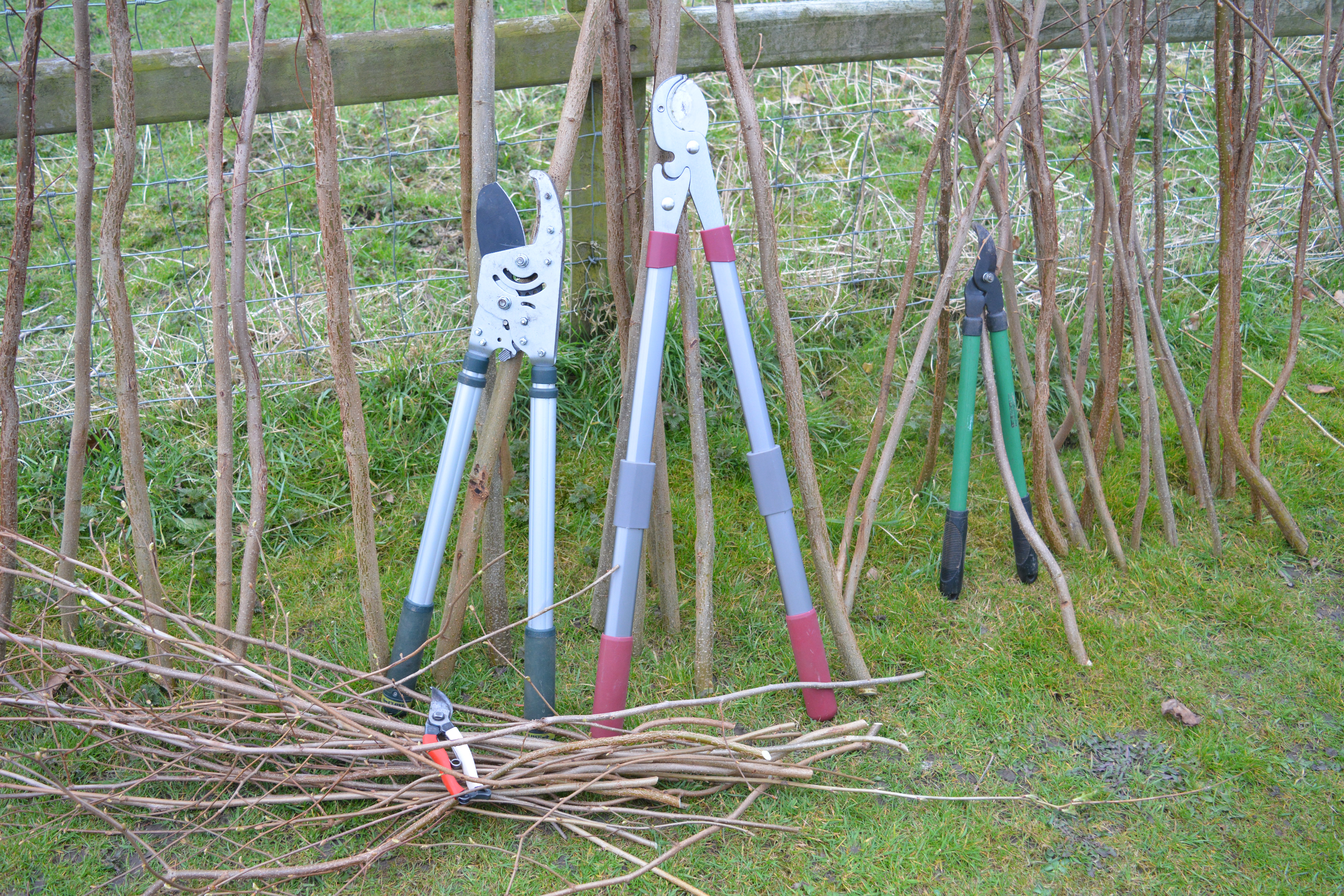
We topped up the log edging to the wildlife pool, topped up the bark paths and spent a day cleaning and sharpening all our secateurs and loppers.
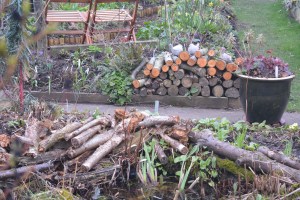
    

Turning over to the next double page spread I wrote about the birds in our garden and then mentioned a sudden sign of spring.
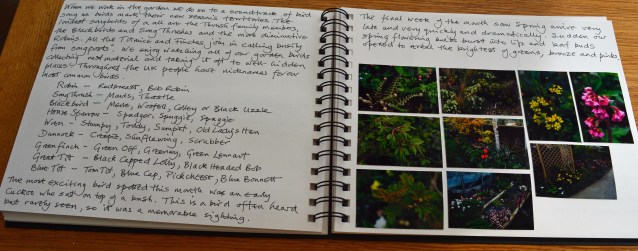
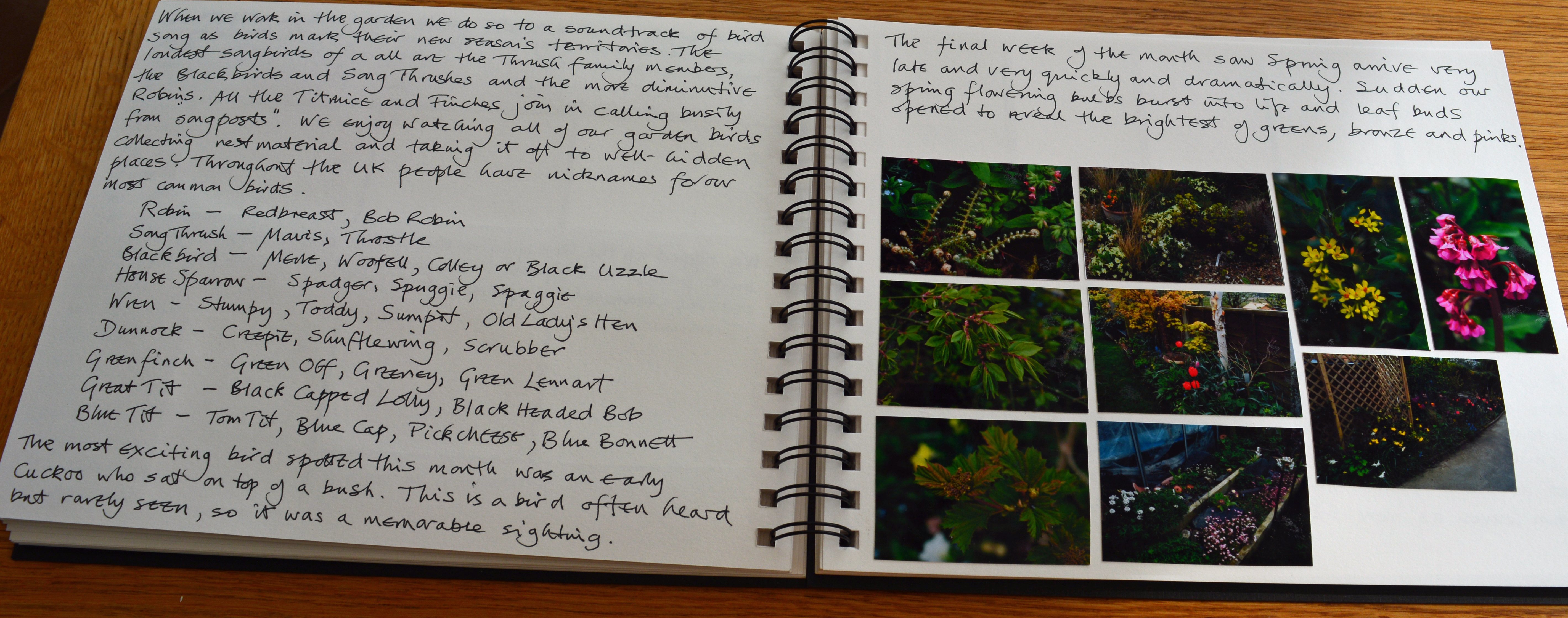
I wrote, When we work in the garden we do so to a soundtrack of bird song as birds mark their new season’s territories. The loudest songbirds of all are members of the Thrush family, the Blackbirds and Song Thrushes and the more diminutive Robins. All the Titmice and Finches join in calling busily from songposts.

We enjoy watching all of our garden birds collecting nest materials and taking it off to well-hidden places. Throughout the UK people have nicknames for our most common birds. I did some research and came up with these.

Robin  –  Redbreast, Bob Robin

Song Thrush  –  Mavis, Throstle

Blackbird  –  Merle, Woofell, Colley, or Black Uzzle

House Sparrow  –  Spadger, Spuggie, Spaggie

Wren  –  Stumpy, Toddy, Sumpit, Old Lady’s Hen

Dunnock  –  Creepie, Shufflewing, Scrubber

Greenfinch  –  Green Olf, Greeney, Green Lennart

Great Tit  –  Black Capped Lolly, Black Headed Bob

Blue Tit  –  Tom Tit, Blue Cap, Pickcheese, Blue Bonnett

The most exciting bird spotted this month was an early Cuckoo who sat on top of a bush. This is a bird often heard but rarely seen, so it was a memorable sighting. 


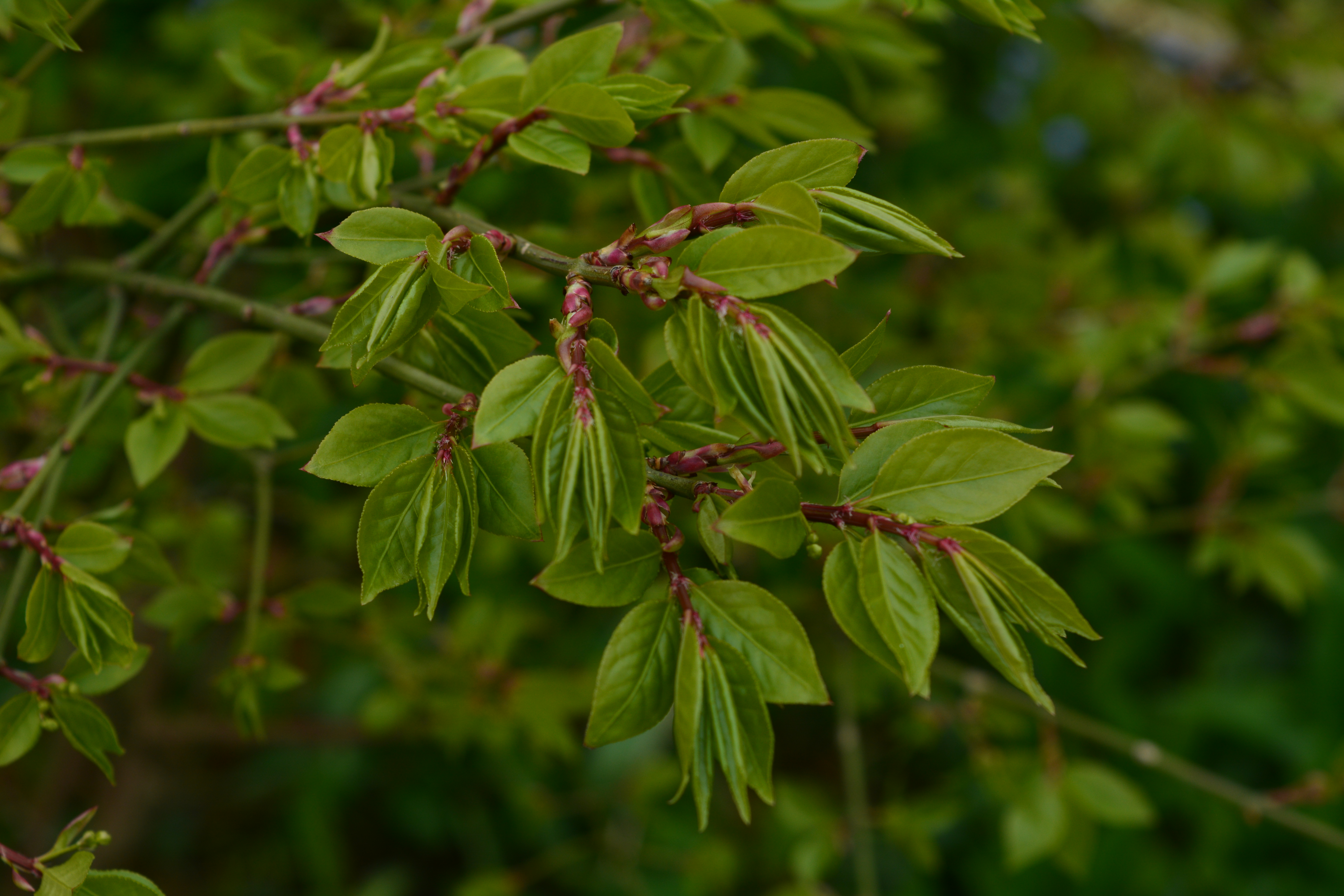
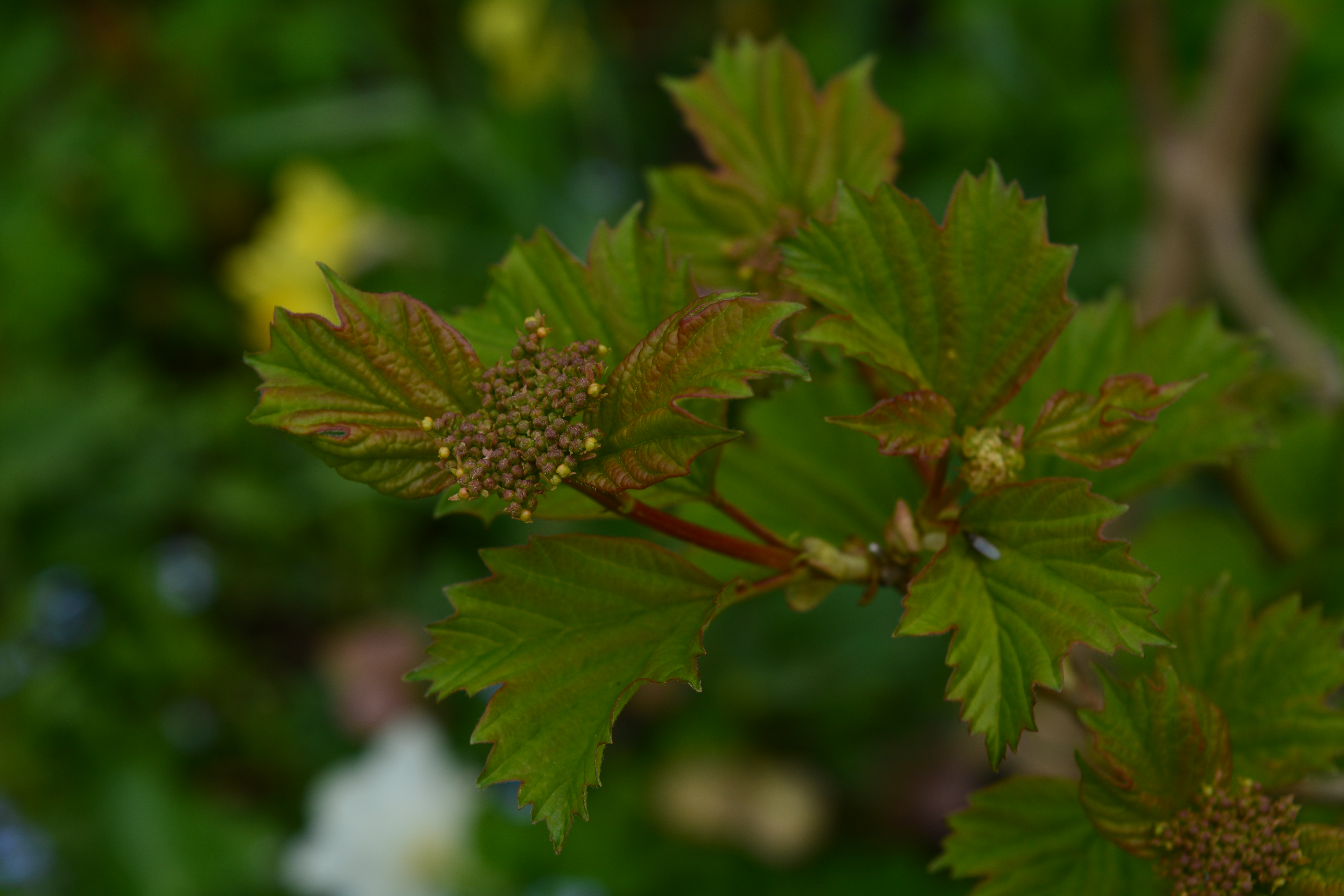
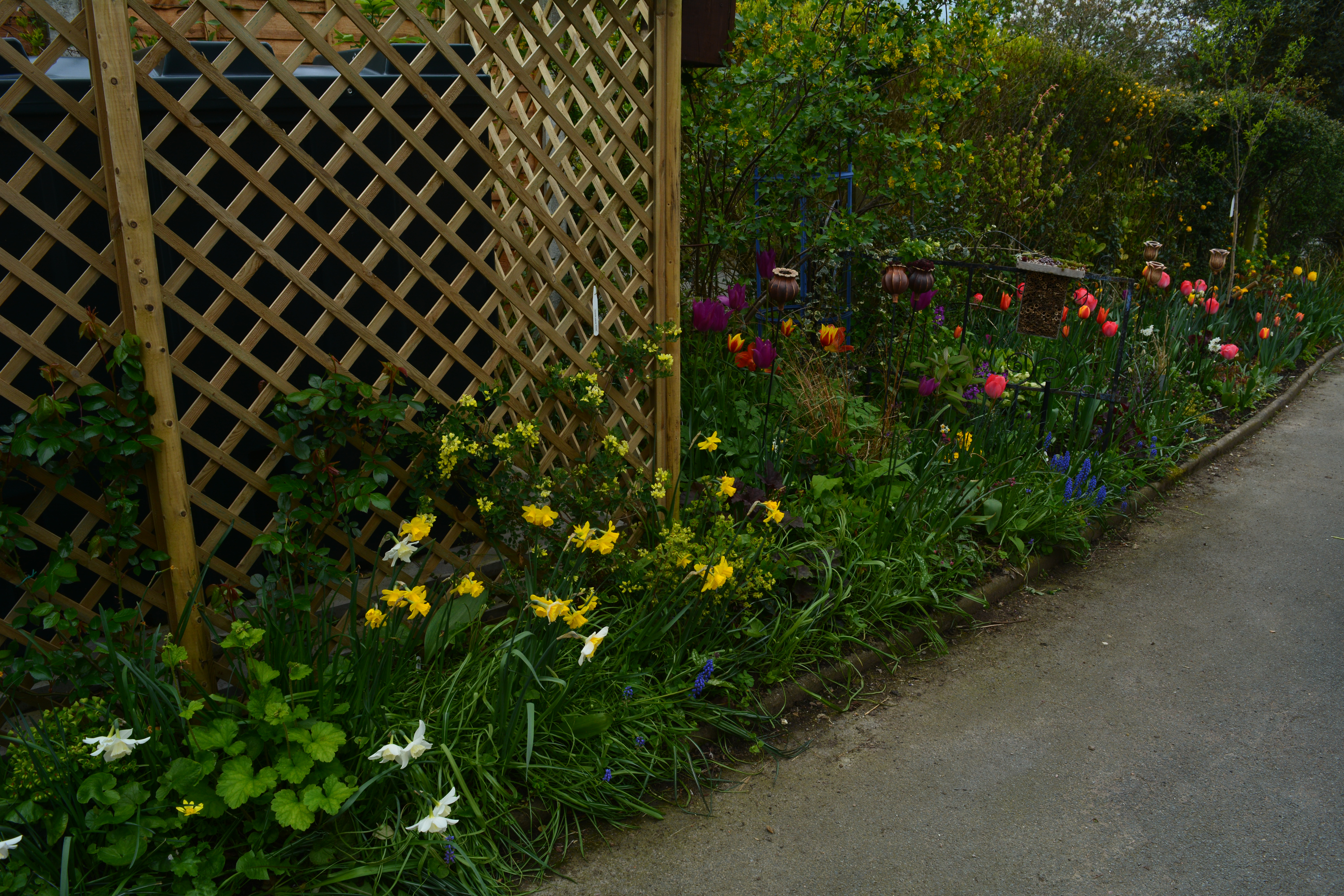
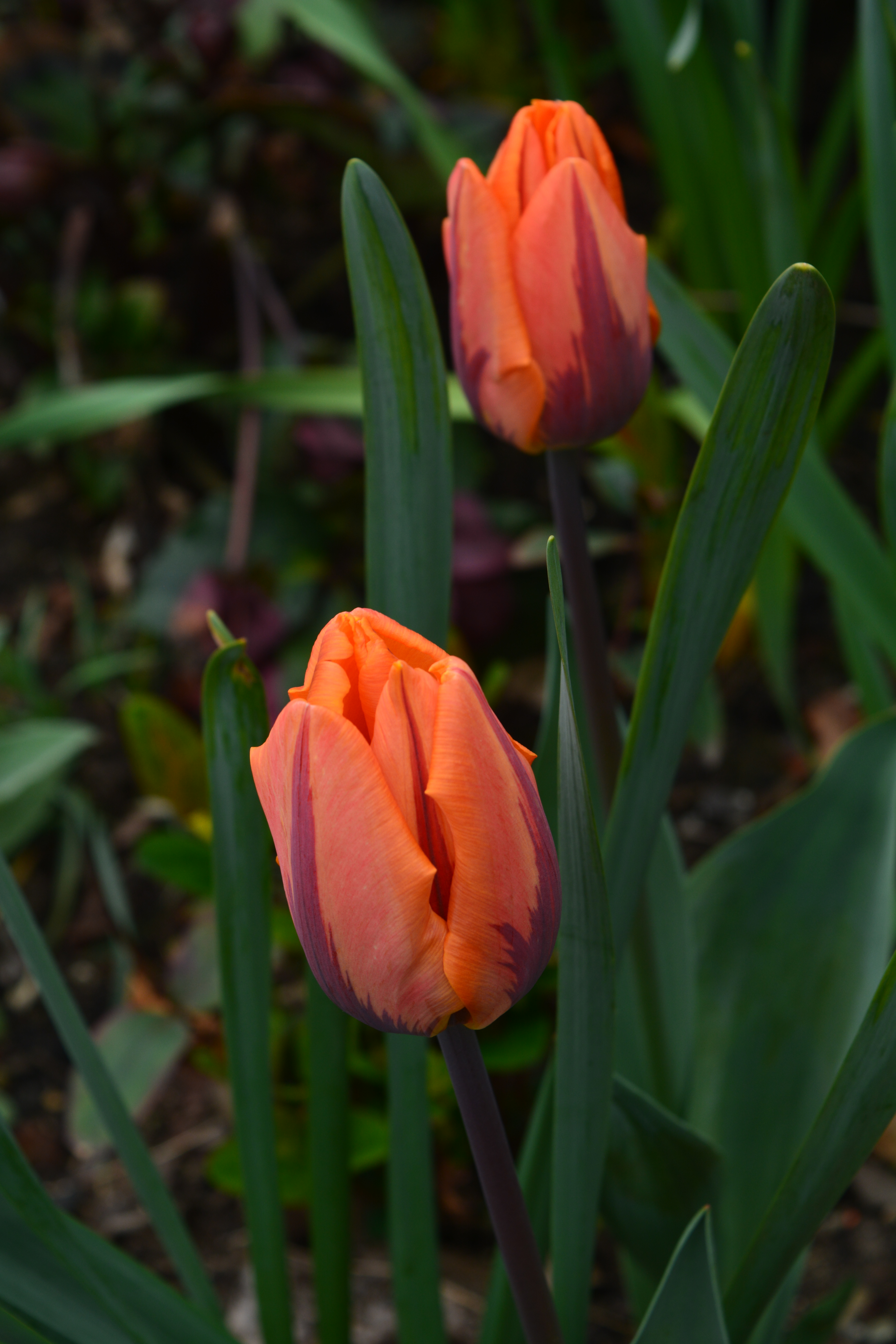
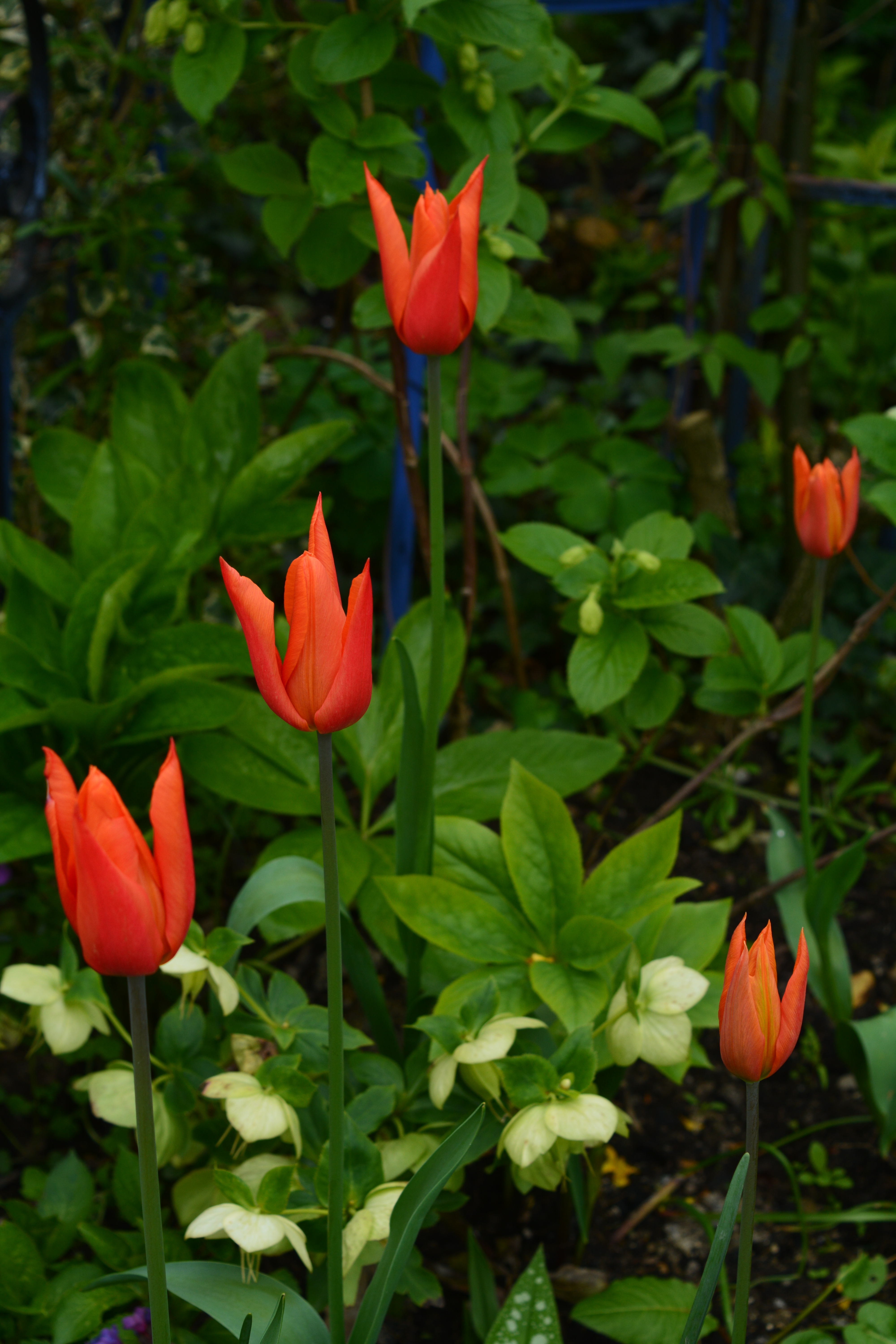
The third week of the month saw Spring arrive very late and very quickly and dramatically after a few days of record setting high temperatures. Suddenly our spring flowering bulbs burst into life and leaf buds opened to reveal the brightest of greens, bronzes and pinks.


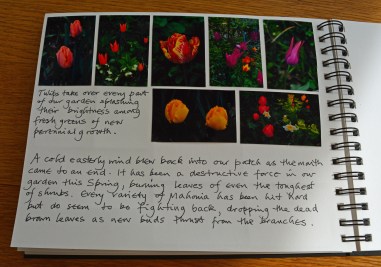
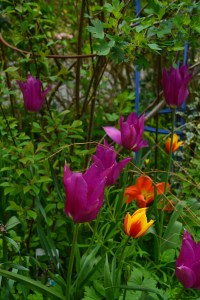
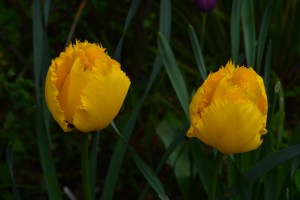
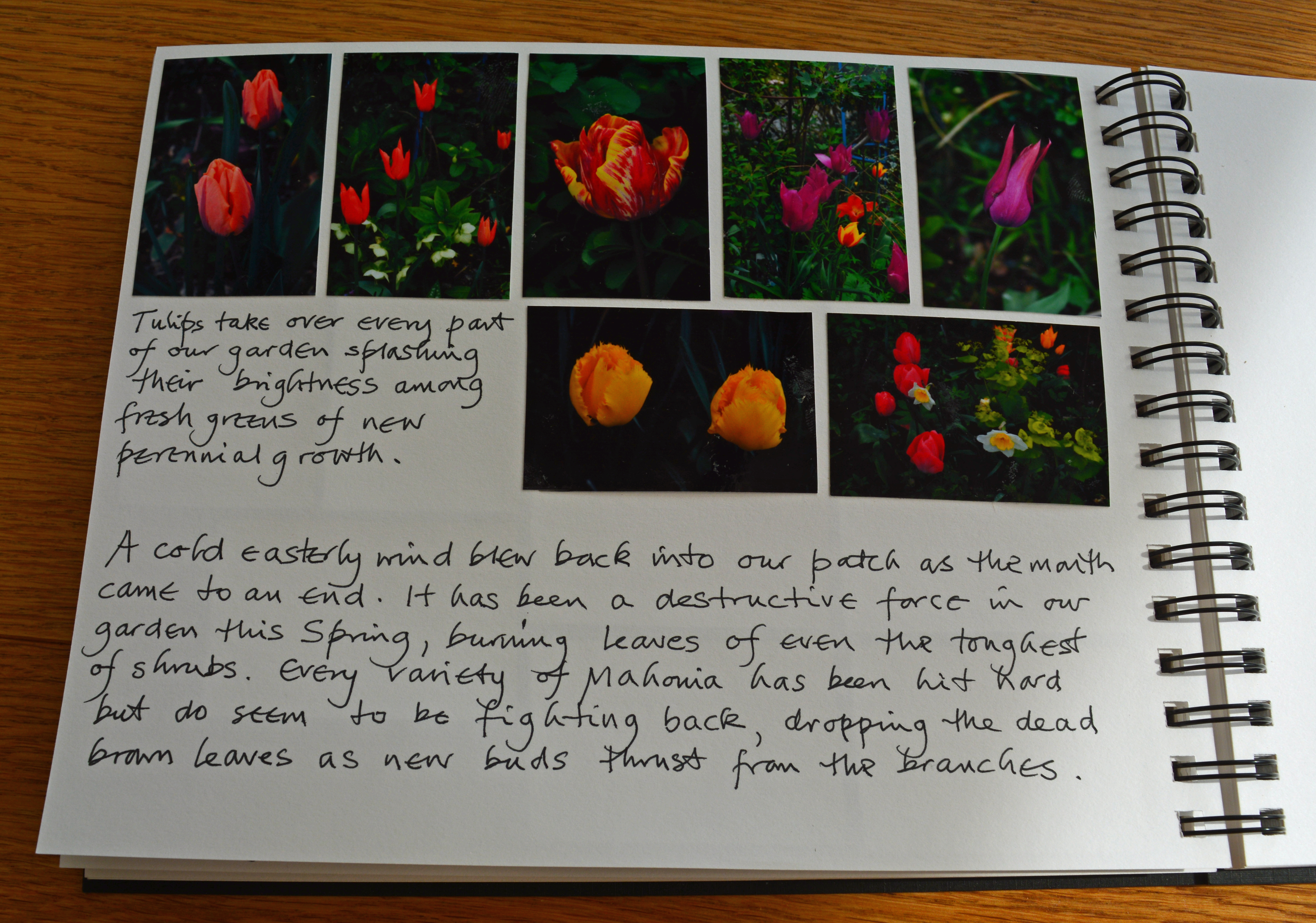
Tulips take over every part of our garden splashing their brightness among fresh greens of perennials growth.


A cold easterly wind blew back into our patch as the month came to an end. It has been a destructive force in our garden this Spring, burning leaves of even the toughest of shrubs. Every variety of Mahonia has been hit hard but do seem to be fighting back, dropping the dead browned leaves as new buds thrust from the branches.

So here I finish my report on my April pages in my garden journal. I will return in May when the weather may be more kind to us.
 

Categories
flowering bulbs garden arches garden design garden paths garden photography gardening gardens gardens open to the public grasses hardy perennials National Trust ornamental grasses ornamental trees and shrubs pathways pergolas spring bulbs The National Trust trees Wales Winter Gardening winter gardens

The Winter Garden at Bodnant Hall

We left home for a journey up towards Chester and then West along the North Wales coast after listening to the local weather forecast for our destination. It predicted a heavy snow storm passing through early morning and warnings were announced for closed roads and dangerous conditions. The weather was set to travel eastward and weaken, so we hoped we would meet it as it had weakened and arrive at our destination as it cleared.

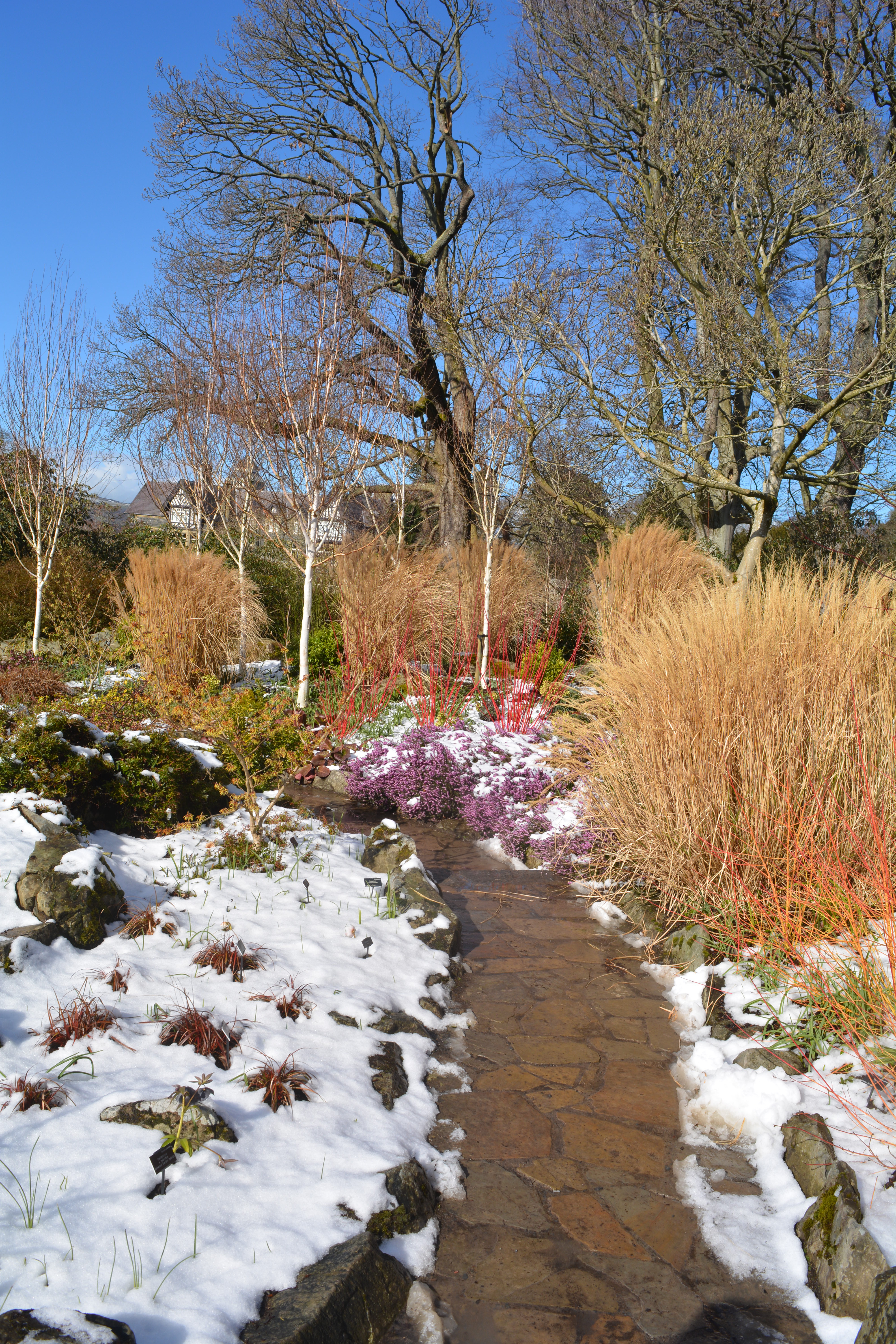
We got it spot on as a couple of hours later we arrived at the northern tip of Snowdownia, at Bodnant Hall where we wanted the see the Winter Garden. We had explored it before in the summer and it looked good then. We vowed to return in its prime season to see if it lived up to its summer promises.

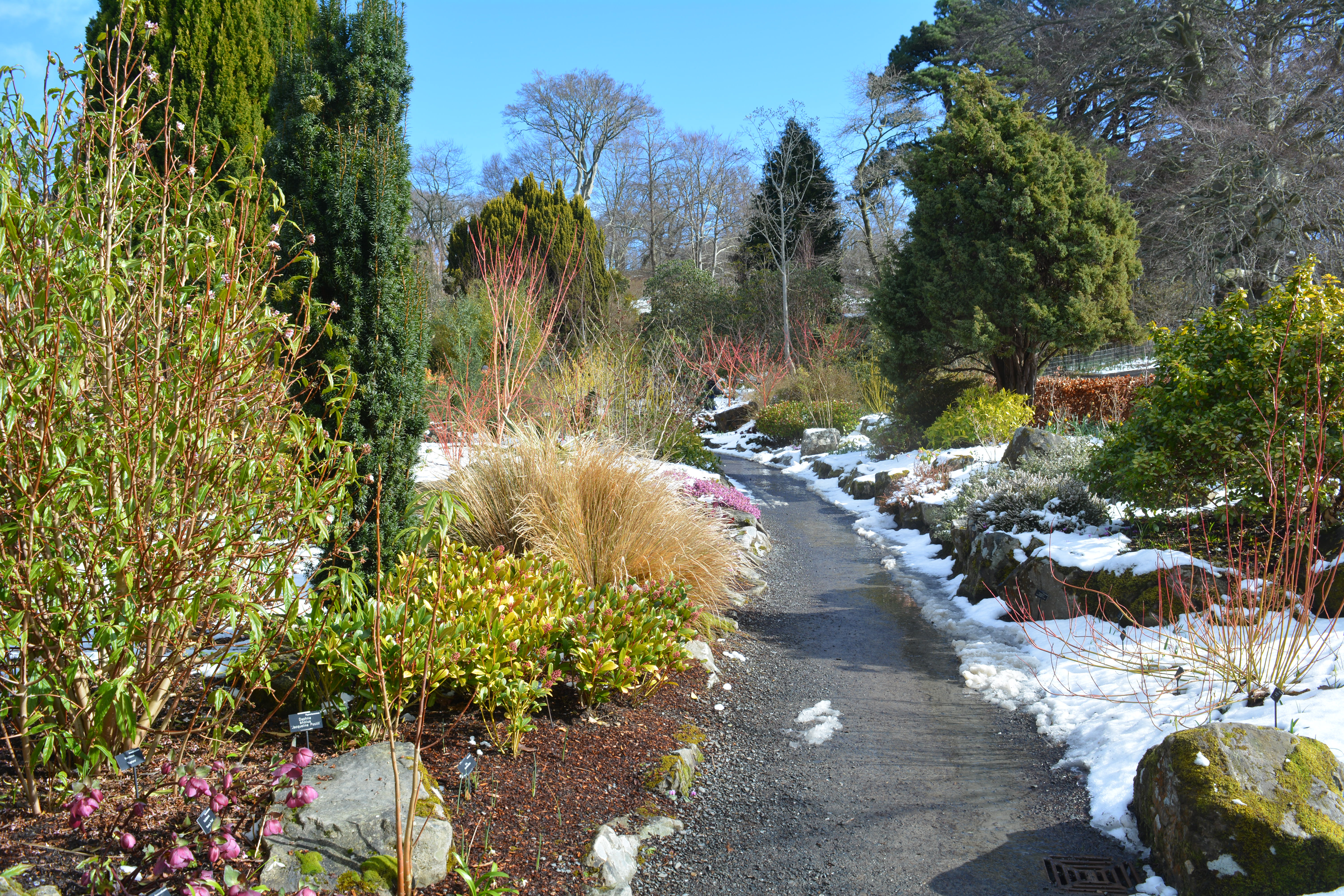
We were not to be disappointed in the slightest as it surpassed all expectations. It was simply breathtaking. Come with us as we explore along its winding paths.

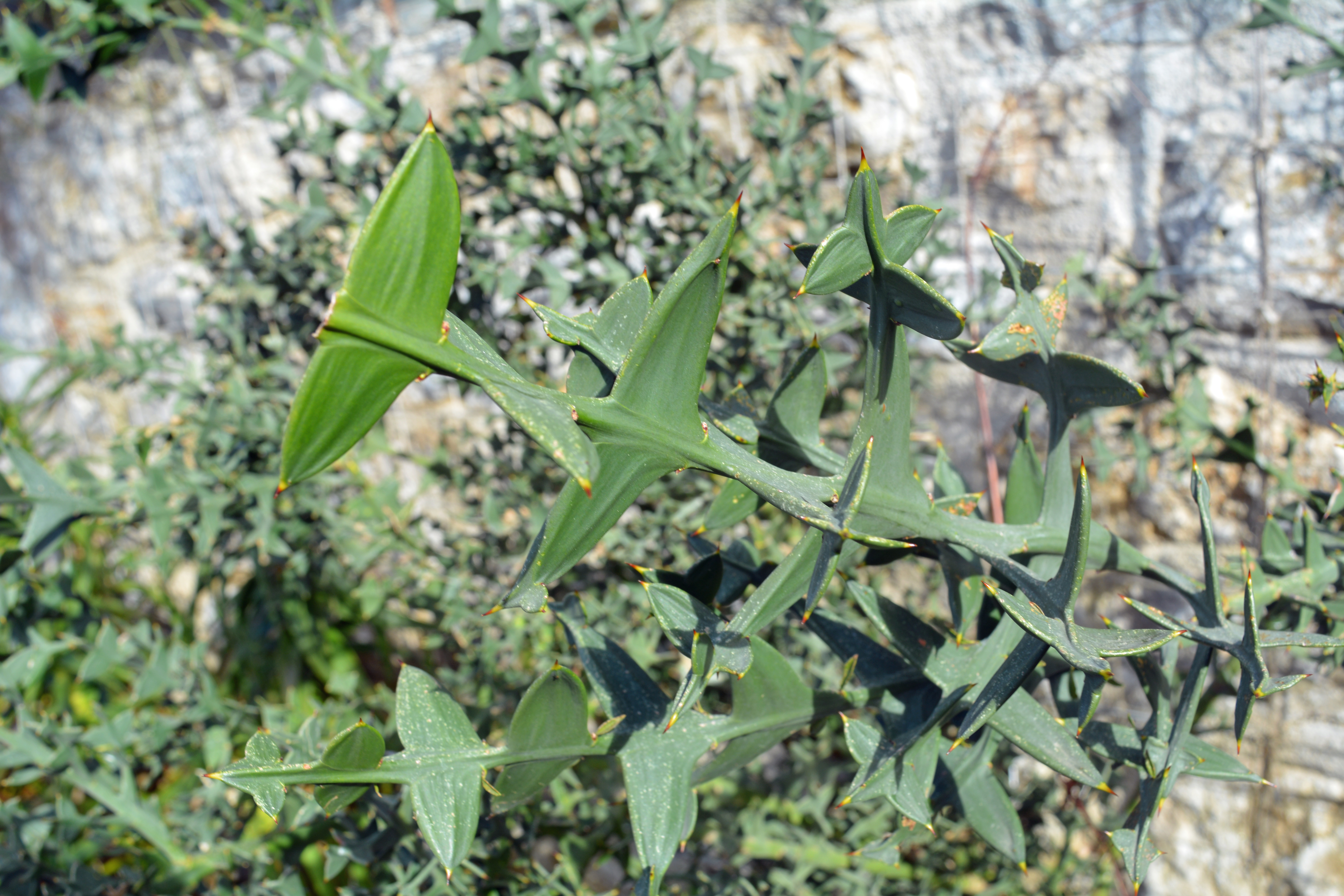
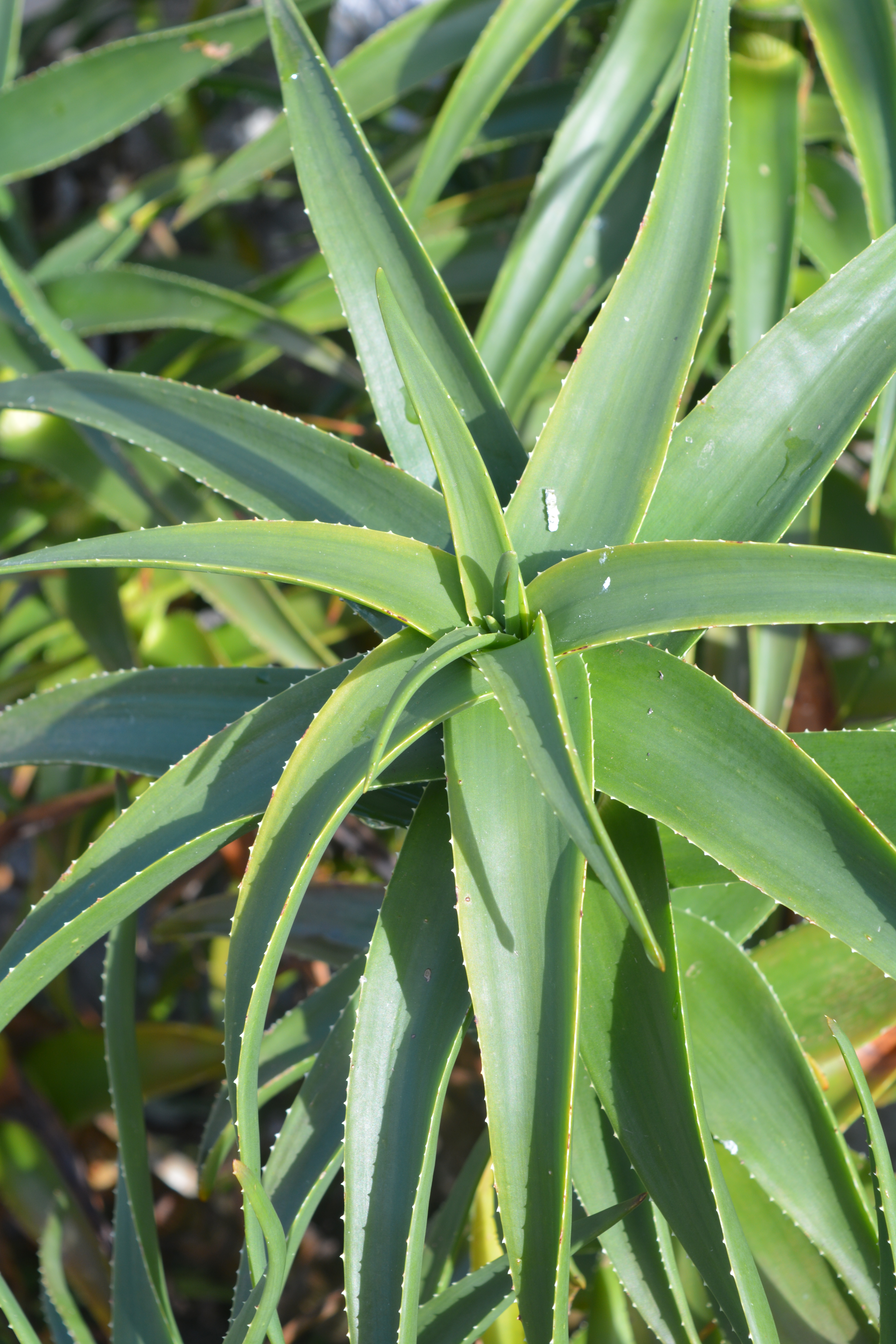
We entered the garden by following a path cut into the hillside and then down a ramp where we discovered a raised wall with the sort of planting we expected to see in the Winter Garden itself. We also passed two plants with not so friendly foliage, a Colletia paradoxa and a Yucca, both well endowed with points and sharp edges.


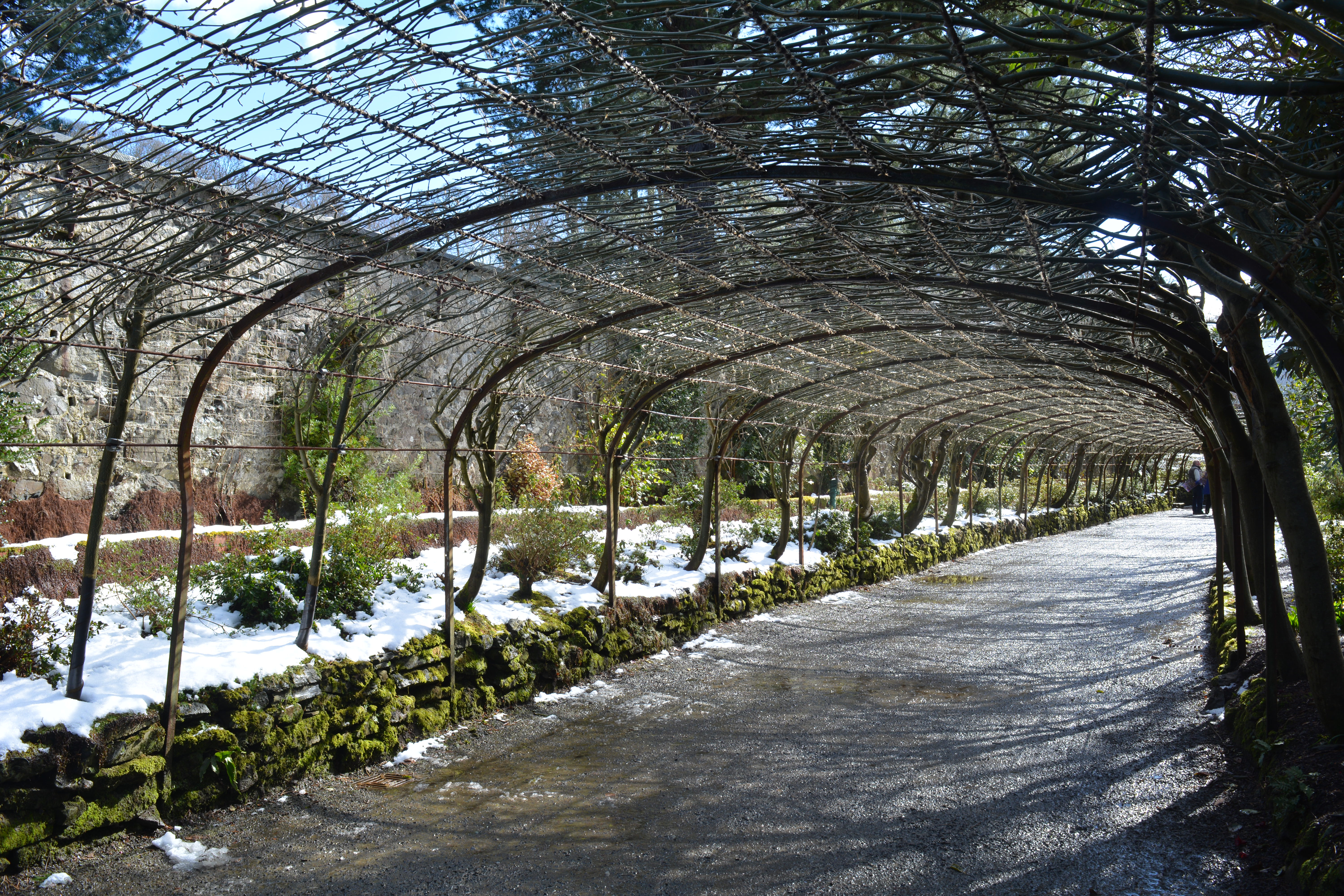
The world-famous laburnum arch looked so different at this time of year, exposing its strong structure and the shapes of each trained Laburnum tree.


As we began to follow the meandering paths which implored us to explore every part of the garden, we spotted some beautifully shaped trees and shrubs pruned to expose their lower trunks and branches, sharing their special shapes with us. Conifers sometimes create amazing shapes without the need for the gardeners’ secateurs and loppers.


The paths at Bodnant have been designed and set out to let the visitor appreciate every bit of planting from close up and from a distance to get a variety of views to appreciate. They are beautifully positioned.
           

Snow isolates flowers in such a strange way. It means we see them without foliage just their colours emerging from whiteness. We are so used to viewing flowers against a predominantly green background.
   

The beauty of the Winter Garden at Bodnant that is unique where such gardens are concerned is the way it is designed to have overall strength as a whole design but each pairing of plants and each grouping is applicable to most home gardens. Around each corner the visitor can discover an idea easily transferable to their own patch. The design is best described as accessible. Pathways ensure visitors see as much as possible and each feature planting from at least two different viewpoints. Here is a selection of pics showing these paths.


Next time we visit Bodnant Gardens will probably be in the spring when it looks very different again.


Categories
colours flowering bulbs garden design garden photography gardening gardens grasses hardy perennials irises light light quality ornamental grasses ornamental trees and shrubs roses Shrewsbury Shropshire shrubs South Shropshire spring bulbs Winter Gardening winter gardens

My Garden Journal 2018 – February

Part two of my 2018 Garden Journal sees us still freezing cold and struggling to get time in the garden.

I opened my February entries by noting, “February is the month when we feel that the quality of the light improves and makes us feel better and there are definite signs of the days lengthening. Early bulbs begin flowering and others are showing strong leaf growth.”


I next sought out another quote from Dan Pearson’s book, “Natural Selection” and was pleased to find this one, “Making room for the winter garden is every bit as important as managing a garden that draws your attention in the dark months.”


Turning over to the next double page spread I write about newly acquired plants.


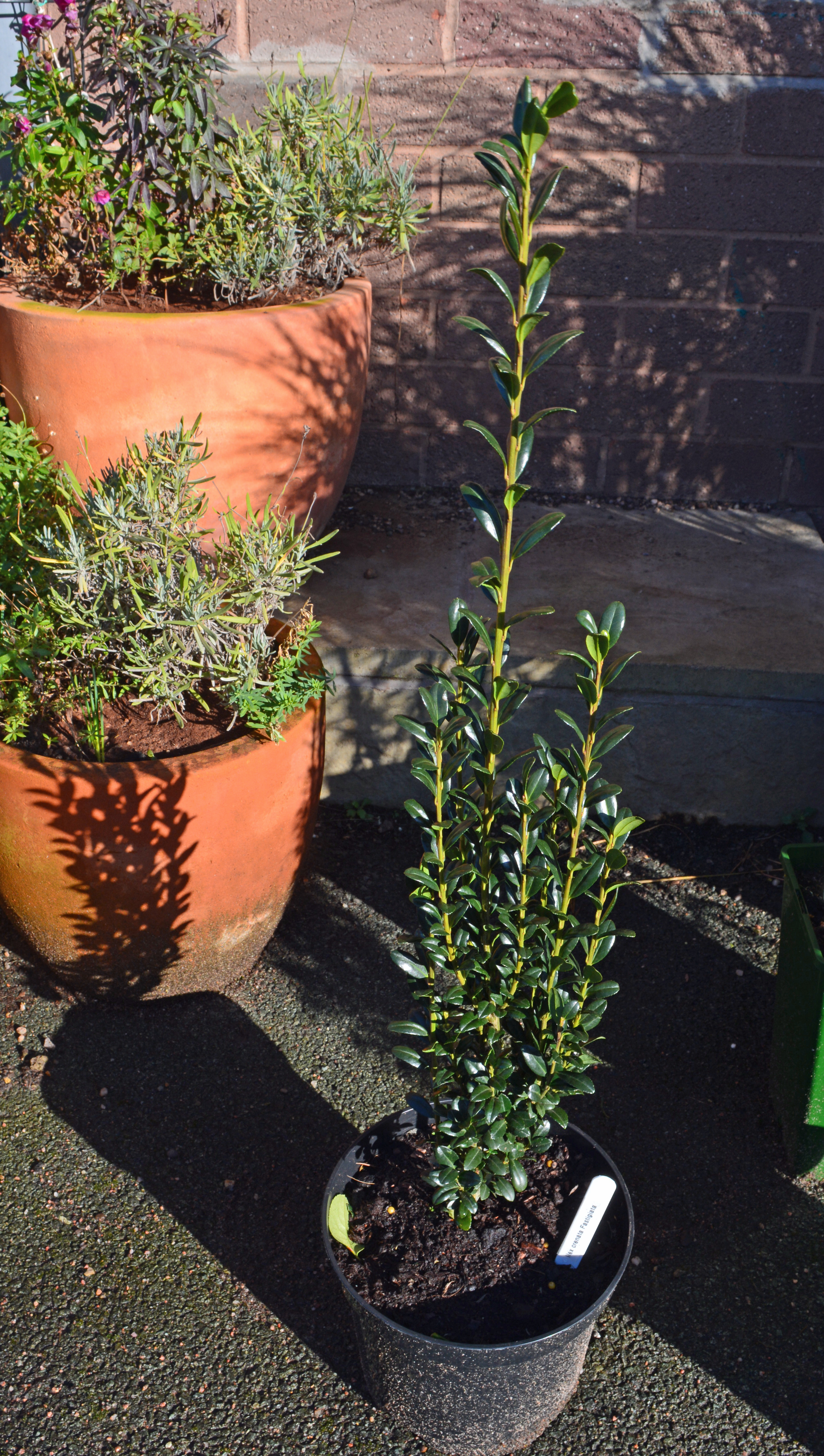
“It is always an enjoyable time planting newly acquired plants but it is an extra-special experience doing so in February. We were delighted to find good healthy specimens of two fastigiate plants, a Taxus baccata “Fastigiata Robusta” and an Ilex crenata “Fastigiata”. The only two fastigiate plants we have already established at Avocet are a Berberis and an Oak, Berberis thunbergia fastigiata atropurpurea “Helmond Pillar” , (a tall thin shrub  with a long thin name!” and Quercus palustris “Green Pillar” which despite its name is grown for its deep red autumn colour.”


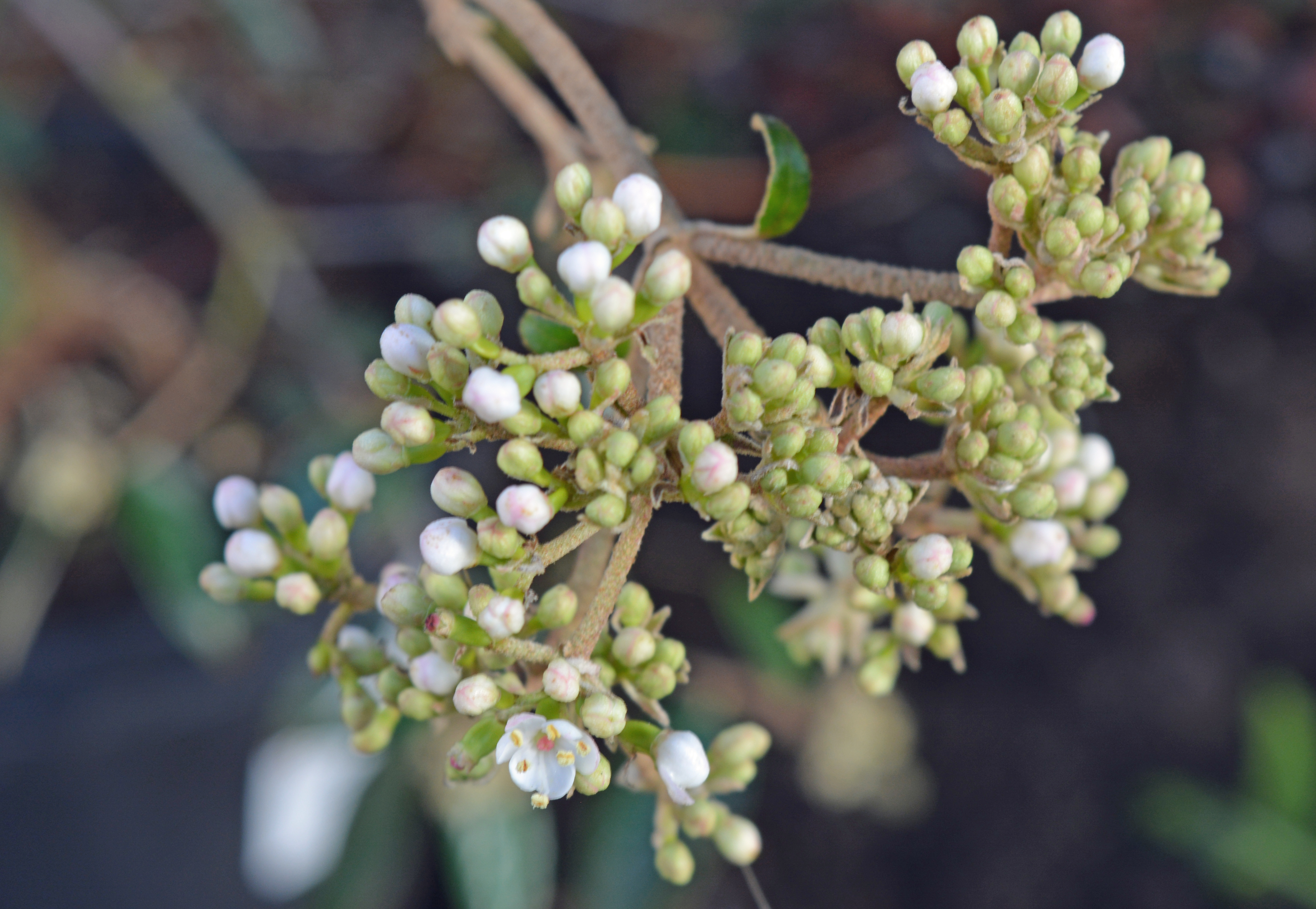
We also recently planted a Viburnum with a very different growth habit to our fastigiate purchases. It is a low growing shrub with a very open, airy growth and sweetly scented flowers in April. It is also described as “almost evergreen”, so we will wait and see exactly how ours behaves. We already have a good collection of Viburnums around our Avocet patch.”


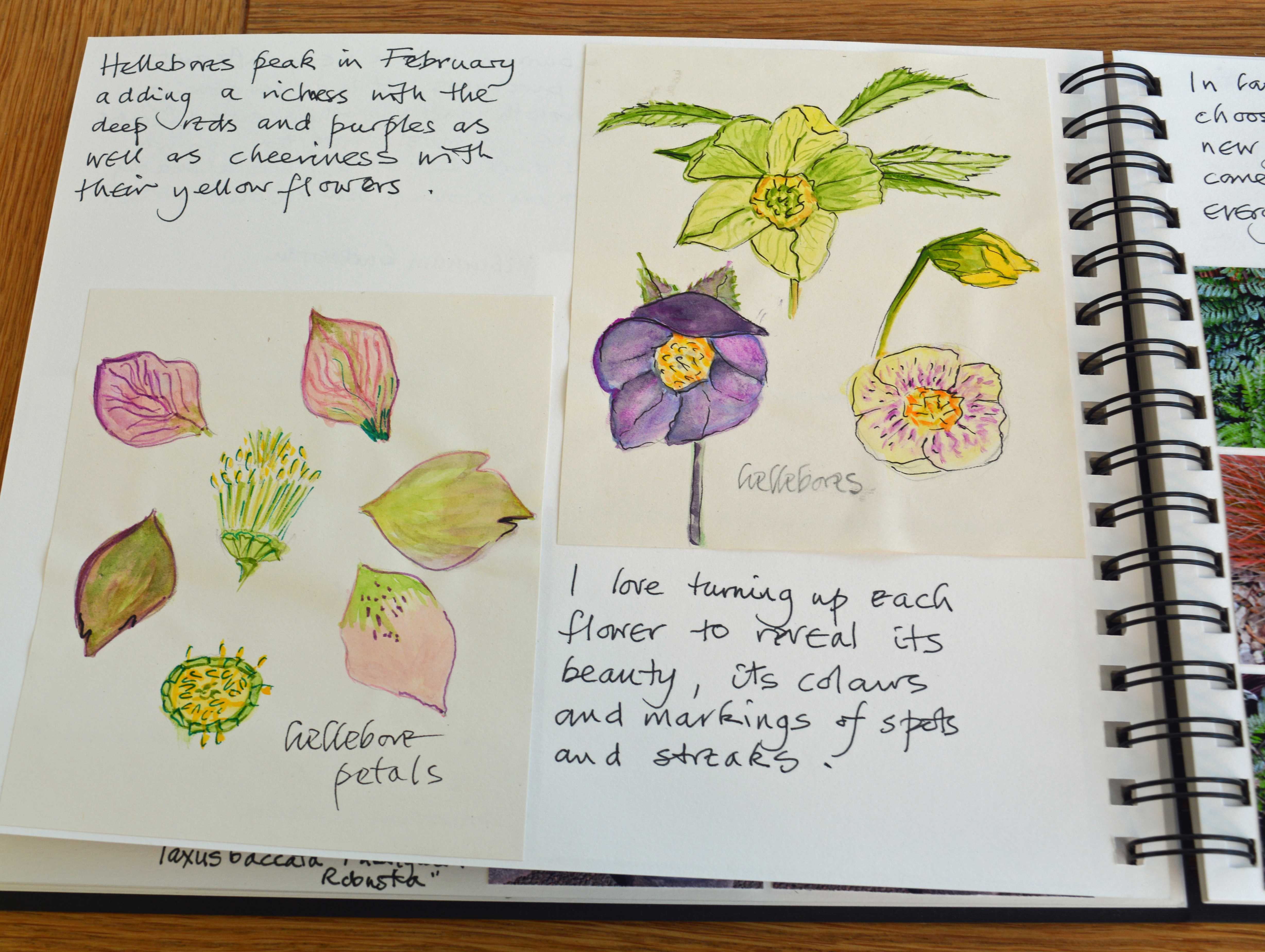
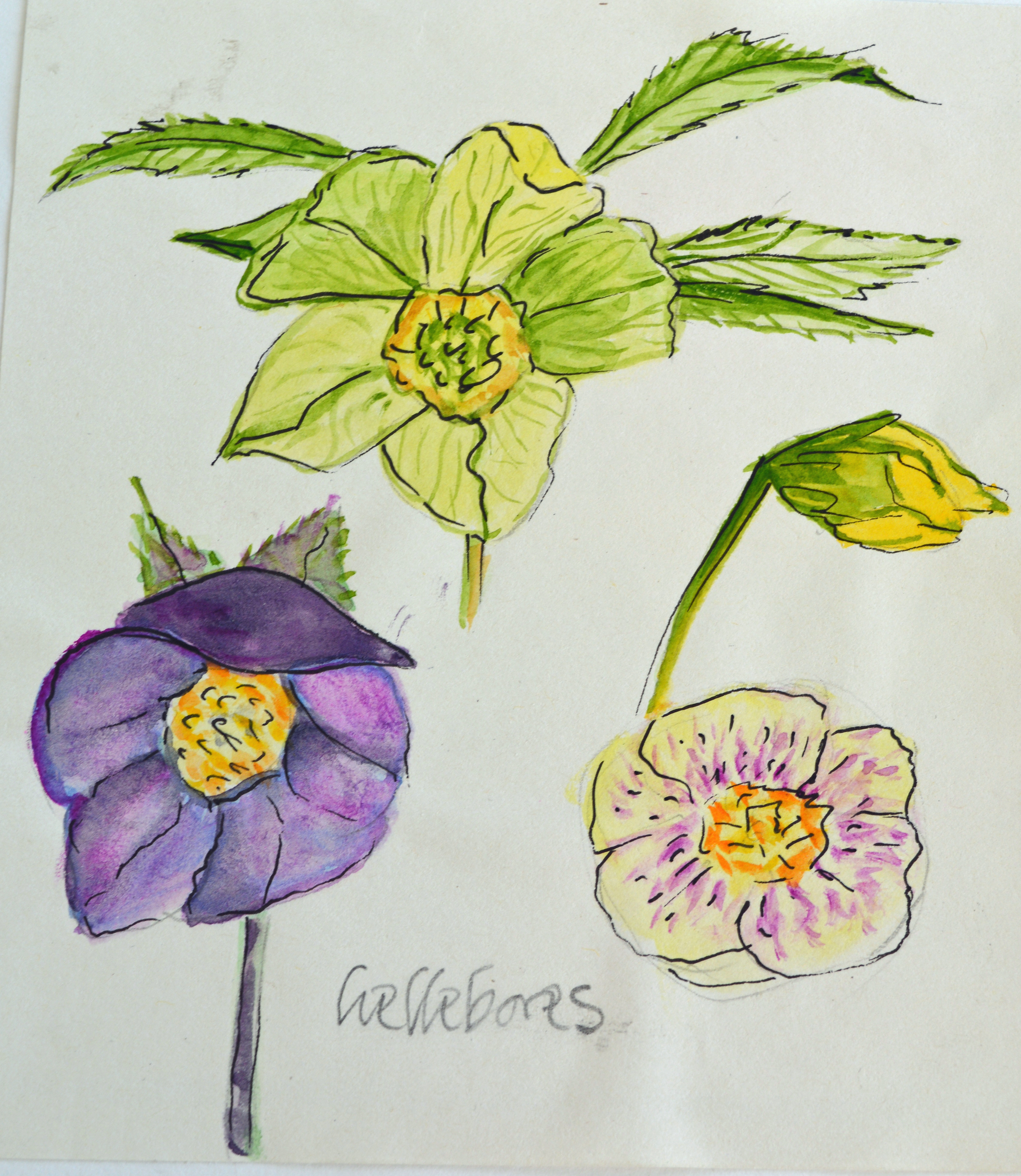
Some of my watercolour sketches of Hellebores and details of their petals feature on the next page.


“Hellebores peak in February adding a richness with the deep reds and purples as well as cheeriness with their yellow flowers.”

“I love turning up each flower to reveal its beauty, its colours and markings of spots and streaks.”


On the opposite page I looked at some of our grasses with winter interest and share some photos of them.

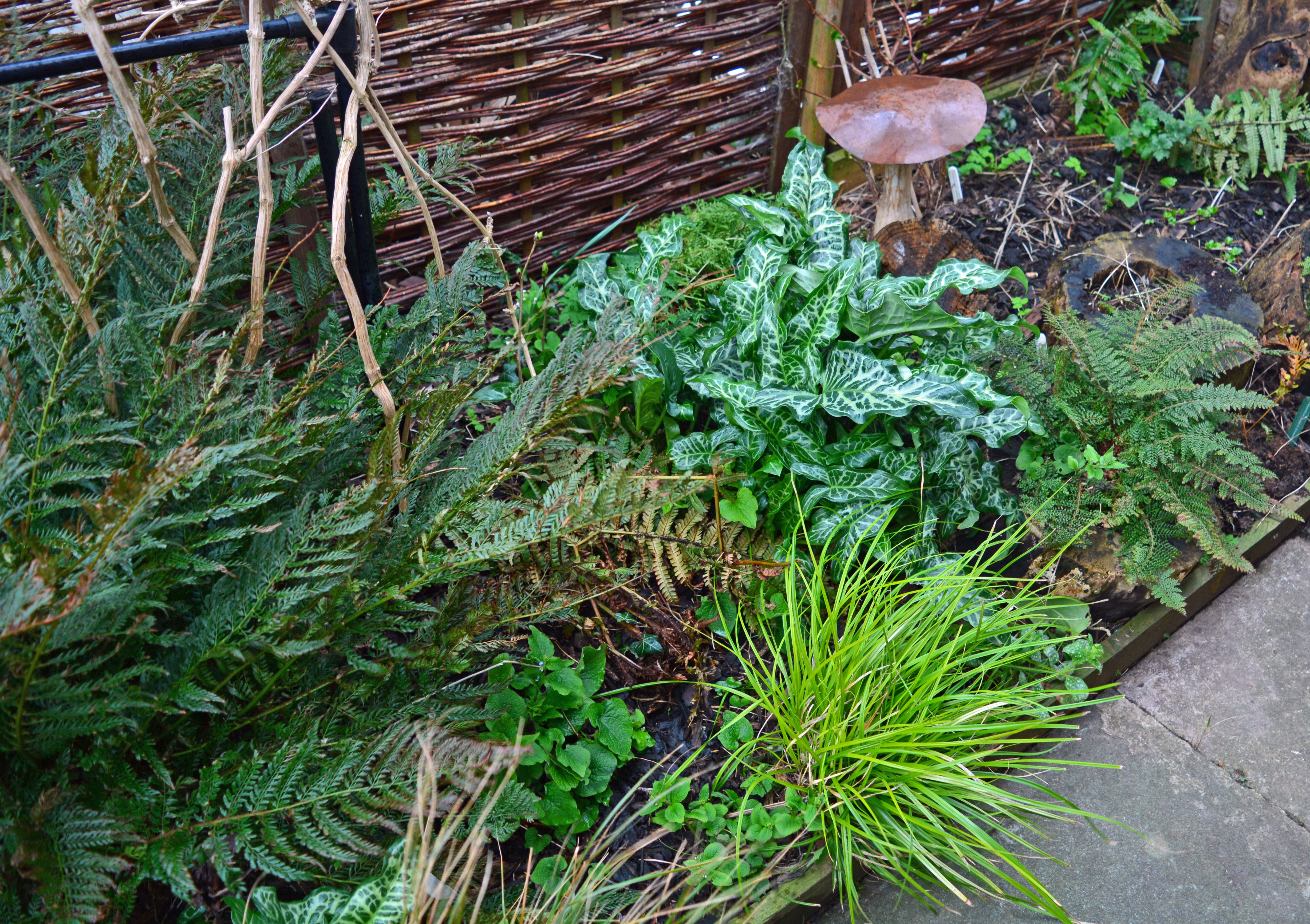
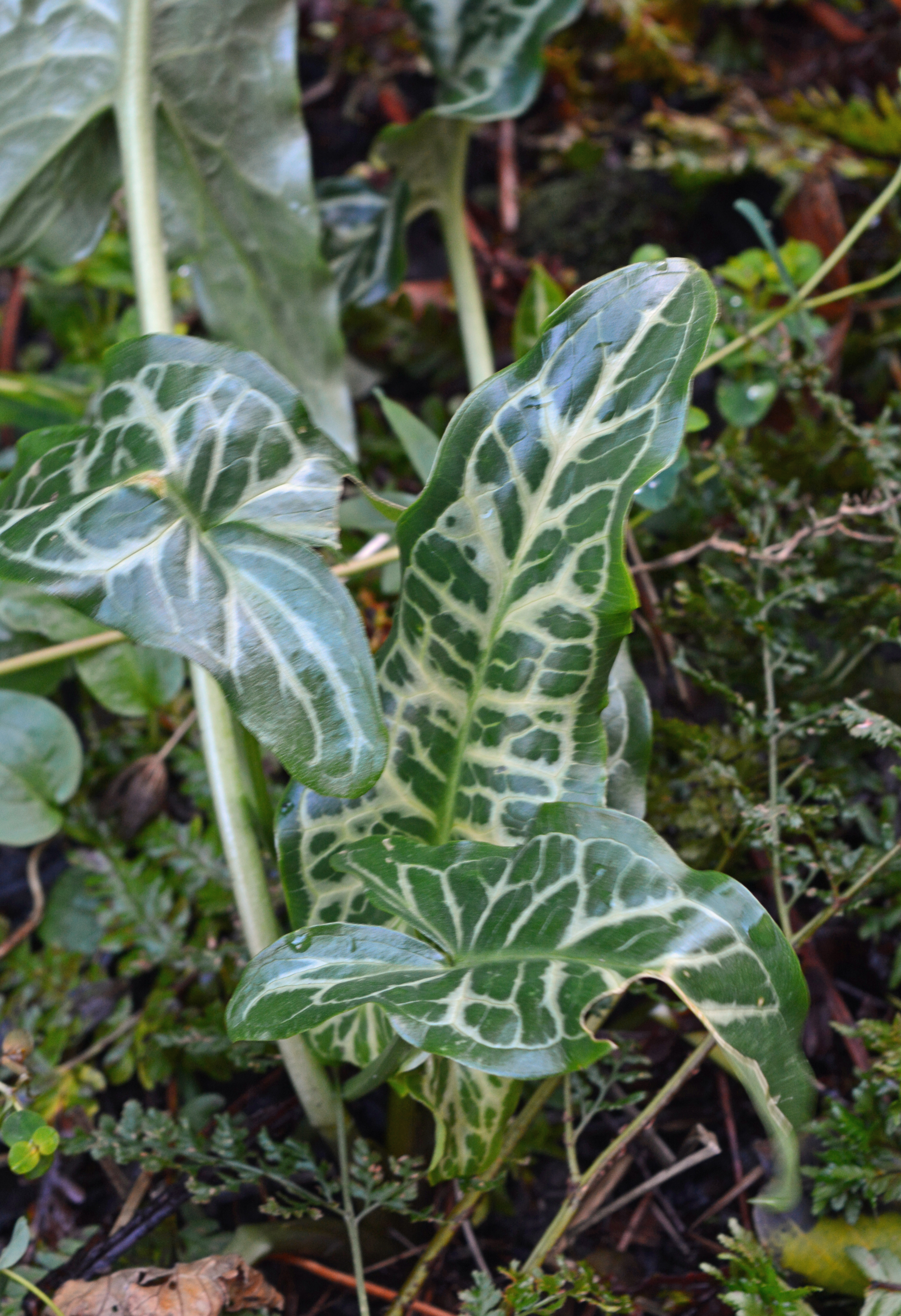
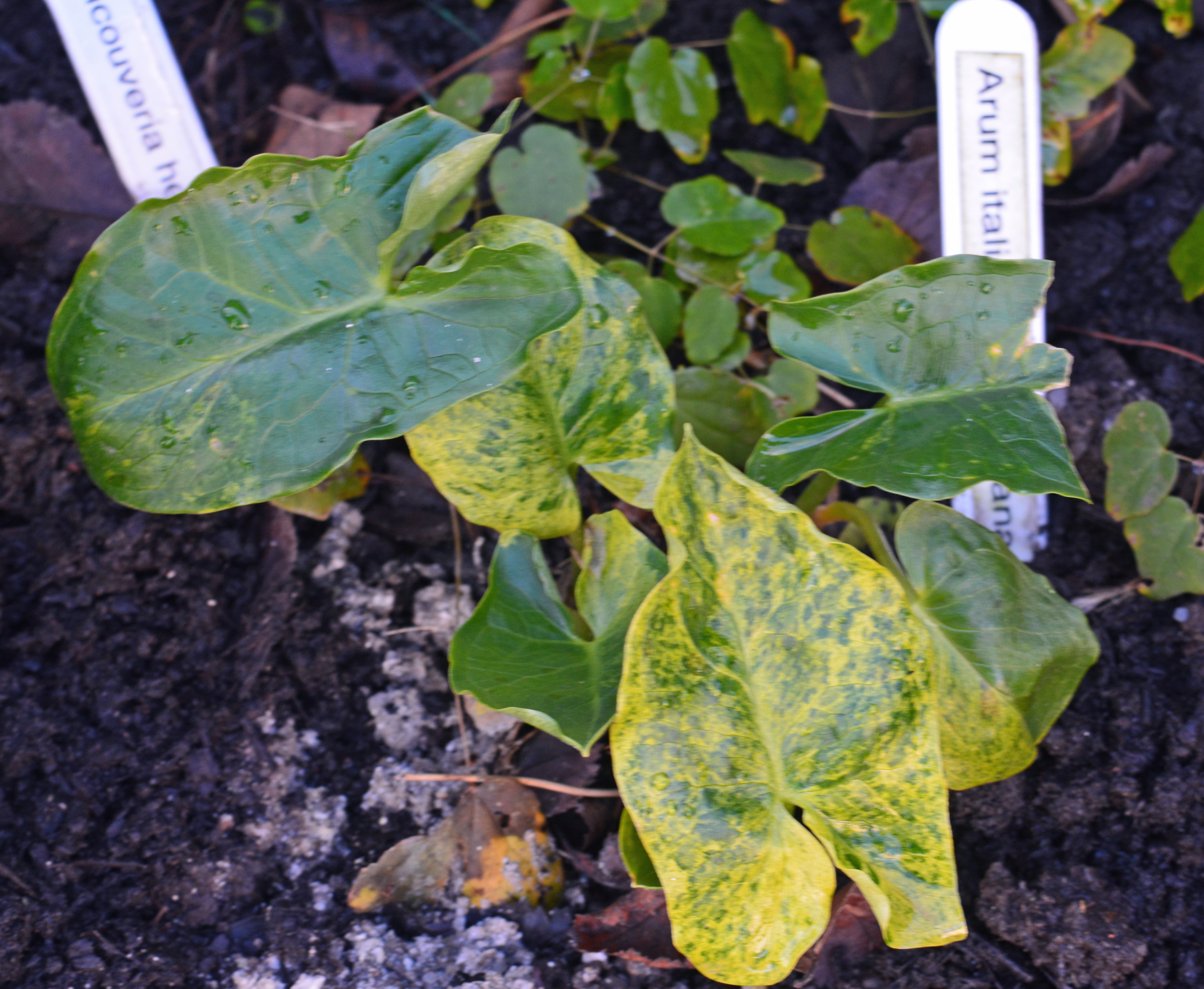
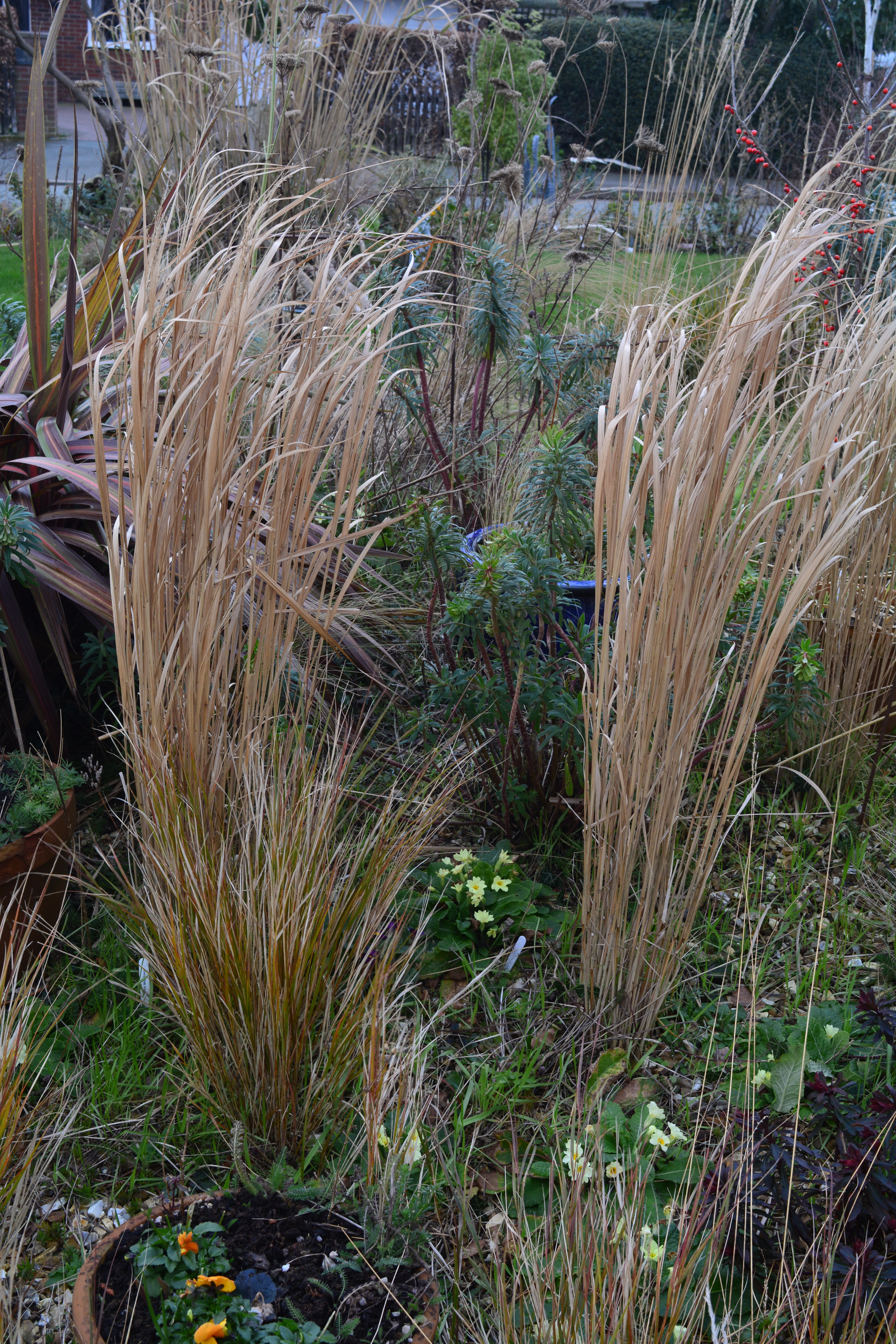
“In late February we begin to cut down “deciduous” grasses, choosing the right time to avoid cutting through this year’s new growth. Evergreen grasses especially varieties of Carex  come into their own especially when partnered with evergreen foliage plants such as ferns, bergenias and arums.”


Moving on to the final double page spread for February, I considered coloured stemmed Dogwoods and a look at roses as they give their final points of interest before they are pruned and begin to grow anew for this year.

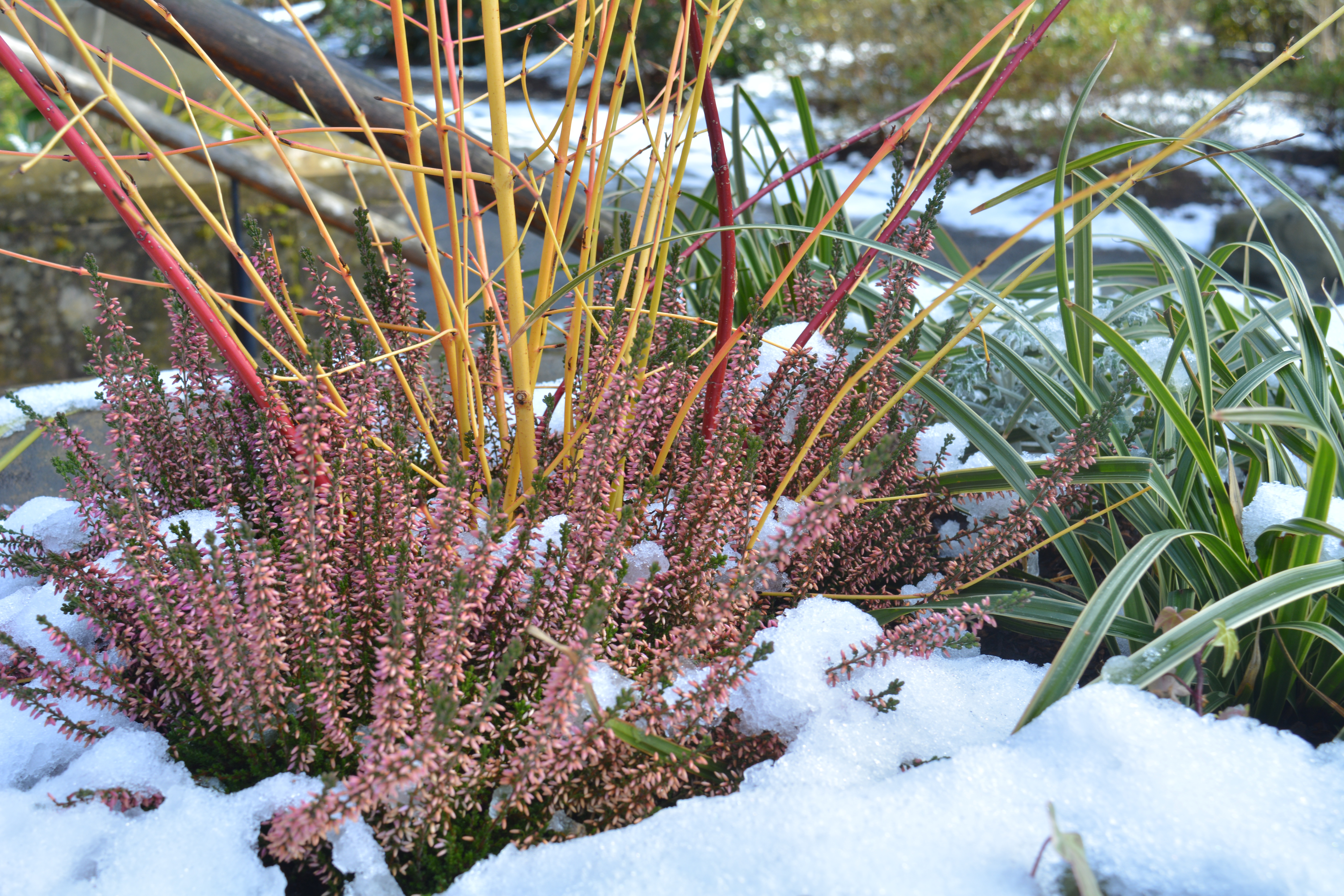
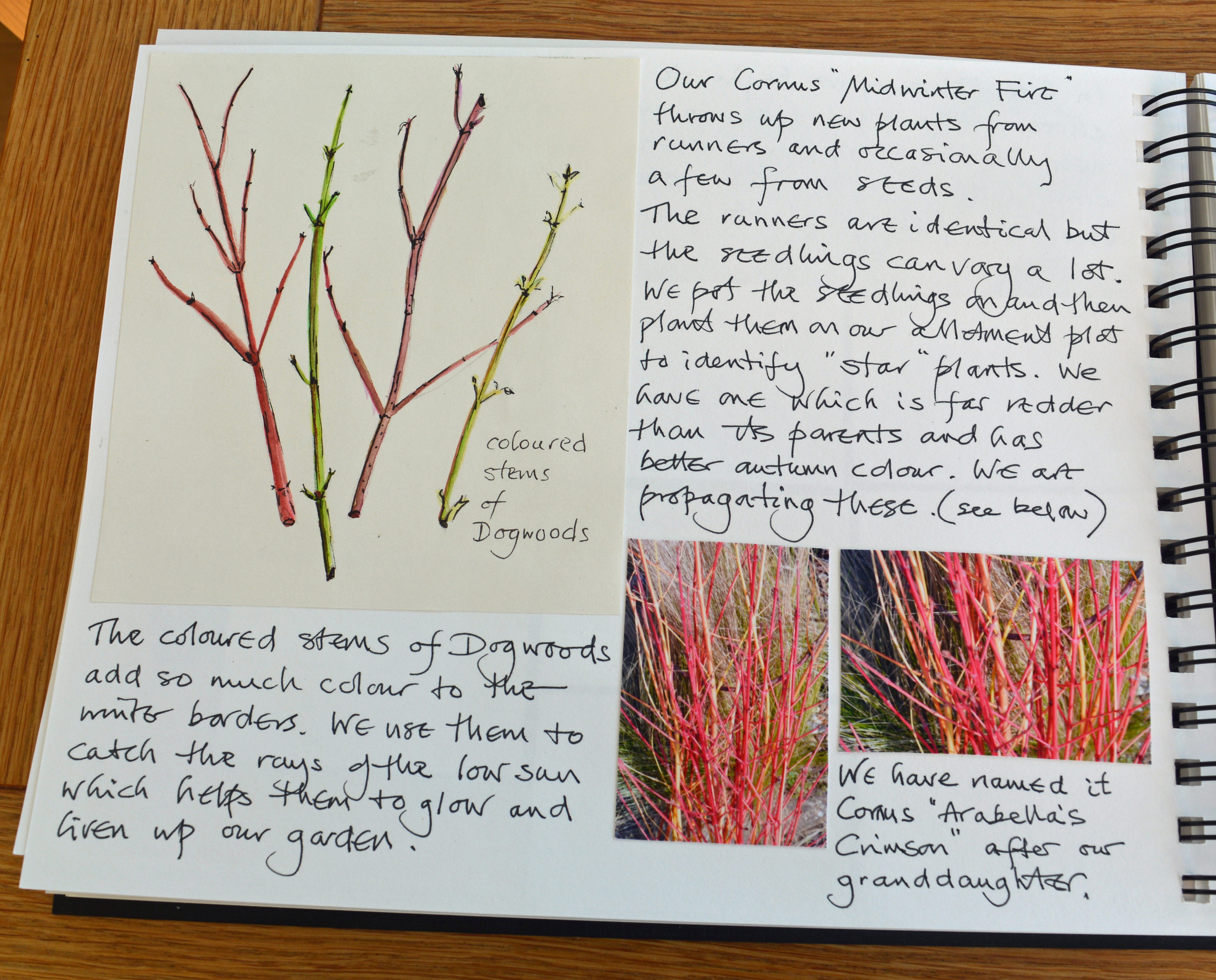
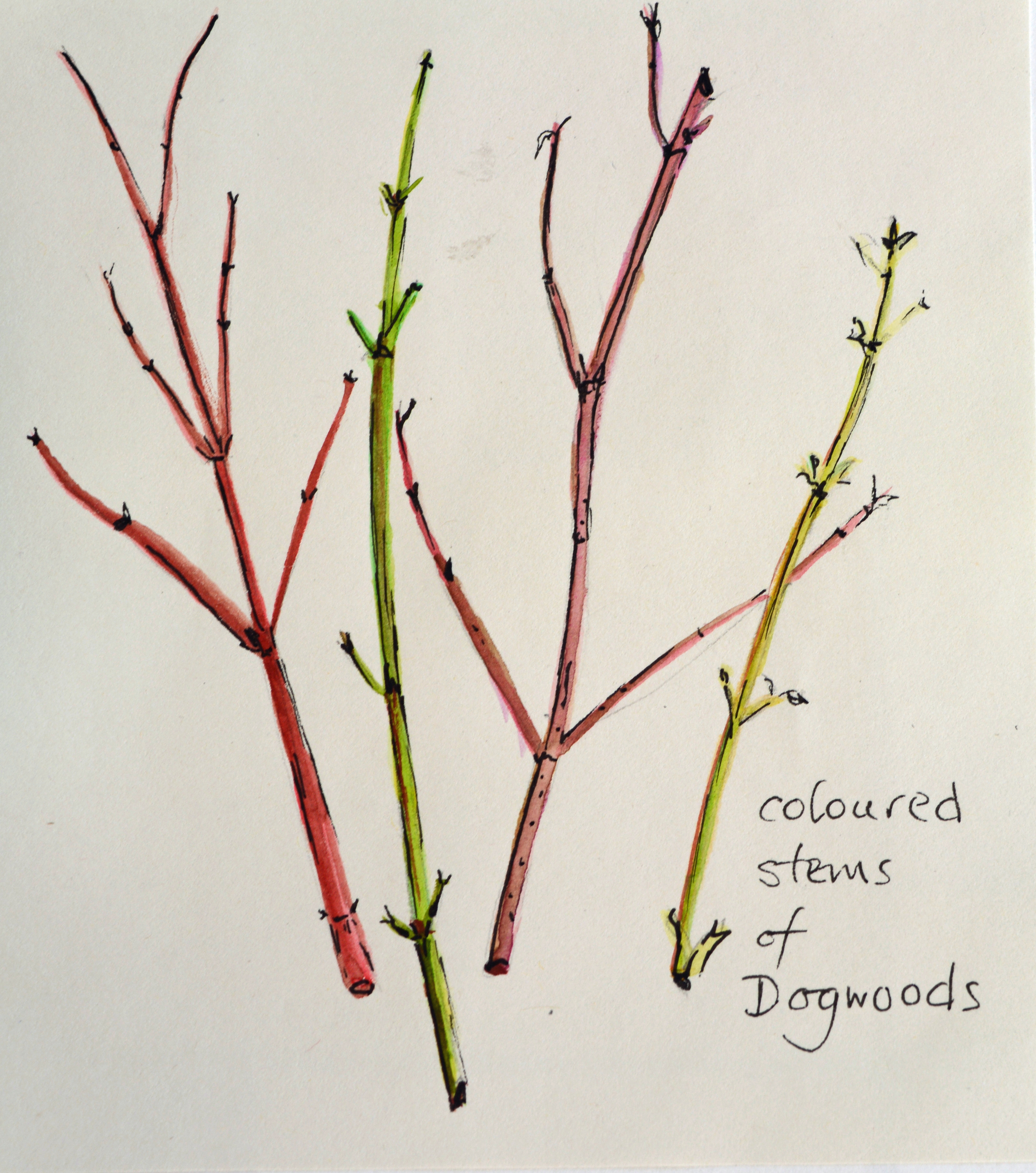
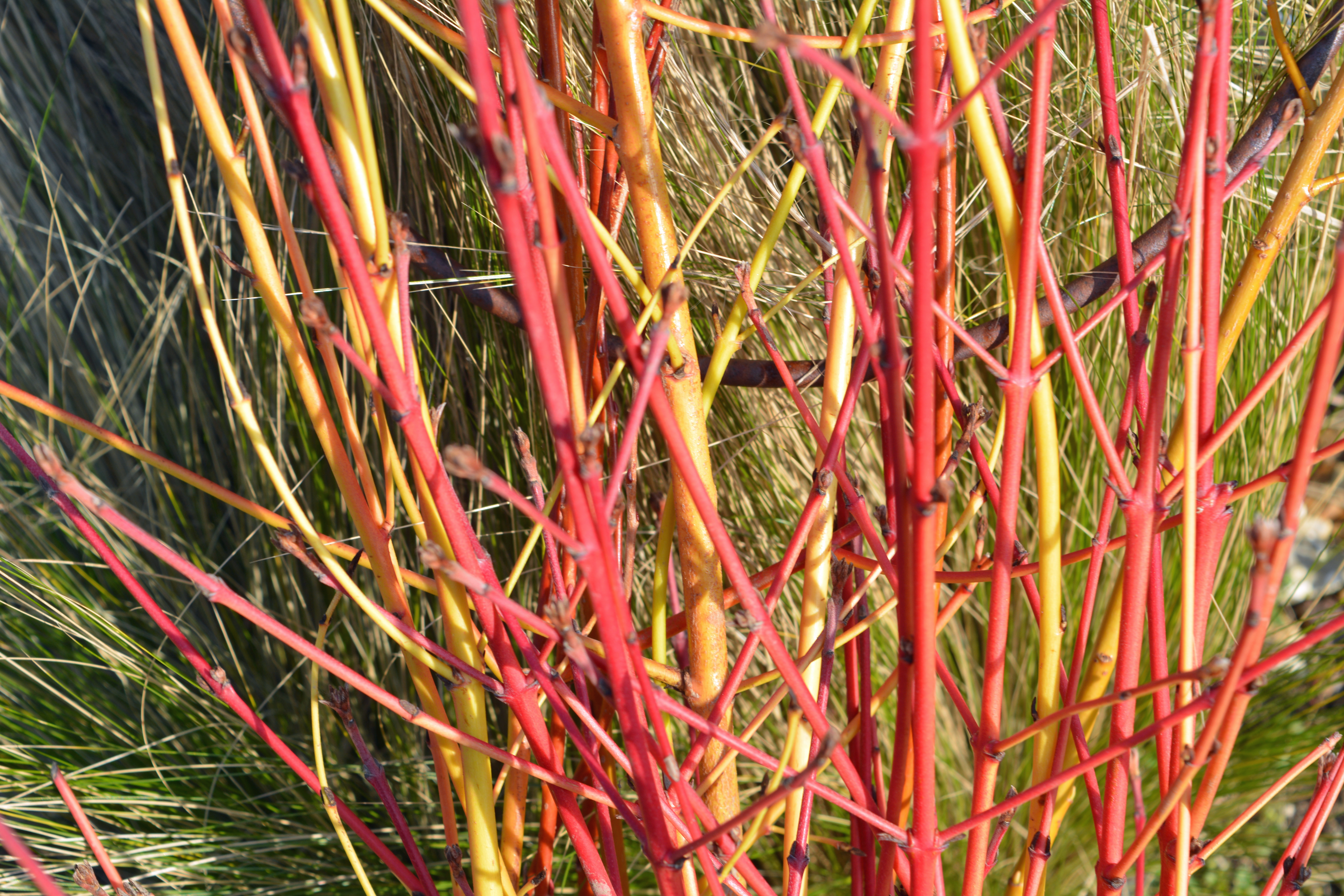
“The coloured stems of Dogwoods add so much colour to the winter borders. We use them to catch the rays of the low sun which helps them to glow and liven up our garden.”


I finished off my February journal entries by featuring roses and a very special plant, special because it is a dogwood that occurred in our garden as a chance seedling of Midwinter Fire crossed with one of our other Cornus plants. We have grown it on and now take lots of cuttings hoping to bulk it up. We hope to be able then to sell them at our open days. Very exciting!

I wrote, “Our Cornus Midwinter Fire throws up new plants from runners and occasionally a few from seed. The runners are identical to the parent plant but the seedlings can vary a lot. We pot the seedlings on and then plant them out on our allotment plot to allow us to identify “star plants”. We have one which is far redder than its parents and has better autumn colour. We are propagating these (see below). We have named it Cornus “Arabella’s Crimson” after our granddaughter.”

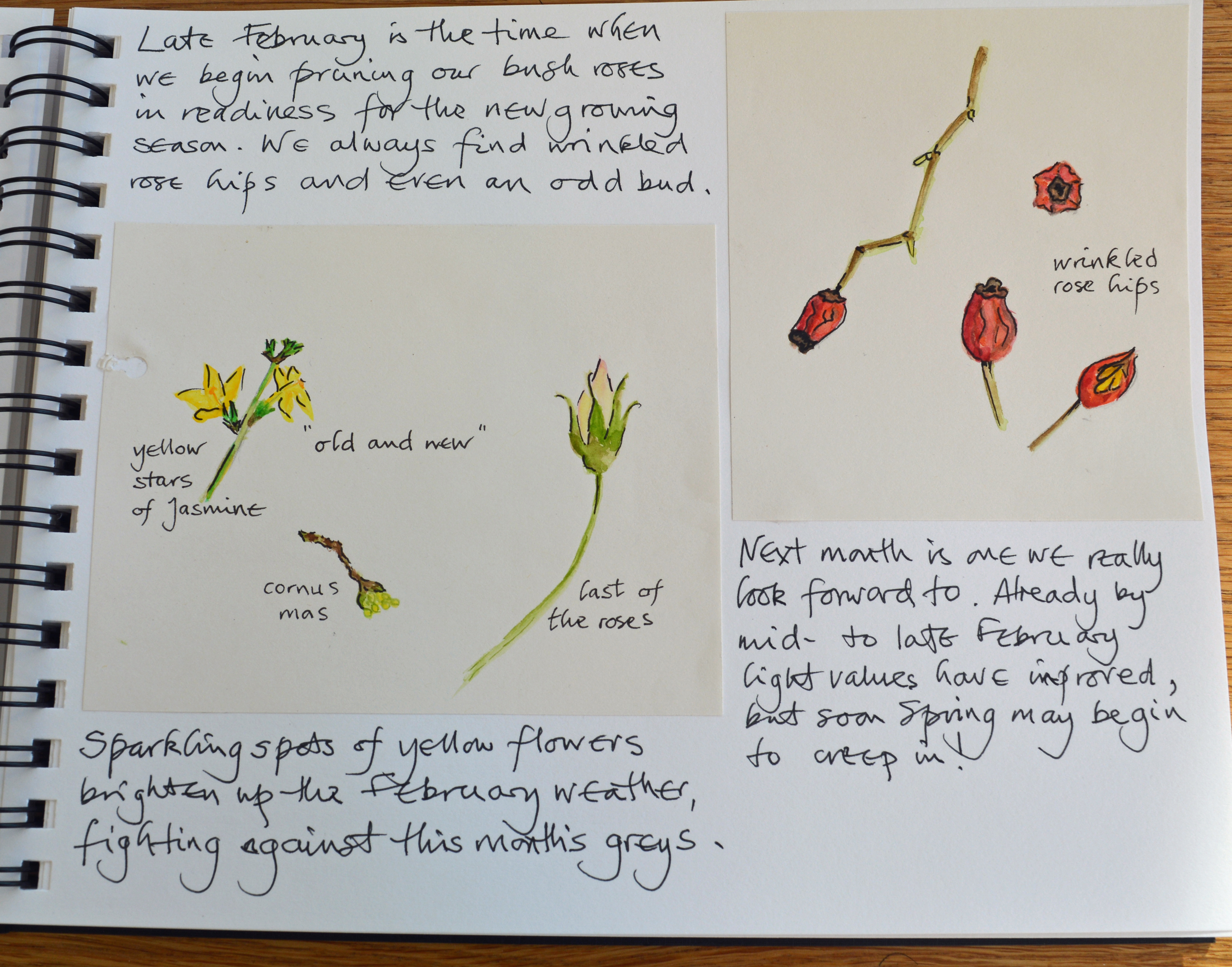
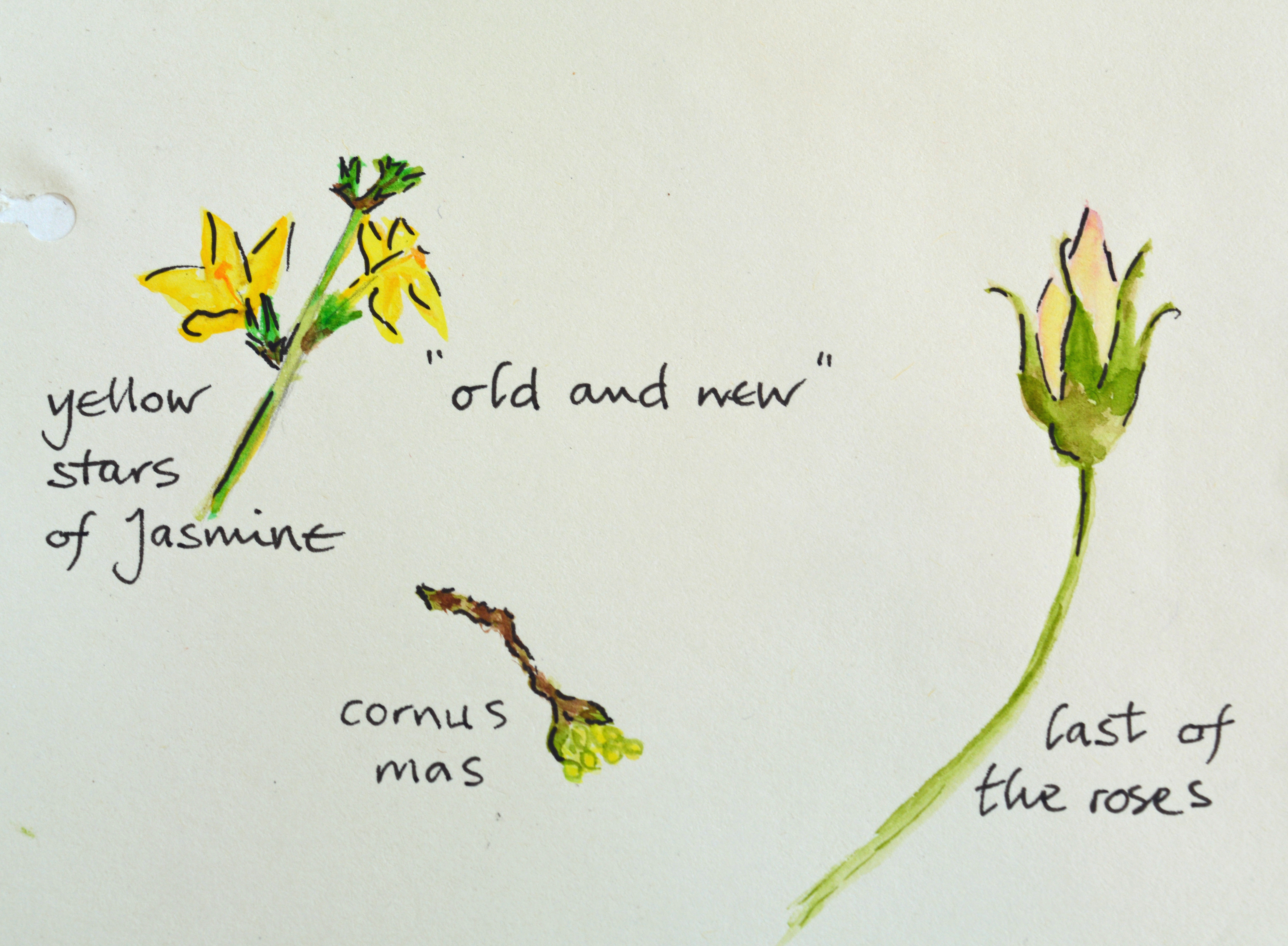
My final page is about roses and yellow flowers of the February garden. The yellow flowers are Jasminum nudiflorum, Cornus mas and a pale yellow rose bud. I wrote “Sparkling spots of yellow flowers brighten up the February weather, fighting against this month’s greys.”

“Late February is the time when we begin  pruning our bush roses in readiness for the new growing season. We always find wrinkled rose hips and even the odd flower bud.


“Next month is one we really look forward to. Already by mid-February light values have improved, but soon Spring may begin to creep in!”


Categories
garden design garden photography gardening gardens gardens open to the public grasses hardy perennials meadows ornamental grasses ornamental trees and shrubs RHS Yorkshire

Two RHS Gardens – Part 2 Harlow Carr

To visit the second of the RHS gardens we visited during 2017 we had to travel north up to Yorkshire and we stayed near Harrogate, a beautiful spa town. This is the RHS garden we probably visit the most as it is our favourite and we love the area it is situated in. We chose to go up in late summer. We particularly enjoy the Winter Garden and the new perennial gardens and as we had already visited to see the Winter Garden so we needed to see the perennials borders too.

The RHS are excellent at giving a warm welcome to its visitors and we certainly felt that at their most northerly garden, beautiful planters, great breakfast at the famous “Betty’s Tearooms” and cheerful plants as we entered the main gardens, including bright, cheerful meadow planting.

A recent children’s competition involving creating miniature gardens in old boots provided some entertainment at the bottom of the main steps into the garden.

Next we will share moments we enjoyed as we made our way towards the educational centre with its new buildings, glasshouse and plantings.

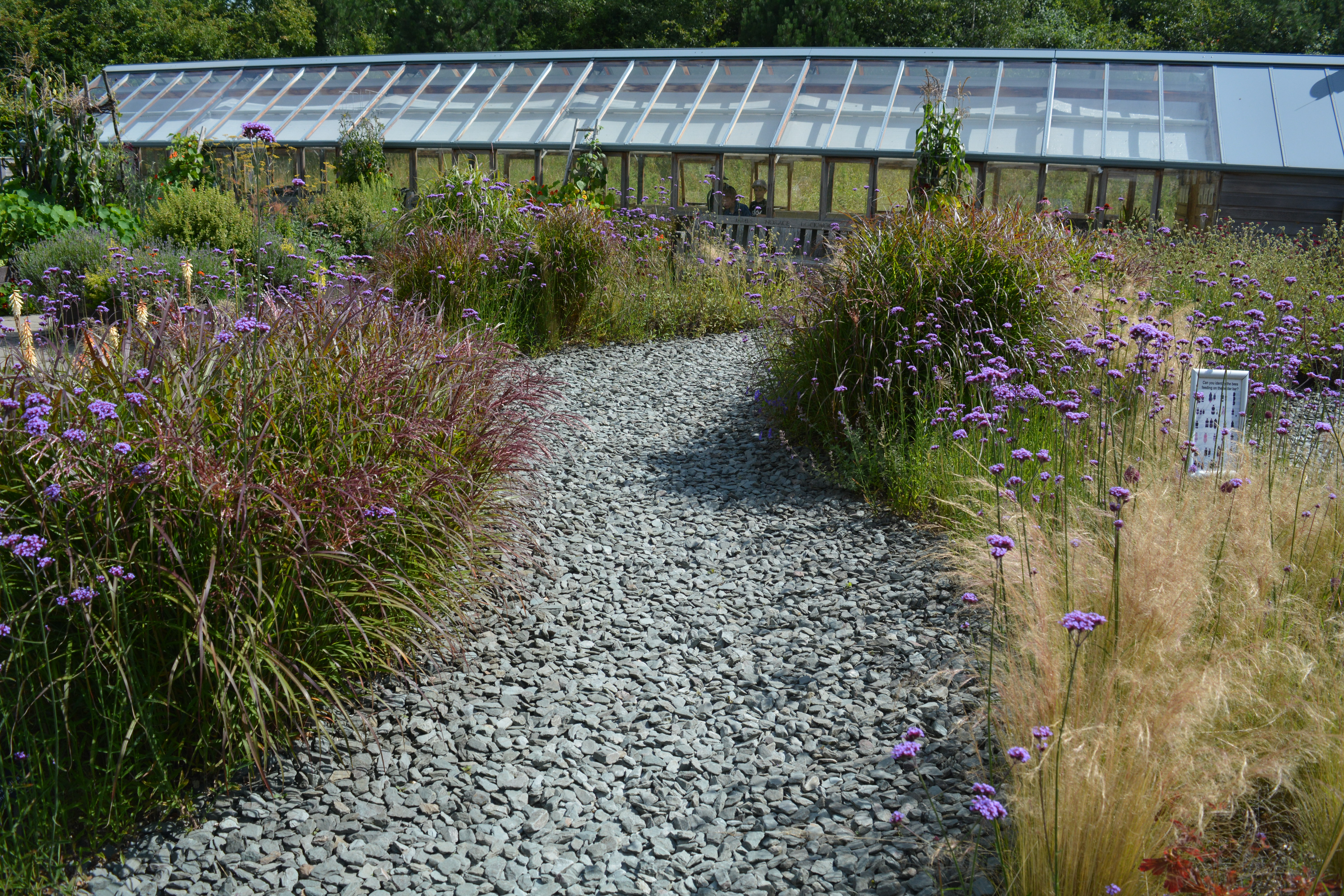
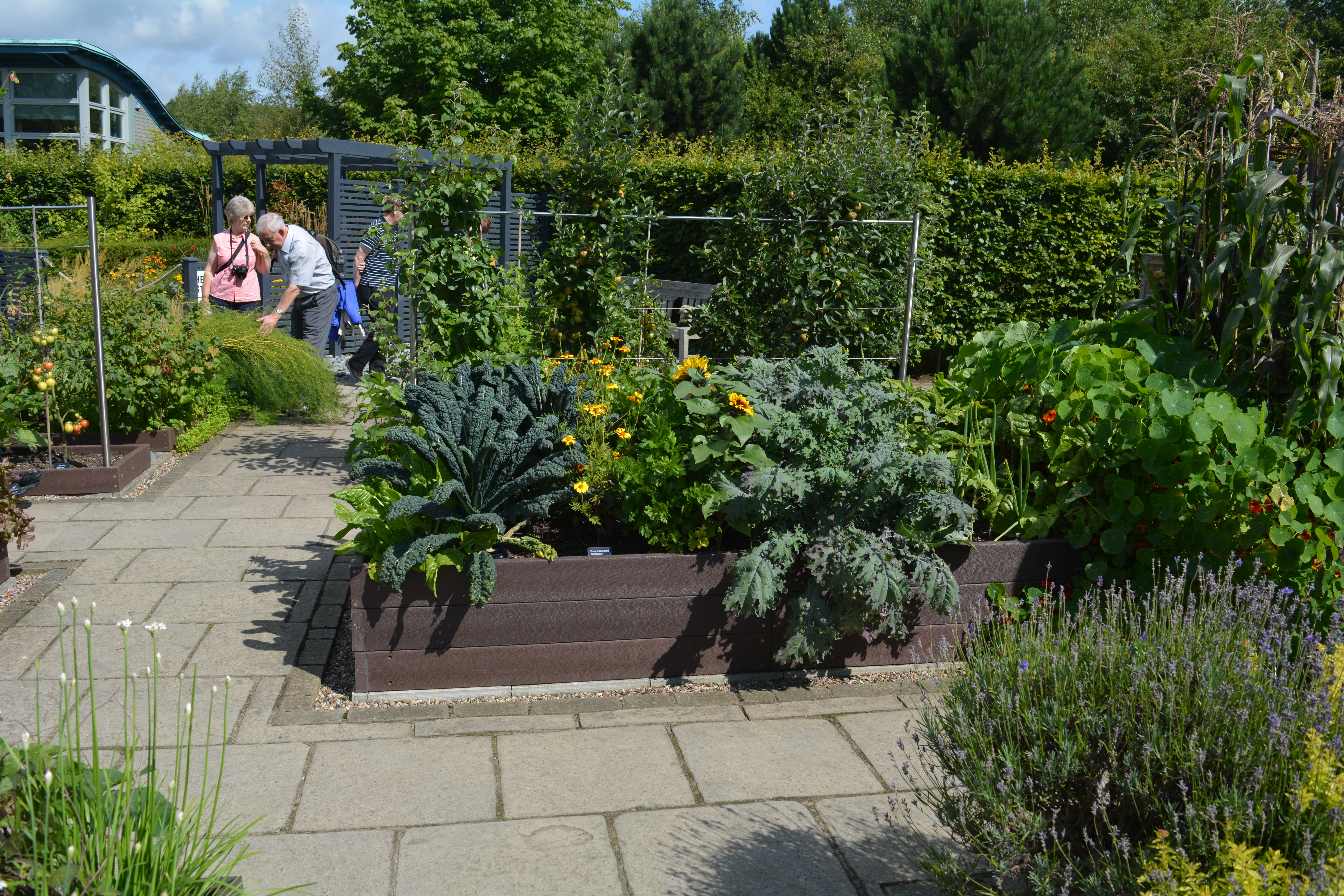
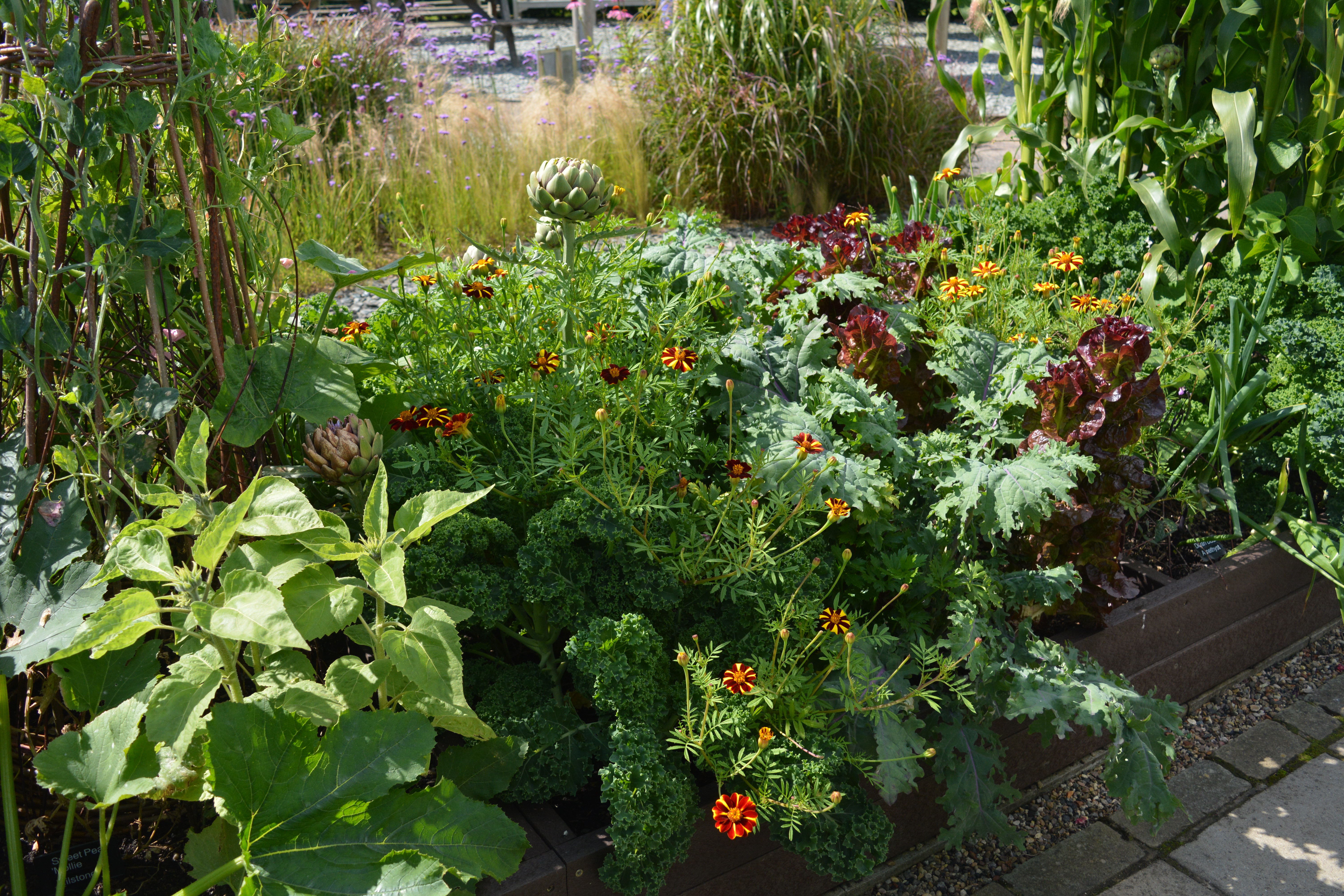
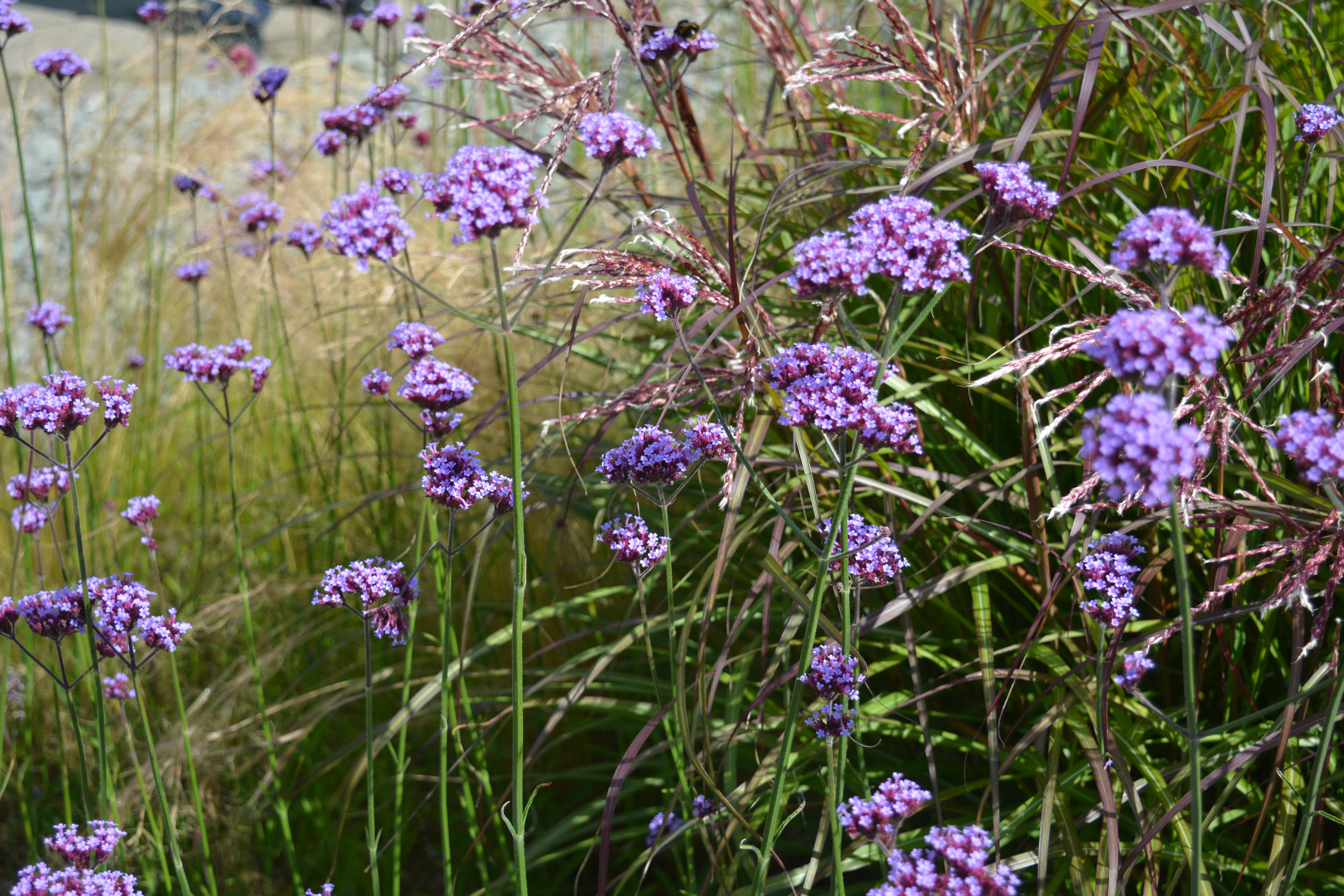
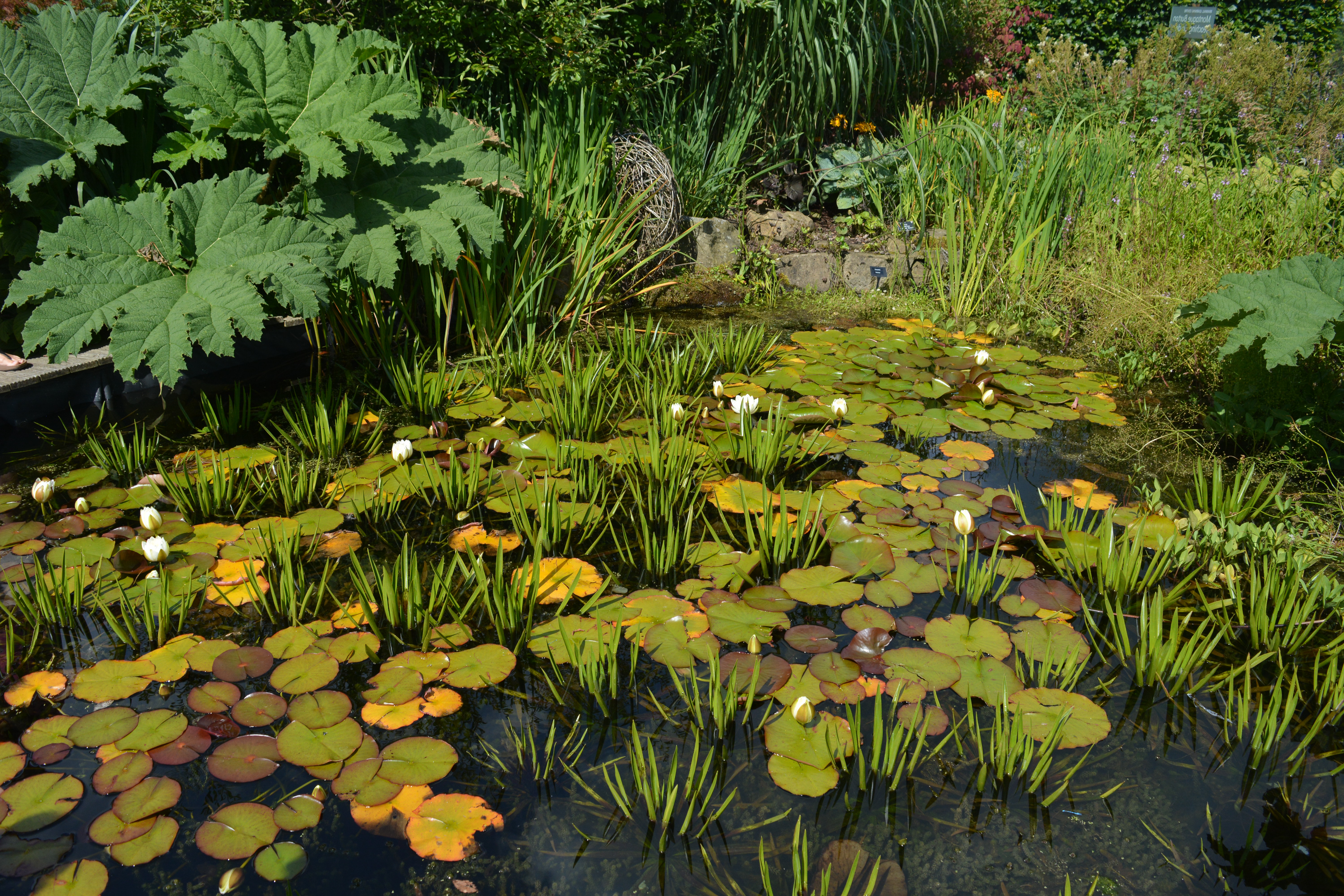
The gardens around the education centre provide a fine example of contemporary plant choice and plant combinations, starring grasses and tall airy perennials, growing beautifully among gravel, a wildlife pond and a contemporary styled vegetable garden alongside. Even the seating has been carefully chosen to look just right. Nothing has been left to chance!


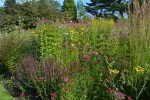
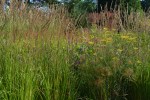
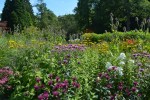
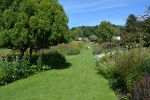
As mentioned at the beginning of this post we were looking forward in particular to wandering around the borders of “new perennial planting” especially as we were visiting when it should be its prime time. So please enjoy this wander with us by following the gallery. Click on the first picture then navigate with the arrows.


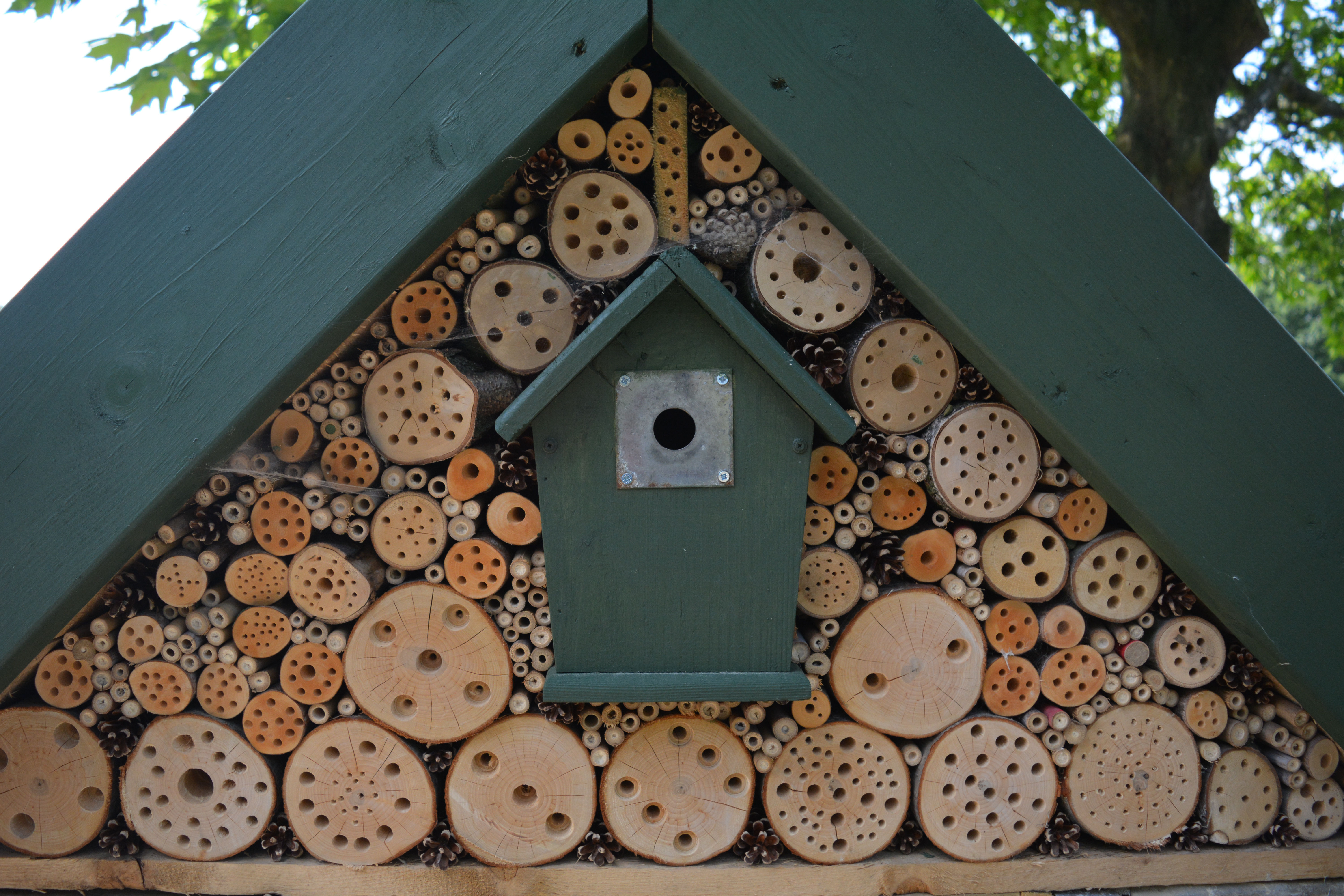
When we were finishing our visit to this wonderful RHS garden we made our way back for a final coffee before finding our car and returning to our hotel, and noticed a large and very beautiful insect hotel alongside the path. It was an heartening end to our exploration.

This Veggie Life

A Vegetarian | Nature Lifestyle Blog

Rambling in the Garden

.....and nurturing my soul

The Arch City Gardener

Journeys In St. Louis Gardening and Beyond

Garden Dreaming at Châtillon

Consult the genius of the place

Storyshucker

A blog full of humorous and poignant observations.

gardeninacity

Notes from a wildlife-friendly cottage garden

PlayGroundology

...an emerging social science

The Official Blog of British Wildlife

'The most important and informative publication on wildlife of our times' - The Independent. This blog is a member of The UK & Ireland Natural History Bloggers group: www.uknhb.blogspot.com

iGrowHort

Inspire - Cultivate - Grow Native Plants - Restore Landscapes

Bishops Meadow Trust

To create and protect a semi-natural wild space for the people of Farnham to enjoy and experience an array of British wildlife in our town

Gardening with Children

The www.gardeningwithchildren.co.uk Blog

UKbirdingtimeline

birding through the seasons, why birds matter and how to conserve them

NATURE WALKER

with a camera in hand

Jardin

Transform your outdoor space

Eva's space

My allotment, cooking and other interests

Old School Garden

my gardening life through the year

LEANNE COLE

Trying to live a creative life

fromacountrycottage

trying to live as lightly as possible on our beautiful planet

Good Life Gardening

Nature lovers from Leicester living the good life.

mybeautfulthings

Finding the beautiful in the everyday

mawsonmichelle

Michelle's Allotment

In and Out of My Garden

thoughts from and about my garden

Greenhousing

Big plans for a small garden

The Scottish Country Garden

A Walled Country Garden in South East Scotland

The Fruity Chicken

Life at the fruity chicken

willowarchway

Off grid living. Self sufficient. "PERMAGANICS RULE".

St Anns Allotments

Nottingham's Grade 2* Listed Allotments and Community Orchard

Manifest Joy Harvests

a journey in suburban vegetable gardening

Allotmental

The madness of growing your own

Penny's Garden: a harvest beyond my front door

A novel approach to vegetable gardening

arignagardener

Sustainable living in the Irish countryside.

NewEnglandGardenAndThread

Master Gardener, amateur photographer, quilter, NH native, and sometimes SC snowbird

dianajhale

Recent work and work in progress and anything else that interests me

planthoarder

a chaotic cottage gardener

Lens and Pens by Sally

a weekly blog that creates a personal philosophy through photographs and words

Dewdrops and Sunshine

Stories from a sassy and classy Southern farmbelle.

The Pyjama Gardener

Simple Organic Gardening & Seasonal Living

gettin' fresh!

turning dirt into dinner

JOY...

today the world is created anew

Garden Birds

Notes from a Devon garden

ShootAbout

Life Through The Lens

Adapting Pixels

A photography blog showcasing the best photography pictures and videos on the internet

Wildlifegardening's Blog

Just another WordPress.com site

naturestimeline

personal observations from the natural world as the search continues for a new approach to conservation.

LATEBLOOMERBUDS

The Wonders of Life through my Eyes, my Heart, my Soul