Categories
colours flowering bulbs fruit and veg garden design garden photography garden wildlife gardening grasses hardy perennials Land Art ornamental grasses ornamental trees and shrubs outdoor sculpture photography Shropshire shrubs spring bulbs spring gardening wildlife

A Bouquet for April

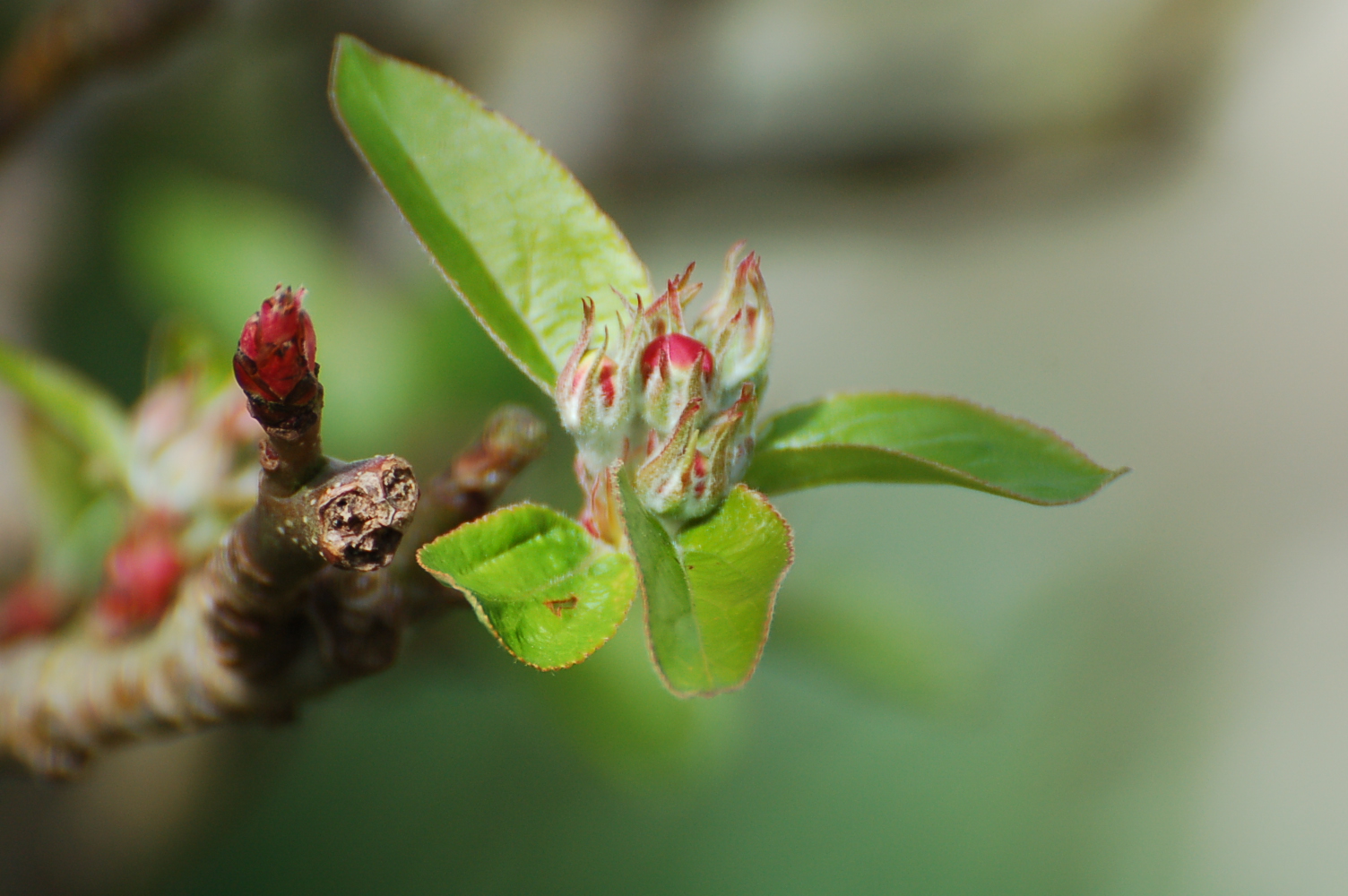
At last spring has arrived in the garden and taken it by storm. Buds are bursting, birds are nesting and bees buzzing searching the blooms.

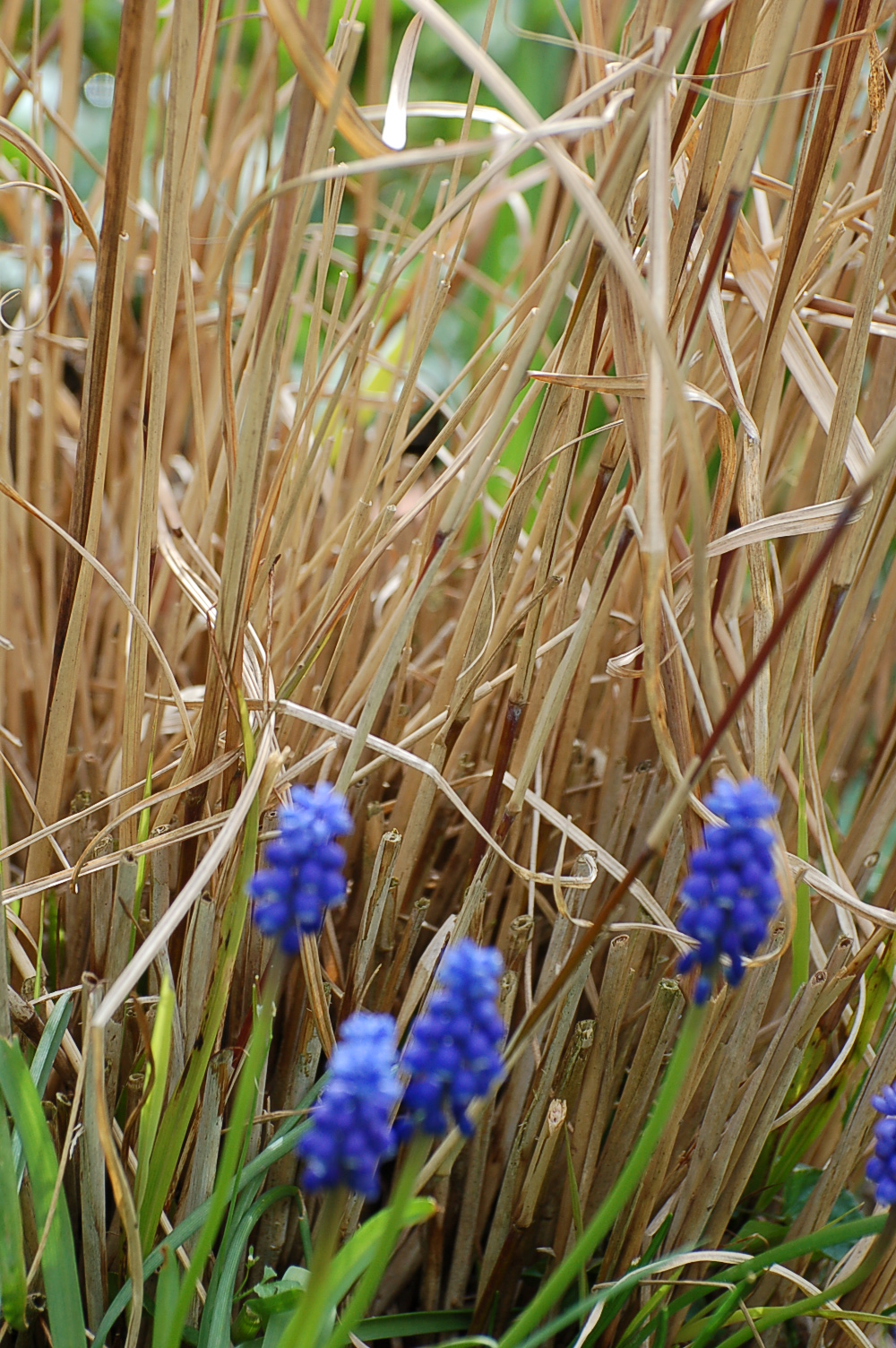
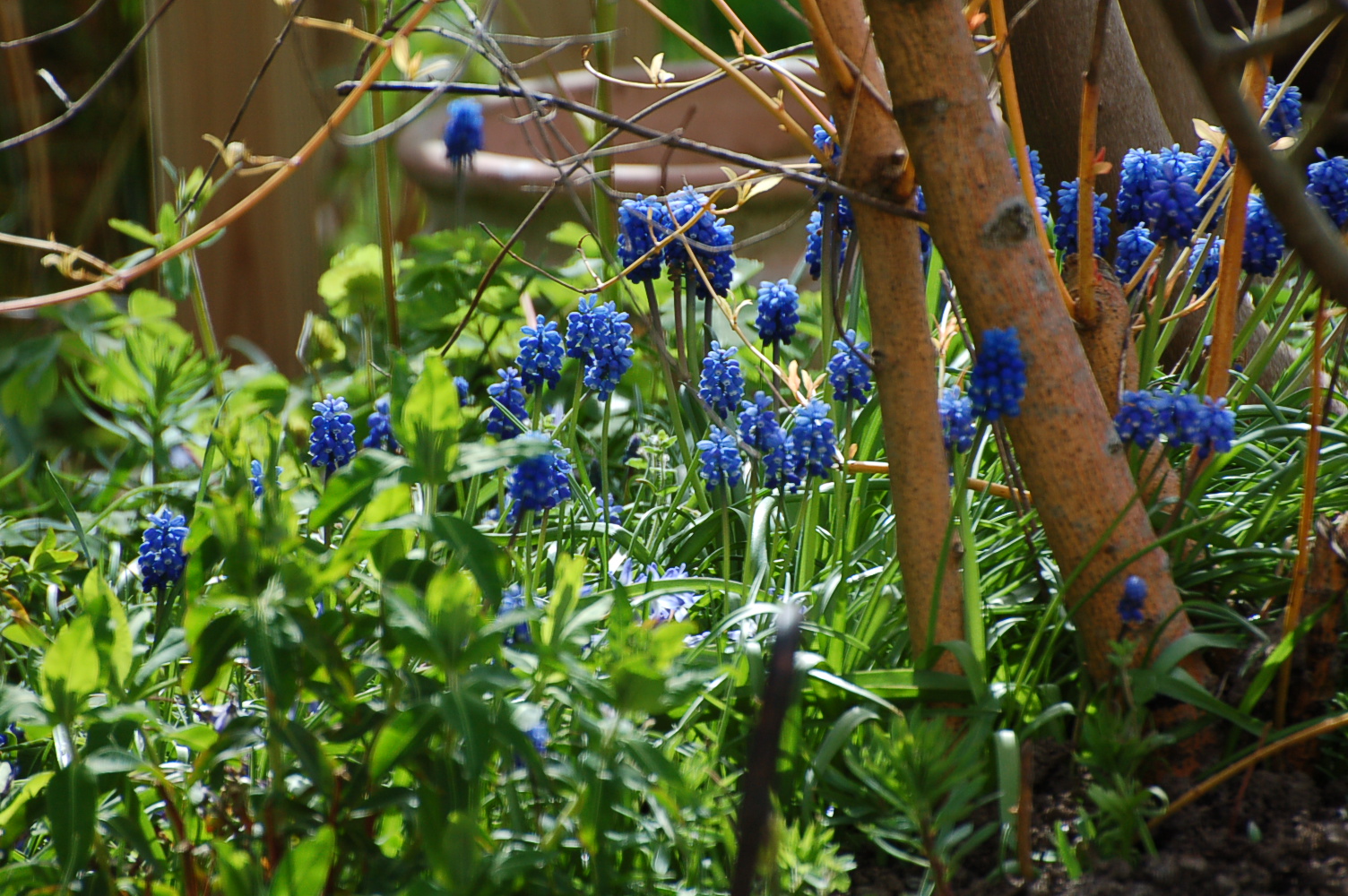
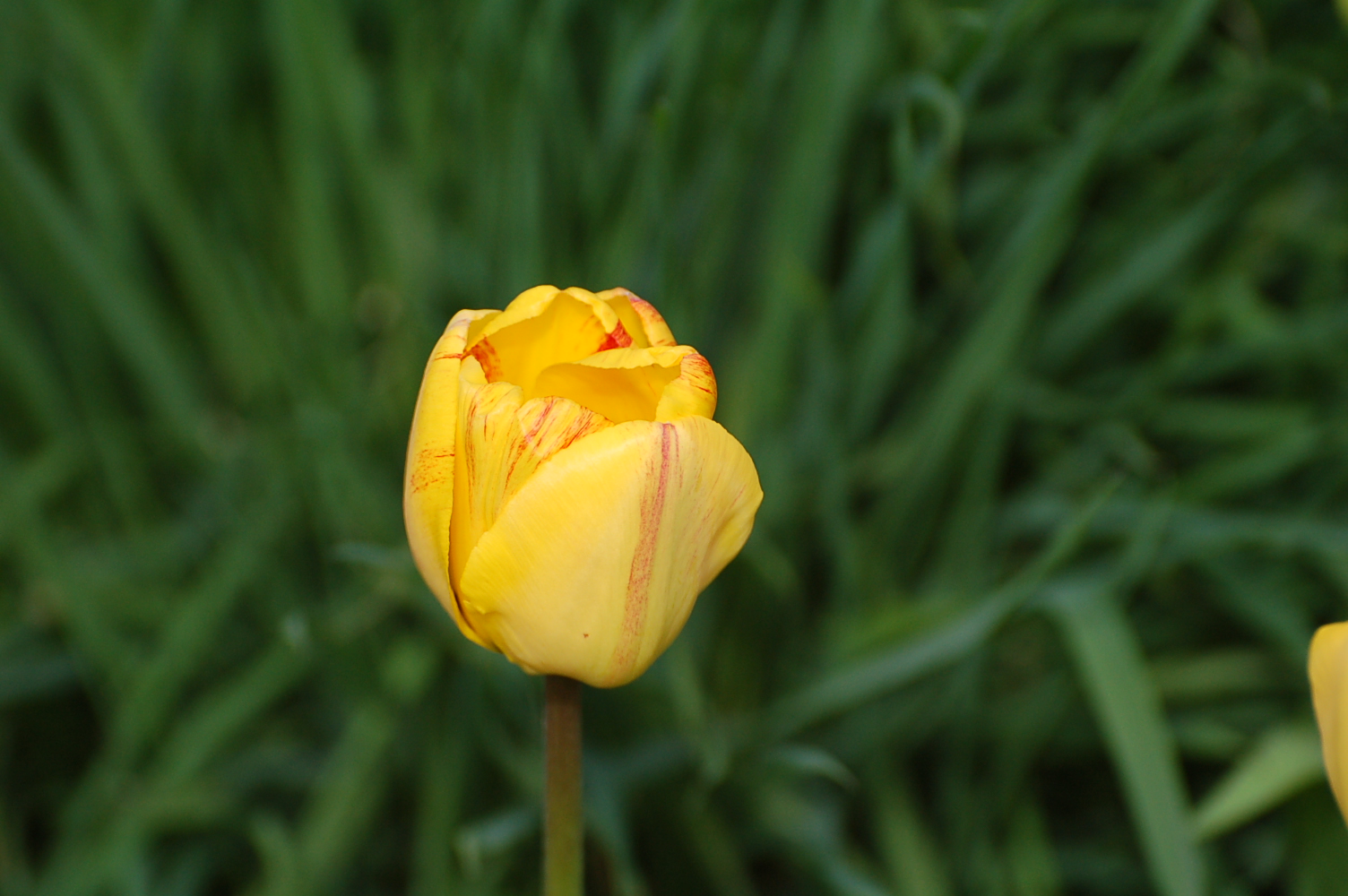
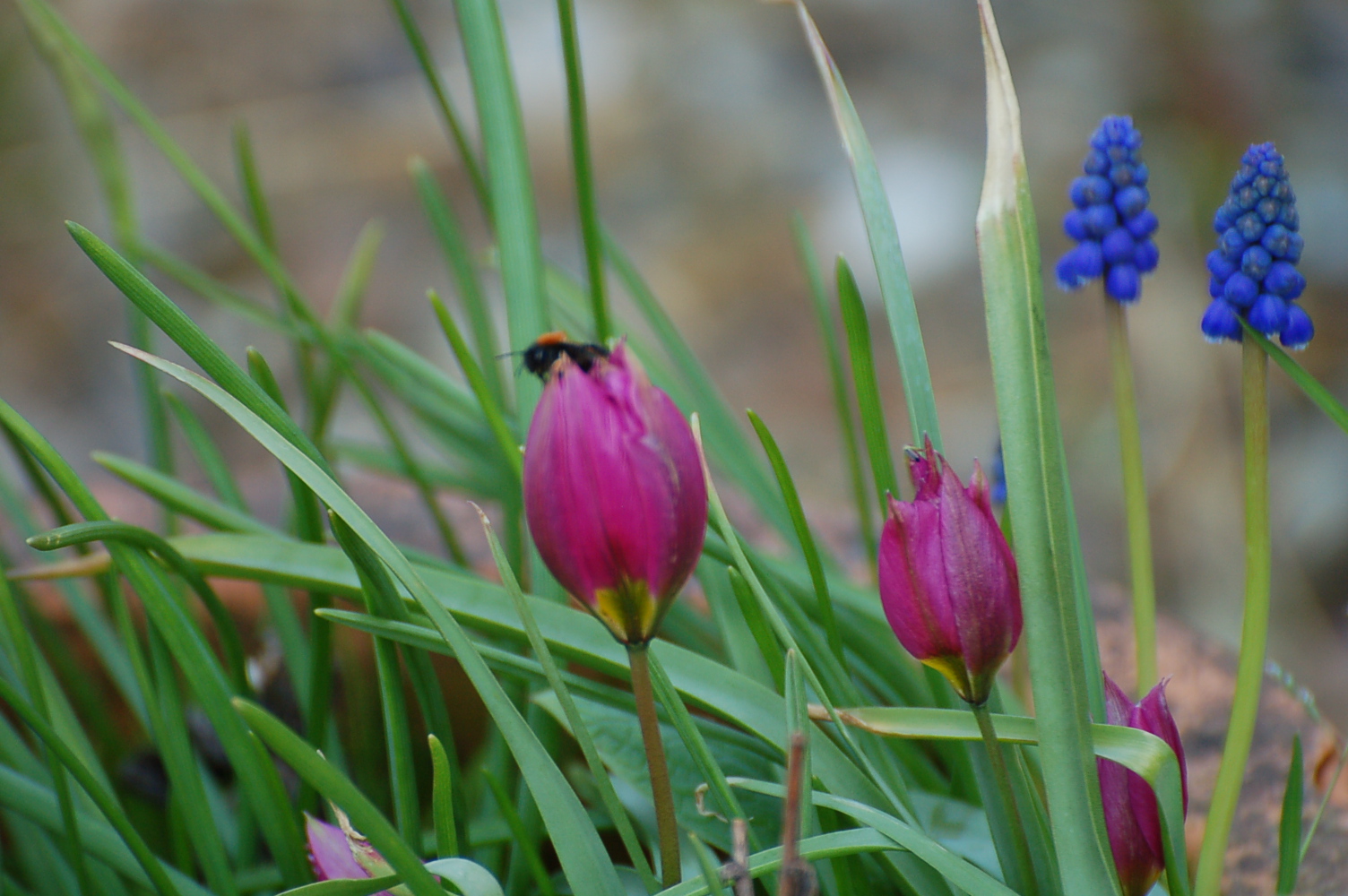
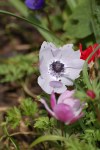
Any bouquet for April will have to embrace flowering bulbs.

DSC_0002   DSC_0001  DSC_0007-15  DSC_0008

DSC_0012  DSC_0021-11

DSC_0015-11

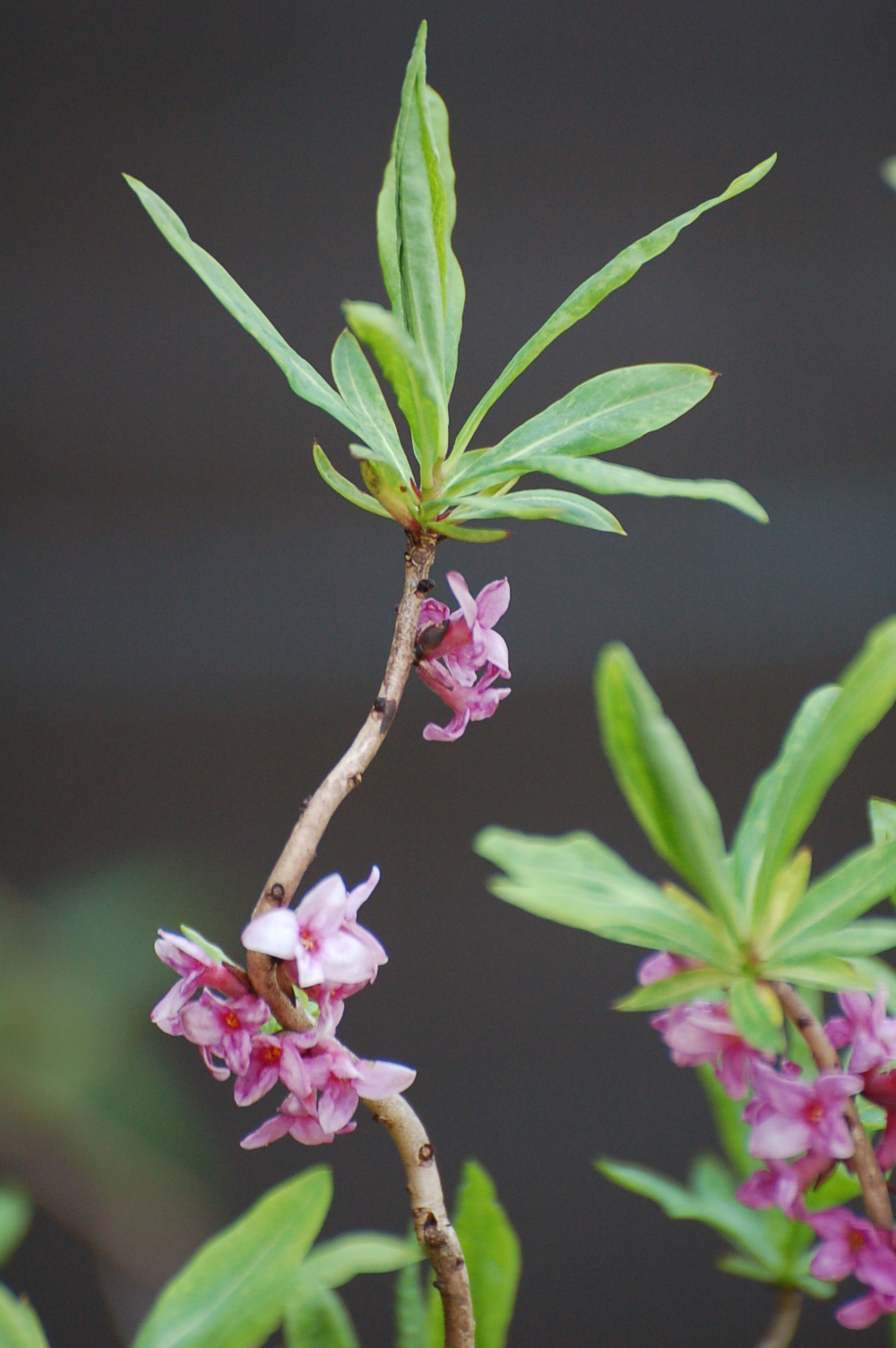
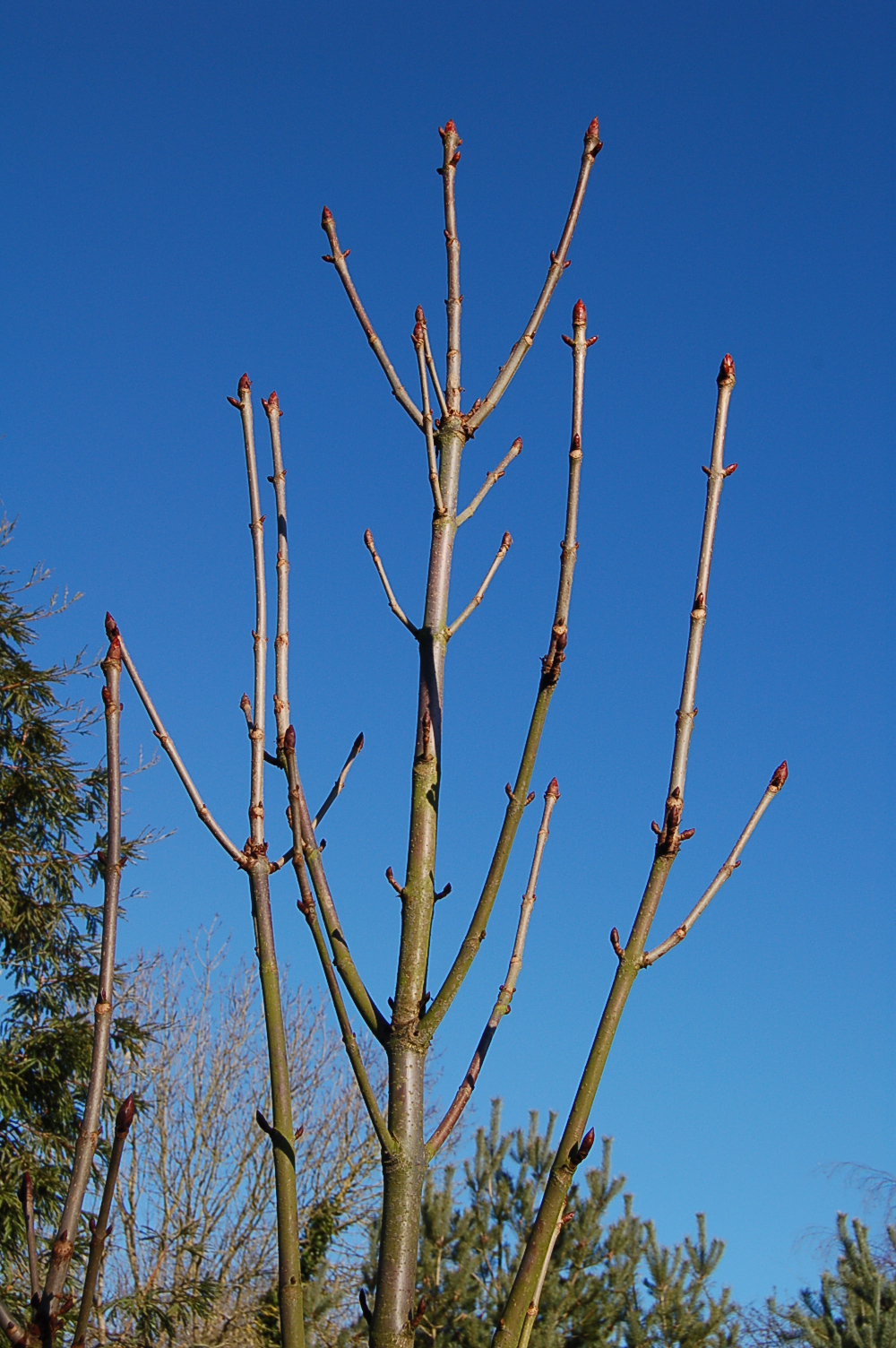
And how about adding a few bursting buds of trees and shrubs? Our miniature chestnut, the sweetly scented daphne flowers and the froth of snow-white amelanchier flowers.

DSC_0004  DSC_0017-8

DSC_0019-10

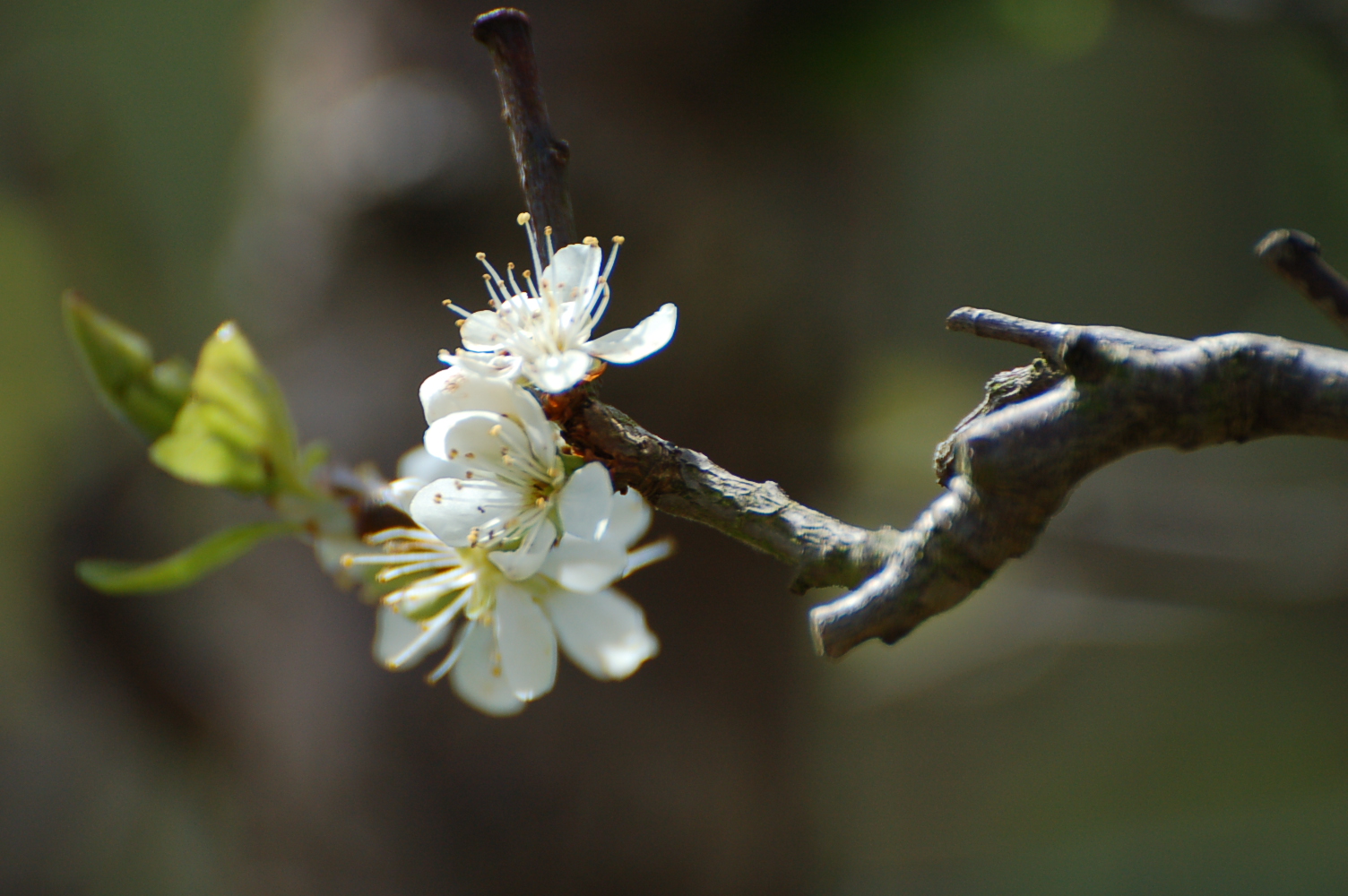
All around the garden fresh fruit blossom promise beautifully scented and delicious, delicate flavours. The pinks of apple blossom and whites of plums. Oh so tasty!

DSC_0016  DSC_0006

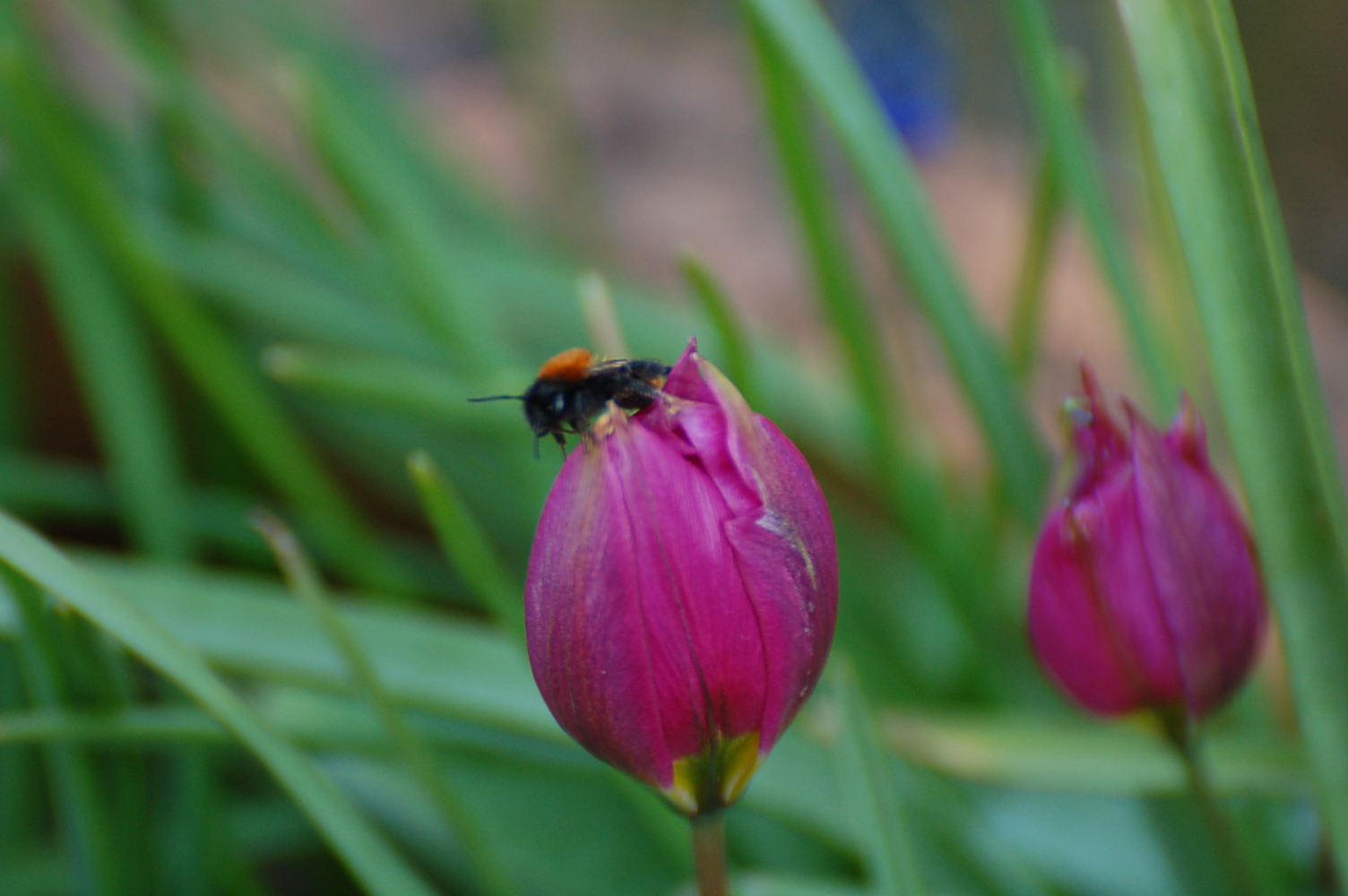
The insects are appreciating these new signs of life too, in particular the  bees and  butterflies. This little bee knows that there is something good awaiting him inside the tulip once it opens. He is just a centimetre or so long and coloured a rich gingery orange.

DSC_0022 DSC_0023-10

I shall finish off by inviting you to enjoy a little gallery of garden delights taken on the last day of April.

Categories
birds gardens open to the public National Trust nature reserves photography Shropshire The National Trust trees wildlife winter gardens woodland

Birches in Winter

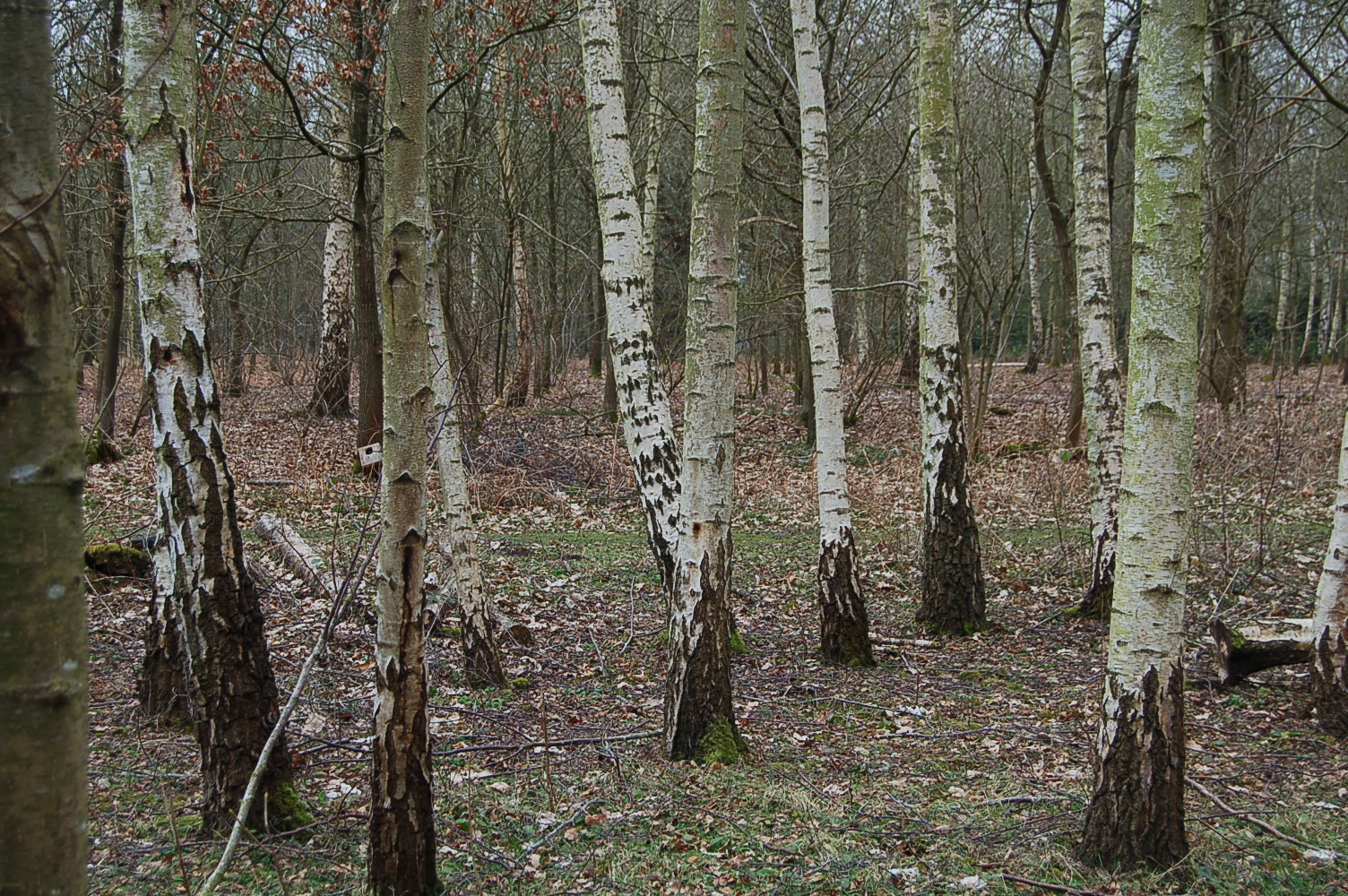
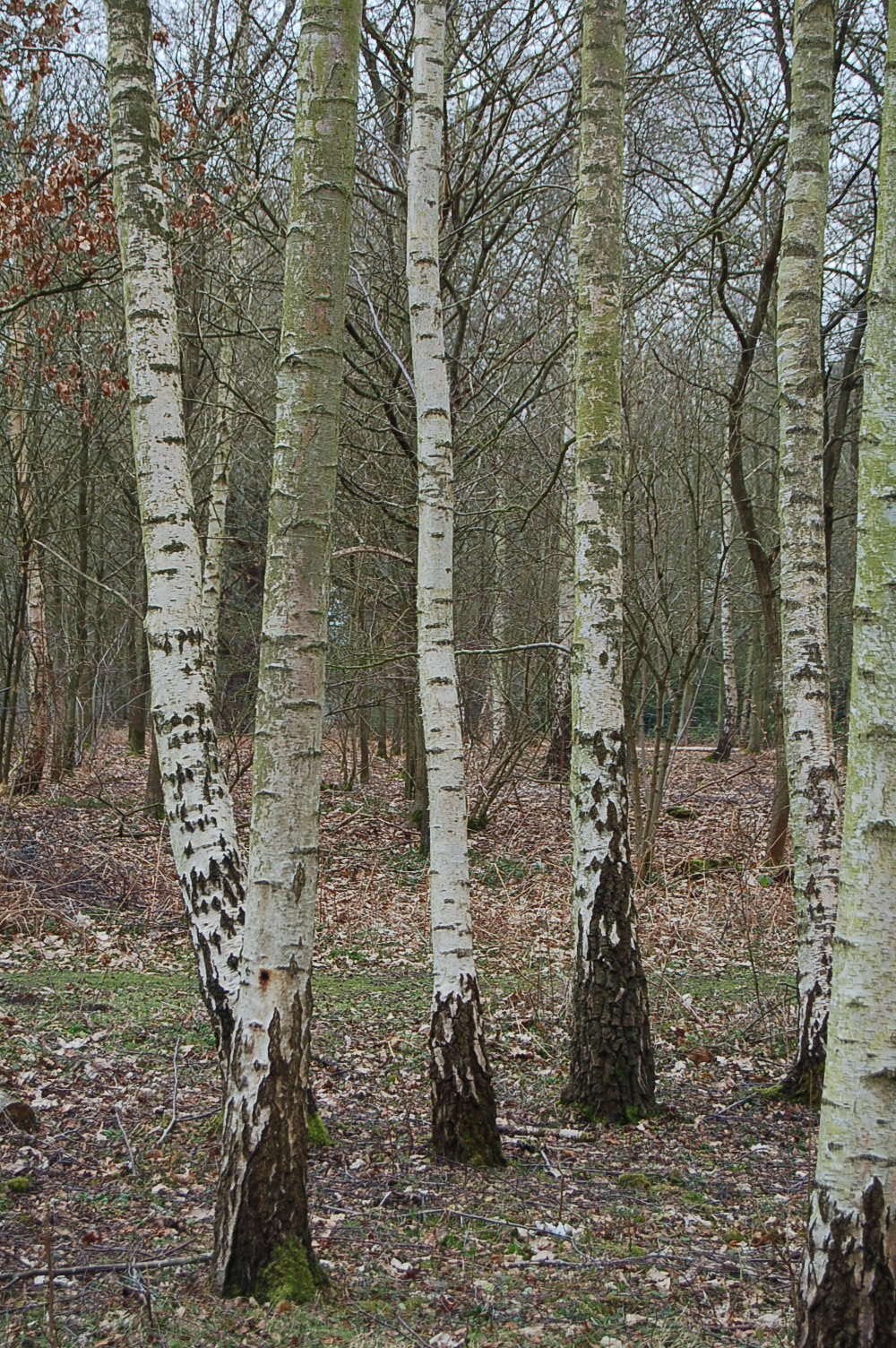
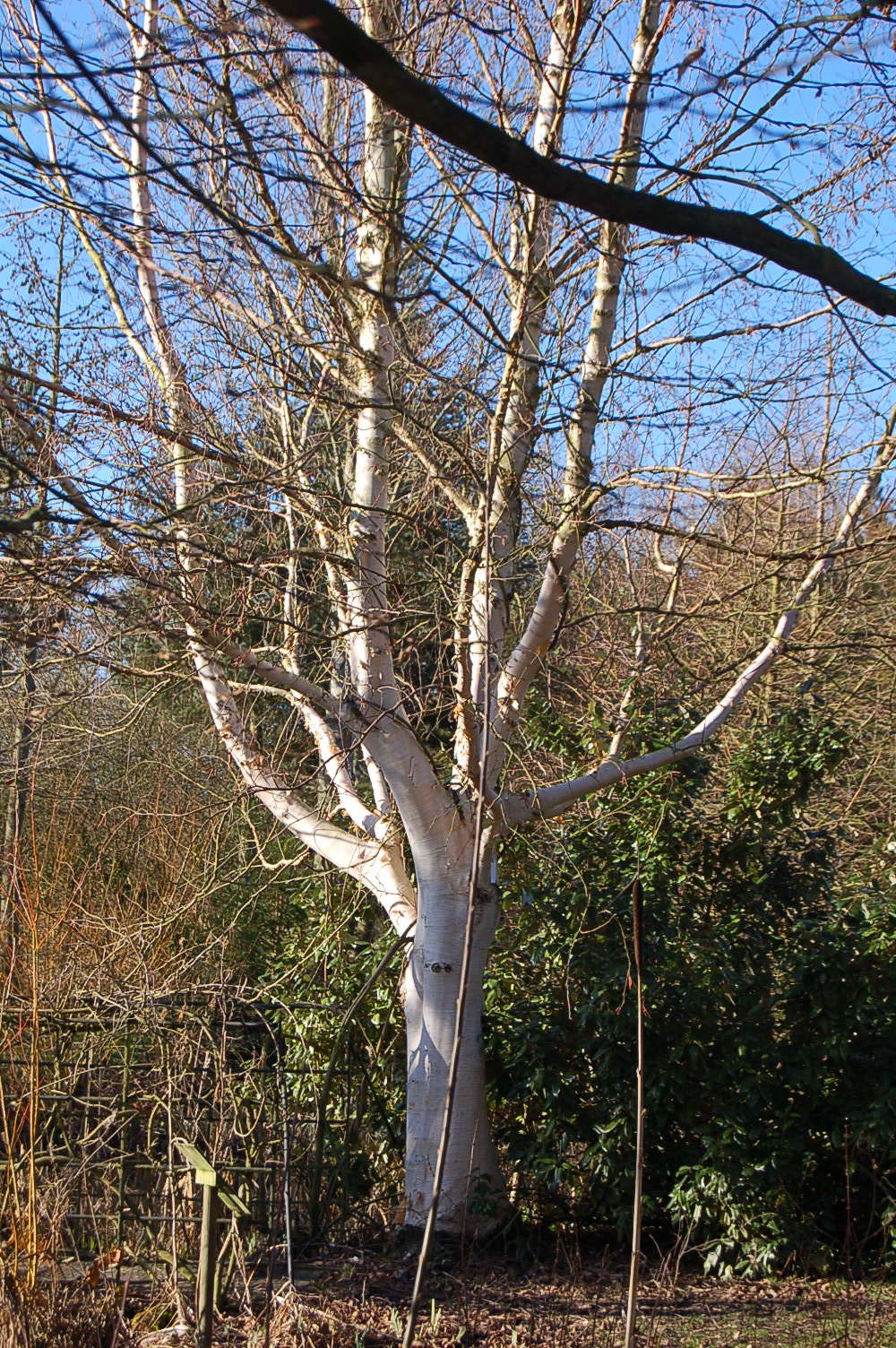
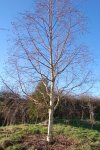
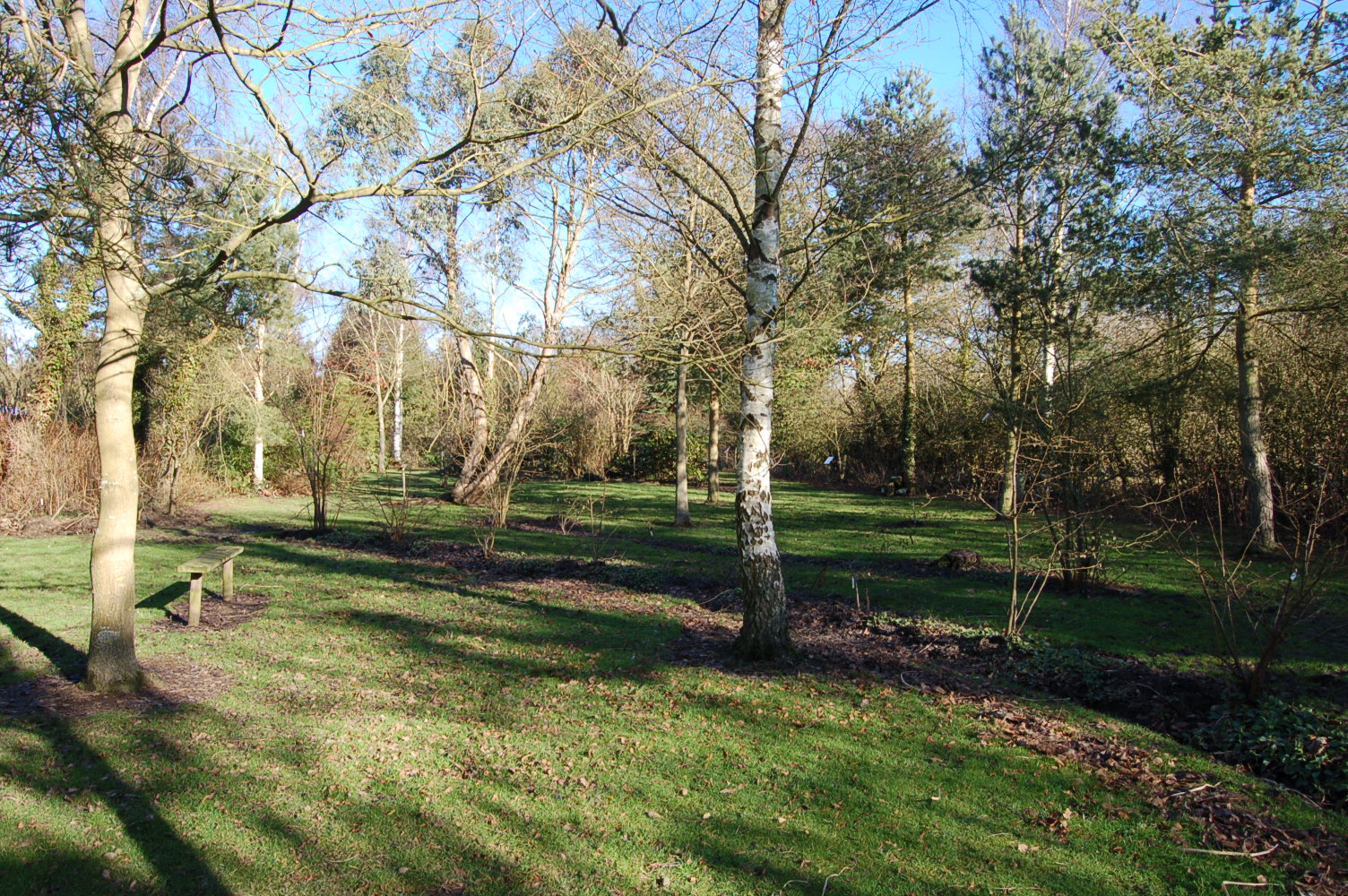
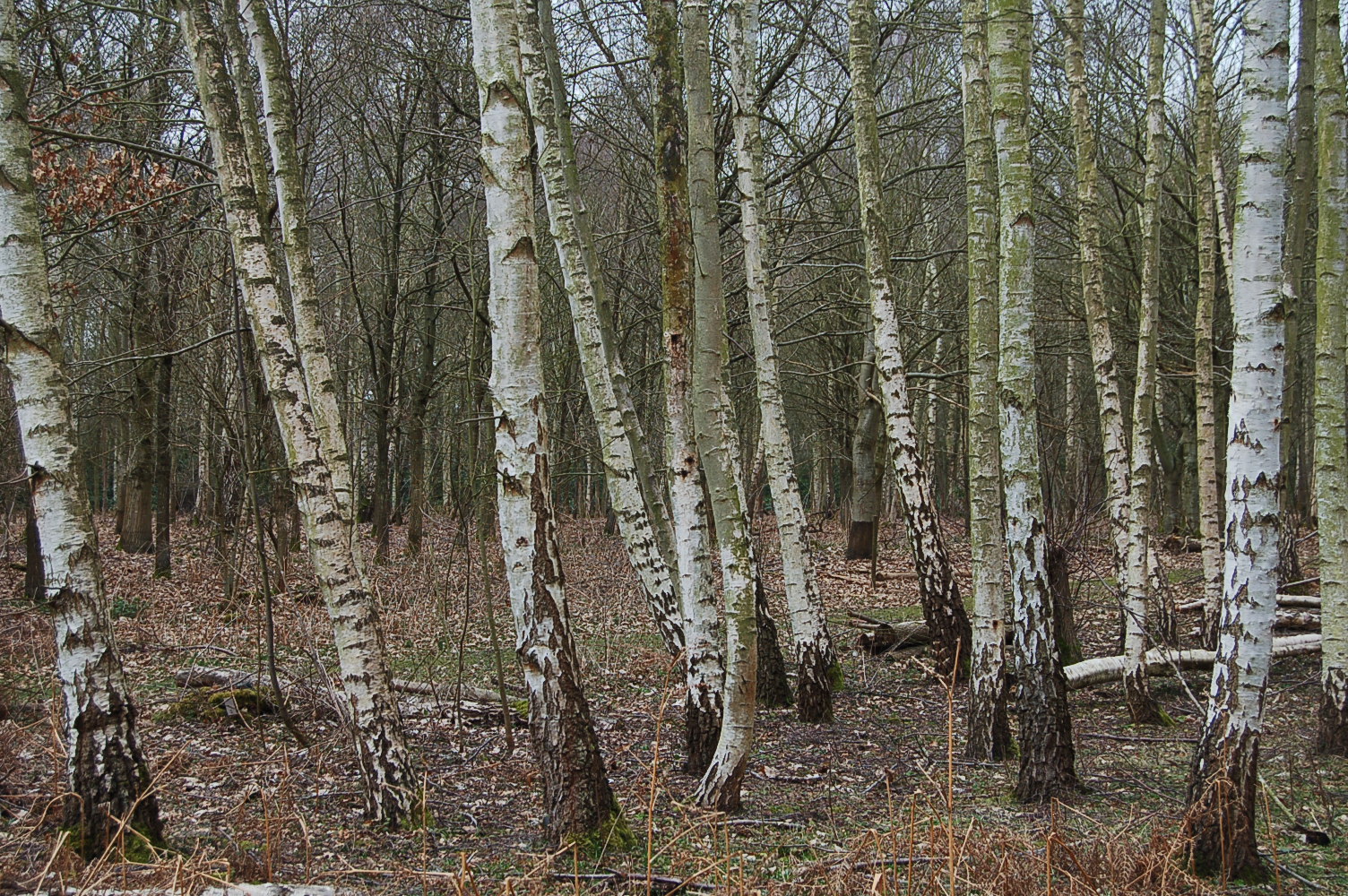
Regular readers of Greenbenchramblings will be very aware of my love of Birch trees in all their many guises. In this post I shall highlight our native Betula pendula.

birch 3 birch 4 birch 5 DSC_0041

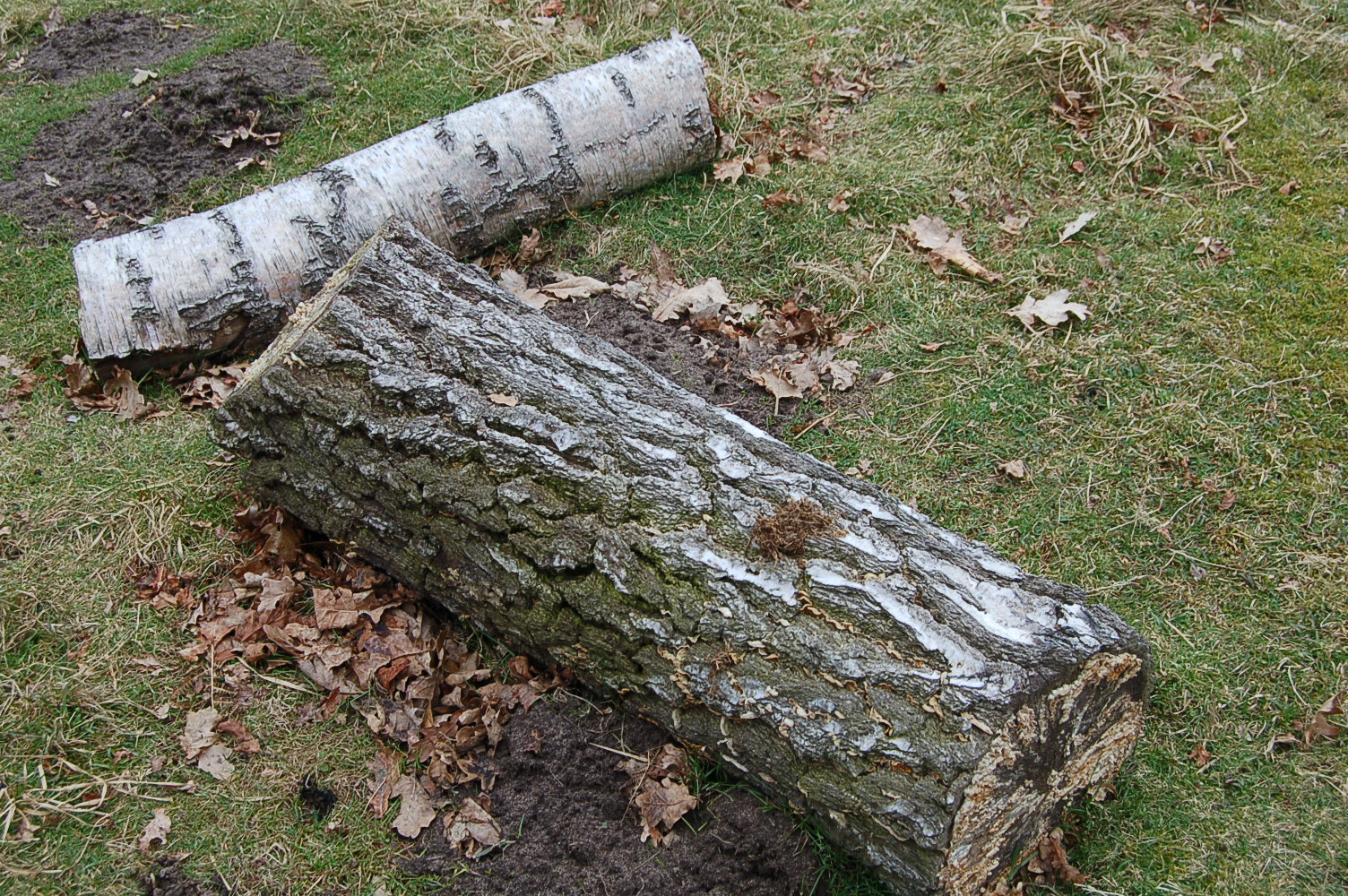
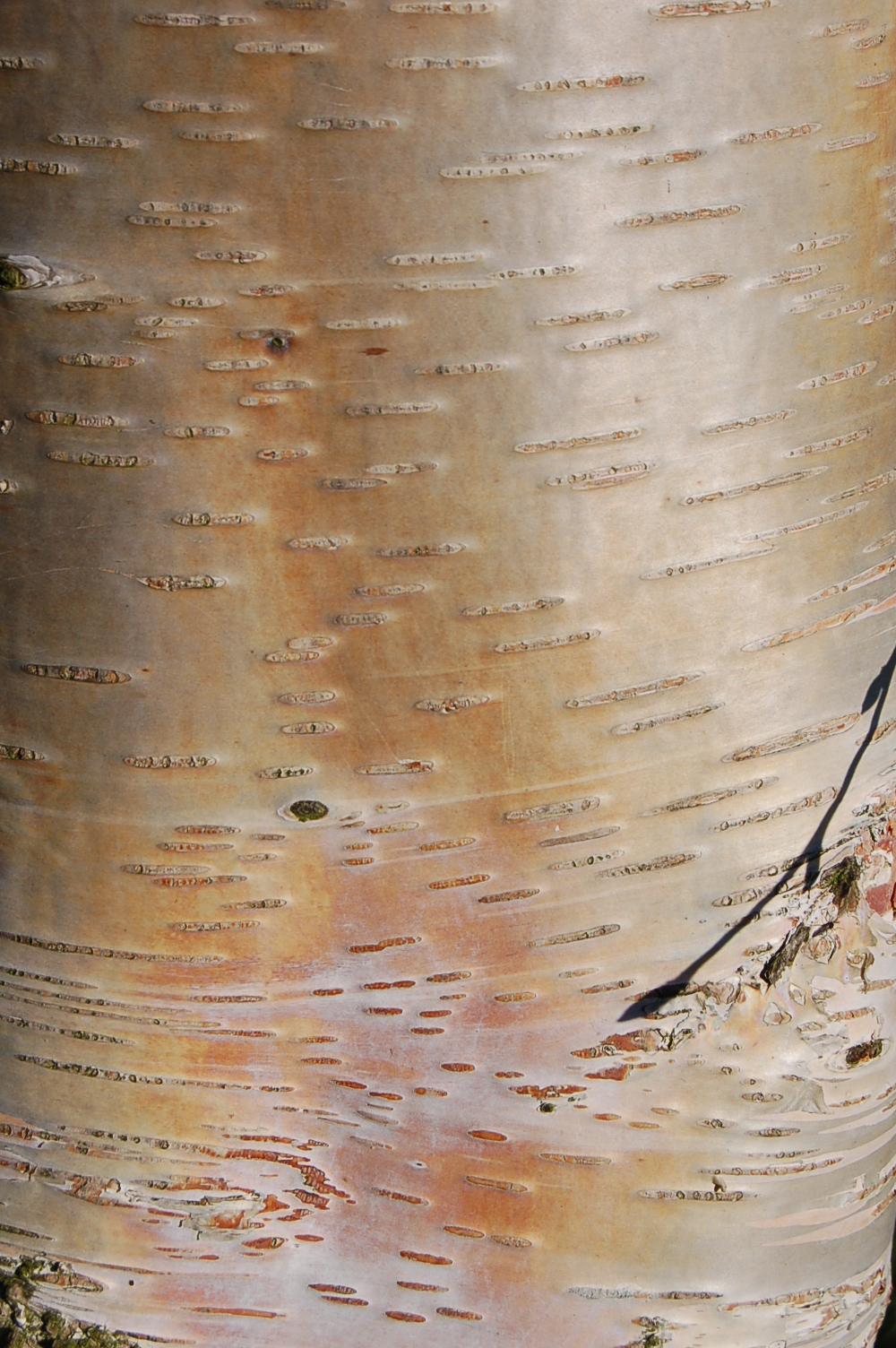
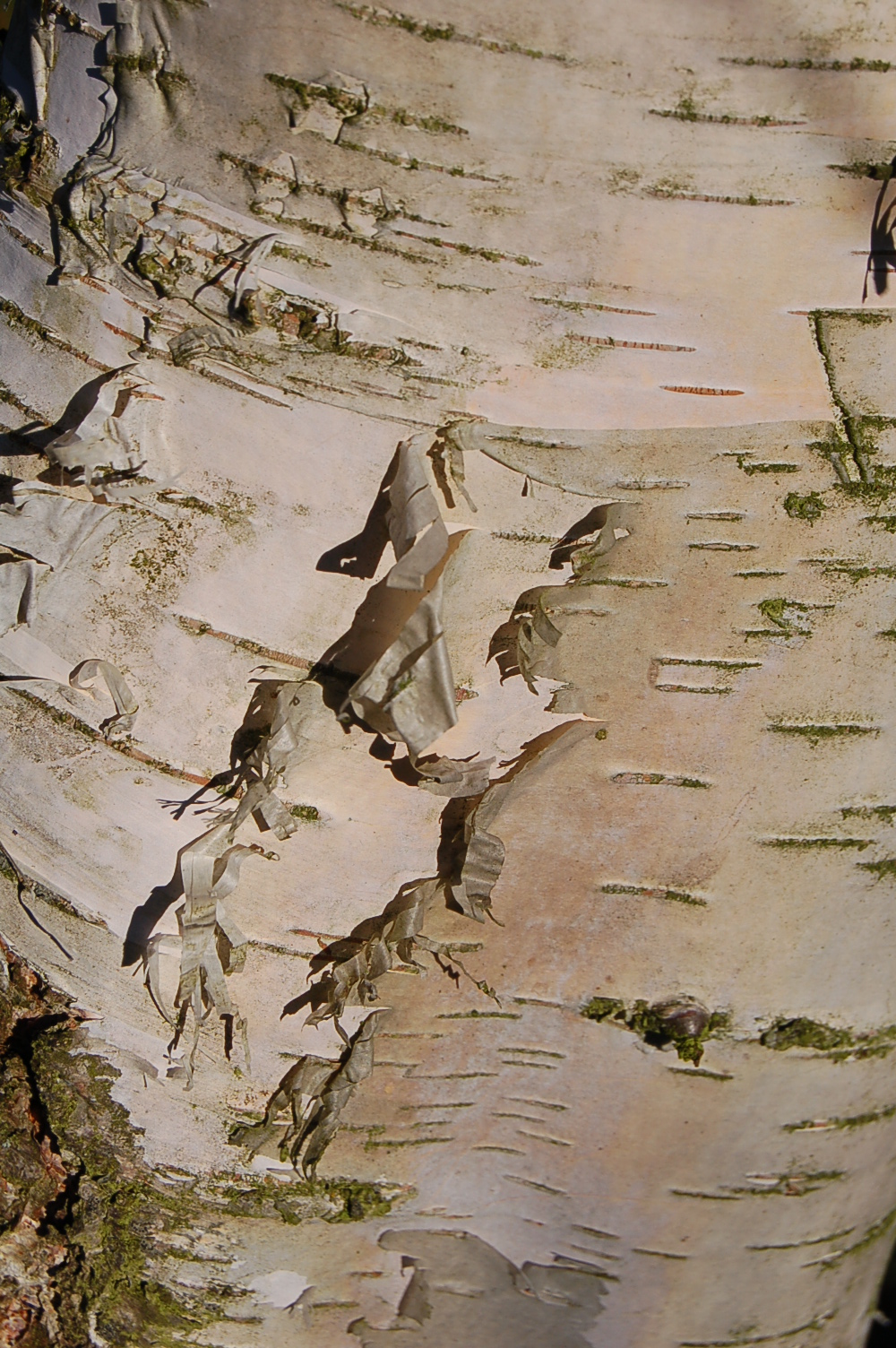
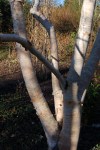
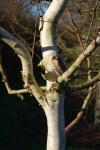
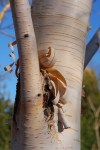
The texture of its silvered bark metamorphoses as it ages from a smooth shining silver to a pattern of deeply fissured elephant skin.

birch 1 birch 2

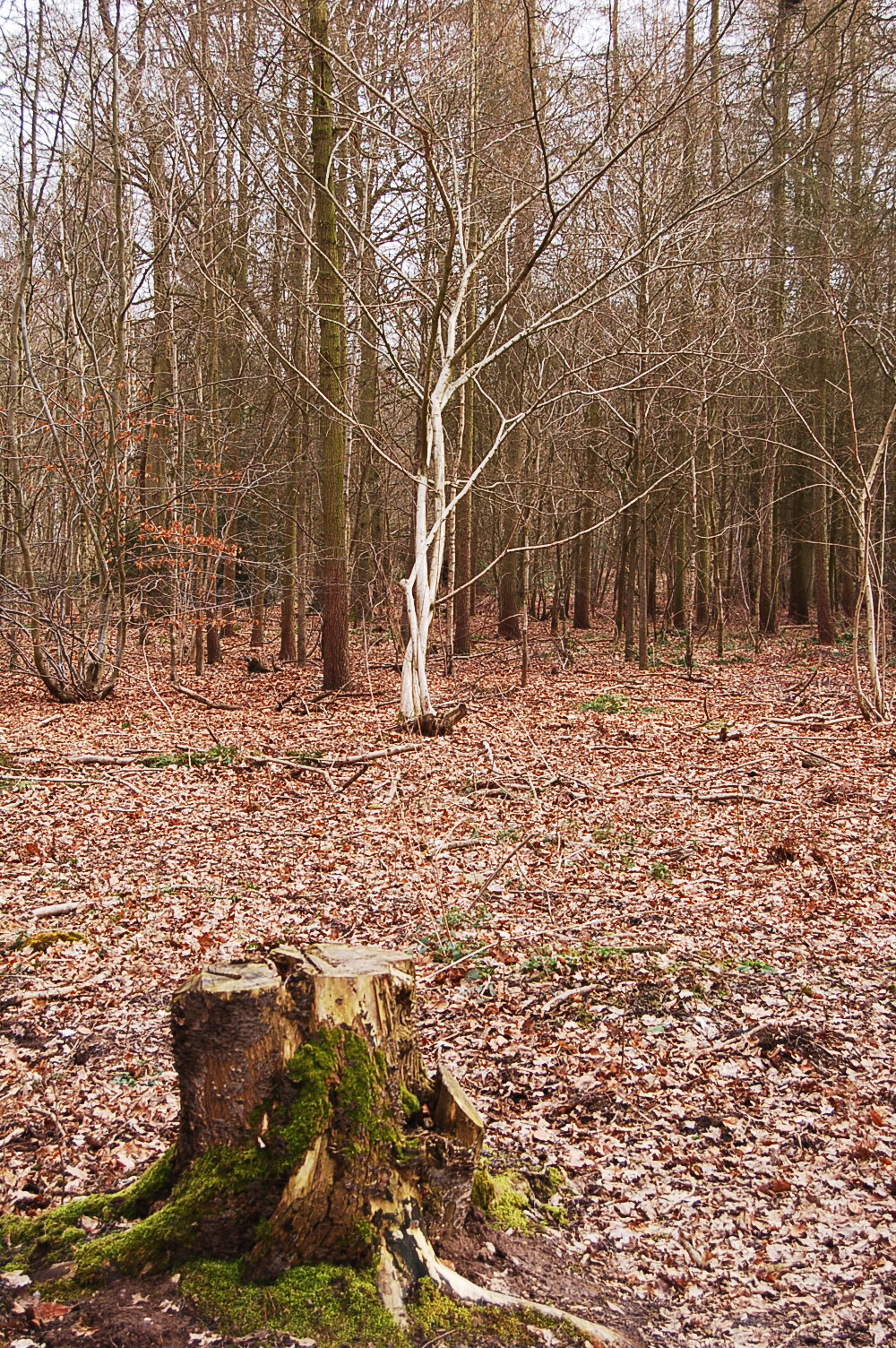
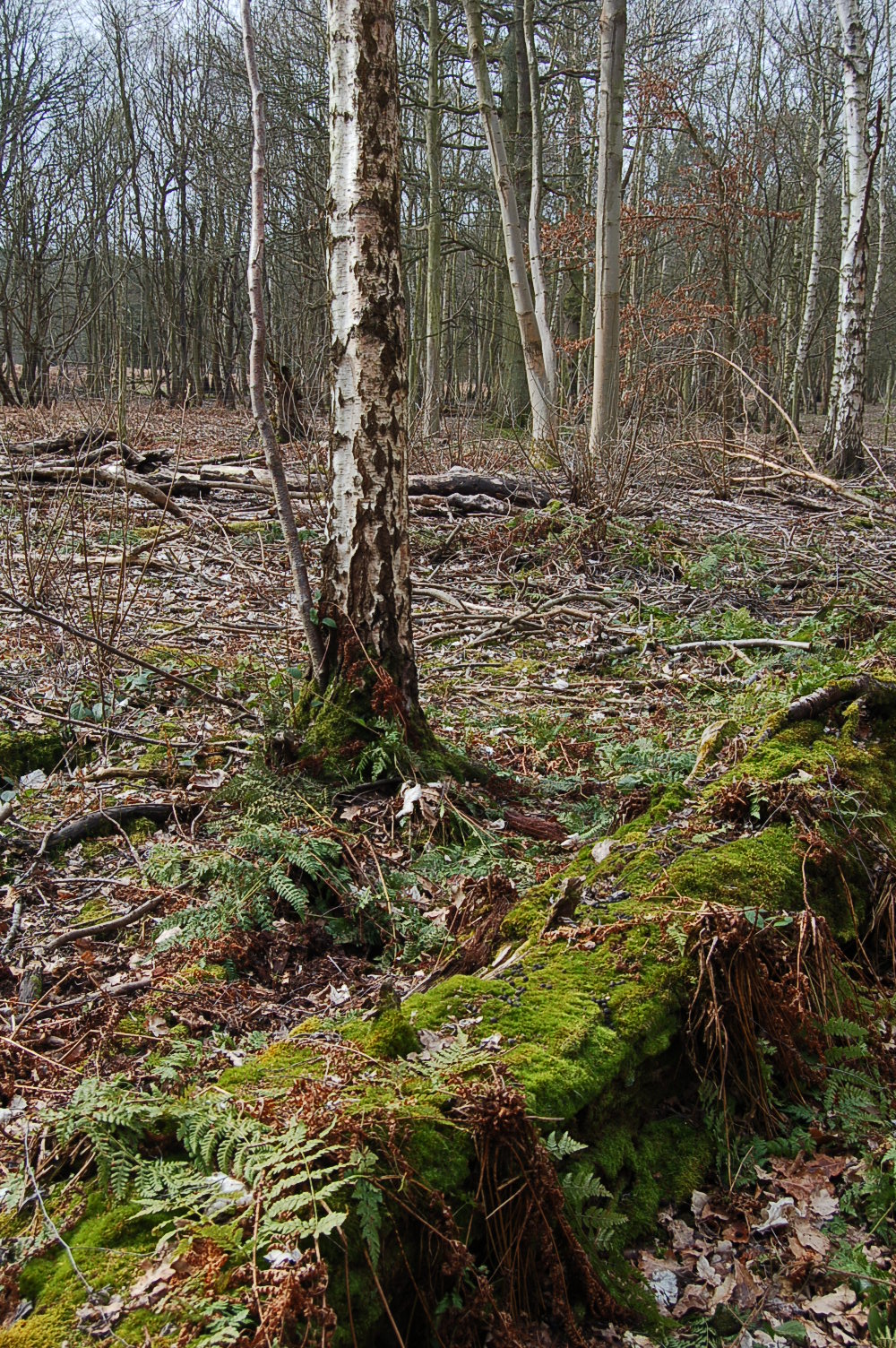
Our native Birch is a relatively short-lived tree so within any mixed woodland fallen specimens litter the ground. They will slowly dissolve away through the actions of the tiniest creatures and a multitude of fungi.

DSC_0080 DSC_0081

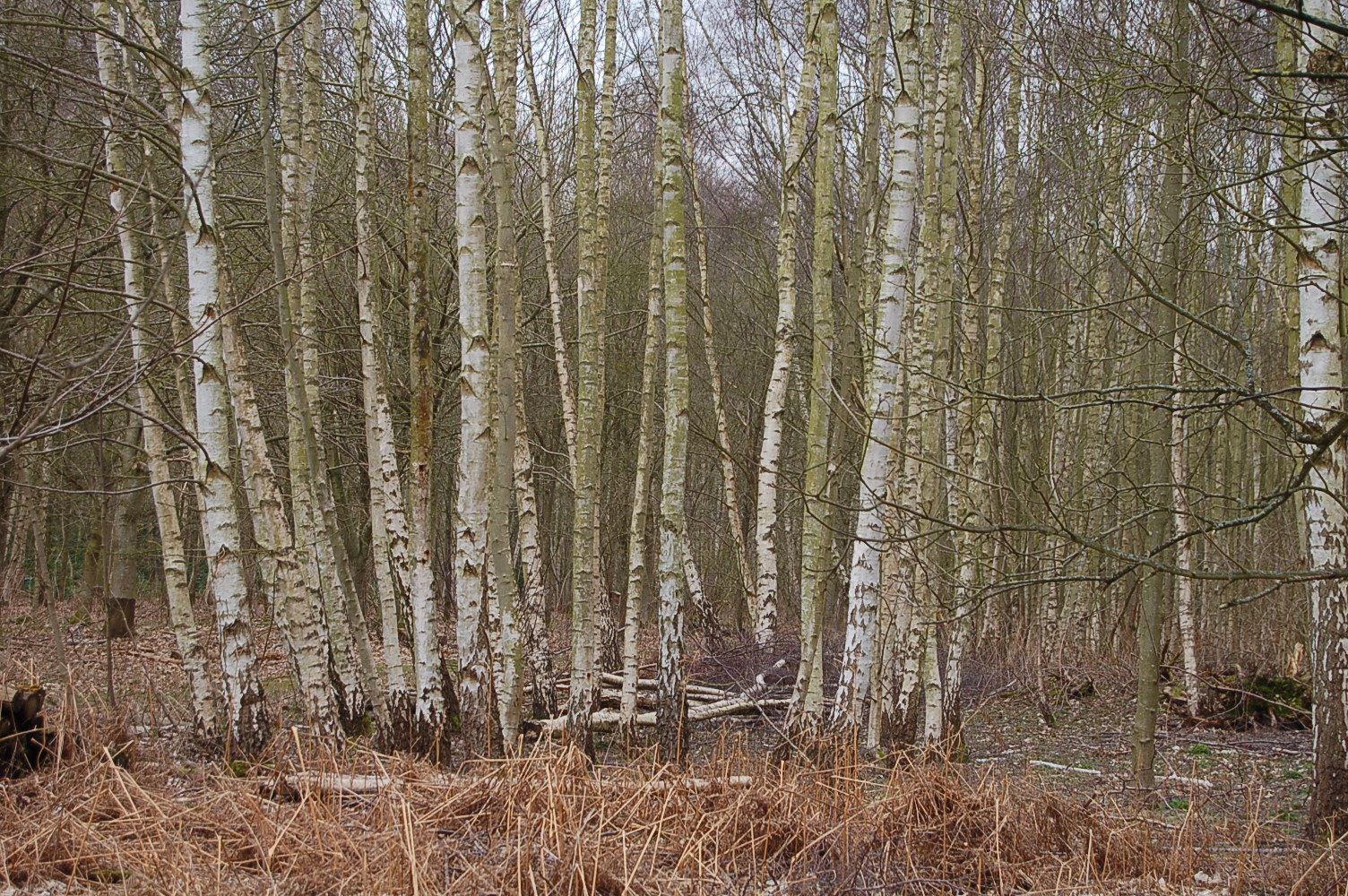
Perhaps the best way to finish off this series of  photos of my favourite trees, the Birches, is with a set of pictures of groups of them standing like cold sentinels.

DSC_0067 DSC_0069 DSC_0070 DSC_0071 DSC_0074 DSC_0075

Categories
autumn colours colours garden photography gardening ornamental trees and shrubs trees

The ever changing colours of Liquidamber

 Liquidamber has to be one of the best trees for the small garden in autumn and winter.

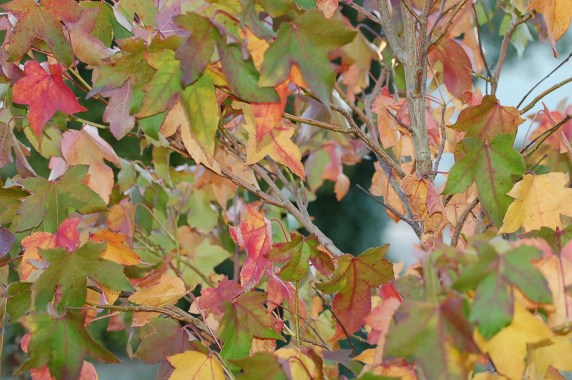
It develops the usual colours  associated with autumn but holds onto its leaves and  the colours get more and more intense as the season progresses.

So for this post I shall regularly take pics of our Liquidamber to illustrate how they change.

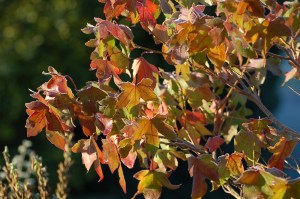
The first three photos were taken in October, at which time greens were still bright and frequent amongst the yellows and oranges.

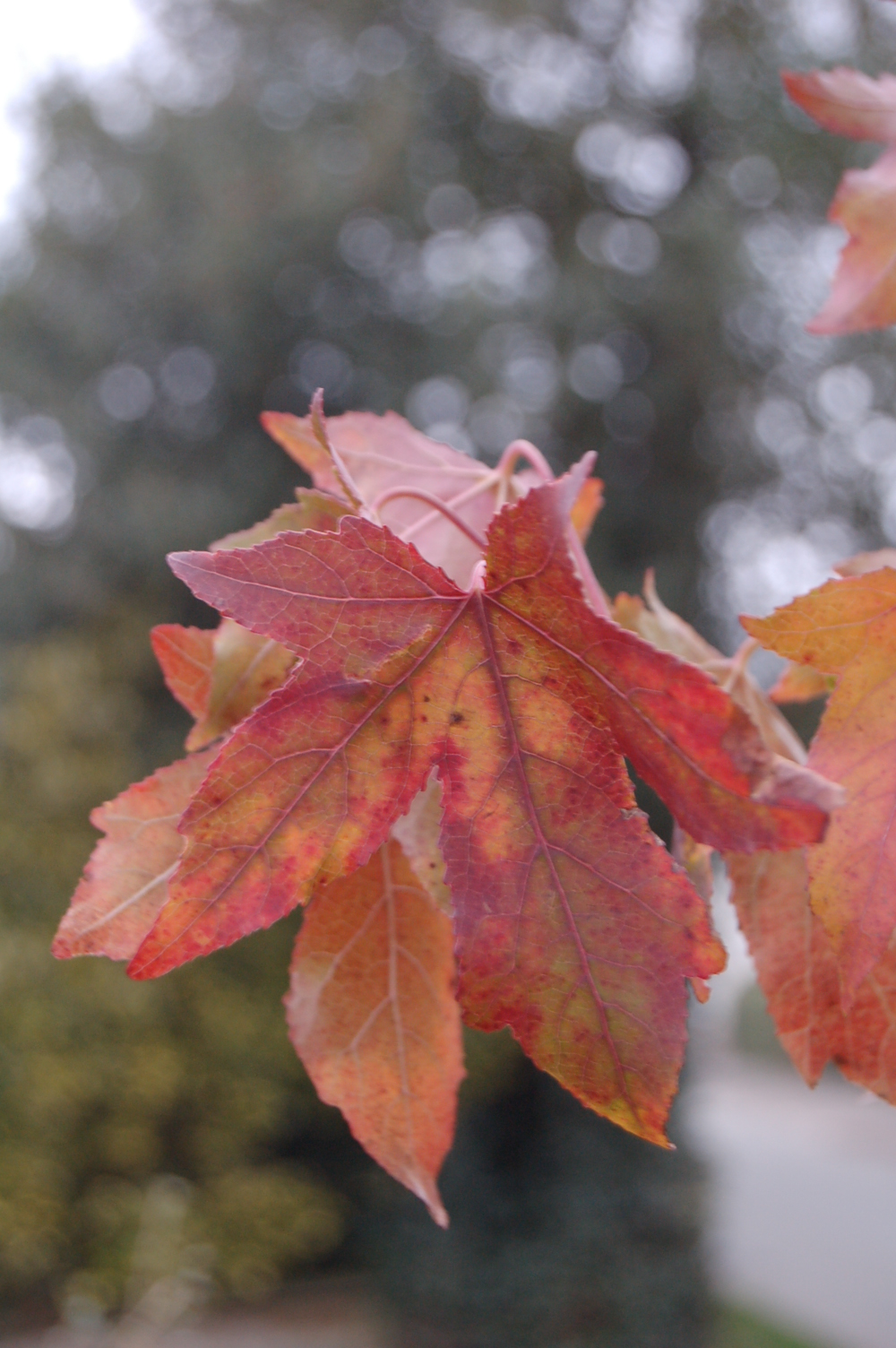
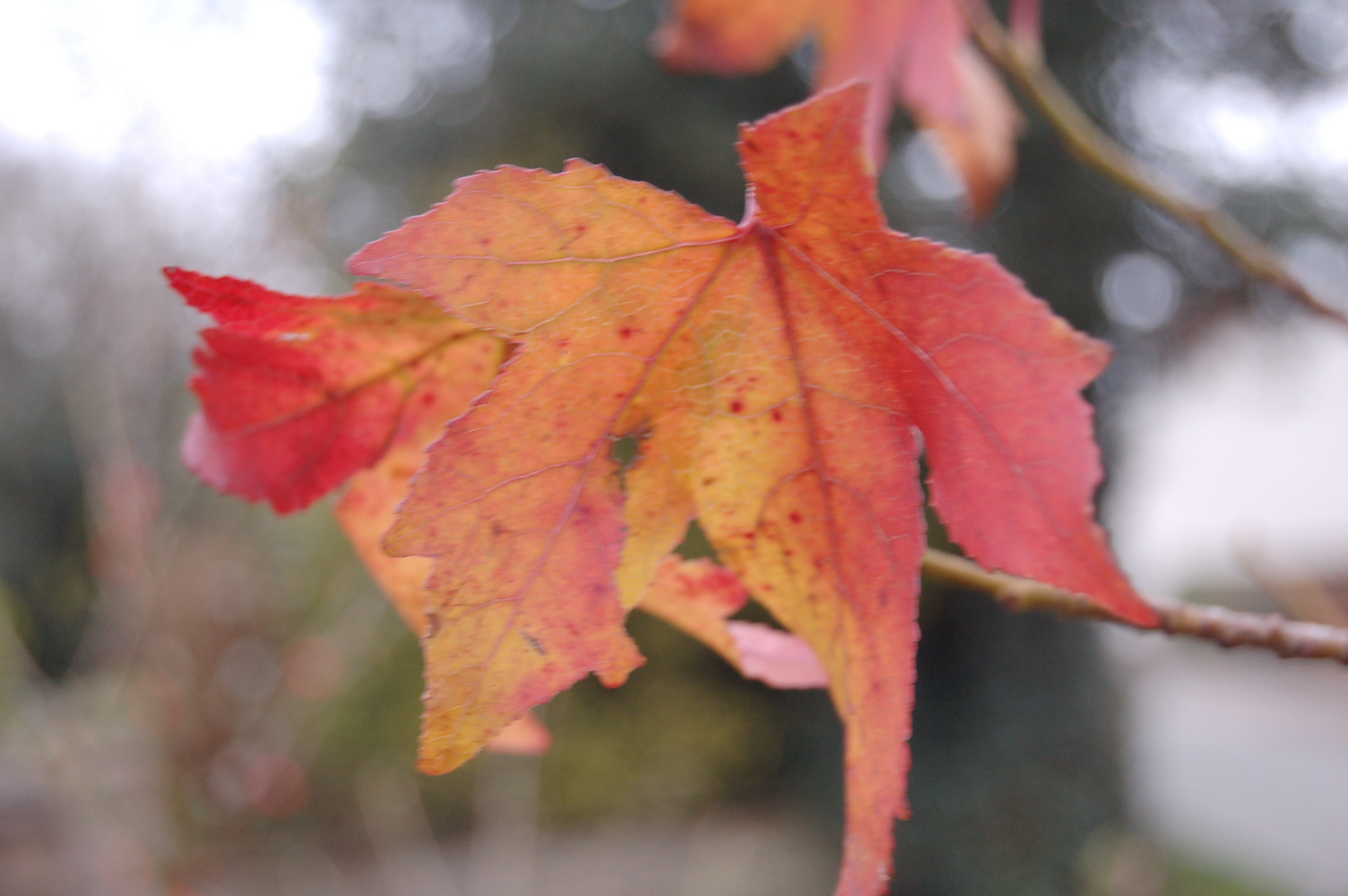
Early in December the colours are richer and not much evidence of green remains.

DSC_0010

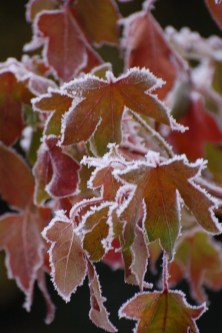
In mid-December a rim of frost decorated each leaf, emphasising their palmate shape and adding depth to the tints of fire.

DSC_0097

DSC_0096

By January the leaves are beginning to look dry with browns becoming the commonest colours.

DSC_0002 DSC_0003 DSC_0004 DSC_0005

Now in mid-March I would normally be able to enjoy the deepest of red leaves it is possible to imagine and they would be clinging onto their stems until new season leaves force them to release their grip and drop to the ground.

This year this eagerly anticipated redness has failed to appear and the remaining leaves are just crisp and dull brown. Half have already fallen and the others look as if they will soon give up their grip.

DSC_0008 DSC_0009

Once spring arrives and instigates budburst I shall start taking photos of our Liquidamber once again and follow the progress of its leaves throughout the year.

Categories
garden design garden photography gardening gardens open to the public ornamental trees and shrubs photography village gardens

A Felley Foray

Felley Priory Gardens are described in promotional literature as “a tranquil garden” and as  “one of Nottinghamshire’s best kept secrets” but how can this be true when it is just half a mile from the M1 motorway? There is only one way to find out the answer to such mysteries visit and see for ourselves. Such a visit should be a delight as the gardens are reputed to contain many rare and unusual plants.

DSC_0008

So did our recent foray to Felley present us with answers to the queries above?

DSC_0011

Just minutes from the heavy traffic of the motorway in quiet farmland we find a narrow drive leading to a roughly surfaced, virtually empty car park. As usual coffee was our first requirement, so off to the “Farmhouse Tea Room” which was remarkably busy.

When we entered the garden we were the only visitors and a gardener opened up the garden gate for us. It seemed as if most visitors were just using the tea room.

DSC_0017 DSC_0027 DSC_0032 DSC_0056 DSC_0107

The claims were indeed true. Tranquility engulfed us, enticing us on through archways and gateways to discover new garden rooms and more rare and unusual plants. Another claim seen to be true.

DSC_0002 DSC_0003 DSC_0015 DSC_0020 DSC_0026 DSC_0055 DSC_0064

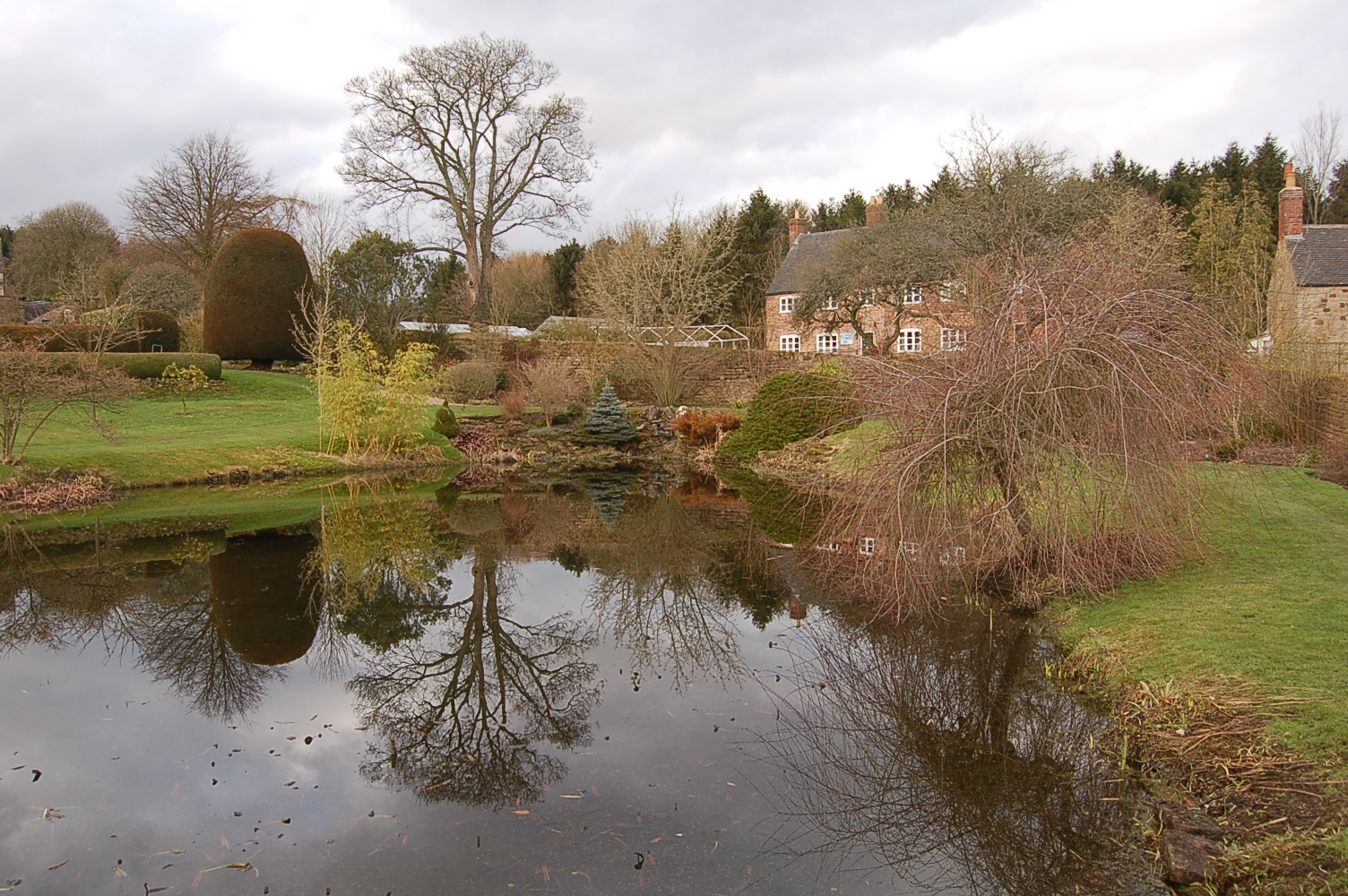
A pool within a walled garden presented us with clear, still reflections of the trees around it.

DSC_0009 DSC_0010 DSC_0016 DSC_0058

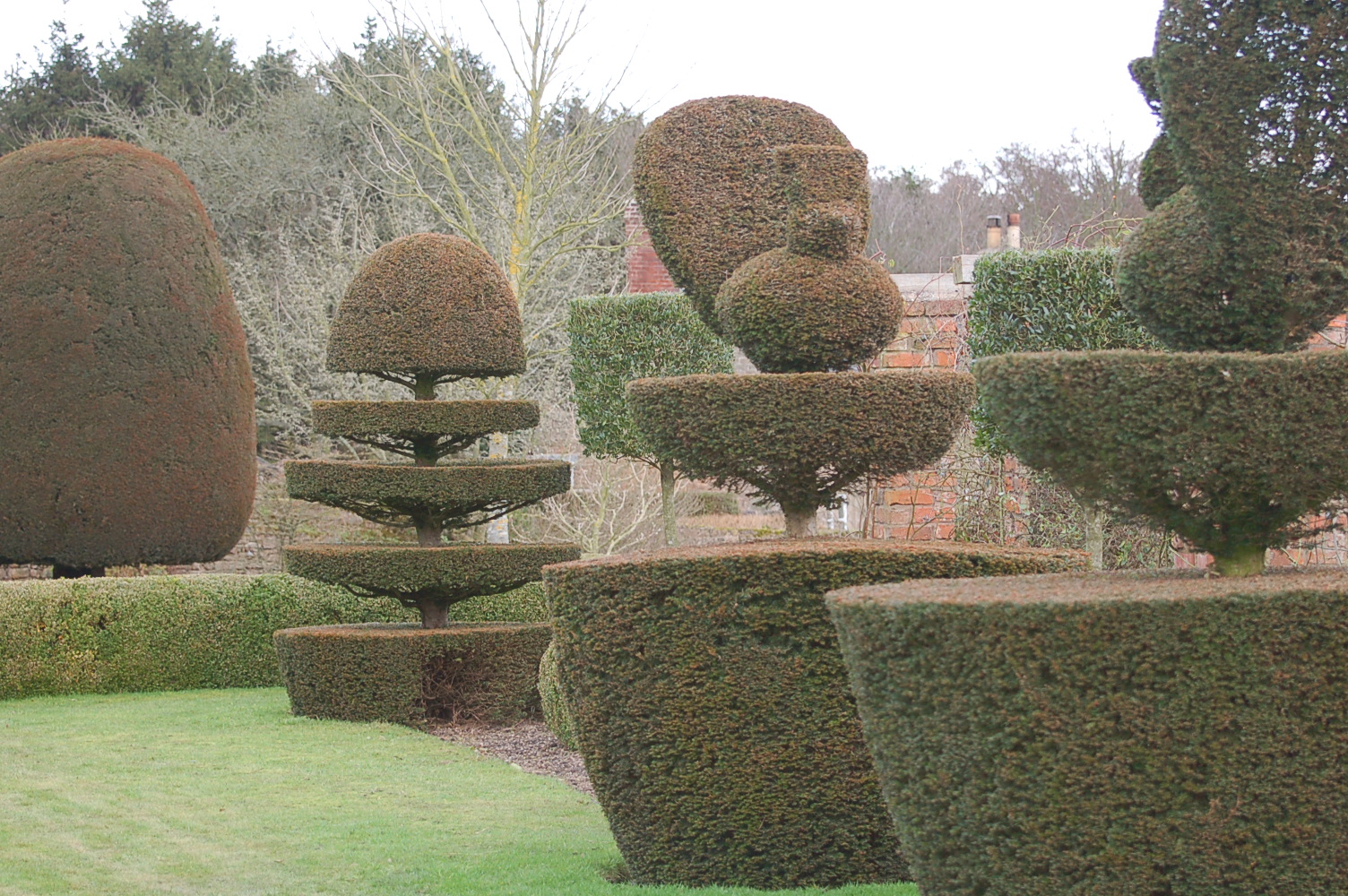
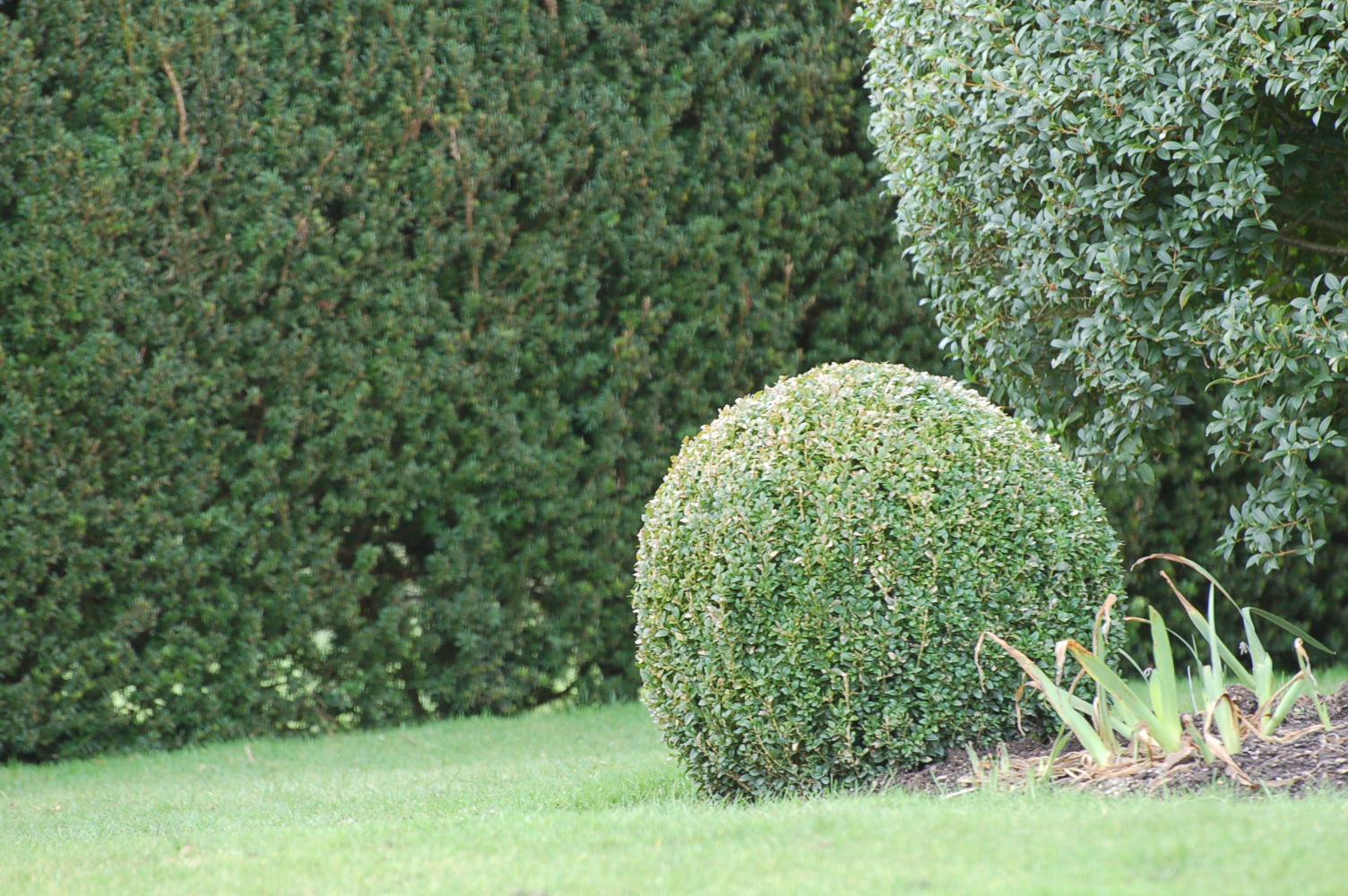
The gardeners were quietly working away in the shelter afforded by tall trimmed evergreen hedges, cutting down last year’s perennial growth and adding compost as a mulch around them. Their biggest task must be keeping these hedges and the varied topiary specimens in tip-top condition.

DSC_0072 DSC_0073 DSC_0075 DSC_0076 DSC_0078

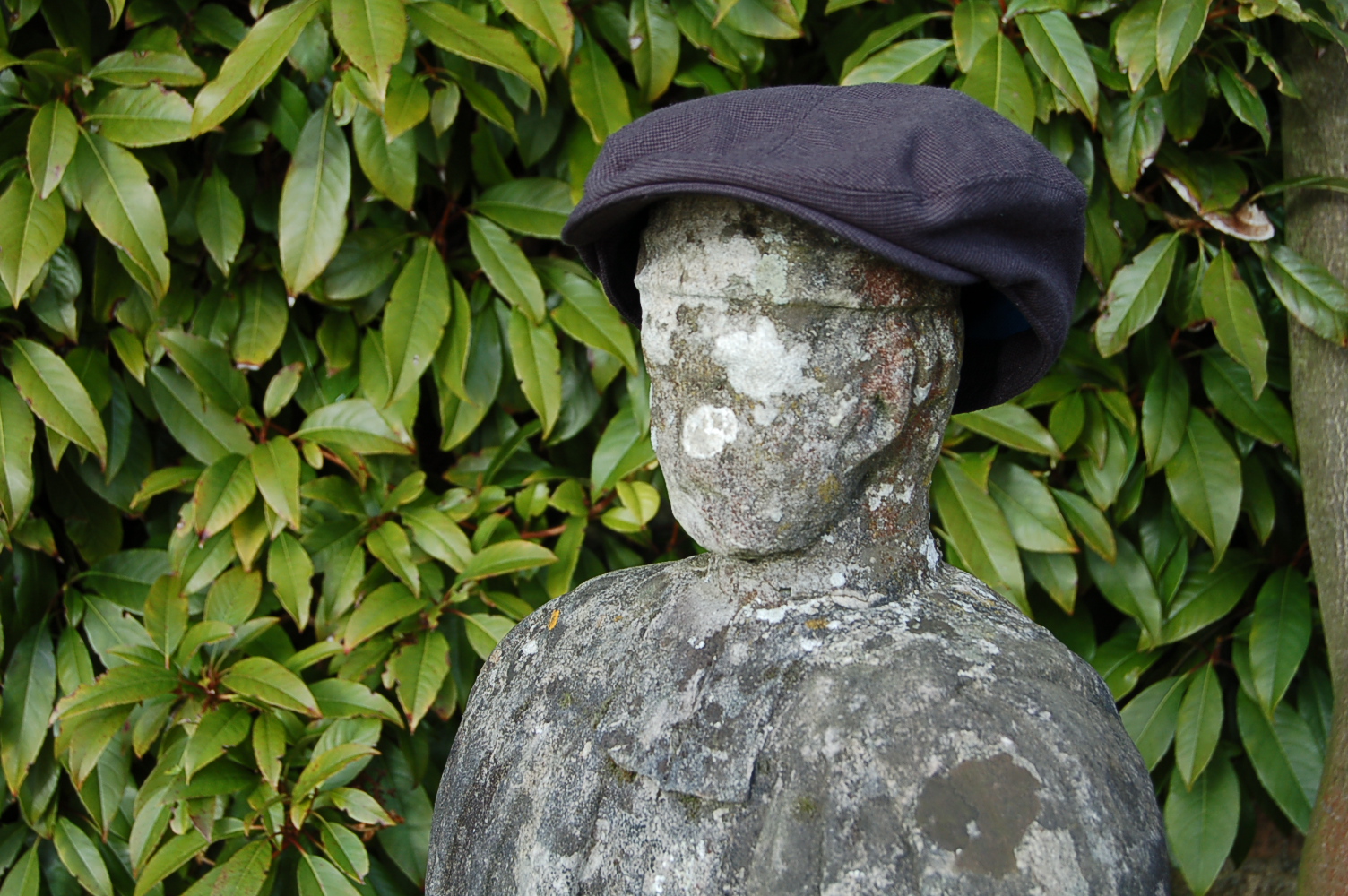
Throughout our wander around these unusual gardens we met few visitors, the most interesting being this ancient stone bishop. He looked so cold I shared my hat with him for a while. He didn’t thank me but I hope he appreciated it.

DSC_0005 DSC_0006

Felley is truly a secret, tranquil garden with rare and unusual plants to enjoy.

Categories
arboreta garden design garden photography gardening gardens open to the public ornamental trees and shrubs photography trees Winter Gardening winter gardens

Betula at Bluebell

Back to Bluebell Arboretum for a look at their collection of my favourite trees, the Birches. Browse the photos below and you will see why.

DSC_0212 DSC_0214 DSC_0218 DSC_0224 DSC_0229 DSC_0233 DSC_0238 DSC_0239 DSC_0240 DSC_0245 DSC_0252

Betulas are particularly popular at the moment because of an interest in coloured and textured bark. This is coupled with a surge of interest in the creation of winter gardens within major gardens open to the public, an interest influencing plantings in smaller private gardens. I thought a gallery of our favourites at Bluebell would show the amazing variations.

Categories
arboreta colours garden photography gardens open to the public ornamental trees and shrubs photography RHS trees Winter Gardening winter gardens

Bluebell Arboretum

DSC_0162 DSC_0196

DSC_0205    DSC_0225

We recently spent a morning at Bluebell Arboretum in Leicestershire, a return visit in fact as we visited it many years ago. It is a young arboretum and small as arboreta go which gives it an intimate, manageable feel.

As we approached the wooden cabin that acts as reception, the door creaked open, “I see you have your walking boots on! I wouldn’t recommend you go around if you hadn’t.” Apparently we had arrived the day after a foot of snow had melted onto already water-logged ground. It was wet so we splashed and slid with great care around boggy pathways, but the trees that greeted us made it all worthwhile.

We are great fans of Betulas (birches) and Acers (maples) and here we found many to admire. We admired them for their profile, their bark texture and colour.

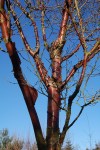
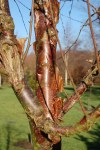
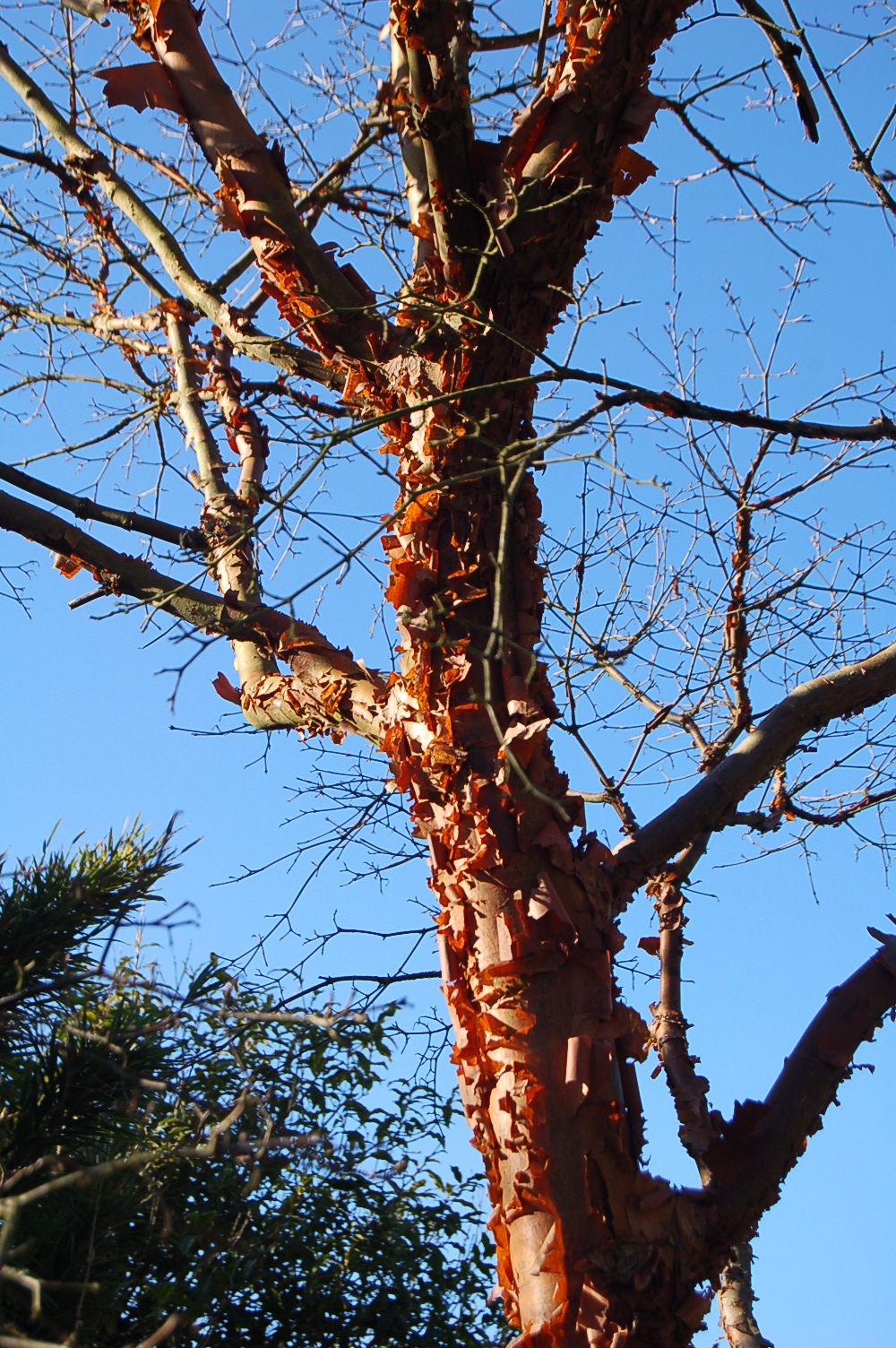
Acer griseum is a classic winter garden tree, with its silky-smooth, shiny mahogany bark. the thinnest of slithers peel off, curl and catch the low winter sun. It has a perfect common name, the Paper Bark Maple. It appears to be wrapped in sparkling, shining and very fancy wrapping paper

Acer griseum
Acer griseum

Another Acer that caught our eye, similarly had beautifully coloured bark, was Acer x conspicuum “Phoenix”. The bark on this Acer though was silky smooth.

Acer x conspicuum "Phoenix"
Acer x conspicuum “Phoenix”

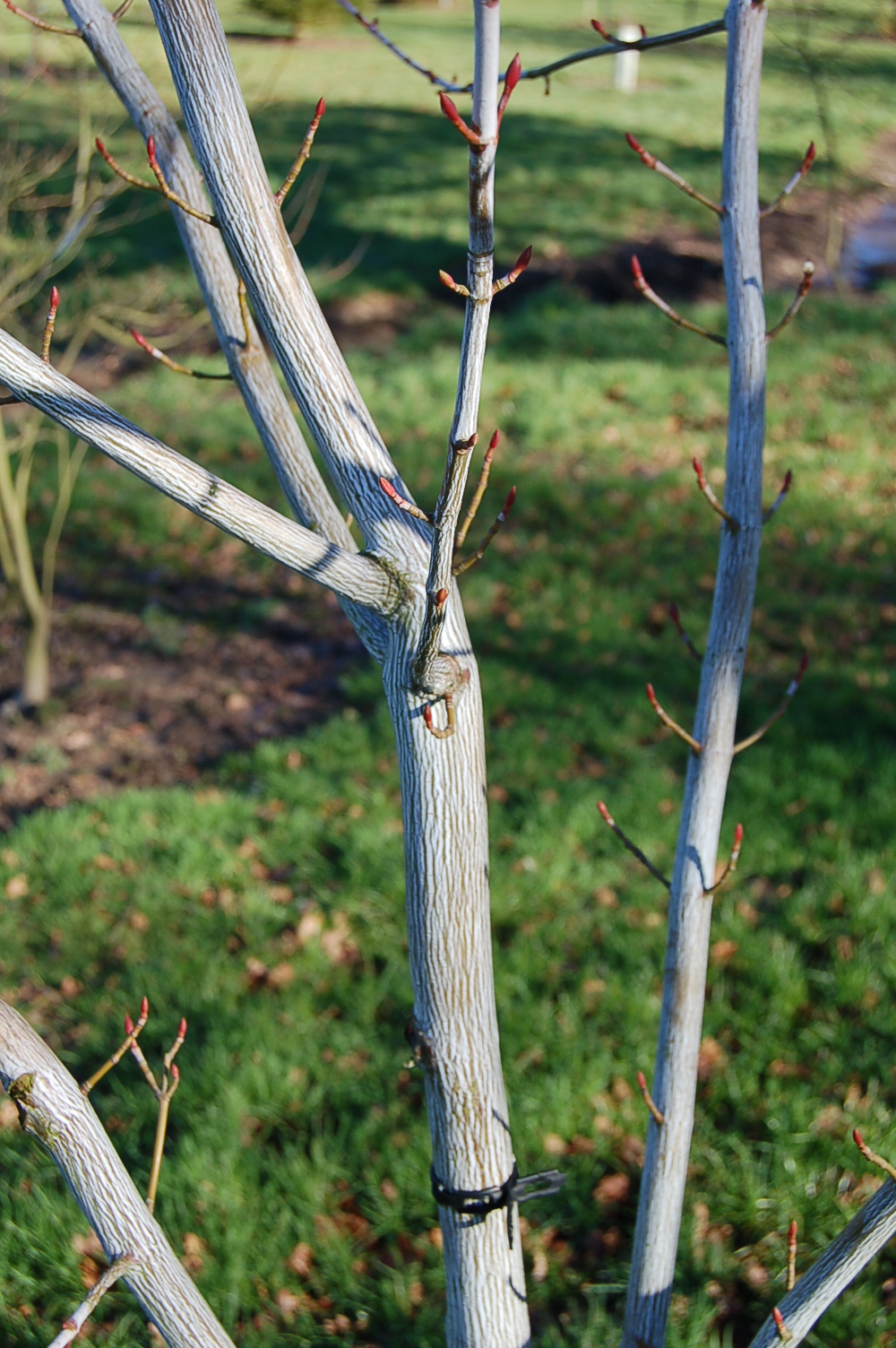
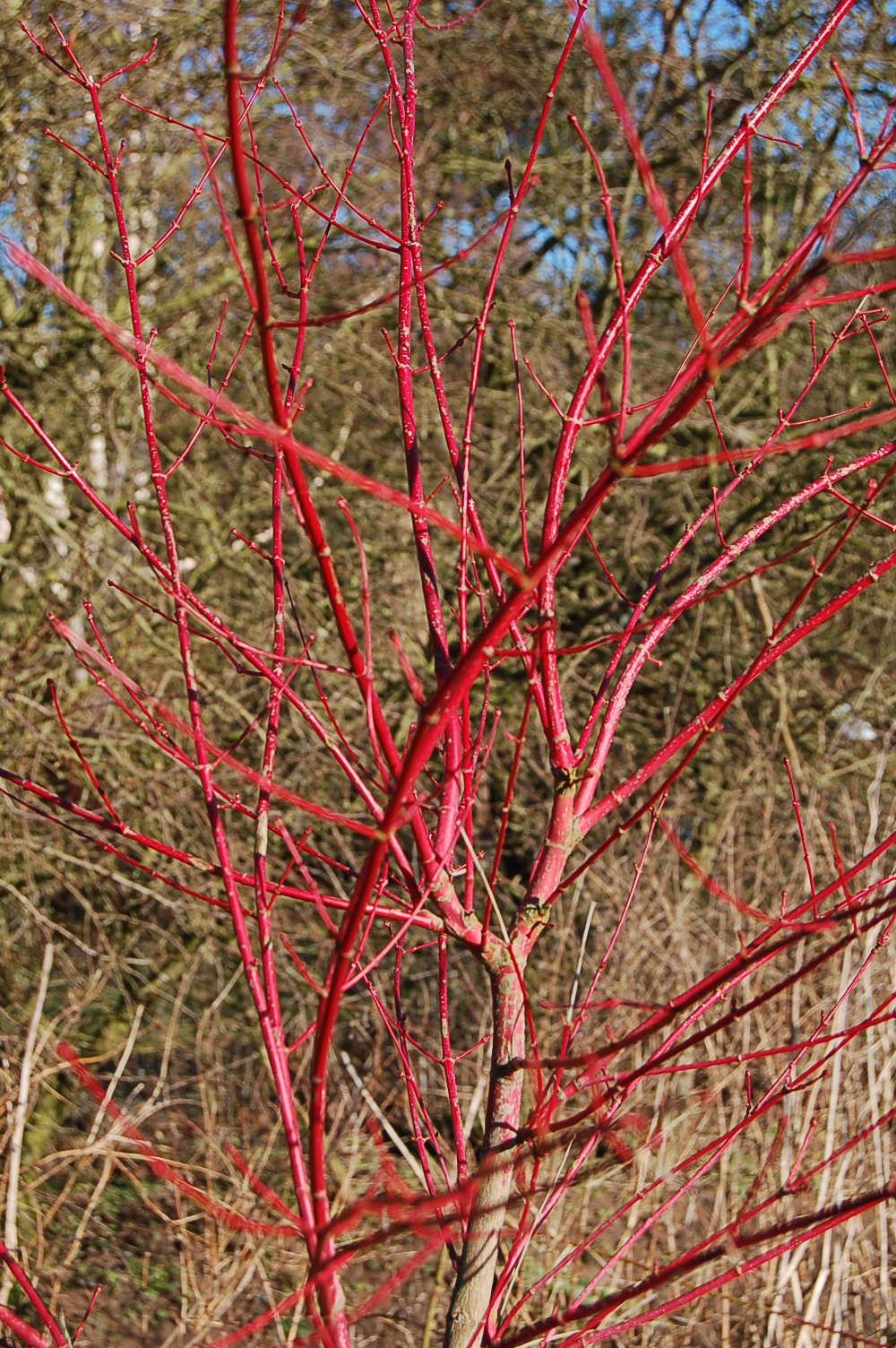
The celebrated Snakebark Maples need to be studied close up where the delicately textured and multi-coloured bark can be fully appreciated.

DSC_0194
Acer tegmentosum – The Amur Maple.
Acer davidii
Acer davidii

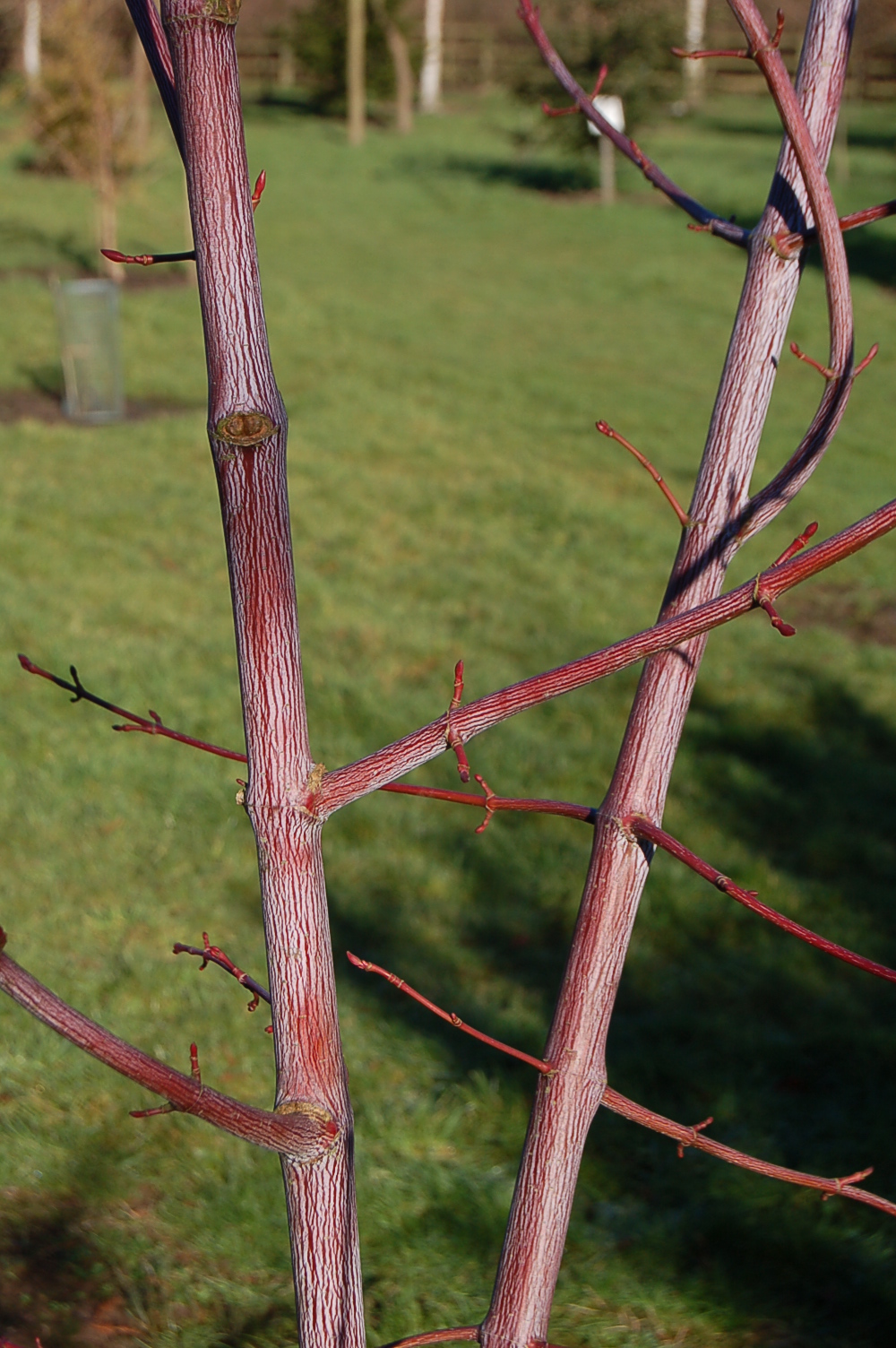
The type of Acers most frequently grown in smaller gardens and arboreta alike is Acer dissectum, grown for its leaf colours, the fresh young growth in spring, the rich summer colour and perhaps most of all for the extravagent autumn colours. But at Bluebell Arboretum we discovered this variety, “Eddisbury” which had another layer of interest and an extra reason for growing it, the beauty of its stems.

Acer dissectum "Eddisbury"
Acer dissectum “Eddisbury”

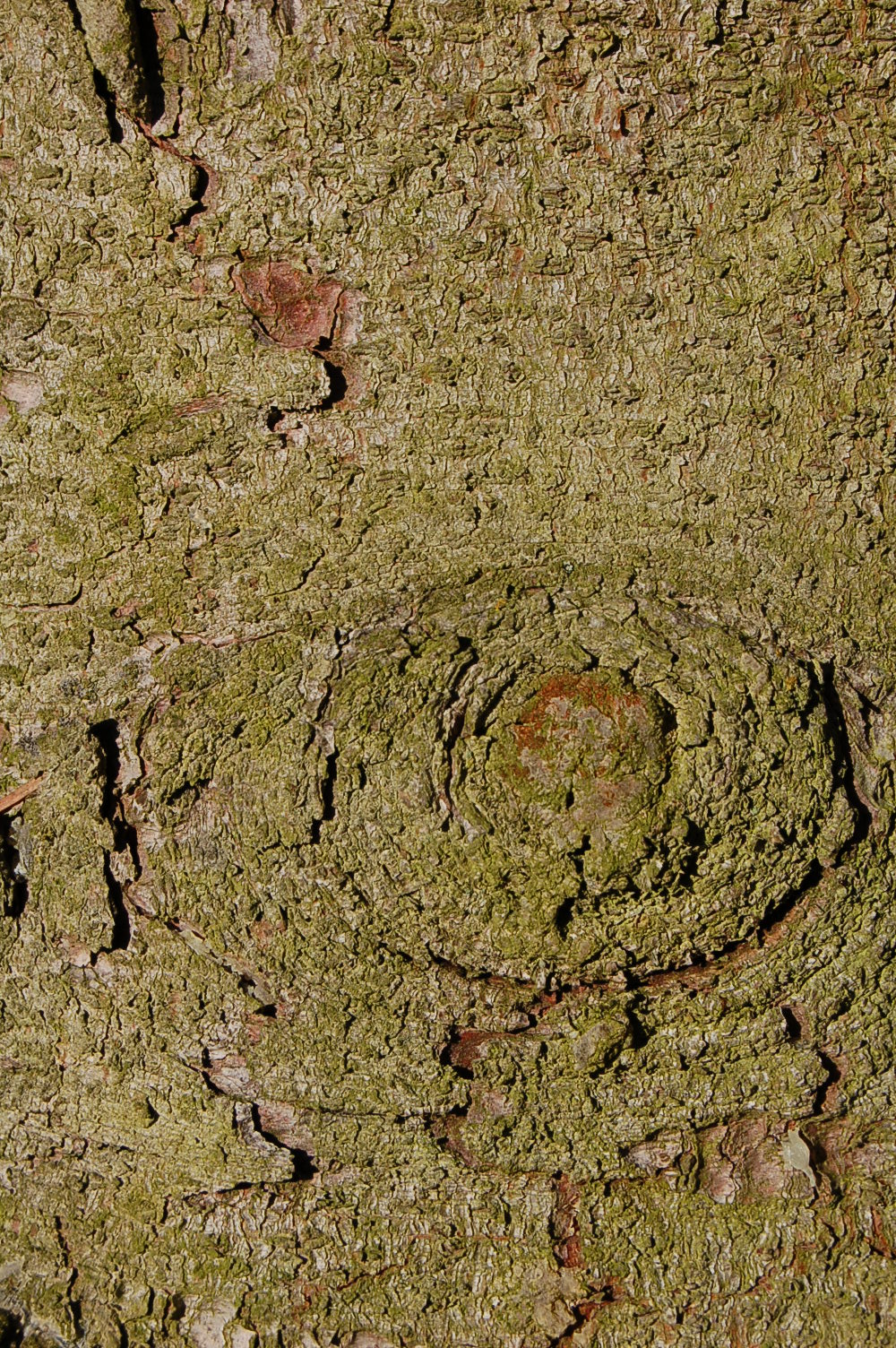
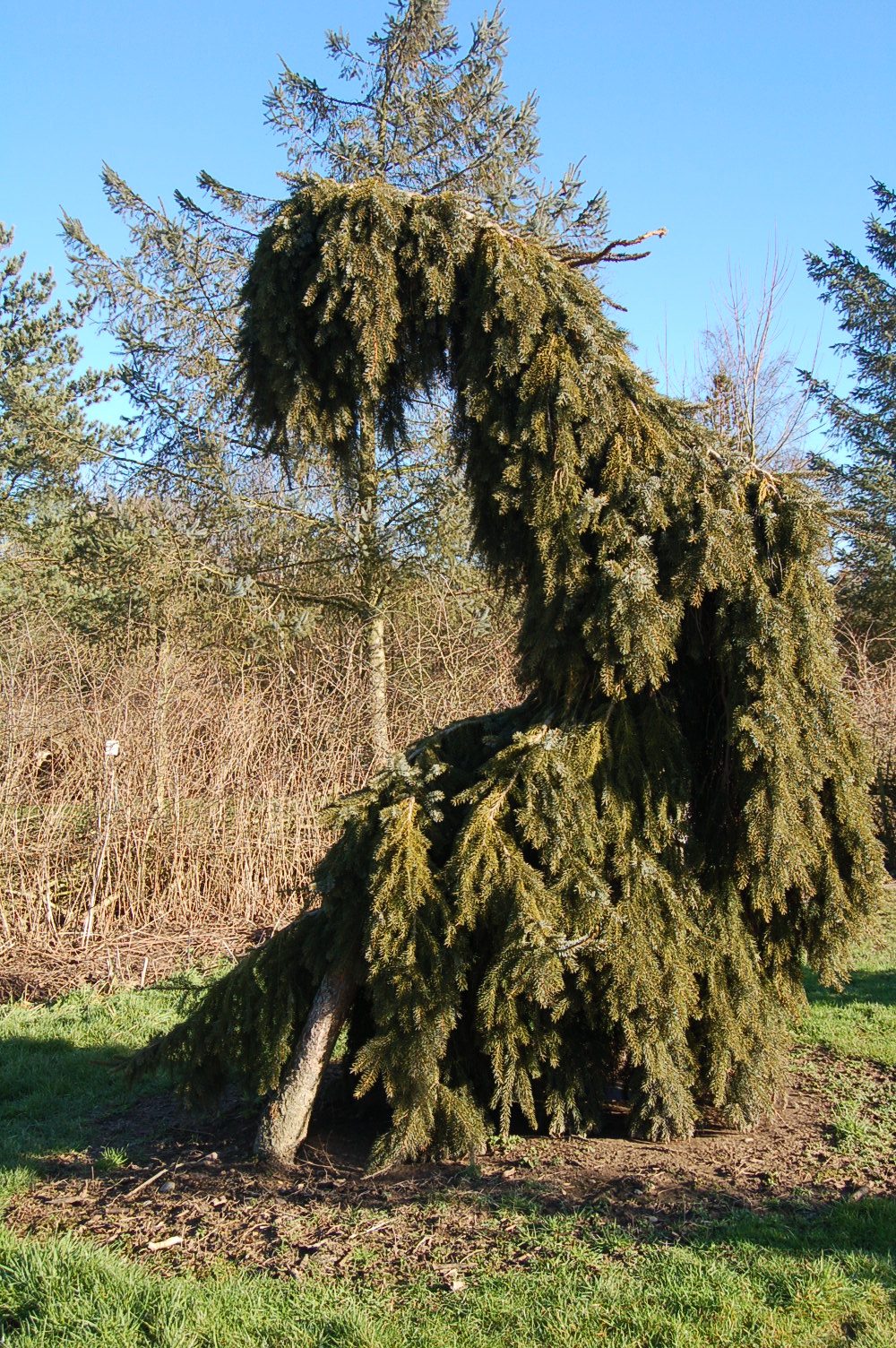
I am not a great fan of conifers but two caught my eye, both Piceas. One had bark with eye shapes and the other an amazing profile.

DSC_0169 DSC_0173

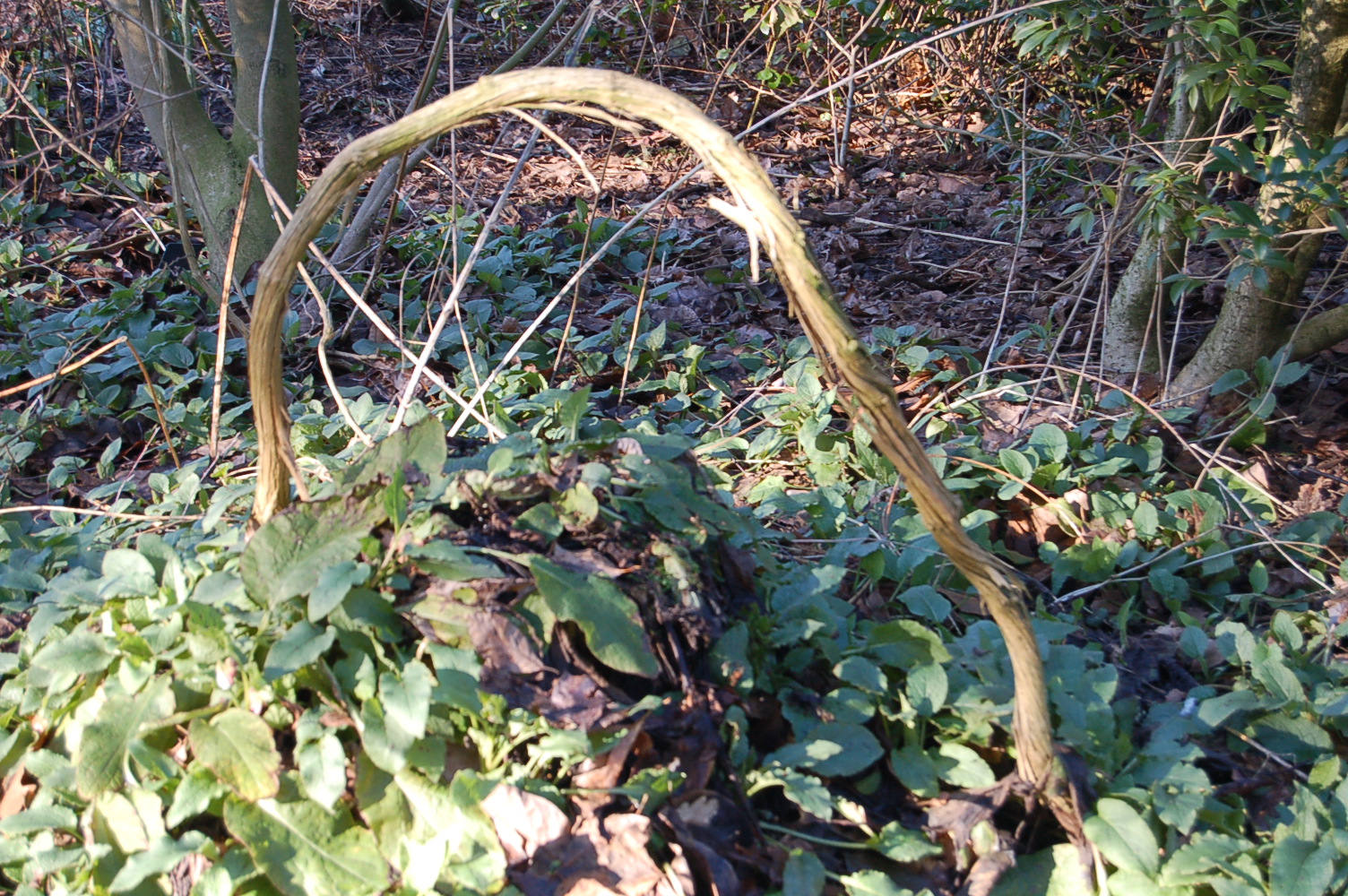
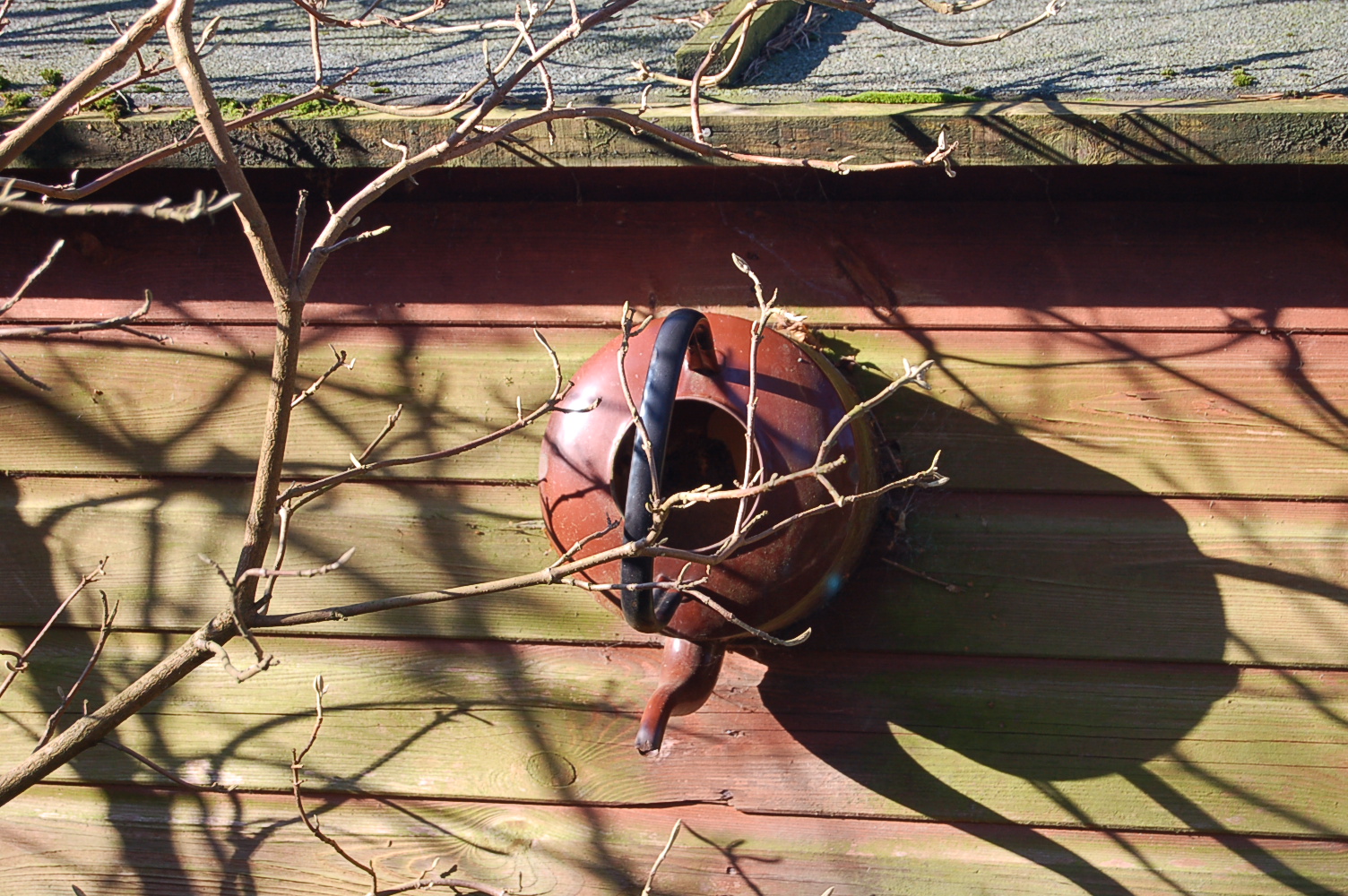
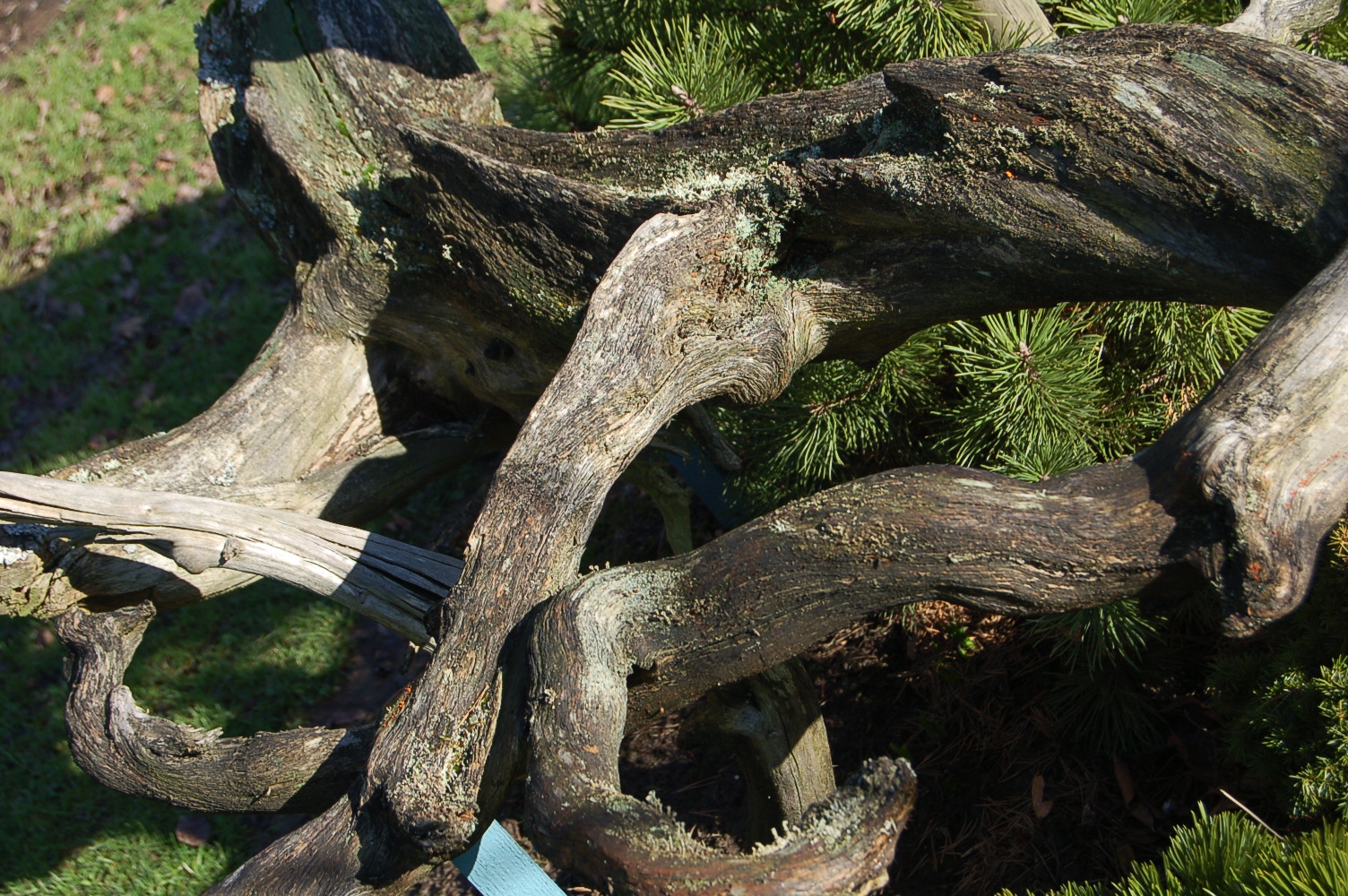
If the amazing trees of Bluebell weren’t enough for the gardener to delight in, other points of interest are there to catch the eye. An archway of clematis, a petrified tree stump, a kettle Robin nestbox, a logpile for beetles, an interesting old stump and another stump with rings making a picture reminiscent of an ammonite fossil.

DSC_0146 DSC_0147 DSC_0148 DSC_0167 DSC_0246 DSC_0249

There were too many examples of my favourite family of trees, the Betulas, so they deserve a post of their own. One to look forward to!

Categories
garden design garden photography gardening gardens open to the public hardy perennials ornamental trees and shrubs photography RHS

The Gardens of the RHS Part 1 – A Tour of Wisley

nkjbjkj

The Royal Horticultural Society is probably the most important, most well known and most influential gardening society in the world. We are lucky to live in the UK where we have access to their own gardens and to their recommended list of gardens open to the public.

Last Year we enjoyed visits to three of their four gardens, Rosemoor in Devon, Harlow Carr in Yorkshire and their main garden Wisley in Surrey. The one we didn’t get around to seeing was Hyde Hall in Essex – maybe later this year.

In this series of posts I shall share our visits with you. We naturally begin with their main garden, Wisley. There is so much of interest to gardeners that I shall post a blog each day this week based on different aspects of Wisley. Hopefully these will provide a little respite from the cold and wet. So please enjoy my Wisley Week.

Perhaps we had better start with one of the classic Wisley views. Then I shall share a few views to give a feeling for this special place.

DSC_0005

DSC_0010 DSC_0044

DSC_0186 DSC_0187

DSC_0206 DSC_0208 DSC_0209 DSC_0211 DSC_0213

These huge sloping double borders were designed by the great Piet Oudolf. We saw them first just as they were planted when it was mostly soil dotted with little young plants all raring to go. Every visit we make to Wisley we head for these borders to see how they have developed. Over time they have been altered with some plants replaced with more effective, more appropriate ones. They are now at their peak. See more of Piet Oudolf’s borders in a future post “Meadows and Prairies at Wisley”. DSC_0094

The recently built Centenary Glasshouse is a work of art in itself, one of the finest examples of garden architecture to be seen anywhere at anytime. Look out for the future posts, “Orchids at Wisley” and “The Centenary Glasshouse at Wisley”, to see what is going on under all that glass.DSC_0095 What would a visit to Wisley be without a gallery of plants?

alj

DSC_0008 DSC_0009 DSC_0011 DSC_0019  DSC_0023 DSC_0024 DSC_0026 DSC_0030 DSC_0034

DSC_0036nb  DSC_0039 DSC_0041 DSC_0042 DSC_0046 DSC_0096 DSC_0180 DSC_0184  DSC_0188

In my next Wisley blog I invite you to share a selection of sculpture which was displayed around the grounds at the time of our visit.

Categories
bird watching birds garden wildlife gardening wildlife

Winter Birds in our Garden

(Hope you like the new look! Please let me know what you think.)

In recent years we have seen the numbers of most birds visiting our garden, even the commonest, dropping most drastically. Goldfinches, House Sparrows, House Martins, Swallows and Starlings seem particularly badly affected. We try to help by providing food, shelter and nest boxes but our actions must be a drop in the ocean. What would make a real difference would be for some serious research to find the root causes of this sad decline, and then putting it to rights.

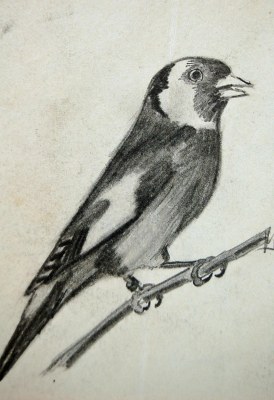
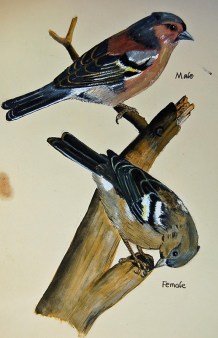
For a change I thought I would add some of my drawings and paintings to the usual photos I include in my postings. The pencil sketch below is of the multi-coloured Goldfinch.

DSC_0005bnm

This year the flocks of Goldfinches are showing signs of improvement, the sparrows are back cheerily entertaining us with their constant chatterings and the tit family seem more numerous. We notice these changes just by observing activity on and around our three feeding stations.

Some birds though still seem to be suffering especially Chaffinches and Greenfinches which until a few years ago were two of our garden’s commonest species.

DSC_0002dfg  DSC_0006nm

Happily the Great Tit population here appears stable and their cousins the Coal Tits seem more numerous. These related birds display very different characters when visiting the feeders. The larger Great Tits are confident and stay feeding for long periods often chasing away other birds with wing-flaring and threatening shouting, while the Coal Tit comes quickly and quietly, selects its nourishment and disappears into nearby vegetation.

DSC_0007bnm

DSC_0004bnm

Many birds come into the garden to feed even when we are around, confidently feeding and foraging as we go about our business.

DSC_0108bn

DSC_0109nm

Winter brings into our garden for our enjoyment birds that we rarely see for the rest of the year. Winter visitors like the continental thrushes are the most obvious as they arrive in great numbers noisily and feed voraciously on berries and bits and pieces dropped from the bird table by the residents. Smaller less obvious visitors are Blackcaps and Siskins and these are welcomed with open arms. They are lovely to watch in the shrubs and trees. Goldcrests move in from the local woodlands and add wonderful bright splashes of colour.

DSC_0009bnm

A strange happening that we have observed this winter for the first time kept us amused for while. Our Nuthatches have started hiding peanuts away under the edges of the roofing felt of the garage and sheds. They ram them in a long way and very firmly. We wonder if they will recall where they left them when they need them in the future. It seems more likely that the Bluetits will discover them as they search all nooks and crannies in search of bugs.

Feeding the birds in our gardens may be drops in the ocean, but lots of drops may make a big wave!

Categories
birds garden photography garden wildlife gardening grasses hardy perennials ornamental grasses ornamental trees and shrubs roses shrubs trees winter gardens

A Wander around our Garden in December

DSC_0065

The last month of 2012 and therefore here is the last post in the “wander around our garden” series. December was a month that started wet and cold and quickly got wetter and colder. We have found ourselves carrying on regardless – we weren’t going to let the weather beat us. So we donned warm waterproofs and busied ourselves clearing soggy perennials and pruning shrubs.

The birds are suffering from lack of natural food in the surrounding countryside so are flocking to our feeders. They add so much colour and song. This year’s flocks of Long Tailed Tits and Goldfinches are much larger than in recent times. Mixed tit flocks have reached over 70 in number at times and finch flocks up to 25. So we are kept busy regularly topping up the seeds, nuts and fatballs. As a result of the poor harvests of berries and fruit in the woods and hedgerows we have had invasions of large flocks of Blackbirds into the garden and already our shrubs are stripped of their produce. The blackbirds are aided in their berry stripping by Thrushes, Redwings and Fieldfares. All the red berried shrubs were denuded first, leaving not a single berry on our Cotoneasters, Hollies and Mountain Ashes so they are looking a little less colourful. They have now started on their second choice berries – yellows and whites.

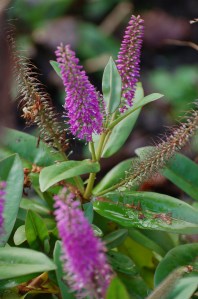
There is still an amazing amount of colour in the garden with some flowers still going strong. This Hebe just ignores whatever the weather throws at it and keeps on flowering. When a frost comes these delicate looking flowers prove they are not delicate at all. They stand to attention even when coated in frost.

DSC_0010

DSC_0011

DSC_0064

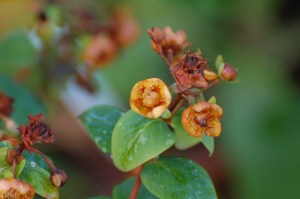
These small Hypericum  shrubs, similar in size to the Hebes, perform on several fronts with flowers still apparent, berries showing several colours on the same plant and leaf colour which gets richer as the weather gets colder.
DSC_0012

DSC_0013

Odd flowers of Rudbeckias appear throughout the winter way outside their peak flowering period. They are like little bursts of sunshine.

DSC_0014

Other plants are meant to be winter flowering and we look forward to these each year.  Mahonia japonica exhibits its long thin upright racemes of buttercup yellow flowers with the added luxury of a beautiful warm scent, somewhat reminiscent of pineapples.

DSC_0046

The glossy, dark hand shaped leaves of Fatshedera are a perfect foil for bright summer flowers in our Shed Bed, but it produces its own much more subtle flowers throught the winter. They are the palest of cream with a dull orange centre. They look as if they should emit the mouth-watering aroma of vanilla but that is sadly only in my imagination.

DSC_0016

After a deep frost these flowers loose substance and flop, hanging lifelessly until warmed by the sun.

DSC_0133

The starkness of winter structure exposes simple shapes and patterns working together. This yellowed sword shaped leaf of a Crocosmia cuts dramatically across the curved metal seat back.

DSC_0015

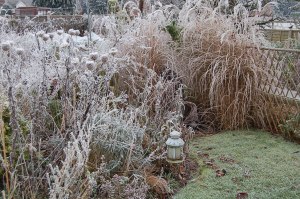
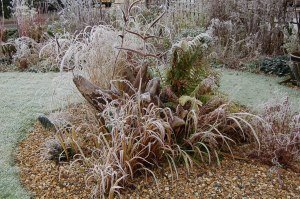
Sculptures take on a new life. Our ironwork ferns rimmed with frost particles curls through the whitened grasses in the Stump Garden.
DSC_0054 DSC_0055

Seating areas look less inviting!

DSC_0058

 DSC_0061

Right down at the bottom of the garden the summerhouse looks sadly at the pool which sits frozen solid at its feet.

DSC_0062

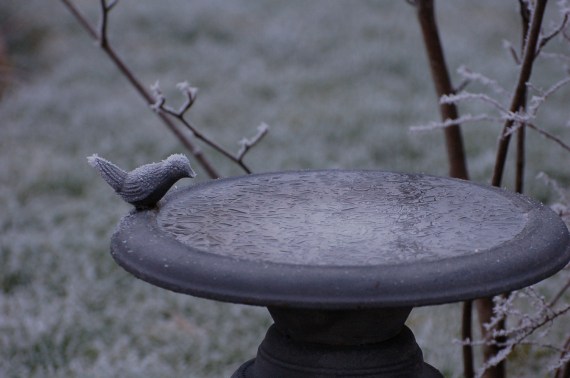
Similarly the water in the birdbaths is often frozen. Each morning as I wander down the garden to feed the chucks I take a detour to add warm water to the birdbaths to melt the ice.

DSC_0063

DSC_0091

Frost decorates ornamental features giving them a new winter look.

DSC_0086

DSC_0098

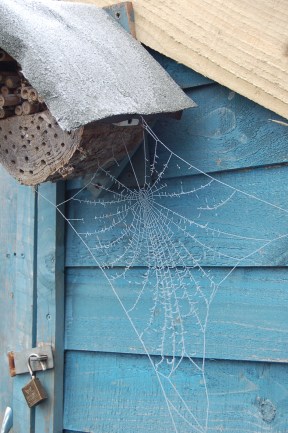
Frost highlights the overnight toils of spiders who weave webs around sheds, nest boxes and insect homes.
DSC_0069

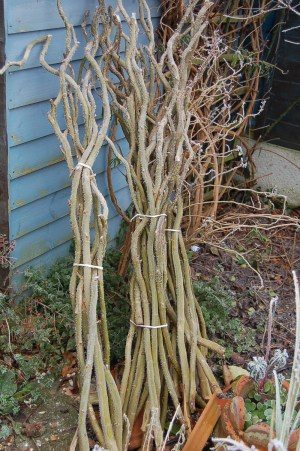
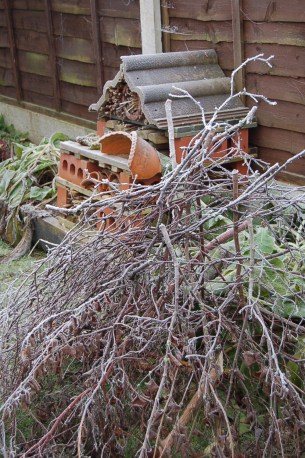
There is little to harvest in December but we harvest various prunings. Taller thicker branches will be used as bean poles, smaller branches as pea sticks and to support perennials next year, and these spiral willow stems will be part of some sculpture that I am planning. Bamboo prunings will give us our own bamboo canes. Our first real crop of canes! That should save a few air miles!
DSC_0067

DSC_0068

Whatever the winter has in store for us, we are well-prepared. This pile of hardwood logs, oak and birch, will keep us warm and cosy and its scent of woodlands give a good welcome. And outside the chimenia patiently waits with its own fuel supply for us to venture outside to garden and enjoy a coffee break in the winter sun. Alongside the sculptural fire bowl adds further interest.

DSC_0070

DSC_0045

And what is happening in our borrowed landscape in December? Sheep seek nourishment in the paddock and provide a little natural fertiliser for the grass, and the wheat fields sadly sits waterlogged, growth at a standstill.

DSC_0038

DSC_0039

DSC_0040

Categories
birds colours gardens open to the public Land Art National Trust outdoor sculpture photography Shropshire The National Trust trees wildlife woodland

Woodland – Mother Nature as Artist, Sculptor, and Scribe.
A winter wander around our local woodland patch within the grounds of the National Trust’s Attingham Park got off to a strange start. Expecting the cold weather to have restricted visitors to a few hardy souls, we arrived to see the main car park full, all overflow parking fields full and lots of extra parking also filling up rapidly.

We had arrived just after the start of their first Christmas related event – The Frost Fair. Bad planning! However the woodlands were quiet, the only sounds following us around were the songs of small and squeaky birds, Coal Tits, Treecreepers and Goldcrests.

DSC_0037

The event we searched out was the art exhibition of the works of Mother Nature. She was her usual brilliant imaginative self.

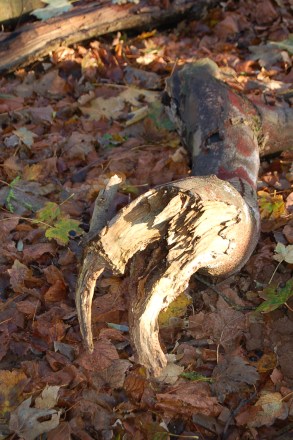
Her woodcarving looked freshly made and full of texture and colour.

DSC_0017

This piece looks to be based on the shapes of a crab’s claw.

DSC_0034

DSC_0022

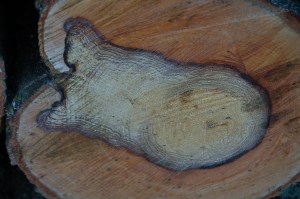
Drawings on the cut trunks of a diseased Ash tree reminded me of cave paintings.

DSC_0018

DSC_0021


DSC_0020

This triangular land art installation shows Mother Nature working in a more geometric way.

DSC_0025

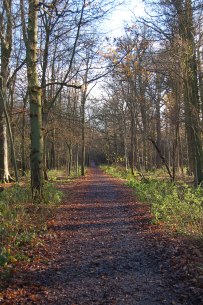
As the woodland path took us deeper in amongst the trees we appreciated the quietness of our footfalls, the quietness of the soft deep pine needle duvet. When it is quiet the subtleties of bird songs and calls are more easily enjoyed. We stood feet away from a Goldcrest feeding on insects he had searched out from the conifer needles with thin probing beak. He suddenly fell to the floor as if dead, or mimicking the gentleness of a falling leaf. He dropped into the fern and bramble undergrowth and stayed there out of sight. Was he feigning death to fool a predator or pretending to be a falling leaf with the same purpose in mind? As we stood silently in awe of what we had witnessed he reappeared vertically up into the branch he had fallen out of. One of those magical moments that two observers of the natural world will never forget! Any idea what he may have been up to?

DSC_0032

DSC_0031

DSC_0035

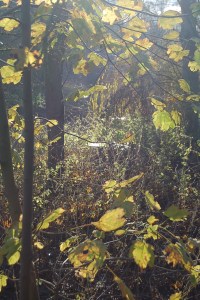
Nature playing with light fascinated us as the sun dropped lower in the thin blue sky lighting up the understory  with golds and oranges.

DSC_0033

DSC_0039

DSC_0044

DSC_0052

DSC_0051

Water, be it a stream, ditch, river or pool, affords nature the chance of playing with mirrors to create illusions and mysteries.

DSC_0042

DSC_0041

DSC_0043

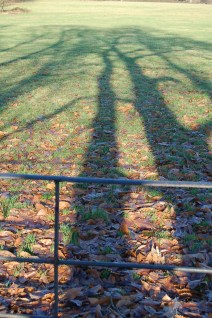
On the land shadows are drawn long and dark. The long tall tree shadow stretches out across the pastureland. My own shadow tried to get in the picture until I managed to persuade it to move into the shadow of one of the tree trunks.

DSC_0023

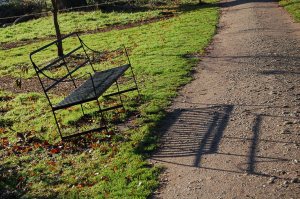
The shadow of the precariously leaning seat crossed our path as we approached the gap in the tall wall that would take us into the productive gardens.

DSC_0026

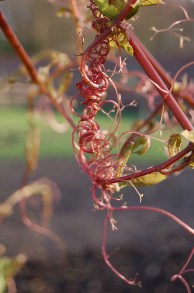
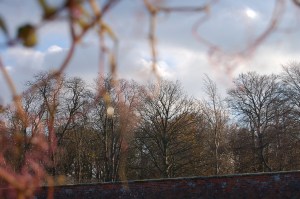
The climbing, curling tendrils of this vine glow pink and red in the sunlight, forming a natural frame for the filigree skeletons of trees.

DSC_0030

DSC_0029

We greatly enjoyed our visit to the open air gallery.

DSC_0053nbm

This Veggie Life

A Vegetarian | Nature Lifestyle Blog

Rambling in the Garden

.....and nurturing my soul

The Arch City Gardener

Journeys In St. Louis Gardening and Beyond

Garden Dreaming at Châtillon

Consult the genius of the place

Storyshucker

A blog full of humorous and poignant observations.

gardeninacity

Notes from a wildlife-friendly cottage garden

PlayGroundology

...an emerging social science

The Official Blog of British Wildlife

'The most important and informative publication on wildlife of our times' - The Independent. This blog is a member of The UK & Ireland Natural History Bloggers group: www.uknhb.blogspot.com

iGrowHort

Inspire - Cultivate - Grow Native Plants - Restore Landscapes

Bishops Meadow Trust

To create and protect a semi-natural wild space for the people of Farnham to enjoy and experience an array of British wildlife in our town

Gardening with Children

The www.gardeningwithchildren.co.uk Blog

UKbirdingtimeline

birding through the seasons, why birds matter and how to conserve them

NATURE WALKER

with a camera in hand

Jardin

Transform your outdoor space

Eva's space

My allotment, cooking and other interests

Old School Garden

my gardening life through the year

LEANNE COLE

Trying to live a creative life

fromacountrycottage

trying to live as lightly as possible on our beautiful planet

Good Life Gardening

Nature lovers from Leicester living the good life.

mybeautfulthings

Finding the beautiful in the everyday

mawsonmichelle

Michelle's Allotment

In and Out of My Garden

thoughts from and about my garden

Greenhousing

Big plans for a small garden

The Scottish Country Garden

A Walled Country Garden in South East Scotland

The Fruity Chicken

Life at the fruity chicken

willowarchway

Off grid living. Self sufficient. "PERMAGANICS RULE".

St Anns Allotments

Nottingham's Grade 2* Listed Allotments and Community Orchard

Manifest Joy Harvests

a journey in suburban vegetable gardening

Allotmental

The madness of growing your own

Penny's Garden: a harvest beyond my front door

A novel approach to vegetable gardening

arignagardener

Sustainable living in the Irish countryside.

NewEnglandGardenAndThread

Master Gardener, amateur photographer, quilter, NH native, and sometimes SC snowbird

dianajhale

Recent work and work in progress and anything else that interests me

planthoarder

a chaotic cottage gardener

Lens and Pens by Sally

a weekly blog that creates a personal philosophy through photographs and words

Dewdrops and Sunshine

Stories from a sassy and classy Southern farmbelle.

The Pyjama Gardener

Simple Organic Gardening & Seasonal Living

gettin' fresh!

turning dirt into dinner

JOY...

today the world is created anew

Garden Birds

Notes from a Devon garden

ShootAbout

Life Through The Lens

Adapting Pixels

A photography blog showcasing the best photography pictures and videos on the internet

Wildlifegardening's Blog

Just another WordPress.com site

naturestimeline

personal observations from the natural world as the search continues for a new approach to conservation.

LATEBLOOMERBUDS

The Wonders of Life through my Eyes, my Heart, my Soul