Categories
Uncategorized

Three Great Garden Visits in November – Part 2 – “John’s Garden” at Ashwood Nurseries

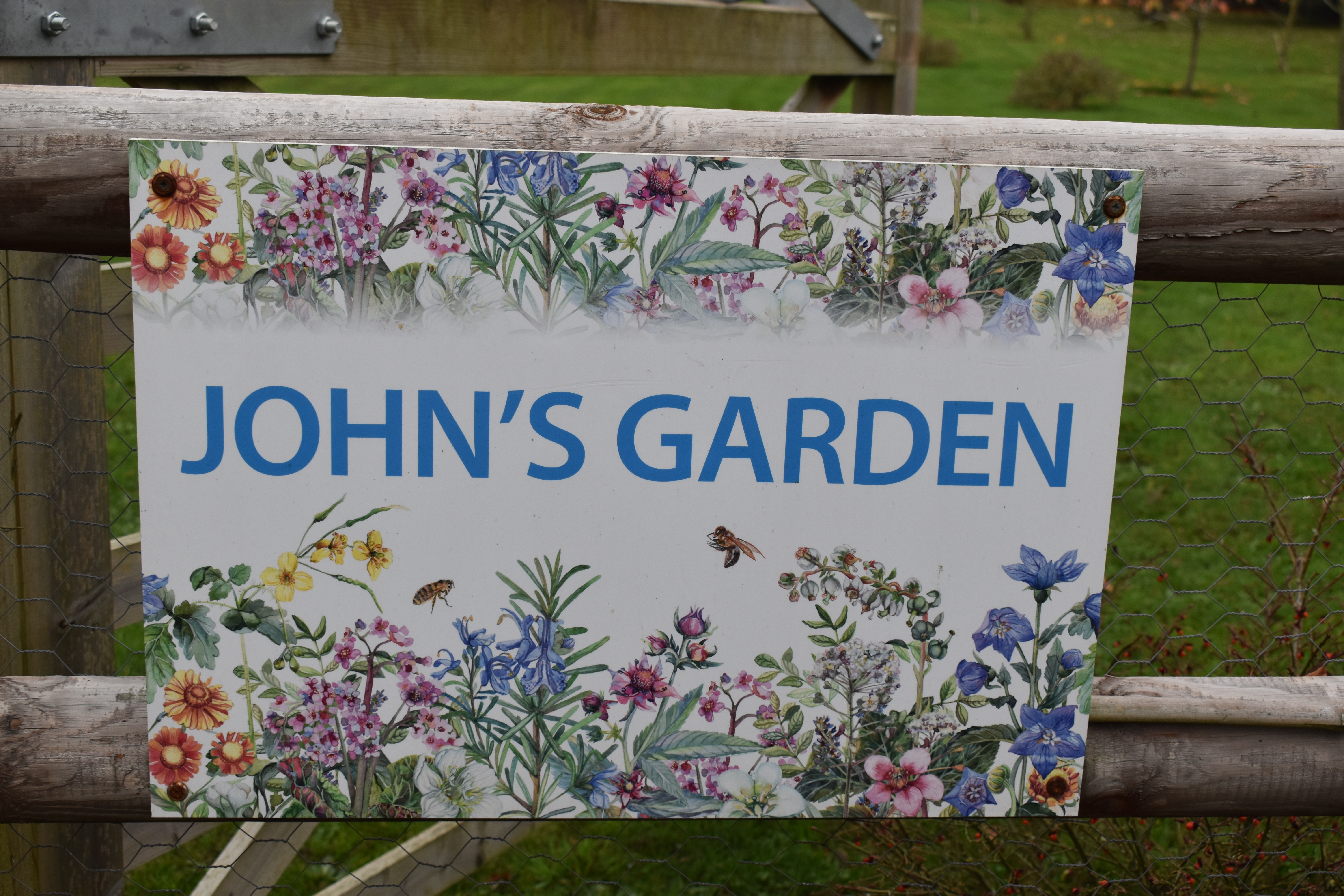
A look back to the autumn reminds me of our wander around “John’s Garden” at Ashwood Nurseries.

We have visited John’s Garden plenty of times at different times of year, and loved it every time. It is so full of atmosphere and John is such a great character and plantsman. He loves greeting his visitors and enjoys opening his garden and sharing it. He also raises so much money for local charities.

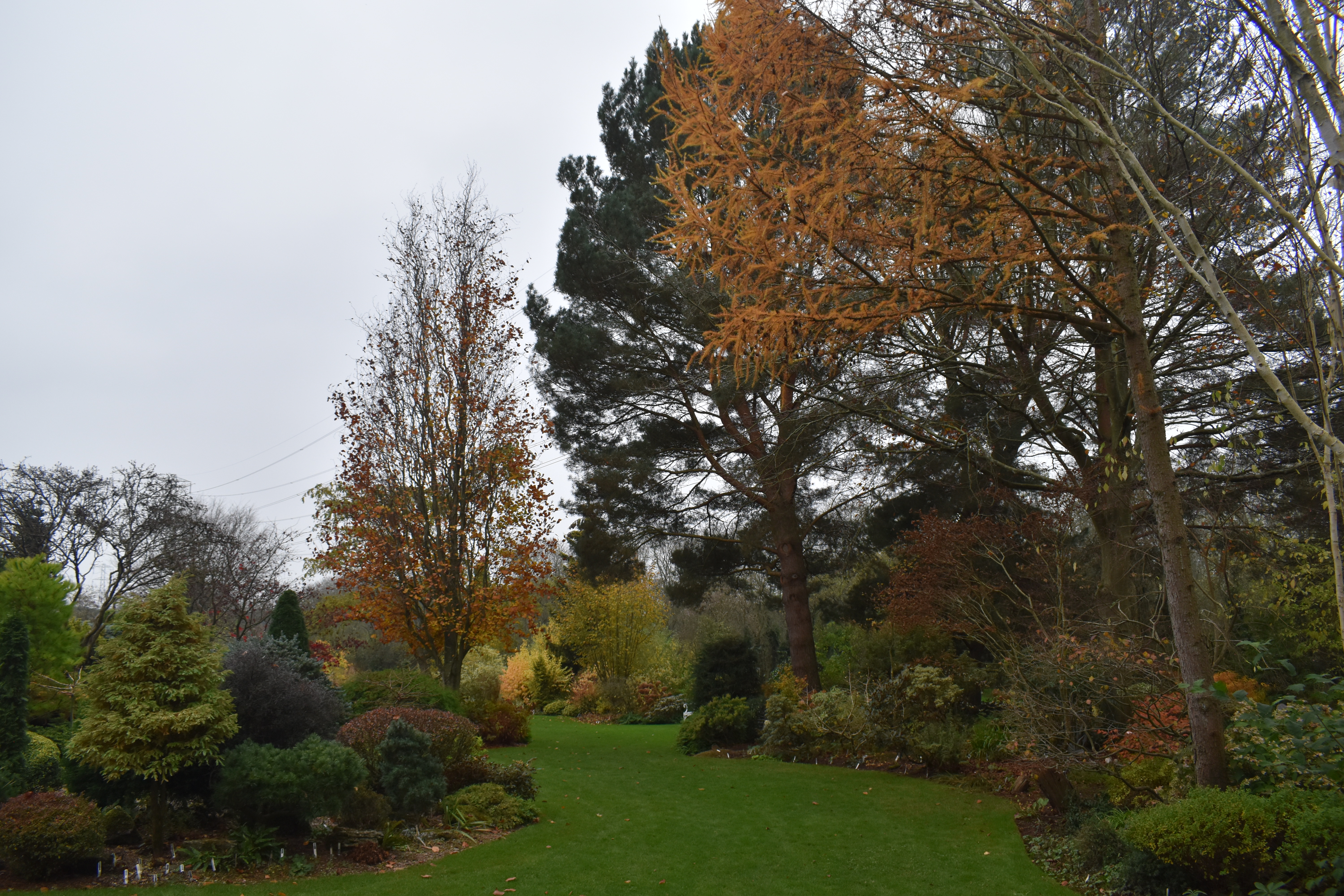
The garden is bordered on one side by a beautiful and sometimes busy canal and not many gardens can claim that. John has the skill of grouping plants together for the greatest effect and has created beautiful long vistas as well as small cameos that deserve closer attention.

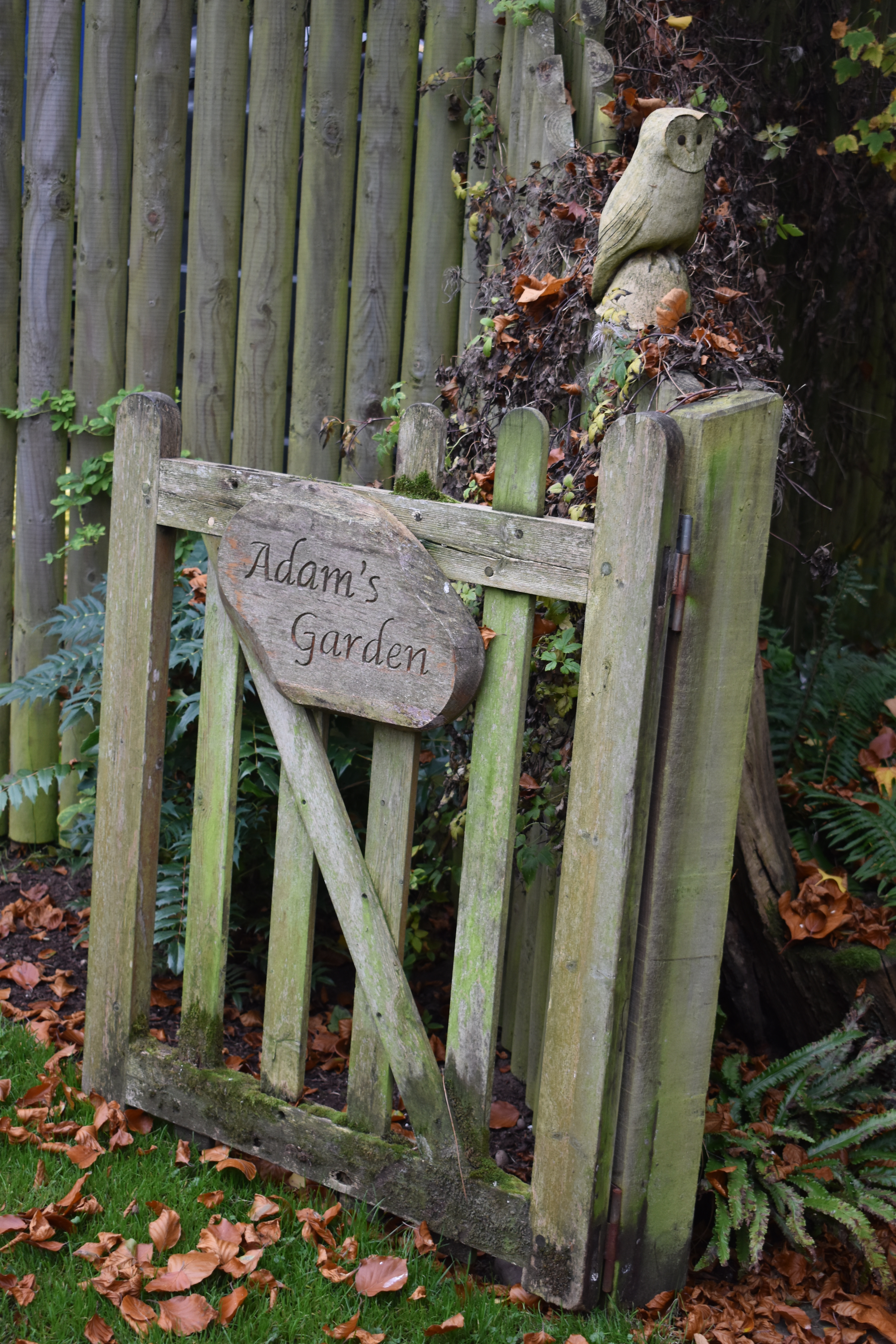
The garden is entered through a wooden farm-style gate which takes you through “Adam’s Garden” dedicated to his former young head gardener who died suddenly at the age of 27.

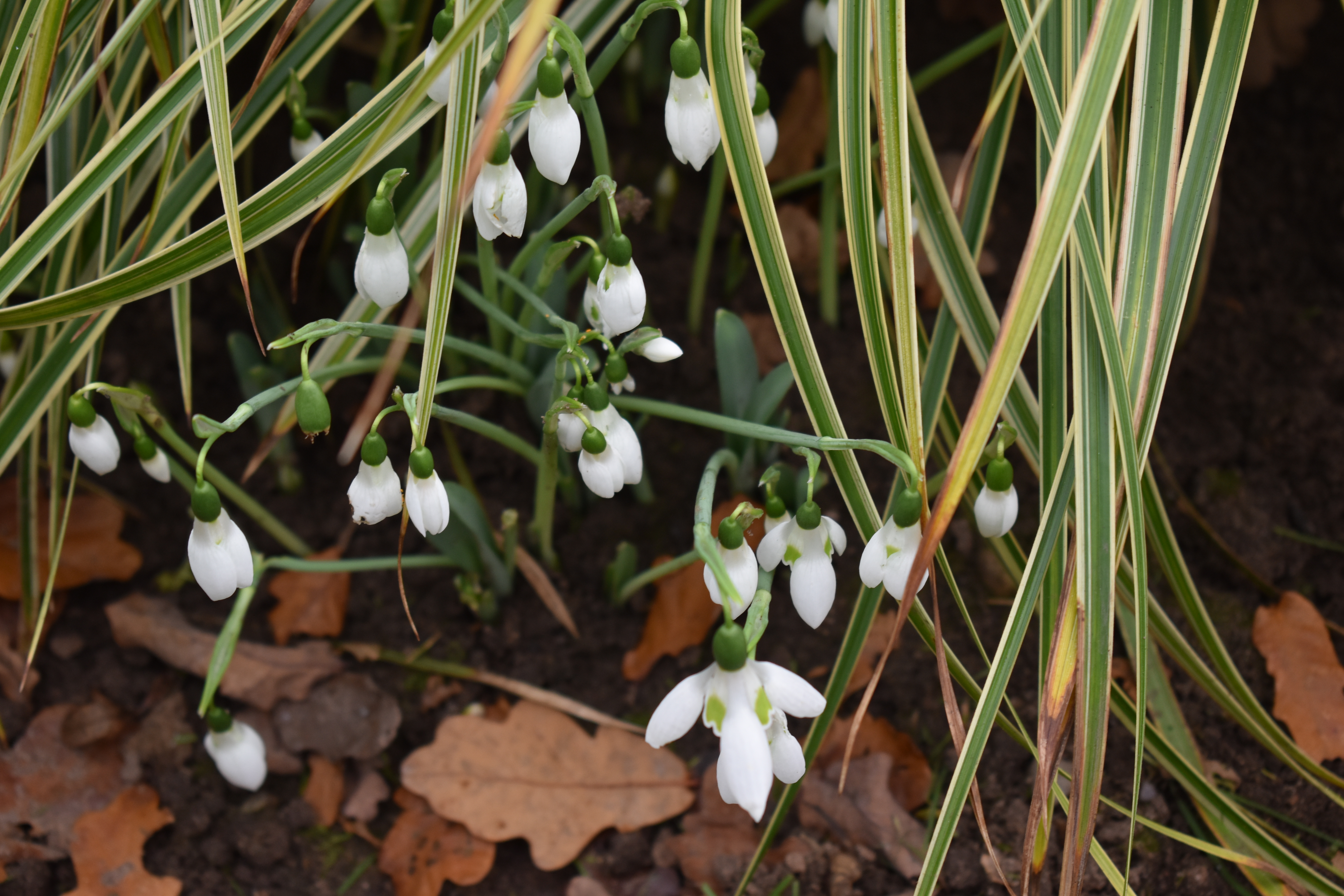
A wooden gate guarded by a sculpture of an owl leads you into the main garden. We soon stopped for a close look at a surprising sight, beneath some carex foliage were autumn flowering snowdrops, Galanthus “Autumn Beauty”. The pale stripes of the carex foliage boosted the whiteness of the blooms of the snowdrops.

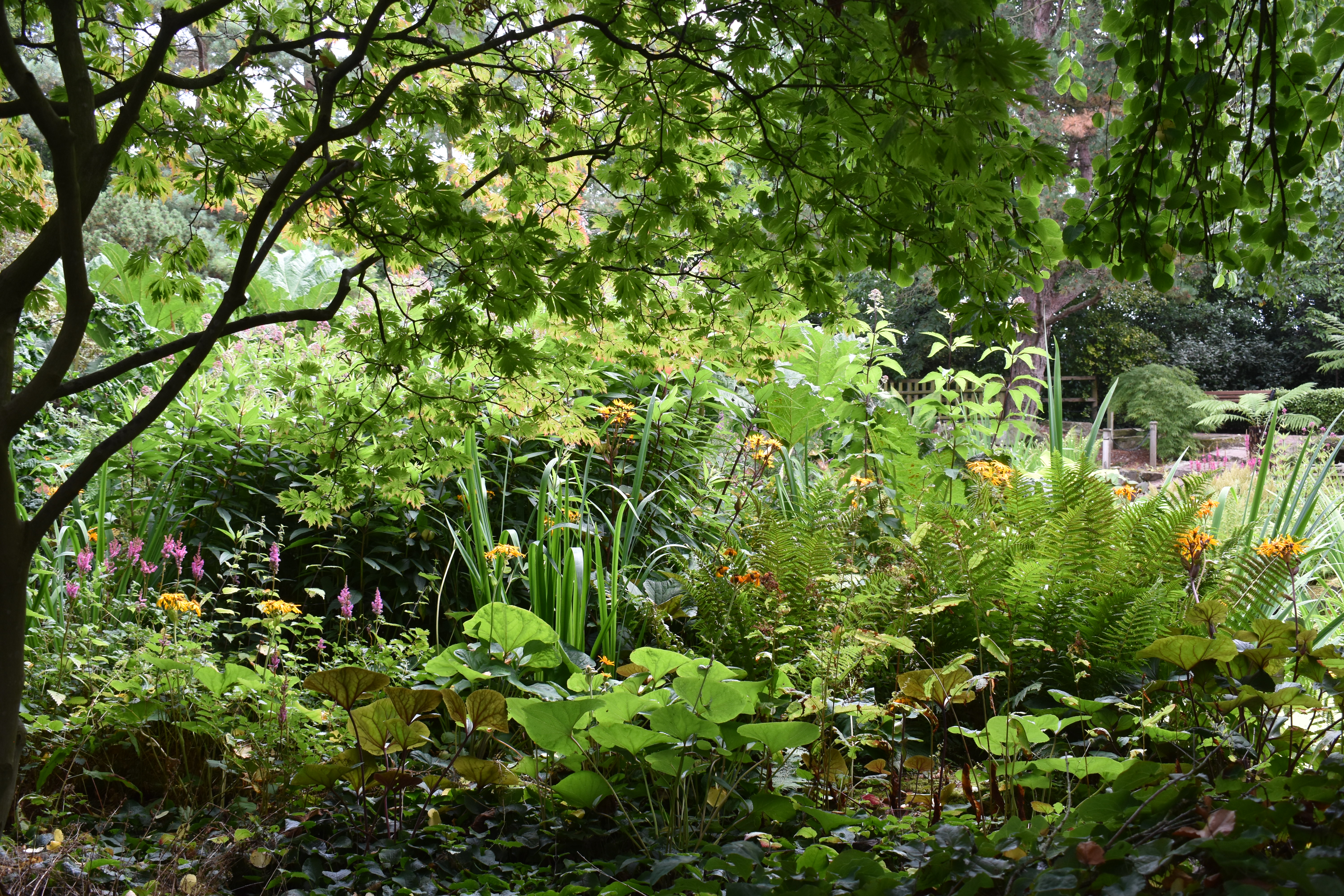
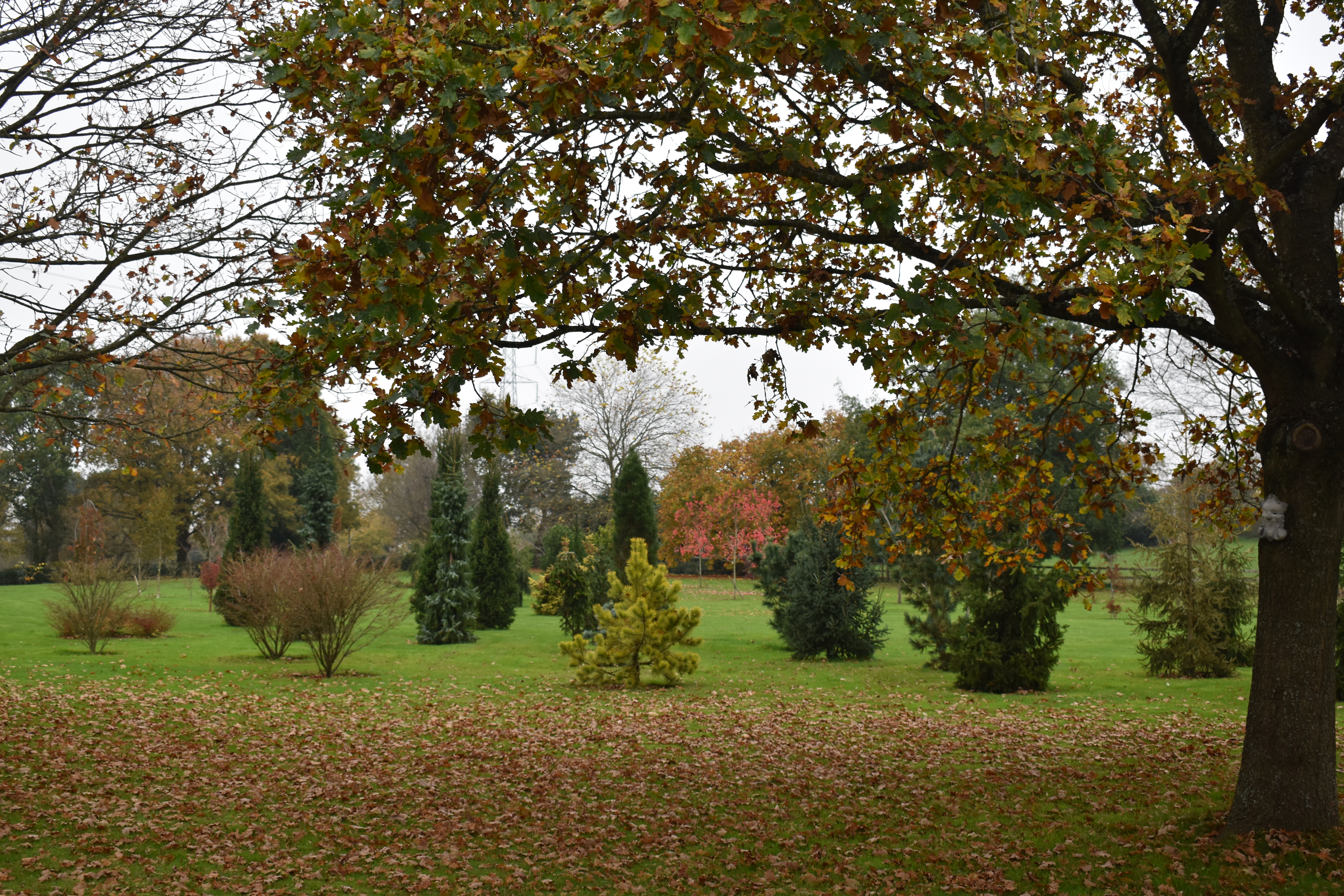
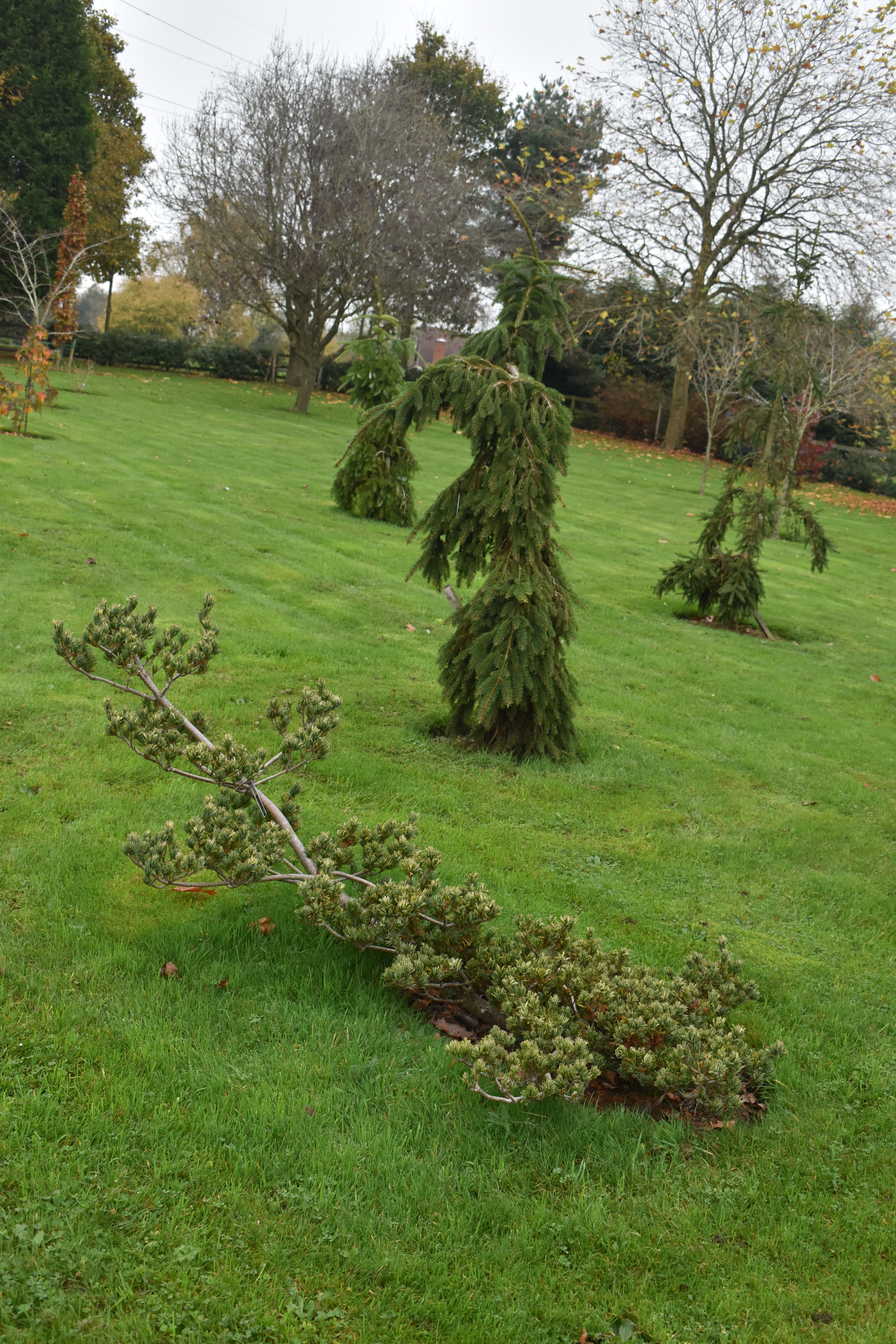
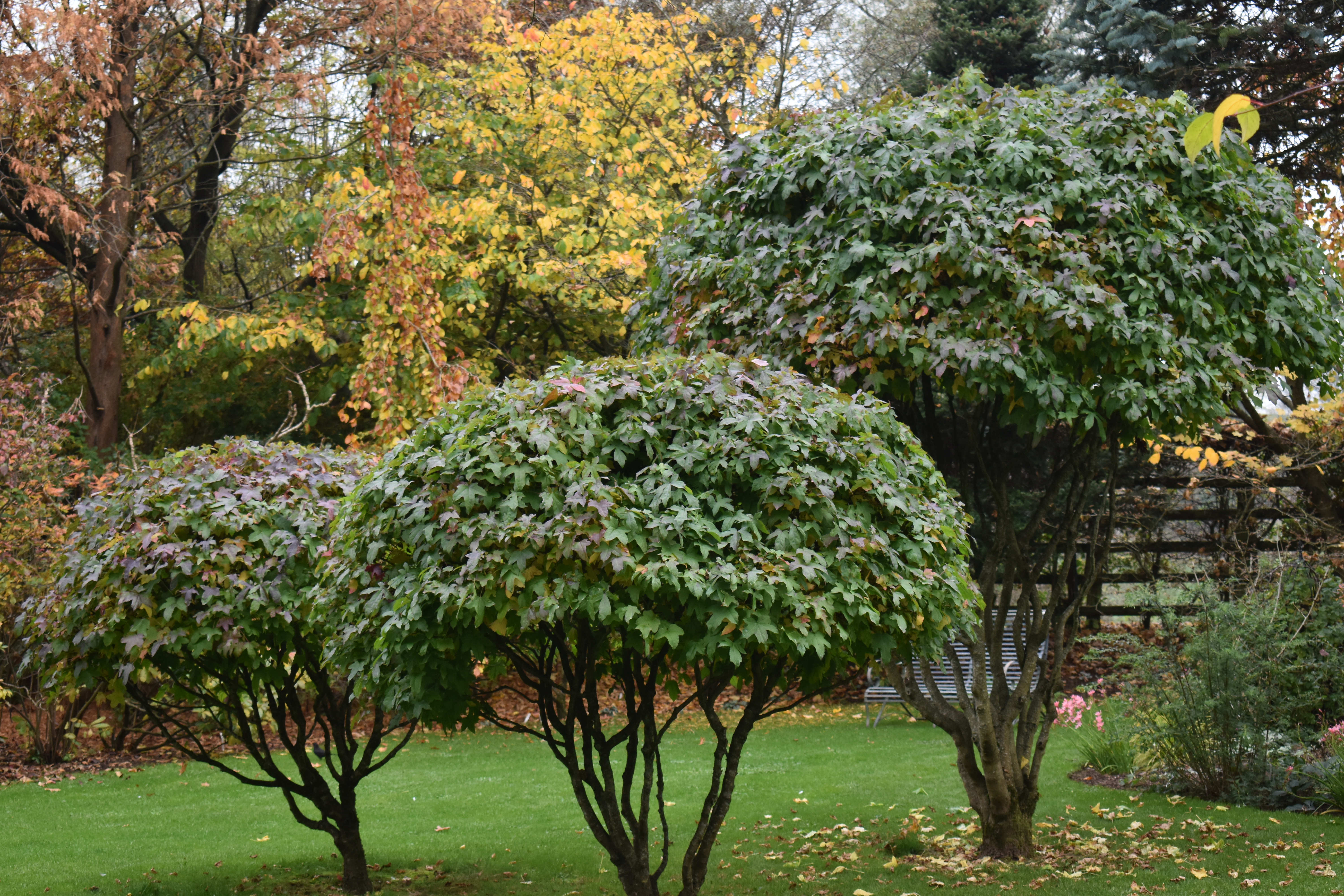
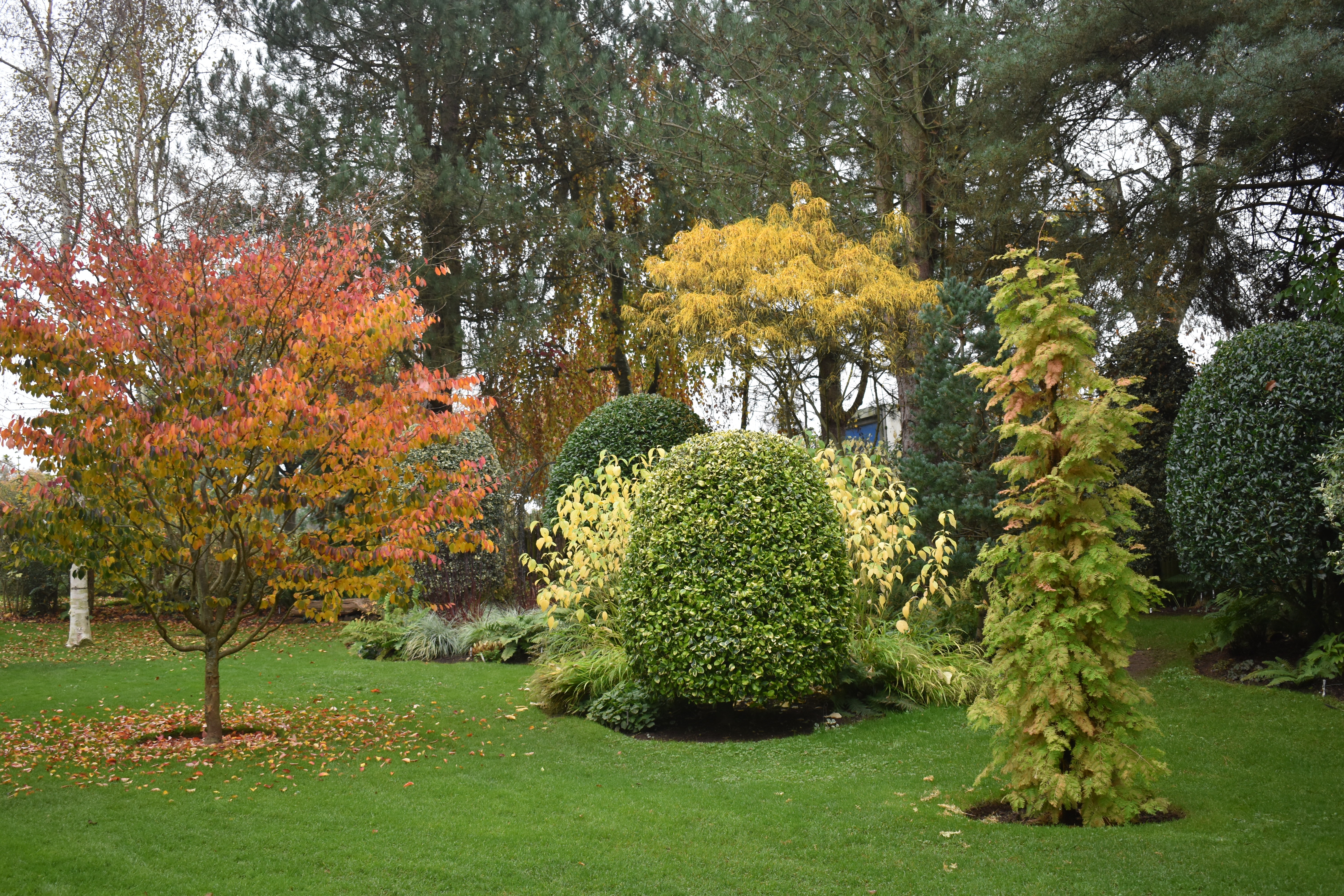
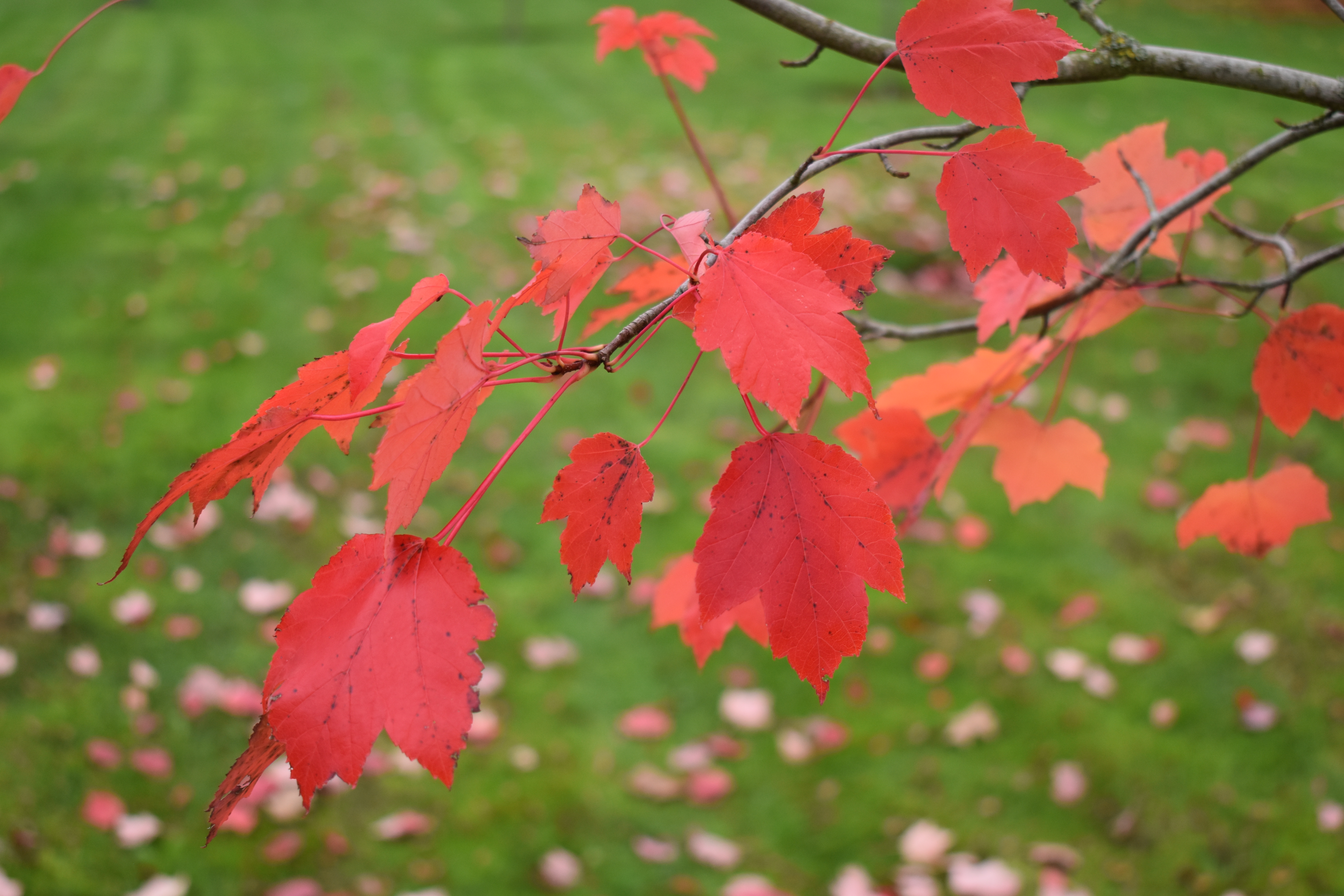
In John’s Garden trees are pruned and shaped to look at their best and then paired with the best possible partners, as shown in the photos below.

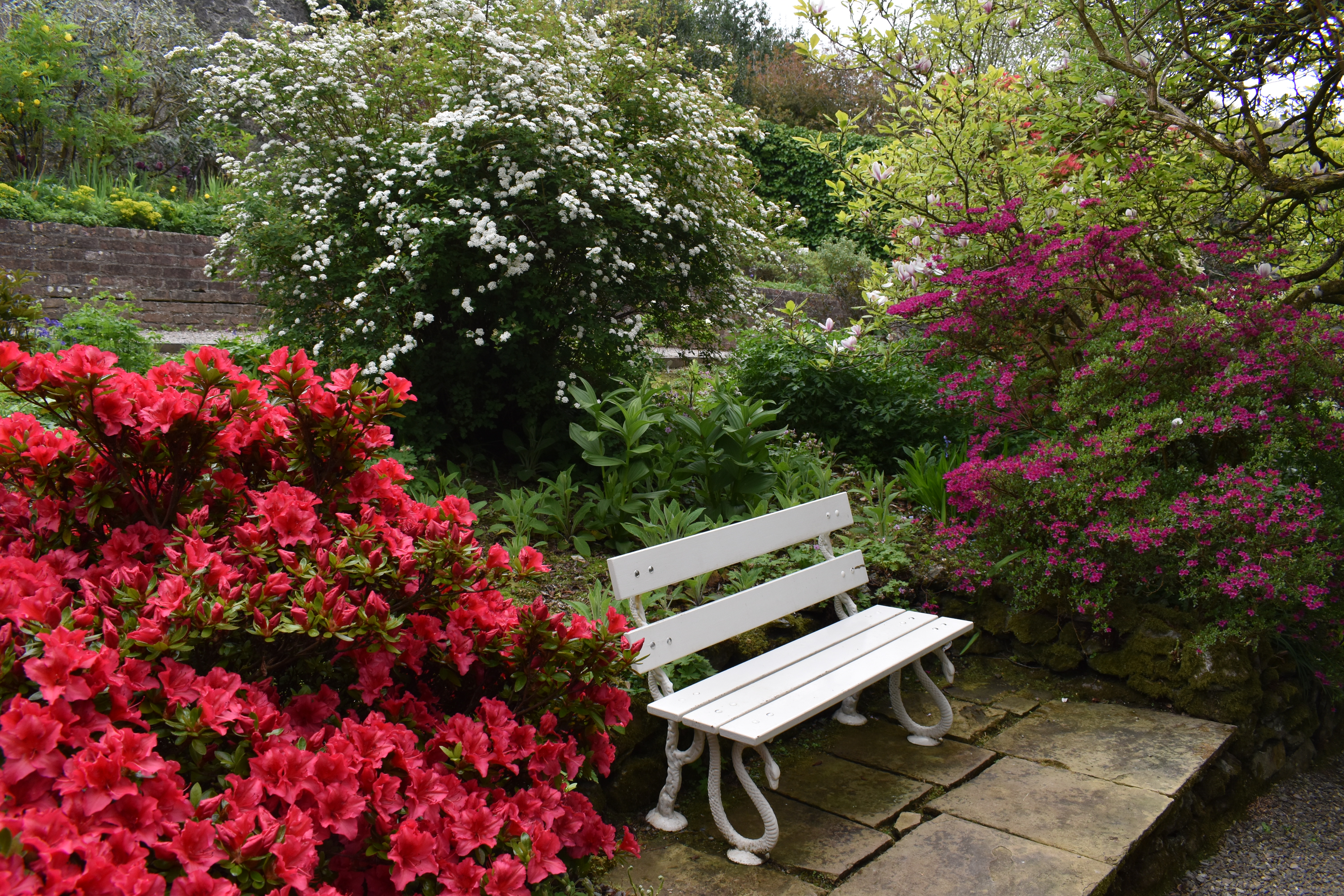
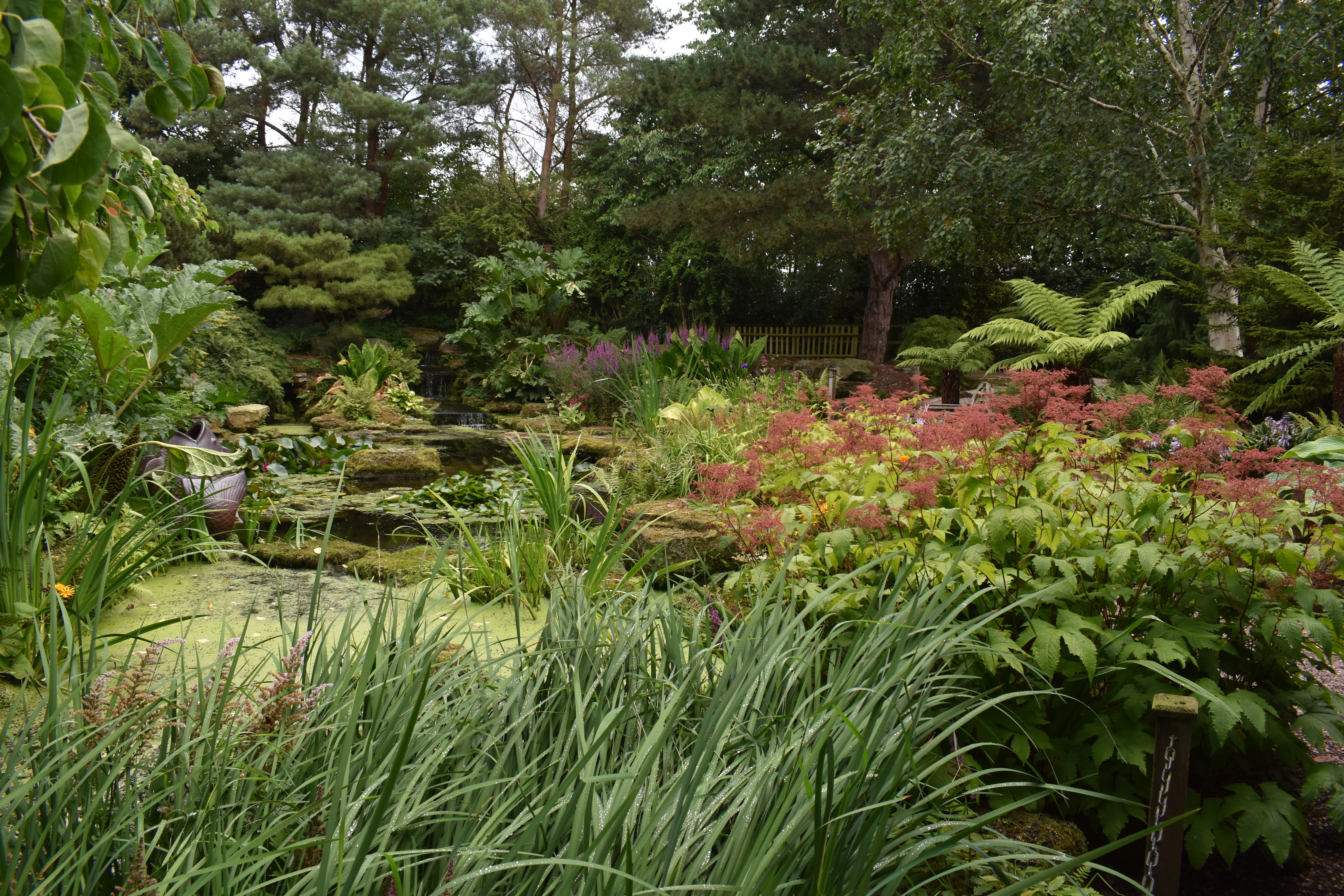
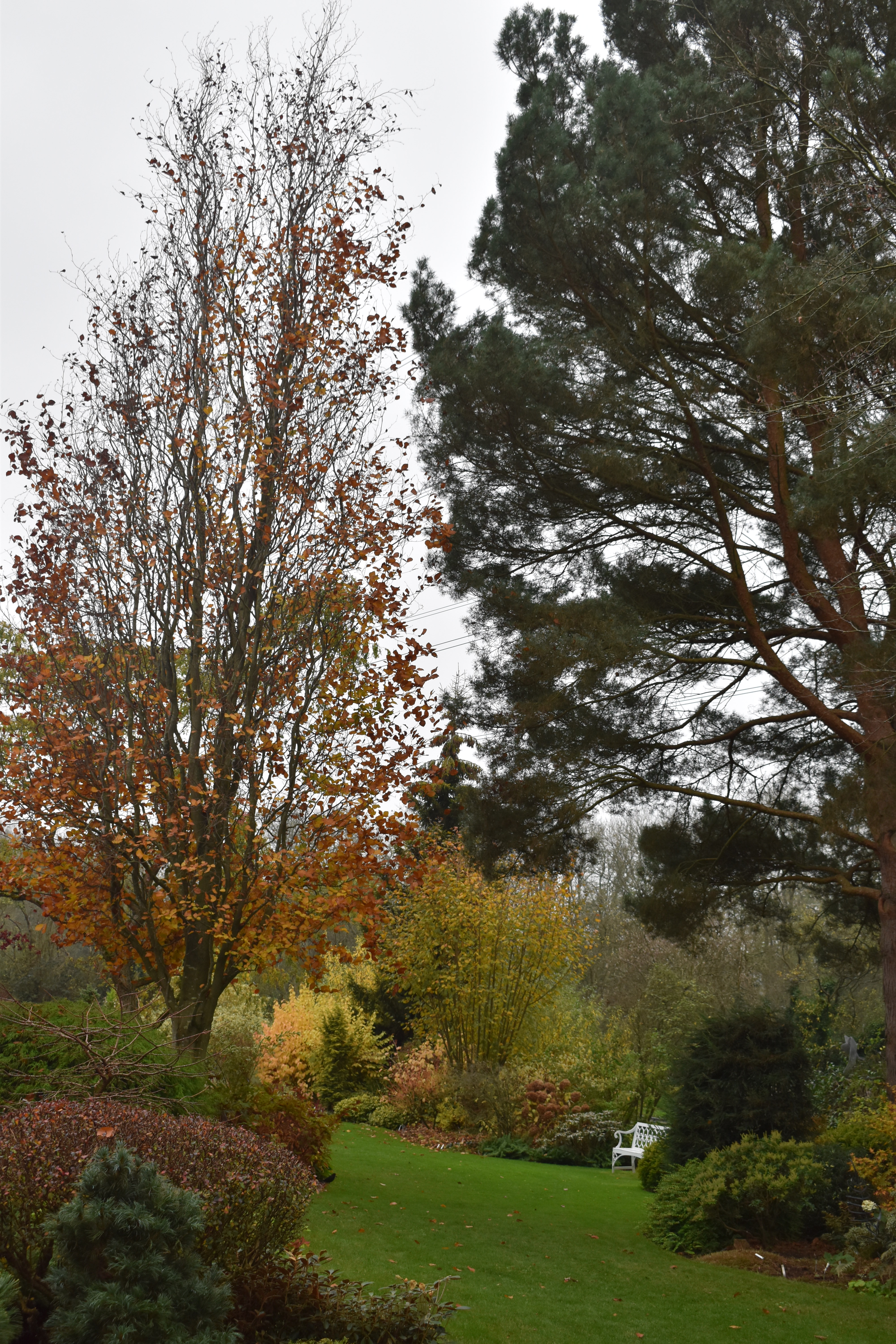
Sometimes here the views are long and often at the same time tall. Just use the white bench below to help give a sense of scale to the scene.

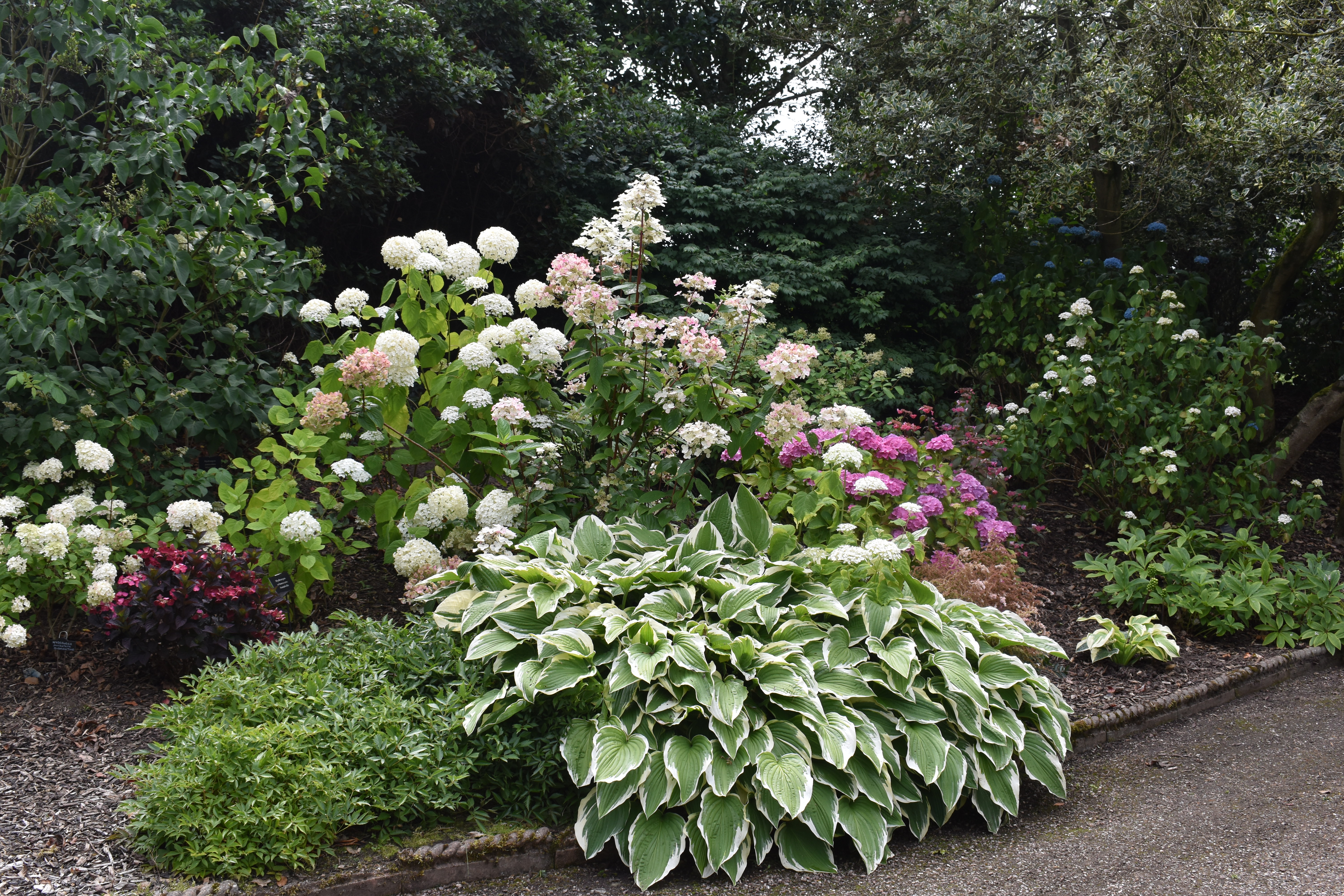
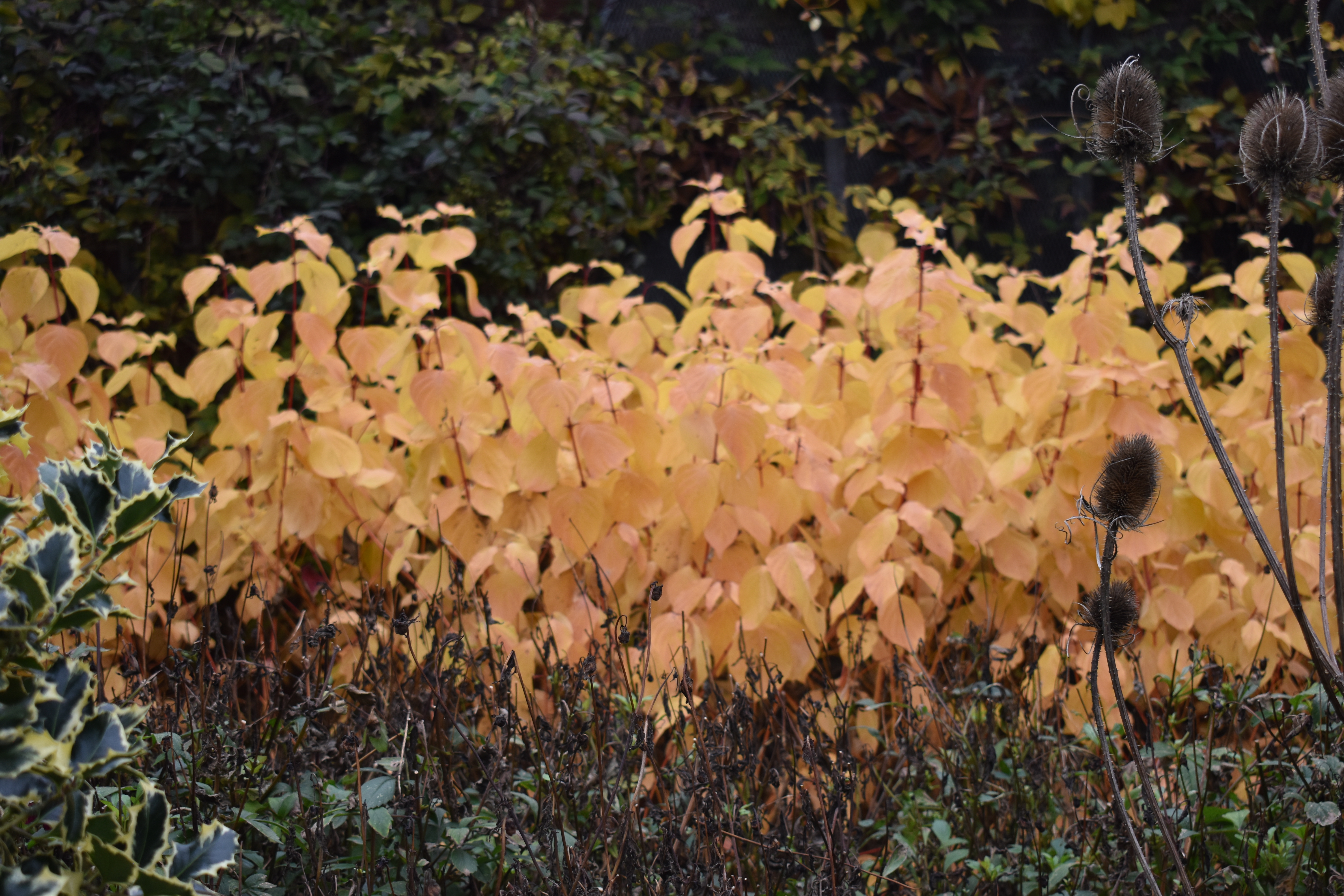
Foliage itself can be enough to attract the garden visitor.

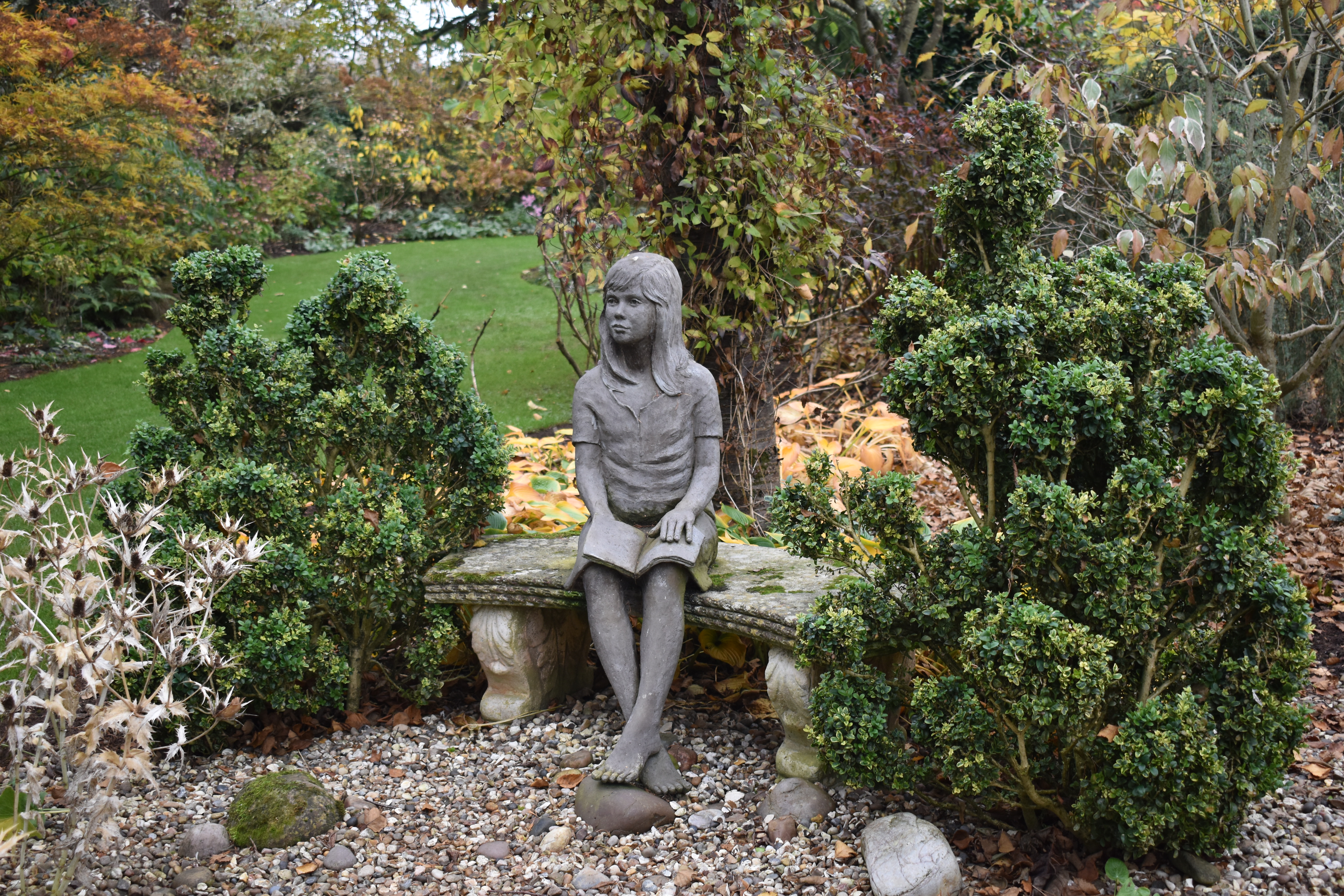
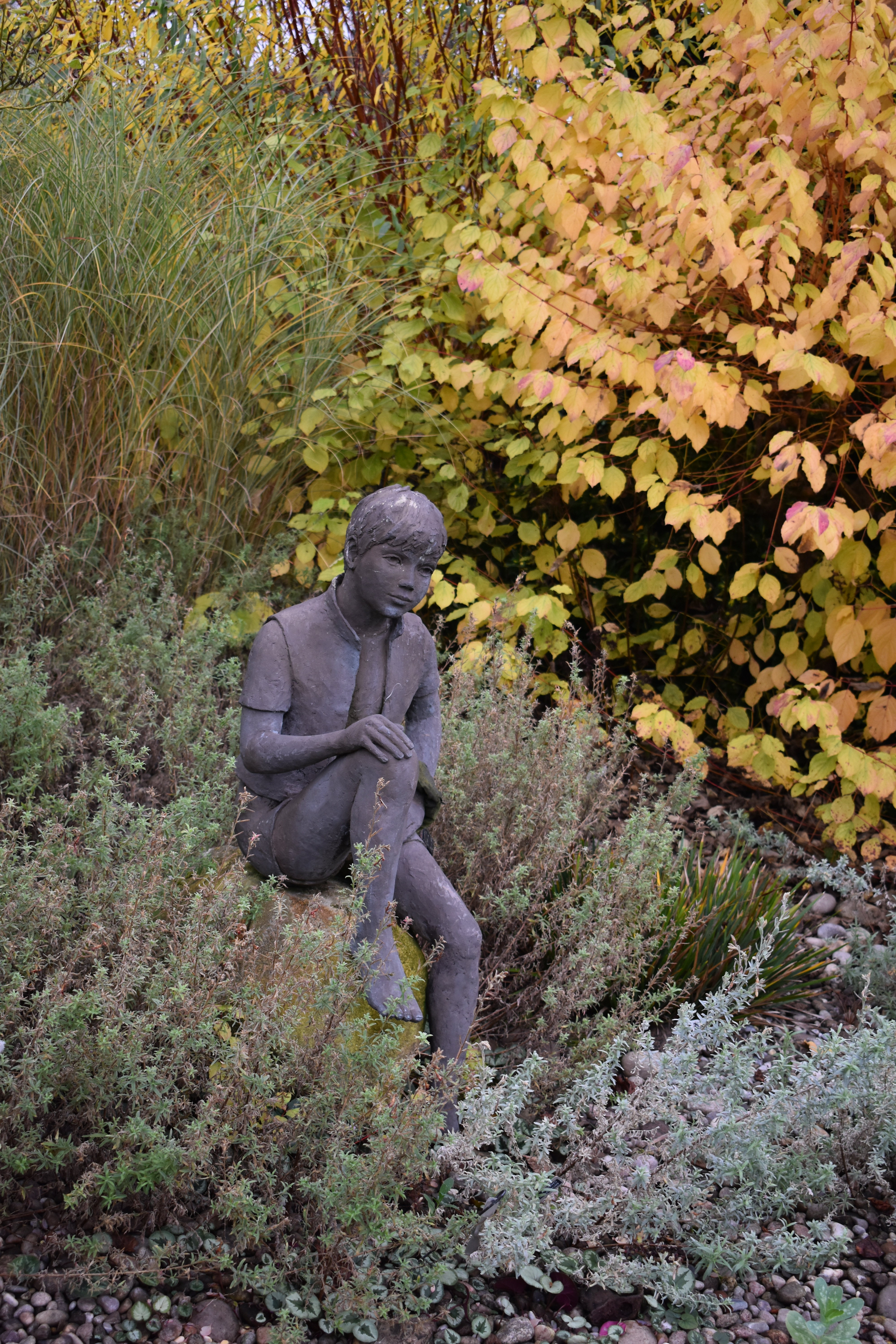
John has an eye for garden sculpture and where best to position it within his garden.

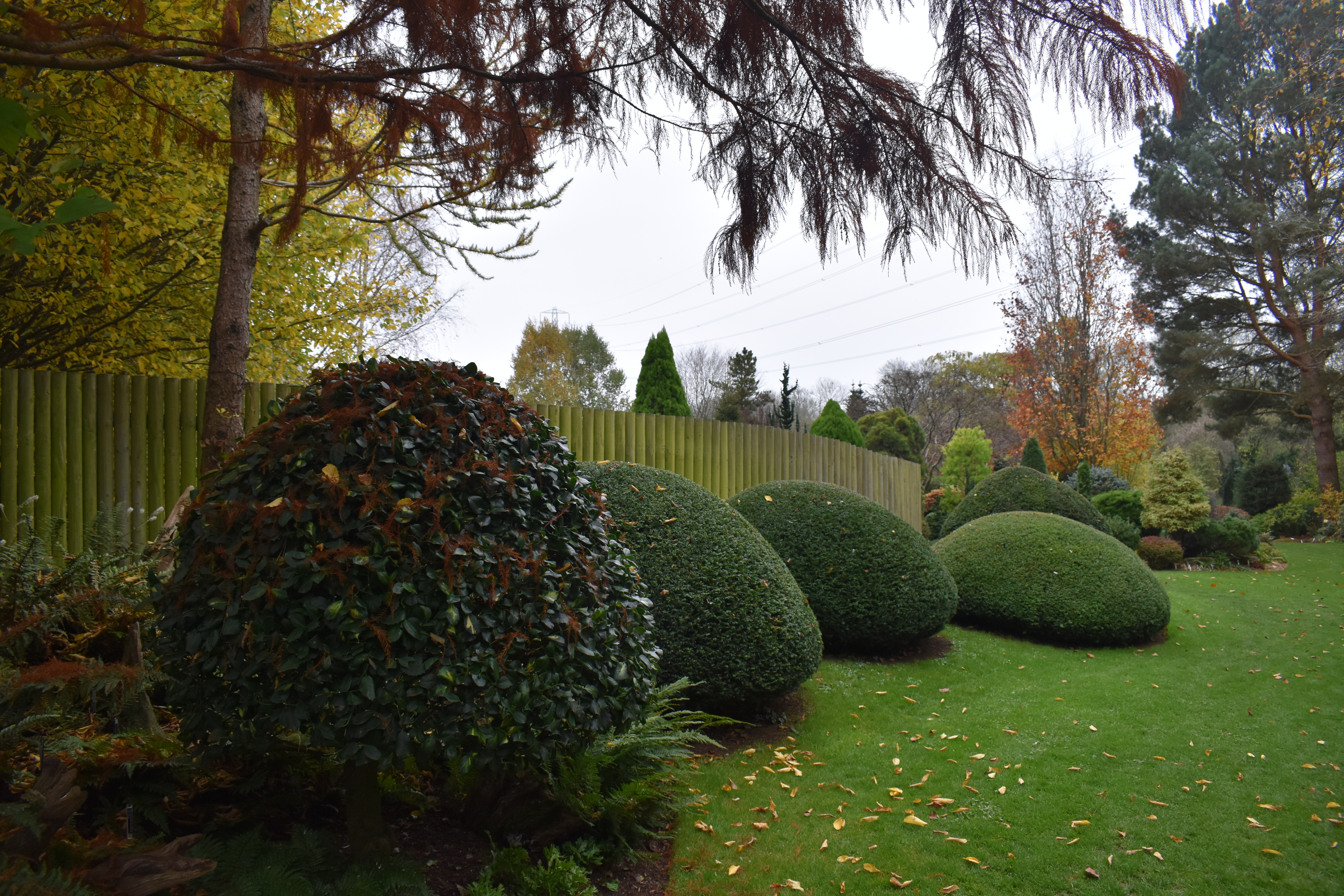
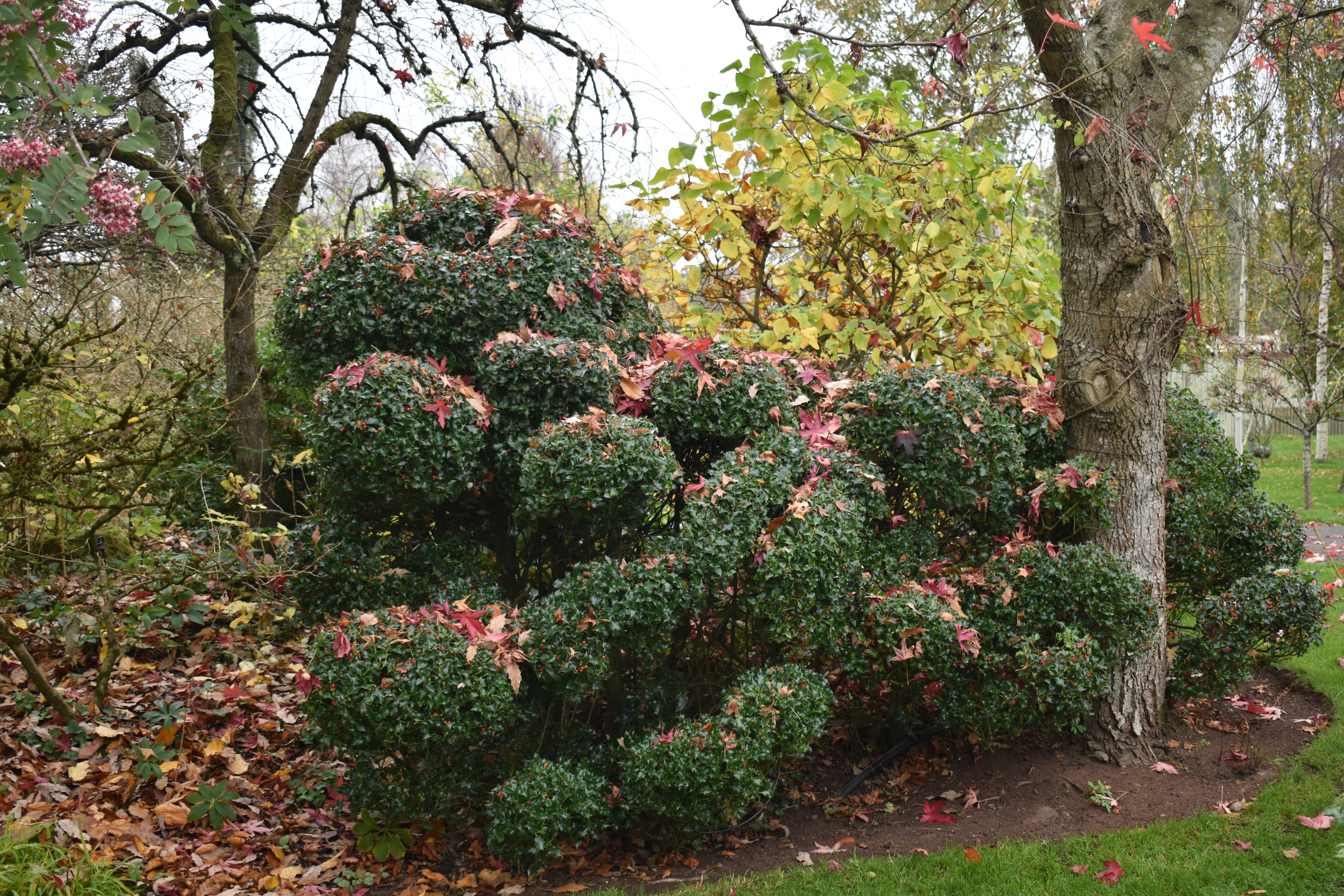
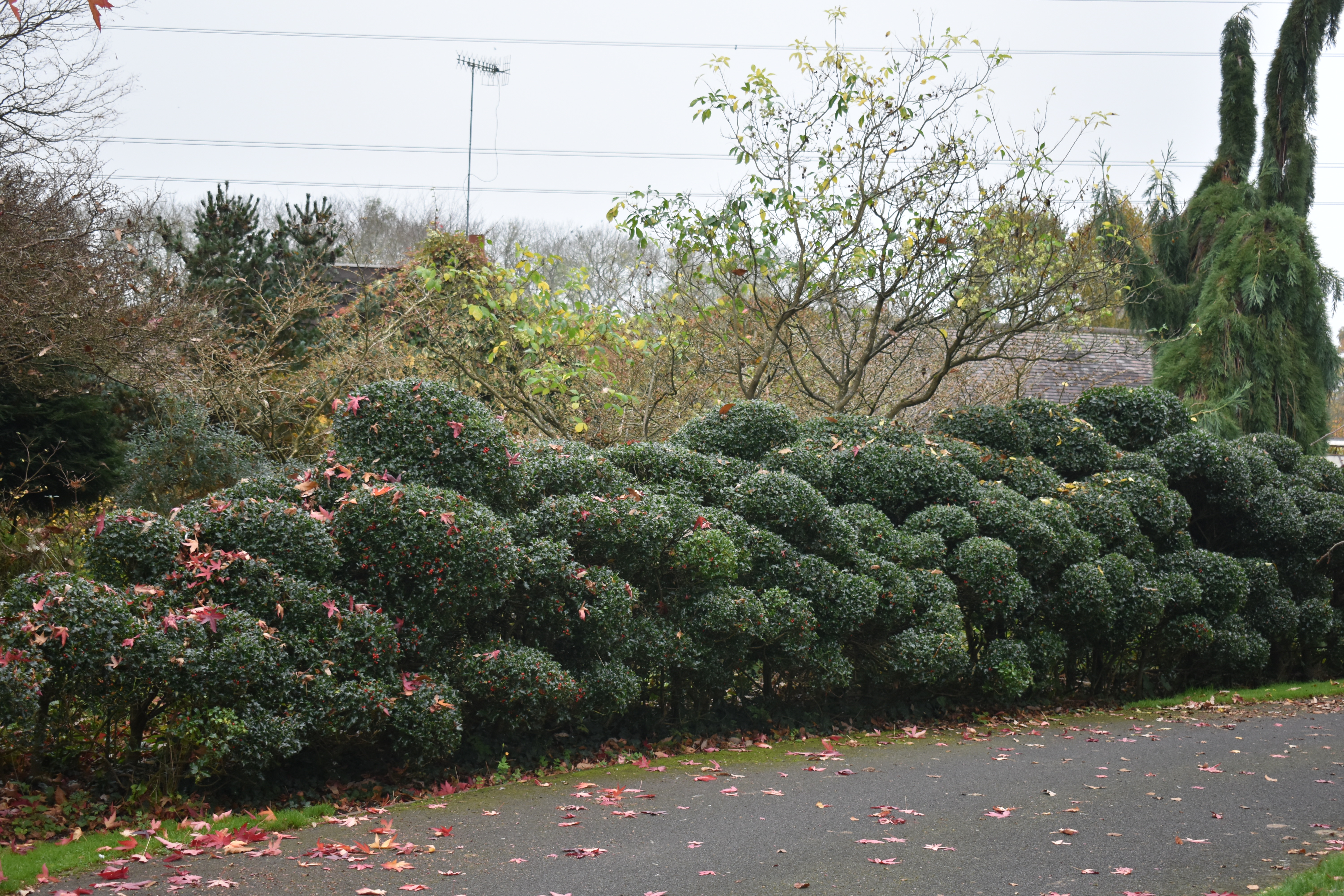
One of the most interesting forms of garden sculpture is cloud pruning where the gardener trims shrubs to the desired design. John is so good at this technique.

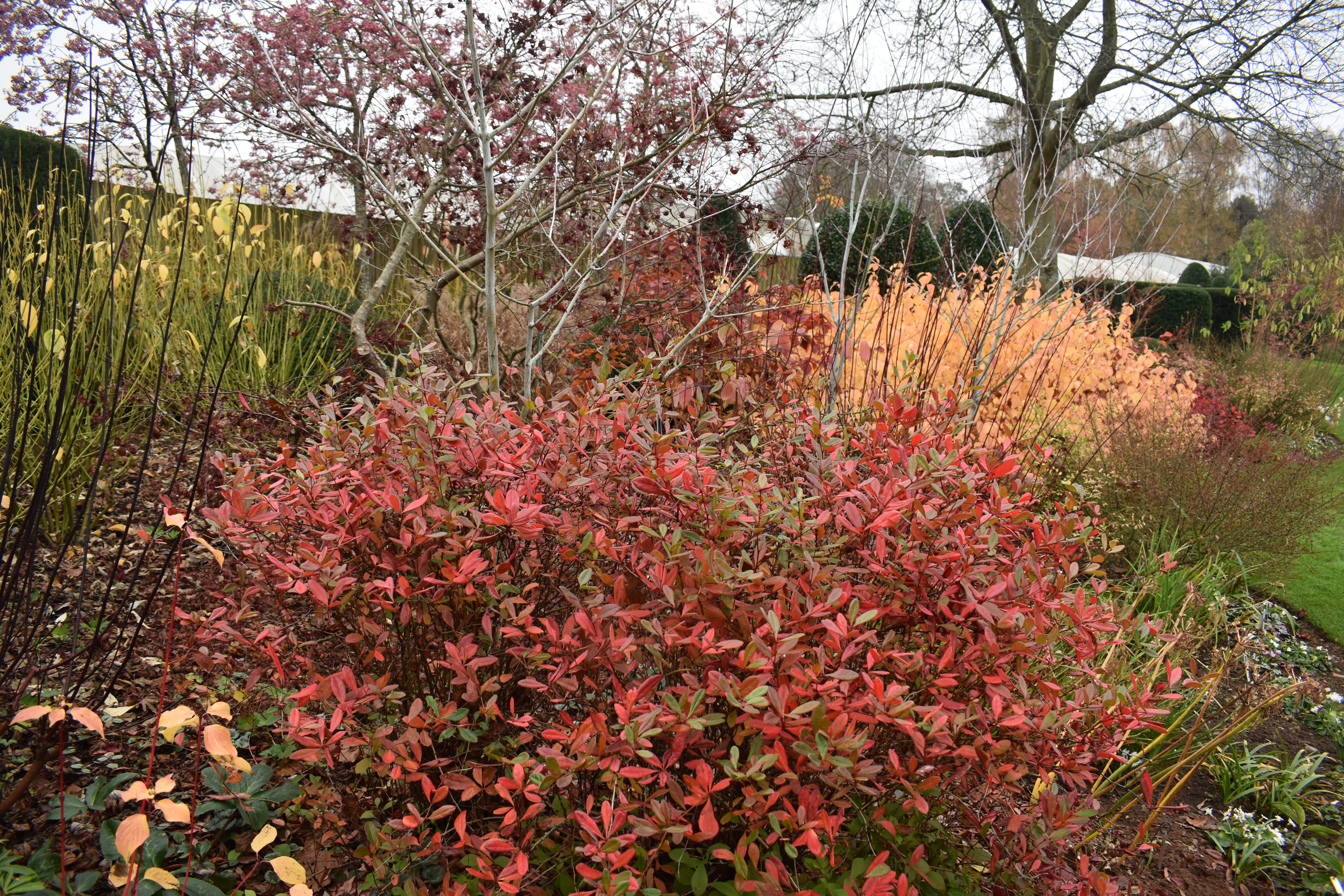
As I write this post on a cold December day, it seems apt to finish by visiting the Winter Border.

Categories
Uncategorized

Back to RHS Harlow Carr

We have visited the RHS gardens at Harlow Carr near Harrogate several times now and it must be one of our favourite gardens of all times. It is a garden that never stands still but is always having new borders or gardens created and established areas redeveloped. We visited once again last year in October.

As usual, after staying overnight in a hotel in Harrogate, we arrived as it opened and started off with breakfast. We enjoyed our breakfast in a newly opened restaurant in the Harrogate Arms Cafe. We were given a map as we arrived and we used it to decide on a routeway around when we finished eating.

We then made our way towards the Alpine House passing through the Sub Tropical Garden on route where we enjoyed many plants too delicate for us to grow in our garden in chilly Shropshire. It was a garden with patches of shade and sunny areas in between.

It is always exciting to find plants we do not know, such as the two trees below, on the left a Cornus kousa ‘Wolf Eyes’ and the right a variety of a richly coloured Liquidamber we had never seen before.

My favourite part of Harlow Carr are the Main Borders which are always so colourful and designed in the prairie garden style. The gardeners here are always finding improvements to make to these borders.

As we are soon to revamp our prairie border at home we looked for plants that may work for us and came away with our heads full of ideas.

I shall finish off now with a gallery of photos from the rest of the gardens.

This was our third RHS garden that we have visited this year and this garden at Harlow Carr is still our firm favourite.

Categories
Uncategorized

My Garden Journal 2025 February

I began my February journal by writing,”January always feels so long a month, whereas February is nice and short. Just 28 days!”

Below a set of four photos I wrote, “Winter flowering bulbs and perennials add shots of colour close to ground level. Crocosmia show off their fresh bright green shoots. Our Calamagrostis and other grasses have new shoots too.”

I then looked at the new shoots of our Sedum and shared two photos of new shoots at the base of Sedum spec. ‘Stardust’ and Sedum ‘Mojave Jewels Ruby’.

The third photo in the trio of photos above features the seed head of a large specimen Sedum ‘Autumn Joy’. About this I wrote, “The flower heads of Sedum turn to seed heads in late summer and early autumn. Looking carefully at these seed heads we can see ginger, brown, biscuit, grey, orange and pale blue.”

Over the page we find a double page spread featuring on the lefthand side scented winter flowering shrubs and on the righthand page I looked at more spring bulbs and willow catkins. I noted that, “Scented shrubs are a special feature of our February borders.”

Daphne bhuloa “Jacqueline Postill”

Hamamelis ‘Harry” Sarcococca confusa

Viburnum tinus

“The buds on our Drymis will soon open and reveal little lemon coloured and lemon scented little flowers. Its foliage and stems work together so well and look good all year round.”

Most shrubs that flower in winter are also heavily scented and this is because there are far fewer insects around to be attracted.

On the opposite page I looked at spring bulbs and willow catkins. Concerning spring bulbs, I wrote, “Our spring bulbs are giving us plenty of colour at ground level between shrubs and the emerging bright green leaves of some perennials.”

A waterfall of cyclamen below the Acer campestre. Snowdrops flowering among ferns.

“Eranthis hyemalis also known as Winter Aconite with emerging crocosmias.” A mix of our hellebores in our ‘Winter Border’.”

“Three of our Salix (willows) varieties now have catkins.”

Salix daphnoides S.gacilistyla ‘Melanostachys’

Salix gracilistyla ‘Melanostachys’ S.grac. ‘Mount Aso’

Turn over the page and find a watercolour sketch of a part of our garden from September 1997, which I thought may be of interest.

“While sorting out some papers we came across one of my watercolor sketches of the garden , painted in 1997.”

We also found a photo of the front door area from way back, so I tried to photograph the same view as it looks today.

Then Now

On the opposite page I mentioned a few garden jobs that we tackled this month and I wrote “Even though we have a while to go before spring arrives, we take advantage of any good days to get out in the garden or in the glasshouse.”

We have made a start cutting down grasses.

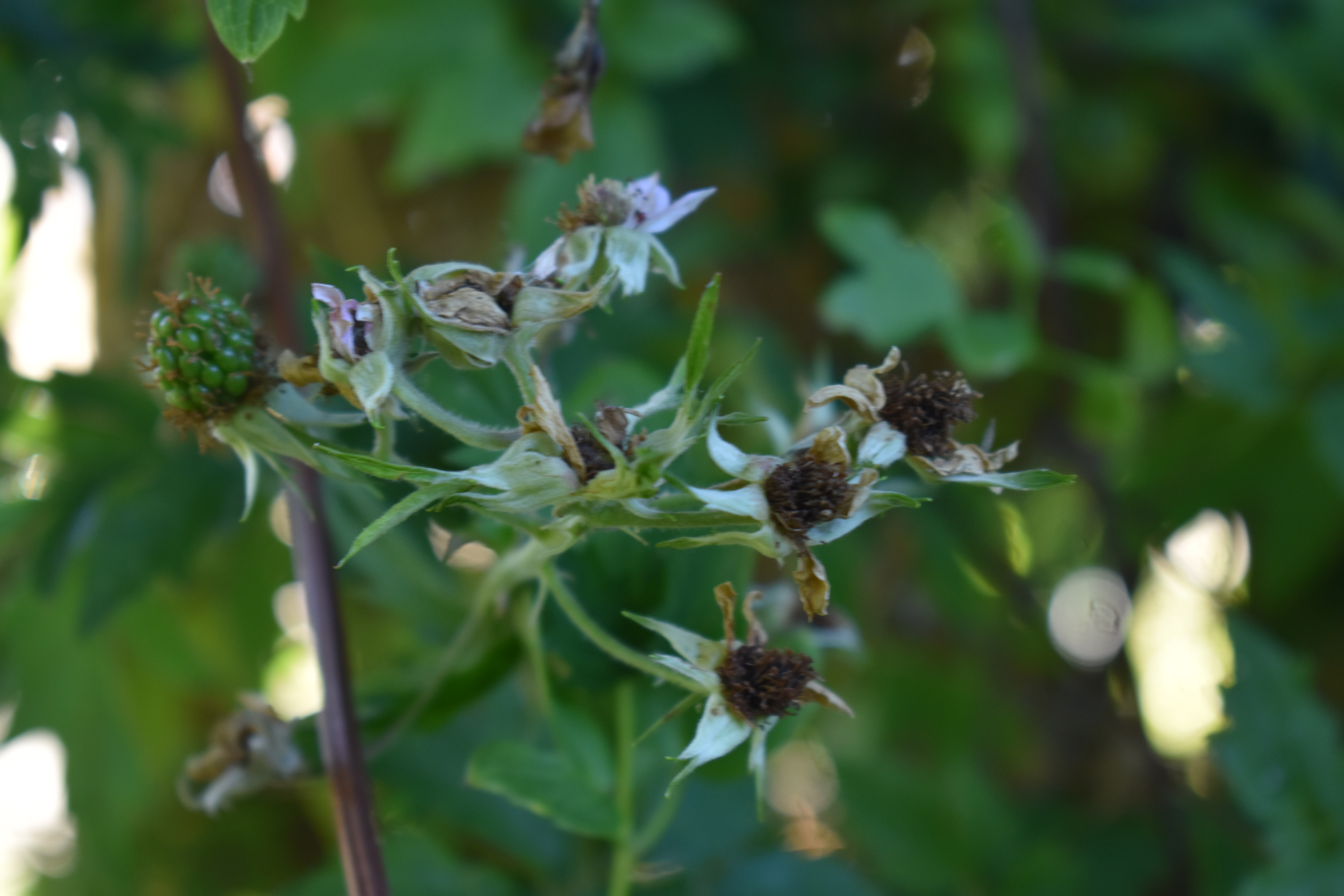
Replacing a rotten tree stake, trying to rid the drive of algae and tying in this year’s blackberry boughs.

Repairing two wren boxes.We have bought more lilies to plant next month.

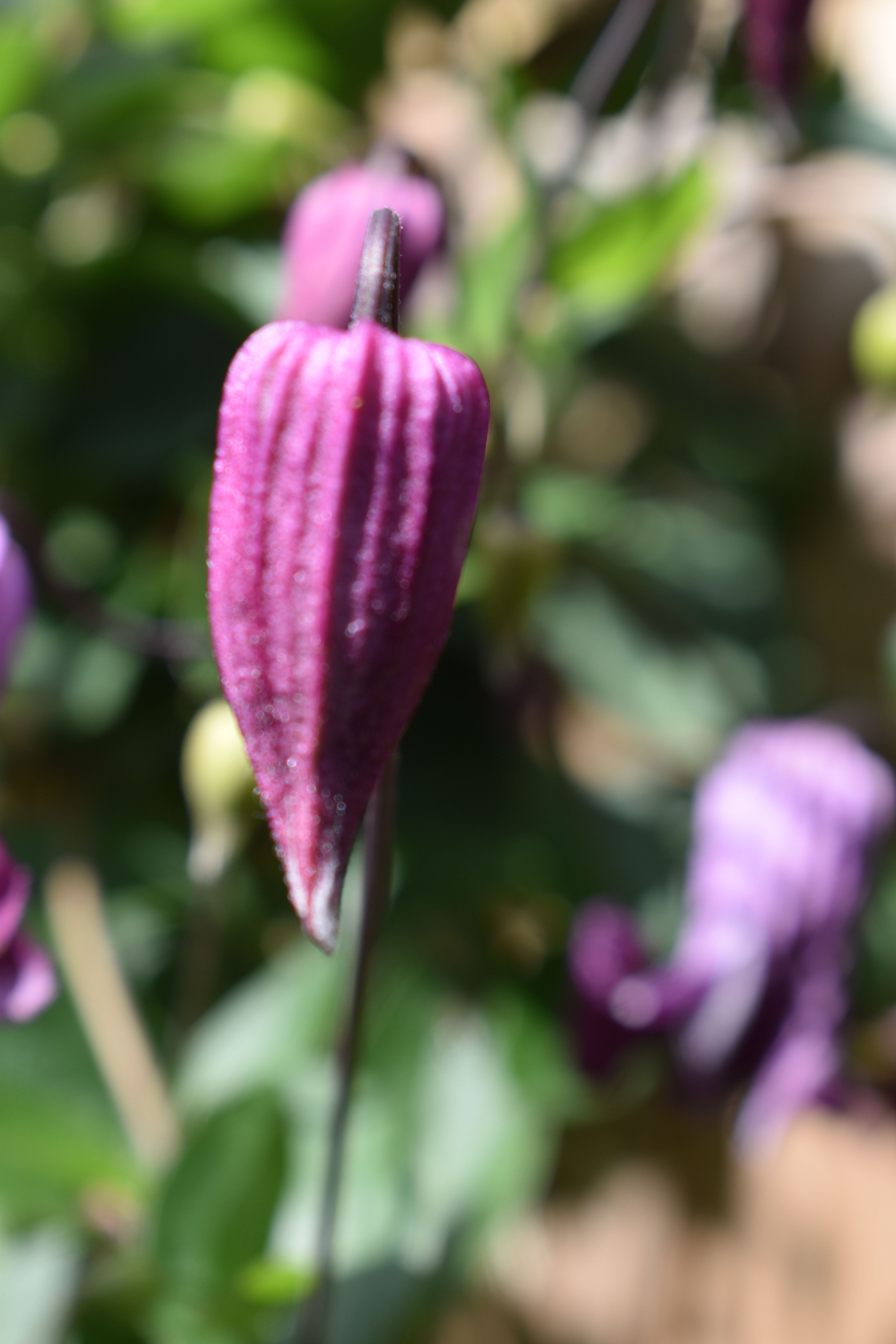
Over the page I continued looking at some of our gardening tasks and began by writing, “We are enjoying our winter flowering clematis and at the same time we have to prune our Group 3 clematis.”

Cleaning up our dahlia tubers. Dahlia tubers ready to shoot.

Tidying up the succulent collection. Pruning roses on the swags.

The final page for February features yet more flowering spring bulbs. I wrote,“And yet more flowering spring bulbs adding more colour to the borders.”
Leucojum Iris reticulata

Crocus Anemone blanda (above)

Categories
Uncategorized

Our Week in the North York Moors – Scampston Walled Garden and Parklands

We have visited Scampston Walled Garden once before not long after it was redesigned by Piet Oudolf one of our favourite garden designers who is also recognised as one of the best in Europe if not the world. He is very influential as a designer and we have several of his best in the UK. Our garden has hints of his influence in several areas, especially his use of grasses and hardy perennials.

We have visited Trentham Park which he designed, part of, Pentsthorpe Water Park gardens, The Oudolf Borders at RHS Wisley and the Oudolf Garden at Hauser and Wirth Galleries in Somerset.

In order to enter the main area of the Scampston Walled Garden we had to follow a pathway around three sides of the walled garden a border of interesting shrubs and perennials. Along one section was a wonderful hedge on stilts.

We followed the pathway until we reached the way in where we entered the Serpentine Garden featuring grasses called Molinia ‘Poul Petersen’ which are grown in parallel swathes within neatly mown lawn grass. In the centre four beautiful wooden seats sit below four trees, Phellodendron chinensis surrounded by Salvia verticillata ‘Purple Rain’. Such a simple but brilliant design!

Oudolf created topiary with yew to form square blocks and undulating hedges.

From this quiet space with its sculptural hedges we moved into the Perennial Meadow where the seedheads of perennials were the stars. At its centre is an old dipping pond.

Scampston was as good as we expected and has matured beautifully.

Categories
Uncategorized

Bridgemere Show Gardens – our new year’s monthly visits – January 2025

The show gardens at Bridgemere Garden Centre are situated alongside the sales area selling shrubs, and are described in a leaflet as “An award-winning day out for all”. It is now an RHS Partner Garden and is open all year. We decided we would visit monthly and report back as monthly posts in my greenbenchramblings.wordpress,com blog.

The 6 acres here are home to 15 individual gardens with extra planted areas and pathways to give a sense of cohesion. Several of the gardens were first seen at RHS Chelsea and RHS Tatton Park shows and many of those were awarded gold or silver gilt medals.

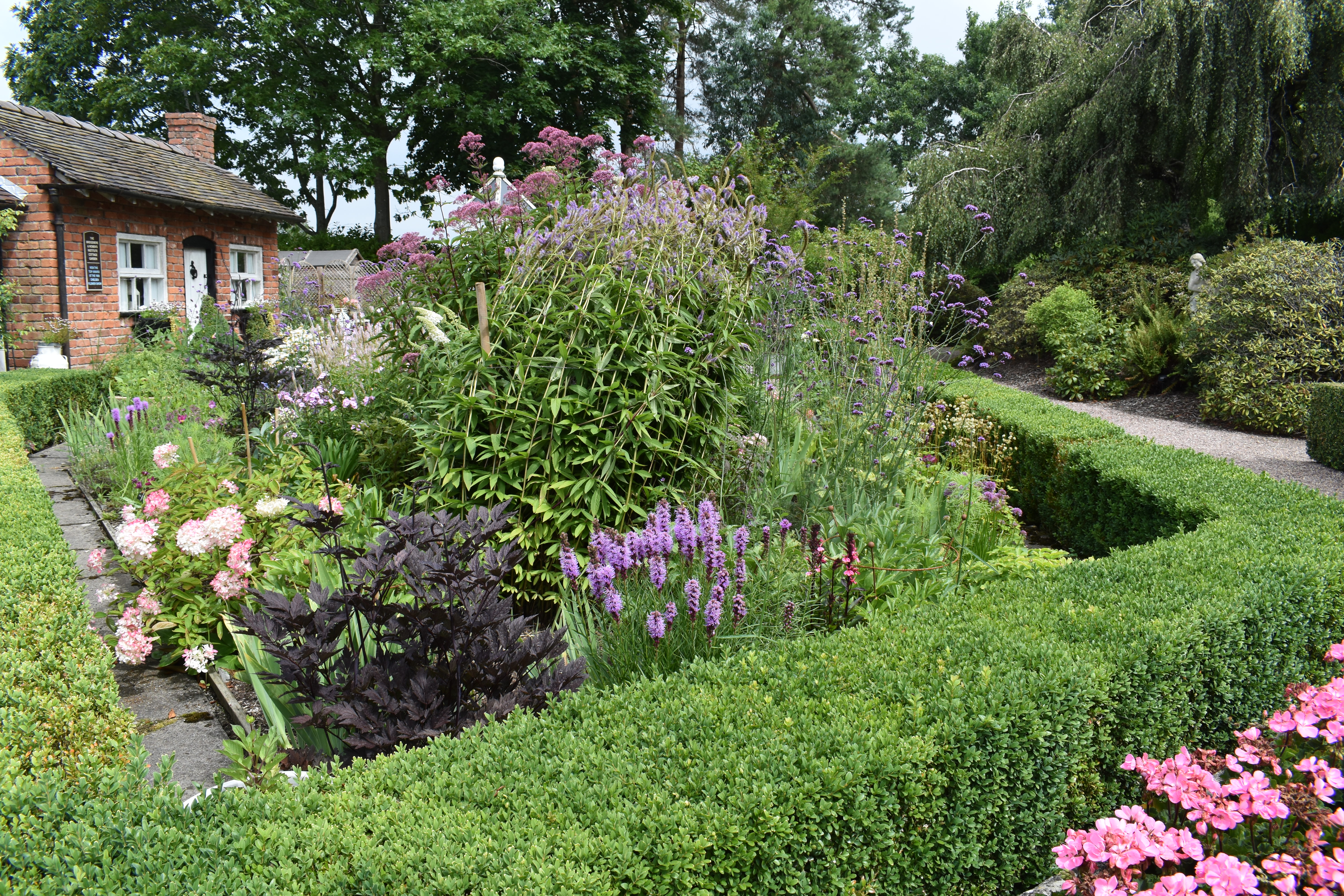
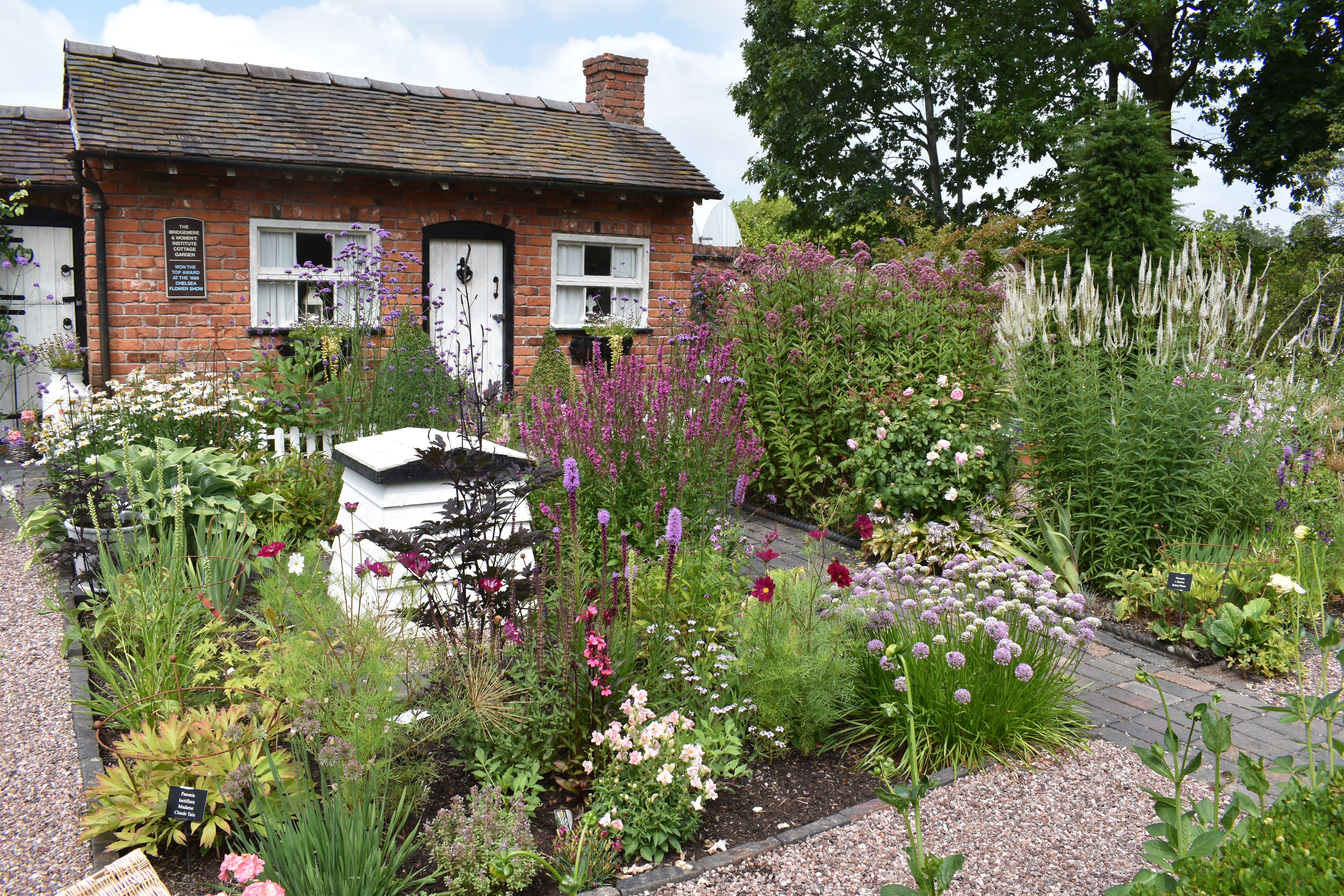
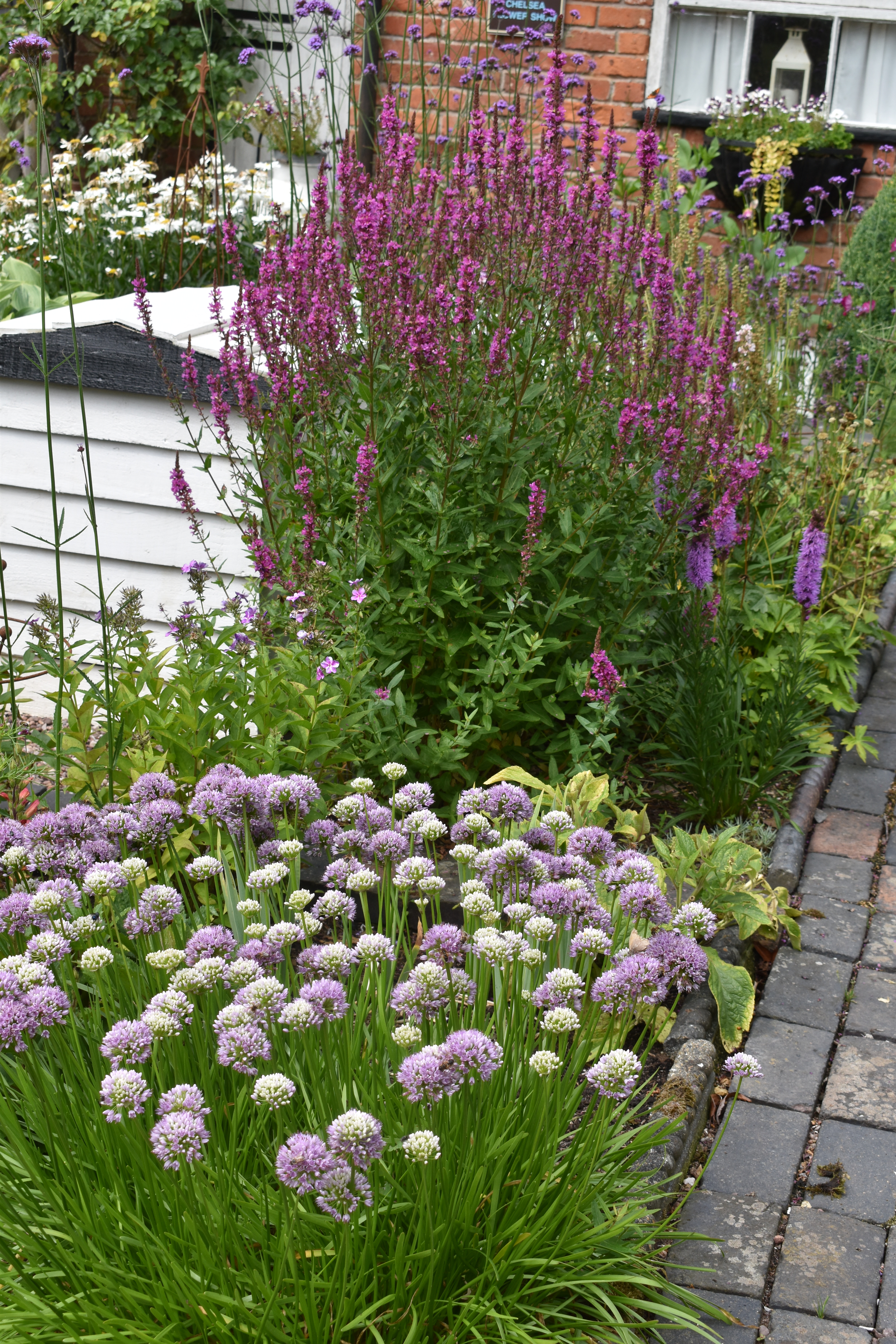
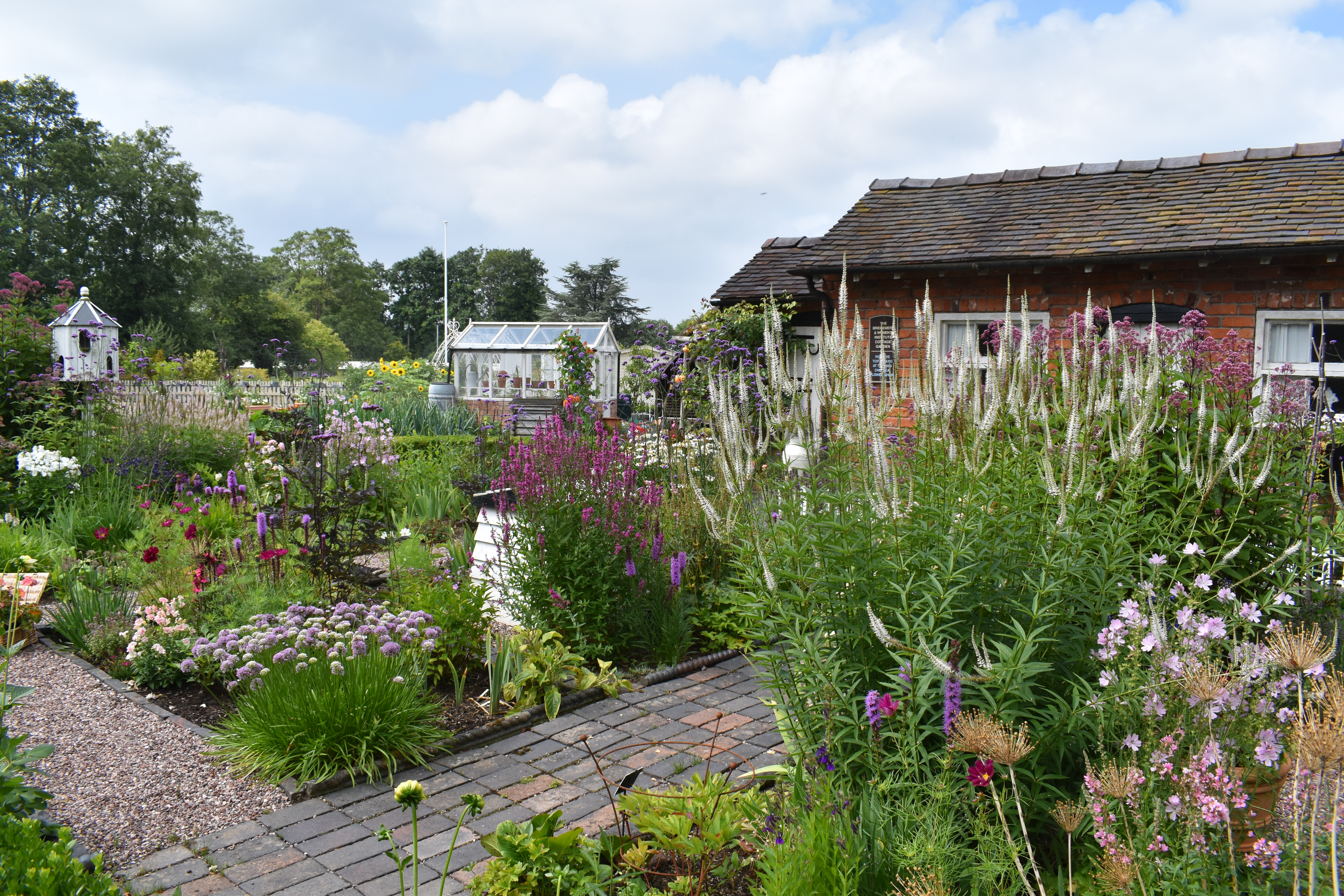
The first show garden we came across was “The Cottage Garden” which was complete with a little brick built cottage and a typical garden which would be busily worked to provide fruit, vegetables and cut flowers for the owners and their family.

We moved on from there towards the pond, finding many mature trees and shrubs along the way. We also searched for plants of the season.

First siting of the pond was this view below but we could hear the sounds of the waterfall. We love the sound of moving water be it freshwater of rivers and streams or the sound of moving tides at the beach.

This sign of winter reflects the gardeners’ wish to grow plants that are not hardy such as these Tree Ferns (below left). A complete contrast and much more attractive than plants wrapped tight are the red stems of Cornus nearby (below right).

From the pond area we made our way towards the Spring and Winter Garden, passing the “Bandstand Garden” and the “Folly Garden” along the way.

The sign for the Spring and Winter Garden described it as “A garden to savour and lift your spirits with pockets of spring colour and an abundance of fragrance.” This Witch Hazel, Hamamelis vernalis ‘Purpurea’ gave both colour and fragrance.

There were plenty more winter flowering shrubs as well as spring bulbs. But another Witch Hazel first caught my eye with its colours enriched by the winter sun, Hamamelis x intermedia ‘Old Copper|”.

The coloured stems of dogwoods, Cornus add vertical elements of colours mostly reds and greens.

Hellebores are one of the most popular winter flowering plants so we expected to see some in the Winter Garden. The white one was full of flowers but they kept their heads down.

Before we move onwards I will share with you two more flowering shrubs both fragrant but with very different aromas. On the left is Viburnum tinus and on the right Lonicera “Winter Beauty”.

After enjoying The Spring and Winter Garden, we made our way through the Tatton Garden where the structure of neatly trimmed hedges and topiary looked very sharp in the bright winter sun.

We made our way through several more gardens as we made for the exit and all the time we searched for typical winter garden features. I will finish with a gallery of some of them.

We will visit the show gardens again sometime in February the second of our monthly visits.

Categories
Uncategorized

My Garden Journal January 2025

A new month and a new year, January 2025. Let us hope that we gardeners and our gardens are dealt a better hand weatherwise than in 2023 and 2024.

I began this new year by writing, “January, a new month and a new year as well as we move into 2025. We hope this will be a kinder time for our garden and us looking after it.”

Then I considered some of the garden jobs for the month. “We tidied up the roof garden on the wood store” and then “We planted some new hellebores and revamped the planting beneath the stepover apples. Carex ‘Ice Dance’ became too invasive so we removed them and instead planted different carex cultivars to give variety.”

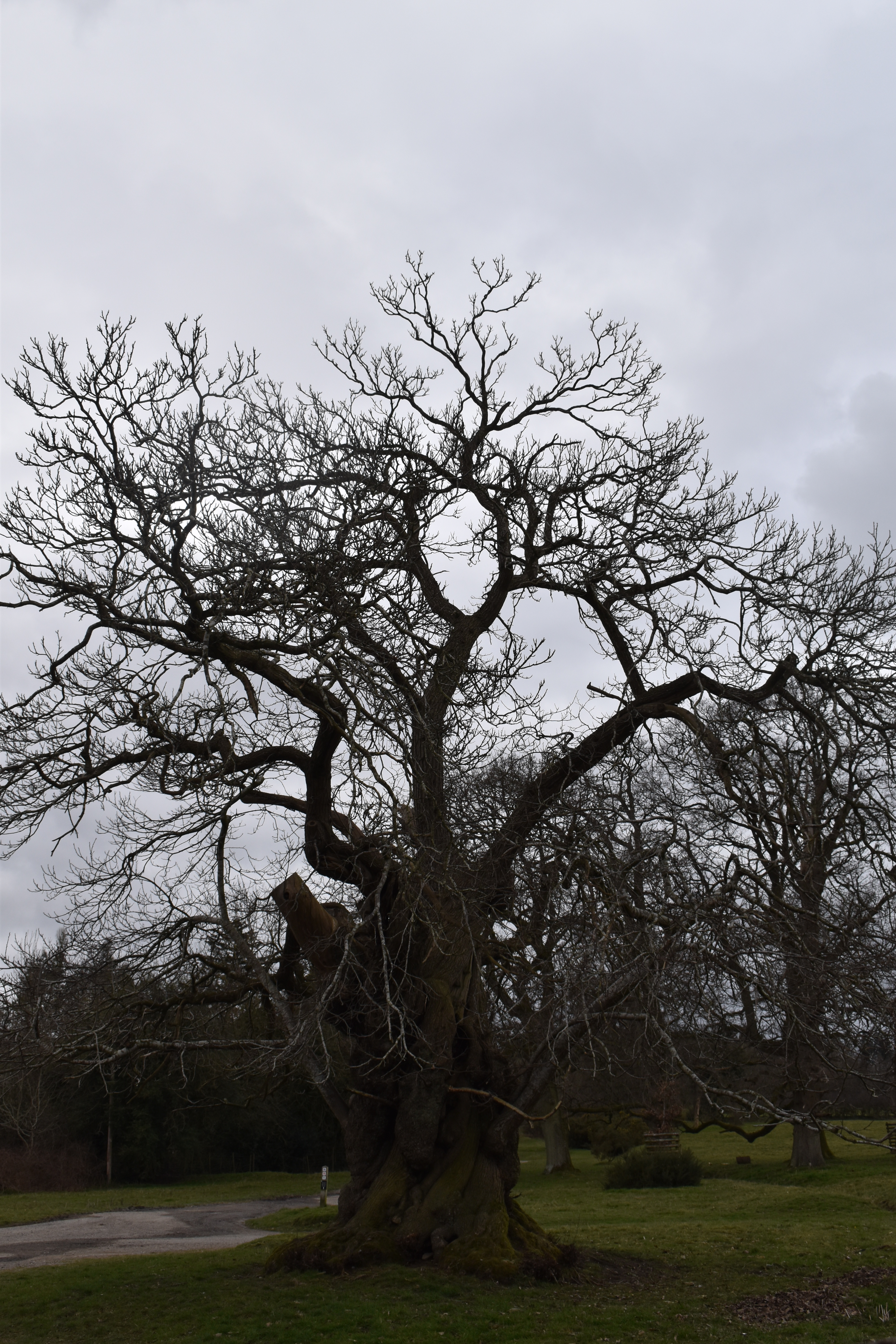
Onto the next double page spread I consider Birches and tree barks. I noted that, “I think Betulas, birches, are possibly the best tree for a smallish garden and so we have several specimens in both our front and back gardens. In winter on a sunny day they come to life. Their bark colour is accentuated and peeling bark turns orange.”

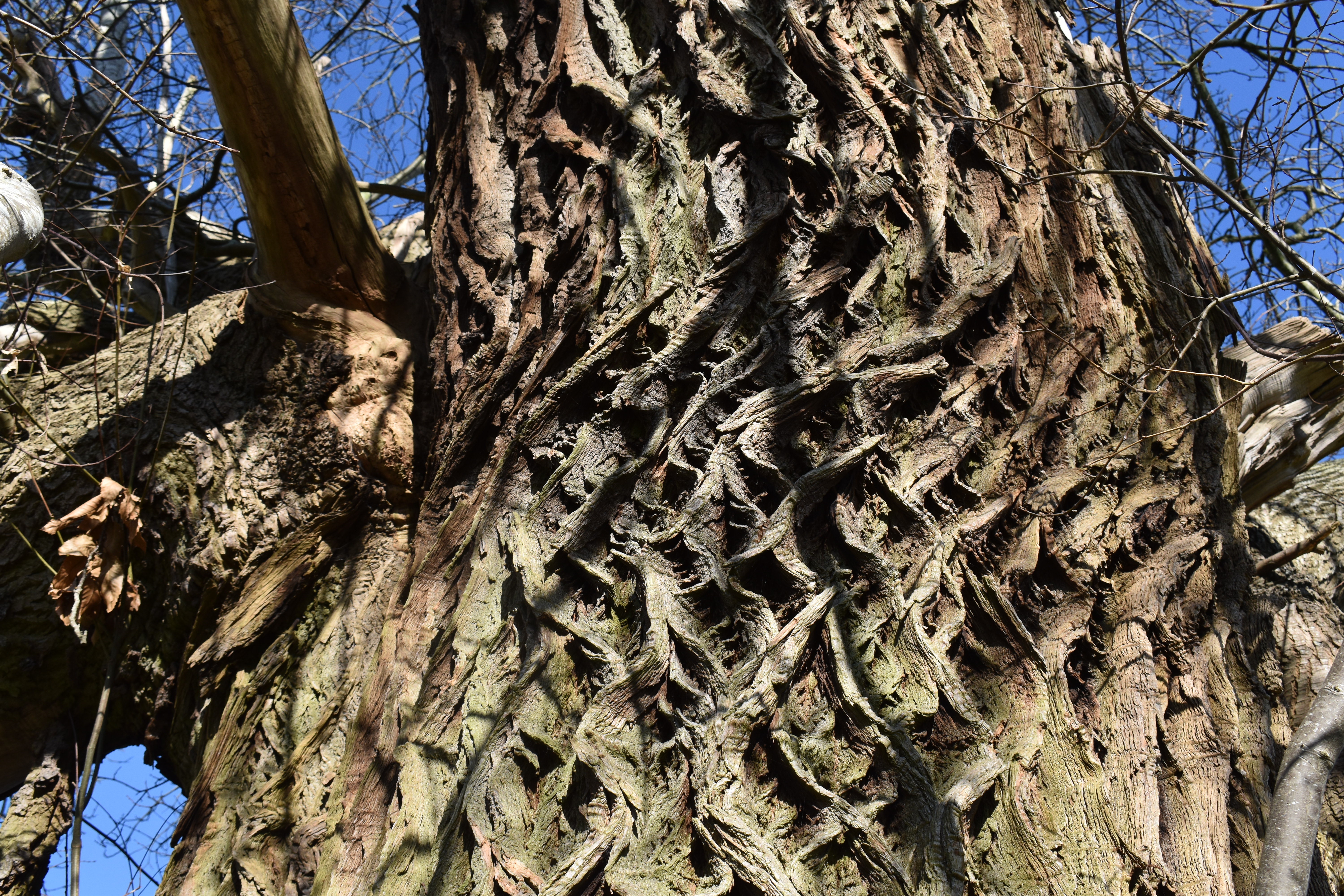
Still on the theme of trees my next page is all about variations of the properties of the bark of some of our trees, the colours, textures and patterns. Concerning this I wrote, “I wandered around our garden, camera in hand, to look at the trunks of our many trees and to compare their textures, colours and patterns. There were many worth photographing.”

Here I share nine of my photographs taken on that day.

The next double pages I looked at cloud pruning on the left page and opposite I showed a couple more garden jobs we completed in January.

“We have long admired cloud pruning of conifers often seen in Japanese gardens. In our garden we have cloud pruned a box hedge.Up until now we have never attempted to work with a conifer. We recently bought a cloud pruned pine, a Pinus nigra ‘Marie Bregeon’ and a Pinus nigra ‘Nana’ to cloud prune ourselves.”

Pinus nigra ‘Marie Bregeon’. Pinus nigra ‘Nana’

Tools of the trade Needle clump

Nearly there! All done!

On the opposite page I wrote that, “After too many days of frozen solid soil, when we passed mid-month the temperature shot up from -5C to +7C. So maybe we can get a fork or trowel in the soil.

We have now completed the planting of a variety of Carex plants beneath the stepover apples.”

“I fixed a solar light in the toolshed.”

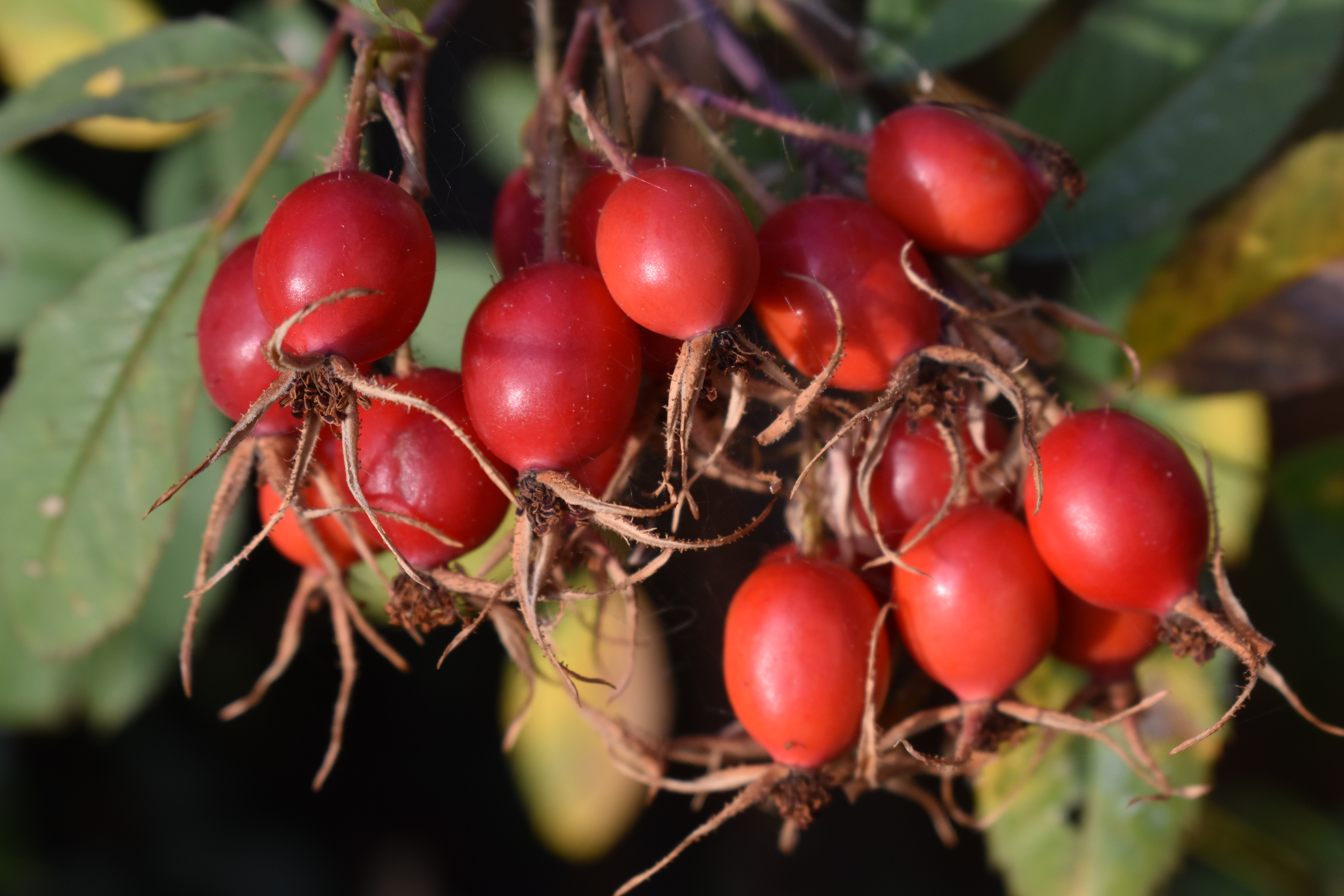
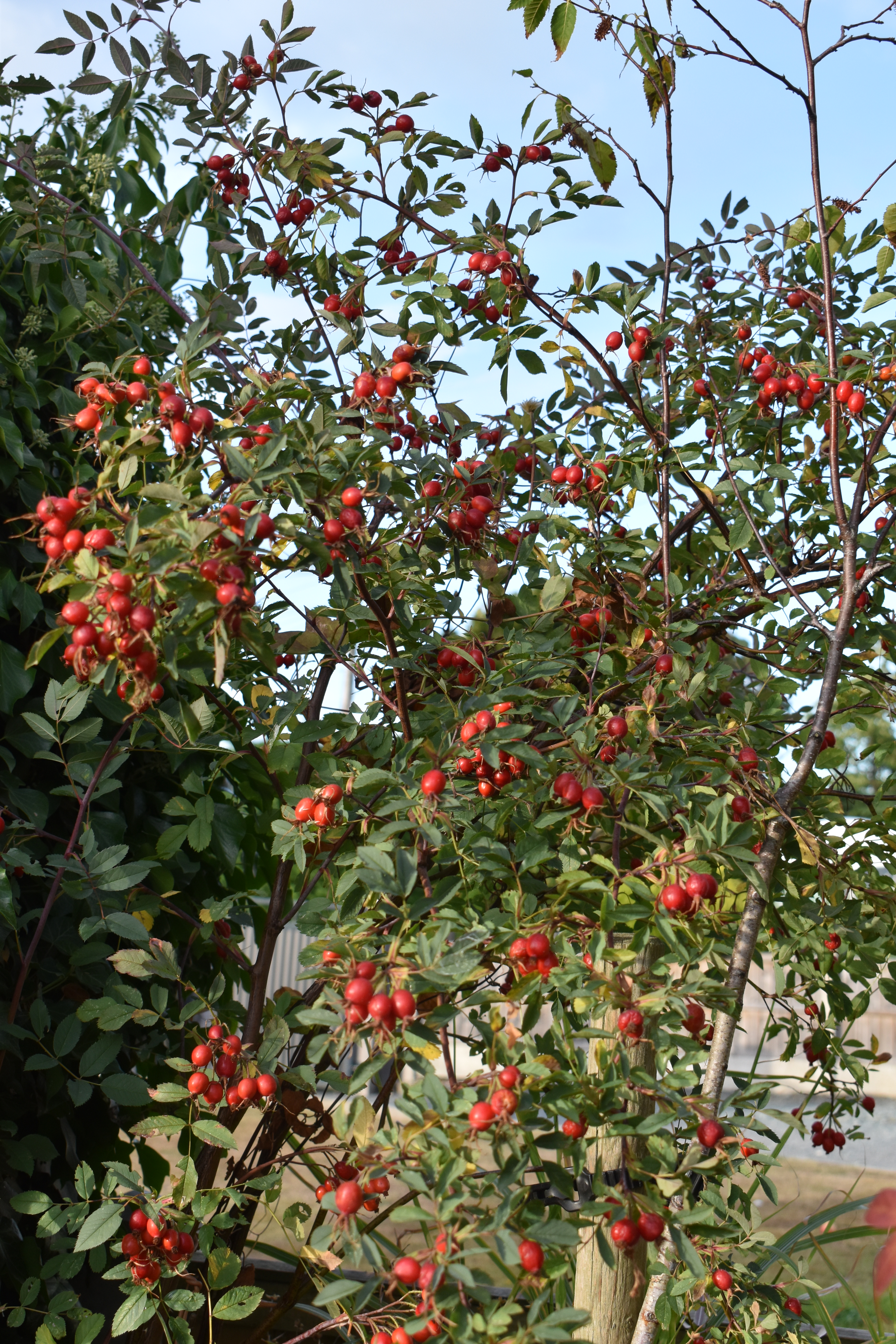
Opposite the page about a couple of tasks is a more colourful page about Rose hips. I noted that, “Roses give us colourful blooms for many months starting late May flowering on into December. But roses don’t stop then. Several of ours give colourful hips in shades of red and orange and various shapes and sizes.”

My pencil crayon sketches below show the hips of Rosa ‘Summer Wine’ a climber and Rosa ‘Bobby James’ a rambler. The actual pencil crayons used were Derwent Inktense Crayons.

It is good to finish this month with some cheerful colours. We can now look forward to what February brings!

Categories
Uncategorized

Our Week in the North York Moors – The Gardens at Yorkgate

A garden we have always wanted to visit is Yorkgate on the northern edge of Leeds. Thus on our homeward journey after our week in the North Yorks Moors we took a short detour to allow us the chance to visit. The garden is now maintained by the charity, Perennial which ensures it has a healthy future.

The planting alongside the driveway to the carpark set the scene nicely for us. Naturally our first stop was the cafe where we had coffee and breakfast.

We were handed a simple plan of the garden so after leaving the restaurant we set off to discover what the garden had to offer.

Firstly I will create a small gallery of interesting plants.

The following selection of interesting plants is all about perennials, deserving of a close up look, the only exception is the rose and the miscanthus grass below.

Yorkgate is a garden where you must keep an eye out for longer views giving interest possibly group of plants but equally unusual garden features.

The garden presented us with surprises too, such as the way this shrub was shaped in such an unusual way. Later we found a similarly shaped climbing shrub on the gable end of a building.

A selection of garden cameos which lift a garden above the normal are found here frequently as we explore.

After waiting so long to visit the garden at Yorkgate, it was as good as we had anticipated. There are so many design and plant ideas, that it doesn’t matter how experienced a gardener you are, there is plenty to look at and lots of ideas to take away with you.

Categories
Uncategorized

My Garden Journal 2024 December

This will be my final visit to my Garden Journal in 2024 as I share my entries for December.

I began by writing “December is going to be a month of repairing all the damage that rough weather has caused in the garden. The worst affected plants are tall grasses and perennials, all bent flat to the ground.”

“Patches of the garden are now unrecognisable.”

Below I share eight photos of the destruction.

On the opposite page I considered hellebores especially the ones already flowering and I noted that, “Early flowering hellebores are such a special treat when they open up in December. There is a smaller range of colours now than in the new year. Some also have beautiful foliage.”

Over onto the next double page spread I featured hellebores with interesting foliage and opposite I look at gardening tasks for December.

I wrote, “The foliage of hellebores can vary so much in colour, texture and shape. Many are silver or delicately patterned.”

Delicate yellow pattern. Glaucous with jagged edges

Patterned foliage. Glaucous smooth foliage.

Palmate bright green foliage. Patterned foliage.

Most cut leaved of our hellebores. Removing old foliage.

Moving on to consider gardening tasks for the month, I wrote, “Throughout December we tried ticking jobs off our winter jobs list. This was totally in the hands of the weather.”

Bundling up clump of broken tall stems. Tidying fastigiate Yew.

Trimming ‘Buddleja lindleyana’.

The next page features our hollies. I wrote that, “When we revamped the two large terracotta pots by our front door we added a holly to each one. These new hollies called Ilex Golden King, have foliage of glossy gold and green. They sit alongside another holly called “Little Rascal”.

Little Rascal Black stemmed holly

Our native holly in our hedge. Topiary hollies

So December in the garden has come to an end and likewise the year 2024. My next report of “My Garden Journal” will be for January 2025.

Categories
Uncategorized

A Short Break in Devon Yeo Valley Organic Garden

On the final day of our break in Devon we visited the organic gardens at Yeo Valley. The weather was far drier and warmer than the previous two so this visit seemed so much more casual.

The garden here was divided into several different ‘rooms’, each with its own atmosphere, design and planting choices. Quirkiness however featured throughout so it was a garden of surprises.

The beautiful planting throughout the gardens is full of inspiration. Planting combinations are a real feature of the garden.

Sculpture has a big part to play in making the gardens at Yeo Valley as interesting as they are. The pieces are in many different styles and are positioned to enhance the spaces around them and vice versa.

Several of the different planting areas featured large clumps or blocks of one or two plants, such as the grass border and this meadow. This makes for strong planting design.

Equally single plants can attract us in the same way. These individuals draw you in and entice you to take their portraits.

After we had explored what we thought was most of the garden, we discovered a couple of completely different areas, a meadow with a yurt and a gravel garden affording the opportunity to grow such different plants. We continued to come across more pieces of sculpture.

The gravel garden covered a larger area than most of the other areas giving opportunities to plant many different and interesting plants.

We enjoyed this garden because it was full of fun ideas, interesting planting and joyful sculptural pieces. We were so glad we finally made it to the Yeo Valley Organic Gardens. They were as good as we expected them to be!

Categories
Uncategorized

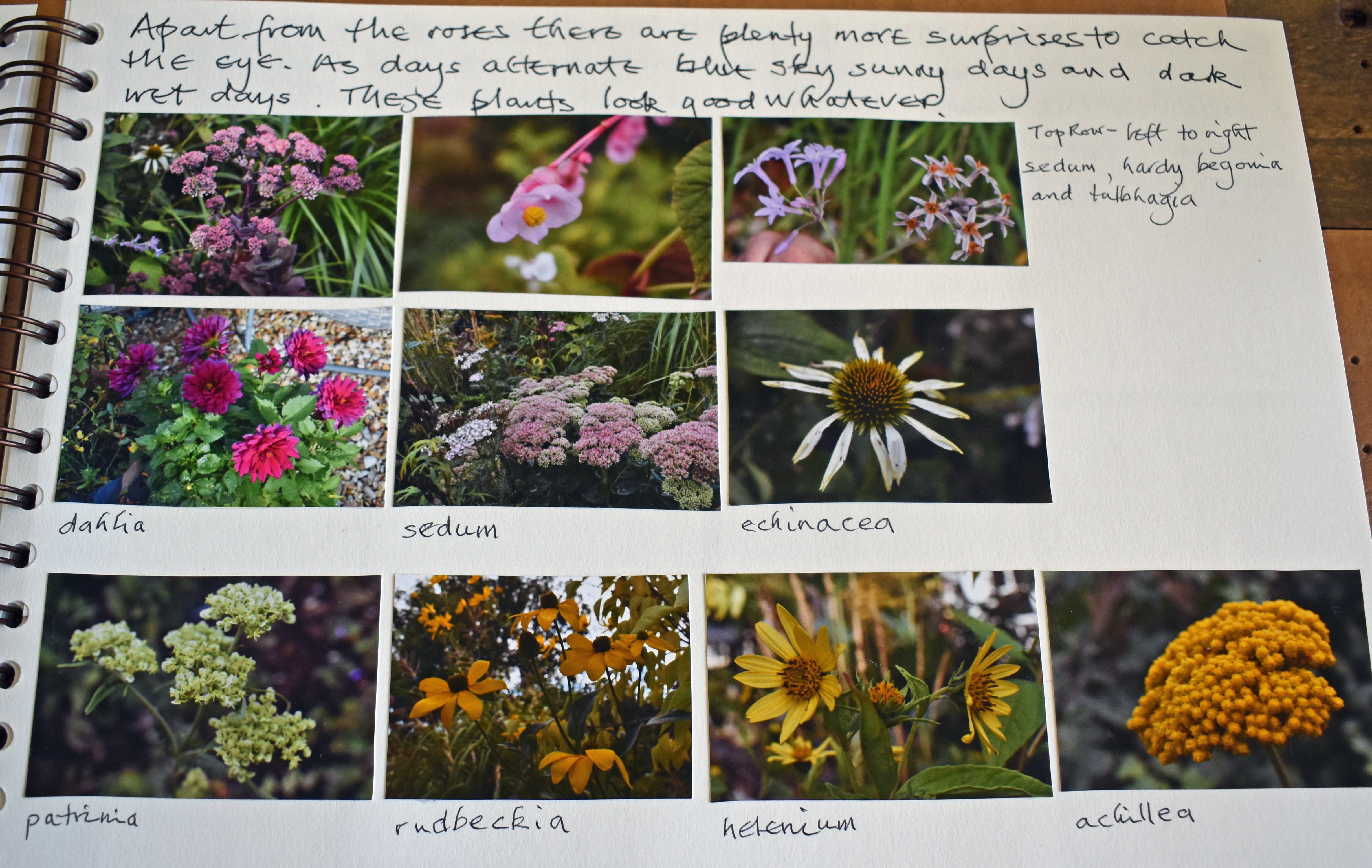
My Garden Journal 2024 October

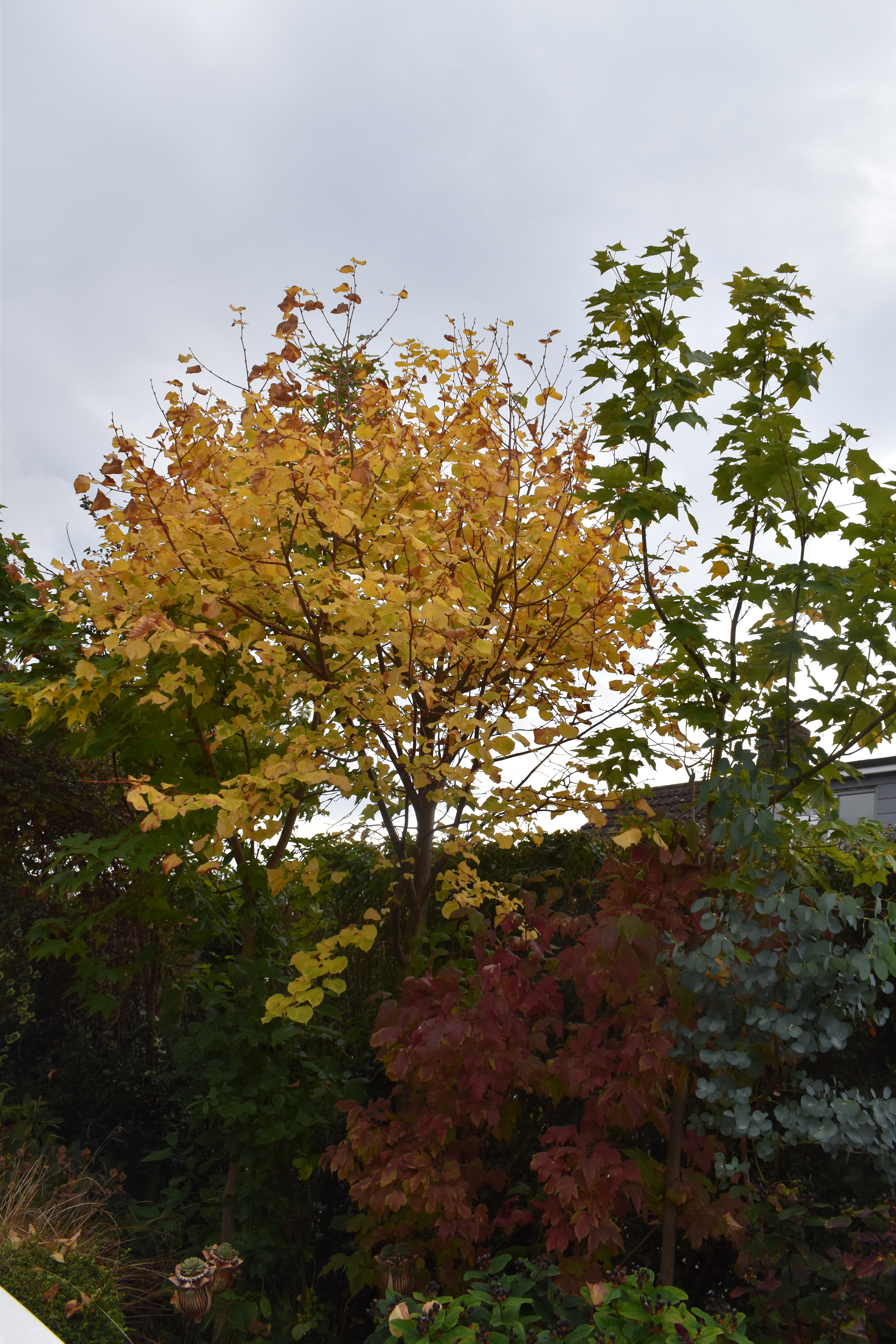
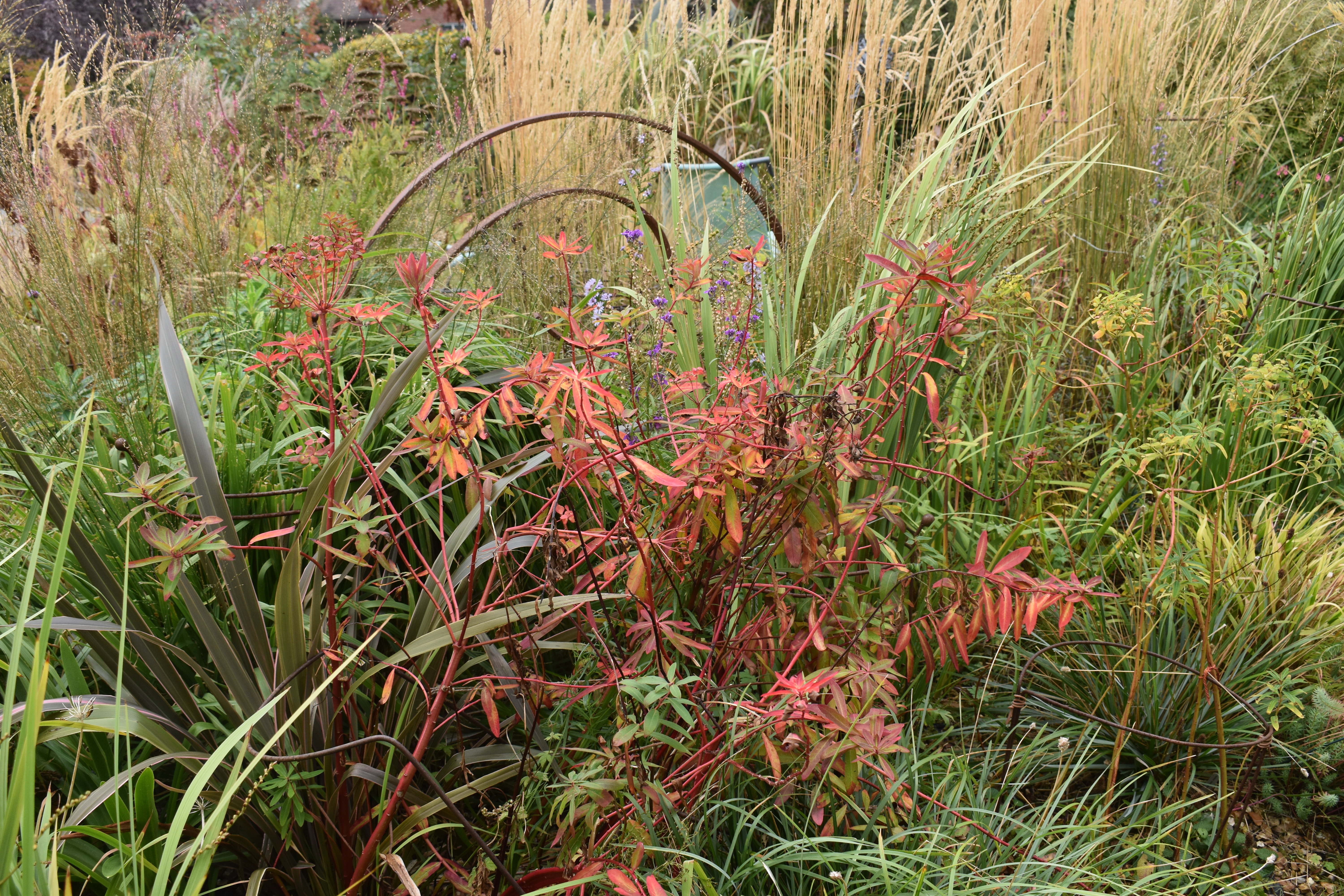
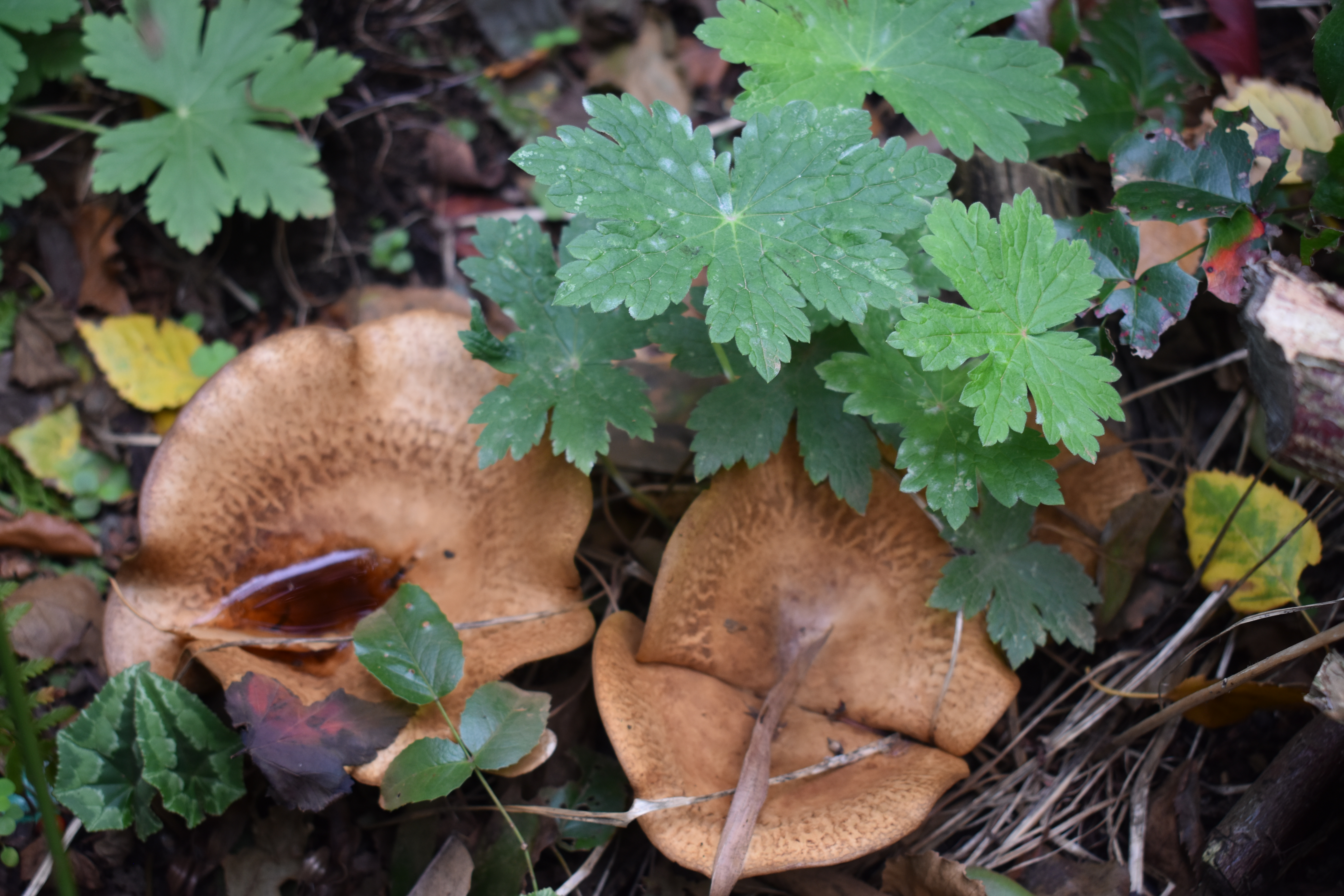
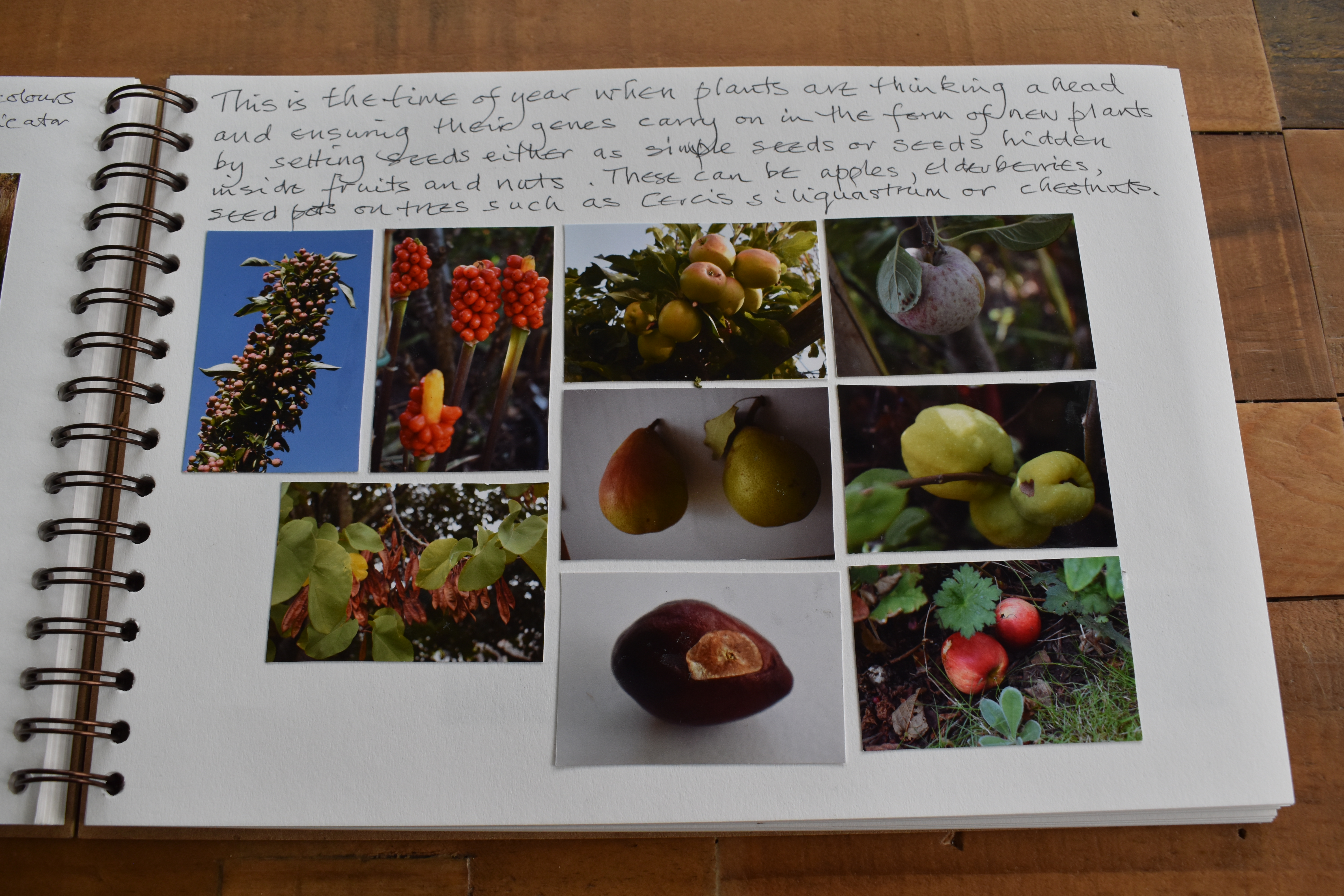
When starting my garden journal for October 2024 I wrote “October is when autumn really gets going and evidence of the new season is all around us in our garden and in the countryside. The most obvious changes to look out for are changes in leaf colour and ripening fruits.

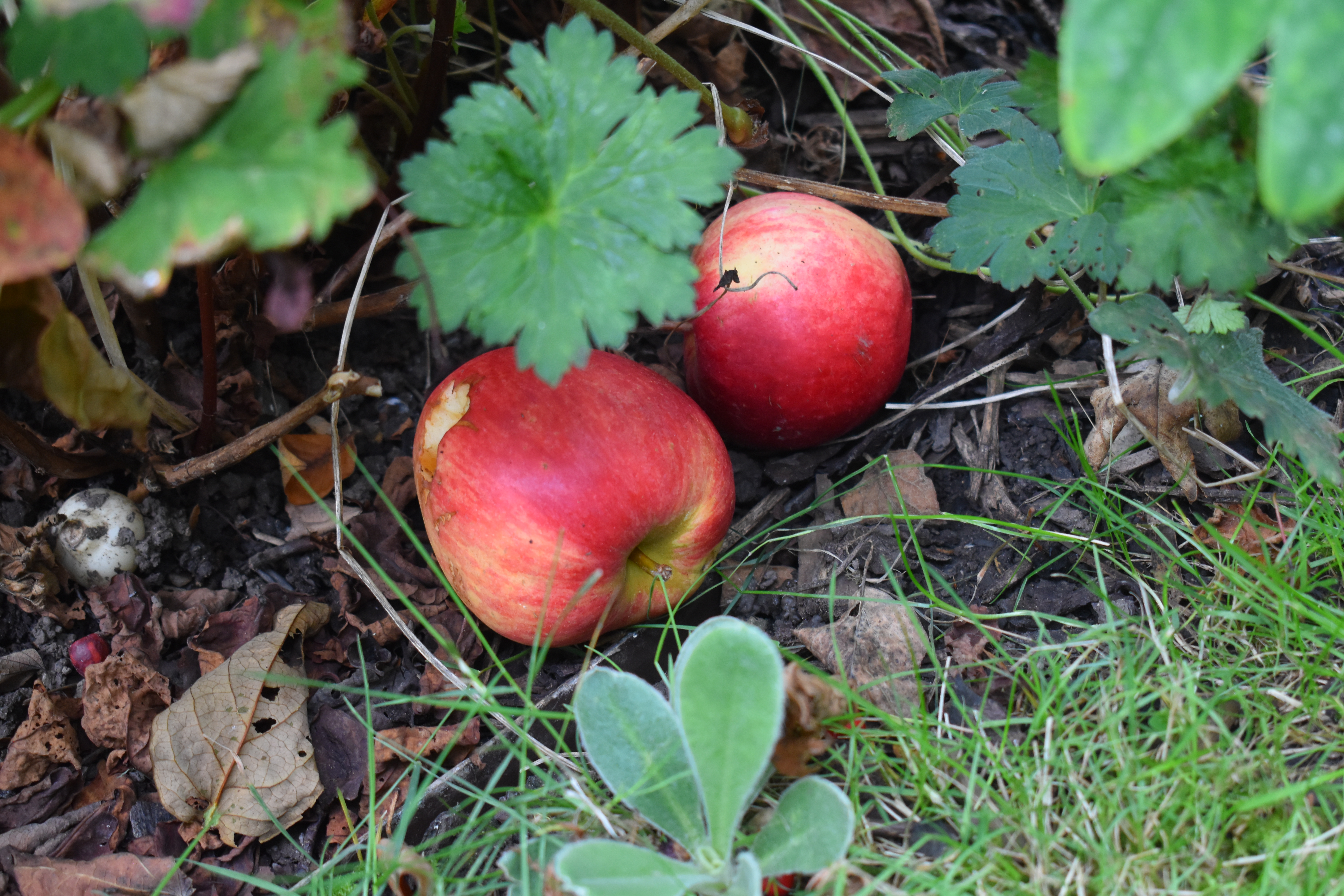
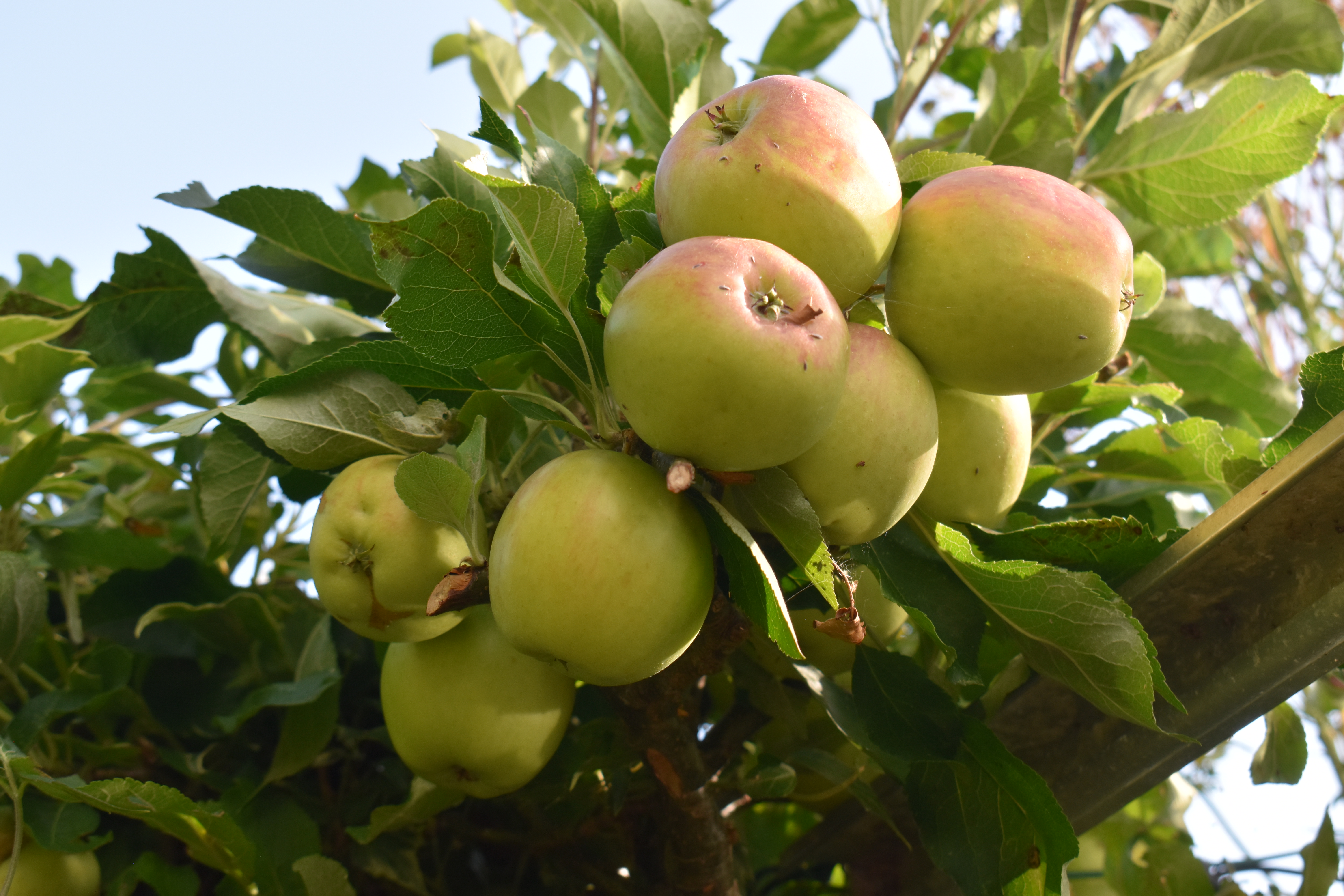
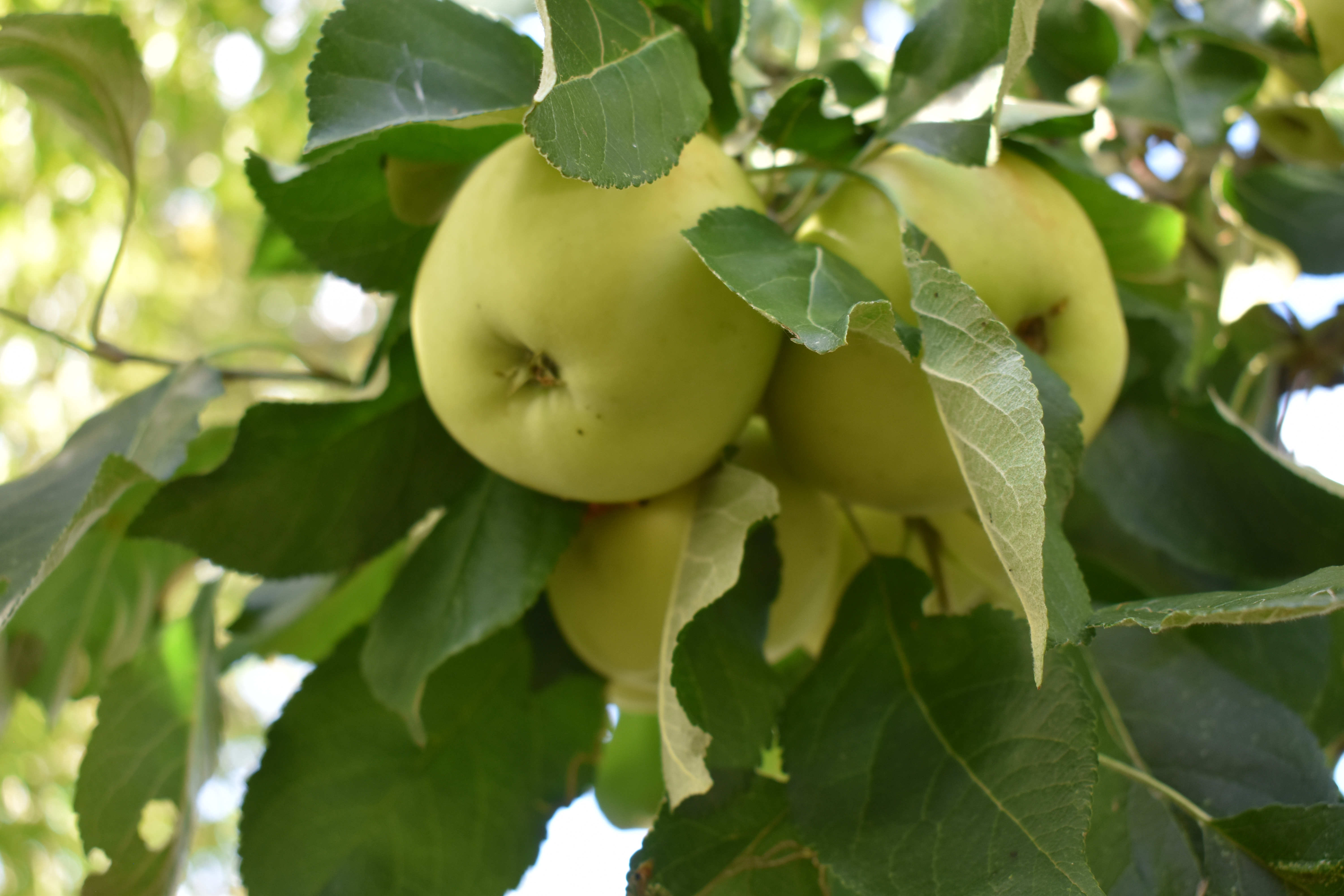
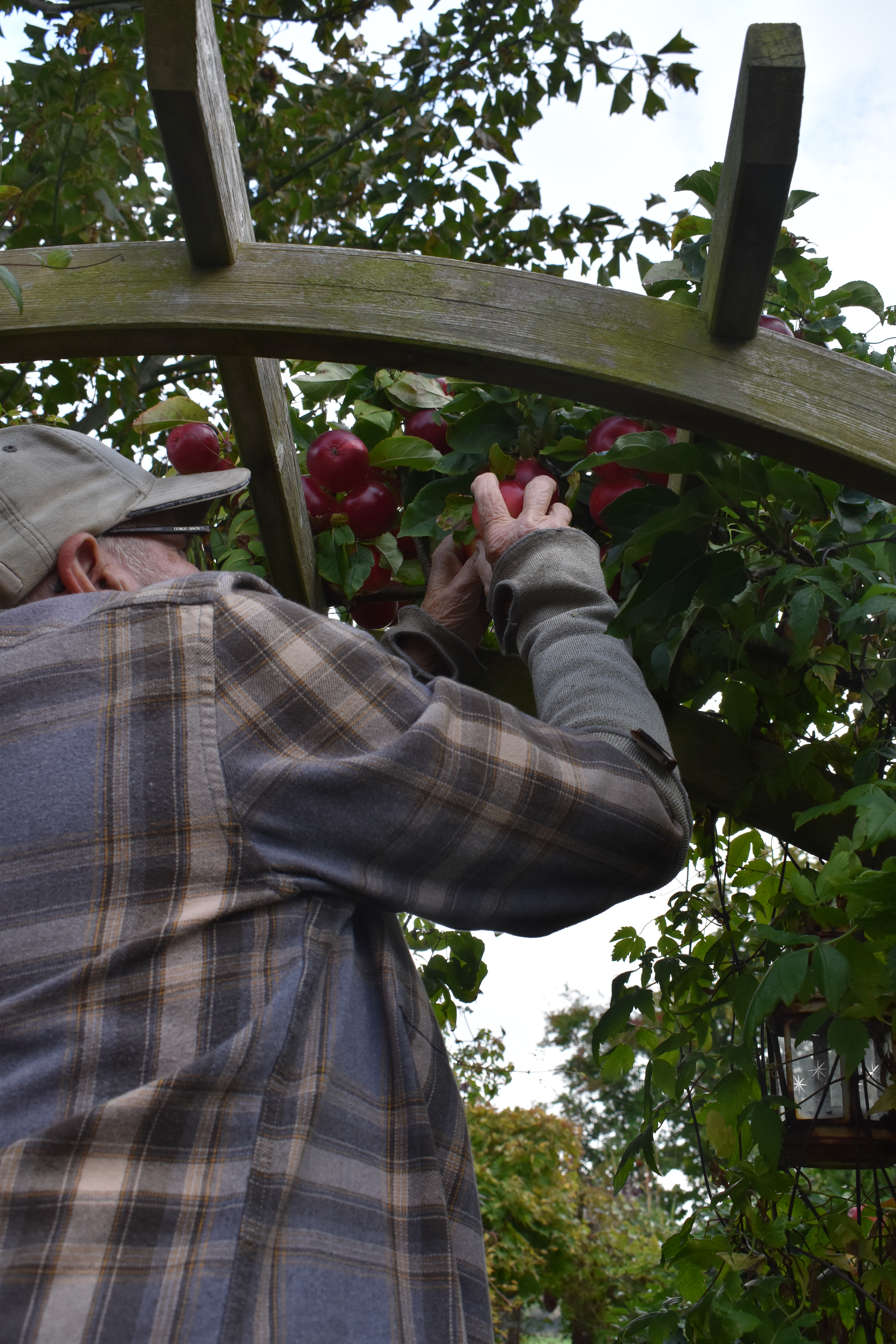
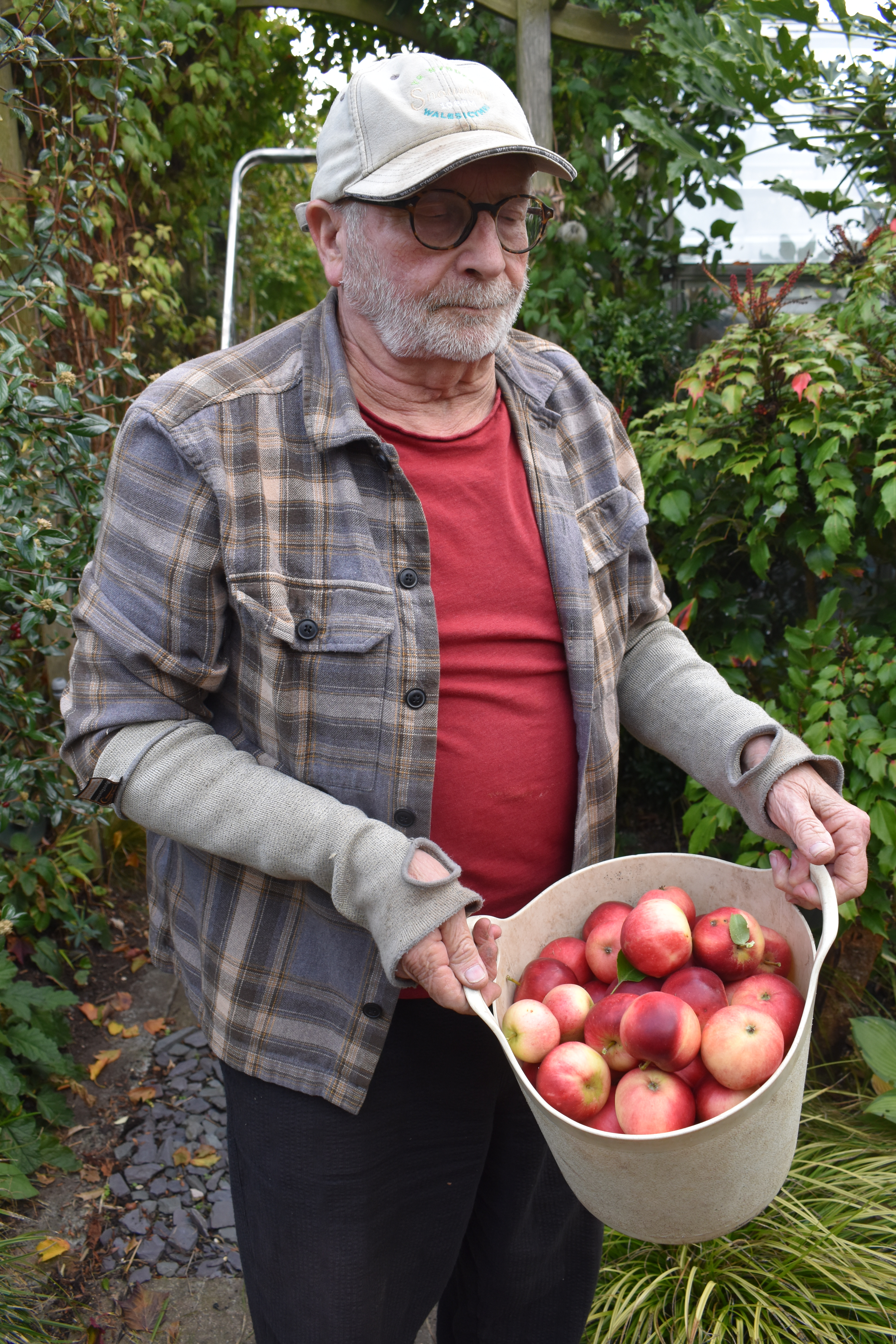
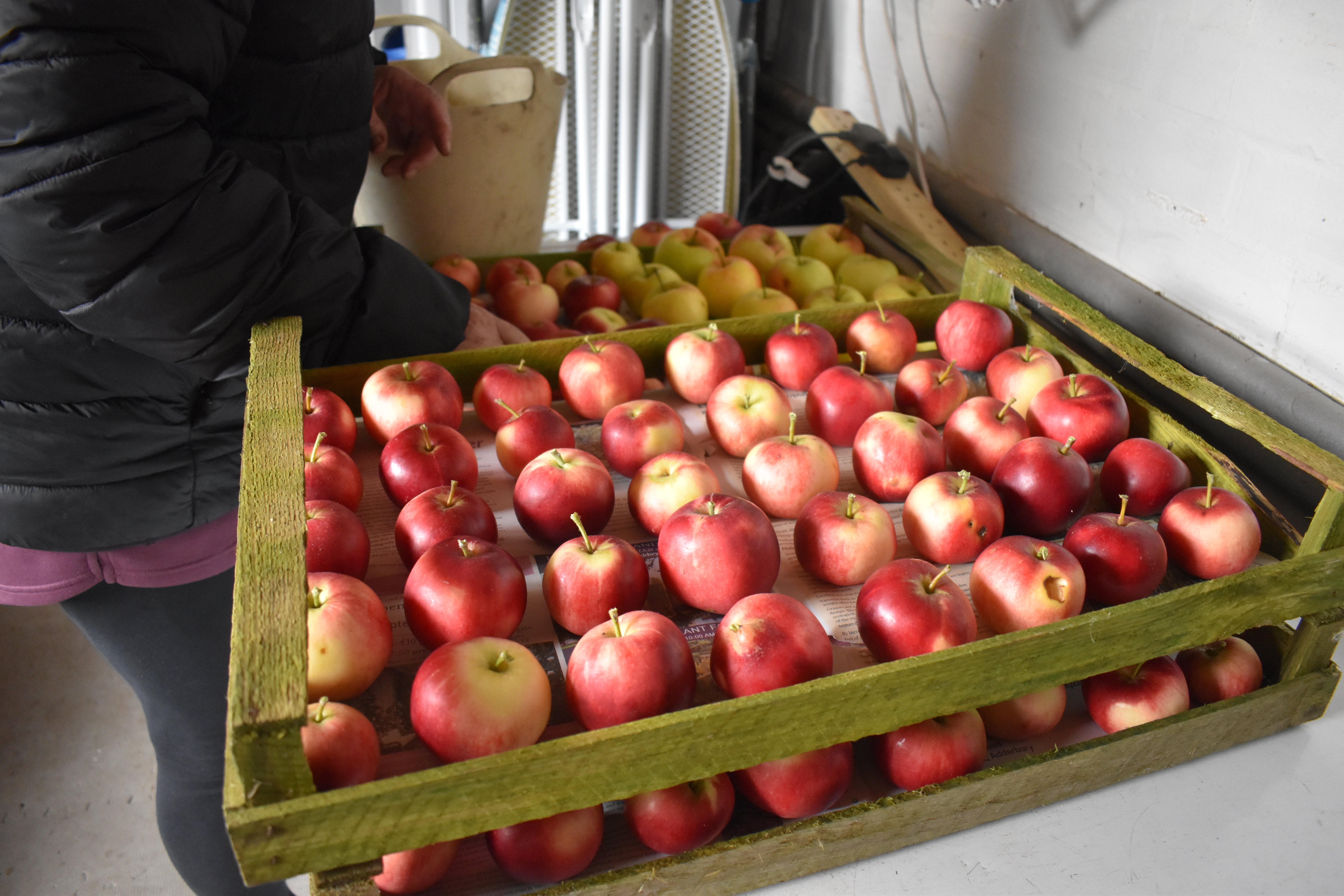
The main fruit for eating that we pick this month is the apple. We have 20 different apple varieties in the garden, 4 trained over arches, 4 stepovers and 12 cordons.”

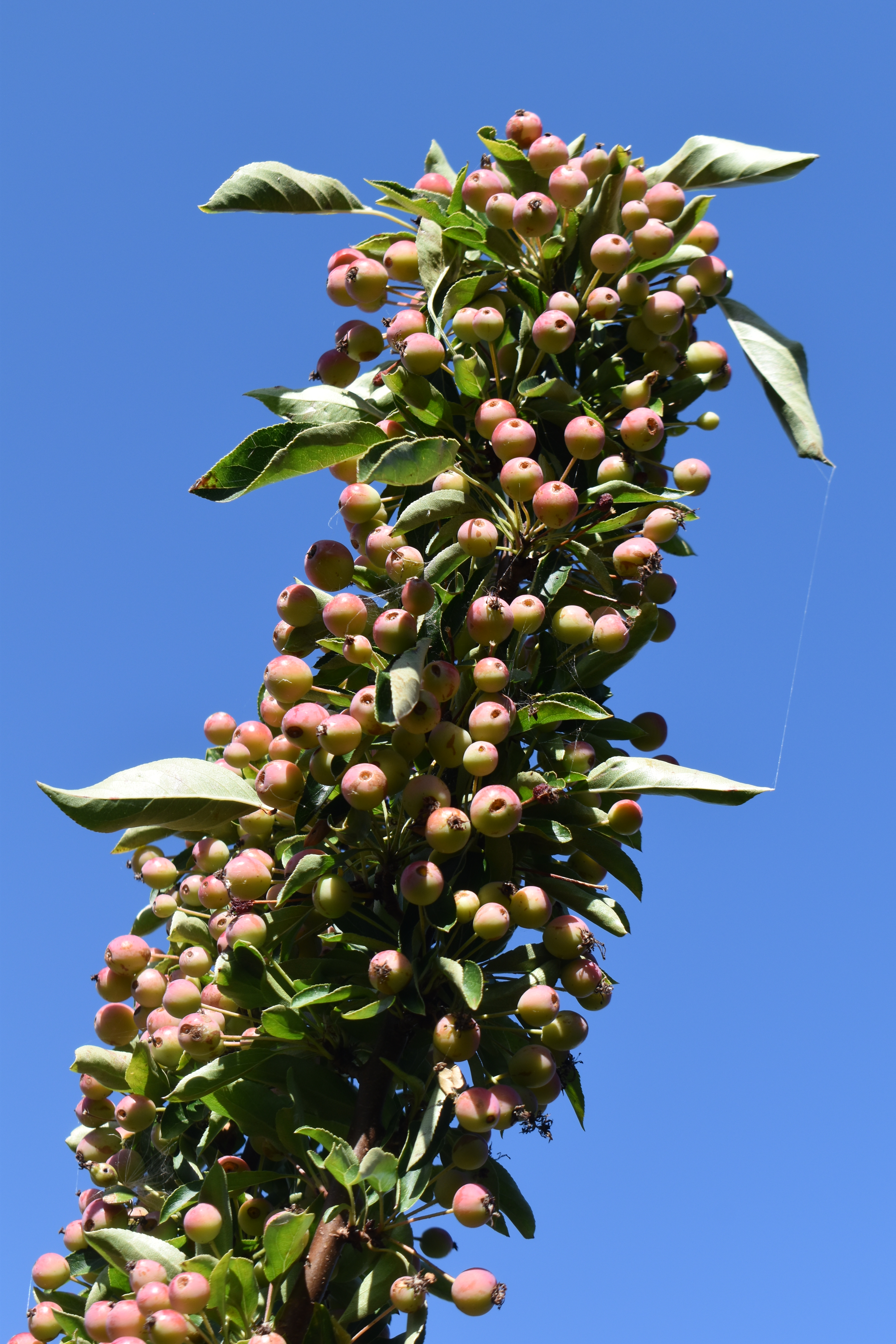
“Crabapples are in our garden for their decorative qualities, but they also help desert apples to get pollinated effectively.”

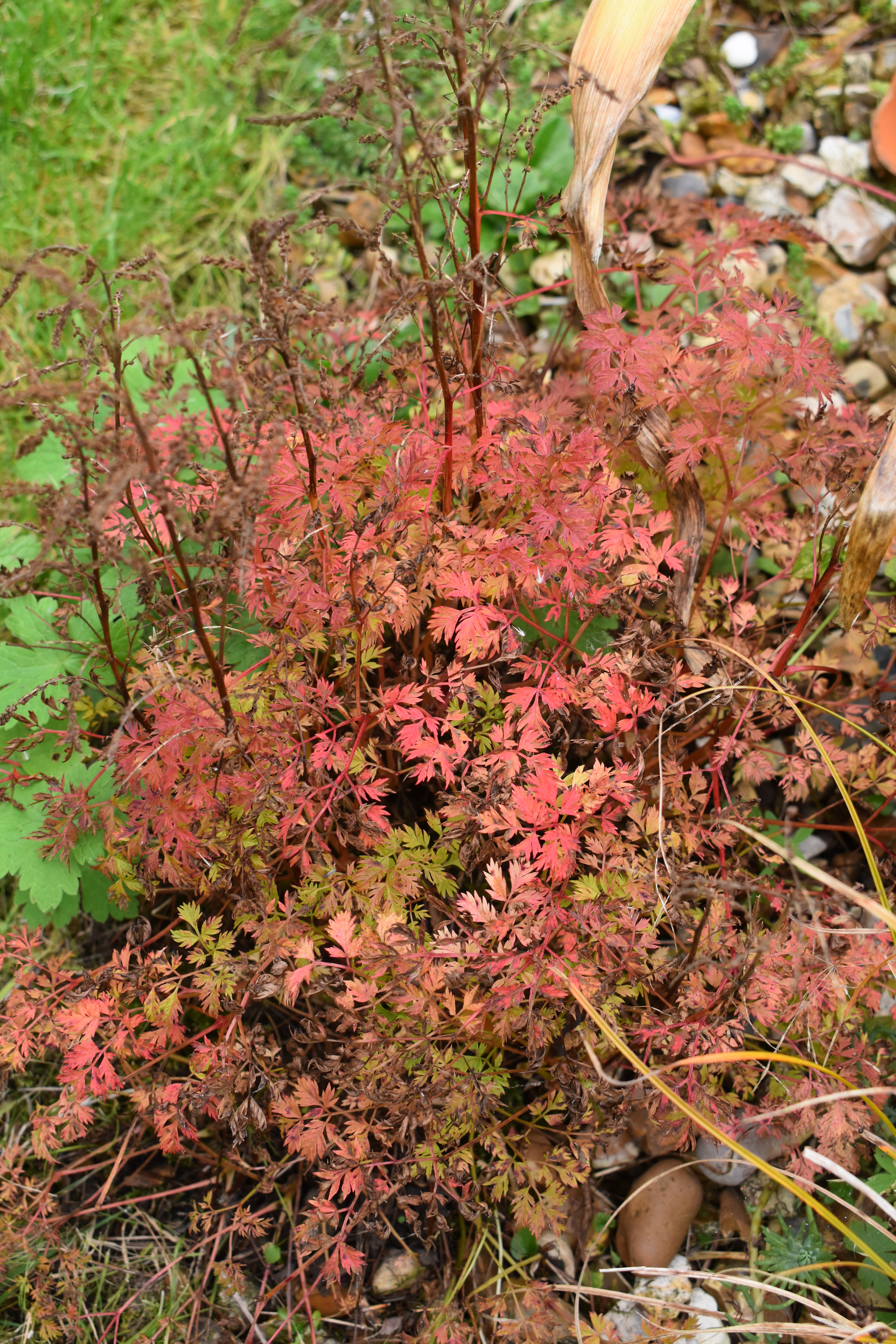
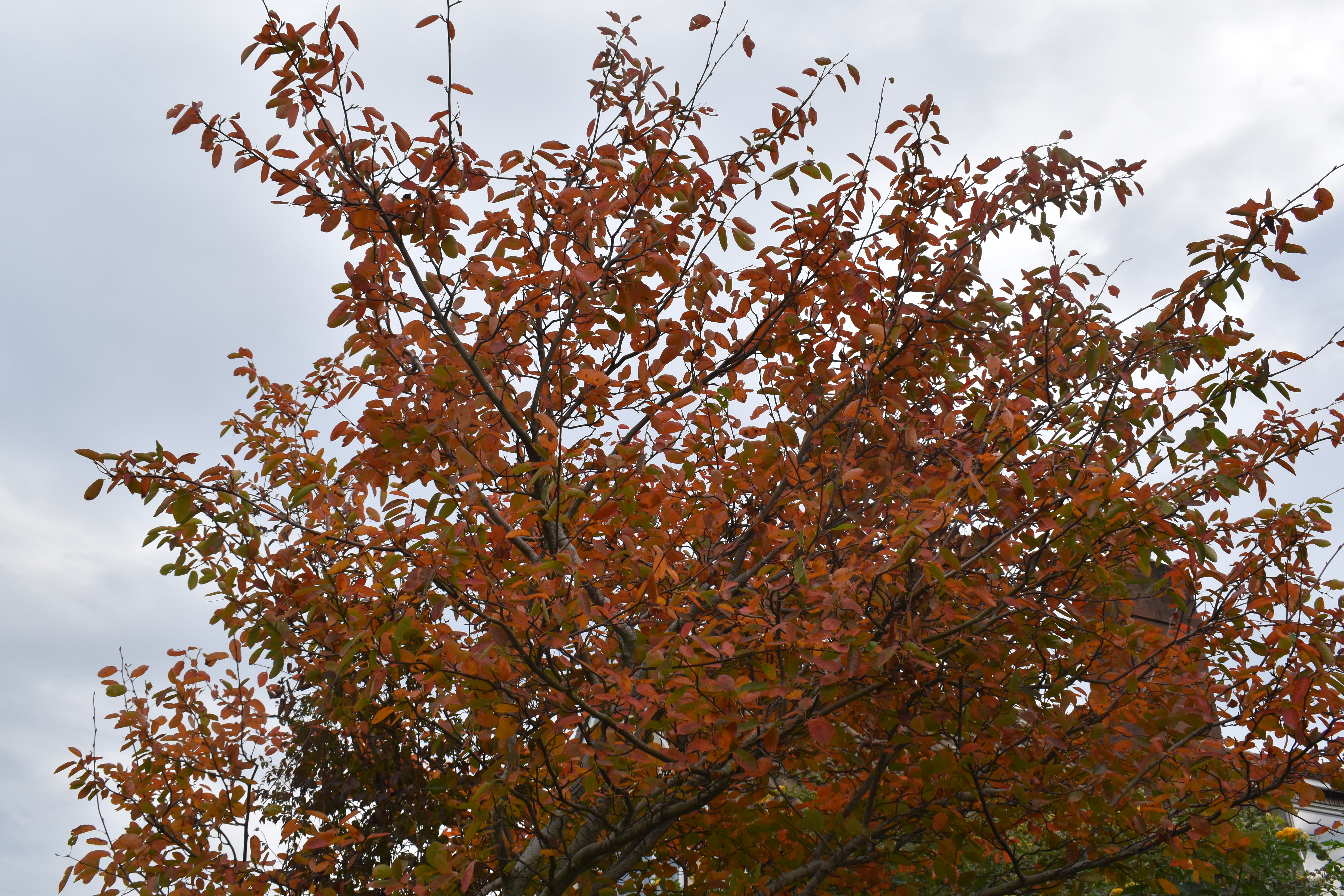
“Autumn colours are starting to develop early in the month.”

Onto the next page where I looked at some of our sorbus varieties all in berry. I wrote, “Sorbus give the garden so many different coloured berries and autumnal leaves all together. They are closely linked to our native Rowan or Mountain Ash.”

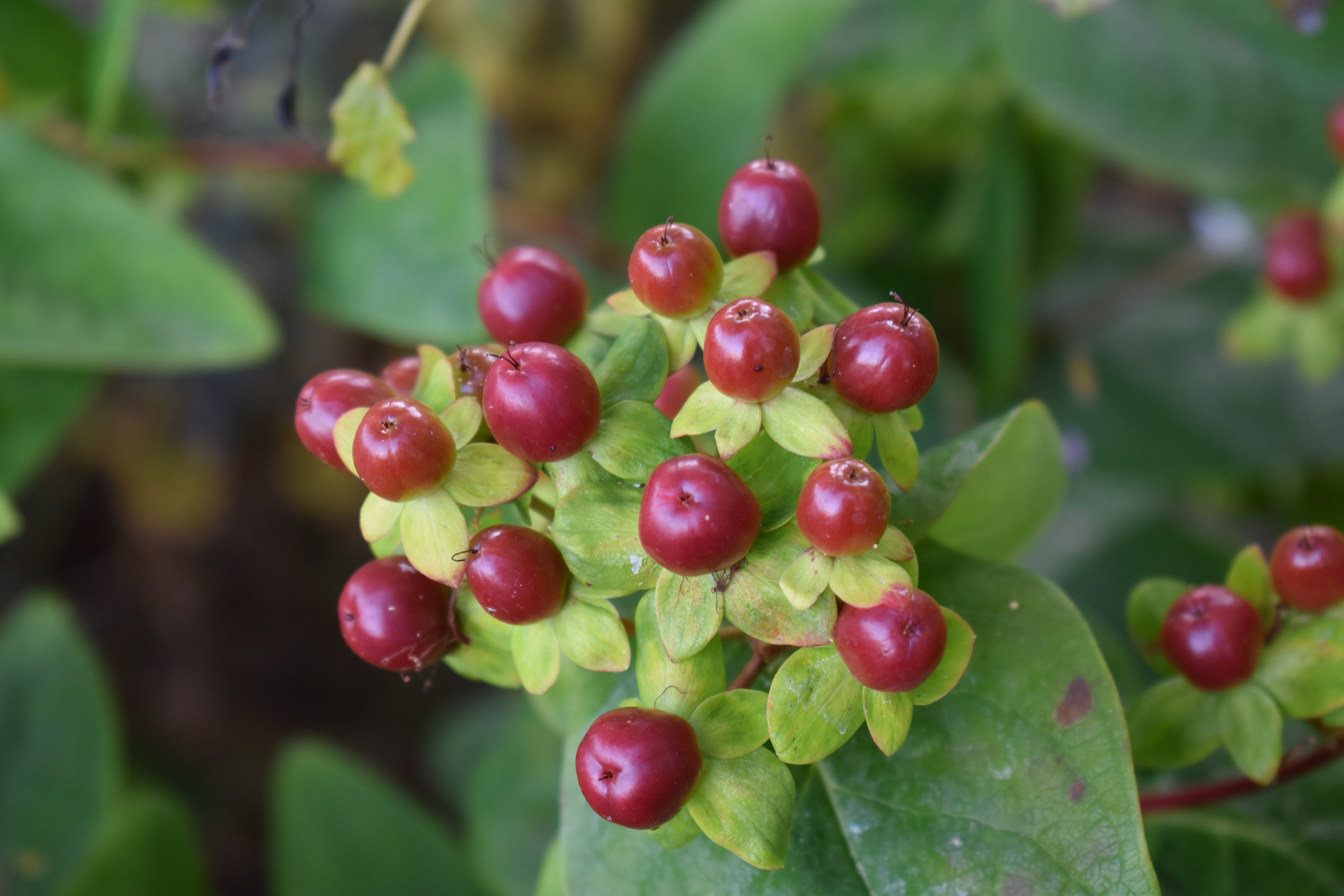
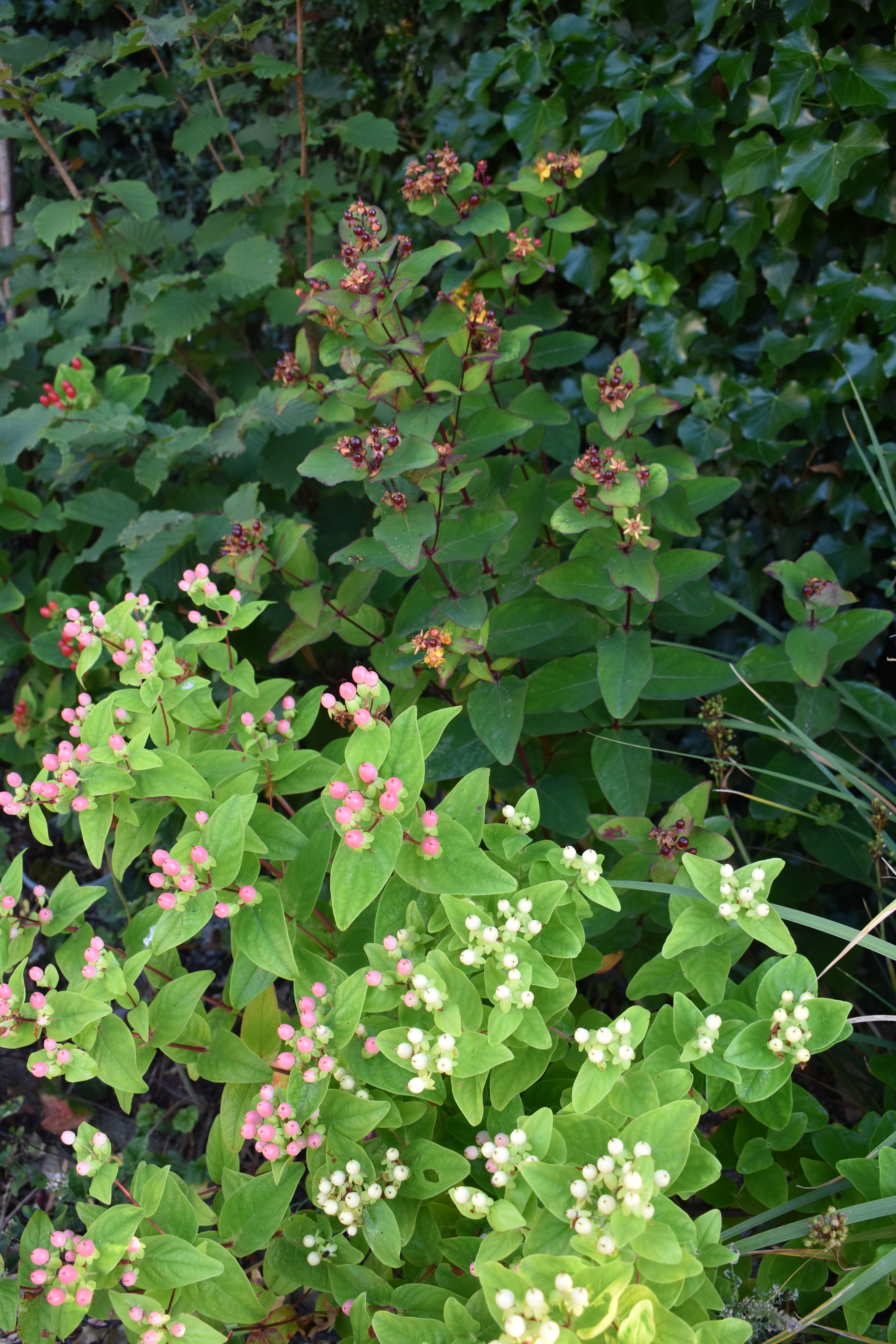
On the page opposite I looked at other berried trees and shrubs where I wrote, “But it is not just sorbus that have coloured berries. There are plenty more – cotoneaster, lonicera, hypericum, holly and arum lily

Next page featured some of our hardy fuchsia and I noted that, “It’s amazing how you can discover plants that you have ignored for years. This is what happenedto us when we started to grow fuchsias again. This happened when we found plants F. “Thalia” and F’ microphylla at Stocktonbury Bury and Croft Castle respectively.”

The final photo in the set above we grow mostly for its unusual blue-grey foliage. It is almost worth growing just for its long name which I can never remember the whole of! Fuschia microphylla ssp. hemsleyana ‘Silver Lining’.

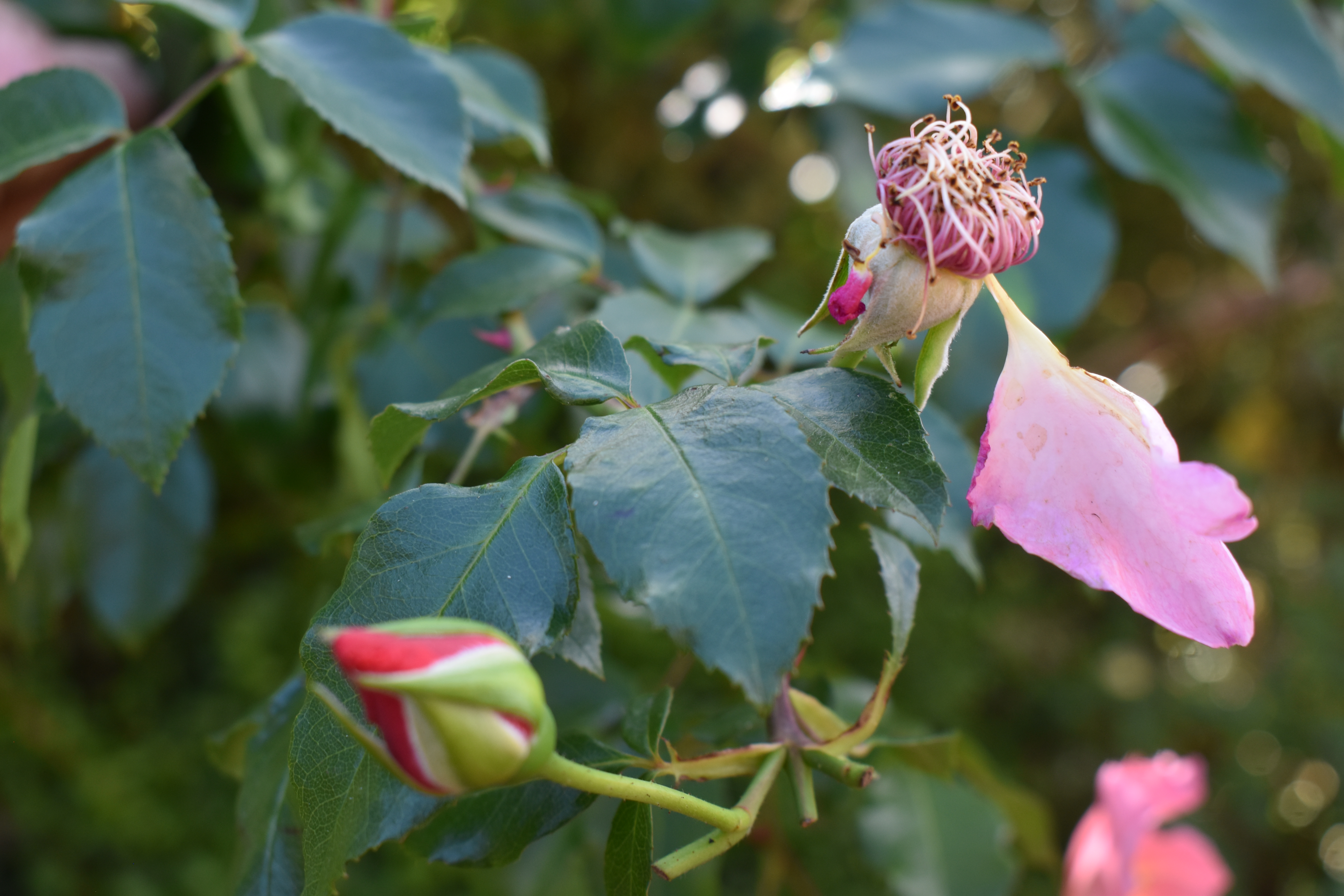
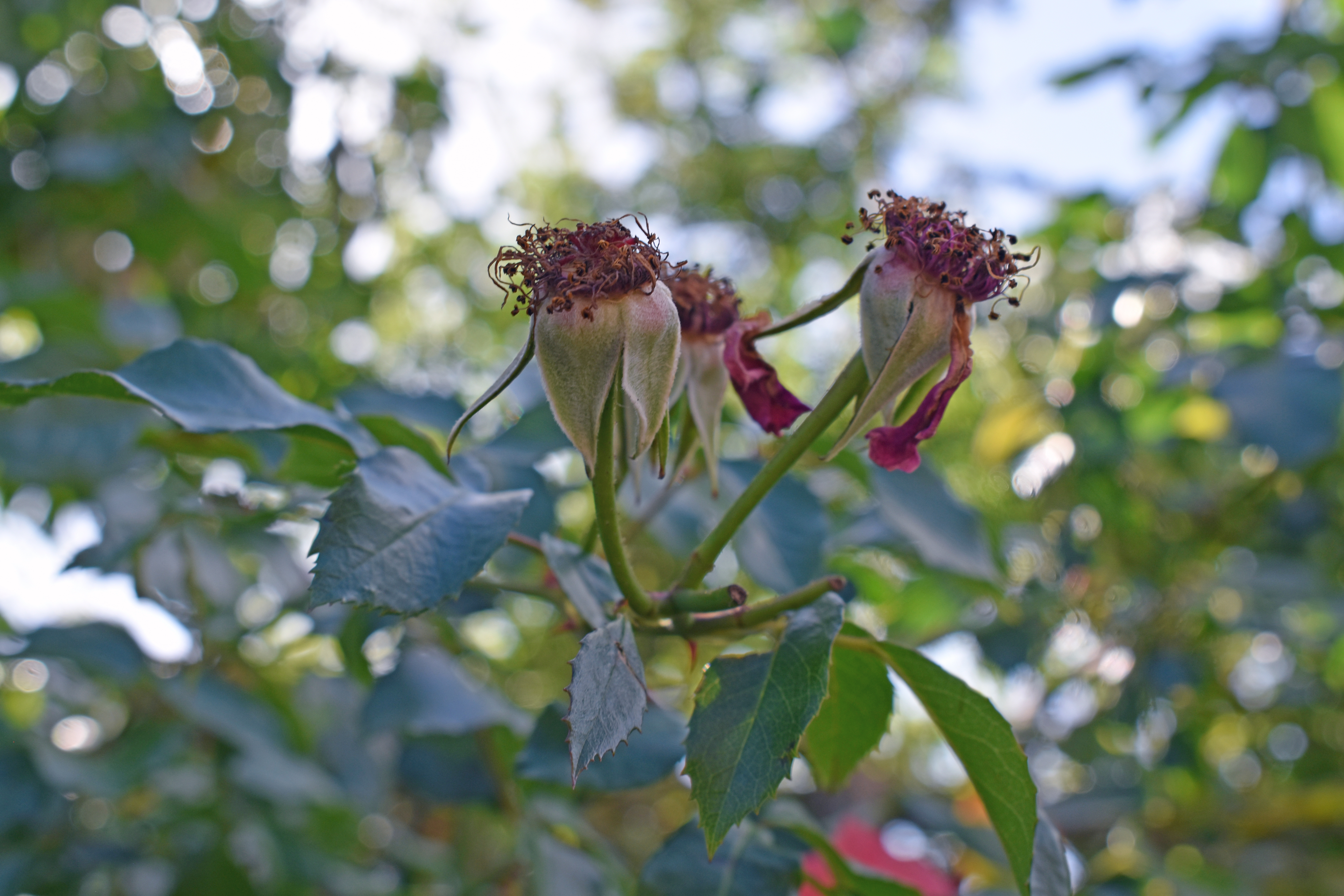
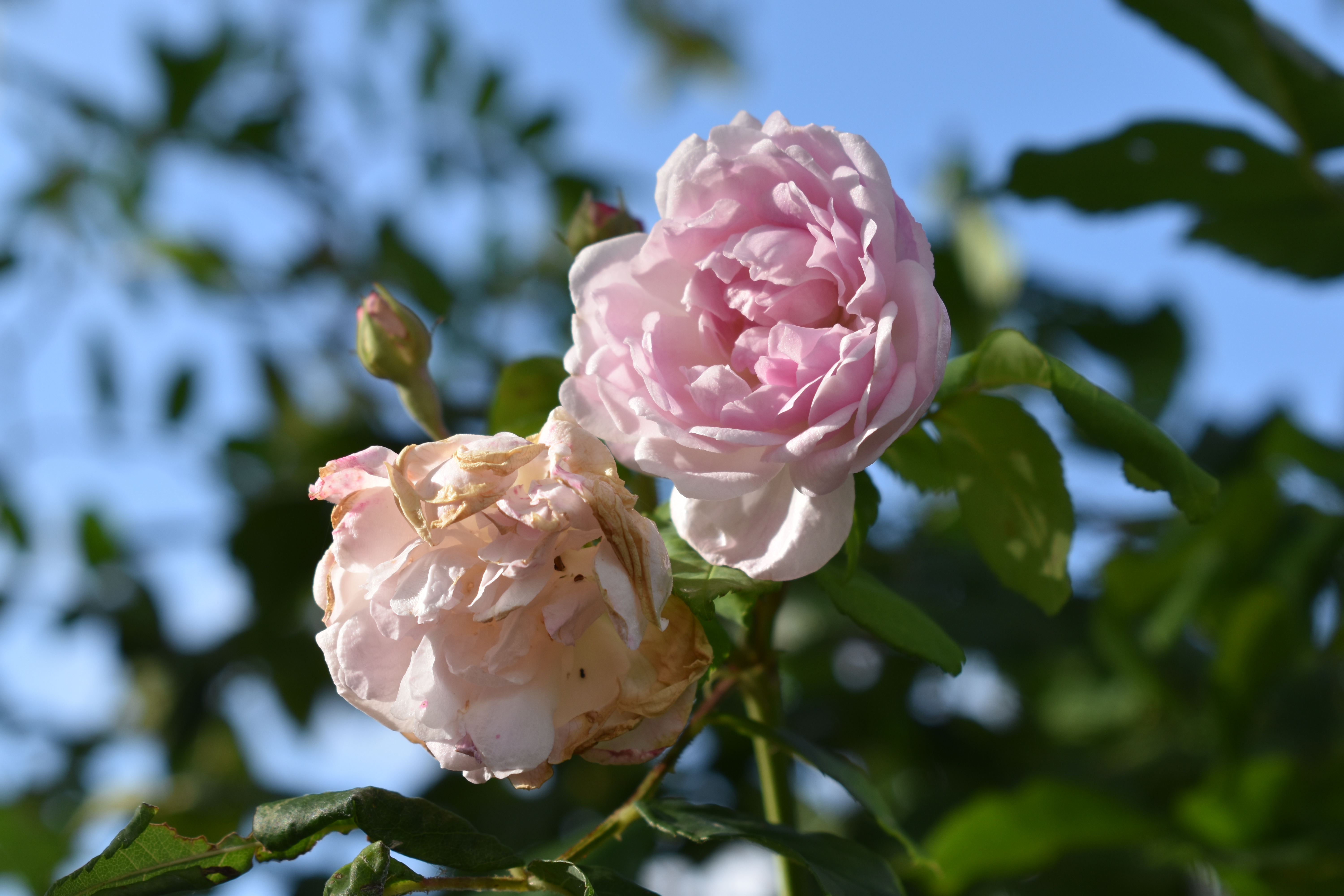
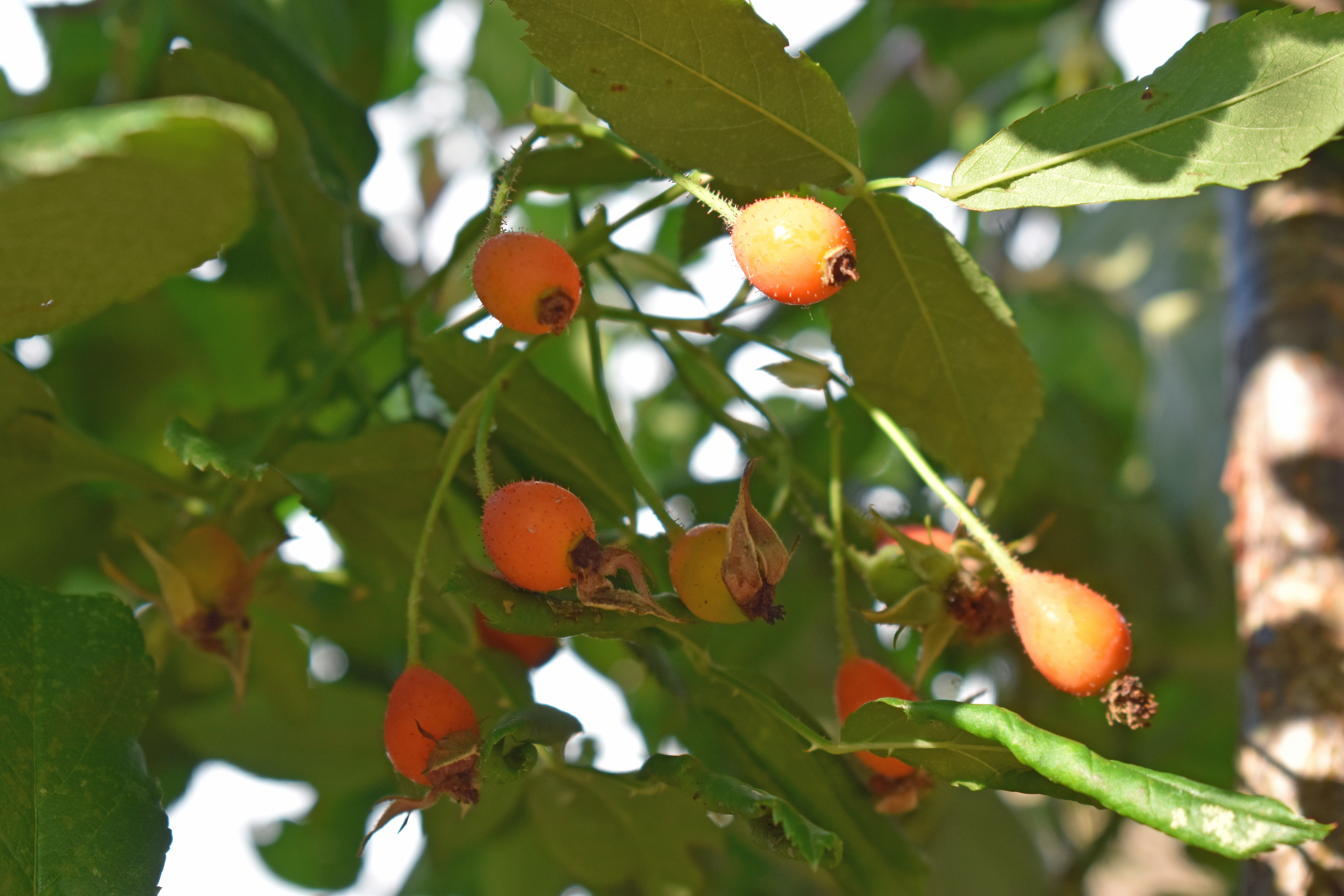
On the page oppsite the fuschias I feature roses! I wrote, “In some years some roses seem to keep flowering out of season, usually to the end of December. Hips are now getting fatter and redder. Sadly October’s strong winds snap off whole branches loaded with flowers and hips.”

Then I shared six photos of late flowers.

Next page ,which is the final page for this month, shows some of the garden tasks we found time to do. I noted that, “October has been a very difficult month with so much rain that the ground has been saturated. We had several jobs planned and then delayed by wind and rain. We had to repair wind damaged branches and tie in wild shoots. In the first photo Jude is tying in a wild rose branch. The other photos show us emptying and re-planting the Prairie Garden.”

I finished off the October entries into my garden journal with the words, “We now have to wait to find out if our work has been successful.”

This Veggie Life

A Vegetarian | Nature Lifestyle Blog

Rambling in the Garden

.....and nurturing my soul

The Arch City Gardener

Journeys In St. Louis Gardening and Beyond

Garden Dreaming at Châtillon

Consult the genius of the place

Storyshucker

A blog full of humorous and poignant observations.

gardeninacity

Notes from a wildlife-friendly cottage garden

PlayGroundology

...an emerging social science

The Official Blog of British Wildlife

'The most important and informative publication on wildlife of our times' - The Independent. This blog is a member of The UK & Ireland Natural History Bloggers group: www.uknhb.blogspot.com

iGrowHort

Inspire - Cultivate - Grow Native Plants - Restore Landscapes

Bishops Meadow Trust

To create and protect a semi-natural wild space for the people of Farnham to enjoy and experience an array of British wildlife in our town

Gardening with Children

The www.gardeningwithchildren.co.uk Blog

UKbirdingtimeline

birding through the seasons, why birds matter and how to conserve them

NATURE WALKER

with a camera in hand

Jardin

Transform your outdoor space

Eva's space

My allotment, cooking and other interests

Old School Garden

my gardening life through the year

LEANNE COLE

Trying to live a creative life

fromacountrycottage

trying to live as lightly as possible on our beautiful planet

Good Life Gardening

Nature lovers from Leicester living the good life.

mybeautfulthings

Finding the beautiful in the everyday

mawsonmichelle

Michelle's Allotment

In and Out of My Garden

thoughts from and about my garden

Greenhousing

Big plans for a small garden

The Scottish Country Garden

A Walled Country Garden in South East Scotland

The Fruity Chicken

Life at the fruity chicken

willowarchway

Off grid living. Self sufficient. "PERMAGANICS RULE".

St Anns Allotments

Nottingham's Grade 2* Listed Allotments and Community Orchard

Manifest Joy Harvests

a journey in suburban vegetable gardening

Allotmental

The madness of growing your own

Penny's Garden: a harvest beyond my front door

A novel approach to vegetable gardening

arignagardener

Sustainable living in the Irish countryside.

NewEnglandGardenAndThread

Master Gardener, amateur photographer, quilter, NH native, and sometimes SC snowbird

dianajhale

Recent work and work in progress and anything else that interests me

planthoarder

a chaotic cottage gardener

Lens and Pens by Sally

a weekly blog that creates a personal philosophy through photographs and words

Dewdrops and Sunshine

Stories from a sassy and classy Southern farmbelle.

The Pyjama Gardener

Simple Organic Gardening & Seasonal Living

gettin' fresh!

turning dirt into dinner

JOY...

today the world is created anew

Garden Birds

Notes from a Devon garden

ShootAbout

Life Through The Lens

Adapting Pixels

A photography blog showcasing the best photography pictures and videos on the internet

Wildlifegardening's Blog

Just another WordPress.com site

naturestimeline

personal observations from the natural world as the search continues for a new approach to conservation.

LATEBLOOMERBUDS

The Wonders of Life through my Eyes, my Heart, my Soul