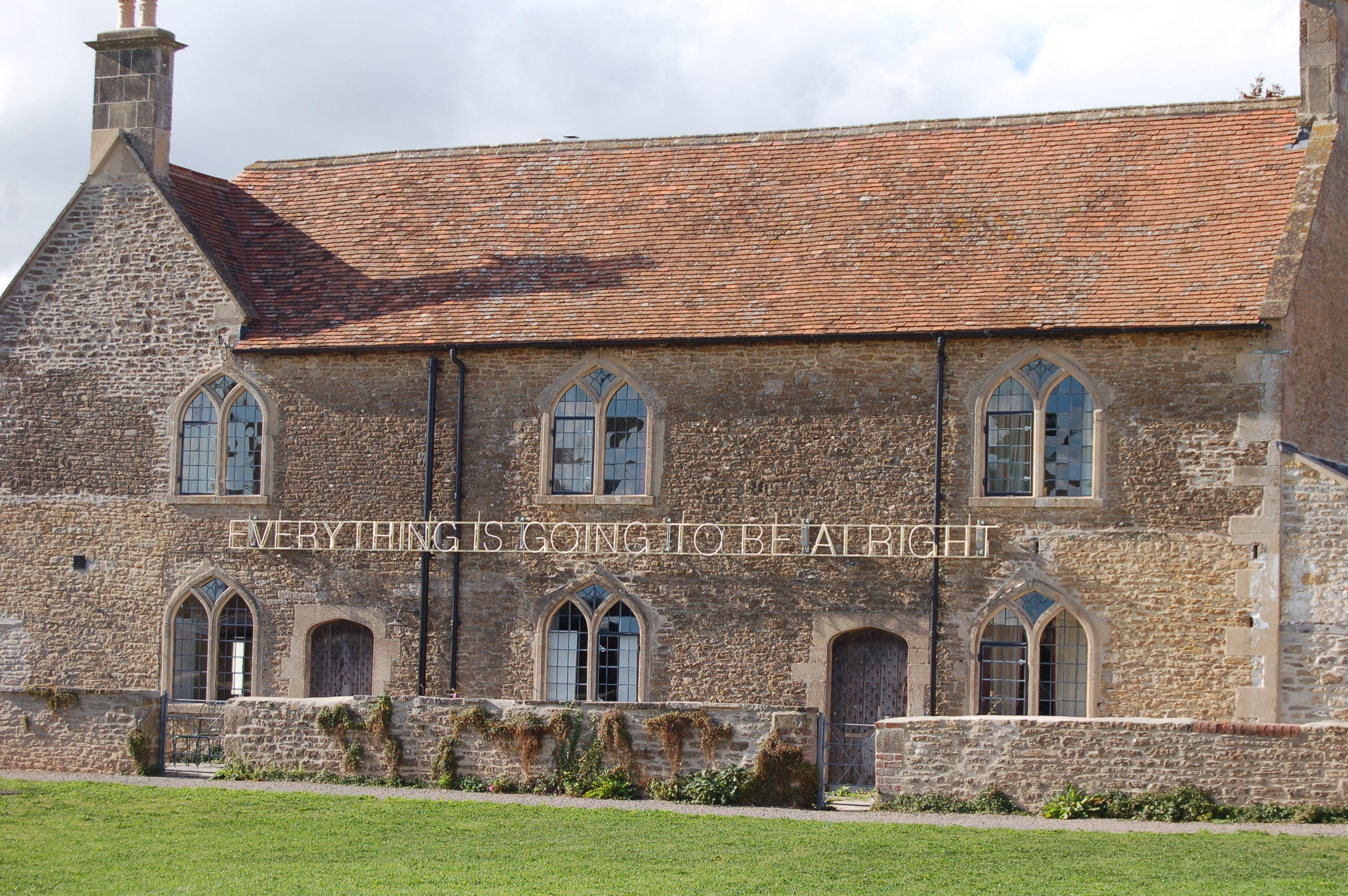
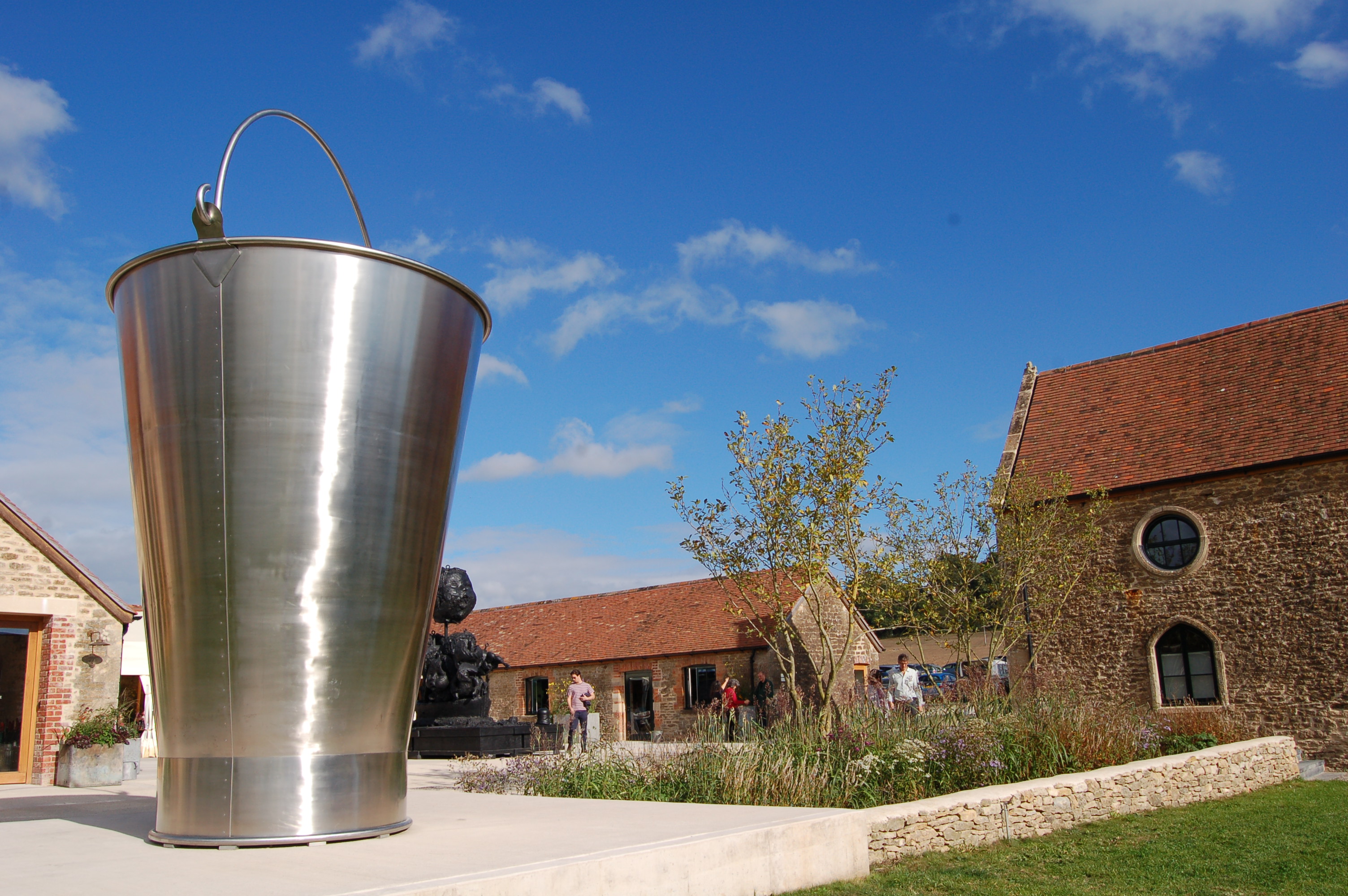
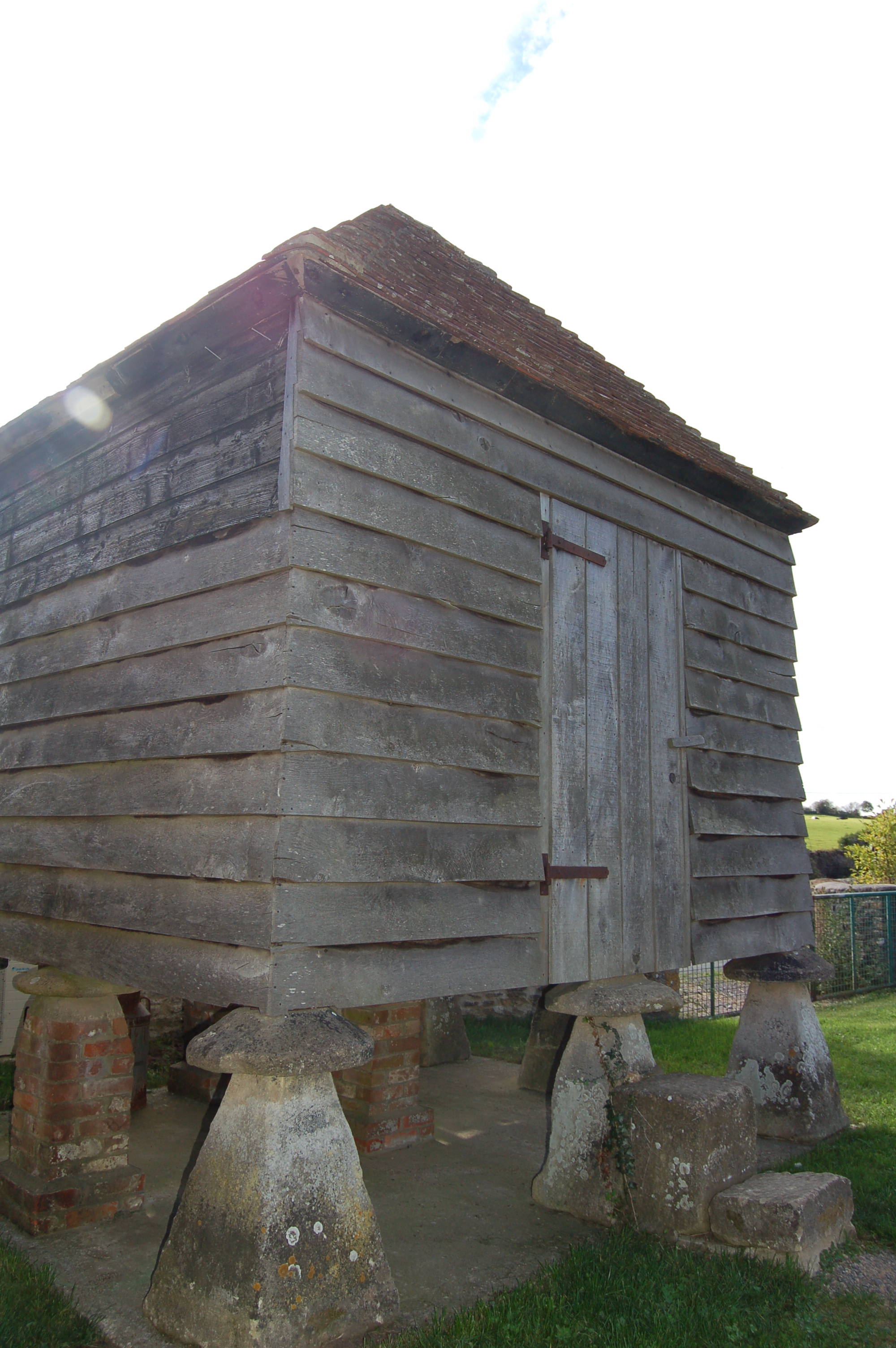
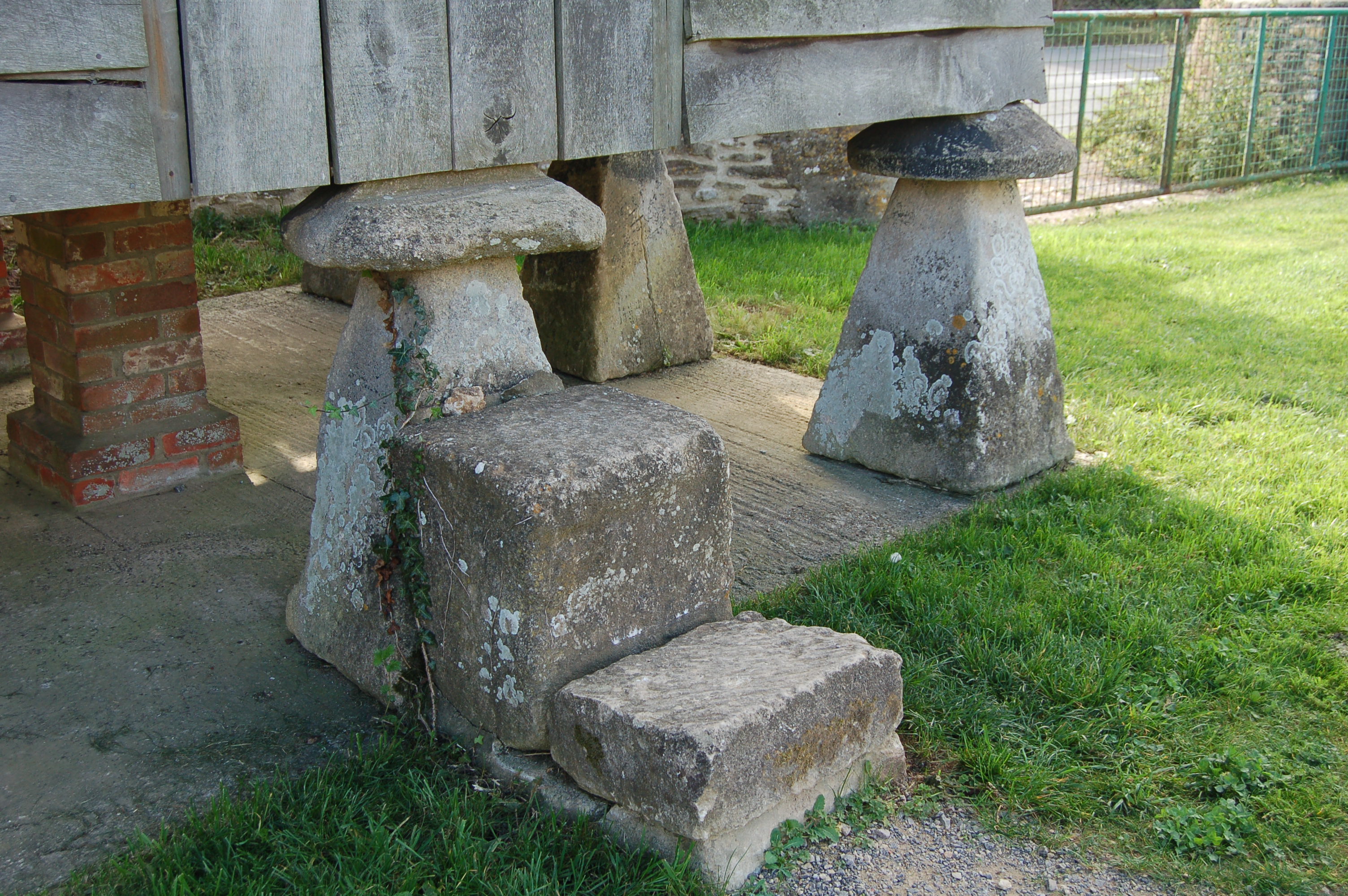
Categories
colours garden design garden photography gardening gardens gardens open to the public grasses hardy perennials light light quality National Garden Scheme NGS ornamental grasses ornamental trees and shrubs outdoor sculpture photography Yellow Book Gardens

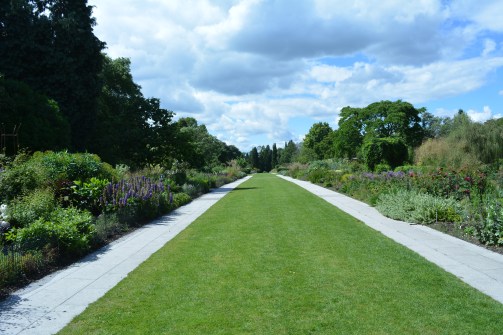
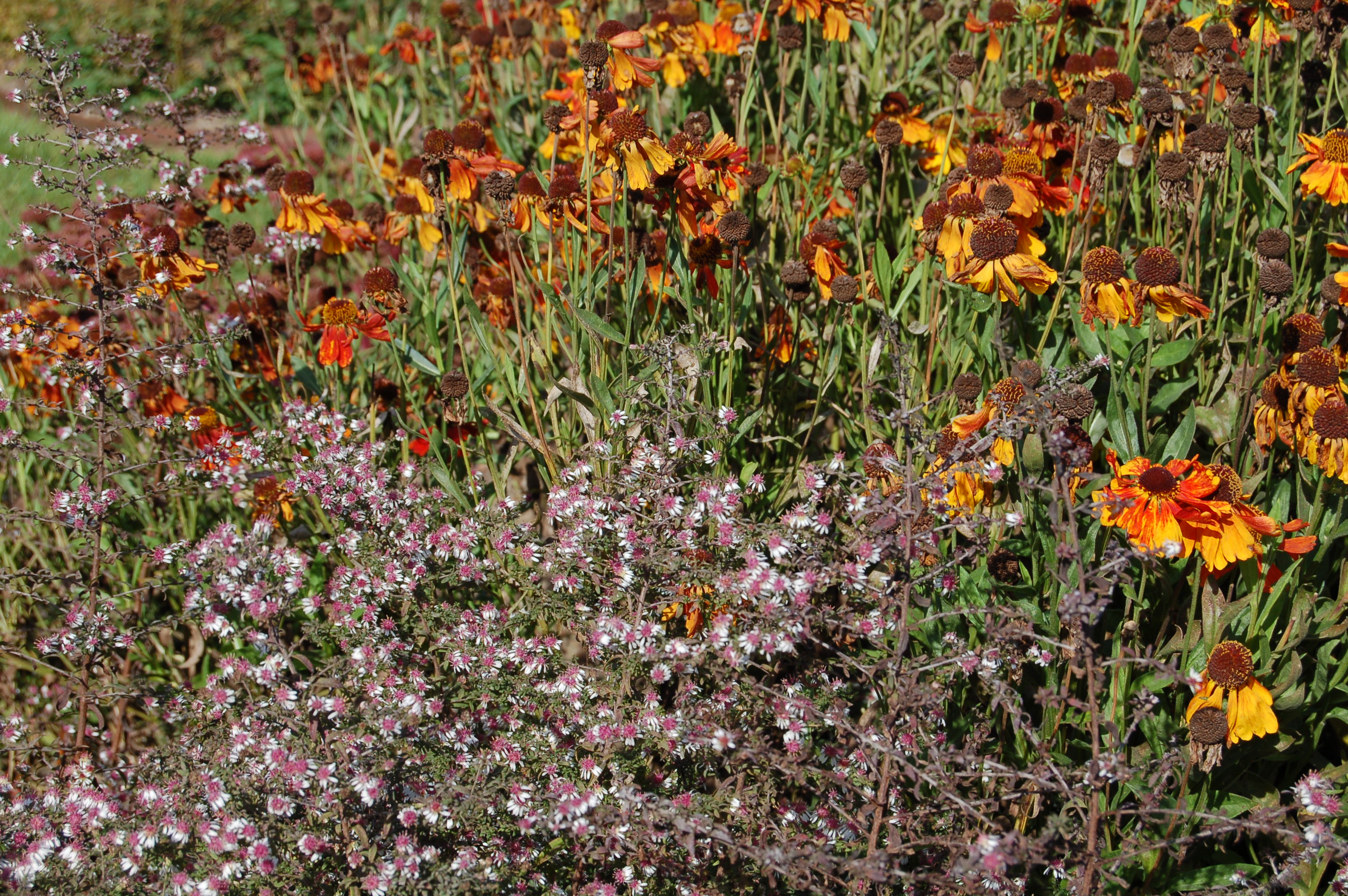
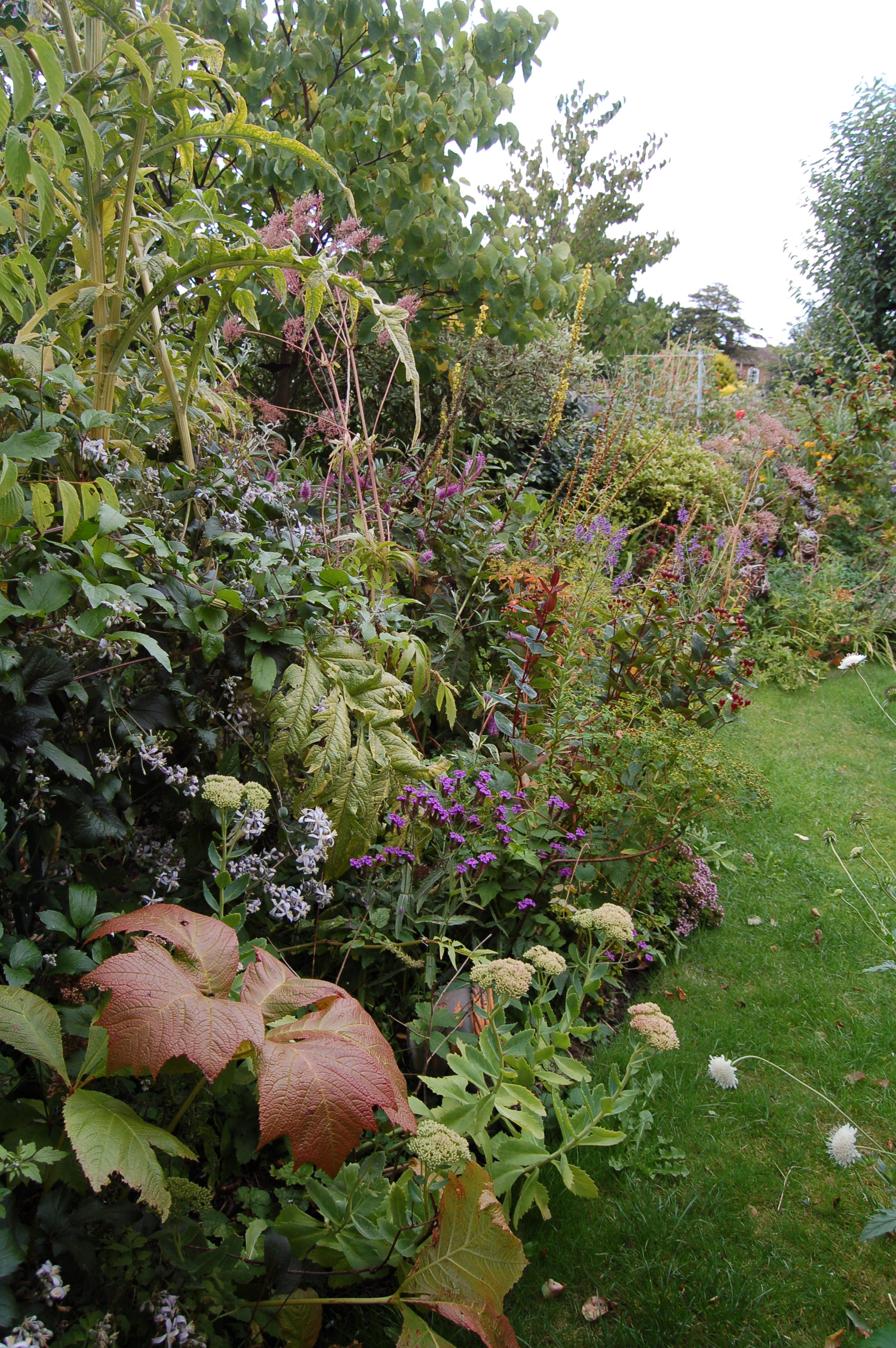
Aulden Farm – another Yellow Book garden

We open our garden under the auspices of the National Garden Scheme and love to see our garden in its famous Yellow Book. But we also love to visit other gardens from the Yellow Book.

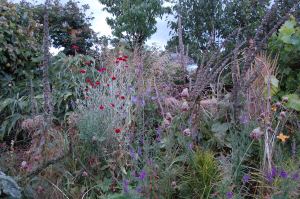
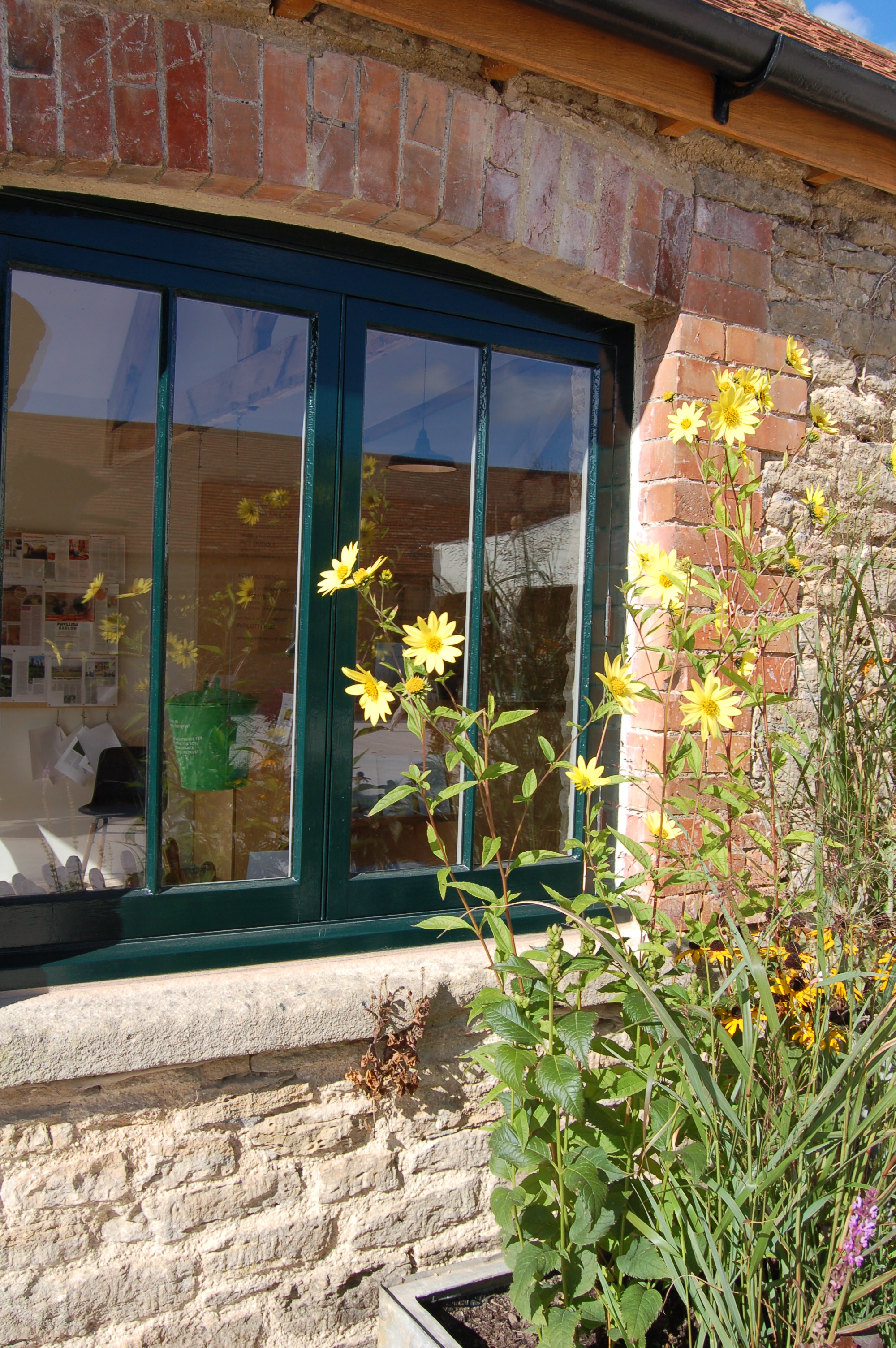
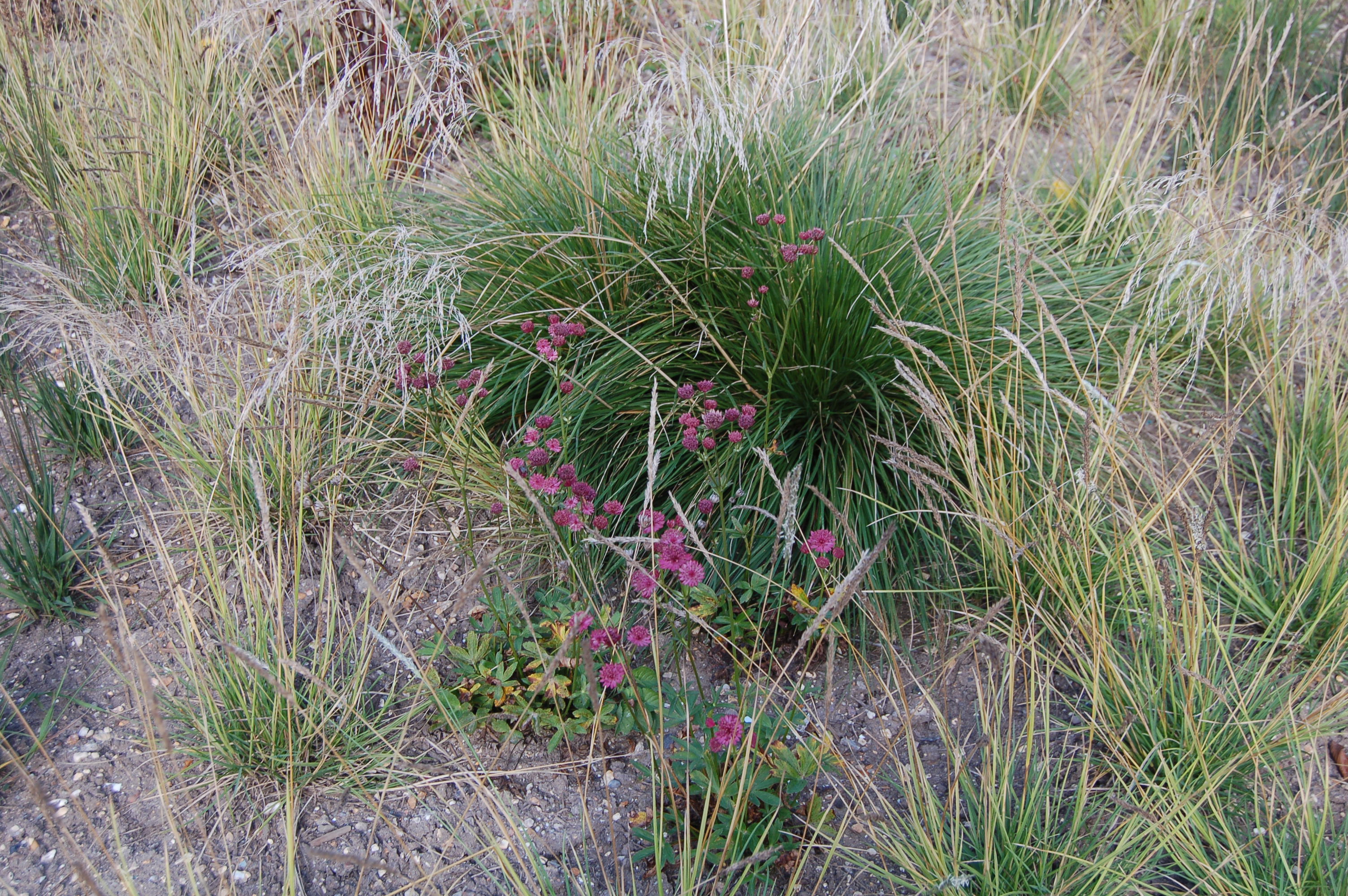
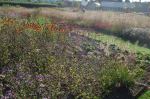
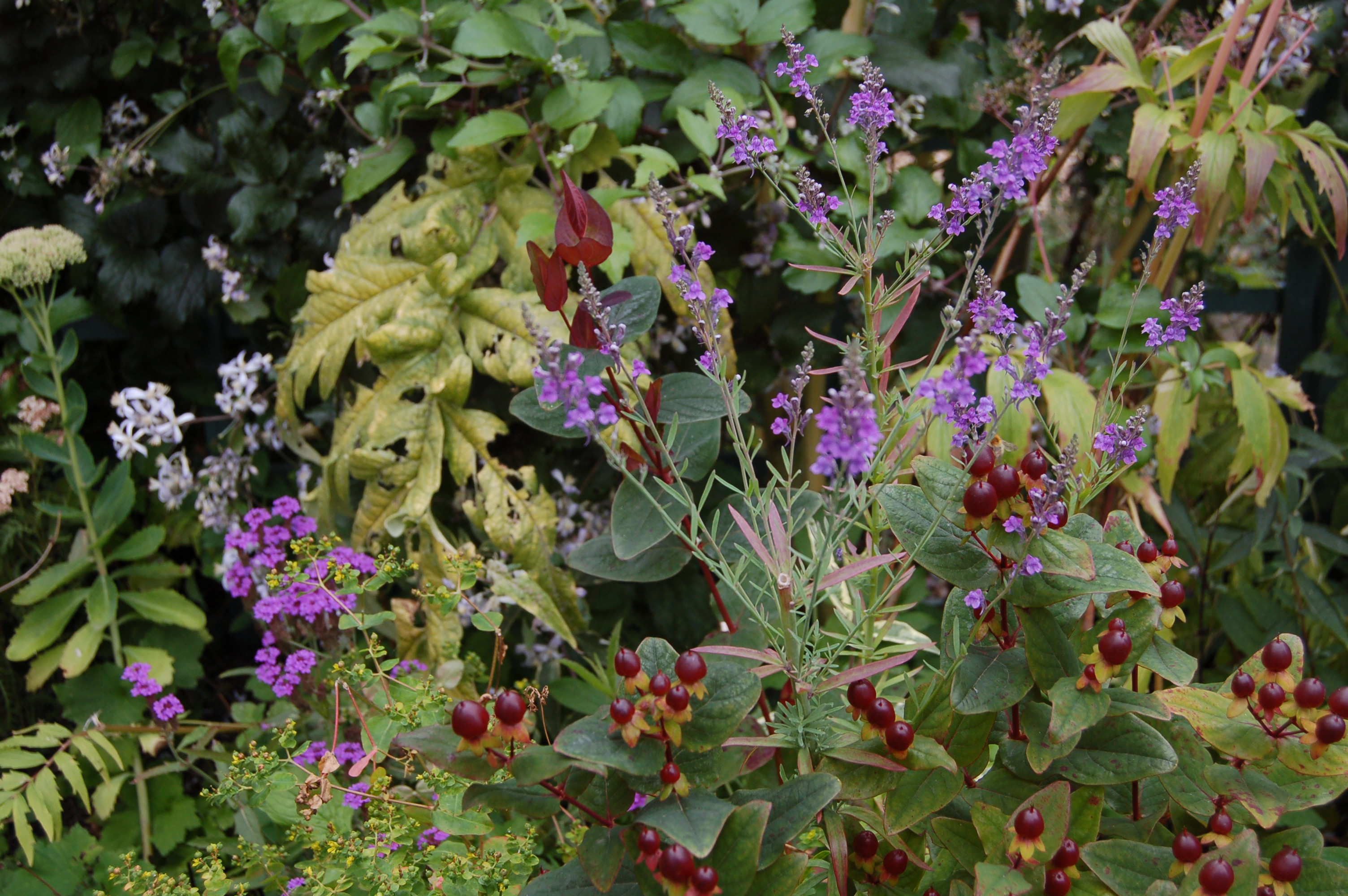
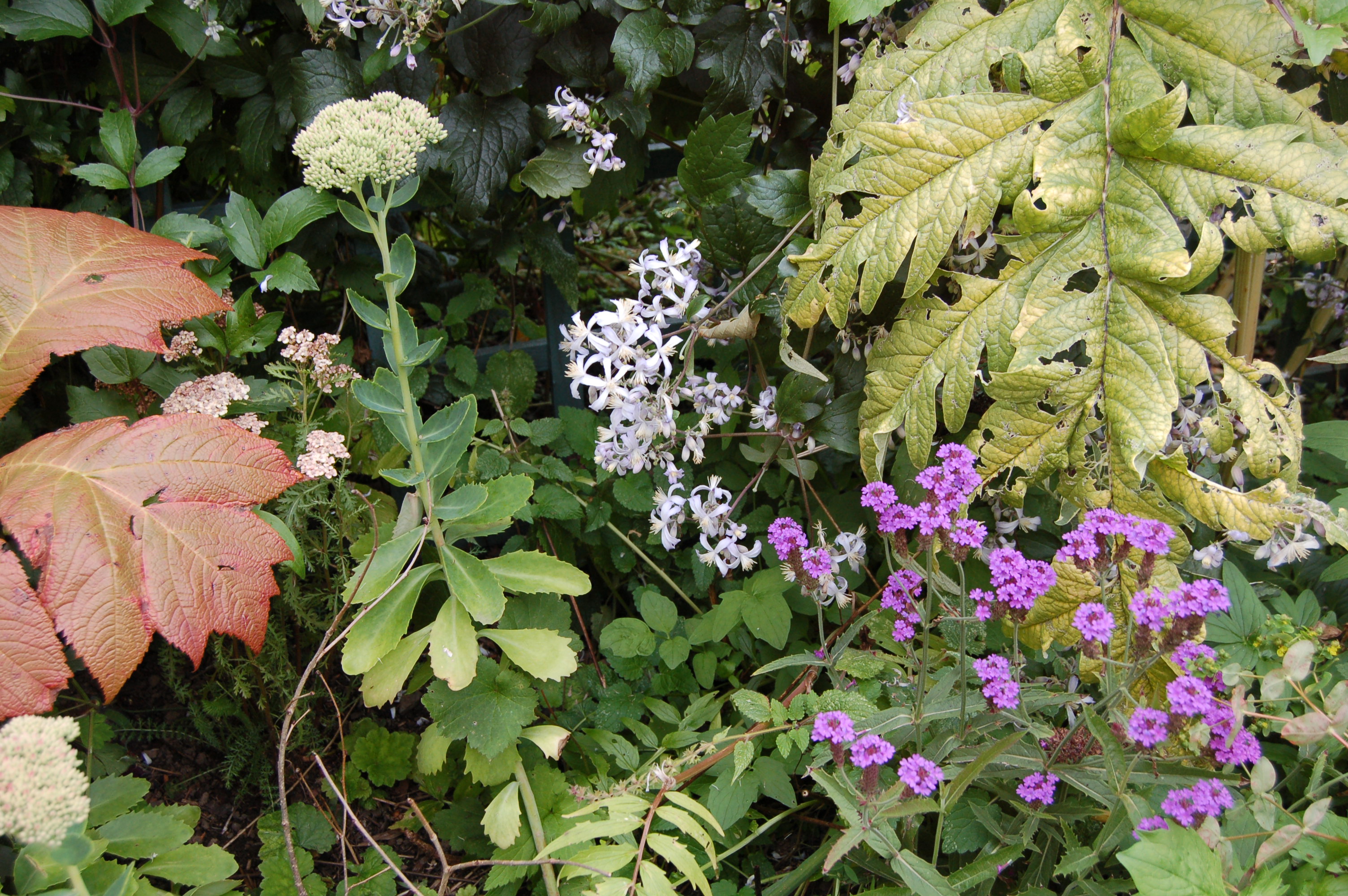
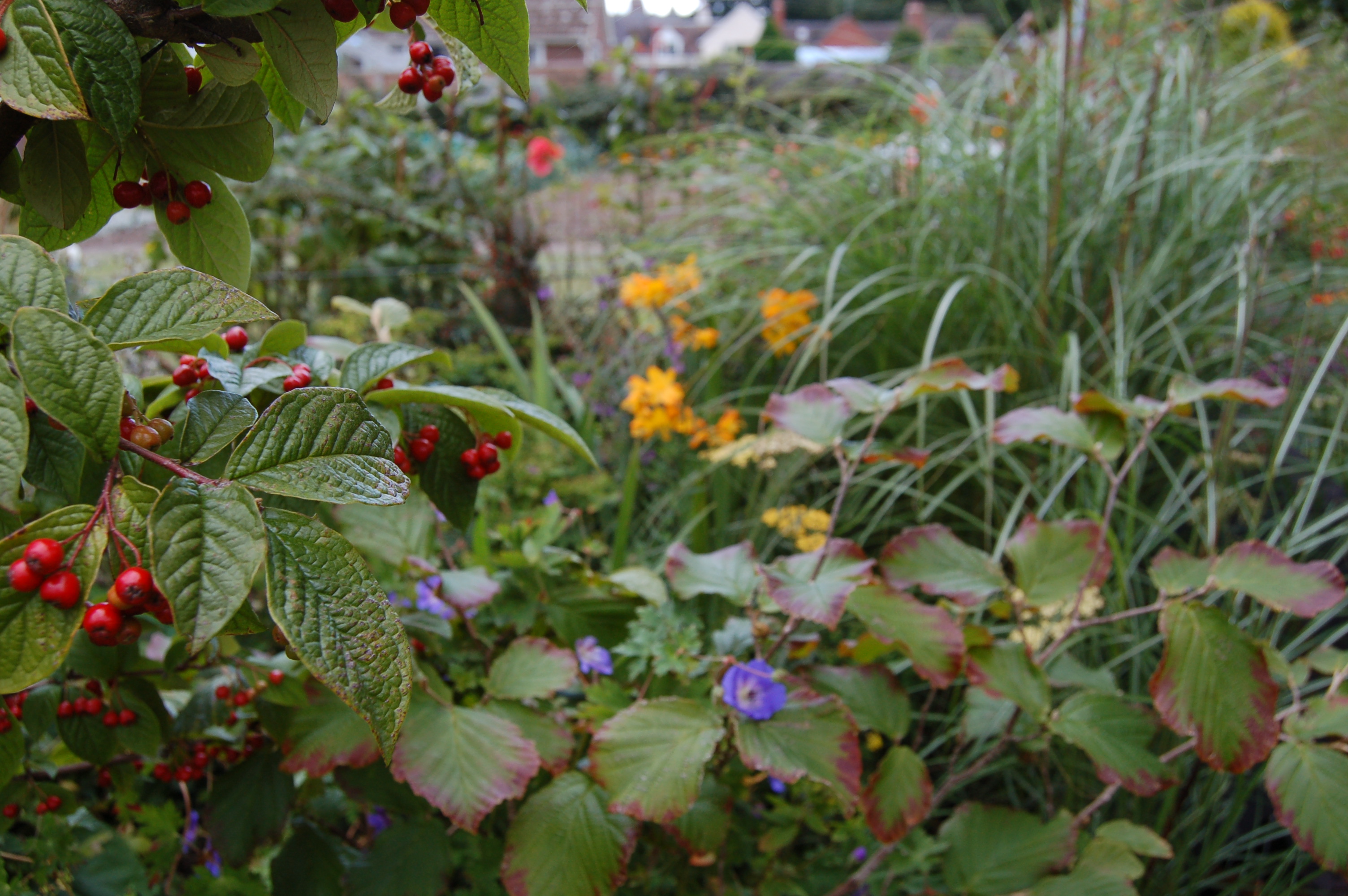
We recently visited Aulden Farm which is in Herefordshire, our neighbouring county and we were particularly keen to wander around this garden as it has a similar description to our own in their Yellow Book entry although it is much larger! “Informal country garden surrounding old farmhouse, three acres planted with wildlife in mind. Emphasis on structure and form, with a hint of quirkiness, a garden to explore with eclectic planting.”

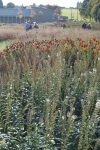
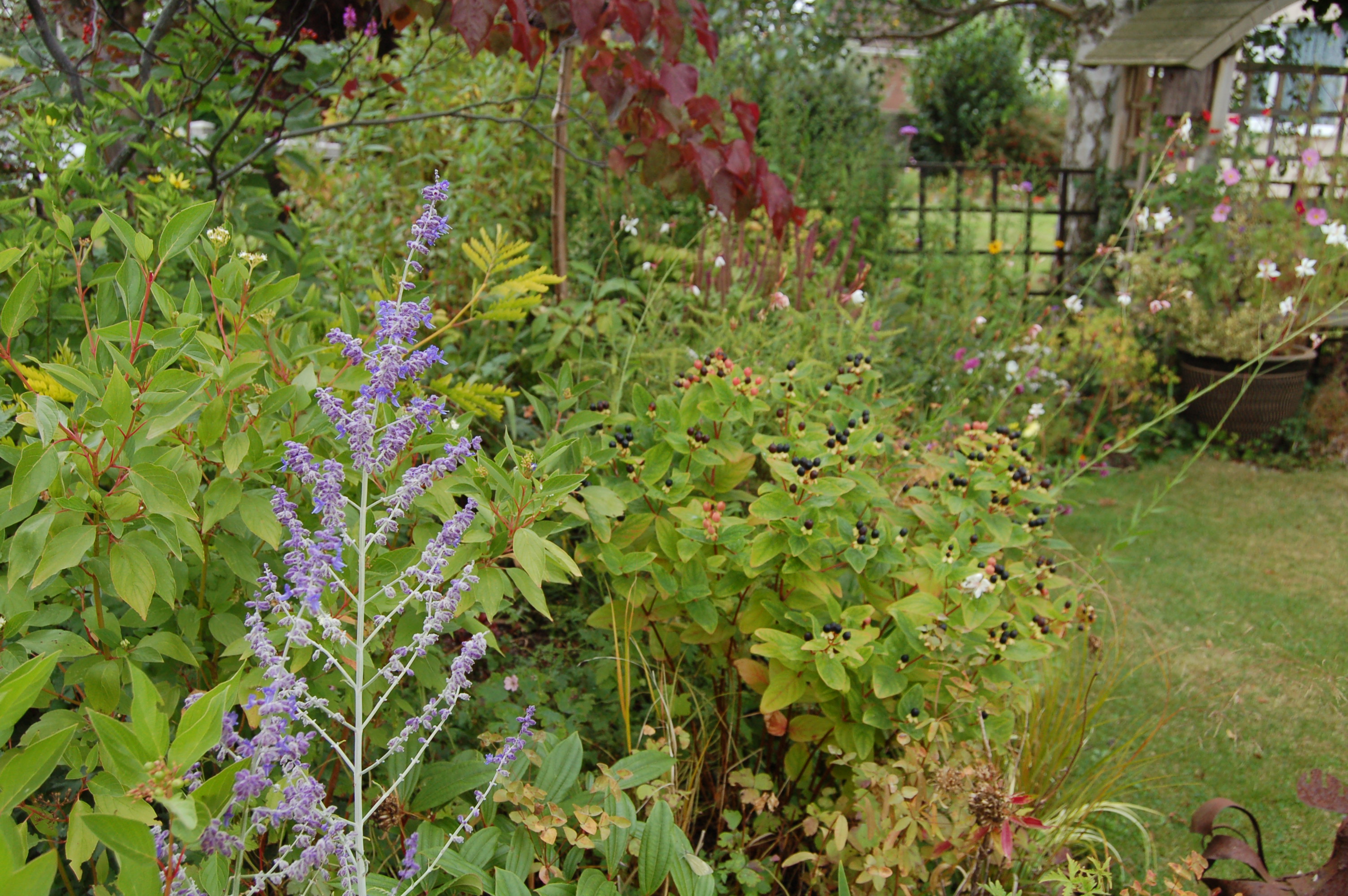
We had a lovely drive through beautiful countryside before parking on the grass verge and wandering up the gravel drive leading to Aulden Farm’s garden. A gravel area surrounded by interesting planting was a great place to enjoy tea and homemade cakes.

2015 09 07_5027 2015 09 07_5028

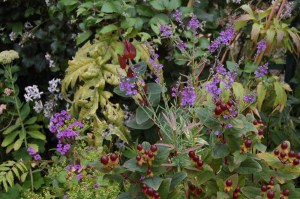
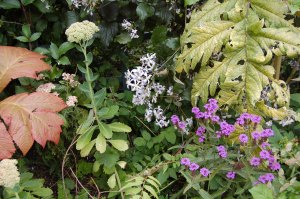
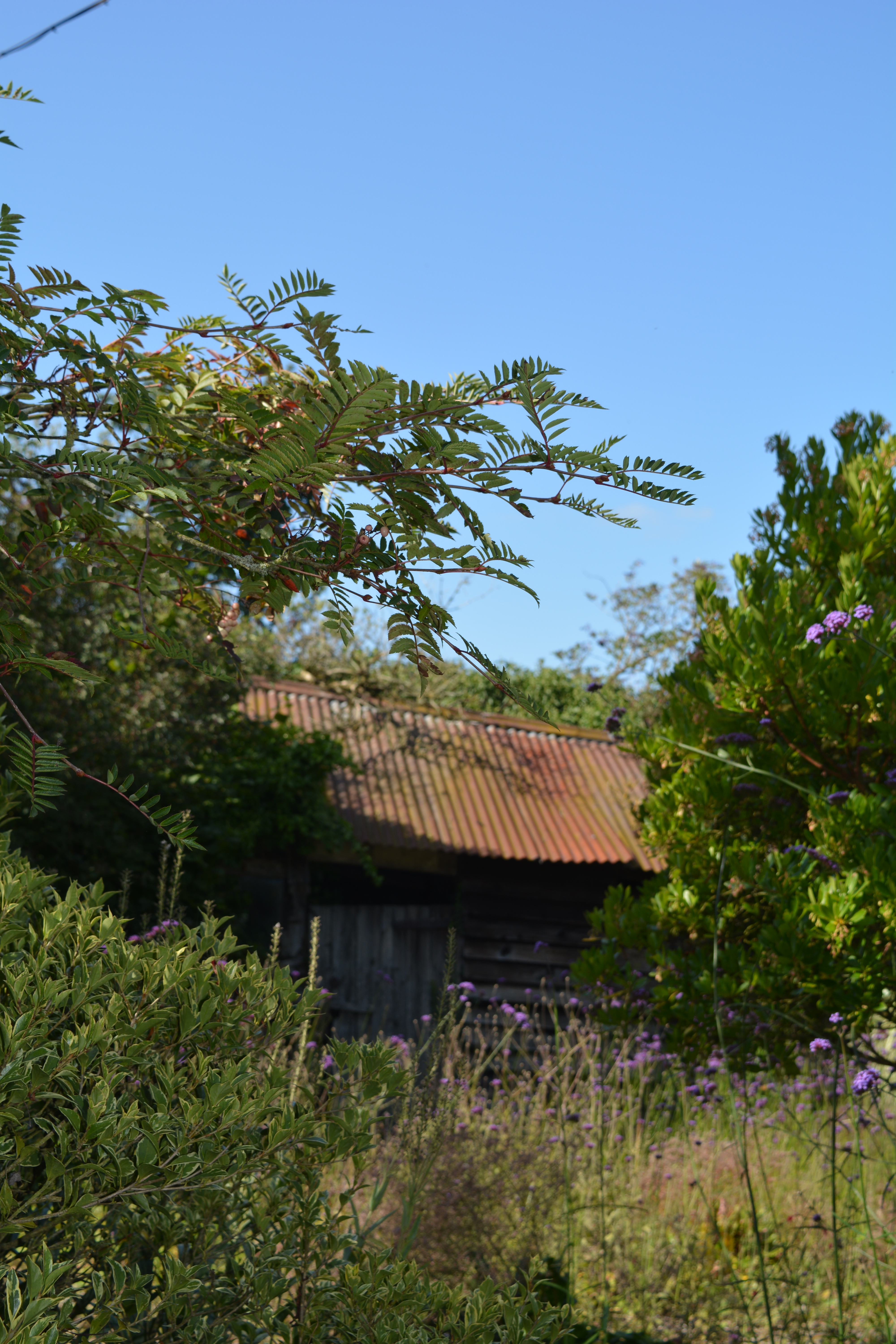
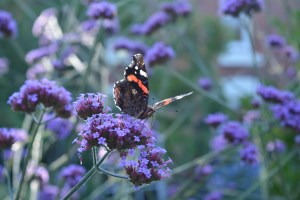
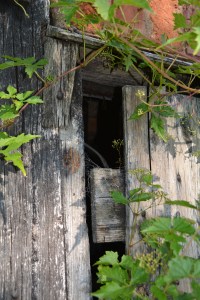
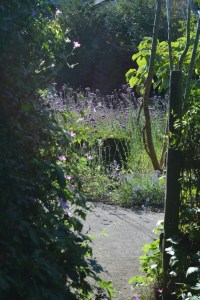
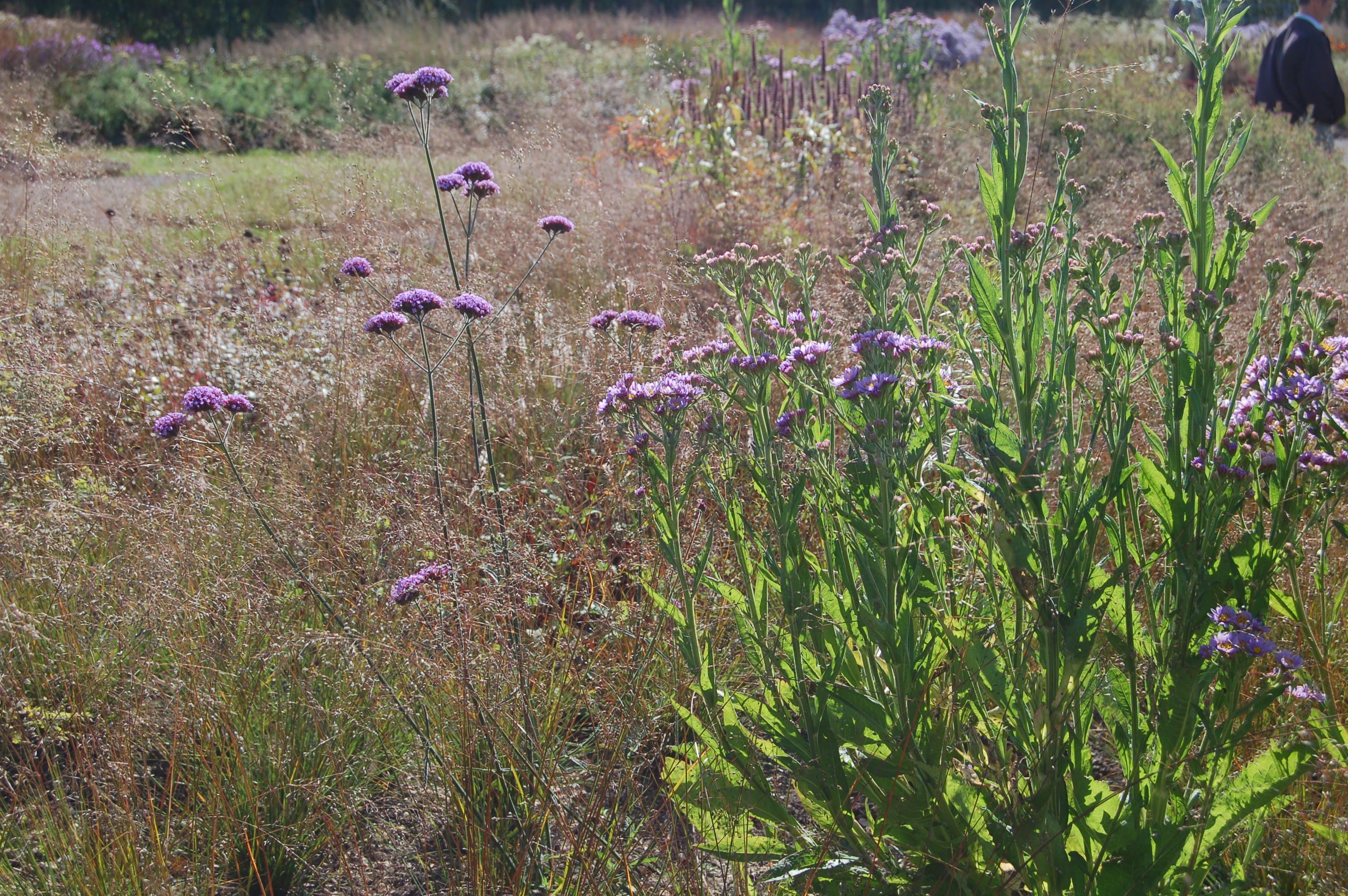
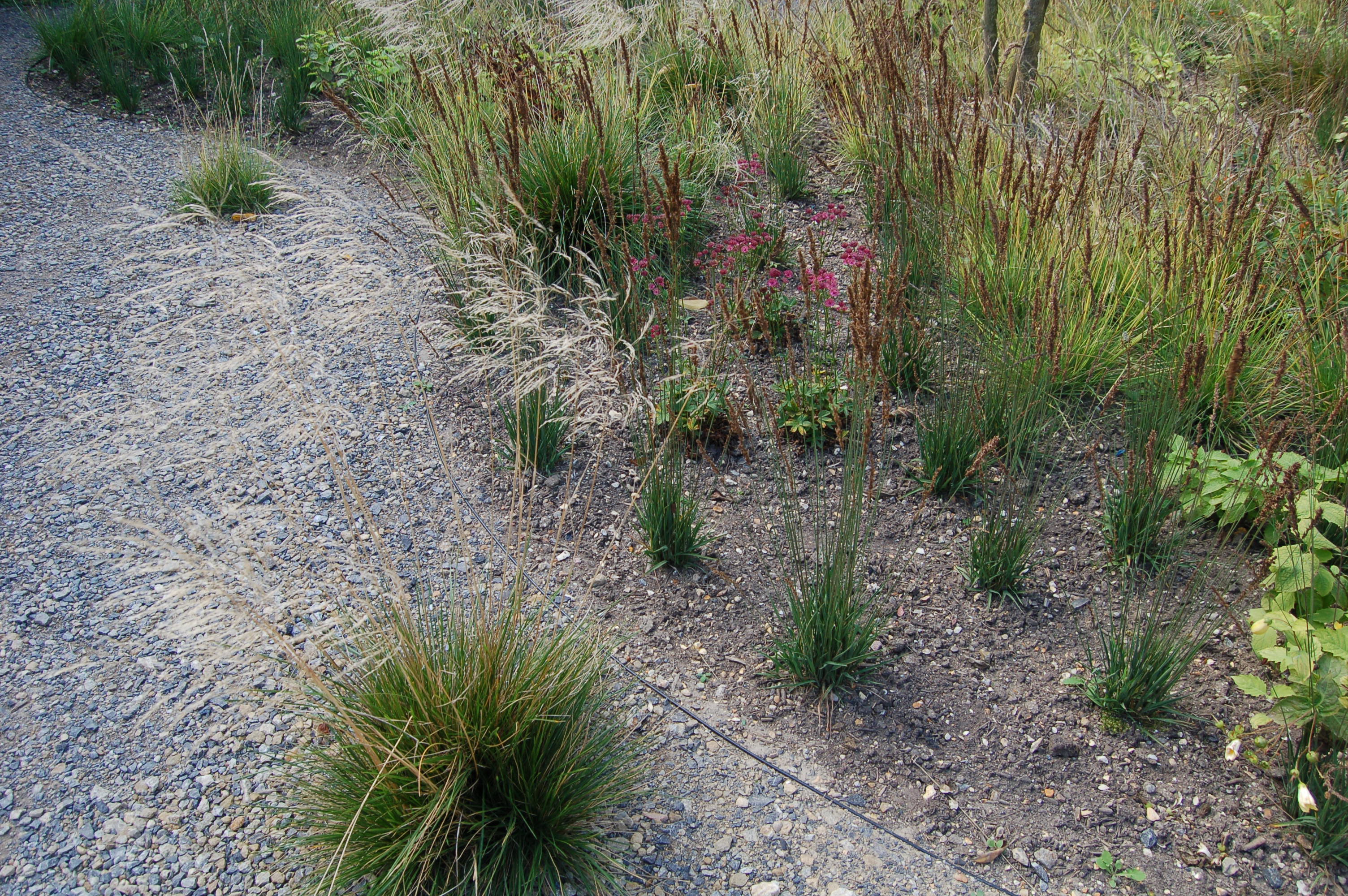
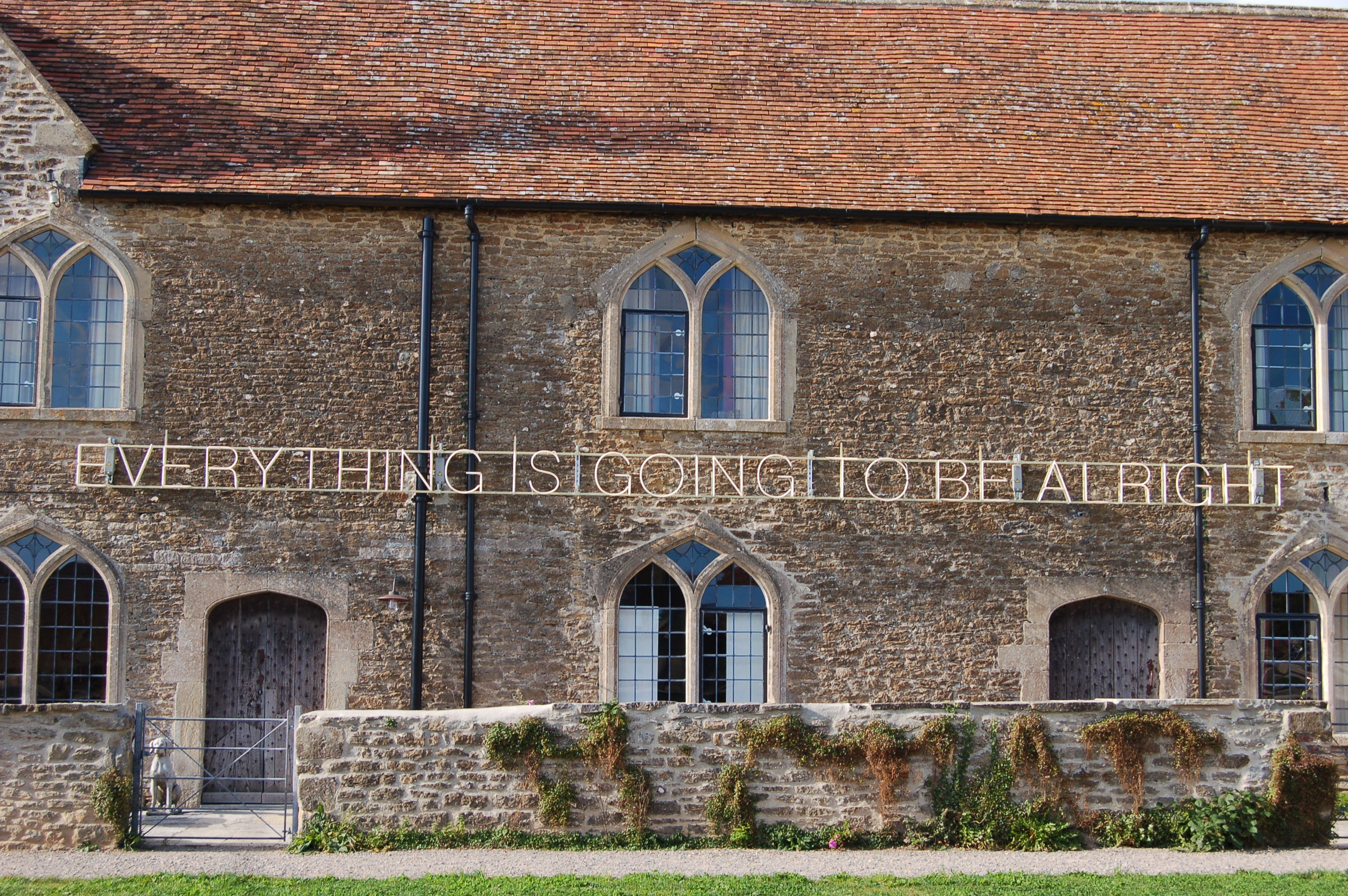
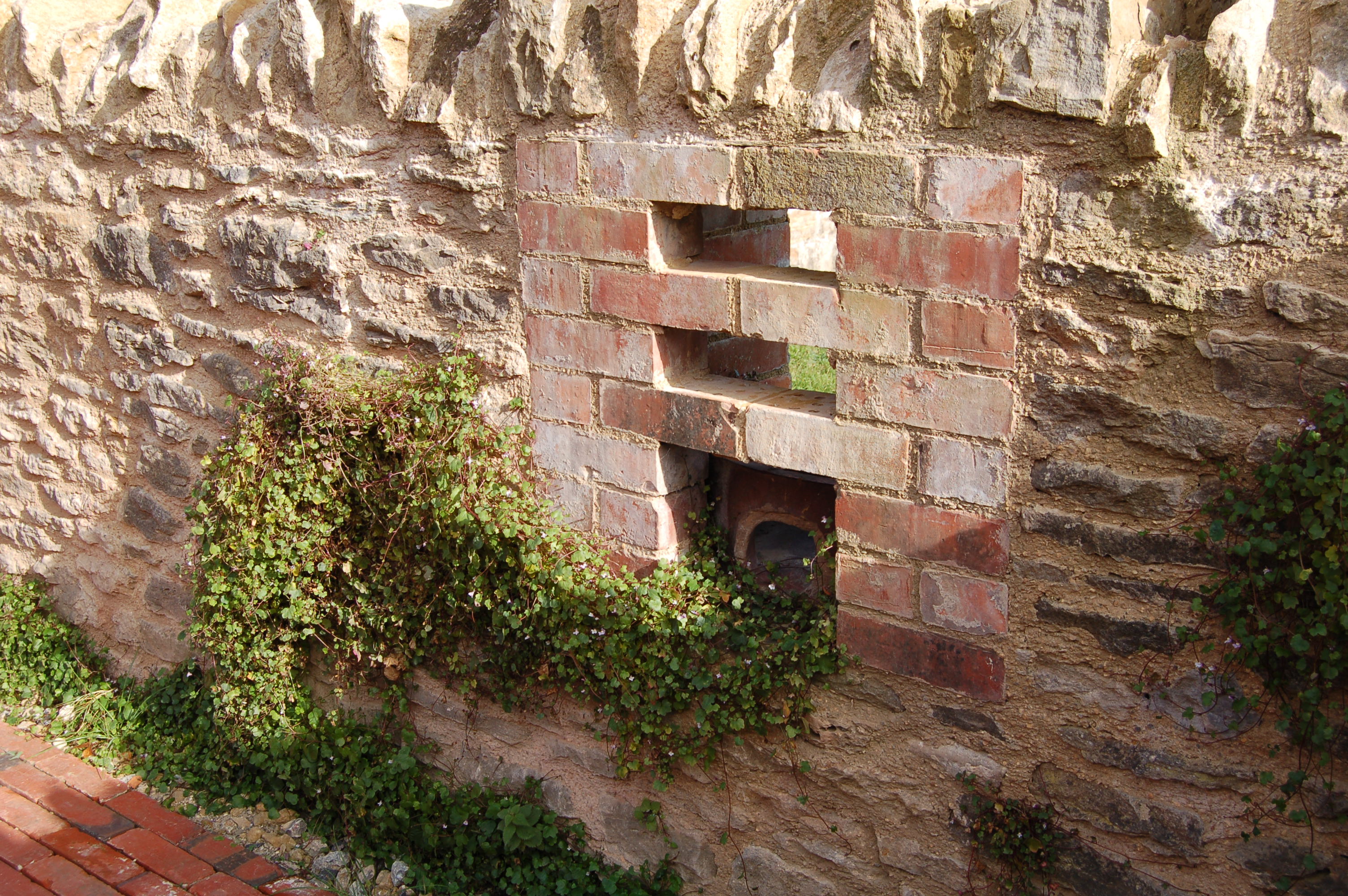
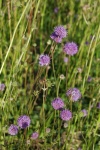
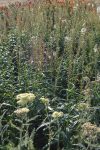
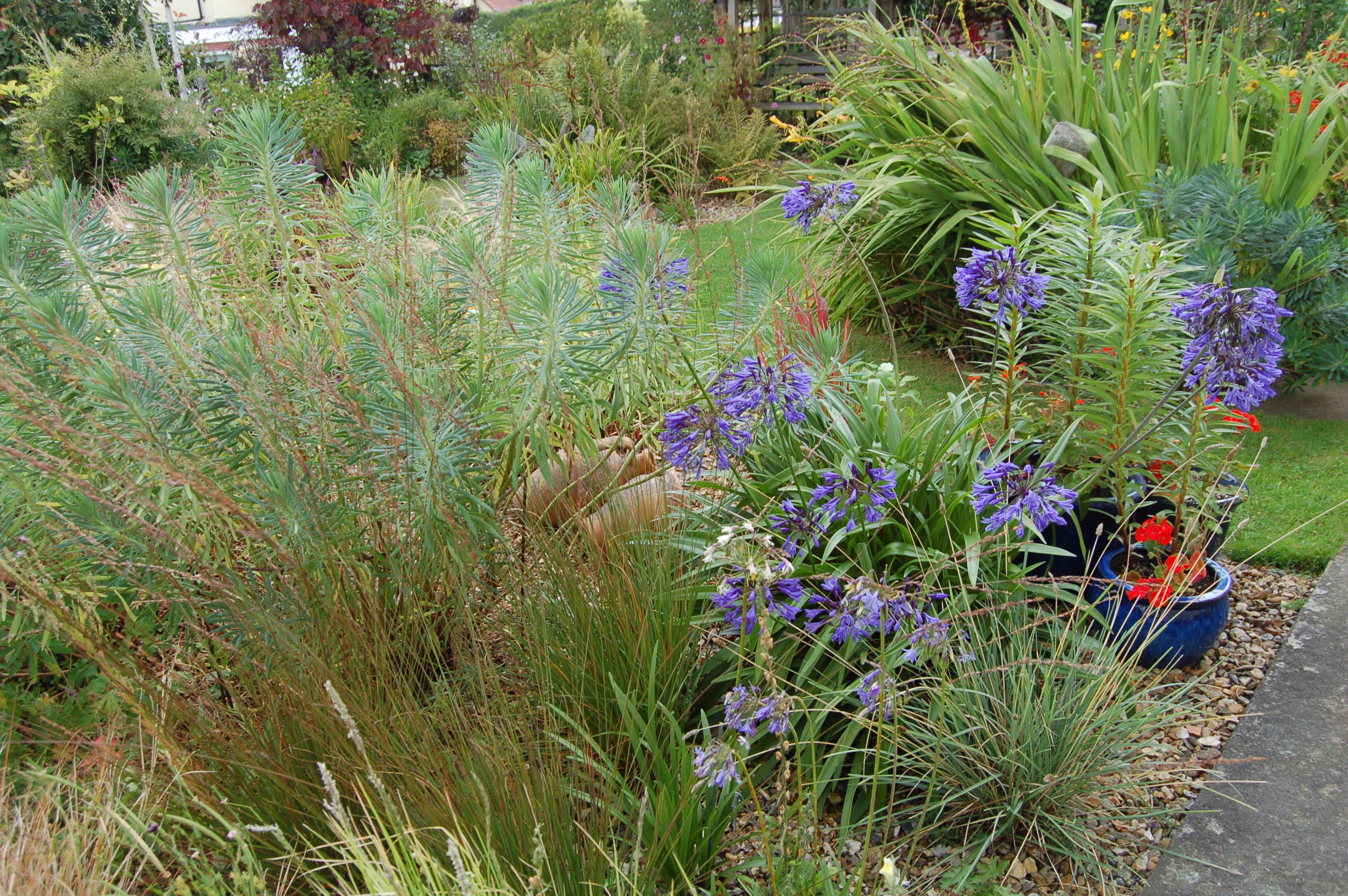
Alongside the tea courtyard was a gravel garden in front of a beautiful barn close to tumbling down. Verbena bonariensis was the star in this garden and the afternoon lit it up dramatically. Butterflies were attracted to it as much as me and my camera. This was an area full of texture and interest too good for any photographer to miss.

2015 09 07_5029 2015 09 07_50302015 09 07_5168 2015 09 07_51622015 09 07_5177 2015 09 07_51782015 09 07_5173 2015 09 07_51662015 09 07_5174 2015 09 07_51702015 09 07_5169 2015 09 07_5171

2015 09 07_5165 2015 09 07_5161

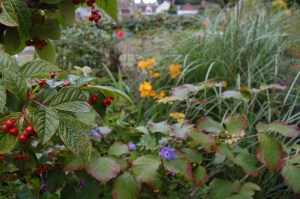
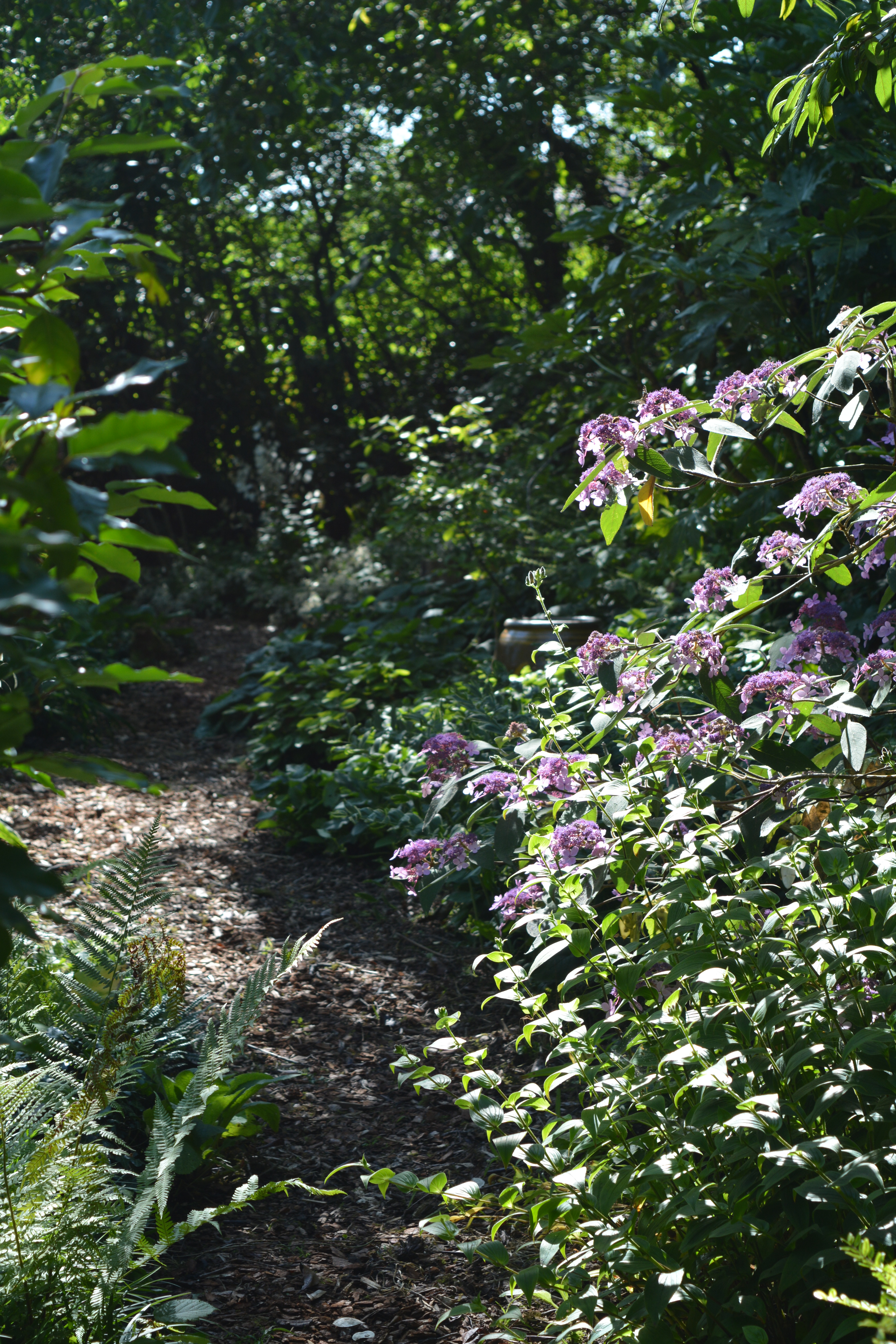
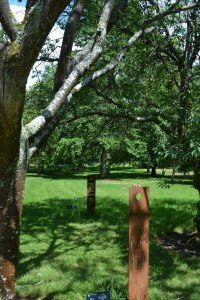
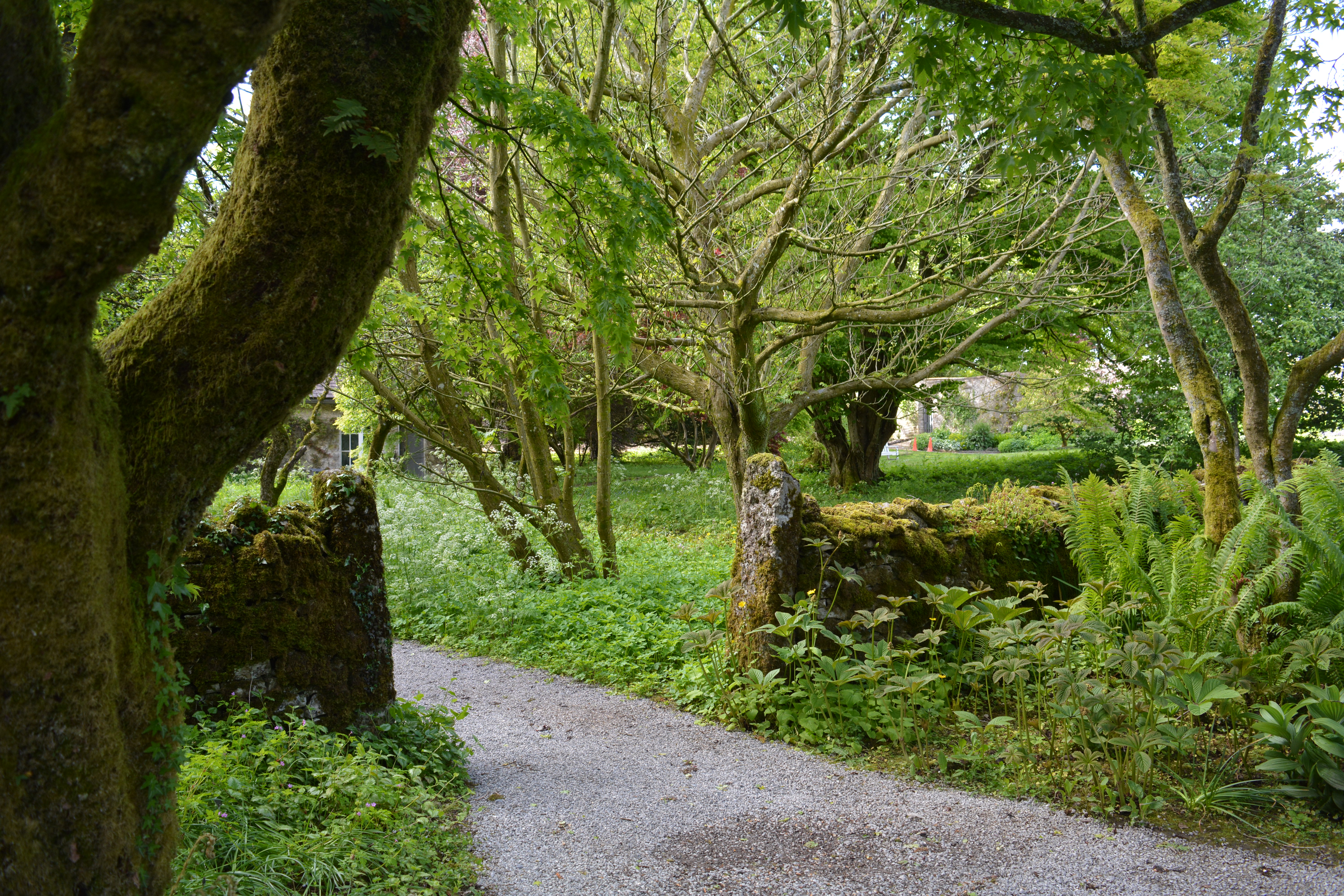
We eventually left behind our tea, cakes, verbenas and butterflies and wandered, suitably refreshed, through the shade garden where the low rays of the sun created pools of light and shade. from here we could choose different routes through the garden described in its own leaflet as “very relaxed, tranquil and some even say romantic, but that is for you to decide”. So we couldn’t wait to find out for ourselves.

2015 09 07_5035 2015 09 07_5036

2015 09 07_5037 2015 09 07_5038 2015 09 07_5040 2015 09 07_5042 2015 09 07_5044 2015 09 07_5047 2015 09 07_5048

Now come for a walk with us around this beautiful garden by enjoying my gallery. Please click on the first photo and navigate with the arrows.

I hope you enjoyed this photographic journey around this wonderful garden. Is it romantic? Yes, definitely so! This is a garden with atmosphere.

We left with an invitation to return whenever we wanted – bliss.

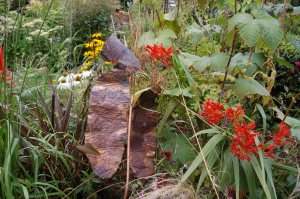
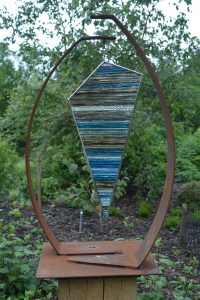
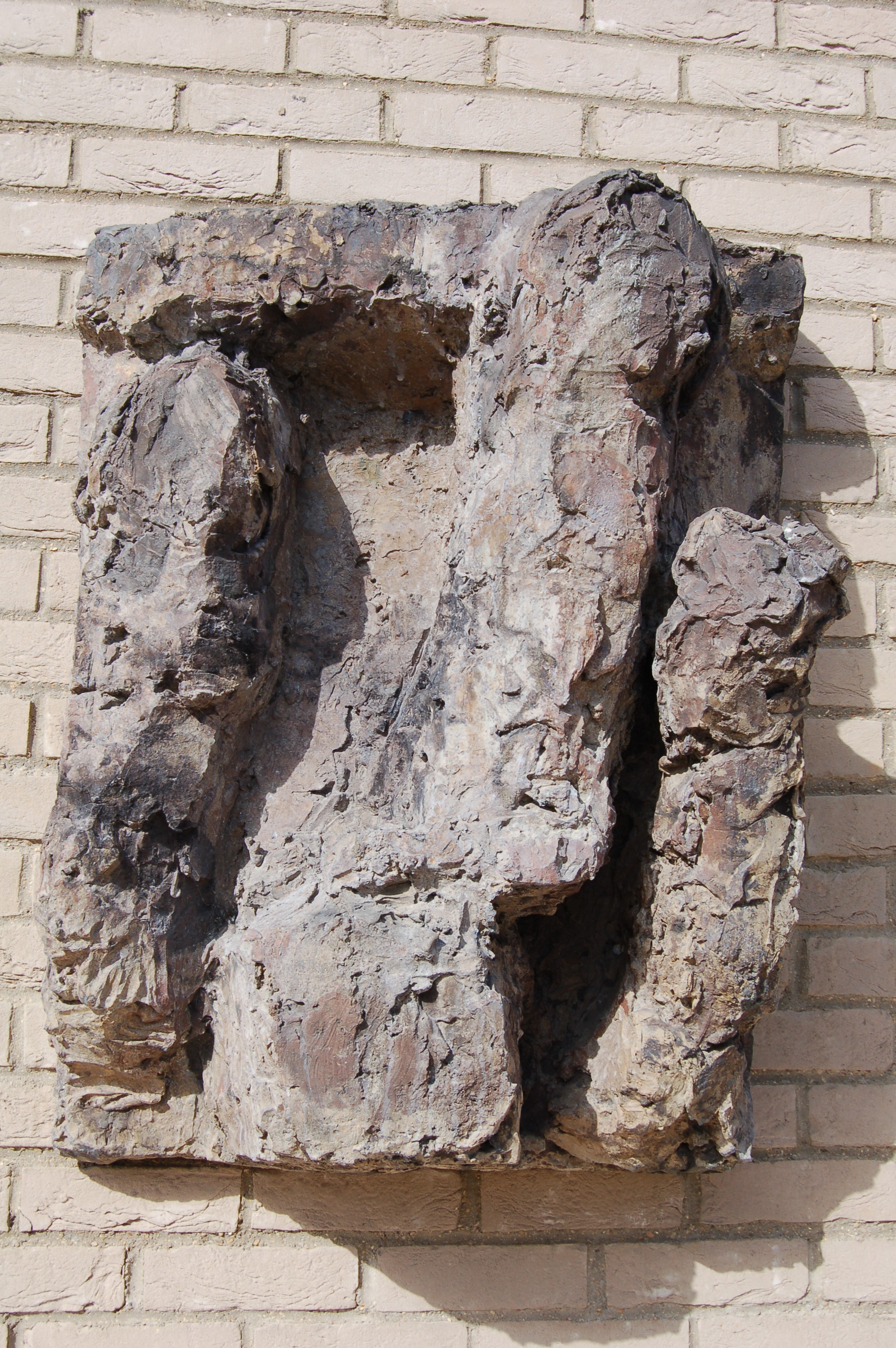
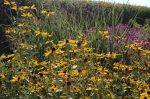
In my next couple of posts about Aulden Farm gardens I will share my images of two special families of plants that caught the beautiful light that day and my imagination, Persicarias and Rudbeckias and also a look at some of the wide ranging sculpture we enjoyed there.


Categories
arboreta colours garden buildings garden design garden photography gardens gardens open to the public hardy perennials light light quality ornamental trees and shrubs outdoor sculpture sculpture trees

Harold Hillier in Hampshire – Part 2

So here we are back in Hampshire and still wandering around the miles of paths along which we explored the Sir Harold Hillier Gardens.

2015 06 23_3141 2015 06 23_30932015 06 23_30952015 06 23_3109

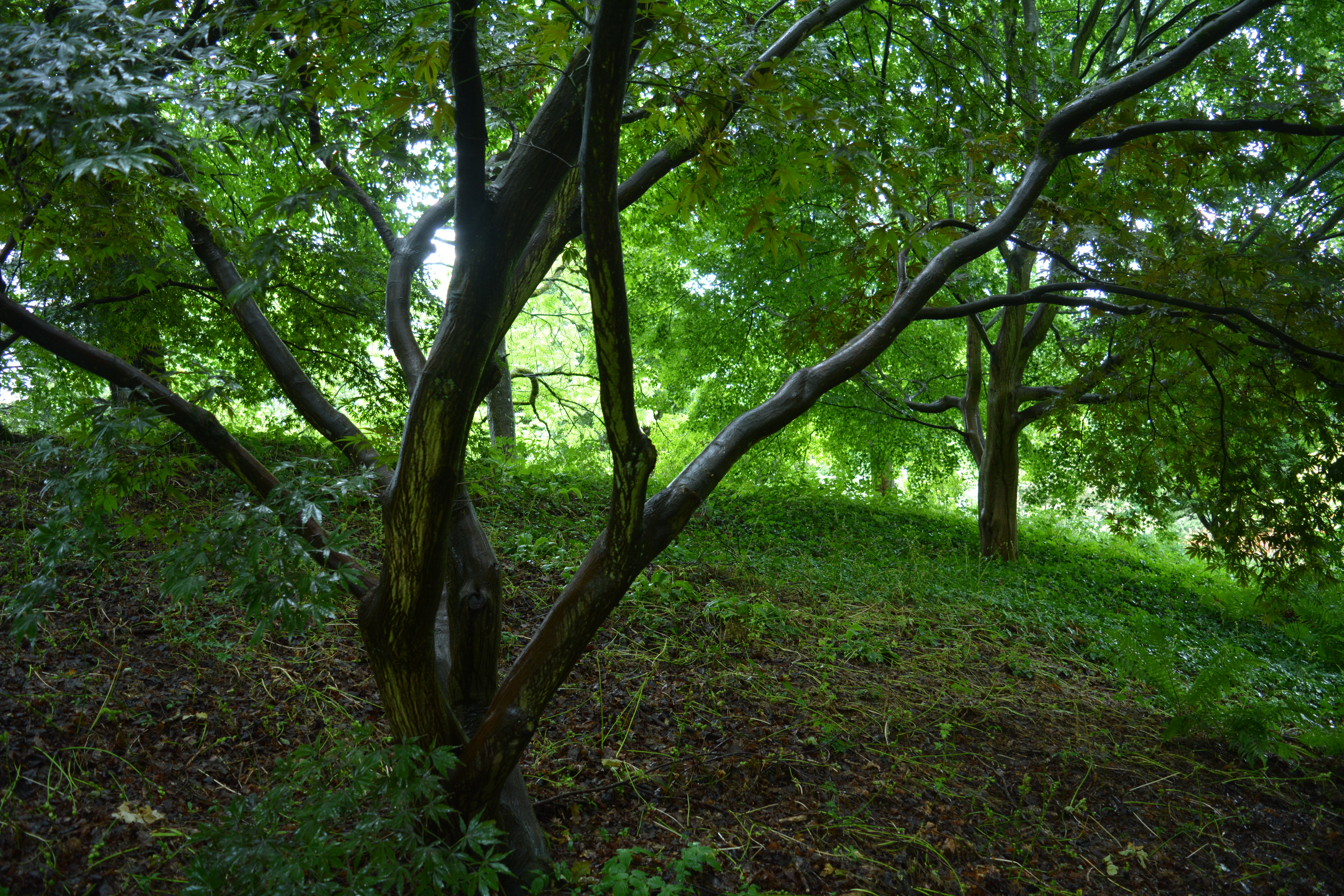
The Acer Grove was full of colour when the sun hit the foliage after the dullness of the rains.

2015 06 23_3033 2015 06 23_30342015 06 23_3035 2015 06 23_3096

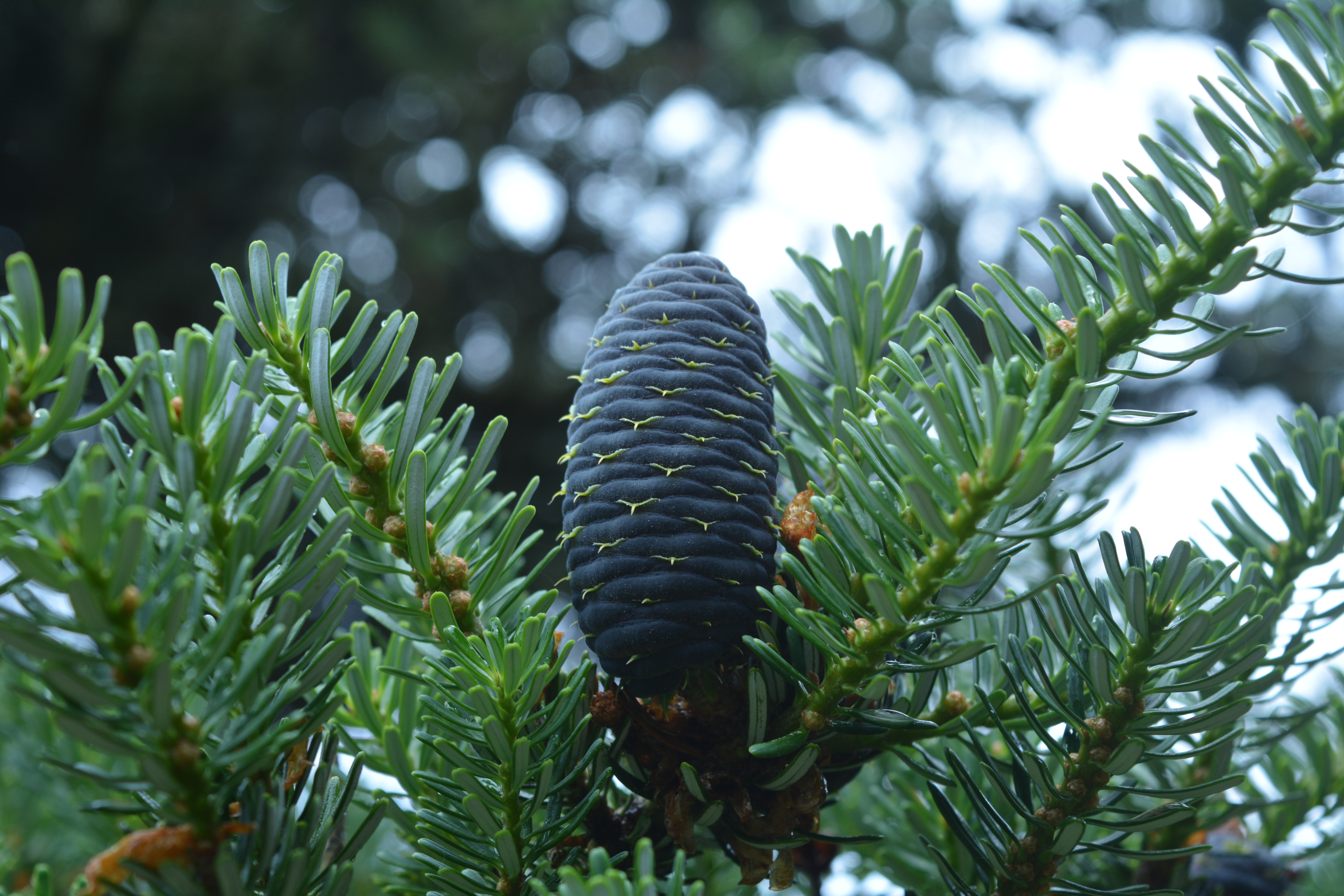
The Pinetum was a wonderful place to explore the many shapes of the trees and the texture and colour of their needles. Cones added even more interest. Not a great lover of conifers I felt myself enjoying being among their rich variety.

2015 06 23_3036 2015 06 23_3037

But the broadleaved trees were my stars of the gardens with their colourful bark, flowers and the leaves.

2015 06 23_3041 2015 06 23_30442015 06 23_3048 2015 06 23_3051 2015 06 23_30832015 06 23_3106

Jude was easily distracted by this wonderfully sculptural swing!

2015 06 23_3046 2015 06 23_3050

We continued to discover a huge variety of sculptural pieces along every path and around every corner.

2015 06 23_3101 2015 06 23_3098 2015 06 23_3100 2015 06 23_3097 2015 06 23_30432015 06 23_3090 2015 06 23_30872015 06 23_3053 2015 06 23_30522015 06 23_3038 2015 06 23_3039 2015 06 23_3080

But there was so much more than trees and sculpture to enjoy at these amazing gardens – we found so many interesting colourful flowering plants too.

2015 06 23_3112 2015 06 23_31102015 06 23_3108 2015 06 23_3102 2015 06 23_30922015 06 23_3107 2015 06 23_3103

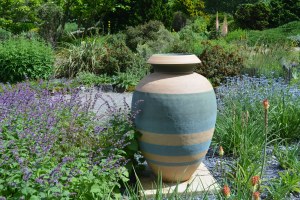
I will finish part two of our visit to the Harold Hillier Gardens with these photos of an amazing archway over a path and a beautifully coloured and shaped pot.

2015 06 23_3085 2015 06 23_3089

Categories
arboreta garden design garden photography gardens gardens open to the public ornamental trees and shrubs outdoor sculpture sculpture trees

Harold Hillier in Hampshire

We have had the Harold Hillier Gardens in Hampshire on our bucket list of places to visit for a few years now so we decided that the summer of 2015 was the time to go. We had great expectations! But did it live up to them?

2015 06 23_3141

We arrived in heavy rain so made straight for the cafe and dawdled for even longer than usual over coffees and cake while keeping an eye, a “weather eye”, on what the rain was up to through the windows. We gave up waiting for a lull in the rain so donned waterproofs and wandered into the garden clutching the garden plan that was to get soggier and soggier as the day wore on.

The garden was simply brilliant so took our minds off the weather. When you wait so long to visit a place you feel set for disappointment but no such things here at the Hillier Gardens.

As we expected the trees were the stars. We wandered through the Winter Garden and on through the Acer Dell and stopped frequently to enjoy close up views of the huge range of trees. Within the trees though splashes of herbaceous colours shone through the gloom of the overcast and very wet morning.

2015 06 23_3009 2015 06 23_3010 2015 06 23_3011 2015 06 23_3013 2015 06 23_3014 2015 06 23_3015 2015 06 23_3016 2015 06 23_30282015 06 23_3012 2015 06 23_3032

We seem to have the knack of visiting gardens when there are sculpture exhibitions on and it happened to us again here. Sculpture always looks so good against trees and flowers. There was a huge variety of subject, material and style in the selection.

2015 06 23_3019 2015 06 23_3008 2015 06 23_30272015 06 23_3017 2015 06 23_3020 2015 06 23_3021 2015 06 23_3023 2015 06 23_3024 2015 06 23_3026  2015 06 23_3004 2015 06 23_3006

Spot the metal sculpture of a Little Owl among matching metallic leaved conifers.

2015 06 23_3025

The rain gave way to clouds mixed with sunny periods and we enjoyed the sight of raindrops on foliage. In part two we will continue our wanderings.

2015 06 23_3029 2015 06 23_3030


Categories
fruit and veg garden design garden photography garden ponds garden pools gardens gardens open to the public irises kitchen gardens lakes meadows National Trust ornamental trees and shrubs outdoor sculpture sculpture The National Trust water in the garden

A Week in the Lake District – Part One – Sizergh

We decided that it was about time we re-visited one of our favourite family holiday destinations from when our children were youngsters, the Lake District. So a week in early June saw us journeying northwards to re-find some old haunts.

The first place we visited was the National Trust property, Sizergh Castle, right at the southern end of the lakes, in an area described as the “gateway to the Lakes”. The National Trust is very much in evidence in this area owning many properties as well as lakes, hillsides, fells and farms. The Lake district was central to the Trust’s early development.

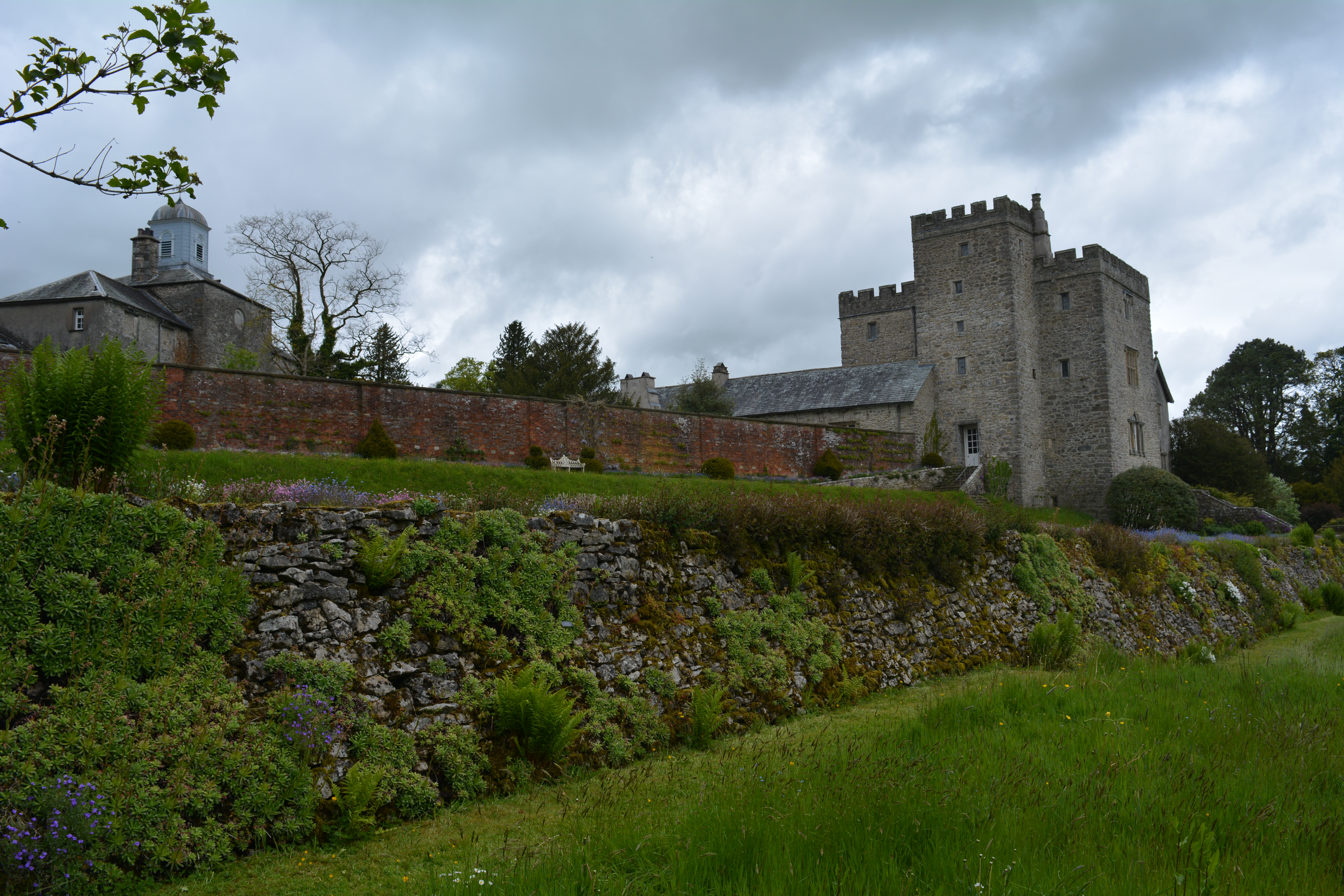
Sizergh Castle is a Medieval house with gardens, orchards, limestone pasture and semi-natural woodland. The garden features fern collections, a kitchen garden, a pond, lake and its main feature a massive rock garden.

We soon realised that this was going to be a place full of interesting plants which also looked after its wildlife.

2015 06 02_2223 2015 06 02_2224

2015 06 02_2225 2015 06 02_2226

The little wooden sign clearly showed us the way!

2015 06 02_2220 2015 06 02_2221

2015 06 02_2222 2015 06 02_2227

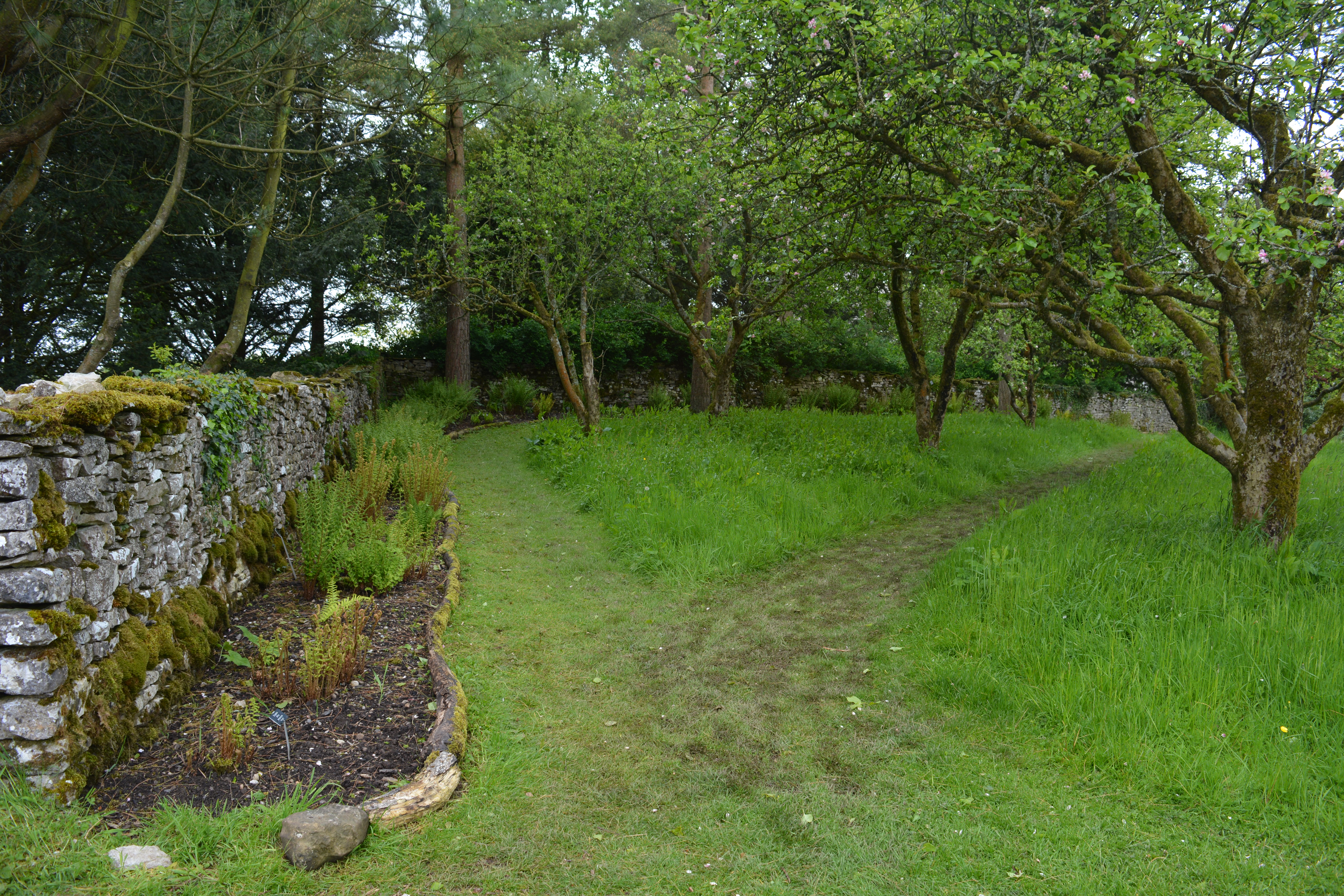
We followed the little wooden sign on a stone wall directing us to the garden and made our way towards the kitchen garden. On the way we stumbled across the “stumpery” where the garden’s fern collections are being re-homed. The variety of ferns was vast and we spotted many we had never seen before.

2015 06 02_2237 2015 06 02_2233

2015 06 02_2228 2015 06 02_2230 2015 06 02_2231

2015 06 02_2232 2015 06 02_2234

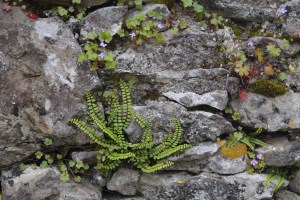
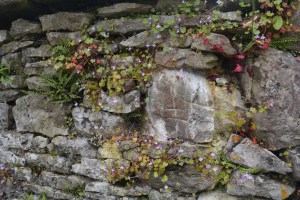
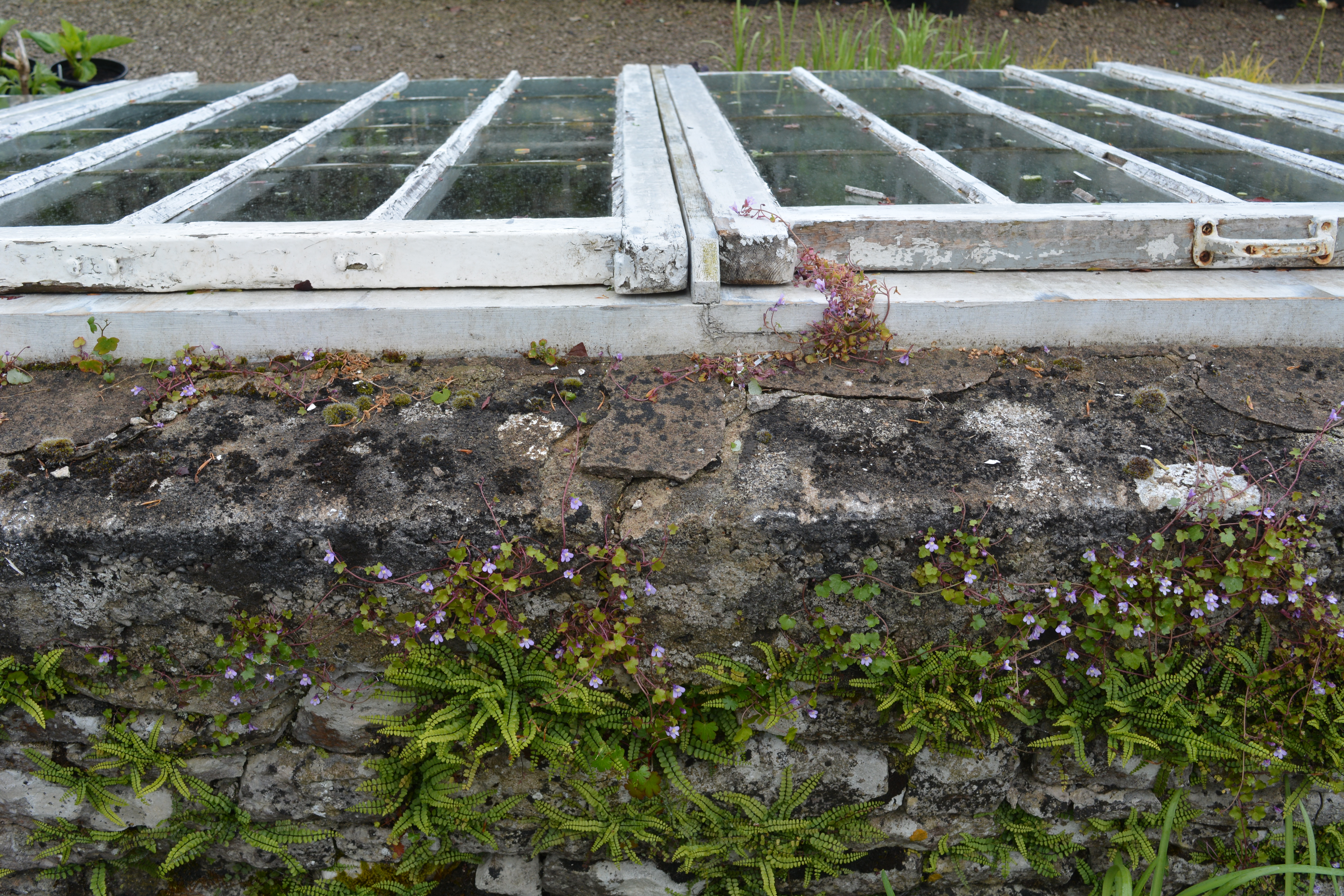
The walls in the fernery and walled garden were home to so many different tiny plants as well as just ferns. We were soon to discover that this was a feature of the walls throughout the gardens.

2015 06 02_2235 2015 06 02_2236

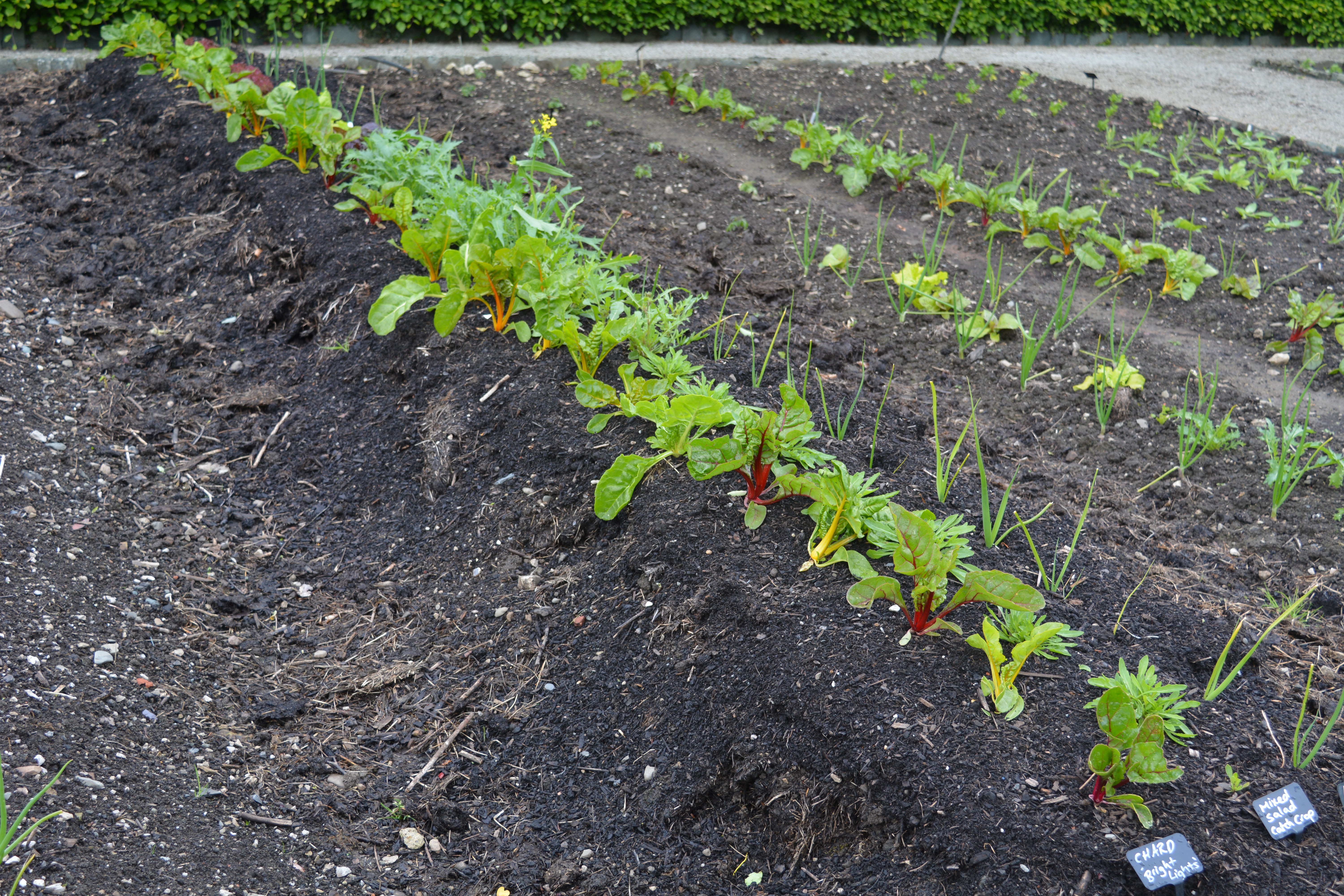
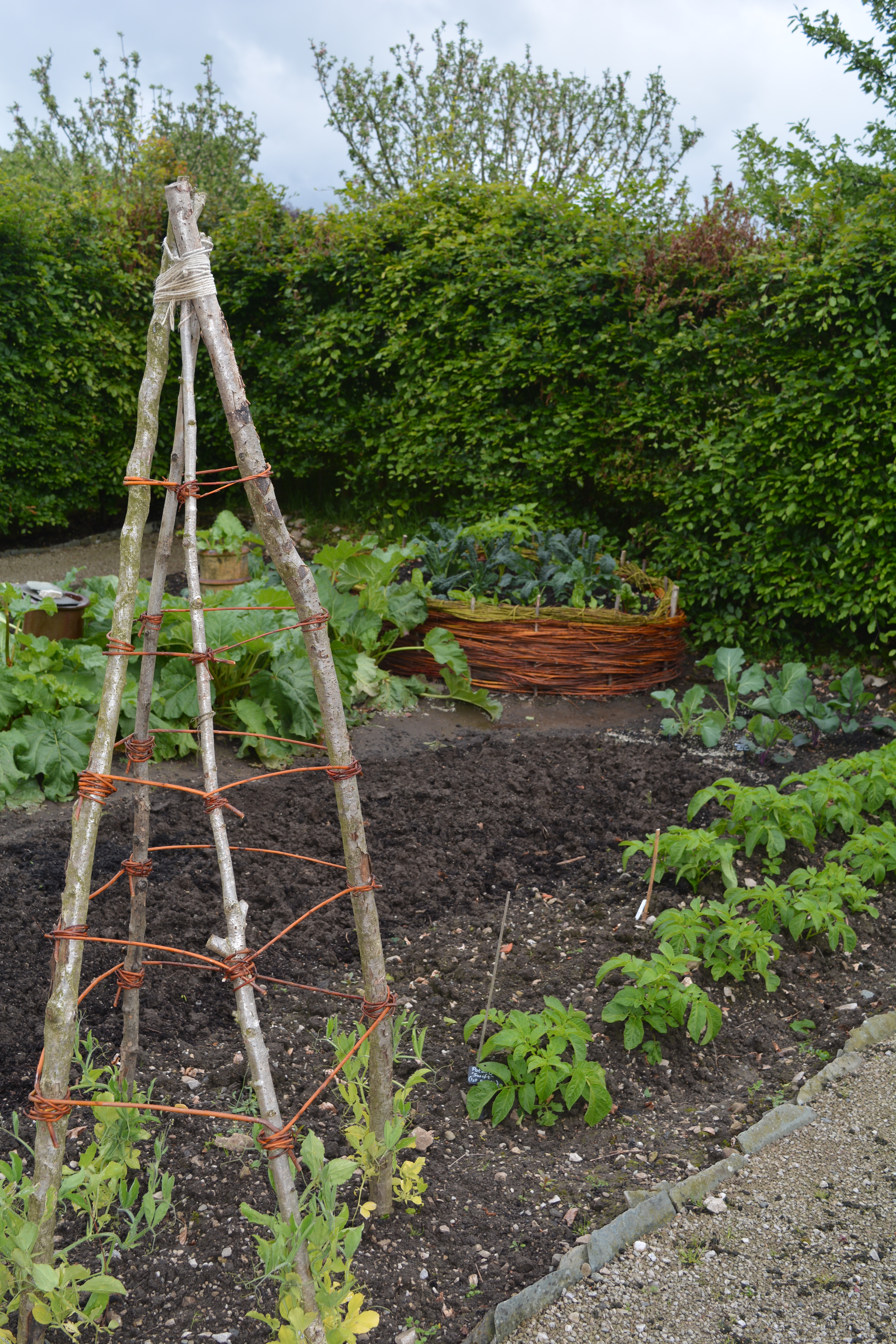
The kitchen garden was on a gentle slope and based on a strange shape somewhat like a long bent rectangle! The old wooden cold frames were still fully in use. We were fascinated by the raised hot beds where plants grew in soil covering heaped manure. This gave heat and later as it broke down fertility and structure to the soil.

2015 06 02_2238 2015 06 02_2239  2015 06 02_2241 2015 06 02_2242 2015 06 02_2243 2015 06 02_2245


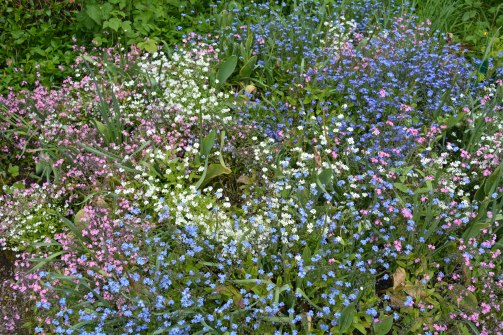
Within the kitchen garden we found a small patch of multi-coloured Forget-me-Nots. We found lots more throughout the gardens.

2015 06 02_2240

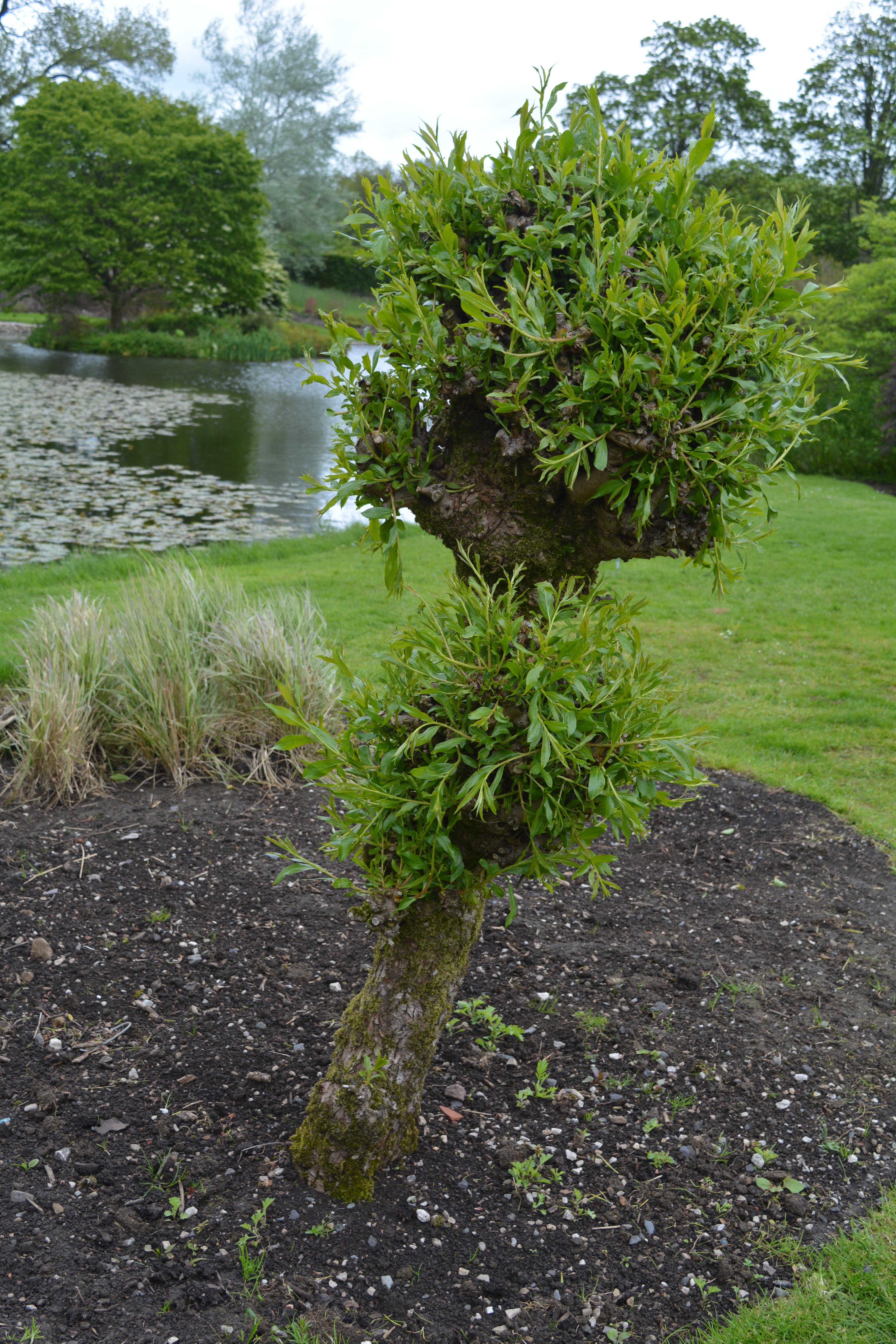
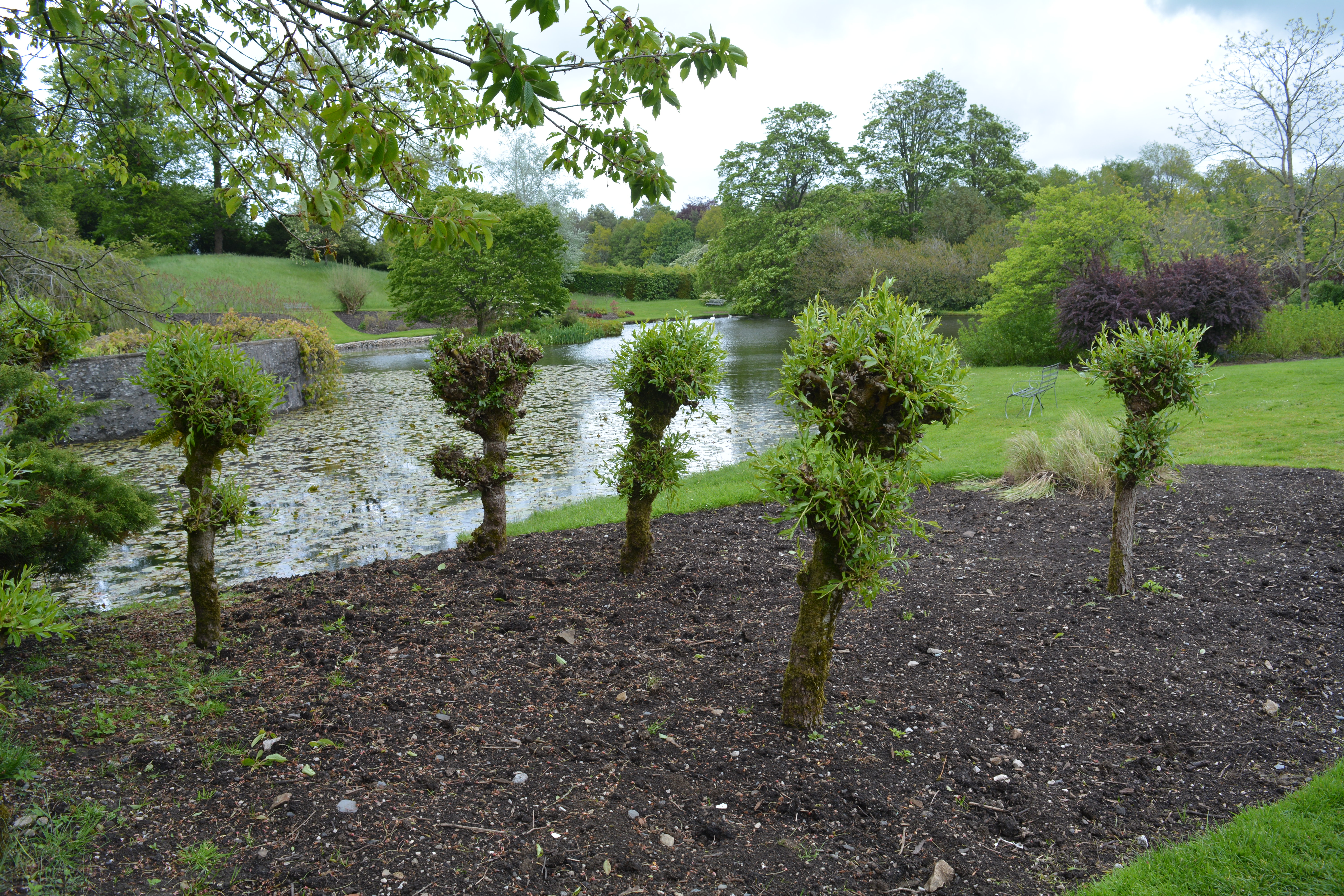
From the kitchen garden we wandered into the orchard with its bee hives, buzzing with activity. Beyond the orchard we came across a small lake. In the borders on the lake side were beautifully sculptural pollarded willows. They looked like a group of people meeting up for a chat.


2015 06 02_2246 2015 06 02_2247

2015 06 02_2248 2015 06 02_2249_edited-1

2015 06 02_2250  2015 06 02_2252 2015 06 02_2254 2015 06 02_2259 2015 06 02_2260


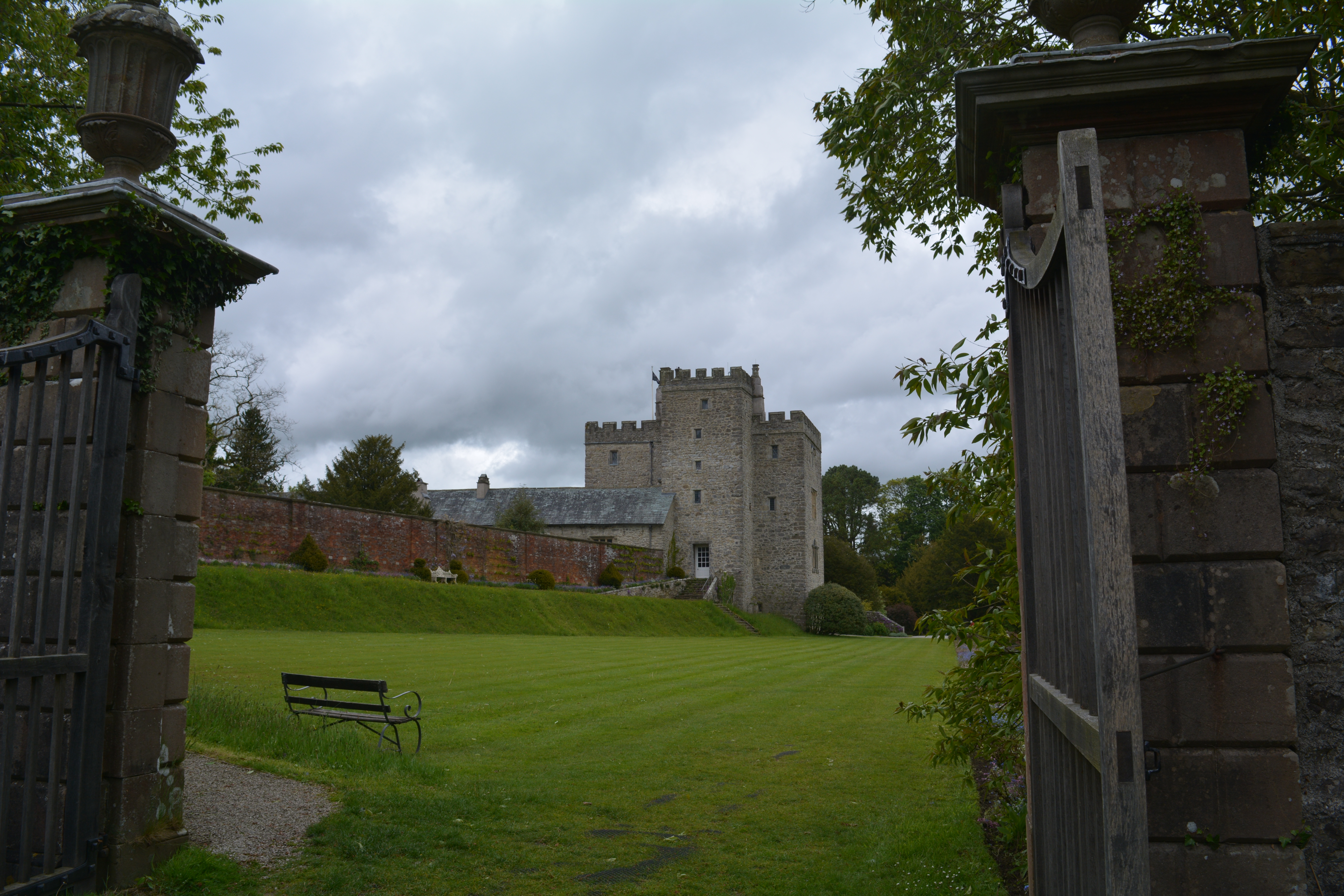
Wide open expanses of lawn opened up in front of us as we walked away from the lake. These afforded us views of the castle buildings themselves.

2015 06 02_2276 2015 06 02_2278 2015 06 02_2279


Where there was a change of level the grass banks were sown as narrow wild flower meadows. They were full of life.


2015 06 02_2309 2015 06 02_2310

2015 06 02_2315 2015 06 02_2318

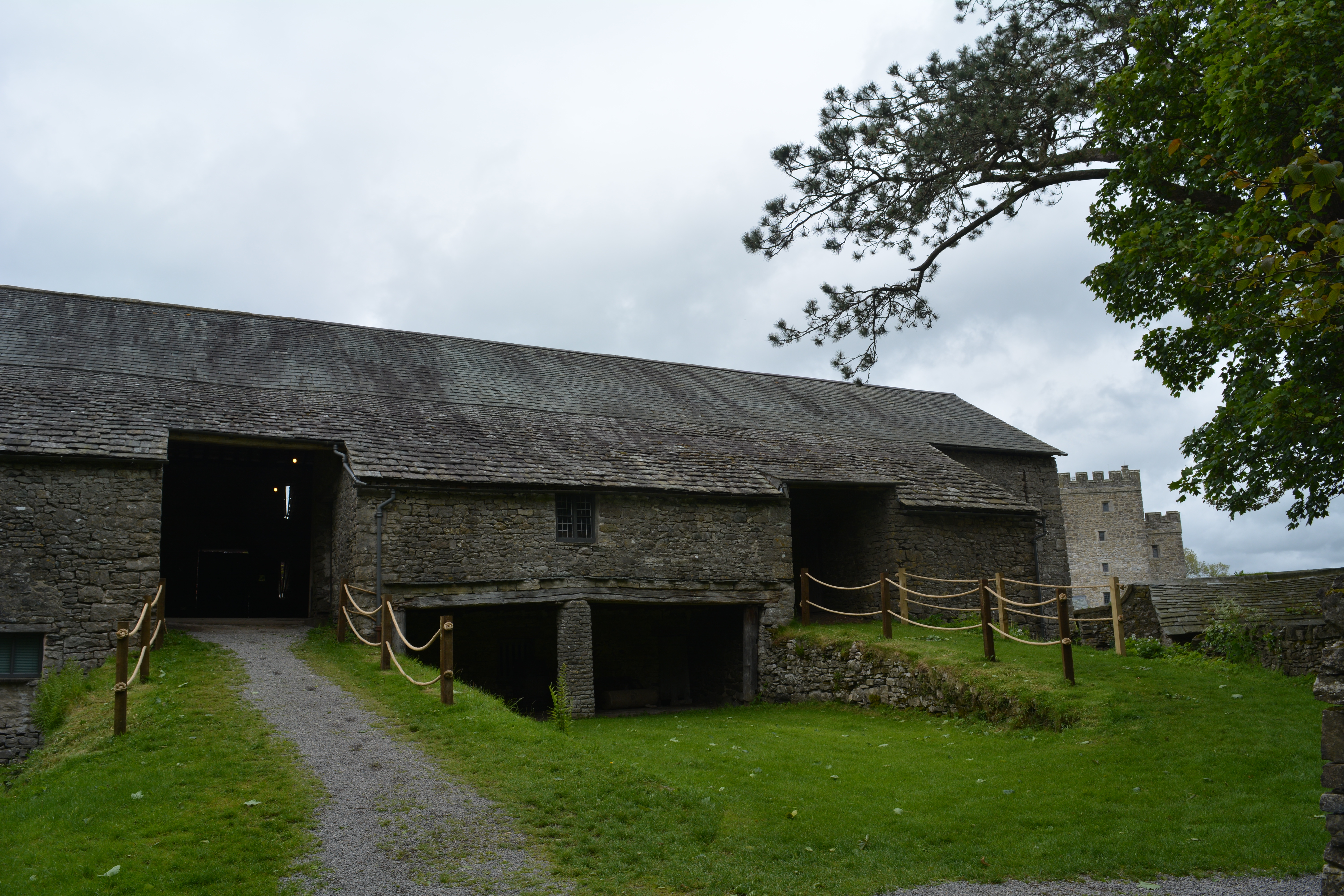
Behind the main buildings we found the “Great Barn”, an agricultural building of a type we had never seen before. The barn was raised up on a bank to create two levels. In the lower level the animals were housed while carts loaded with cereals drove up the grass covered gradients to the upper level.


2015 06 02_2281 2015 06 02_2282

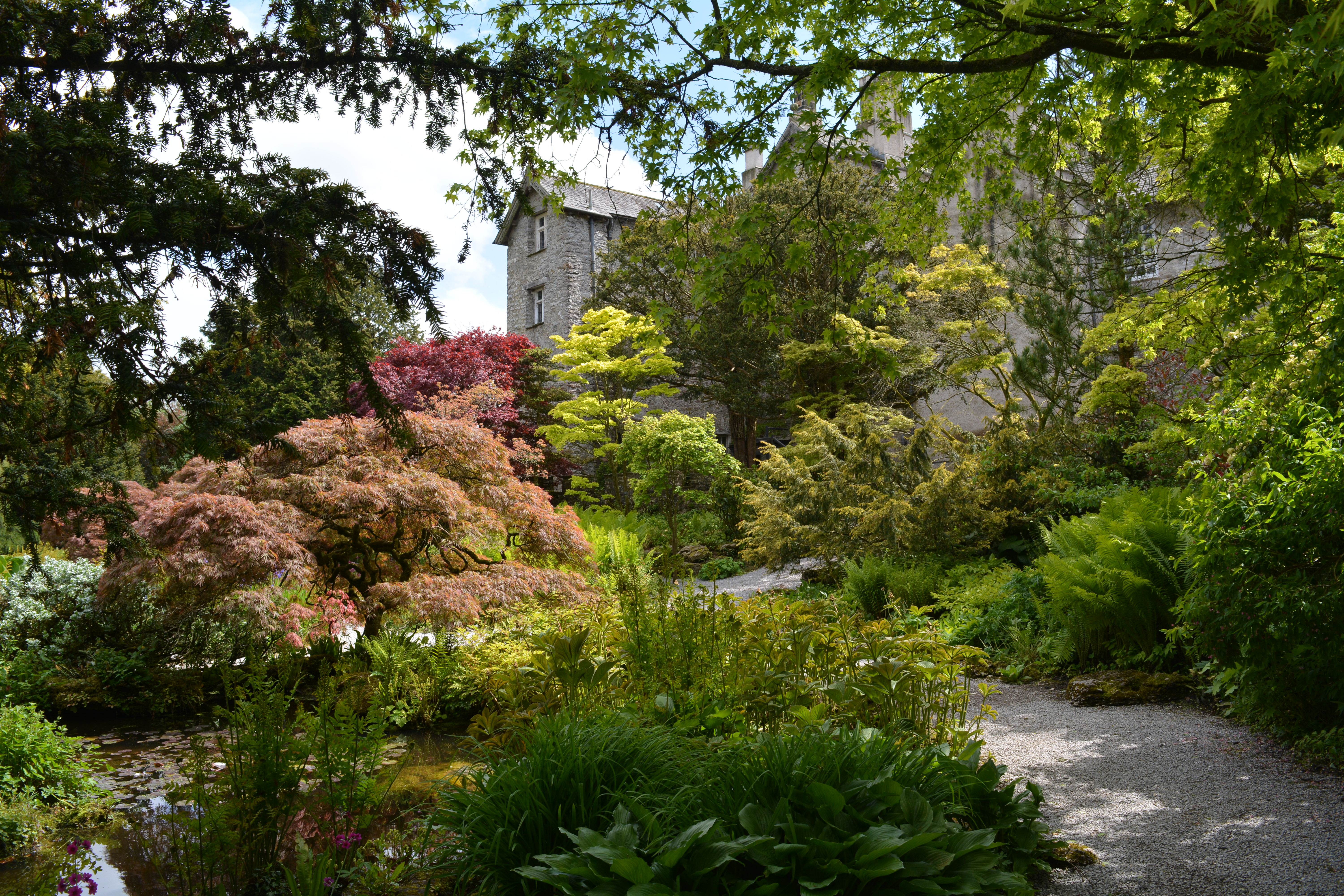
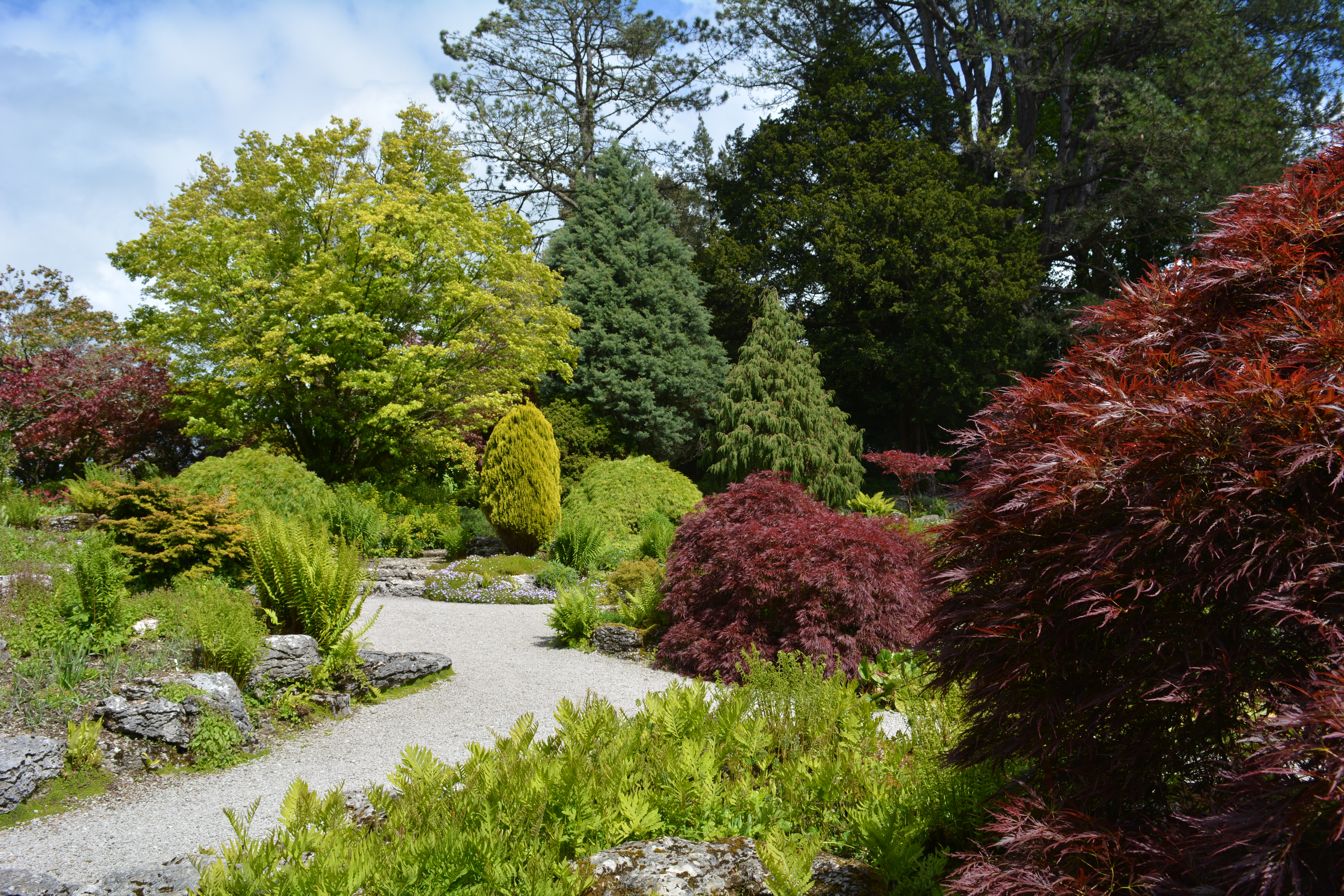
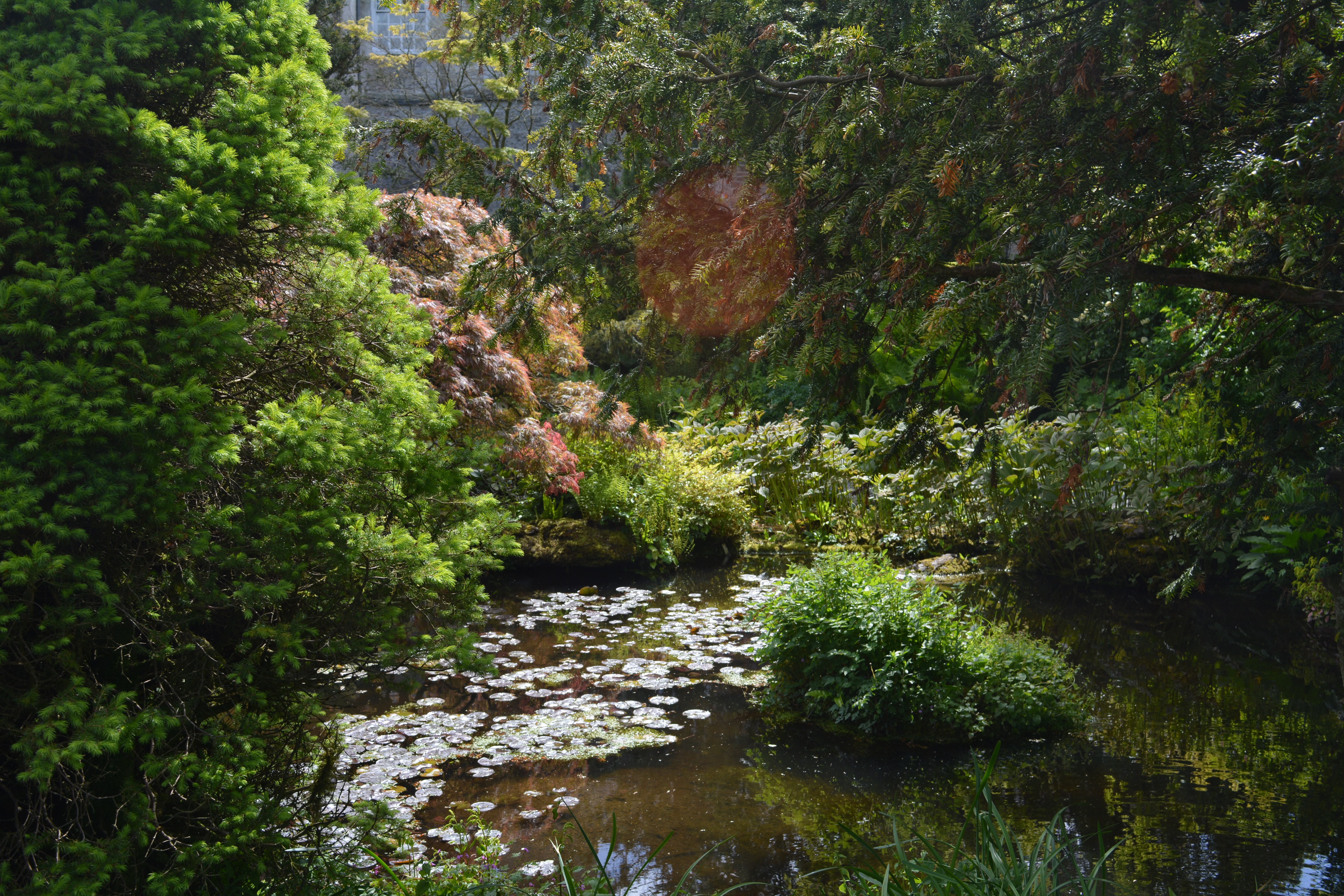
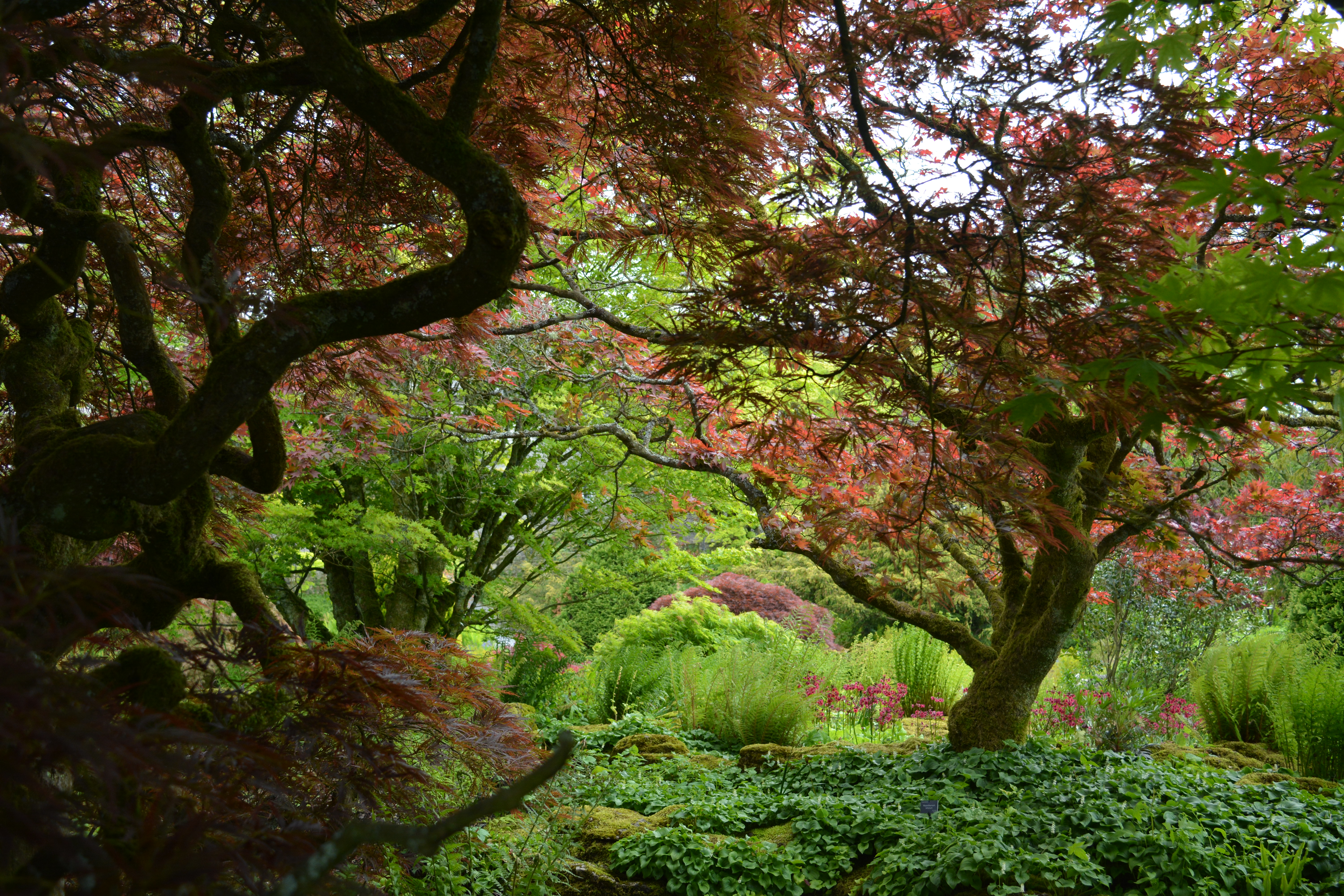
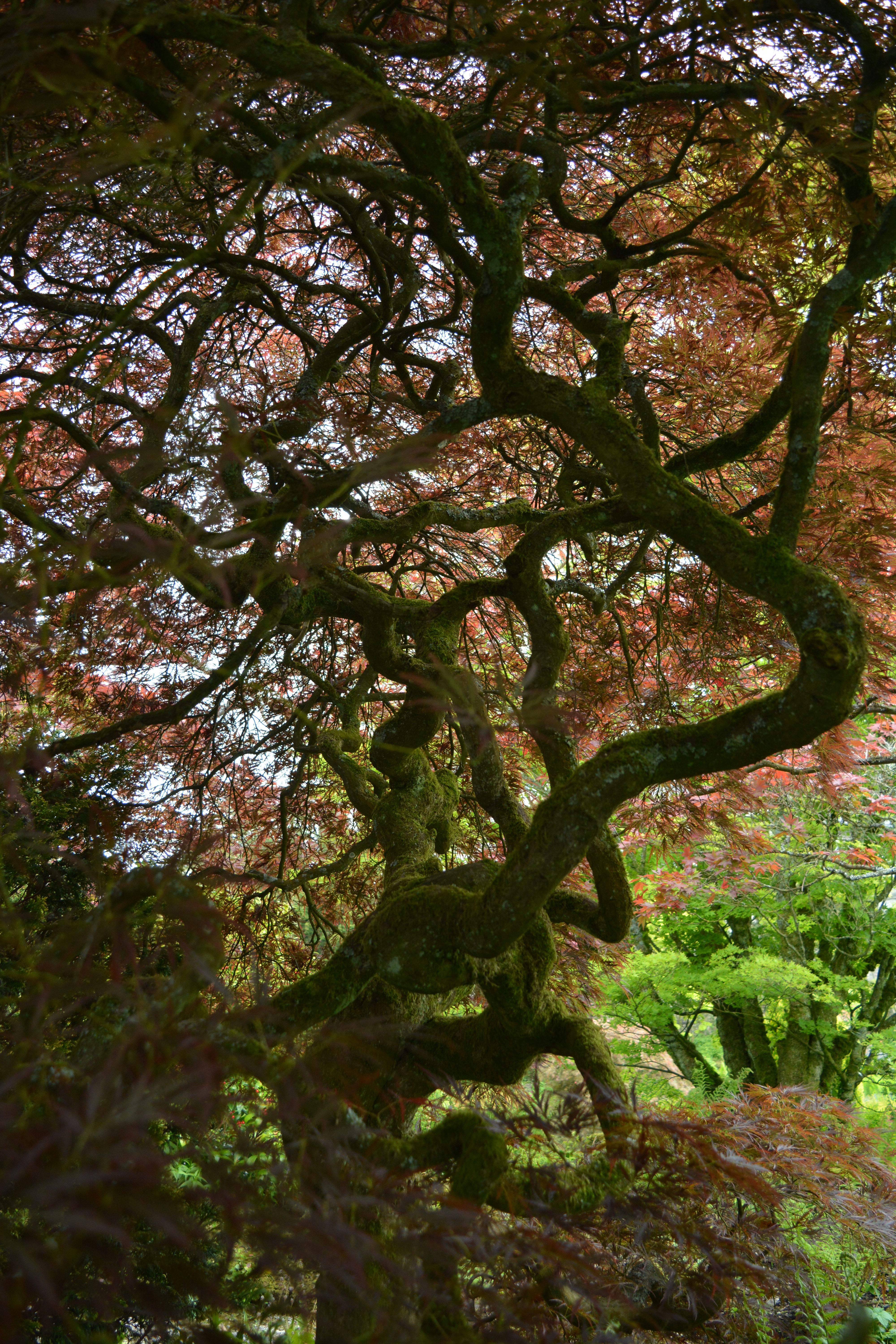
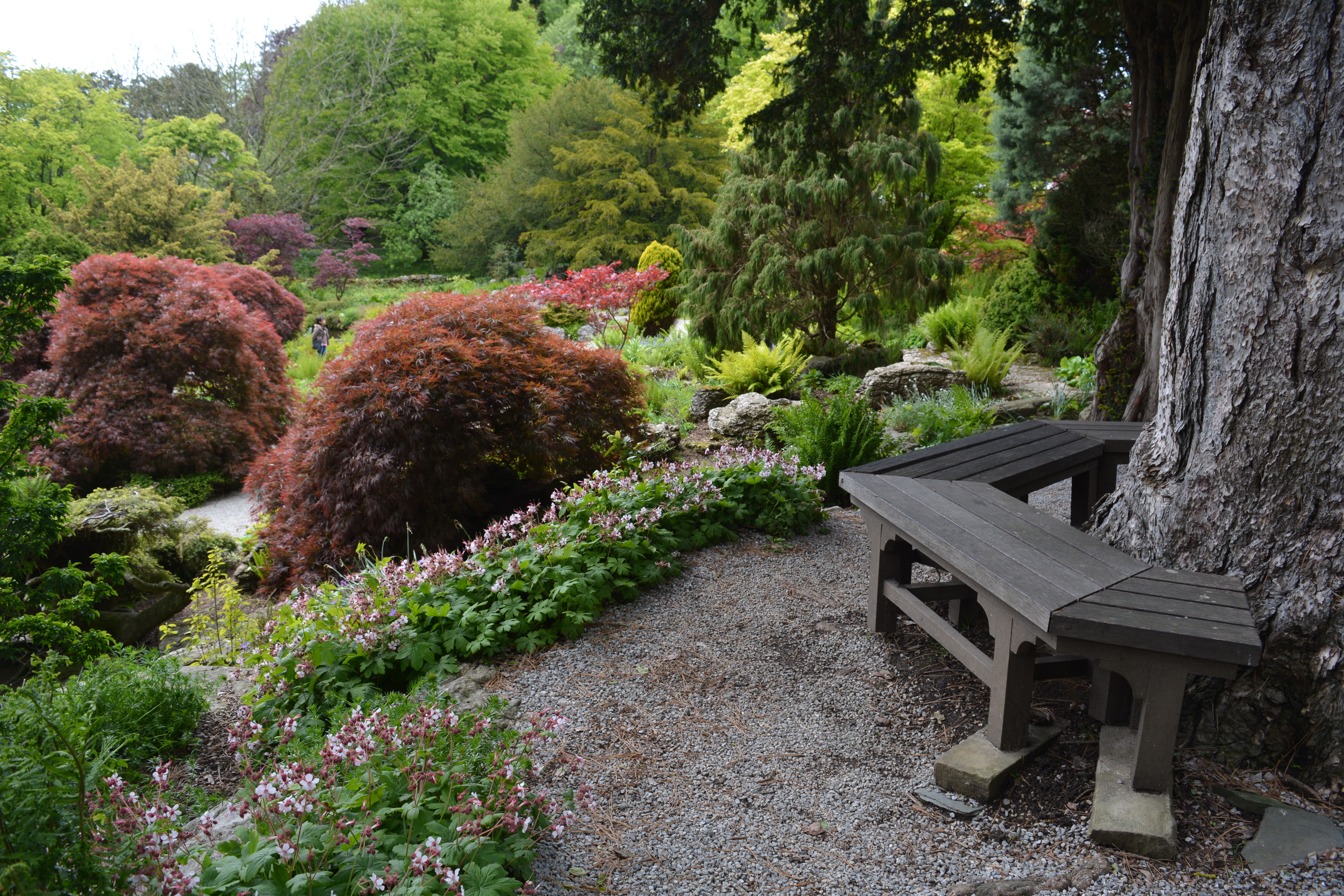
One of the most famous sections of the gardens was the vast rock garden.  Acers gave this area colour and texture and provided great views back to the castle itself. Tiny streams wound their way through the rocky outcrops ans areas of planting.


2015 06 02_2287 2015 06 02_2288 2015 06 02_2290 2015 06 02_2292 2015 06 02_2293 2015 06 02_2294

2015 06 02_2297 2015 06 02_2298 2015 06 02_2299 2015 06 02_2301     2015 06 02_2320 2015 06 02_2321 2015 06 02_2322 2015 06 02_2323 2015 06 02_2324 2015 06 02_2325

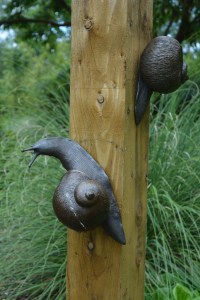
We found these appealing little carvings while we wandered around. The first was a yard high snail carved in wood while the second was a sculpture created by Mother Nature and again we thought it resembled a snail. The final piece was a wise old owl carved from wood.

Our first day in the Lake District was most enjoyable and we hoped our other days would be equally as inspiring.


2015 06 02_2251 2015 06 02_2326

2015 06 02_2285

Categories
buildings Church architecture countryside hedgerows landscapes memorials outdoor sculpture remembrance sculpture Shrewsbury Shropshire trees

Walking the Shrewsbury Battlefield – Part 2

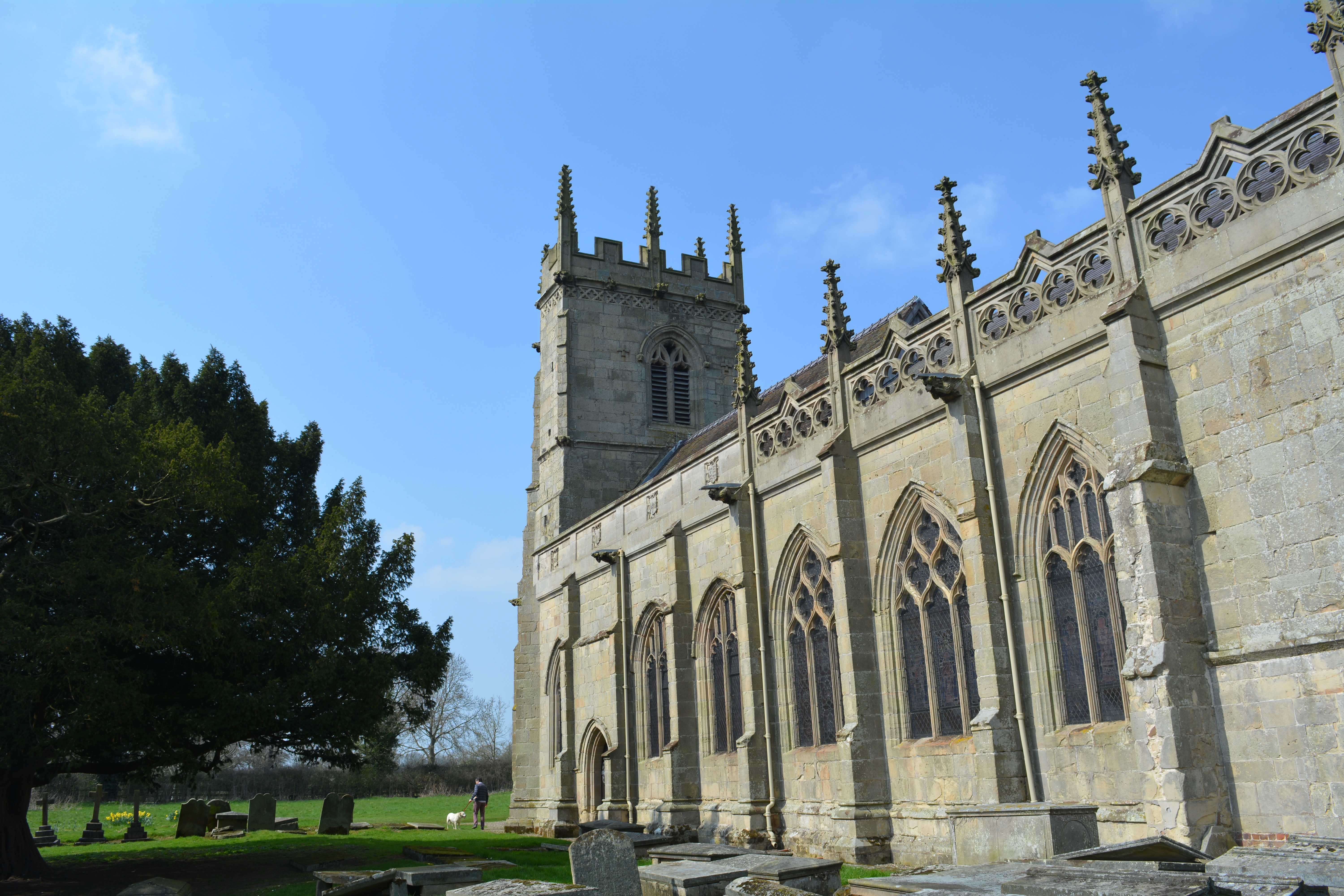
Back at the site of the Battle of Shrewsbury we return to look more closely at the church and the sculptural tree. First though it might be a good idea to say a little about the battle itself. The Battle of Shrewsbury took place in 1403 just north of the town. Here two armies met in what was to be a ferocious and bloody battle. The rebel army of Sir Henry Percy, locally known as Harry Hotspur, met the Royal army of Henry IV on the land of the medieval Manor of Albright Hussey. There is now no sign of the village but there is a building known as the Albright Hussey which was built over a century after the battle in 1524. So many lives were lost during the battle that a memorial chapel was built in 1406 in their memory.

2015 04 09_0535 2015 04 09_0543 2015 04 09_0542

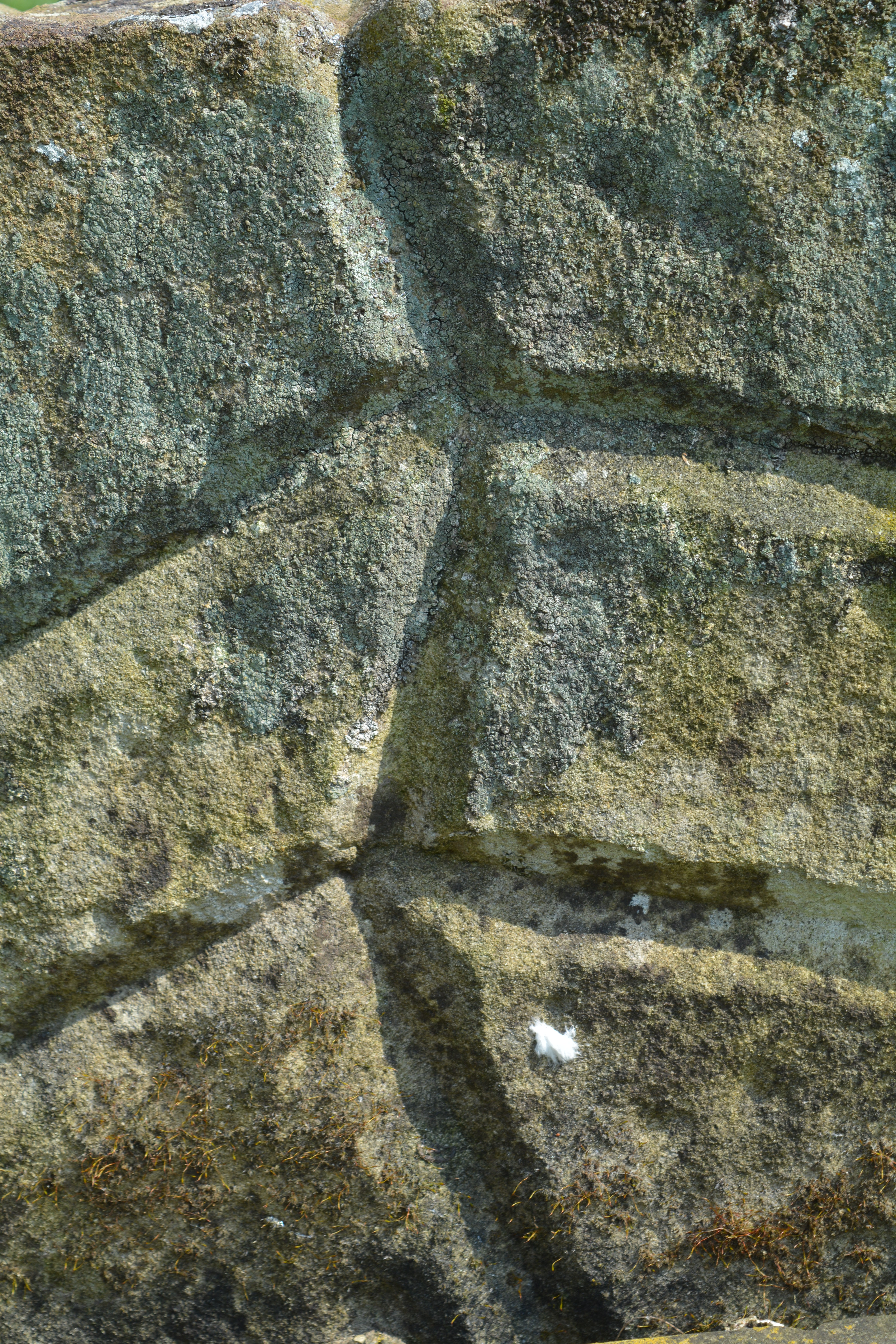
This church is now known as St Mary Magdalene’s Church. Below is my photographic record of our visit to the church. We loved the detailing around the door knocker with its design based on a crown, and all the different gargoyles around the top of the building from which would originally have spouted rainwater.

2015 04 09_0555 2015 04 09_0554 2015 04 09_0553

Inside the church we soon found its famous stained glass windows, but we were also drawn to the reed lamp holders and the oak carved figures on the ends of the pews.

2015 04 09_0552 2015 04 09_0551 2015 04 09_0550 2015 04 09_0549

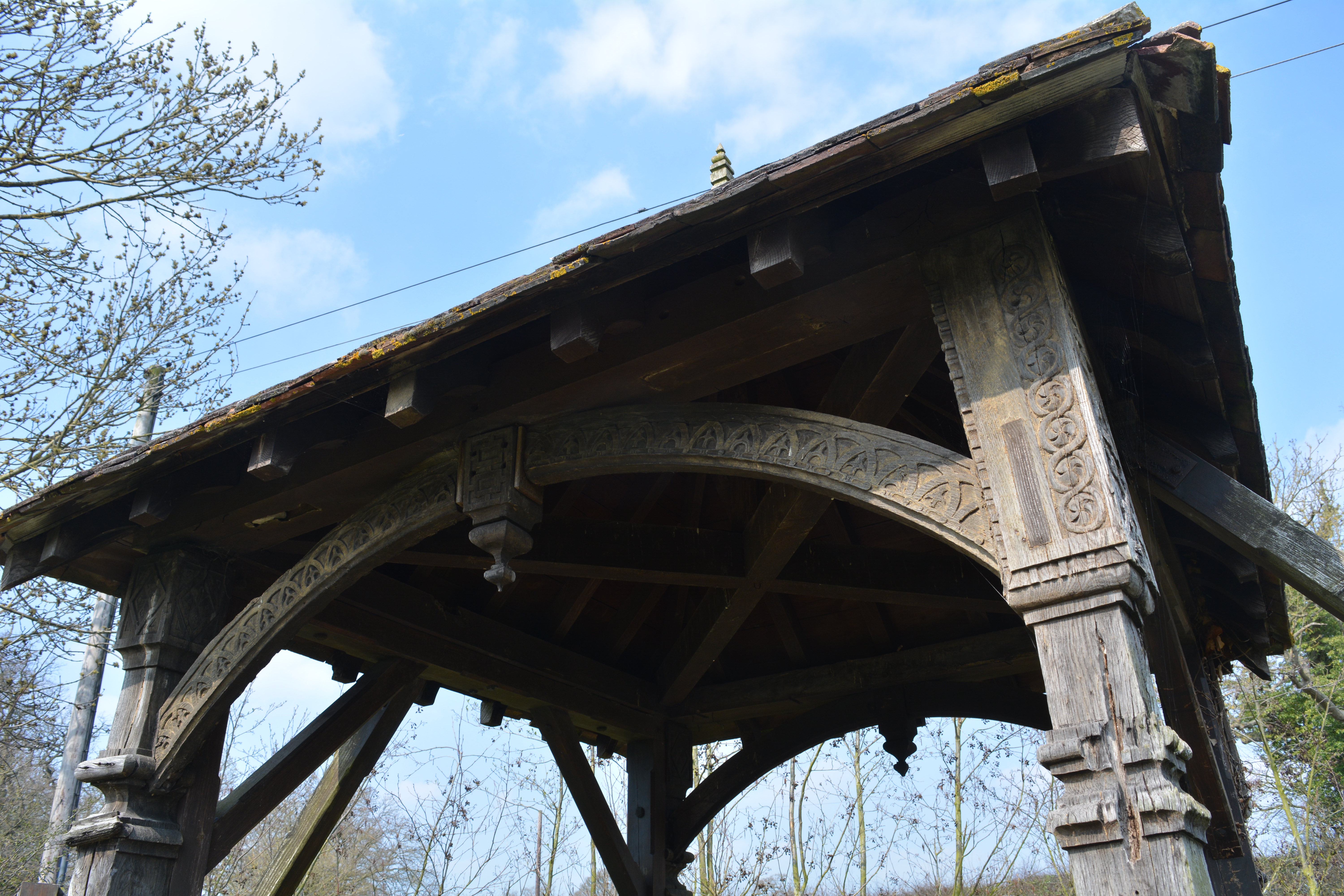
The ancient lych gate is looking worse for wear but its intricate carved detailing is still here to be enjoyed and appreciated, but I wonder for how much longer.

2015 04 09_05482015 04 09_0547 2015 04 09_0546 2015 04 09_0545 2015 04 09_0544

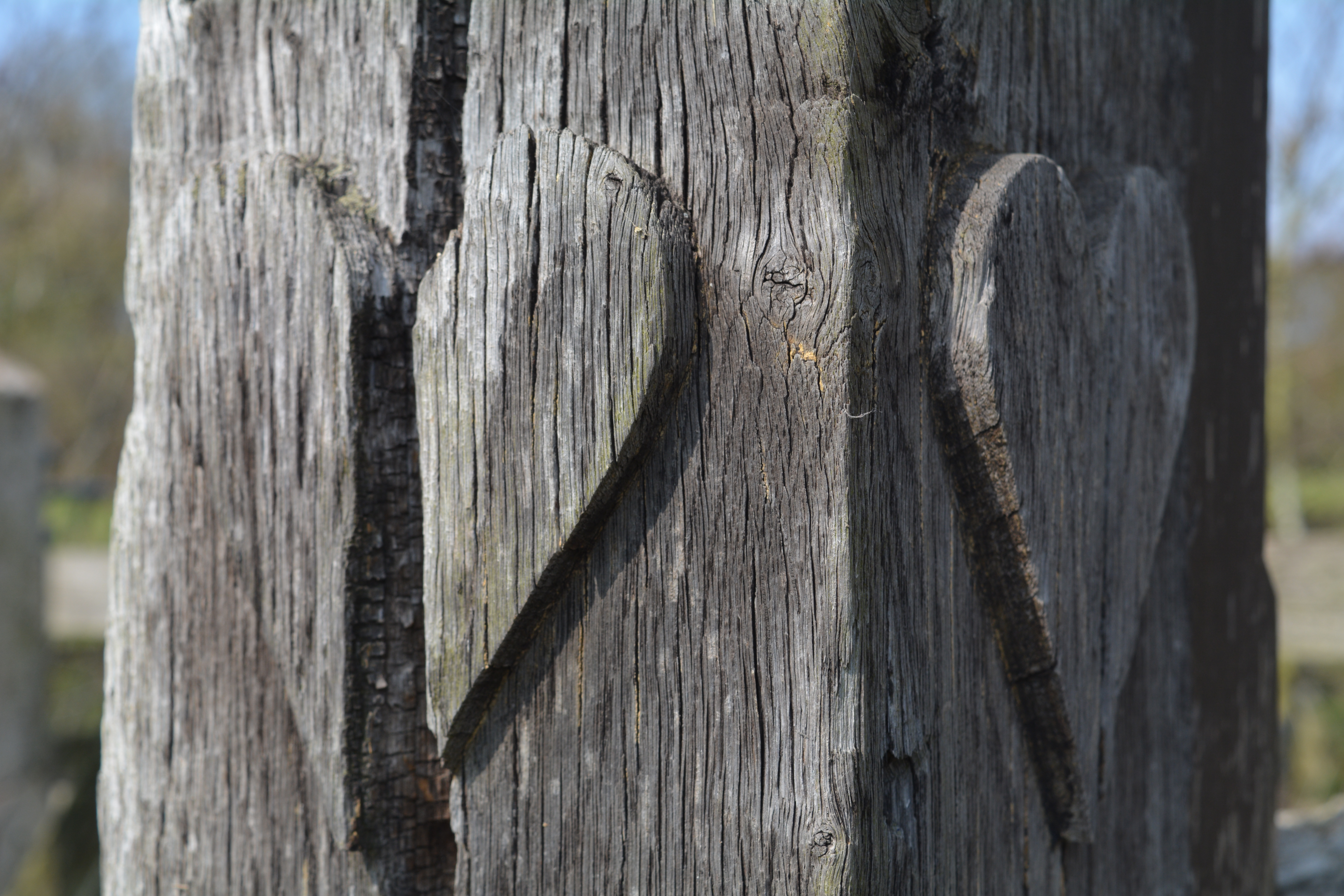
Over 5000 men died in this battle and their remains lie in an unmarked mass grave below the churchyard. Some of the headstones found in the churchyard here are very simple and others show very stylised carving.

2015 04 09_0557 2015 04 09_0556 2015 04 09_0558 2015 04 09_0559

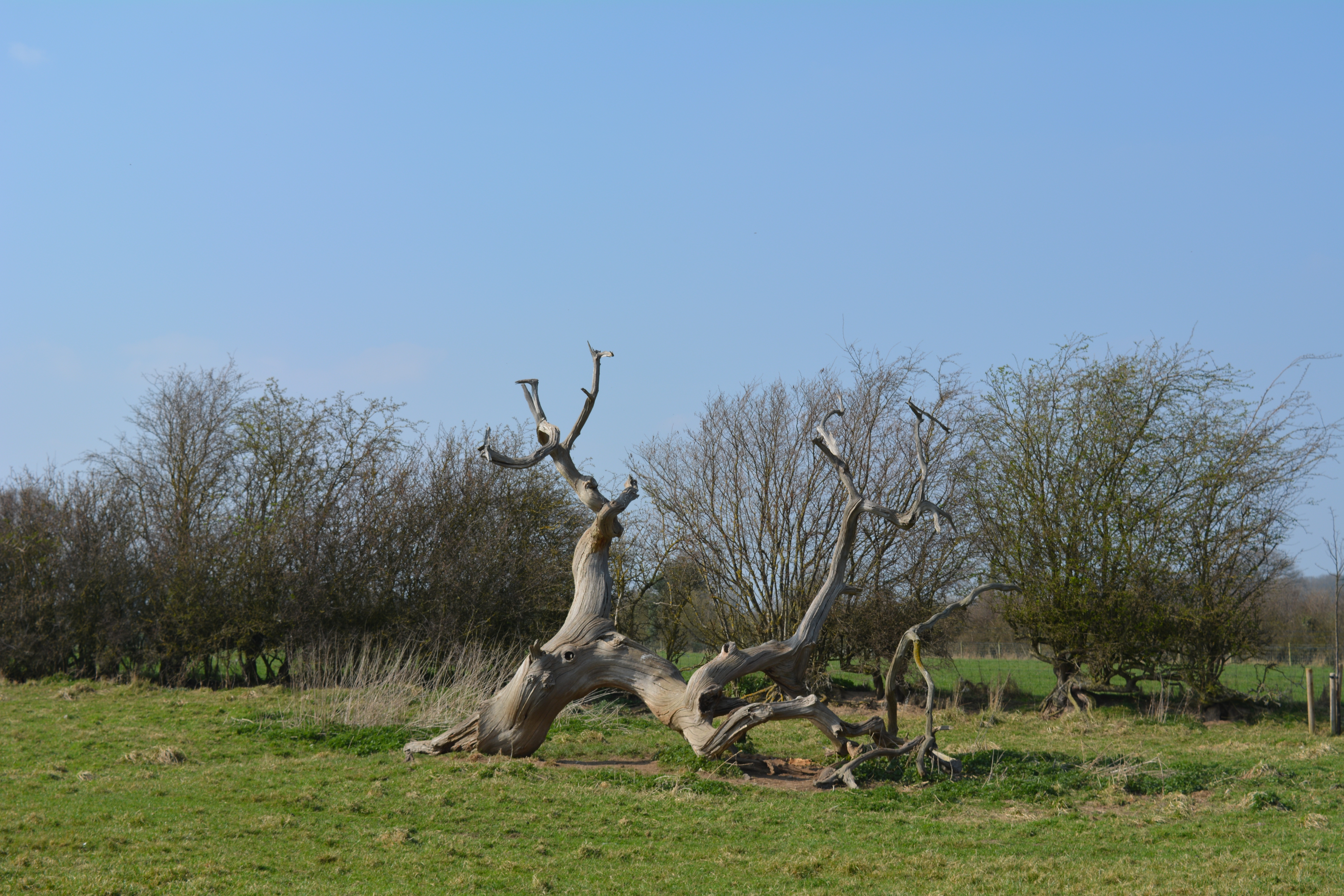
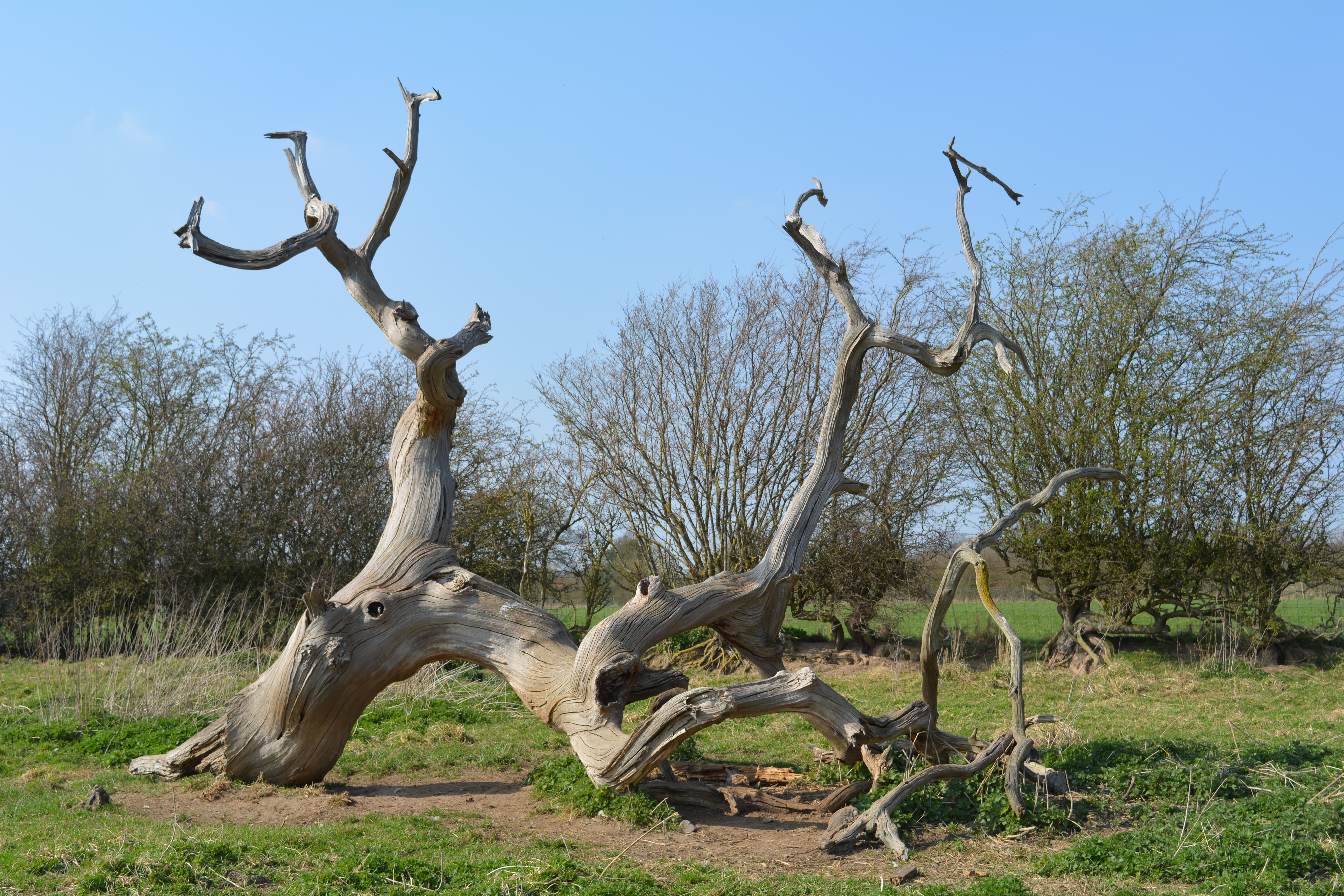
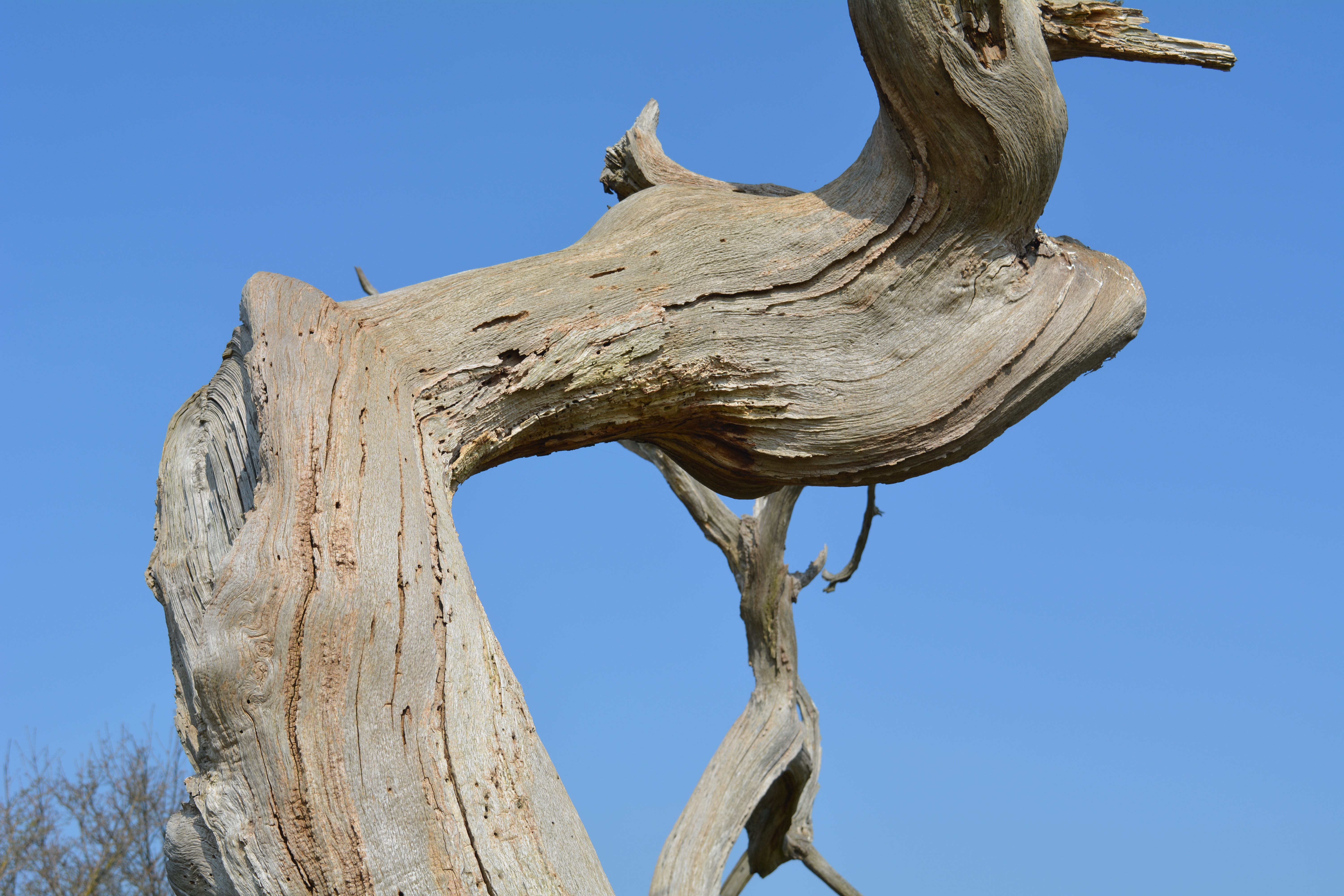
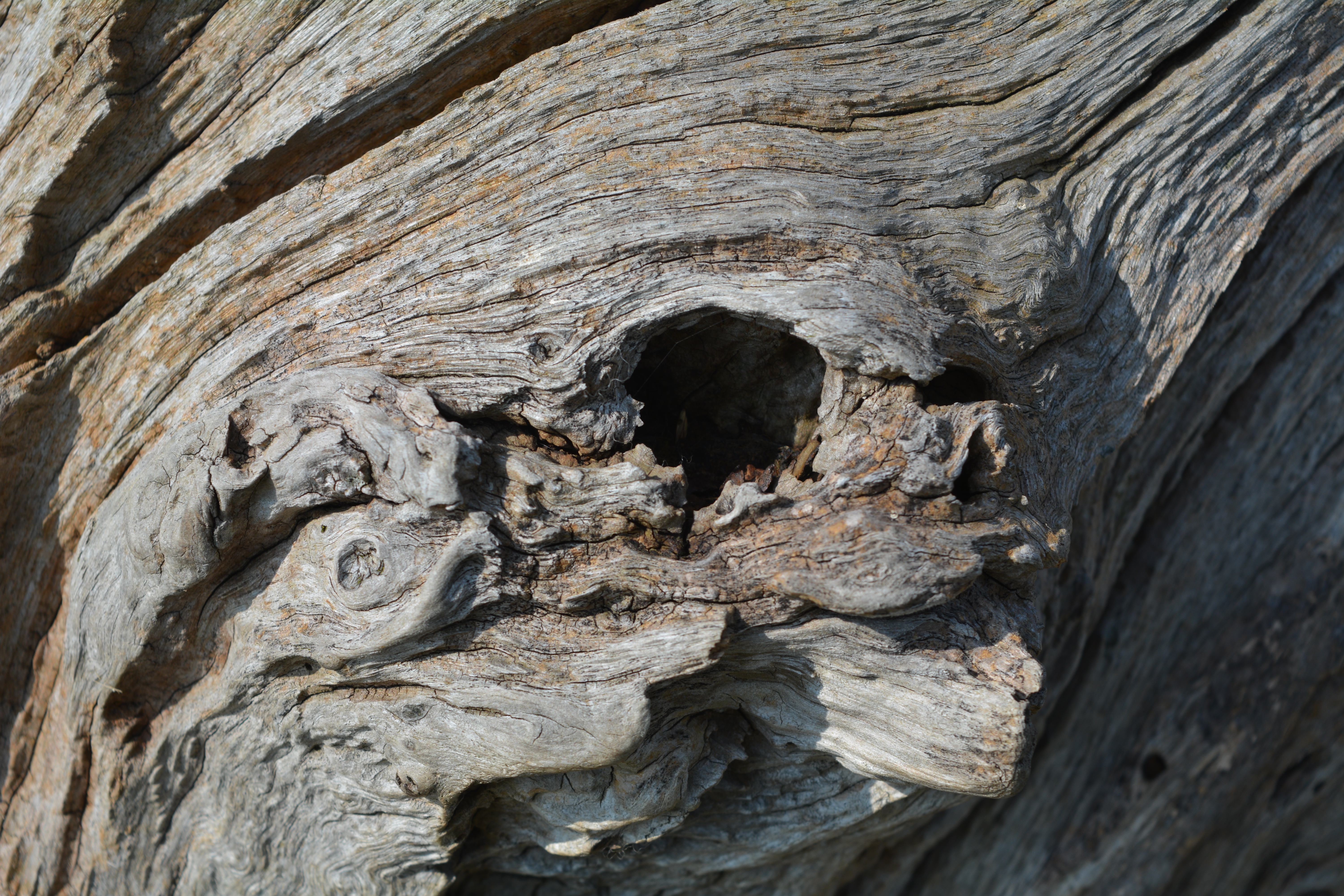
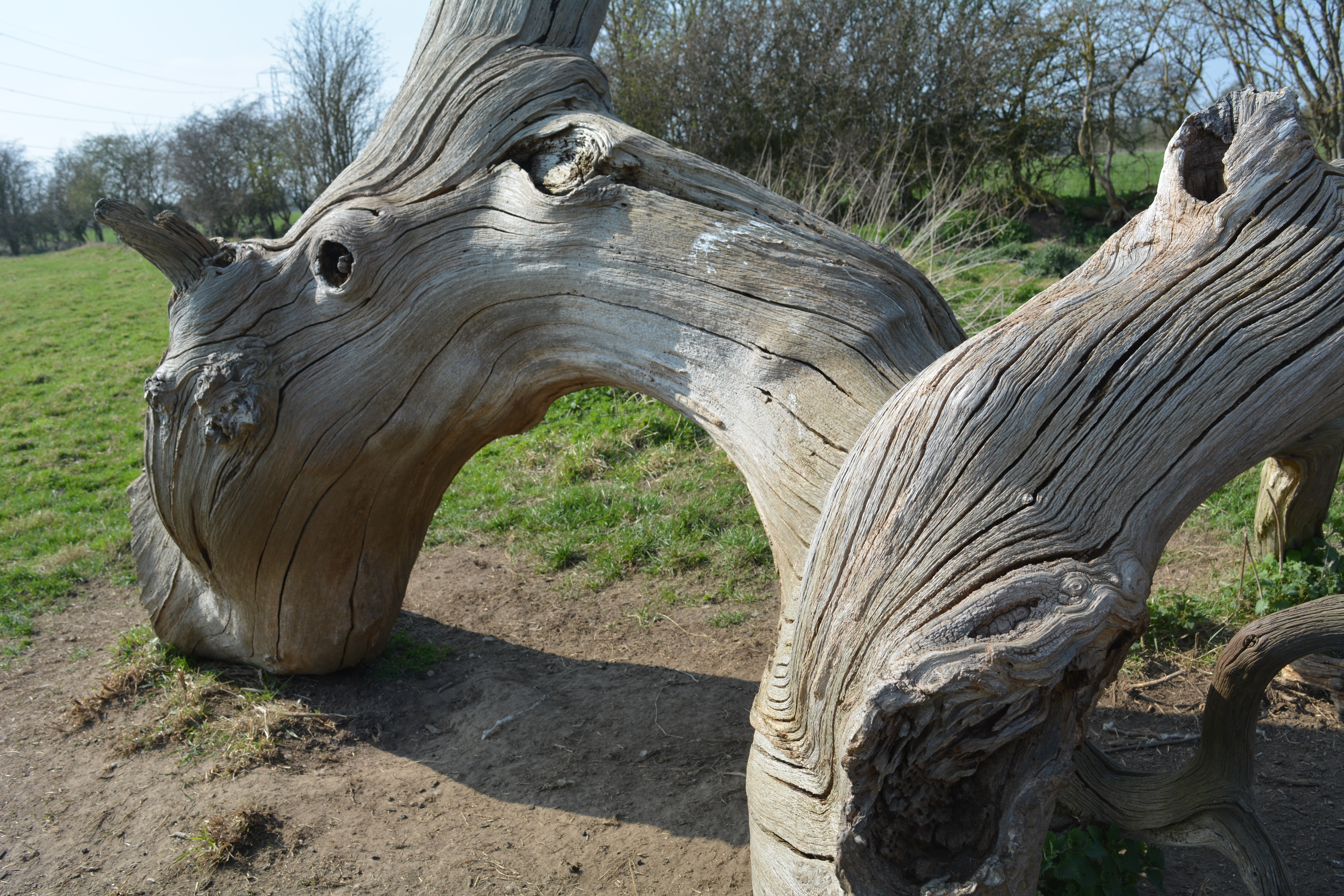
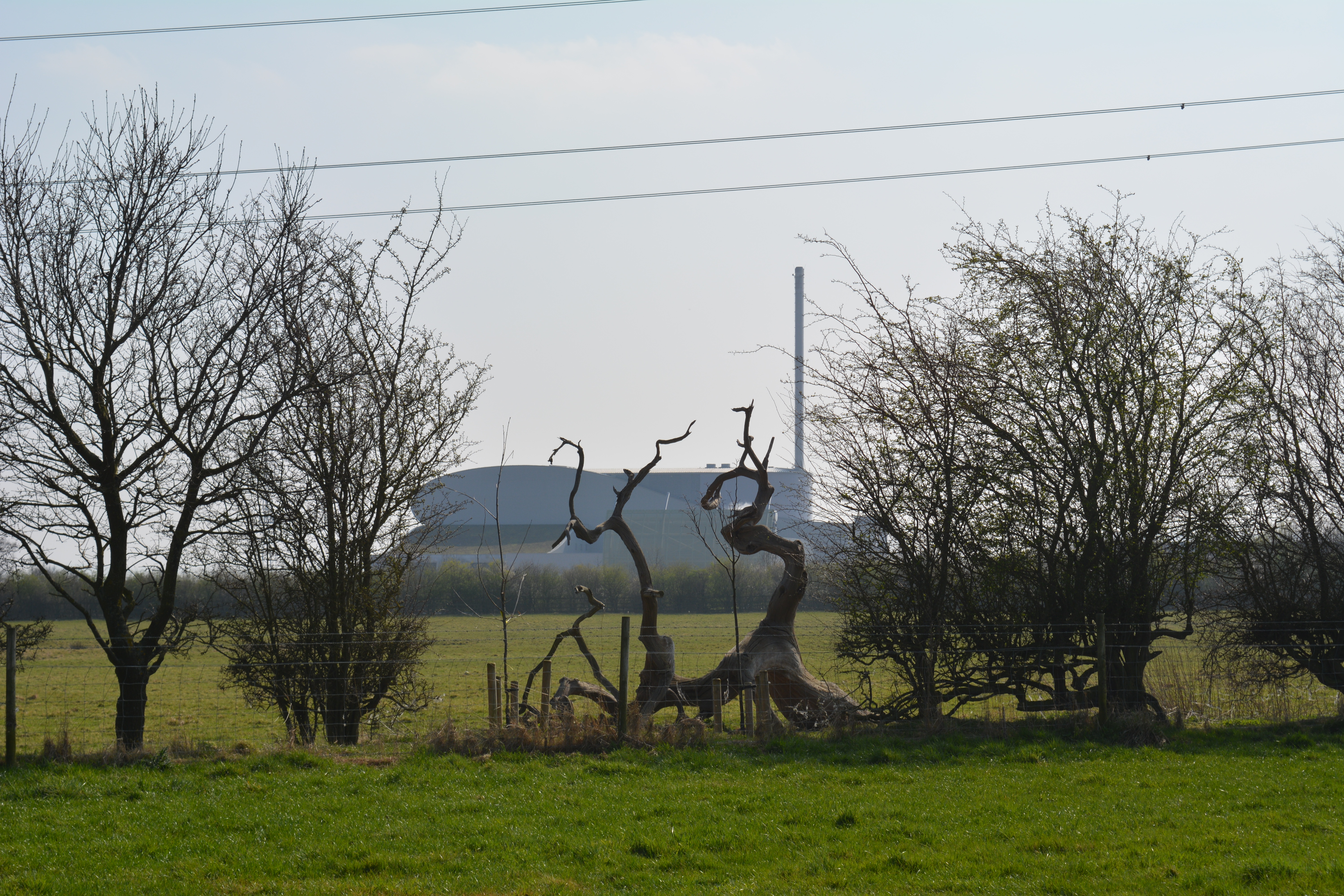
When we finished looking around the church and its surroundings we made our way back along the footpaths around the site of the Battle Field. Half way back we spotted a pool in the middle of a field which still showed signs of medieval ridge and furrow farming patterns. Close to the hedge we saw a wonderfully sculptural old tree. The tree must have fallen years ago and has now lost its bark so was smooth in texture. This is Mother Nature at her most creative. Please enjoy looking at my photos of this natural piece of sculpture.


2015 04 09_0567 2015 04 09_0568 2015 04 09_0569 2015 04 09_0570 2015 04 09_0571 2015 04 09_0572 2015 04 09_0573 2015 04 09_0574 2015 04 09_0575 2015 04 09_0576 2015 04 09_0577 2015 04 09_0578 2015 04 09_0579 2015 04 09_0580 2015 04 09_0581 2015 04 09_0582 2015 04 09_0583 2015 04 09_0584 2015 04 09_0586 2015 04 09_0587 2015 04 09_0588 2015 04 09_0589 2015 04 09_0590 2015 04 09_0593


Categories
colours garden design garden photography garden seating gardening gardens grasses hardy perennials ornamental trees and shrubs outdoor sculpture photography Yellow Book Gardens

Aiming for an all year round garden – our garden in December.

The final chapter! December. We have followed the journey through the months of 2014 looking at our garden trying to decide whether we have succeeded in our aim of creating a garden with interest in every month of the year.

2014 12 03_7986-1

So here we are on our final wander of 2014 to see how the garden is looking in December. Next year we open our garden for charity throughout the spring and summer so we hope we have succeeded in our aim for creating an all year garden. The day I decided to go for my wander with camera in hand coincided with the day of the first proper frost. But it didn’t last long and had little affect on the plants. The grapes are now well past their sell by date, but the chickens and the local Blackbird population seem to enjoy them anyway. Frost brings out the texture in leaves and seed heads.

2014 12 16_8881 2014 12 16_8883


2014 12 16_8885 2014 12 16_8888


2014 12 16_8890 2014 12 16_8894

2014 12 03_7968-1 2014 12 03_7967-1 2014 12 03_7966-1 2014 12 03_7969-1  2014 12 03_7977-1 2014 12 03_7976-1 2014 12 03_7975-1 2014 12 03_7970-1

2014 12 03_7972-1 2014 12 03_7979-1

The Blackbirds and Mistle Thrushes are enjoying the variety of berries we grow for them, but once the winter migrant thrushes arrive they have more competition.

2014 12 03_7974-1 2014 12 03_7973-1

As the frost melts away it has a translucent look where it sits on the leaves of this Hypericum.

2014 12 03_7981-1 2014 12 03_7982-1

Garden ornaments and furniture both play a more important role as the plant life dies down over the winter months.

2014 12 03_7980-1 2014 12 03_7984-1

2014 12 03_7988-1

Our Hellebores are coming into flower far too early this winter. We usually enjoy them in February and March. But the Prunus subhirtella autumnalis can blossom anytime from November to March, so to see it this good in December is no surprise.

2014 12 03_7983-1 2014 12 03_7991-1

2014 12 03_7994-1 2014 12 03_7993-1

Our trees show off their wonderful silhouettes now they are bereft of leaves. The bark texture shows up sharply in winter light.

2014 12 03_7987-1 2014 12 03_7995-1

Some of our Japanese Acers are hanging onto their leaves still so give us plenty of colour to admire.

2014 12 03_7992-1 2014 12 03_7998-1

As trees are now largely leafless and much of the perennial growth has died down other features of the garden gain prominence. Just look at the curled up Birch bark in one of our insect hotels and the hanging glass globe.

2014 12 03_7999-1 2014 12 03_8001-1

The poppy seed heads have shed their seeds long ago and are now very delicate but extremely beautiful.

2014 12 03_7997-1 2014 12 03_7996-1

We have a few flowers alone and out of season,  the last Sweet Peaand a single Calendula struggling to stand upright in the cold, but other flowers coming out now seemingly enjoy the cold and poor light. Violas with cheerful faces welcome visitors. It seems that the perennial Wallflower and the Welsh Poppy can send out an odd flower in any month of the year but in the depths of winter they seem to glow more than a any other time.

2014 12 03_8000-1 2014 12 16_8892


2014 12 16_8886 2014 12 16_8900


2014 12 16_8898 2014 12 16_8893


Hebe “Great Orme” is still flowering well after many months and shows no sign of giving up. The last seedhead of our many Crocosmias still glows a russet-ginger in the low light. The viburnum is just beginning its long display of honey scented blossom.


2014 12 16_8906 2014 12 16_8899

2014 12 16_8905


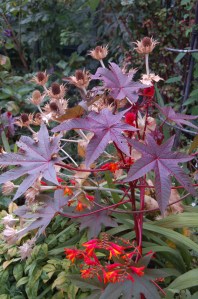
The last few leaves of the Ricinus in sheltered spots retain their glossy texture like well-polished shoe leather. Some curl at the edges and glow orange. Veins deepen to the darkest blood red.

2014 12 03_8006-1 2014 12 03_8005-1


2014 12 03_8004-1 2014 12 03_8003-1

So that is it. Another year in the life of our quarter acre plot here at Avocet. We have had a great gardening year with plants performing outstandingly, our first open day and the first magazine article featuring our garden. Next year looks set to be just as busy!

I am going to begin a new series in January – my garden journal – featuring words, paintings, drawings, photos and I hope some i-pad art too.

Below is a further small selection of shots taken in mid-December on a day the sun shone. They celebrate the year in our garden and give promises for the year to come.

2014 12 16_8882 2014 12 16_8884 2014 12 16_8895 2014 12 16_8896 2014 12 16_8901 2014 12 16_8902 2014 12 16_8903 2014 12 16_8904


Categories
architecture buildings colours garden design garden designers garden photography garden ponds garden pools garden seating gardens gardens open to the public grasses hardy perennials light light quality meadows ornamental grasses outdoor sculpture Piet Oudolf reflections sculpture Tom Stuart-Smith water garden water in the garden

Post 500 – Part Two – a further visit to the “Oudolf Field”

As promised I am returning to the beautiful county of Somerset where Jude and I spent a day exploring the exciting new “Oudolf Field” and the gallery buildings at the Hauser and Wirth’s Durslade Farm.

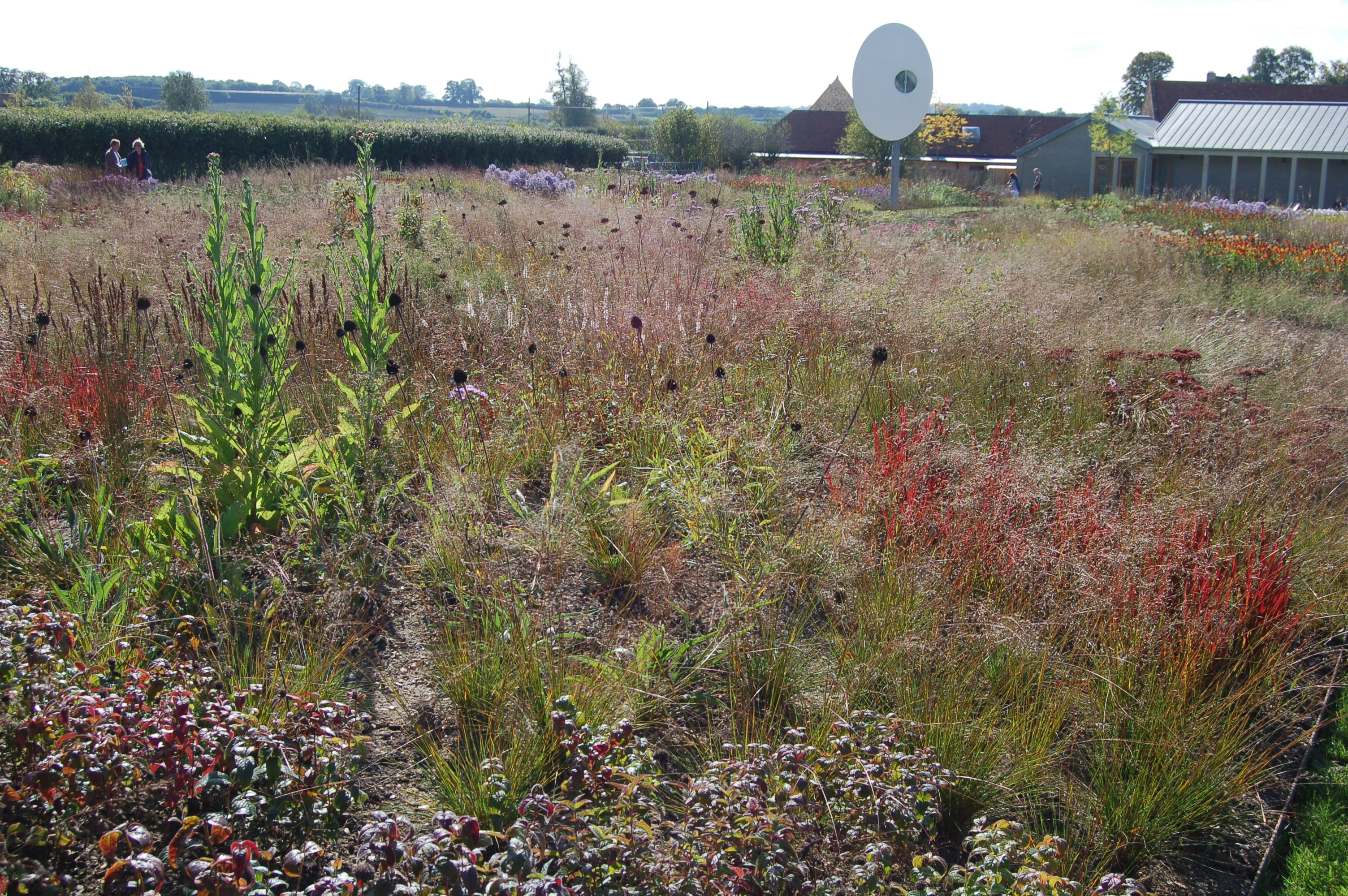
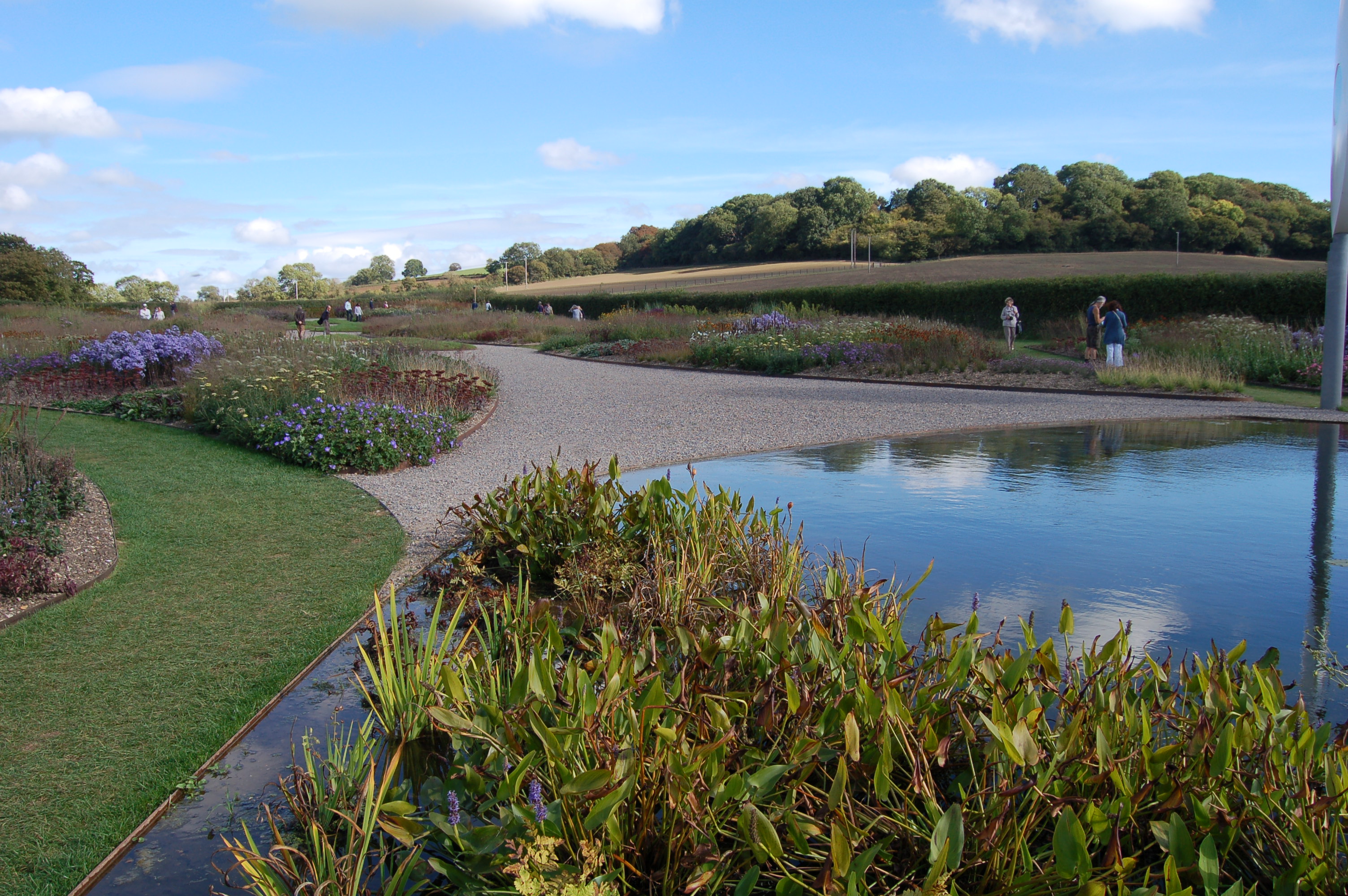
We left off as we were looking at the pool and giant clock. This is the first time we have seen any water designed into an Oudolf designed garden and indeed the first one to include a giant clock. The pool afforded clear reflections of the trees surrounding the site and was only planted around the margin closest to the buildings to give the maximum area of reflecting water.

2014 10 04_5465 2014 10 04_54832014 10 04_5487 2014 10 04_5481

The tall clock towers over the pool and its white face stands out against the brightness of the blue sky. I would imagine it would look great against black clouds too! It casts a beautiful lollipop shadow across the golden gravel. Its face looks like a big circular disc but it is in reality asymmetric in design, which causes the minute hand to move out into clear air as it moves into the narrow side.

2014 10 04_5488 2014 10 04_5486

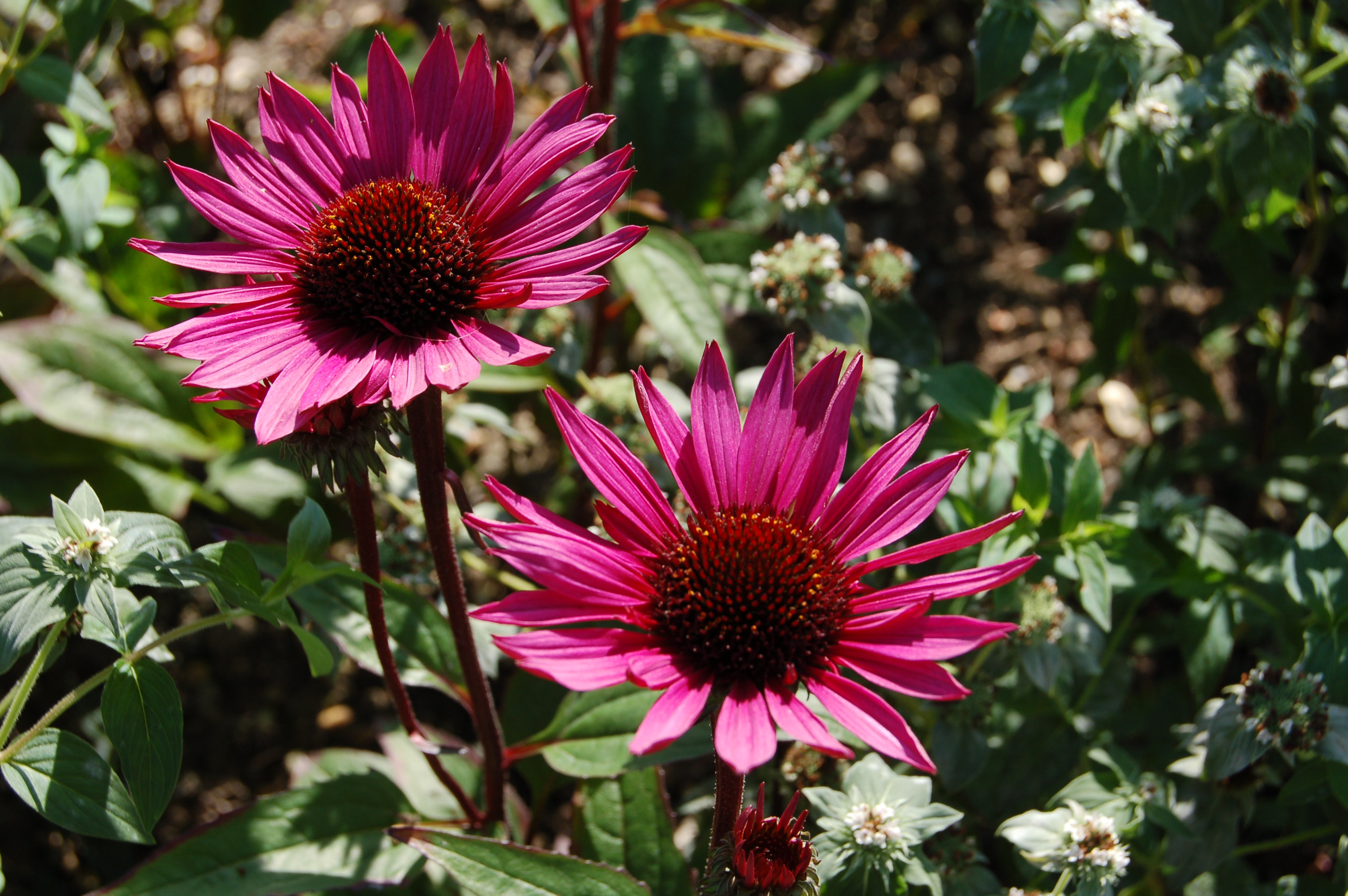
Although the planting is lower than in his previous gardens Piet Oudolf still uses many of his favourite plants such as Sanguisorbas, Echinaceas, Verbenas and Heleniums.

2014 10 04_5471 2014 10 04_5470

2014 10 04_5478 2014 10 04_5479

2014 10 04_5473 2014 10 04_5476

We had a break for coffee and to look around the galleries before wandering the gardens again as the sun dropped slowly in the sky and the light gave the meadows a fresh look.

We were enthralled by a gallery where a display of Oudolf’s garden designs helps reveal how this garden designer’s mind works. We loved the designs and working drawings and “idea jottings” of this garden here in Somerset as well as those from the New York High Line and the Wisley Garden.

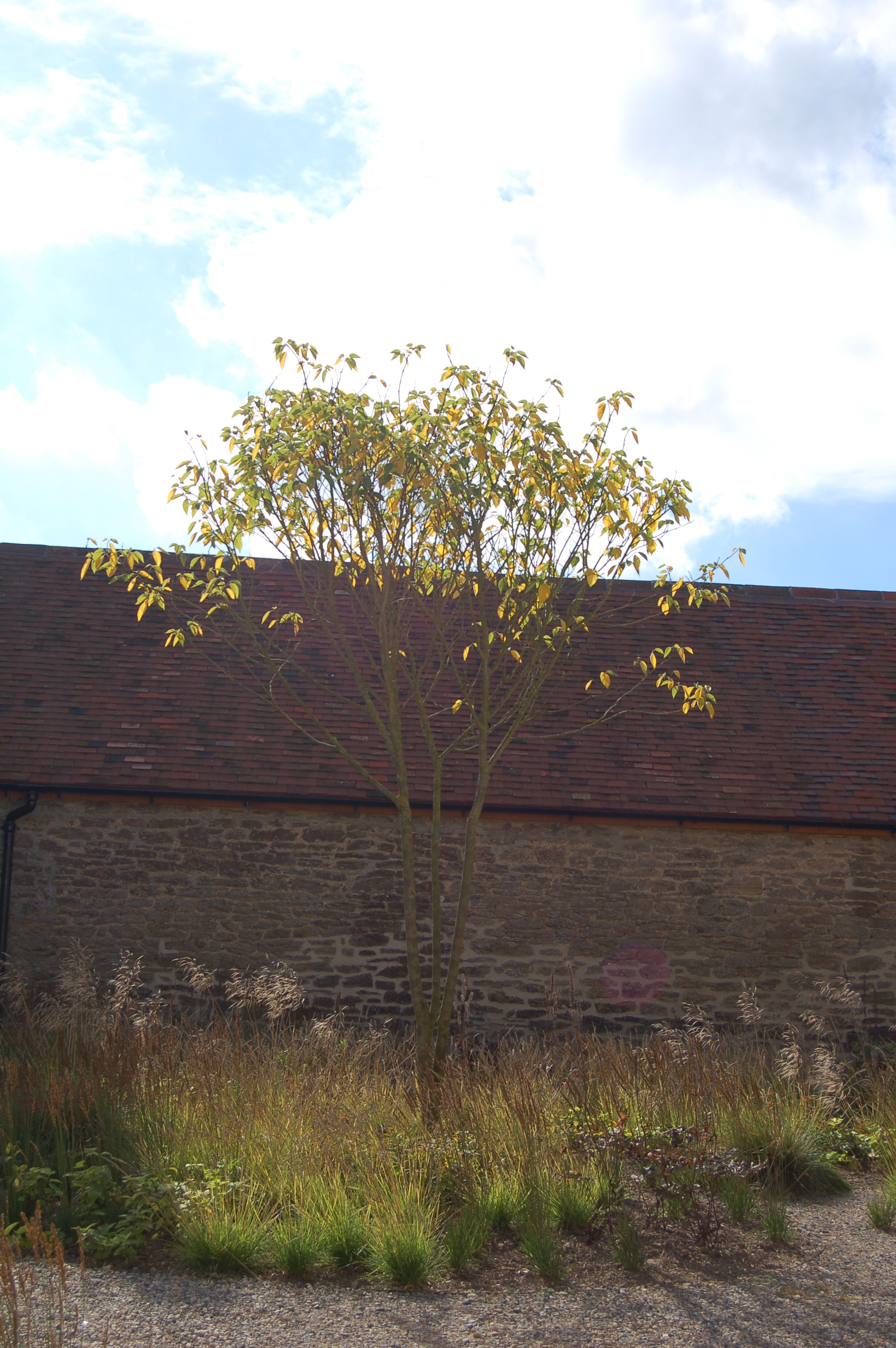
Moving from gallery to gallery each courtyard space is softened by more of Oudolf’s plantings, featuring trees underplanted with grasses and perennials. The sculptural pieces sit comfortably among the old farm buildings with their richly textured surfaces.

2014 10 04_5429 2014 10 04_5431 2014 10 04_5432 2014 10 04_5433 2014 10 04_5434 2014 10 04_5435 2014 10 04_5436 2014 10 04_5437 2014 10 04_5438 2014 10 04_5518 2014 10 04_5517

2014 10 04_5521 2014 10 04_5522 2014 10 04_5524 2014 10 04_5525 2014 10 04_5526 2014 10 04_5527 2014 10 04_5528 2014 10 04_55292014 10 04_5531 2014 10 04_5532

Enjoy the gallery of photos taken in the sparkling late afternoon light. It is amazing how different plantings can look as the light changes within just a few hours at this time of year.

The next post in my 500 Celebration series will find us over in Hertfordshire where Tom Stuart-Smith lives. We had the privilege of visiting his own garden and the one he designed for his sister.


Categories
garden design garden photography garden pools gardening gardens gardens open to the public hardy perennials Italian style gardens meadows National Trust ornamental trees and shrubs roses sculpture The National Trust trees water garden water in the garden woodland woodlands

Cliveden – the house and garden of Nancy Astor

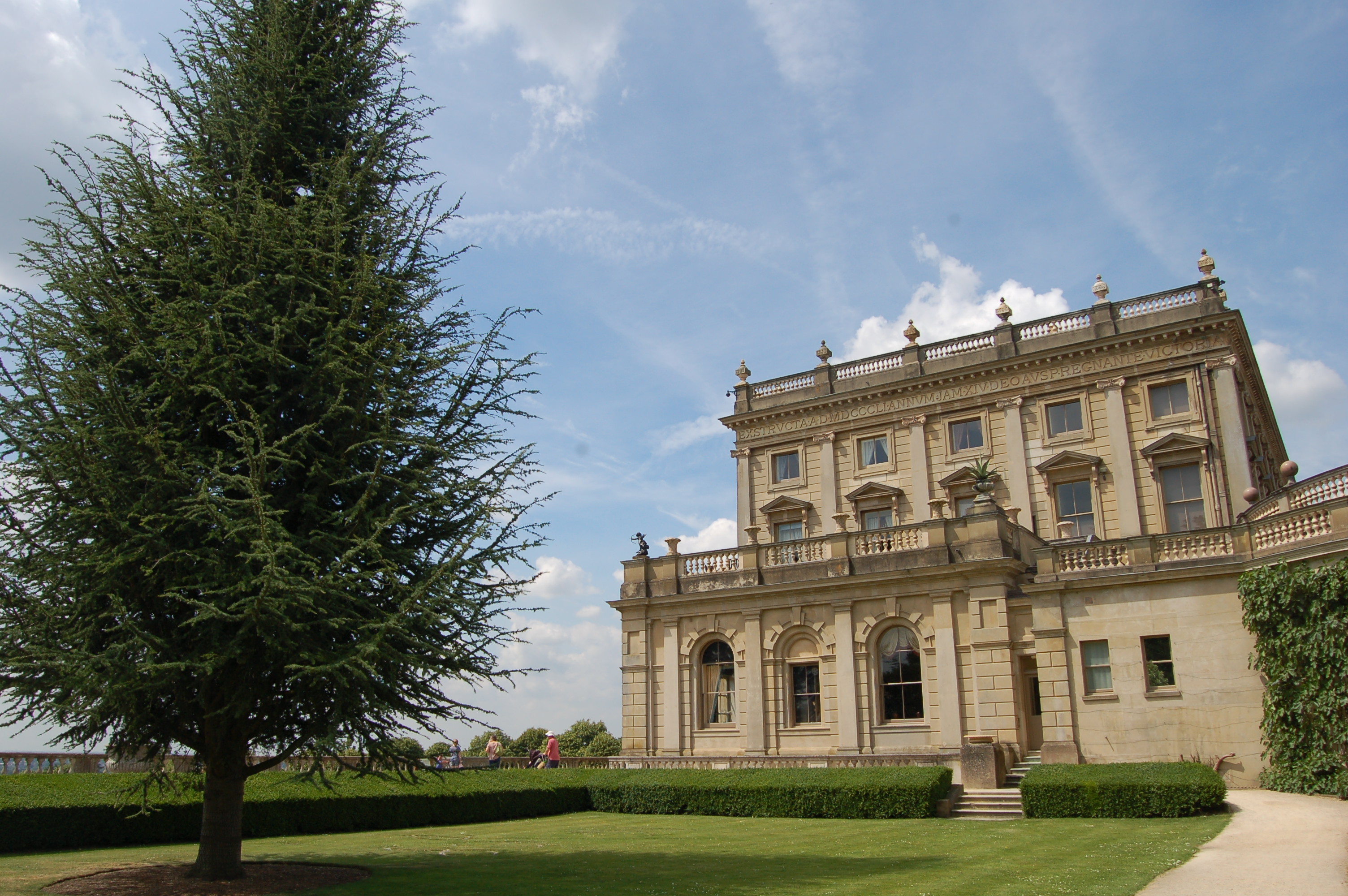
While holidaying around Cambridge earlier in the year we stopped off on our travels to have a wander around the gardens at Cliveden, the one time home of Nancy Astor. She was an English MP even though American born. Her second marriage was to Waldorf Astor who inherited to a peerage and entered the House of Lords. Nancy was the first ever woman to be a member of the House of Commons, but also gained notoriety as a Nazi supporter.

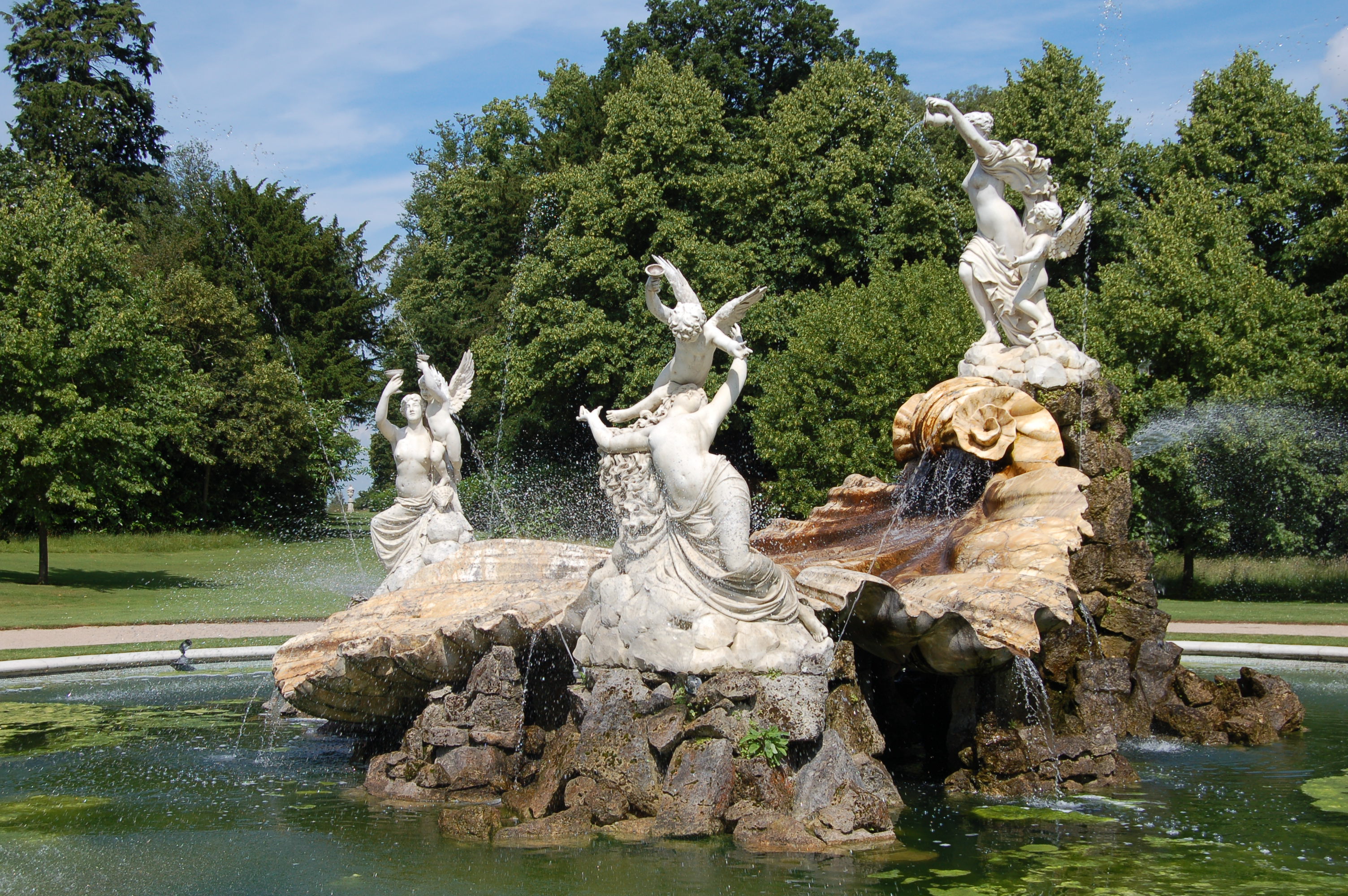
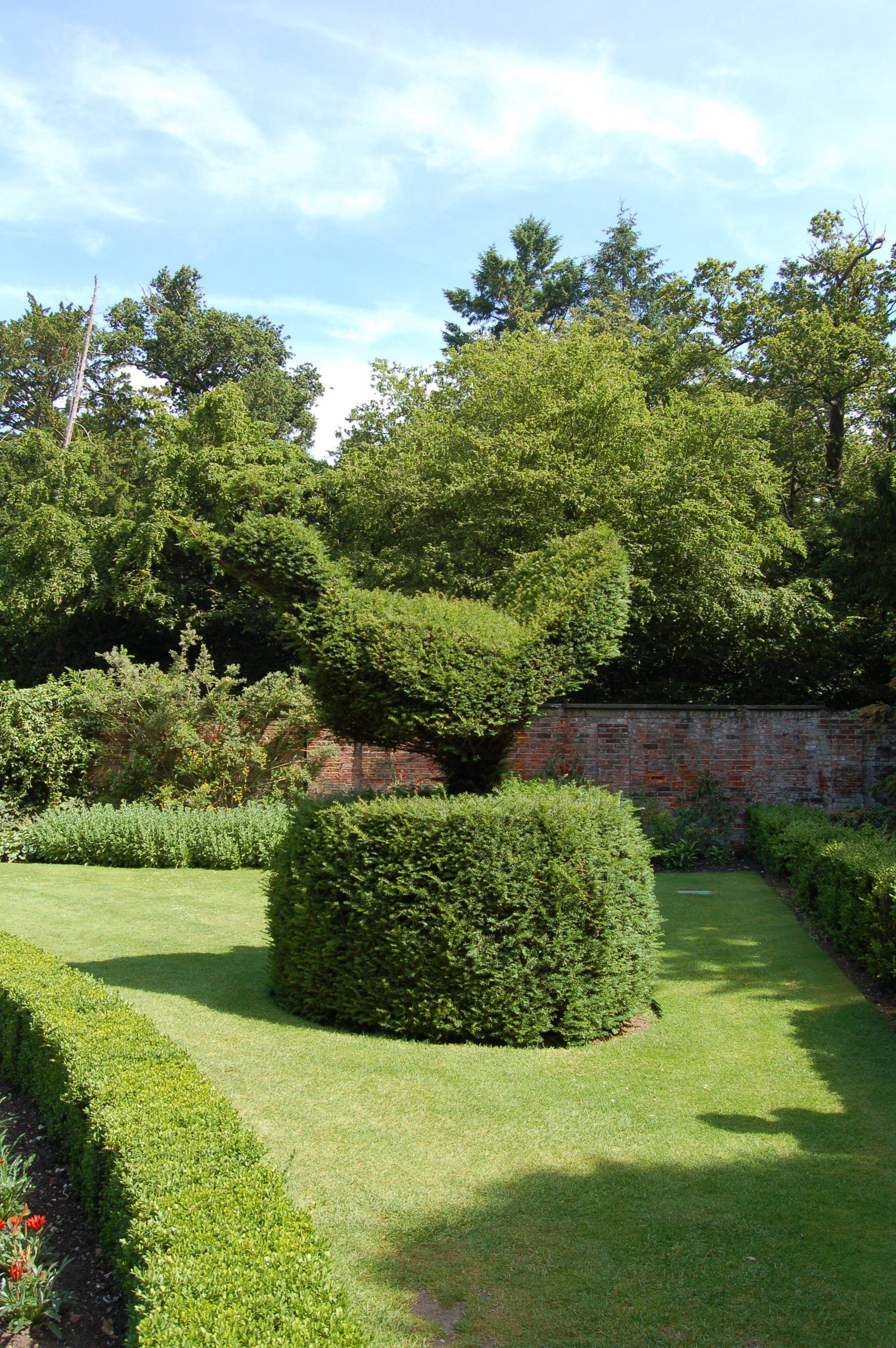
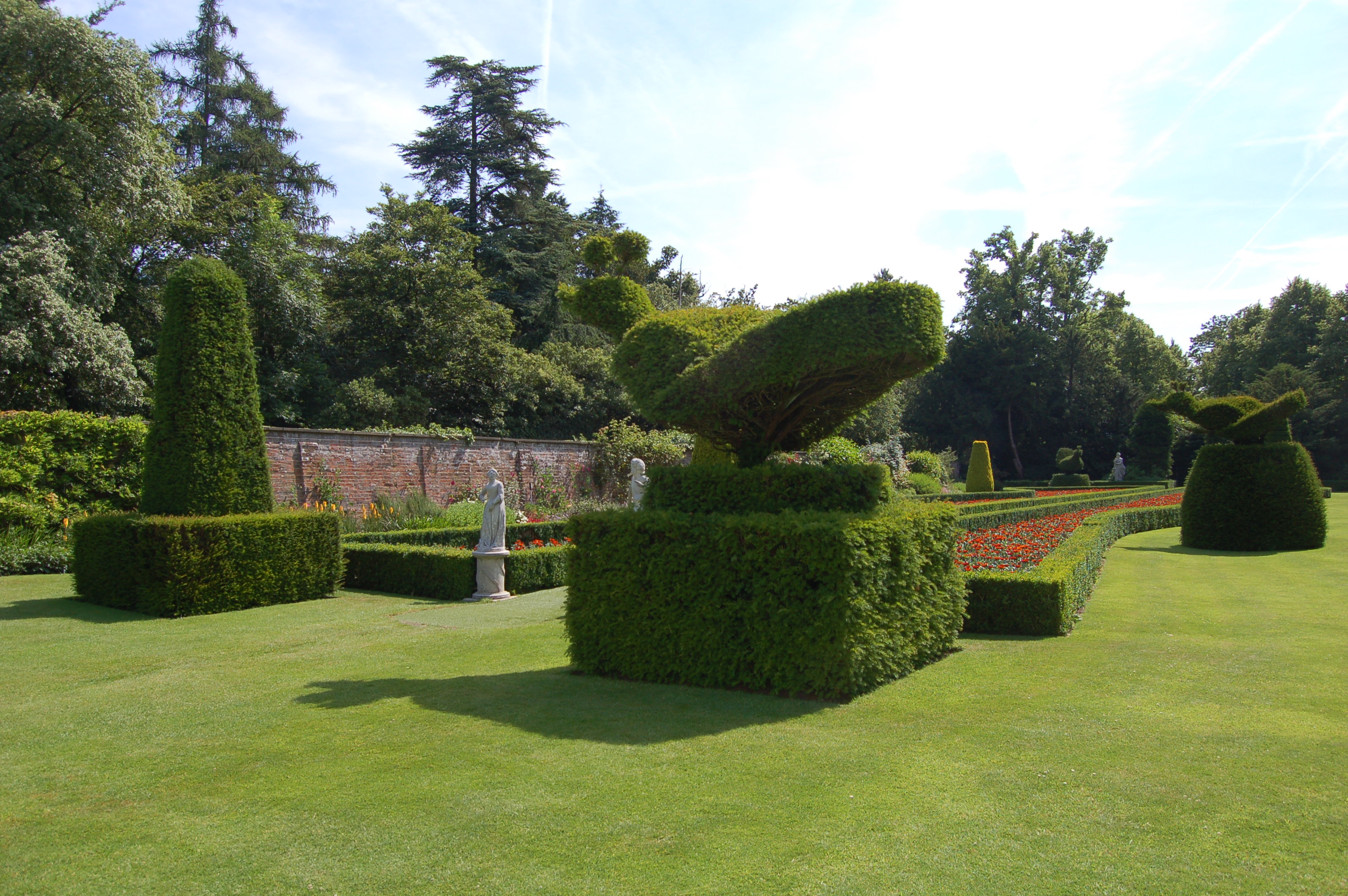
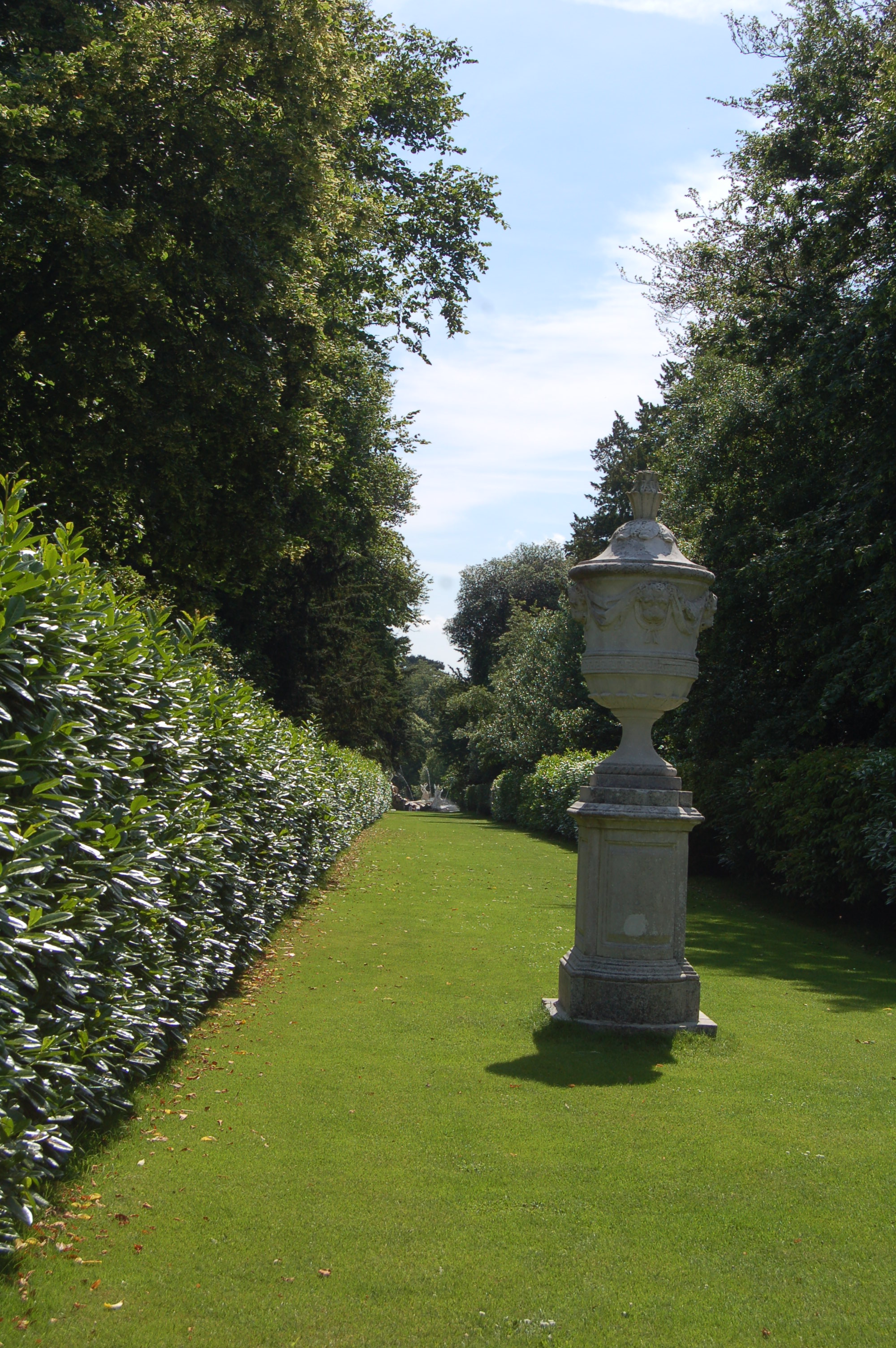
Her garden turned out to be a garden planted in a style we do not actually like but definitely “of its time”. We are definitely not fans of formal gardens or bedding schemes and here we found both but viewed from an historic perspective they were interesting. Classical figures, topiary and “grand fountains” are also not my style but Jude the Undergardener, being more of a history buff doesn’t mind them.

2014 06 25_1153 2014 06 25_1154

2014 06 25_1166 2014 06 25_1169

2014 06 25_1162 2014 06 25_1155 2014 06 25_1156 2014 06 25_1164

2014 06 25_1163 2014 06 25_1165

2014 06 25_1173 2014 06 25_1174

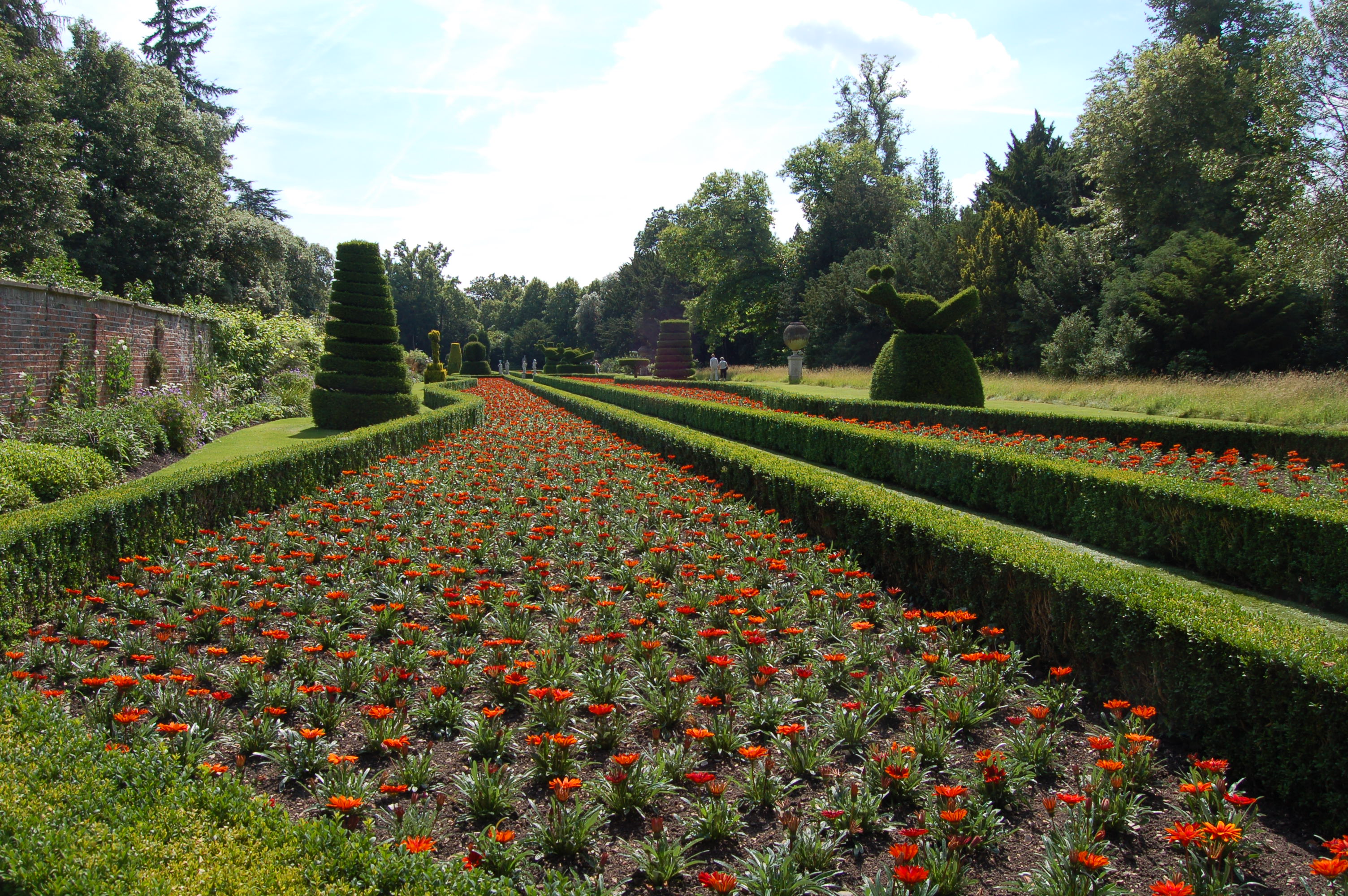
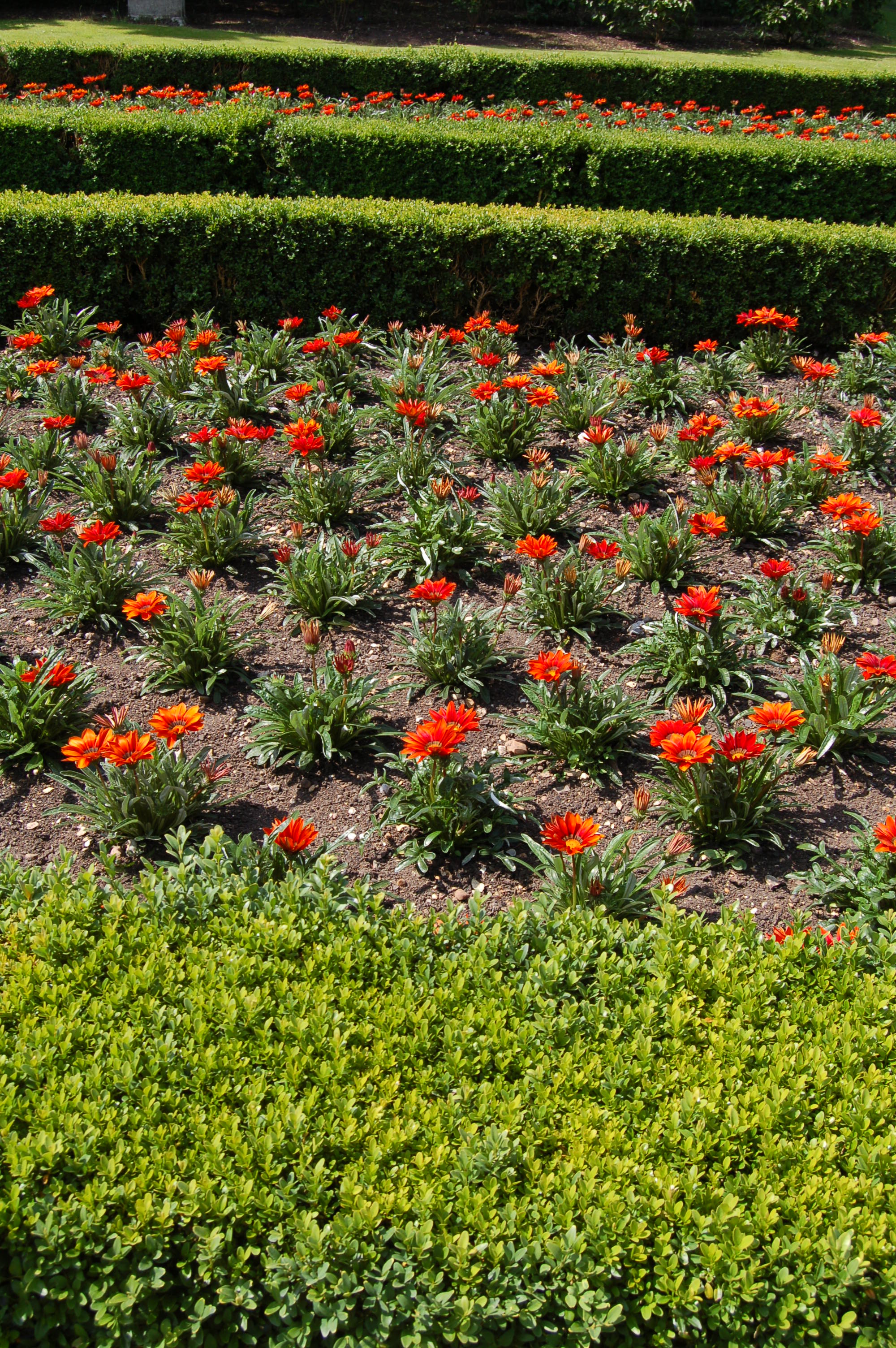
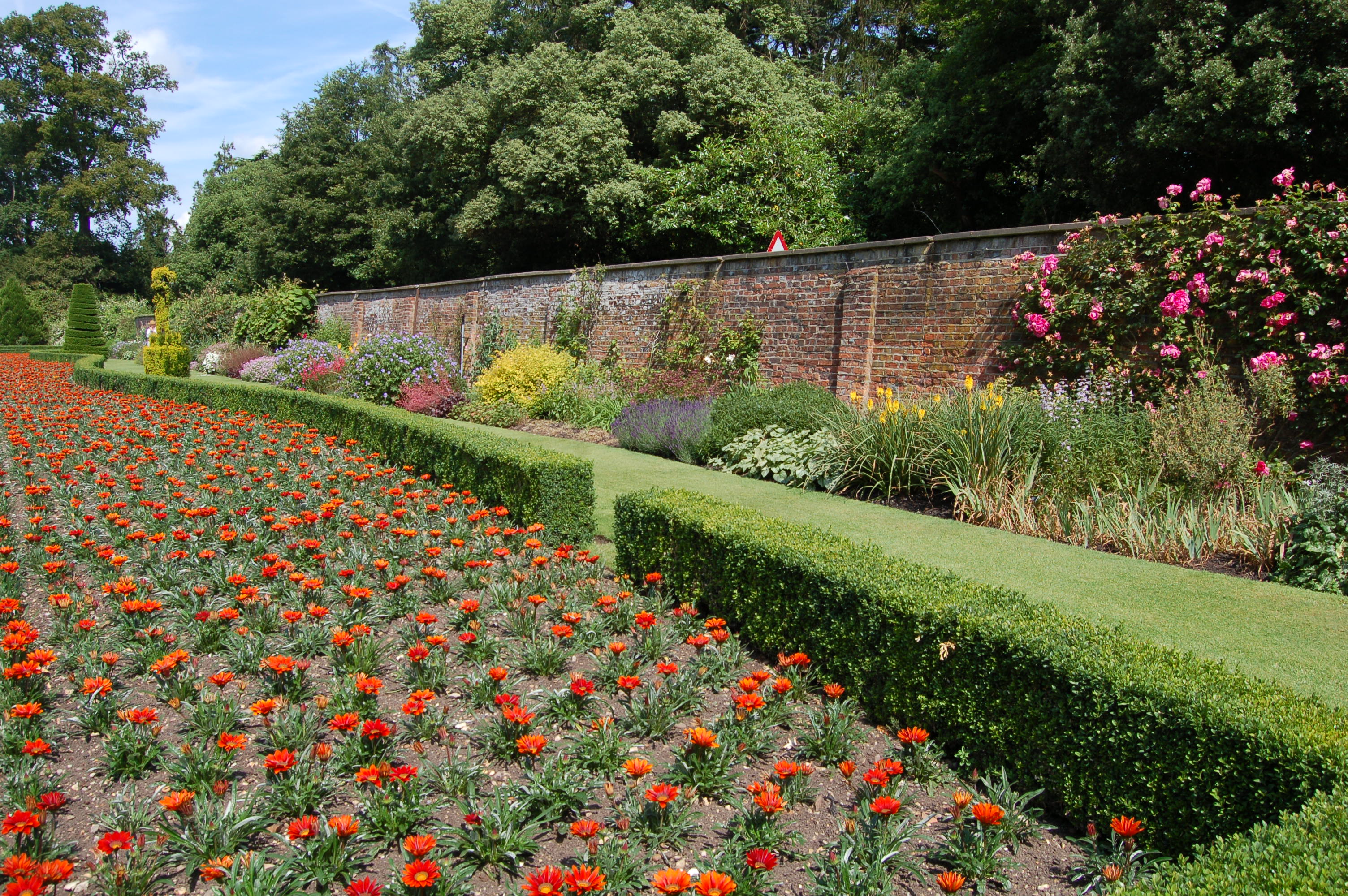
Interestingly close up the bedding proved to be of orange gazanias rather than the begonias or pelargoniums we expected.

2014 06 25_1160 2014 06 25_1167

But bordering the bedding scheme central feature was a long mixed border, much more to my liking.

2014 06 25_1157 2014 06 25_1158 2014 06 25_1159 2014 06 25_1161

2014 06 25_1168

Things were looking up soon however as we passed through an opening in the yew hedging and discovered a tree unknown to me in the woodland.

2014 06 25_1175 2014 06 25_1172

2014 06 25_1170 2014 06 25_1171

2014 06 25_1177 2014 06 25_1178

Little areas of meadow lined the pathway down through the woodlands. Gnarled branches of old shrubs curled around on the grass near the paths.

2014 06 25_1183 2014 06 25_1191

2014 06 25_1180 2014 06 25_1181

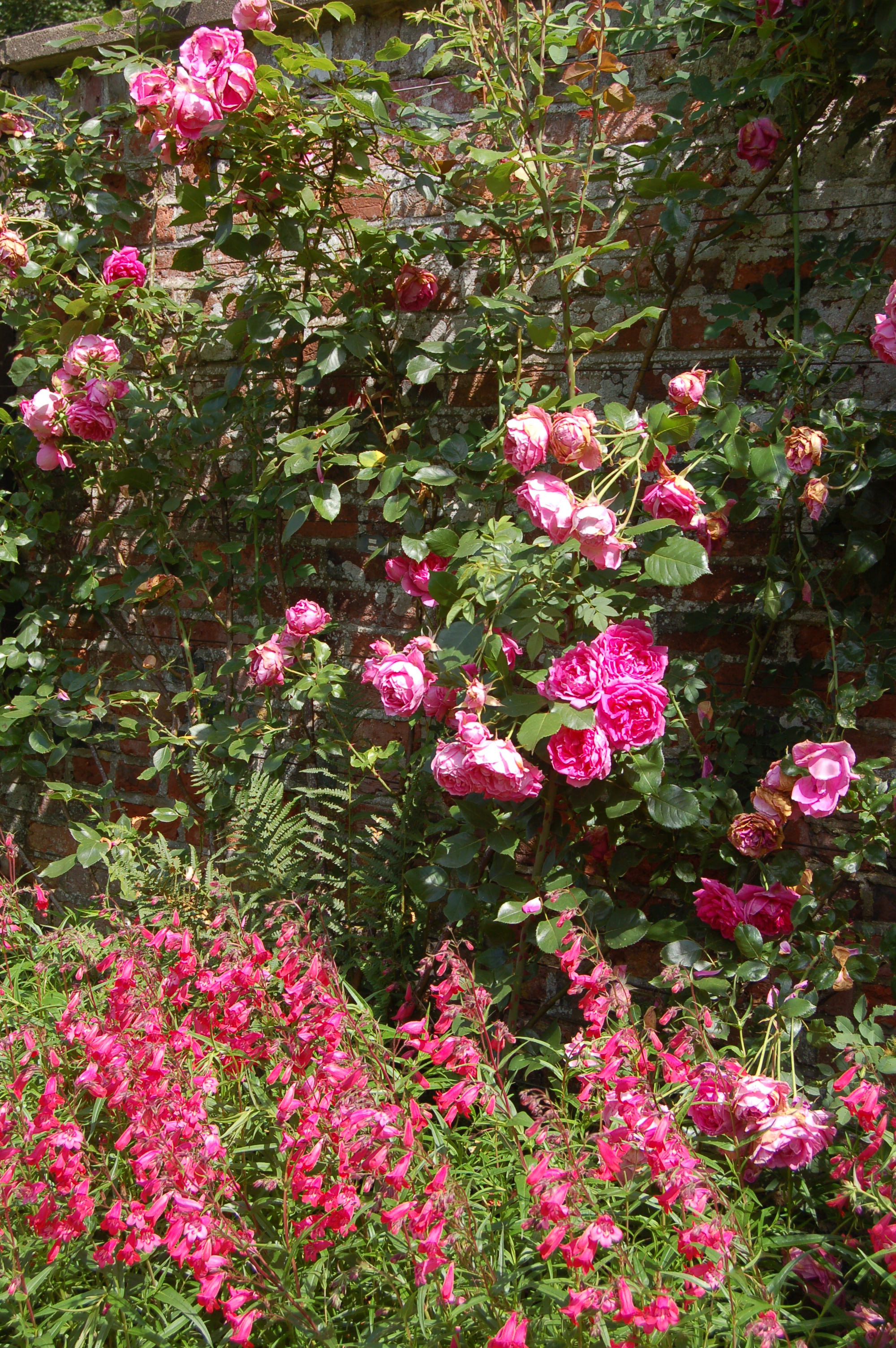
The old rose garden has been revamped recently with newer more disease resistant varieties, so inevitably most are from David Austin. The colours of the blooms have been chosen to represent sunrise and sunset.

2014 06 25_1184 2014 06 25_1185 2014 06 25_1187 2014 06 25_1188

The buildings clustered in the centre of the grounds were rambling and sat beautifully within its setting. In particular it had interesting chimneys and towers which look good against the clear blue sky. Towers even featured in the walled garden.

2014 06 25_1193 2014 06 25_1196

2014 06 25_1197 2014 06 25_1182

 2014 06 25_1189 2014 06 25_1192

The walled garden, with its patterned brickwork, featured beautifully planted herbaceous borders around a highly manicured lawn. The plants were mainly recent cultivars and chosen for their richness of colour.

2014 06 25_1192 2014 06 25_1198 2014 06 25_1199 2014 06 25_1200 2014 06 25_1201 2014 06 25_1202 2014 06 25_1203 2014 06 25_1204

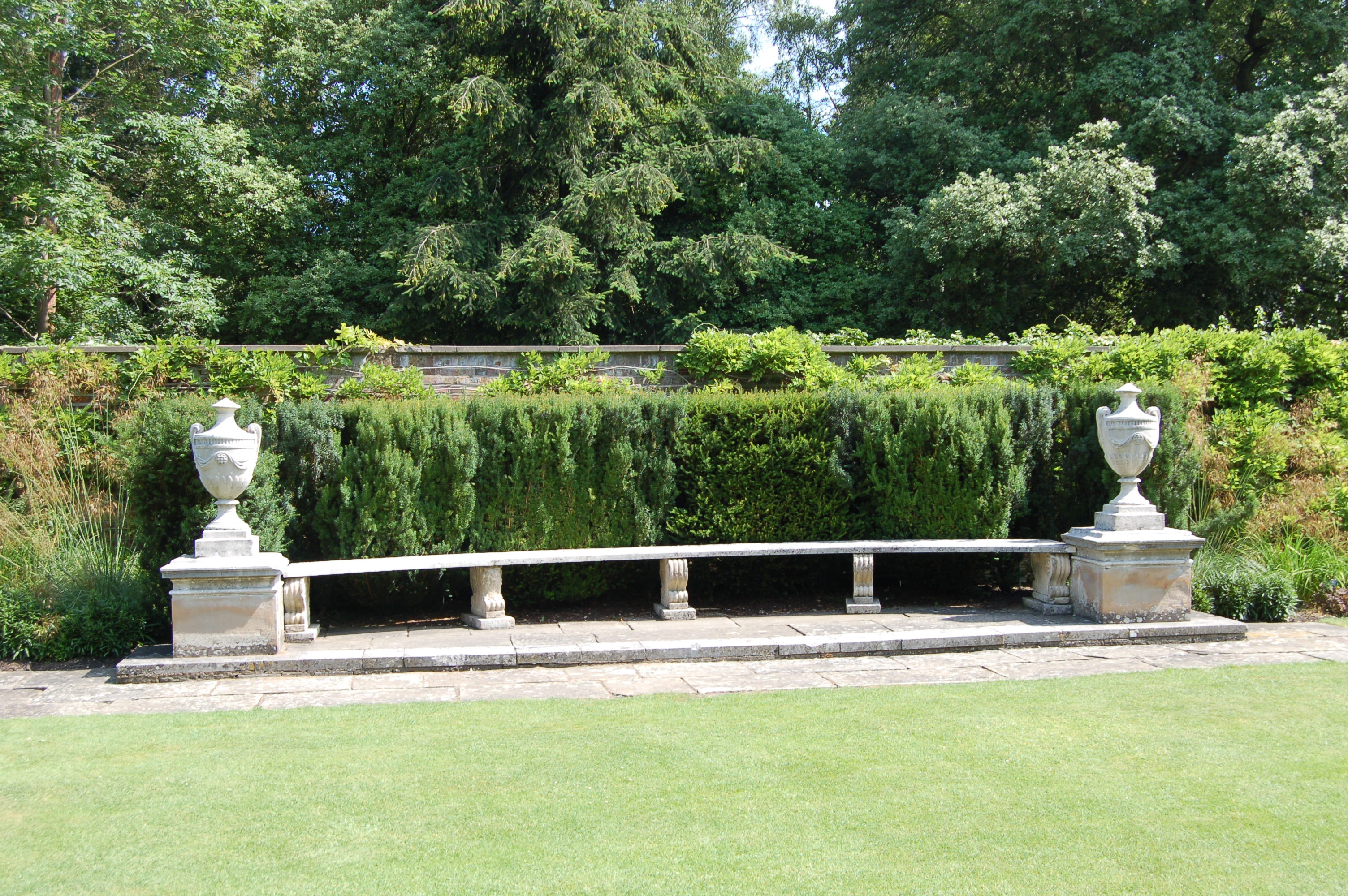
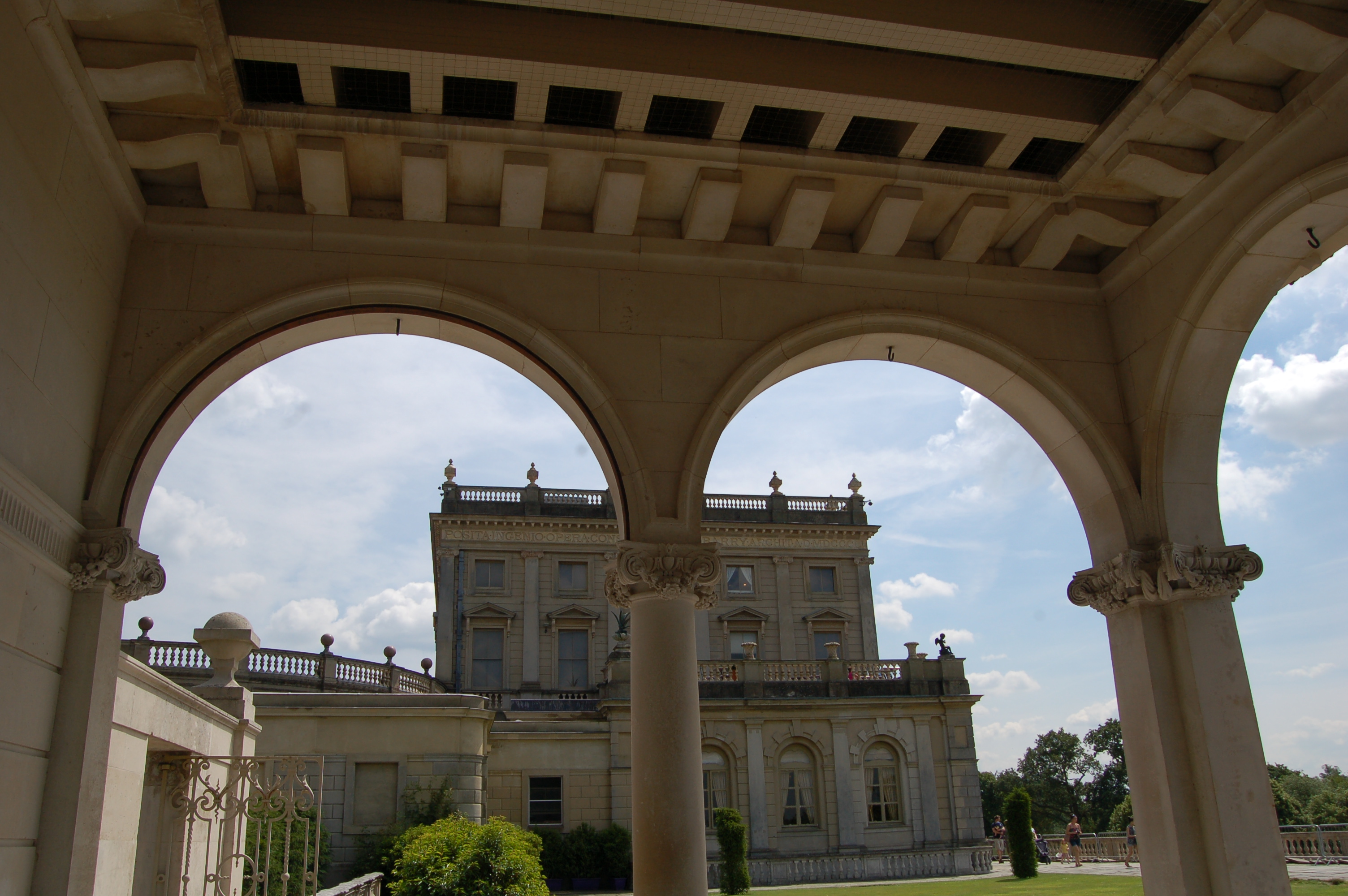
From the courtyard as we leaned on its stone ballustrade we could see the Italianate parterre placed within more manicured lawns. They seemed to sit rather awkwardly there.

2014 06 25_1194 2014 06 25_1195

We finished our Cliveden wanderings in the Water Gardens where formal fountains and oriental buildings sit among informal pools and soft planting.

2014 06 25_1205 2014 06 25_1206 2014 06 25_1207 2014 06 25_1208 2014 06 25_1209


Categories
colours garden design garden photography garden wildlife gardening gardens hardy perennials ornamental grasses ornamental trees and shrubs outdoor sculpture sculpture Shropshire shrubs succulents village gardens

Aiming for a year round garden – our garden in August.

This series aims to check out if we have been successful in creating a garden for all seasons with interest throughout the year. In this post we look at our Avocet garden here in Plealey in the first week in August, a time when summer is going off a bit and autumn is trying to sneak in by the back door. The wild carrot below is beginning to set its seeds in our wildlife strip behind the lavender hedge alongside the lane.

2014 08 19_3880 2014 08 19_3881

We have one more garden group yet to visit us which happens in about a fortnight so this post as well as checking on how well we are achieving our aim of a year round garden will also be a way of checking out how it will look to our next visitors.

The” Beth Chatto Garden” still has plenty of interest but sadly the strange weather this year has meant that we have already had to cut down the Eophorbia griffithii Dixter which normally we can rely on for colourful winter stems of the brightest ruby red.
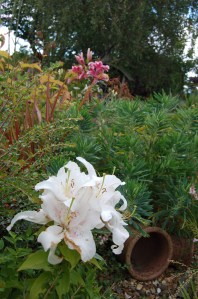
2014 08 19_3883 2014 08 19_3884 2014 08 19_3885 2014 08 19_3886 2014 08 19_3887 2014 08 19_3882

The other front garden borders still have patches of colour with the Perovskia’s pale blue flower spires looking good in a patch dominated by the white barked silver birches and purple leaves of Cercis Forest Pansy, Sambucus nigra Black Lace and Physocarpus Diablo.

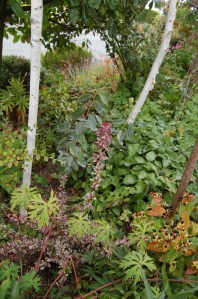
2014 08 19_3888 2014 08 19_3889

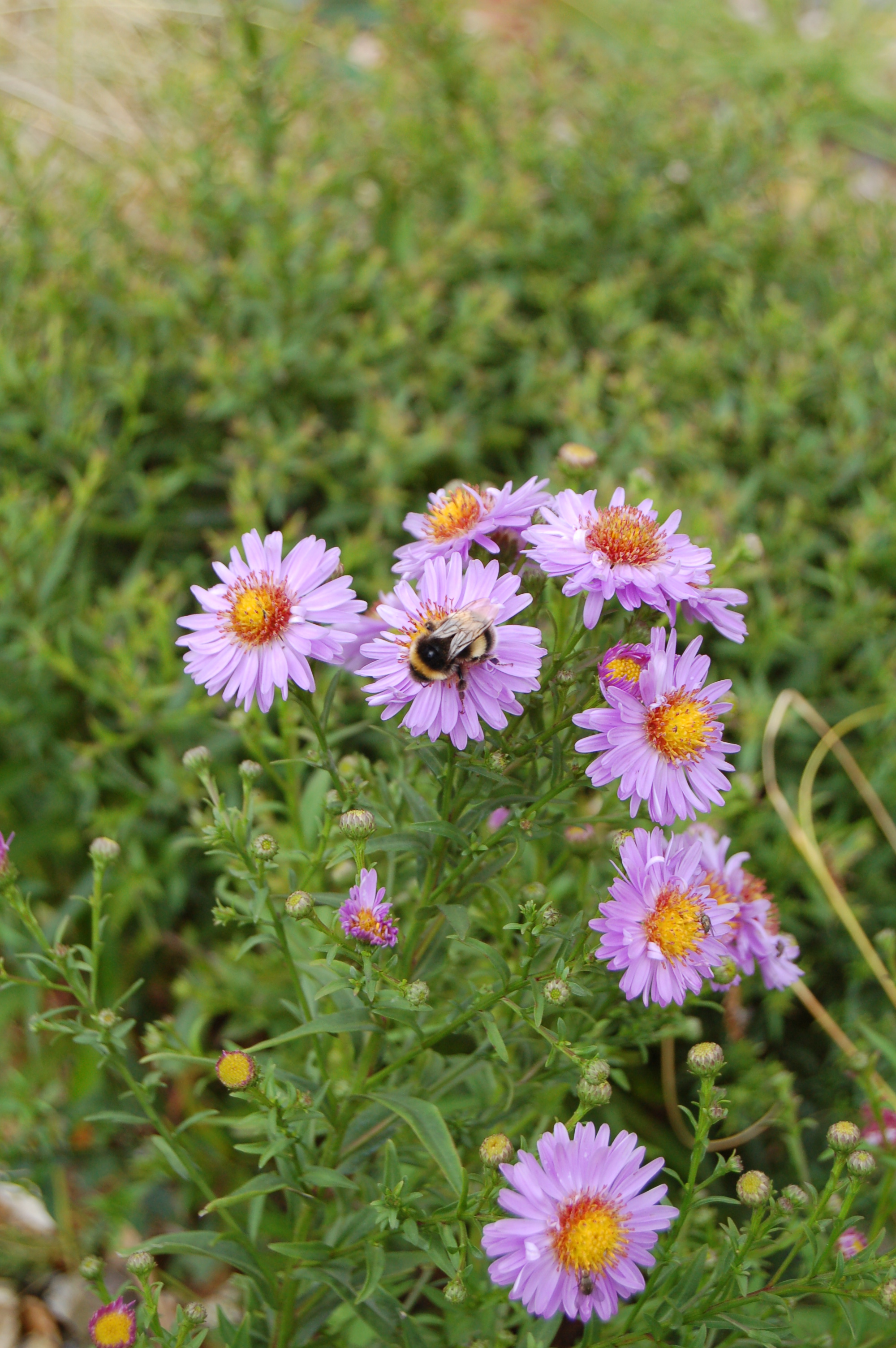
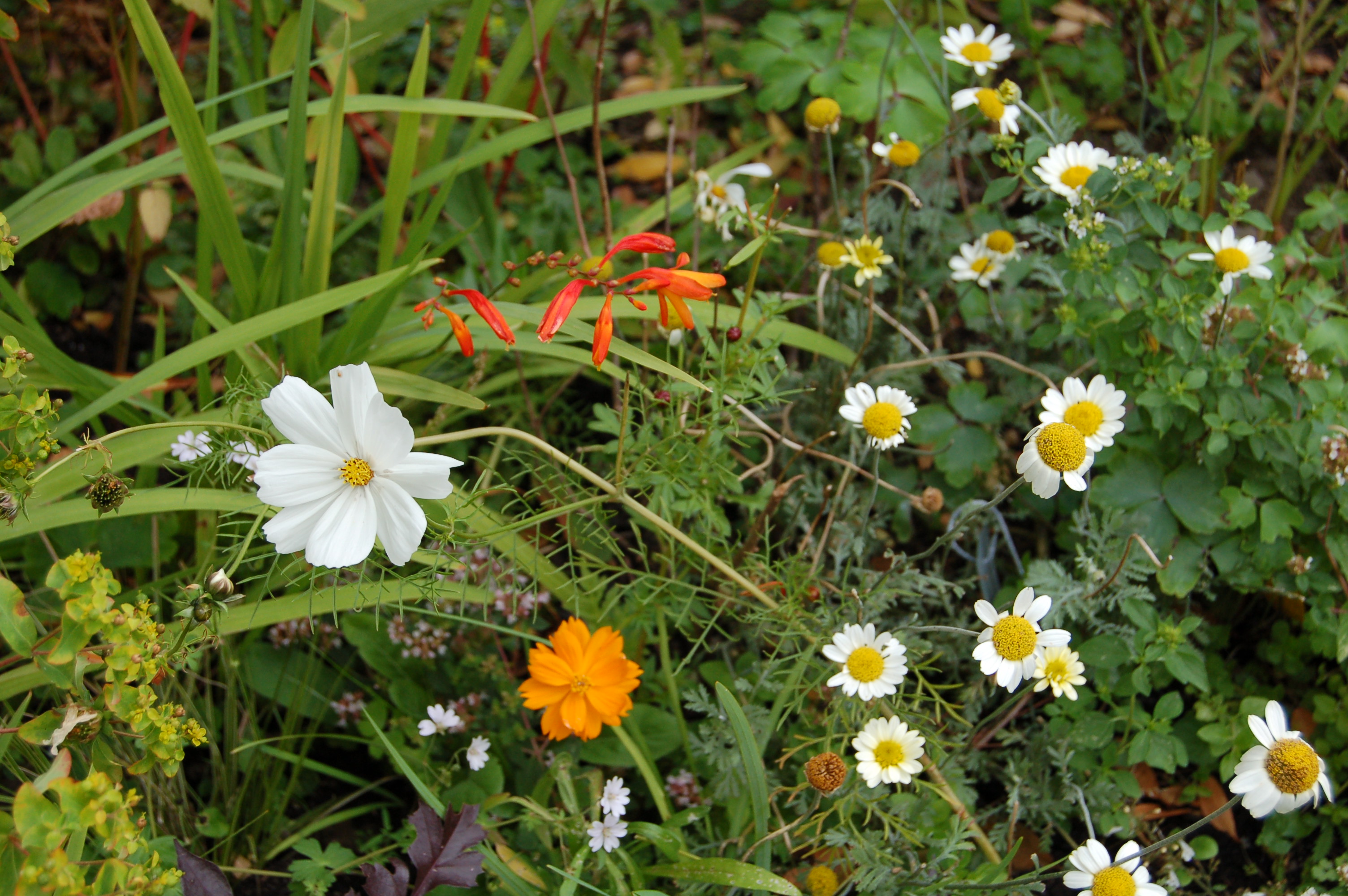
Our new sculptural piece is looking good starring with the flowers of Leucanthemum “Shaggy”, several Asters (sorry but I can’t yet accept their new botanical names!), Salvia uliginosa, Gaura linheimeri and various annuals that Jude the Undergardener grows from seed.
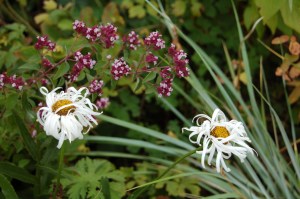
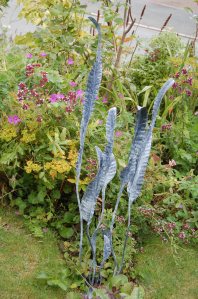
2014 08 19_3890 2014 08 19_3891

2014 08 19_3892 2014 08 19_3894

2014 08 19_3895 2014 08 19_3898

The photos below show two very different looking plants which are in fact both Lobelias, the one on the left a cardinalis and the one on the right Lobelia tupa.

2014 08 19_3901 2014 08 19_3904

It is good to see the wildlife busy on the blooms every time the sun shines.

2014 08 19_3893 2014 08 19_3899

The ferns border developed earlier this year is looking better as the ferns get more established. From there you can look back along the Shade Garden through the archway towards the Hot Garden.
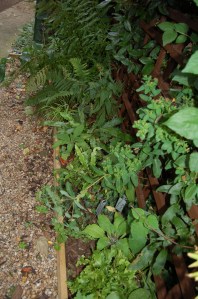
2014 08 19_3905 2014 08 19_3906

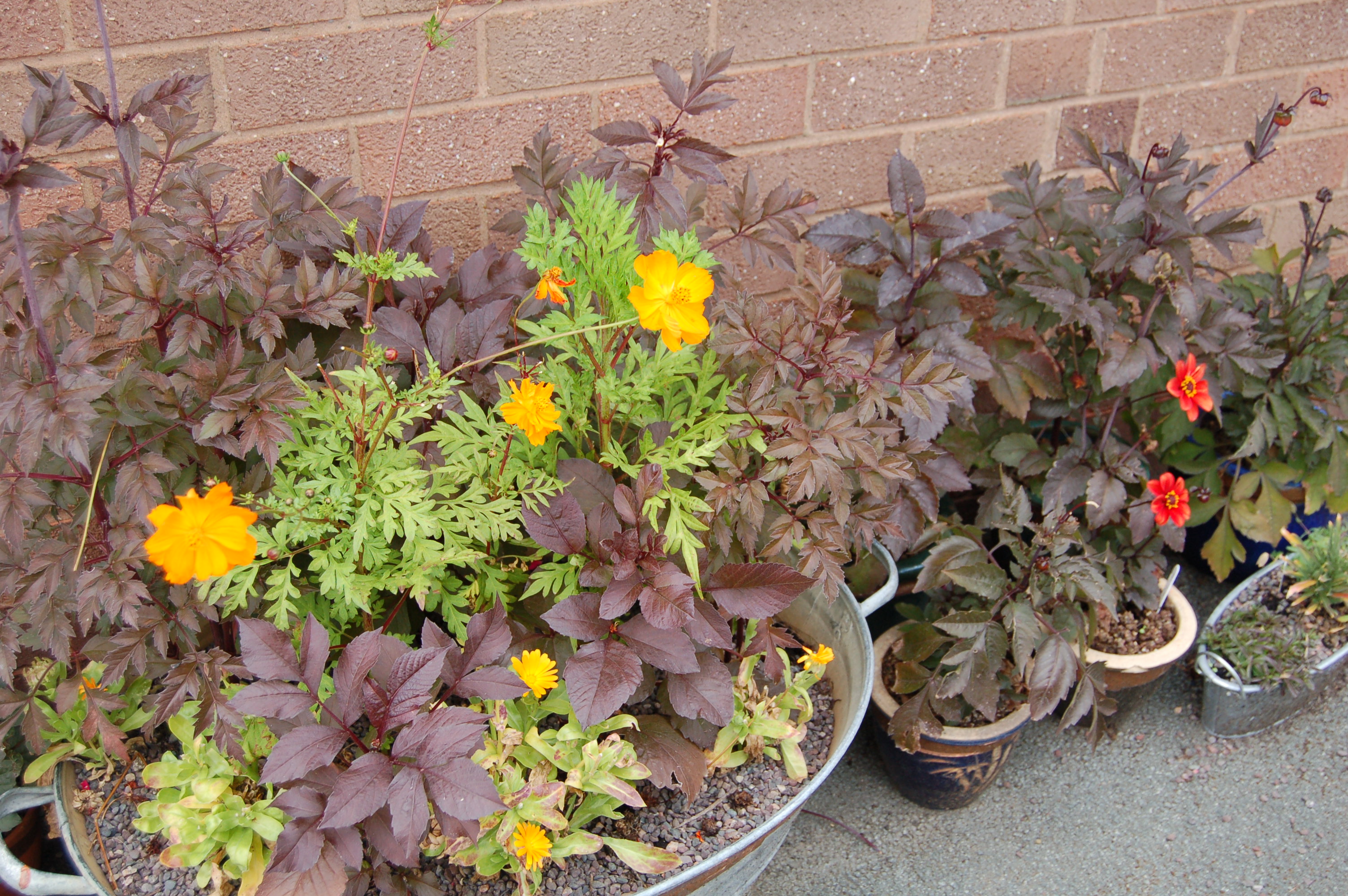
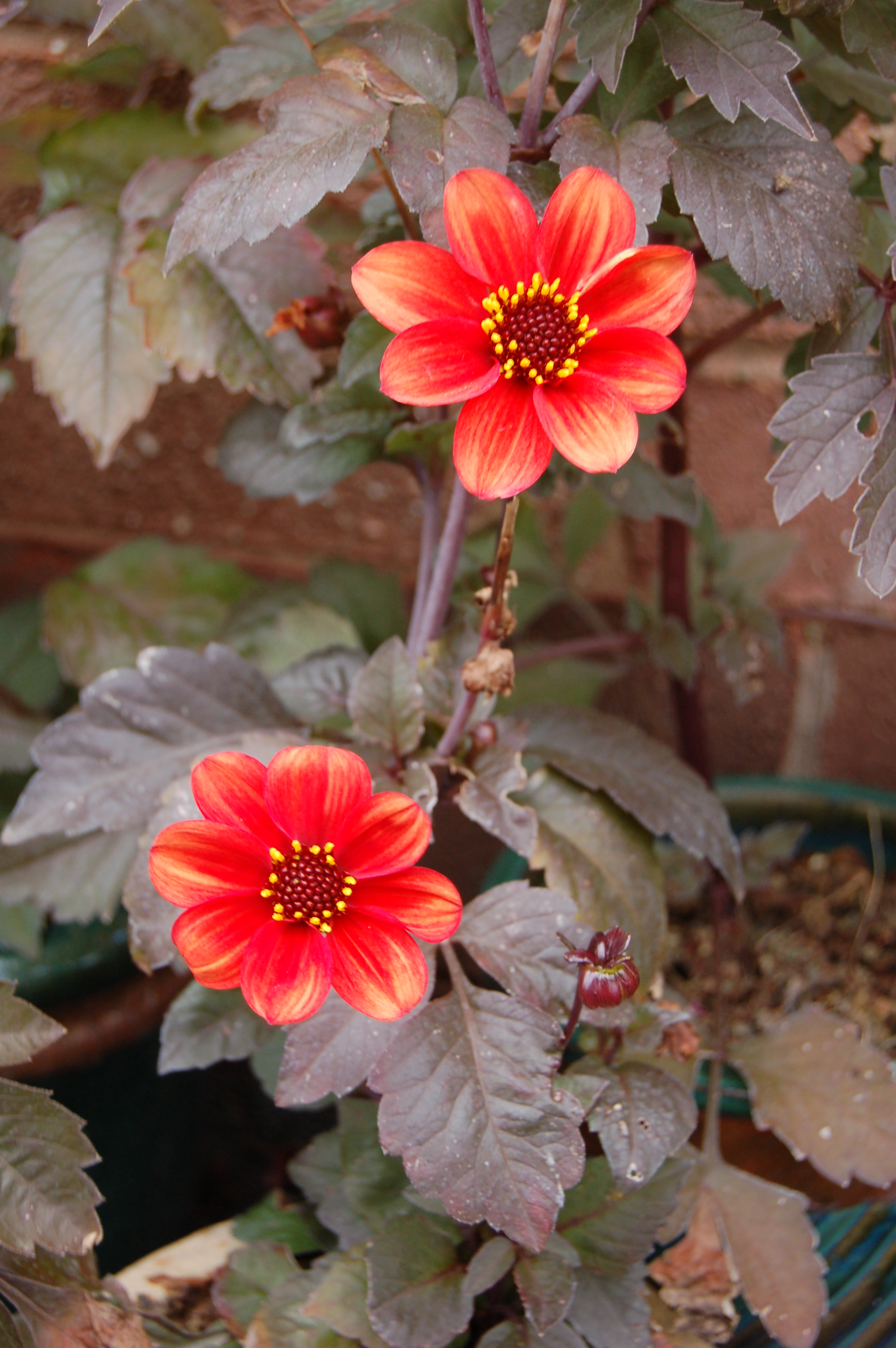
The Dahlias in the vintage galvanised containers along the house wall are still flowering but having a bit of a rest before hopefully producing more flower buds to delight the eye in a few weeks time.

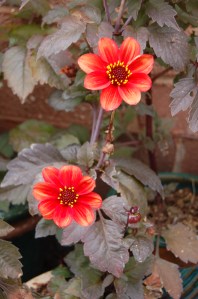


2014 08 19_3907 2014 08 19_3908


Opposite them the” Freda Border” is looking cheerful with oranges and yellows and the odd white highlight of this honey-scented Buddleja.
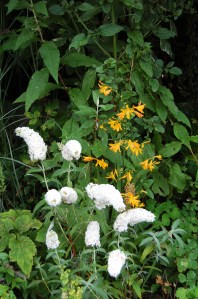
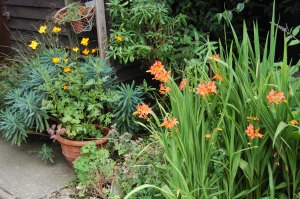
2014 08 19_3913 2014 08 19_3914 2014 08 19_3915


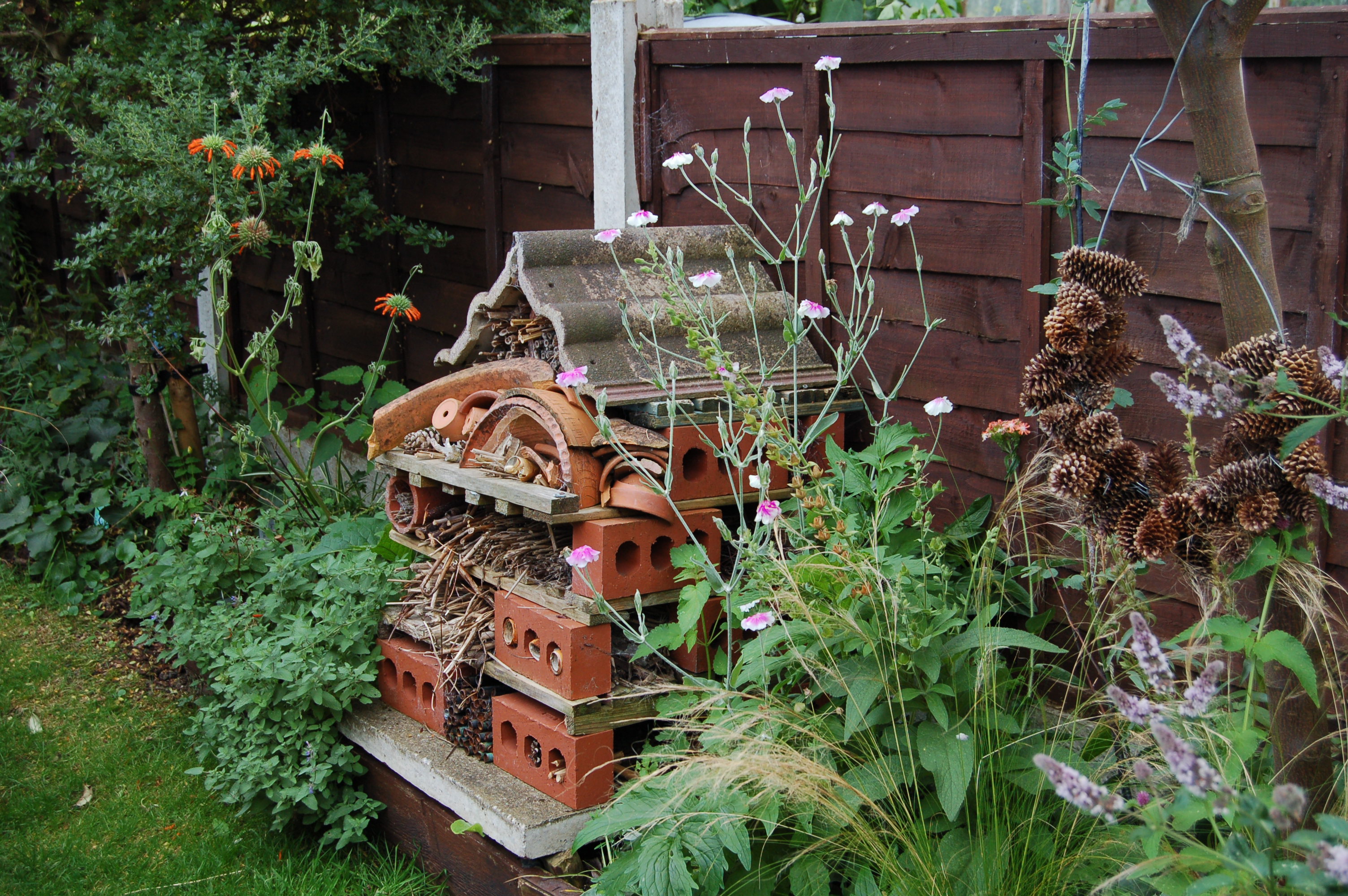
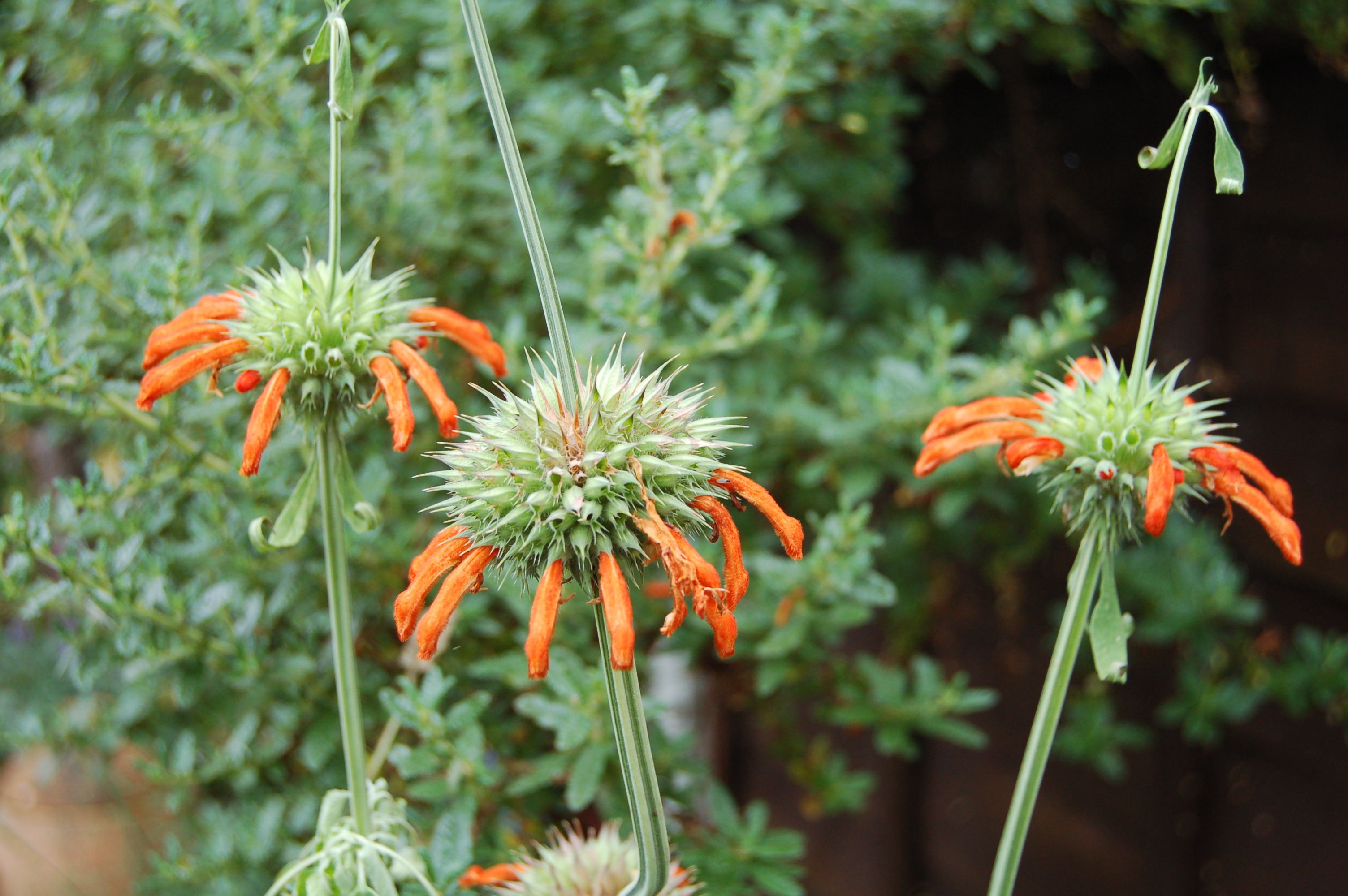
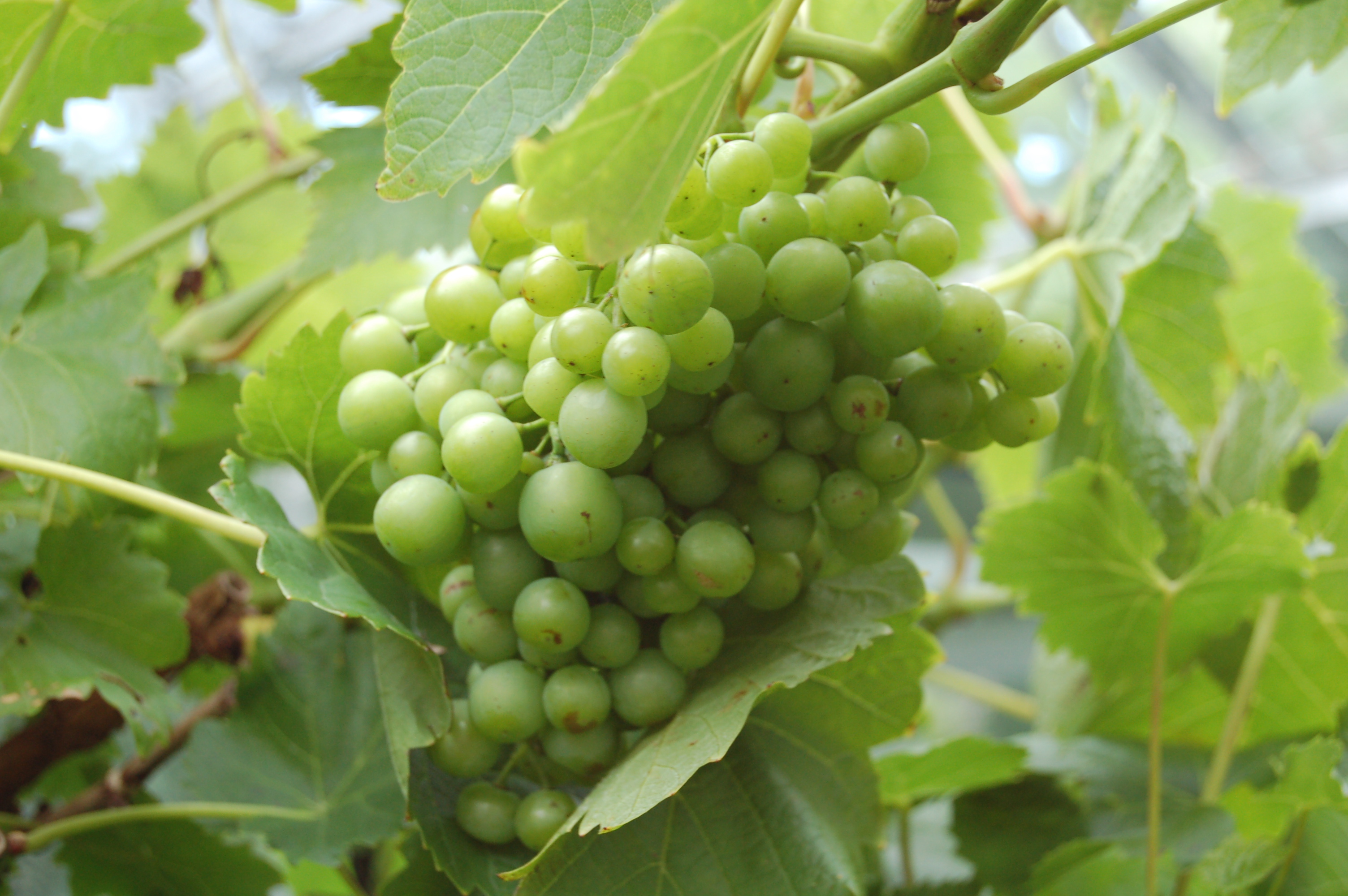
The Tulbaghias continue to produce their delicate pale lilac flowers on their wiry stems. Close by the insect hotel snuggles within the” Pollinator Border”. Here the brightest flower of all must be the annual Leonotis leonora, which has become a real favourite in the garden this year. Opposite the heavy cropping grape vine continues to produce “water shoots” which need regular pruning to let the sun access the fruit to ripen it. The harvest is looking hopeful!


2014 08 19_3916 2014 08 19_3917 2014 08 19_3918 2014 08 19_3920


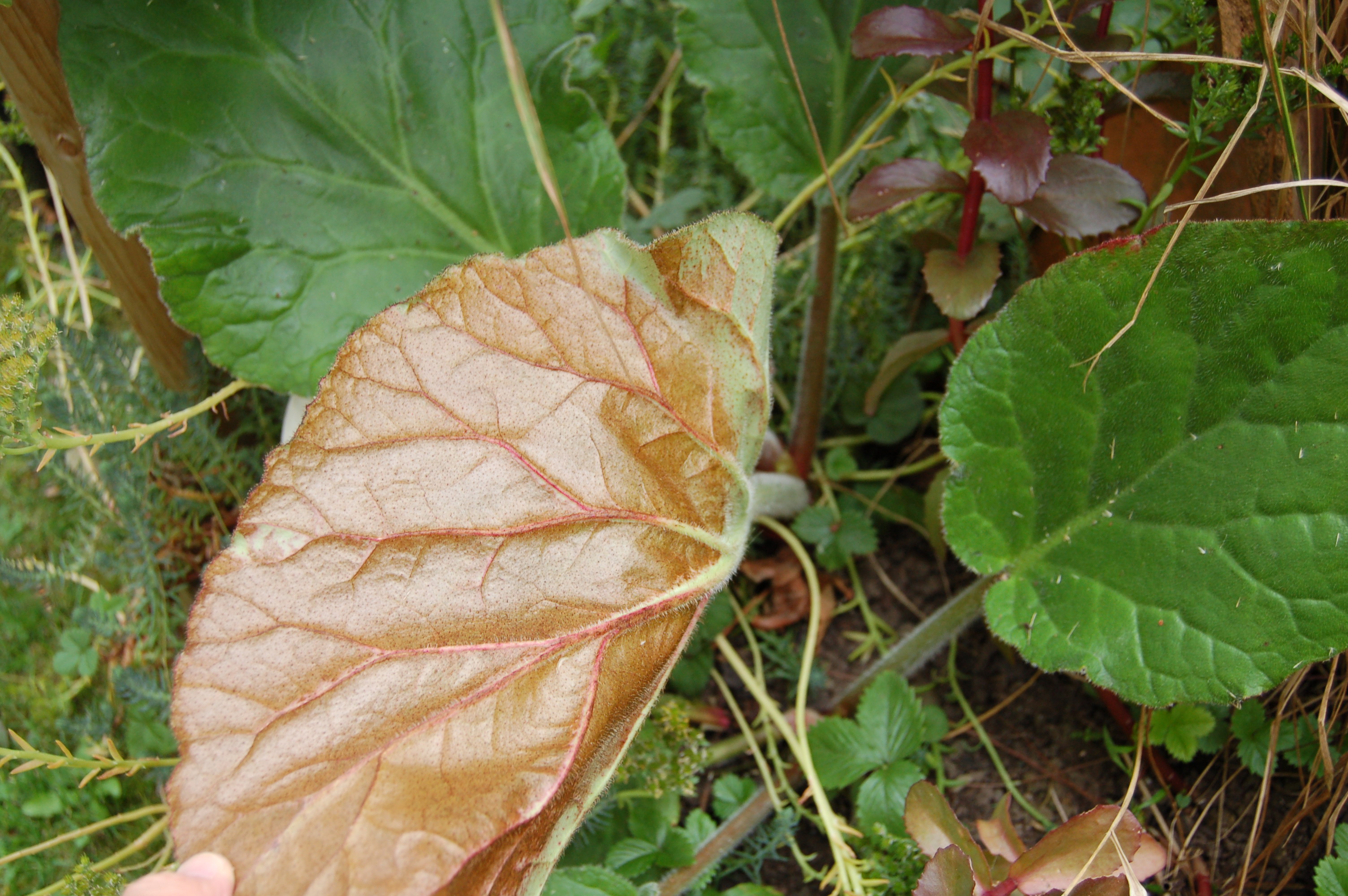
The pathway I take to feed the hens is full of plants that stop me on my way. Eryngium Miss Wilmott’s Ghost is turning from silver to biscuit and Geranium “Rosanne” clambers through any close plant. A real star of this pathway is the Bergena ciliata, a hairy leaved Bergenia with bronze colouring to the reverse of each leaf. I turn a leaf over each time I pass. It has big arching sprays of pale pink flowers in spring too! A great plant but rarely grown.

2014 08 19_3919 2014 08 19_3922 2014 08 19_3923 2014 08 19_3924

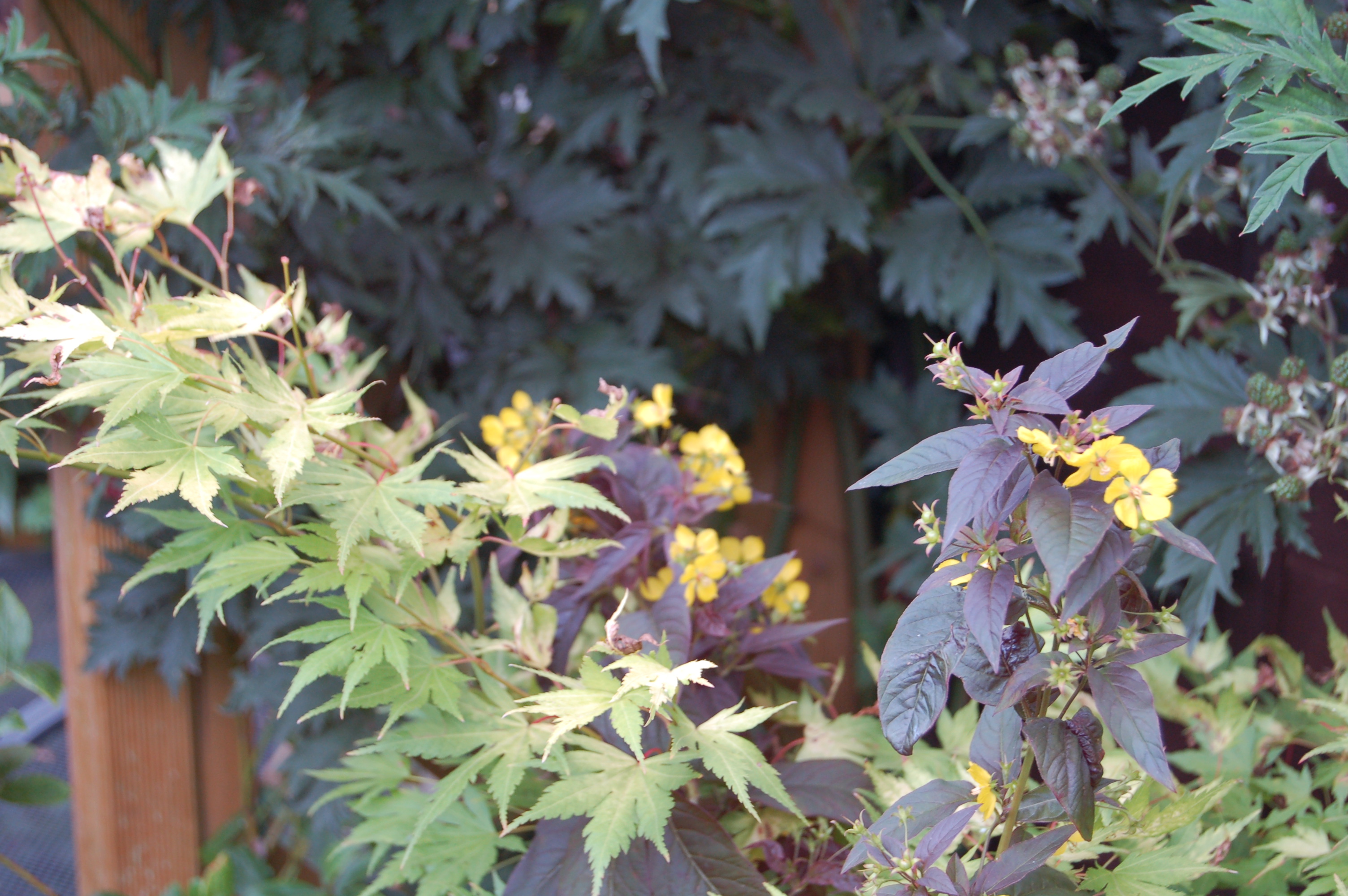
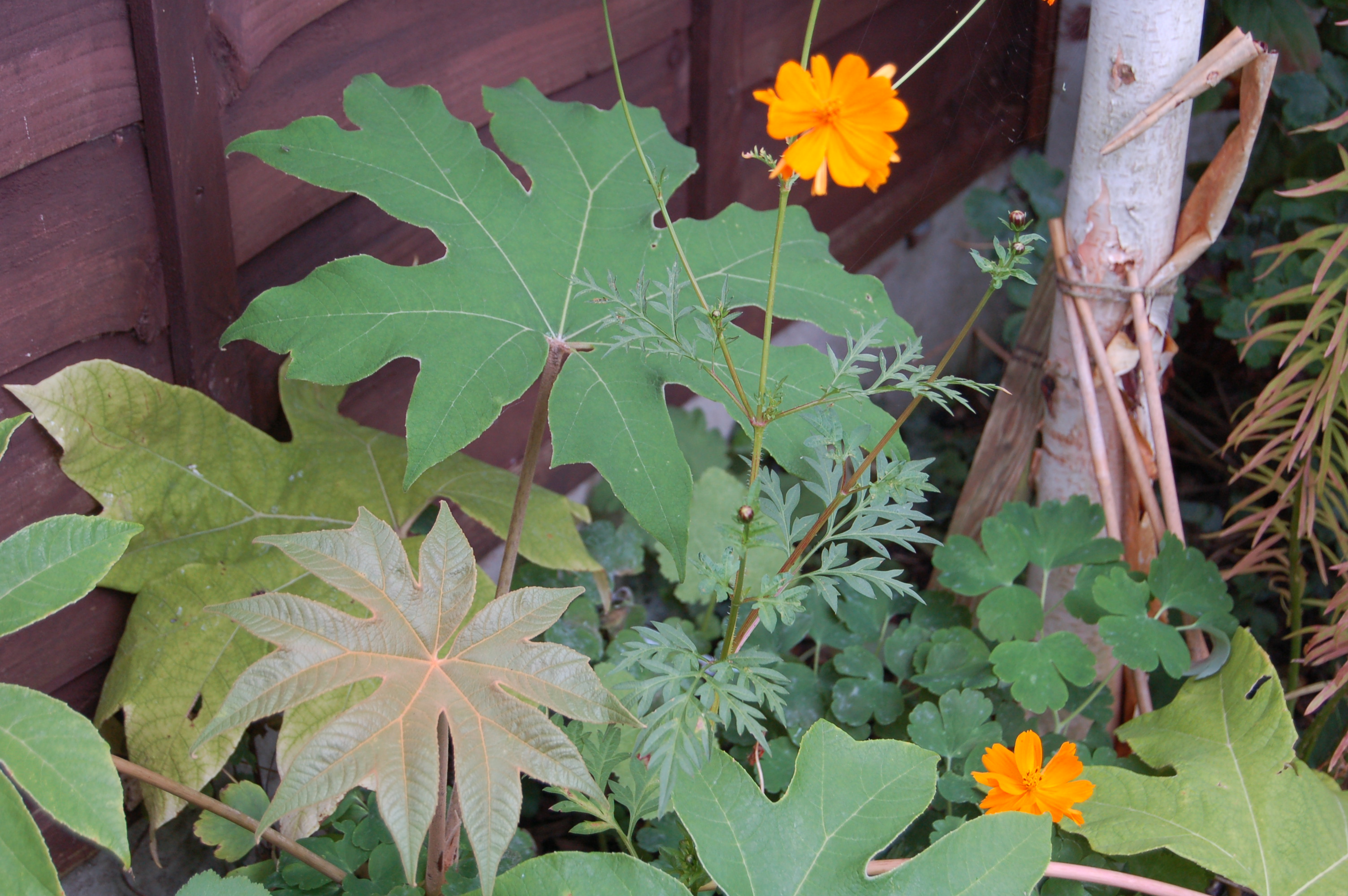
On the other side of this path we have the” Spring Garden” where the palmate leaves of the Acer japonica and Tetrapanax papyfer “Rex” sit close to each other. The Acer partners a couple of purple-leaved Lysimachia “Firecracker” and the deep green leaves of our thornless blackberry. The Tetrapanax is thowing up new leaves which are glossy but turn matt with the passing of time.

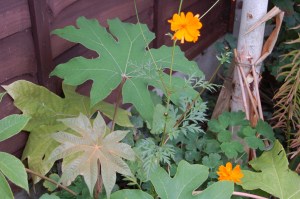


2014 08 19_3925 2014 08 19_3926

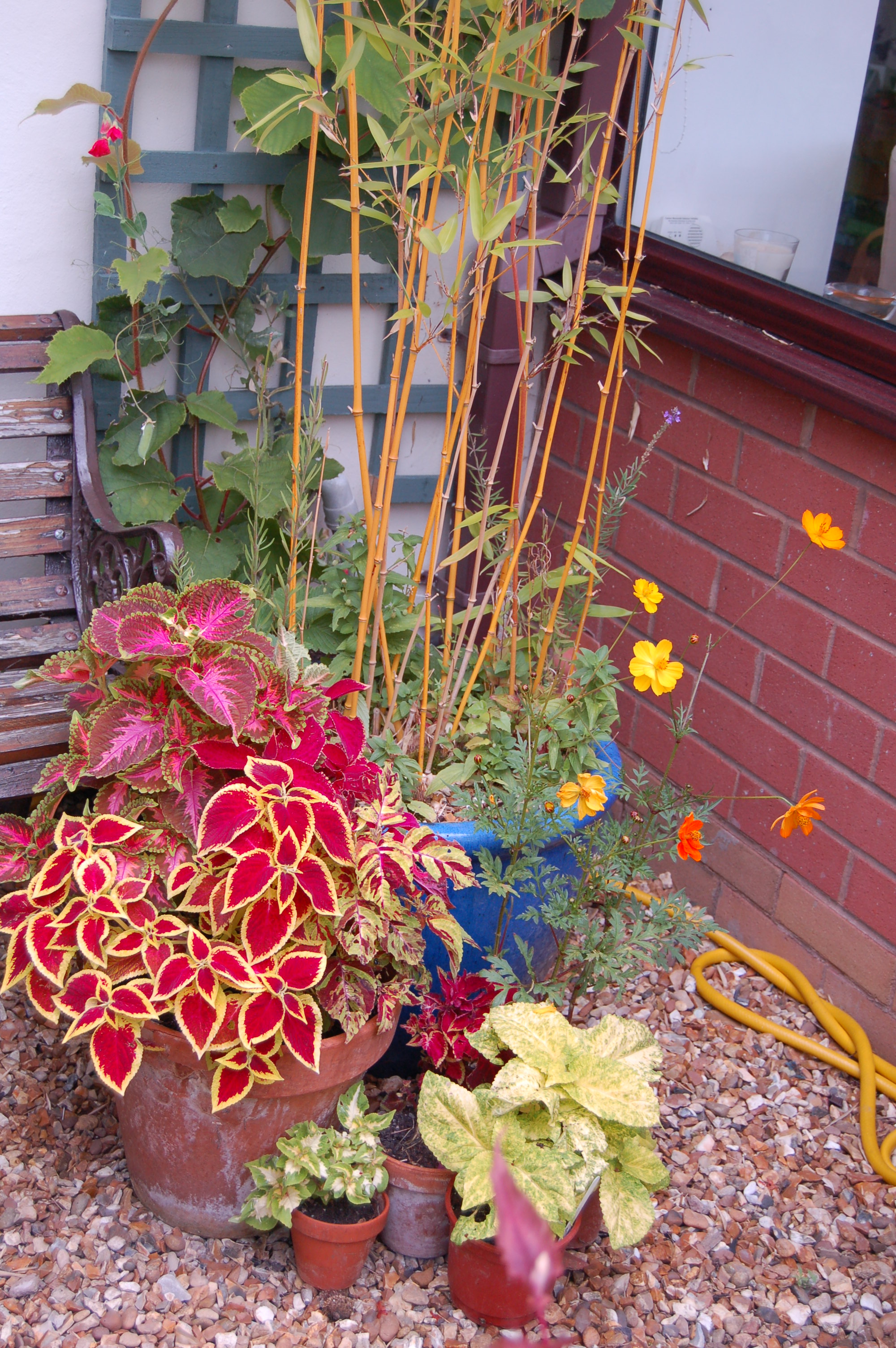
The Tropical Garden which was one of this year’s projects is looking particularly good at the moment. It is so full of contrasts. Contrasts in flower colour, leaf shapes, textures and colour.

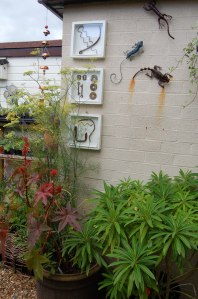
2014 08 19_3929 2014 08 19_3930 2014 08 19_3931 2014 08 19_3932 2014 08 19_3933 2014 08 19_3934 2014 08 19_3935 2014 08 19_3936

The pale blue fish continue to swim through the Seaside Garden. Behind the chimenia a bright yellow flowered crocosmia seems to glow beneath the standard holly.
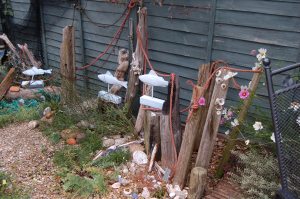
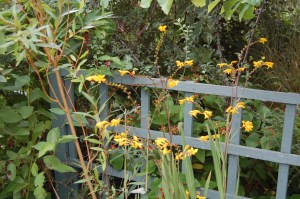
 

2014 08 19_3937 2014 08 19_3938

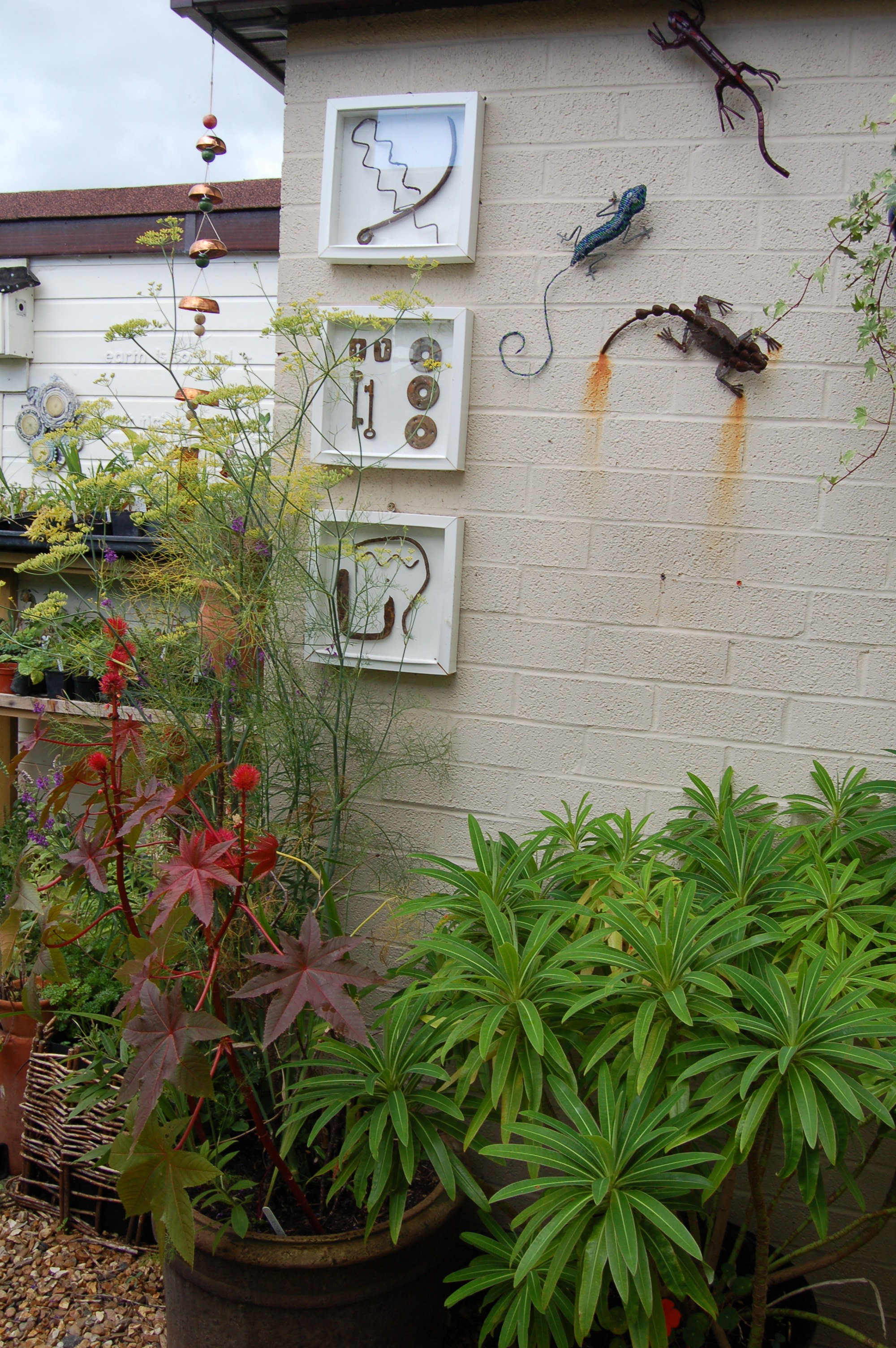
The Shed Bed has bright splashes of colour provided by Ricinus, Verbascum and Crocosmia.


2014 08 19_3927 2014 08 19_3928


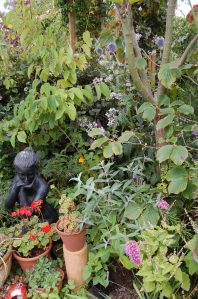
In the Rill Garden the Aeoniums are all doing well showing great leaf colour but best of all must be Aeonium arboreum” Schwarzkopf” which is tree like in form with the blackest glossiest leaves possible.

2014 08 19_3939 2014 08 19_3940 2014 08 19_3941

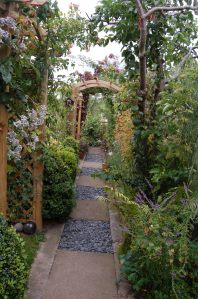
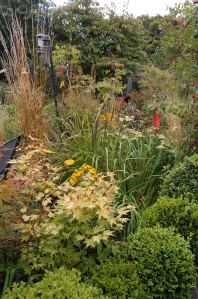
If we move further into back garden now we can look through the arches down the central path. Off this path to the left are the “Crescent Bed”, “L Bed” and the “Long Border”.


2014 08 19_3942 2014 08 19_3943 2014 08 19_3945 2014 08 19_3946 2014 08 19_3947 2014 08 19_3948 2014 08 19_3949


2014 08 19_3950 2014 08 19_3951

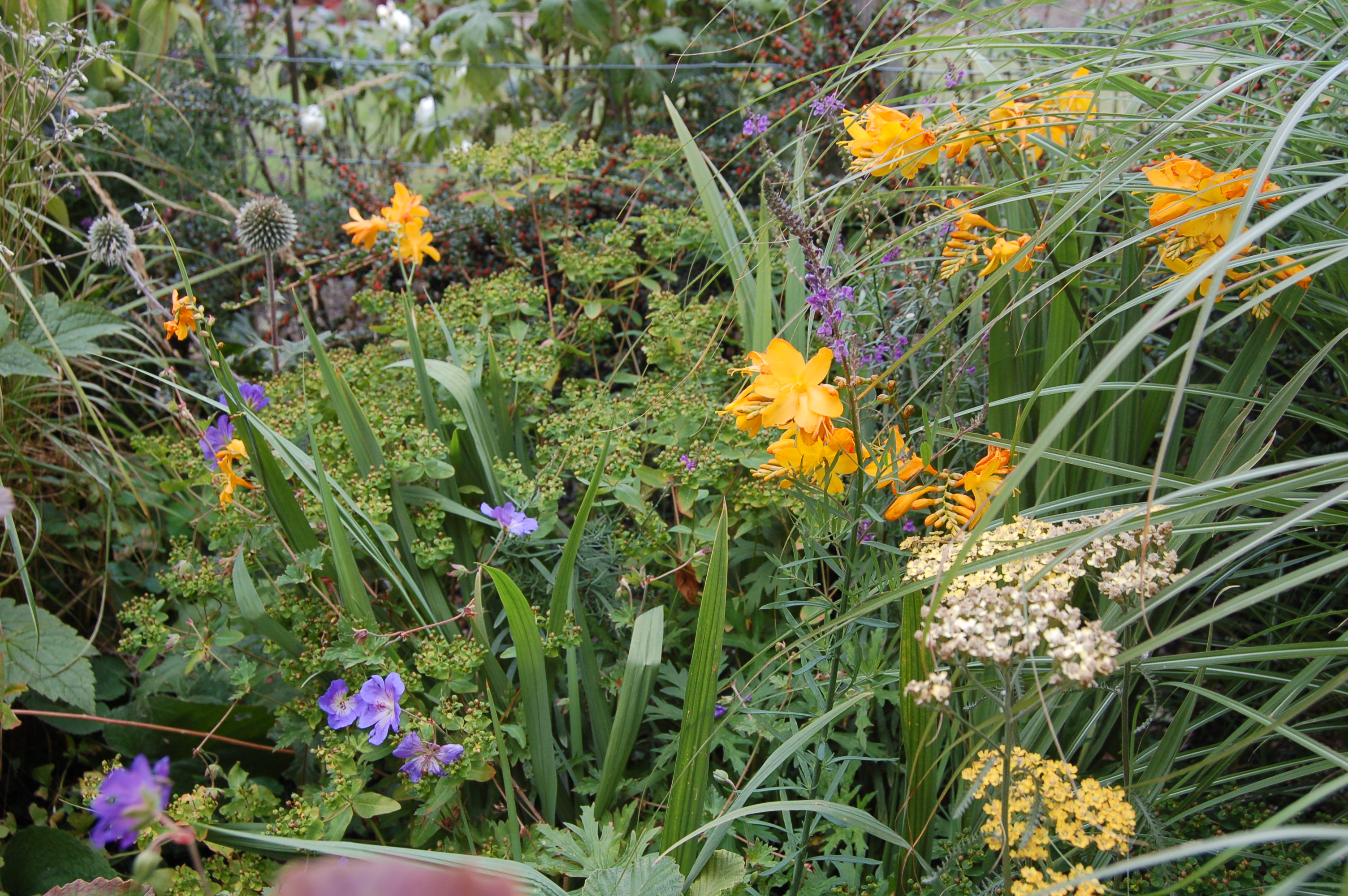
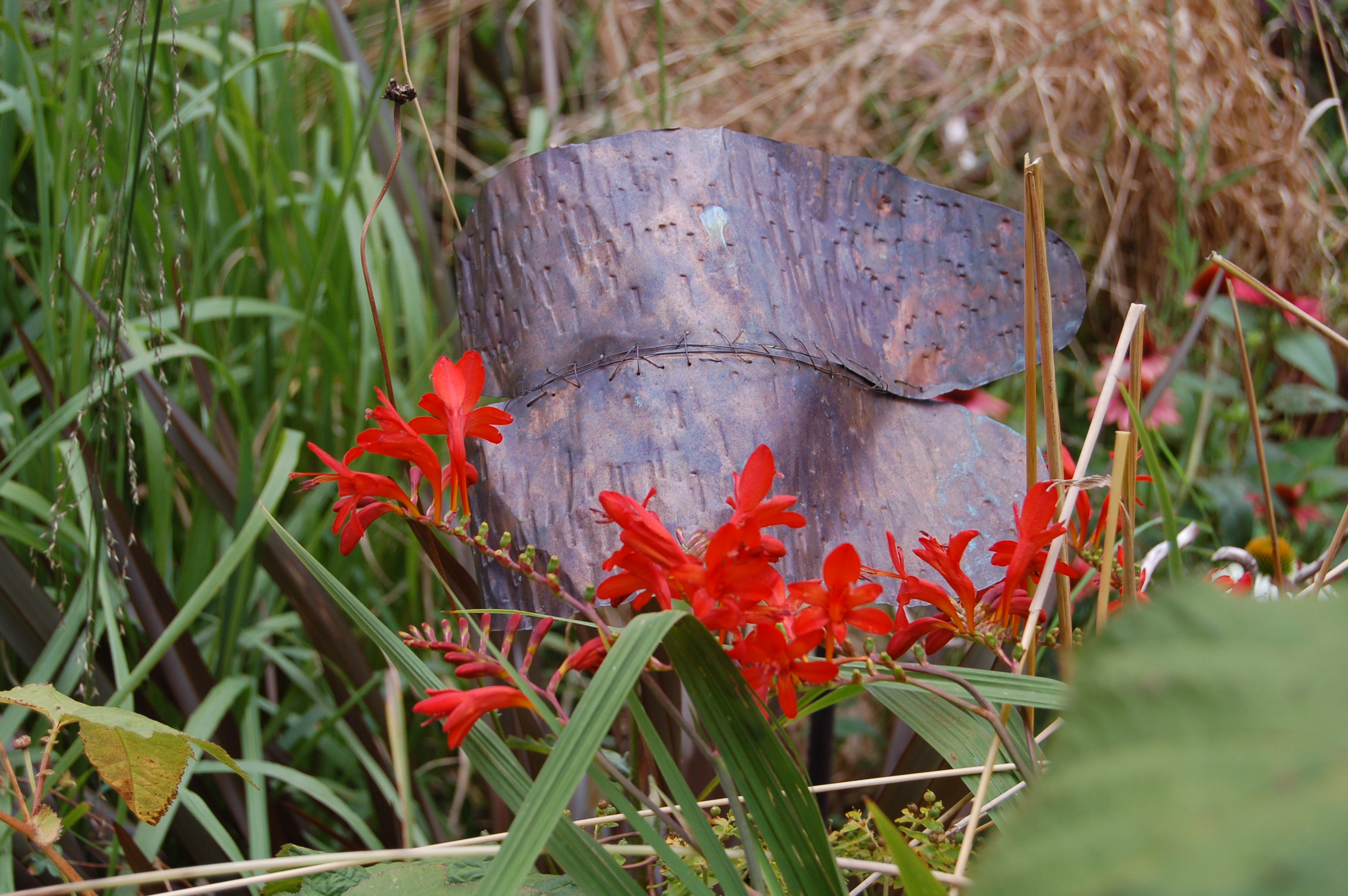
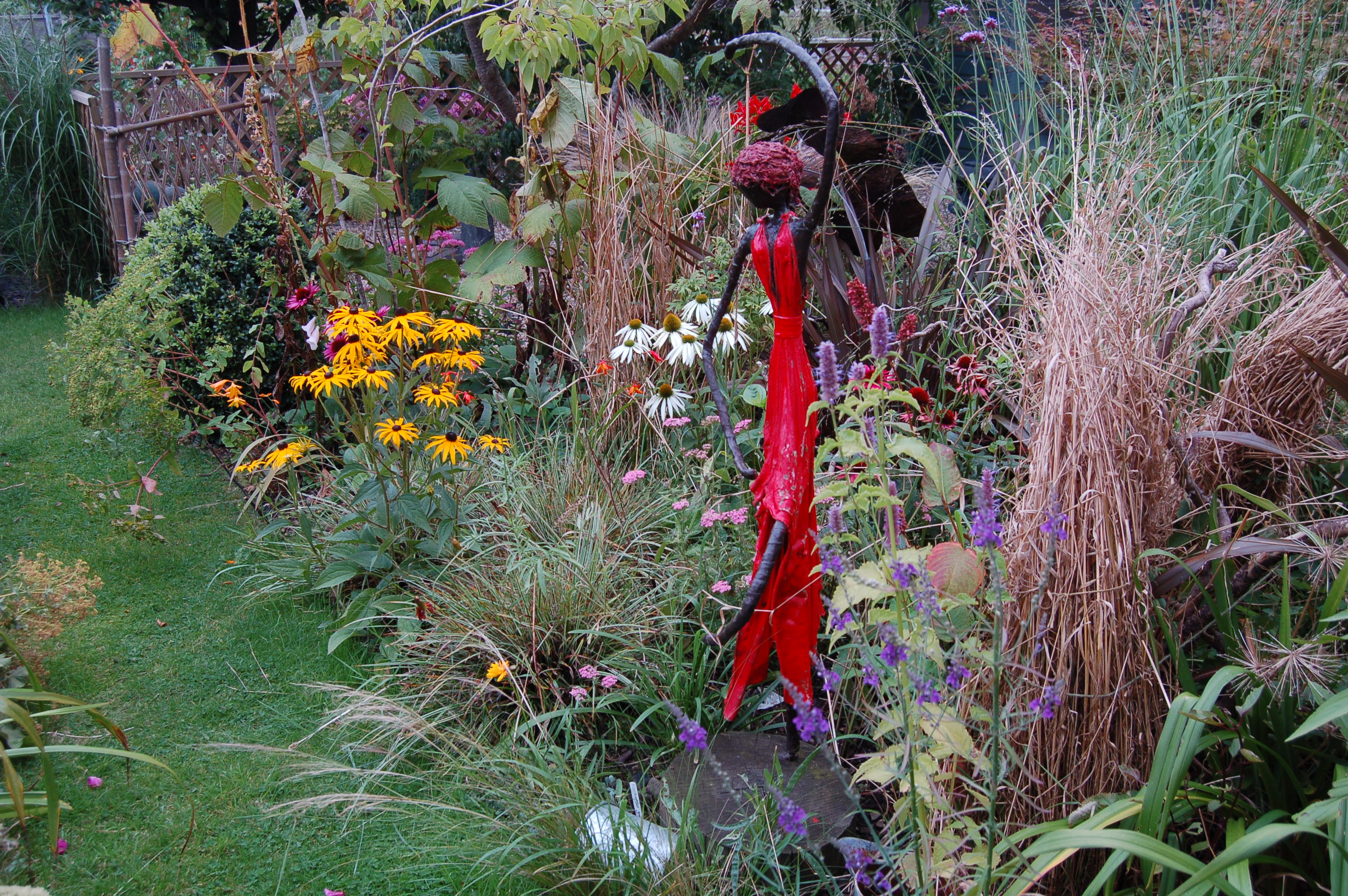
If we cross the grass path at the far end of this patch we enter the” Japanese Garden” with the” Prairie Garden” to the right, which features two of our sculptures, the Copper Leaves made by our daughter Jo and the dancing figure of “Amber” created by a local artist.
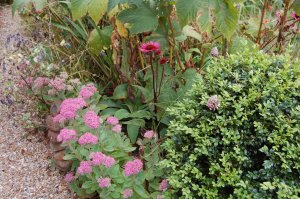


2014 08 19_3952 2014 08 19_3954 2014 08 19_3955 2014 08 19_3956 2014 08 19_3957 2014 08 19_3958


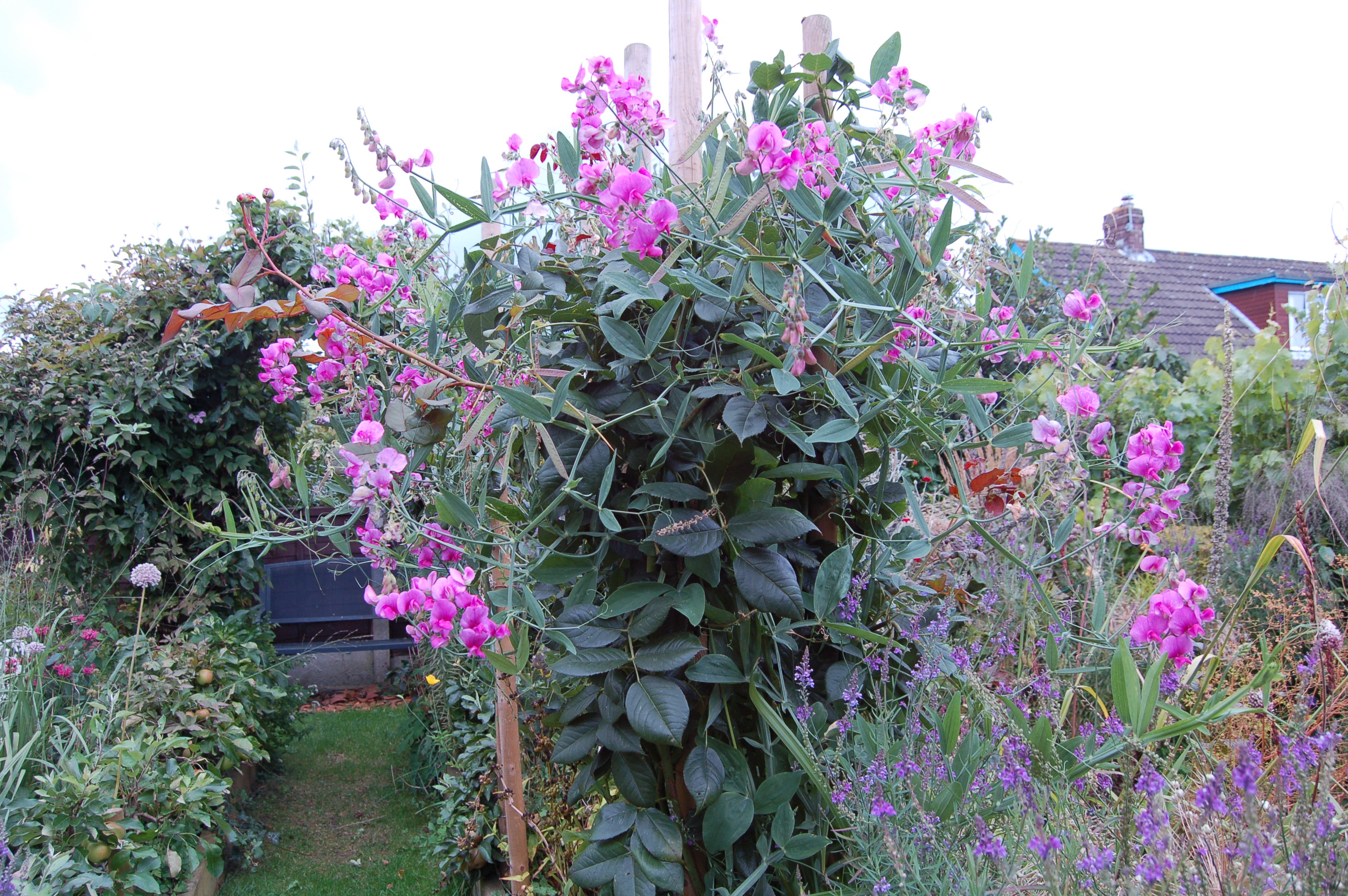
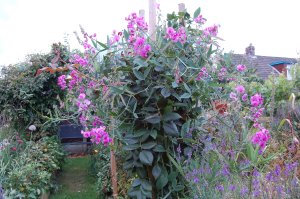
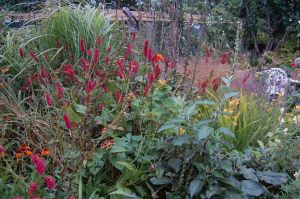
And finally across the central path again to the” Chicken Garden” and the” Secret Garden” which are still looking very colourful. The first photo is of our everlasting sweetpea which although perennial so easier to grow than the annuals it is sadly without scent. The red poker shaped flowers in the second photo are Persicaria amplexicaulis “Firetail” which is so long flowering and attractive to wildlife as a bonus.
 

2014 08 19_3959 2014 08 19_3960 2014 08 19_3961 2014 08 19_3962 2014 08 19_3963 2014 08 19_3964 2014 08 19_3965 2014 08 19_3966 2014 08 19_3967 2014 08 19_3968


So that is the study of our garden in August, hopefully still confirming that it is an all season garden. Next month we will probably be seeing the first signs of autumn colour and seedheads beginning to take on more importance.


Categories
architecture canals outdoor sculpture Yorkshire

A Week of Culture – Part 4 – The Hepworth Wakefield Gallery

Part Four of our culture week sees us visiting the new Hepworth Wakefield Gallery within the city of Wakefield in Yorkshire. Wakefield has been graced with a new gallery partly dedicated to the work of Barbara Hepworth as it was the city of her birth.

2014 01 26_6119

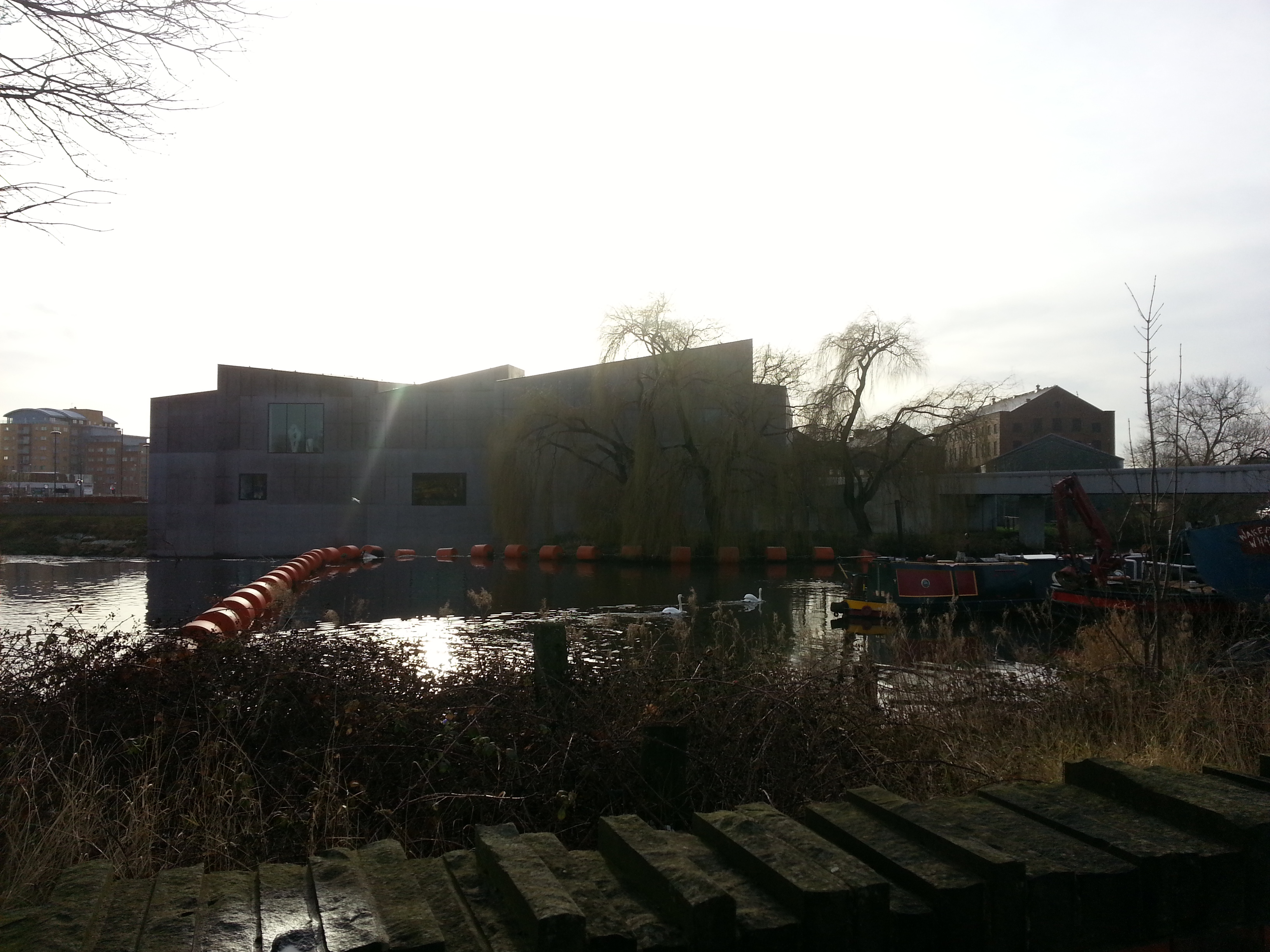
We had seen photographs of this newly constructed gallery and had wanteded to visit since its opening. The building itself is an imposing grey structure based on slightly irregular cubes and cuboids. A long dramatic walkway over the canal took us over moored barges with their wood fires adding the aroma of burning wood to the misty damp atmosphere.

2014 01 26_6120 2014 01 26_6121

From the walkway we spied this character hanging from a crane in the metal reclamation yard alongside the canal. He is made up of all sorts of scrap materials and from a distance he looks as if he is made of huge sweets – liquorice allsorts.

2014 01 26_6122 2014 01 26_6123

As we got close to the entrance we realised just how vast this gallery is with its grey slabbed sides rising up above us.

2014 01 26_6124   2014 01 26_6127

Inside, the building is equally dramatic with deeper greys and black being the dominant colours in the spaces outside the gallery rooms themselves, which as expected are all of a stark white. The outside surfaces are matt in sharp contrast with the shining interiors.

2014 01 26_6126 2014 01 26_6125

With all these straight lines and monochrome surfaces that constitute the fabric of the buiding the art work on show would need to be good and well displayed to brighten the visitors’ experience along with some comfortable seating on which to sit and appreciate the art works. People also make a difference and we received a warm welcome from the smiling face behind the reception desk.

The first gallery contained a couple of pieces by British sculptor Henry Moore – Reclining Figures. They looked good with plenty of space around them and with bright even lighting. But our warm welcome from the receptionist was somewhat negated by the steward in this room who called across at me “You are not allowed to touch them!” when I was pointing out a particularly nice curved line. Sadly because of this we didn’t stay so I failed to photograph Moore’s work. We put it down to bad training and moved on quickly to the next gallery where a delightful surprise awaited us.

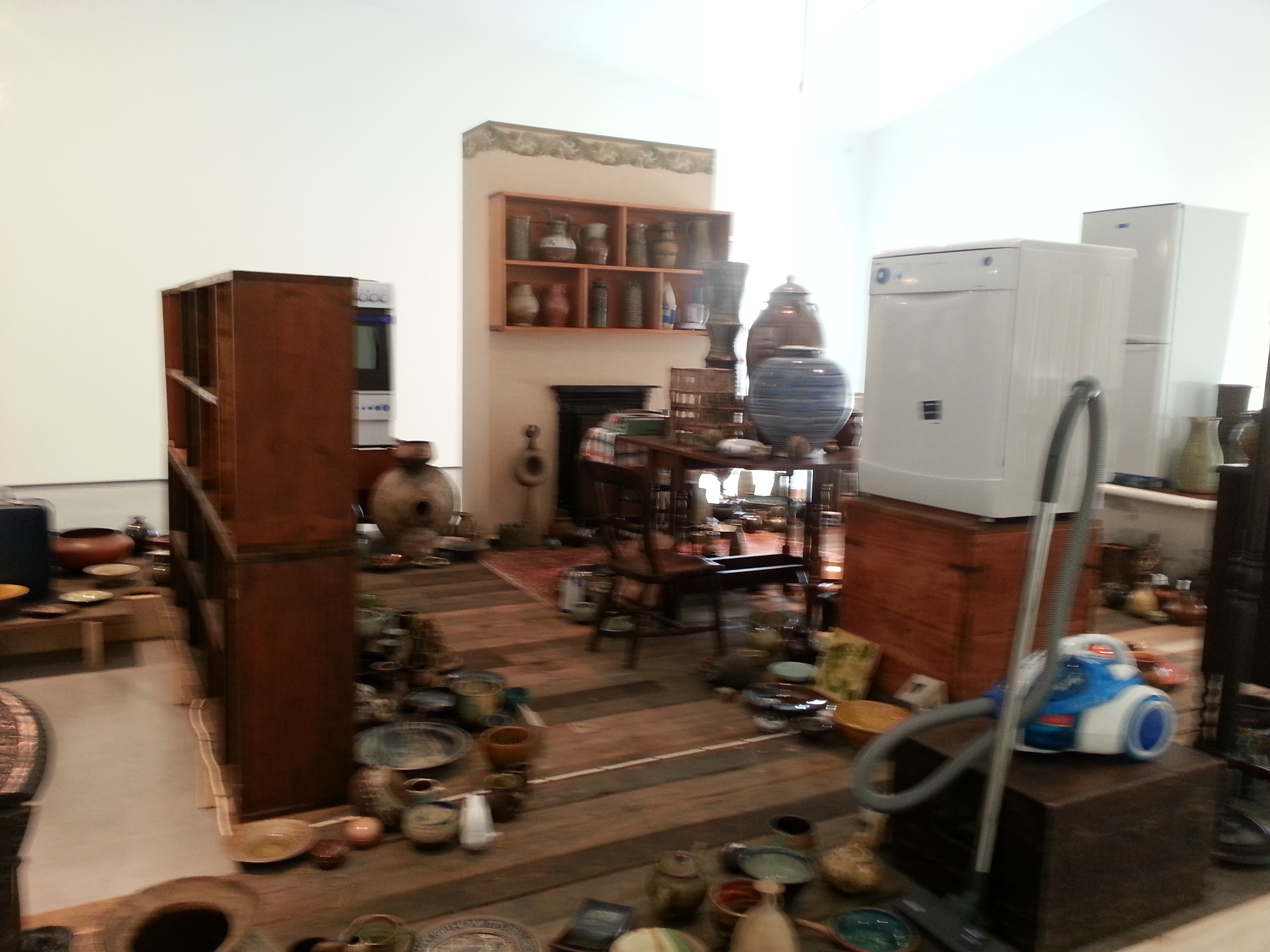
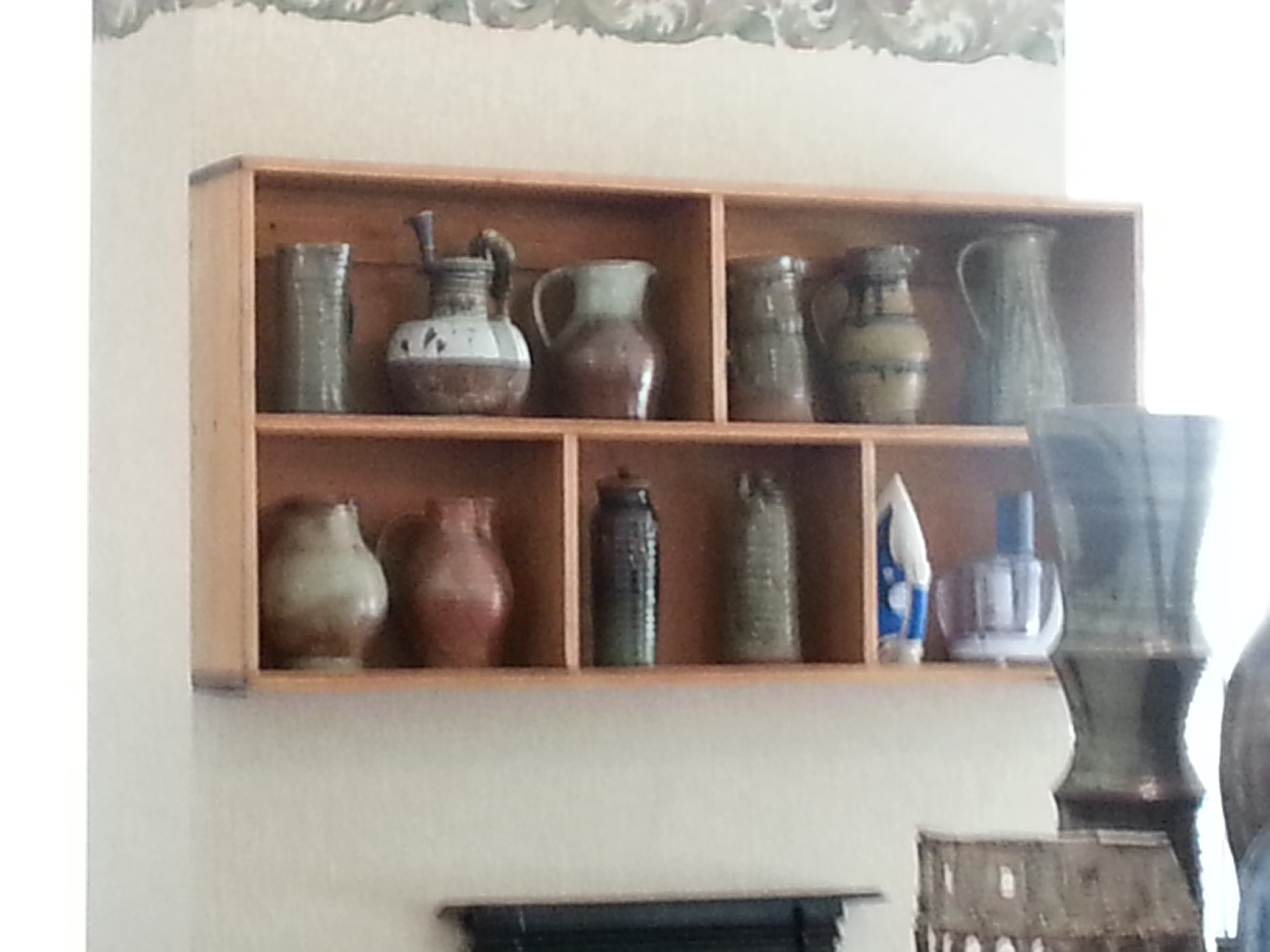
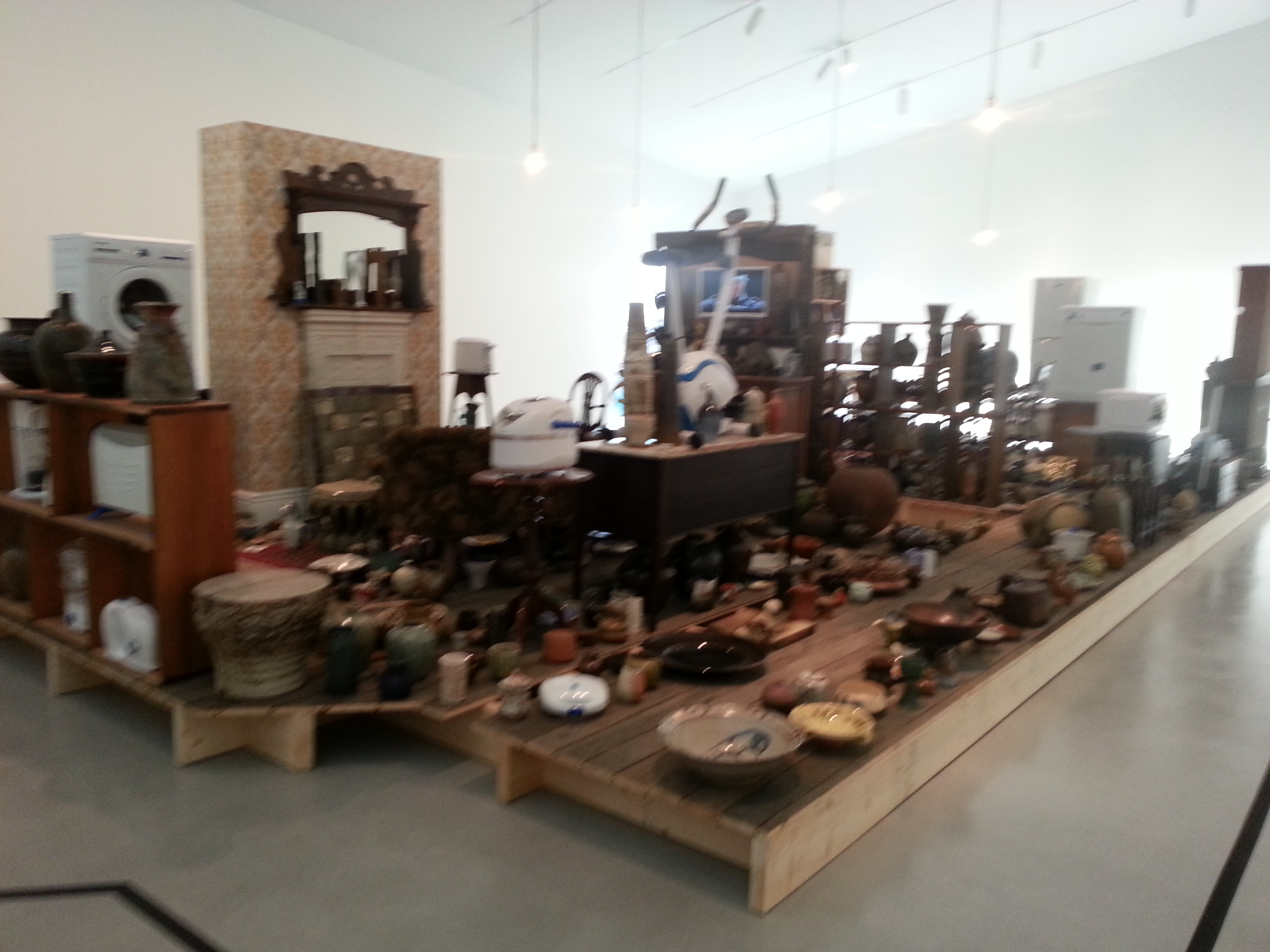
We were taken aback as we were confronted by a crazily overcrowded room set. This was the collection of William Alfred Ismay. At first it looked a jumble of worthless pieces of junk thrown together in what is often put forward by some artists as sculpture. We once saw a garden shed in a gallery  full of old dusty tools looking as if it had been lifted from a vegetable patch and dropped in the gallery – it even had a radio playing. The gallery presented it as an important installation and went on to propound its value as a work of art. We didn’t buy into that and we had a feeling we might be in for a similar experience here. But no! Here was a collection accumulated over decades by a local Wakefield librarian who became an obsessive collector of quality ceramics. His home became filled to the brim with them covering every surface even the table at which he ate his meals, leaving a little gap just big enough for his plate! A close look among the jumble of items led us to discover pieces from potters whose work we recognised. Most of the well-known 20th century potters and ceramists were in fact represented. Wandering around the room set became a voyage of discovery picking out beautiful pieces from amongt the cheap white goods of his era. The pieces were displayed on pieces of Ismay’s furniture and the whole set up was like looking into his house with the walls stripped away.

2014 01 26_6128 2014 01 26_6129 2014 01 26_6130 2014 01 26_6131 2014 01 26_6132

In the gallery where Ismays collection was displayed we were again made to feel uncomfortable. A black line surrounded the display and a sign asked visitors not to step over it. Sadly as we walked around the young room stewards followed our every move keeping a close eye on our feet. This must again reflect their training because when we engaged them in conversation they were very pleasant, knowledgeable and enthusiastic.

The third gallery we entered was spotlighting the work of American artist Dana Schutz. This is the New York based painter’s first UK exhibition. Her large extremely colourful work did not appeal to either myself or Jude as we found them disturbing in an unpleasant way. This gallery though did give them the space needed to appreciate them coupled with excellent lighting. If you were a Schulz fan you would have appreciated how good they looked in this setting. You can see the hard surface of the bench here. It didn’t invite you to sit and peruse the paintings and did nothing to soften the hard lines of the building and whiteness of the room. Comfortable benches which invite the visitor to sit and consider a piece in more depth are sadly lacking throughout the gallery.

2014 01 26_6136

We moved through galleries displaying the work of Albert Wainwright whose work varied a great deal, from simple book and magazine illustrations to landscapes of Northern England and the occasional poster. Photography was not permitted in this room.

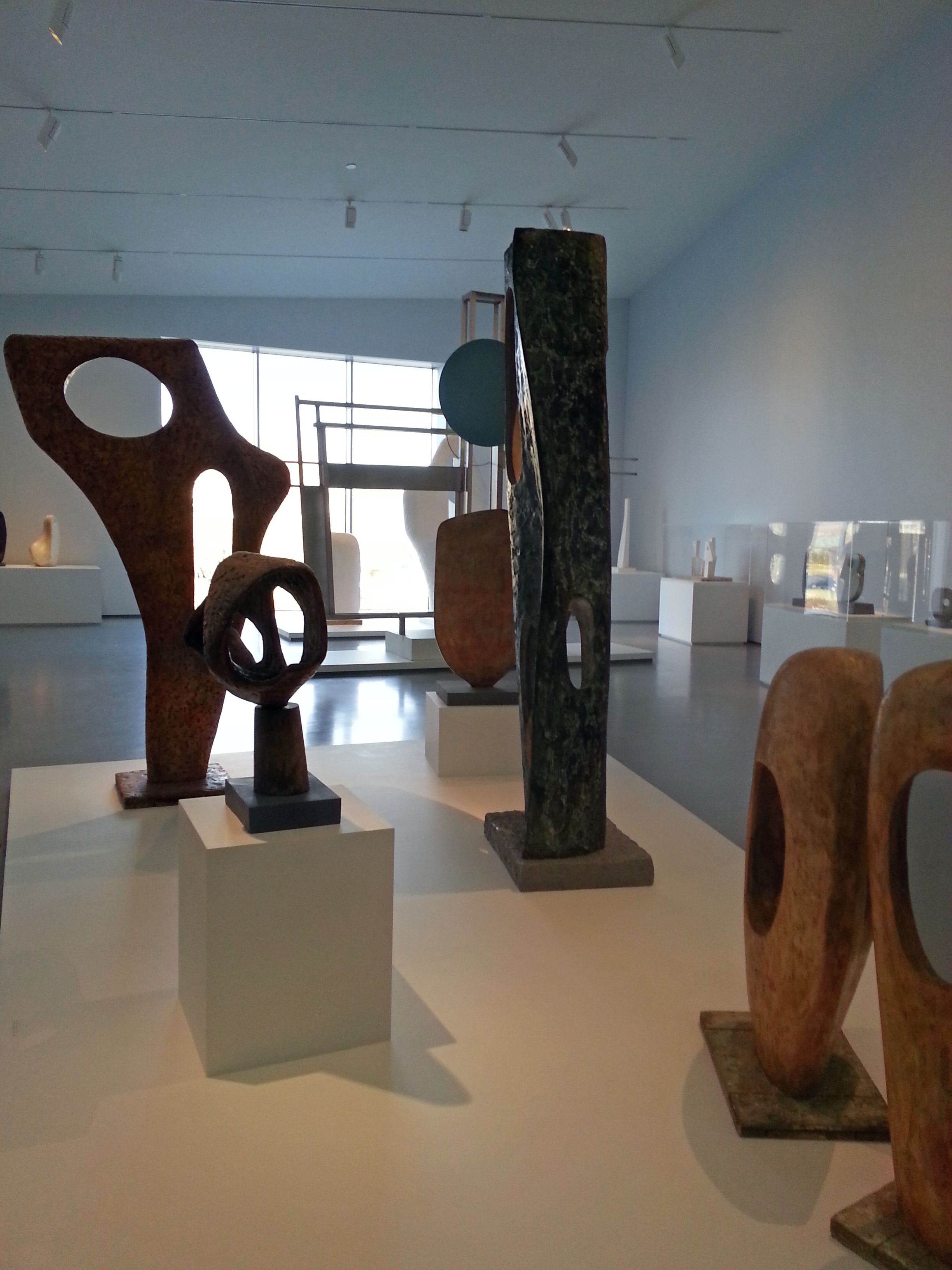
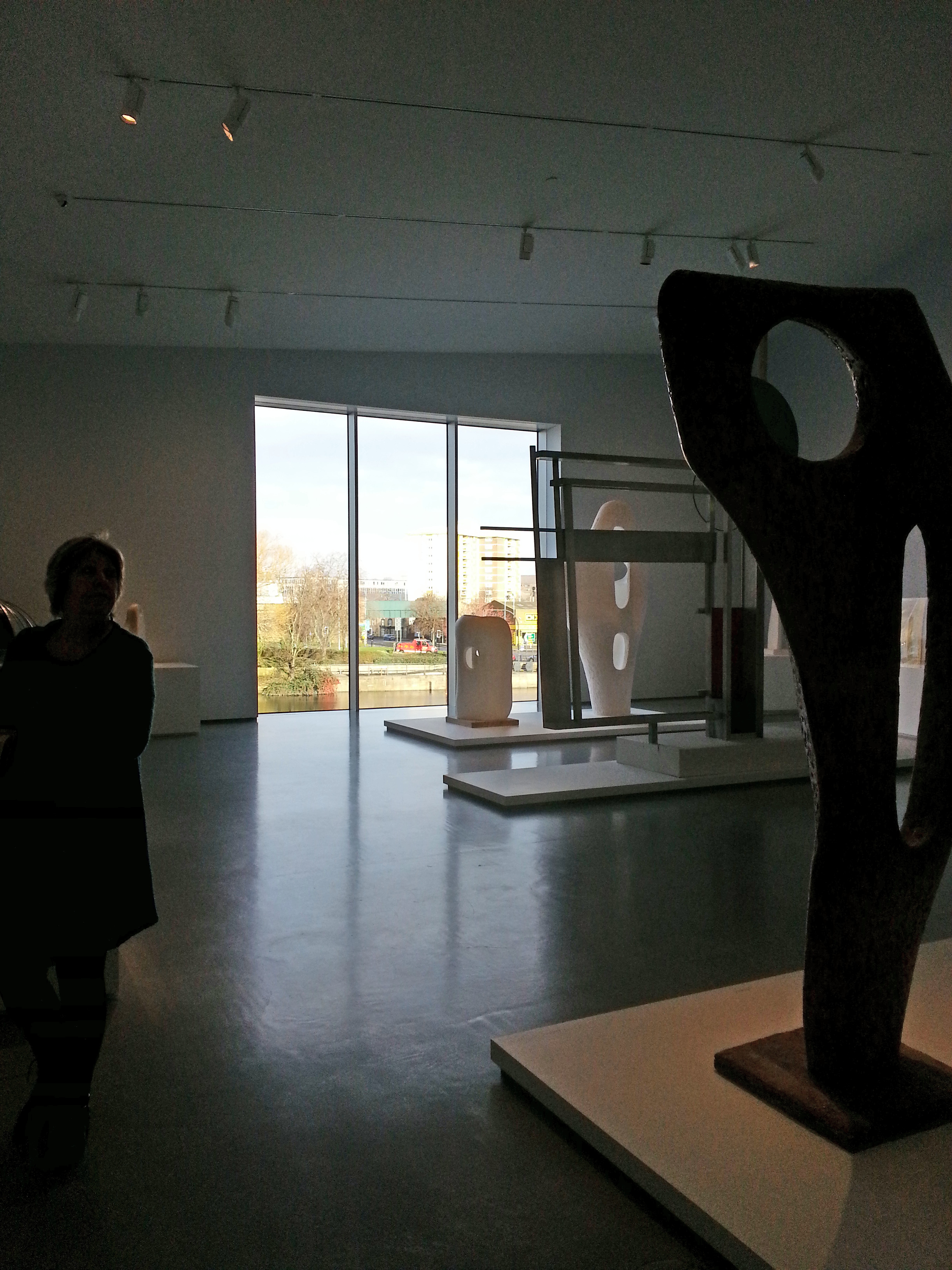
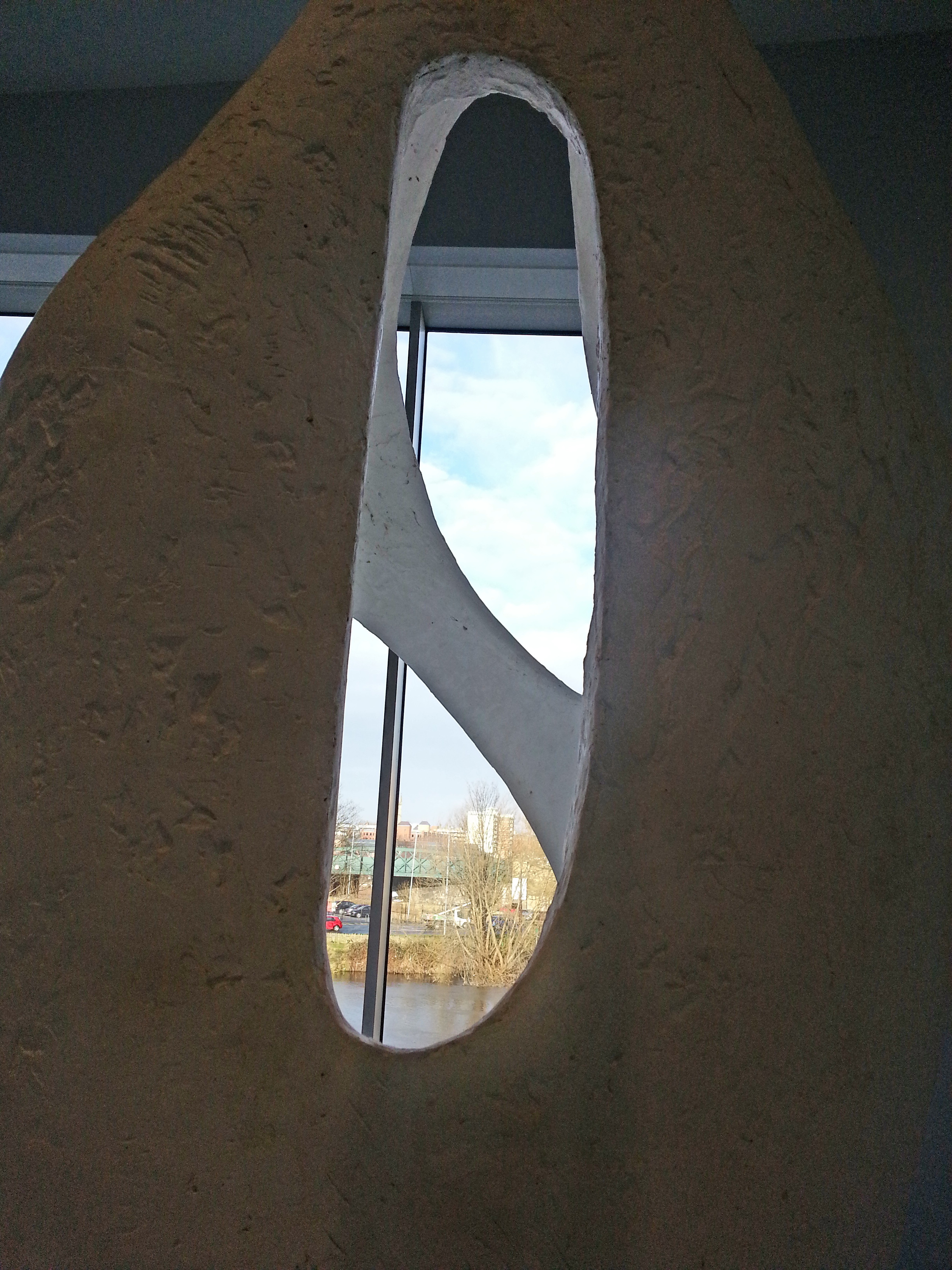
We moved on to Galleries 4,5 and 6 where the work of Barbara Hepworth was on show. Her work suited the style of gallery with their huge walls of glass which let the light stream in. The views out of these windows were out over the river towards the city.

2014 01 26_6152_edited-1 2014 01 26_6148_edited-1 2014 01 26_6142_edited-1 2014 01 26_6139_edited-1

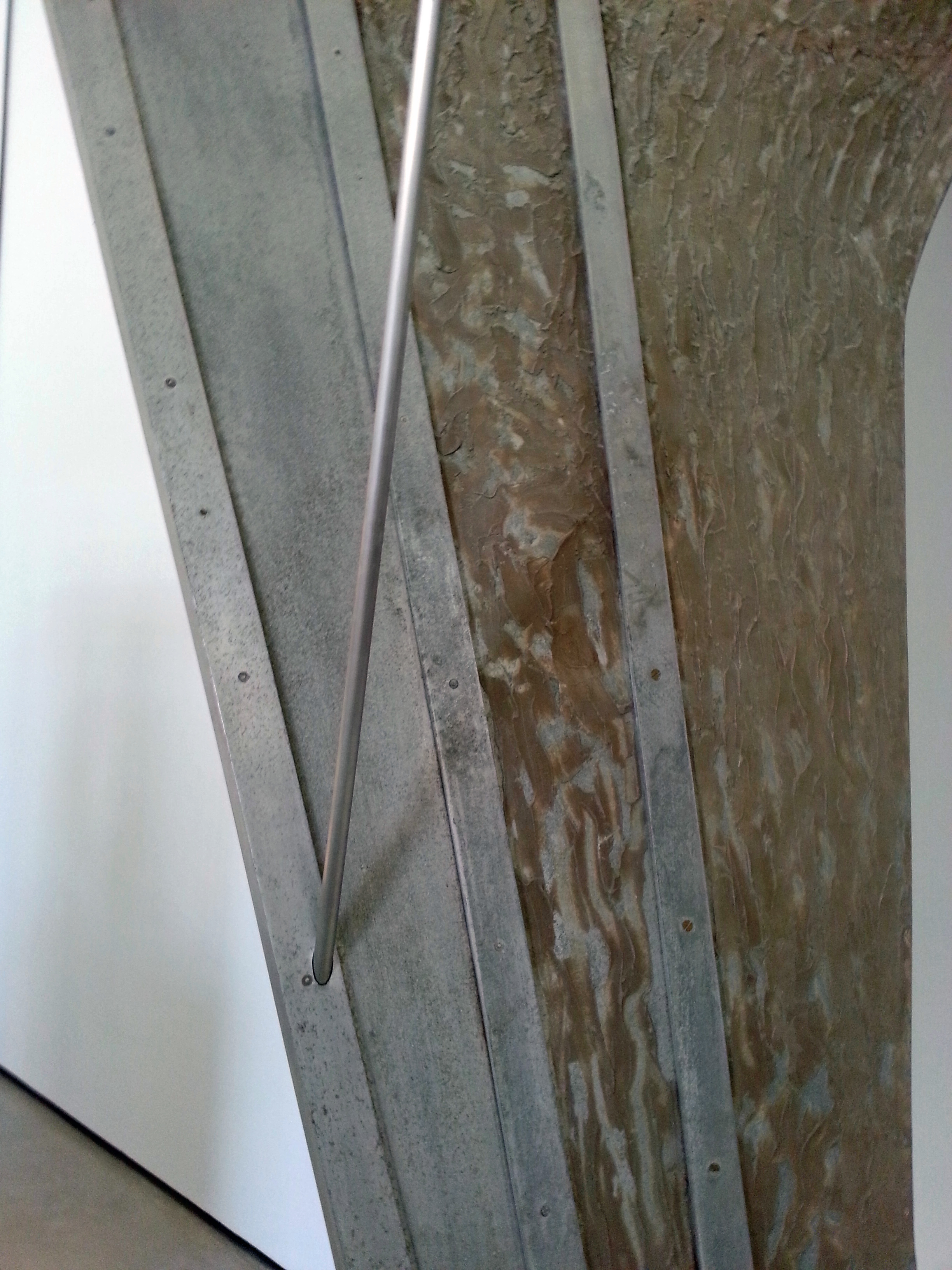
We were pleased to see a full sized prototype of the well known piece “Winged Figure” which was designed to grace the John Lewis store in Oxford Street. We think of Hepworth as being just a sculptor so it was interesting to see some of her 2-D graphic works. It was a great privilege to get really close to this iconic piece and see the variety of textured surfaces.

2014 01 26_6140_edited-1

2014 01 26_6143_edited-1 2014 01 26_6144_edited-1 2014 01 26_6146_edited-1 2014 01 26_6145_edited-1

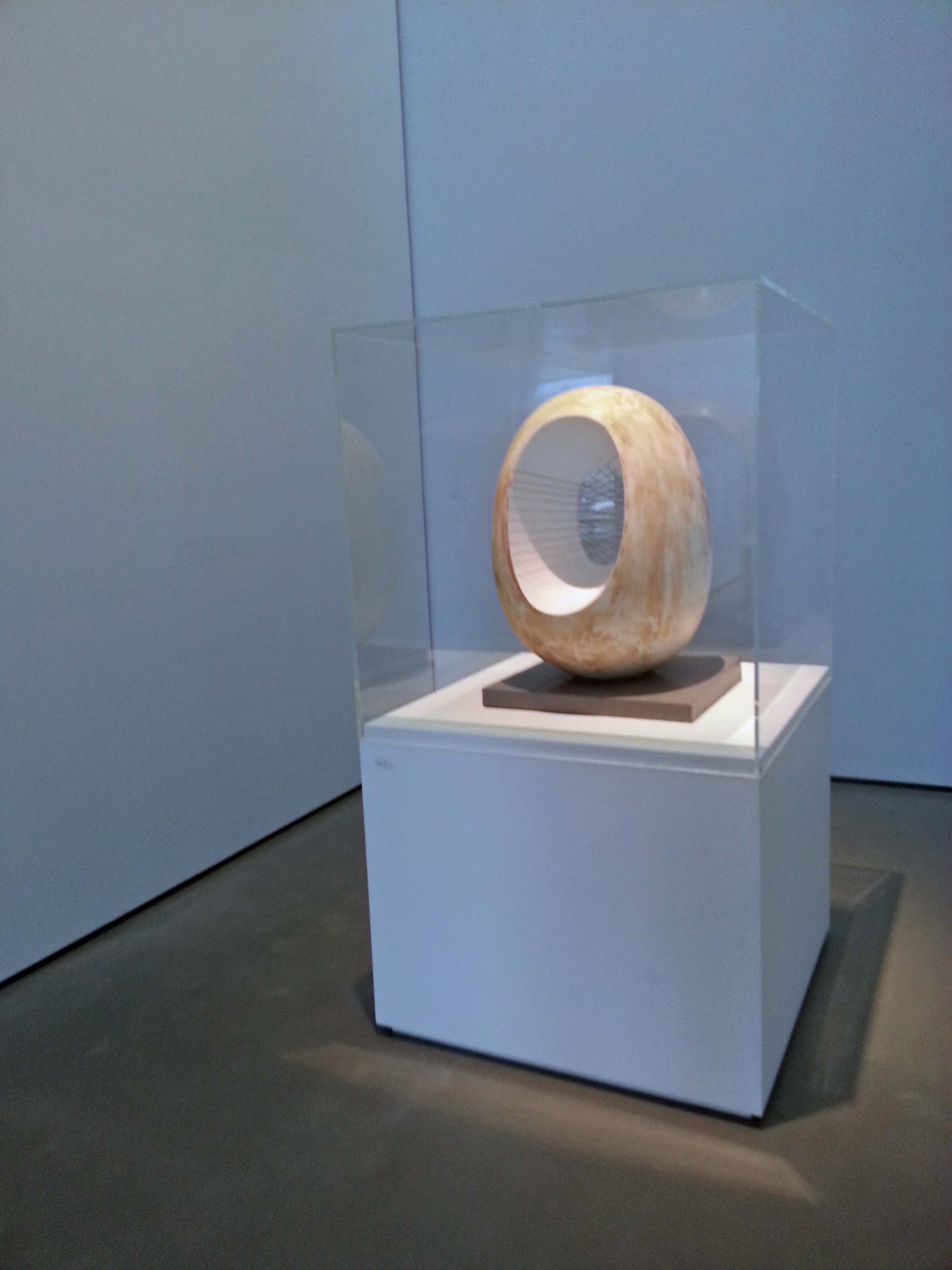
It was strange to see some of her work in glass cases but I can appreciate that these particular pieces are delicate.

2014 01 26_6156_edited-1 2014 01 26_6157_edited-1

Enjoy this set of photos showing the variety of Hepworth’s work.

2014 01 26_6141_edited-1 2014 01 26_6151_edited-1 2014 01 26_6153_edited-1 2014 01 26_6154_edited-1

If we look at the following set of 5 photos we can see they feature a similar simple circle. The first photo is a close up of the last piece in the set of photos above, then we have a photo of the whole of a different piece of work followed by a close up of it. The final shot looks as if it fits with them but all it is is a shot I took accidentally as I walked through the gallery. I was carrying the phone set on camera mode facing down and inadvertently took a photo of the floor with a circle of an electric socket cover. Strangely in keeping!

2014 01 26_6155_edited-1 2014 01 26_6149_edited-1 2014 01 26_6150_edited-1 2014 01 26_6135_edited-1

We finished our visit by going back outside to look at the rest of the building itself and a few pieces displayed on the grassed areas alongside, including more of the Barbara Hepworth “Family of Man” pieces some of which we had already enjoyed at the sculpture park.

2014 01 26_6163_edited-1 2014 01 26_6164_edited-1 2014 01 26_6165_edited-1 2014 01 26_6168_edited-1 2014 01 26_6169_edited-1    2014 01 26_6185_edited-1

We were also able to view the old mill building, The Calder, which will hold exhibitions in conjunction with the Hepworth Wakefield. These old warehouses present a stark contrast to the modern geometric architecture of the new gallery close by.

2014 01 26_6171_edited-1 2014 01 26_6172_edited-1

So that is two parts of the Yorkshire Sculpture Triangle visited which just leaves the venues in Leeds, The Henry Moore Institute and the Leeds Art Gallery, to discover sometime in the future.

This Veggie Life

A Vegetarian | Nature Lifestyle Blog

Rambling in the Garden

.....and nurturing my soul

The Arch City Gardener

Journeys In St. Louis Gardening and Beyond

Garden Dreaming at Châtillon

Consult the genius of the place

Storyshucker

A blog full of humorous and poignant observations.

gardeninacity

Notes from a wildlife-friendly cottage garden

PlayGroundology

...an emerging social science

The Official Blog of British Wildlife

'The most important and informative publication on wildlife of our times' - The Independent. This blog is a member of The UK & Ireland Natural History Bloggers group: www.uknhb.blogspot.com

iGrowHort

Inspire - Cultivate - Grow Native Plants - Restore Landscapes

Bishops Meadow Trust

To create and protect a semi-natural wild space for the people of Farnham to enjoy and experience an array of British wildlife in our town

Gardening with Children

The www.gardeningwithchildren.co.uk Blog

UKbirdingtimeline

birding through the seasons, why birds matter and how to conserve them

NATURE WALKER

with a camera in hand

Jardin

Transform your outdoor space

Eva's space

My allotment, cooking and other interests

Old School Garden

my gardening life through the year

LEANNE COLE

Trying to live a creative life

fromacountrycottage

trying to live as lightly as possible on our beautiful planet

Good Life Gardening

Nature lovers from Leicester living the good life.

mybeautfulthings

Finding the beautiful in the everyday

mawsonmichelle

Michelle's Allotment

In and Out of My Garden

thoughts from and about my garden

Greenhousing

Big plans for a small garden

The Scottish Country Garden

A Walled Country Garden in South East Scotland

The Fruity Chicken

Life at the fruity chicken

willowarchway

Off grid living. Self sufficient. "PERMAGANICS RULE".

St Anns Allotments

Nottingham's Grade 2* Listed Allotments and Community Orchard

Manifest Joy Harvests

a journey in suburban vegetable gardening

Allotmental

The madness of growing your own

Penny's Garden: a harvest beyond my front door

A novel approach to vegetable gardening

arignagardener

Sustainable living in the Irish countryside.

NewEnglandGardenAndThread

Master Gardener, amateur photographer, quilter, NH native, and sometimes SC snowbird

dianajhale

Recent work and work in progress and anything else that interests me

planthoarder

a chaotic cottage gardener

Lens and Pens by Sally

a weekly blog that creates a personal philosophy through photographs and words

Dewdrops and Sunshine

Stories from a sassy and classy Southern farmbelle.

The Pyjama Gardener

Simple Organic Gardening & Seasonal Living

gettin' fresh!

turning dirt into dinner

JOY...

today the world is created anew

Garden Birds

Notes from a Devon garden

ShootAbout

Life Through The Lens

Adapting Pixels

A photography blog showcasing the best photography pictures and videos on the internet

Wildlifegardening's Blog

Just another WordPress.com site

naturestimeline

personal observations from the natural world as the search continues for a new approach to conservation.

LATEBLOOMERBUDS

The Wonders of Life through my Eyes, my Heart, my Soul