Categories
allotments community gardening garden design garden photography gardening hardy perennials ornamental grasses ornamental trees and shrubs Shropshire shrubs trees winter gardens

The Winter Garden at Bowbrook Allotments Community

As part of the development of the shared community spaces at Bowbrook Allotment Community we have created “Gardens of the Four Seasons”. We did this with the support of “The Peoples Postcode Trust” who awarded us a generous grant for the purchase of plants. In early 2011 we began work on the Winter Garden and now we are beginning to see some results of our labours. The work was carried out by allotment holders who attend regular working parties (look out for future blog about our working parties) and the gardens are maintained by members. Much work is also done outside working parties by individuals or small groups.

I designed the garden and presented the plan to the management committee and informed other members by e-mail, asking for comments, further suggestions and ideas. The basic idea was to create a garden full of trees, shrubs, grasses, bulbs and perennials that looked good in the winter, for their stem colour, bark colour and texture, their flowers, their scents. Movement and sound was also considered so we included many grasses and some trees with rustling stems.

It is now a year since we began the groundwork. The preparation was completed by the end of February 2011 and the main framework of planting by the end of March.

The first step was to rotovate the land, almost triangular in shape, in the corner of the site furthest from the huts, about 10 x 20 metres. We then added manure and rotovated once more. We dug out a path shaped as a serpentine curve, which cut the border in two, edged it with logs and gave it a deep layer of bark. It proved soft and comfortable to walk on. A thick layer of compost was added to the planting areas and raked level and we were prepared for planting.

Our Winter Garden is situated in a corner of the site. A water-butt is ready to be placed conveniently for watering in dry periods. In front is one of our wildlife banks.

Trees and shrubs were delivered by The Dingle Nursery from Welshpool, who had proved so helpful in helping us to select the best when we visited them to place our order. Unloading the truck and unpacking the plants was an exciting time, full of anticipation. Transporting them across the site took longer than expected involving three plot-holders with wheelbarrows. Some of the trees were just too long to stay put. After an hour of laughter and regular rescuing of dropped goods, we finally began planting. It was to take a few days.

Trees in place.

Bulbs and herbaceous plants arrived by post and were added to our structural planting of trees and shrubs. a selection of grasses was added later. We now had trees with coloured bark, shrubs with coloured stems and a winter flowering time, perennials such as Hellebores and Pulmonaria and grasses to give movement and beautiful seed heads.
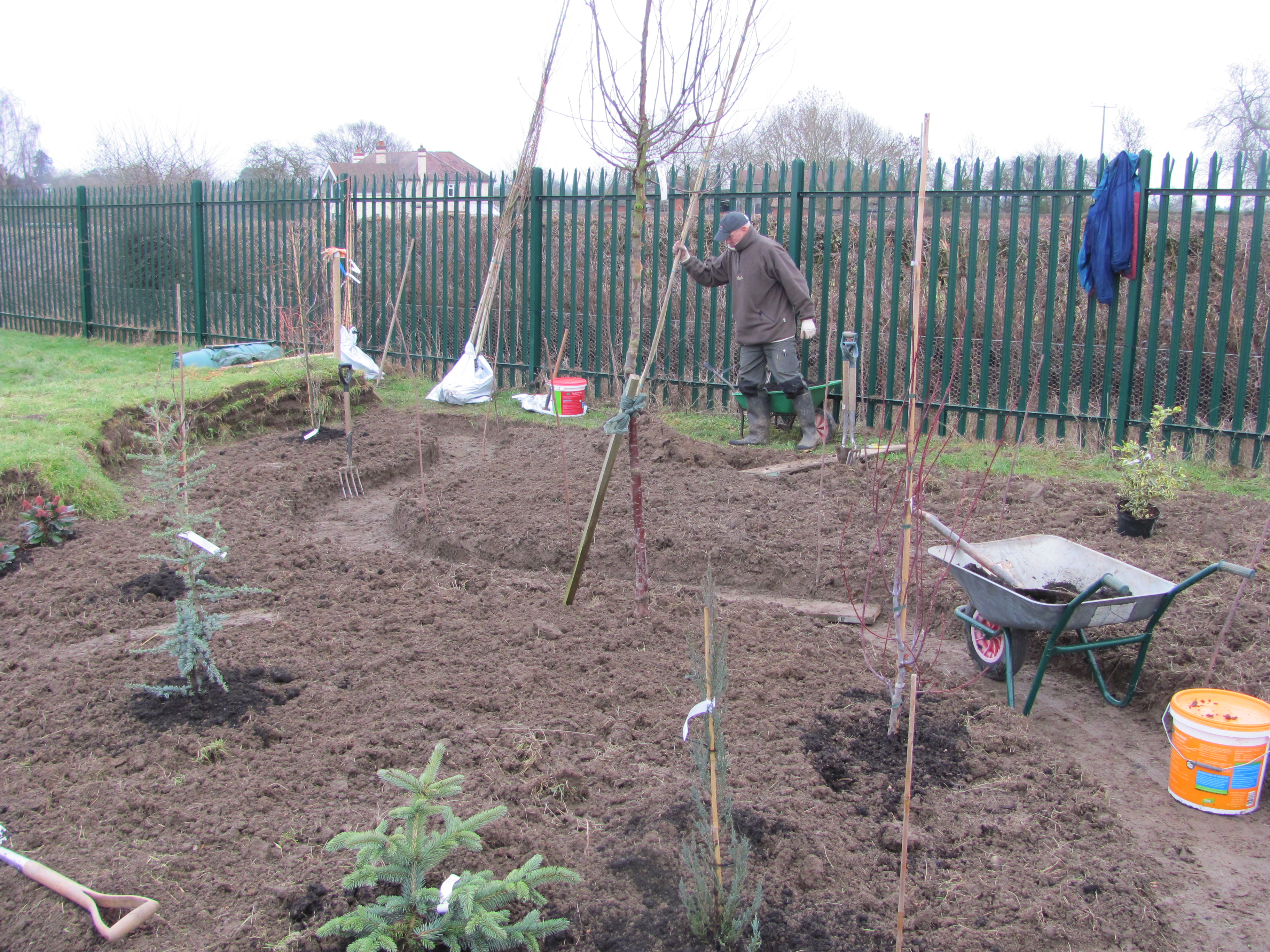
Plot holder Pete busy planting.

In pride of place are our three silver-barked Birches, Betula utilis “Jacquemontii” planted as 3 metre tall specimens, along with similarly sized Prunus serrula with its shining gingery-bronze bark. Smaller specimens of Acer davidii (a snake bark maple), Acer griseum appreciated for its peeling red bark and a selection of variegated Hollies completed the structural planting.
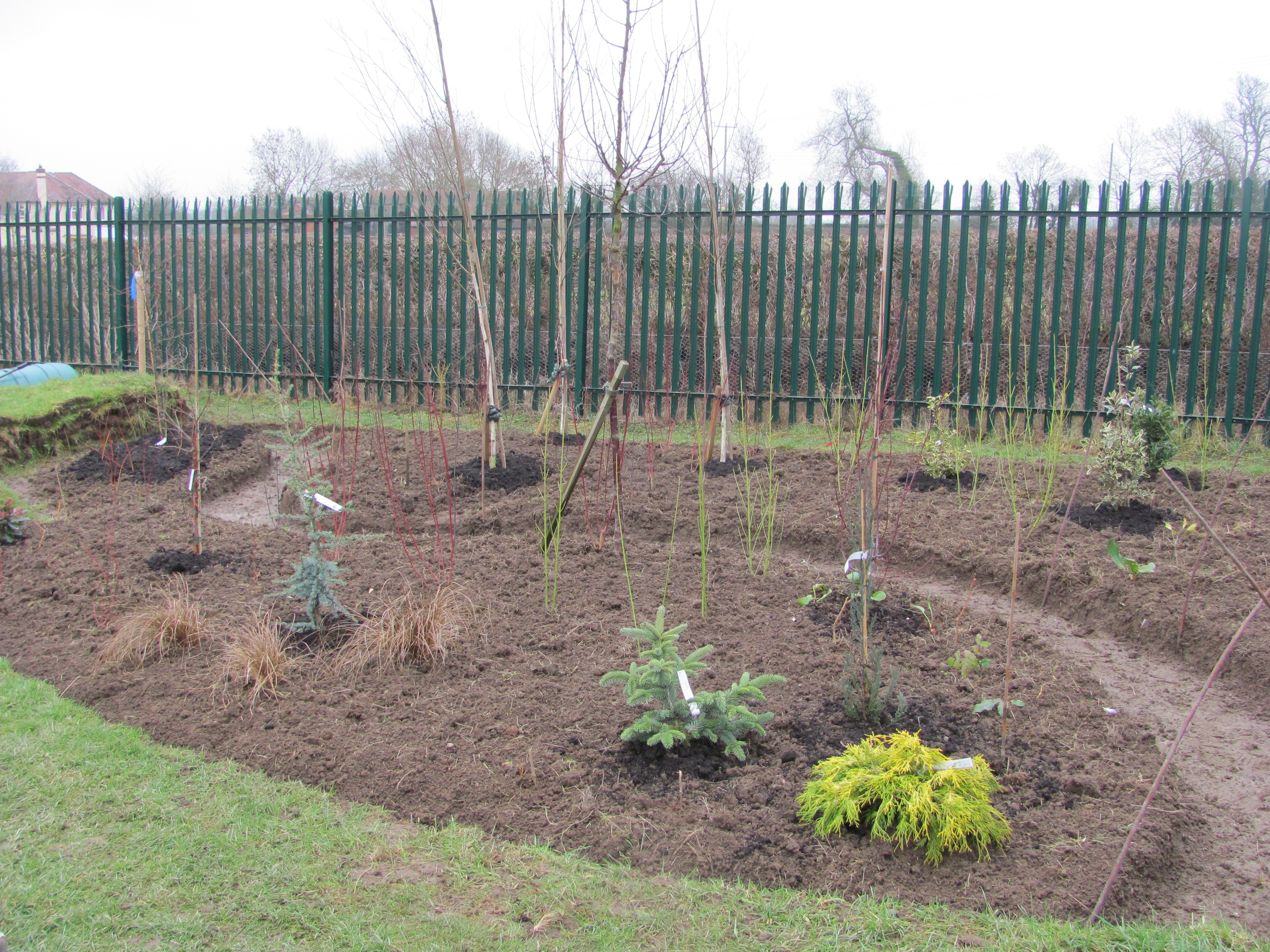
Key plants in place.

For bark colour we planted dozens of Cornus, Salix and Rubus tibeticanus to give an airy network of colour all winter and early spring. We interplanted these with patches of Lavender to give some summer interest, to attract butterflies, bees and hoverflies and to provide gentle bluish foliage colour all year. For winter flowering interest and scent we planted Cornus mas and Viburnum bodnantense “Dawn”.

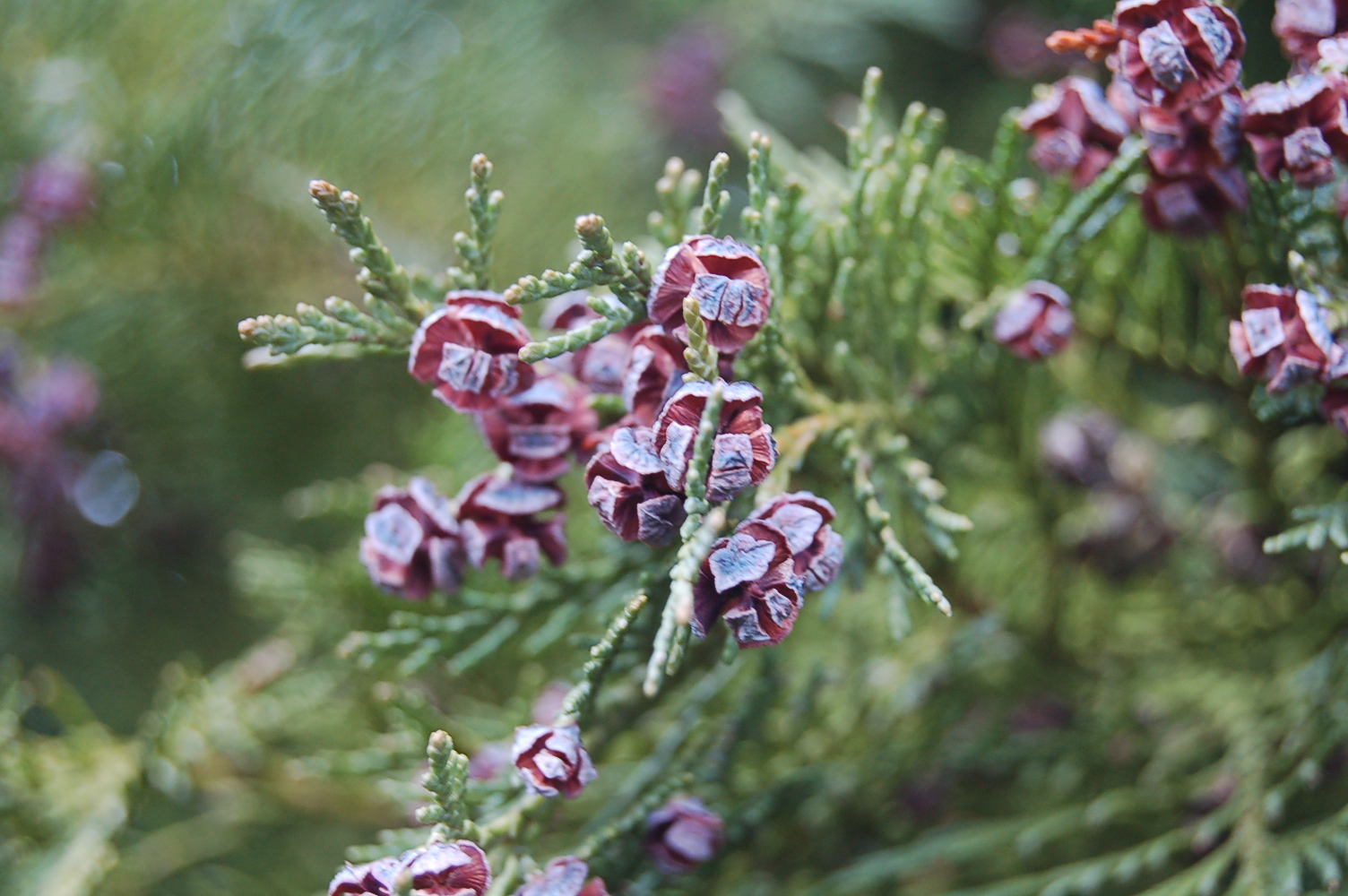
In order to maintain all year interest with greatest emphasis of interest we added evergreens. As well as the Hollies we included Viburnum tinus and several conifers chosen for the variety of foliage colour, texture and habit of growth – Picea pungens Procumbens, Pinus sylvestris, Chamaecyparis “Boulevard” and to top it off John, our committee’s chairman donated a lovely specimen of Cedrus atlantica glauca. As a contrast we also planted a Larix decidua a conifer that is deciduous.

When we planted the trees and shrubs, following the allotment site’s organic policy, we gave them a sprinkling of bonemeal in the planting holes and top-dressed with blood fish and bone fertiliser before mulching with manure. We plan to give the bed regular mulching of compost and manure to give  a slow-release nutrient regime.

Working parties and individual volunteers worked throughout the year to keep weeds at bay.

Volunteers at work tidying and weeding.

By late summer the garden was showing lots of healthy growth and we could see much promise for the future.
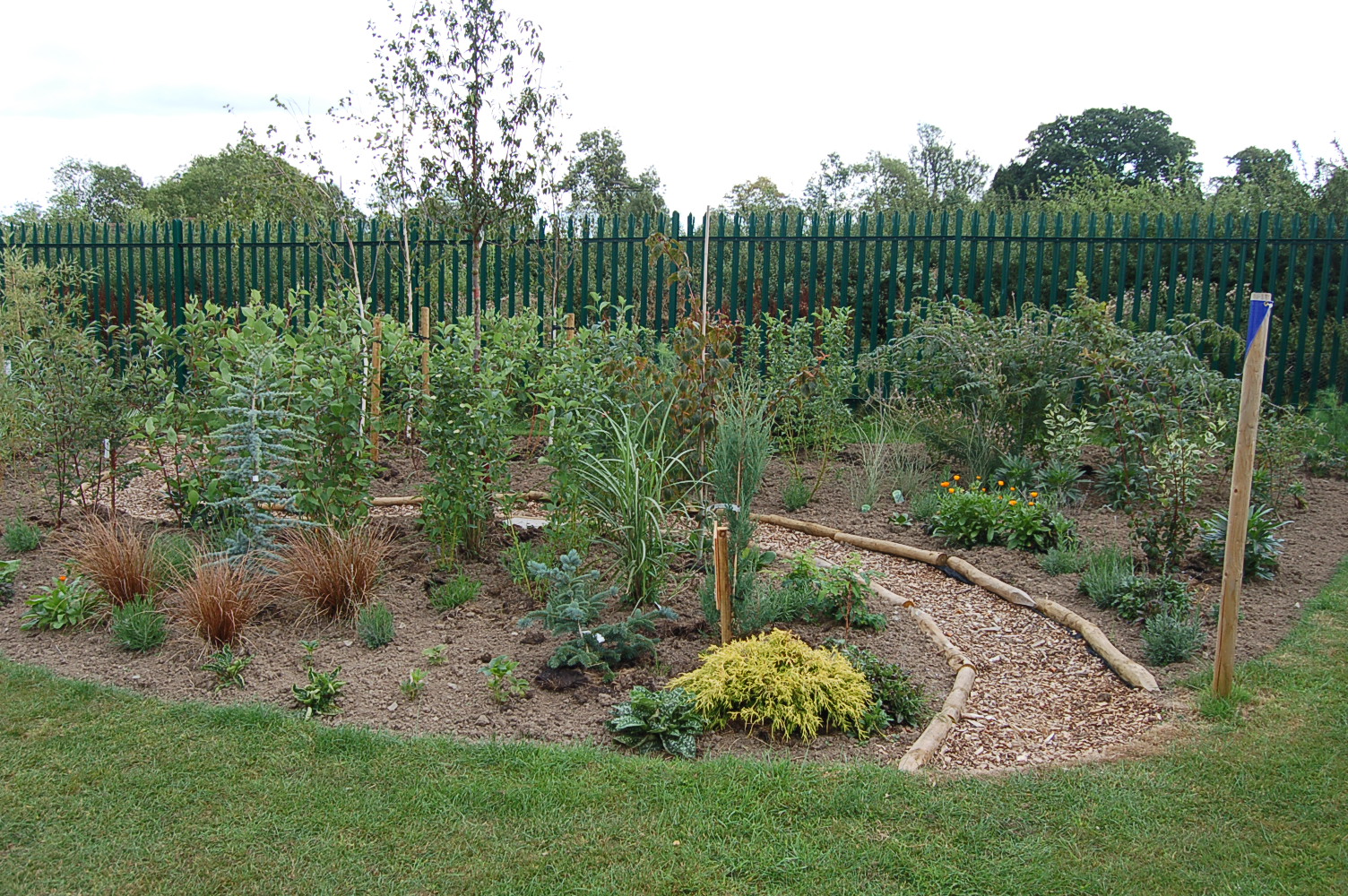
Full of promise.

In the autumn we gave the garden a mulch of chipped bark to protect it from the ravages of winter and to slowly break down releasing nutrients and improving humus levels ans soil texture.

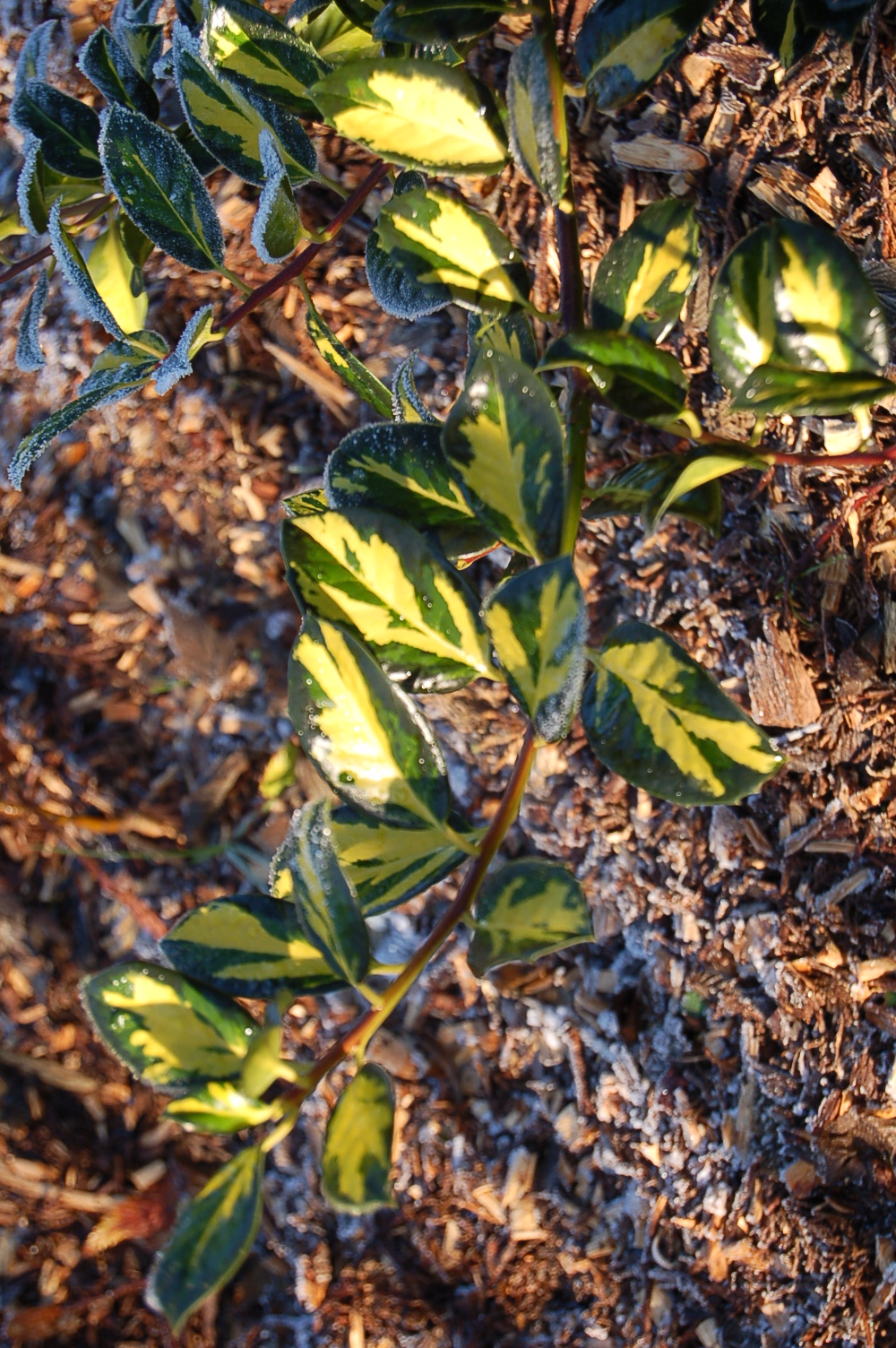
This week three of us weeded the bed over, tidied, pruned and loosened up the soil. It was amazing to look at progress and realise how the garden had developed in less than a year. Bulbs were flowering, the trees and shrubs have made good growth and in particular the willows and dogwoods are showing strongly coloured stems.
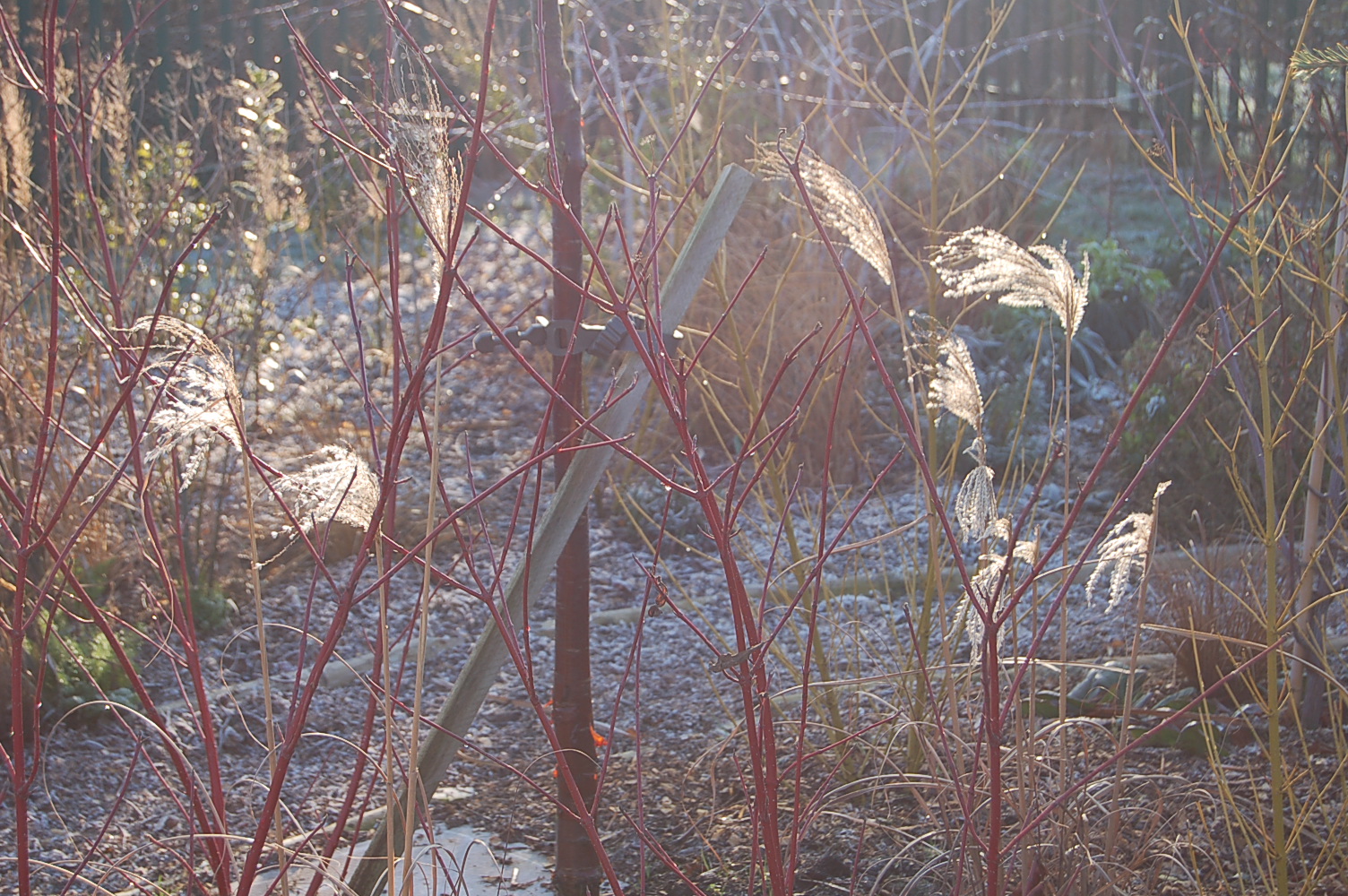
Winter sunlight through Miscanthus and Cornus.
Stripes of fence shadows fall across a variegated holly.
Blood red dogwood stems.
Peeling bark like brittle toffee.
Green flowered hellebore with striped shadows.
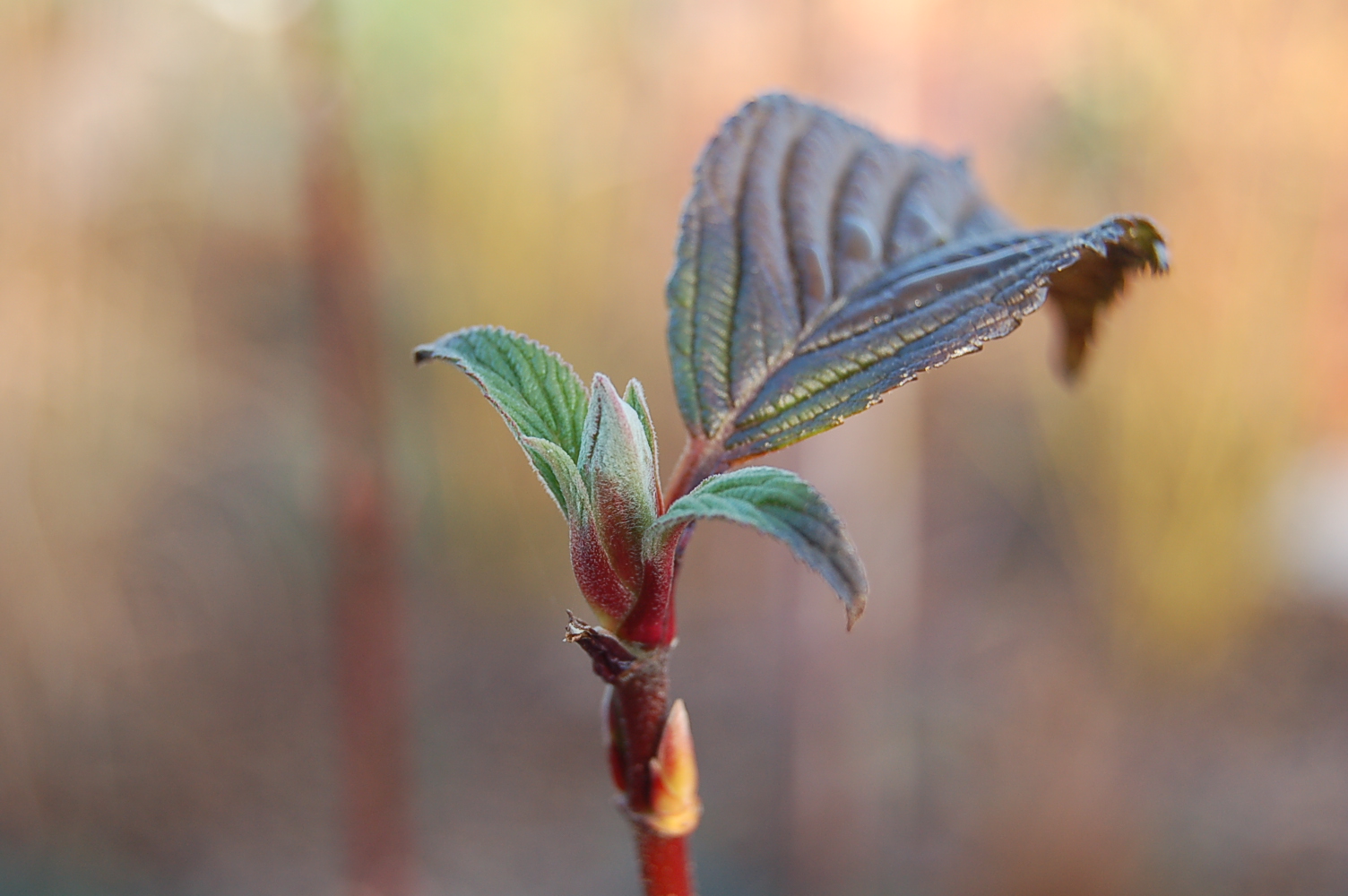
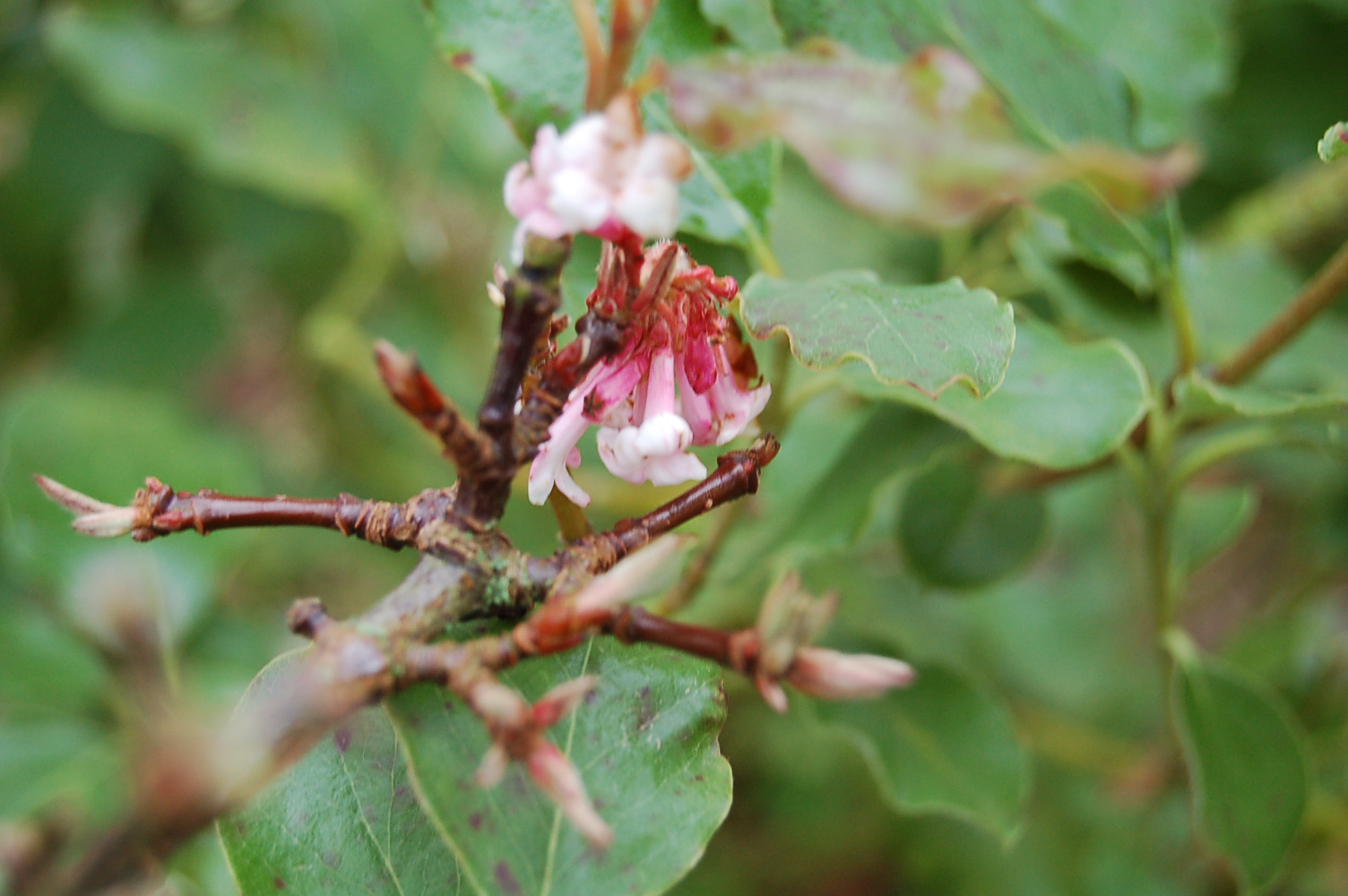
Premature bud burst on Viburnum.
Striped snake bark maple.

With so much to see after such a short time, we can but wonder at what our Winter Garden will bring us in the future. It was great fun creating it and judging from comments from plot holders it is already bringing much joy!
Categories
bird watching birds garden photography garden wildlife gardening grow your own hardy perennials ornamental trees and shrubs photography shrubs winter gardens

A Wander Around Our Garden in February

This is the second of our monthly garden wanders designed to give an insight into what is going on each month. Our February wander will be a colder one so don those thermal gloves and woolly hats with silly bobbles and join us. We hope you enjoy what our garden offers in the second month of 2012.

The day dawns frosty but with a bright blue hat on. A lovely fresh winter’s day, with the quiet plaintive song of the Robin as company – he always comes around the garden with us and entertains us with a song. Overhead Buzzards call from their thermals high above the slope of the hill. It feels a perfectly calm day to us but these big, broad winged predators always find movement in the air. Why does the call of the buzzard always sound further away than the bird itself? Have they mastered the art of ventriloquy? We see them most days but we never lose the desire to watch them enjoying their freeform flight.

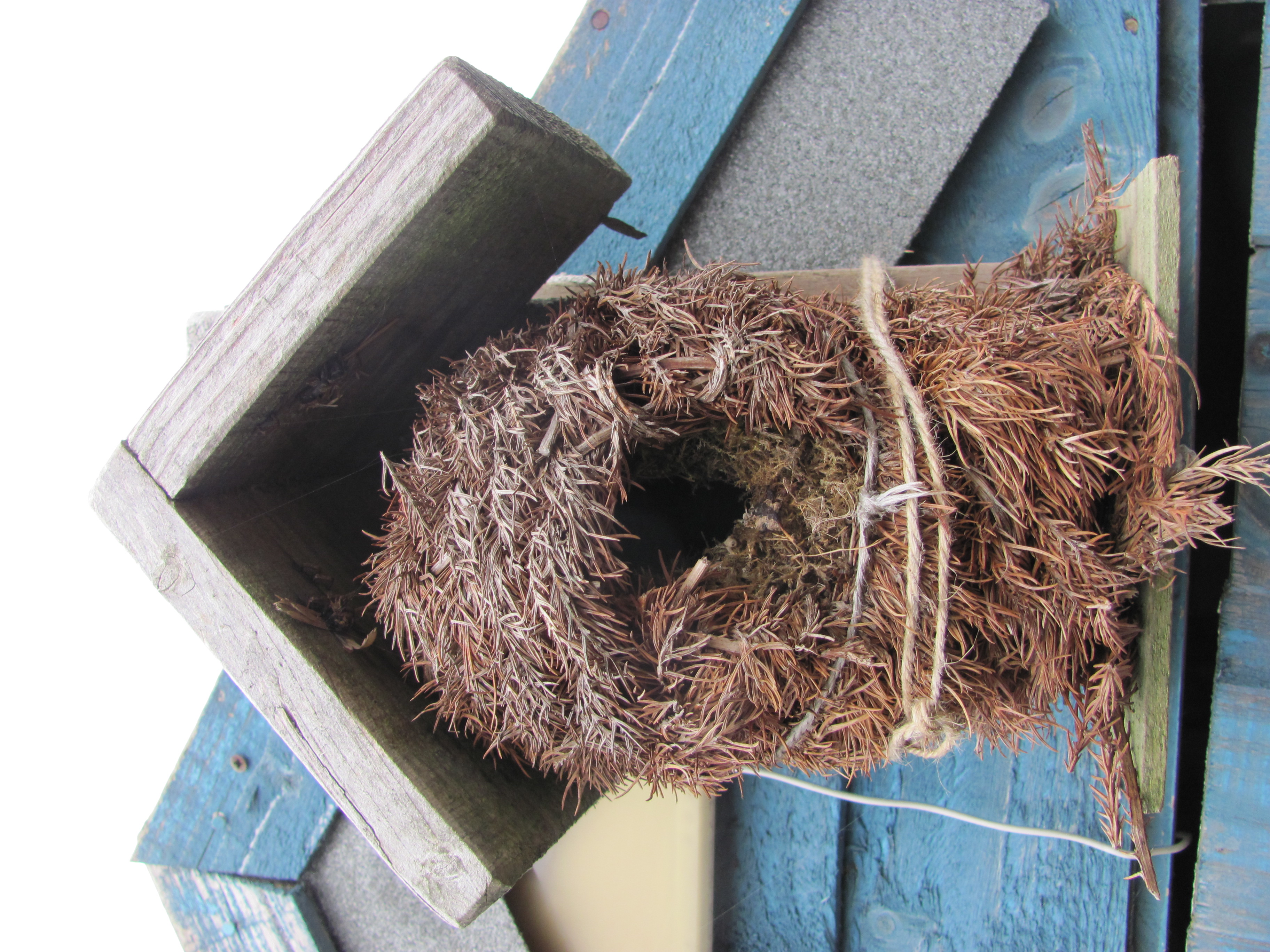
I fed the chucks and topped up their frozen water with some warm, before collecting their eggs from the nest boxes. Today the hens’ contribution to our larder had added benefits. Handwarmers! Holding these little warm parcels of food felt more special than usual. As I passed the shed on my way down to the chuck pen three Wrens burst out of their roosting pocket – late risers. A pair nested in here in the summer just a few inches above the shed door. They took no notice of our comings and goings. They filled the roosting pouch with moss, feathers and delicate grasses which now insulate them on cold nights.

Dual purpose roosting pouch.

The garden is full of birds once more after a quiet few months. We were beginning to wonder where all the birds had gone, but today Goldfinches have reappeared in busy red and gold flecked flocks. mixed feeding flocks of titmice invade every tree and shrub and Linnets sit on the highest branches. Long Tailed Tits in groups of a dozen or more flit from tree to shrub and from feeder to feeder, never still, always fidgeting like a class of infant pupils awaiting a favourite story. The odd Bullfinch and Blackcap conduct their business more quietly.

On the feeders Jackdaws attack the peanuts dropping morsels for the Dunnocks and Chaffinches waiting below. Jackdaws are long-lived and today two old favourites are to be seen, one with a white wing and one with a wing that droops low when he settles. Overhead their much larger relatives pass over, a “cronking” trio of Raven flying effortlessly with outstretched fingers.

It is noticeable that the clusters of berries on the Hollies and Cotoneasters are much depleted as greedy groups of resident Blackbird and Mistle Thrush are joined by migrant members of the thrush family, the winter visiting Redwing and Fieldfare. The small yellow crab apples on Malus “Butterball” have now been stripped by these members of the thrush family.

Our horizontal cotoneaster is a favourite of Blackbirds, Redwing and Mistle Thrush.

There has simply been plenty of natural food for our avian friends this winter. It has been mild enough for insects to be on the wing, for invertebrates to be creeping and crawling, and the hedges and trees have heavy berry crops. We want to see them in our garden but we are being selfish. They come to us when they need to and not before!

The blackbirds have finally discovered the windfalls.

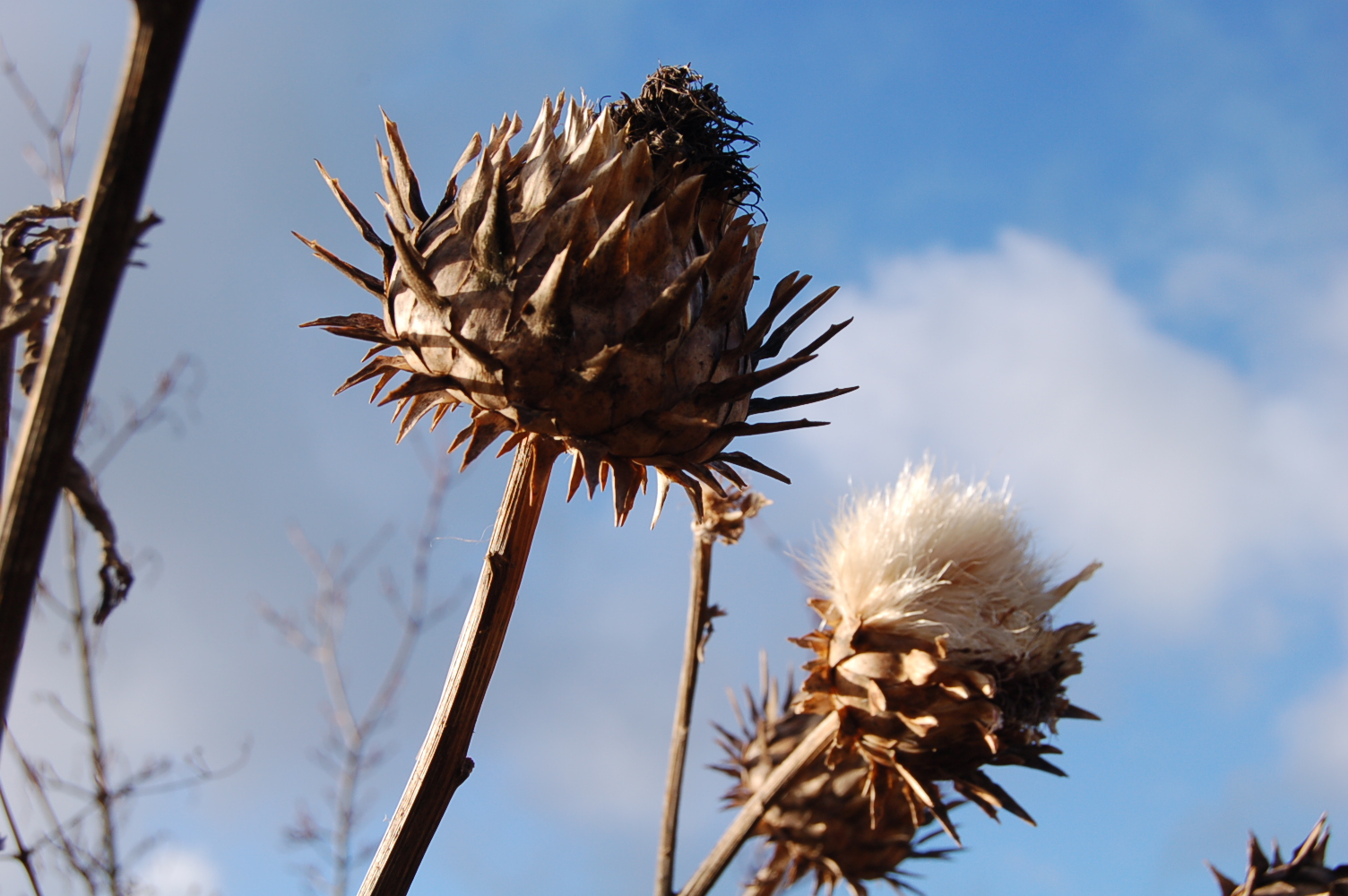
The re-appearance of the Goldfinches gives us close-up entertainment as close to the conservatory window grow Onopordon, the Scotch Thistle, and its seed heads tower into the blue sky. Goldfinches love them and soon dig in for seeds, bursting the heads open as they do so, and the white fluffy insides overflow like raw cotton.

Scotch Thistle seed heads towering into the blue.

The intensifying of the cold sucks structure from leaves and hardens the ground beneath them. The accompanying frost layers the ground and plants with lines and layers of frozen crystals. The blueness of the skies on a clear February day is more intense than earlier in the winter. The sunlight seems brighter.

The deep cold has taken the structure out of the young self-seeded sunlit Hypericum.
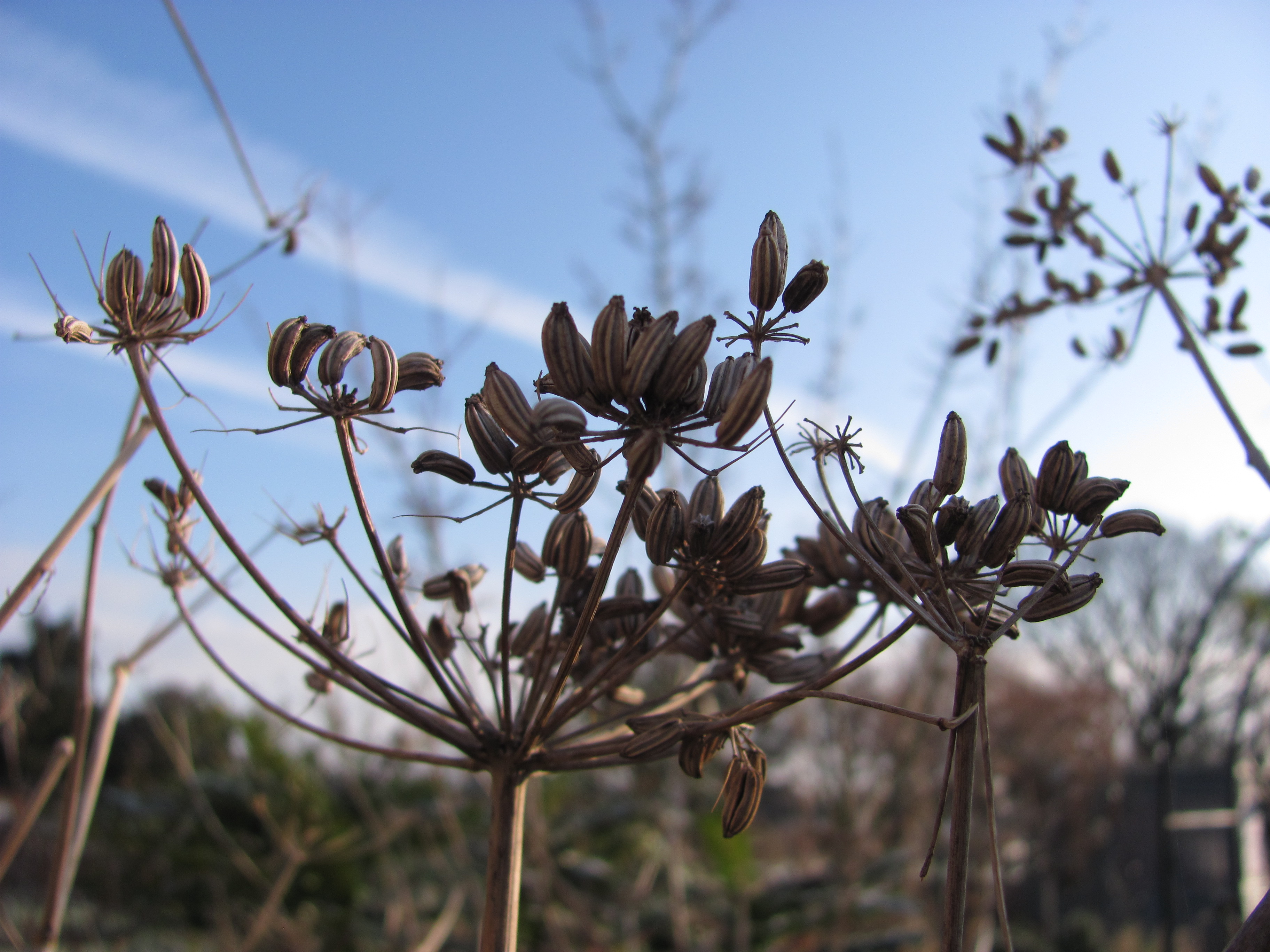
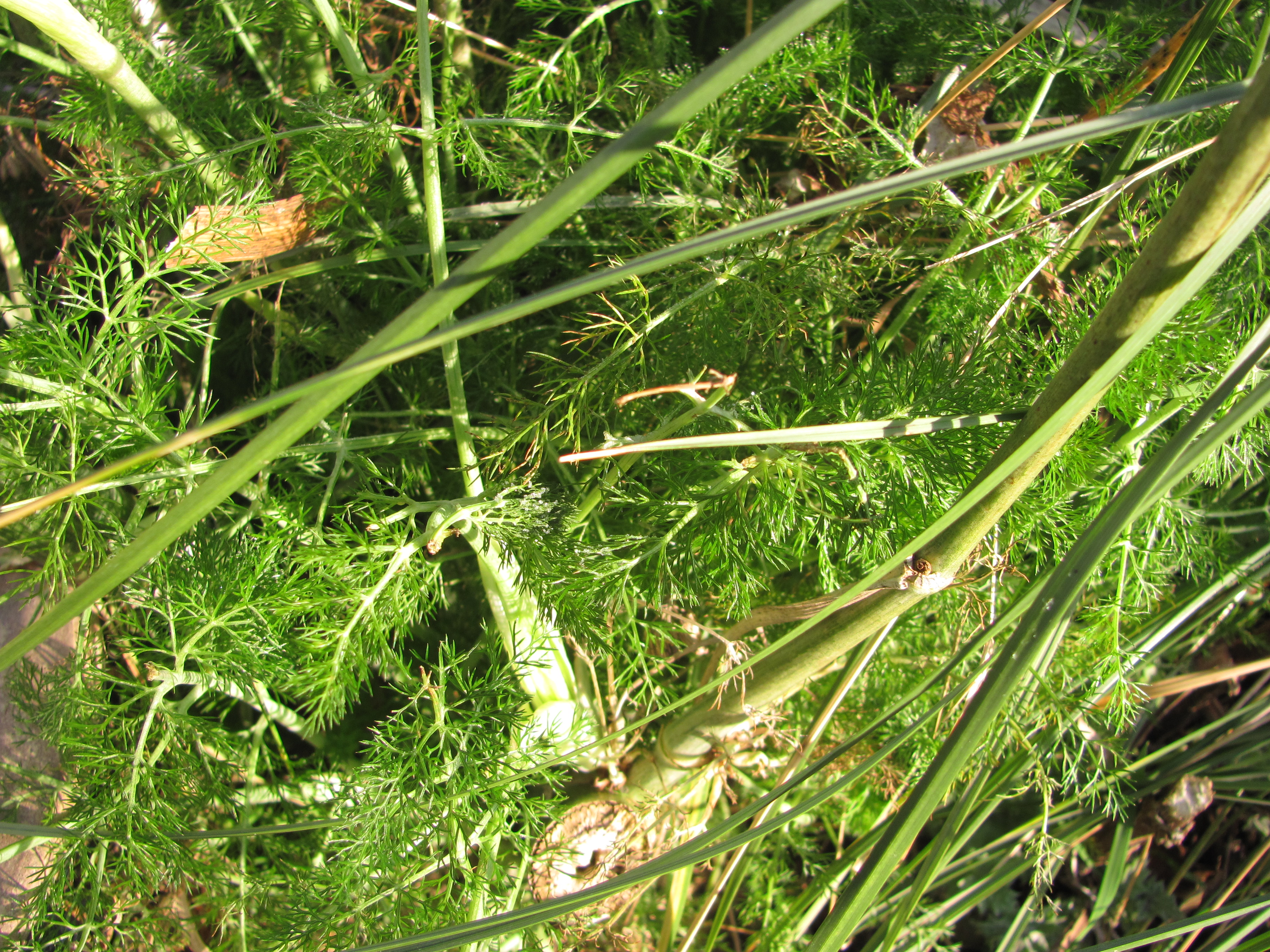
Fennel seed heads still stand strong while its delicate bright green seedlings shelter below.
Sheltering Fennel seedlings.
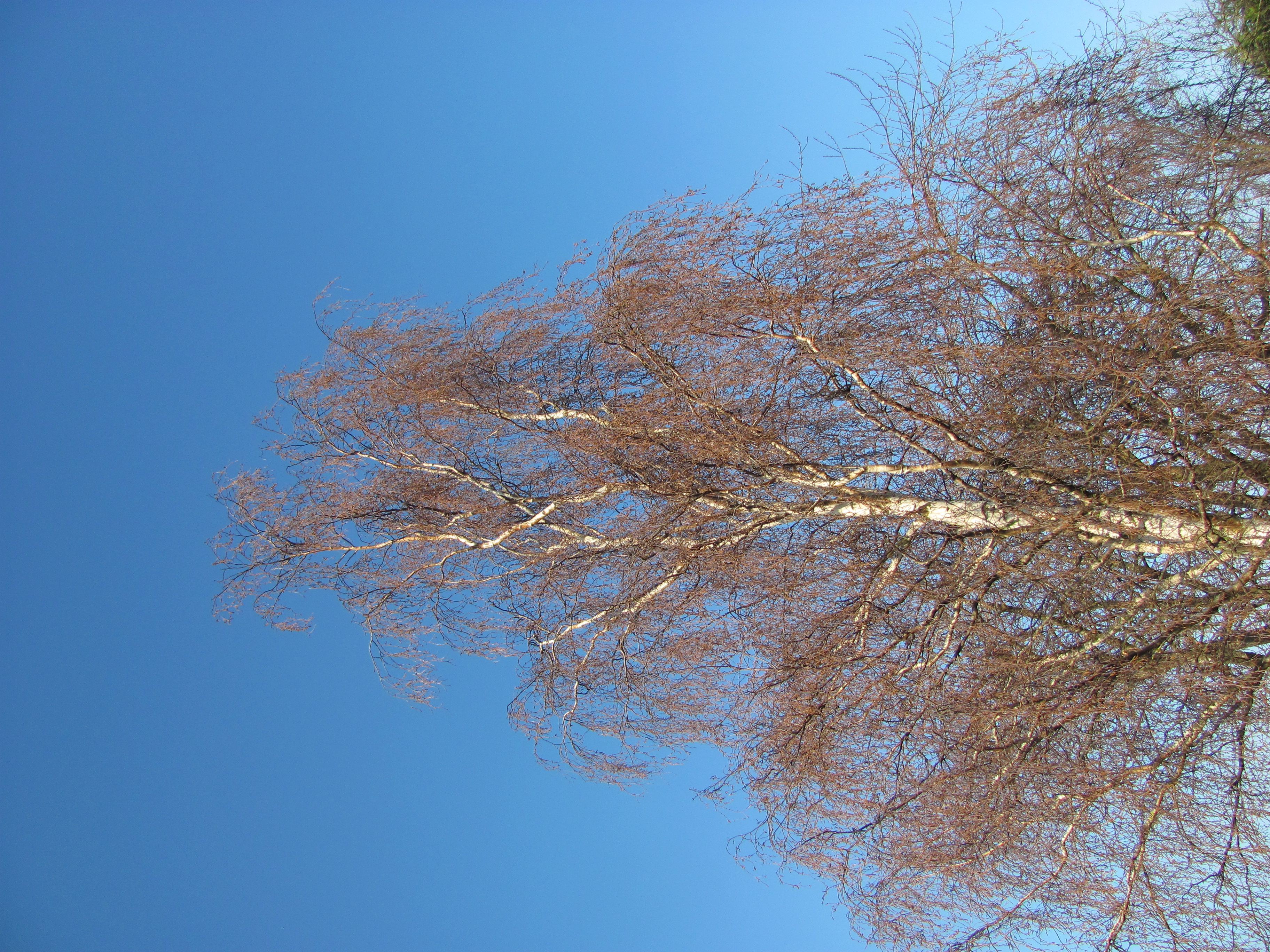
The deep blue February sky increases the purple tints in the tracery of the Birch's finest branches.
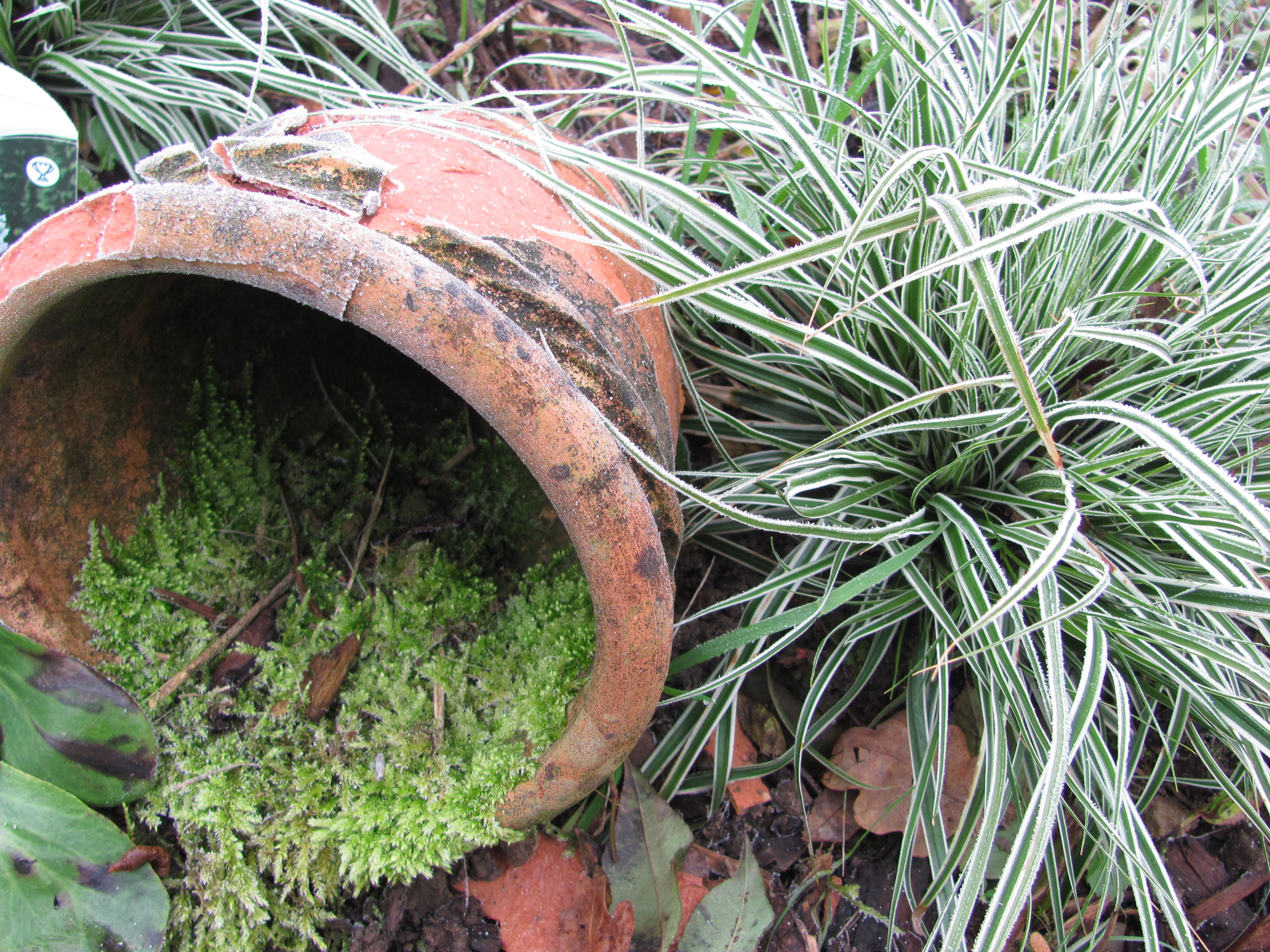
The frost gives an extra line of silver along the leaf edges of these grasses.
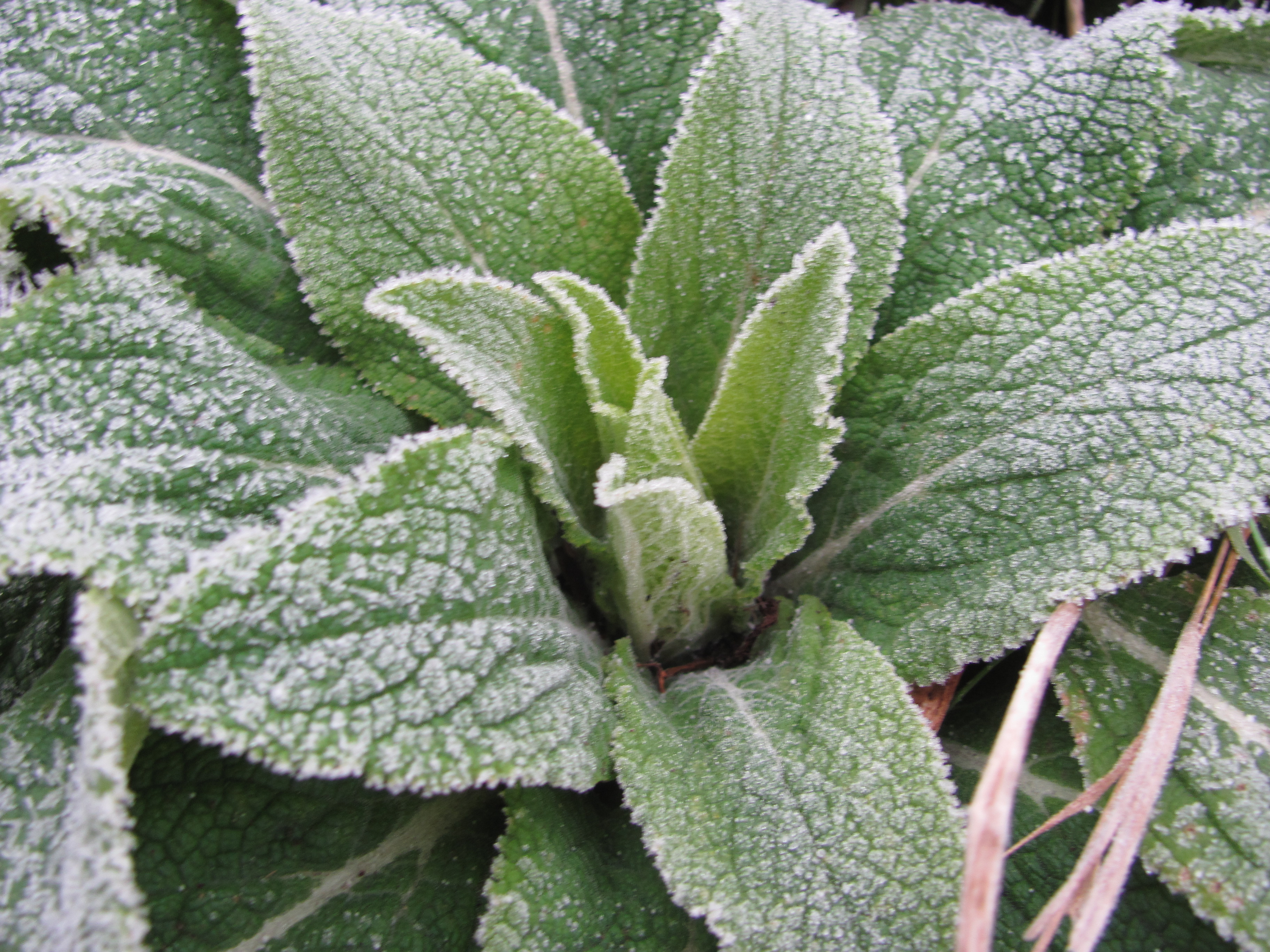
Icing sugared Foxglove leaves.
Frost adds another layer of texture.

Something special happens to light in February. There is something about the quality of light that changes. It makes you feel better. It makes plants look better, their flower colours intensify. If, like both “The Undergardener” and I, you suffer from SAD (Seasonally Affected Disorder) then you will feel and experience this change. You feel the tunnel of winter has brightness at its end. Monty Don, in the book “Fork to Fork” refers to this improvement in light quality, writing that February displays a “tangible promise of a better time” and talks of a “surge of energy and hope running through the garden”. This will be tangible from about the middle of the month but even now the hint of that promise is in the air. It isn’t just S.A.D. gardeners who believe in the wonder of February however, as we have a pair of Blue Tits taking up residence in one nest box and a pair of House Sparrows in another. Spring is in the air! Well, maybe not! No, these two pairs are just like serious sun-bathers on a busy sandy beach, just getting there early to “bag” the best spots.

Nowhere is this new hope more obvious than in the flowering of the bulbs and the bright green signs of new growth of perennials. Snowdrops, Crocus and Aconite, the pearls of the month.

Winter Aconite Gold.
So delicate but so tough.
Marbled foliage of Cyclamen with golden flowers of Winter Aconite
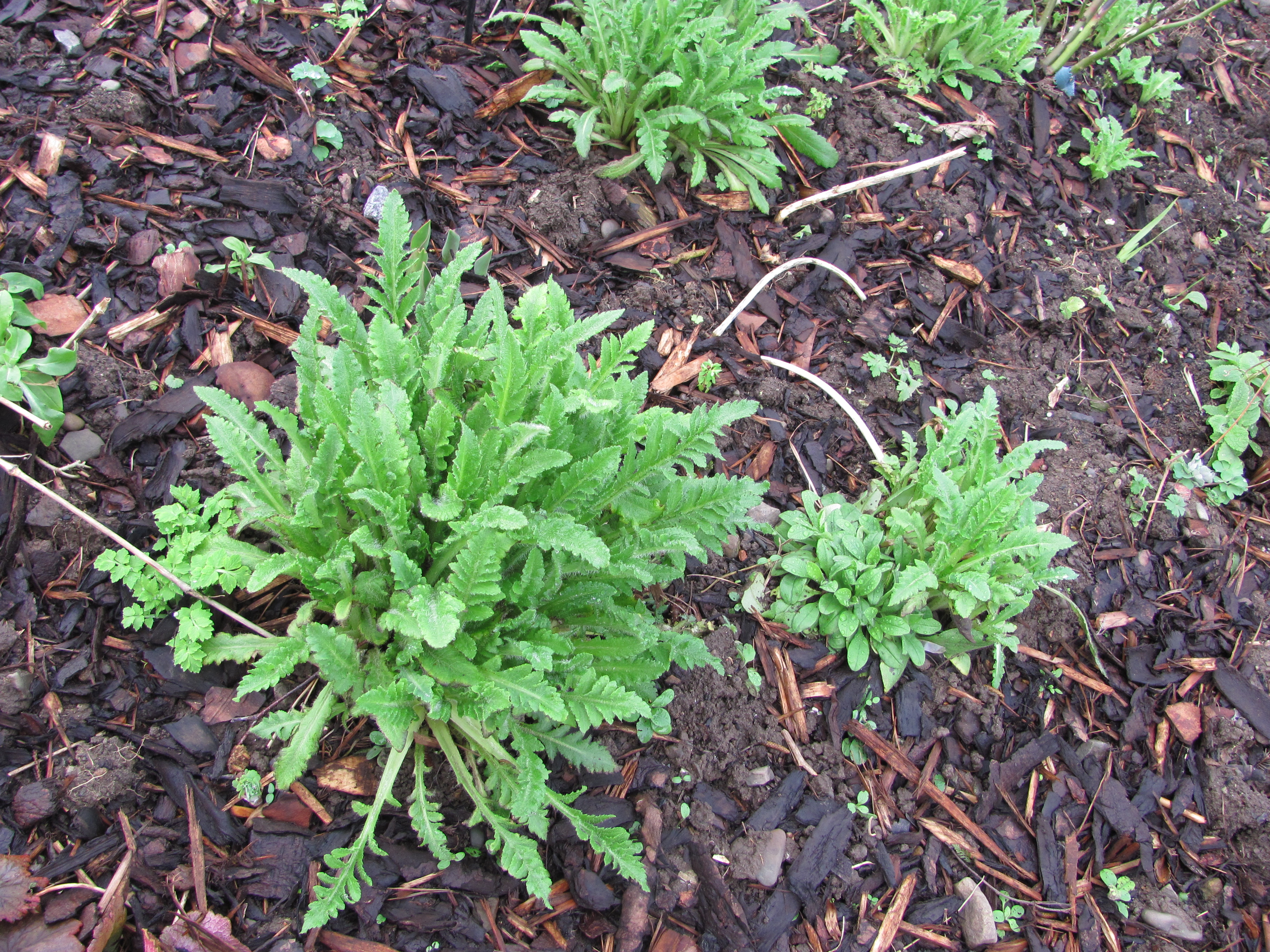
New growth on the oriental poppies - promises!
The leaves of Day Lilies spear the frozen mulch.

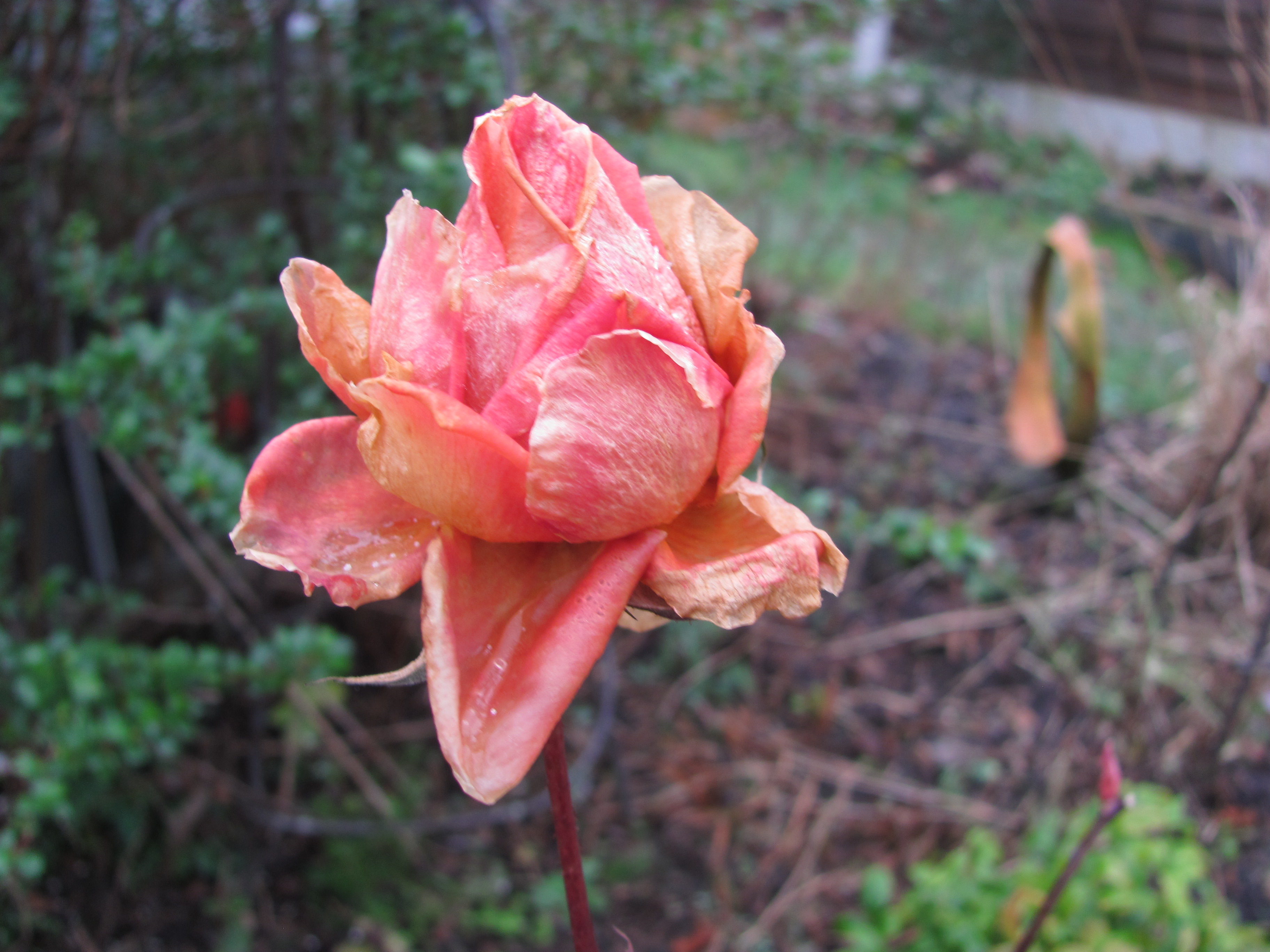
But some new life is out of sinc. Buds appear and surprise. The blue anemone with its metallic sheen on its indigo bud is a special treat and is reflected in the blue berries of the Viburnum davidii. The last of the rose buds however that gave promise of flowers have given in to winter’s grasp.

Out of Season Aconite
Blue pearls.
The promise of a rose flower stopped by the frost.

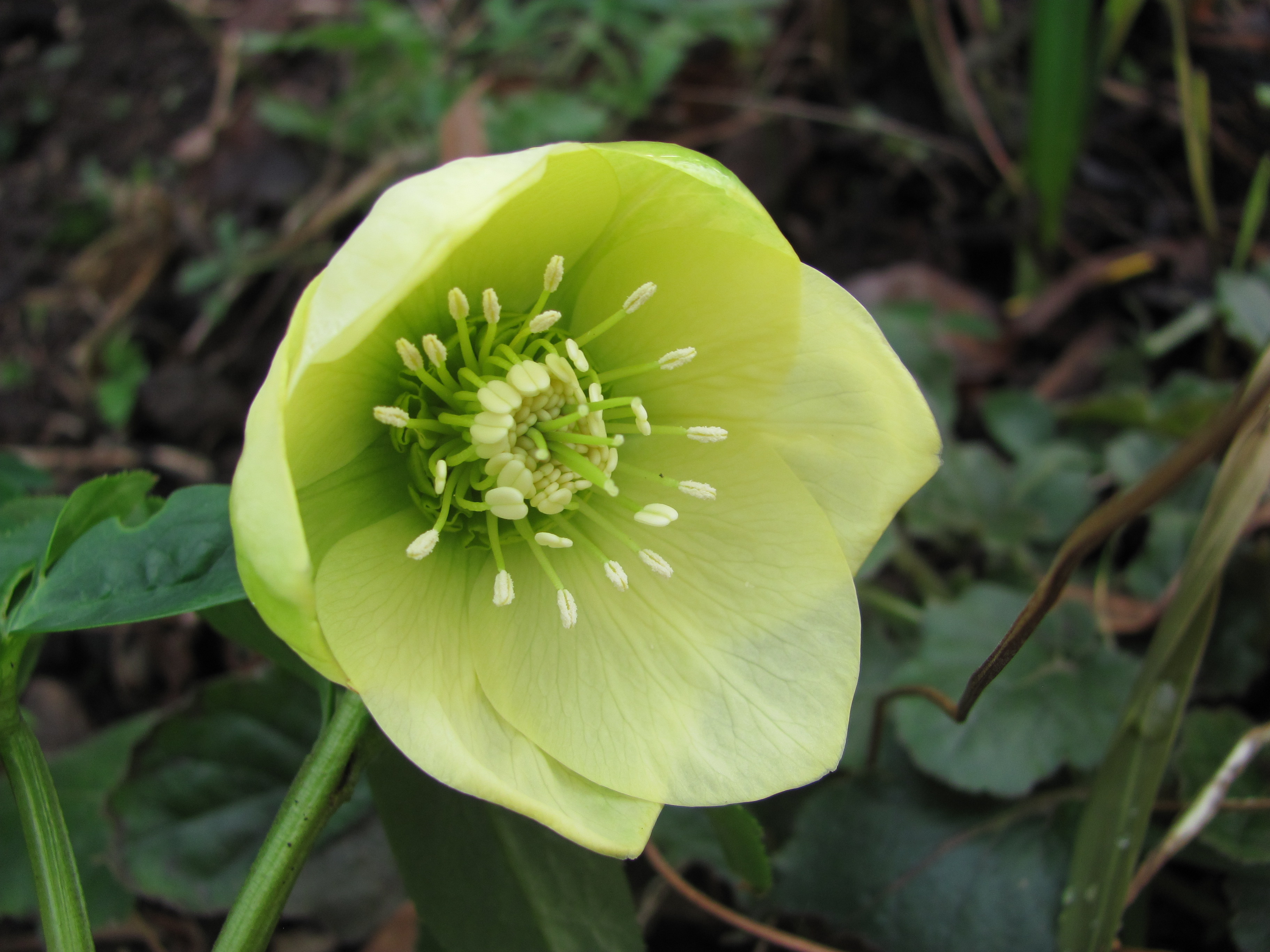
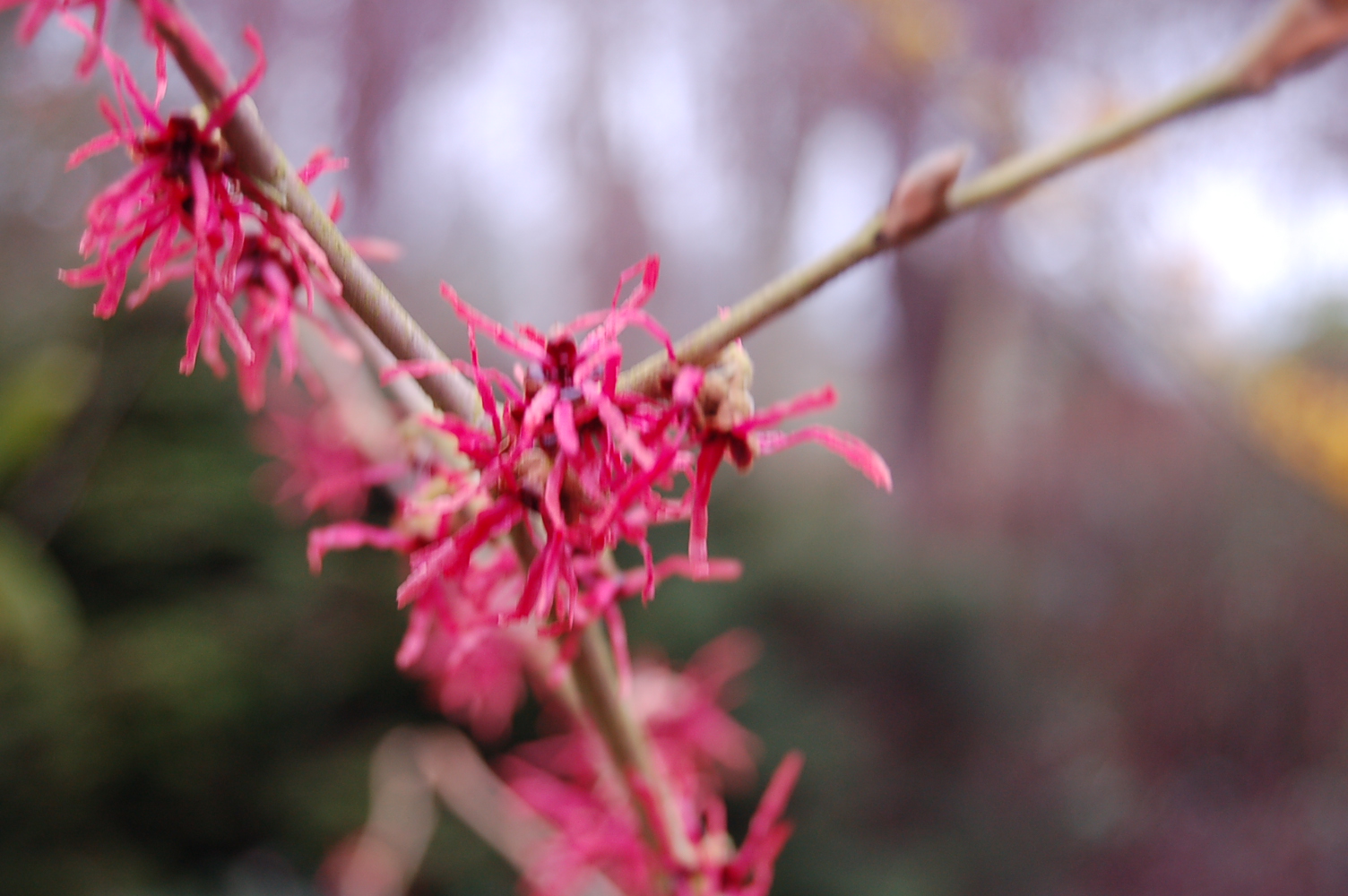
No February garden can be complete without Hellebores so here are just two of ours. But my true favourites to finish our February wander around our garden are the Witch Hazel “Jelena” and Cornus mas.

Upright growth and rich reds and purples make this a special Hellebore.
Perfect primrose yellow cup.
Witch Hazel "Jelena"
Cornus mas, the Cornelian Cherry, a modest beauty.
Categories
garden photography gardening hardy perennials ornamental trees and shrubs photography shrubs town gardens winter gardens

Witch Hazels at Swallow Hayes – a garden visit in January (part two)

A door into the children's den.

And so we continue our gentle cold wander around the wintry splendour of Swallow Hayes …….

The promise of Viburnum bodnantense flowers.
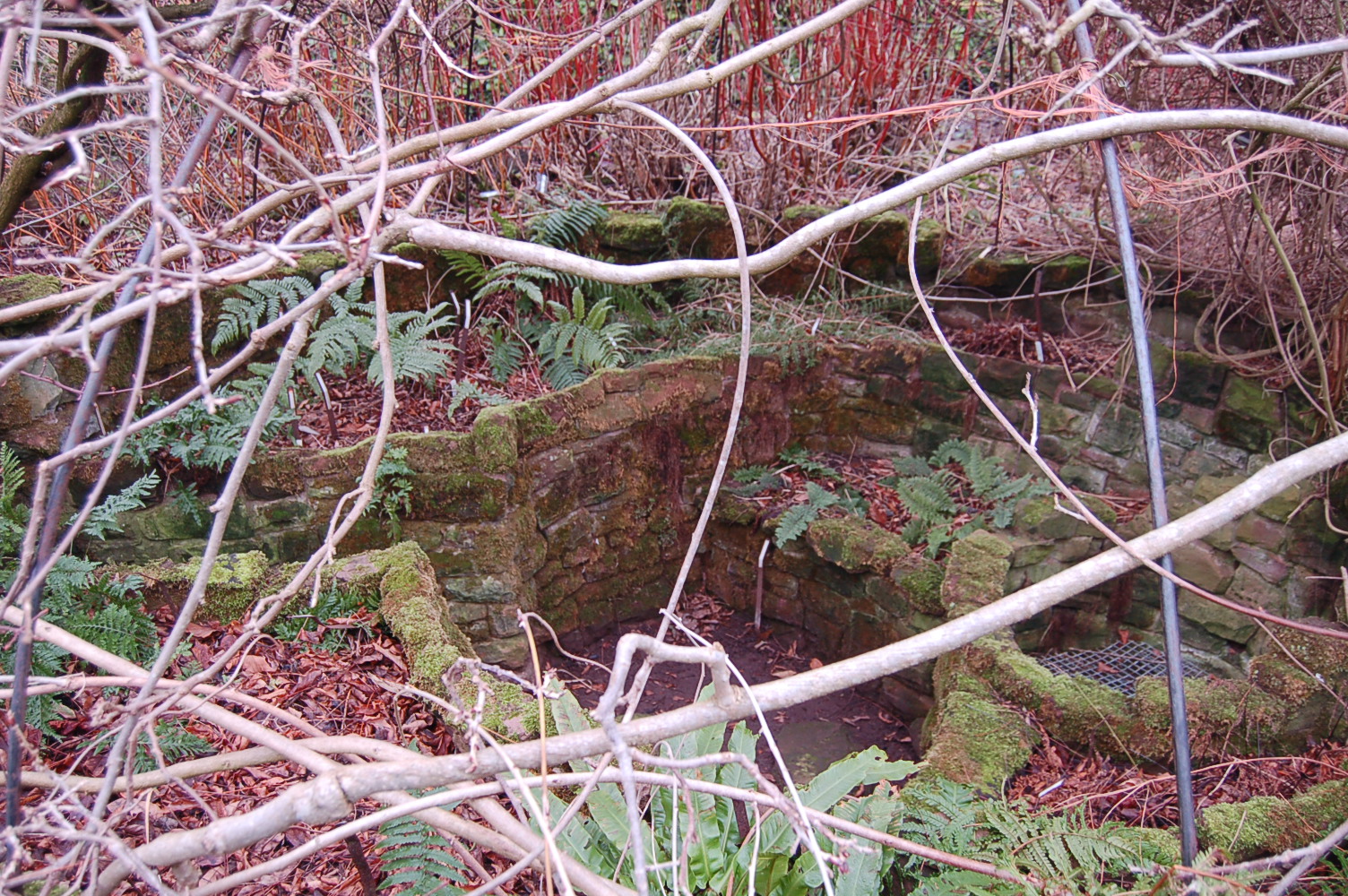
A secret, sunken garden for ferns shaded by a roof of climbers.
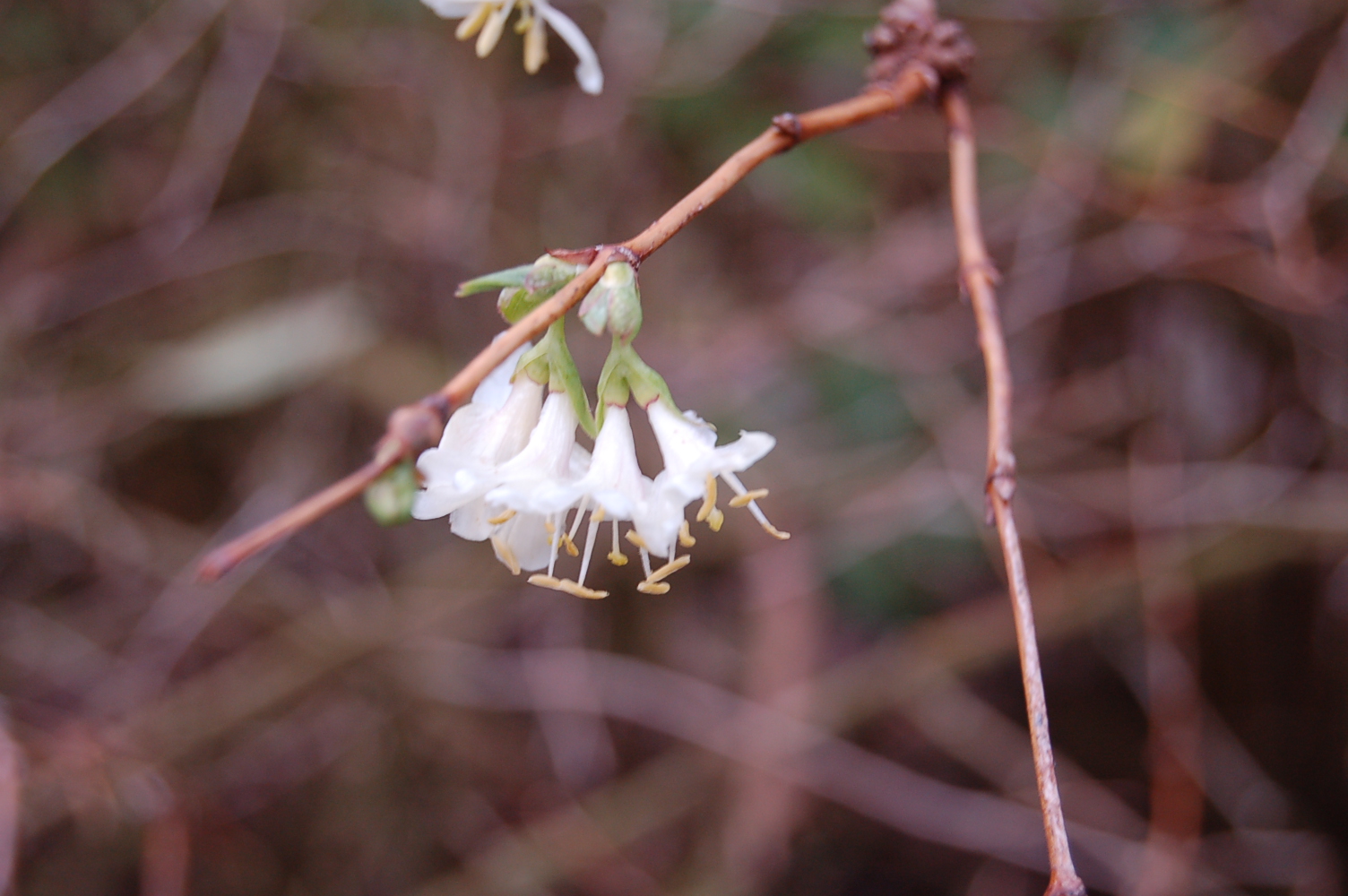
Sweetly scented winter honeysuckle.
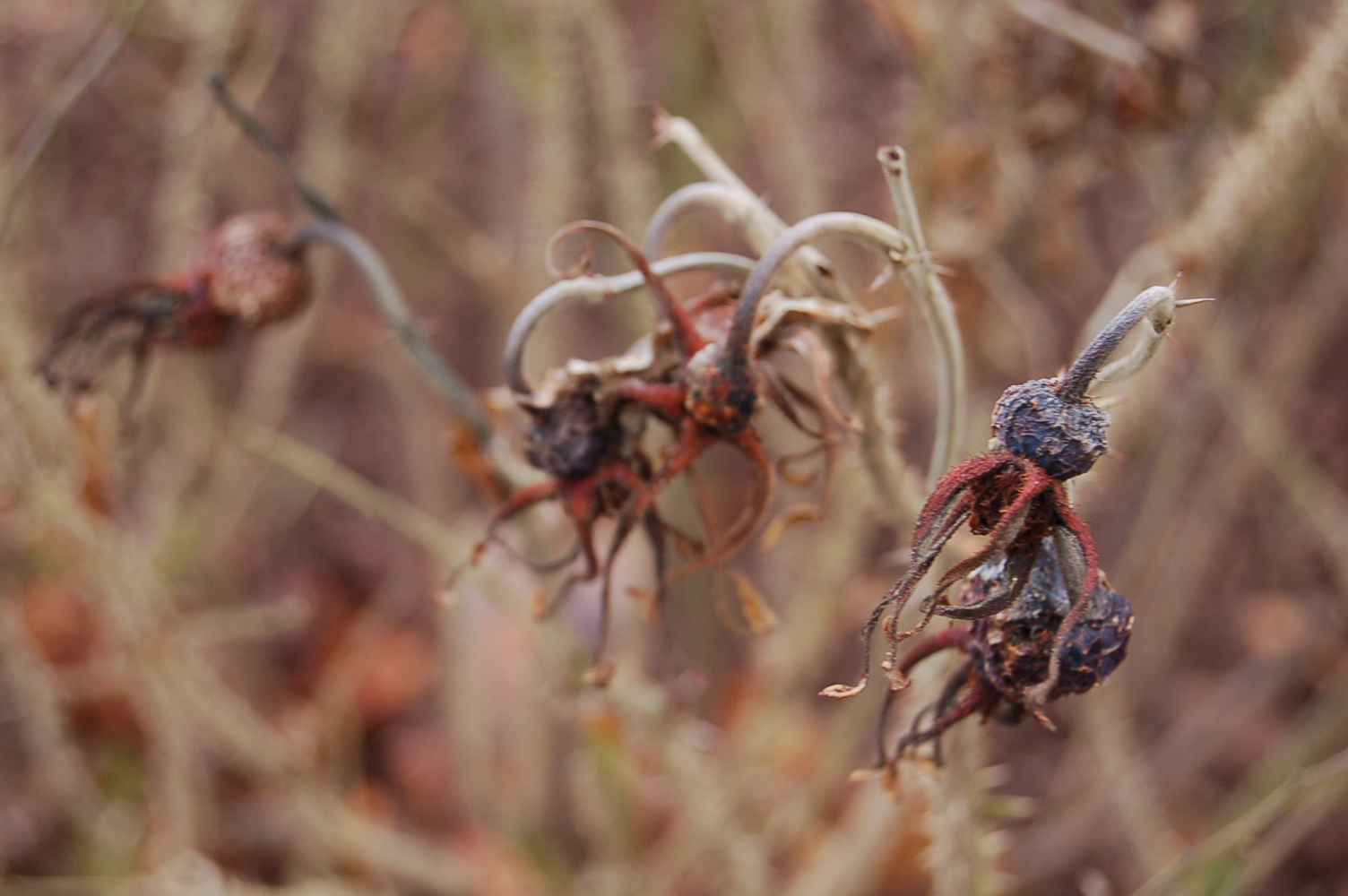
Old rose hips curled and desiccated.
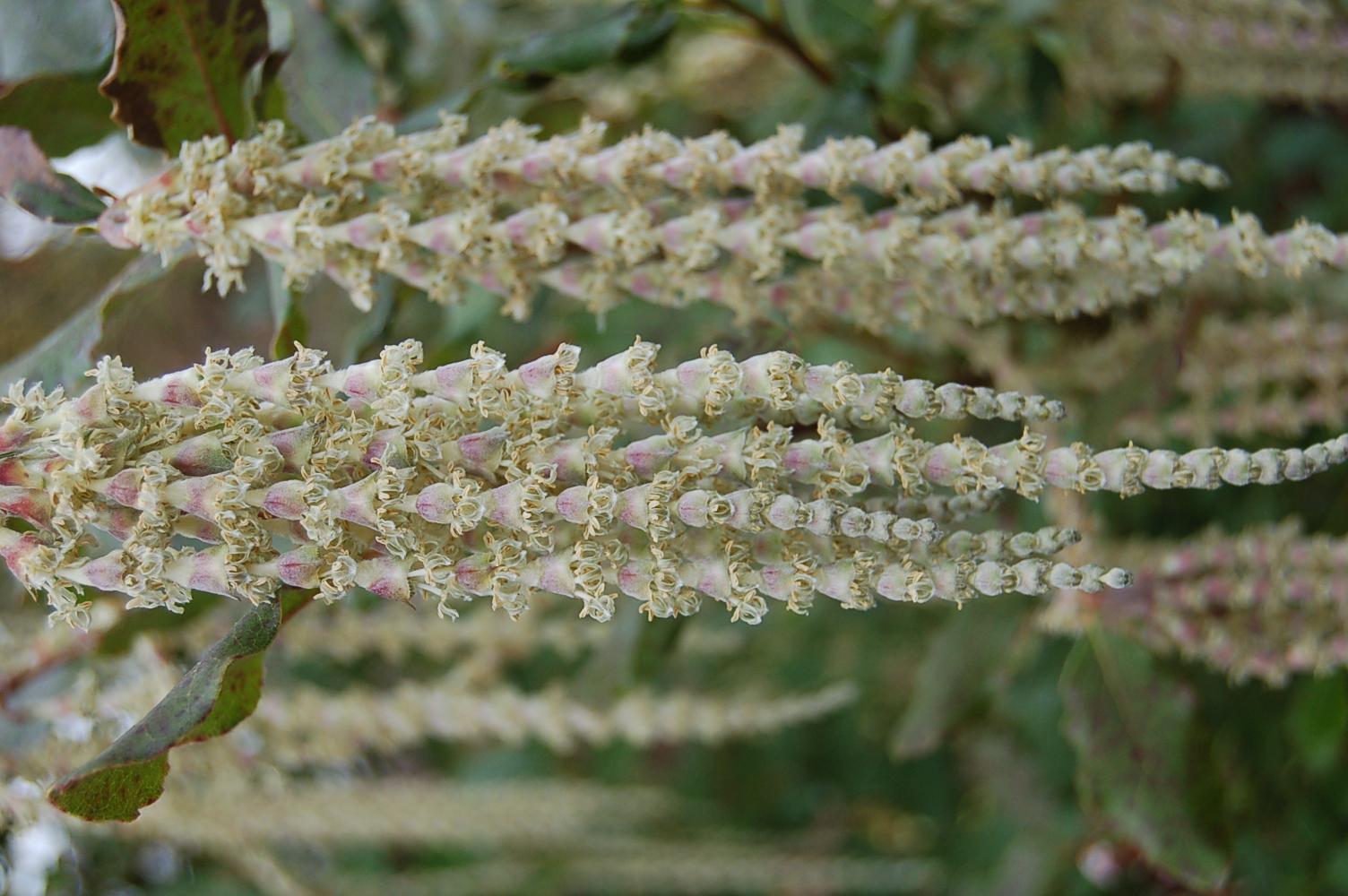
The unusual combination of pale pink and green together in the tassels of Garrya elliptica.
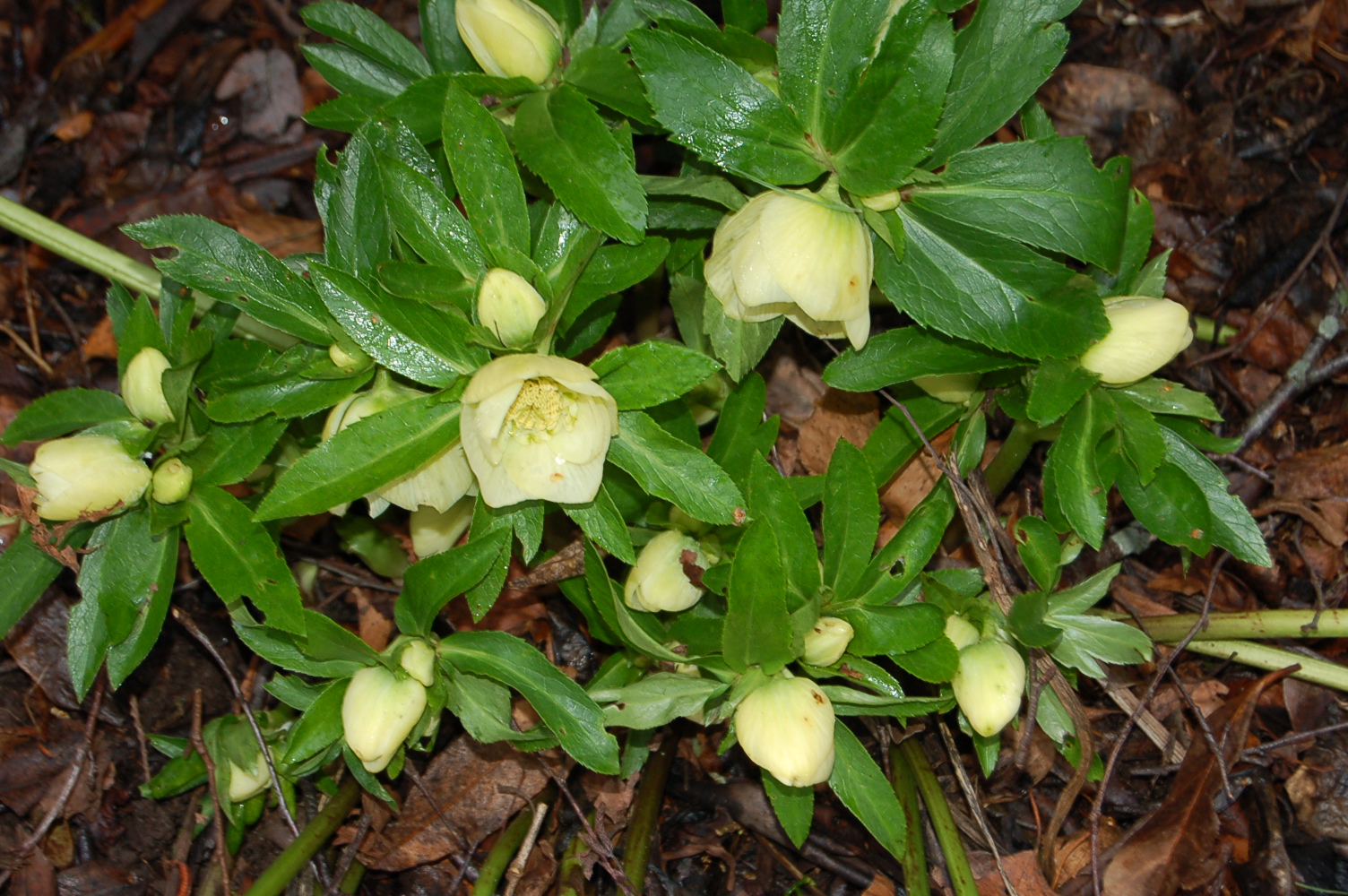
Primrose yellow cup-shaped flowers of a Hellebore.
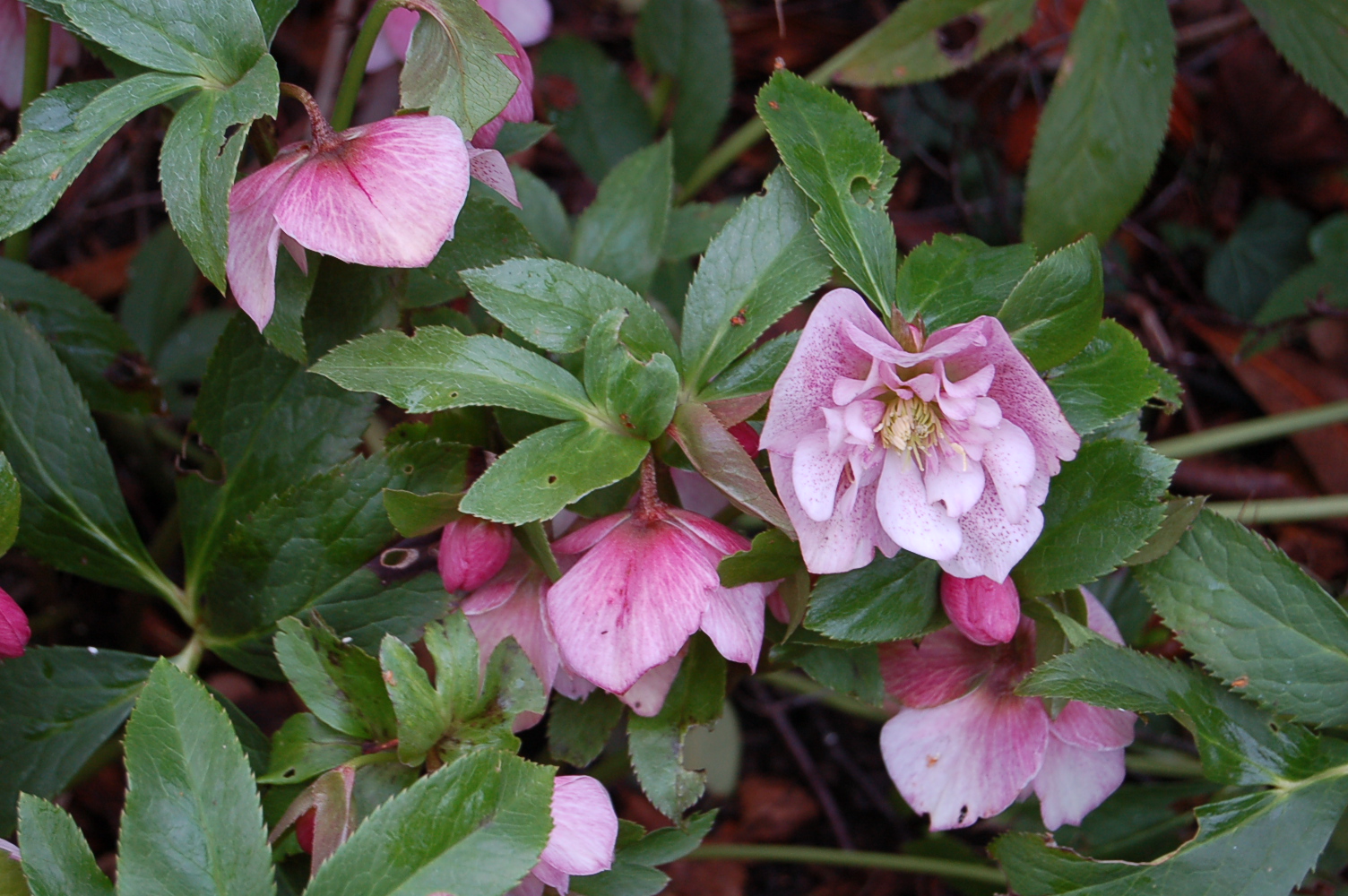
This pink-flowered Hellebore invites you to turn its flowers over for a close look inside.
I am not a fan of Hellebores with double flowers but I was attracted to the colour of this one.
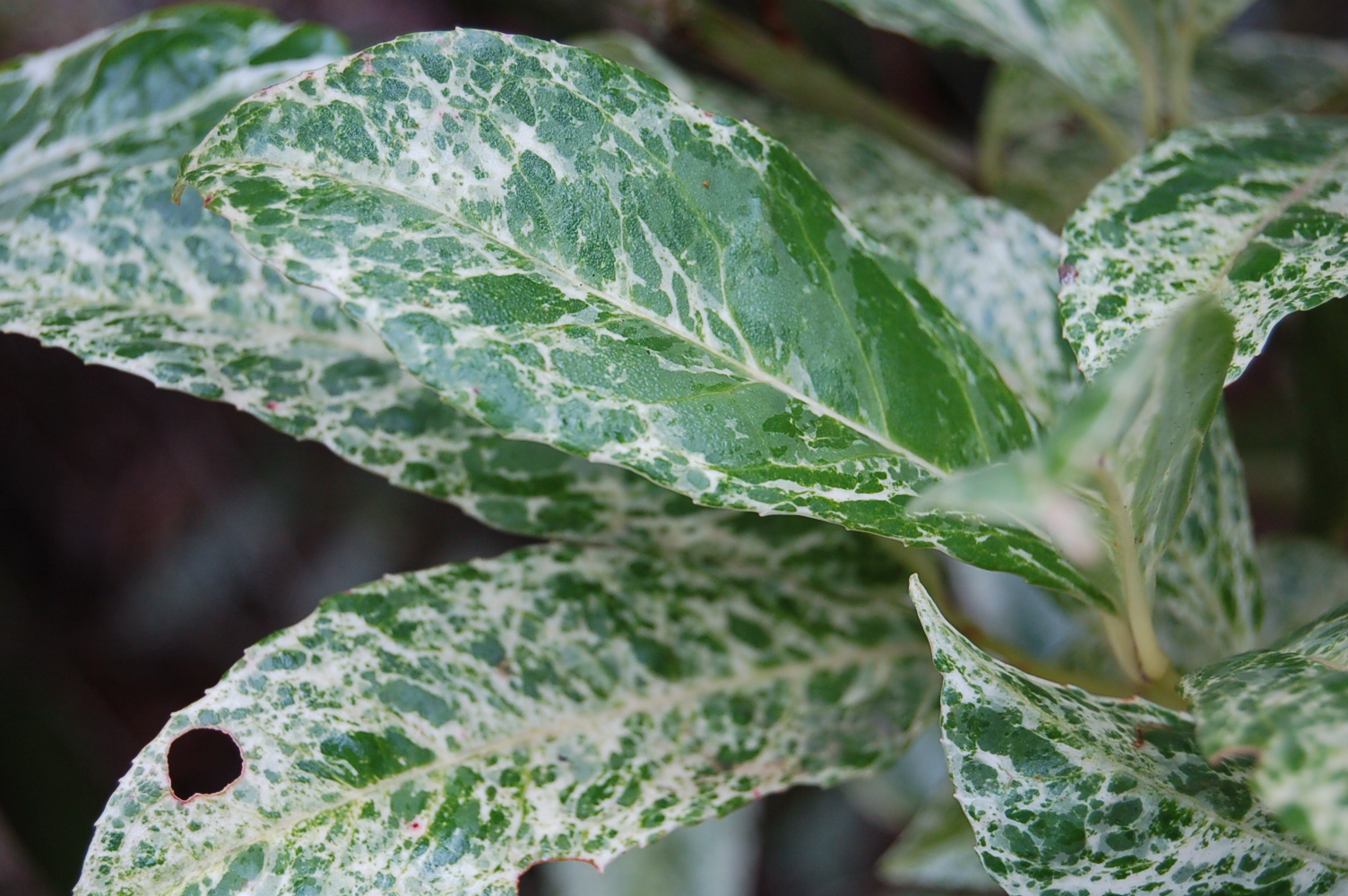
Silvery marbled variegation like a spider's web.
Paint splattered variegation.

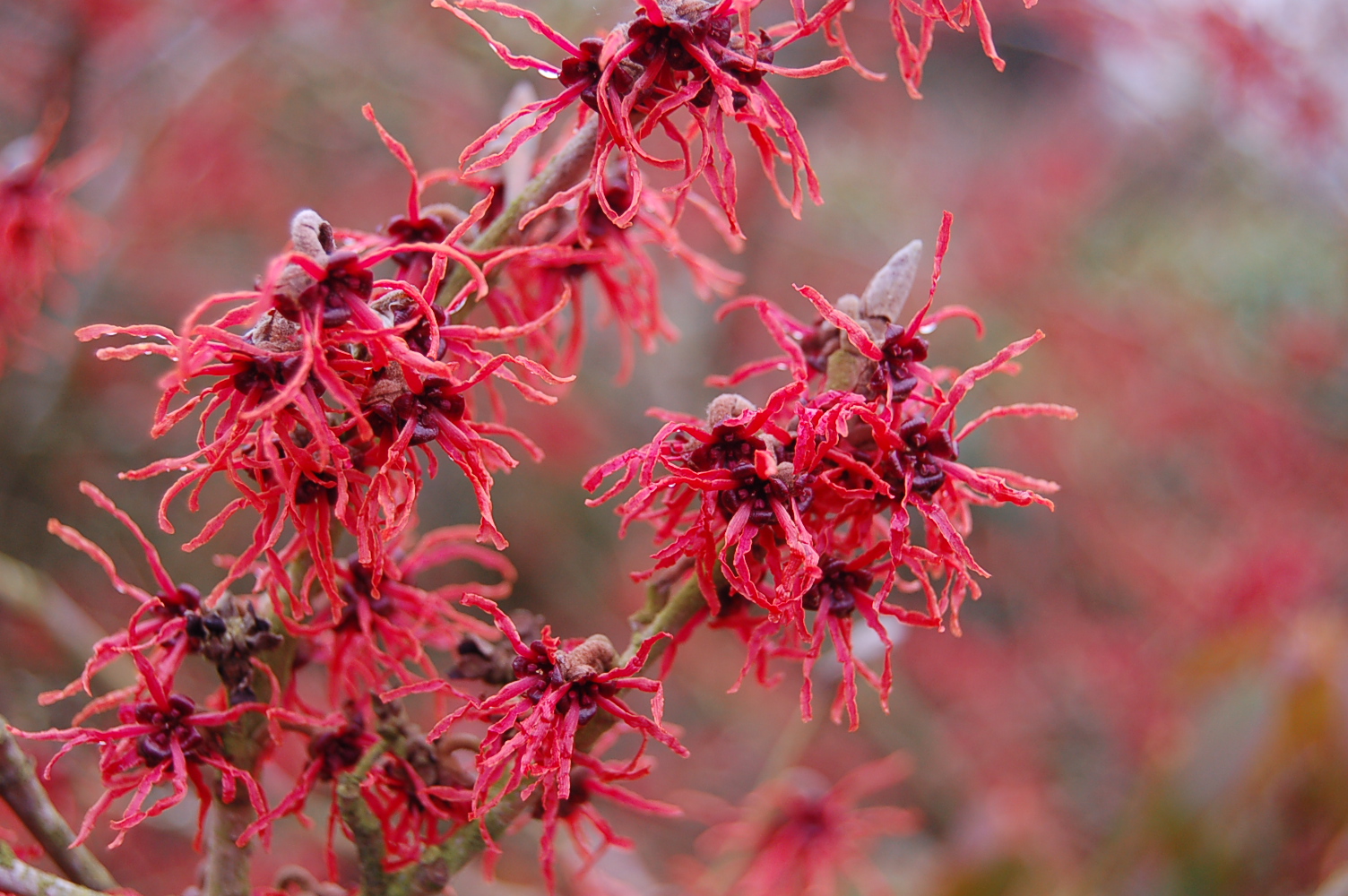
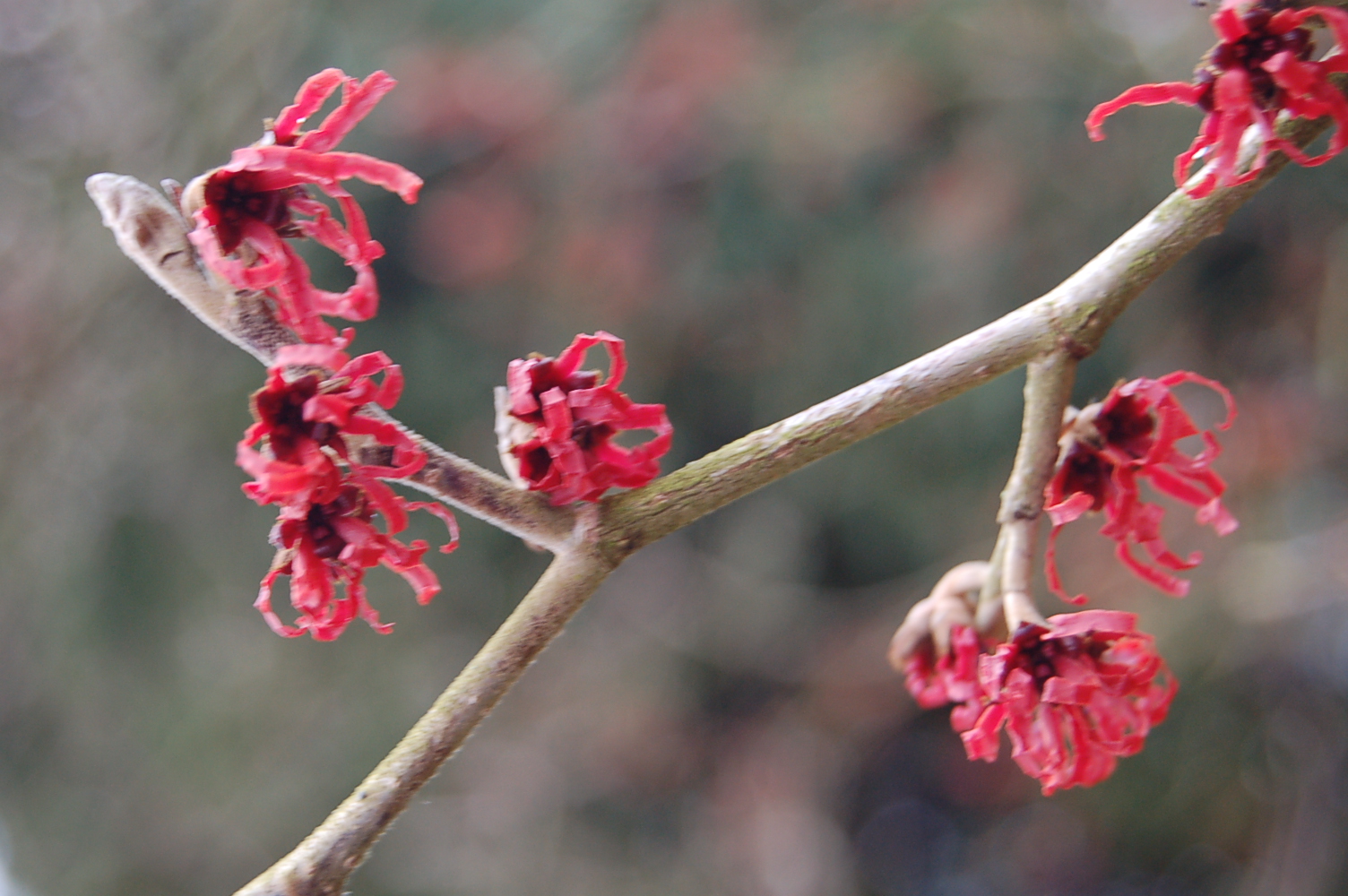
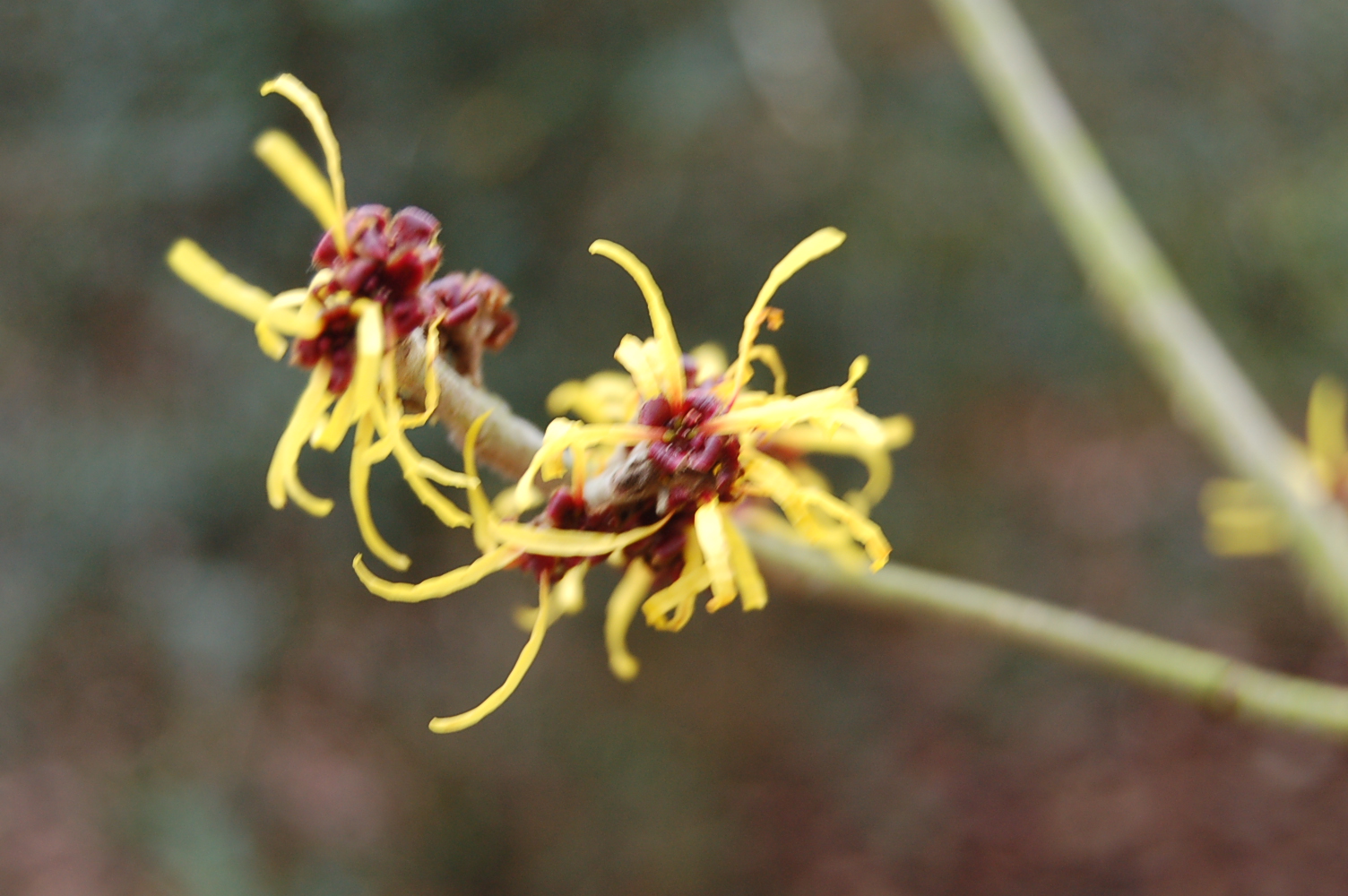
And now to those Witch Hazels! These are not Hazels at all, but related to Parrotias, Fothergillas and of course the Sycopsis we saw in the first Swallow Hayes blog. Their unusually shaped flowers are in every shade of yellow, orange and red and give warming scents in the winter garden. Witch Hazels are well-known for their medicinal properties and are used in aftershave as well as in the treatment of bruises and insect bites. So, beautiful and useful!

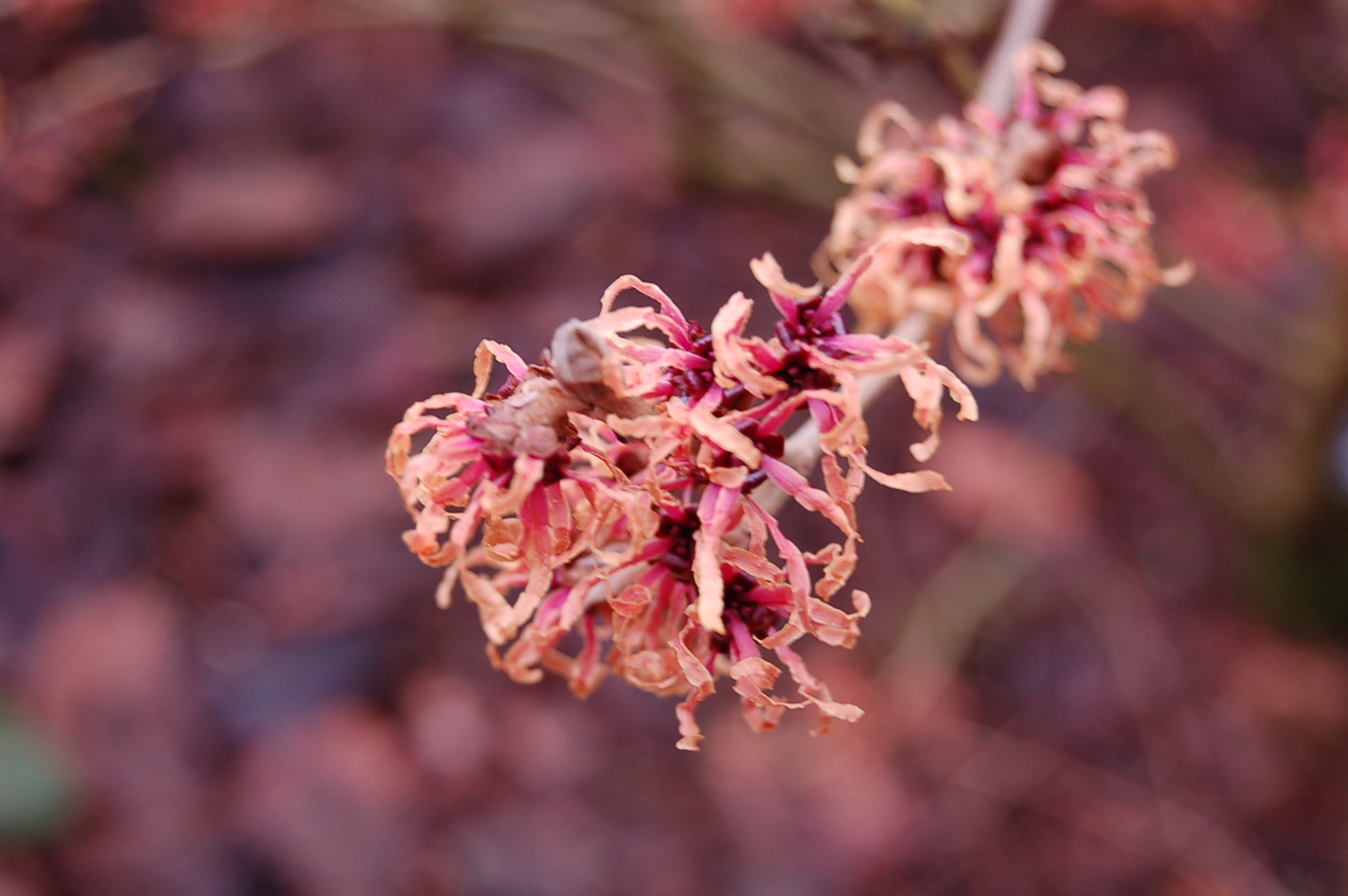
The flowers are made up of long, thin strips of petals like curling ribbons or spiders, and appear on bare stems. Several Witch Hazels available to us were bred in Kalmhout in Belgium and the first photo shows one with the unglamorous name of “Kalmhout 999”. Kalmhout is an arboretum in Belgium run by Jelena and Robert de Kelder. Jelena has given her name to my favourite Witch Hazel which you will see in my blog “A Wander around the Garden in February” which I will post in the next few days. Two more of their developments are “Diane”, named after their daughter and “Livia”, named after their granddaughter.

This Witch Hazel matches its colour to its scent, the flowers coloured orange and emitting an aroma of oranges.
The aptly named "Ripe Corn".
"Ripe Corn", "Livia" and "Strawberries and Cream"
Livia
Strawberries and Cream
Orange Peel
Advent
Rubin
Diane
Jermyns Gold
Categories
garden photography gardening hardy perennials ornamental trees and shrubs photography roses shrubs trees winter gardens

Witch Hazels at Swallow Hayes – a garden visit in January (part one)

OK, so January isn’t a month normally associated with visiting gardens, but Swallow Hayes is different. It’s main feature is a huge collection of Witch Hazels, more than 70 types. The day of our visit was cold – teetering on freezing point all day – and a thin mist hung low over the land made cold by the heavy overnight frost. We wrapped up warm, wandered around this garden of winter, our fingers with just enough feeling left in them to take photos.

The garden here covers just two acres but they are two packed acres. There is so much to see here in January, leaf colour and variegation, blooms with scent to delight and patterns of tree bark for the eye to capture and the fingers to explore.

Felled by wind this branch of the blue-grey Cedrus atlantica glauca shone against the debris under the tree.
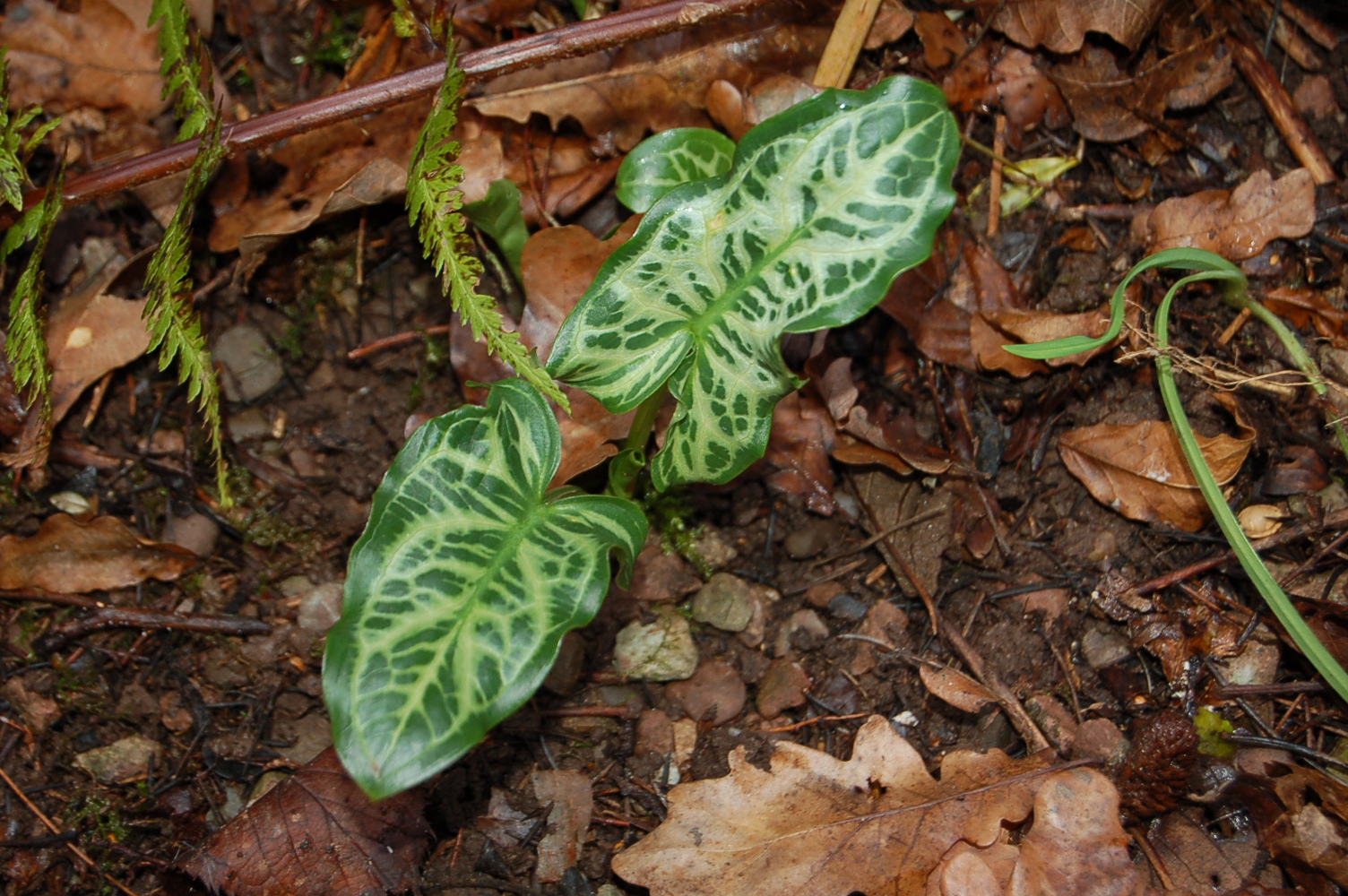
Arum italicum marmoratum show leaf variegation at its best.
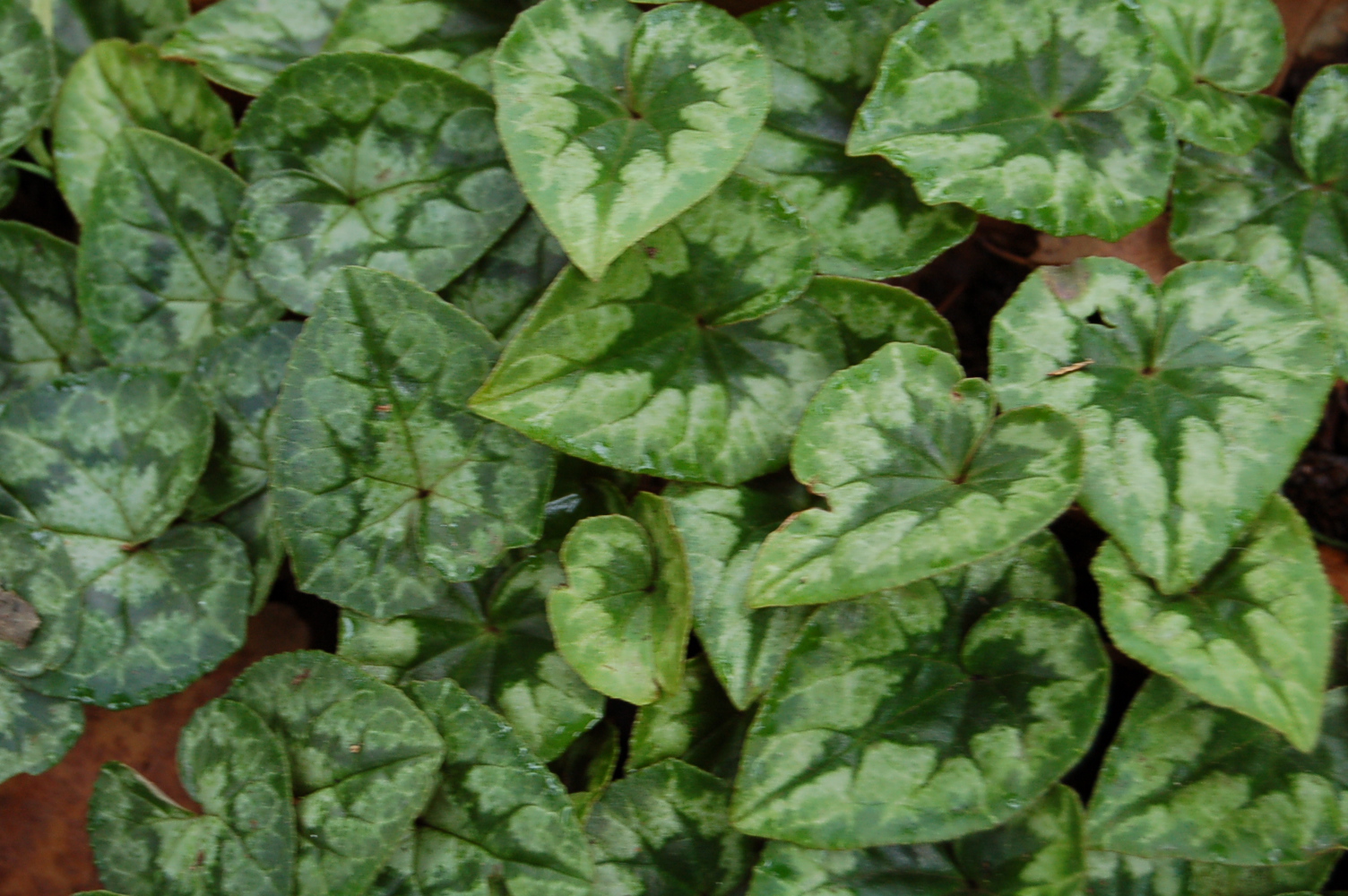
A clump of beautifully marked Cyclamen enjoying the shade of a conifer.
I am not a fan of conifers but I do appreciate them on dark winter days.
Delicate deep pink berries of Berberis wilsoniae.
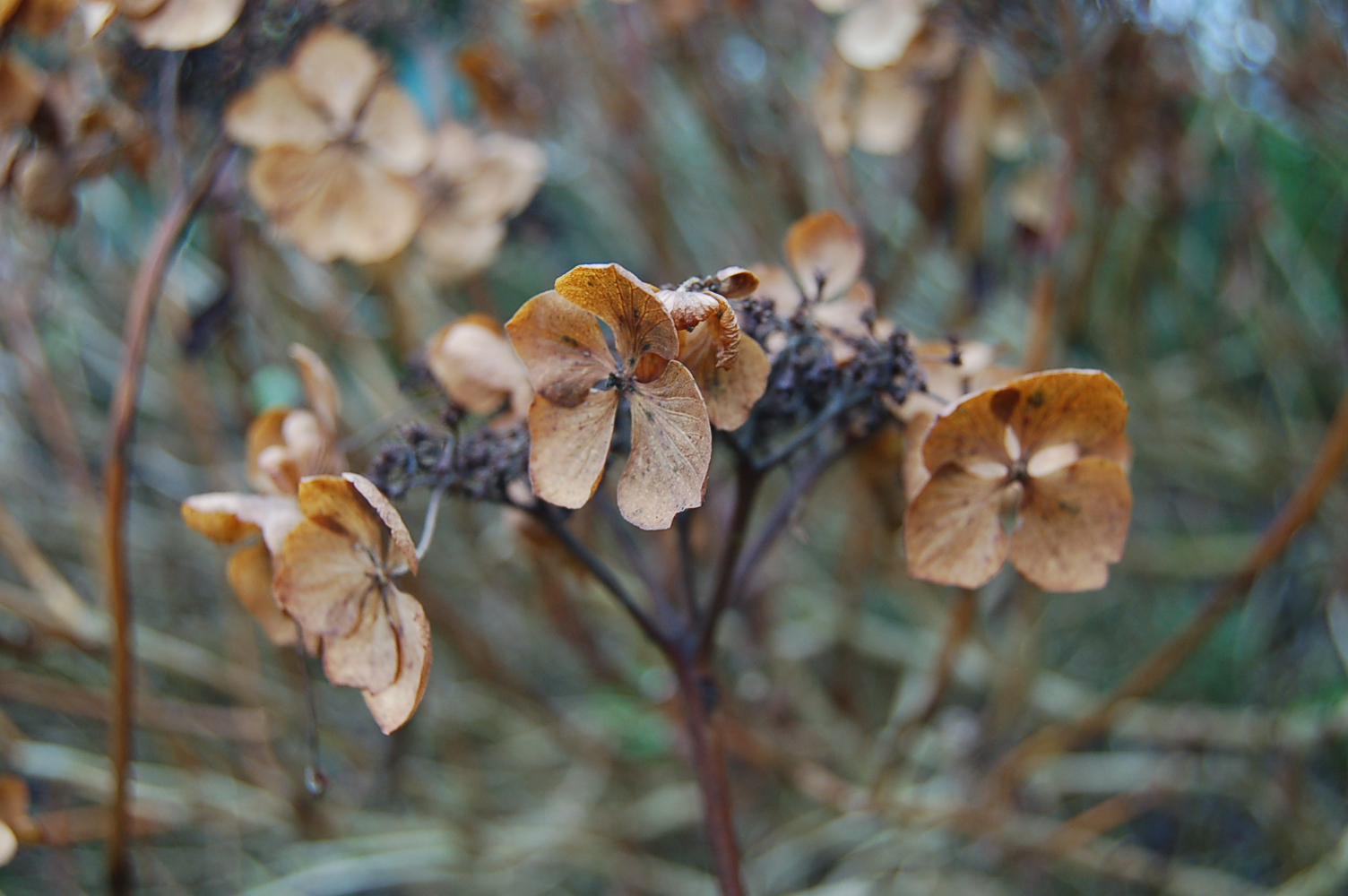
Last year's Hydrangea flowers display structure and colour.
Sparse berries hide amongst the strongly spotted variegated foliage of this Laurel.

Tree bark adds interest in winter gardens and here at Swallow Hayes Birch and Prunus add colour and texture.

Peeling Birch bark reveals pink below the silver.
Silky smoothness in deep shades of russet .
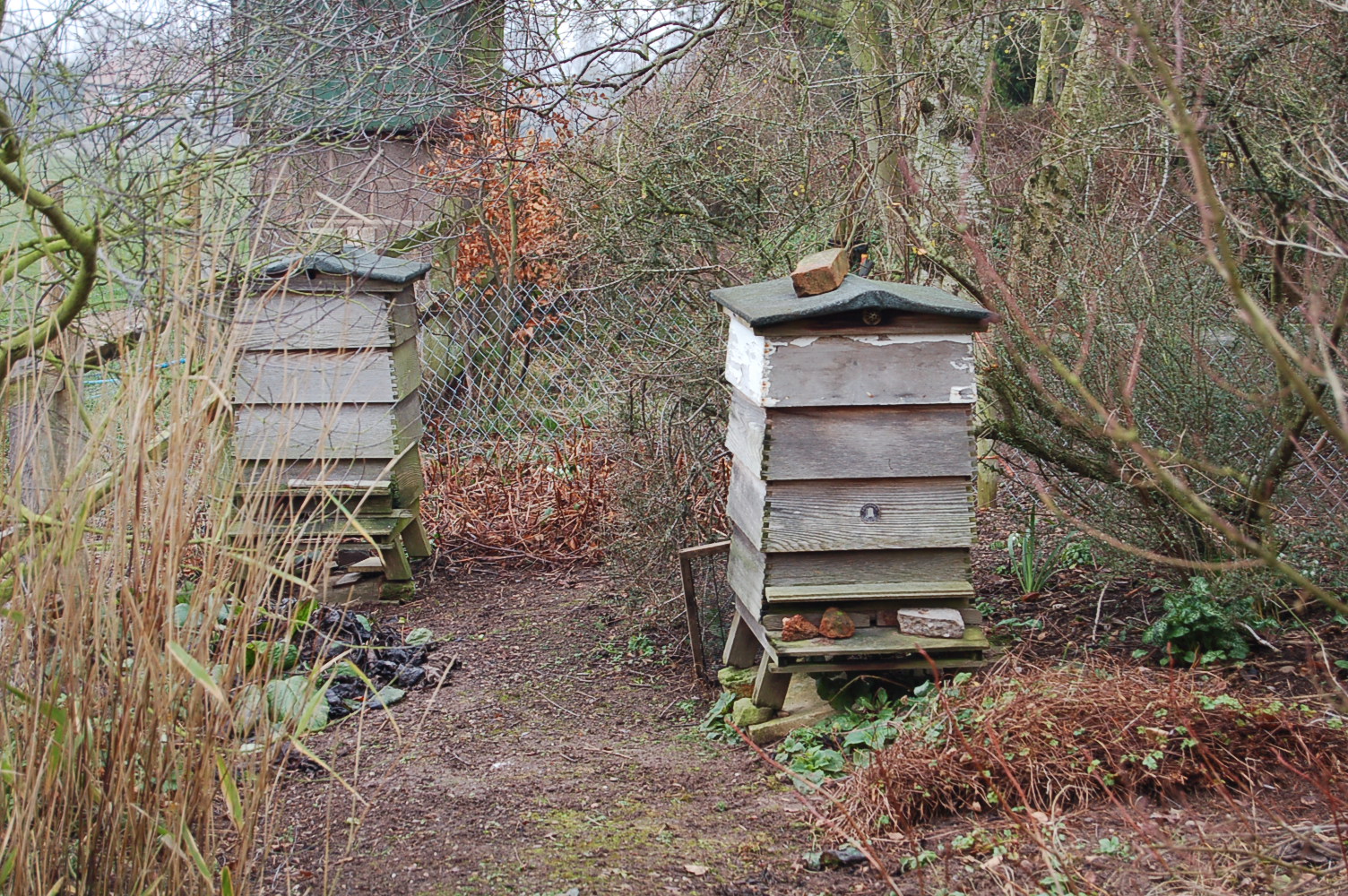
Swallow Hayes' bees snug and safe in their hives.
A relative of the Witch Hazels, this Sycopsis was unknown to us.
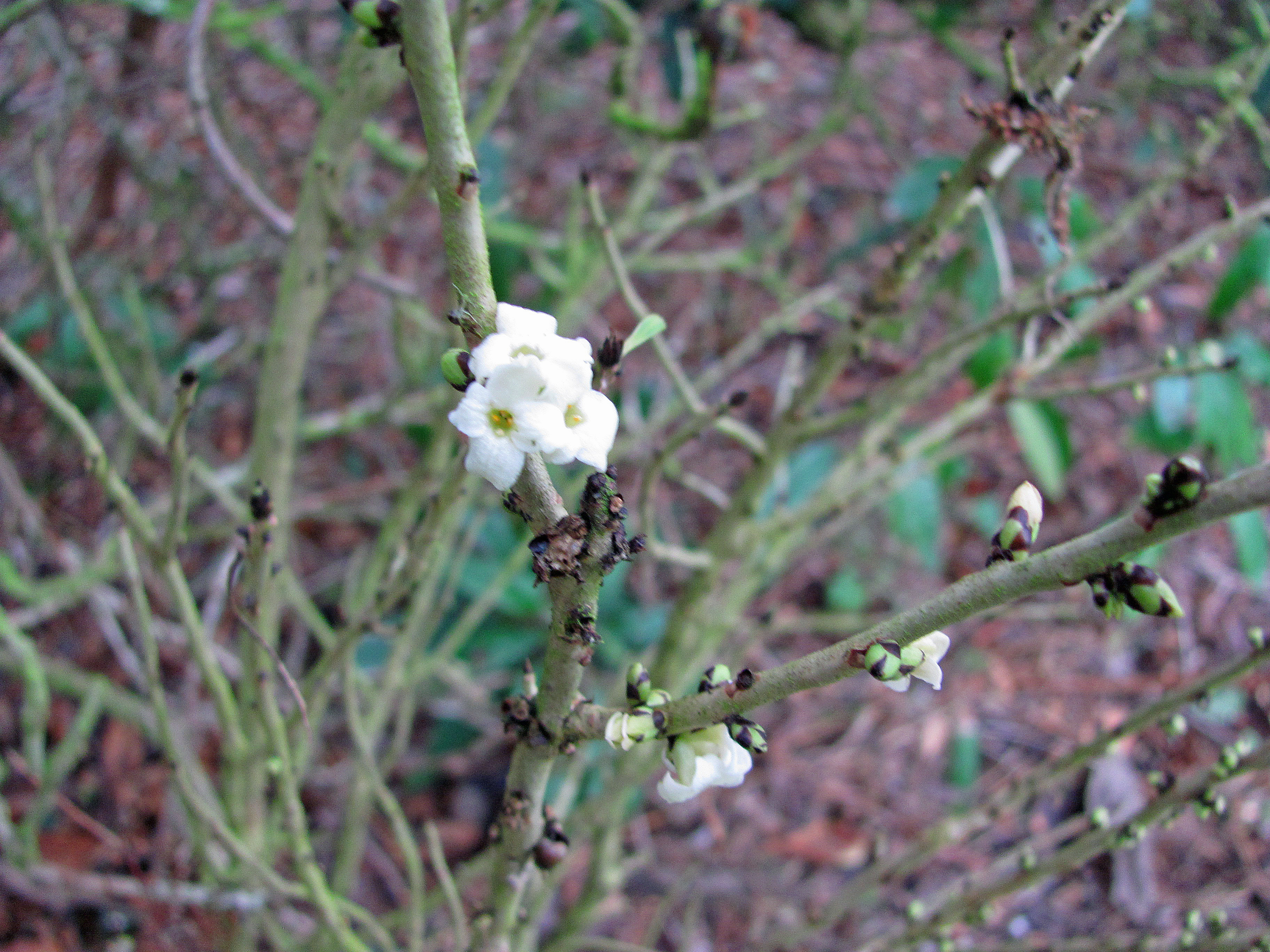
Unusual white flowered Daphne
Lichen on Magnolia branches.
Fresh shining purple growth of a hellebore looks full of promise.
Fresh berries on an unusual ivy.
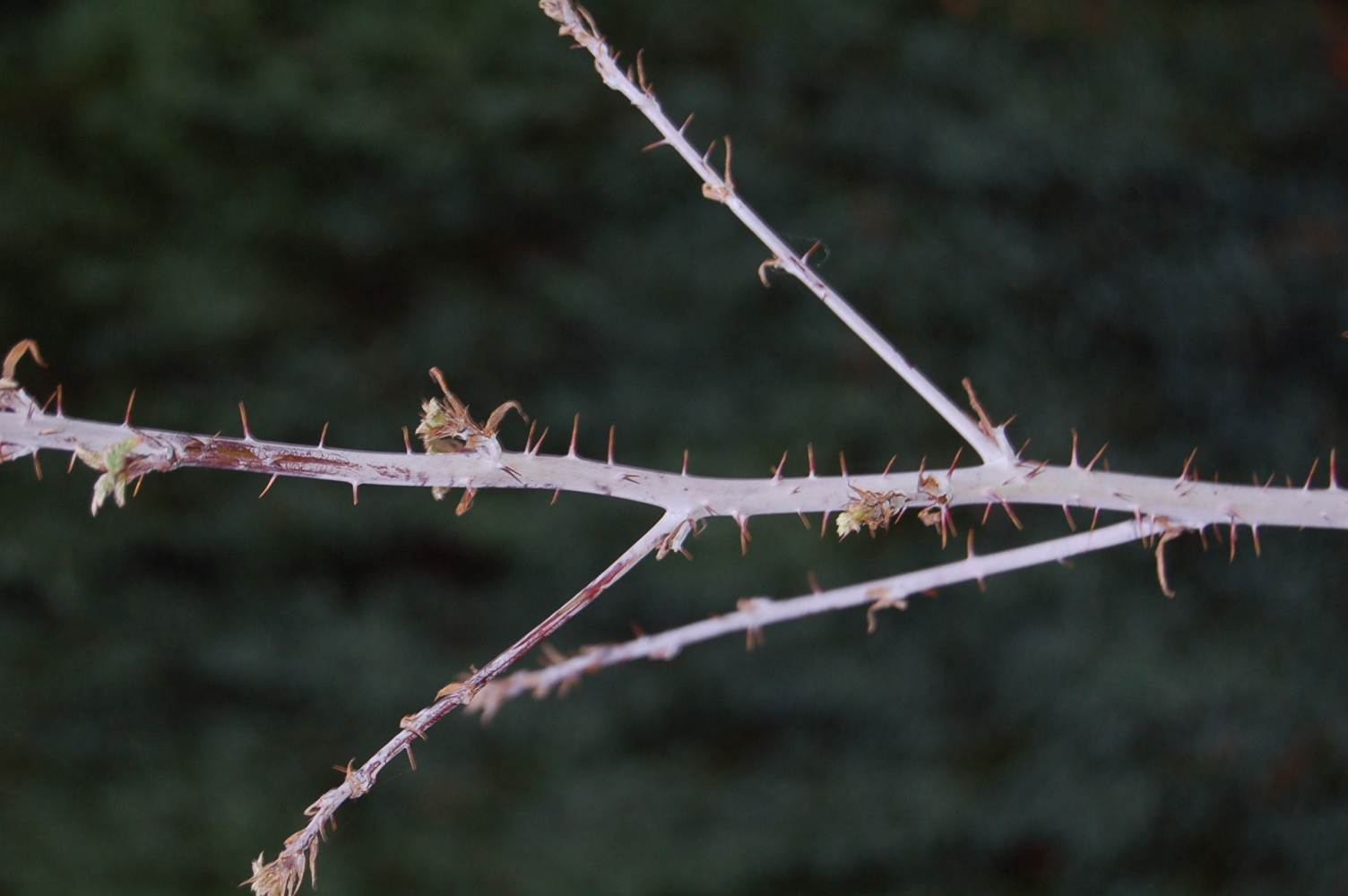
Startling white stems of Rubus.
Long thin Euphorbia.
Categories
gardening hardy perennials ornamental trees and shrubs shrubs

Impulse buying at nurseries – is this true retail therapy?

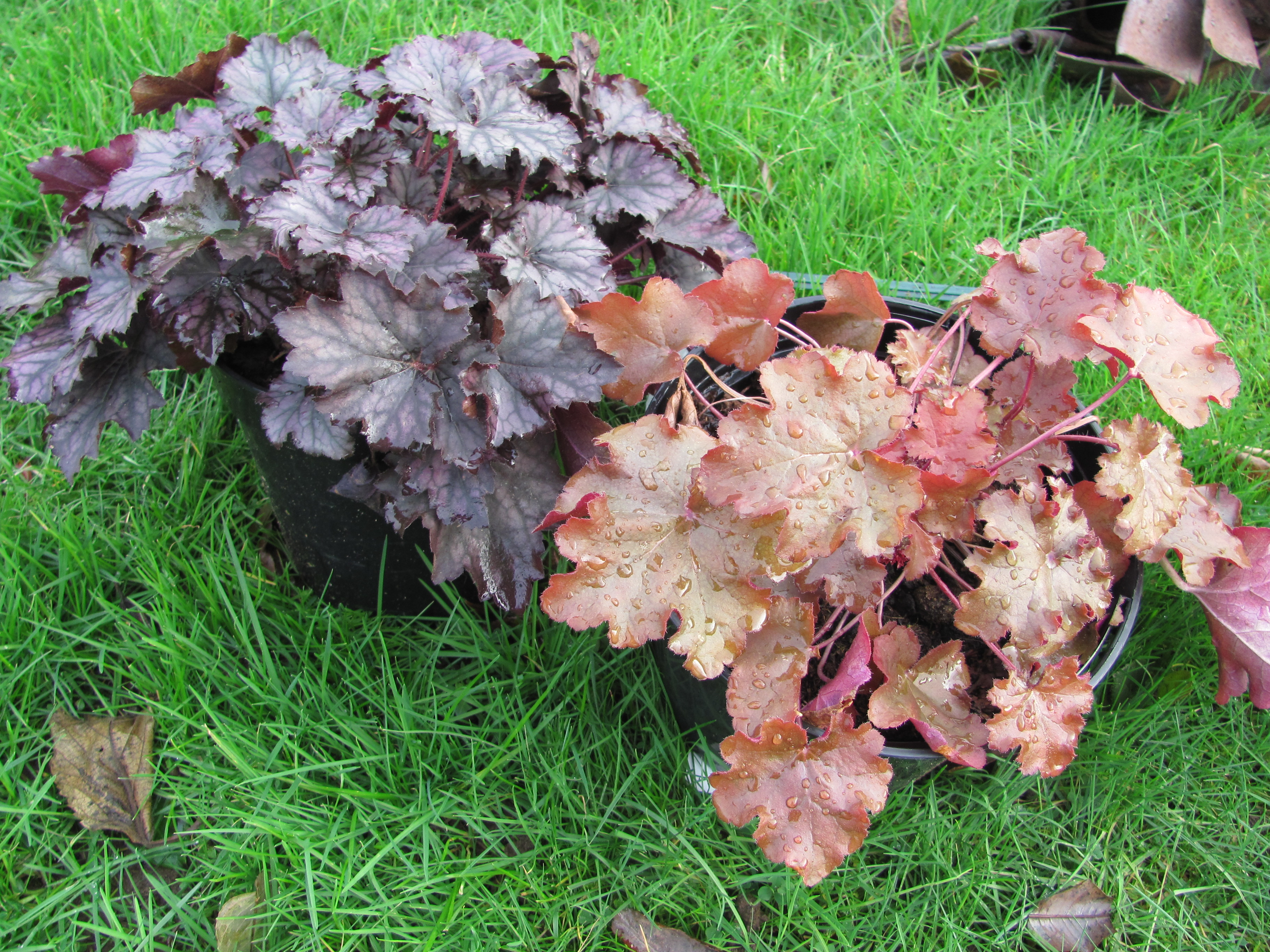
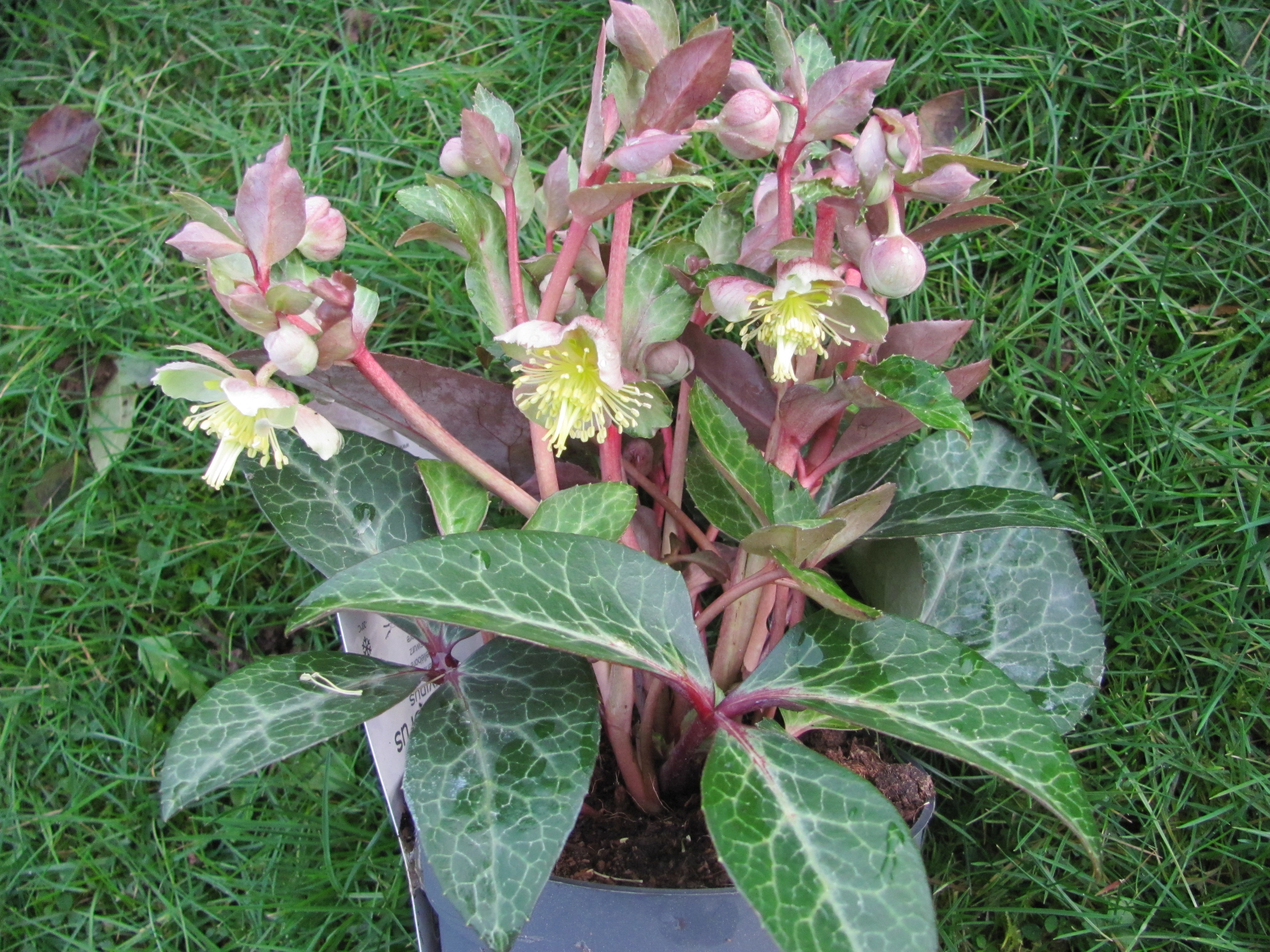
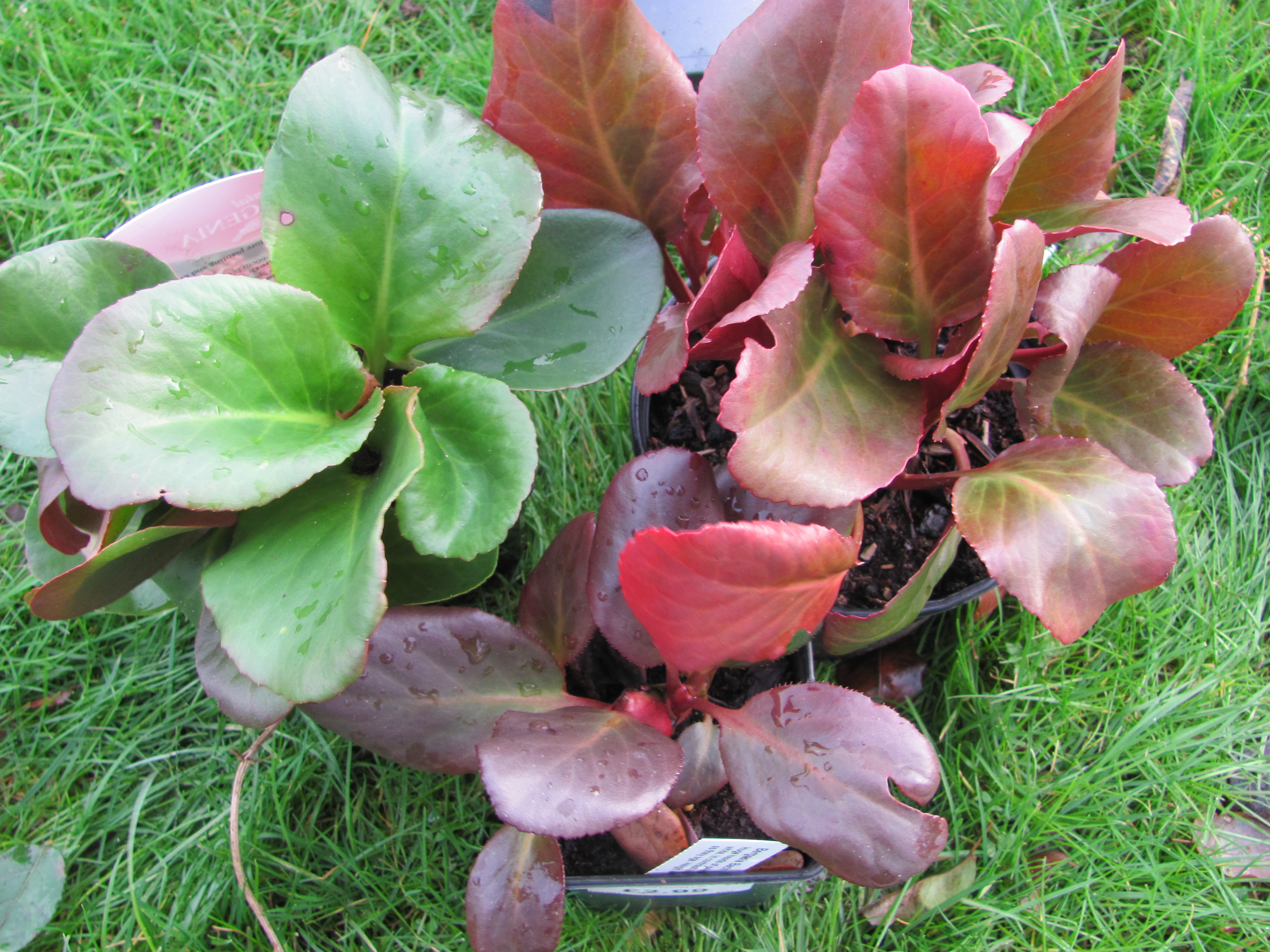
We hate shopping in town centres, retail parks and especially supermarkets. How can people refer to such unpleasant things as being any sort of therapy? But put us in a nursery and everything seems different – we get tempted every time! We have just visited two of our favourite nurseries half an hour from home just into the Welsh countryside outside Welshpool, The Dingle and  its sister, The Derwin. We went to buy a couple of plants for a container that sits empty at the end of the central path in the back garden. It has long been crying out for some plants. We came back with a boot full of plants, some for that pot, some for another pot, some alpines, a couple of shrubs and some perennials. It happens to us all the time, but just look at our booty! We are definitely into coloured foliage.
Euphorbia Silver Swan and Euphorbia Walberton's Rudolf
Heucheras Frosted Violet and Mahogany
Hellebore lividus
Bergenias - Bach, Winterglut and Winter Glow.
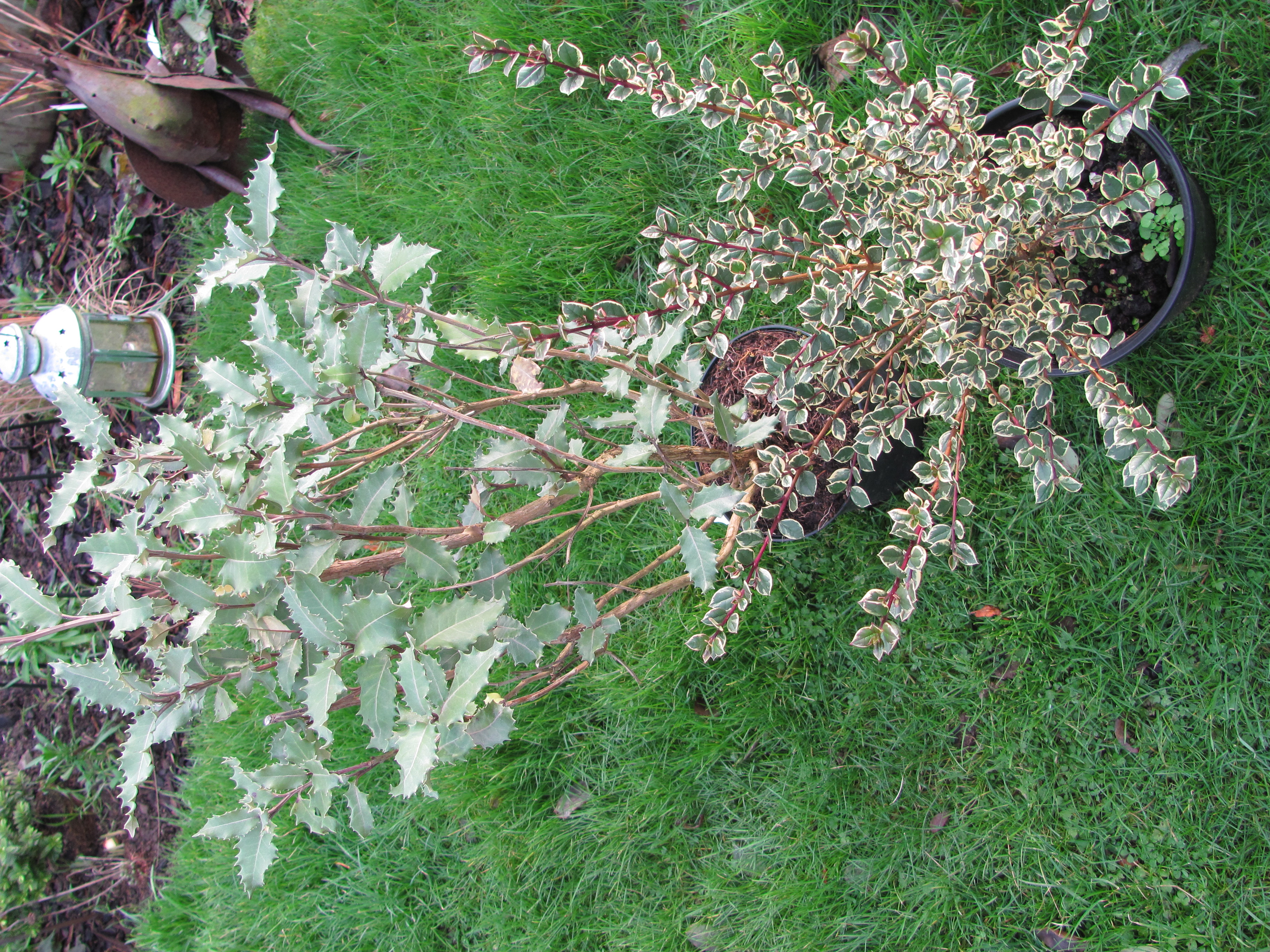
Osmanthus x macrodonta and Luma apiculata "Glanleam Gold"
Categories
garden photography gardening ornamental trees and shrubs photography shrubs winter gardens

Changing Colours

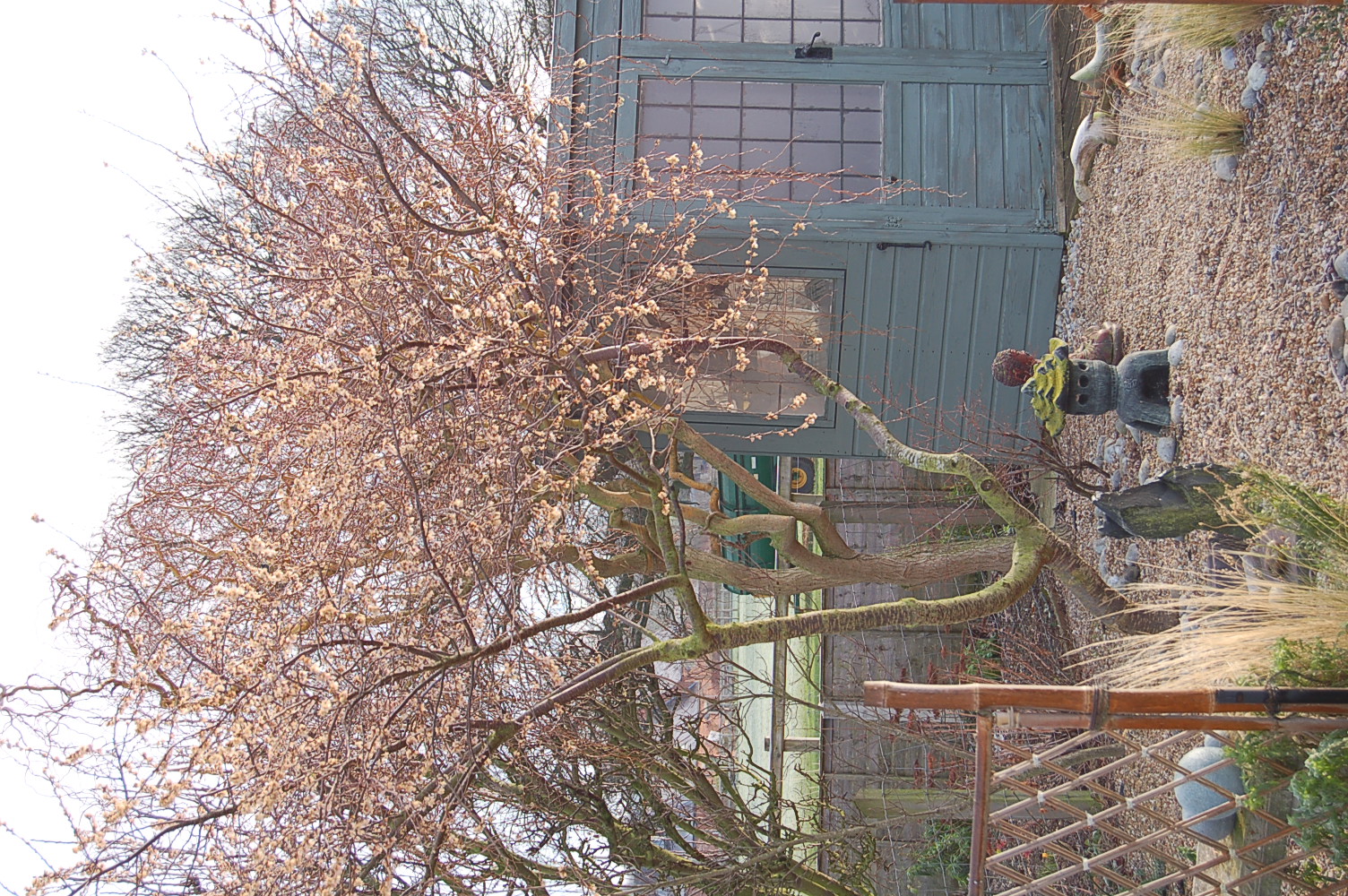
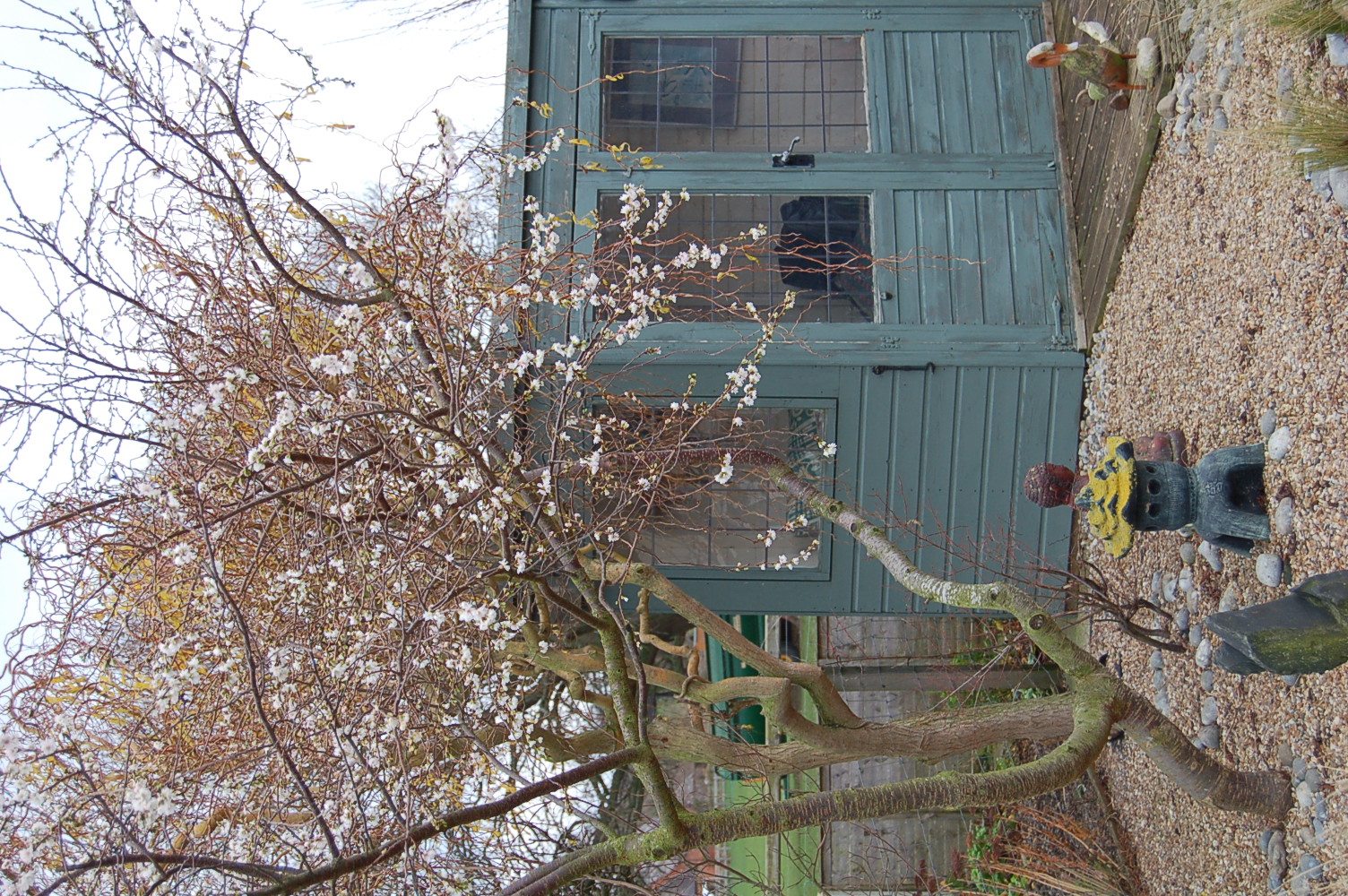
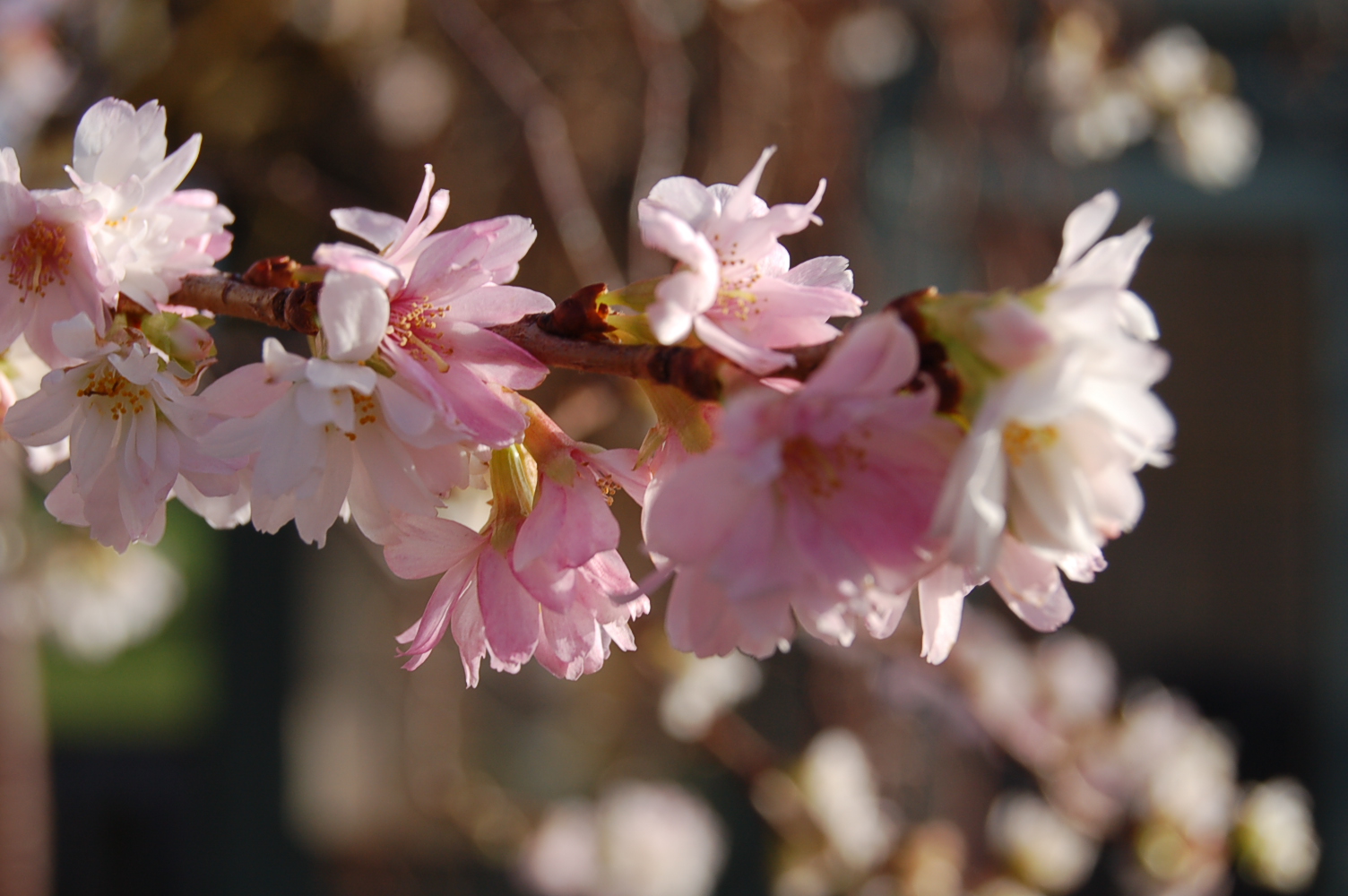
It may be the cold or the blossom may be simply exhausted, but as we looked at the garden today we noticed that the Autumn Cherry tree blossom had changed from a delicate and pale sugar pink to a warm salmon-ginger.

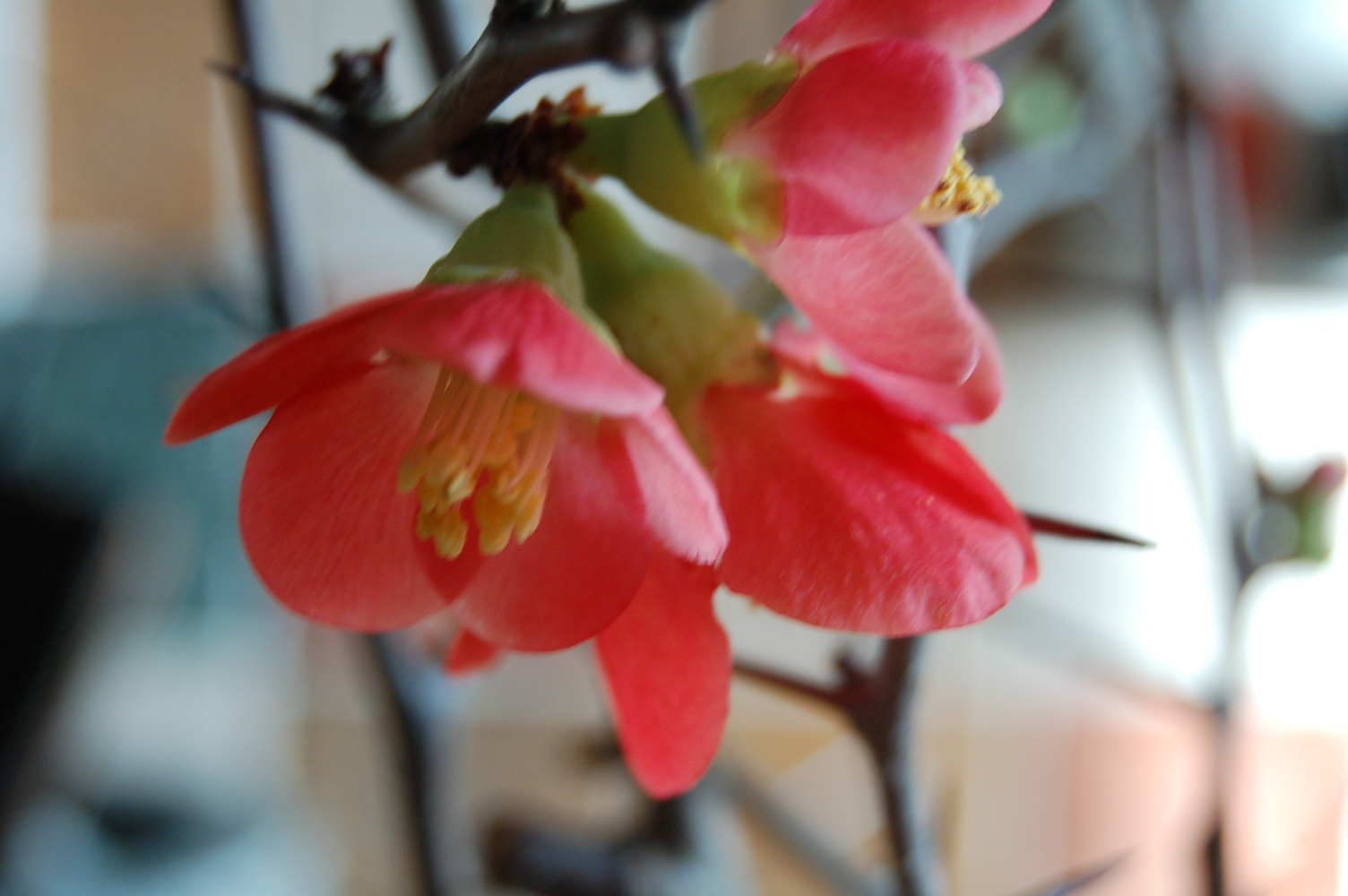
Another change of colour I have recently noticed is related to the flowering quince that brightens up our gateway with its orange-red blossoms with contrasting yellow stamens. We recently brought into the house some twigs to encourage the flower and leaf buds to open. When they did open they opened not as a bright orange-red but as delicate shade of pink with a hint of salmon. Could this be different light inside and out?Different temperatures? Or even the lack of trace elements that the quince gets from the soil which aren’t in the case water?

Categories
arboreta autumn ornamental trees and shrubs outdoor sculpture shrubs trees

Bodenham Arboretum – Autumn Magic

We spent an overcast, sunless day wandering around Bodenham Arboretum this week. We have passed its brown sign hundreds of times over the years on our way down to my home county of Gloucestershire and we always declare “We must go there sometime!”. Well, we finally did! Why did we wait so long?
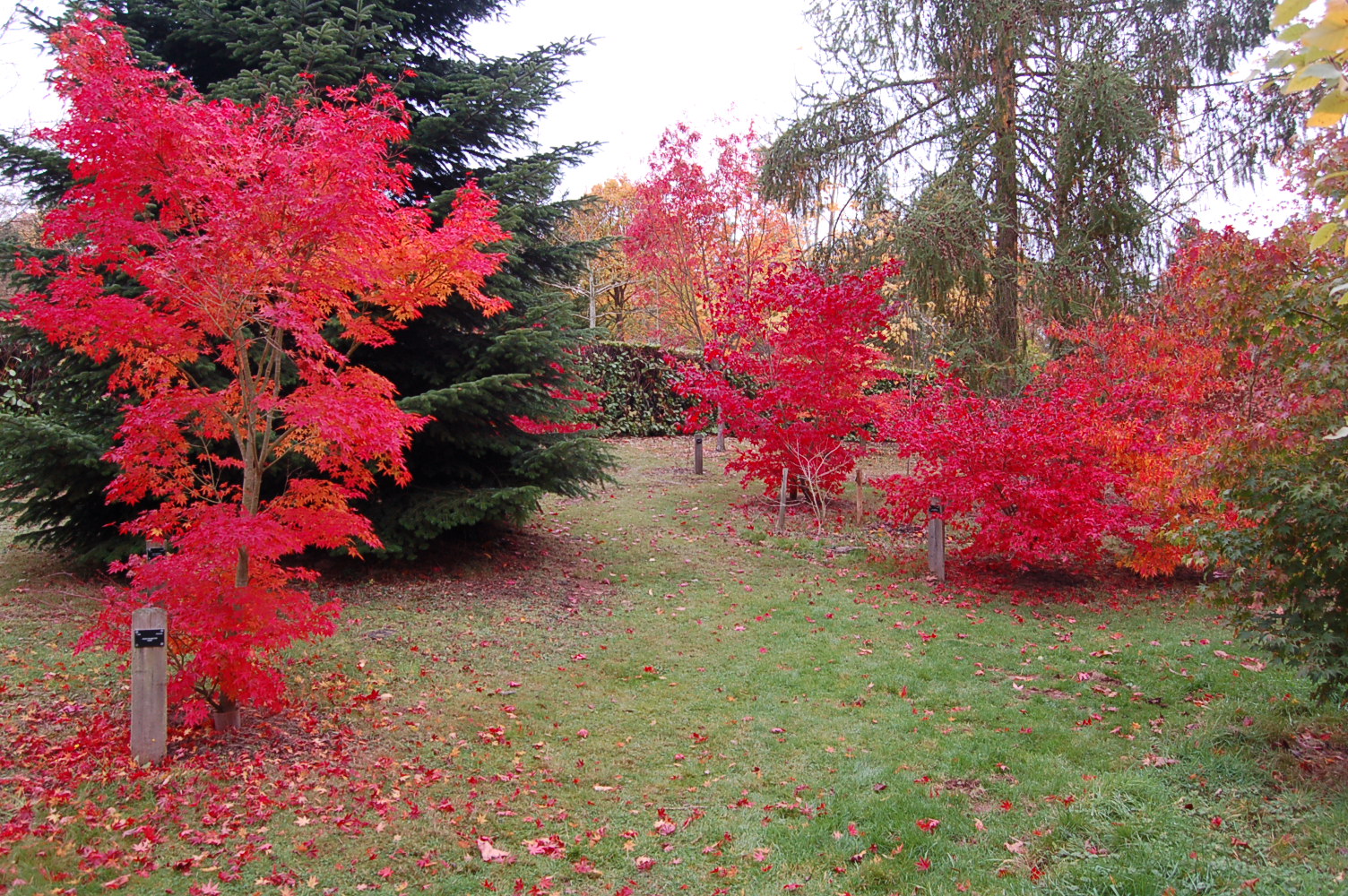
A cup of coffee and a slice of cake enjoyed whilst overlooking the lake was a great starting point, and gave us time to study the map and sort out a route. As we purchased our tickets we were advised that first time visitors should begin with a walk around the Poplar Dingle. So we took the advice and followed the gravel pathway into the dingle, where our eyes were soon treated to the sight of two small Acer palmatum growing and glowing on the banks of a small pool.

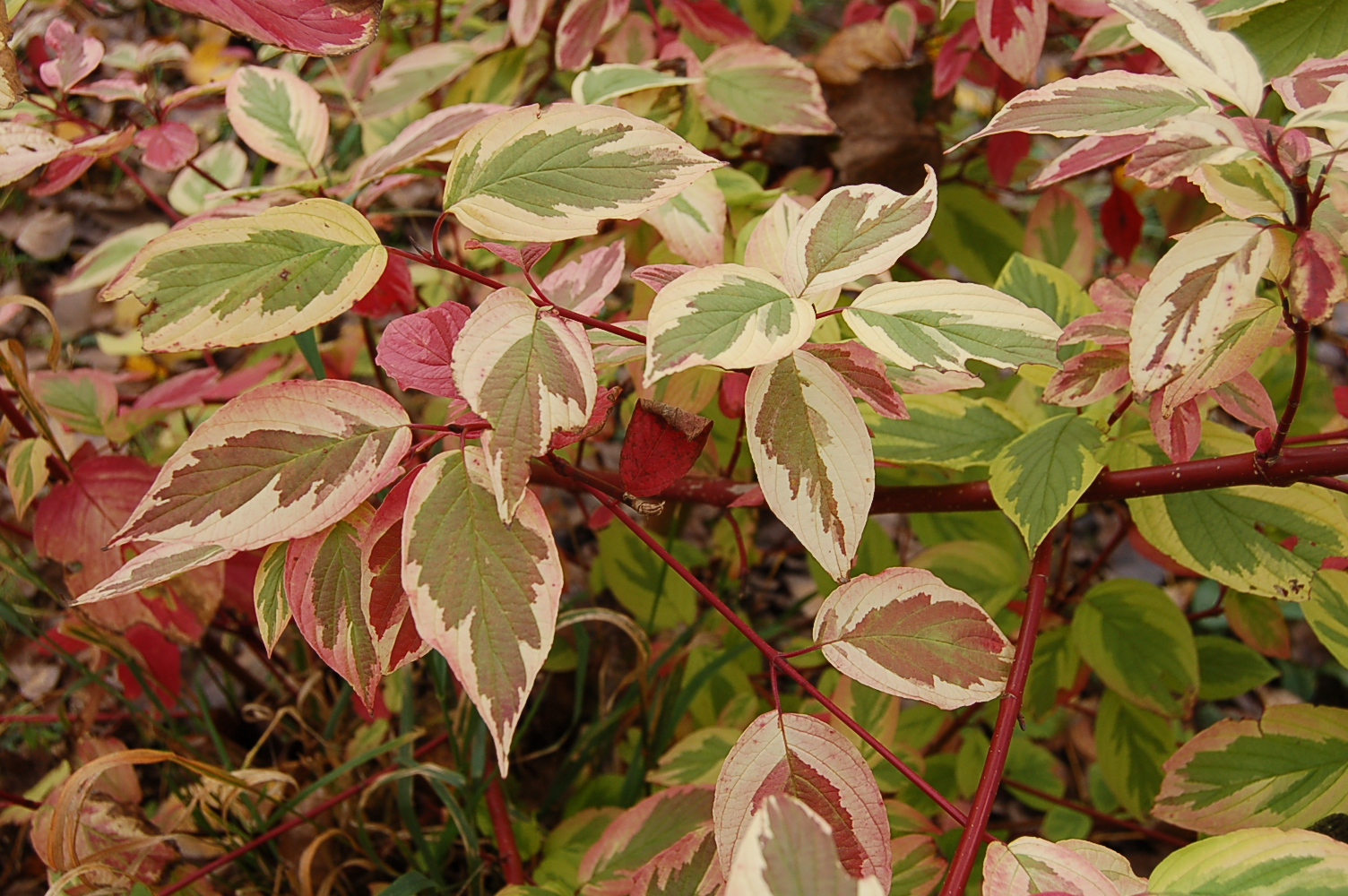
Nearby we were struck by a clump of dogwoods which to begin with looked like the usual ones we grow for their red-coloured stems in late winter and early spring, but there was something about these that deserved a closer look. the leaves were painted in pinks and creams of every hue!

Lots of the more interesting trees and shrubs at Bodenham are clearly labelled and this cornus was one of them – Cornus sericea “Hedgerow Gold”.

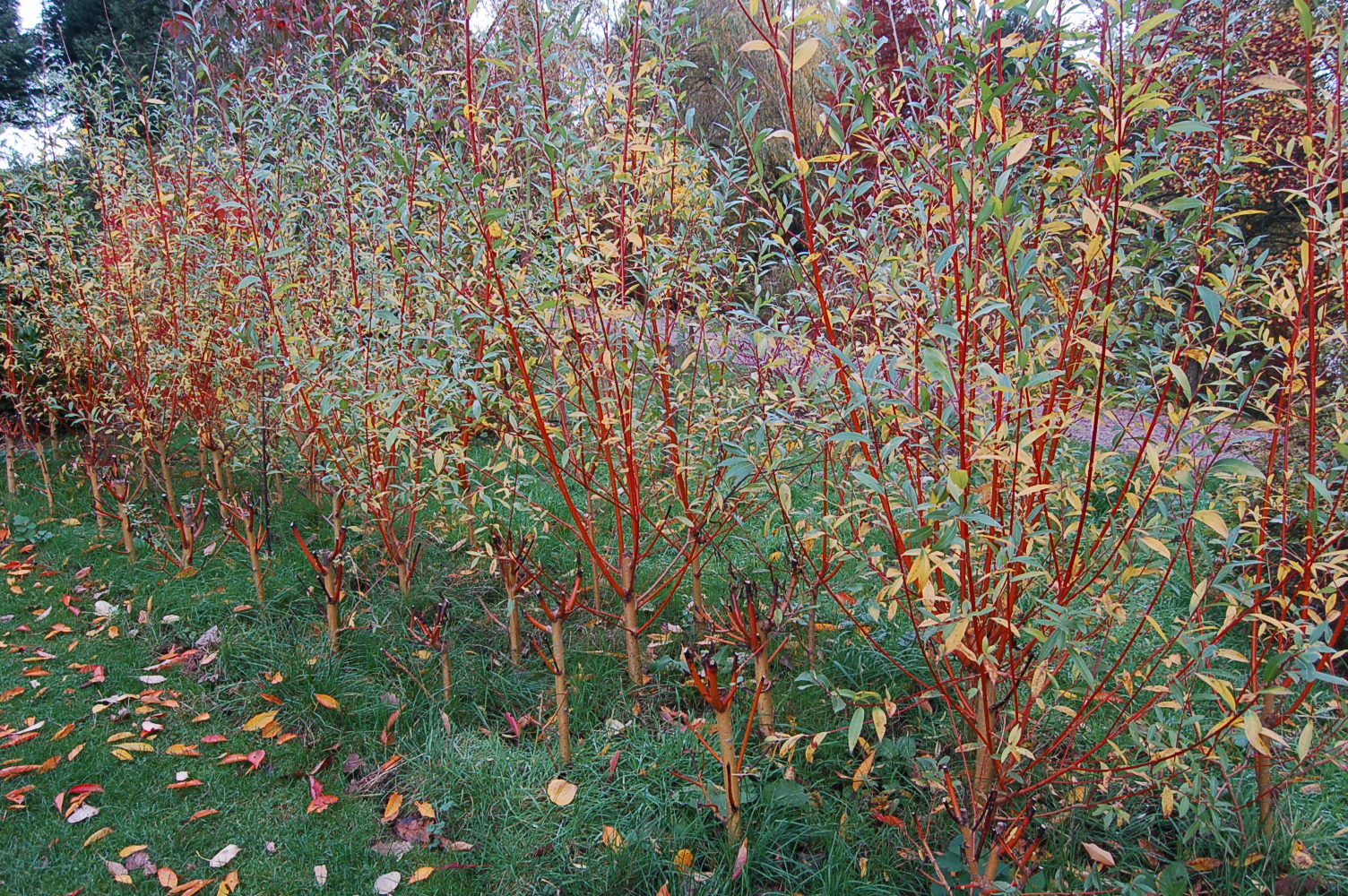
As we left the Poplar Dingle we moved into an area rich with the reds of acers, but as we entered it we were struck by this row of coloured stemmed willows, glowing in the gloomy light.

After relishing these richly-coloured acers we followed the Five Pool Walk, a trail through a wooded valley studded with small pools, leading to Bodenham Wood. Here the smell of woodsmoke followed us, seeping through the valley sides from the dying fires of woodsmen at work in the valley bottom below us.

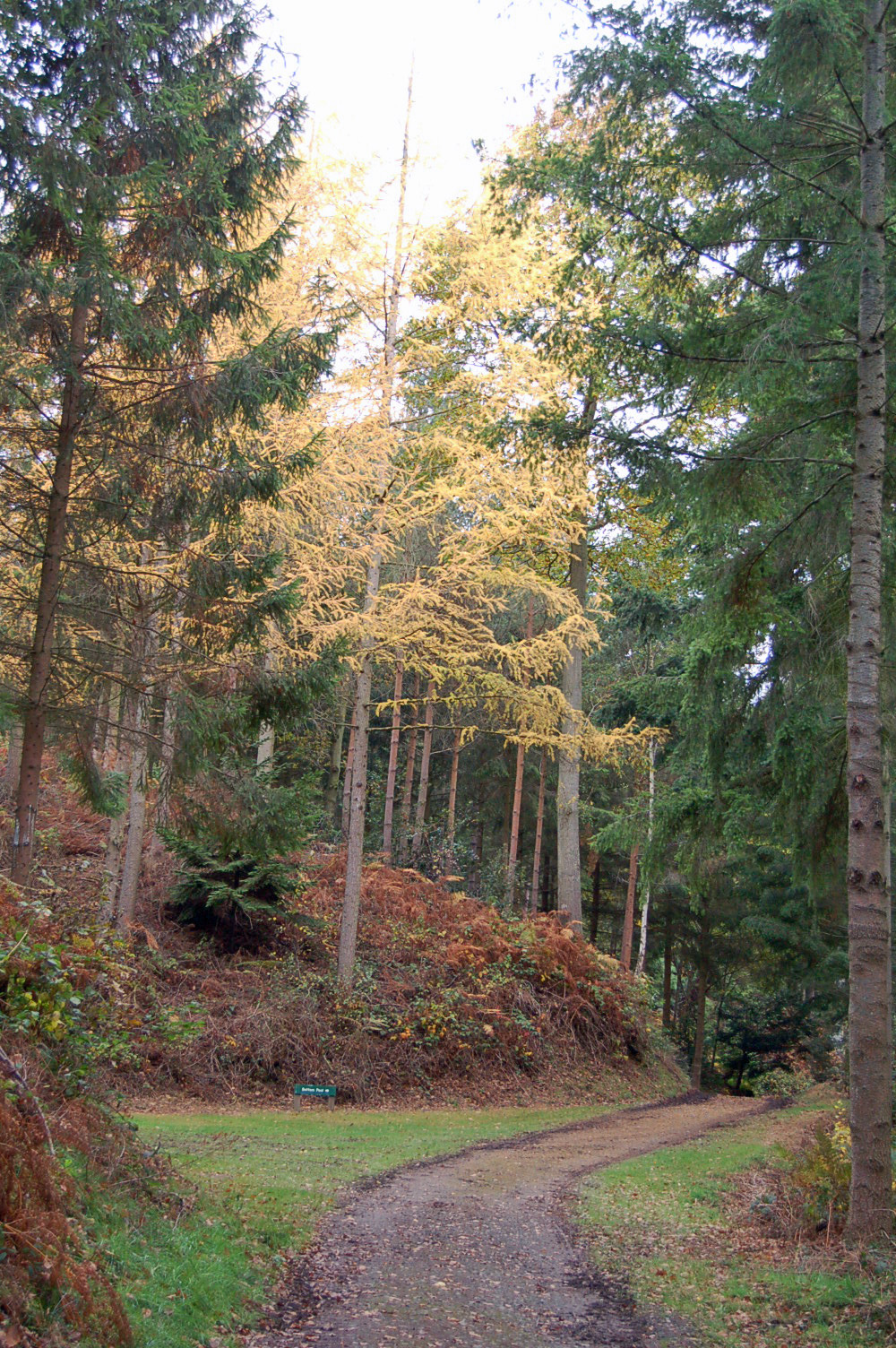
As we turned a corner this butter-yellow larch glowed against the deep green of its fellow conifers, but Larix decidua is the exception to the rule. Its needles turn yellow and fall.

Bodenham is full of surprises and as we found the track to take us back to the cafe we met this beautiful armillary sundial. Behind it the clump of trees contained some of the richest colours of our visit, and unexpectedly the colour came from a group of unusual oaks.

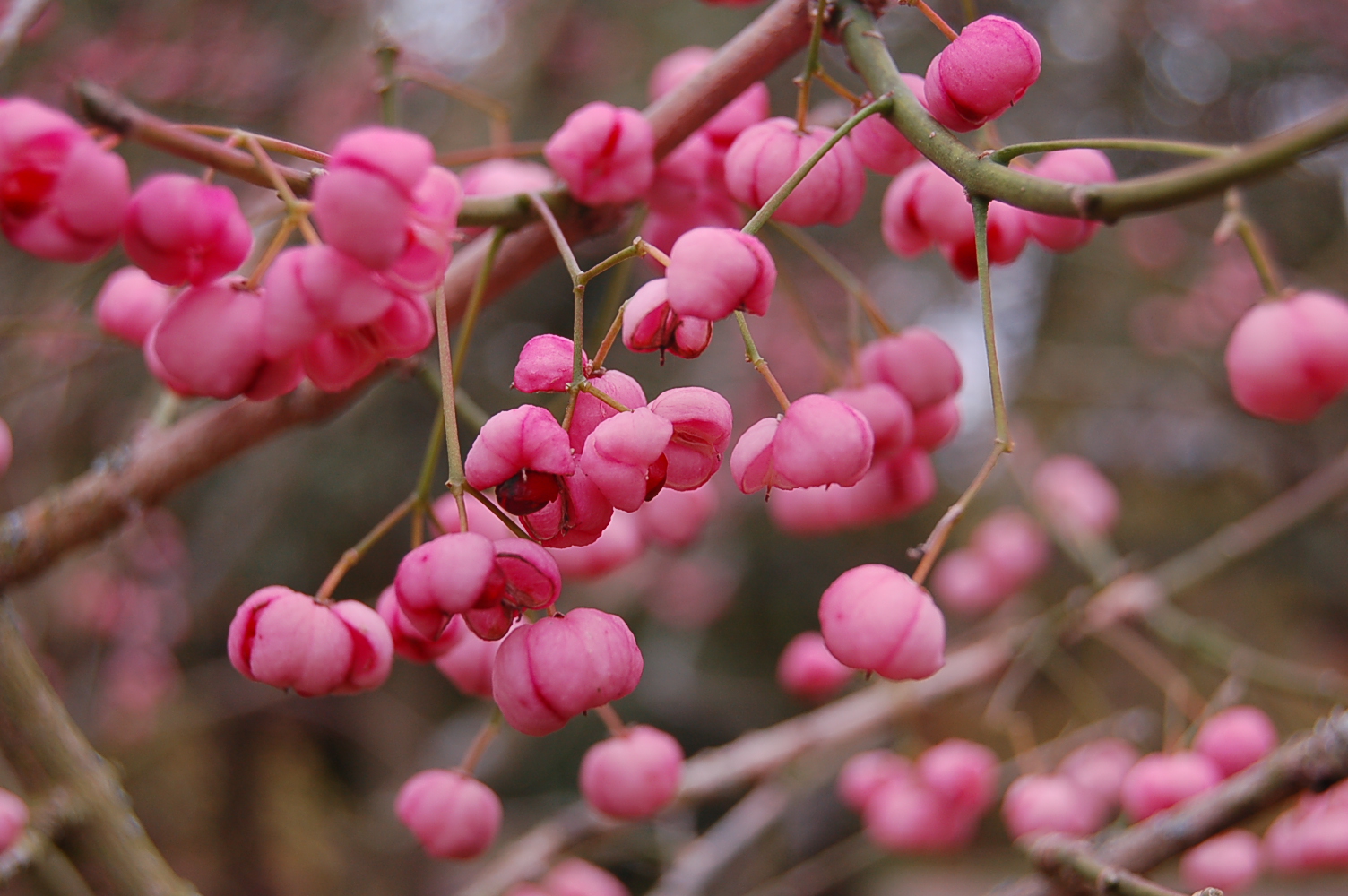
We came expecting to be wowed by the rich autumnal foliage colours – the colours of fire – and we were not disappointed, but perhaps the highlight of our visit was the spindle which gave up its shocking pink flowers. Soon these will open to reveal vivid orange seeds. What a rediculous combination, one that few gardeners would dare to put together.

We may have taken a long time to visit Bodenham Arboretum but we shall not wait so long return.

Categories
gardening shrubs

Hebe planting

We have just planted four hebes in an effort to replace some of those we lost last winter after months of the big freeze. We experienced night time temperatures of -21 for three nights on the trot. Too cold for hebes by far!

So we bought Hebe “Charming White”, Hebe “Wiri mist”, Hebe pinguifolia Sutherlandii and Hebe”Pastel Elegance”. The leaves of each one differ in colour and shape.

Charming White is actually in flower now as we plant it and what a delicately beautiful flower it is, white with a hint of purple at the very tip of each petal.

This Veggie Life

A Vegetarian | Nature Lifestyle Blog

Rambling in the Garden

.....and nurturing my soul

The Arch City Gardener

Journeys In St. Louis Gardening and Beyond

Garden Dreaming at Châtillon

Consult the genius of the place

Storyshucker

A blog full of humorous and poignant observations.

gardeninacity

Notes from a wildlife-friendly cottage garden

PlayGroundology

...an emerging social science

The Official Blog of British Wildlife

'The most important and informative publication on wildlife of our times' - The Independent. This blog is a member of The UK & Ireland Natural History Bloggers group: www.uknhb.blogspot.com

iGrowHort

Inspire - Cultivate - Grow Native Plants - Restore Landscapes

Bishops Meadow Trust

To create and protect a semi-natural wild space for the people of Farnham to enjoy and experience an array of British wildlife in our town

Gardening with Children

The www.gardeningwithchildren.co.uk Blog

UKbirdingtimeline

birding through the seasons, why birds matter and how to conserve them

NATURE WALKER

with a camera in hand

Jardin

Transform your outdoor space

Eva's space

My allotment, cooking and other interests

Old School Garden

my gardening life through the year

LEANNE COLE

Trying to live a creative life

fromacountrycottage

trying to live as lightly as possible on our beautiful planet

Good Life Gardening

Nature lovers from Leicester living the good life.

mybeautfulthings

Finding the beautiful in the everyday

mawsonmichelle

Michelle's Allotment

In and Out of My Garden

thoughts from and about my garden

Greenhousing

Big plans for a small garden

The Scottish Country Garden

A Walled Country Garden in South East Scotland

The Fruity Chicken

Life at the fruity chicken

willowarchway

Off grid living. Self sufficient. "PERMAGANICS RULE".

St Anns Allotments

Nottingham's Grade 2* Listed Allotments and Community Orchard

Manifest Joy Harvests

a journey in suburban vegetable gardening

Allotmental

The madness of growing your own

Penny's Garden: a harvest beyond my front door

A novel approach to vegetable gardening

arignagardener

Sustainable living in the Irish countryside.

NewEnglandGardenAndThread

Master Gardener, amateur photographer, quilter, NH native, and sometimes SC snowbird

dianajhale

Recent work and work in progress and anything else that interests me

planthoarder

a chaotic cottage gardener

Lens and Pens by Sally

a weekly blog that creates a personal philosophy through photographs and words

Dewdrops and Sunshine

Stories from a sassy and classy Southern farmbelle.

The Pyjama Gardener

Simple Organic Gardening & Seasonal Living

gettin' fresh!

turning dirt into dinner

JOY...

today the world is created anew

Garden Birds

Notes from a Devon garden

ShootAbout

Life Through The Lens

Adapting Pixels

A photography blog showcasing the best photography pictures and videos on the internet

Wildlifegardening's Blog

Just another WordPress.com site

naturestimeline

personal observations from the natural world as the search continues for a new approach to conservation.

LATEBLOOMERBUDS

The Wonders of Life through my Eyes, my Heart, my Soul