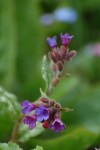
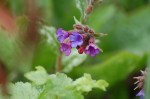
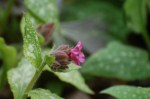
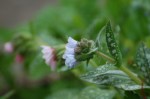
Some plants become taken for granted and fail to be fully appreciated. I recently posted about celandines and got lots of favourable comments, so today I shall feature the wonderful pulmonarias with their subtle flowers and unusual foliage.
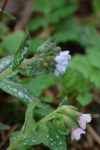
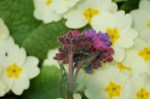
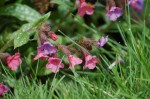
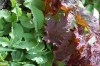
Here is the classic pulmonaria seen in so many British gardens with flowers in both pink and blue on the same plant and bristled leaves splodged with silver. We grow them in almost every border in our patch but they really prefer a little shade.
The best way to sing the praises of pulmonarias and hopefully encourage a few more gardeners to go out and get some for their own gardens is to put together a little gallery of photos of our plants to show their subtle beauty.
Just click on a photo and follow the journey to see if you are convinced.
At last spring has arrived in the garden and taken it by storm. Buds are bursting, birds are nesting and bees buzzing searching the blooms.
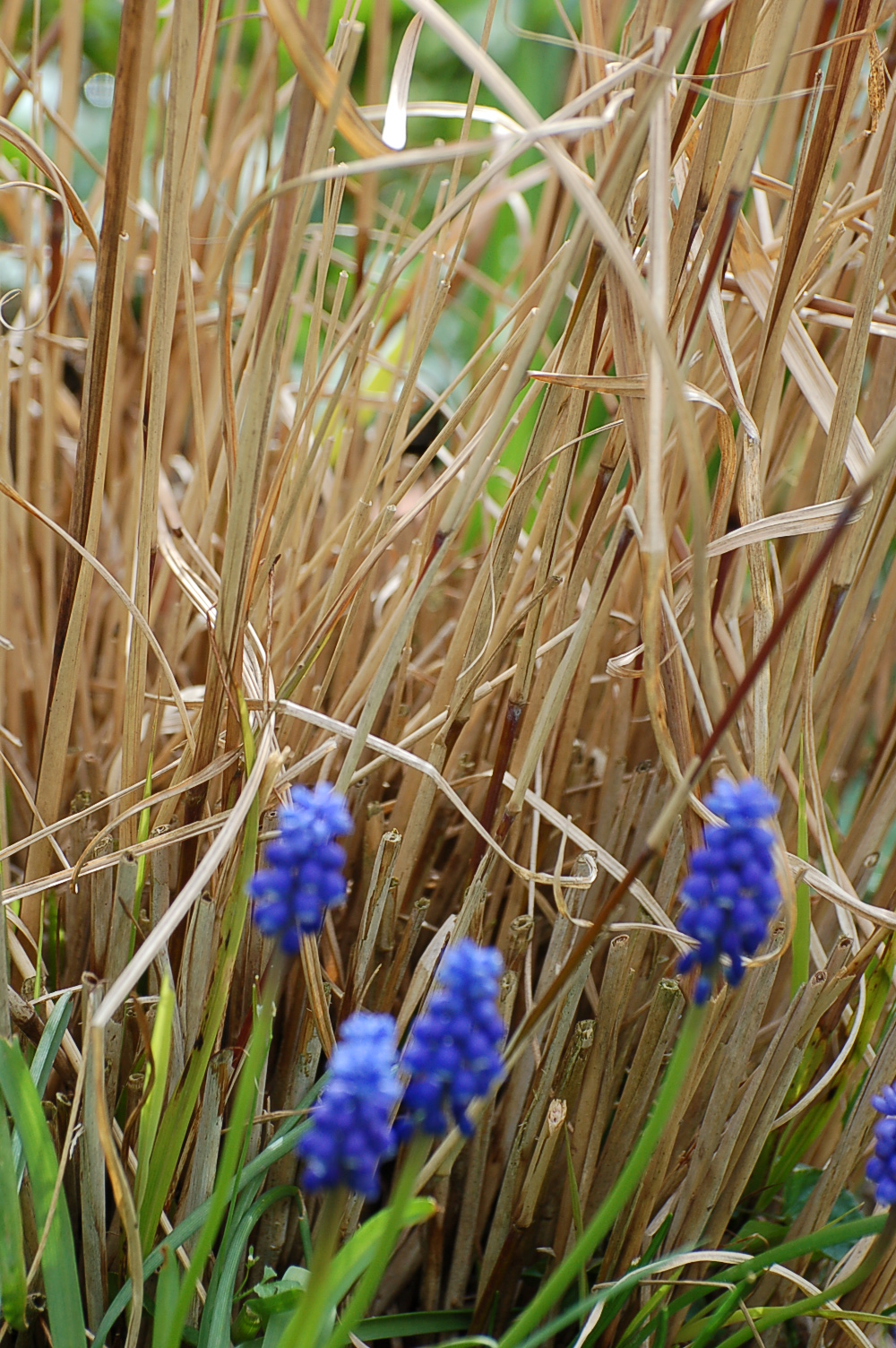
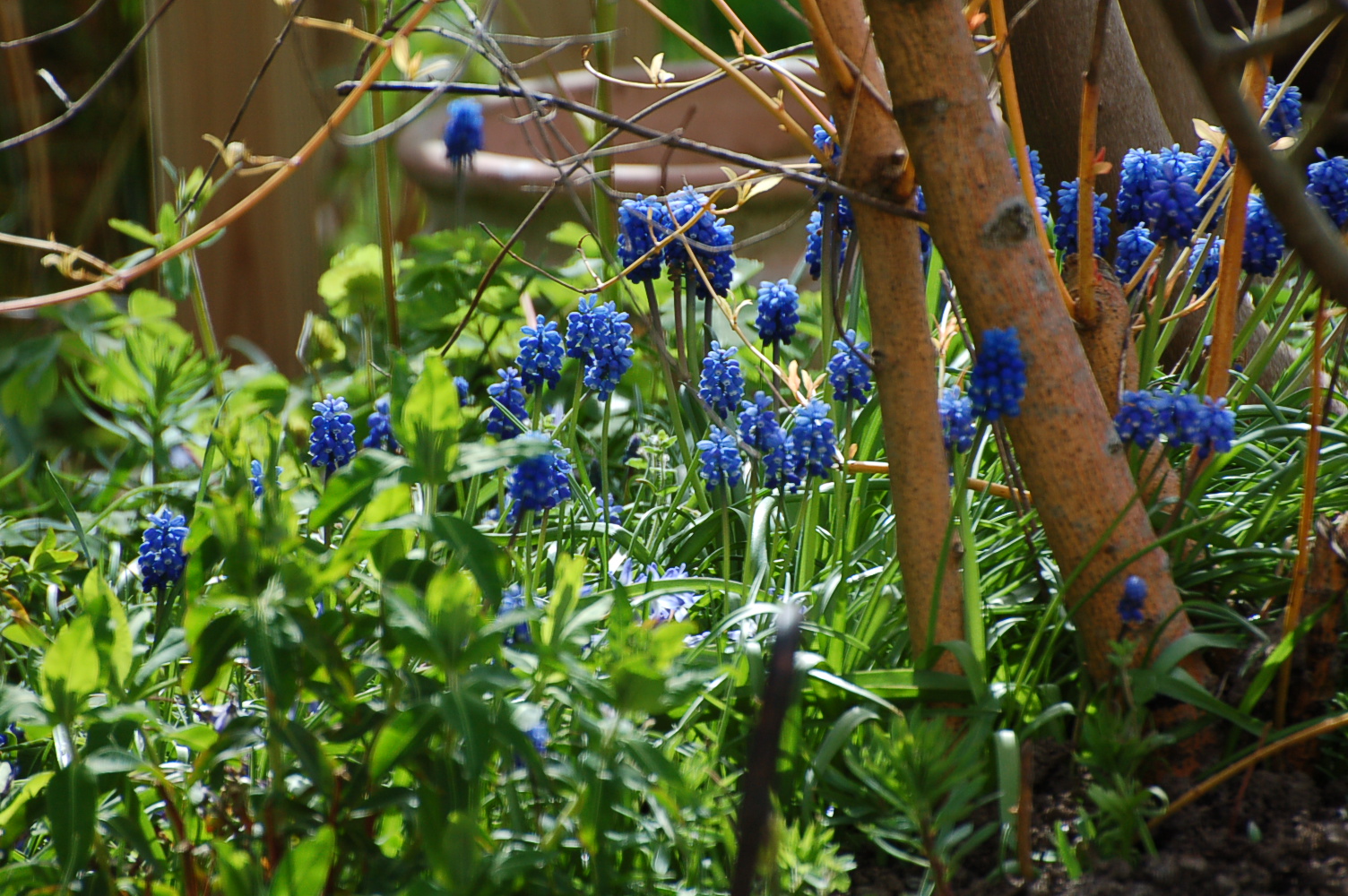
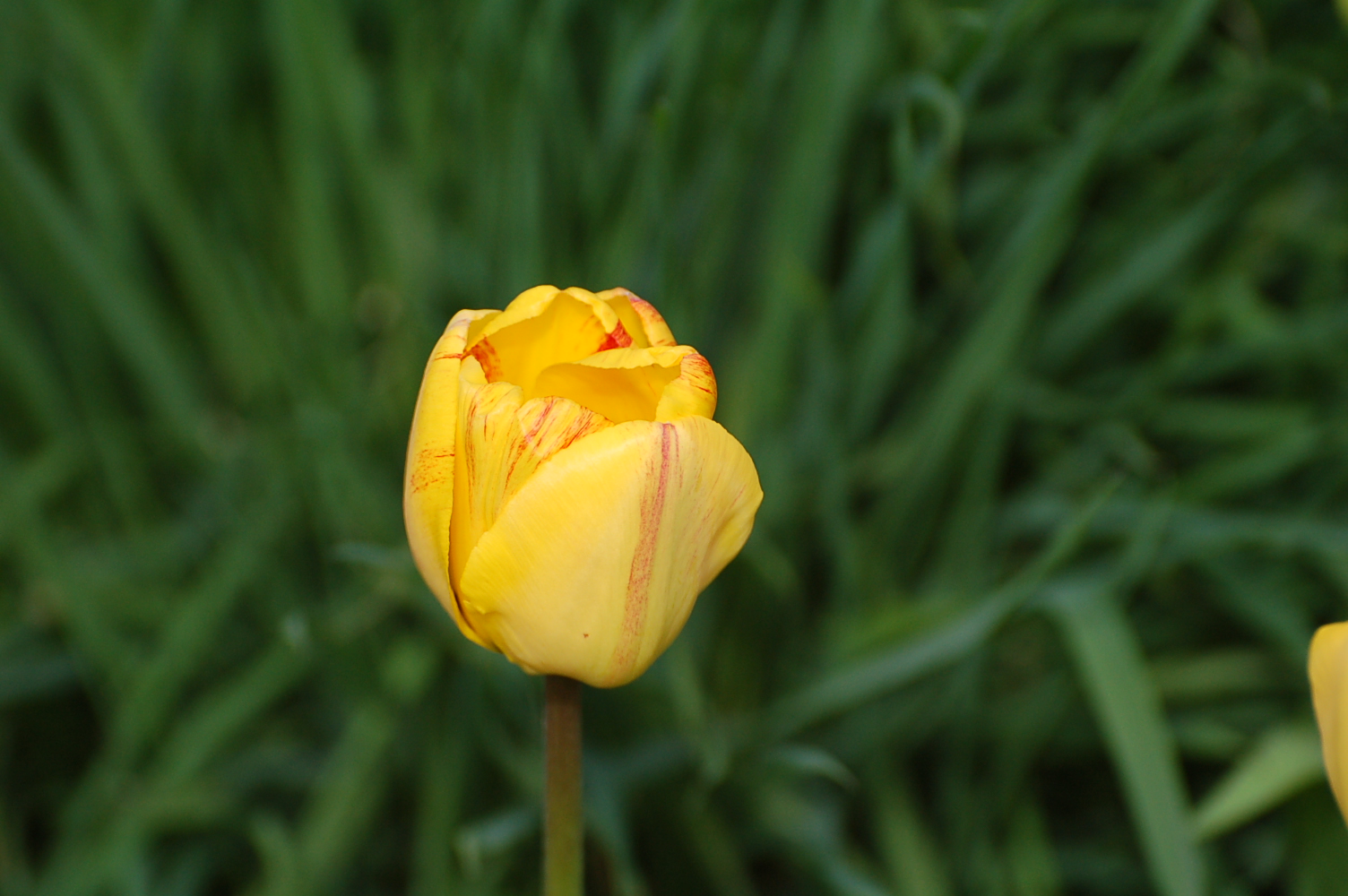
Any bouquet for April will have to embrace flowering bulbs.
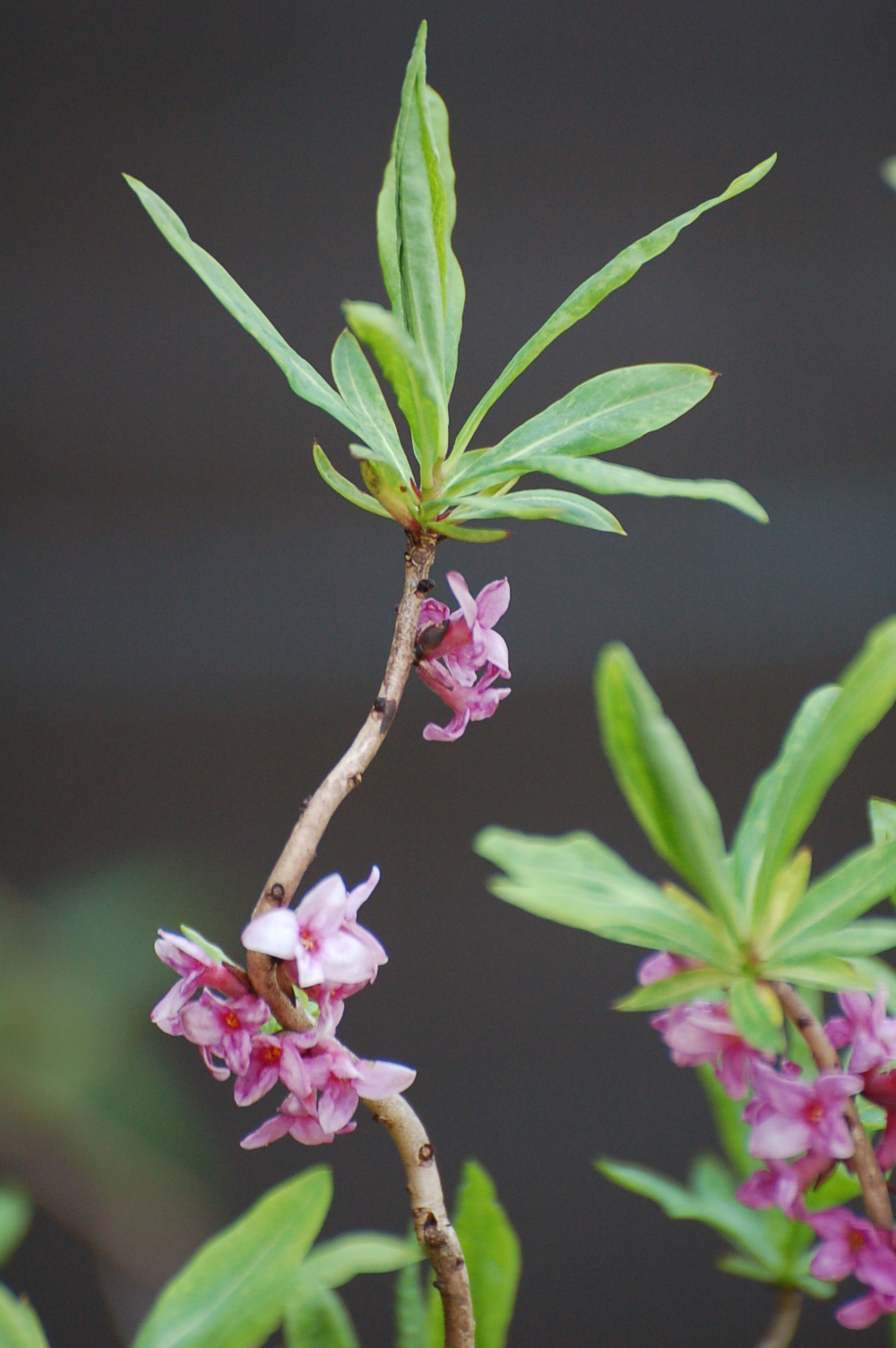
And how about adding a few bursting buds of trees and shrubs? Our miniature chestnut, the sweetly scented daphne flowers and the froth of snow-white amelanchier flowers.
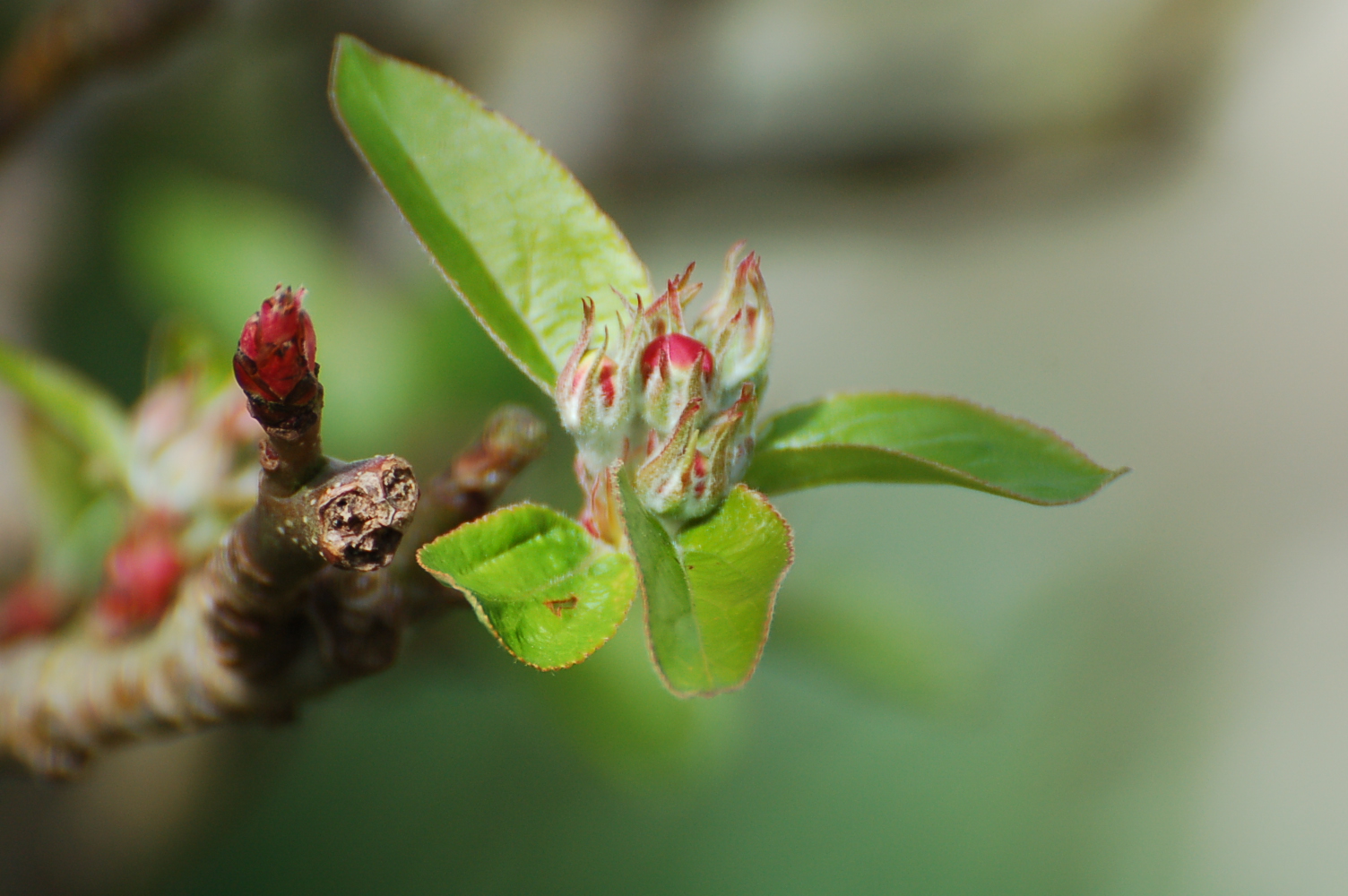
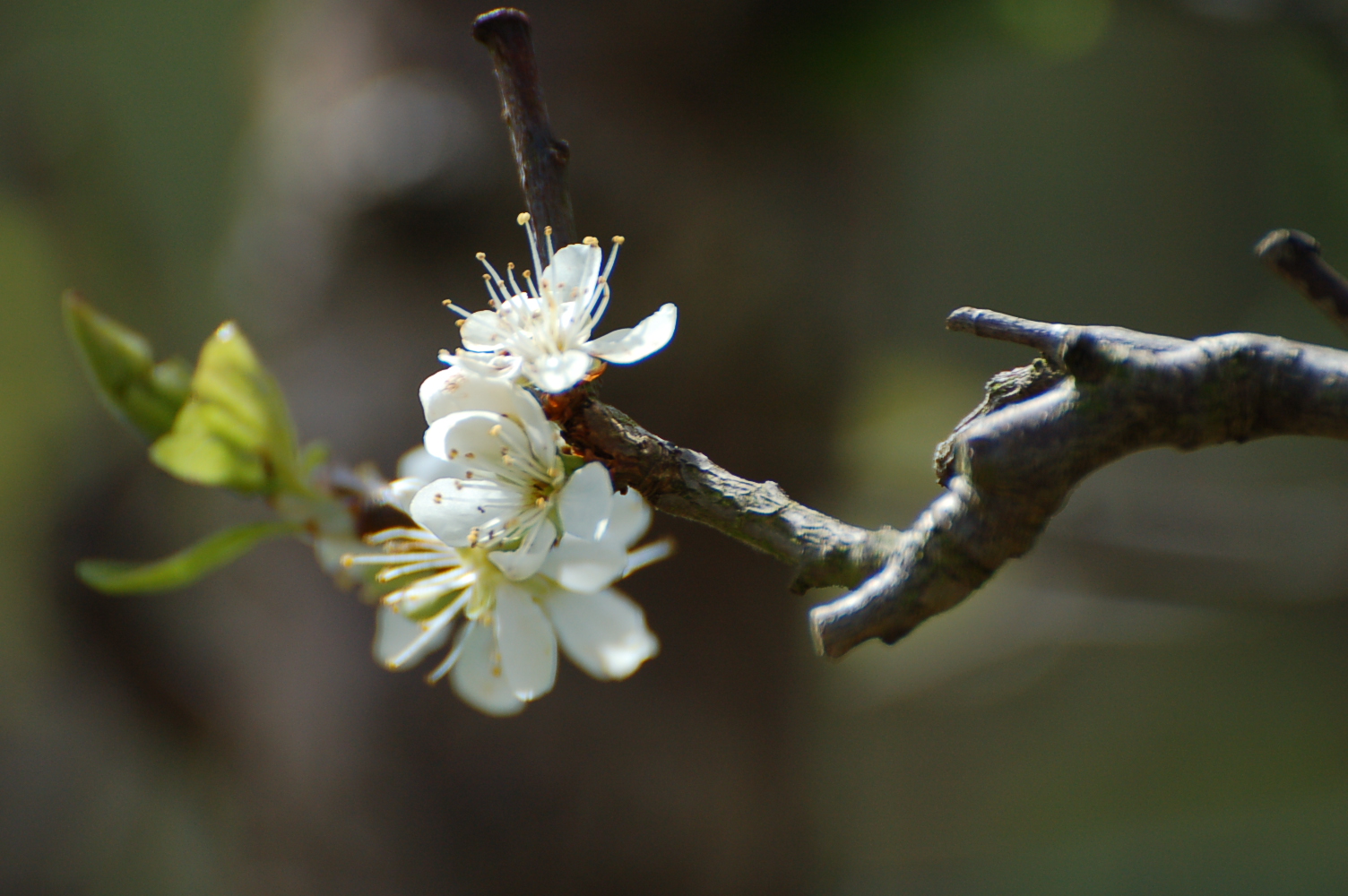
All around the garden fresh fruit blossom promise beautifully scented and delicious, delicate flavours. The pinks of apple blossom and whites of plums. Oh so tasty!
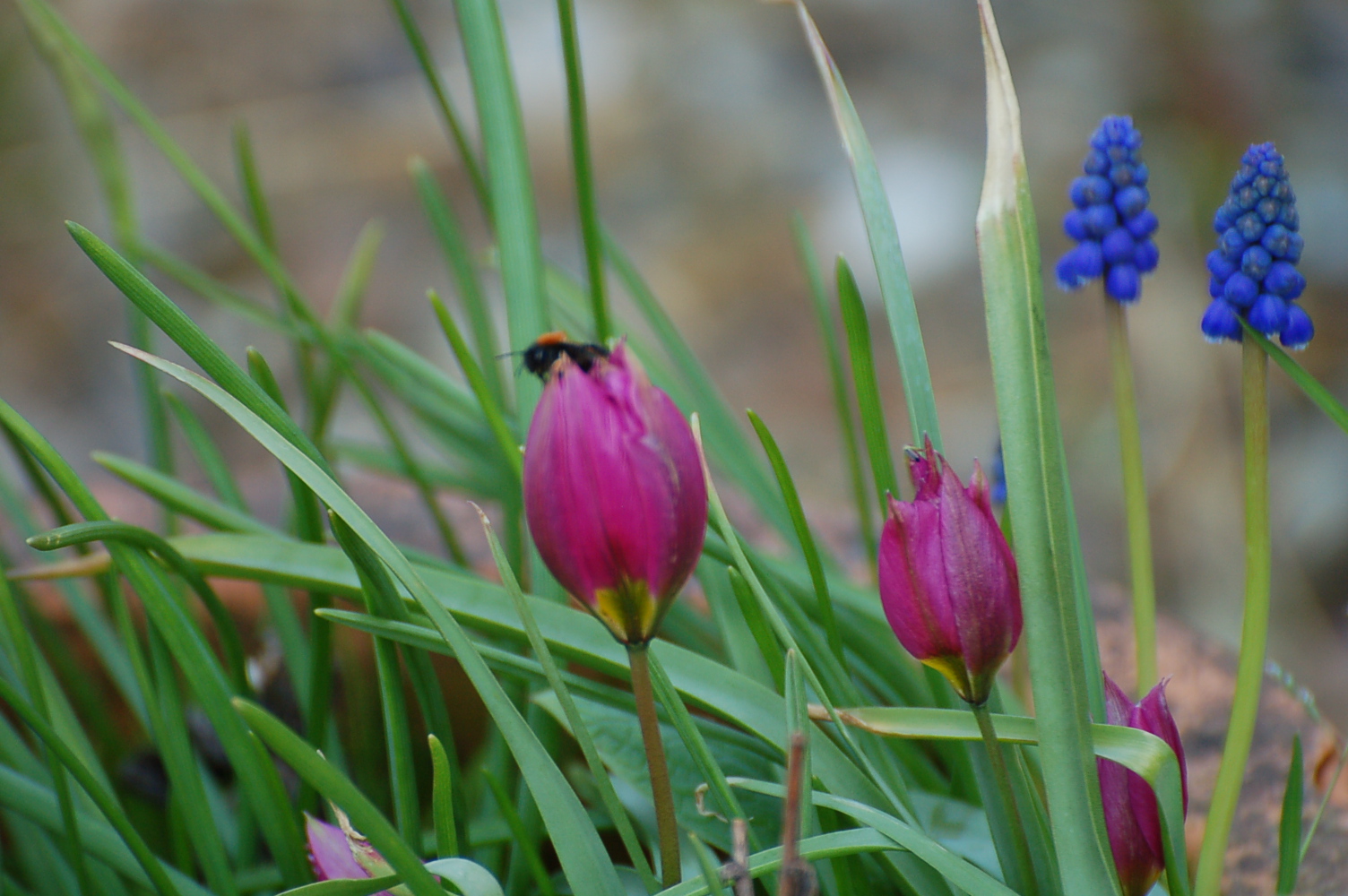
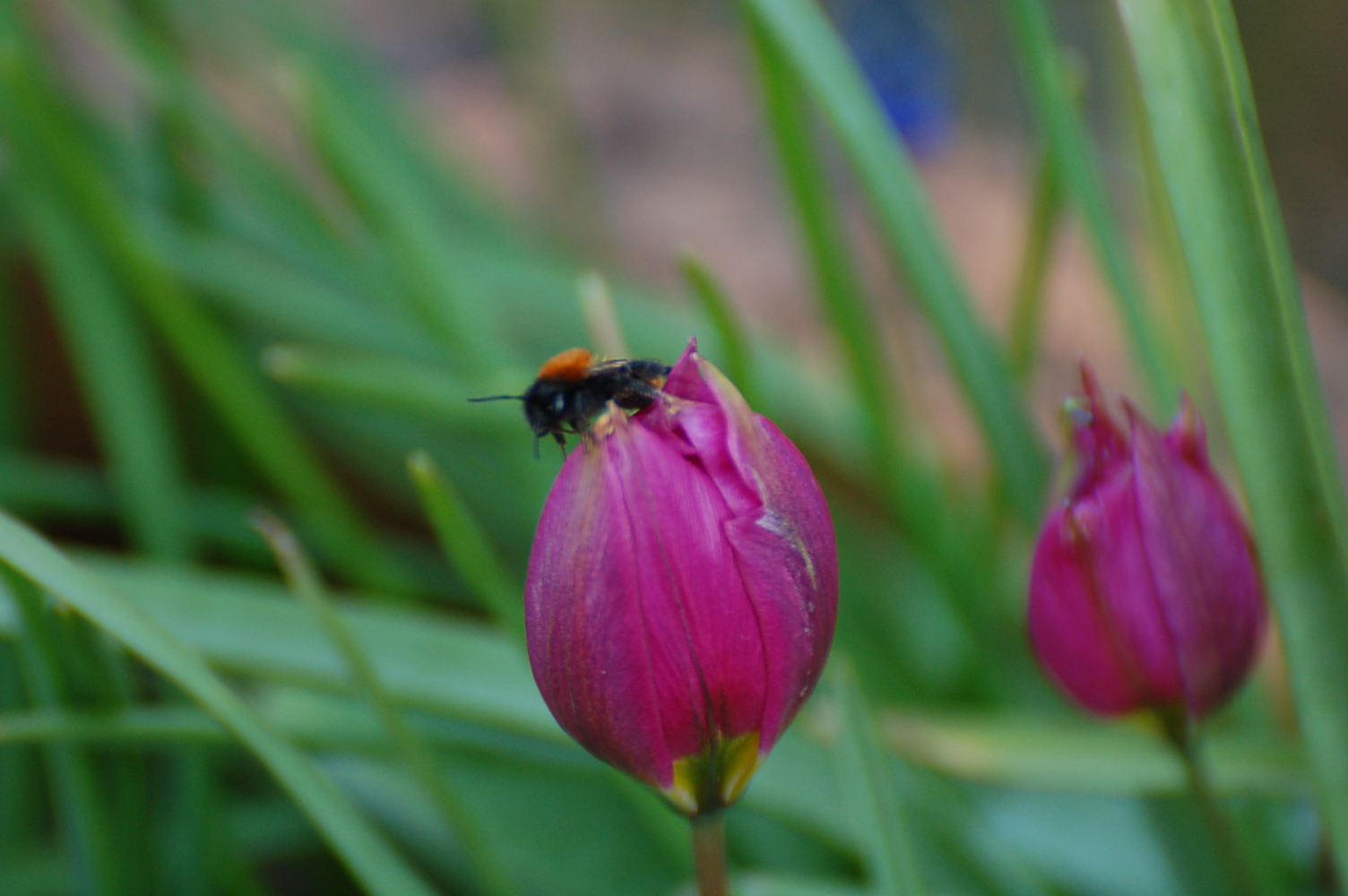
The insects are appreciating these new signs of life too, in particular the bees and butterflies. This little bee knows that there is something good awaiting him inside the tulip once it opens. He is just a centimetre or so long and coloured a rich gingery orange.
I shall finish off by inviting you to enjoy a little gallery of garden delights taken on the last day of April.
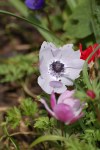
Euphorbia fireworks.
Dusky pink primula hides in arum and stipa leaves.
The key moment in April came when our allotments featured in a national gardening magazine, “Grow It”. A great article full of photos! And then towards the end of the month the lottie chairman, John and I were interviewed by Matt Biggs for an article in the “Edible Garden” magazine. (Please excuse the name dropping!)
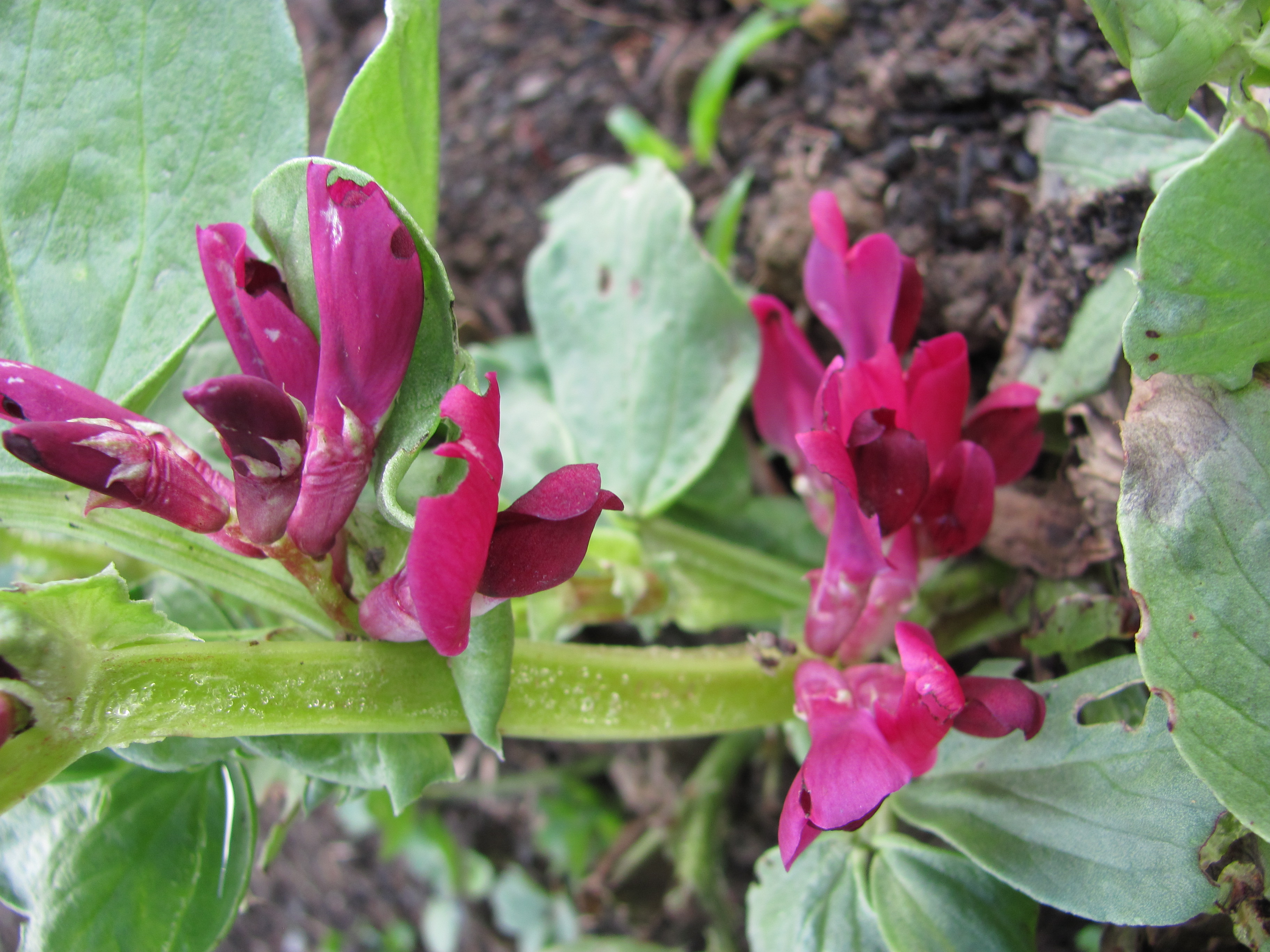
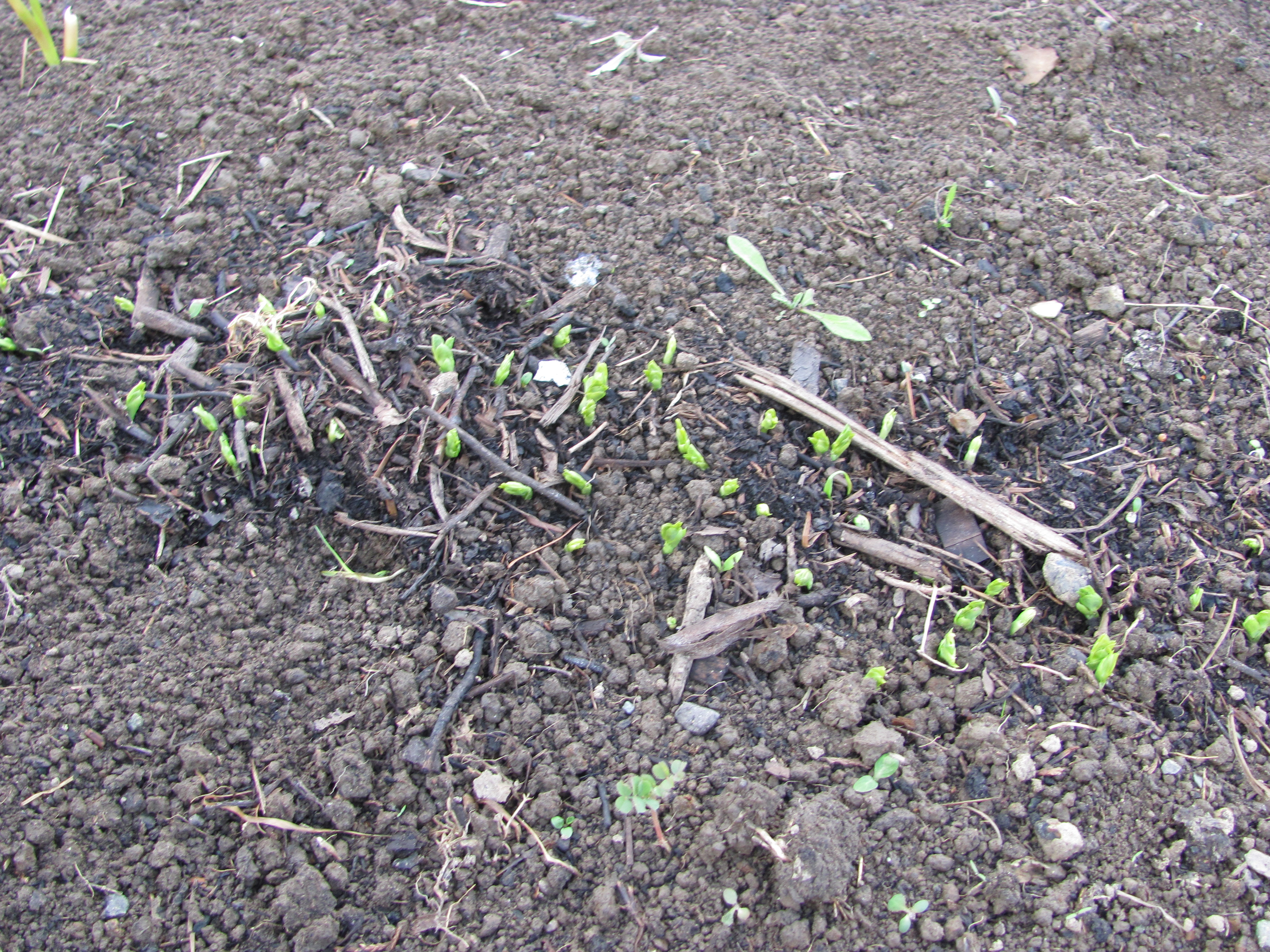
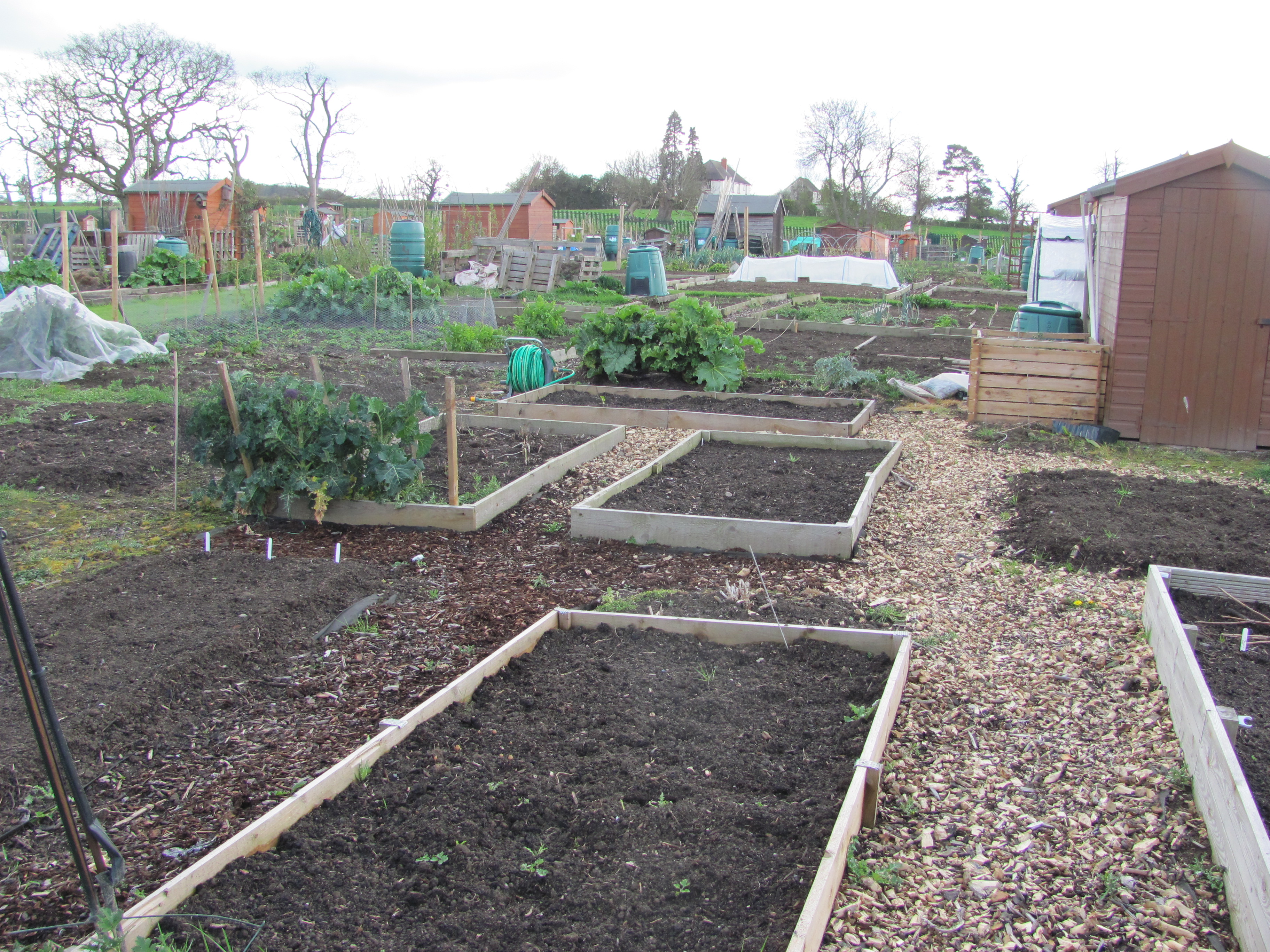
So let’s take a wander around the site starting at our own plot, number 37, where the last of the leeks are still in the ground but the kale is beginning to go to seed. Seeds we sowed a few weeks ago are now germinating and popping their heads above the soil. The autumn sown broad beans are flowering as are our currants and gooseberries. So it is all systems go.
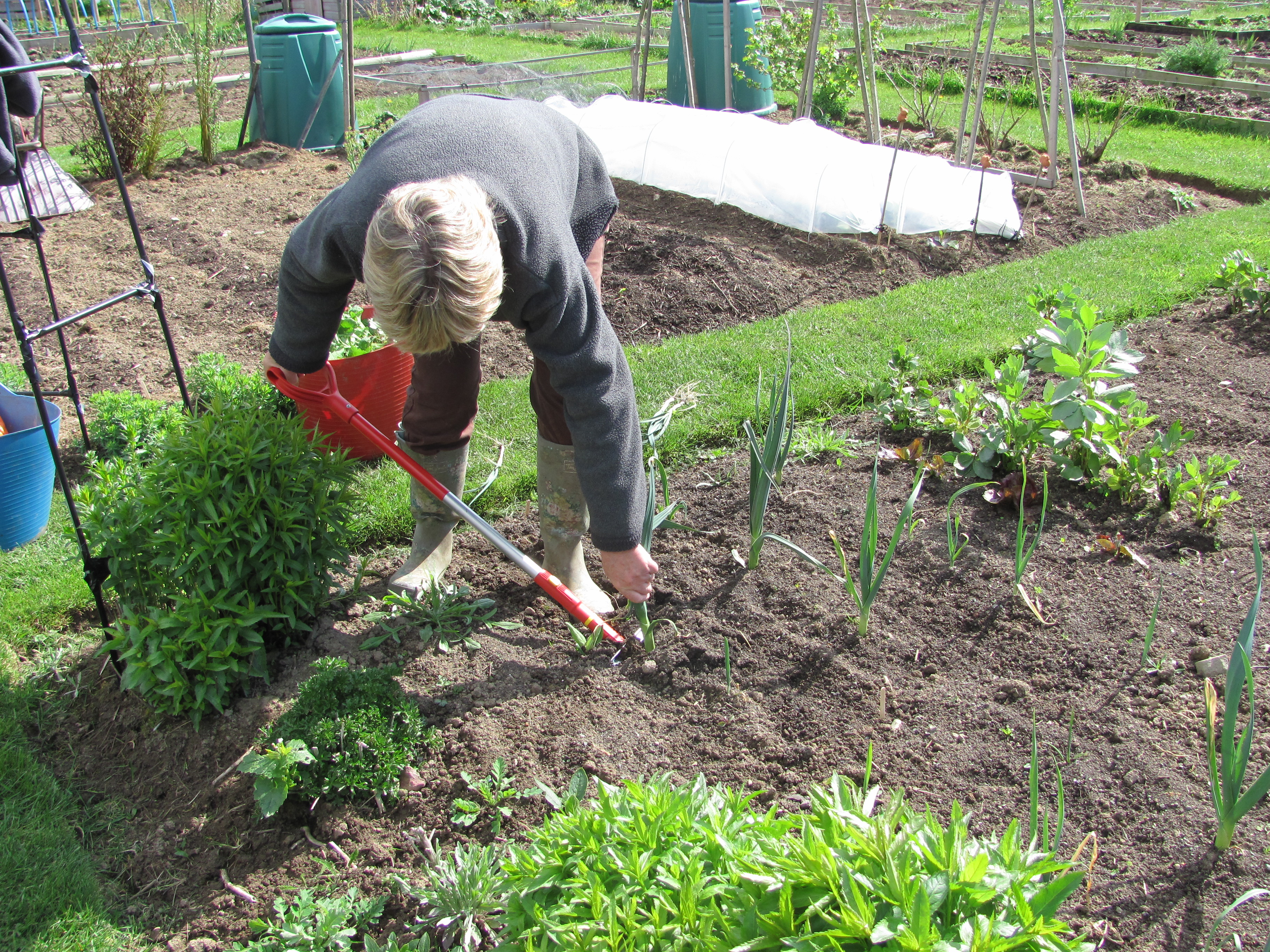
Jude harvesting the last of the leeks with our Wolf weeding tool.Shed painting - not our favourite job!The green roof of our insect hotel.The incredibly coloured flowers of Crimson-flowered Broad Bean.New seedlings of early peas.
As we began our wander we were pleased to see two families from the nearby estate wandering around our interest trail with their children. Later they were sat in the willow dome reading stories. This is what community allotments are all about! We shall start our wanderings at Hut 2, one of our communal huts and move on to the Autumn Garden, one of our “Gardens of the Seasons”.
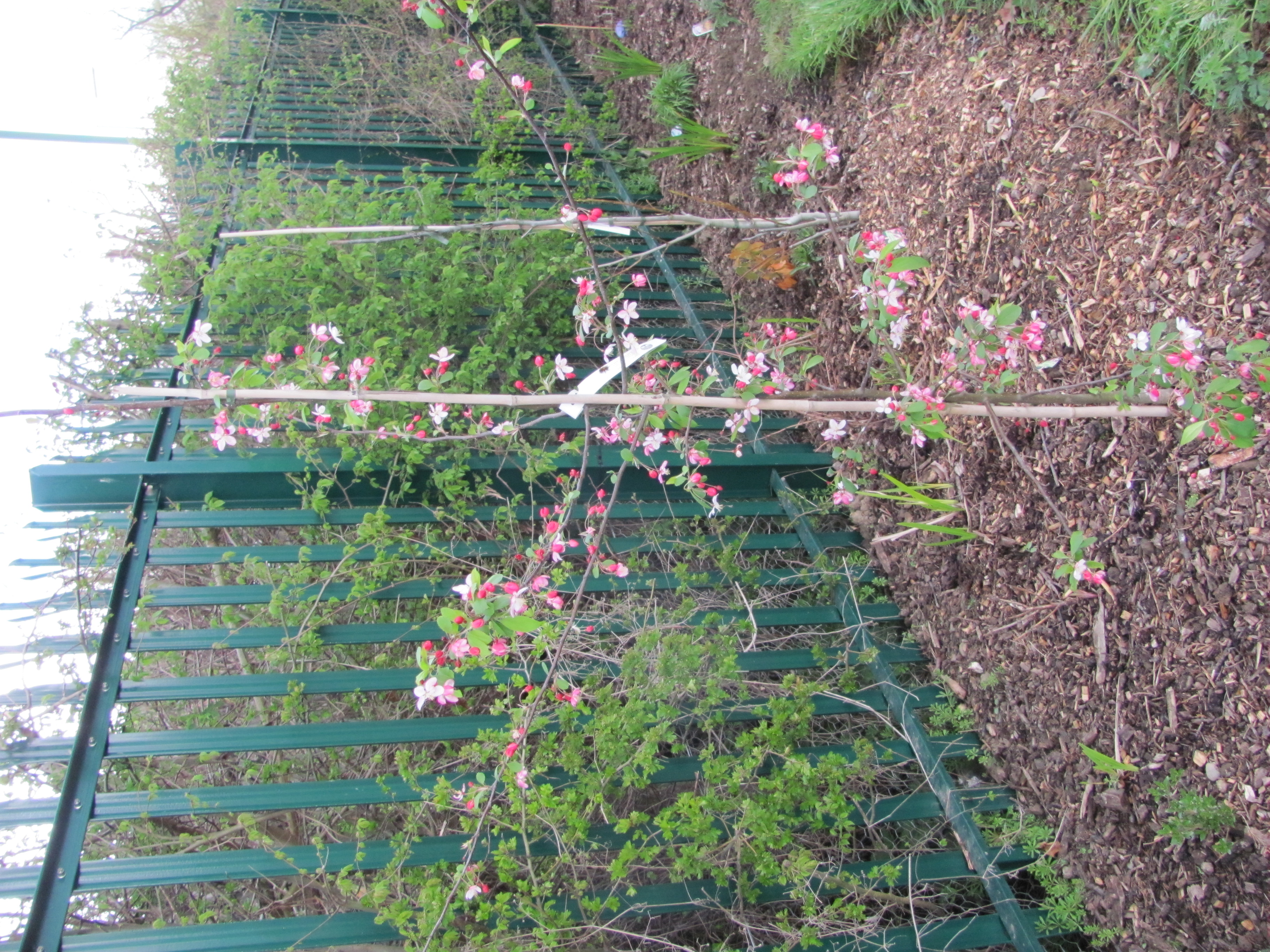
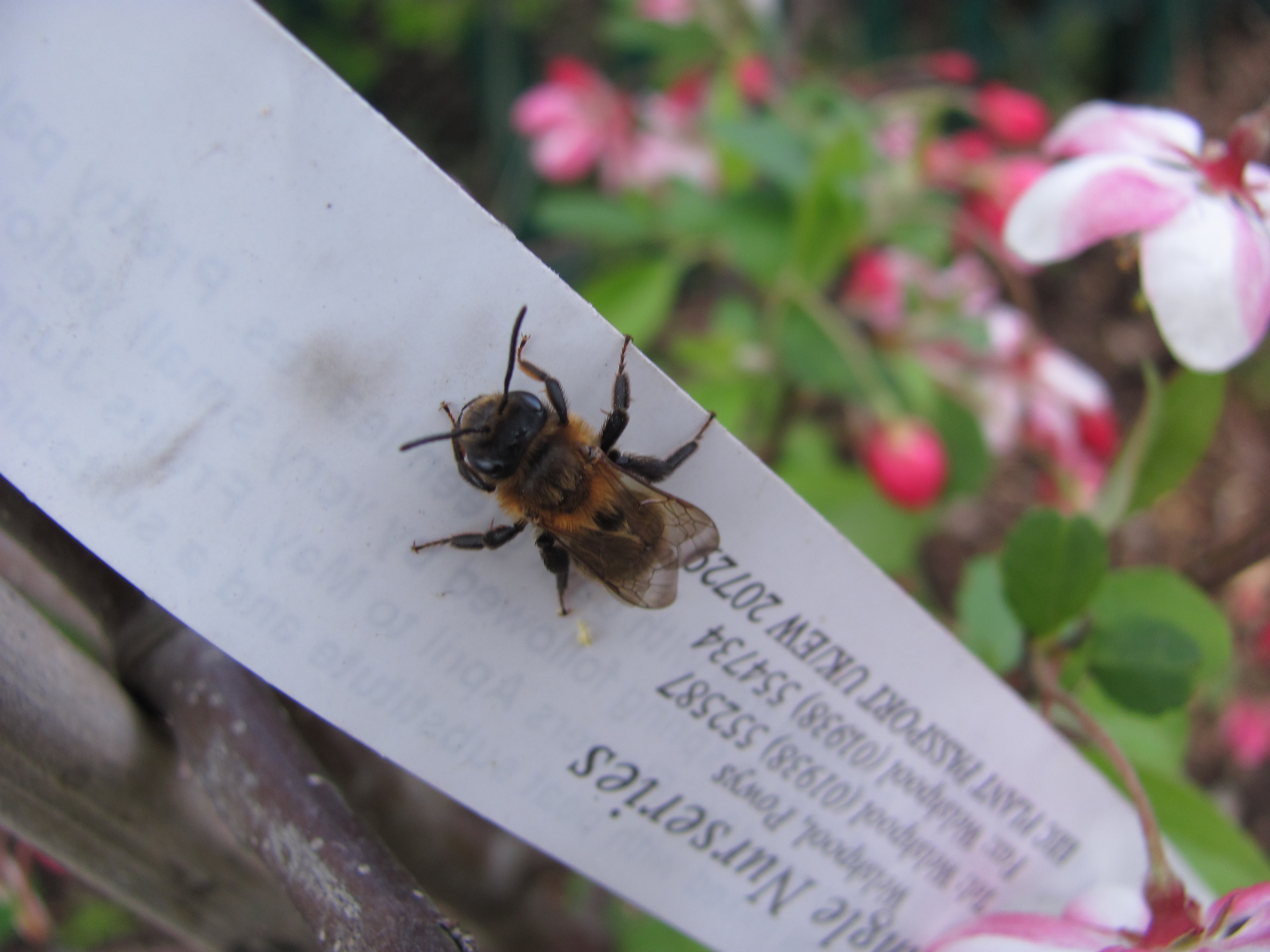
Colourful welcome to Hut 2, our information centre.A species crab apple, Malus floribunda, is a recent addition to the Autumn Garden.We planted the malus to attract bees - it works!Japanese maples grow in the dappled shade of the trees in the Autumn Garden
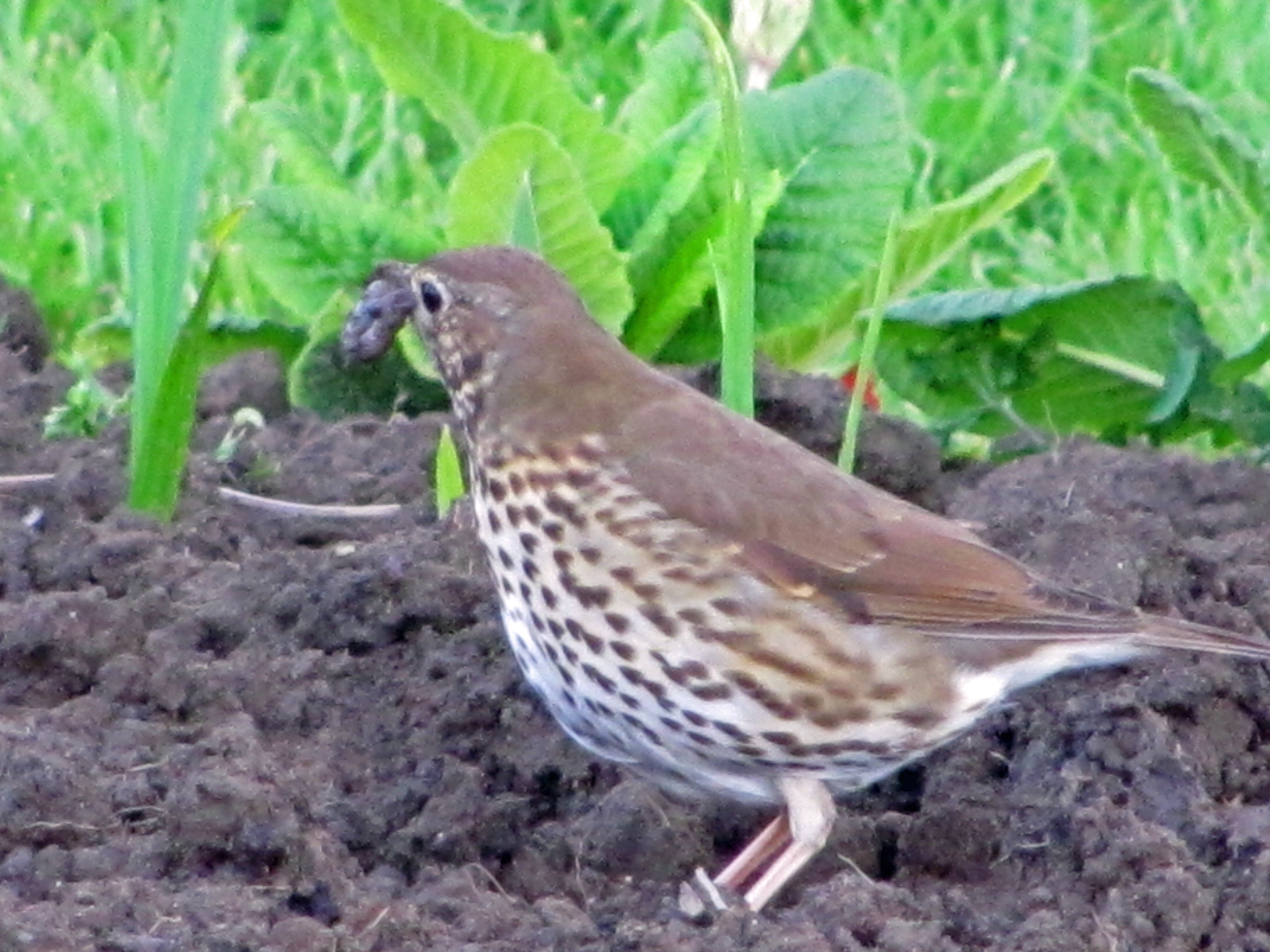
Moving on from the Autumn Garden towards the first communal orchard we follow a native hedge in which for the first time a Song Thrush has nested. the parents are busy feeding their young and collect worms and bugs from plots right under the noses of the gardeners.
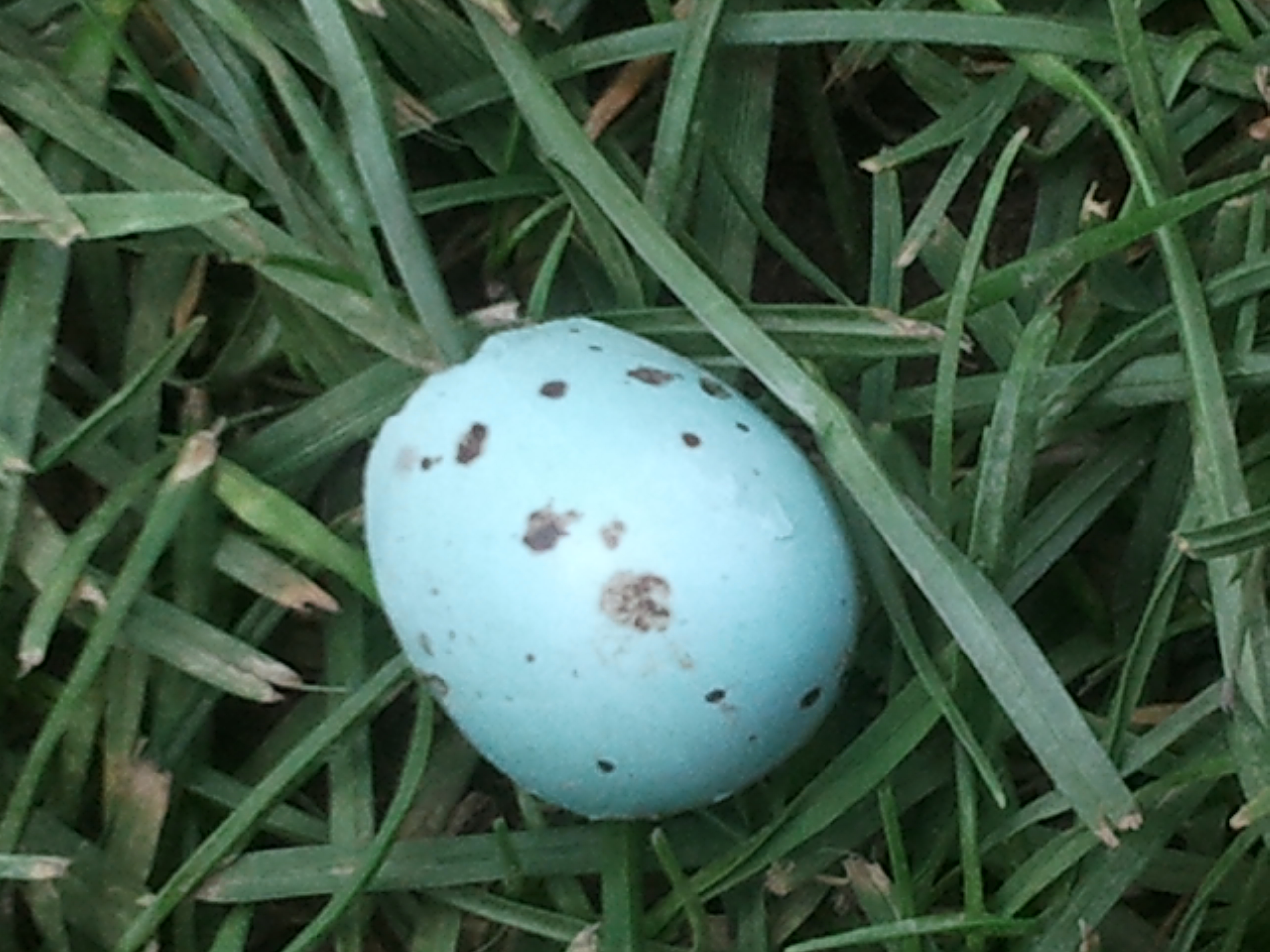
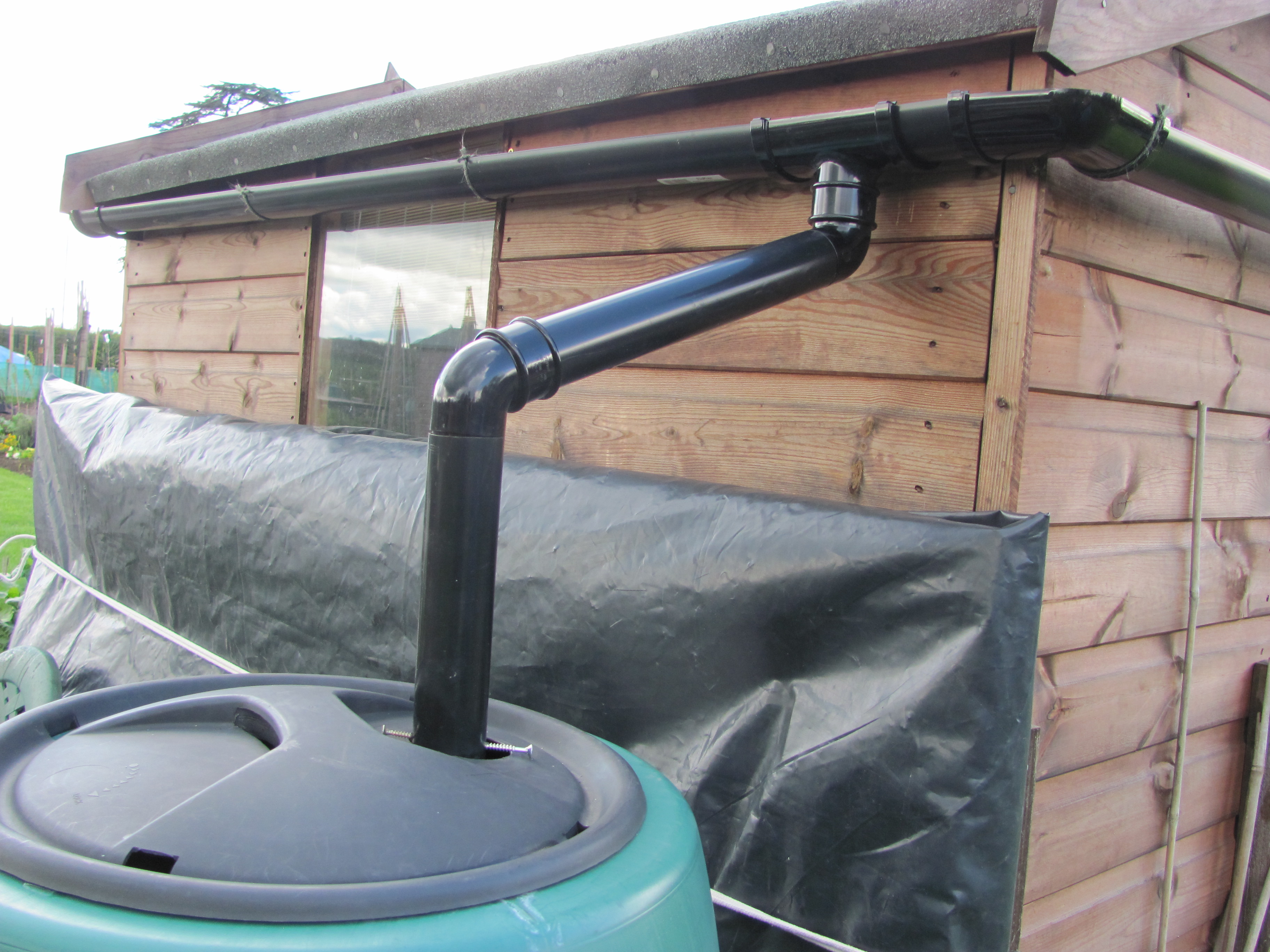
Thrush collecting food for its youngsters.The empty thrush egg we found a few weeks ago alongside the hedge.We are trying to encourage wise watering on the plots so lots of new guttering and butts are appearing.Ready for action.Have the crows got their own back?
In Crowmeole Orchard flowering spring bulbs are coming to an end as Camassias and Allium push up their flowering buds. The apples, pears and plums are covered in pink or white blossom.
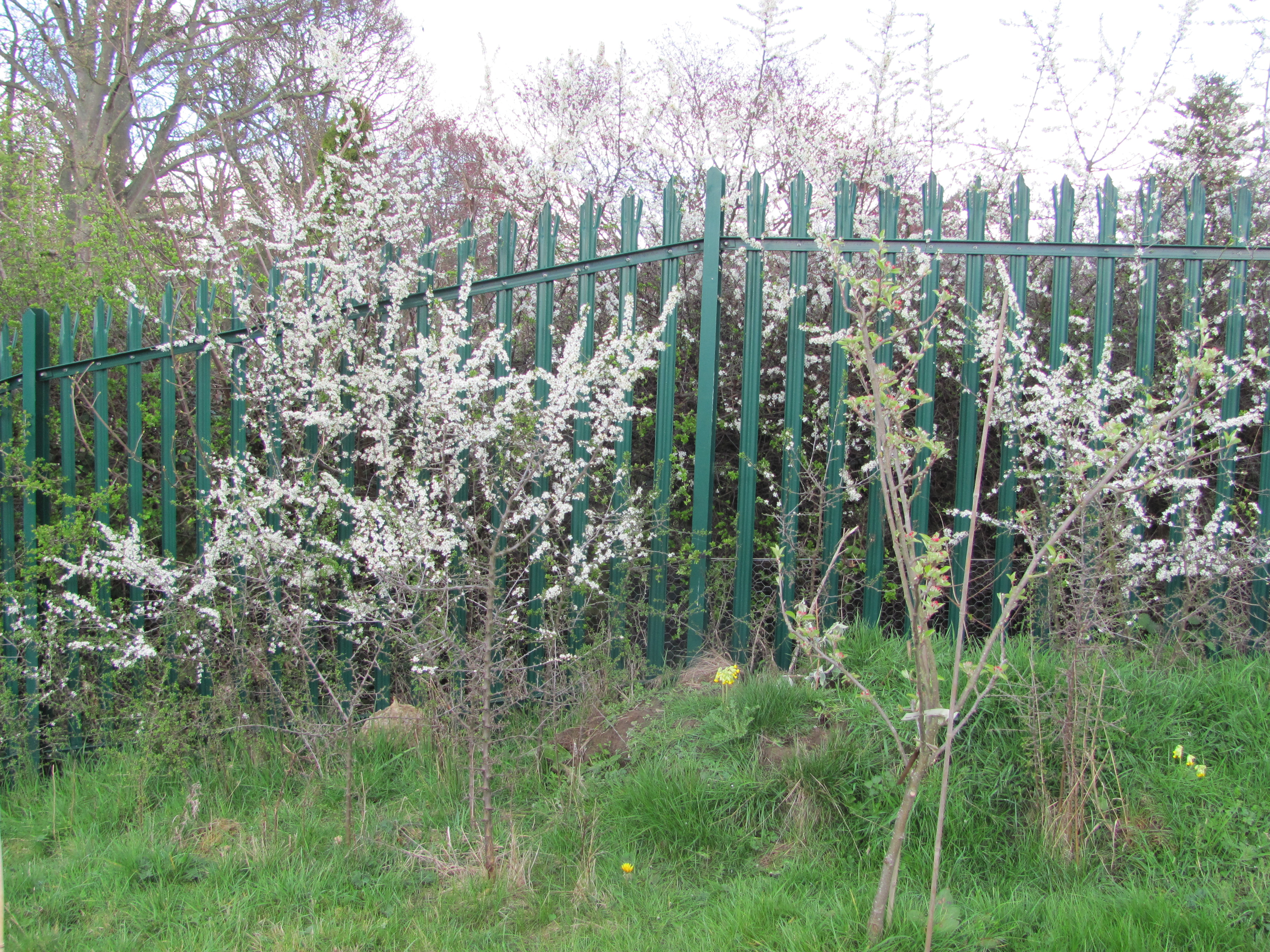
Blackthorn - bees love the blossom, birds love the fruit and allotment holders love to make sloe gin from them.Homes for beneficial insects who will help pollinate the fruit and predate on pests.The Fruit Avenue getting more colourful by the day.
As we wandered through this orchard a flock of Long Tailed tits in their pink and brown livery flew off in the bouncing flight pattern, having fed on the peanuts in the feeders. Their long trailing tails followed on. We moved on following paths between plots towards the Spring Garden and Sensory Garden near the old oak tree. Plots are full of ridged rows of sown potatoes and white plastic plant labels marking newly sown rows.
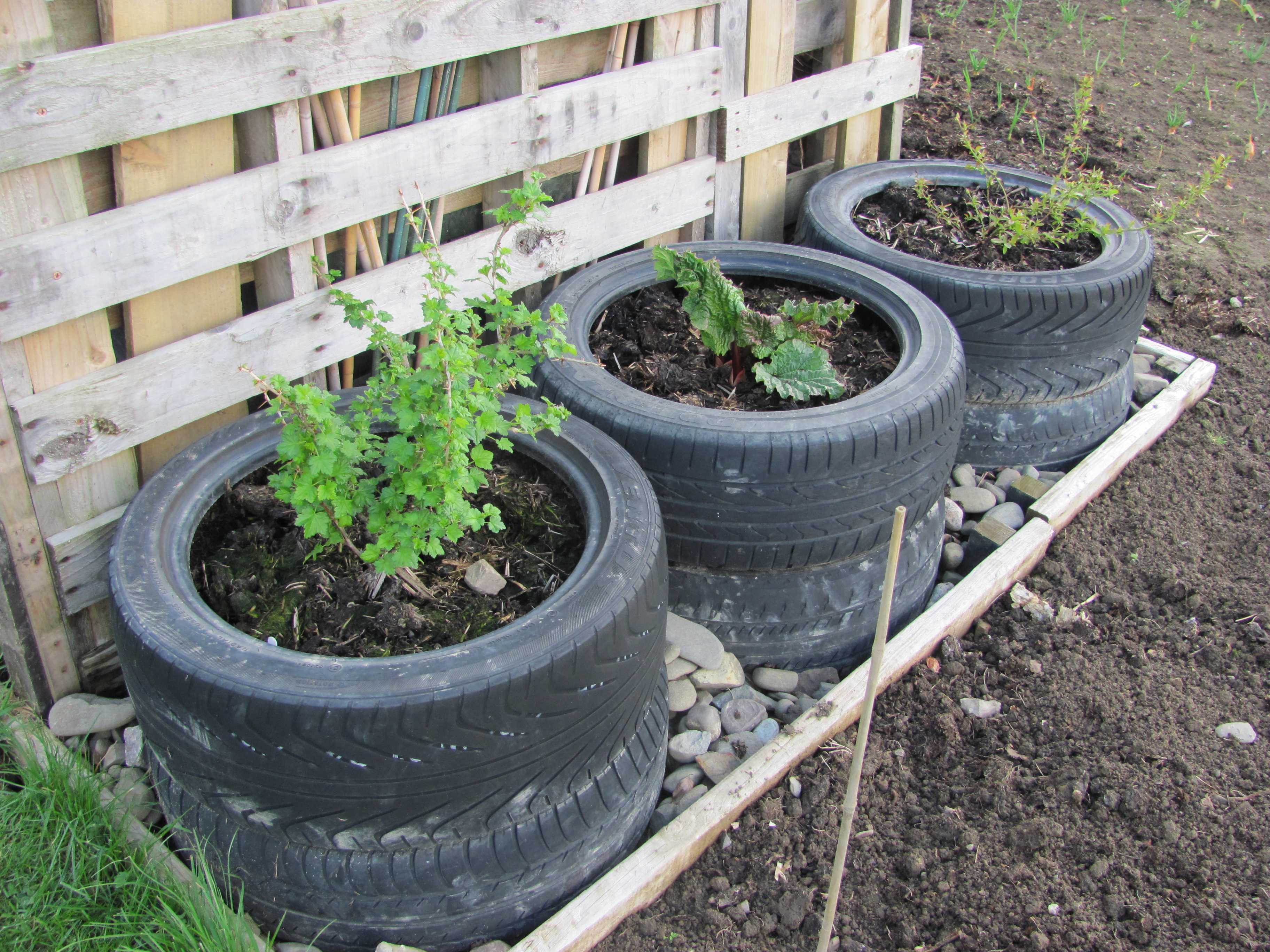
Phil and Doreen have planted up a border alongside their plot.Several plot holders are topping up their paths with wood chip.Alan's tyre beds.
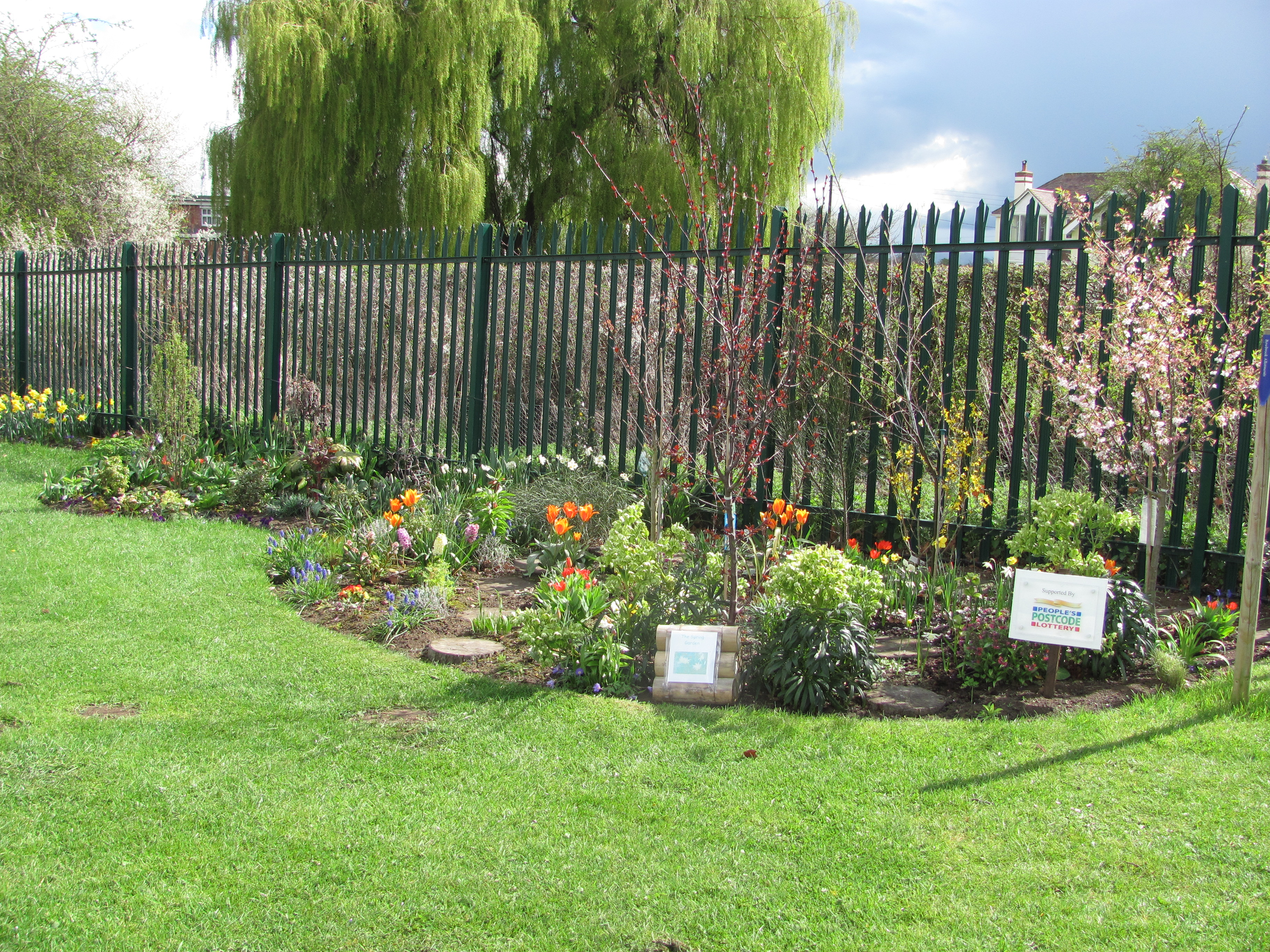
The Spring Garden in its second spring is looking so good and has become a popular place for allotment holders and visitors.
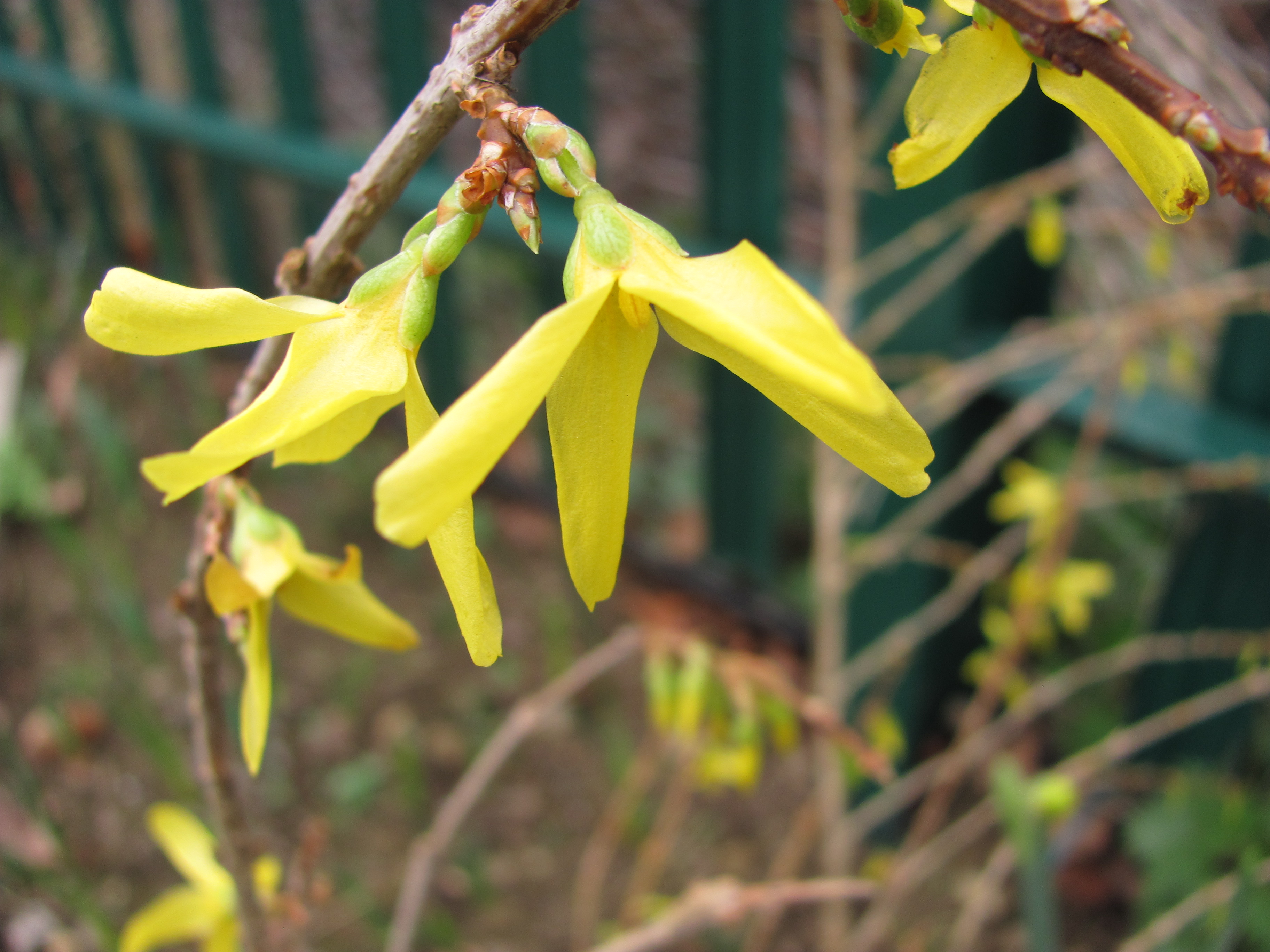
The most colourful spot on the site in April is the Spring Garden.Forsythia flowering in the Spring Garden.Spring Garden beauty.
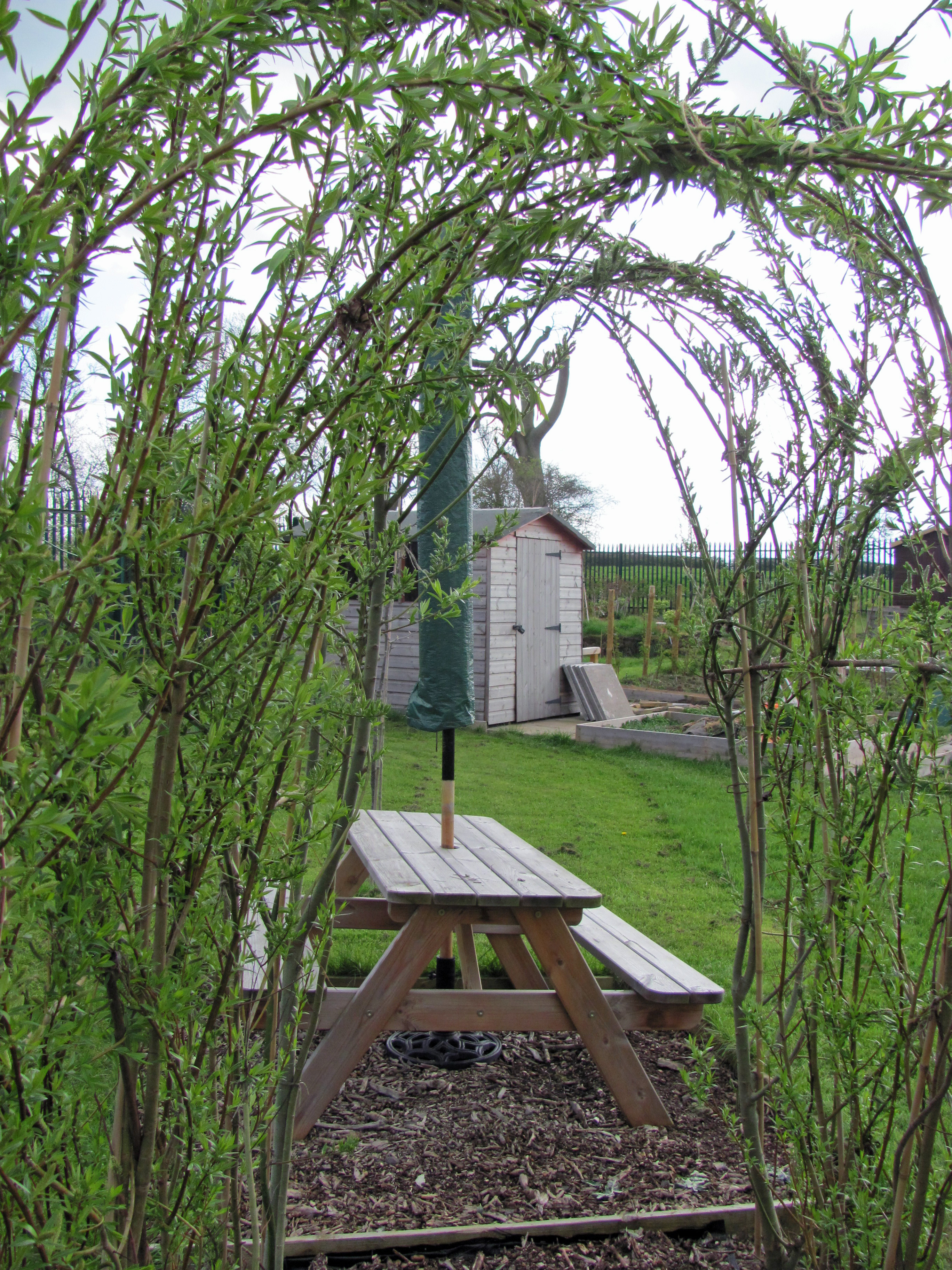
Through the Willow Tunnel is one of our many picnic benches where we stop for coffee on our April wanderings. As we enjoyed our brew curlews called in nearby fields with their mournful song and the Great Spotted Woodpeckers flew busily overhead.
We have just started to shape the willows into a tunnel.The Sensory Garden is growing well now the weather is warming up.
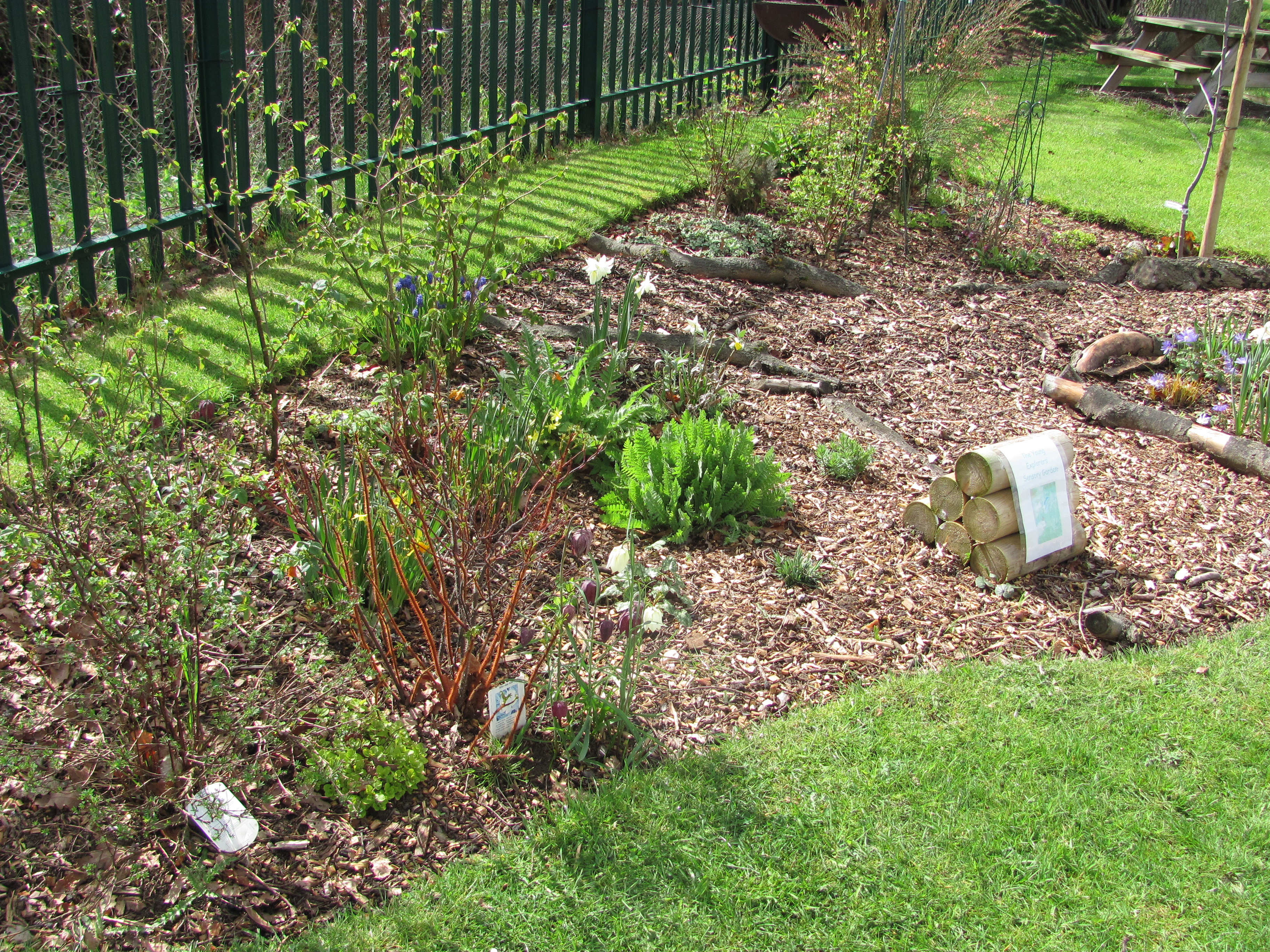
The Winter Garden has passed its peak after being so popular for months. We have been busy giving it a sort out.
The stems of the White Stemmed Rubus look magical in the spring sunshine.The dogwoods and willows grown for their coloured stems have been pruned hard to encourage fresh wands of growth.Fresh Fennel foliage in front of a Euphorbia.
We wandered next through the Woodcote Orchard where the paths are cut short and neatly through the long grass, and looked at the Turf Spiral, a favourite of the children.
Follow the trail post down the neat path.We have been adding another layer of turf to the spiral to create somewhere to sit.
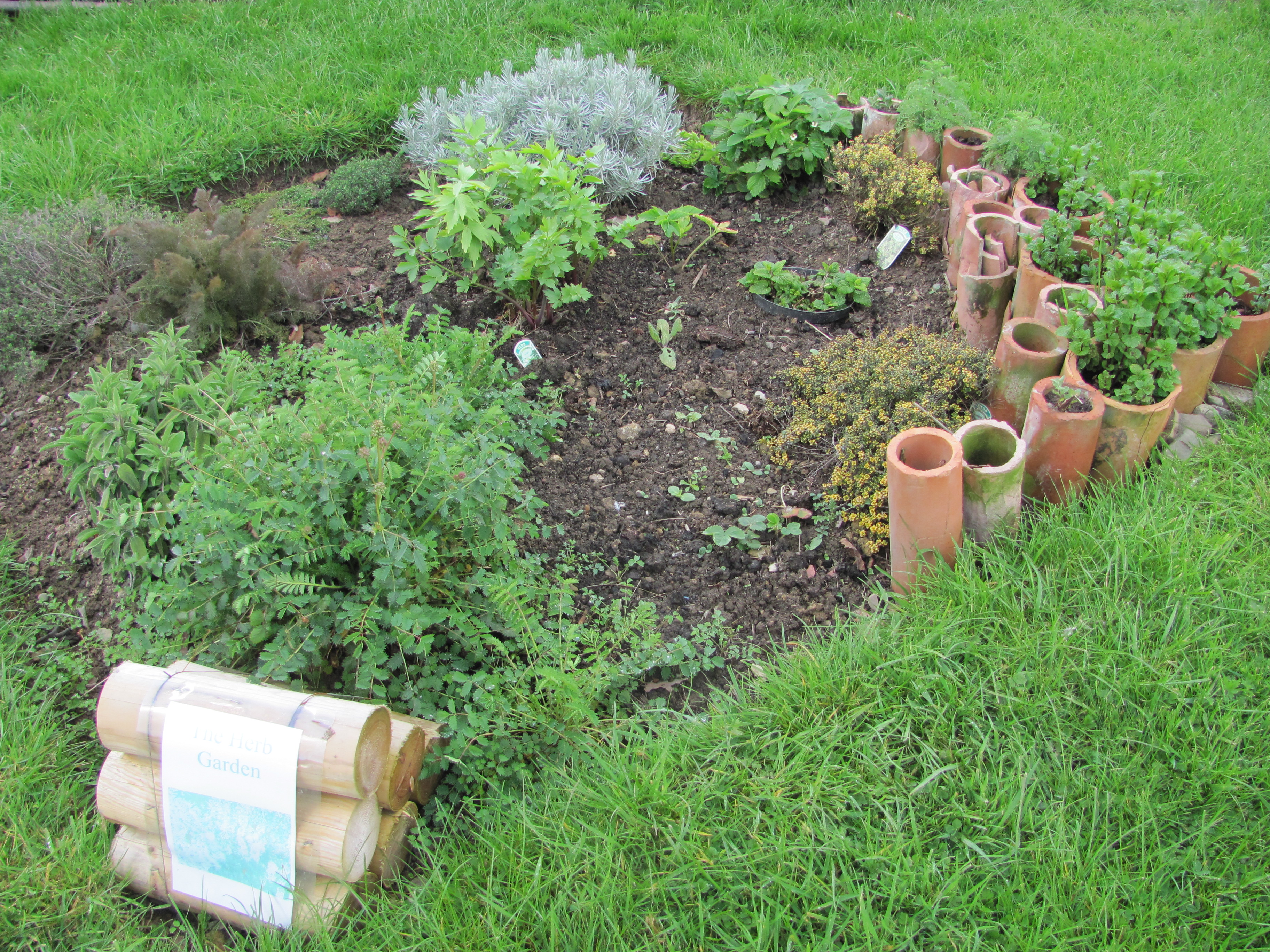
Our final stop on the way back to the car park was the Herb Garden where herbs are now well established. This last section of our lottie wander took a lot longer than the others as we enjoyed a good chat with Dave and Jean. We put the world to rights and shared details of how all our crops were getting on.
'The most important and informative publication on wildlife of our times' - The Independent. This blog is a member of The UK & Ireland Natural History Bloggers group: www.uknhb.blogspot.com
























 greenbenchramblings