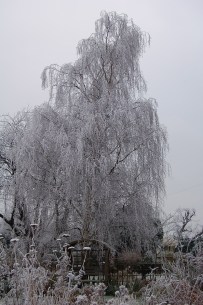
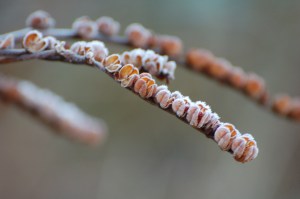
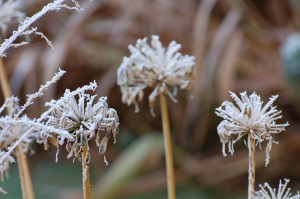
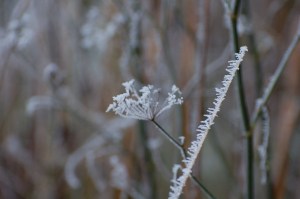
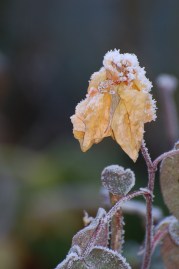
As a gardener I dislike the frost because it prevents me getting any tasks done but I love the way frost adds completely new character to the plants. The simplest bare stem or branch can come to life when the low sun catches a rim of frost.
As a photographer I dislike the frost as it makes my fingers hurt with cold deep down into the joints but I love the way light and frost adds a magical element not present at any other time. I find my fingerless thermal gloves a great help.
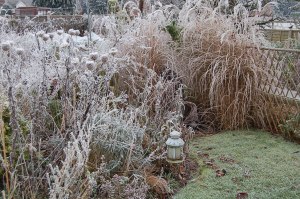
Grasses, when frosted create line drawings. My eye and camera lens are drawn to them on every frosty day.
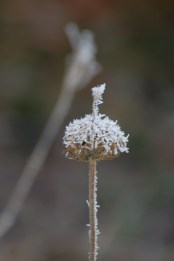
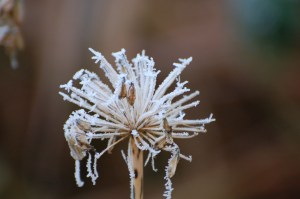
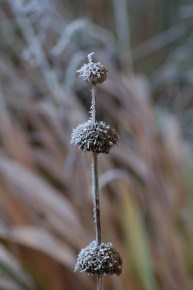
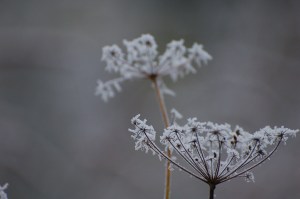
Looking out into the garden on bright frosted days, the low morning light creates special moments as it catches the seed heads of perennials.
In our frosted garden artefacts, ornaments and objects take on a new life. The copper obelisk looks black against the whiteness and it sports a delicate white coating. My next post will be about others.
(Hope you like the new look! Please let me know what you think.)
In recent years we have seen the numbers of most birds visiting our garden, even the commonest, dropping most drastically. Goldfinches, House Sparrows, House Martins, Swallows and Starlings seem particularly badly affected. We try to help by providing food, shelter and nest boxes but our actions must be a drop in the ocean. What would make a real difference would be for some serious research to find the root causes of this sad decline, and then putting it to rights.
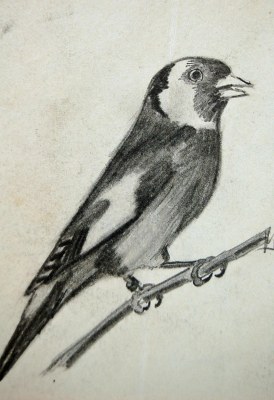
For a change I thought I would add some of my drawings and paintings to the usual photos I include in my postings. The pencil sketch below is of the multi-coloured Goldfinch.
This year the flocks of Goldfinches are showing signs of improvement, the sparrows are back cheerily entertaining us with their constant chatterings and the tit family seem more numerous. We notice these changes just by observing activity on and around our three feeding stations.
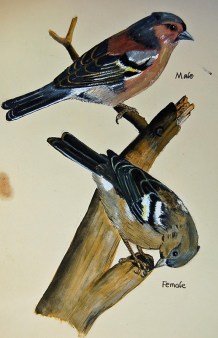
Some birds though still seem to be suffering especially Chaffinches and Greenfinches which until a few years ago were two of our garden’s commonest species.
Happily the Great Tit population here appears stable and their cousins the Coal Tits seem more numerous. These related birds display very different characters when visiting the feeders. The larger Great Tits are confident and stay feeding for long periods often chasing away other birds with wing-flaring and threatening shouting, while the Coal Tit comes quickly and quietly, selects its nourishment and disappears into nearby vegetation.
Many birds come into the garden to feed even when we are around, confidently feeding and foraging as we go about our business.
Winter brings into our garden for our enjoyment birds that we rarely see for the rest of the year. Winter visitors like the continental thrushes are the most obvious as they arrive in great numbers noisily and feed voraciously on berries and bits and pieces dropped from the bird table by the residents. Smaller less obvious visitors are Blackcaps and Siskins and these are welcomed with open arms. They are lovely to watch in the shrubs and trees. Goldcrests move in from the local woodlands and add wonderful bright splashes of colour.
A strange happening that we have observed this winter for the first time kept us amused for while. Our Nuthatches have started hiding peanuts away under the edges of the roofing felt of the garage and sheds. They ram them in a long way and very firmly. We wonder if they will recall where they left them when they need them in the future. It seems more likely that the Bluetits will discover them as they search all nooks and crannies in search of bugs.
Feeding the birds in our gardens may be drops in the ocean, but lots of drops may make a big wave!
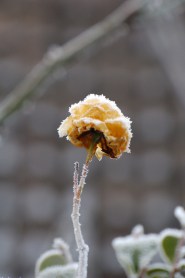
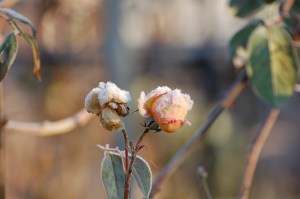
Today is the Winter Solstice! A day to celebrate! From tomorrow each day will get a little longer, giving a bonus of extra light. So here is a present of a bouquet of frosted roses.
We delight in every rose bud that appears in the winter months and celebrate each and every one that opens out to present us with a bloom. When iced with a crystal layer of white frost they look even better.
I suppose I shall have to prune them down by half to stop the wind rocking the roots loose before too long, and then it will be a long wait until next May to appreciate these delicious blooms once again.
The last month of 2012 and therefore here is the last post in the “wander around our garden” series. December was a month that started wet and cold and quickly got wetter and colder. We have found ourselves carrying on regardless – we weren’t going to let the weather beat us. So we donned warm waterproofs and busied ourselves clearing soggy perennials and pruning shrubs.
The birds are suffering from lack of natural food in the surrounding countryside so are flocking to our feeders. They add so much colour and song. This year’s flocks of Long Tailed Tits and Goldfinches are much larger than in recent times. Mixed tit flocks have reached over 70 in number at times and finch flocks up to 25. So we are kept busy regularly topping up the seeds, nuts and fatballs. As a result of the poor harvests of berries and fruit in the woods and hedgerows we have had invasions of large flocks of Blackbirds into the garden and already our shrubs are stripped of their produce. The blackbirds are aided in their berry stripping by Thrushes, Redwings and Fieldfares. All the red berried shrubs were denuded first, leaving not a single berry on our Cotoneasters, Hollies and Mountain Ashes so they are looking a little less colourful. They have now started on their second choice berries – yellows and whites.
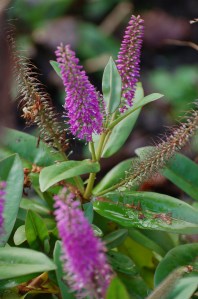
There is still an amazing amount of colour in the garden with some flowers still going strong. This Hebe just ignores whatever the weather throws at it and keeps on flowering. When a frost comes these delicate looking flowers prove they are not delicate at all. They stand to attention even when coated in frost.
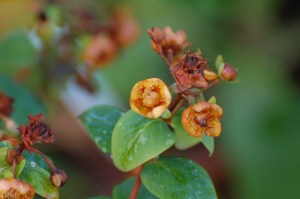
These small Hypericum shrubs, similar in size to the Hebes, perform on several fronts with flowers still apparent, berries showing several colours on the same plant and leaf colour which gets richer as the weather gets colder.
Odd flowers of Rudbeckias appear throughout the winter way outside their peak flowering period. They are like little bursts of sunshine.
Other plants are meant to be winter flowering and we look forward to these each year. Mahonia japonica exhibits its long thin upright racemes of buttercup yellow flowers with the added luxury of a beautiful warm scent, somewhat reminiscent of pineapples.
The glossy, dark hand shaped leaves of Fatshedera are a perfect foil for bright summer flowers in our Shed Bed, but it produces its own much more subtle flowers throught the winter. They are the palest of cream with a dull orange centre. They look as if they should emit the mouth-watering aroma of vanilla but that is sadly only in my imagination.
After a deep frost these flowers loose substance and flop, hanging lifelessly until warmed by the sun.
The starkness of winter structure exposes simple shapes and patterns working together. This yellowed sword shaped leaf of a Crocosmia cuts dramatically across the curved metal seat back.
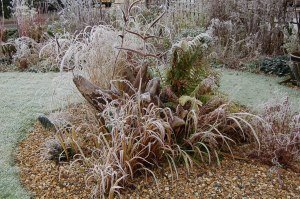
Sculptures take on a new life. Our ironwork ferns rimmed with frost particles curls through the whitened grasses in the Stump Garden.
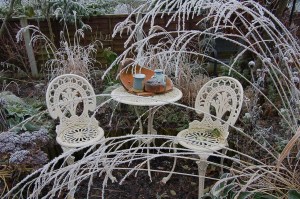
Seating areas look less inviting!
Right down at the bottom of the garden the summerhouse looks sadly at the pool which sits frozen solid at its feet.
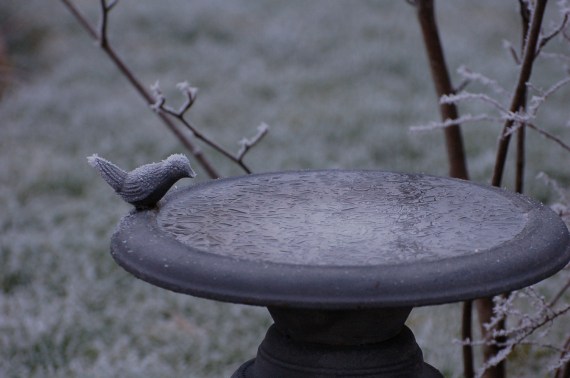
Similarly the water in the birdbaths is often frozen. Each morning as I wander down the garden to feed the chucks I take a detour to add warm water to the birdbaths to melt the ice.
Frost decorates ornamental features giving them a new winter look.
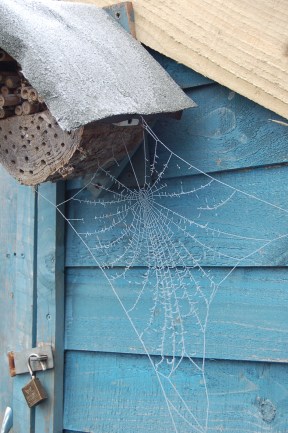
Frost highlights the overnight toils of spiders who weave webs around sheds, nest boxes and insect homes.
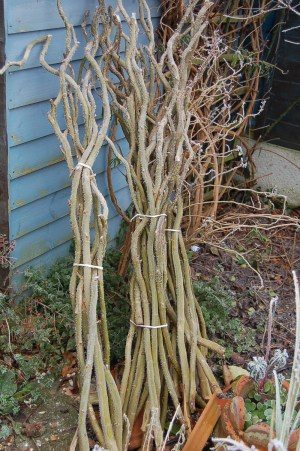
There is little to harvest in December but we harvest various prunings. Taller thicker branches will be used as bean poles, smaller branches as pea sticks and to support perennials next year, and these spiral willow stems will be part of some sculpture that I am planning. Bamboo prunings will give us our own bamboo canes. Our first real crop of canes! That should save a few air miles!
Whatever the winter has in store for us, we are well-prepared. This pile of hardwood logs, oak and birch, will keep us warm and cosy and its scent of woodlands give a good welcome. And outside the chimenia patiently waits with its own fuel supply for us to venture outside to garden and enjoy a coffee break in the winter sun. Alongside the sculptural fire bowl adds further interest.
And what is happening in our borrowed landscape in December? Sheep seek nourishment in the paddock and provide a little natural fertiliser for the grass, and the wheat fields sadly sits waterlogged, growth at a standstill.
A winter wander around our local woodland patch within the grounds of the National Trust’s Attingham Park got off to a strange start. Expecting the cold weather to have restricted visitors to a few hardy souls, we arrived to see the main car park full, all overflow parking fields full and lots of extra parking also filling up rapidly.
We had arrived just after the start of their first Christmas related event – The Frost Fair. Bad planning! However the woodlands were quiet, the only sounds following us around were the songs of small and squeaky birds, Coal Tits, Treecreepers and Goldcrests.
The event we searched out was the art exhibition of the works of Mother Nature. She was her usual brilliant imaginative self.
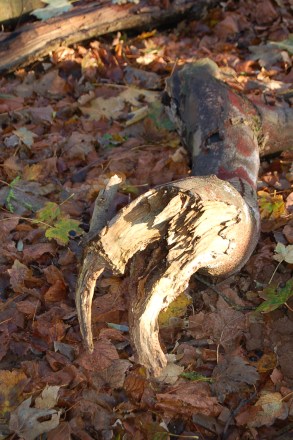
Her woodcarving looked freshly made and full of texture and colour.
This piece looks to be based on the shapes of a crab’s claw.
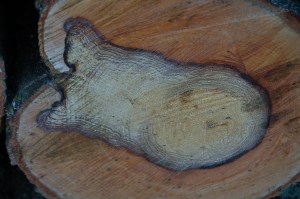
Drawings on the cut trunks of a diseased Ash tree reminded me of cave paintings.
This triangular land art installation shows Mother Nature working in a more geometric way.
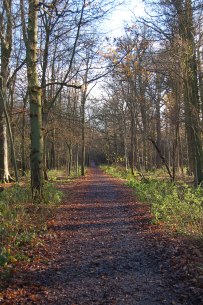
As the woodland path took us deeper in amongst the trees we appreciated the quietness of our footfalls, the quietness of the soft deep pine needle duvet. When it is quiet the subtleties of bird songs and calls are more easily enjoyed. We stood feet away from a Goldcrest feeding on insects he had searched out from the conifer needles with thin probing beak. He suddenly fell to the floor as if dead, or mimicking the gentleness of a falling leaf. He dropped into the fern and bramble undergrowth and stayed there out of sight. Was he feigning death to fool a predator or pretending to be a falling leaf with the same purpose in mind? As we stood silently in awe of what we had witnessed he reappeared vertically up into the branch he had fallen out of. One of those magical moments that two observers of the natural world will never forget! Any idea what he may have been up to?
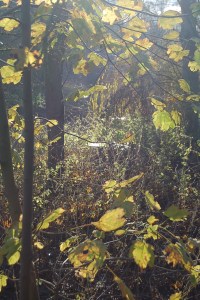
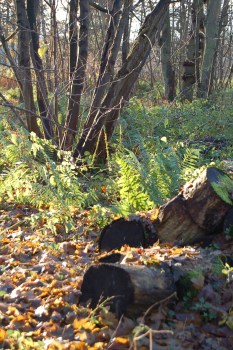
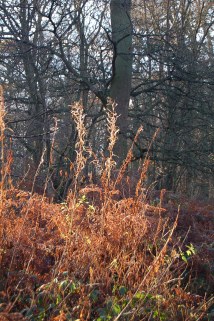
Nature playing with light fascinated us as the sun dropped lower in the thin blue sky lighting up the understory with golds and oranges.
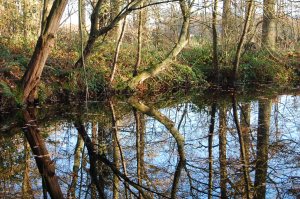
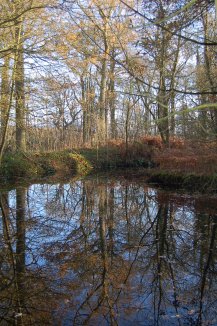
Water, be it a stream, ditch, river or pool, affords nature the chance of playing with mirrors to create illusions and mysteries.
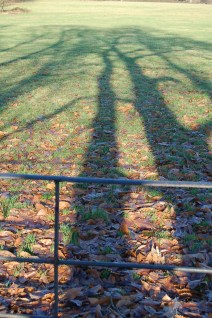
On the land shadows are drawn long and dark. The long tall tree shadow stretches out across the pastureland. My own shadow tried to get in the picture until I managed to persuade it to move into the shadow of one of the tree trunks.
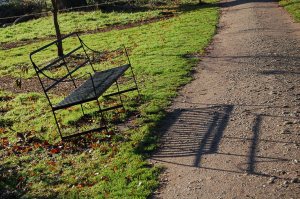
The shadow of the precariously leaning seat crossed our path as we approached the gap in the tall wall that would take us into the productive gardens.
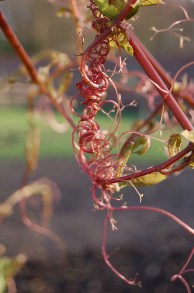
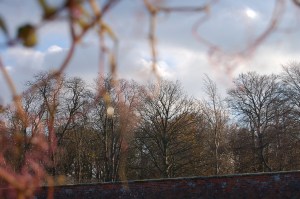
The climbing, curling tendrils of this vine glow pink and red in the sunlight, forming a natural frame for the filigree skeletons of trees.
We greatly enjoyed our visit to the open air gallery.
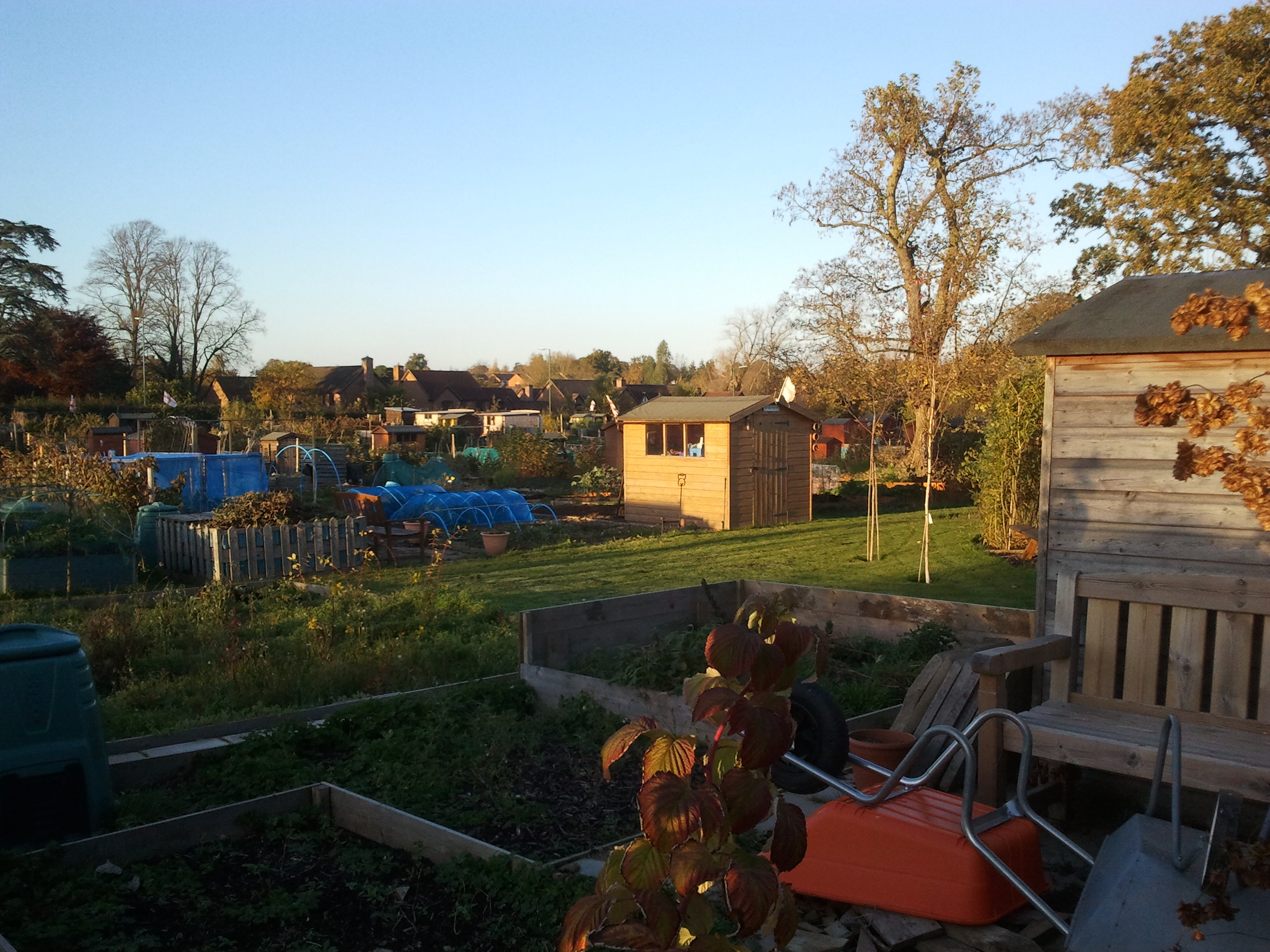
The penultimate lottie wander post for 2012 and at last the weather is providing a few bright cold days. This is what we look forward to in this autumnal month, rather than the wet dark days we have been presented with in the first few days. The light is warm and gives a crisp edge to any photos taken as the blue haze of summer has disappeared.
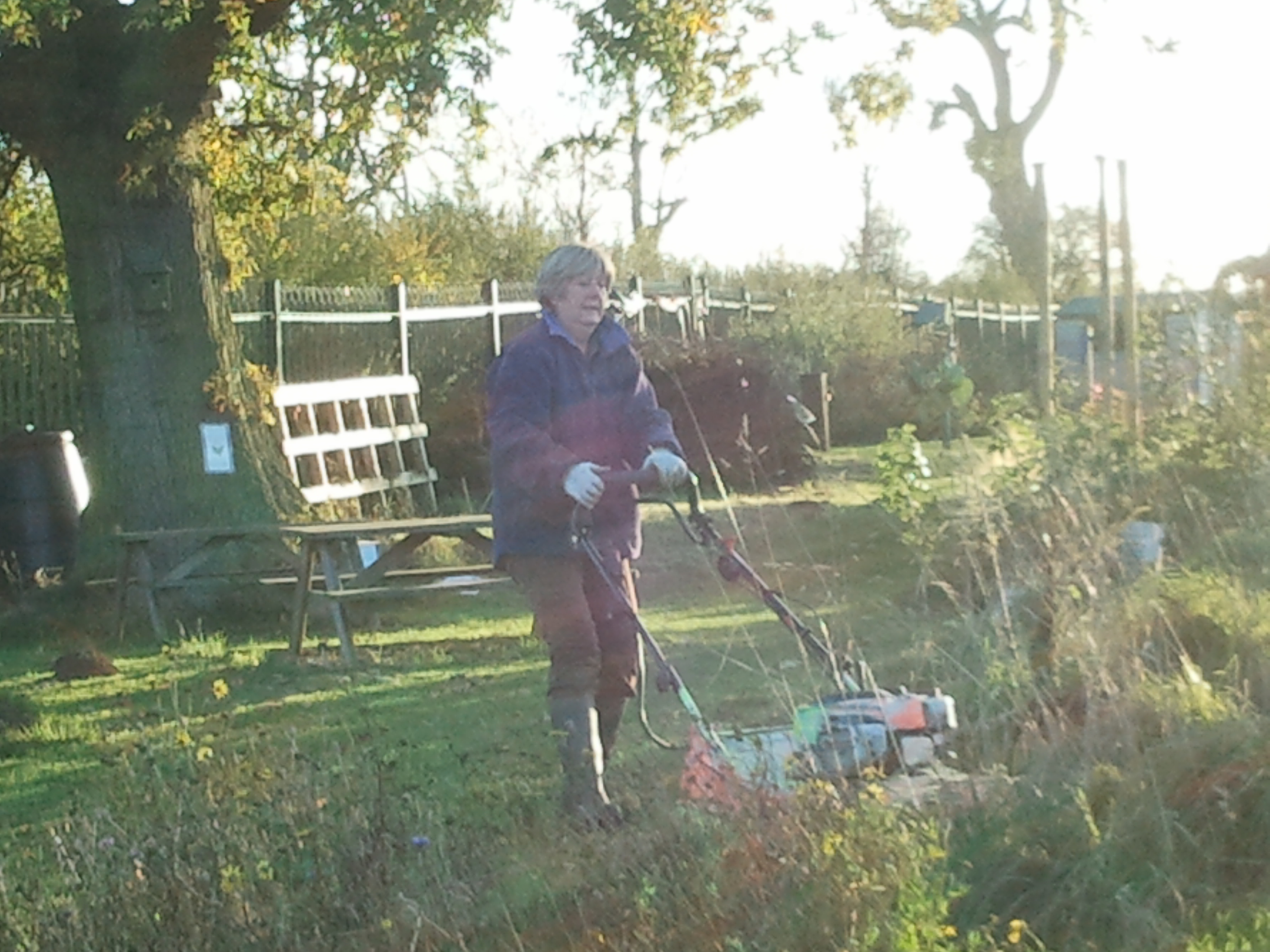
We went up the lottie yesterday to deliver some spare seeds for the Seed Swap basket and to collect some greens left by fellow plot holders for our chickens. They are spoilt by our friends from the site! It was mid-afternoon and we had not intended to stop to work, but we changed our minds. We got out the communal mowers and rakes and gave the final two meadows their annual “hair cuts”. Jude, The Undergardener did most of the work as it is a bit difficult with my spine and leg pains, so I wandered off taking advantage of the special quality of the day’s light and shot off a couple of dozen pics with my Galaxy.
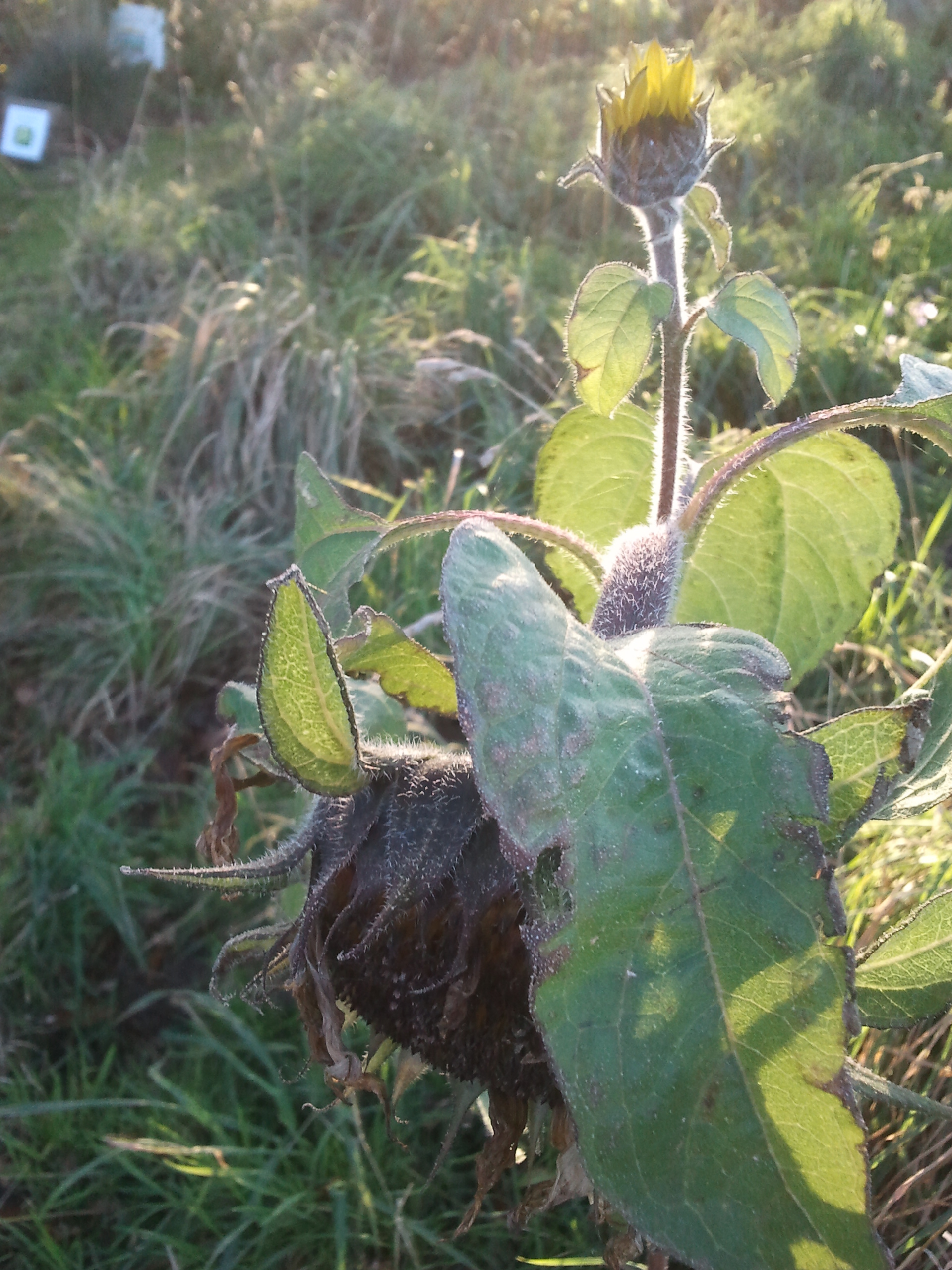
As we worked on the meadows the resident Field Voles scuttled off as they felt the mower’s vibrations and disappeared down their holes. We left a few clumps of wildflowers standing for everyone to enjoy before winter cuts them down. Field Scabious, Mallow and Sunflowers.
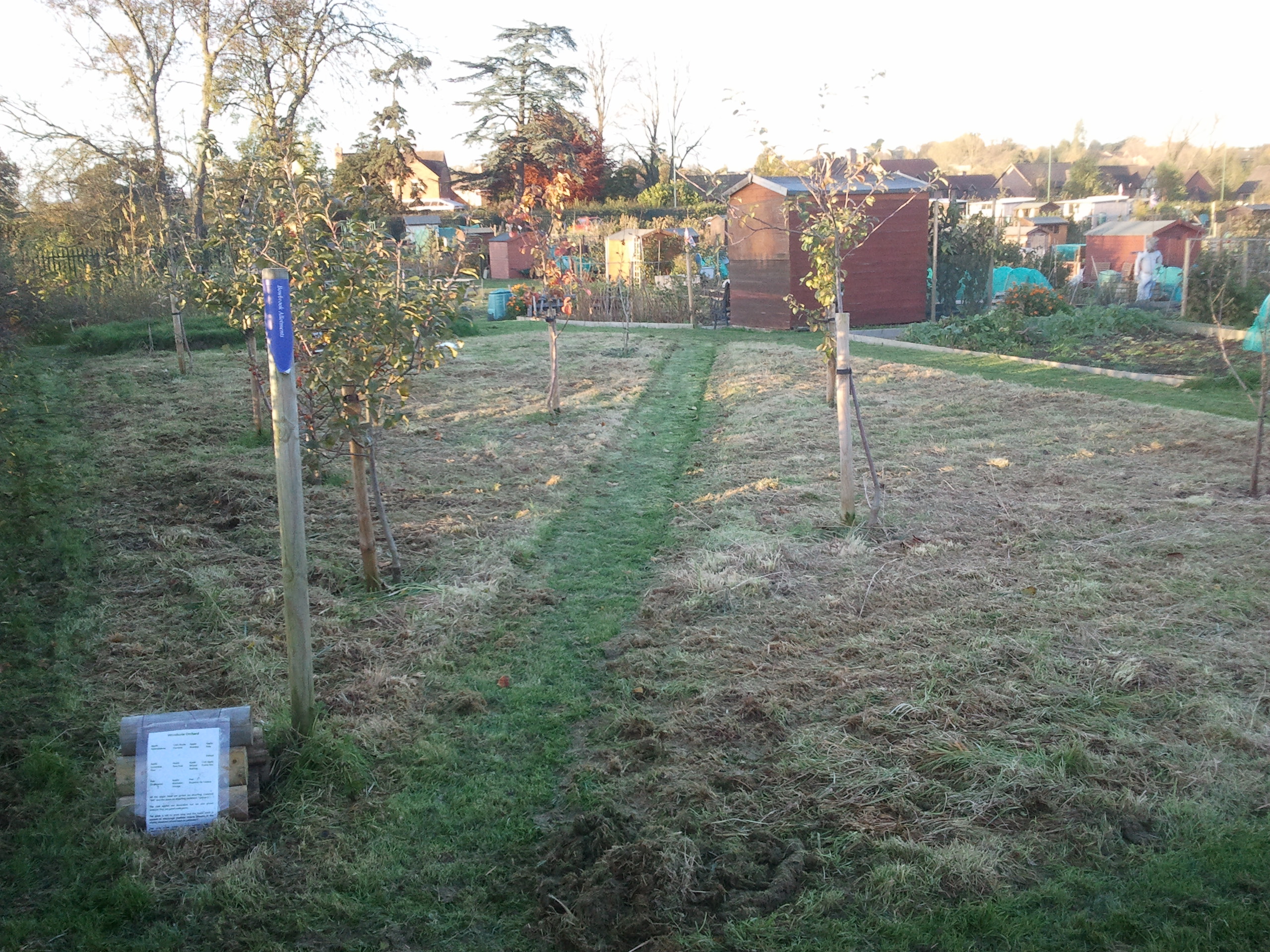
The meadows that are already trimmed look flat and brown, but the pathways mown through them look crisp and green.
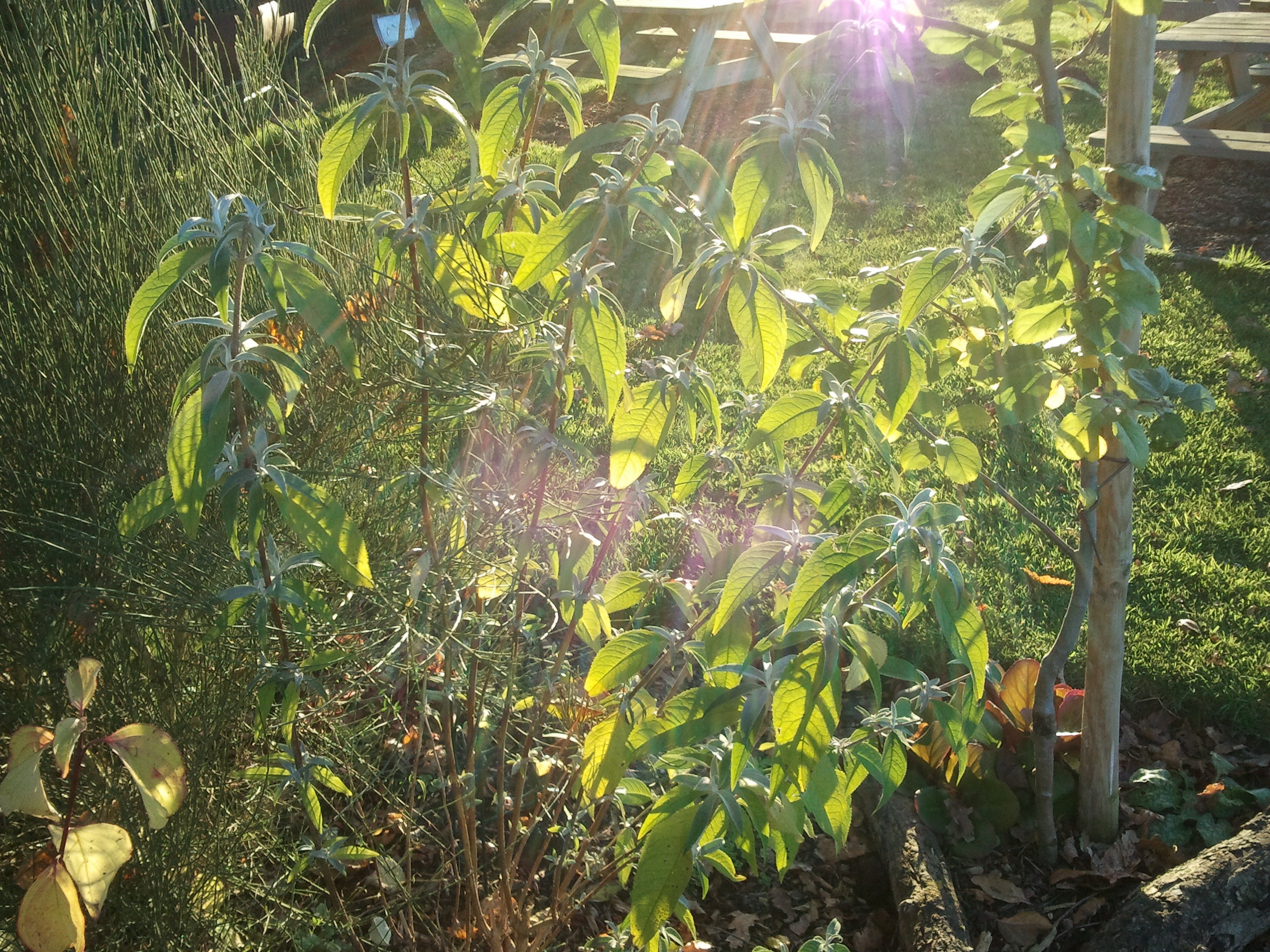
The foliage in our Sensory Garden is given extra vitality in the November sunshine.
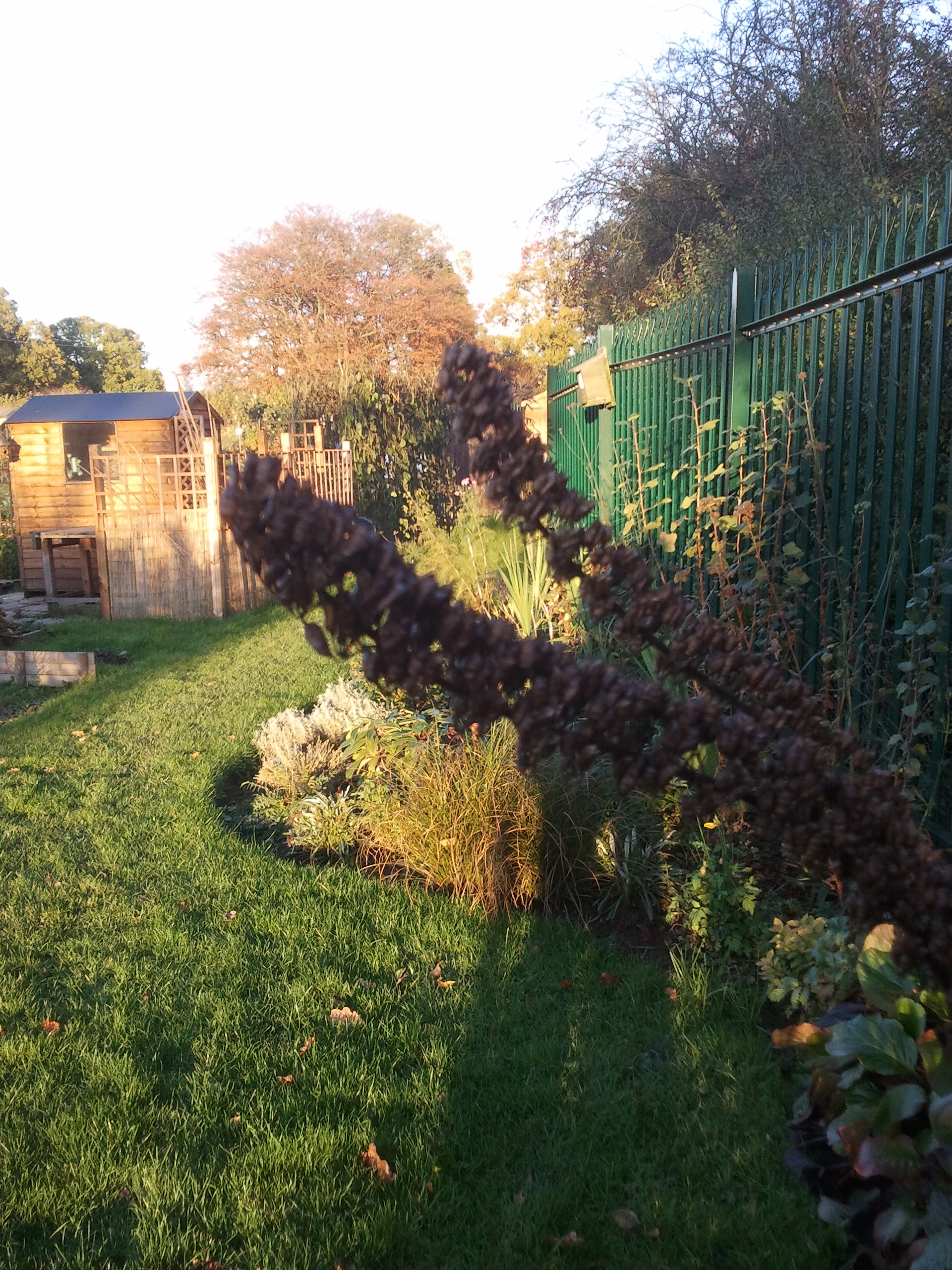
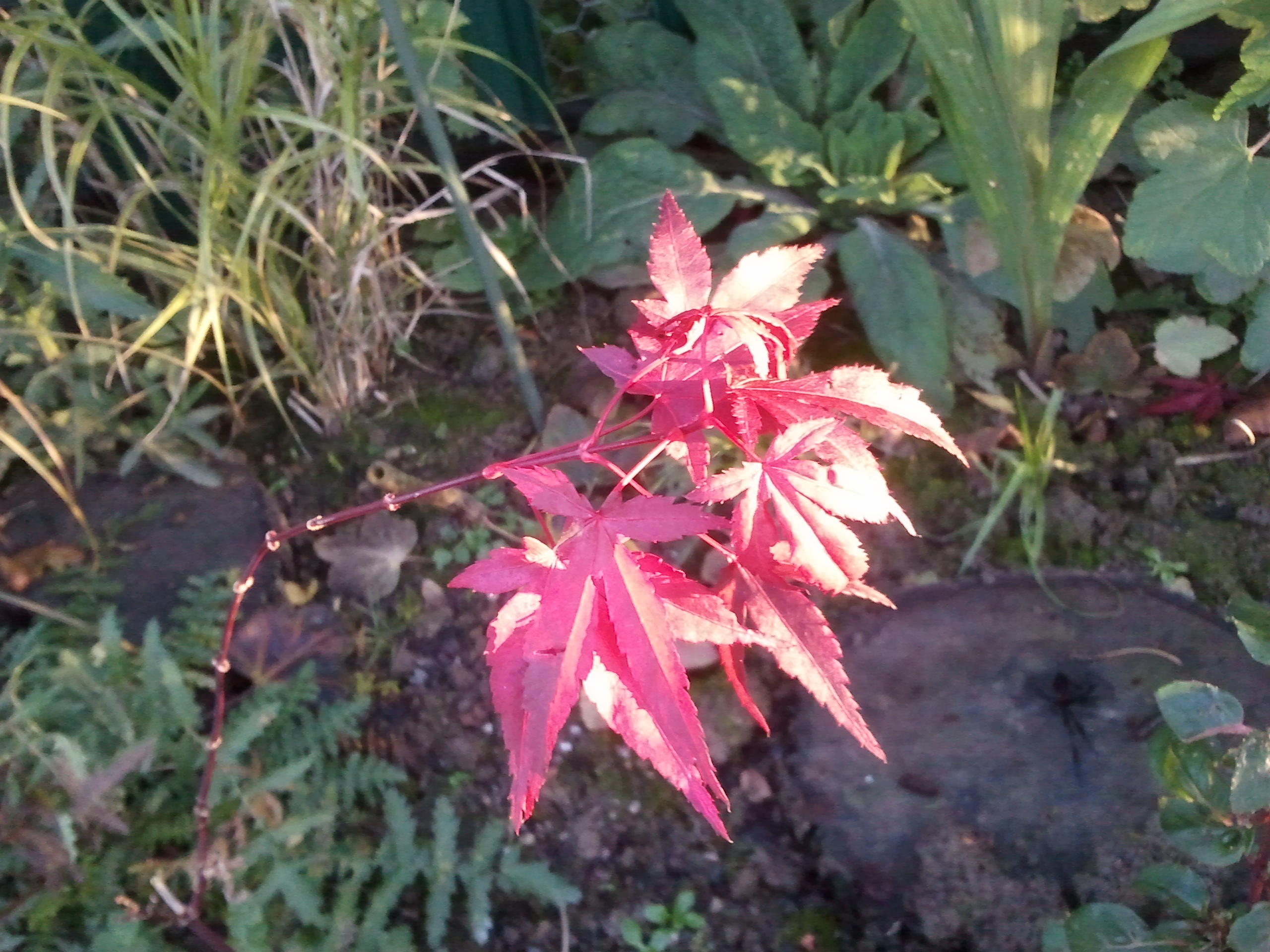
The next shot is a view of the site boundary through the seed heads of a white-flowered Actaea across the Spring Garden. In the Spring Garden a tiny Acer shows that you don’t have to be big to impress.
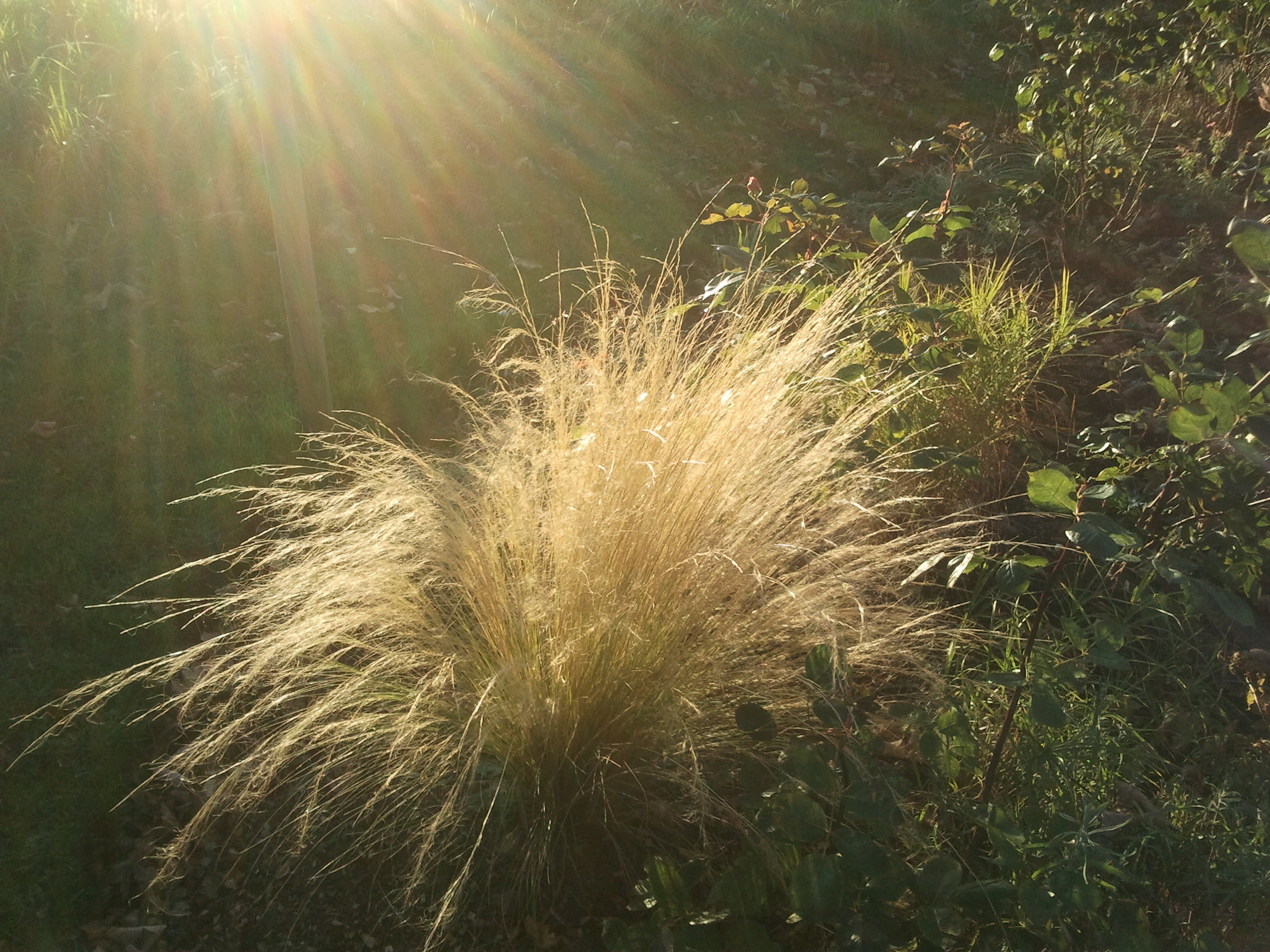
In the meadows the last of the grasses and sunflowers stand tall and proud.
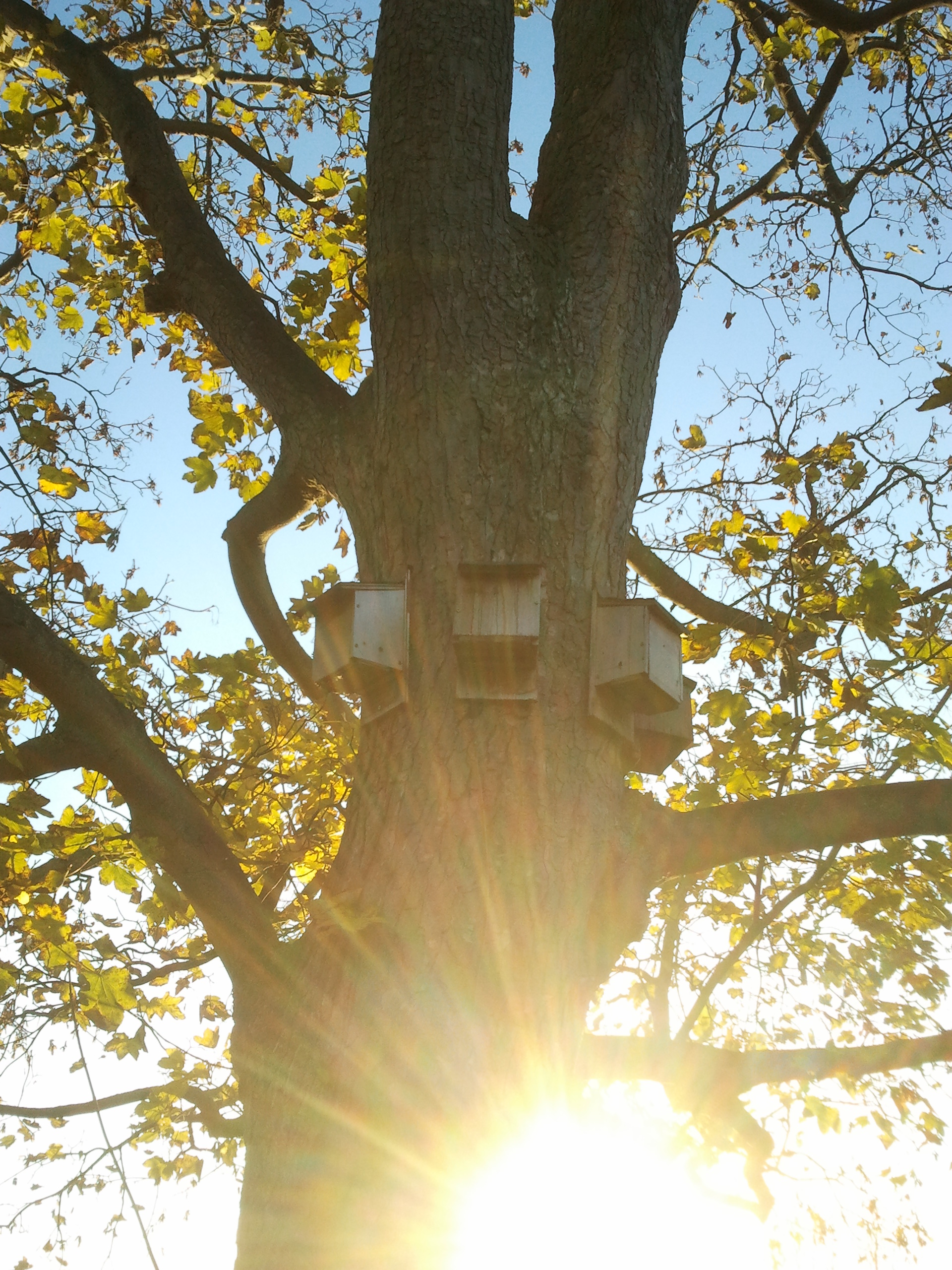
Up in the mature Sycamore and Oak the resident bats will be shuffling around and preening in readiness to leave their roosts in the boxes and go on the feed for moths and night-flying insects. Bats are our night-time pest control patrols. In the daylight hours we are being entertained by birds of prey often being mobbed by our flocks of Jackdaws and Rooks . Peregrines, Buzzard, Red Kite, Kestrel and Sparrow Hawk.
Around the plots the gardeners are preparing their plots for the winter, beds are cleared and manure piled up or spread over the surface.
A few crops remain for winter sustenance.The red stems and purple leaves of Ruby Chard add a burst of colour. Brassicas are covered to give protection from ravenous and greedy Wood Pigeons who love to eat the sweet centres of Brussels Sprouts and the tenderest, newest leaves of cabbages.
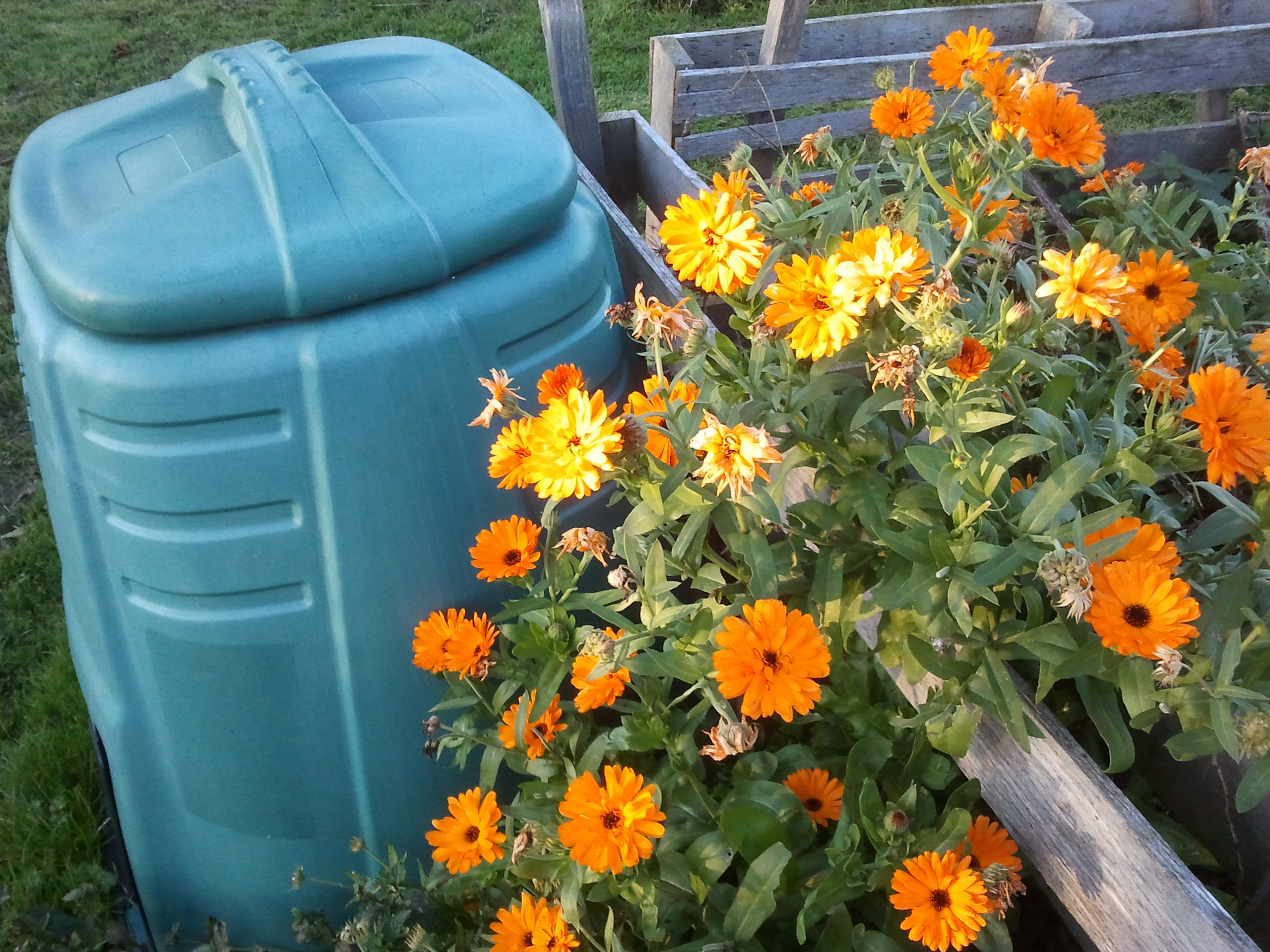
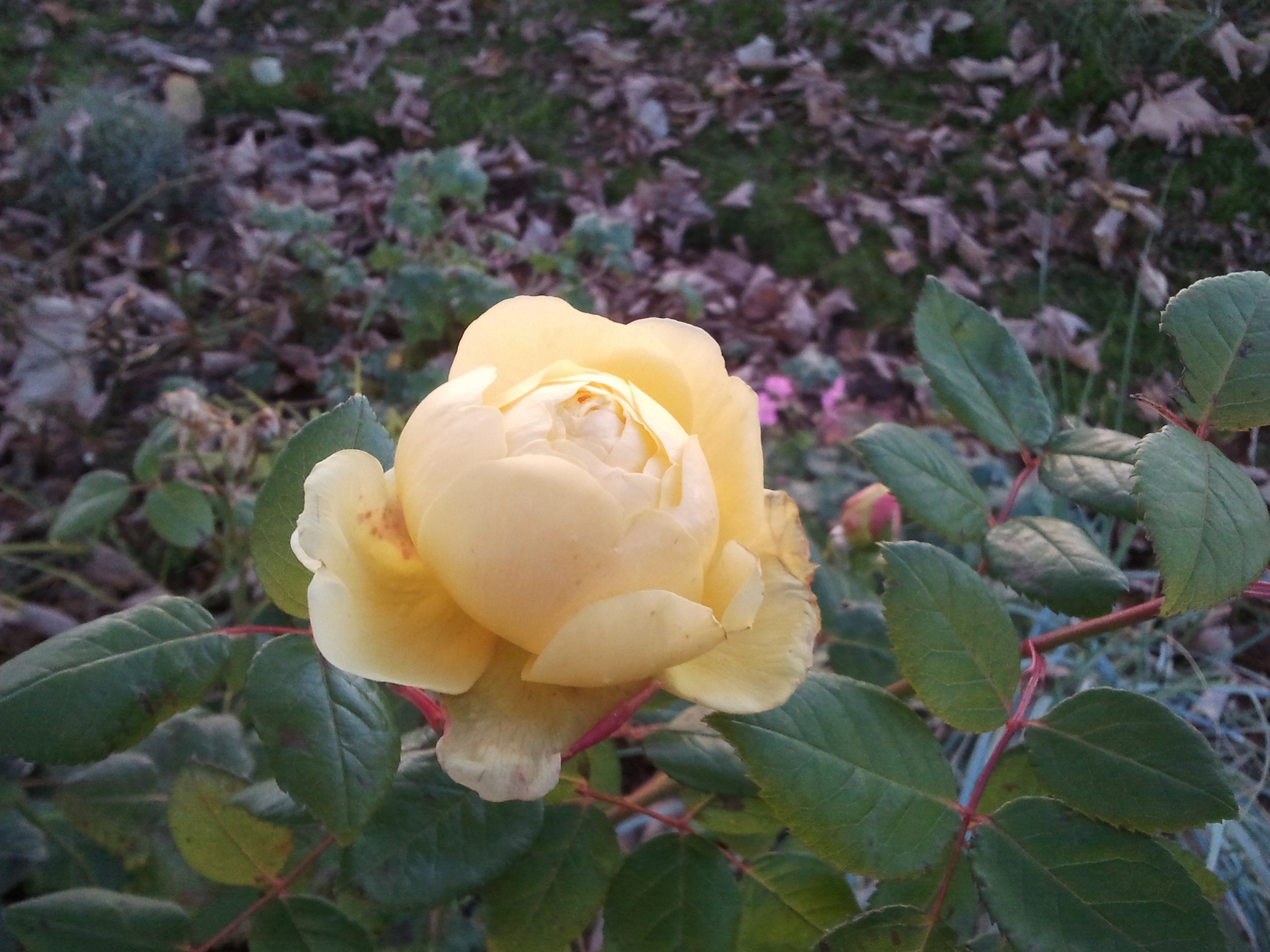
A few remaining flowers add extra brightness to the plots.Tthat most popular of companion plants, the Calendula brightens up compost areas and odd roses still perform in the Summer Garden. We can expect these David Austin roses to continue to treat us to flowers until the new year.
The star of the site for the next few months will be the Winter Garden and it is already showing promises and hints of what delights it has in store for us in times ahead. As leaves fall from trees and shrubs the colours and textures of the stems and trunks will come into their own.
We have endured a wet summer and autumn with each month breaking previous rainfall records. Crops have been poor and we have been flooded four times. Dave, the Scarecrow looks a bit worse for wear too!
The third wander around the allotments at Bowbrook already! We were expecting a warm bright day but it turned out misty with a chill in the air. So much work has been done to the plots with many allotmenteers all ready for the coming growing season. Tree surgeons have been to do a bit of work on our mature Sycamore tree and the resulting wood has been put to good. The shredded wood is being used by some plot holders to surface their paths, some branches have been used to create a brash pile and some logs used to create a big impressive log pile.
Our welcome message on the wall of our composting toilet.
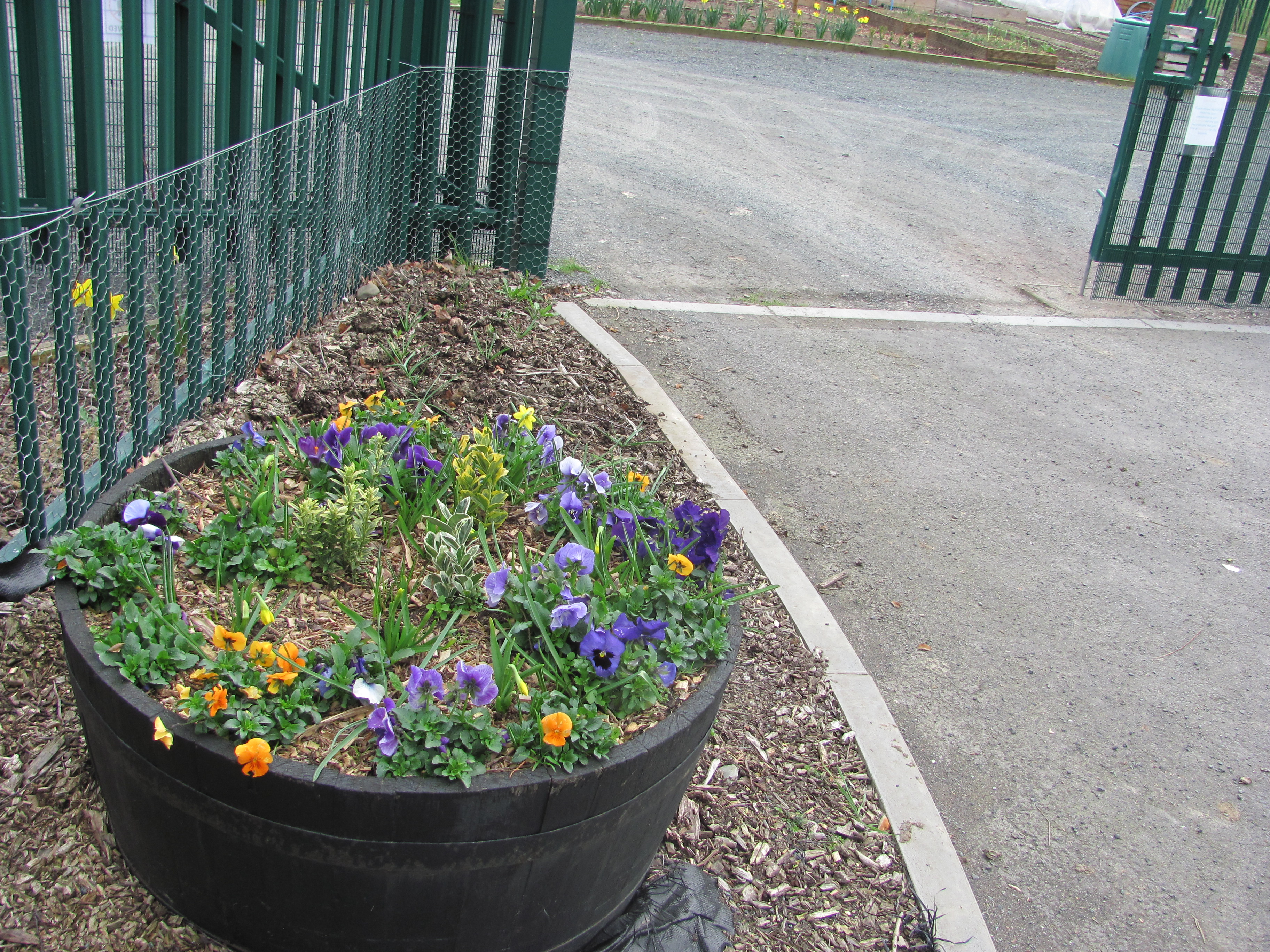
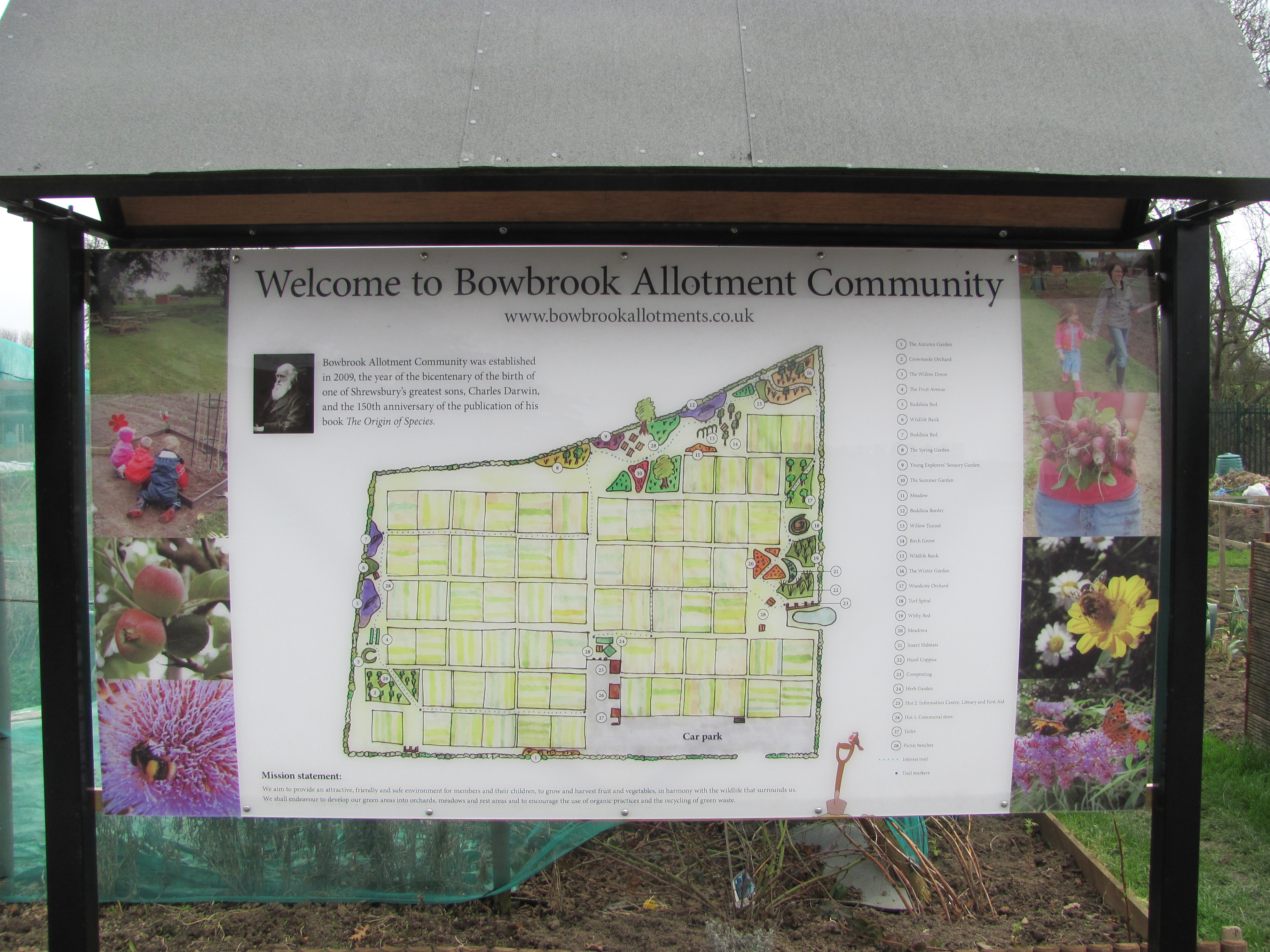
To welcome visitors and plotholders to the site we have planted up two half-barrels outside the gateway and opposite the gate on the edge of a plot we have our posh main site sign which features a map of the site, our mission statement and photos of the main functions of the site.
Let’s begin the wander with a look at what is going on our own plot, number 37. We are just about ready for the 2012 season with soil dug over composted and raked. The kale which we have overwintered looks very healthy with its wonderfully coloured crinkle edged leaves of glaucous green, purple and pink.
The perennials in out “Bee and Bug Border” are producing new shoots. These plants are grown to attract beneficial insects both predators and pollinators, such as bees, hoverflies and lacewing.
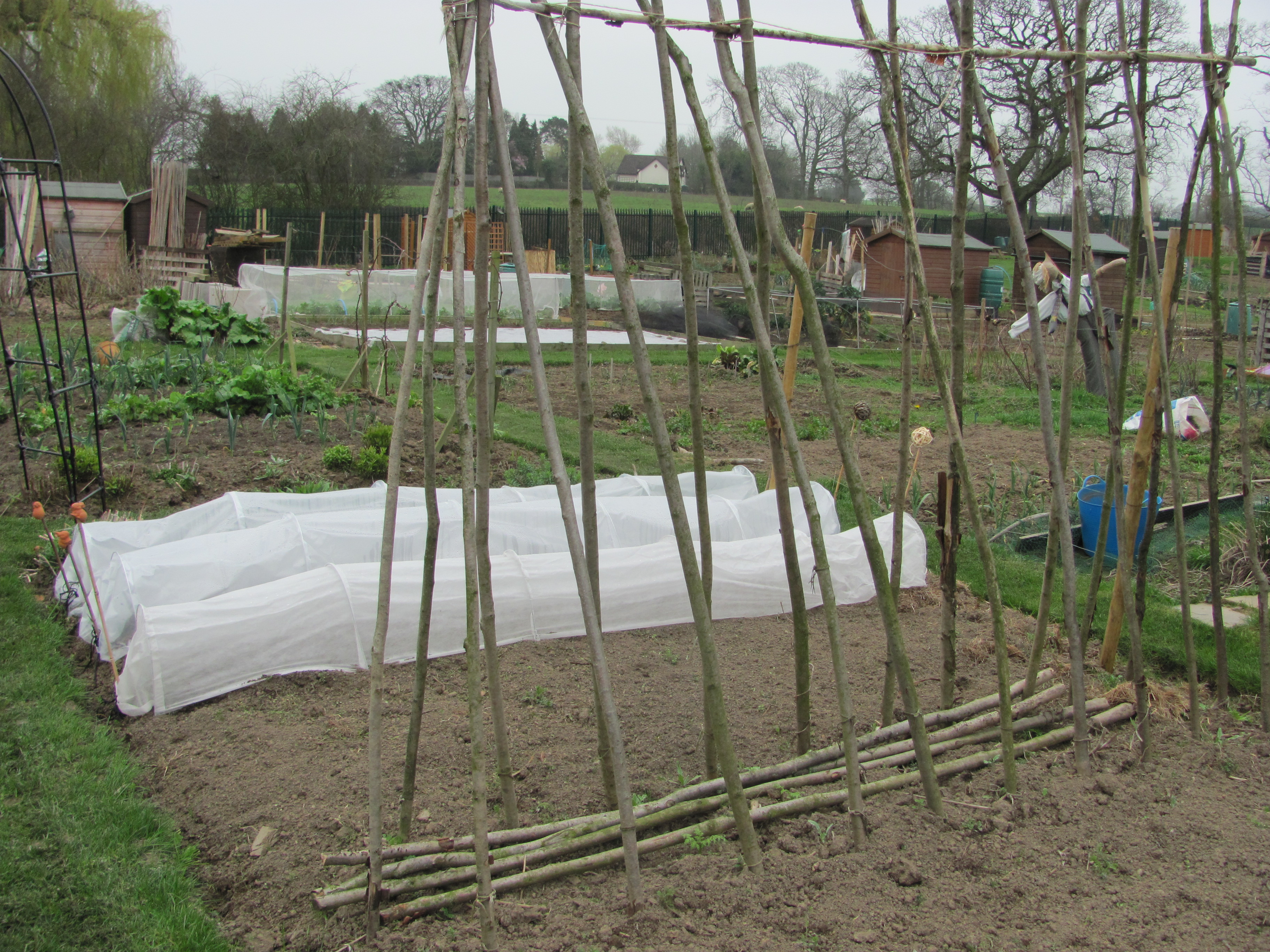
Our bean poles, made from coppiced Hazel, are up ready for Runner Beans to climb when planted out in late May and behind them we have cloches warming the ground for early plantings of Carrots, Parsnips and Beetroot. If the weather is kind we shall sow these seeds at the end of this month.
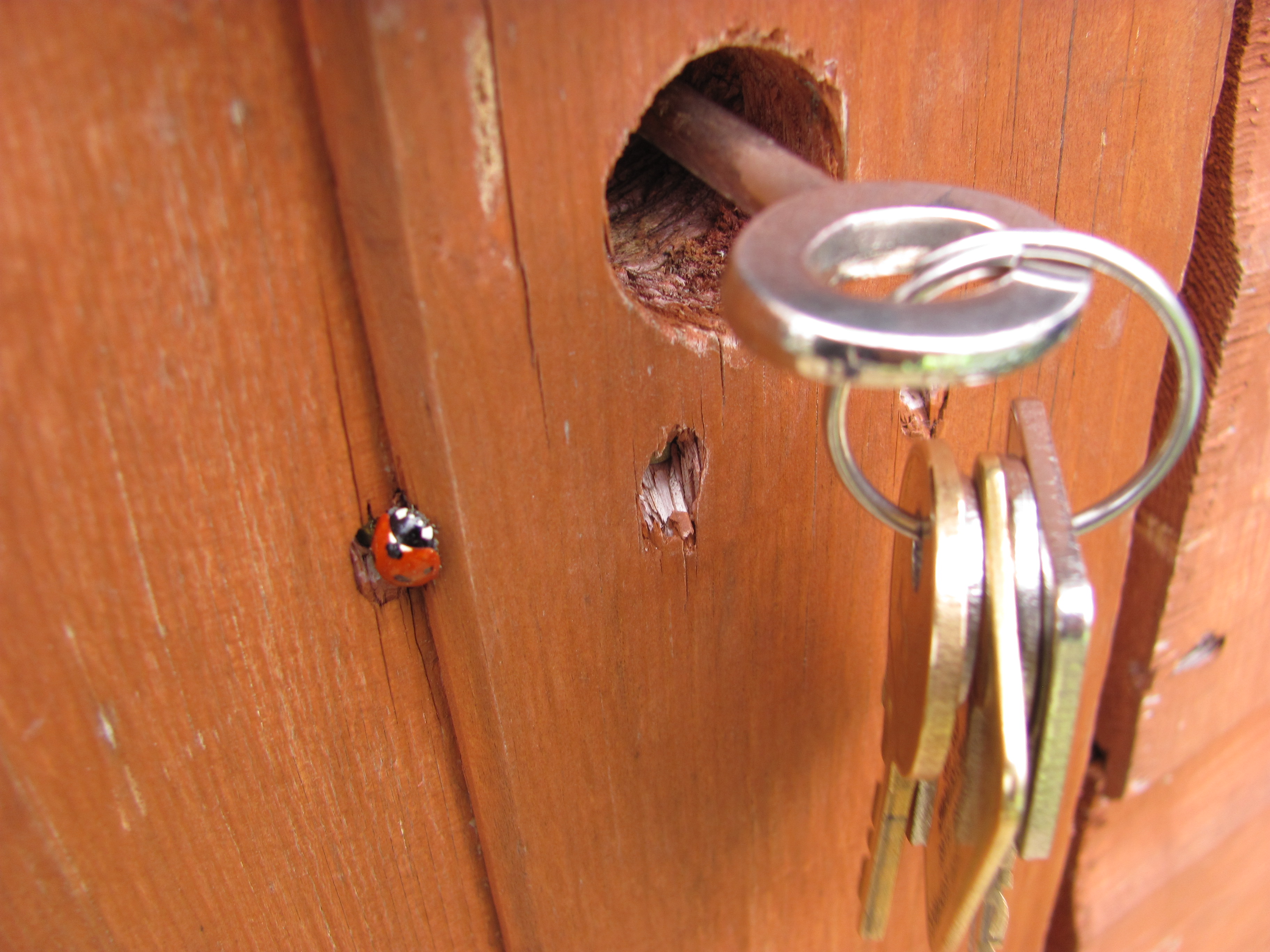
This Ladybird sheltering near our shed lock is hoping for some sun to get warmed up a bit.
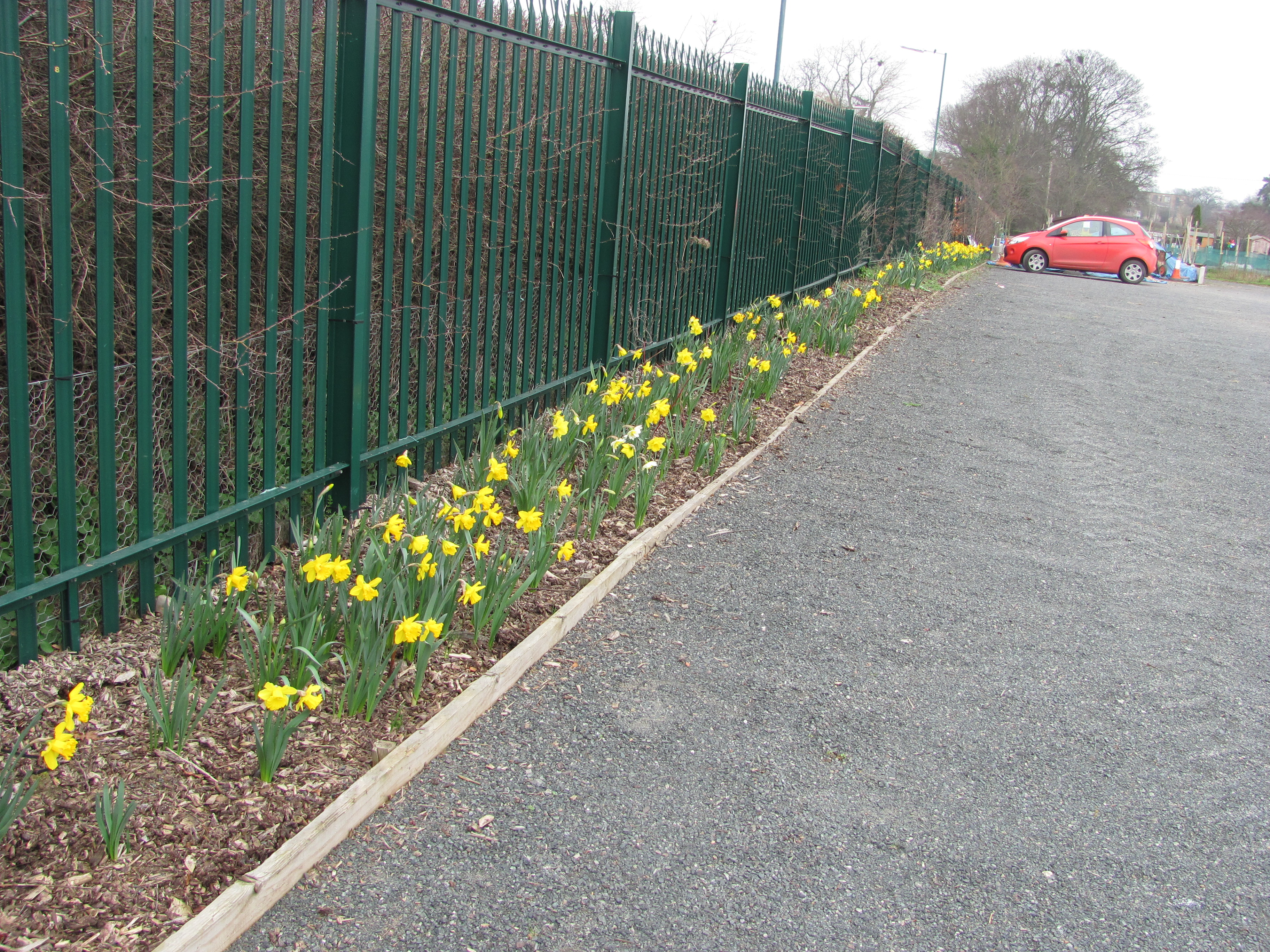
After a quick perusal of our site we began the wander around the whole allotment field, starting in the car park where Daffodils give a golden welcome as plotters arrive to work or enjoy the communal spaces. Each September we hold a “Donate a Daffodil Day” when members are asked to donate bulbs which are then planted around the site by volunteers on one of our working parties. In the first year alone we had over a thousand bulbs donated and planted several hundred in the car park border and on the grass verge alongside our entrance gates.
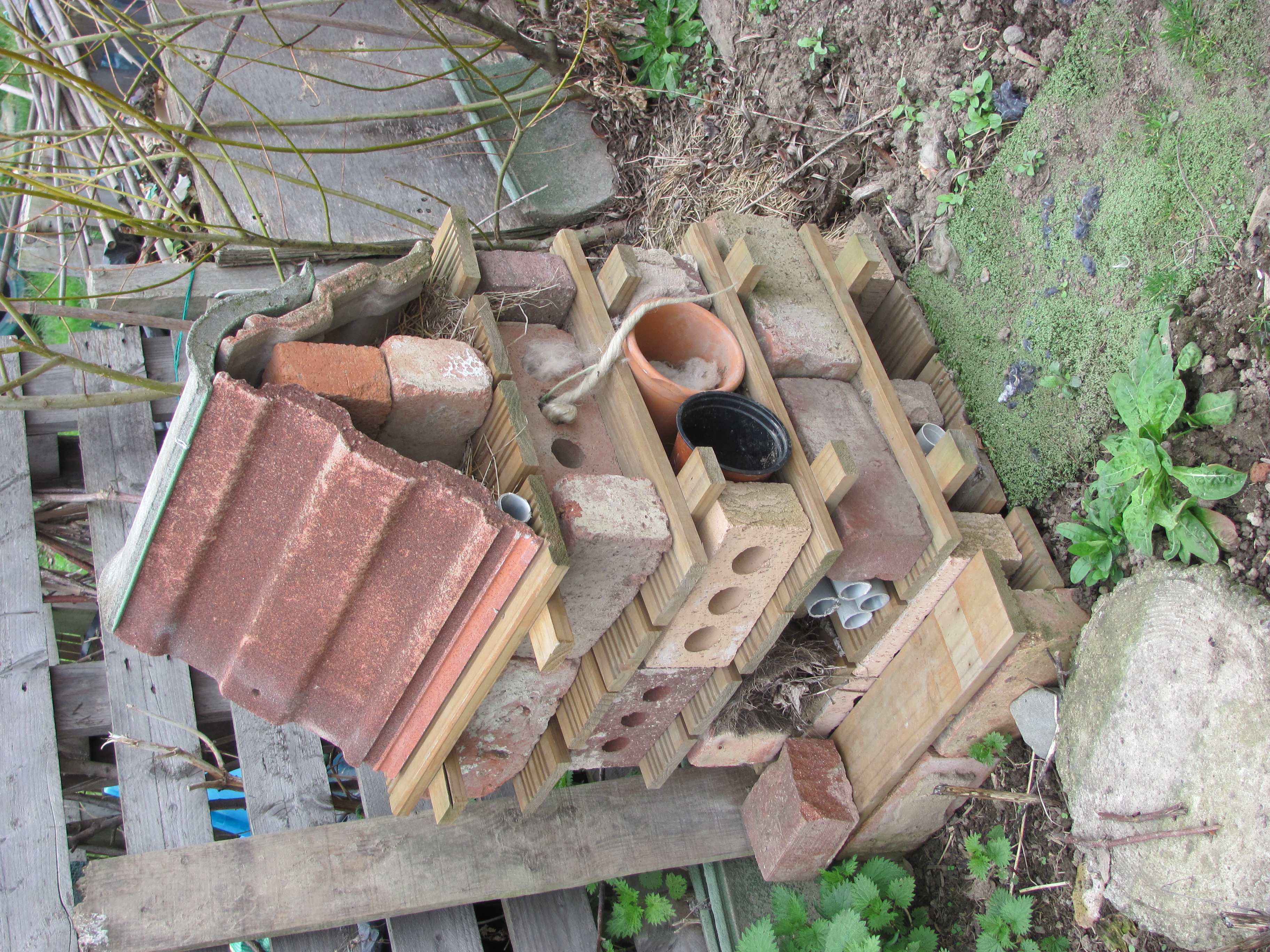
Moving on down towards the first communal orchard we spotted this insect hotel on Wendy’s plot and admired Tracy’s rhubarb which is well advanced.
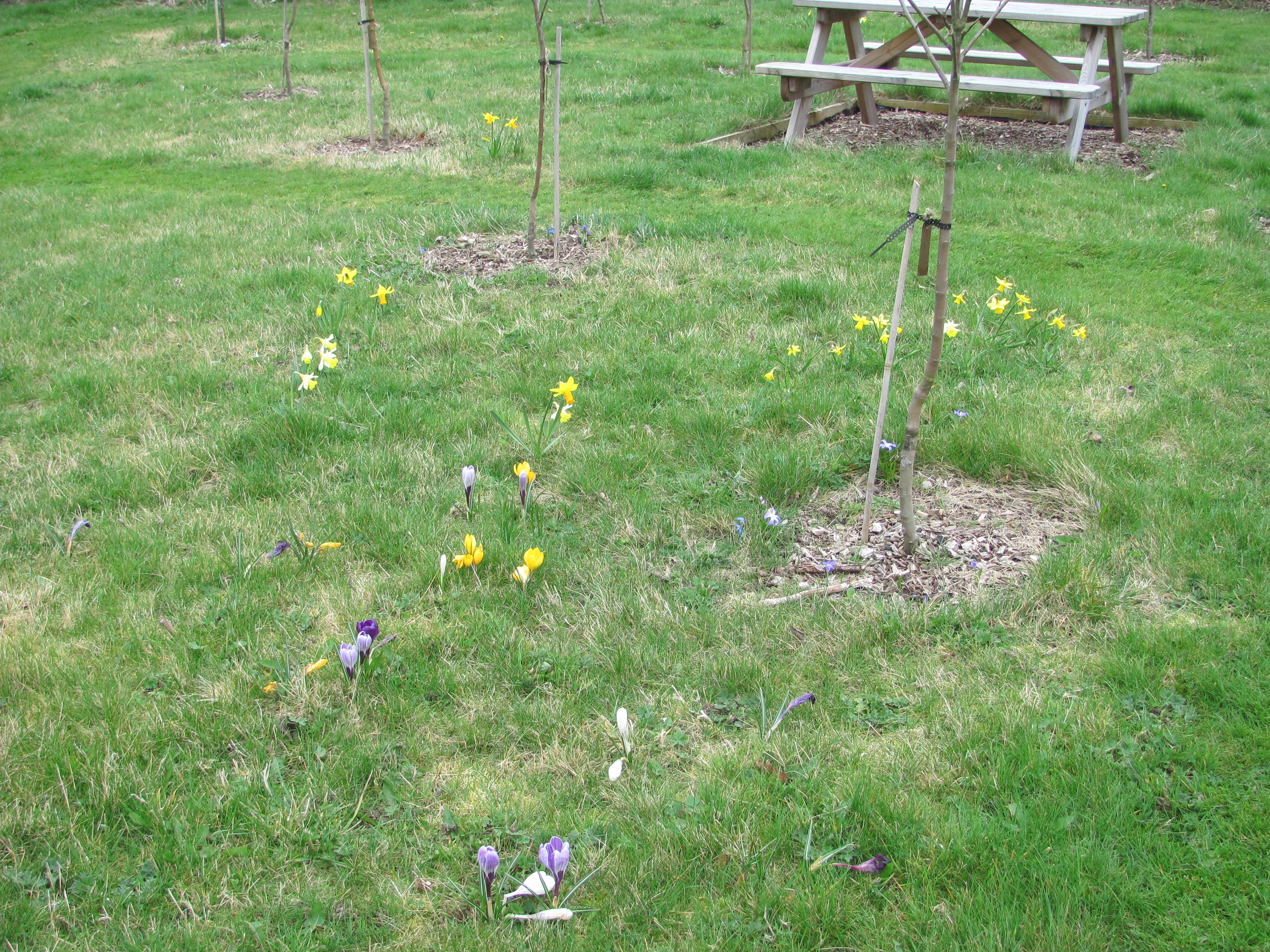
The first of the community orchards is alongside Tracy’s lottie and she looks after its maintenance, mowing the grass paths, pruning the apples, pears, plums and damsons and generally keeping it neat and tidy. She also looks after the Fruit Avenue leading away from the orchard. She is a great asset! At the moment daffodils and crocuses are flowering between the fruit and in the avenue muscari are in flower. Bees are busy exploring these early flowers.
Our wander then took us through the Fruit Avenue with “super fruits” planted on both sides, out alongside Alan’s plot, affectionately known as “The Blue Plot”.
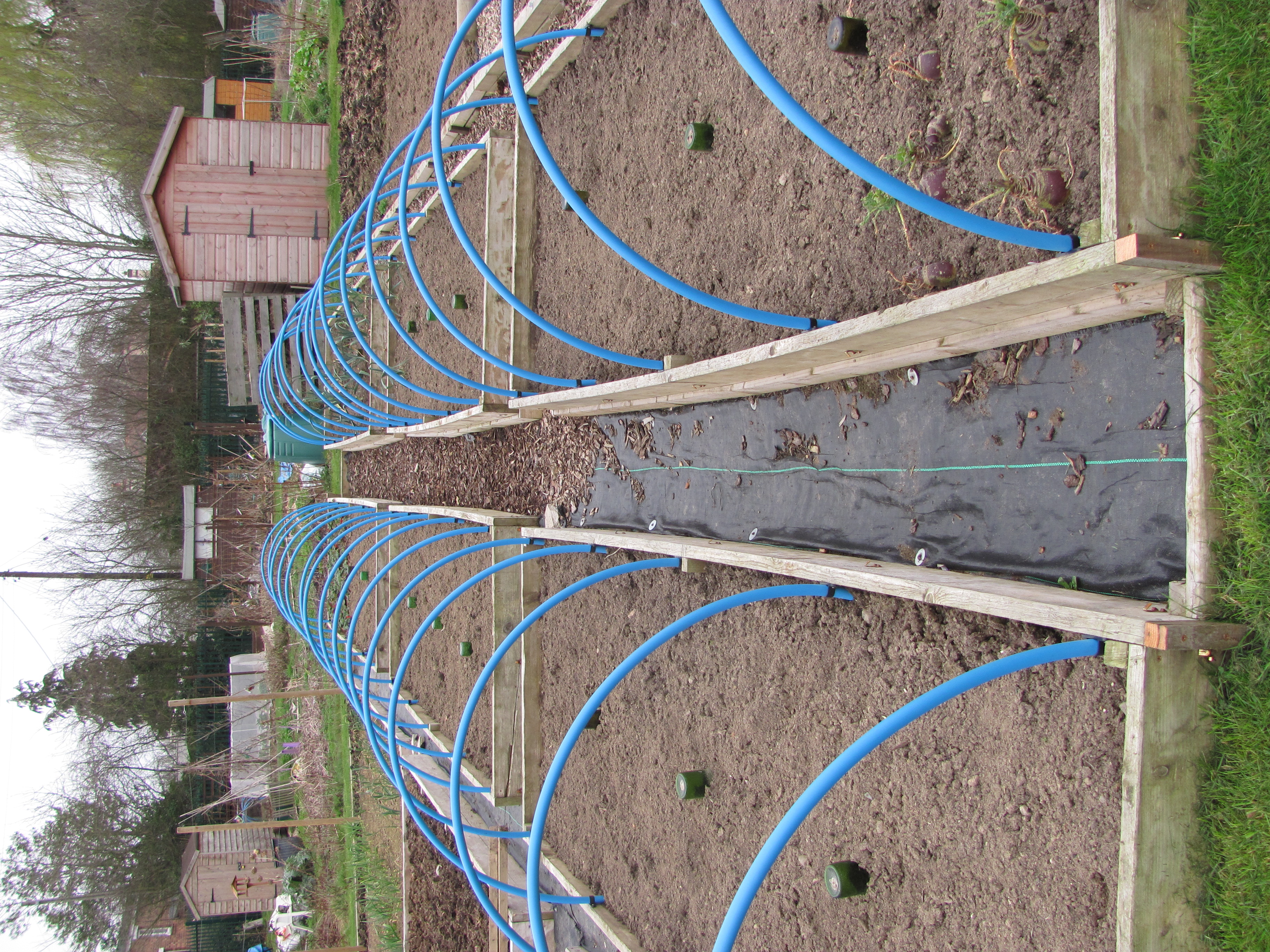
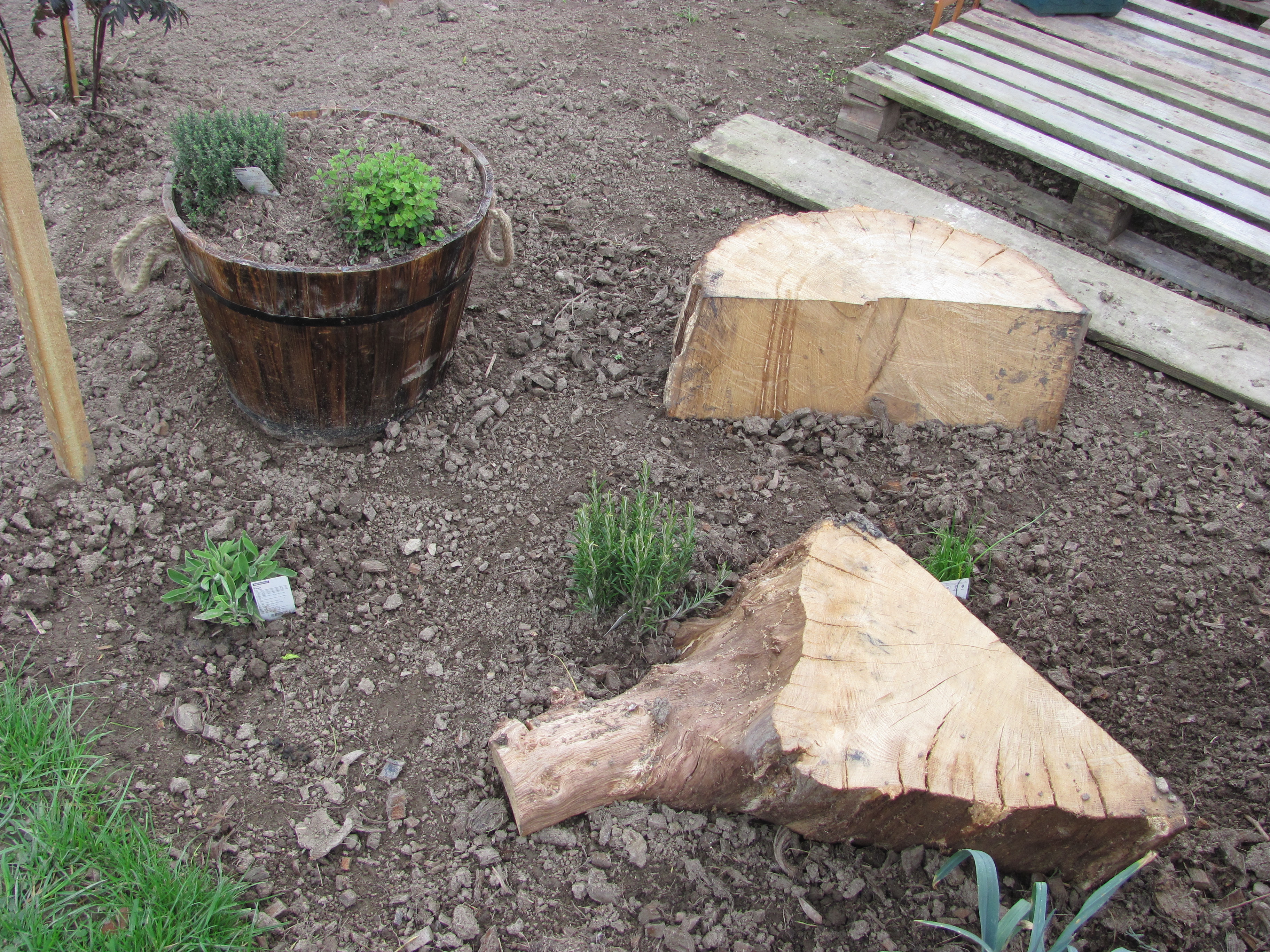
Blue alkathene water pipes are very popular around the site as effective ways of holding fleece or netting covers to protect crops. Wandering further on around the trail towards the Spring Garden we passed a plot that is always good to see as some interesting projects seem to on the go. Today we noticed that she had started to create a herb garden with tree stumps as seats and herbs in the ground around them and in a half-barrel planter. She is always building something – she seems very good at d.i.y. She made her raised beds which we saw have already got some early sowings in.
Behind this plot is the Spring Garden which is looked after by two other volunteers, Jill and Geoff, who keep it looking immaculate. Of course it is now beginning to reach its peak time. Bulbs are well up and some flowering, perennials are showing fresh green growth and the Violet Willow is covered in its sparkling white pussy willow buds.
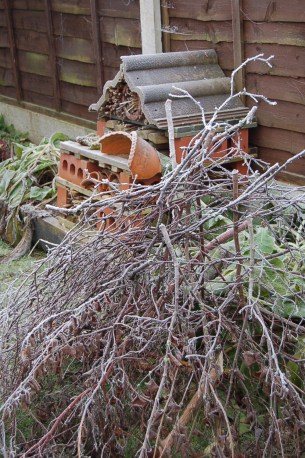
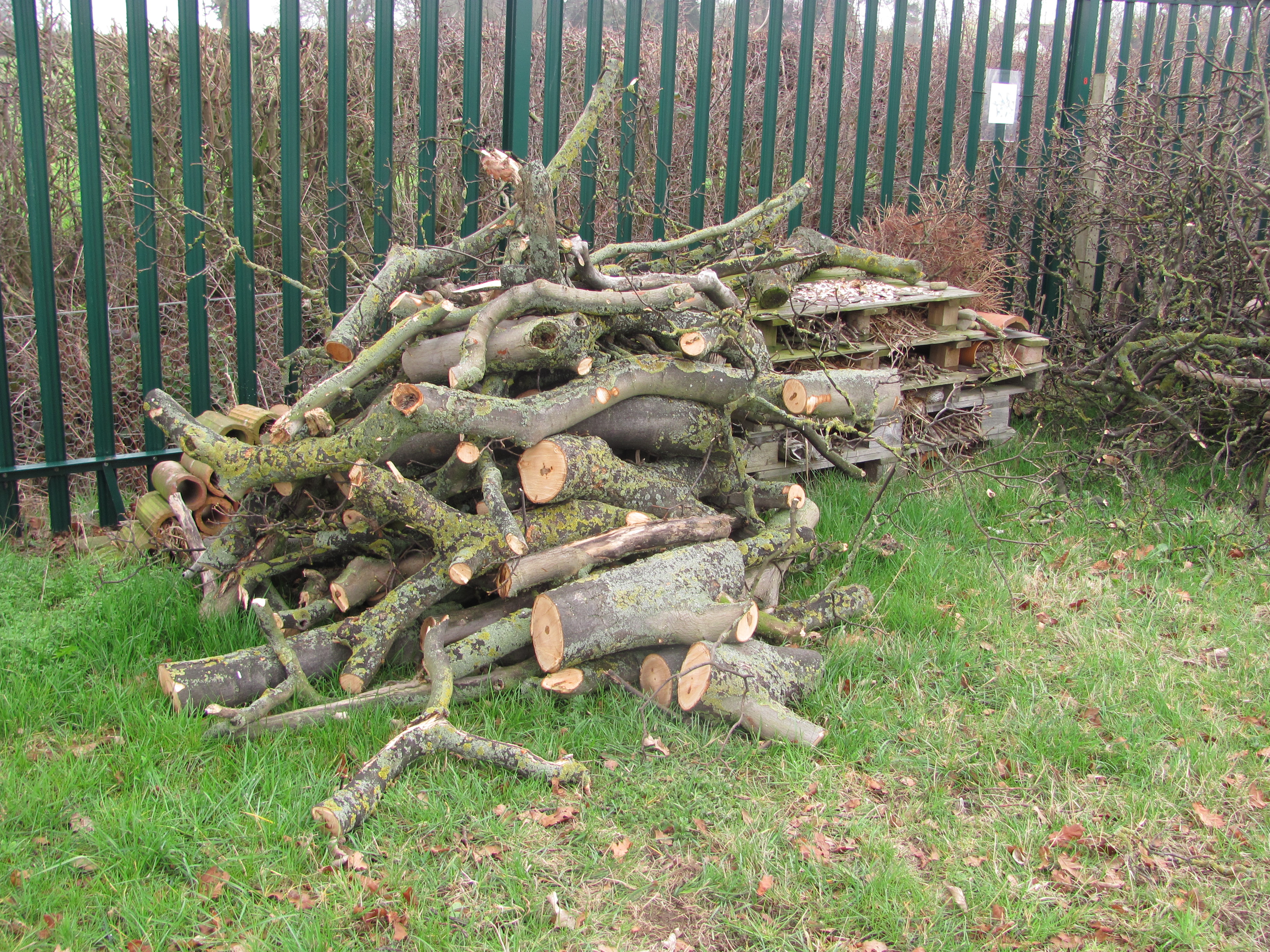
Moving on from the Spring Garden, as we followed the trail, we noticed Blue Tits exploring the nest boxes. Beyond our big old Oak is the new log pile created with logs left by the tree surgeon after his safety work on our mature trees. The log pile will soon be home to Dunnock and Wren and as it begins to rot down insects, invertebrates and beetles will move in.
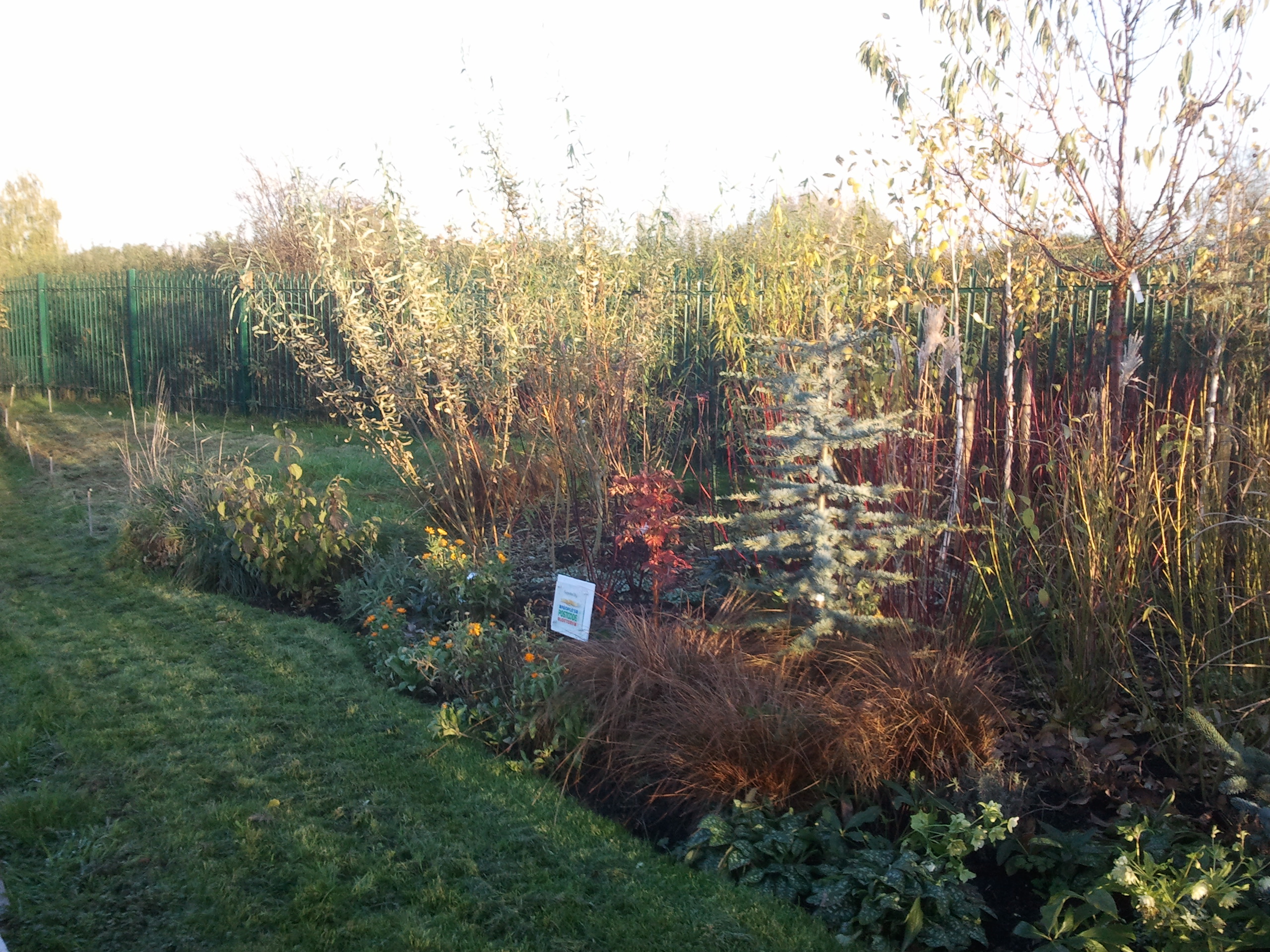
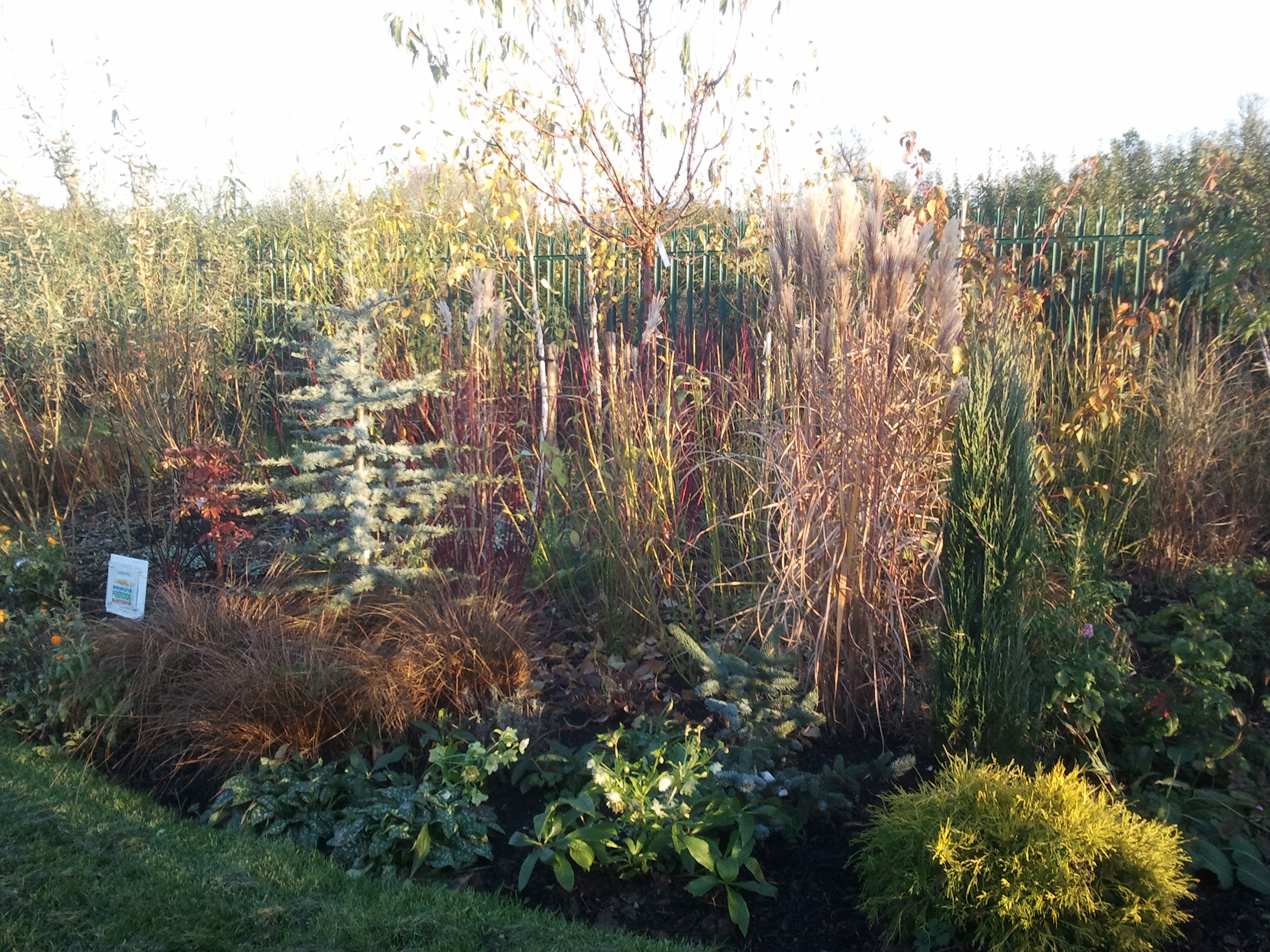
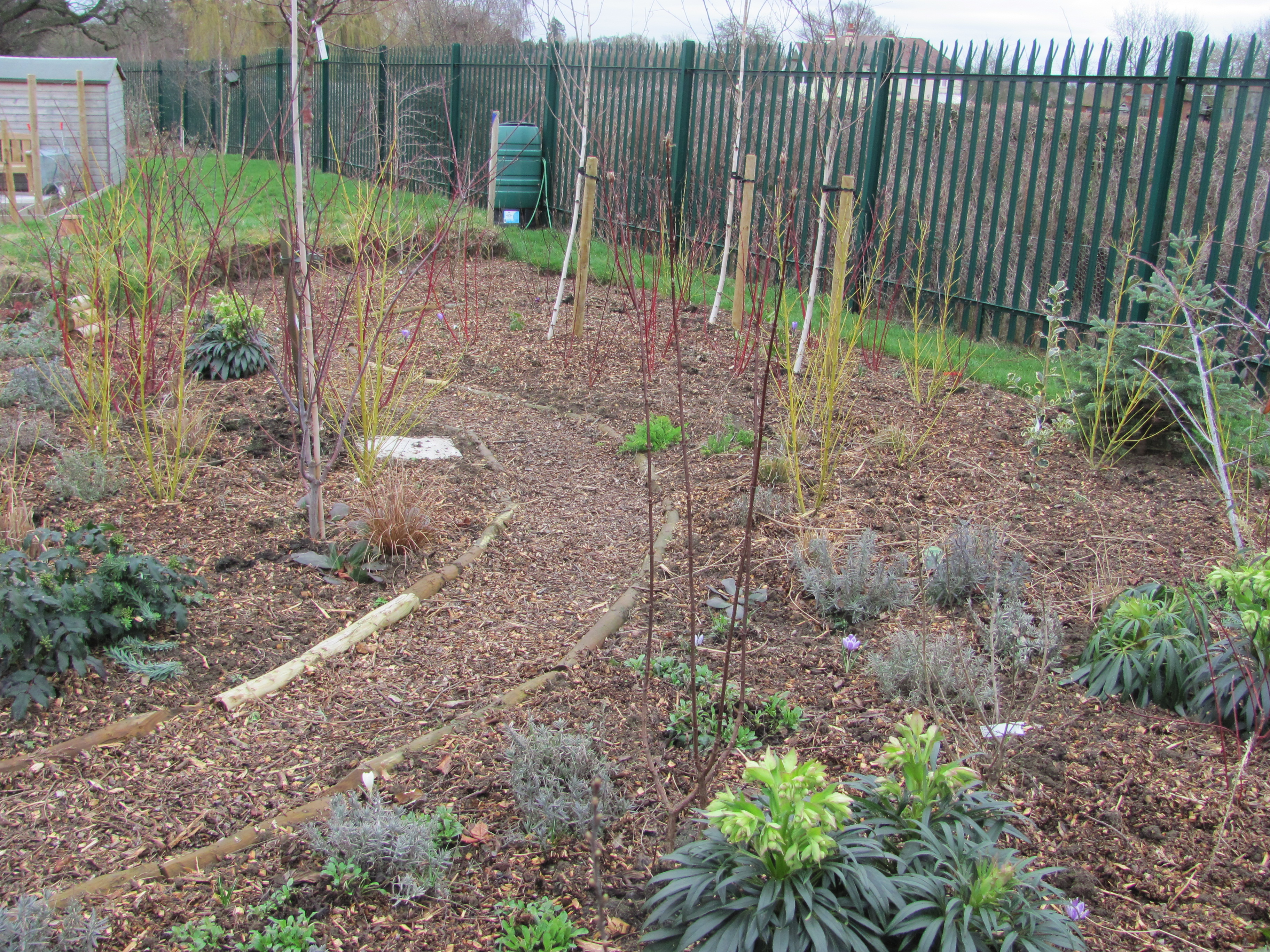
We soon reach the Winter Garden which continues to look impressive, full of interesting bark and stems on trees and shrubs and colourful flowers on bulbs and early herbaceous plants.
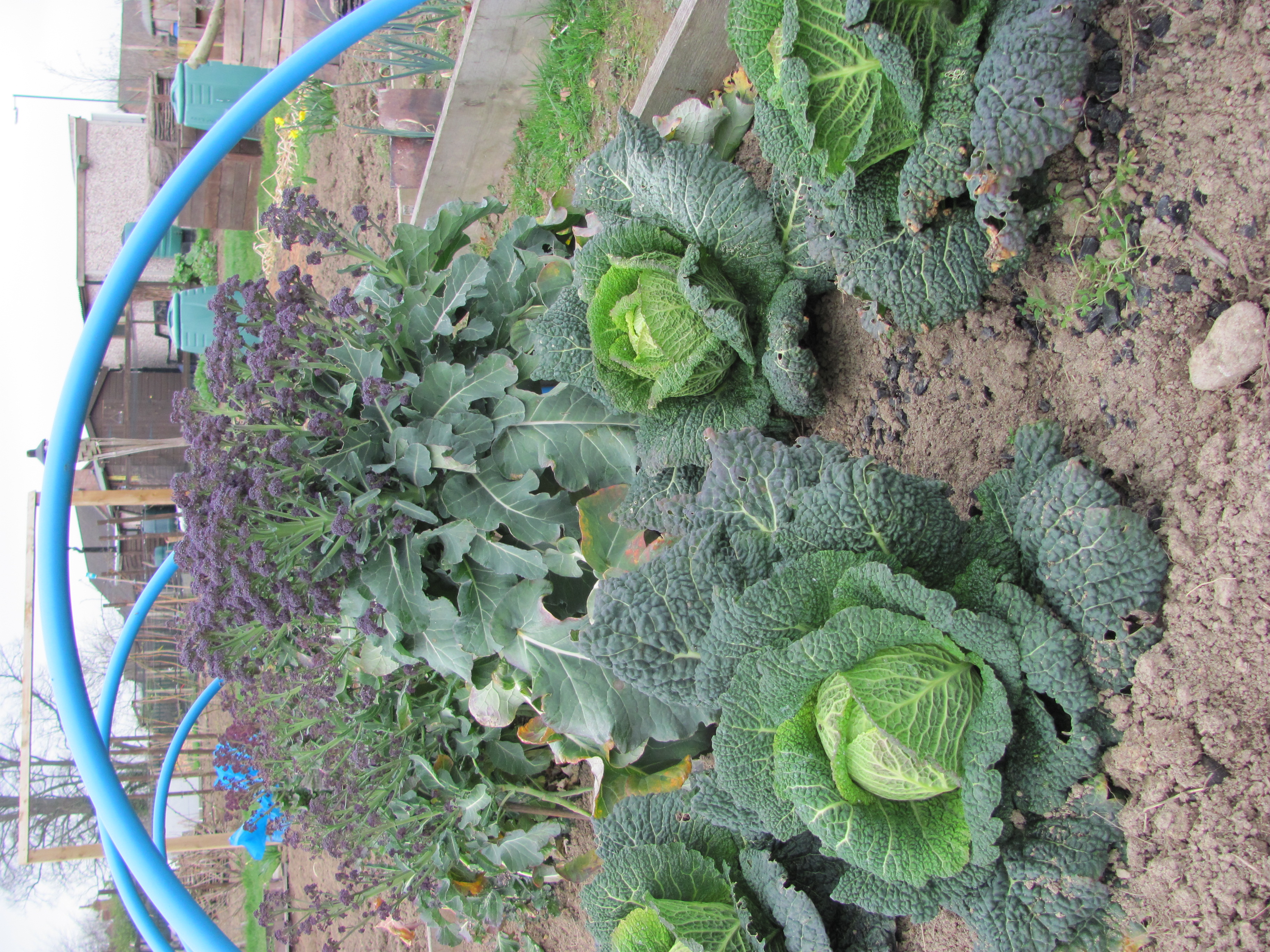
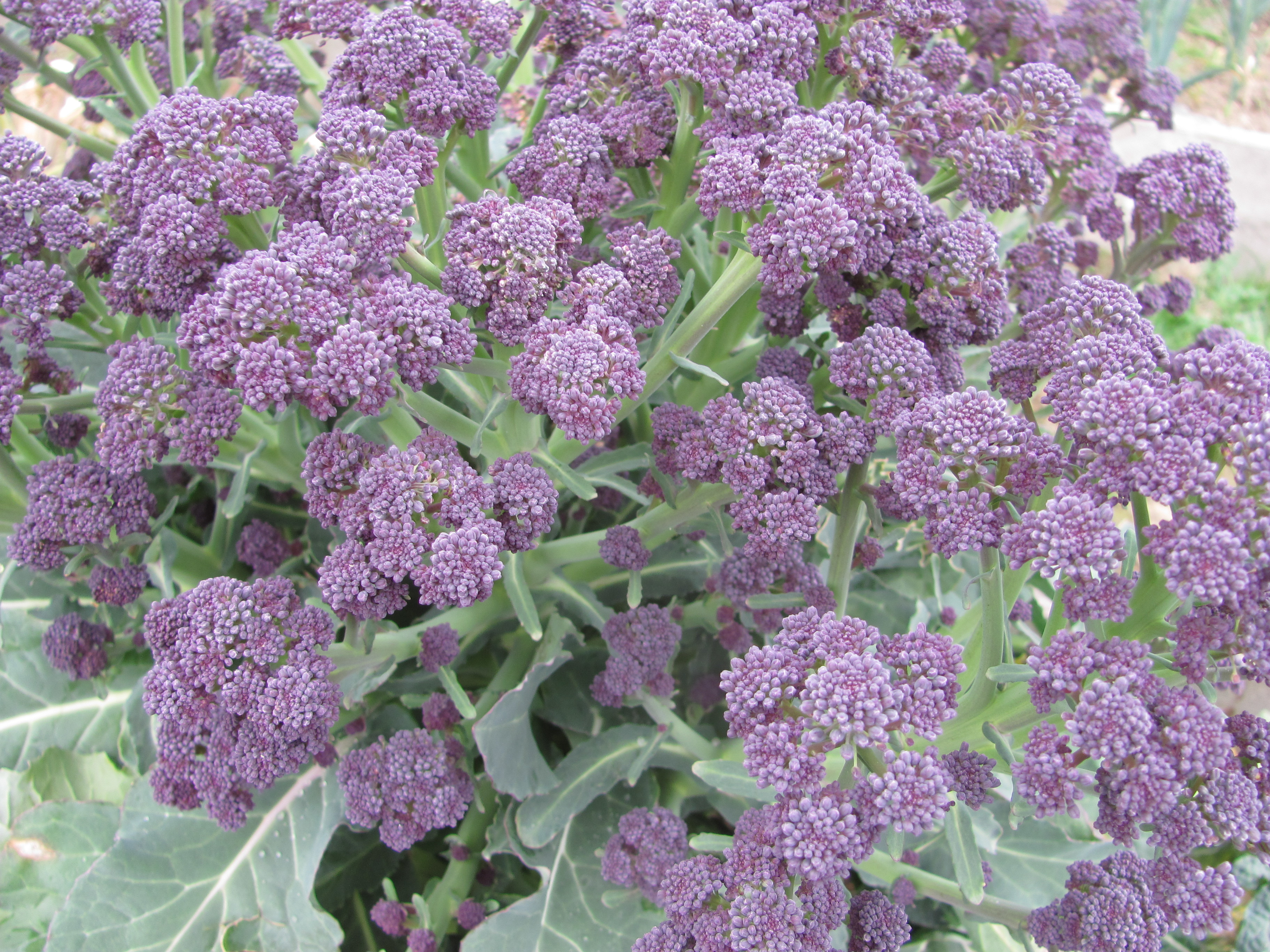
Some crops still look good after the winter and continue to give plot holders some good pickings. These brassicas, Purple Sprouting Broccoli and Cabbage look very healthy and appetising.
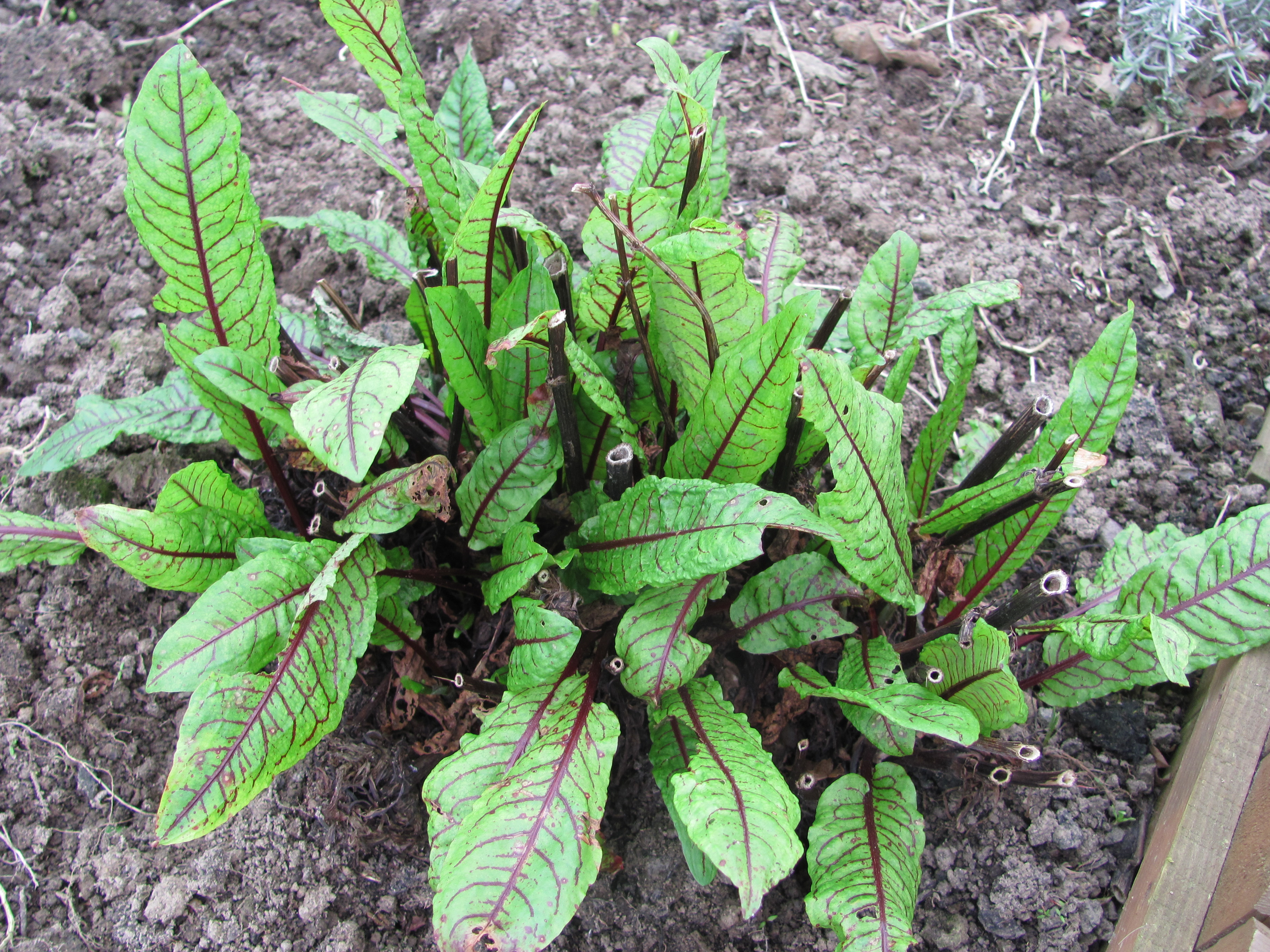
The beautifully coloured Red Veined Sorrel in the photo above is already putting on plenty of fresh leaves ready for harvesting, whereas the beautifully coloured flowers of Purple Sprouting Broccoli are now ready for enjoying after the plant has been standing through the winter.
Lots of our plot holders displays plaques with garden related sayings on for the amusement of all. How about this one to finish our March wanderings around the site?
The lighting on the day of our visit to Durham Massey recently was amazing for taking photographs. It was a sunny day with a bright blue sky above. The light acted light a spotlight shining just above ground level. It lit up leaves, tree trunks, flower petals. And it shone in “The Undergardener’s” eyes!
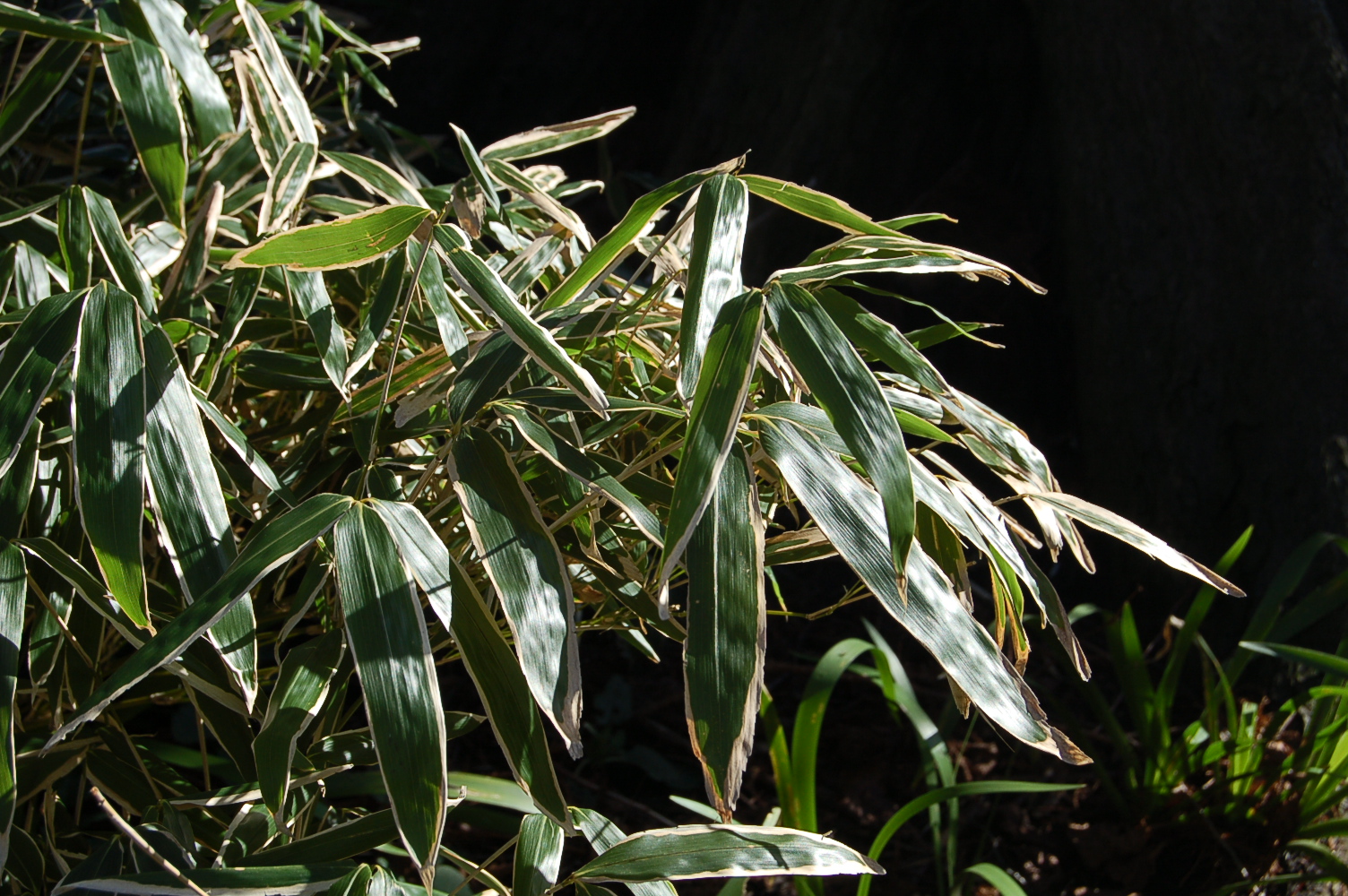
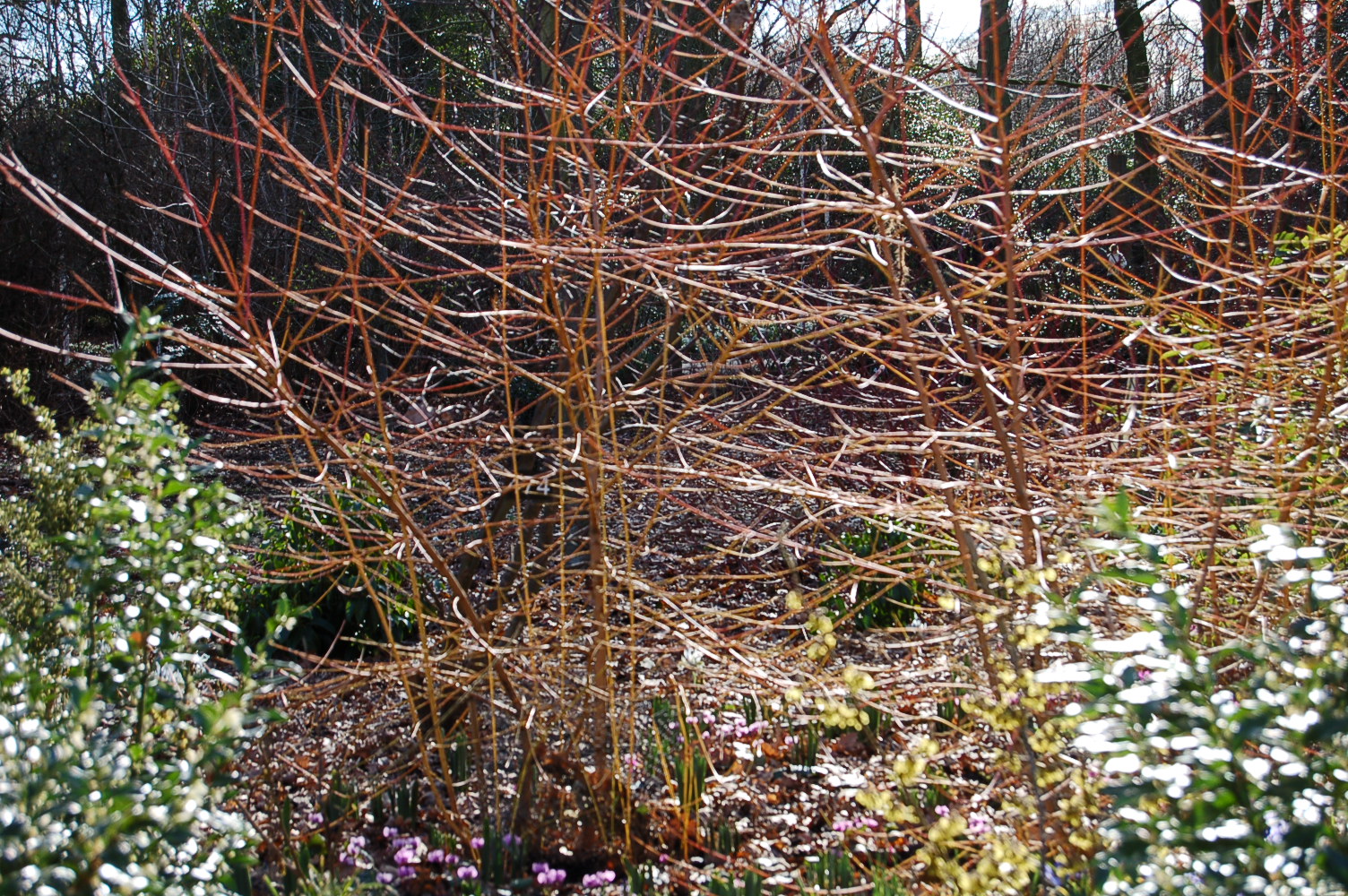
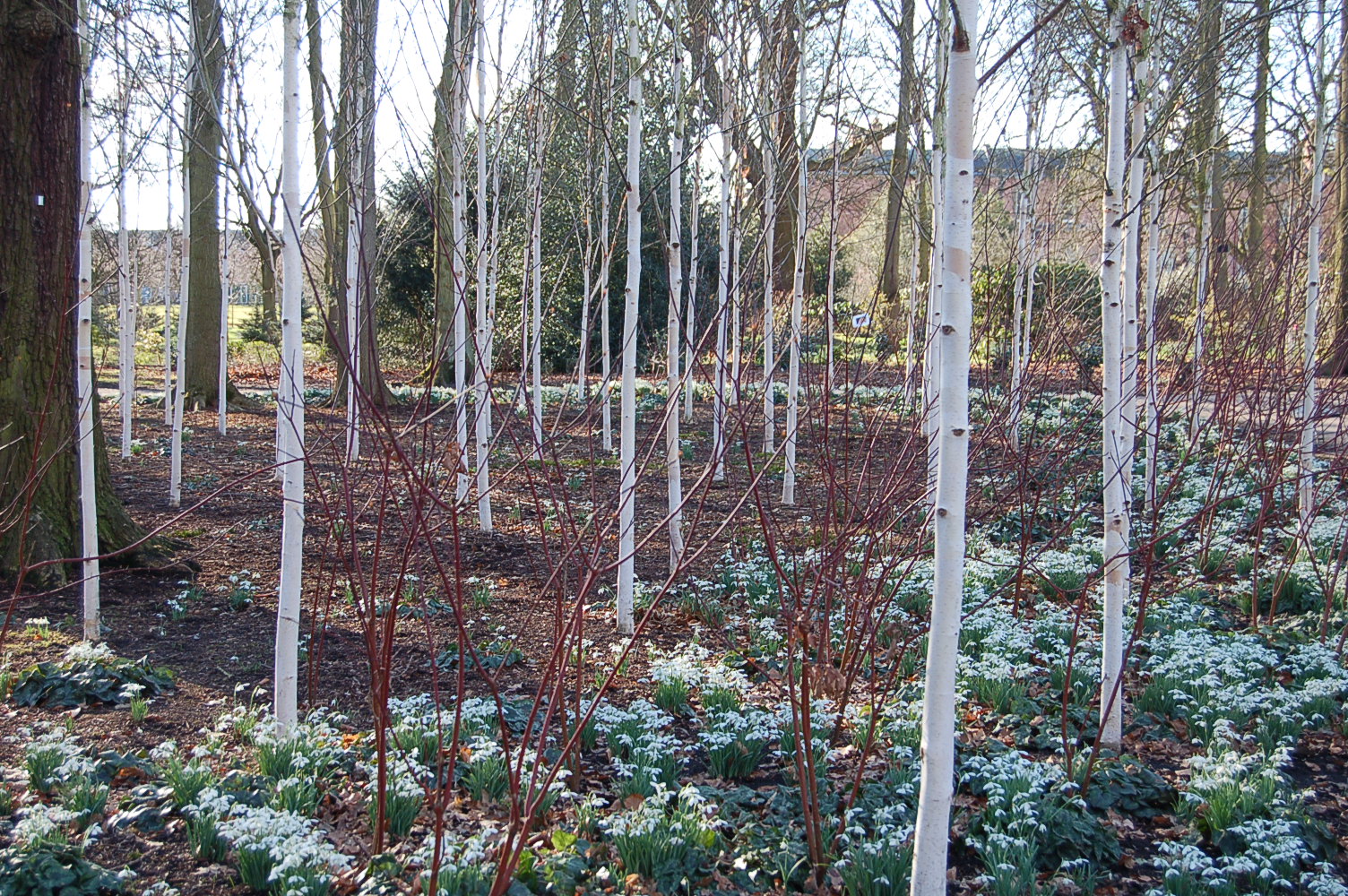
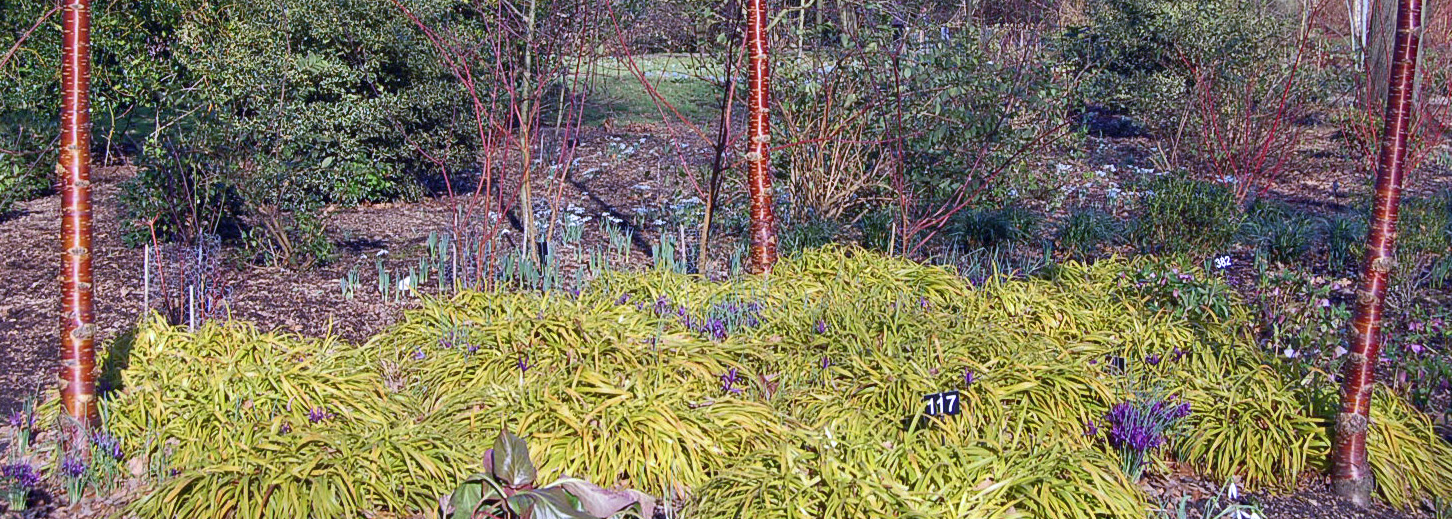
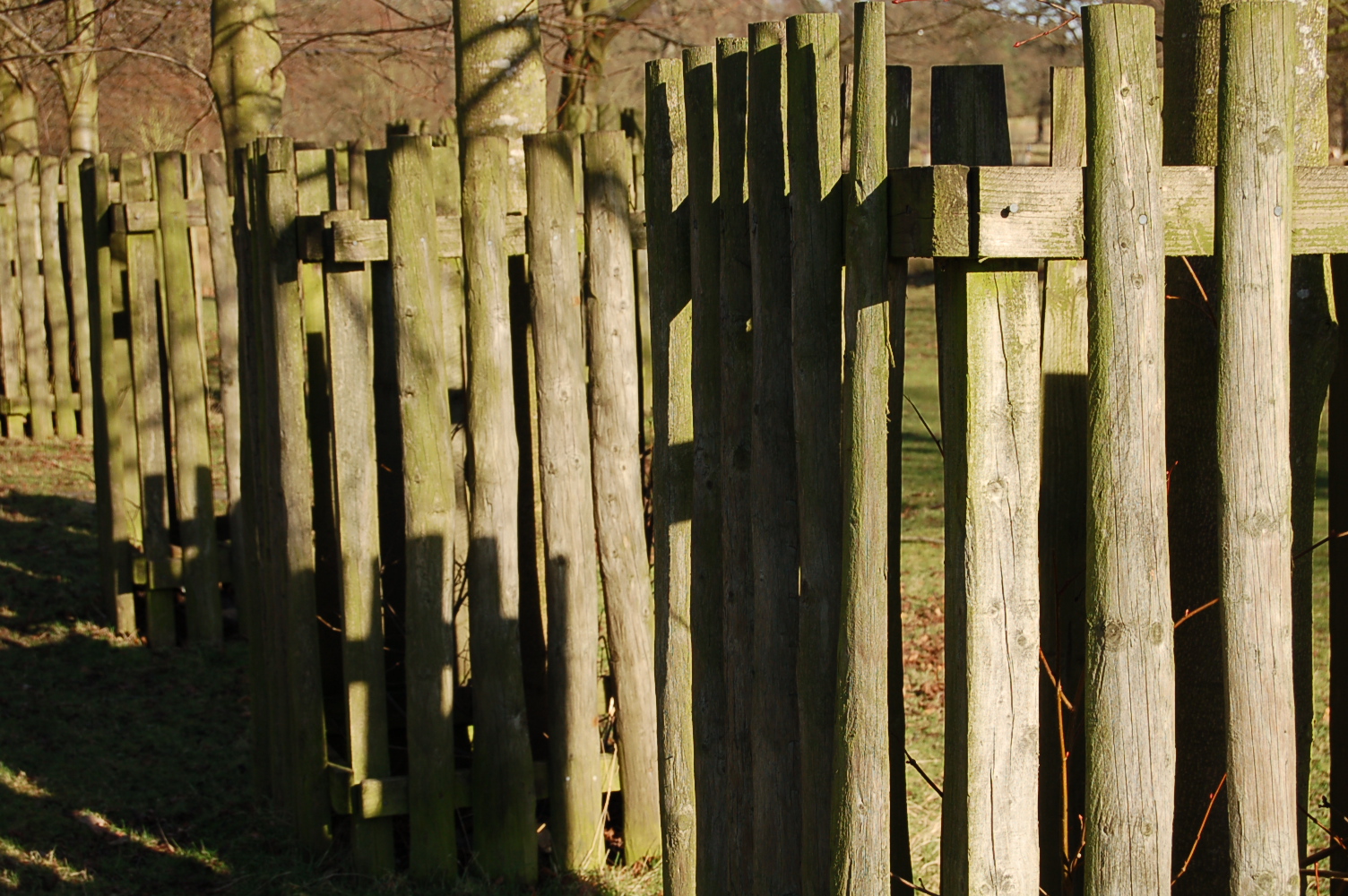
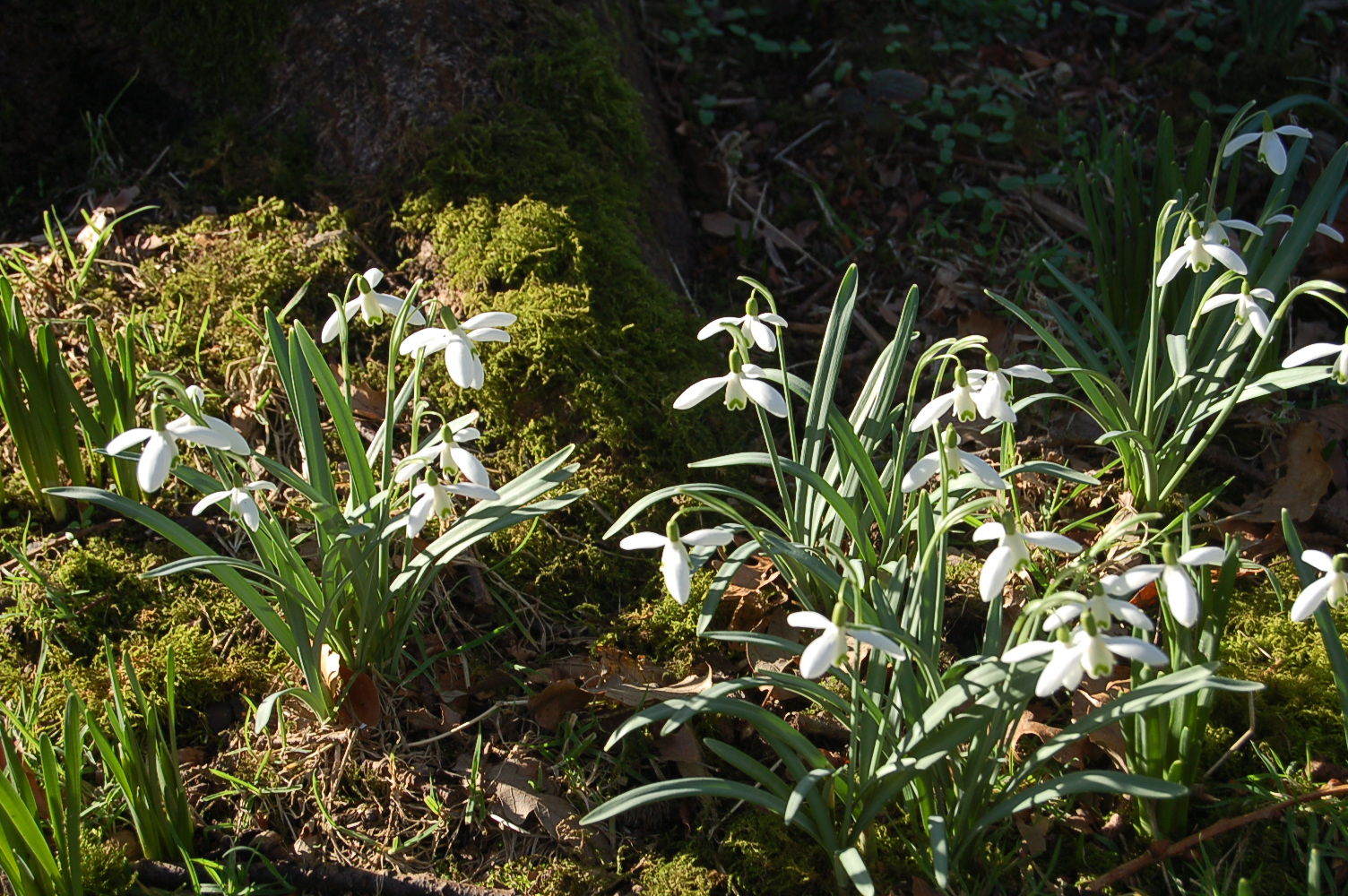
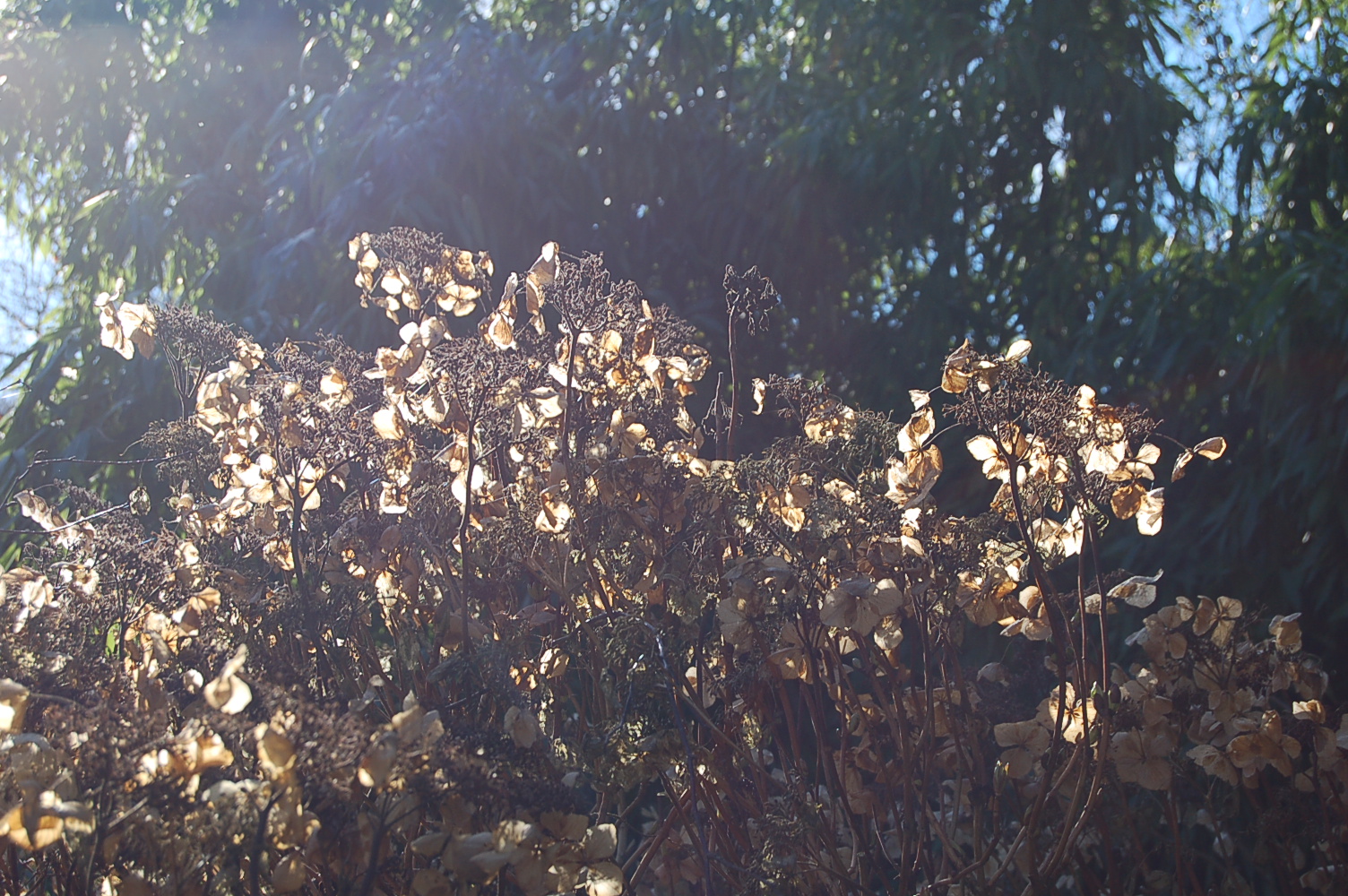
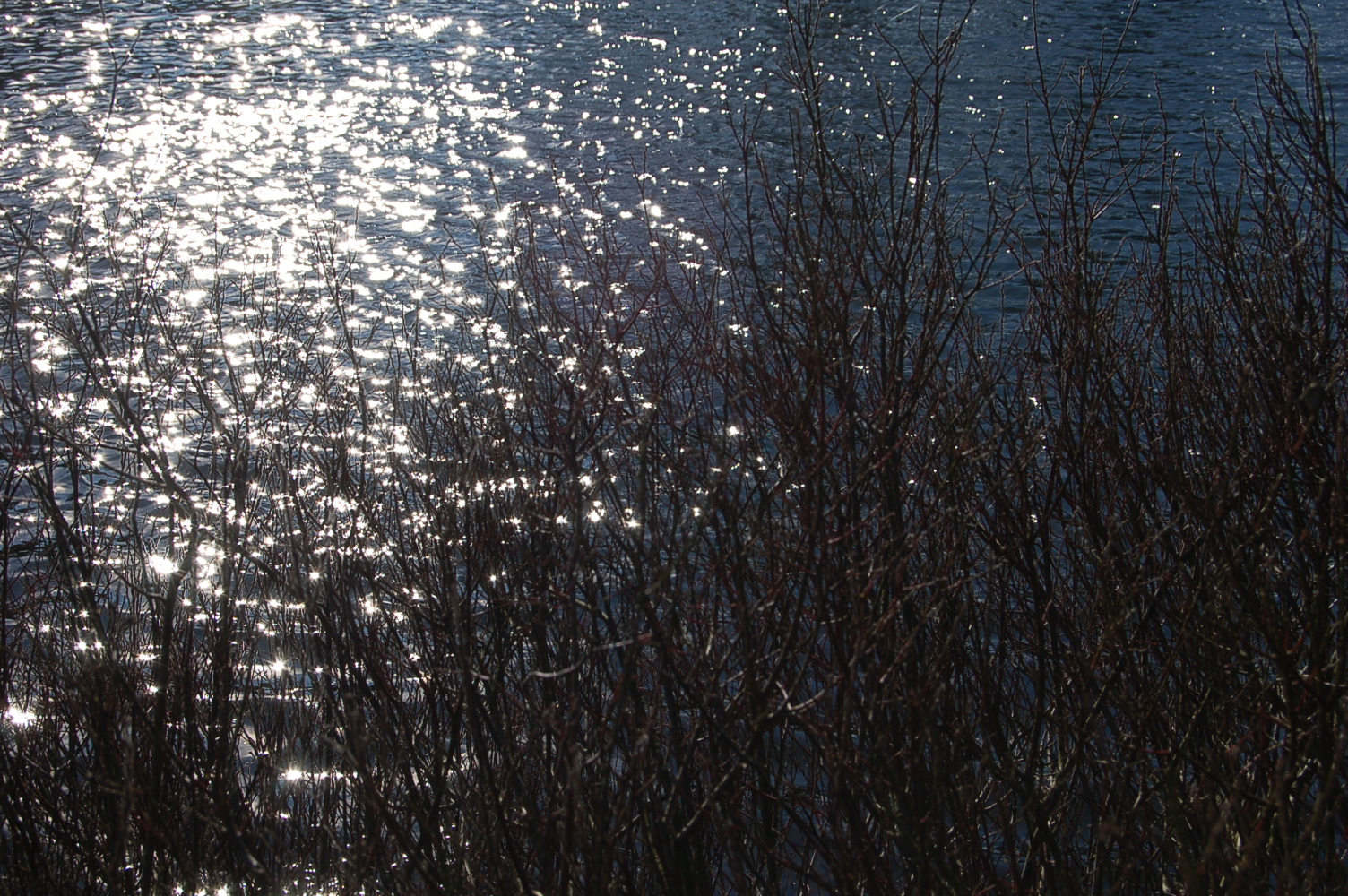
Peeling bark and Snowdrops.Winter light reflected in the glossy bamboo foliage.Back-lit Hydrangea seed heads.Twiggy highlights like spiders' webs.Long shadows of the White-stemmed Birch cross the carpet of Snowdrops.Winter light turns Cornus mas flowers into gold along the orange peel bark.Orange stems and yellow foliage enriched by the lightLooking out from the shadows.Curling silhouettes of an old gnarled Rhodendron bush.Fence shadows.Snowdrops and moss.Sparkling Hydrangeas.Into the light.Fallen rotting tree trunk looking like a huge tuning fork.Jewel coloured Bergenia leaves.Sparkling Lake
This is the third of the garden wandering posts already. Why is this year going so quickly? Could it be that we have had so many days when the weather has been amenable to gardening? So what is happening here in our garden? The bulbs are at last flowering well after such a slow start but in contrast the birds are responding quickly to warmer periods of weather. Robins are nesting in the box on my fishing tackle shed, House Sparrows are using three boxes around the garden, Great Tits are using the box on the summer-house and Blue Tits have started building in the box opposite the front door. They are so busy! Blackbirds are collecting moss from the lawns and dried grass stems from the borders so are nesting somewhere close by. The early morning bird song gets louder and more birds join in the chorus each day.
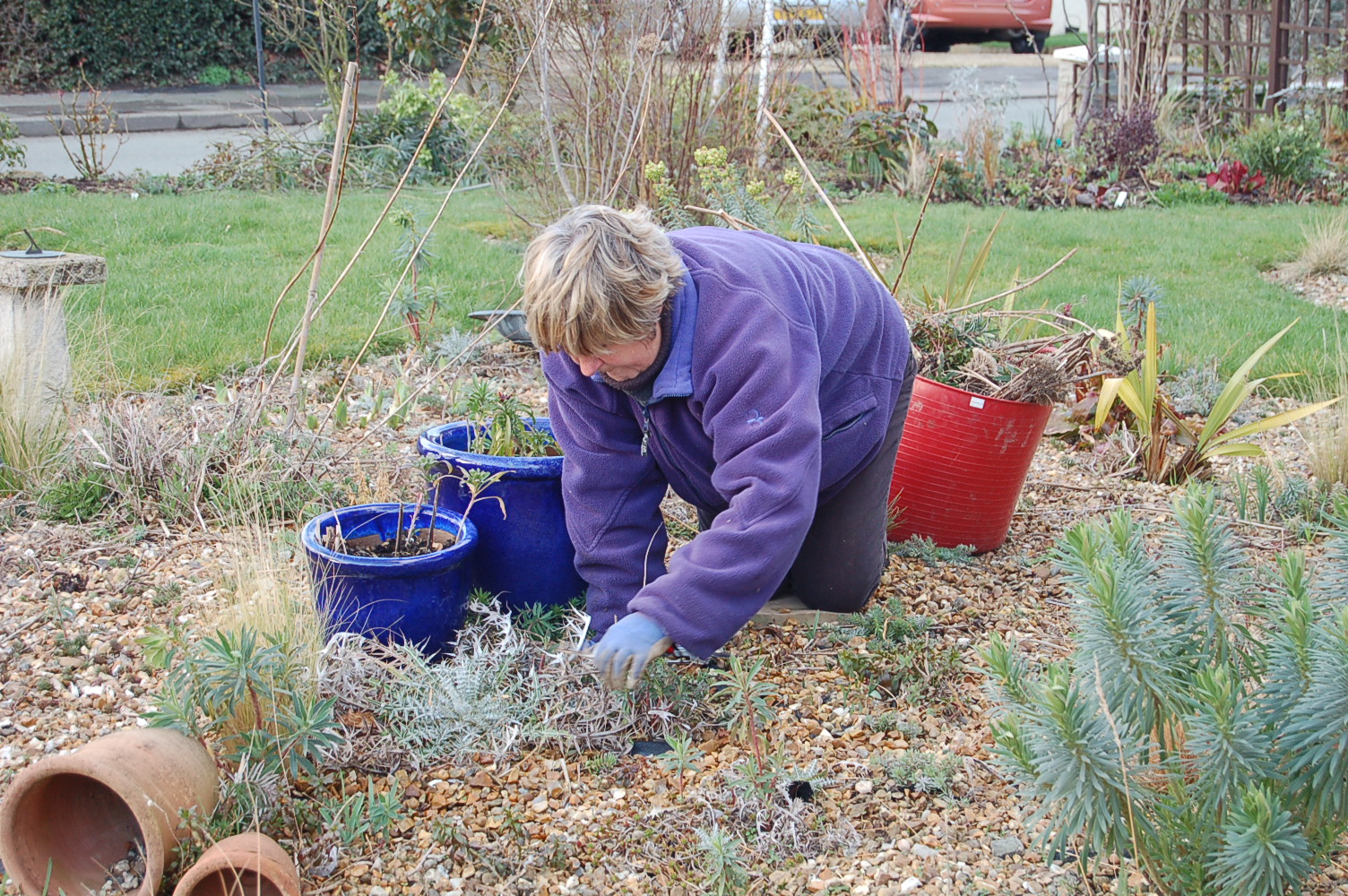
We have spent most sunny days continuing to clear borders, cutting down and adding new mulch. Clearing the “Beth Chatto Garden” is a hands and knees job. Jude the “Undergardener” pulls up weed seedlings by hand. Very tedious but made more enjoyable by the constant song of Blackbirds, Song Thrushes and Robins. Calls of Buzzards high above us provide a good excuse to stop occasionally.
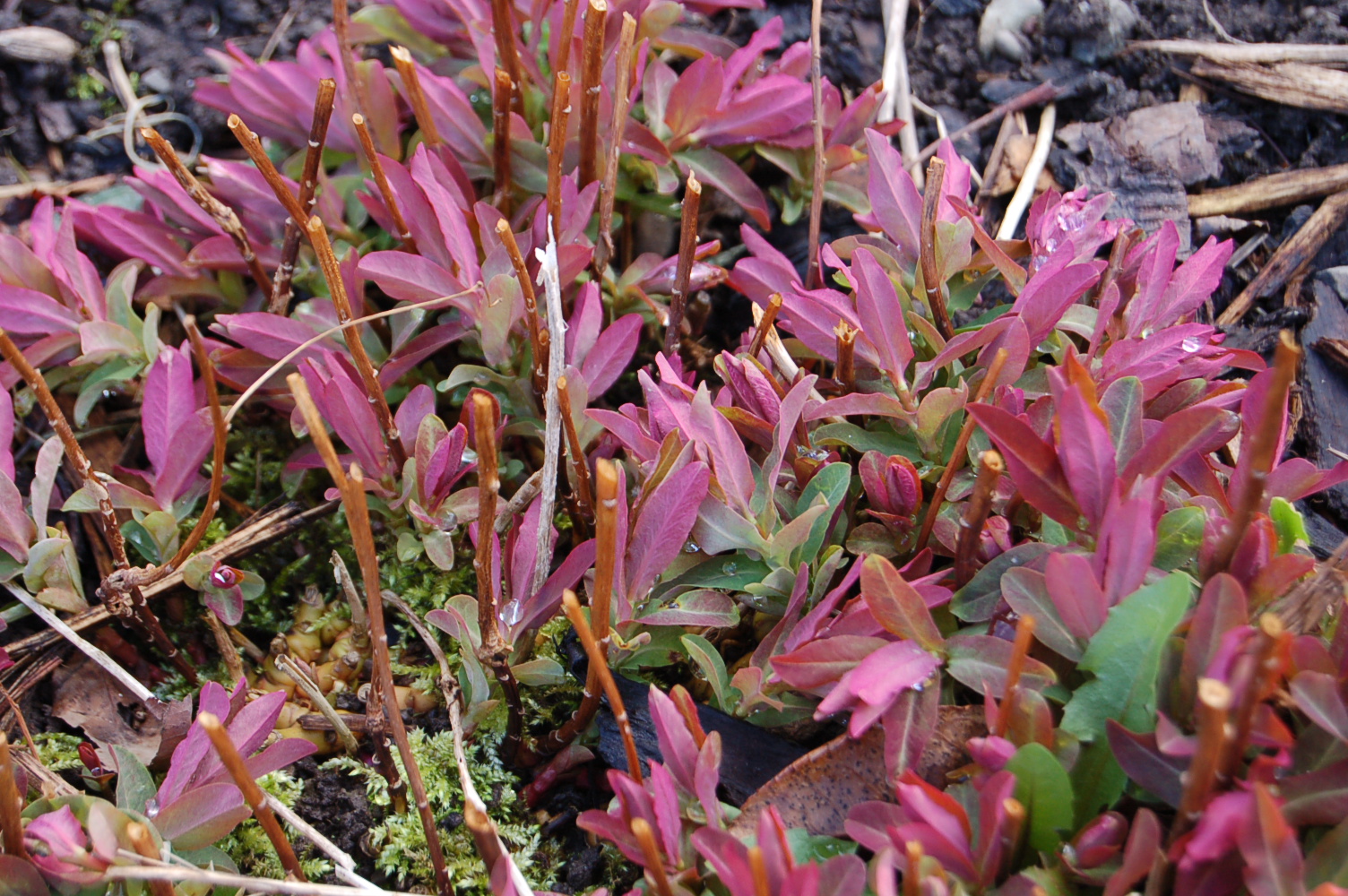
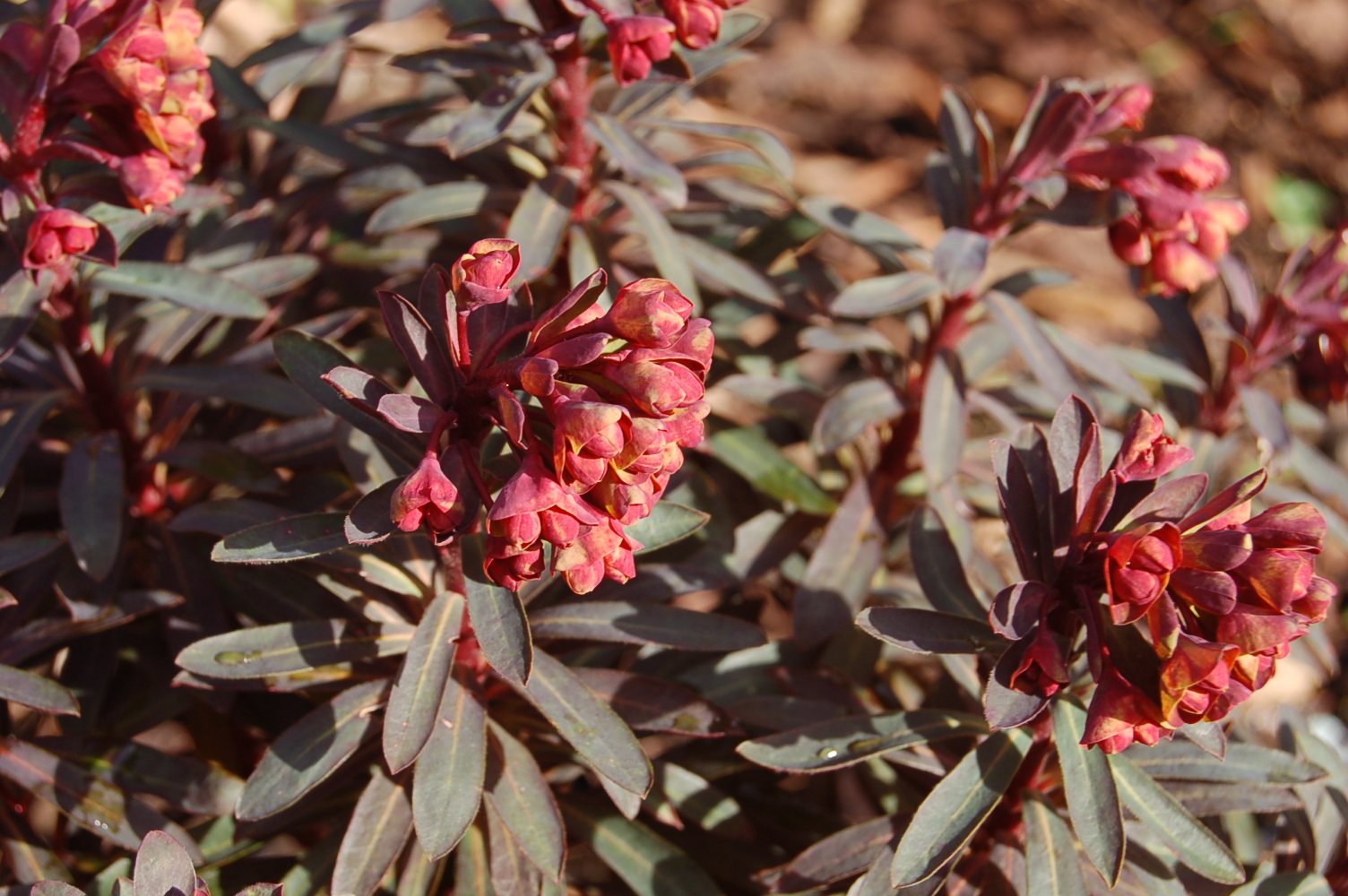
In the front garden Euphorbias are bursting into growth and some have already sent up their flower stalks curling over like shepherds’ crooks. New growth on the later ones is showing bright colours as they emerge from the bark mulch.
The flowering quince at the end of the drive is covered in bright red blooms scattered amongst its thorny angular network of stems – it will flower for months giving a warm welcome to visitors.
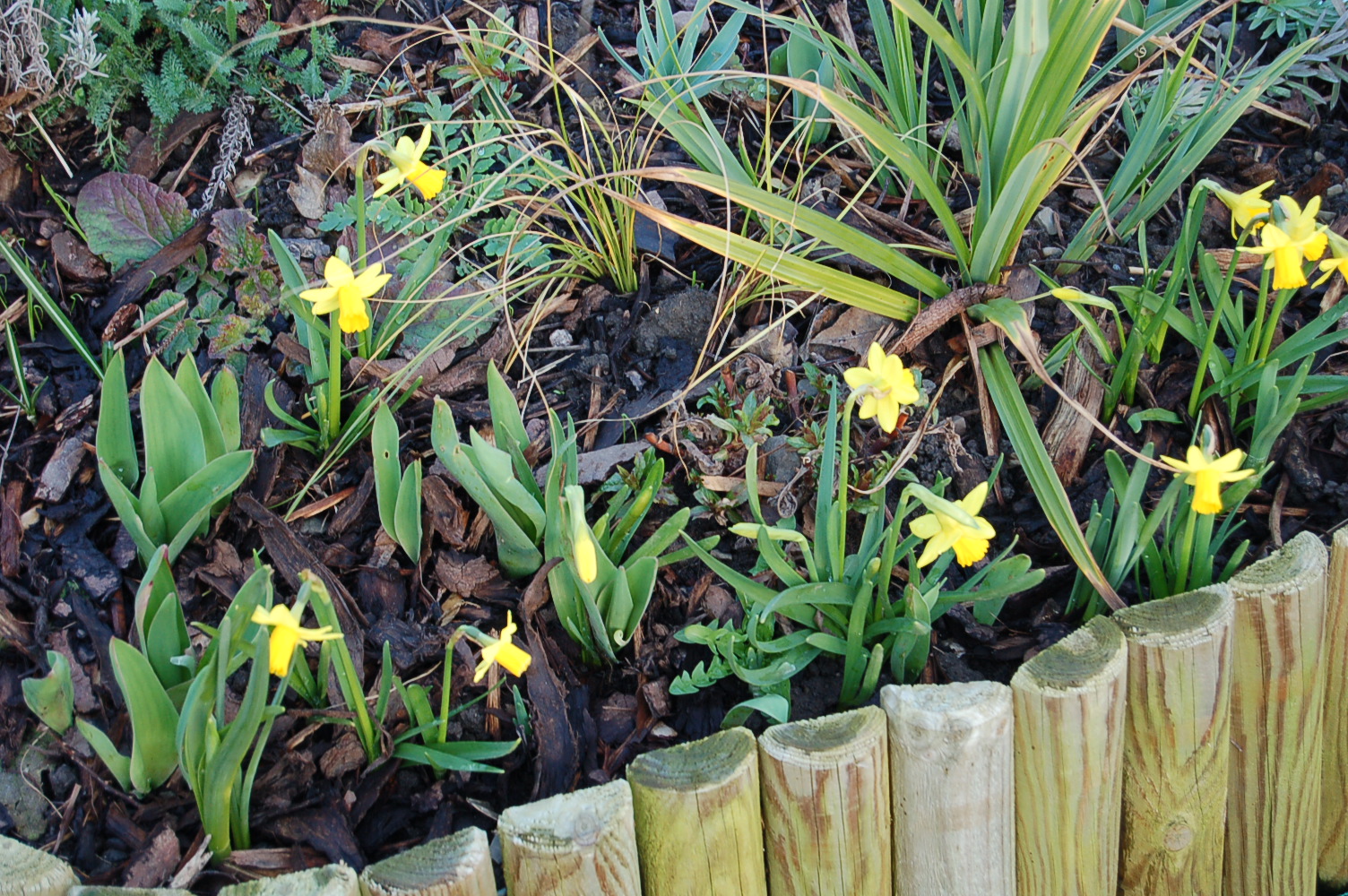
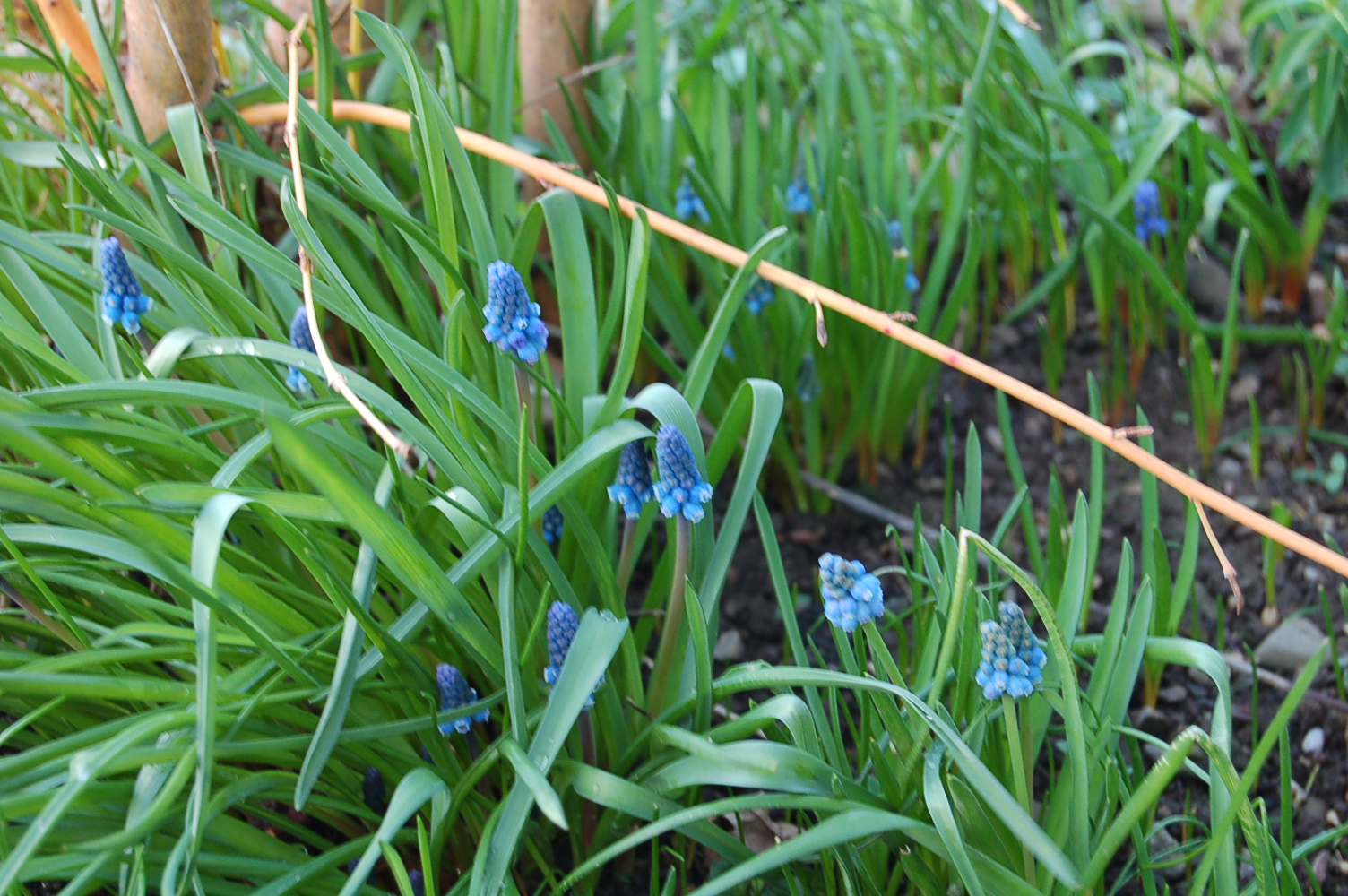
At last our first daffodils are fully in flower! We have waited so long. Muscari are also now bursting into bloom adding their own shade of blue all around the garden.
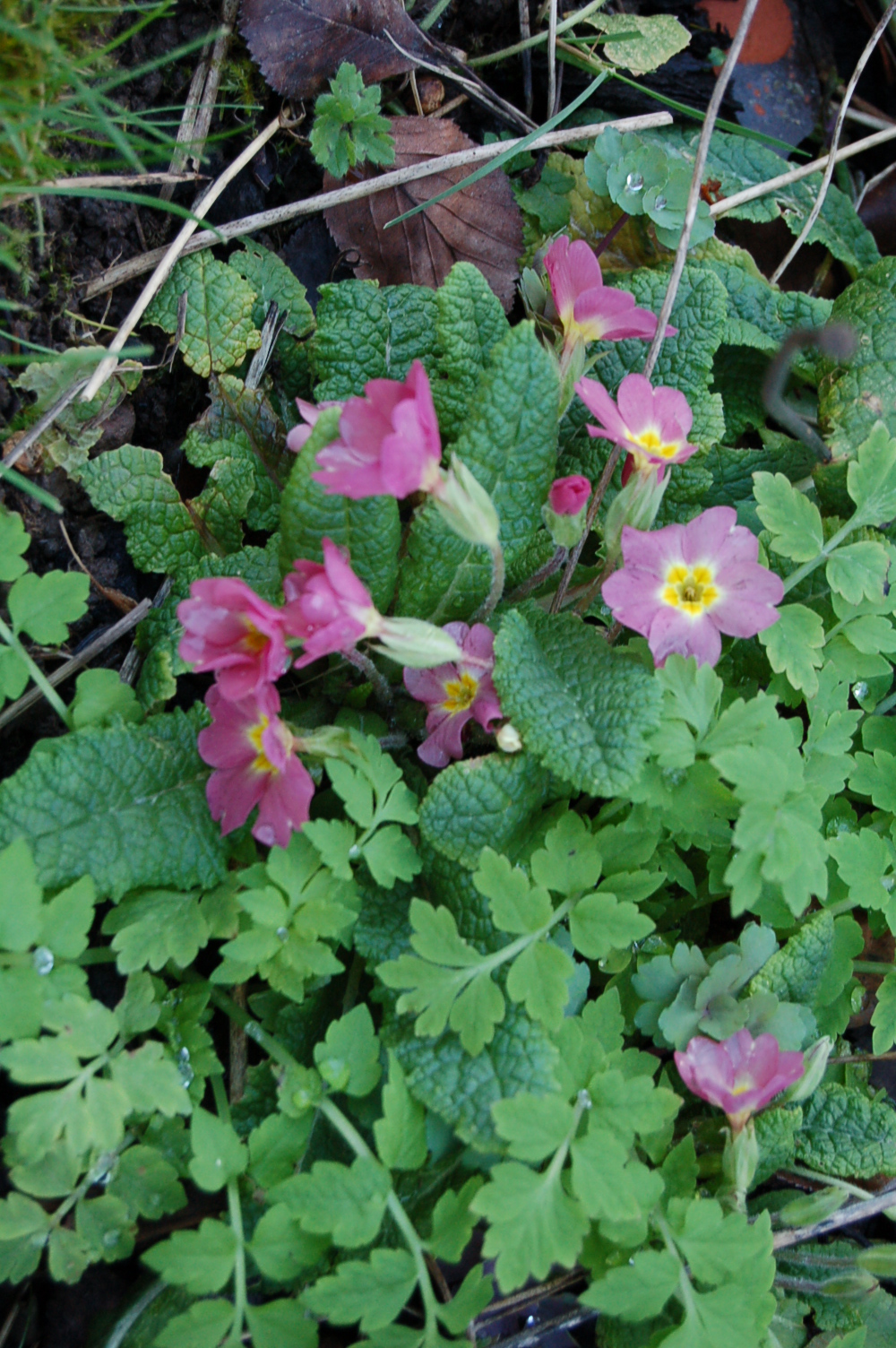
The Primroses we grew from seed a few years ago now give us big clumps of flower in their own special shade of yellow. They are self seeding and spreading around the garden, with an occasional plant producing flowers of an extraordinary shade of greyish pinky. Not sure I like them!
One of the delights of this time of year are the Pulmonarias with their flowers coloured pink and blue on the same plant and their beautifully marked hairy leaves.
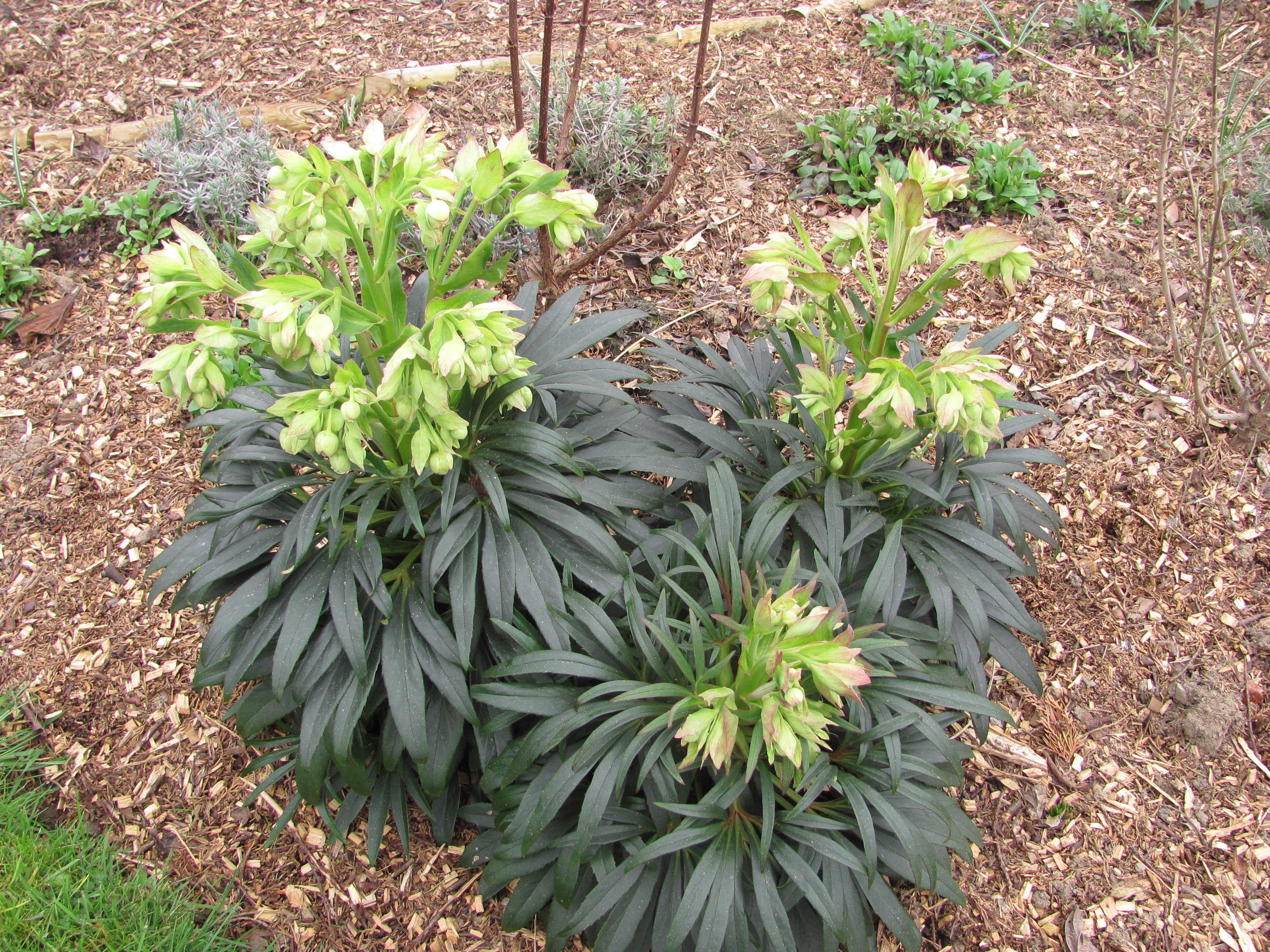
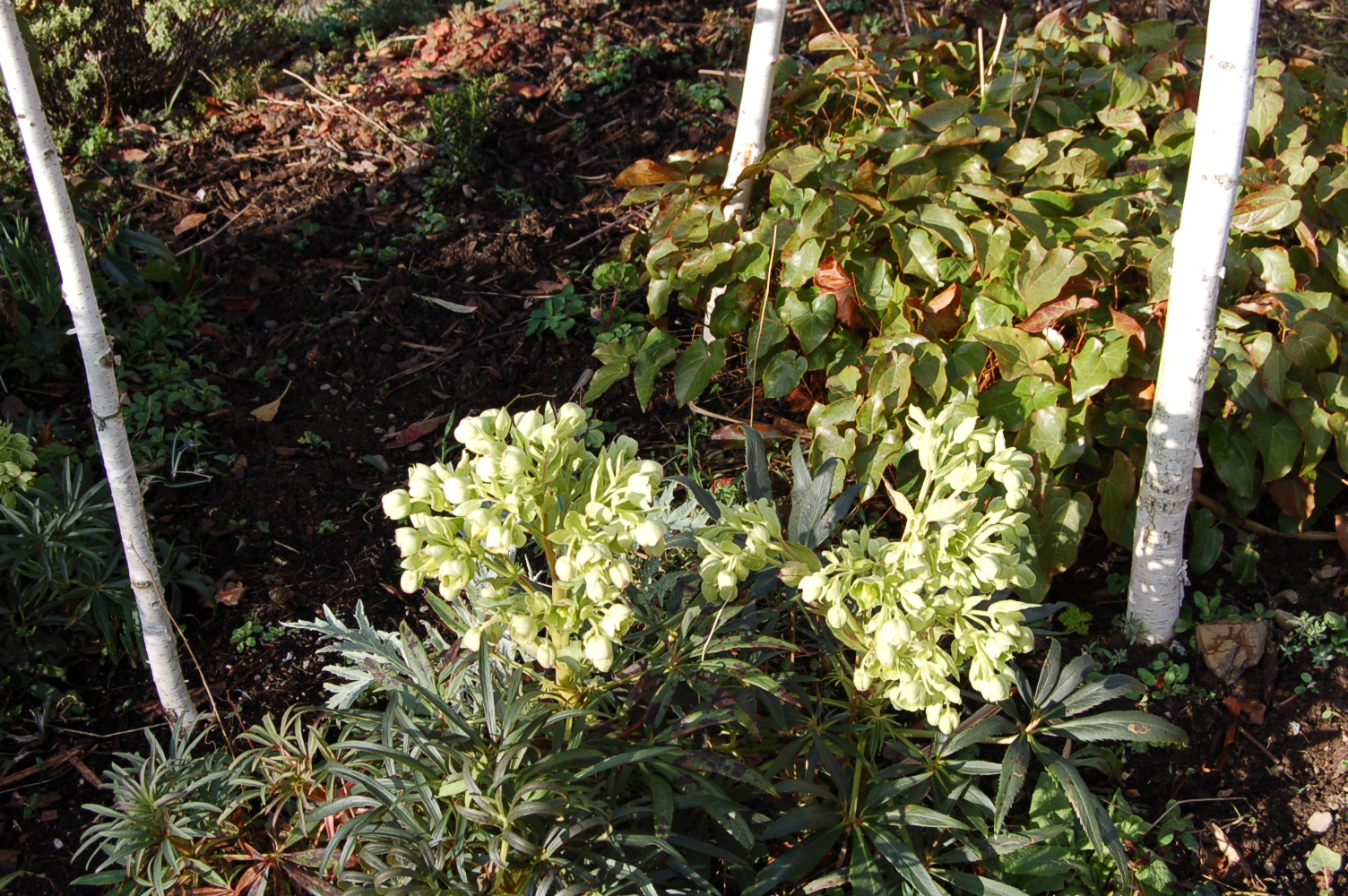
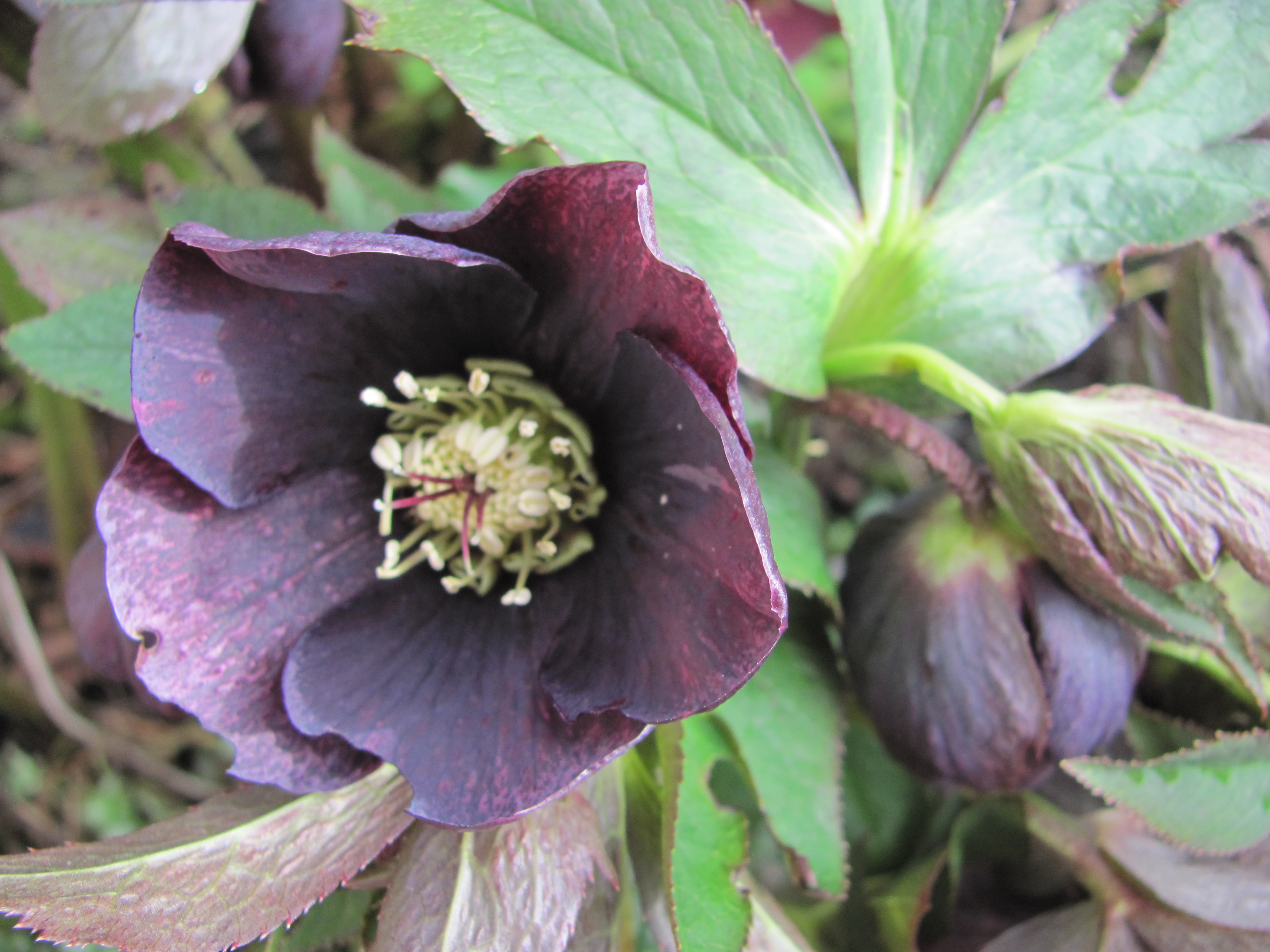
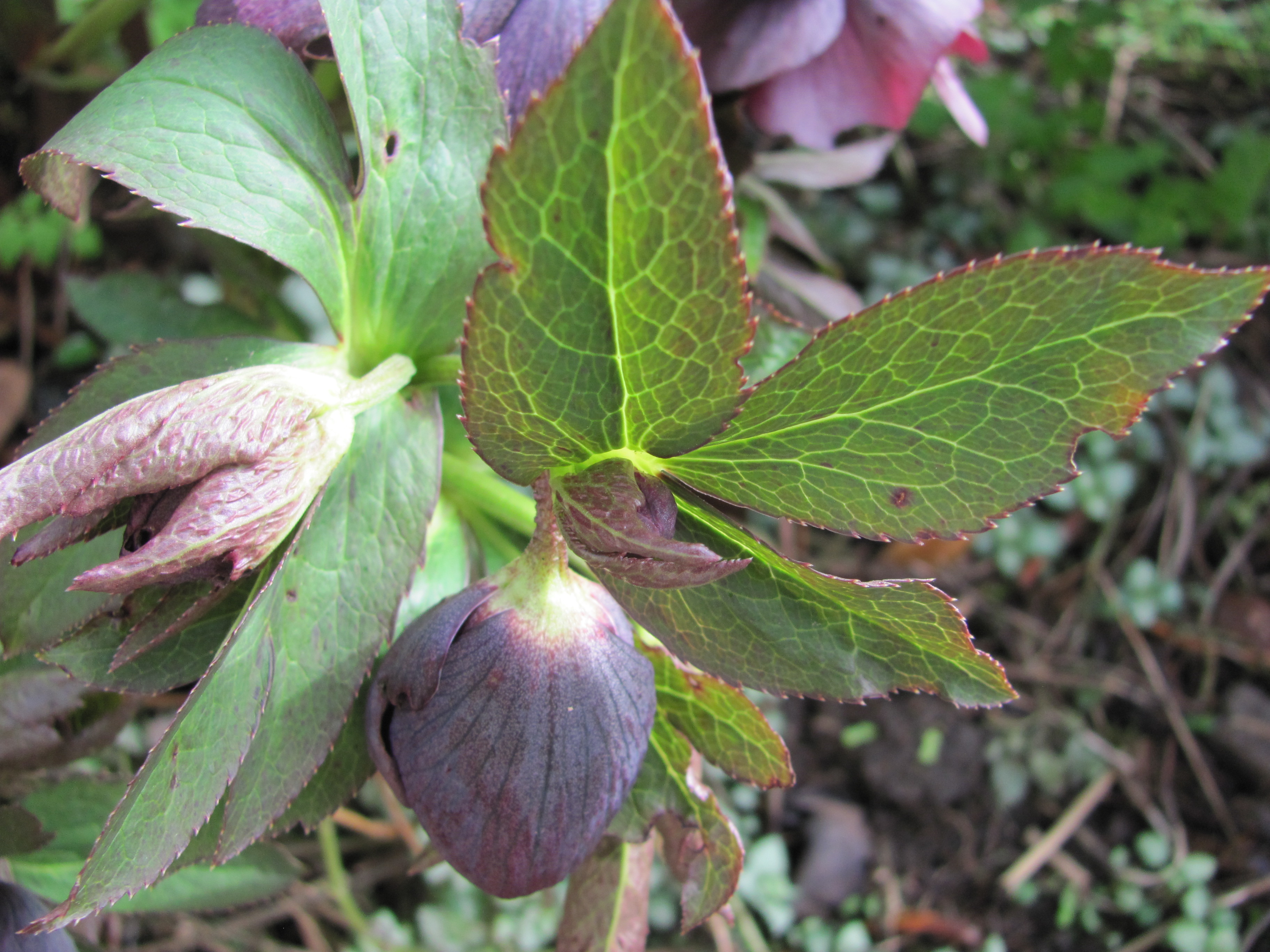
Helleborus have featured in both the January and February garden wanderings and they are still going strong. Two of the last ones to come into flower are this red hybrid and the magnificent near black variety. It looks good in bud and full flower and has the added attraction of interesting foliage. The clump of mixed Hellebores in the “Chicken Garden” give us plenty to look at on coffee breaks when the March sun bursts through and its warmth feels so good on our backs.
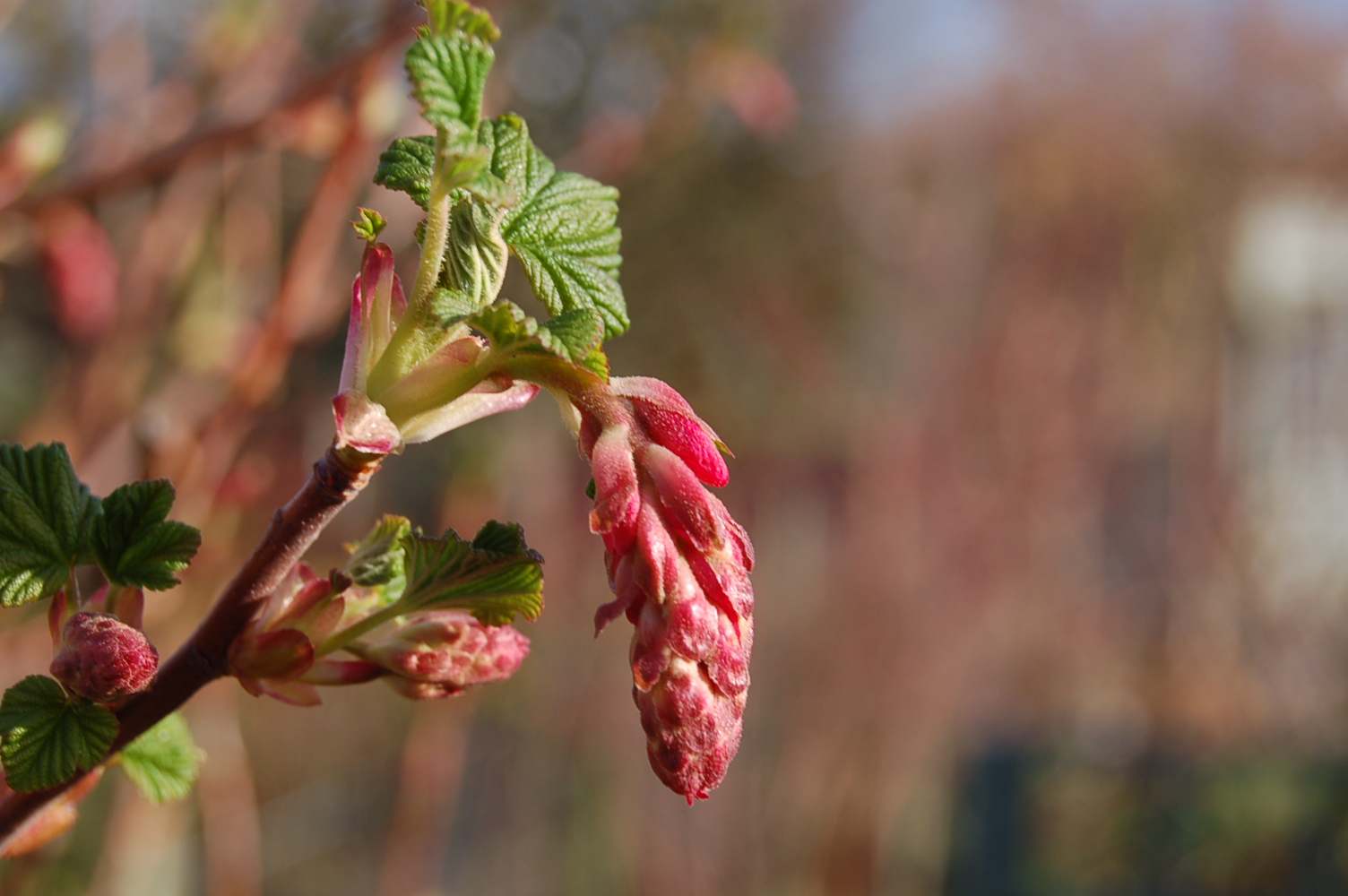
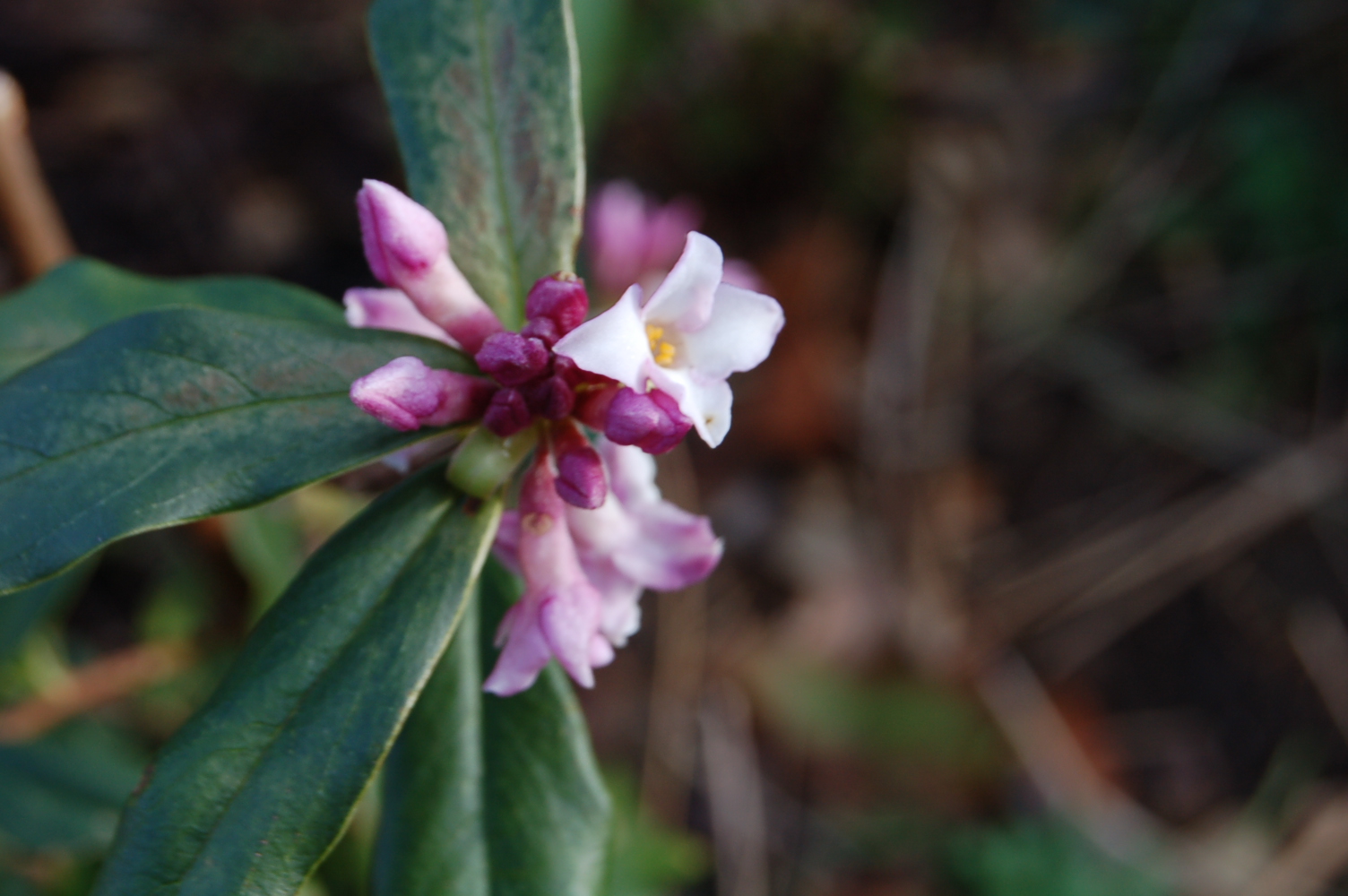
The bees appreciate the early flowering bulbs especially purple crocuses but soon they will be flocking to feed on the Flowering Currant, the exceptionally large flowered variety Ribes sanguineum King Edward VII, which is on the point of bud burst. The buds on the Daphne bhulua “Jacqueline Postill” have opened to reveal highly scented flowers in several shades of pink.
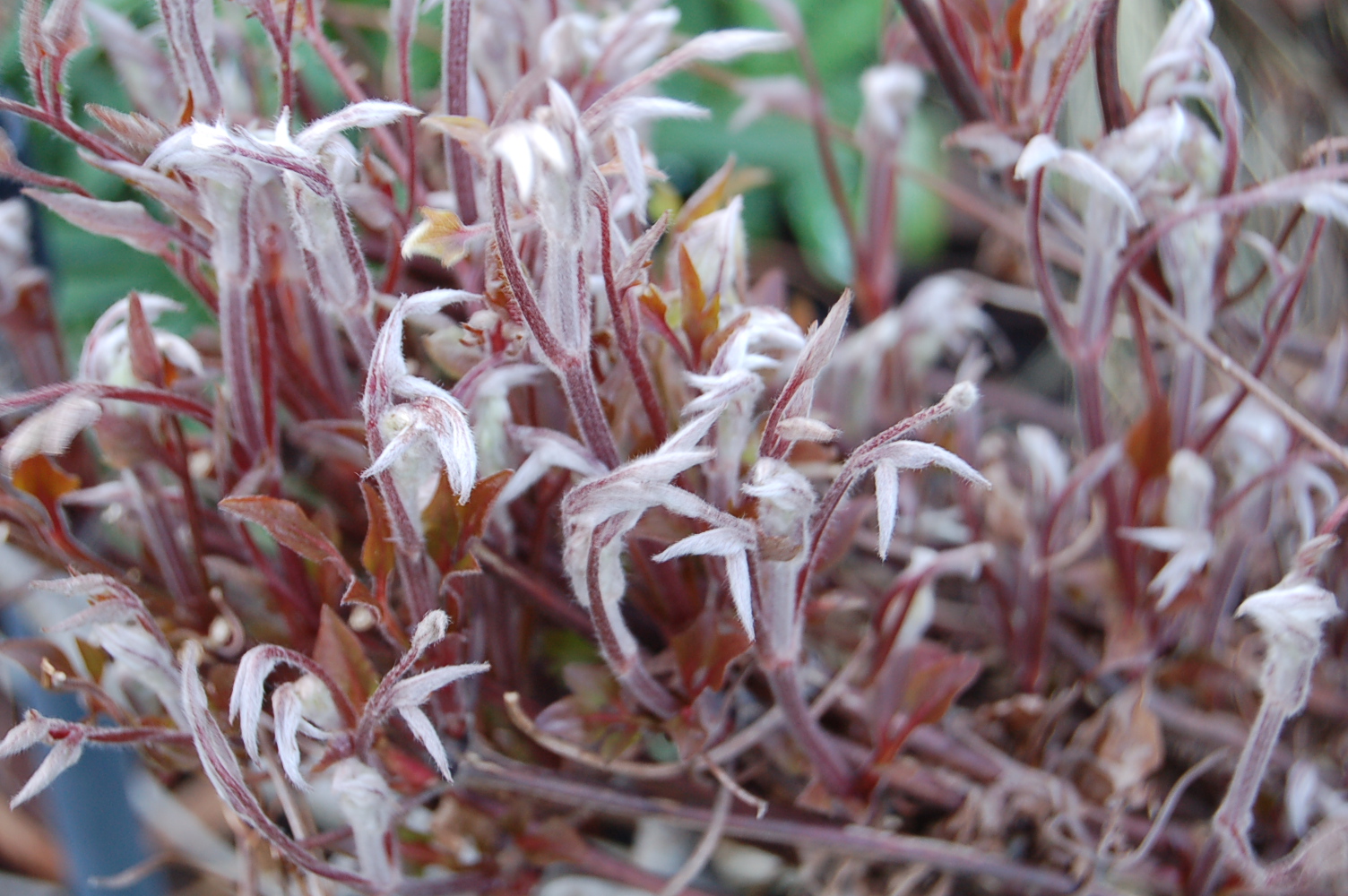
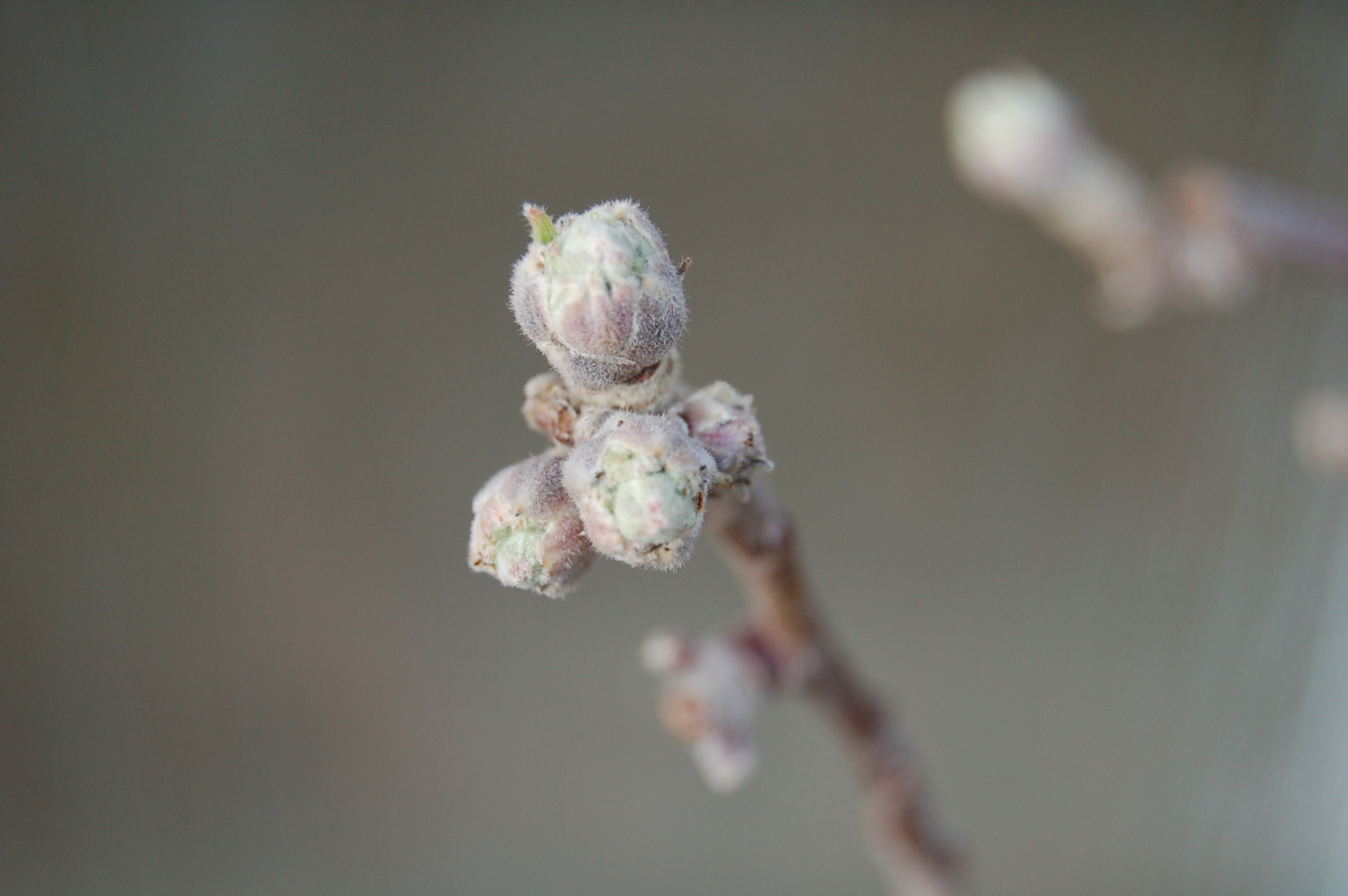
March in the garden is full of promises with buds developing and preparations underway for the productive garden. The photos show buds of Clematis, both climbing and herbaceous, and Apples and Pears.
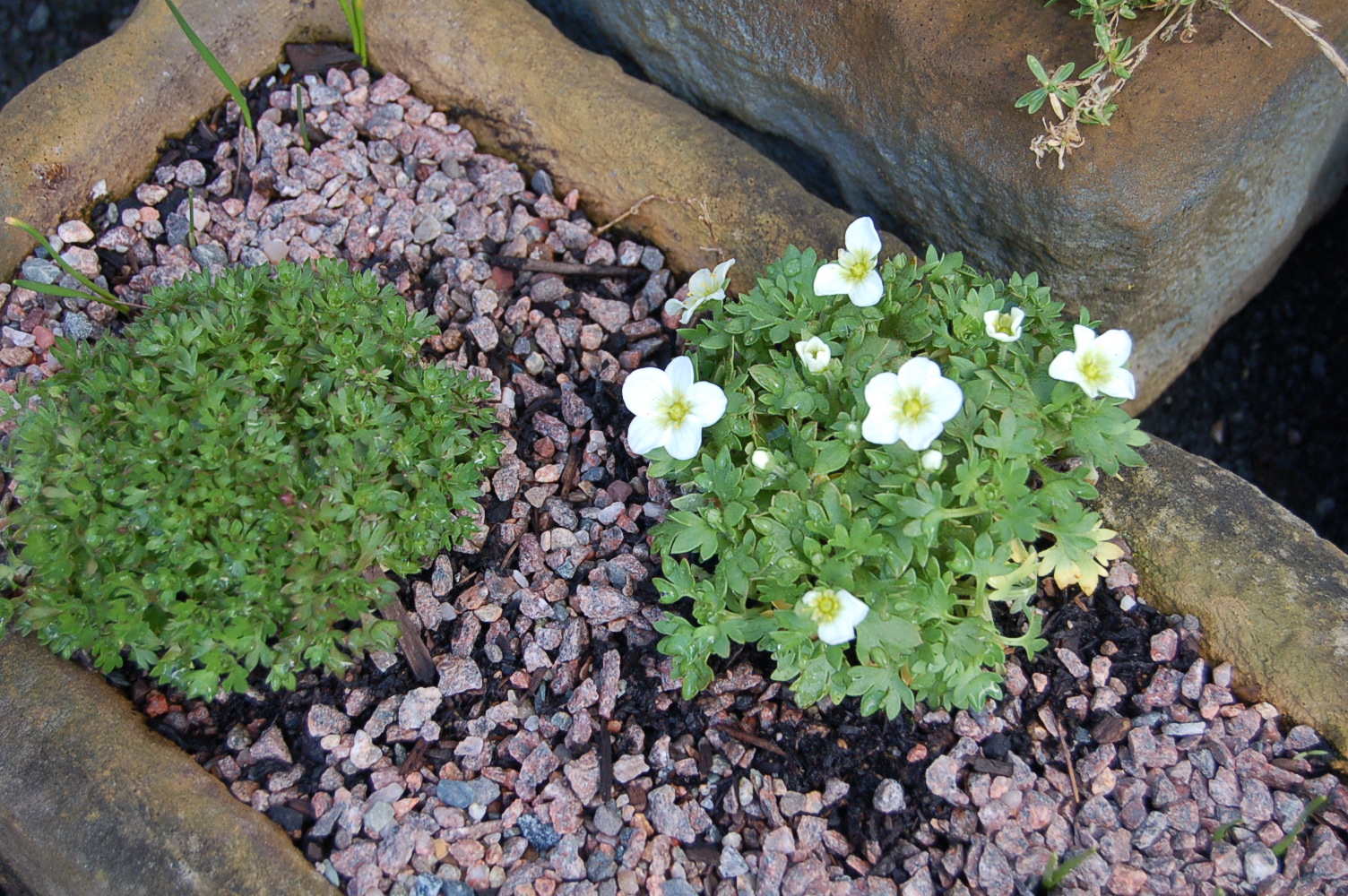
The Sempervivum in the alpine troughs and on the slate scree bed are all budding up nicely but one pure white-flowered one is out and glowing in the March sunlight. They are such precious little jewels of plants.
Our two newest areas of the garden, the Chicken Garden and the Secret Garden, are turning glaucous green with Allium leaves. One area is like a lawn of Allium. They seem to enjoy our soil too much and are spreading and self seeding madly!
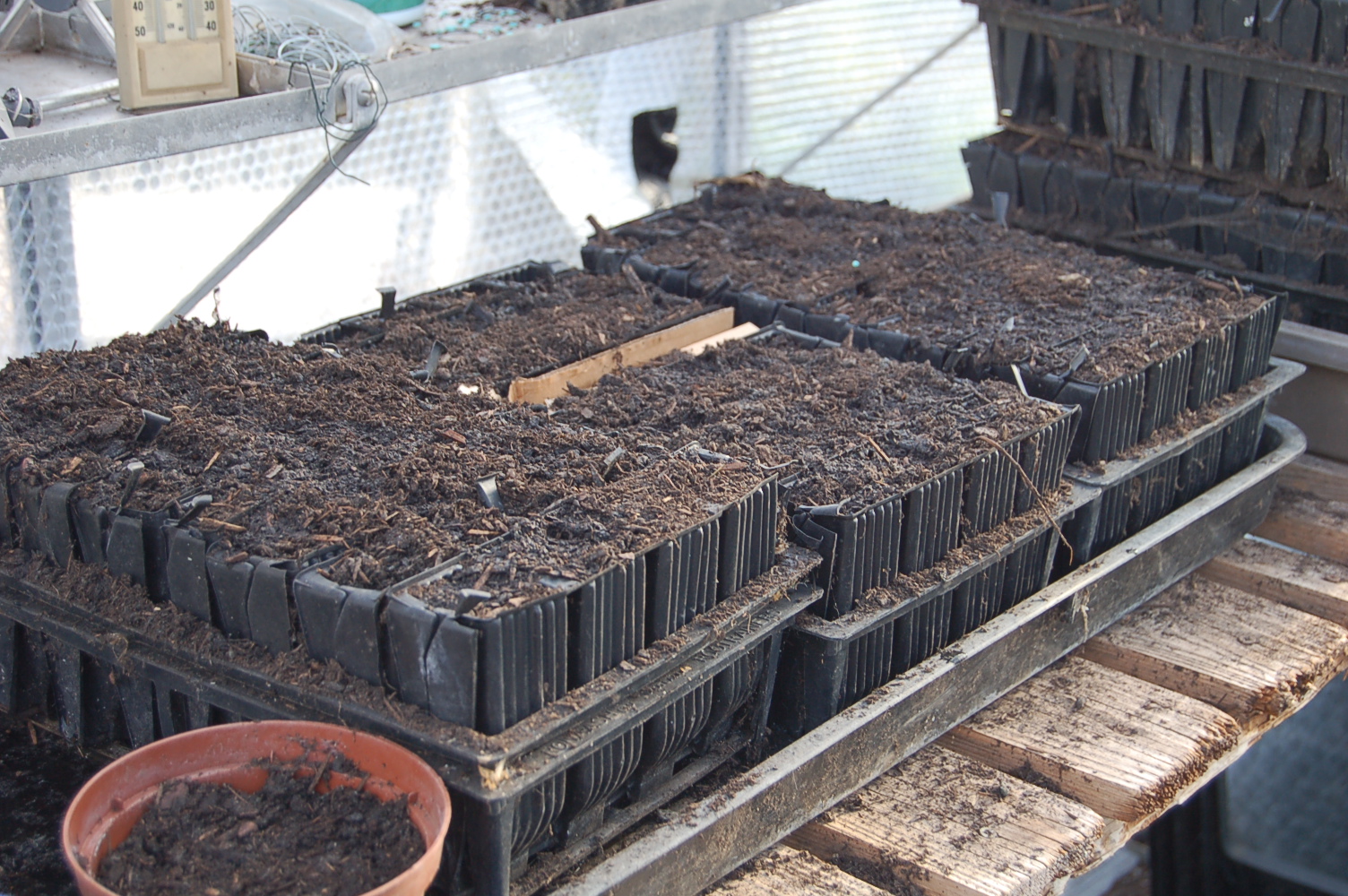
The productive side of our gardening mostly happens on our allotment but we have a big greenhouse in the back garden where we start off many of the veggie plants. Some seedlings have germinated in the propagator and lots cells and 5 inch pots are full of compost ready for us to sow peas, broad beans and sweet peas.
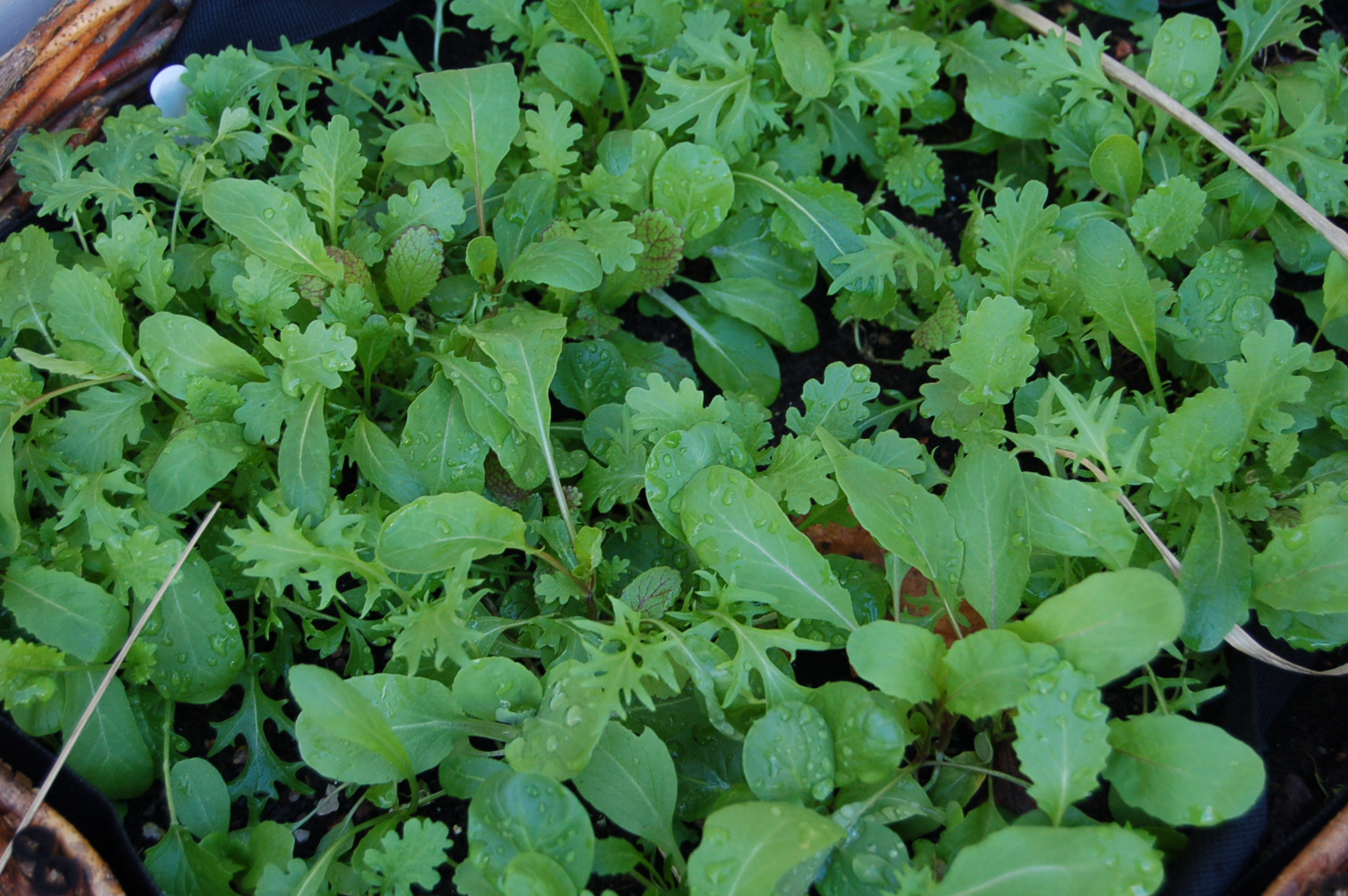
In our raised wicker beds just outside the back door the cut-and-come-again salad leaves are almost ready for the first cutting – and of course the first eating. So many different textures, colours and tastes! Delicious! Much is still to happen in March and on into April.
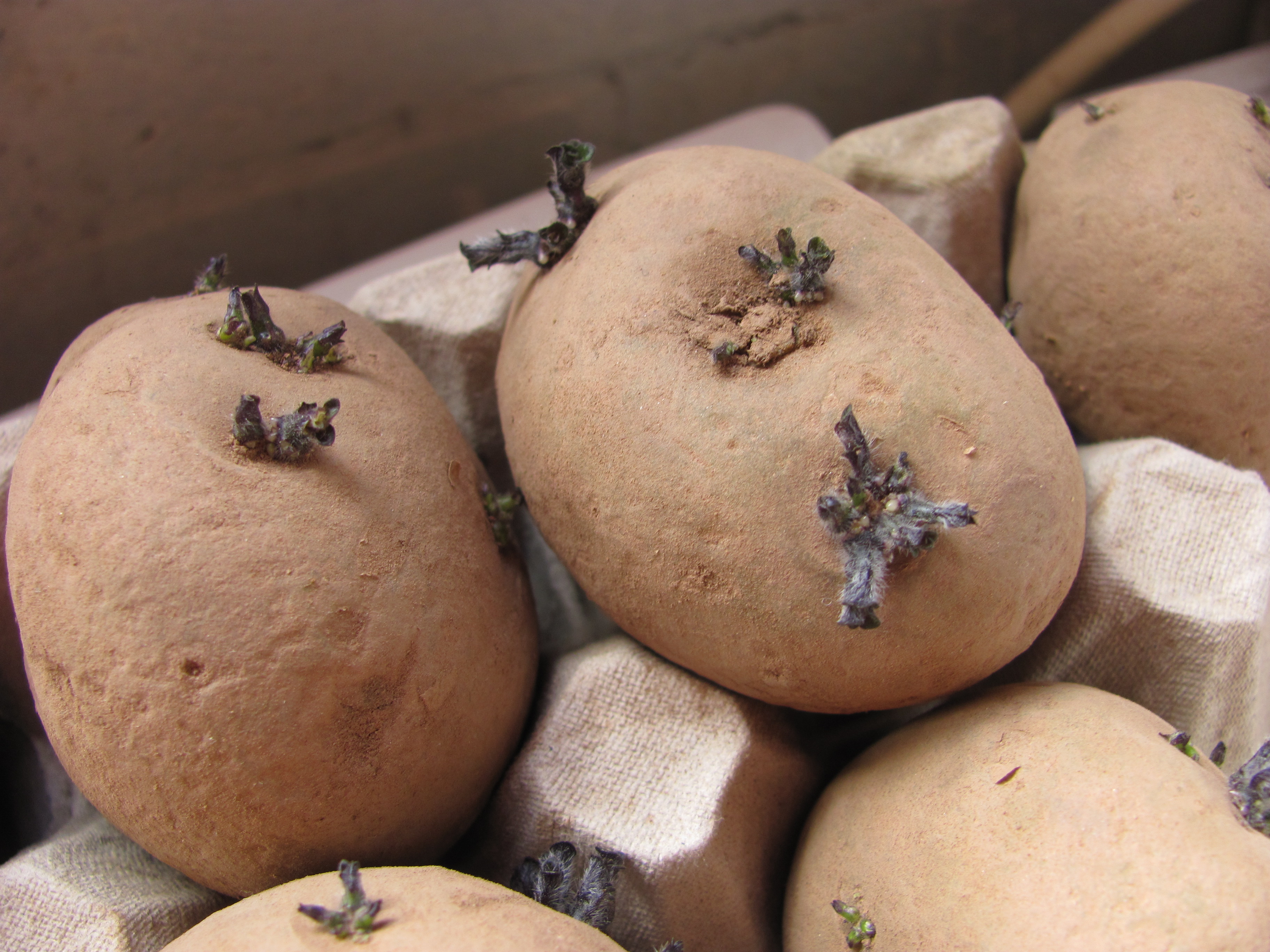
Our Comfrey patch is showing strong growth. This is one of the most important areas of the garden for in this 2ft by 10ft bed we grow a comfrey variety called Bocking 14, which we can cut 4 or 5 times a year. The leaves can be put in the bottom of potato trenches before we plant the potatoes to feed them and prevent the disease “Scab”. We also put them as a mulch under fruit trees and bushes as a feed and as a weed suppressant, and use them to make a liquid feed mixed with nettles.
So much is still to happen in the March garden. It is a busy and exciting month. So much to look forward to.
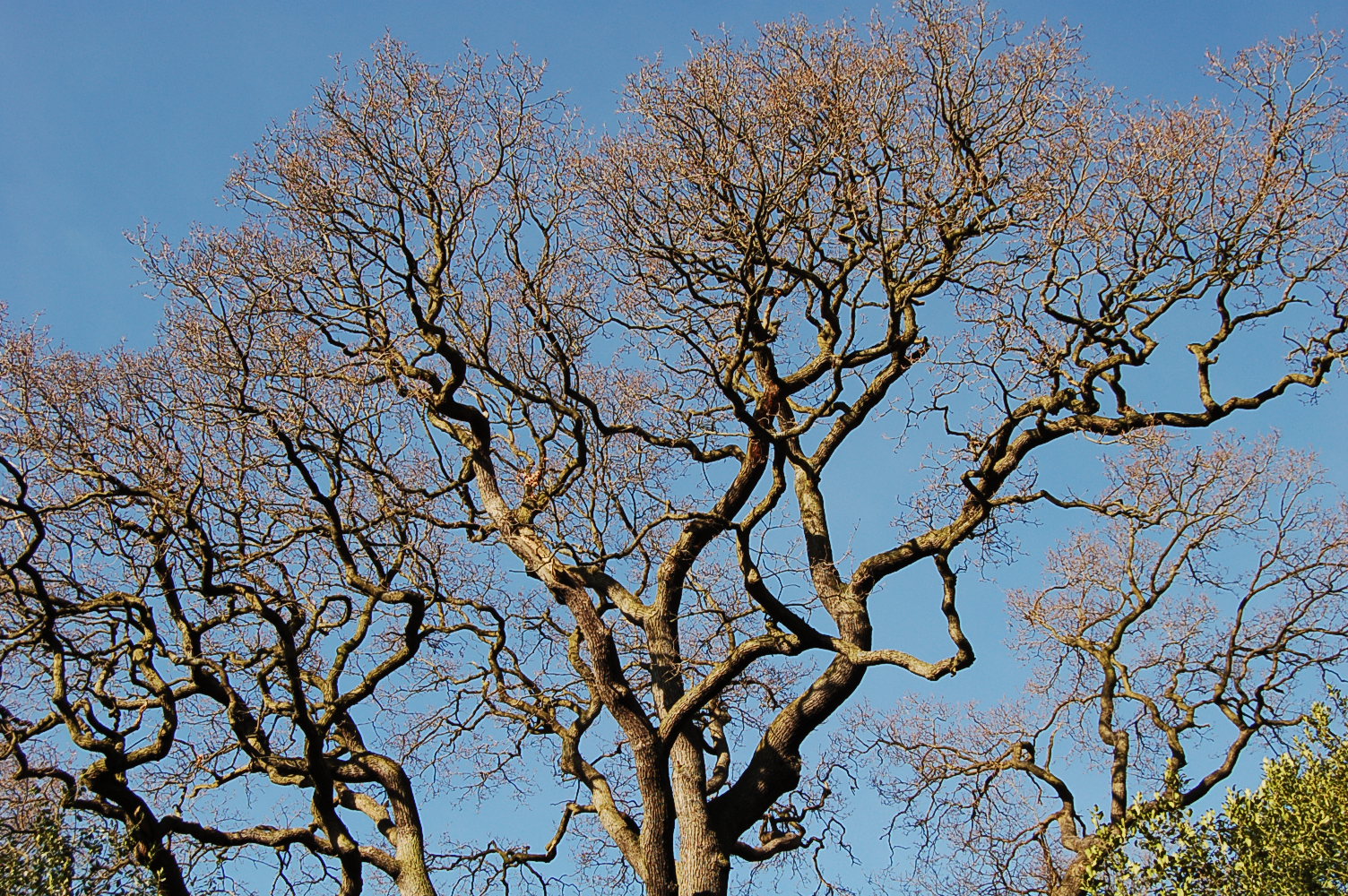
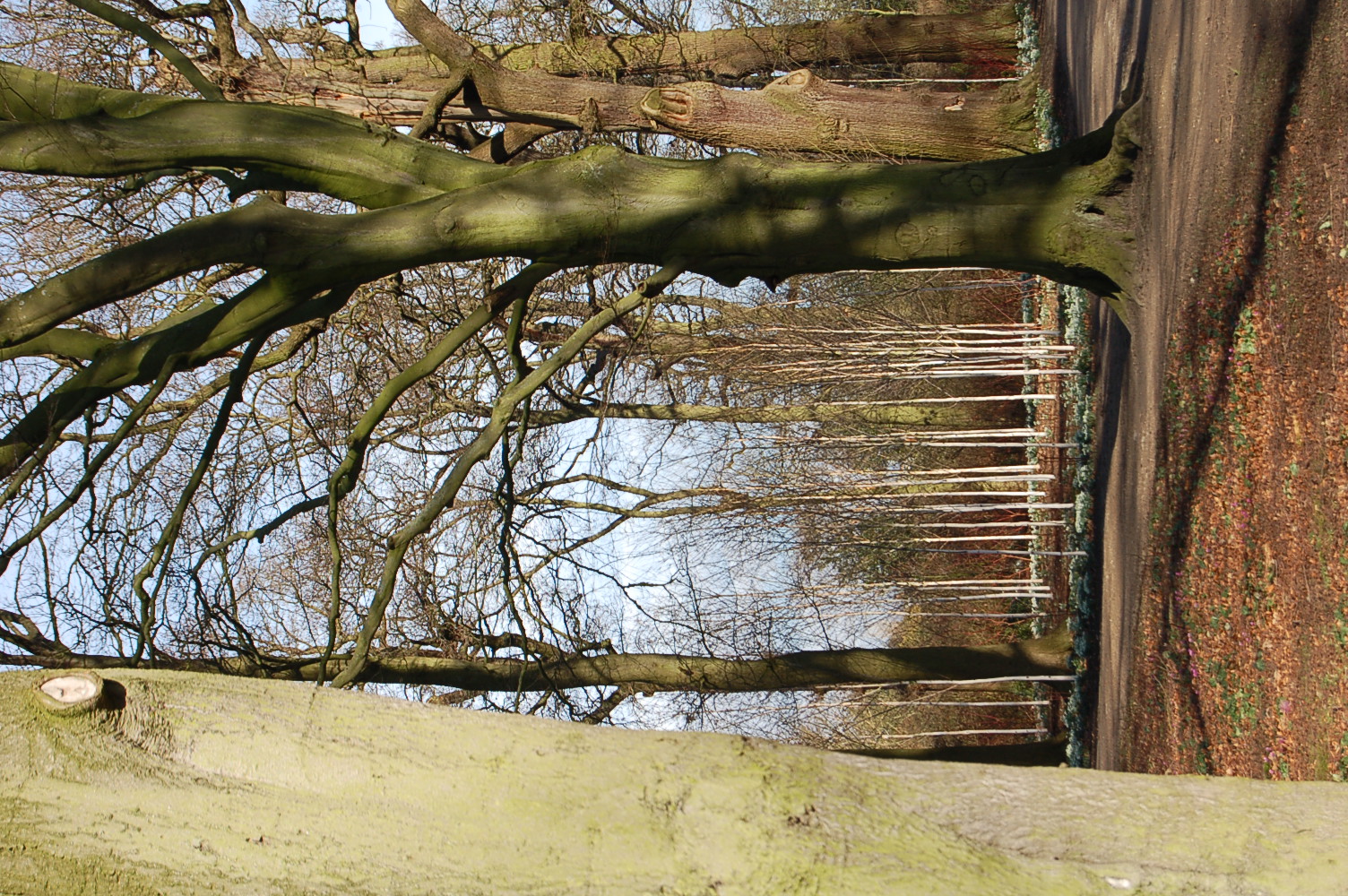
I recently published my blog about the winter garden at Dunham Massey. (see “The Winter Garden at Dunham Massey”) This wonderful area of planting is beautifully situated within and underneath an area of mature trees, some of great age and height, so my camera wandered upwards and shot some pictures.
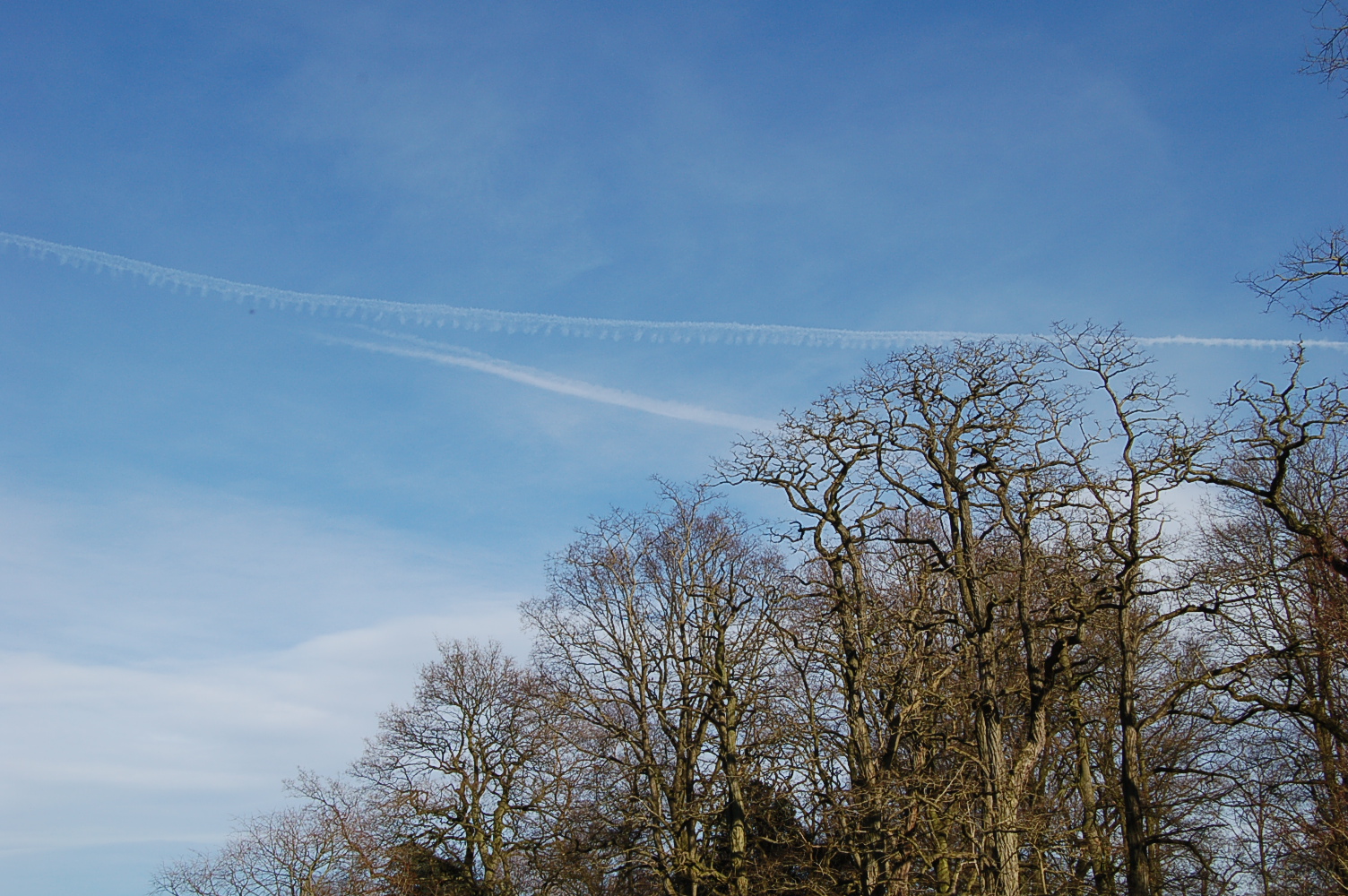
Jet aircraft from the nearby airport painted white lined art against the deep blue of the sky.
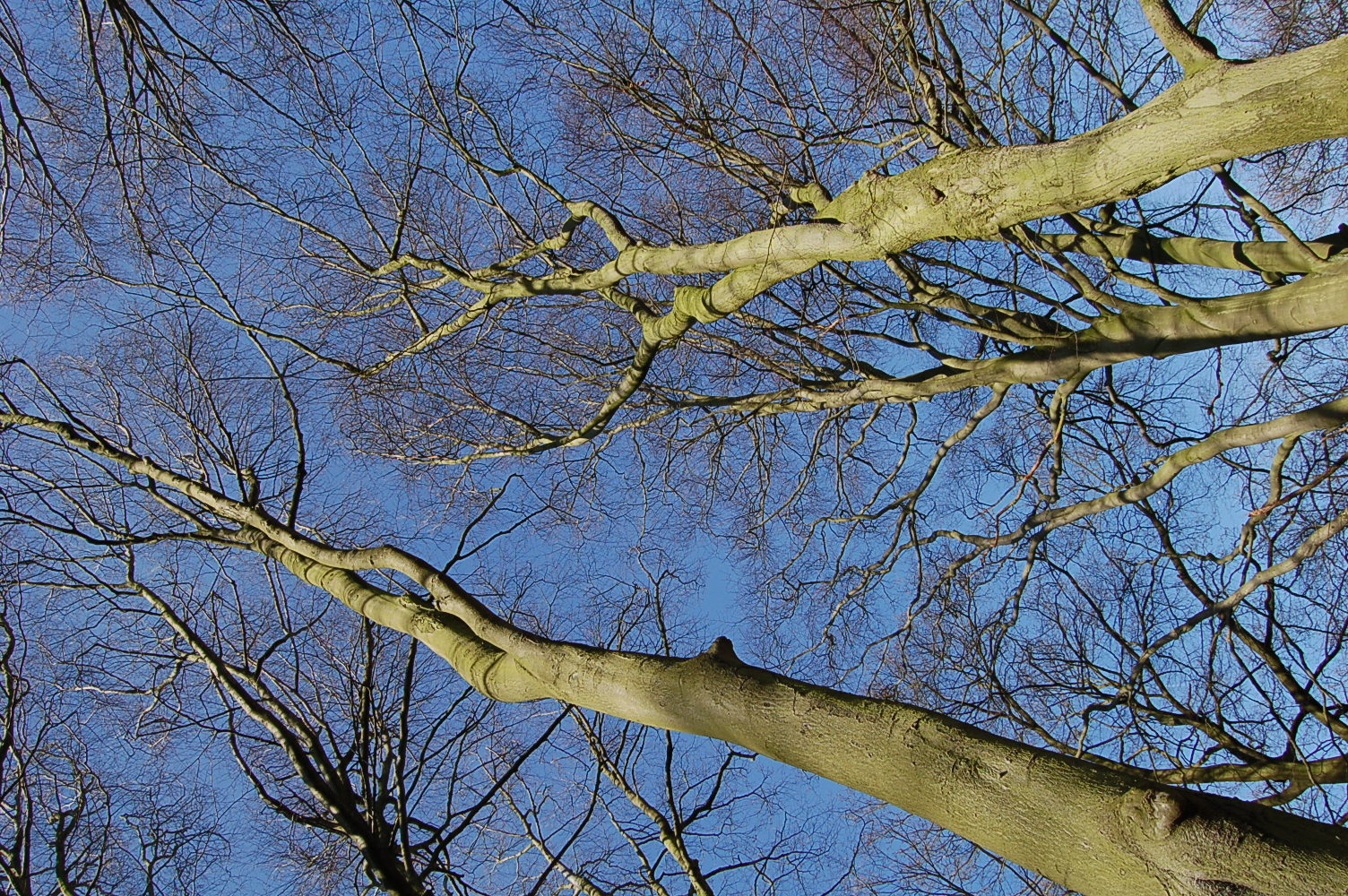
The tracery of bare winter branches bursting from the thick trunks of the mature trees painted far more delicate works of art in the sky. No straight lines in their doodlings.
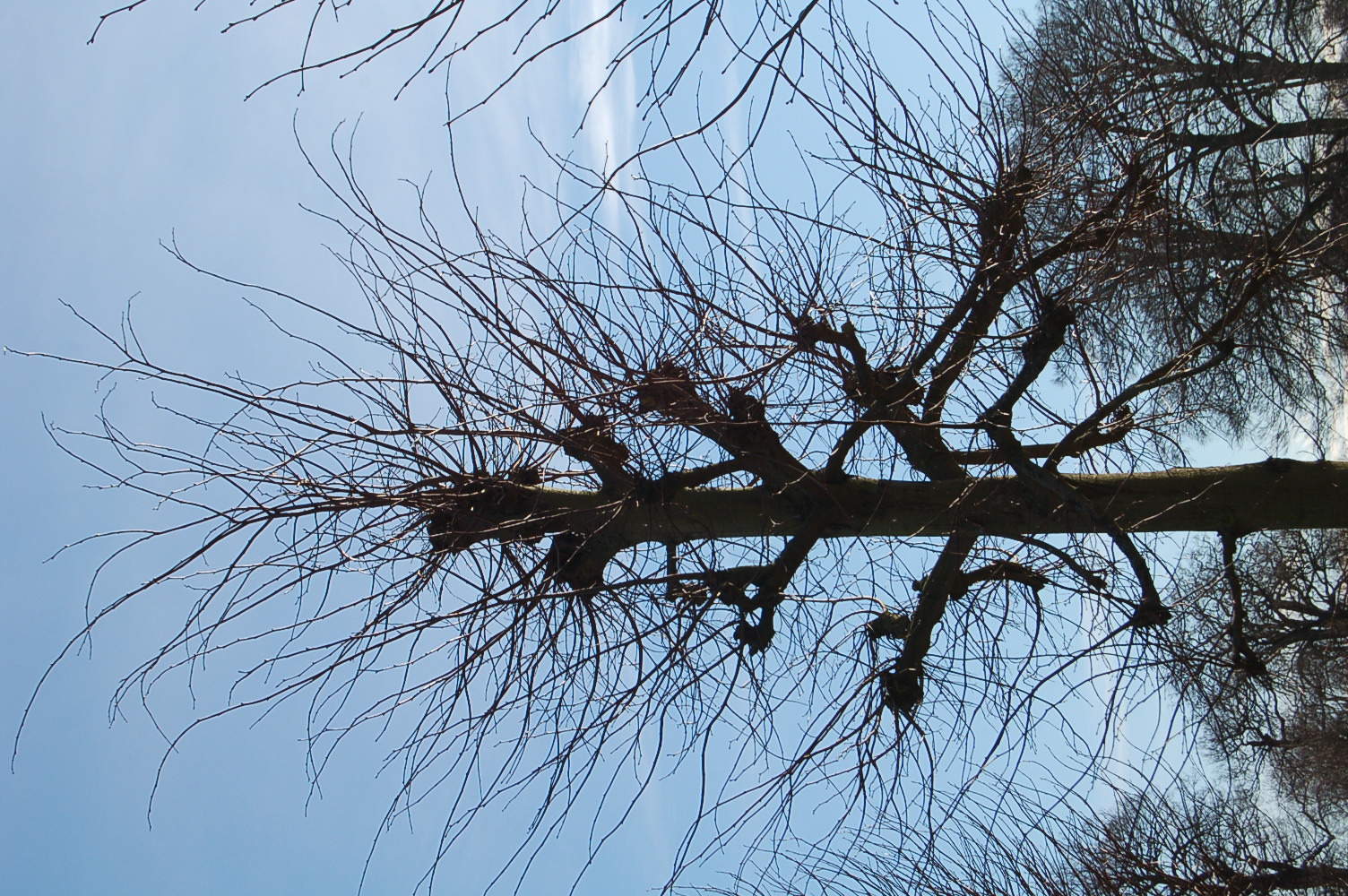
In this avenue the gardeners have added their personal touches to the trees’ artwork with their pleaching work.
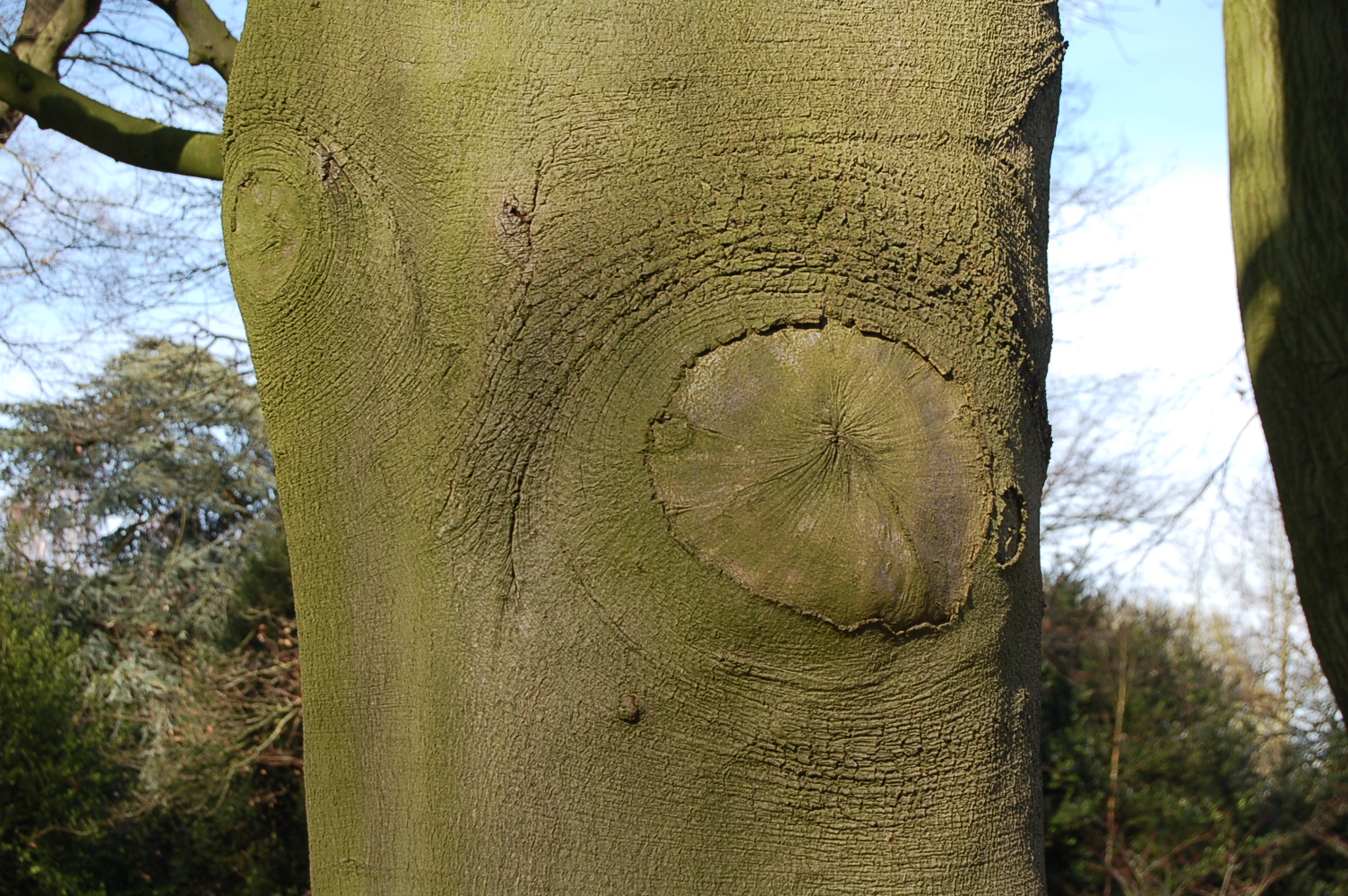
The artwork below has been created over decades by the growth and development of this huge tree, creating its own unique textures and patterns.
Looking up gave surprises and delights, looking up into the world enjoyed by birds and insects. Looking up also concentrated and enhanced our listening, affording us the joy and thrill of hearing the calls of Nuthatches, Goldcrests and the Titmice family against the drumming sound of Woodpeckers.
'The most important and informative publication on wildlife of our times' - The Independent. This blog is a member of The UK & Ireland Natural History Bloggers group: www.uknhb.blogspot.com





























































 greenbenchramblings