Categories
allotments birds community gardening conservation fruit and veg garden photography garden wildlife gardening grow your own hardy perennials meadows natural pest control Shropshire wildlife

A Wander around the Allotments in May

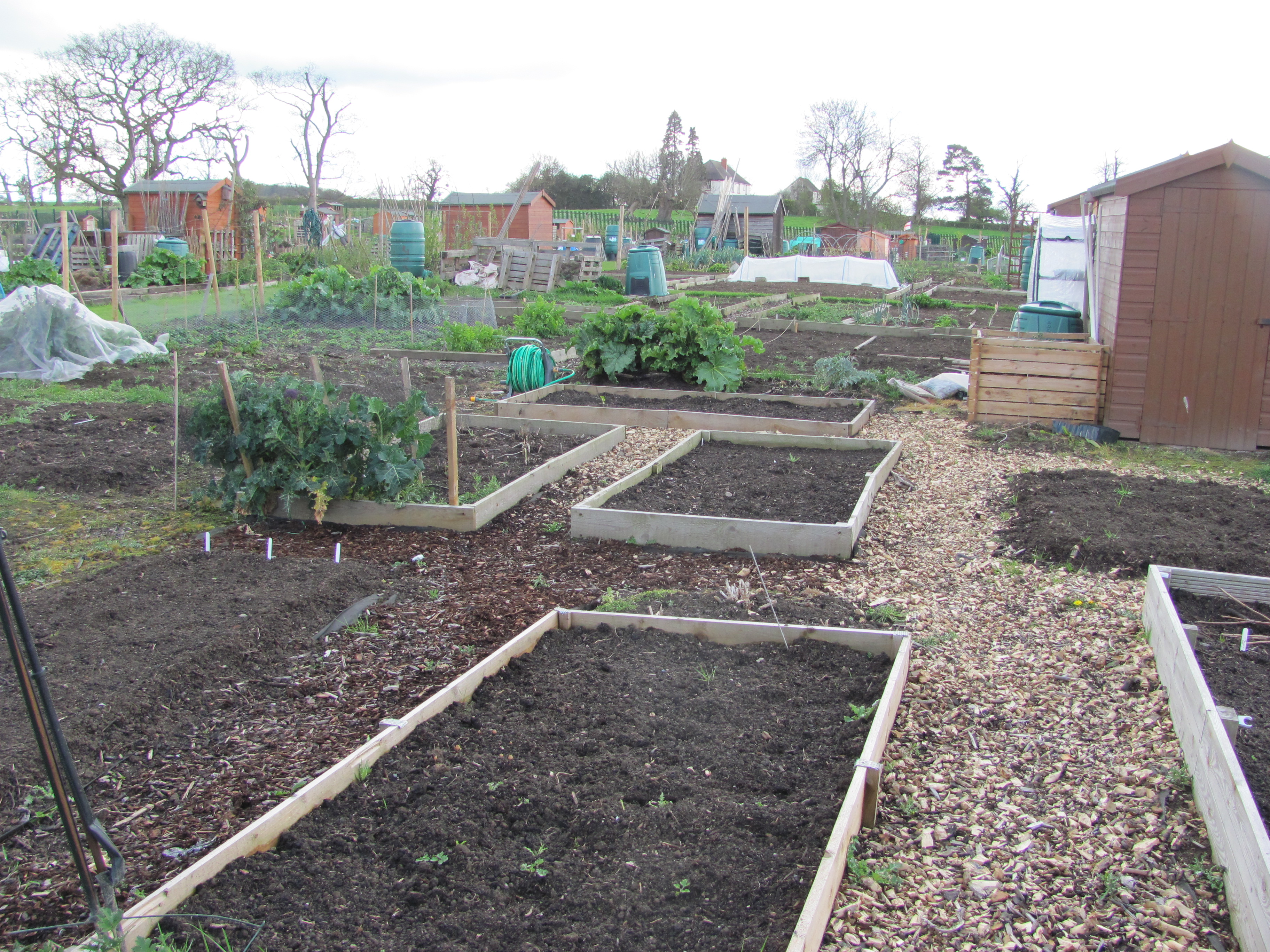
May is a busy month on the allotment, seeds need sowing, seedlings need thinning, weeds need hoeing and early crops reward us with early harvests. And of course our grass paths separating the four areas of the plot need regular mowing.

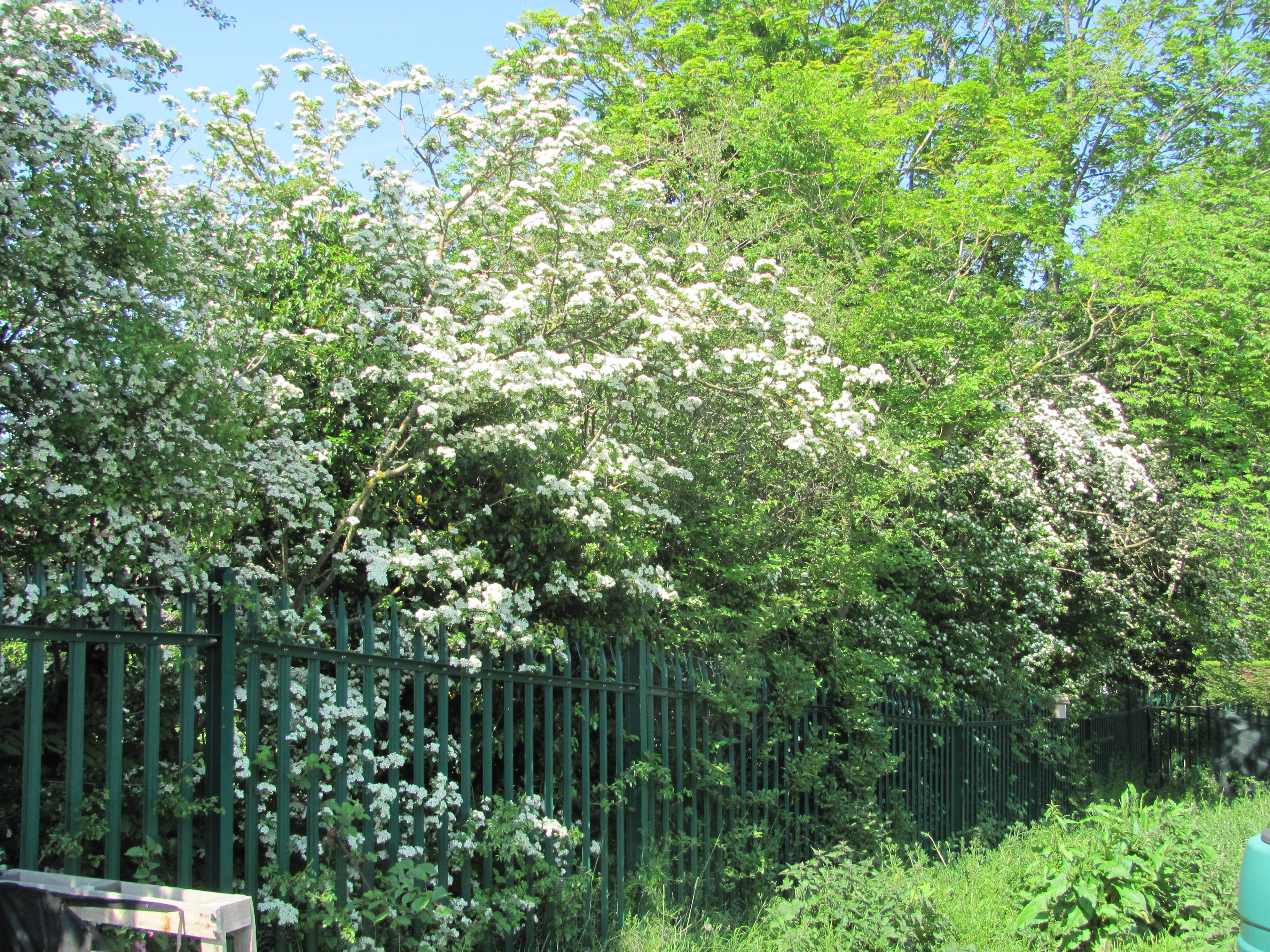
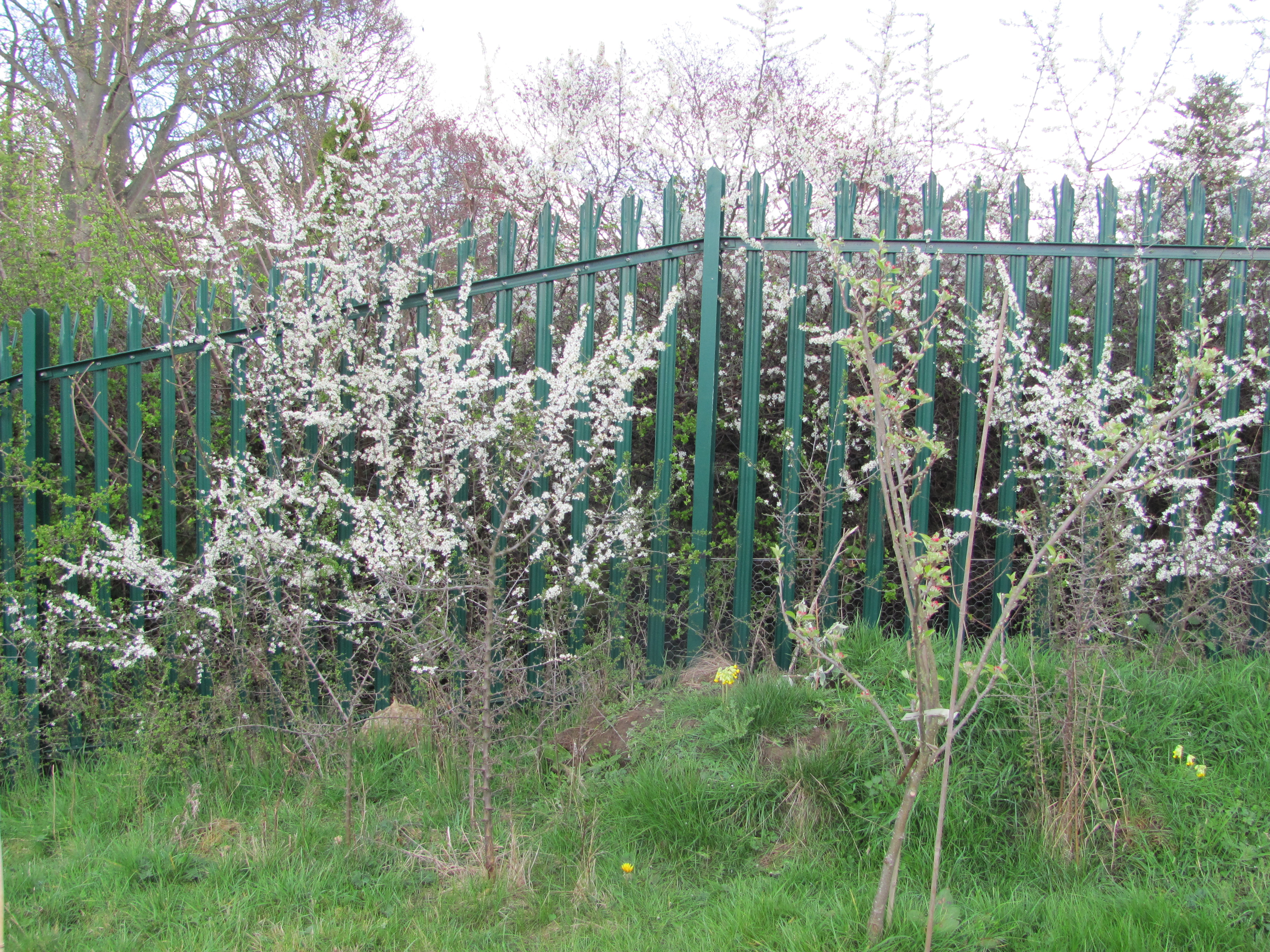
The Hawthorns in native hedges around the site are smelling good and looking good.

The wildlife all around is equally busy, seriously going about the business of breeding with all its inherited trials and tribulations. The weather, predators, prey availability and the search for food for both adults and nests full their young all contrive to make their lives difficult.

We shall begin our May lottie wander on our own plot to see what is going on. The soil is now easily worked so using the hoe to remove seedlings is easy so the plot is looking tidy.

Our brassicas are coming along well underneath their protective cover.
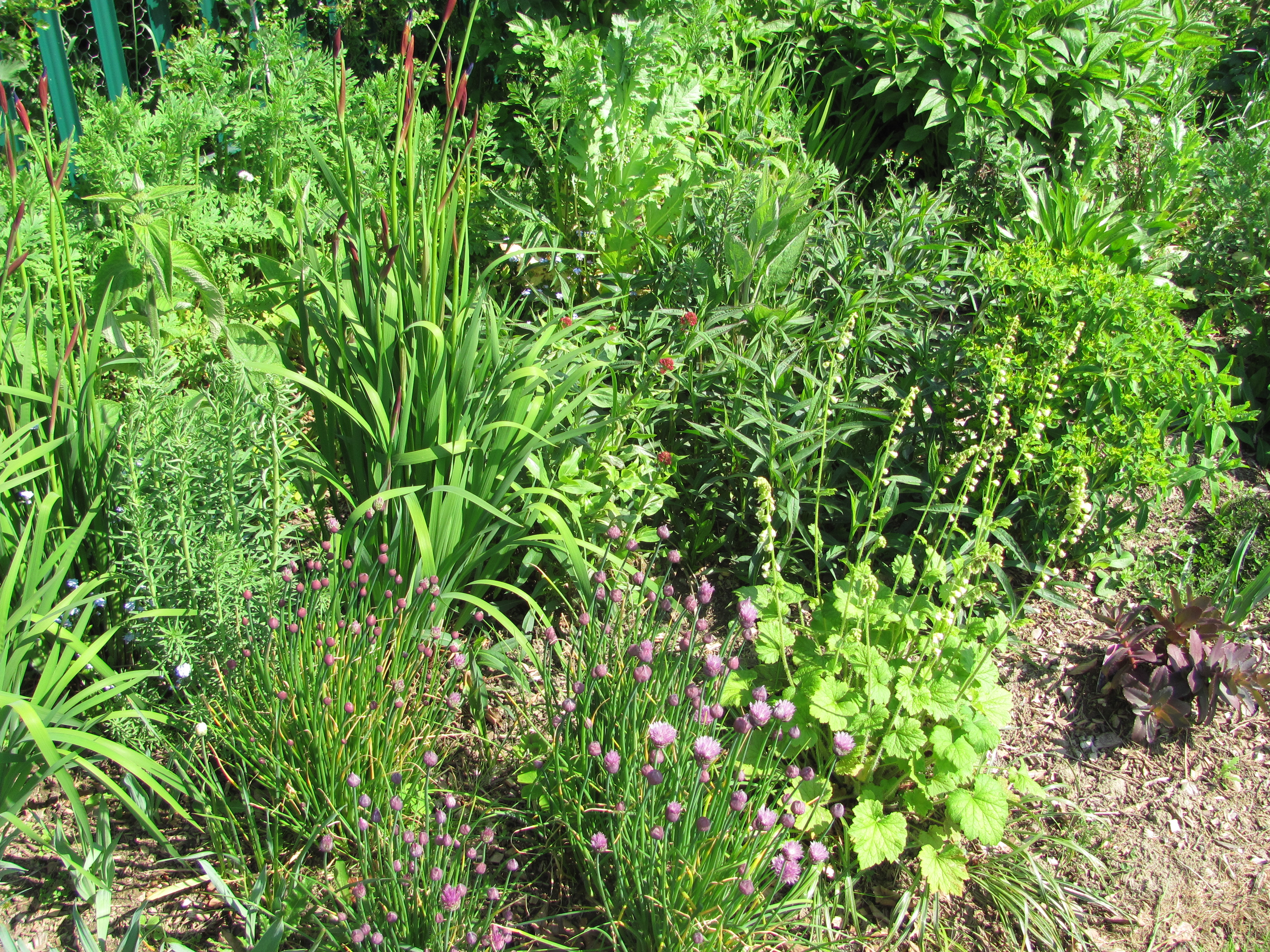
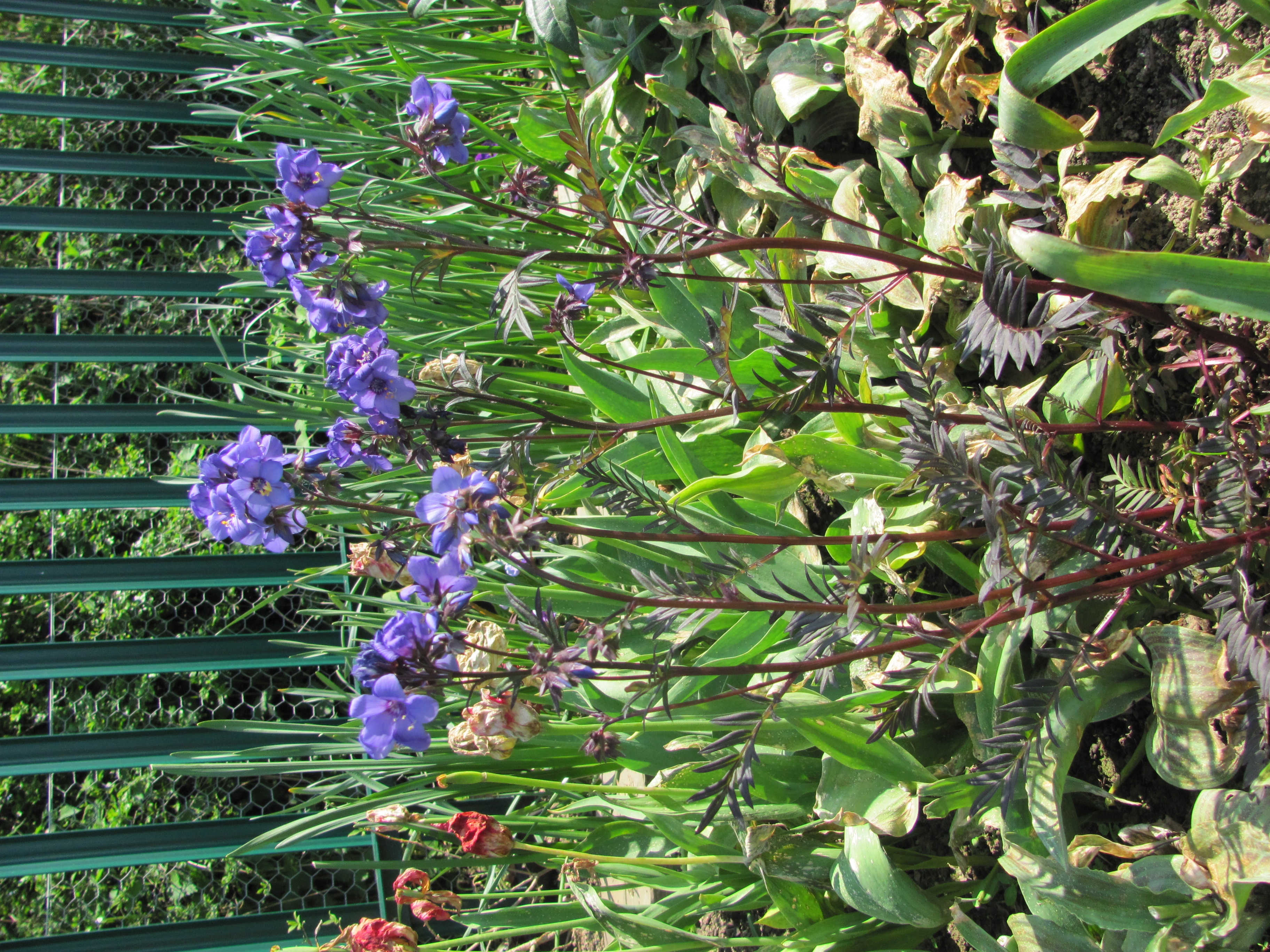
The perennial bug borders are looking good.
Multi-coloured radiccio.

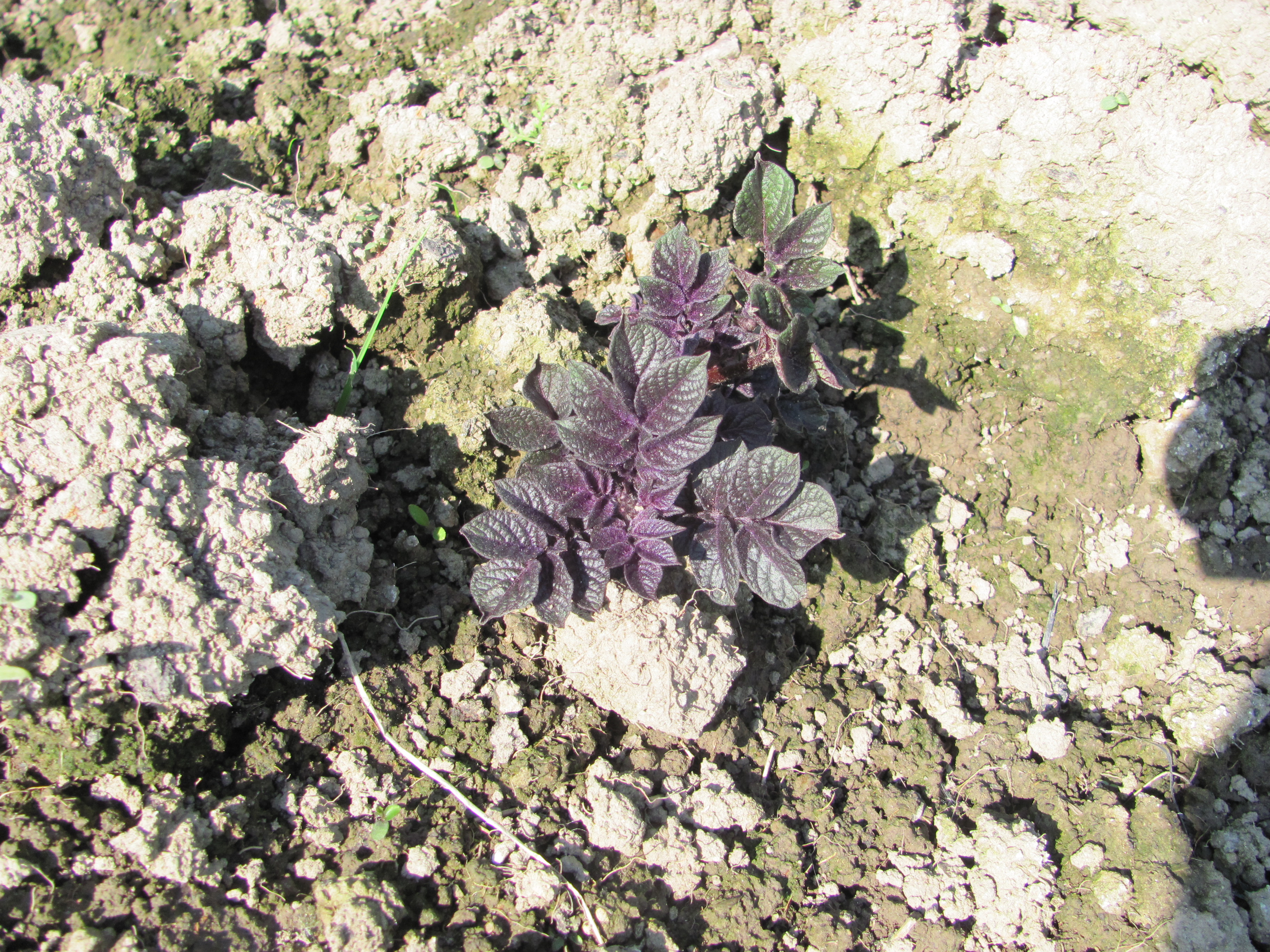
Whenever we are working our plot or helping maintain the green spaces around the site, we are entertained by birds of prey, Buzzards and Kestrels soaring or hovering over our heads and around our feet Robins, Blackbirds, Blue and Great Tits, and Song Thrushes search for food for their young hoping we disturb grubs and bugs with our digging, raking and hoeing. More secretive in their search for fodder for young are the Black Caps, Woodpeckers and Nuthatches. Overhead the hirondelles, (Swallows, Swifts and House Martins), having recently returned from their winter haunts greedily scoop up insects on the wing.Although the weather has been warm and dry for a few days now the end of our plot where the clay comes nearest the surface and the topsoil is very thin, water still saturates the land, making working it impossible. But in this wetness in the ridged soil our Red Duke of York potatoes are pushing their purple tinted foliage out towards the sunshine.

Red Duke of York appearing above the algae tinted soil.
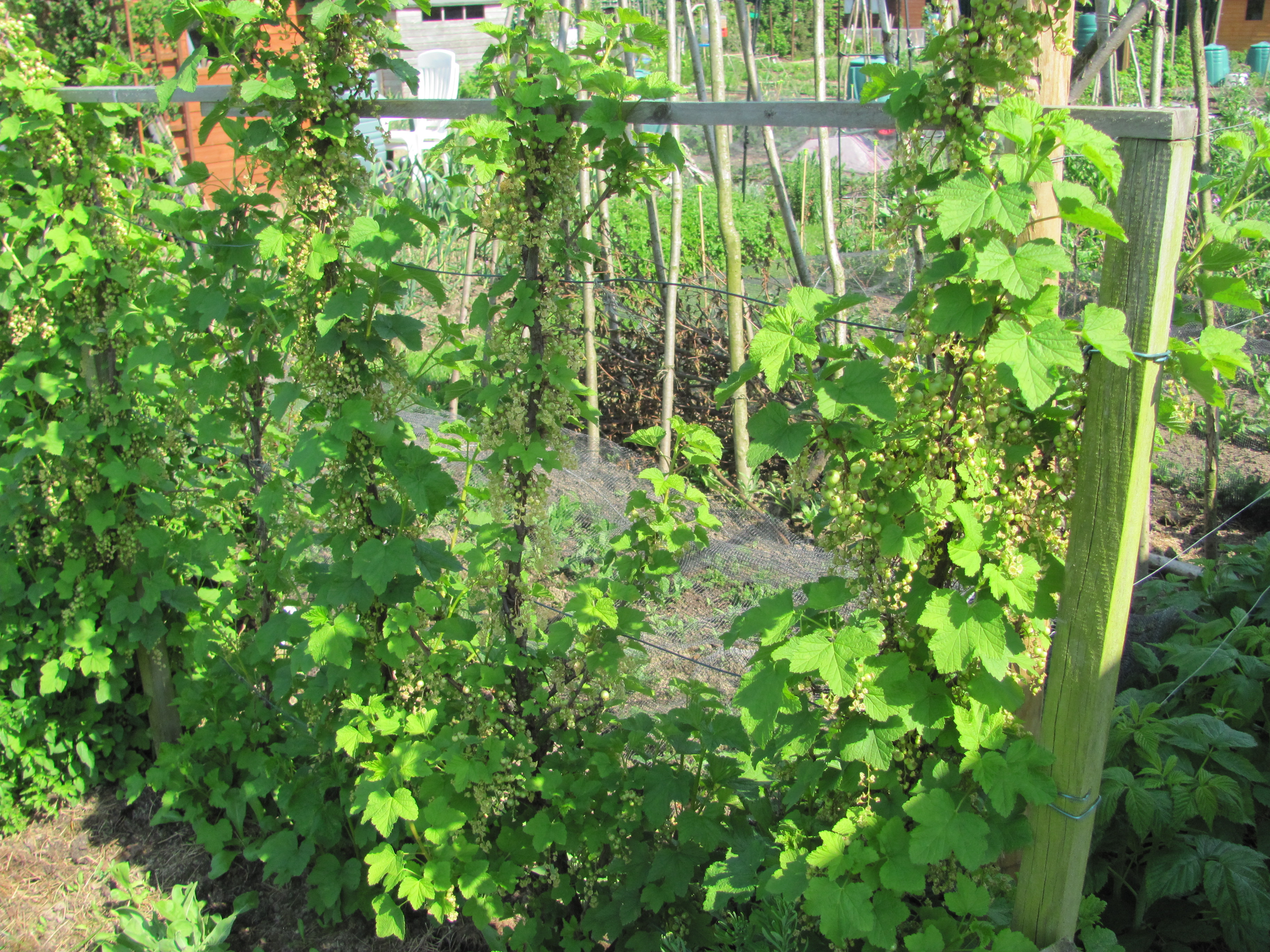
Our cordon Red Currants are flowering heartily and starting to set fruit.

In the orchards and over the meadows wildflowers are blooming alongside naturalised ornamental bulbs, attracting butterflies, the crinkle winged Commas, the Orange Tips with orange tips to their wings and the wonderful ethereal Holly Blues.

Bulbs and Buttercups under the fruit trees in the orchard.
We attract predator insects into the orchards with these insect homes. They are a wildlife friendly pesticide.

The Buddleia Borders are coming to life now and the Spring Garden remains very colourful.

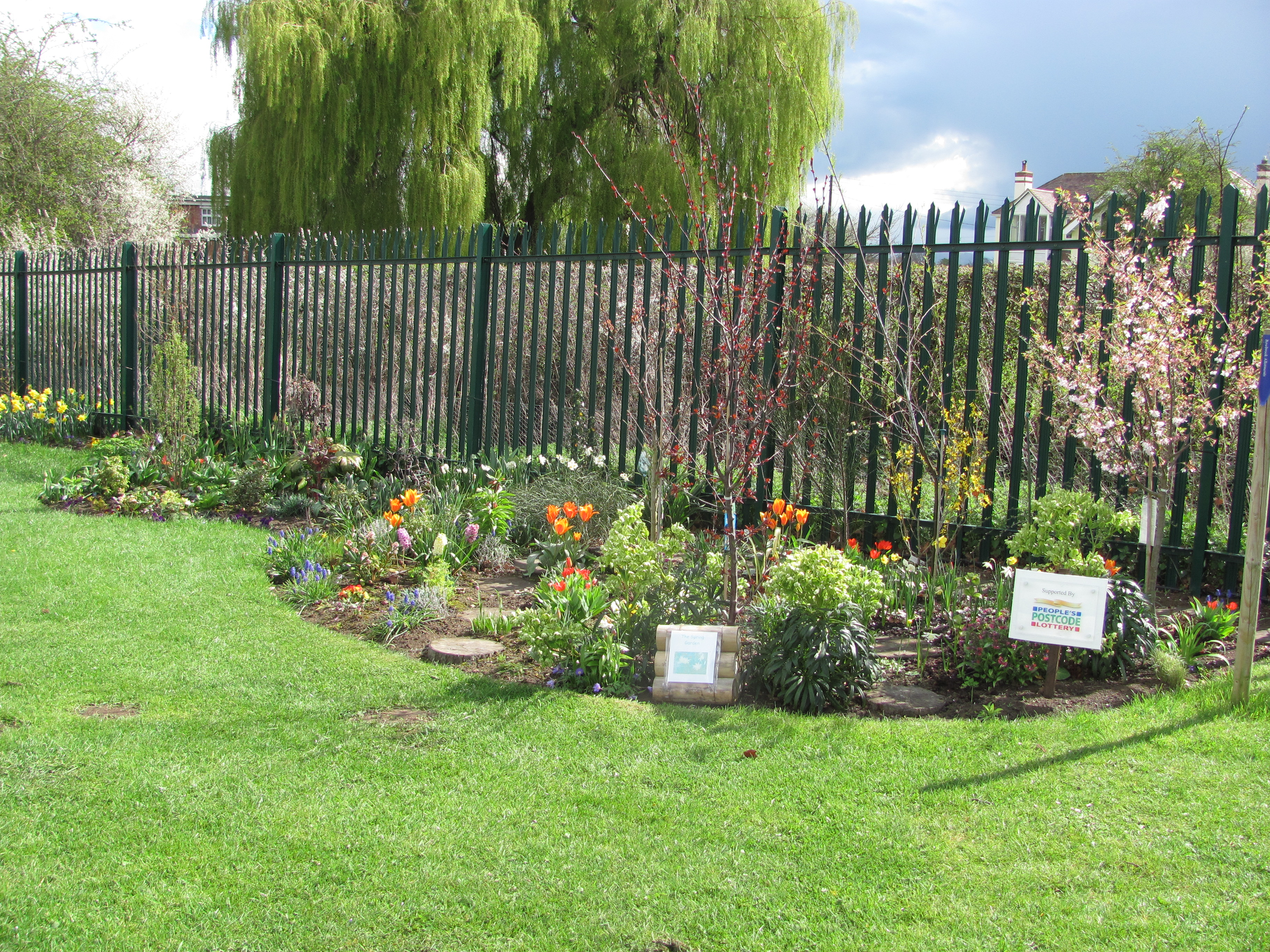
Two plot holders, Phil and Doreen, have created a new bed in a shaded area near their plot and made it accessible for all to enjoy.

Most plots are ready for sowing and planting or partly planted up and sown.

Our May Working Party jobs were decided upon by where the shade was, as it was too hot to work in the full sunshine. We managed to get most of our tasks completed though.

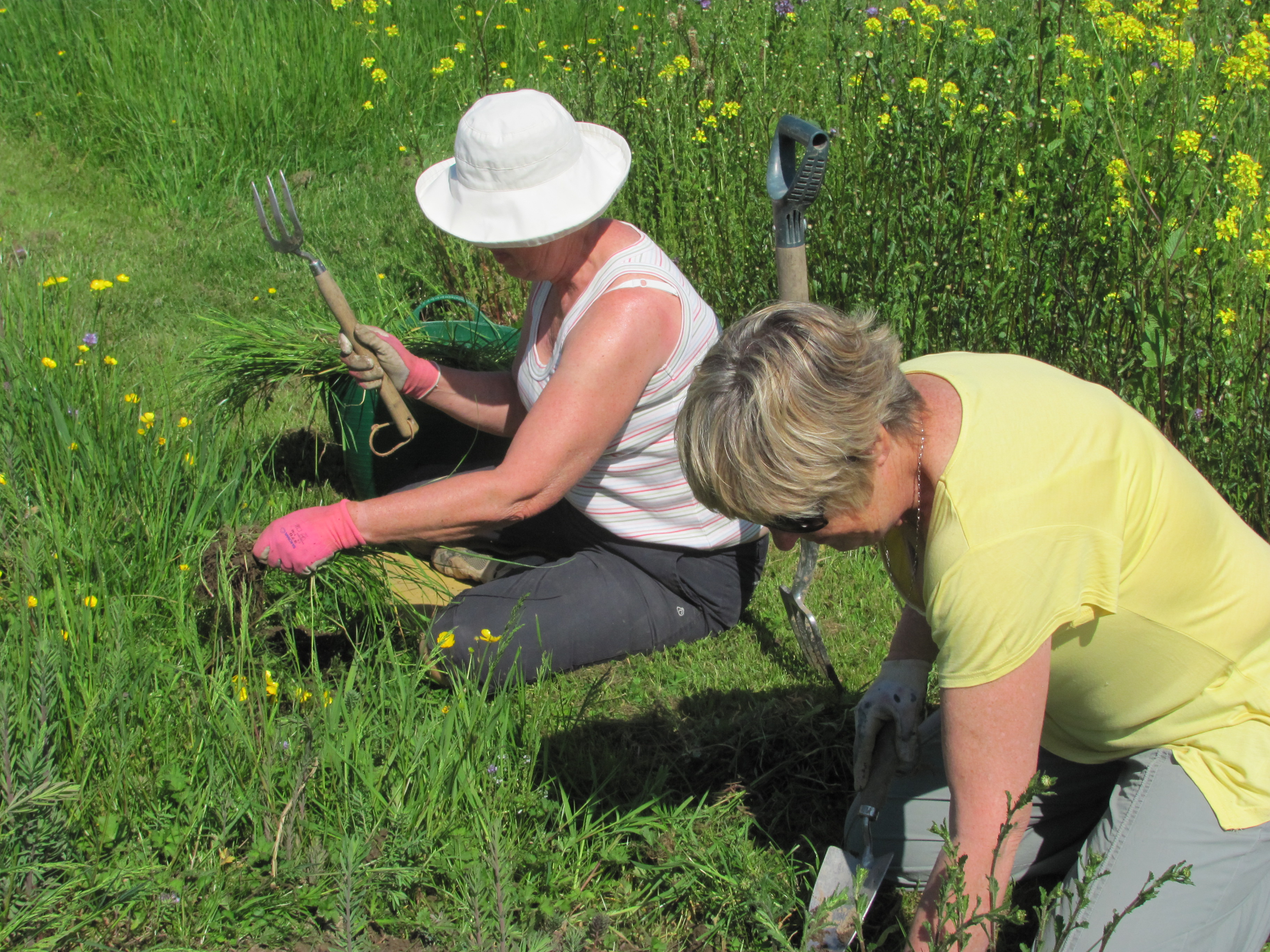
Heads down for weeding the meadows.
Kneeling down on the job attacking those pernicious weeds that creep into the meadows.

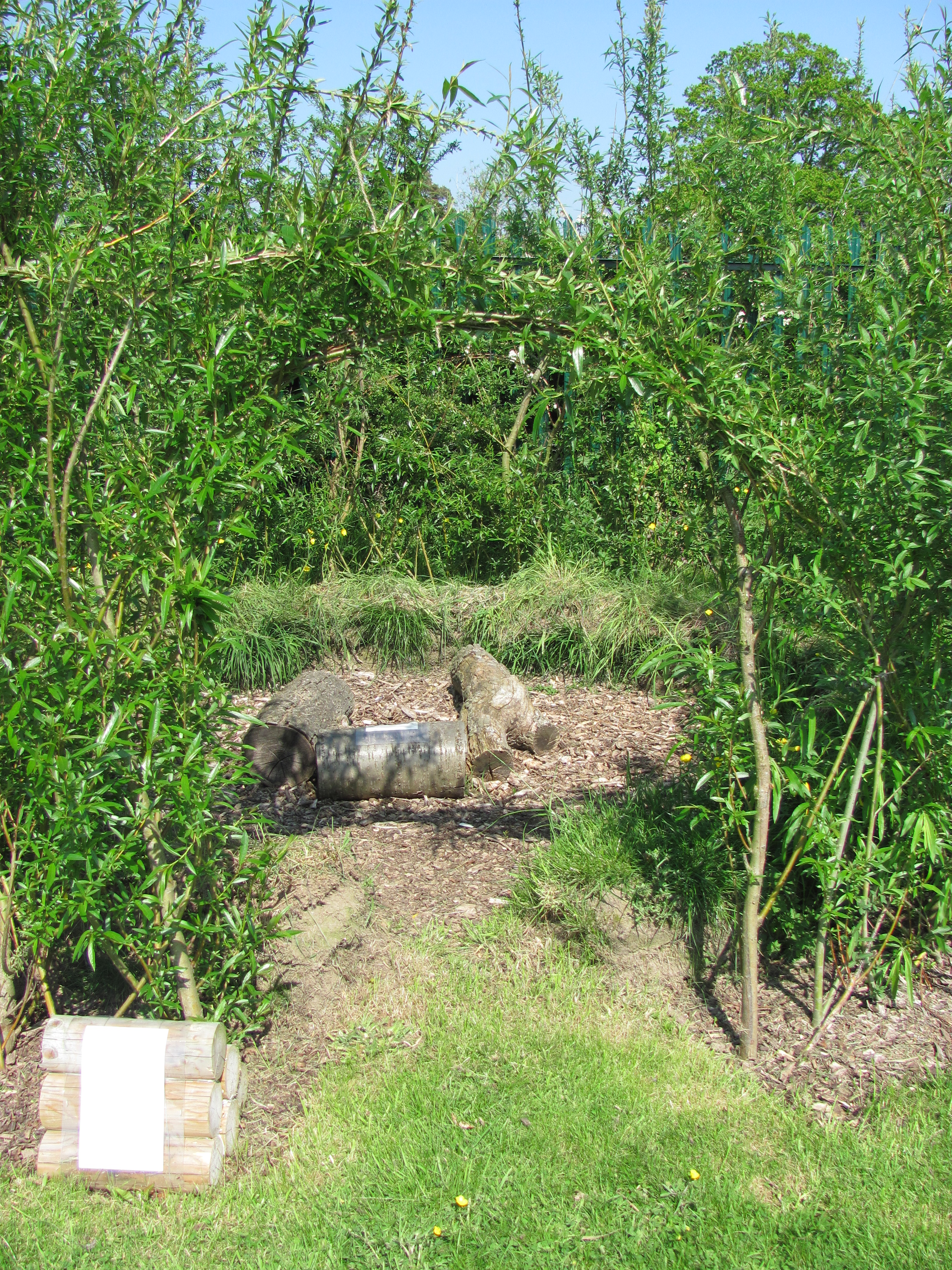
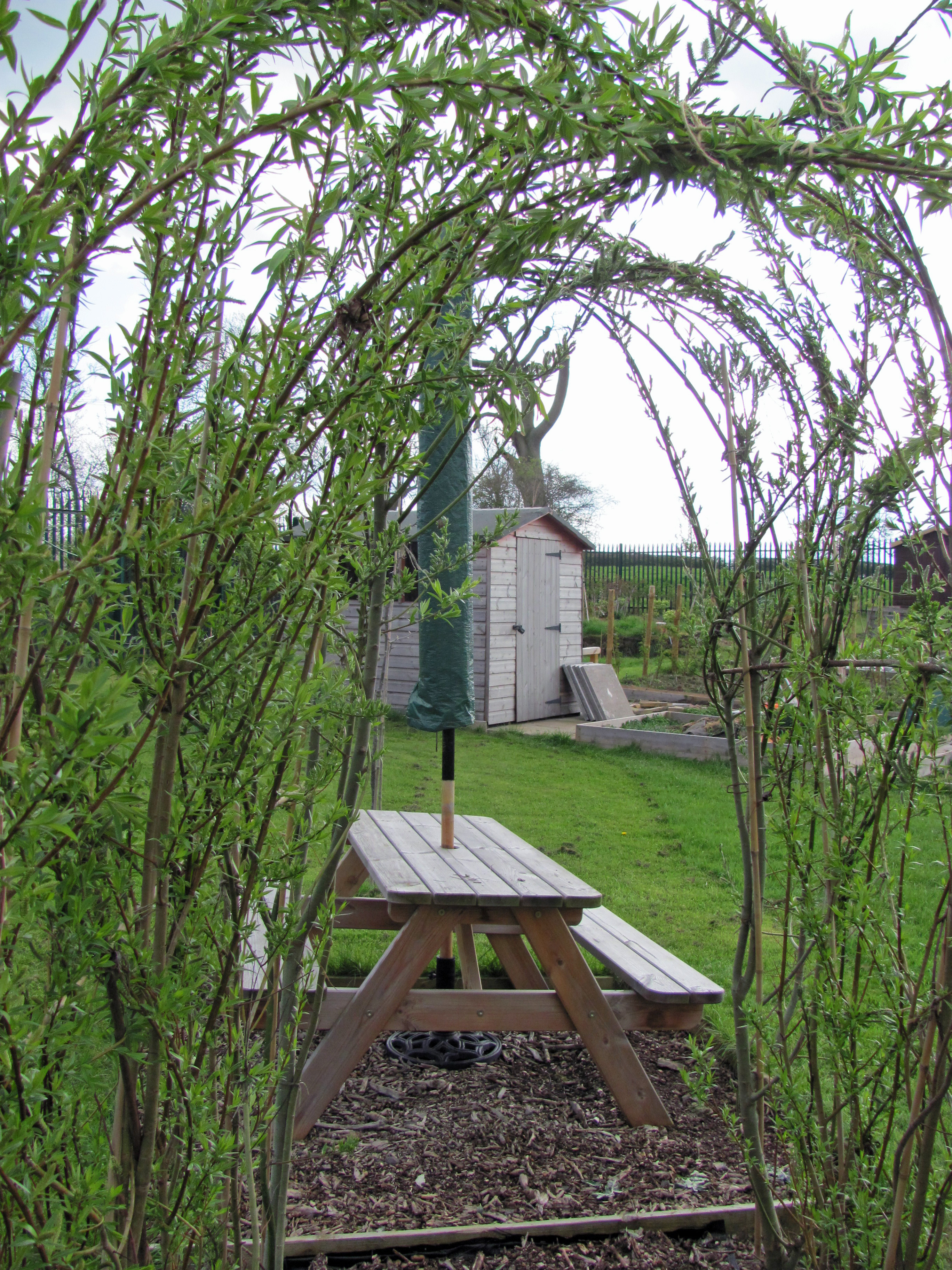
Our Willow Dome has had its doorway and windows woven and neatened up and the sides pruned and woven. It is a favourite feature with children as somewhere to listen to a story, or as a play den, and as adults for somewhere to escape to at coffee time from the heat of the day.

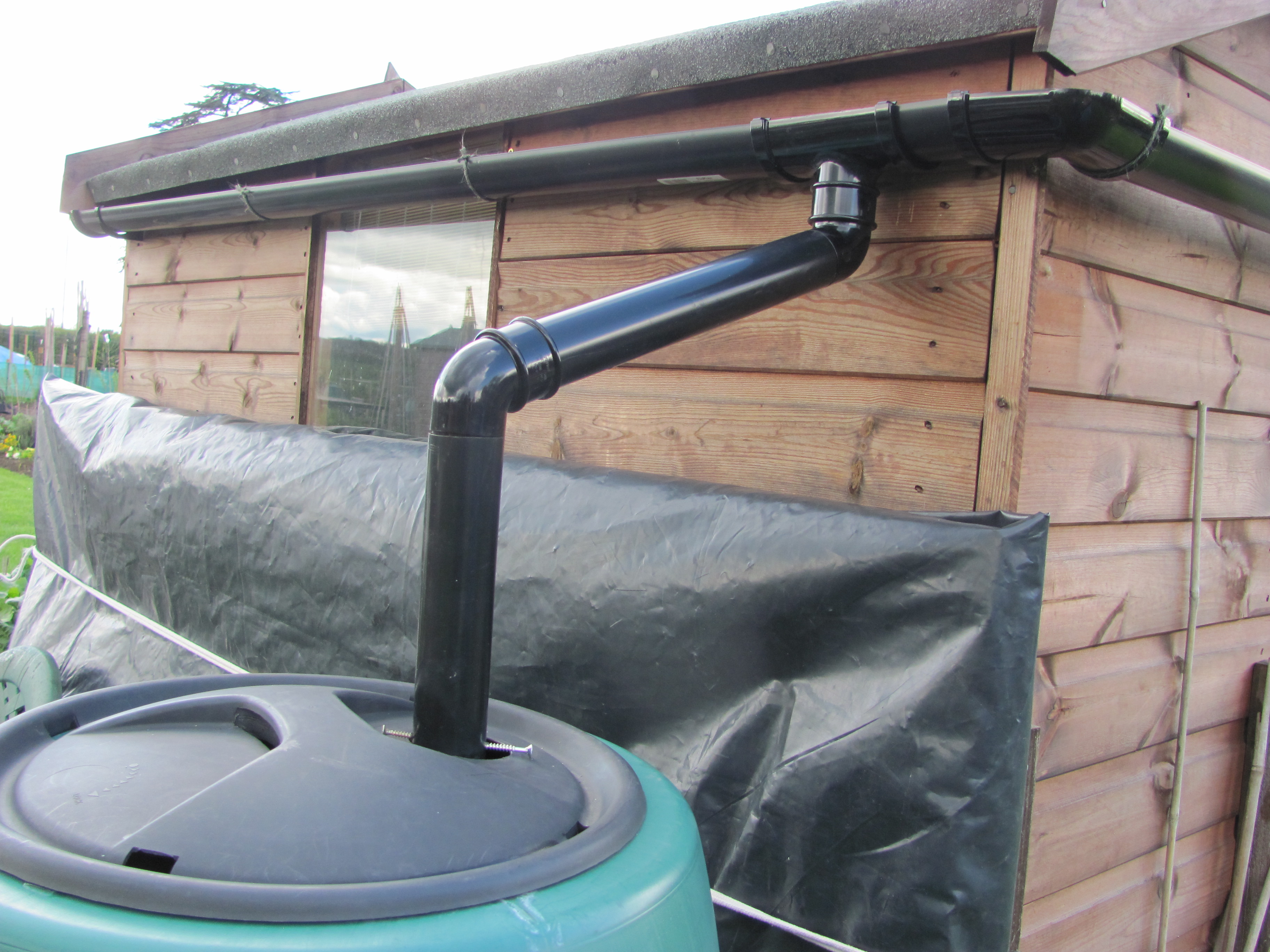
As we have recently launched our site’s Wise Watering Campaign it is heartening to see guttering and butts appearing on several sheds.

Categories
bird watching birds Shropshire The National Trust wildlife

Follow that stream!

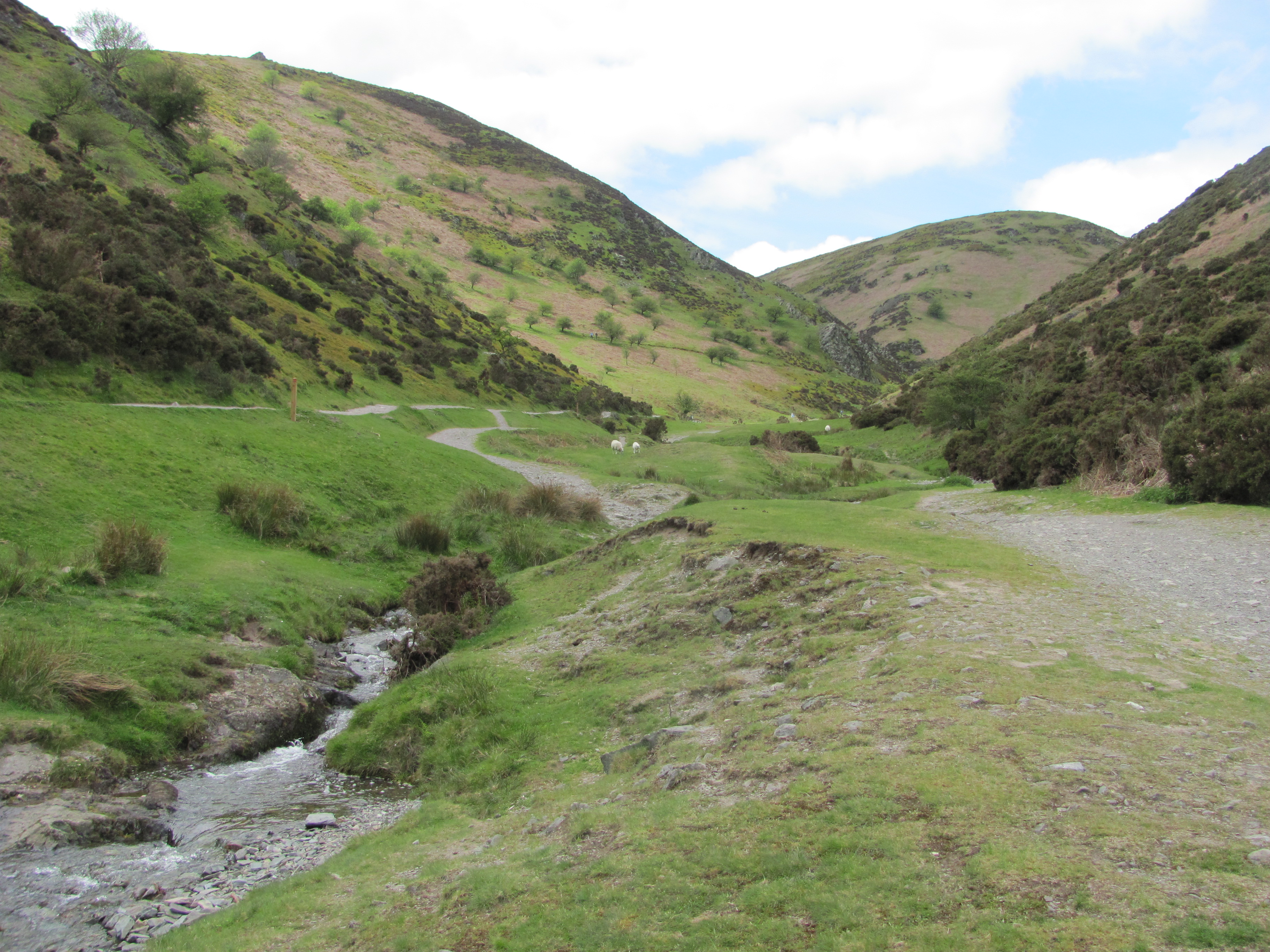
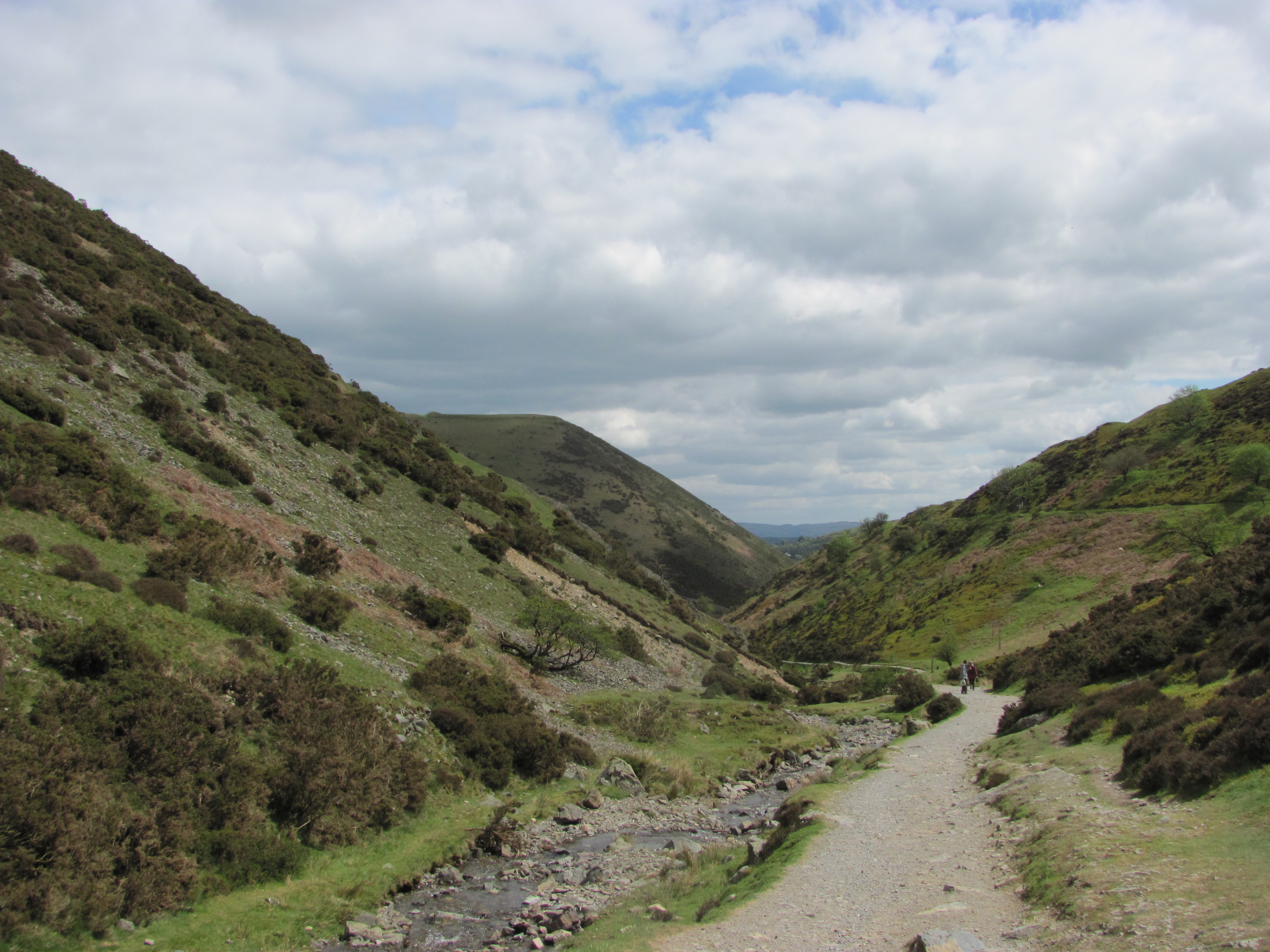
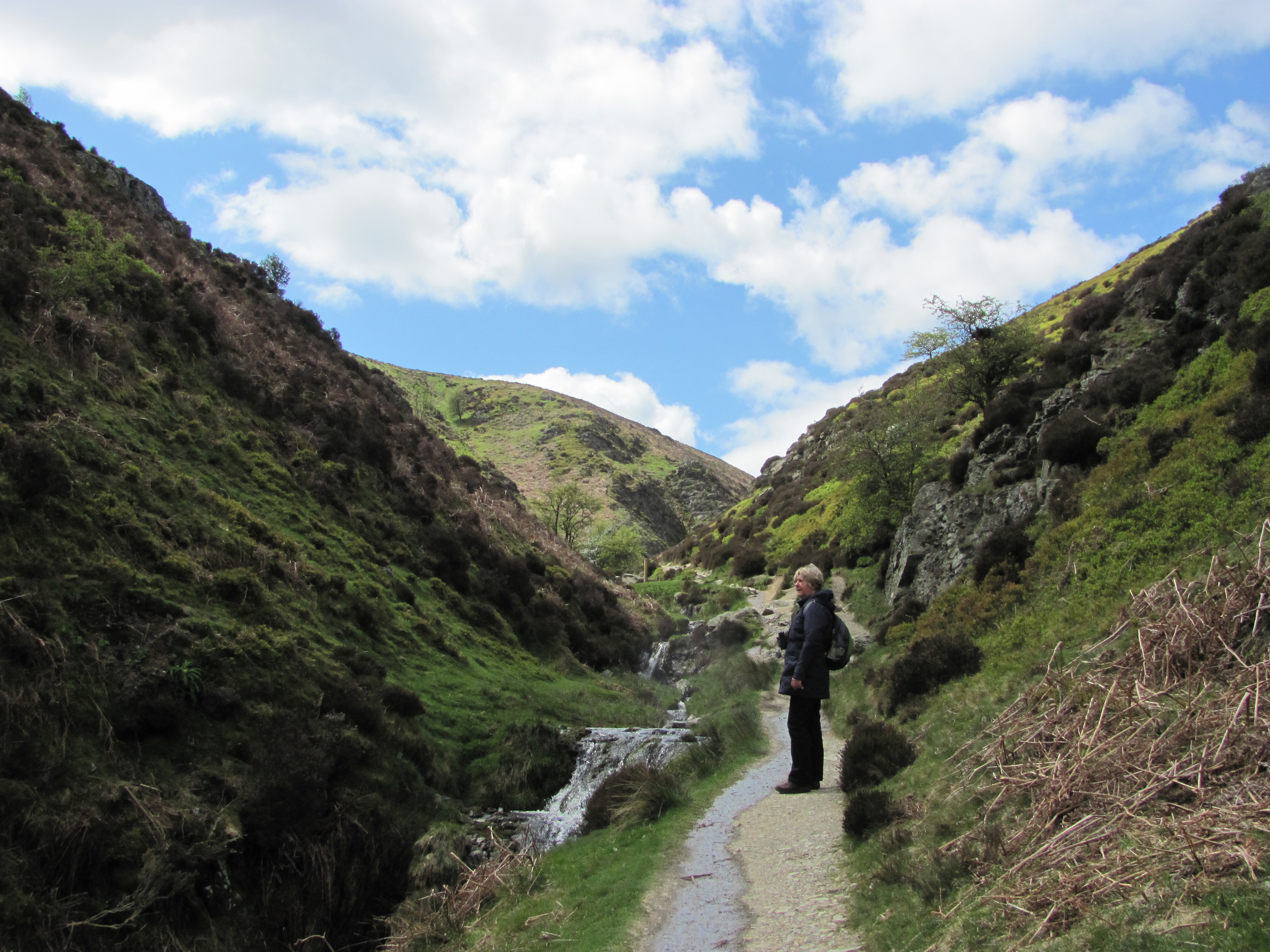
A walk along a tiny stream in a deep valley in our Shropshire Hills seemed most inviting on a warm May afternoon, so we set off for a half hour drive from home to Cardingmill Valley at Church Stretton. Much of the countryside here is managed by the National Trust so at weekends the valley gets too busy for our liking. Hence we chose midweek for our stream side walk, and found a few cars and people close to the Visitor Centre but as we left that behind we were almost on our own.

The stream leads us into the valley.

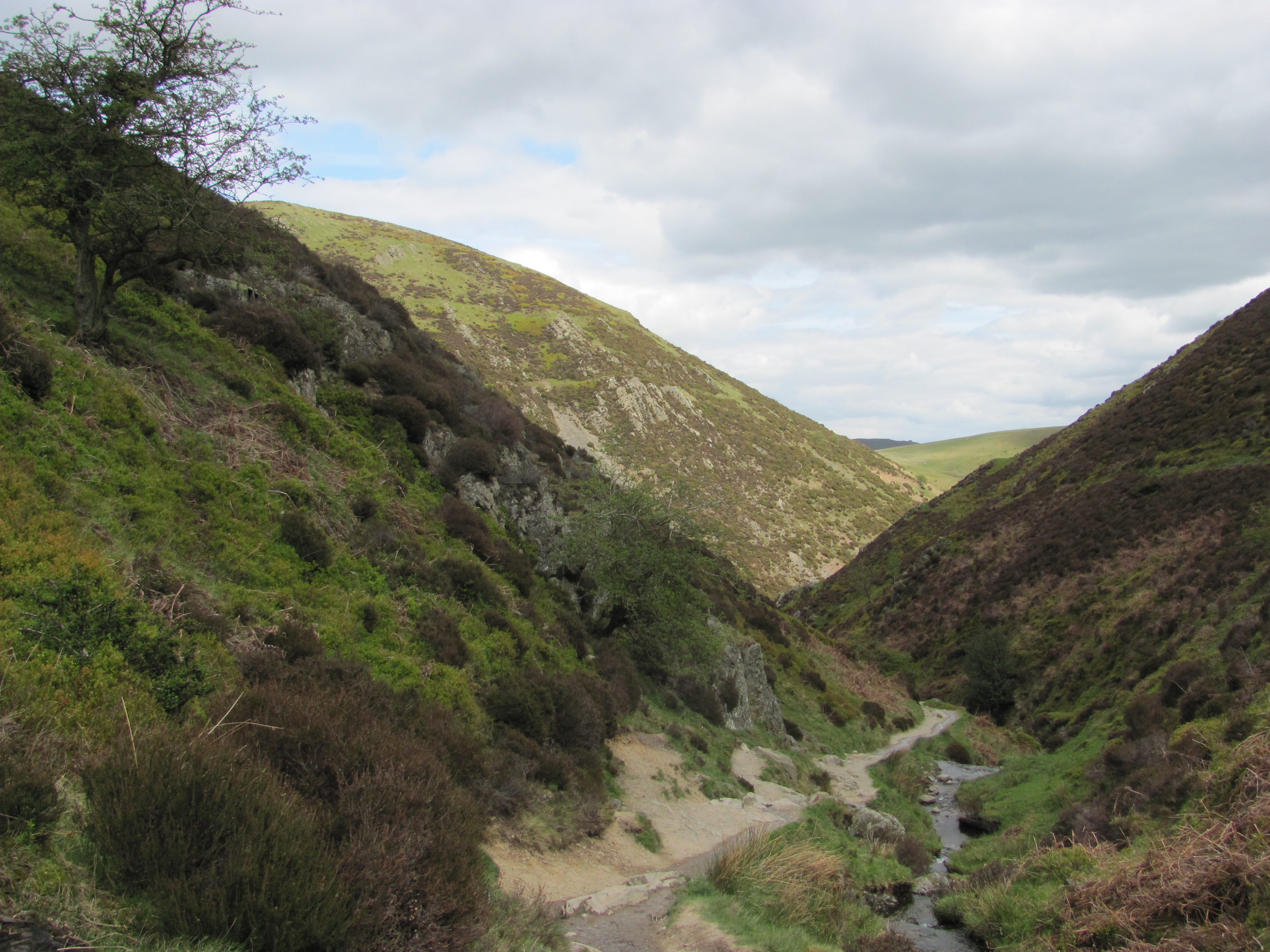
The wide valley where we joined the tiny stream looked most inviting with its steep slopes running up the tall hillsides towering overhead, all topped off by a clear blue sky. We hoped to see different birds here in this upland habitat and a scarcity of plants but those we see should be interesting in how they adapt to their environment.

One of the gentler slopes.

We were heading for a narrower side valley called “Light Spout Hollow” where if all went well we anticipated discovering a waterfall. So the first section of our walk along the Cardingmill Valley the path was relatively wide and even and the climb gentle. Looking up the slopes towards the sky we searched for the Buzzards which we could hear mewing overhead as thye wheeled in the thermals. But these are steep head-spinning slopes so it was a matter of glances of these wide-winged soaring birds of prey. It was easier to appreciate the hovering hunting tactics of the Kestrel hunting on the lower slopes.

Storm clouds brewing over the hills.
The green side of the valley.
Looking back to see where we have come from.
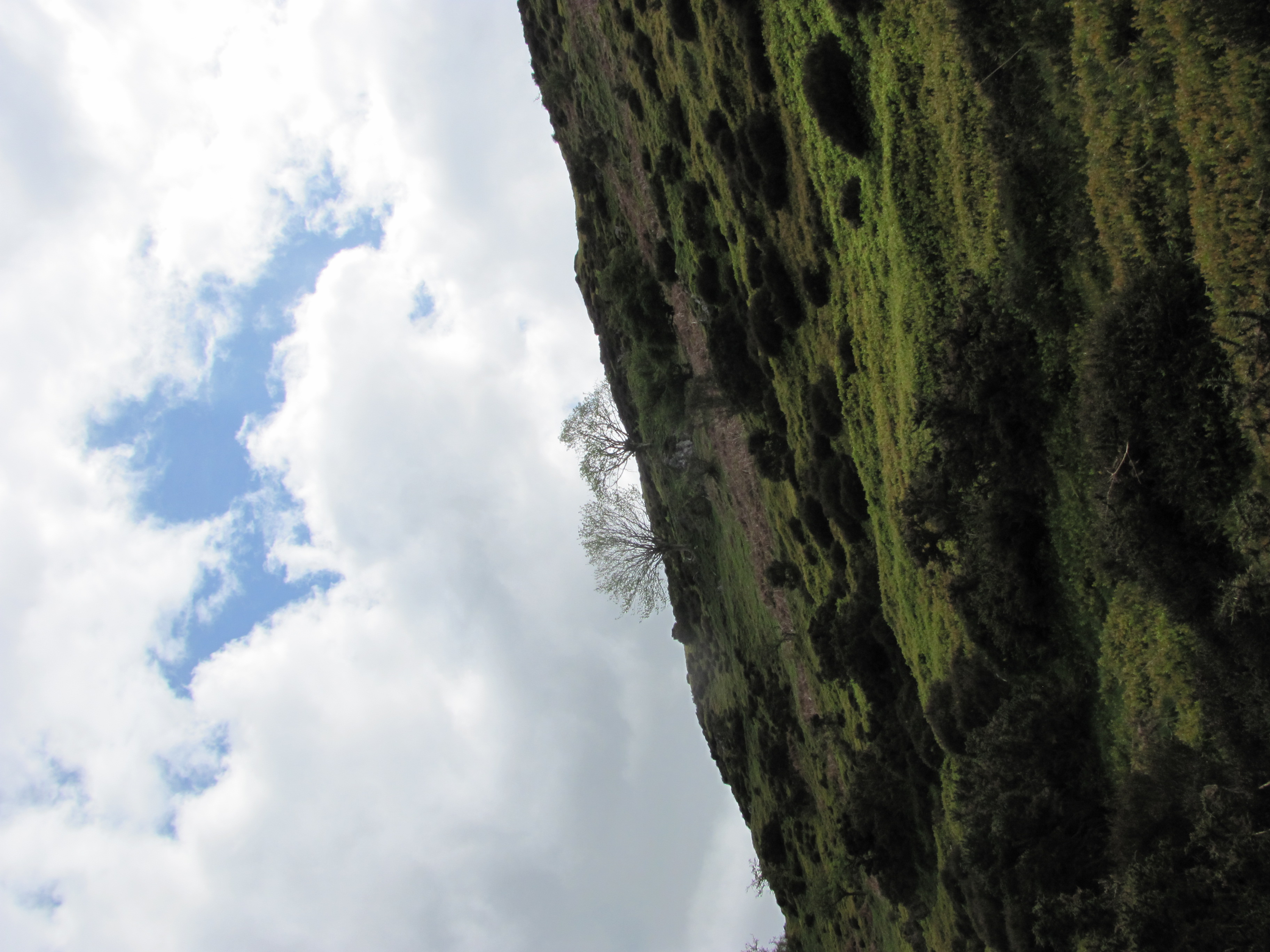
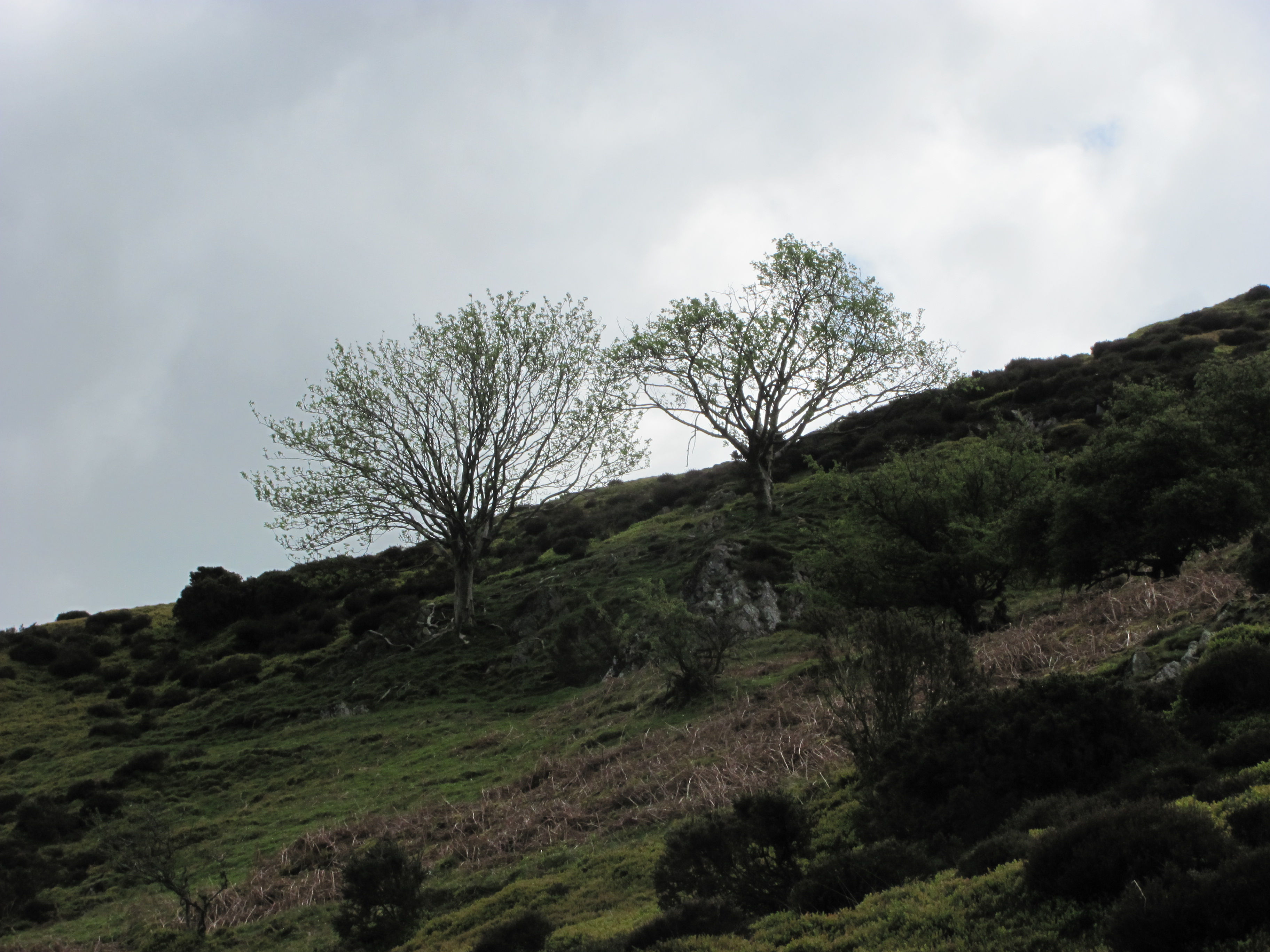
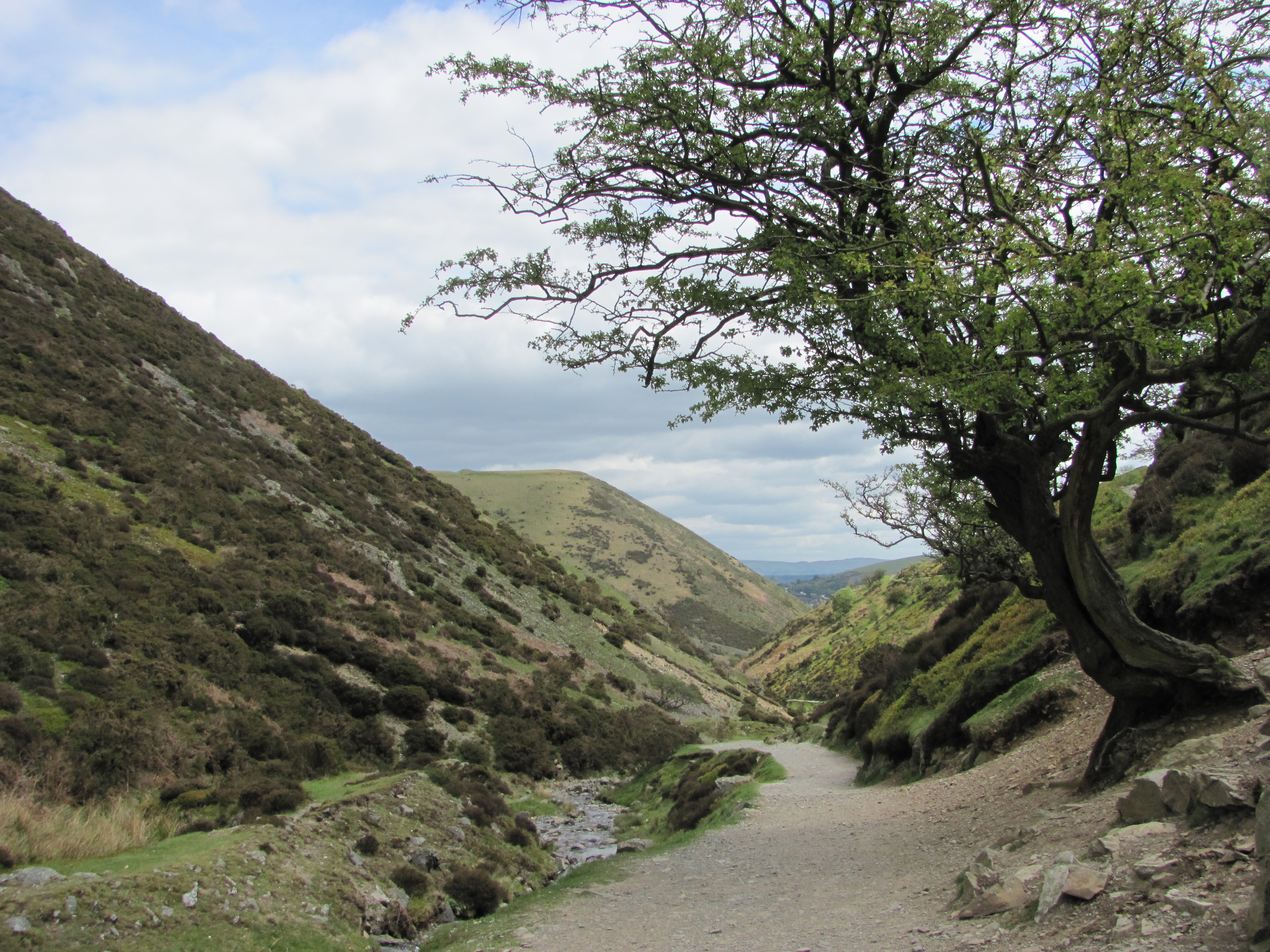
A Hawthorn bonsai shaped by the weather.
Looking up at the bonsai Hawthorn.
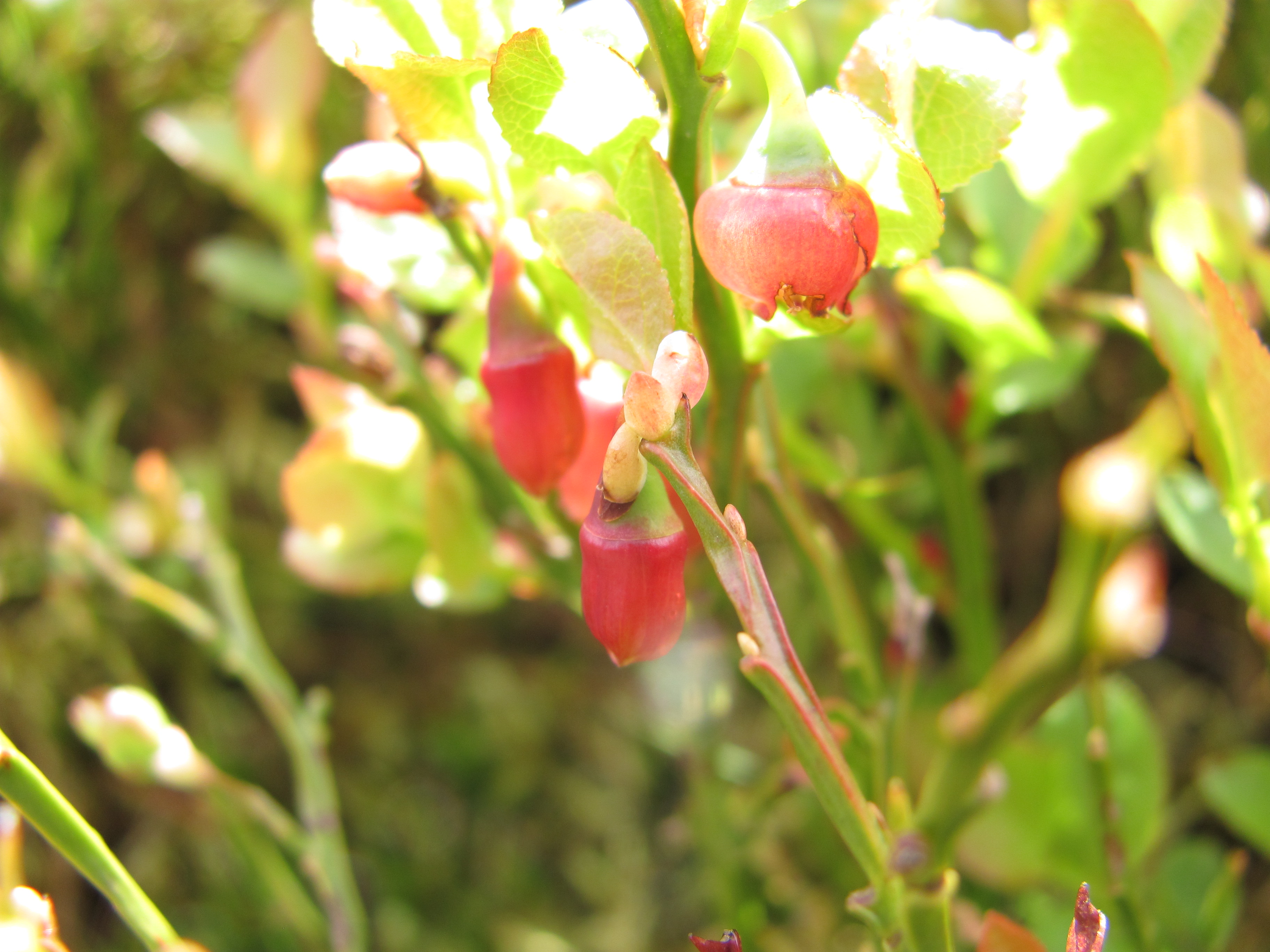
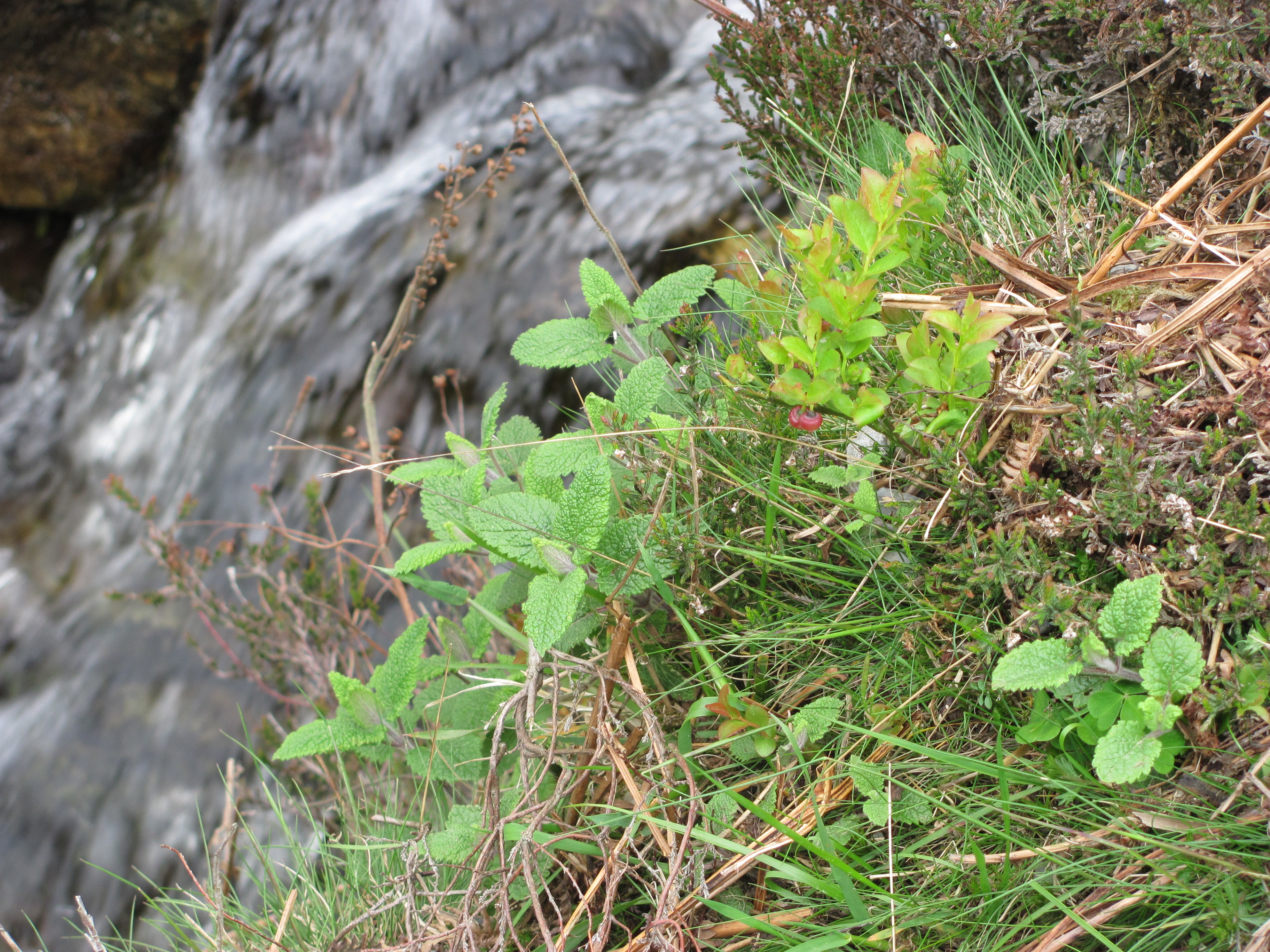
Whinberries.
Fresh Whinberry foliage.
We turn left as the valley splits into two.
Clear water stream.
Lichens enjoy the moist atmosphere near the stream and clean air.
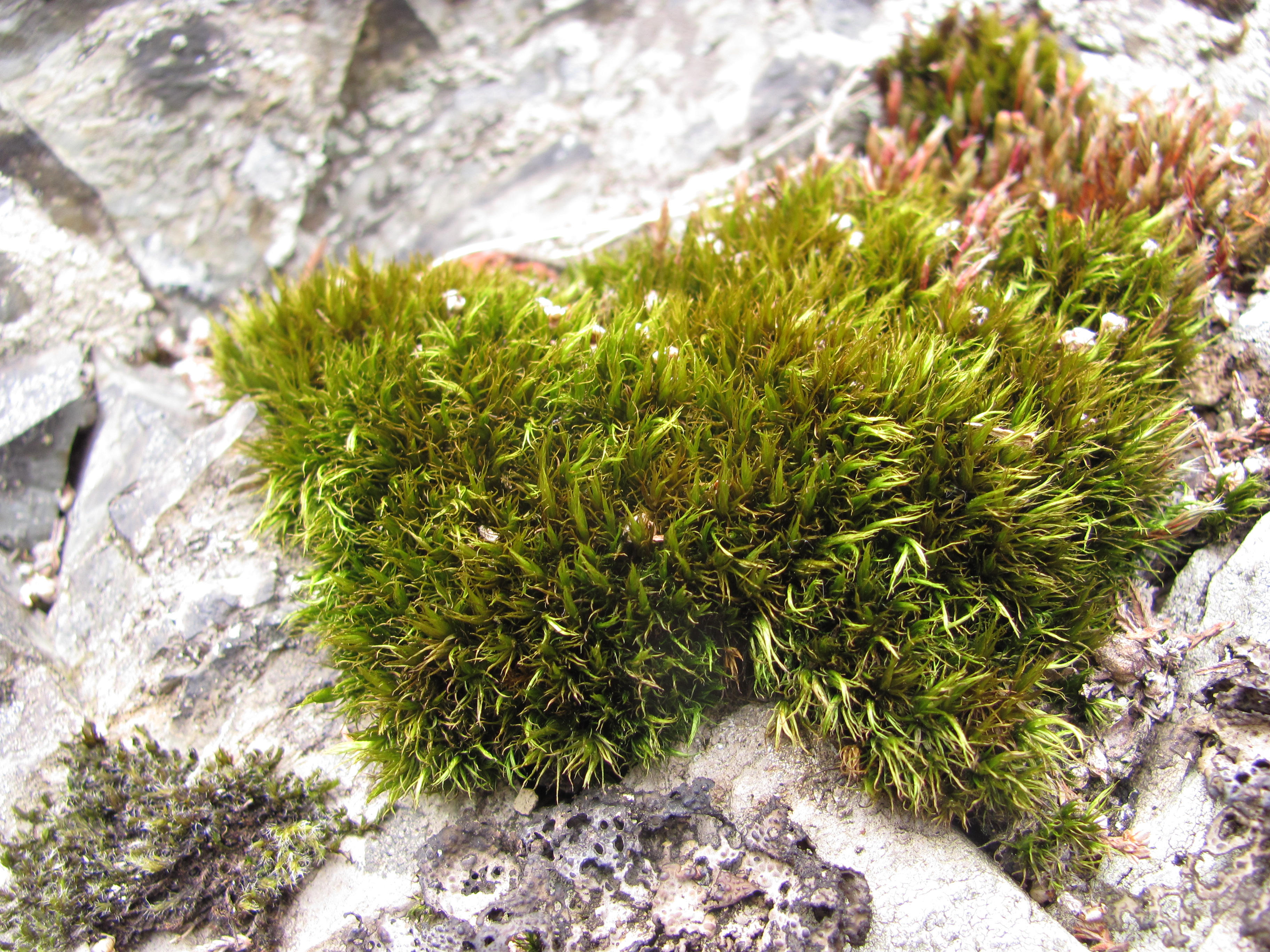
Some boulders have a soft cuhion of moss.

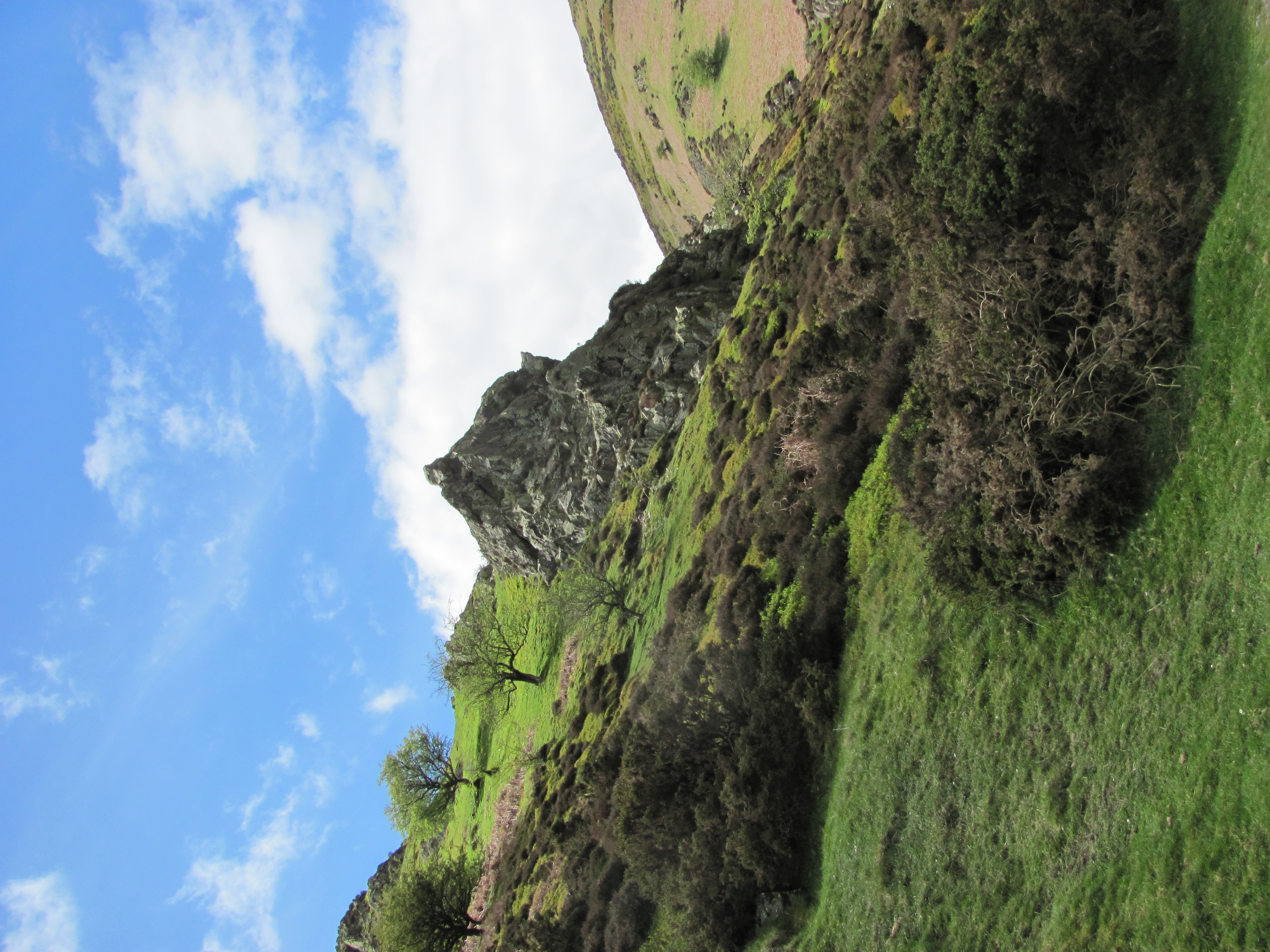
The extreme winter conditions here become apparent in a variety of ways. The huge boulder has been split in half by repetitive freeze-thaw action in successive winters – such nature power. Trees are sculpted by the weather into natural bonsais which create dramatic silhouettes on the horizon.

Mother Nature – rock splitter.
The extreme weather takes its toll on wildlife and livestock.
Bonsai Hawthorn.

The effects of the weather varied from place to place and from slope to slope. On one side of a hill Birches grow in abundance but just turn a corner and the hillside is empty of trees bar one lone stunted Birch.

All on my own!

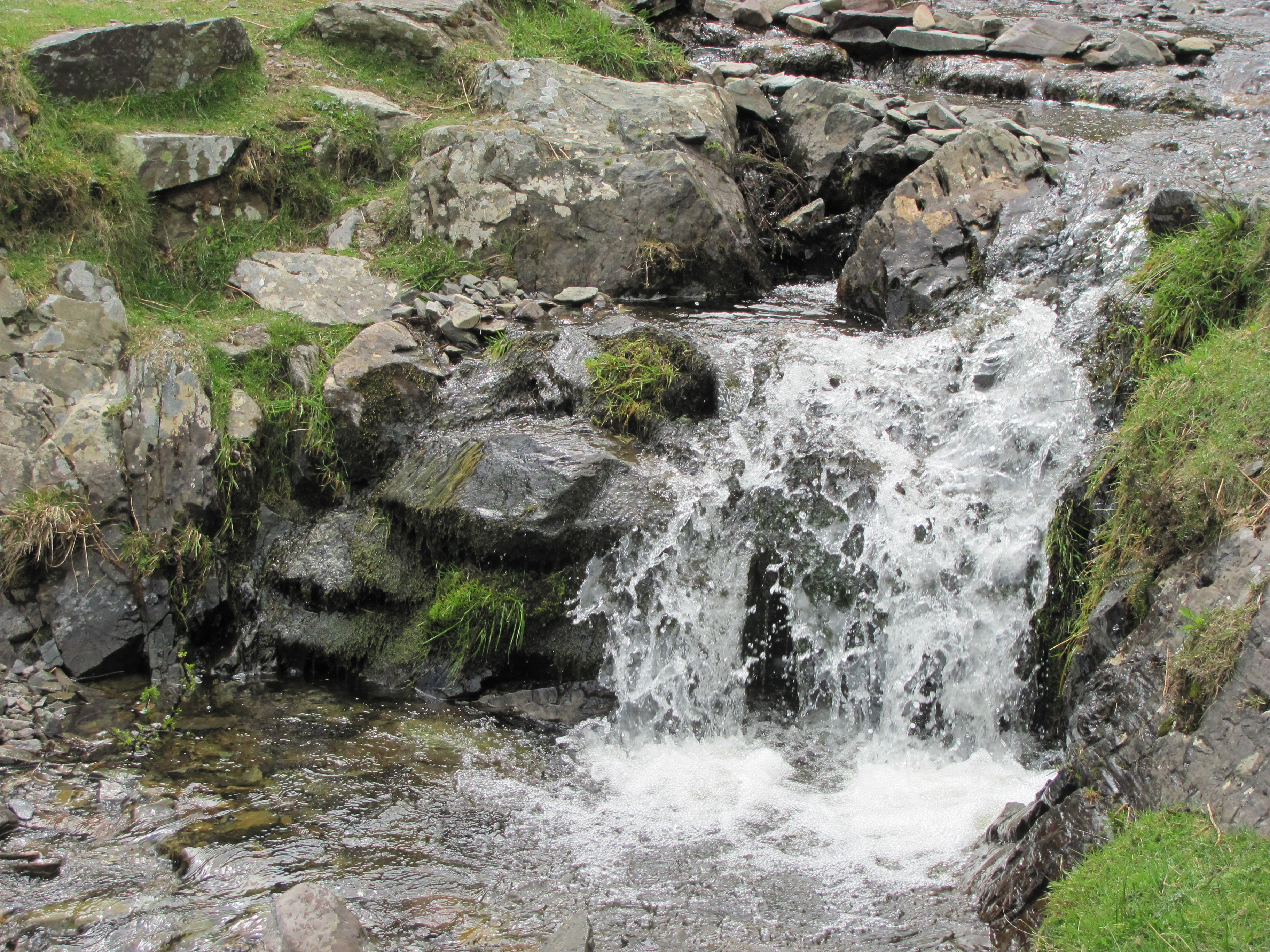
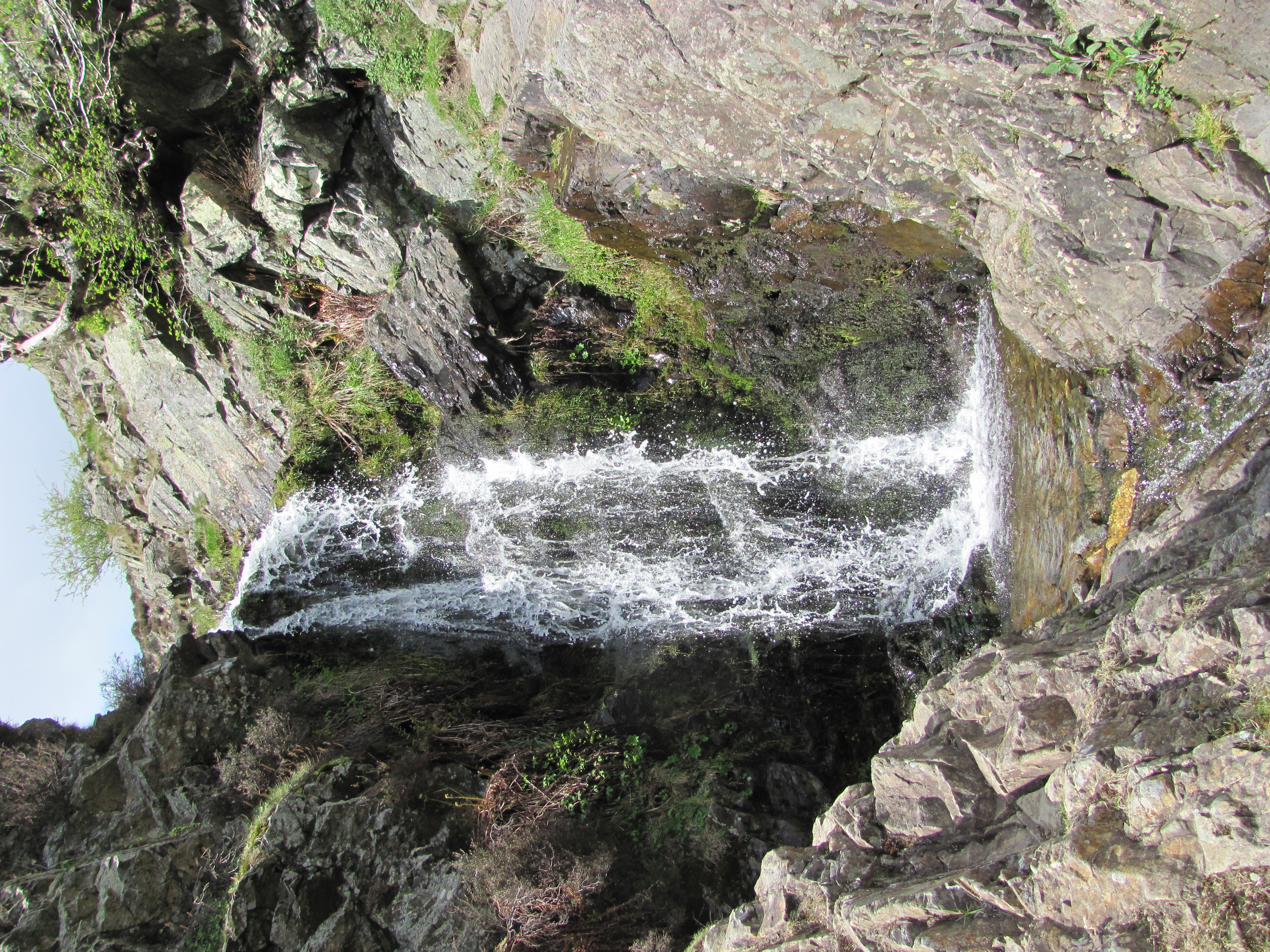
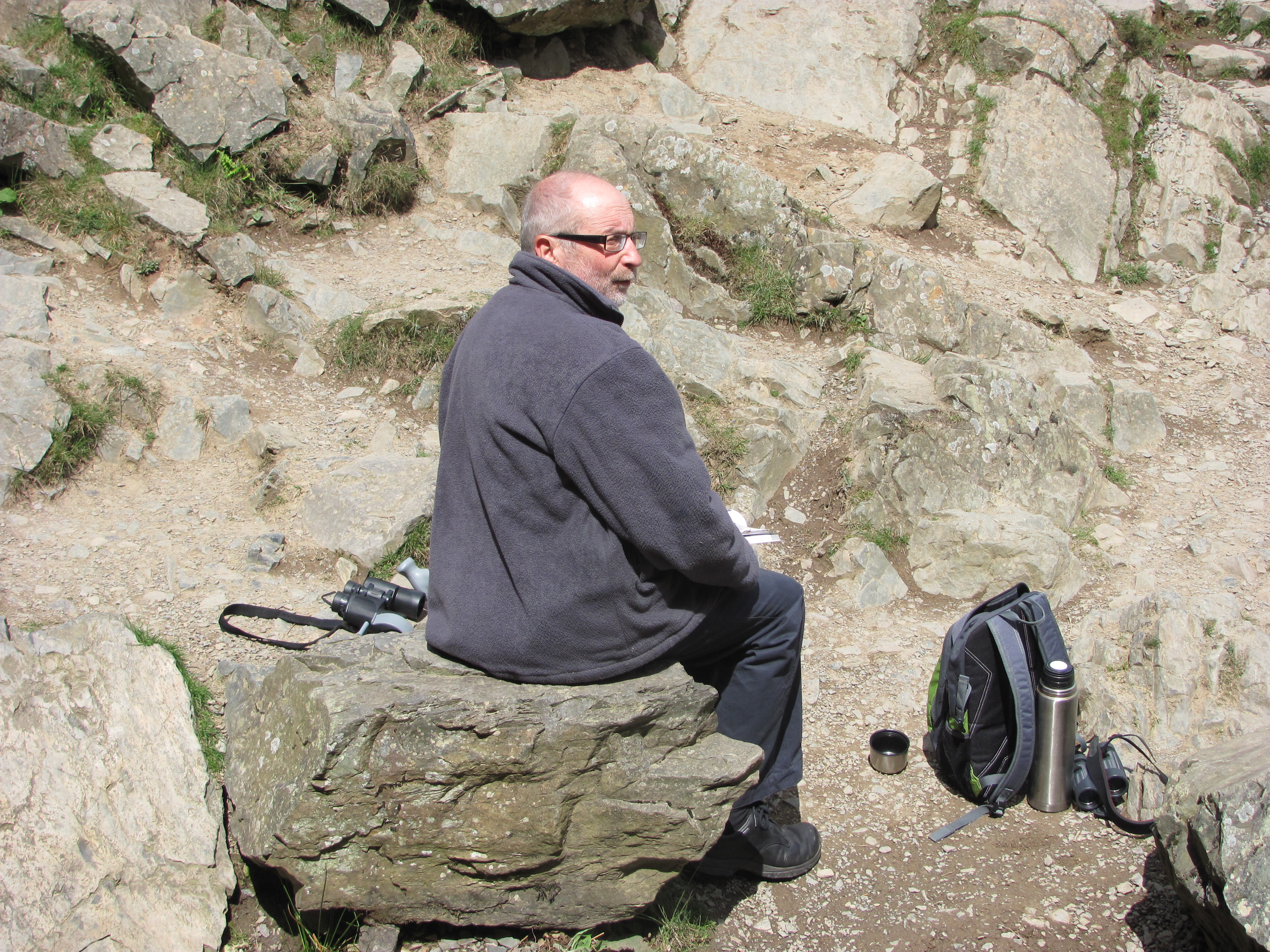
The stream changed character as we moved up the little valley with miniature waterfalls, rapids and swirling deeper pools, until finally we reached our goal – the main waterfall. Here we stopped for a well-earned rest and to take in the atmosphere and views, and enjoyed our usual outdoor victuals of fruit and coffee. The boulders which we rested on were slippery and shone from the action of resting walkers’ bottoms.

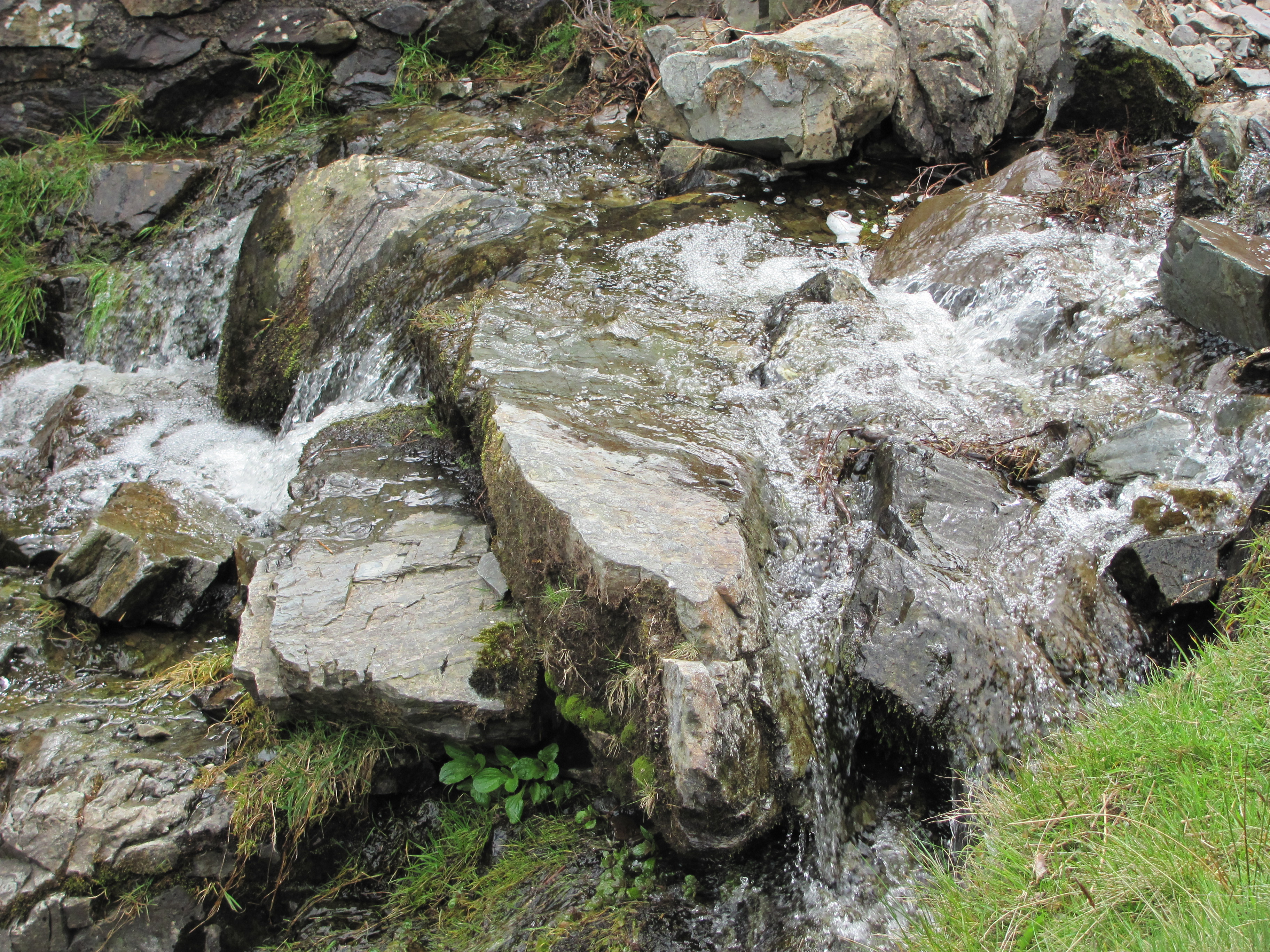
The stream clambers noisily over boulders in its path.
The stream flowing over smooth rocks under an overhanging willow.
The clear water passes beneath sprigs of scented Water Mint.
Water power has gouged deeply into the rock.
Nearly there.
As good as we expected.
Looking and listening while enjoying a coffee.
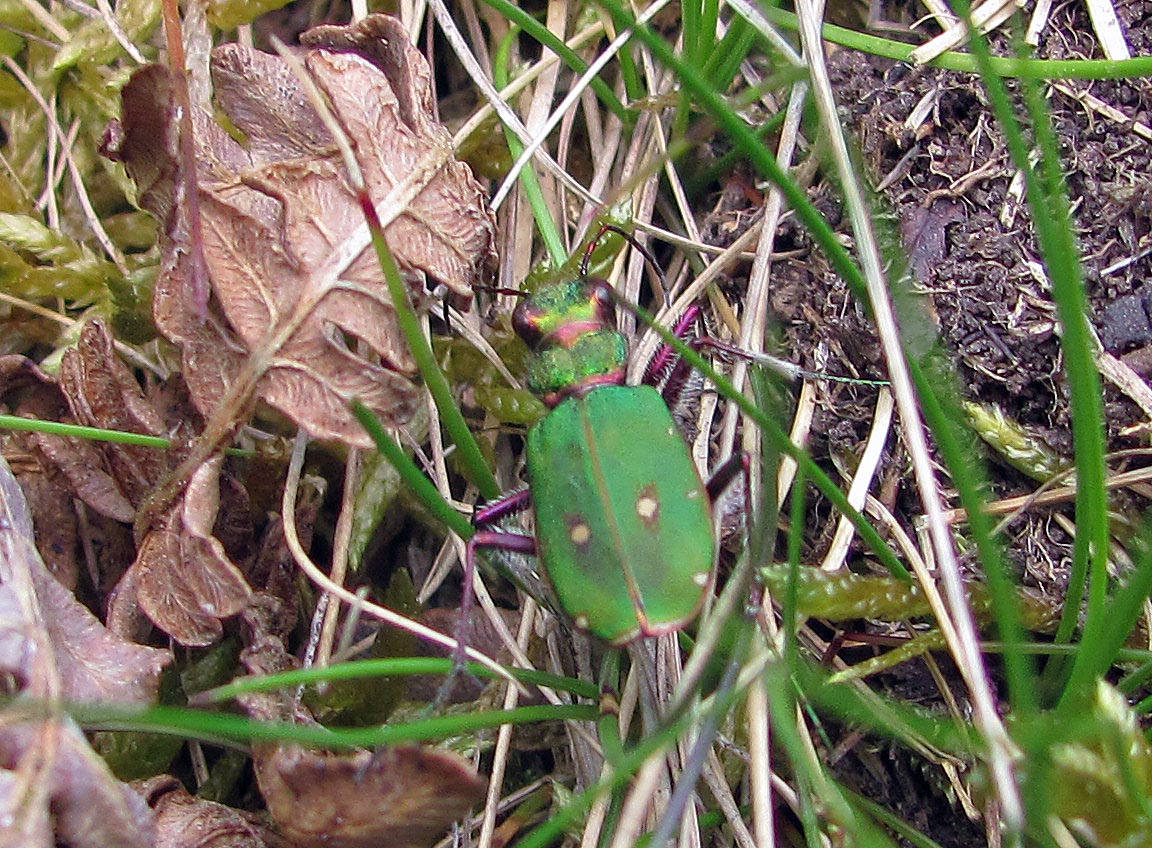
Our little green friend who joined in our picnic.

Here at the top we listened to the constant songs of the birds and tried to identify those fast flyers over our heads. Wheatears, Stonechat, Whinchat and Pipit. On our way back down we concentrated on finding the wild flowers that managed to find a foothold or sheltered place.

Jude the Undergardener leads the way down.
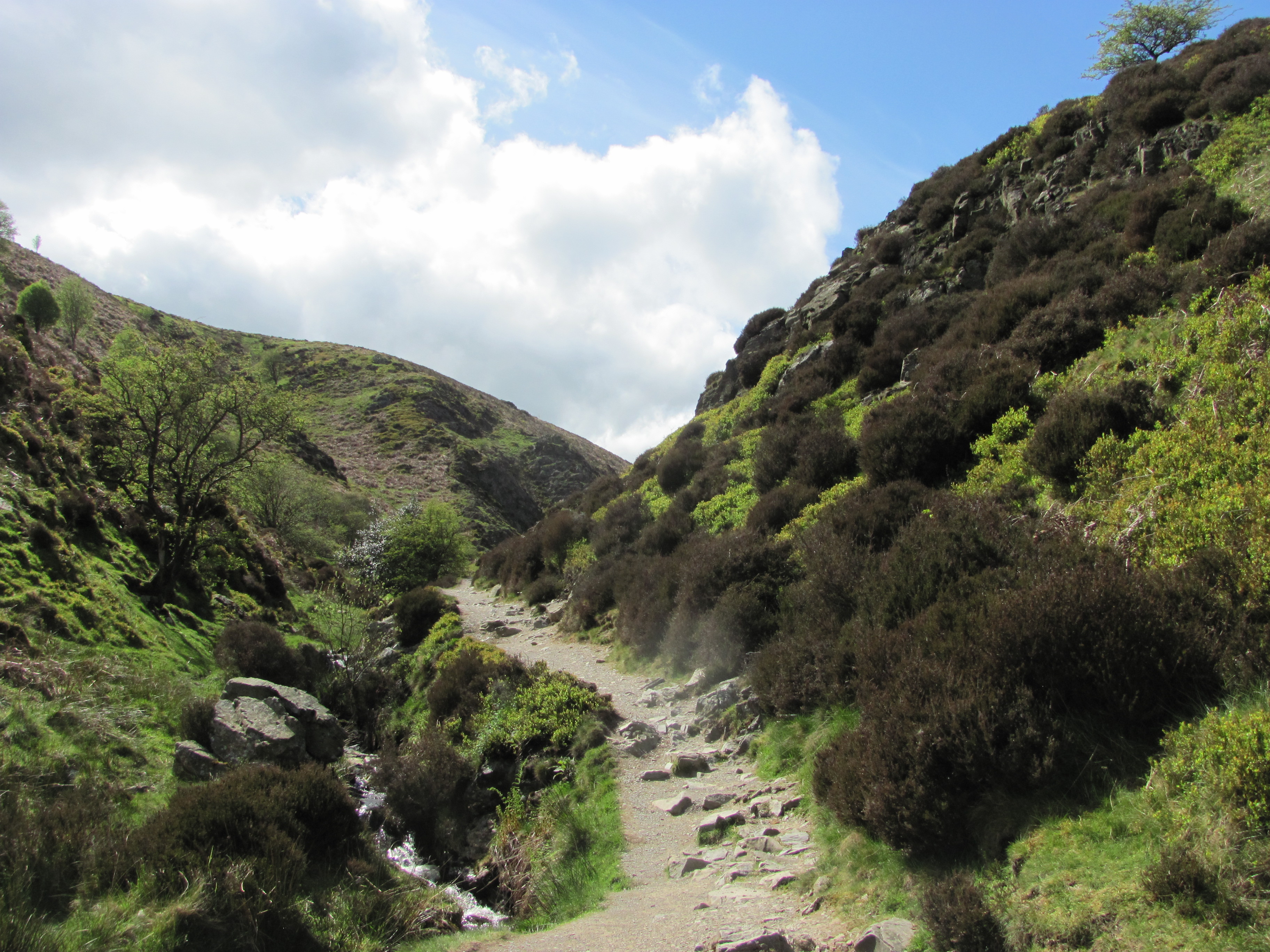
The winding path shows us the way.
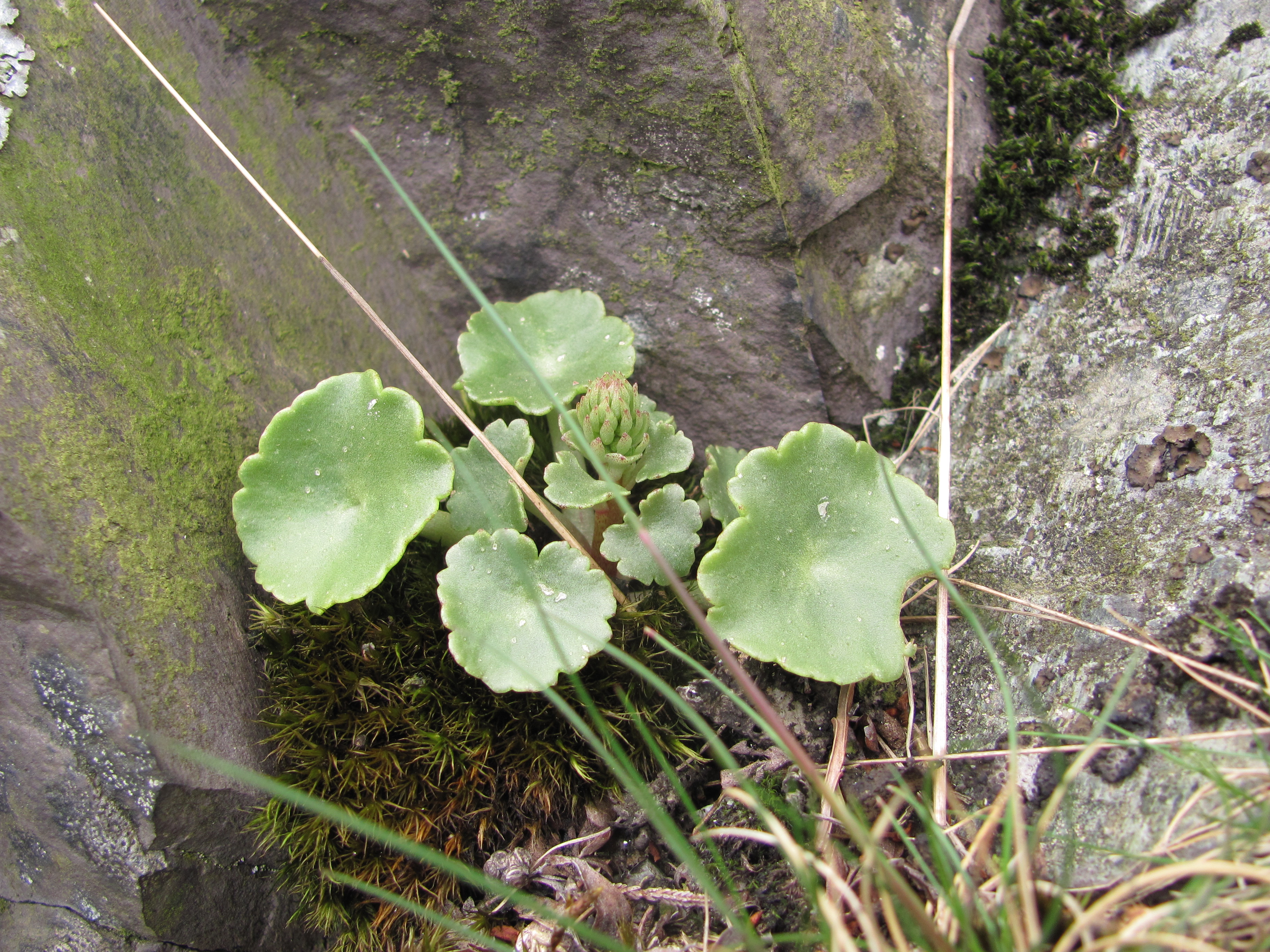
The glossy round leaves of Pennywort.
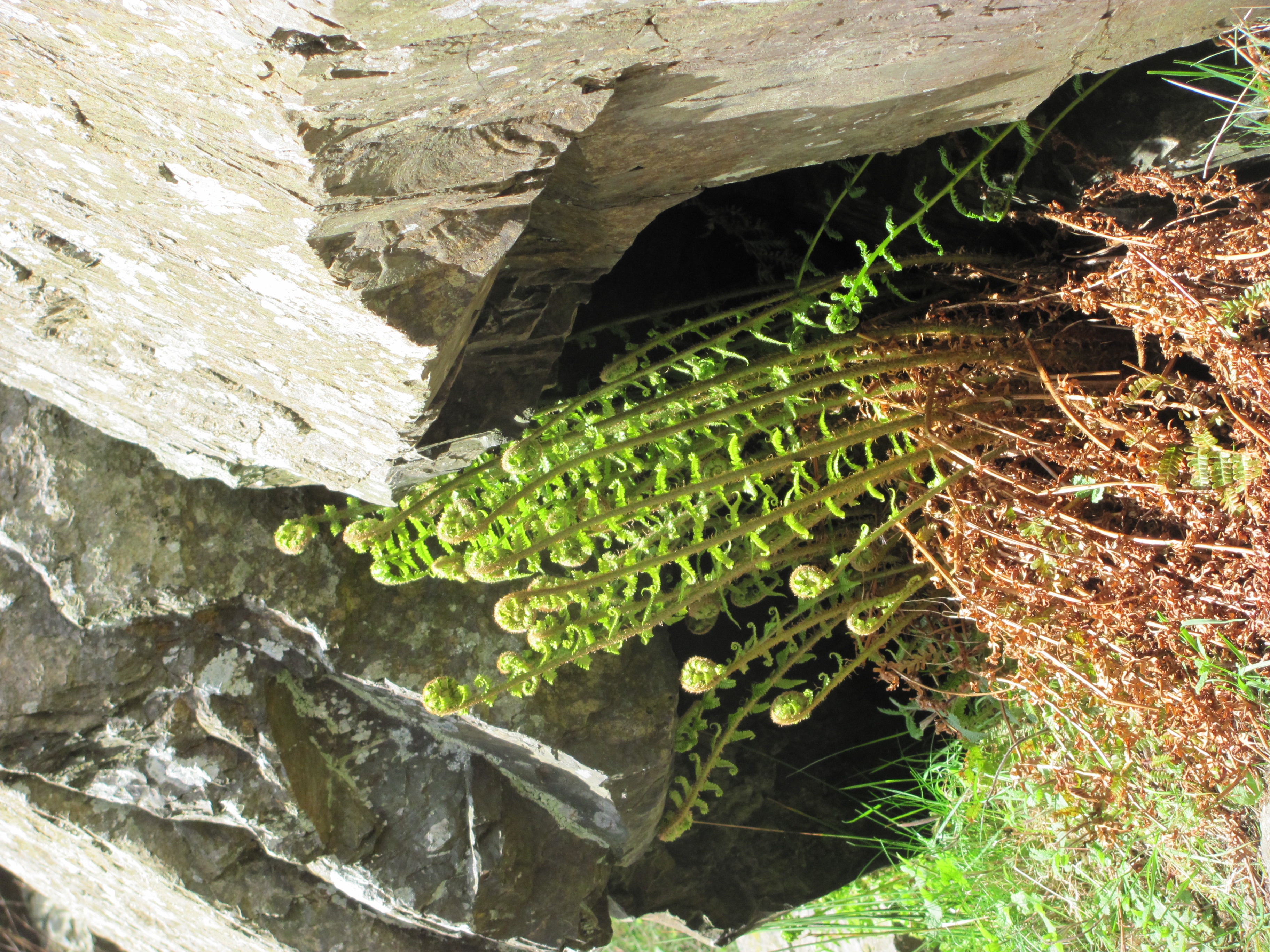
Fresh ferns flourish in the cool shade at the base of rocky outcrops.
Almost back.

What an enjoyable walk, wandering up valleys with just birds and sheep as company. We must return in the Autumn.

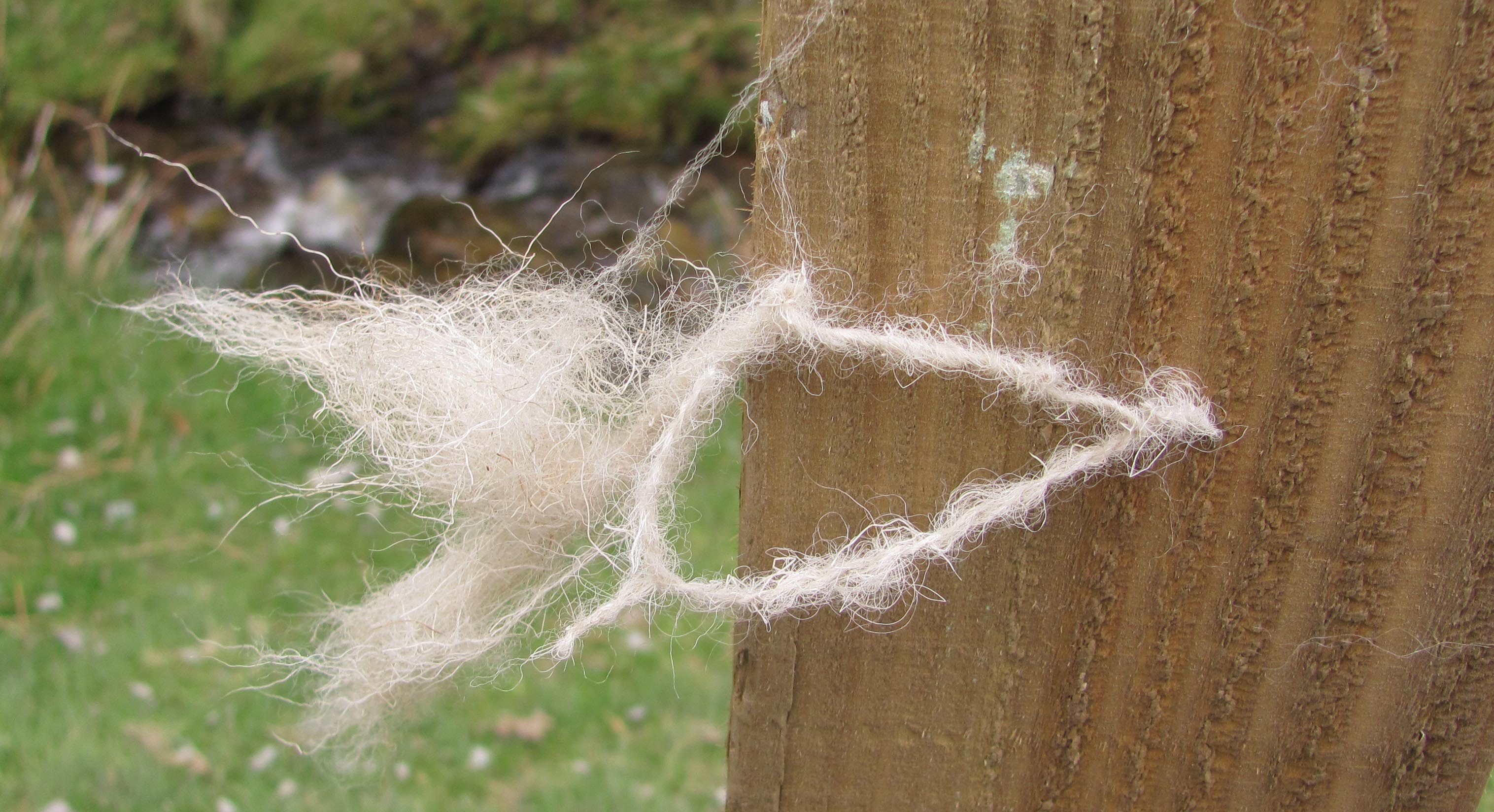
Shaun the Sheep was here!
Categories
bird watching birds garden design garden photography garden wildlife gardening hardy perennials ornamental trees and shrubs Shropshire spring gardening

A Wander around our Garden in May

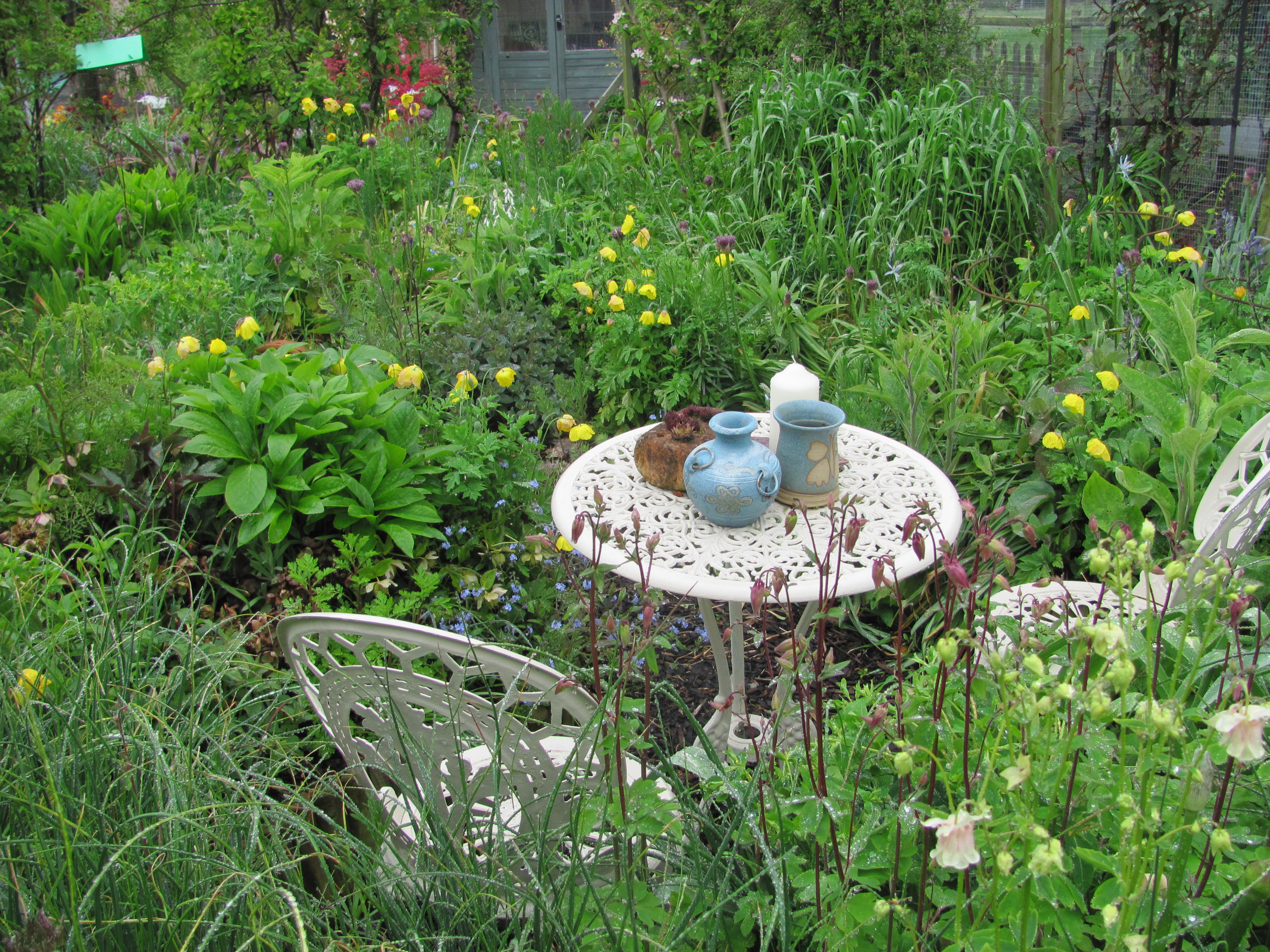
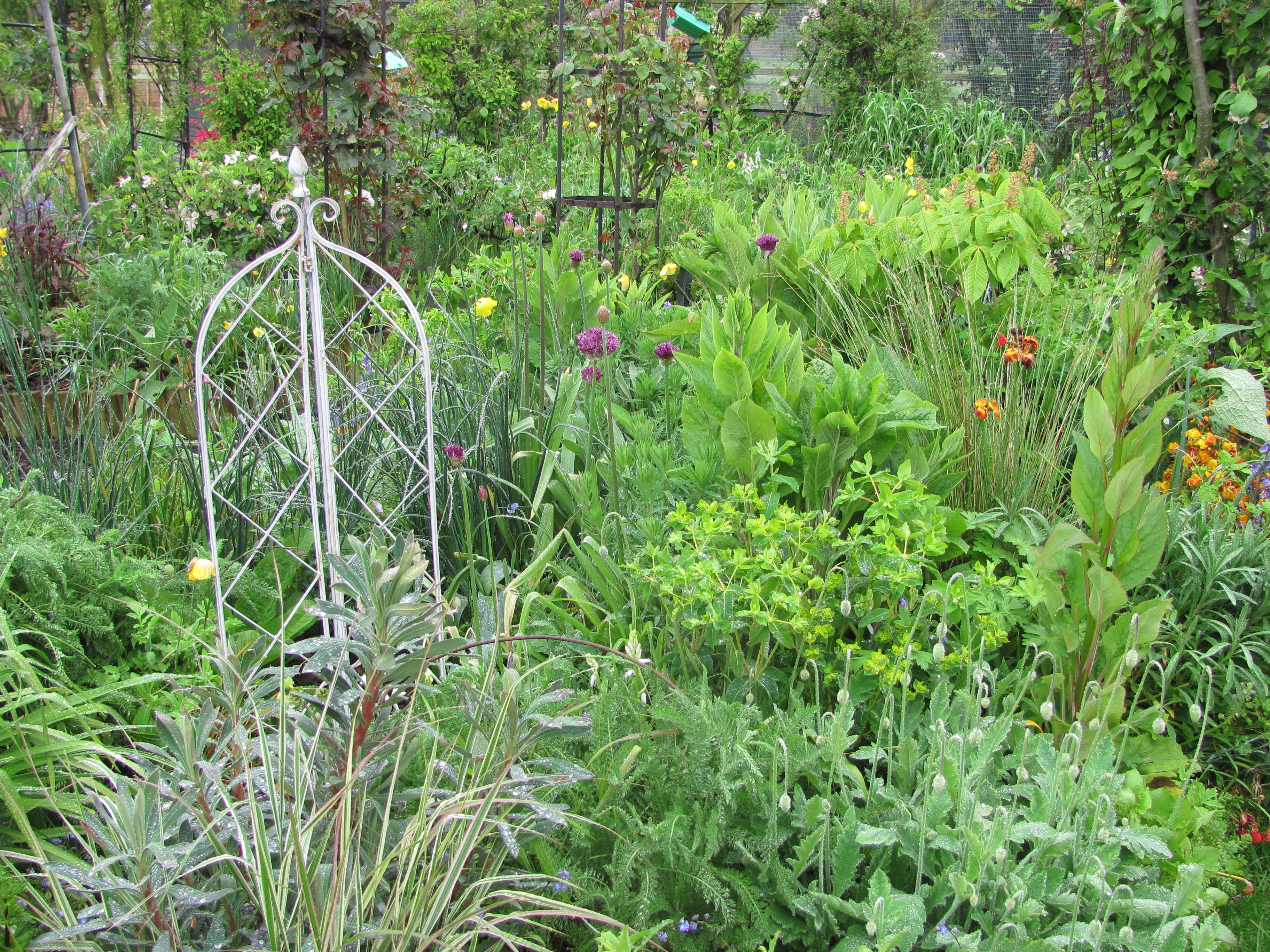
Here we are with the fifth garden wander post. And the garden is looking good! Take a wander with us and have your nose at the ready as the scents are strong.

Throughout the garden Bluebells and Wallflowers are sending out their rich sweet scent messages for all to enjoy, permeating every nook and cranny. Birdsong dominates the early hours of daylight and youngsters begging their parents for more food can be heard in every nest box. A family of fledgling Robins have taken to following us around the garden hopping and hoping our gardening activities disturb a bug or two.

We begin our wander in the front garden where we are entertained by a Spotted Flycatcher who perches on the topmost branch of the holly and sits waiting to ambush any passing insect at which he launches himself and then returns to exactly the same place to enjoy his prey and to begin all over again.

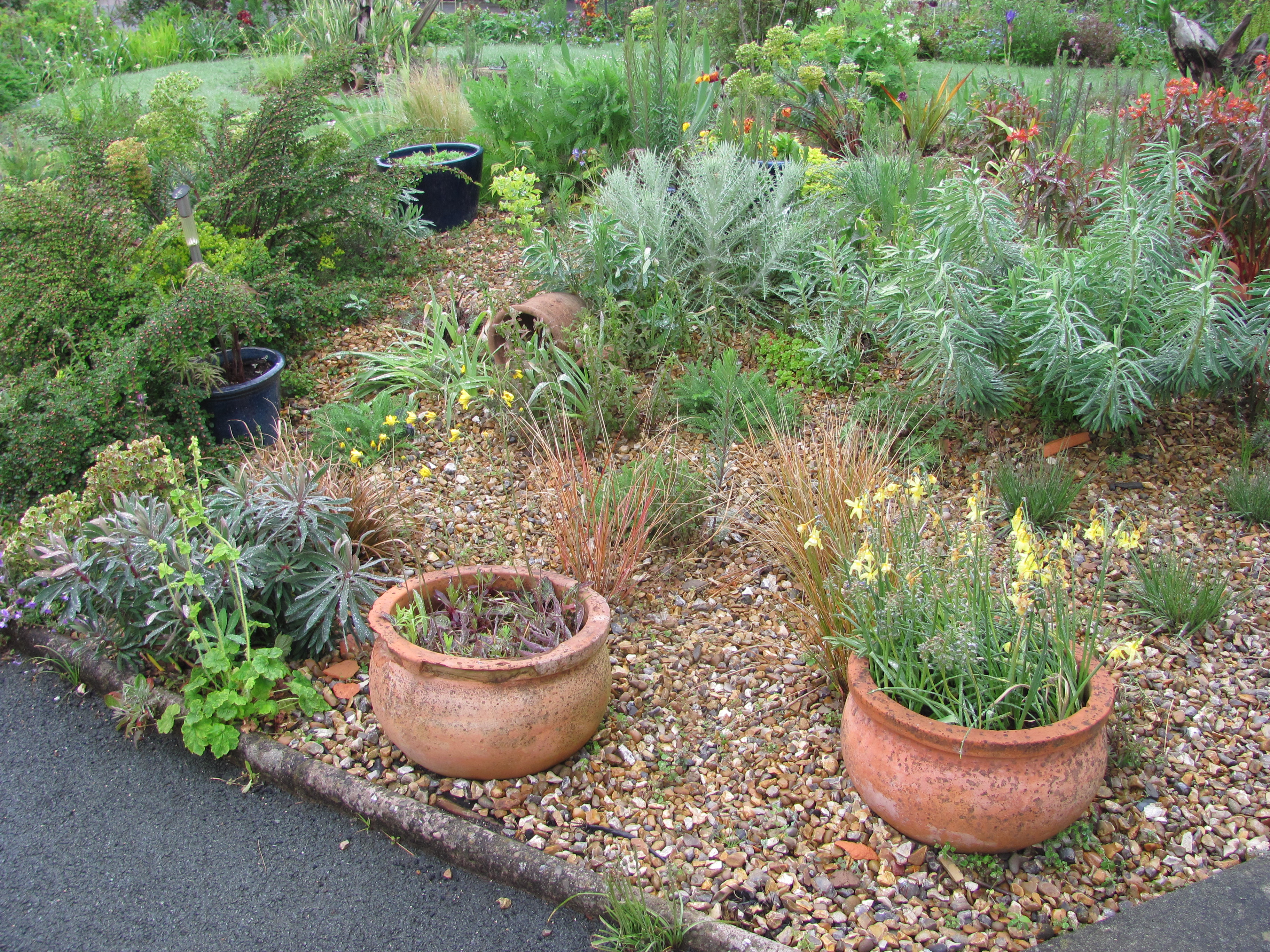
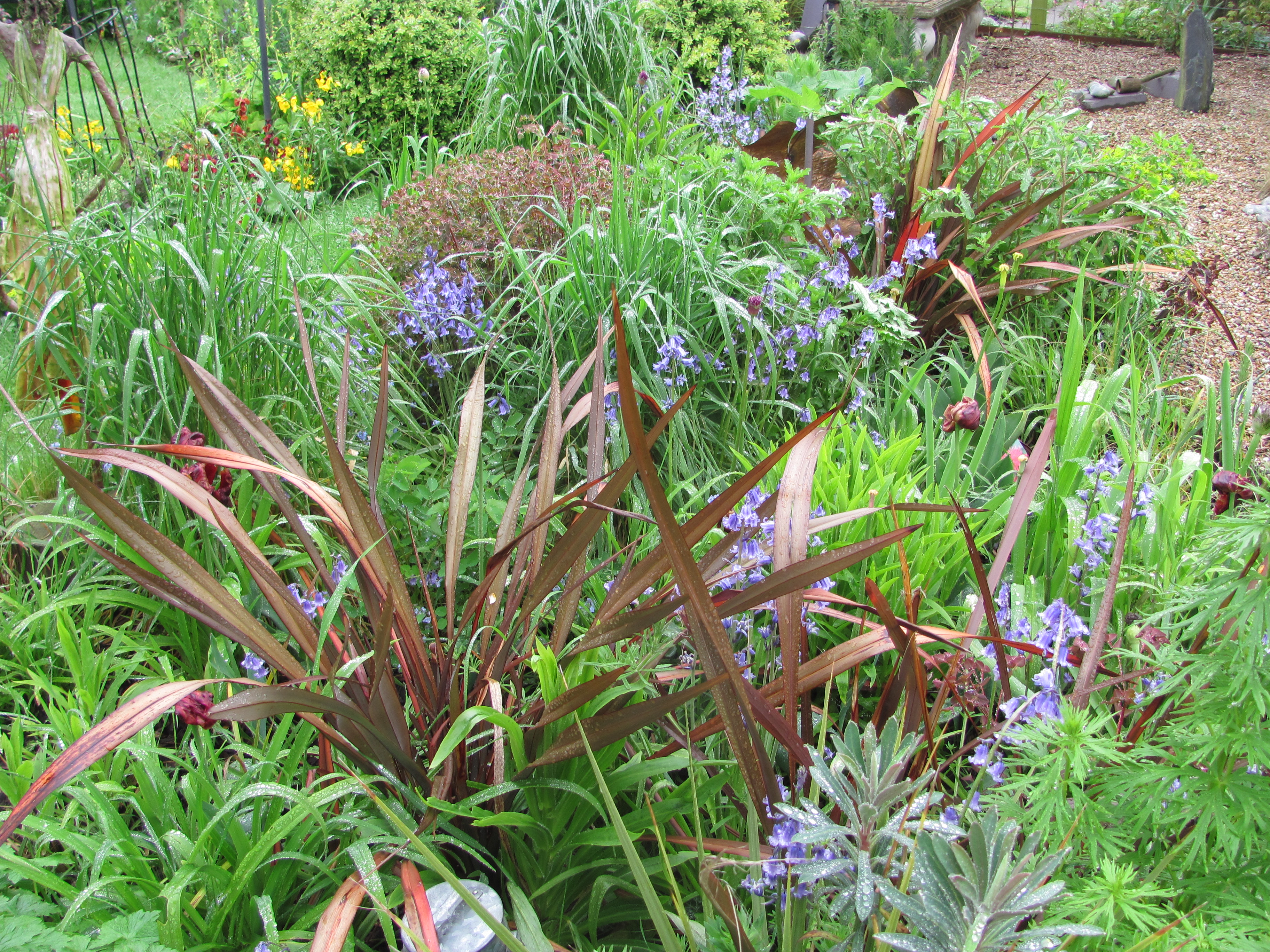
Here is our gravel garden which we call the Chatto Bed, after Beth Chatto, as after making a couple of visits to her garden we were determined to create a gravel patch which would never need watering and in true Beth Chatto style we chose plants to suit the conditions.

On the gravel our bearded irises are in healthy leaf with buds fit to burst, all but one which is already flowering, the dark, sultry Iris Cherry Garden.

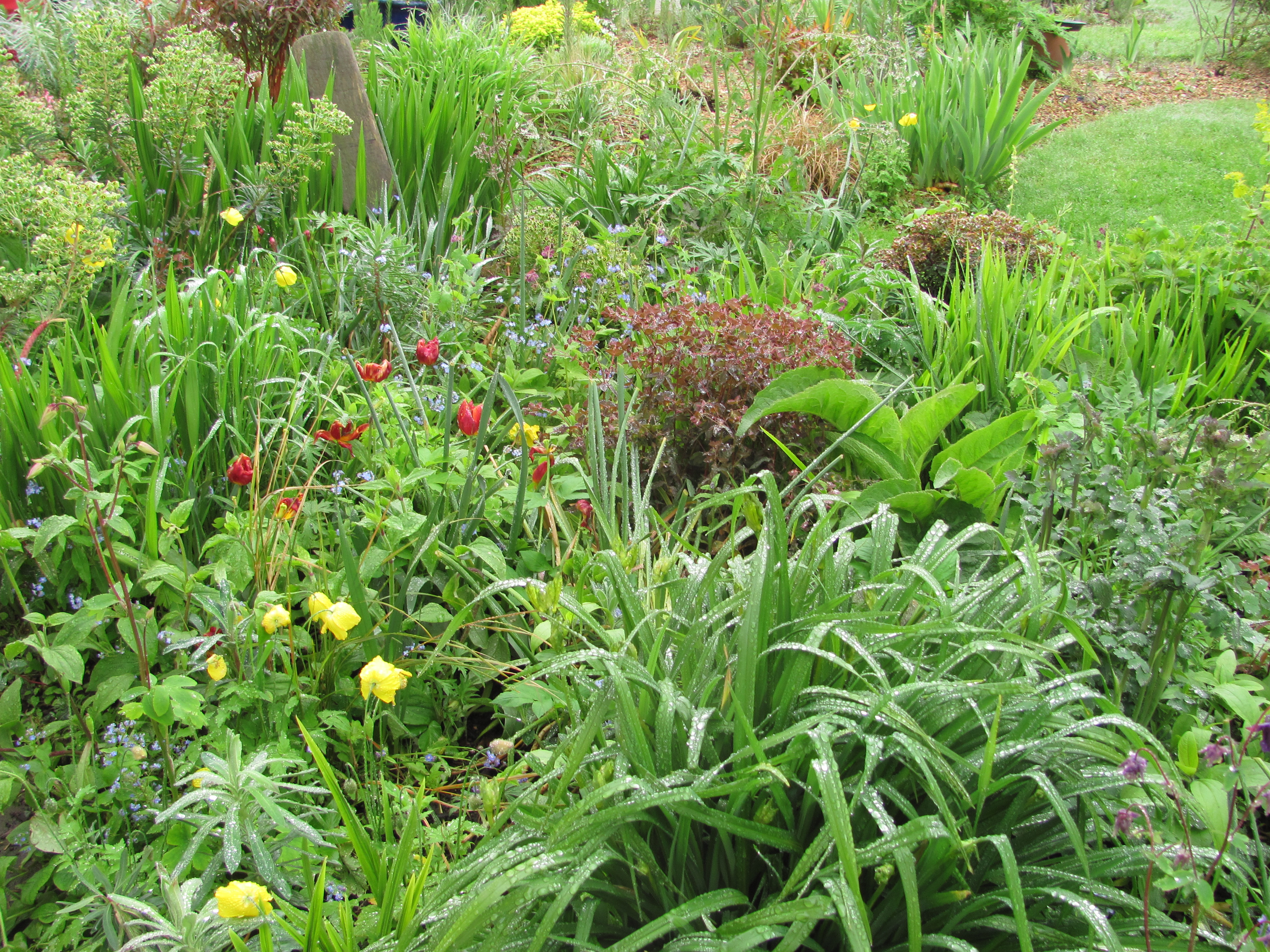
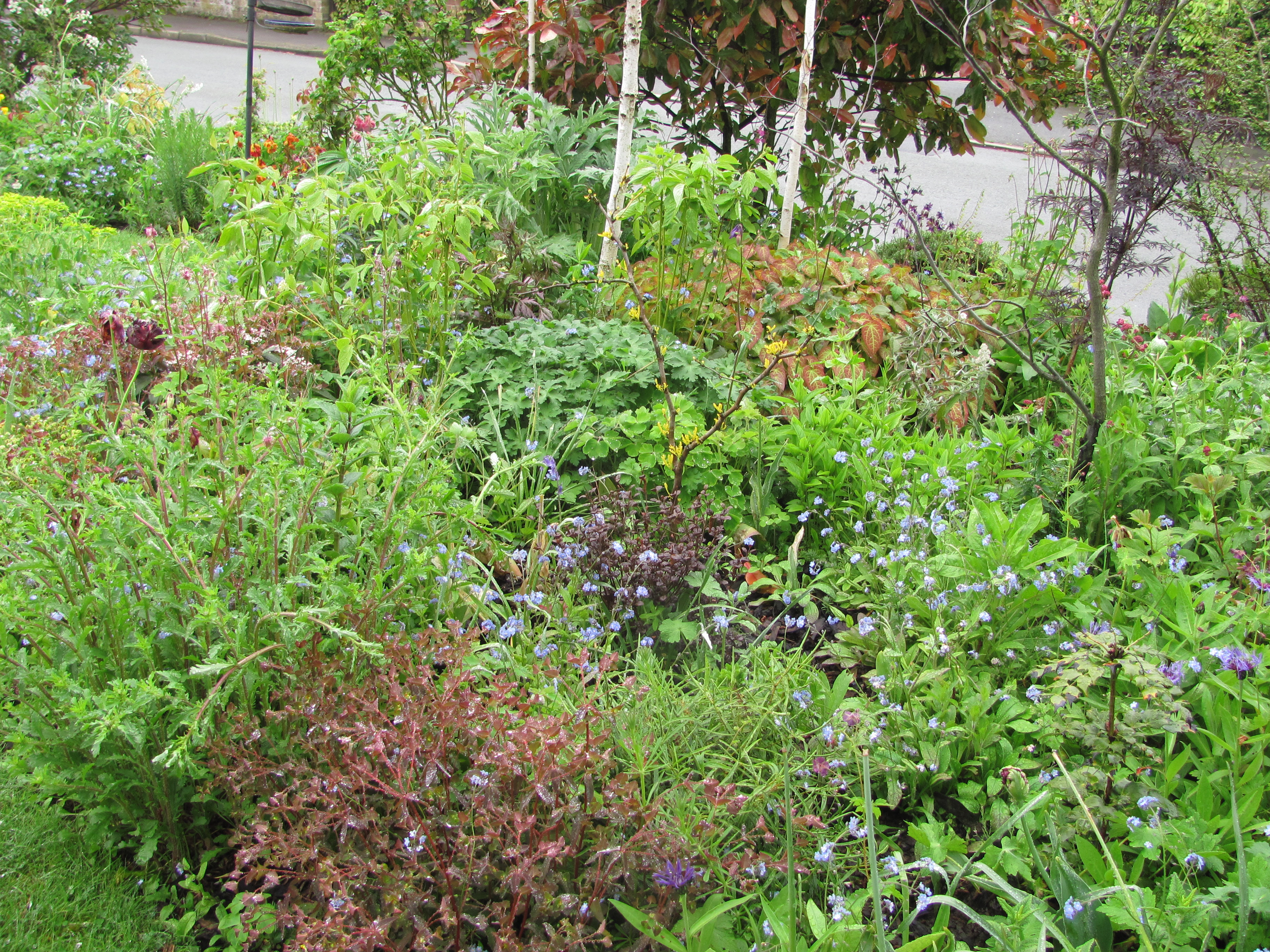
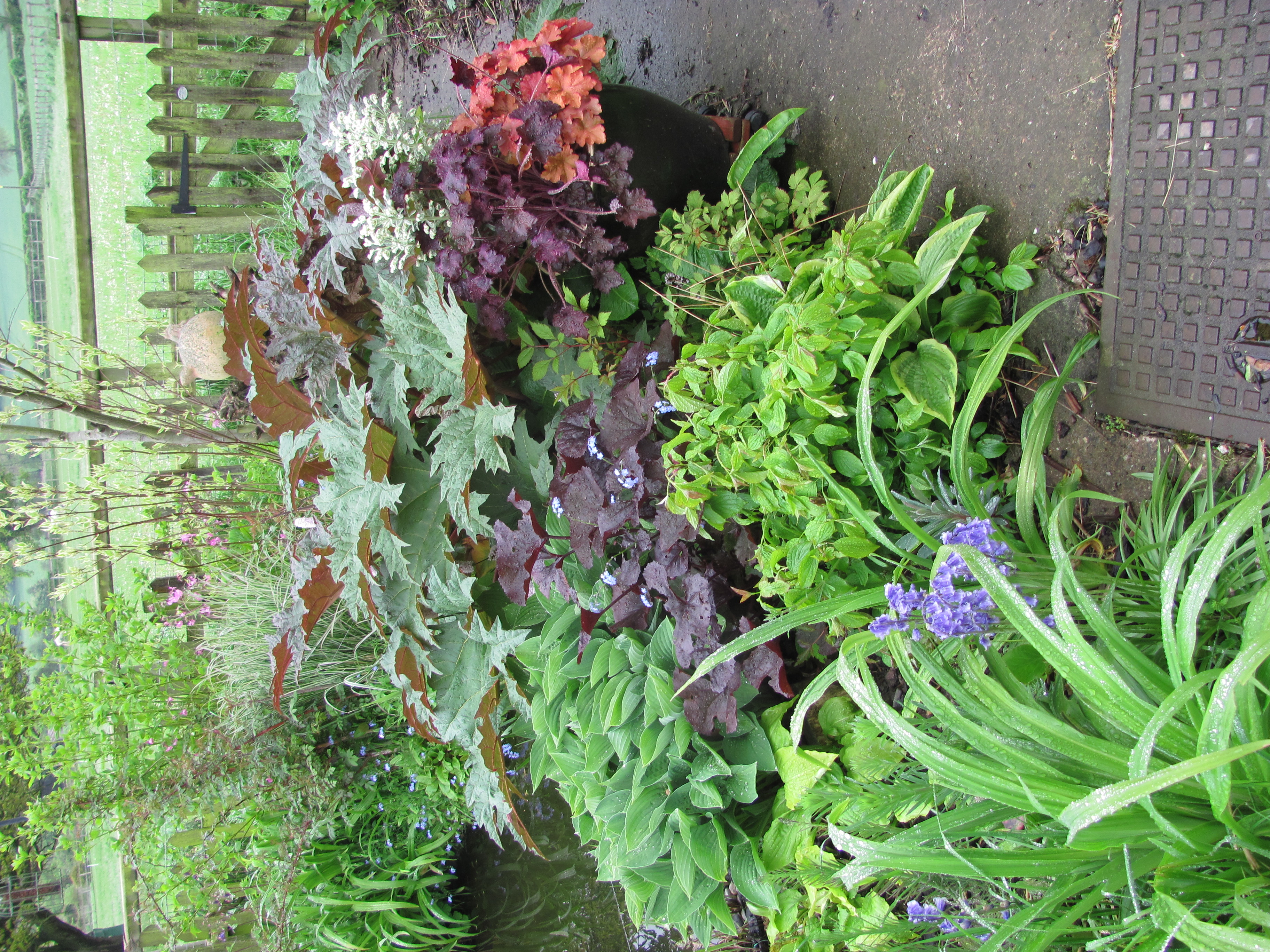
Entering the shade garden we are struck by the lushness of the foliage dotted with special blooms. Apart from the Welsh Poppies and Bluebells all blooms here seem to be in unusual shades of pink at the moment.

Our Hot Border is not yet hot but gradually warming up – just on the verge of luke warm I’d say. Opposite this is Jude’s Garden which she claims is more tasteful than my Hot Border.

Moving to the side garden opposite our main house entrance is our Freda Garden, named after a lovely lady and impressive gardener who died too young a few years ago. We grow plants here that she loved.

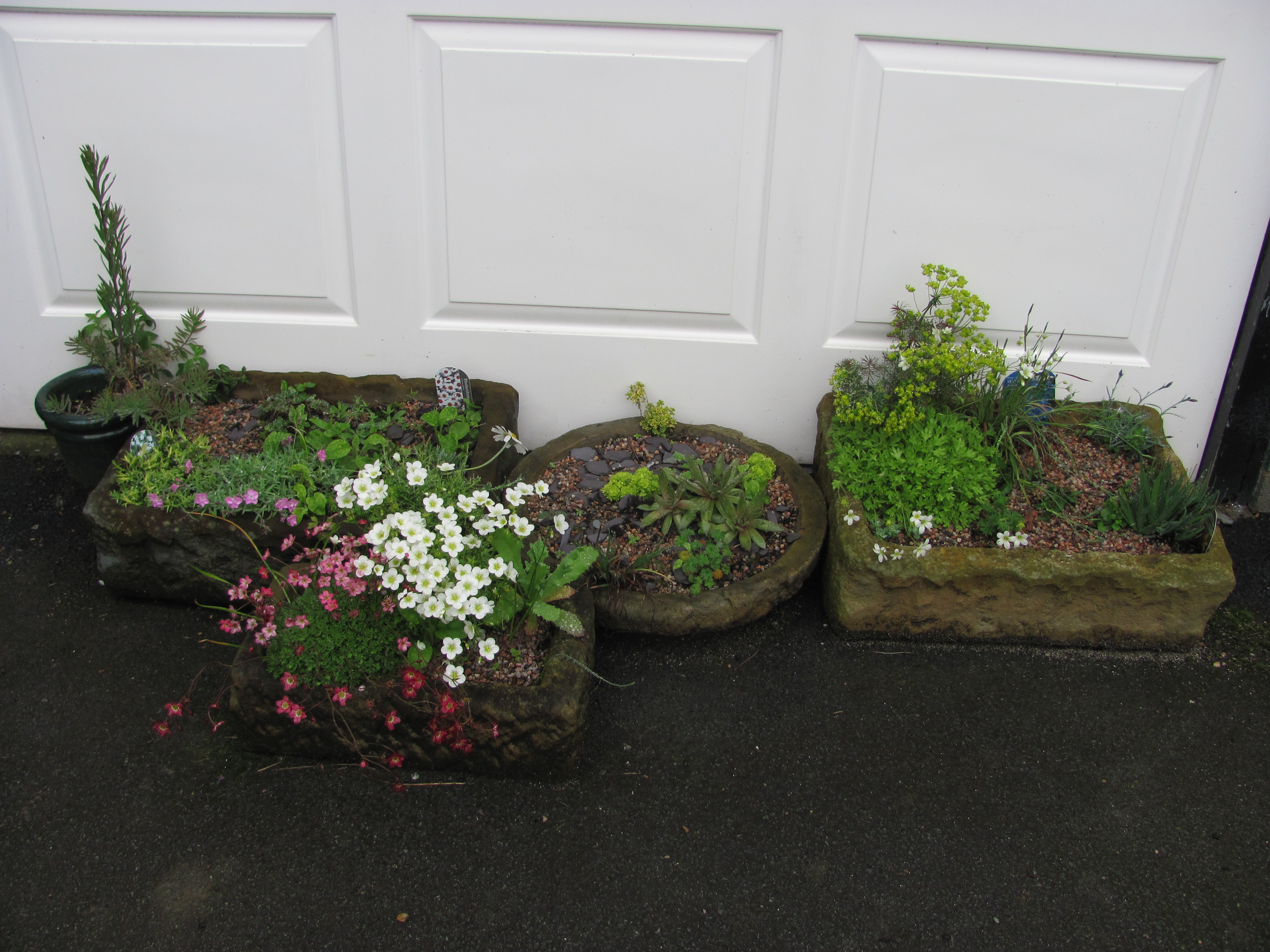
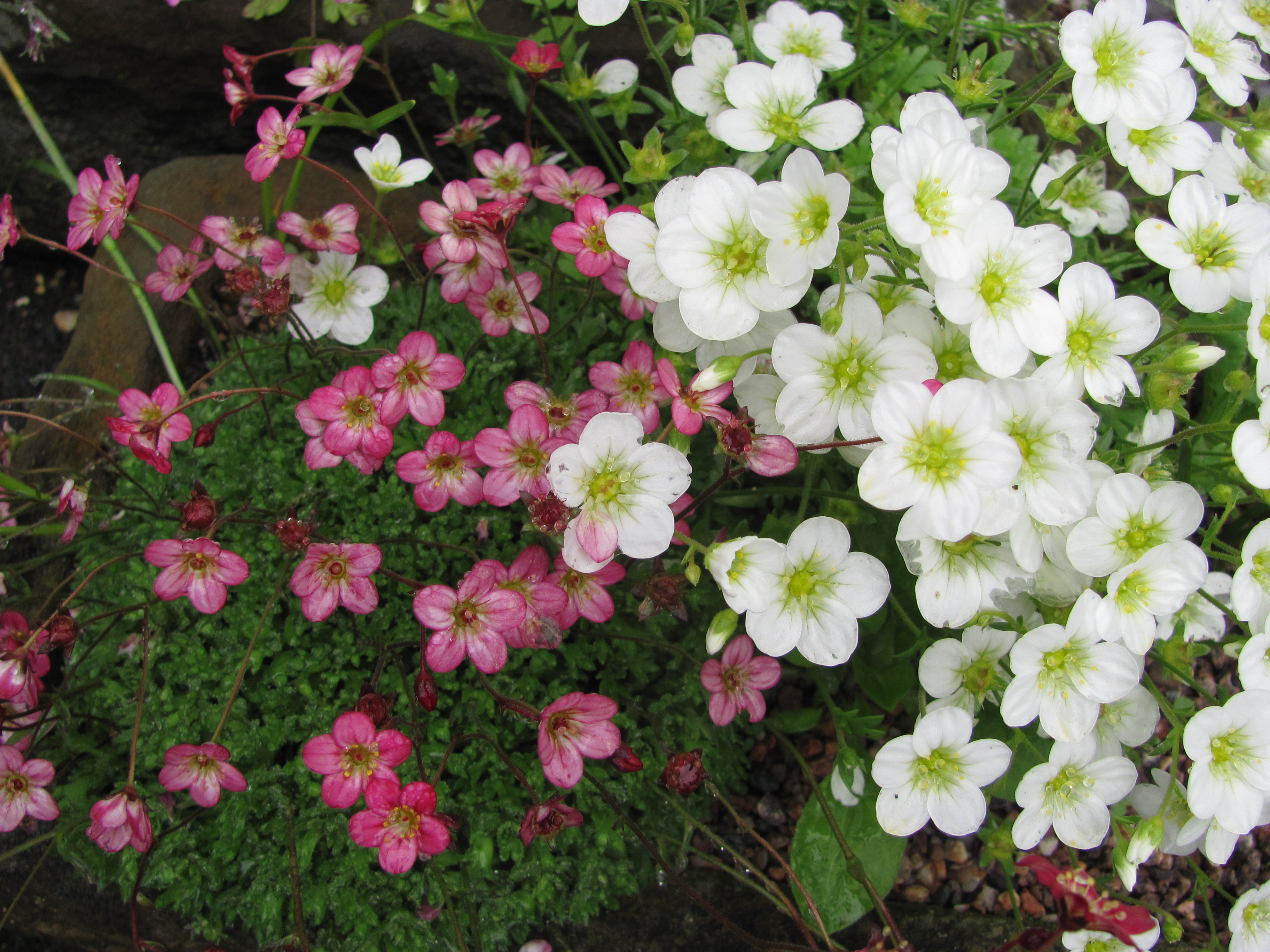
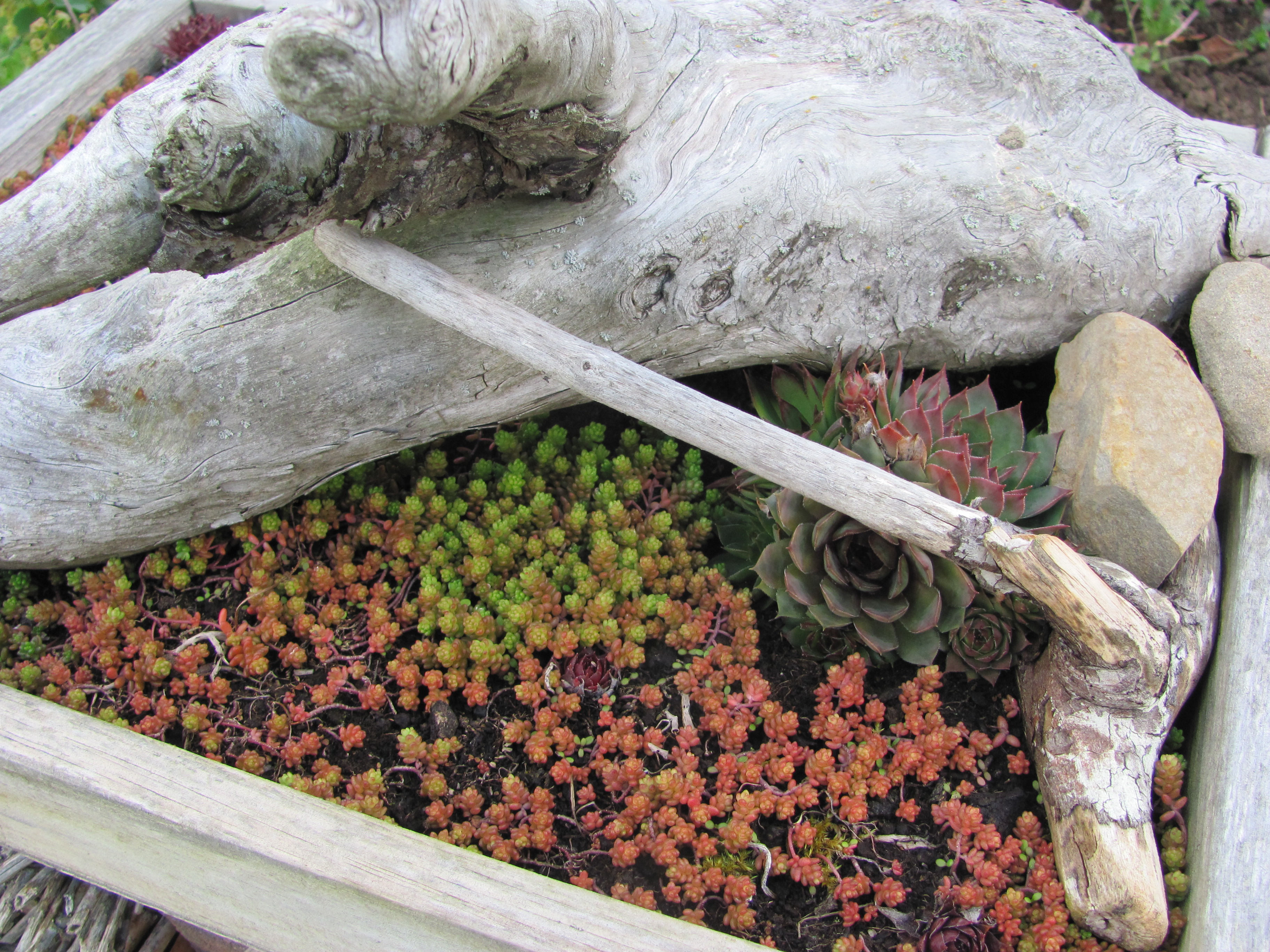
Close by is our small collection of alpine troughs still looking good, especially the Sempervivum.

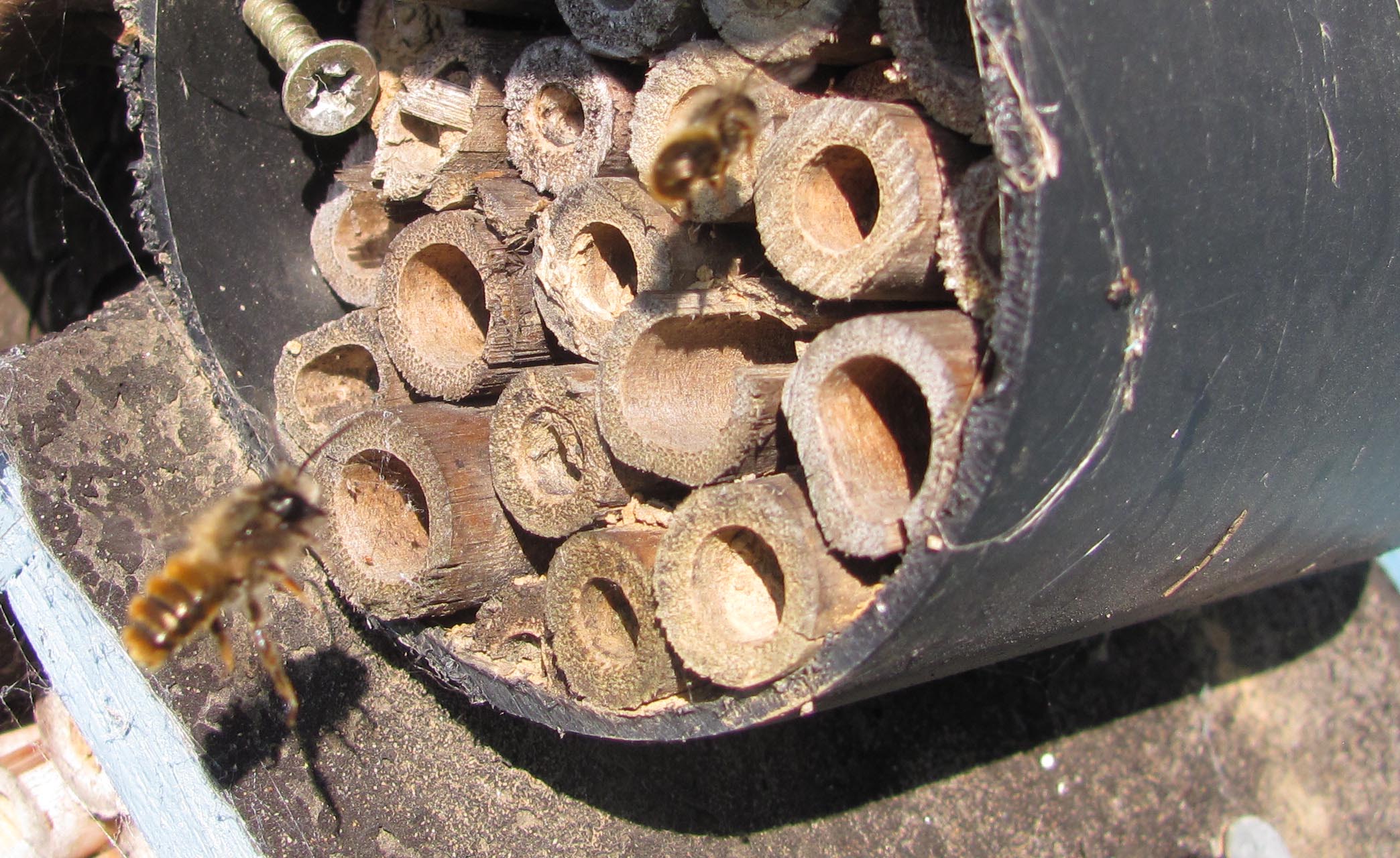
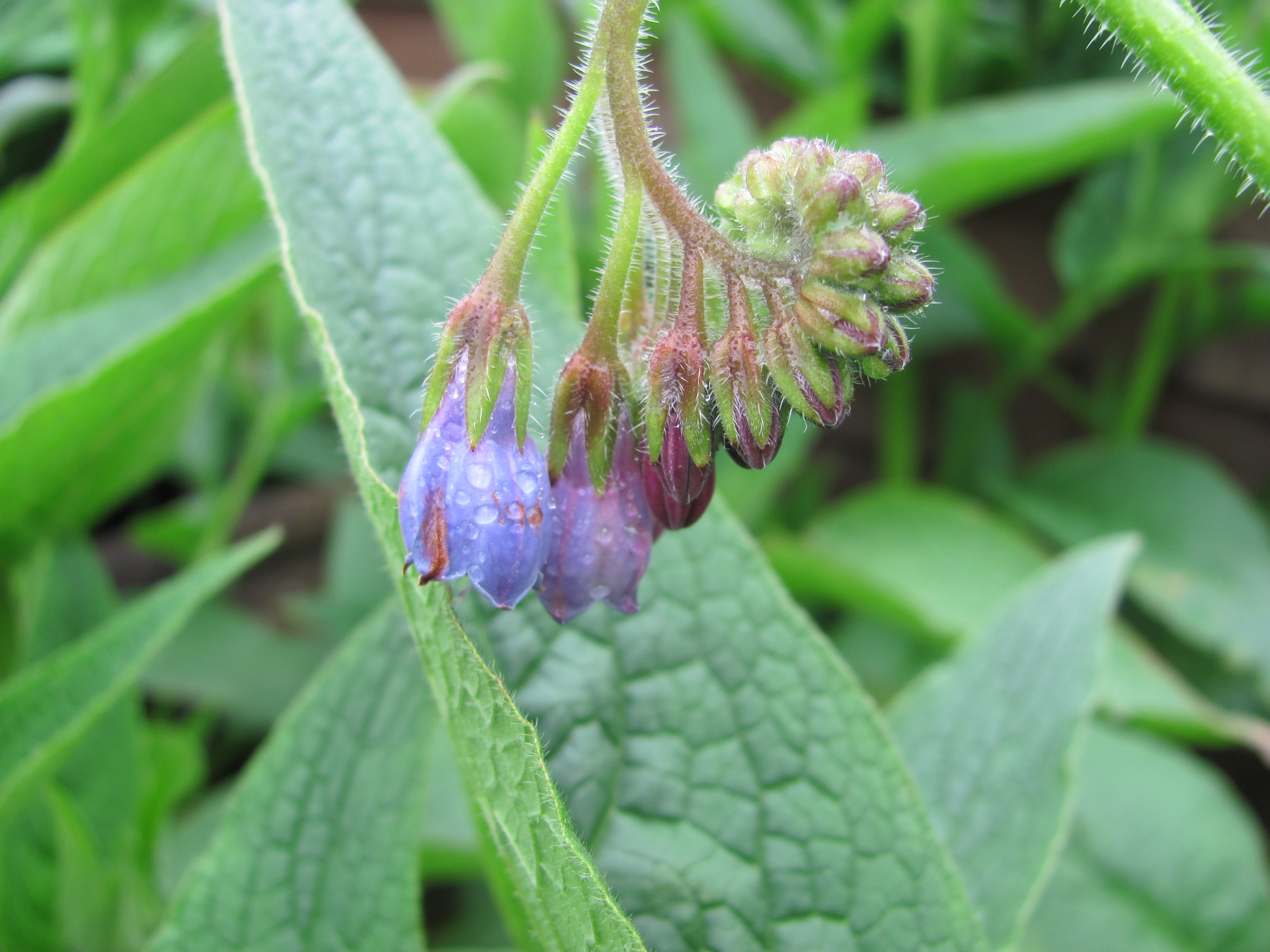
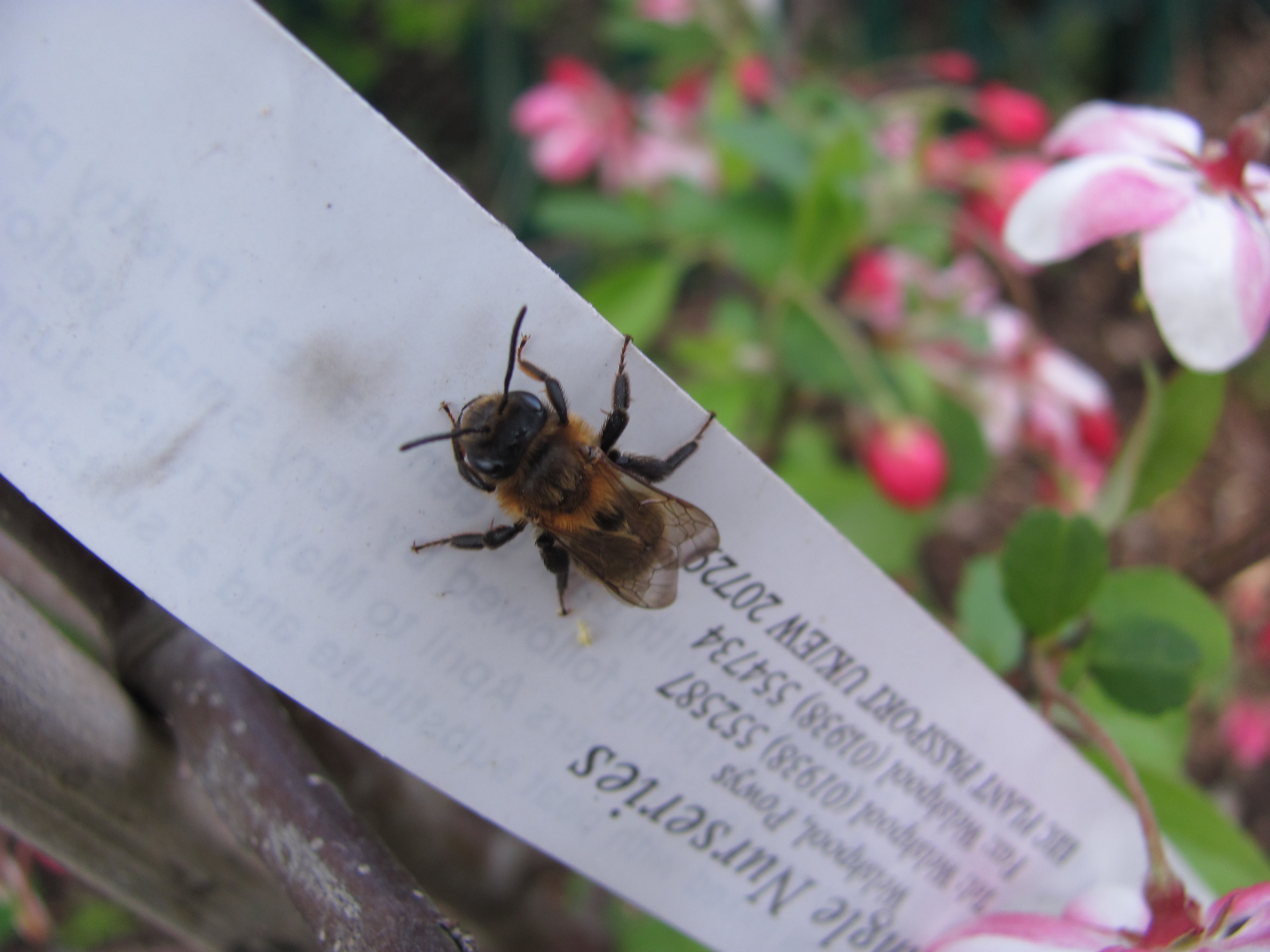
As we pass the garden shed on our way to the back garden the buzzing sounds of bees fills the air, for as the temperatures have risen in the last few days the solitary bees in our bee shelters have been hatching and emerging constantly, literally hundreds of them. They immediately head for the flowers of the Comfrey and Ceonothus we provide for them. I love this moment every spring!

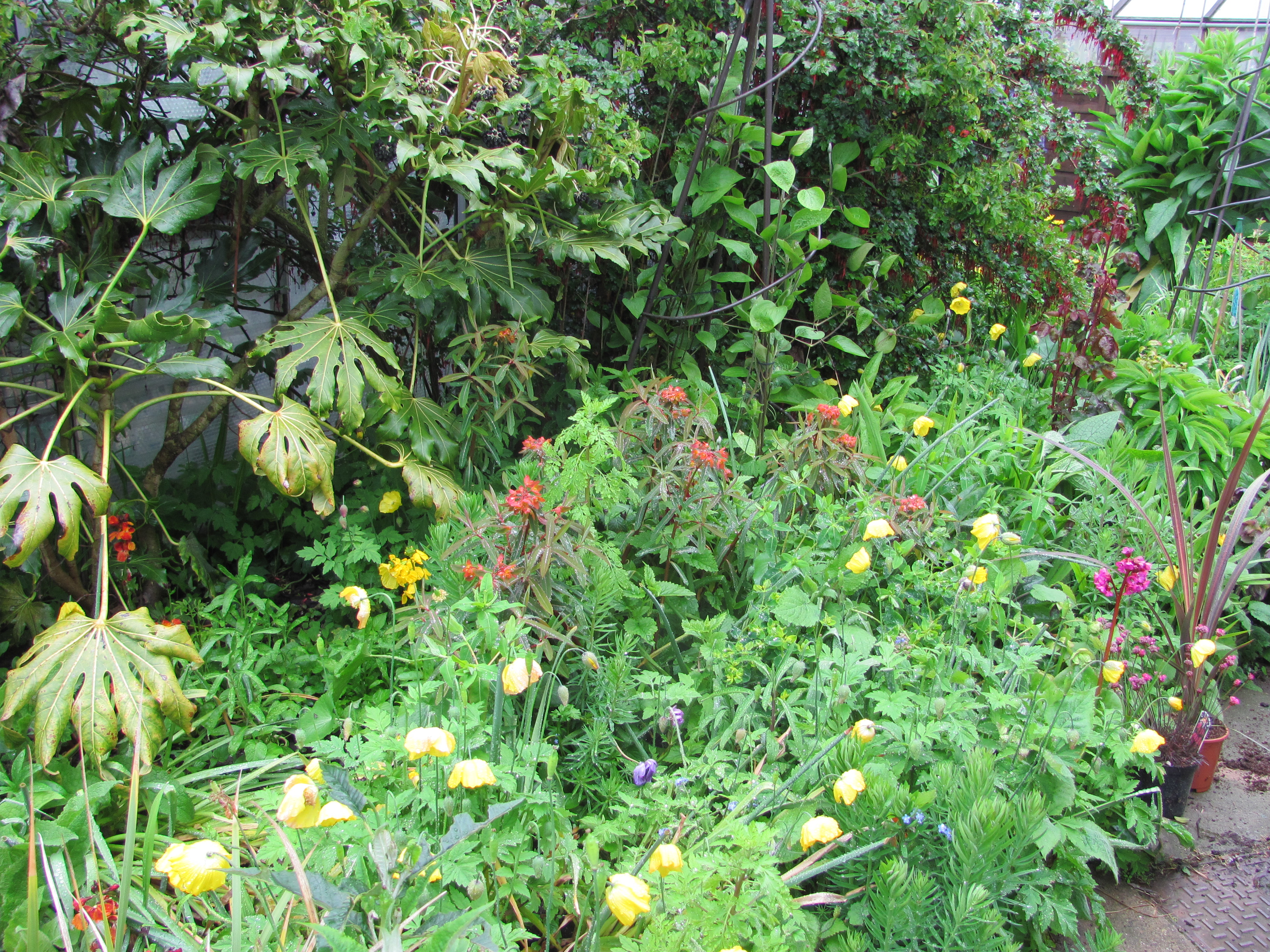
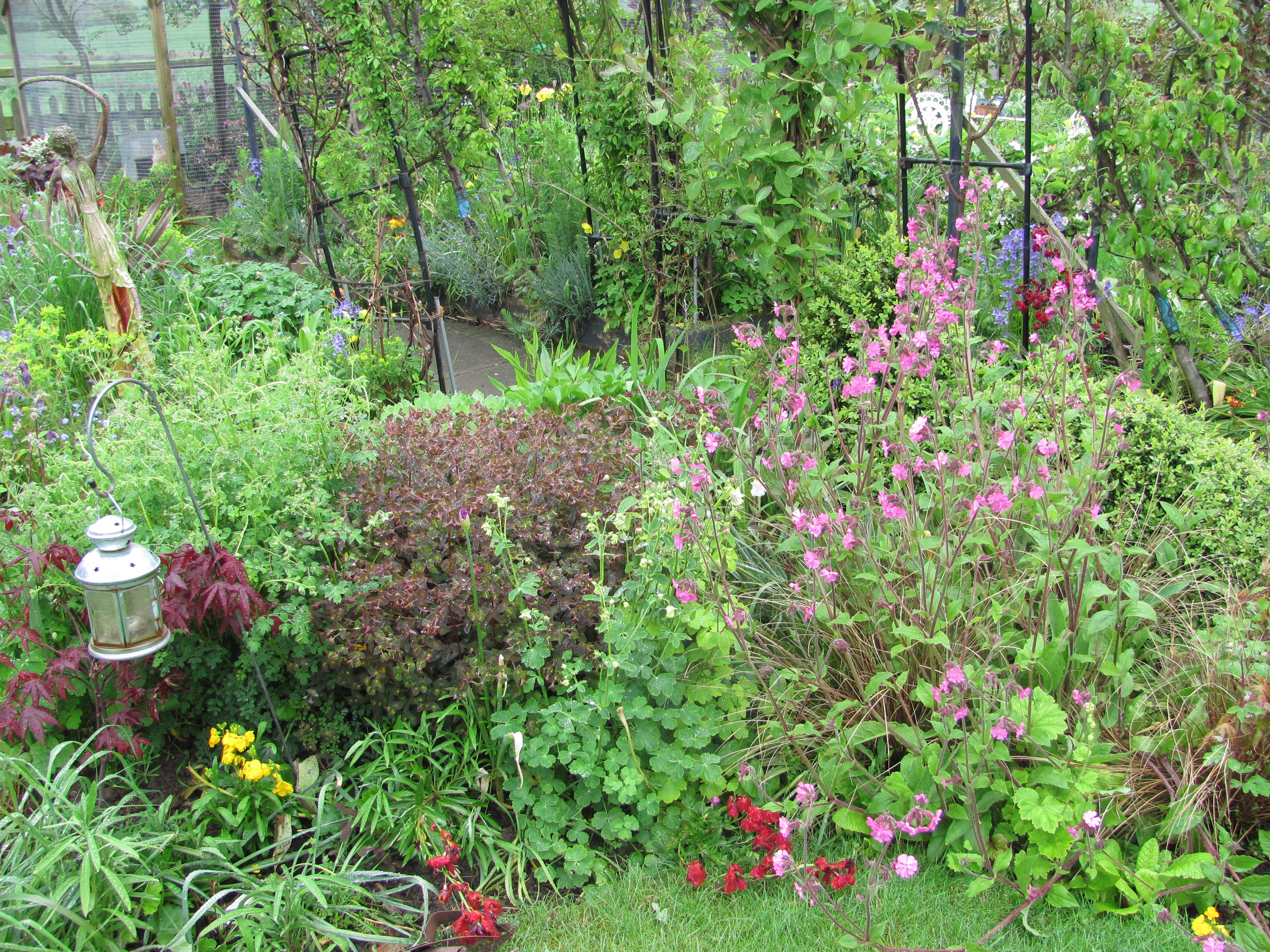
And so into the back where the scent of Wallflowers and Bluebells afford us the luxury of rich sweet perfume. Rich colours burst from the vibrant fresh spring greens.

It has been a strange May so far, no flowers on any rose bushes but some narcissus still in bloom. The Cuckoo has been calling incessantly for weeks as have the Skylarks. We are bit fed up with the repetitive two note call of the Cuckoo but the beauty and complexity of the Skylark’s song means we still love listening to it.

We shall finish this wander in our Seaside Garden, part of our plot not yet featured much in my blog. Perhaps a separate post all about it will appear soon?

Categories
bird watching birds forests photography Shropshire trees wildlife woodland

Forest Foray

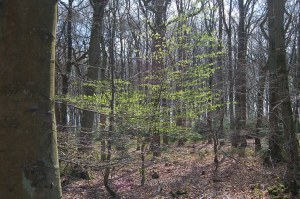
On a cool damp April morning when heavy rain was forecast for the afternoon, we set off to the south of our county, Shropshire, to explore some of the tracks around the Mortimer Forest. We chose to visit the area known as Whitcliffe.  When we parked up in the car park alongside the Forestry Commission offices we knew we were in for a treat. The colours of the trees looked fresh and glowed with every shade of green, and the calls and songs of birds mingled to  fill the air, Nuthatches, Thrushes, Blackbirds and Robins.

We decided, as we only expected to have the morning to walk before the heavy rain arrived, to take the track, called the Whitcliffe Loop, that would afford us a two-mile walk through deciduous and coniferous plantings. We were soon to find that the trail was poorly marked so we were frequently unsure if we were on the right track or not. But who cares, we had a great morning’s forest wanderings.

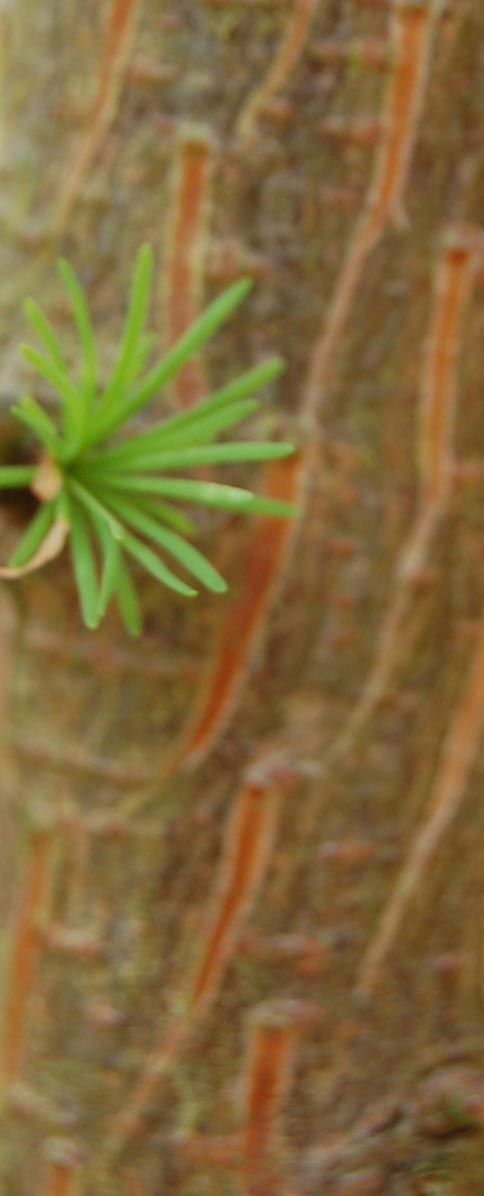
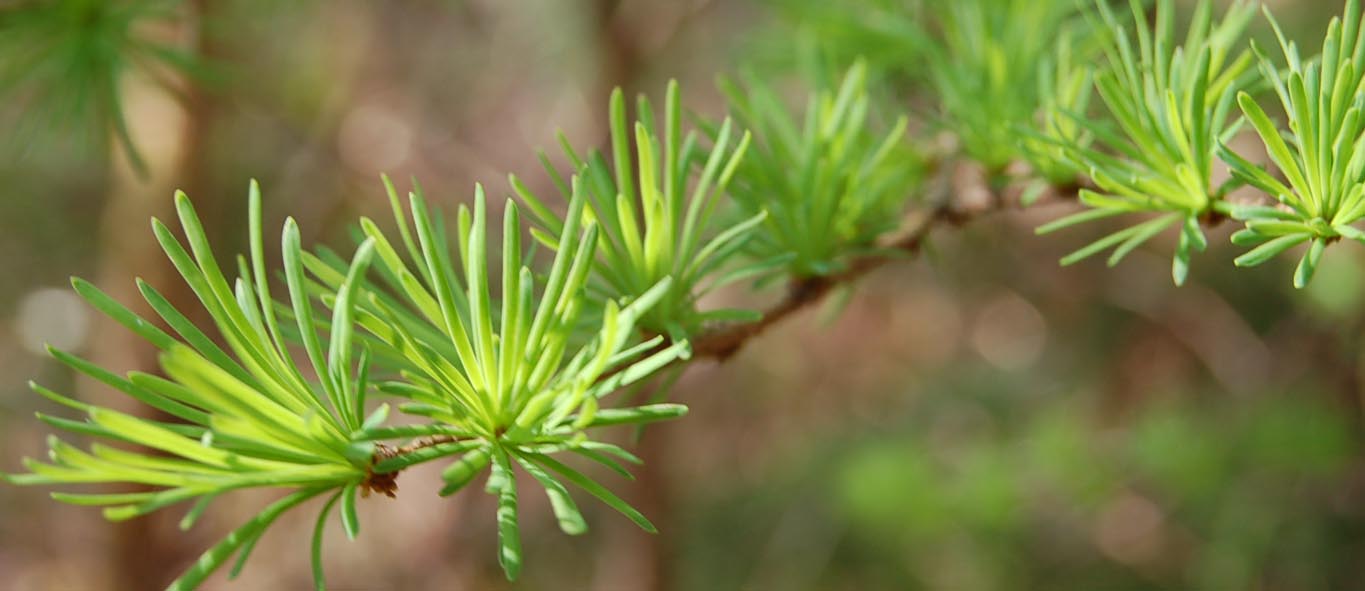
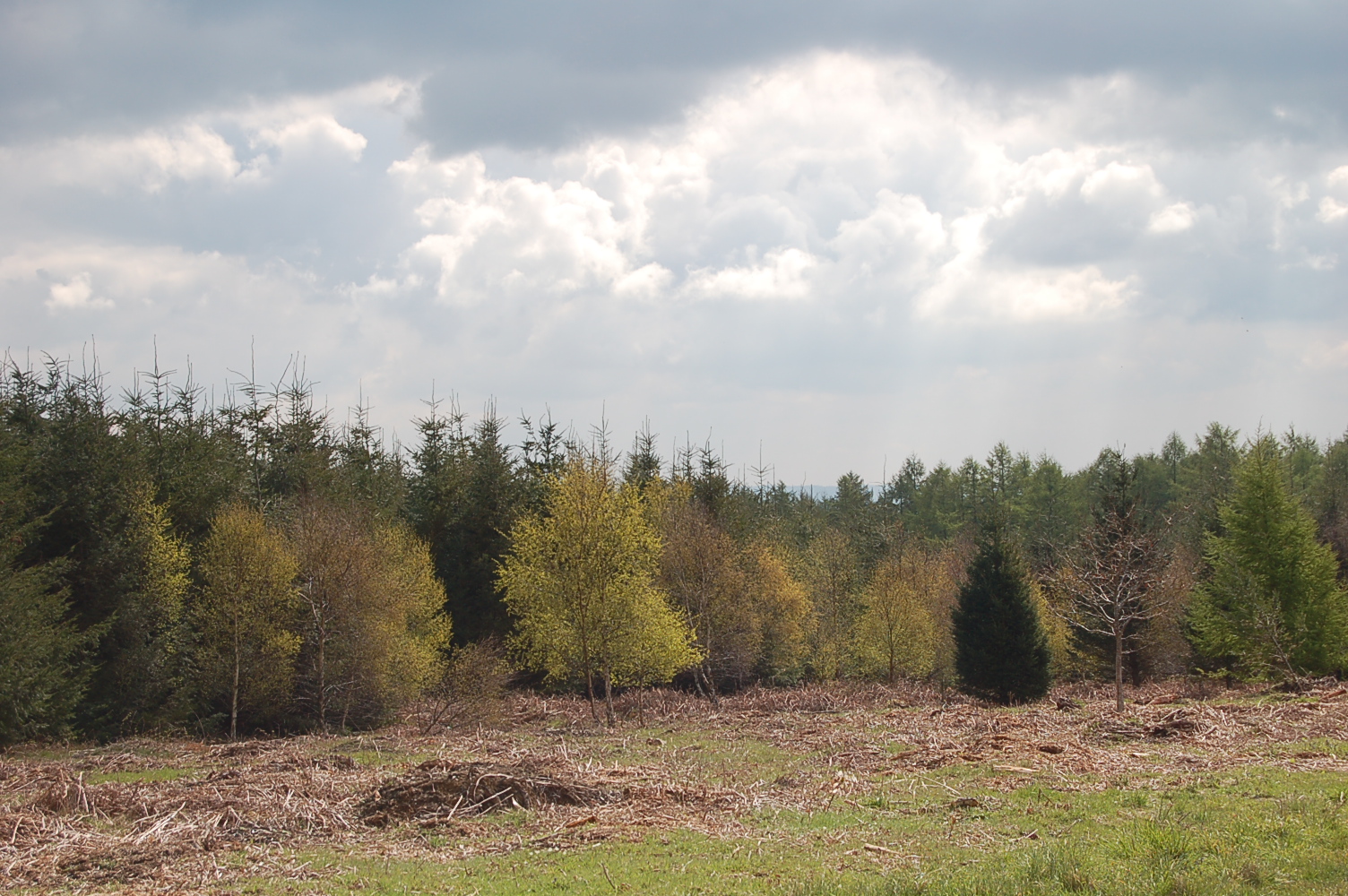
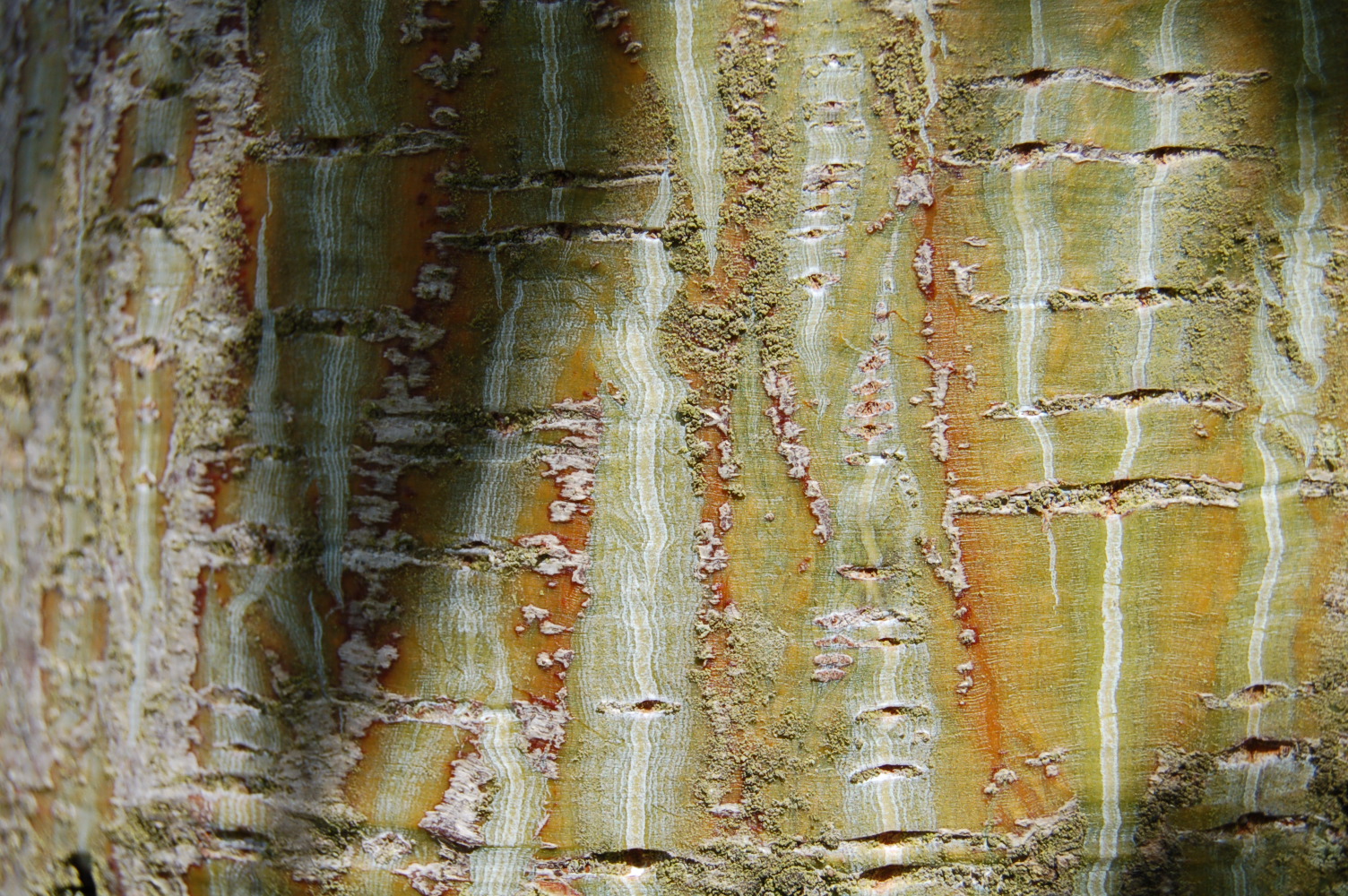
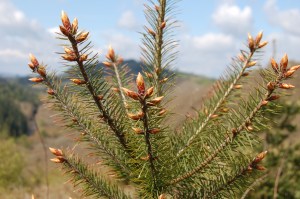
The beauty of the Mortimer Forest is the sheer variety of habitats created by the areas of different trees, some conifers planted in straight lines for wood production, some wind break tree planting and large areas of native deciduous trees. The odd tree out amongst these if the native larch, Larix decidua, which is a conifer but it sheds its needles in autumn. In April its new needles are the brightest green to be seen in a conifer and its bark is beautifully patterned, textured and coloured.

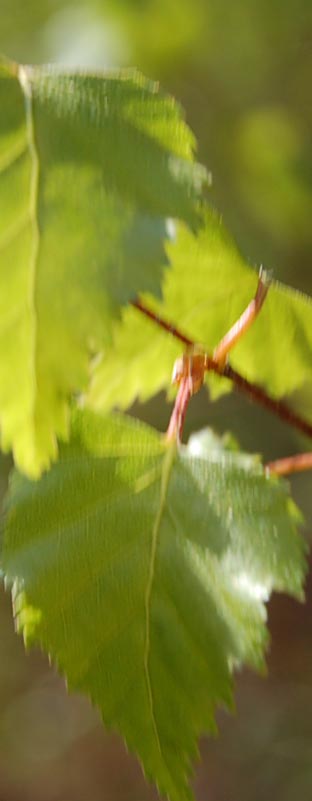
Almost as bright are the new leaves of the Silver Birches.

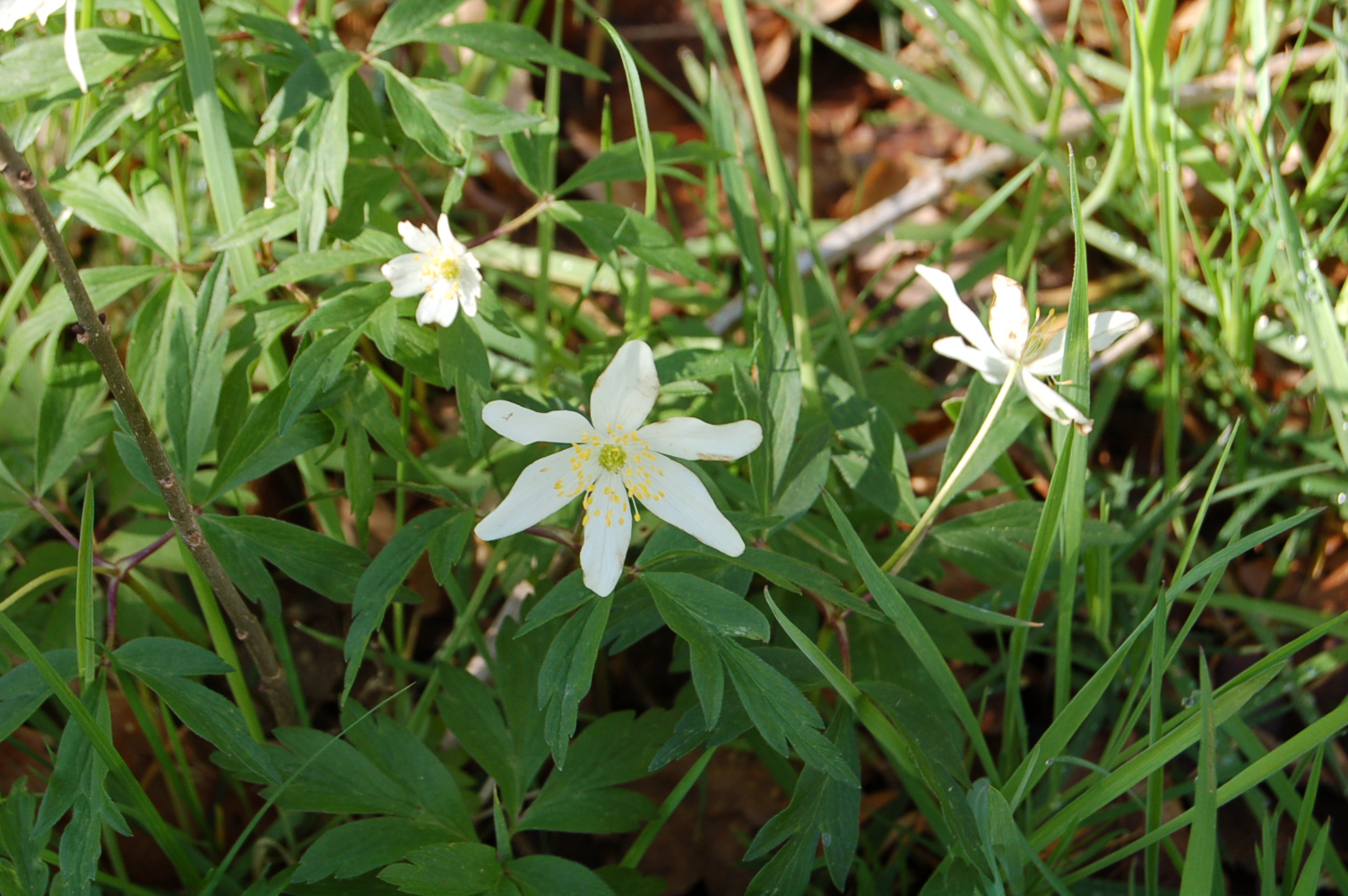
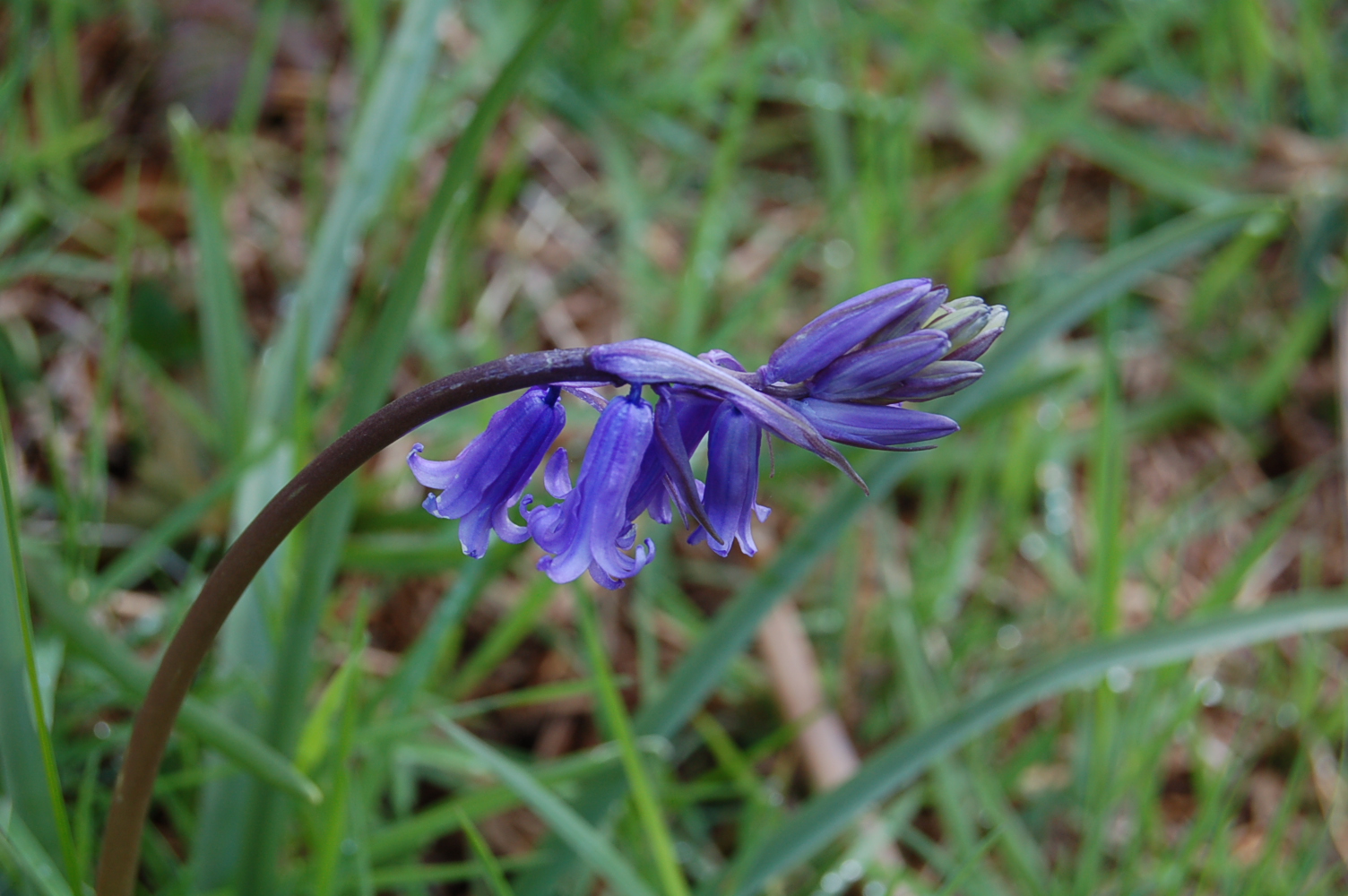
Beneath the trees, wildflowers are infrequent but when we find them they are worth the wait. Wood Anemone, Stitchwort and Bluebell bloom demurely between clumps of Woodrush and the leaf growth of foxgloves.
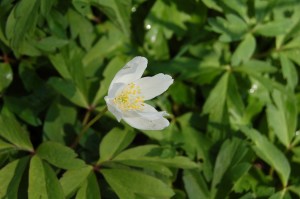
We were delighted to find this anemone with much longer and narrower petals than all the others.

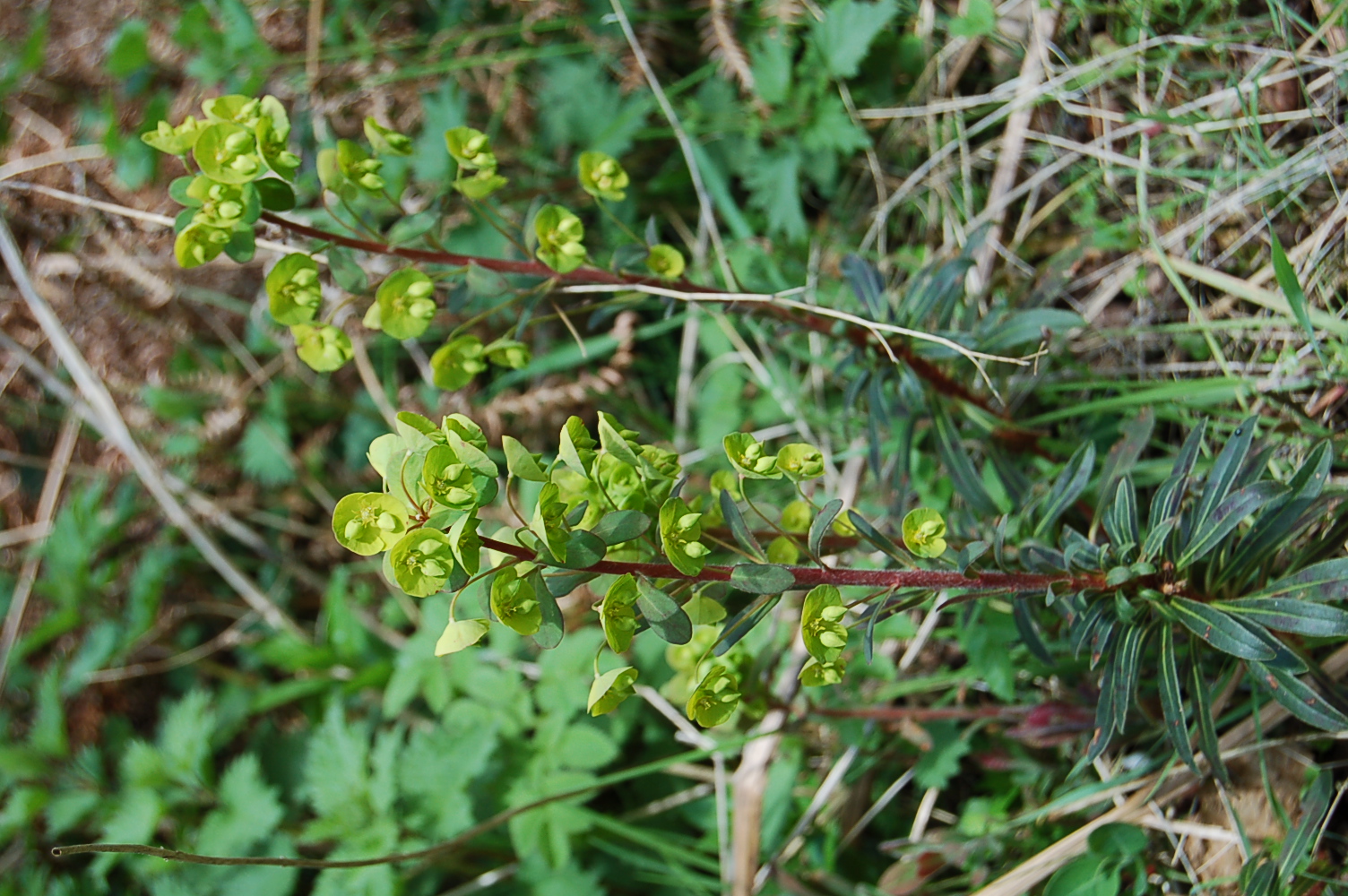
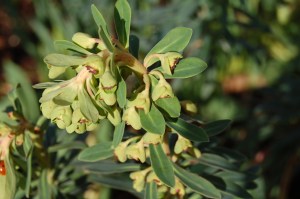
A plant we were surprised to find was a small clump of a native euphorbia with dark stems which emphasised the Chartreuse bracts, tiny yellow flowers within them and the glaucous foliage.
Just over half way around our planned ramble, we entered an area of Cupressus trees planted as a wind break planted to protect newly planted young trees years ago. these heavy-looking trees cast such a deep shade that nothing grew beneath them and peering beneath their hanging branches was like looking into a cave.

All the bird song that had accompanied us up until then stopped. No wildlife seemed to favour this dense, dark area and I can’t blame them. Not my favourite sort of tree – simply too static. The only signs of wildlife as we passed along the narrowed pathway was the occasional high-pitched calls of Goldcrest, Marsh Tit and Willow Tit. Having deduced that we were amongst wind break planting we knew we were nearing the edge of the forest so we looked forward to openness and wide  views.

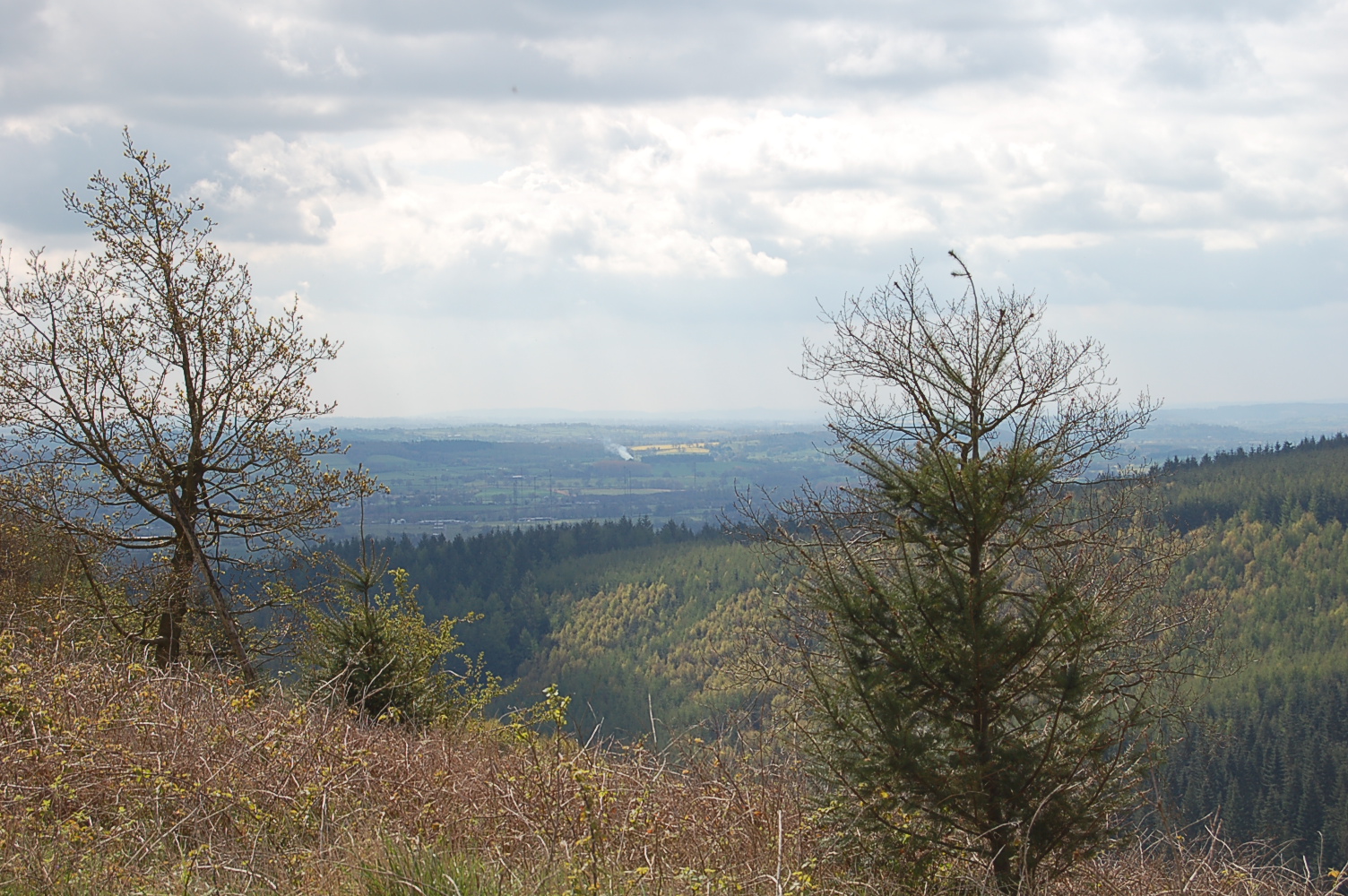
Not only did we find that but also a well-positioned bench inviting us to sit a while and appreciate the views with a coffee and some fruit. As we approached the open area a flash of green passed rapidly overhead, low to the tree tops and at great speed. it was a Green Woodpecker. We were soon to discover why he was in such a hurry for this area was littered with anthills. Anthills mean ants, their favourite food.

The wooden bench was so popular that the ground in front had been worn away so much that when we sat on it our feet didn’t reach the ground. We could swing our feet beneath like little kids on big benches. The views, the coffee and the fruit were enjoyed in equal measure especially when we were entertained by a Buzzard, which rose from the valley floor a few hundred below riding a thermal that took him past us and way up until he was little more than a black dot.

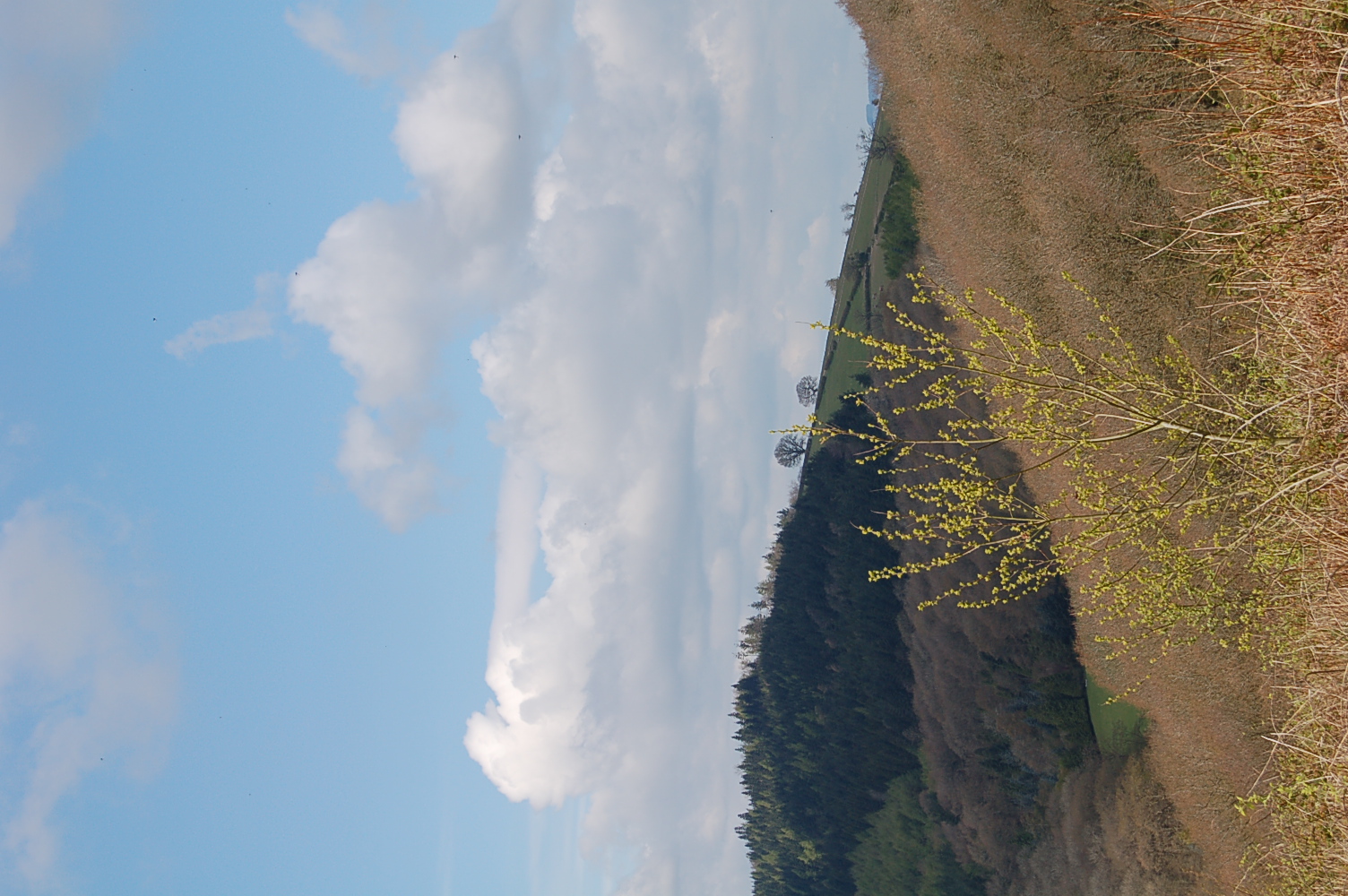
The valley side here dropped steeply away from the edge of the forest where we sat. The ground around us was covered in rough tufts of grass through which tumbled Honeysuckle  and Brambles dotted with Bluebells and Stitchwort. Small trees, Spruce, Birch and Whitebeam, none reaching over a couple of metres tall gave a few perches for finches.
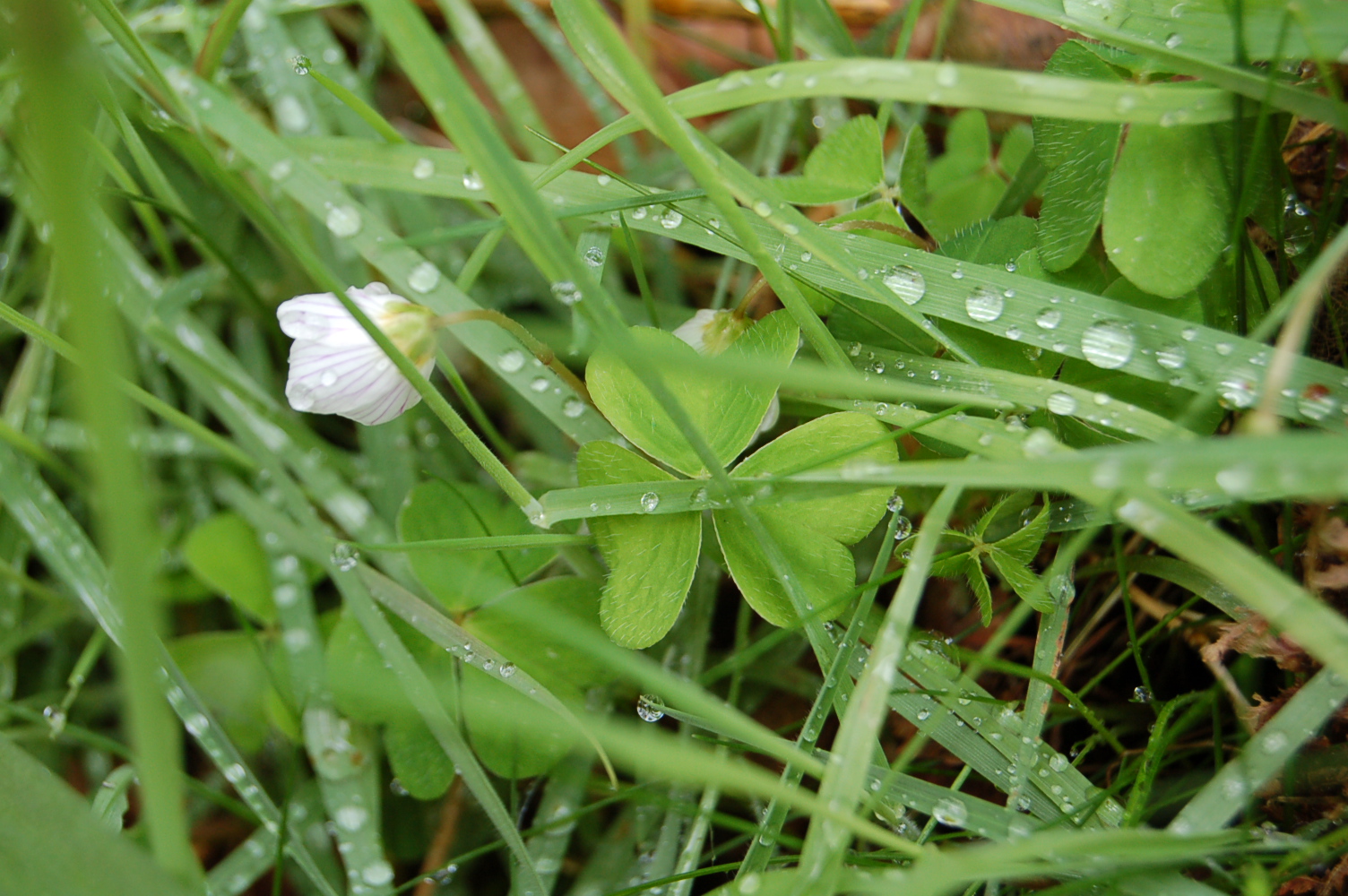
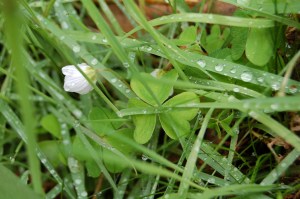
As we took the path back into the forest we noticed butterflies sunning themselves on tufts of dried vegetation, Tortoiseshells and Painted Ladies. Before we reached the dappled shade on the edge of the trees there were more clumps of wildflowers now including Oxalis, with its shamrock like leaves.
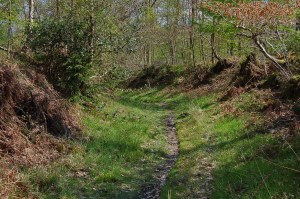
Towards the end of our walk we took a turn into an old trackway where the rays of the sun peered through coppiced trees along the sunken track. Here we were sheltered from the cooling wind and the bird life changed. Blackcaps, Whitethroats and warblers entertained with their song. Courting pairs of Speckled Wood butterflies ignored us and carried on their erratic chasing flight. The Small Tortoiseshells were much more subdued perhaps waiting for the sun to warm them up a little.
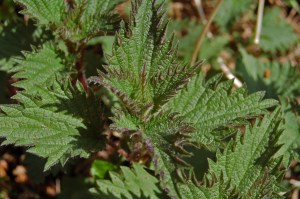
While walking along the stone-paved bottom of the trackway we discussed a Stinging Nettle with unusual foliage, much darker than the norm and with hints of purple particularly deep along the edges and at the tips. The stalks were a pure, deep purple.
We were later to discover that this trackway was an ancient sunken cart track with the wonderfully apt name, Holloways.

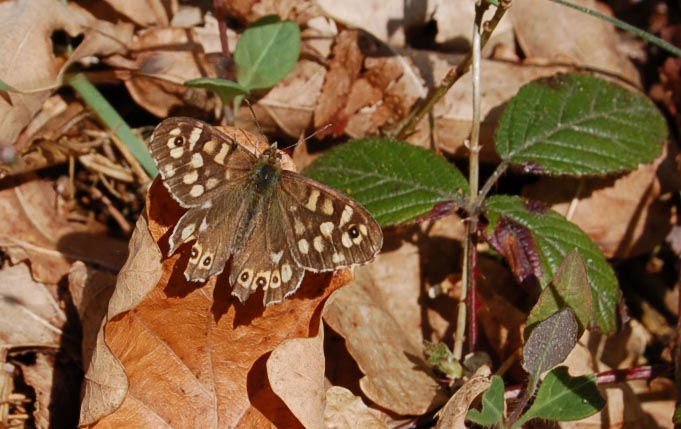
Two miles of slow ramblings along footpaths often muddy and soft underfoot and so much to see and listen to. the true highlight of the day was a short few moments when two Long Haired Fallow Deer crossed the path in front of us. We watched silently as these rare creatures trod carefully through the trees not making a sound. These deer are unique to this forest. I couldn’t get a photo of them but I did get a photo of this little friendly fellow.
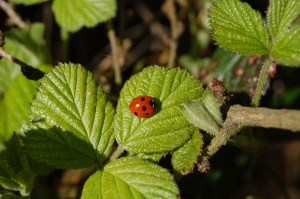
It wasn’t easy though because he was elusive but he was just too friendly crawling over my hand and even the camera before he finally decided to move to this bramble and pose for his shot.

As we neared the end of our walk after enjoying the presence of such wonderful trees, wild flowers, birds, insects and the occasional mammal, I was subjected to the sight of two of trees that were far from favourites. I really do not appreciate trees that are rigid and never-changing such as these tow we met at Whitcliffe.

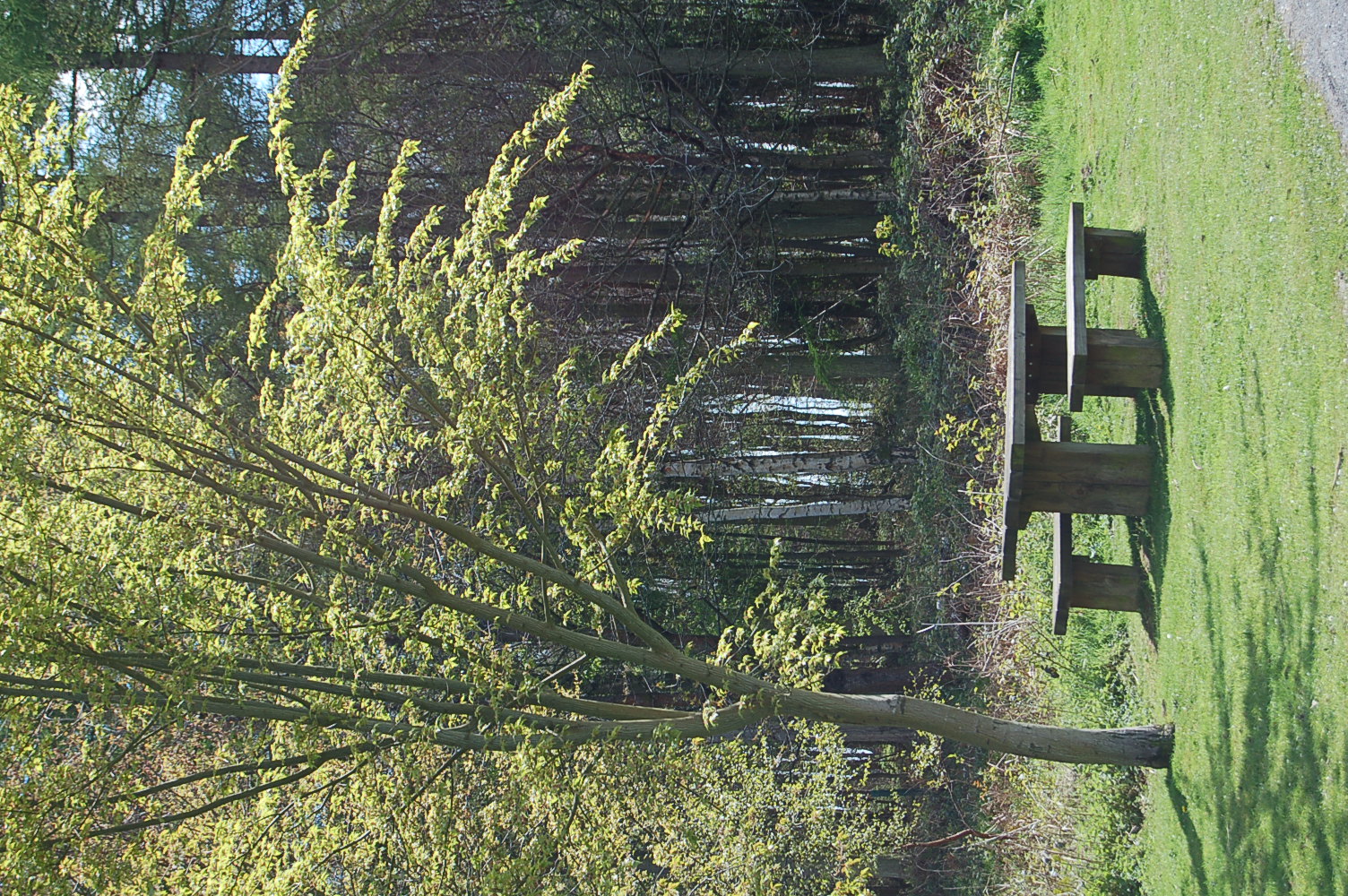
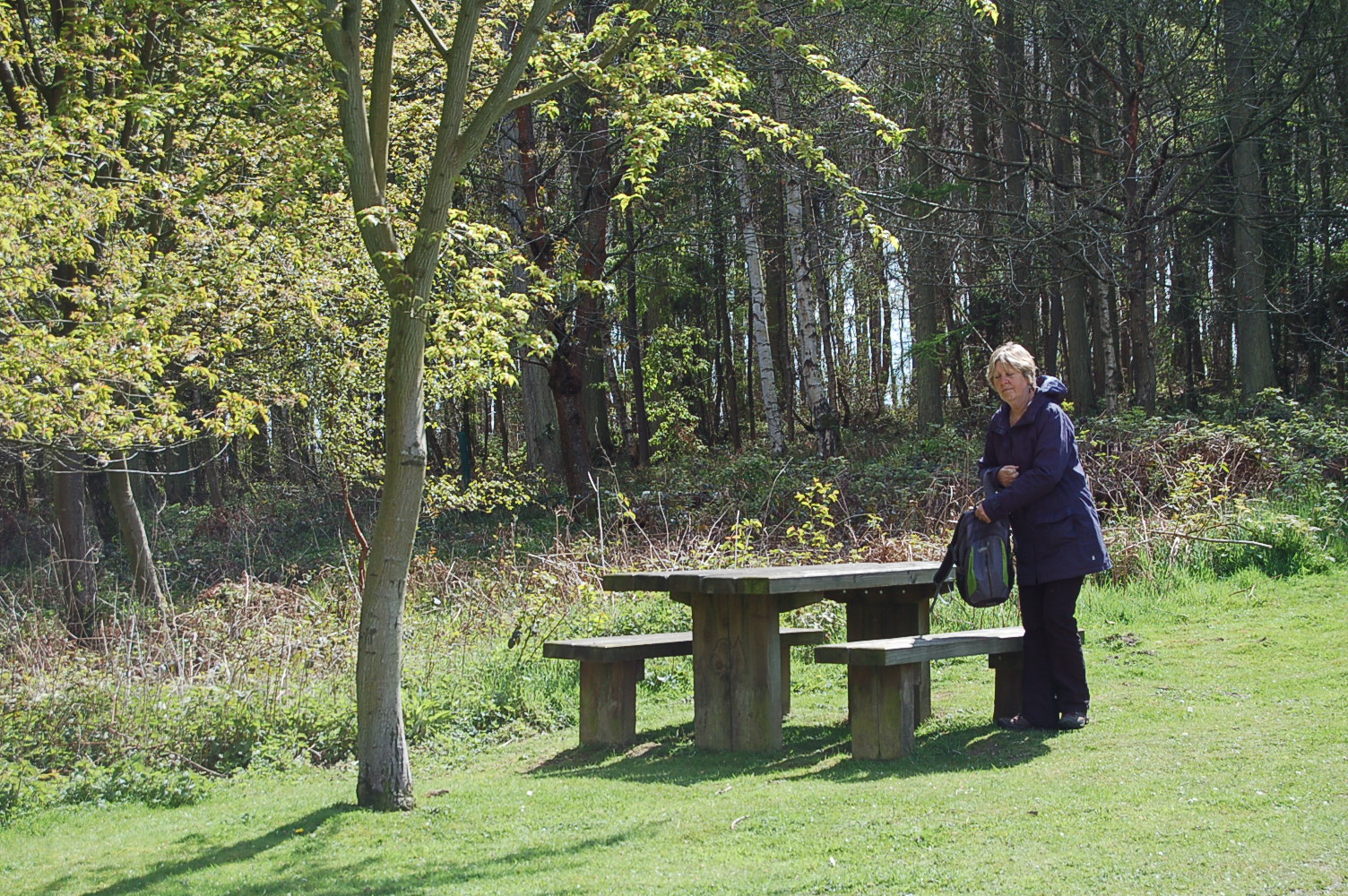
Returning to the car park a picnic bench under a tall maple and sitting in the spotlight of the beams of the sun was most tempting.
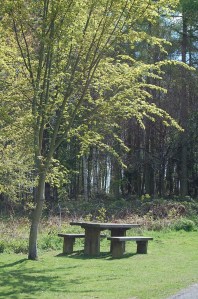
It was definitely too tempting for Jude and I as we still had a little coffee to enjoy and some apples and pears to accompany it.

Categories
allotments birds community gardening fruit and veg garden photography garden wildlife gardening grow your own meadows natural pest control wildlife

A Wander around our Allotments in April

The key moment in April came when our allotments featured in a national gardening magazine, “Grow It”. A great article full of photos! And then towards the end of the month the lottie chairman, John and I were interviewed by Matt Biggs for an article in the “Edible Garden” magazine. (Please excuse the name dropping!)

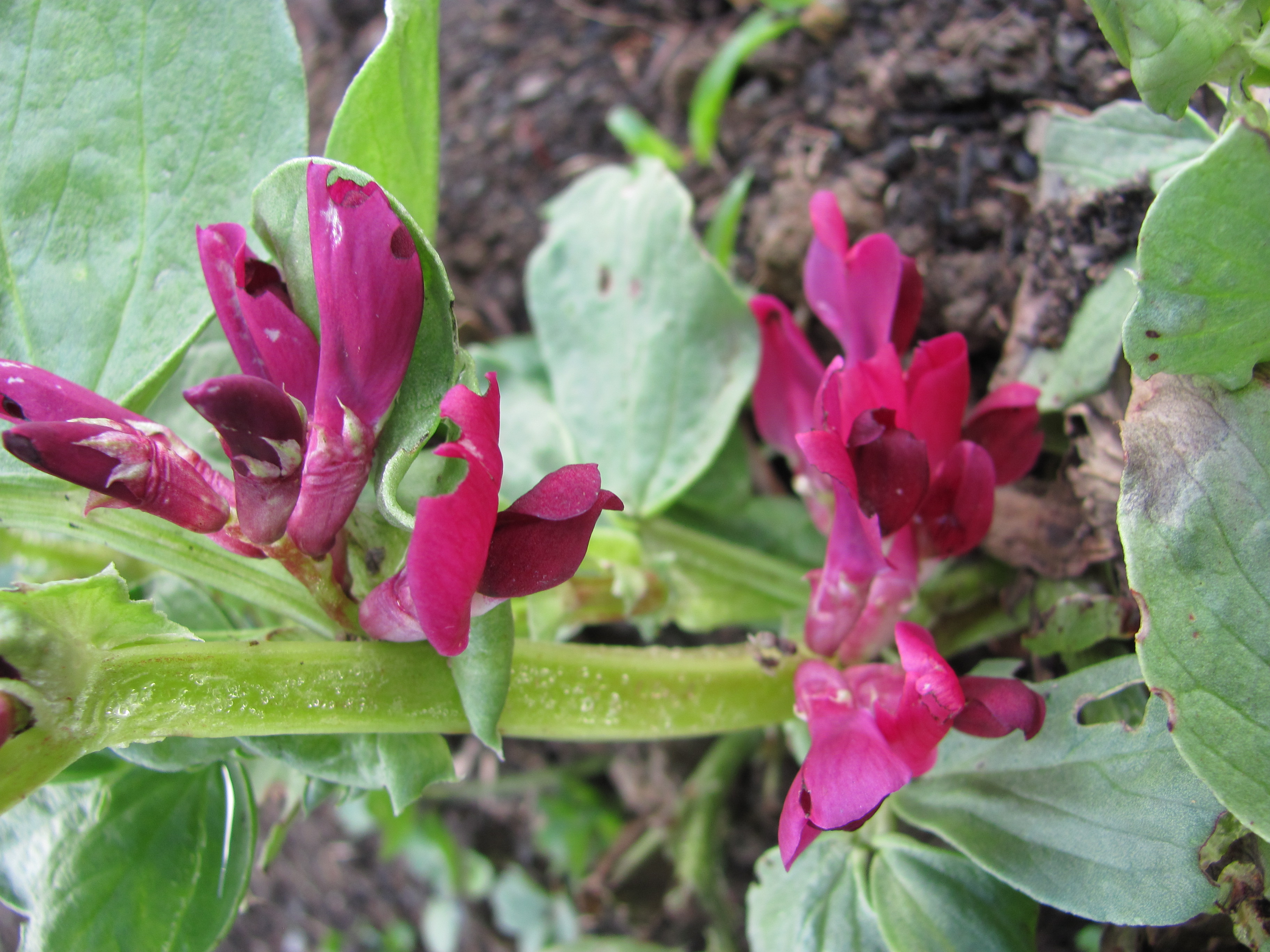
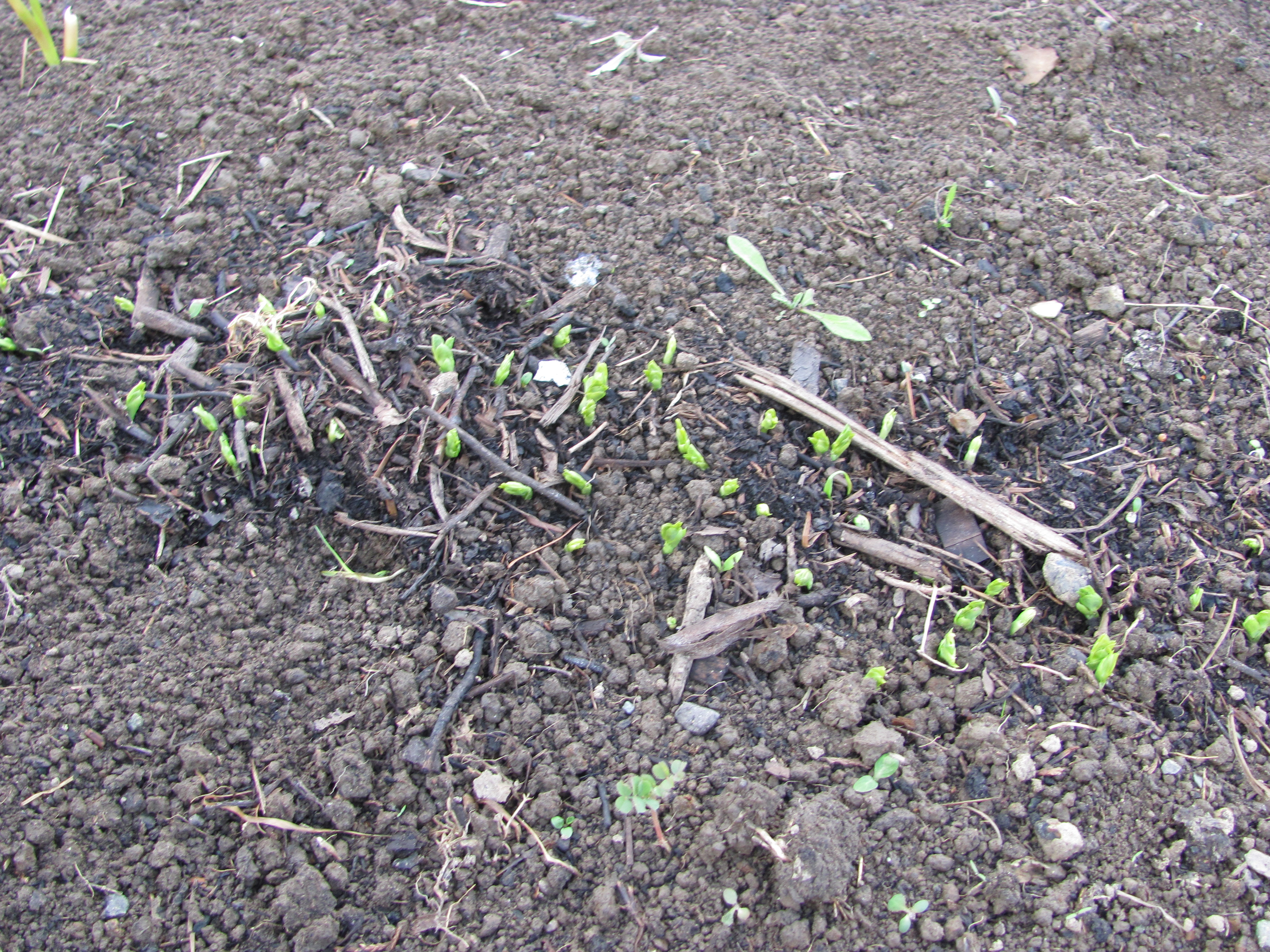
So let’s take a wander around the site starting at our own plot, number 37, where the last of the leeks are still in the ground but the kale is beginning to go to seed. Seeds we sowed a few weeks ago are now germinating and popping their heads above the soil. The autumn sown broad beans are flowering as are our currants and gooseberries. So it is all systems go.

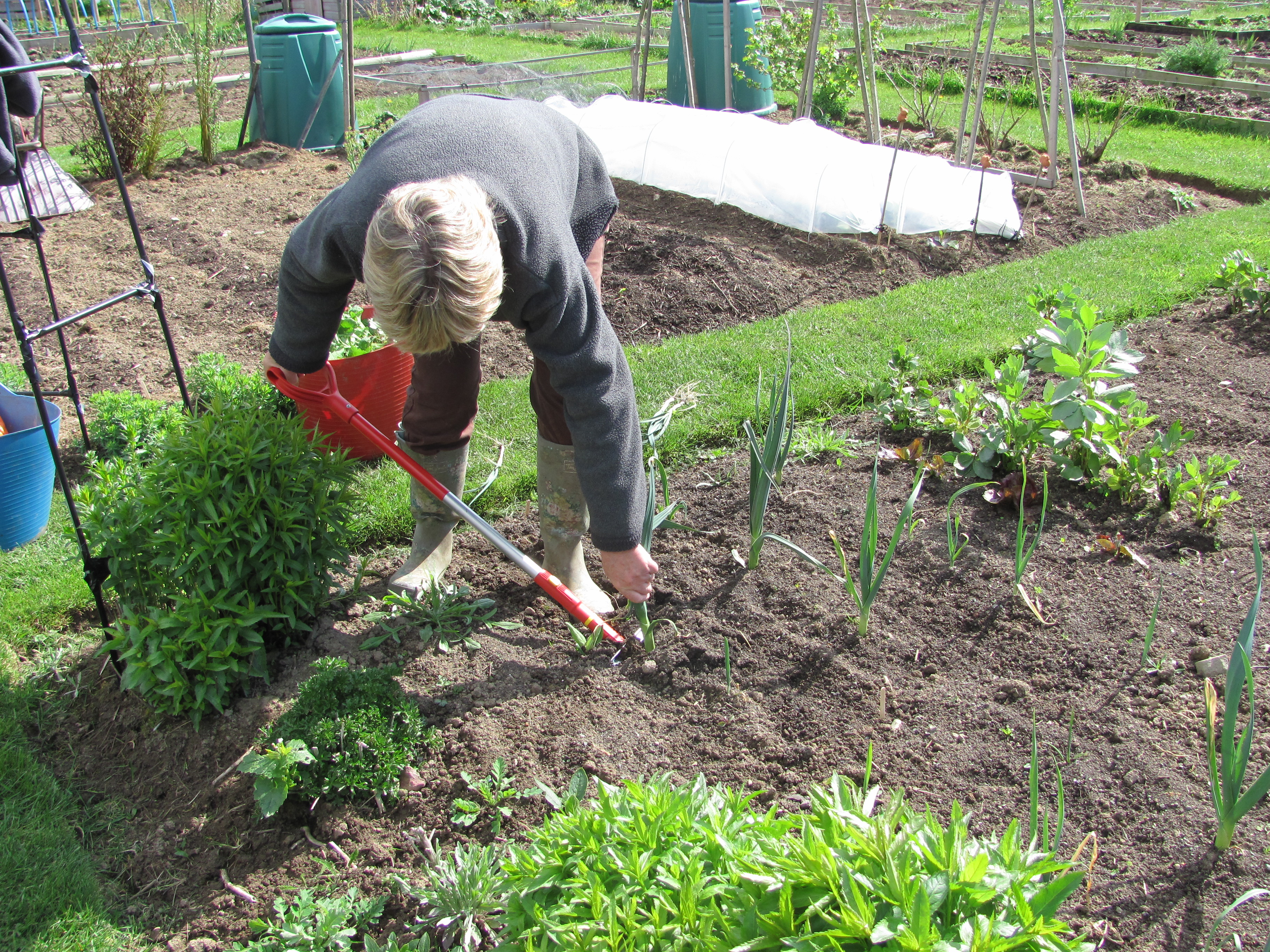
Jude harvesting the last of the leeks with our Wolf weeding tool.
Shed painting - not our favourite job!
The green roof of our insect hotel.
The incredibly coloured flowers of Crimson-flowered Broad Bean.
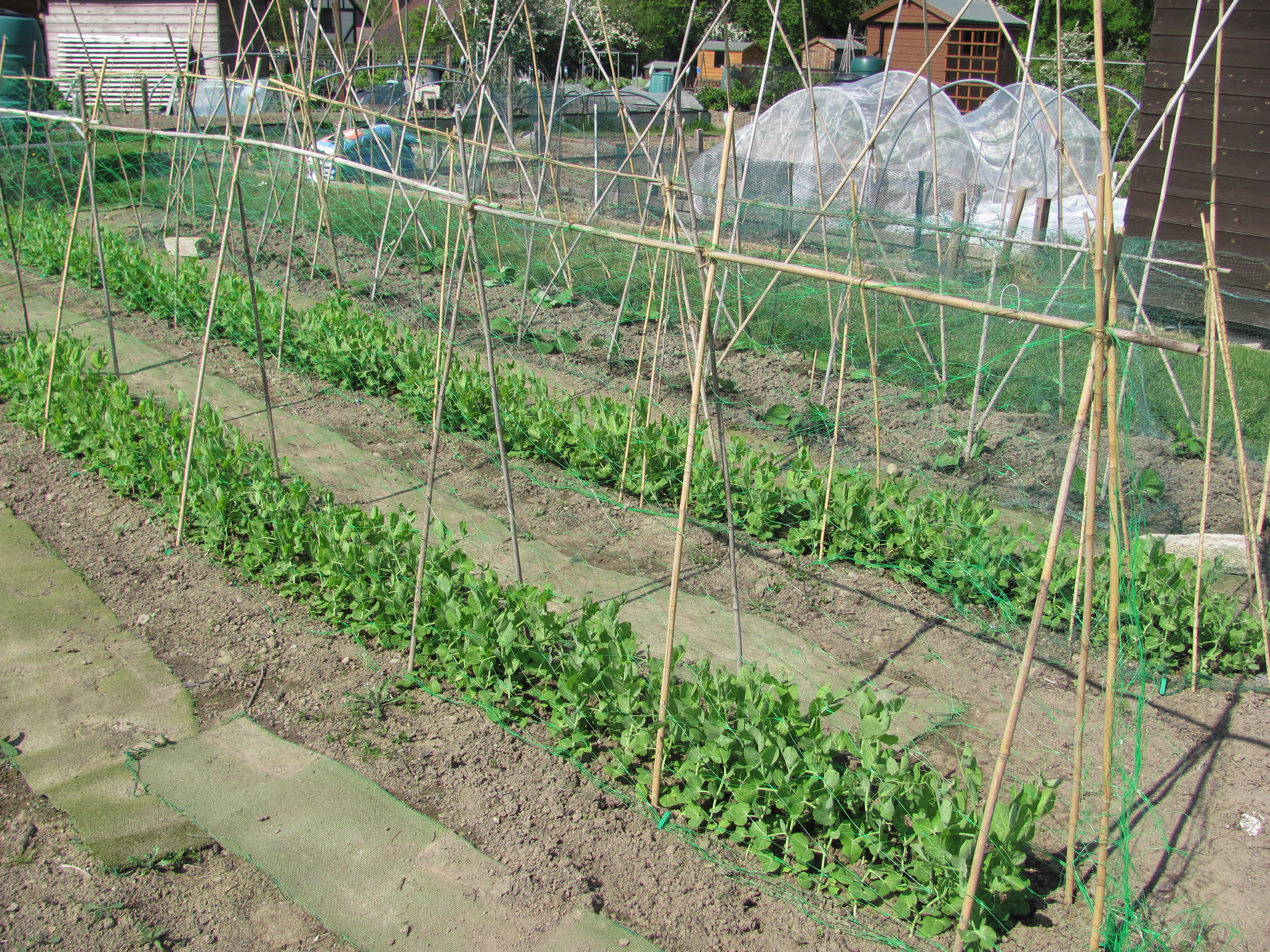
New seedlings of early peas.

As we began our wander we were pleased to see two families from the nearby estate wandering around our interest trail with their children. Later they were sat in the willow dome reading stories. This is what community allotments are all about! We shall start our wanderings at Hut 2, one of our communal huts and move on to the Autumn Garden, one of our “Gardens of the Seasons”.

Colourful welcome to Hut 2, our information centre.
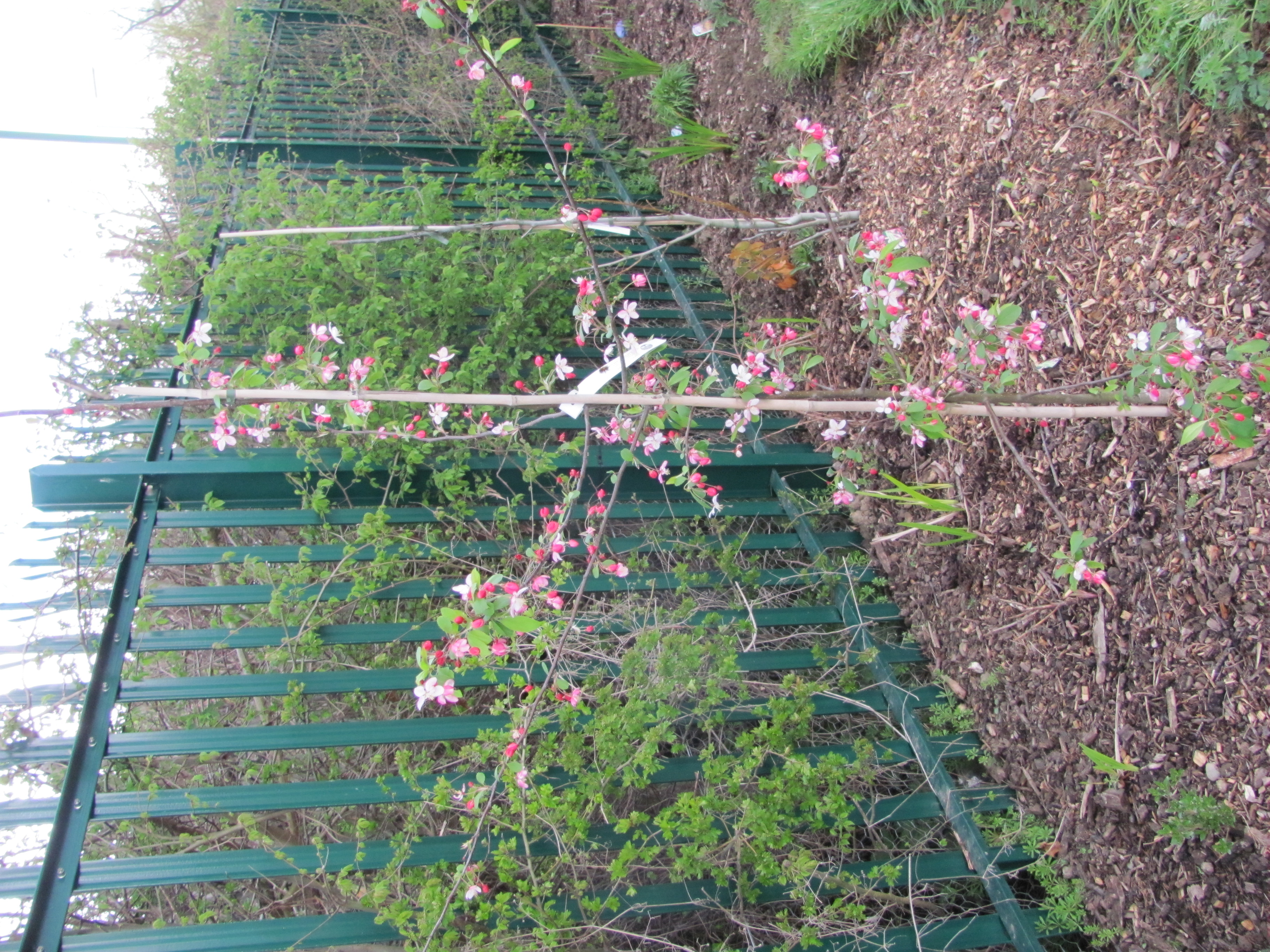
A species crab apple, Malus floribunda, is a recent addition to the Autumn Garden.
We planted the malus to attract bees - it works!
Japanese maples grow in the dappled shade of the trees in the Autumn Garden

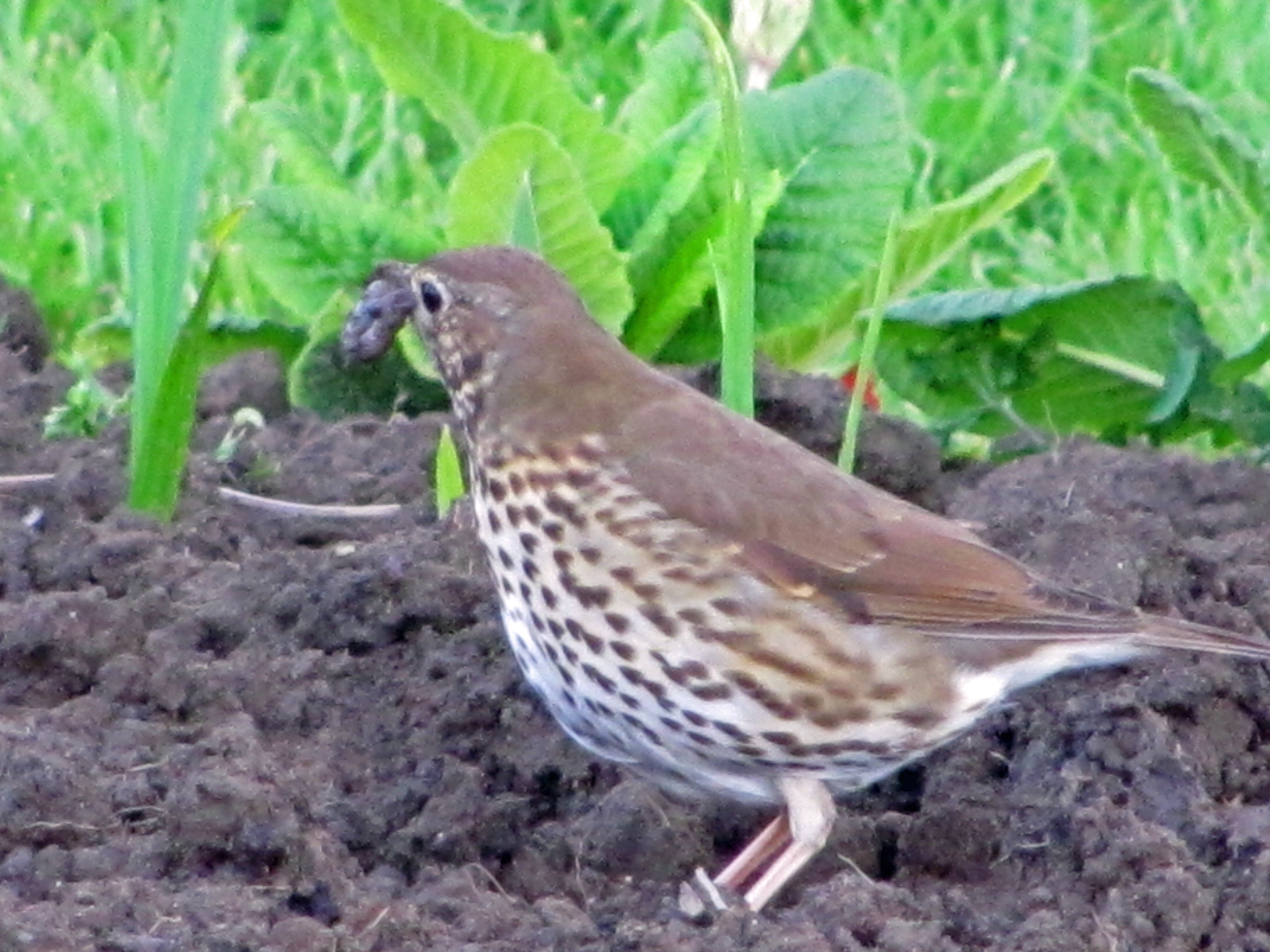
Moving on from the Autumn Garden towards the first communal orchard we follow a native hedge in which for the first time a Song Thrush has nested. the parents are busy feeding their young and collect worms and bugs from plots right under the noses of the gardeners.

Thrush collecting food for its youngsters.
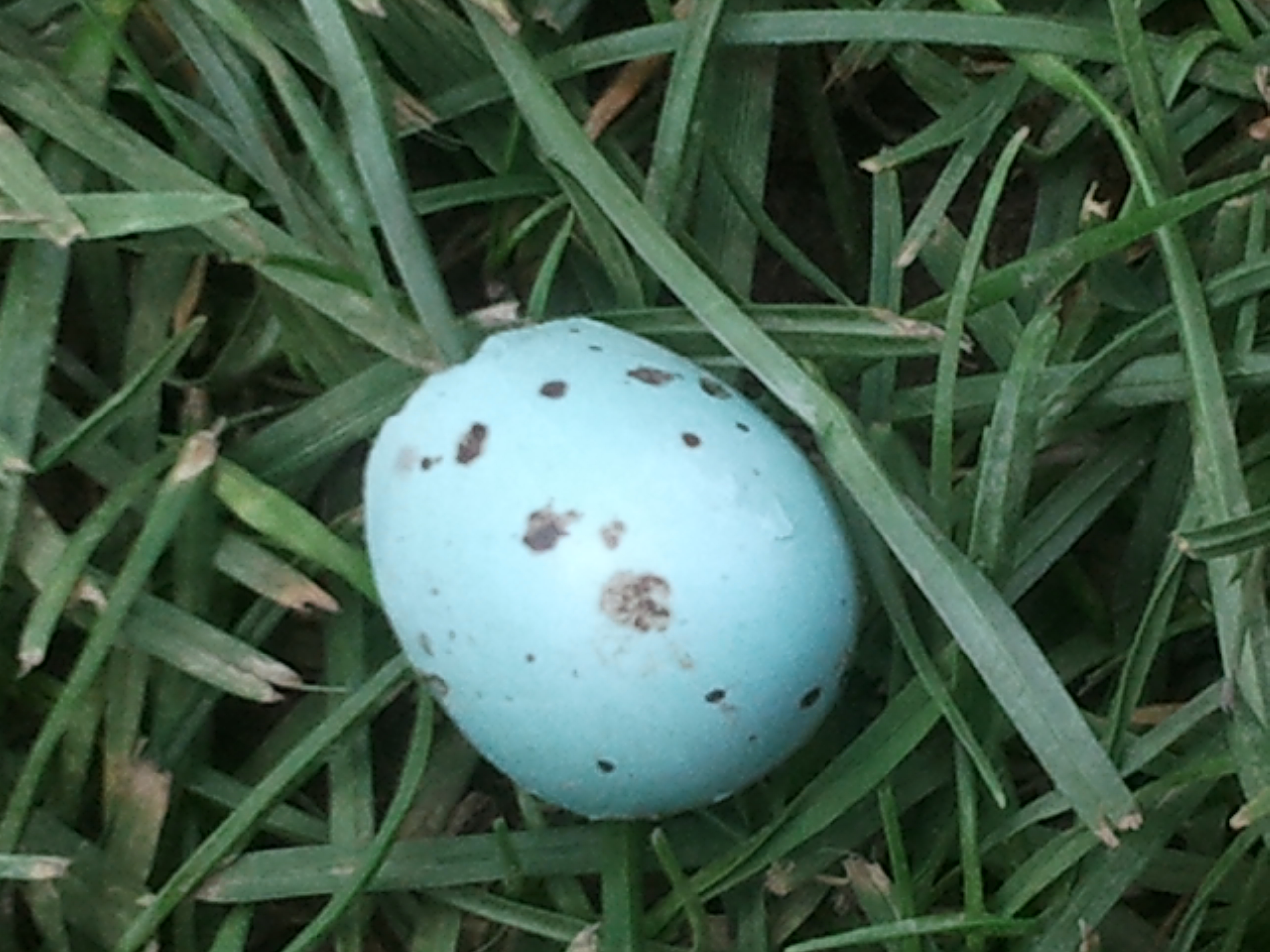
The empty thrush egg we found a few weeks ago alongside the hedge.
We are trying to encourage wise watering on the plots so lots of new guttering and butts are appearing.
Ready for action.
Have the crows got their own back?

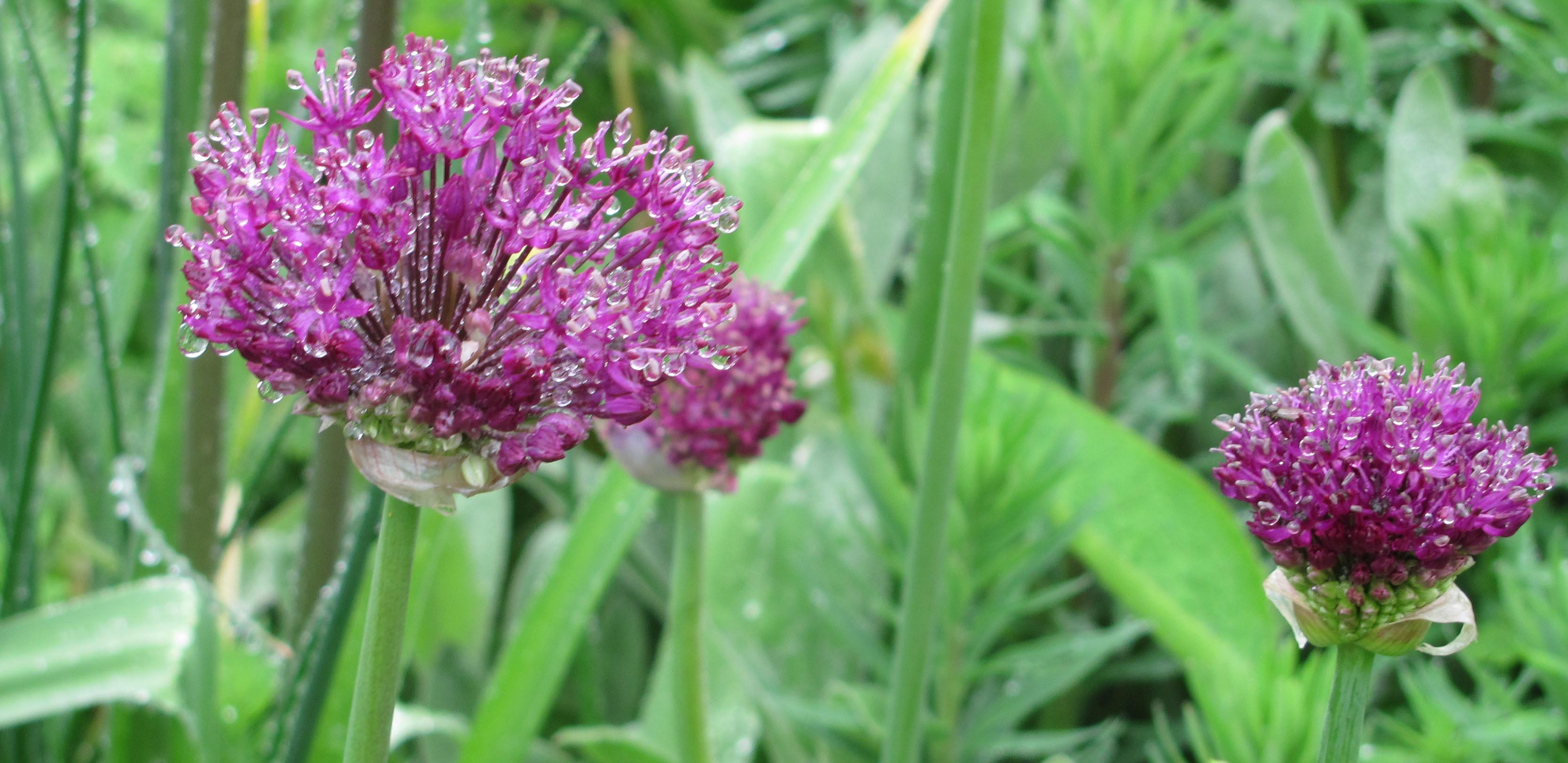
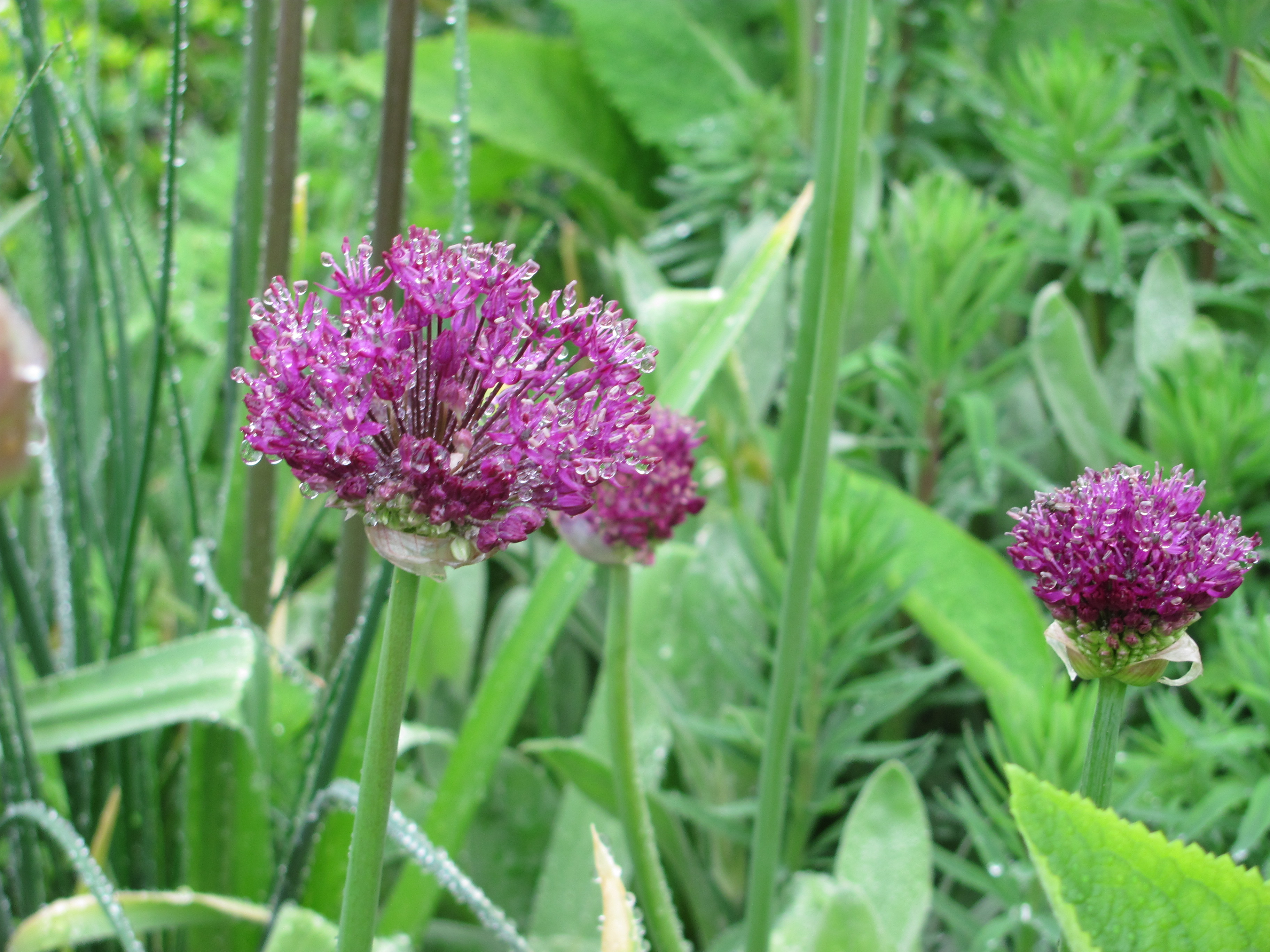
In Crowmeole Orchard flowering spring bulbs are coming to an end as Camassias and Allium push up their flowering buds. The apples, pears and plums are covered in pink or white blossom.

Blackthorn - bees love the blossom, birds love the fruit and allotment holders love to make sloe gin from them.
Homes for beneficial insects who will help pollinate the fruit and predate on pests.
The Fruit Avenue getting more colourful by the day.

As we wandered through this orchard a flock of Long Tailed tits in their pink and brown livery flew off in the bouncing flight pattern,  having fed on the peanuts in the feeders. Their long trailing tails followed on. We moved on following paths between plots towards the Spring Garden and Sensory Garden near the old oak tree. Plots are full of ridged rows of sown potatoes and white plastic plant labels marking newly sown rows.

Phil and Doreen have planted up a border alongside their plot.
Several plot holders are topping up their paths with wood chip.
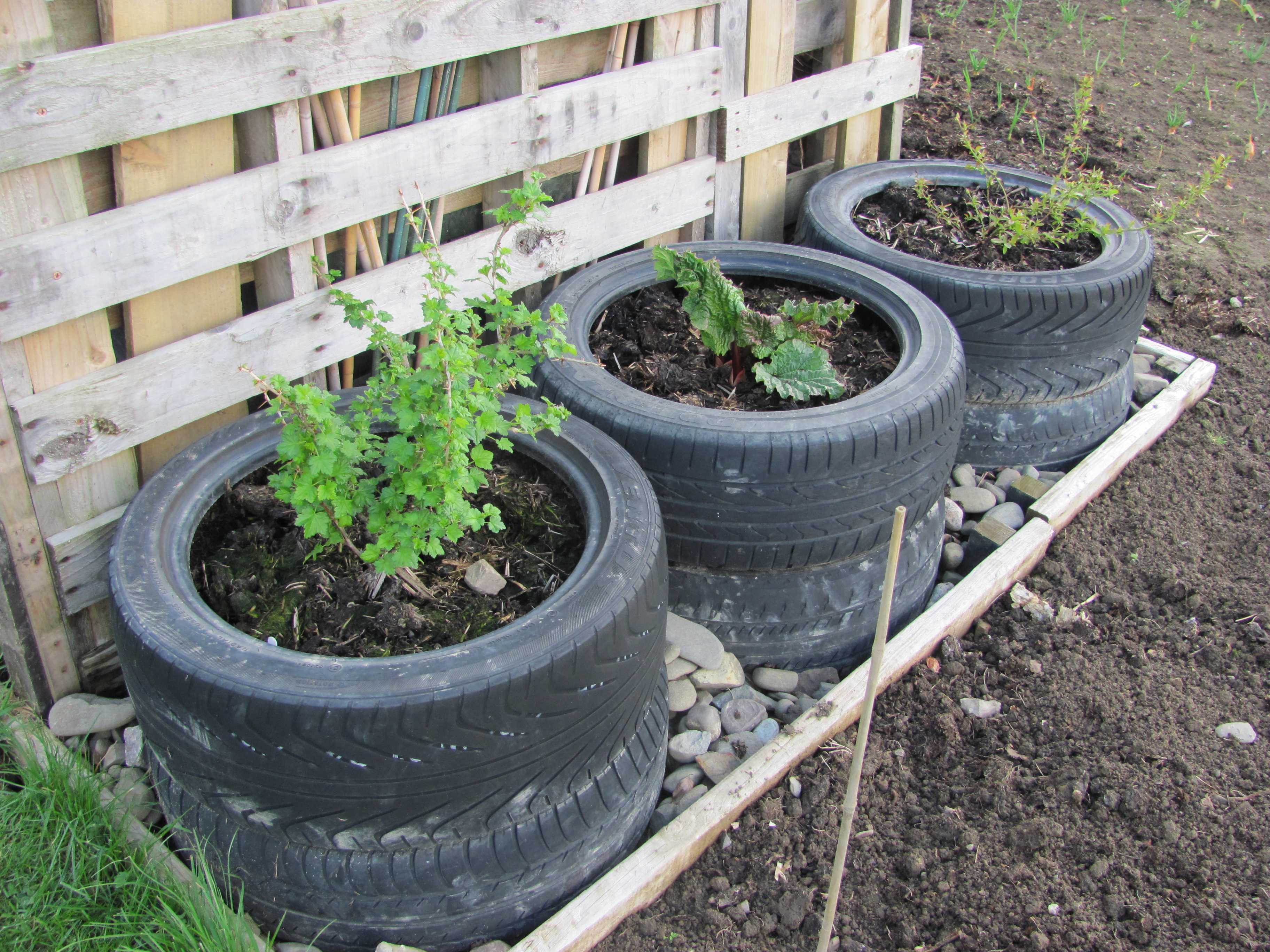
Alan's tyre beds.

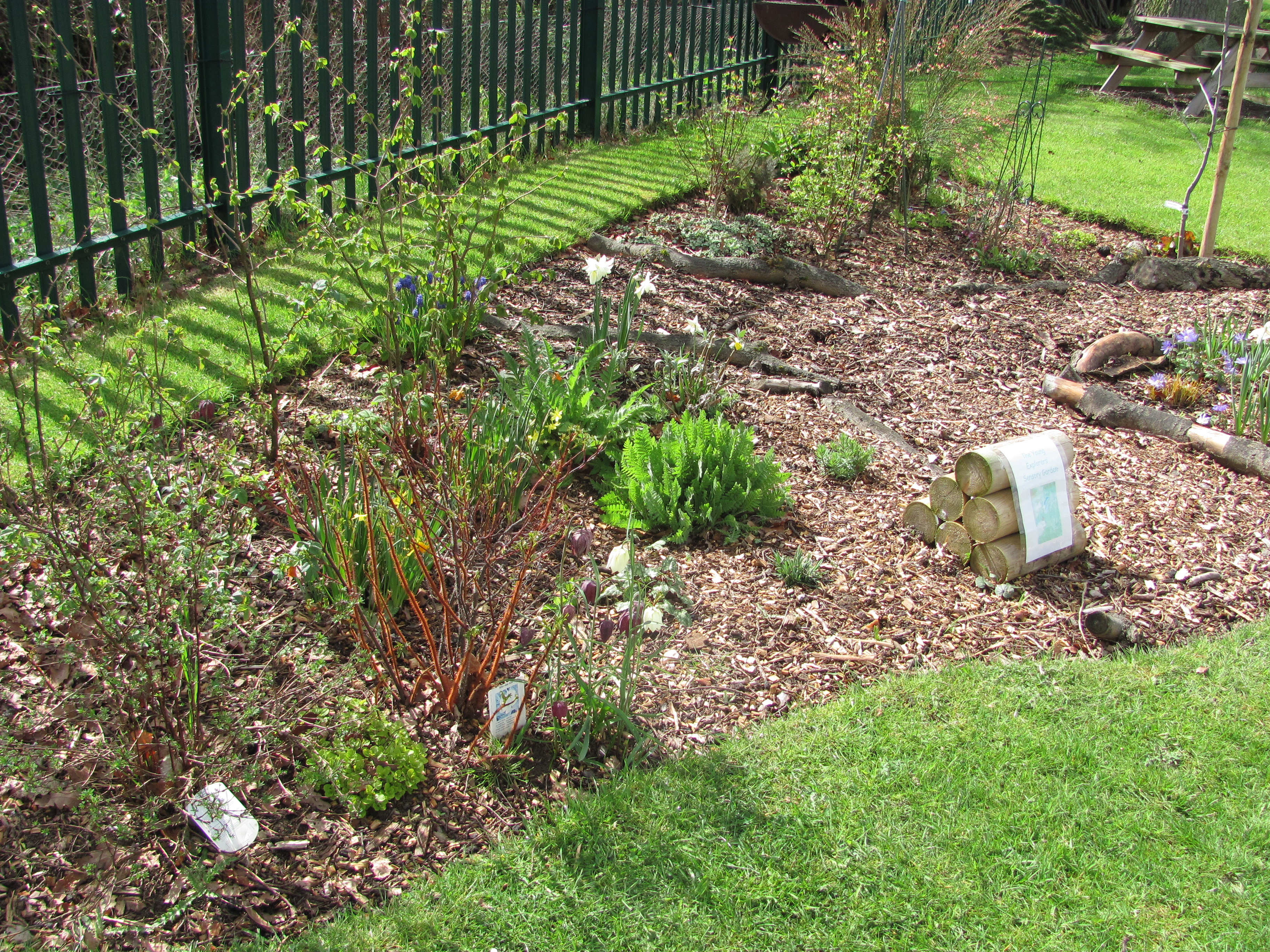
The Spring Garden in its second spring is looking so good and has become a popular place for allotment holders and visitors.

The most colourful spot on the site in April is the Spring Garden.
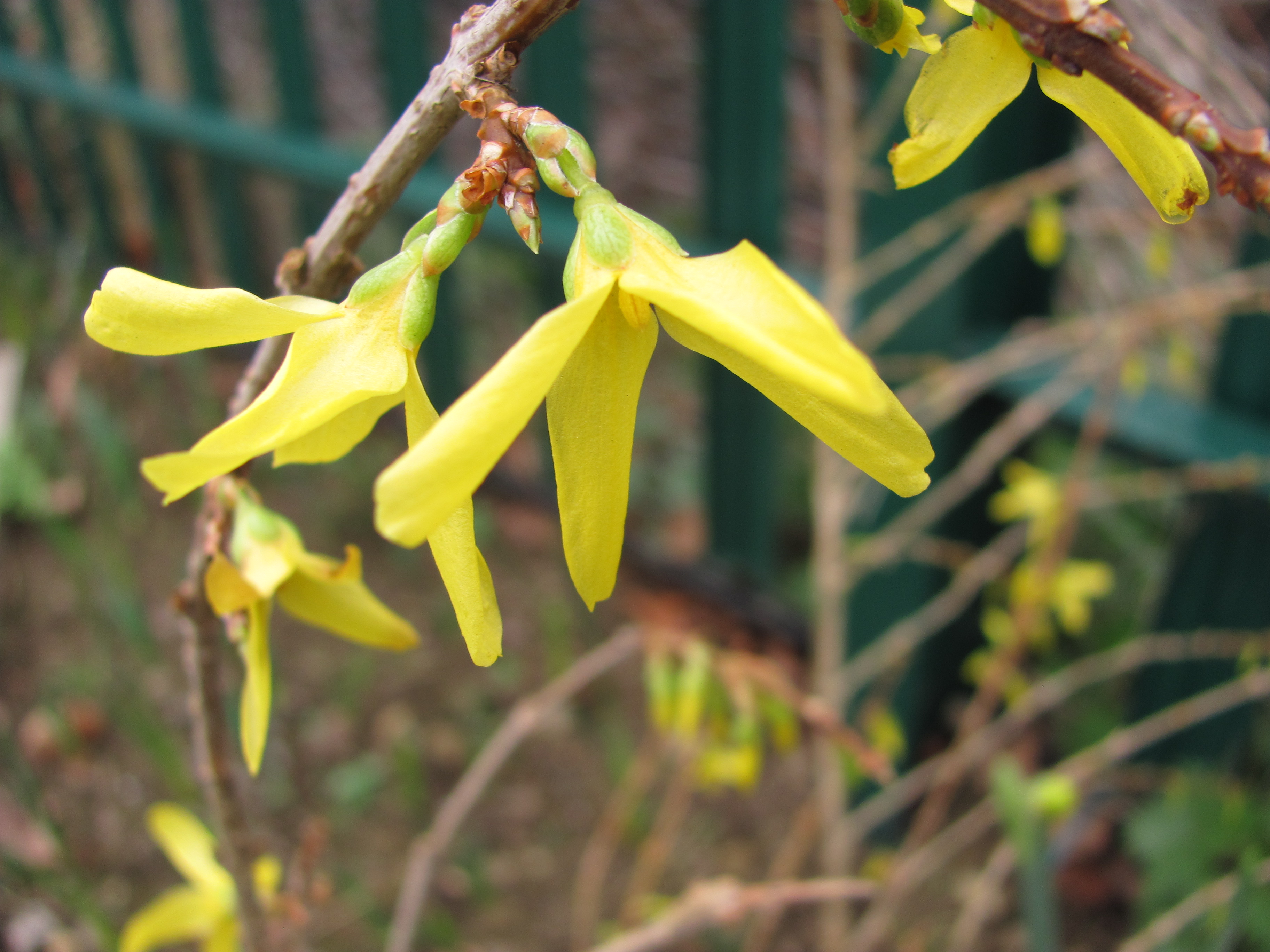
Forsythia flowering in the Spring Garden.
Spring Garden beauty.

Through the Willow Tunnel is one of our many picnic benches where we stop for coffee on our April wanderings. As we enjoyed our brew curlews called in nearby fields with their mournful song and the Great Spotted Woodpeckers flew busily overhead.

We have just started to shape the willows into a tunnel.
The Sensory Garden is growing well now the weather is warming up.

The Winter Garden has passed its peak after being so popular for months. We have been busy giving it a sort out.

The stems of the White Stemmed Rubus look magical in the spring sunshine.
The dogwoods and willows grown for their coloured stems have been pruned hard to encourage fresh wands of growth.
Fresh Fennel foliage in front of a Euphorbia.

We wandered next through the Woodcote Orchard where the paths are cut short and neatly through the long grass, and looked at the Turf Spiral, a favourite of the children.

Follow the trail post down the neat path.
We have been adding another layer of turf to the spiral to create somewhere to sit.

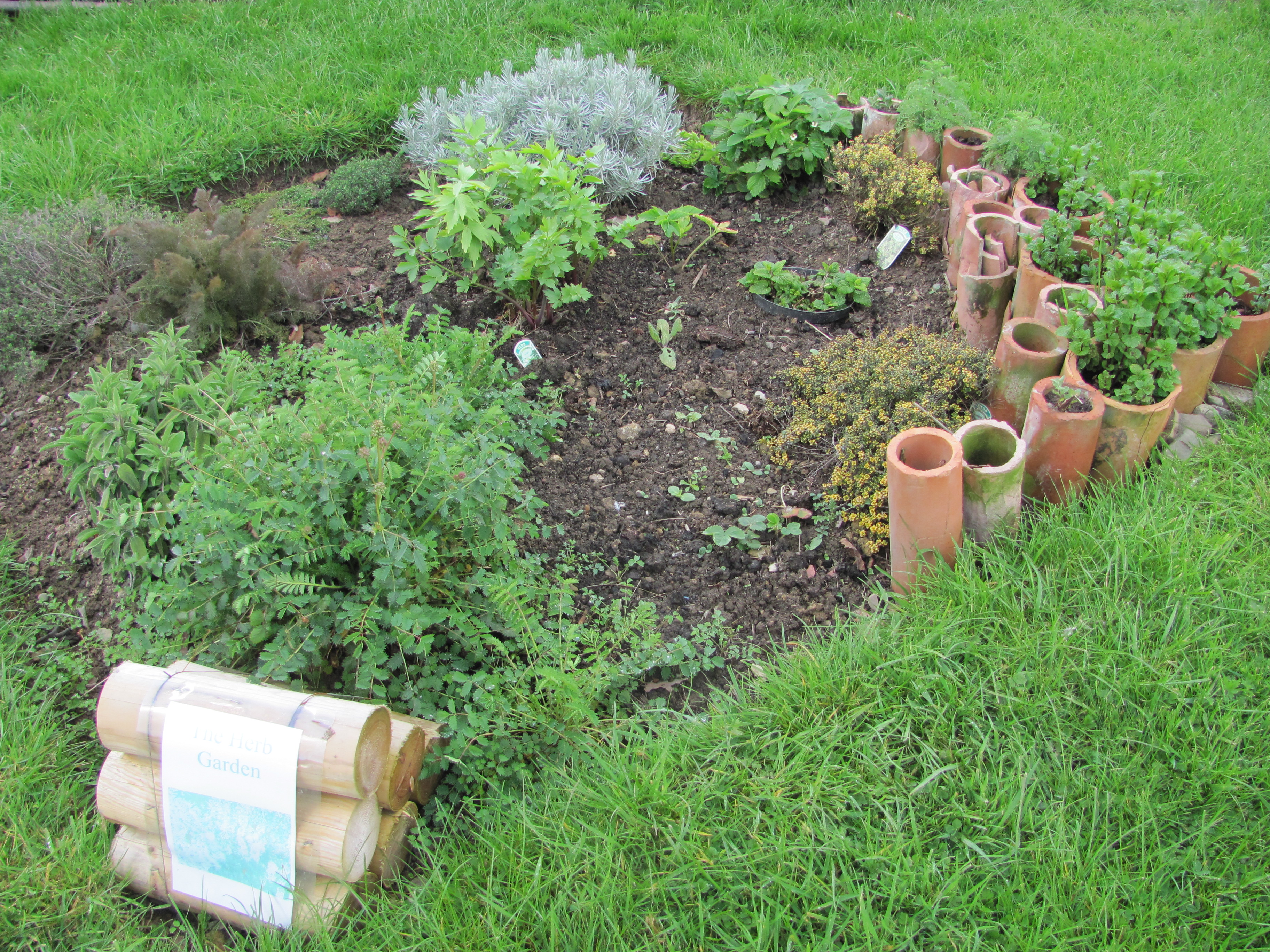
Our final stop on the way back to the car park was the Herb Garden where herbs are now well established. This last section of our lottie wander took a lot longer than the others as we enjoyed a good chat with Dave and Jean. We put the world to rights and shared details of how all our crops were getting on.

Categories
birds garden design garden photography garden wildlife gardening hardy perennials ornamental grasses ornamental trees and shrubs photography shrubs trees

A Wander around our Garden in April.

Flowering Currant and Muscari.

It is already into the fourth month of the year and so this is the fourth in this monthly series of garden wandering posts. So much happens in April, so many plants start into growth, so many seeds are sown and the weather changes so often. Frost, hail, sun, mild, cold, windy, calm – everything comes randomly and we gardeners get caught out inappropriately clothed. Wildlife is equally confused, with bees, hoverflies, butterflies and wasps appearing on warmer days and disappearing as soon as it cools down again.

Taking advantage of some bonus sunshine.

Some spring bulbs are going over while others are in full swing, some tree blossoms are going over while others are just coming into flower. There is so much to do in the garden, productive or ornamental, and it feels good to be out there doing it.

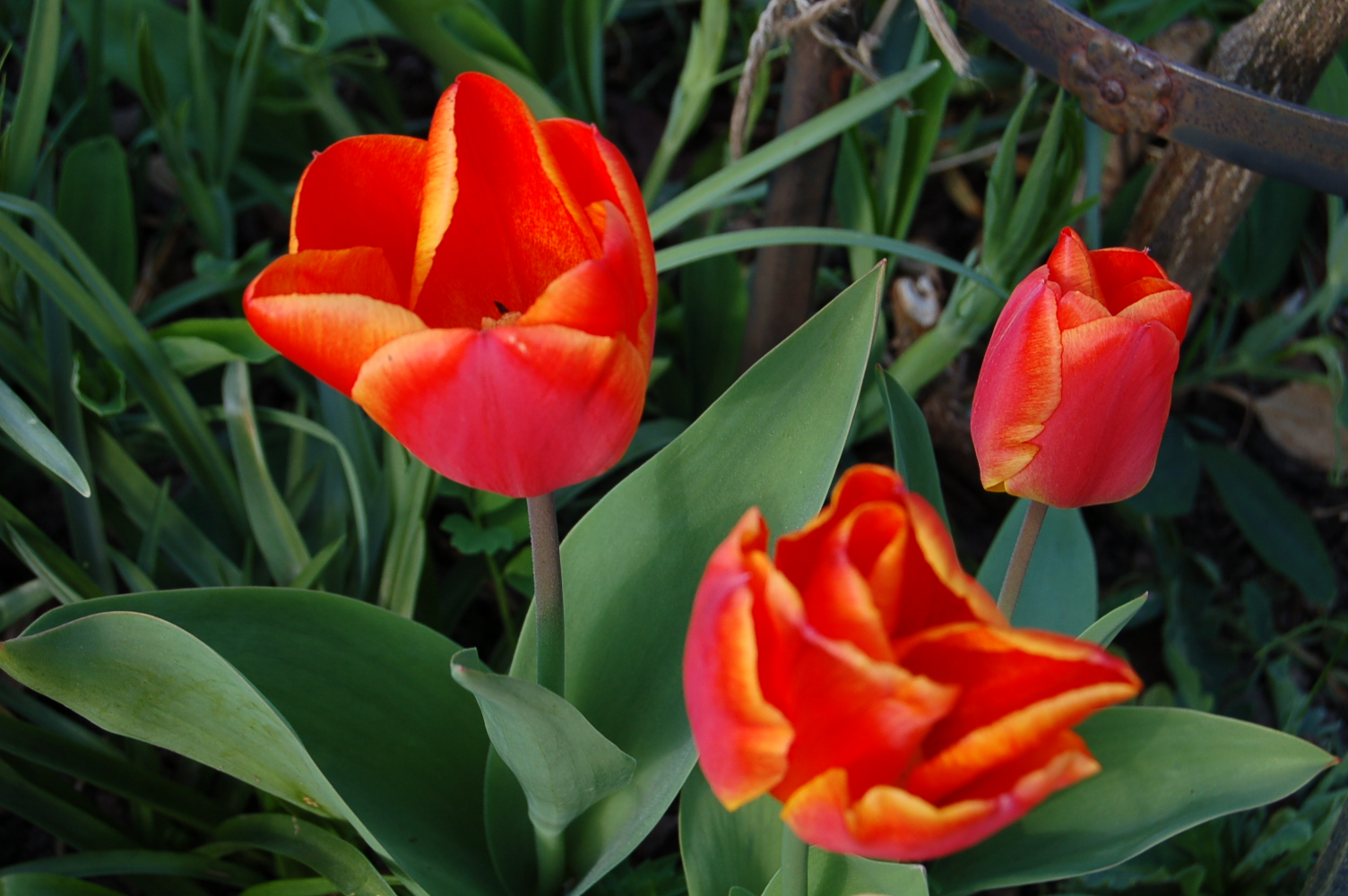
How red can a flower be!

As soon as April arrives we know the garden will look and feel differently every day. Come around our garden with me and my camera and see what is going on.

The front garden glows in the afternoon sunshine, with every shade of green in new herbaceous growth splattered with the many colours of bulbs.

The Hot Border.
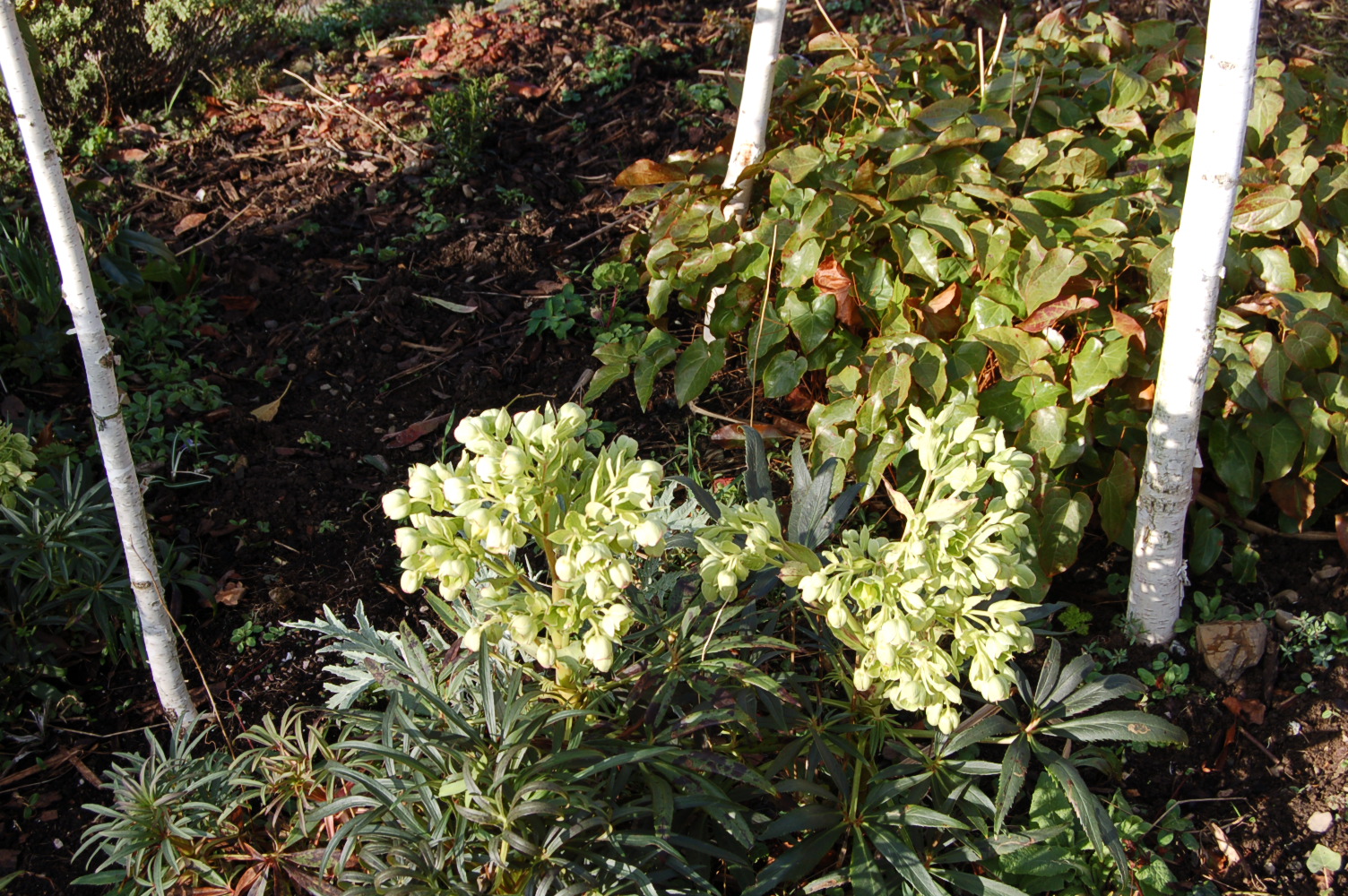
Euphorbias below white-stemmed birches.

The Shade Garden is soon to reach its peak time, with its fresh leafy growth and the tiny, pale jewels of flowers. Pulmonarias, Dicentras, Anemones, Arums and Corydalis are all budding up and beginning to flower while the ferns are hardly showing any signs of awakening.

The Shade Garden bursting into life.
China blue pulmonaria.
Pale pink pulmonaria.
Silver splashed Arum leaves.
Primrose yellow Anemone.

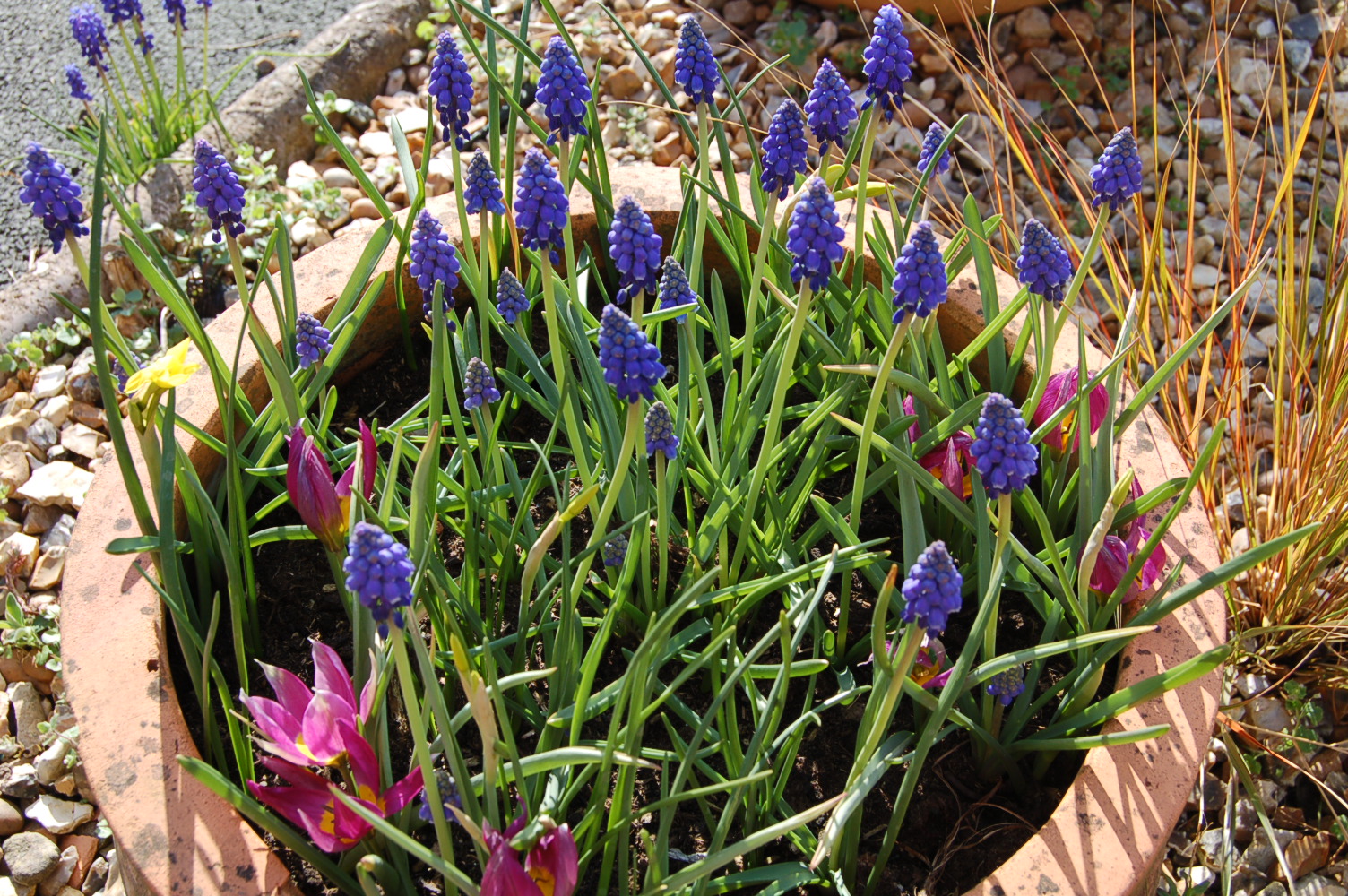
On the gravel patch, which we call our “Chatto Garden”, new foliage is bursting through. Irises, Euphorbias are starting into healthy growth. The large terra-cotta pot of bulbs is bubbling over with the blue of Muscari and a sprinkling of tiny mauve species Tulips.

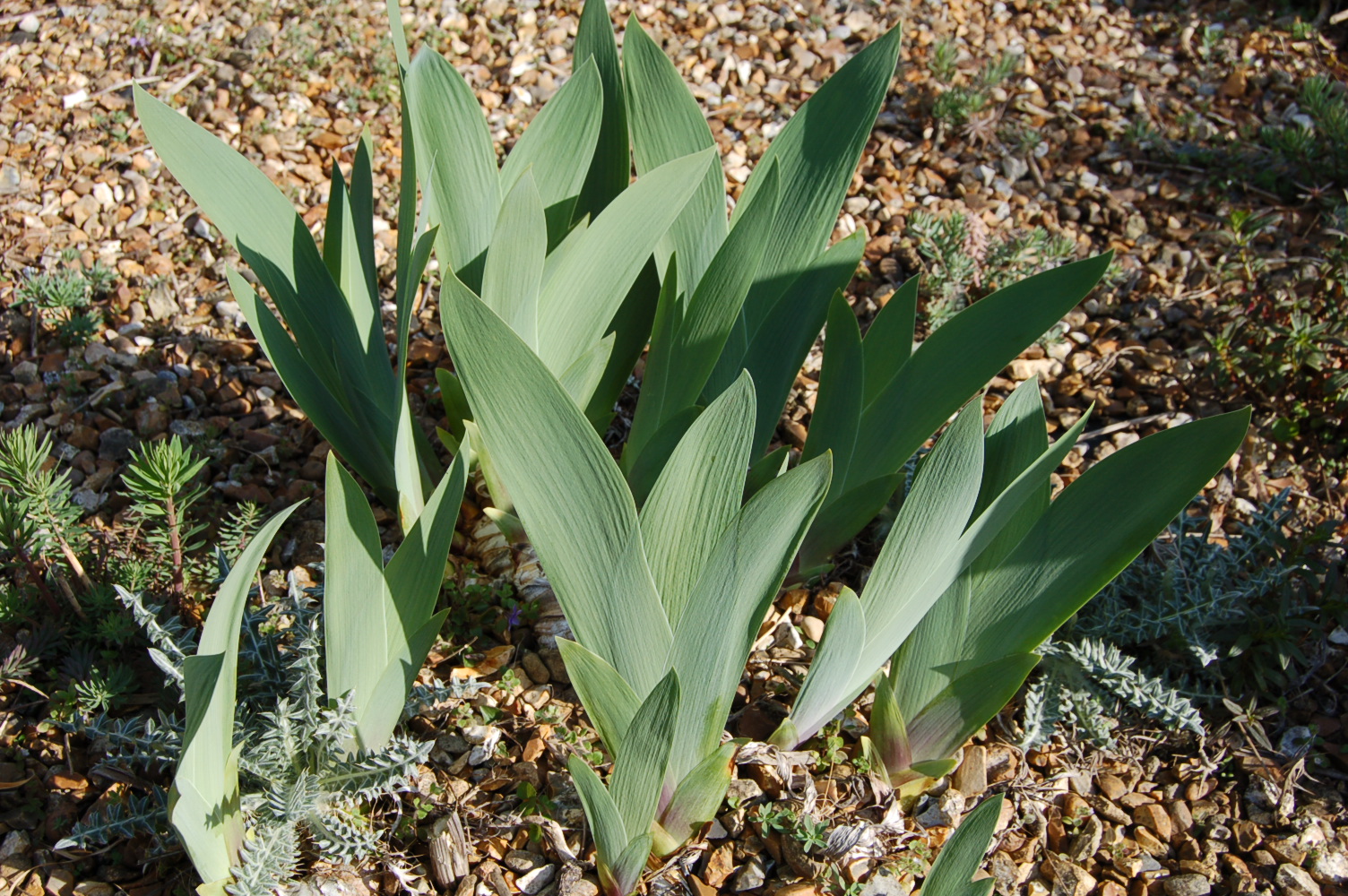
The glaucous sword shaped iris leaves.
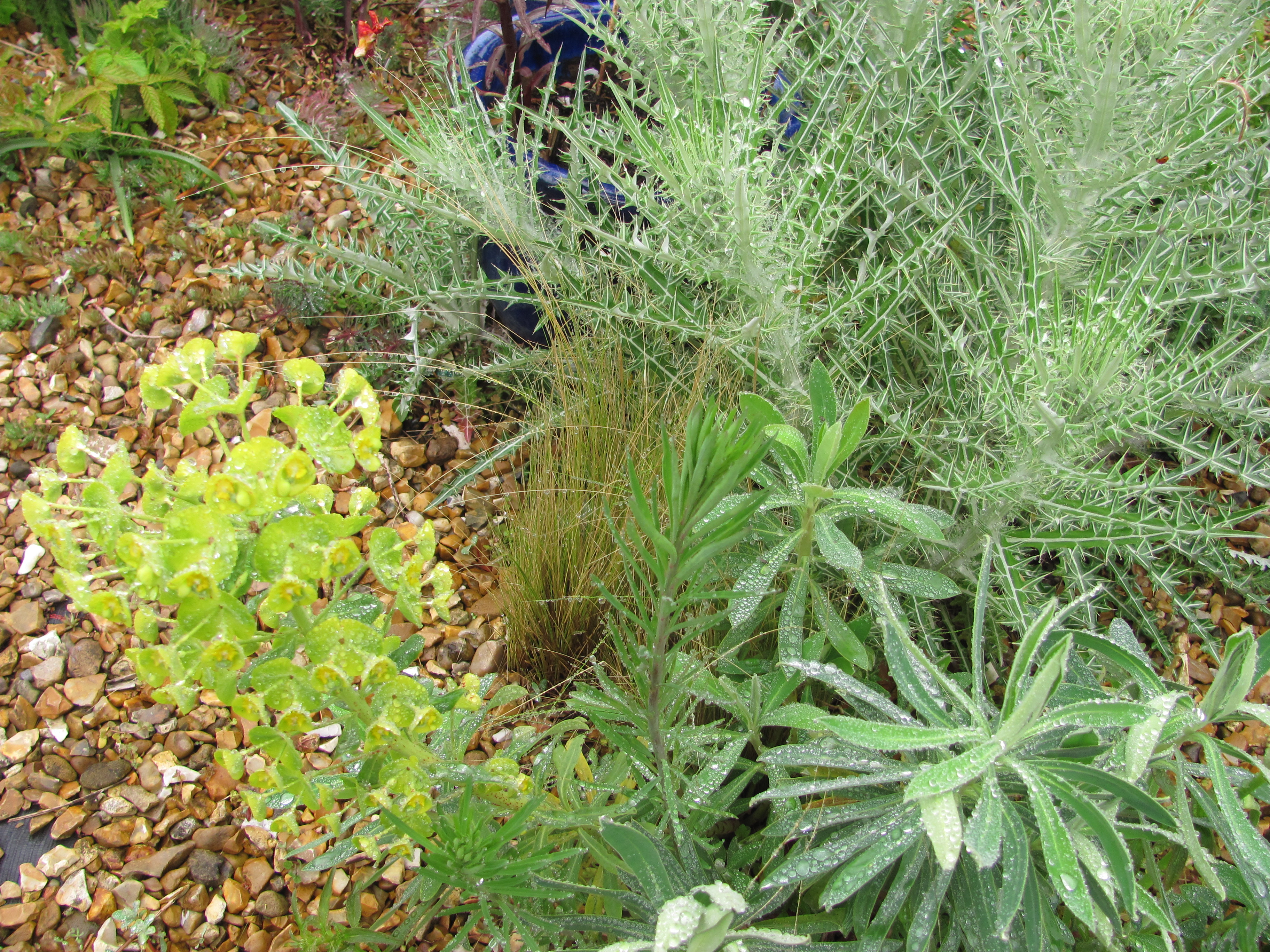
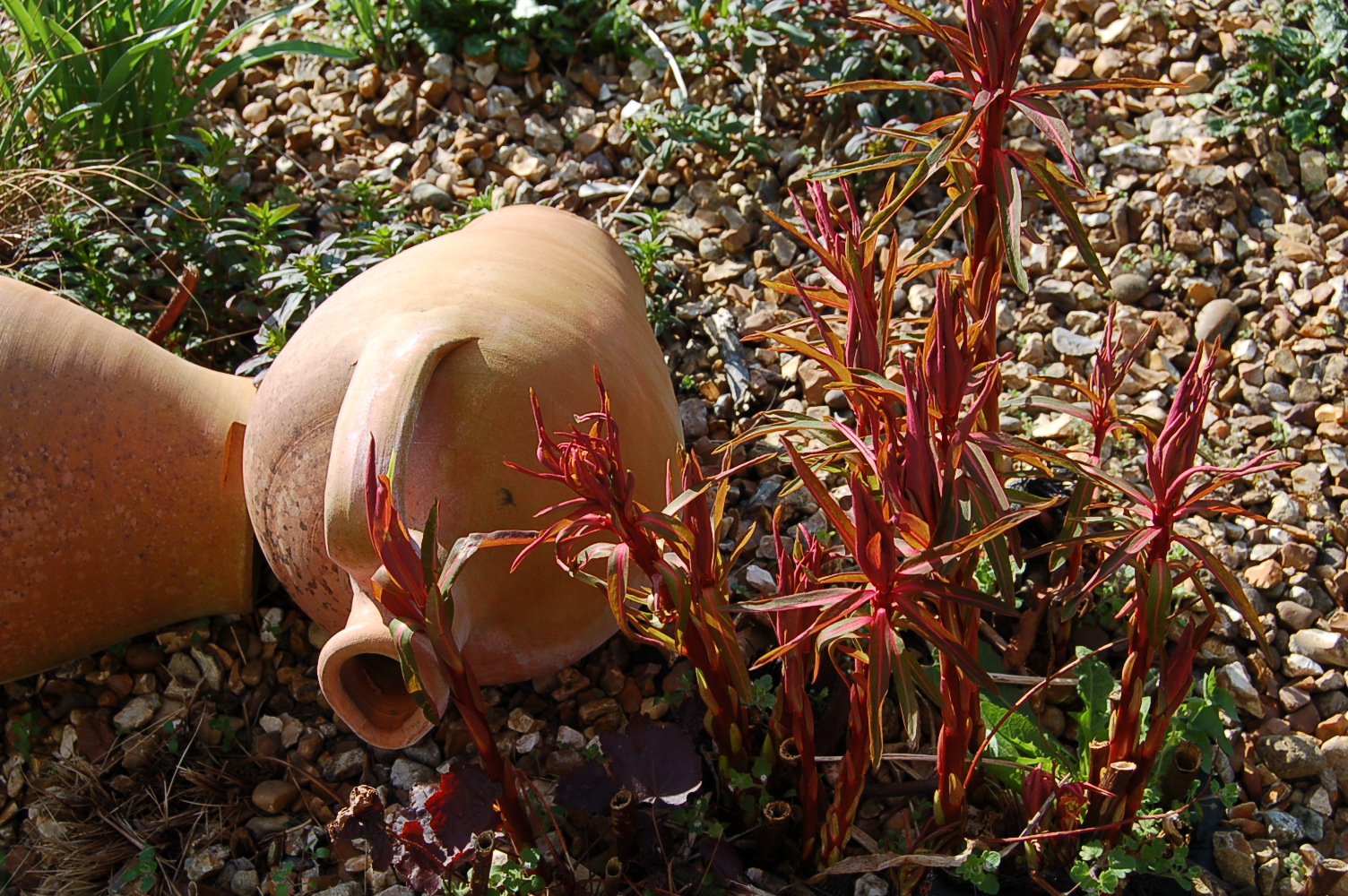
Spears of Euphorbia griffithii "Dixter" piercing the gravel.
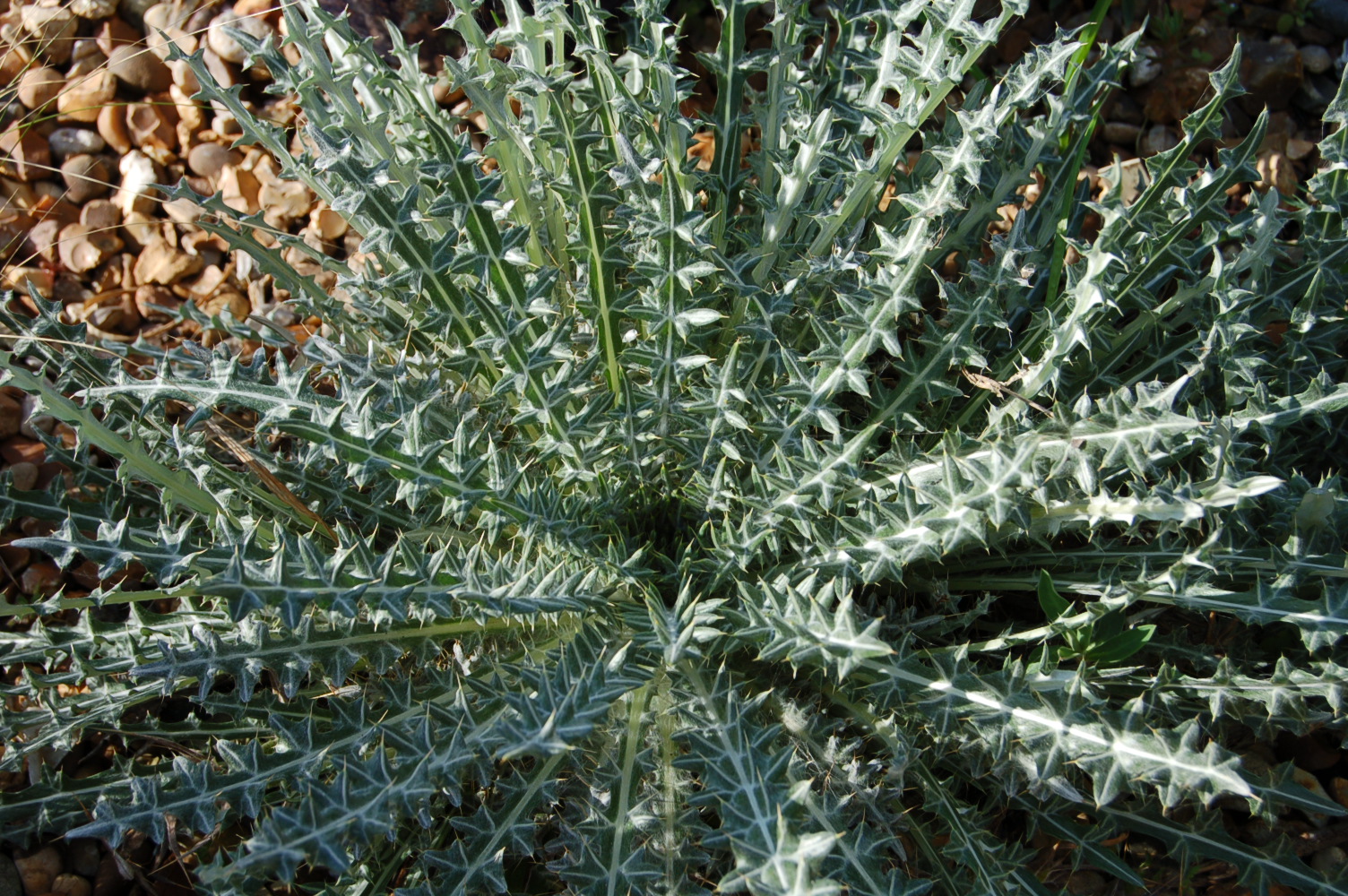
The thistle like spiked and variegated Galactites tomentosa.
Muscari blue and tulip mauve give a gentle colourway to the big pot.
Bright welcome at the gate - yellow Mahonia and red Cydonia.

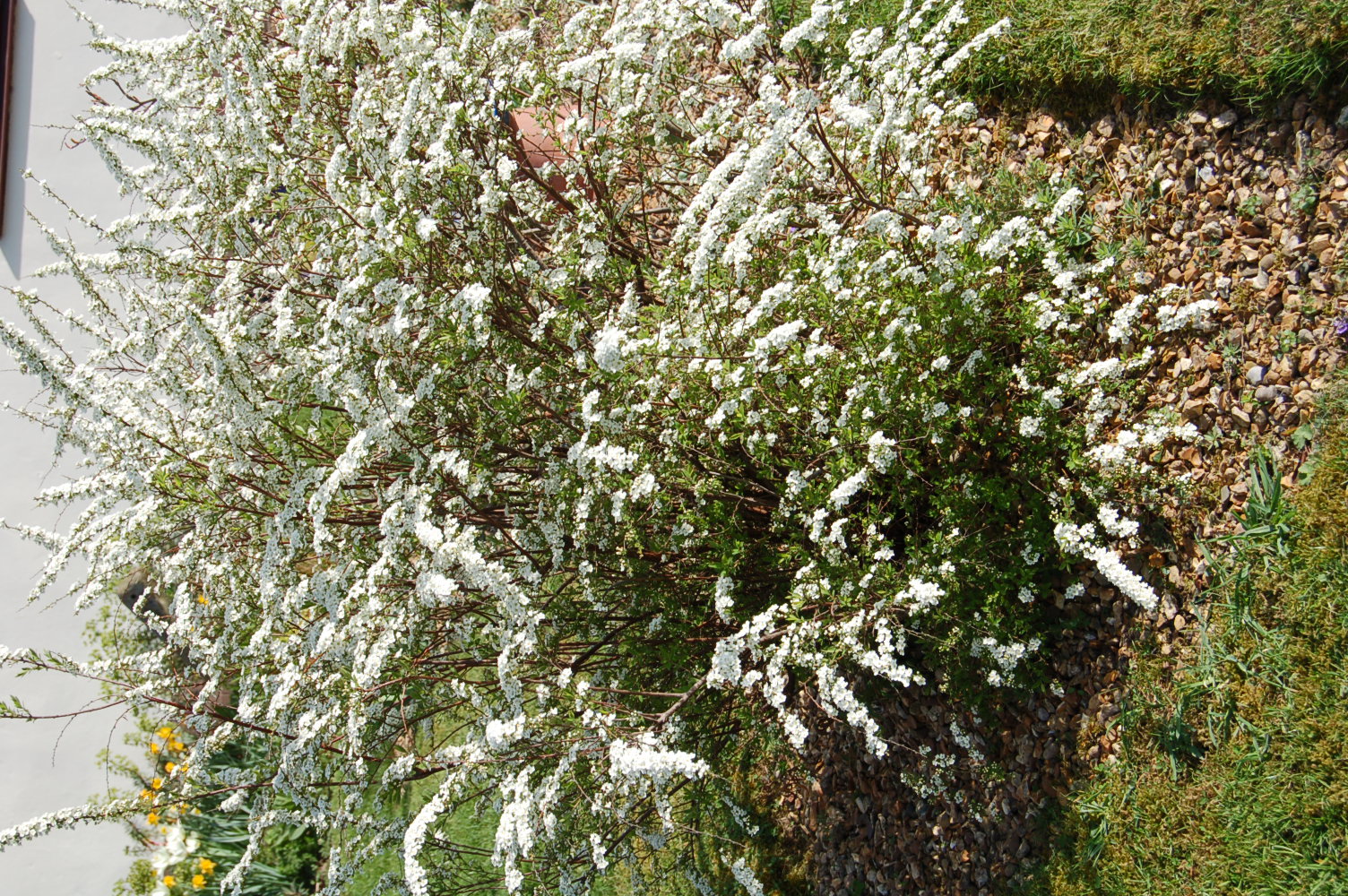
Trees and shrubs are a little later coming to life in the spring, the miniature Chestnut’ sticky buds are only just bursting while the Amelanchier lamarckii and Spiraea “The Bride” are in their full white ball gowns.

"The Bride" is always such a good arching shape.
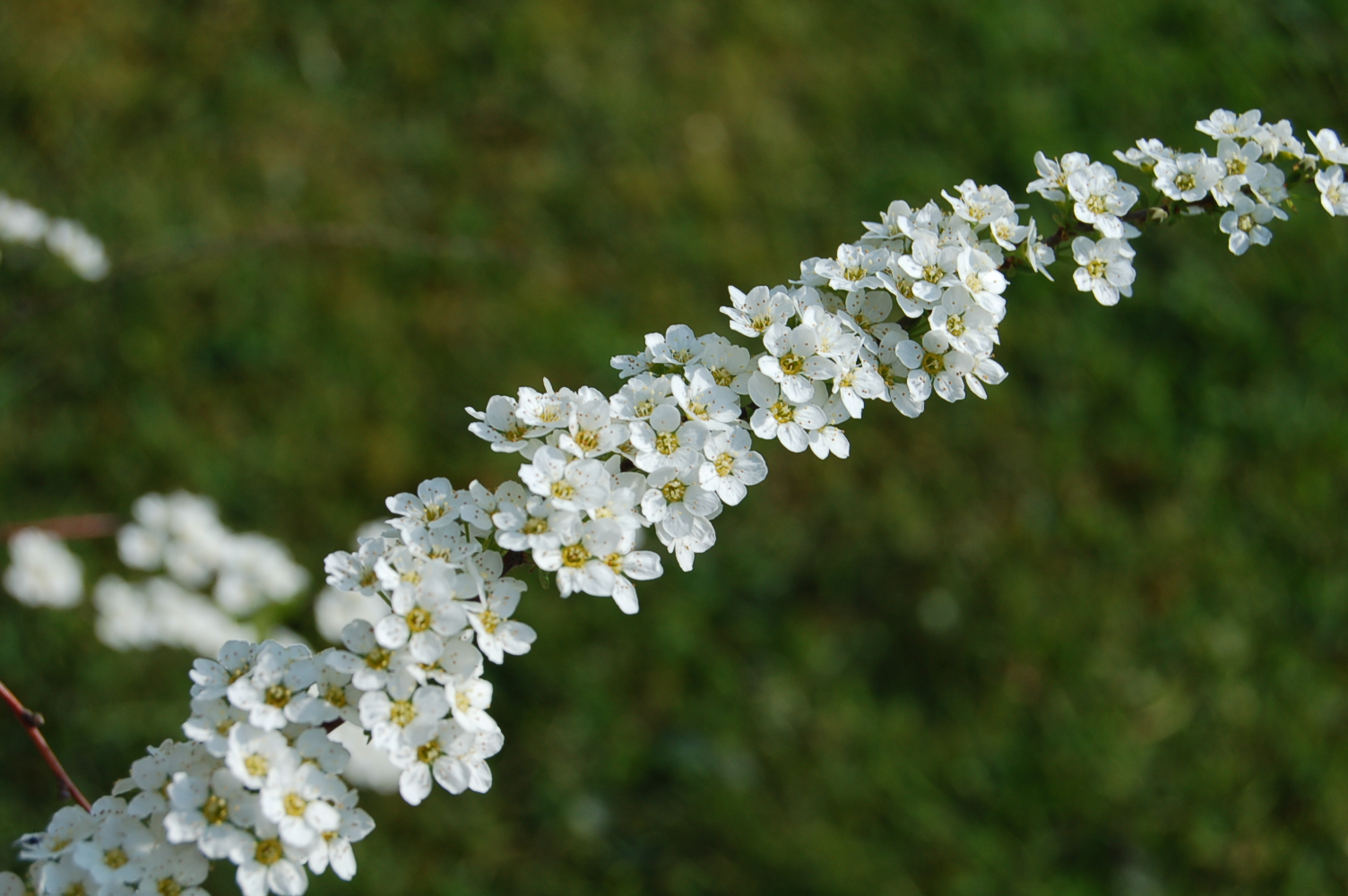
The long arching raceme of Spiraea.
Amelanchier blossom like delicate stars.
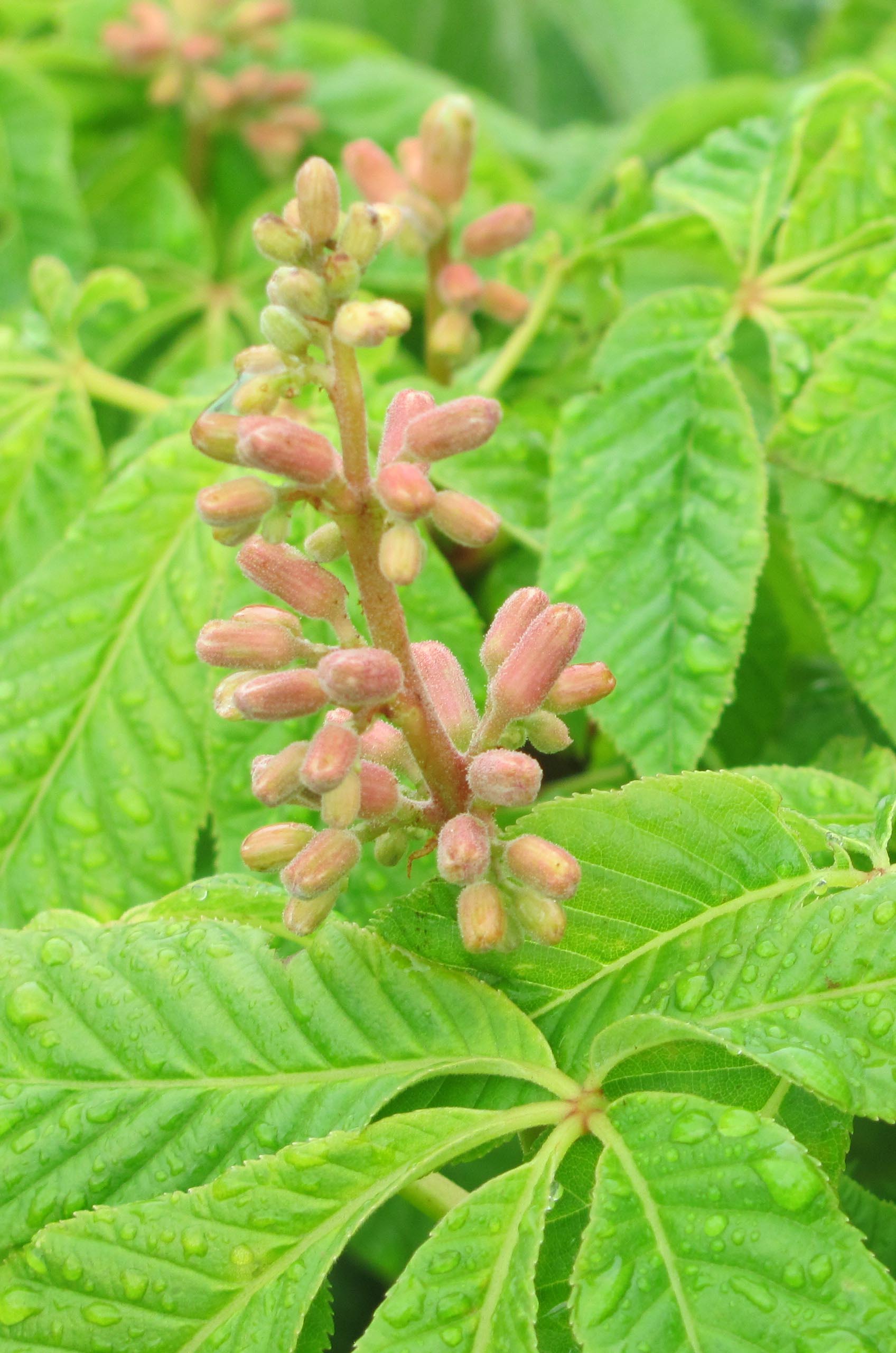
Chestnut buds burst out in salmons, russets and reds.

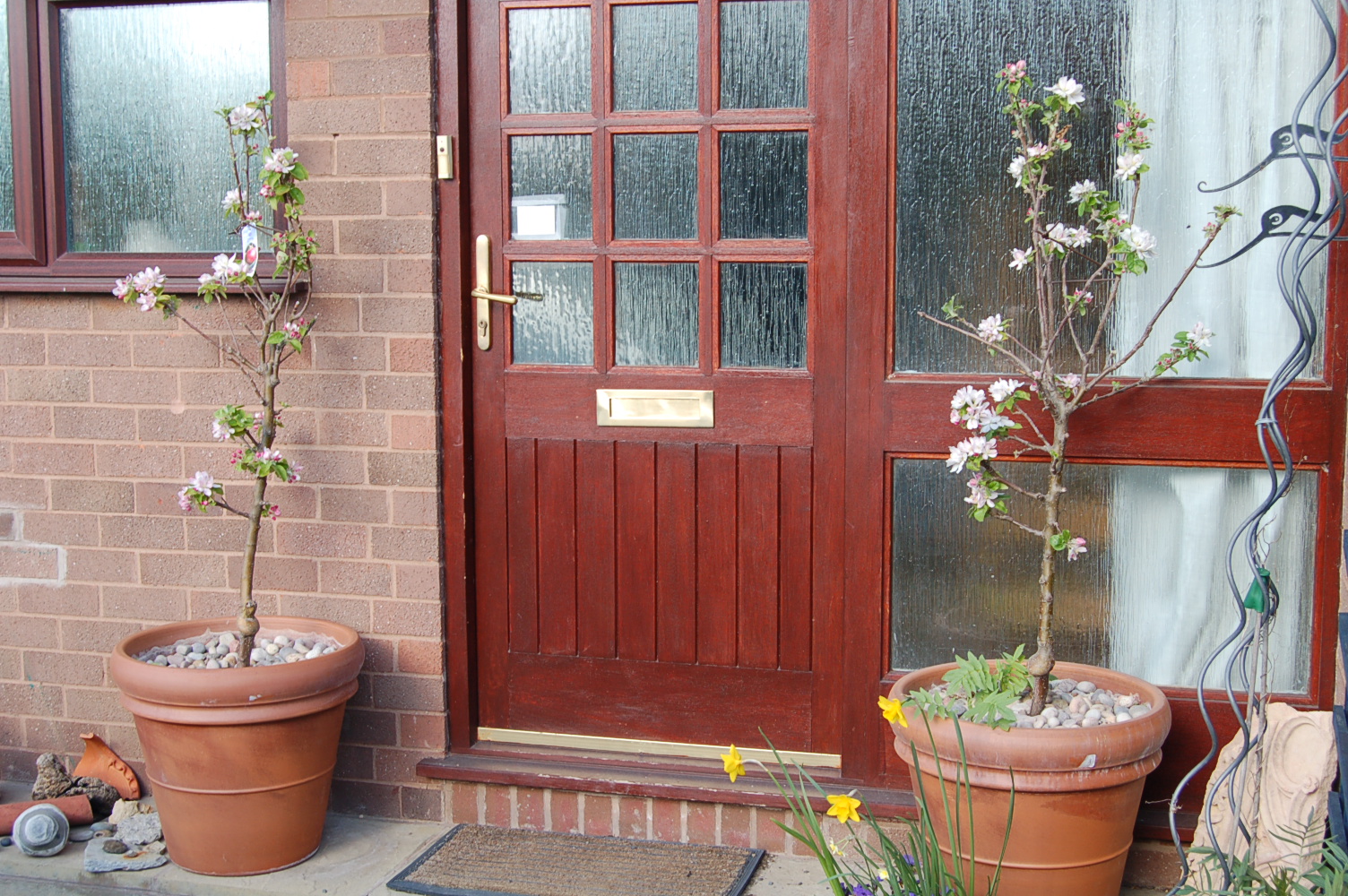
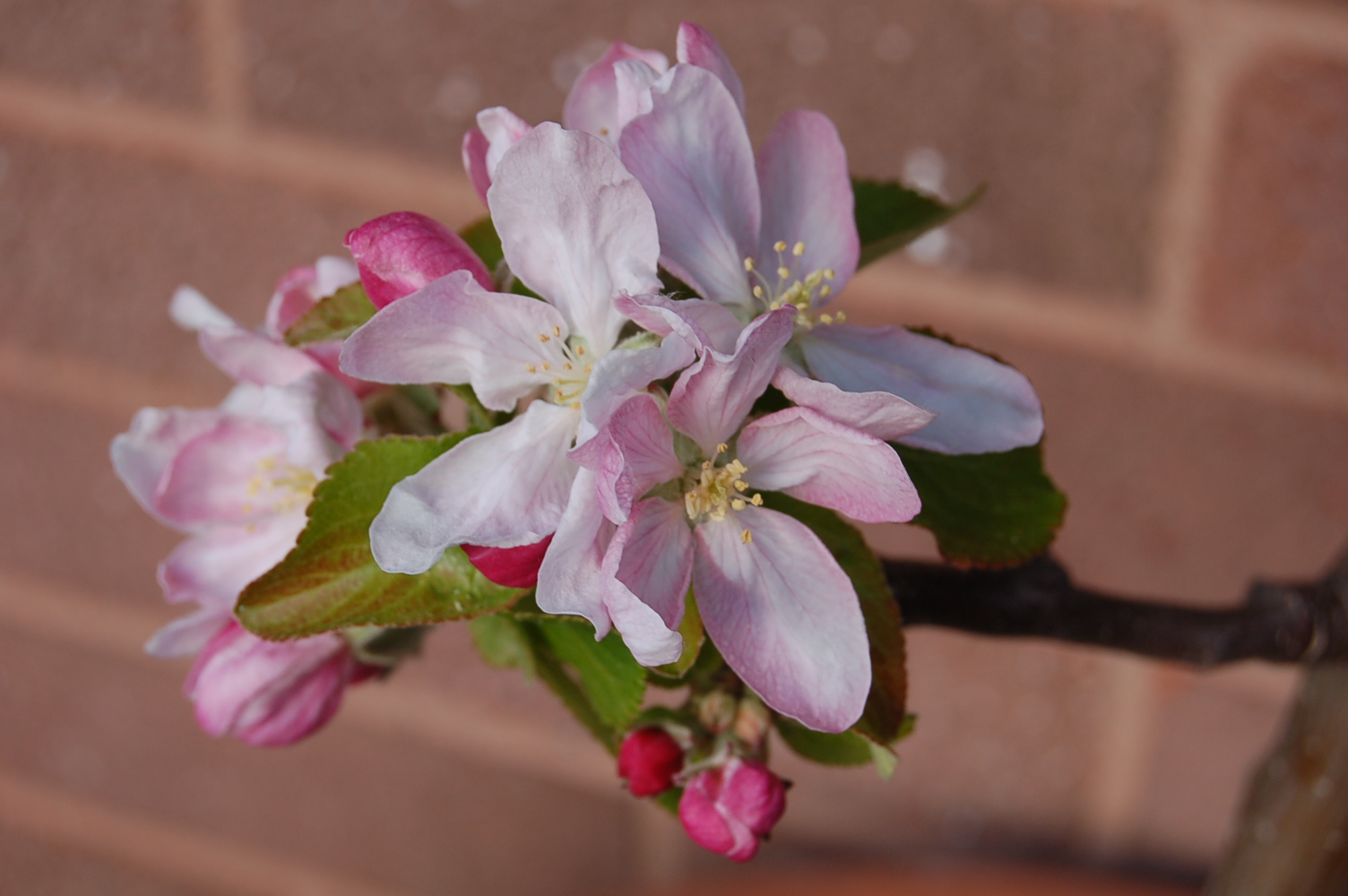
In the side garden by our main entrance the two potted apple trees are in full flower, with blossoms of many shades of pink, promising lots of juicy fruit to enjoy. We have added a second House Sparrow nesting box giving six nest holes altogether and hopefully a little less noisy bickering. The new box is apartment living as opposed to the terraced original. Right by our doorstep is a pot of violas in an unusual colour combination of  blue and brown. In front of the garage door our replanted alpine troughs are beginning to come to life.

Our miniature apple trees welcome callers.
Apple blossoms - pink beauties.
Sparrow city.
Alpine troughs protected from the cold winds.
Unusual colour combination.

Wandering into the back garden it is hard to know where to point the lens first as so much is happening. The fruit trees are in blossom, tulips add their jewel colours in every border and new leaves are appearing on most shrubs and perennials.

A mass of Damson blossom against a blue sky.
Jude, "The Undergardener" at work in the "Shed Bed".

The garden is full of sound, scents and movement. In the pools Pond Skaters perform their dances on the surface and tadpoles wriggle in black masses in the shallow pebble bay. Around each flowering shrub bees and hoverflies flit and buzz. In nearby fields Skylarks sing their “high in the sky” songs and the haunting call of Curlews reach us from the damp land alongside the nearby fishery. But the strangest sound of all is the regular sound of Tawny Owls calling to each other – have they lost their biological clocks? The calling starts mid-afternoon on most days.

Lush growth at the pool side.

Scent is provided by Viburnum, Mahonias, Wallflowers, Flowering Currants, Hyancinths, Daffodils and the last of the flowers on the Daphnes. Herby scents come with the new fresh greens of the mints, thymes, marjorams and fennel.

Strong in scent beautiful in colour, the last flowers on the Daphne.
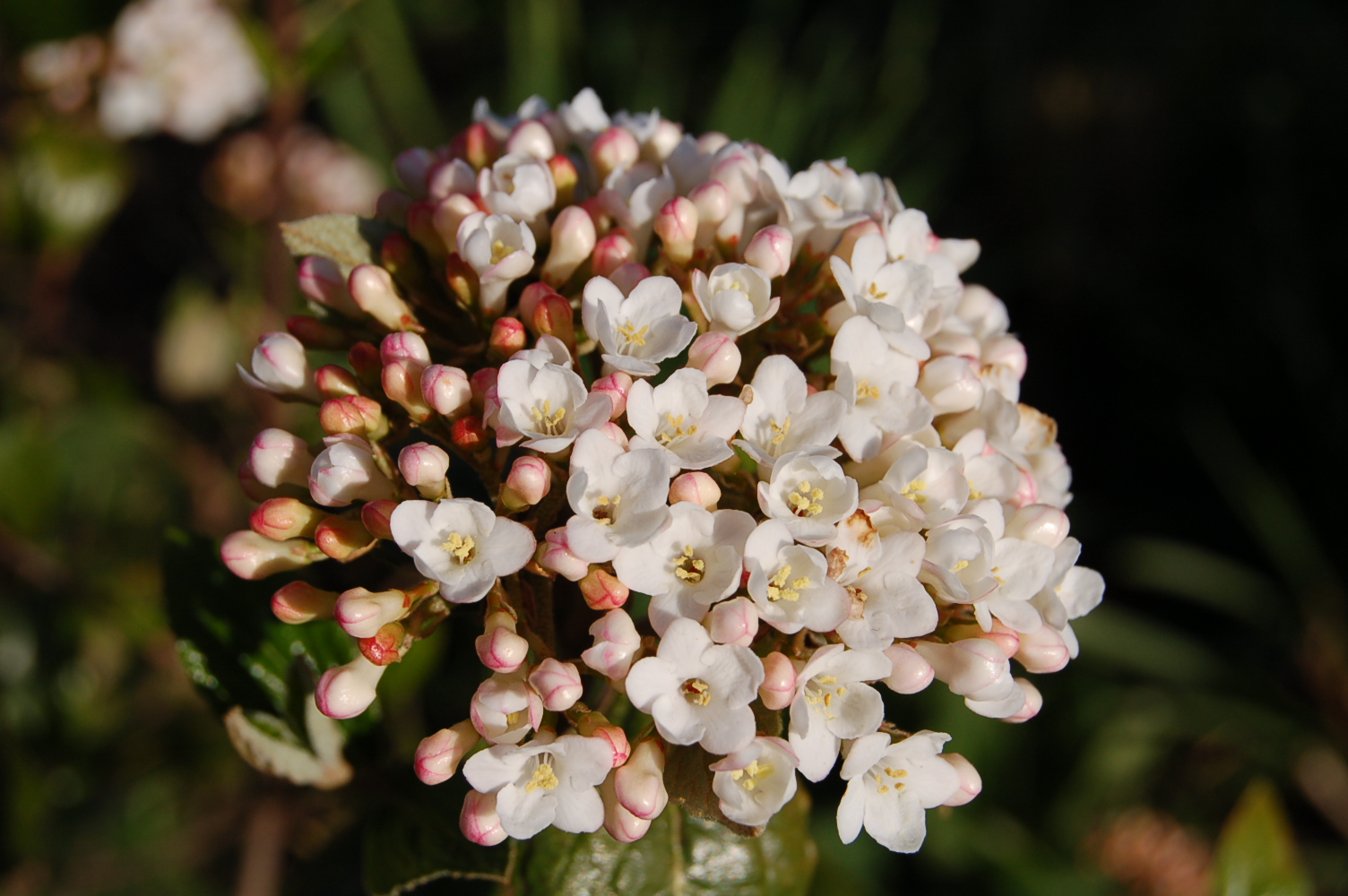
The complex flower head of a viburnum.

In the Secret Garden it is the tulips that take centre stage, in so many colours and shapes.

The Secret Garden awakens in Spring.
The darkest orange tulip.

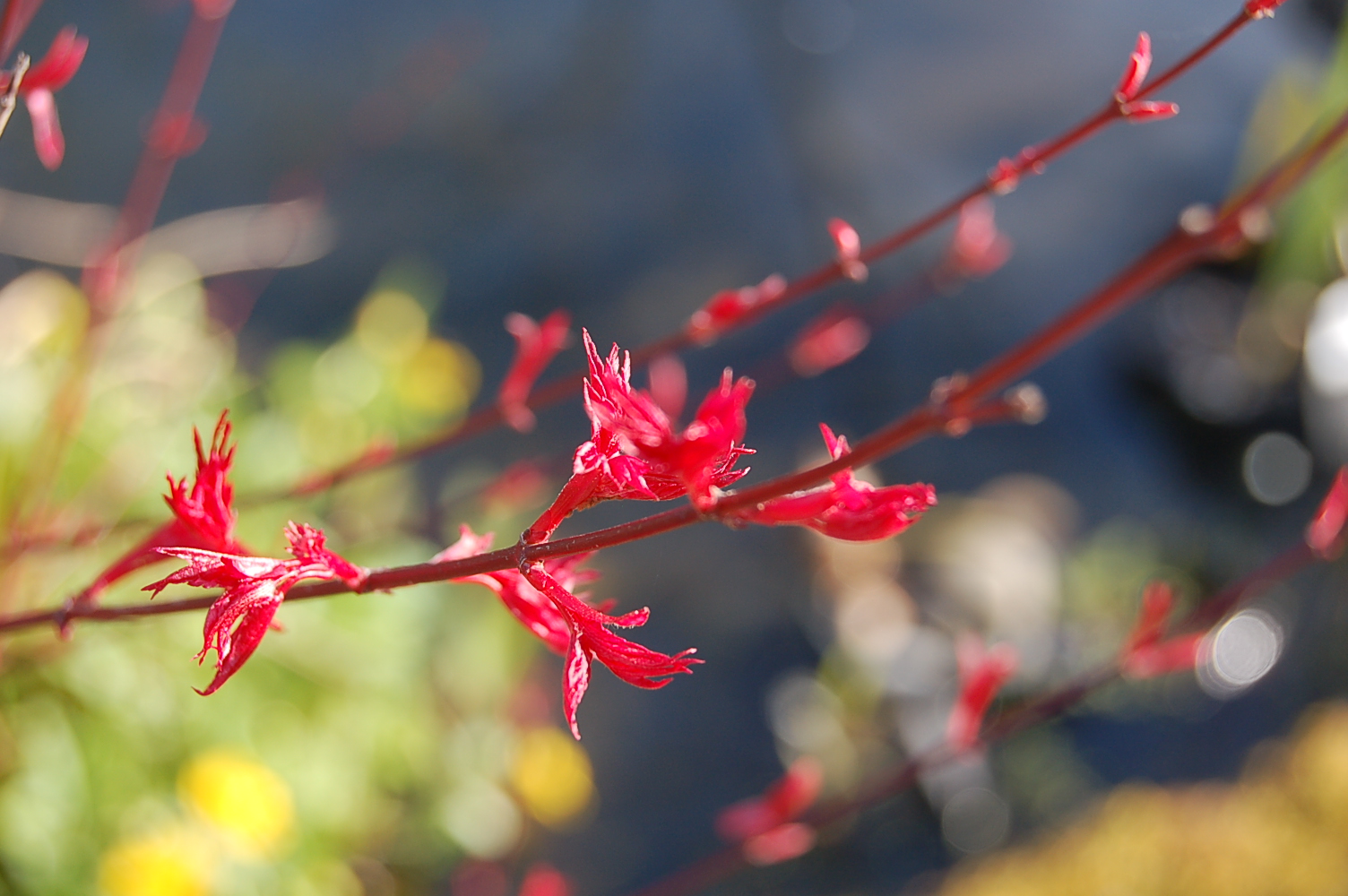
Some of the most impressive new foliage is to be found on our acers, growing under the trees we grow as a wind break, acid green, lemon yellow, flaming orange and salmon.

New brightly coloured foliage shines in mottled shade.
Glowing red fresh, new leaves.

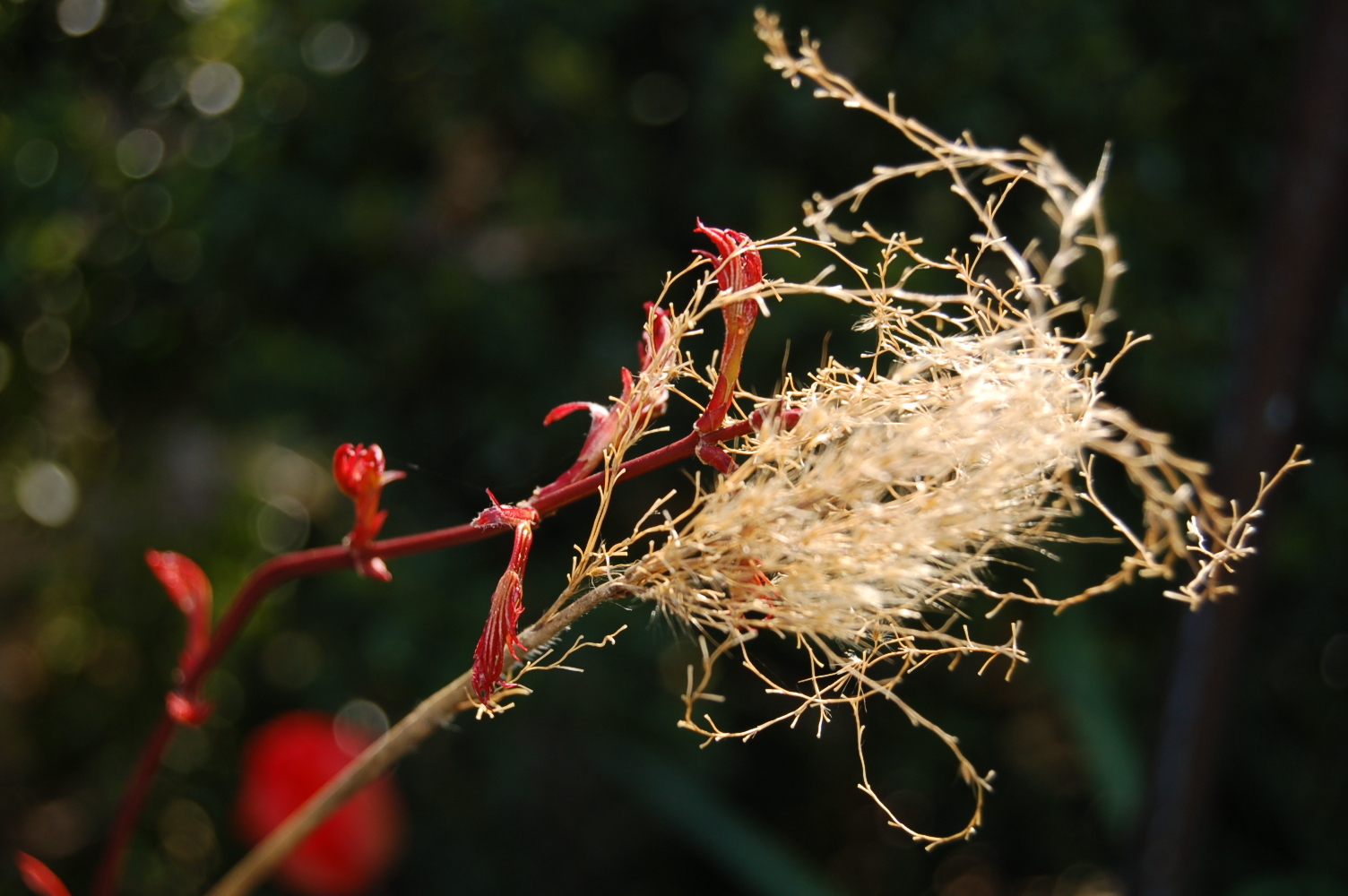
We have eventually relented and cut down the last of our many grasses. We leave them as late as possible and often leave some too late  and end up cutting new growth coming up within the old. This Miscanthus napalensis was left until last, understandably.

Old grass and new acer.

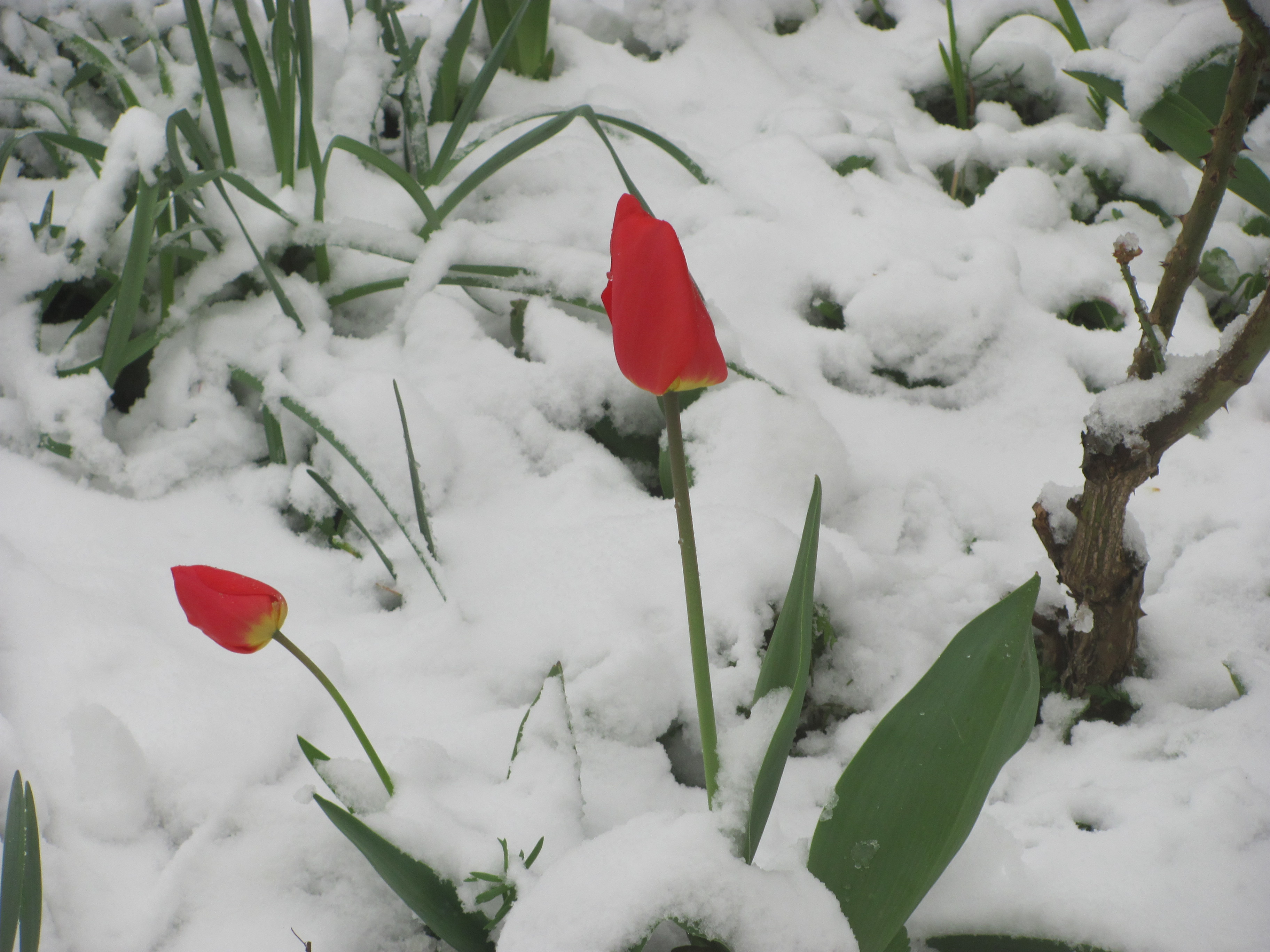
Just to show how fickle the month of April can be, the day after I took the photos for this blog we woke to three inches of snow and large flakes continued to fall all morning. Many tulips and daffodils were flattened and our clump of Black Bamboo was pinned to the ground by the sheer weight of snow.

Iris swords piercing the snow.

I shall finish with two shots – one before the snow and one after. This lovely old oak tree root is our miniature stumpery – all we have room for!

Categories
allotments bird watching birds community gardening conservation meadows outdoor sculpture photography Shropshire trees wildlife

A walk in the grounds of “The Secret Hills”

The Secret Hills visitors centre is situated in the small market town of Craven Arms a half hour drive from home. A Monday morning visit to the dentist took us to Church Stretton half way to Craven Arms, so to celebrate us both being given a clean bill of health we decided we deserved a coffee at the Secret Hills.

The visitor centre itself is an interestingly shaped building with a curving roof topped with greenery. It was one of the earliest green roofs. The inside features a library and coffee shop with occasional displays of art and crafts as well as exhibitions to celebrate all that make the South Shropshire Hills so special.

As well as a visitor centre the Secret Hills has wonderful, varied outside spaces which afford the local community and visitors the chance to explore meadows and  copse and walk alongside a small river and a pool. but there are also surprises wherever one goes.

The Undergardener and I began our visit in our usual way by visiting the coffee shop to enjoy a cappuccino and latte respectively. But join us as we slowly amble around the acres outside.

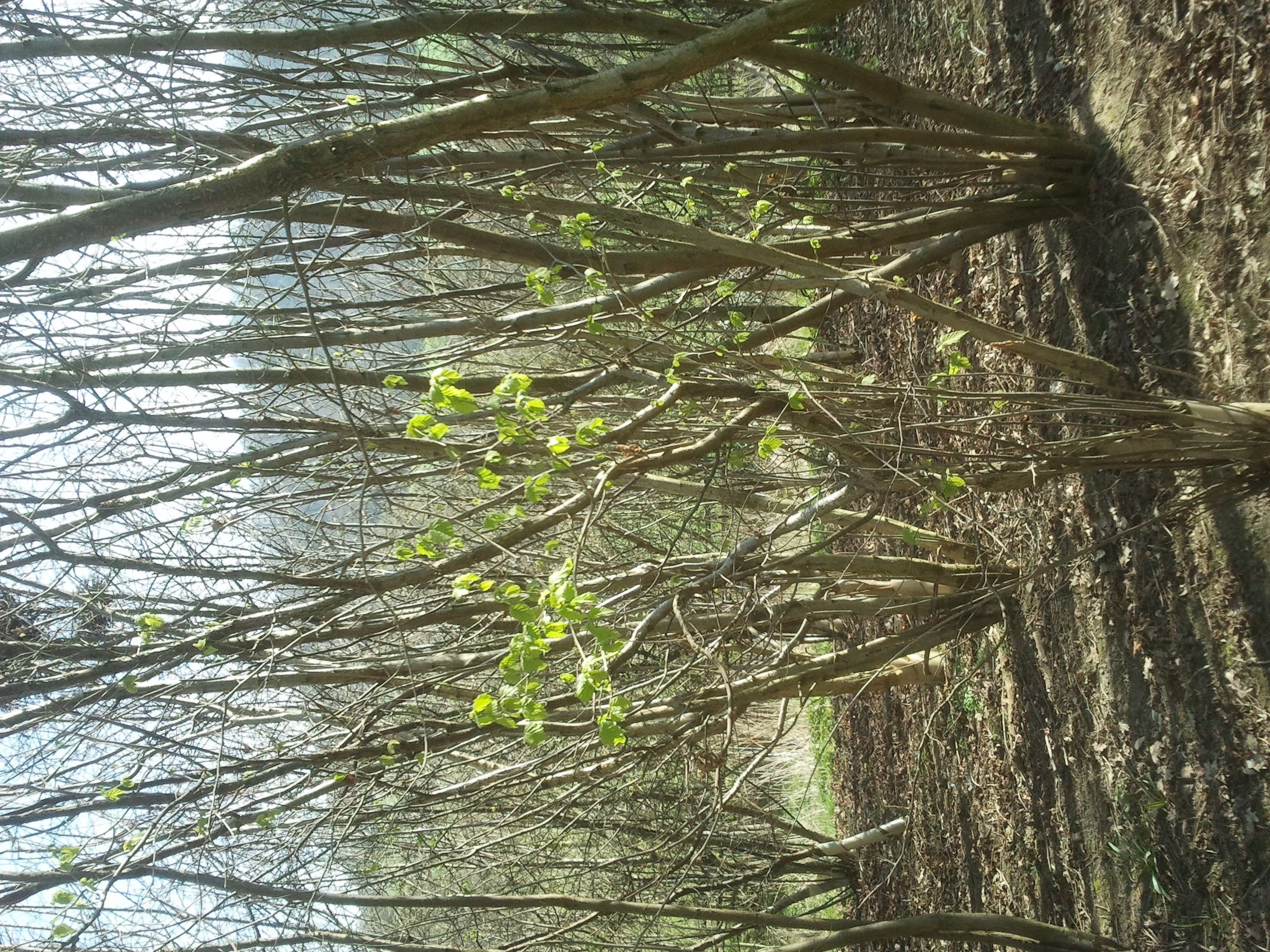
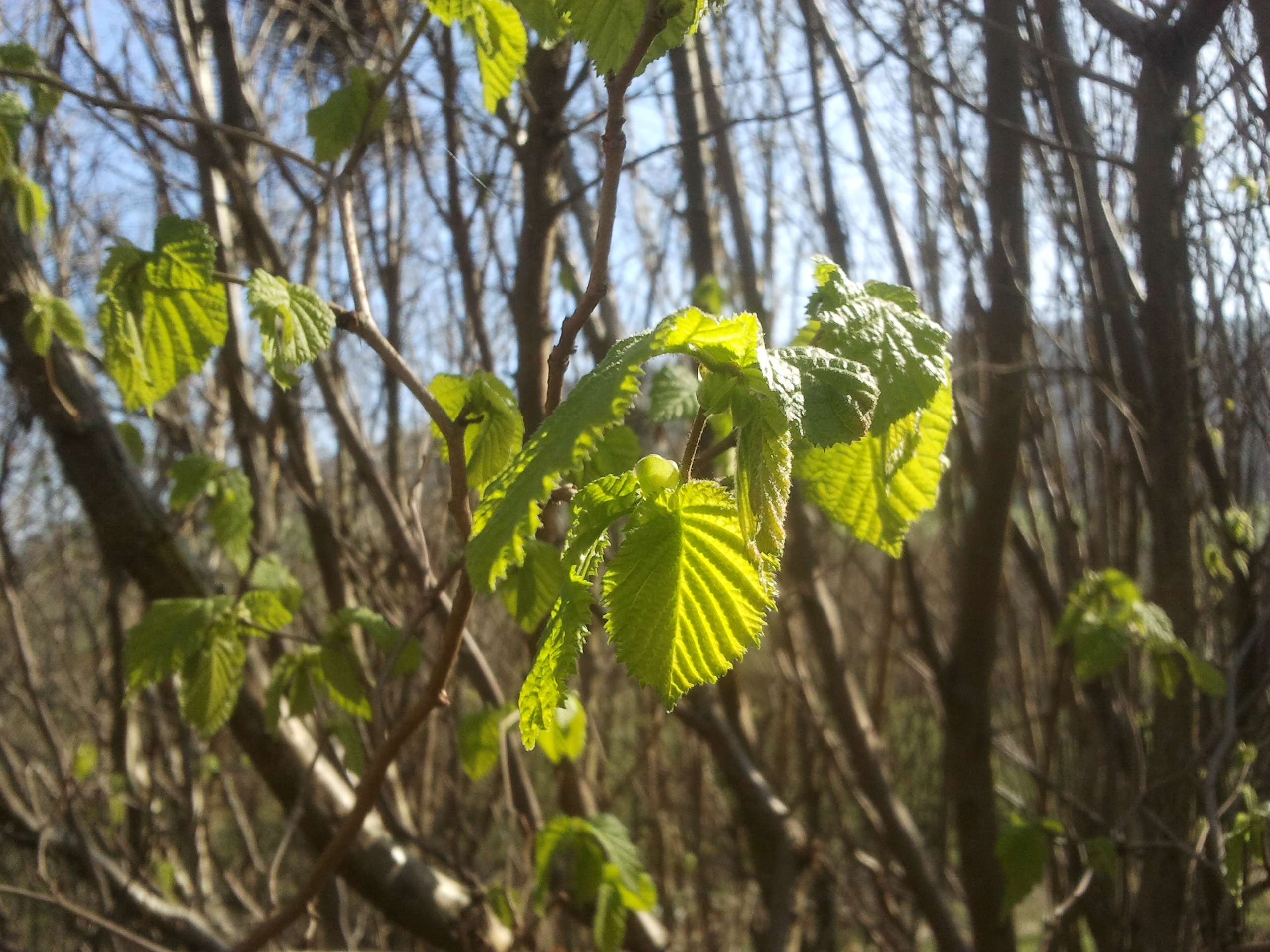
We ambled slowly through a young sloping woodland of coppiced Hazels, whose leaf buds were bursting the tangiest green. The trail took us across a rough area of Teasles and tough grasses and led us to the River Onny, which in this section is a calm, slow moving stream.

Near a bridge carrying the road over the Onny, clumps of Daffodils were in the spotlight of the sun’s rays, affording them a see-through look.

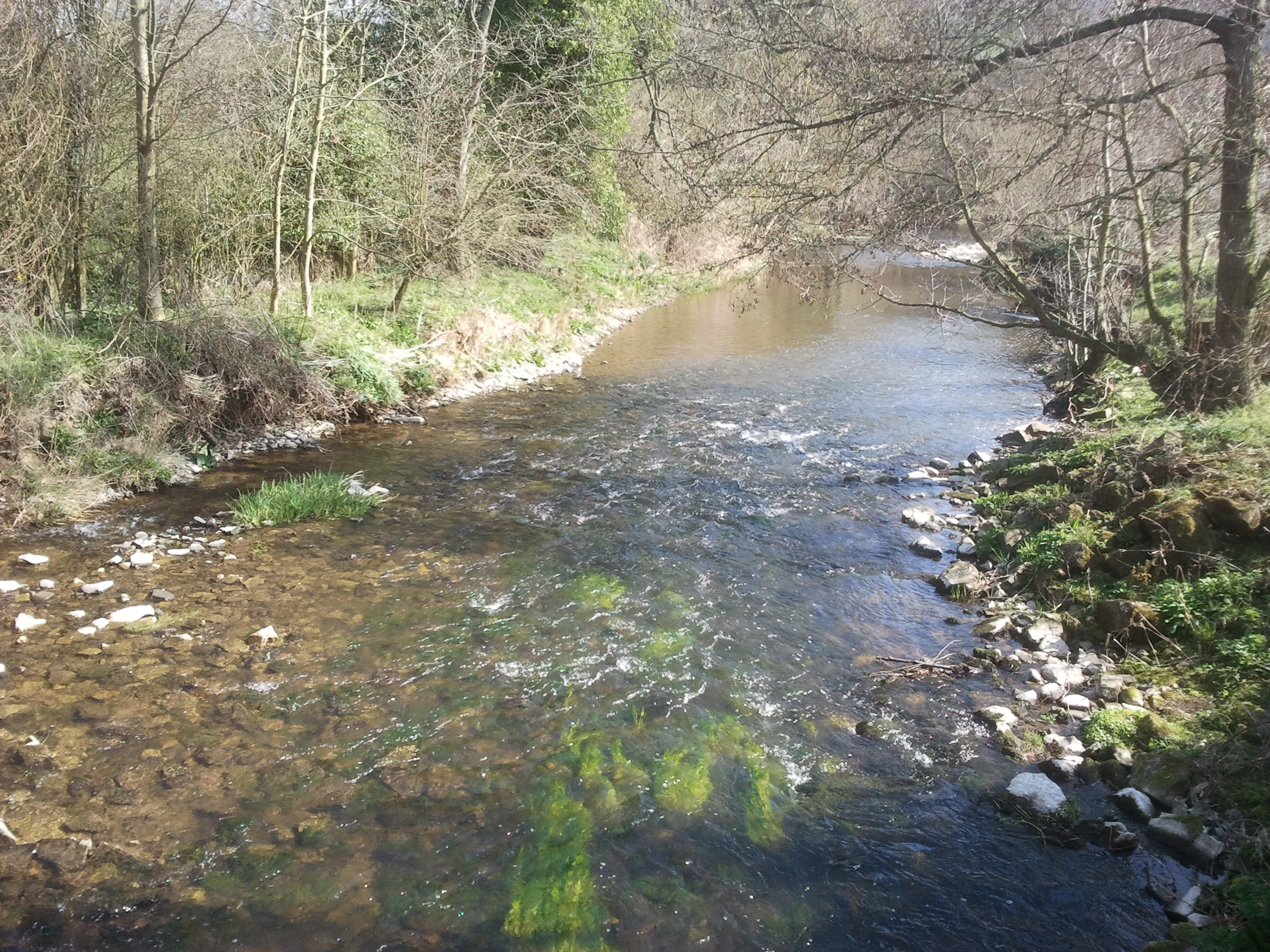
We enjoyed the peaceful, slowly moving waters of the Onny with rashes of seedling Himalayan Balsam and the occasional glossy petaled Celandine growing within the dappled shade of the waterside trees.

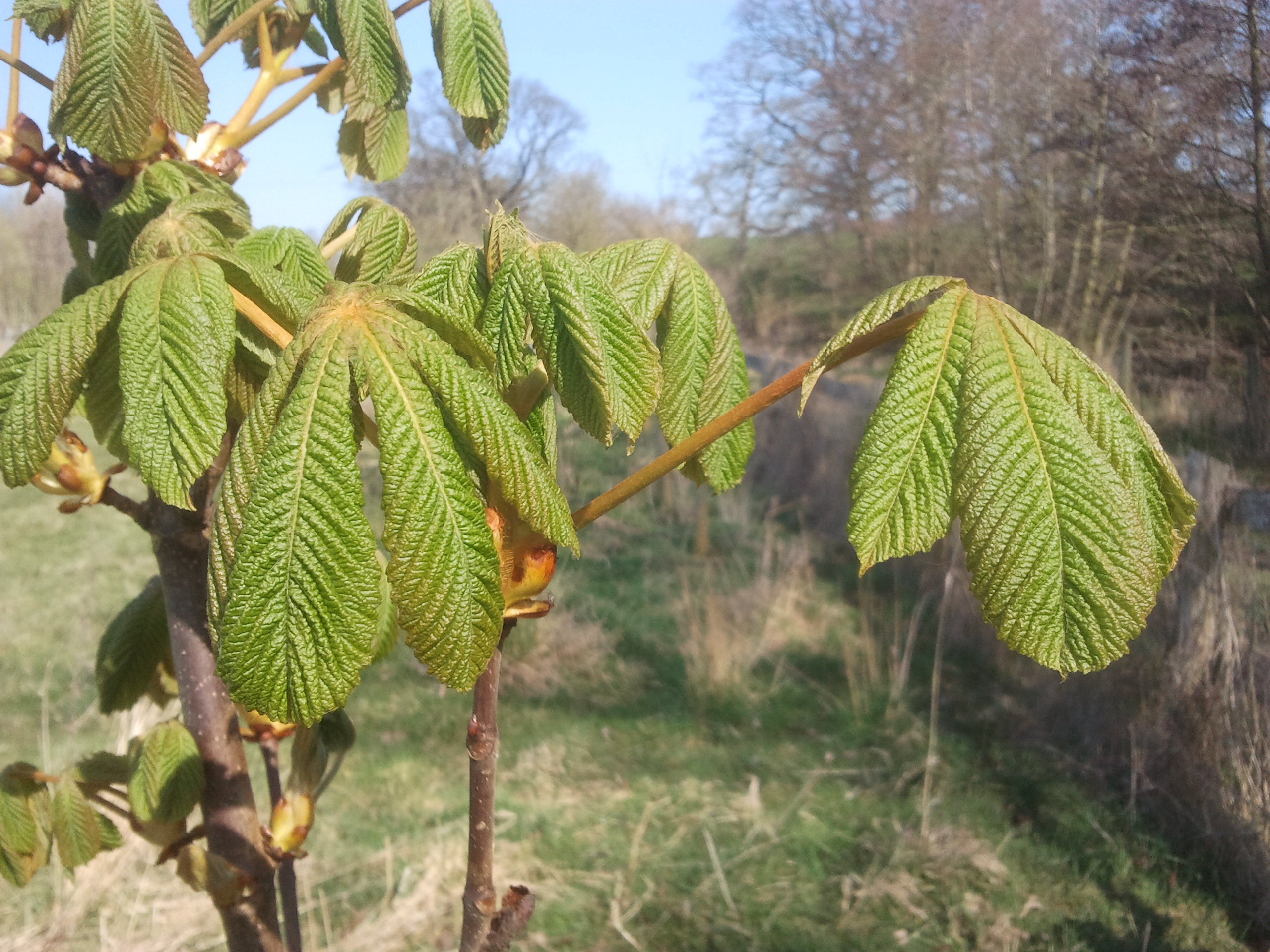
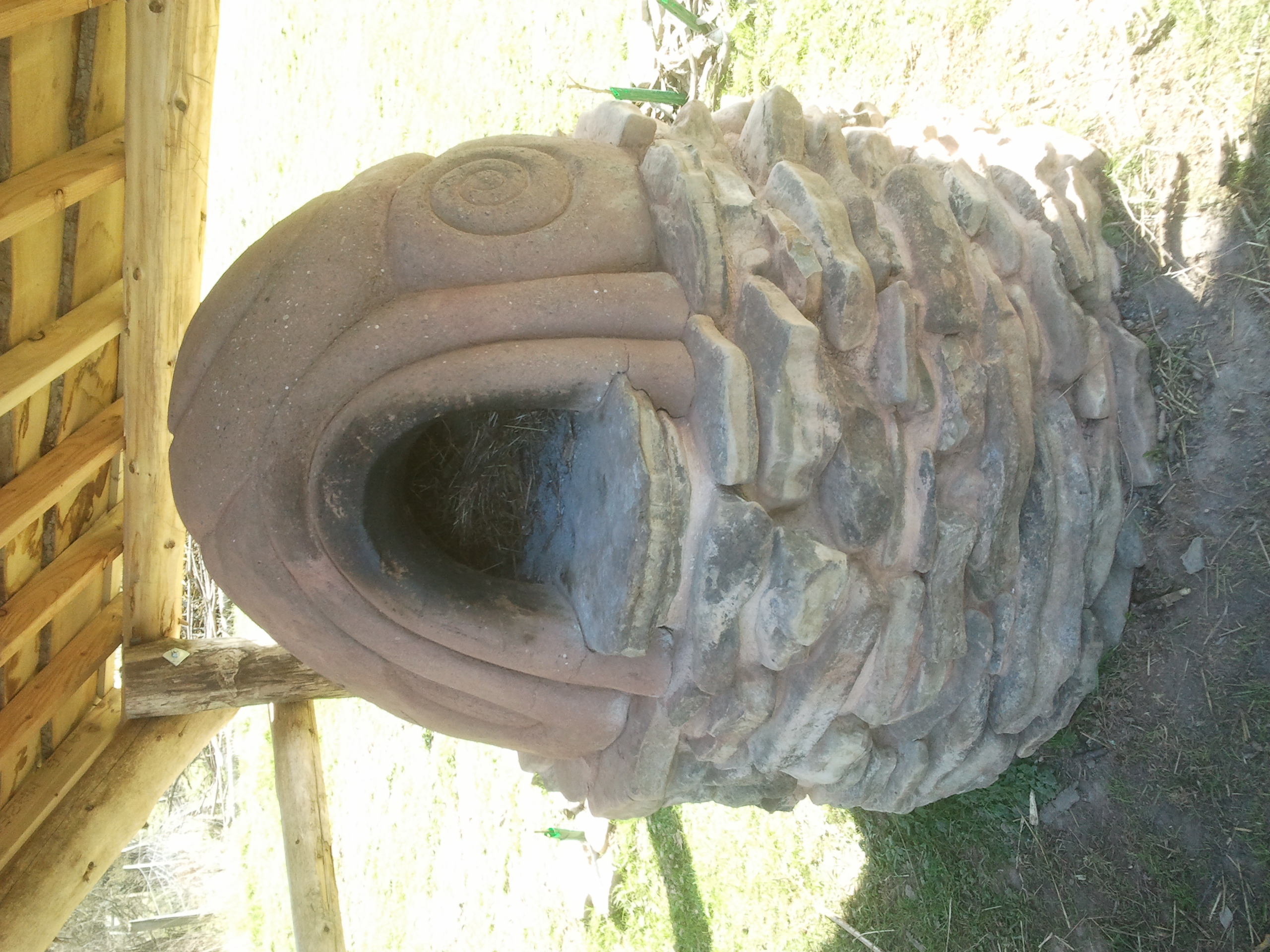
After half an hour of gentle rambling, we left the Onny and wandered across a meadow where the sticky buds of  recently planted Horse Chestnut trees were coming into leaf in one corner and as we were about to leave the field, in the opposite corner we came upon a community clay oven, looking like a giant pot. It’s domed clay top was carved with spiral patterns, like the shells of a Ramshorn Snail.

The huge sticky buds of the Chestnut Tree look and feel as if they are coated in treacle, and as they open the green of the fresh leaves is bright as a Golden Delicious Apple.

A bridge across a dried-up stream invited us into a wood of spindly trees.

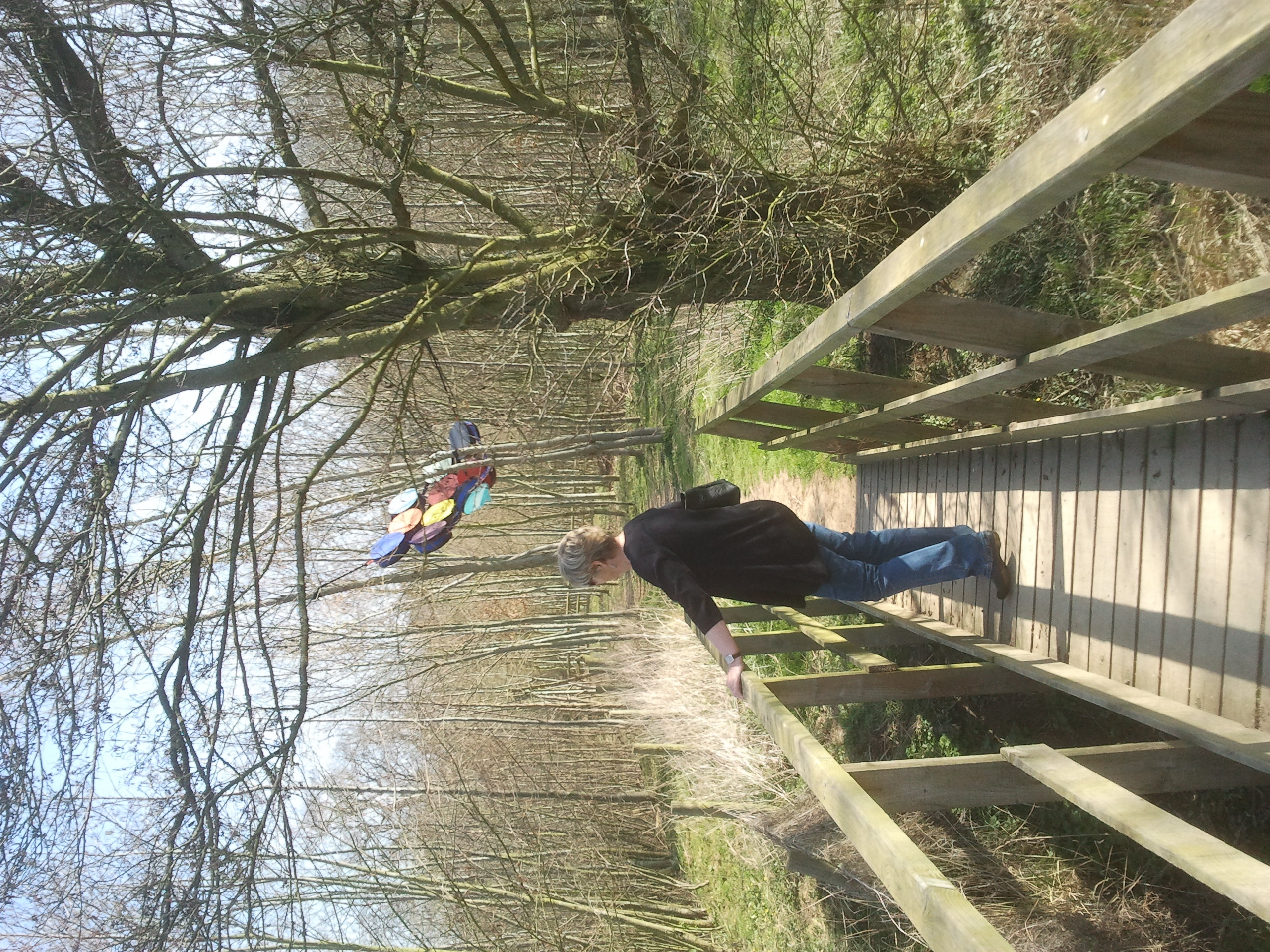
We crossed the wooden bridge into the patch of woodland, and beyond it we were in for a surprise for we spotted two pieces of sculpture in the trees. so it really is true what the old children’s song said “If you go down to the woods today you are in for a big surprise”.

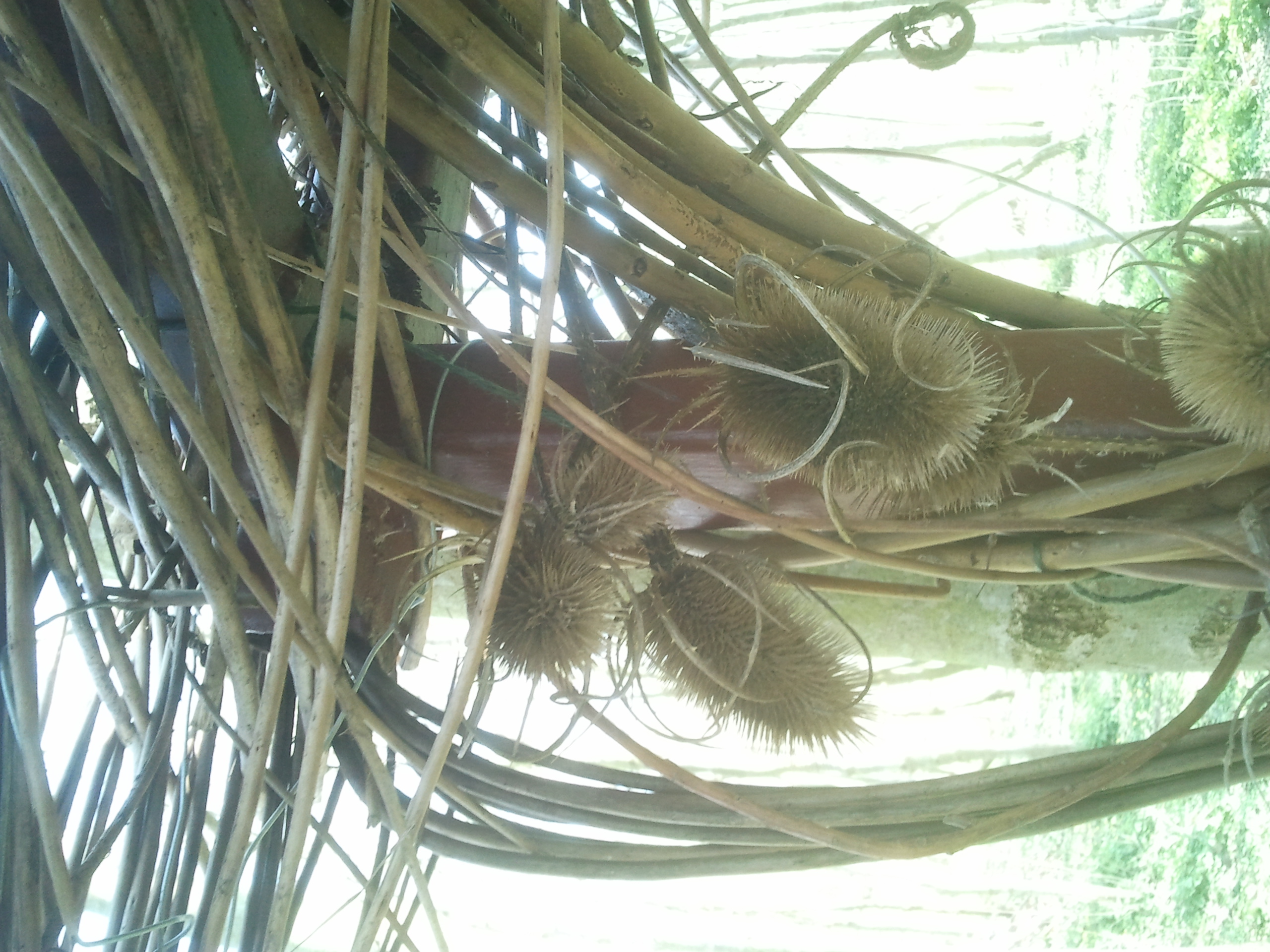
We looked at the details, the teazels and spirals of branches, and looked up inside the chimney shapes.

After exploring the sculpture and listening to the Great Tits, Chiffchaffs and Goldfinches calling in the tree tops, we made our way back to a bench on the riverside for a rest. A Dipper flew rapidly only inches above the water and passed just below our feet. These are beautiful birds like fat Blackbirds with white bibs. They feed around the rocks in shallow fast-moving streams where they watch from rocks constantly dipping up and down, but this one moved so fast and we didn’t see it stop to feed. On the opposite bank of the river tall trees grew thickly on a steep slope. Here we watched Nuthatches, Treecreepers and Great Spotted Woodpeckers feeding frantically and flying from tree to tree. But the real treat was the view of a Lesser Spotted Woodpecker, a very small black and white woodpecker which is now so scarce in the UK.

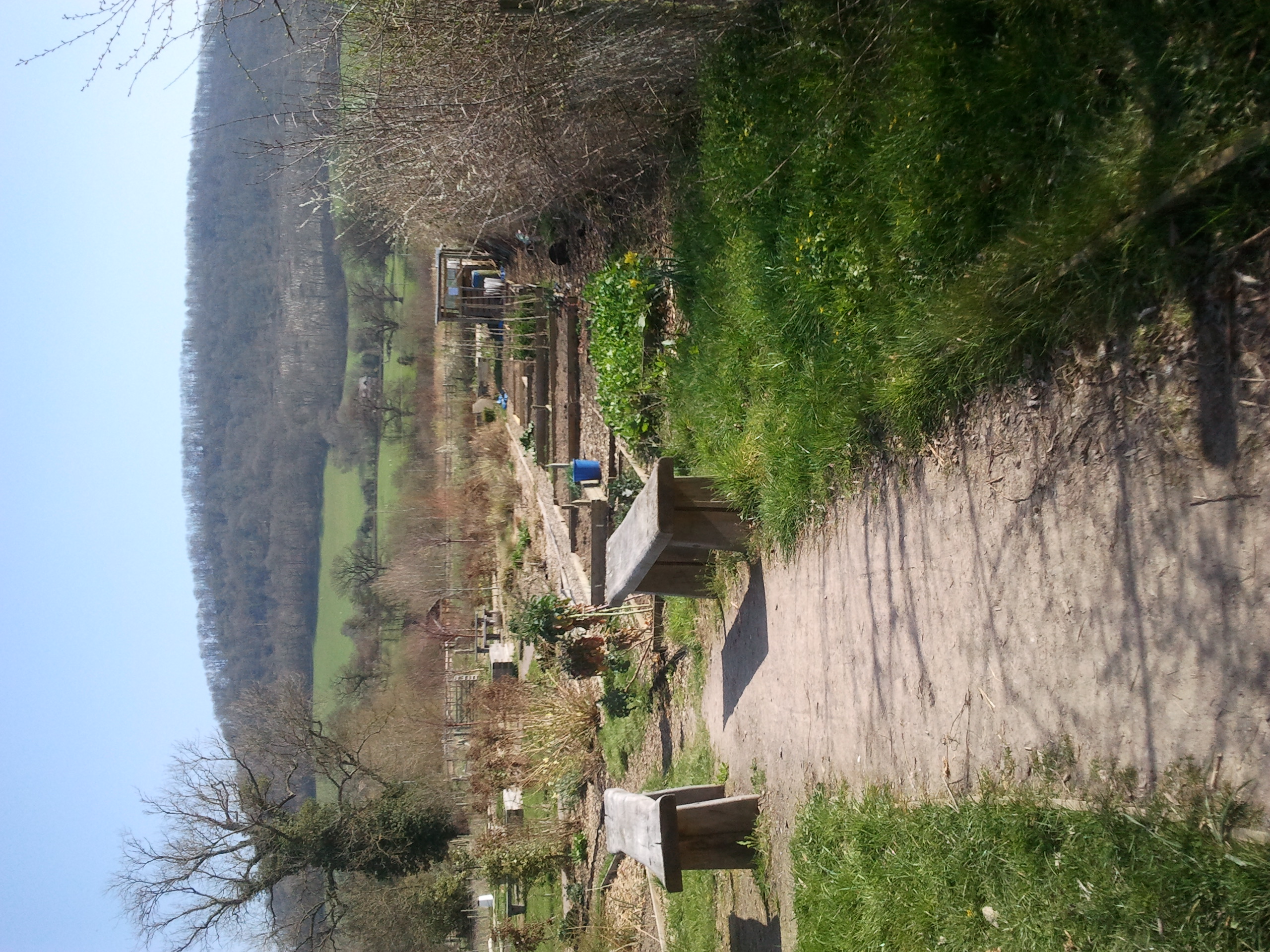
After resting our legs we aimed for the bridge that crosses the Onny where it becomes shallower and more rapid. Here the Onny took on the guise of a upland stream. From the bridge we spotted more Dippers and a Grey Wagtail, before moving on across the corner of a field where a stile showed us the way into the small Nature Reserve. We watched a pair of Red Kite soaring over the tops of the tallest trees. We made our way through the wood on narrow muddy tracks until we found the river once again. Following its banks we returned to the visitor centre dropping in on the community allotments on our way. Here tiny plots of land are available to local residents where they grow vegetables.

The Secret Hills is an amazing community resource for the market town of Craven Arms and a special day out for visitors.

Categories
allotments birds community gardening conservation fruit and veg garden photography garden wildlife gardening grow your own meadows natural pest control wildlife

A Day on the Lottie – mini-meadows and brassicas.

Yesterday we spent the day up at our allotment, with the aim of sowing mini-meadows and planting out Brassica plants. But firstly the grass paths separating the plot into its four beds needed a good cut. That done we prepared two narrow borders along one edge of the plot, raking the soil finely but adding no fertilisers or organic matter, for this is where we were creating our mini-meadows.

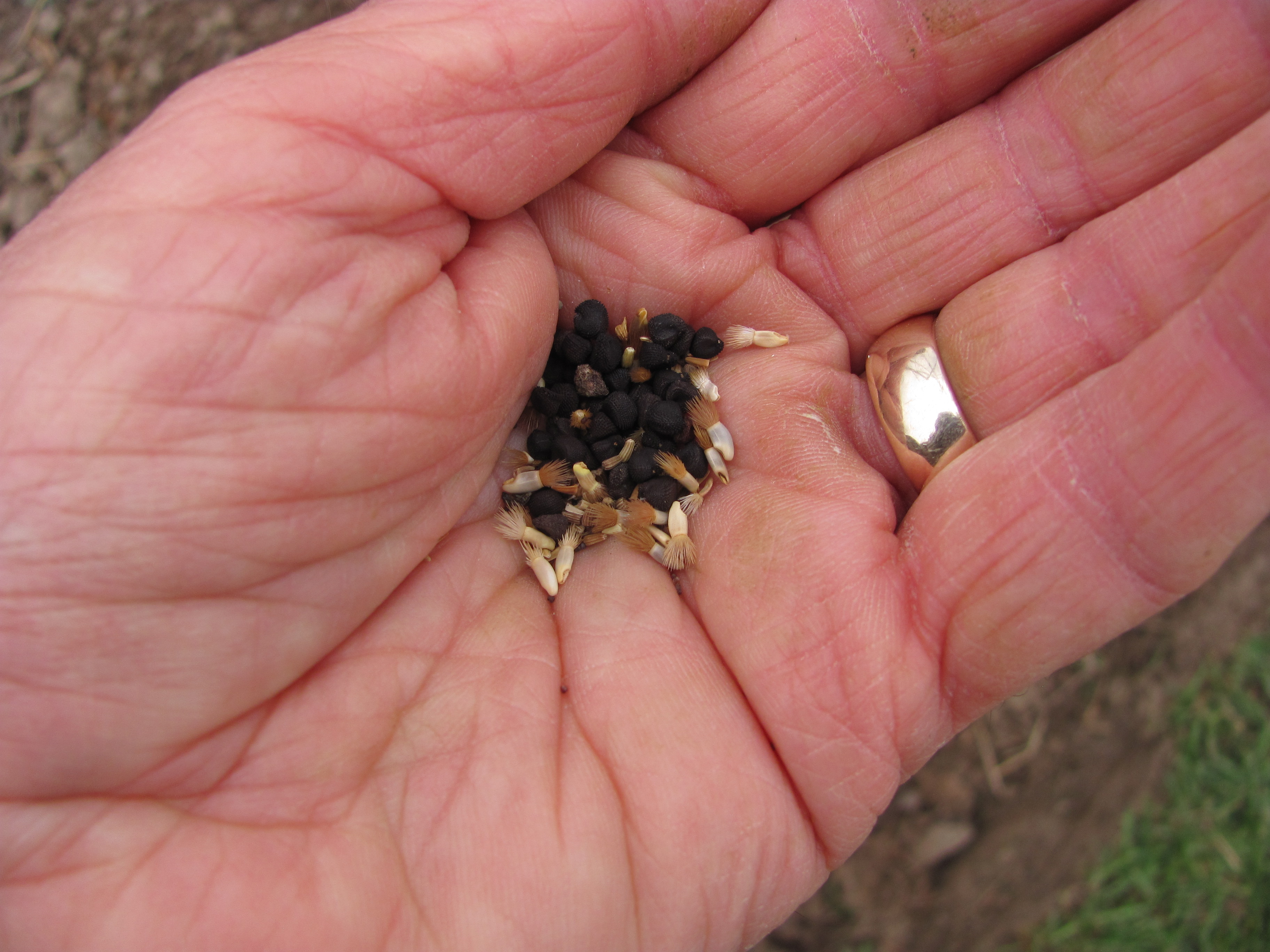
We sowed a mixture of 3 packets, a white cornflower called “Snowman” a native cornfield mixture and a Californian wildflower mixture. It seemed so strange to feel how light the seeds felt in my hand – a meadow in the palm of my hand.

We hope that our little strips of meadow will look good for us and fellow plotholders to enjoy, attract beneficial insects and bring in attractive butterflies. We particularly want bees to arrive to help with crop pollination. And of course they all entertain us while we are gardening.

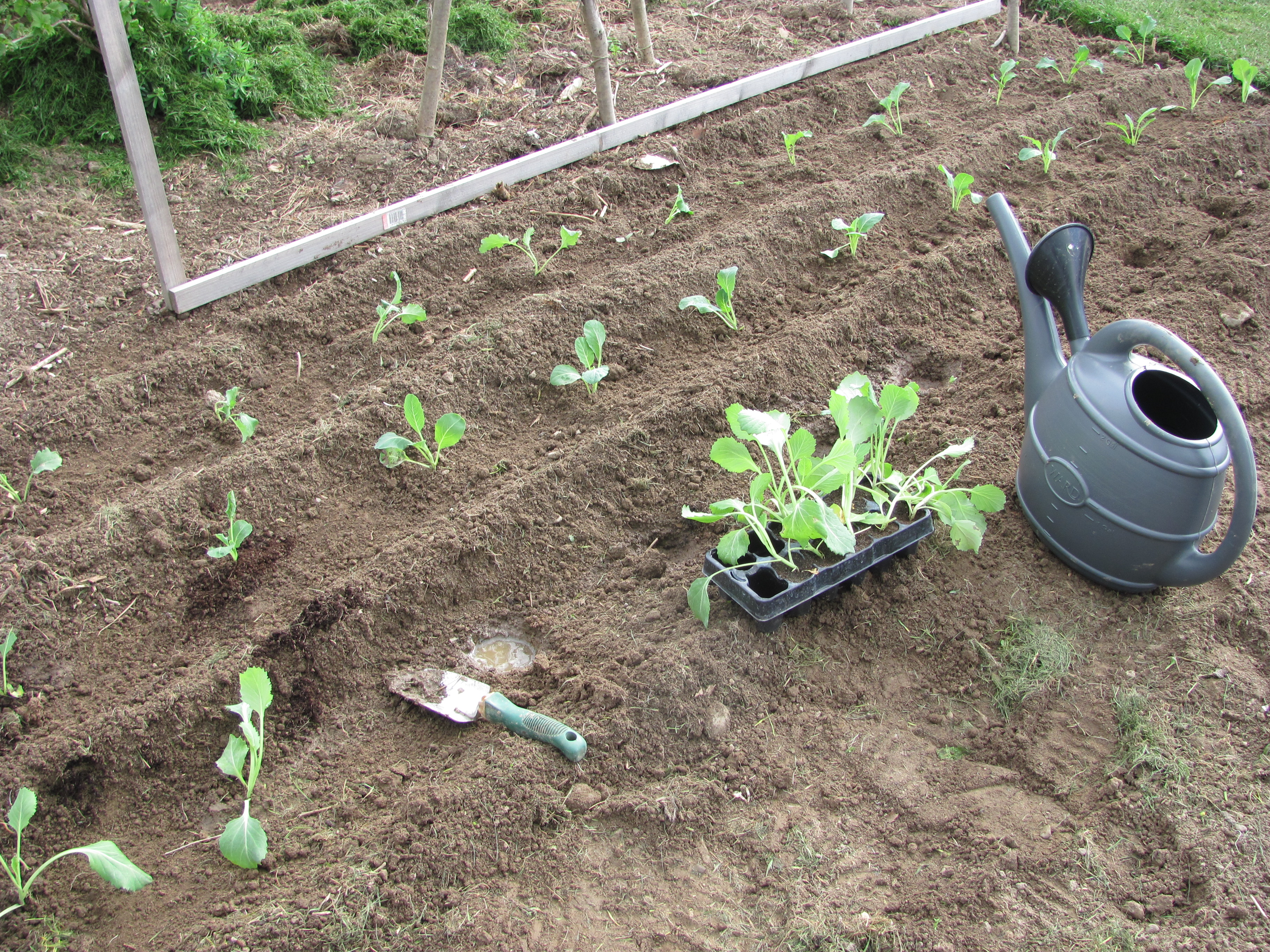
After a quick coffee we scattered chicken muck pellets and fish, blood and bone fertiliser onto our brassica bed and raked them in well. I then trod over the area to firm the ground  and raked again. Brassicas enjoy firm soil and they are less likely to bolt and help them fill out better.

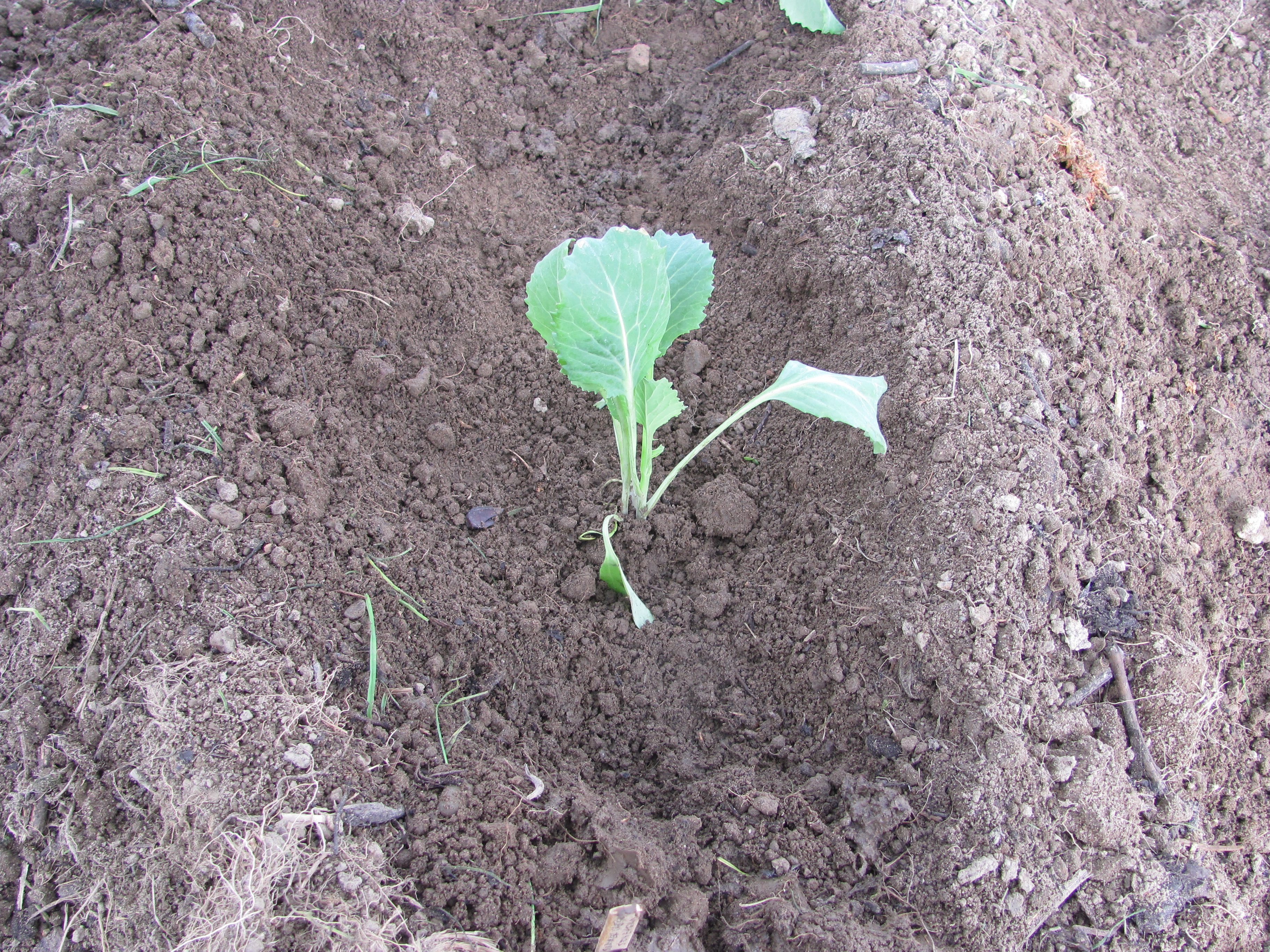
We decided to plant the Brassica plants in trenches with raised sides to act as min-dikes. With all the talk of drought and possible hose pipe bans we are trying out ways of watering wisely. These trenches should ensure that any rain is directed towards the plants.

We packed away our tools and locked up the shed after a busy, productive couple of hours. Back to the community hut to collect one of the site mowers and the grass strimmer, and we were off to mow the grass around the community meadow area and the turf spiral. But we wandered around the site first and found three real little gems.

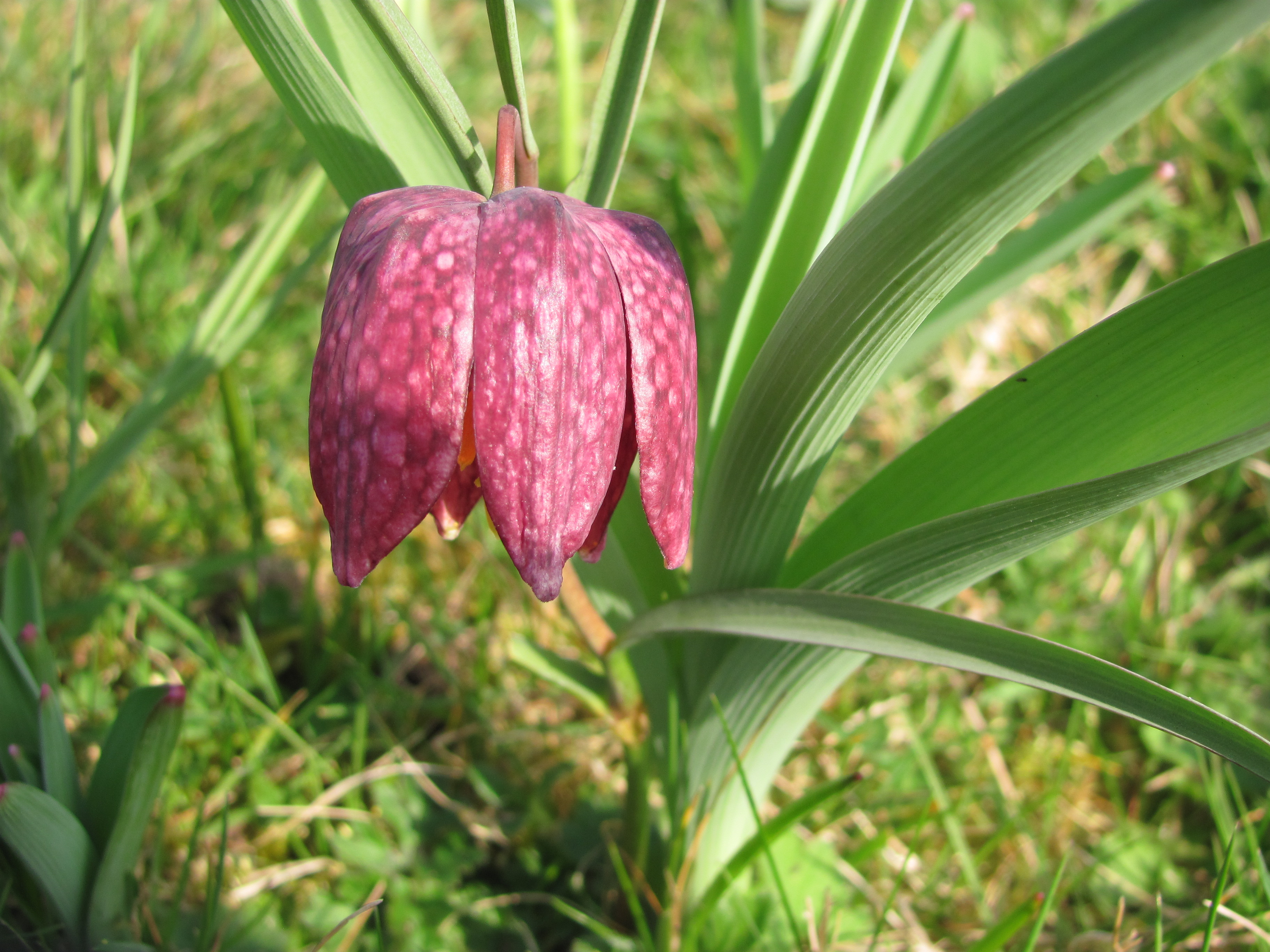
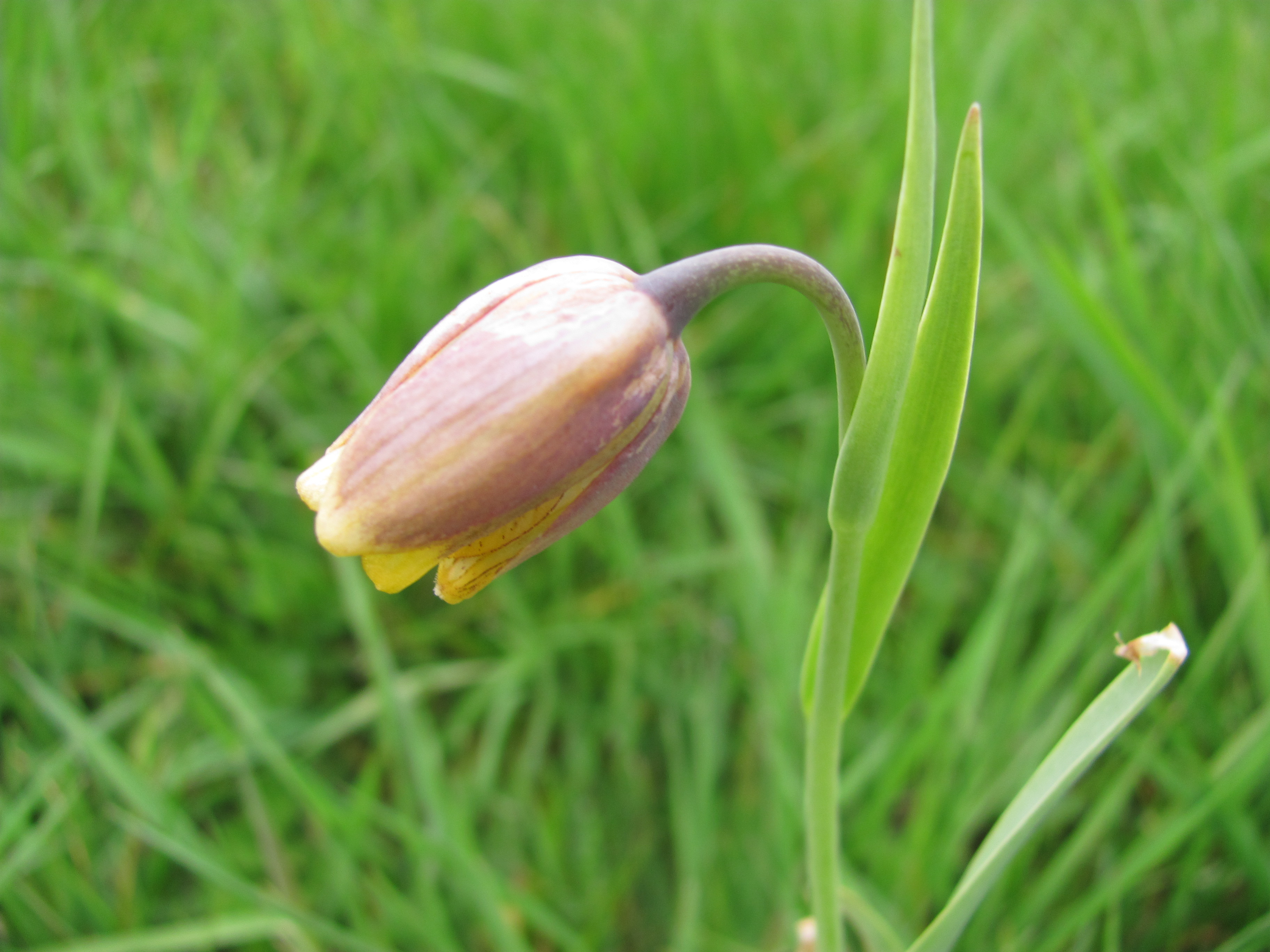
This first gem we found was a native fritillary growing in a batch in the first of the community orchards and the second, a more unusual fritillary, in a small patch in the Hazel Grove.

The third gem was a hatched shell near one of the native hedgerows. This little sky blue beauty is the egg of a Song Thrush, so we were delighted to find it. Thrushes are becoming more frequent on the site as our community wildlife areas are becoming more established. We often see them feeding under the feeding stations or rummaging in the leaf litter beneath the hedges.
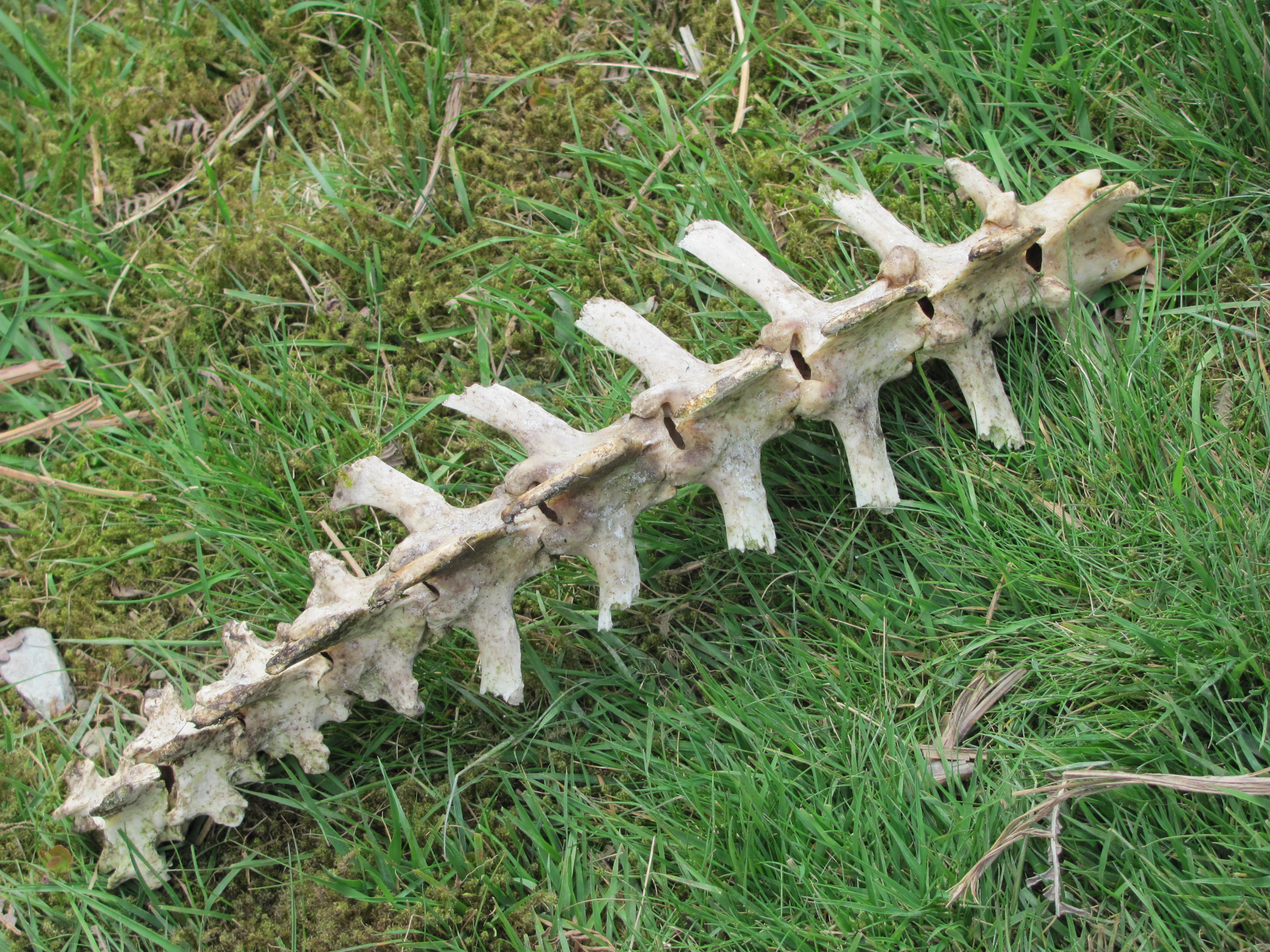
We mowed and trimmed for a couple of hours before our backs shouted “Enough! Enough!”

Categories
bird watching birds conservation photography Shropshire Shropshire Wildlife Trust wildlife Wildlife Trusts

A Canalside Ramble, There and Back. Part Two, Back.

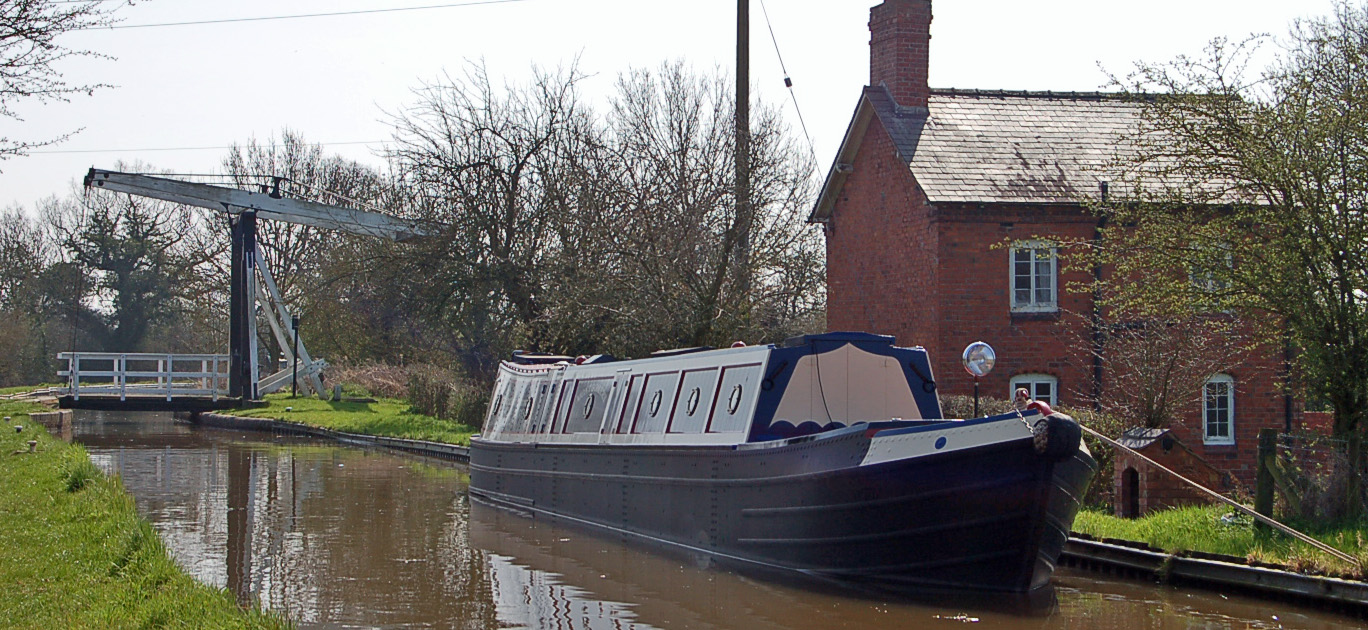
Suitably refreshed we set off back along the canal to re-trace our steps. It is always good to do this as things look so different and there are different things to see that were missed on the way. The view below is a typical canalside scene with the barge, the canal workers cottage and the lift bridge.

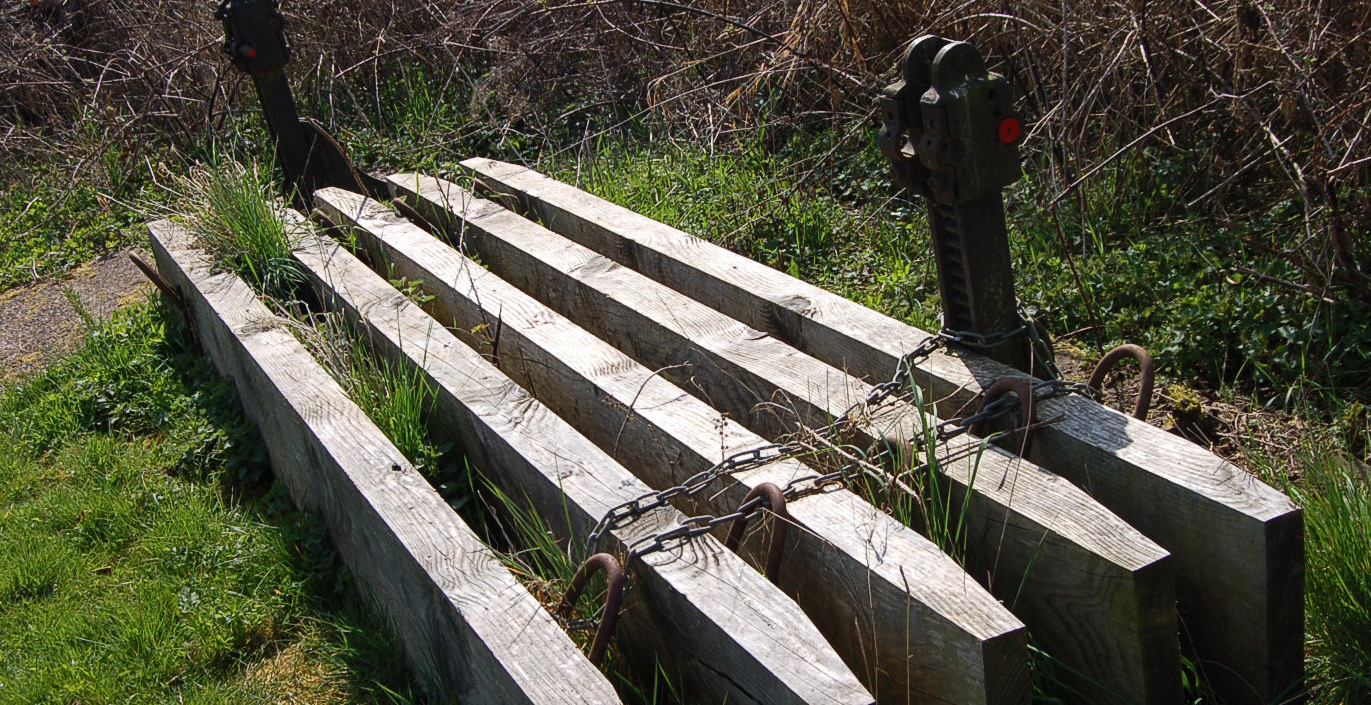
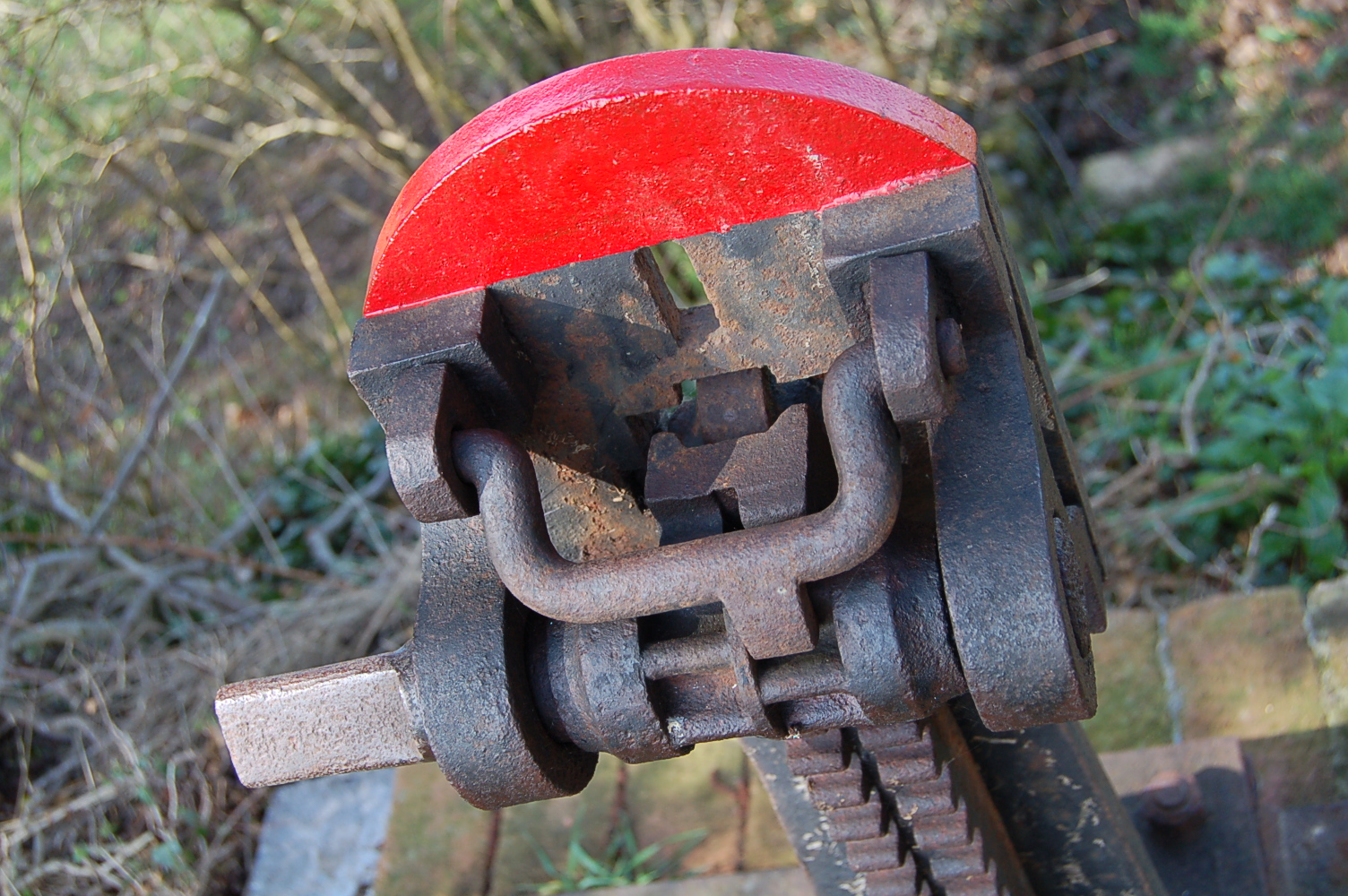
We particularly noticed the remnants of ironwork and machinery once important to the working of the canal but their commercial uses are now long-gone. They are now used by barges as part of the new leisure industry, as canals are once again coming to life, and they create interesting patterns and shapes along the waterside for photographers to spot.

Half way back and a deserved break found us sitting on the stumps of coppiced Alders. This little coppice of Alders was alive and bustling with bird life. We heard their calls and songs and watched them flitting amongst the branches. Lots more Chiffchaff and Willow Warblers, Blue, Great and Long Tailed Tits. Their gentle songs were interrupted by the alarm calls of Blackbirds as Buzzards flew overhead. Those tiny songsters the Wrens sang with gusto as they moved rapidly low in the undergrowth. The real entertainers though were the two birds of the tree trunk, the Treecreeper and the Nuthatch. The little mouse-like Treecreeper flew between trees landing low down the trunks and climbed upwards searching the bark for insects, whereas the more burly and more colourful Nuthatch landed higher up and climbed downwards head first.
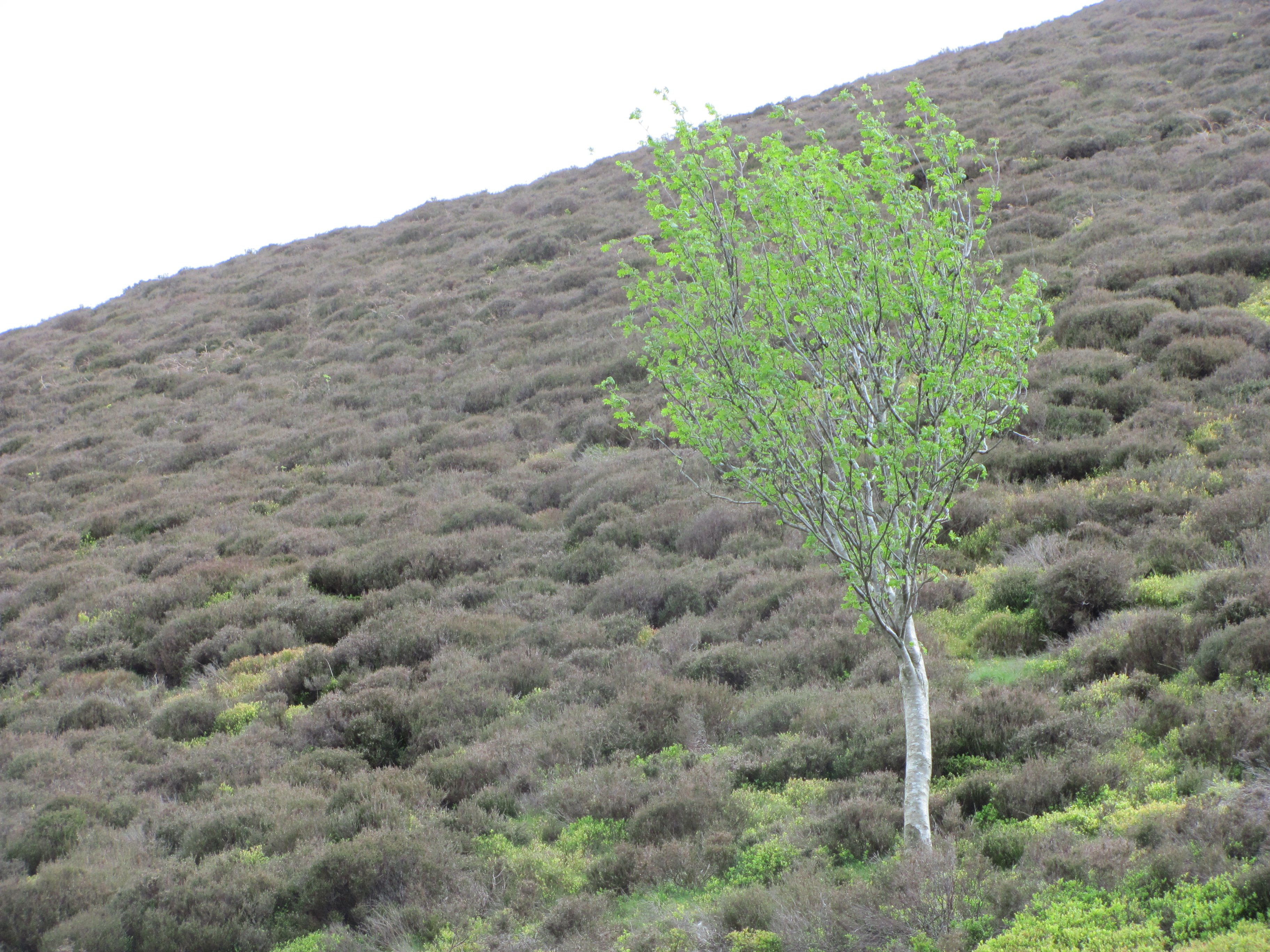
Wildlife today kept disappearing into holes. Blue Tits disappeared into their nest holes on the rotten branches of trees, Red Tailed Bees disappeared into holes in tree trunks low to the ground, Long Tailed Tits into the tiny holes in their neat spherical nests and squirrels into their dreys.

As we neared the end of our waterside walk we were startled by loud screechings emanating from the top of a clump of trees. The arrival of an adult Heron was all we needed to realise that this terrible cacophony was caused by hungry young Herons calling from their “rookery”.

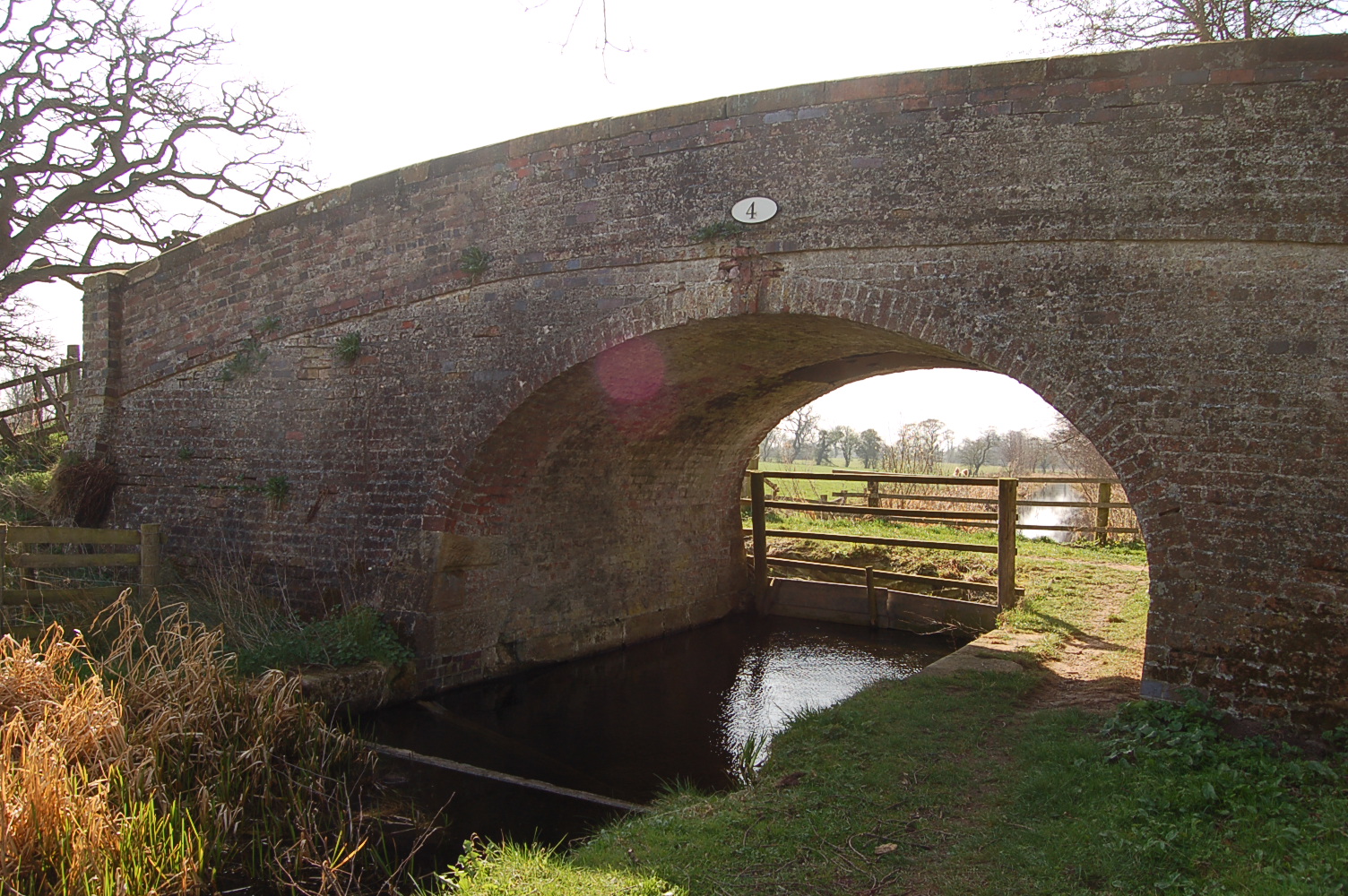
On returning to the bridge nearest to the end of the trail the harshness of the light created dark shadows emphasising the beautiful curve of its arch.

From here on we kept coming across that wonderfully coloured butterfly the Brimstone in its bright yellow livery with a hint of lime green. these early adults were searching along the canal side and the hedges bordering the toll paths searching for the flowers of Dandelion and Cowslip. It was impossible to photograph one because they never stay still. They fidget and flit! But they glowed in the sun, such brilliance of colour.

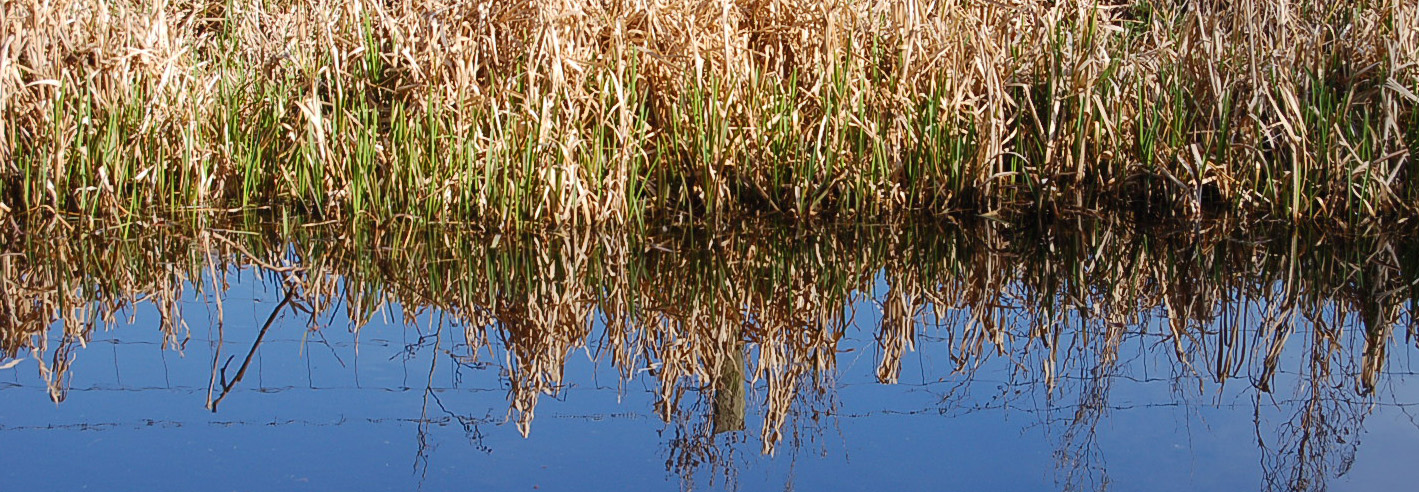
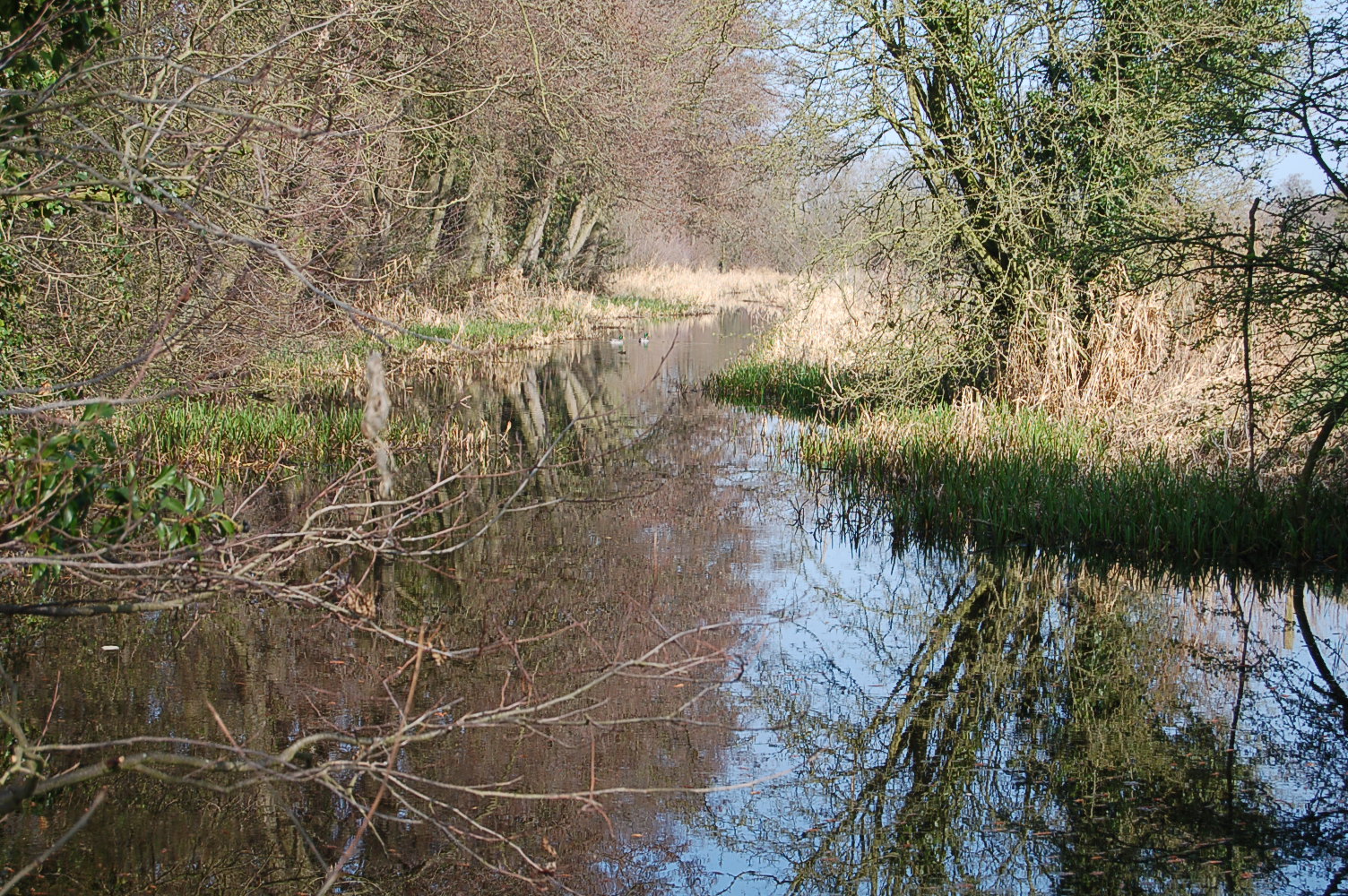
The canal narrowed the closer we got towards the finish of our walk, as the reeds closed in on either side, leaving a narrow winding ribbon of water. This created interesting reflections of trees and fences on the opposite bank.

We caught sight of this rectangle of sheep’s wool caught on the fencing where a sheep must have been scratching to alleviate an itch.

We discovered a great place to walk and watch wildlife (we recorded 40 species of bird), to listen and appreciate the countryside of our home county, Shropshire. There are so many places still out there awaiting our discovery.

Categories
bird watching birds conservation Shropshire trees wildlife Wildlife Trusts

A Canalside Ramble, There and Back. Part One: There.

Bright sunshine, the purest blue sky and warm, summer temperatures in March! What could be better than a walk near water? So we decided to visit a Shropshire Wildlife Trust reserve with its track taking us along the towpath of one of Shropshire’s many stretches of canal. An easy flat walk on soft grass – so kind to the legs and feet after busy days on the allotment.

We have been members of our county’s Wildlife Trust for about 40 years now and visited their reserves regularly when our children were with us but now they have left home and we have both retired we are enjoying visiting them anew. The walk we chose today was the Prees Branch Canal Reserve, described as a “2 mile long pond”. A Site of Special Scientific Interest because of the rare underwater plants, it is also home to one of Britain’s rarest mammals, the Water Vole. Thus it was with great anticipation that Jude, also known as Mrs Greenbenchrambler, also known as “The Undergardener”, and I climbed the stile into the reserve. The first sound to reach our ears was the loud call of a chicken who had just laid its daily egg.

The Prees Branch Canal was started in the early 1800’s and was intended to be a branch of the Llangollen Canal, but finances ran out so it was never completed. The trail we chose to follow runs alongside the 2 miles that were built and runs to its junction with the Shropshire Union Canal.

Just a few steps into woodland alongside a short dried up section of canal and birdsong filled the air. The most persistent songster was the diminutive warbler, the Chiffchaff. Throughout our day’s walk of almost four miles there was a calling Chiffchaff every 30 metres or so, and these early arrivals sing with such gusto to announce themselves to any females in calling distance. It’s call, the simple repetitive “Chiffchaff” call that gives it its name, was interrupted by the much more tuneful song of its near relative, the Willow Warbler. We saw so many flying from tree to tree or searching out insects in undergrowth.

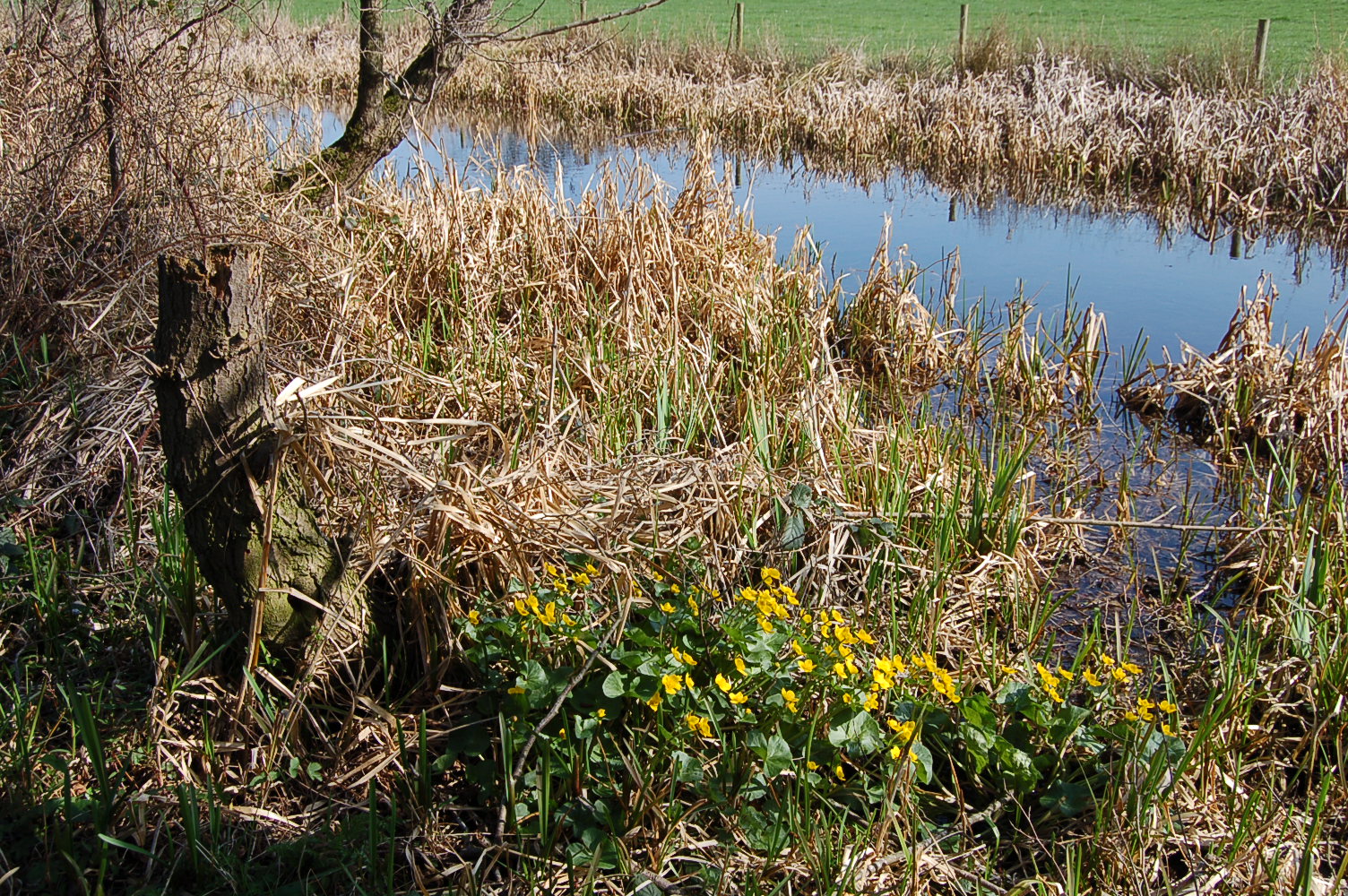
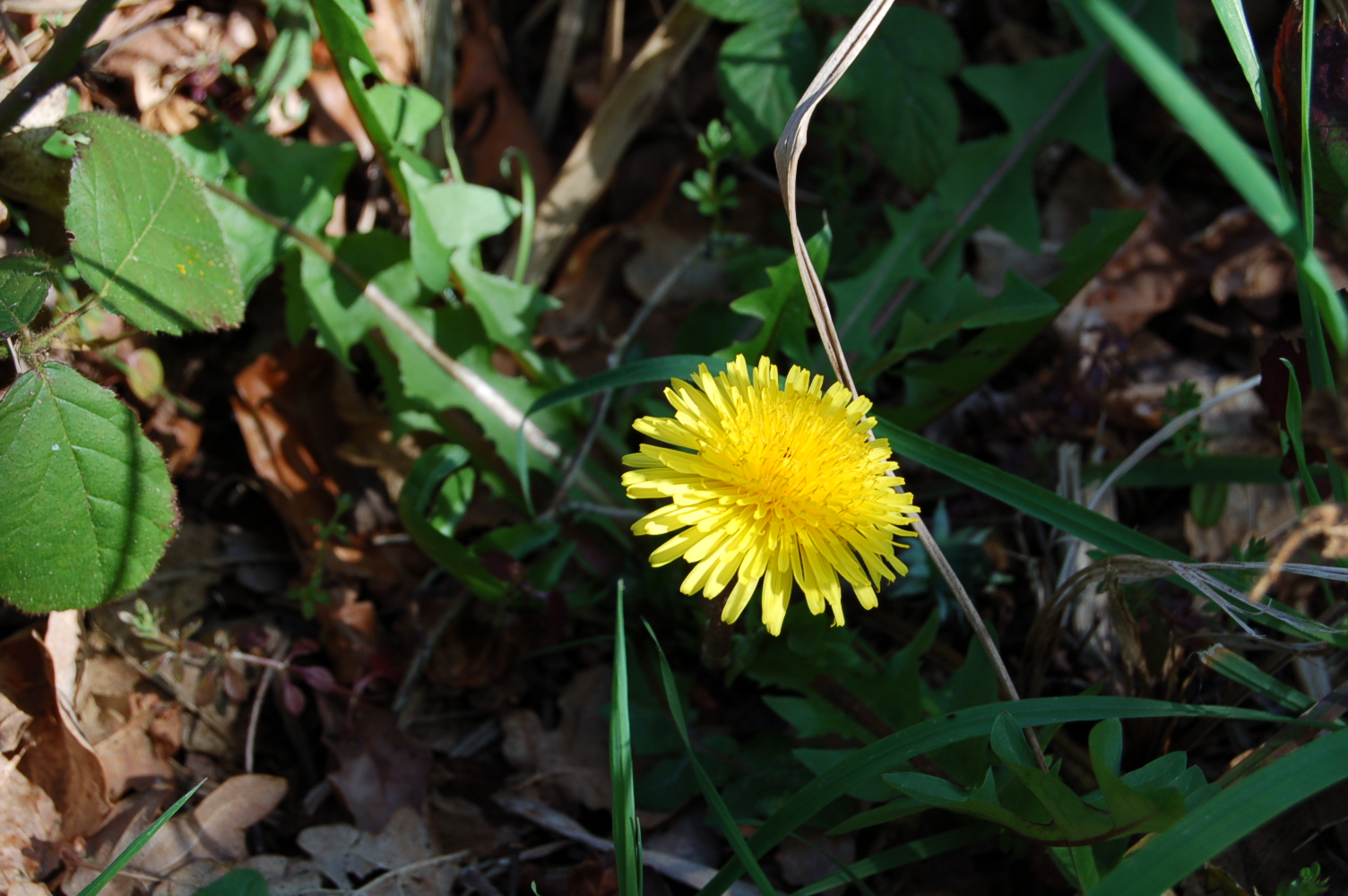
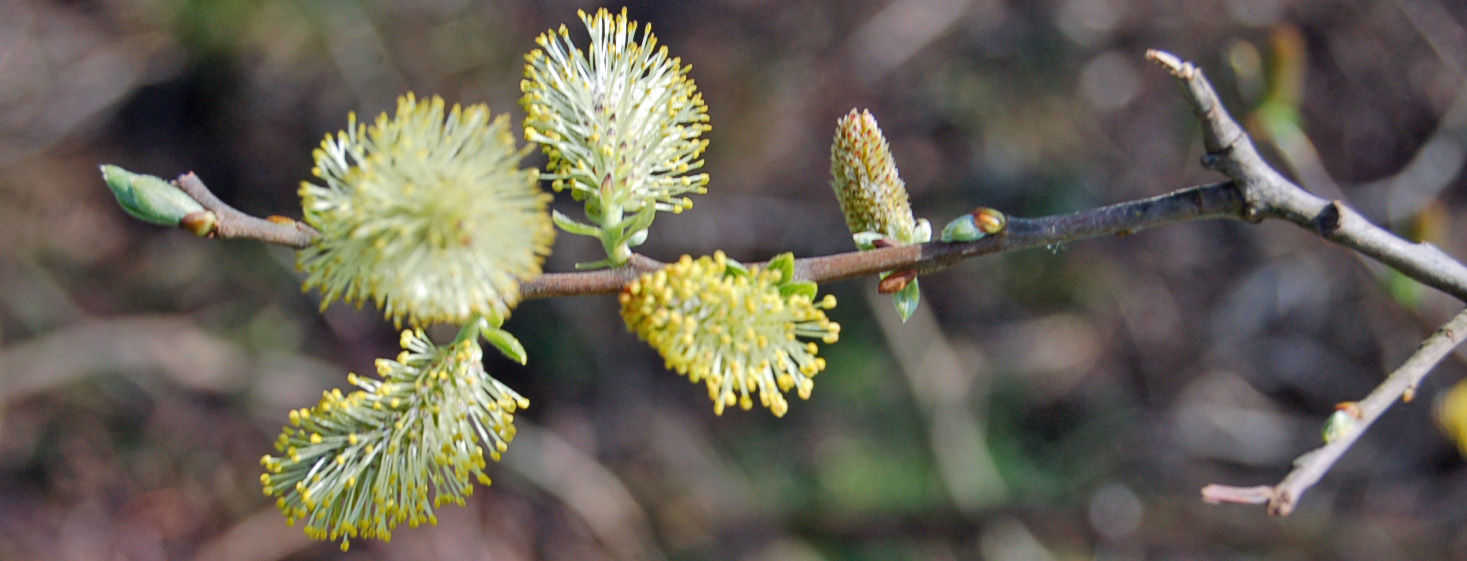
The habitat in this tree-lined section looked absolutely perfect for the Water Vole but the closest we got to one was hearing the characteristic “plop” as one entered the water from the dried reeds followed by the every increasing circles of ripples. In this area, beneath the bare stems of trees in their dappled shade yellow flowers abounded – Celandine, Dandelion, Marsh Marigold and Pussy Willow. Later a snout popped up through the surface film of the water, and Jude stopped me suddenly and pointed. as it moved towards it we realised that the snout was attached to a frog and not a Water Vole. But we enjoyed admiring the frog’s swimming skills – perfect breast stroke clearly seen in the sparkling clean water.

Leaving the tree-lined section, we entered a much more open stretch where the water was crystal clear. Beneath the surface the green of new Yellow Waterlilies glowed.

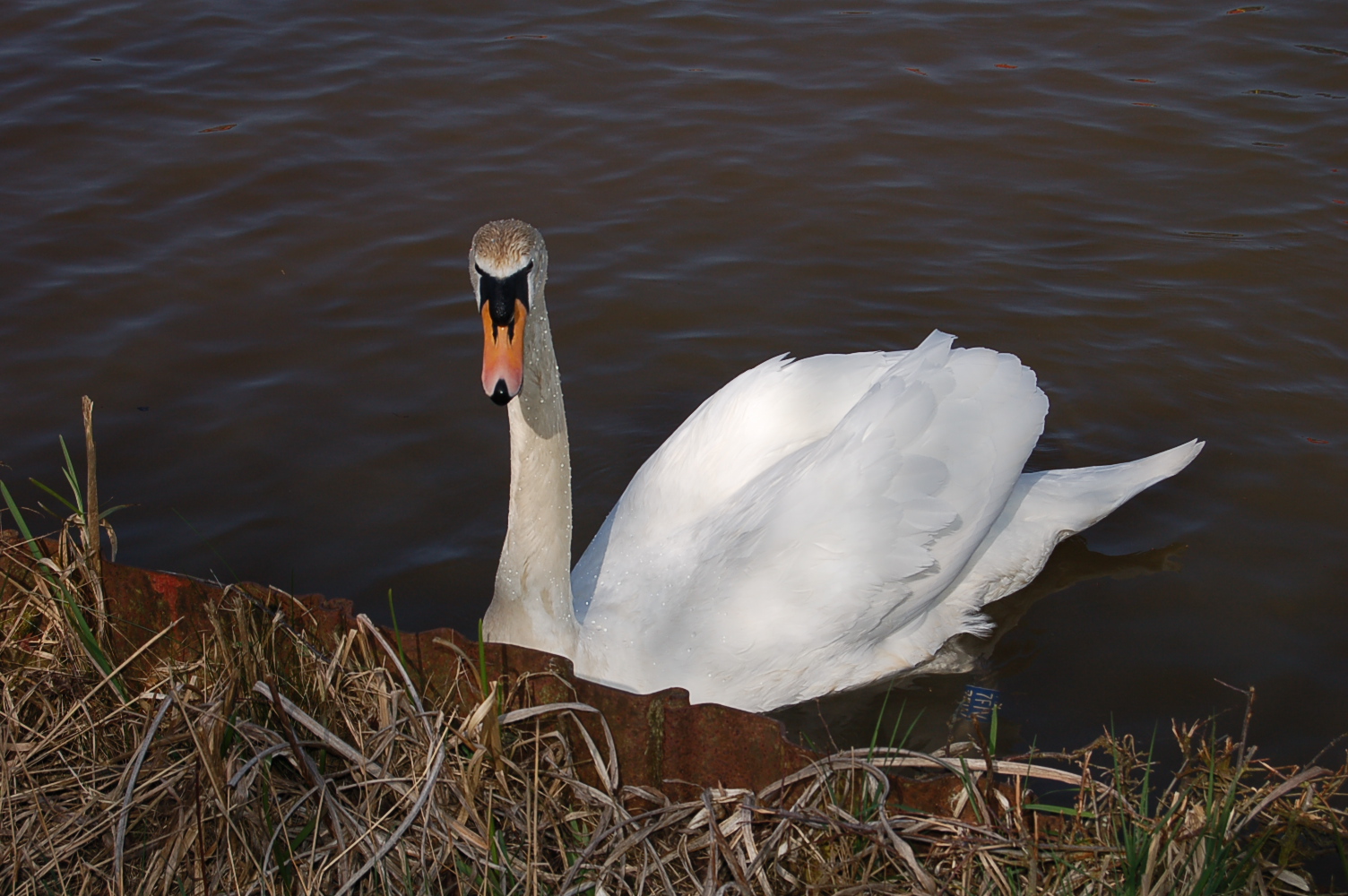
Two male Mallards, their green iridescent heads glowing against the sky reflecting blue, paraded up the canal ahead of us. A single Mute Swan bustled from the dried reeds, a blue ring on its leg showing in the clear water. Clean white feathers, orange beak and blue leg ring.

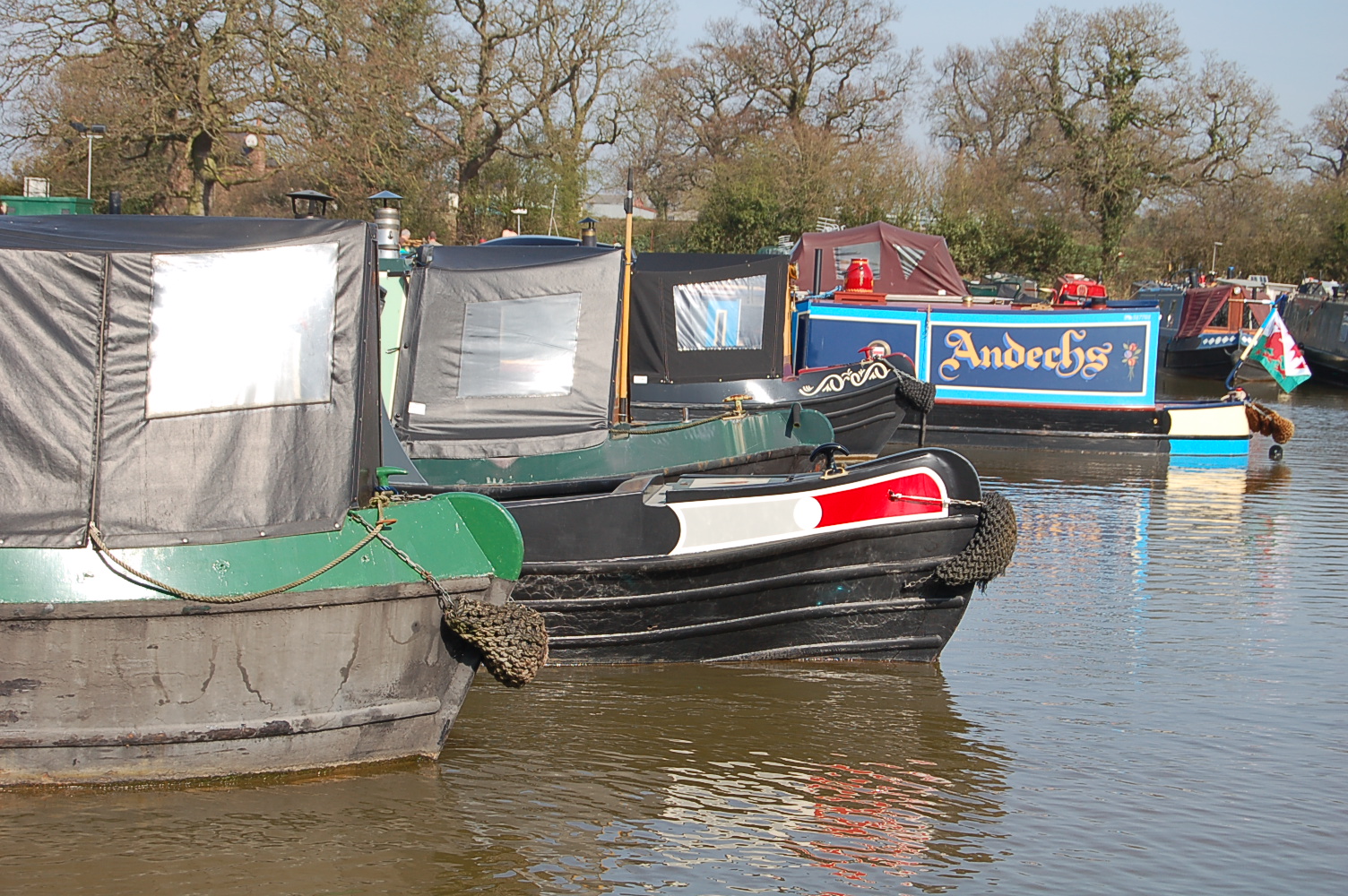
We crossed this open stretch and after passing through an Alder coppice, we reached a busy marina and navigable waters. Narrow boats in all colours, all sizes and from all destinations clustered around moorings. From here on these boats chugged passed us regularly stirring up the silty bed of the canal. They sported a miscellany of names all saying something about their owners, their humour and their interests. Tadpole, Otter, Mouse, Earwig and Maple Leaf, Grace, Ondine, Montgomery, Jubilee Bridge and my favourite Django. That boat owner must be a fellow jazz fan.

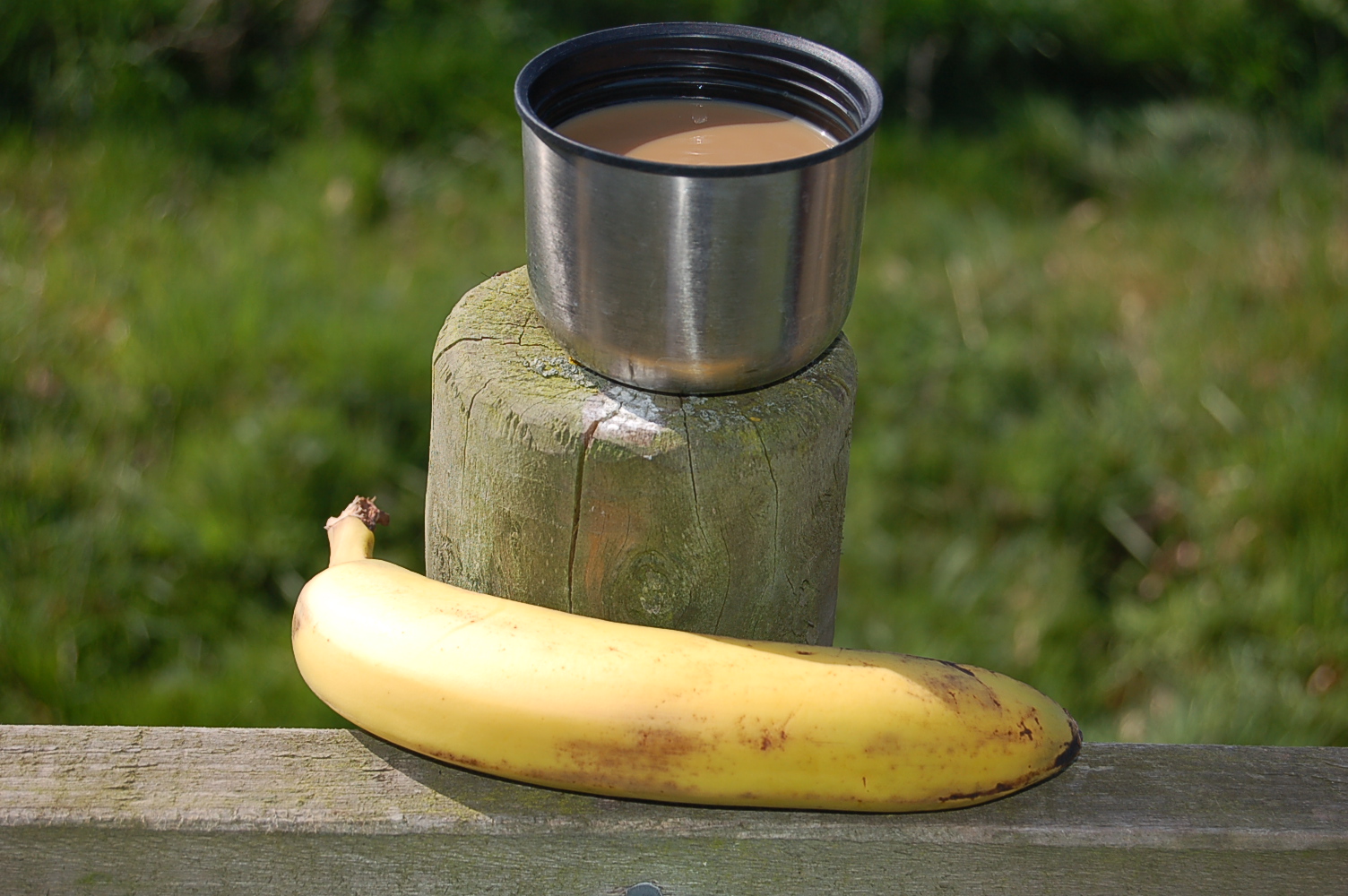
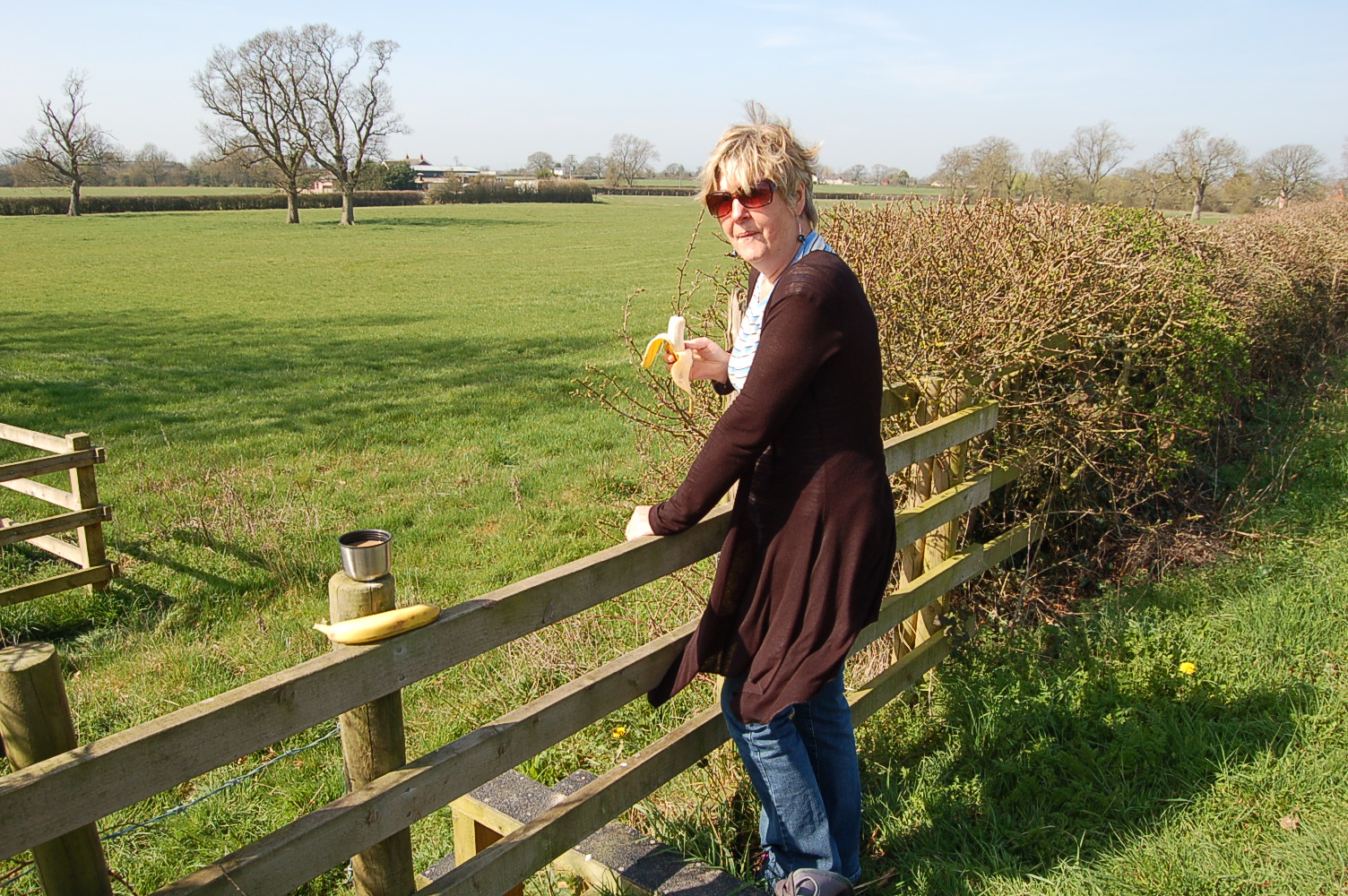
Just beyond the marina we found a stile conveniently placed to lean upon, eat bananas and drink coffee and of course rest weary legs.

We passed under bridges which gave us a moment of shade from the sun which was gaining strength by the hour. Each bridge has a name, Waterloo Bridge, Boodles Bridge, Dobson’s Bridge, Starks Bridge, Allimans Bridge or a number. These hump-backed bridges carried narrow country lanes over the canal or tracks that took cattle or sheep from field to field. Under Boodles we were mesmerised by the sight of a Great Diving Beetle swimming powerfully to the water’s surface to collect its bubble of air. This is Britain’s largest beetle and swims with strong legs. It is large and powerful enough to catch and eat small fish called Sticklebacks.

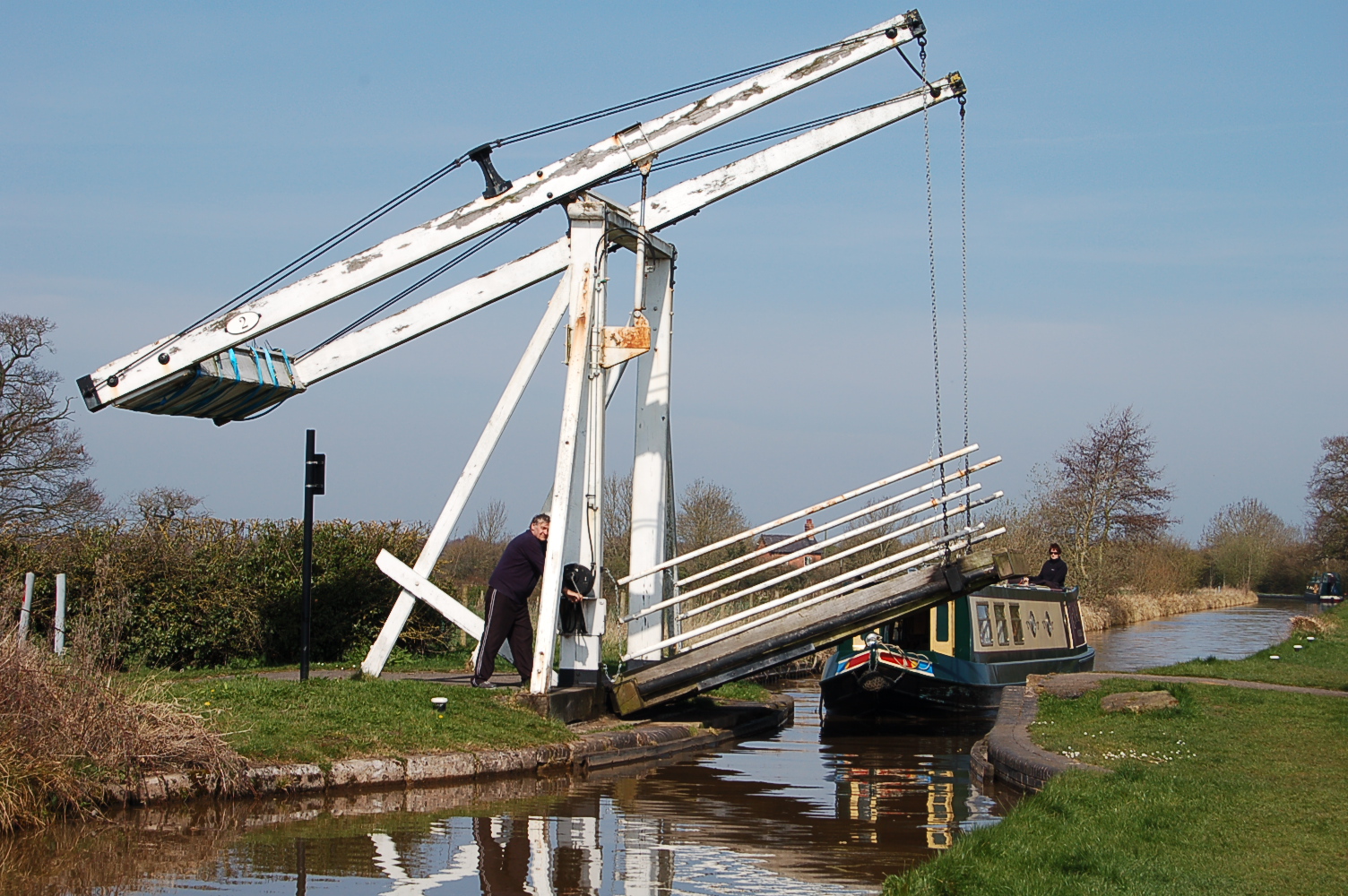
Starks and Allimans were most unusual bridges – Lift Bridges. The trackways were carried over the canals by these low wooden bridges which boatman raise by manually turning a handle. As we approached Starks we watched a barge passing under, a skillful manoeuvre.

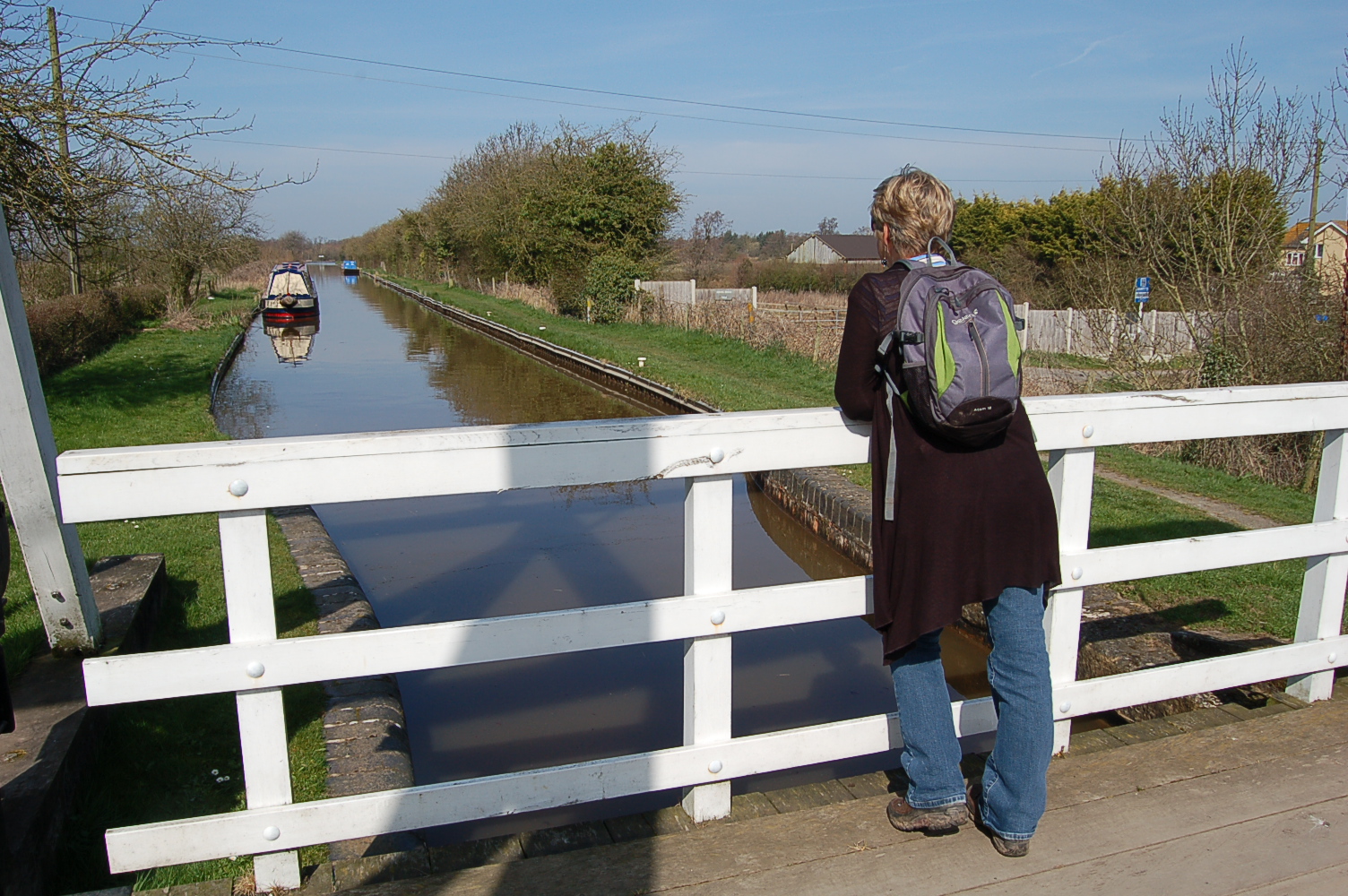
We stood on Allimans lift bridge and looked along the canal trying to decide whether we had enough energy in reserve to walk the last straight quarter-mile stretch to the T-junction where our Prees Branch Canal met with the Shropshire Union. It looked too tempting!

So we moved on slowly and here the canal cut straight through marshy land with scrapes and pools. From the towpath we spotted wading birds such as Lapwing and Curlew, and water birds such as Moorhens, Canada Geese and Wigeon Ducks. Squealing and wheeling above them were the ubiquitous Black-headed Gull.

Reaching the T-junction felt great and after crossing Roving Bridge next to Roving Farm, we found a seat! Just reward indeed! There were two benches placed in memory of people who had loved the canal in their lifetimes. We made ourselves comfortable with a coffee and a couple of apples on the bench dedicated to Edith. Thanks Edith we enjoyed your seat. Here we stayed a while enjoying the sounds of birdsong and watching the occasional barge passing along the Shropshire Union. Most cruised slowly and quietly in front of us and their occupants waved or called greetings. But one approached us noisily. We heard the engine and the “sailors” a long way off. The engine was so noisy that the sailors just had to shout to hear each other giving commands and advice. They needed advice as three men in orange fluorescent safety jackets stood on board a tiny tug barge pushing a barge along in front and pulling two behind. The barge snake zigzagged from bankside to bankside and progressed slowly, but provided amusing entertainment.

Quiet returned as they disappeared into the distance and we could appreciate the “yaffling” calls of Green Woodpeckers and the chattering of pairs of Wagtails, both Pied and Grey. Goldfinches and Greenfinches passed over head in pairs and a lone Buzzard wheeled high above.

(Part Two to follow)

This Veggie Life

A Vegetarian | Nature Lifestyle Blog

Rambling in the Garden

.....and nurturing my soul

The Arch City Gardener

Journeys In St. Louis Gardening and Beyond

Garden Dreaming at Châtillon

Consult the genius of the place

Storyshucker

A blog full of humorous and poignant observations.

gardeninacity

Notes from a wildlife-friendly cottage garden

PlayGroundology

...an emerging social science

The Official Blog of British Wildlife

'The most important and informative publication on wildlife of our times' - The Independent. This blog is a member of The UK & Ireland Natural History Bloggers group: www.uknhb.blogspot.com

iGrowHort

Inspire - Cultivate - Grow Native Plants - Restore Landscapes

Bishops Meadow Trust

To create and protect a semi-natural wild space for the people of Farnham to enjoy and experience an array of British wildlife in our town

Gardening with Children

The www.gardeningwithchildren.co.uk Blog

UKbirdingtimeline

birding through the seasons, why birds matter and how to conserve them

NATURE WALKER

with a camera in hand

Jardin

Transform your outdoor space

Eva's space

My allotment, cooking and other interests

Old School Garden

my gardening life through the year

LEANNE COLE

Trying to live a creative life

fromacountrycottage

trying to live as lightly as possible on our beautiful planet

Good Life Gardening

Nature lovers from Leicester living the good life.

mybeautfulthings

Finding the beautiful in the everyday

mawsonmichelle

Michelle's Allotment

In and Out of My Garden

thoughts from and about my garden

Greenhousing

Big plans for a small garden

The Scottish Country Garden

A Walled Country Garden in South East Scotland

The Fruity Chicken

Life at the fruity chicken

willowarchway

Off grid living. Self sufficient. "PERMAGANICS RULE".

St Anns Allotments

Nottingham's Grade 2* Listed Allotments and Community Orchard

Manifest Joy Harvests

a journey in suburban vegetable gardening

Allotmental

The madness of growing your own

Penny's Garden: a harvest beyond my front door

A novel approach to vegetable gardening

arignagardener

Sustainable living in the Irish countryside.

NewEnglandGardenAndThread

Master Gardener, amateur photographer, quilter, NH native, and sometimes SC snowbird

dianajhale

Recent work and work in progress and anything else that interests me

planthoarder

a chaotic cottage gardener

Lens and Pens by Sally

a weekly blog that creates a personal philosophy through photographs and words

Dewdrops and Sunshine

Stories from a sassy and classy Southern farmbelle.

The Pyjama Gardener

Simple Organic Gardening & Seasonal Living

gettin' fresh!

turning dirt into dinner

JOY...

today the world is created anew

Garden Birds

Notes from a Devon garden

ShootAbout

Life Through The Lens

Adapting Pixels

A photography blog showcasing the best photography pictures and videos on the internet

Wildlifegardening's Blog

Just another WordPress.com site

naturestimeline

personal observations from the natural world as the search continues for a new approach to conservation.

LATEBLOOMERBUDS

The Wonders of Life through my Eyes, my Heart, my Soul