Categories
autumn autumn colours climbing plants colours garden design garden photography gardening grasses hardy perennials ornamental grasses ornamental trees and shrubs photography poppies roses Shropshire trees

A Wander Around our Garden in November

This is the penultimate garden wander for the year and what a colourful one it is. The weather has turned cold with daytime temperatures failing to reach double figures and night time temperatures only just above freezing. Some days though do please the camera, with deep blue skies in between storms.

This rich red oriental poppy never fails to impress even this late in the year.

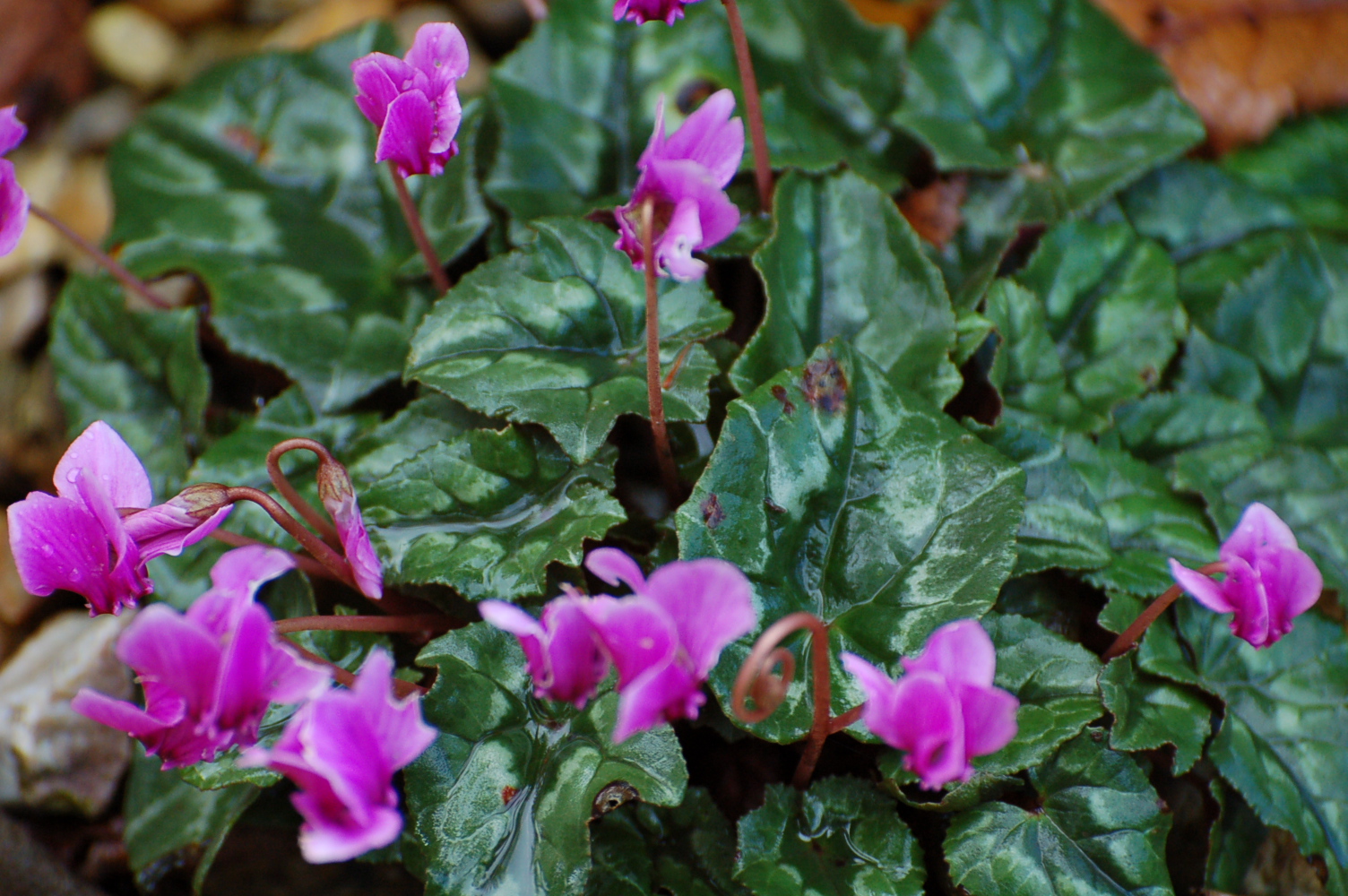
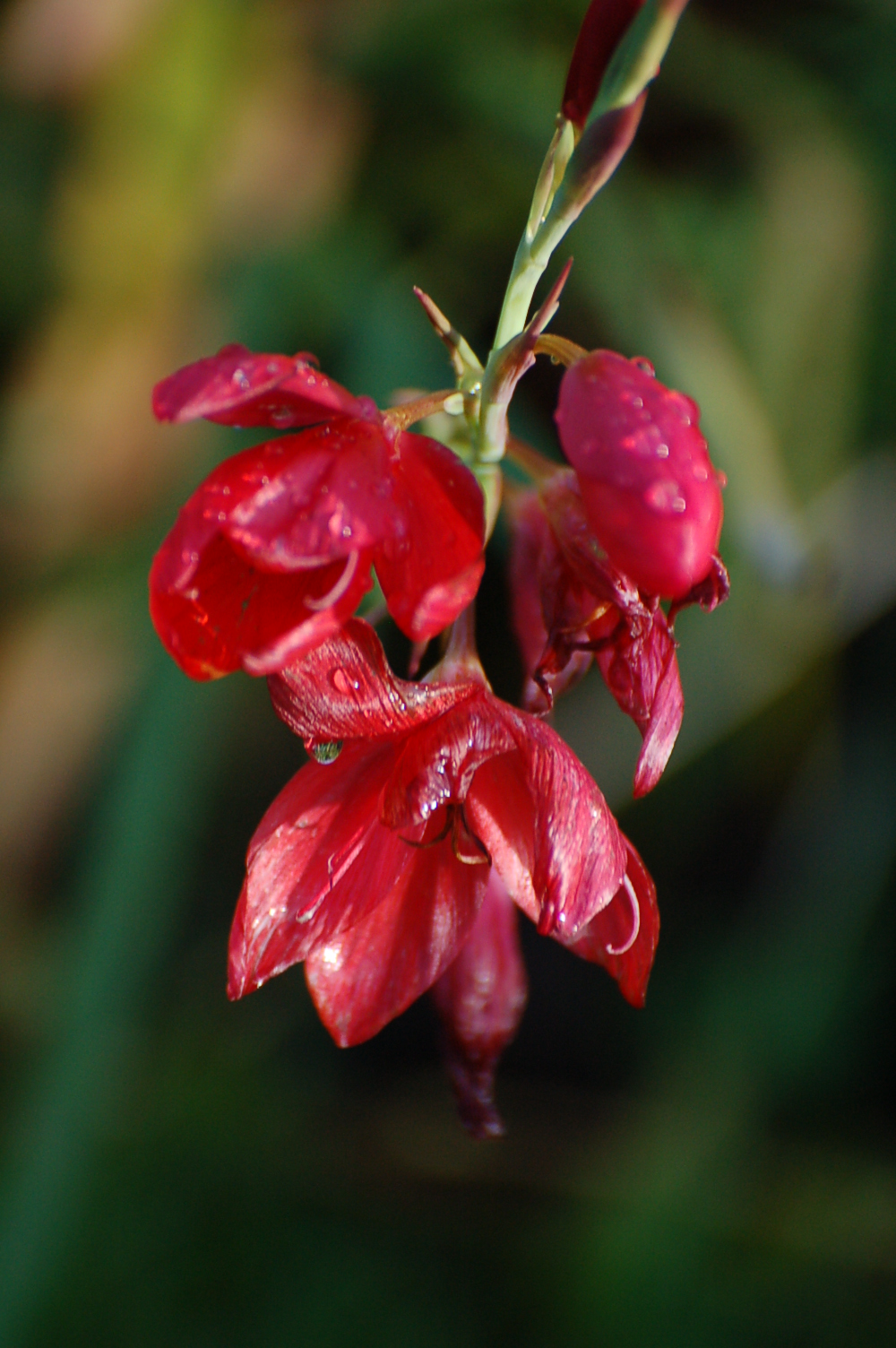
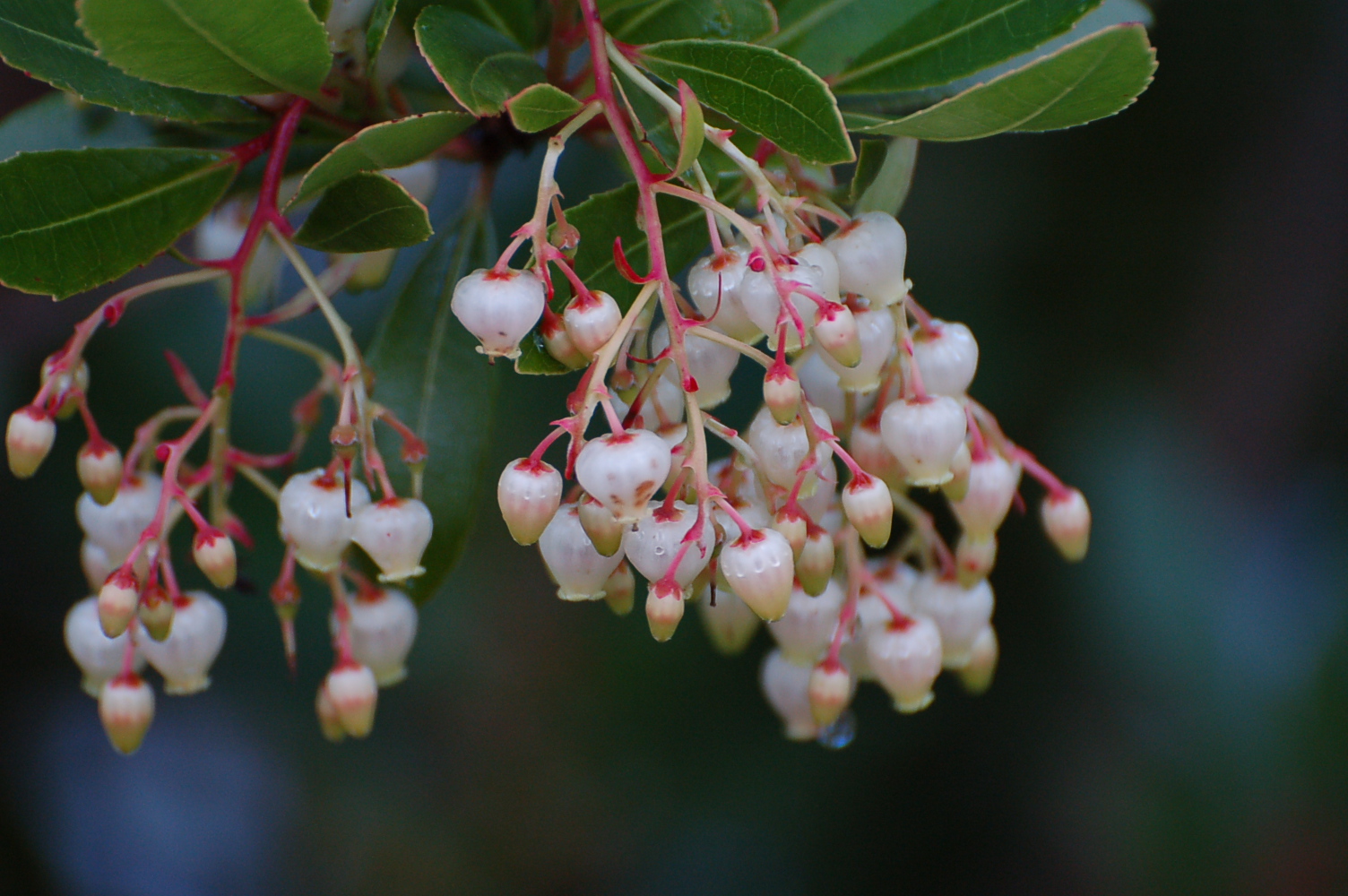
Several of the plants that feature in the November garden seem to sport odd shaped flowers. The Strawberry Tree, Arbutus unedo has flowers that hang like pearly cream bells. Cyclamen hederifolium have curious fly away petals while Shystostylus flowers hang on gently curving stems.
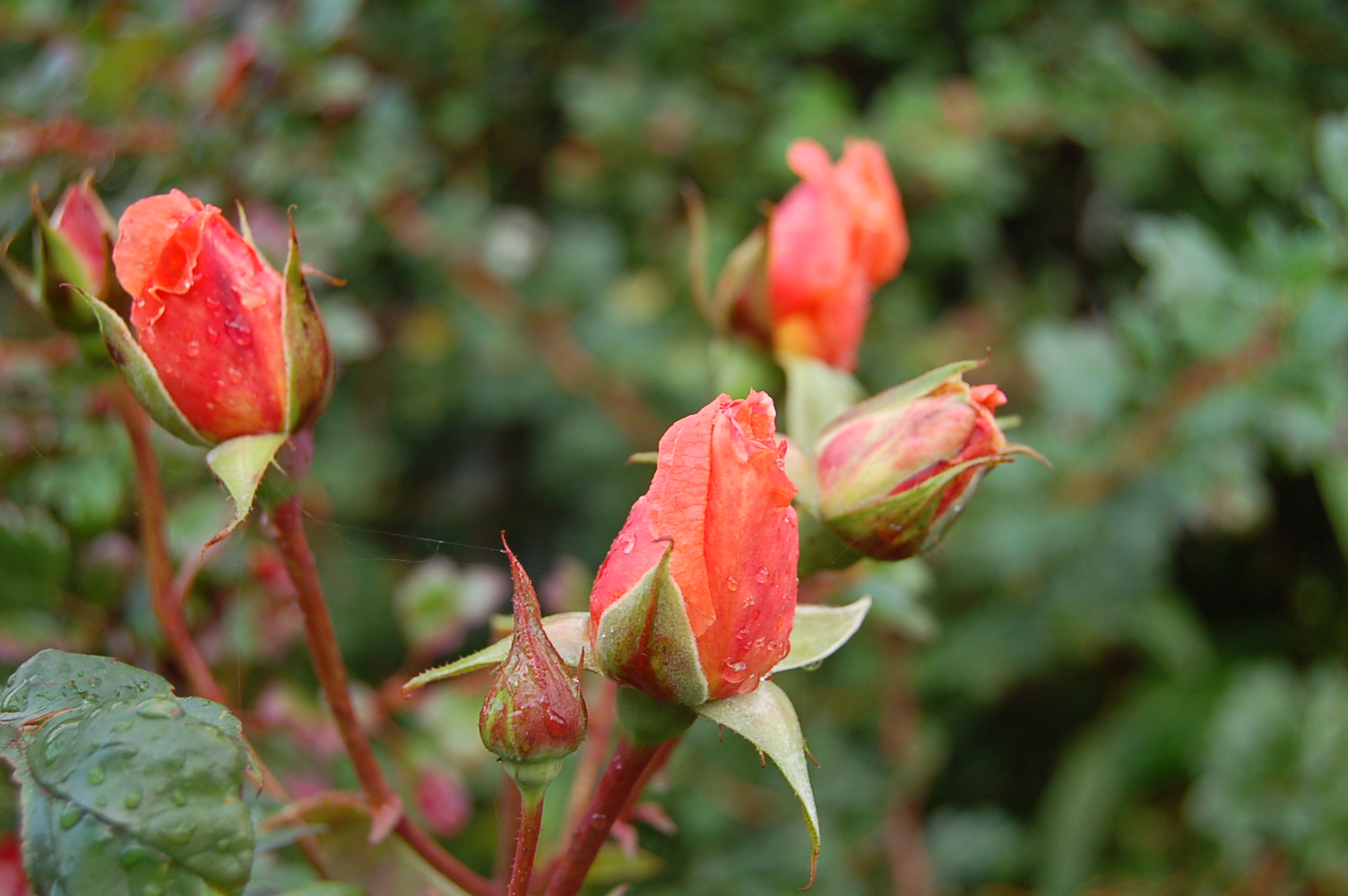
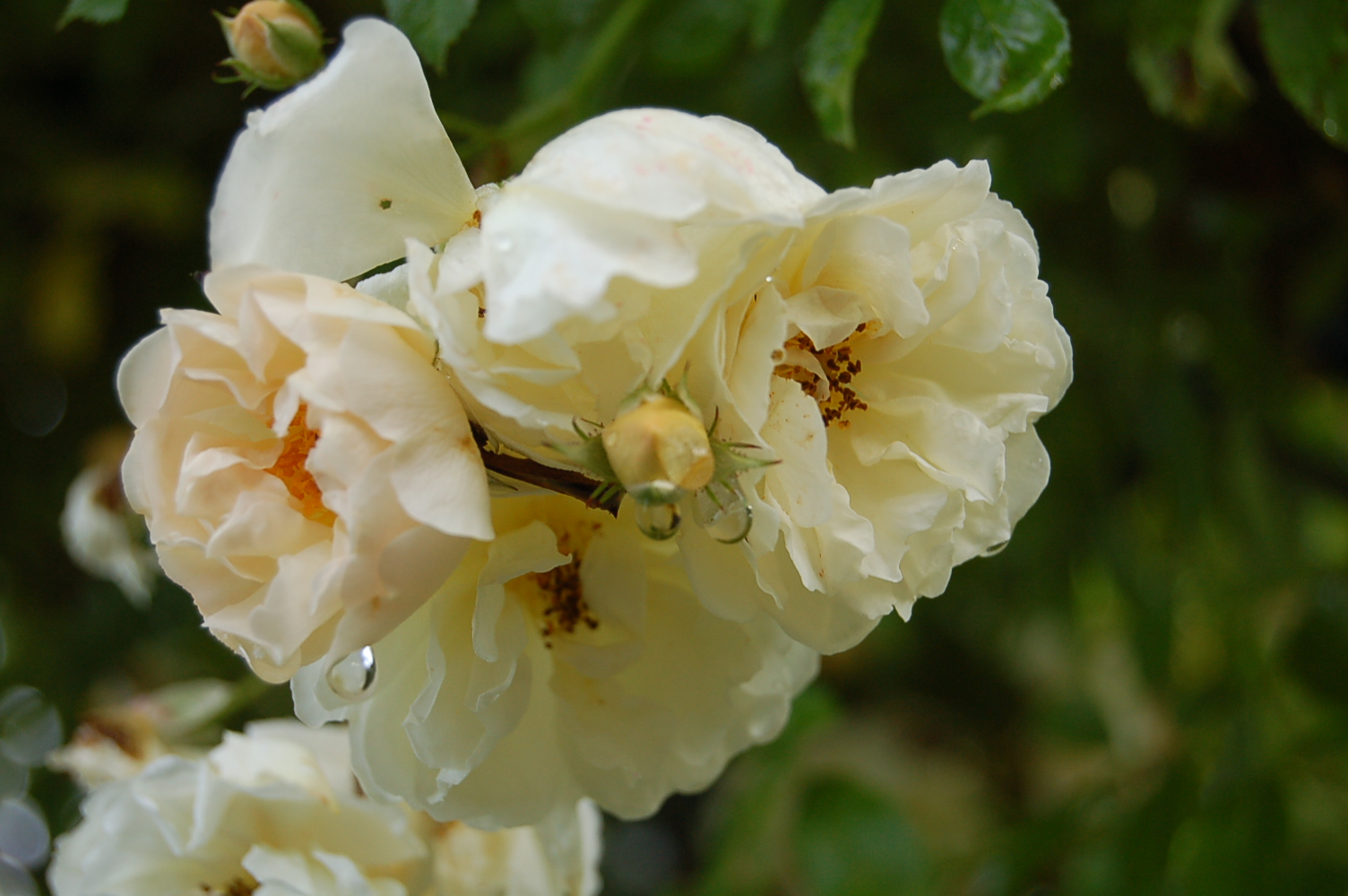
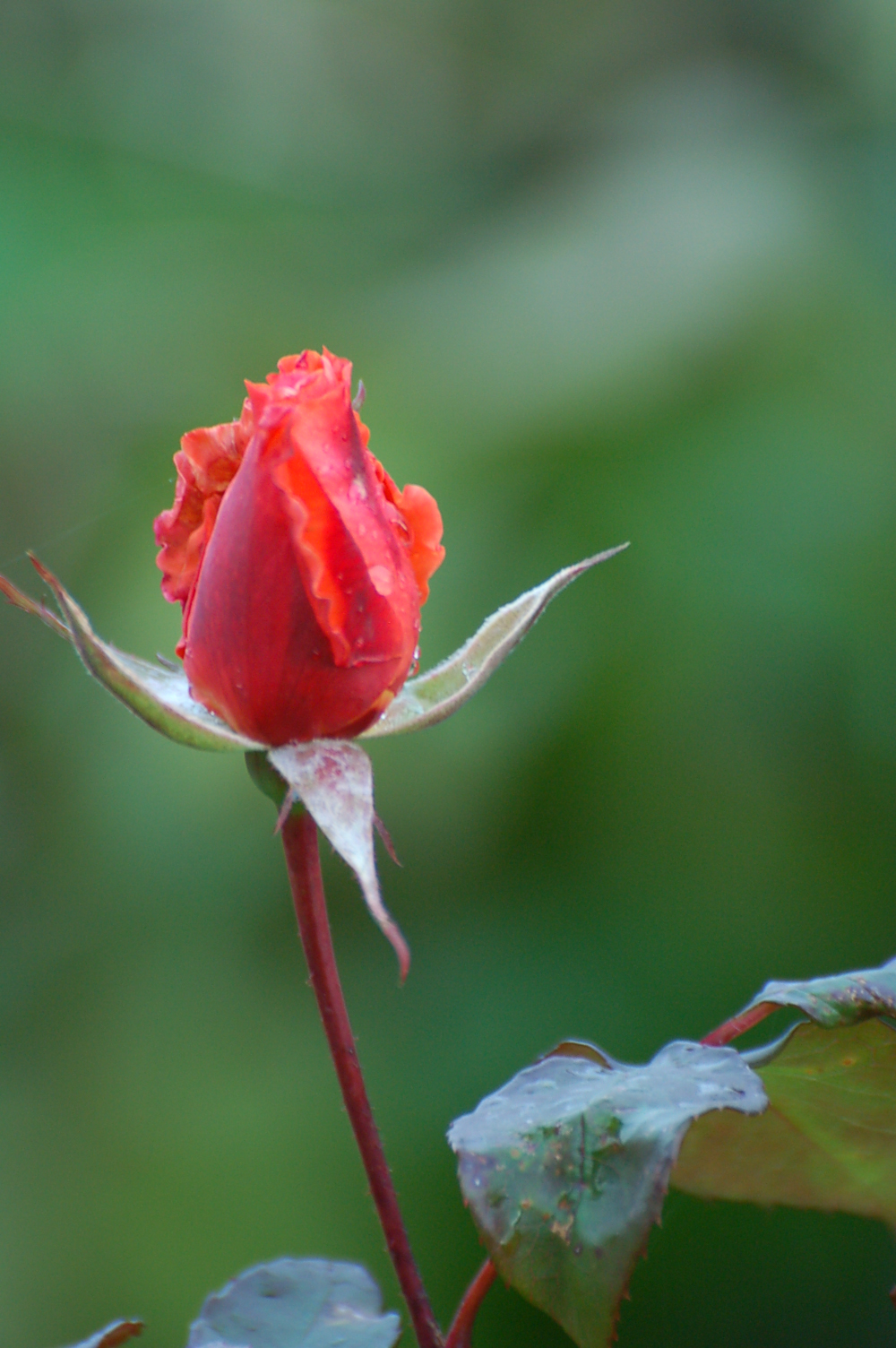
Roses seem to be blooming away giving us brightness for most of the year. Many that started blooming in late May are still flowering now and they are producing buds in readiness to flower right through to the end of the year.
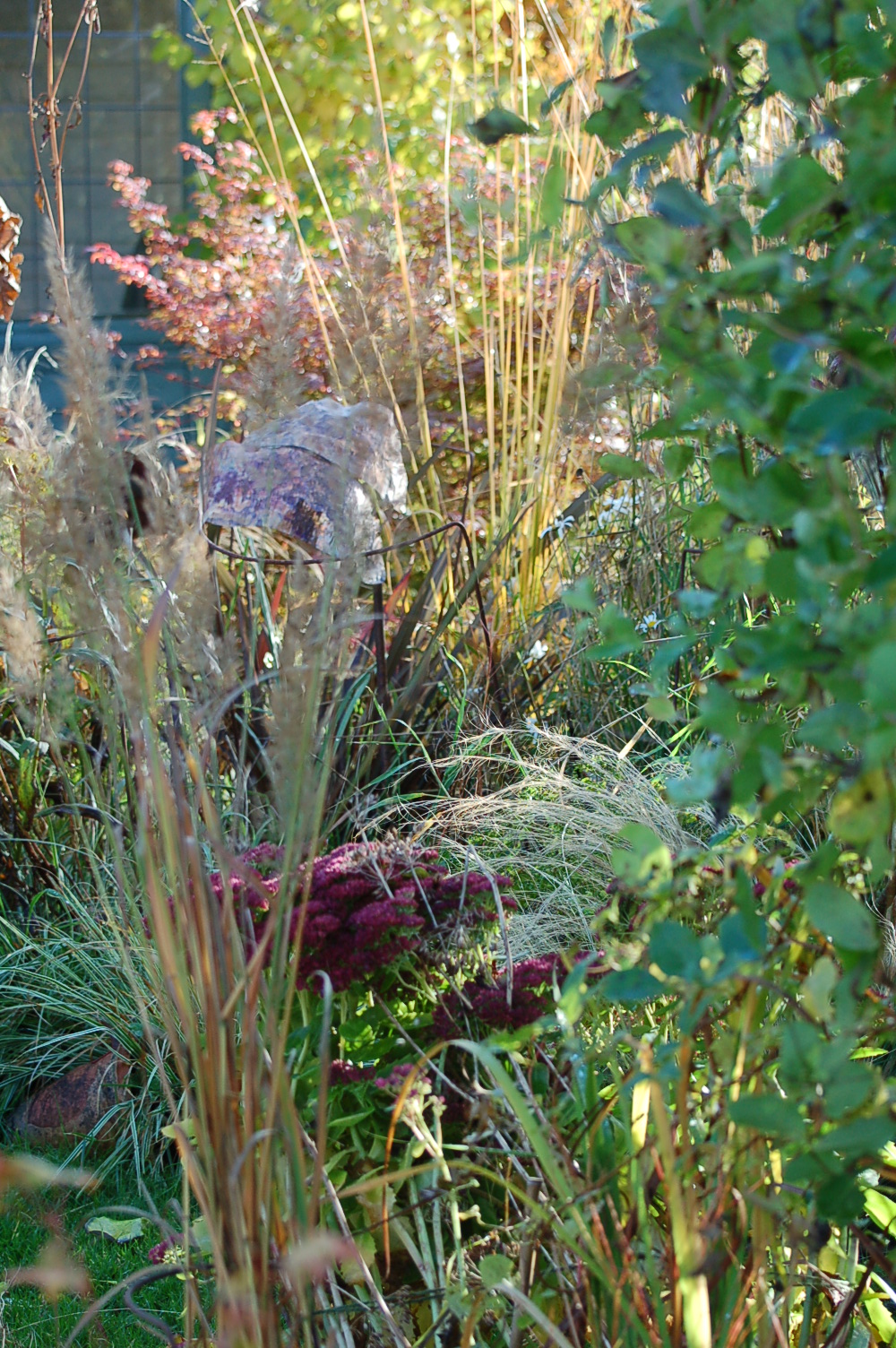
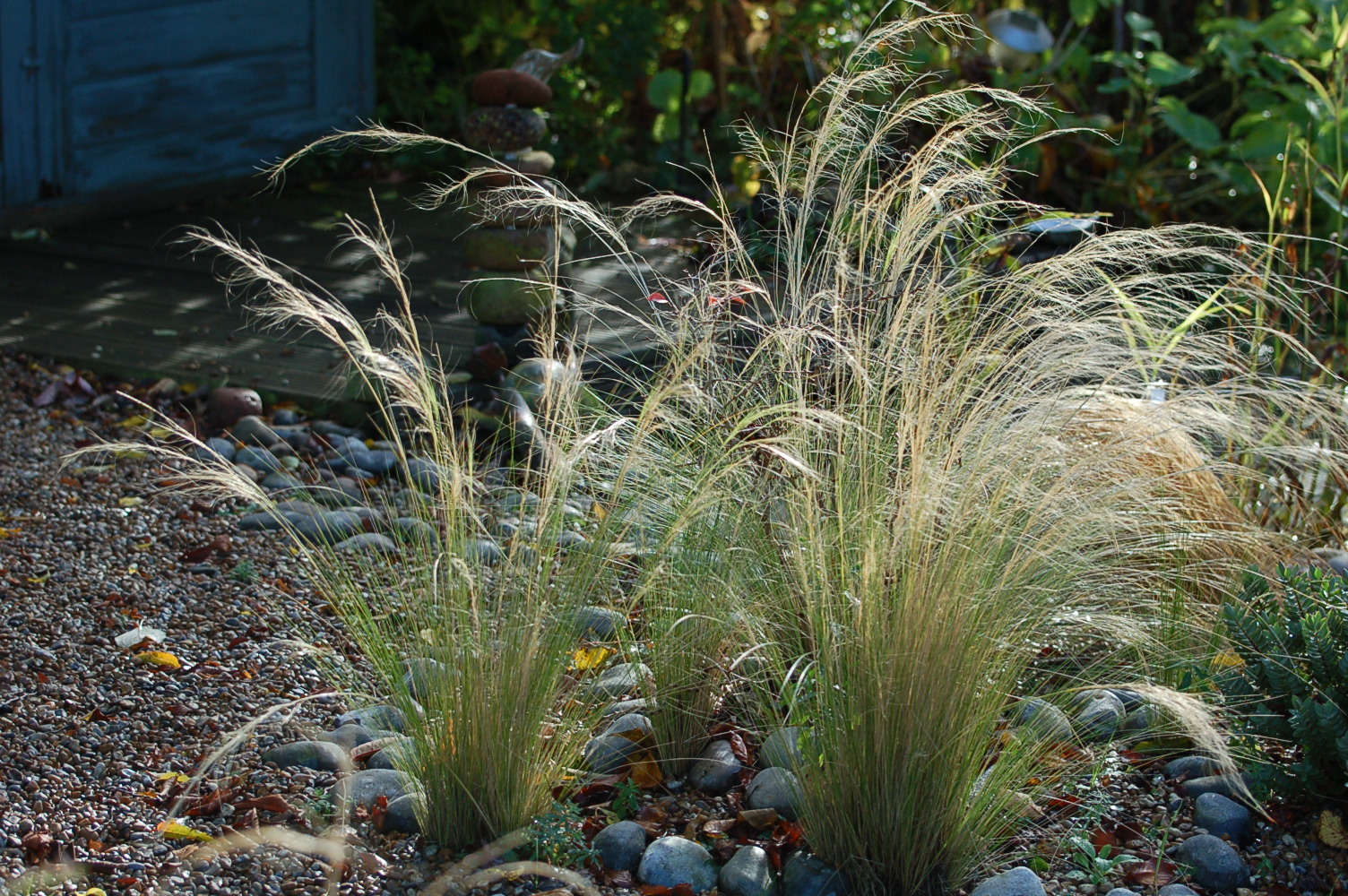
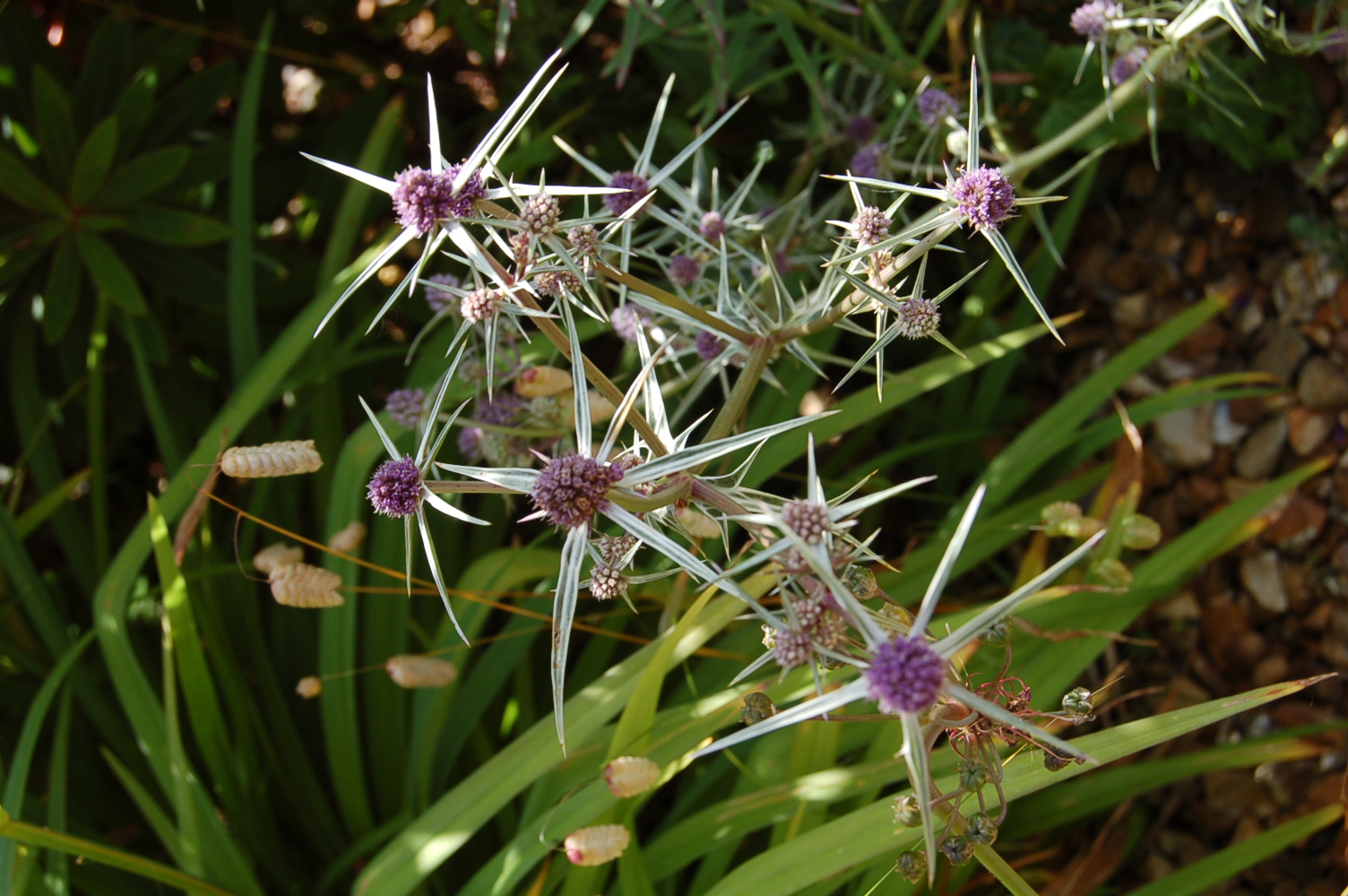
At the moment I pass the wonderfully colourful corner of the Shed Bed, where grasses have coloured up intermingled with the dries flower heads of Eryngium and Agastache. It has to be my favourite November patch in the garden.

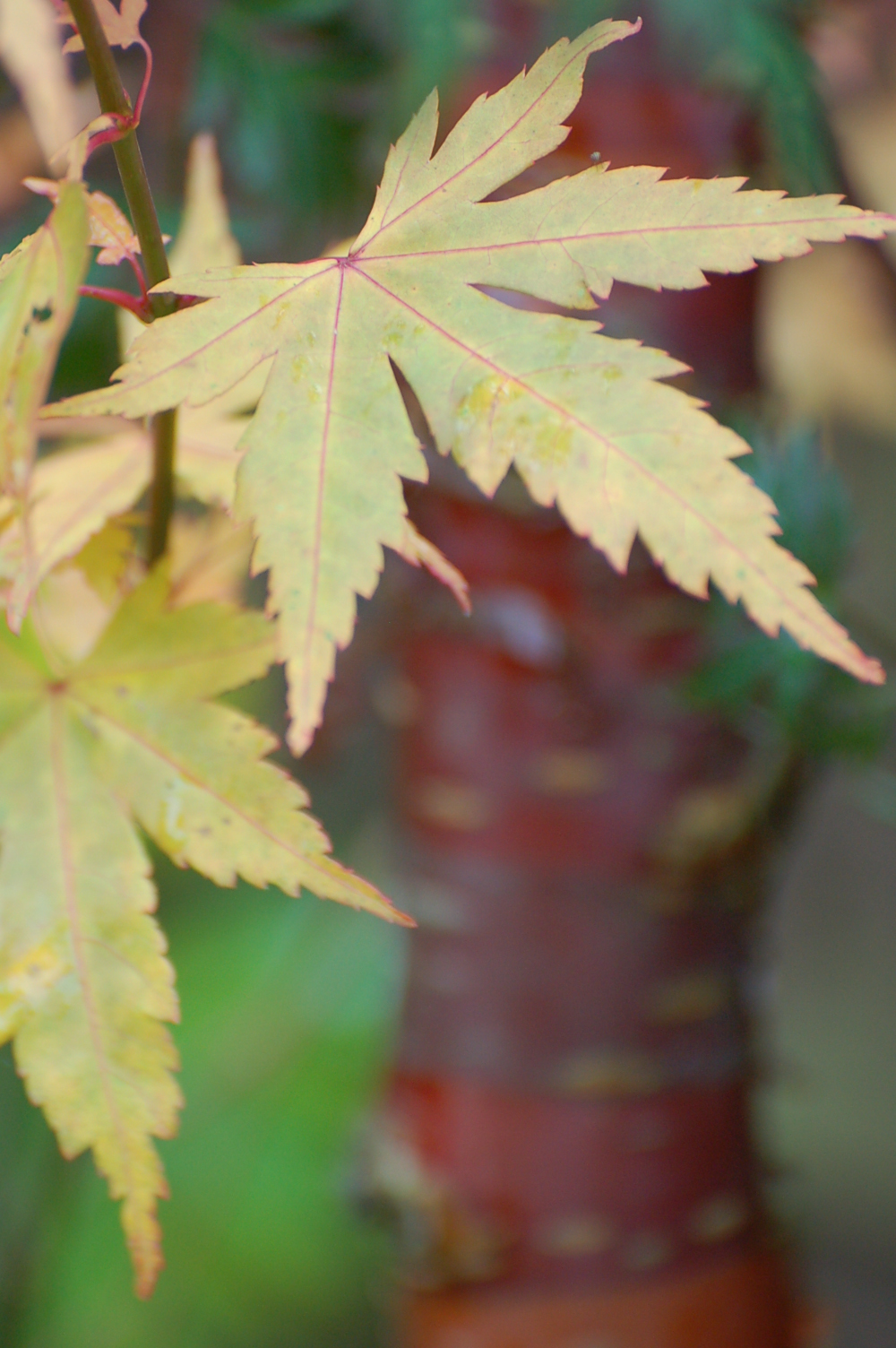
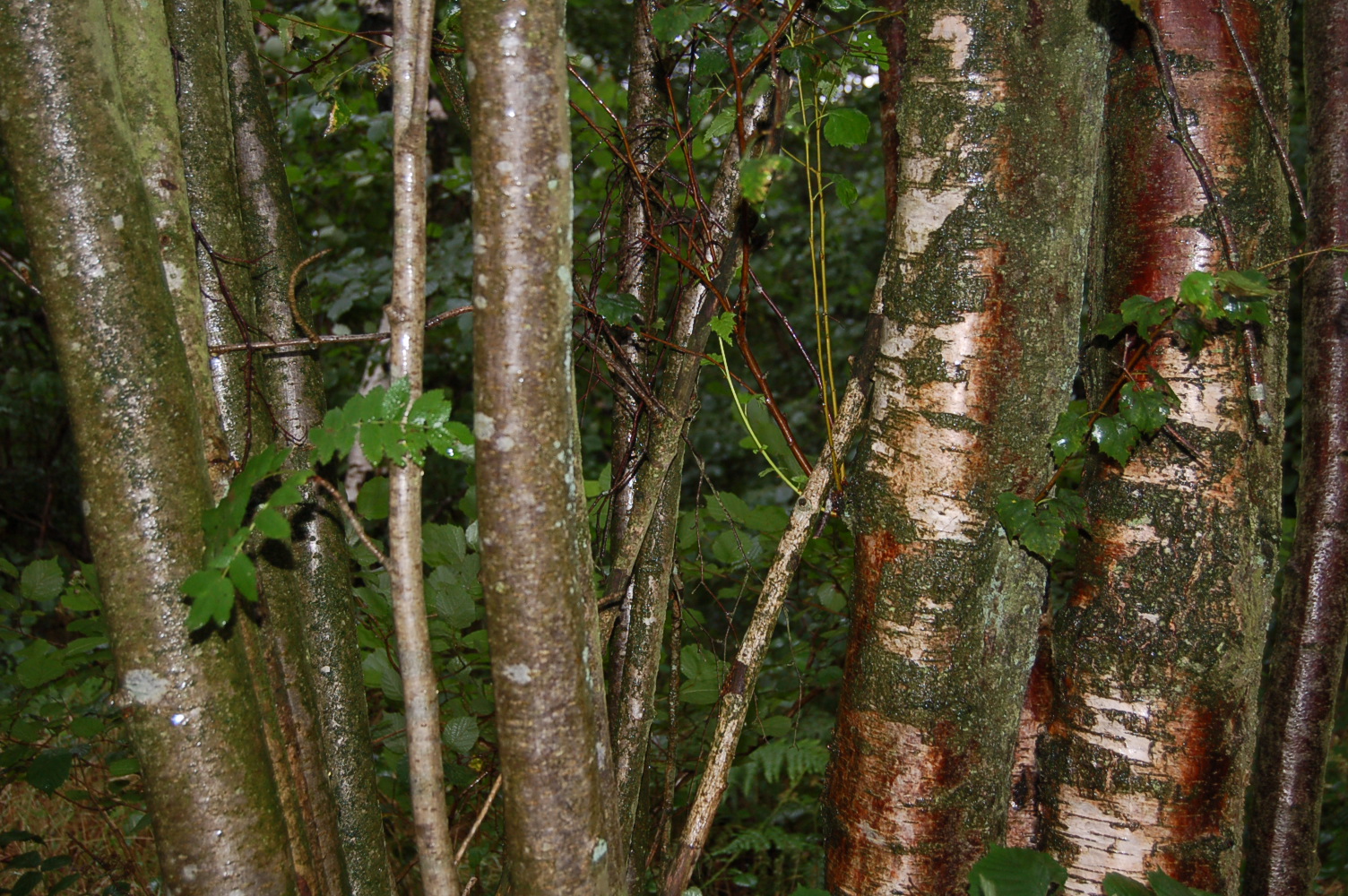
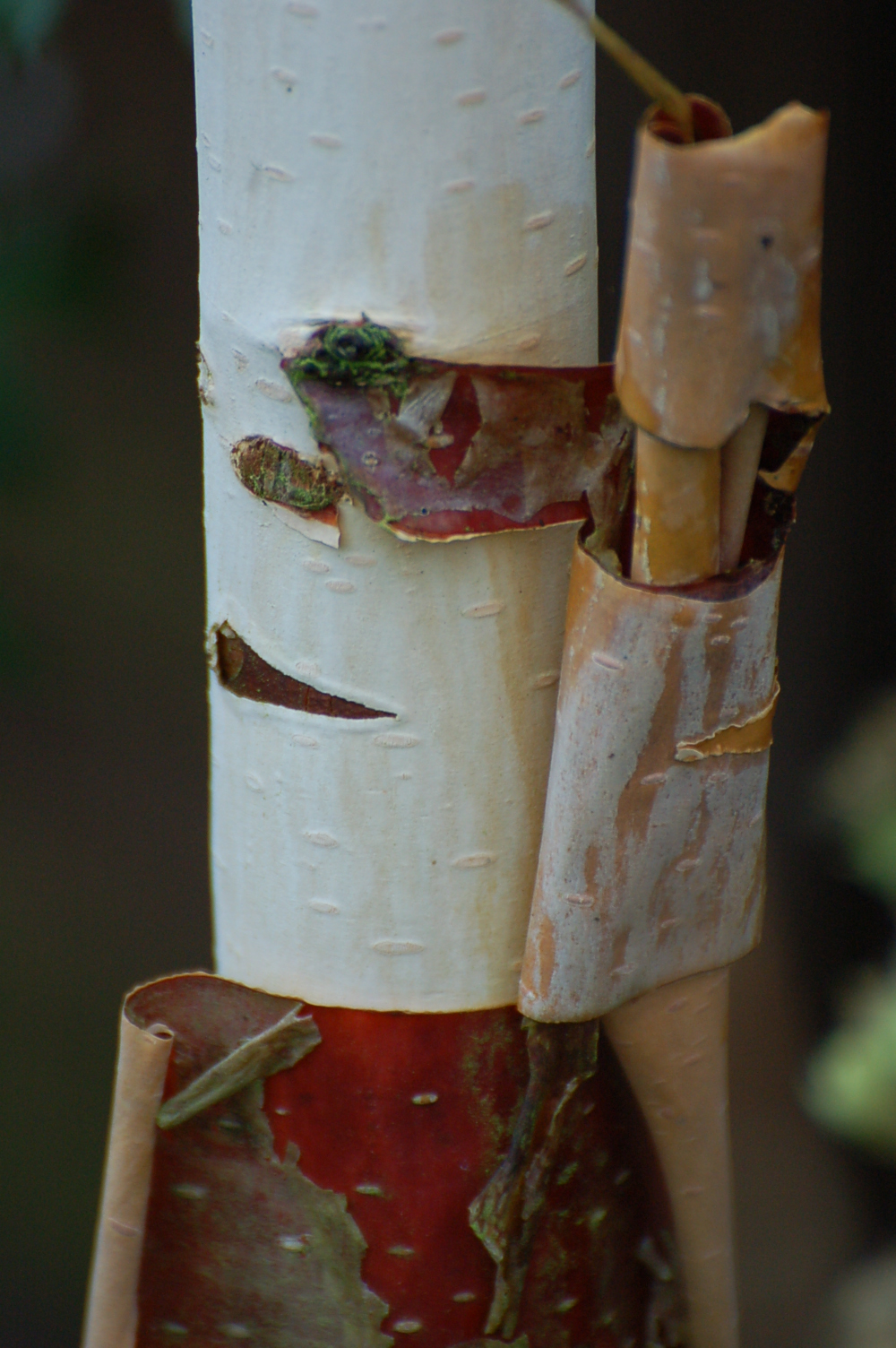
Having passed my favourite corner I pass our trees as I go down to to the bottom of the garden to feed the chicks. Their bark textures and colours change every day. This birch’s chocolate coloured bark is peeling back to reveal snow white smooth bark below, like a white shirt beneath jacket collars.
It seems to be a special year for cotoneaster berries, with every variety covered thickly in readiness for arrival of the winter migrant thrushes.

There is something very special about the freshness of the flowers of the Fatsia, with their creamy, greeny whitish colours. They always look to me as if they should smell of vanilla and be edible!

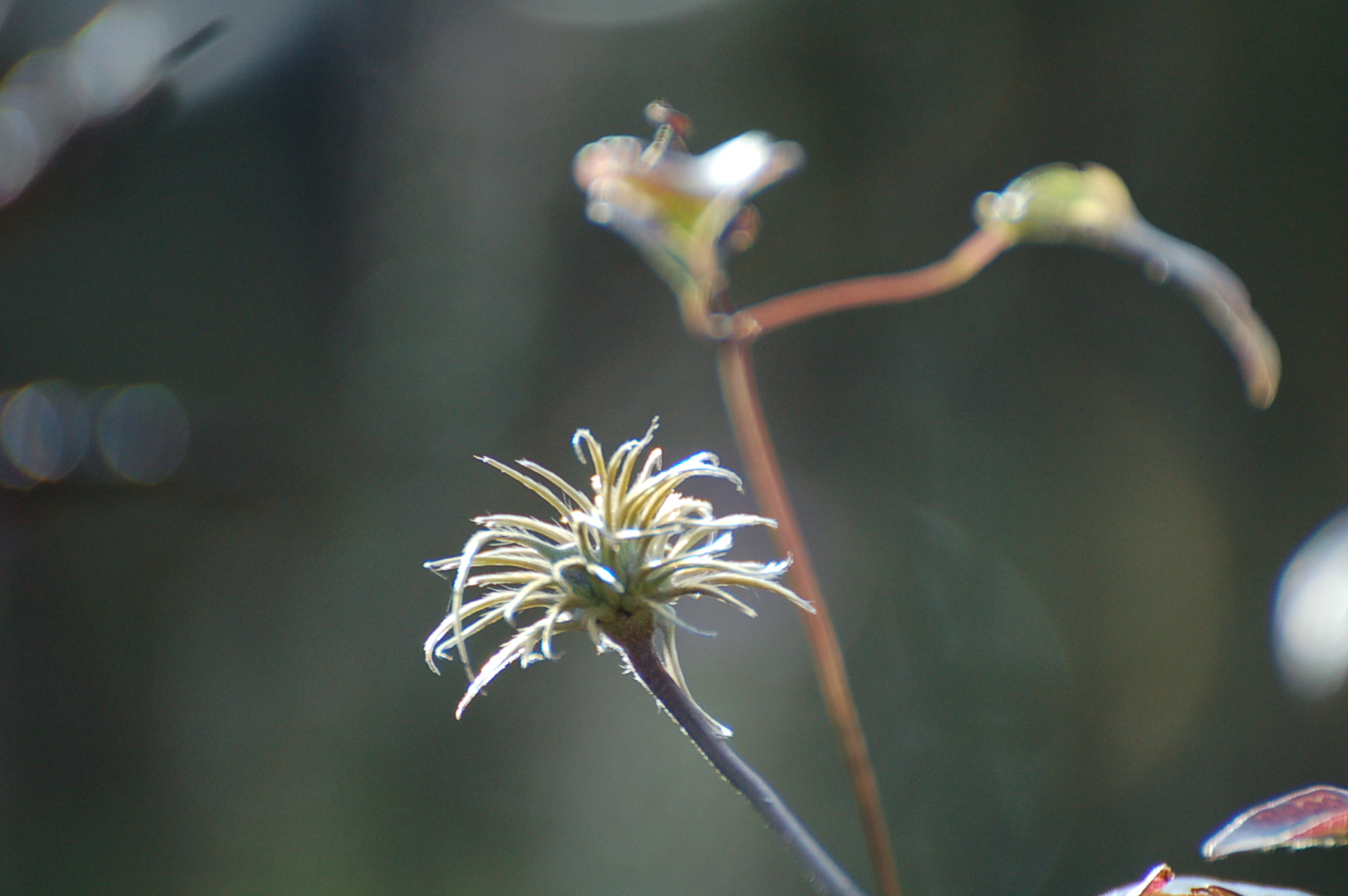
There are difficult decisions to be made in the November garden. Which seed heads to cut down and which to leave for their looks and wildlife value is perhaps the most difficult. How could you possible cut this clematis down when it looks this good? We tend now to leave perennials standing unless or until they fall and become soggy. Once they do this they endanger the lives of the plants they may be smothering. To me the idea of “putting the garden to bed for winter” just doesn’t add up. A garden is for 12 months, all of them
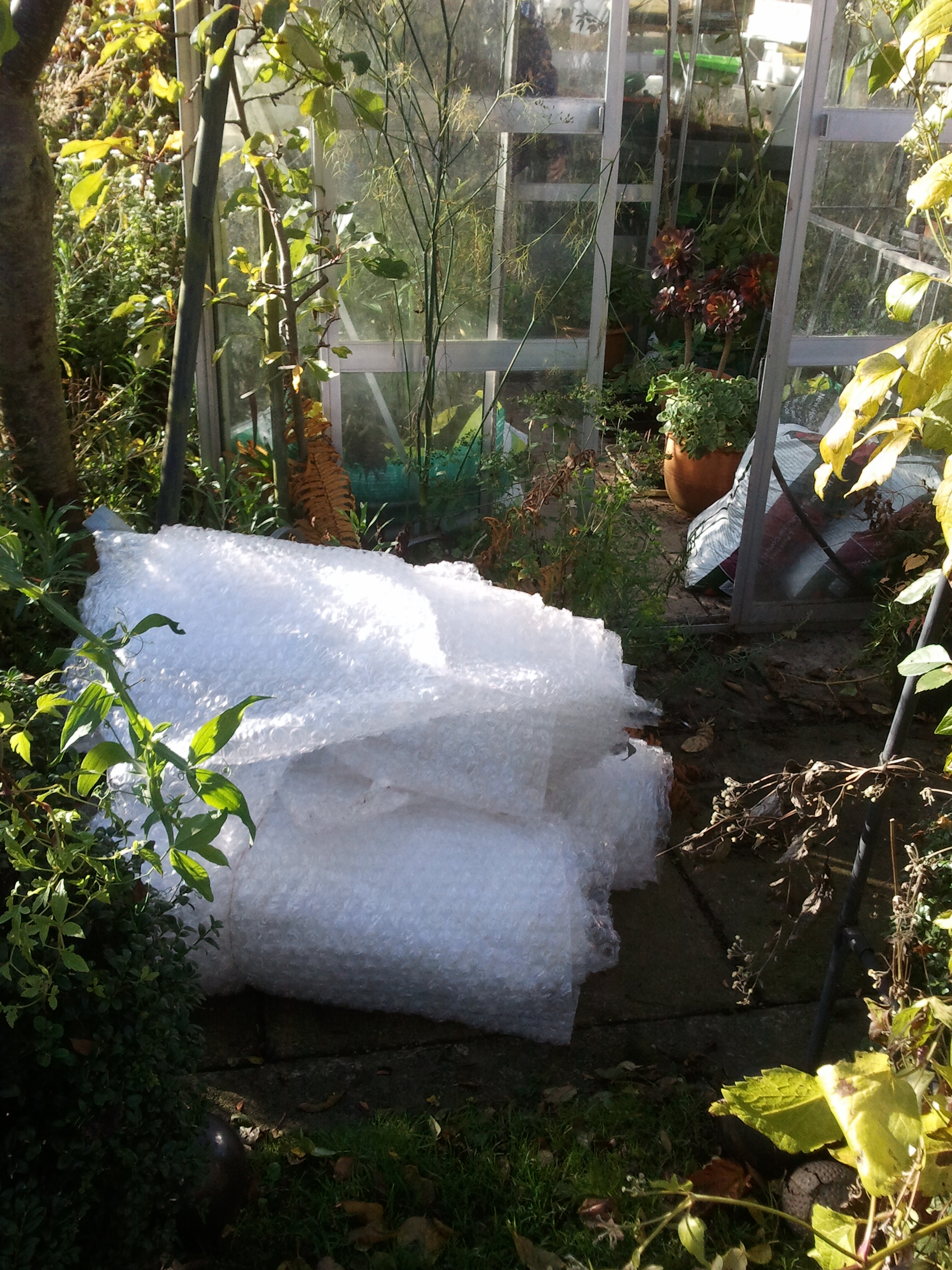
Wrapping the greenhouse in its winter jacket of bubble-wrap is the least favourite of all of our gardening tasks. This Novenber we started on a cold day knowing that as we added the thermal layer to the greenhouse we would heat up as well. But the sun came out and we got too hot. We started off wearing fleece jackets over jumpers but by the time we had finished we had shed both these layers and were down to tee-shirts.

First we collected the rolls of wrap from their summer quarters – the woodshed, and piled them up outside
Next we attempted to begin hanging it inside the greenhouse over specially positioned strings and wires. The bubblewrap then attacked Jude, the Undergardener.
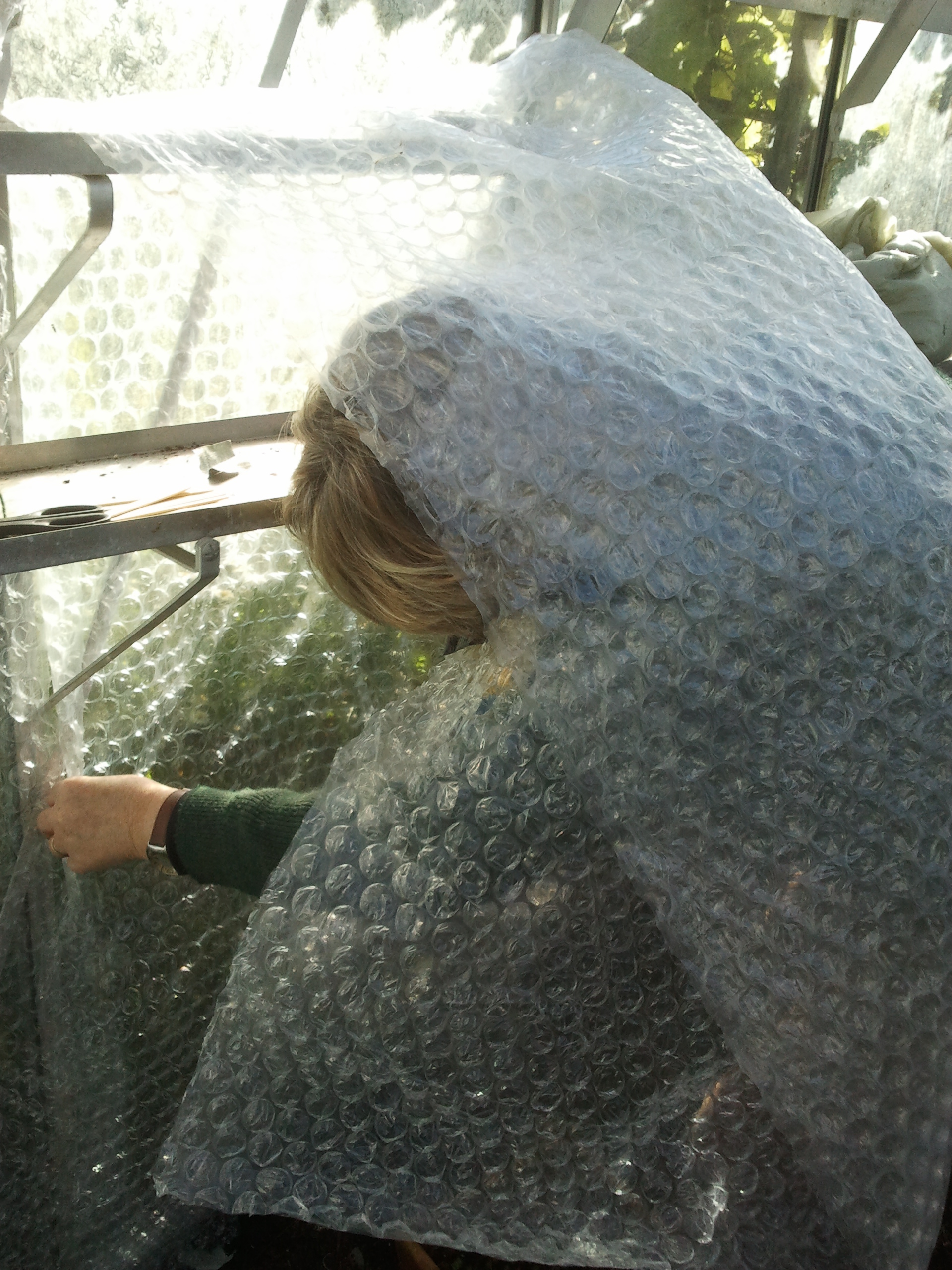
Eventually Jude managed to overcome the wrap and get on with the job in hand, lining the sides and then hanging it over strings tied across the roof. Soon the temperature increased.
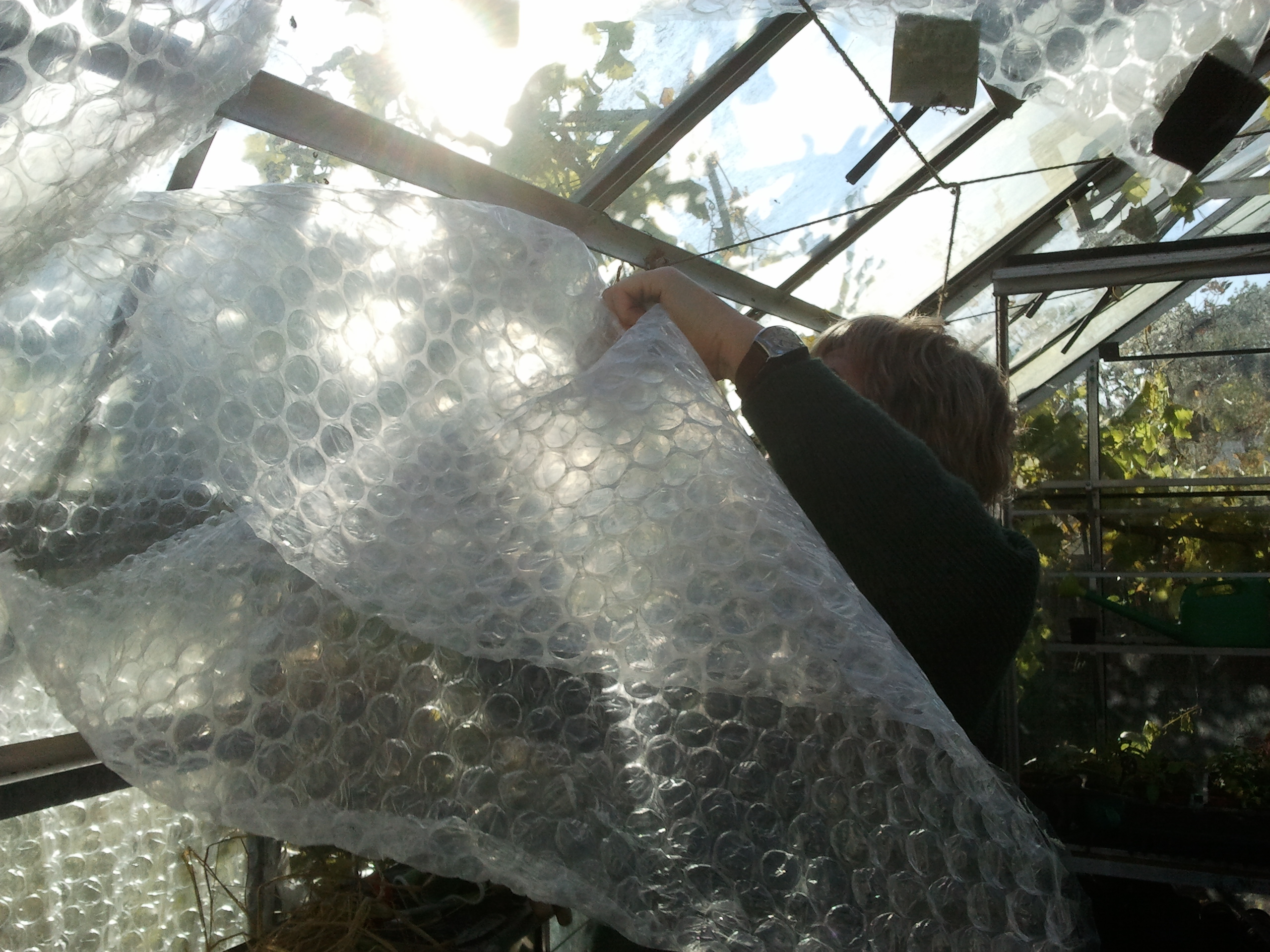
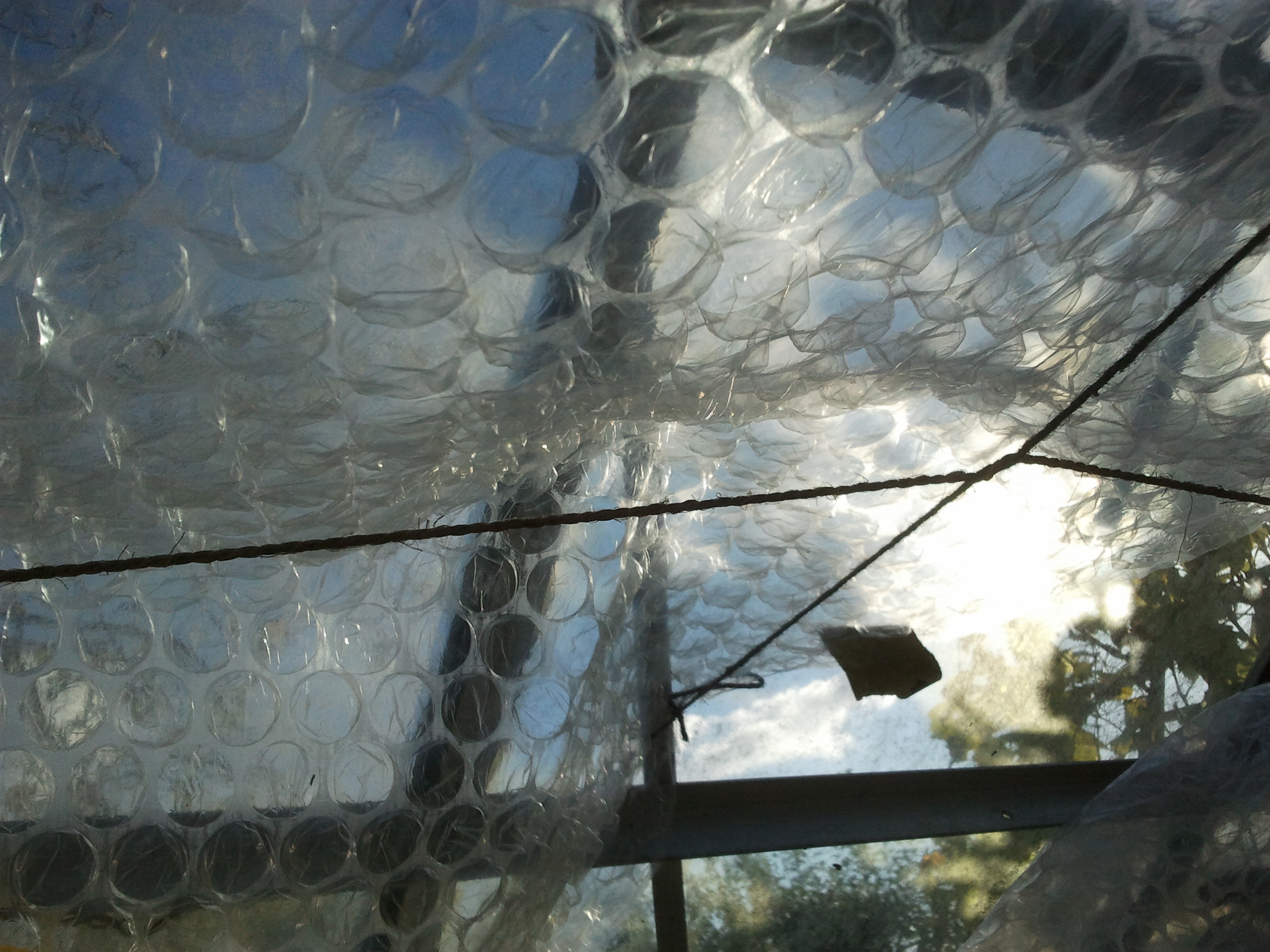
I hope these plants appreciate it!

Let’s us finish our November wander with a couple of richly coloured beautifully lit views across borders, and a quick look across our borrowed landscape.

Categories
climbing plants garden design garden photography gardening hardy perennials Land Art ornamental trees and shrubs outdoor sculpture photography roses Shropshire trees

A day out with the Shropshire Hardy Plant Society

Today was a special day spent with friends from the Shropshire Branch of the Hardy Plant Society, with the morning spent visiting a plantsperson’s garden and the afternoon listening to a talk with photographs of a botanist’s garden.

The garden was called Stevenshill close to Wenlock Edge venue of our recent woodland walk featured in a recent post. The owners were so full of enthusiasm and plant knowledge, and the garden full of rare and colourful delights.

It had far-reaching views of Wenlock Edge and plenty of varied, comfortable places to sit and enjoy the scents and sights of the plants.

It was one of those gardens with lots of plants to confuse and mystify even the most experienced hardy planters. Lots of head scratching about unknown and forgotten plants. Luckily the garden’s owners have put lots of labels in and have good memories for plant names. Their plant sales table held some unusual specimens and many went home in the hands of hardy planters, including ourselves. We selected a hairy leaved bergenia, Bergenia ciliata and a shrubby Teucrium, Teucrium “Paradise Delight”. Now where are we going to place those?

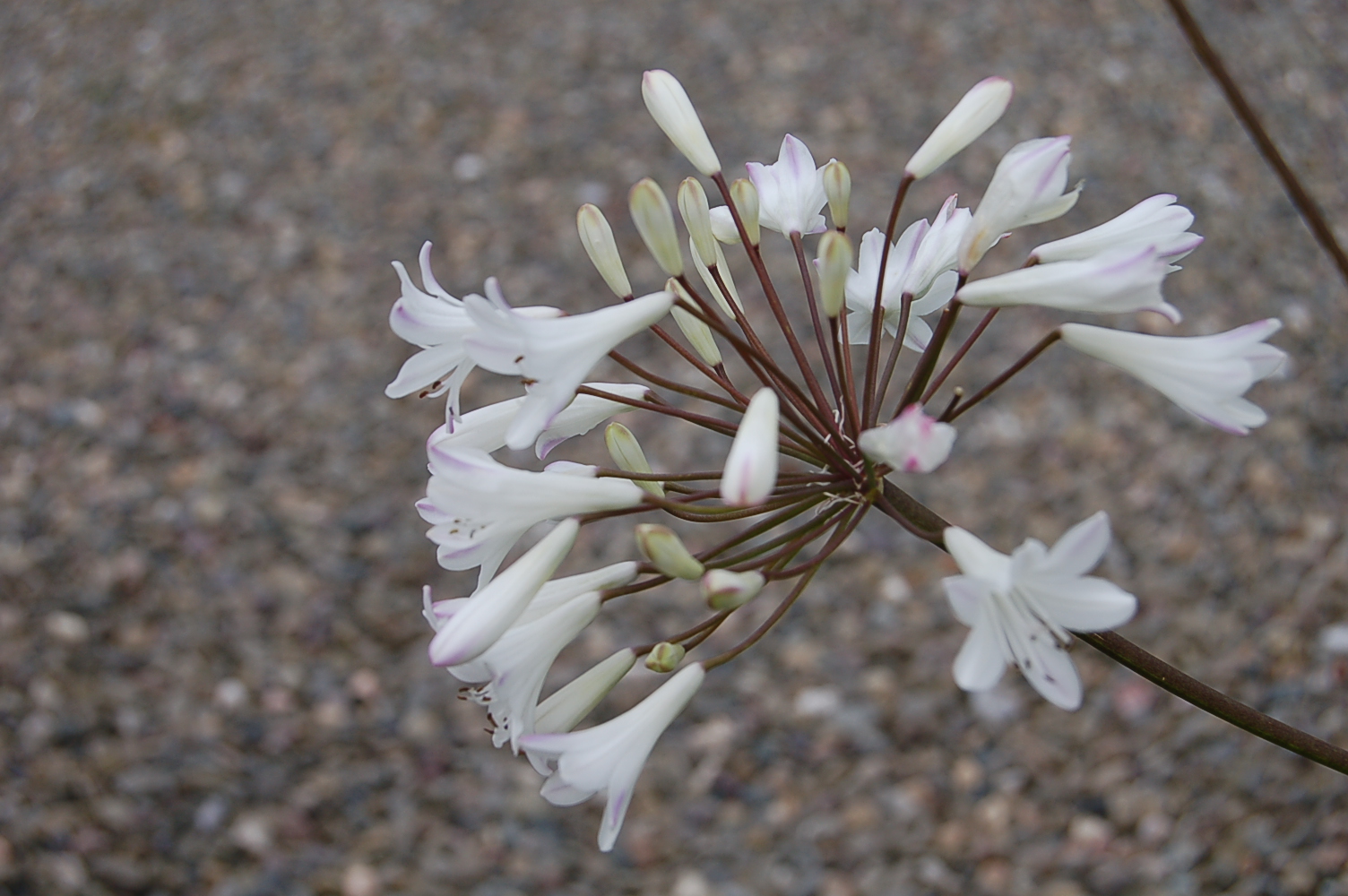
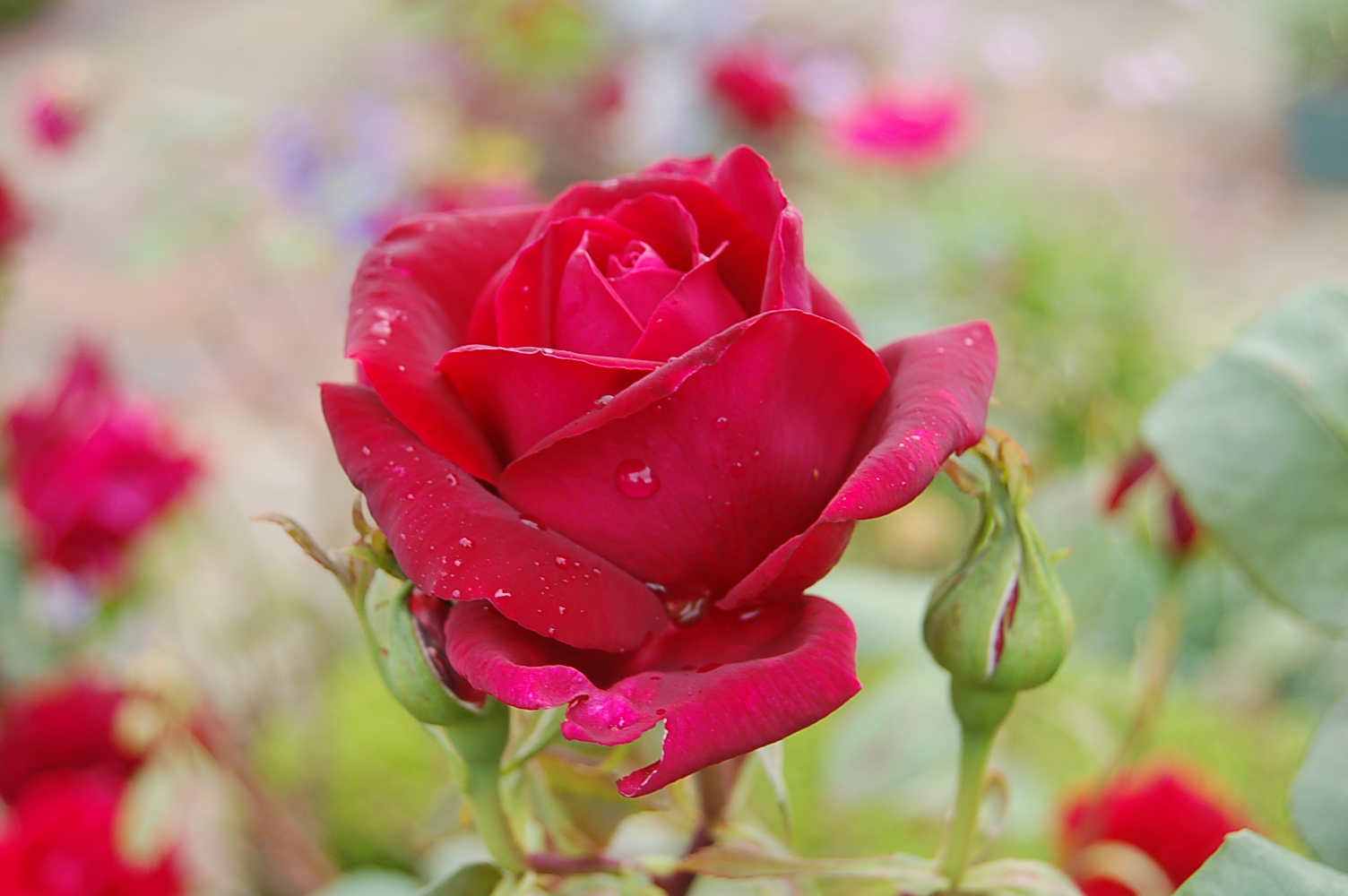
Throughout the garden were sumptuous Agapanthus and deeply coloured, richly scented roses often strategically placed next to enticing seating.

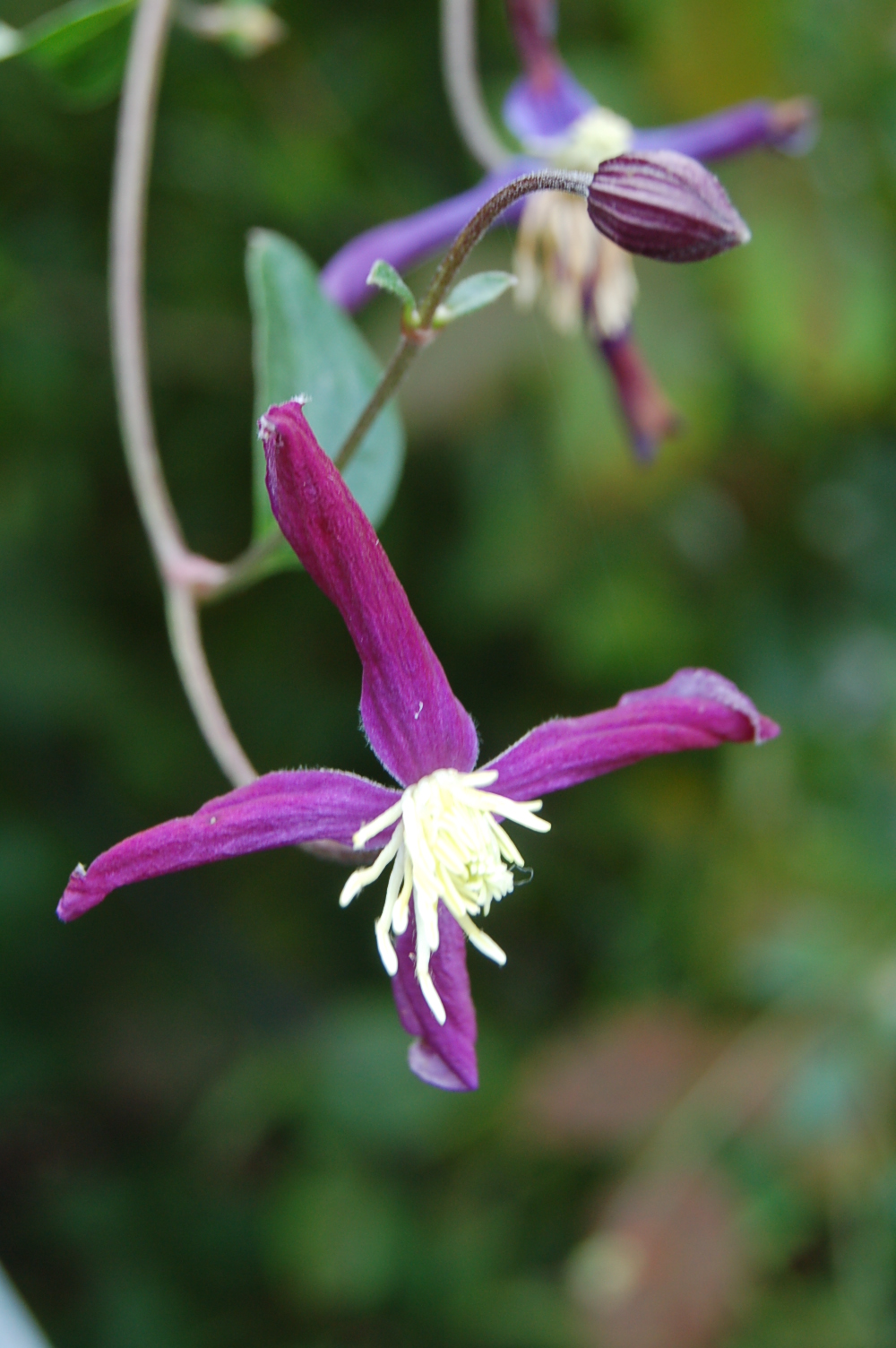
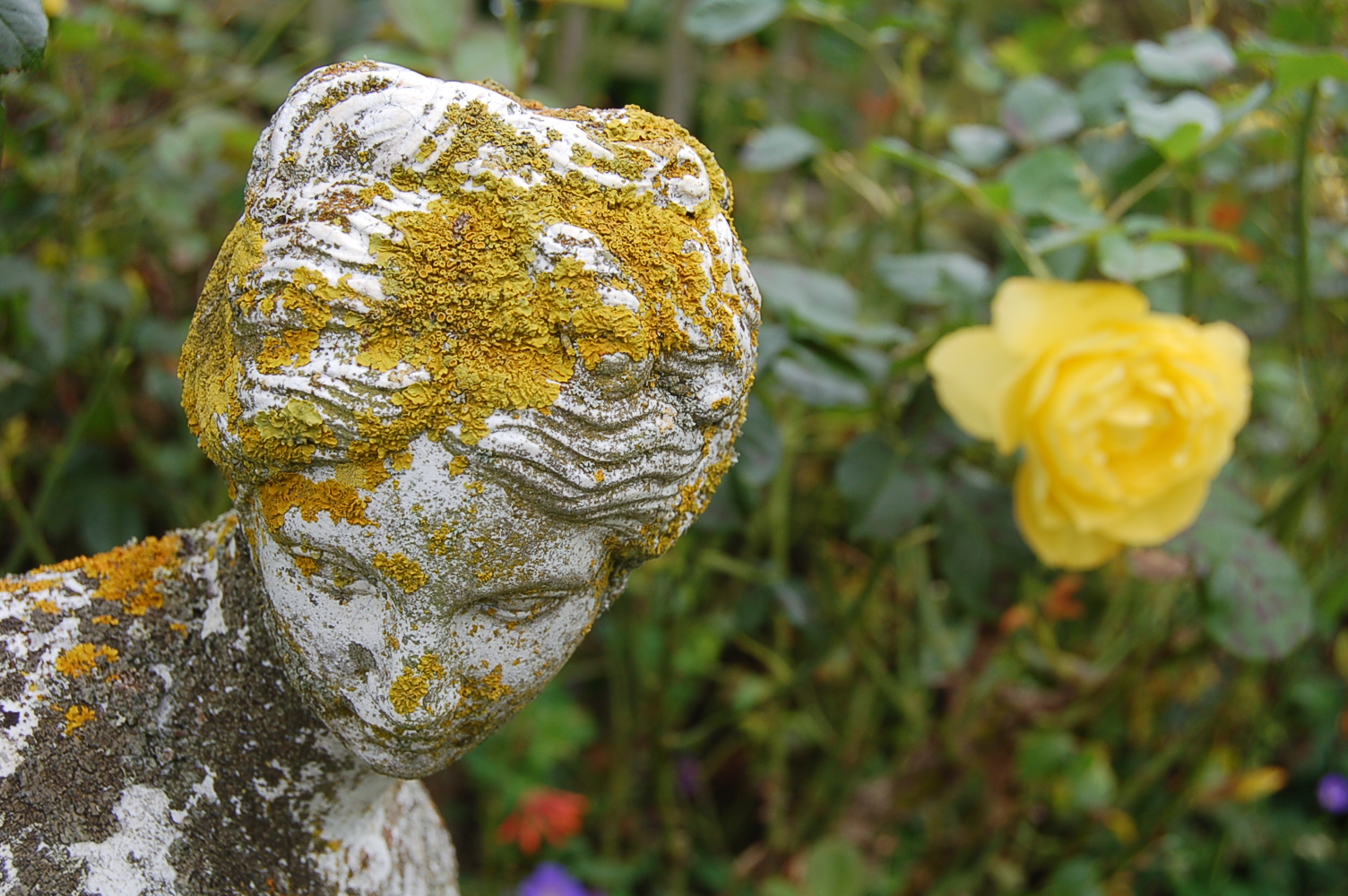
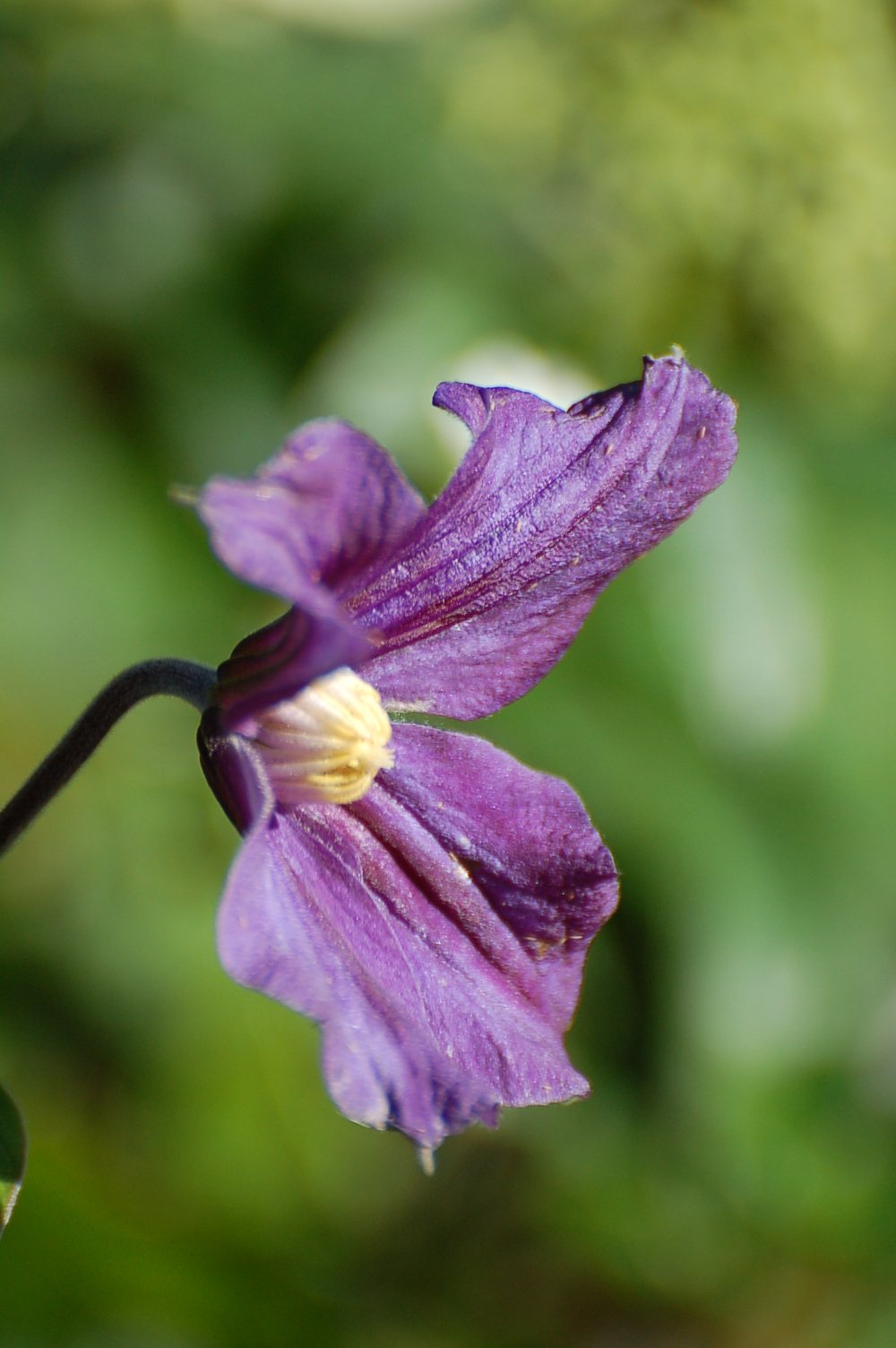
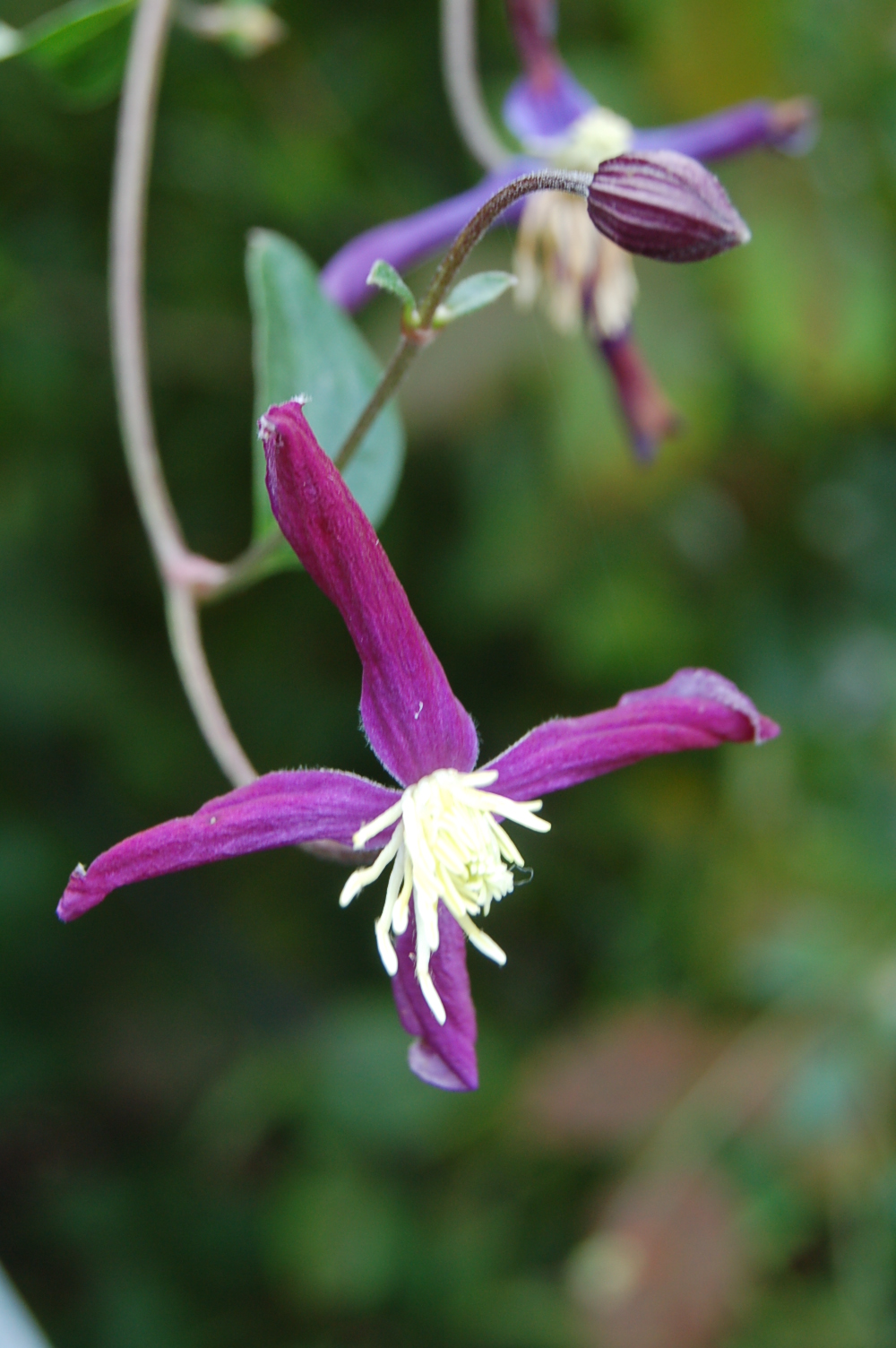
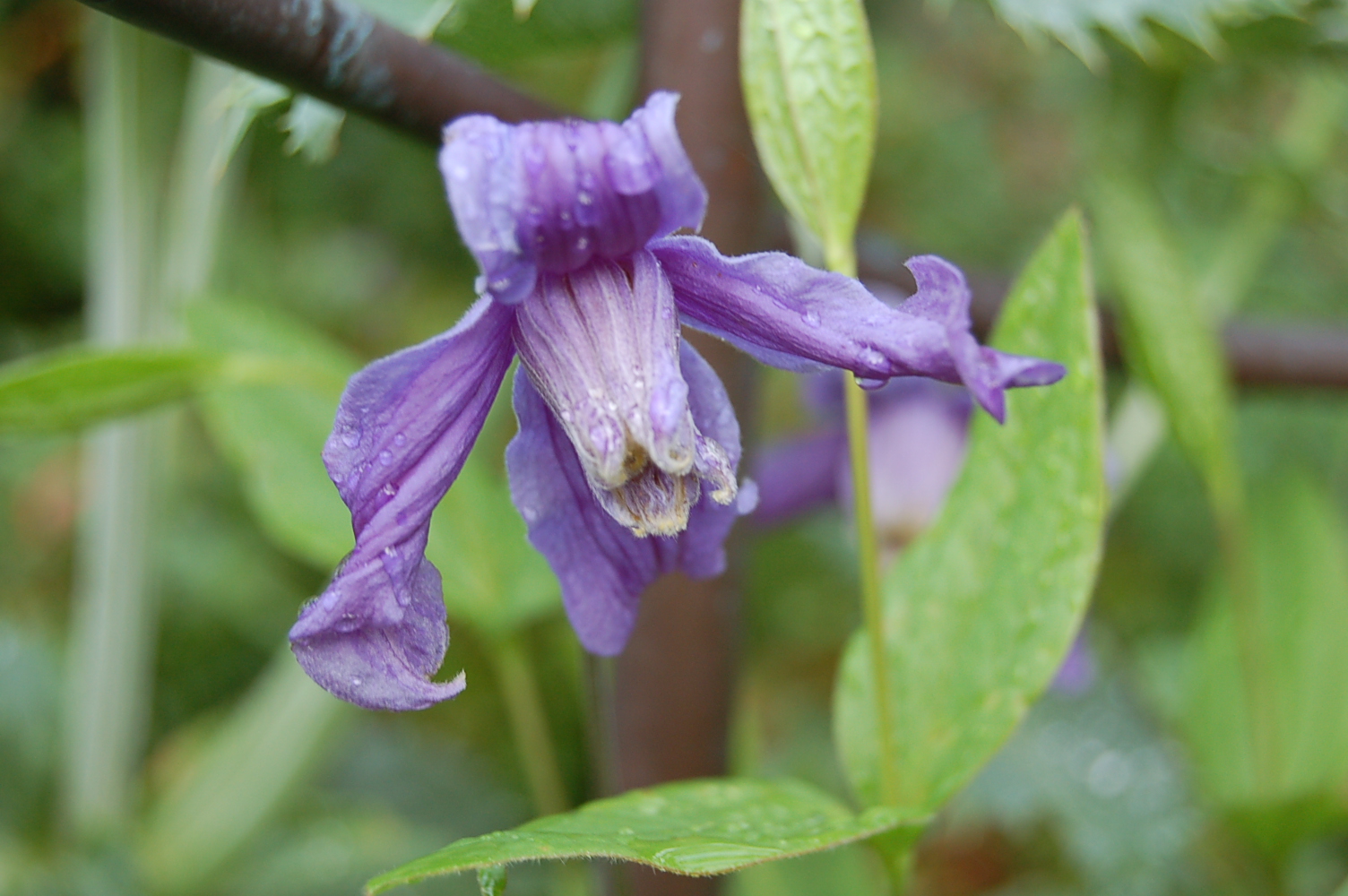
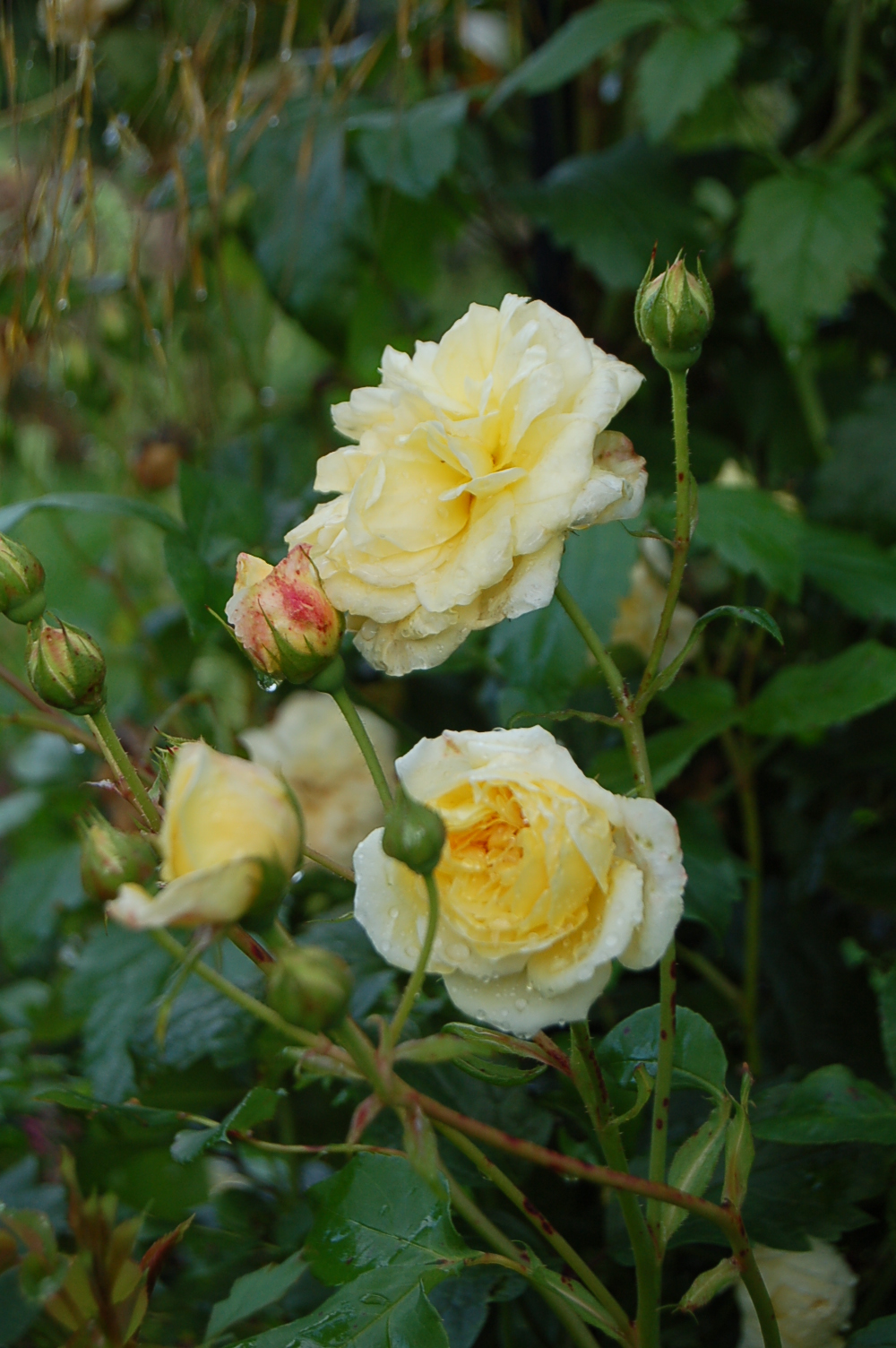
This yellow rose graced an arbour over a seat in the hot border. It was strongly scented. With it was planted Clematis aromatica with its tiny simple purple flowers scented with mouth-watering vanilla.

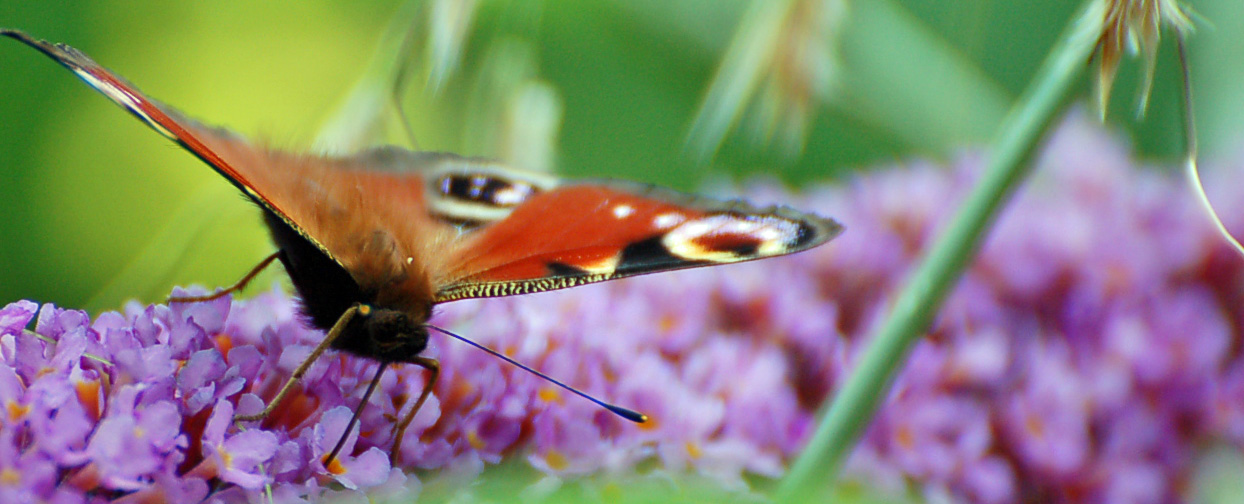
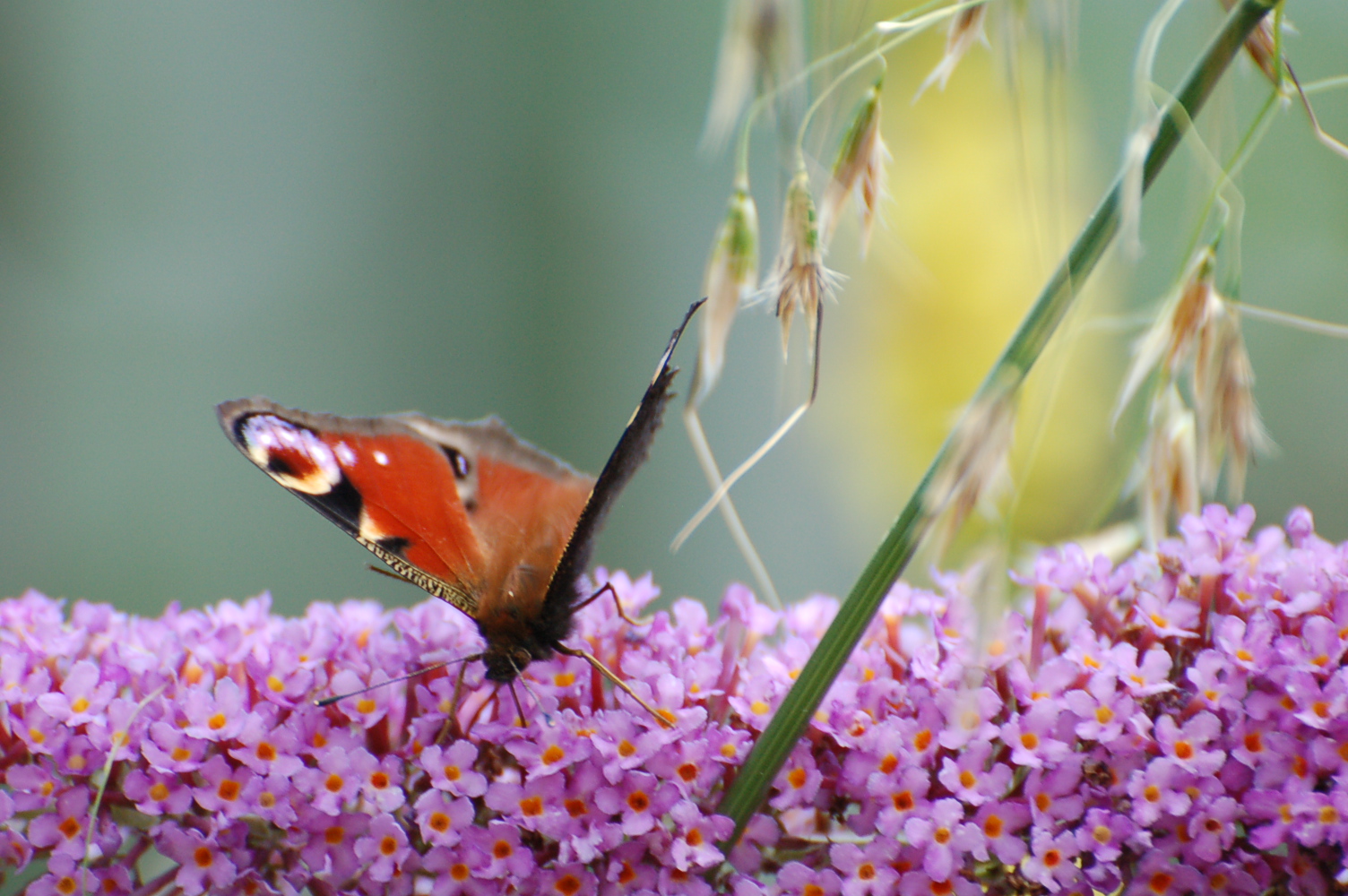
Buddleias were scattered in the borders giving height and attracting hoards of butterflies.

A selection of sculpture gave another layer of interest, from this classical figure to sinuous modern metal pieces.

But the true stars of this garden were the plants.

After a break for tea and cakes we travelled over to Bicton Village Hall where we hold our meetings, where we were looking forward to a talk entitled “A Botanist’s Garden” presented by John Grimshaw who until recently was Head Gardener at Colebourne in Gloucestershire, a garden famous for its mass displays of unusual snowdrops. In the last few weeks he has moved to Yorkshire for a new challenge, to develop the arboretum at Castle Howard. The talk was as good as we had hoped for. John illustrated his talk with a Powerpoint presentation featuring photos of the highest quality. We came away enthused and carrying another plant, Sedum telephium “Arthur Branch”.

To find out more about John and to see some of his beautiful photos visit his Garden Diary blog, www.johngrimshawsgardendiary.blogspot.com.

Categories
birds climbing plants photography Shropshire trees wildlife woodland

Through the Garden Gate – part two – getting lost!

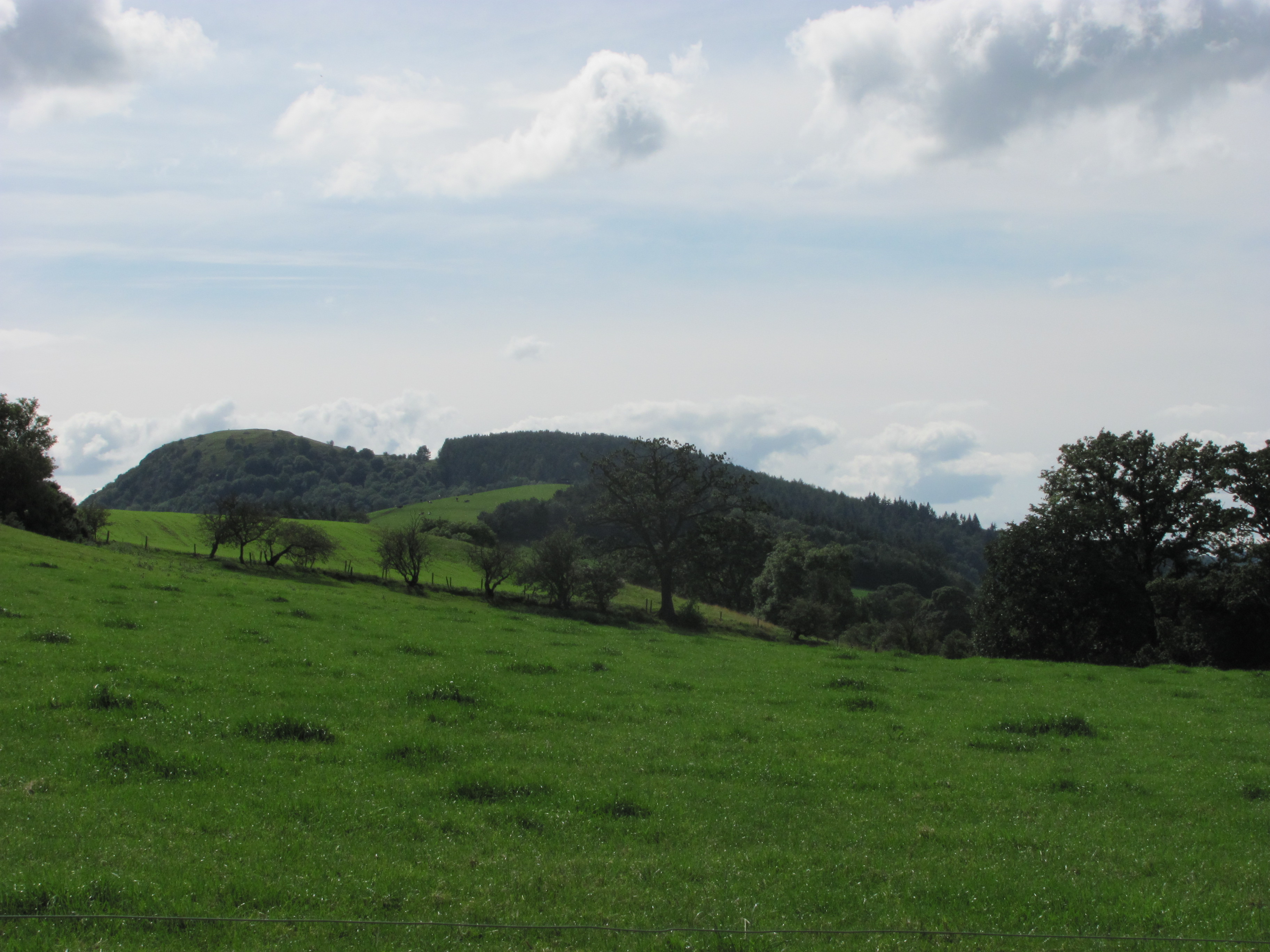
From the pool we could look back at the wood we had just left and enjoy a different view of the hill that we usually look at from our garden and over which we watch Buzzards riding the thermals created by its slopes.

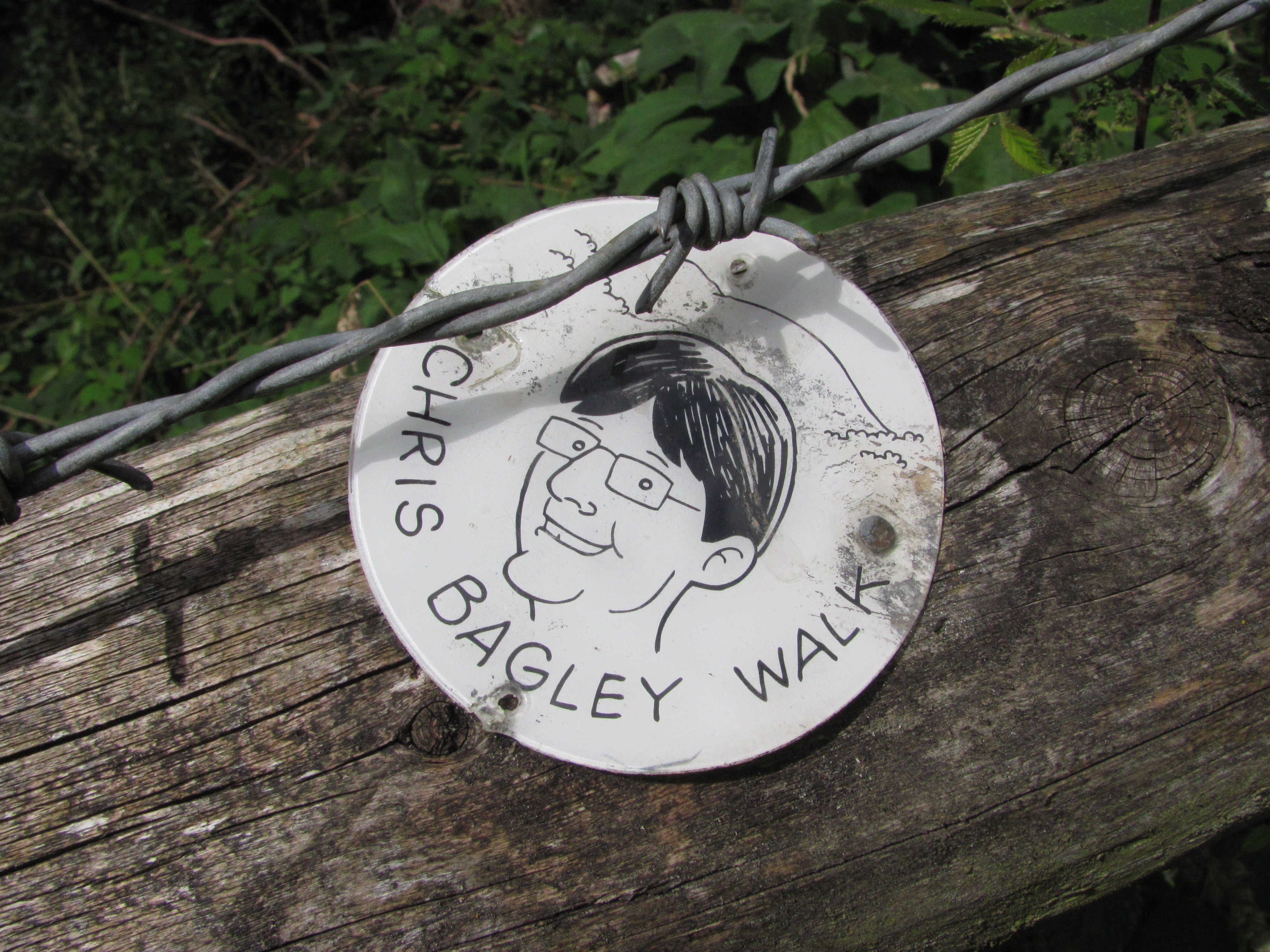
Well we may never have been more than a mile from home on this walk from our garden gate, but we did manage to get lost. The footpath signs kept disappearing, or that is our excuse. Our wander took us along sections of the long distance path, “The Shropshire Way” and on a local path “The Chris Bagley Walk”.
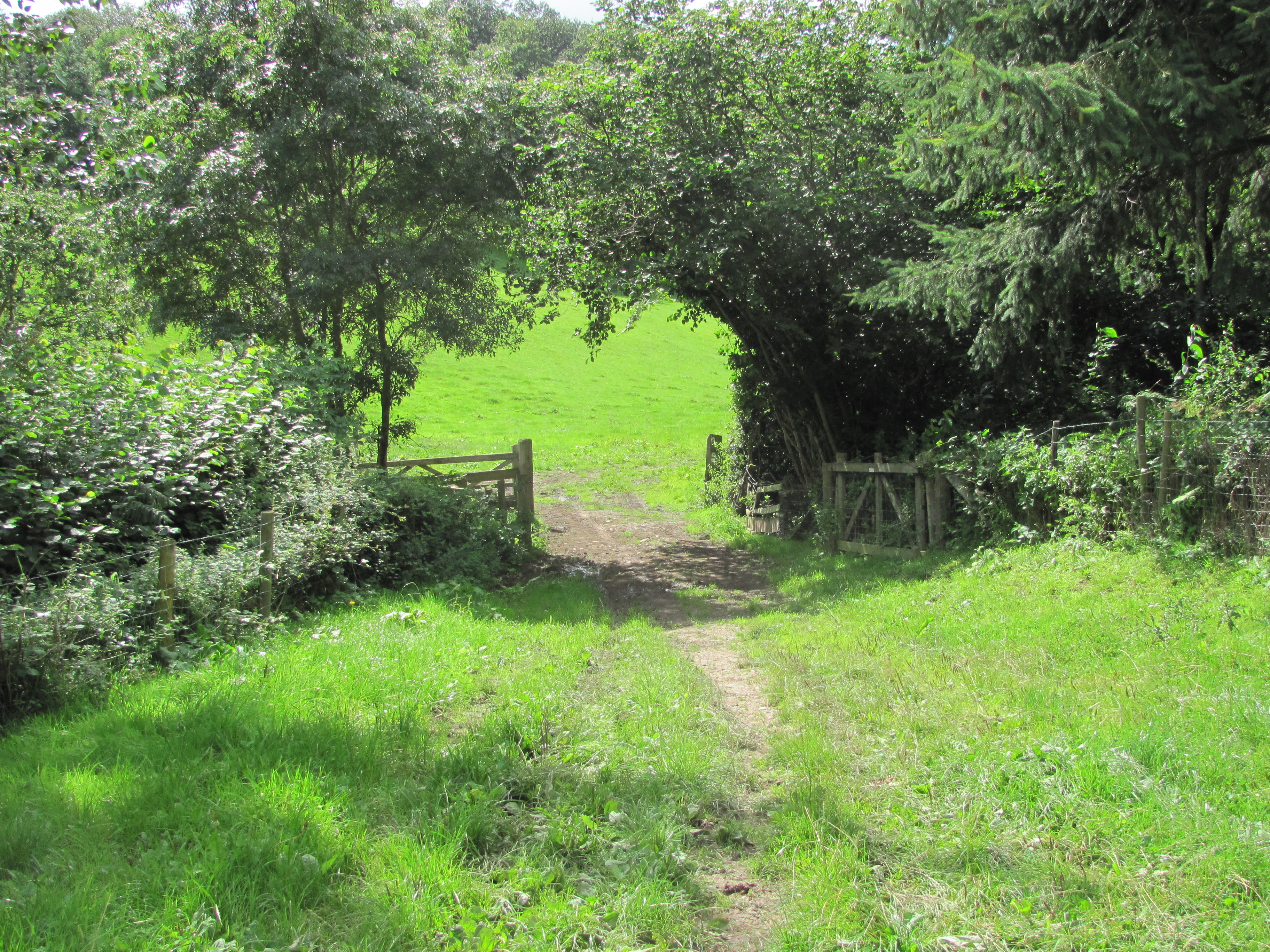
Leaving the fishing pool we followed the valley of the stream that fed it. The grassland here was rich and was being enjoyed by dairy calves, who watched our every move as we passed close to them.

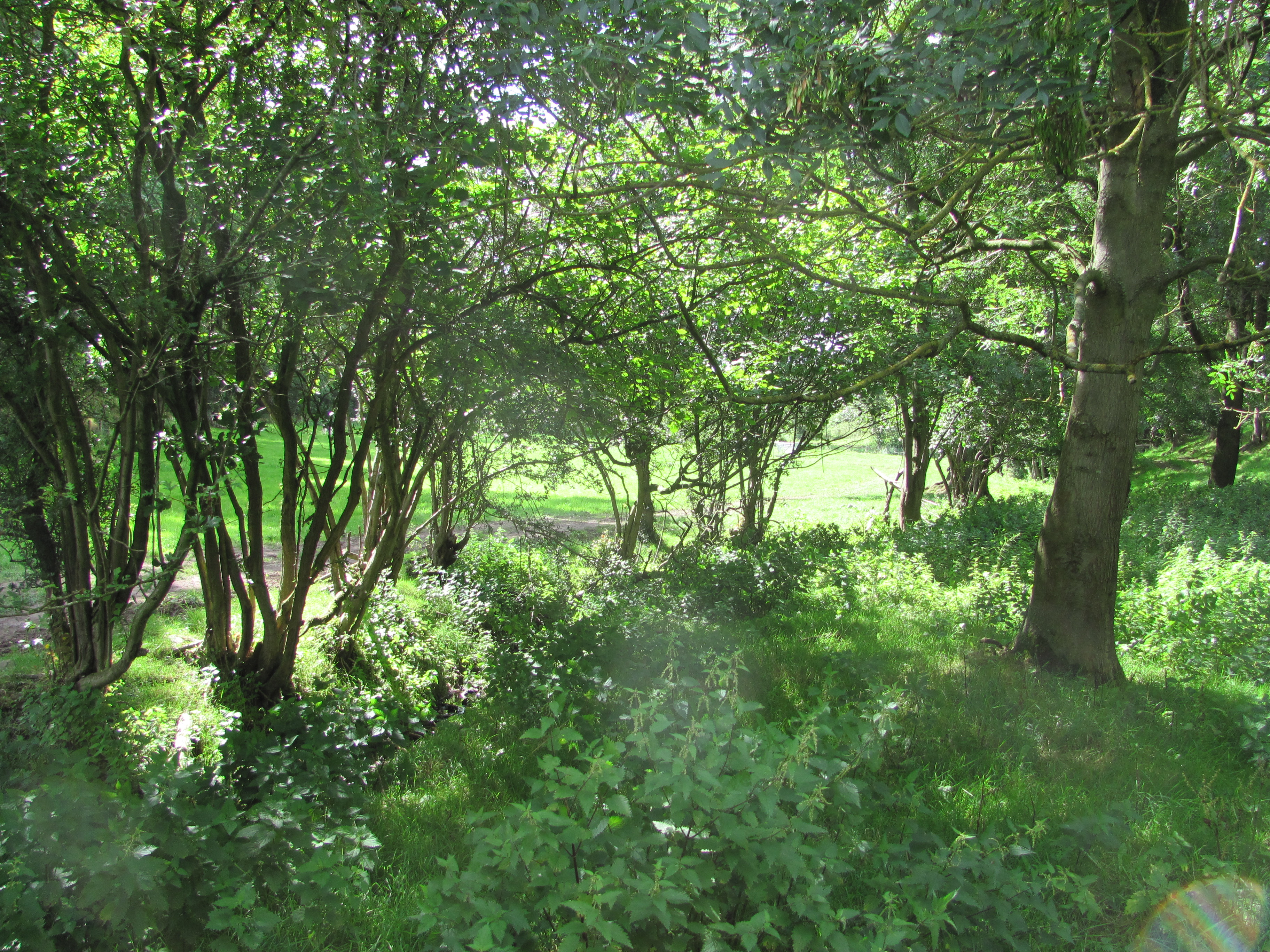
The valley widen out but the wooded slopes and tiny stream running through it kept it intimate. The fields of grass on which the calves fed was a lush green but was devoid of wild flowers, a sad sign of modern farming practices. we followed the path until it took us up a gentle slope away from the stream and up into a wood which was partly coppiced.
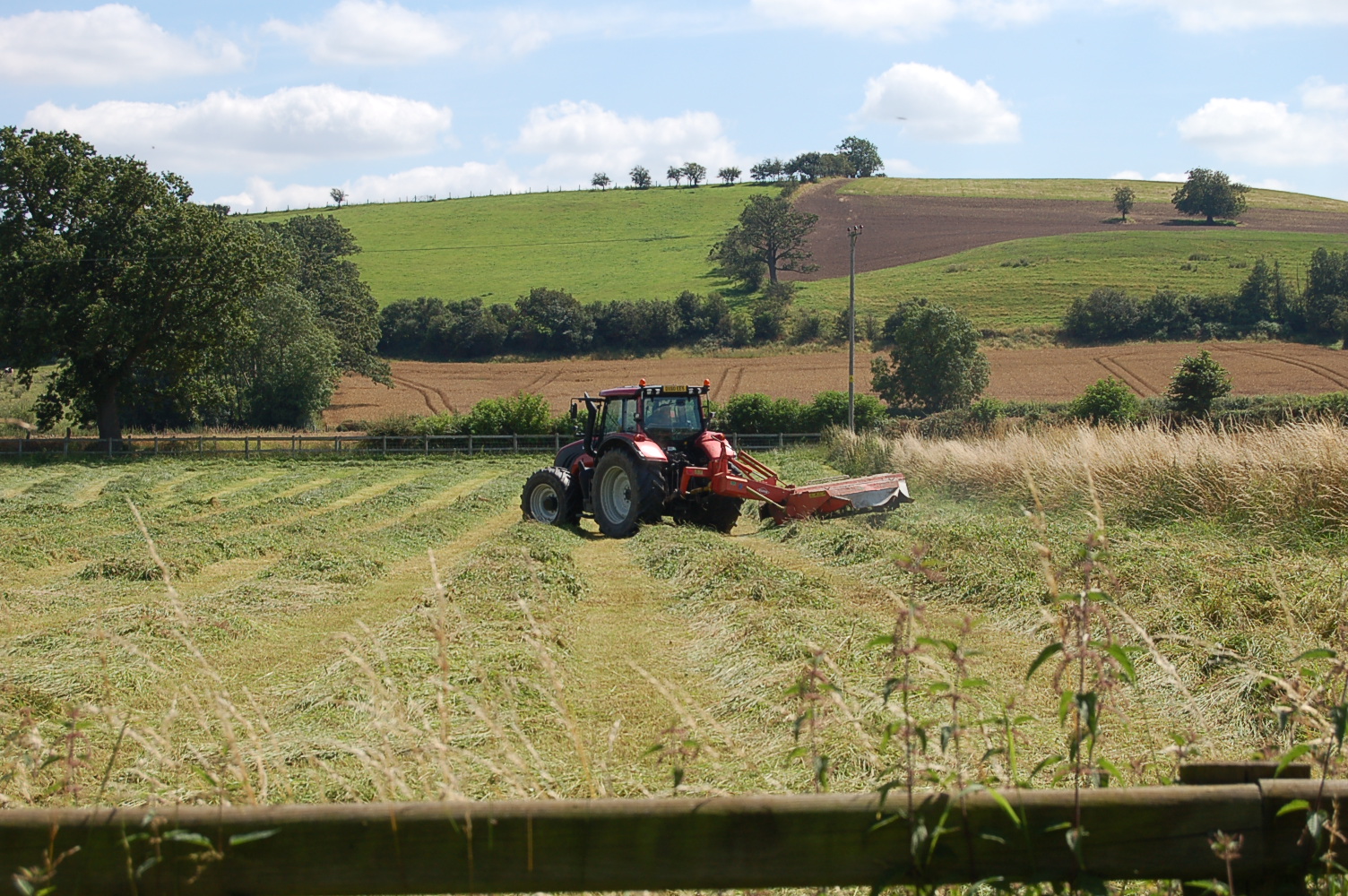
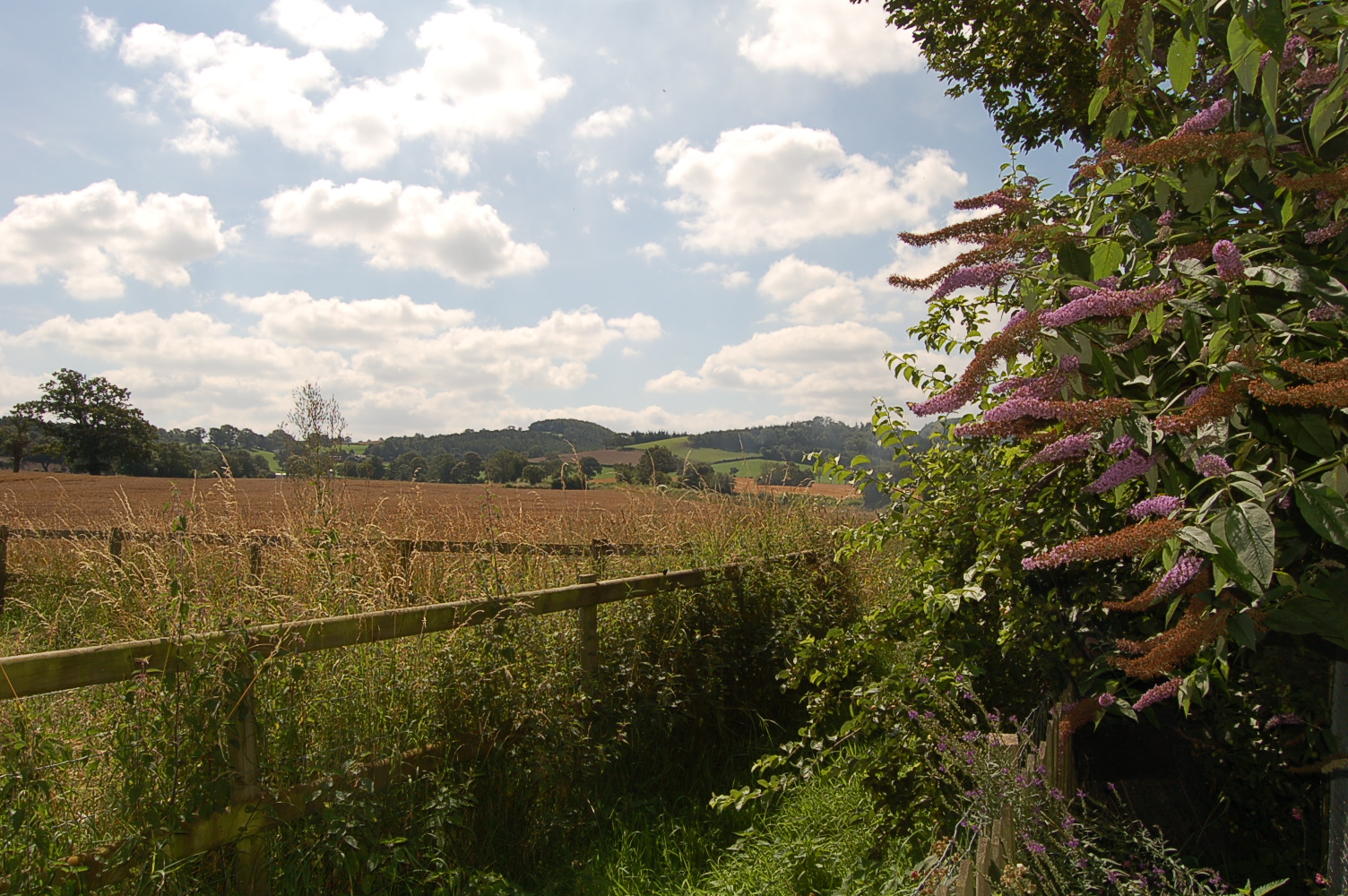
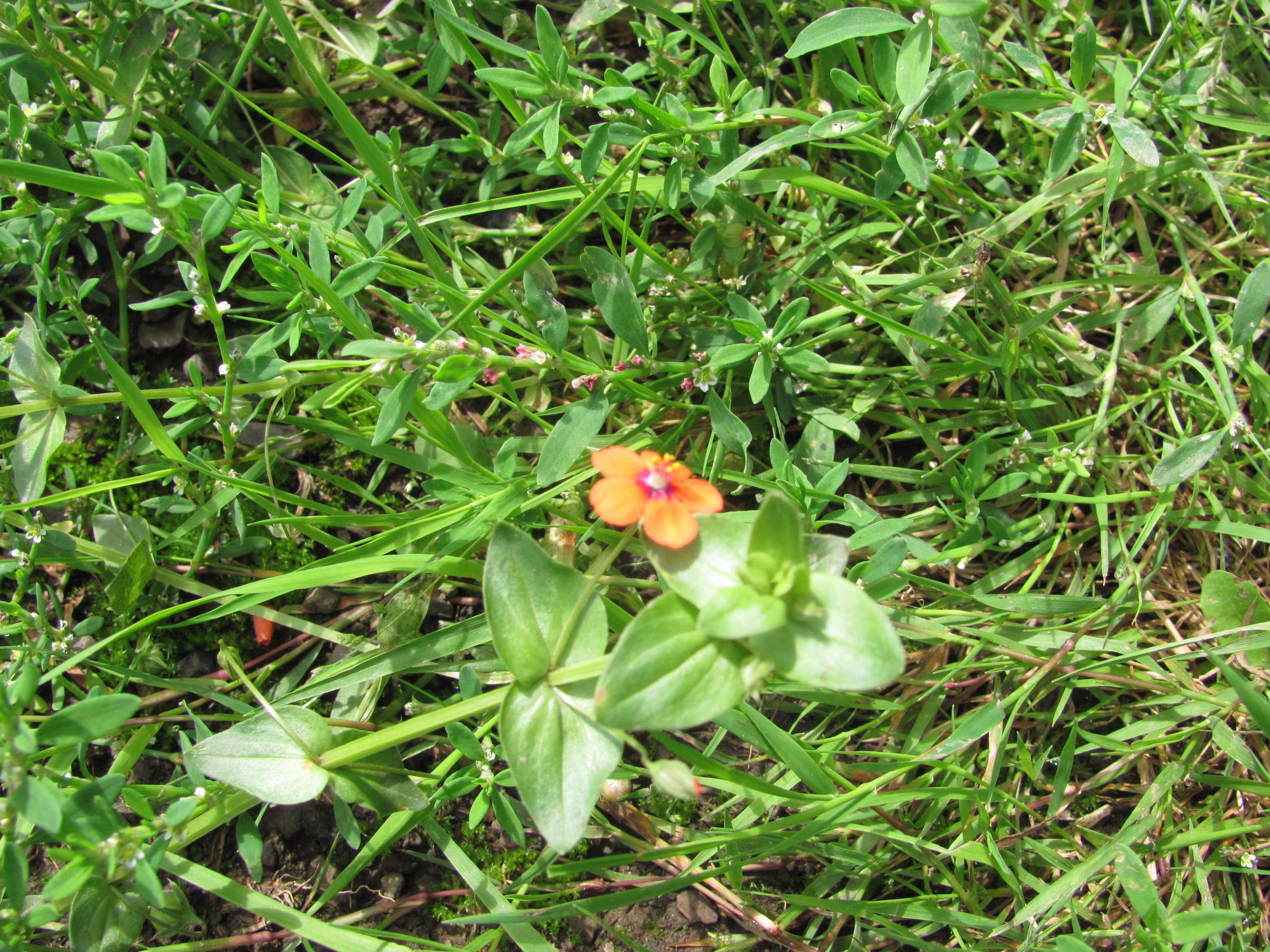
On the slope up to the wood we spotted this Scarlet Pimpernel in flower on the pathway beneath our feet. Although only a tiny flower its orange petals glow so it can be seen from a distance. We now lost the footpath and had to consult maps on the smart phone, which rescued us nicely.

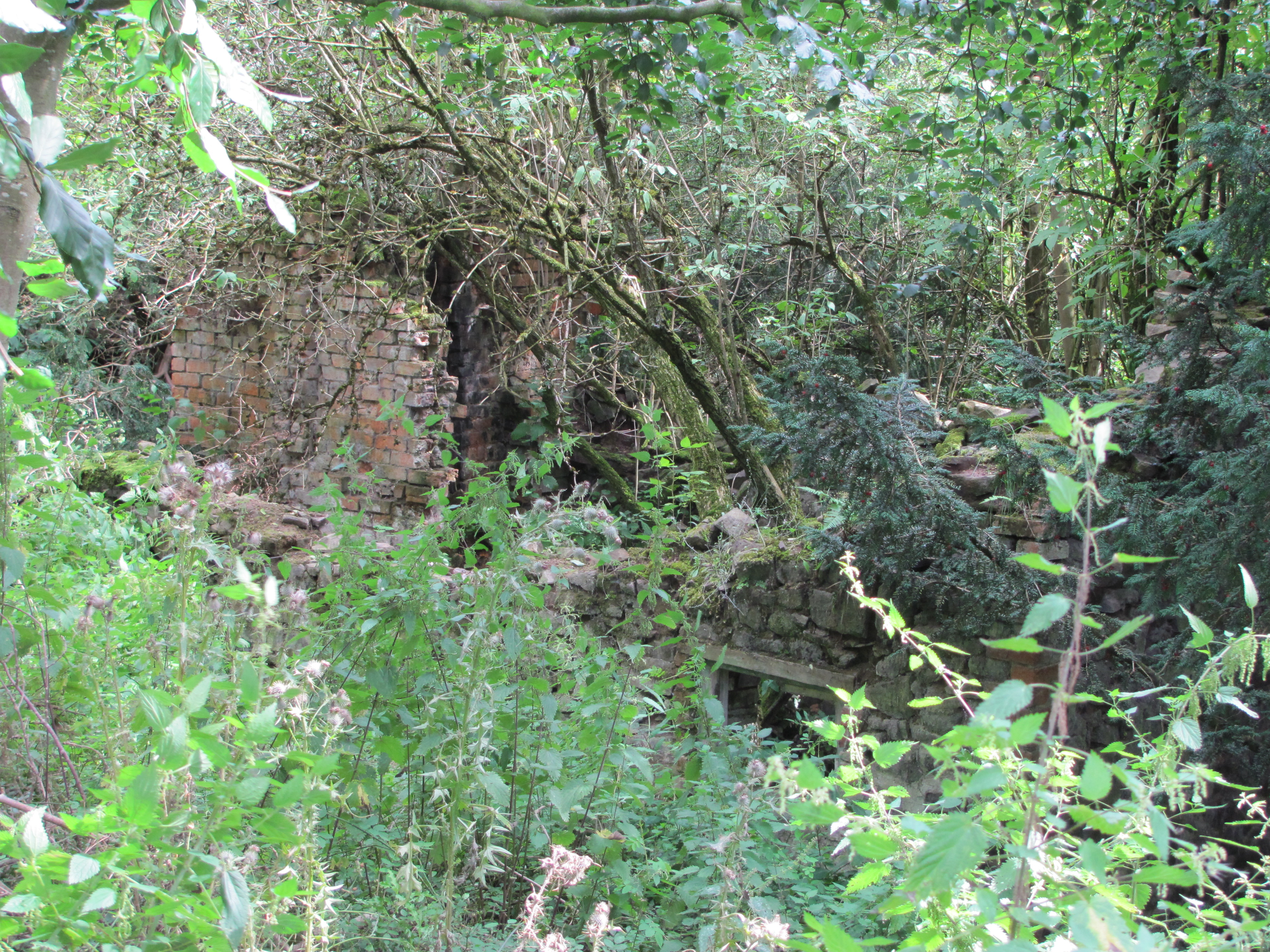
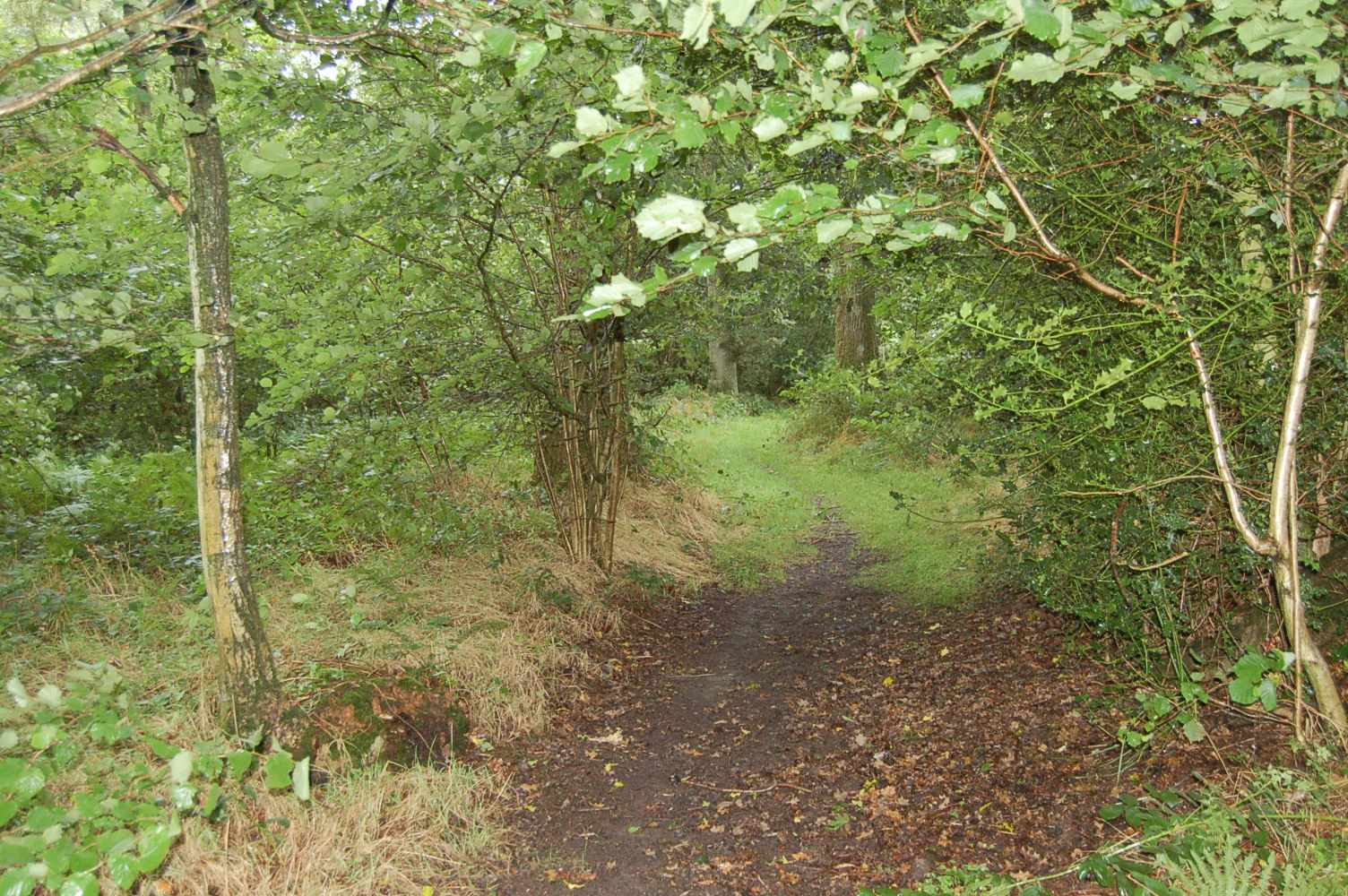
The wood gave away its past. Signs of the work of woodlanders abound. Their homes were now mere ruins covered in Ivy as Mother Nature reclaims her woodland. A clearing showed signs of coppicing.

The darkness of the wood and its cooler atmosphere was in stark contrast to the brightness and warmth that greeted us as we left it behind and returned to farmland. The path narrowed and took led us around a field edge where the sterility and silence of the arable farming on our left clashed with the natural exuberance of the hedge and the wildflower filled verges.

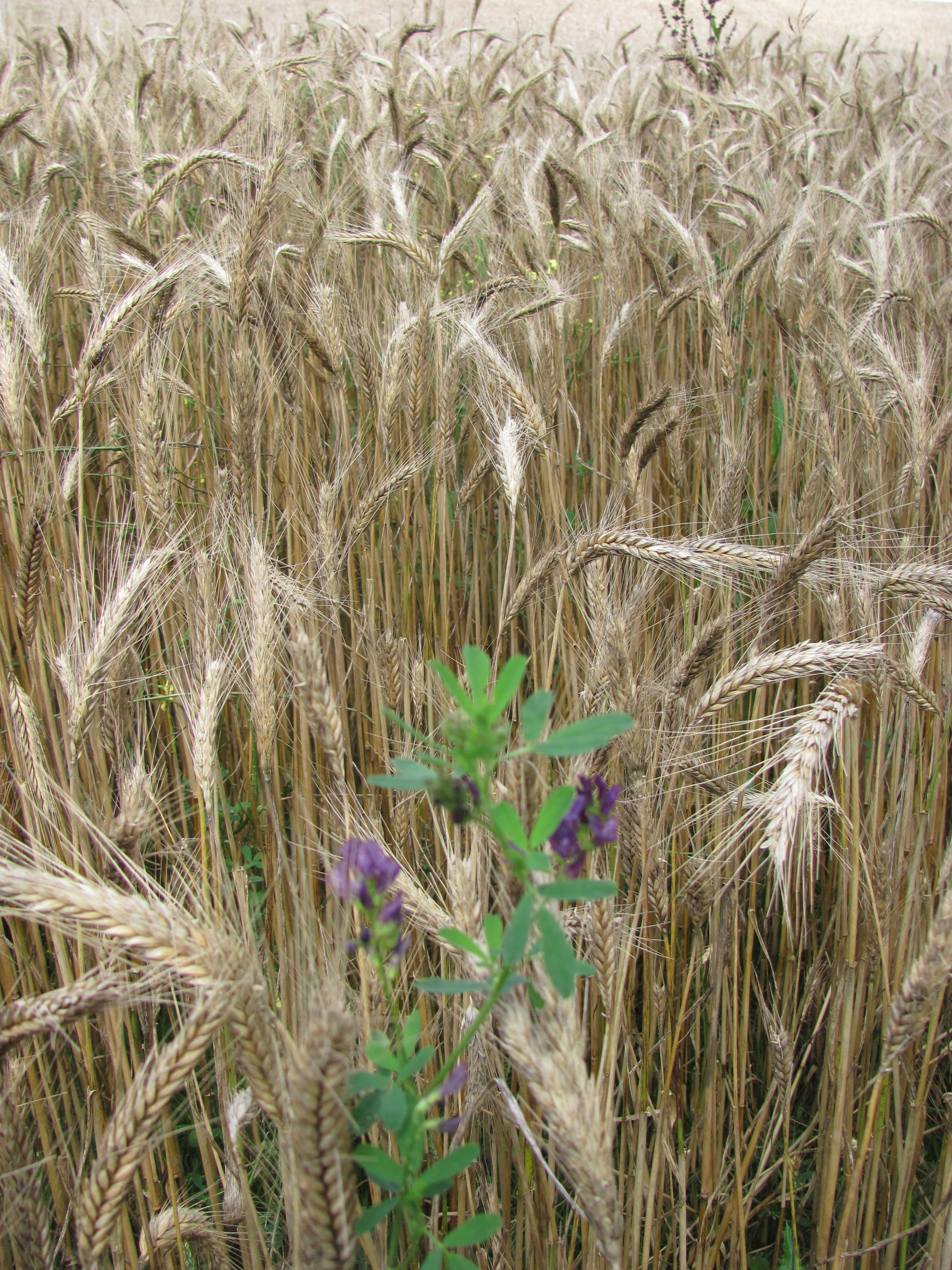
This was modern agricultural practice at its worse. We crossed over several of these fields and saw no signs of life apart from two Wood Pigeons flying overhead. The only flowers were a few yellow Rape plants from a previous crop and brave purple flowered Vetches attempting to clamber the Barley stalks close to the path. Years of pesticide and herbicide use coupled with monoculture has wiped out wildlife from these acres of land. To illustrate the point a small group of Swallows flew over the crop in search of insects, but it was in vain and they quickly moved on. At least until the footpath signs disappeared once more and we relied again on the smart phone maps to rescue us.

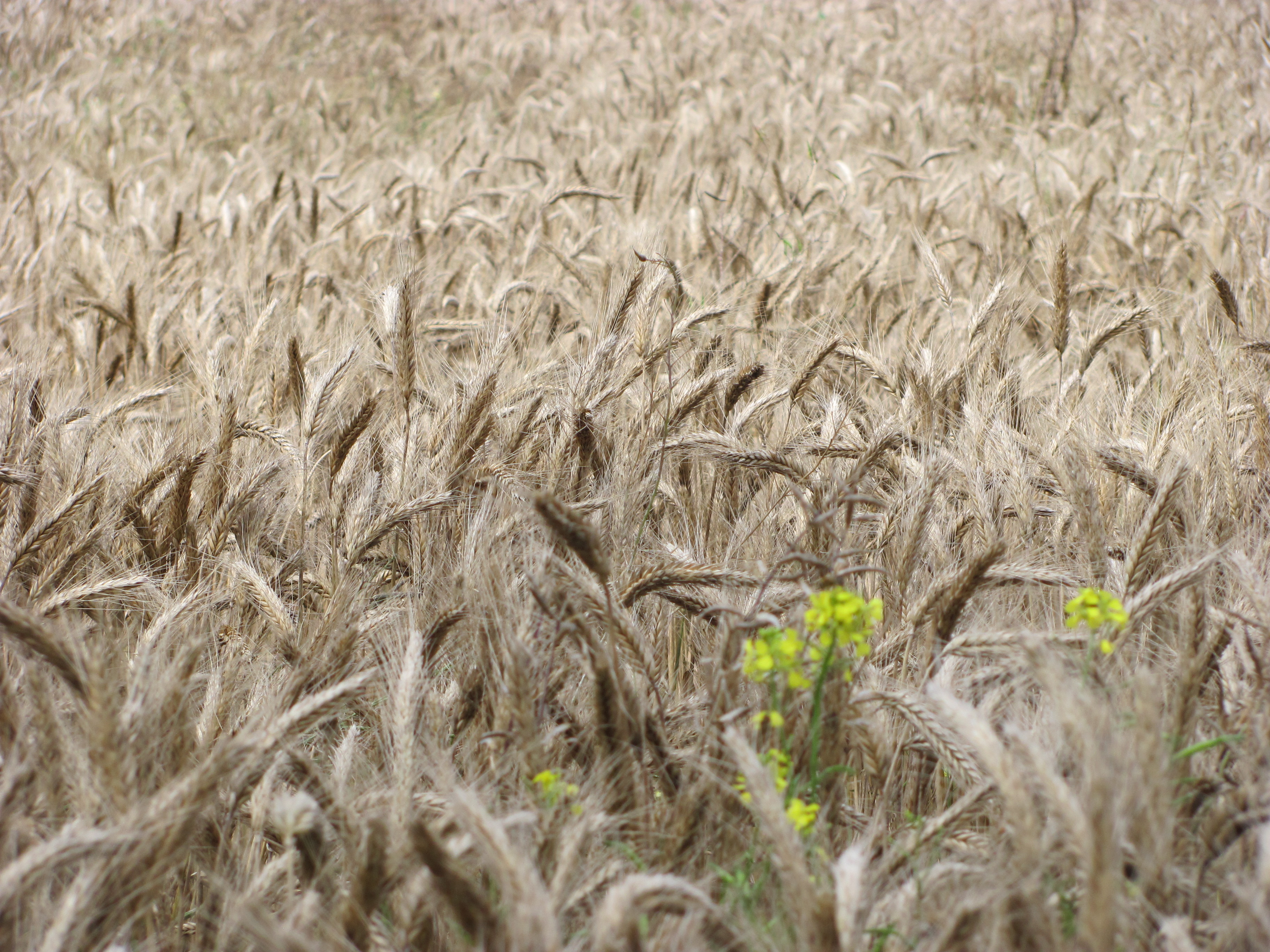
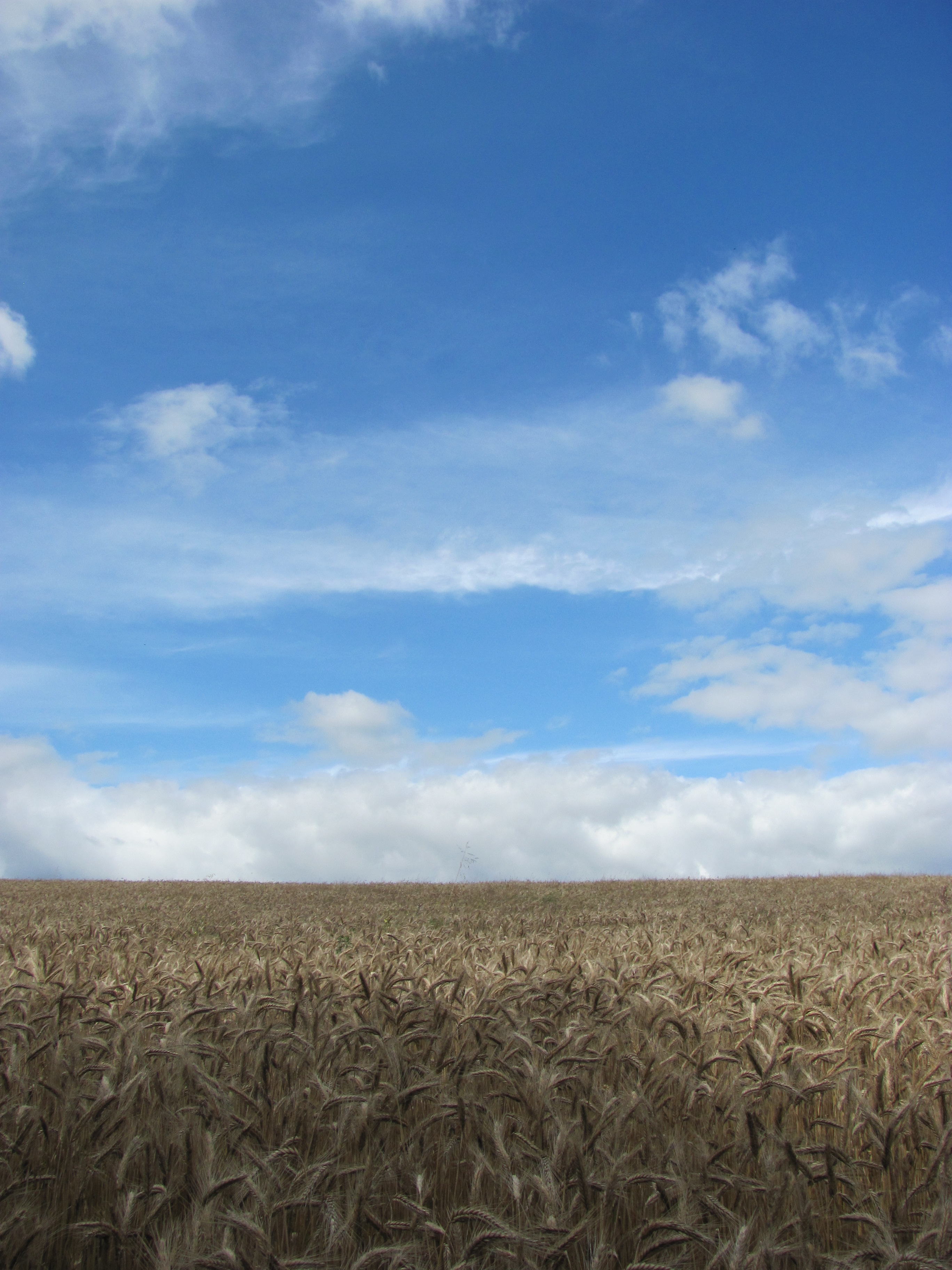
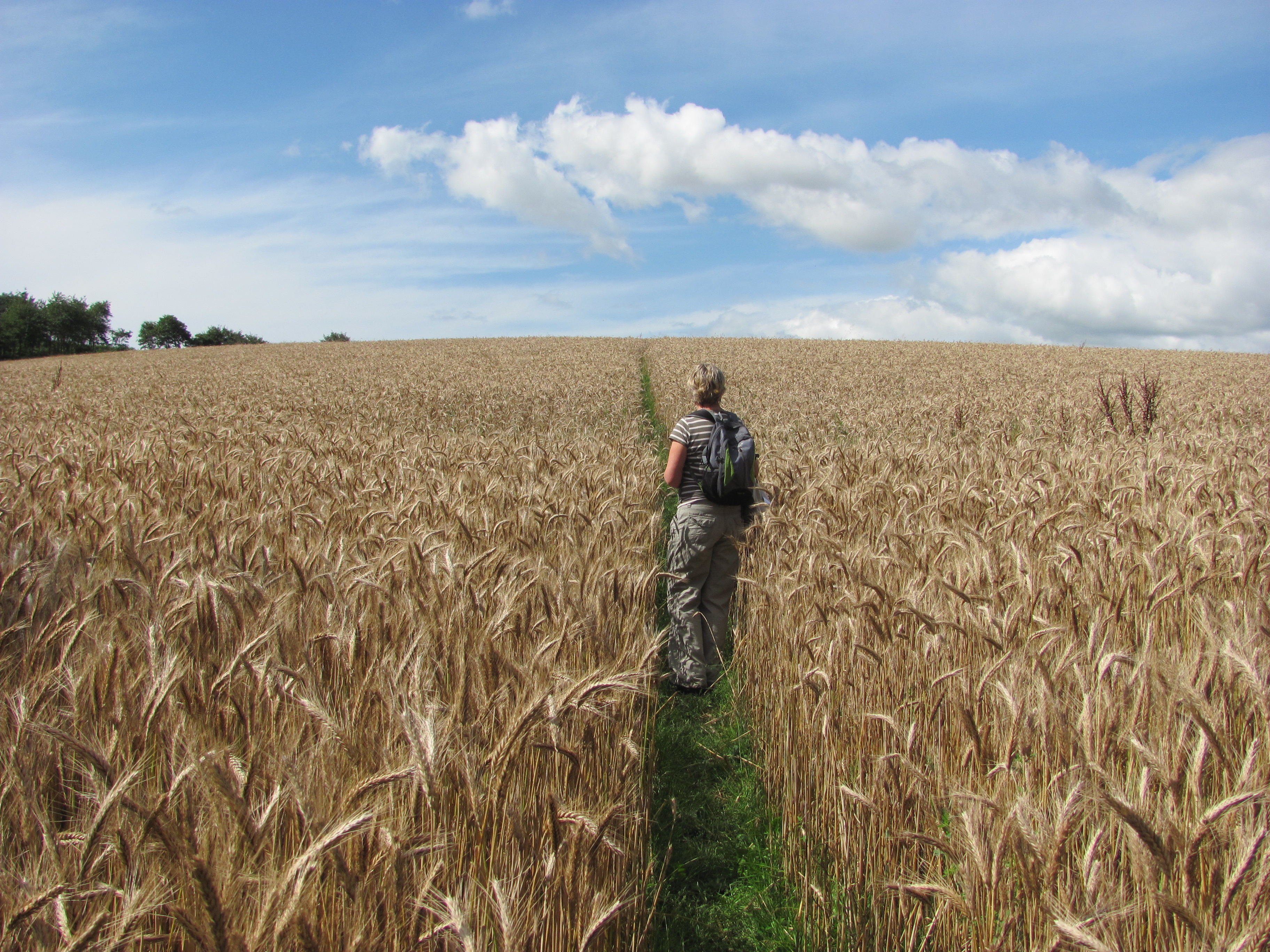
The path crossed one of these fields creating a narrow band of green which cut through the drab grey-yellow of the Barley. The only good part of crossing this desert was the rattling sound that the ears of Barley made as our elbows brushed past them.

Walking across the field we aimed for a style in the distant hedge. It seemed a long way across as there was little to look at or to listen to. The style in the hedge turned ou to be a double style, one each side of a thick, dense, tall hedge. there was a different world awaiting us on the other side. The grassland here was full of clovers and there were many different grasses, not just the ryegrass we had walked through earlier.

We were now within the land of our local organic dairy farmer. The hedgerows had deep verges full of wildlflowers, thistles, mallows and vetches. No hedges had been removed and the fields were much smaller.

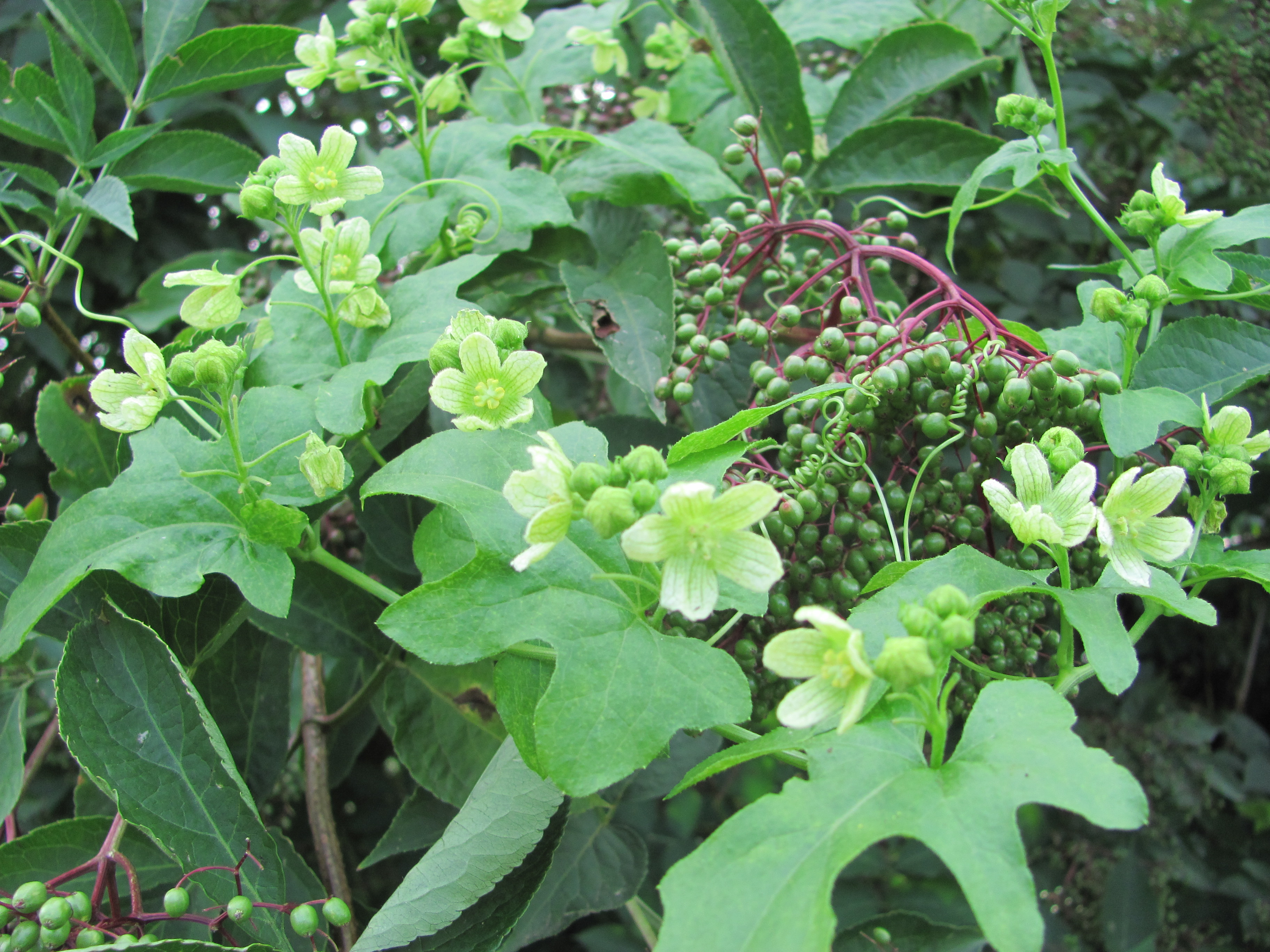
As we passed through to another field we were hit by a sweet. rich aroma from the hedge. It took us a while to find the source – a Sweet Bryony clambering over an Elder.

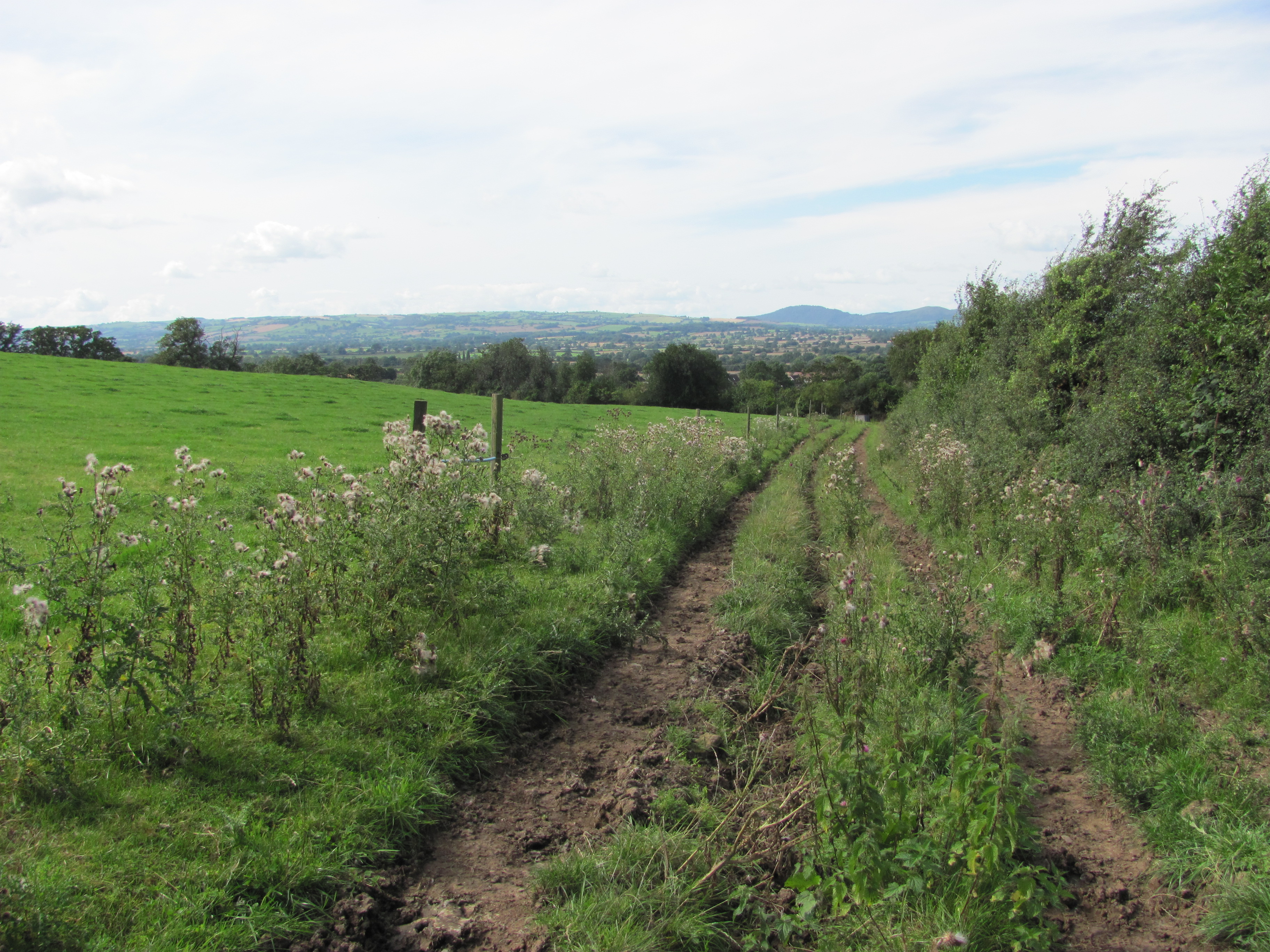
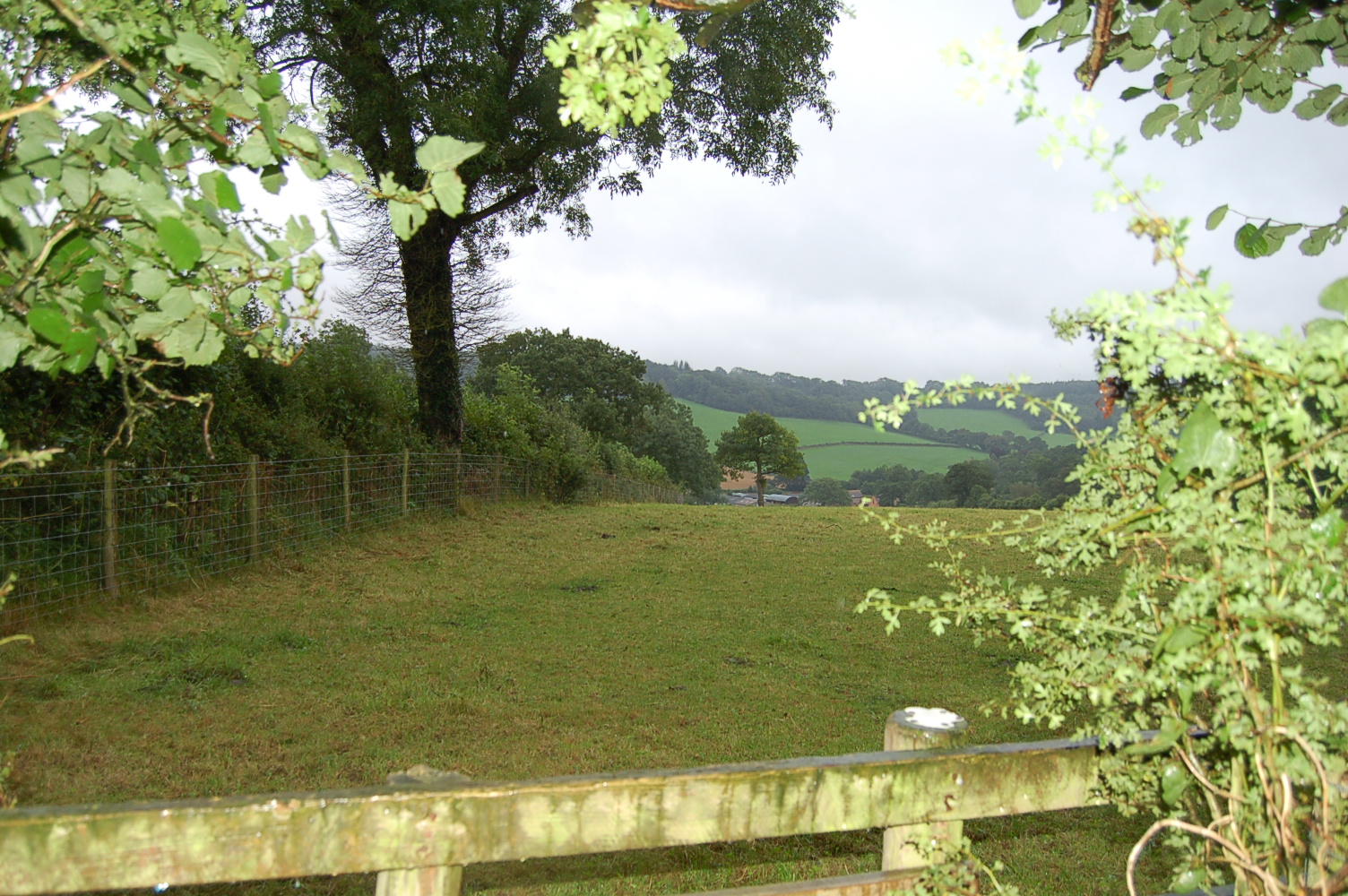
It was downhill now all the way home and we enjoyed lovely views through gaps in the tall hedges.

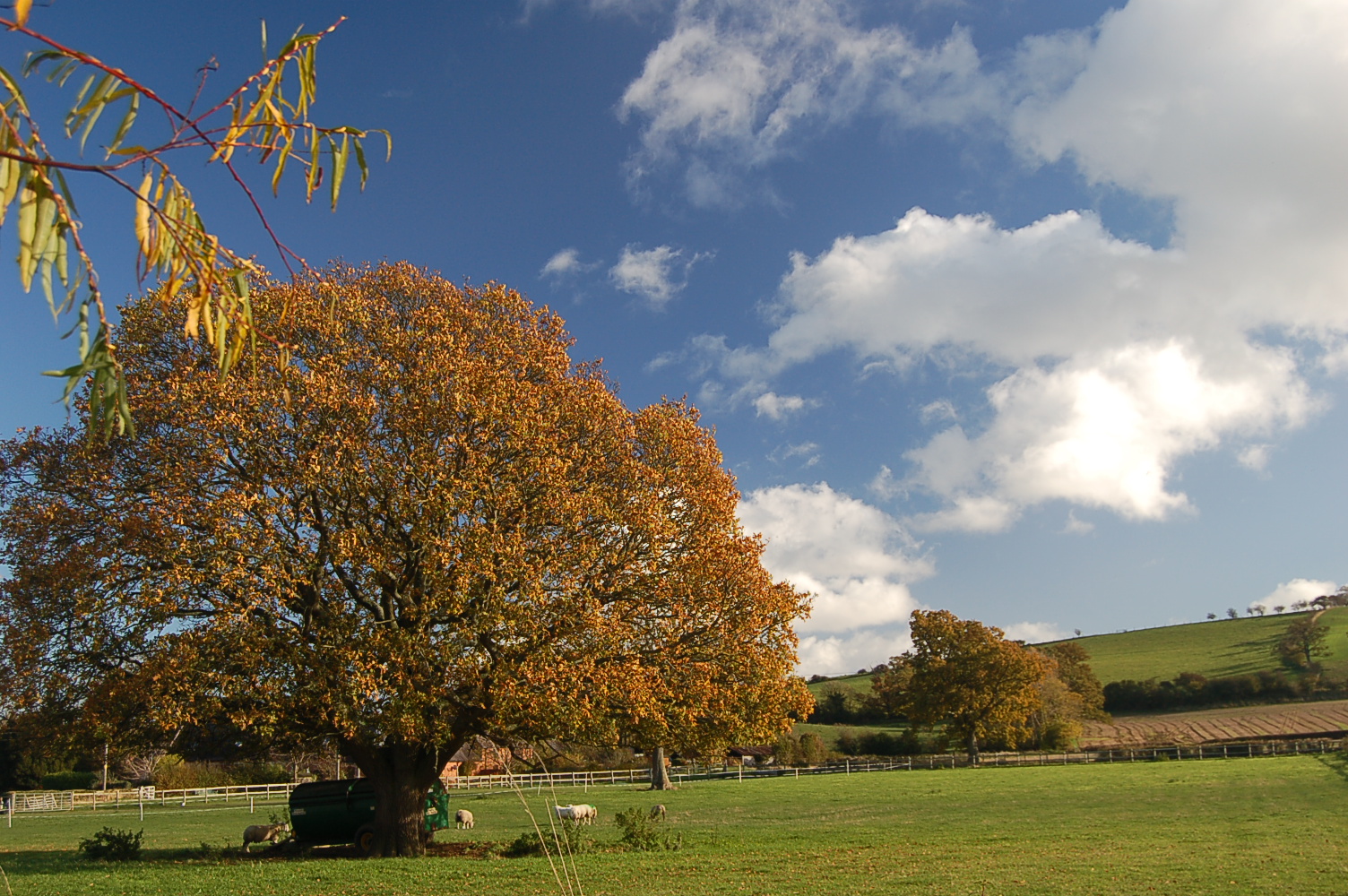
As we left the final field of pastureland we spied our house across the hayfield. We had to pass our big old oak tree which we admire from out back garden. As we walked along the fence to the garden gate we called out to the chickens. They looked totally confused – we were the wrong side of the fence.

Categories
birds climbing plants garden design garden photography garden wildlife gardening photography Shropshire wildlife

Late Summer Clematis

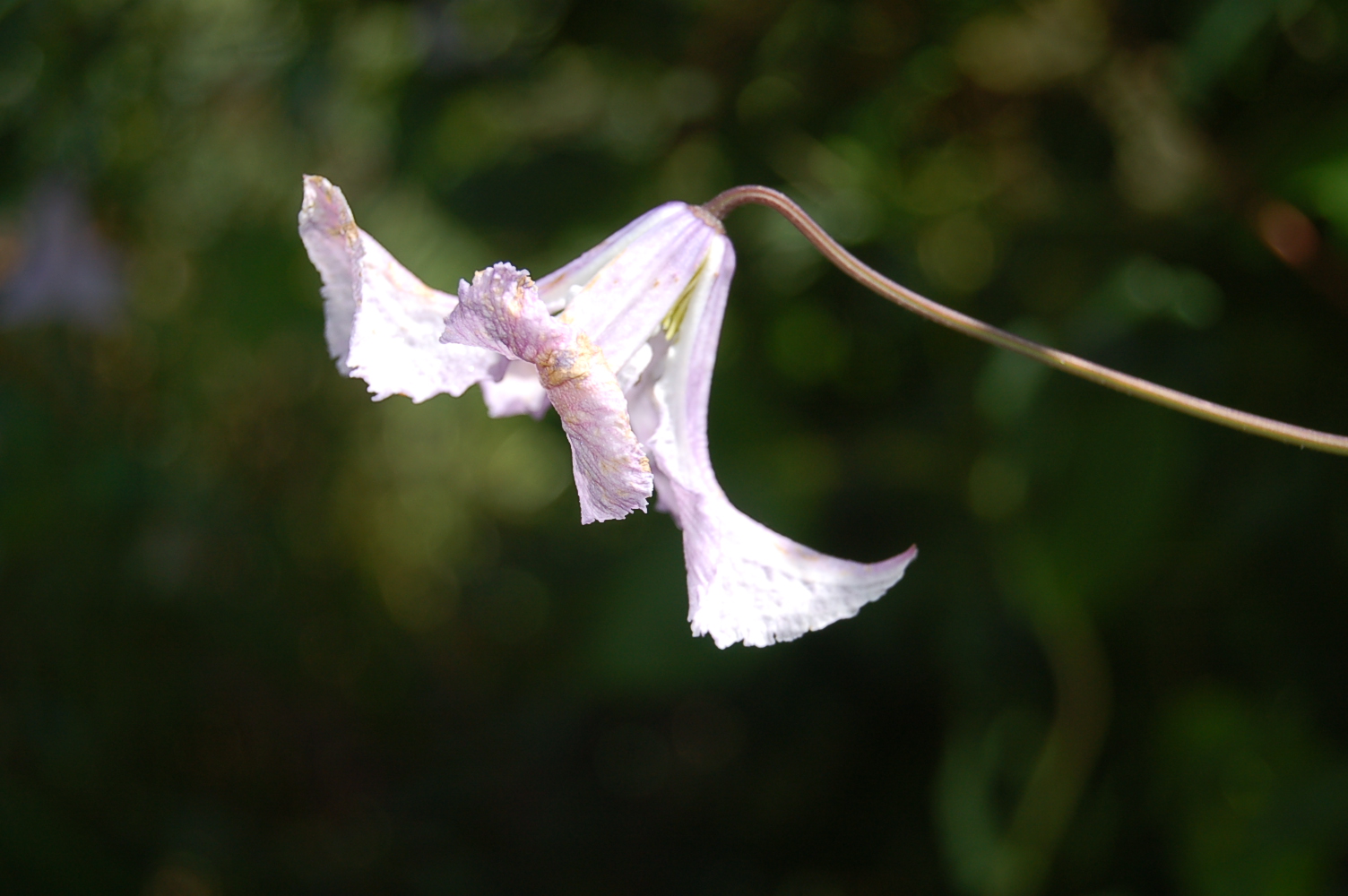
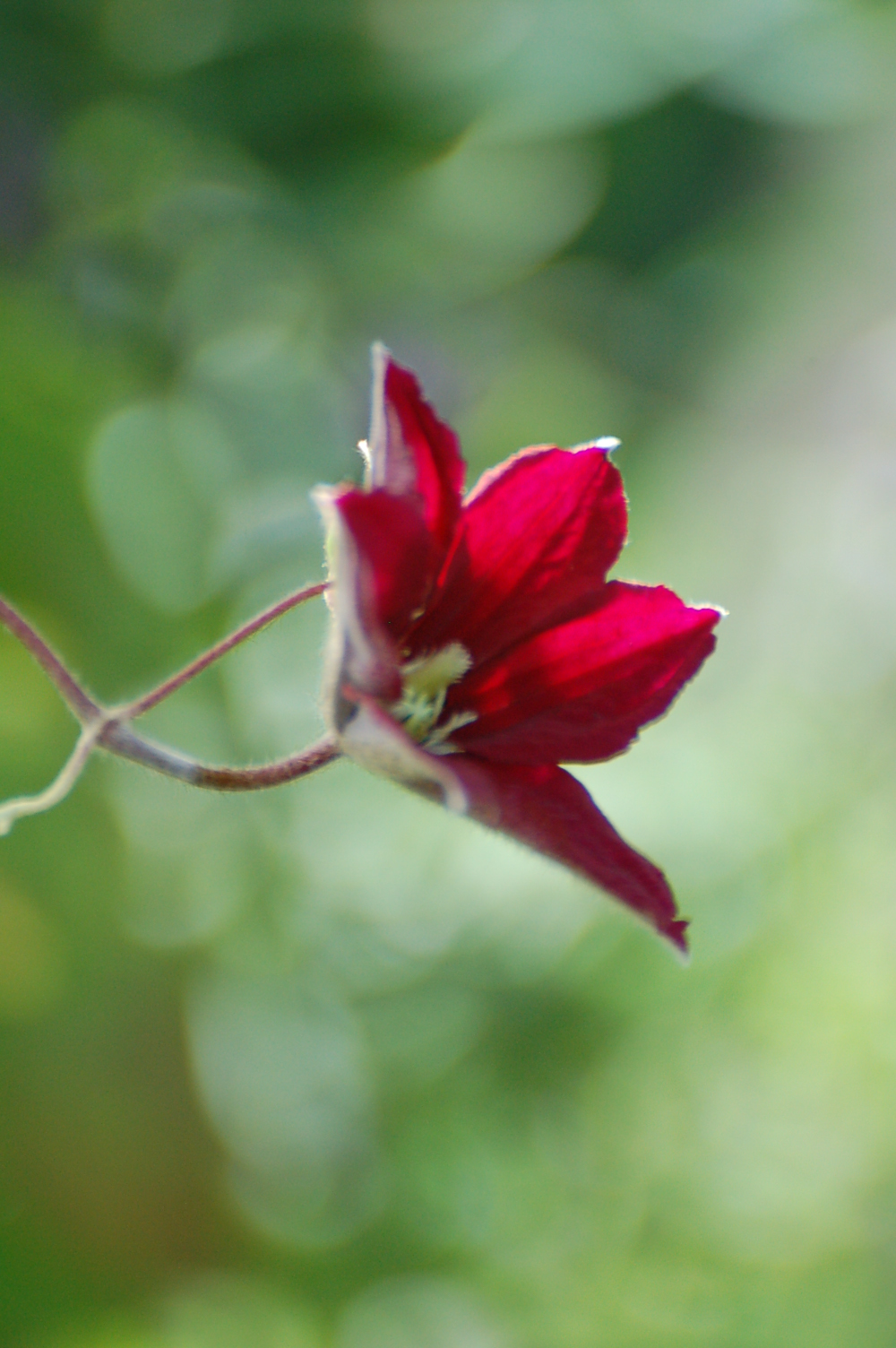
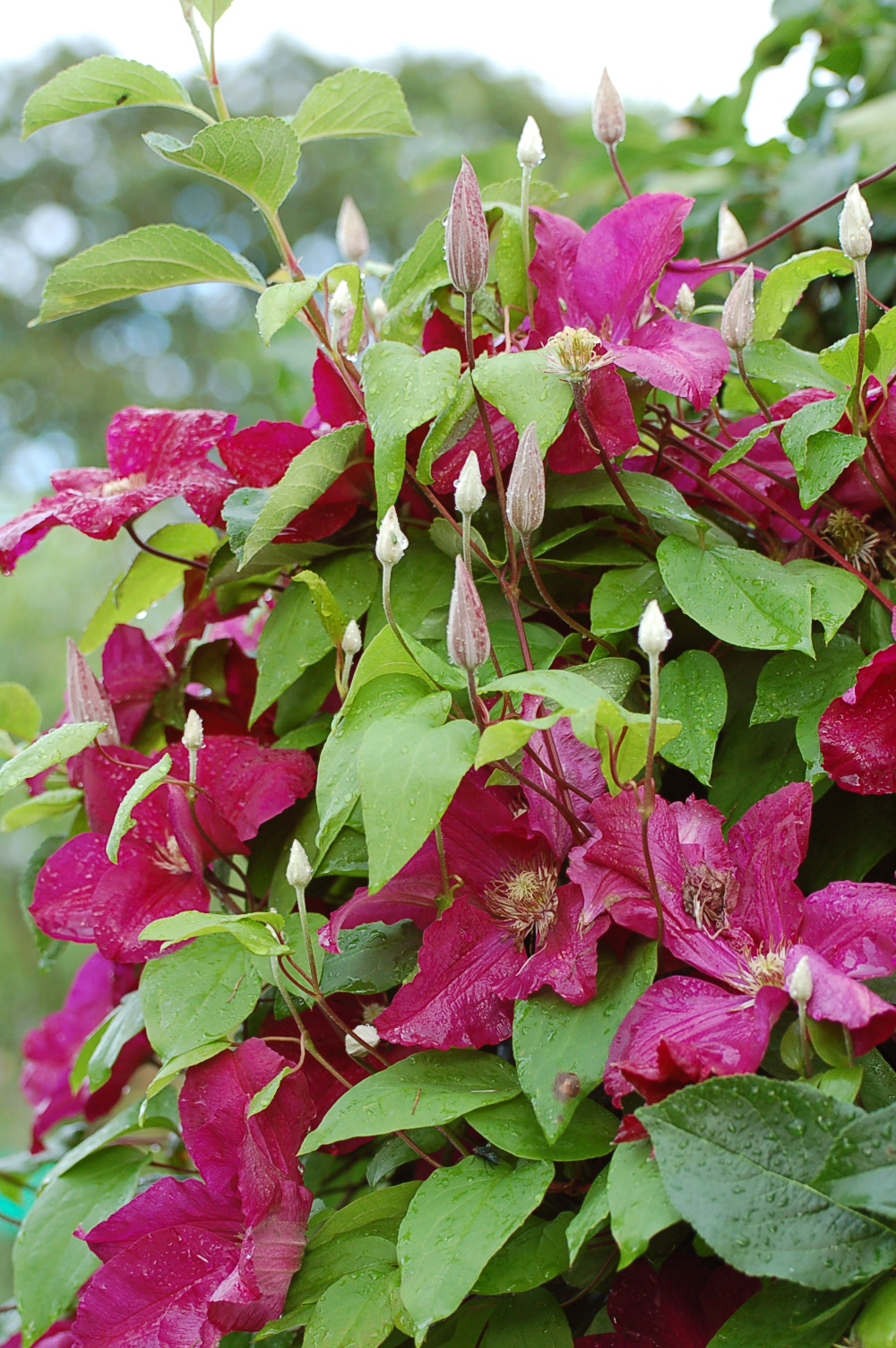
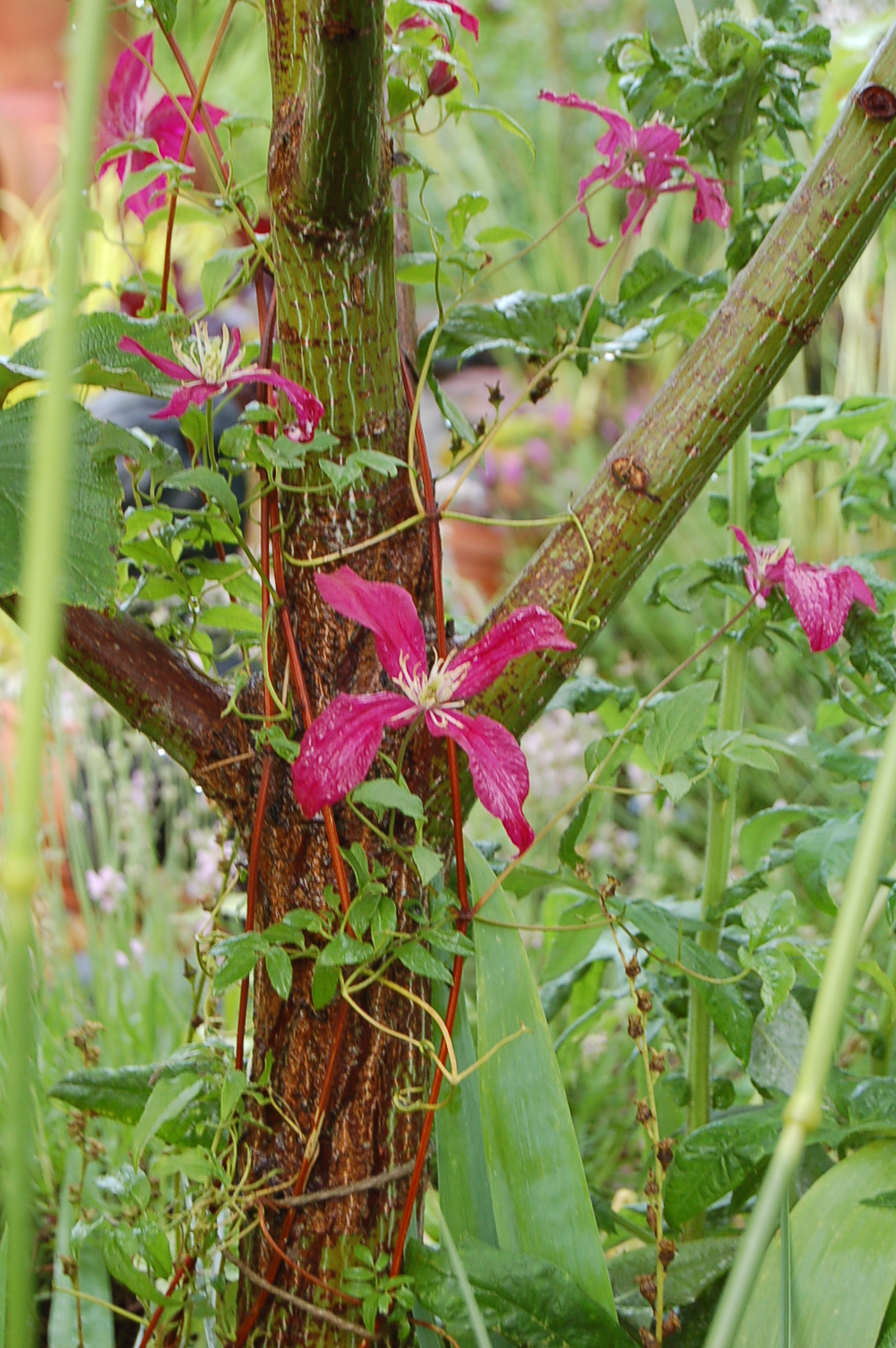
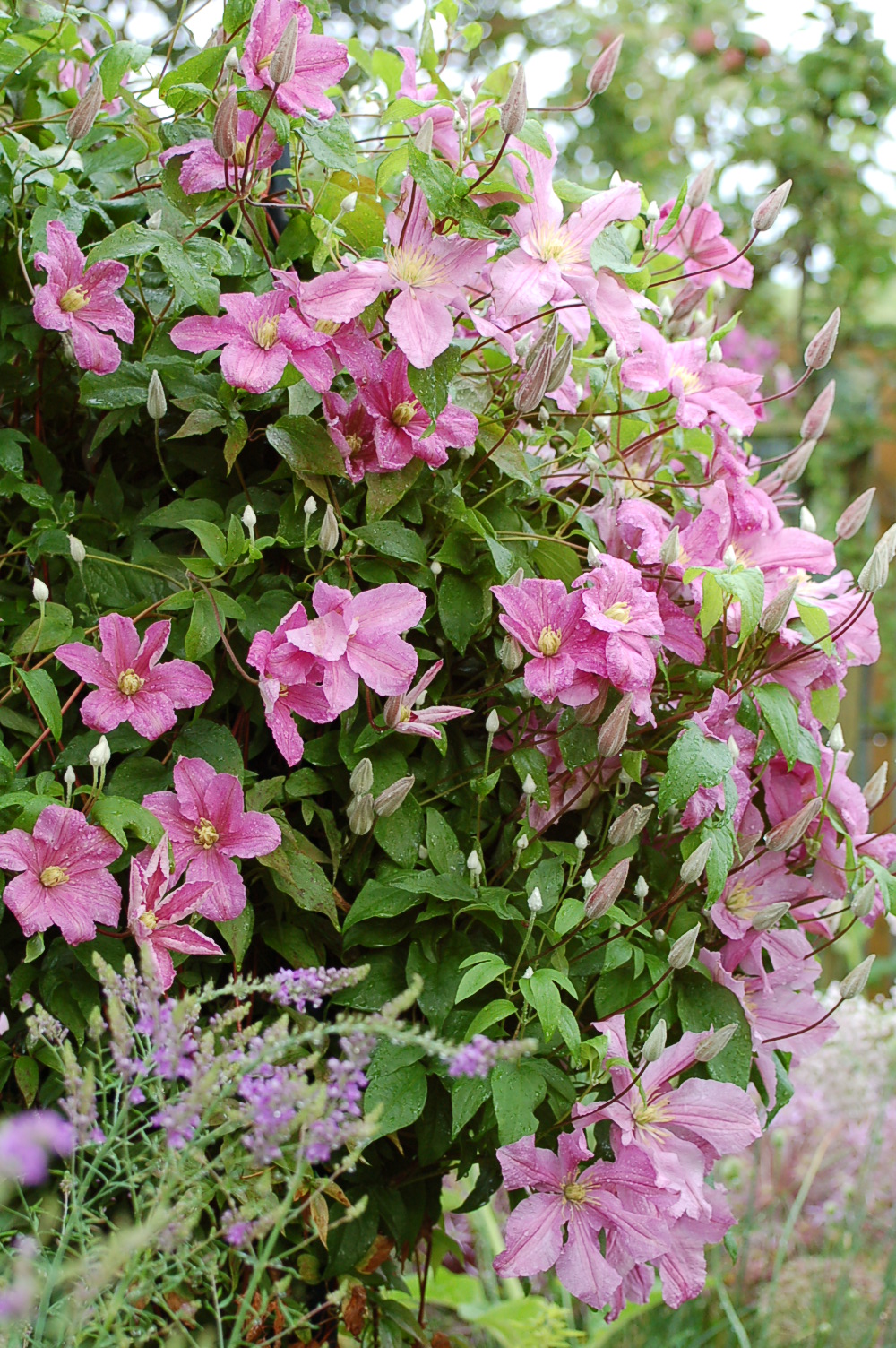
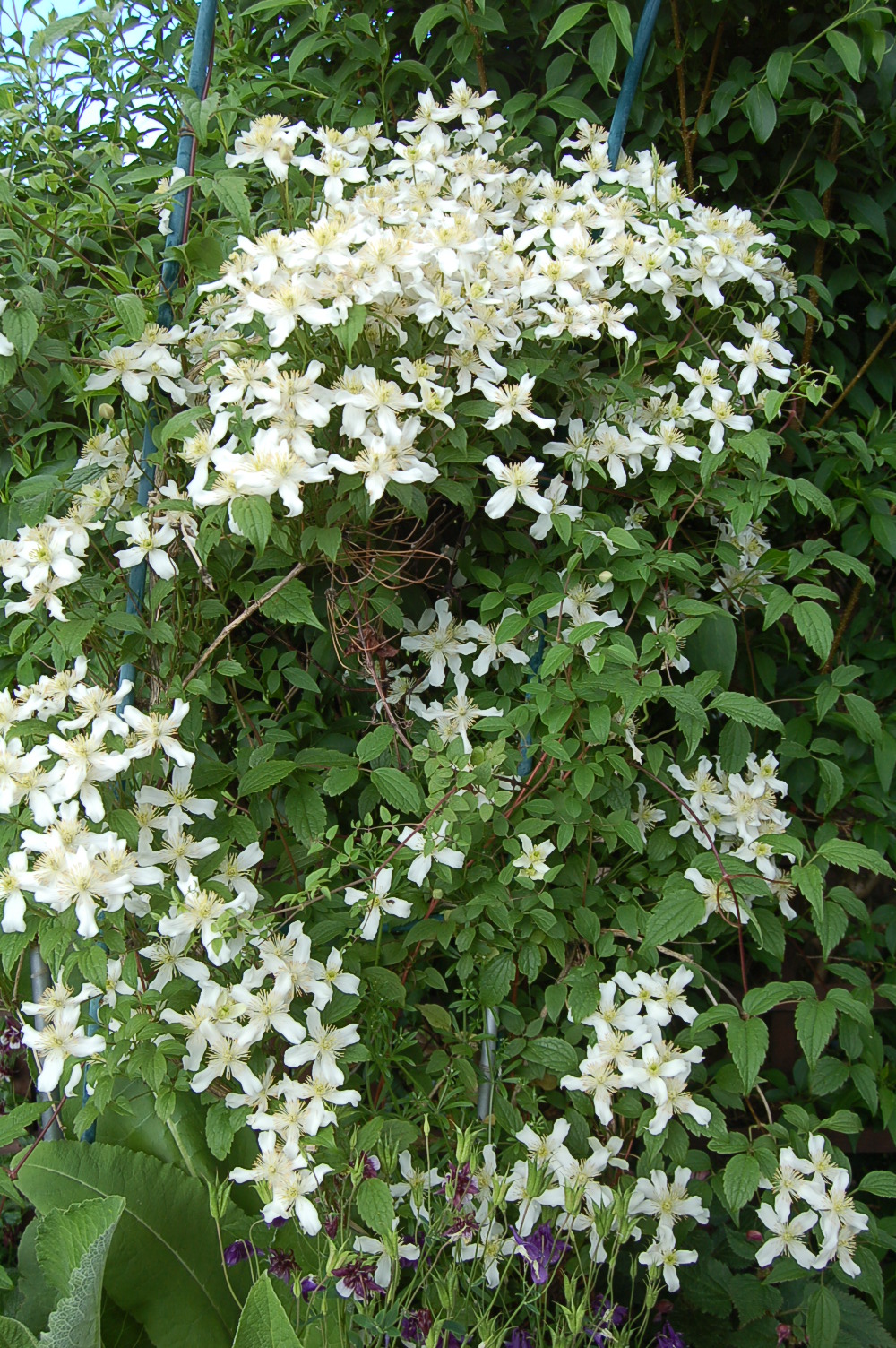
The Undergardener and I don’t really like the big dinner-plate clematis that flower earlier in the year but we adore the small-flowered, often bell-shaped subtle ones that are stars of the late summer. Every time a tree gets tall enough to support one we plant a new clematis to befriend it, even though every obelisk and arch is already adorned with one. To get double the flowering effect clematis love the company of climbing roses and we pair them up with our apples that we have growing over arches. The apples fruit well and the clematis flower well, and I wonder if this is another case of companion planting in action. Could it be that they benefit each other when grown together?

The flowers manage to attract the harsh summer sunlight giving them the appearance of silk or tissue paper.

They are so amenable too. We treat them as herbaceous perennials and cut them down in the winter. Although they have masses of flowers deadheading is not necessary and instead they can produce wonderful seedheads like whispy white spiders. Many flower more than once a year too.

Wildlife love clematis especially our avian friends. They nest in the jumble of vines which also serve as roosting shelters. Dunnocks nest every year in at least one of our clematis and chaffinches and goldfinches do so occasionally. Goldfinches extract the seeds from the fluffy seedheads in winter, Warblers, Robins and all members of the Titmice family gorge on all the insect life that live in them in the summer and feed on the seeds in winter.

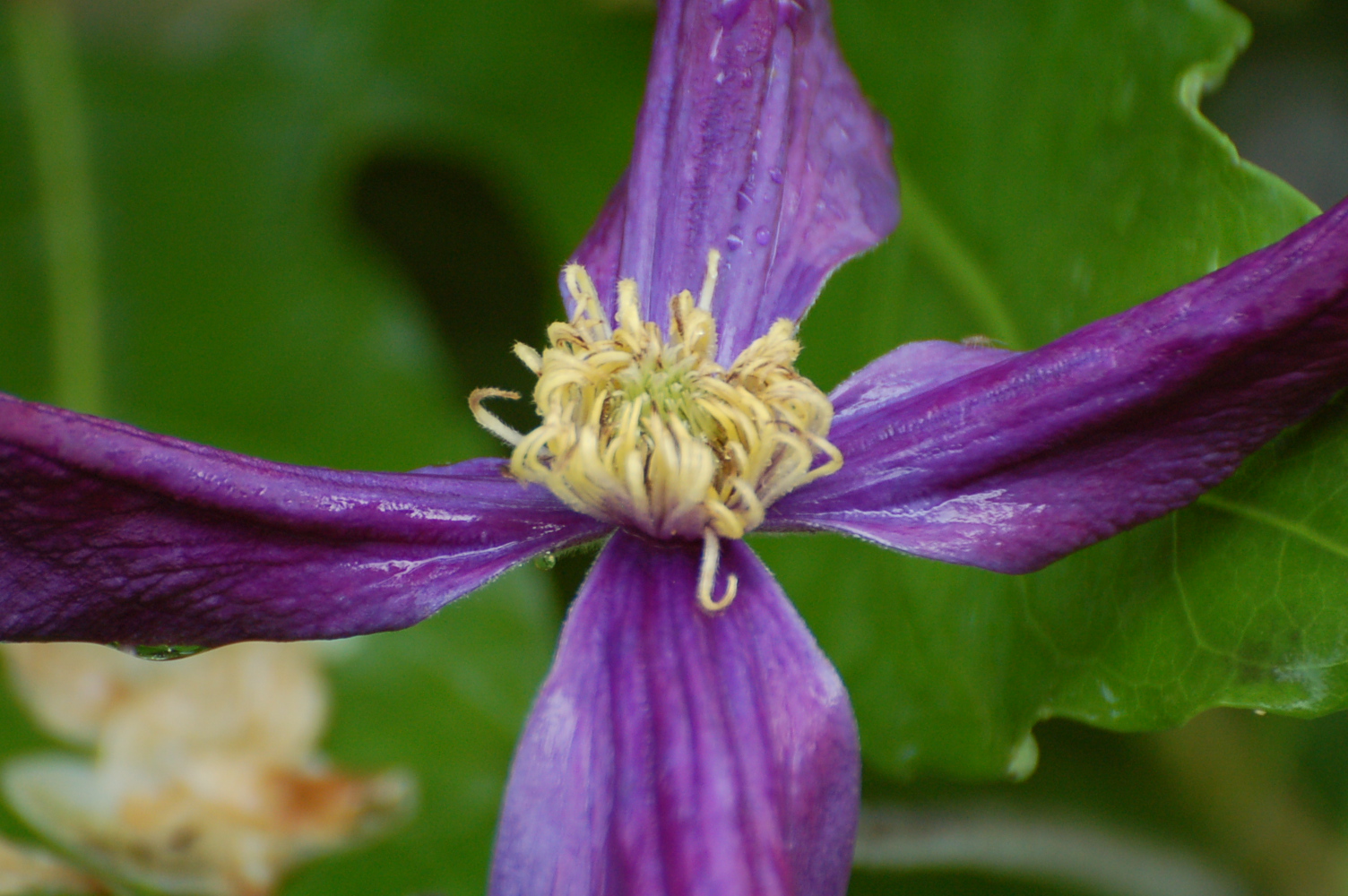
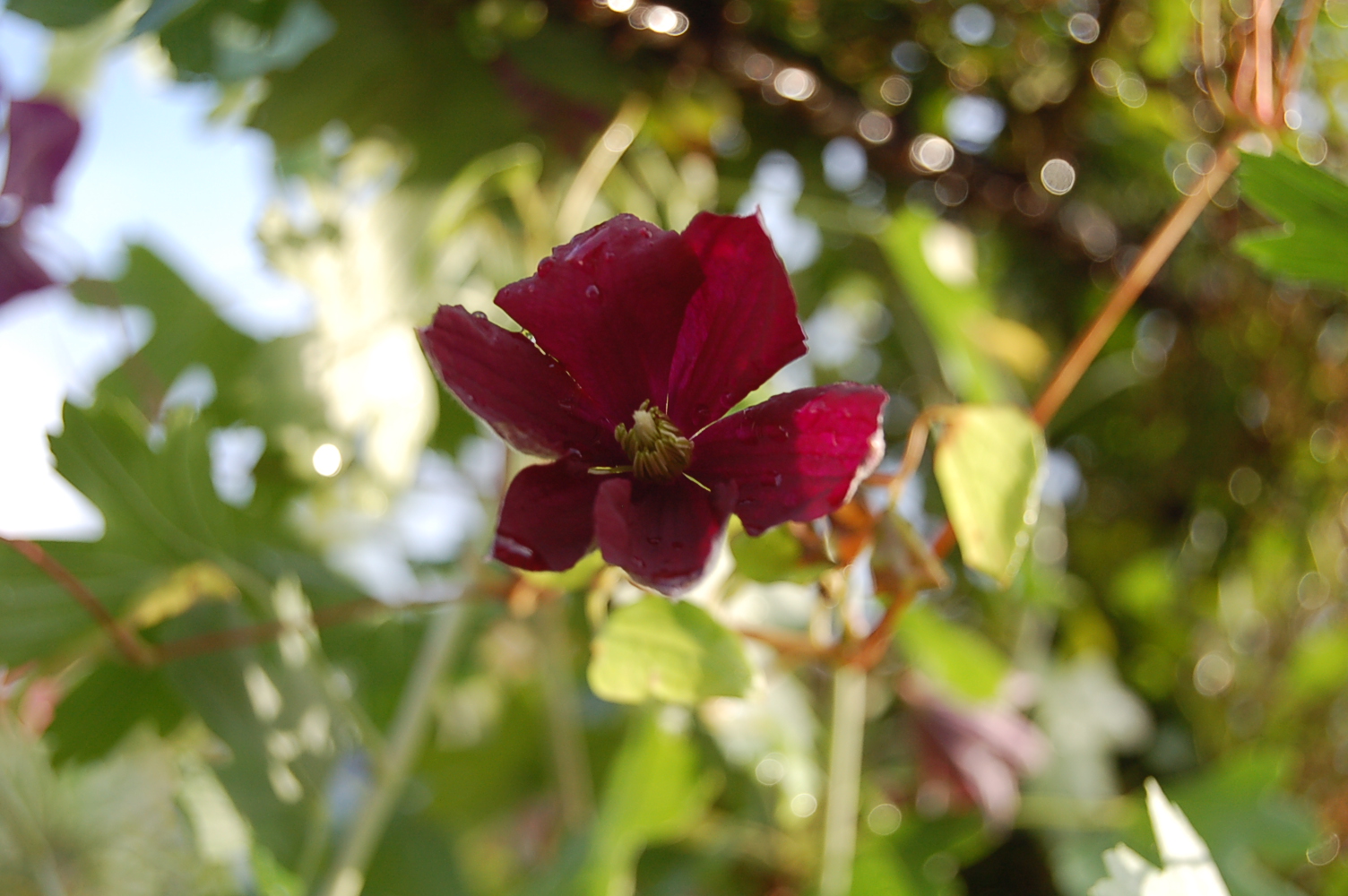
When visiting a garden this August with our fellow Hardy Plant Society enthusiasts we came across the clematis with the tiniest, most delicate flower we had ever seen on a clematis, in the deepest purple hue and to top it all off it had an enticing scent. It was appropriately called Clematis aromatica.

Categories
birds climbing plants garden design garden photography garden wildlife gardening hardy perennials ornamental grasses ornamental trees and shrubs photography Shropshire trees village gardens wildlife

A Wander around our Garden in August

Our garden in August is a bright, colourful place full of lush growth, rich scent and so much wildlife to enjoy. Our wild birds are mostly quiet at present as August is the time when they hide away as they go through their annual moult. They have gone to ground and gone silent.

Above our heads however avian activity is busy and exciting. The Swallows and House Martins are feeding up in anticipation of their migration south. The sky is full of them, but the screaching of Swifts is absent as they began their own long journey a few weeks ago. For a few days there is a gap in the sounds – we miss them for their excited calls and aerial displays.

The calls of the young Buzzards can be heard above the Swallows and Martins, as they excitedly search out thermals and discover the joy of riding them. The Peregrines have reappeared now that their breeding season is over so we can watch the adult pairs rising in ever-higher circles until they disappear from view. Our eyes become incapable of seeing them as they become smaller, become dots and are then gone. They have the luxury of far better long distance vision than us – they will see the movement of their prey from hundreds of feet up in the air. A real treat is to spot them as they stoop, travelling down at speeds of over 200 miles per hour with a pigeon in their sights.

Yesterday when deadheading in one of our borders we were surprised by a low-flying, high speed Green Woodpecker who zoomed close to us, just a few feet away. A real treat!

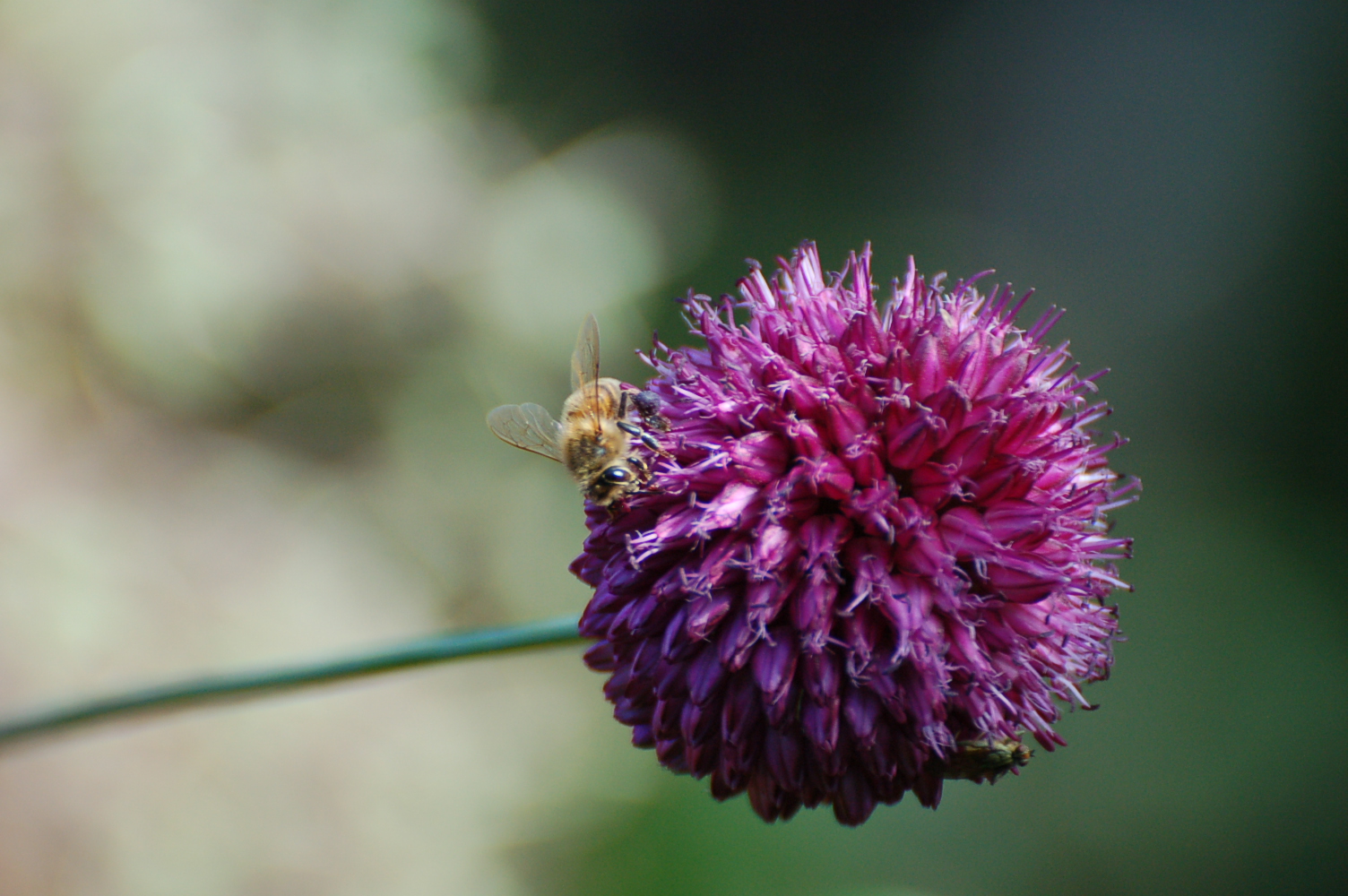
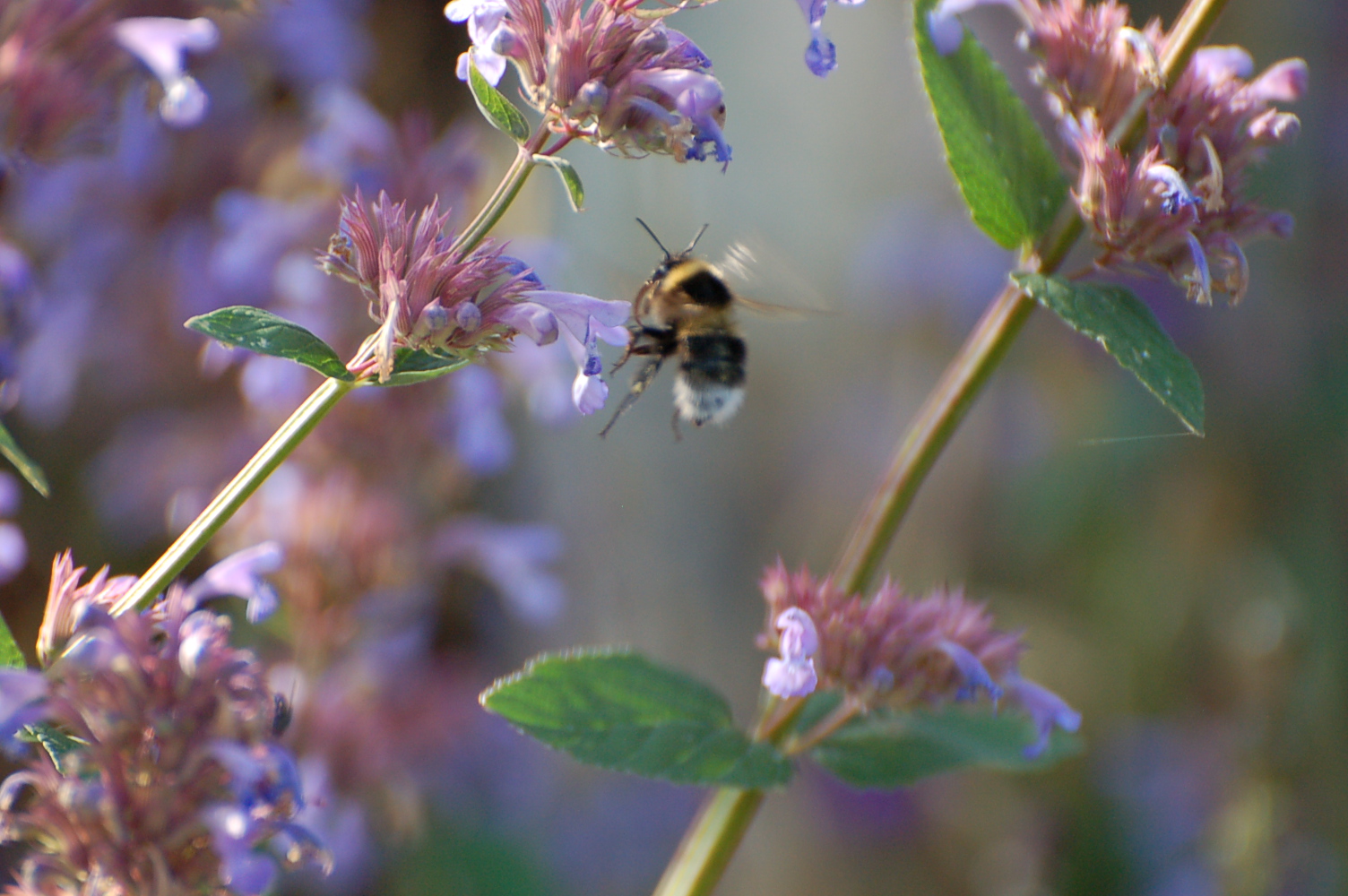
Insect life is flourishing. On any warm bright day a variety of insects can be seen hunting out nectar and pollen. Butterflies, bees and hoverflies are attracted to Buddleias, Alliums, Salvias, Nepetas, Lavenders and Echinops. There are so many Peacock Butterflies around at the moment but you can’t have too many of them. The Holly Blues are much scarcer and flit continuously rarely seeming to settle.

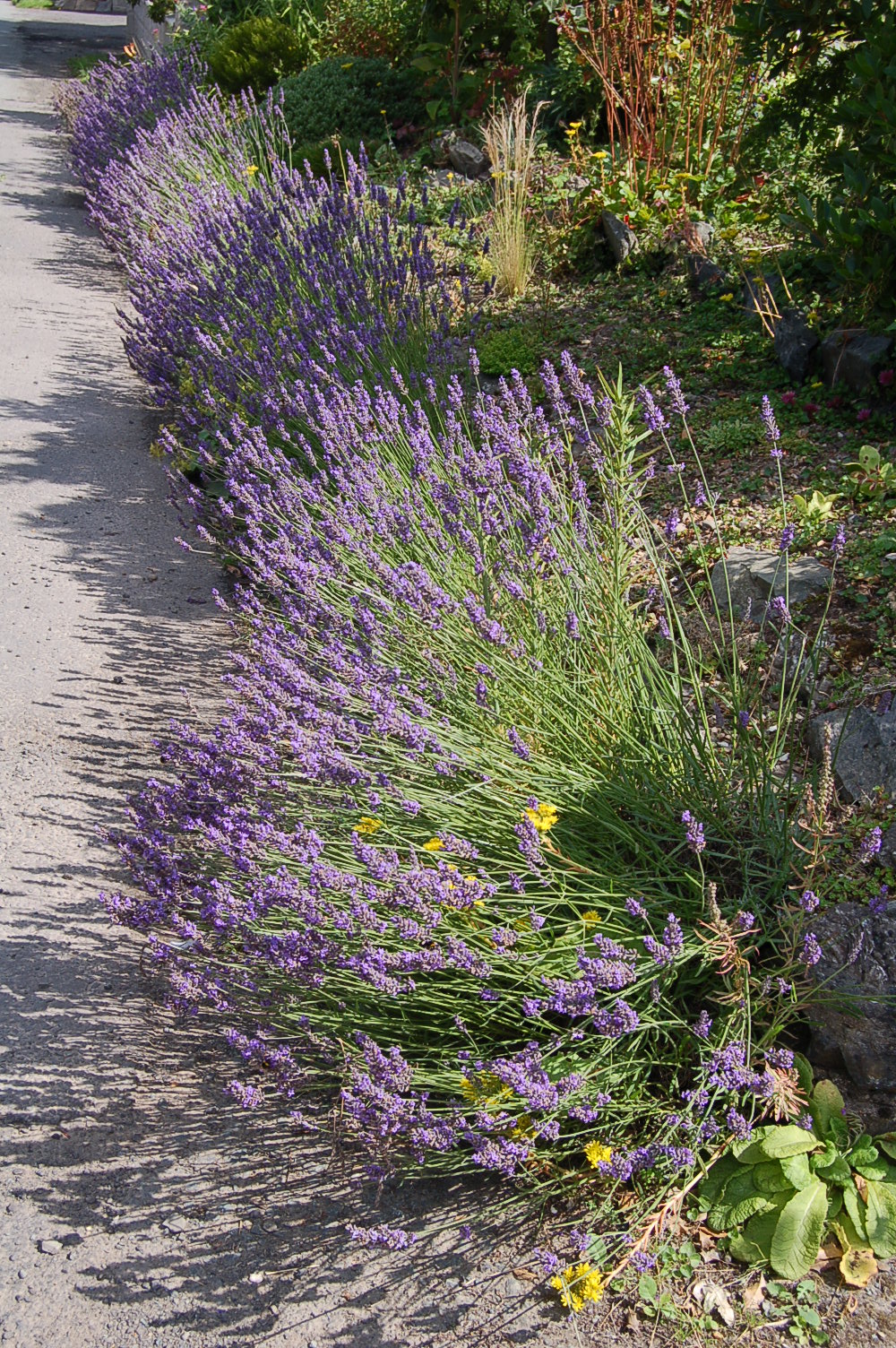
Bees and hoverflies are attracted to our Lavender hedge which borders the lane which passes in front of our garden.

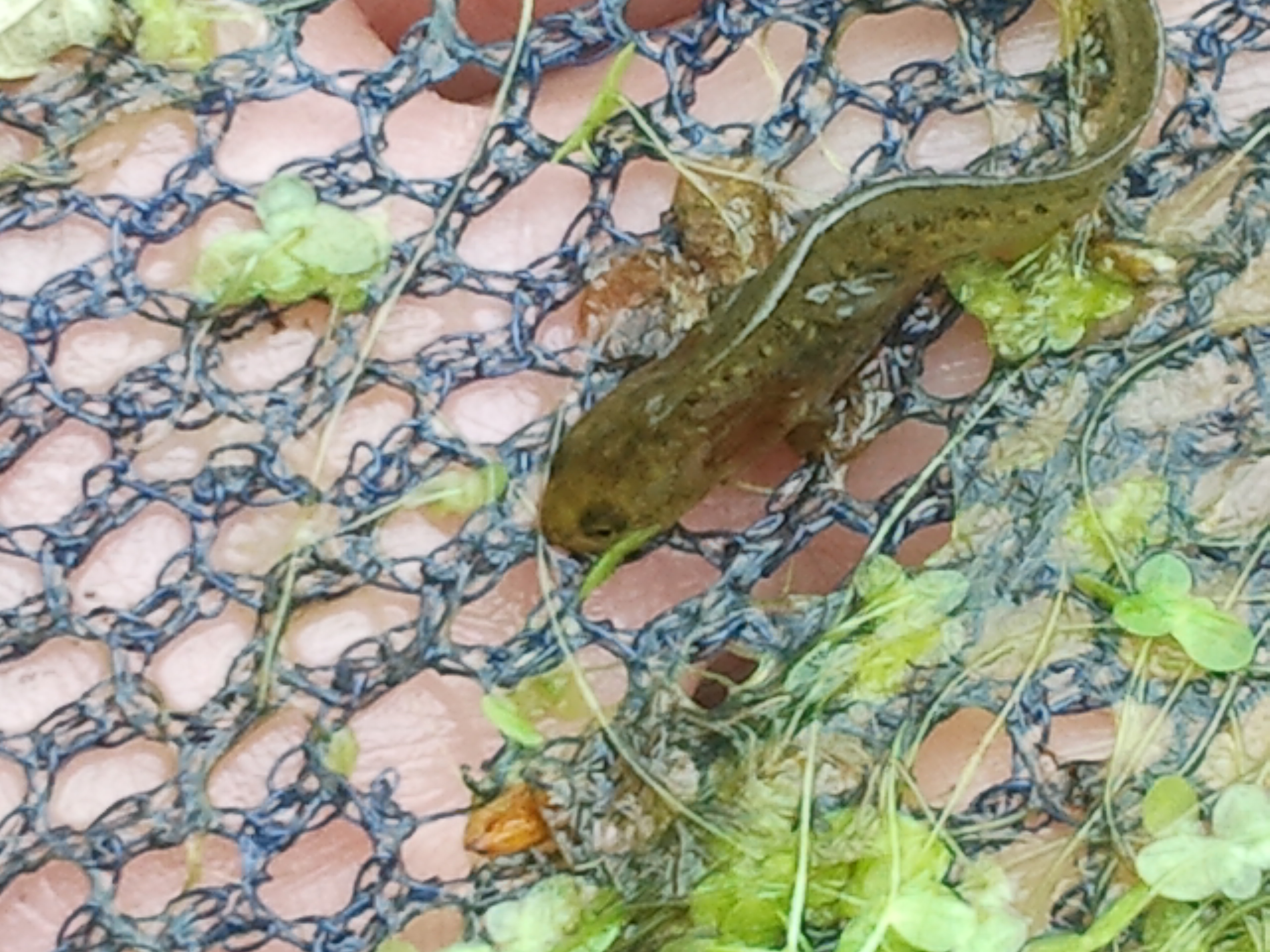
The ponds are full of life with shoals of young fish basking in the shallows, diving Beetles and Boatmen moving up to the surface and back to the bottom regularly. On the surface Pondskaters pace out the length and breadth of the pond surface. Young newts regularly appear at the surface take a gulp of air and drop back down. When Jude the Undergardener nets the duckweed and blanket weed from the pond she catches newts every time. She is delighted with every newt that graces her net. I am convinced that removing the weed is an excuse for her newt catching exploits. In August the majority of newts Jude catches are youngsters.

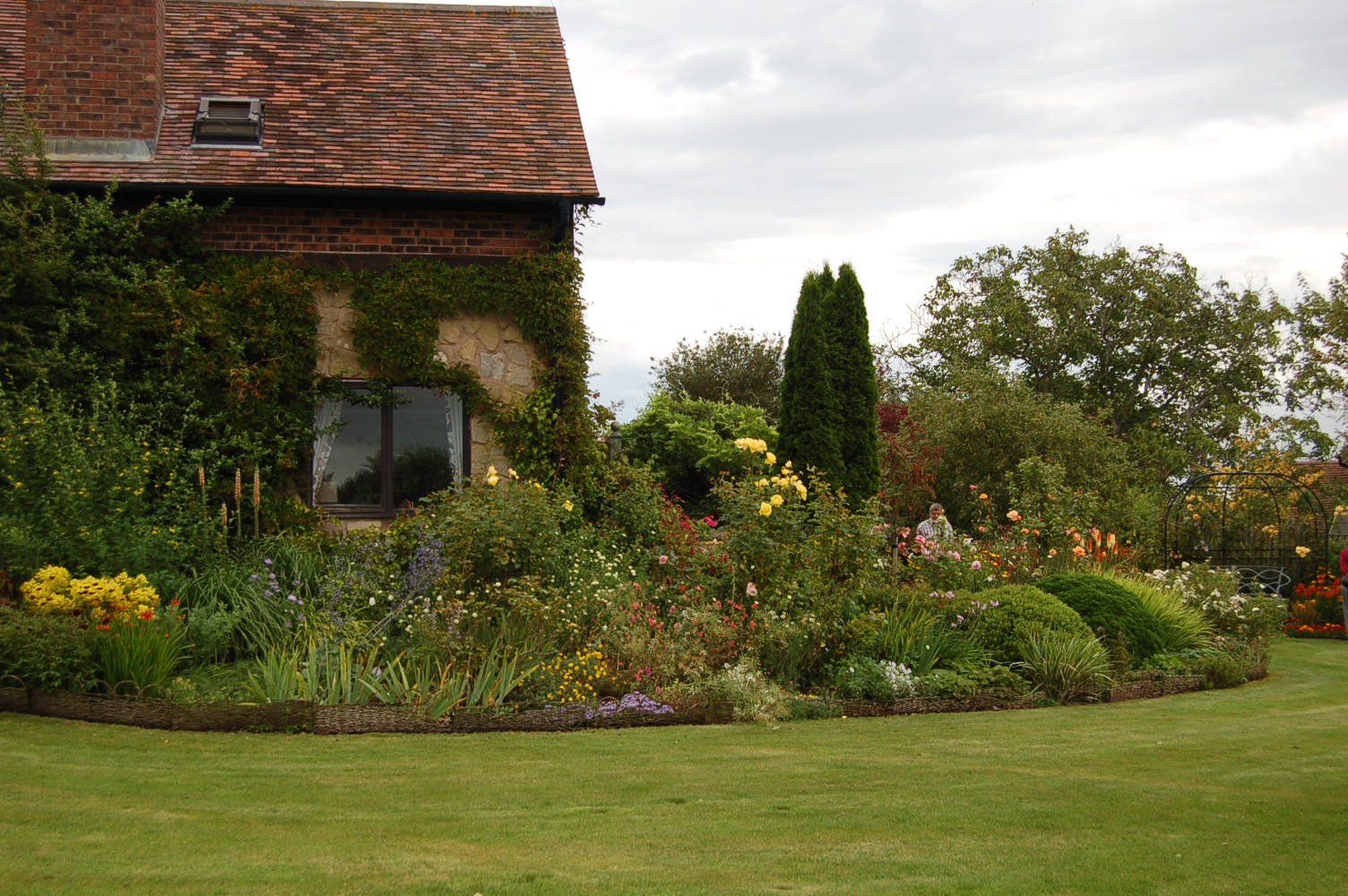
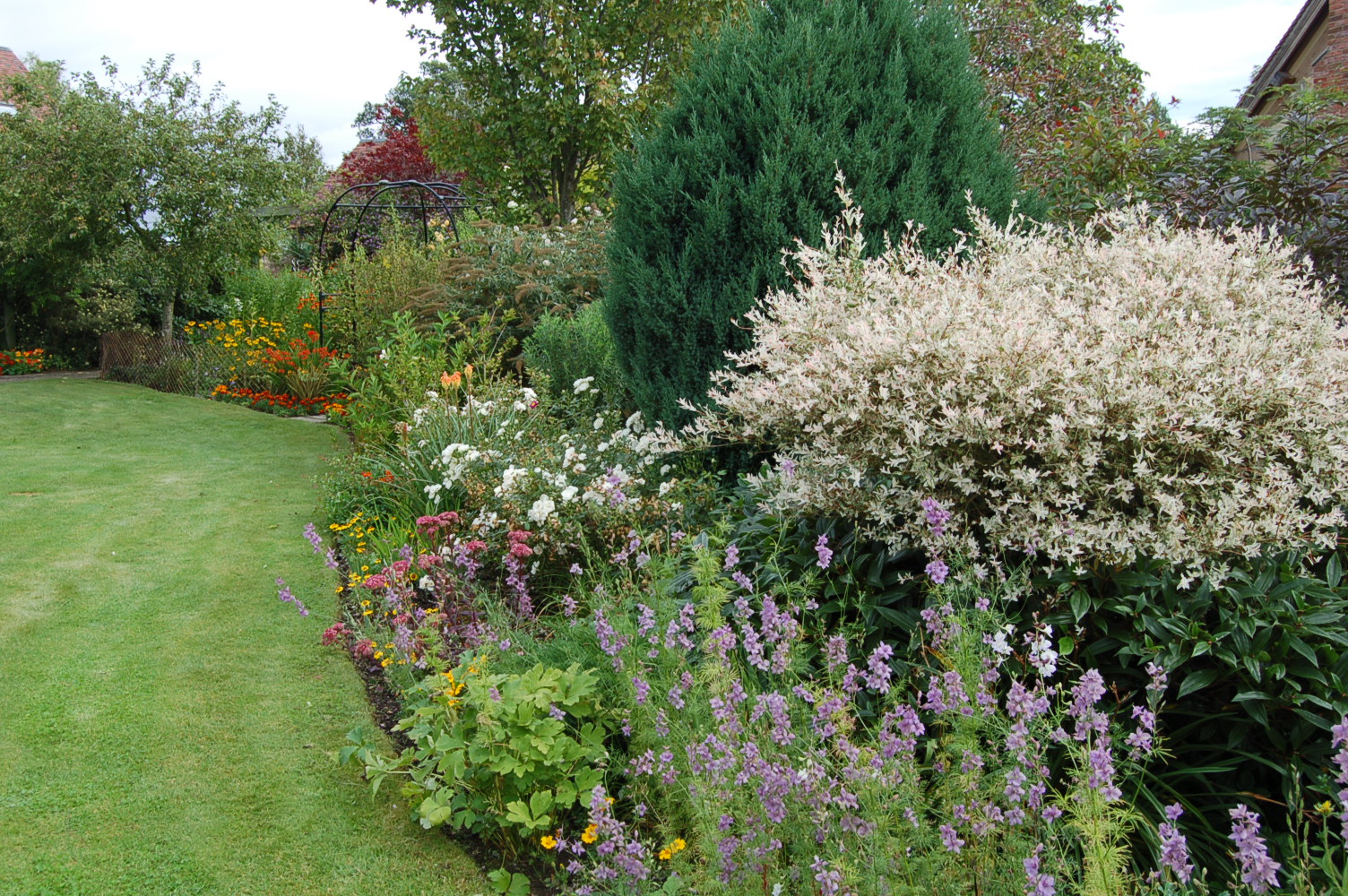
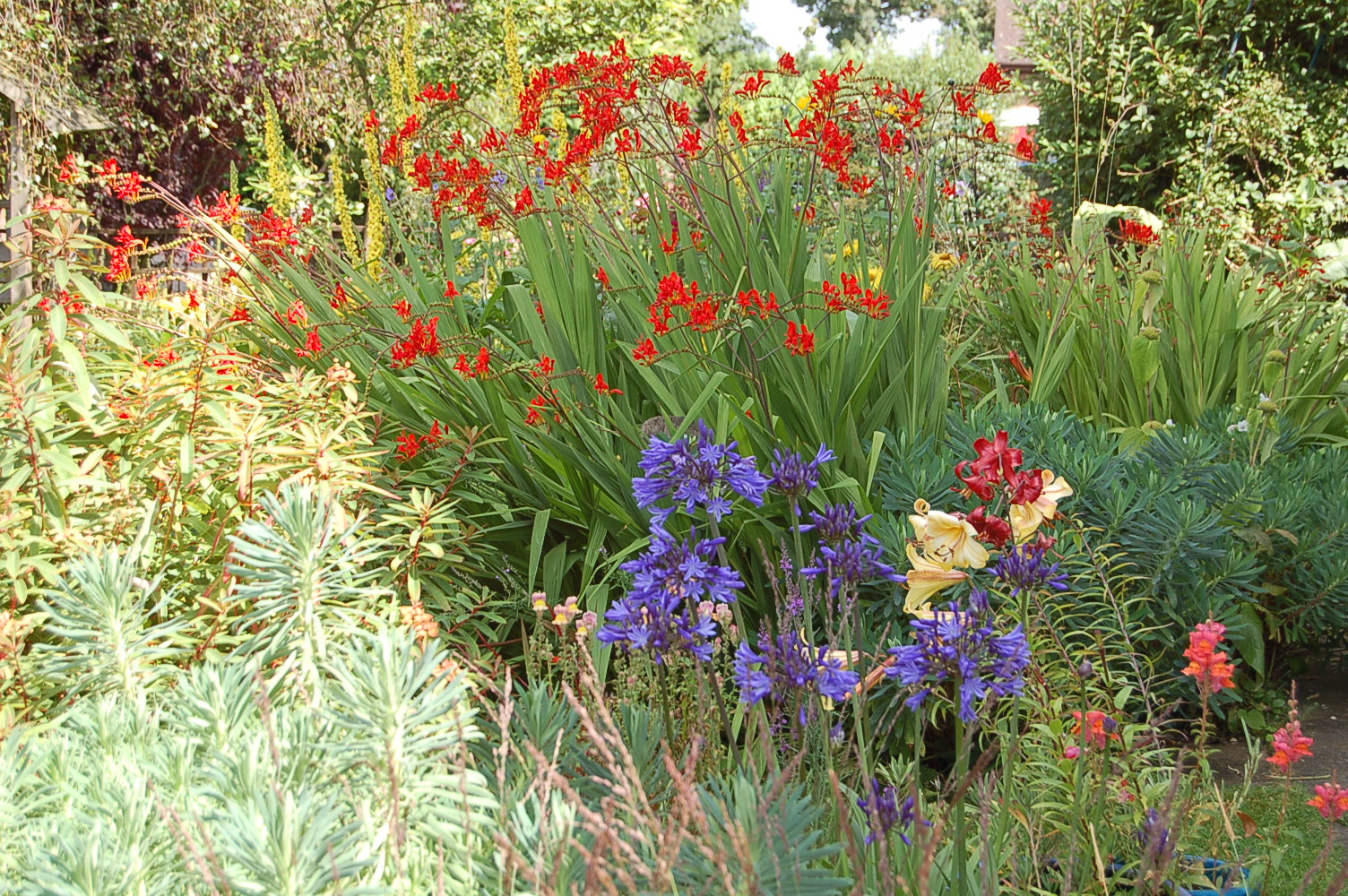
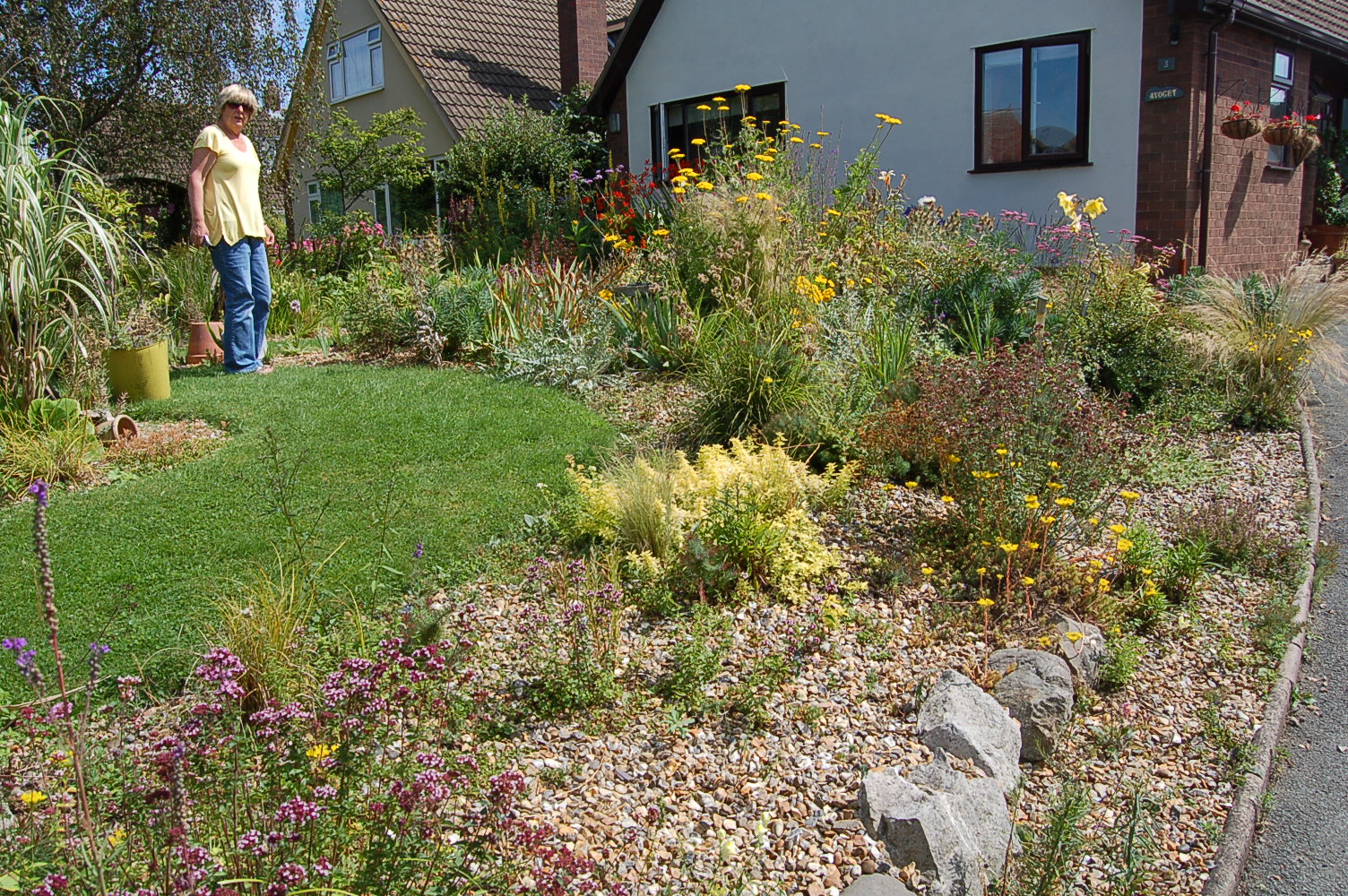
The front garden is looking good! So much colour! The Hot Border is HOT!

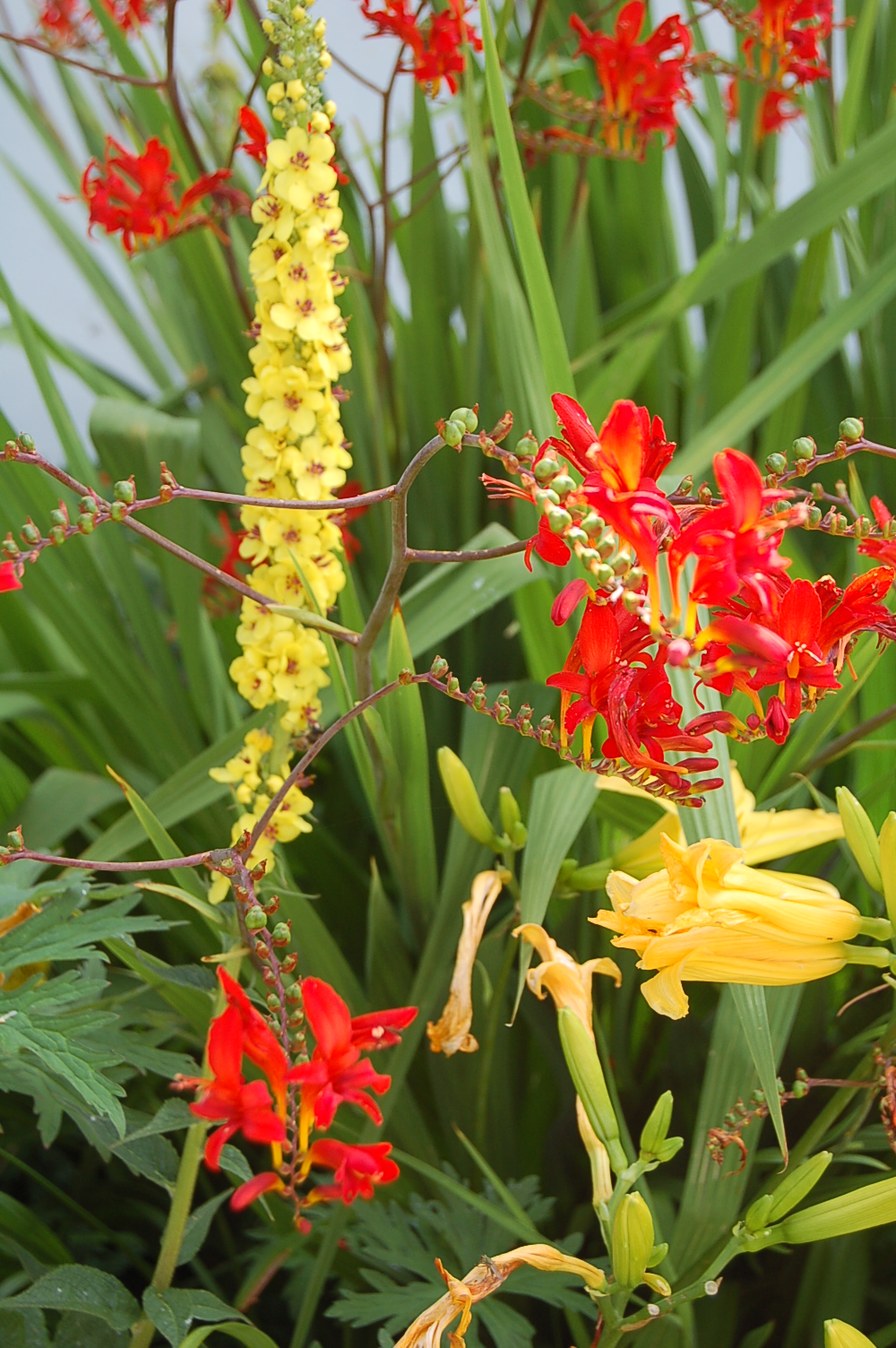
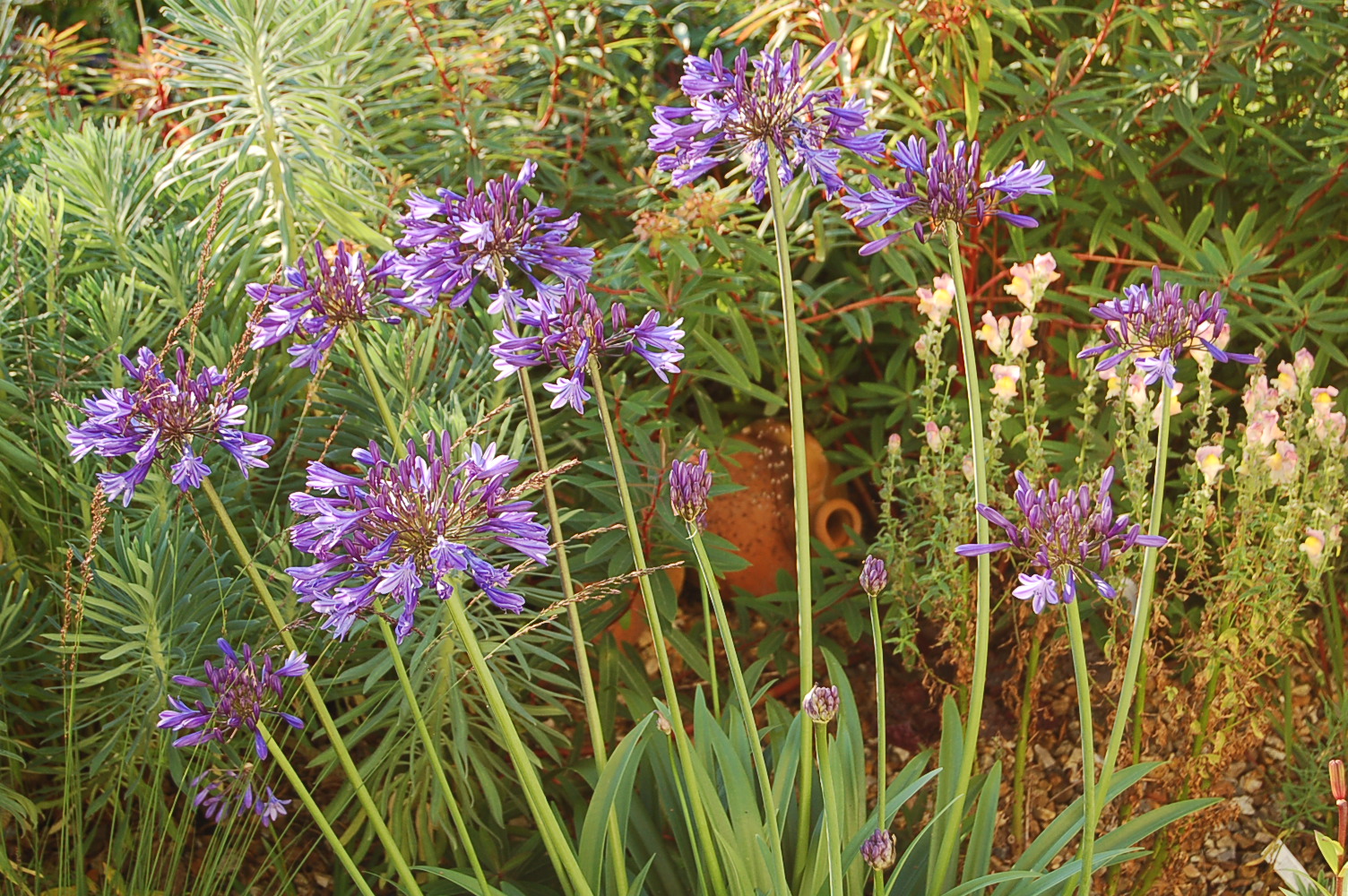
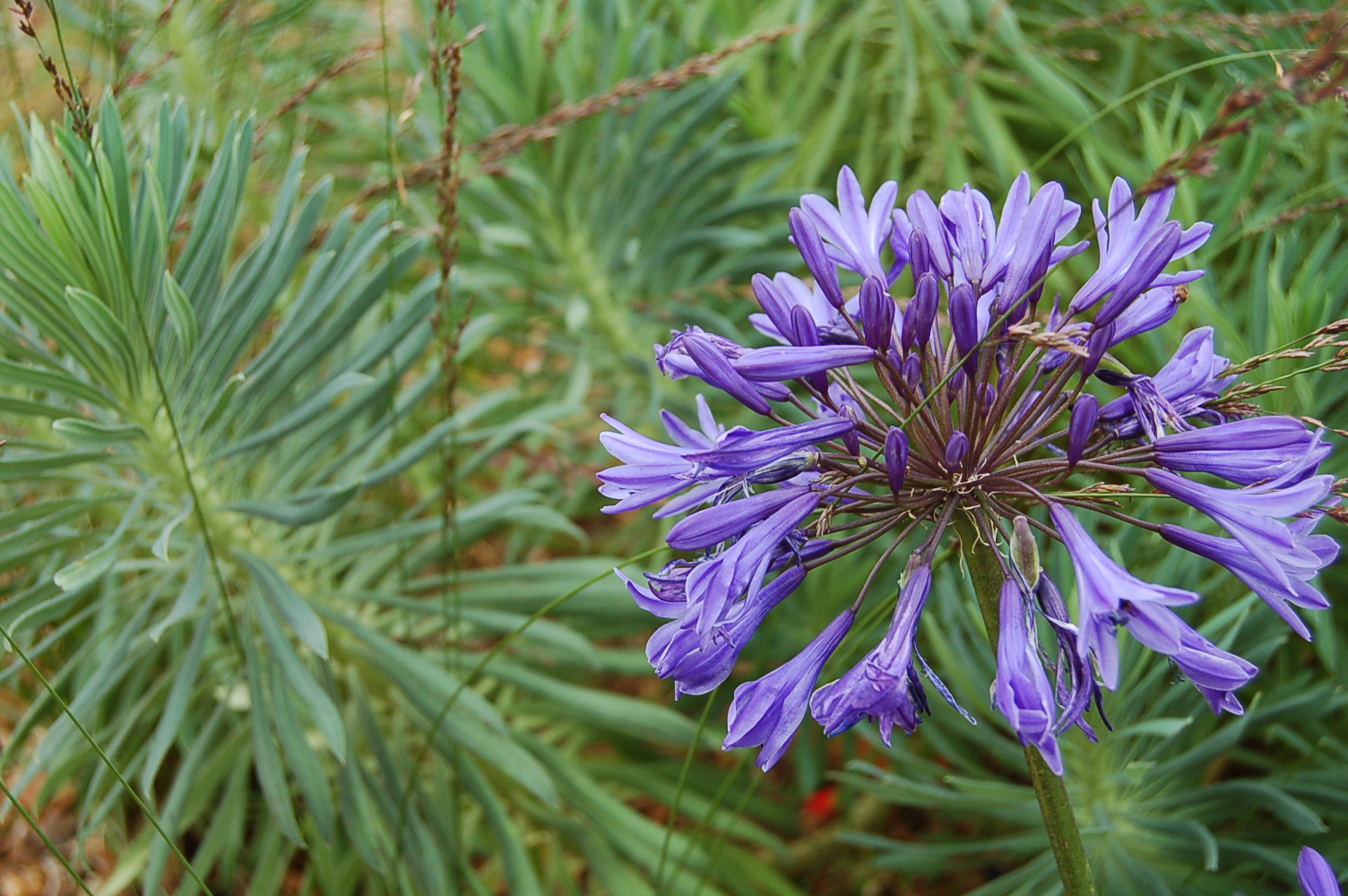
The “Beth Chatto Garden”, our gravel garden, is full of interest with Agapanthus taking centre stage. These Agapanthus were actually bought from the Beth Chattos Gardens nursery.

Early in August the front garden was dominated by yellow – even Jude the Undergardener was wearing yellow – but after a few weeks all the other colours caught up.

In the back garden the growth in our Secret Garden is exuberant to say the least. The foxgloves are going over but the achilleas, lychnis and alliums are still giving us a full performance.

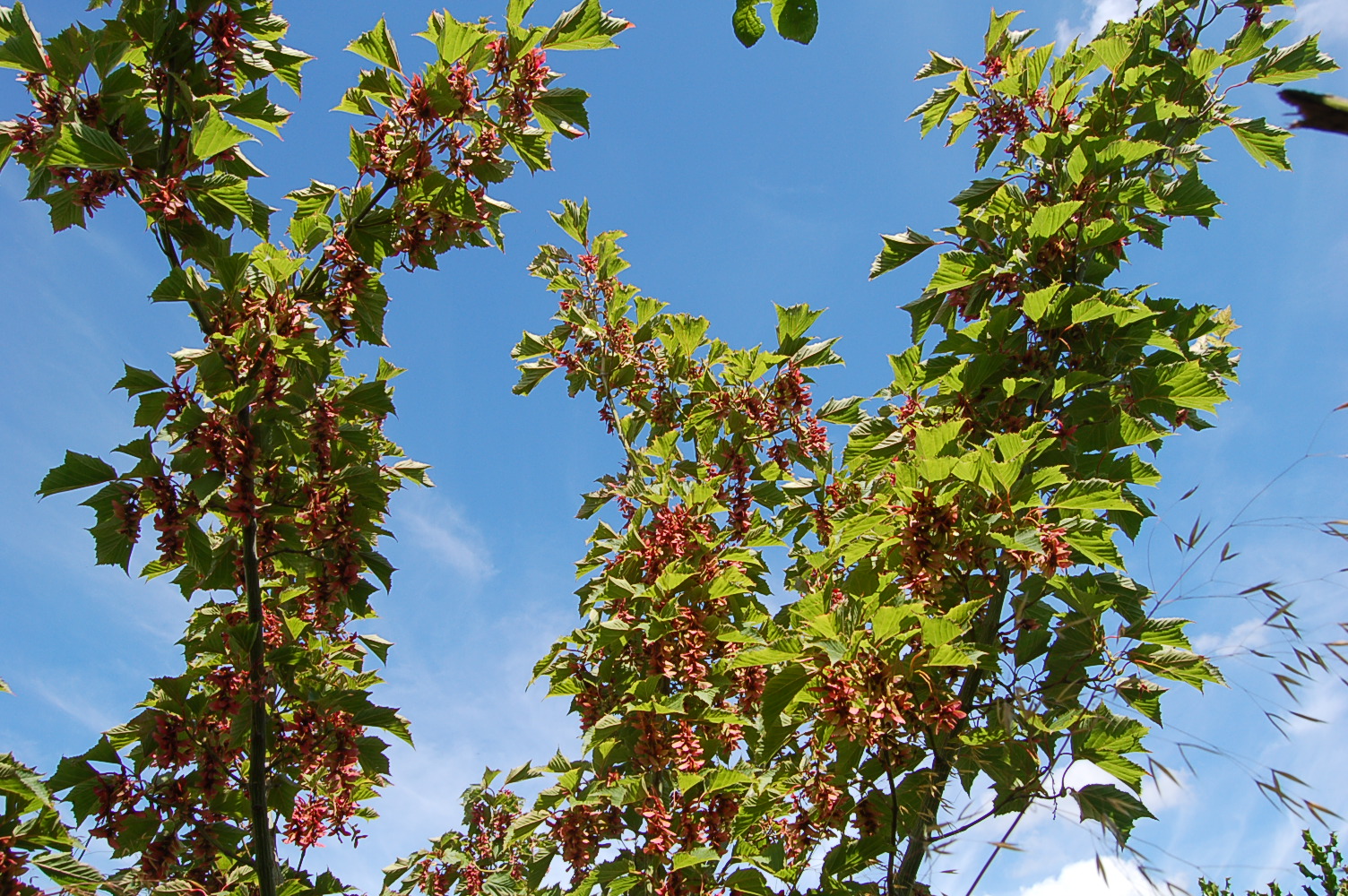
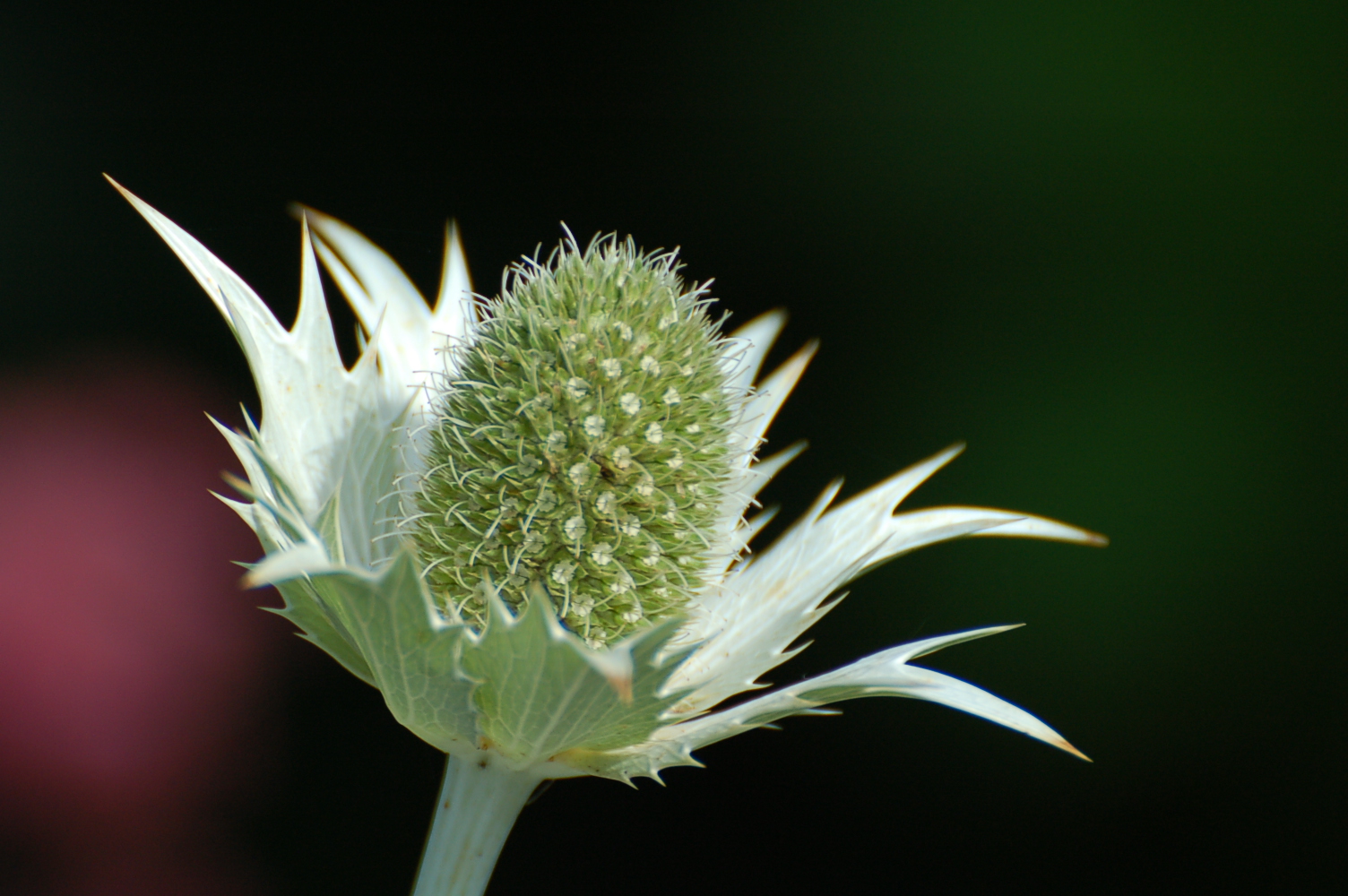
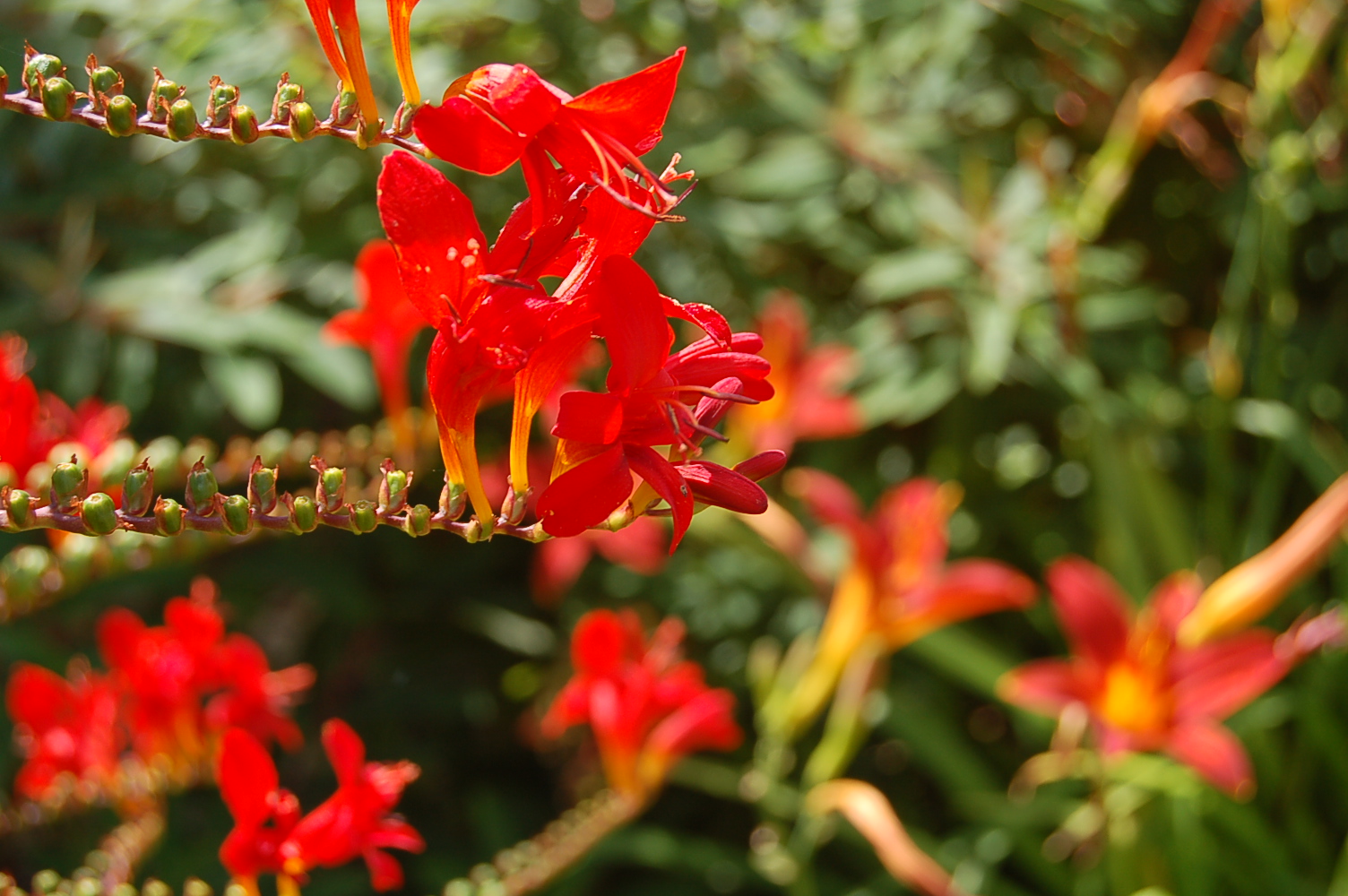
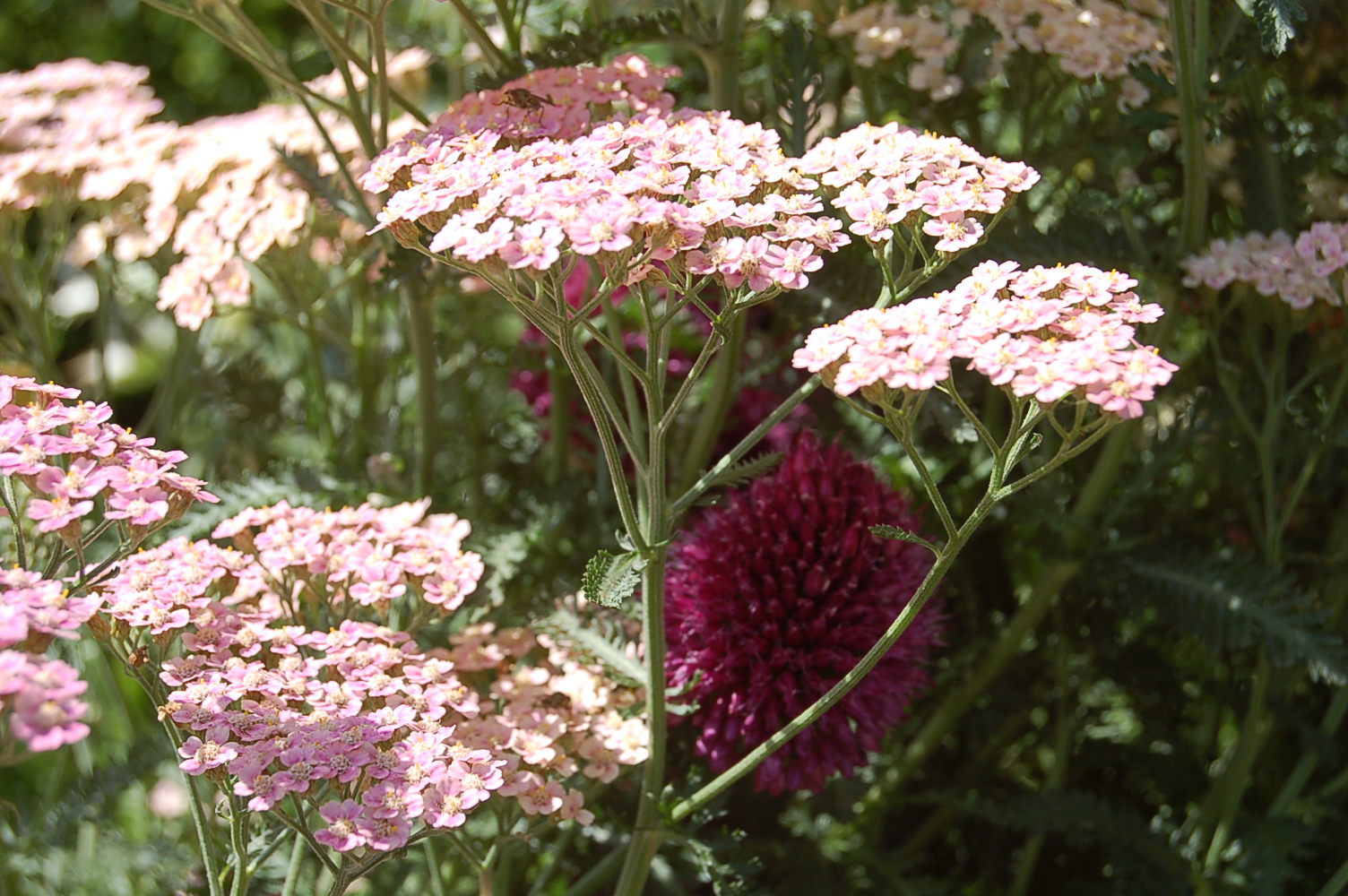
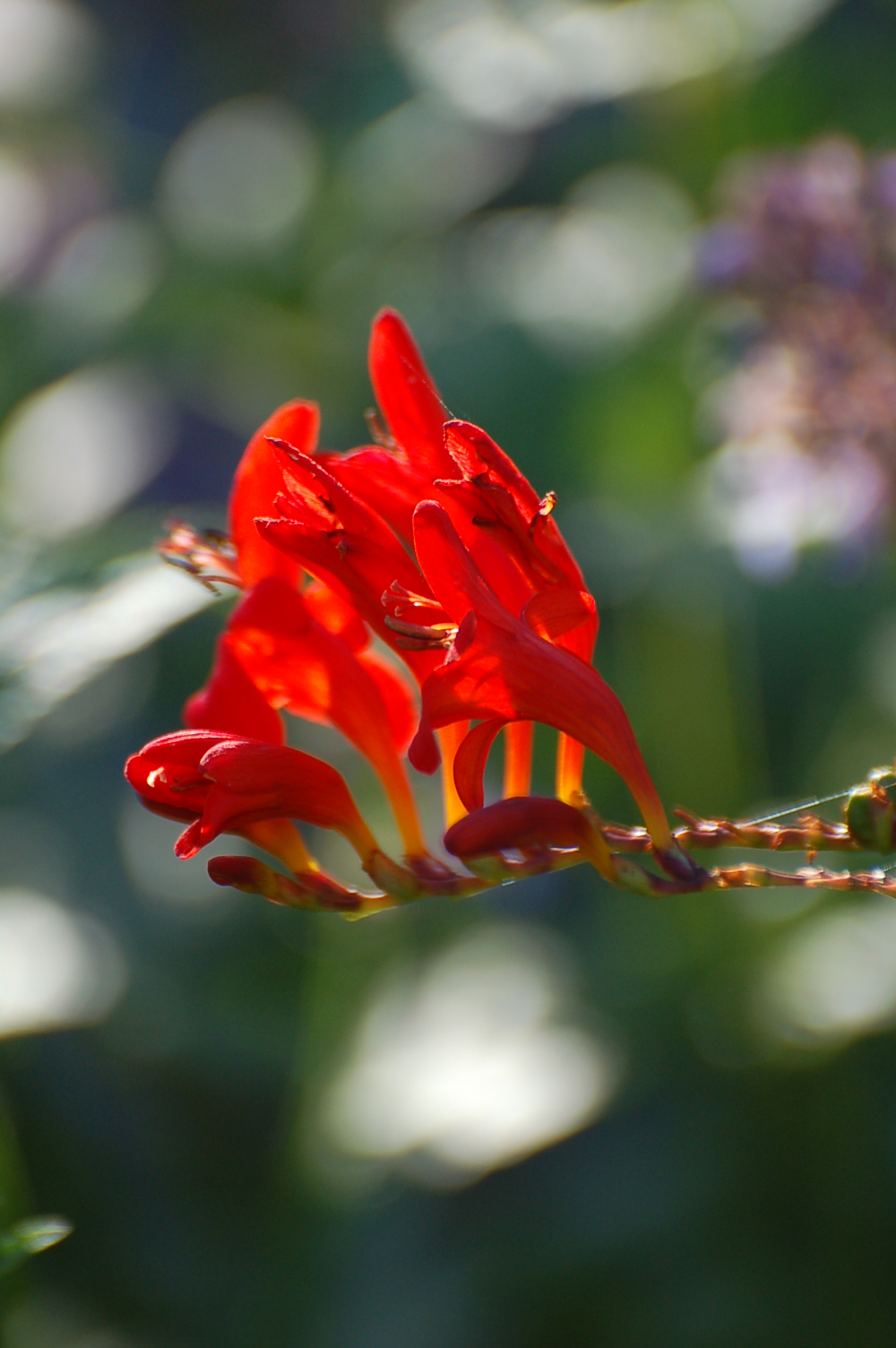
Elsewhere in the borders of the back garden the seedheads of our Snakebark Acer add rich reds, Crocosmias give every shade of yellow, orange and red, Achilleas add subtlety and the spiky Erigeron flowers provide silver.

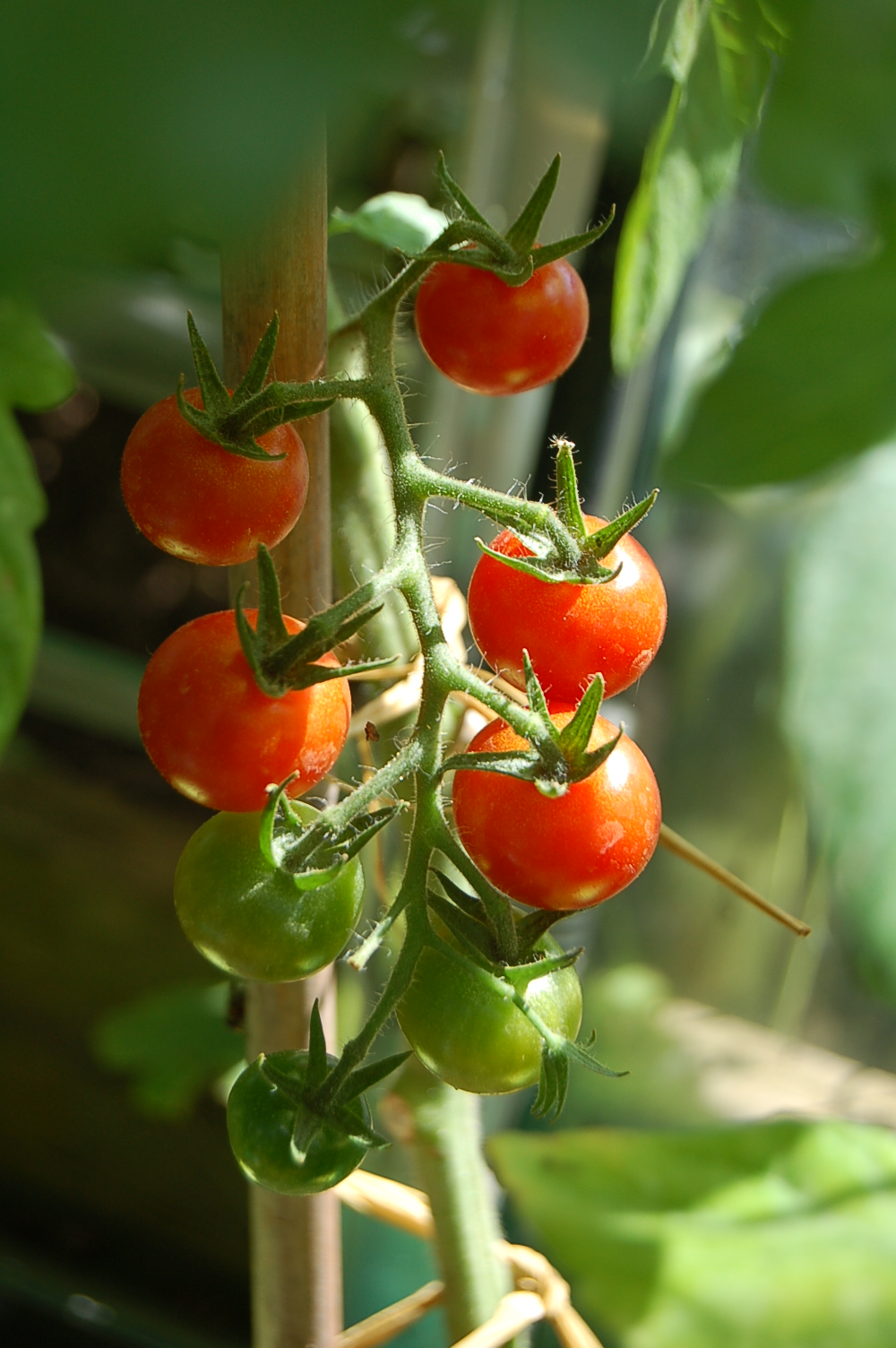
In the greenhouse tomatoes, cucumbers and capsicums are adding sweetness and freshness to the cut-and-come-again mixed leaves of ours summer salads.

The world beyond our garden is changing this month as in our borrowed landscape the hay in the paddock has been cut and baled and the wheat fields turn gold and are being harvested one by one. By the time my September garden wander comes around the skys will seem empty as the Swallows and Martins will be on their way to warmer climes, but the garden will be getting busier with mixed feeding flocks of titmice and Goldcrests, and others of mixed finches.

Categories
bird watching birds climbing plants conservation photography Shropshire Shropshire Wildlife Trust trees wildlife woodland

Wandering in a Wet Woodland

It is pouring with rain – continuous heavy miserable rain pouring down from a dark grey headache-inducing sky. Humidity clings to us. Too wet even for us rain-defying gardeners to get out and garden, too hot and humid to work in the greenhouse. so what to do today? Go for a walk and just get wet of course.

So off for a half hour drive down flower edged lanes to a wood on Wenlock Edge, a place enjoyed when our two children were young. Edge Wood. We park the car in a clearing – it is so dark and the rain continues to bang on the roof of Jude’s little car.

Waterproofs are donned and the camera hangs around my neck hidden from the rain under my jacket. We set off along rutted paths, the mud has been churned up by the hooves of horses so we struggle through mud and deep ruts off into the canopy of trees, taking dark photos of a dark day.

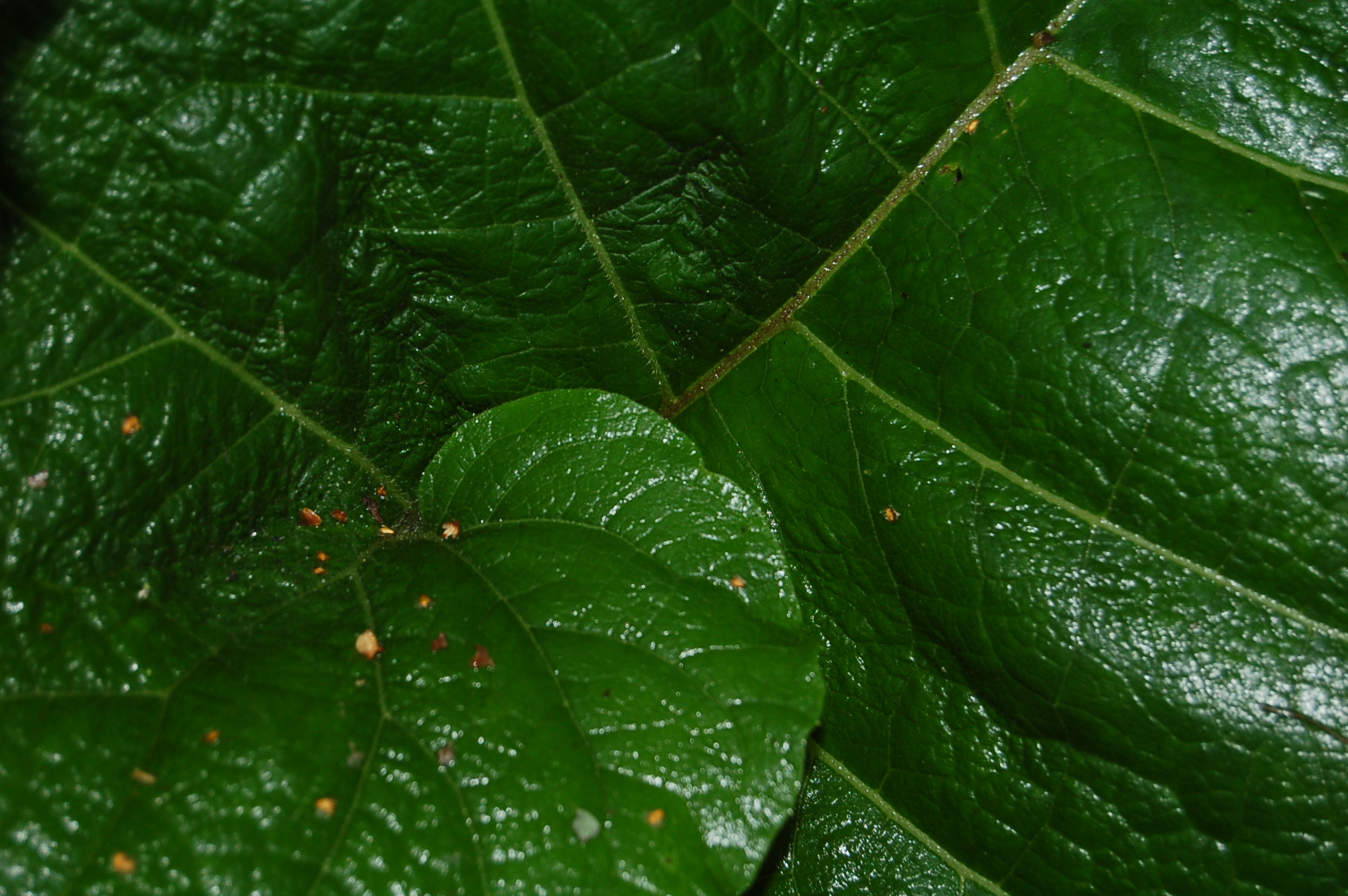
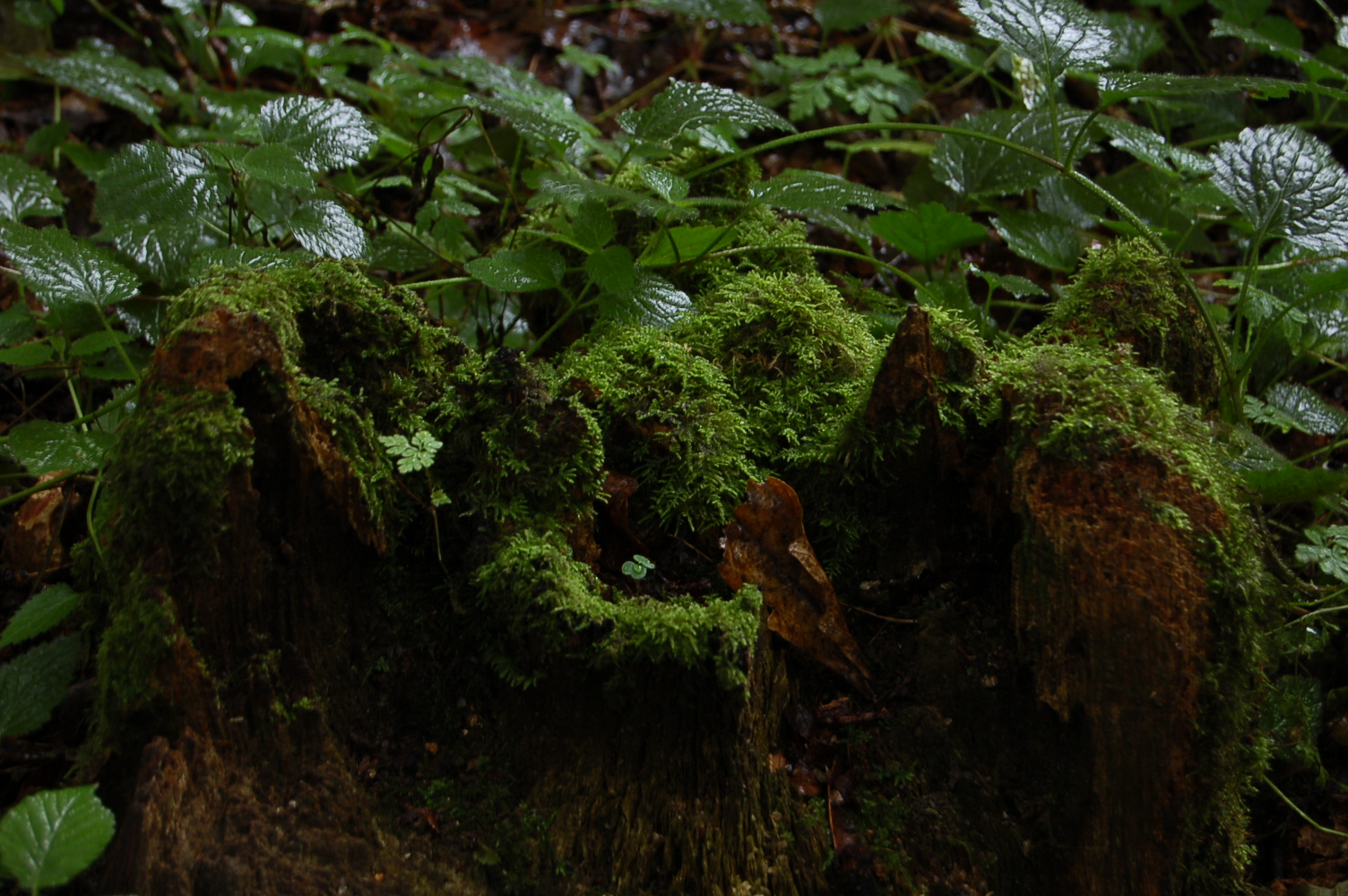
Every leaf surface is shining with wetness and the tip of every leaf has a droplet of rain hanging waiting to drip, matching the drips on the edge of the peak of my cap and on the end of my nose.

The wet surface of foliage serves to emphasise their textures and shapes, increasing their individual beauty.

This little wood is home to 250 different wildflowers but today only a handful are in evidence. It is late in the season and the darkness is not enticing buds to open and display their flowers.

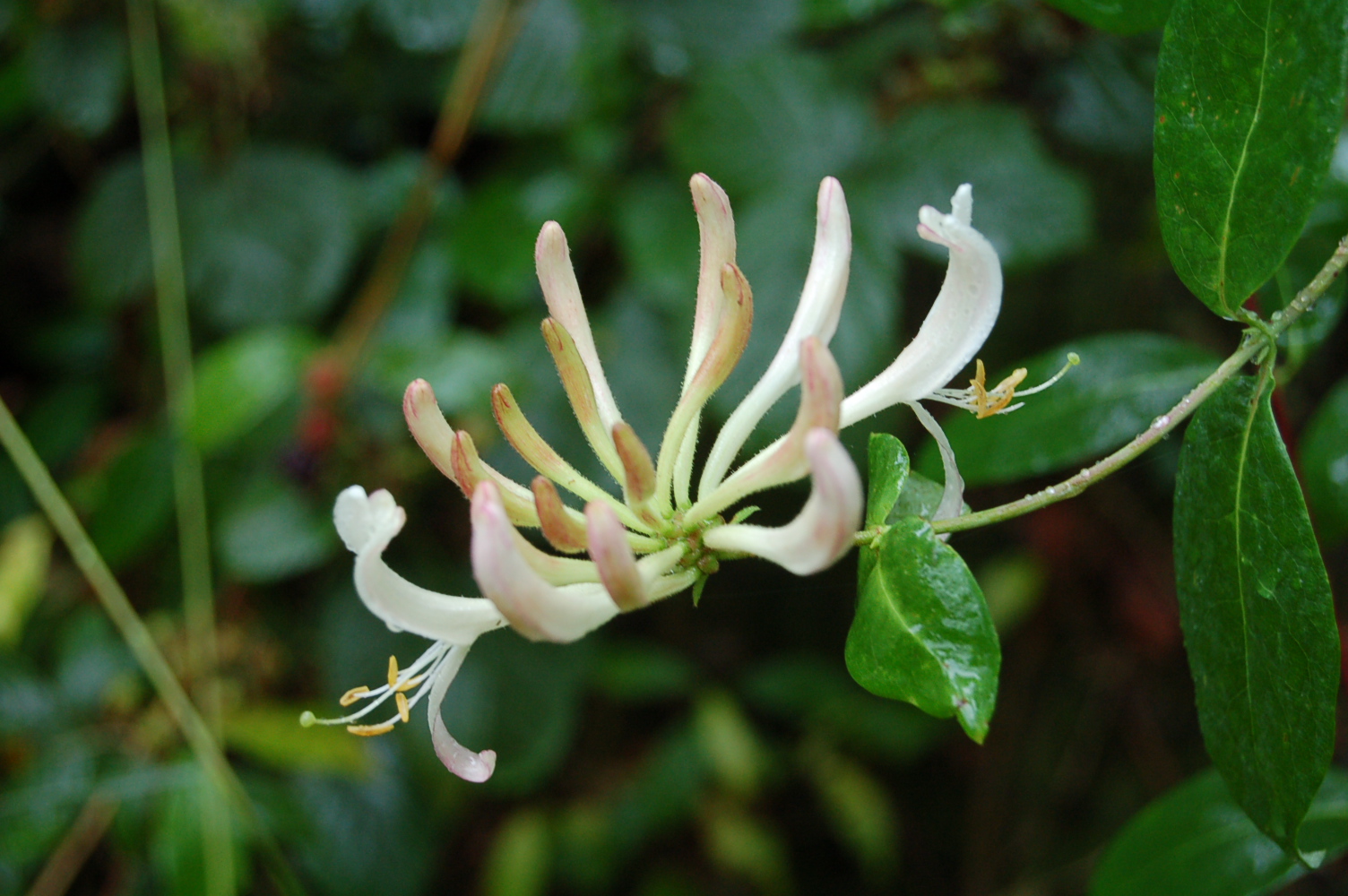
The Woodbine, our native Honeysuckle, clambers up many of the tree trunks and display flowers at nose height encouraging us to enjoy their scent. But in the daytime the scent is hardly discernible from the wet wood smells, for it does not give off scent for us, it will wait until the evening draws in and intensify the scent, a special scent to draw in night-flying moths who will do the Woodbine’s bidding and pollinate the blooms.

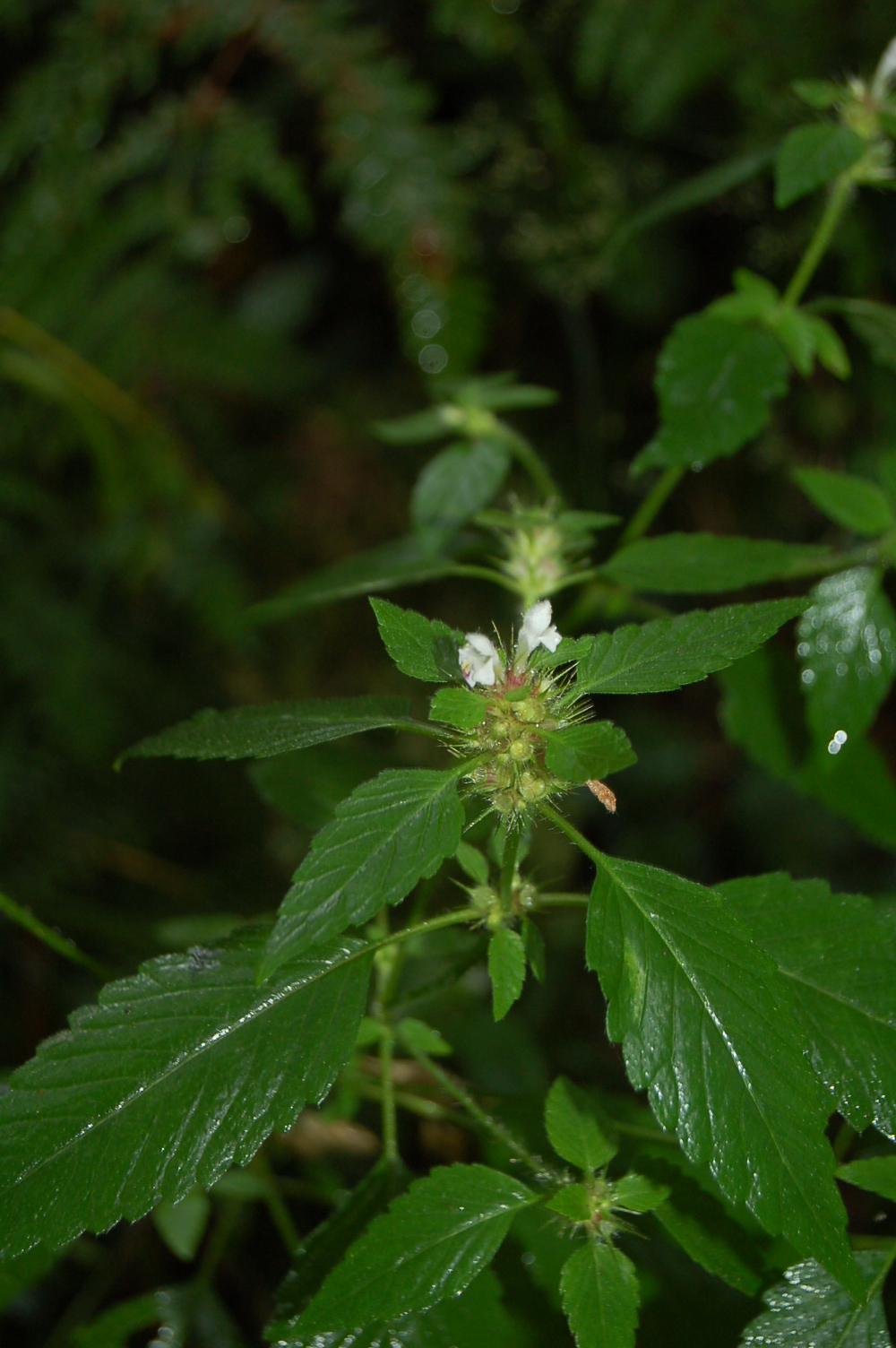
This little white gem shone like stars in the night sky – Gipsy Wort. The green of the foliage is so fresh and whitens the flowers even more.

The most floriferous of all plants in the wood in August are the grasses and sedges displaying a rich diversity of shapes and structures in their flowering.

There are signs of man’s influence hidden away in the wood, evidence of coppicing, an old hedgerow, layered hedging gone wild and trees felled. There are clues of man’s past presence, working woodsman and farmers. The hand of man is now being rubbed out by the heart of nature.

As we wander through the wet wood we get regular glimpses of the Shropshire countryside through gateways and gaps in the hedges and trees. The rain is softening the landscape and hiding hills from view.

The wood is home to a couple of rare mammals, dormice and the Yellow-necked Mice. Nestboxes are provided to encourage the dormice to breed and roost.

The tree canopy is mostly silent, the birds in moult keep out of sight ashamed of their scruffy appearance and worried that they are more susceptible to predators. In odd places the calls of small birds show they are moving about high above us, Goldcrests, Treecreepers, Siskin and Titmice in variety.

The paths lead us through the wood almost around its perimeter.

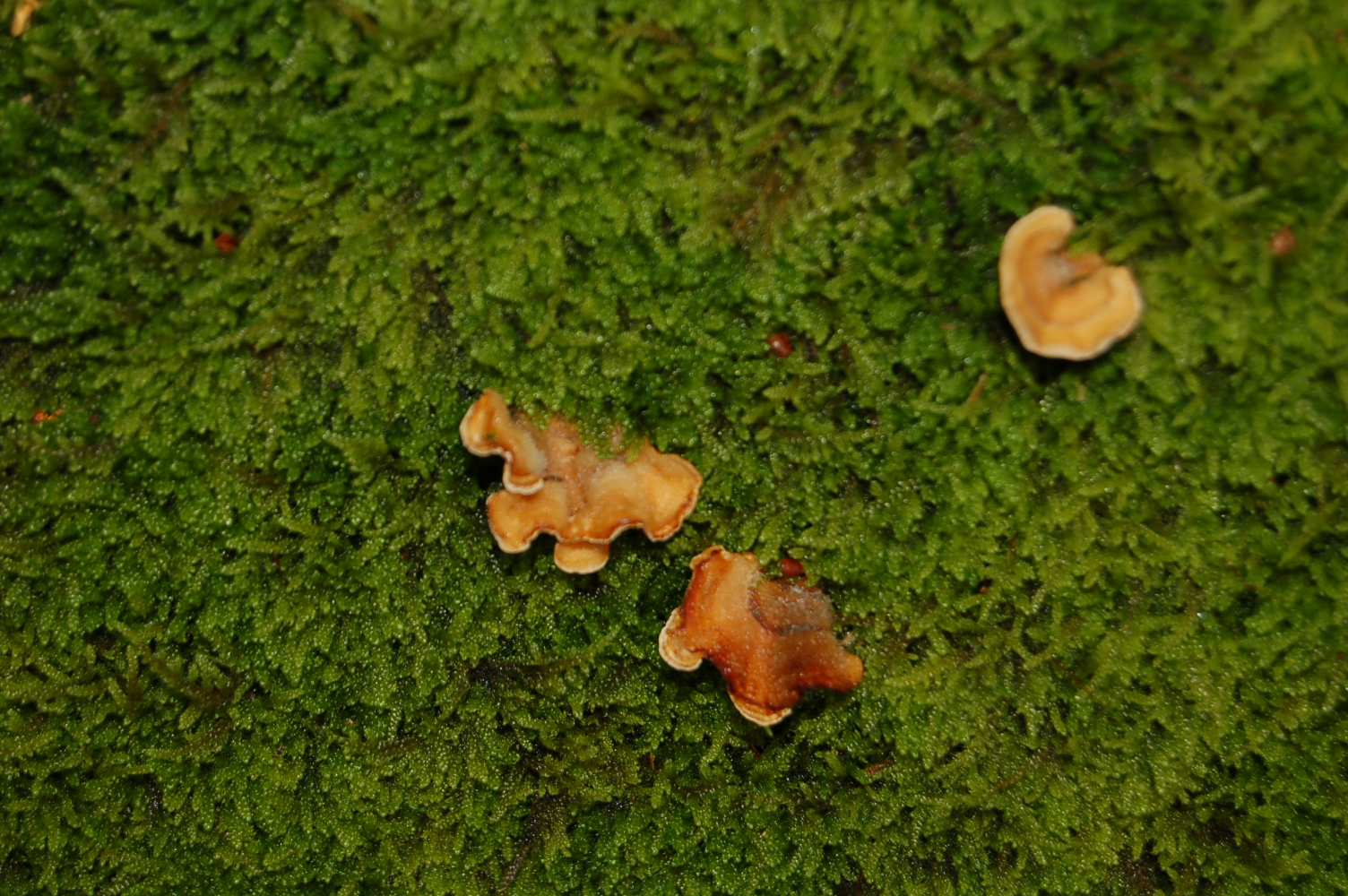
At times little cameos of nature’s work present themselves to us, little details giving glimpses of woodland beauty.

Sometimes being in a dark wood getting wet is the best place to be!

Categories
climbing plants garden design garden photography gardening ornamental trees and shrubs photography roses

July Roses and Clematis

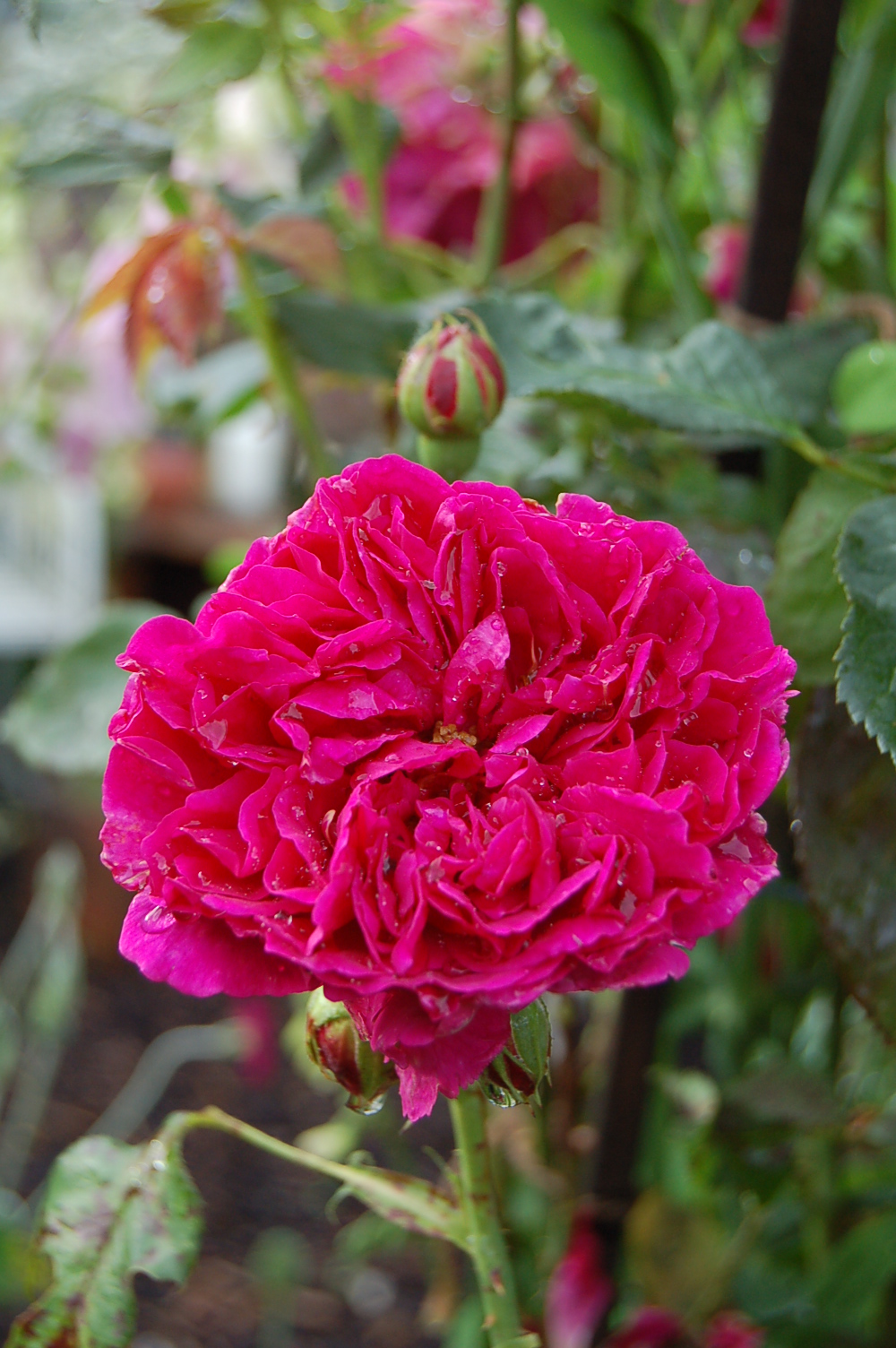
Warm, wet weather delighted our roses and clematis. They are flowering better than ever and their colours sparkle.

Categories
climbing plants fruit and veg garden design garden photography gardening half-hardy perennials hardy perennials meadows ornamental grasses ornamental trees and shrubs photography poppies roses Shropshire shrubs succulents trees

Another Wander around our Garden in June

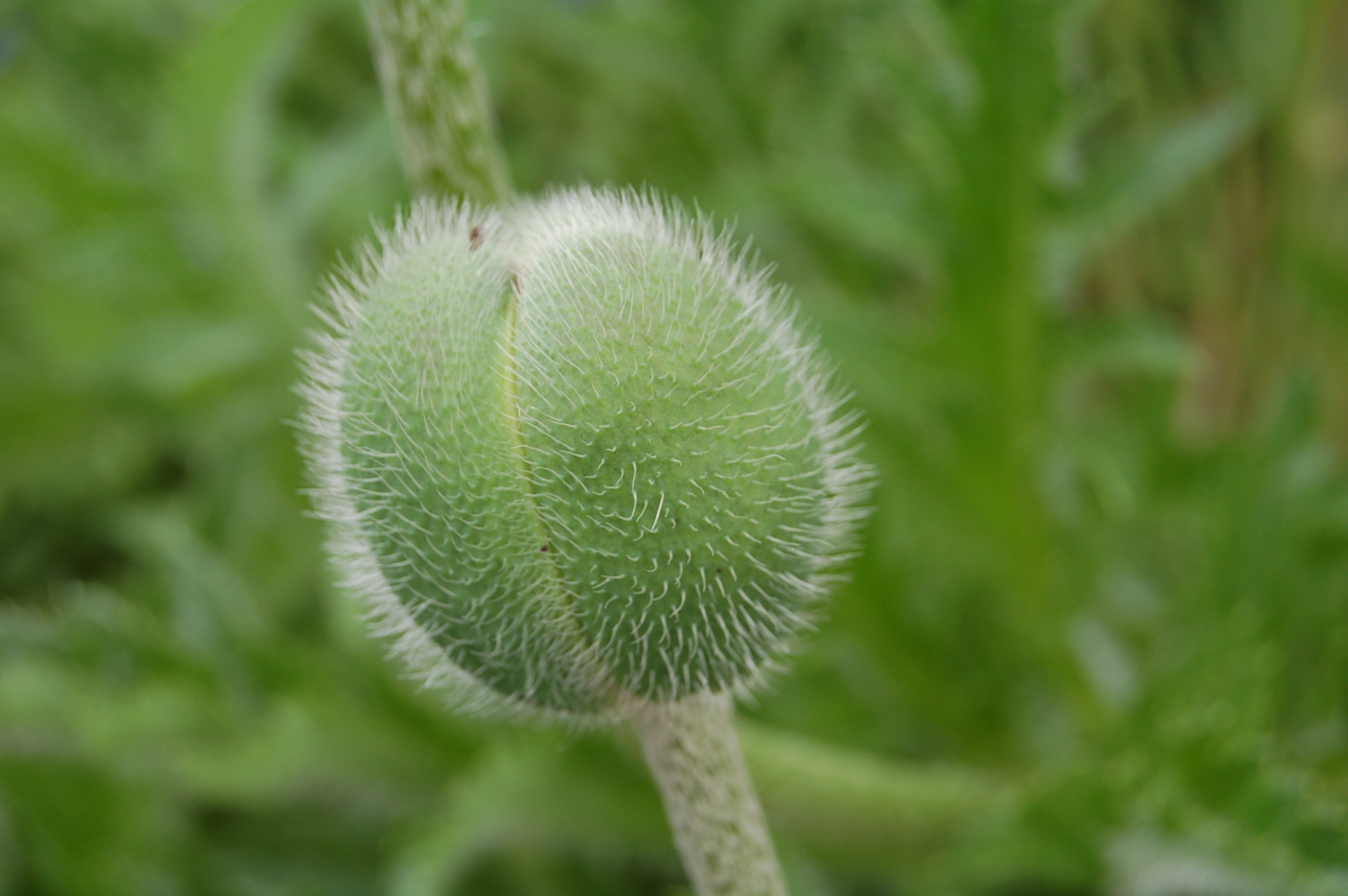
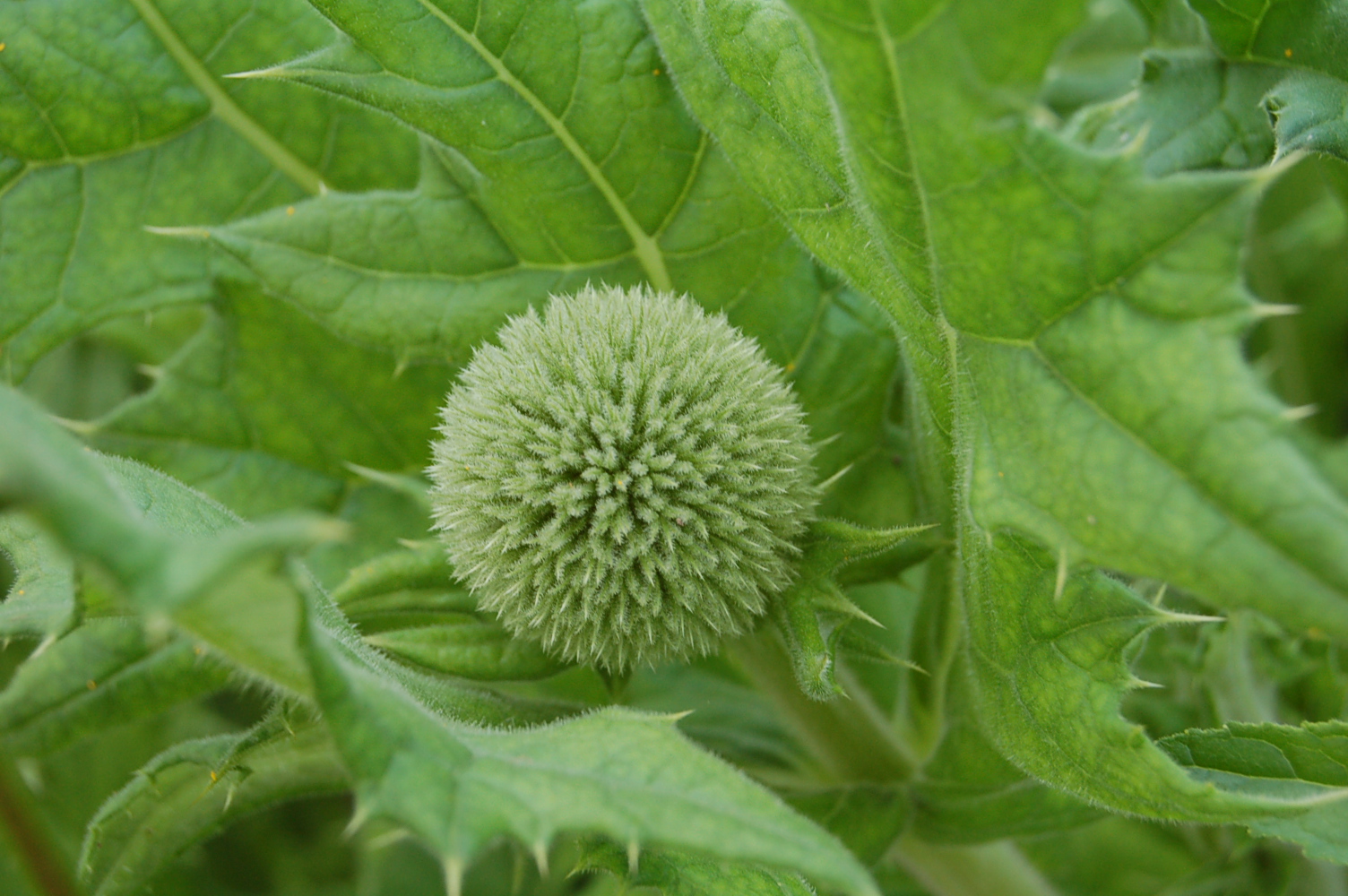
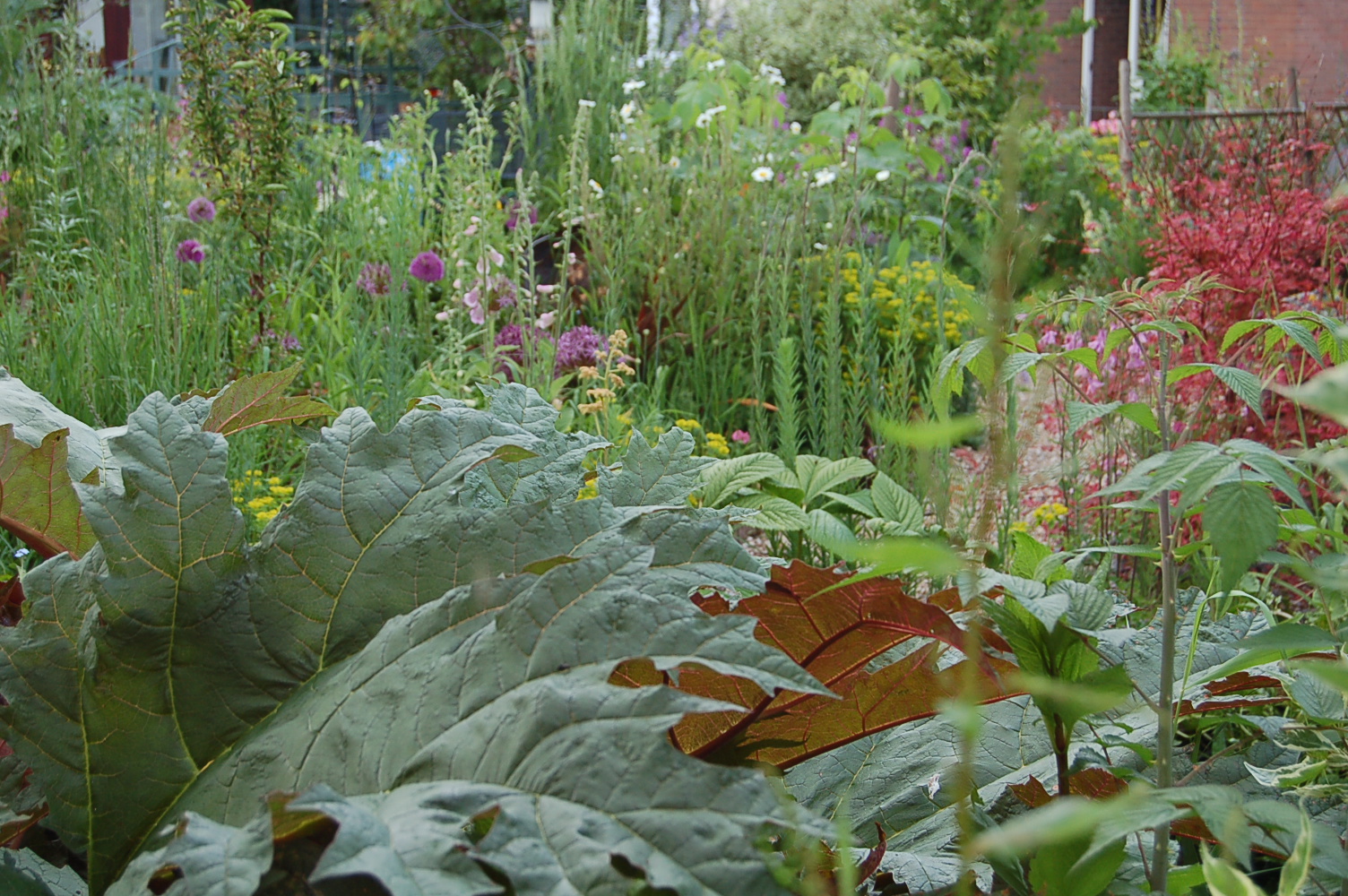
We can start the second part of our wander by looking again at the front garden. Buds give us hints of blooms to come in midsummer, Phlomis, Oriental Poppies, Erygiums and Echinops. Promises of yellows, reds and steely blues.

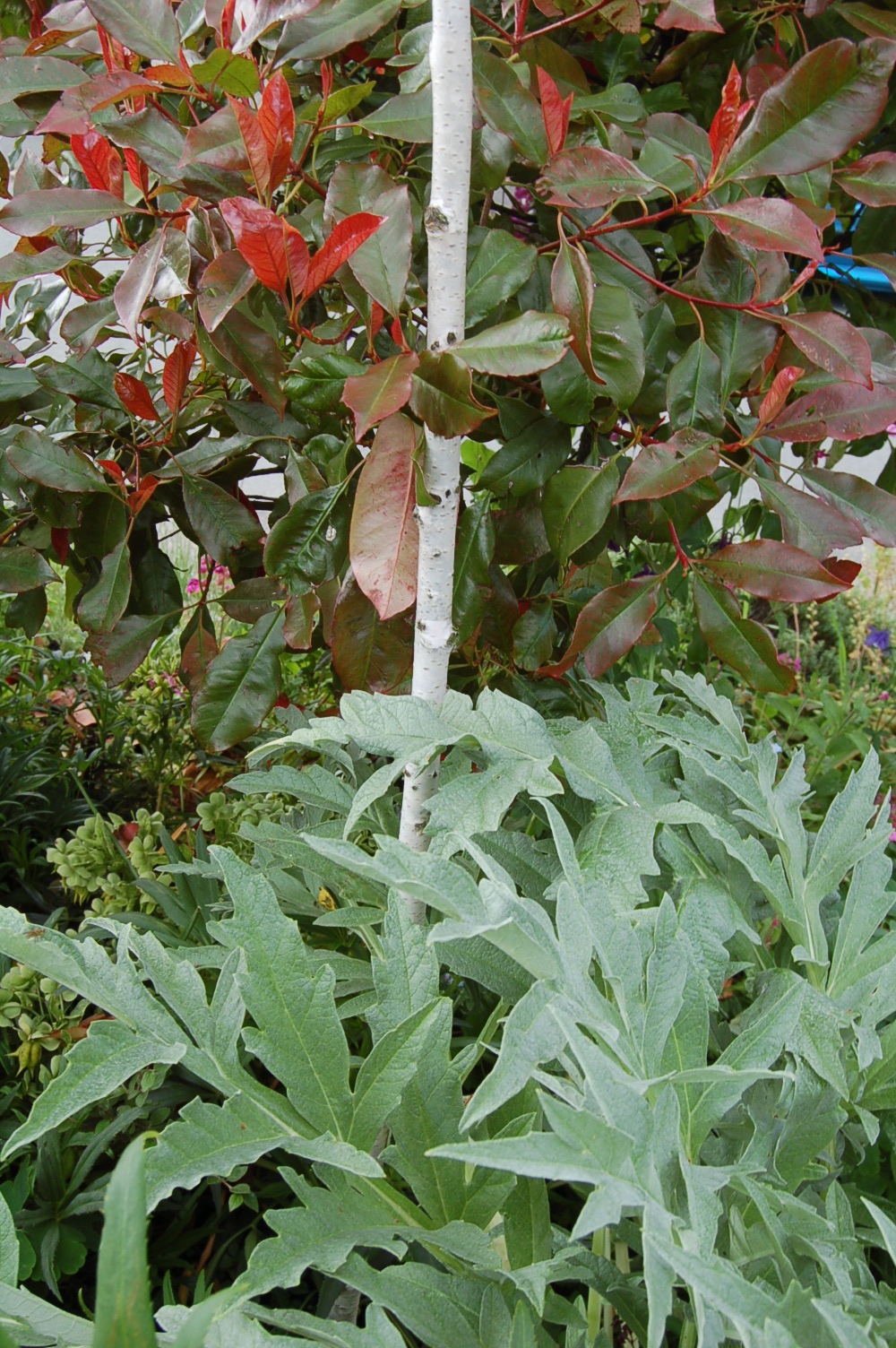
Foliage colour and texture can be as striking as the most colourful of flowers.

Our collection of Clematis are beginning to flower and others are covered in robust buds.

Flower colours have been so important during the first few weeks of this month simply as an antidote to dull days and dark skies. It matters not whether it is a gaudy cerise beauty or a subtle green or white.

Blue on blue.

Another view of our Freda Border.

Our mini-meadows in their pots are developing well. We think we may be onto a winner.

The Shed Bed created on the site of an old shed which we demolished when we moved in, is really pleasing as below the shed we found just rubble, gravel, broken pots and sand. We added wheelbarrows of compost to improve it and now every little flower is a true gem.

A vine grows over one end of the greenhouse acting as a natural shading agent as well as feeding the gardeners. The startlingly red flowering currant has hitched a lift along it so the vine drips with red droplets.

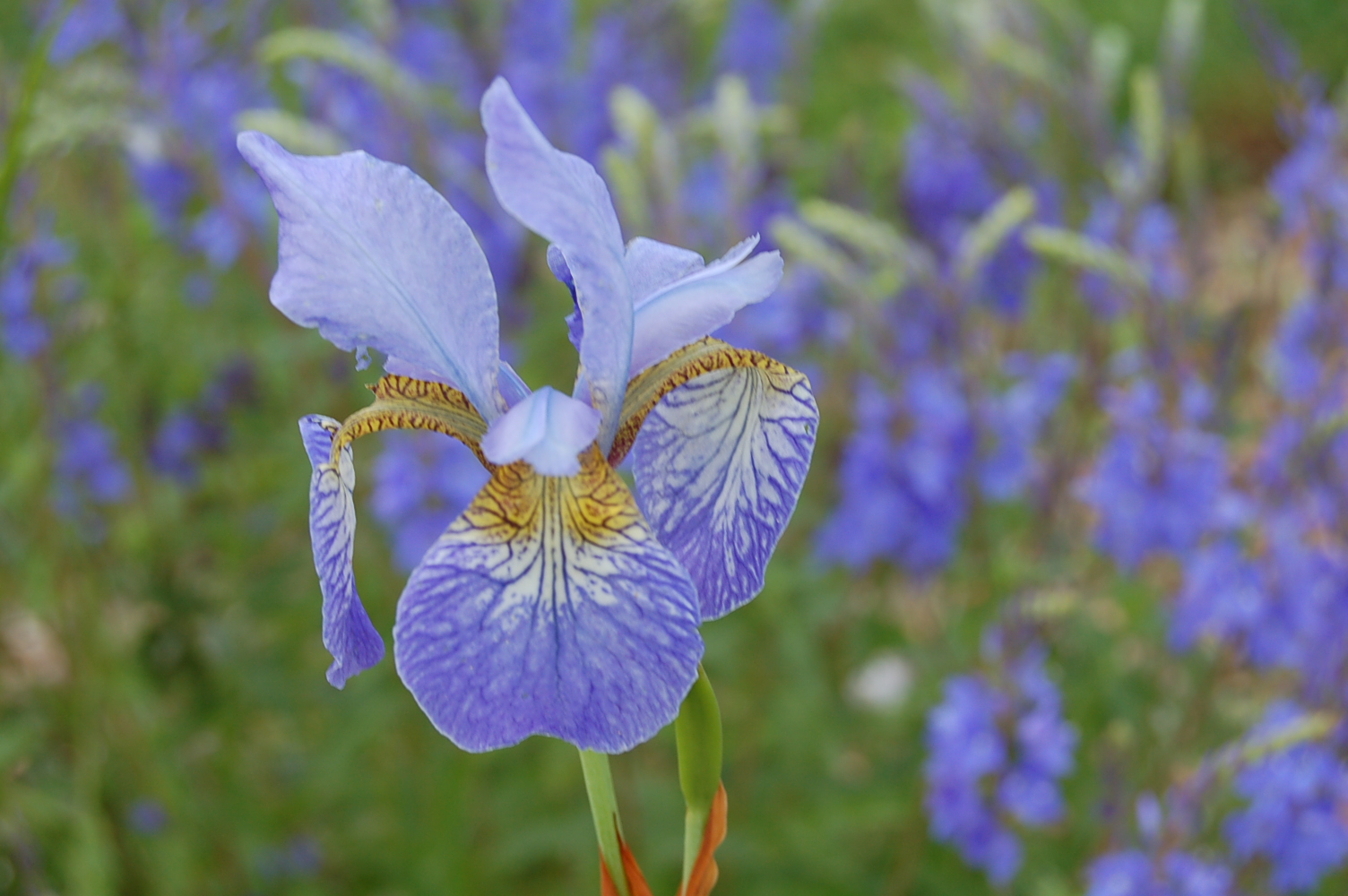
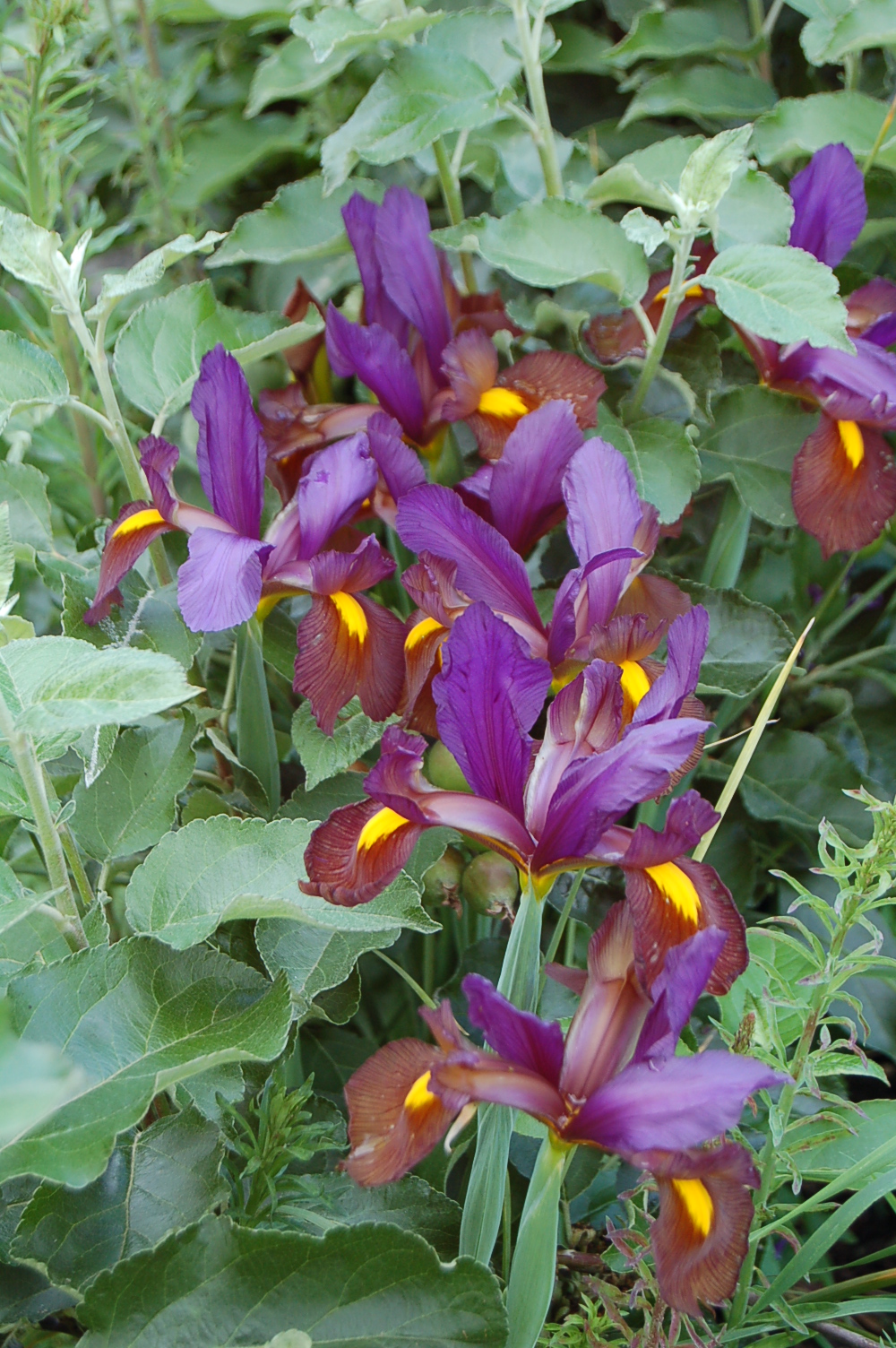
We enjoy these irises as cut flowers but bees take advantage of them before we pick them. This clump is growing through our stepover apples. Double harvesting – cut flowers followed by apples.

The planting around the pool has closed in and made it an intimate area. Nearby the Prairie Garden is bursting with fresh blooms.

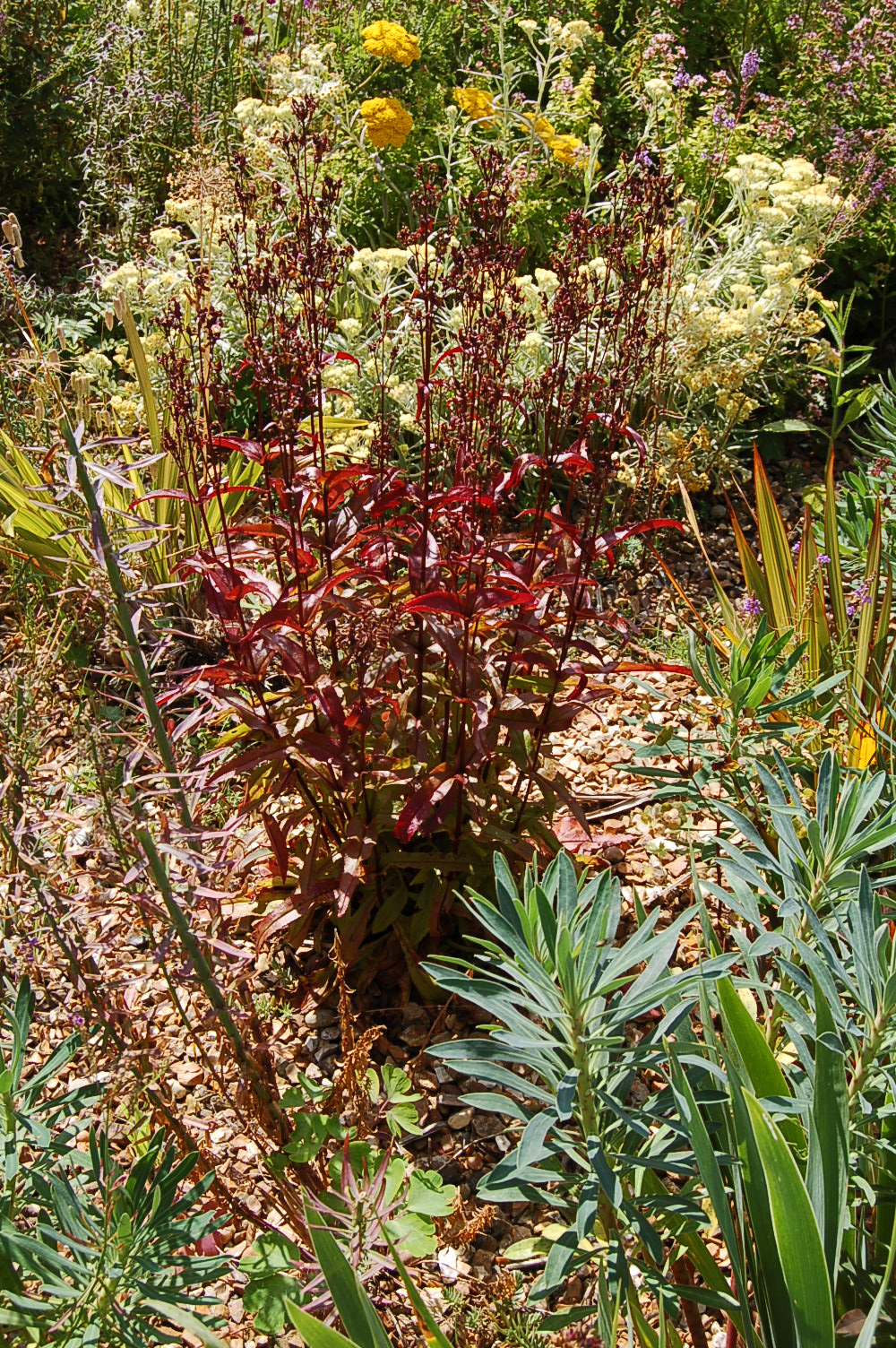
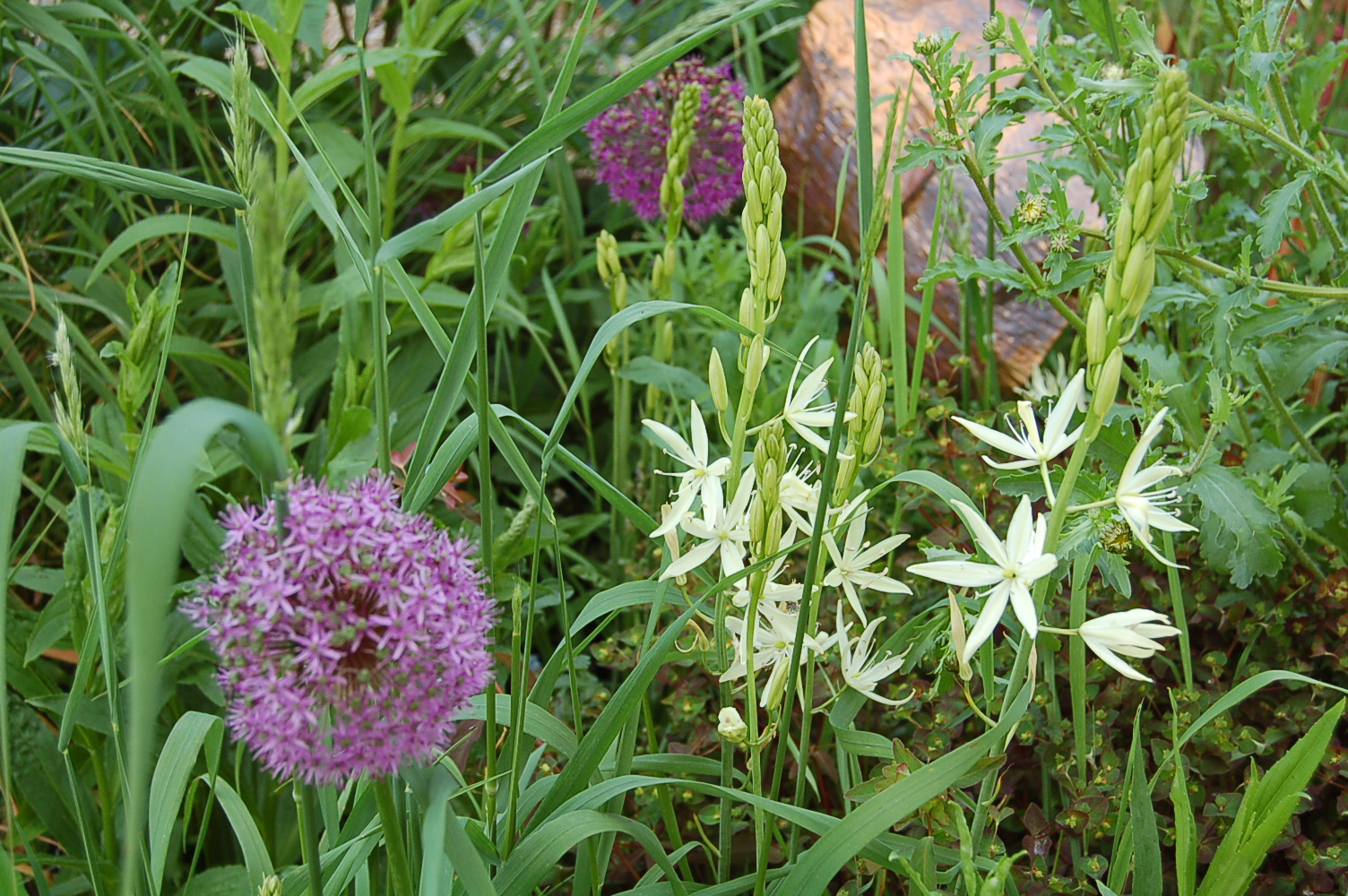
In the Secret Garden Aquilegias and Alliums look good alongside the purple foliage of Pentstemon Huskers Red.

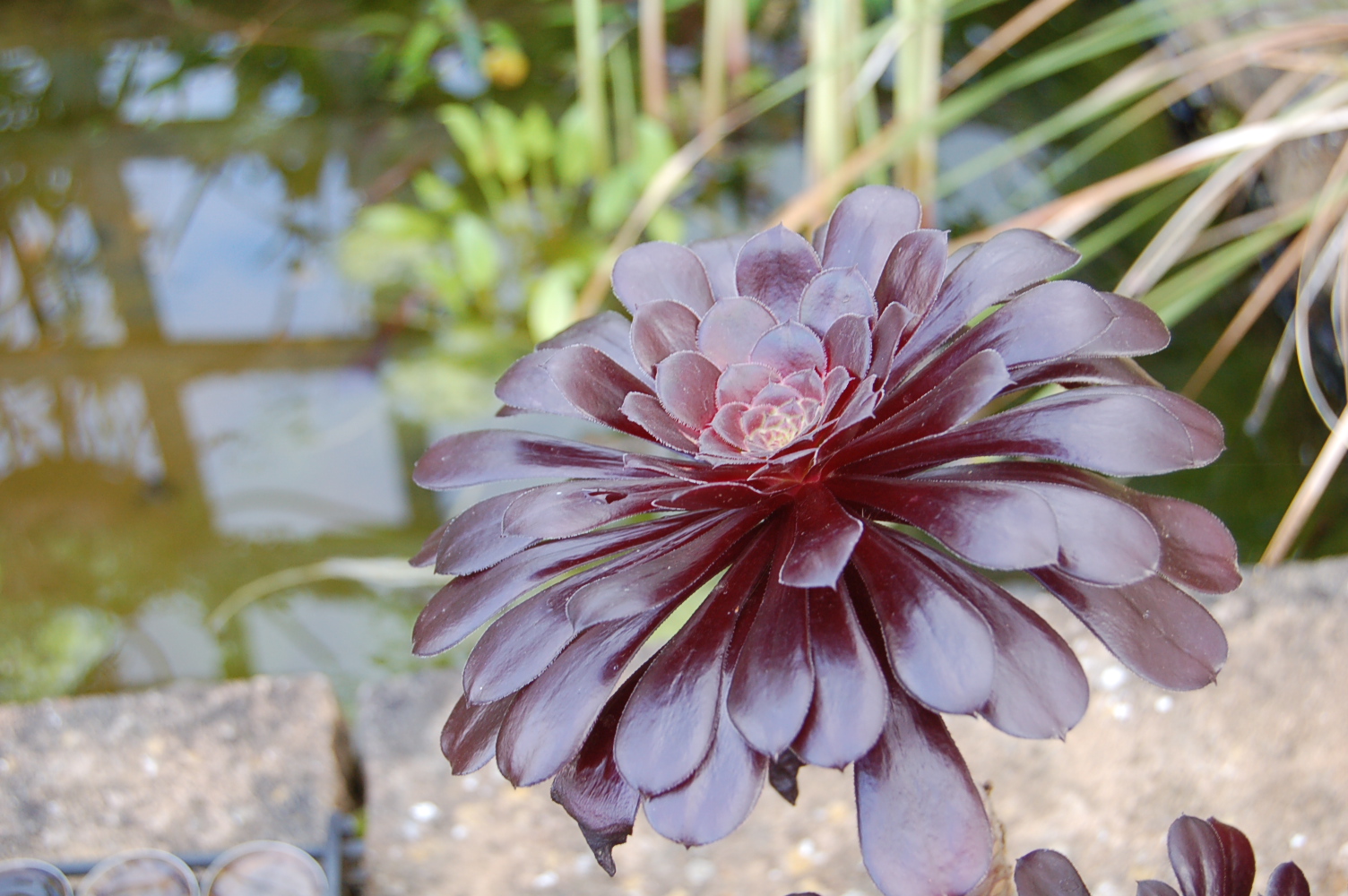
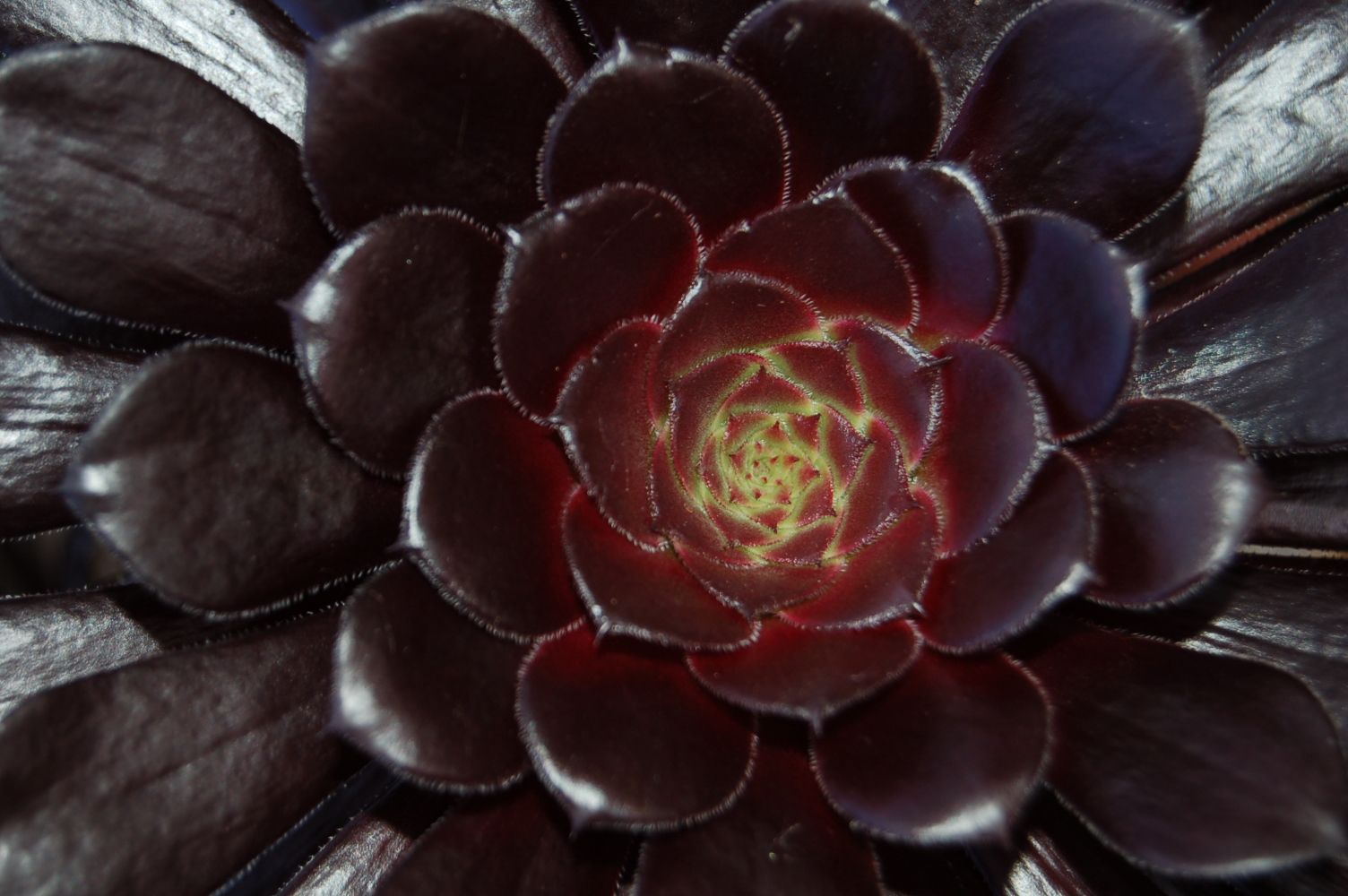
These aeonium enjoy the hottest part of the garden, the Rill Garden.

To one side of the rill we grow a snake bark maple, with silver and green striped bark, cream and red seed capsules and in autumn it has amazing rich red foliage. A wonderful specimen tree to finish this garden wander underneath.

Categories
allotments bird watching birds climbing plants fruit and veg garden design garden photography garden wildlife gardening grow your own winter gardens

A Wander Around Our Garden in March

This is the third of the garden wandering posts already. Why is this year going so quickly? Could it be that we have had so many days when the weather has been amenable to gardening? So what is happening here in our garden? The bulbs are at last flowering well after such a slow start but in contrast the birds are responding quickly to warmer periods of weather. Robins are nesting in the box on my fishing tackle shed, House Sparrows are using three boxes around the garden, Great Tits are using the box on the summer-house and Blue Tits have started building in the box opposite the front door. They are so busy! Blackbirds are collecting moss from the lawns and dried grass stems from the borders so are nesting somewhere close by. The early morning bird song gets louder and more birds join in the chorus each day.

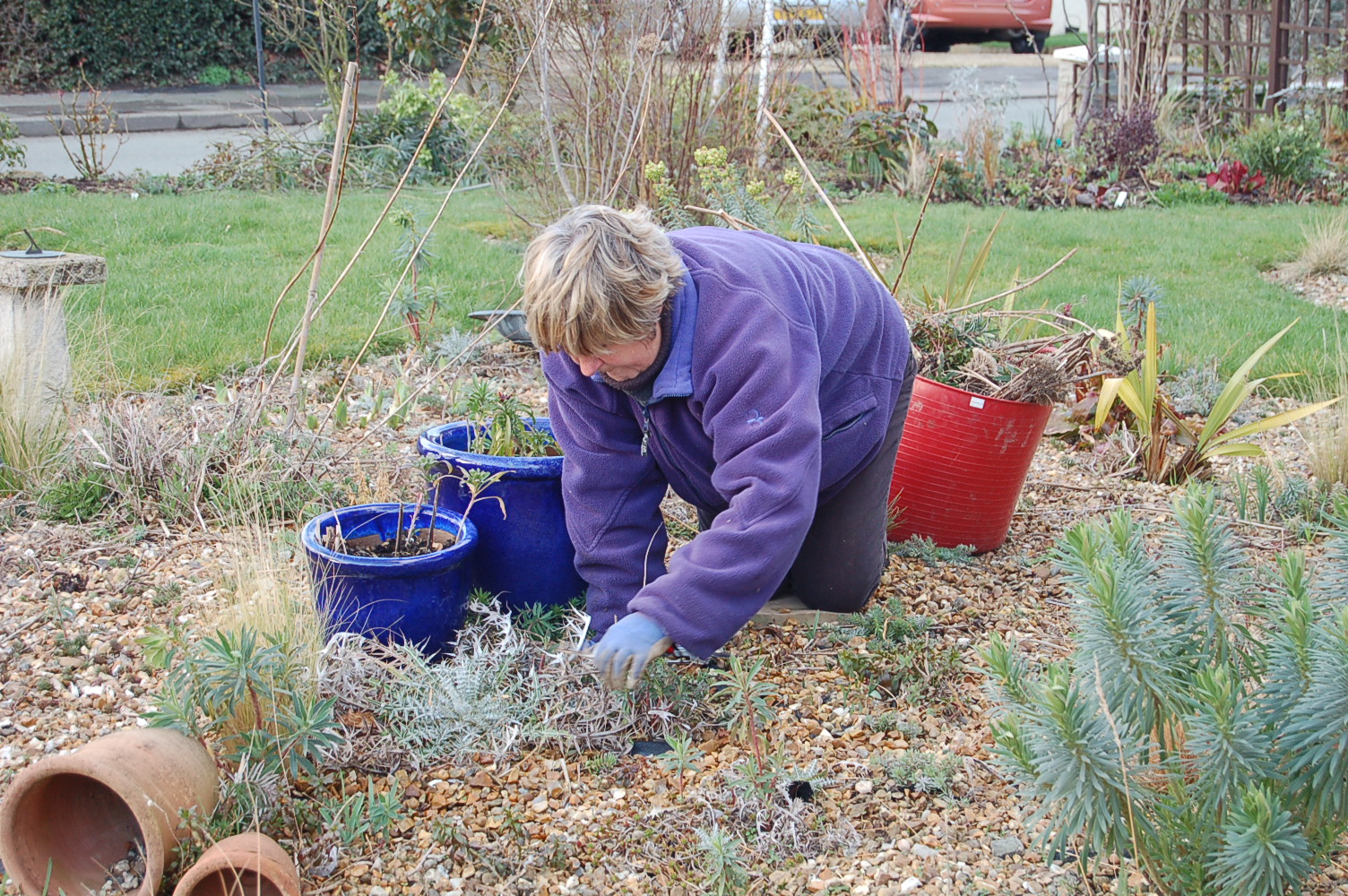
We have spent most sunny days continuing to clear borders, cutting down and adding new mulch. Clearing the “Beth Chatto Garden” is a hands and knees job. Jude the “Undergardener” pulls up weed seedlings by hand. Very tedious but made more enjoyable by the constant song of Blackbirds, Song Thrushes and Robins. Calls of Buzzards high above us provide a good excuse to stop occasionally.

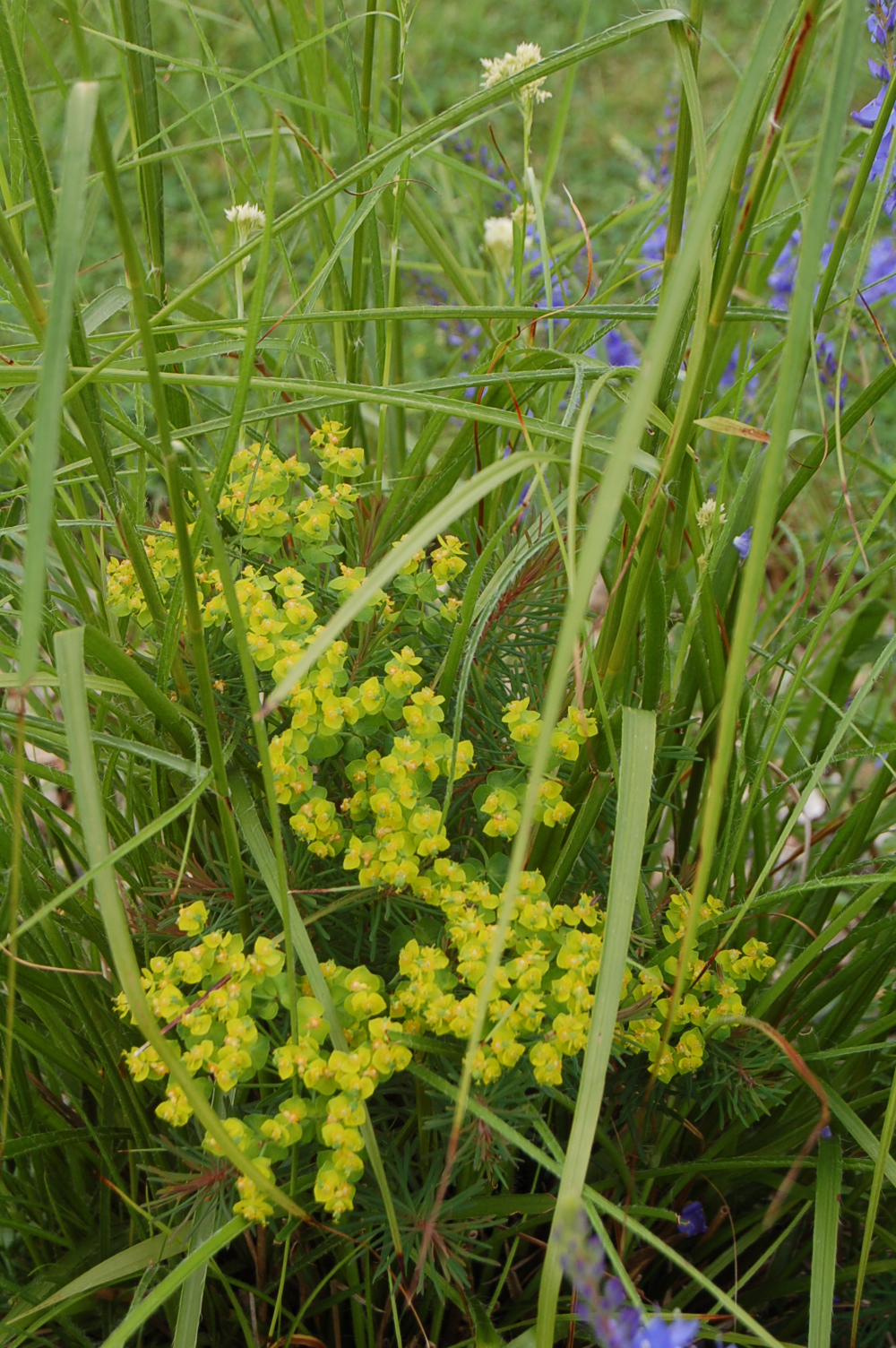
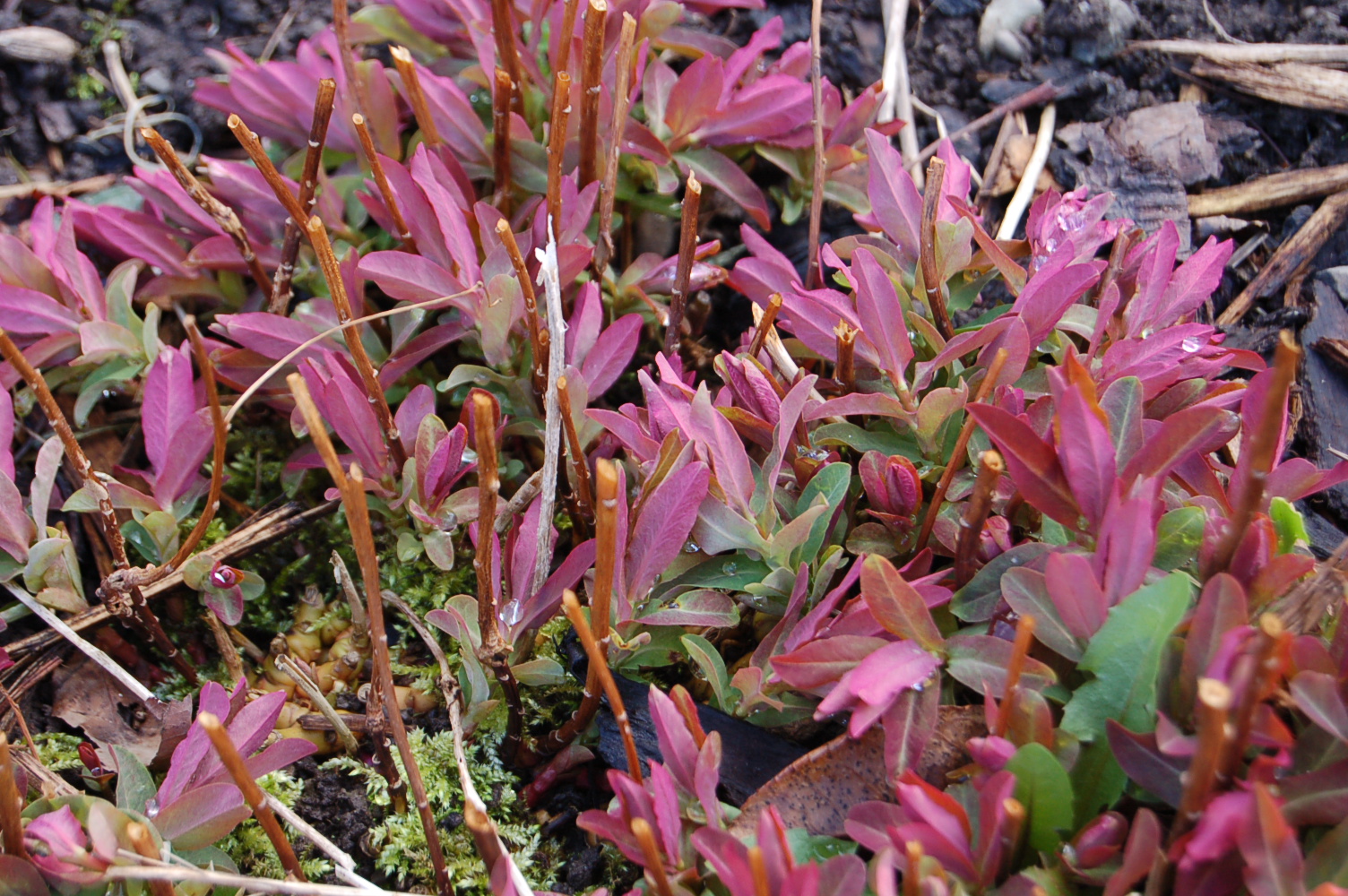
In the front garden Euphorbias are bursting into growth and some have already sent up their flower stalks curling over like shepherds’ crooks. New growth on the later ones is showing bright colours as they emerge from the bark mulch.

The flowering quince at the end of the drive is covered in bright red blooms scattered amongst its thorny angular network of stems – it will flower for months giving a warm welcome to visitors.

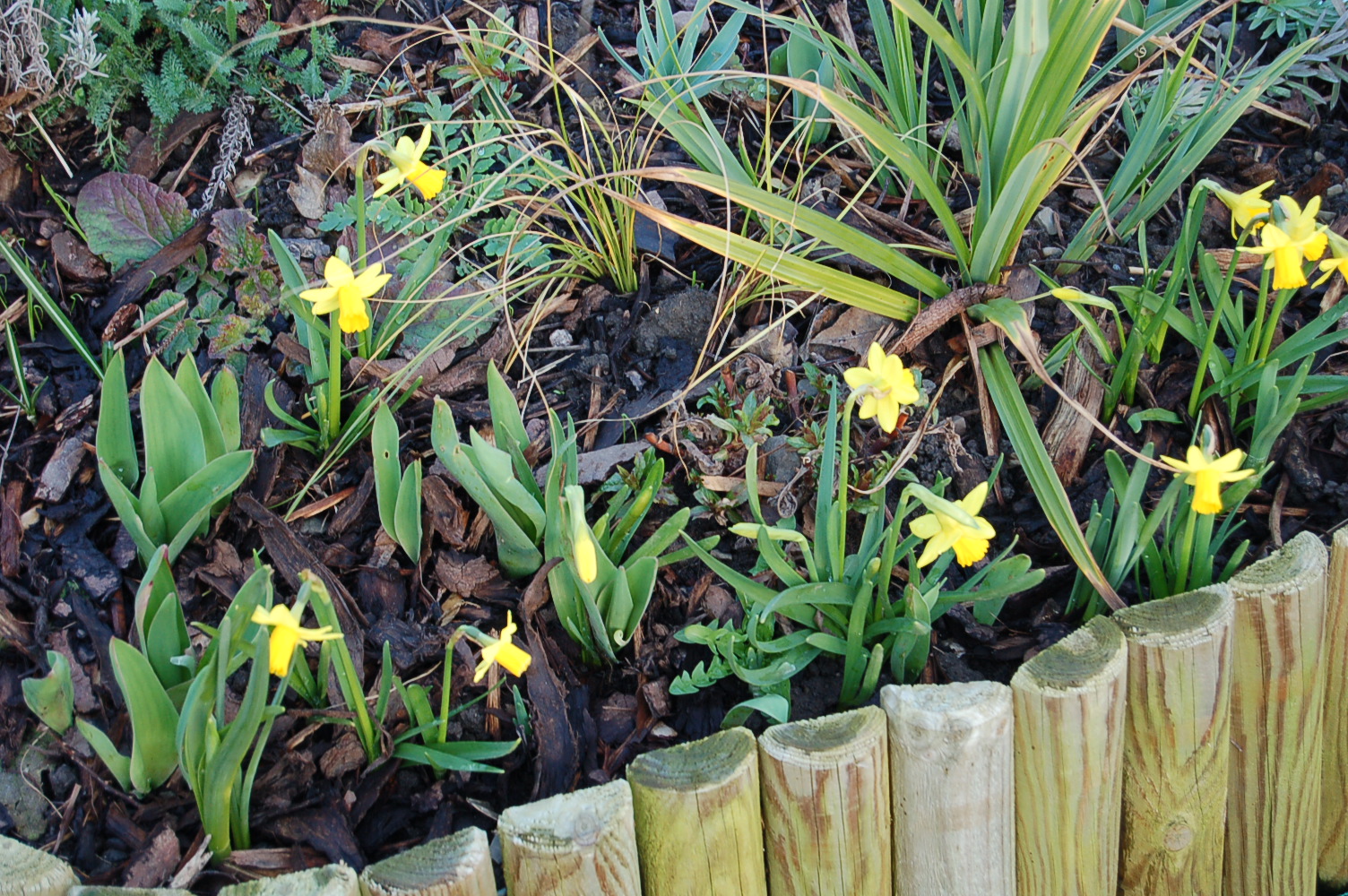
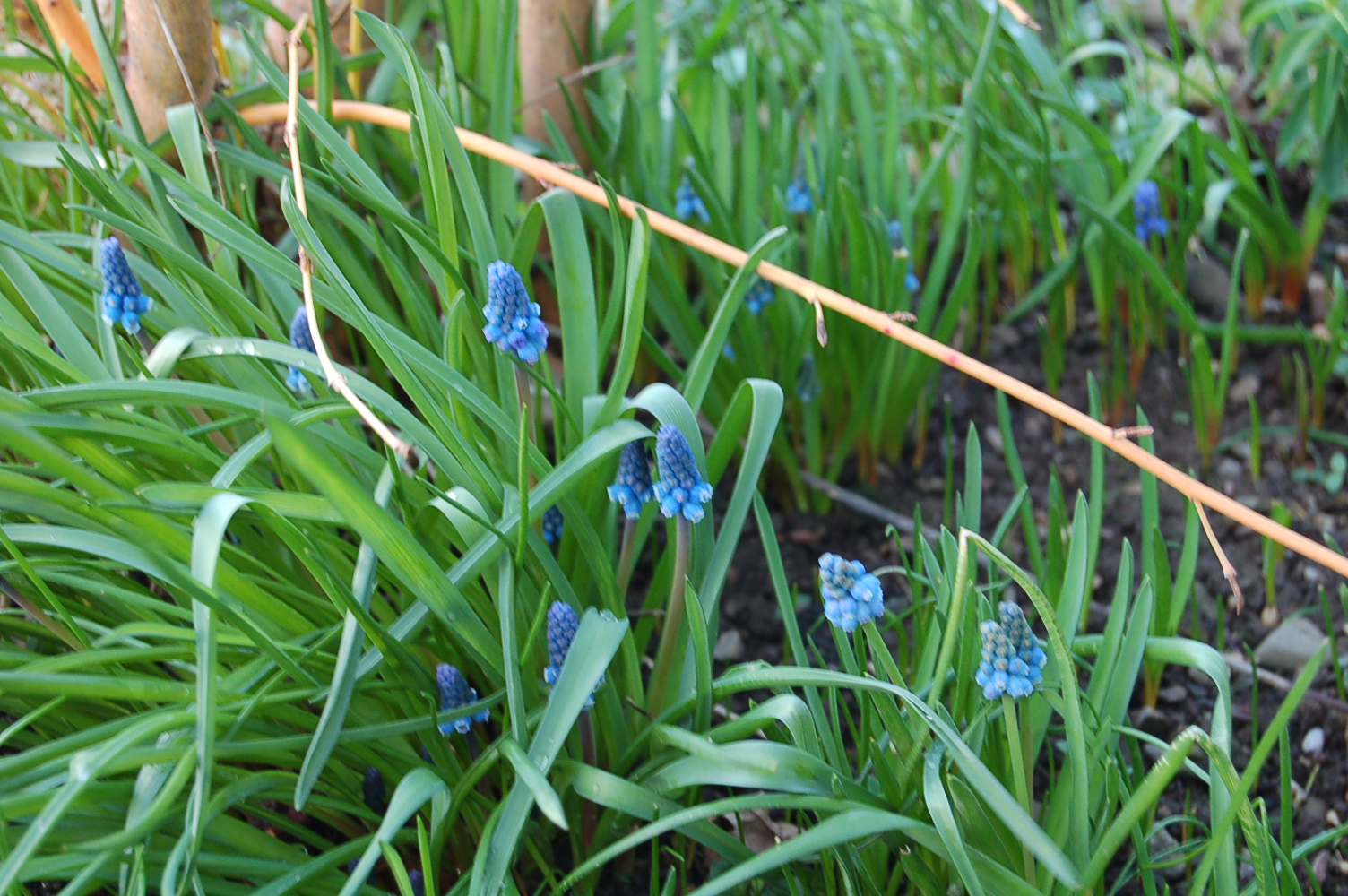
At last our first daffodils are fully in flower! We have waited so long. Muscari are also now bursting into bloom adding their own shade of blue all around the garden.

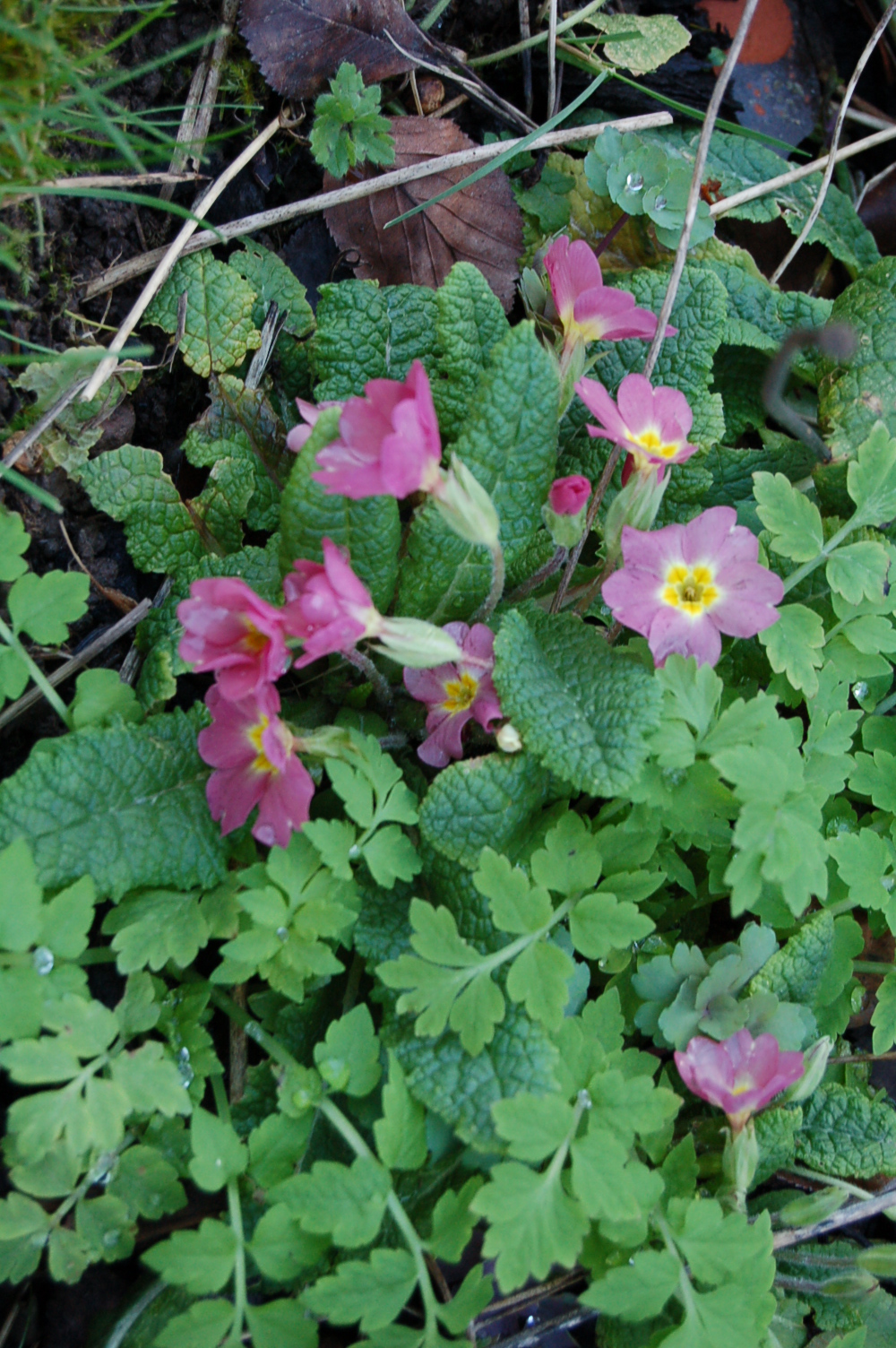
The Primroses we grew from seed a few years ago now give us big clumps of flower in their own special shade of yellow. They are self seeding and spreading around the garden, with an occasional plant producing flowers of an extraordinary shade of greyish pinky. Not sure I like them!

One of the delights of this time of year are the Pulmonarias with their flowers coloured pink and blue on the same plant and their beautifully marked hairy leaves.

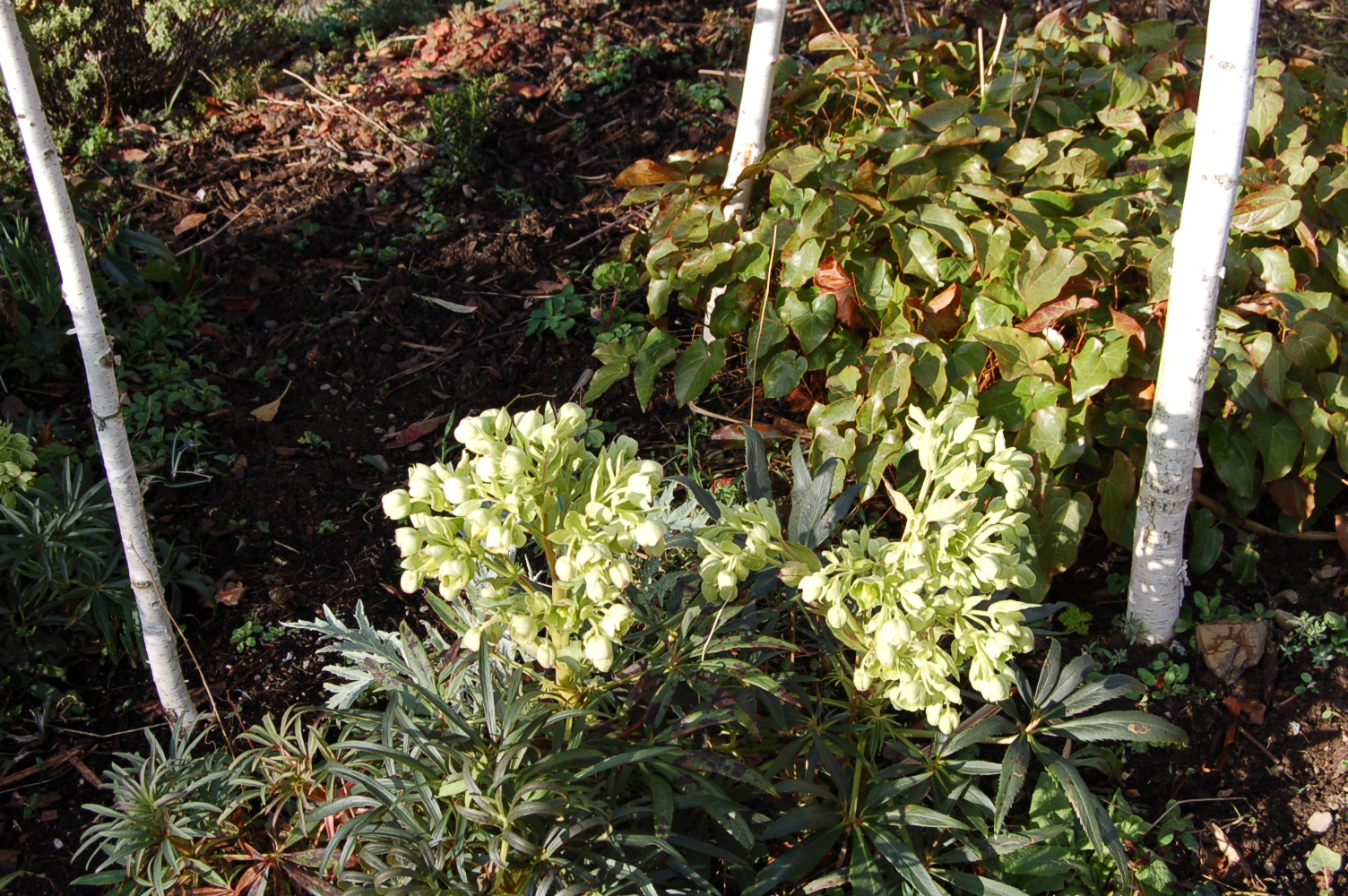
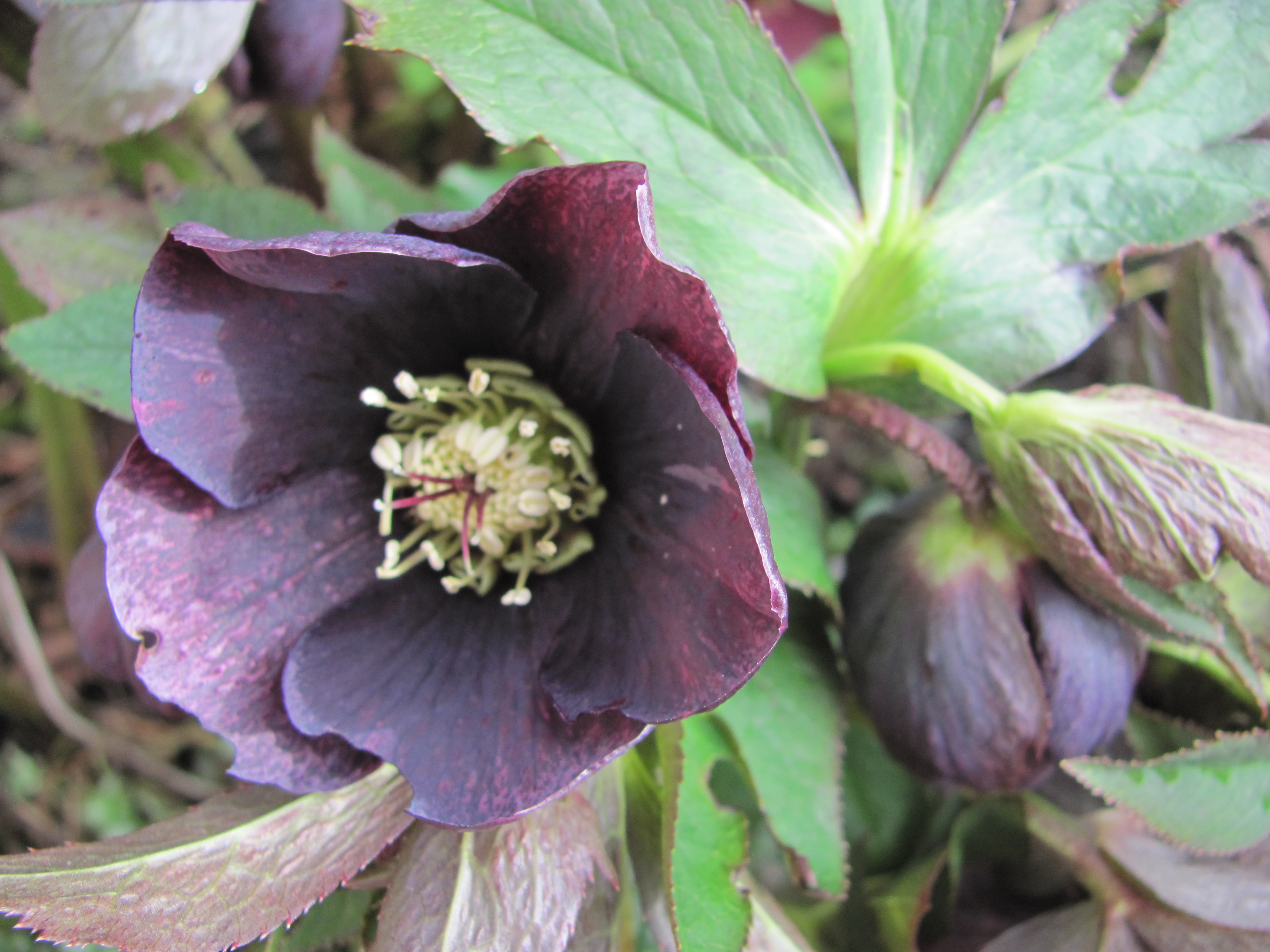
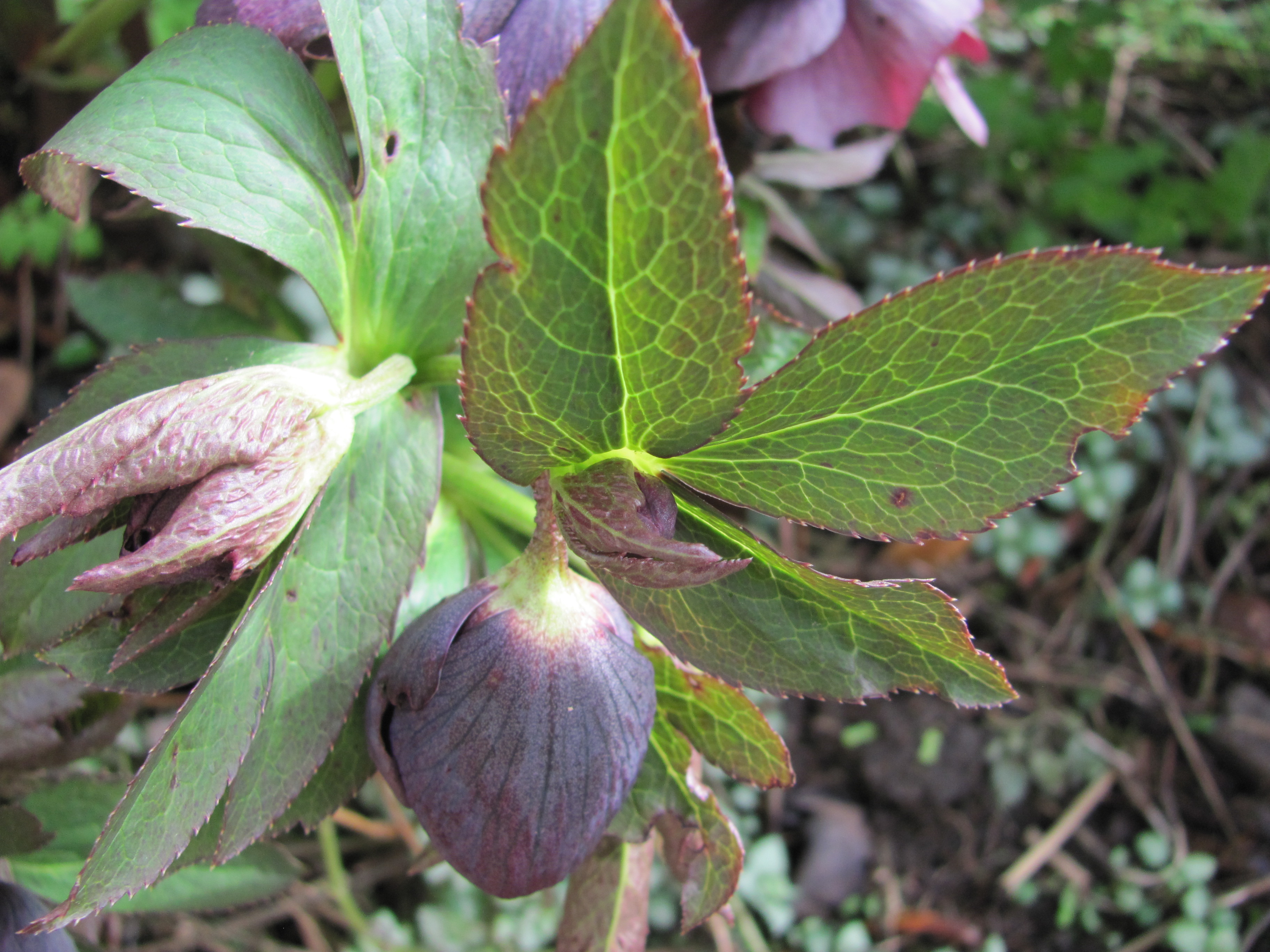
Helleborus have featured in both the January and February garden wanderings and they are still going strong. Two of the last ones to come into flower are this red hybrid and the magnificent near black variety. It looks good in bud and full flower and has the added attraction of interesting foliage. The clump of mixed Hellebores in the “Chicken Garden” give us plenty to look at on coffee breaks when the March sun bursts through and its warmth feels so good on our backs.

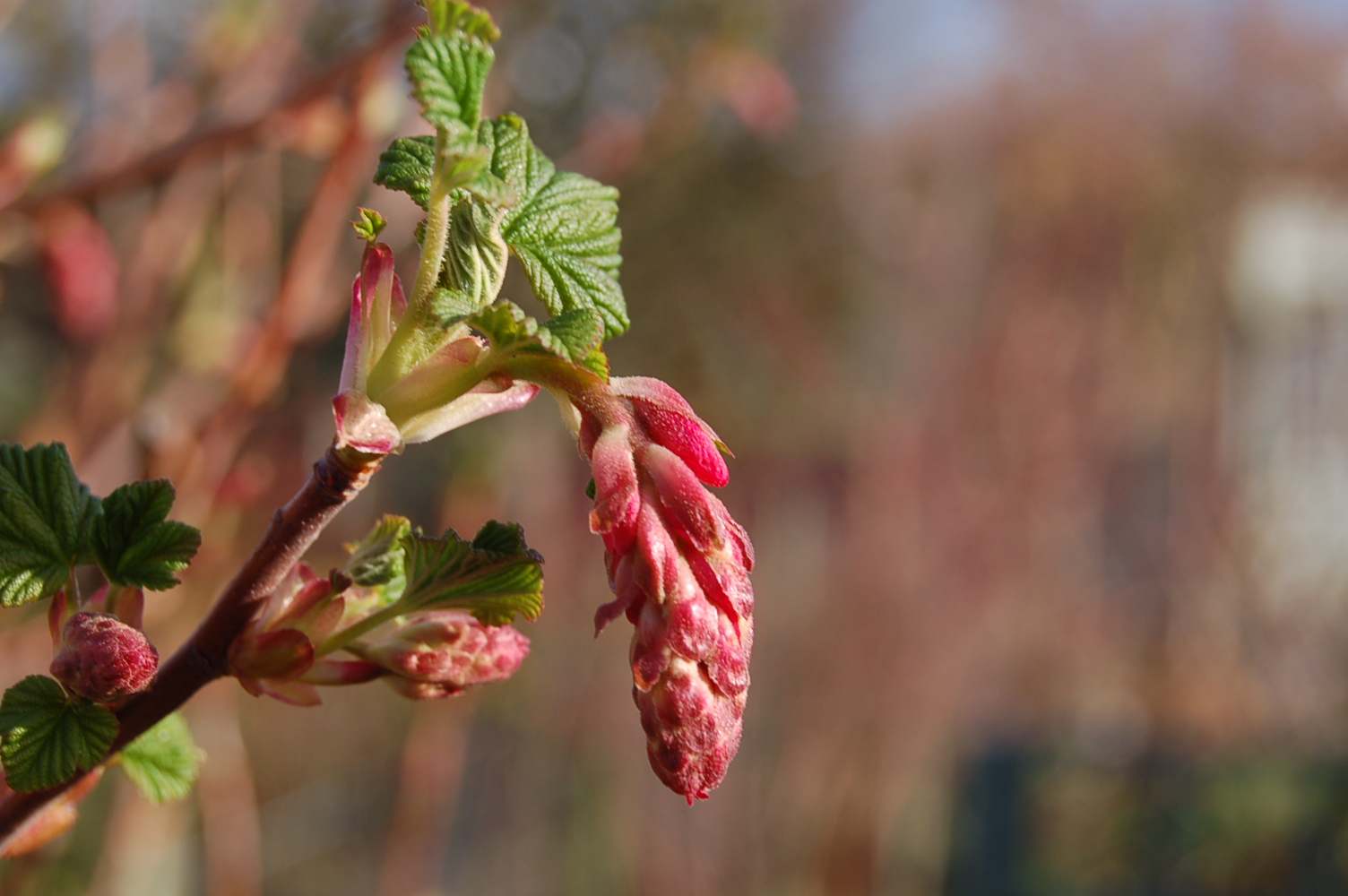
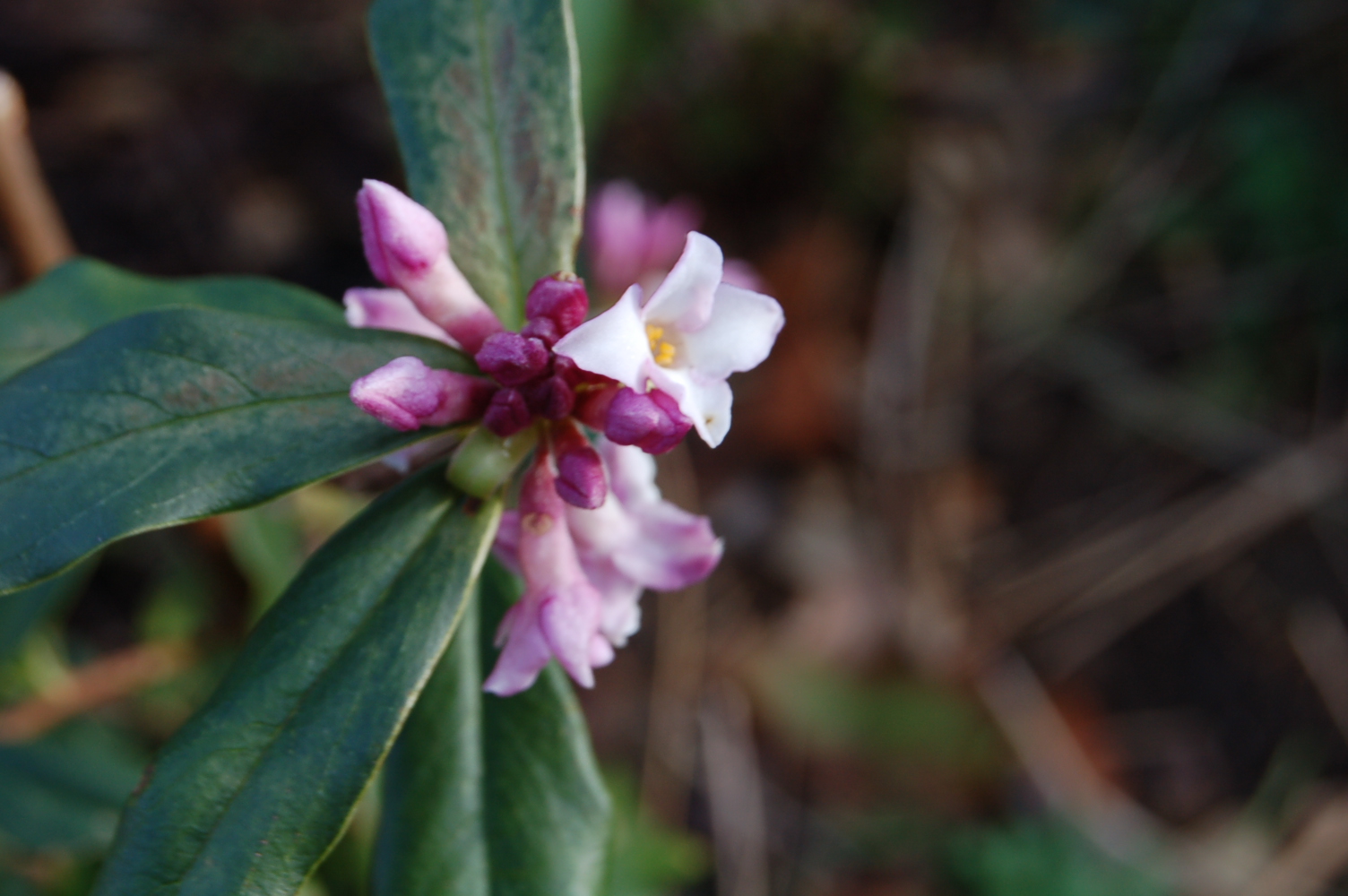
The bees appreciate the early flowering bulbs especially purple crocuses but soon they will be flocking to feed on the Flowering Currant, the exceptionally large flowered variety Ribes sanguineum King Edward VII, which is on the point of bud burst. The buds on the Daphne bhulua “Jacqueline Postill” have opened to reveal highly scented flowers in several shades of pink.

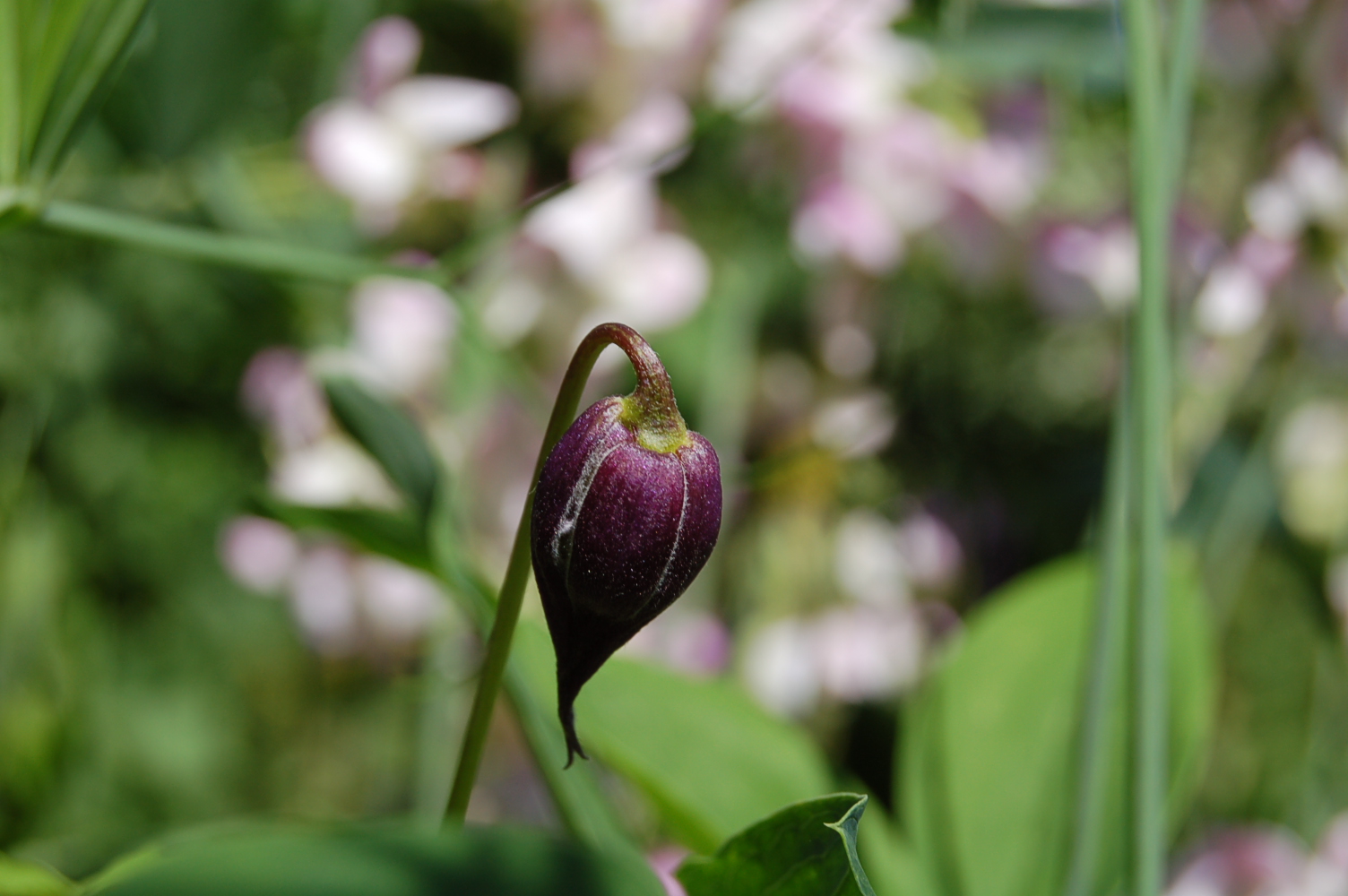
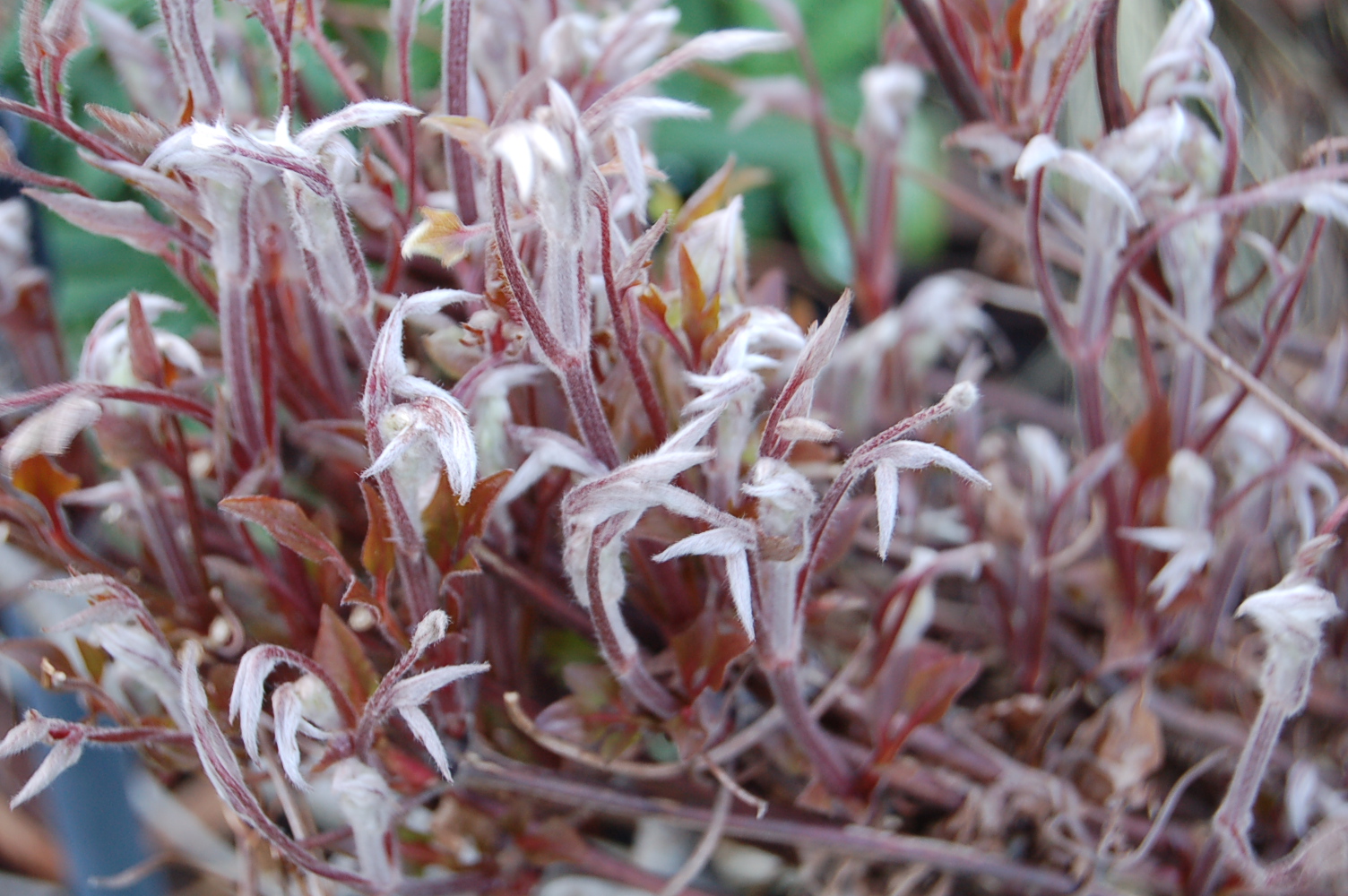
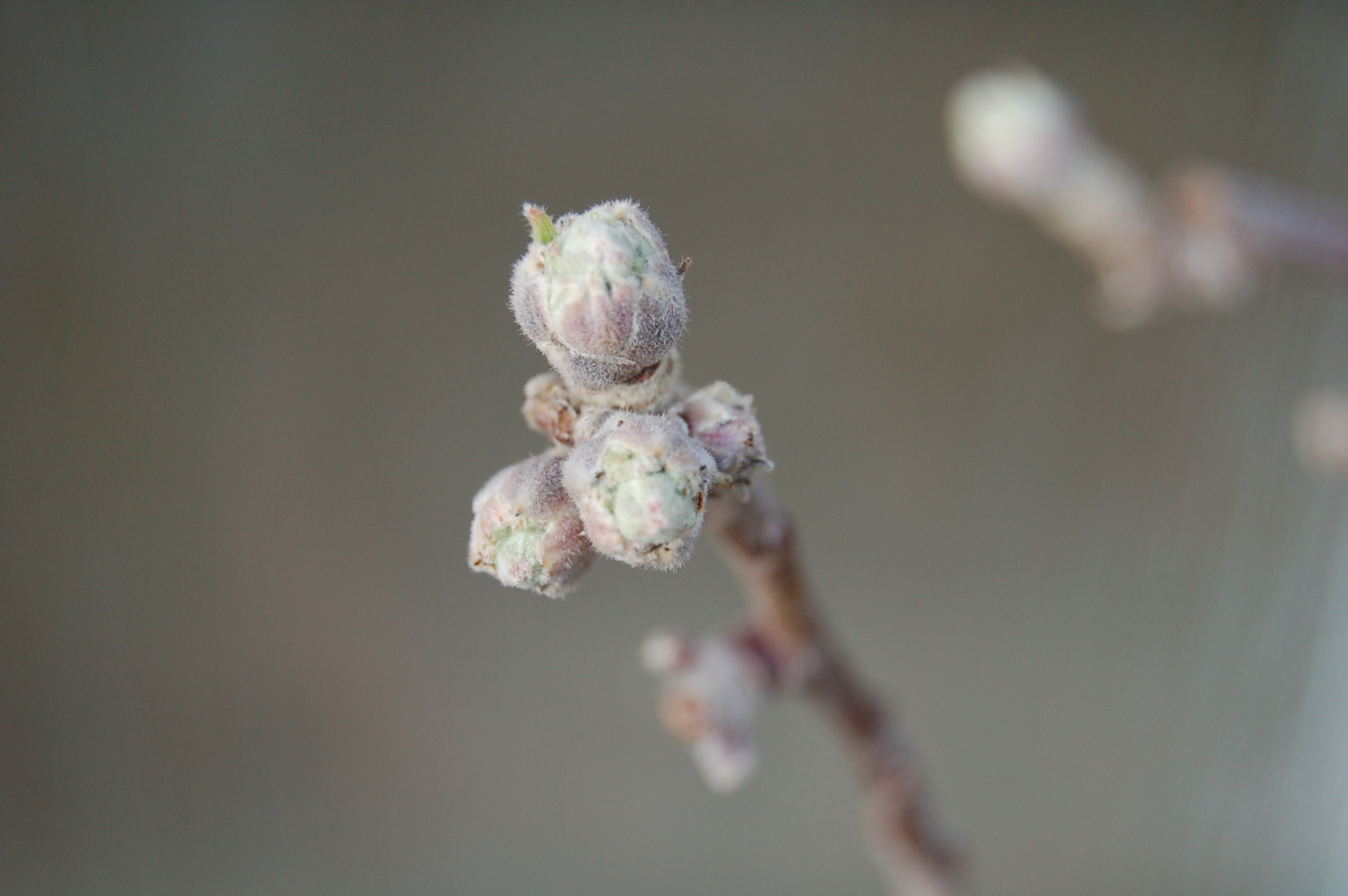
March in the garden is full of promises with buds developing and preparations underway for the productive garden. The photos show buds of Clematis, both climbing and herbaceous, and Apples and Pears.

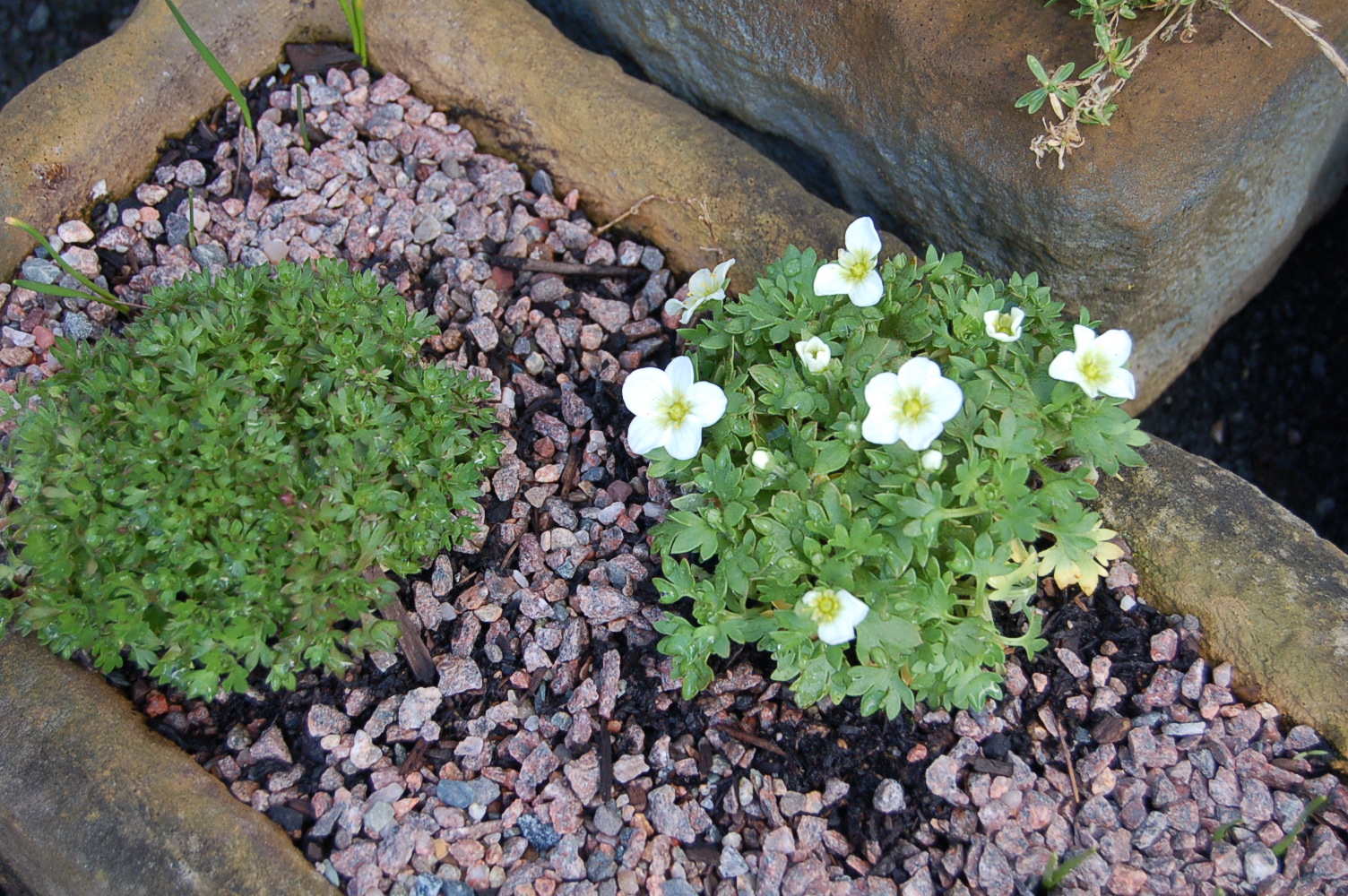
The Sempervivum in the alpine troughs and on the slate scree bed are all budding up nicely but one pure white-flowered one is out and glowing in the March sunlight. They are such precious little jewels of plants.

Our two newest areas of the garden, the Chicken Garden and the Secret Garden, are turning glaucous green with Allium leaves. One area is like a lawn of Allium. They seem to enjoy our soil too much and are spreading and self seeding madly!

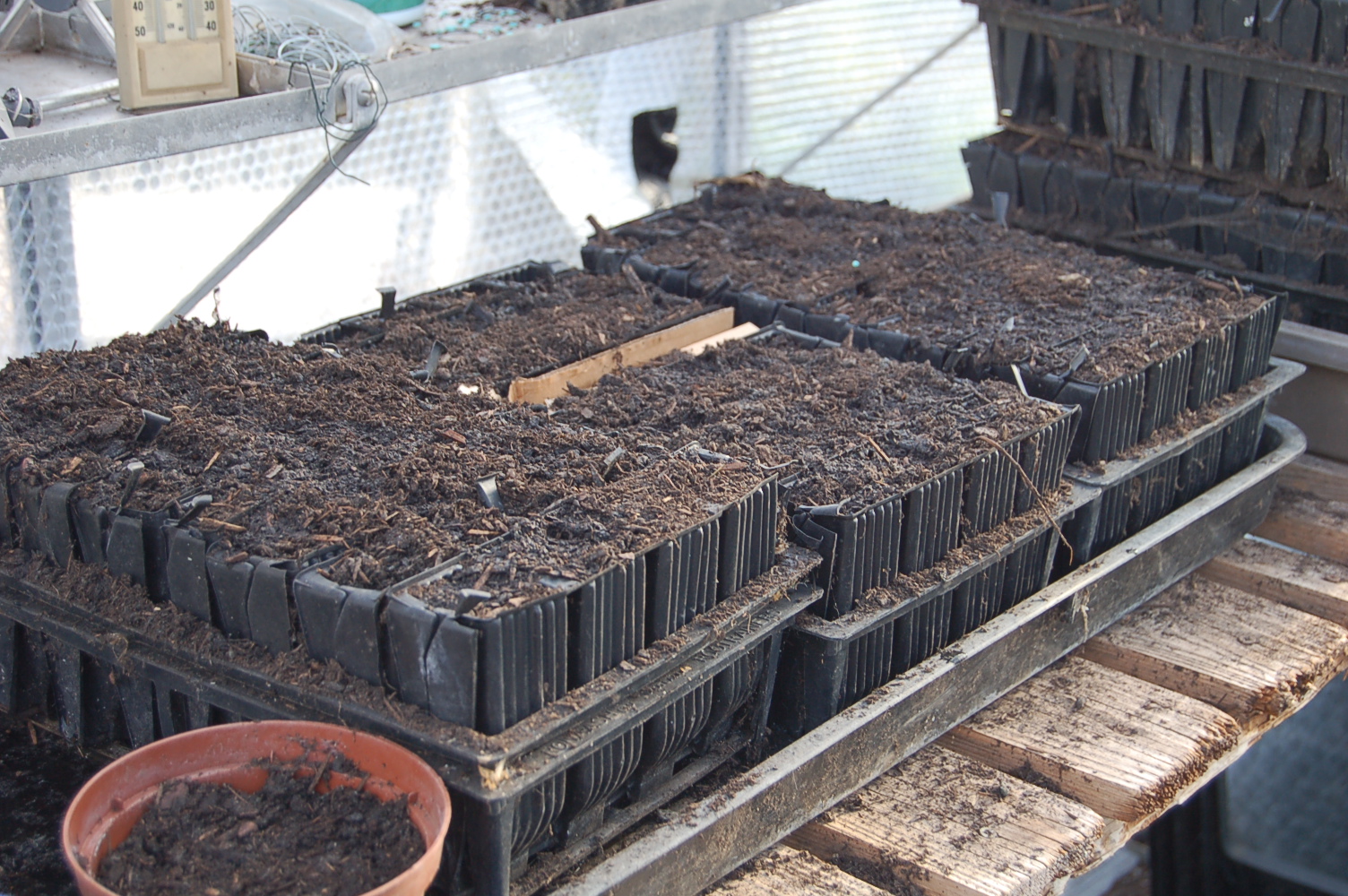
The productive side of our gardening mostly happens on our allotment but we have a big greenhouse in the back garden where we start off many of the veggie plants. Some seedlings have germinated in the propagator and lots cells and 5 inch pots are full of compost ready for us to sow peas, broad beans and sweet peas.

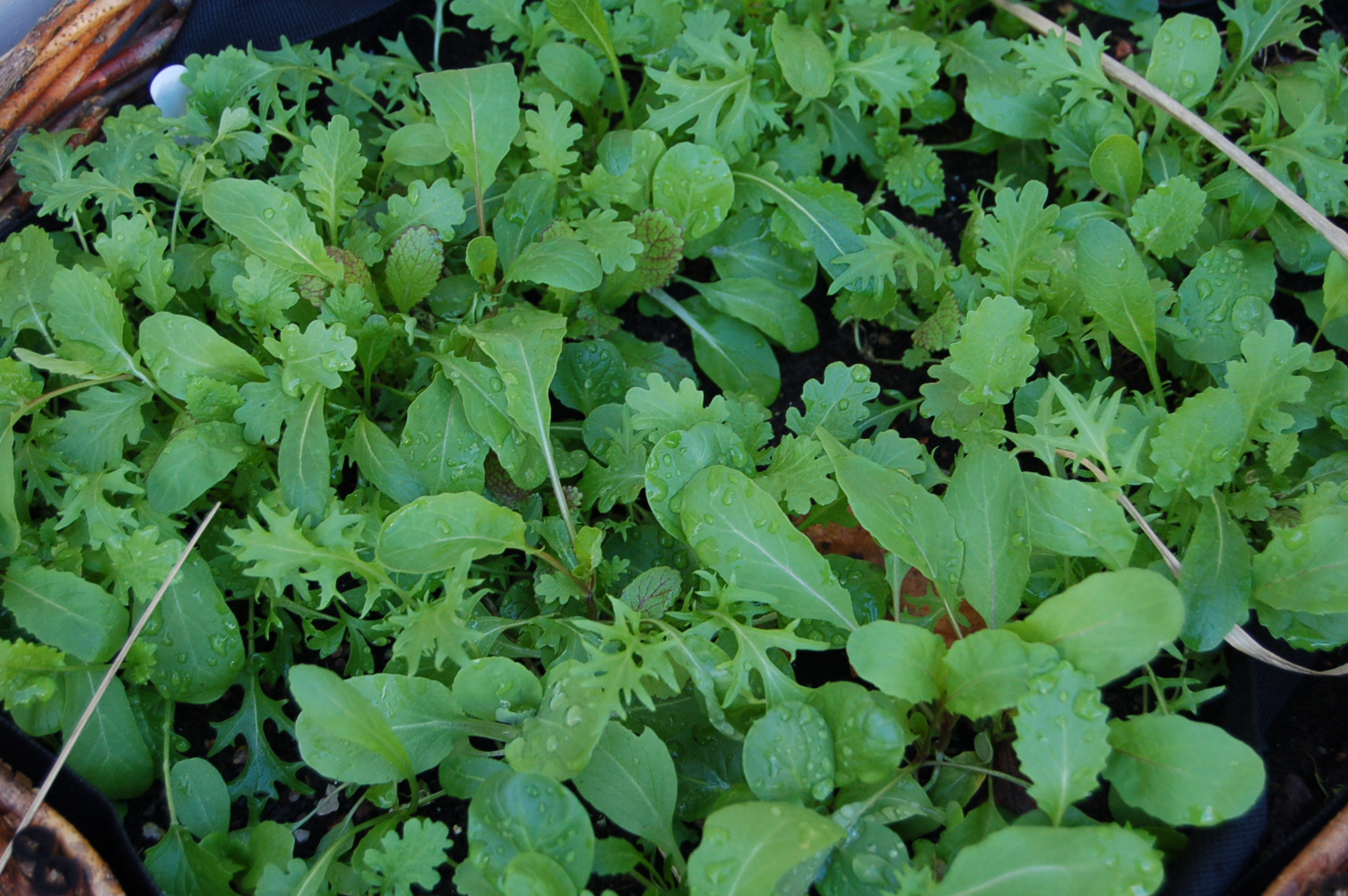
In our raised wicker beds just outside the back door the cut-and-come-again salad leaves are almost ready for the first cutting – and of course the first eating. So many different textures, colours and tastes! Delicious! Much is still to happen in March and on into April.

Our Comfrey patch is showing strong growth. This is one of the most important areas of the garden for in this 2ft by 10ft bed we grow a comfrey variety called Bocking 14, which we can cut 4 or 5 times a year. The leaves can be put in the bottom of potato trenches before we plant the potatoes to feed them and prevent the disease “Scab”. We also put them as a mulch under fruit trees and bushes as a feed and as a weed suppressant, and use them to make a liquid feed mixed with nettles.

So much is still to happen in the March garden.  It is a busy and exciting month. So much to look forward to.

Categories
birds climbing plants garden design garden photography garden wildlife gardening hardy perennials ornamental grasses ornamental trees and shrubs outdoor sculpture shrubs trees

A Wander around the Garden in January

This is the first in a series of blogs which I will write at the beginning of each month through 2012, and will show what is going on in our garden at that time – a sort of record of garden highlights.

So the new year has arrived. January 1st was a dull overcast day, with unbroken deep grey cloud and regular periods of drizzle. But at least it was warm with temperature holding up in low double figures all day. But not a day to perform a photographic wander.

So here I am on the 2nd January with camera in hand to record what’s going on appreciating a blue sky, but well wrapped against a freezing wind. Buzzards are sharing my joy of seeing a big blue sky as they are soaring silently above the garden with none of their usual sad cries. The garden is noticeably quiet, the bird feeders far less busy than they usually are in January. There is just the constant quiet, barely perceptible winter song of the Robin who follows me around and the equally gentle twittering of Goldfinches, Blue Tits and their long-tailed cousins.

Enjoy a walk around with me and my camera, as we take a tour …………

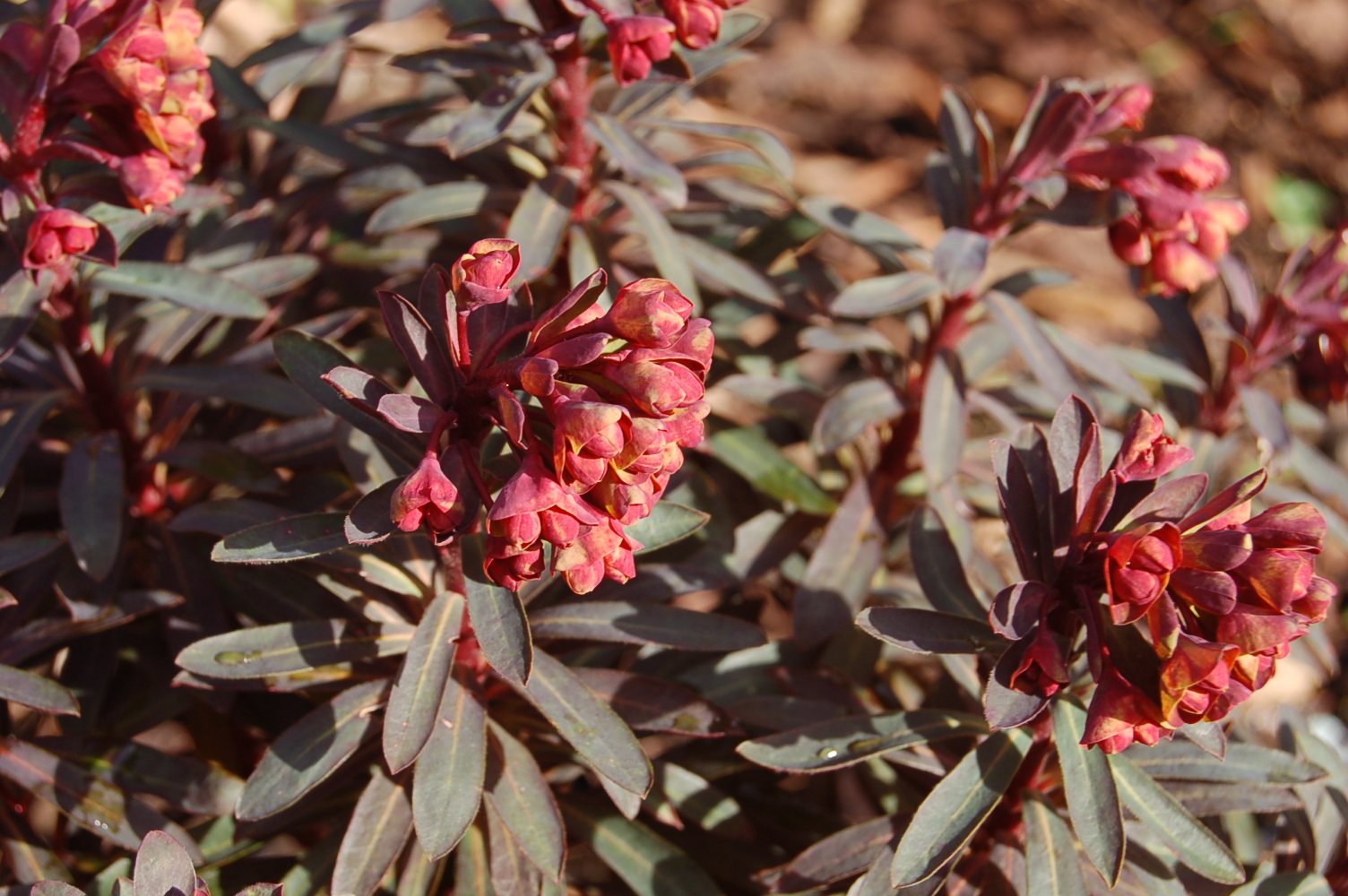
The newest addition to the garden, just planted today, is the dark foliaged Euphorbia "Redwing", spotted with fresh rain drops following a shower.
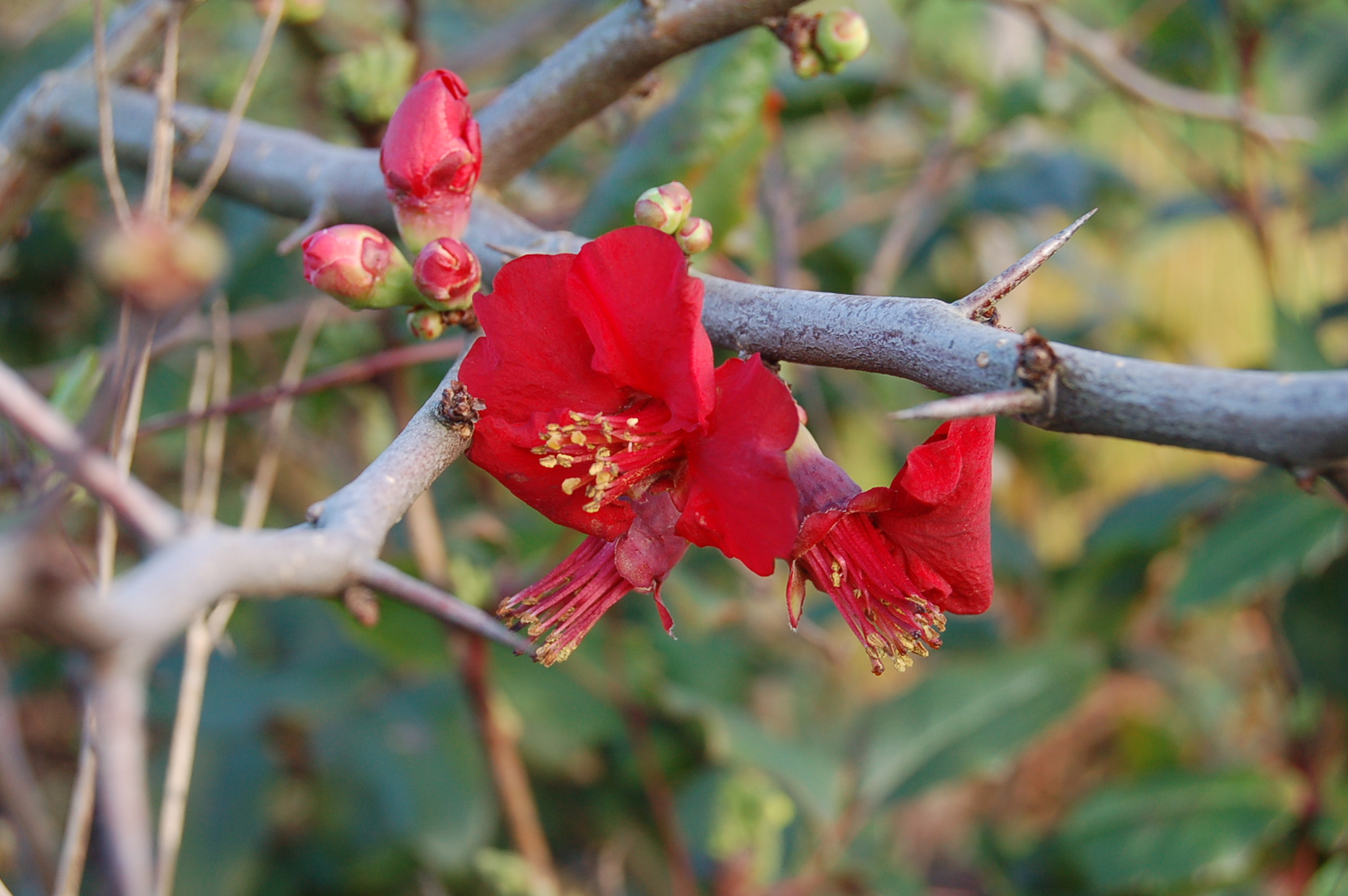
This brightly flowered quince, Chaenomeles "Fire Dance", glows at the drive entrance, providing a cheerful welcome.


This clump of bell-shaped flowers of Arbutus unedo, the Strawberry Tree, overhangs the roadside verge. We are so grateful for its performance as it only just survived the onslaught of the last two winters. We rescued it with heavy pruning.
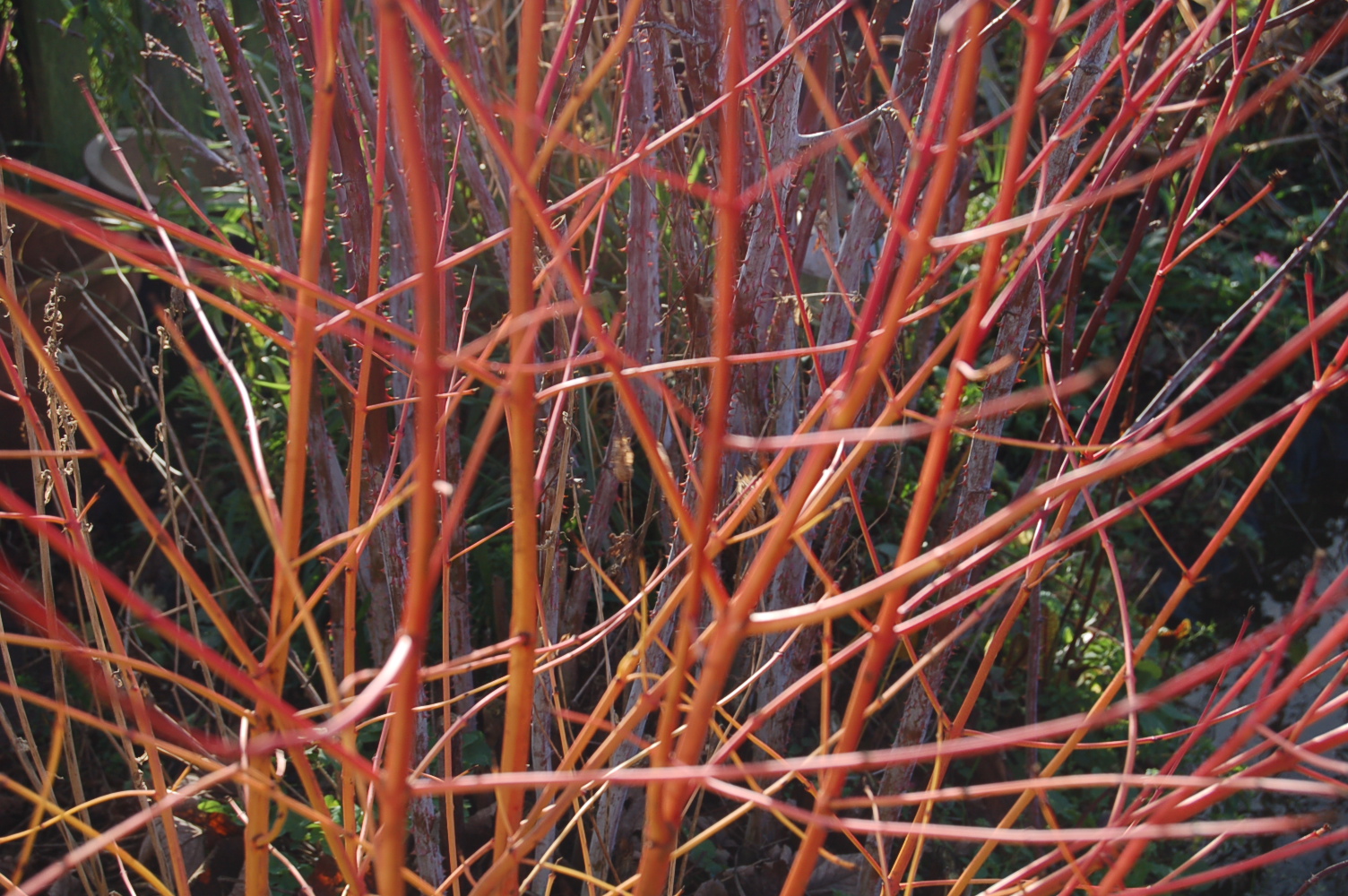
Orange stems of Cornus "Cardinal" with the white stems of young Betula utilis in the newly planted Shrub Garden.
Sea shore find amongst Euphorbias.
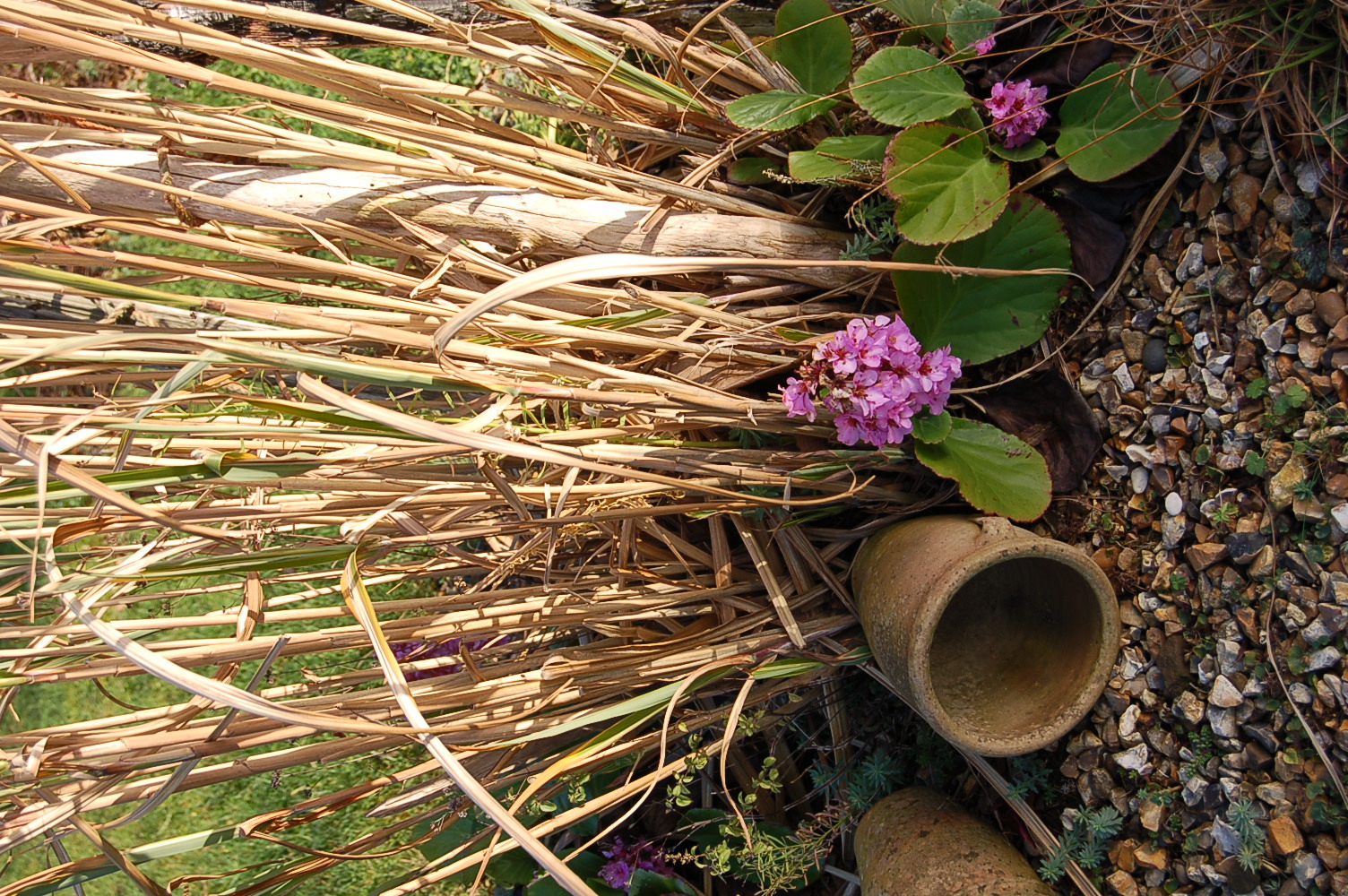
Terra-cotta pots and the pink flowers of Bergenia sit at the feet of Miscanthus and driftwood.
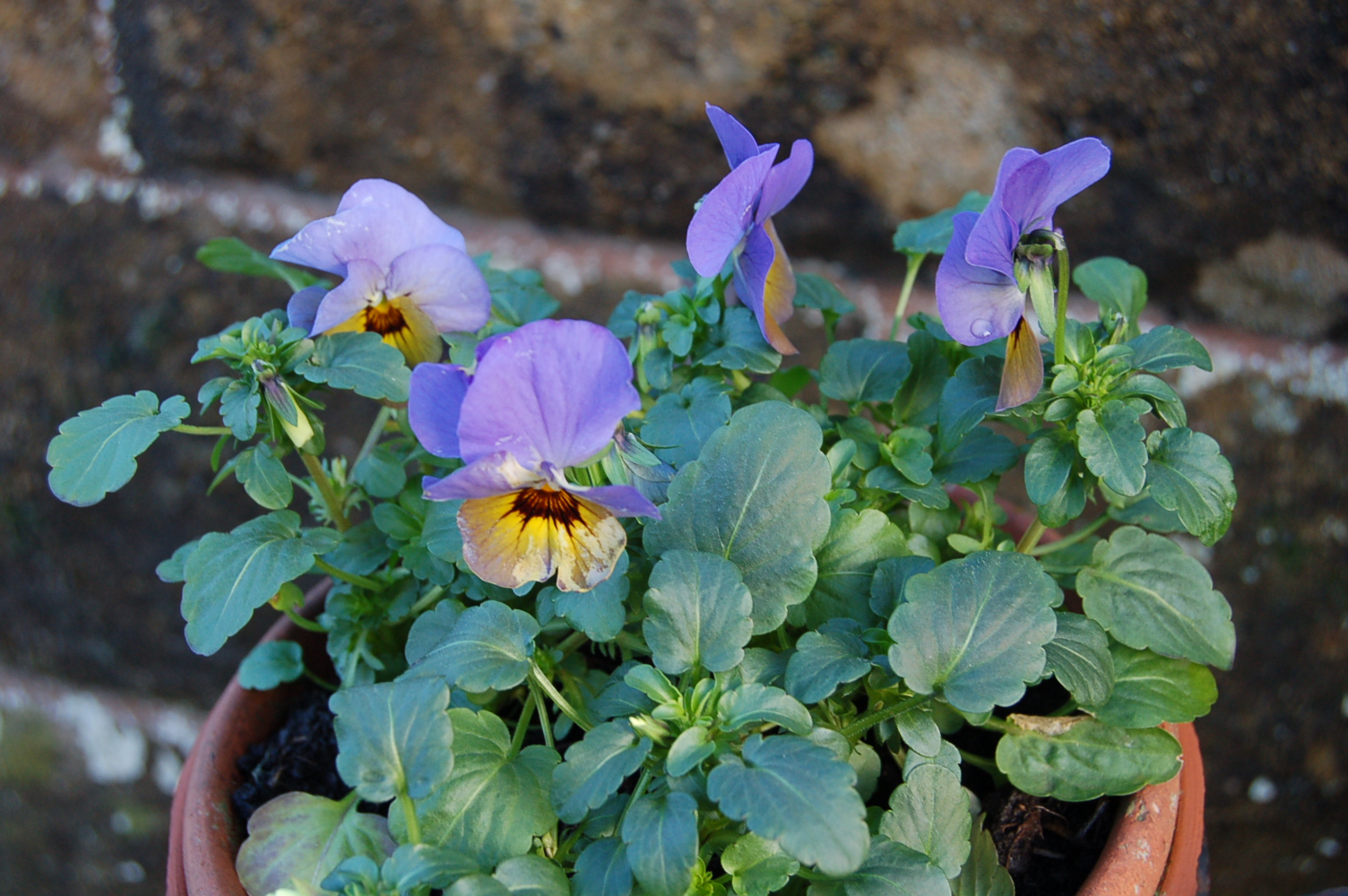
The yellow-faced blue Violas flower in pots by the front door.
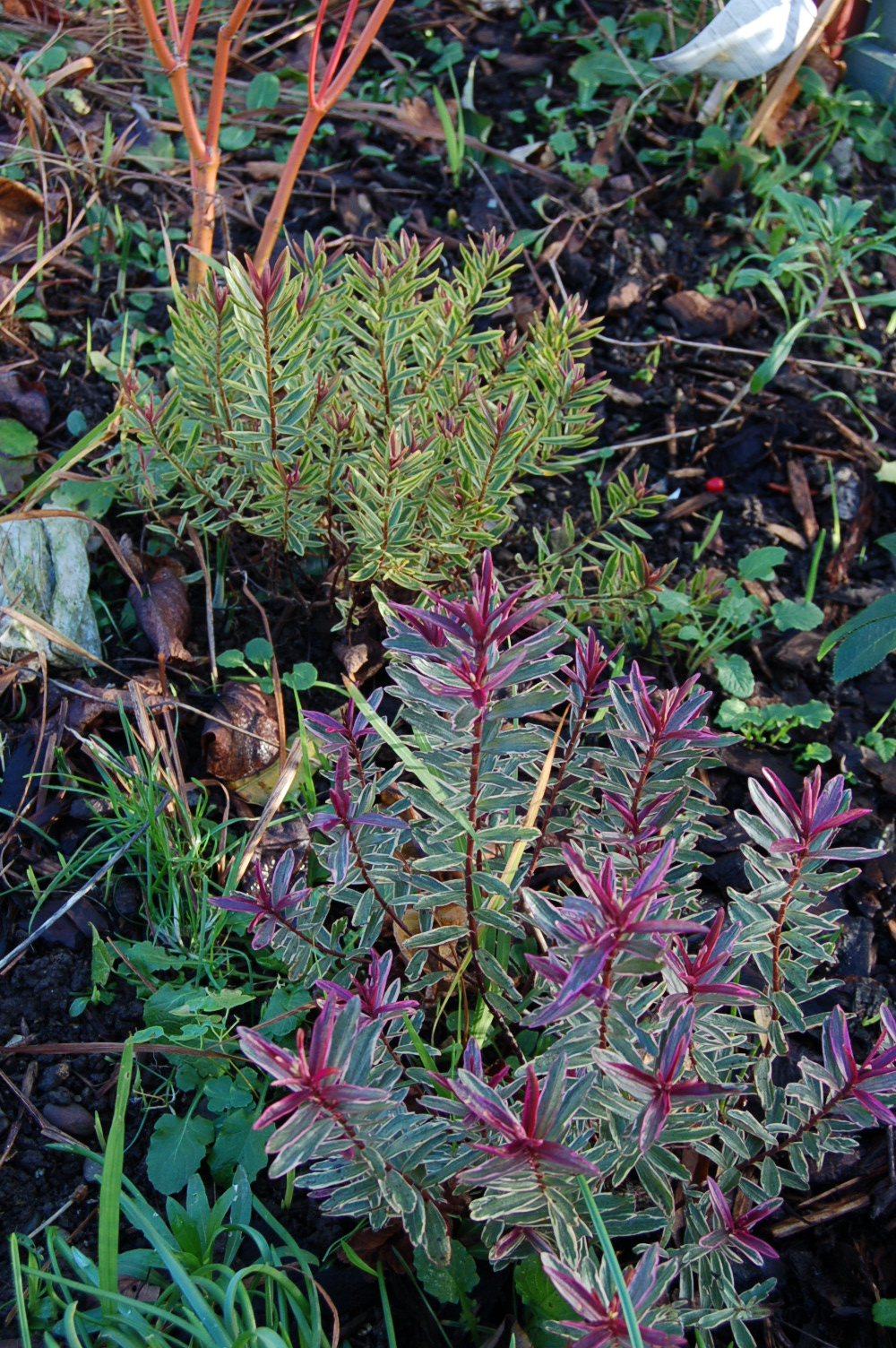
In the Rill Garden two very different Hebes with colourful foliage sit in front of an orange-stemmed dogwood.
The low light of winter turns the cut foliage of the purple-leaved vine blood-red.
The creamy-yellow berries of the Cotoneaster rothschildianus hang in clusters covering this small tree.
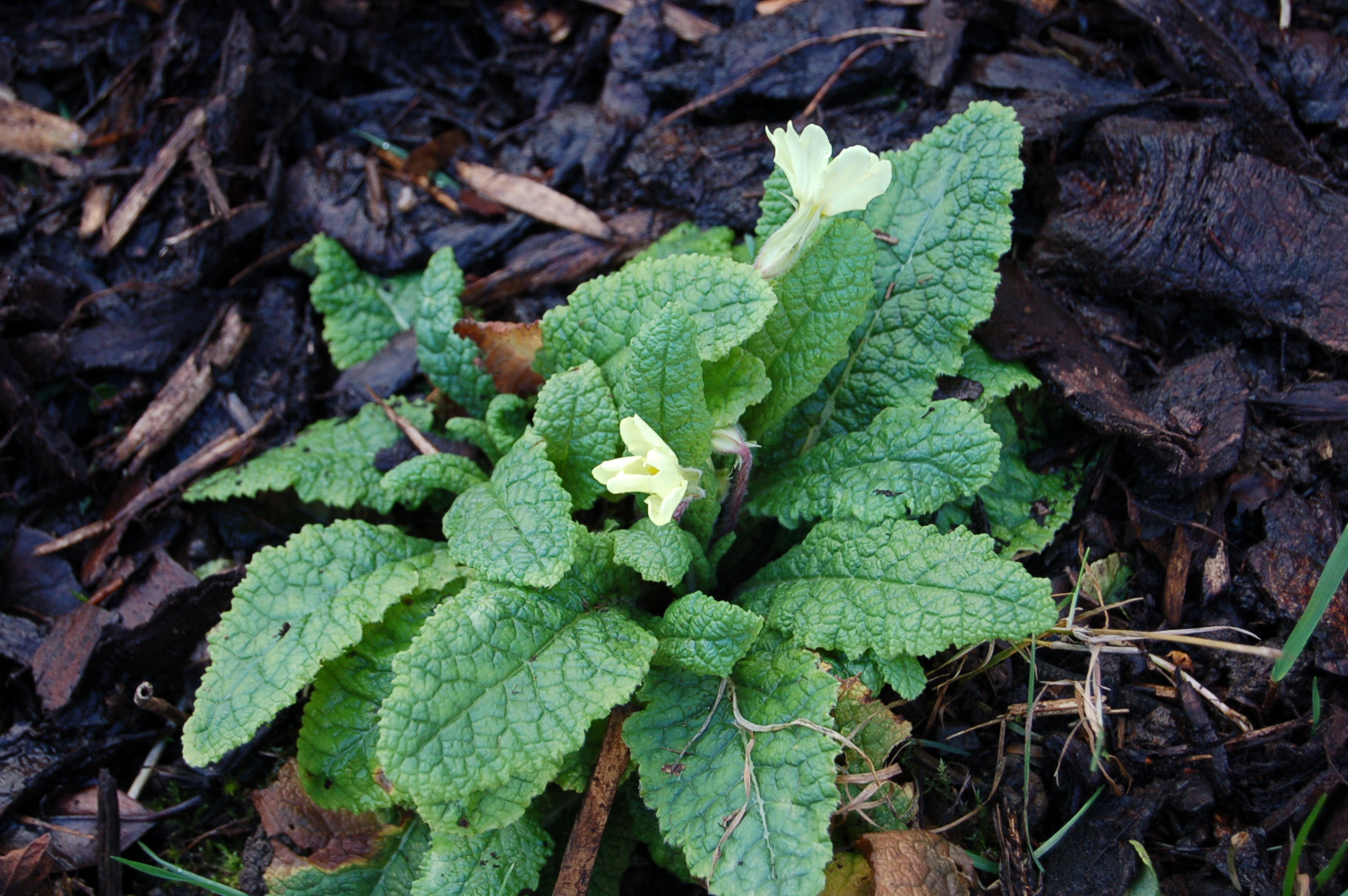
The flowers of this pioneering Primrose appear too delicate to survive the cold of January.
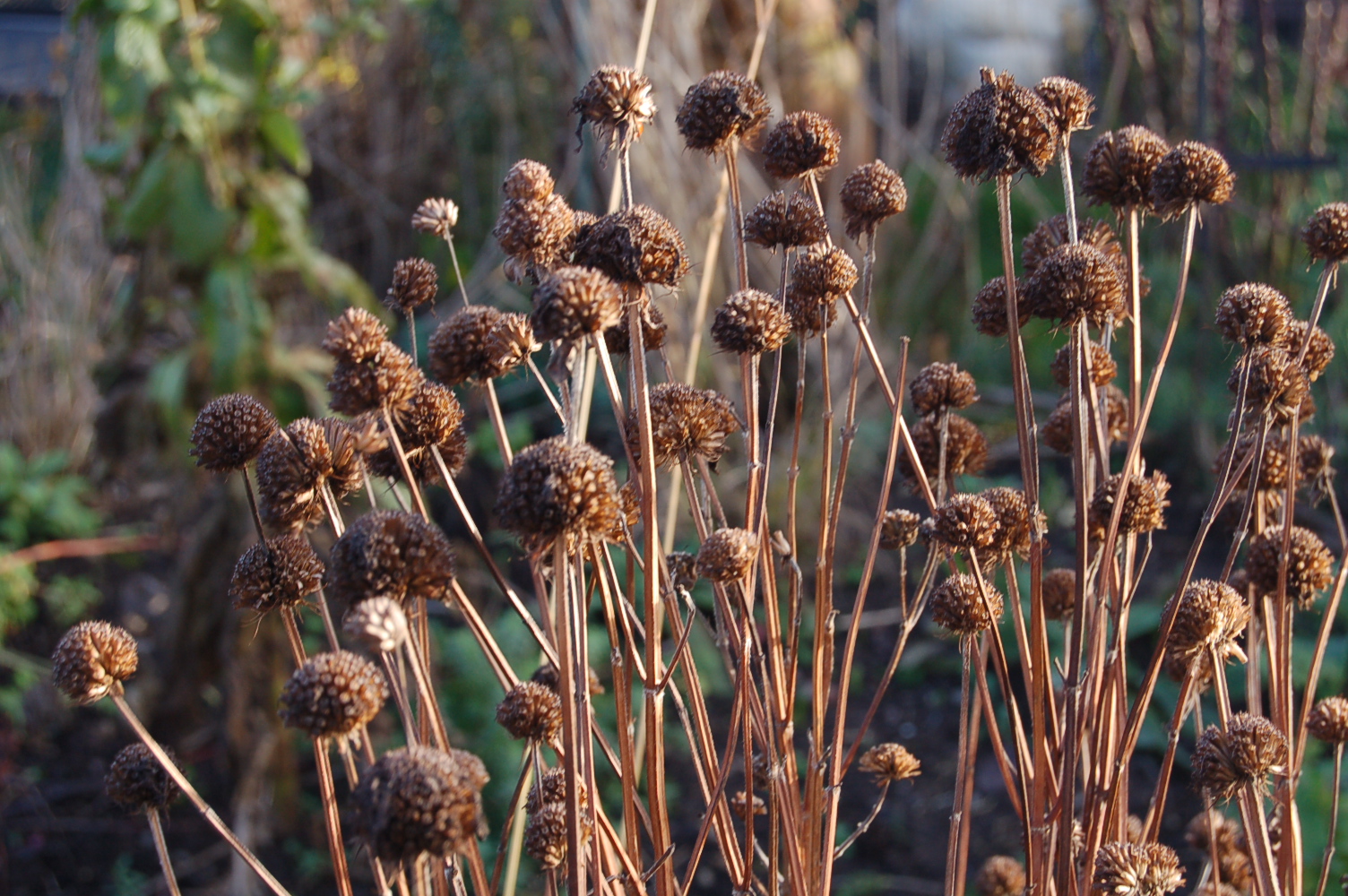
Warm brown seed heads give so much to the Chicken Garden in winter.
The grasses throughout the garden catch both the winter light and the gentlest breeze. The curly seed heads of this Miscanthus napalensis are soft to the touch.
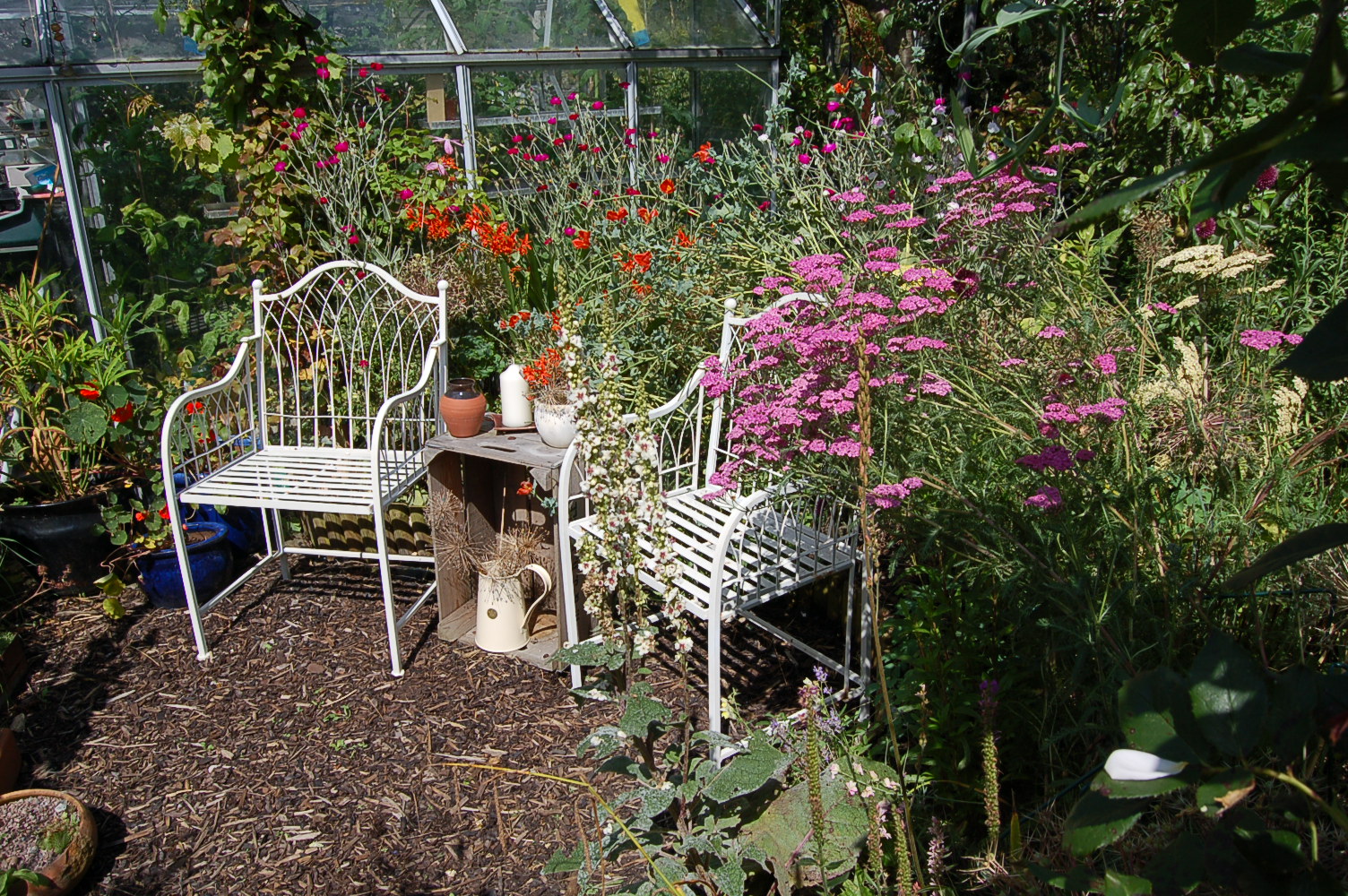
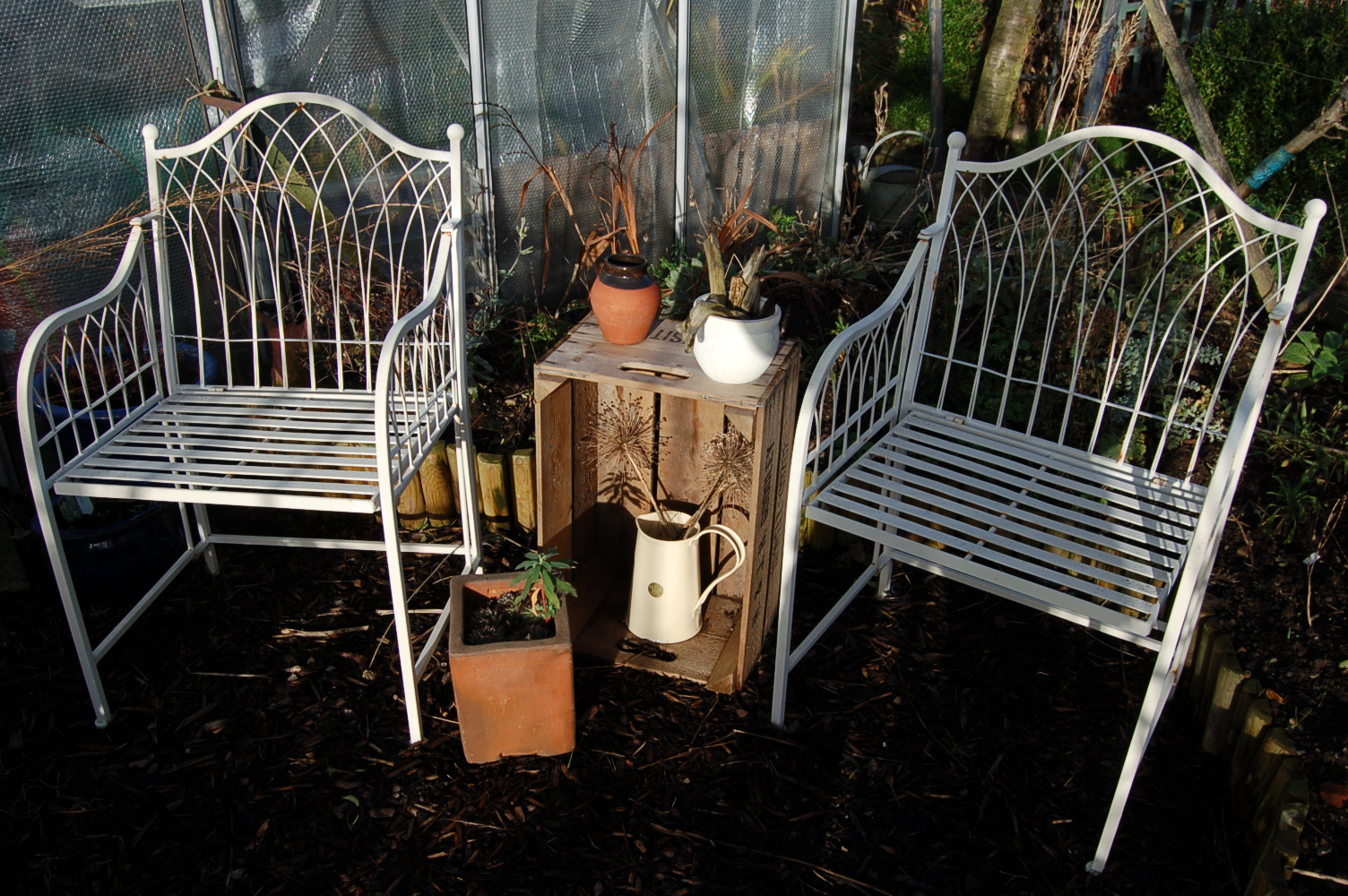
In the Secret Garden the cream metal seats become more dominant just when they are too cold to sit on.
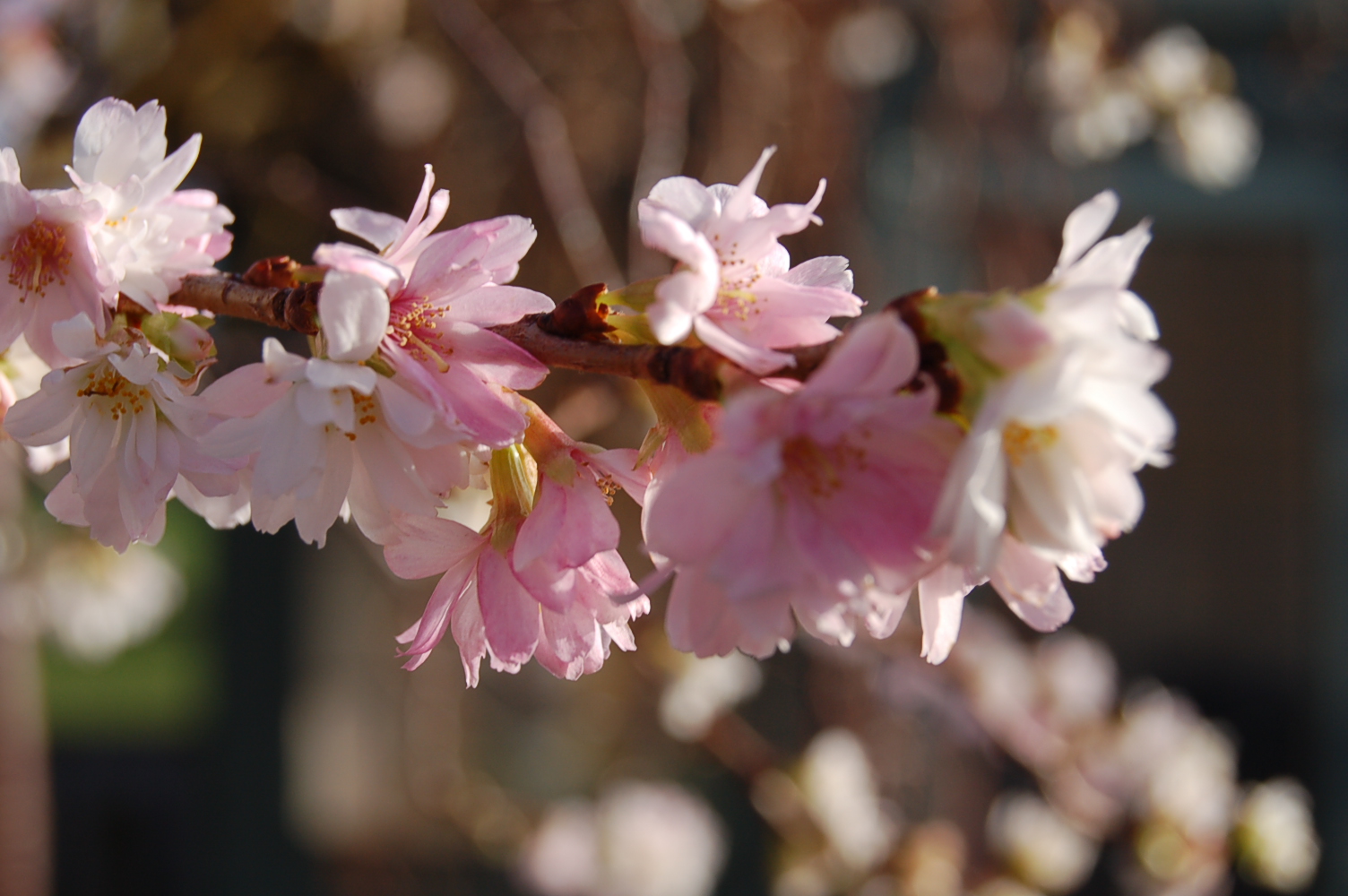
In the Japanese Garden the blooms of our pink version of Prunus autumnalis subhirtella are a joy to look at.
Move in close and appreciate the pink glow.
The hottest of the coloured stemmed dogwoods must be Midwinter Fire - ours grows on the bank bordering the wildlife pond.
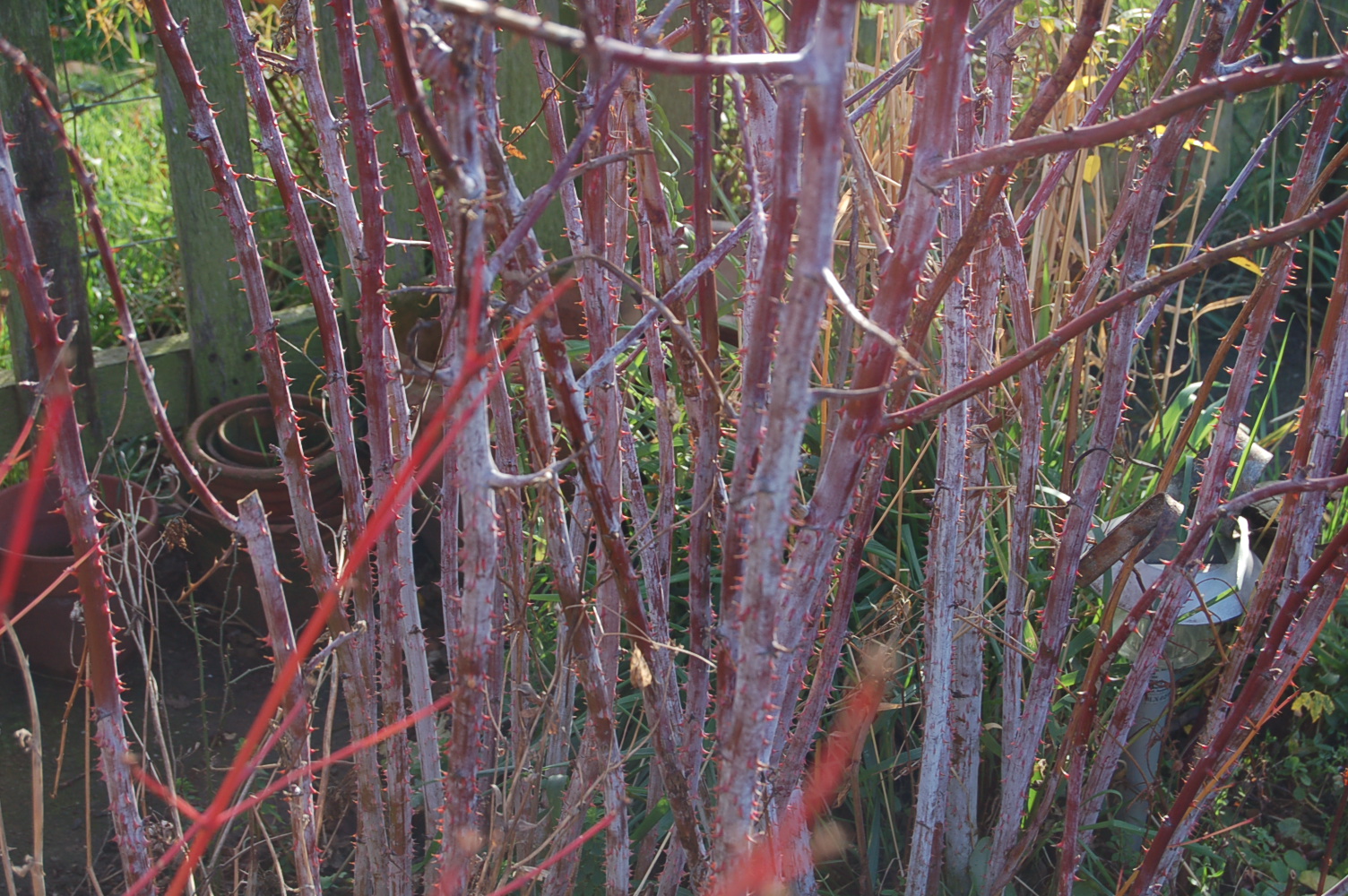
The white-stemmed Rubus sits alongside Midwinter Fire on the pond bank.
The fruit of our apple "Pixie" remained too tiny to pick so we have left them for the birds, who so far have ignored them.


Jasminum nudiflorum has been flowering by the chicken's run now for four months and is still going strong. What a star!


The mad seed heads of the orange-peel clematis, which I grew from seed, never cease to amaze me even though I see it each morning as I collect the chucks' eggs.


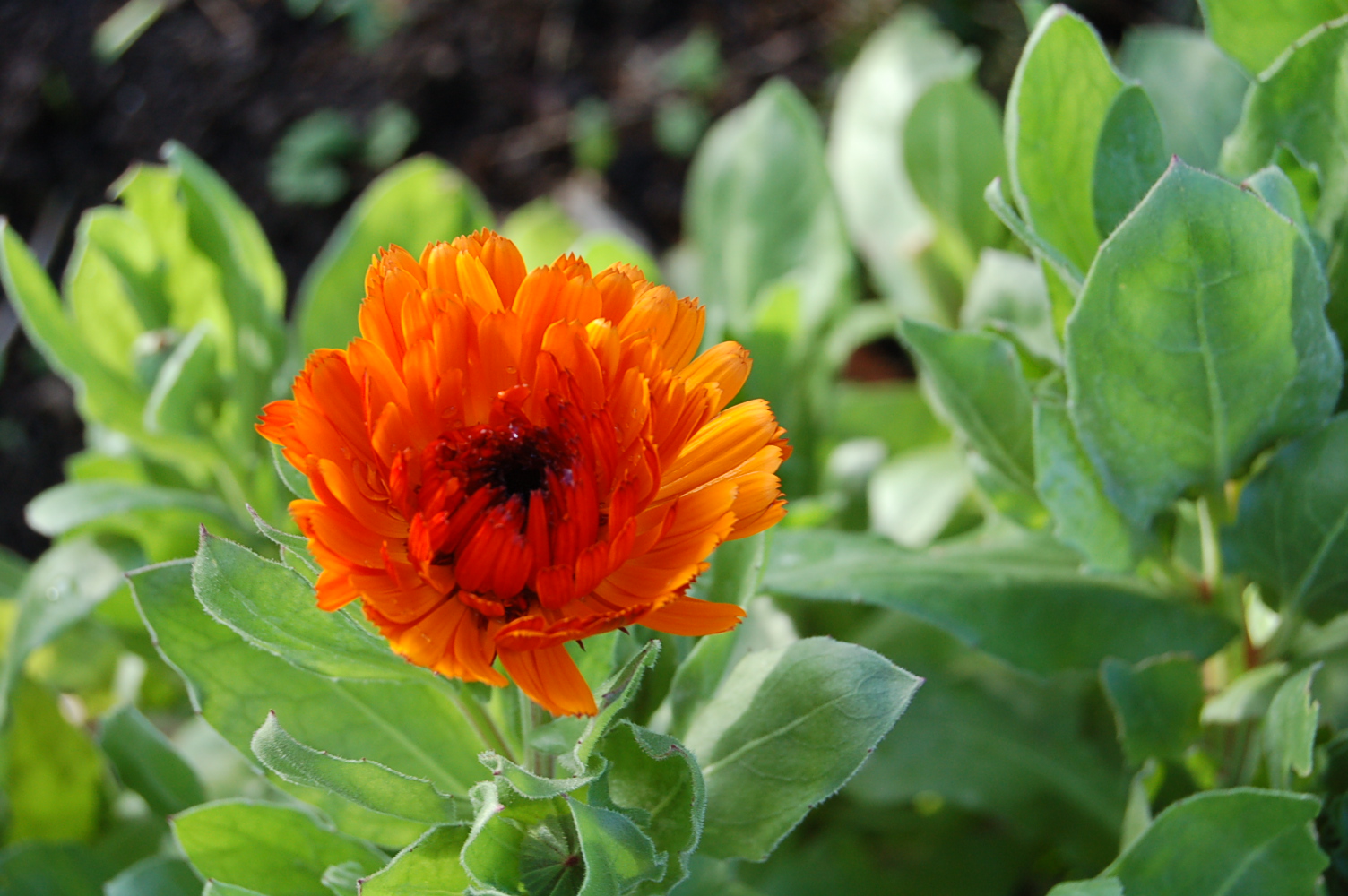
We seem to have calendula flowers somewhere in the garden every day of the year.


One of five Achillea still flowering away in January, this variety "Biscuit" is in the Secret Garden.


This Veggie Life

A Vegetarian | Nature Lifestyle Blog

Rambling in the Garden

.....and nurturing my soul

The Arch City Gardener

Journeys In St. Louis Gardening and Beyond

Garden Dreaming at Châtillon

Consult the genius of the place

Storyshucker

A blog full of humorous and poignant observations.

gardeninacity

Notes from a wildlife-friendly cottage garden

PlayGroundology

...an emerging social science

The Official Blog of British Wildlife

'The most important and informative publication on wildlife of our times' - The Independent. This blog is a member of The UK & Ireland Natural History Bloggers group: www.uknhb.blogspot.com

iGrowHort

Inspire - Cultivate - Grow Native Plants - Restore Landscapes

Bishops Meadow Trust

To create and protect a semi-natural wild space for the people of Farnham to enjoy and experience an array of British wildlife in our town

Gardening with Children

The www.gardeningwithchildren.co.uk Blog

UKbirdingtimeline

birding through the seasons, why birds matter and how to conserve them

NATURE WALKER

with a camera in hand

Jardin

Transform your outdoor space

Eva's space

My allotment, cooking and other interests

Old School Garden

my gardening life through the year

LEANNE COLE

Trying to live a creative life

fromacountrycottage

trying to live as lightly as possible on our beautiful planet

Good Life Gardening

Nature lovers from Leicester living the good life.

mybeautfulthings

Finding the beautiful in the everyday

mawsonmichelle

Michelle's Allotment

In and Out of My Garden

thoughts from and about my garden

Greenhousing

Big plans for a small garden

The Scottish Country Garden

A Walled Country Garden in South East Scotland

The Fruity Chicken

Life at the fruity chicken

willowarchway

Off grid living. Self sufficient. "PERMAGANICS RULE".

St Anns Allotments

Nottingham's Grade 2* Listed Allotments and Community Orchard

Manifest Joy Harvests

a journey in suburban vegetable gardening

Allotmental

The madness of growing your own

Penny's Garden: a harvest beyond my front door

A novel approach to vegetable gardening

arignagardener

Sustainable living in the Irish countryside.

NewEnglandGardenAndThread

Master Gardener, amateur photographer, quilter, NH native, and sometimes SC snowbird

dianajhale

Recent work and work in progress and anything else that interests me

planthoarder

a chaotic cottage gardener

Lens and Pens by Sally

a weekly blog that creates a personal philosophy through photographs and words

Dewdrops and Sunshine

Stories from a sassy and classy Southern farmbelle.

The Pyjama Gardener

Simple Organic Gardening & Seasonal Living

gettin' fresh!

turning dirt into dinner

JOY...

today the world is created anew

Garden Birds

Notes from a Devon garden

ShootAbout

Life Through The Lens

Adapting Pixels

A photography blog showcasing the best photography pictures and videos on the internet

Wildlifegardening's Blog

Just another WordPress.com site

naturestimeline

personal observations from the natural world as the search continues for a new approach to conservation.

LATEBLOOMERBUDS

The Wonders of Life through my Eyes, my Heart, my Soul