Categories
allotments community gardening conservation drought fruit and veg gardening grow your own Shropshire

Our Wise Watering Campaign

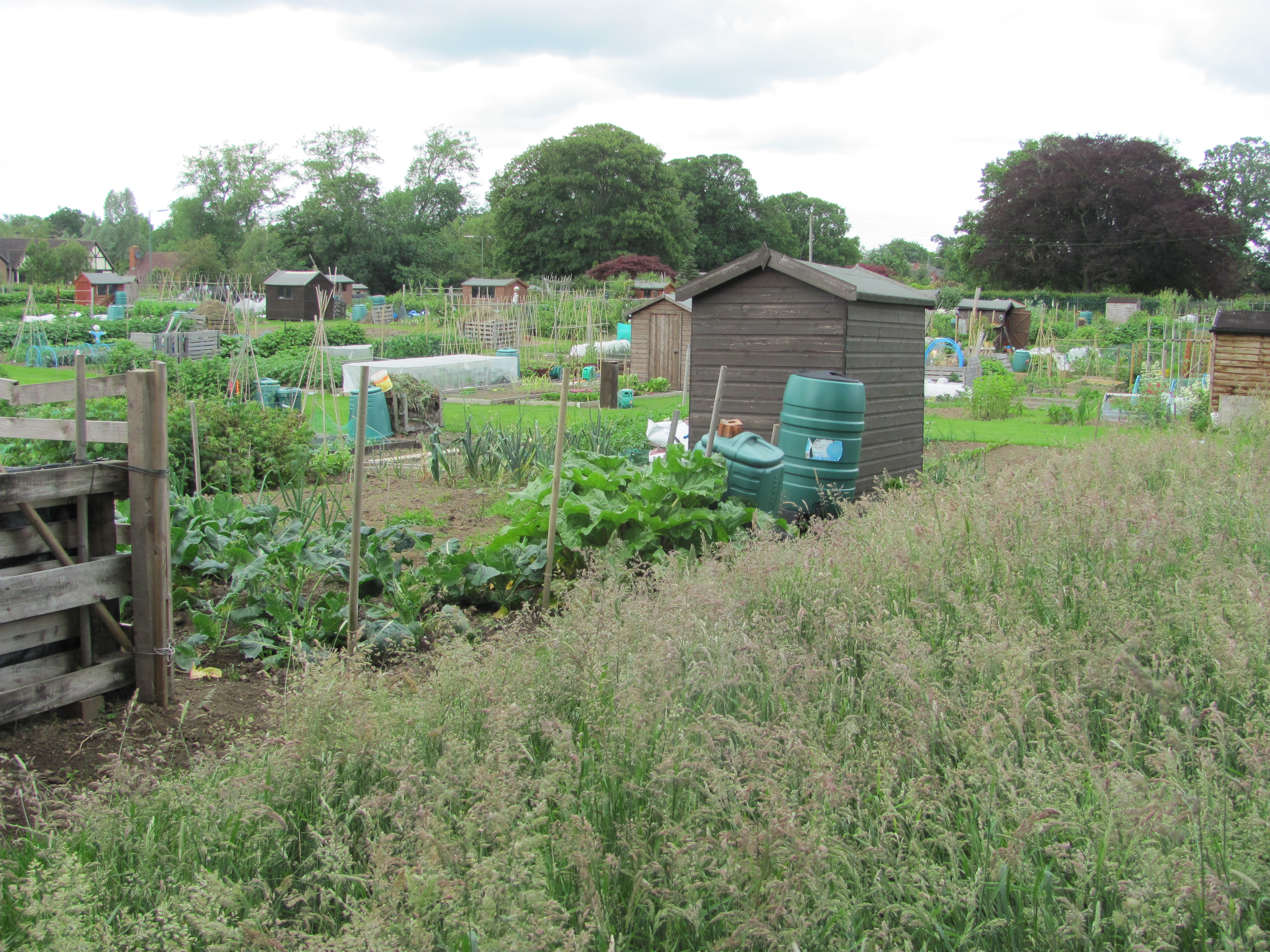
On our allotment site this year the management committee are running a Wise Watering Campaign, with the aim of reducing the amount of water used by plot holders. We were ashamed to hear that our site uses more water than any other in Shrewsbury. When we looked into the situation we were amazed that only 18 of the 68 plots had guttering and water butts attached to their sheds to catch rainwater run-off. Many plot holders turned to their hose pipes too readily to water their crops. Something had to be done.

We had already fixed guttering, downpipes and butts to our communal buildings and we use this captured rain to water our communal gardens, so we began our campaign by encouraging members to follow that example. Jude, Mrs Greenbench aka the Undergardener, in her role as secretary to the committee has been trying to source grant money to help purchase more water butts. Amazingly our local water board did not even bother replying, but there are still a few irons in the fire.

I was asked to write an article for our newsletter, “Dig It!”, giving advice on how to water efficiently and a summary was sent to all plot holders. I wrote a much extended more detailed article which I posted on the allotments’ website. (see www.bowbrookallotments.co.uk and click on “Wise Watering”)

Our initial emphasis has been on using watering cans instead of hoses and encouraging members to add guttering and water butts to their sheds.

I thought I would give a few ideas here too, for your interest and wondered if anyone had any further ideas that we could use.

I emphasised the importance of improving soil quality and adding humus and fibrous material, which would help moisture retention after rain or watering, and allow the plants to take up moisture efficiently. We sell municipal compost and farmyard manure on site.
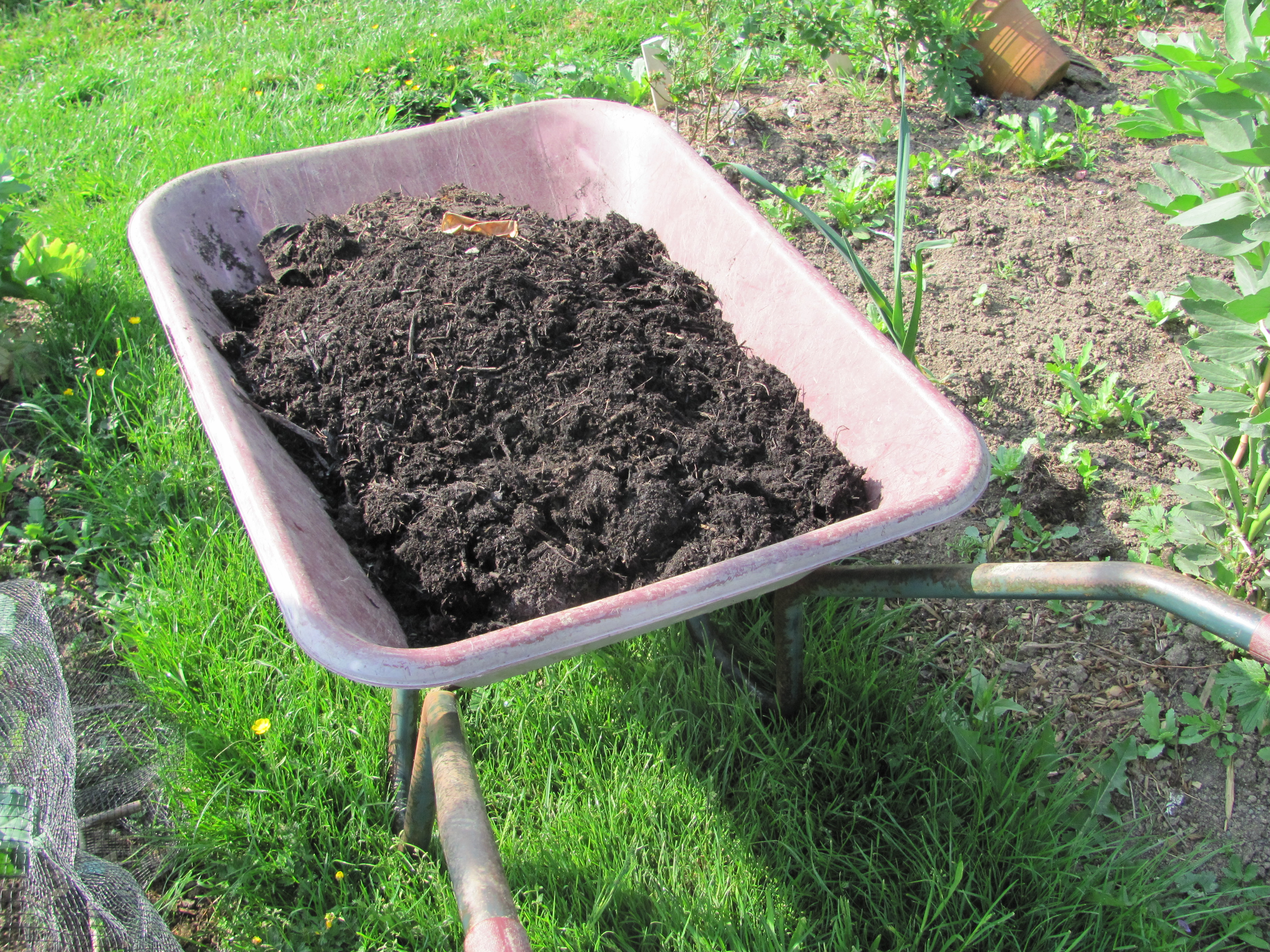
The best time to add manure is in late autumn or early winter and for compost early spring. I suggested also that compost should be used as a mulch after periods of rain to hold this natural moisture in.

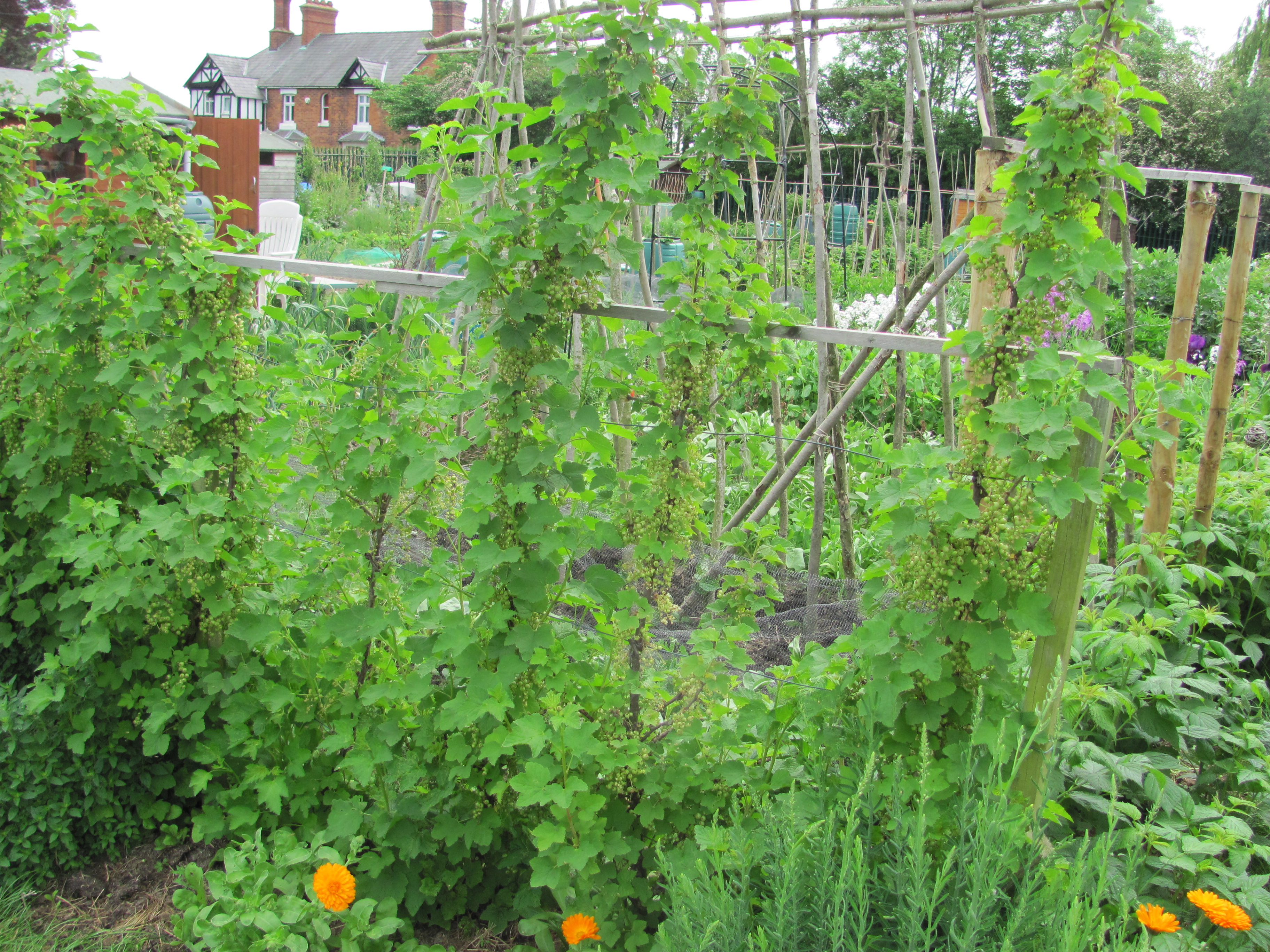
Mulching under fruit bushes is always useful as a lot of moisture is needed in the production of fruit. Old straw, hay or farmyard manure when added as a mulch will also slowly break down and feed the plants as well as improve soil texture.

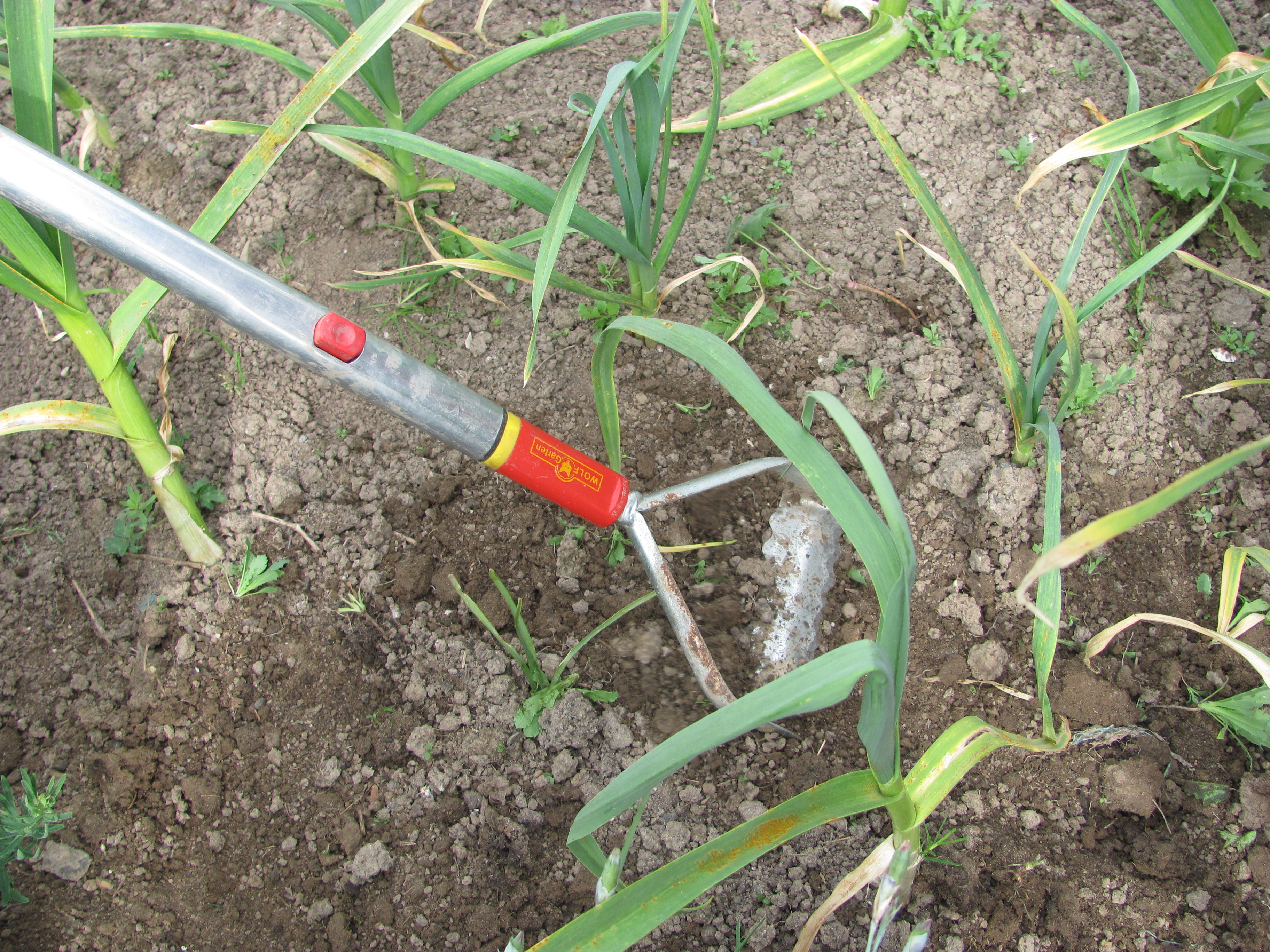
Another important way of managing the watering of your plot is to ensure it is always free of weed material. Weeds will use up moisture that would otherwise be available to crops. Using a hoe regularly is the best method to employ as keeping the surface loose helps rainwater get below the surface.
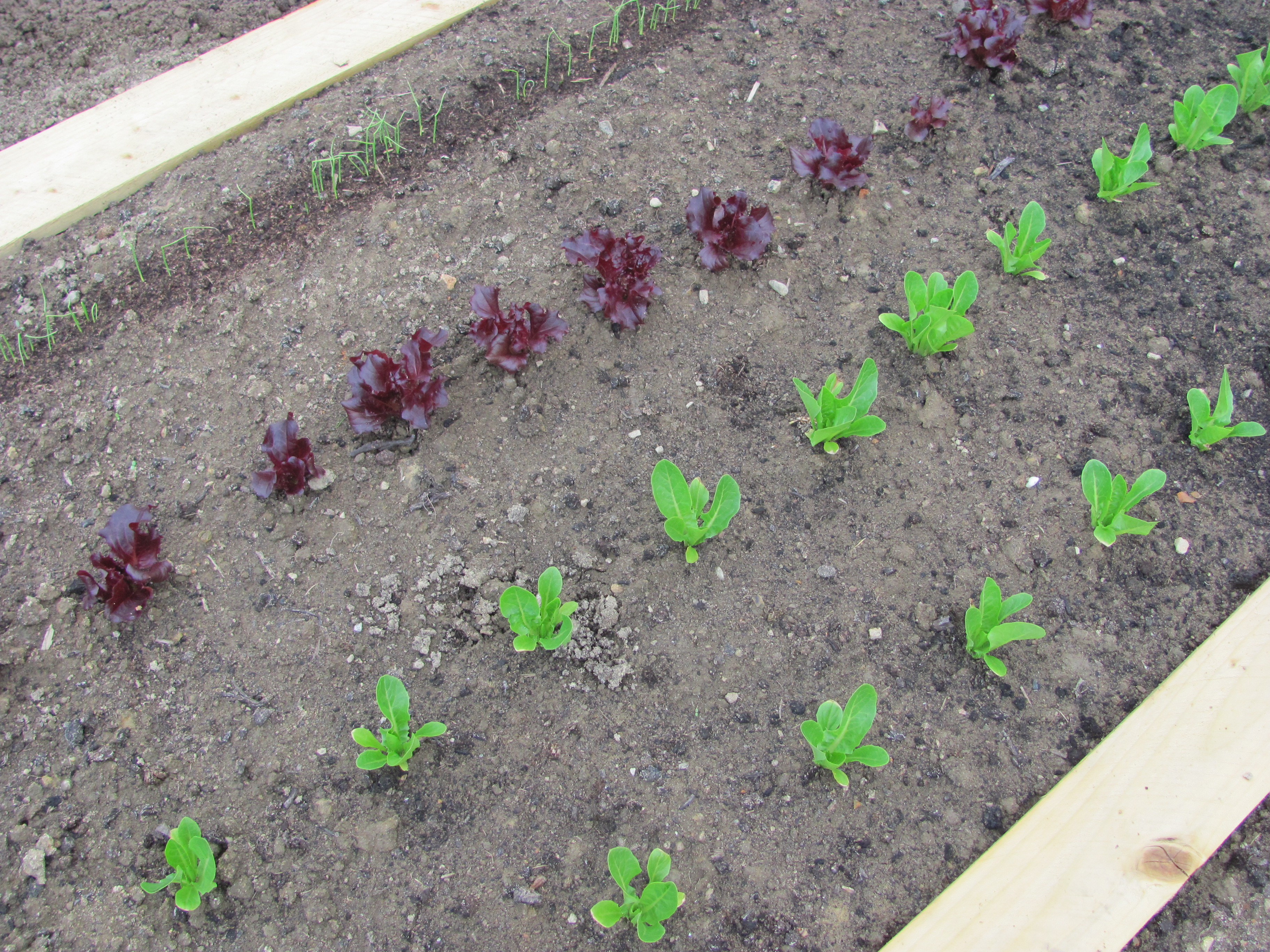
Growing your fruit trees as cordons on the windward side of your plot cuts down on evaporation. Alternatives are flower borders or a row of root artichokes.
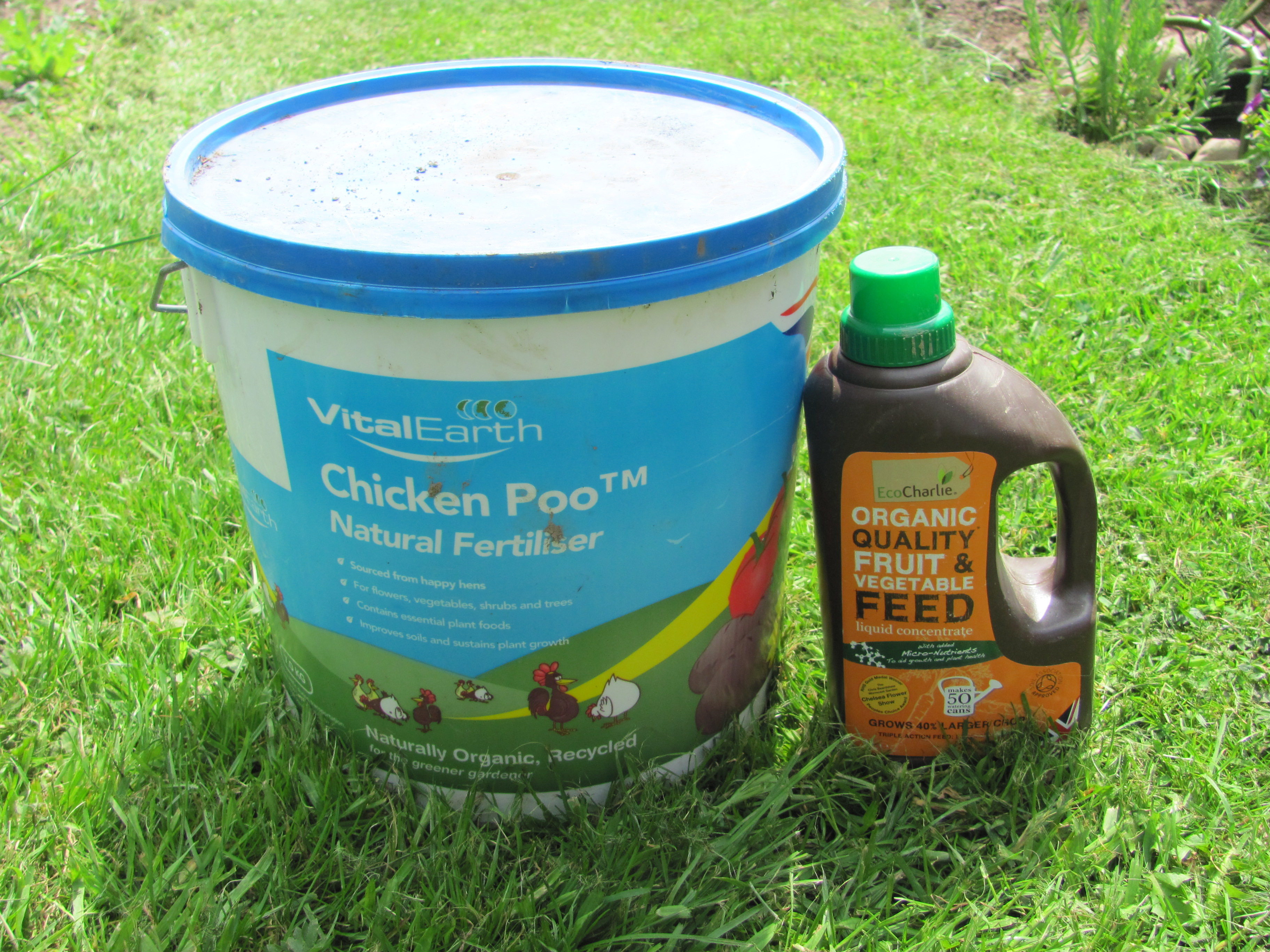
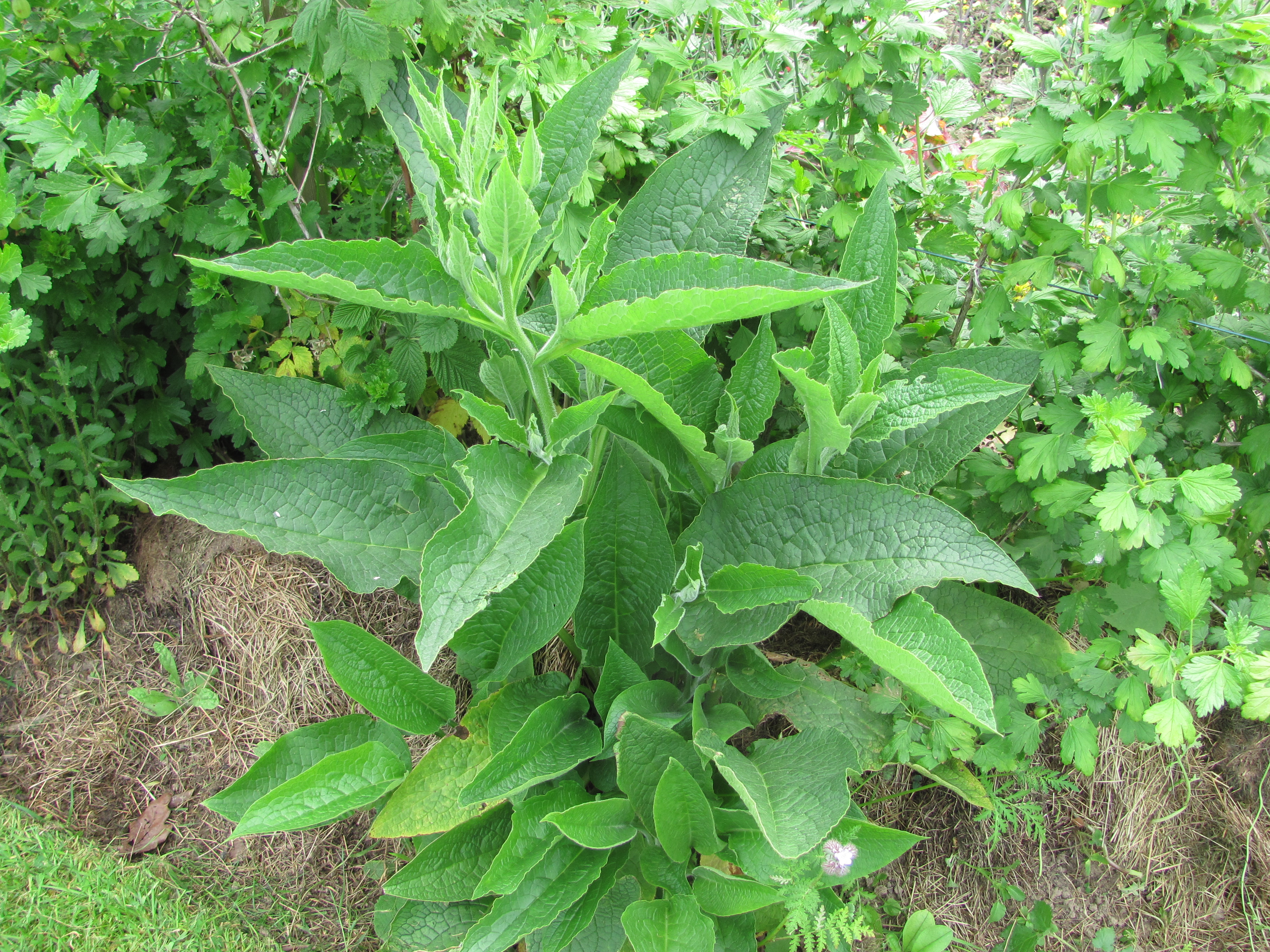
Strong, healthy plants will survive dry periods better and newly planted quality plants will establish without regular bouts of watering. To ensure plants are as healthy as possible feed them with natural, organic feeds rather than chemical based fertilisers. Growing your own fertilisers is even possible. Comfrey can be grown and regularly cut, soaking the leaves and stems in water for a few weeks produces a free and effective feed when watered down to the colour of weak tea. The leaves can also be utilised as a mulch placed directly below fruit trees and bushes.
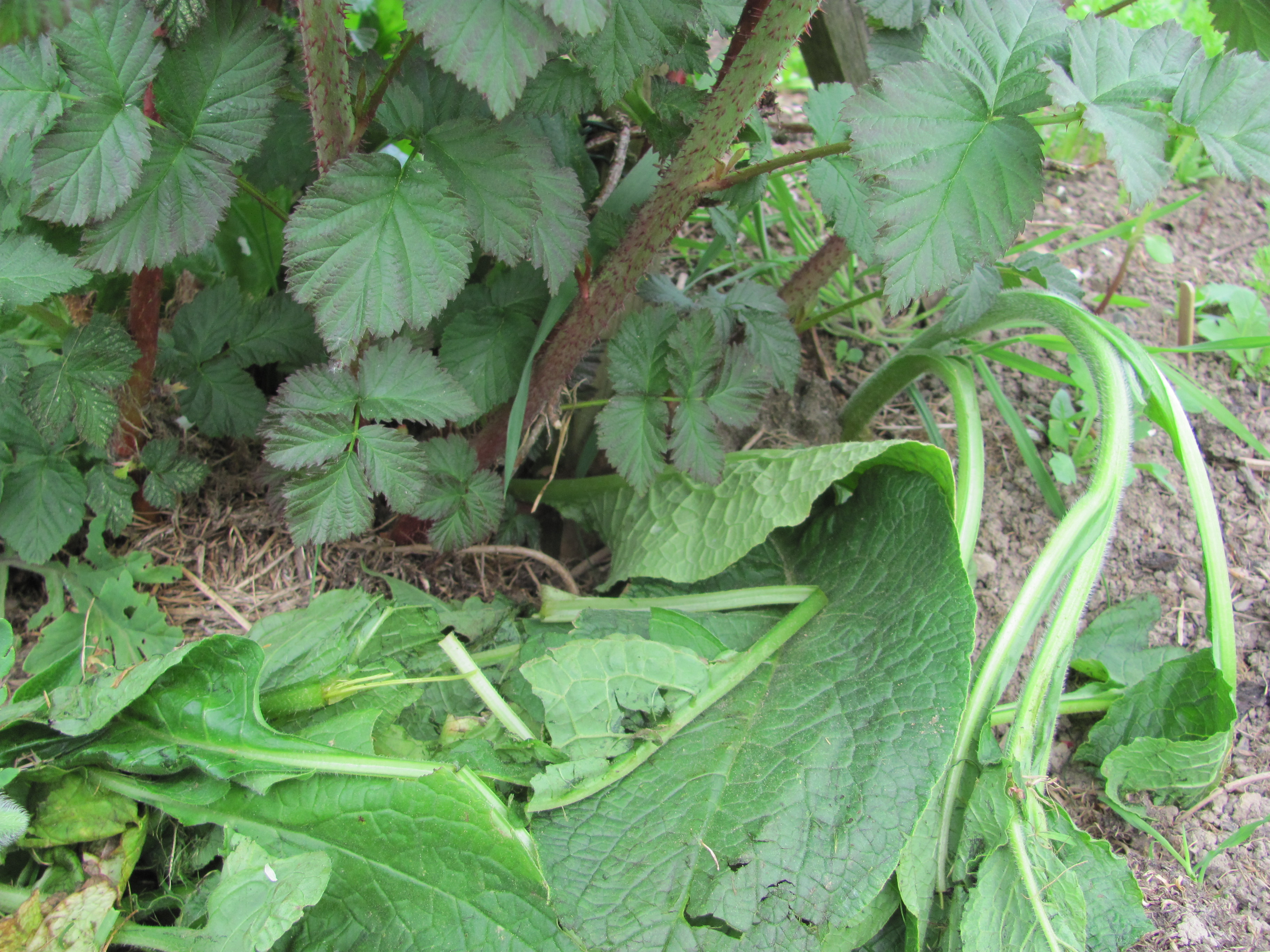
The way the plants are watered is also an important factor in determining how much water is used. Watering with a hose all around rows of plants is wasteful as most of the water lands on the bare soil and not where plants can use it. To ensure that plants can take up and use as much water as possible, it is best to water from a can without a rose and direct the flow of water towards the base of the plants.
When your potatoes need earthing up, add a layer of fresh grass cuttings before the soil as this will help retain moisture as the potatoes are forming.

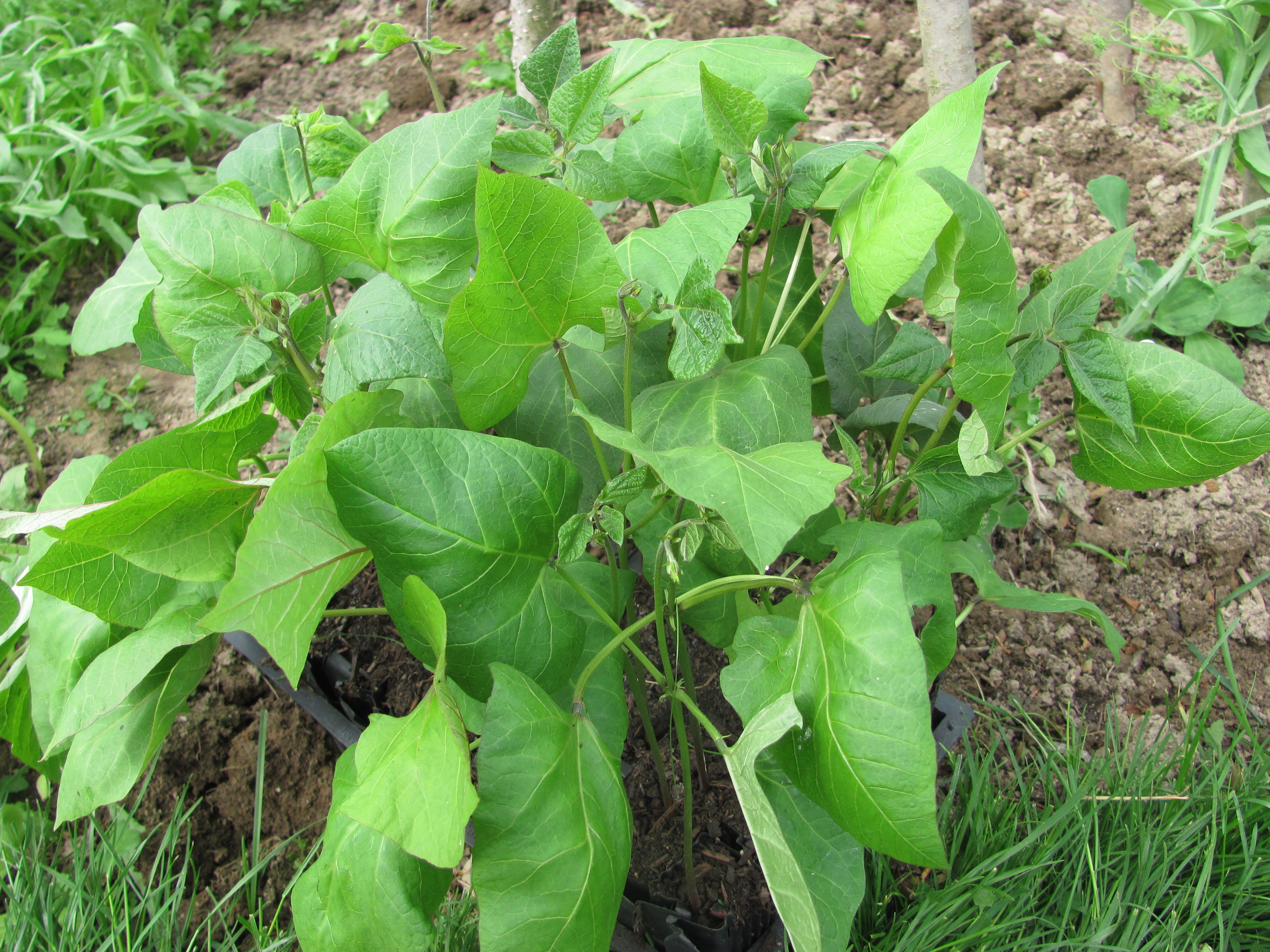
I tried to work out the most water-efficient way of planting out our vegetable plants and used runner beans as an example. The first point is to ensure your plants are strong and healthy.
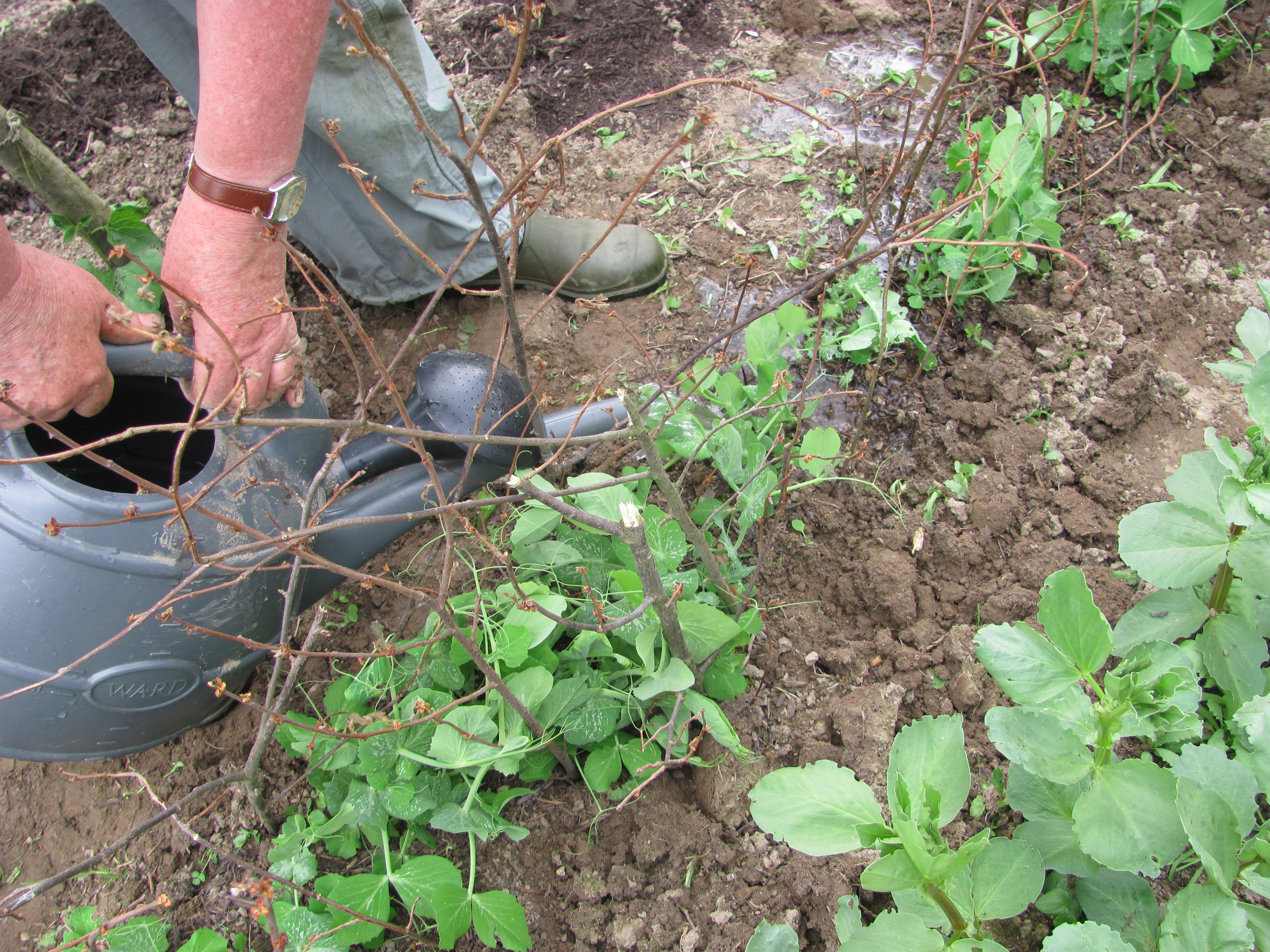
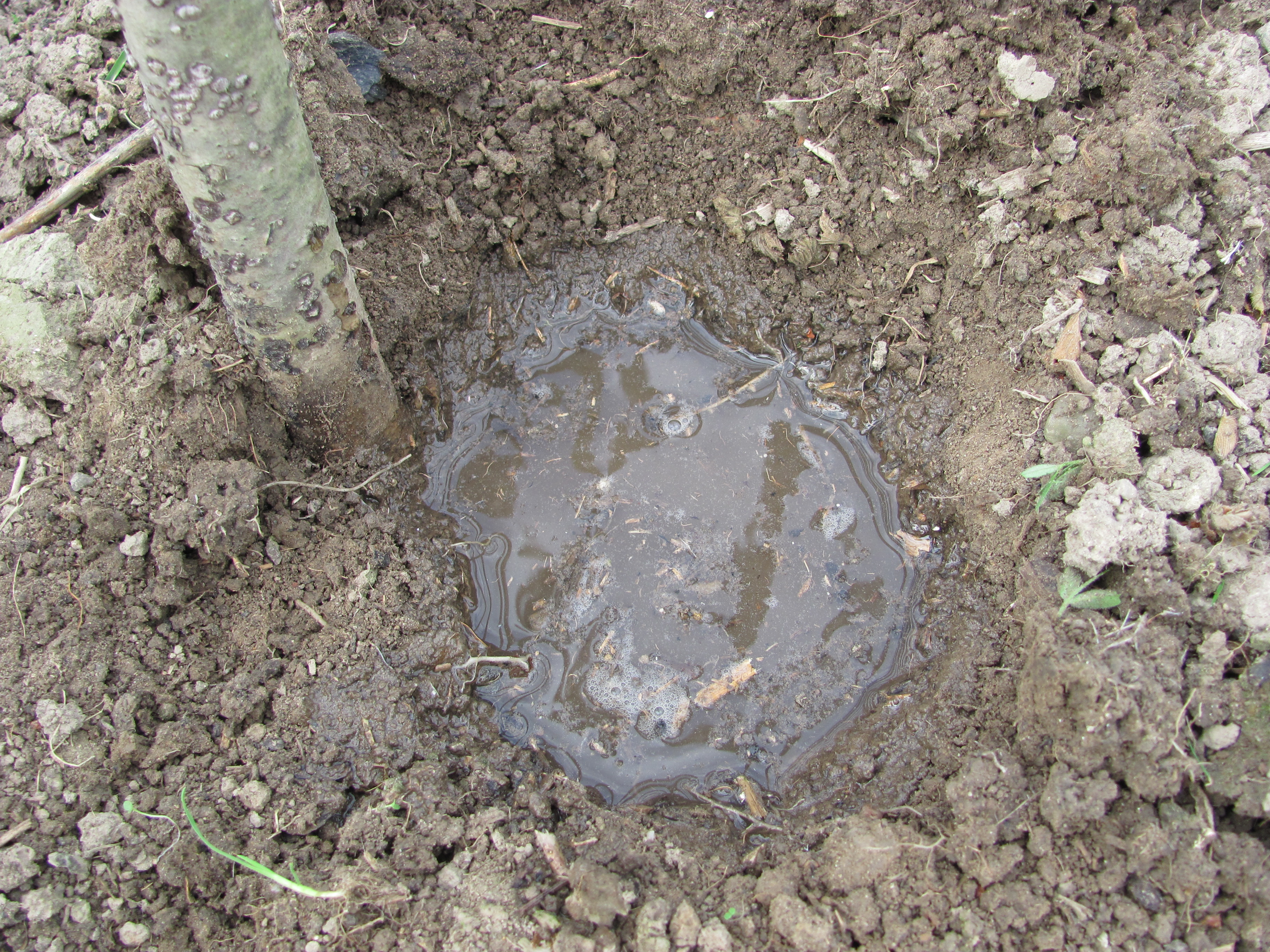
Take out your planting hole and fill with water from a watering can – I also add some comfrey feed to this. Let the water drain away and repeat the process.
Place the plant in the hole and water yet again after firming soil back in around it.
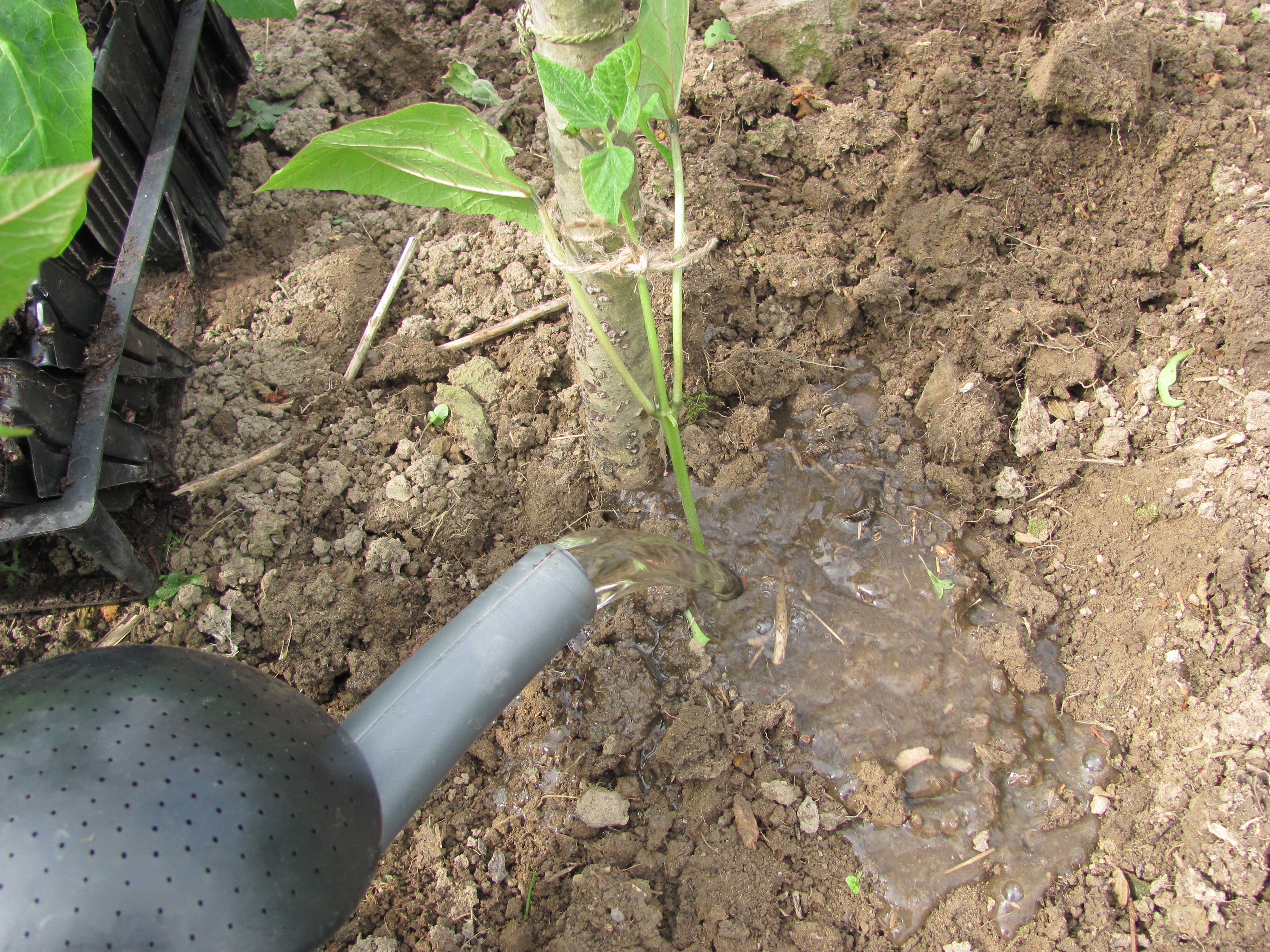
Add a good layer (at least 2 inches deep) of compost to keep the moisture in as the plant establishes. This helps the plants settle in as it is getting its roots down.

Form a trench alongside the row of plants to collect any rainfall and direct it towards the plants.
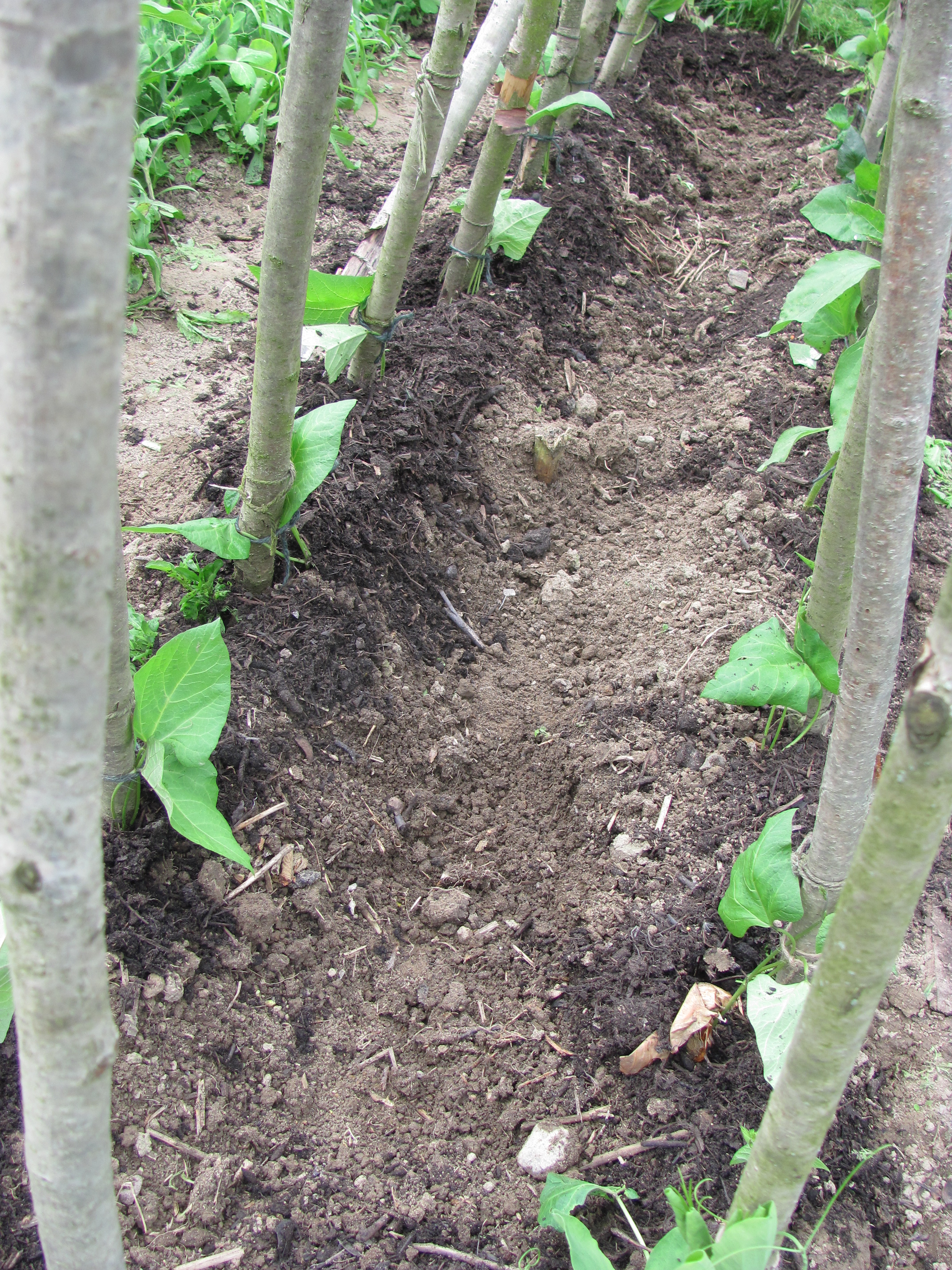
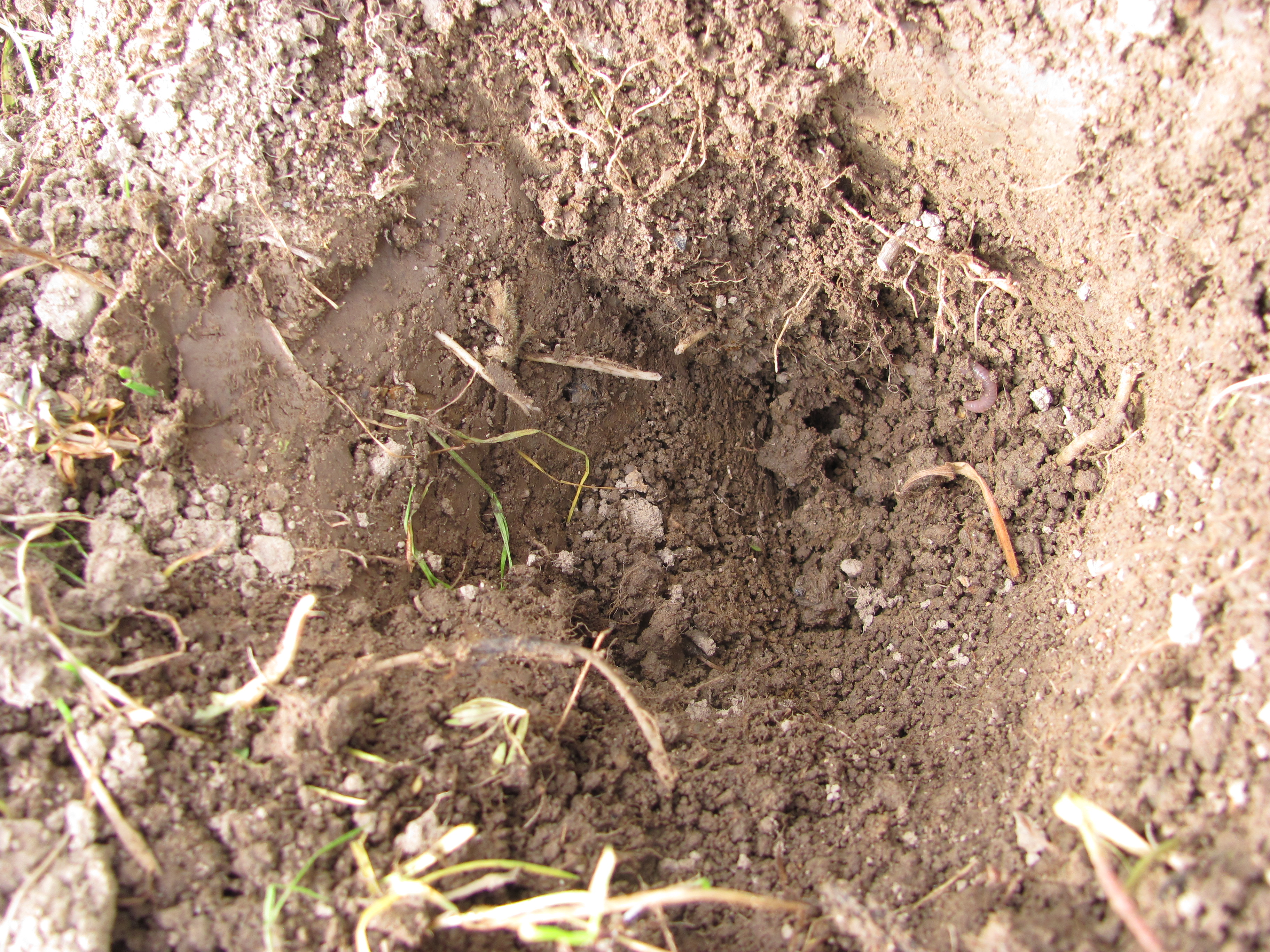
Before you decide to water your plants take out a trowel depth of soil close to your plants and see if it is moist below the surface. If it is then do not water. This water in the soil down to about 6 inches is the moisture that plants will be using. Conversely if you water the surface it will just attract roots upwards to search for it. Remember then that watering over the soil surface with a hose will make plants shallow rooting.
There are lots more ideas on the website. In this year of drought following last year’s almost desert levels of rain, our water table in this part of Shropshire around the allotments is about 2 feet lower than it should be so however much rain there appears to be falling we need lots more.

I would love to hear of more ideas that I can share with our allotmenteers!
Categories
allotments birds community gardening conservation fruit and veg garden design garden photography garden wildlife gardening grow your own hardy perennials Land Art meadows natural pest control ornamental grasses ornamental trees and shrubs outdoor sculpture photography poppies roses Shropshire shrubs spring gardening wildlife

A Wander around the Allotments in June

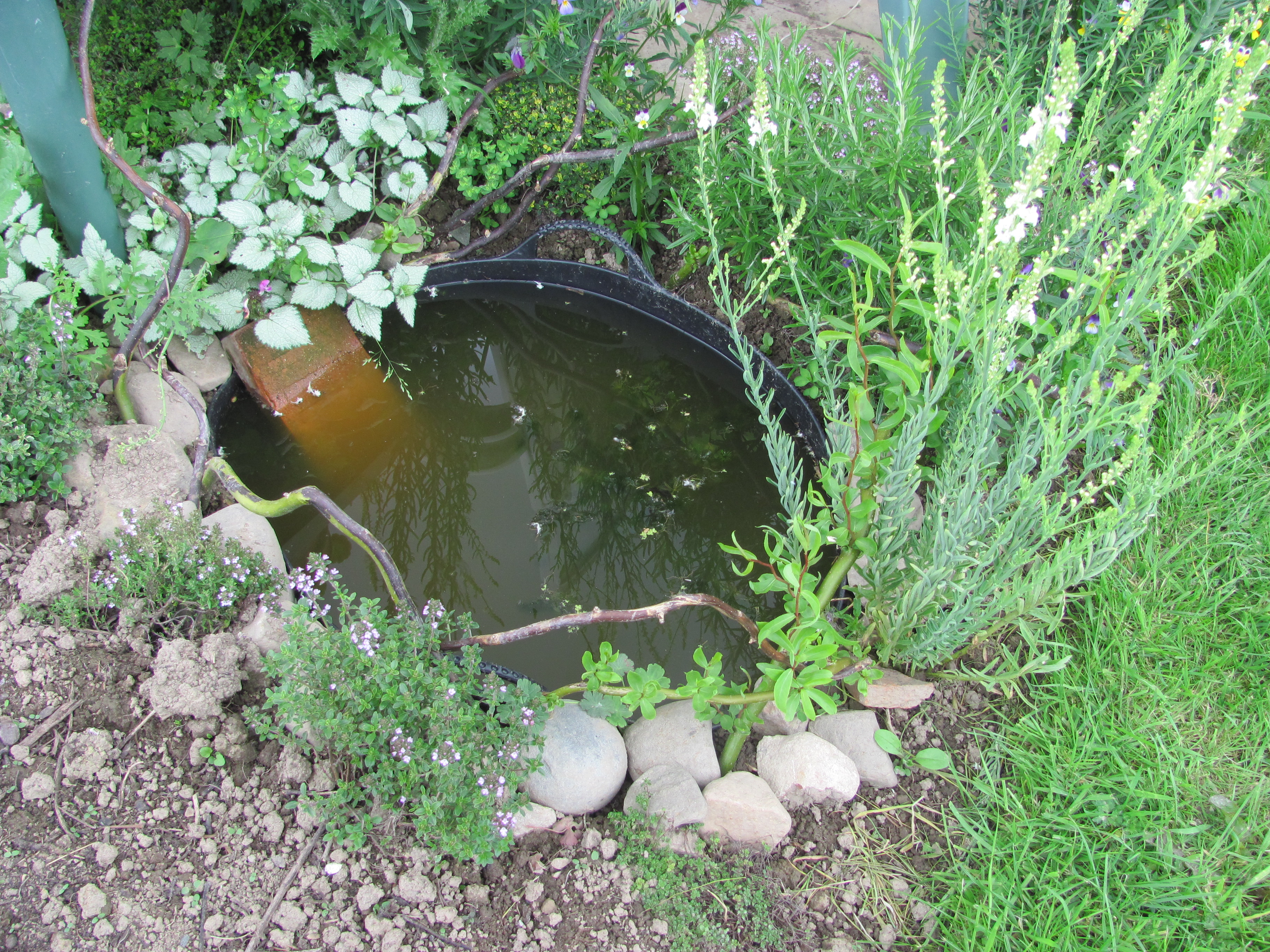
Here we are at the half way point of the year in the June allotment wanderings. As usual we shall start on our own plot to see what has been going on. Our little wildlife pond is beginning to look more established and the tadpoles are growing well. We hope the frogs stay on our plot and eat up all the slugs. As you can see we provided a little wooden ramp to help them get in and out of the water.

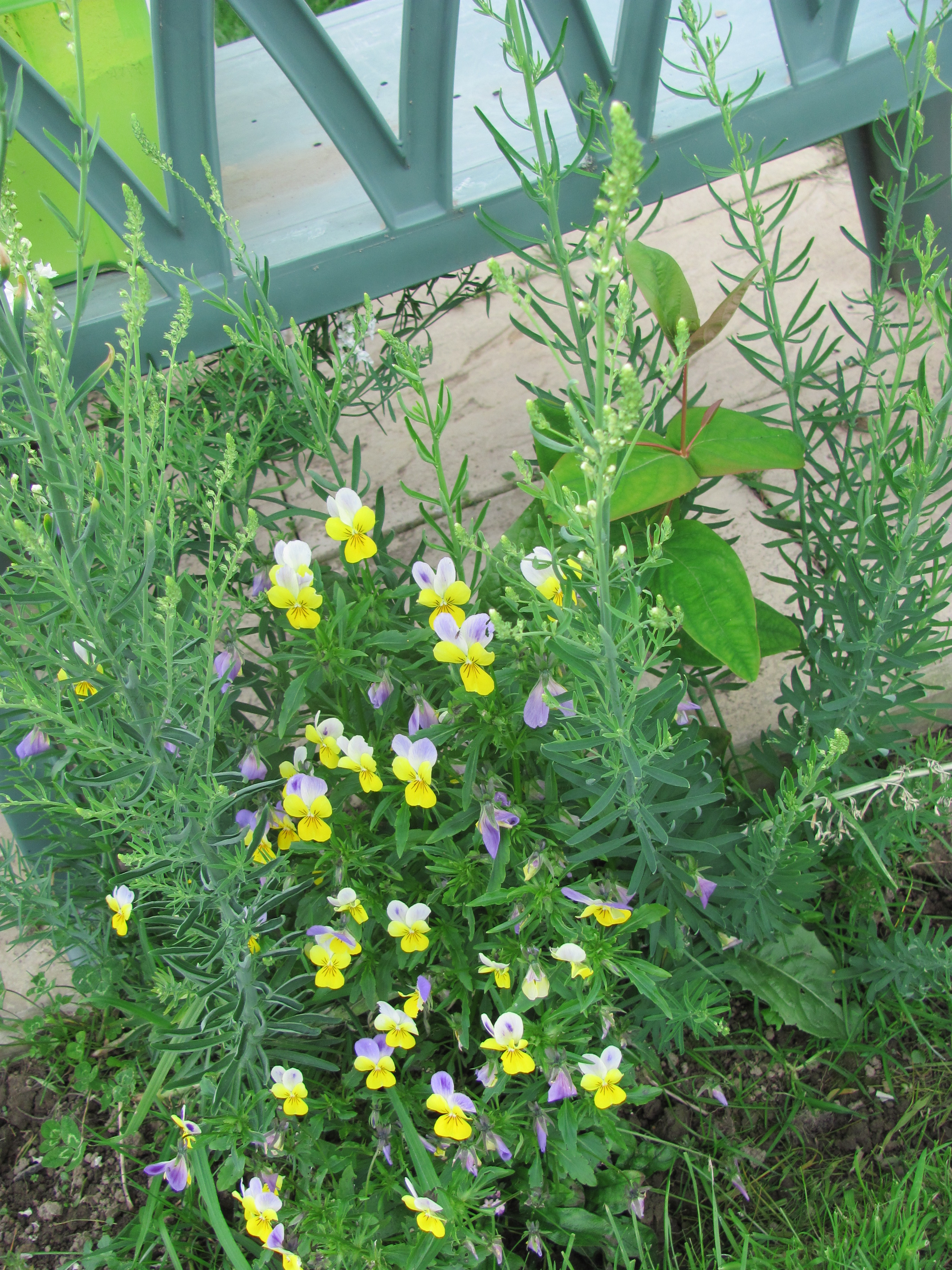
Heartsease self seed around the plot sometimes landing in suitable places arriving in a wide range of colours. This one seeded into the soil behind the green bench.

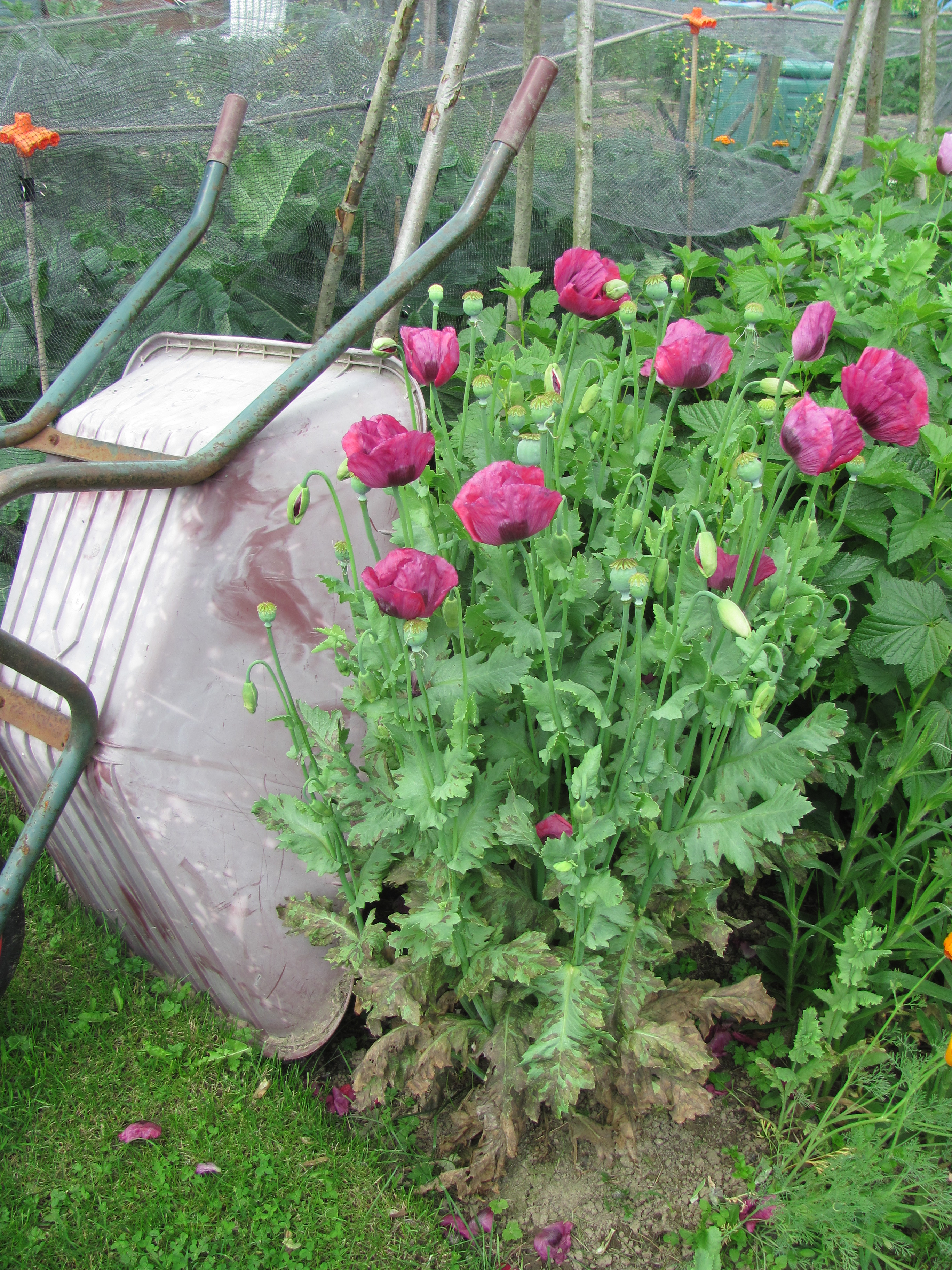
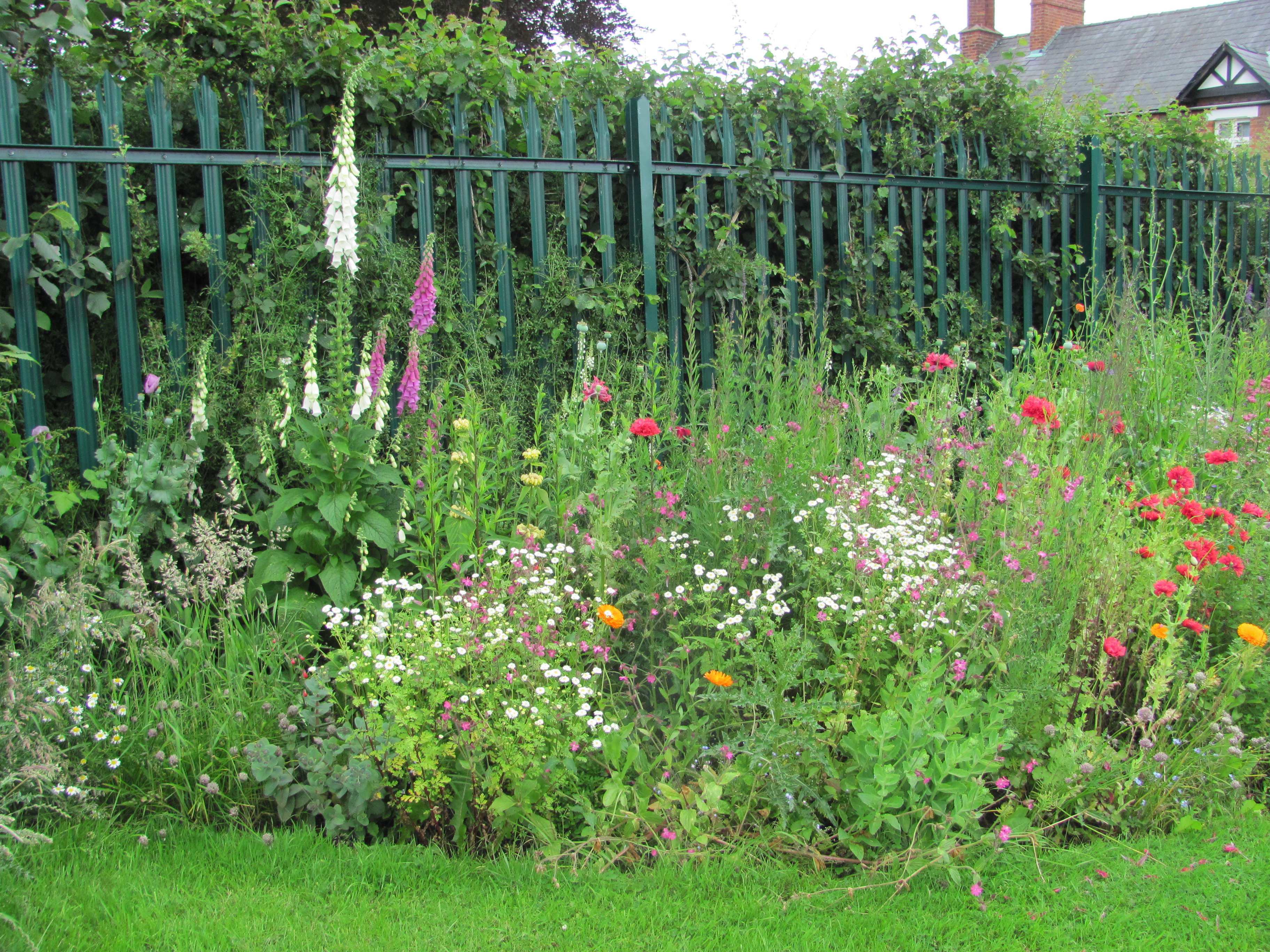
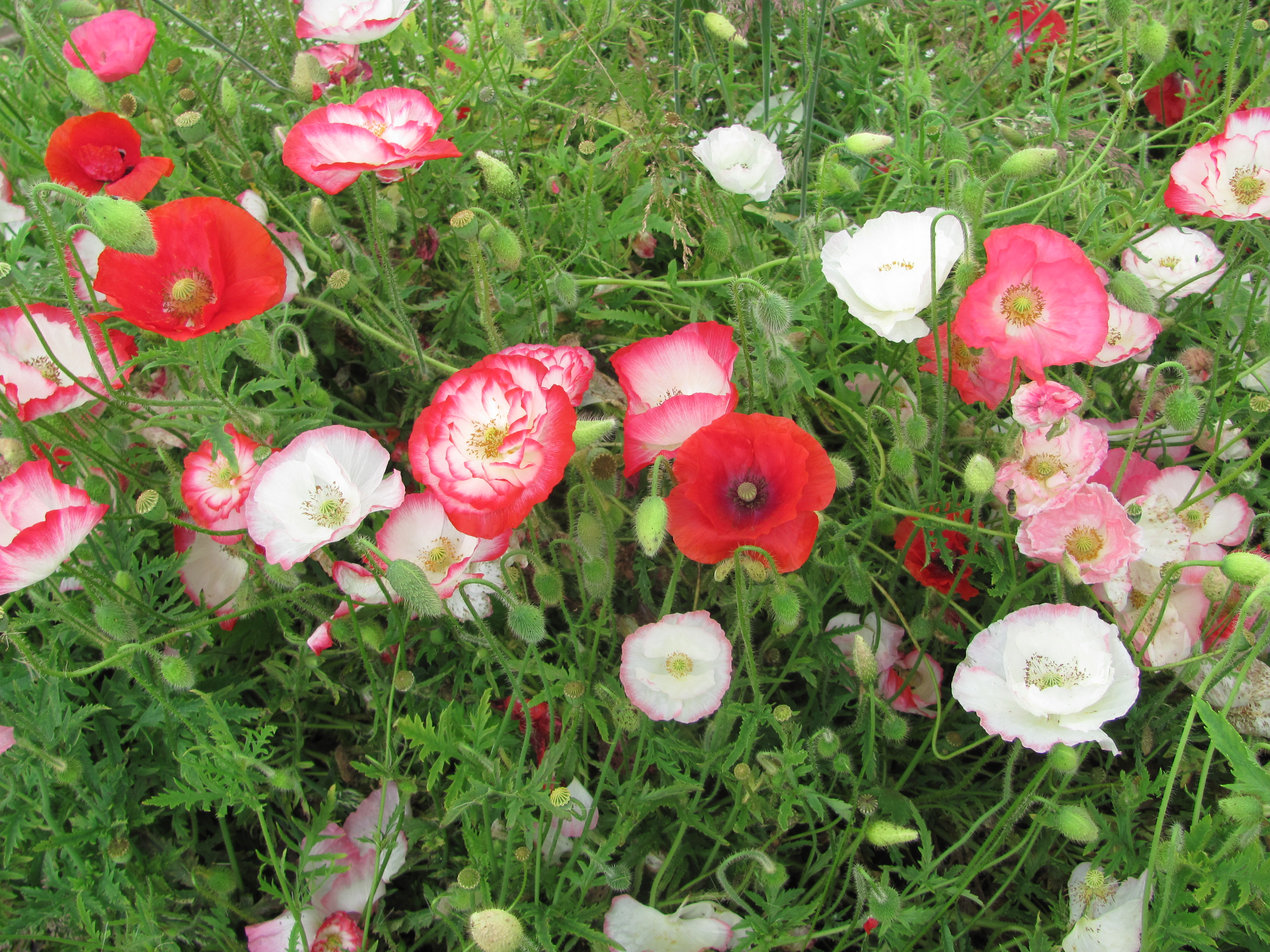
Our strip of wildflowers, a little piece of meadow, is beginning to flower. This Opium Poppy surprised us with its deep pink coloured petals.

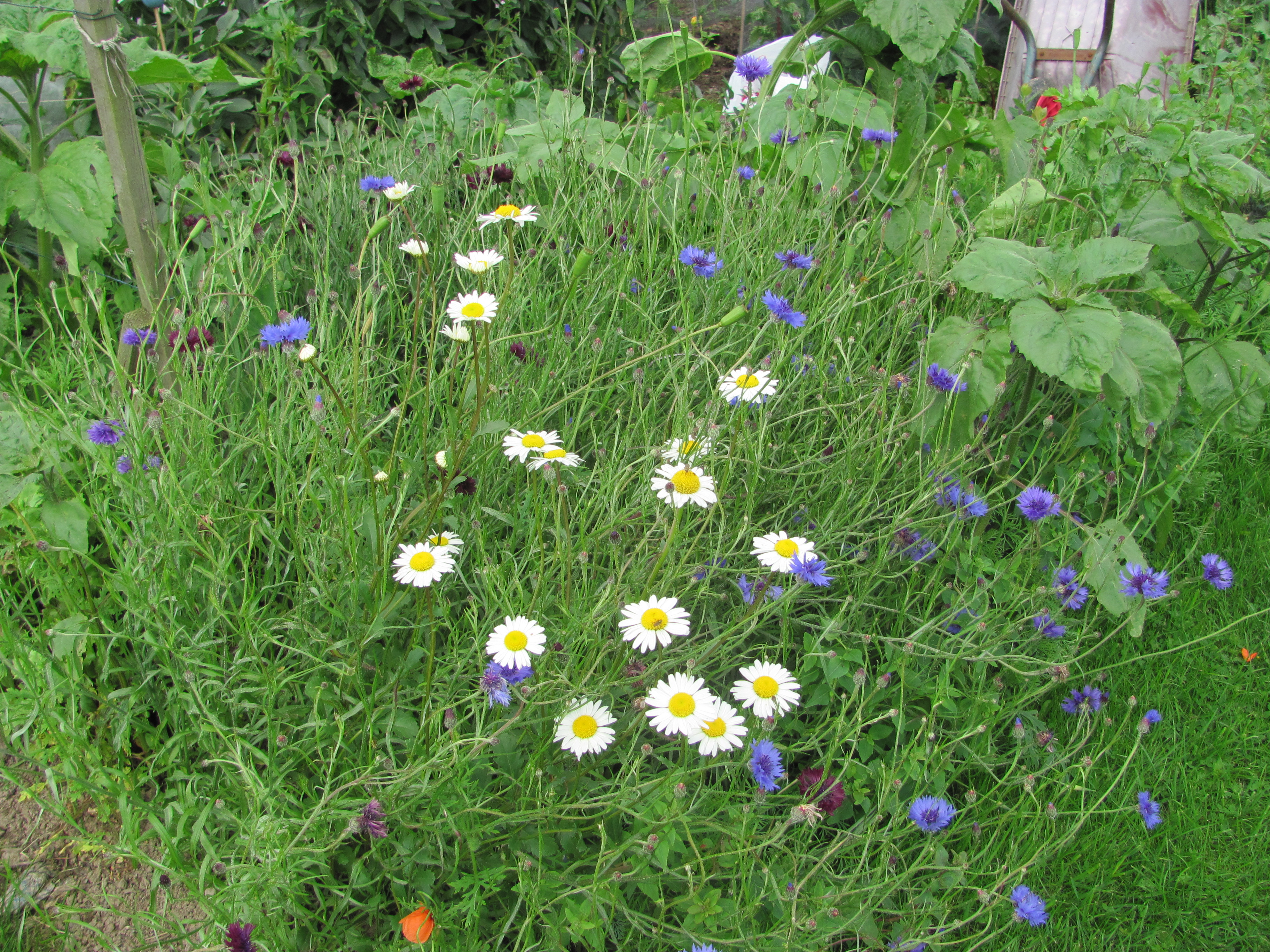
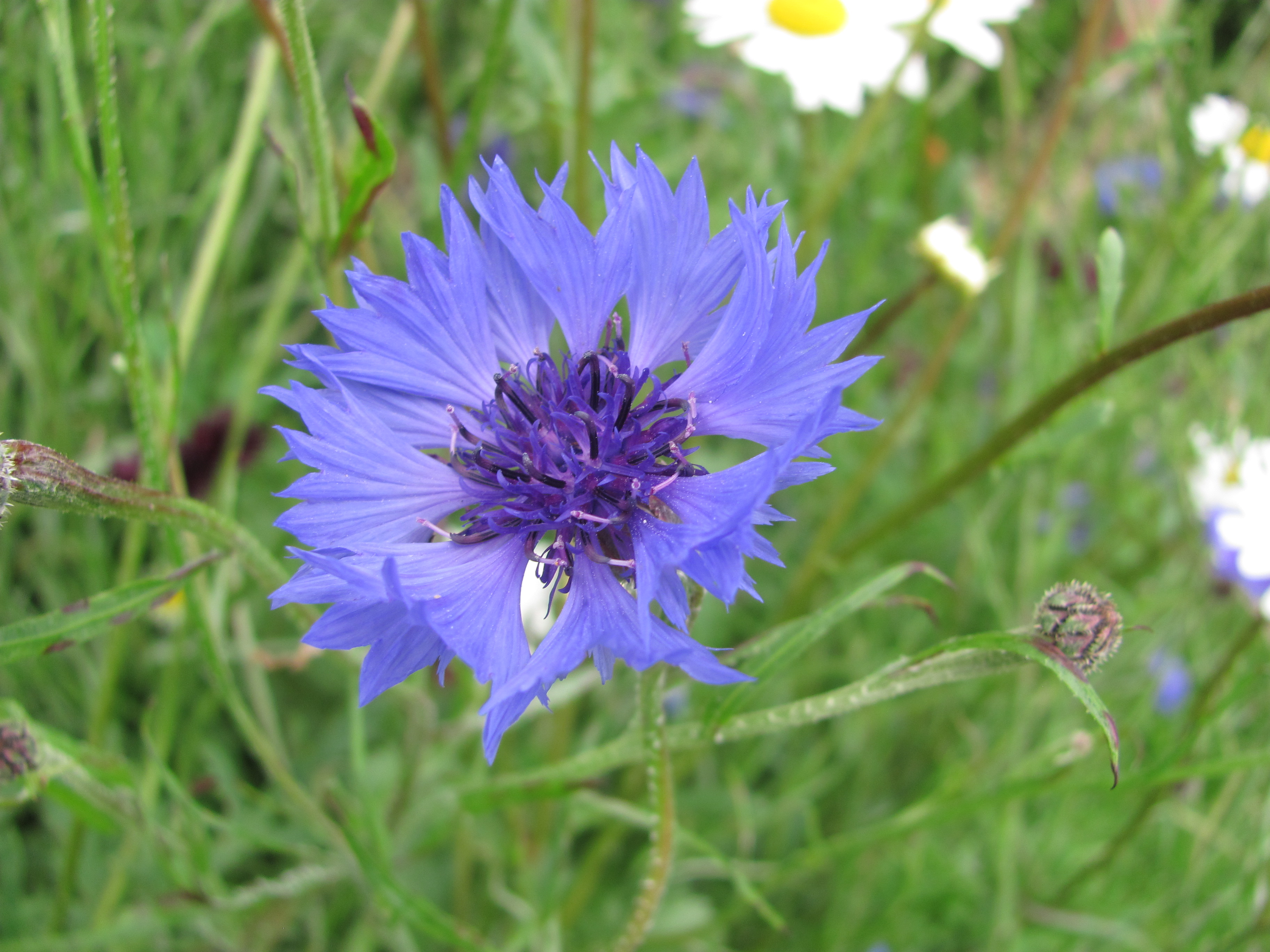
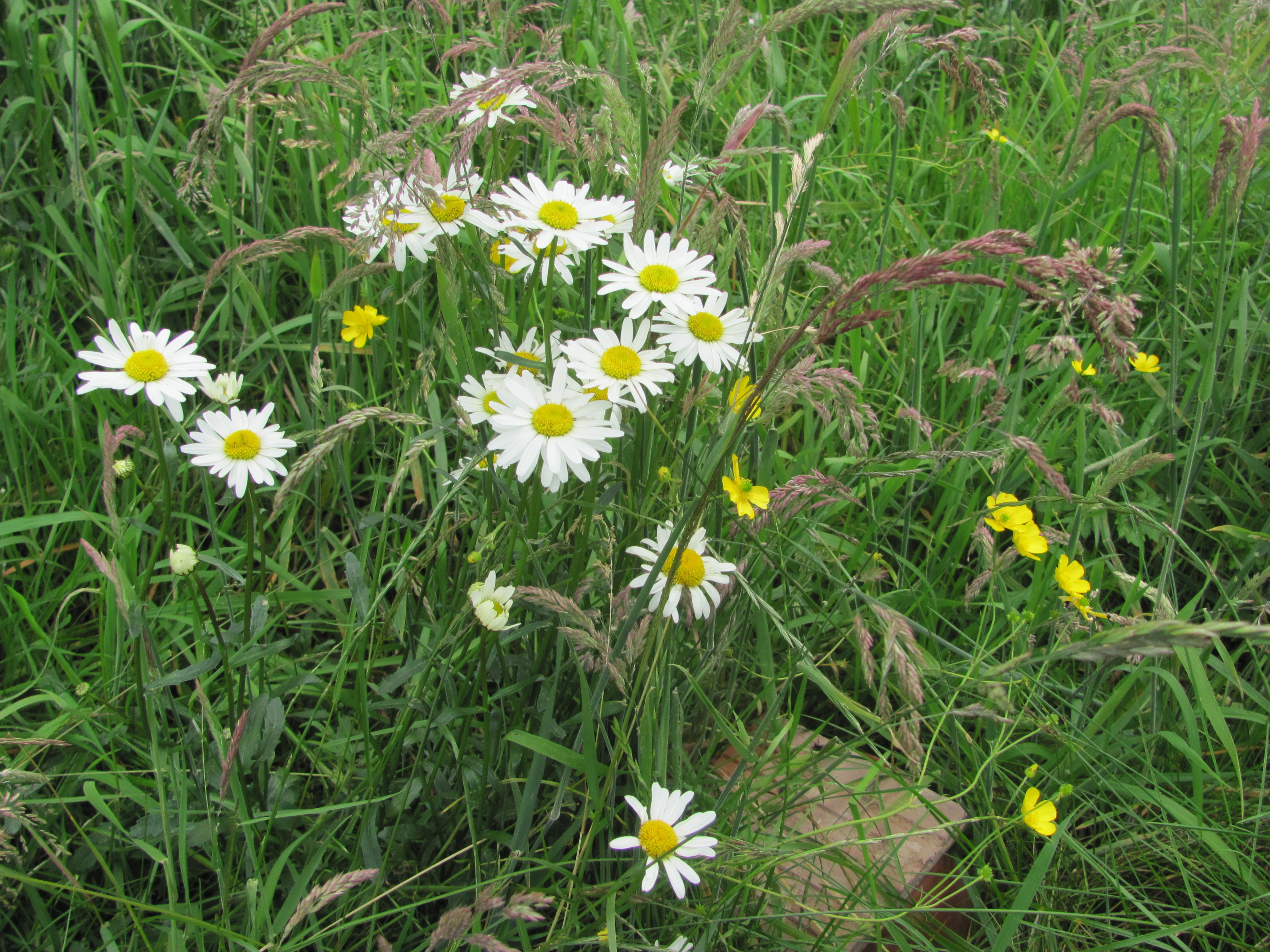
Moon Daisies and Cornflowers.

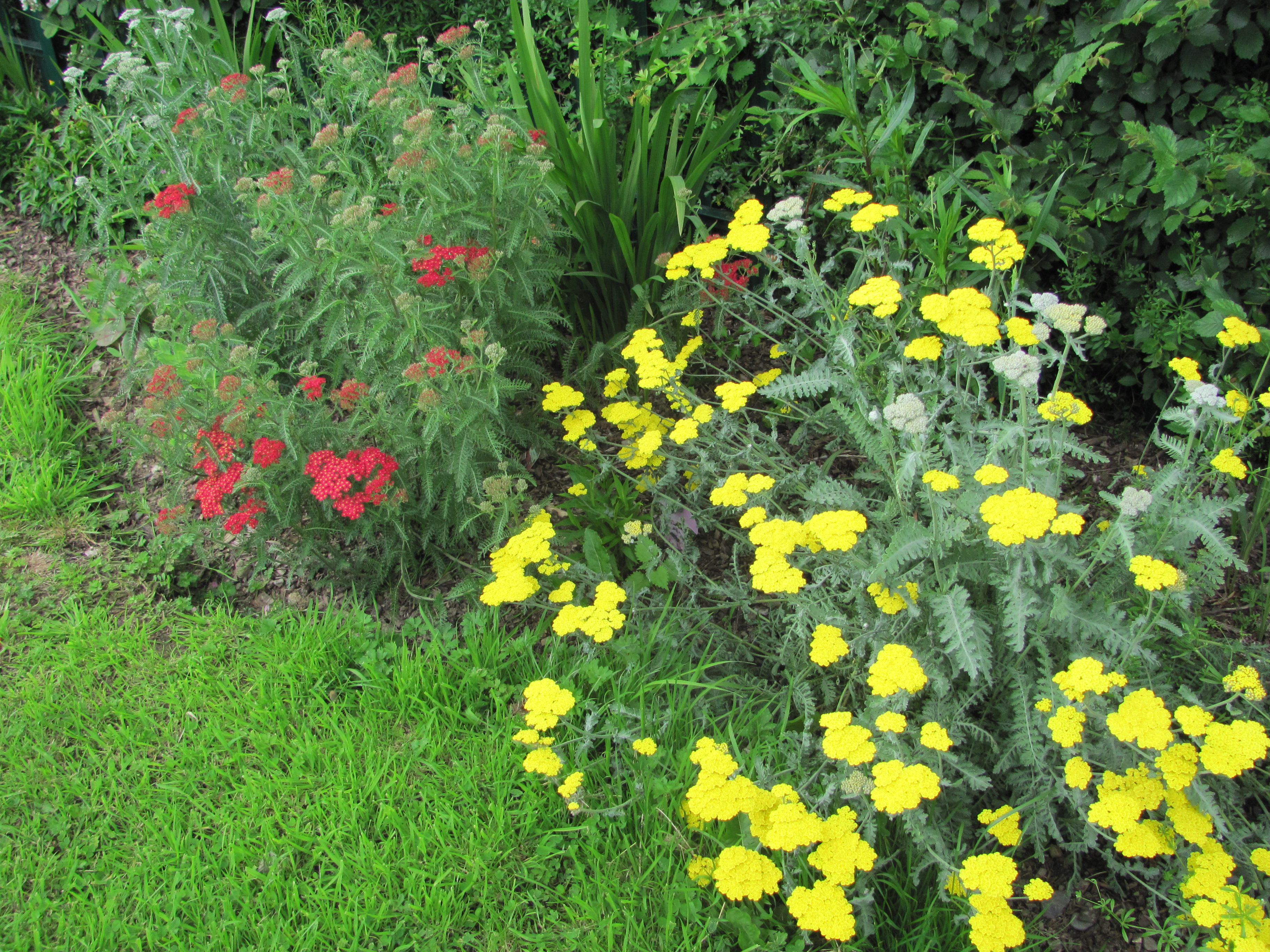
Just as flowers feature strongly on our own plot so they do on other members’ plots and in the Green Space borders. In the Autumn Garden Achilleas are the stars.

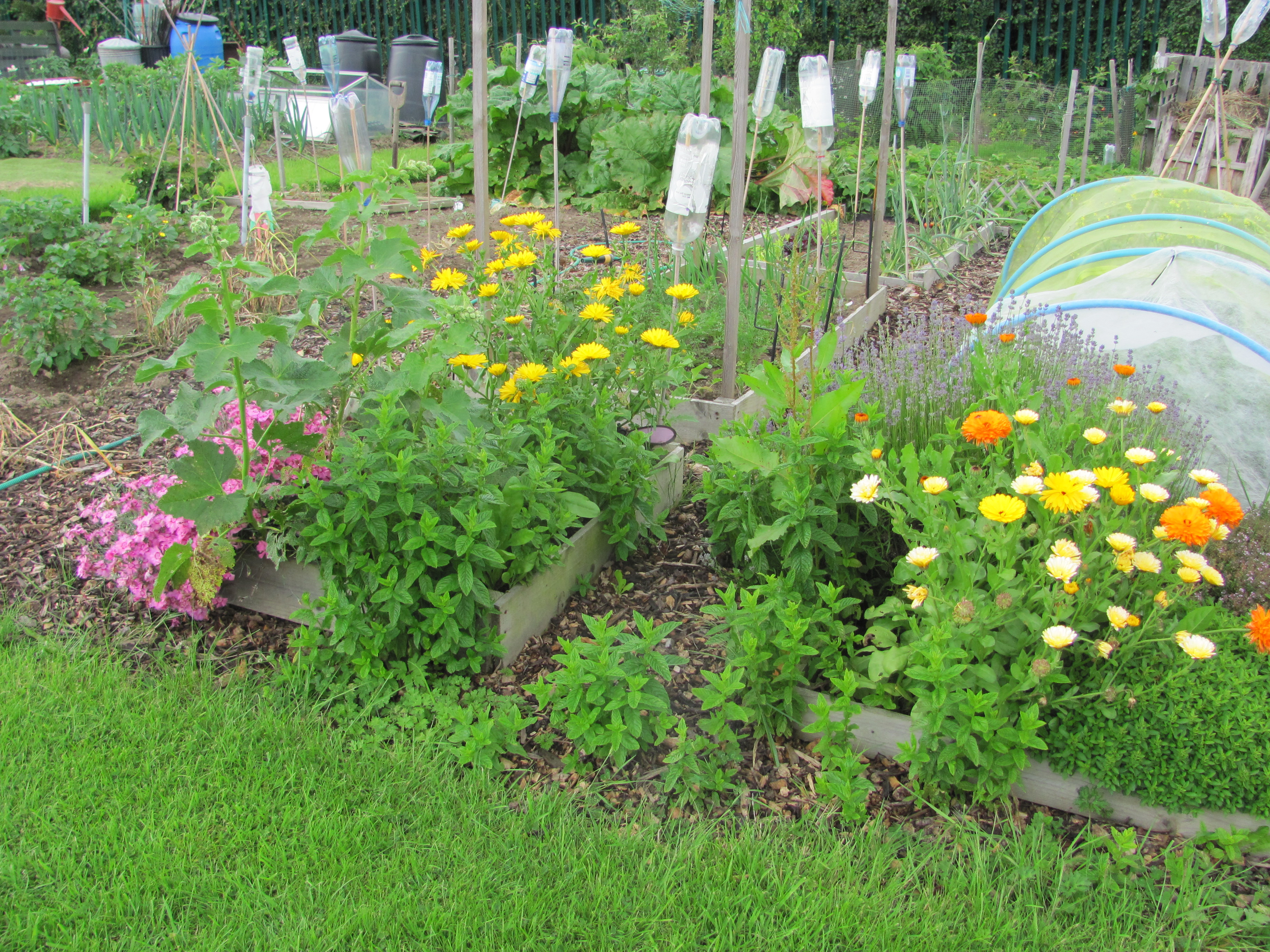
Calendulas feature on many plots as they look so good,  and work hard as part of companion planting helping to attract beneficial insects.

Our first “Buddleja Bed” planted to attract wildlife now looks colourful and full of life. After losing some of our Buddlejas in the dry last year when Shropshire experienced months of drought after two extremely cold winters, the name for these borders currently looks a little inappropriate.

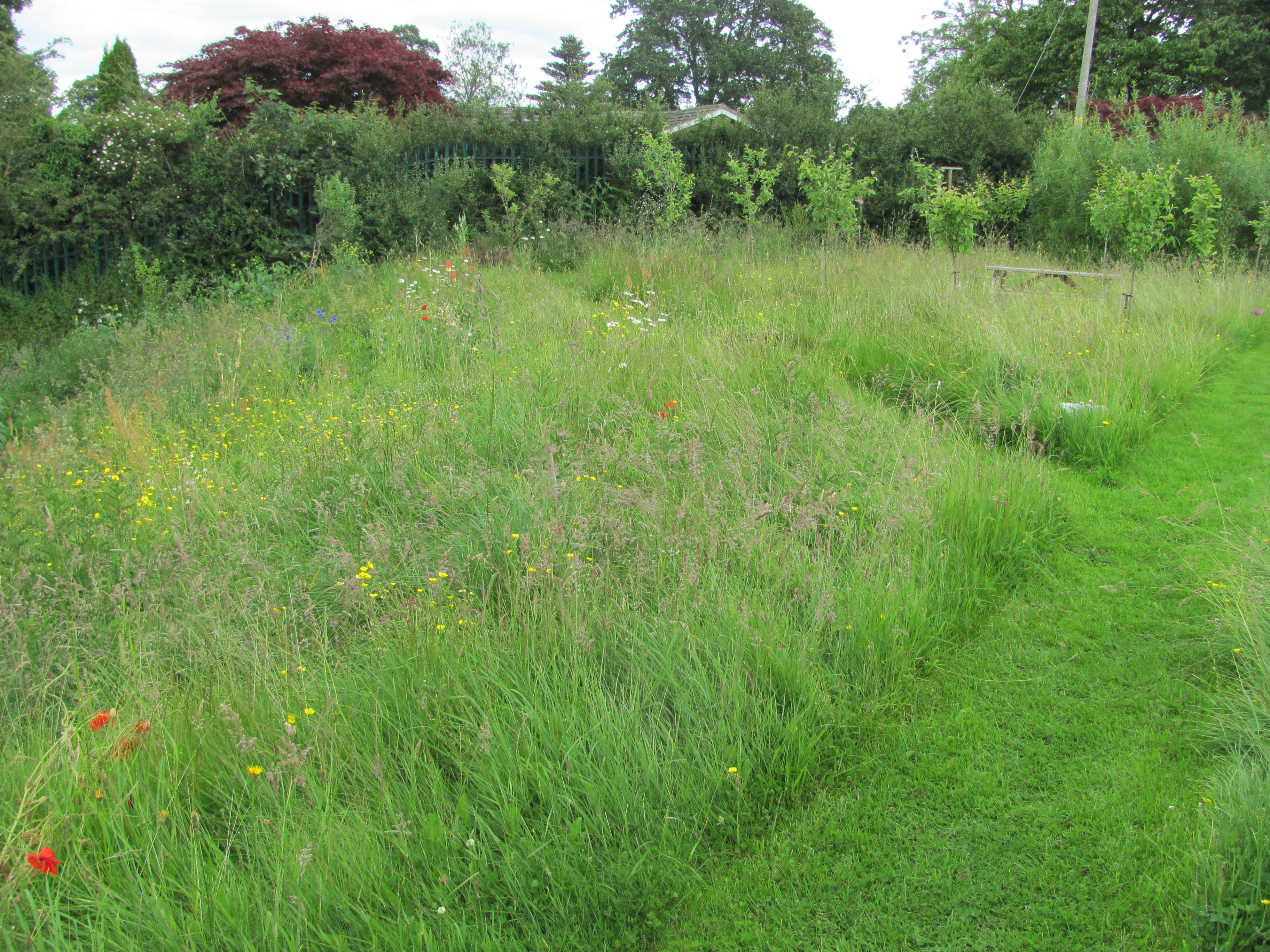
Our wildflower bank sloping up towards one of our orchards is now looking more established as we have added plants that members have donated to add interest.

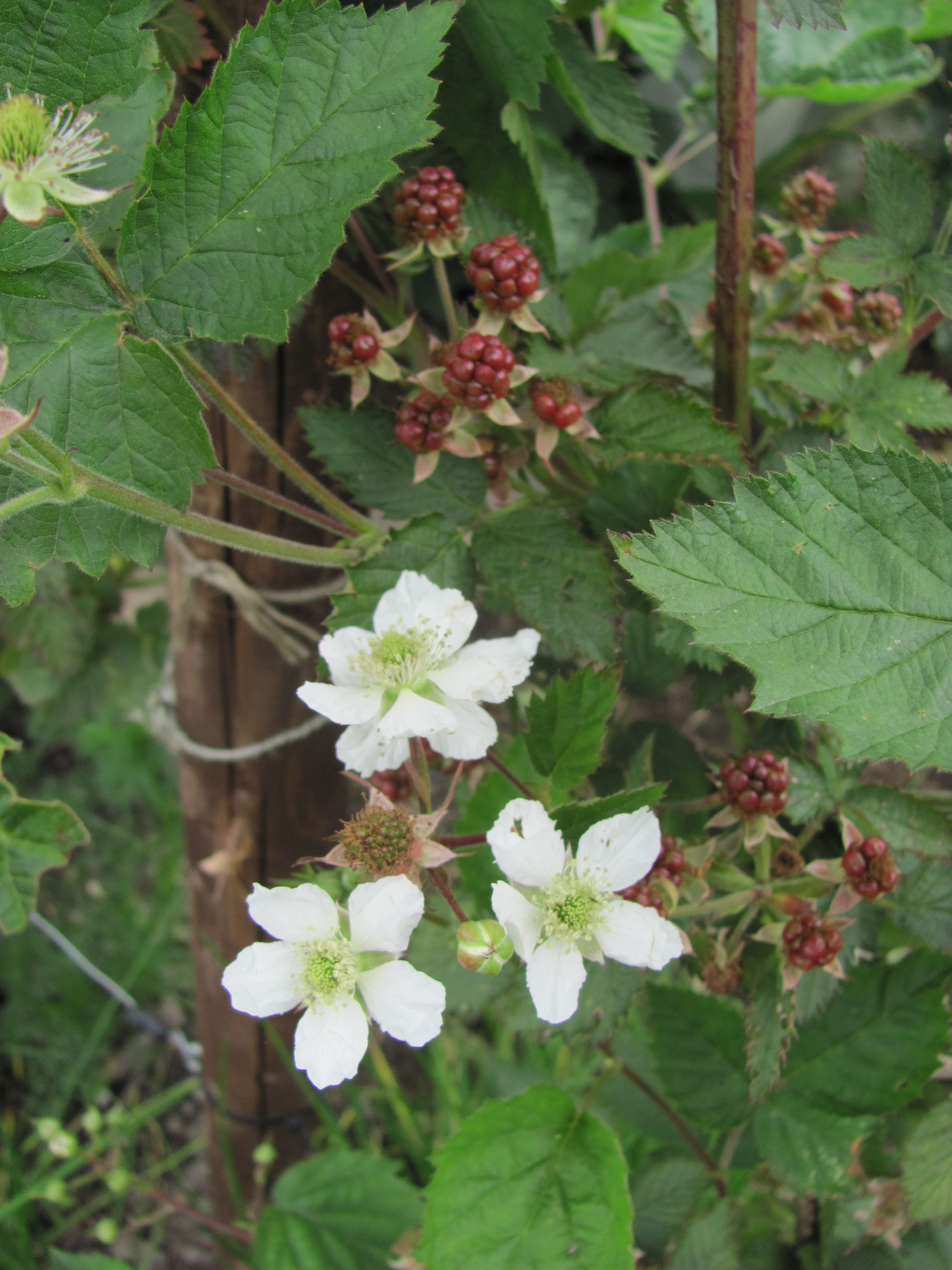
The Edible Hedge is now fruiting providing sustenance to birds and small mammals. Flowers in the borders at the base bring in bees, butterflies and beneficial insects. Beetles enjoy the long grass and we like them to be there as they feed on slugs.

The most colourful garden on site at the moment is the Spring Garden which still displays much interest as we move into the summer months. This garden is maintained by volunteers, Jill and Geoff who spend many an hour planting, dead heading and weeding.

Geoff and Jill’s plot is renown for its weed free neatness and precision planting.

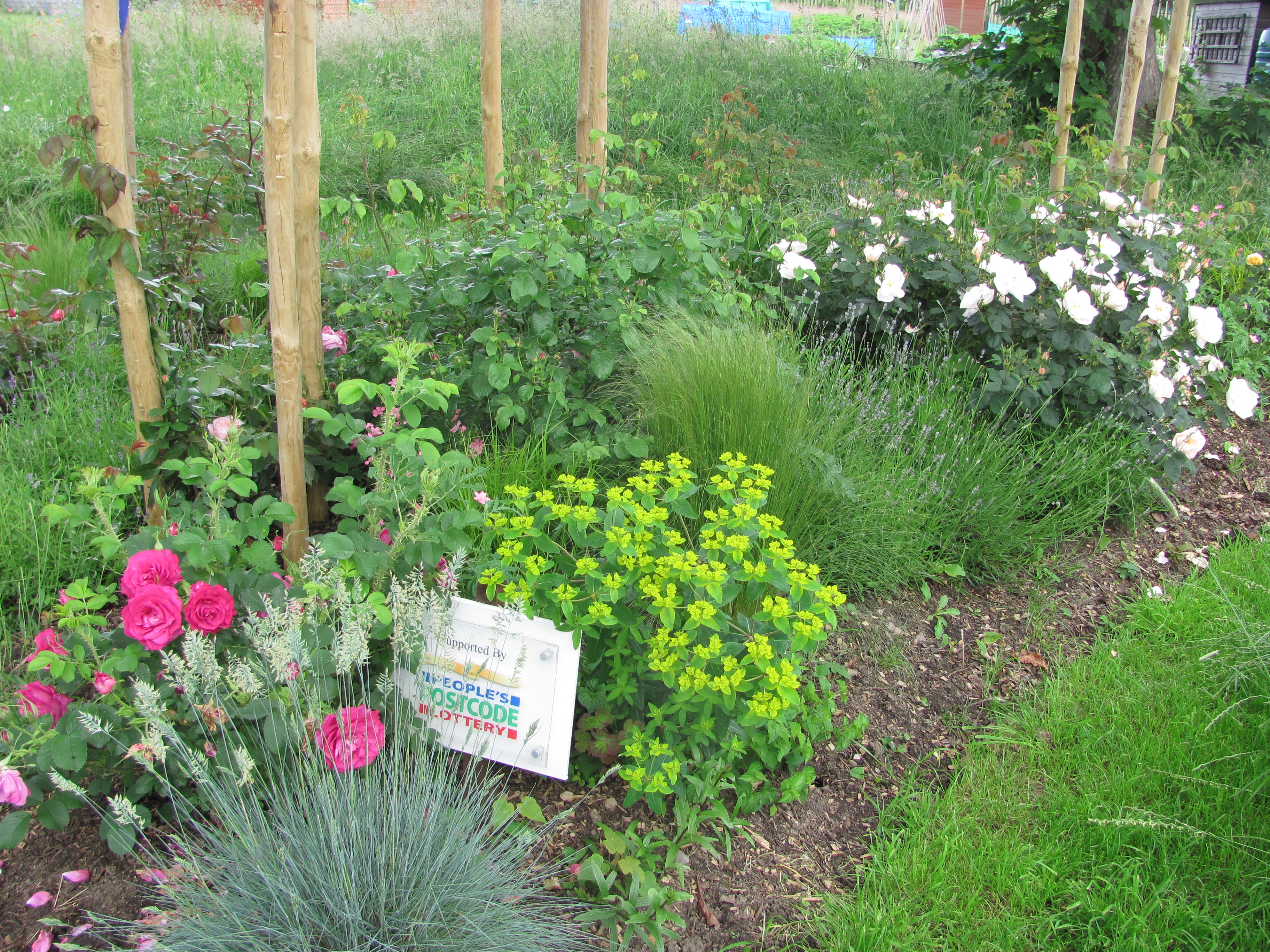
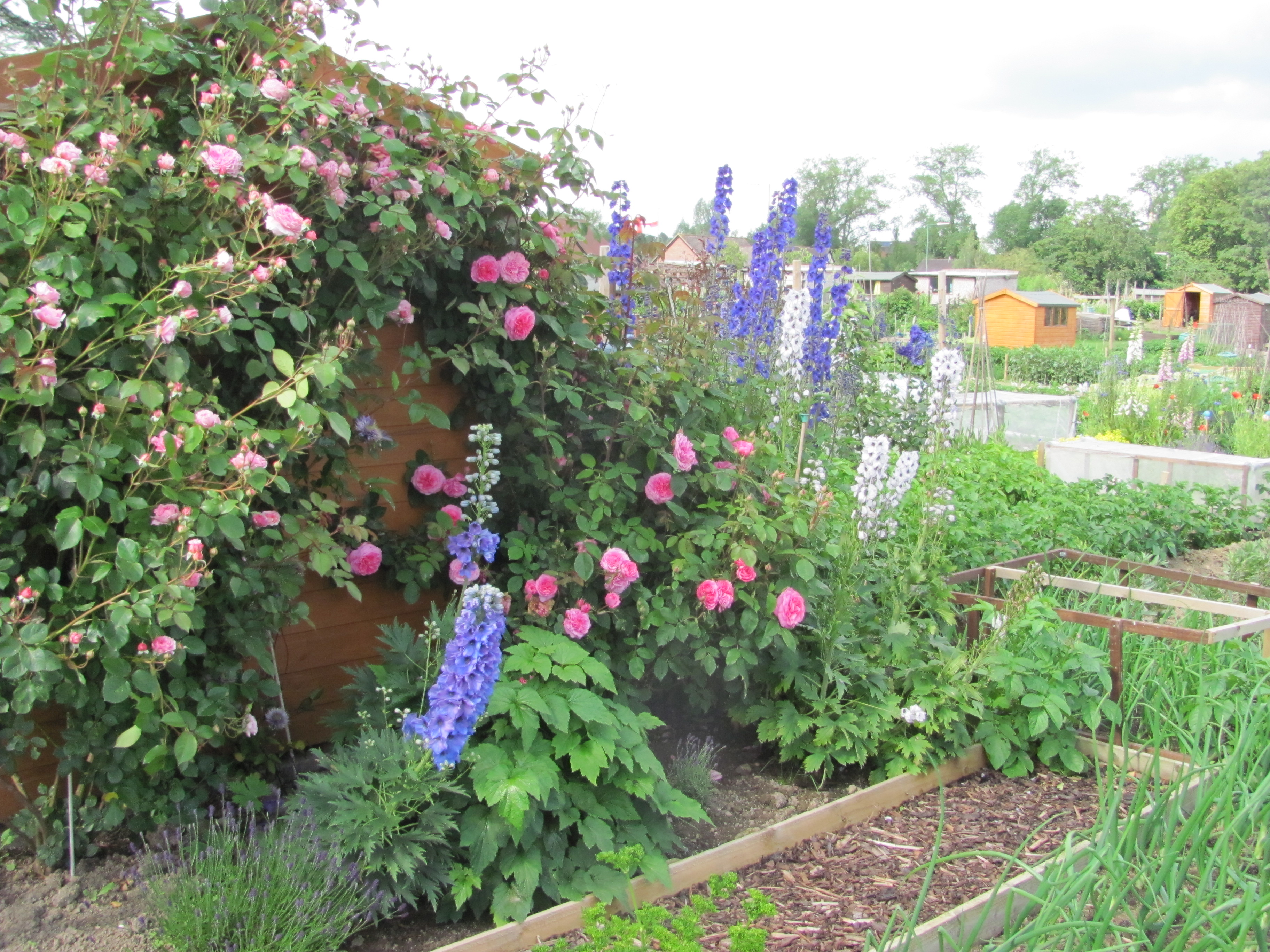
The Summer Garden  is not to be outdone though as the roses are coming into flower and beautiful scents greet us as we sit on the nearby picnic benches. The lavenders, geraniums and grasses planted between the roses add further interest and textures.

As June moves towards July our meadows really come into their own. Plot holders love to walk through them and a wide variety of birds, bees, butterflies, grass hoppers and every sort of mini-beast visit.

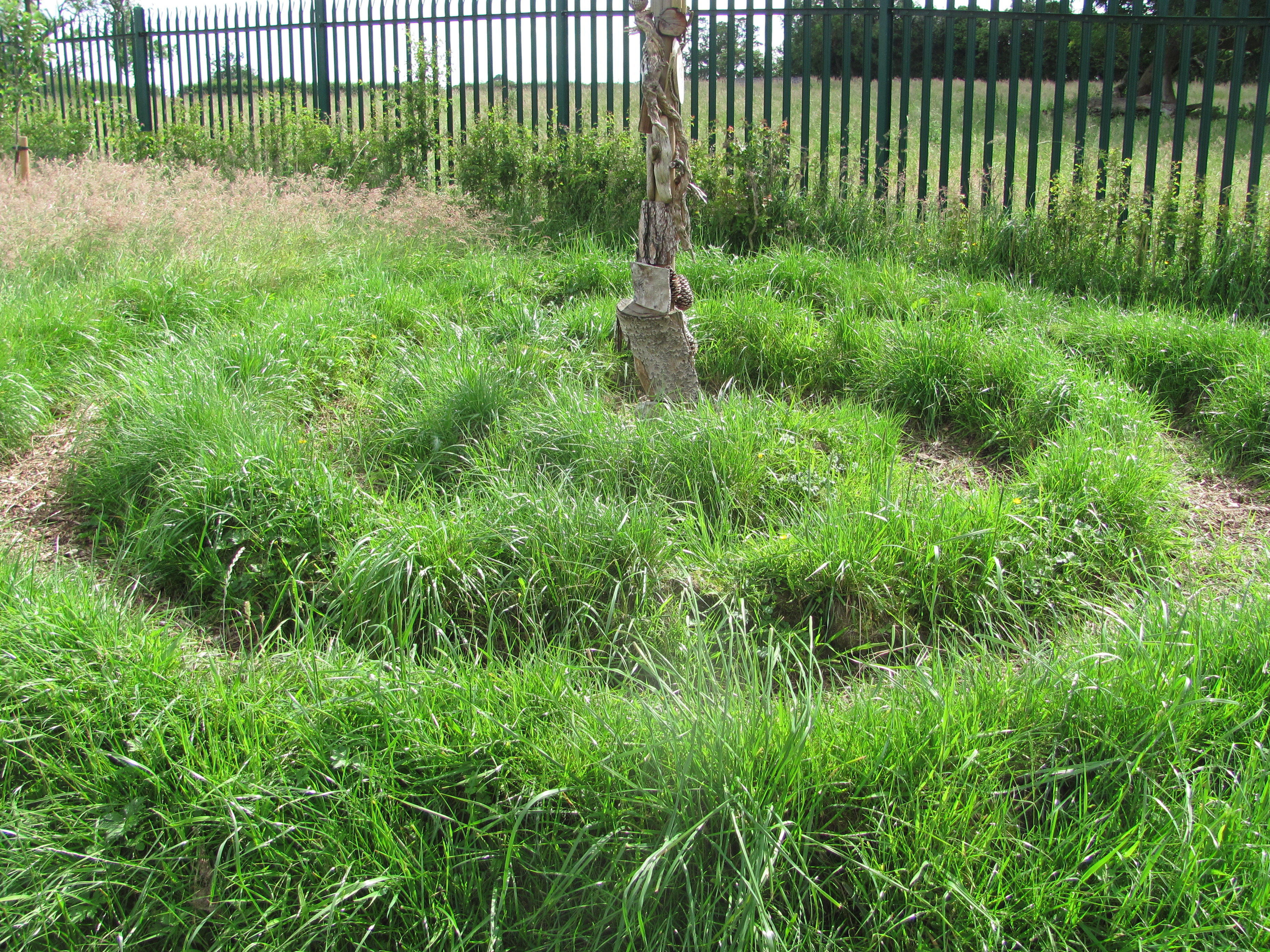
I shall finish with a shot of the plot we have nominated for this year’s Shrewsbury Town Allotment Competition and one of our grass spiral which currently looks most inviting.

Categories
bird watching birds conservation National Trust photography Shropshire The National Trust trees wildlife woodland

A Wander by the River Severn

Shropshire’s largest river is the Severn, one of the most impressive and longest in the UK. We usually walk its banks in our county town of Shrewsbury, for being strongly averse to towns and cities we need the riverside walk as an antidote. But today we decided to go a few miles southwards and find it as it meanders through the beautiful south Shropshire countryside. We parked up near Alveley and ambled our way down towards the river and the woodland on the lower slopes of its valley. The area is a country park jointly maintained by the National Trust and Shropshire Council so there is good parking and a small visitor centre with cafe. But walk a hundred metres or so from the centre and you are right out in the countryside away from signs of civilisation, except for the occasional sound of the steam engines running through the valley on the Severn Valley Railway, the chugging sounds of the engine working hard to get up slopes and the regular hooting as it crosses level crossings.

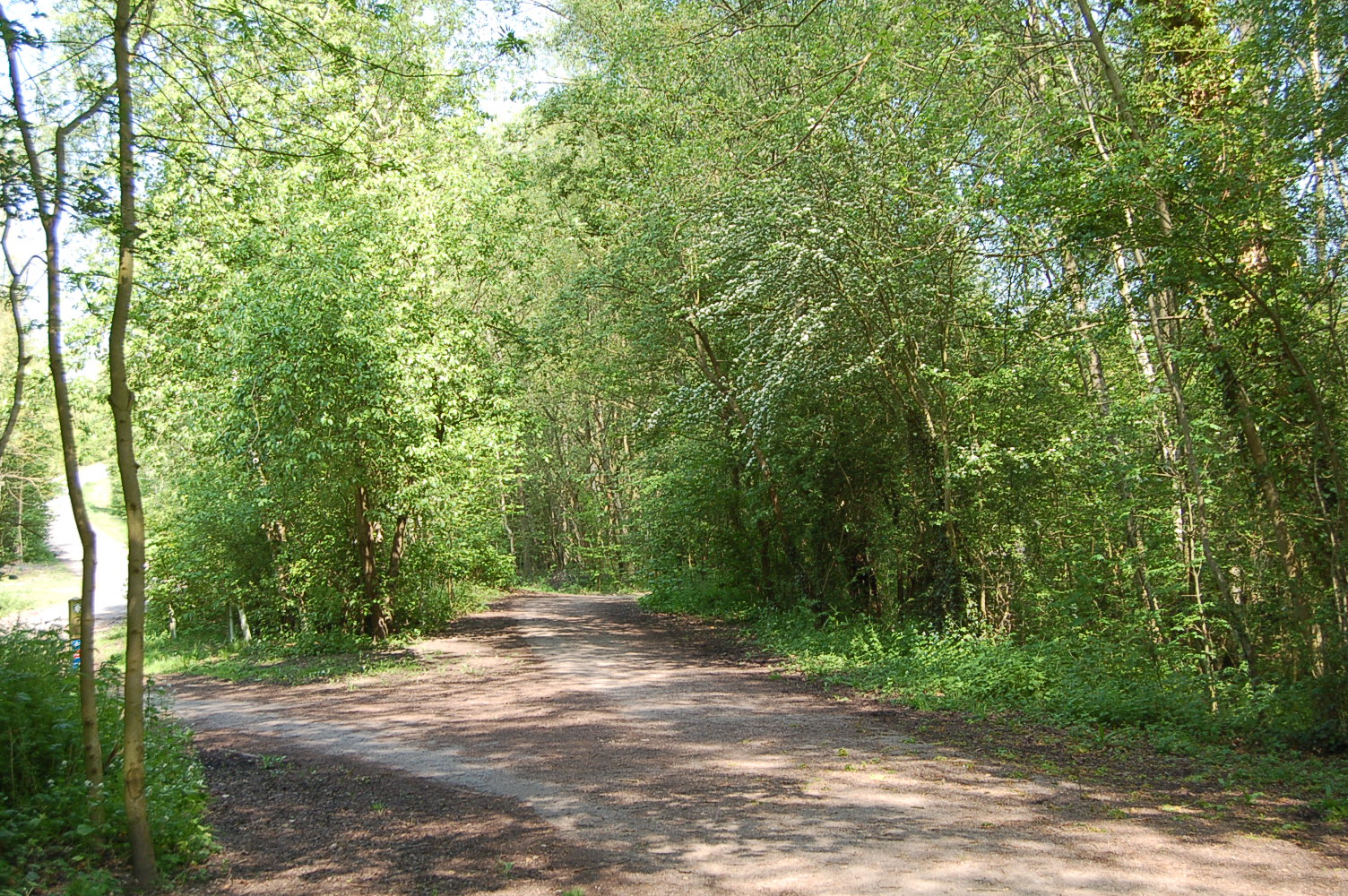
The track down to the river.

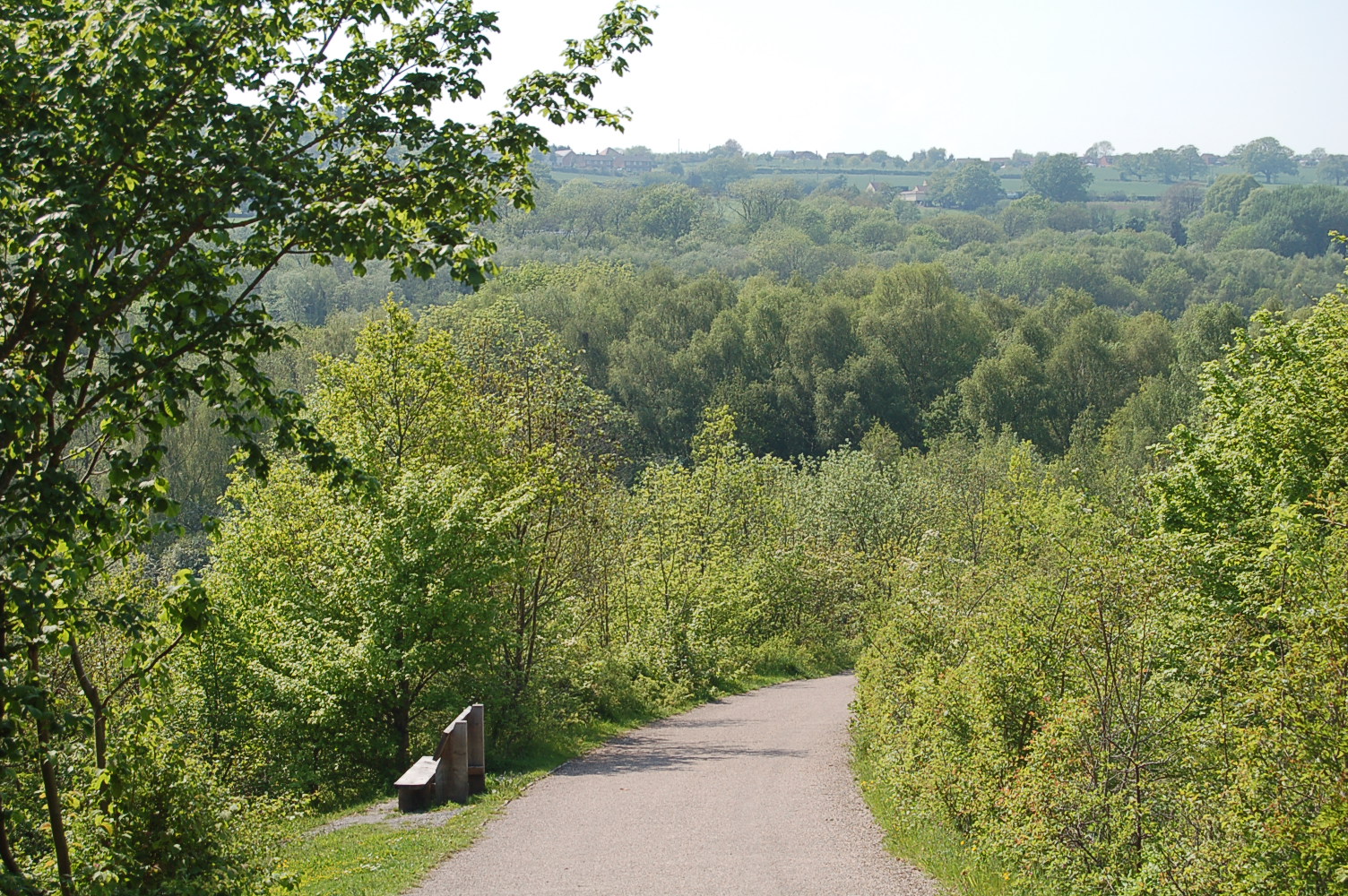
The walk down to the river is a gentle sloping pathway through young woodland interrupted by occasional areas of old industrial landscape which is being reclaimed by mother Nature. Unusual small plants are colonising and tree seedlings only a few inches tall are making inroads into man’s mess. Here a Pied Wagtail deviated from its tail wagging zig zag amble to catch an insect above a clump of tough grass. A true surprise met our eyes – a Black Redstart a bird I had not seen for decades and one Jude had never seen before. They inhabit areas of rubble and human disturbance so this is just perfect hangout for them.

The candle shaped flower cluster of a Horse Chestnut Tree.
New foliage of Oak tinged with bronze.
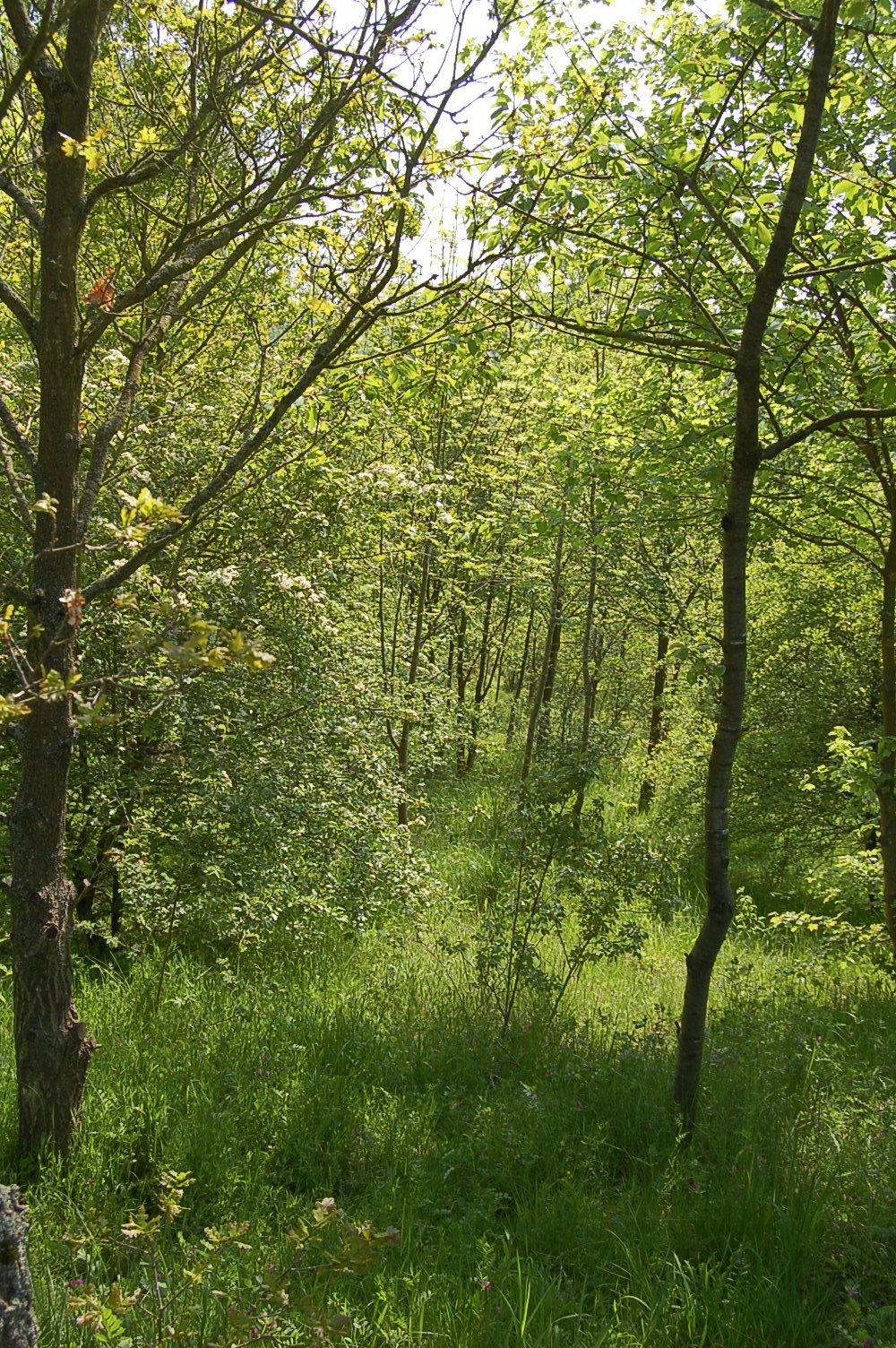
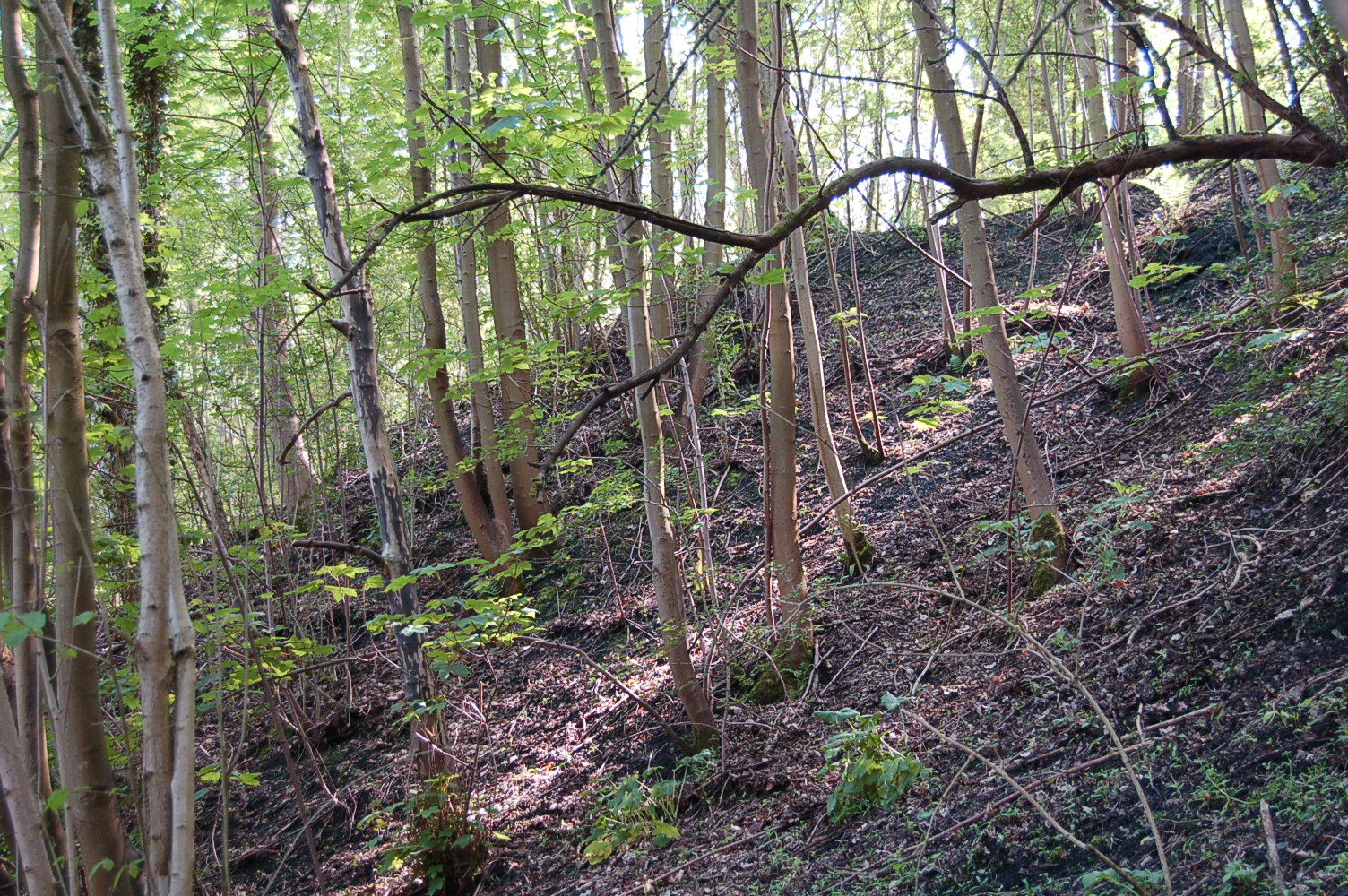
A view from the path into the wooded valley side.
We choose the left fork.
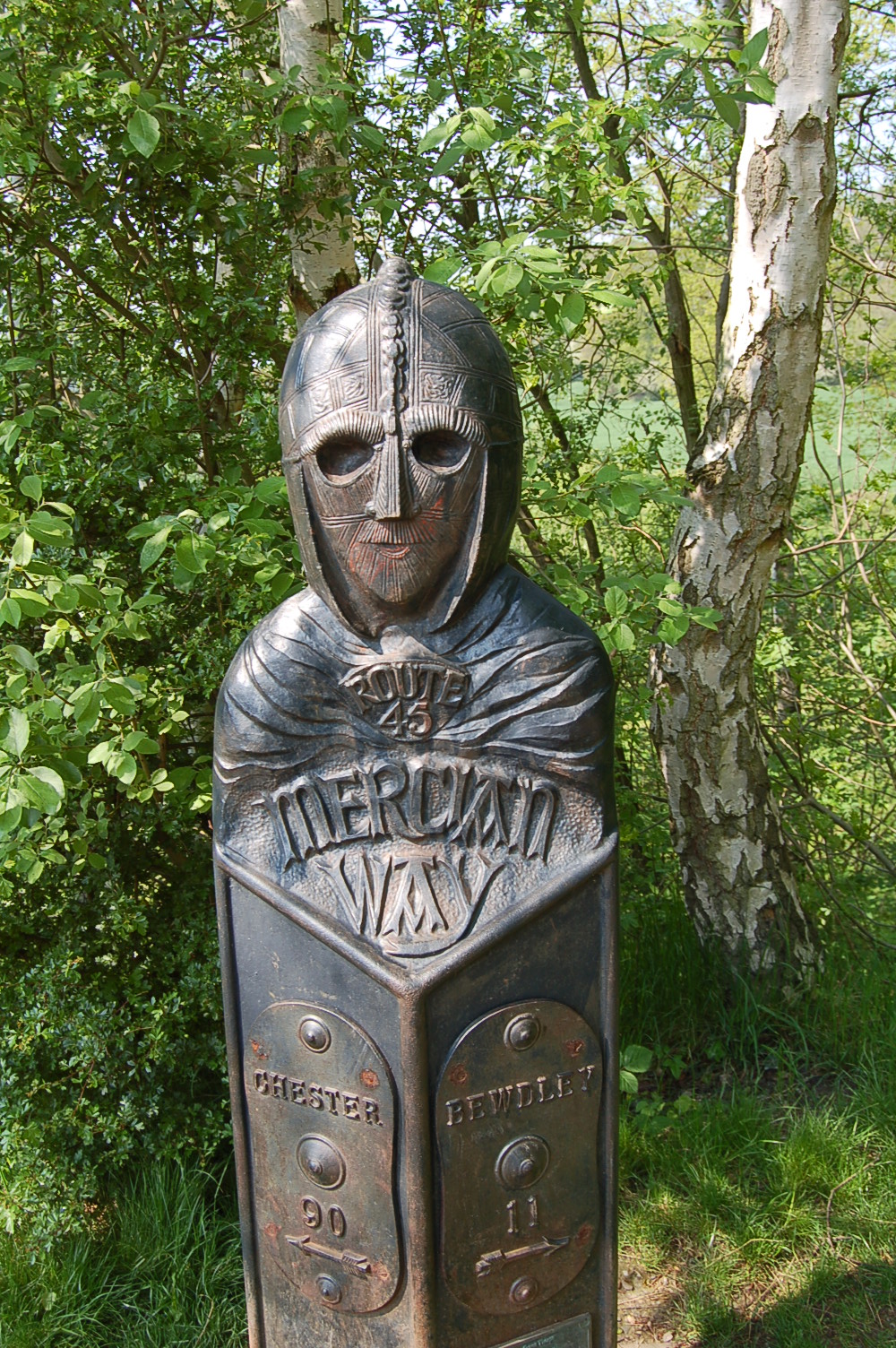
An impressive modern milestone.
A clearing revealed a view of the Shropshire countryside.

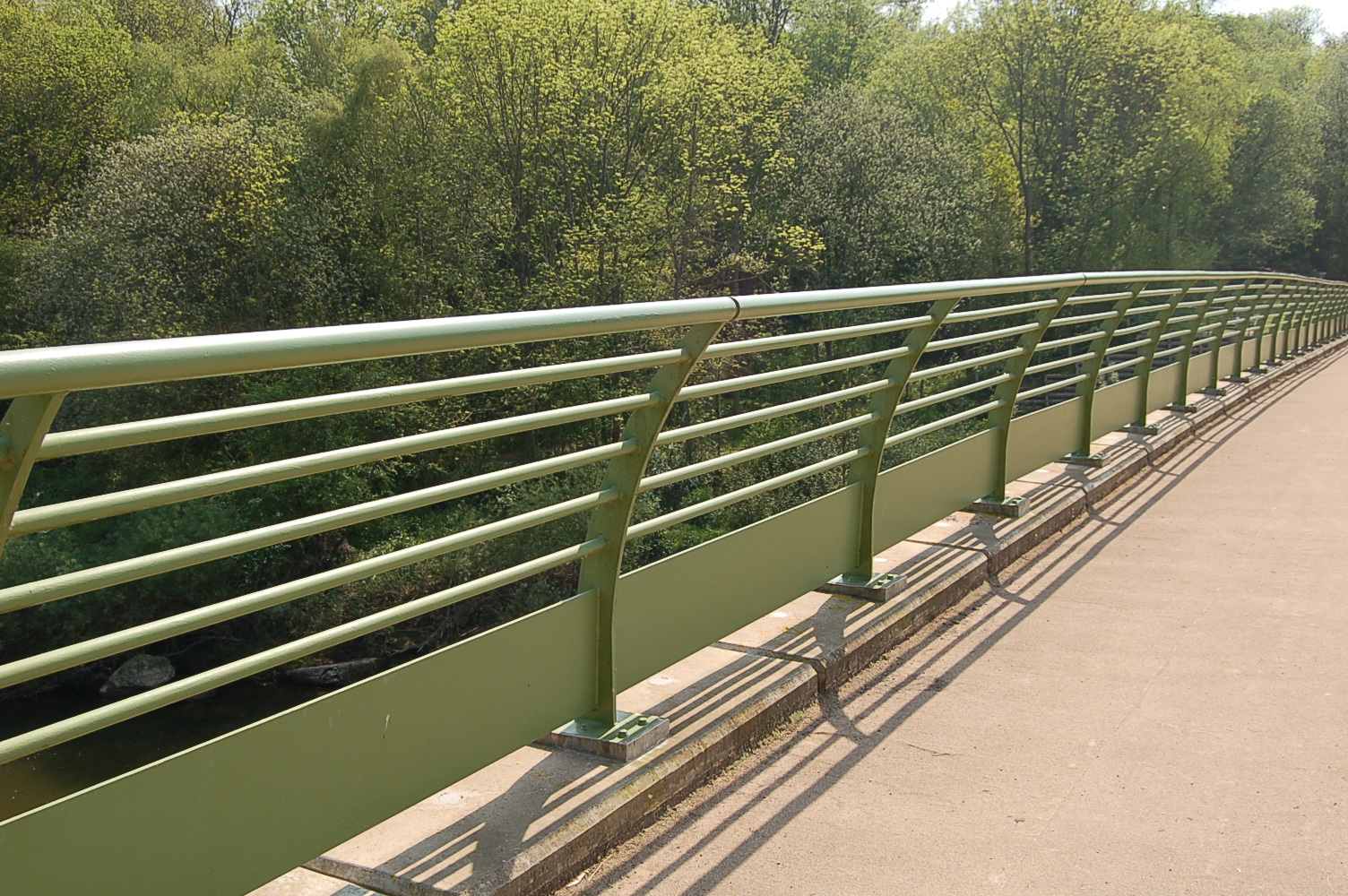
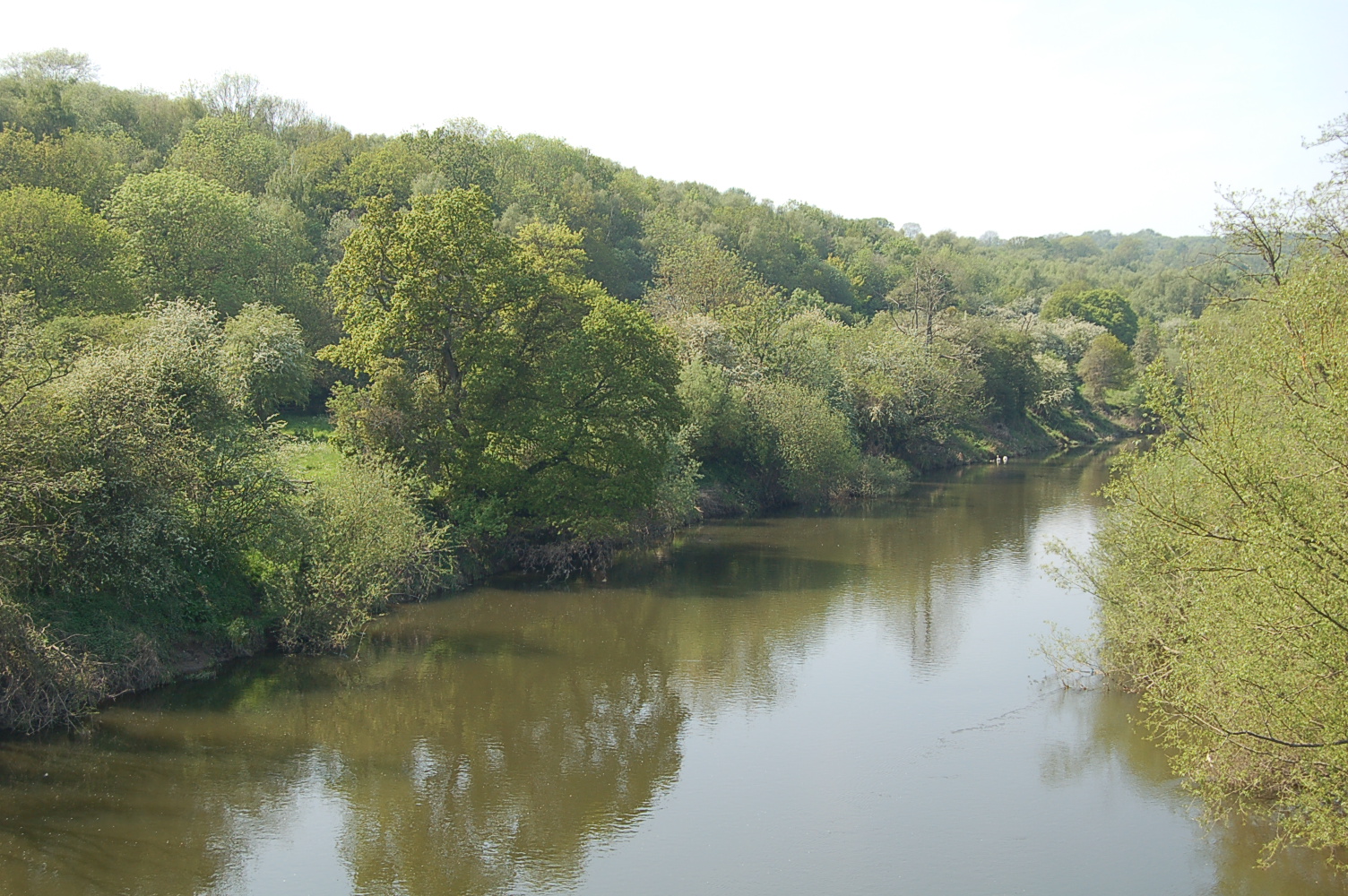
The footbridge over the river is an impressive curving structure, but not as impressive as the views up and down river. The Severn here is wide, tree-lined, deep and slow-moving and home to a family of Mute Swan with six cygnets. We did not spot the keenly anticipated Kingfishers, but that was the only disappointment of the day.

A rather smart bridge carries the path over the Severn.

Once over the bridge we entered woodland, good native hardwood woodland. Here the only sound was our footsteps and bird song and calls. The unpleasant mechanical rasp of Pheasants permeated the trees, but we concentrated on the tuneful songs of Robin, Thrush, Willow Warbler, Blackcap, Chiffchaff and Garden Warbler.

The path turns into the darkness of the wooded valley side.
Flowering plants took advantage wherever light shone through.
Beautiful woodland light.

A shaft of sunlight pierced the valley side.

On the slopes Jays in their smart plumage of pinks, greys and highlights of blue, fed voraciously on acorns and beech mast. They were over-confident and took little notice of our intrusion into their territory as groups of seven or so foraged on the leaf littered slope.

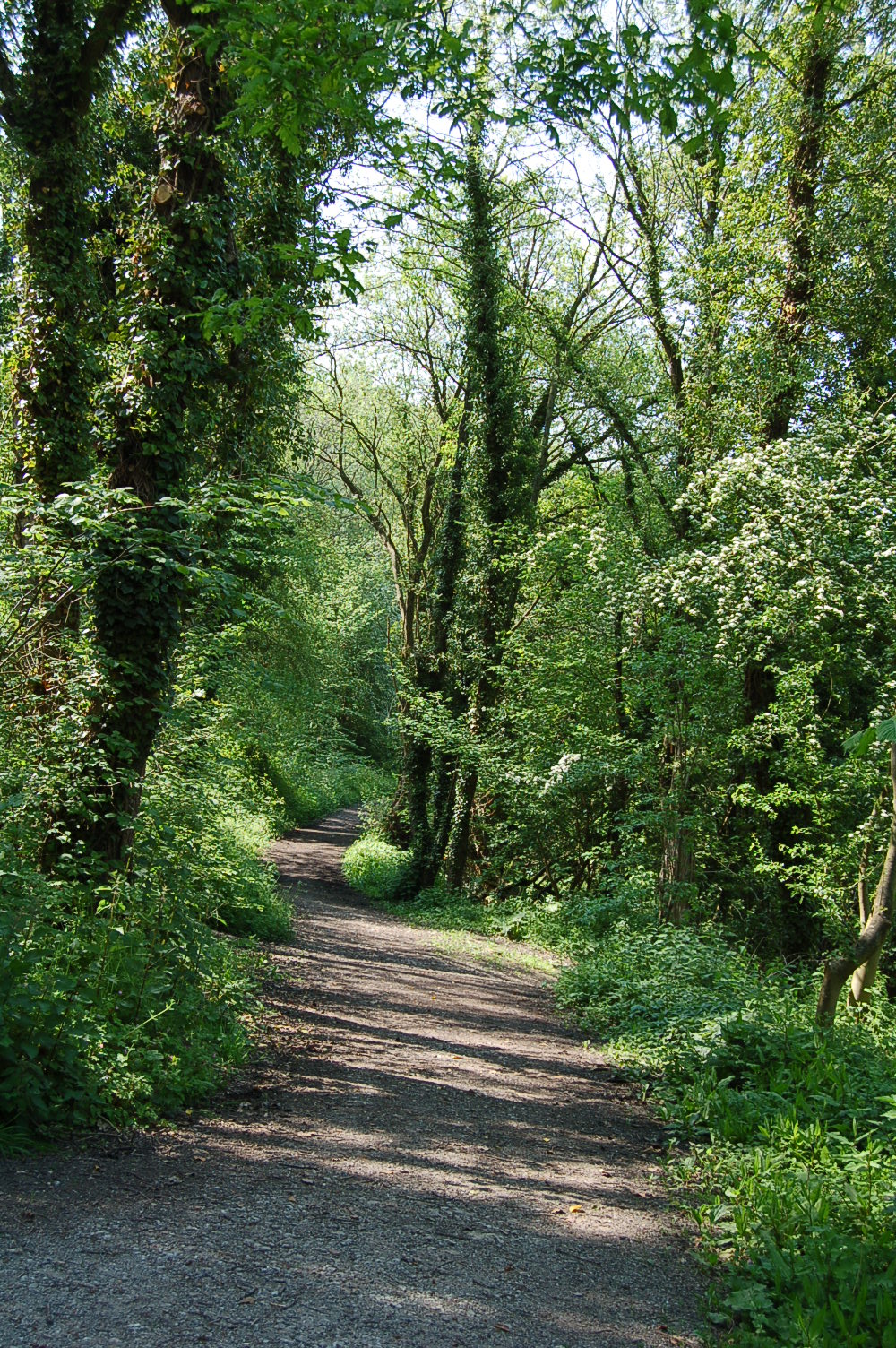
The path became a tunnel of trees.

At one time this valley was the centre of industry and clues still appear now and again as the woods are explored. Surprising man-made artefacts appeared as contradictions to the gentle beauty of the art of Mother Nature.

A sign of past industrial activity.
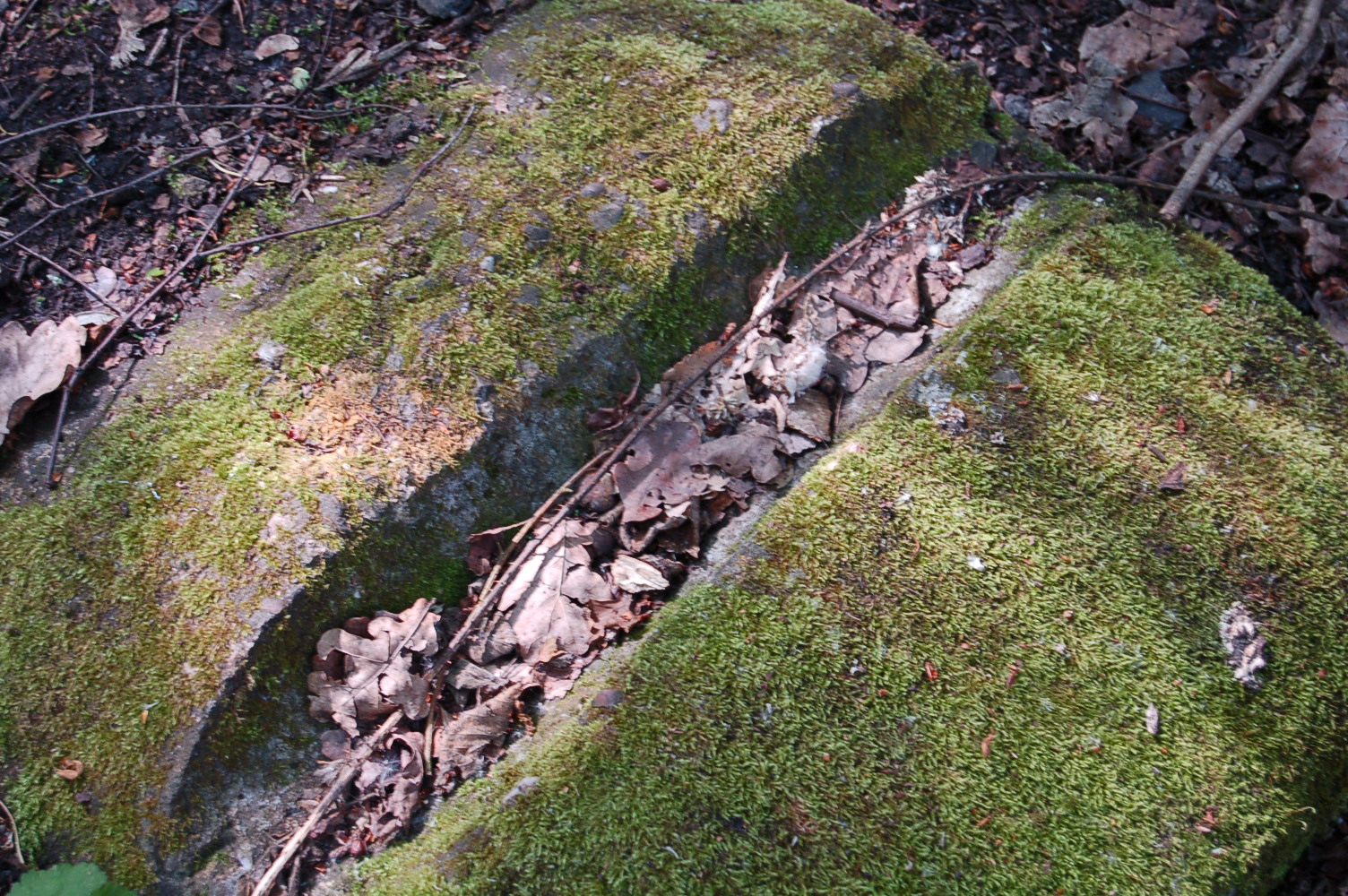
Signs of an old trackway alongside the path.
Some plants choose to grow on the rubble slopes of old industry.
Light pierced through the trees from the nearby clearing.
Looking from the clearing back into the woodland.

We took advantage of the sunshine in the clearing with its conveniently placed bench. We listened to bird song and watched Blackcaps as they flitted amongst the tree tops. They stopped and perched occasionally to give us a short performance of their enjoyable song. The cerise-breasted  Bullfinch caught our eye as he hovered alongside the clock seedhead of a Dandelion, until he grasped a seed in his beak took it to a low branch of a Hawthorn. He enjoyed it, unaware that two people were watching him.

Sunshine lights up the clearing and invites us to picnic.
Magical light through the trees.
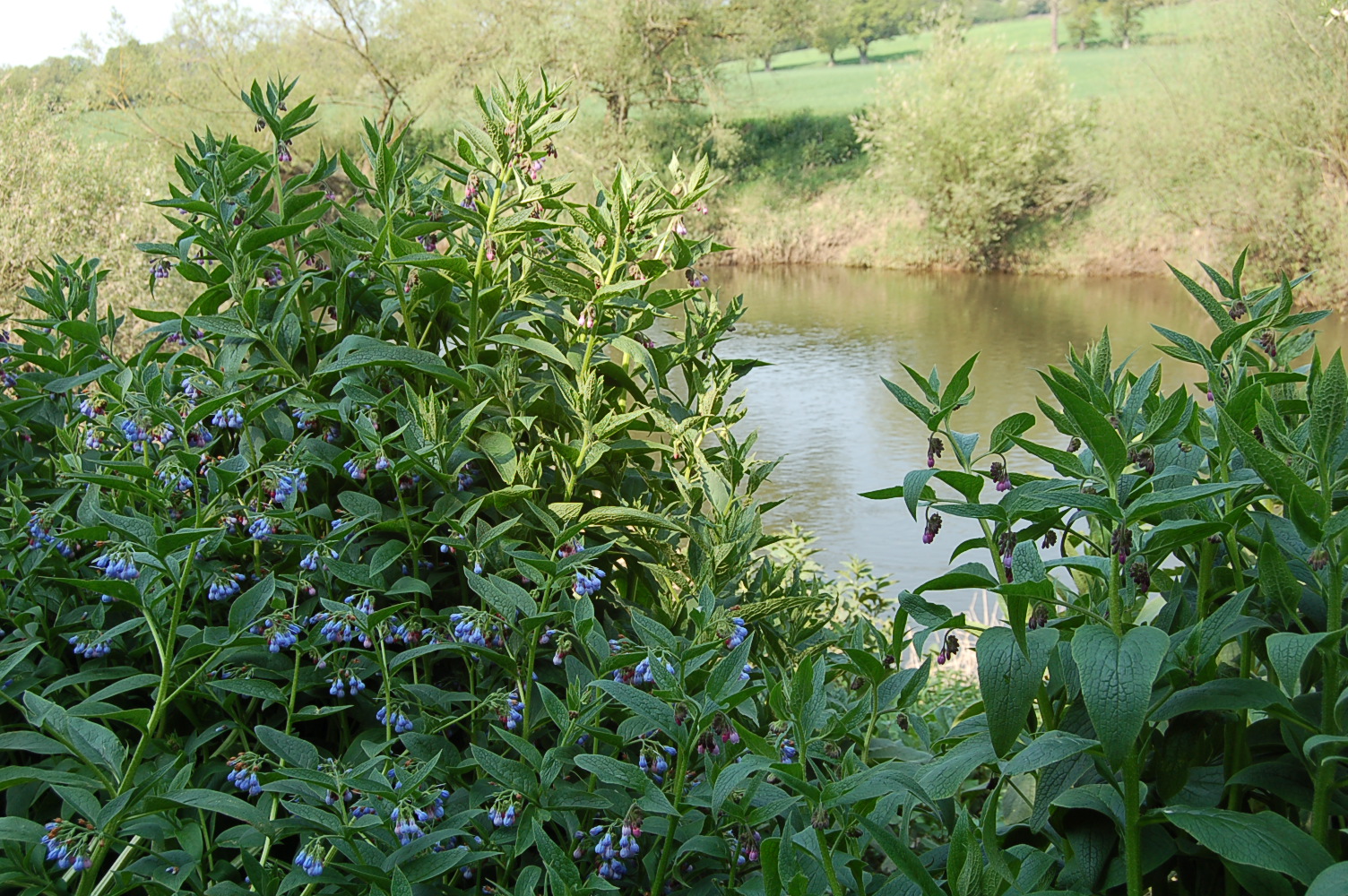
The Severn glimpsed through clumps of Comfrey plants.

As we followed our path back down to the riverside we noticed a change in wildflower species. Here Comfrey dominated and filled the open ground between the willows and alders and our track took us through lush grassed areas. Kestrels and Sparrowhawks hunted along the riverside slopes causing consternation to the nesting Blackbirds, Thrushes and Warblers.

The cotton wool like mass on the willow confused us. Was it hiding caterpillars or young spiders?

In the depth of the shadow under the trees we spotted this Badger Sett.
A glimpse of Shropshire countryside over the river.
Back to the bridge.
The gentle climb back up the valley side to the car park provided plenty of benches to rest on and admire the views.

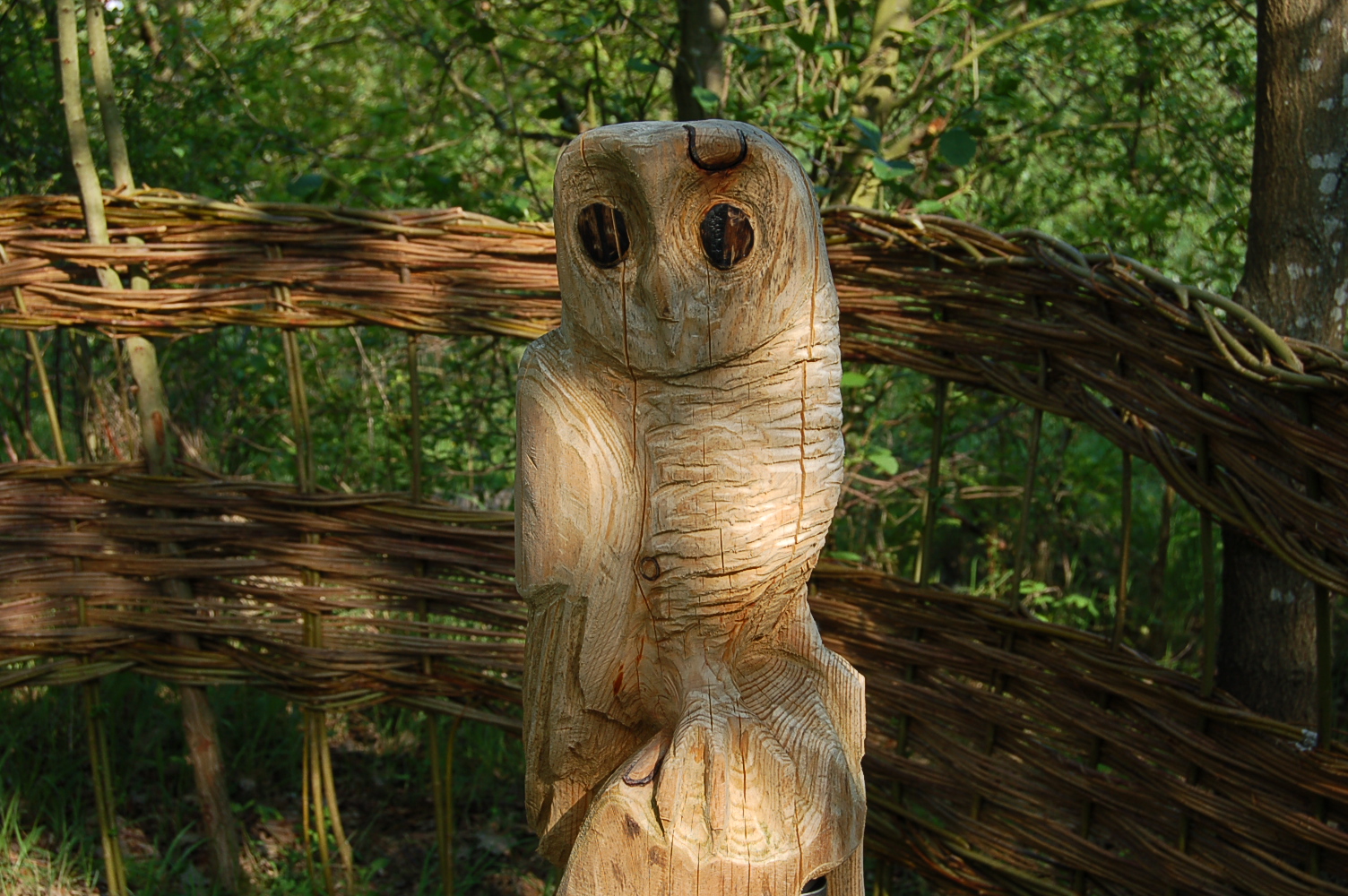
In the wooded edge of the picnic site back near the car park we found these amazing wood carvings representing the wildlife of the area.

The carvings emphasised what a special place we had just explored. We enjoyed the changing light as we moved in and out of the woods, the variety of flowers and birds and the joy of walking alongside our local river

Categories
allotments birds community gardening conservation fruit and veg garden photography garden wildlife gardening grow your own hardy perennials meadows natural pest control Shropshire wildlife

A Wander around the Allotments in May

May is a busy month on the allotment, seeds need sowing, seedlings need thinning, weeds need hoeing and early crops reward us with early harvests. And of course our grass paths separating the four areas of the plot need regular mowing.

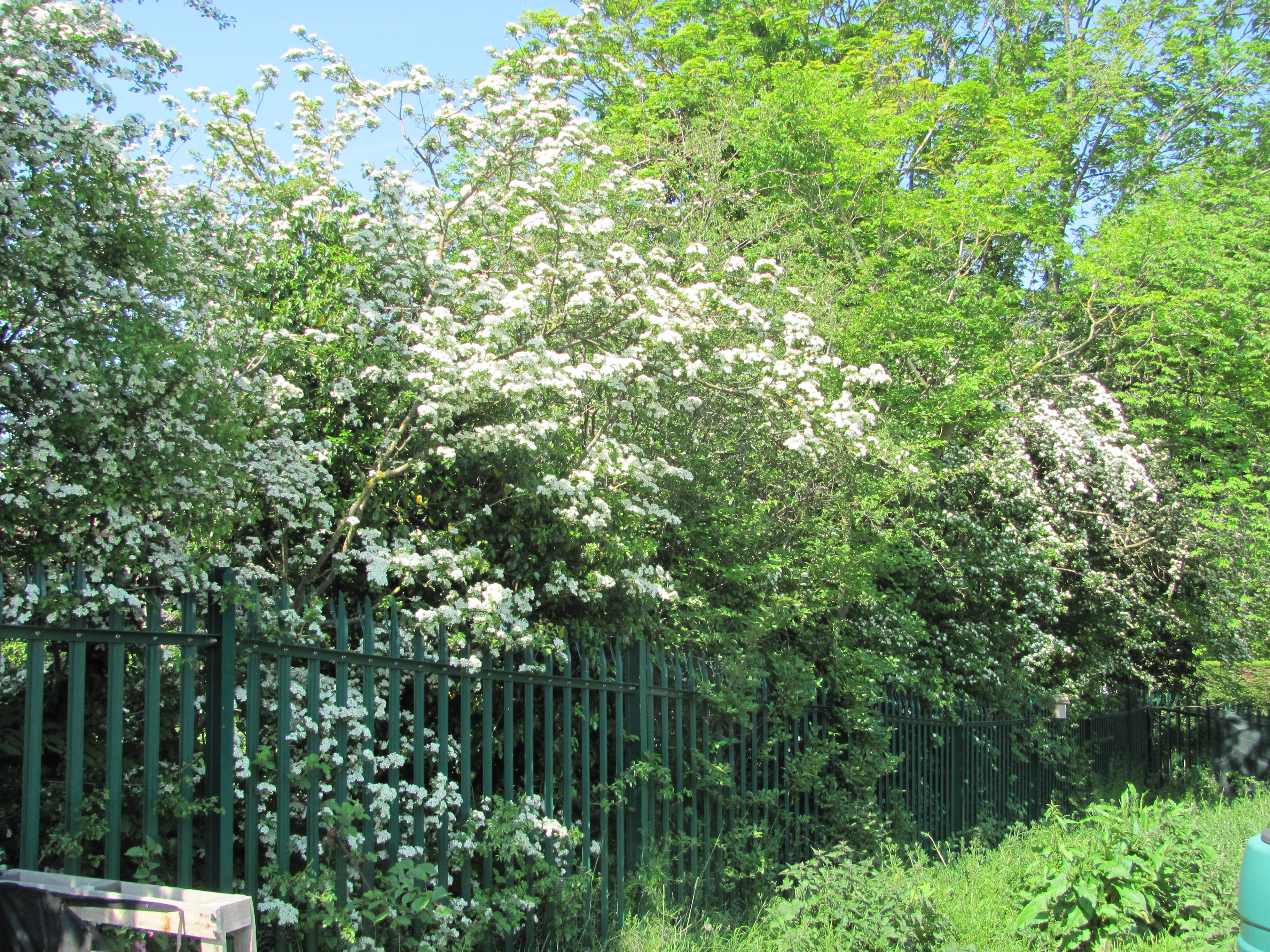
The Hawthorns in native hedges around the site are smelling good and looking good.

The wildlife all around is equally busy, seriously going about the business of breeding with all its inherited trials and tribulations. The weather, predators, prey availability and the search for food for both adults and nests full their young all contrive to make their lives difficult.

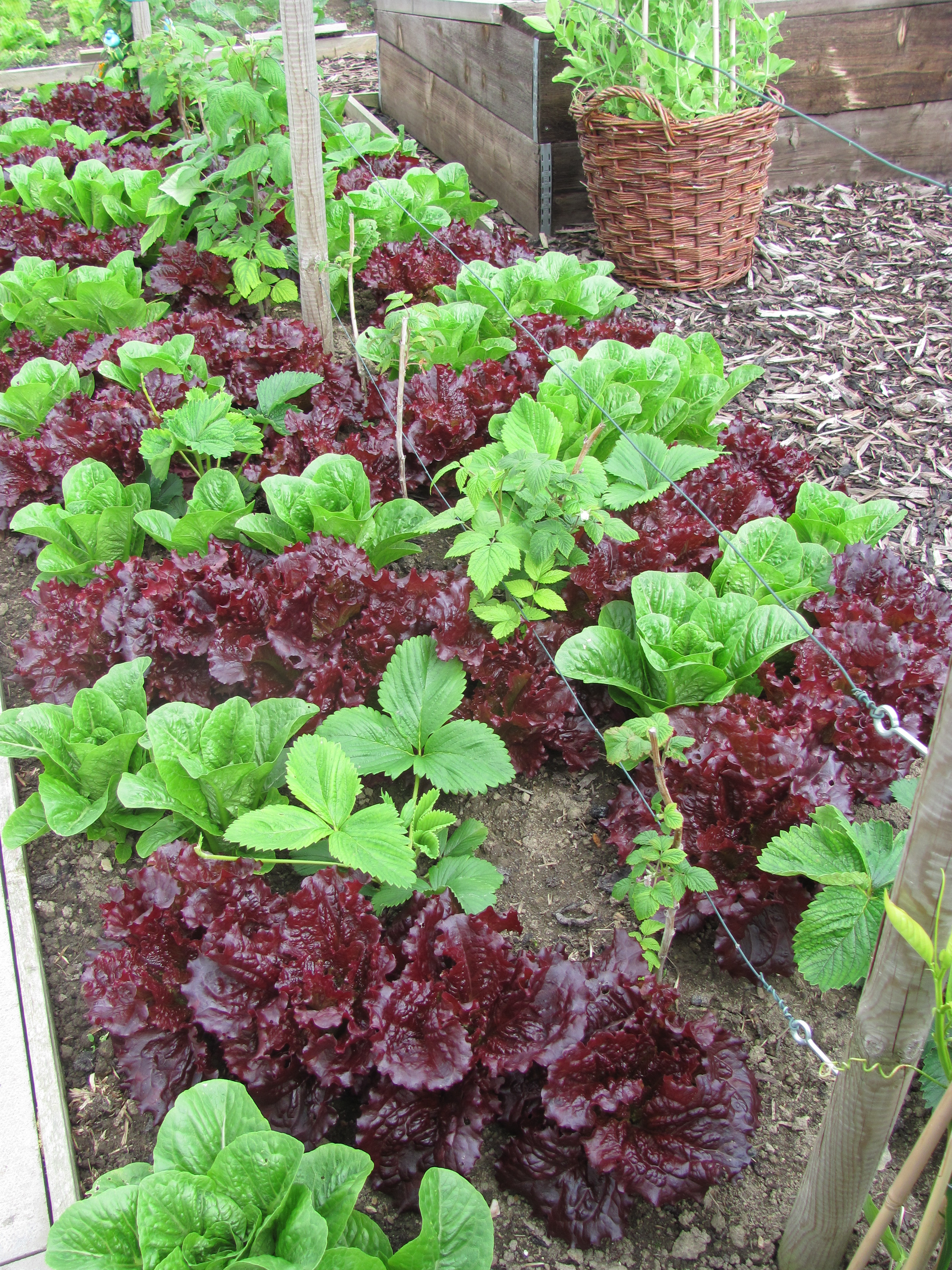
We shall begin our May lottie wander on our own plot to see what is going on. The soil is now easily worked so using the hoe to remove seedlings is easy so the plot is looking tidy.

Our brassicas are coming along well underneath their protective cover.
The perennial bug borders are looking good.
Multi-coloured radiccio.

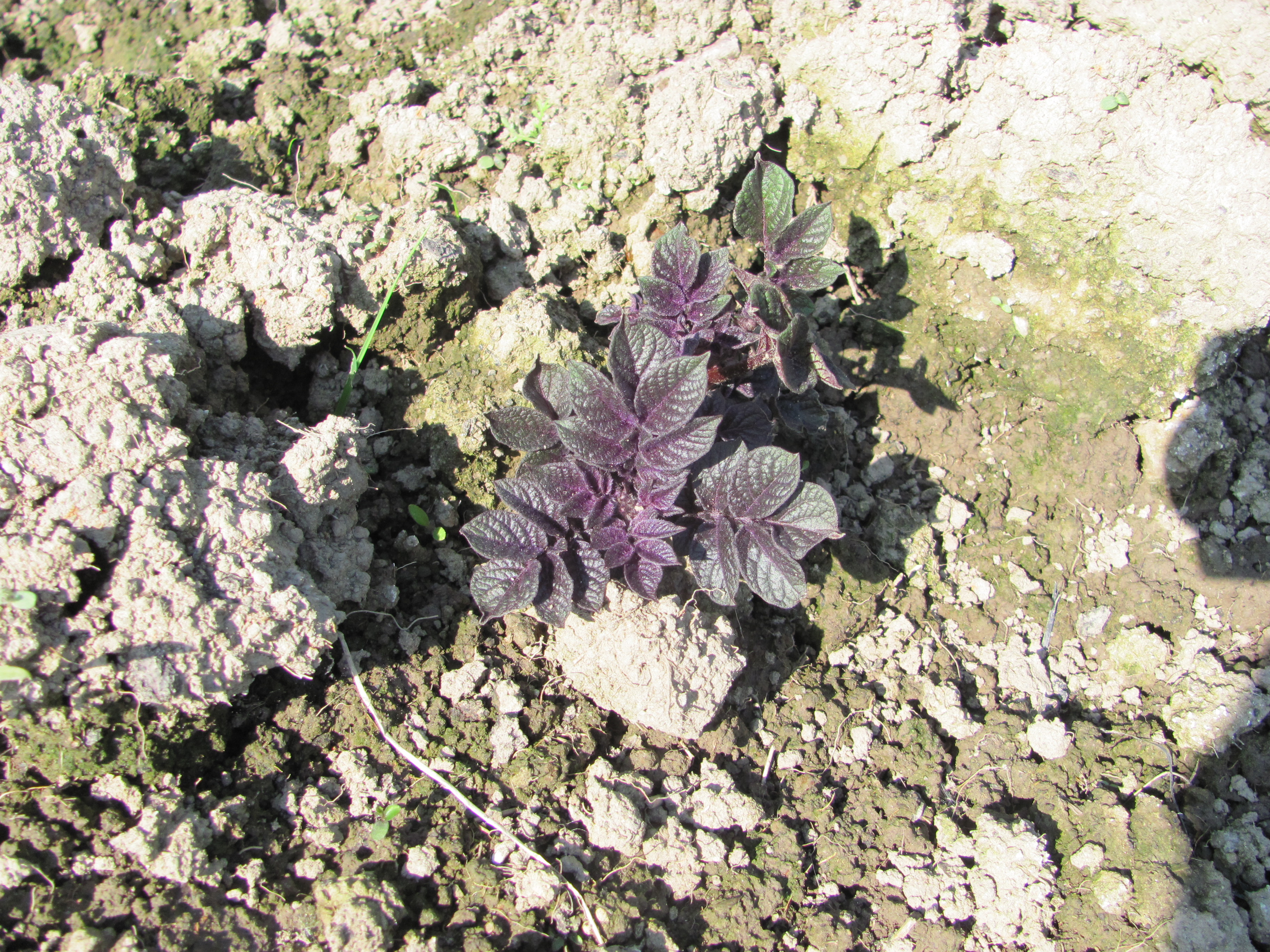
Whenever we are working our plot or helping maintain the green spaces around the site, we are entertained by birds of prey, Buzzards and Kestrels soaring or hovering over our heads and around our feet Robins, Blackbirds, Blue and Great Tits, and Song Thrushes search for food for their young hoping we disturb grubs and bugs with our digging, raking and hoeing. More secretive in their search for fodder for young are the Black Caps, Woodpeckers and Nuthatches. Overhead the hirondelles, (Swallows, Swifts and House Martins), having recently returned from their winter haunts greedily scoop up insects on the wing.Although the weather has been warm and dry for a few days now the end of our plot where the clay comes nearest the surface and the topsoil is very thin, water still saturates the land, making working it impossible. But in this wetness in the ridged soil our Red Duke of York potatoes are pushing their purple tinted foliage out towards the sunshine.

Red Duke of York appearing above the algae tinted soil.
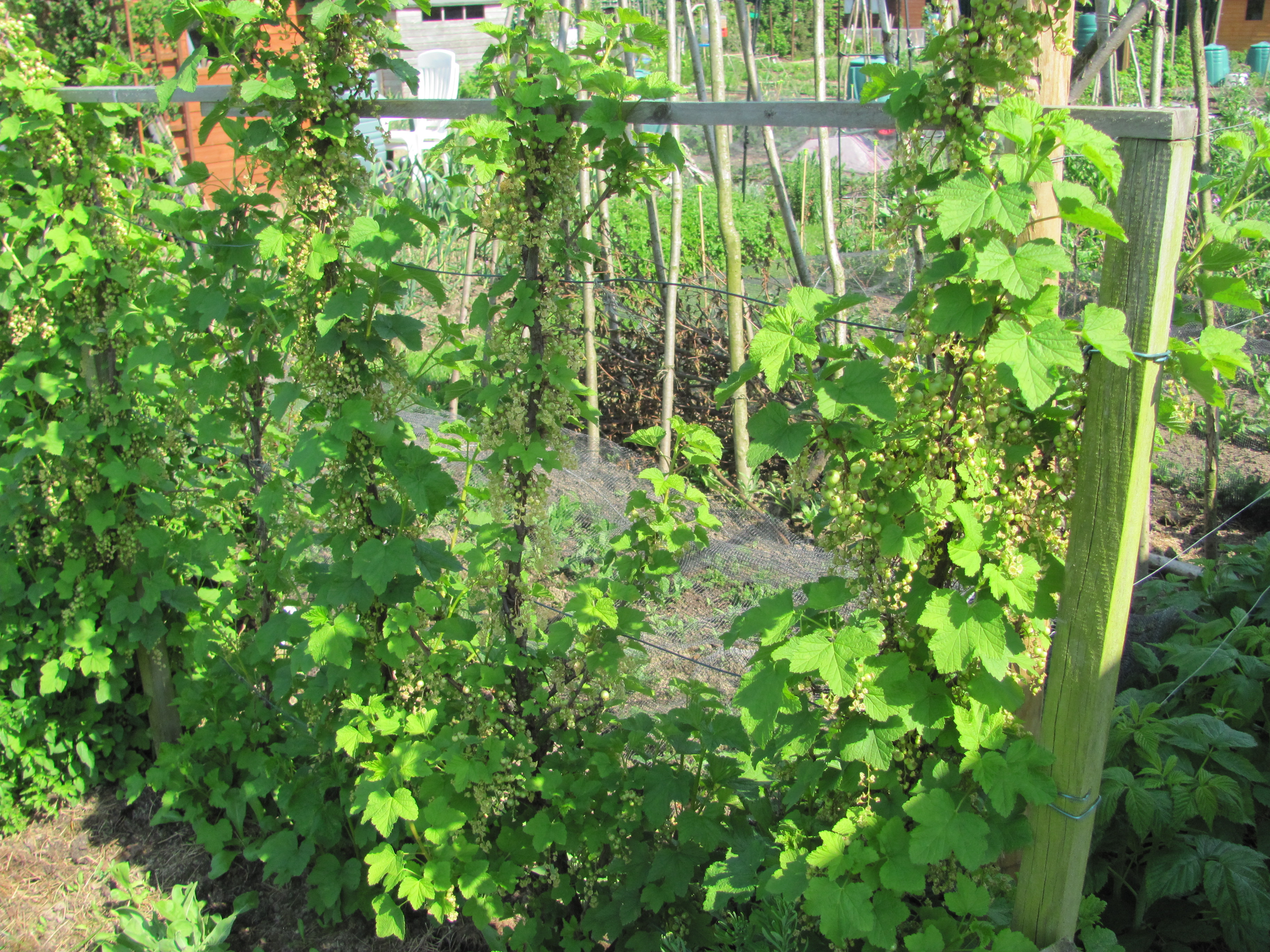
Our cordon Red Currants are flowering heartily and starting to set fruit.

In the orchards and over the meadows wildflowers are blooming alongside naturalised ornamental bulbs, attracting butterflies, the crinkle winged Commas, the Orange Tips with orange tips to their wings and the wonderful ethereal Holly Blues.

Bulbs and Buttercups under the fruit trees in the orchard.
We attract predator insects into the orchards with these insect homes. They are a wildlife friendly pesticide.

The Buddleia Borders are coming to life now and the Spring Garden remains very colourful.

Two plot holders, Phil and Doreen, have created a new bed in a shaded area near their plot and made it accessible for all to enjoy.

Most plots are ready for sowing and planting or partly planted up and sown.

Our May Working Party jobs were decided upon by where the shade was, as it was too hot to work in the full sunshine. We managed to get most of our tasks completed though.

Heads down for weeding the meadows.
Kneeling down on the job attacking those pernicious weeds that creep into the meadows.

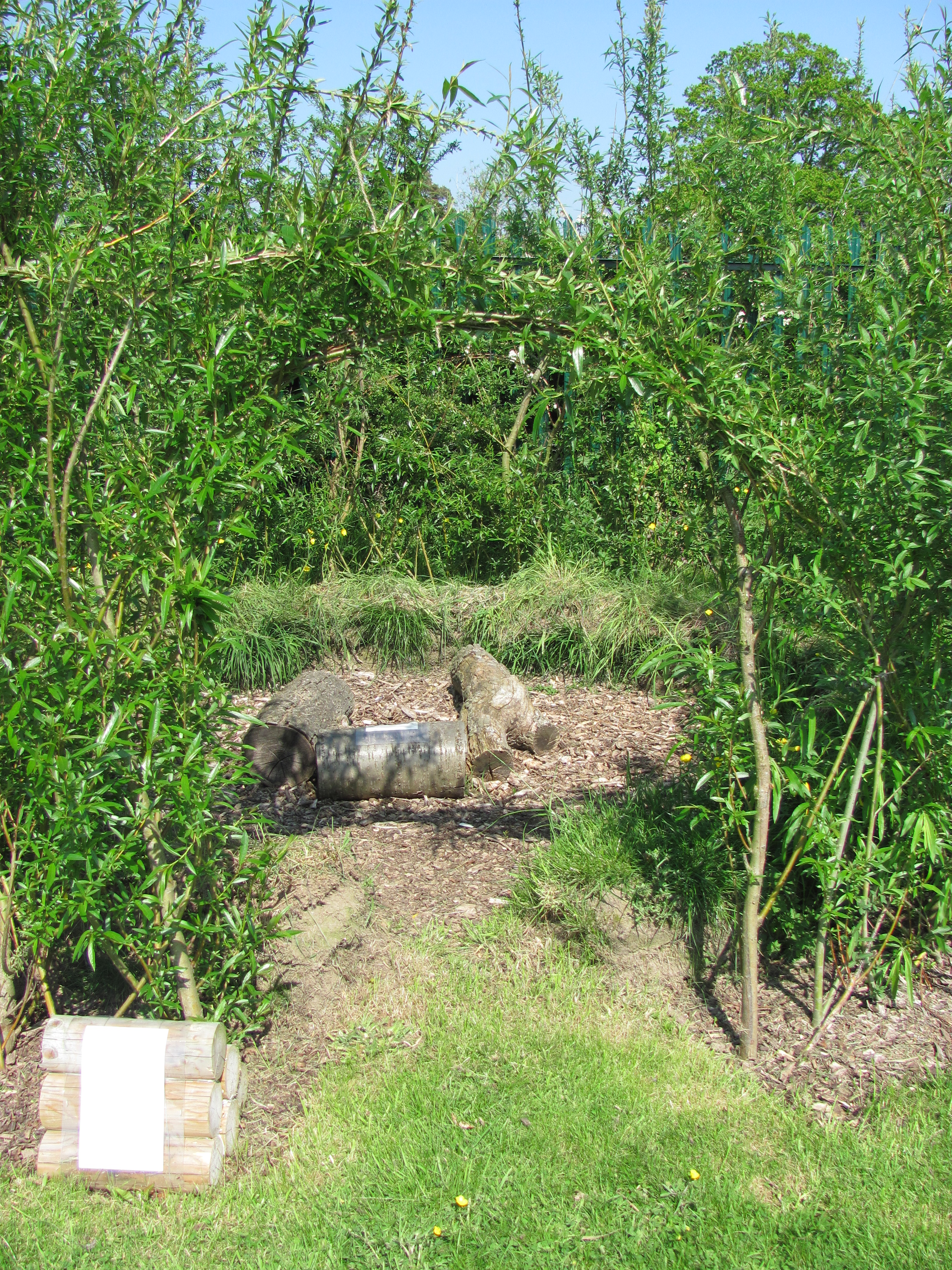
Our Willow Dome has had its doorway and windows woven and neatened up and the sides pruned and woven. It is a favourite feature with children as somewhere to listen to a story, or as a play den, and as adults for somewhere to escape to at coffee time from the heat of the day.

As we have recently launched our site’s Wise Watering Campaign it is heartening to see guttering and butts appearing on several sheds.

Categories
conservation gardening grow your own ornamental trees and shrubs trees wildlife woodland

Coppicing our Hazel

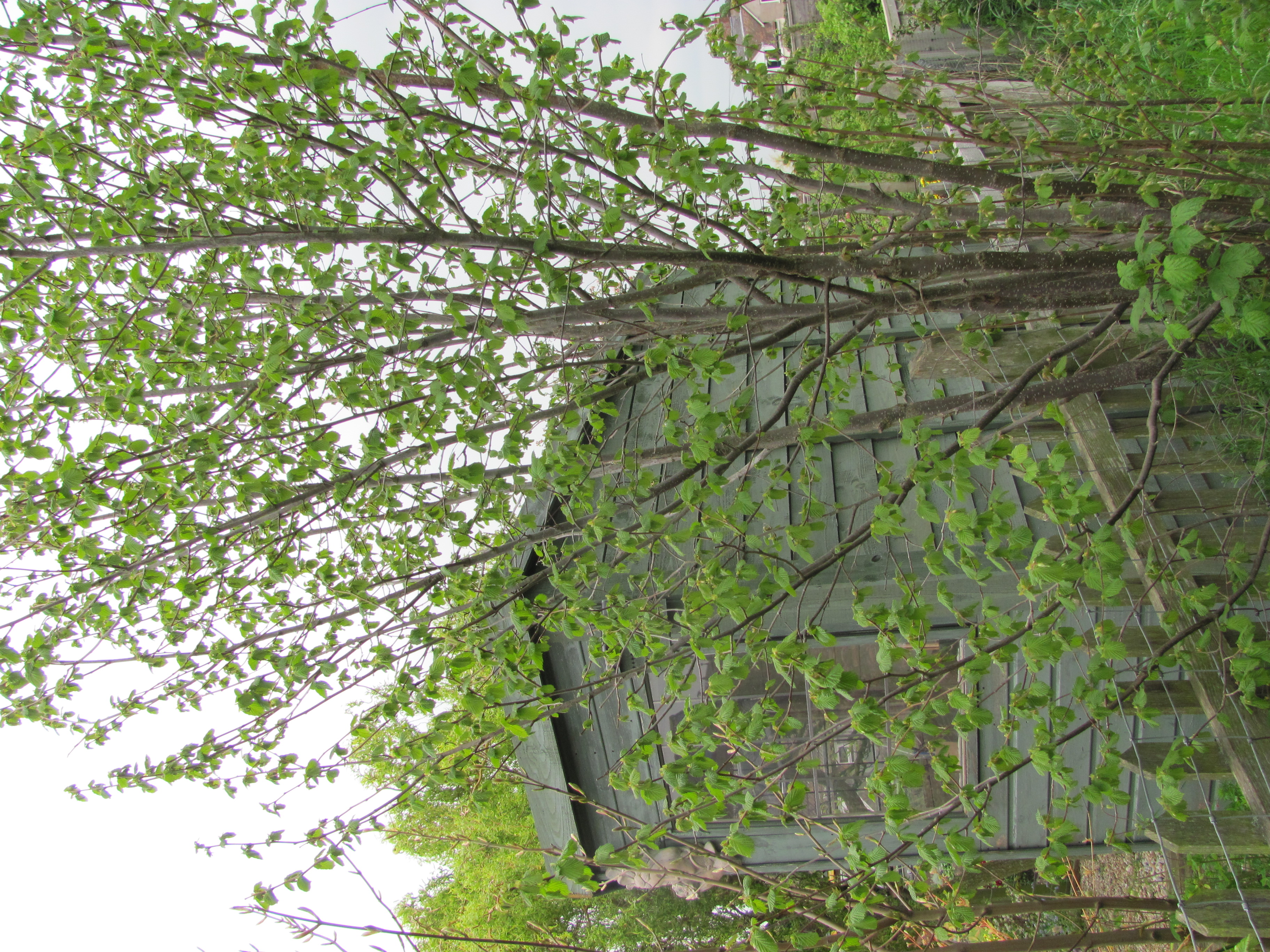
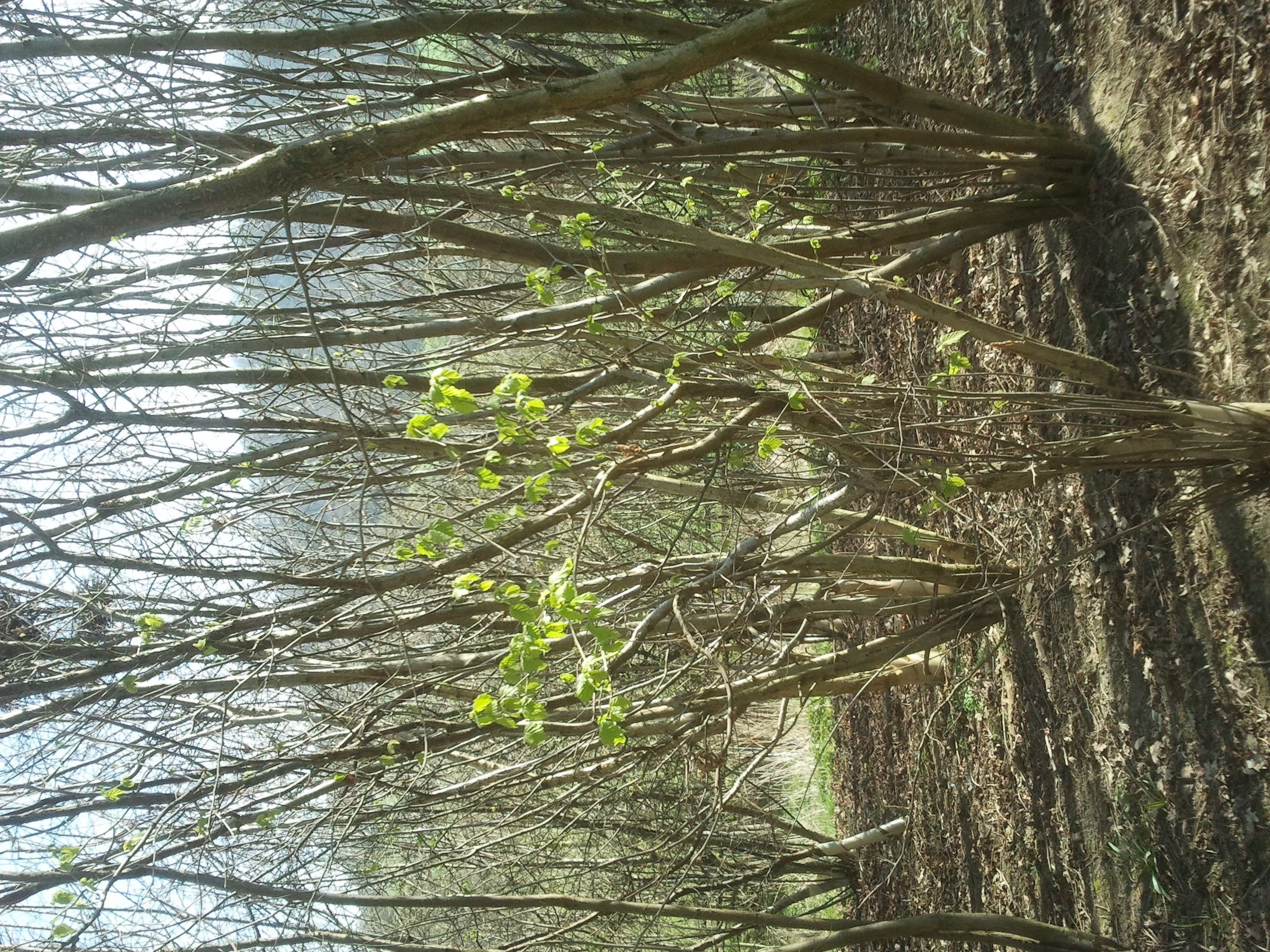
At the very end of our garden we grow a couple of Hazel trees. The Jays love the nuts as do the occasional squirrels and it is a favourite perch for birds coming into the garden from the adjoining countryside. But as organic gardeners we delight in coppicing it every few years to give us bean poles and pea sticks. this reduces the need to buy bamboo canes with their sea miles attached.

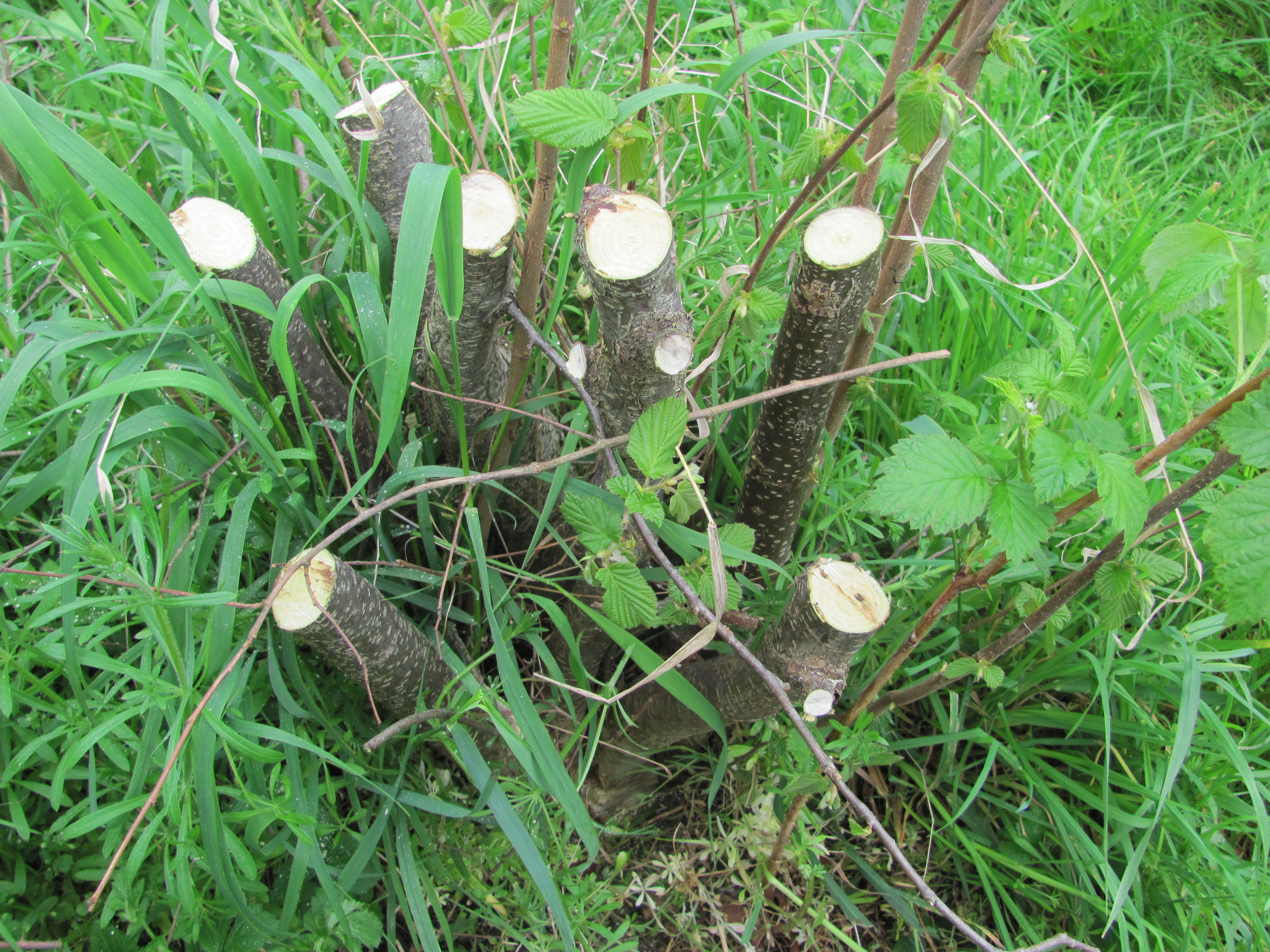
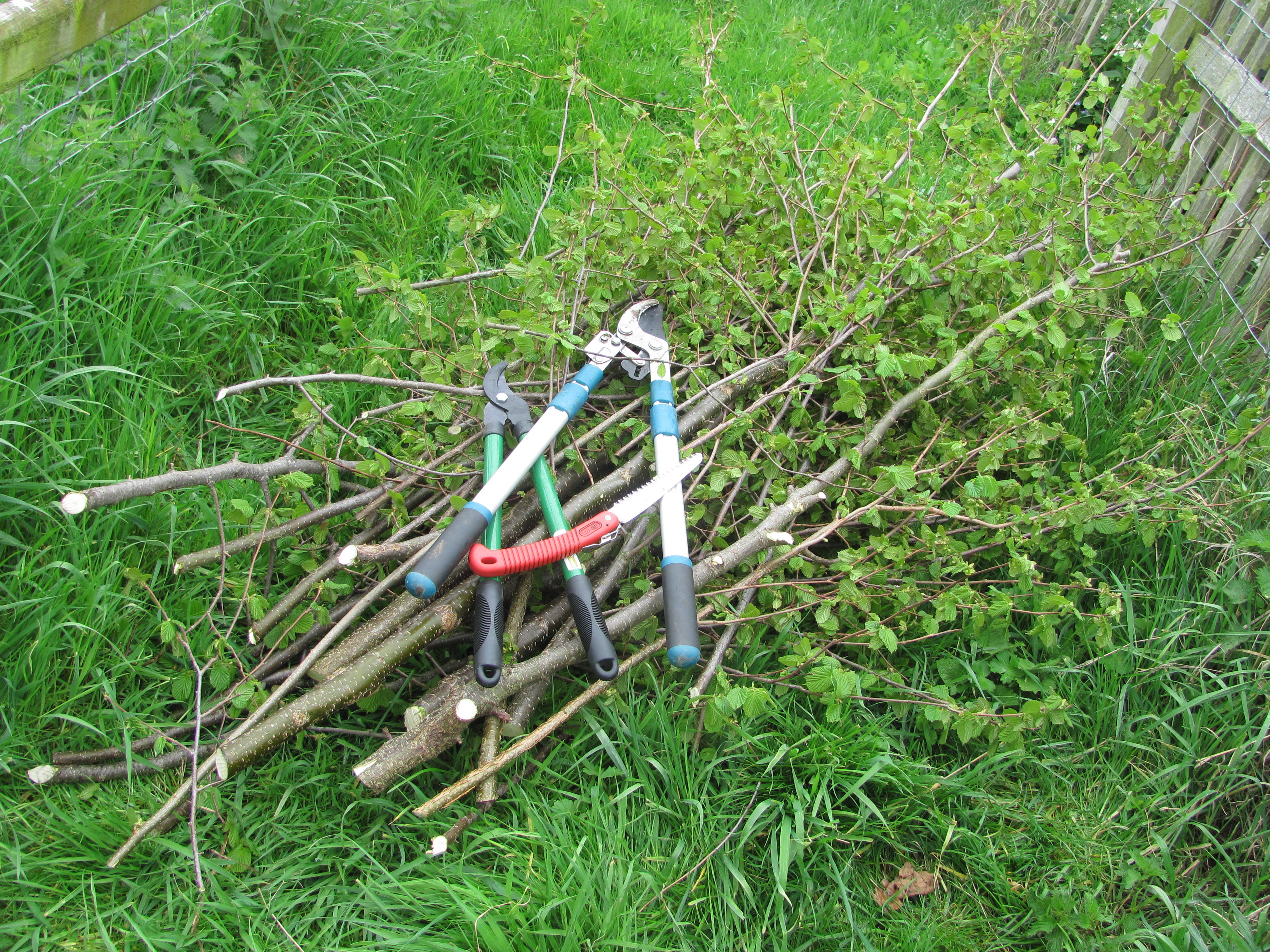
So, a few days ago, with a small pair of loppers, a larger ratchet pair, secateurs and a pruning saw tucked under one arm I attacked its limbs. I was careful to leave neat cuts so that I was not inviting disease into the wounds. In a short while we had, instead of a tall shrubby tree, a pile of poles and sticks and a revitalised view of the countryside.

It was a good activity for a cold May morning as it warmed me up nicely.

Before …..
…… and after.
The results of a good half hour’s work.

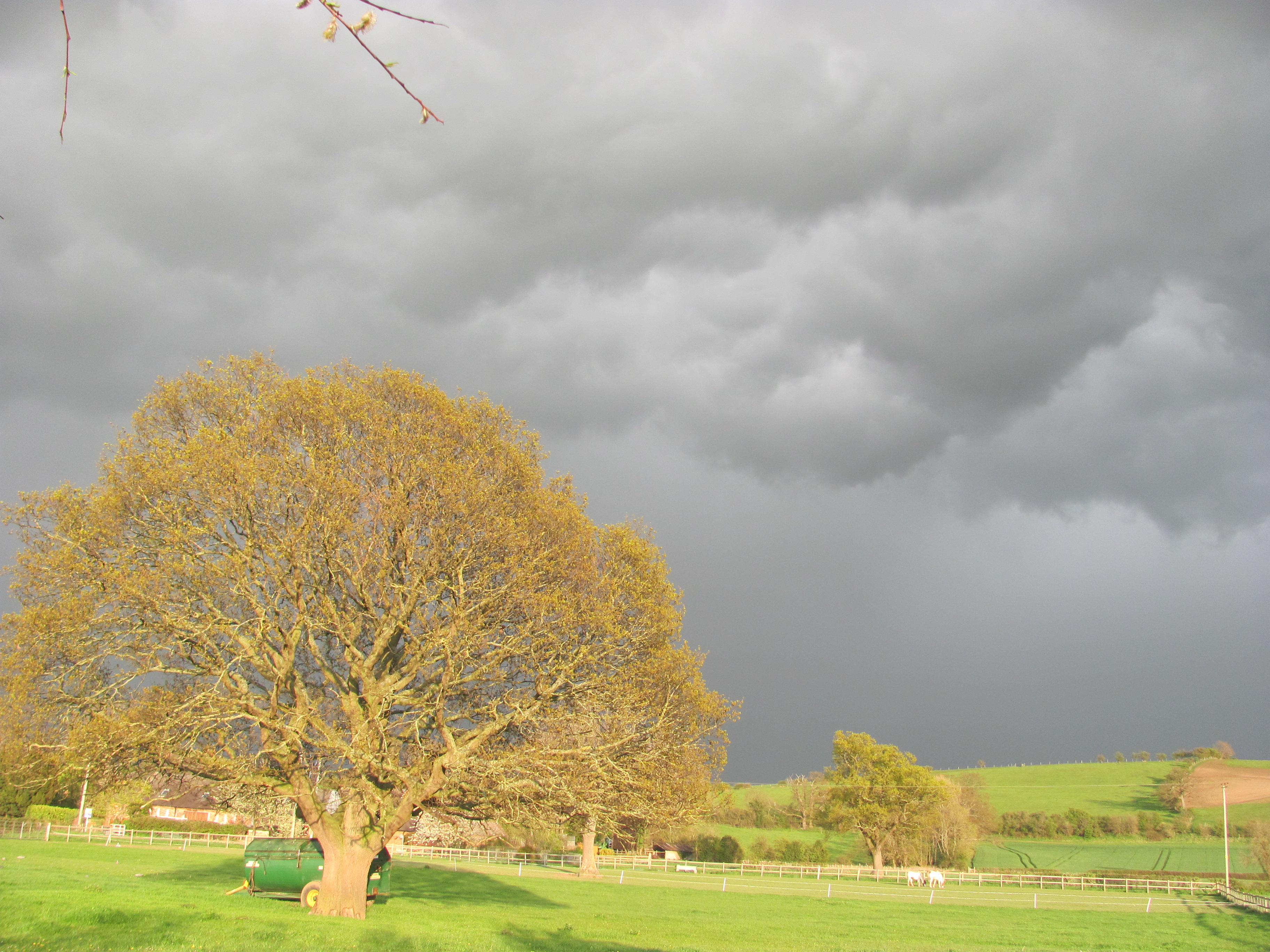
By cutting the Hazel down we can once again appreciate our view of the old Oak tree, a very special part of our “borrowed landscape”.

The bronzed foliage of our old Oak shines out against a somewhat stormy sky.
Categories
allotments bird watching birds community gardening conservation meadows outdoor sculpture photography Shropshire trees wildlife

A walk in the grounds of “The Secret Hills”

The Secret Hills visitors centre is situated in the small market town of Craven Arms a half hour drive from home. A Monday morning visit to the dentist took us to Church Stretton half way to Craven Arms, so to celebrate us both being given a clean bill of health we decided we deserved a coffee at the Secret Hills.

The visitor centre itself is an interestingly shaped building with a curving roof topped with greenery. It was one of the earliest green roofs. The inside features a library and coffee shop with occasional displays of art and crafts as well as exhibitions to celebrate all that make the South Shropshire Hills so special.

As well as a visitor centre the Secret Hills has wonderful, varied outside spaces which afford the local community and visitors the chance to explore meadows and  copse and walk alongside a small river and a pool. but there are also surprises wherever one goes.

The Undergardener and I began our visit in our usual way by visiting the coffee shop to enjoy a cappuccino and latte respectively. But join us as we slowly amble around the acres outside.

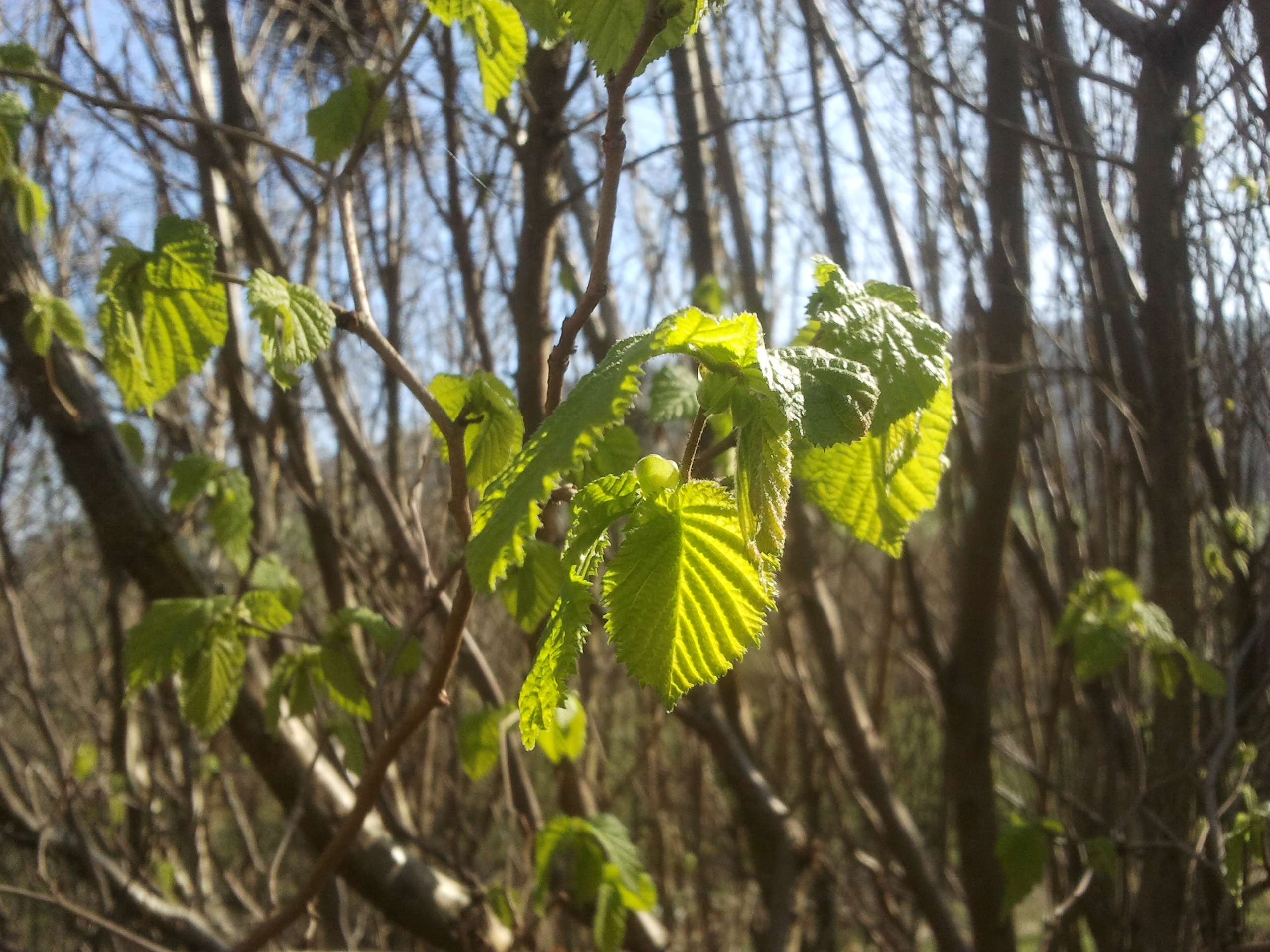
We ambled slowly through a young sloping woodland of coppiced Hazels, whose leaf buds were bursting the tangiest green. The trail took us across a rough area of Teasles and tough grasses and led us to the River Onny, which in this section is a calm, slow moving stream.

Near a bridge carrying the road over the Onny, clumps of Daffodils were in the spotlight of the sun’s rays, affording them a see-through look.

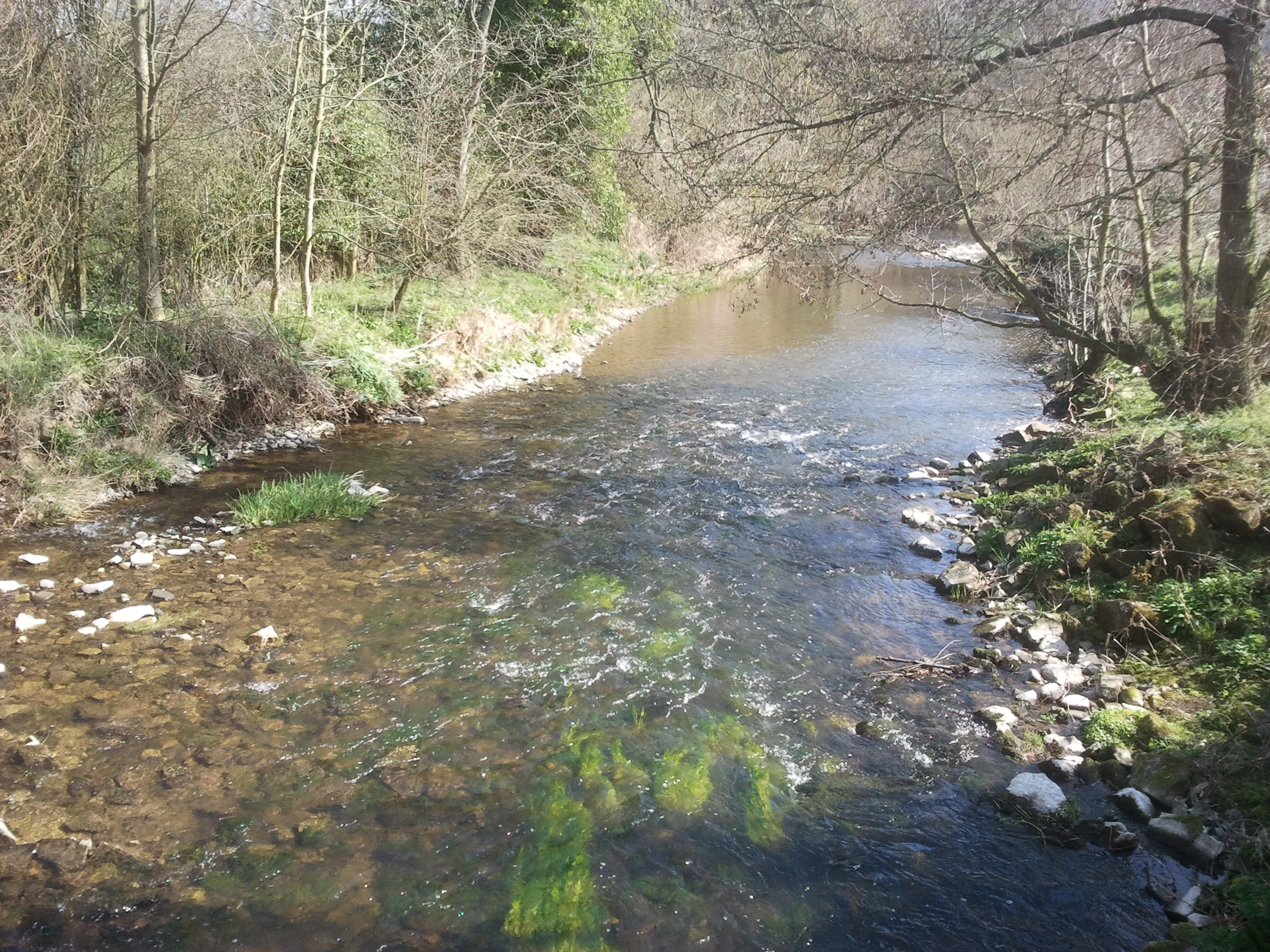
We enjoyed the peaceful, slowly moving waters of the Onny with rashes of seedling Himalayan Balsam and the occasional glossy petaled Celandine growing within the dappled shade of the waterside trees.

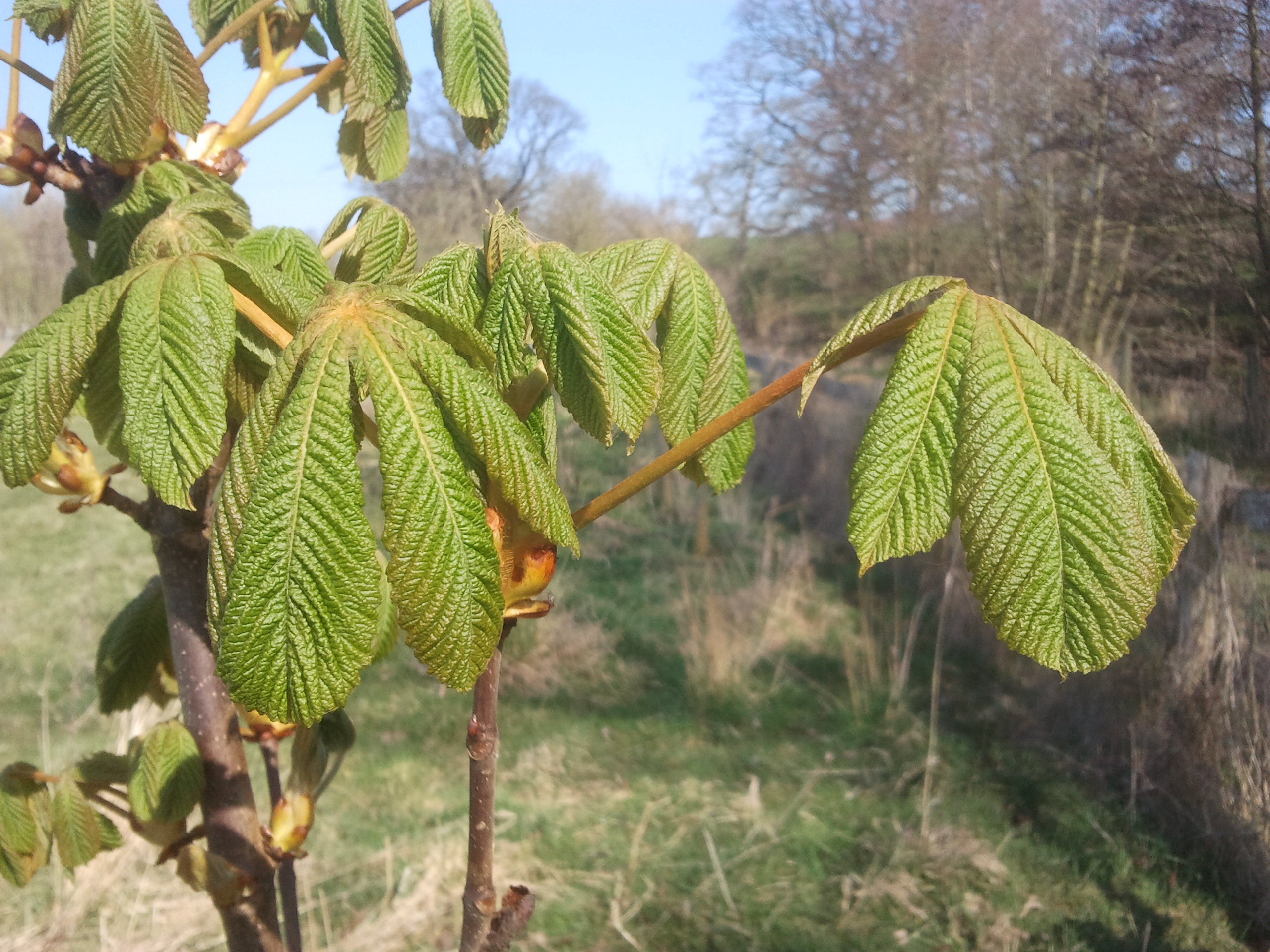
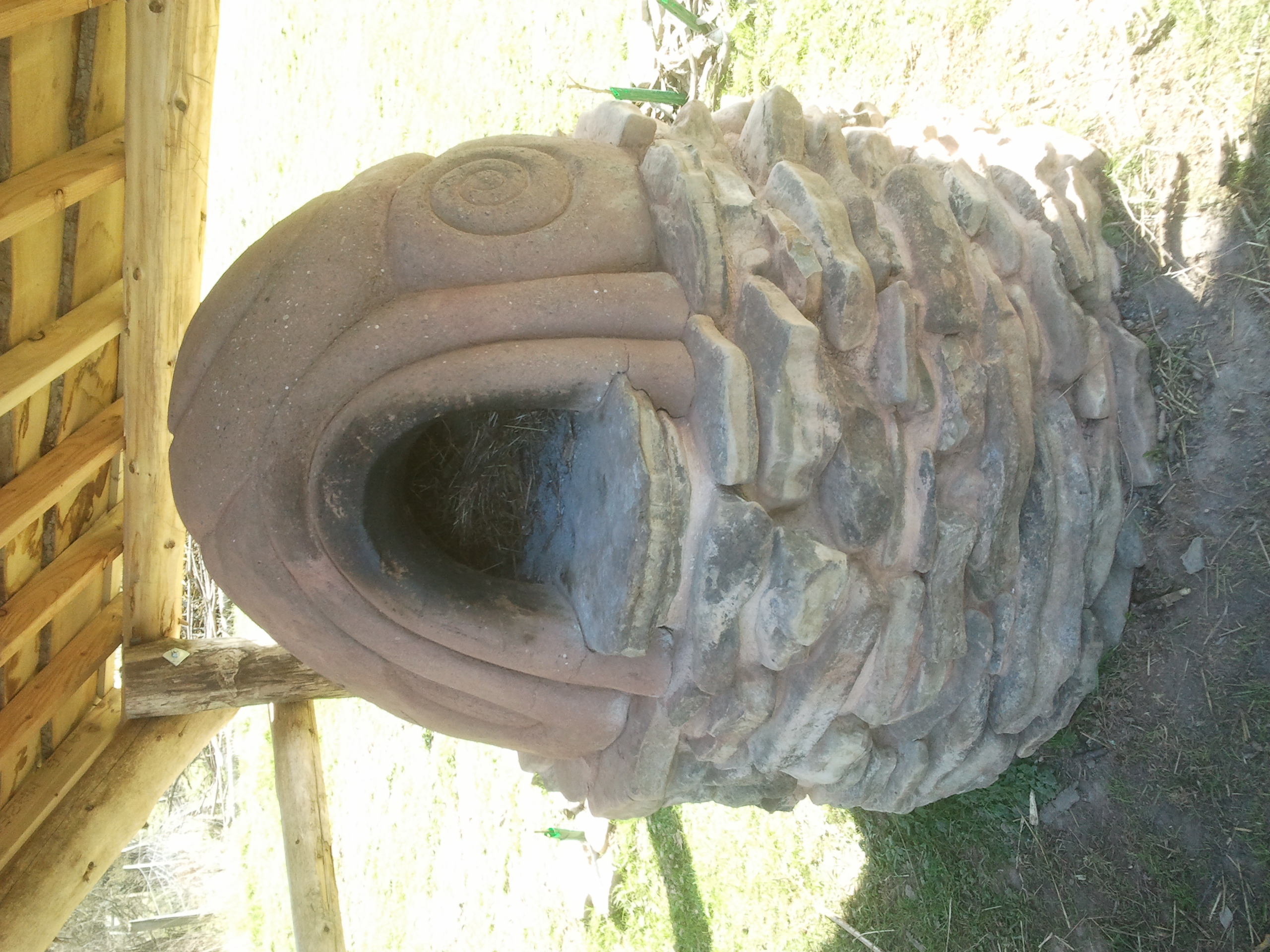
After half an hour of gentle rambling, we left the Onny and wandered across a meadow where the sticky buds of  recently planted Horse Chestnut trees were coming into leaf in one corner and as we were about to leave the field, in the opposite corner we came upon a community clay oven, looking like a giant pot. It’s domed clay top was carved with spiral patterns, like the shells of a Ramshorn Snail.

The huge sticky buds of the Chestnut Tree look and feel as if they are coated in treacle, and as they open the green of the fresh leaves is bright as a Golden Delicious Apple.

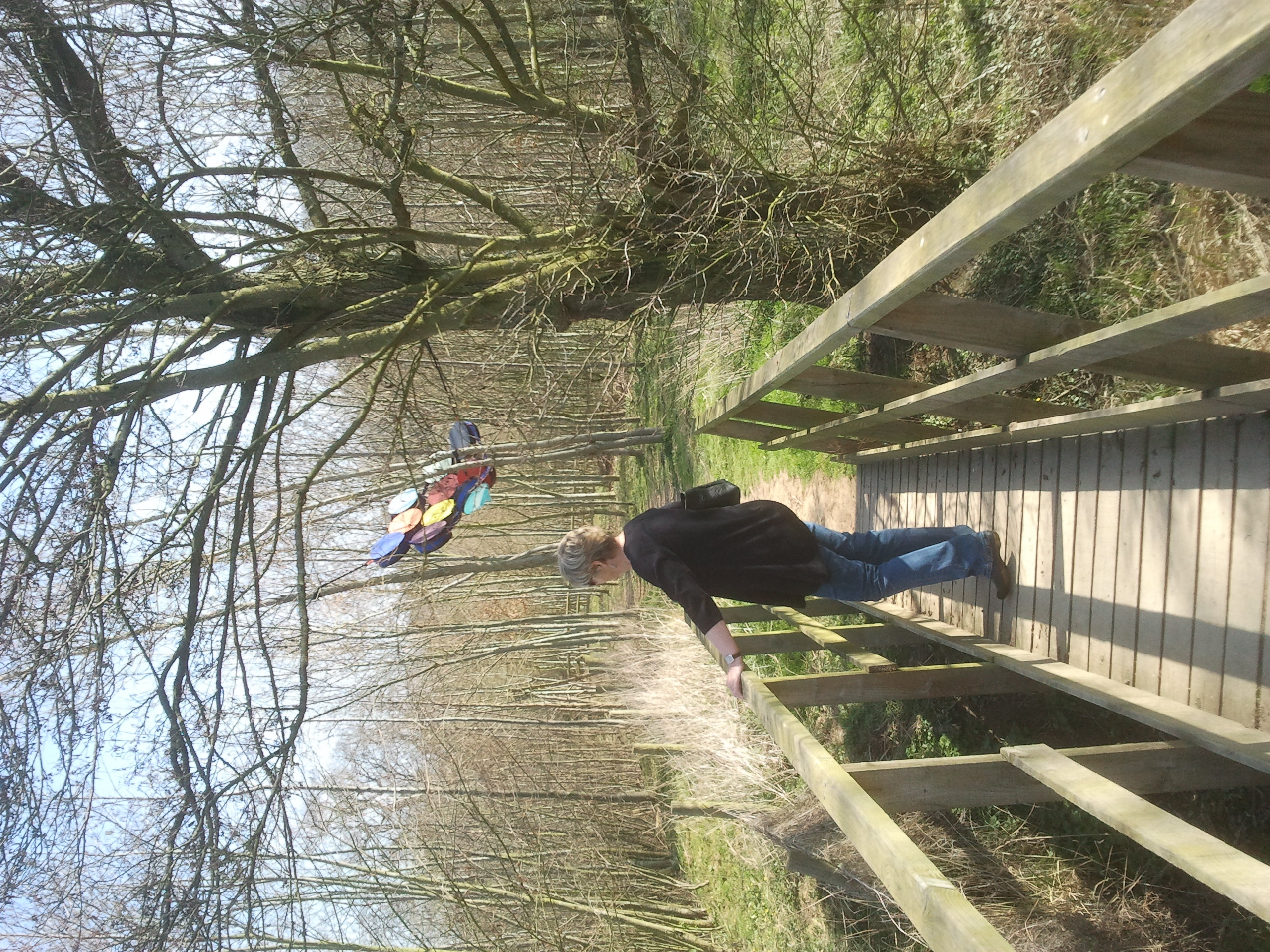
A bridge across a dried-up stream invited us into a wood of spindly trees.

We crossed the wooden bridge into the patch of woodland, and beyond it we were in for a surprise for we spotted two pieces of sculpture in the trees. so it really is true what the old children’s song said “If you go down to the woods today you are in for a big surprise”.

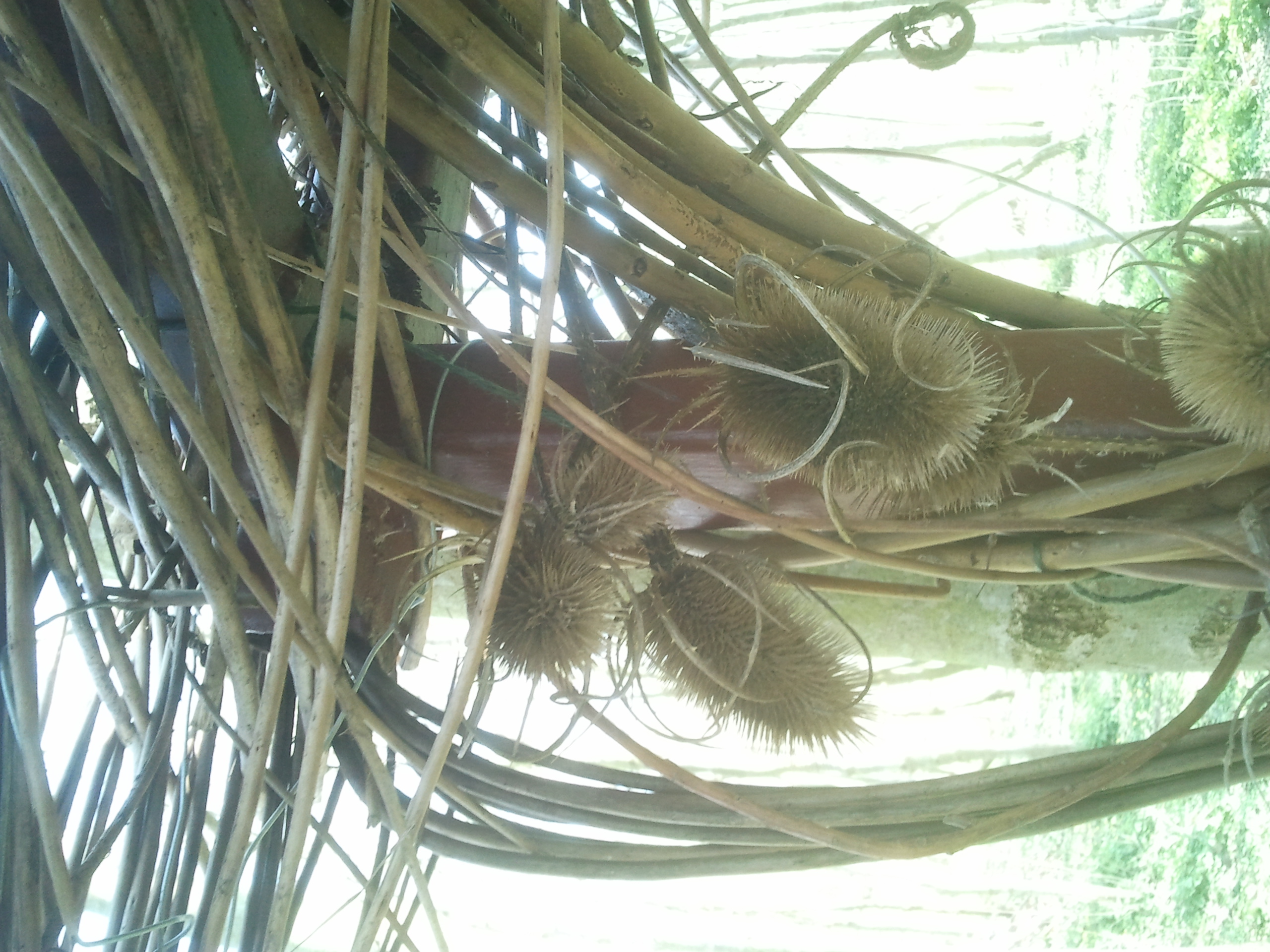
We looked at the details, the teazels and spirals of branches, and looked up inside the chimney shapes.

After exploring the sculpture and listening to the Great Tits, Chiffchaffs and Goldfinches calling in the tree tops, we made our way back to a bench on the riverside for a rest. A Dipper flew rapidly only inches above the water and passed just below our feet. These are beautiful birds like fat Blackbirds with white bibs. They feed around the rocks in shallow fast-moving streams where they watch from rocks constantly dipping up and down, but this one moved so fast and we didn’t see it stop to feed. On the opposite bank of the river tall trees grew thickly on a steep slope. Here we watched Nuthatches, Treecreepers and Great Spotted Woodpeckers feeding frantically and flying from tree to tree. But the real treat was the view of a Lesser Spotted Woodpecker, a very small black and white woodpecker which is now so scarce in the UK.

After resting our legs we aimed for the bridge that crosses the Onny where it becomes shallower and more rapid. Here the Onny took on the guise of a upland stream. From the bridge we spotted more Dippers and a Grey Wagtail, before moving on across the corner of a field where a stile showed us the way into the small Nature Reserve. We watched a pair of Red Kite soaring over the tops of the tallest trees. We made our way through the wood on narrow muddy tracks until we found the river once again. Following its banks we returned to the visitor centre dropping in on the community allotments on our way. Here tiny plots of land are available to local residents where they grow vegetables.

The Secret Hills is an amazing community resource for the market town of Craven Arms and a special day out for visitors.

Categories
allotments birds community gardening conservation fruit and veg garden photography garden wildlife gardening grow your own meadows natural pest control wildlife

A Day on the Lottie – mini-meadows and brassicas.

Yesterday we spent the day up at our allotment, with the aim of sowing mini-meadows and planting out Brassica plants. But firstly the grass paths separating the plot into its four beds needed a good cut. That done we prepared two narrow borders along one edge of the plot, raking the soil finely but adding no fertilisers or organic matter, for this is where we were creating our mini-meadows.

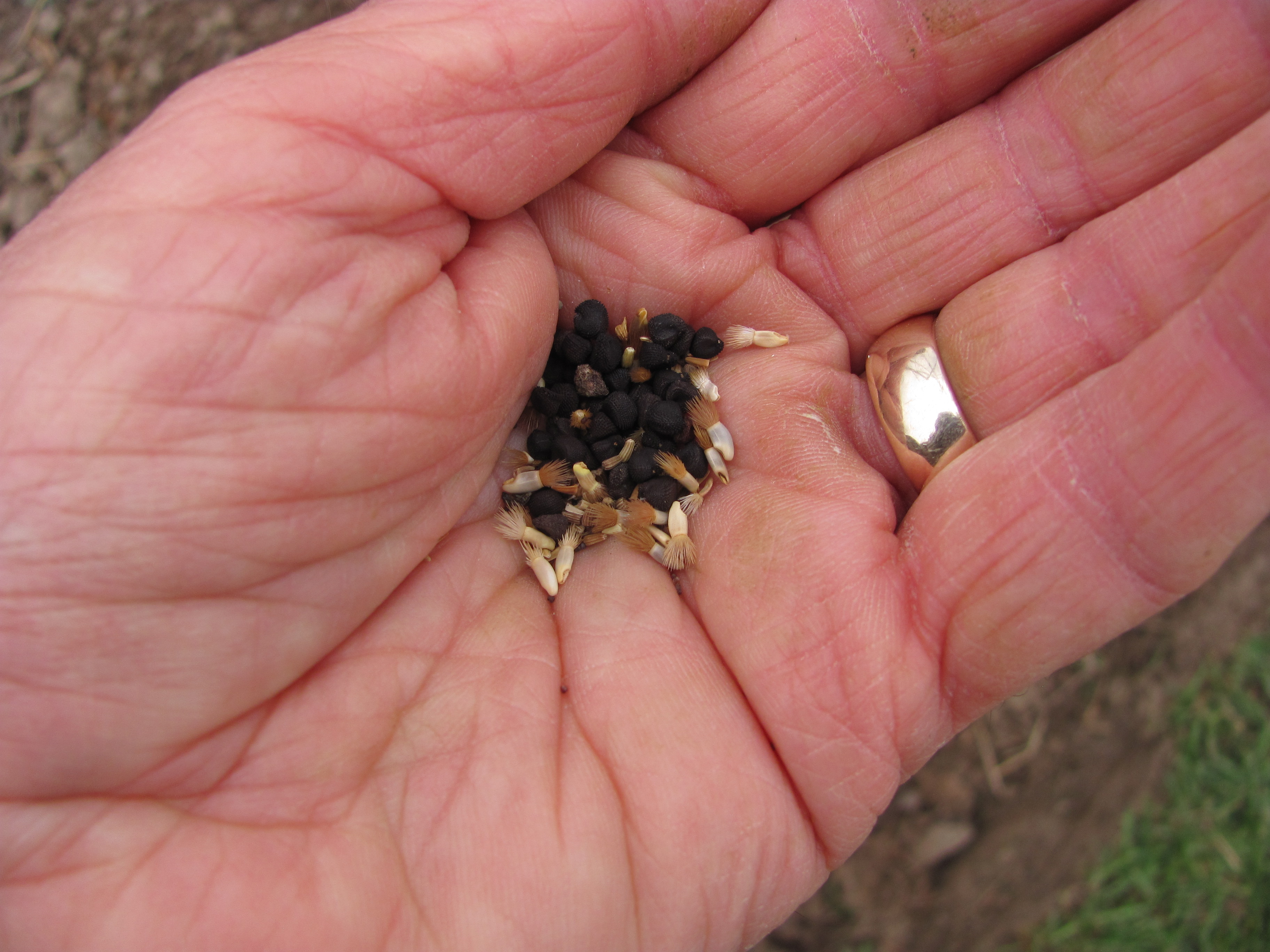
We sowed a mixture of 3 packets, a white cornflower called “Snowman” a native cornfield mixture and a Californian wildflower mixture. It seemed so strange to feel how light the seeds felt in my hand – a meadow in the palm of my hand.

We hope that our little strips of meadow will look good for us and fellow plotholders to enjoy, attract beneficial insects and bring in attractive butterflies. We particularly want bees to arrive to help with crop pollination. And of course they all entertain us while we are gardening.

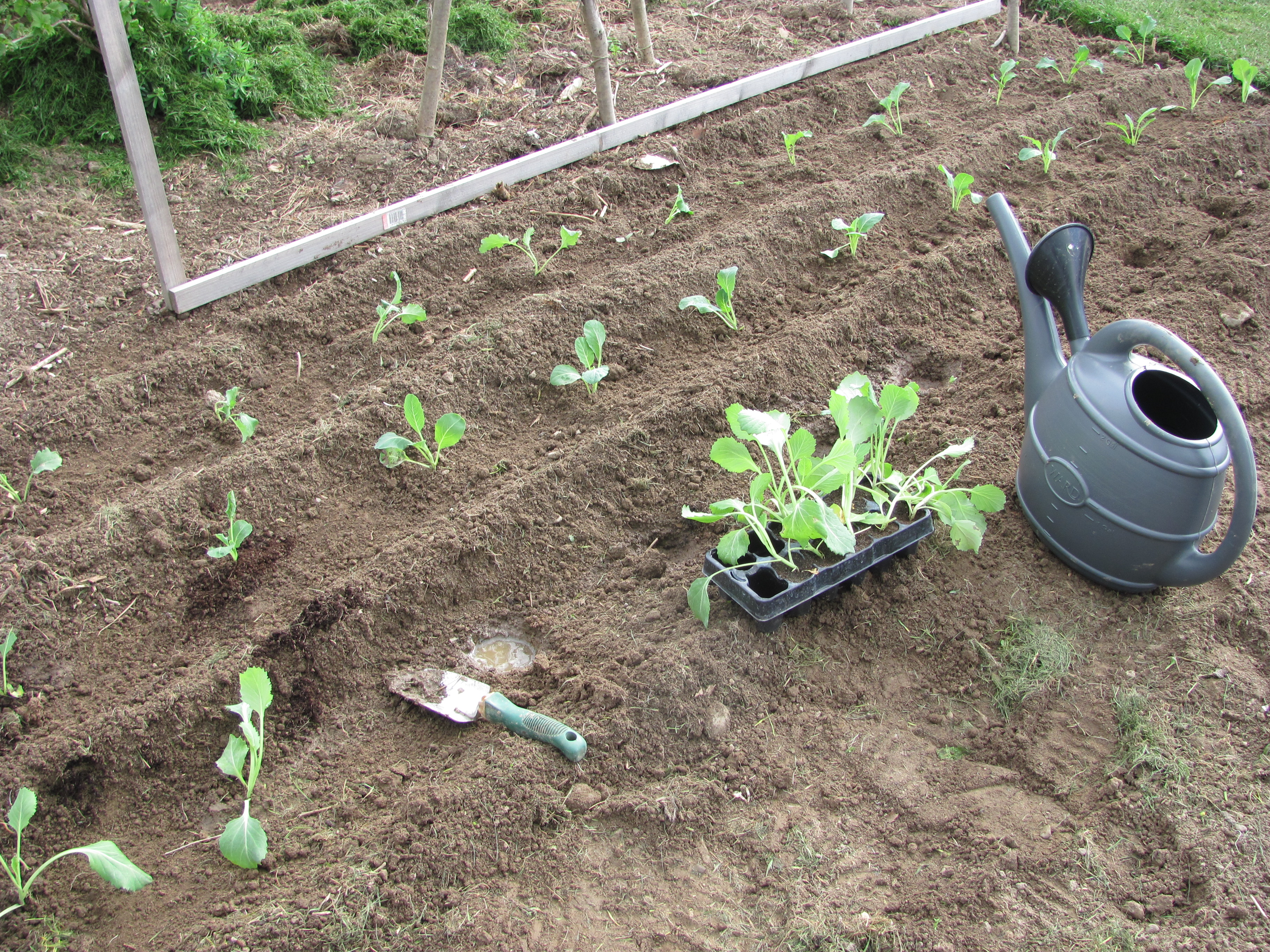
After a quick coffee we scattered chicken muck pellets and fish, blood and bone fertiliser onto our brassica bed and raked them in well. I then trod over the area to firm the ground  and raked again. Brassicas enjoy firm soil and they are less likely to bolt and help them fill out better.

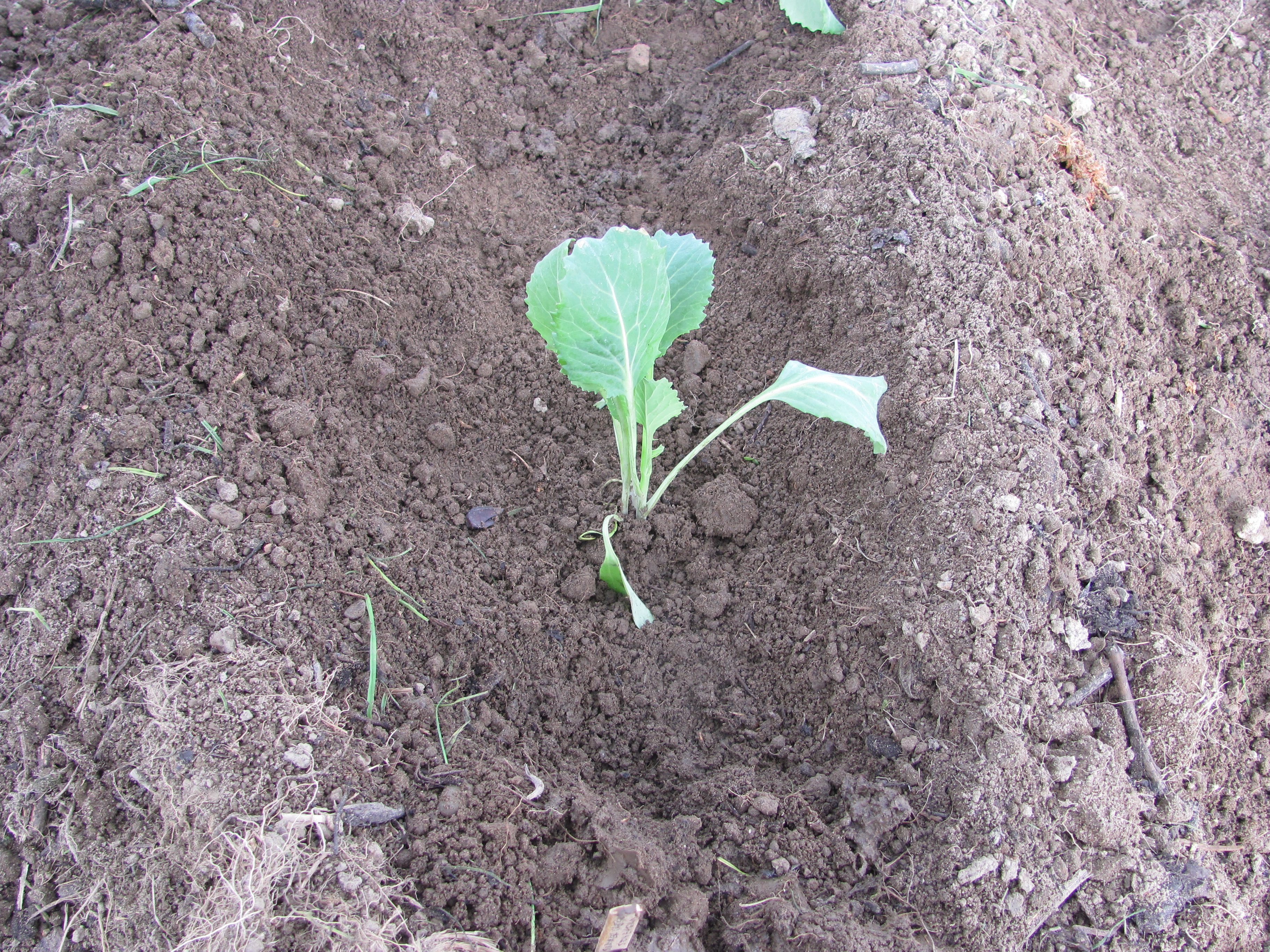
We decided to plant the Brassica plants in trenches with raised sides to act as min-dikes. With all the talk of drought and possible hose pipe bans we are trying out ways of watering wisely. These trenches should ensure that any rain is directed towards the plants.

We packed away our tools and locked up the shed after a busy, productive couple of hours. Back to the community hut to collect one of the site mowers and the grass strimmer, and we were off to mow the grass around the community meadow area and the turf spiral. But we wandered around the site first and found three real little gems.

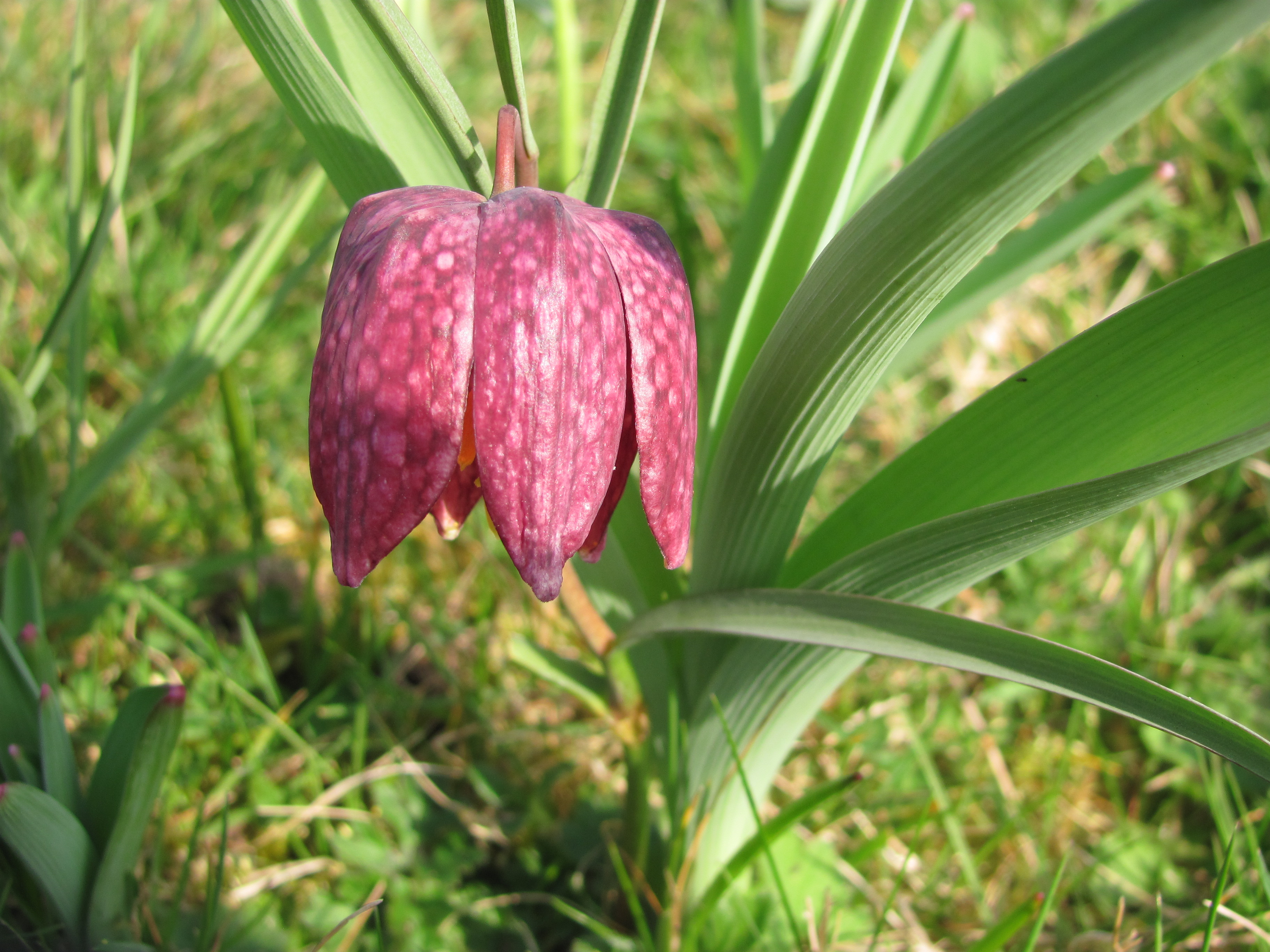
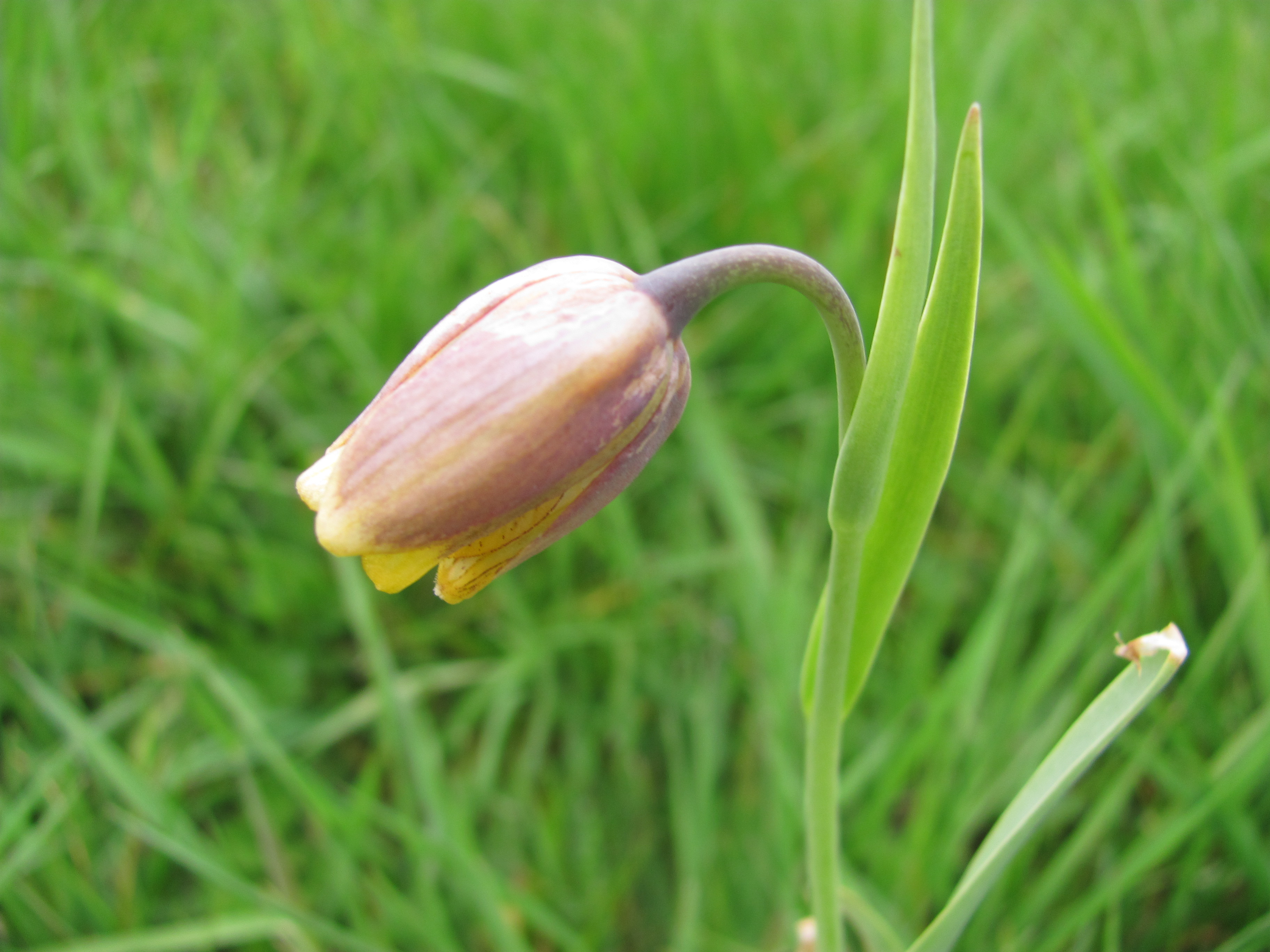
This first gem we found was a native fritillary growing in a batch in the first of the community orchards and the second, a more unusual fritillary, in a small patch in the Hazel Grove.

The third gem was a hatched shell near one of the native hedgerows. This little sky blue beauty is the egg of a Song Thrush, so we were delighted to find it. Thrushes are becoming more frequent on the site as our community wildlife areas are becoming more established. We often see them feeding under the feeding stations or rummaging in the leaf litter beneath the hedges.

We mowed and trimmed for a couple of hours before our backs shouted “Enough! Enough!”
Categories
bird watching birds conservation photography Shropshire Shropshire Wildlife Trust wildlife Wildlife Trusts

A Canalside Ramble, There and Back. Part Two, Back.

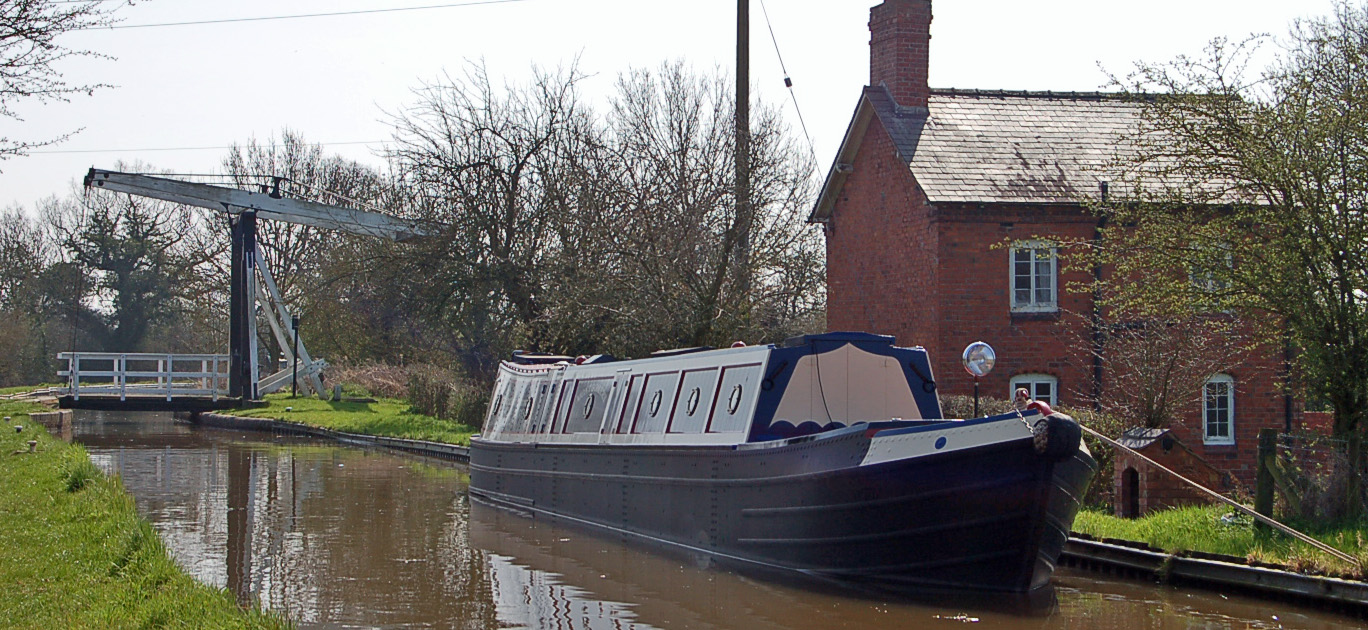
Suitably refreshed we set off back along the canal to re-trace our steps. It is always good to do this as things look so different and there are different things to see that were missed on the way. The view below is a typical canalside scene with the barge, the canal workers cottage and the lift bridge.

We particularly noticed the remnants of ironwork and machinery once important to the working of the canal but their commercial uses are now long-gone. They are now used by barges as part of the new leisure industry, as canals are once again coming to life, and they create interesting patterns and shapes along the waterside for photographers to spot.

Half way back and a deserved break found us sitting on the stumps of coppiced Alders. This little coppice of Alders was alive and bustling with bird life. We heard their calls and songs and watched them flitting amongst the branches. Lots more Chiffchaff and Willow Warblers, Blue, Great and Long Tailed Tits. Their gentle songs were interrupted by the alarm calls of Blackbirds as Buzzards flew overhead. Those tiny songsters the Wrens sang with gusto as they moved rapidly low in the undergrowth. The real entertainers though were the two birds of the tree trunk, the Treecreeper and the Nuthatch. The little mouse-like Treecreeper flew between trees landing low down the trunks and climbed upwards searching the bark for insects, whereas the more burly and more colourful Nuthatch landed higher up and climbed downwards head first.

Wildlife today kept disappearing into holes. Blue Tits disappeared into their nest holes on the rotten branches of trees, Red Tailed Bees disappeared into holes in tree trunks low to the ground, Long Tailed Tits into the tiny holes in their neat spherical nests and squirrels into their dreys.

As we neared the end of our waterside walk we were startled by loud screechings emanating from the top of a clump of trees. The arrival of an adult Heron was all we needed to realise that this terrible cacophony was caused by hungry young Herons calling from their “rookery”.

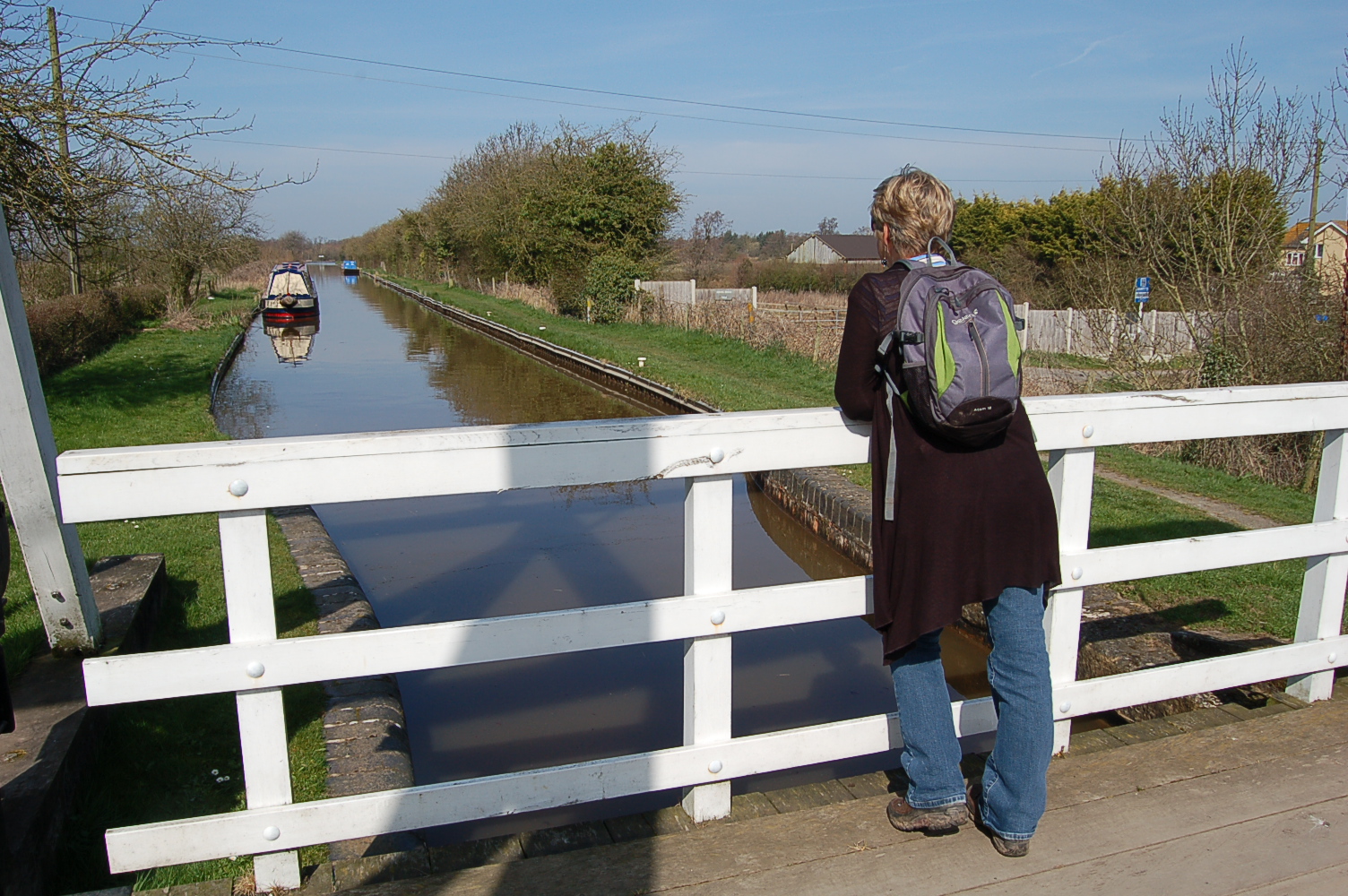
On returning to the bridge nearest to the end of the trail the harshness of the light created dark shadows emphasising the beautiful curve of its arch.

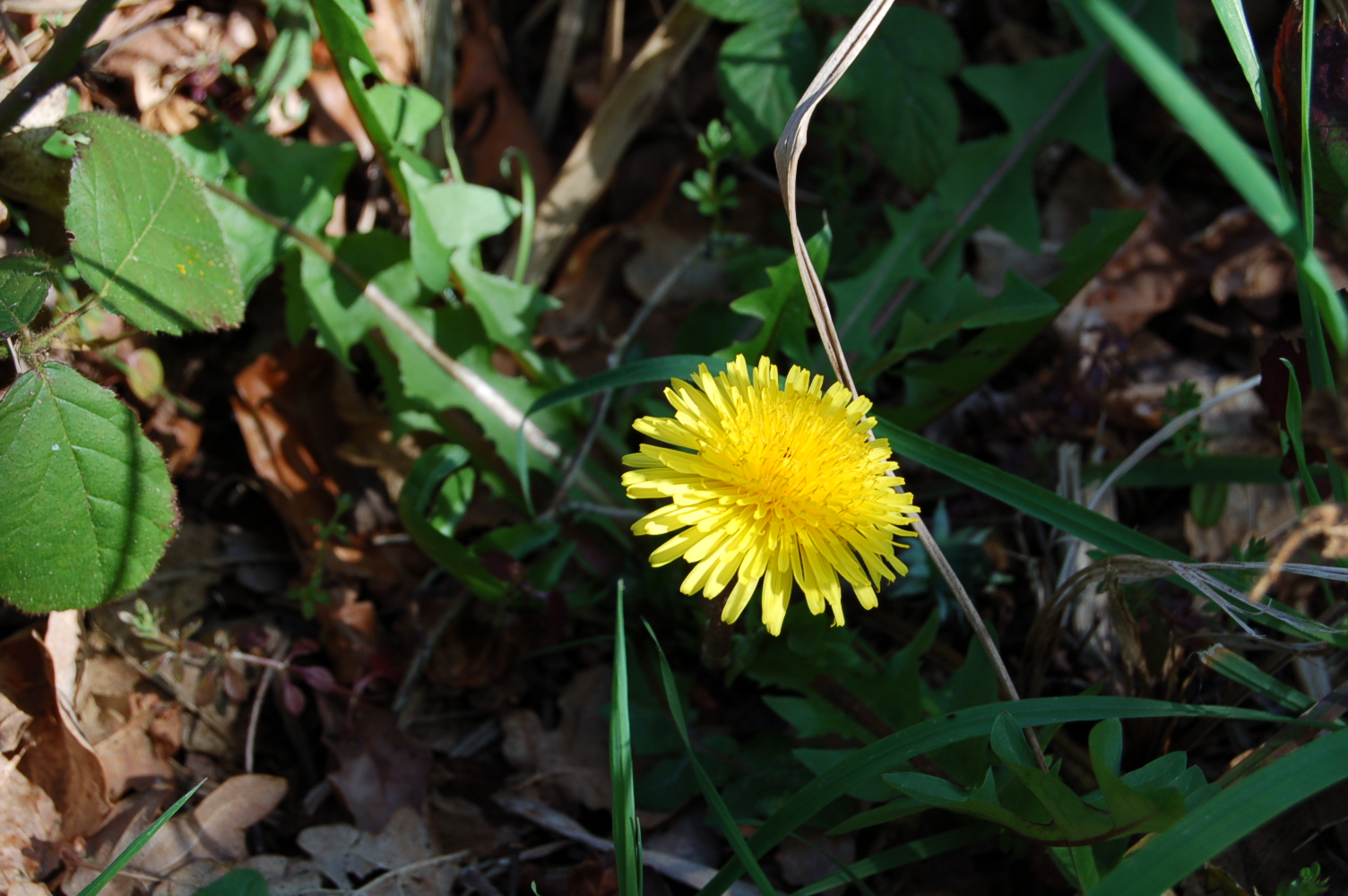
From here on we kept coming across that wonderfully coloured butterfly the Brimstone in its bright yellow livery with a hint of lime green. these early adults were searching along the canal side and the hedges bordering the toll paths searching for the flowers of Dandelion and Cowslip. It was impossible to photograph one because they never stay still. They fidget and flit! But they glowed in the sun, such brilliance of colour.

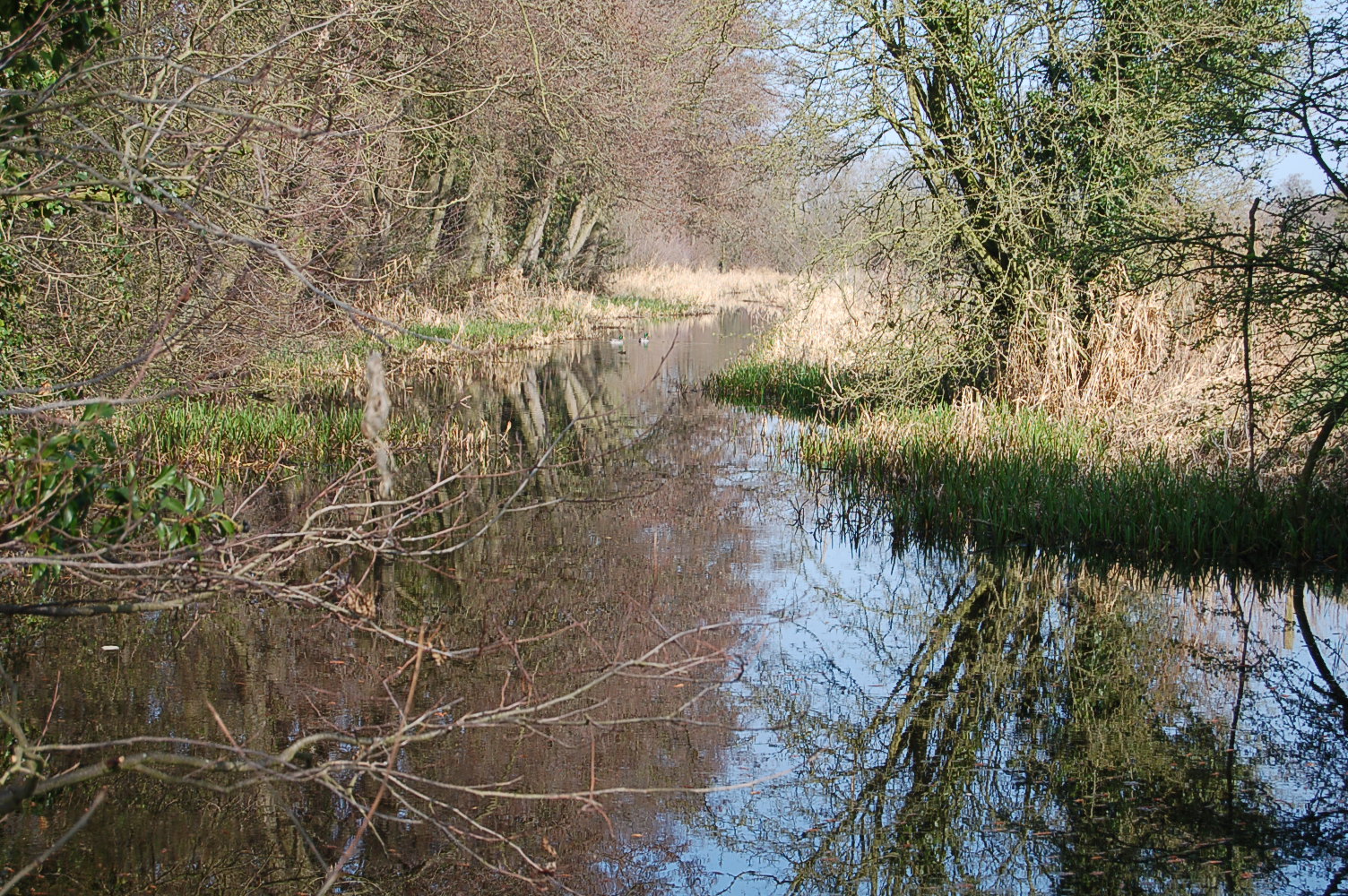
The canal narrowed the closer we got towards the finish of our walk, as the reeds closed in on either side, leaving a narrow winding ribbon of water. This created interesting reflections of trees and fences on the opposite bank.

We caught sight of this rectangle of sheep’s wool caught on the fencing where a sheep must have been scratching to alleviate an itch.

We discovered a great place to walk and watch wildlife (we recorded 40 species of bird), to listen and appreciate the countryside of our home county, Shropshire. There are so many places still out there awaiting our discovery.

Categories
bird watching birds conservation Shropshire trees wildlife Wildlife Trusts

A Canalside Ramble, There and Back. Part One: There.

Bright sunshine, the purest blue sky and warm, summer temperatures in March! What could be better than a walk near water? So we decided to visit a Shropshire Wildlife Trust reserve with its track taking us along the towpath of one of Shropshire’s many stretches of canal. An easy flat walk on soft grass – so kind to the legs and feet after busy days on the allotment.

We have been members of our county’s Wildlife Trust for about 40 years now and visited their reserves regularly when our children were with us but now they have left home and we have both retired we are enjoying visiting them anew. The walk we chose today was the Prees Branch Canal Reserve, described as a “2 mile long pond”. A Site of Special Scientific Interest because of the rare underwater plants, it is also home to one of Britain’s rarest mammals, the Water Vole. Thus it was with great anticipation that Jude, also known as Mrs Greenbenchrambler, also known as “The Undergardener”, and I climbed the stile into the reserve. The first sound to reach our ears was the loud call of a chicken who had just laid its daily egg.

The Prees Branch Canal was started in the early 1800’s and was intended to be a branch of the Llangollen Canal, but finances ran out so it was never completed. The trail we chose to follow runs alongside the 2 miles that were built and runs to its junction with the Shropshire Union Canal.

Just a few steps into woodland alongside a short dried up section of canal and birdsong filled the air. The most persistent songster was the diminutive warbler, the Chiffchaff. Throughout our day’s walk of almost four miles there was a calling Chiffchaff every 30 metres or so, and these early arrivals sing with such gusto to announce themselves to any females in calling distance. It’s call, the simple repetitive “Chiffchaff” call that gives it its name, was interrupted by the much more tuneful song of its near relative, the Willow Warbler. We saw so many flying from tree to tree or searching out insects in undergrowth.

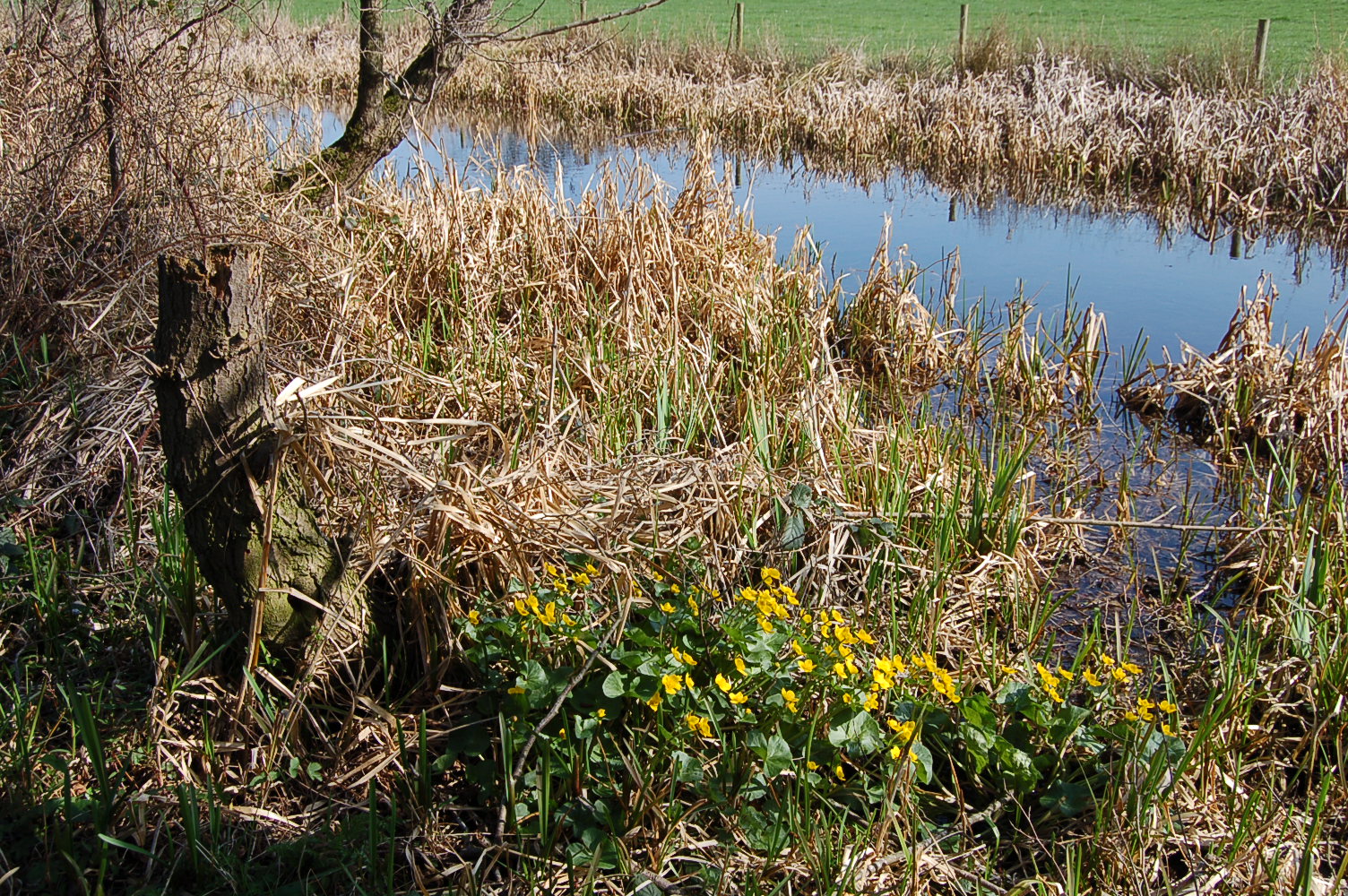
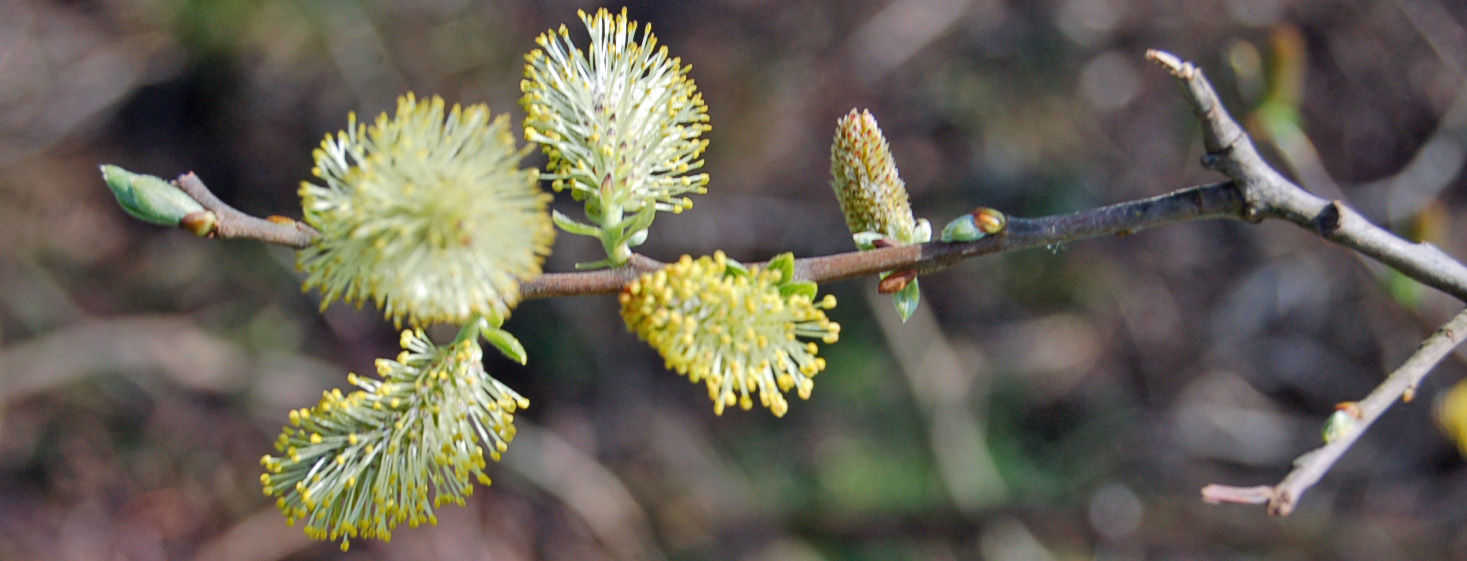
The habitat in this tree-lined section looked absolutely perfect for the Water Vole but the closest we got to one was hearing the characteristic “plop” as one entered the water from the dried reeds followed by the every increasing circles of ripples. In this area, beneath the bare stems of trees in their dappled shade yellow flowers abounded – Celandine, Dandelion, Marsh Marigold and Pussy Willow. Later a snout popped up through the surface film of the water, and Jude stopped me suddenly and pointed. as it moved towards it we realised that the snout was attached to a frog and not a Water Vole. But we enjoyed admiring the frog’s swimming skills – perfect breast stroke clearly seen in the sparkling clean water.

Leaving the tree-lined section, we entered a much more open stretch where the water was crystal clear. Beneath the surface the green of new Yellow Waterlilies glowed.

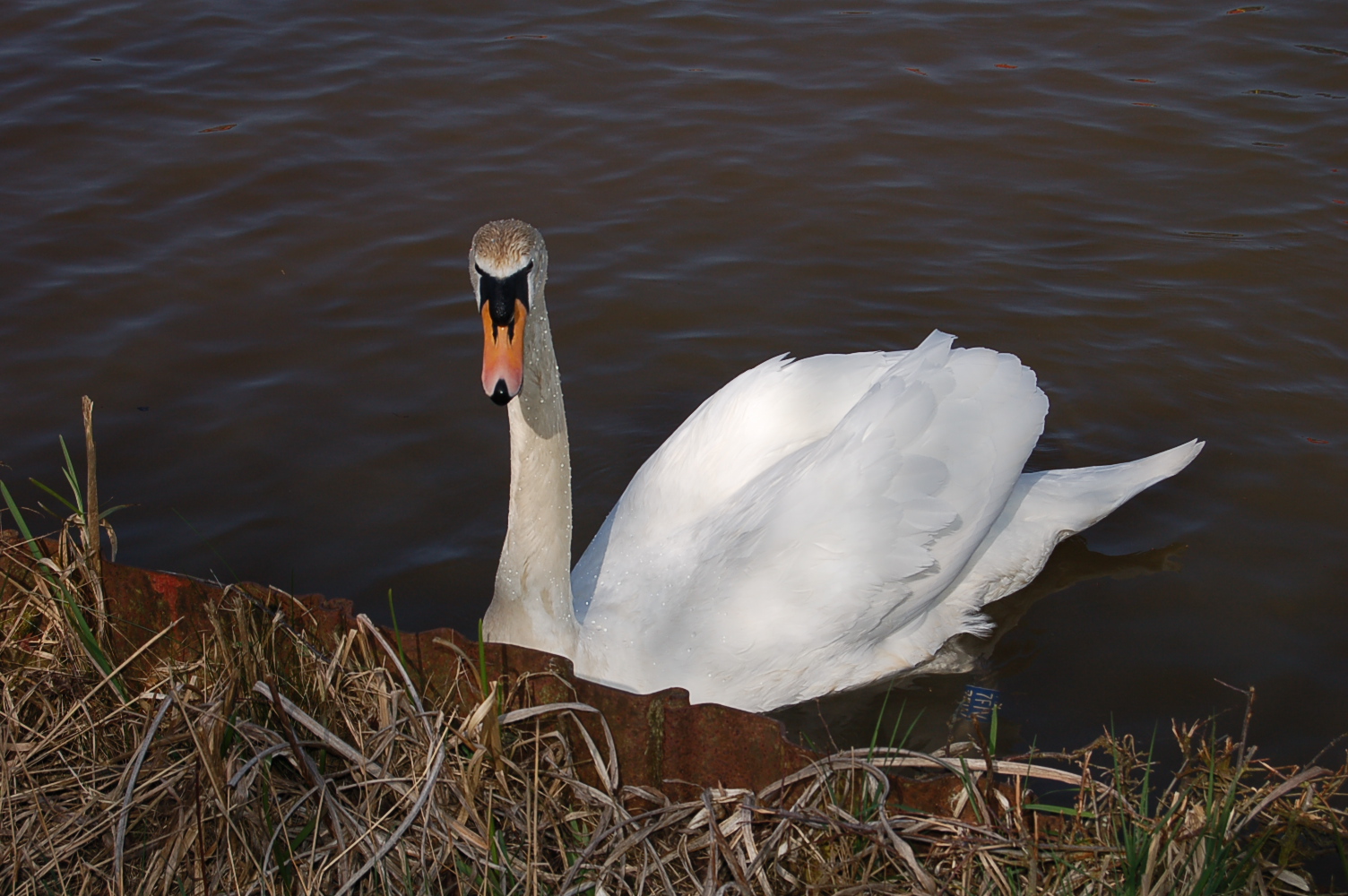
Two male Mallards, their green iridescent heads glowing against the sky reflecting blue, paraded up the canal ahead of us. A single Mute Swan bustled from the dried reeds, a blue ring on its leg showing in the clear water. Clean white feathers, orange beak and blue leg ring.

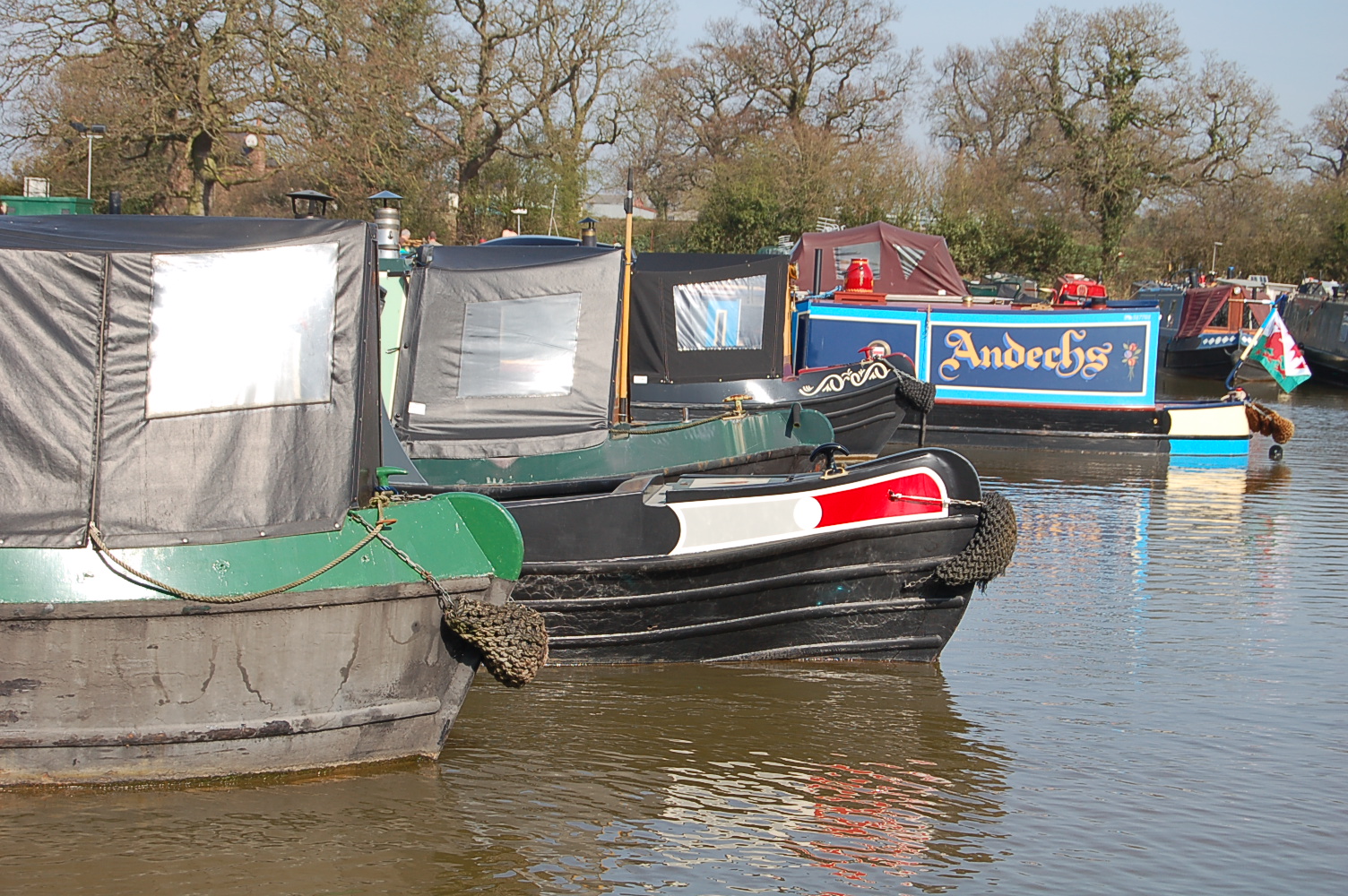
We crossed this open stretch and after passing through an Alder coppice, we reached a busy marina and navigable waters. Narrow boats in all colours, all sizes and from all destinations clustered around moorings. From here on these boats chugged passed us regularly stirring up the silty bed of the canal. They sported a miscellany of names all saying something about their owners, their humour and their interests. Tadpole, Otter, Mouse, Earwig and Maple Leaf, Grace, Ondine, Montgomery, Jubilee Bridge and my favourite Django. That boat owner must be a fellow jazz fan.

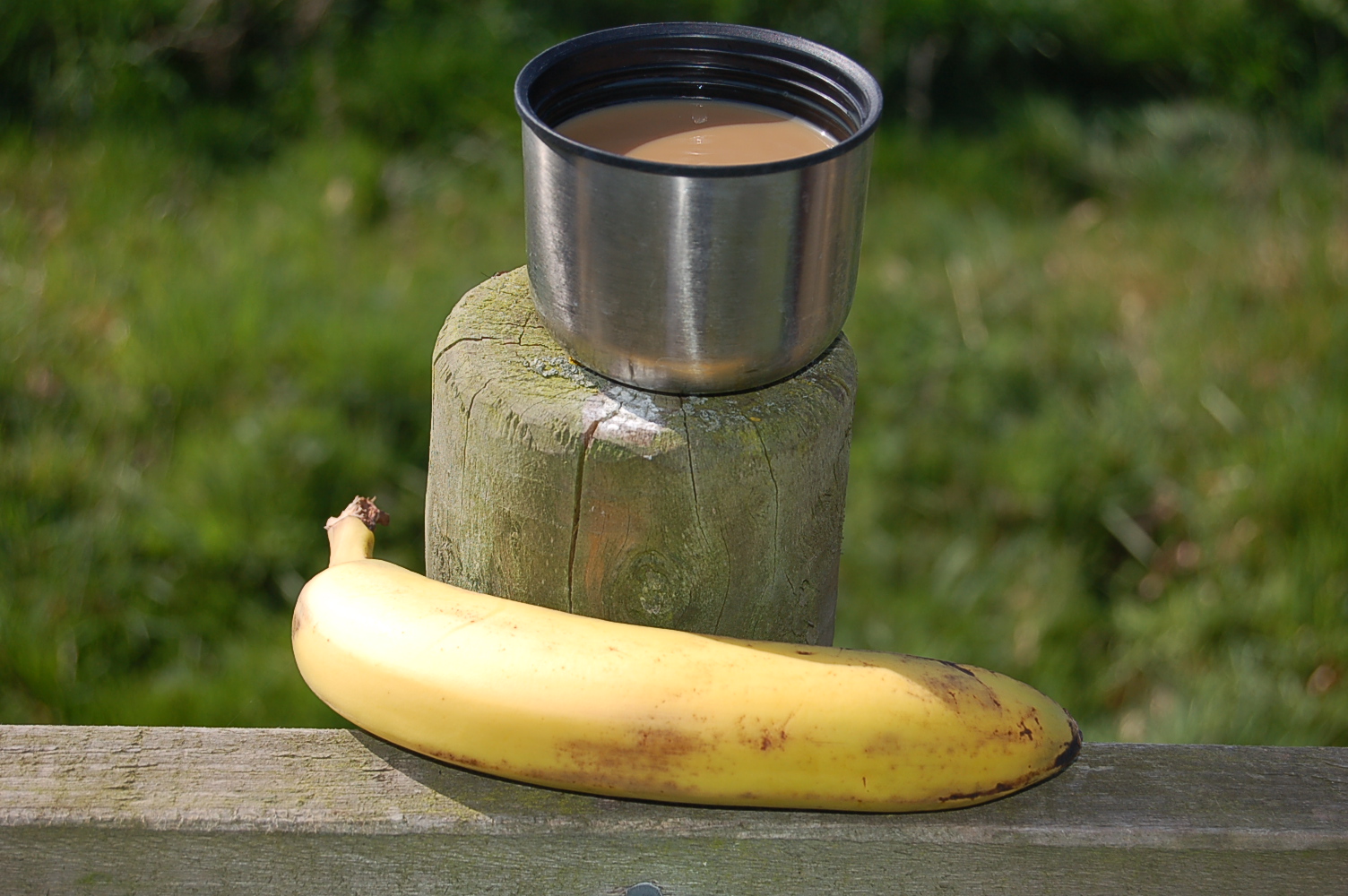
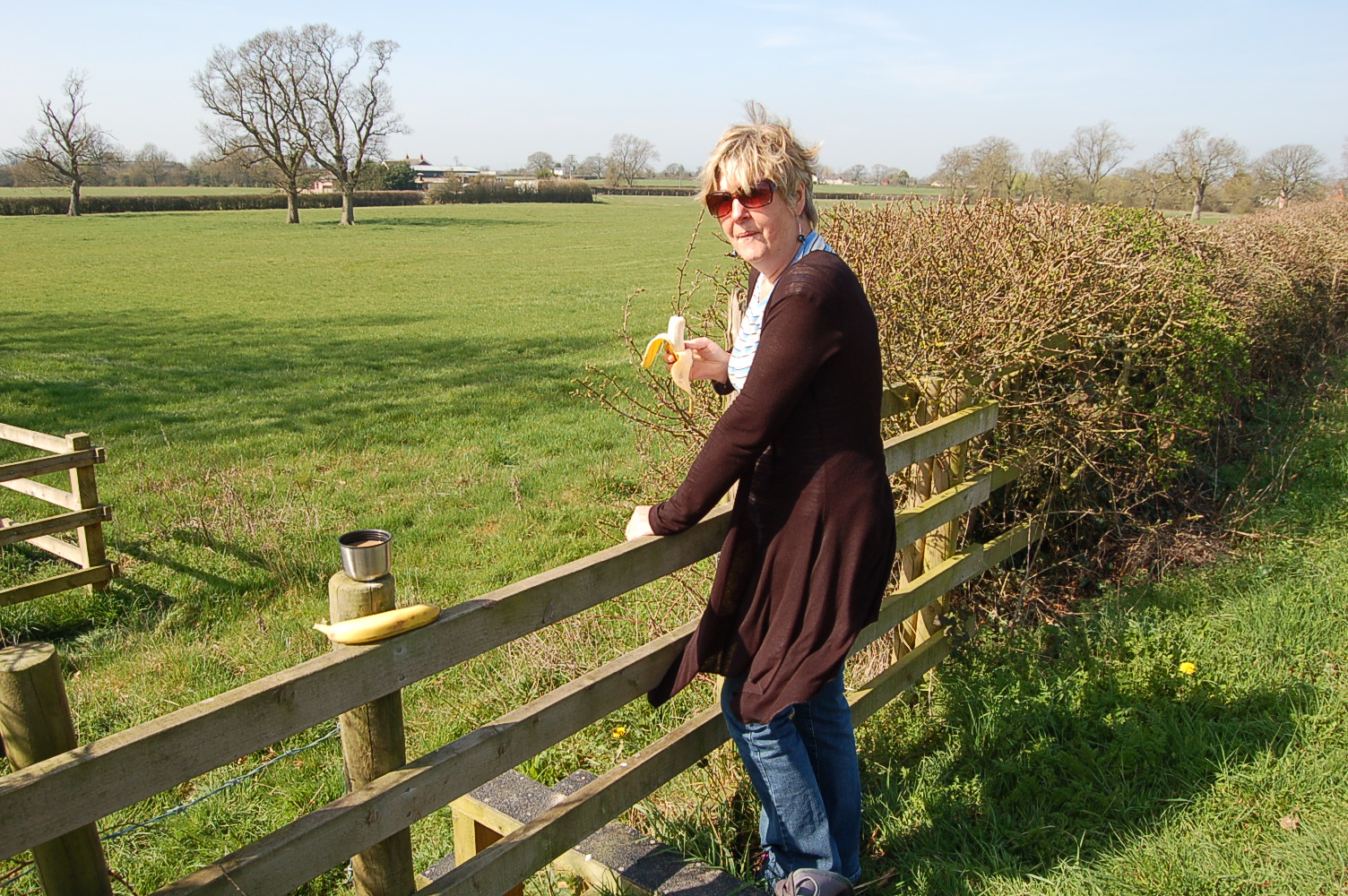
Just beyond the marina we found a stile conveniently placed to lean upon, eat bananas and drink coffee and of course rest weary legs.

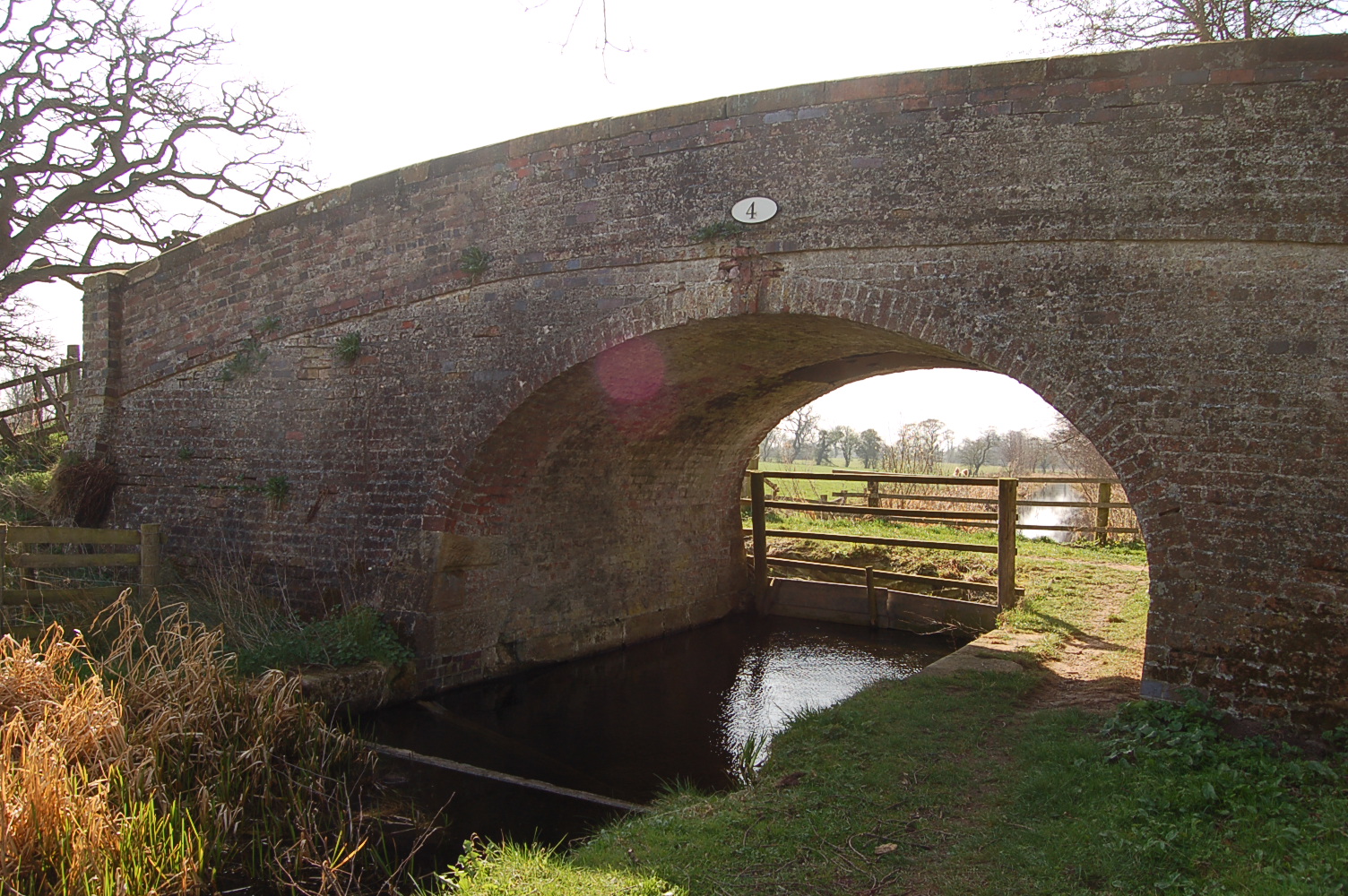
We passed under bridges which gave us a moment of shade from the sun which was gaining strength by the hour. Each bridge has a name, Waterloo Bridge, Boodles Bridge, Dobson’s Bridge, Starks Bridge, Allimans Bridge or a number. These hump-backed bridges carried narrow country lanes over the canal or tracks that took cattle or sheep from field to field. Under Boodles we were mesmerised by the sight of a Great Diving Beetle swimming powerfully to the water’s surface to collect its bubble of air. This is Britain’s largest beetle and swims with strong legs. It is large and powerful enough to catch and eat small fish called Sticklebacks.

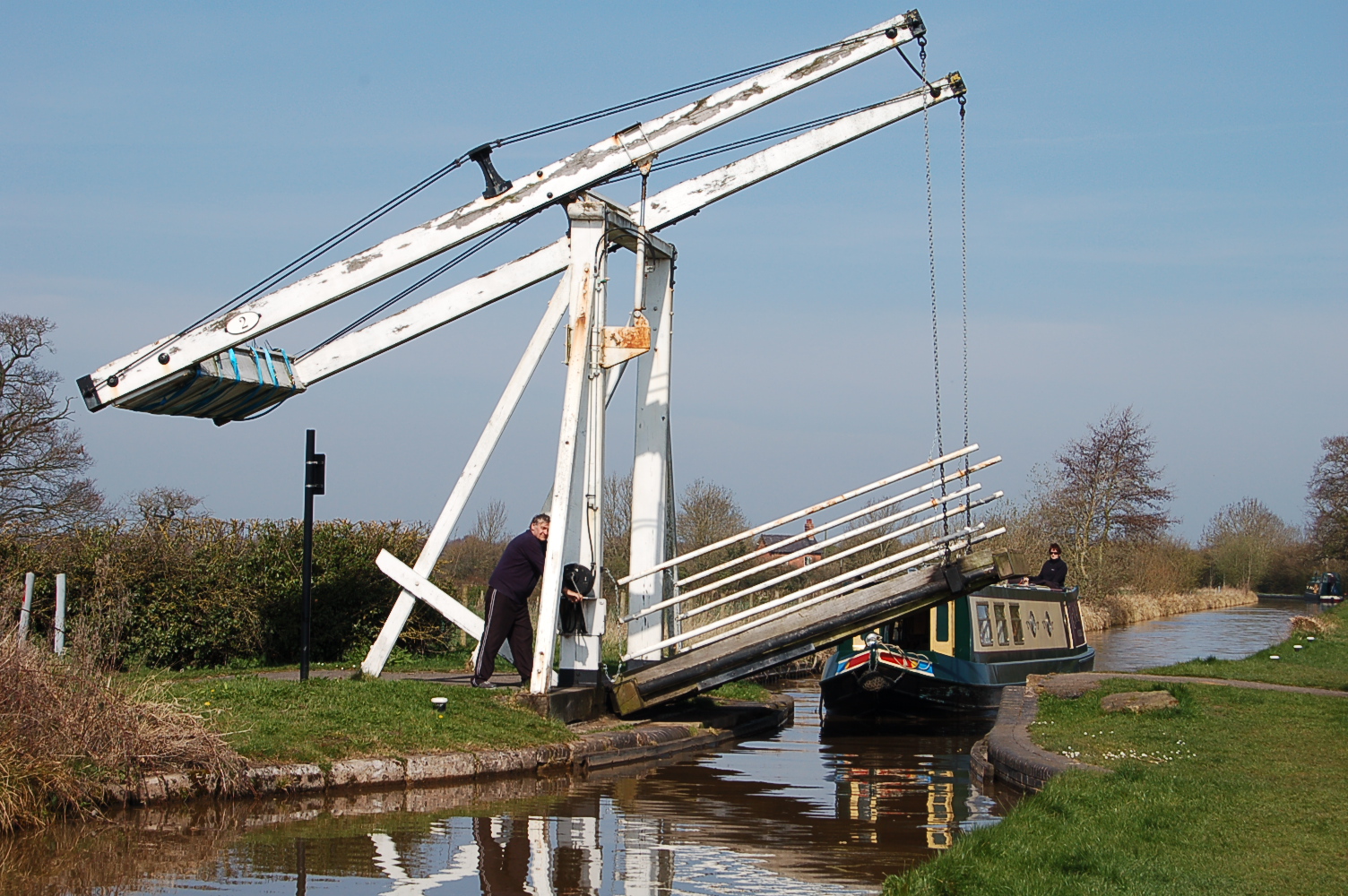
Starks and Allimans were most unusual bridges – Lift Bridges. The trackways were carried over the canals by these low wooden bridges which boatman raise by manually turning a handle. As we approached Starks we watched a barge passing under, a skillful manoeuvre.

We stood on Allimans lift bridge and looked along the canal trying to decide whether we had enough energy in reserve to walk the last straight quarter-mile stretch to the T-junction where our Prees Branch Canal met with the Shropshire Union. It looked too tempting!

So we moved on slowly and here the canal cut straight through marshy land with scrapes and pools. From the towpath we spotted wading birds such as Lapwing and Curlew, and water birds such as Moorhens, Canada Geese and Wigeon Ducks. Squealing and wheeling above them were the ubiquitous Black-headed Gull.

Reaching the T-junction felt great and after crossing Roving Bridge next to Roving Farm, we found a seat! Just reward indeed! There were two benches placed in memory of people who had loved the canal in their lifetimes. We made ourselves comfortable with a coffee and a couple of apples on the bench dedicated to Edith. Thanks Edith we enjoyed your seat. Here we stayed a while enjoying the sounds of birdsong and watching the occasional barge passing along the Shropshire Union. Most cruised slowly and quietly in front of us and their occupants waved or called greetings. But one approached us noisily. We heard the engine and the “sailors” a long way off. The engine was so noisy that the sailors just had to shout to hear each other giving commands and advice. They needed advice as three men in orange fluorescent safety jackets stood on board a tiny tug barge pushing a barge along in front and pulling two behind. The barge snake zigzagged from bankside to bankside and progressed slowly, but provided amusing entertainment.

Quiet returned as they disappeared into the distance and we could appreciate the “yaffling” calls of Green Woodpeckers and the chattering of pairs of Wagtails, both Pied and Grey. Goldfinches and Greenfinches passed over head in pairs and a lone Buzzard wheeled high above.

(Part Two to follow)

Categories
bird watching birds conservation photography Shropshire trees wildlife Wildlife Trusts

A Wander Around a Hill – Earls Hill Nature Reserve

The weather forecast promised us sunshine, clear skies and mild temperatures in the mid-teens, so we decided to drive two miles up the road to park at the bottom of Earls Hill and walk slowly along the trail around the hill’s perimeter. The car park is in the woodland edge and stepping out of the car we look up into the canopy of tall deciduous trees to see Blue Tits flitting rapidly from branch to branch right up in the tree tops. Their calls sounded all around us.

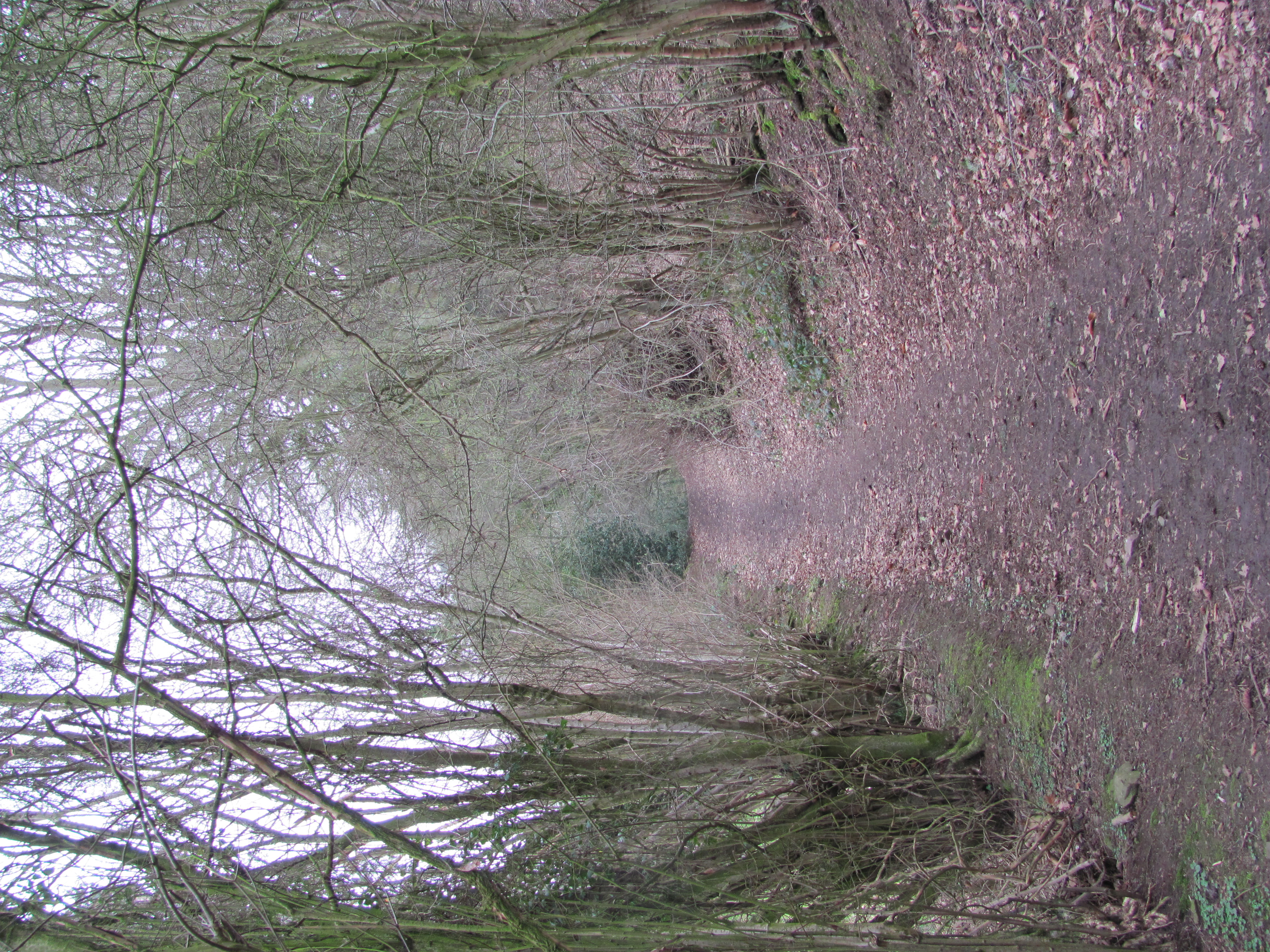
The path inviting us into the wood.

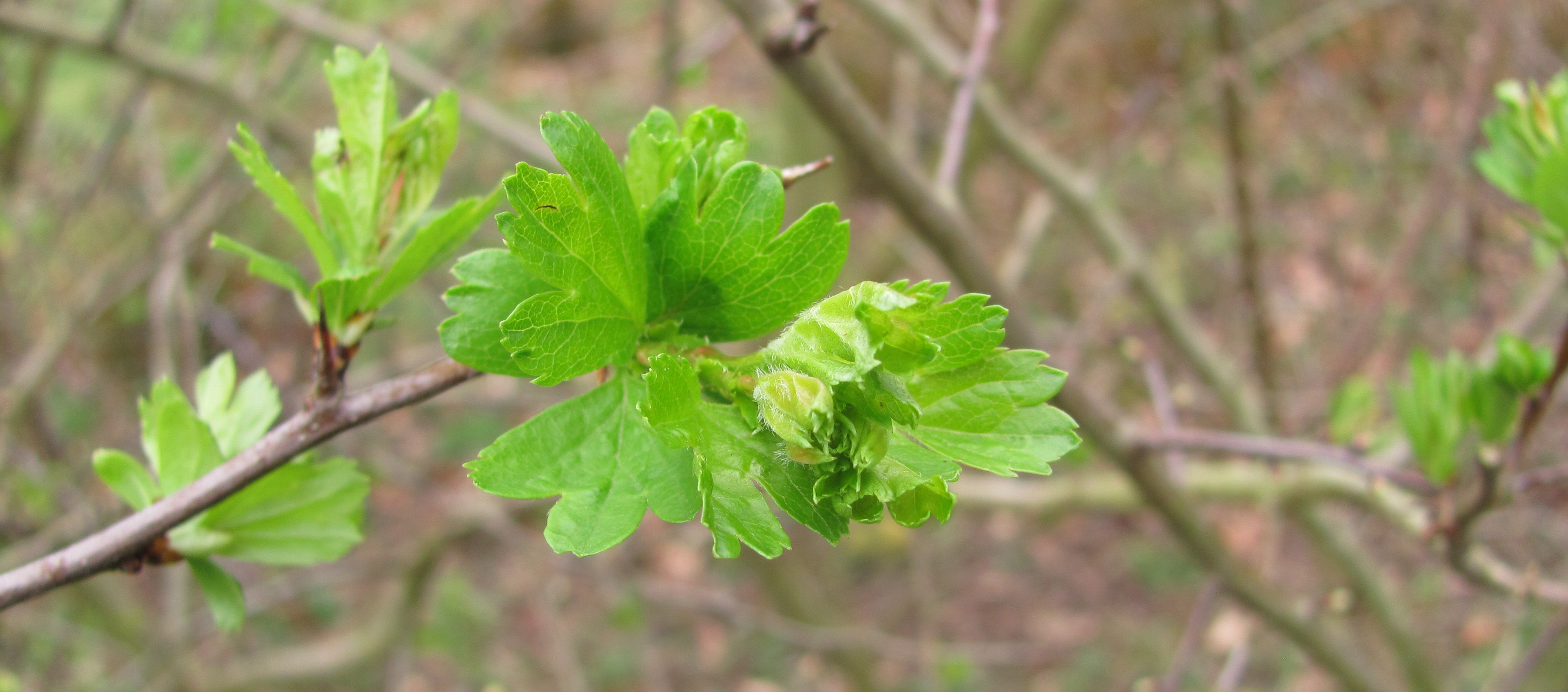
An inviting pathway led us into the wood. It was comfortable and soft underfoot being strewn with fallen leaves and softened by recent rain. To our left we could see fishing pools through the old hedge of once-coppiced Hawthorn. The pools were almost as inviting as the woodland walk. The fisherman in me called. The Hawthorn was displaying first signs of Spring with buds bursting into the brightest green leaves. Here we were delighted to hear the call of the Chiffchaff, always the first of the Summer migrants to return to Shropshire. We always start hearing and seeing them around mid-March. They identify themselves for us as their call reflects their name.

New growth on the Hawthorn.

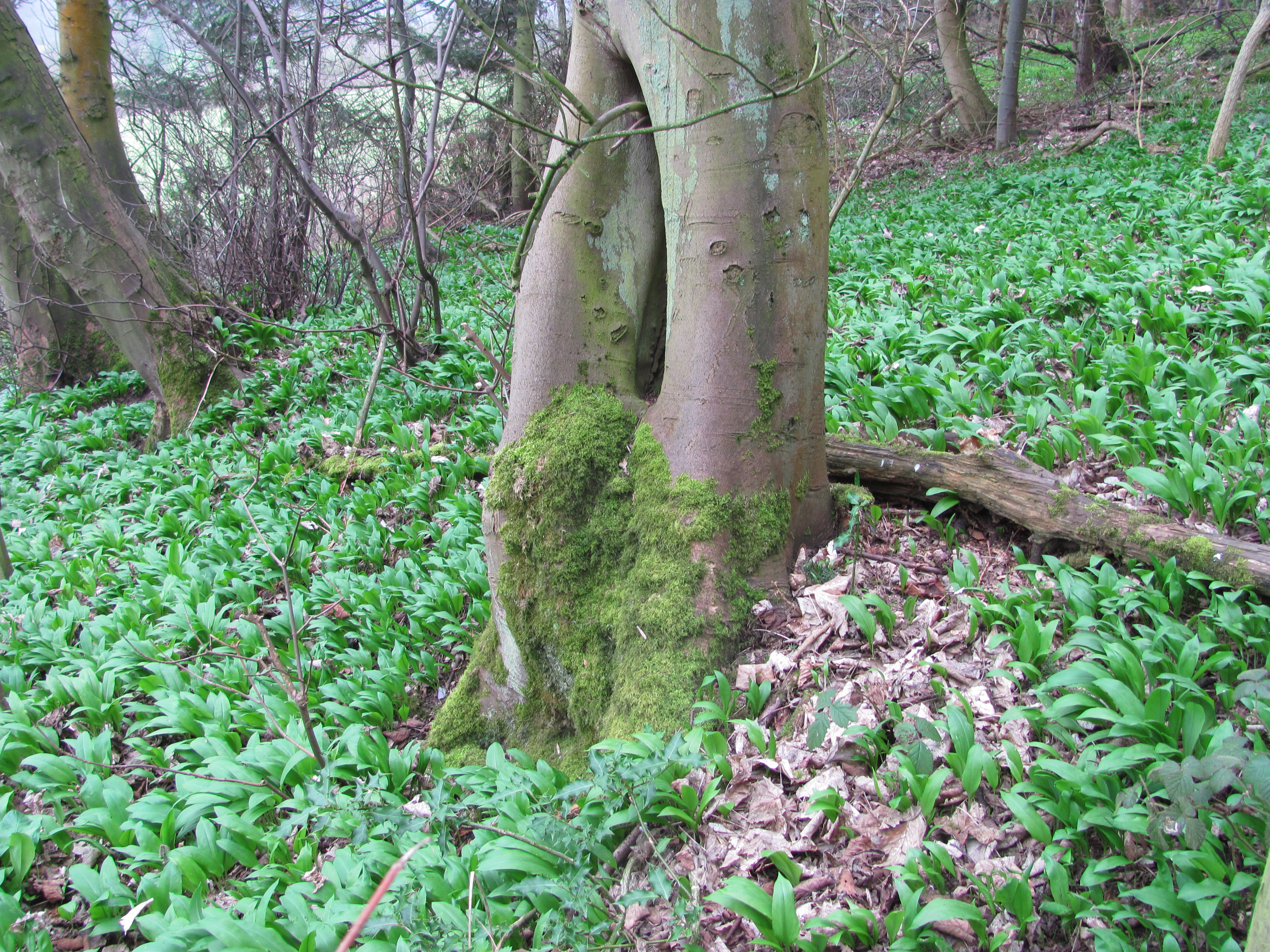
On the first section of track we were showered as we passed beneath willow trees by tiny pieces of the flowers as Blue Tits pecked at them. All around us the wood echoed to the sound of woodpeckers, the yaffling laughter calls of the Green Woodpecker and the territorial tapping of the Great Spotted. Further into the wood and our senses were bombarded by Wild Garlic, their bright green new leaves carpeted the woodland floor and their powerful onion-like smell permeated the trees. We could smell these Ramsoms a long while before we saw them and could still smell them a long while after passing them by.

Wild Garlic carpets the sloping woodland floor.

This early section of the walk was close to the edge of the woodland so wildflowers were stirring with the speckled light filtering through, Primroses and Pennywort were found alongside the path.

The glossy round leaves of Pennywort glow amongst paler mosses.

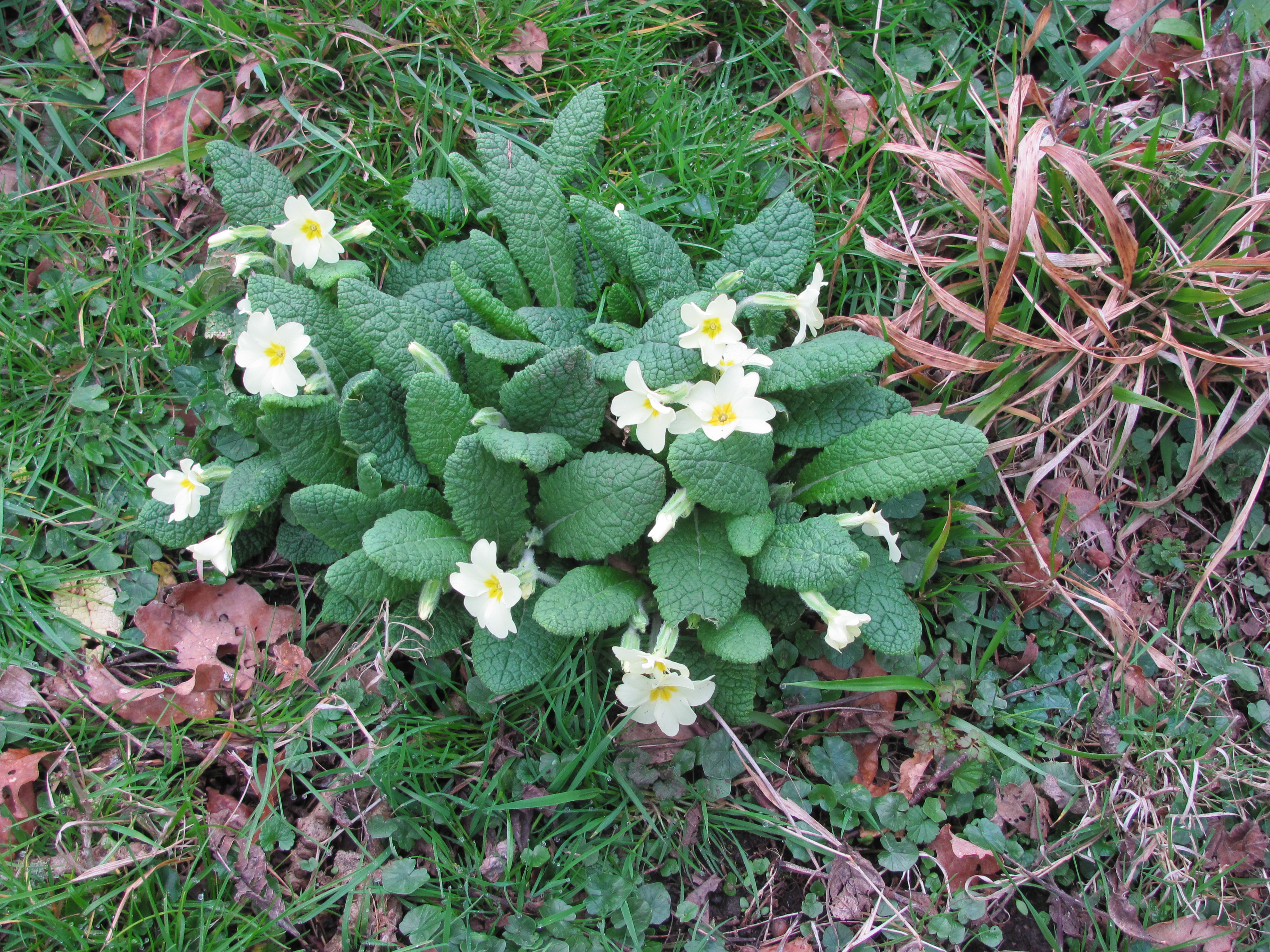
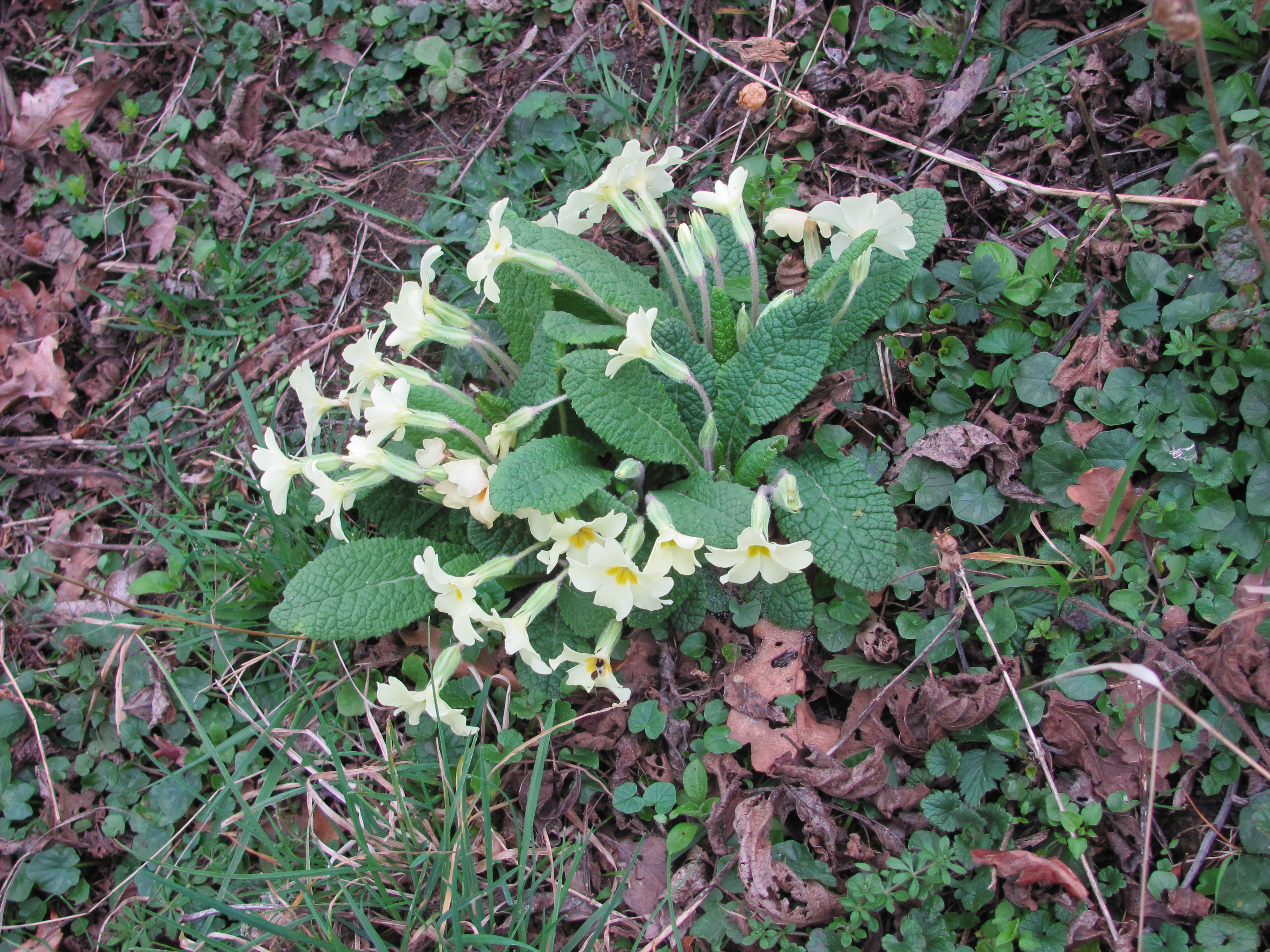
A patch of Primroses consisted of three solid flower-covered clumps. Those closest to the light were fully open while those just feet away but in slightly more shade were still in bud and leaning towards the extra light of the woodland edge.

Delicate yellow coloured Primrose.
Leaning towards the light.

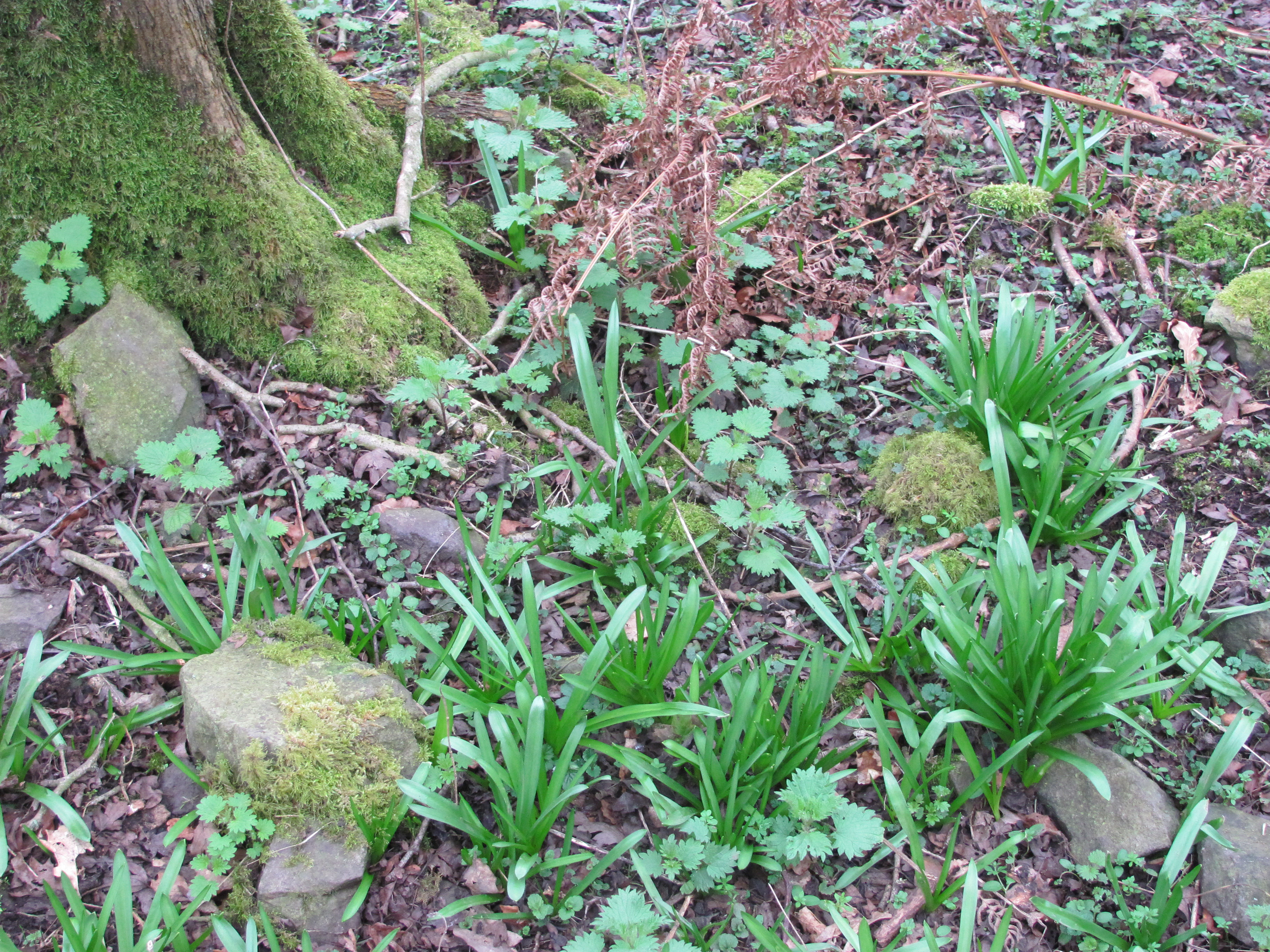
Bluebell foliage is already a few inches high so we eagerly anticipate the blue haze of their scented flowers which should grace the wood in April.

Bluebell promises.

Beyond this first patch of woodland the trail took us over an open area of rough land dotted with flowering Gorse and stunted Hawthorns. Long Tailed tits and Great Tits fed in these scrubby bushes and called continuously, the Long Tails churring and the Greats calling “Teacher Teacher”. The hills of Yellow Hill Ants were scattered over the whole of this area like a rash of nasty spots on a teenager’s skin. This ant is a speciality of this reserve.

The ant hills of the Yellow Meadow Ants.

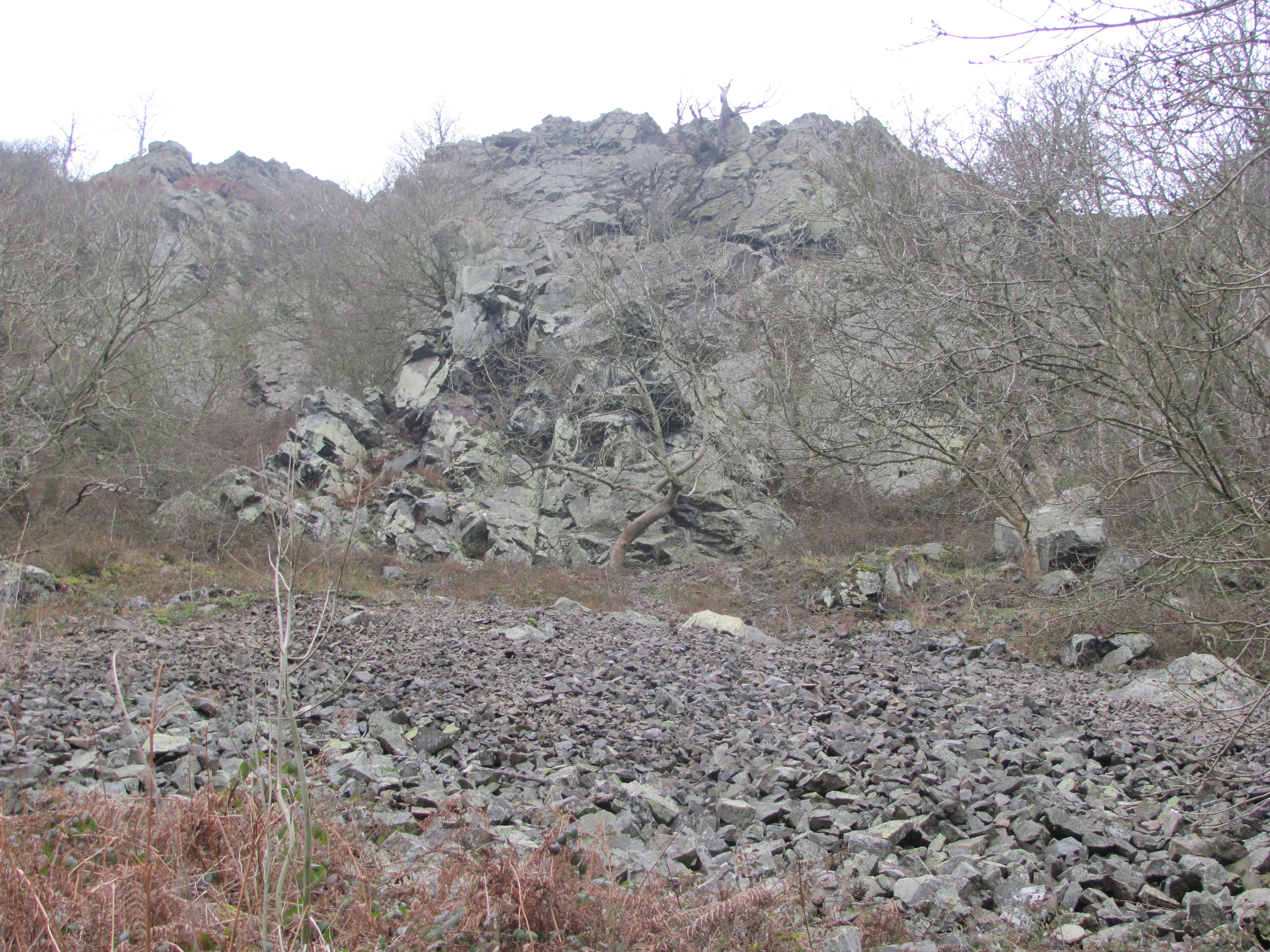
Beyond this stretch of open land, we entered another area of woodland but here trees were thinner and spaced further apart. Here stones are  strewn on the slopes and some slopes are cloaked in scree from the craggy steep cliffs of Earls Hill itself. On these crags Peregrines have nested for years, a clever choice as they are away from predators and the adult birds can look down over the scree and trees and spot passing pigeons, their favourite prey. From our garden we watch these magnificent falcons climbing and spiralling upwards so high that they disappear from view and occasionally we see their high-speed stoop from that great height. They reach speeds in excess of 200 miles per hour! But on our walk we saw them passing over the tree tops.

Slopes of thinly spaced trees amid scree.
The haunt of Peregrines.

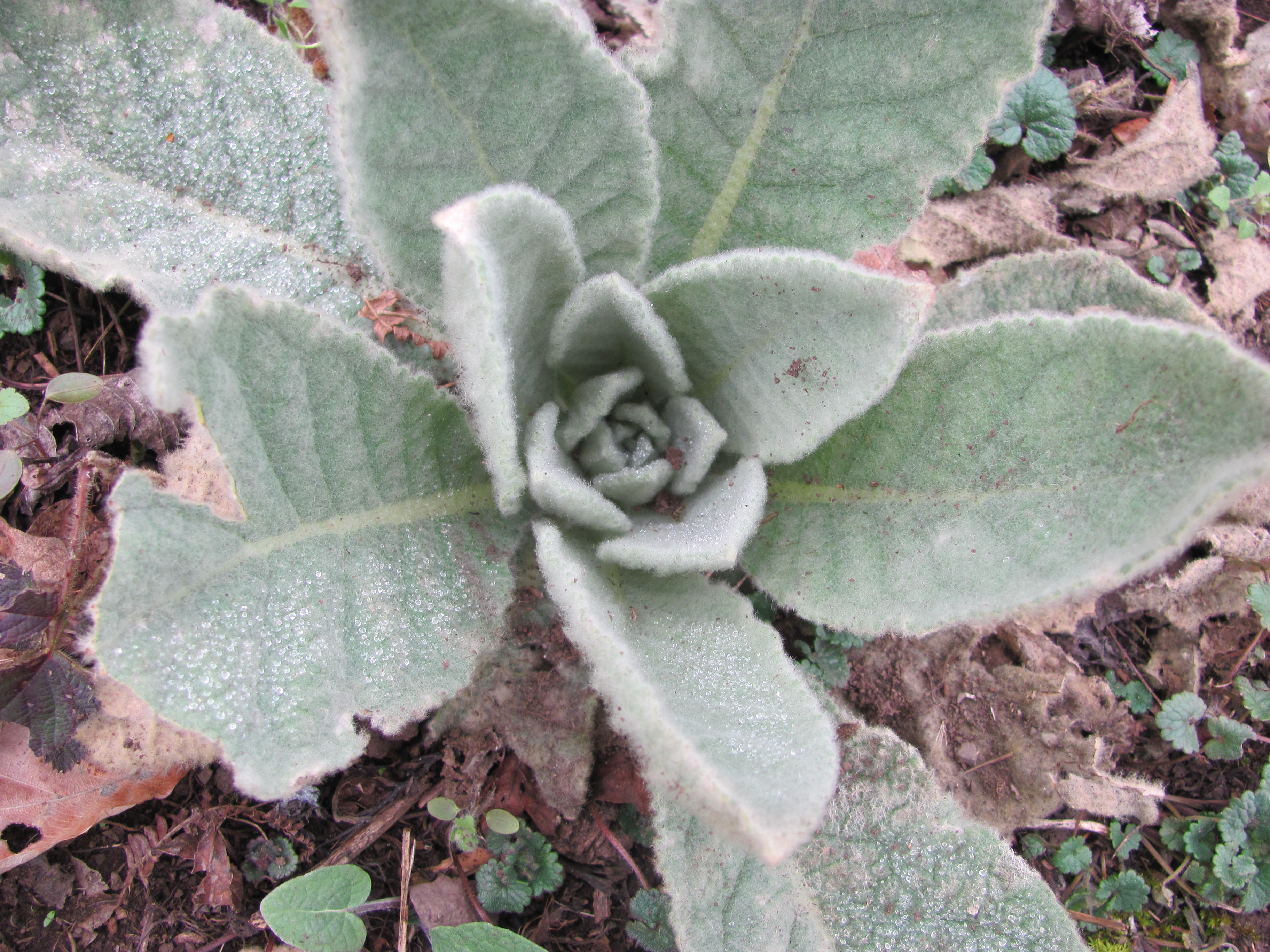
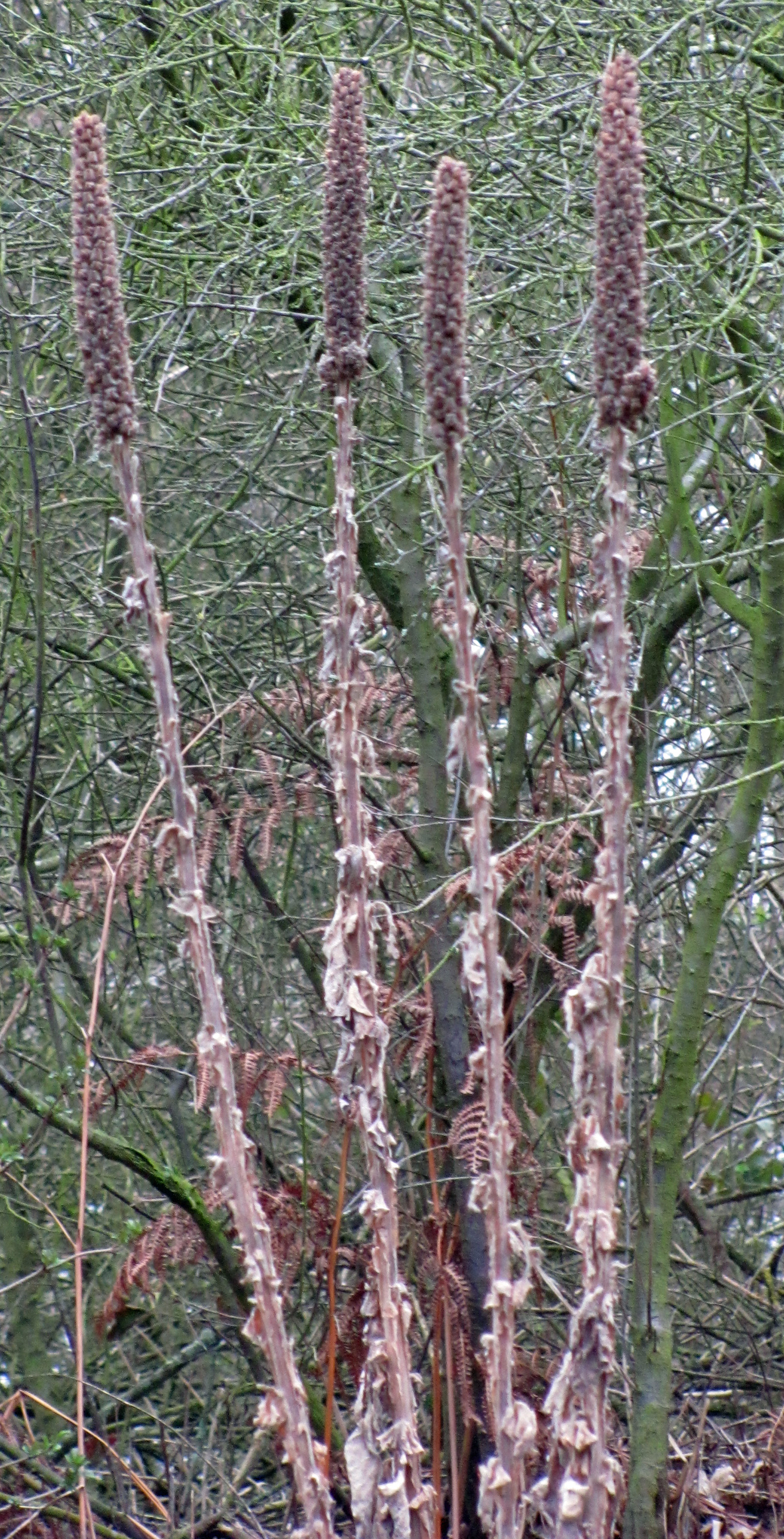
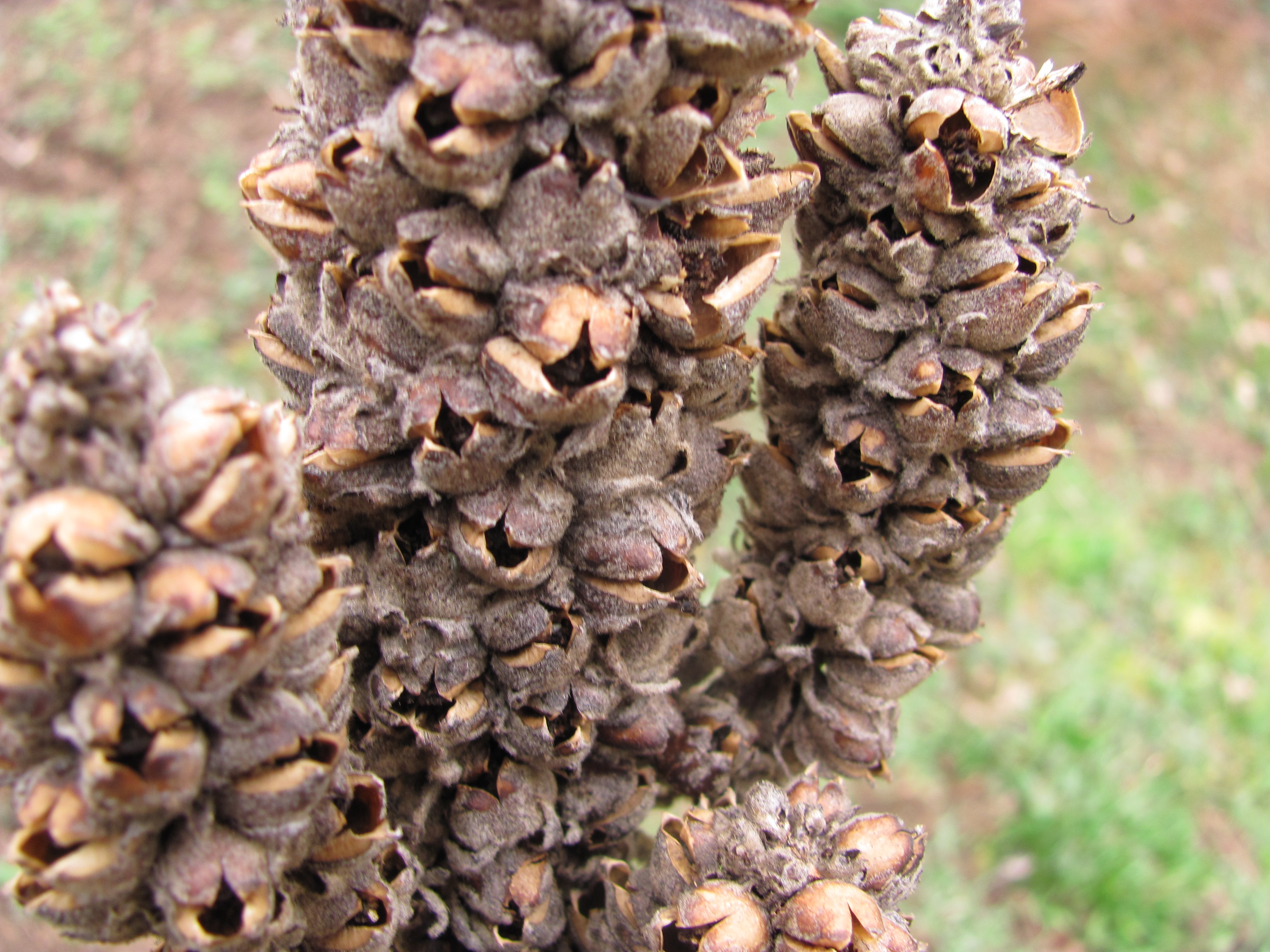
In one area the scree was being recolonised by plants. We were amazed to see Verbascum, commonly called Mullein, growing here in good numbers. Being biennial the Mulleins were present as last years seed heads still standing tall and stiffly upright and amongst them the rosettes of silvery and heavily-furred leaves from which the centres of which this year’s flower stems will rise.

Softly textured leaves of Mullein.
The tall spires of last year's flowering stems of the Mullein
So many seeds must have burst from these pods.

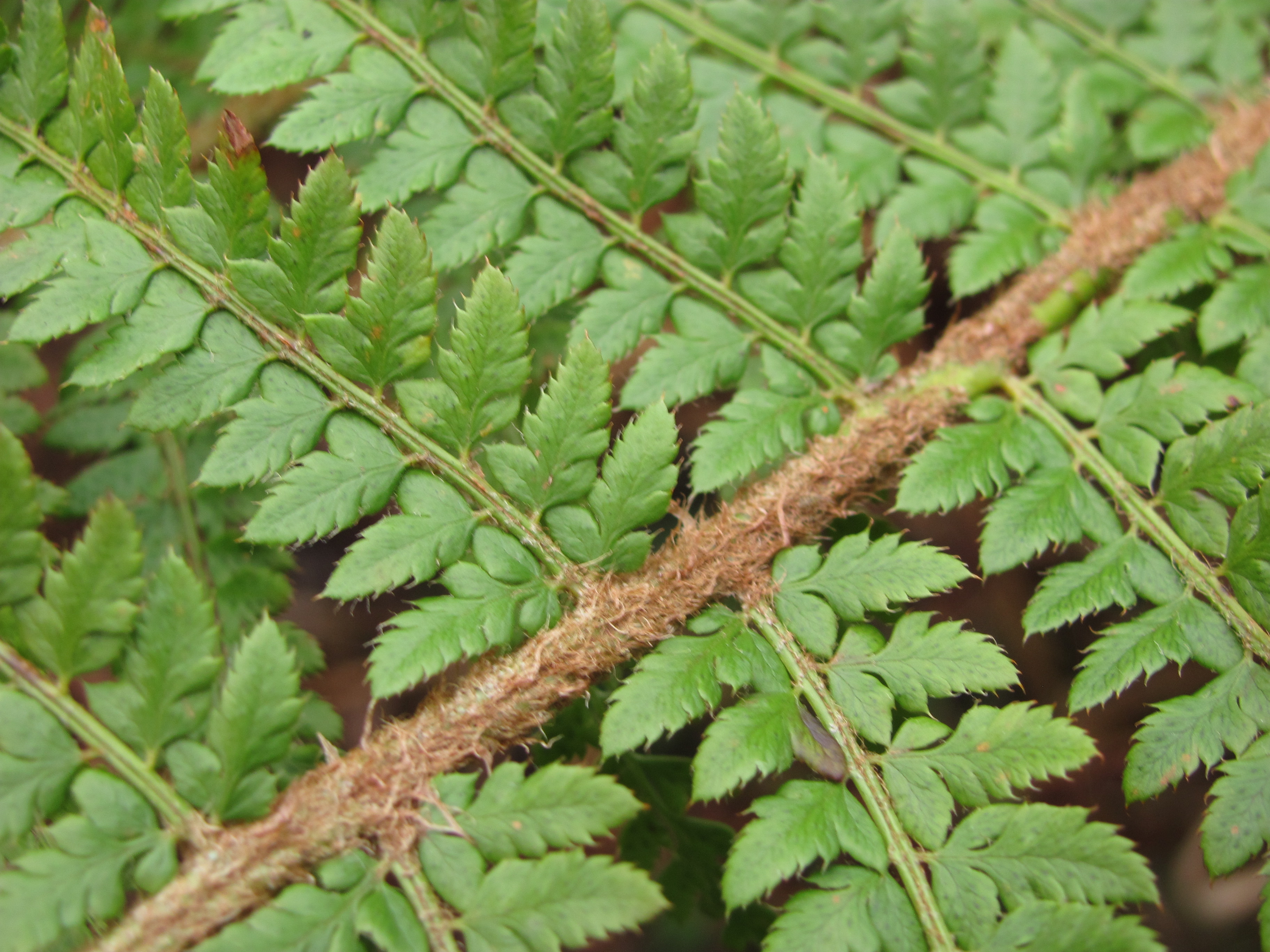
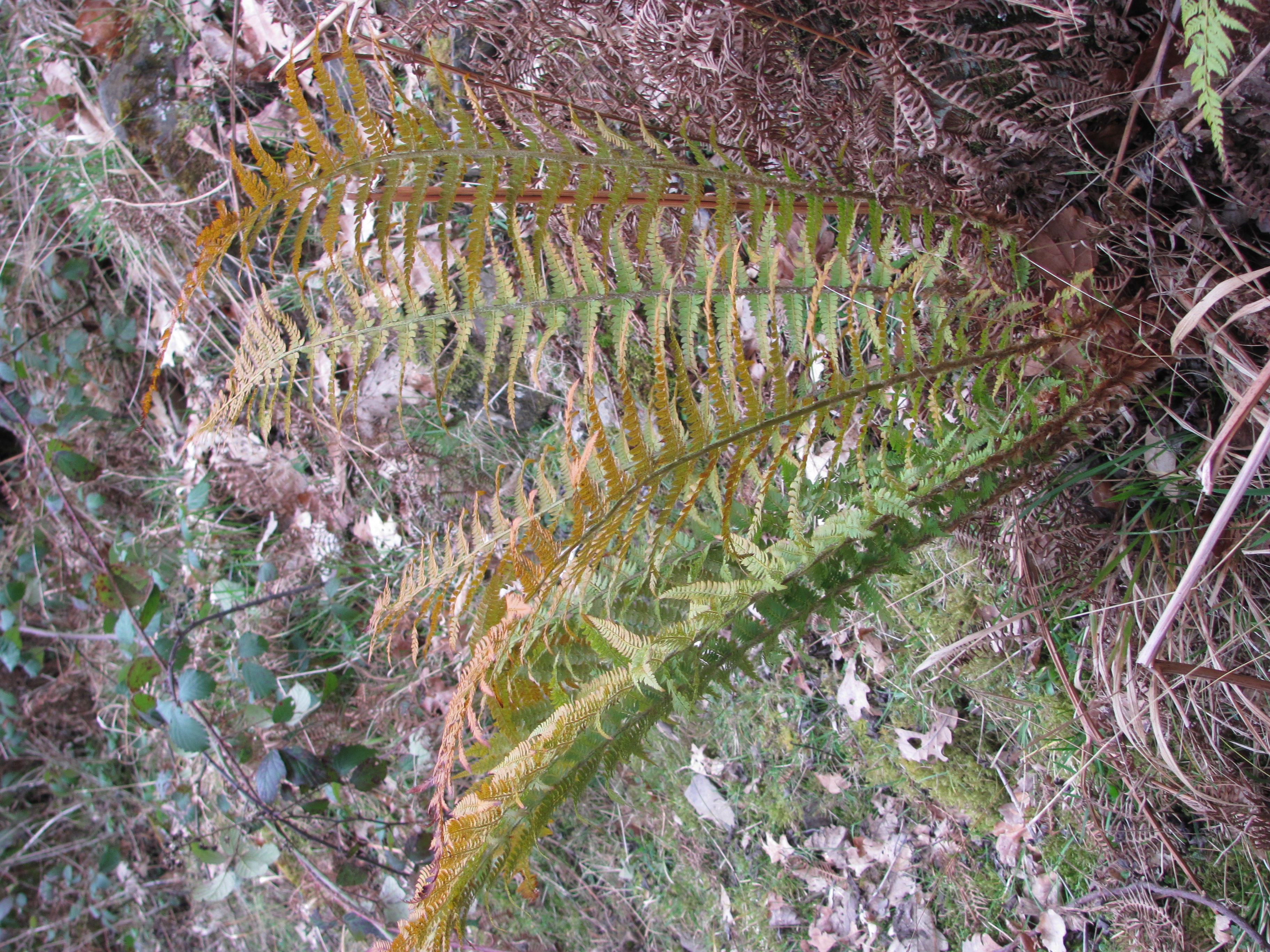
Not much further along the track we came across a patch of ferns and amongst them discovered a bronze-leaved specimen. A true beauty, similar to one we grow in our garden. It reminded us of how Victorian gardeners became obsessed with ferns, collecting any with interestingly shaped or unusually coloured leaves.

The beautiful leaf structure of ferns.
The bronze leaves of this unusual fern.
Variation on a theme.
Beautifully subtle shades of green and bronze.

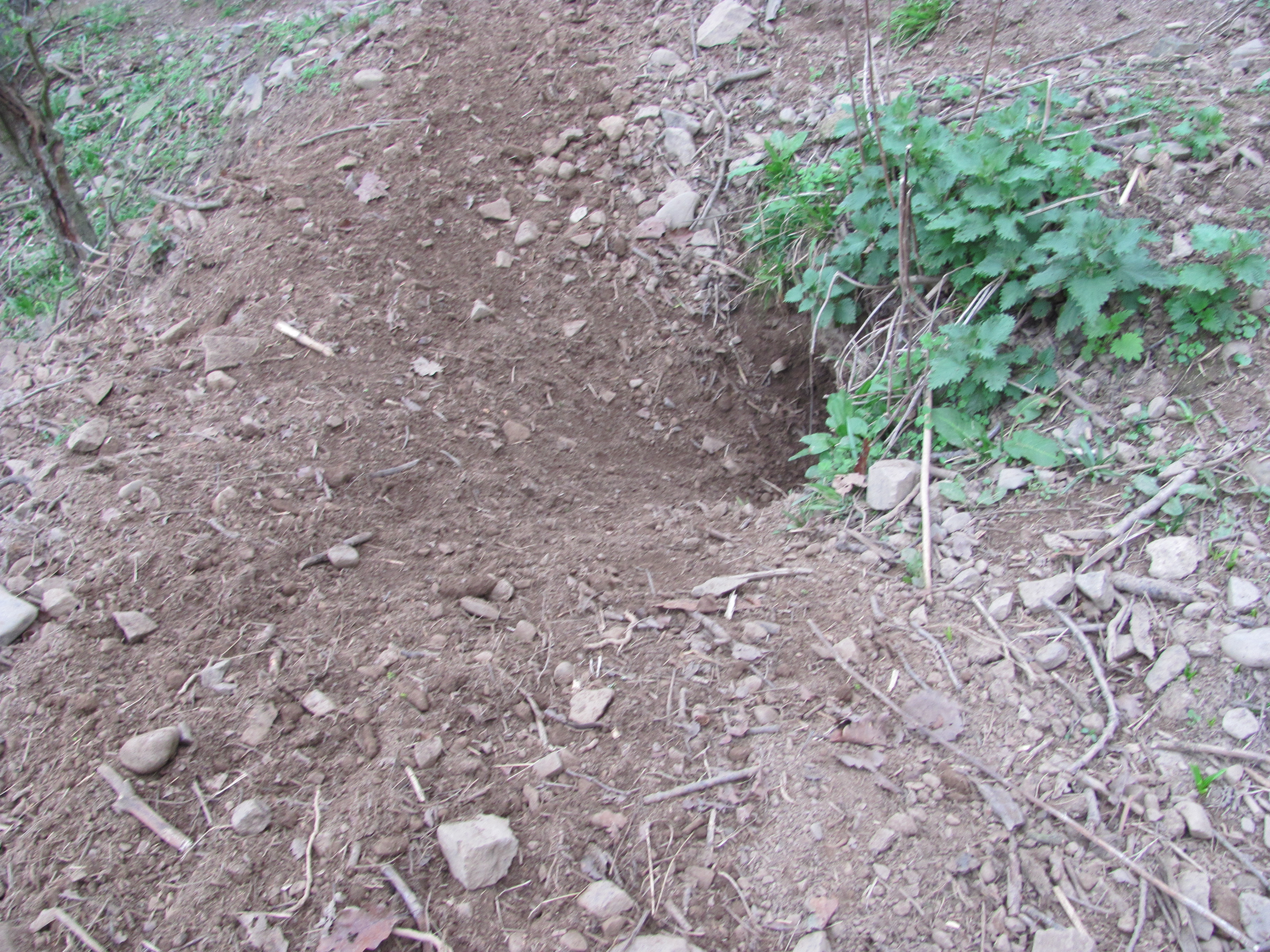
As we moved back into denser woodland our paths were frequently crossed by the unpleasant musky odours of Fox and Badger. Foxes left trackways through the undergrowth but the signs of the Badgers were much easier to spot as we found their sett. One tunnel had been recently excavated and huge piles of soil and stones deep from underground piled around its entrance.

The fox's smelly trail.
The Badgers have been busy extending their sett.

The commonest mammal on the reserve must be the Rabbit – we saw them throughout our wanderings their white tails bobbing as they disappeared at our approach. They must provide a useful food bank for the Foxes and Buzzards. We could frequently hear Buzzards calling overhead but we only managed to see two. One we spotted as it flew rapidly through the trees, keeping low to the ground as it tried to catch a Rabbit. The prey escaped this time! The other we spotted sat on the topmost branch of a Hawthorn bush in a field nearby, looking as if he was waiting impatiently for thermals to help him get airborne.

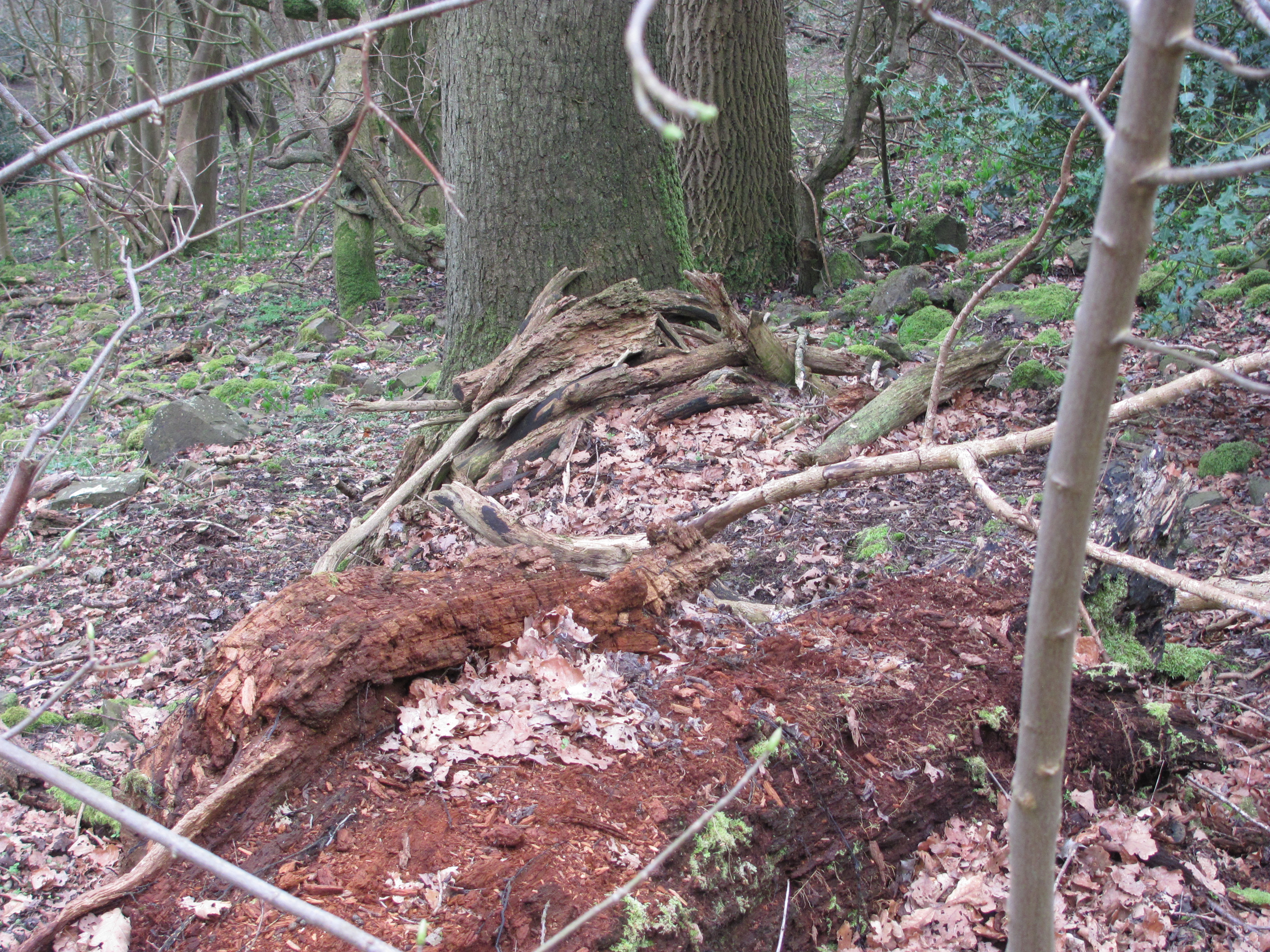
Throughout the wood there were excellent habitats for insect and invertebrates, some created by Mother Nature where trees have fallen and are now rotting and others made by Shropshire Wildlife Trust volunteers who create wood piles and brash stacks when they perform their management activities around the reserve. Rotting wood is particularly popular with beetles.

Fallen and rotting tree trunks are beetle heaven.

Throughout our circular walk around the base of Earls Hill we enjoyed listening to the song of our native thrushes, the repetitive phrases of the Song Thrush, the gentle ditty of its bigger cousin the Mistle Thrush and the flute like tuneful song of the Blackbird. All were males calling out to proclaim ownership of their territory and letting females know how good they would be as partners. It was noticeable that the thrushes we heard were our resident thrushes and there was no sign of the winter visiting thrushes, the Redwings and Fieldfares. They must now have left our shores to make their journey home.

Occasionally through gaps in the trees we enjoyed glimpses of views of the countryside. When walking in woodland you become so absorbed in its atmosphere that you forget what the outside world is like. These glimpses of the countryside reminded us of the thin mist overlying and obscuring the nearby hills and farmland.

One sign of the approach of Spring was the nest-building activity of birds large and small. We watched Bluetits delicately collecting lichen from branches of Hawthorns. Rooks clumsily gathered twigs too large to easily carry through the close growing trees. They were nesting in their rookery in a clump of tall trees across the fields bordering the reserve. We heard the snapping of the brittle twigs as they broke when lifted and carried by the Rooks.

While wandering we enjoyed the textures, patterns and colours on tree trunks and the shapes of fallen trunks and branches. It made us think of Mother Nature as artist and sculptress. (Look out for future blogs on the artistry and sculptural skills of Mother Nature)

We returned to the car park as the temperature began to drop, vowing to return when the woods were full of summer migrants. We have the songs of warblers to look forward.

This Veggie Life

A Vegetarian | Nature Lifestyle Blog

Rambling in the Garden

.....and nurturing my soul

The Arch City Gardener

Journeys In St. Louis Gardening and Beyond

Garden Dreaming at Châtillon

Consult the genius of the place

Storyshucker

A blog full of humorous and poignant observations.

gardeninacity

Notes from a wildlife-friendly cottage garden

PlayGroundology

...an emerging social science

The Official Blog of British Wildlife

'The most important and informative publication on wildlife of our times' - The Independent. This blog is a member of The UK & Ireland Natural History Bloggers group: www.uknhb.blogspot.com

iGrowHort

Inspire - Cultivate - Grow Native Plants - Restore Landscapes

Bishops Meadow Trust

To create and protect a semi-natural wild space for the people of Farnham to enjoy and experience an array of British wildlife in our town

Gardening with Children

The www.gardeningwithchildren.co.uk Blog

UKbirdingtimeline

birding through the seasons, why birds matter and how to conserve them

NATURE WALKER

with a camera in hand

Jardin

Transform your outdoor space

Eva's space

My allotment, cooking and other interests

Old School Garden

my gardening life through the year

LEANNE COLE

Trying to live a creative life

fromacountrycottage

trying to live as lightly as possible on our beautiful planet

Good Life Gardening

Nature lovers from Leicester living the good life.

mybeautfulthings

Finding the beautiful in the everyday

mawsonmichelle

Michelle's Allotment

In and Out of My Garden

thoughts from and about my garden

Greenhousing

Big plans for a small garden

The Scottish Country Garden

A Walled Country Garden in South East Scotland

The Fruity Chicken

Life at the fruity chicken

willowarchway

Off grid living. Self sufficient. "PERMAGANICS RULE".

St Anns Allotments

Nottingham's Grade 2* Listed Allotments and Community Orchard

Manifest Joy Harvests

a journey in suburban vegetable gardening

Allotmental

The madness of growing your own

Penny's Garden: a harvest beyond my front door

A novel approach to vegetable gardening

arignagardener

Sustainable living in the Irish countryside.

NewEnglandGardenAndThread

Master Gardener, amateur photographer, quilter, NH native, and sometimes SC snowbird

dianajhale

Recent work and work in progress and anything else that interests me

planthoarder

a chaotic cottage gardener

Lens and Pens by Sally

a weekly blog that creates a personal philosophy through photographs and words

Dewdrops and Sunshine

Stories from a sassy and classy Southern farmbelle.

The Pyjama Gardener

Simple Organic Gardening & Seasonal Living

gettin' fresh!

turning dirt into dinner

JOY...

today the world is created anew

Garden Birds

Notes from a Devon garden

ShootAbout

Life Through The Lens

Adapting Pixels

A photography blog showcasing the best photography pictures and videos on the internet

Wildlifegardening's Blog

Just another WordPress.com site

naturestimeline

personal observations from the natural world as the search continues for a new approach to conservation.

LATEBLOOMERBUDS

The Wonders of Life through my Eyes, my Heart, my Soul