Categories
autumn autumn colours colours garden design garden photography garden seating gardening gardens gardens open to the public grasses hardy perennials light light quality ornamental grasses ornamental trees and shrubs outdoor sculpture RHS sculpture Yorkshire

Autumn at RHS Harlow Carr – Part Three

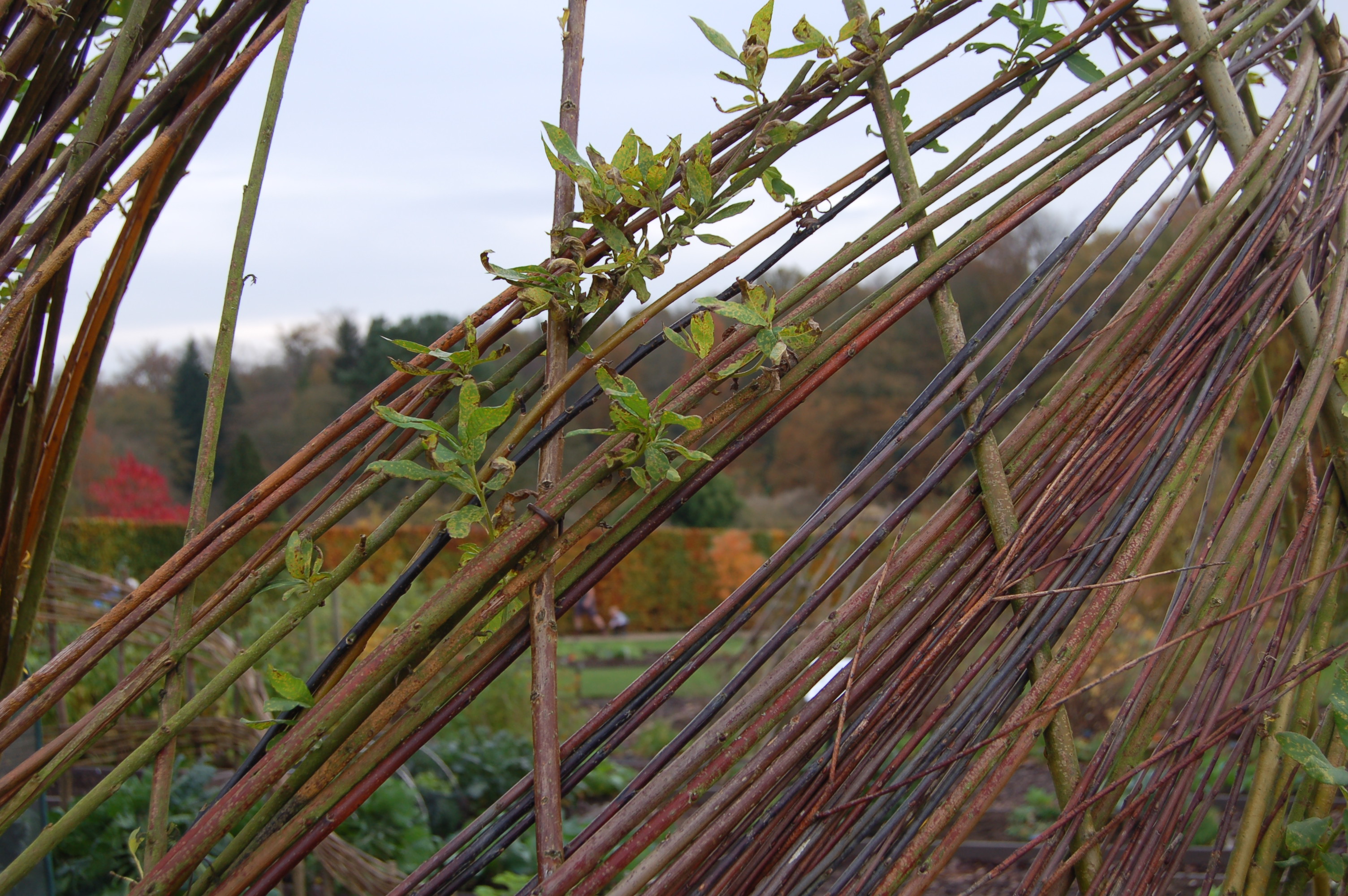
I am back with my third and final part of my posts featuring the wonderful RHS garden Harlow Carr. In the first post I mentioned a willow trail so here are a few of the pieces we came across on our wanderings.

2014 10 31_6949 2014 10 31_69502014 10 31_6984 2014 10 31_69592014 10 31_6958

Living fences made from willow and hazel featured strongly in the productive gardens and some included seats built in also made of willow. It was seeing these when they were being created at Harlow Carr during the renovation of the kitchen gardens, that gave us the idea of creating our fedge at our allotment community gardens.

2014 10 31_6951 2014 10 31_6952 2014 10 31_6953 2014 10 31_6955 2014 10 31_6956 2014 10 31_6957

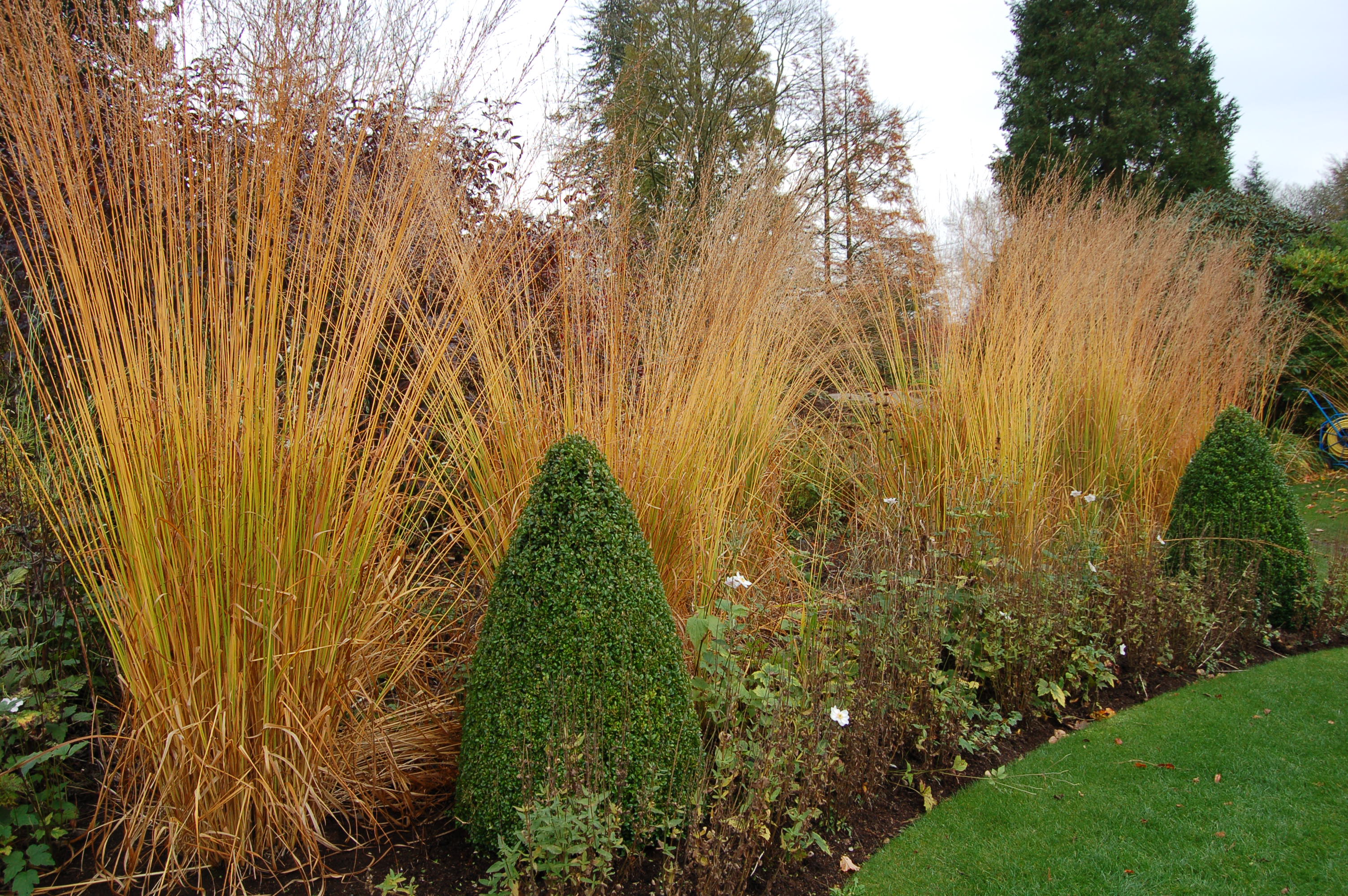
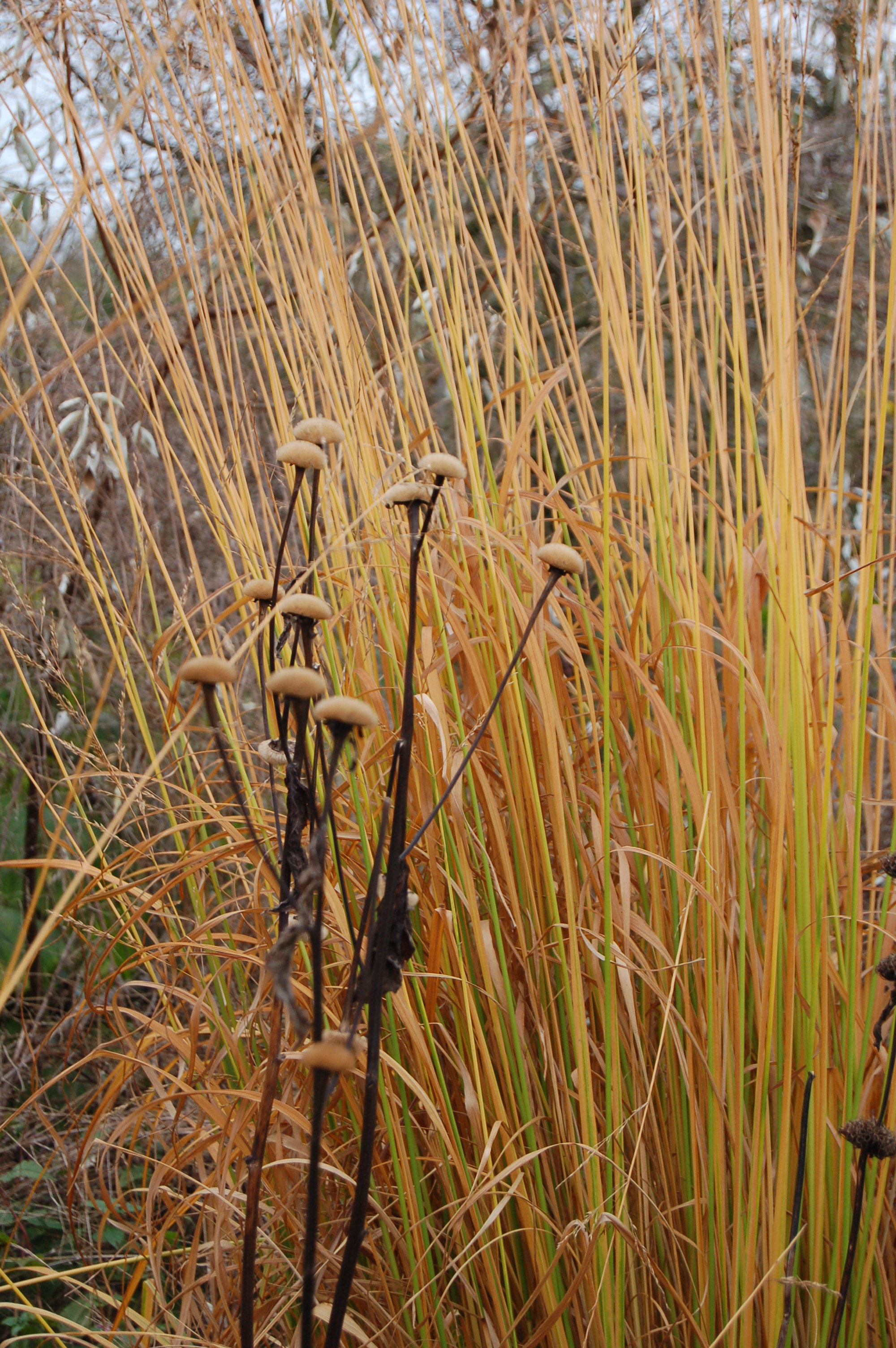
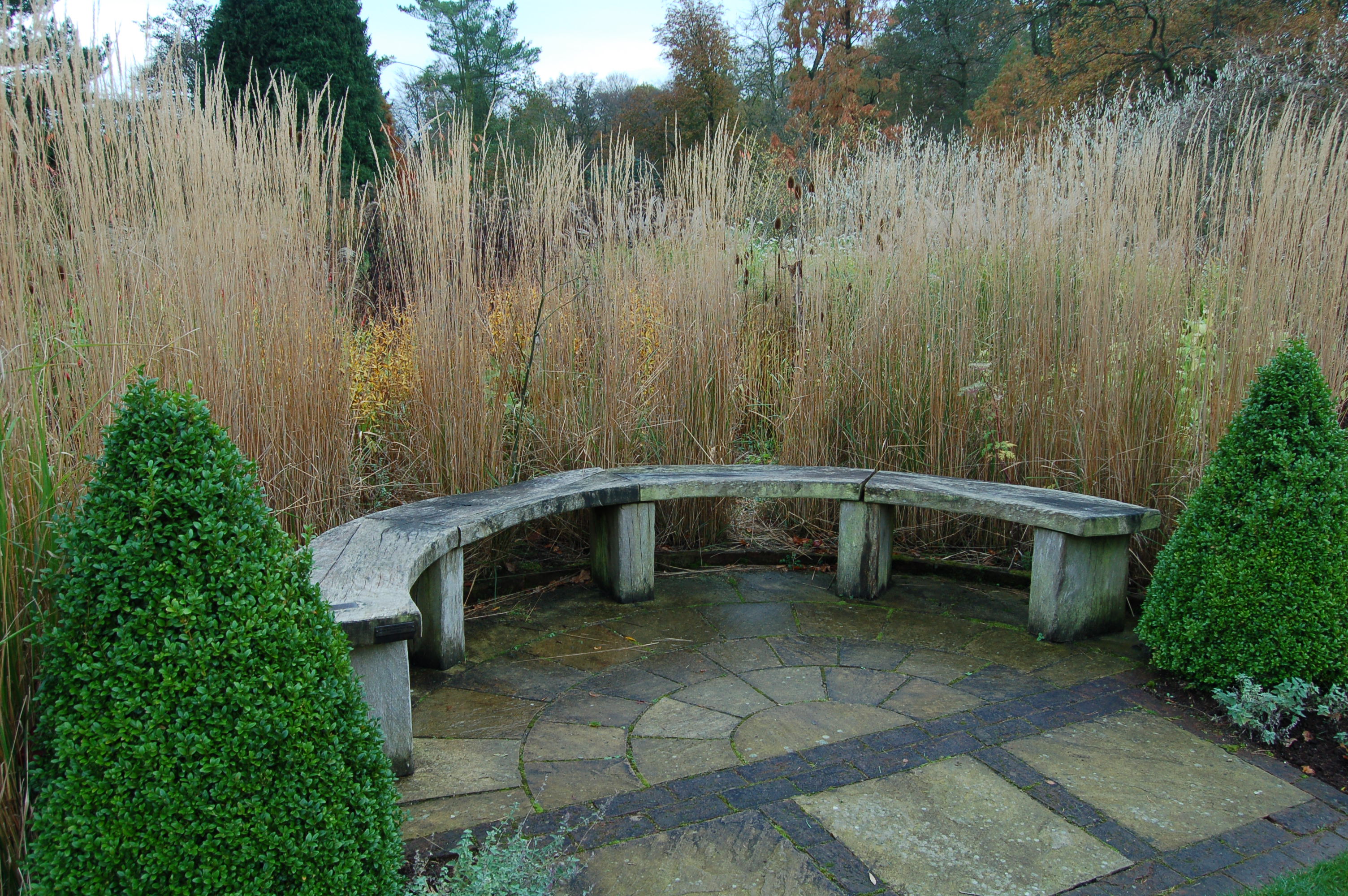
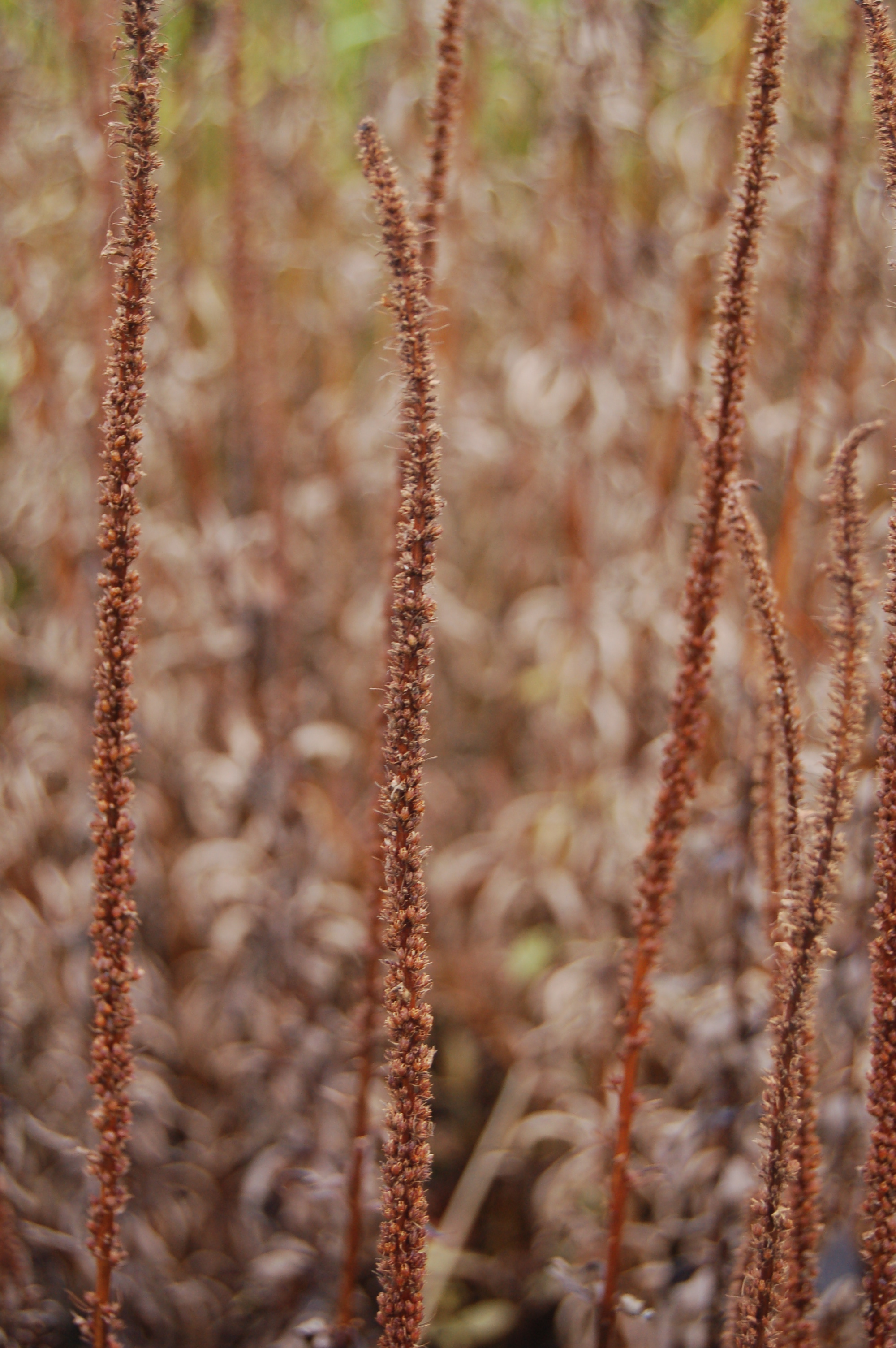
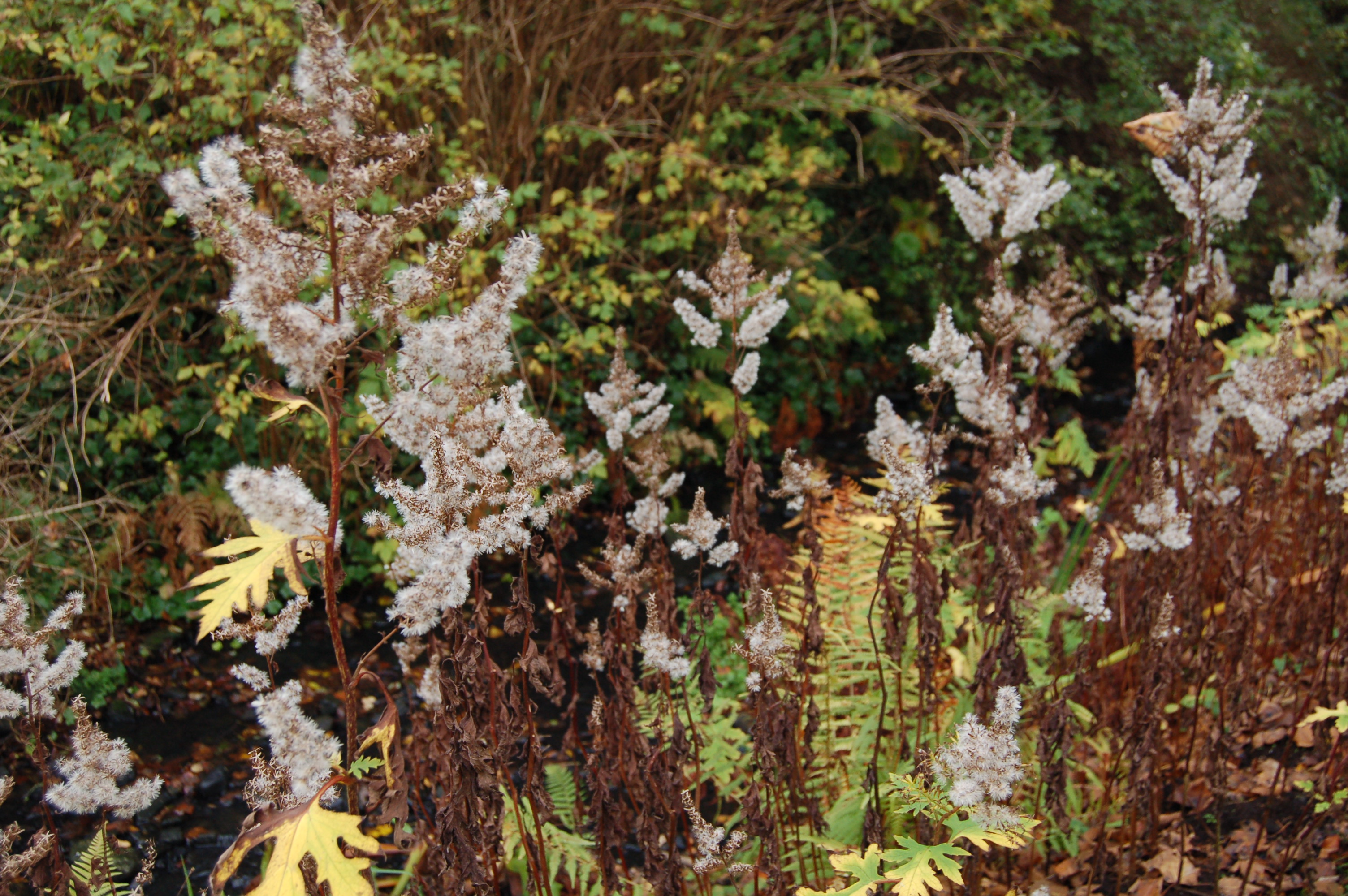
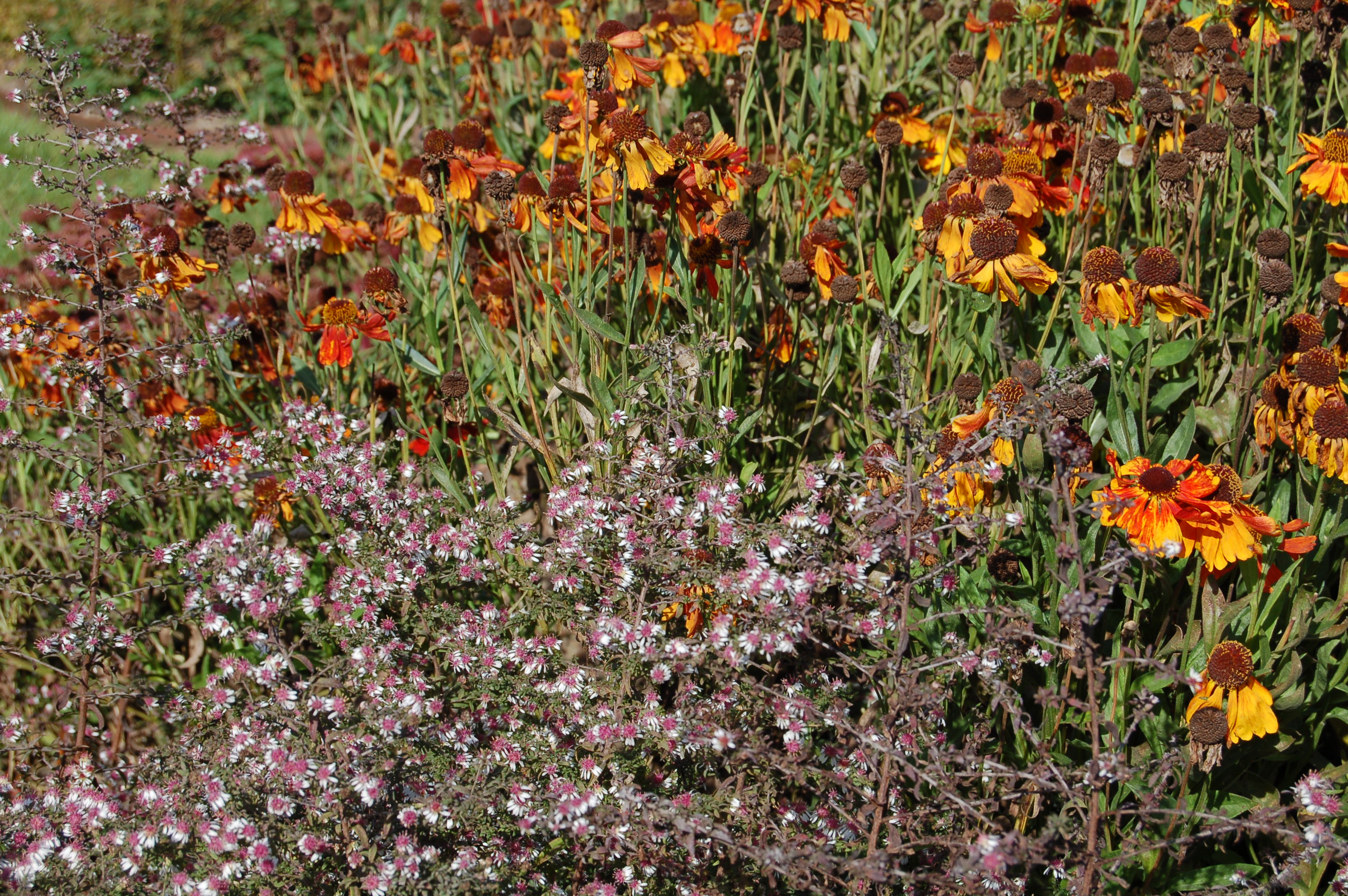
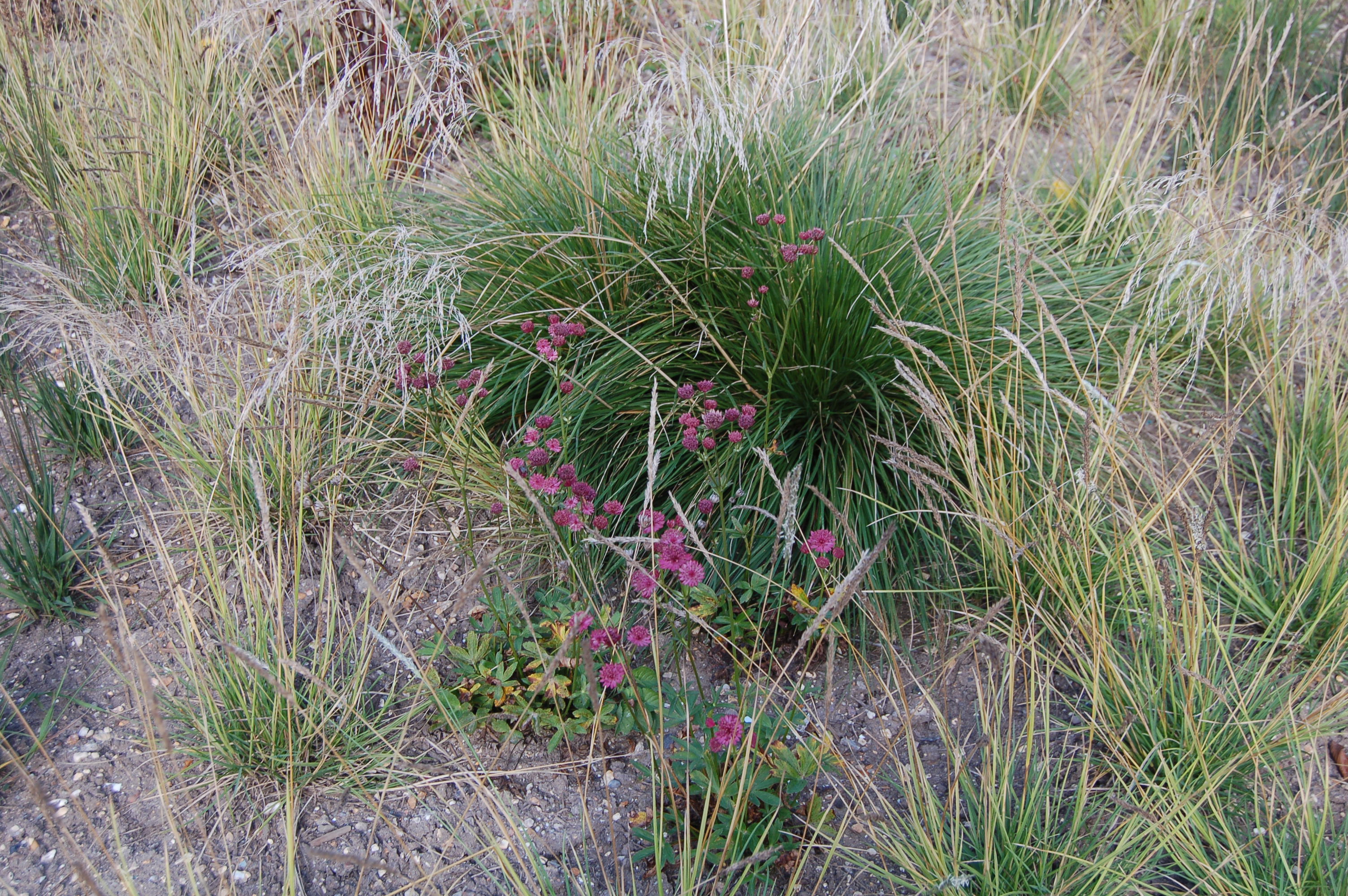
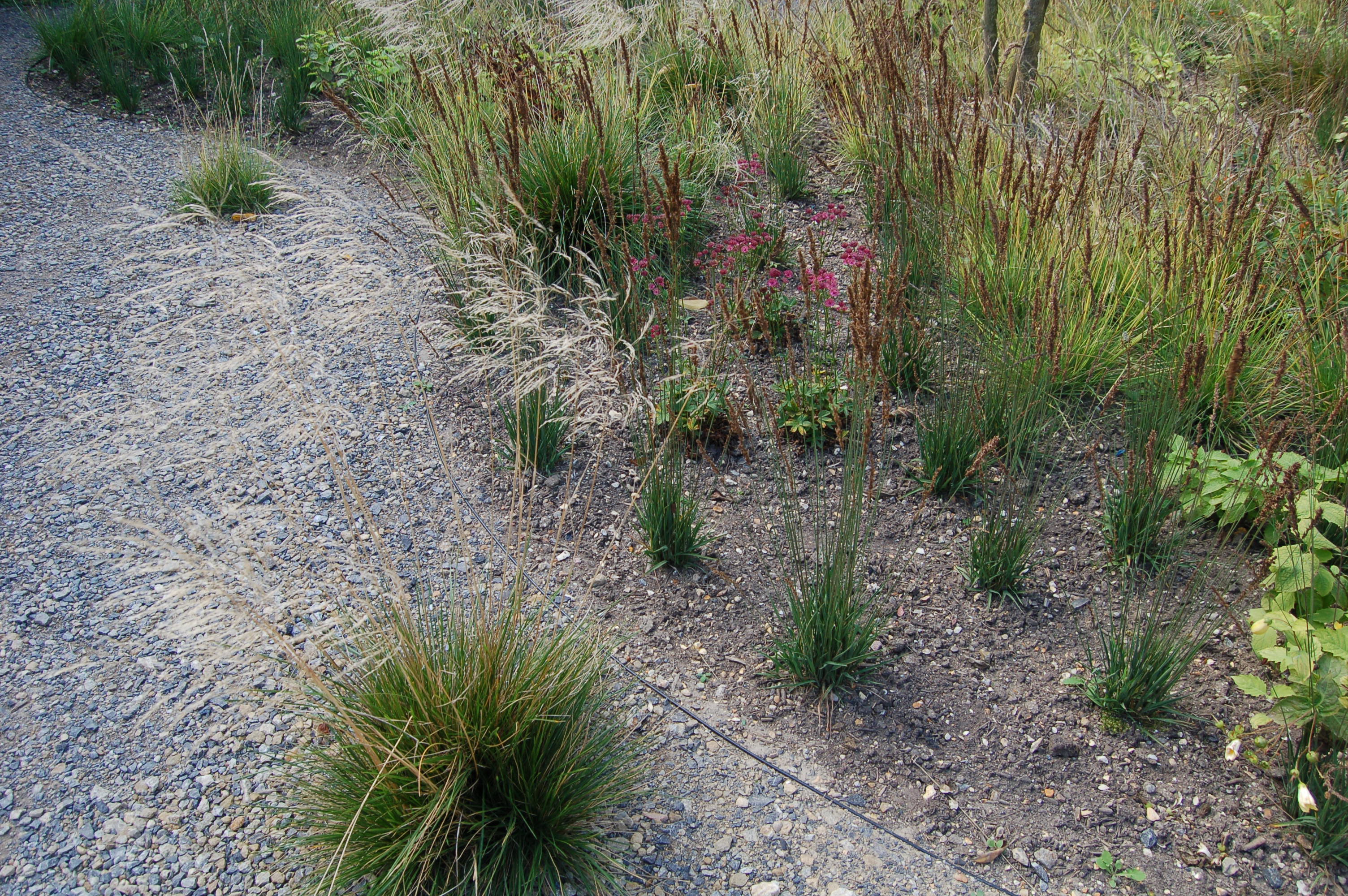
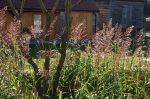
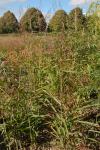
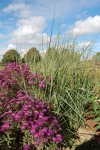
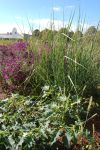
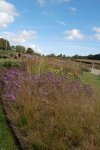
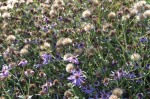
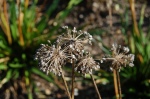
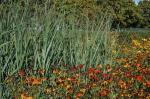
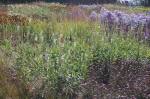
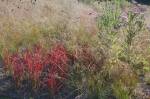
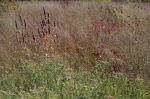
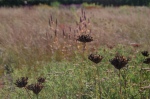
I promised a return to the prairie style borders and my favourite part of late autumn borders, the dried flower heads and seed heads of perennials and grasses. The subtlety of colour and delicate contrasts make for a most pleasing picture.

2014 10 31_6964  2014 10 31_69632014 10 31_6965 2014 10 31_6967 2014 10 31_6968 2014 10 31_6969 2014 10 31_6971 2014 10 31_6972 2014 10 31_6973 2014 10 31_6974

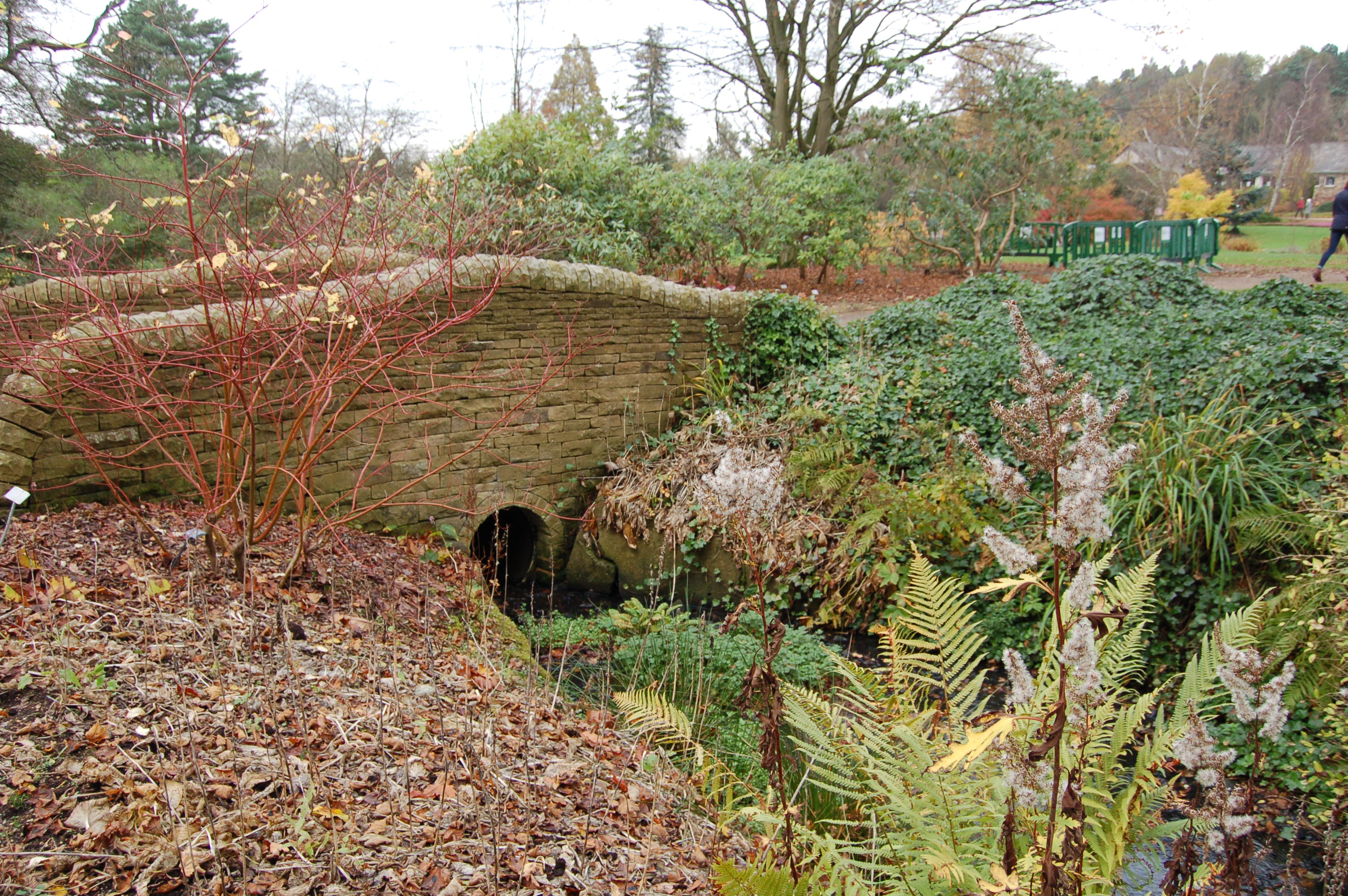
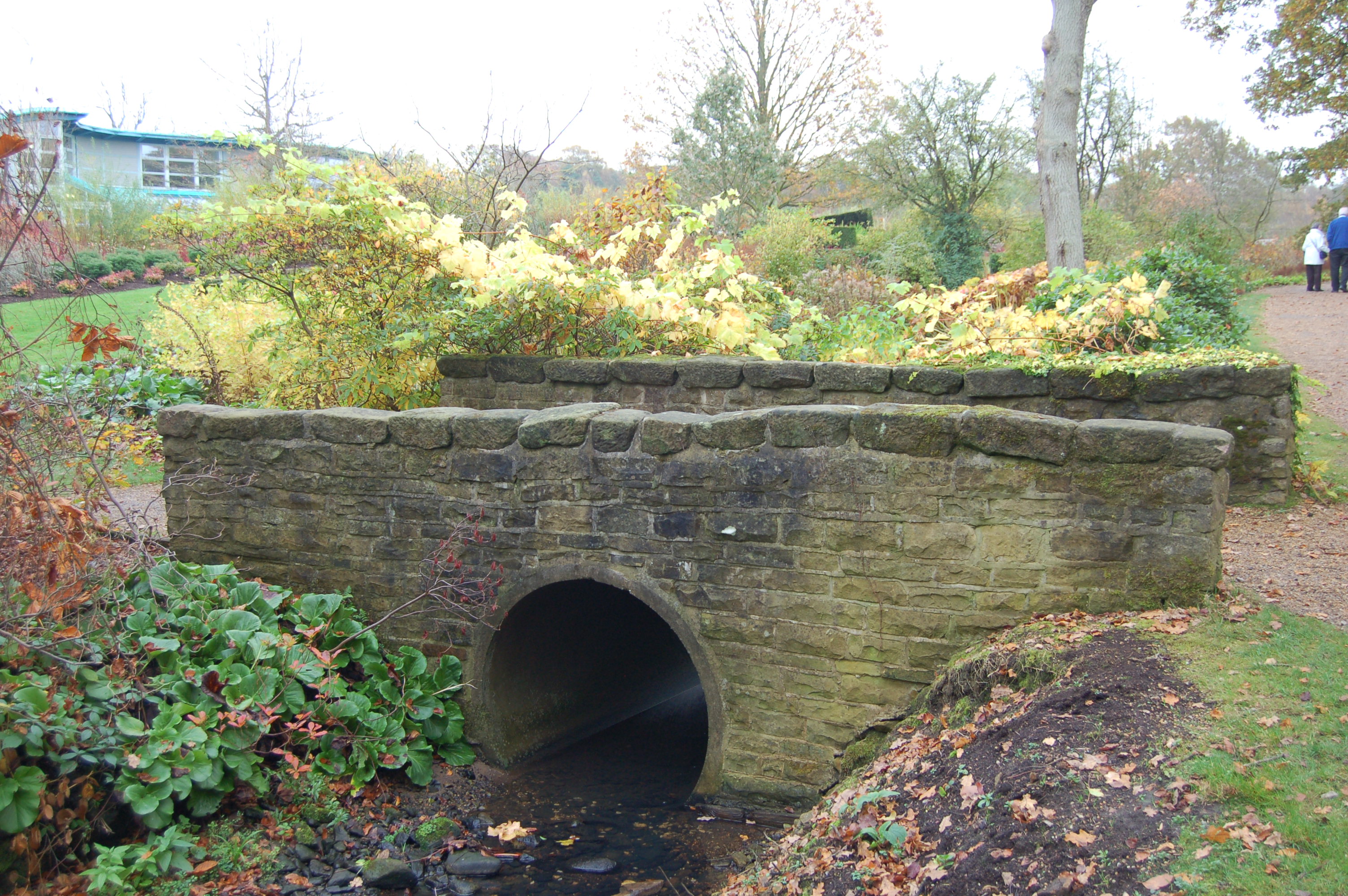
We left the perennial borders to follow paths through the stream garden which would give us the chance for a second look at the winter garden. Willow is used along the water’s edge to secure the bankside using a technique known as spiling. Beautiful stone bridges take the path back and forth over the stream.

2014 10 31_6978 2014 10 31_6979 2014 10 31_6980 2014 10 31_6981 2014 10 31_6983 2014 10 31_69852014 10 31_6987 2014 10 31_69882014 10 31_6990 2014 10 31_69912014 10 31_6992 2014 10 31_69932014 10 31_6994 2014 10 31_69952014 10 31_6996 2014 10 31_69972014 10 31_6998 2014 10 31_69992014 10 31_7000 2014 10 31_70022014 10 31_7003

So that is Harlow Carr the northern jewel in the RHS’s crown, beautiful whenever you visit with surprises galore alongside old favourites. It won’t be long until be come back again!

2014 10 31_7006


Categories
colours garden design garden photography garden seating gardening gardens grasses hardy perennials ornamental trees and shrubs outdoor sculpture photography Yellow Book Gardens

Aiming for an all year round garden – our garden in December.

The final chapter! December. We have followed the journey through the months of 2014 looking at our garden trying to decide whether we have succeeded in our aim of creating a garden with interest in every month of the year.

2014 12 03_7986-1

So here we are on our final wander of 2014 to see how the garden is looking in December. Next year we open our garden for charity throughout the spring and summer so we hope we have succeeded in our aim for creating an all year garden. The day I decided to go for my wander with camera in hand coincided with the day of the first proper frost. But it didn’t last long and had little affect on the plants. The grapes are now well past their sell by date, but the chickens and the local Blackbird population seem to enjoy them anyway. Frost brings out the texture in leaves and seed heads.

2014 12 16_8881 2014 12 16_8883


2014 12 16_8885 2014 12 16_8888


2014 12 16_8890 2014 12 16_8894

2014 12 03_7968-1 2014 12 03_7967-1 2014 12 03_7966-1 2014 12 03_7969-1  2014 12 03_7977-1 2014 12 03_7976-1 2014 12 03_7975-1 2014 12 03_7970-1

2014 12 03_7972-1 2014 12 03_7979-1

The Blackbirds and Mistle Thrushes are enjoying the variety of berries we grow for them, but once the winter migrant thrushes arrive they have more competition.

2014 12 03_7974-1 2014 12 03_7973-1

As the frost melts away it has a translucent look where it sits on the leaves of this Hypericum.

2014 12 03_7981-1 2014 12 03_7982-1

Garden ornaments and furniture both play a more important role as the plant life dies down over the winter months.

2014 12 03_7980-1 2014 12 03_7984-1

2014 12 03_7988-1

Our Hellebores are coming into flower far too early this winter. We usually enjoy them in February and March. But the Prunus subhirtella autumnalis can blossom anytime from November to March, so to see it this good in December is no surprise.

2014 12 03_7983-1 2014 12 03_7991-1

2014 12 03_7994-1 2014 12 03_7993-1

Our trees show off their wonderful silhouettes now they are bereft of leaves. The bark texture shows up sharply in winter light.

2014 12 03_7987-1 2014 12 03_7995-1

Some of our Japanese Acers are hanging onto their leaves still so give us plenty of colour to admire.

2014 12 03_7992-1 2014 12 03_7998-1

As trees are now largely leafless and much of the perennial growth has died down other features of the garden gain prominence. Just look at the curled up Birch bark in one of our insect hotels and the hanging glass globe.

2014 12 03_7999-1 2014 12 03_8001-1

The poppy seed heads have shed their seeds long ago and are now very delicate but extremely beautiful.

2014 12 03_7997-1 2014 12 03_7996-1

We have a few flowers alone and out of season,  the last Sweet Peaand a single Calendula struggling to stand upright in the cold, but other flowers coming out now seemingly enjoy the cold and poor light. Violas with cheerful faces welcome visitors. It seems that the perennial Wallflower and the Welsh Poppy can send out an odd flower in any month of the year but in the depths of winter they seem to glow more than a any other time.

2014 12 03_8000-1 2014 12 16_8892


2014 12 16_8886 2014 12 16_8900


2014 12 16_8898 2014 12 16_8893


Hebe “Great Orme” is still flowering well after many months and shows no sign of giving up. The last seedhead of our many Crocosmias still glows a russet-ginger in the low light. The viburnum is just beginning its long display of honey scented blossom.


2014 12 16_8906 2014 12 16_8899

2014 12 16_8905


The last few leaves of the Ricinus in sheltered spots retain their glossy texture like well-polished shoe leather. Some curl at the edges and glow orange. Veins deepen to the darkest blood red.

2014 12 03_8006-1 2014 12 03_8005-1


2014 12 03_8004-1 2014 12 03_8003-1

So that is it. Another year in the life of our quarter acre plot here at Avocet. We have had a great gardening year with plants performing outstandingly, our first open day and the first magazine article featuring our garden. Next year looks set to be just as busy!

I am going to begin a new series in January – my garden journal – featuring words, paintings, drawings, photos and I hope some i-pad art too.

Below is a further small selection of shots taken in mid-December on a day the sun shone. They celebrate the year in our garden and give promises for the year to come.

2014 12 16_8882 2014 12 16_8884 2014 12 16_8895 2014 12 16_8896 2014 12 16_8901 2014 12 16_8902 2014 12 16_8903 2014 12 16_8904


Categories
garden design garden furniture garden photography garden seating gardening gardens

Are you sitting comfortably? – part four of a very occasional series.

So here we are back with another selection of garden seats. Twenty more special places to sit and rest!

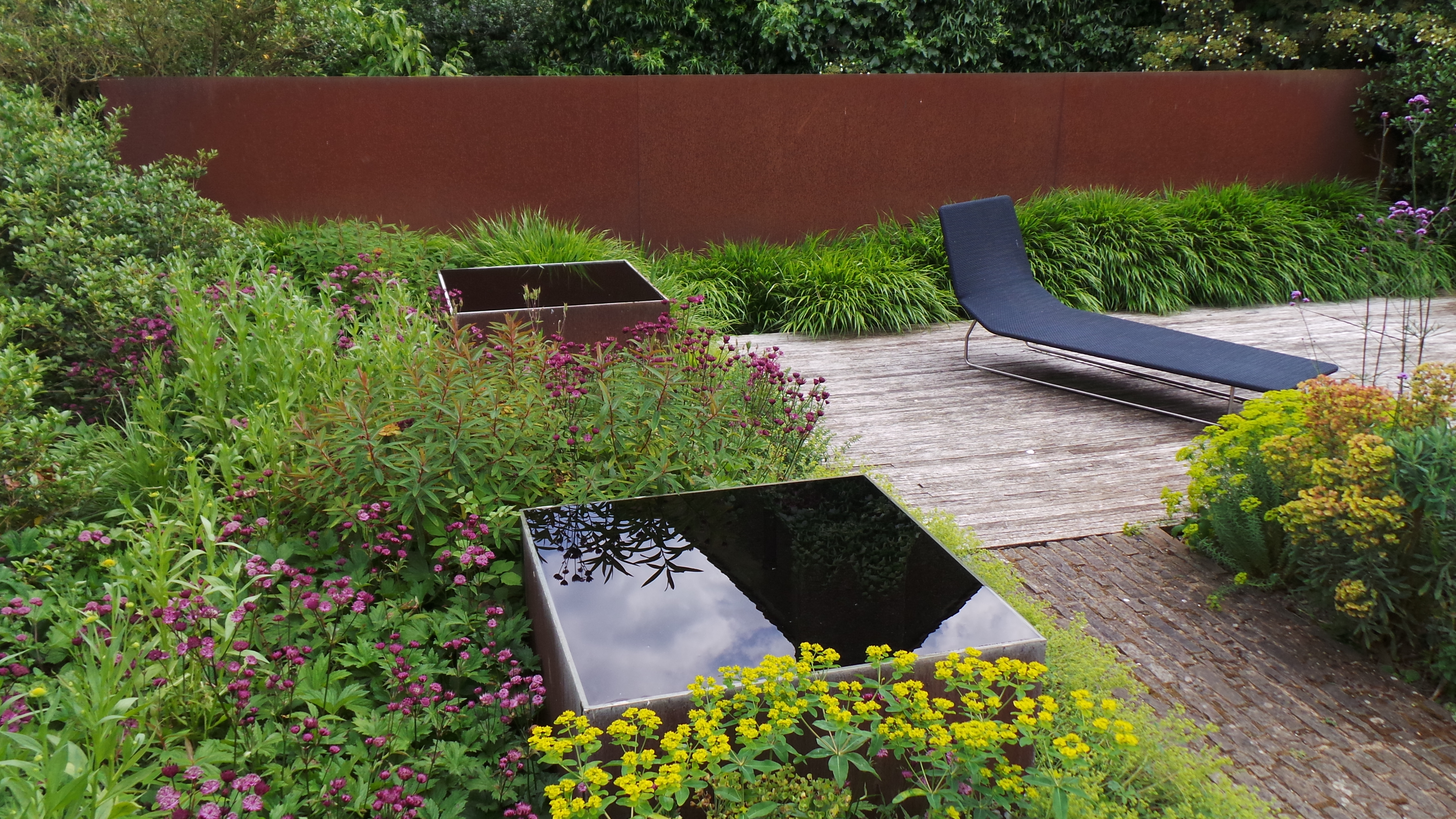
Sometimes you come across a garden seat with a design that sets it out above the rest. These “Eye Seats” in the Piet Oudolf garden at Hauser and Wirth’s Gallery in somerset fit perfectly in that category. They shared their patch of grass with sleek black loungers.

2014 10 04_5442 2014 10 04_5443 2014 10 04_5441 2014 10 04_5440

Just occasionally when wandering around a garden you discover a seat that fits into its space comfortably like a favourite slipper. In the community gardens at the Bishops Garden at Wells Cathedral in Somerset we came across a little collection that sat beautifully in a glade of old trees. Elsewhere in the main part of the palace garden we found two very different seats, one traditional wooden bench and a modern very sleek cast concrete bench with carved calligraphy.

2014 10 04_5564 2014 10 04_5563 2014 10 04_5553 2014 10 04_5548

When we visited the gardens designed by Tom Stuart-Smith at the family home, Serge Hill, we were interested in the positions in which he placed seats. Each was put where you could best relax or sit and contemplate, a few were very isolated and given a lot of space.

2014 06 22_0675-2 2014 06 22_0732-2 2014 06 22_0745-1 2014 06 22_0757-1

These two seats are in the tiniest garden possible. In fact the garden is just the seats on the path outside terraced cottages in the Yorkshire village of Haworth, famous for its links with the Bronte family. Several of the street side cottages here wrap pots and containers overflowing with plants around the steps from the front doors.

2014 11 01_7028 2014 11 01_7027

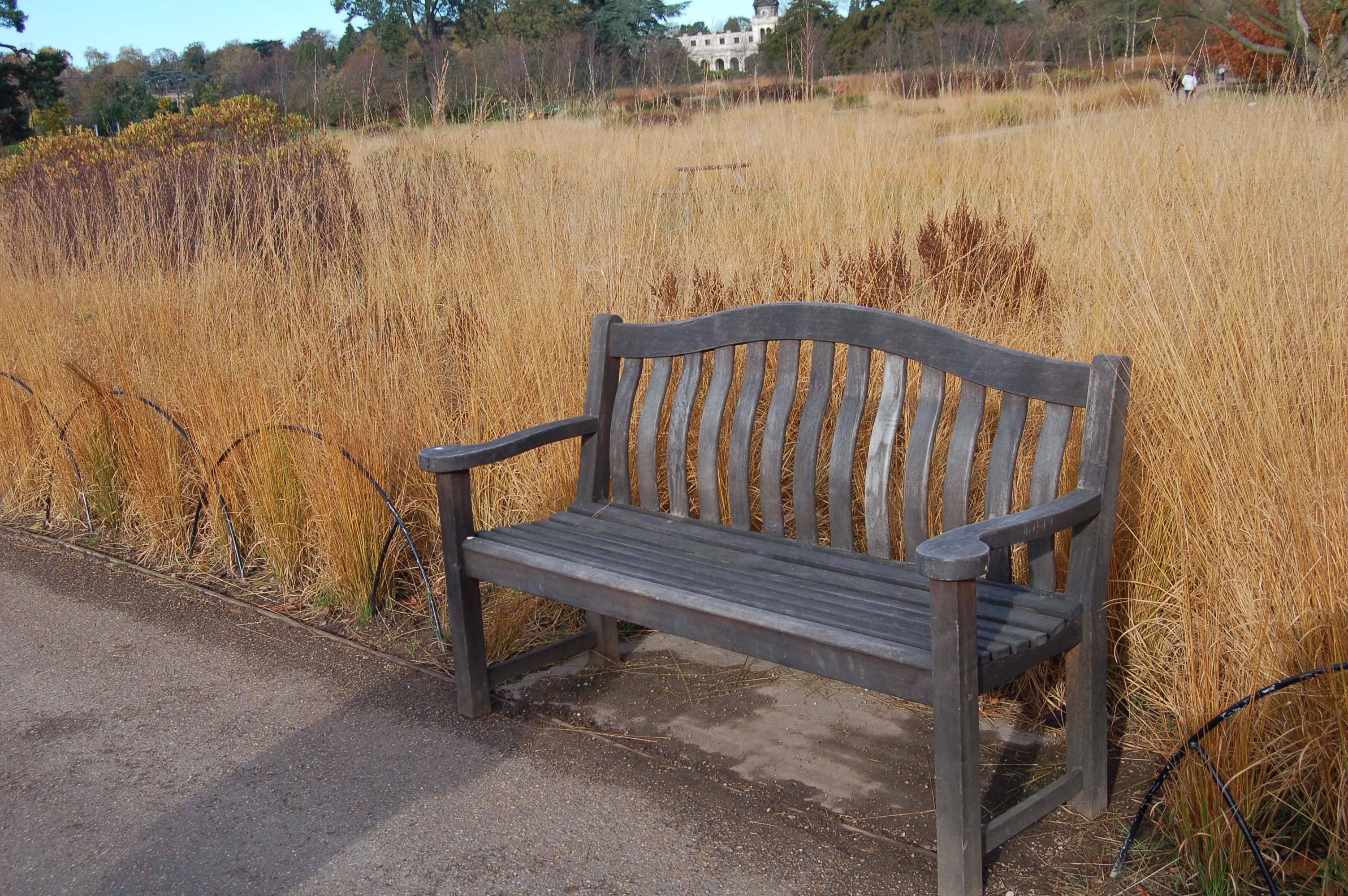
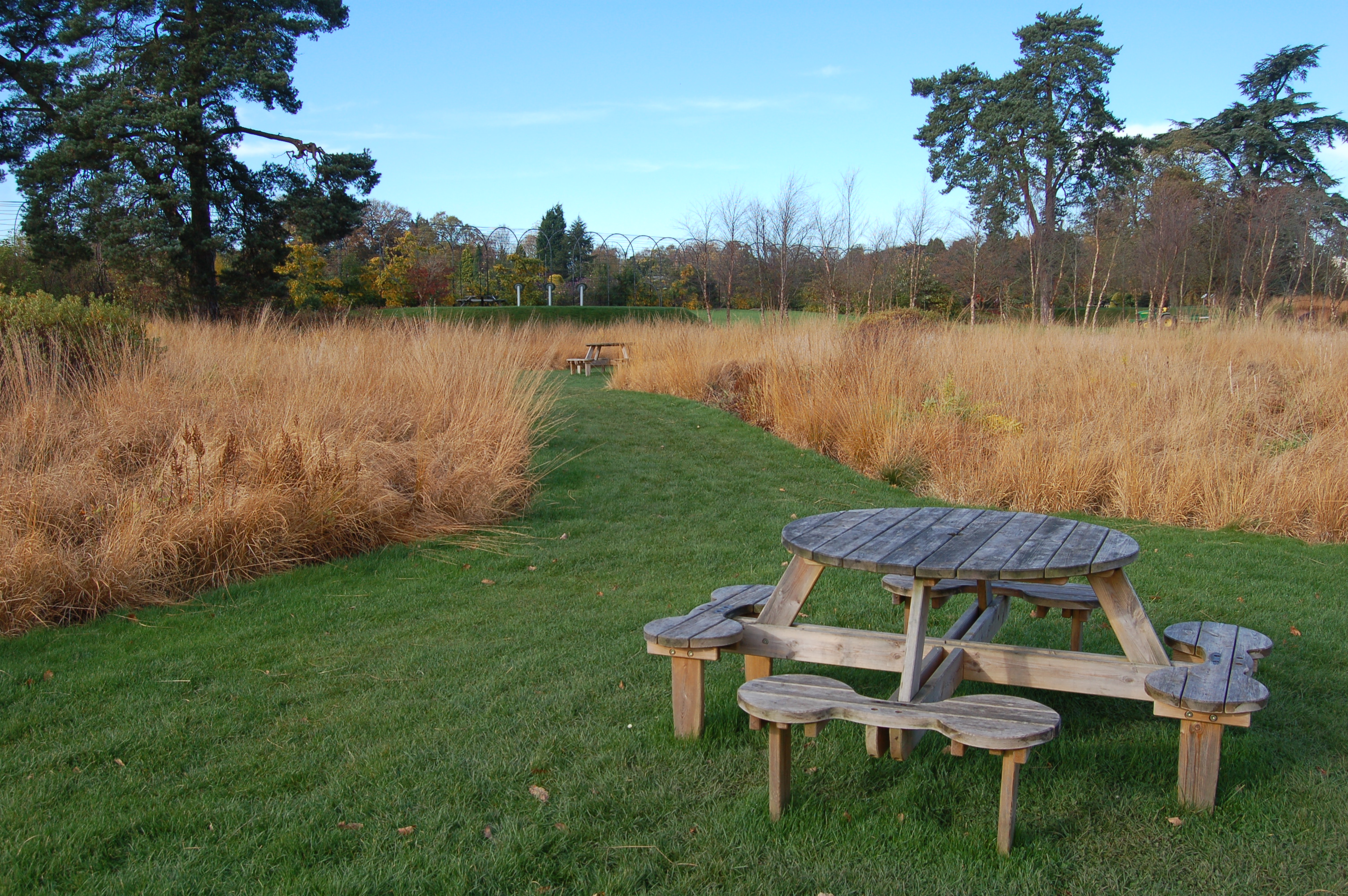
These seats are in a completely different environment, the vast open gardens at Trentham. They are situated in Piet Oudolf’s “River of Grasses”.

2014 11 04_7147 2014 11 04_7149

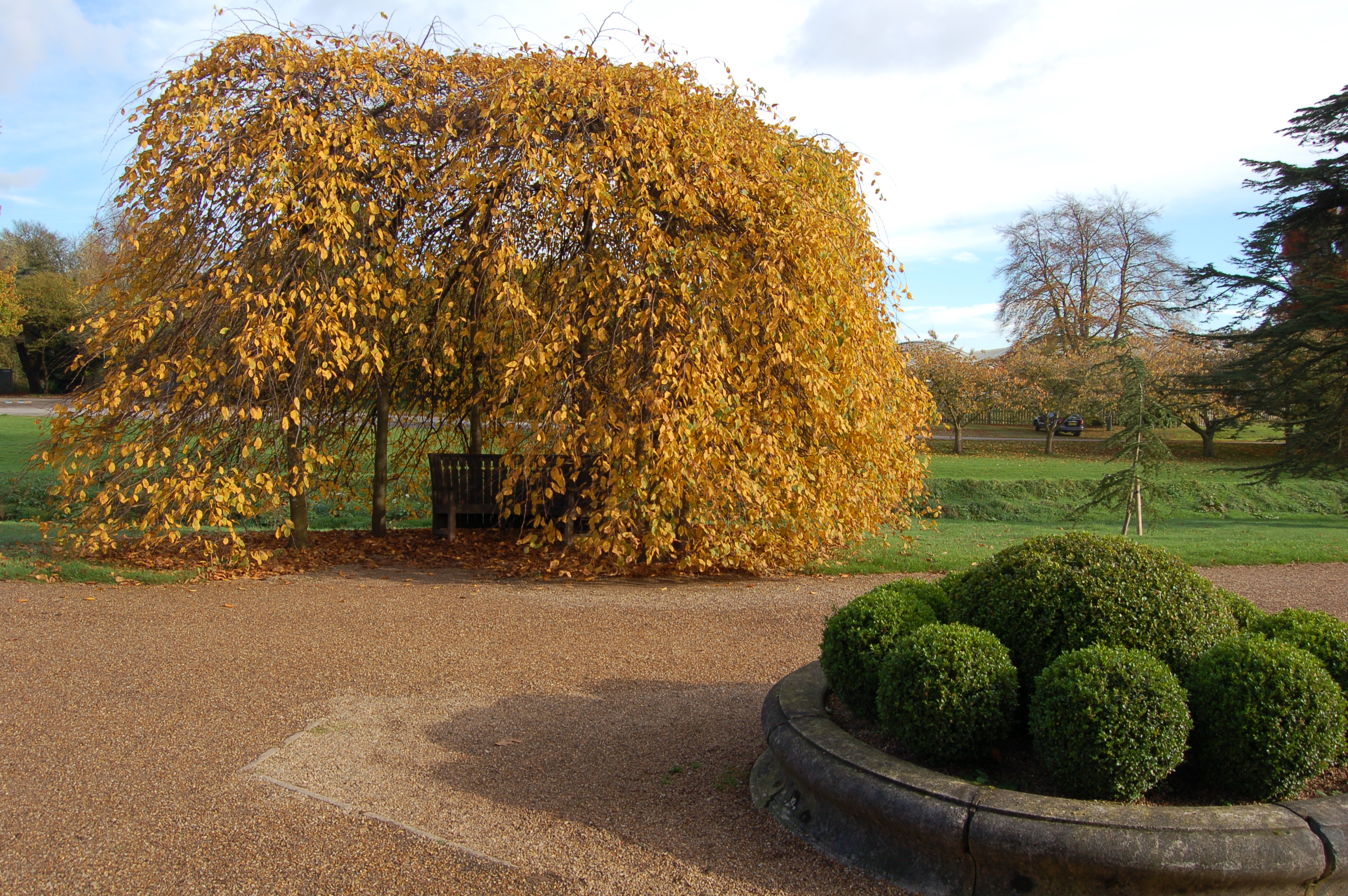
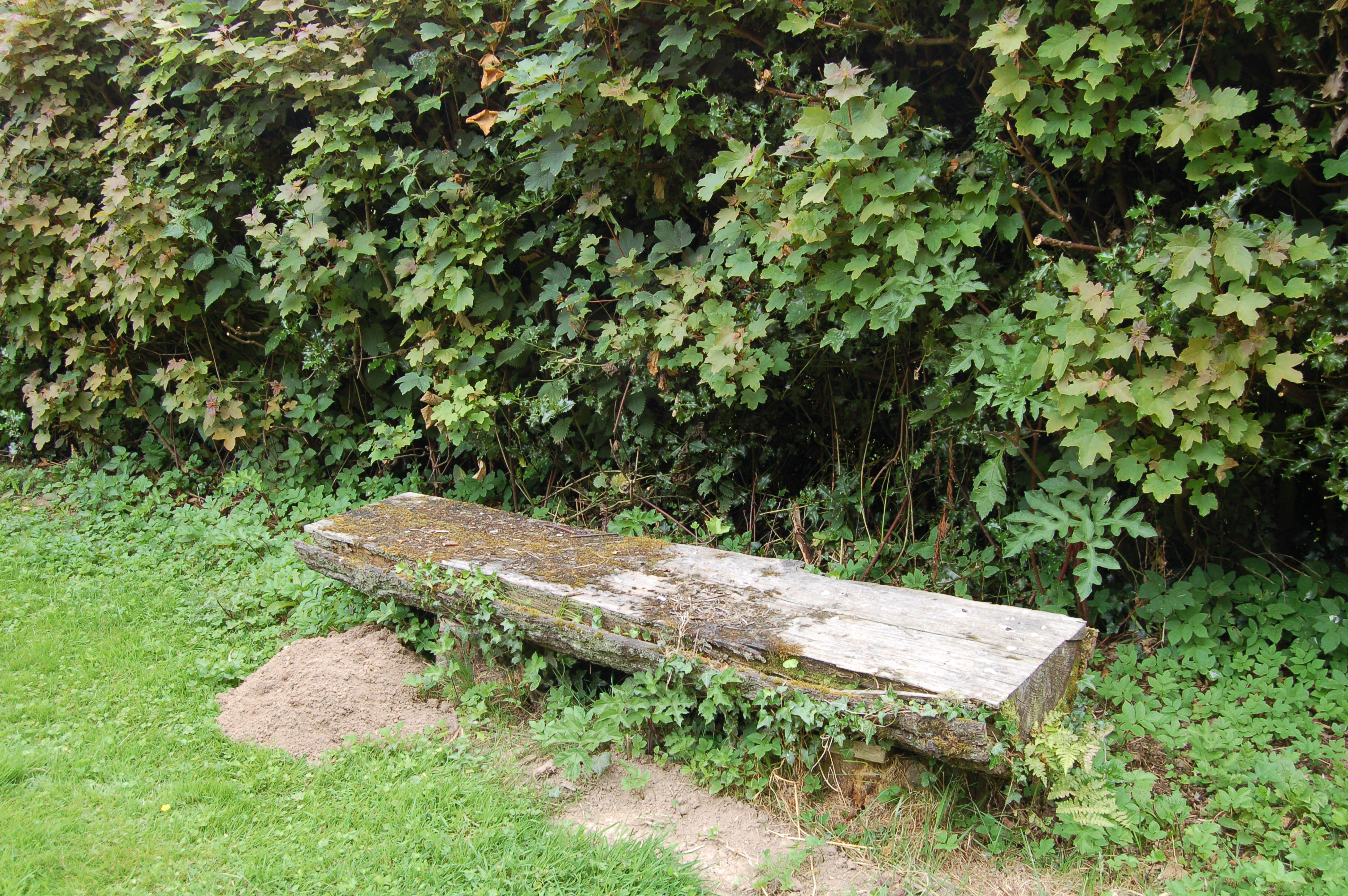
Can you spot the wooden bench in the photo below also taken at Trentham. It is hidden away in the amazing Hornbeam arbour here wearing its golden autumn coat.

2014 11 04_7175

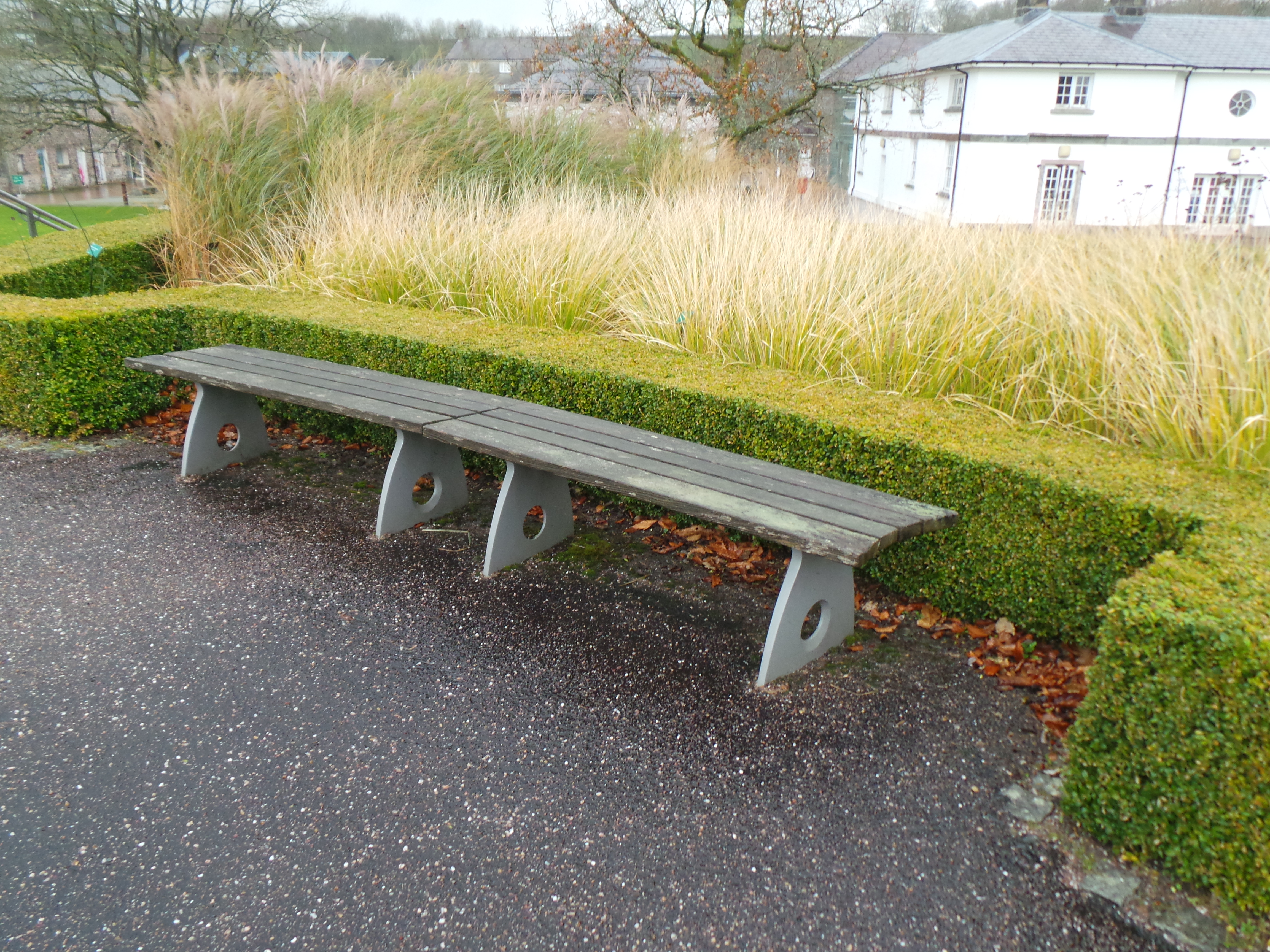
When we visited the National Botanic Garden of Wales on a wet November day we spotted these beautifully designed chairs. They were well suited to their situation but it was far too wet to try them out for comfort.

2014 11 21_7837 2014 11 21_7843 2014 11 21_7832

Categories
arboreta autumn autumn colours colours garden furniture garden seating light ornamental trees and shrubs outdoor sculpture trees woodland woodlands

Queenswood Arboretum – Part Two – the Oaks

Having enjoyed the Autumn Garden we found a sign indicating a footpath to an “Old Orchard” and the “Readers Chair” which naturally took us in the opposite direction to our planned route. Diversions are good for you! Just see what we found by following this one!

2014 10 23_6208

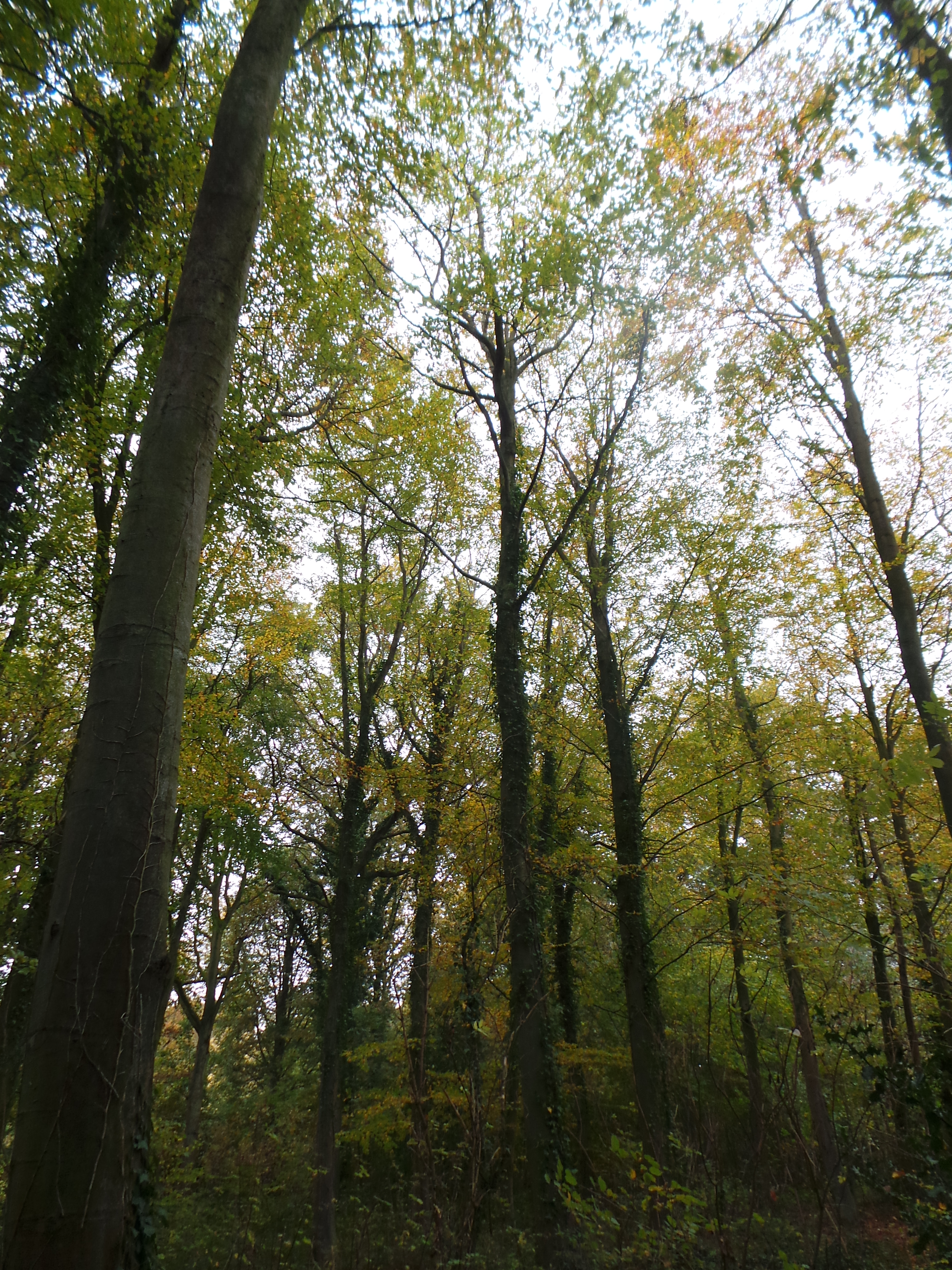
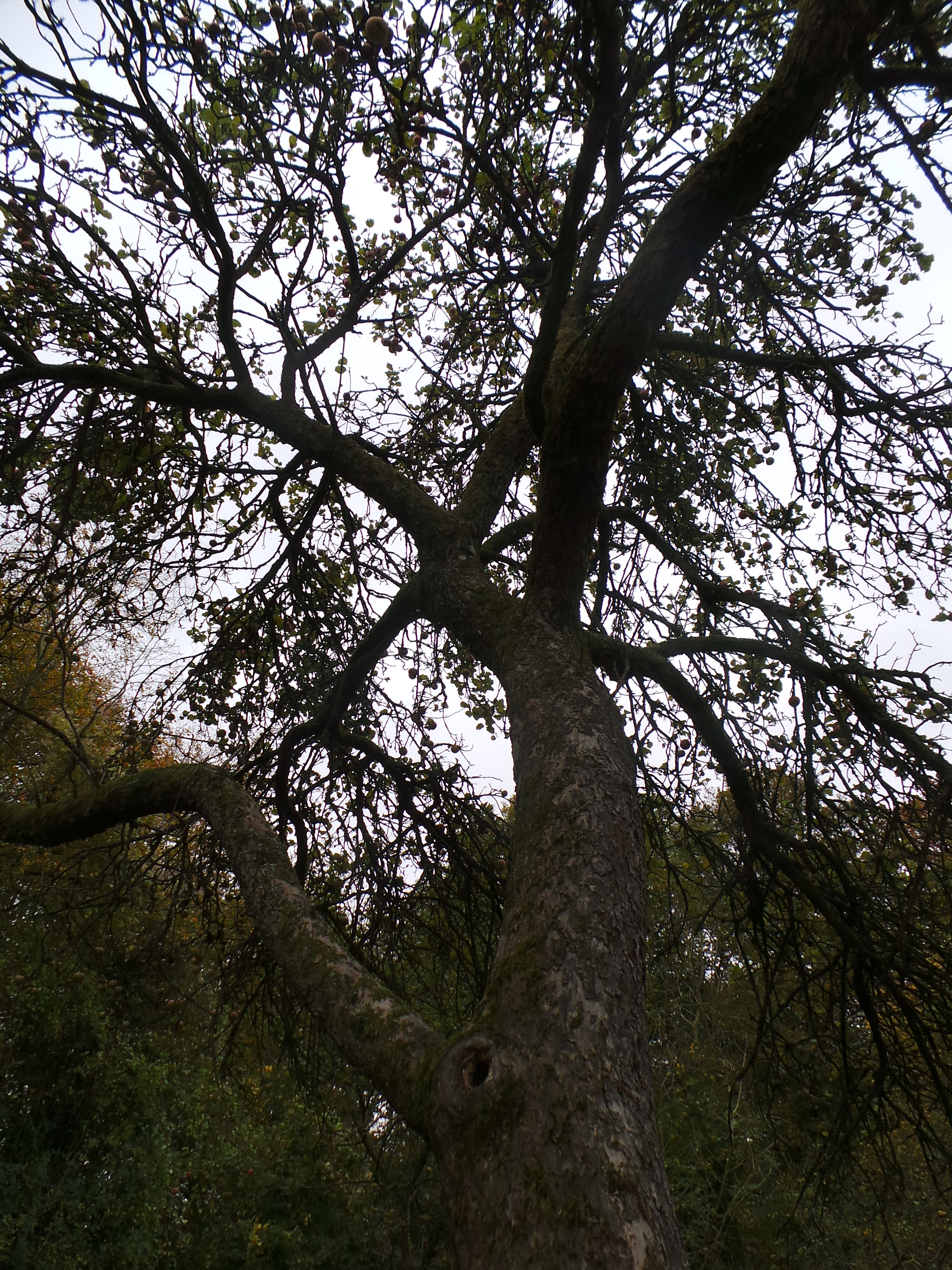
We followed the path beneath tall slender trees and found an orchard of ancient fruit trees.

2014 10 23_6186 2014 10 23_6187 2014 10 23_6188 2014 10 23_6189 2014 10 23_6190 2014 10 23_6191 2014 10 23_6192 2014 10 23_6193

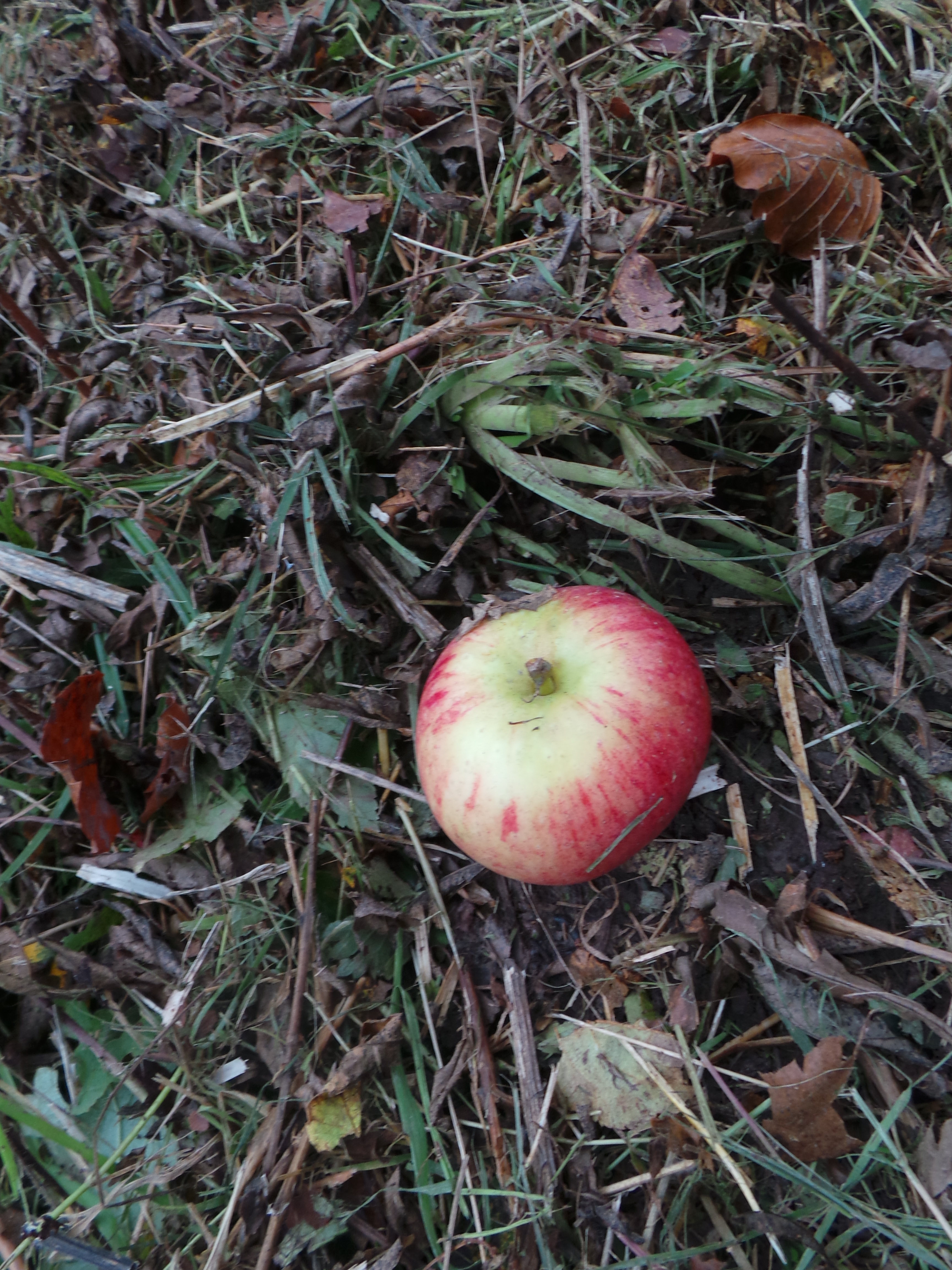
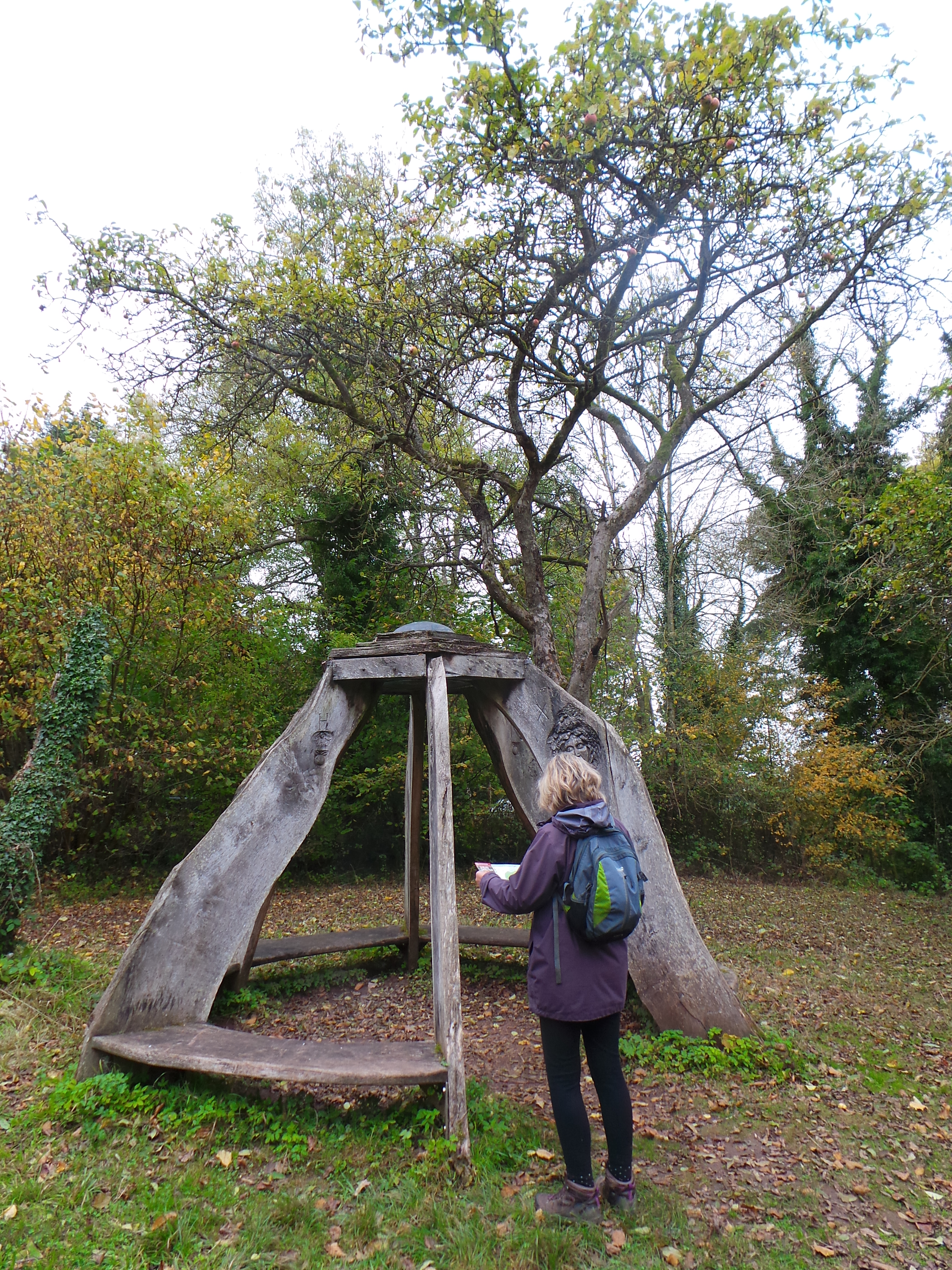
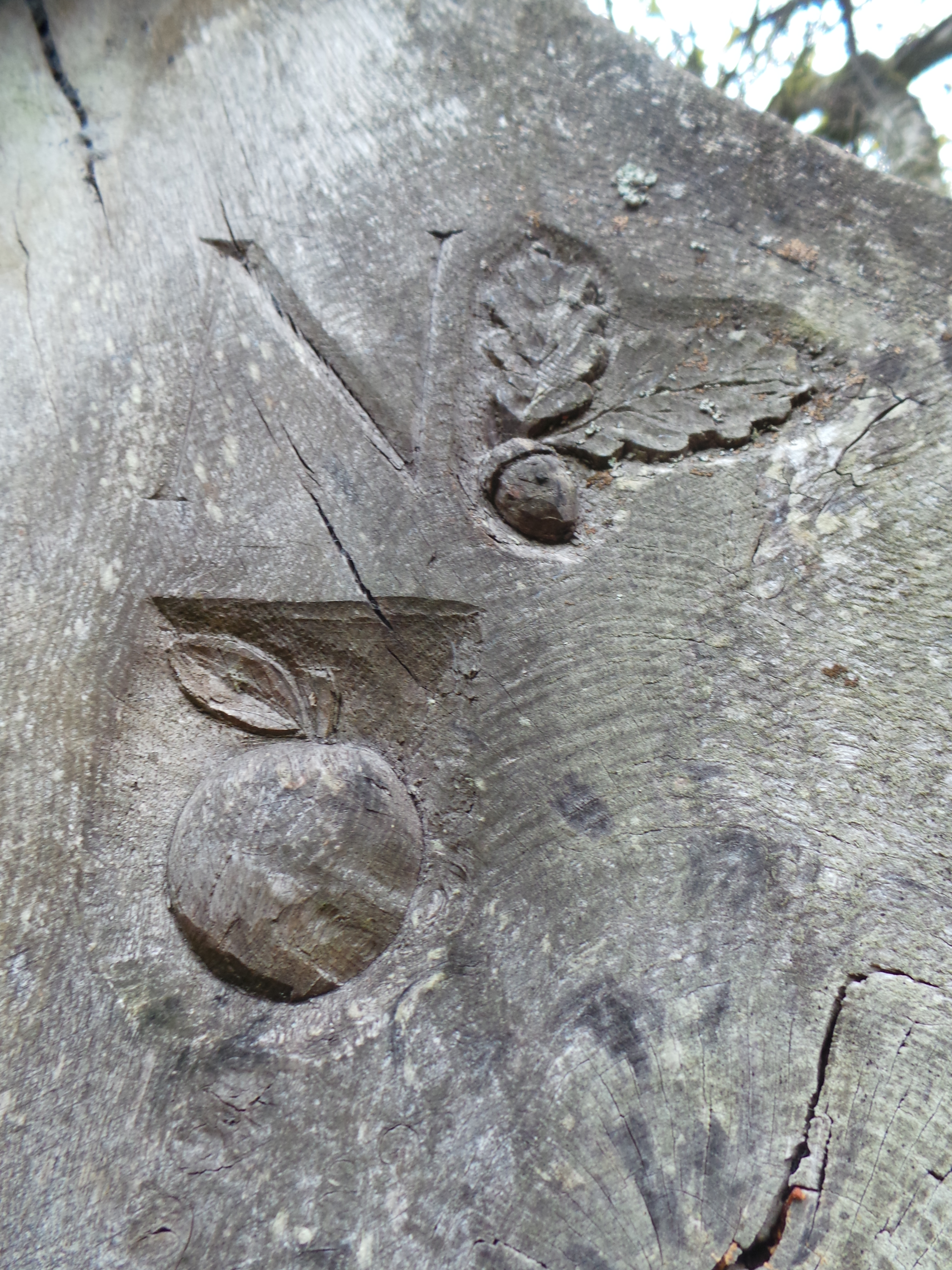
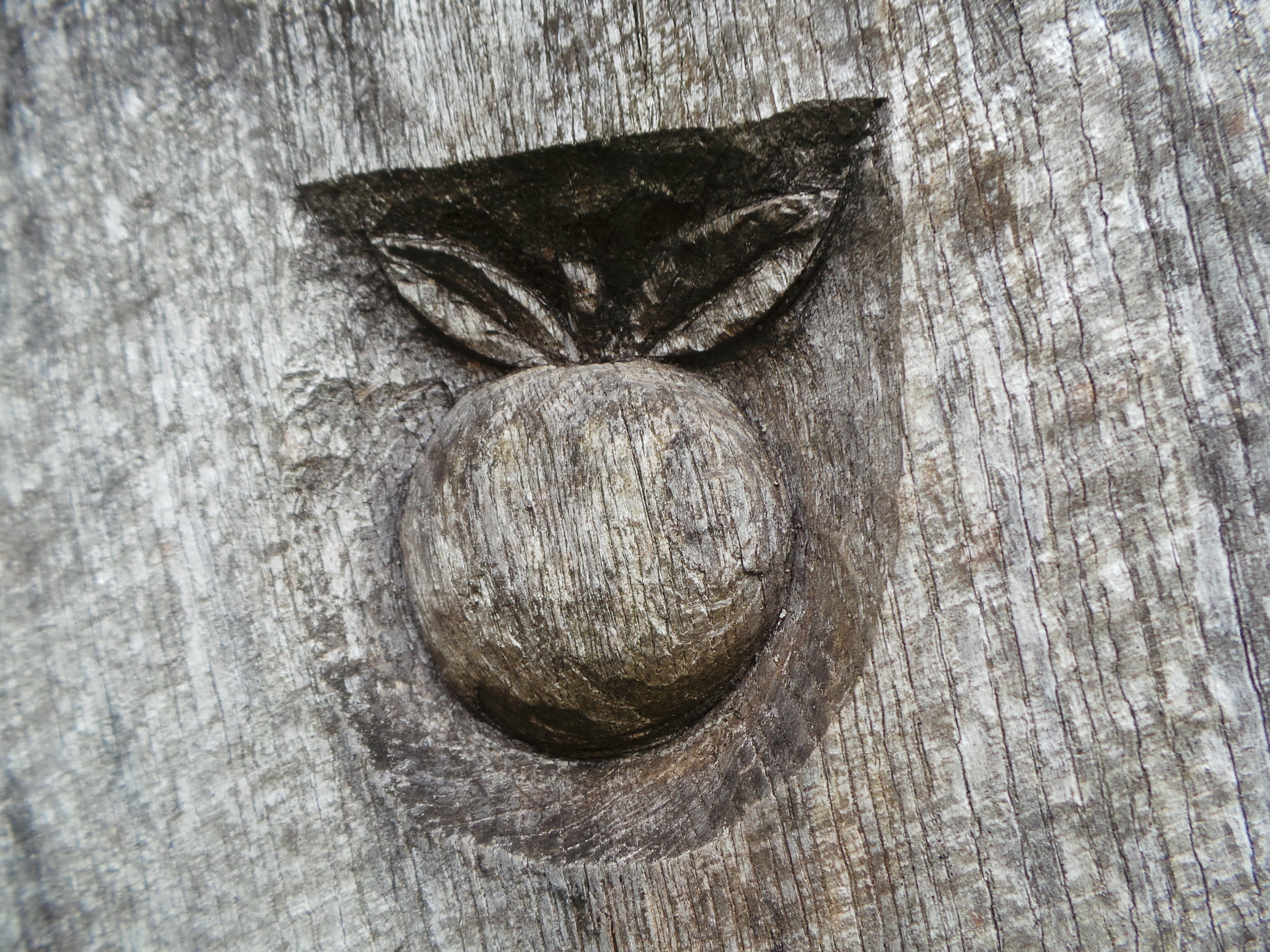
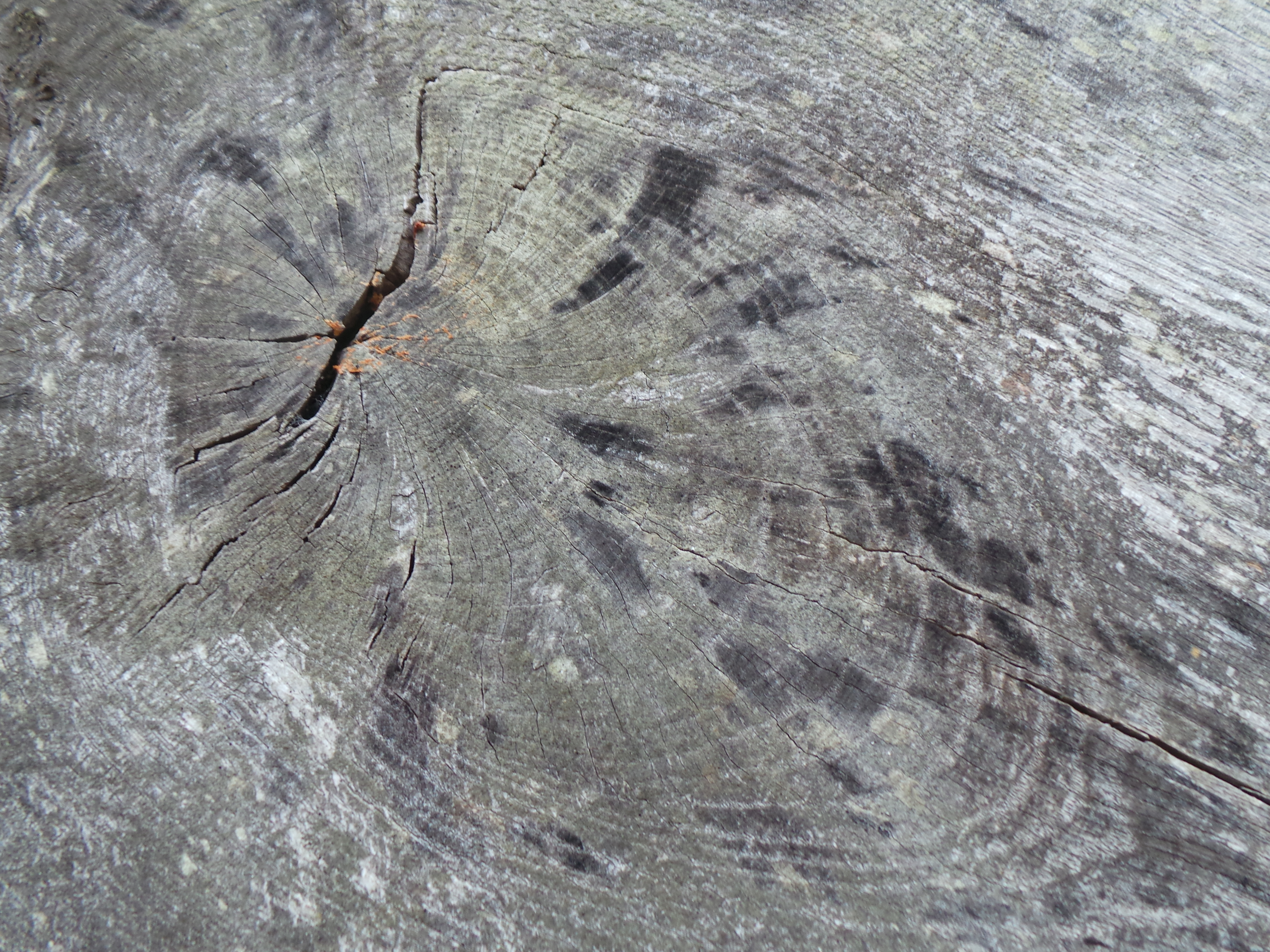
When we reached the centre of the old orchard with its sweet scent of rotting apples and fallen leaves we found out what the Reader’s Seat was. It was really a large piece of outdoor sculpture which was also a seat. I imagine the wood it was constructed from was oak as it was weathering to the most beautiful and palest of silver. The carvings were so beautifully sculpted into each face of the uprights which made up the canopy over the circle of seats.

2014 10 23_6194 2014 10 23_6202

2014 10 23_6205  2014 10 23_6196 2014 10 23_6198 2014 10 23_6195 2014 10 23_6197 2014 10 23_6198

We sat a while appreciating the craftsmanship of the seat with its carvings before exploring further the old orchard itself.

2014 10 23_6199 2014 10 23_6200 2014 10 23_6201 2014 10 23_6203 2014 10 23_6204 2014 10 23_6207

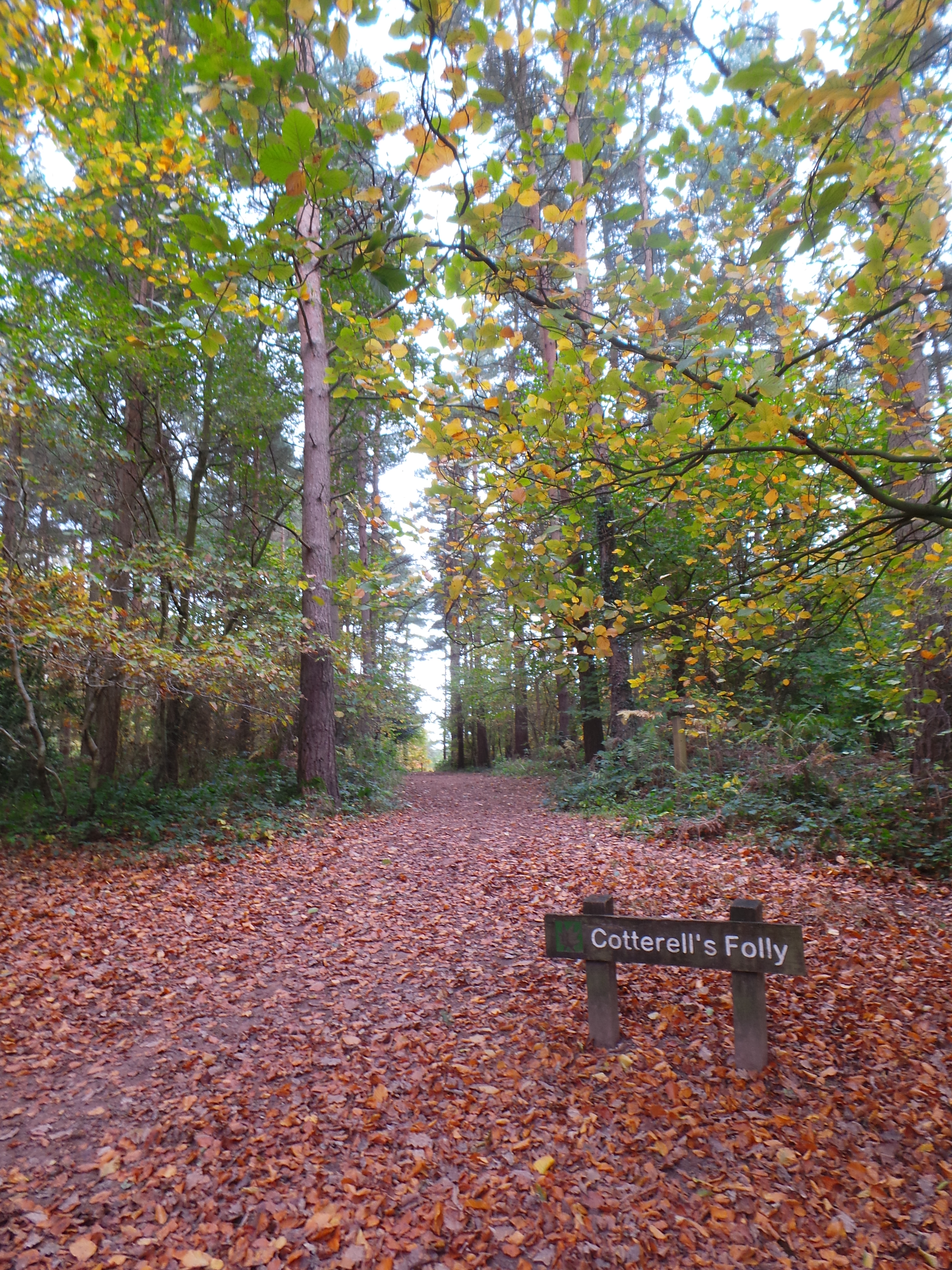
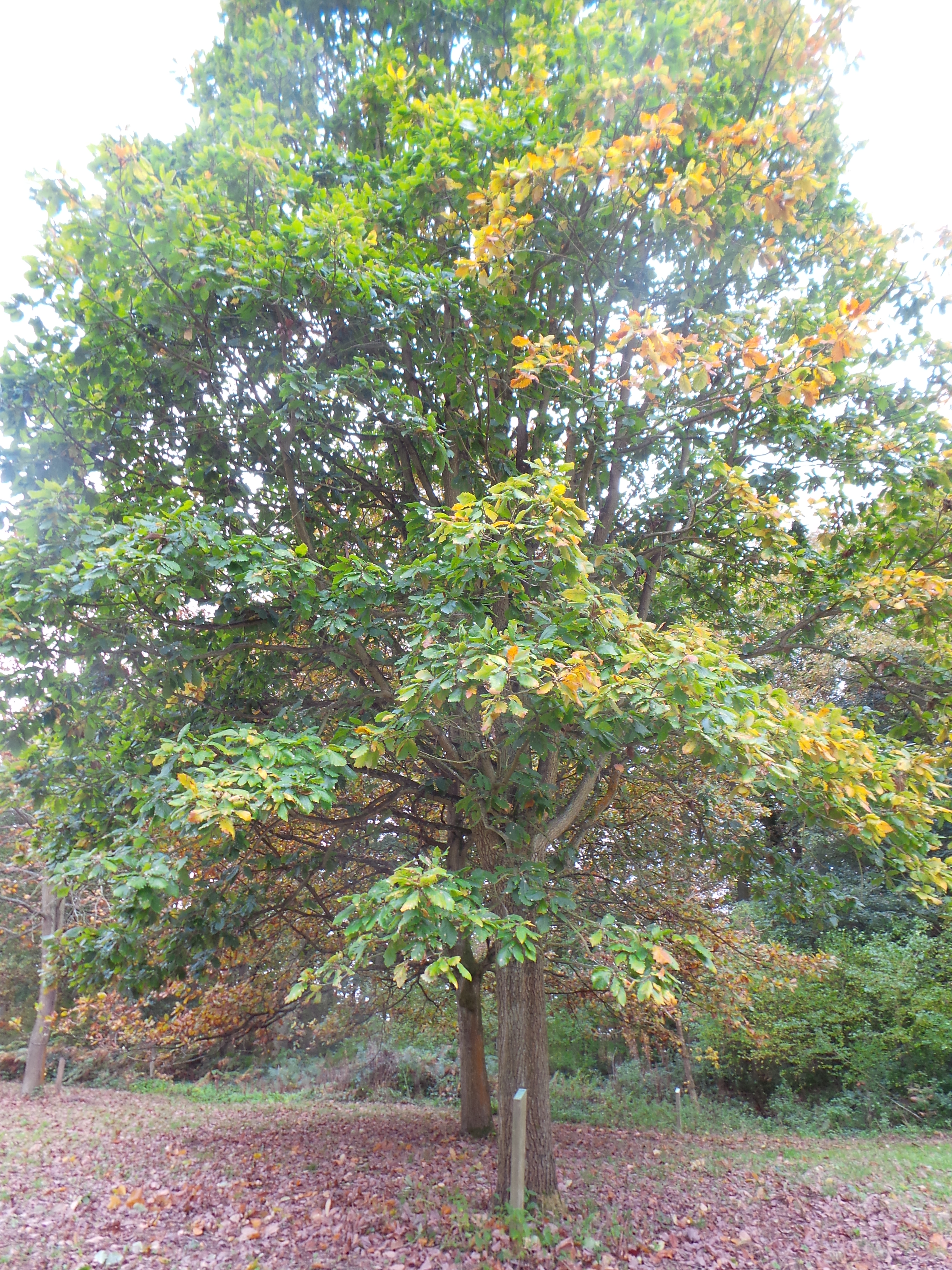
But where we we headed before the wooden sign post persuaded us to search for the Old Orchard and Reader’s Seat? We were off to find the Oak Avenue. We expected this to be a shaded walk between tow tall rows of ancient native oaks. How wrong we were! What we actually found was a small field with two rows of oaks from all over the world. Tall ones, short ones, fat ones, thin ones and even a shrub like one. There seemed to be an Oak from every corner of the world. But to get there we wandered through Cotterill’s Folly where huge Beech trees towered over the path and covered that path with their waxy tough leaves.

2014 10 23_6218 2014 10 23_6219

2014 10 23_6251  2014 10 23_6228

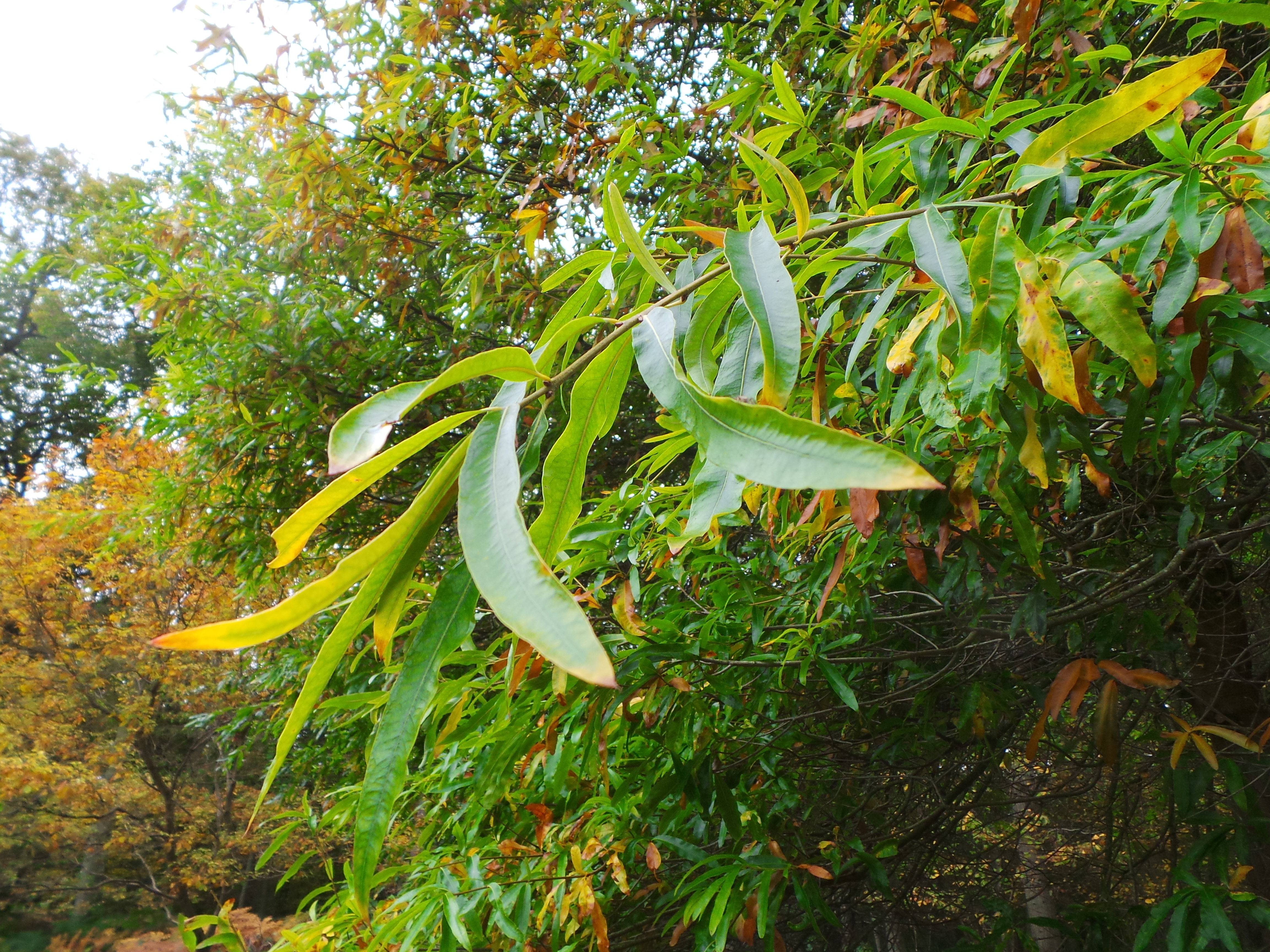
Our first oak surprise was this narrow-leaved tree with slightly pendulous branches, aptly called the Willow-leaved Oak. Its foliage looked so fresh and full of vitality, which was in stark contrast to the Armenian Oak we looked at next. This oak had large leathery leaves already coloured for autumn.

2014 10 23_6221 2014 10 23_6222 2014 10 23_6223 2014 10 23_6224 2014 10 23_6226 2014 10 23_6227

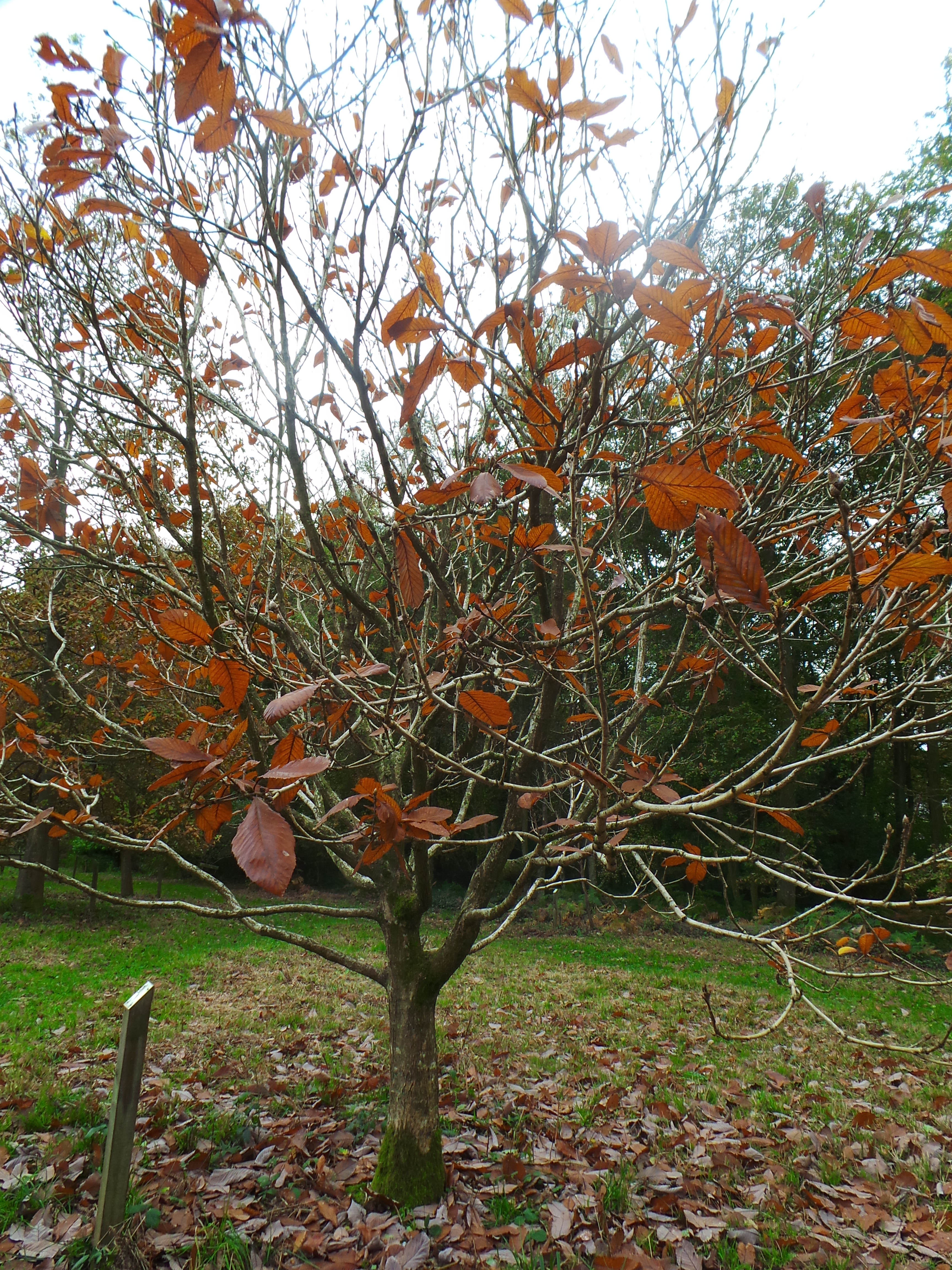
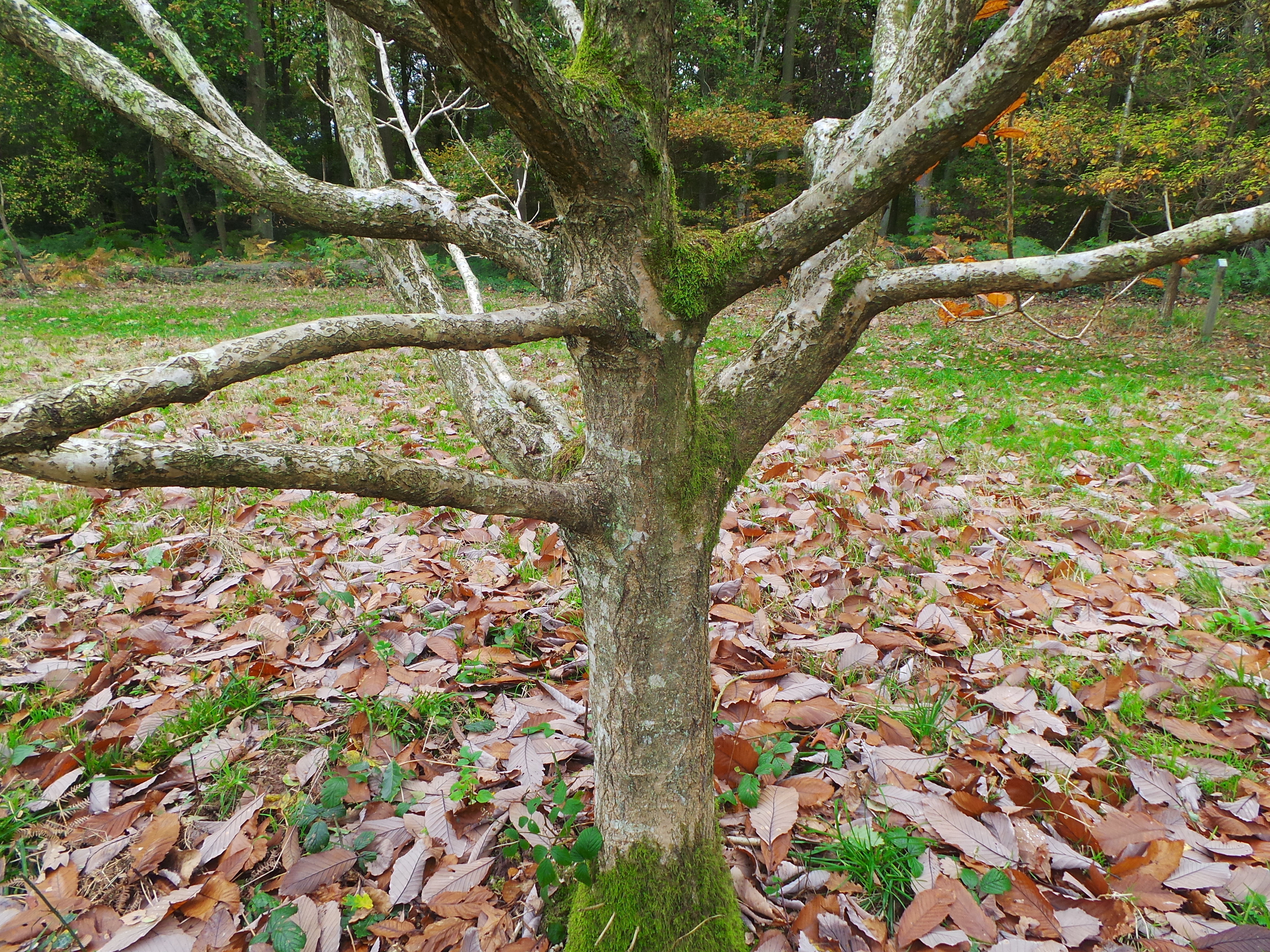
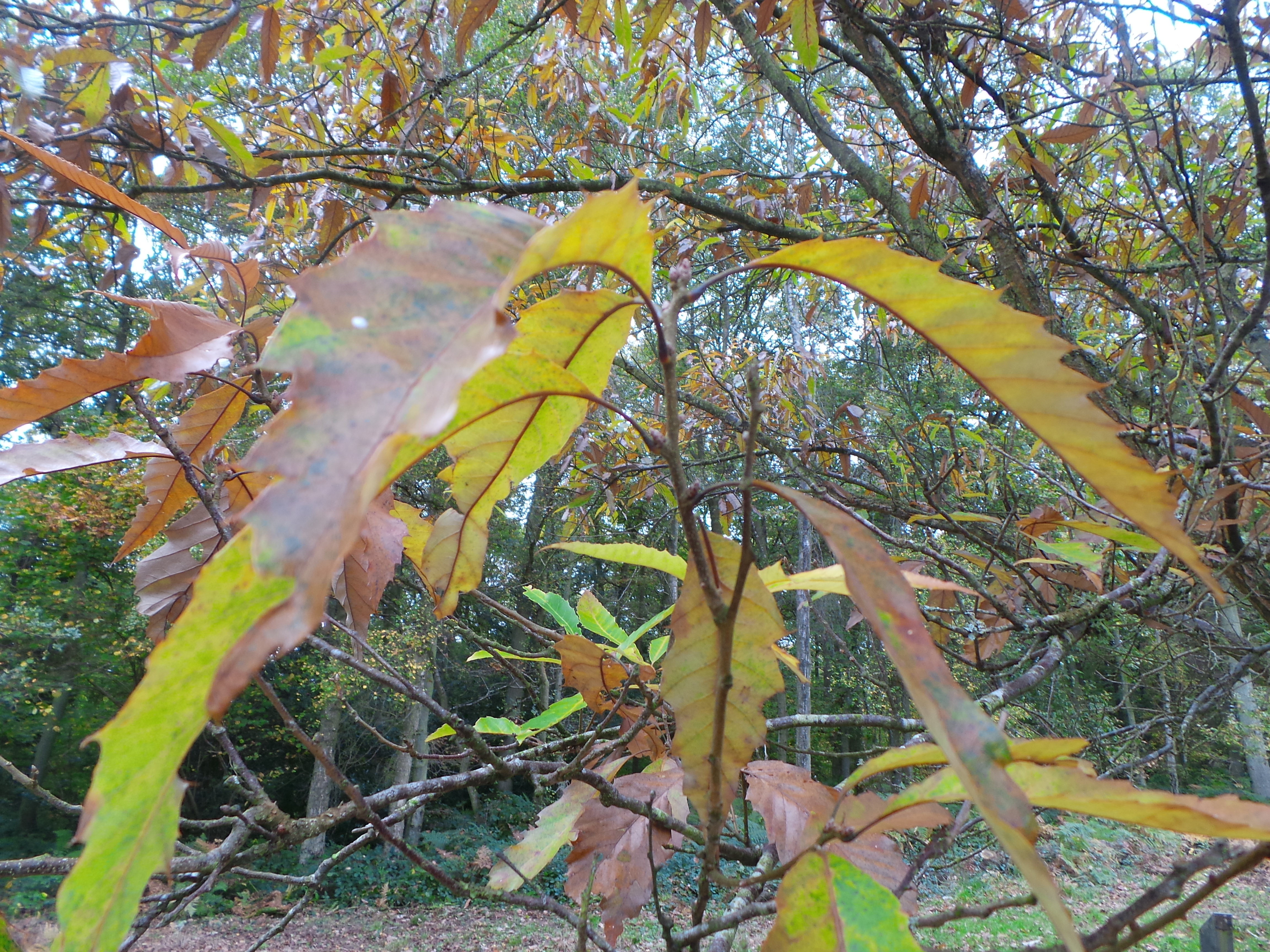
Our next oak was a small tree with leaves like those of a Sweet Chestnut.

2014 10 23_6229 2014 10 23_6230

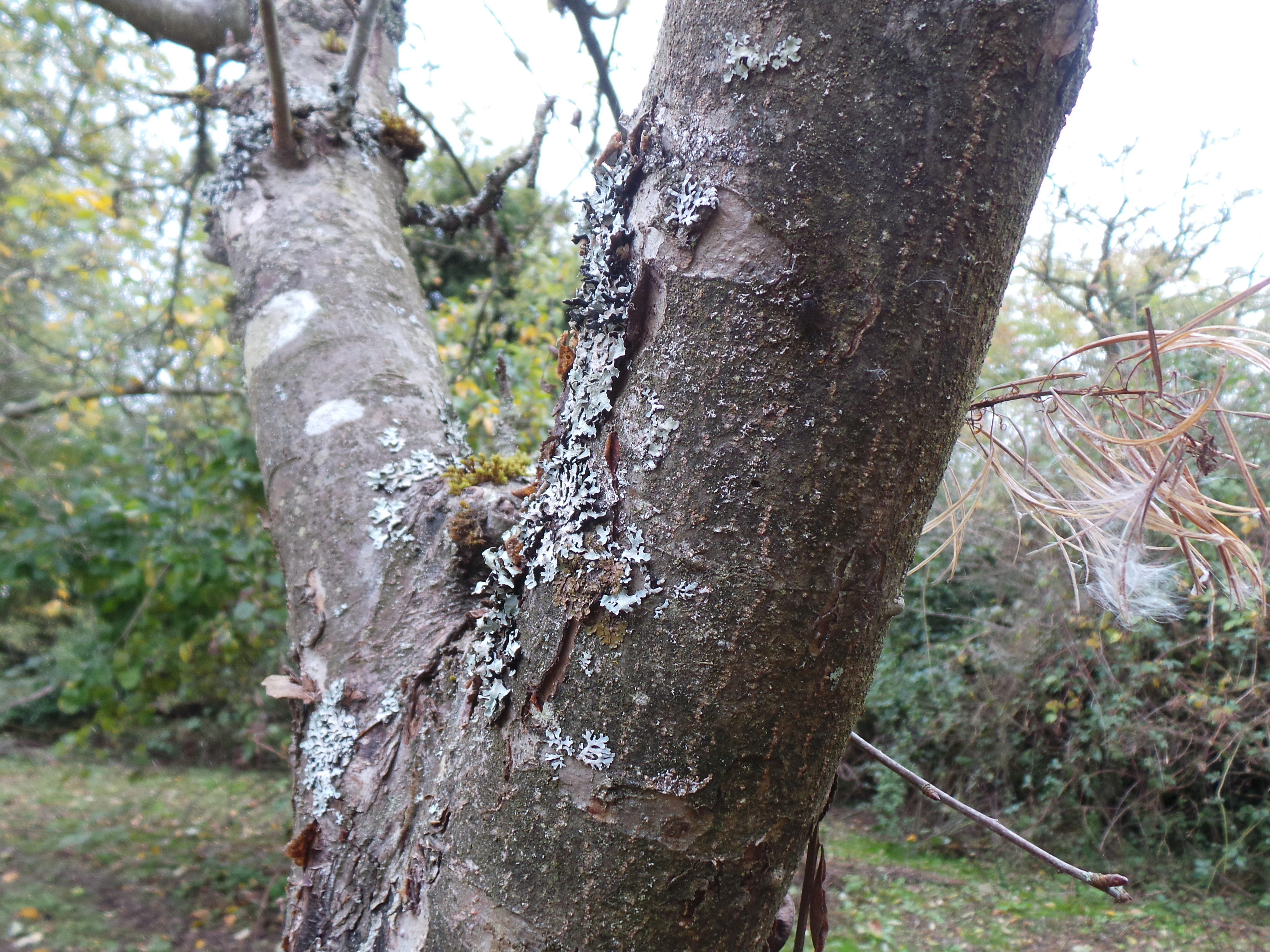
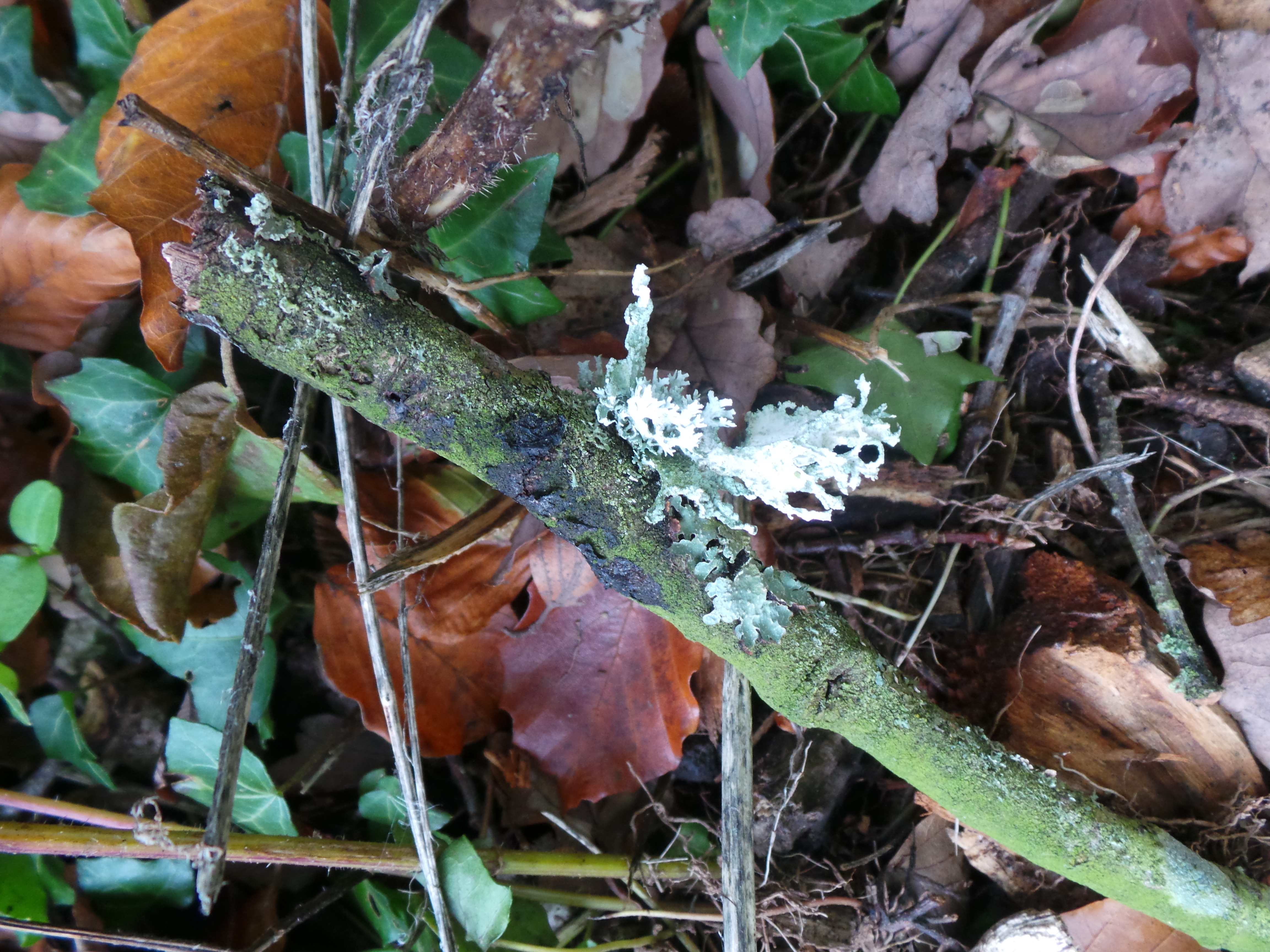
One thing that all oaks attract is lichen and we soon found this stunning glaucous example shaped just like stags antlers.

2014 10 23_6231

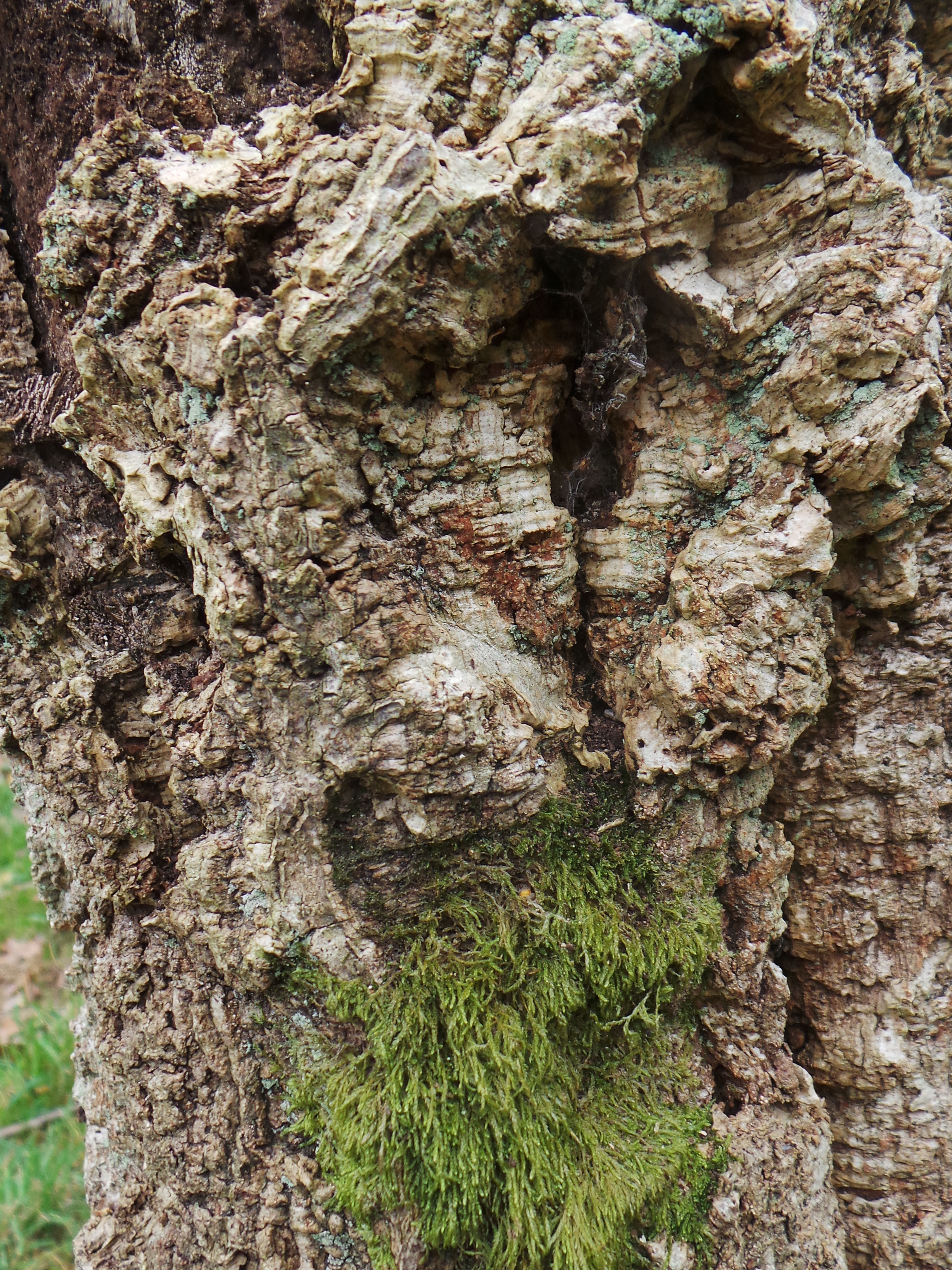
Our next Oak looked just like an Olive tree – it was just the right size and shape with glaucous leaves just like those of an Olive. But when we got closer and noticed its bark we knew straight away it was some sort of a Cork Oak. The label informed us that it was a Quercus variabilis, a Chinese Cork Oak.

2014 10 23_6233 2014 10 23_6234

We were so surprised to see the next of our Oaks as it was just four or five feet tall, a small shrub rather than a majestic old tree. Nuttall’s Oak, Quercus texana surprised us again when we noticed its beautifully shaped leaves, somewhat reminiscent of a Liquidamber.

2014 10 23_6235 2014 10 23_6237

Close by we found another shrubby Oak but this one had a different growth habit. It was a solid looking bush with simple leathery foliage. This was a Bamboo Leaved Oak – very well named.

2014 10 23_6238 2014 10 23_6239

This old Cork Oak had died but in death presented itself as a piece of textured sculpture. But it did frame another autumn coloured Oak on the far side of the green area.

2014 10 23_6241 2014 10 23_6242 2014 10 23_6243

This neat small specimen on the left was an Algerian Oak and the equally neat one on the right was a Shumard’s Oak.

2014 10 23_6244 2014 10 23_6248

After enjoying discovering so many different oaks most of them new to us, we began to make our way back to the car park. We passed a Wild Service Tree one of our rarest native trees before moving on through a little plantation of Betulas and made our way towards a stand of Redwoods.

2014 10 23_6252

To share this last leg of our wander around Queenswood Arboretum just look at the third post in this series.


Categories
architecture buildings colours garden design garden designers garden photography garden ponds garden pools garden seating gardens gardens open to the public grasses hardy perennials light light quality meadows ornamental grasses outdoor sculpture Piet Oudolf reflections sculpture Tom Stuart-Smith water garden water in the garden

Post 500 – Part Two – a further visit to the “Oudolf Field”

As promised I am returning to the beautiful county of Somerset where Jude and I spent a day exploring the exciting new “Oudolf Field” and the gallery buildings at the Hauser and Wirth’s Durslade Farm.

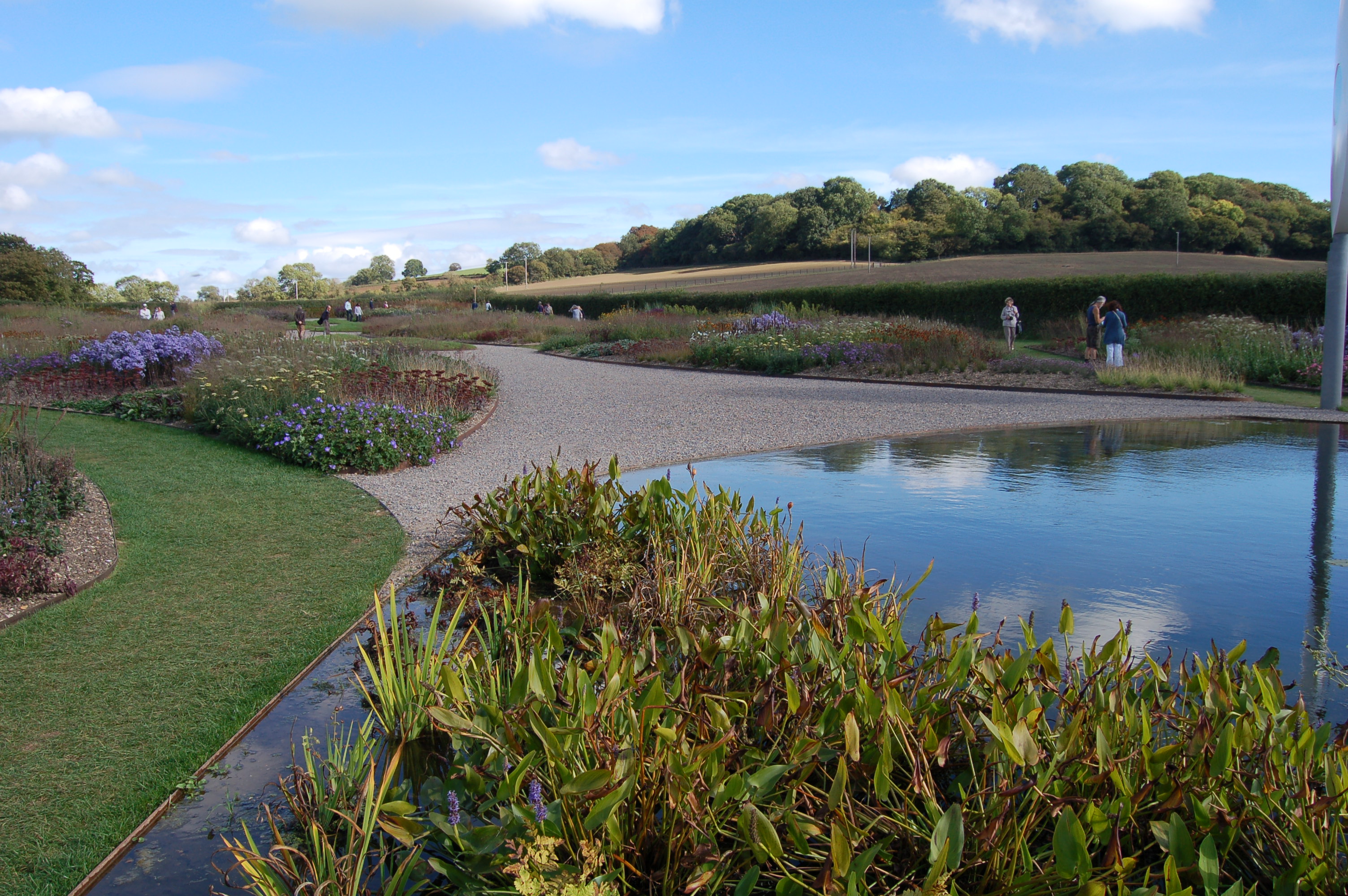
We left off as we were looking at the pool and giant clock. This is the first time we have seen any water designed into an Oudolf designed garden and indeed the first one to include a giant clock. The pool afforded clear reflections of the trees surrounding the site and was only planted around the margin closest to the buildings to give the maximum area of reflecting water.

2014 10 04_5465 2014 10 04_54832014 10 04_5487 2014 10 04_5481

The tall clock towers over the pool and its white face stands out against the brightness of the blue sky. I would imagine it would look great against black clouds too! It casts a beautiful lollipop shadow across the golden gravel. Its face looks like a big circular disc but it is in reality asymmetric in design, which causes the minute hand to move out into clear air as it moves into the narrow side.

2014 10 04_5488 2014 10 04_5486

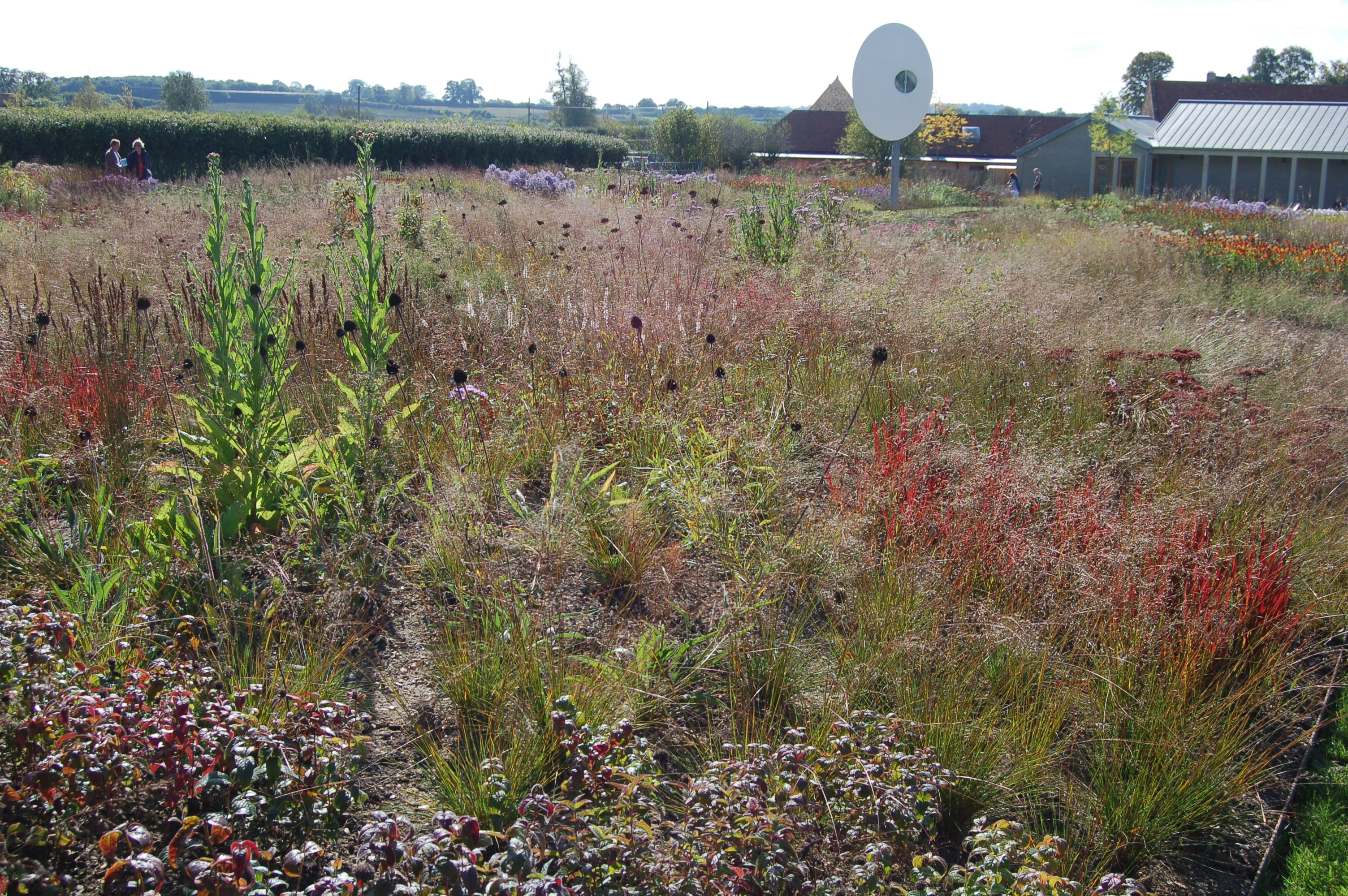
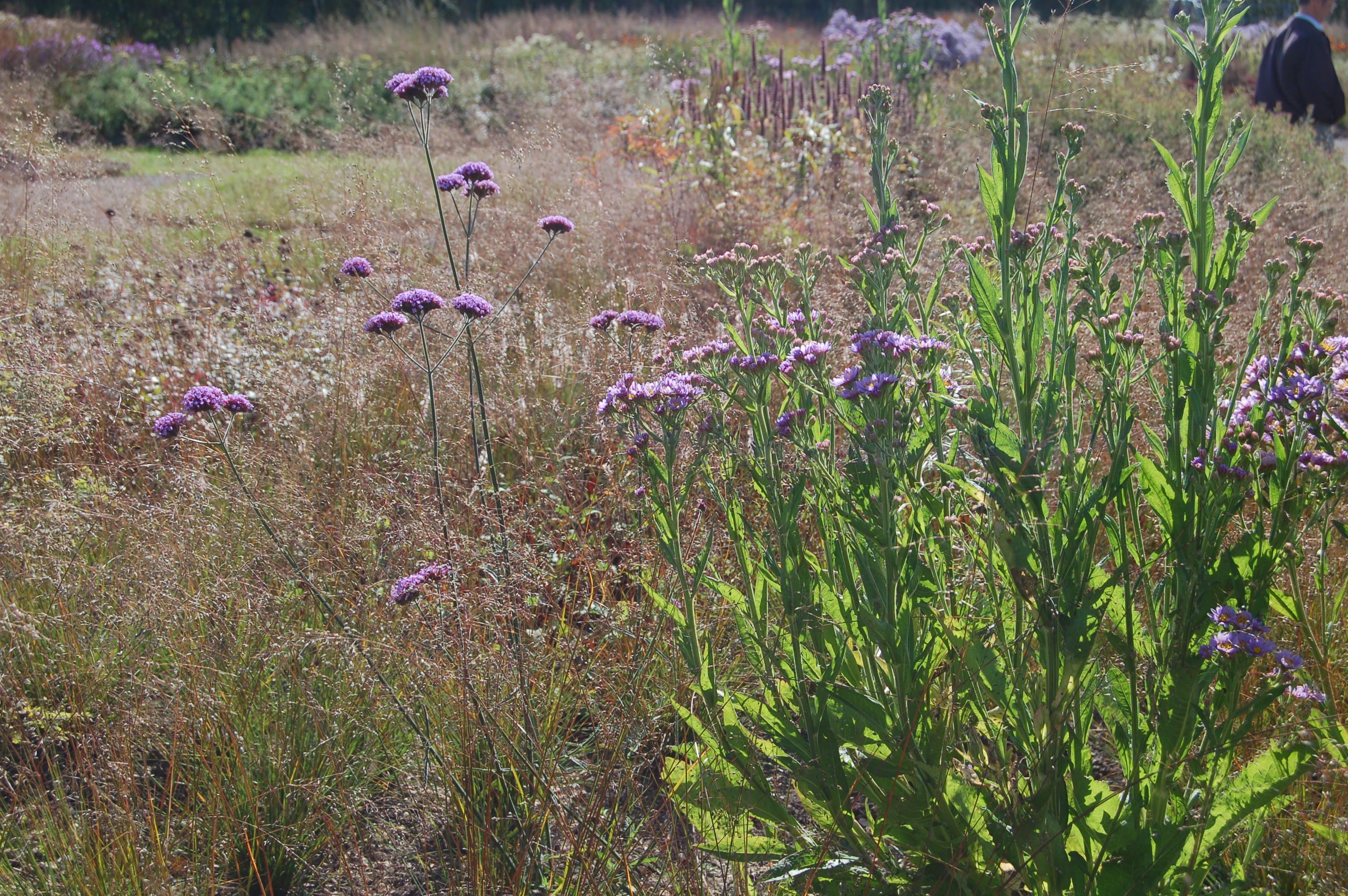
Although the planting is lower than in his previous gardens Piet Oudolf still uses many of his favourite plants such as Sanguisorbas, Echinaceas, Verbenas and Heleniums.

2014 10 04_5471 2014 10 04_5470

2014 10 04_5478 2014 10 04_5479

2014 10 04_5473 2014 10 04_5476

We had a break for coffee and to look around the galleries before wandering the gardens again as the sun dropped slowly in the sky and the light gave the meadows a fresh look.

We were enthralled by a gallery where a display of Oudolf’s garden designs helps reveal how this garden designer’s mind works. We loved the designs and working drawings and “idea jottings” of this garden here in Somerset as well as those from the New York High Line and the Wisley Garden.

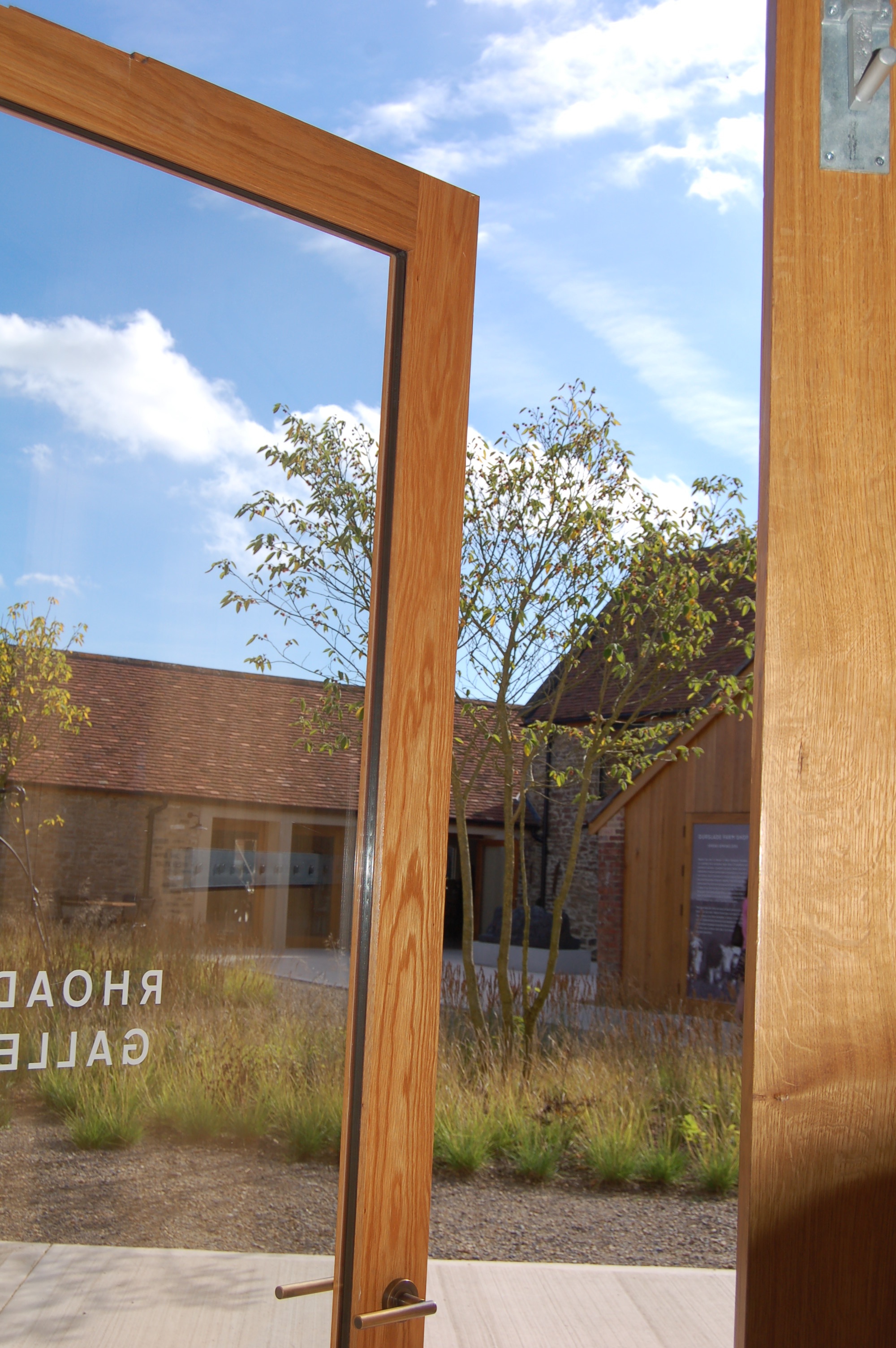
Moving from gallery to gallery each courtyard space is softened by more of Oudolf’s plantings, featuring trees underplanted with grasses and perennials. The sculptural pieces sit comfortably among the old farm buildings with their richly textured surfaces.

2014 10 04_5429 2014 10 04_5431 2014 10 04_5432 2014 10 04_5433 2014 10 04_5434 2014 10 04_5435 2014 10 04_5436 2014 10 04_5437 2014 10 04_5438 2014 10 04_5518 2014 10 04_5517

2014 10 04_5521 2014 10 04_5522 2014 10 04_5524 2014 10 04_5525 2014 10 04_5526 2014 10 04_5527 2014 10 04_5528 2014 10 04_55292014 10 04_5531 2014 10 04_5532

Enjoy the gallery of photos taken in the sparkling late afternoon light. It is amazing how different plantings can look as the light changes within just a few hours at this time of year.

The next post in my 500 Celebration series will find us over in Hertfordshire where Tom Stuart-Smith lives. We had the privilege of visiting his own garden and the one he designed for his sister.


Categories
colours garden design garden designers garden furniture garden photography garden ponds garden pools garden seating gardening gardens gardens open to the public grasses hardy perennials meadows ornamental grasses Piet Oudolf reflections Tom Stuart-Smith water in the garden

Post 500! A look at two garden designers.

To celebrate reaching 500 posts in my Greenbenchramblings adventures I thought I would create a week of posts about my favourite garden designers, Piet Oudolf and Tom Stuart-Smith. I have featured examples of their gardens several times already but these are special gardens. The Piet Oudolf garden here is his latest creation in Somerset and the Tom Stuart-Smith gardens are his own garden and the one he designed for his sister who lives just yards away.

The garden, called the Oudolf Field sits within the grounds of the Hauser and Wirth Gallery in the Somerset village of Bruton. This 1.5 acre garden was only planted this year so we visited in its very early stages. The garden is better described as a perennial meadow than his usual tall prairie. The plants are generally shorter so that more of each border and the garden as a whole can be seen at one go. The meadow is designed to feel soft and loose and the style is reflected in smaller gardens all around the farm buildings. Unusually for his gardens he has included a pool here.

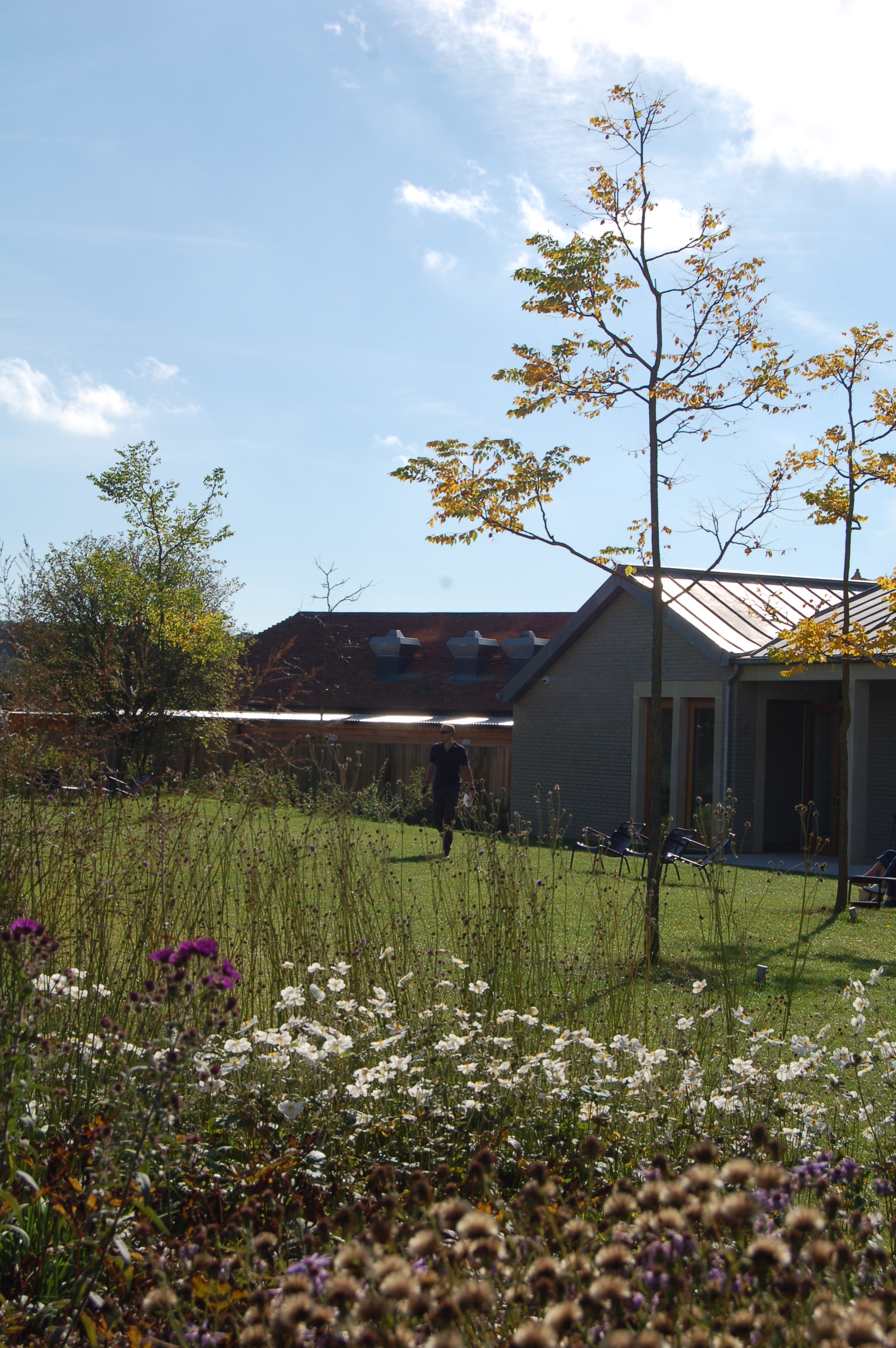
So let’s start on our tour beginning as we leave the restaurant in the old renovated farm buildings. A grassed area with widely spaced trees contains unusual seats in which to relax and view the garden, sit and enjoy a coffee or read a book. These “Eye Benches” are made from black Zimbabwe granite.

2014 10 04_5439 2014 10 04_5440 2014 10 04_5441 2014 10 04_5443 2014 10 04_5442 2014 10 04_5452

The meadow style borders themselves contain over 26 000 plants and winding paths invite the visitor to view each border from all different angles. Unusually for Oudolf he has designed most of the planting to be low enough to look over it and view most of the garden. Jude the Undergardener is unconvinced by this as it all seemed so low and I have to agree to an extent. I much prefer his taller plantings but time will tell. After all this garden is just a few months old.

Come for a wander and see the “field” through the lens of my camera. Just click on a shot and follow the arrows to navigate.

A giant clock is visible from every part of the garden. It towers over the pool. I shall continue my tour of Oudolf’s new garden and the buildings that it adorns in the next part of this 500 post celebration week.

2014 10 04_5458 2014 10 04_5465


Categories
garden design garden furniture garden photography garden seating gardening gardens gardens open to the public

Are you sitting comfortably? Part 3 in this very occasional series.

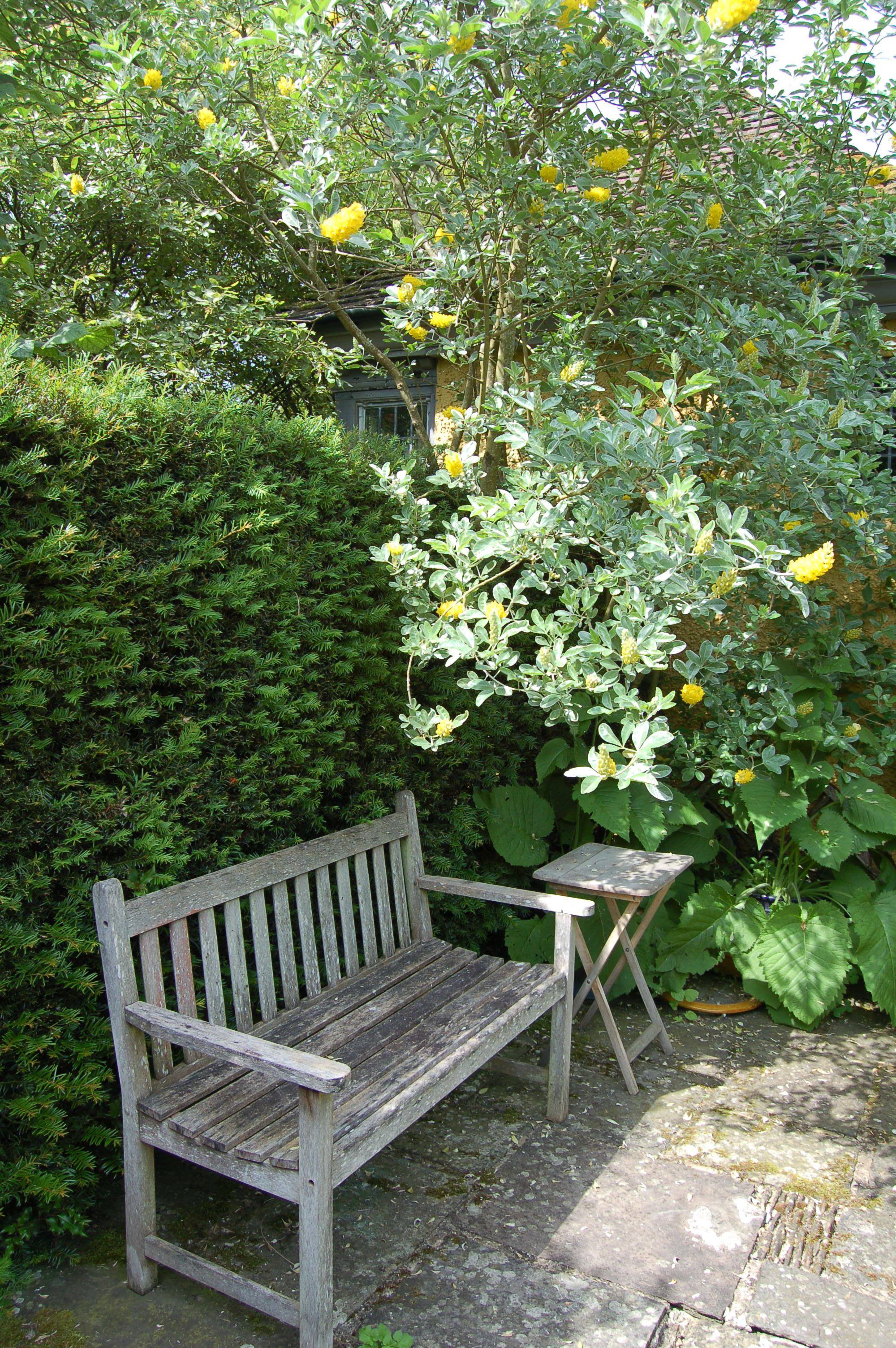
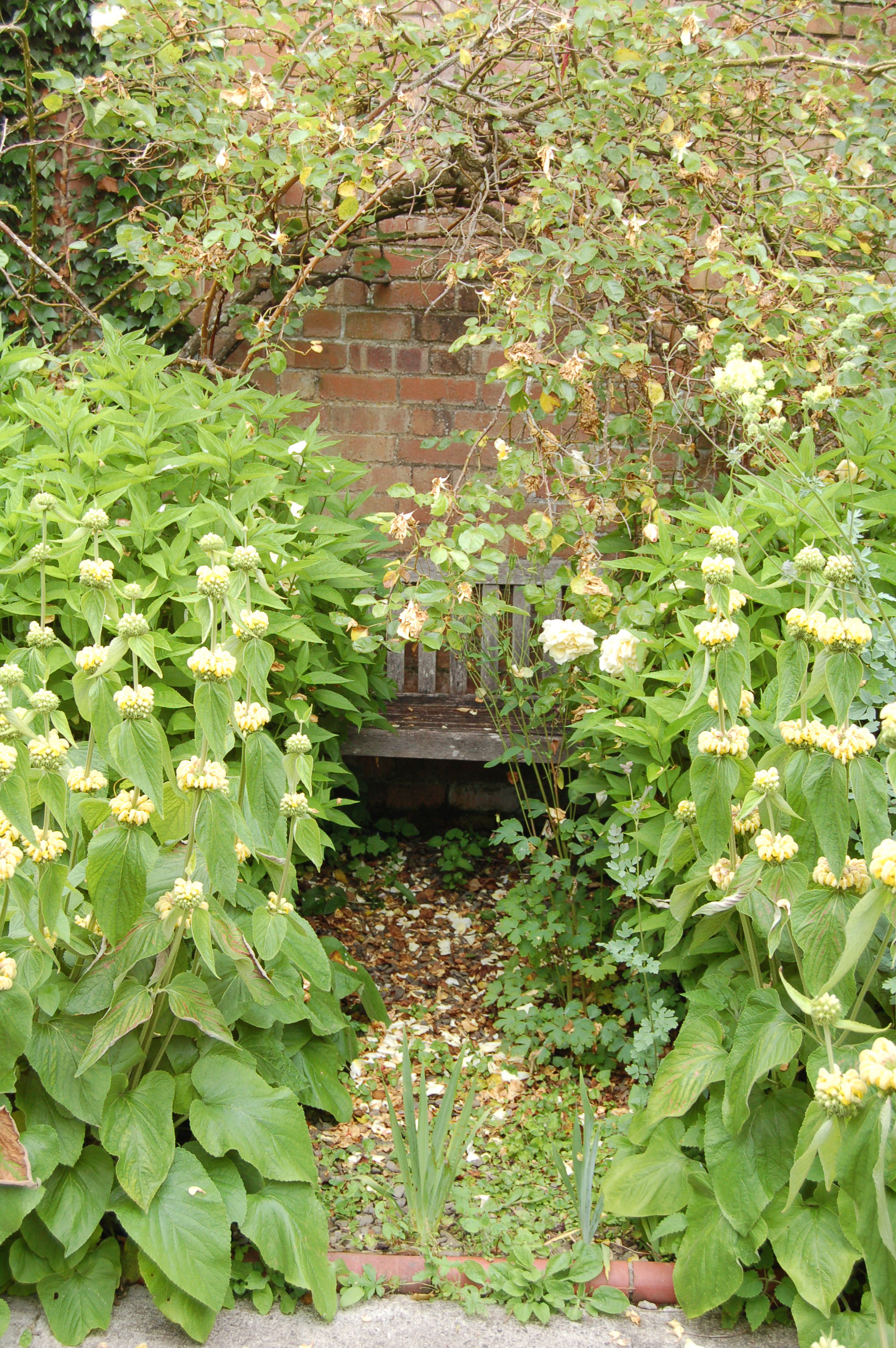
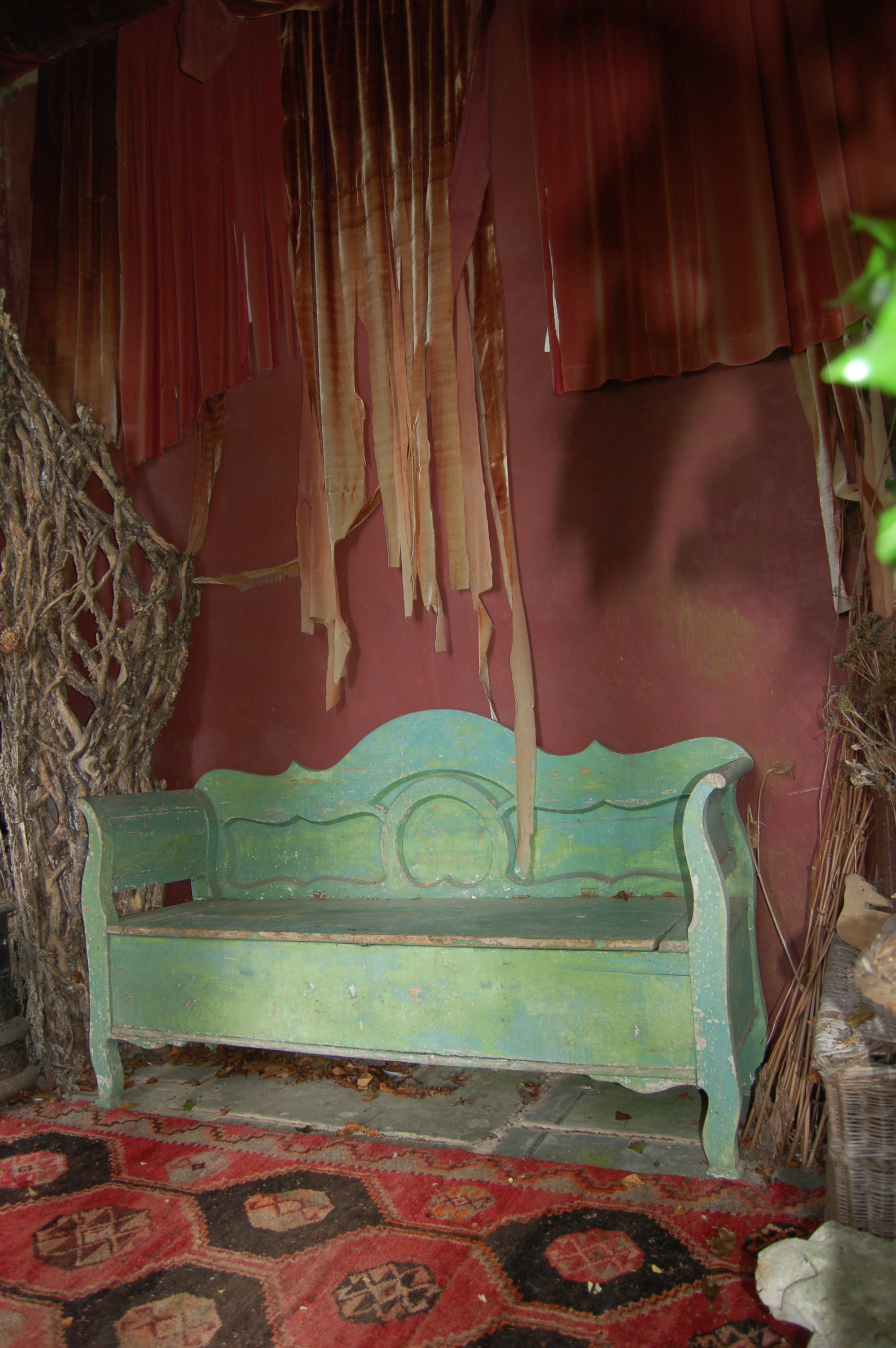
So back again with another set of photographs showing the latest batch of garden seats I have enjoyed finding and sitting on. I have tried them all out purely in the name of research not because I am a weary garden visitor! And of course Jude the Undergardener has checked them all too. You will see in the one photo that she particularly likes trying out seats in gardens where tea and cakes are available! The first group of seats, including the one in the tea garden are high up in the Welsh hills in the NGS garden at Bryn Lidiart.

2014 06 14_0288-1 2014 06 14_0252-1 2014 06 14_0254-1 2014 06 14_0230-1

In our neighbouring county of Herefordshire the gardens at Bryan’s Ground the home of the best gardening journal, Hortus, there are seats aplenty. Around the arboretum the seats give plenty of opportunities to take in the calm, restful atmosphere.

2014 06 16_0433-1 2014 06 16_0424-1

2014 06 16_0422-1

Others dotted around the various garden compartments afford the visitor secluded viewing places.

2014 06 16_0389-1 2014 06 16_0364-1

2014 06 16_0330-1 2014 06 16_0328-1

But we would have been in for some surprises if we had tried to sit on this collection!

2014 06 16_0380-1 2014 06 16_0346-1

2014 06 16_0357-1 2014 06 16_0350-1 2014 06 16_0338-1 2014 06 16_0337-1 2014 06 16_0335-1

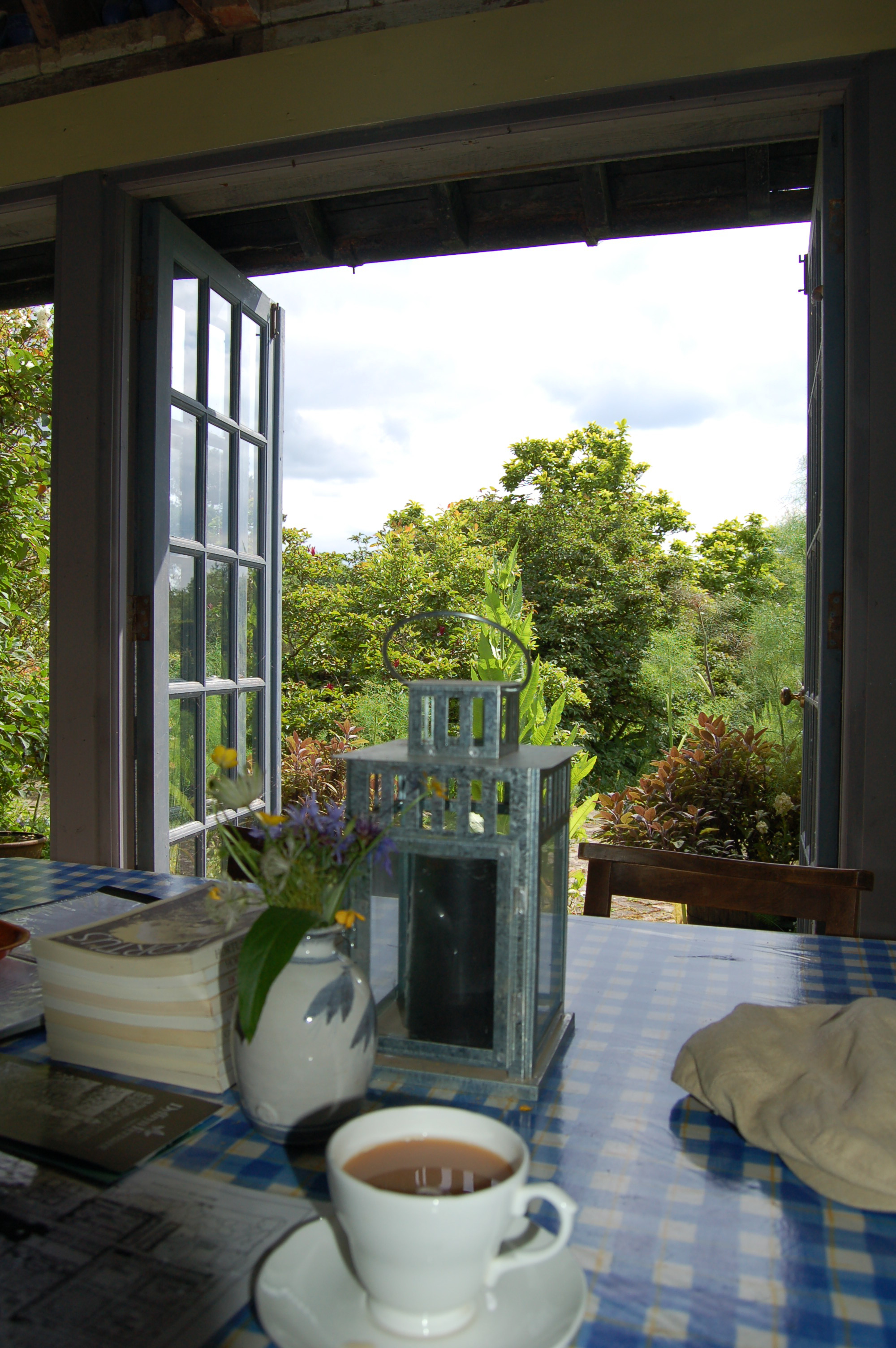
The final photo from this interesting Herefordshire garden is taken from a seat rather than of one. In the cafe area here you can enjoy tea and home made cakes while browsing through back issues of Hortus. Luxury!

2014 06 16_0305-1

I shall conclude this the third in my very occasional series on garden seating with a very varied selection from other gardens we have visited this year.

2014 06 21_0556-1 2014 07 08_1429 2014 06 21_0543-1 2014 06 21_0531-1 2014 06 21_0526-1 2014 06 21_0511-1 2014 06 21_0512-1 2014 06 21_0496-1 2014 06 21_0487-1


Who knows what part four will bring and who knows how long it will be in coming.


Categories
Cheshire colours flower show garden design garden designers garden furniture garden photography garden seating gardening gardens grasses hardy perennials light meadows ornamental grasses

RHS Flower Show Tatton Park – Part 2 – children as gardeners

One of the most enjoyable features of Tatton and perhaps also one of its most important elements is the encouragement of young talent be it young garden designers creating their first RHS show gardens or local schools trying their hand out at making gardens.

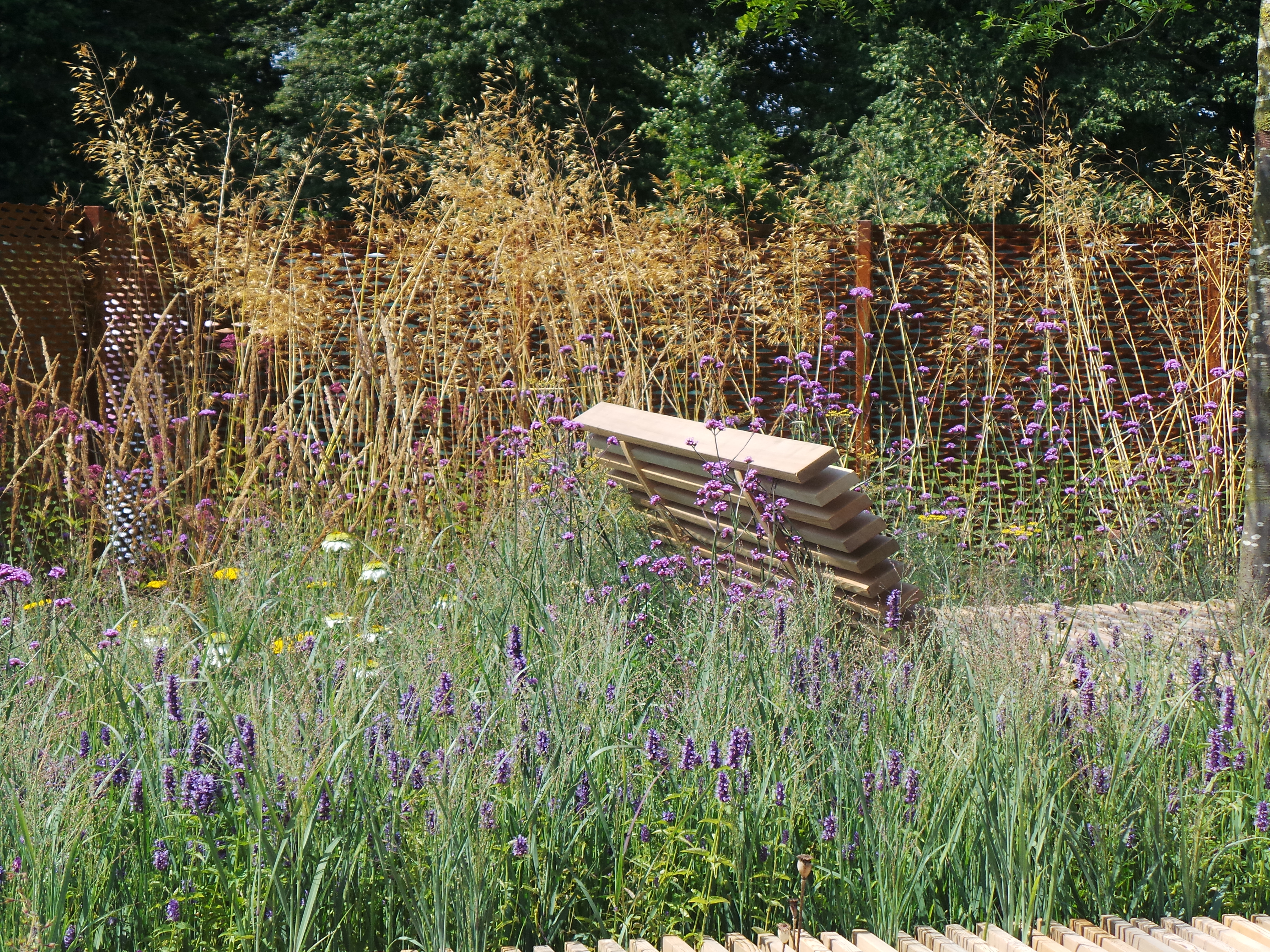
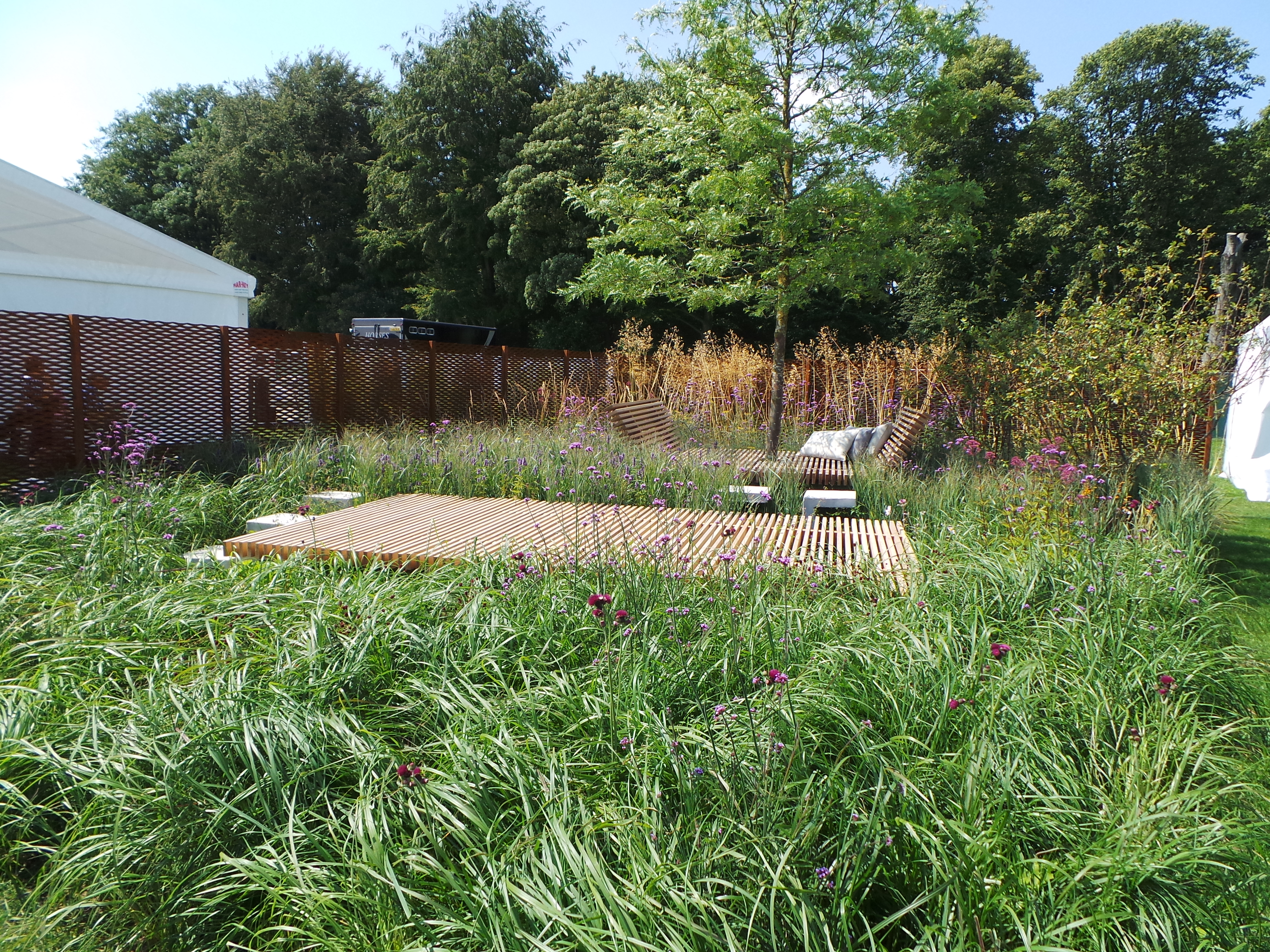
We always enjoy the work of the young designers at Tatton Flower Show and it is here that the RHS deliberately showcase young designers’ talent but sadly there seem so few. This year there were three young designers who had been given the opportunity to create their first RHS show gardens. I wish this chance was given to more! The standard of the work of these three though was astounding with a freshness in their planting and originality in the way they considered their brief. The first two shots are of the garden designed by the winner of the title “Young Garden Designer of the Year” and show his use of soft planting schemes of perennials scattered among grasses. This was a beautiful atmospheric garden which made us imagine what it would be like to lounge on that seat listening to the insect life busy in the grasses all around. It would be like lying in an old fashioned wildflower meadow.

The third shot shows another young designer’s garden which was in fact an outdoor gym. The idea was a good one but to me it was too much of a gym and too little garden.

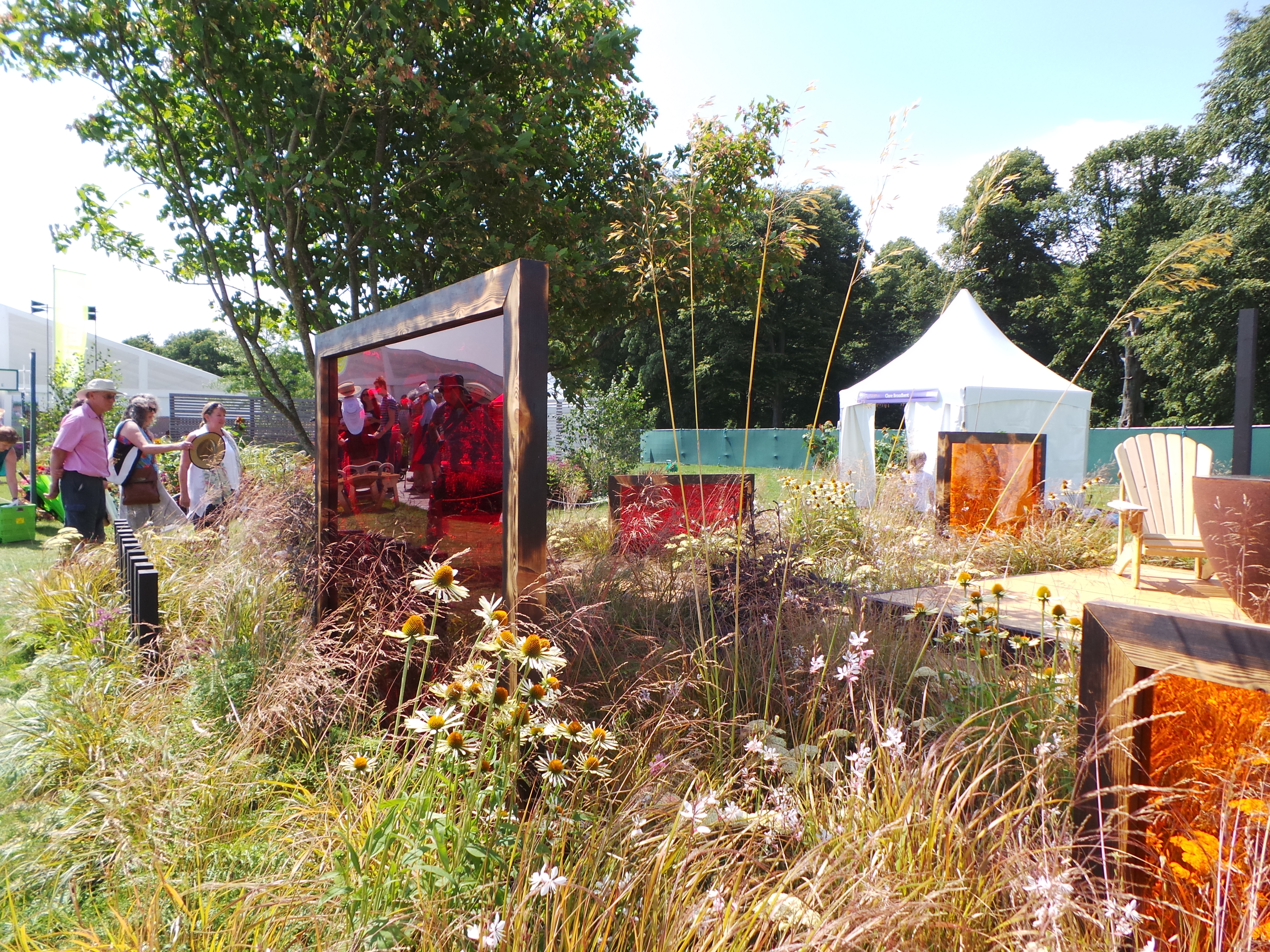
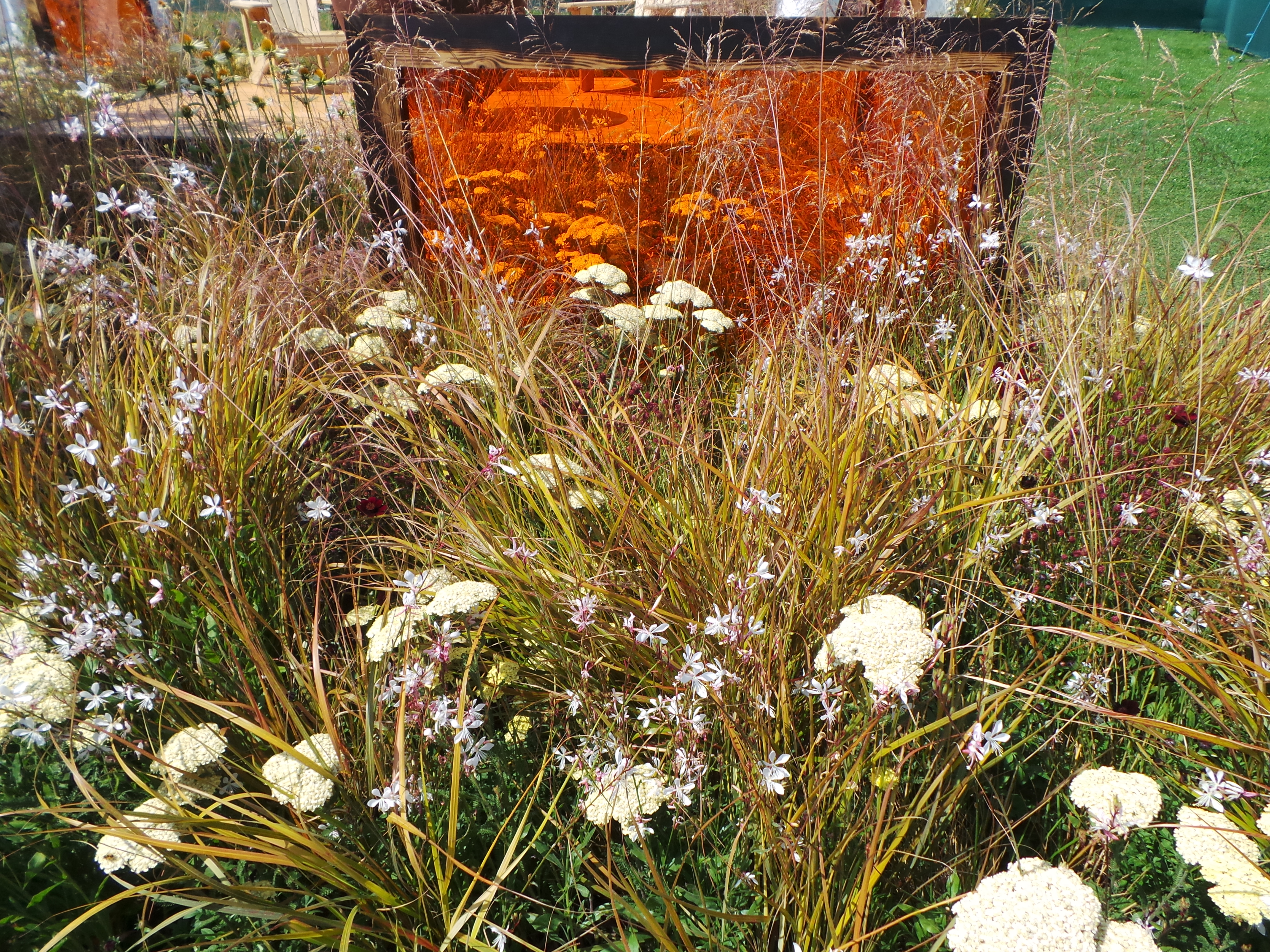
The last three photos are of the third young designer’s garden which again has gentle planting featuring many grasses but it has the added interest of coloured glass screens which created interesting colour casts when the sun got to work. We enjoyed this garden too and could see a great future for the designer.

2014 07 27_1941 2014 07 27_1940


2014 07 27_1939 2014 07 27_1938 2014 07 27_1937 2014 07 27_1936

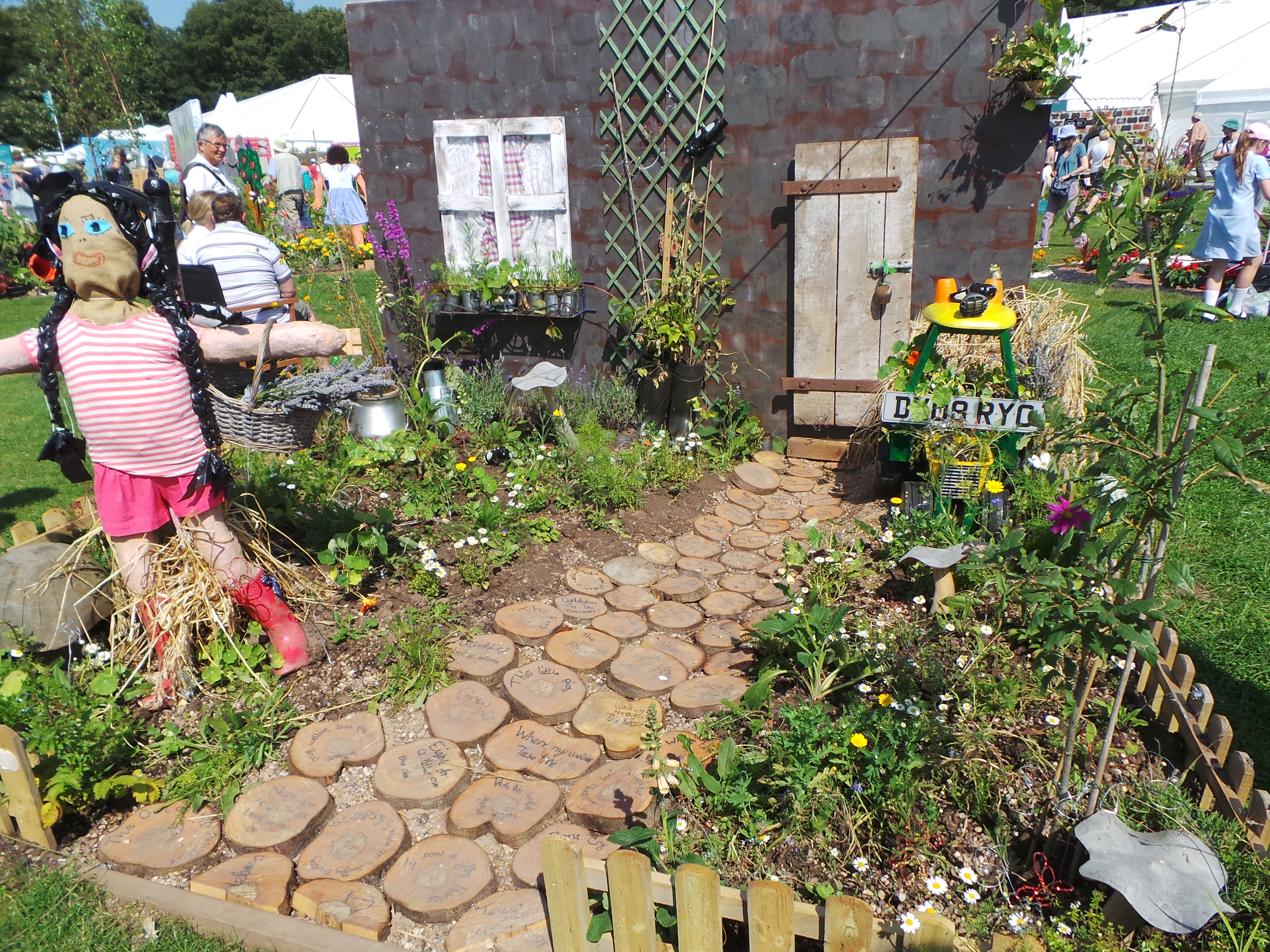
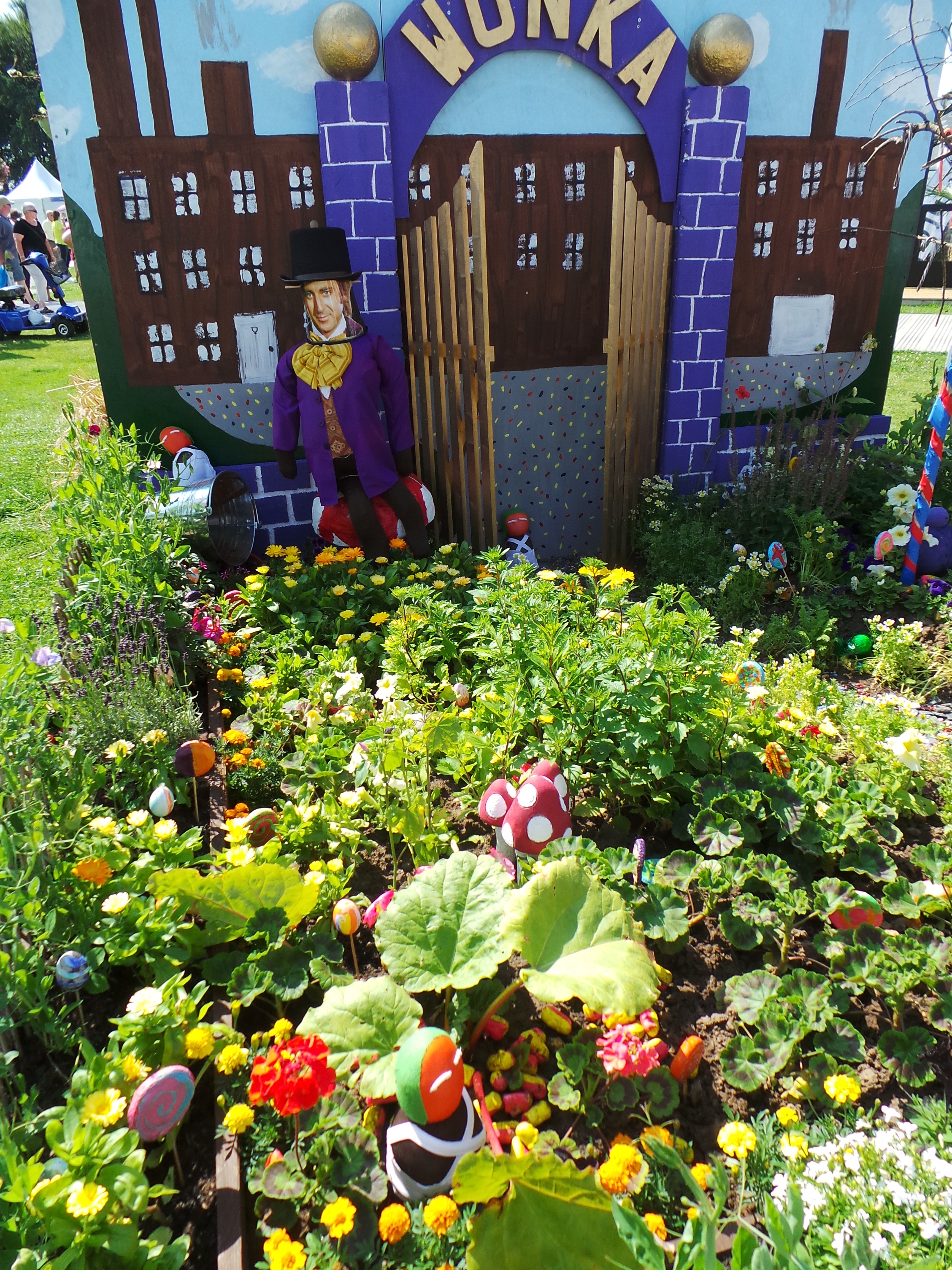
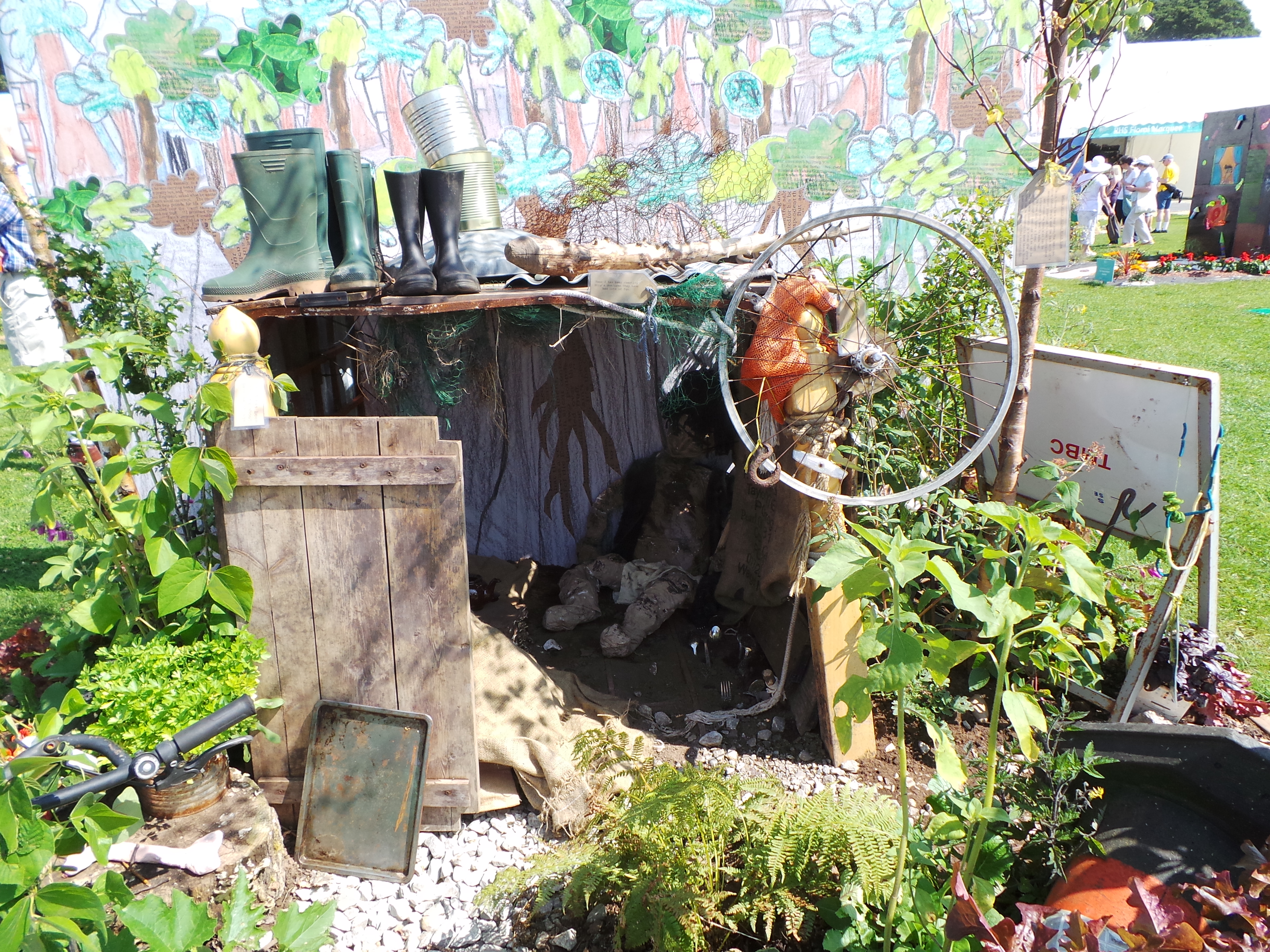
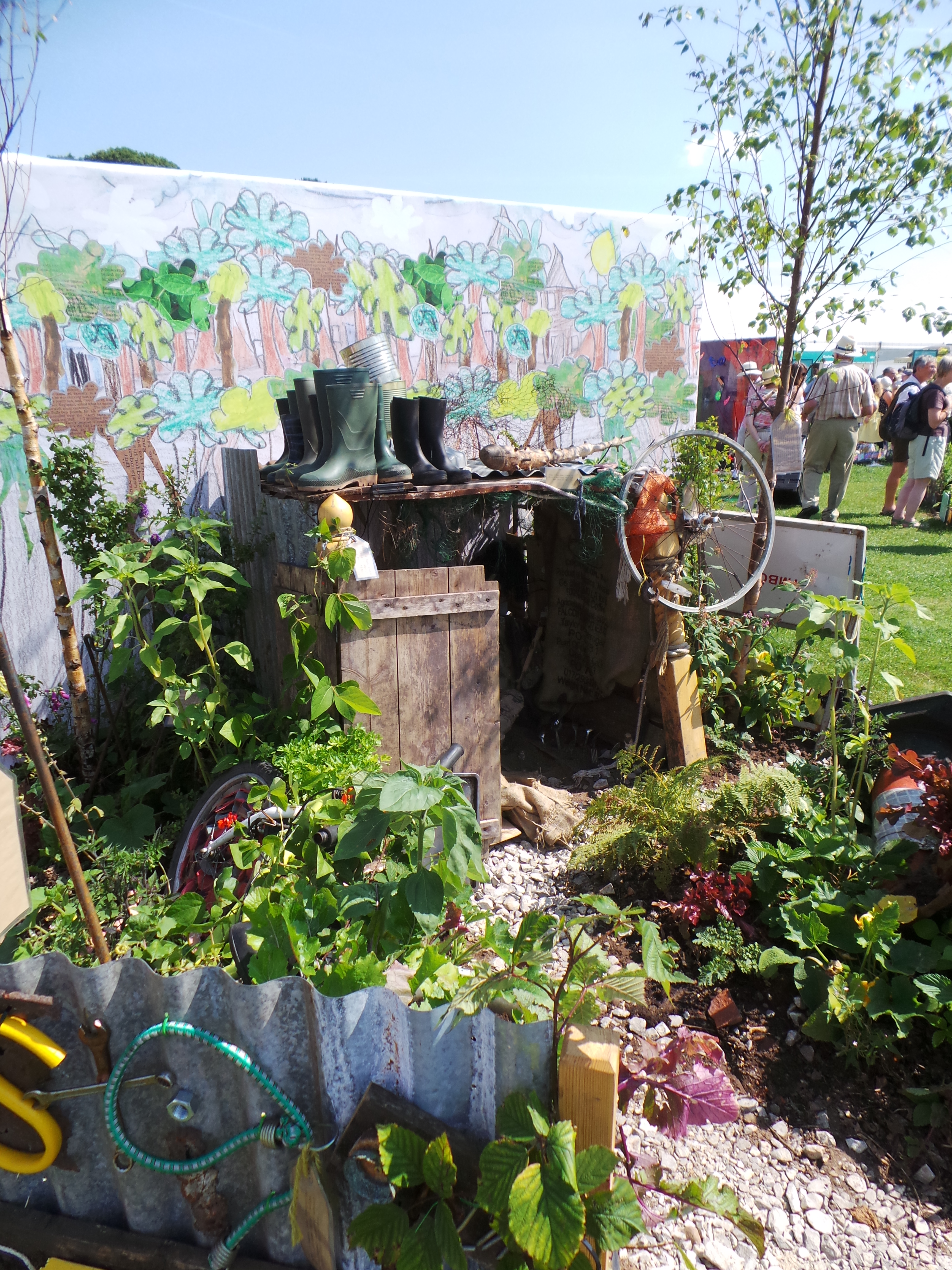
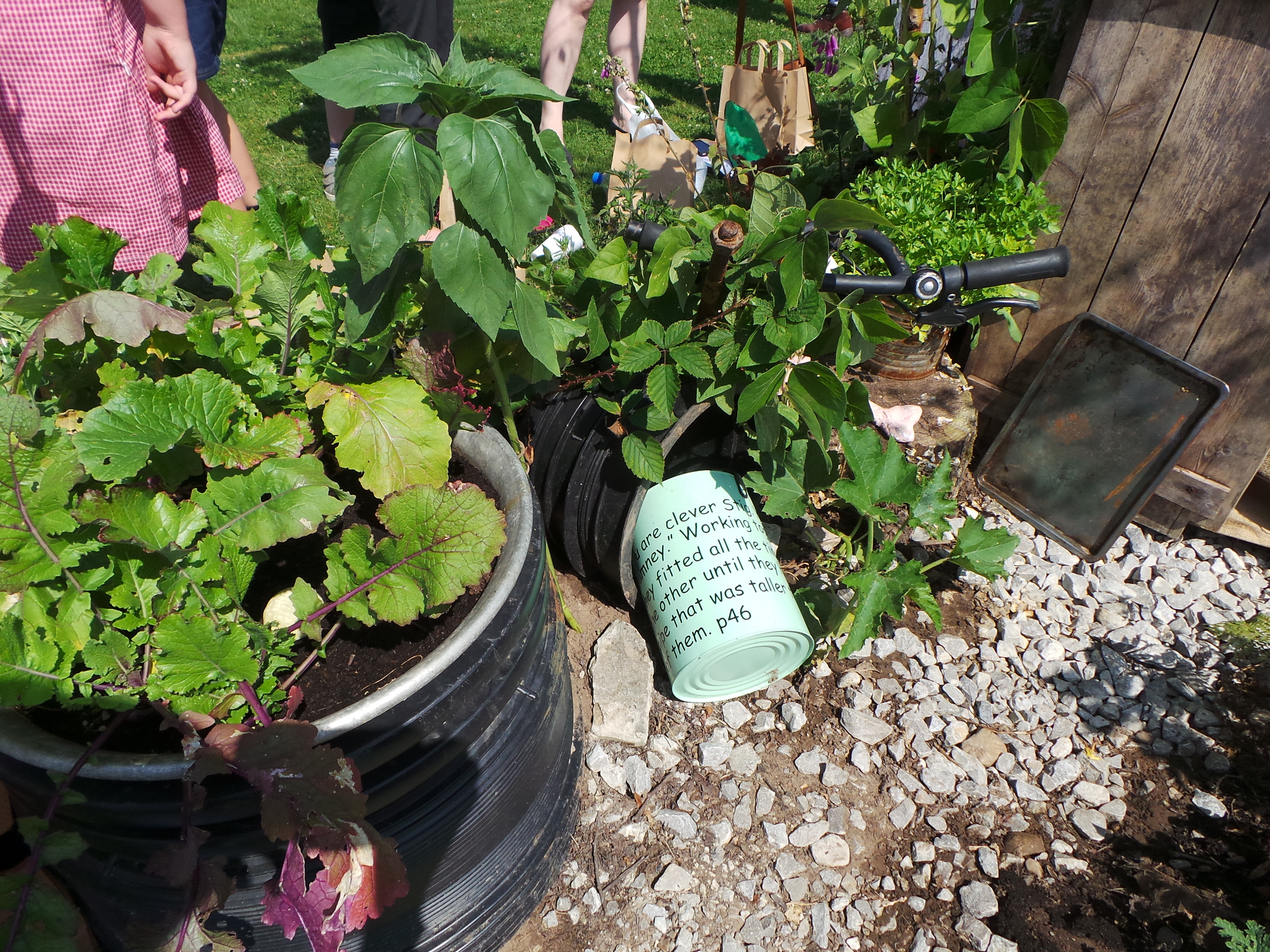
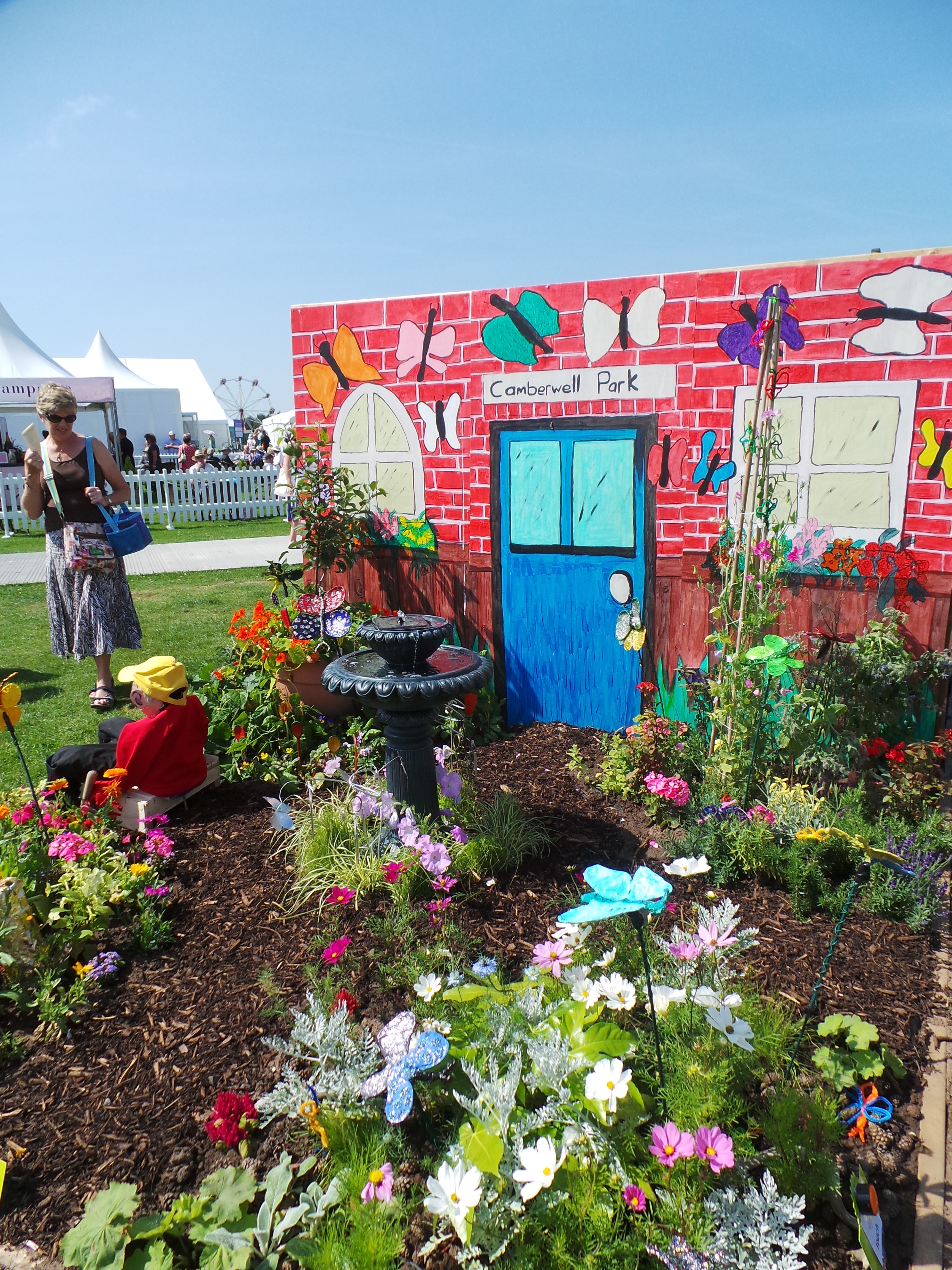
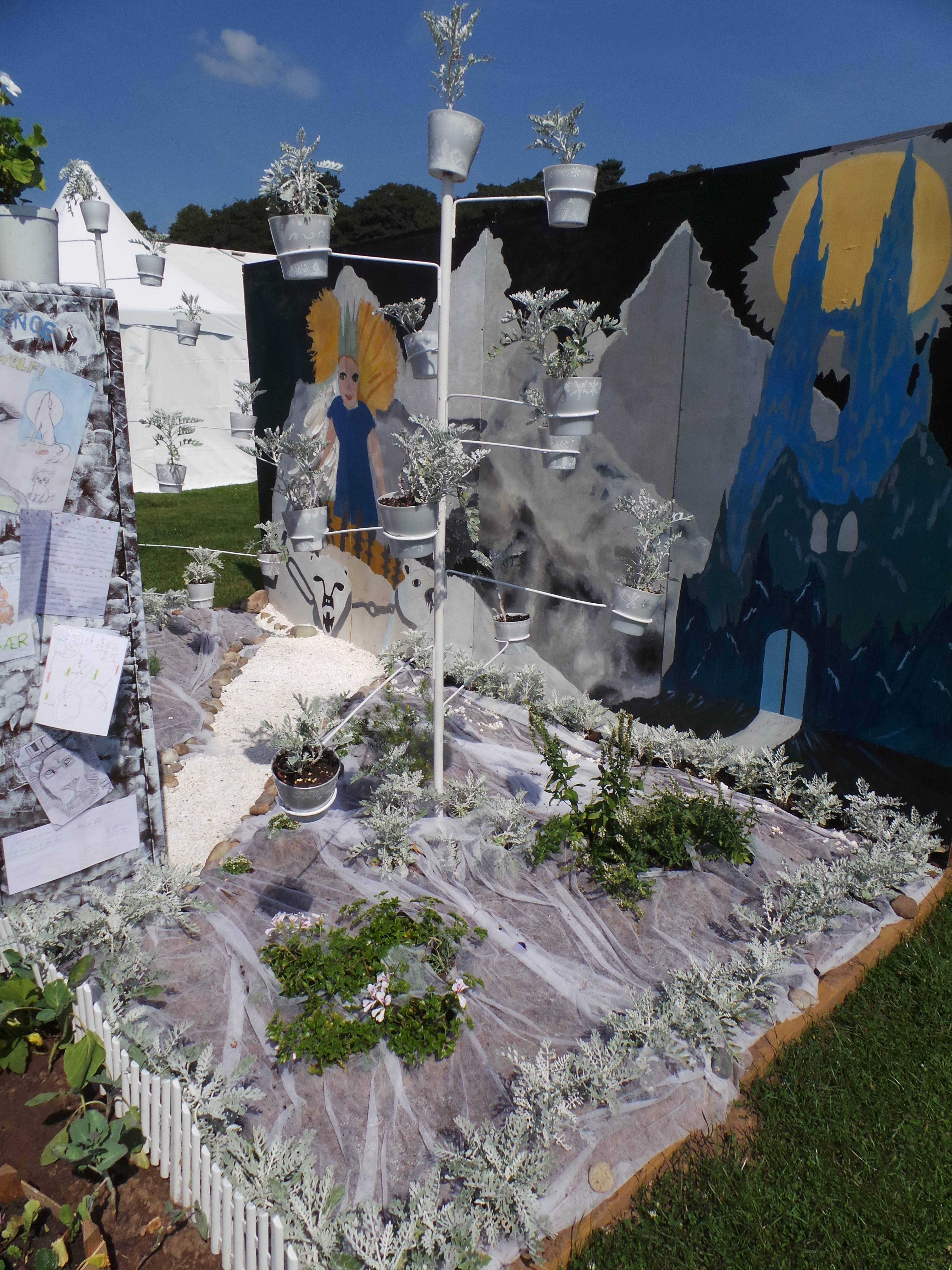
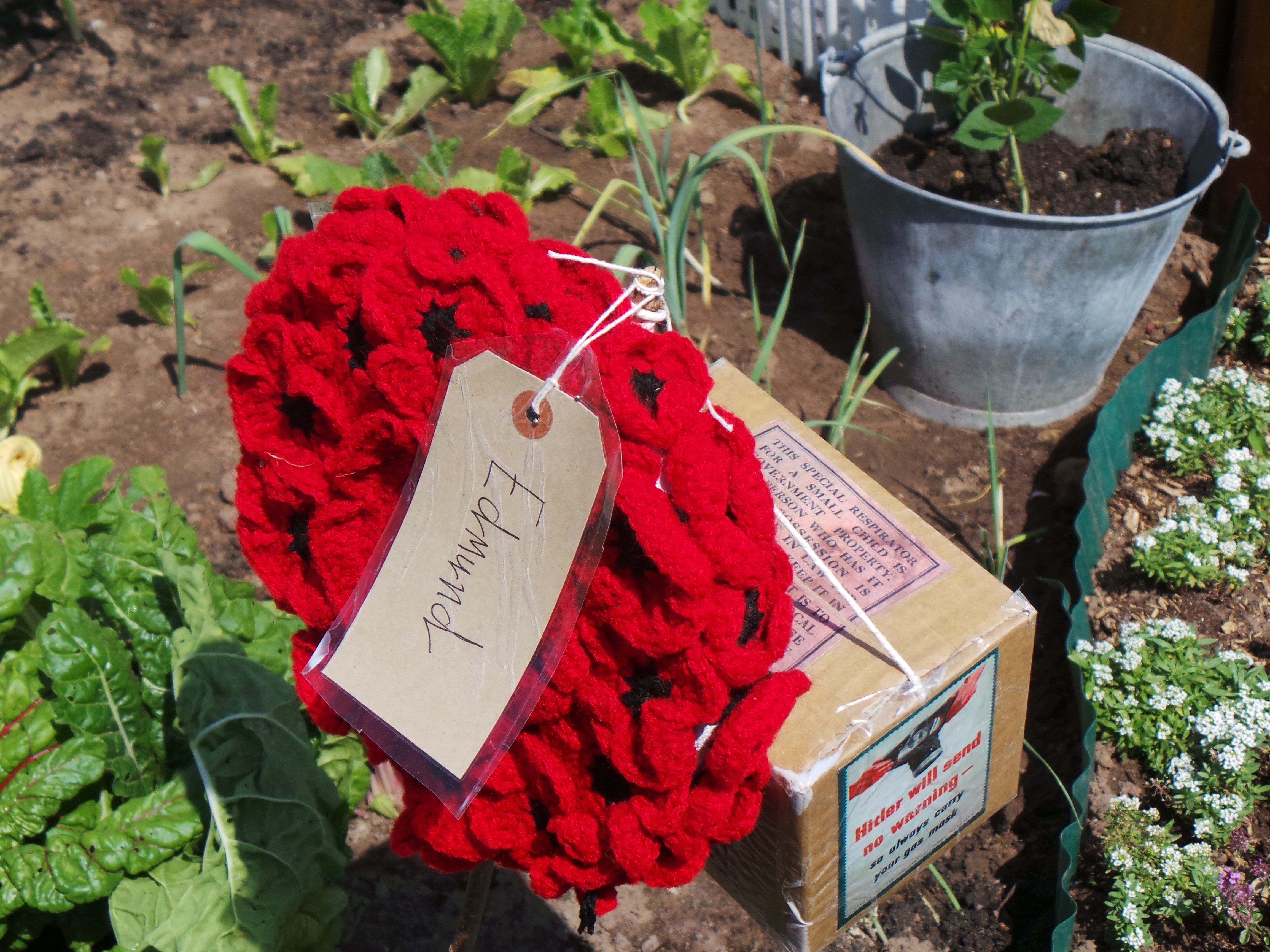
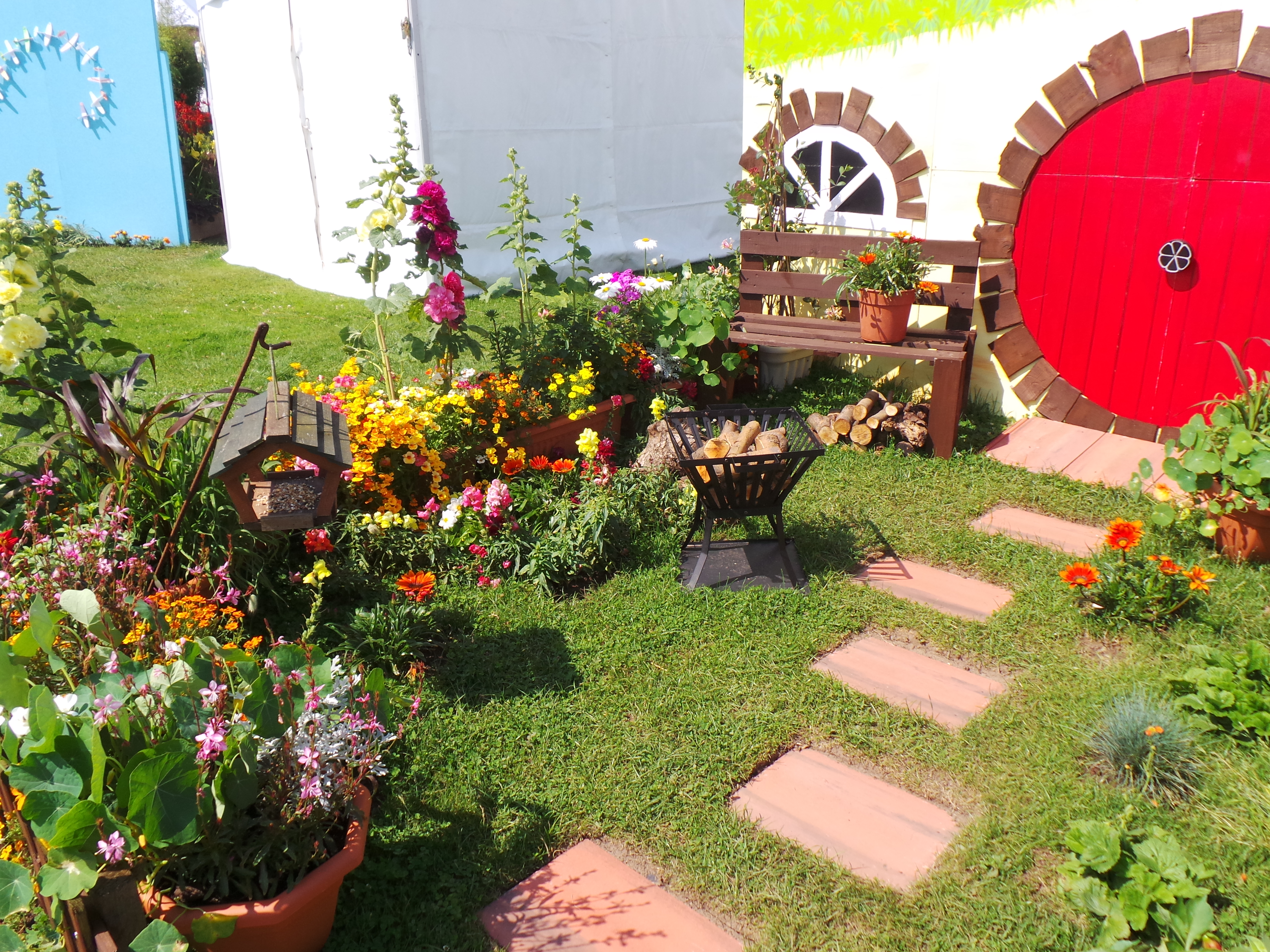
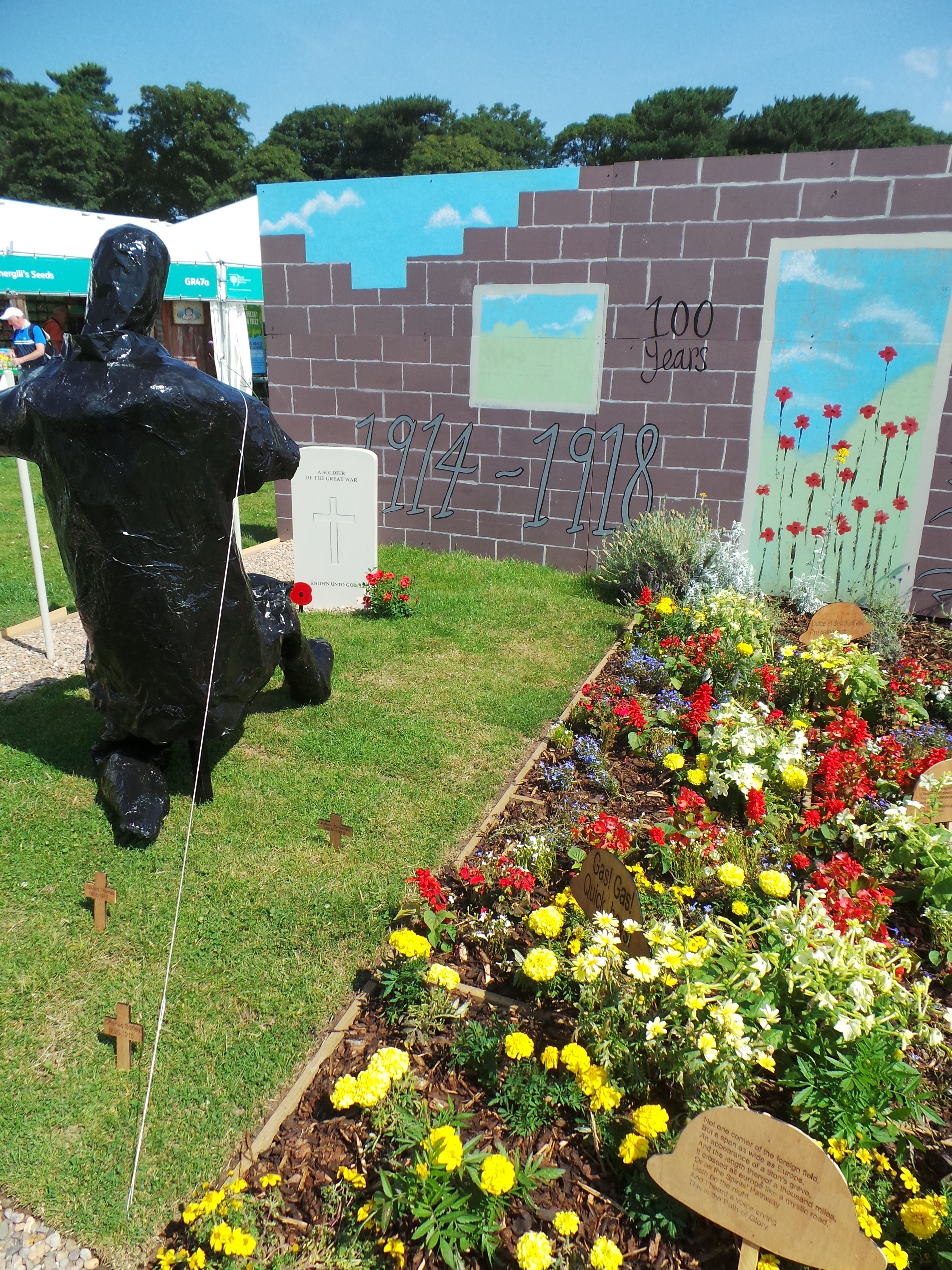
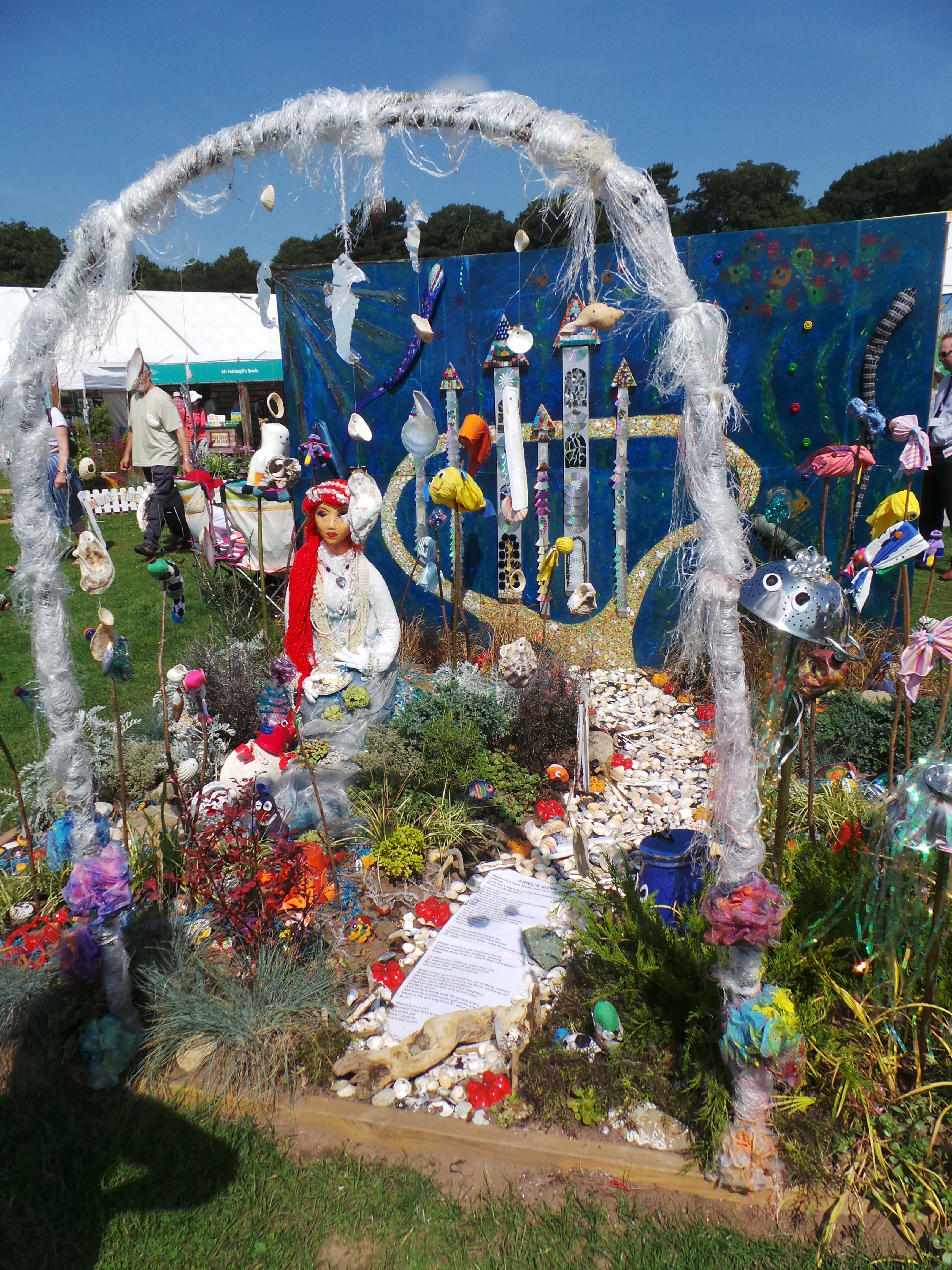
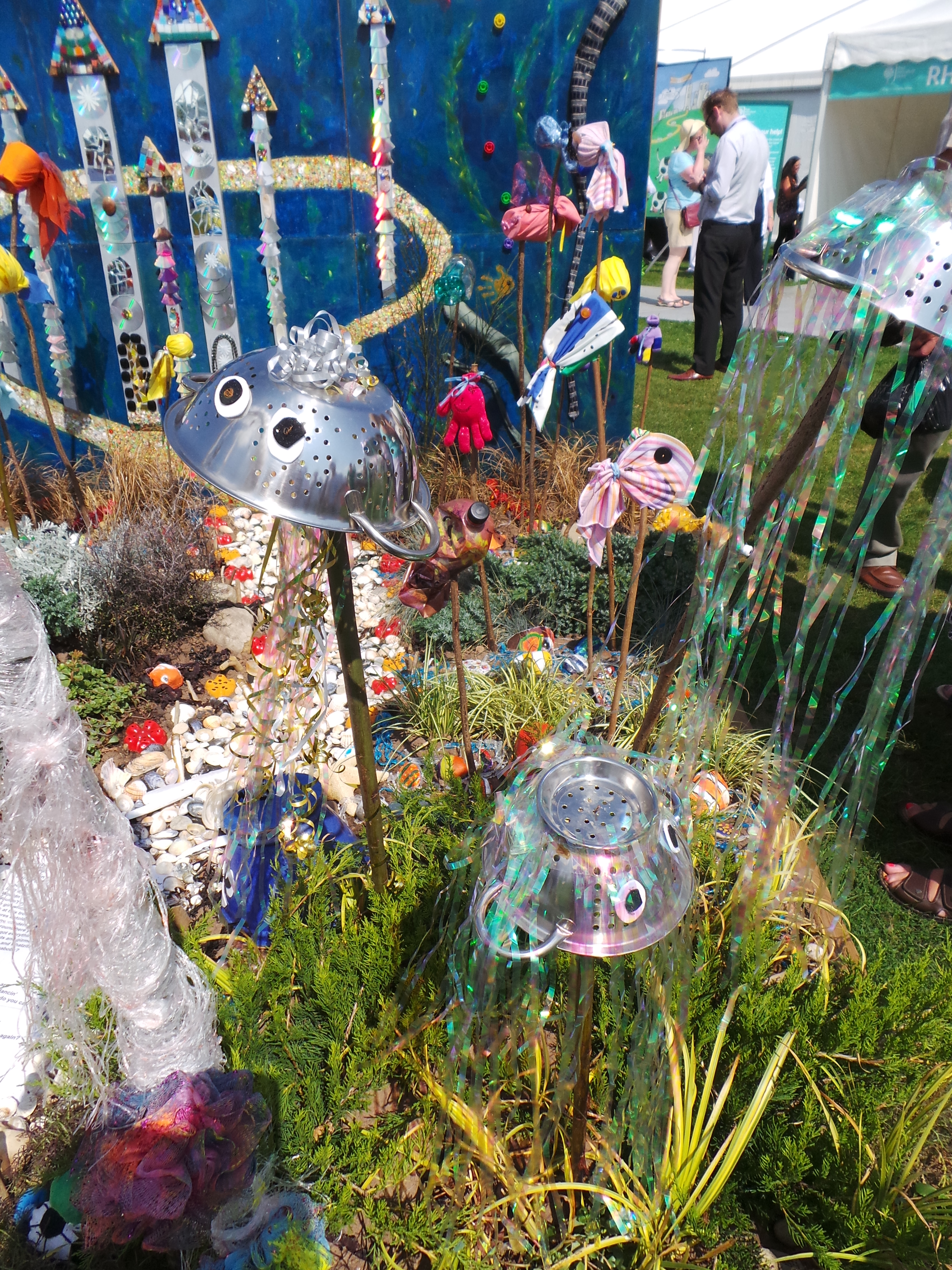
The local schools always put on a show with the Wow factor. This year they were challenged to create gardens based on book characters and others took the chance of planting up recycled items. One thing that shows through is the young minds’ use of colour.

Share my pictures and revel in the ideas and the colours. Try to work out the stimulus for the gardens too.

2014 07 27_1859 2014 07 27_1860 2014 07 27_1861 2014 07 27_1862

2014 07 27_1865 2014 07 27_1864 2014 07 27_1866 2014 07 27_1867 2014 07 27_1868 2014 07 27_1869 2014 07 27_1870 2014 07 27_1871 2014 07 27_1872 2014 07 27_1873

2014 07 27_1878 2014 07 27_18832014 07 27_1882 2014 07 27_1881 2014 07 27_1876 2014 07 27_1877 2014 07 27_1884 2014 07 27_1885 2014 07 27_1893 2014 07 27_1892


As you can imagine we came away feeling happier about the future of gardening and garden designers. Surely a few of the school children who exhibit at Tatton each year will go on to choose gardening in one form or another as a career. Let us hope so!

Categories
community gardening garden design garden furniture garden seating garden wildlife gardening gardens gardens open to the public natural pest control outdoor sculpture poppies recycling sculpture wildlife Yellow Book Gardens

A Wonderful Community Garden

Returning from a few days away down south we made a diversion from the direct route home to visit a community garden in the Wiltshire town of Swindon, a town renowned in its heyday for manufacturing everything to do with railways at their peak in the era of steam.

As Jude, aka The Undergardener or Mrs Greenbench, and I are involved in running an allotment community garden we were keen to see what was going on at TWIGS, another community garden which like us open under the auspices of the National Garden Scheme.

TWIGS stands for Therapeutic Work in Gardening in Swindon, which proved to be a perfect reflection of what goes on in what we discovered to be an amazing and caring enterprise.

It was hard to find even though the directions in the NGS’s Yellow Book made it look simple. We navigated our way around the bypass searching for the right exits and often failing, until we found the right district. We wriggled through industrial and business parks in search of a garden centre which shared its grounds with TWIGS.

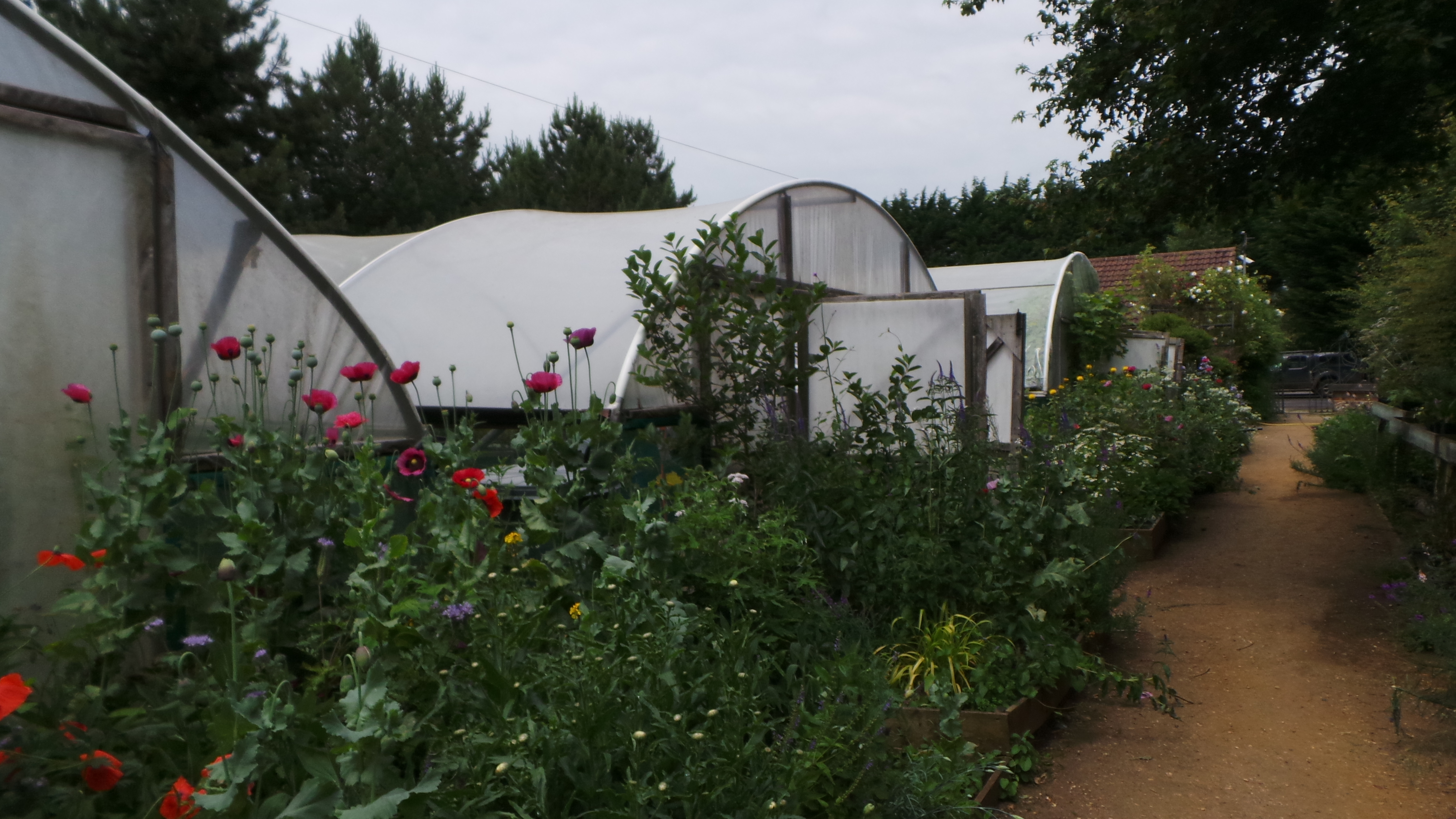
When we successfully arrived were welcomed by this cheerful planter alongside the gateway in. Once inside we immediately spotted colourful borders and rows of busy polytunnels.

2014 06 23_1061 2014 06 23_1062 2014 06 23_1063 2014 06 23_1064

Come around with us now as we wander the paths of TWIGS discovering their wonderful work.

2014 06 23_1065 2014 06 23_1067 2014 06 23_1068

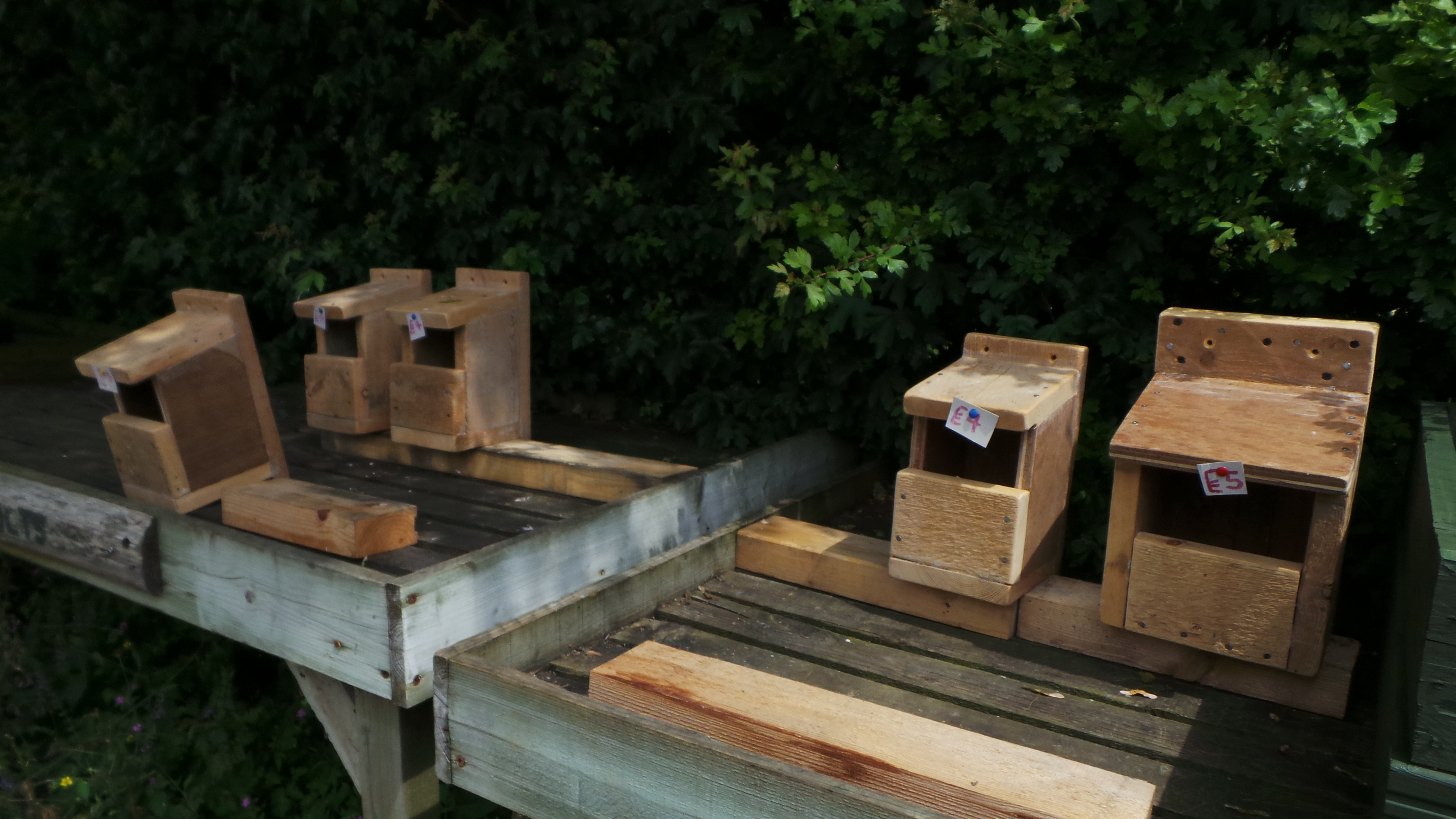
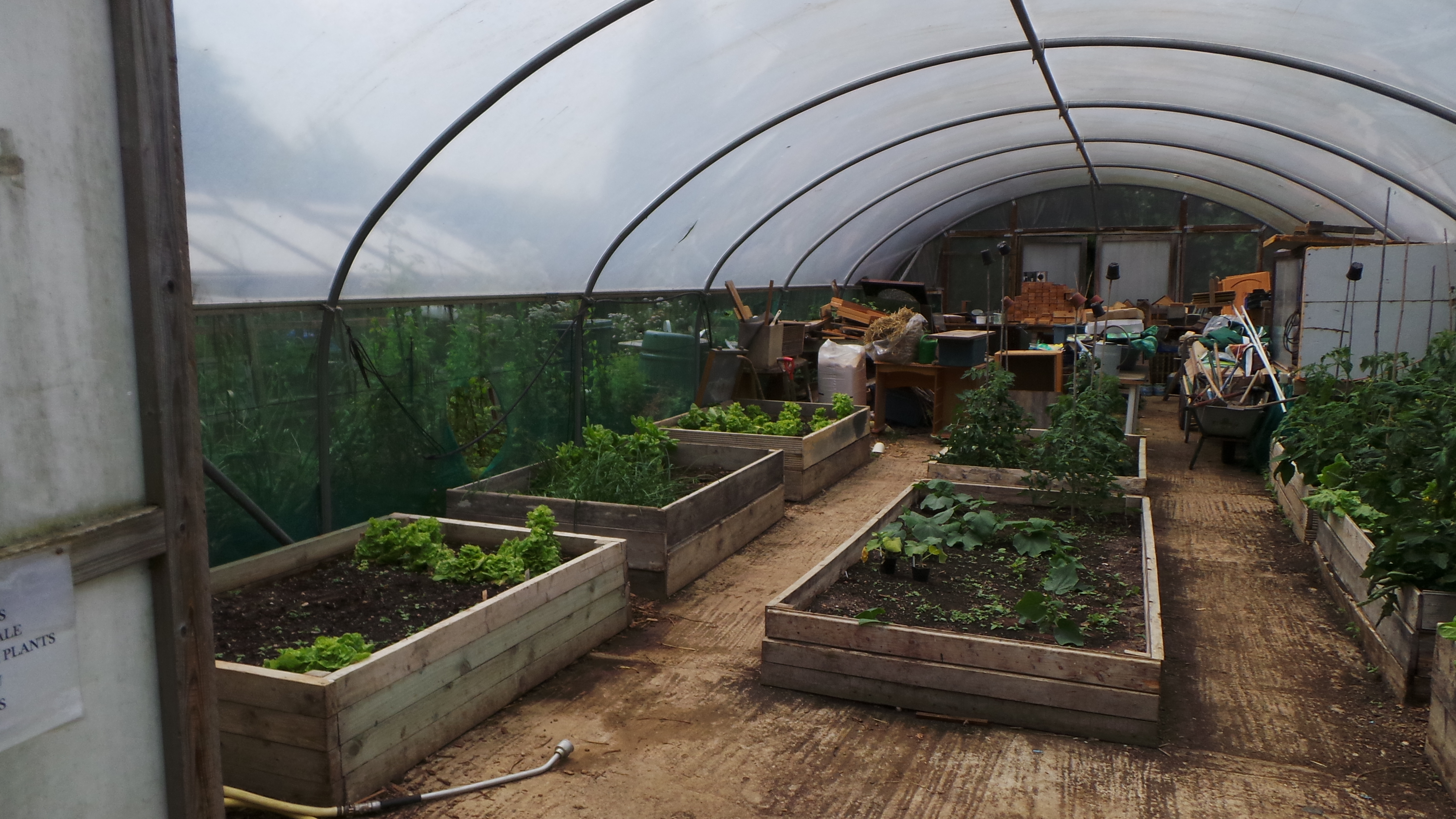
The staff and volunteers here help their clients who have problems of all sorts, to regain their pride and confidence through raising plants, looking after chickens, making bird boxes and insect homes, creating gardens and crafting sculptures and much more. The plants raised are used both in the gardens and for sale in the little nursery and the nestboxes and insect homes are found around the site to encourage wildlife as well as for sale to visitors.

2014 06 23_1069 2014 06 23_1070 2014 06 23_1071 2014 06 23_1073 2014 06 23_1074 2014 06 23_1076 2014 06 23_10872014 06 23_1081 2014 06 23_1086


2014 06 23_1092 2014 06 23_1094

2014 06 23_1093  2014 06 23_1101 2014 06 23_1138

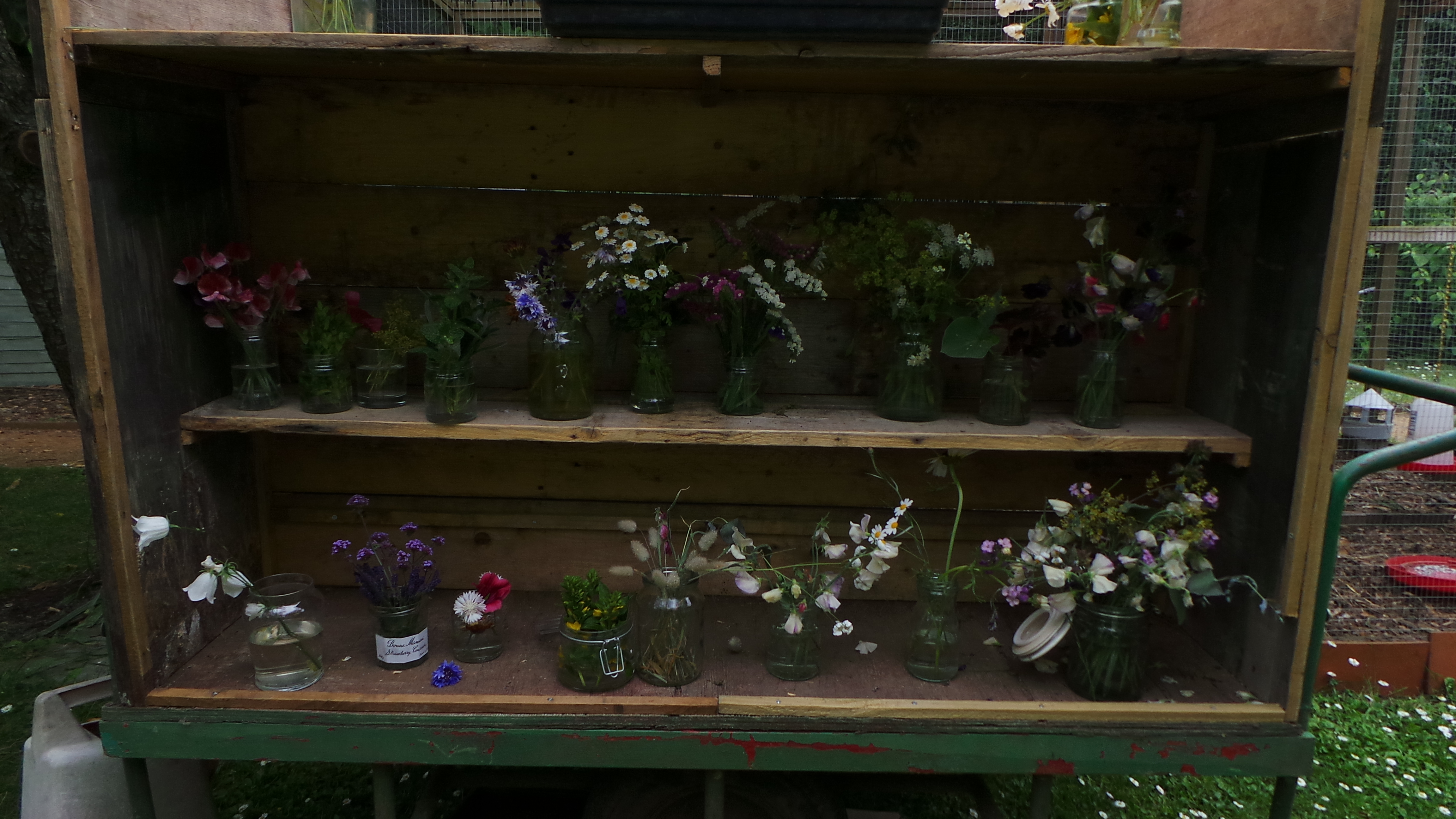
The gardens themselves are peaceful places, calm and quiet and great places to relax in or retreat to. The gardens are managed using organic approaches and in partnership with nature. They must have such a strong effect on those who care for them or like us just visit them.

2014 06 23_1077 2014 06 23_1072 2014 06 23_1082


2014 06 23_1078 2014 06 23_1079 2014 06 23_1084 2014 06 23_1085 2014 06 23_1083 2014 06 23_1096

2014 06 23_1097 2014 06 23_1090 2014 06 23_1095 2014 06 23_1091

There were some original ideas here too created by the clients, such as this sedum planter.

2014 06 23_1088 2014 06 23_1089

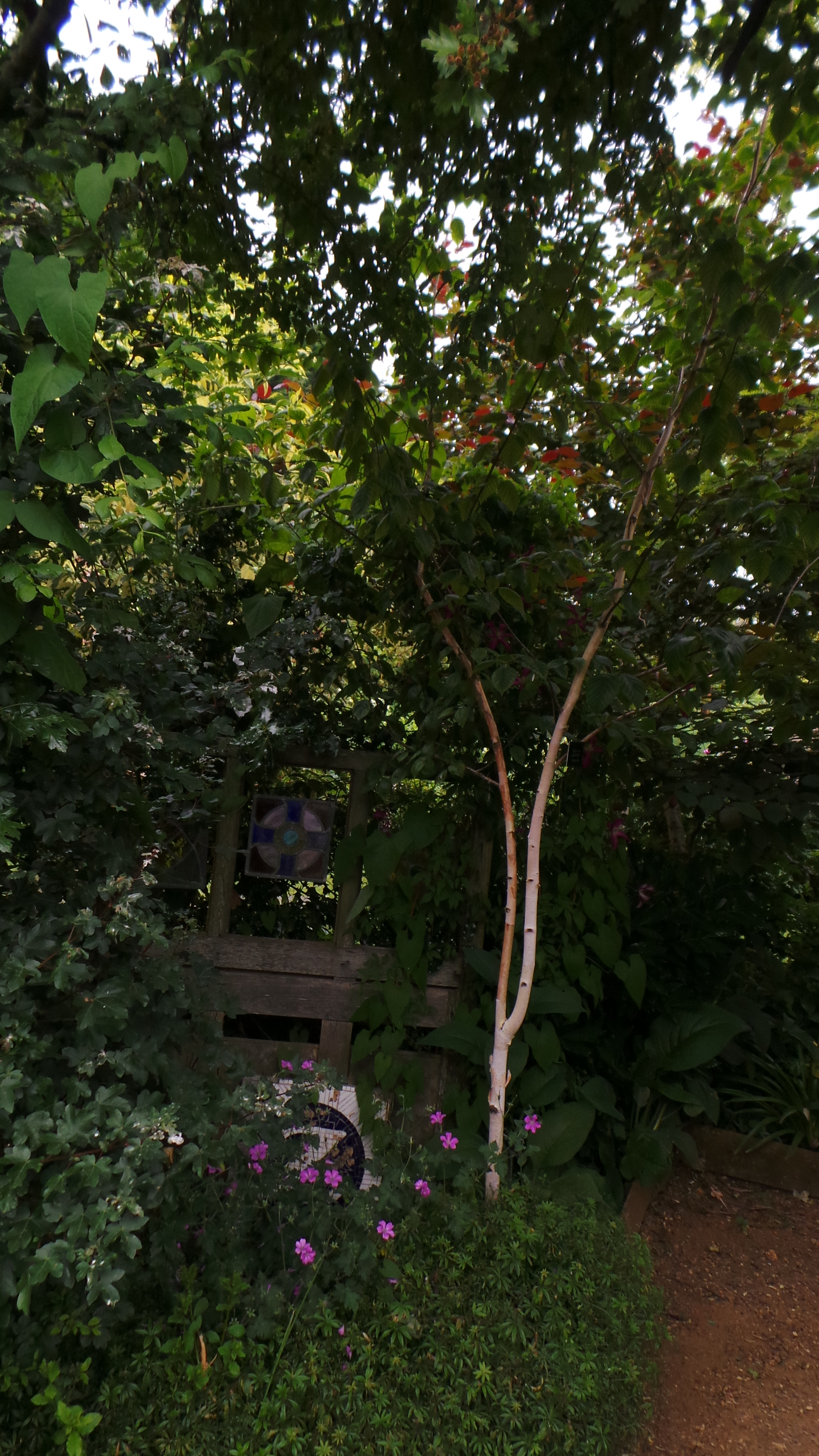
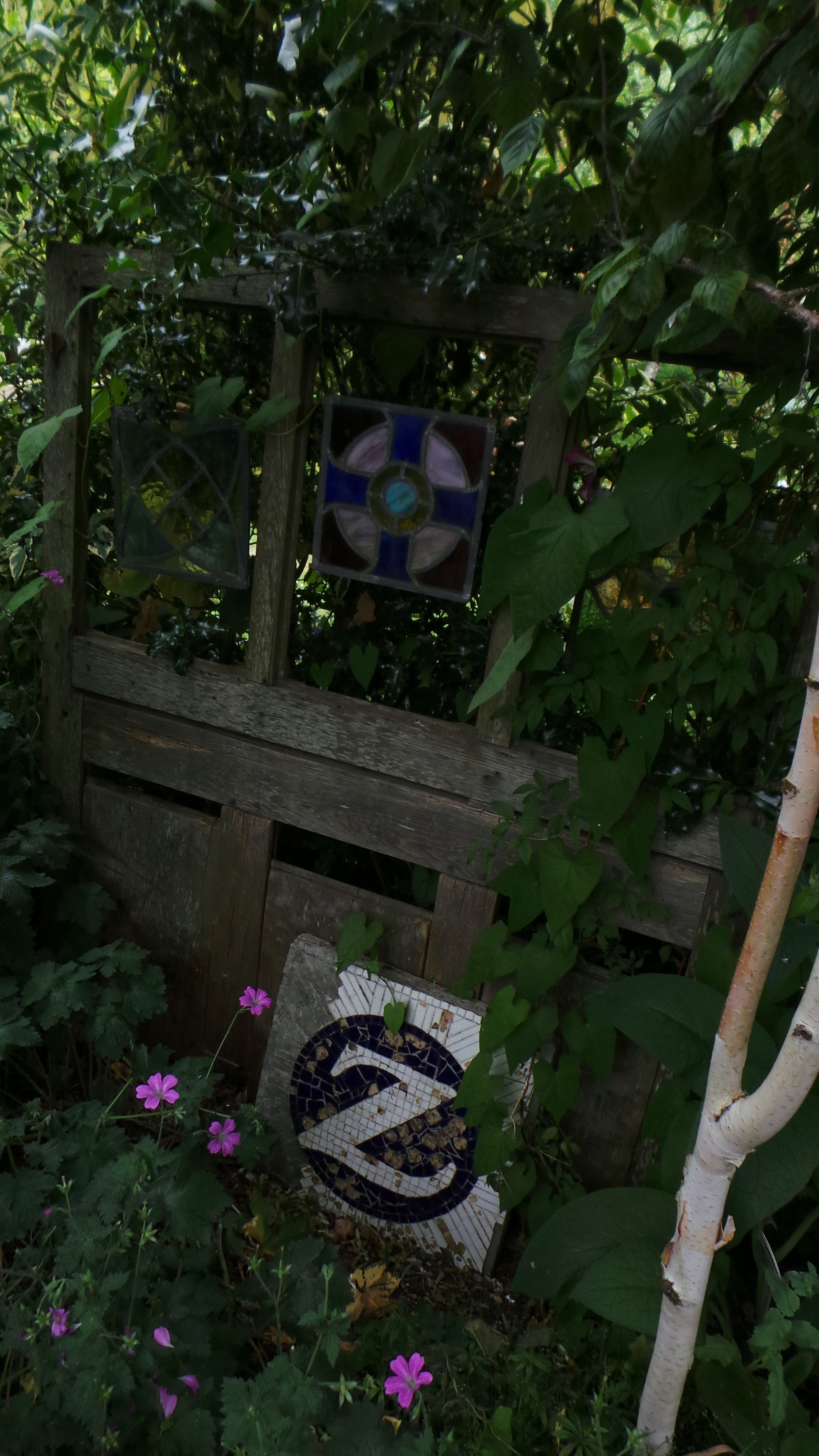
We found wandering around TWIGS a most enjoyable, relaxing and enlightening experience. It shows what can be achieved by dedicated people who want to use gardening and working with nature to improve the lives of others. It was good to visit another community garden which proved to be very different to our own at Bowbrook Allotment Community.I shall finish with this set of pictures which illustrate what TWIGS is all about. A sunken retreat had been designed by an artist in residence and built by the TWIGS clients using all recycled materials. It is a peaceful place to sit and widlife has found homes within it.

2014 06 23_1147 2014 06 23_1146 2014 06 23_1145


Categories
climbing plants colours garden design garden photography garden ponds garden pools garden seating gardening gardens grasses half-hardy perennials hardy perennials Hardy Plant Society HPS National Garden Scheme NGS ornamental grasses ornamental trees and shrubs roses Shropshire The National Gardening Scheme" water in the garden Yellow Book Gardens

Aiming for a year round garden – our garden in June – how our visitors saw us.

This year, 2014 will be the year we open our garden under the auspices of the National Garden Scheme, so we saw our garden details published in the famous Yellow Book. This is a landmark for any gardener in England and Wales, albeit a pleasing one and a worrying one. So many questions pour into your mind when you see the description of your garden in print.

I had to provide 9 photographs of our garden taken in previous years at the same time of year we are due to open. It was hard to choose shots that gave the right “feel”. We wanted to give a taste of what our plot is all about and these pictures give further ideas for the visitor after they have read the paragraph we presented to the NGS. Luckily I could look back into the archives of my blog. To check out the photos I selected go to the NGS website, http://www.ngs.org.uk, click on “find a garden” and type in Avocet where you are asked for a garden name.

We have also been asked by a couple of garden groups if they could visit. So the first of these we set for mid-June and we felt it would provide a practice run for the big day in August. The group were the Shrewsbury Mini-group of the Shropshire Hardy Plant Society, so we knew them already which made the day a bit less daunting. I took a series of photos in the morning of the day they were coming to give an idea of how they would see our little quarter acre of garden.

This post also serves as part of my series on “Aiming for a Year Round Garden” where I look around our garden to see if our aim to have interest throughout he year is working.

The first photos show how we welcome visitors as they find our gateway and look up the drive.

2014 06 22_0988 2014 06 22_09892014 06 22_09902014 06 22_0991


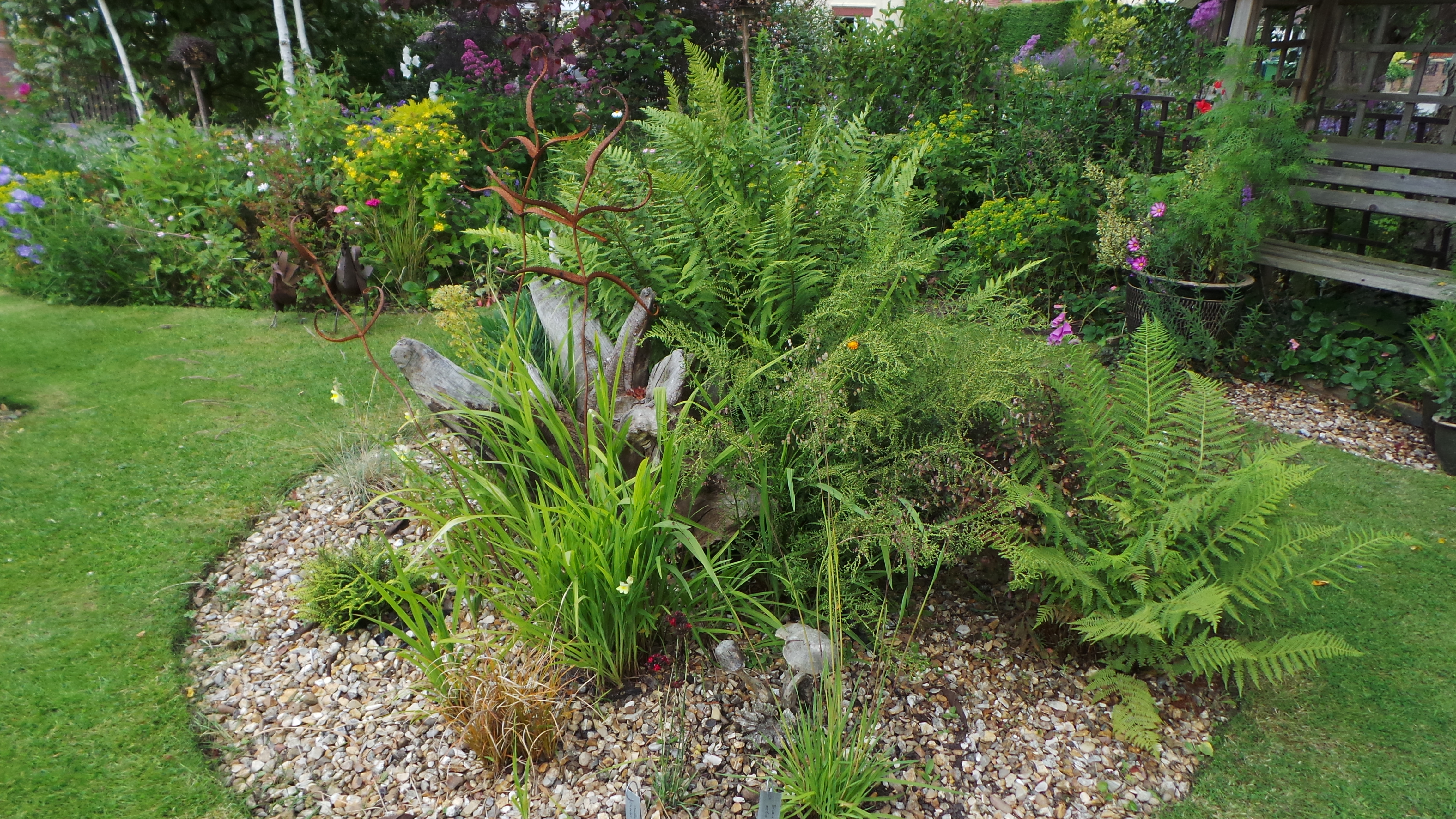
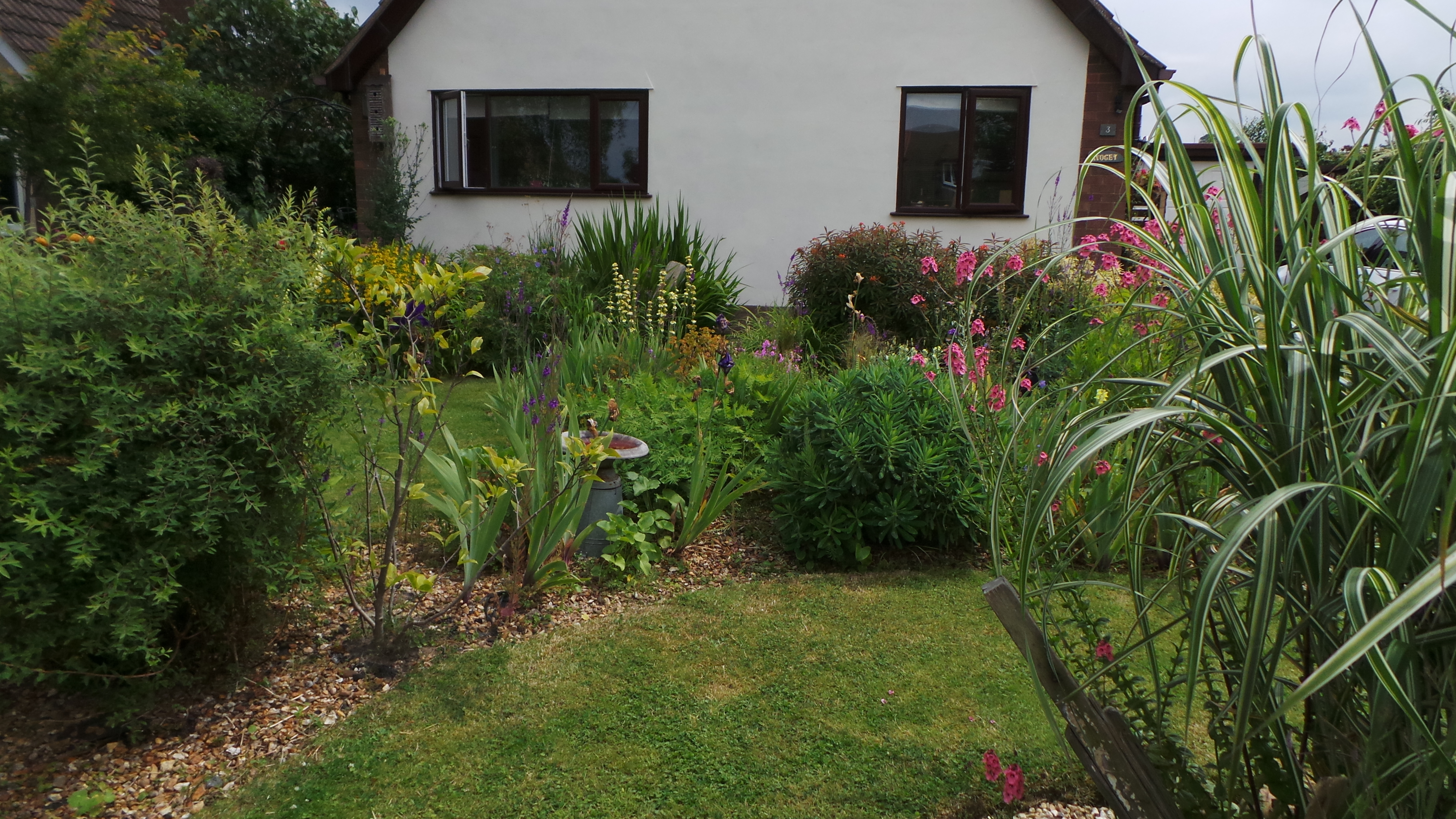
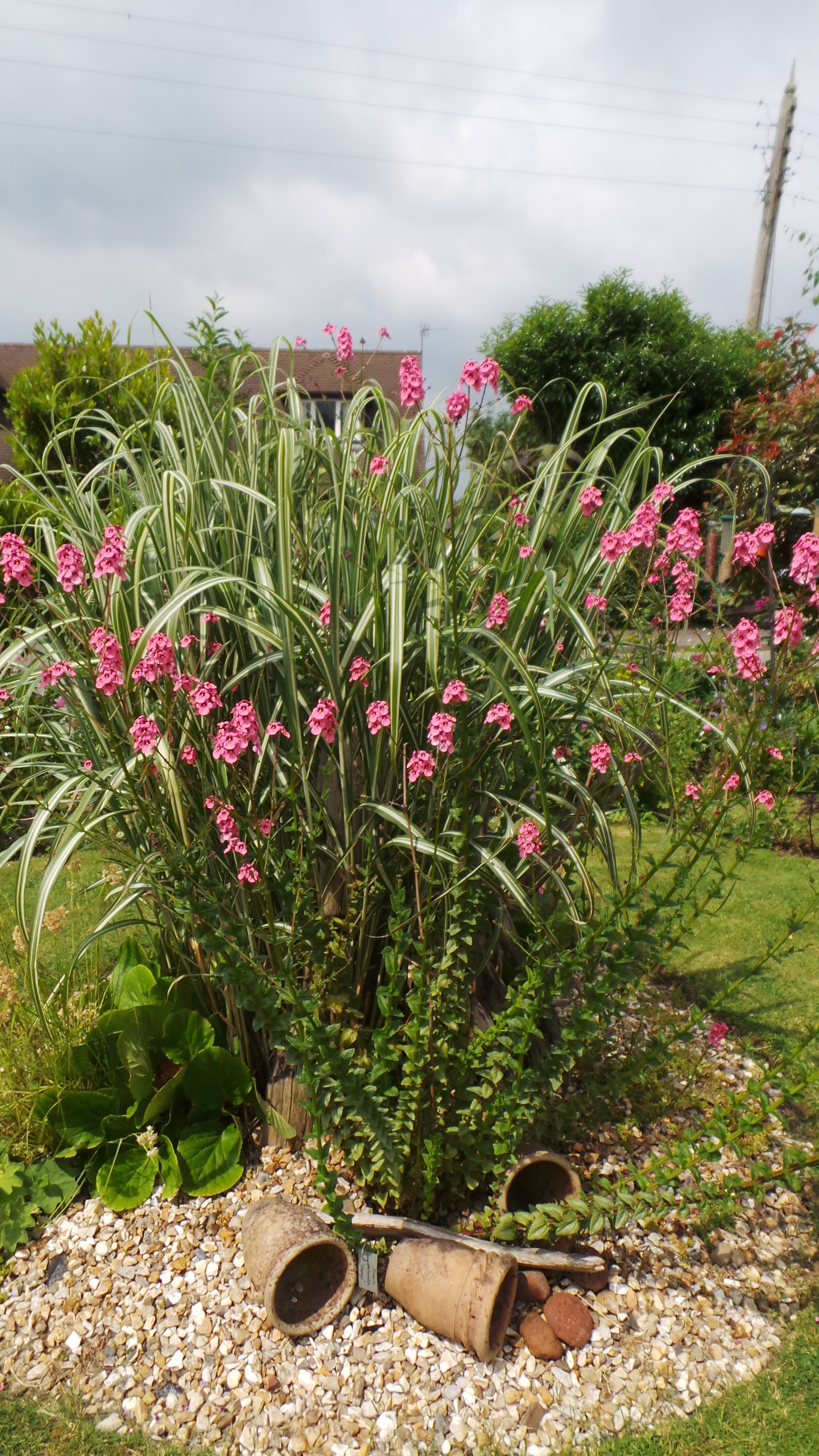
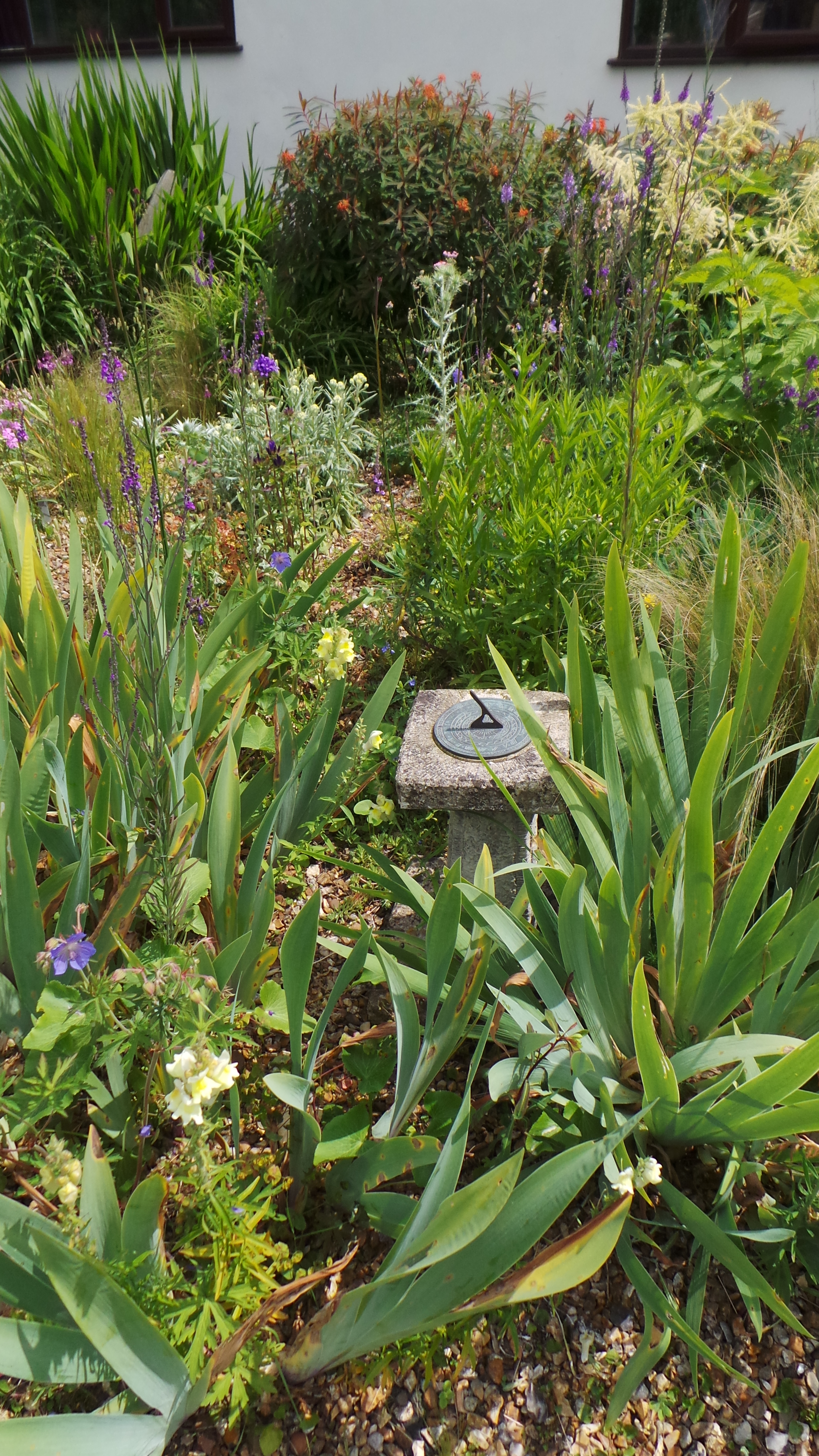
Next we take a quick wander around the front garden to view the gravel garden (The Beth Chatto Garden), the stump circle and the driftwood circle, as well as the mixed borders around the lawn.

2014 06 22_0992  2014 06 22_09942014 06 22_0995 2014 06 22_09962014 06 22_0997 2014 06 22_09982014 06 22_0999 2014 06 22_1000 2014 06 22_1001 2014 06 22_1002 2014 06 22_1003 2014 06 22_1004 2014 06 22_1005 2014 06 22_1006 2014 06 22_1007 2014 06 22_1008 2014 06 22_1009 2014 06 22_1010 2014 06 22_1011

We have worked hard this year to make the drive and the side of the house more welcoming using antique galvanised containers planted up with Dahlias and Calendulas and brightly coloured Pelargoniums are planted in the hanging baskets and other containers.
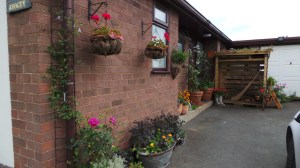
2014 06 22_0993

The next “port of call” is the Shade Garden followed by the “Fern Garden” and then into the “Seaside Garden”. I always seem to follow a set pathway around the garden when taking photos but I have to admit that I designed the garden to give visitors choices and so have created a situation where no two people wandering around need to follow the same route. I want each section of the garden to be viewed and approached from several directions. So although I am trying in this post to show our garden from our visitors’ viewpoint it is in reality just my own personal route.

2014 06 22_1013 2014 06 22_10122014 06 22_1014

And so to the back garden which has a different feel to it altogether as the individual garden compartments are all hidden in some way. It is a garden where you have to go looking – you cannot sit and look and take it all in in one go. Unlike the front, where from the seat under the arbor you can view most of the garden borders in one go, there are parts you can’t see so you are enticed to go to them for a close look.

In the back garden we find the water feature among Hostas and Toad Lilies on the end of the Shed Bed and from there you can look down the central path with arches draped with trained apple trees, roses and clematis. Another arch to the side of the main path affords glimpses of more borders.
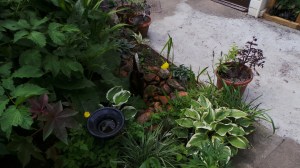
2014 06 22_1047

2014 06 22_1020 2014 06 22_1021 2014 06 22_1022 2014 06 22_1027 2014 06 22_1028

From the central path we can peer over the cloud pruned box hedge into these borders, which hopefully will entice the visitors to explore further.
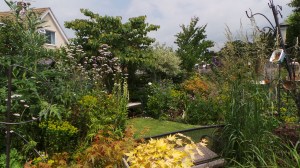
2014 06 22_1029 2014 06 22_1030 2014 06 22_1031 2014 06 22_1032

By turning right off the central path visitors find themselves between the Chicken Garden and the Secret Garden and after a mere half dozen steps must choose which one to look at first.

2014 06 22_1038 2014 06 22_1039

2014 06 22_1033 2014 06 22_1034 2014 06 22_1035  2014 06 22_1037

Within the Secret Garden alongside a comfortable cream coloured seat visitors can enjoy our latest creation, the Alpine Throne.

2014 06 22_1036

If however our visitors chose to go left at the central path they would find further choices, the Japanese Garden, the Wildlife Pond and Bog Garden to the right or the Long Border and Crescent Border to the left.
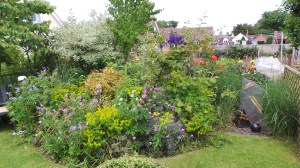
2014 06 22_1040 2014 06 22_10412014 06 22_1042 2014 06 22_1043 2014 06 22_1044 2014 06 22_1045 2014 06 22_1046

Back closer to the house we can find the “Pollinators’ Border” complete with insect hotel, the Shed Scree Bed and the new Tropical Border.

2014 06 22_1049 2014 06 22_1048

2014 06 22_1050

So there we have a quick tour of our garden in mid-June just as our first group of garden visitors saw us. We enjoyed the kind comments they left and felt it had been worthwhile, particularly when several said they would be back when we opened for the NGS in August.

The only downer was that the Bearded Iris had given us their best show ever, a true extravaganza for the three weeks or so prior to the visit. On the day just one bloom remained to show everyone what they had missed. Gardeners always say “You should have come last week.” and for us this may well have been true, at least where the Iris were concerned.

Our next big day is our NGS Open Day on the 3rd August so we are hoping we can maintain interest in the borders until then. A second mini-group of Shropshire Hardy Planters will be visitors a month after that so we will have to be “on our toes” for a while yet!

This Veggie Life

A Vegetarian | Nature Lifestyle Blog

Rambling in the Garden

.....and nurturing my soul

The Arch City Gardener

Journeys In St. Louis Gardening and Beyond

Garden Dreaming at Châtillon

Consult the genius of the place

Storyshucker

A blog full of humorous and poignant observations.

gardeninacity

Notes from a wildlife-friendly cottage garden

PlayGroundology

...an emerging social science

The Official Blog of British Wildlife

'The most important and informative publication on wildlife of our times' - The Independent. This blog is a member of The UK & Ireland Natural History Bloggers group: www.uknhb.blogspot.com

iGrowHort

Inspire - Cultivate - Grow Native Plants - Restore Landscapes

Bishops Meadow Trust

To create and protect a semi-natural wild space for the people of Farnham to enjoy and experience an array of British wildlife in our town

Gardening with Children

The www.gardeningwithchildren.co.uk Blog

UKbirdingtimeline

birding through the seasons, why birds matter and how to conserve them

NATURE WALKER

with a camera in hand

Jardin

Transform your outdoor space

Eva's space

My allotment, cooking and other interests

Old School Garden

my gardening life through the year

LEANNE COLE

Trying to live a creative life

fromacountrycottage

trying to live as lightly as possible on our beautiful planet

Good Life Gardening

Nature lovers from Leicester living the good life.

mybeautfulthings

Finding the beautiful in the everyday

mawsonmichelle

Michelle's Allotment

In and Out of My Garden

thoughts from and about my garden

Greenhousing

Big plans for a small garden

The Scottish Country Garden

A Walled Country Garden in South East Scotland

The Fruity Chicken

Life at the fruity chicken

willowarchway

Off grid living. Self sufficient. "PERMAGANICS RULE".

St Anns Allotments

Nottingham's Grade 2* Listed Allotments and Community Orchard

Manifest Joy Harvests

a journey in suburban vegetable gardening

Allotmental

The madness of growing your own

Penny's Garden: a harvest beyond my front door

A novel approach to vegetable gardening

arignagardener

Sustainable living in the Irish countryside.

NewEnglandGardenAndThread

Master Gardener, amateur photographer, quilter, NH native, and sometimes SC snowbird

dianajhale

Recent work and work in progress and anything else that interests me

planthoarder

a chaotic cottage gardener

Lens and Pens by Sally

a weekly blog that creates a personal philosophy through photographs and words

Dewdrops and Sunshine

Stories from a sassy and classy Southern farmbelle.

The Pyjama Gardener

Simple Organic Gardening & Seasonal Living

gettin' fresh!

turning dirt into dinner

JOY...

today the world is created anew

Garden Birds

Notes from a Devon garden

ShootAbout

Life Through The Lens

Adapting Pixels

A photography blog showcasing the best photography pictures and videos on the internet

Wildlifegardening's Blog

Just another WordPress.com site

naturestimeline

personal observations from the natural world as the search continues for a new approach to conservation.

LATEBLOOMERBUDS

The Wonders of Life through my Eyes, my Heart, my Soul