This is the last of my “Go South” posts and as promised it features a garden. Well after all those coastal posts in this series it was only a matter of time before we visited a garden. And boy what a garden it was!
Nymans was created by one of the great supporters of the English plant collectors and it shows in the variety of plants and in the difficulty in identifying some of them.
Nymans is a garden to delight any plantsman who will leave with a list of must-haves. It will also make any good gardener desire his very own areboretum just to plant the rare and special trees spotted at Nymans.
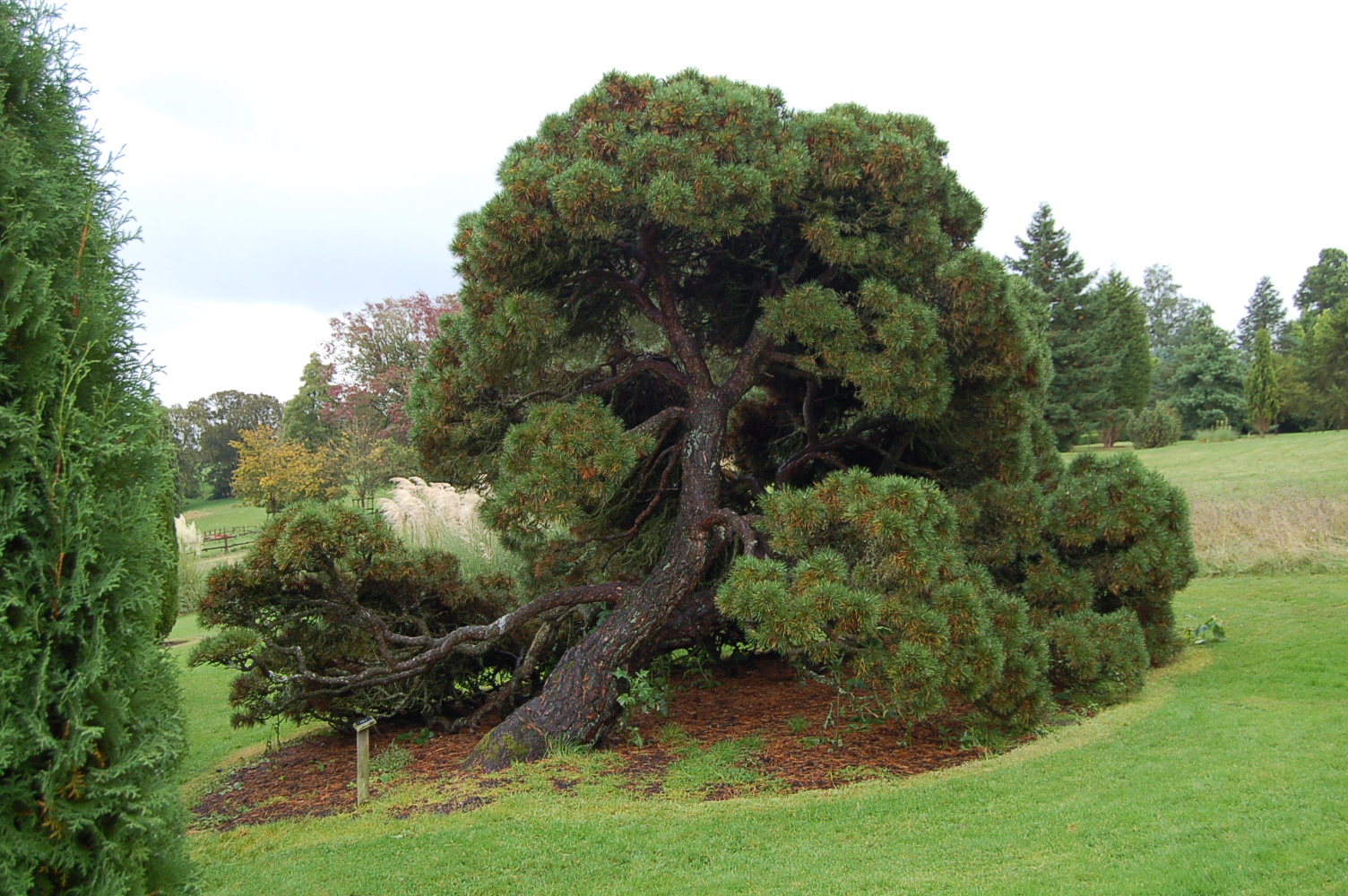
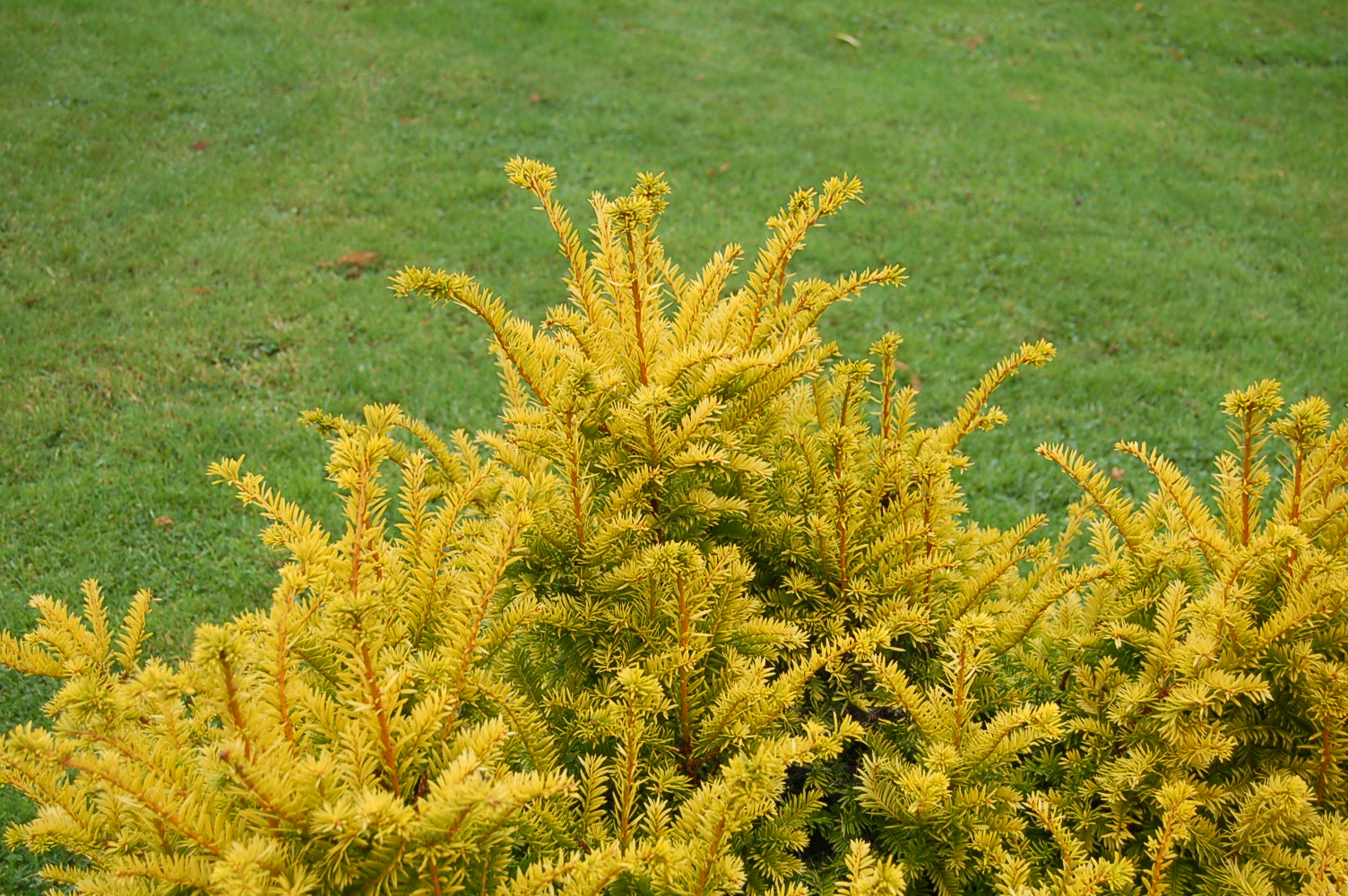
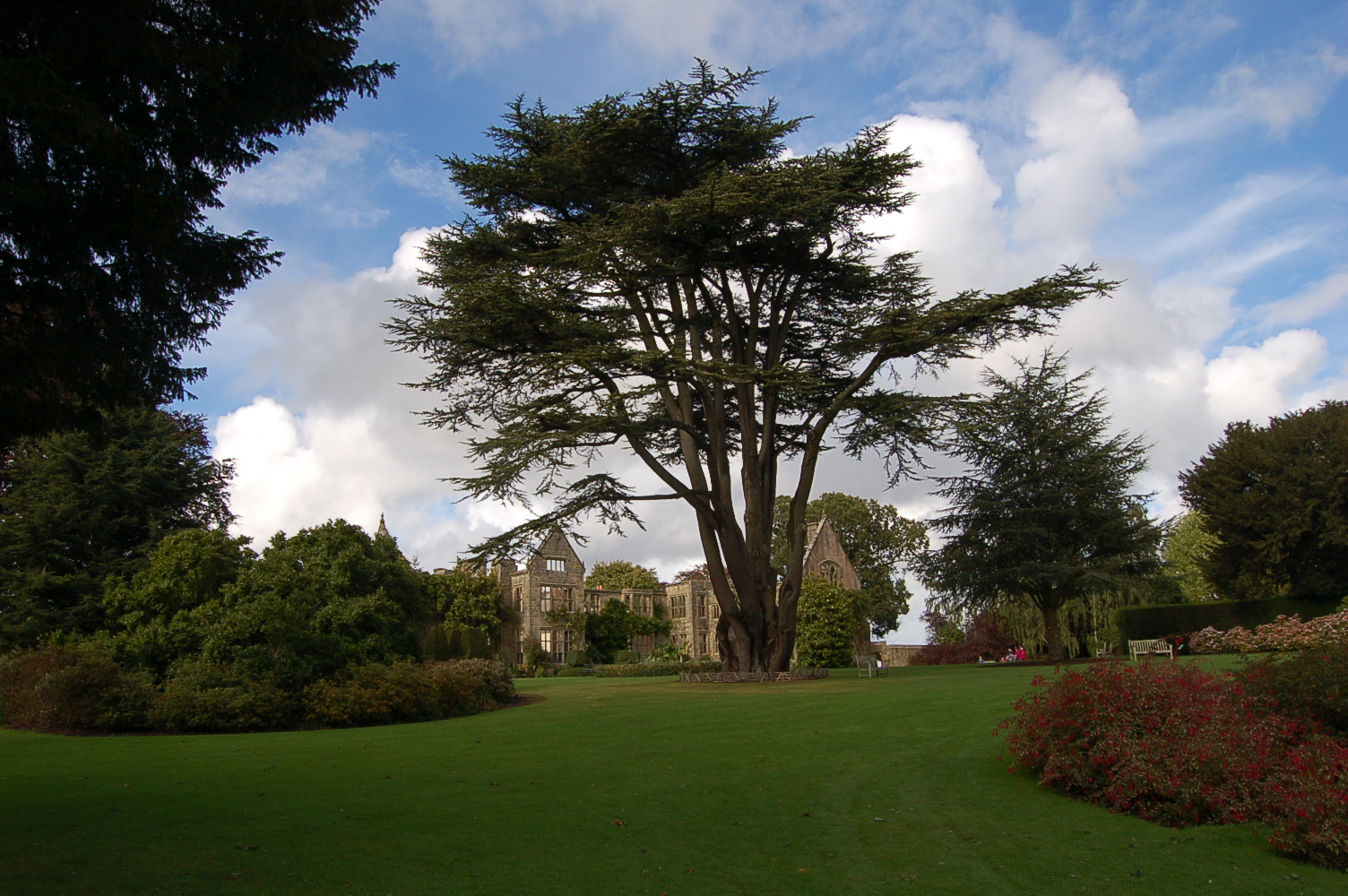
I am not a great fan of coniferous evergreens but these three display diversity in their foliage colour and in their structure and shape.
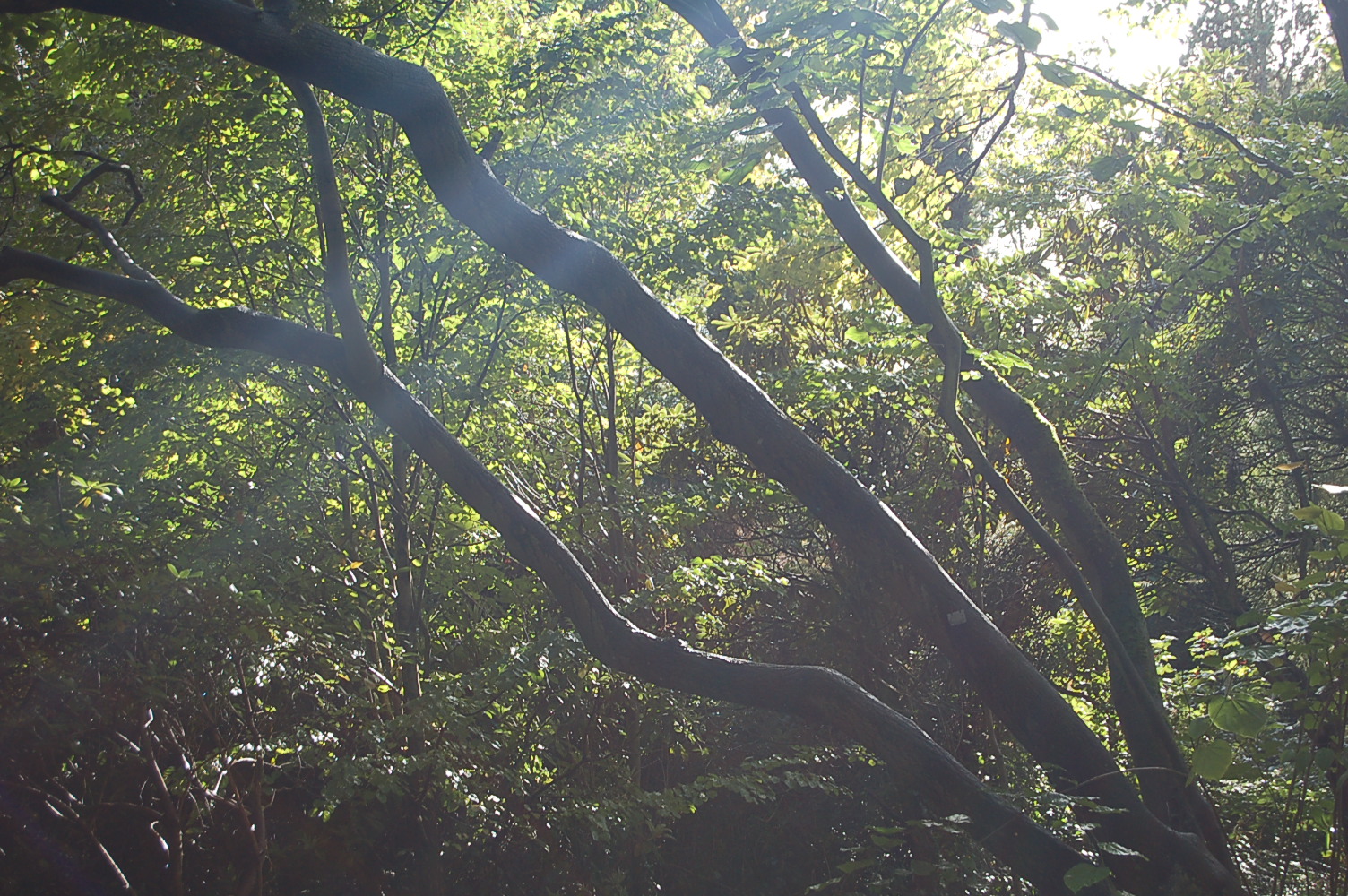
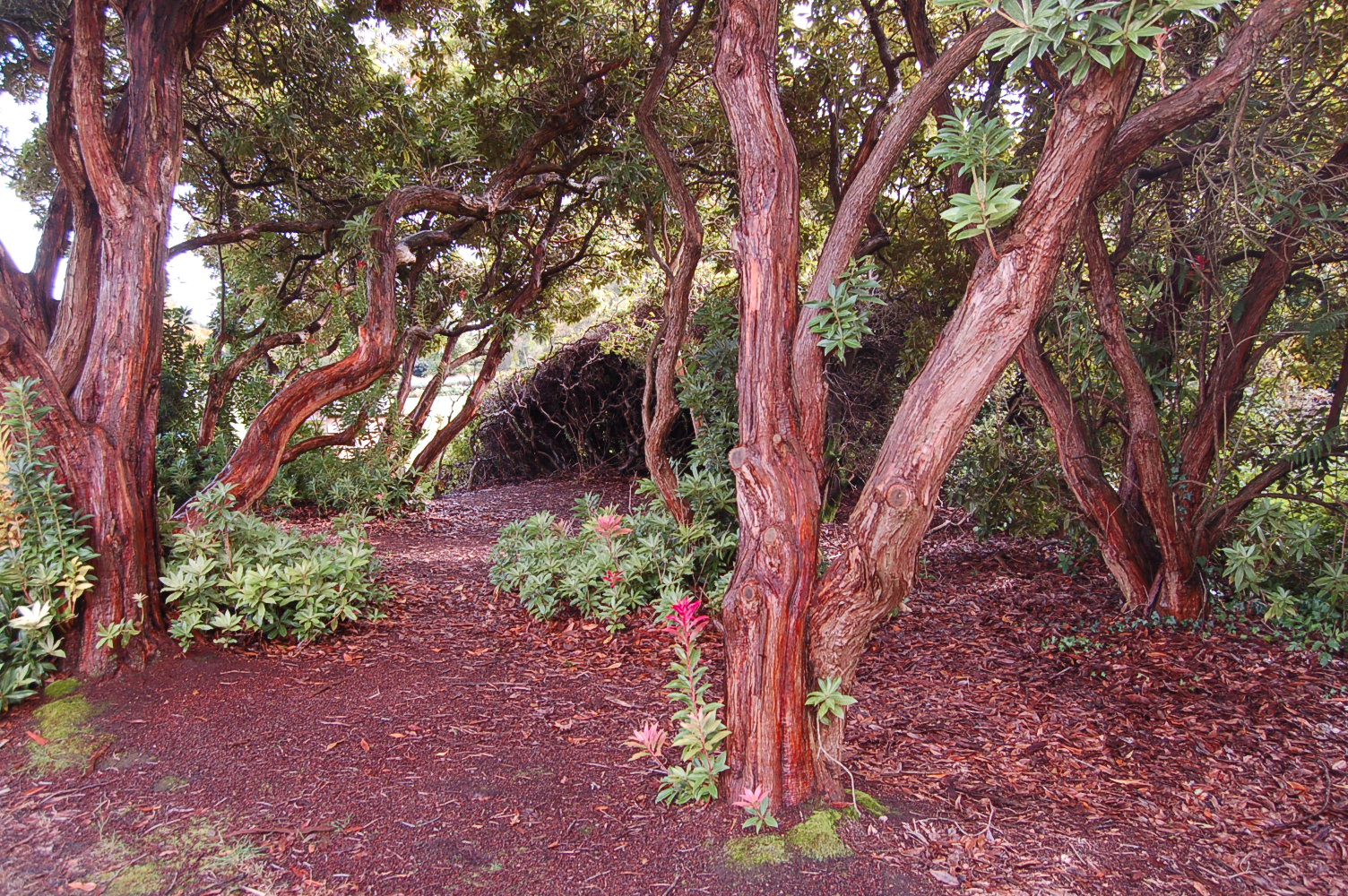
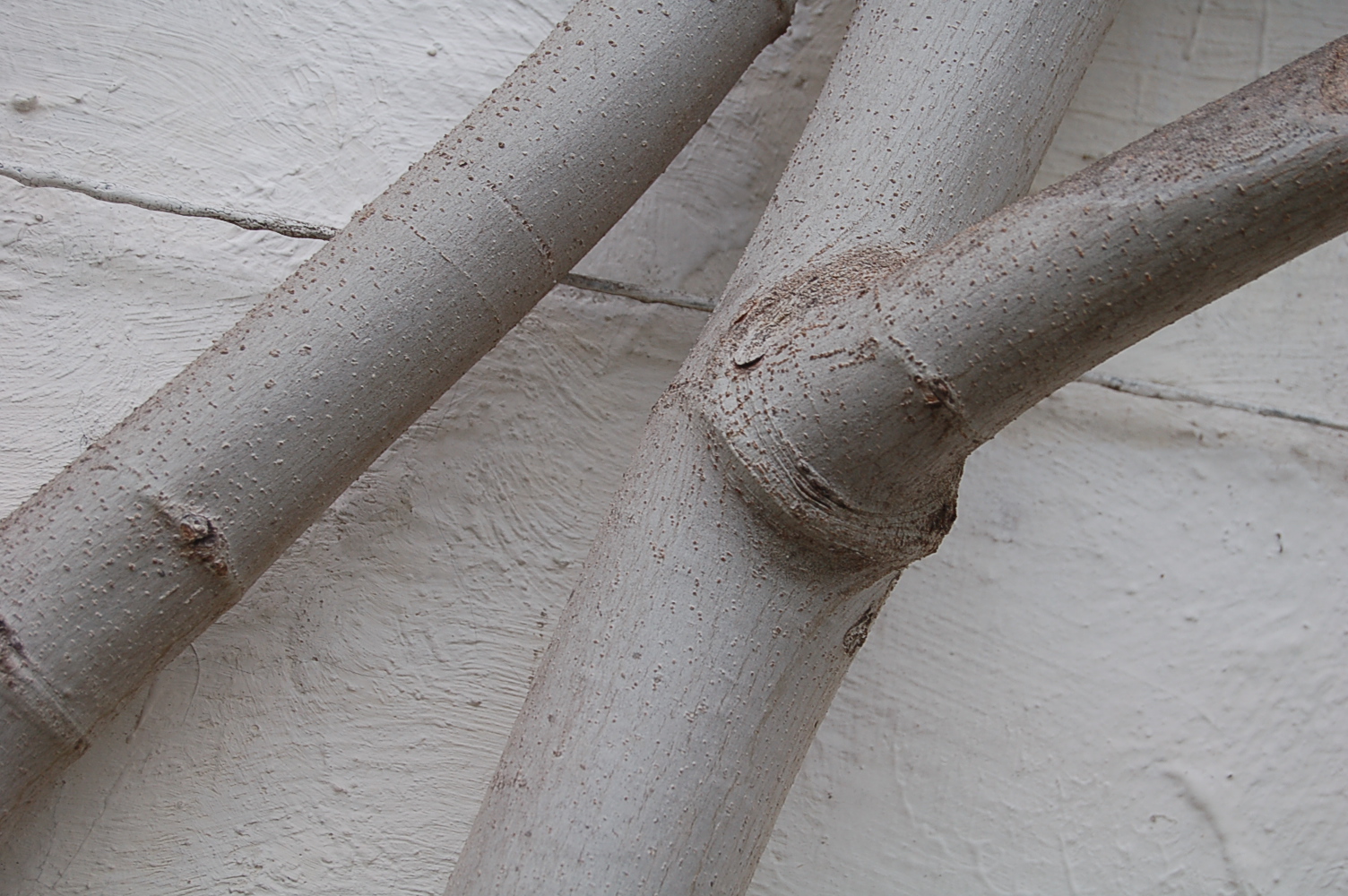
In the shade of deciduous trees the shapes of their trunks are revealed.
Walking around this varied and surprising garden is like walking through the pages of a good book on garden design. Here you can find every principle of design shown in all its glory. Any gardener, whatever the size of their garden could adapt ideas to be found on a walk about at Nymans.
Framing a view …..
Using a structure to invite you onwards ….
Planting in trios ………………..
Drawing the eye …………
Using structures as an invitation and to support plants to provide shade from the sun ……………
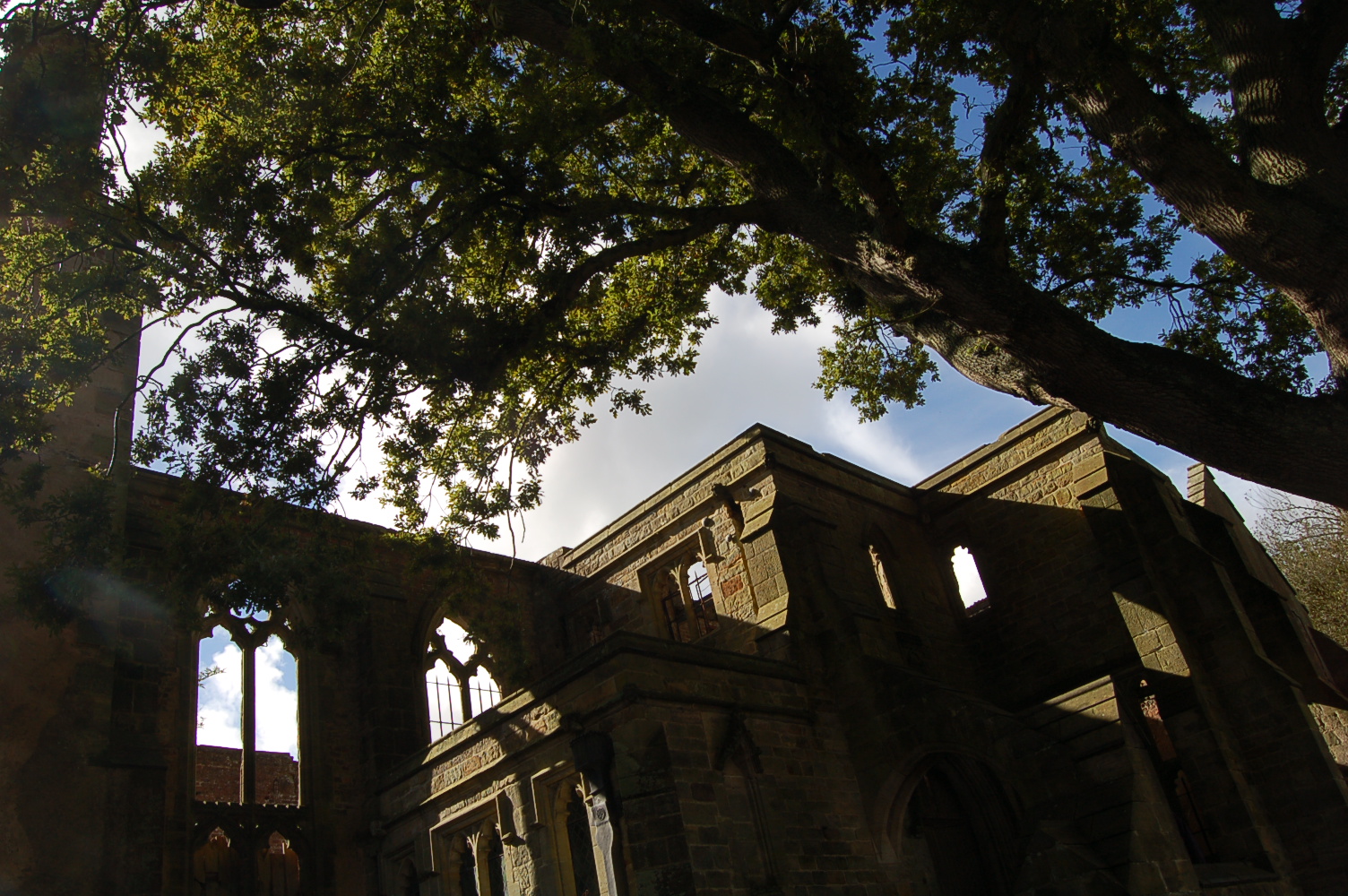
Much of the house belonging to the gardens at Nymans is now in ruins, but they somehow suit the garden. They provide a good foil for planting.
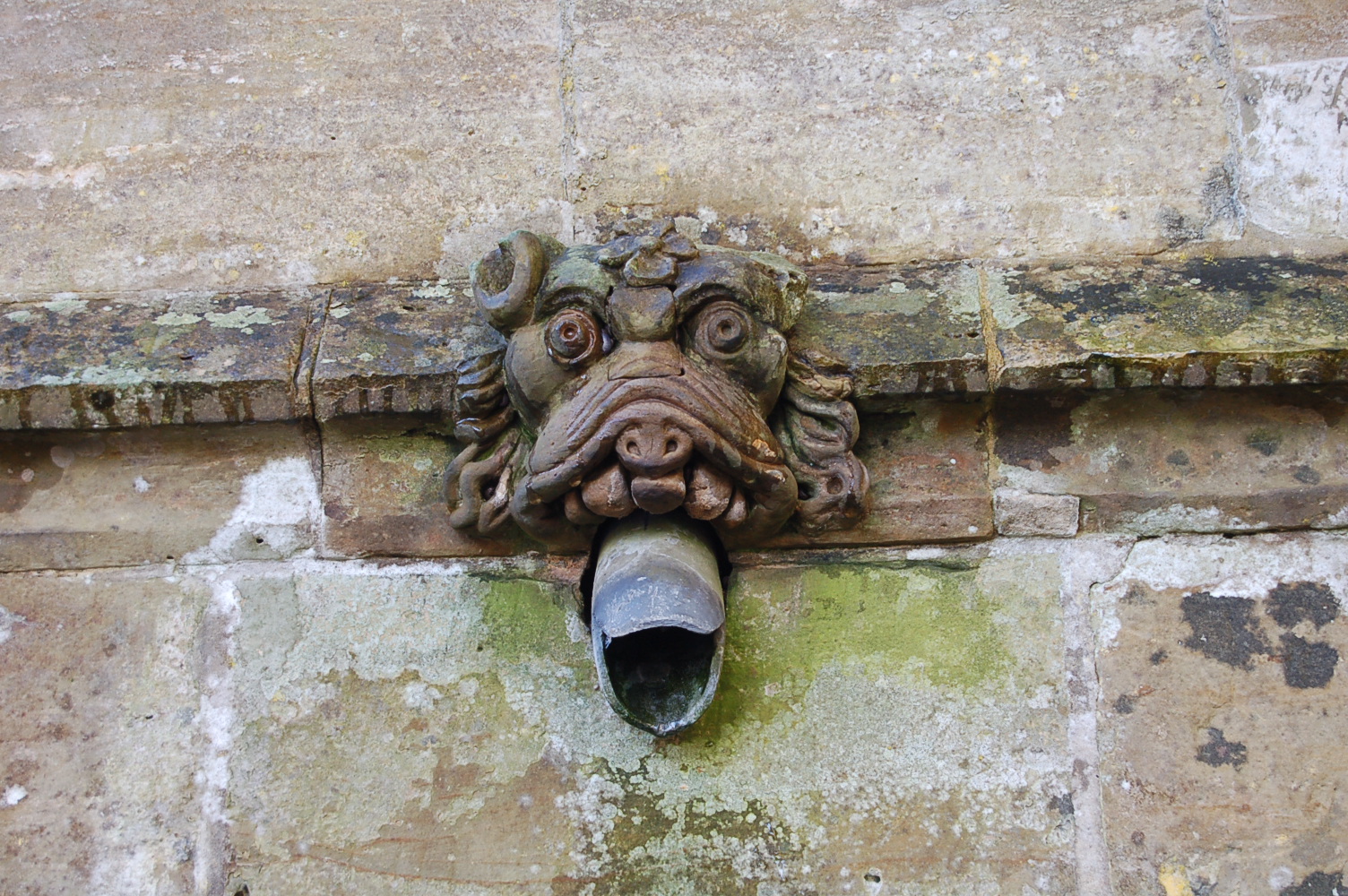
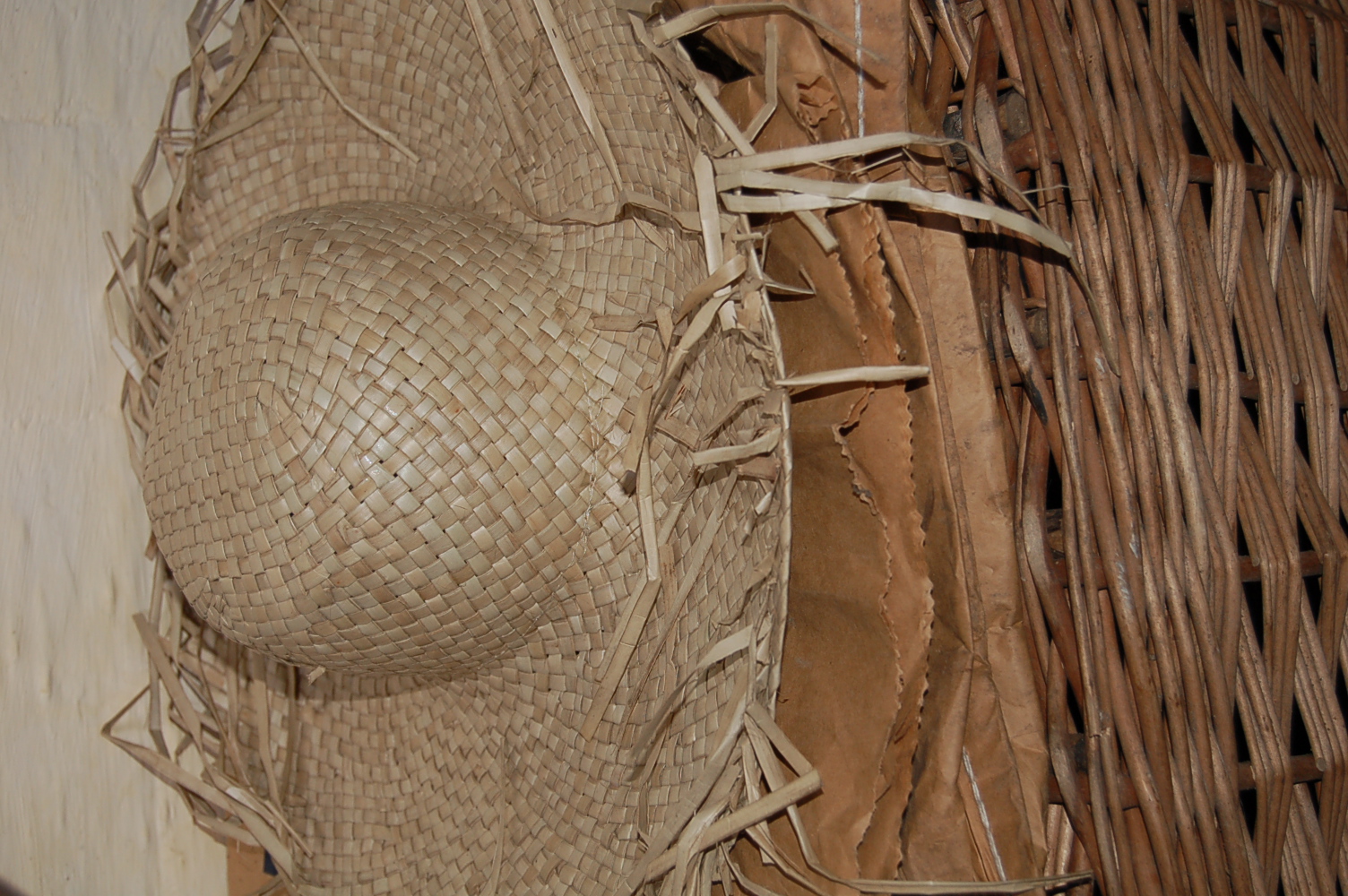
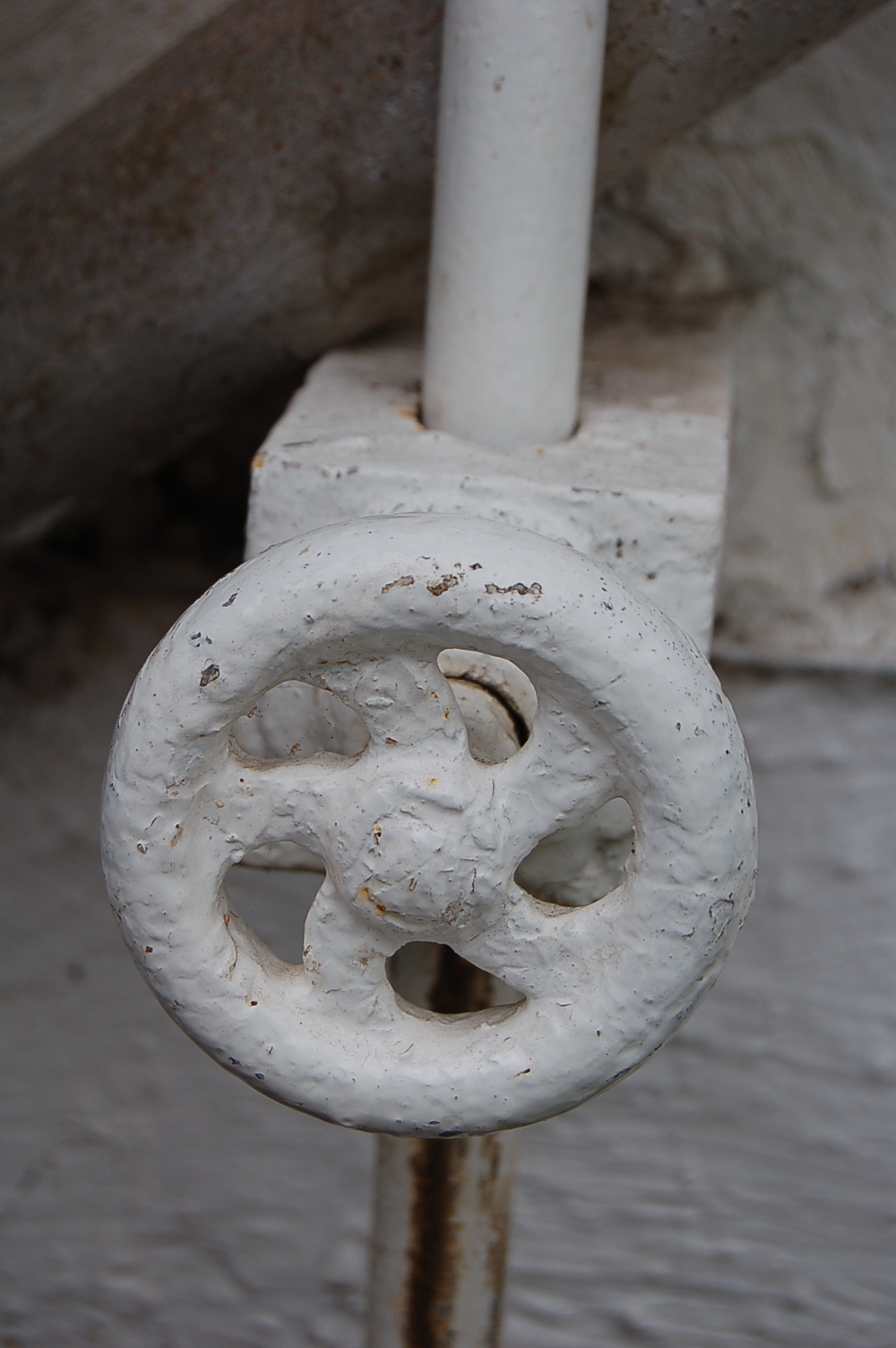
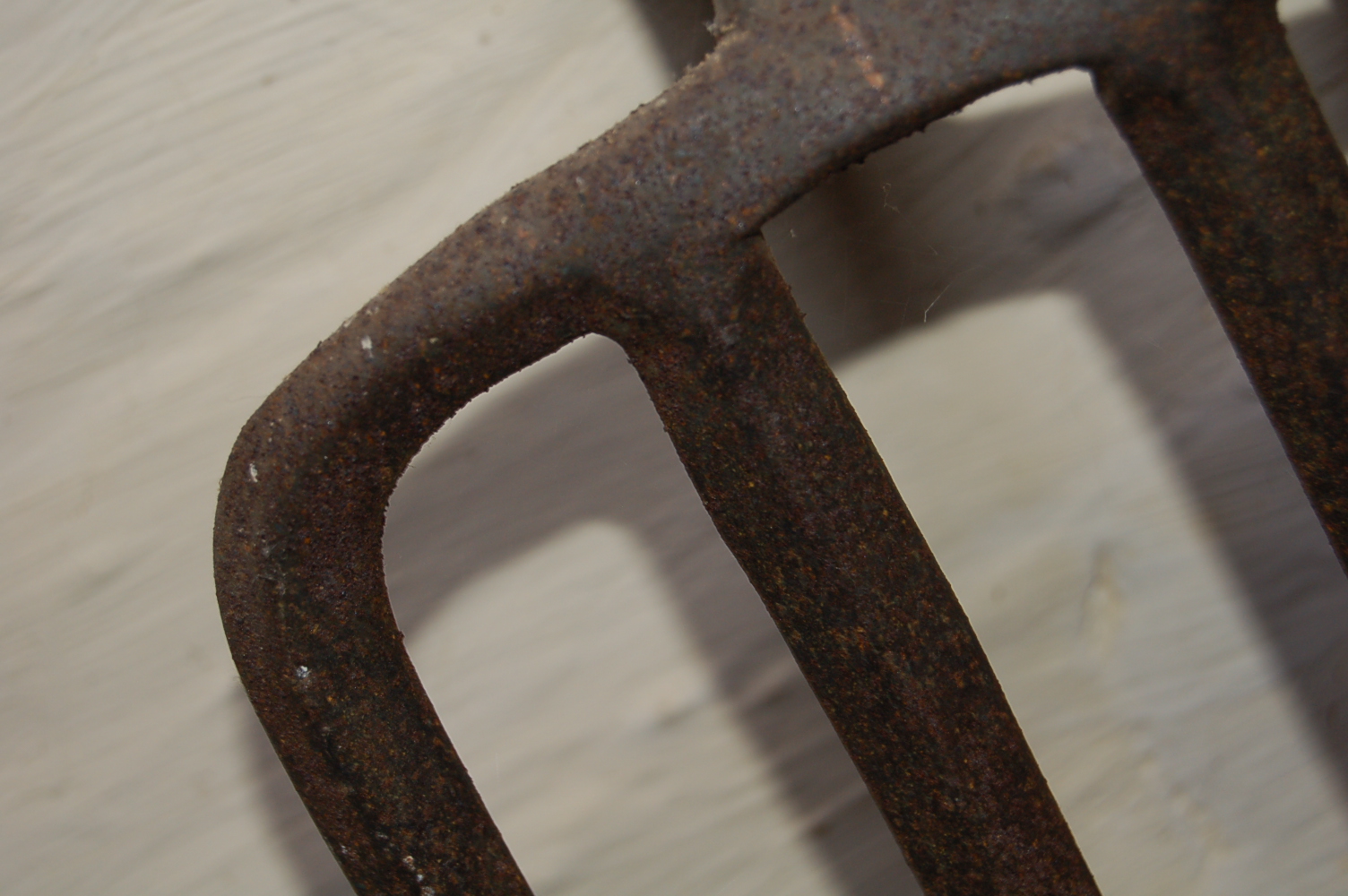
The ruins provided some oportunities to photograph little details and patterns.
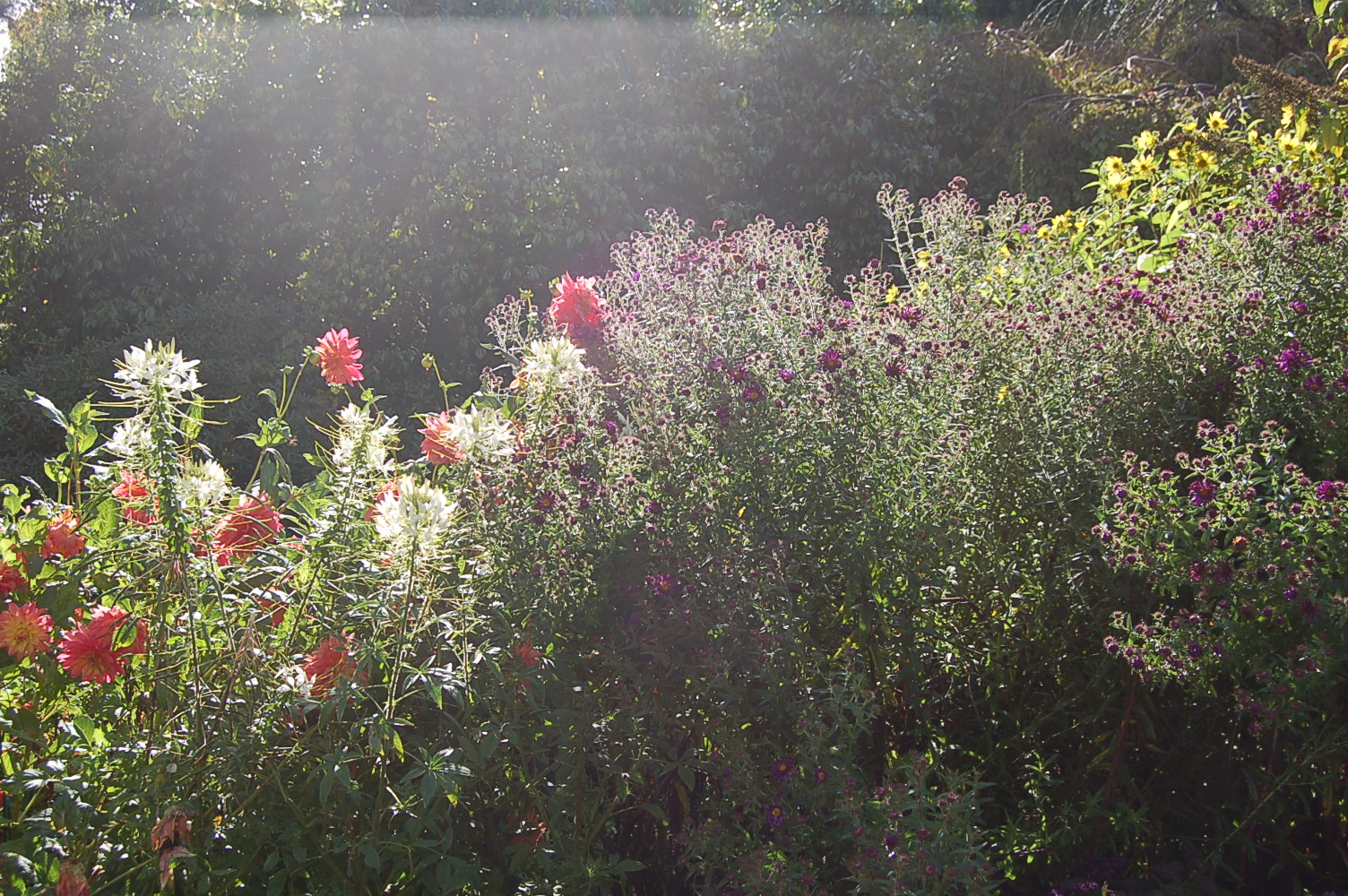
But the gardens of Nymans aren’t all about big views and big trees. Richly coloured traditionally proportioned double herbaceous borders excite the eye of the visitor.
There was so much to see at Nymans that another post will appear soon.
We have been to the Chelsea Flower Show, Harrogate Flower Shows and The Autumn and spring Malvern Flower Shows but the one we enjoy the most is always the one set in the grounds of Tatton Park. Luckily this is the RHS show closest to home. Although Chelsea is often called the greatest flower show, having visited once we have no desire to go again. But we frequently go to Tatton.
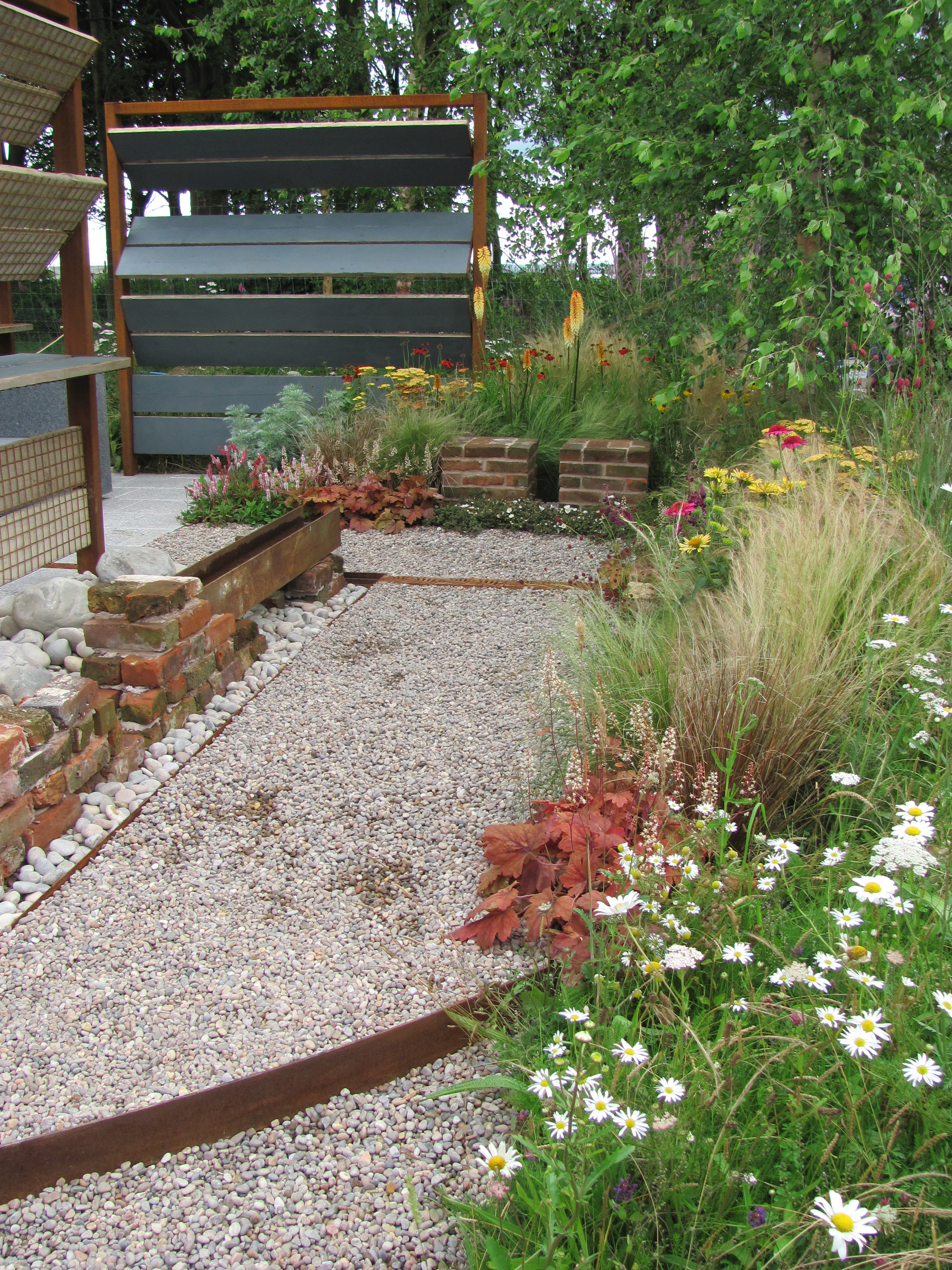
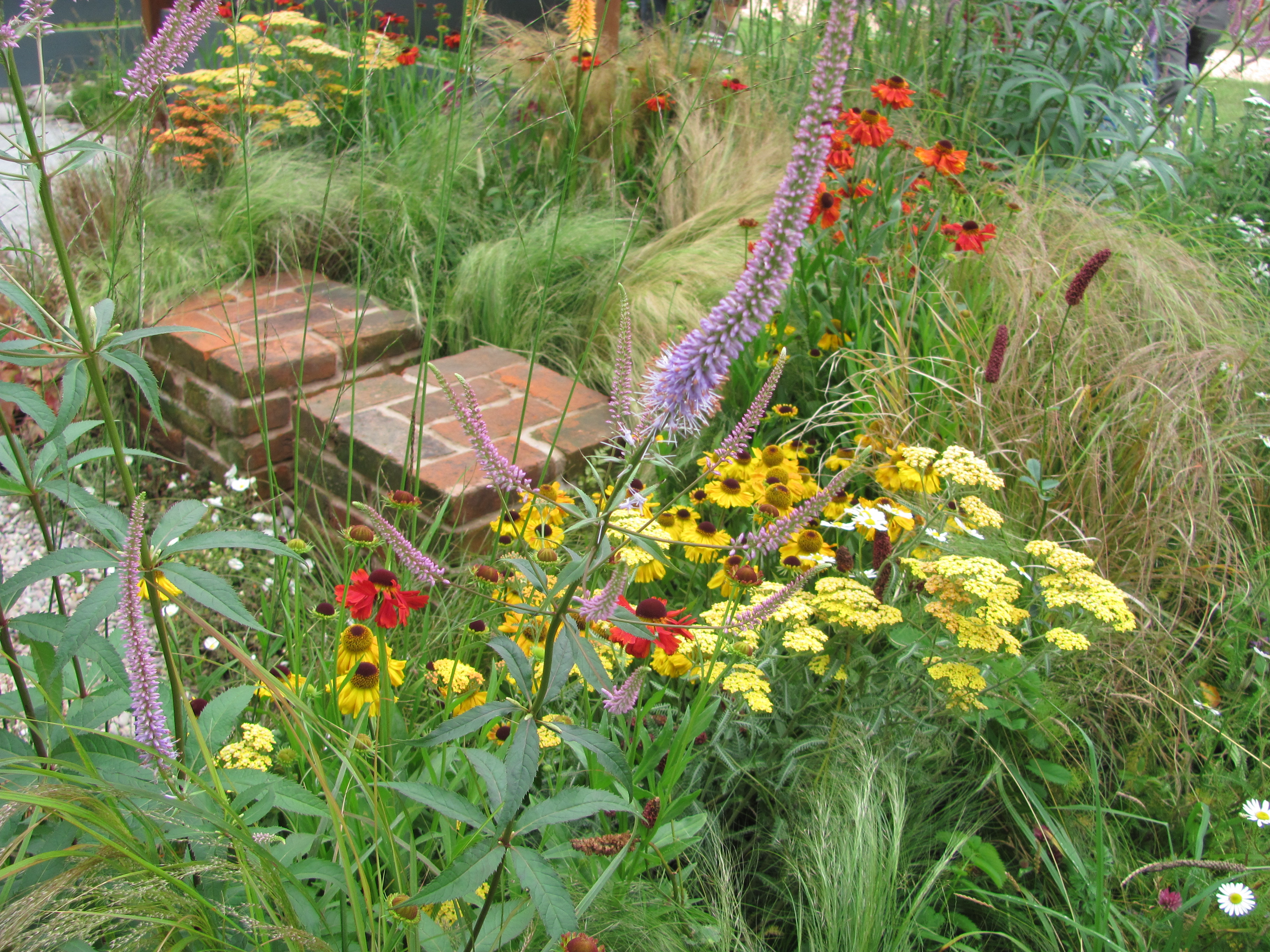
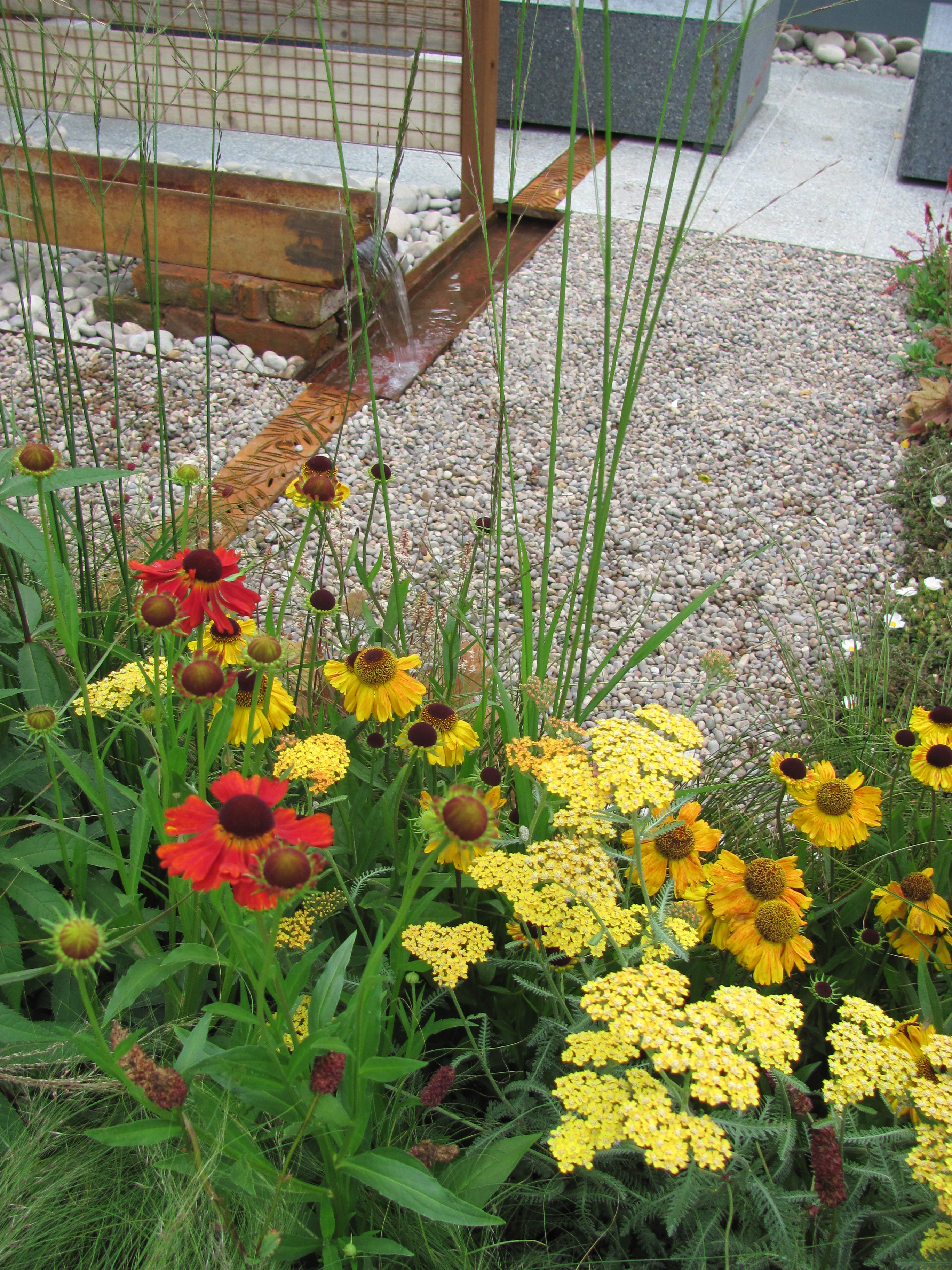
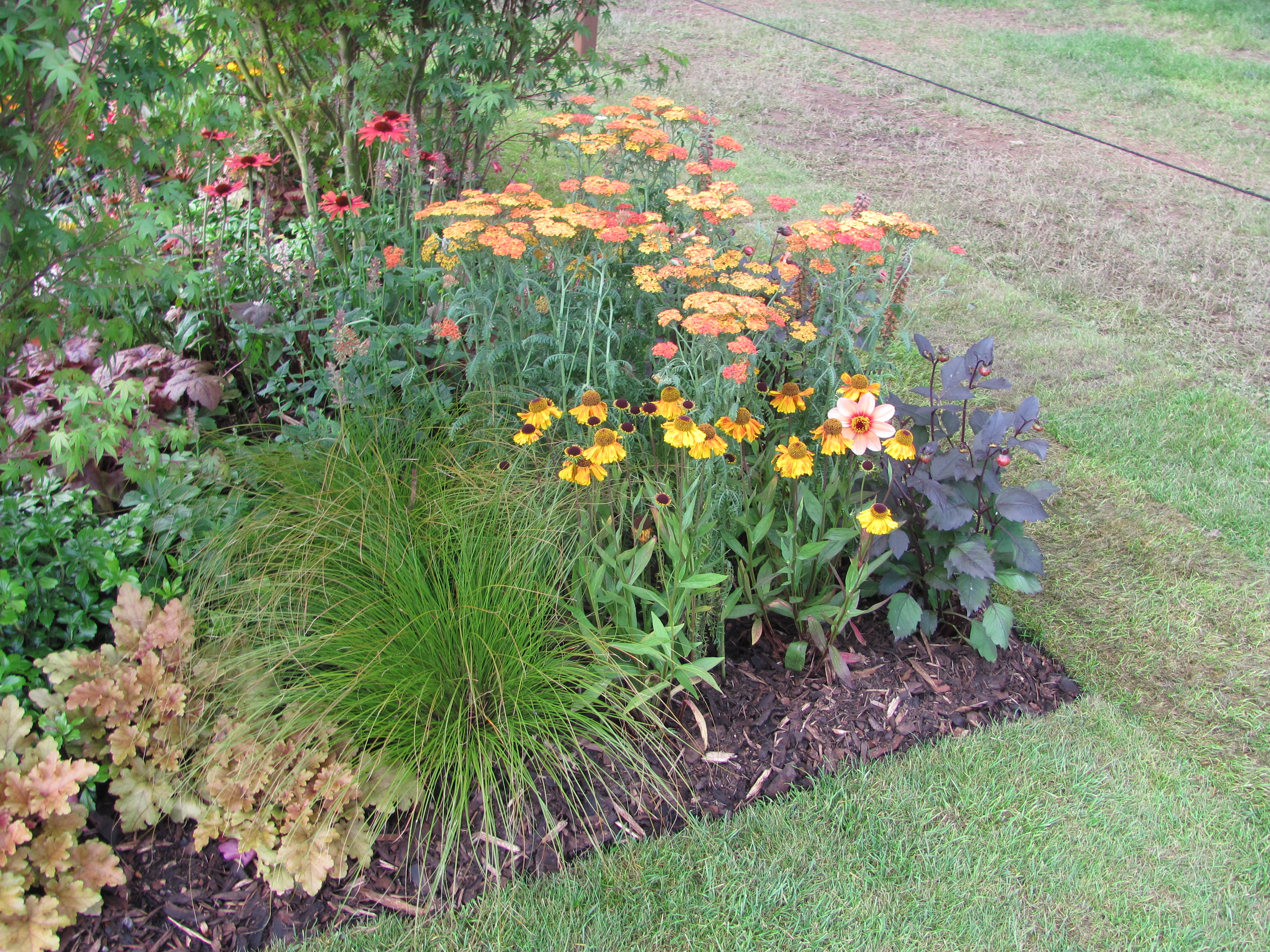
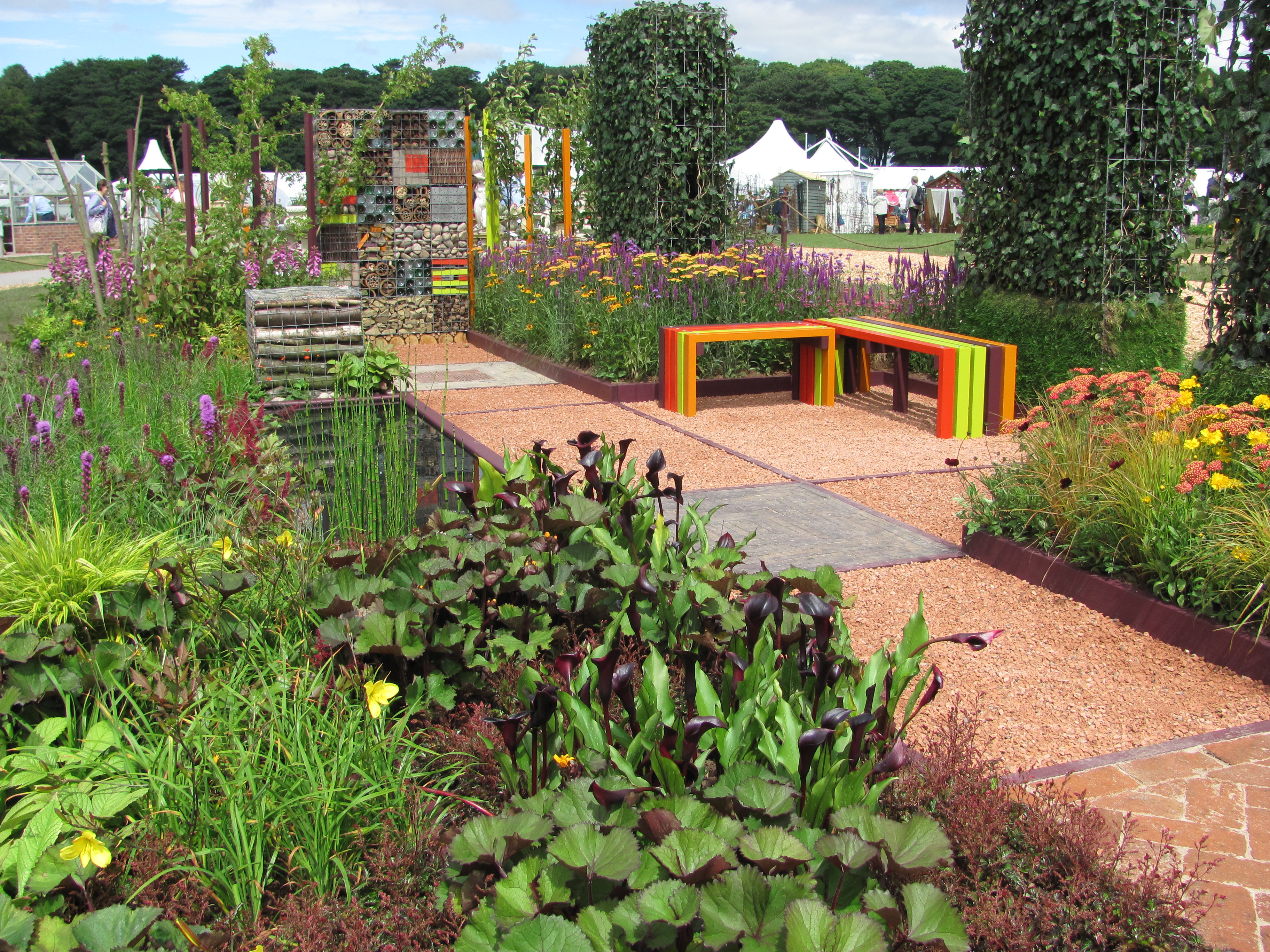
Tatton Park Show is described as “the North’s greatest garden party”. We enjoy its large show gardens, its “Back to Back” gardens and children’s gardens but most of all those designed by young garden designers. This is where the UK’s garden designs of the future lie and the standards are always so high. The designers have to be under 28 and this year their brief was to design a garden based on the theme of “colour”. We were so pleased when we learnt that the designer of our favourite one of these gardens had won the accolade of “RHS National Young Designer of the Year”. Tristen Knight designed this garden using recycled materials and it was full of interesting and original ideas and design feature. The colour of his planting of perennials and grasses was beautiful, all orange and biscuit. He studied for a BA in Industrial Design and Technology before training in garden design at Writtle College. He spoke with great enthusiasm and excitement about his garden and he told us about the materials he had chosen and how they were all items from building sites. For example the rill was formed from a an “H” beam and the flexible screening was created from scaffolding boards. I found it hard to take photographs that did justice to this brilliant young designer’s work. We enjoyed his garden and talking to him about it.
We moved on to the main large garden show gardens, some of which we liked whereas others we did not like at all. But that I suppose is what design is all about. If we all liked the same plants and designs wouldn’t gardens be boring?
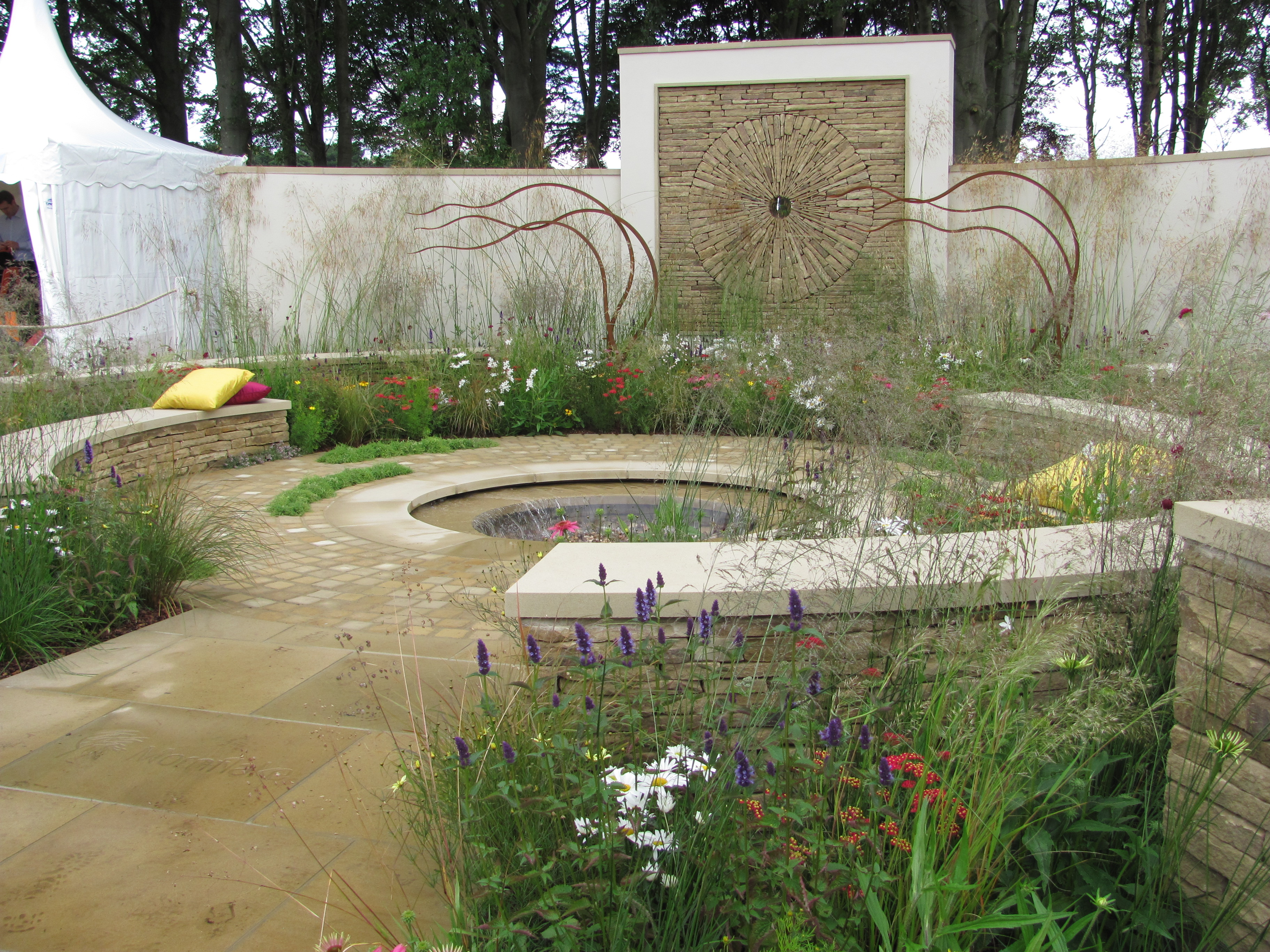
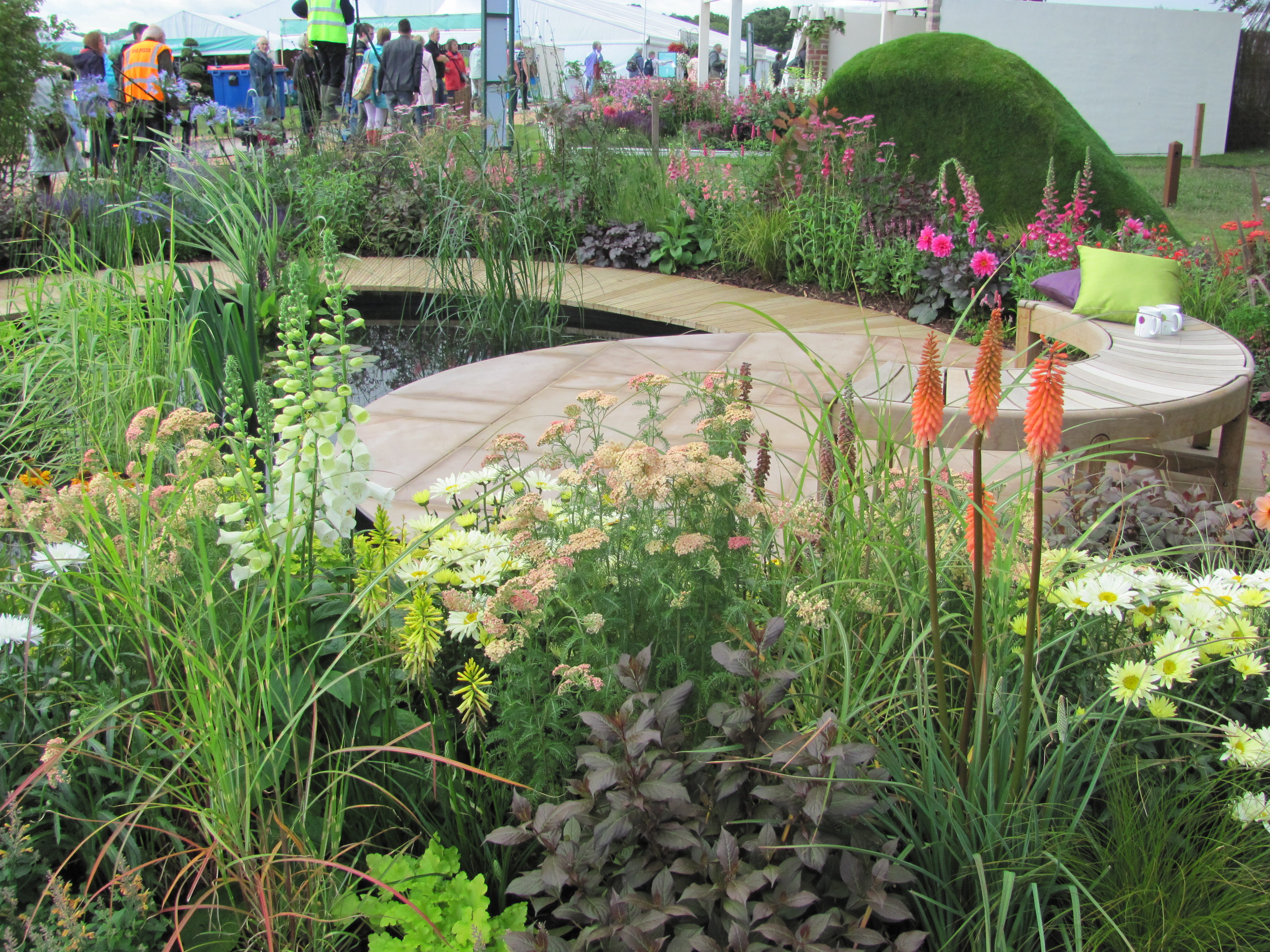
I begin looking at this set of gardens by featuring our favourite, a garden based on circles achieving a wonderful peaceful atmosphere through the planting which was light and wispy. It relied heavily on grasses to do so, with one planting area consisting of just grasses and one variety of allium.
It received the Best in Show award!
This show garden featured decking curves and colourful planting choice.
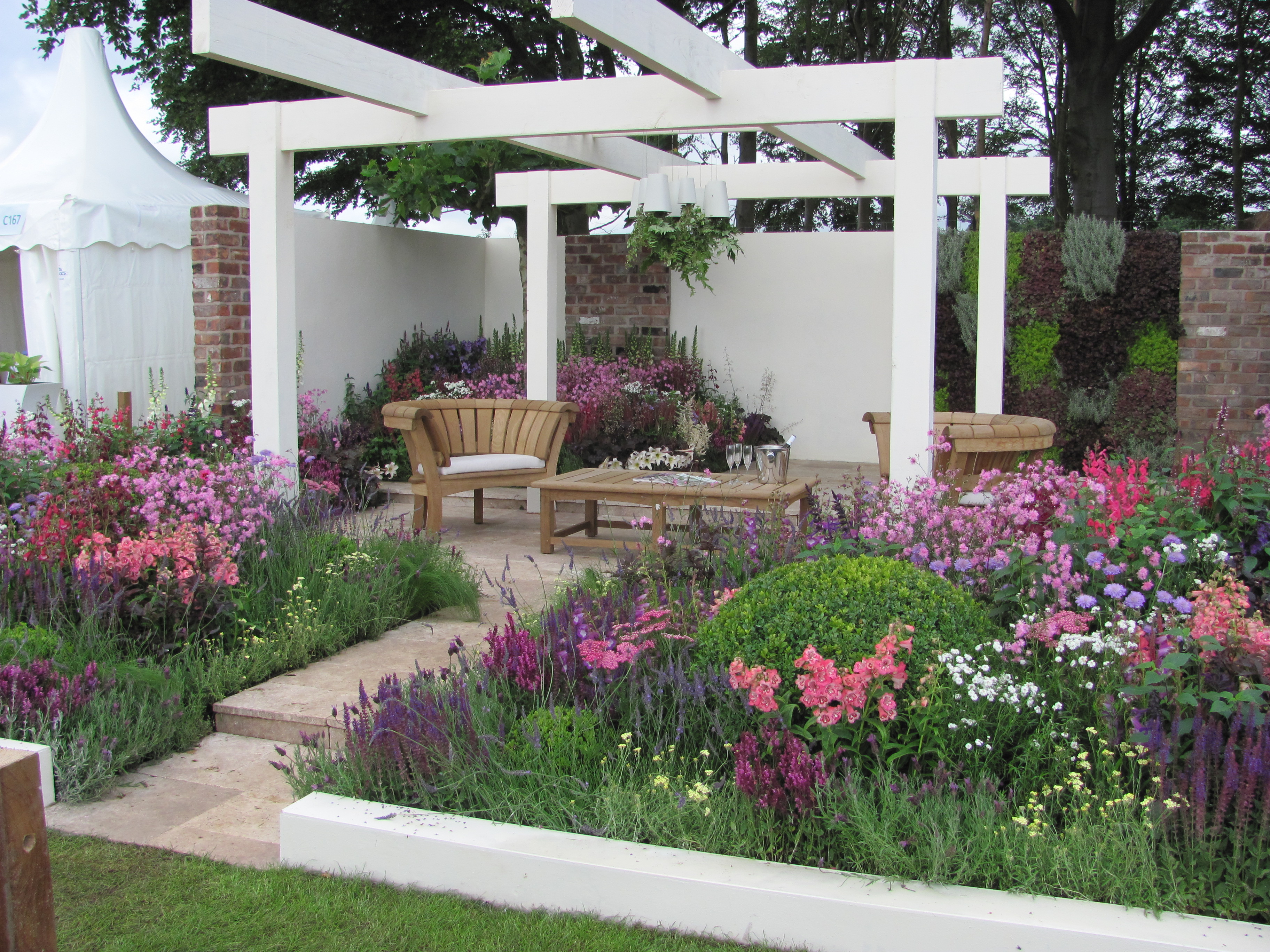
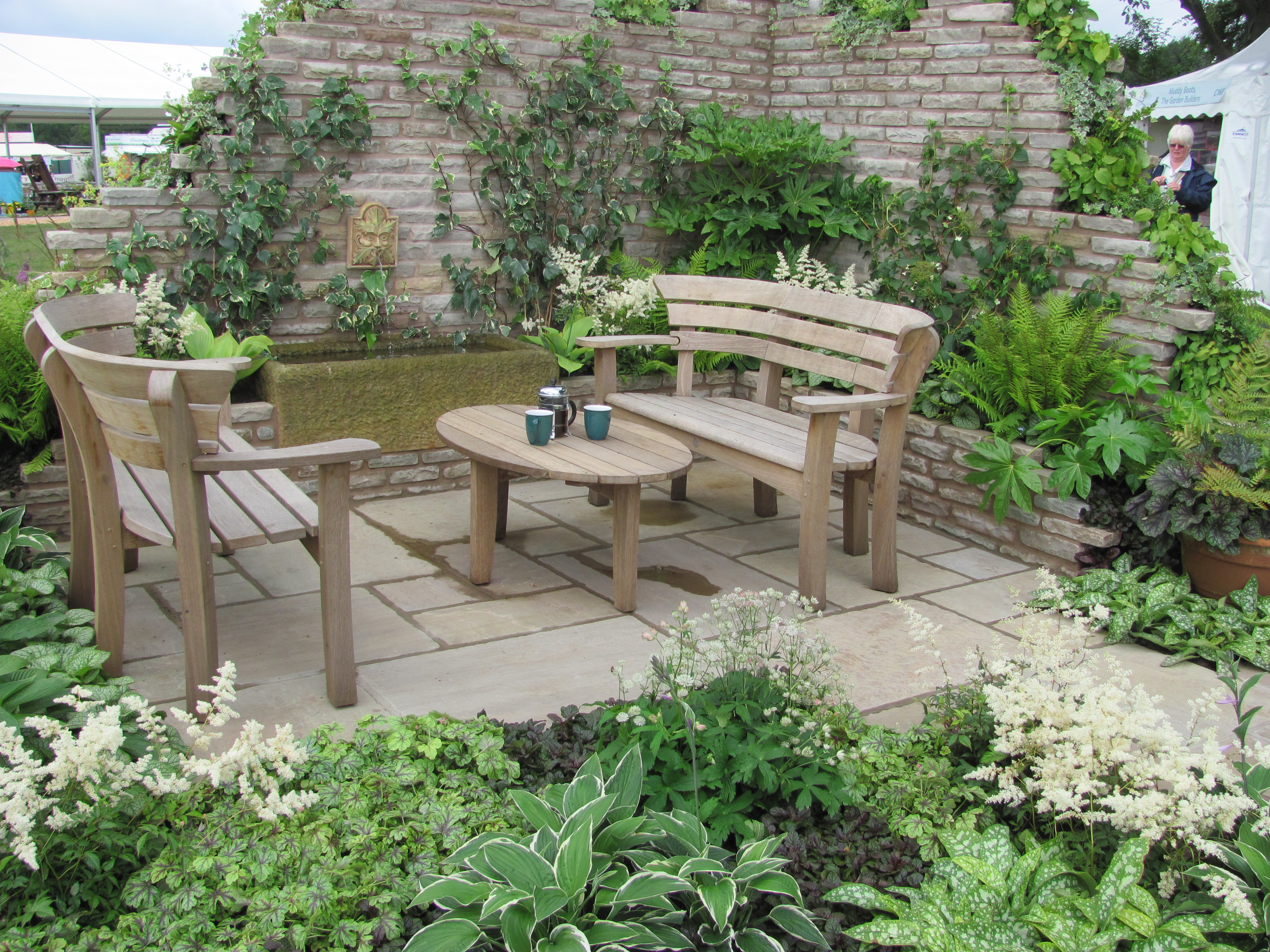
The next sequence of photos illustrates the wide variety of show gardens at Tatton. Enjoy the tour.
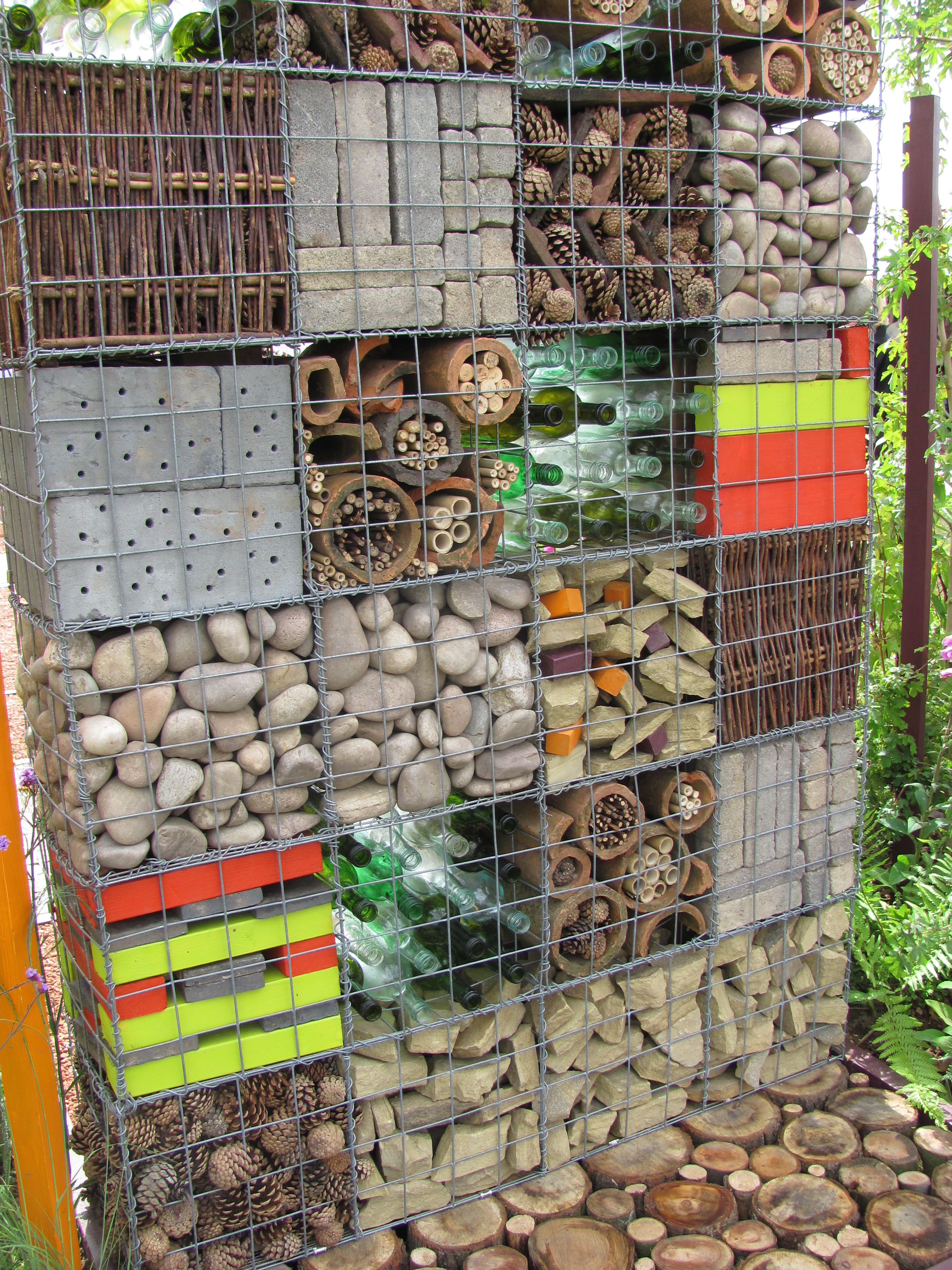
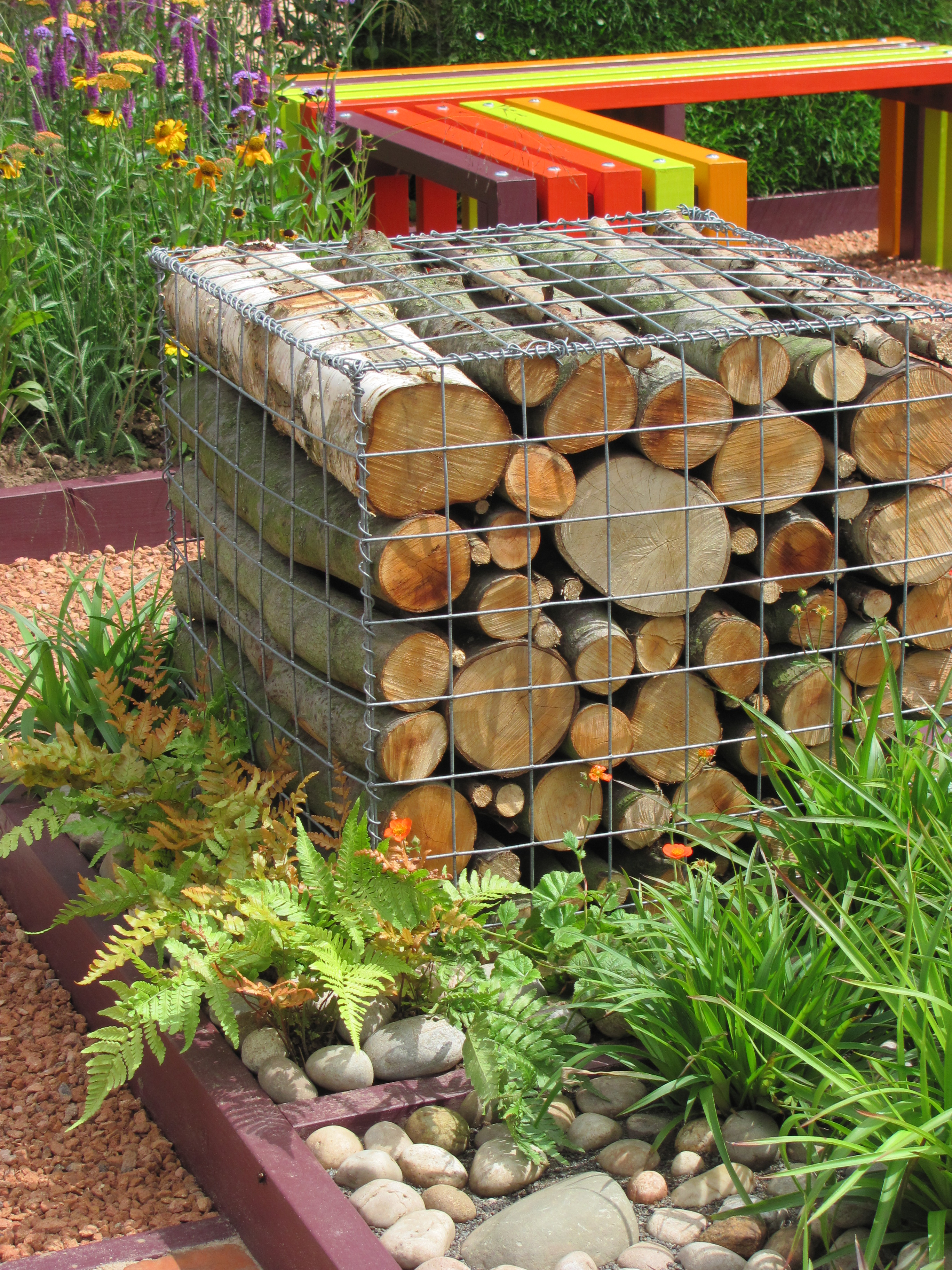
Once we had enjoyed the large show gardens we made a bee line for the garden designed by students and staff of Reaseheath College, partly because their garden is always so interesting with elements of attracting wildlife but also because this is the college where I followed some of my horticulture training several decades ago. This year their garden excelled, with such vibrancy in the planting and in its features. Again the design integrated beautiful features created to attract wildlife.
To finish my first post about the RHS Tatton Park Flower Show I want to share a couple of photos of children’s gardens celebrating the Queen’s Jubilee. In the next post we shall visit the Floral Marquee and the smaller show gardens.
A morning of showers turned into an afternoon of rain. We donned our boots and waterproofs and defied it. We weren’t going to let it stop us going for a wander in the riverside woods.
We started with lattes in the coffee shop at Attingham Park, our closest National trust property and they set us up for defiantly walking into the wood.
We had hoped that a few minutes indulging in our favourite pastime of coffee drinking would give the rain time to stop or at least subside. Our hopes were dashed as we carried on into the woods towards the river the rain fell upon us. We were waylaid by these pretty cows who demanded attention by looking at us under their long eye lashes.
After giving the cows a stroke we moved on alongside the riverbank where the woodland started.
This woodland contains many unusual and non-native specimen trees but there are no labels so we find many we can’t identify. Several seem familiar especially their fruit and leaves, so we presume they are related to natives such as oaks, chestnuts and alders. One of these days we shall be wise and remember to pop an ID book into a pocket.
Even as the rain was falling and dark clouds skidded across the sky patches of woodland were lit up. They acted as spotlights drawing us to the pink of the foxgloves and the pale creamy fungi.
This strange but delightful light had a brightness we did not expect. Underneath the dark canopy of thick foliage the trunks of the trees seemed to attract light and they appeared more patterned and textured.
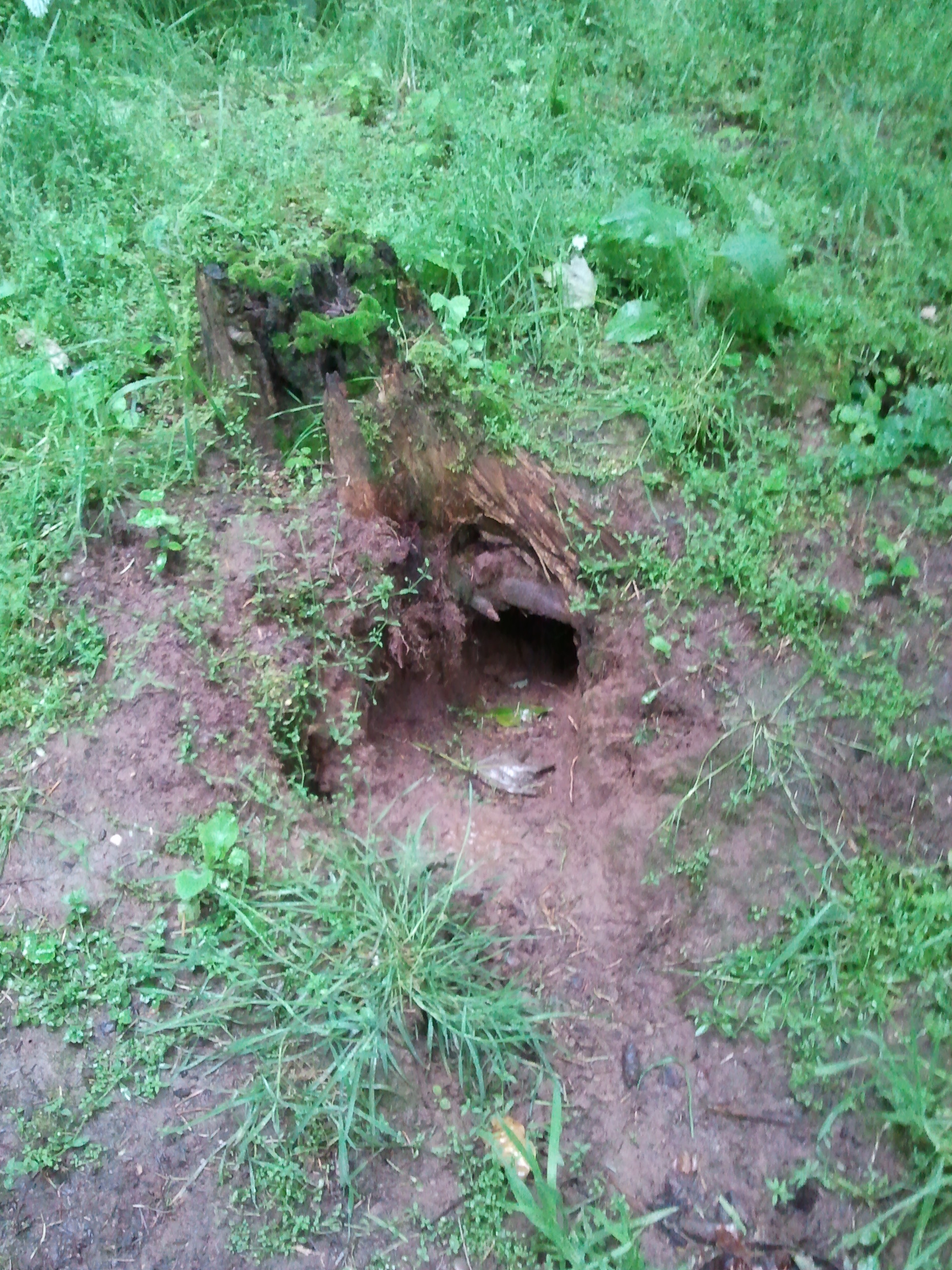
The ferns enjoyed the darker areas and the moisture brought by the rain, but their enjoyment was not shared by the wood’s mammal residents. The usual squirrels and rabbits were nowhere to be seen. Every rabbit burrow we came across showed no sign of life.
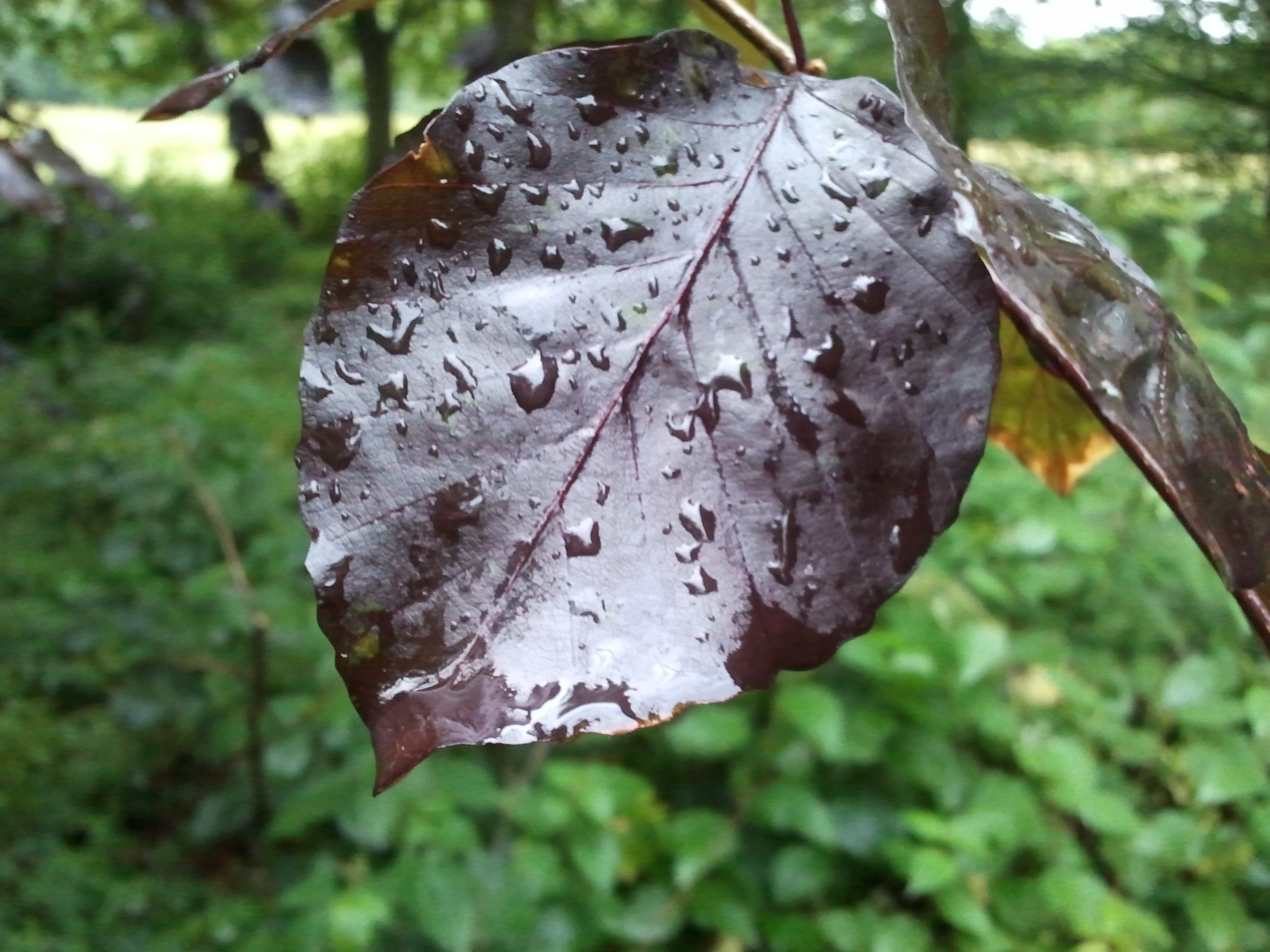
Rain drops landed on the purple, glossy leaves of the copper beech and light glowed through the “helicopter” seeds of maples. Overhead thrushes sang enthusiastically. The loud powerful song of the Mistle Thrush overpowered those of the more tuneful delicate Song Thrush.
Although no thunder rumbled above the tree tops today it has done so recently as witnessed by this tree displaying lightning strike burns. While studying this damaged tree our attention was drawn to movement in small trees close by, where a pair of tree creepers fed on the bark, moving like scurrying mice head first up the trunk. The blue tits fed differently as they searched for their insect prey under the wet leaves of the same tree.
As we continued along the path below the trees we took a short detour through the walled garden where the herbaceous borders on either side of the wide central path made a colourful picture.
As our woodland wander came to an end we had to stop and enjoy another couple of lattes just to check that they still tasted so good. They did! As we enjoyed our coffees we were entertained by a very intelligent ladybird who was reading the label of his orange juice checking its ingredients out to make sure they were fully organic.
We were not the only ones out and about enjoying a walk in the rain today and certainly not the only ones enjoying coffees. As educationalists in our pre-retirement days, we were pleased to see several young families out exploring the woods. Two families enjoyed their coffees as their toddlers enjoyed playing in the courtyard driving ride-on John Deere tractors in the mud and on the slippery grass, even revelling in falling off. They jumped in the puddles and splashed each other. Real childhood treats!
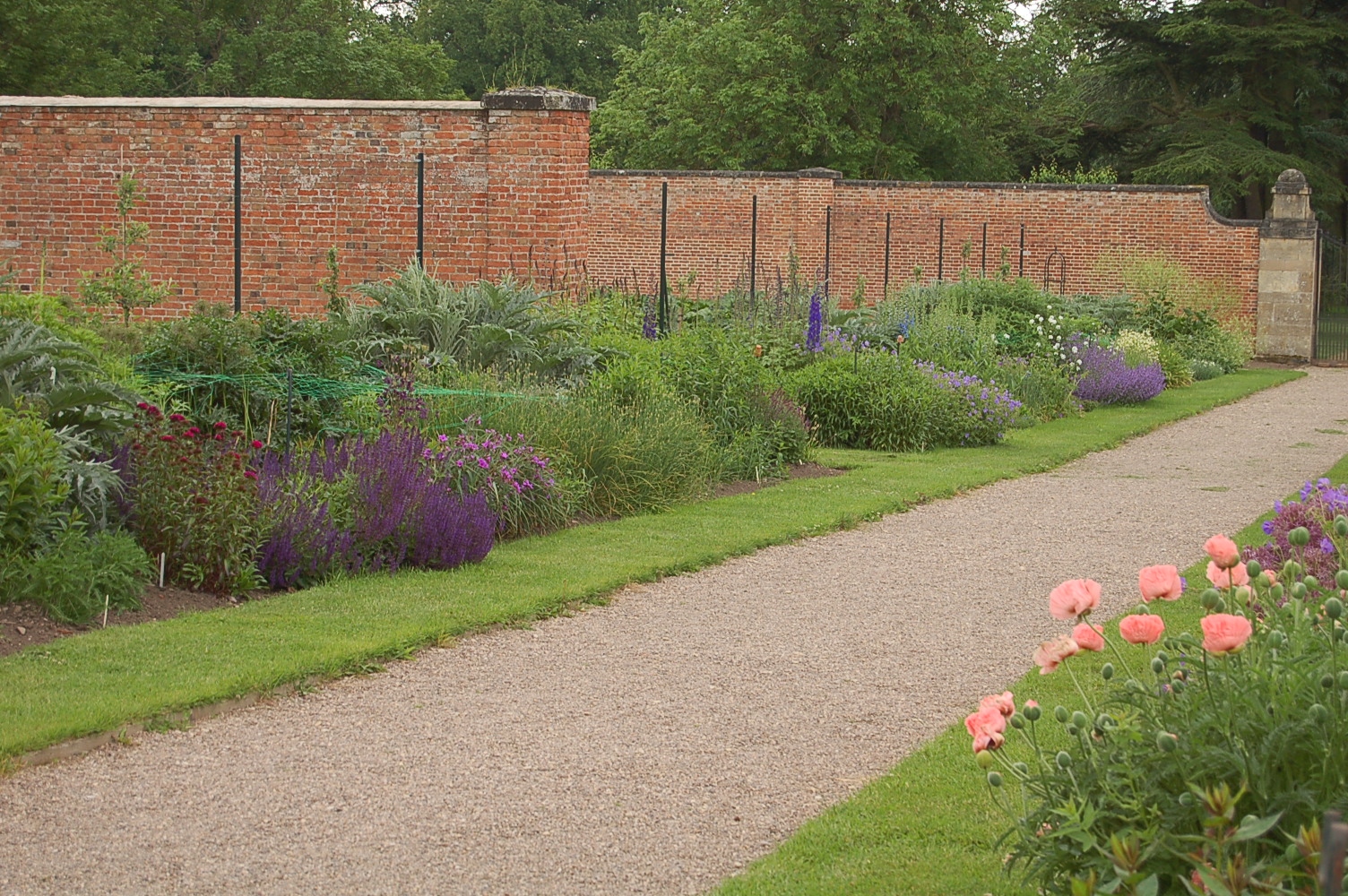
We have watched over the last few years how the walled garden at Clumber Park has been brought back to life. Although it is a few hours from home we visit at least once a year.
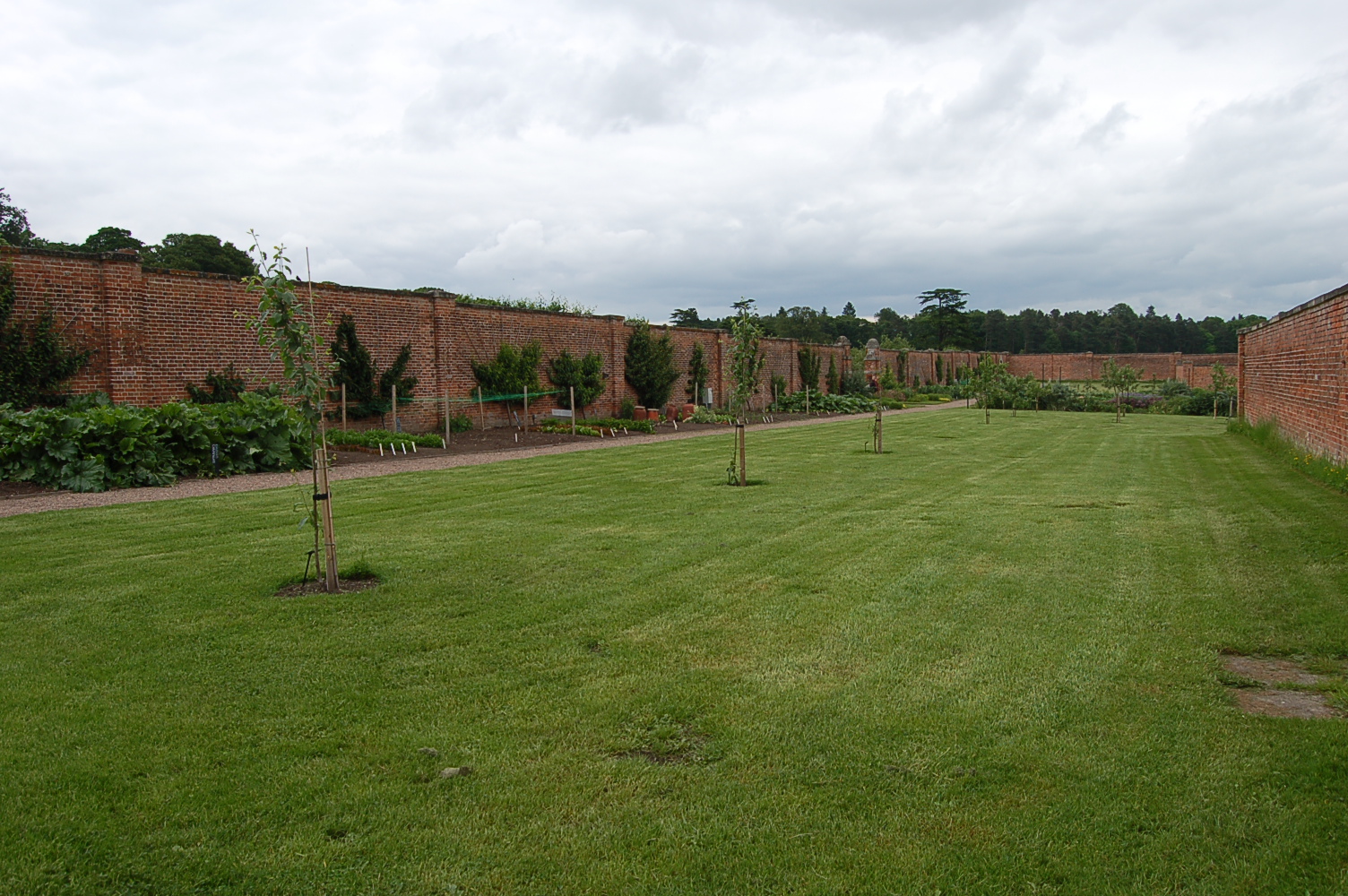
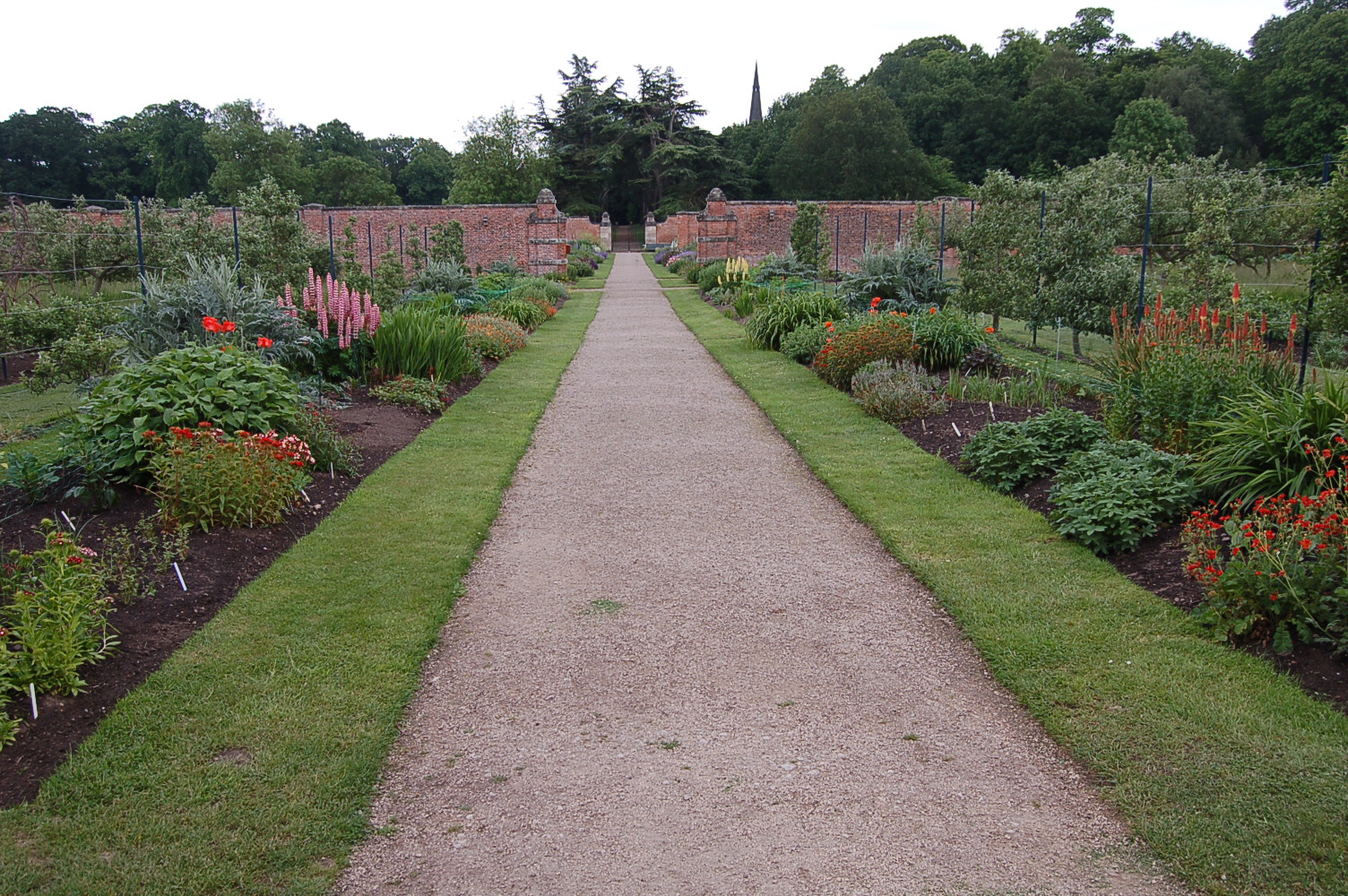
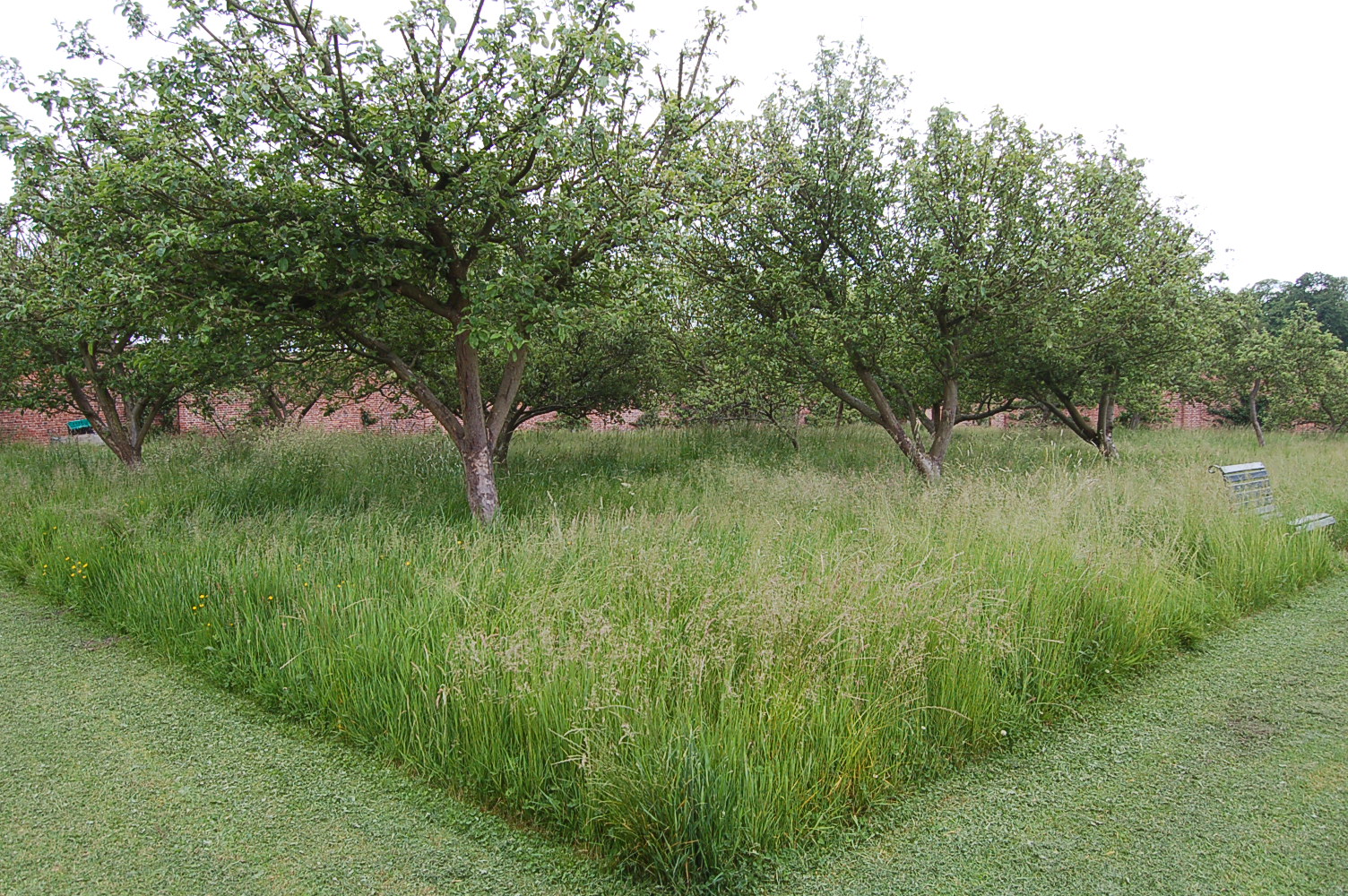
Now it is a peaceful place to wander around admiring the vegetable growing techniques, the orchards and the meadows beneath, the long flower borders, the trained fruit on the walls themselves and the national collection of rhubarb.
We were very lucky on this recent visit as we had our own personal guide who came around with us. He was grey haired and didn’t say a lot but he didn’t mind when I took his portrait.
We like to approach it along the dramatic avenue of cedars where the enticing view of the distant old gates within the warm red of the tall brick walls draws us in. The cedars themselves have such sculptural qualities and an air of mystery pervades the shadows under their glaucous sweeping branches some scooping down to touch the grass below.
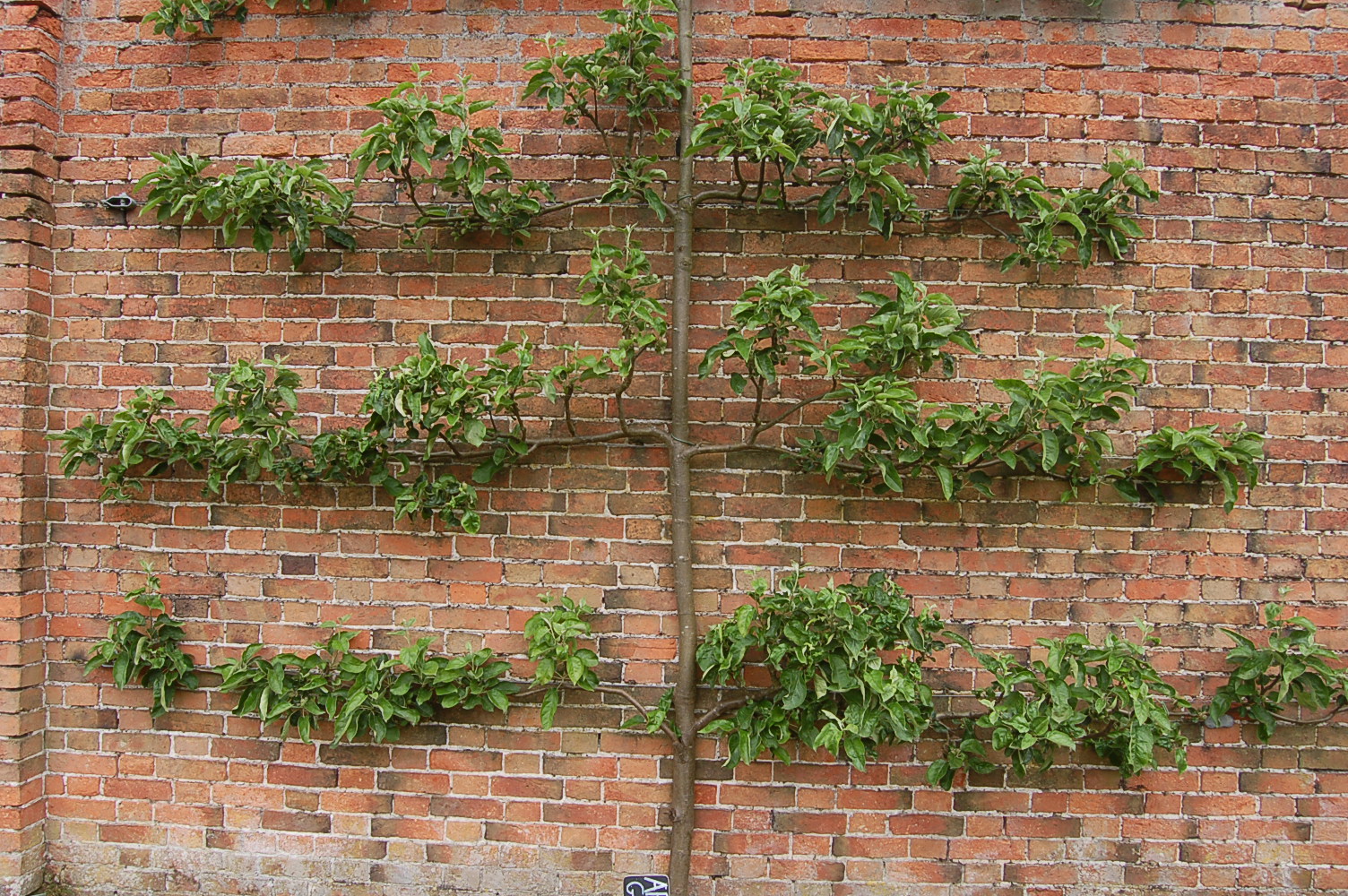
The tall warm bricked walls are now protecting skilfully trained apples, pears, peaches, cherries and figs. In the open a collection local varieties of fruit are being established and in the borders below the walls herbaceous plants, herbs and the National Collection of Rhubarb varieties flourish.
The wide central gravel path that bisects the walled garden runs from the main gates to the greenhouse. It runs between a colourful double herbaceous border.
Old fruit trees remain to give a sense of continuity and sit comfortably amongst gently swaying meadows. We were delighted to see a Medlar in flower.
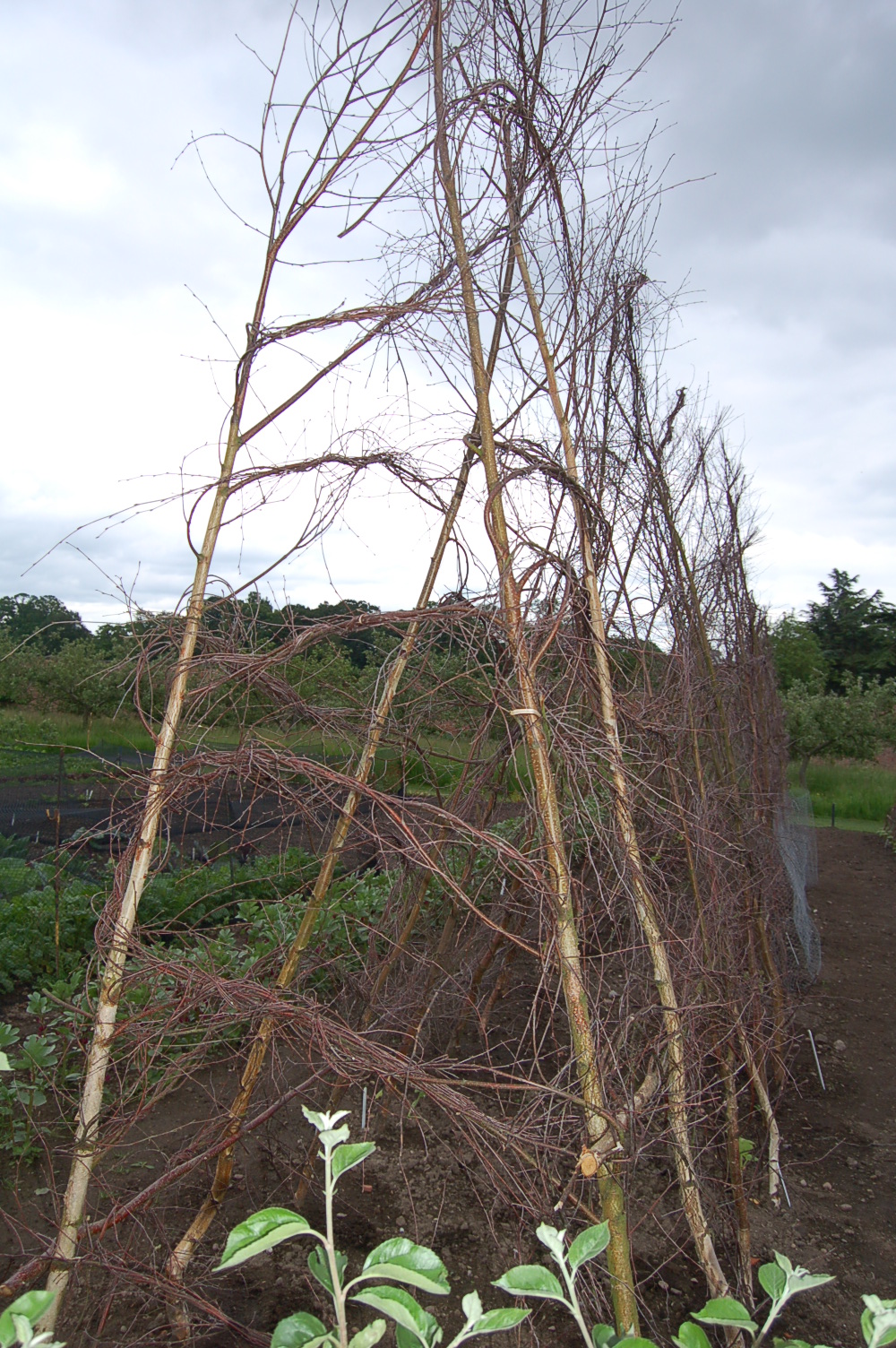
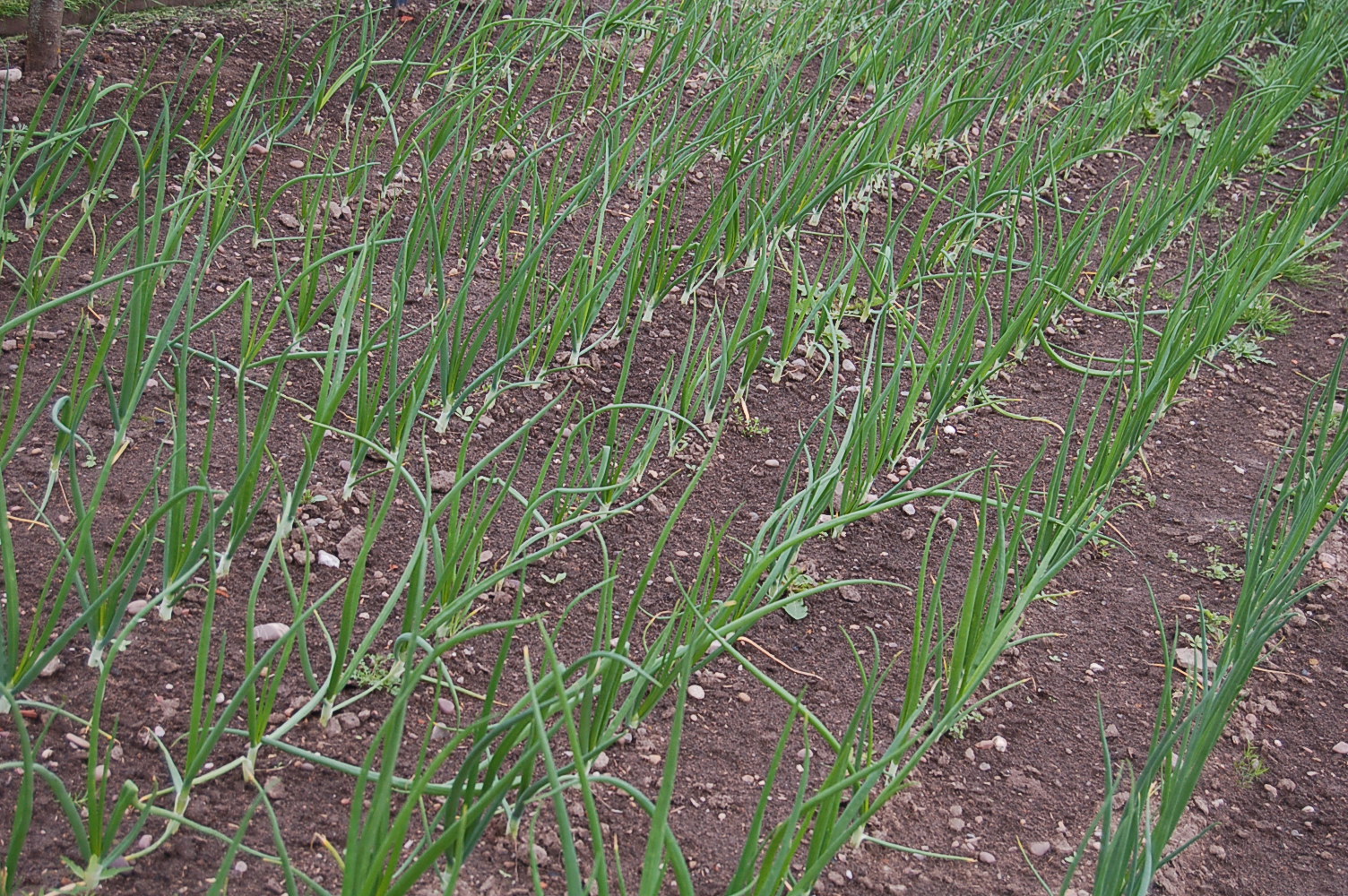
We enjoyed discovering ideas to take home with us as we moved within the vegetable growing areas, such these rustic supports for peas and sweetpeas made from birch prunings. Much of the productive planting was done in neat, long and impressively straight lines.
Being run along totally organic lines the walled garden was well-provided with bird nesting boxes and insect shelters to attract beneficial insects.
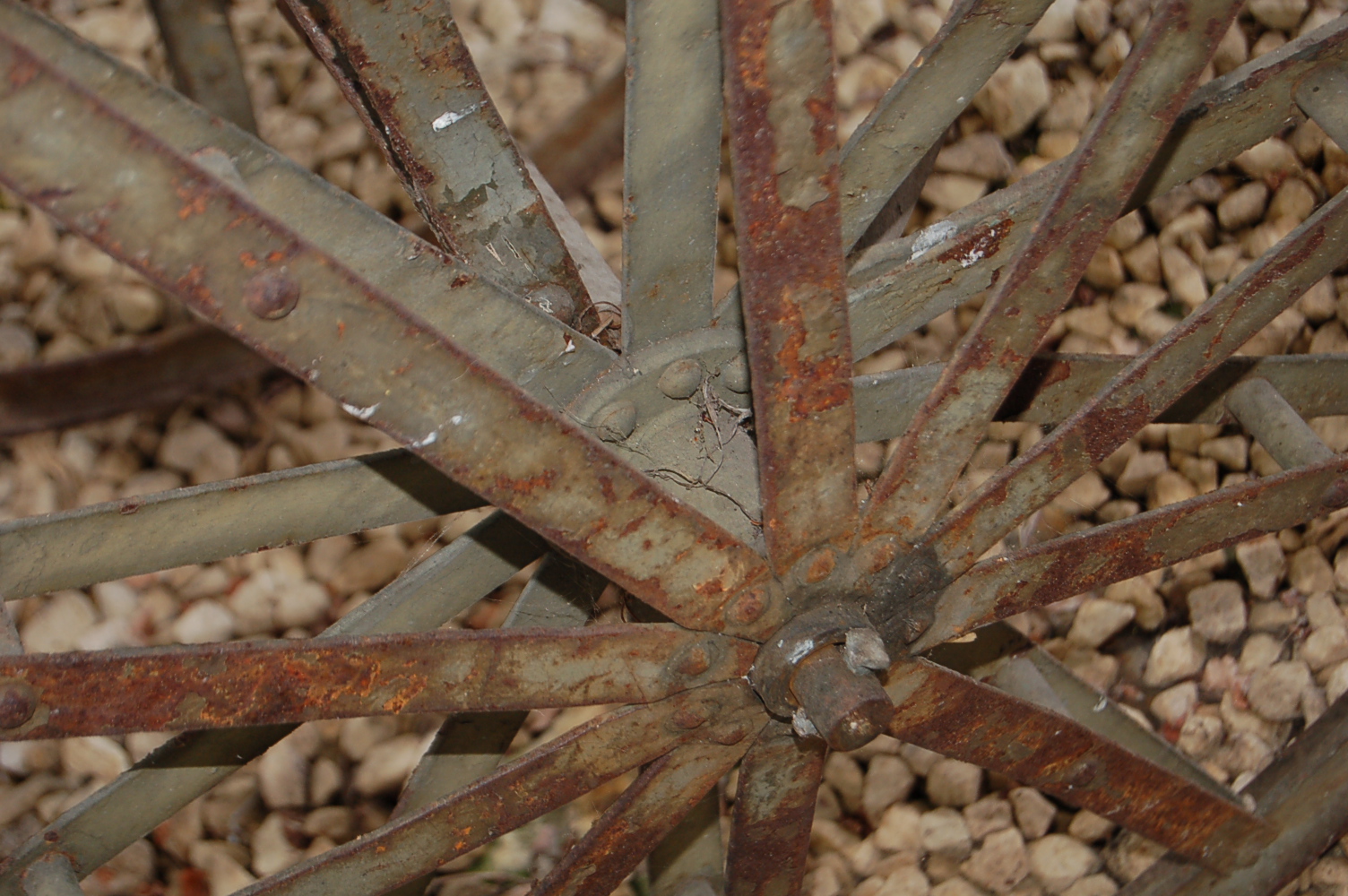
As we wandered around we noticed amongst the productive rows of veggies, this beautiful Victorian glass and metal cloche still in regular use. It performed as well now as it always has done just like the walled garden itself.
As we prepared for our journey back to Shropshire, our helpful little cheery guide waved a small wave and wandered off.
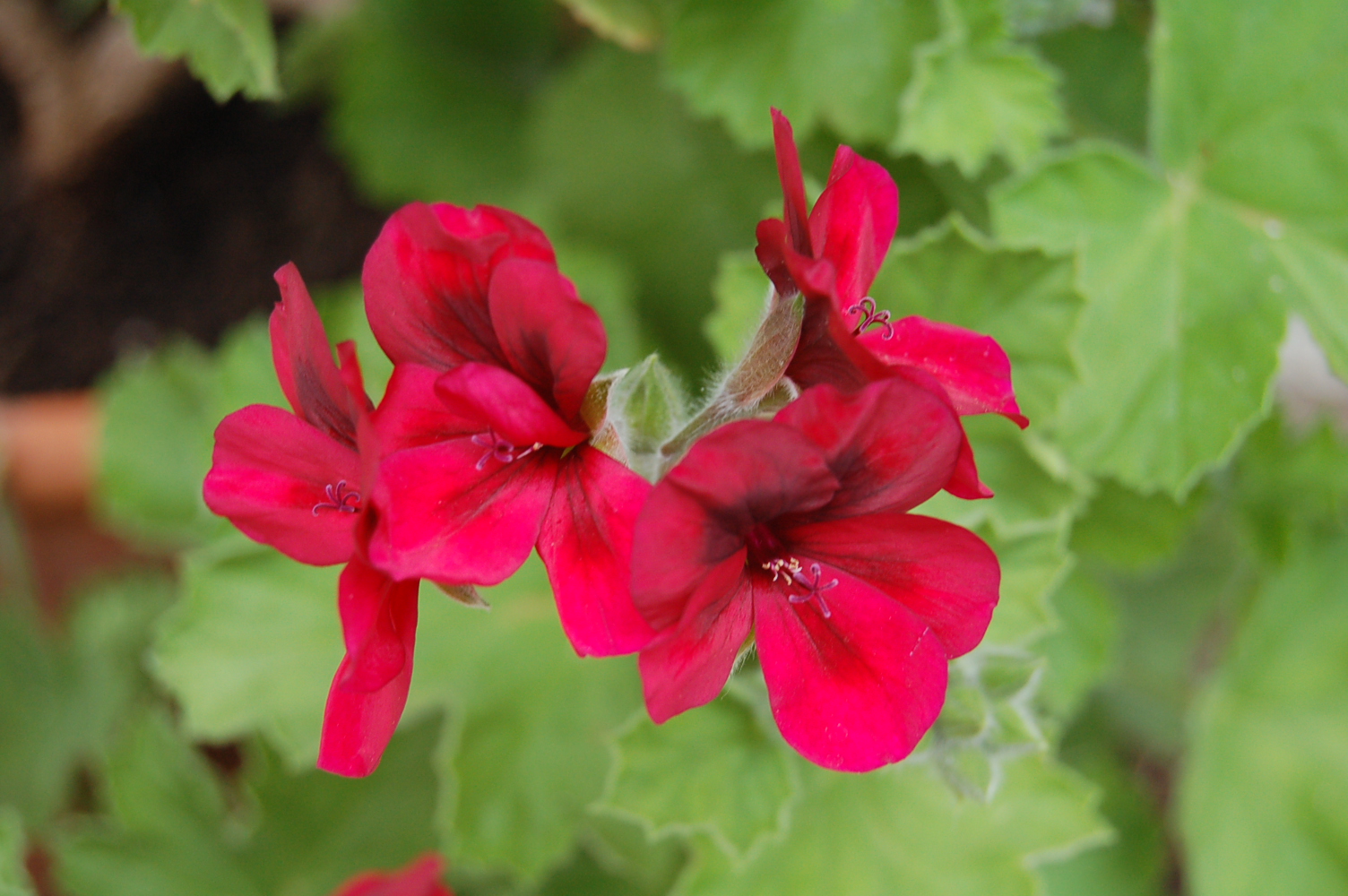
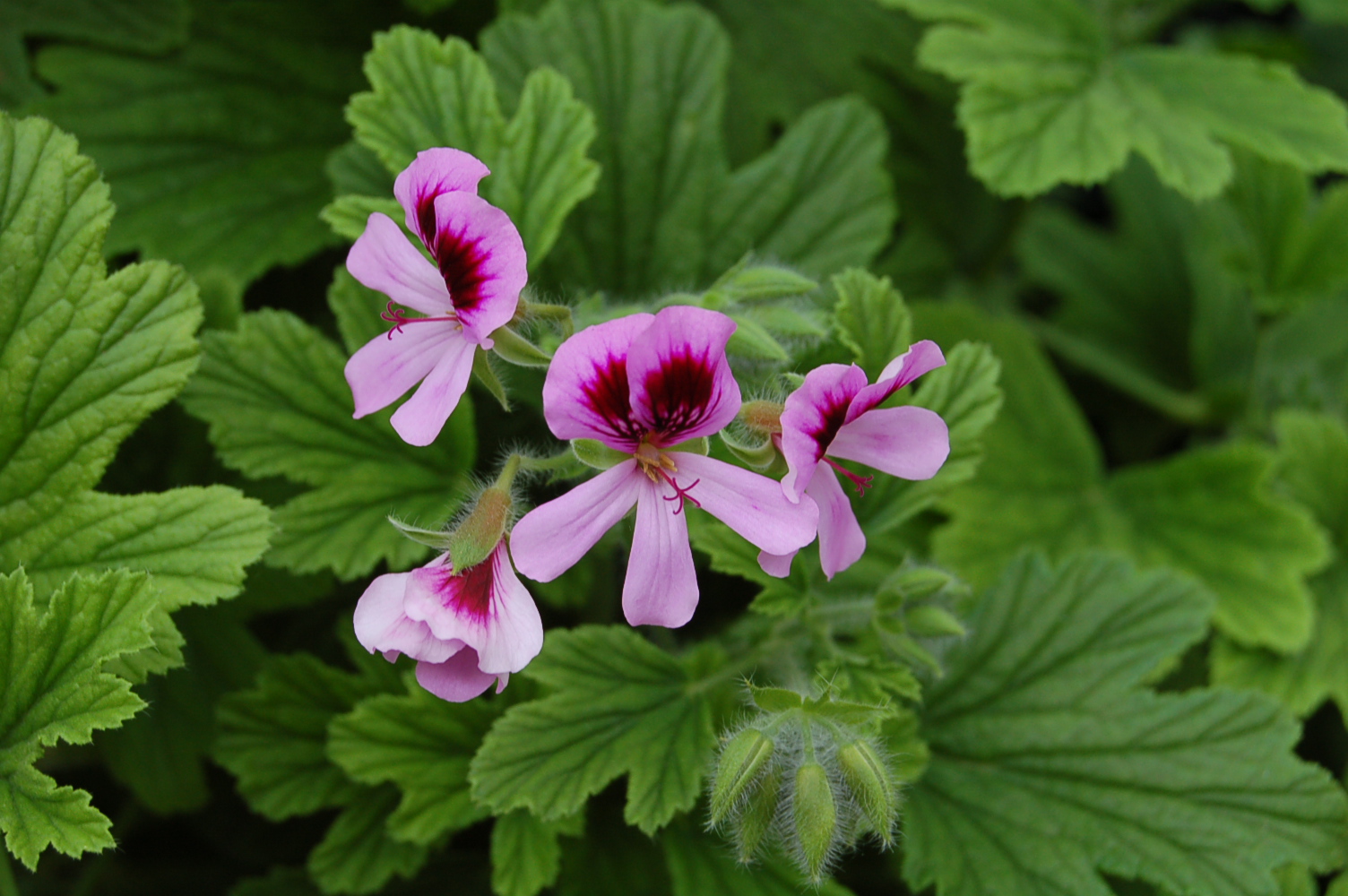
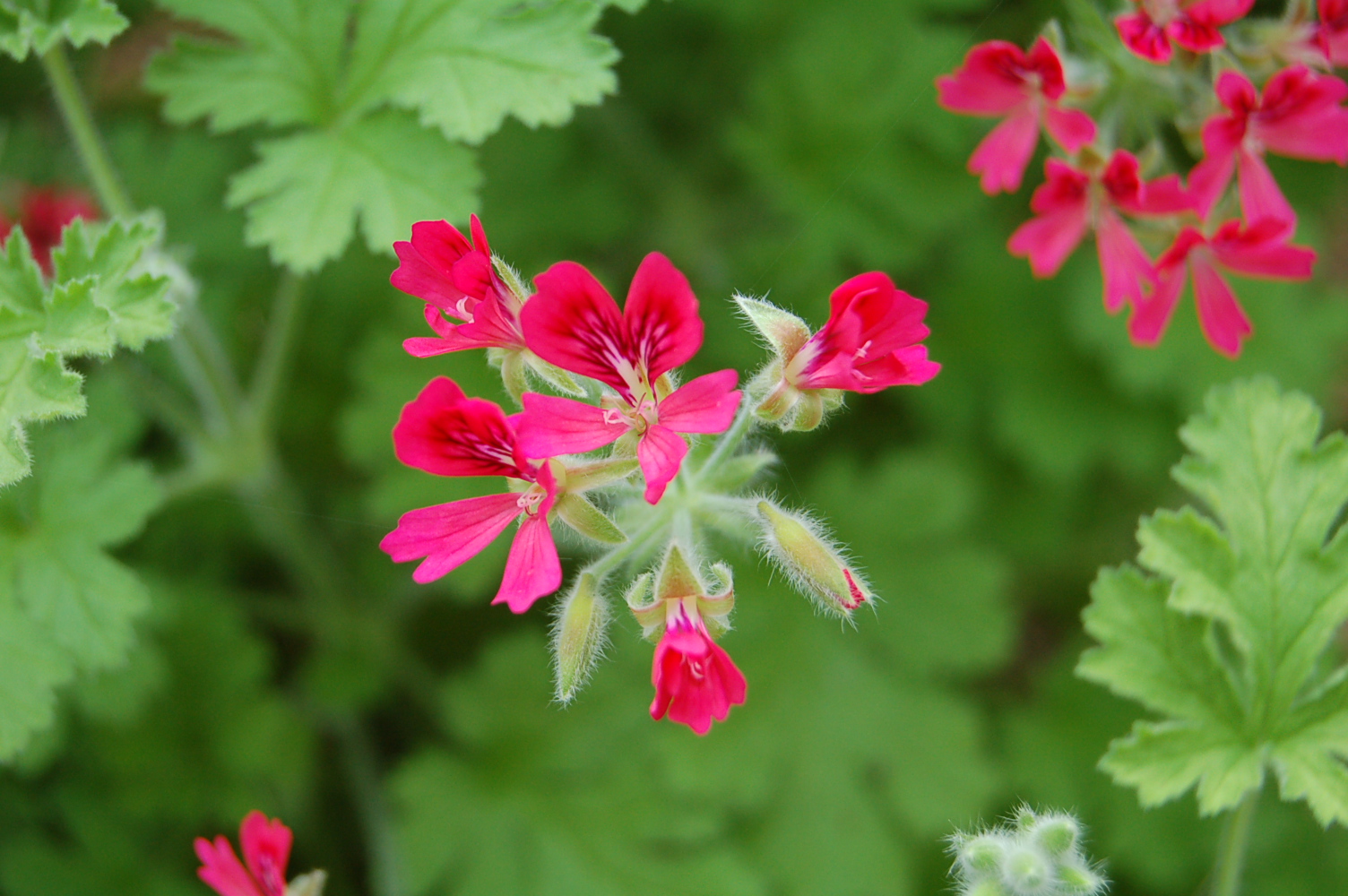
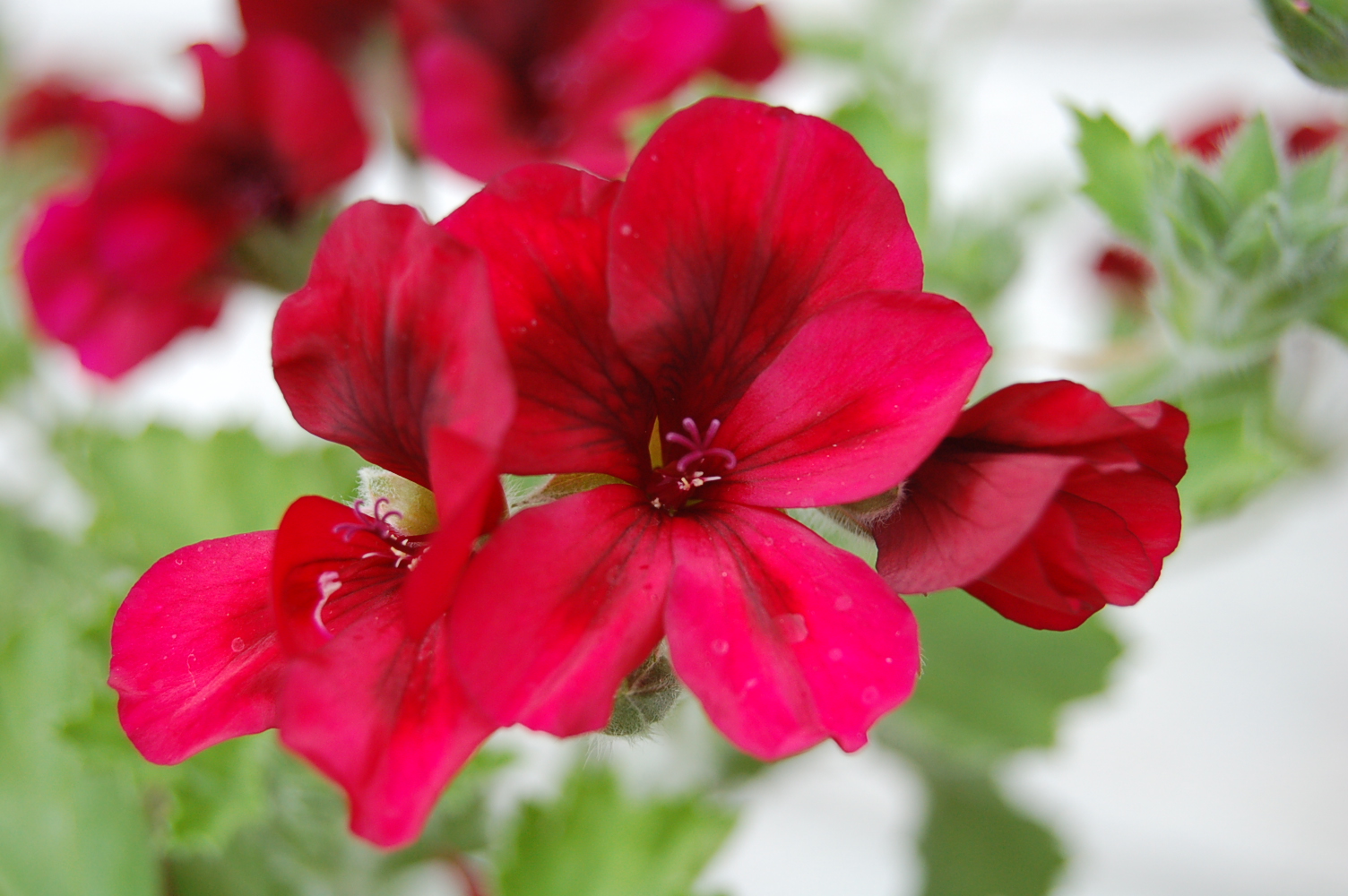
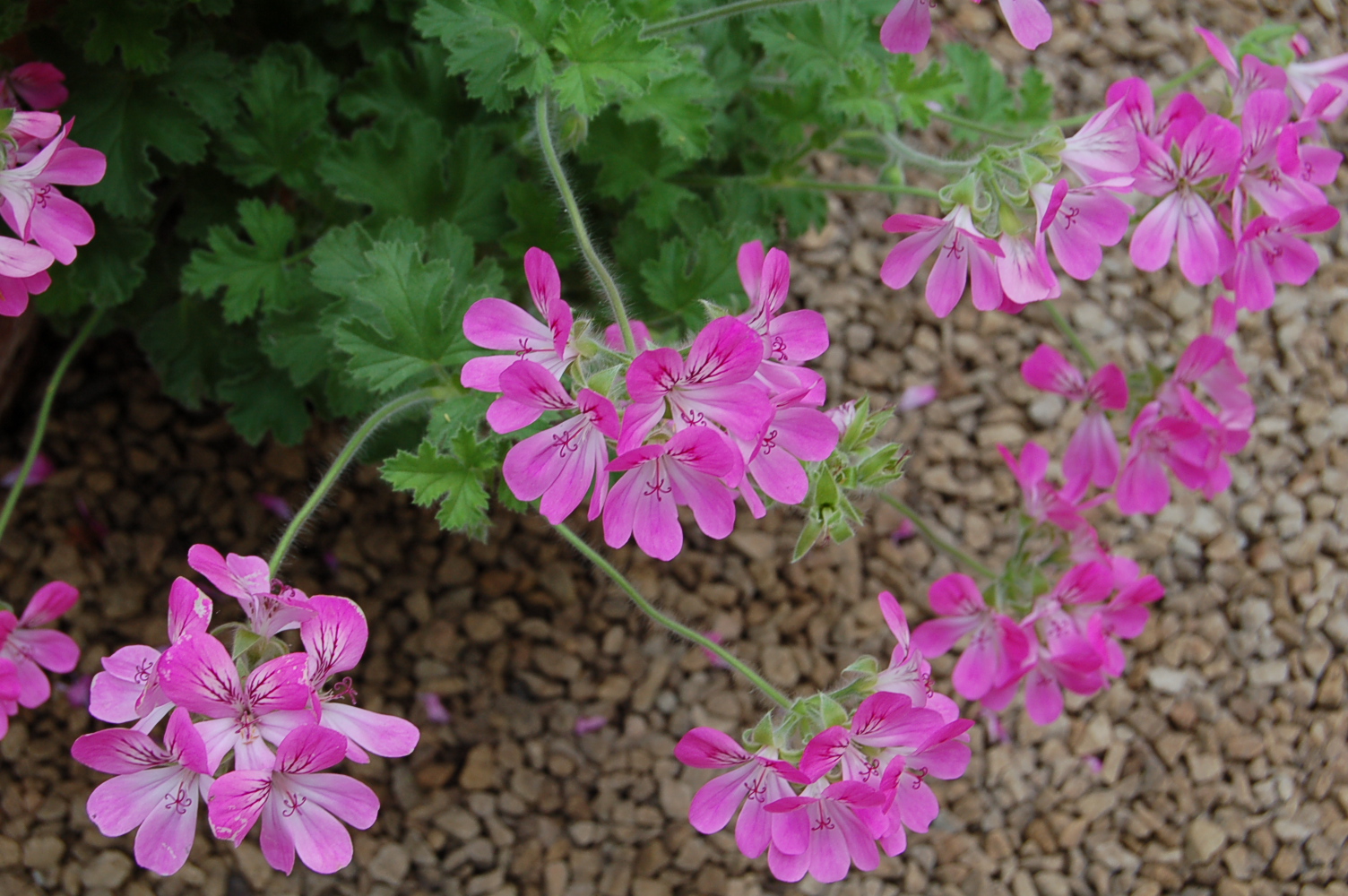
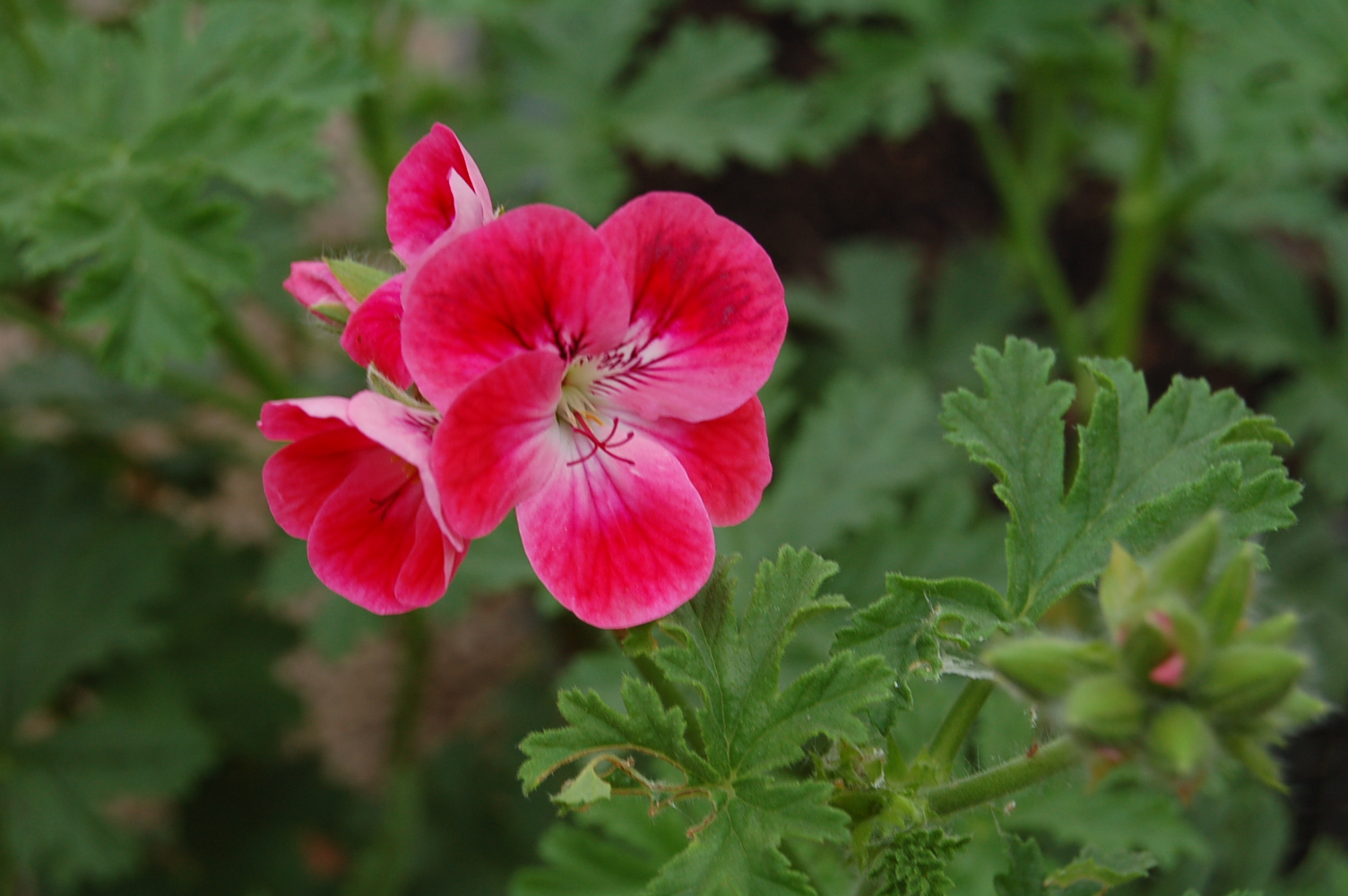
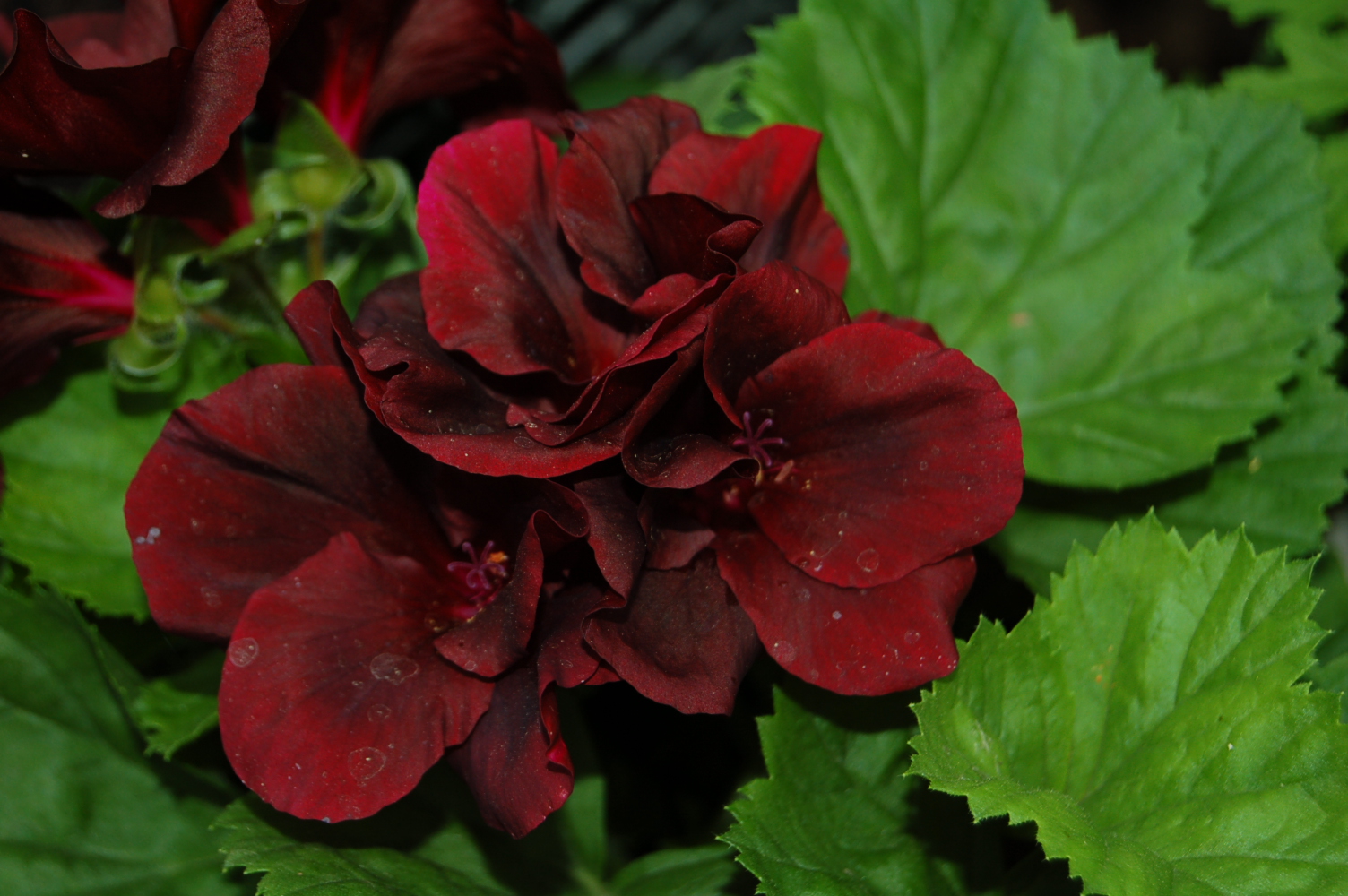
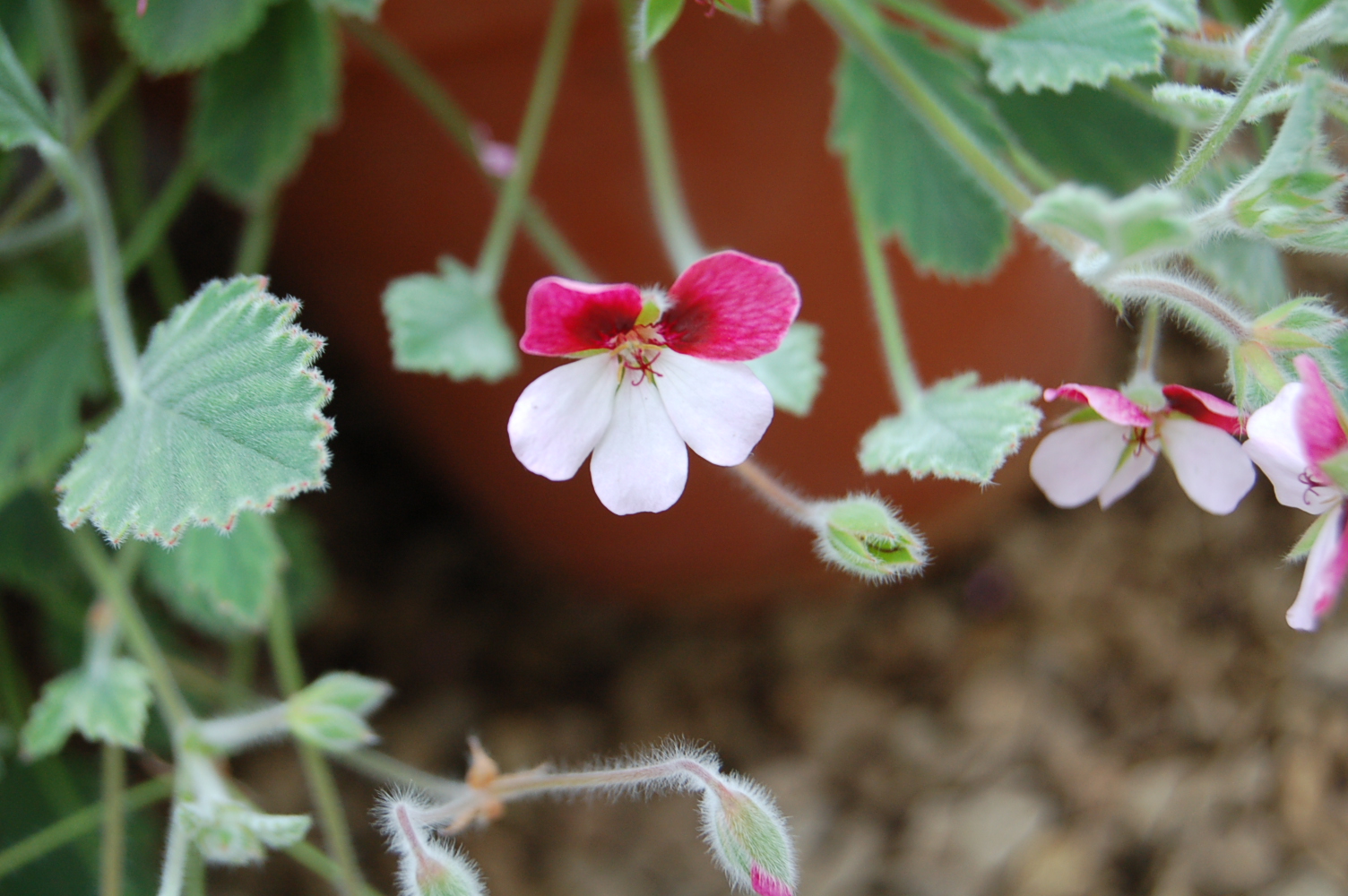
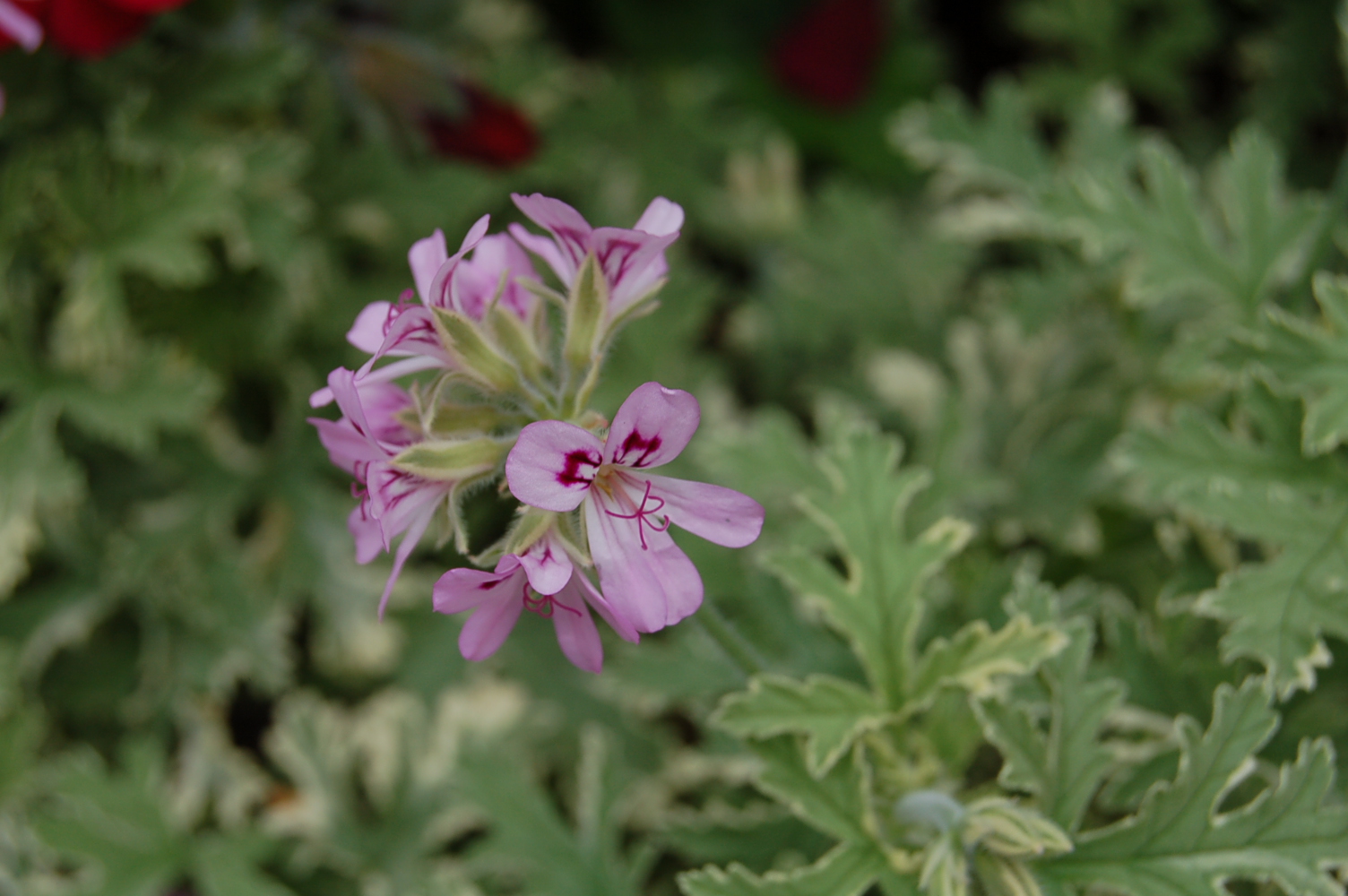
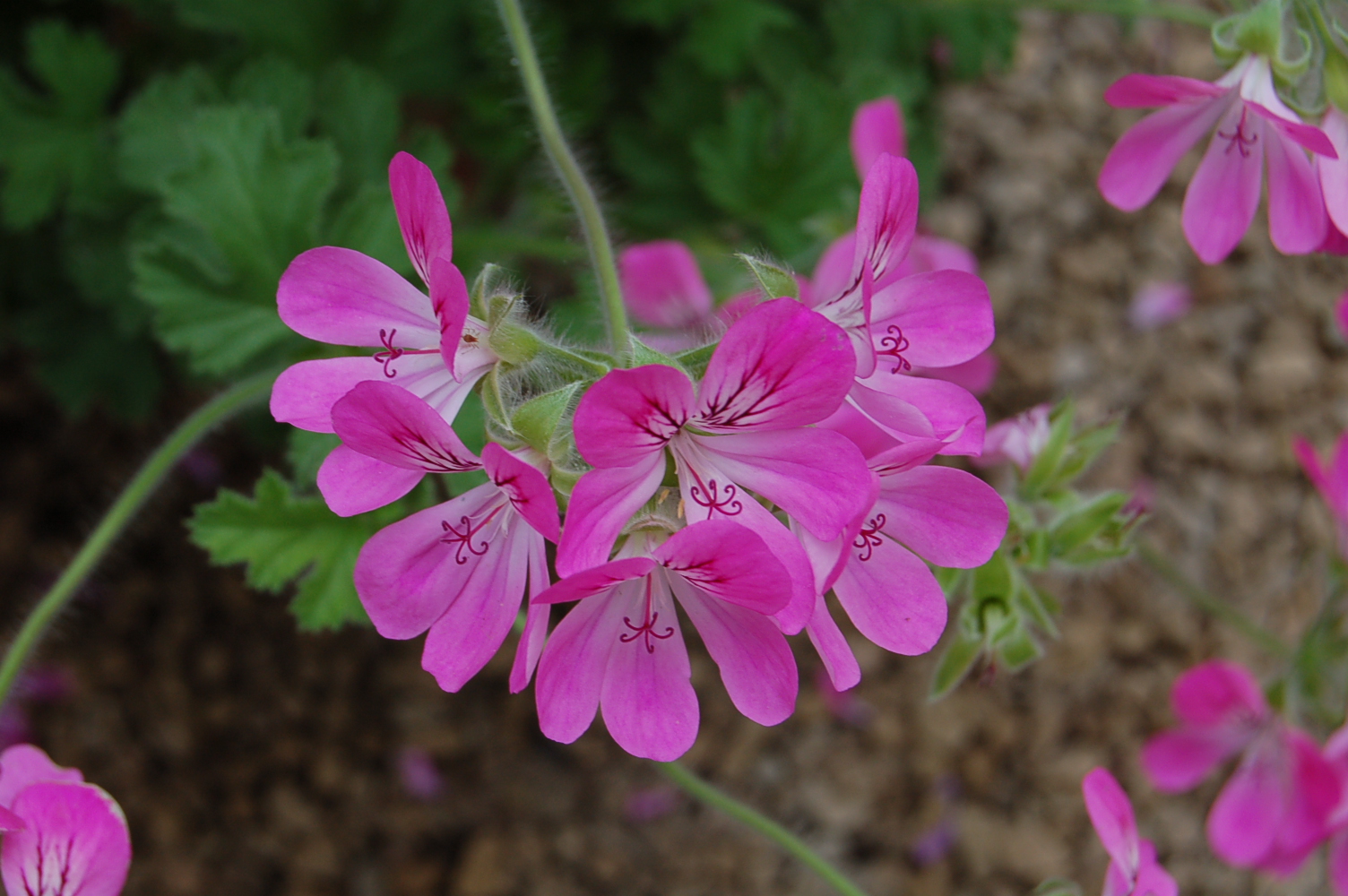
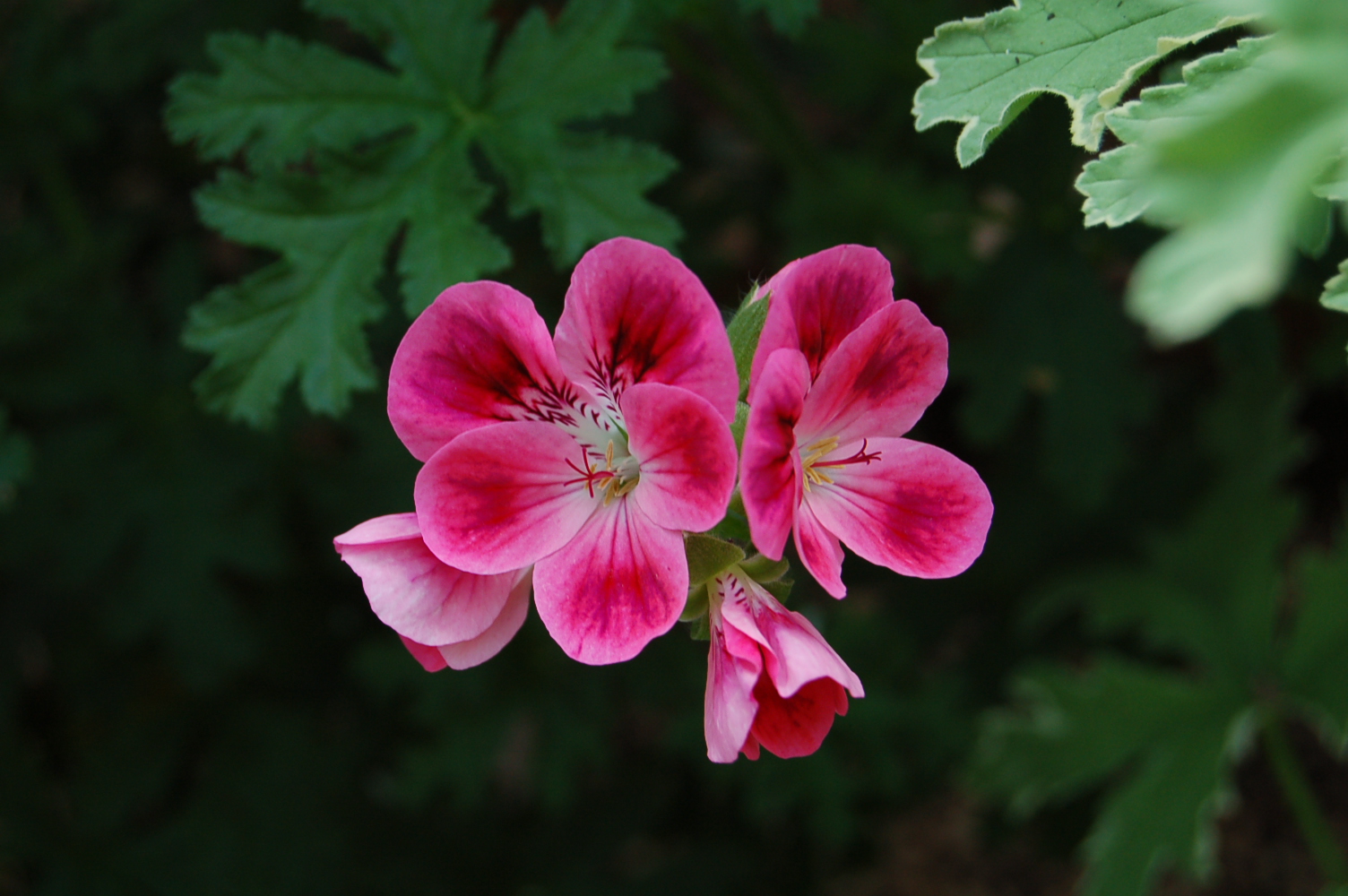
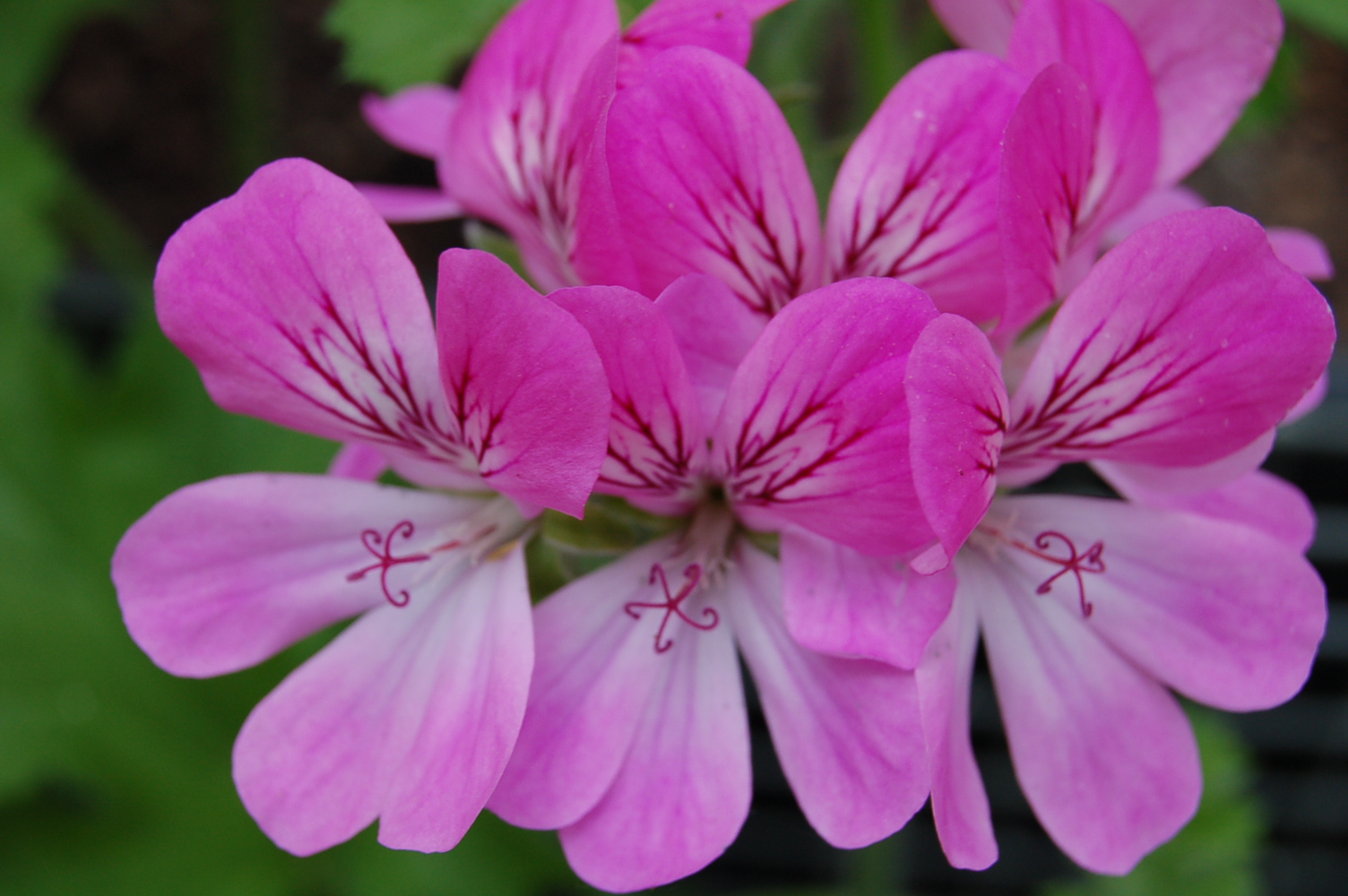
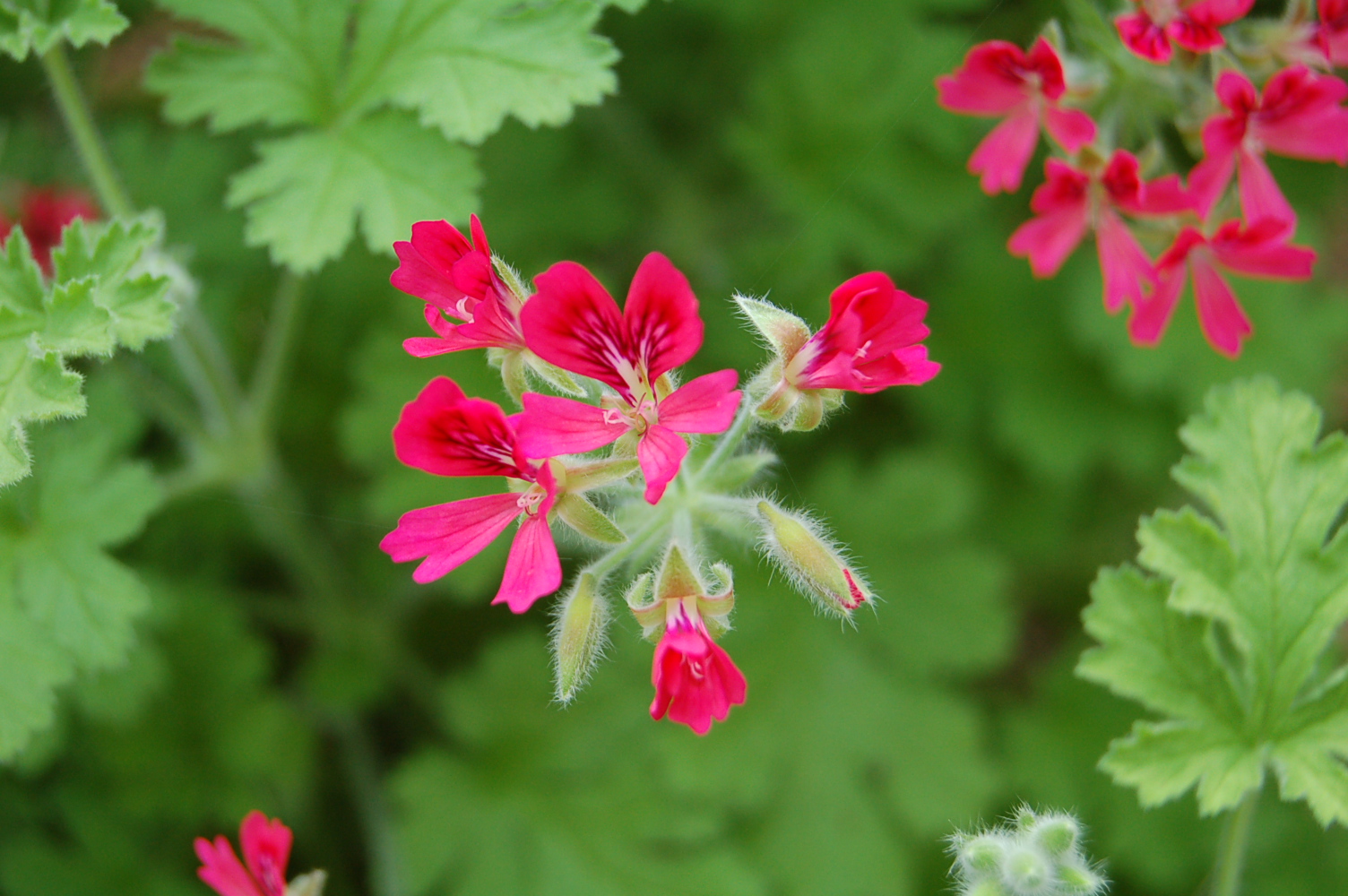
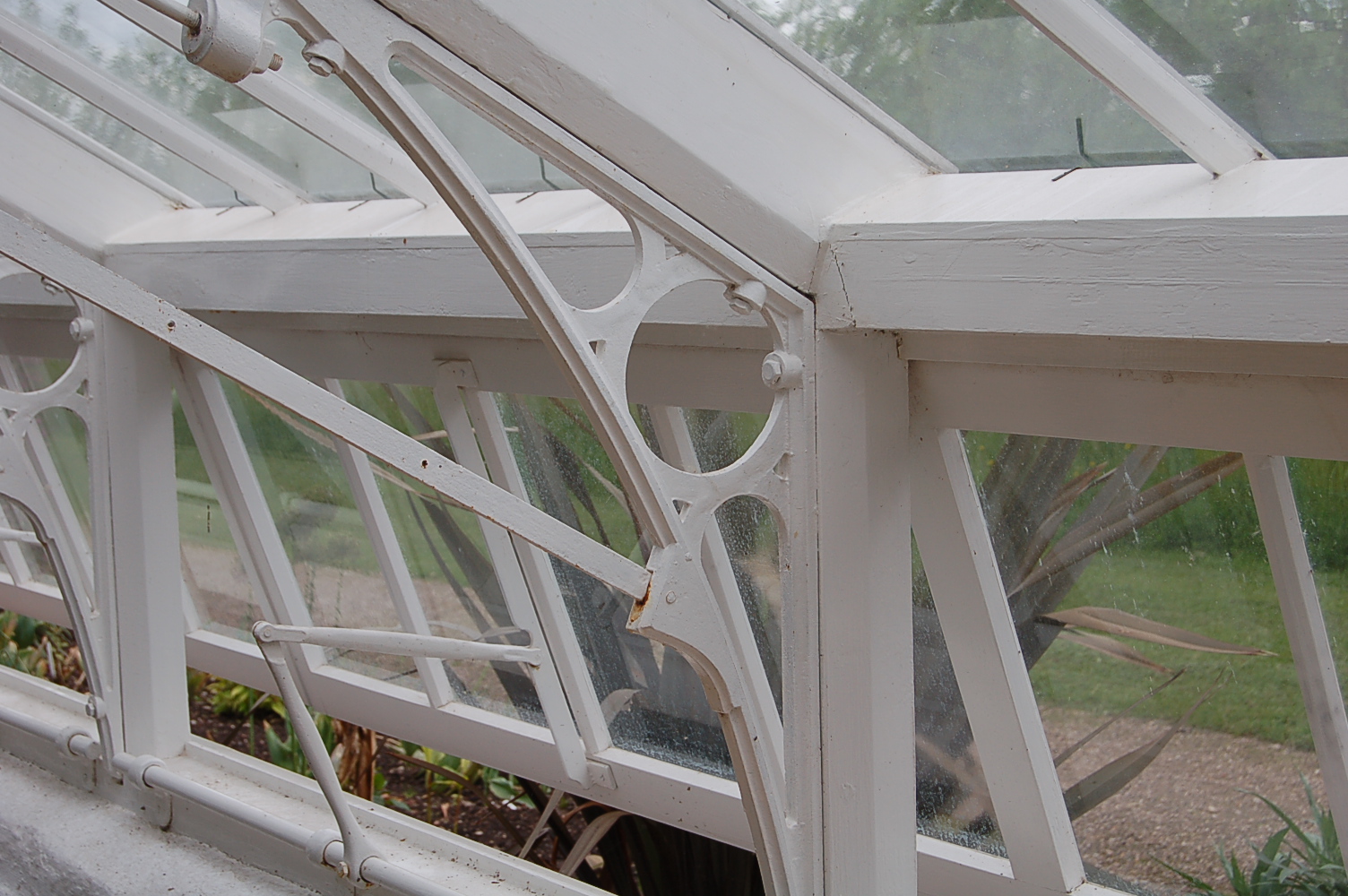
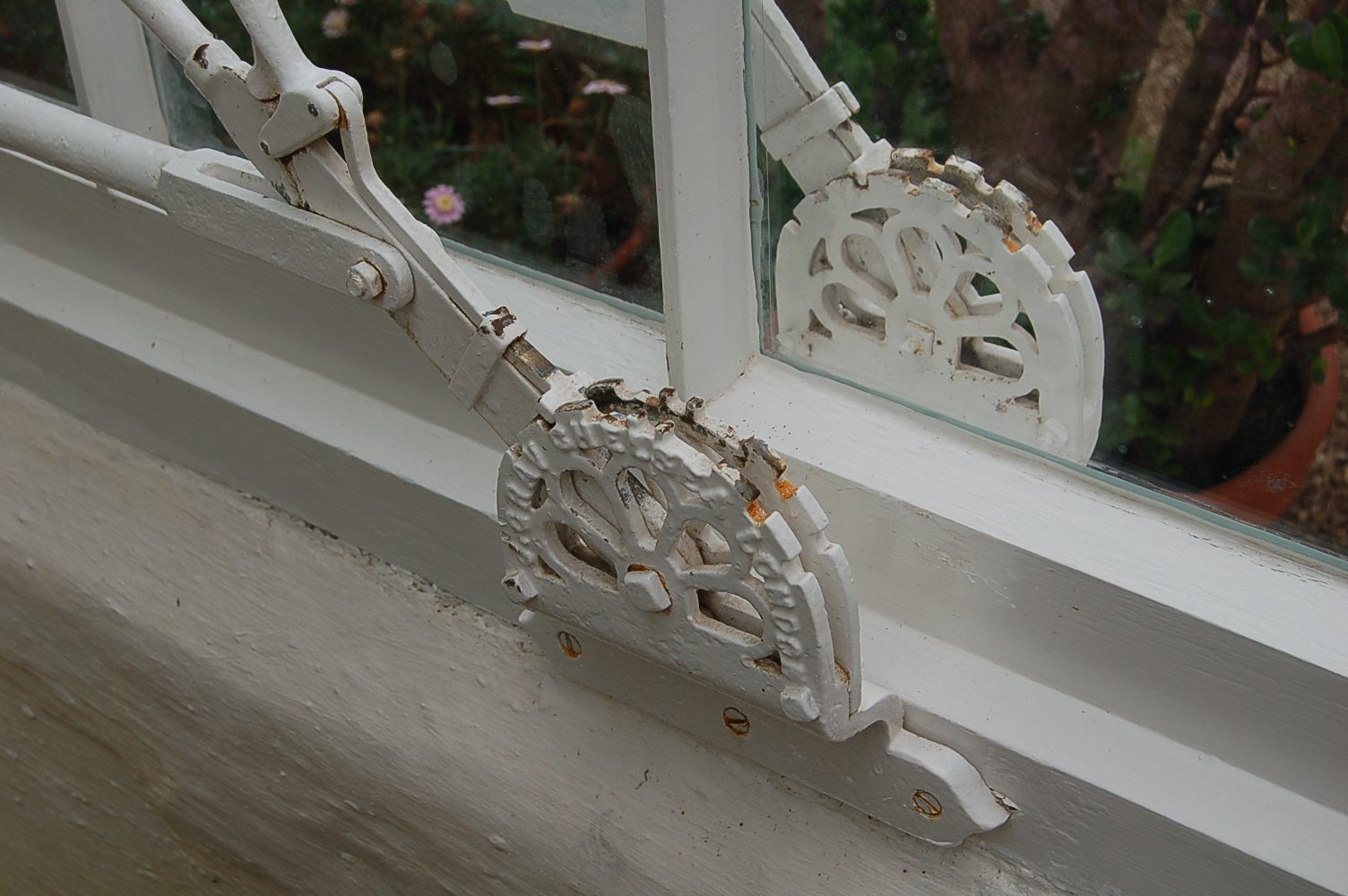
The beautiful, immensely long renovated Victorian greenhouse at Clumber Park never ceases to amaze. When we first visited Clumber the greenhouse looked sad and neglected but we discovered that plans were afoot to return it to its former glory. We were delighted to find one section which now housed an amazingly varied collection of Pelargoniums. Shades of pink. Fruity scents. Textured and patterned foliage. I can share these with you through my photographs.
A word of warning – if you have a total aversion to pink look no further!
Clumber Park, a National Trust property in Nottinghamshire, is famous for its walled garden and we recently spent a few hours wandering around enjoying the productive beds, orchards and herbaceous borders, but the highlight has to be the huge renovated Victorian greenhouse. We were enthralled by the details. Enjoy sharing them with us.
Shropshire’s largest river is the Severn, one of the most impressive and longest in the UK. We usually walk its banks in our county town of Shrewsbury, for being strongly averse to towns and cities we need the riverside walk as an antidote. But today we decided to go a few miles southwards and find it as it meanders through the beautiful south Shropshire countryside. We parked up near Alveley and ambled our way down towards the river and the woodland on the lower slopes of its valley. The area is a country park jointly maintained by the National Trust and Shropshire Council so there is good parking and a small visitor centre with cafe. But walk a hundred metres or so from the centre and you are right out in the countryside away from signs of civilisation, except for the occasional sound of the steam engines running through the valley on the Severn Valley Railway, the chugging sounds of the engine working hard to get up slopes and the regular hooting as it crosses level crossings.
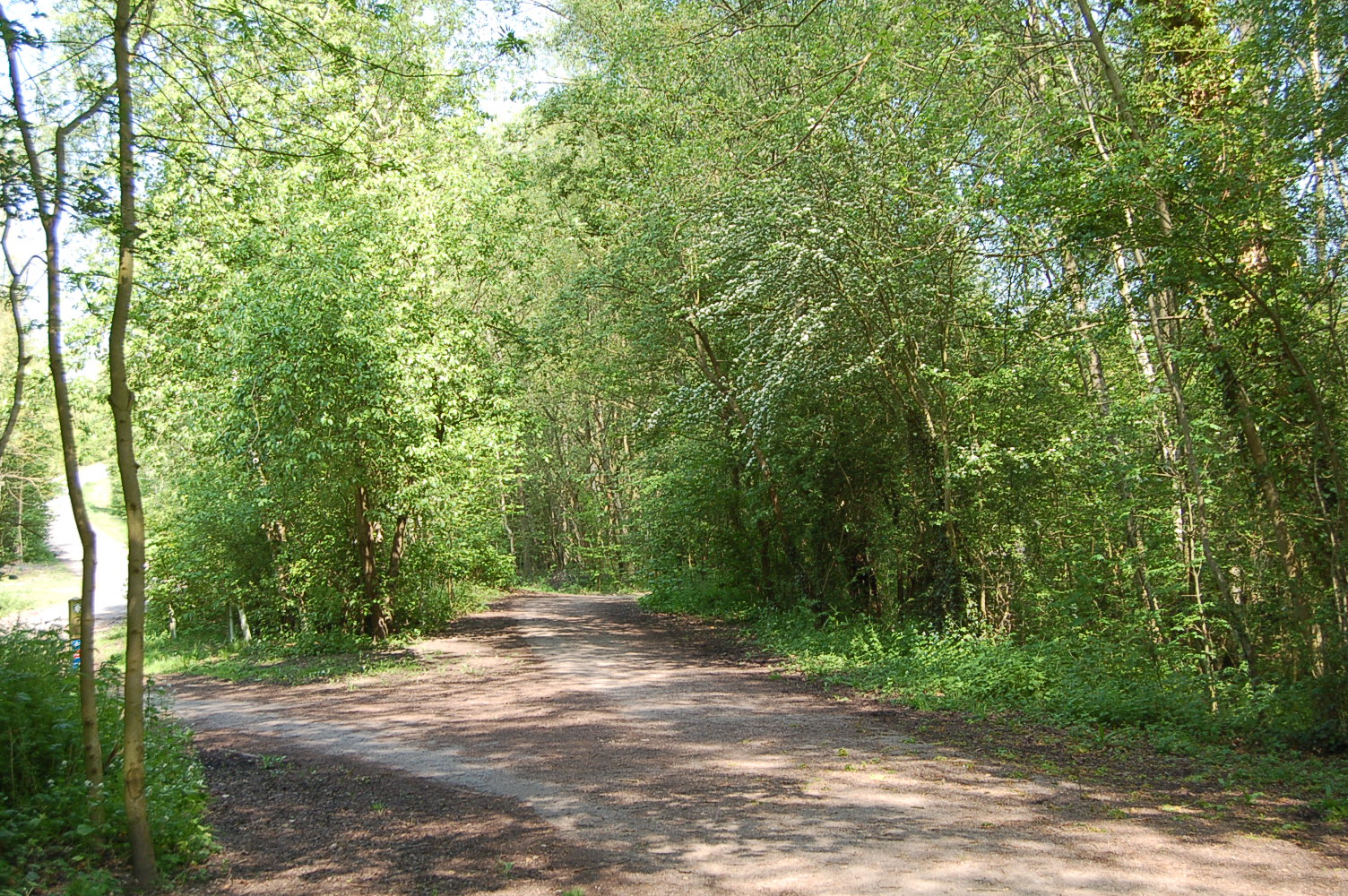
The track down to the river.
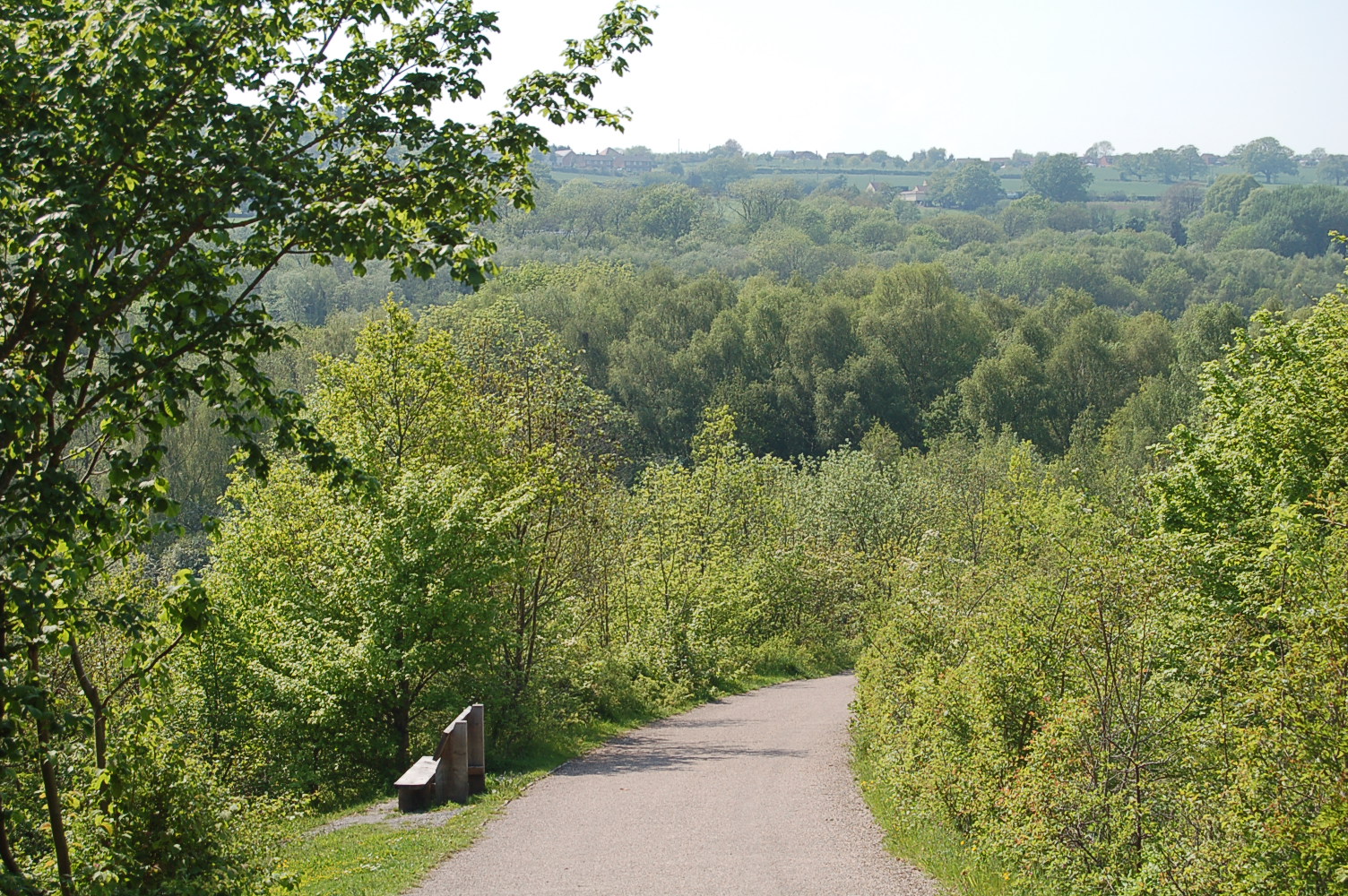
The walk down to the river is a gentle sloping pathway through young woodland interrupted by occasional areas of old industrial landscape which is being reclaimed by mother Nature. Unusual small plants are colonising and tree seedlings only a few inches tall are making inroads into man’s mess. Here a Pied Wagtail deviated from its tail wagging zig zag amble to catch an insect above a clump of tough grass. A true surprise met our eyes – a Black Redstart a bird I had not seen for decades and one Jude had never seen before. They inhabit areas of rubble and human disturbance so this is just perfect hangout for them.
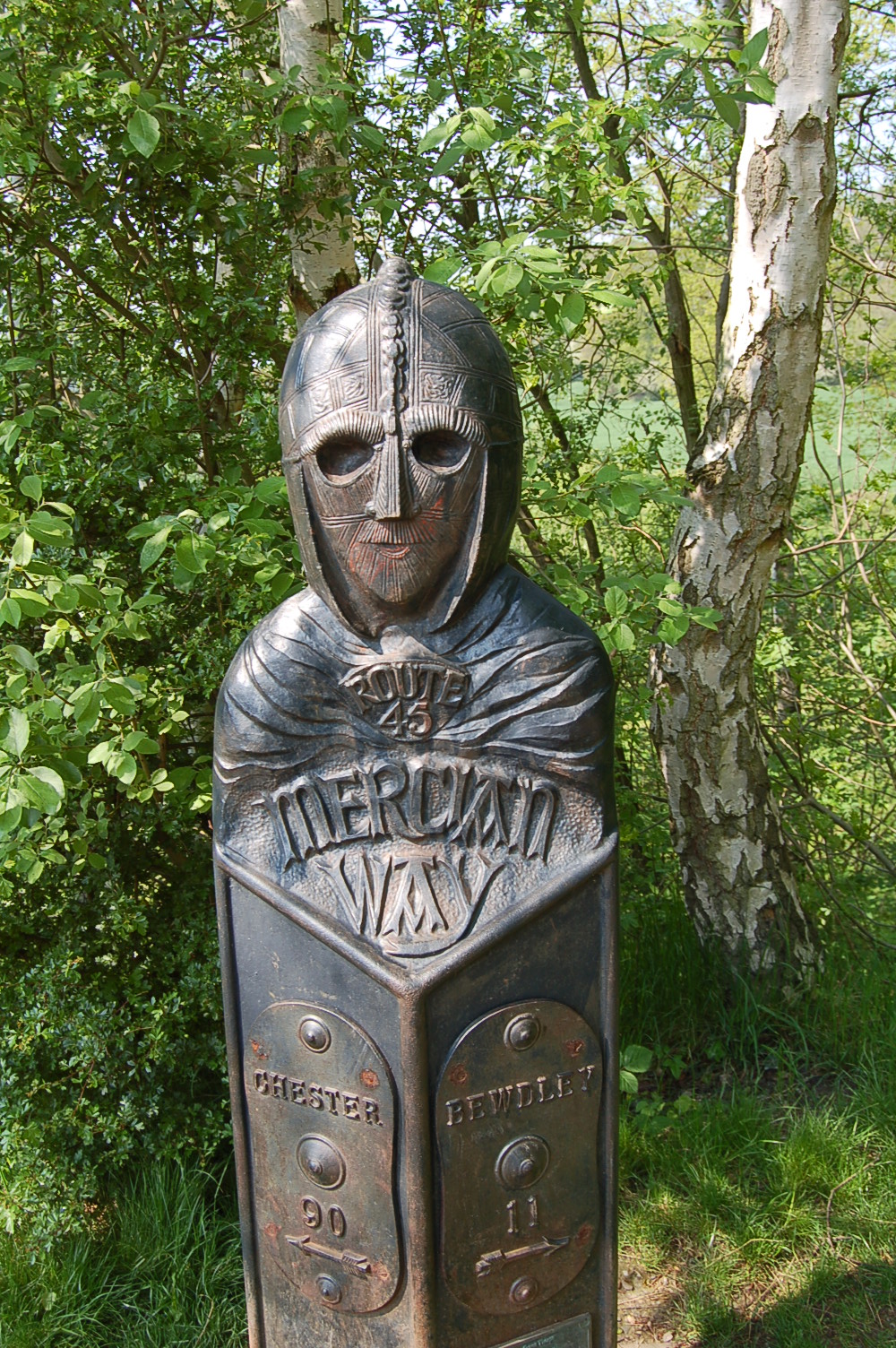
The candle shaped flower cluster of a Horse Chestnut Tree.New foliage of Oak tinged with bronze.A view from the path into the wooded valley side.We choose the left fork.An impressive modern milestone.A clearing revealed a view of the Shropshire countryside.
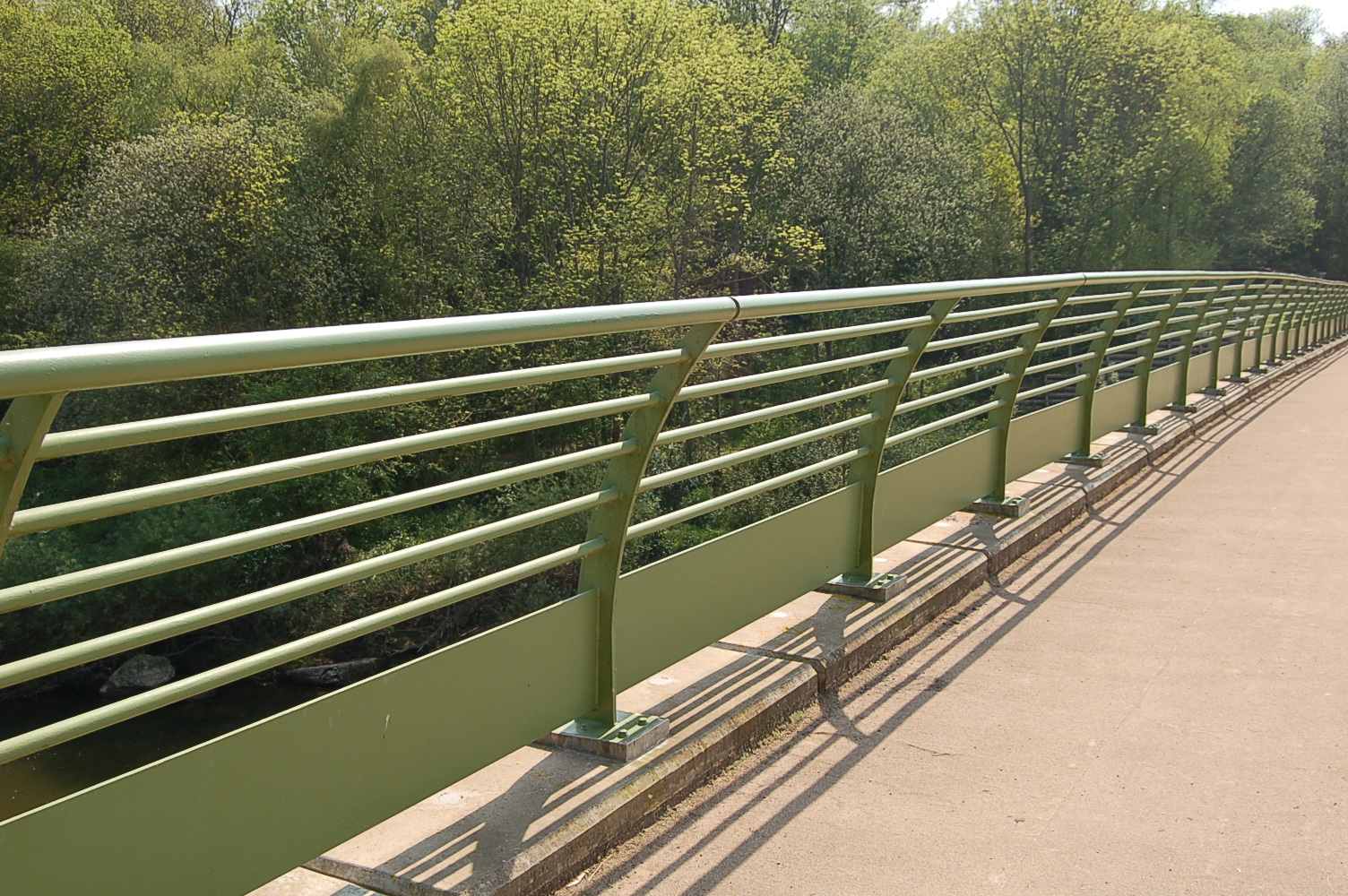
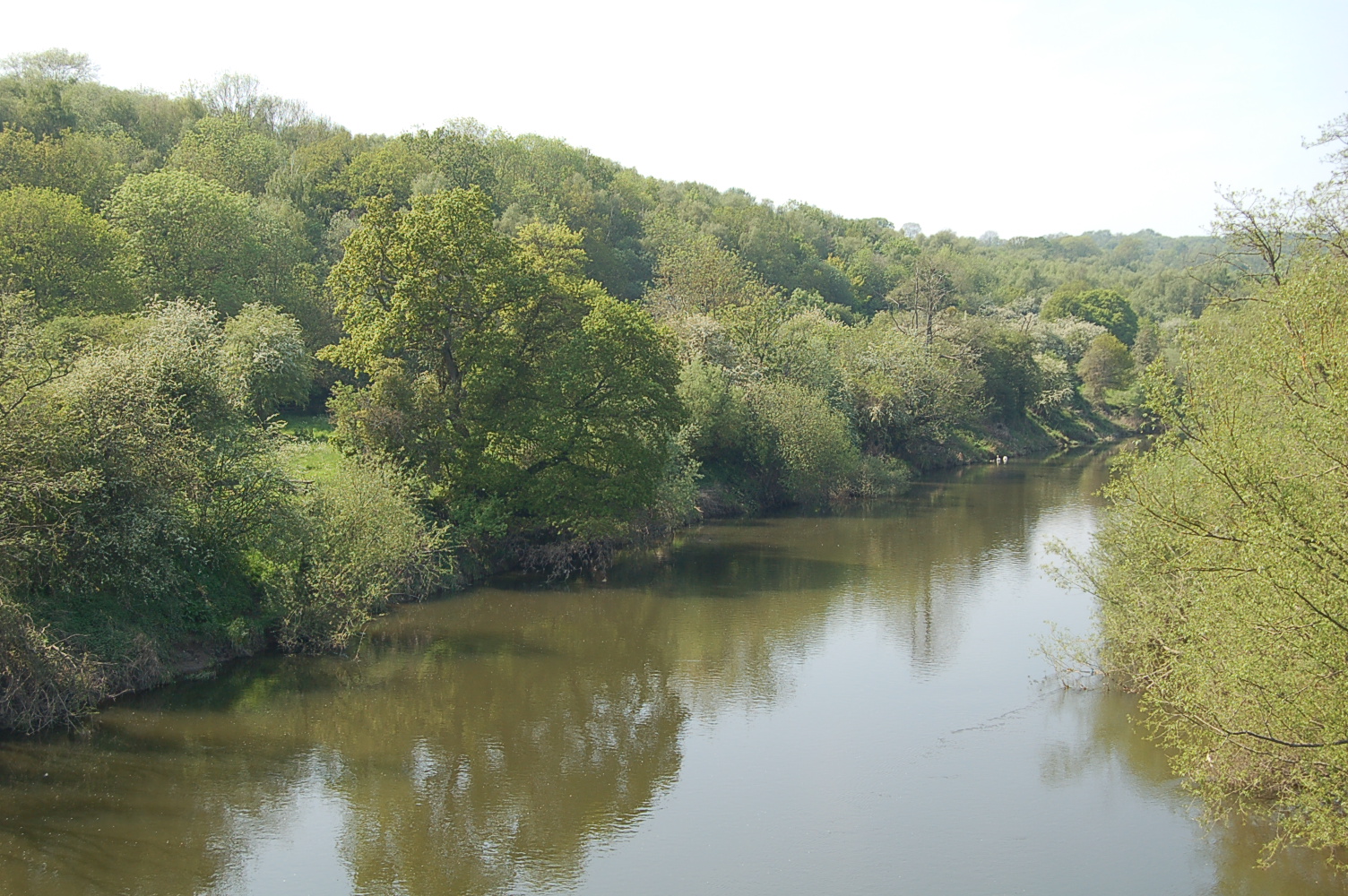
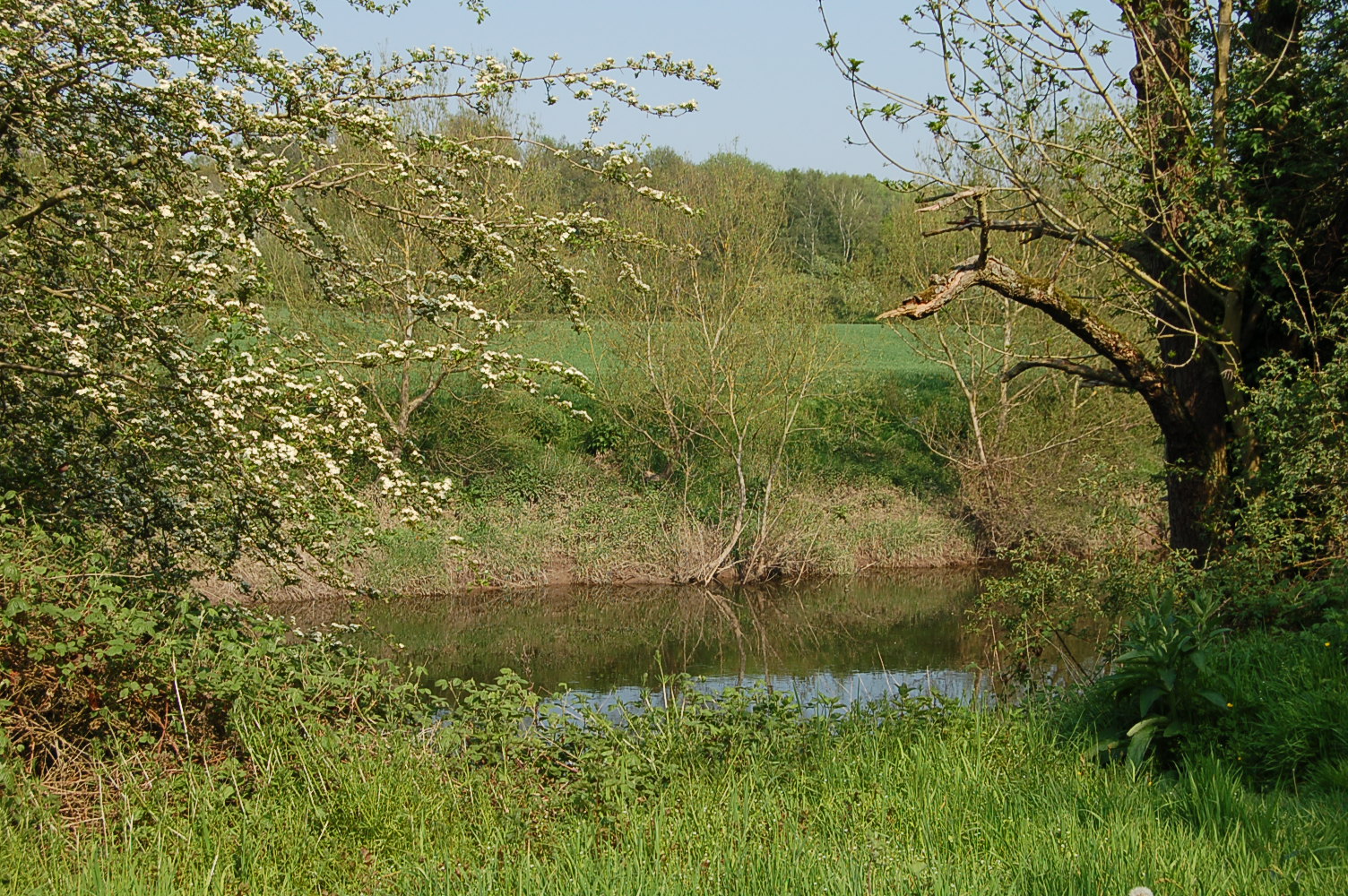
The footbridge over the river is an impressive curving structure, but not as impressive as the views up and down river. The Severn here is wide, tree-lined, deep and slow-moving and home to a family of Mute Swan with six cygnets. We did not spot the keenly anticipated Kingfishers, but that was the only disappointment of the day.
A rather smart bridge carries the path over the Severn.
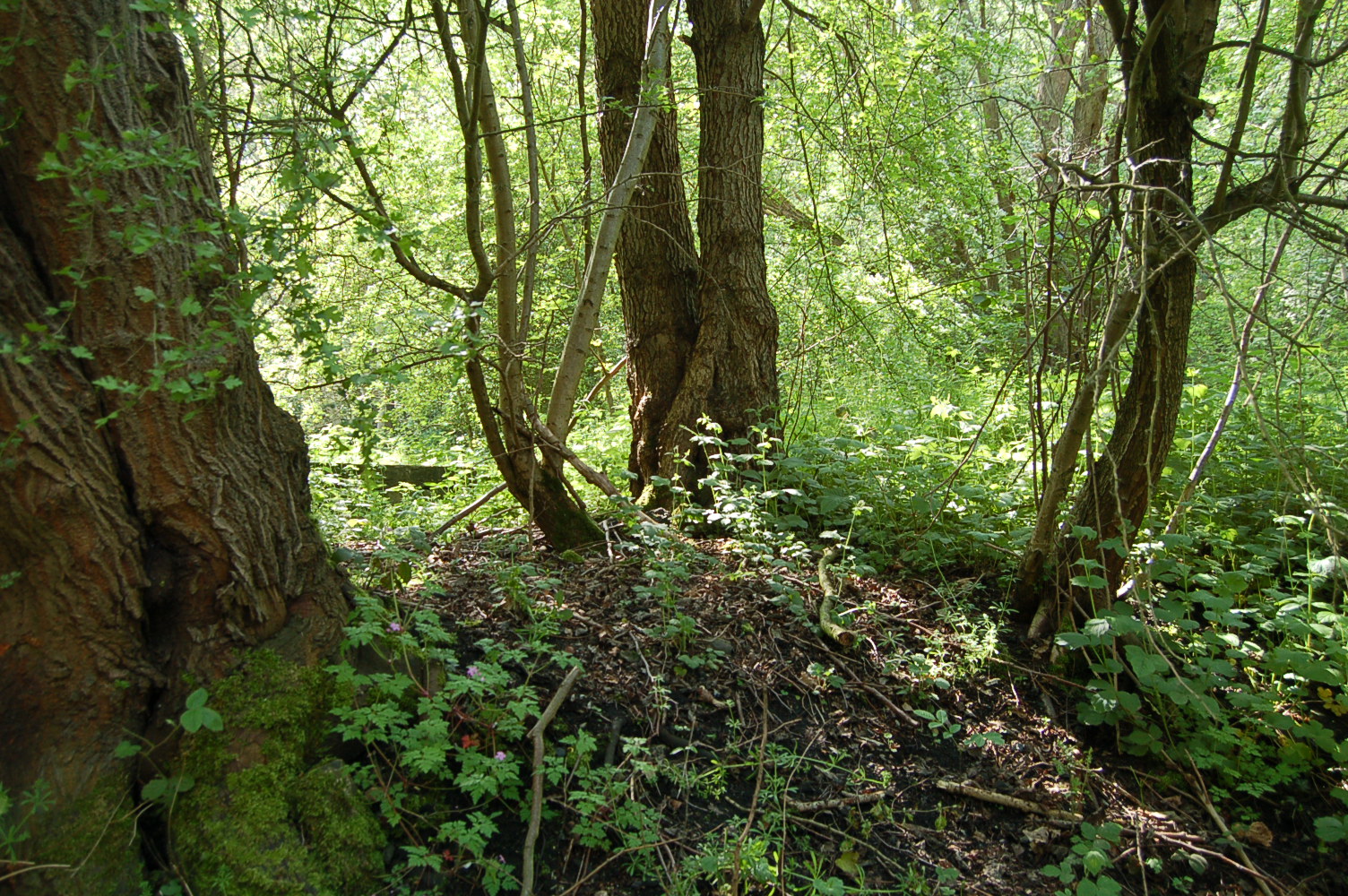
Once over the bridge we entered woodland, good native hardwood woodland. Here the only sound was our footsteps and bird song and calls. The unpleasant mechanical rasp of Pheasants permeated the trees, but we concentrated on the tuneful songs of Robin, Thrush, Willow Warbler, Blackcap, Chiffchaff and Garden Warbler.
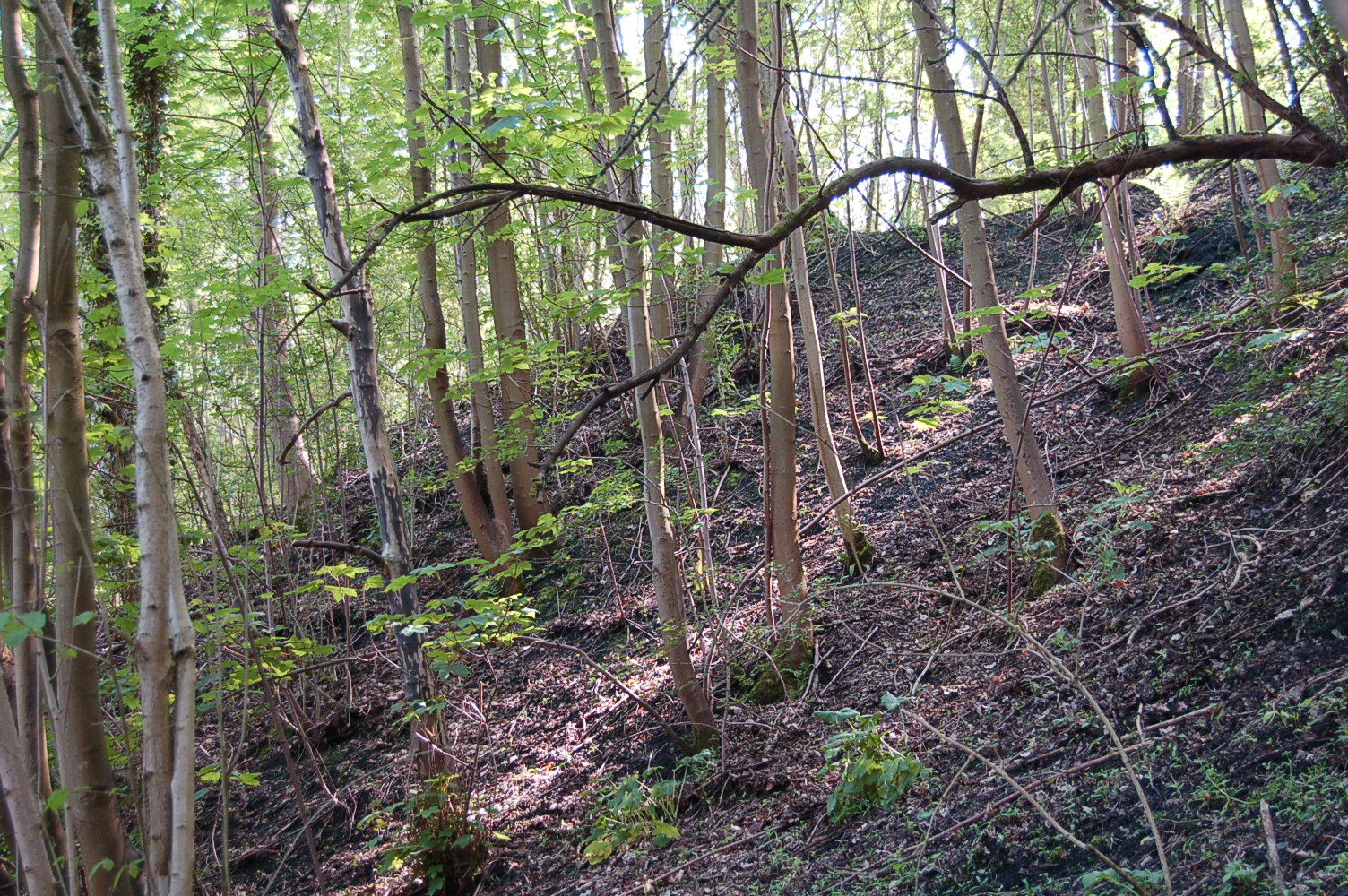
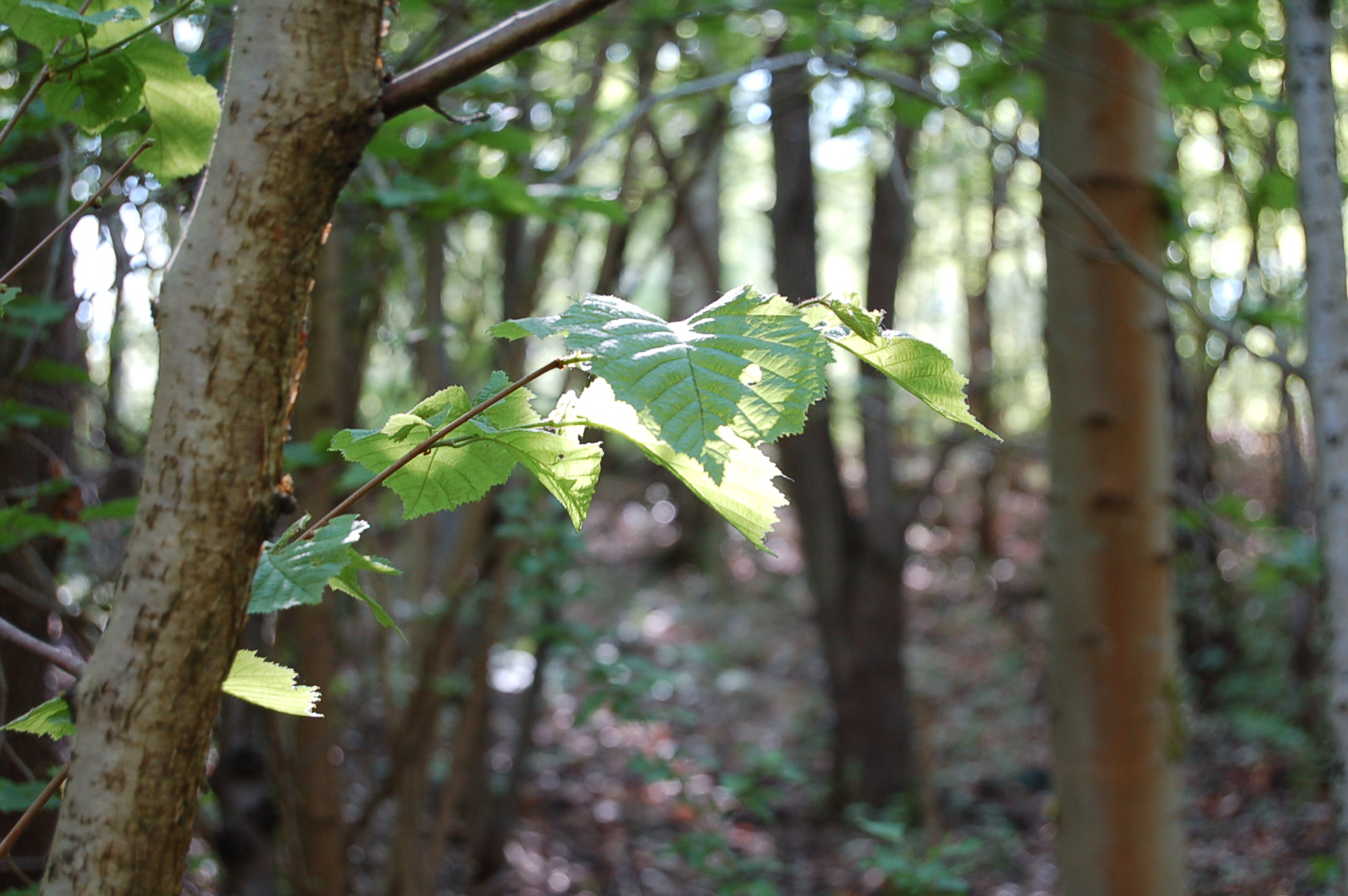
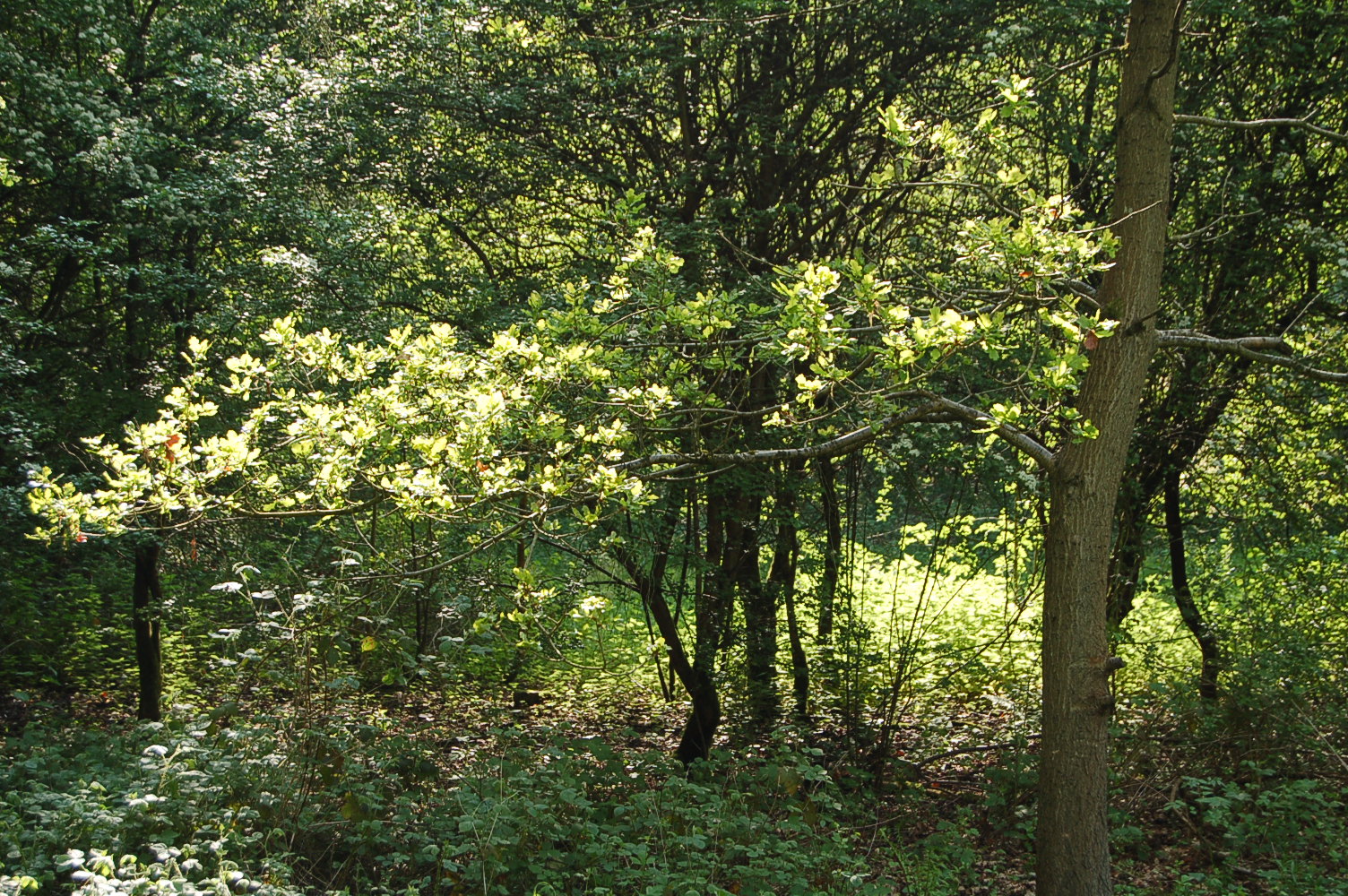
The path turns into the darkness of the wooded valley side.Flowering plants took advantage wherever light shone through.Beautiful woodland light.
A shaft of sunlight pierced the valley side.
On the slopes Jays in their smart plumage of pinks, greys and highlights of blue, fed voraciously on acorns and beech mast. They were over-confident and took little notice of our intrusion into their territory as groups of seven or so foraged on the leaf littered slope.
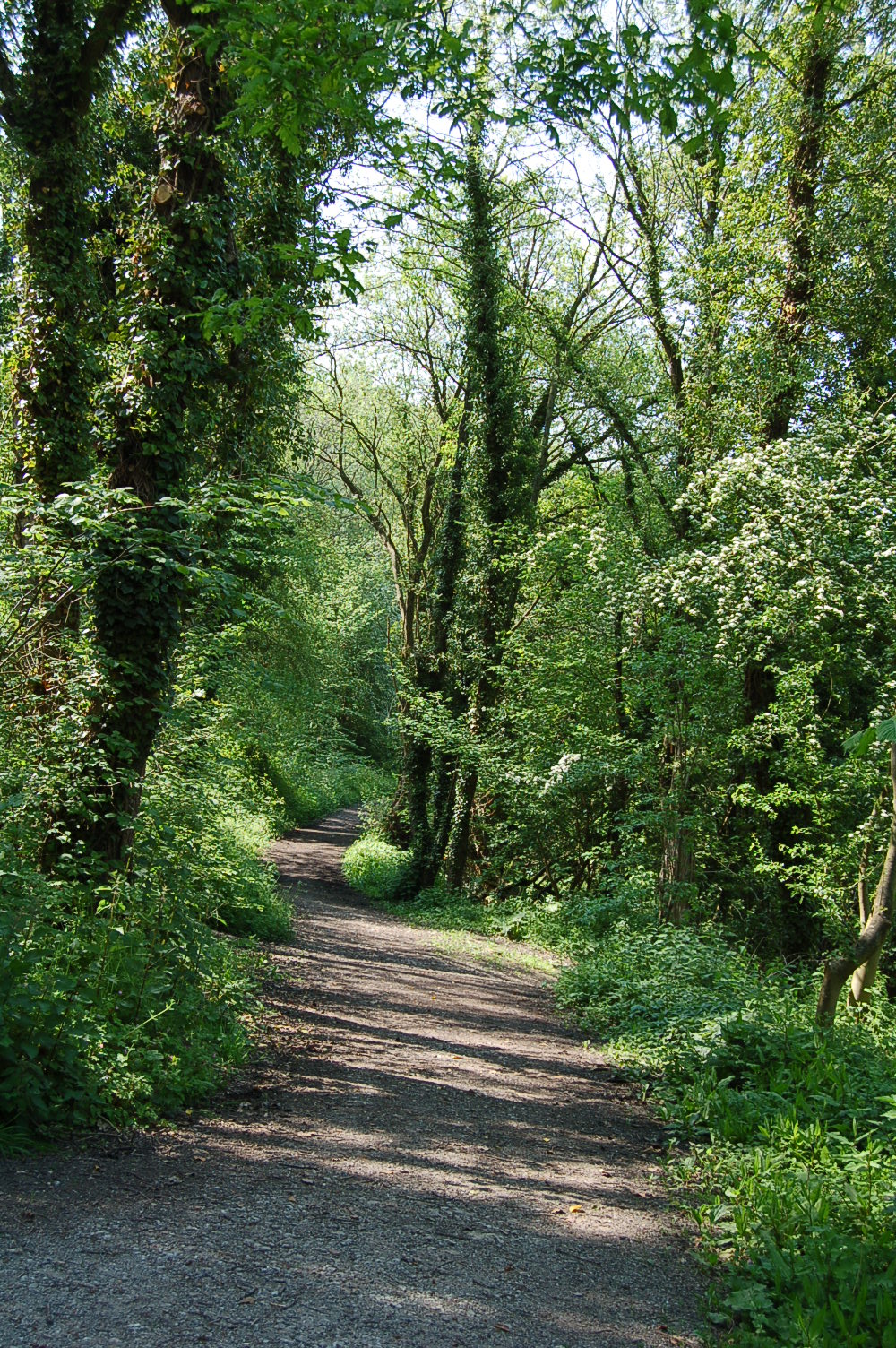
The path became a tunnel of trees.
At one time this valley was the centre of industry and clues still appear now and again as the woods are explored. Surprising man-made artefacts appeared as contradictions to the gentle beauty of the art of Mother Nature.
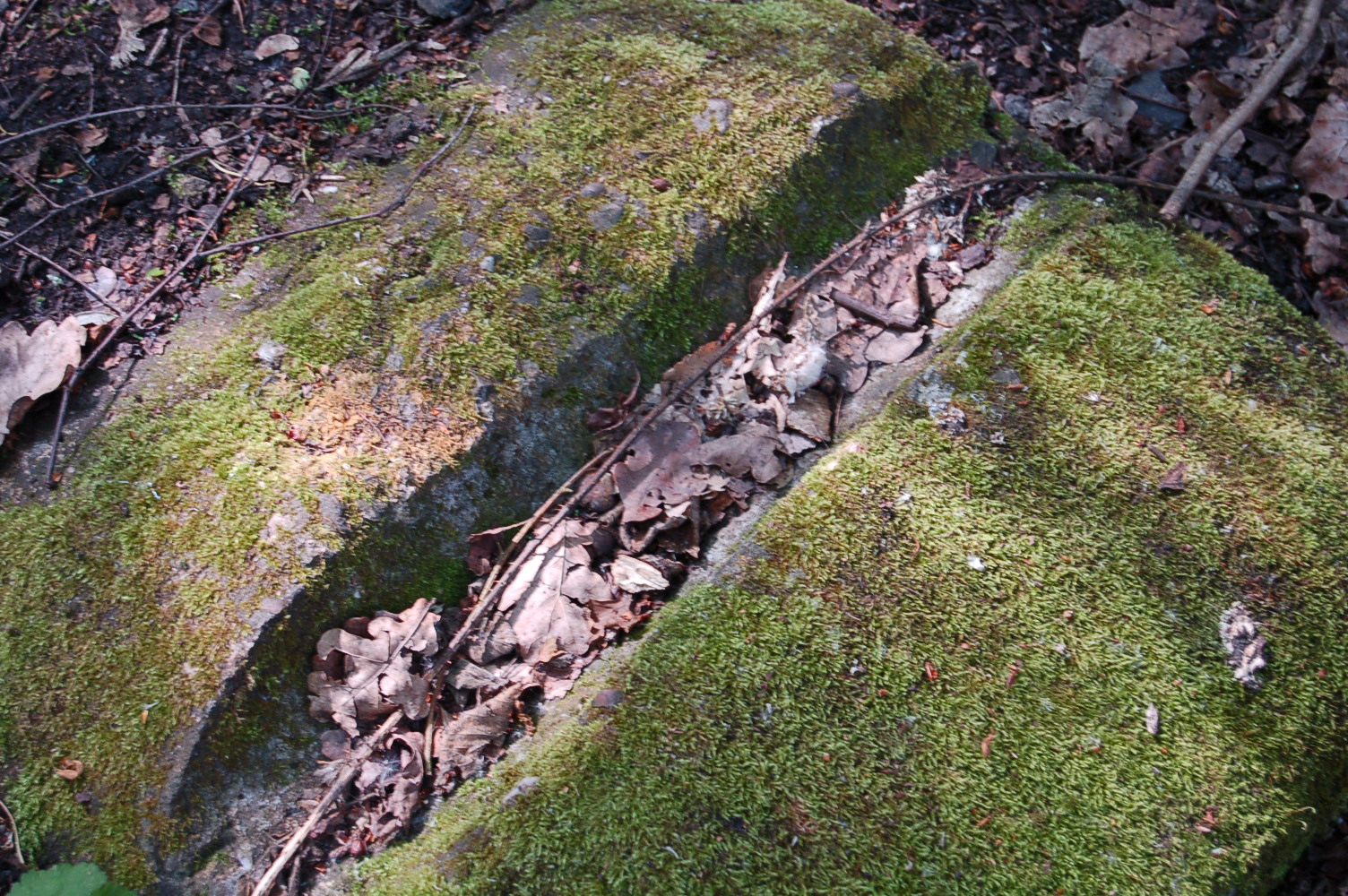
A sign of past industrial activity.Signs of an old trackway alongside the path.Some plants choose to grow on the rubble slopes of old industry.Light pierced through the trees from the nearby clearing.Looking from the clearing back into the woodland.
We took advantage of the sunshine in the clearing with its conveniently placed bench. We listened to bird song and watched Blackcaps as they flitted amongst the tree tops. They stopped and perched occasionally to give us a short performance of their enjoyable song. The cerise-breasted Bullfinch caught our eye as he hovered alongside the clock seedhead of a Dandelion, until he grasped a seed in his beak took it to a low branch of a Hawthorn. He enjoyed it, unaware that two people were watching him.
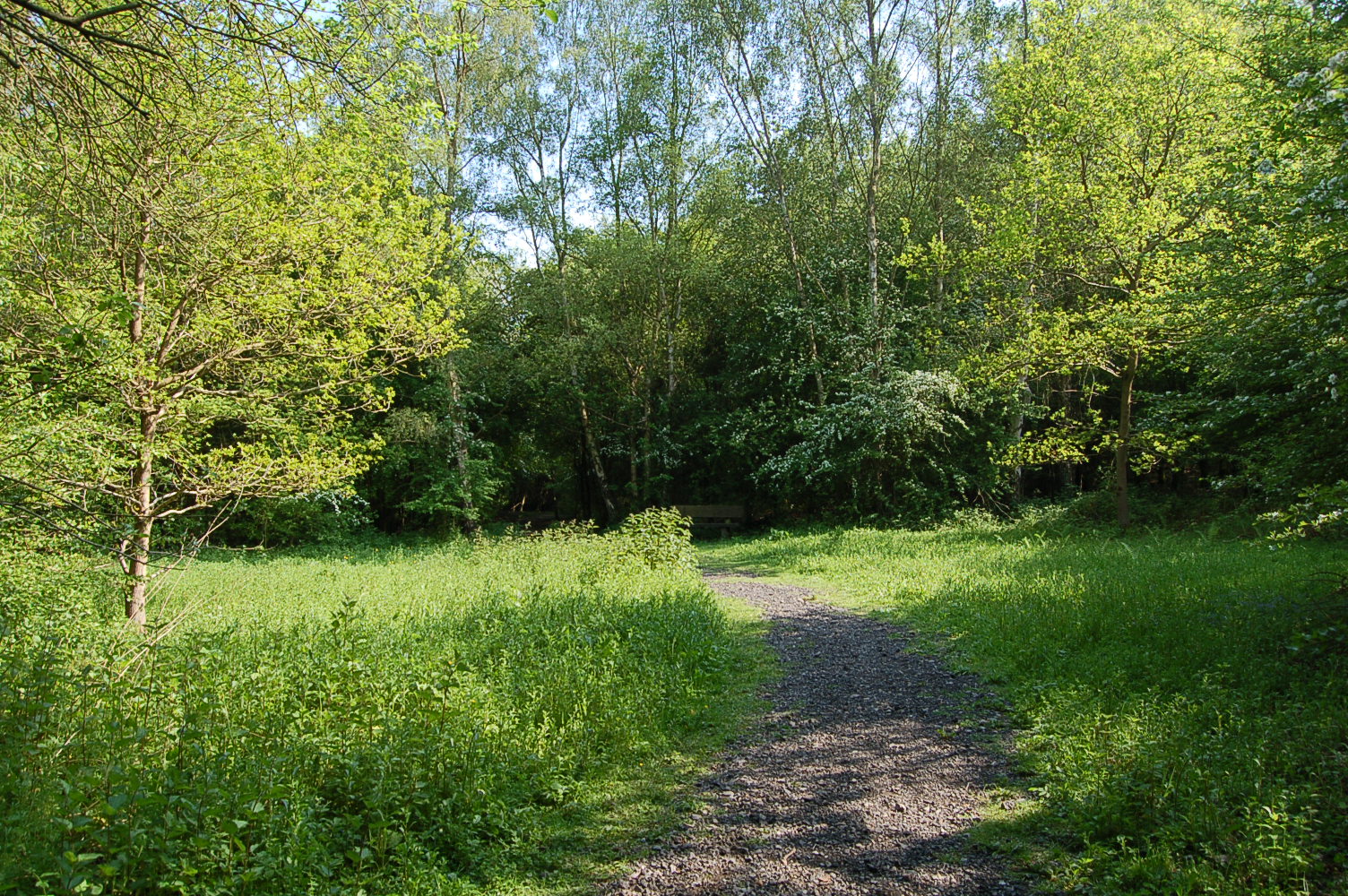
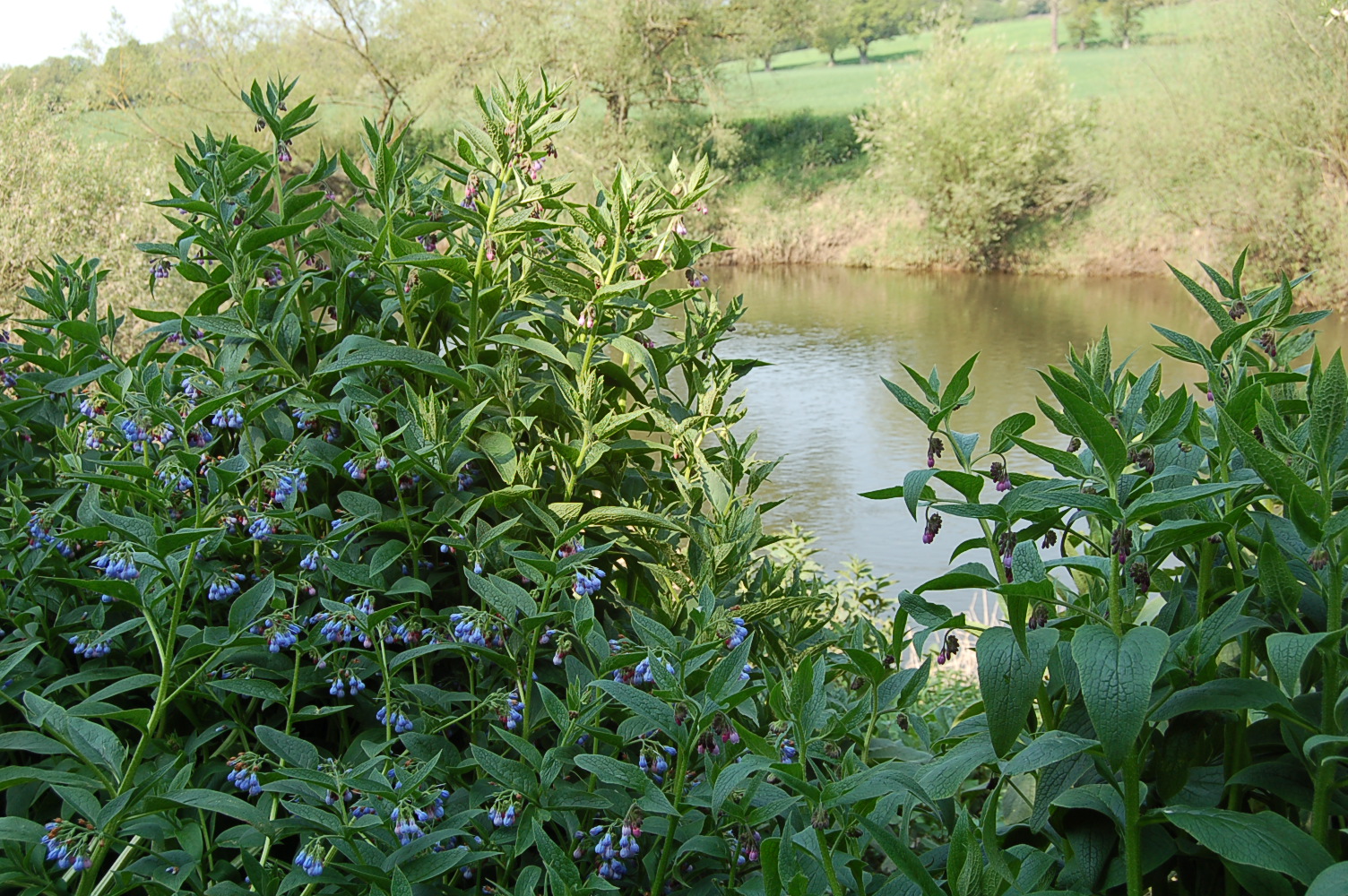
Sunshine lights up the clearing and invites us to picnic.Magical light through the trees.The Severn glimpsed through clumps of Comfrey plants.
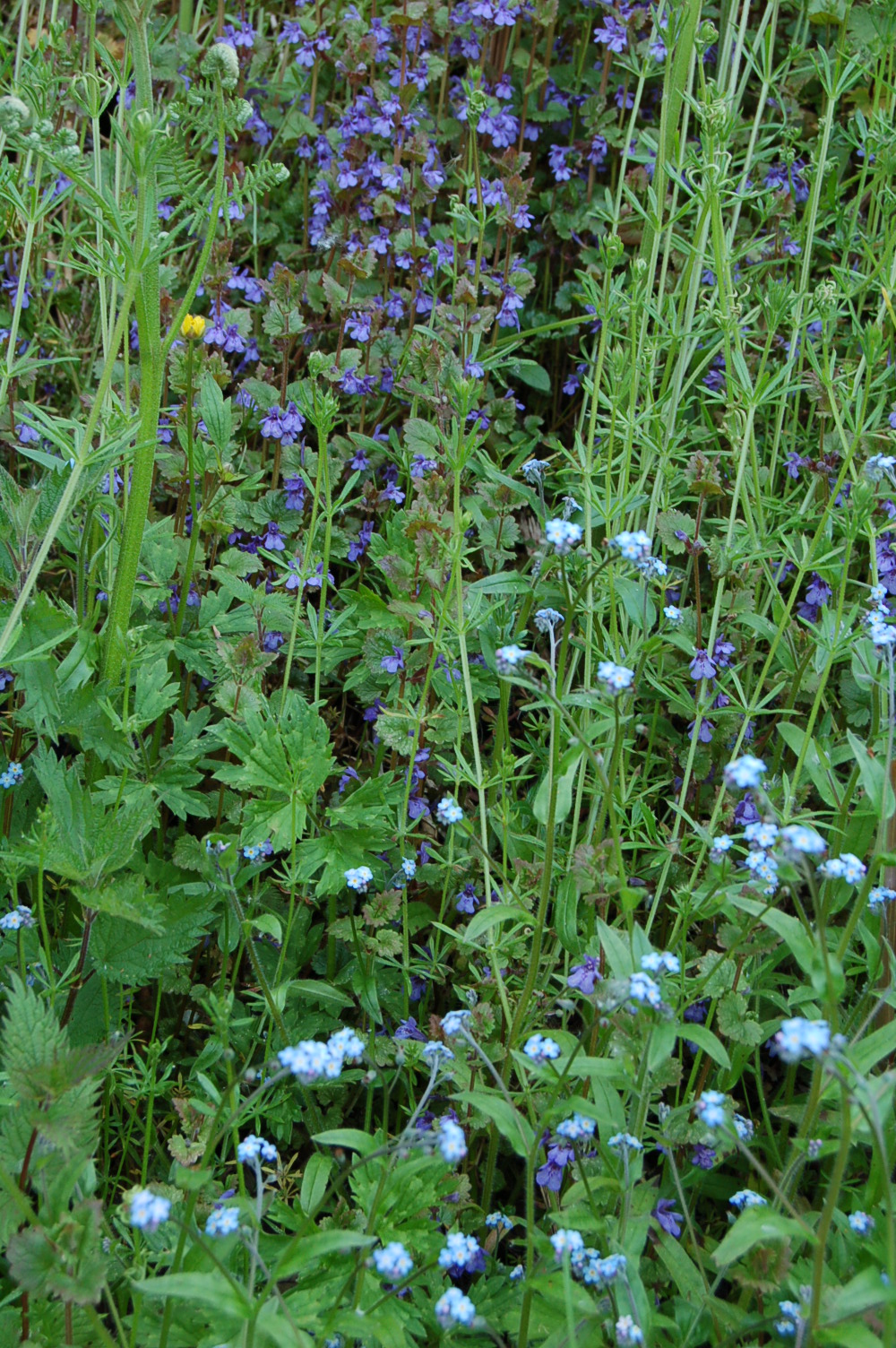
As we followed our path back down to the riverside we noticed a change in wildflower species. Here Comfrey dominated and filled the open ground between the willows and alders and our track took us through lush grassed areas. Kestrels and Sparrowhawks hunted along the riverside slopes causing consternation to the nesting Blackbirds, Thrushes and Warblers.
The cotton wool like mass on the willow confused us. Was it hiding caterpillars or young spiders?
In the depth of the shadow under the trees we spotted this Badger Sett.A glimpse of Shropshire countryside over the river.Back to the bridge.The gentle climb back up the valley side to the car park provided plenty of benches to rest on and admire the views.
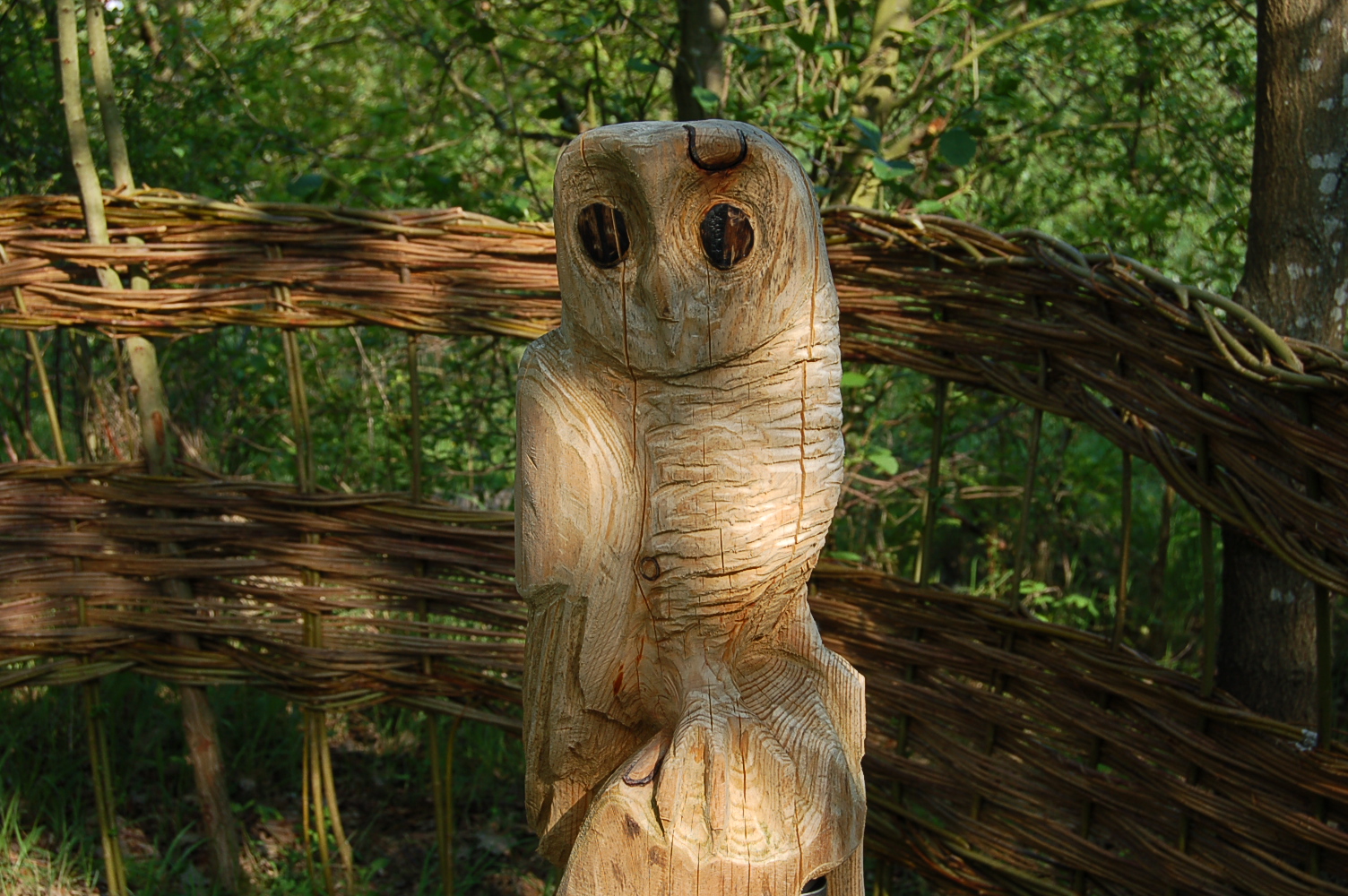
In the wooded edge of the picnic site back near the car park we found these amazing wood carvings representing the wildlife of the area.
The carvings emphasised what a special place we had just explored. We enjoyed the changing light as we moved in and out of the woods, the variety of flowers and birds and the joy of walking alongside our local river
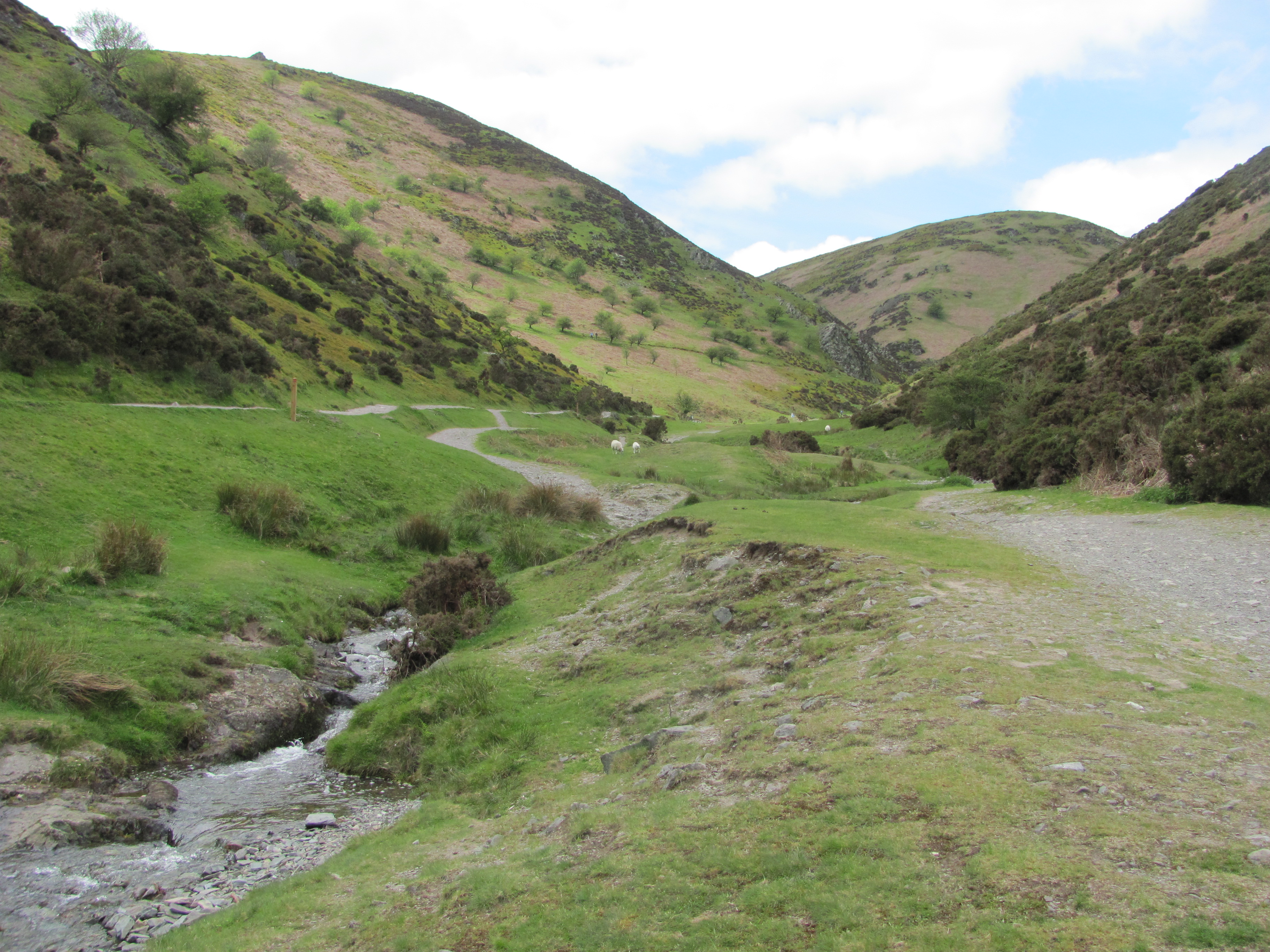
A walk along a tiny stream in a deep valley in our Shropshire Hills seemed most inviting on a warm May afternoon, so we set off for a half hour drive from home to Cardingmill Valley at Church Stretton. Much of the countryside here is managed by the National Trust so at weekends the valley gets too busy for our liking. Hence we chose midweek for our stream side walk, and found a few cars and people close to the Visitor Centre but as we left that behind we were almost on our own.
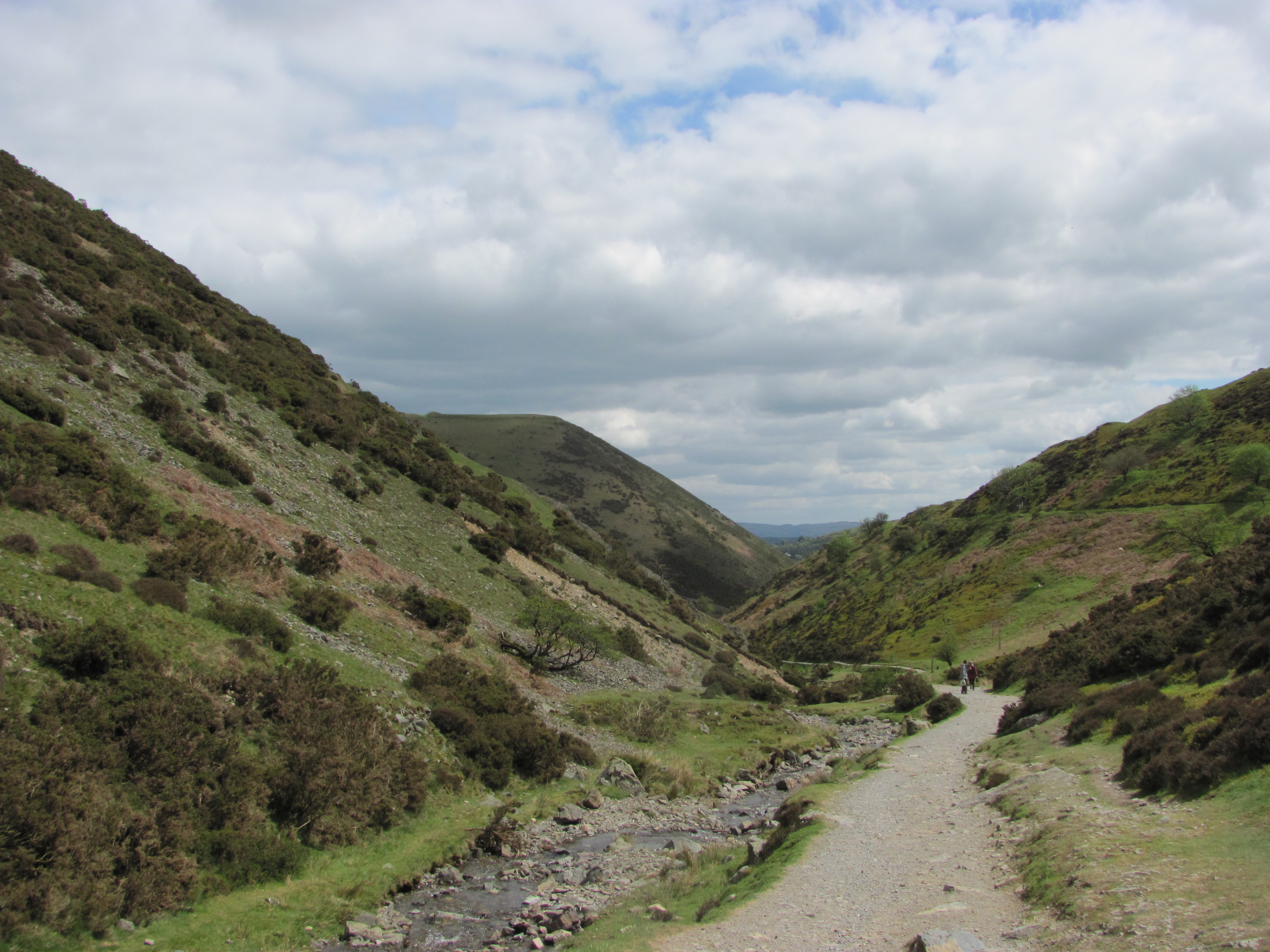
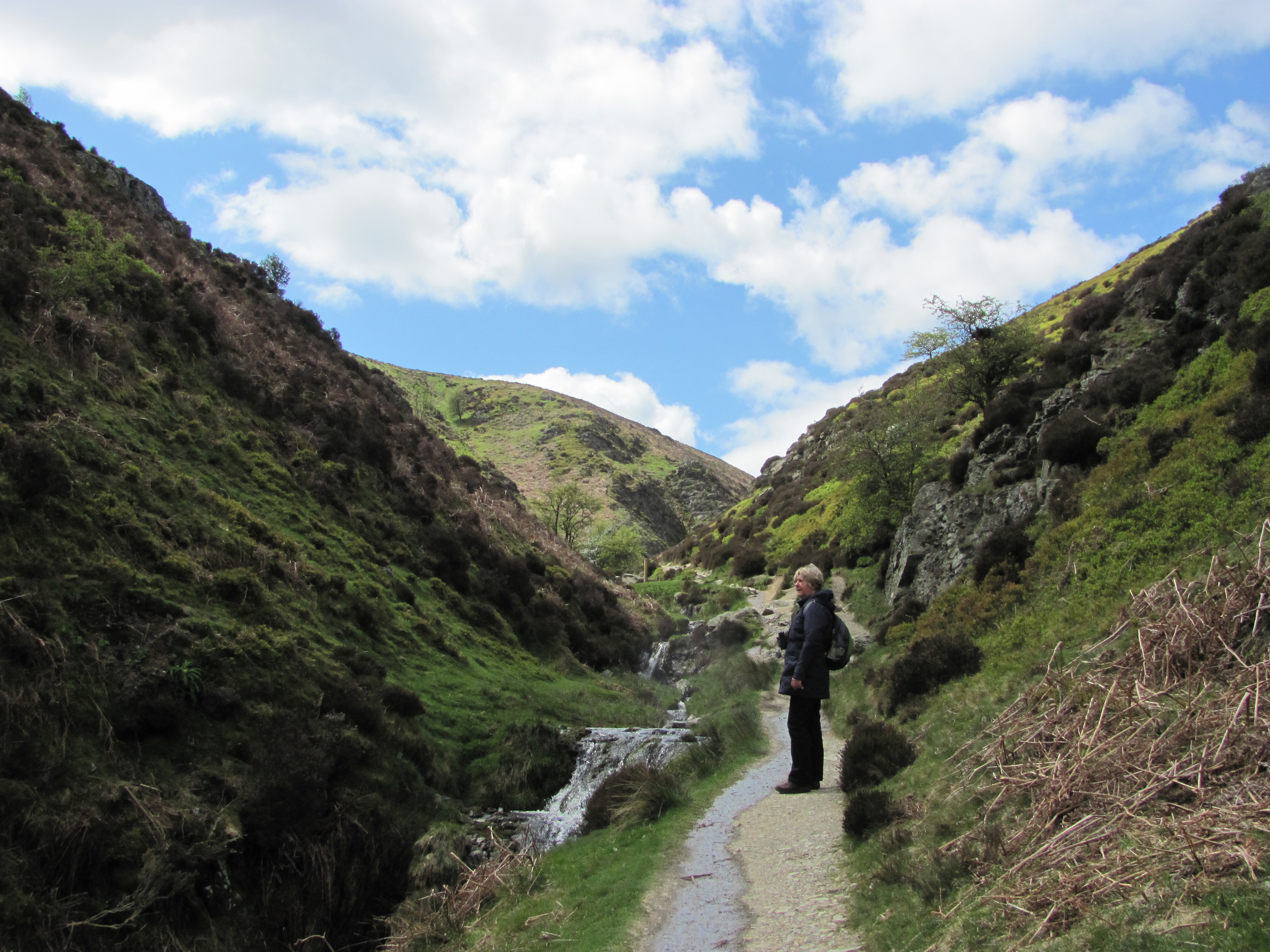
The stream leads us into the valley.
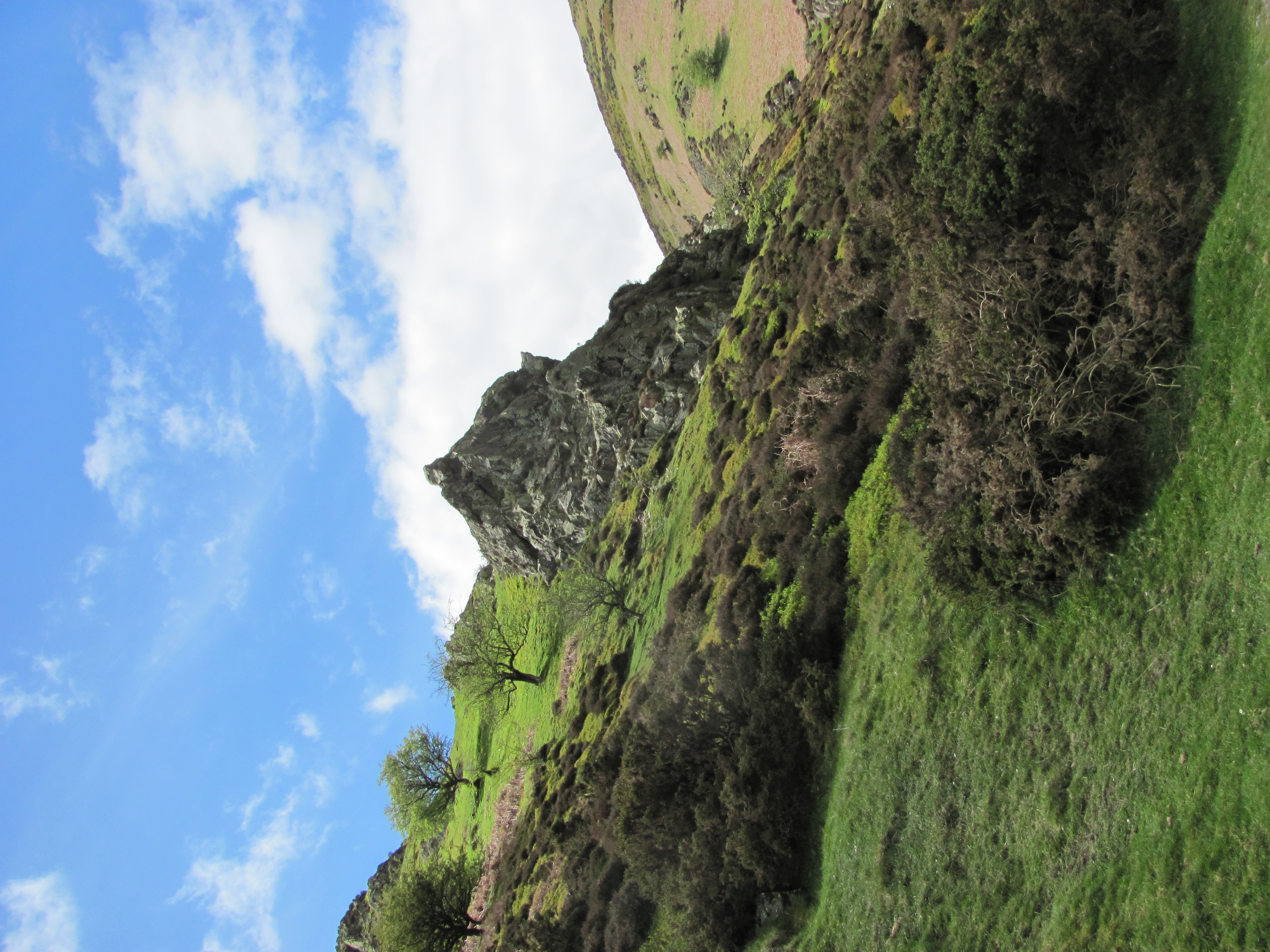
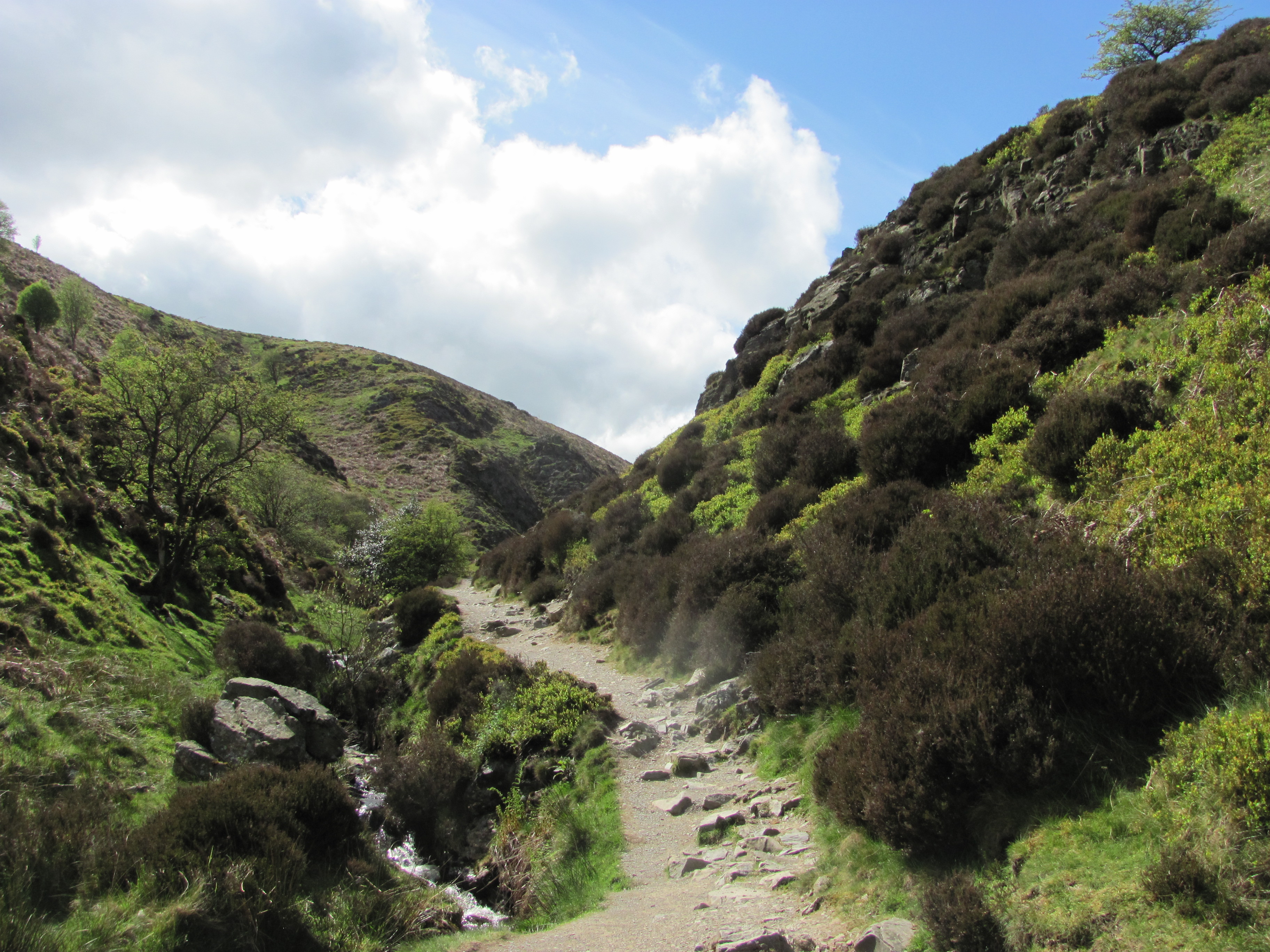
The wide valley where we joined the tiny stream looked most inviting with its steep slopes running up the tall hillsides towering overhead, all topped off by a clear blue sky. We hoped to see different birds here in this upland habitat and a scarcity of plants but those we see should be interesting in how they adapt to their environment.
One of the gentler slopes.
We were heading for a narrower side valley called “Light Spout Hollow” where if all went well we anticipated discovering a waterfall. So the first section of our walk along the Cardingmill Valley the path was relatively wide and even and the climb gentle. Looking up the slopes towards the sky we searched for the Buzzards which we could hear mewing overhead as thye wheeled in the thermals. But these are steep head-spinning slopes so it was a matter of glances of these wide-winged soaring birds of prey. It was easier to appreciate the hovering hunting tactics of the Kestrel hunting on the lower slopes.
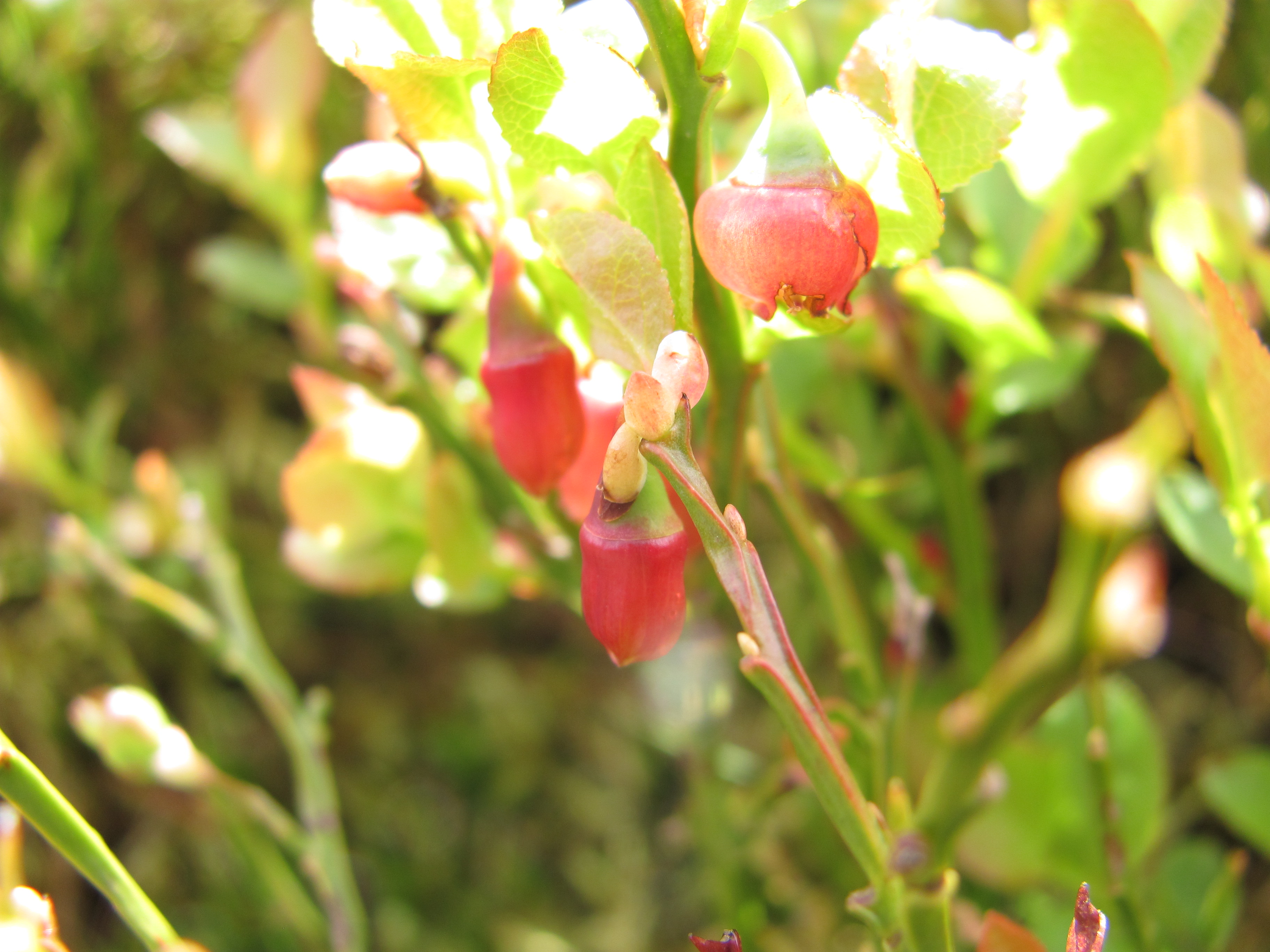
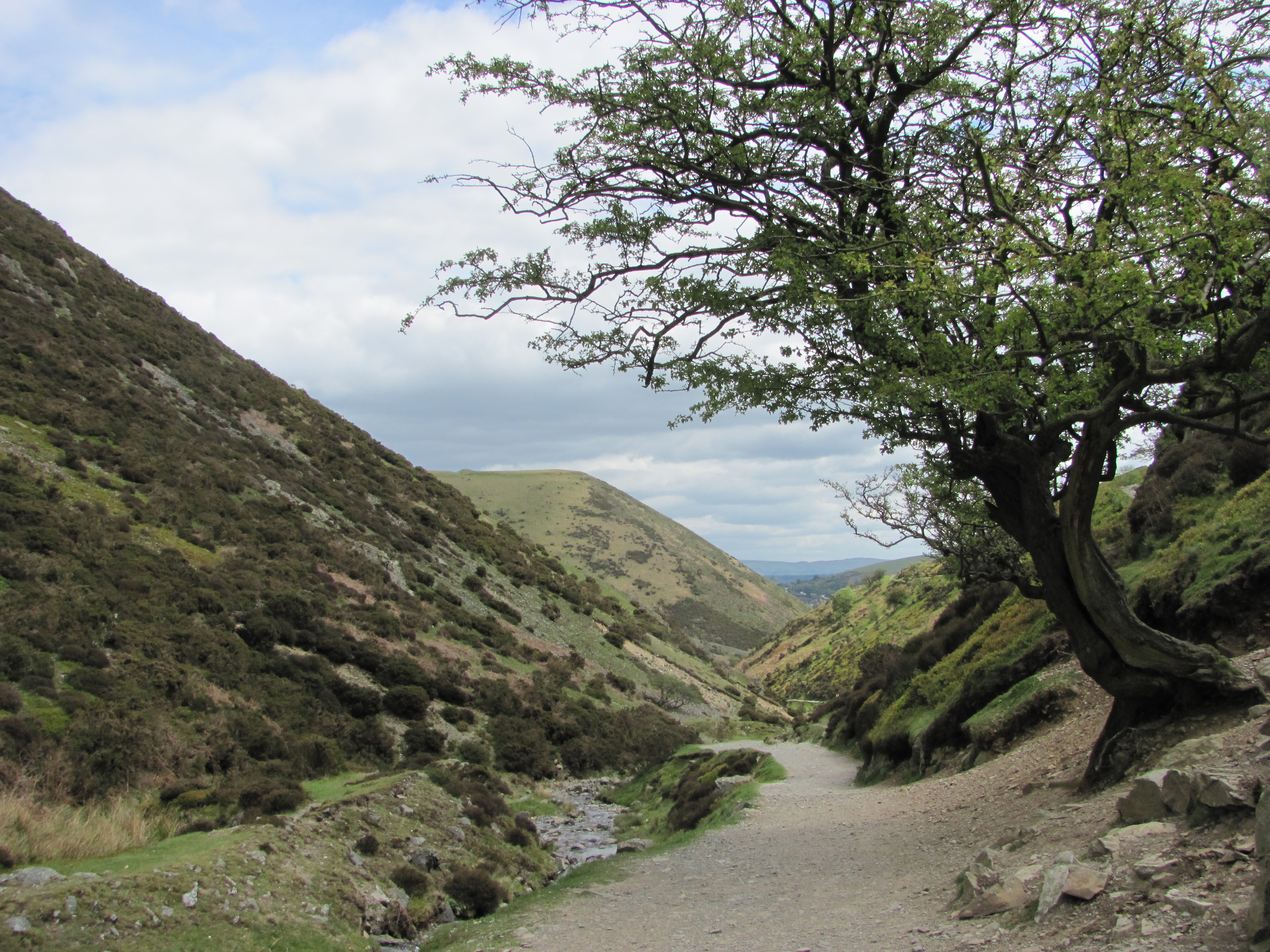
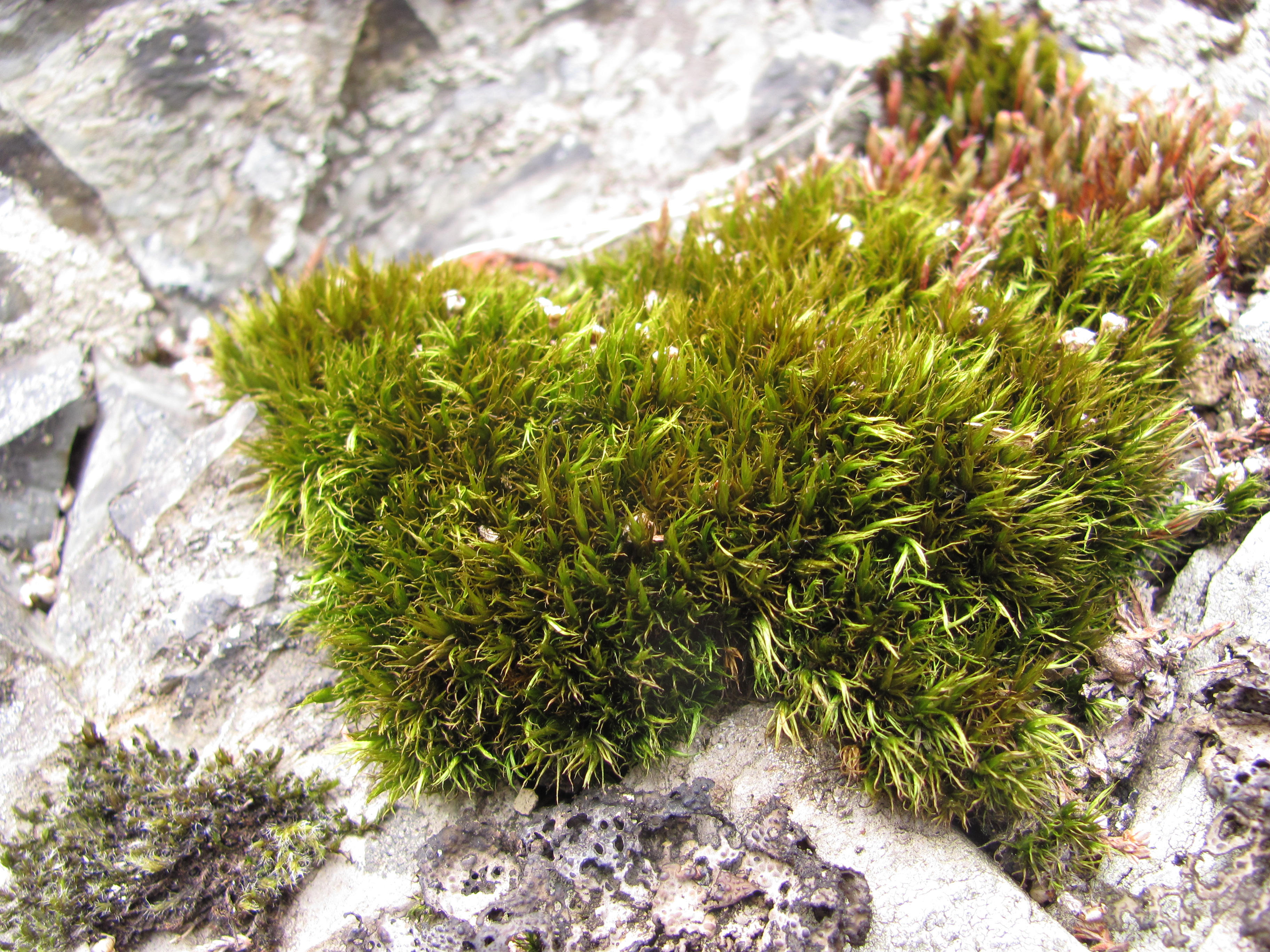
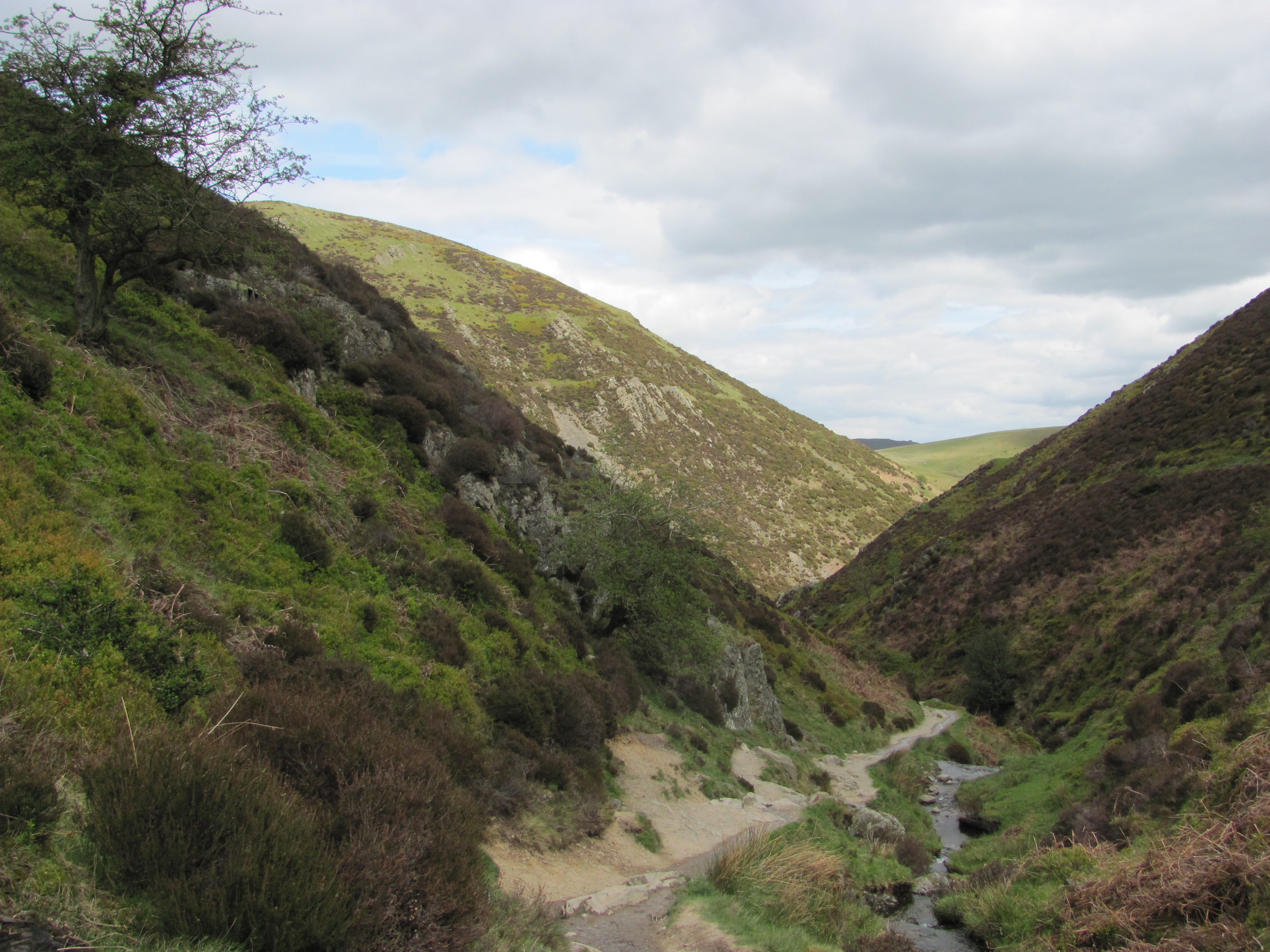
Storm clouds brewing over the hills.The green side of the valley.Looking back to see where we have come from.A Hawthorn bonsai shaped by the weather.Looking up at the bonsai Hawthorn.Whinberries.Fresh Whinberry foliage.We turn left as the valley splits into two.Clear water stream.Lichens enjoy the moist atmosphere near the stream and clean air.Some boulders have a soft cuhion of moss.
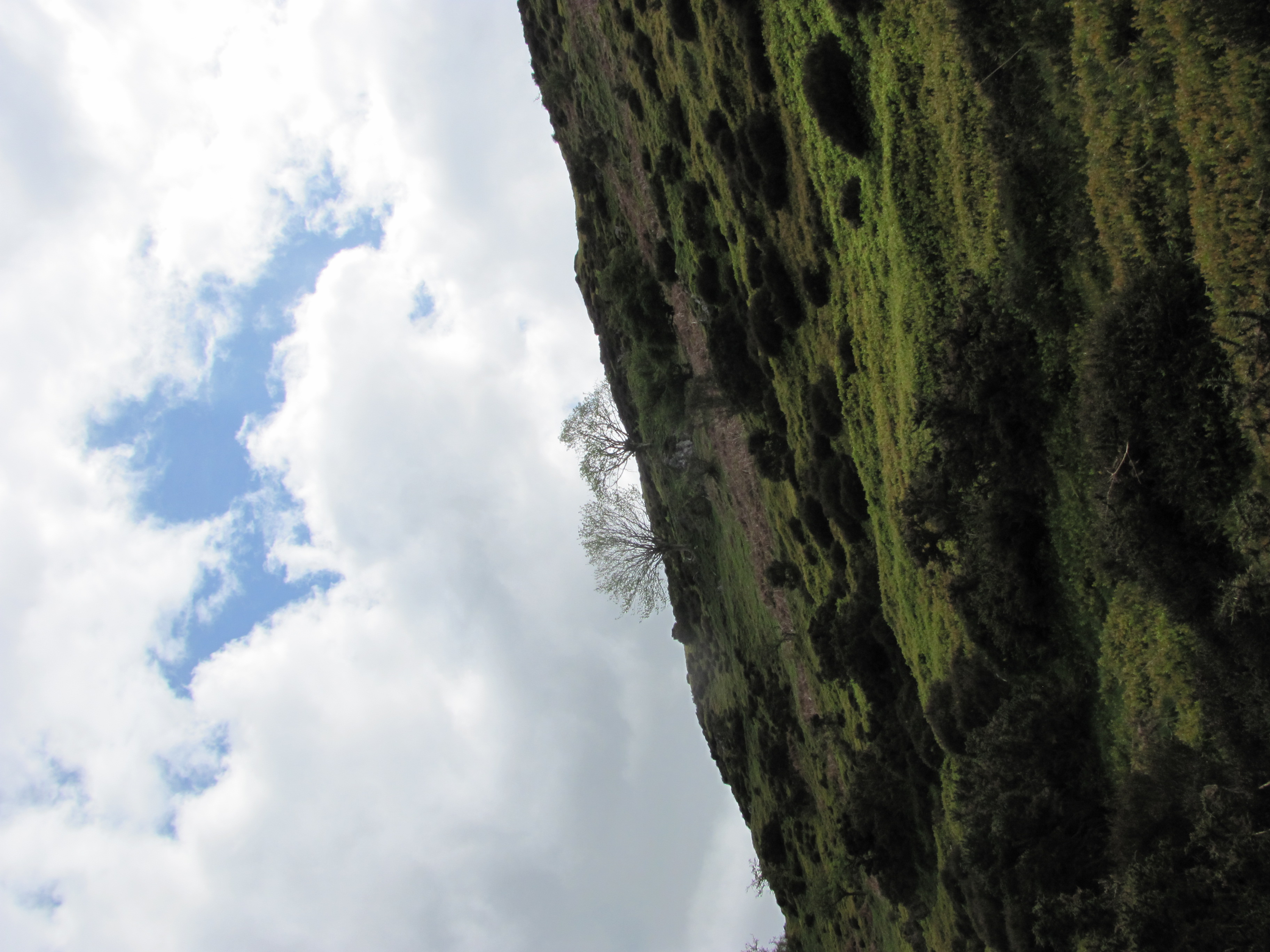
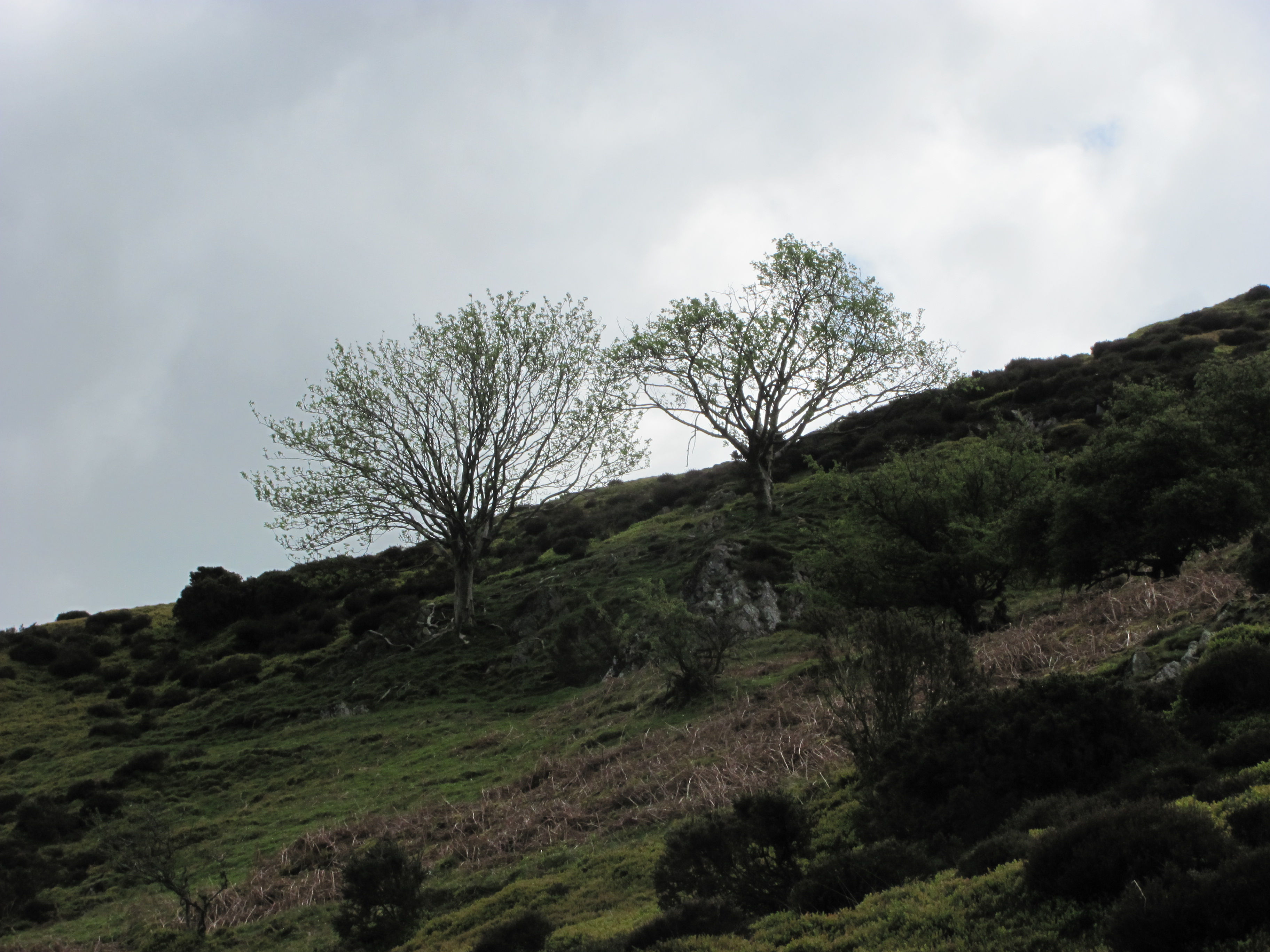
The extreme winter conditions here become apparent in a variety of ways. The huge boulder has been split in half by repetitive freeze-thaw action in successive winters – such nature power. Trees are sculpted by the weather into natural bonsais which create dramatic silhouettes on the horizon.
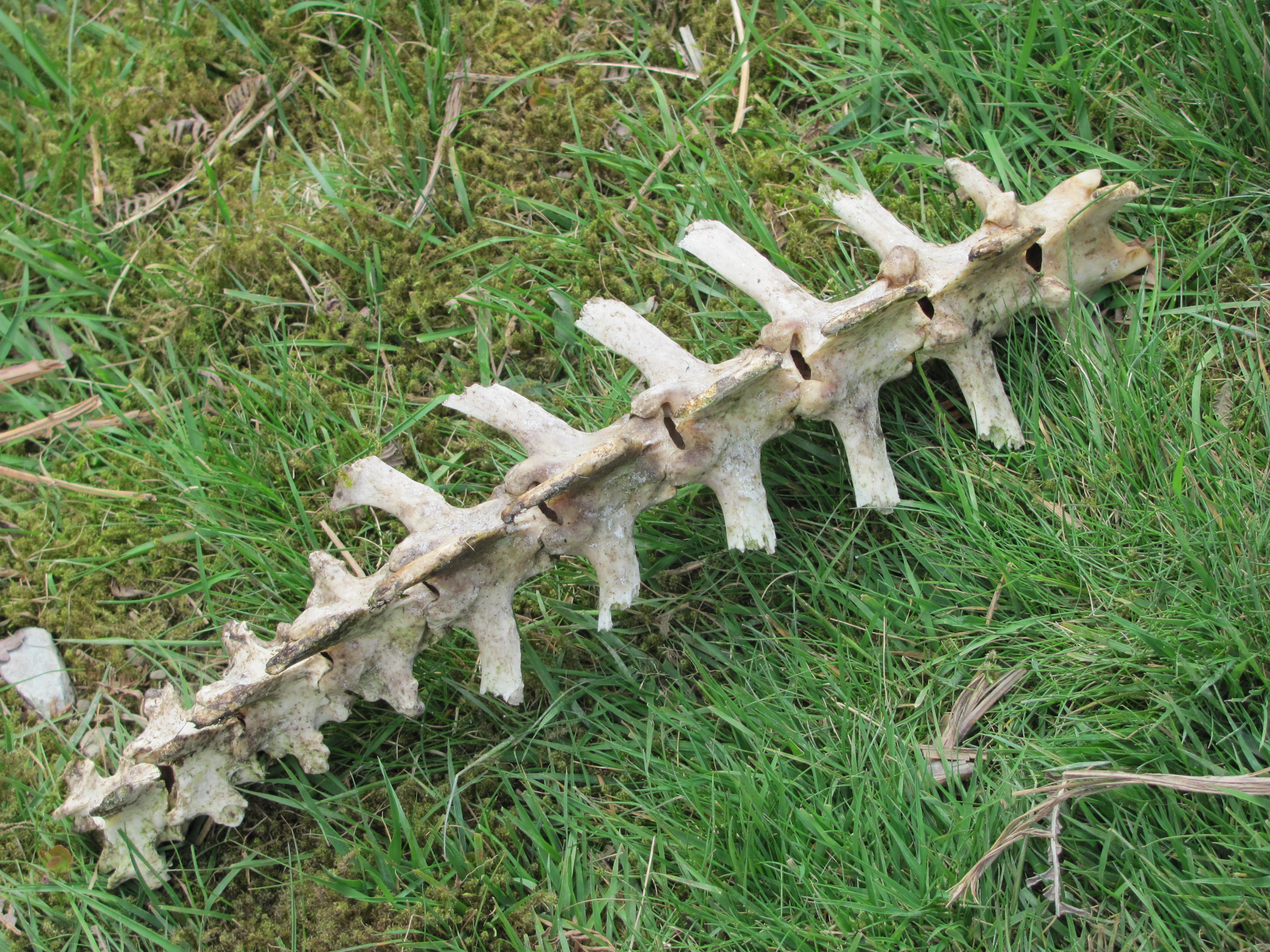
Mother Nature – rock splitter.The extreme weather takes its toll on wildlife and livestock.Bonsai Hawthorn.
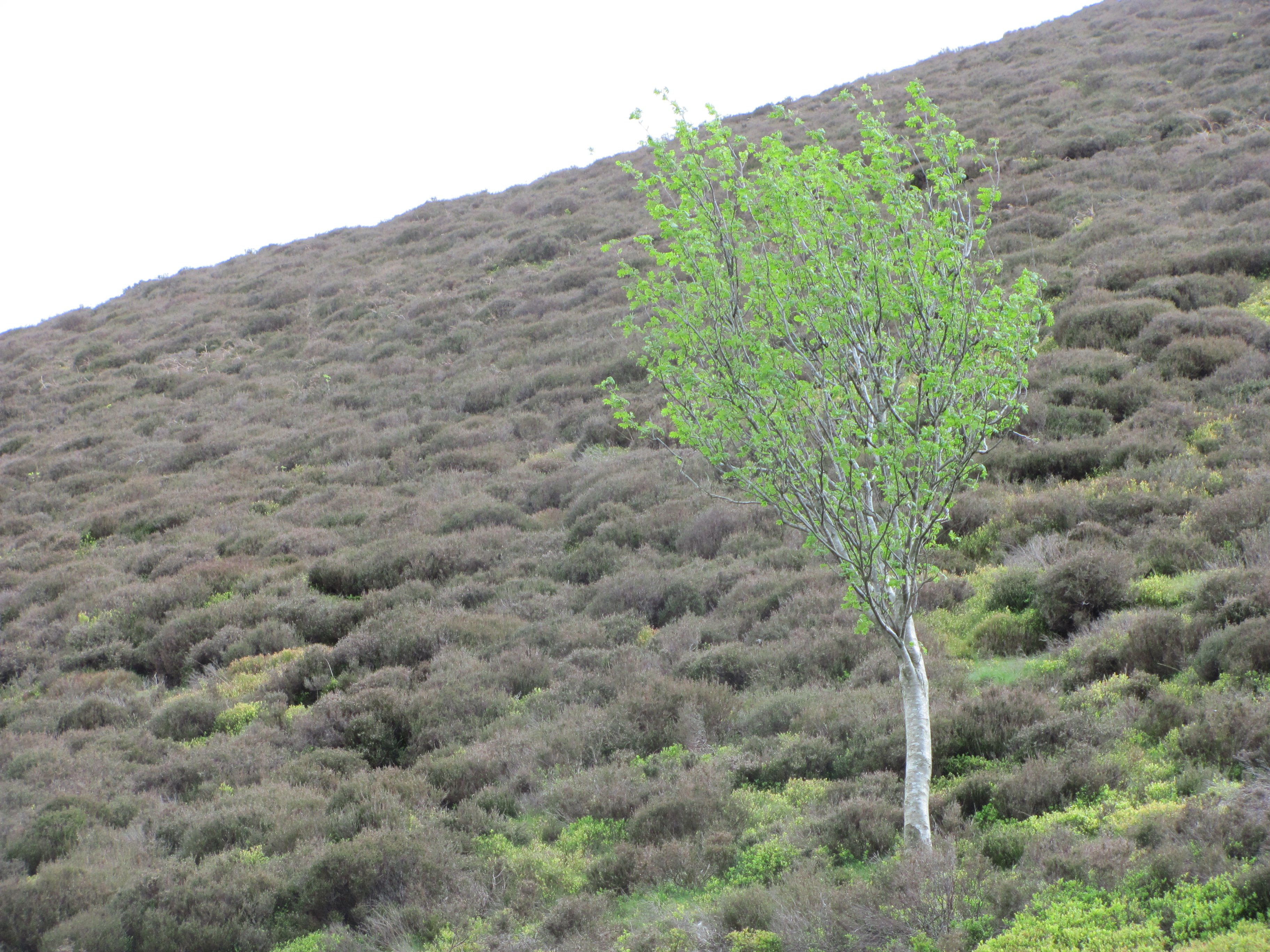
The effects of the weather varied from place to place and from slope to slope. On one side of a hill Birches grow in abundance but just turn a corner and the hillside is empty of trees bar one lone stunted Birch.
All on my own!
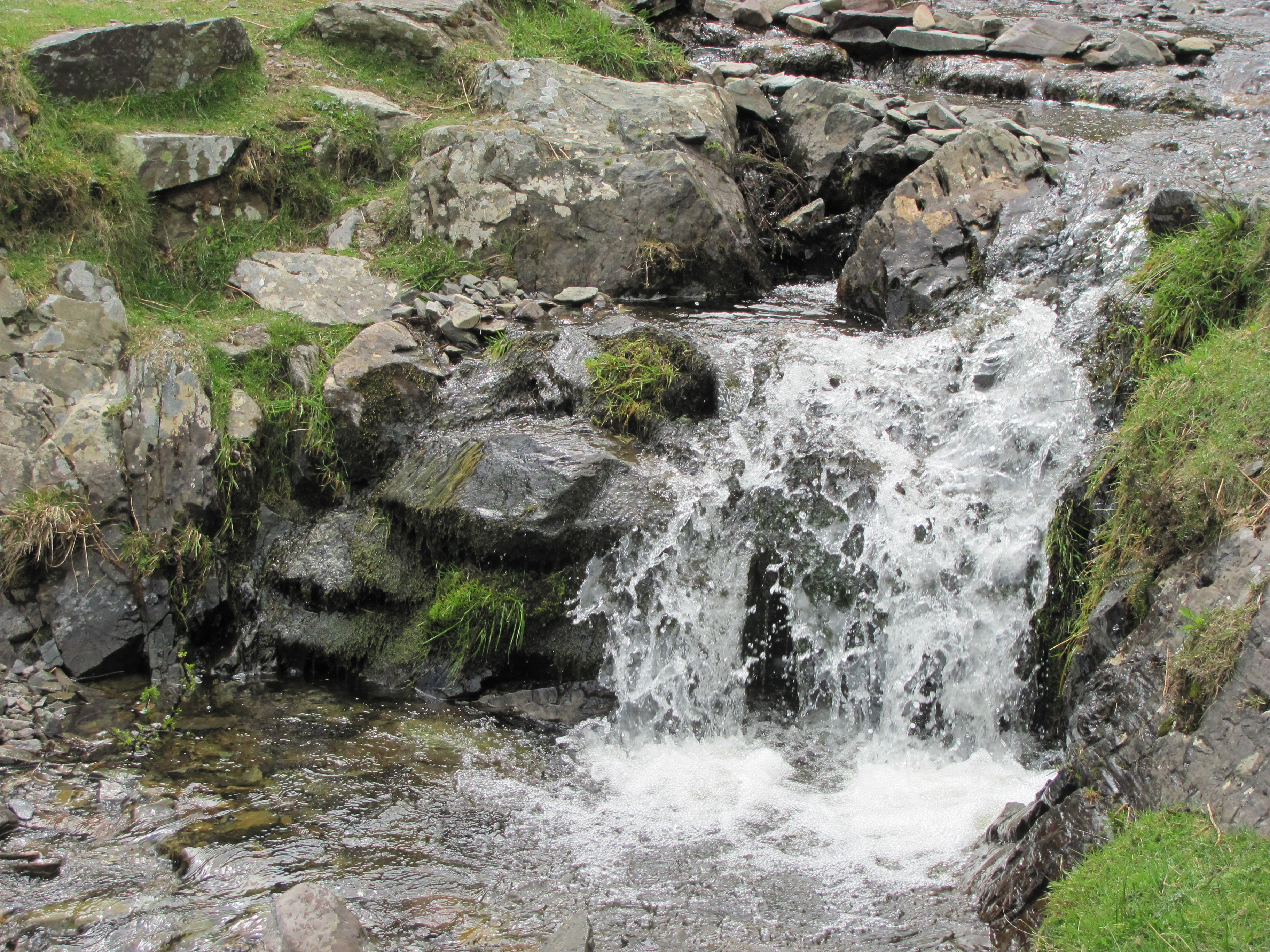
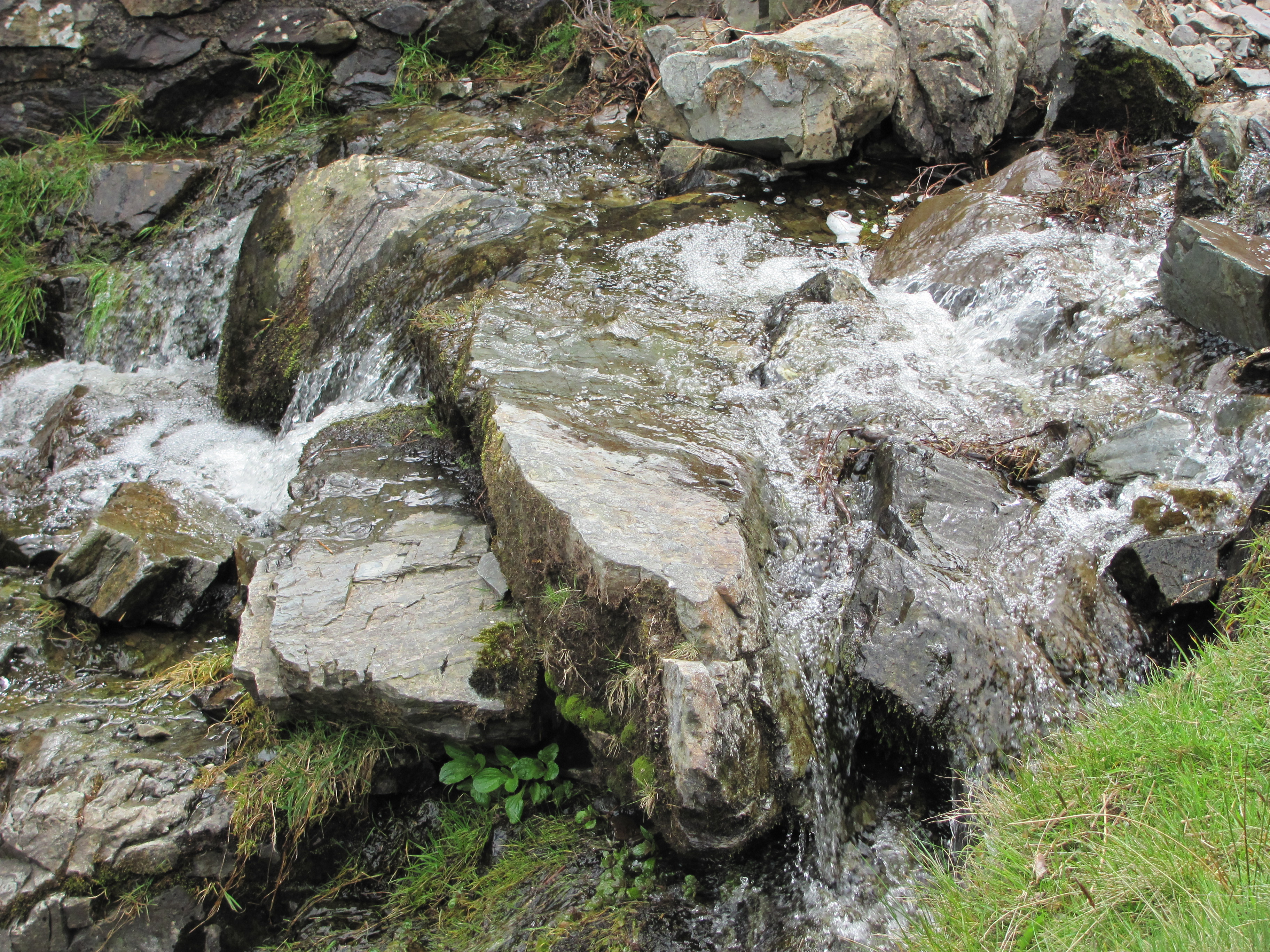
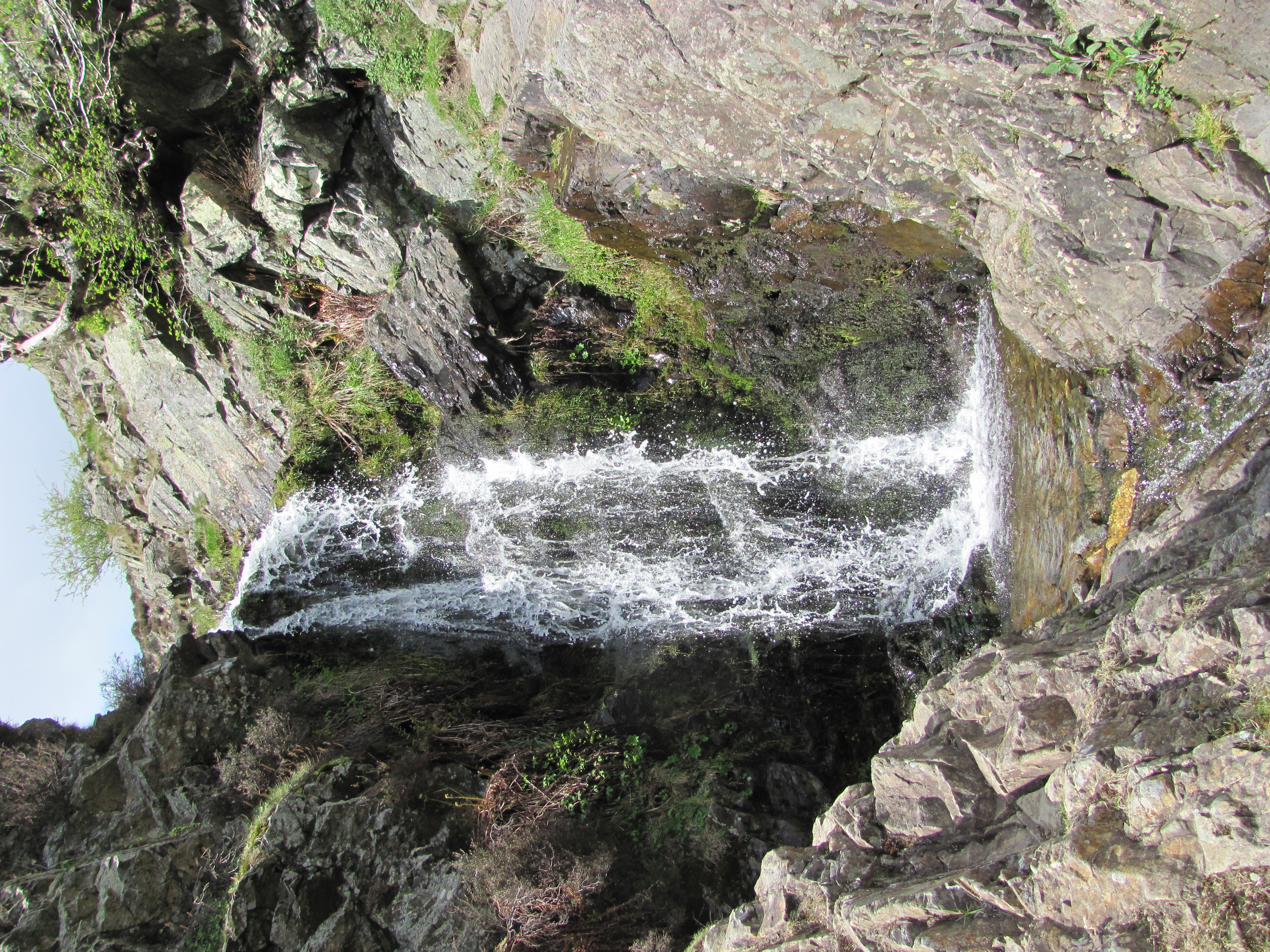
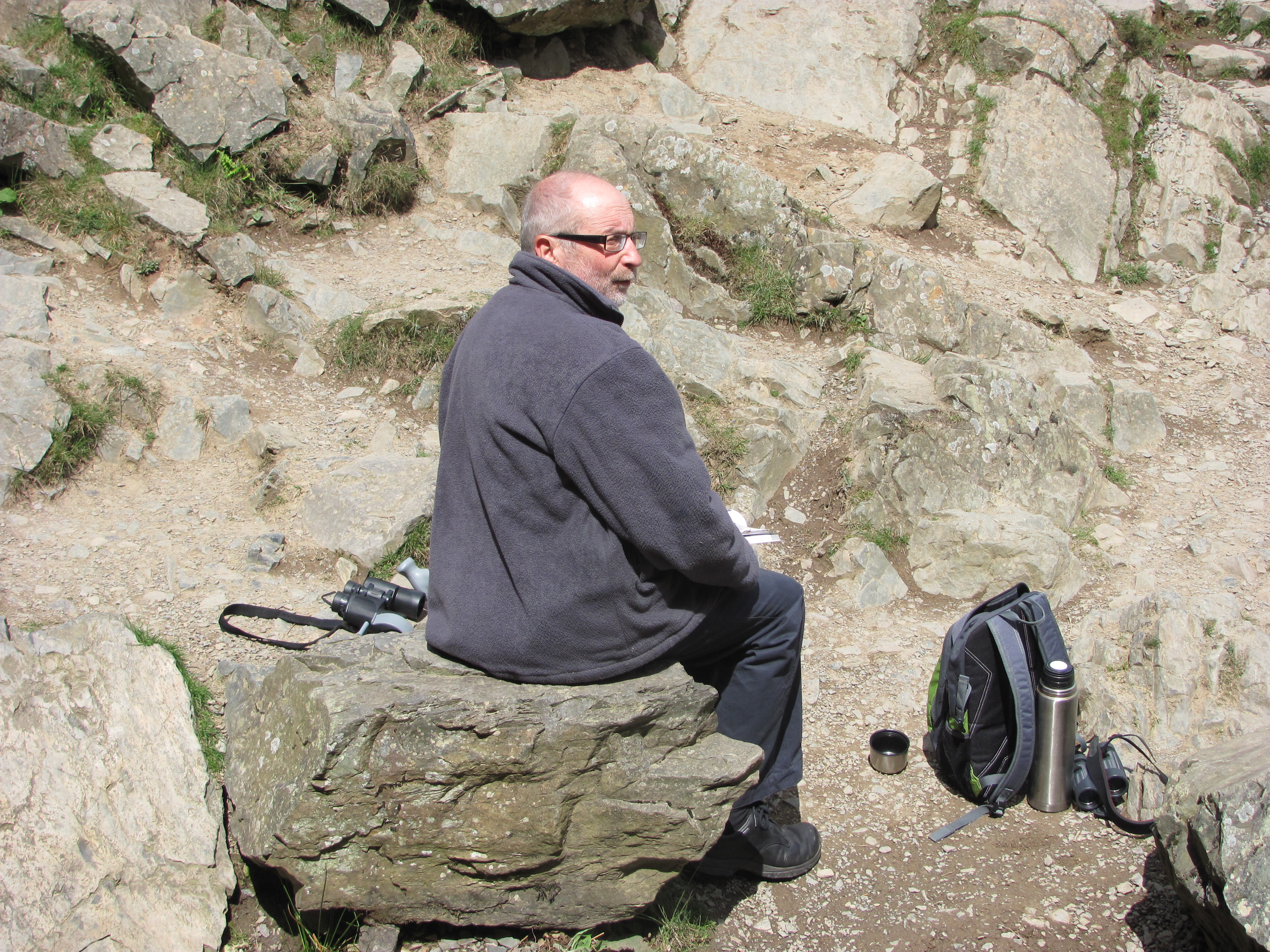
The stream changed character as we moved up the little valley with miniature waterfalls, rapids and swirling deeper pools, until finally we reached our goal – the main waterfall. Here we stopped for a well-earned rest and to take in the atmosphere and views, and enjoyed our usual outdoor victuals of fruit and coffee. The boulders which we rested on were slippery and shone from the action of resting walkers’ bottoms.
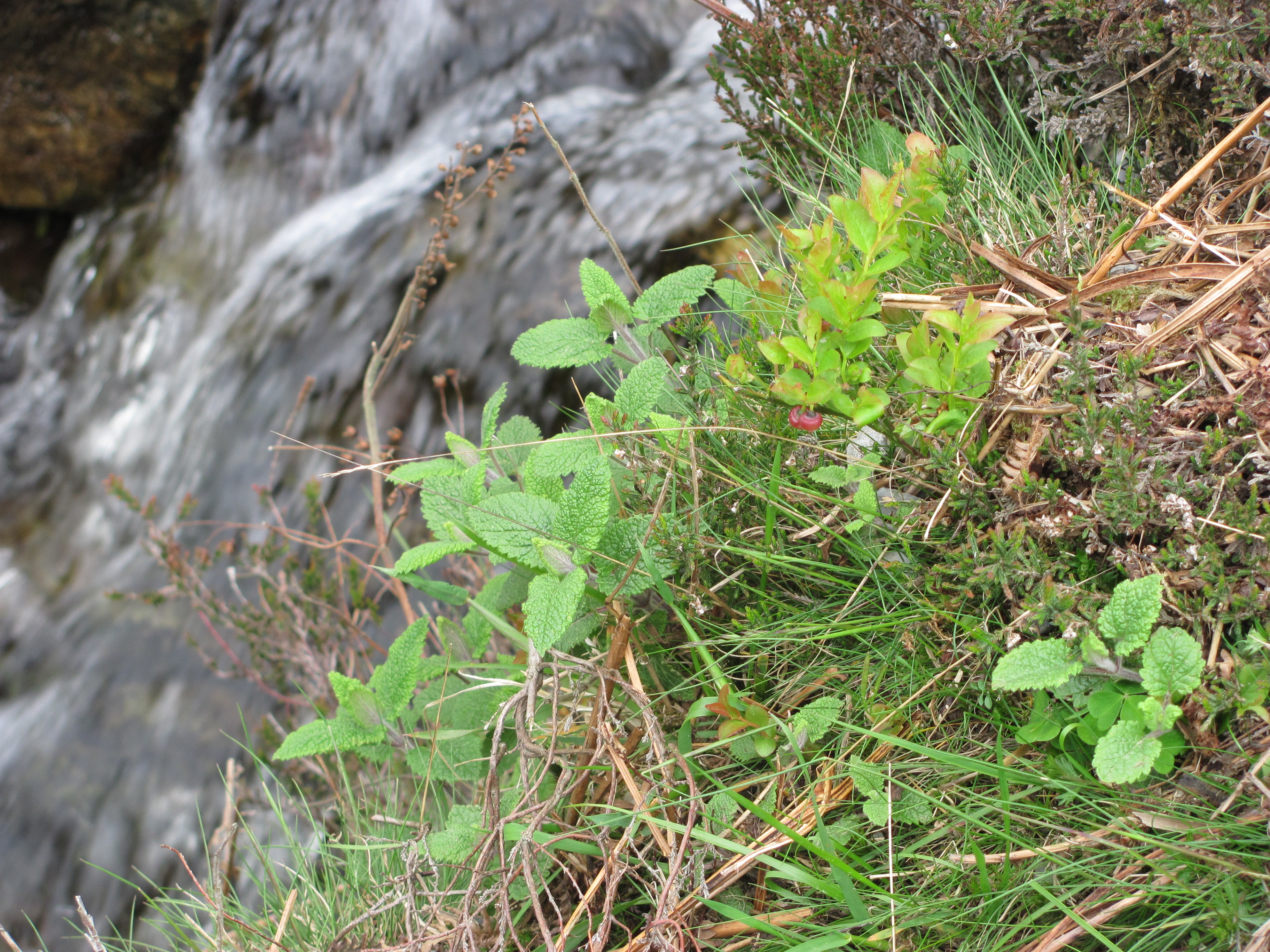
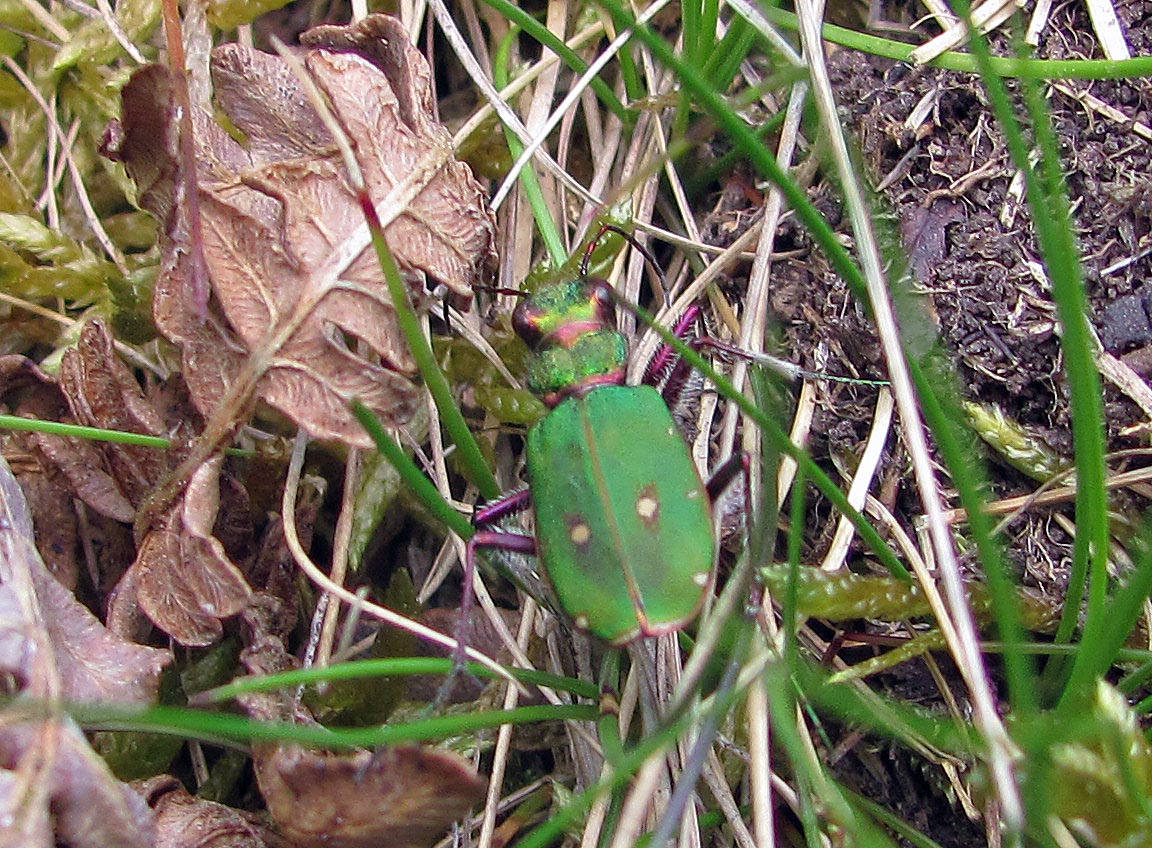
The stream clambers noisily over boulders in its path.The stream flowing over smooth rocks under an overhanging willow.The clear water passes beneath sprigs of scented Water Mint.Water power has gouged deeply into the rock.Nearly there.As good as we expected.Looking and listening while enjoying a coffee.Our little green friend who joined in our picnic.
Here at the top we listened to the constant songs of the birds and tried to identify those fast flyers over our heads. Wheatears, Stonechat, Whinchat and Pipit. On our way back down we concentrated on finding the wild flowers that managed to find a foothold or sheltered place.
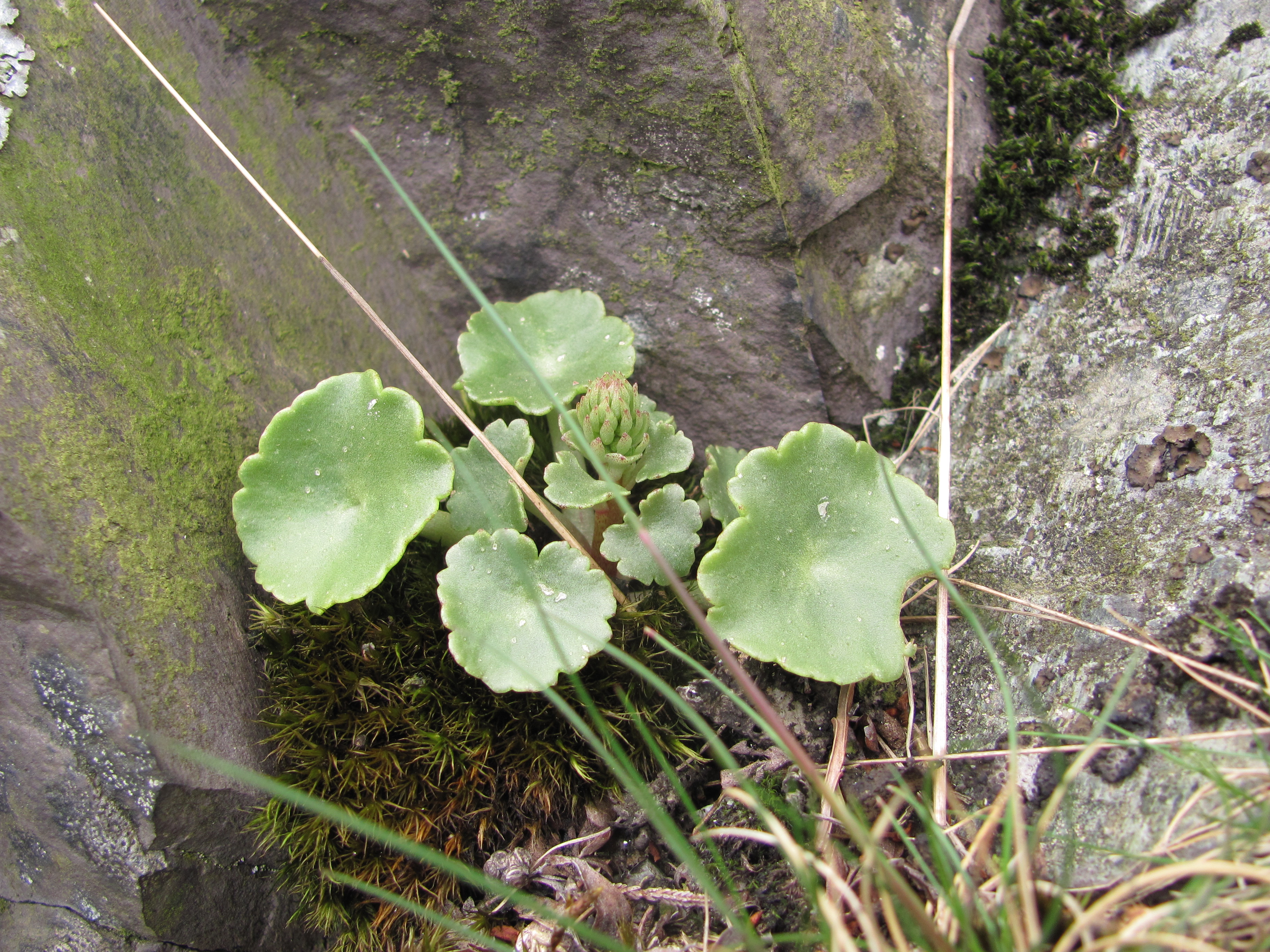
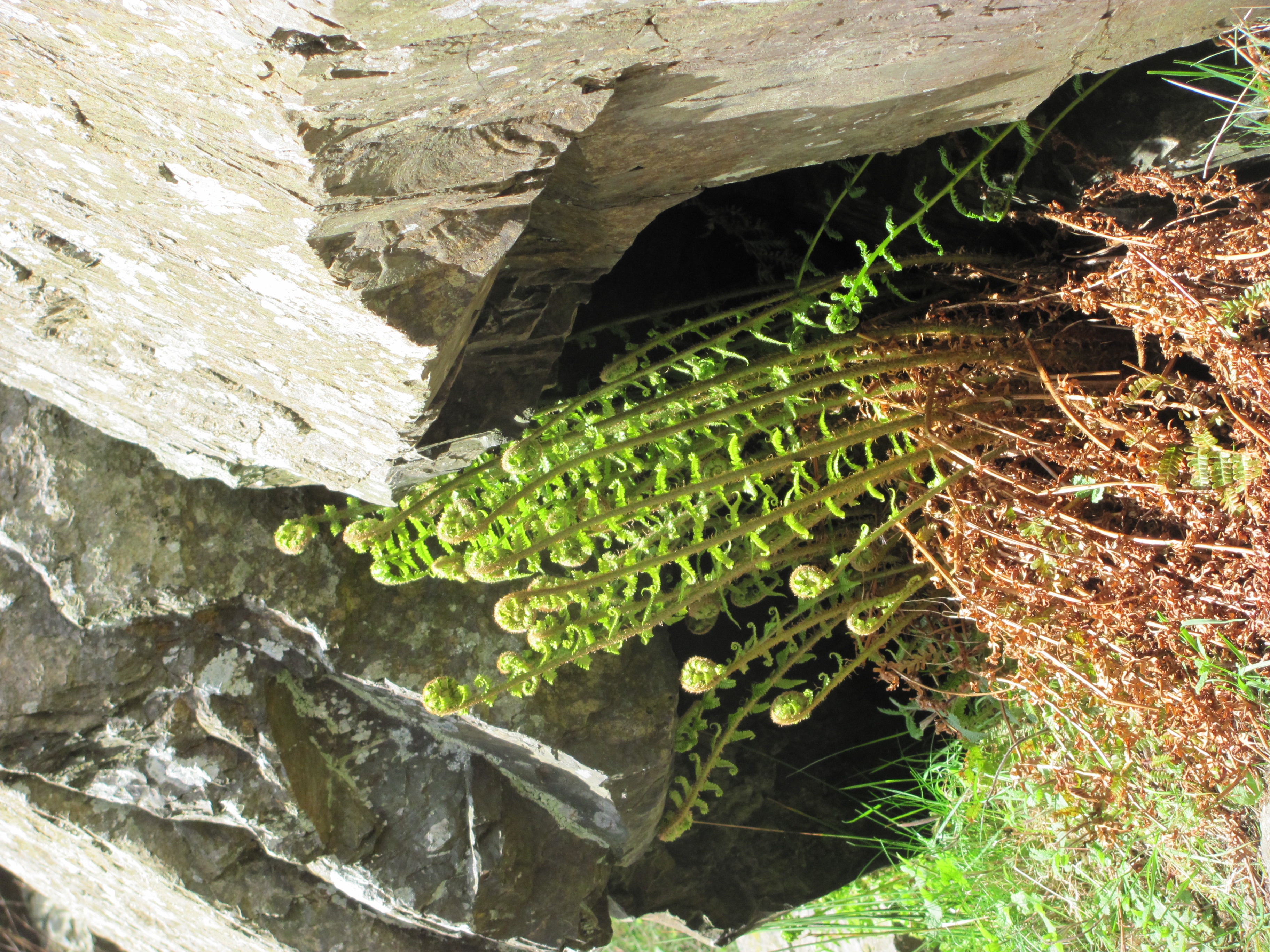
Jude the Undergardener leads the way down.The winding path shows us the way.The glossy round leaves of Pennywort.Fresh ferns flourish in the cool shade at the base of rocky outcrops.Almost back.
What an enjoyable walk, wandering up valleys with just birds and sheep as company. We must return in the Autumn.
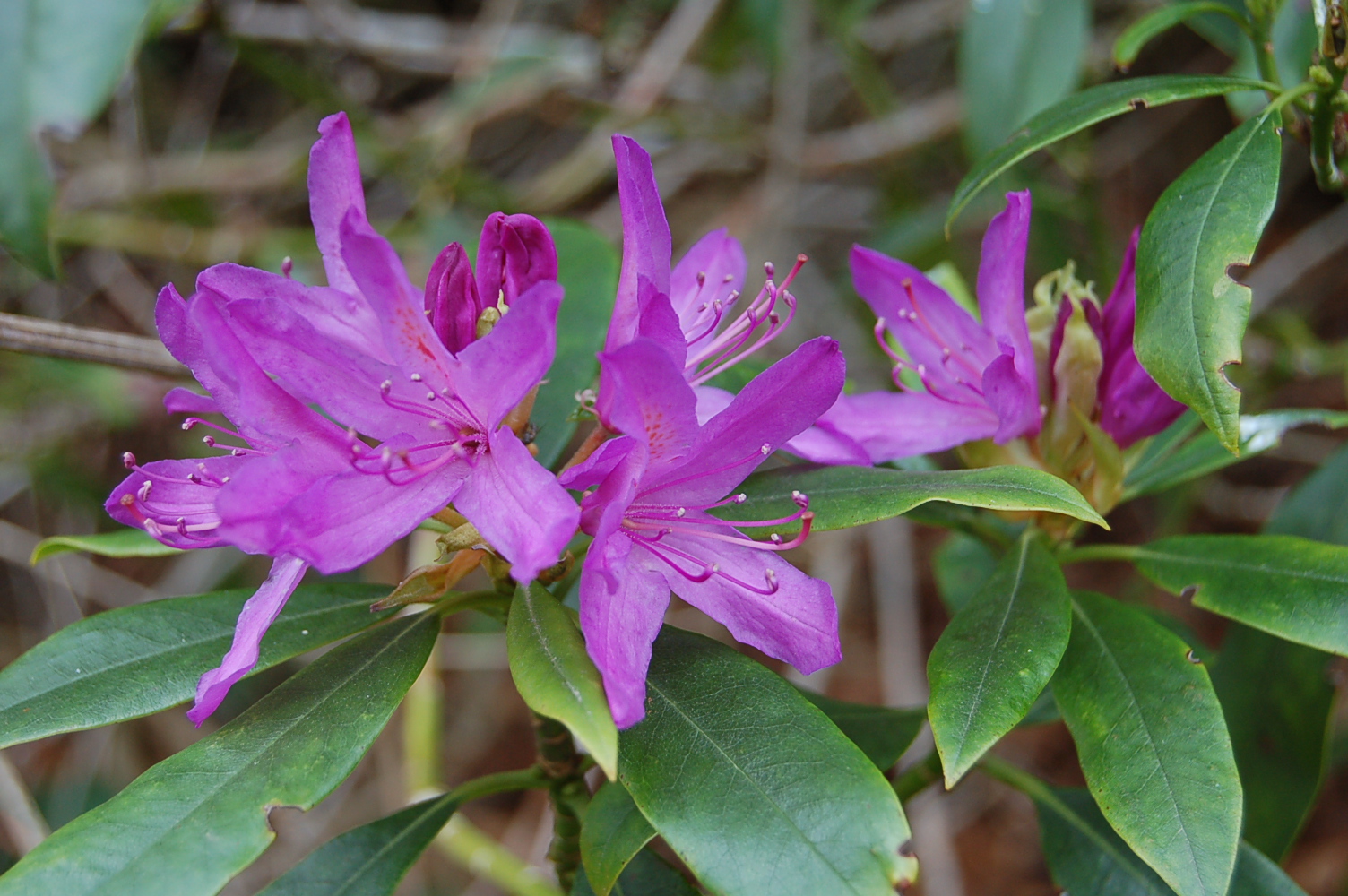
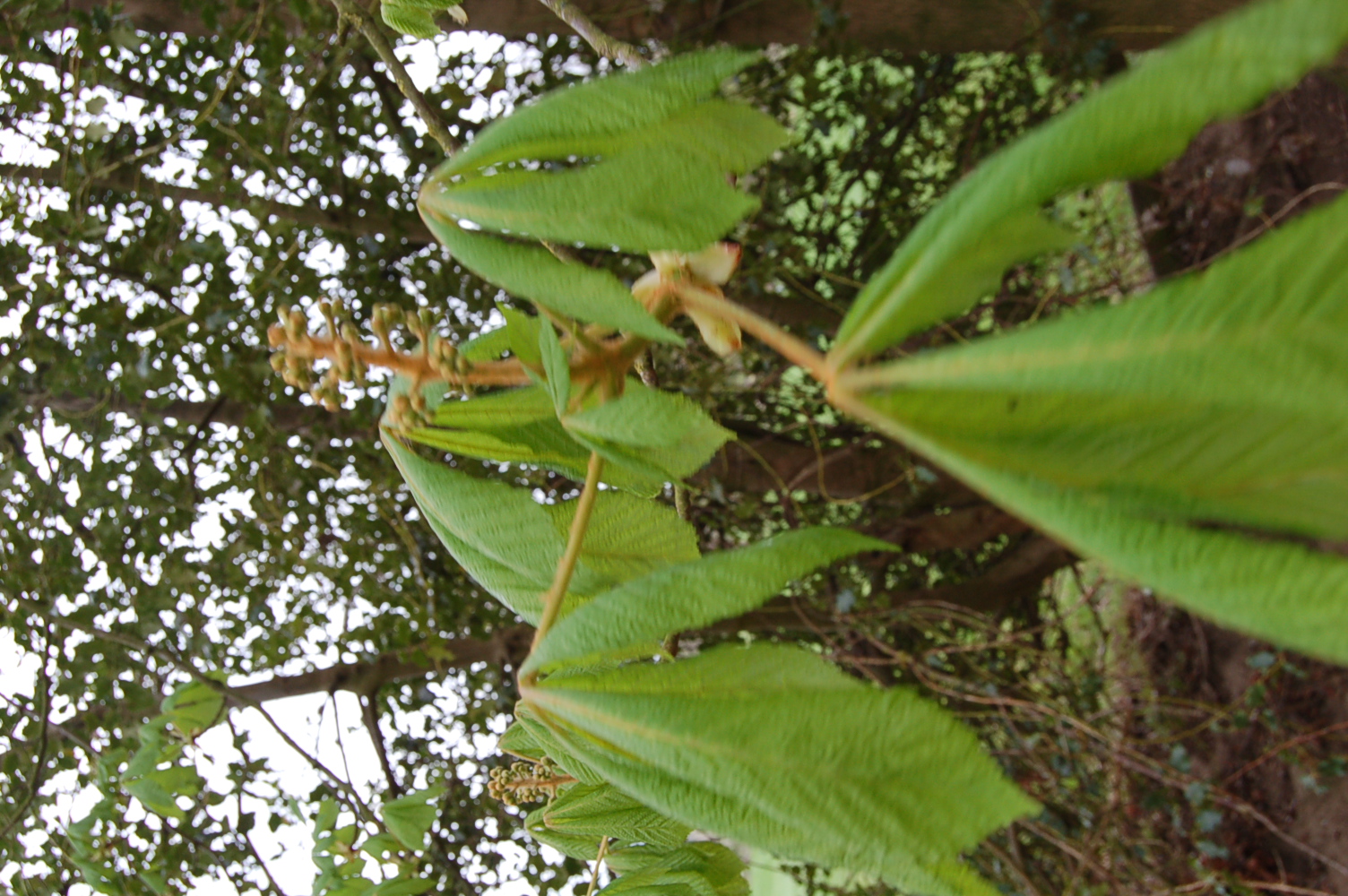
The weather turned colder today, back to more normal temperatures for the time of year. Last week on some days we enjoyed 20 degrees celsius but it has dropped back to 9, and it felt cold. But we had planned to take a walk at Attingham Park, the weather failed to stop us. Walking through the woods towards the walled garden we were delighted to see splashes of colour from Primroses, Celandines, Rhodendrons and the first leaves of Horse Chestnut trees.
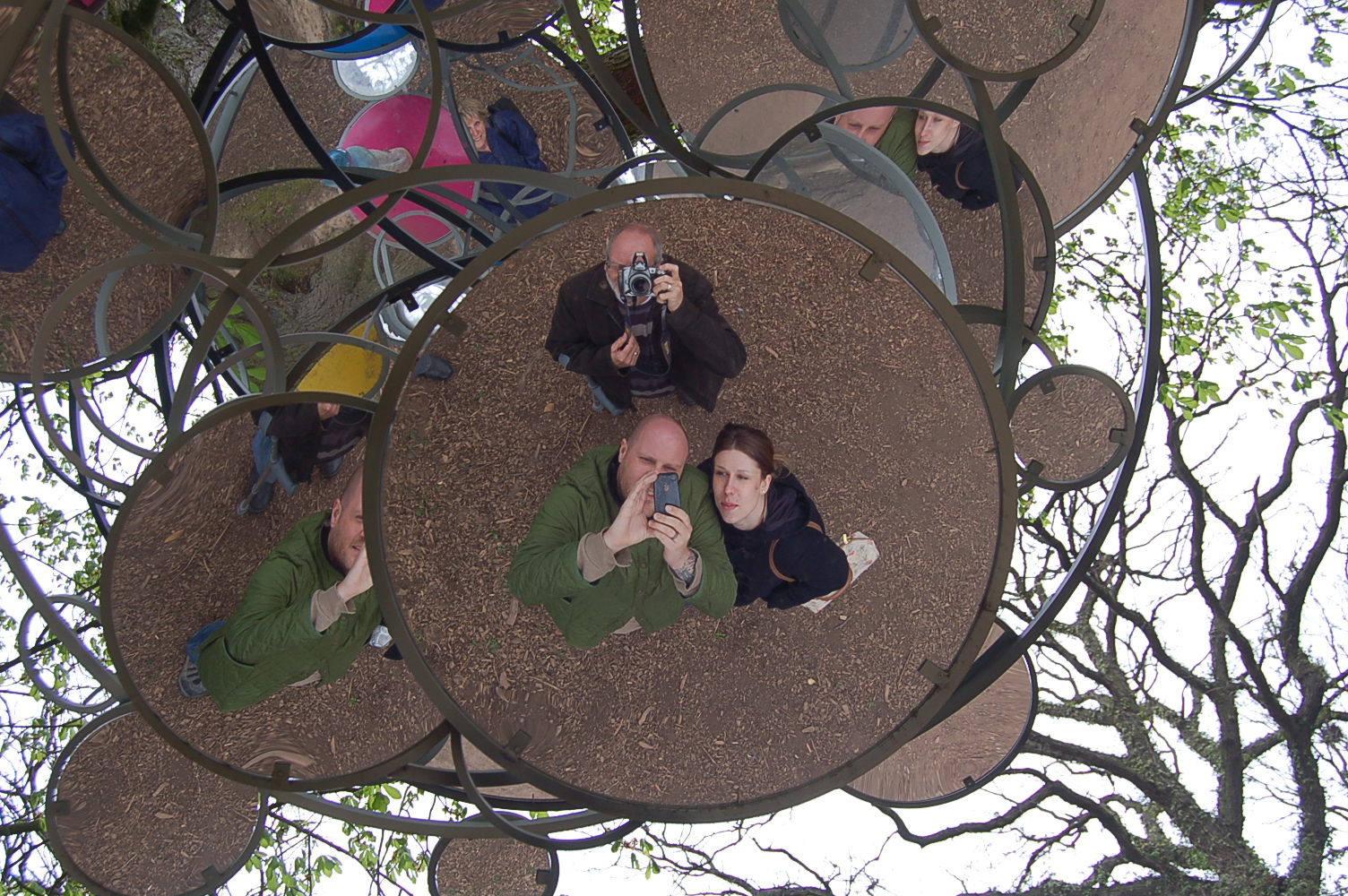
Occasionally a piece of sculpture surprised and entertained us. This piece hanging above us from the branches of a tree, enticed us to look up into its structure, where it captured our images in its circular mirrors. With me are son, Jamie and his girlfriend Sam.
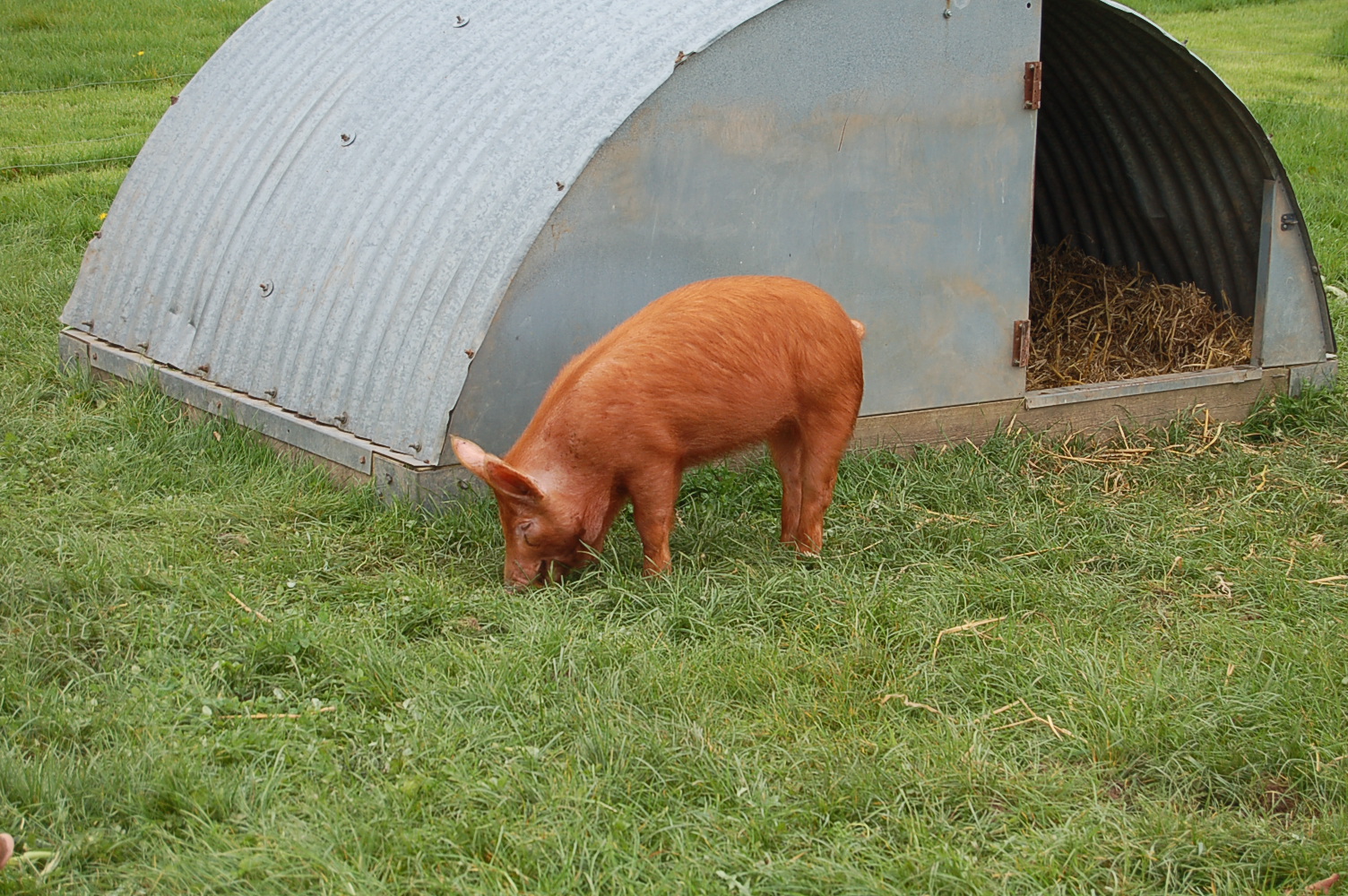
The walled garden changes with the seasons but also as the gardeners and volunteers develop it. The big change which we were delighted to see as we passed through the gate into the protected growing area inside the walls – the pigs had returned.
Each time a new area of the old walled garden is due for re-development, pigs move in to prepare the planting areas. They clear the weeds, turn over the soil and add manure to improve soil structure and add some plant nutrients. Today the pigs we were mesmerised by were young Tamworths with their red bristles.
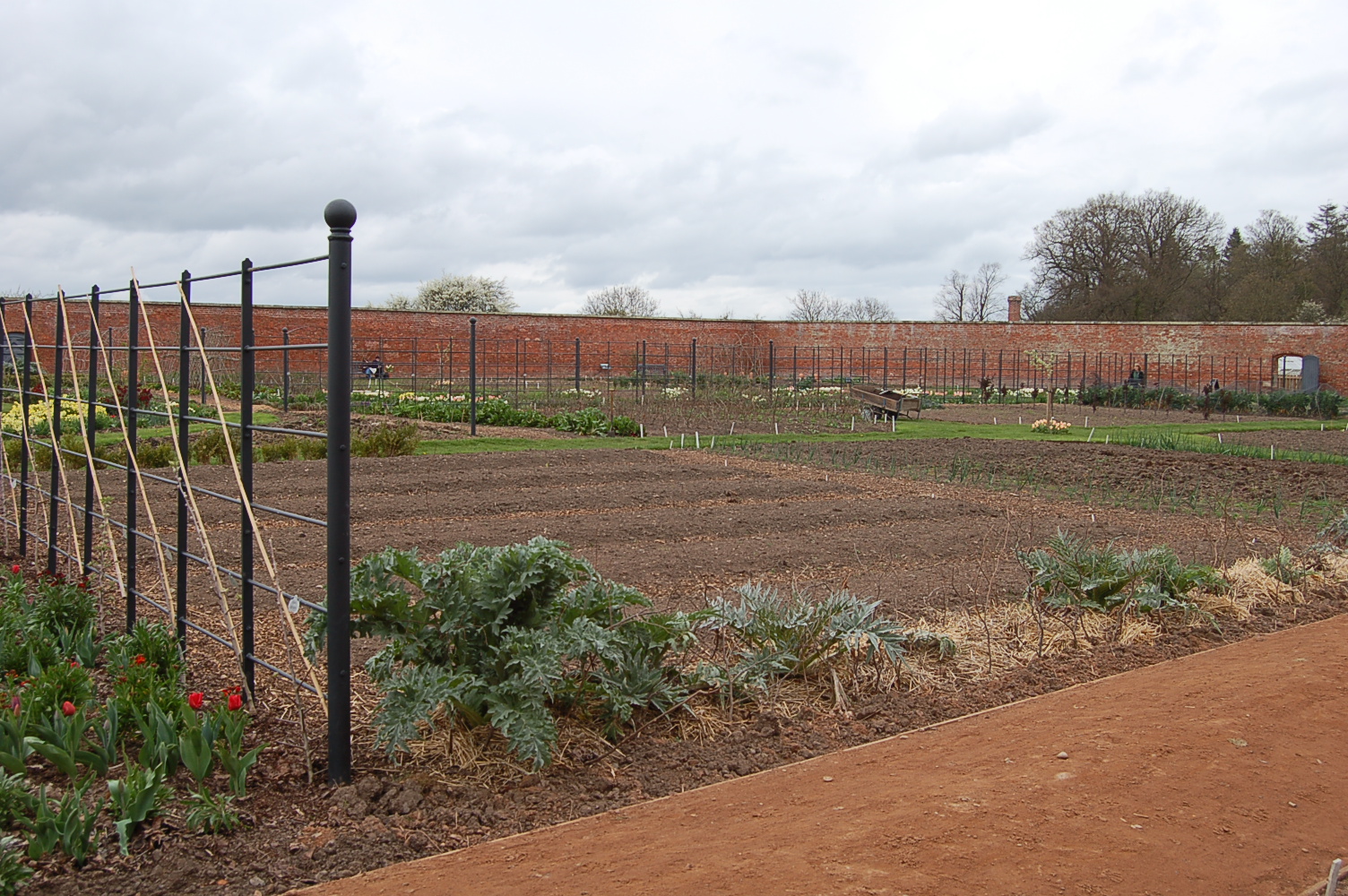
The veggie beds looked almost empty but the decorative borders were full of colour mostly from bulbs and wallflowers. A few veg had survived the winter and added their own colours. The stems of the chard contrast nicely with their leaves, making them most attractive plants.
In the very centre of the walled area is a large circular dipping pool, from where the old gardeners would collect water by dipping watering cans. Archaeologists have cleared it out and their explorations and excavations have left its beautiful brick interior for us to admire.
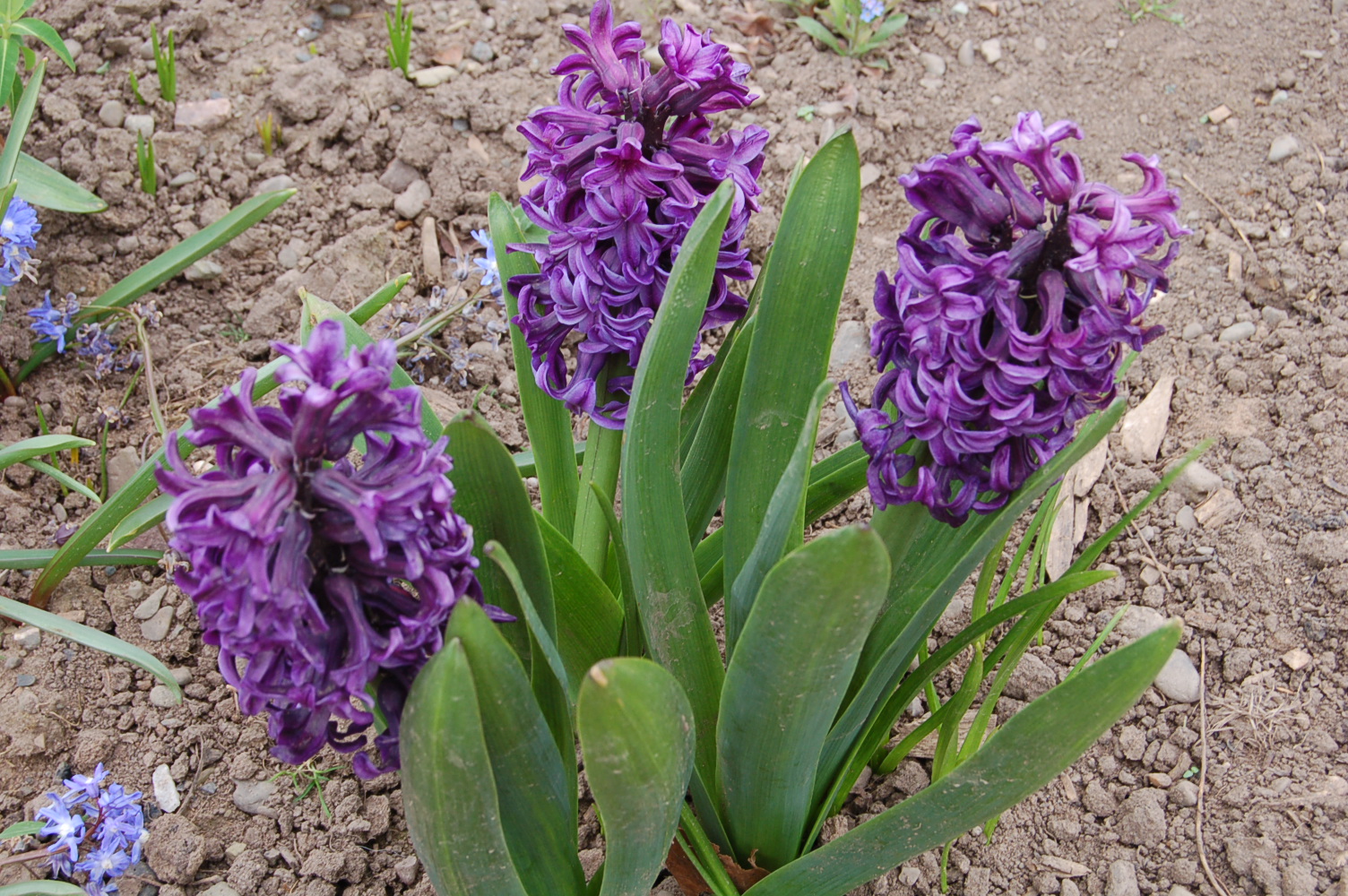
The beds lining the paths that lead from the dipping pool are lined with tulips, hyacinths and wallflowers to give colour and scent for visitors to enjoy.
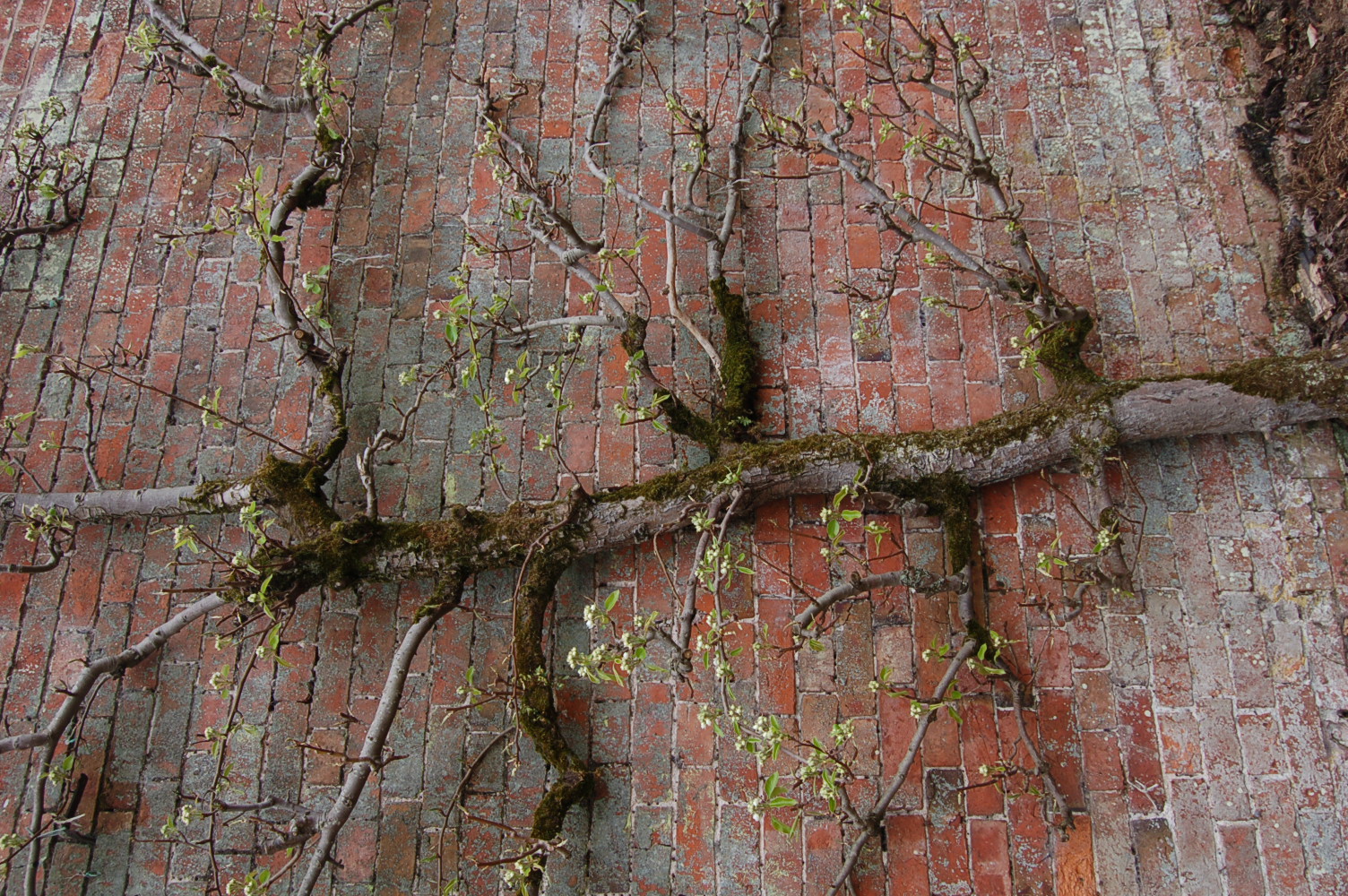
The warming red brick walls that gave protection to the fruit and veg growing within them are lined with beautiful trained fruit trees. The espalliers are wonderfully trained and later in the spring blossom will clothe their limbs and in late summer and early autumn with fruit.
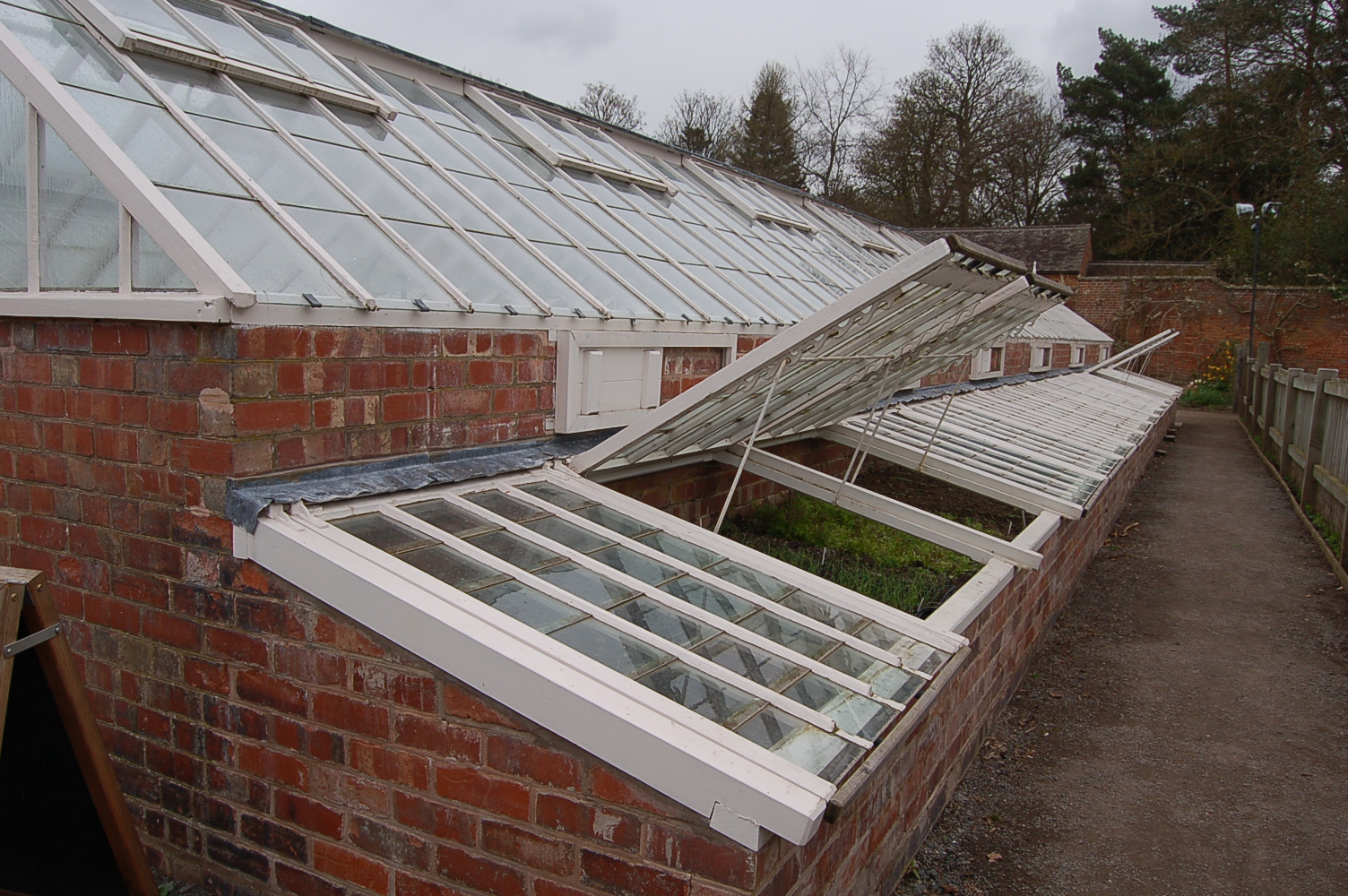
The garden enclosed in a wall inside the outer wall produces fruit and cut flowers and is home to renovated glasshouses and coldframes.
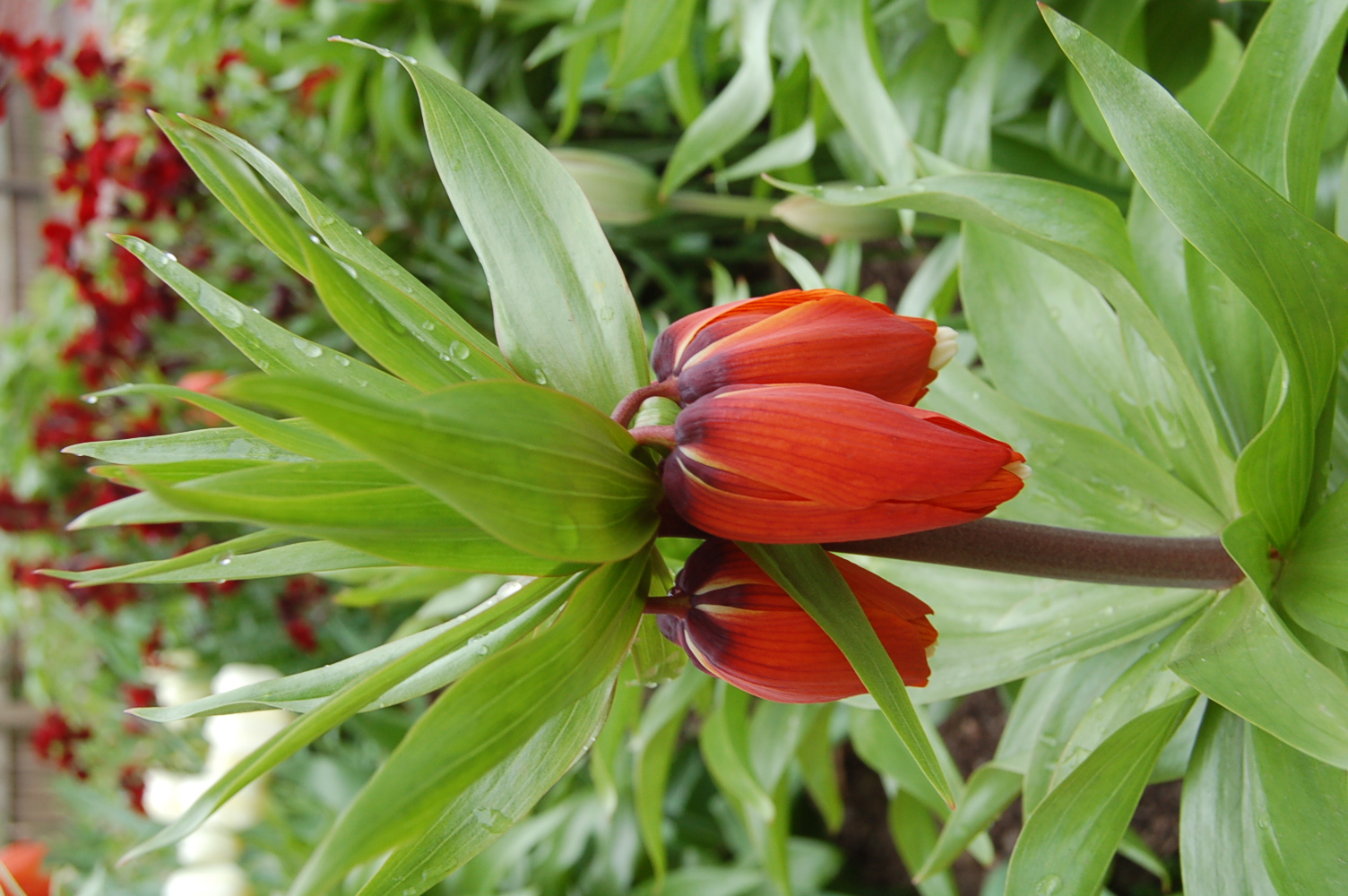
A border outside the gardeners’ bothy was bursting with hot colours. Polyanthas and Wallflowers in reds, oranges and reds shared the space with an impressive clump of Fritillary “Crown Imperials”.
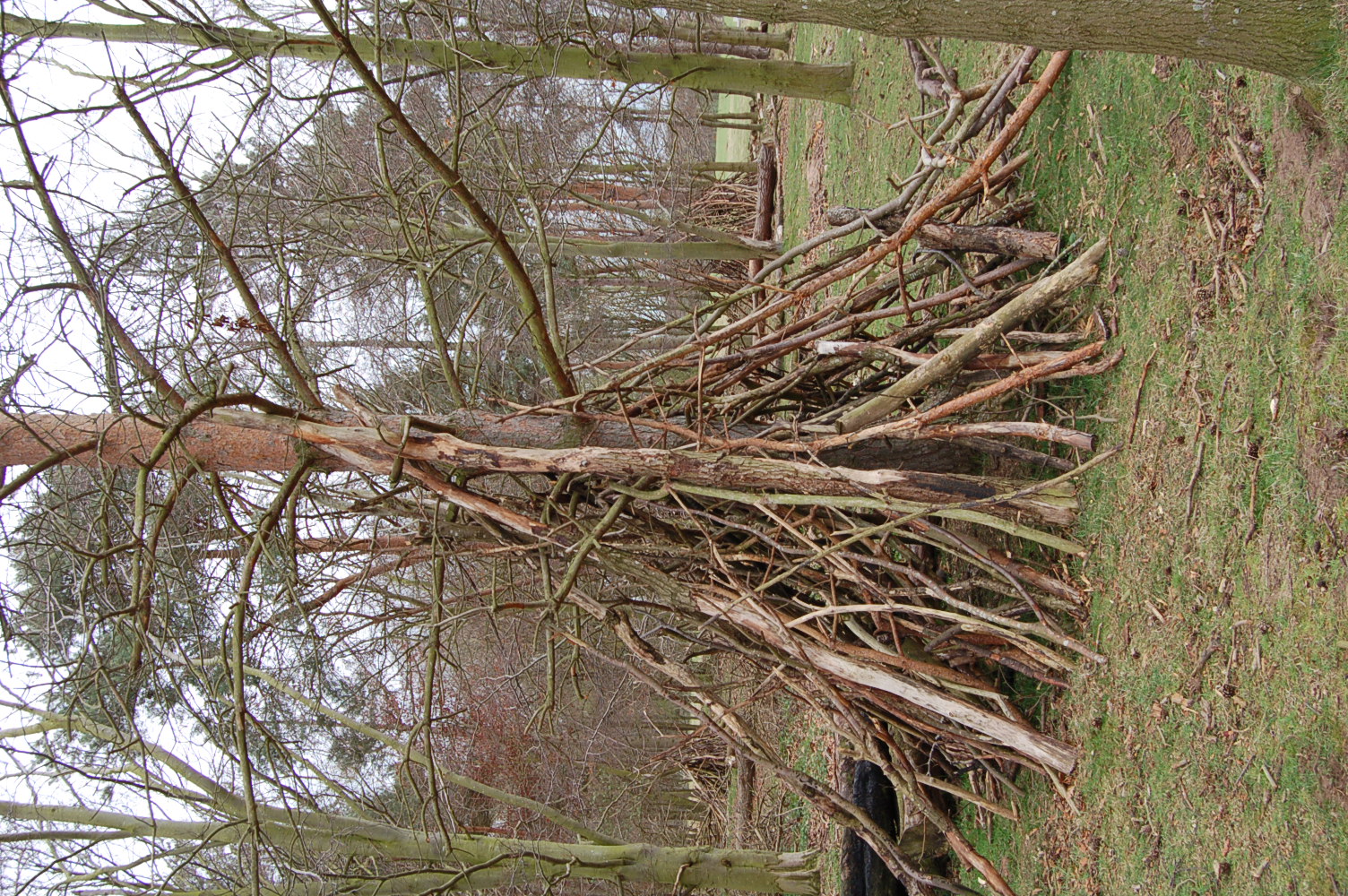
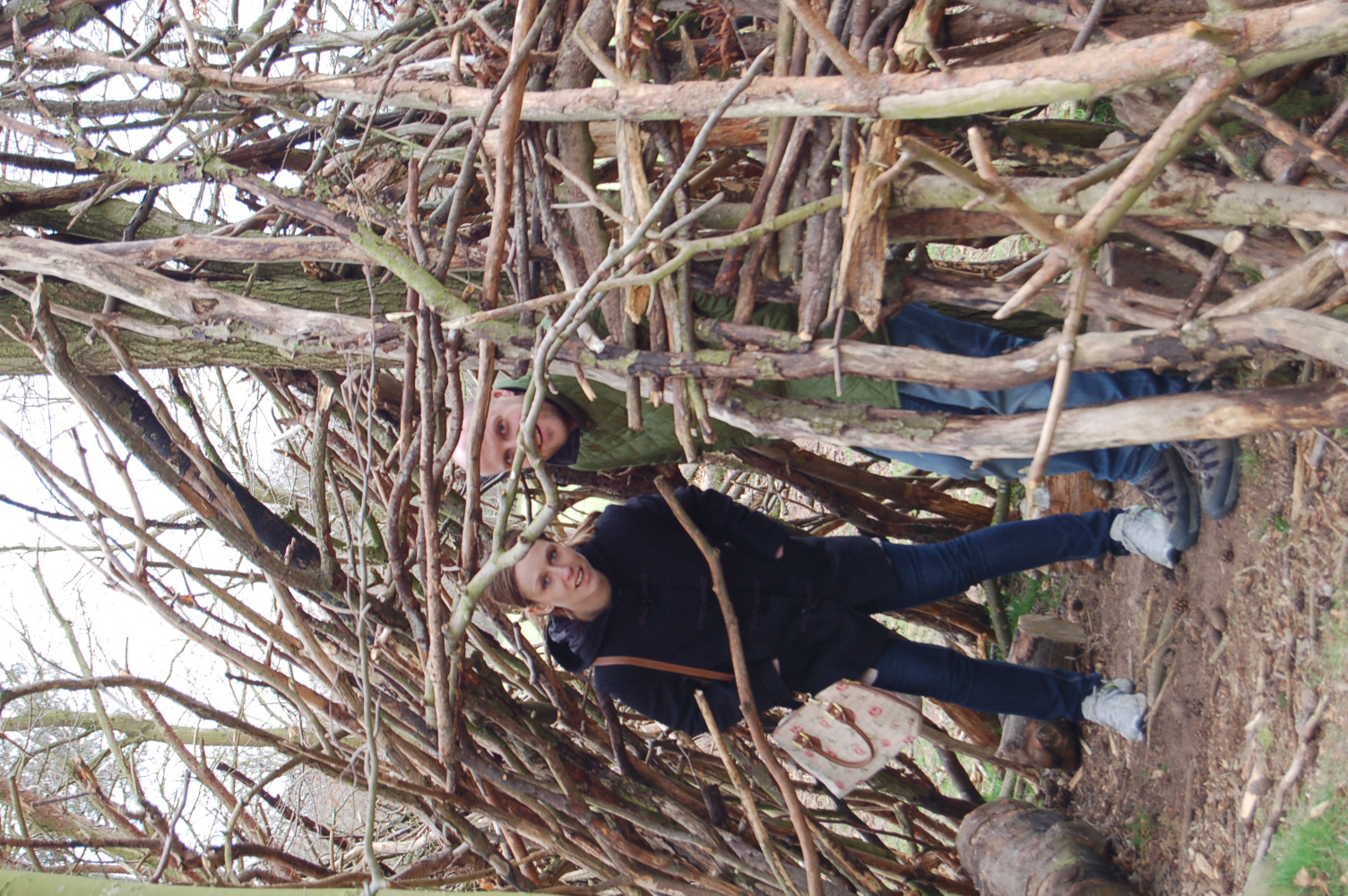
On the return walk we passed through an area of woodland where fallen limbs from the old trees had been used by children to make wonderful dens. Let’s have a wander around and enjoy a few. We enjoyed admiring the children’s handiwork and Jamie and Sam had to try one out for size. Knowing that I would blog about our day out they decided that if they sneaked into a photo they could get themselves into my next posting.
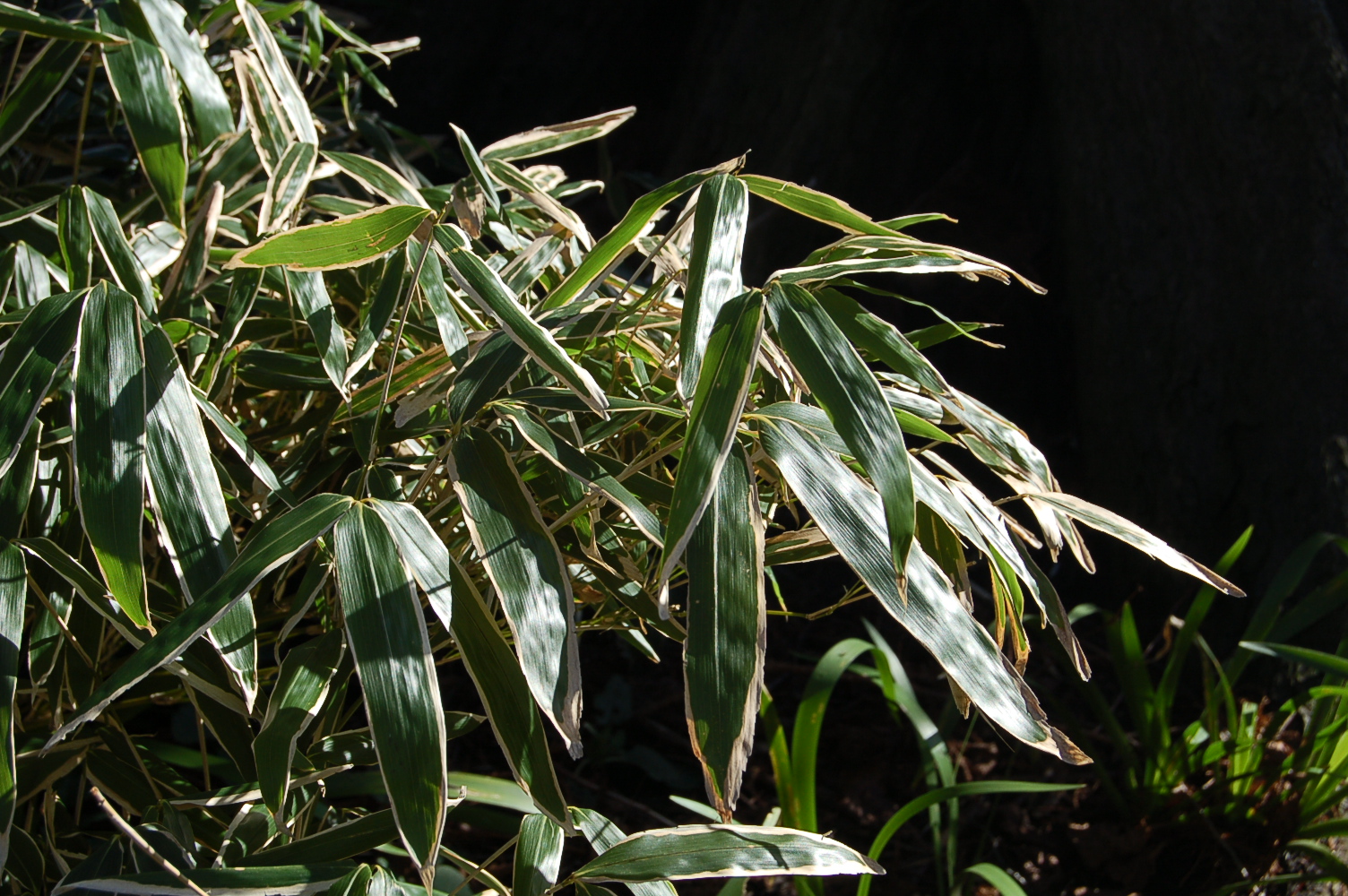
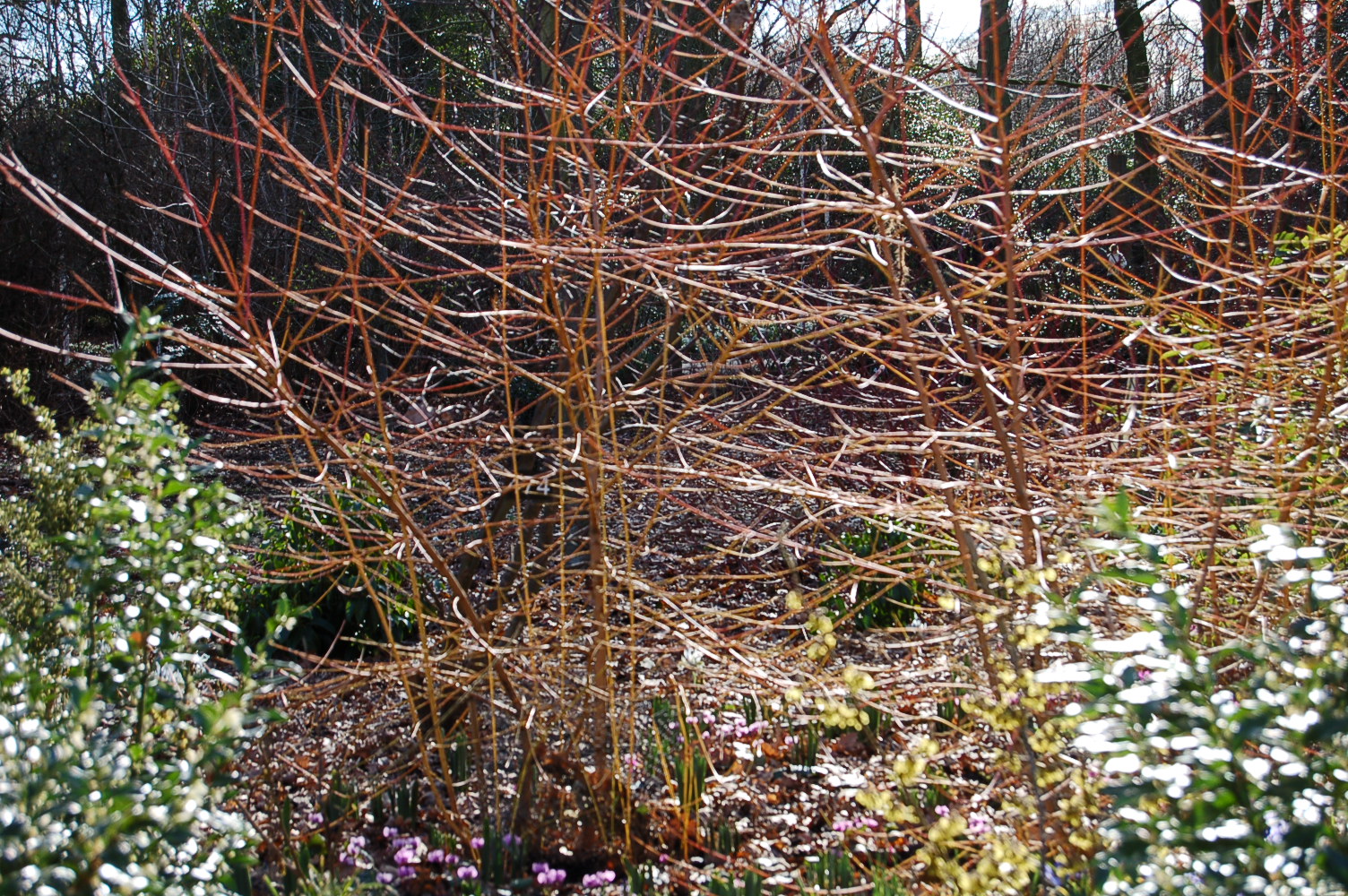
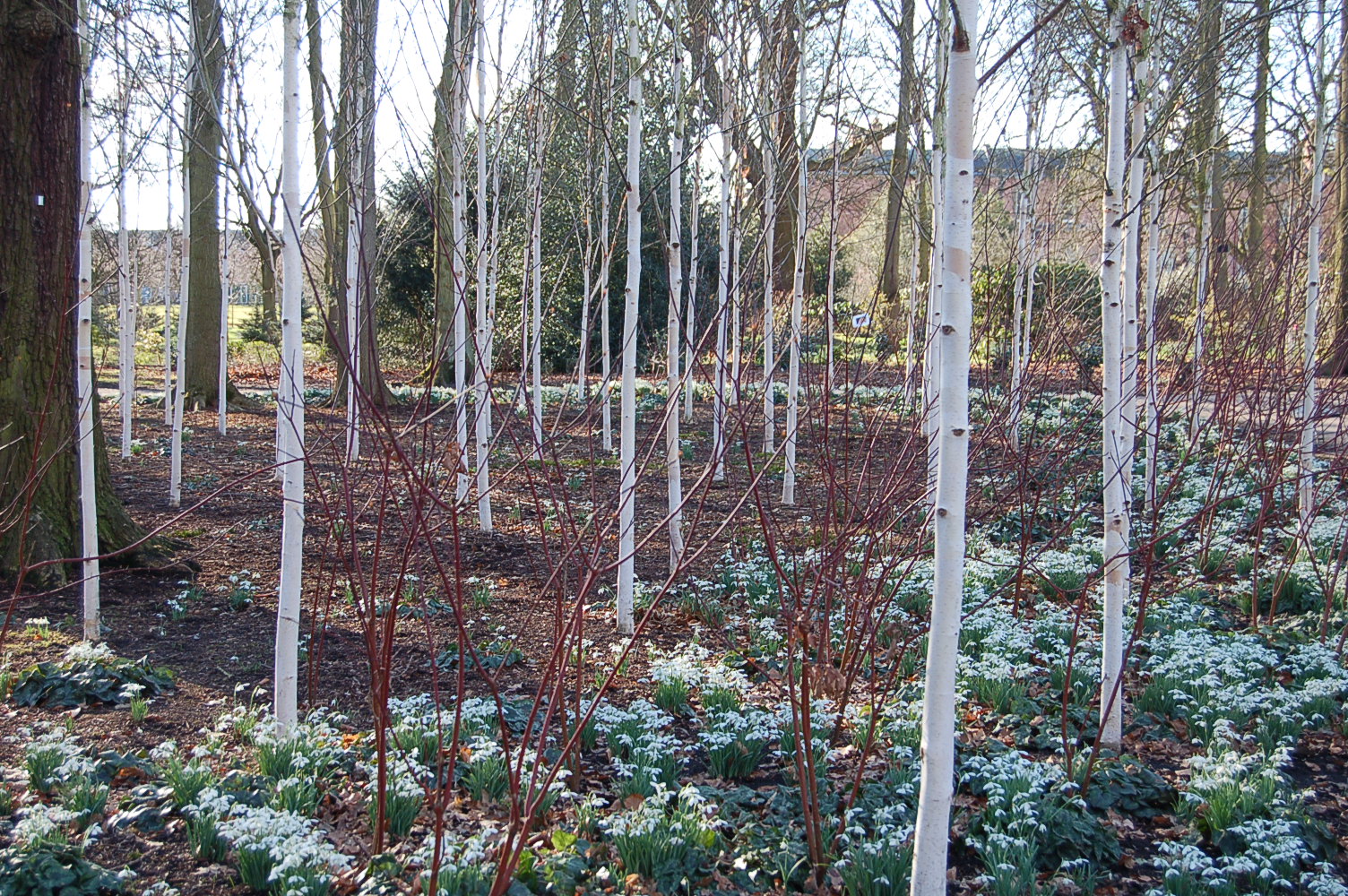
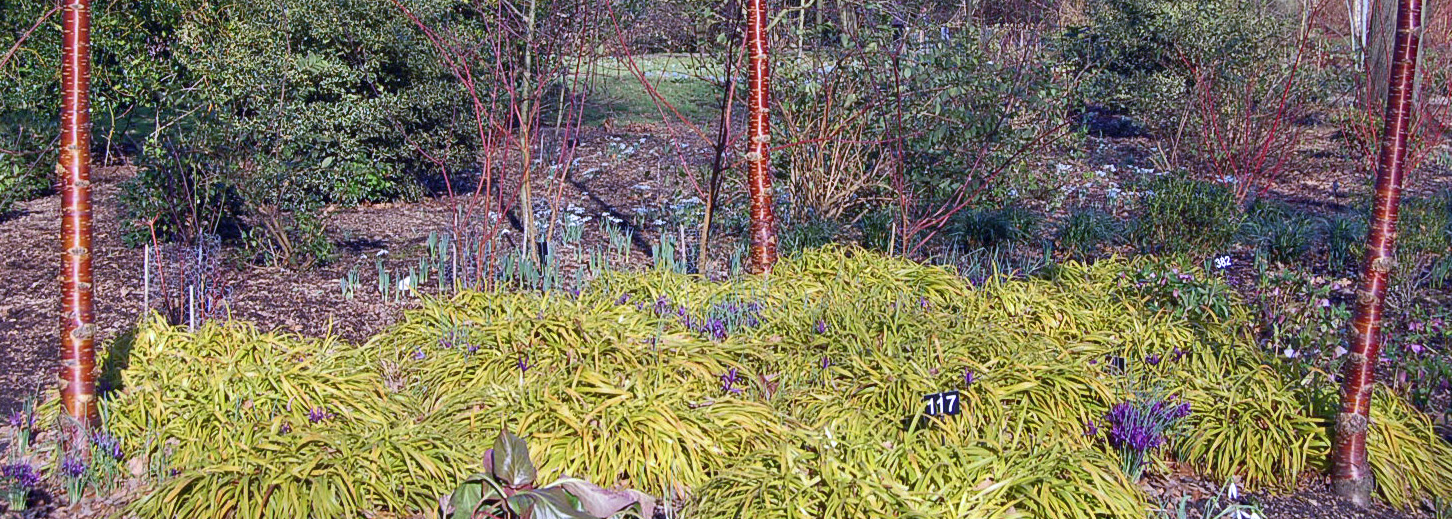
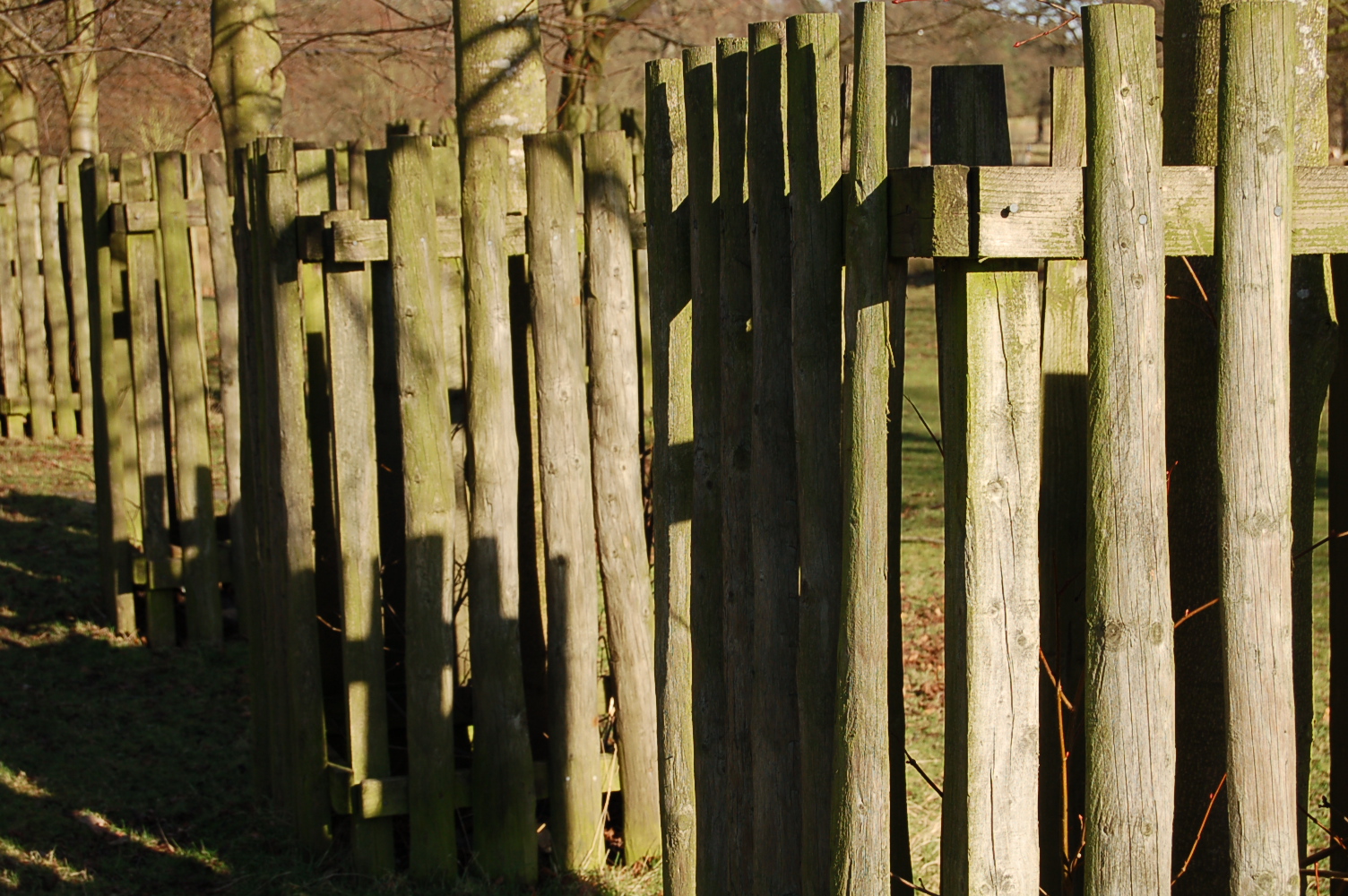
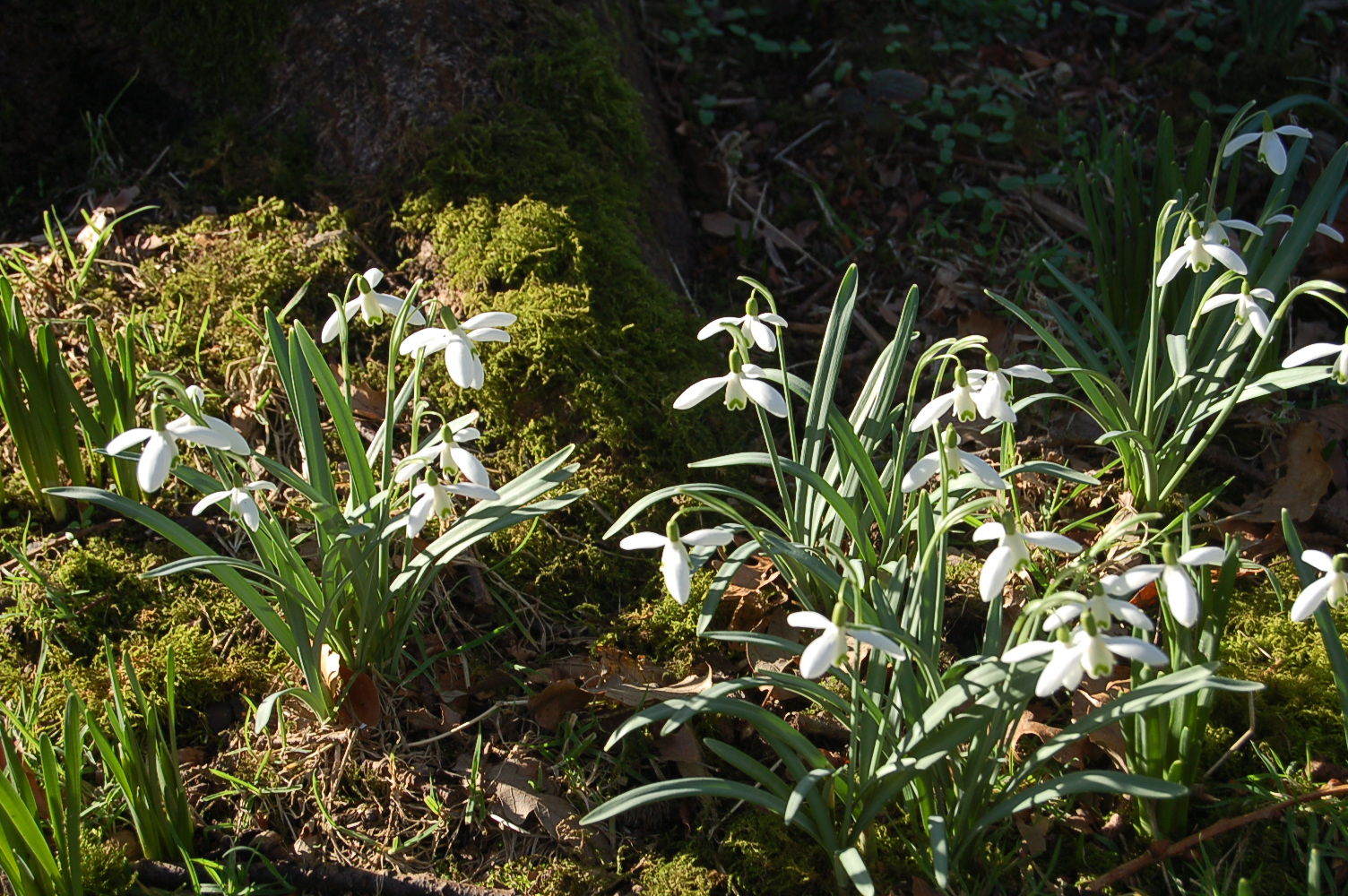
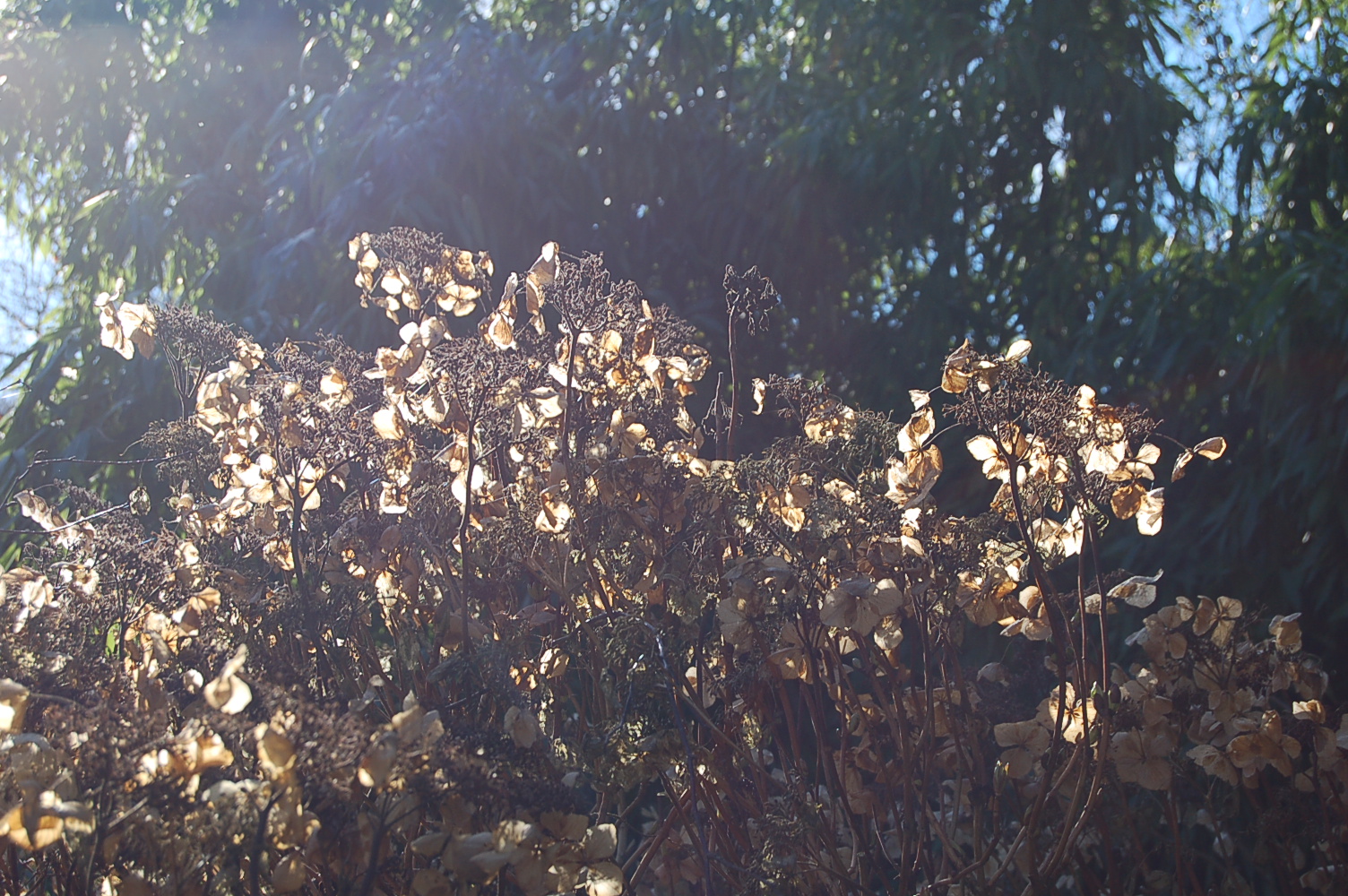
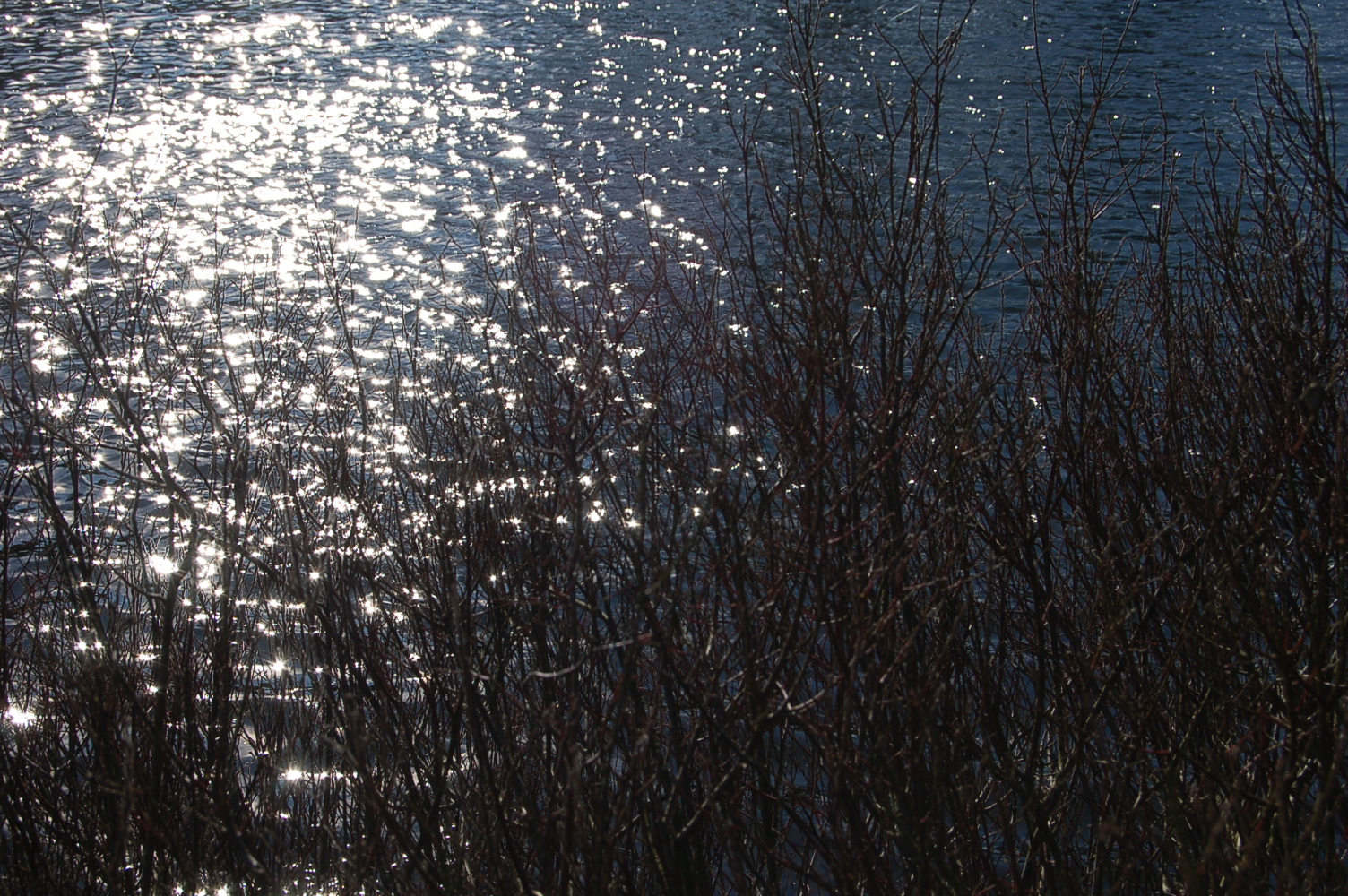
The lighting on the day of our visit to Durham Massey recently was amazing for taking photographs. It was a sunny day with a bright blue sky above. The light acted light a spotlight shining just above ground level. It lit up leaves, tree trunks, flower petals. And it shone in “The Undergardener’s” eyes!
Peeling bark and Snowdrops.Winter light reflected in the glossy bamboo foliage.Back-lit Hydrangea seed heads.Twiggy highlights like spiders' webs.Long shadows of the White-stemmed Birch cross the carpet of Snowdrops.Winter light turns Cornus mas flowers into gold along the orange peel bark.Orange stems and yellow foliage enriched by the lightLooking out from the shadows.Curling silhouettes of an old gnarled Rhodendron bush.Fence shadows.Snowdrops and moss.Sparkling Hydrangeas.Into the light.Fallen rotting tree trunk looking like a huge tuning fork.Jewel coloured Bergenia leaves.Sparkling Lake
'The most important and informative publication on wildlife of our times' - The Independent. This blog is a member of The UK & Ireland Natural History Bloggers group: www.uknhb.blogspot.com













































































 greenbenchramblings