Categories
birds gardens open to the public National Trust nature reserves photography Shropshire The National Trust trees wildlife winter gardens woodland

Birches in Winter

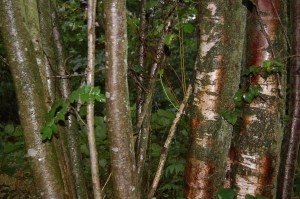
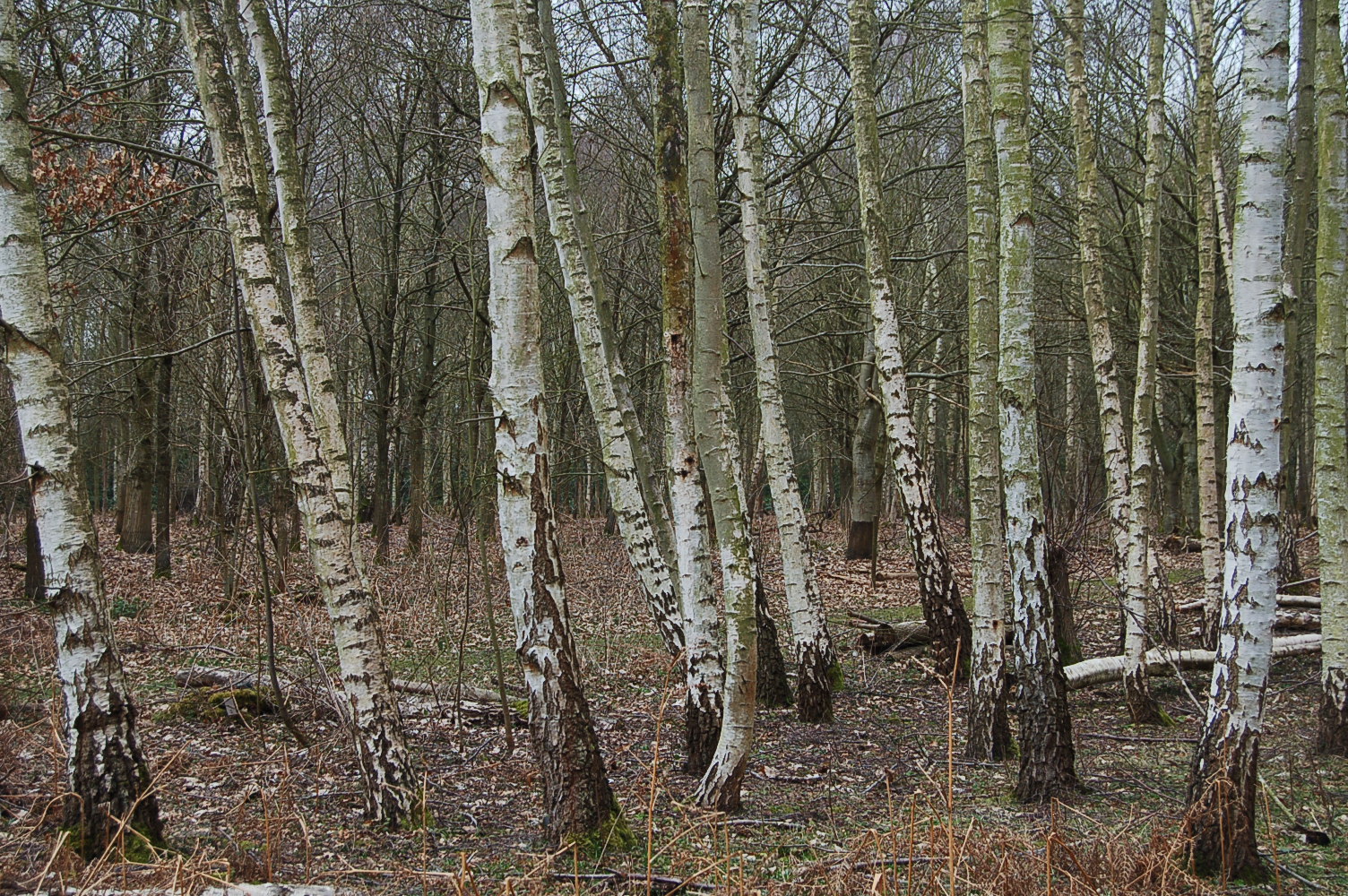
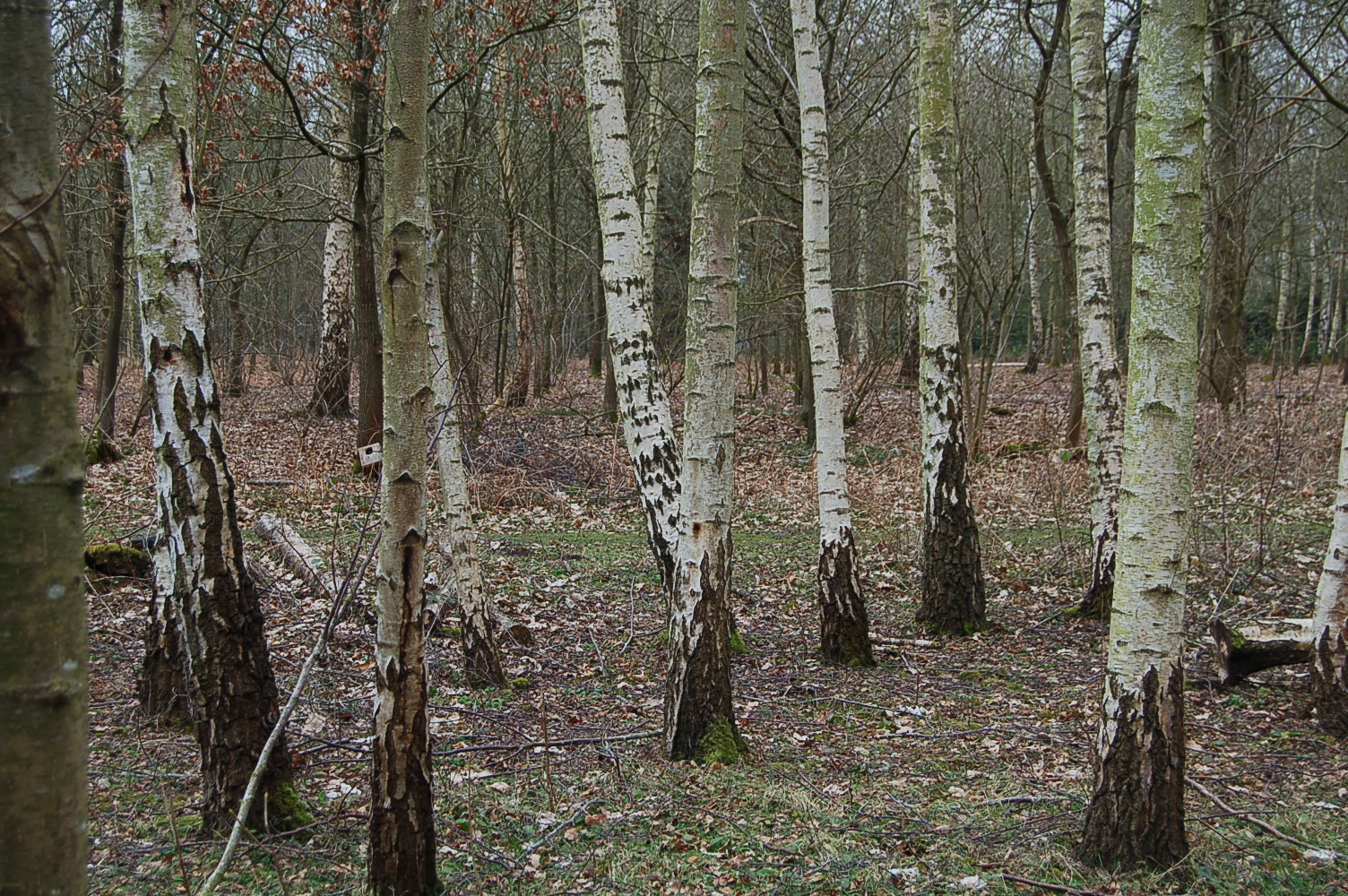
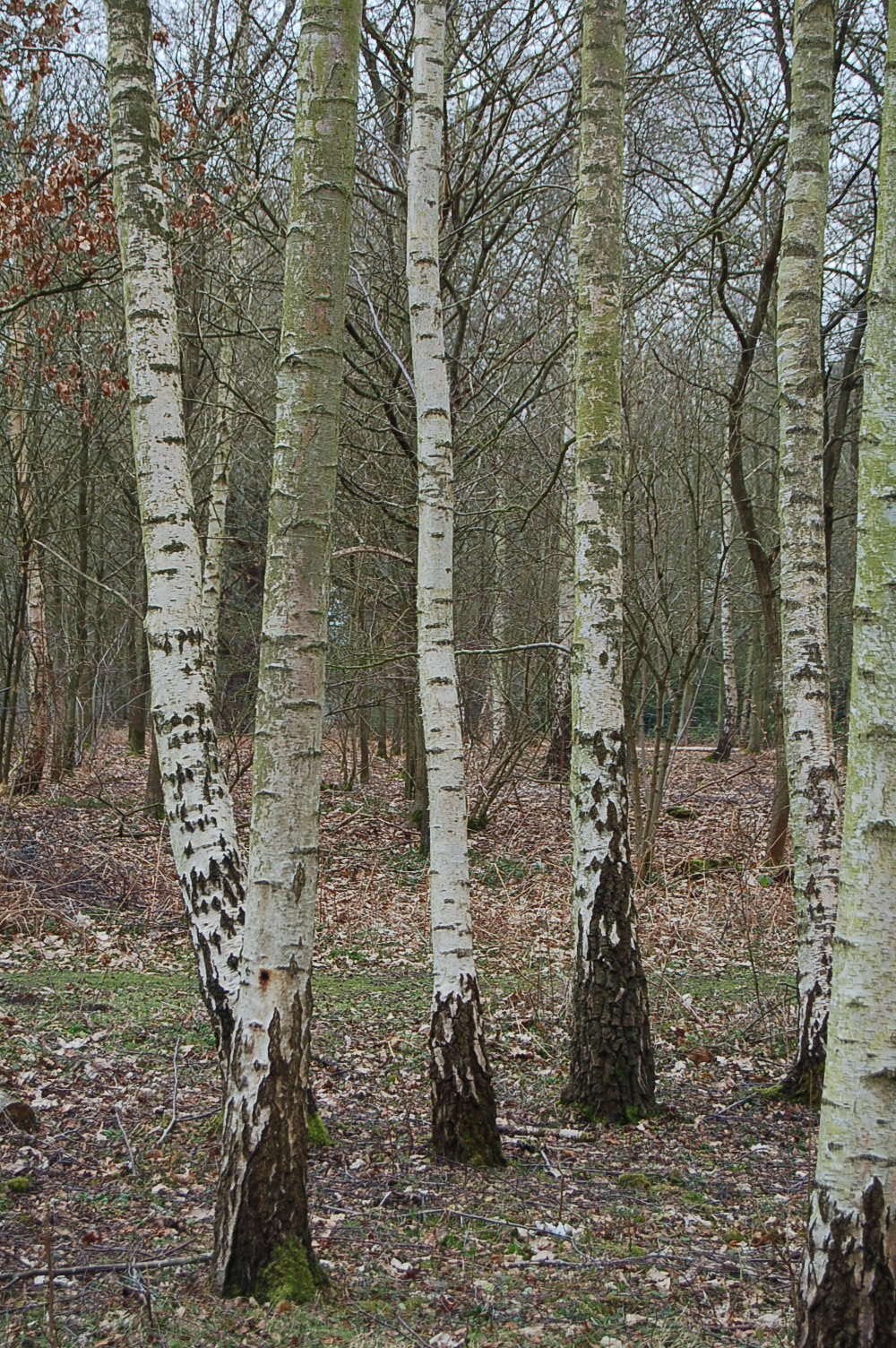
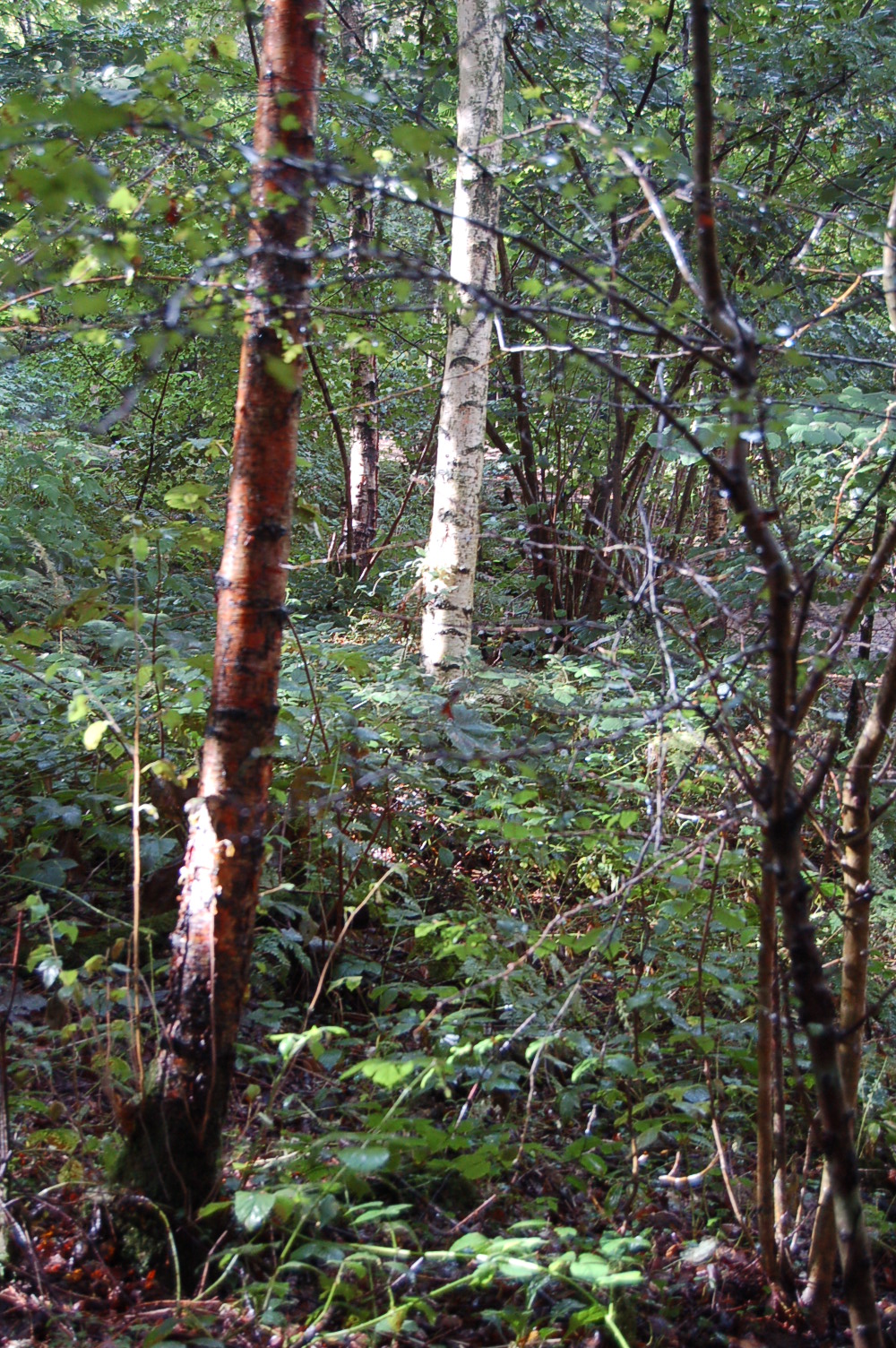
Regular readers of Greenbenchramblings will be very aware of my love of Birch trees in all their many guises. In this post I shall highlight our native Betula pendula.

birch 3 birch 4 birch 5 DSC_0041

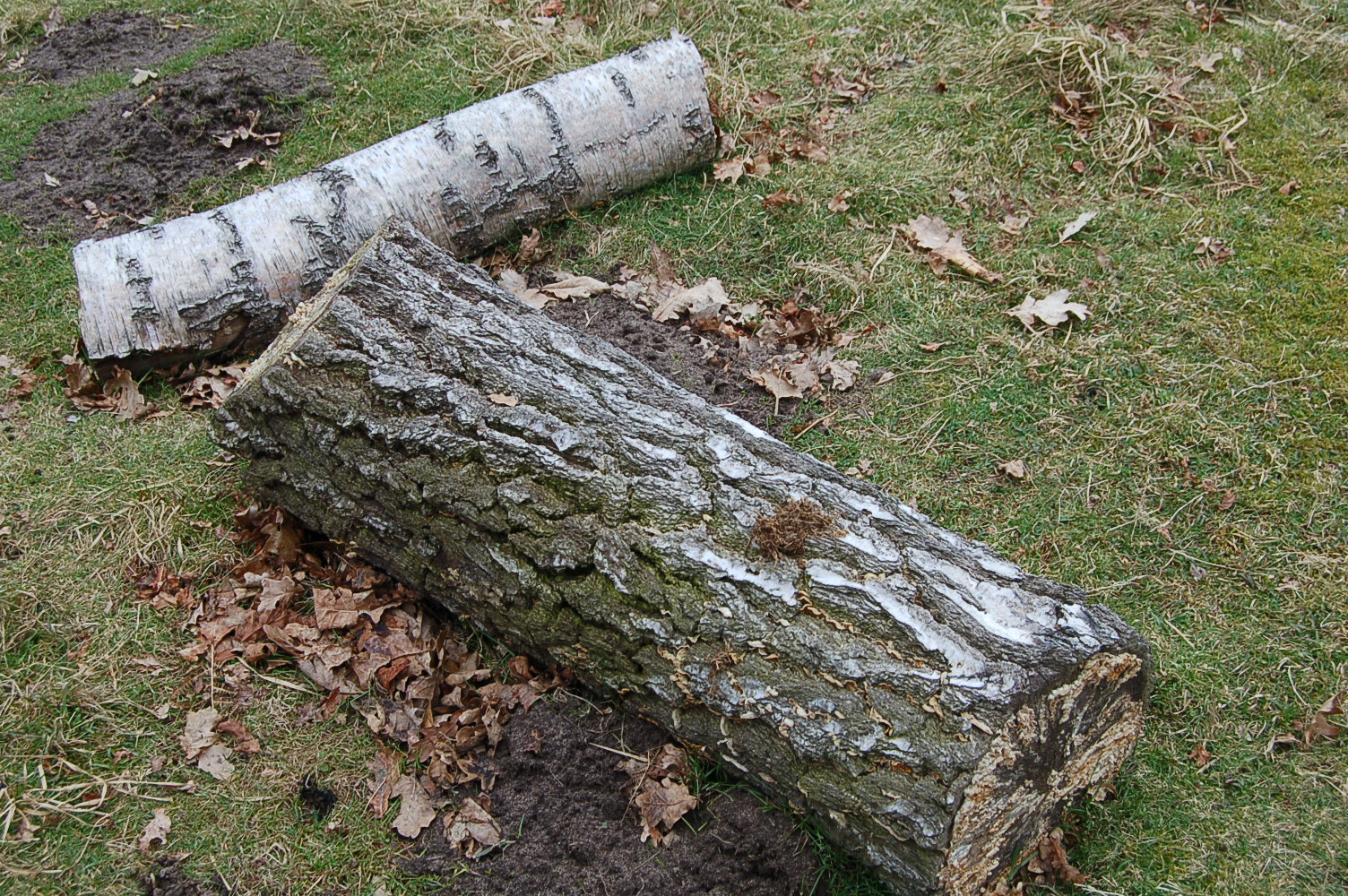
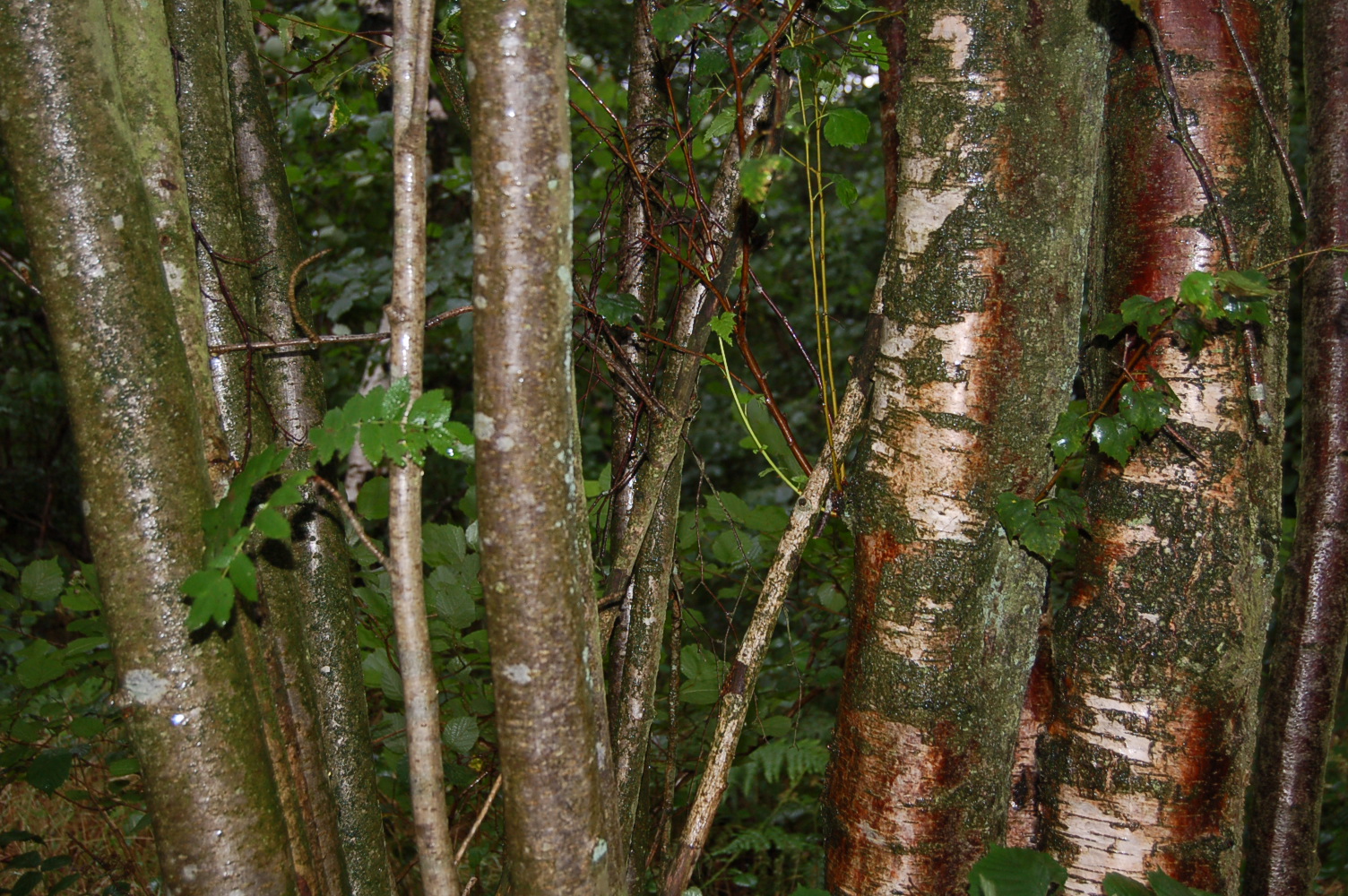
The texture of its silvered bark metamorphoses as it ages from a smooth shining silver to a pattern of deeply fissured elephant skin.

birch 1 birch 2

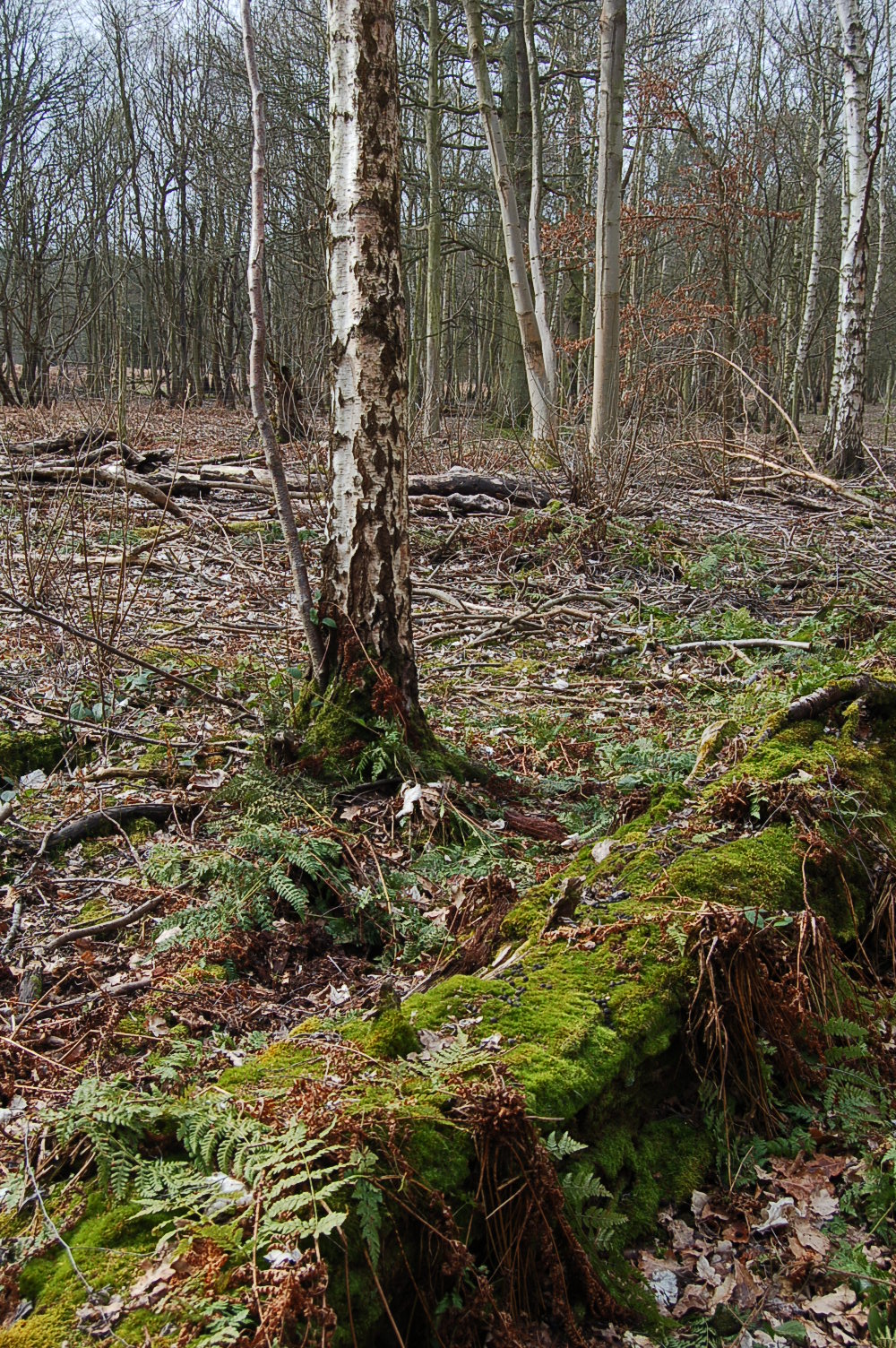
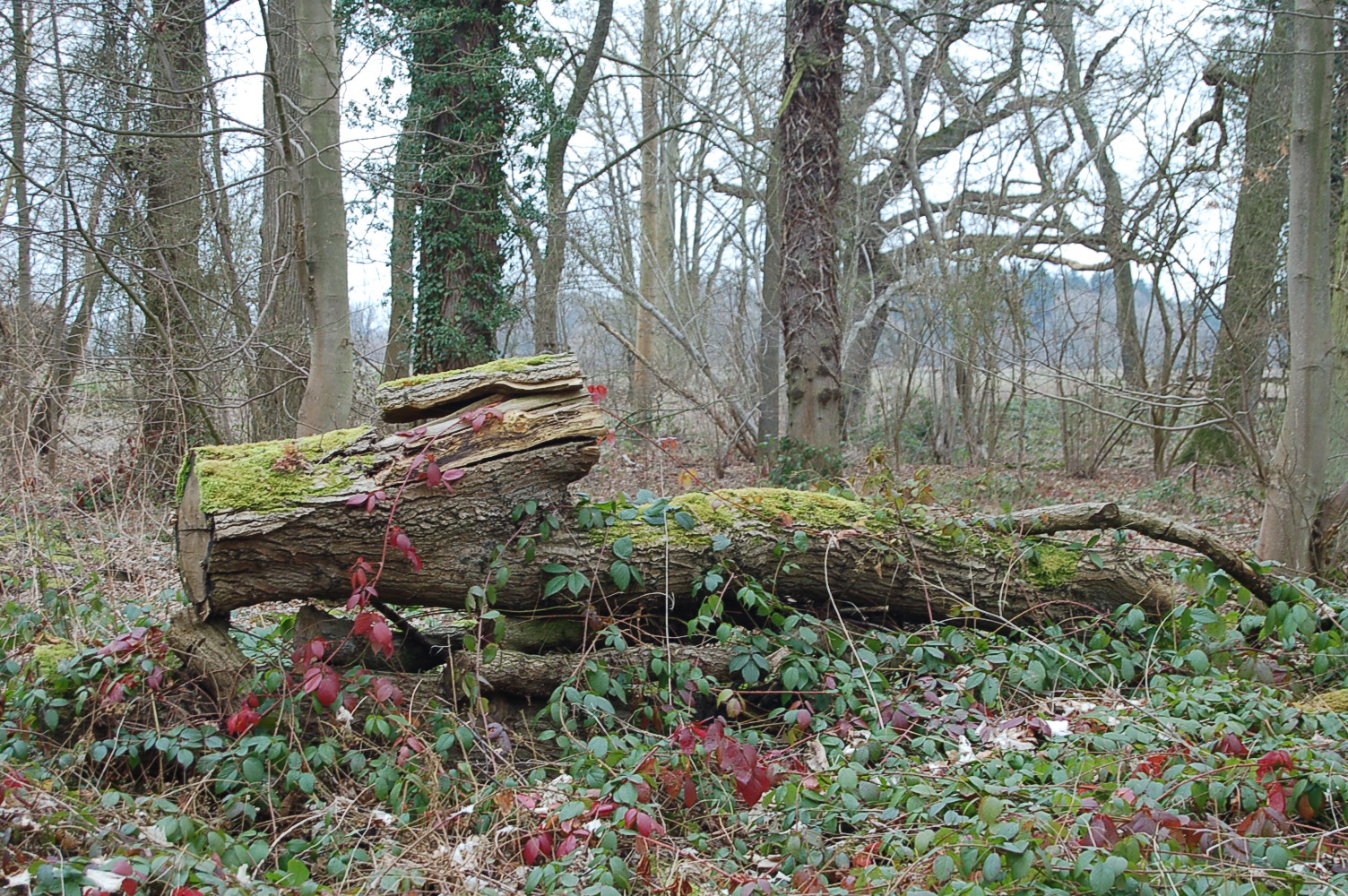
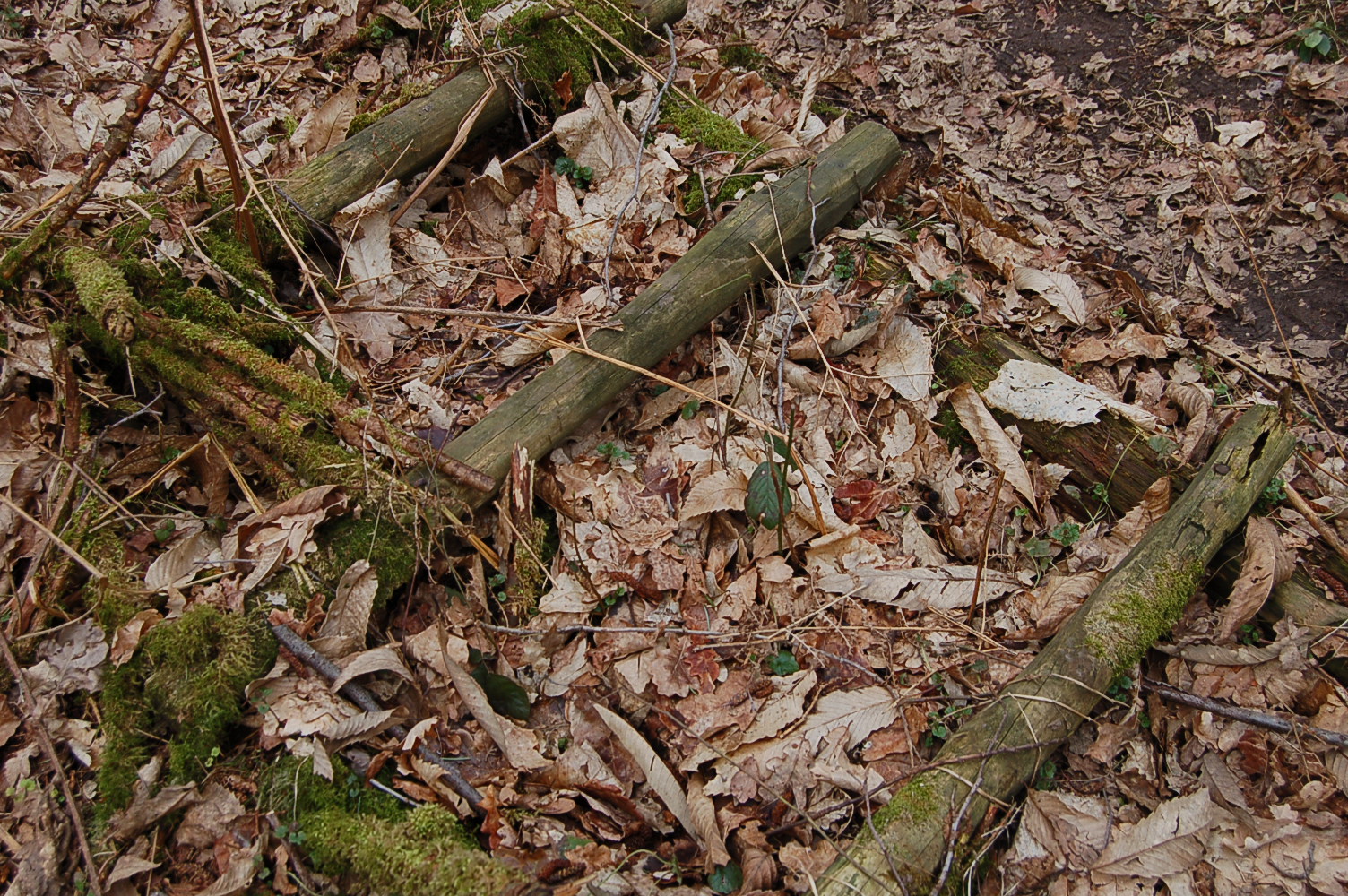
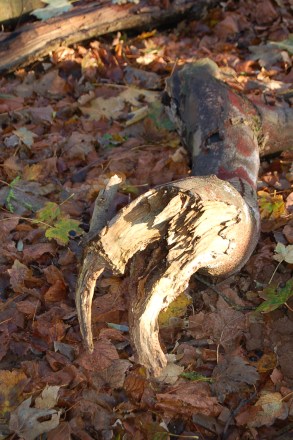
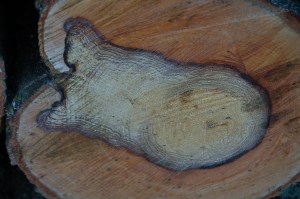
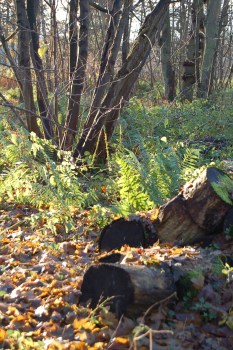
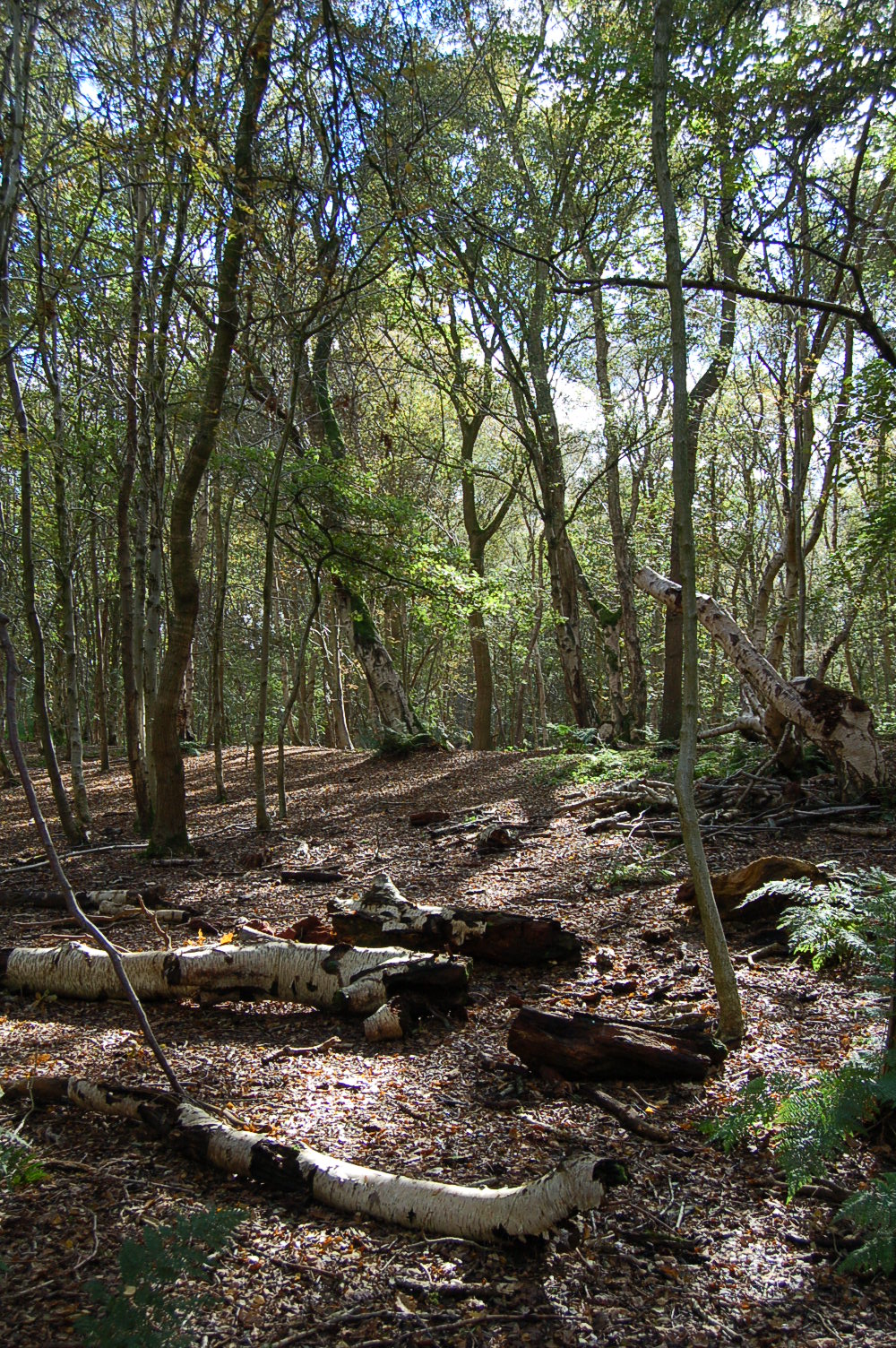
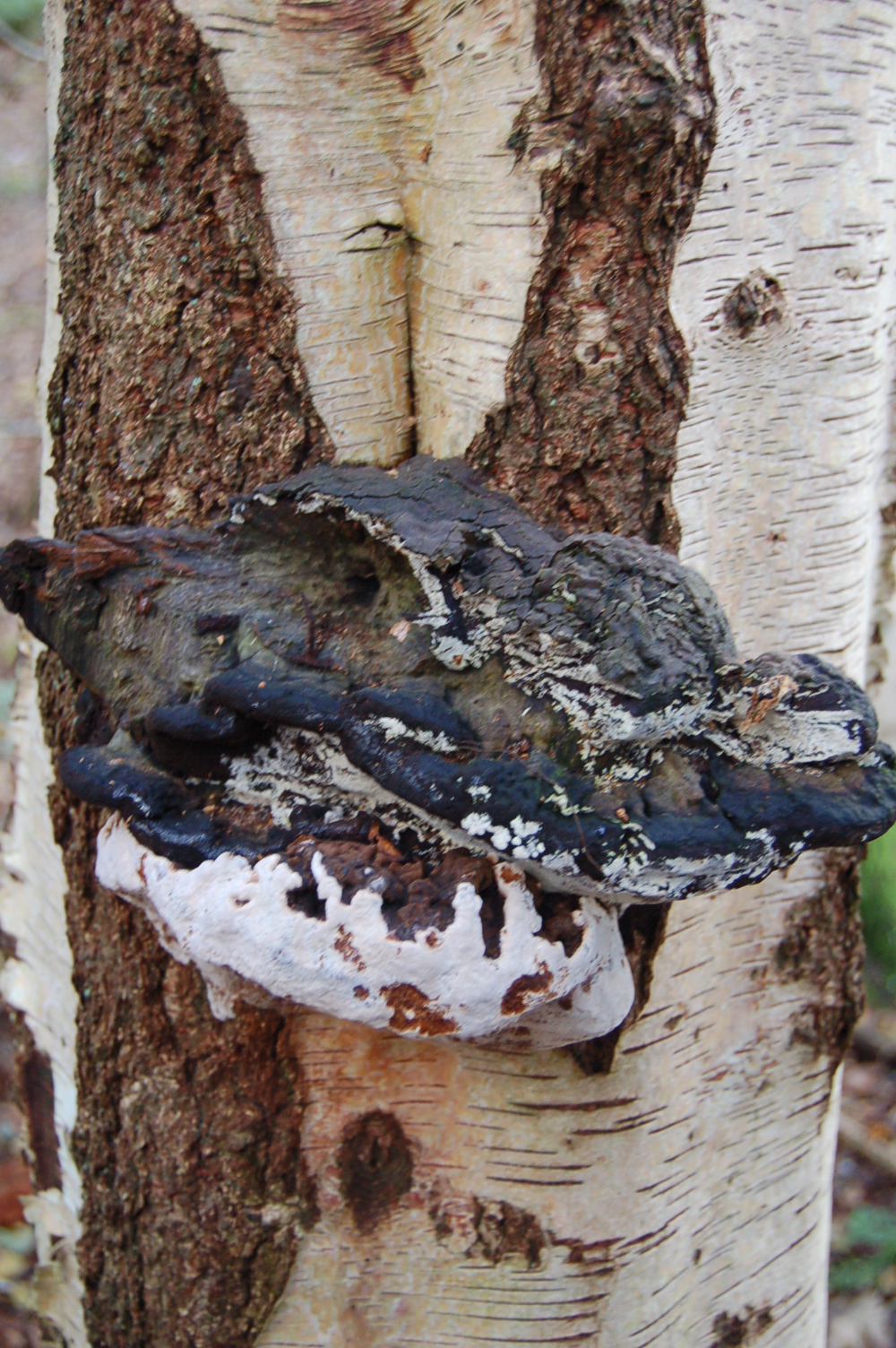
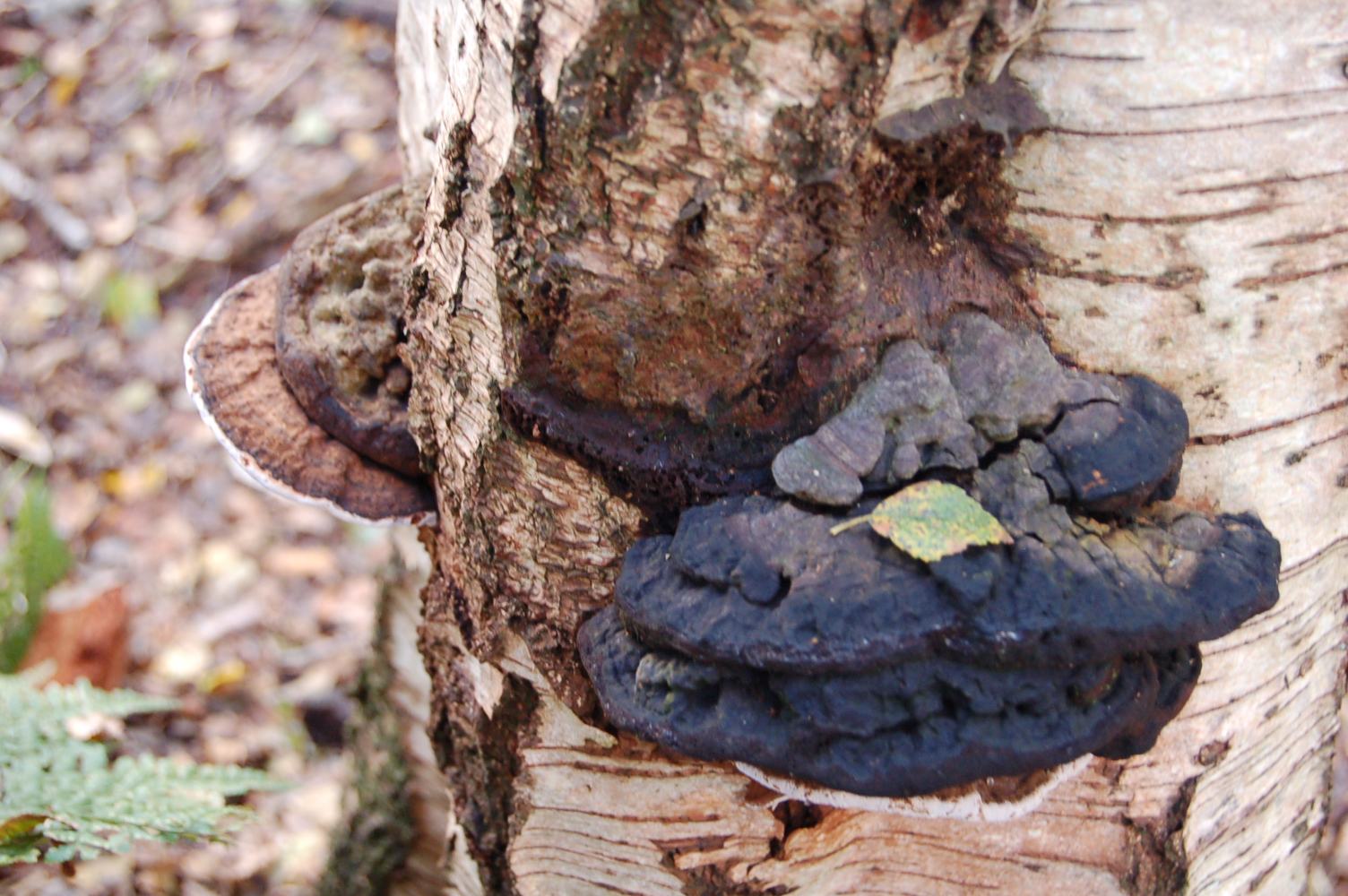
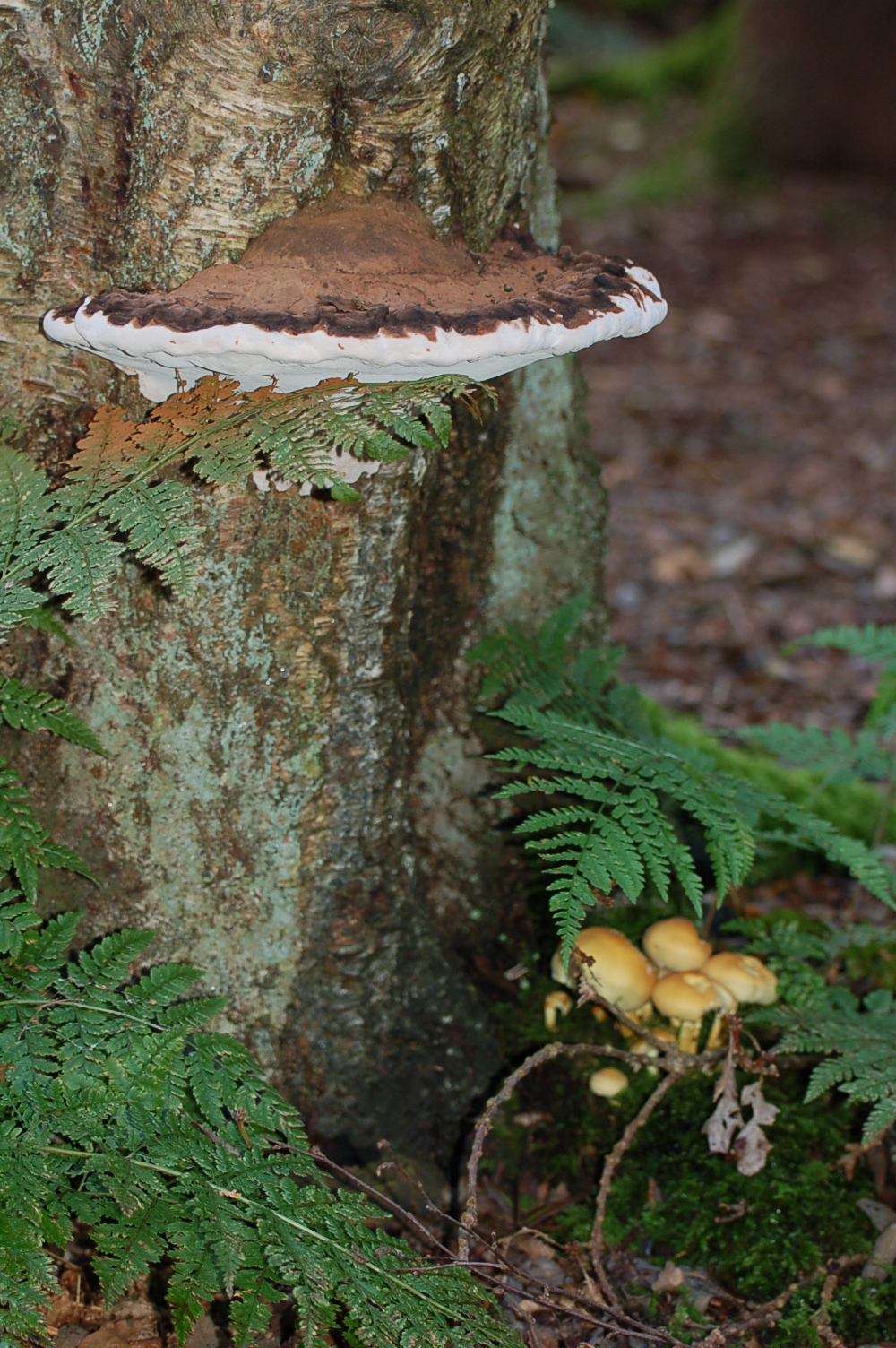
Our native Birch is a relatively short-lived tree so within any mixed woodland fallen specimens litter the ground. They will slowly dissolve away through the actions of the tiniest creatures and a multitude of fungi.

DSC_0080 DSC_0081

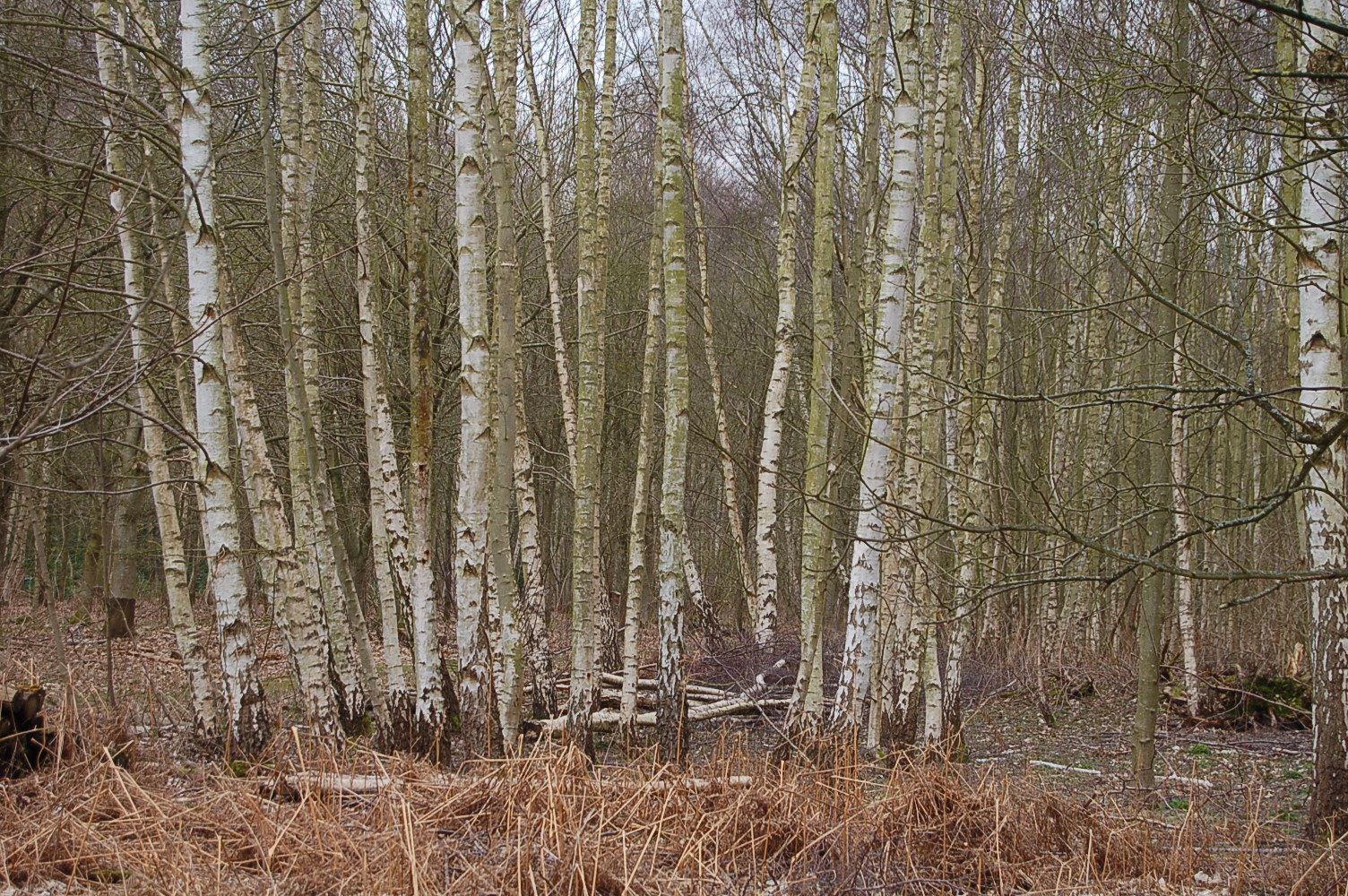
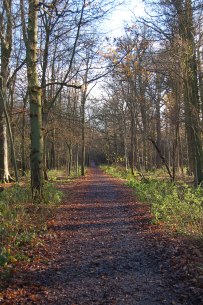
Perhaps the best way to finish off this series of  photos of my favourite trees, the Birches, is with a set of pictures of groups of them standing like cold sentinels.

DSC_0067 DSC_0069 DSC_0070 DSC_0071 DSC_0074 DSC_0075

Categories
gardens open to the public National Trust nature reserves Shropshire wildlife woodland

Attingham’s Deer

We always keep an eye out for the deer herd at Attingham. Today we were treated to a close up view of a group of these Fallow Deer. They were so busy feeding they hardly noticed us. We felt honoured that they let us watch them and take a few photos. Click on any pic to see them as a slide show.

Categories
birds flowering bulbs garden photography garden wildlife gardening gardens open to the public Land Art landscapes National Trust nature reserves ornamental trees and shrubs outdoor sculpture photography Shropshire spring bulbs The National Trust trees wildlife Winter Gardening winter gardens woodland

A Cold Woodland Walk

A cold dull day with a biting easterly wind. Stay at home and enjoy a book in front of a roaring homely log fire? No, we decided to get out into it and enjoy a walk in the woodland in the grounds of our local National Trust property, Attingham Hall.

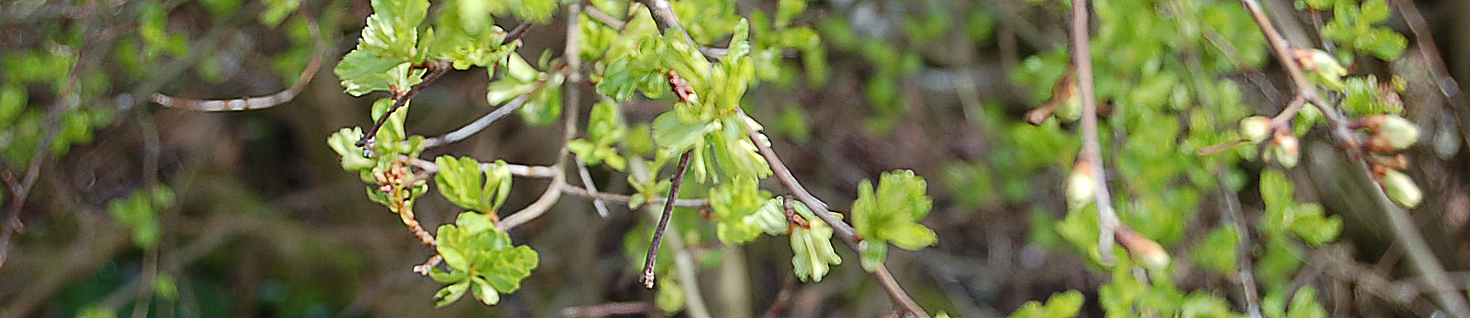
We visit regularly and no two visits are ever the same. We set out on this particular walk expecting to see the first signs of spring, perhaps the fresh green growth of Hawthorn, buds on trees fattening fit to burst or birdsong all around. How wrong we were. The wood is still in the grip of winter and birds remain quiet, except for a Mistle Thrush who cast his song far and wide over the tree tops, a melodic uplifting tune. One patch of Hawthorn displayed some green but only one.

DSC_0017_edited-1

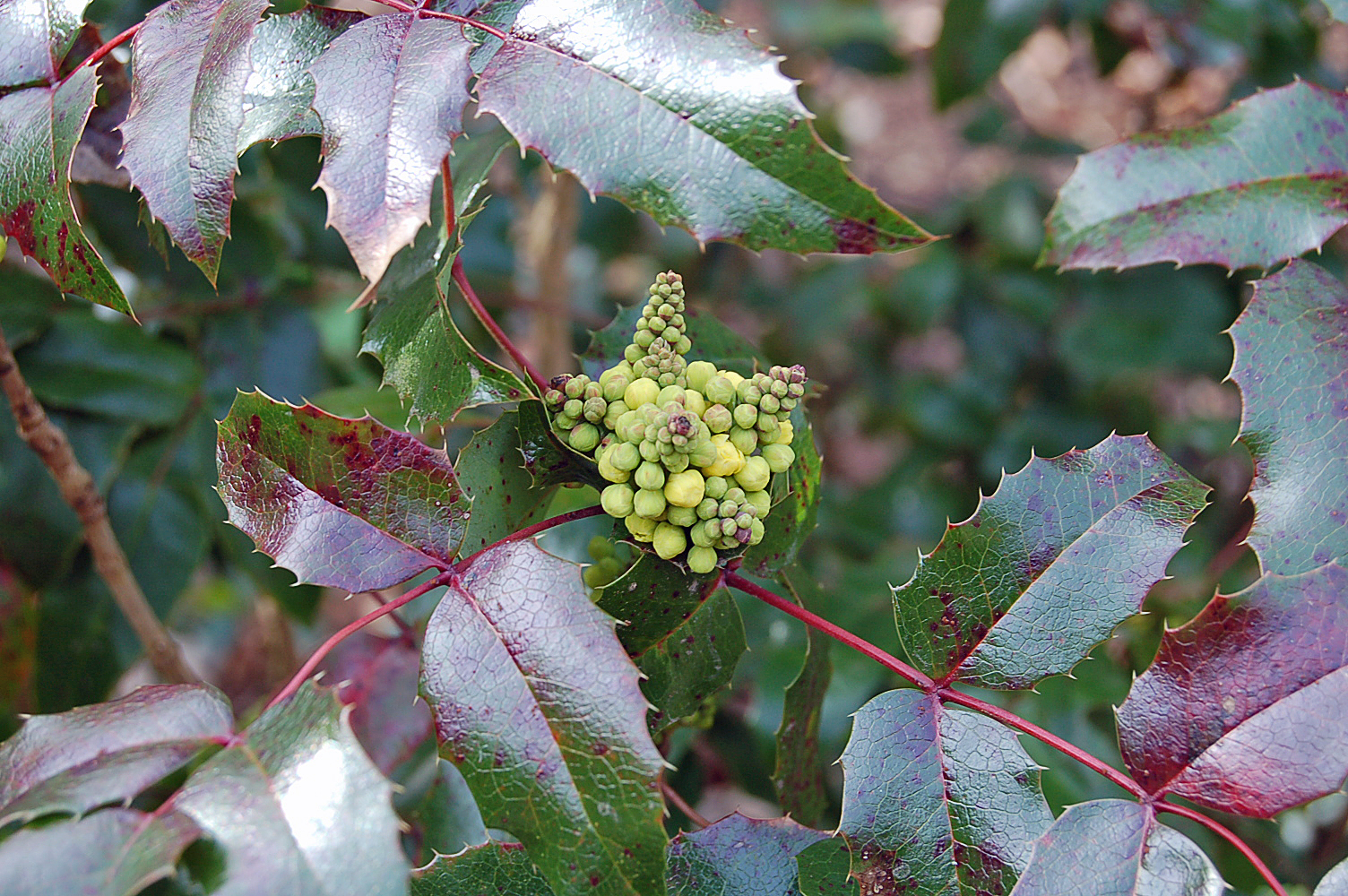
However in the protection of a brick wall this Flowering Currant defied the winter and cheered us up with its soft pinky-red flowers hanging in so many tassels. Nearby just beyond the warmth provided by the wall the tight yellow buds of a variety of Mahonia aquifolia patiently wait. The odd splash of blue sky above us reflects in the gloss of the leaves. Close by their cousins the Berberis are a little behind but both will respond to some kinder weather.

DSC_0001_edited-1 DSC_0003_edited-1

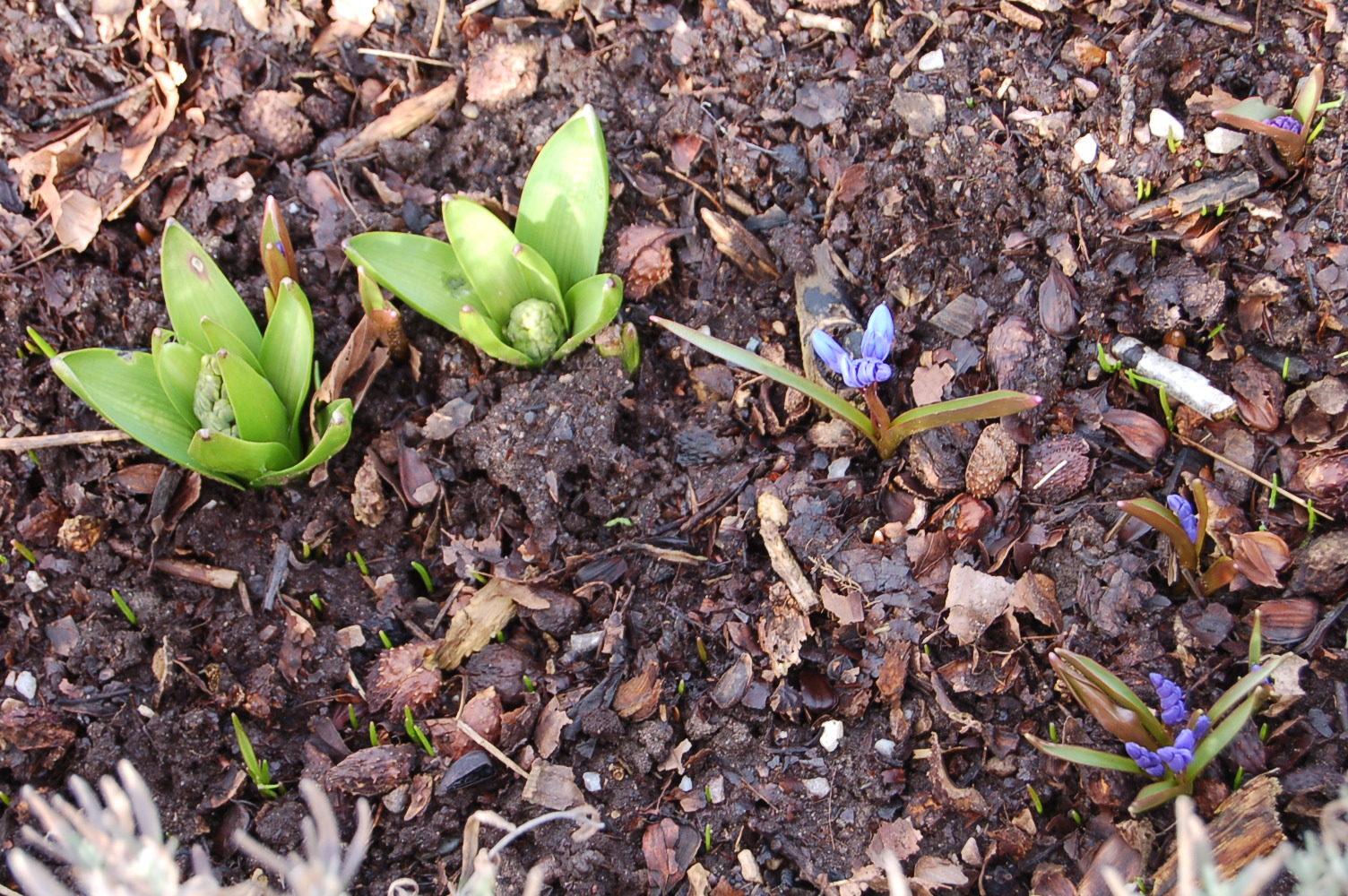
The last of the Snowdrops still hang on, and wherever there is protection flowers respond.

DSC_0004_edited-1 DSC_0009_edited-1 DSC_0018 DSC_0090 DSC_0091

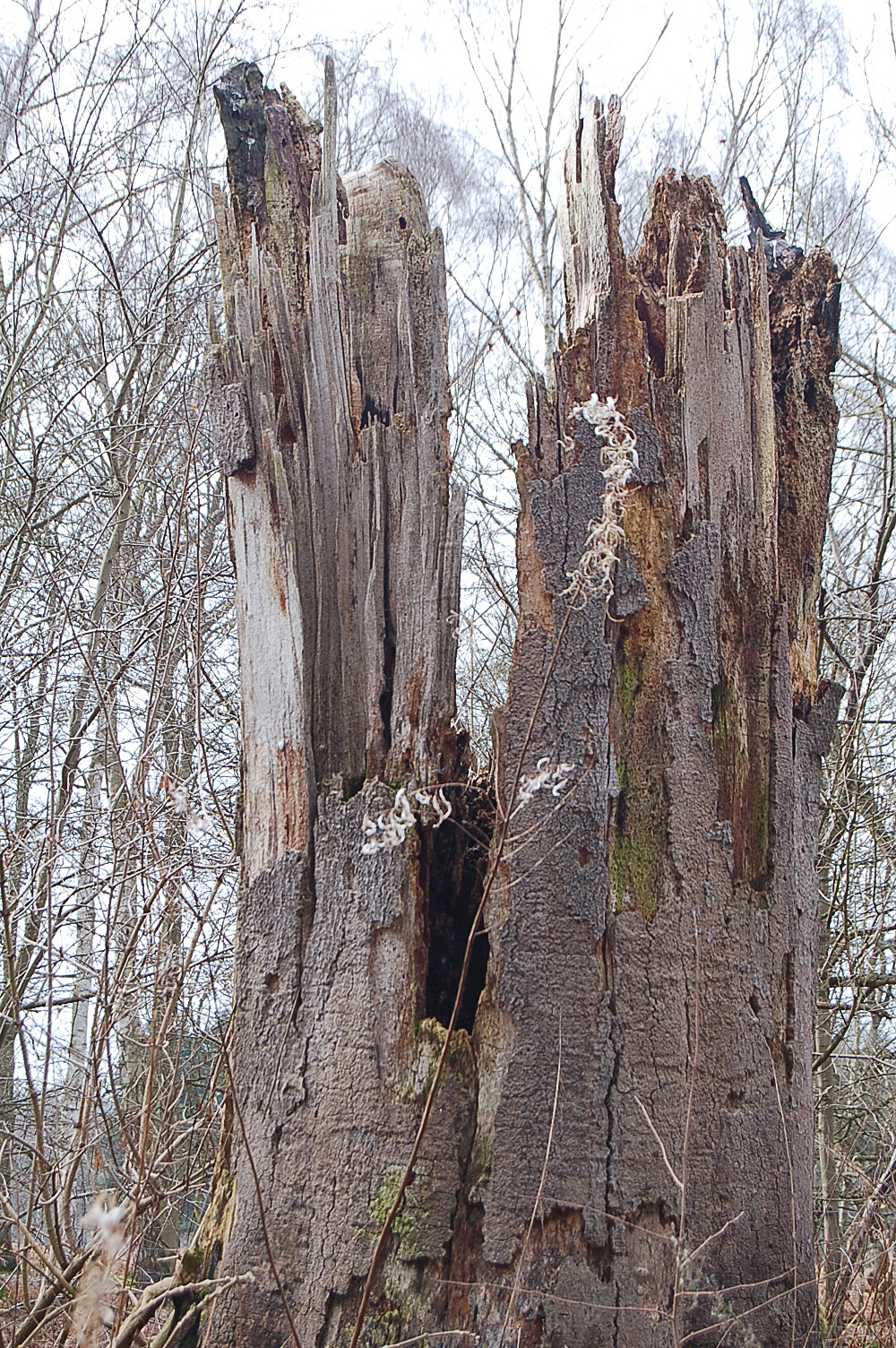
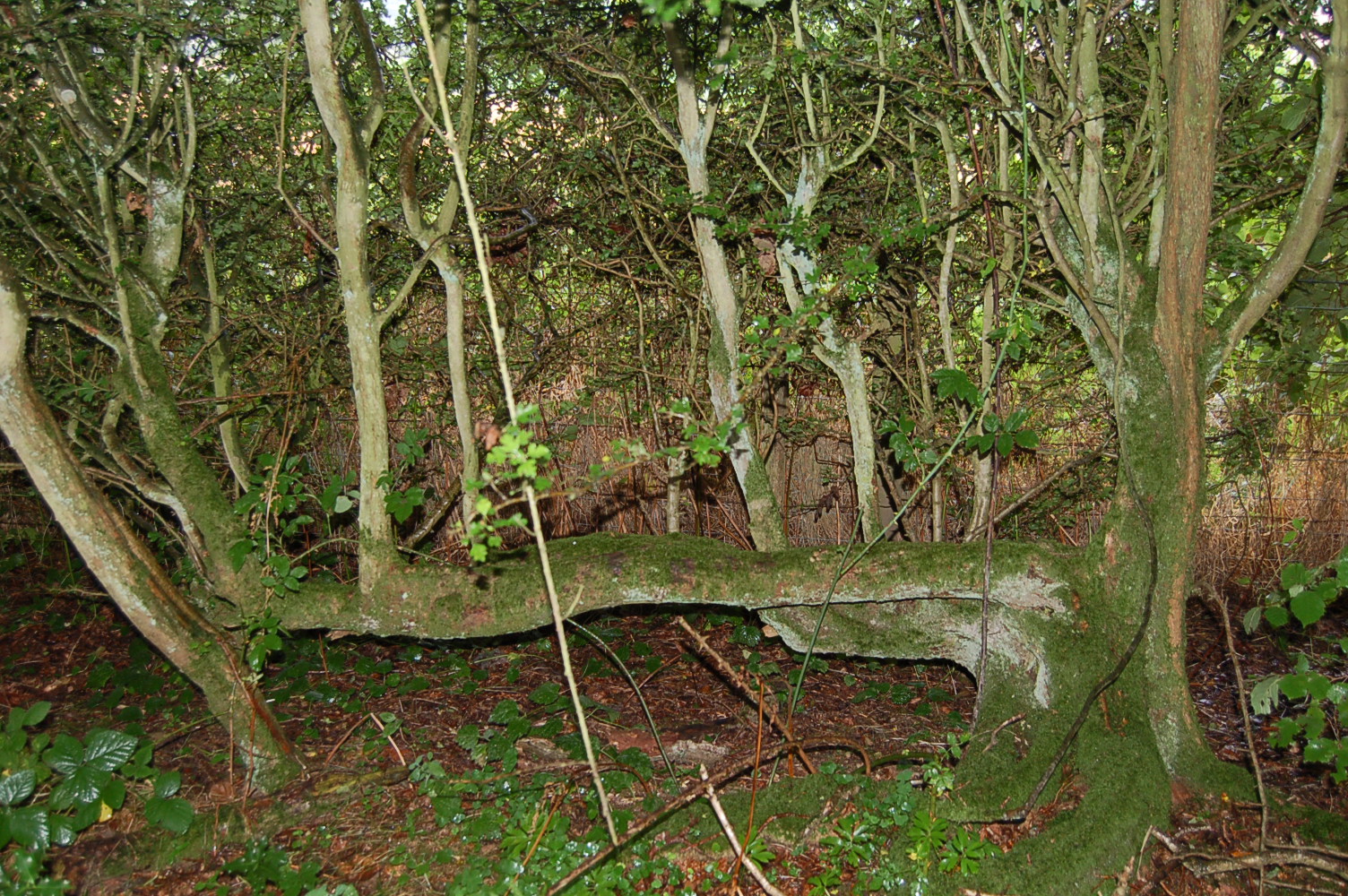
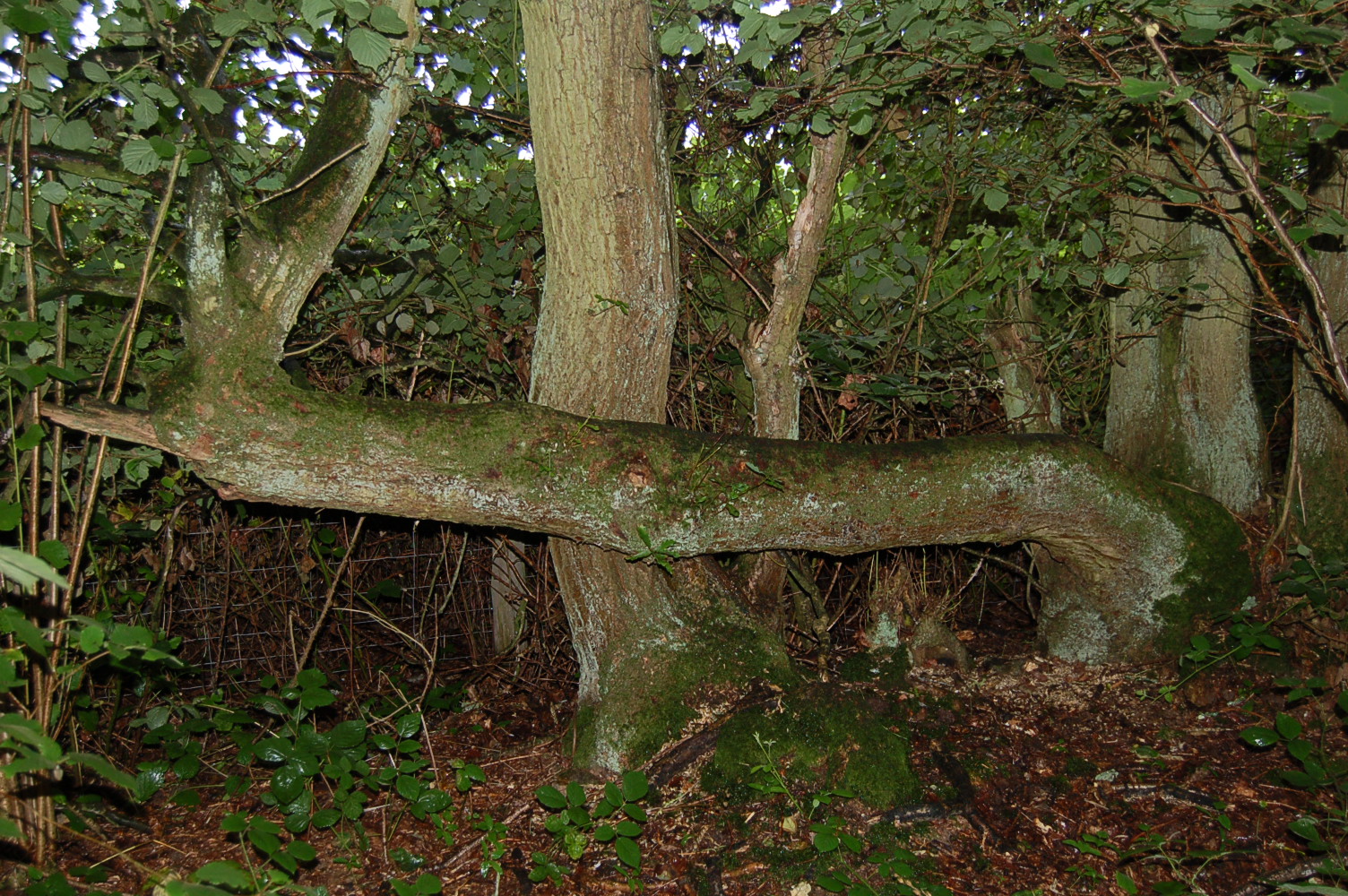
Where elderly specimens of trees begin to break and fall sculptural shapes are created. This old split trunk looks huge amongst younger trees and its boughs stretch out across the ground rotting where they fell and colonised by a carpet of mosses.

DSC_0037 DSC_0038_edited-1 DSC_0042

There is something magical about woodlands, they make you feel calm and relaxed and they make some visitors more creative or more childlike. They build dens, climb trees or create little bits of land art. The National Trust are doing a brilliant job in encouraging these effects on their visitors, in particular with their little booklet “50 things to do before you are 11 3/4“. Right in the depths of the woodland we came across these two simple but beautiful land art pieces. 

DSC_0044 DSC_0045 DSC_0046

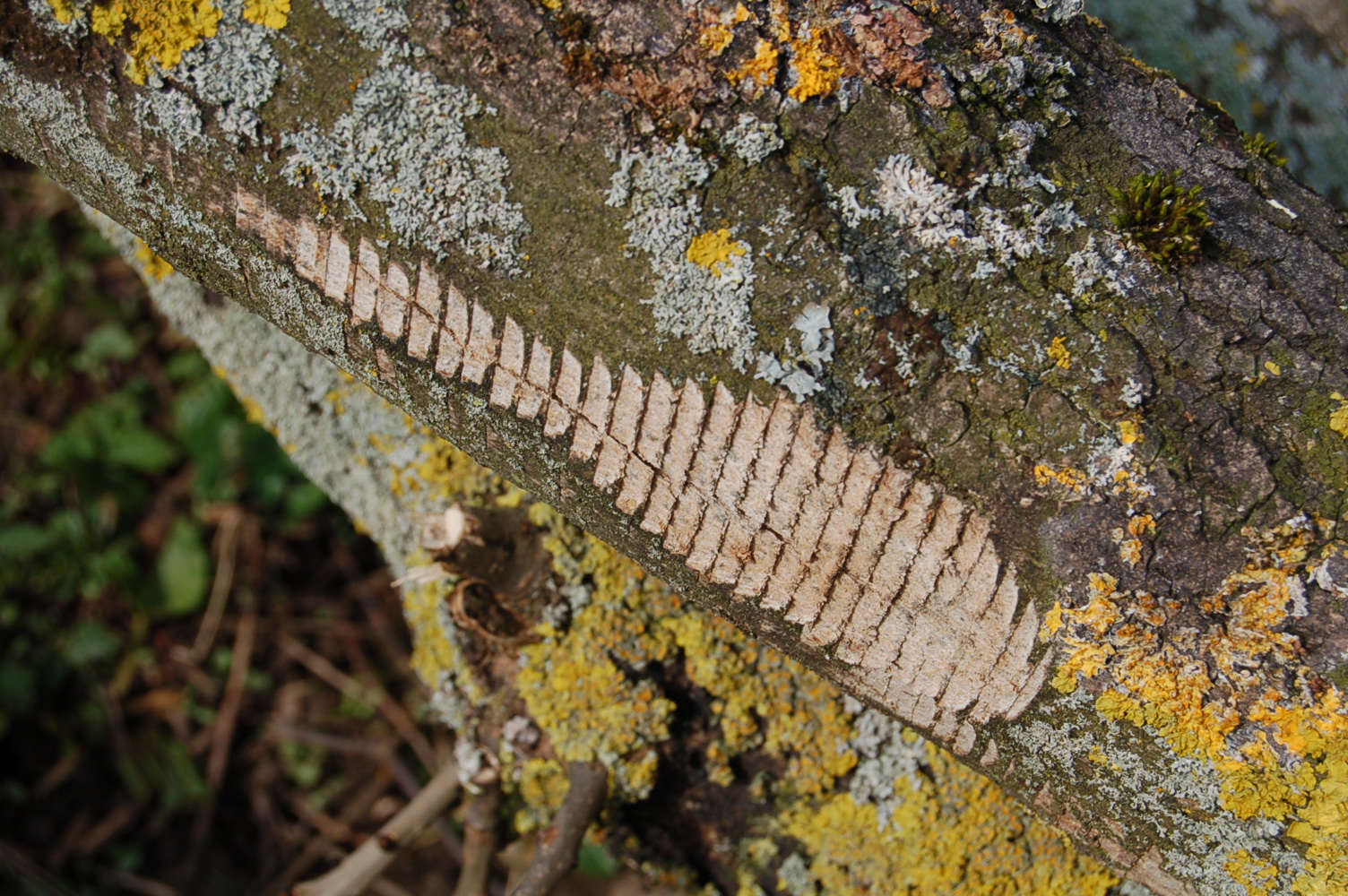
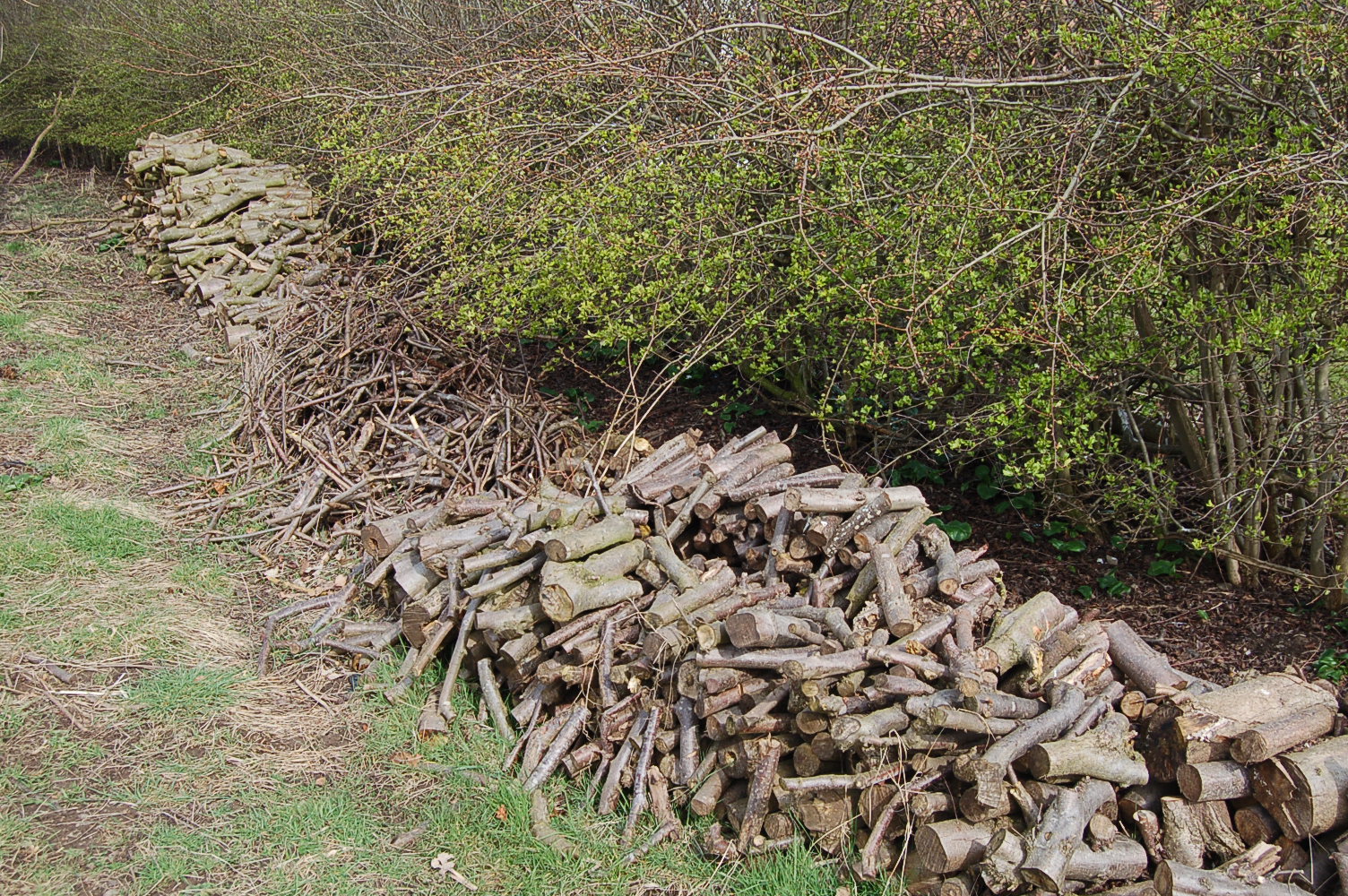
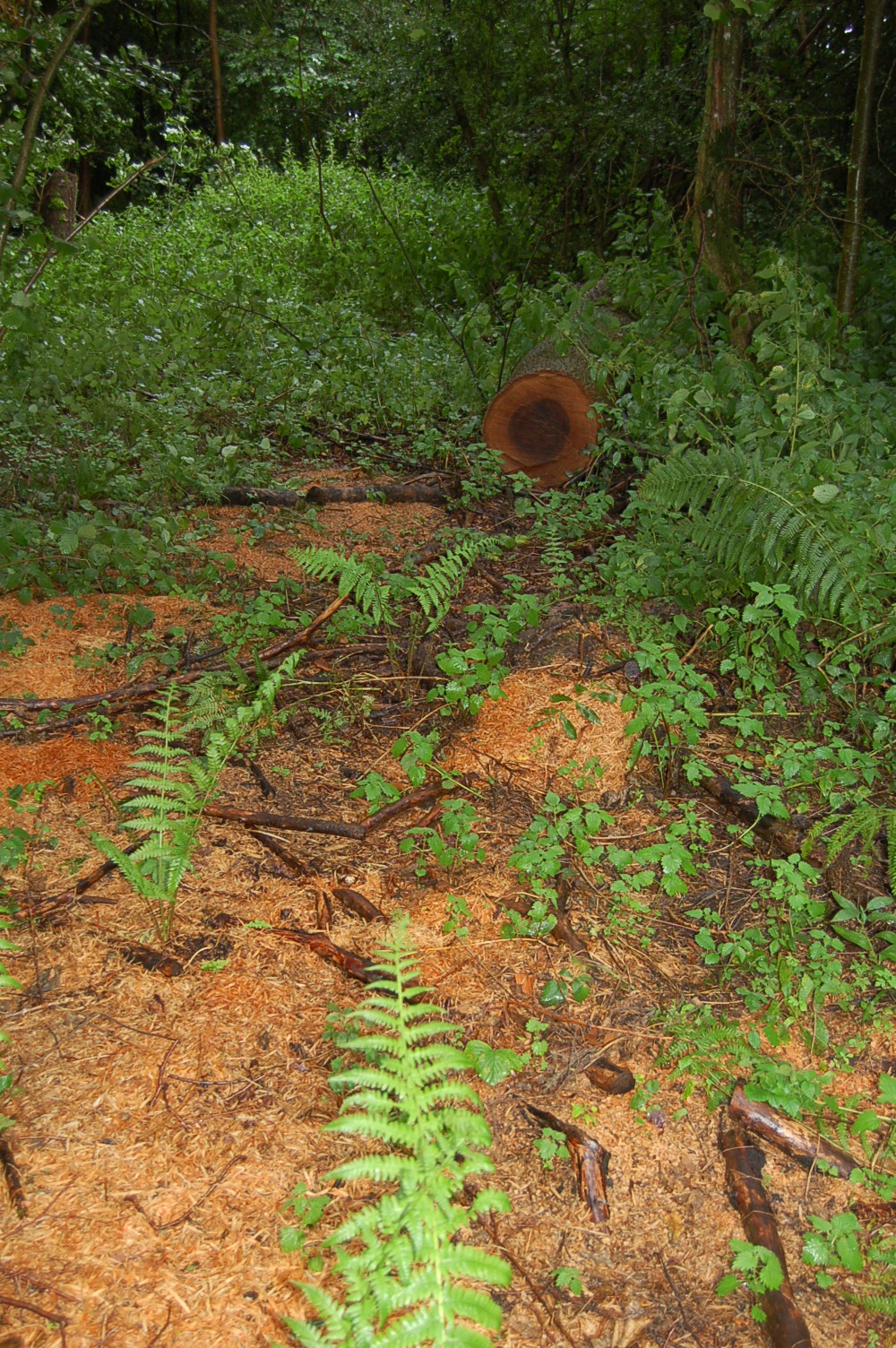
Tree surgeons at work have left their marks. We were amazed when we spotted the beautiful “fern” chipped into the bark by a chainsaw. The off cuts were used to make a wonderful big logpile to attract insects especially all the beetles who make Attingham their home. The National Trust’s woodland management keeps wildlife in mind. It is heartening to know that Stag Beetles now live here.

DSC_0012 DSC_0013 DSC_0016

In the walled garden the extra warmth afforded by its tall brick walls has allowed flowering plants to make some progress towards Spring.

DSC_0018 DSC_0019 DSC_0024

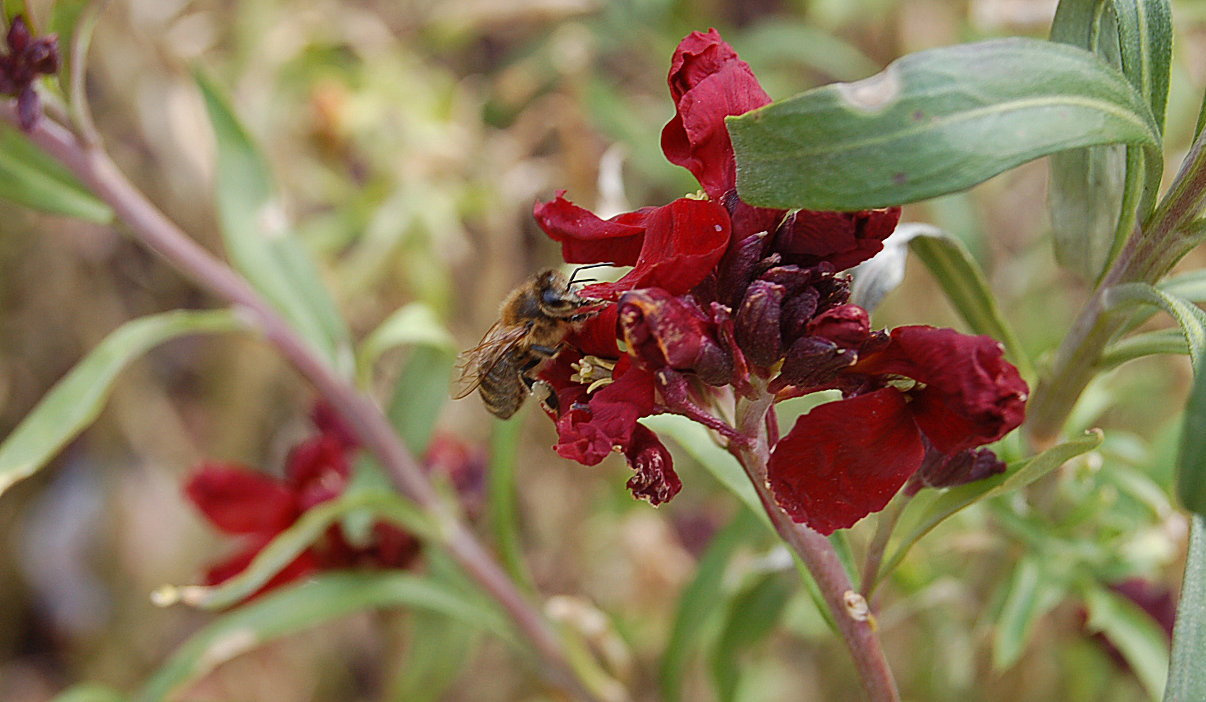
The best feature of our walk was to see a Honey Bee at work feeding on Wallflowers in the walled garden.

DSC_0022_edited-1

What a great walk we had, cold ears and noses but plenty of fresh air and sheer joy at being outside and in woodland. I hope you enjoy the collection of pics below!

DSC_0028 DSC_0030 DSC_0048 DSC_0050 DSC_0051 DSC_0053 DSC_0054 DSC_0056 DSC_0064

Categories
landscapes photography trees woodland

Sussex Woodland in Stormy Weather

In my last post I followed a winter exploration in our own local patch of woodland  As a contrast I can now transport you back into the summer and into another woodland.

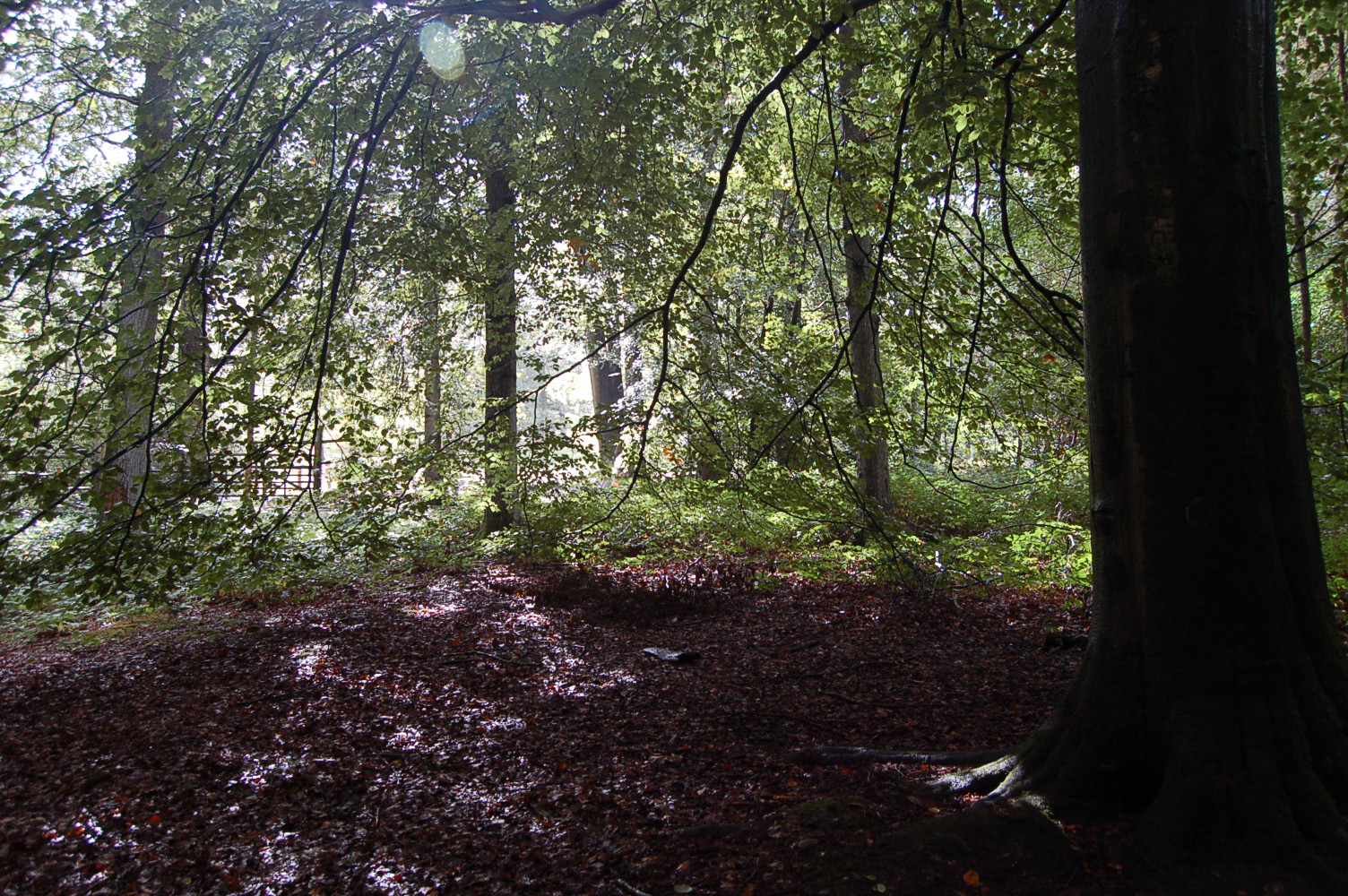
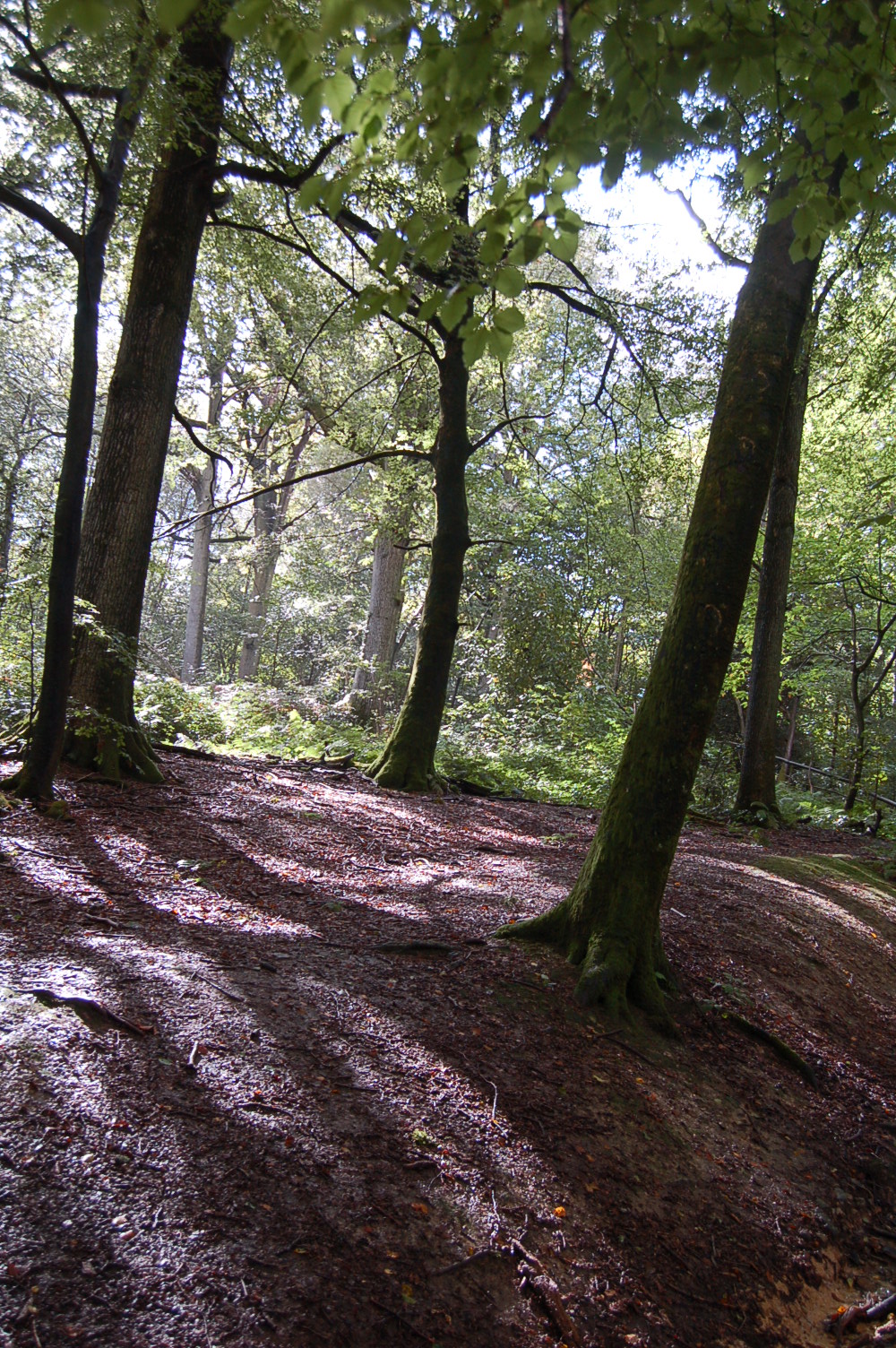
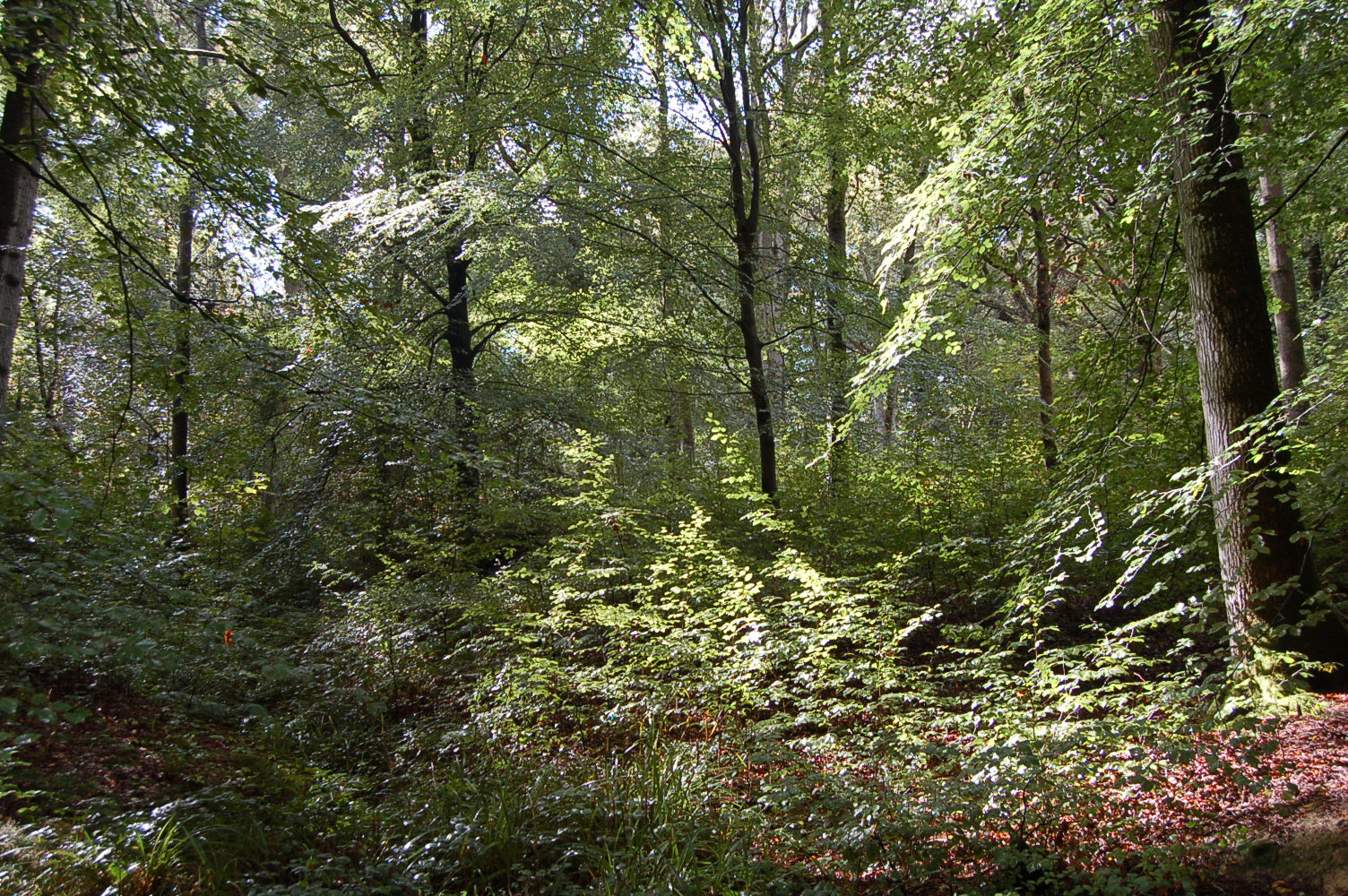
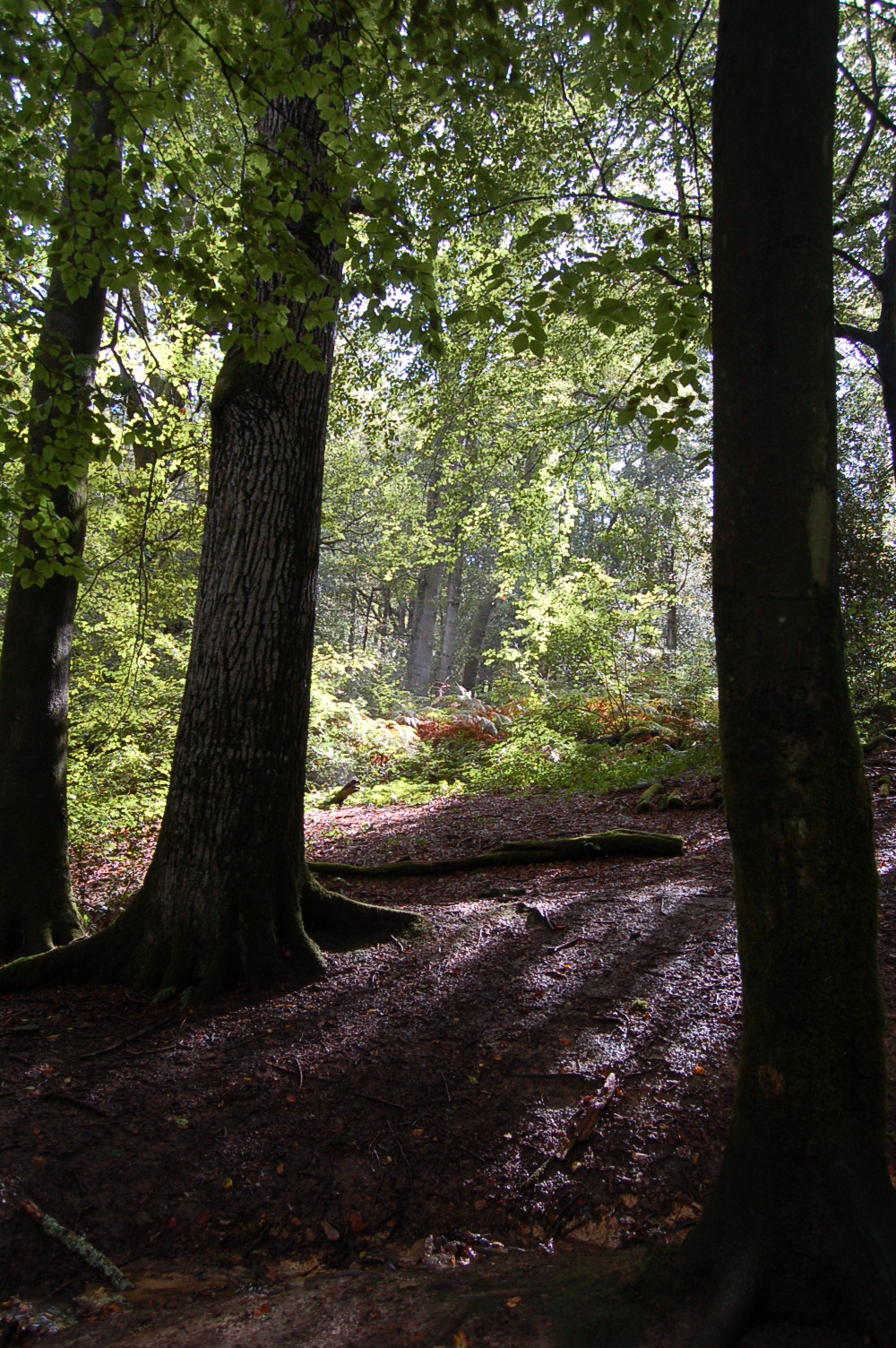
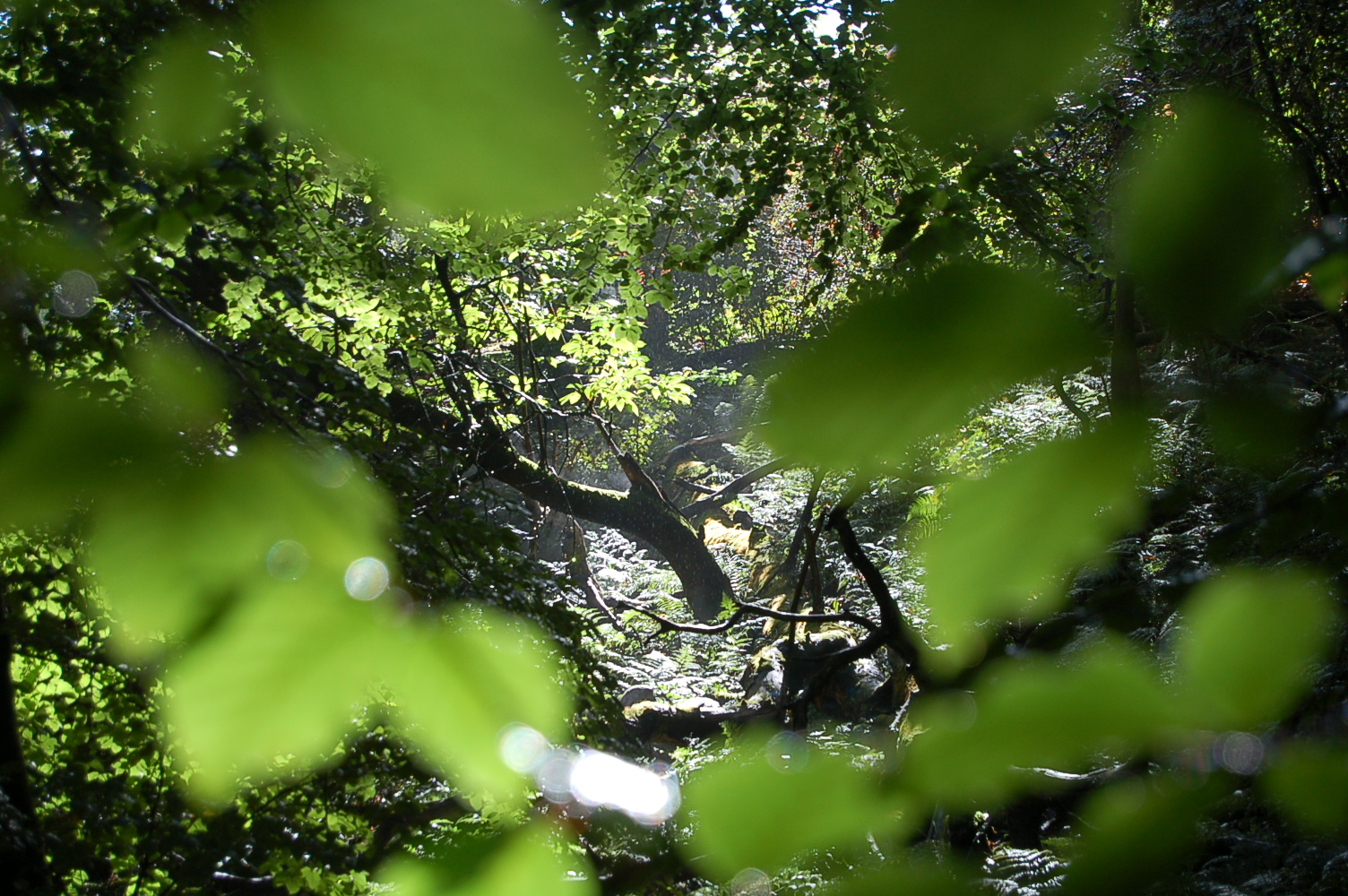
As we were exploring a Sussex garden on a day when the weather gave mixed fortunes, we took to the woods to give us some protection from the showers and storms that interrupted the periods of sunshine. We thought the tree canopies would act in place of our umbrella which we had left in the car. The lighting in the wood struck us as really special as the sun and showers mixed so we explored the little wood further.

Categories
birds colours gardens open to the public Land Art National Trust outdoor sculpture photography Shropshire The National Trust trees wildlife woodland

Woodland – Mother Nature as Artist, Sculptor, and Scribe.

A winter wander around our local woodland patch within the grounds of the National Trust’s Attingham Park got off to a strange start. Expecting the cold weather to have restricted visitors to a few hardy souls, we arrived to see the main car park full, all overflow parking fields full and lots of extra parking also filling up rapidly.

We had arrived just after the start of their first Christmas related event – The Frost Fair. Bad planning! However the woodlands were quiet, the only sounds following us around were the songs of small and squeaky birds, Coal Tits, Treecreepers and Goldcrests.

DSC_0037

The event we searched out was the art exhibition of the works of Mother Nature. She was her usual brilliant imaginative self.

Her woodcarving looked freshly made and full of texture and colour.

DSC_0017

This piece looks to be based on the shapes of a crab’s claw.

DSC_0034

DSC_0022

Drawings on the cut trunks of a diseased Ash tree reminded me of cave paintings.

DSC_0018

DSC_0021


DSC_0020

This triangular land art installation shows Mother Nature working in a more geometric way.

DSC_0025

As the woodland path took us deeper in amongst the trees we appreciated the quietness of our footfalls, the quietness of the soft deep pine needle duvet. When it is quiet the subtleties of bird songs and calls are more easily enjoyed. We stood feet away from a Goldcrest feeding on insects he had searched out from the conifer needles with thin probing beak. He suddenly fell to the floor as if dead, or mimicking the gentleness of a falling leaf. He dropped into the fern and bramble undergrowth and stayed there out of sight. Was he feigning death to fool a predator or pretending to be a falling leaf with the same purpose in mind? As we stood silently in awe of what we had witnessed he reappeared vertically up into the branch he had fallen out of. One of those magical moments that two observers of the natural world will never forget! Any idea what he may have been up to?

DSC_0032

DSC_0031

DSC_0035

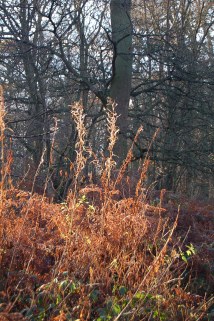
Nature playing with light fascinated us as the sun dropped lower in the thin blue sky lighting up the understory  with golds and oranges.

DSC_0033

DSC_0039

DSC_0044

DSC_0052

DSC_0051

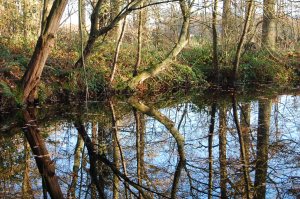
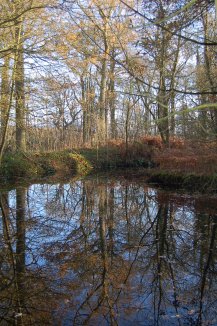
Water, be it a stream, ditch, river or pool, affords nature the chance of playing with mirrors to create illusions and mysteries.

DSC_0042

DSC_0041

DSC_0043

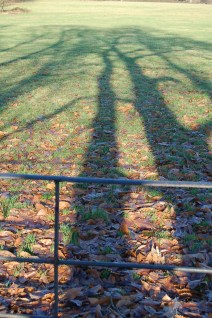
On the land shadows are drawn long and dark. The long tall tree shadow stretches out across the pastureland. My own shadow tried to get in the picture until I managed to persuade it to move into the shadow of one of the tree trunks.

DSC_0023

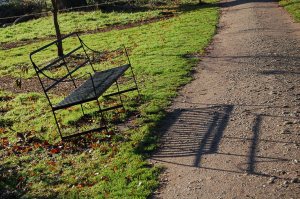
The shadow of the precariously leaning seat crossed our path as we approached the gap in the tall wall that would take us into the productive gardens.

DSC_0026

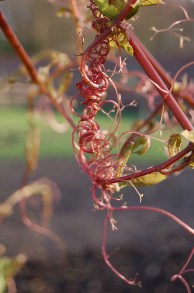
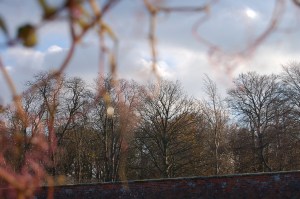
The climbing, curling tendrils of this vine glow pink and red in the sunlight, forming a natural frame for the filigree skeletons of trees.

DSC_0030

DSC_0029

We greatly enjoyed our visit to the open air gallery.

DSC_0053nbm

Categories
autumn nature reserves photography Shropshire wildlife woodland

Brown Moss – a Shropshire Wildlife Gem

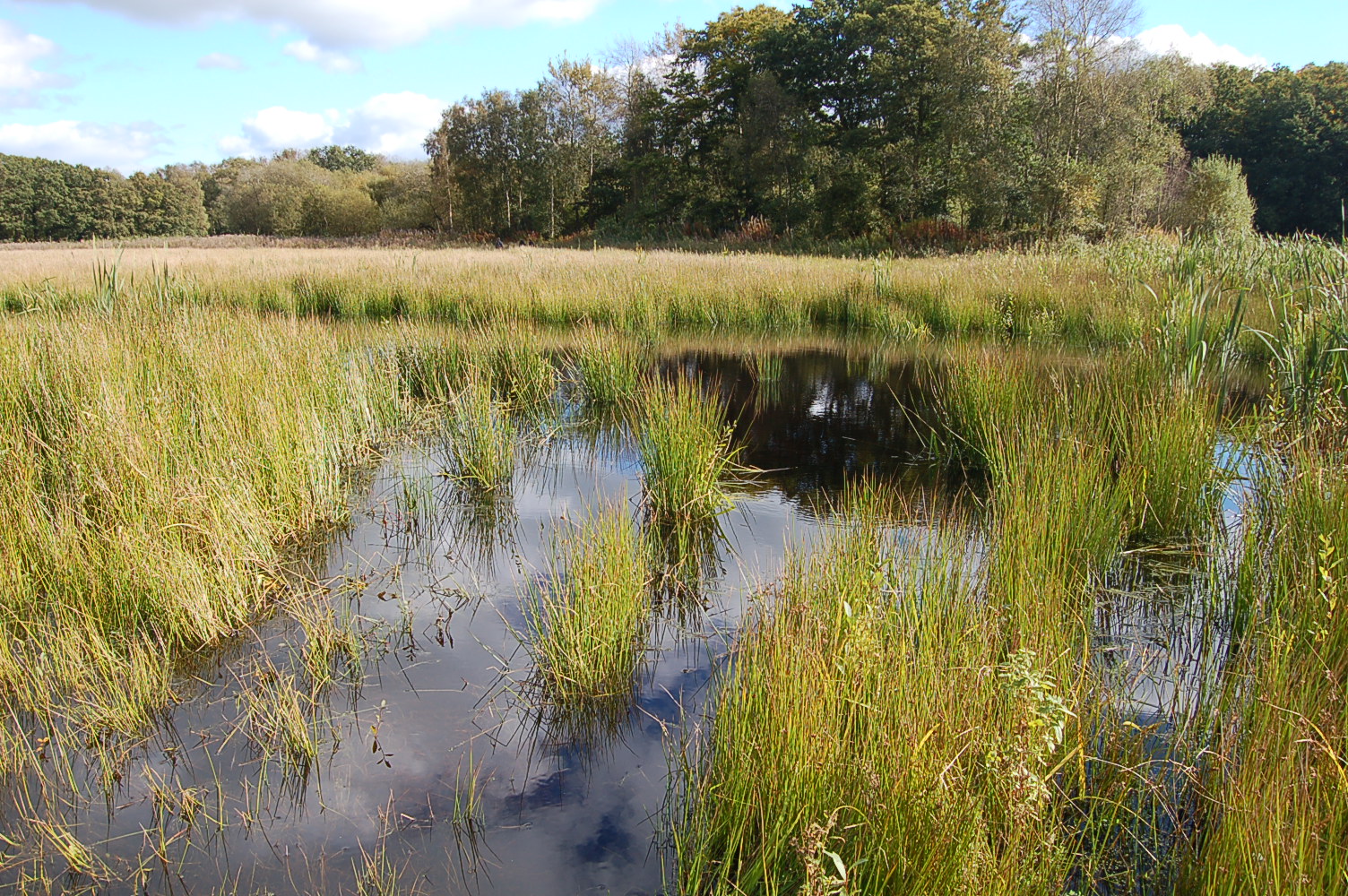
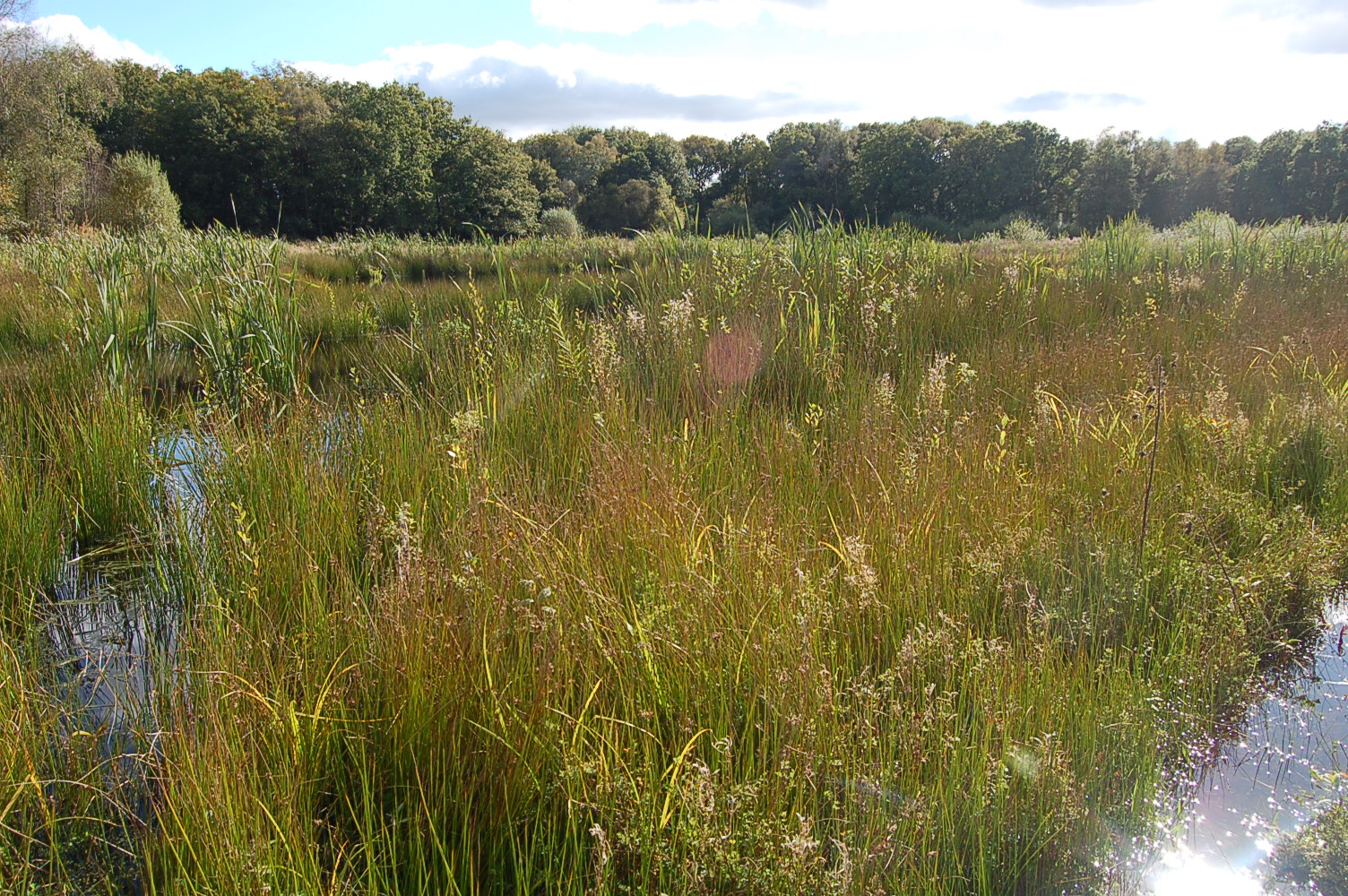
Brown Moss is an area of wet land, shallow pools, reedbeds and marsh surrounded by woodland, part of which contains old coppiced wood. We parked hidden in trees and emerged into the open to see the “moss” in front us. There was less open water than we remember.

Where the woods meet the marshes occasional Silver Birch grow with their white stems glowing in the sunshine now that most of the yellow leaves of autumn have fallen to colour the ground beneath in shades of primrose.

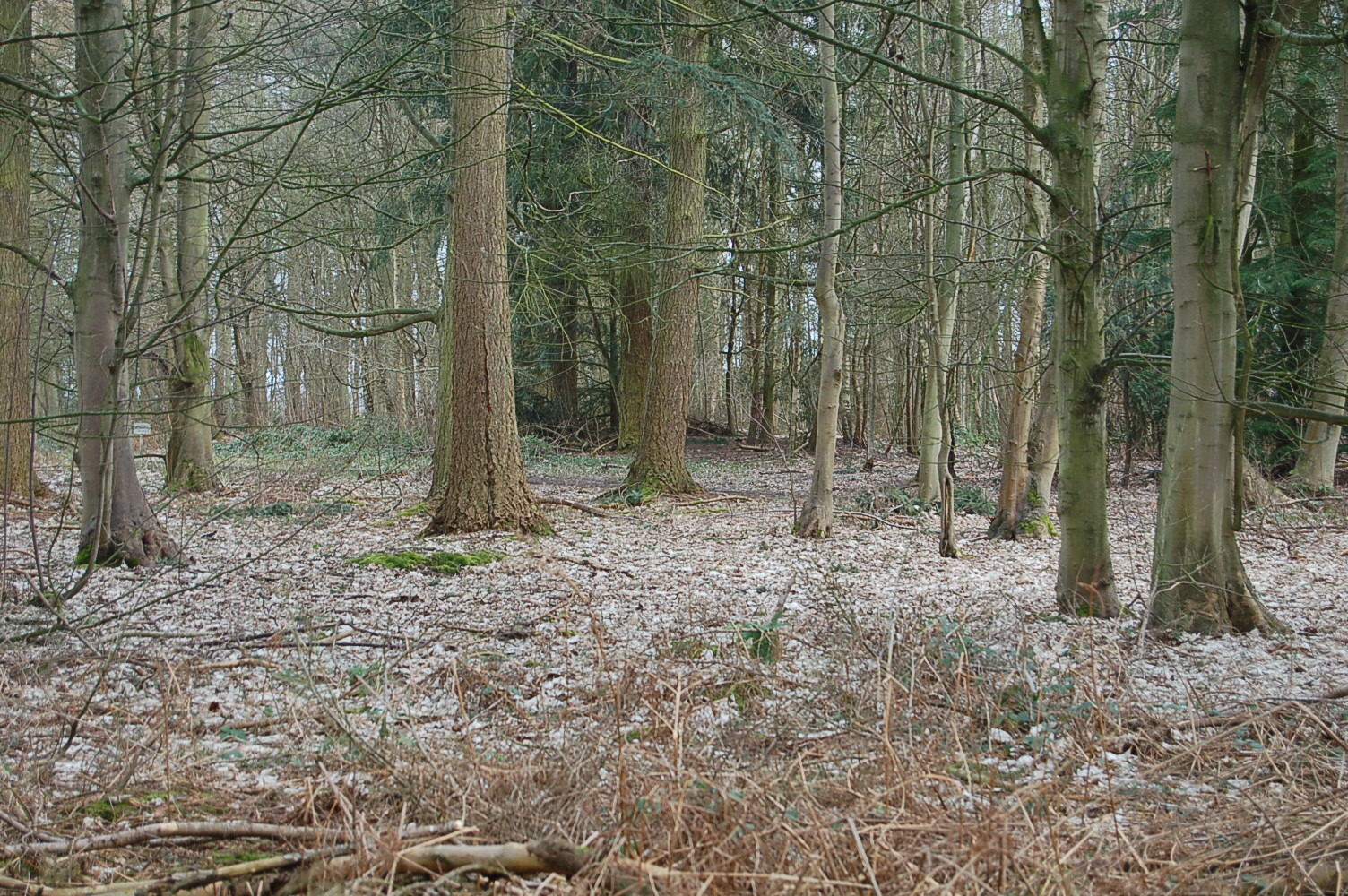
We skirted the marshy area and wandered into the woodland in search of fungi. The woodland here is mixed, some tall specimens with patches of coppiced smaller trees, some deciduous and some evergreen conifers. Jays foraged in the oaks for acorns which they buried in the soft ground between the woods and the pools, hoping to find them in times os severe weather. They were so busy they took little notice of us so we got close enough to enjoy the blues and pinks of their plumage and smile at their strange hopping gait in the long grass.

A pair of slim birches presented a natural portal into the woods, but Jude the Undergardener decided to consult the map – just in case it was Mother Nature playing a trick on us!

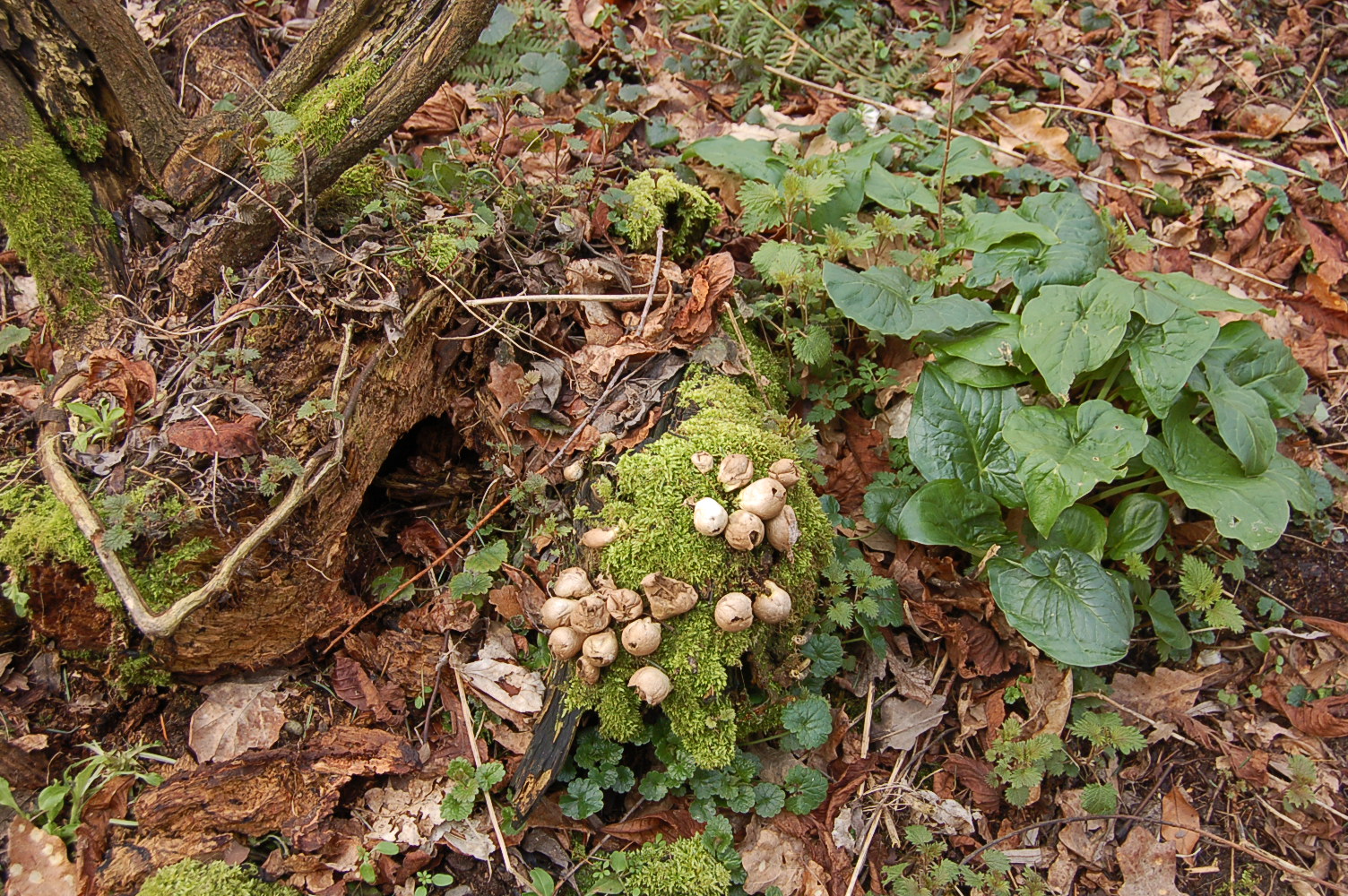
There were fewer fungi to see than expected and we were particularly disappointed not to see any Fly Agaric, but there were bracket fungi and earth ball fungi to find. The brackets are found on the trunks and the balls on the ground below.

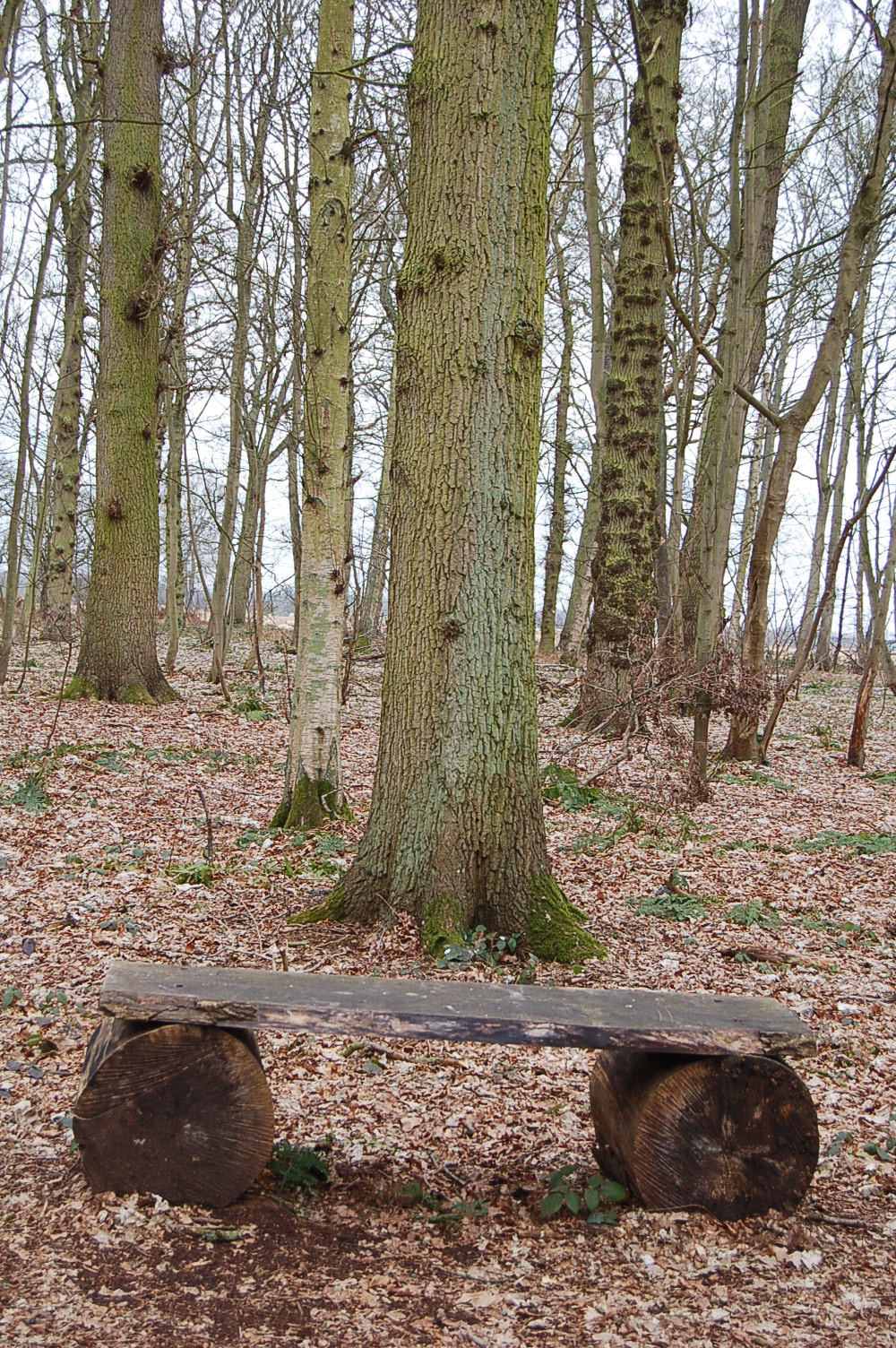
We stopped deep in the woodland for a coffee just where we found a fallen birch conveniently providing us with a wooden bench. With the long zoom on my Nikon I scanned the trees above to see what could be seen from this different viewpoint. A tiny white ball of fungus stuck like a table tennis ball high on a tree trunk.

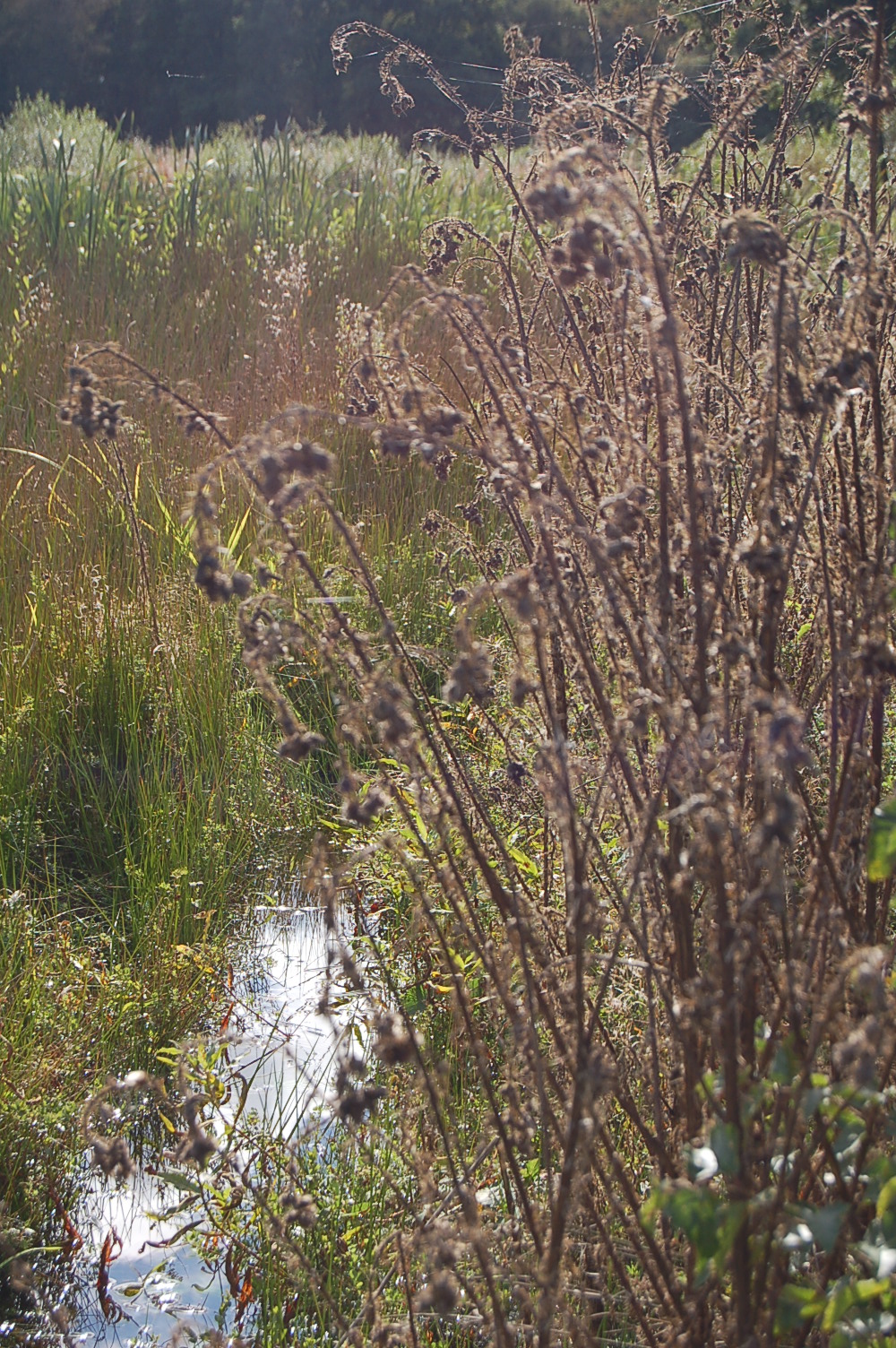
On the edges of the wood the skeletons of the summer’s flowers attracted spiders to make webs and the low light lit them up.

The low lighting continued spotlighting foliage along the edge of the marshlands. We skirted the marshland on soggy paths and occasional boardwalks.

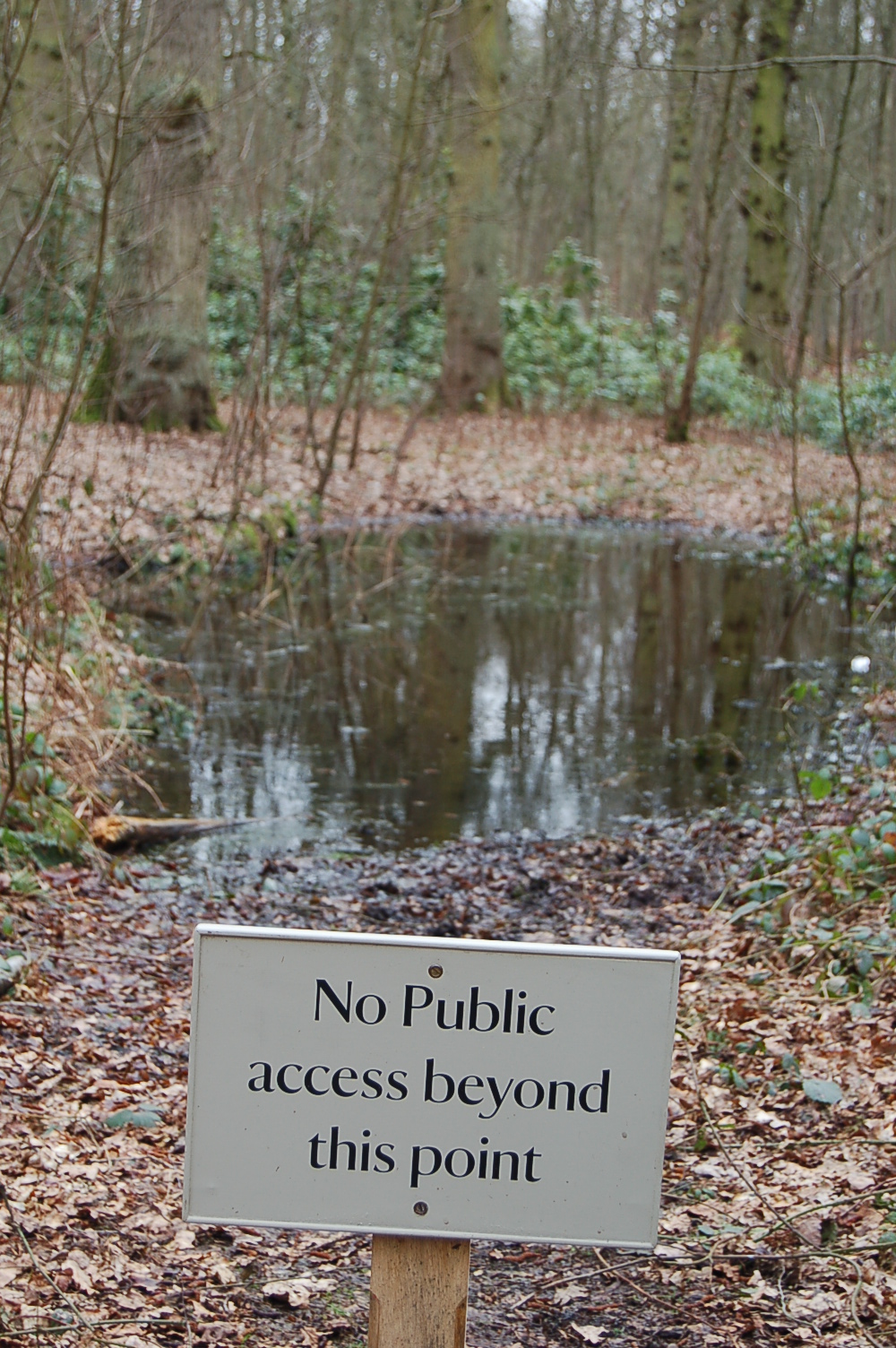
At times the wet areas joined with the woodlands and mystery pools hung in the shadows. The water in the pools was clear but tinted with the russet colours of the underlying soils.

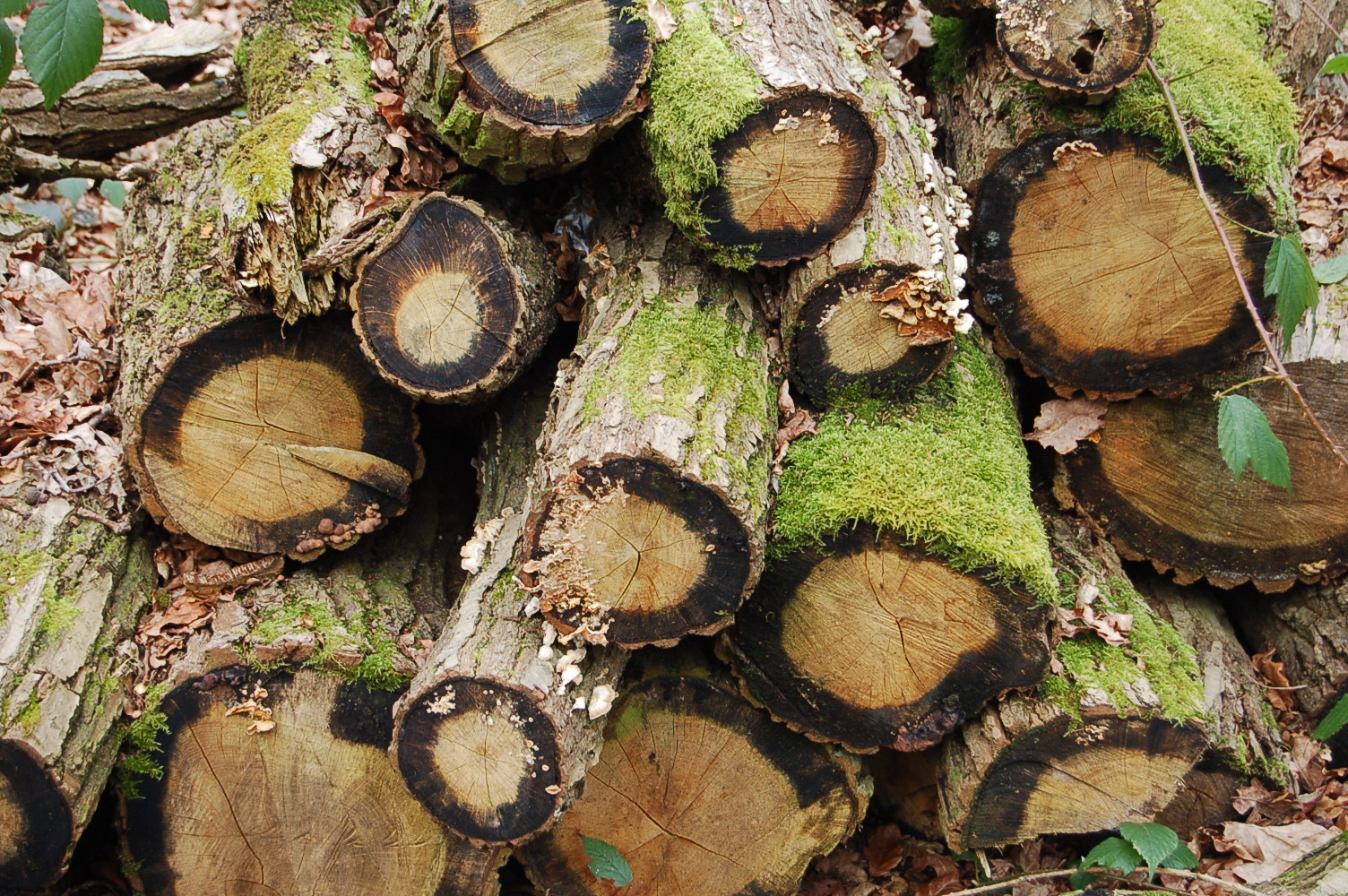
Two finds kept us mystified for a while. The first was these strange black and white colour washes on the sawn end of a felled tree trunk. It appeared to be some sort of fine fungal growth but we remained unsure.

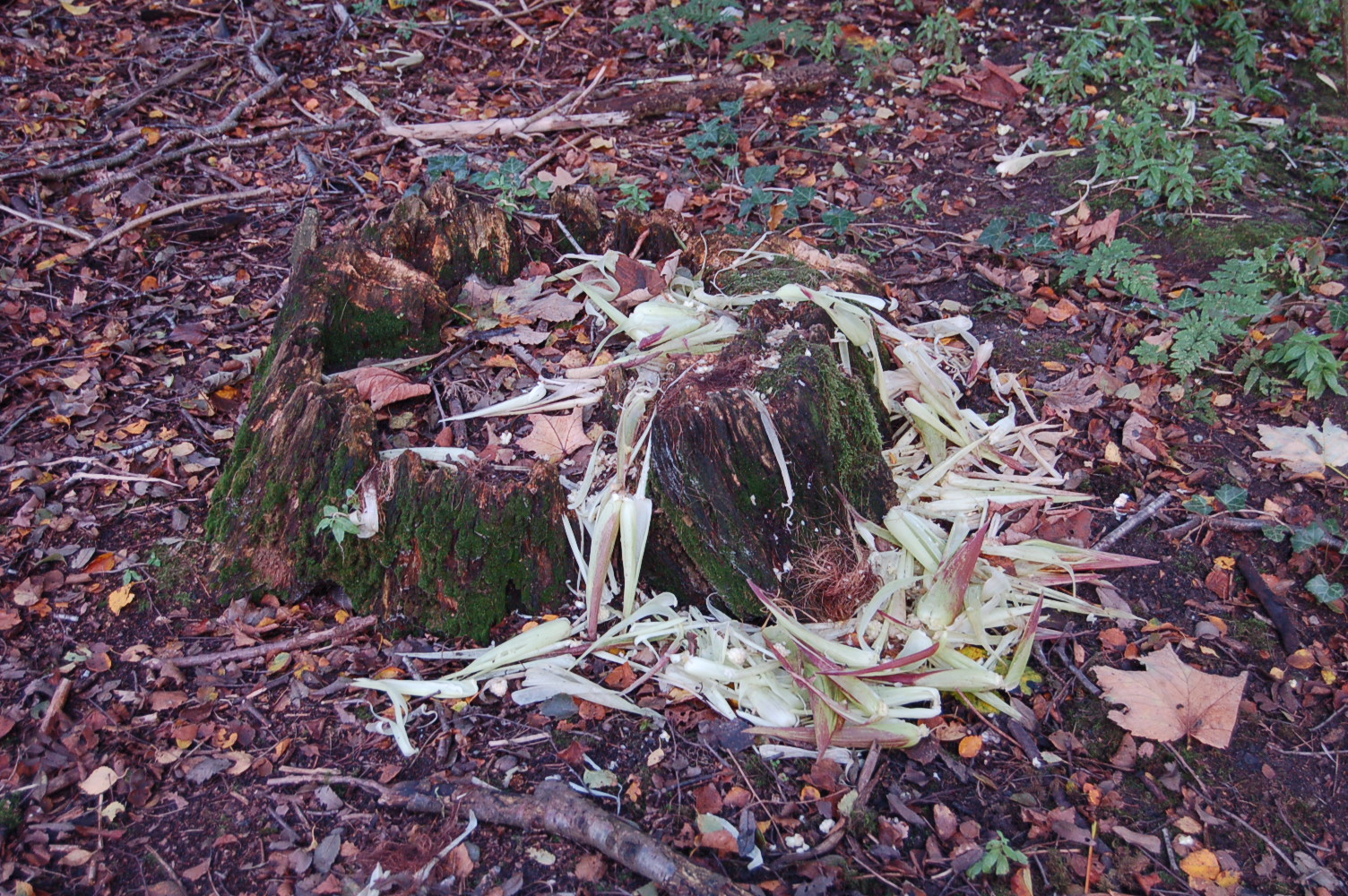
The second mystery was solved after a bit of tracking Sherlock Holmes style with noses to the ground and eyes peeled. The trail began with the spotting of a small pile of outer leaves of maize cobs. We followed them until we found a whole pile around a tree stump. Two clues lead us to the answer. A badgers’ sett in the deeper shade of the trees and on the edge of the wood a field of maize.

Yes! the resident badgers had found themselves a fast food outlet!

Categories
photography Shropshire trees wildlife woodland

Walking the Teme – a riverside walk.

What a way to start a walk – a long latte and a thick slice of coffee cake in a riverside cafe! Here in South Shropshire above the River Teme sits the town of Ludlow. An historic market town with a reputation as a town of food, Ludlow has more Michelin Star restaurants of anywhere outside London. It is the home of organic, locally produced food.

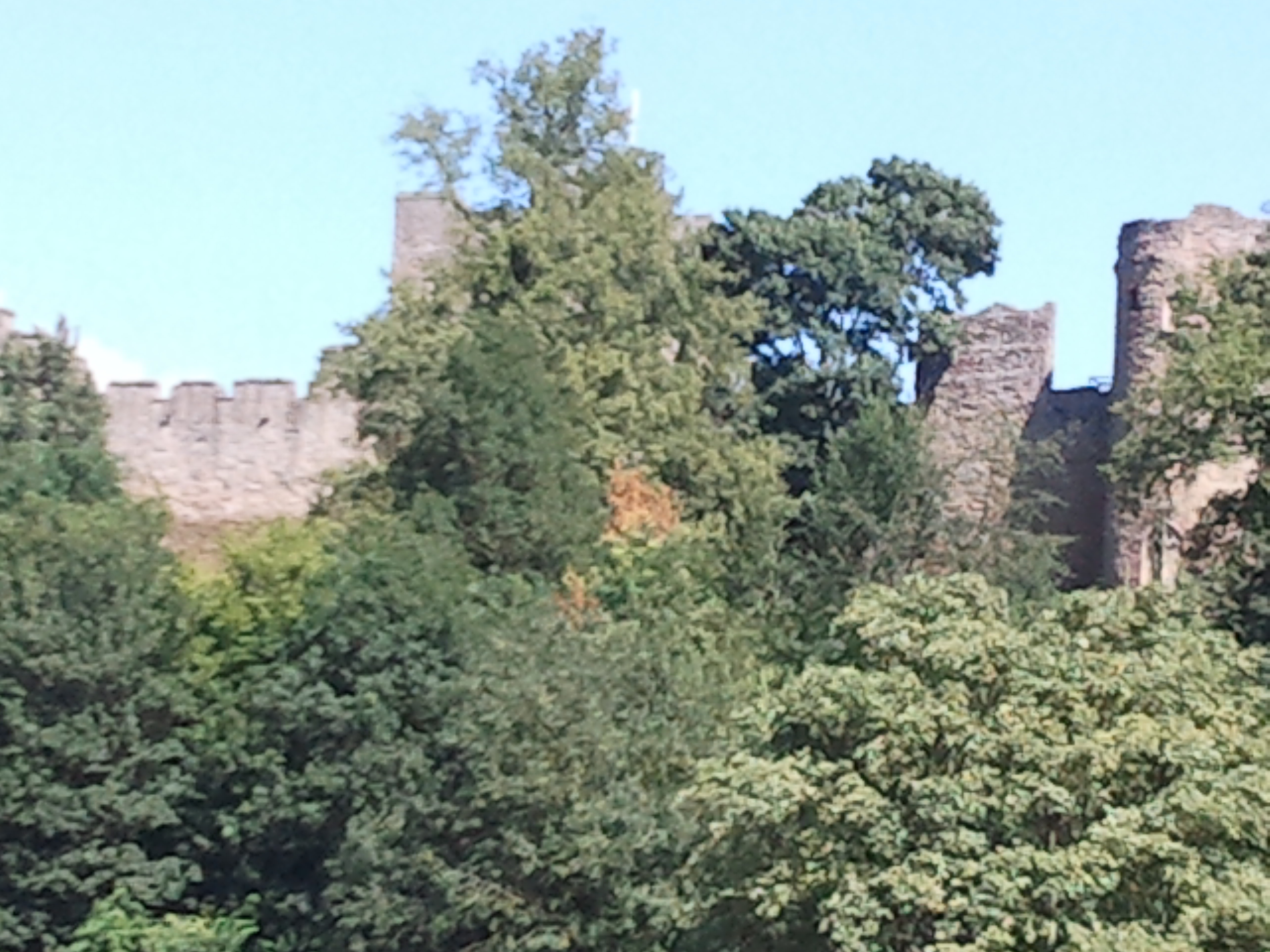
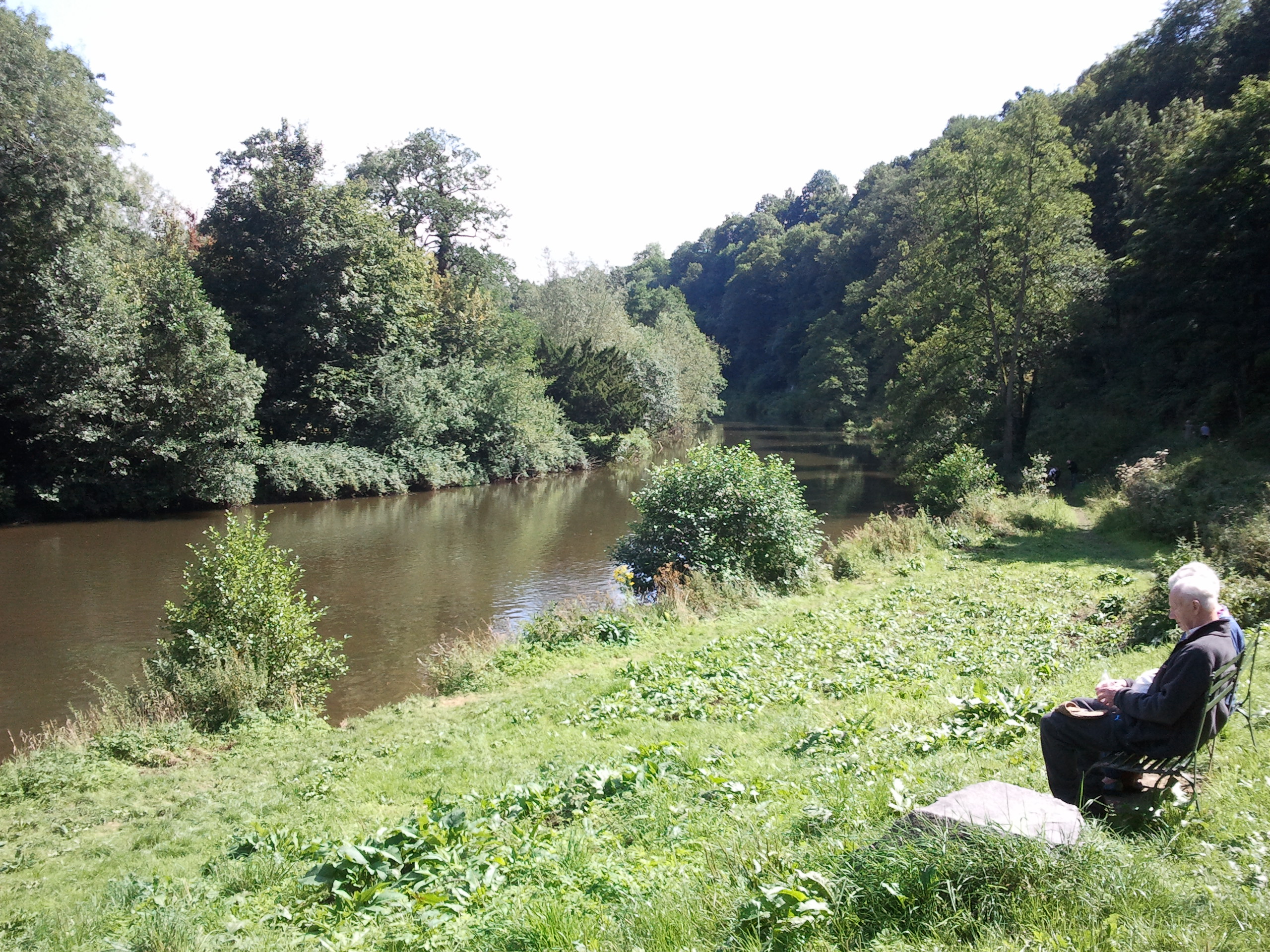
We visited today for a walk along its trout river, the Teme. We crossed a beautiful old stone bridge, called Dinham Bridge before finding the riverside track. From the bottom of the valley we could enjoy views of the town’s castle in one direction and along the river in the other. As we crossed the bridge we looked down into the rapidly moving water to see a pair of swans glowing white against the dark shadow of the bridge’s arches. They became a blur as they moved into the reflections of the sun.

The blue of the clear sky added extra colour to the reflections of the overhanging trees on the opposite bank. It was a warm day so walking within the shade of the Teme’s deep valley sides was a cooling luxury.

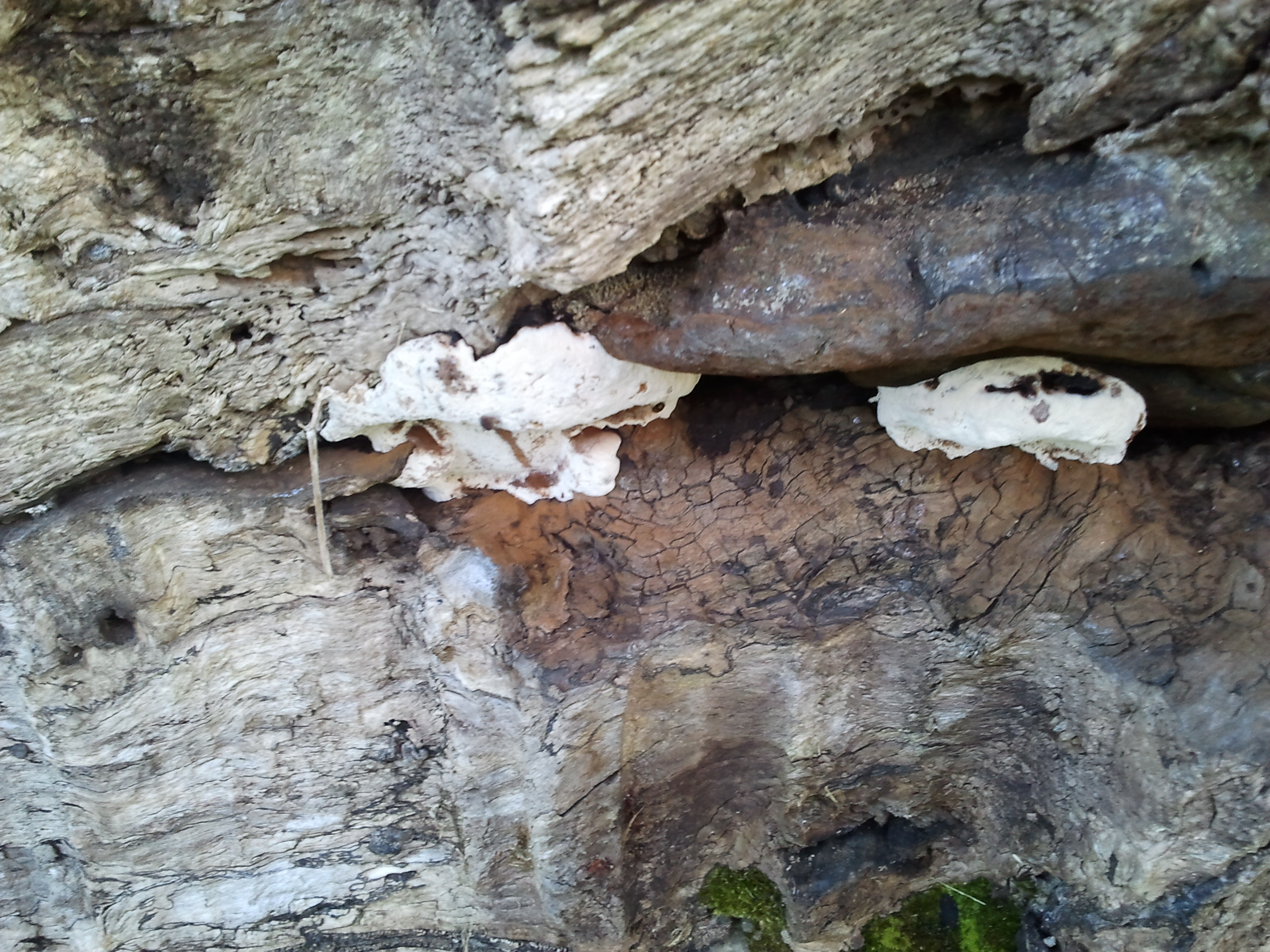
On the steeply sloping valley side erosion from rainwater rushing down, had exposed the massive roots of the tall trees. Within the exposed roots white fungi grew looking like chewing gum pushed into cavities.

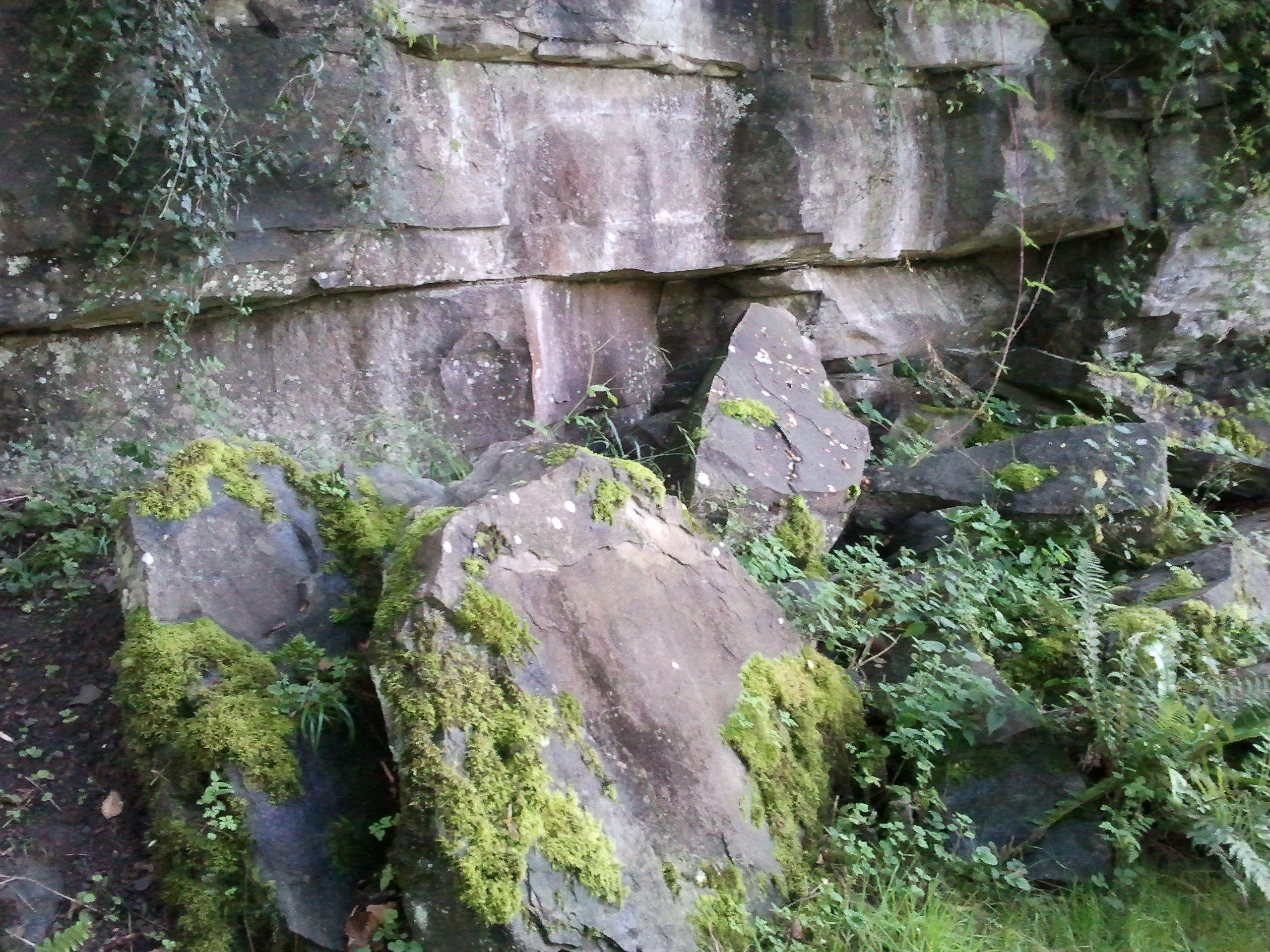
Similarly, water seeping through the rock strata of the steepest slopes coupled with the freeze-thaw action of the severe winter weather of South Shropshire, has attacked the rocky outcrops. Large chunks of stone have broken away and exposed fossils. On the gentler slopes the rocks have been smoothed by the action of surface water.

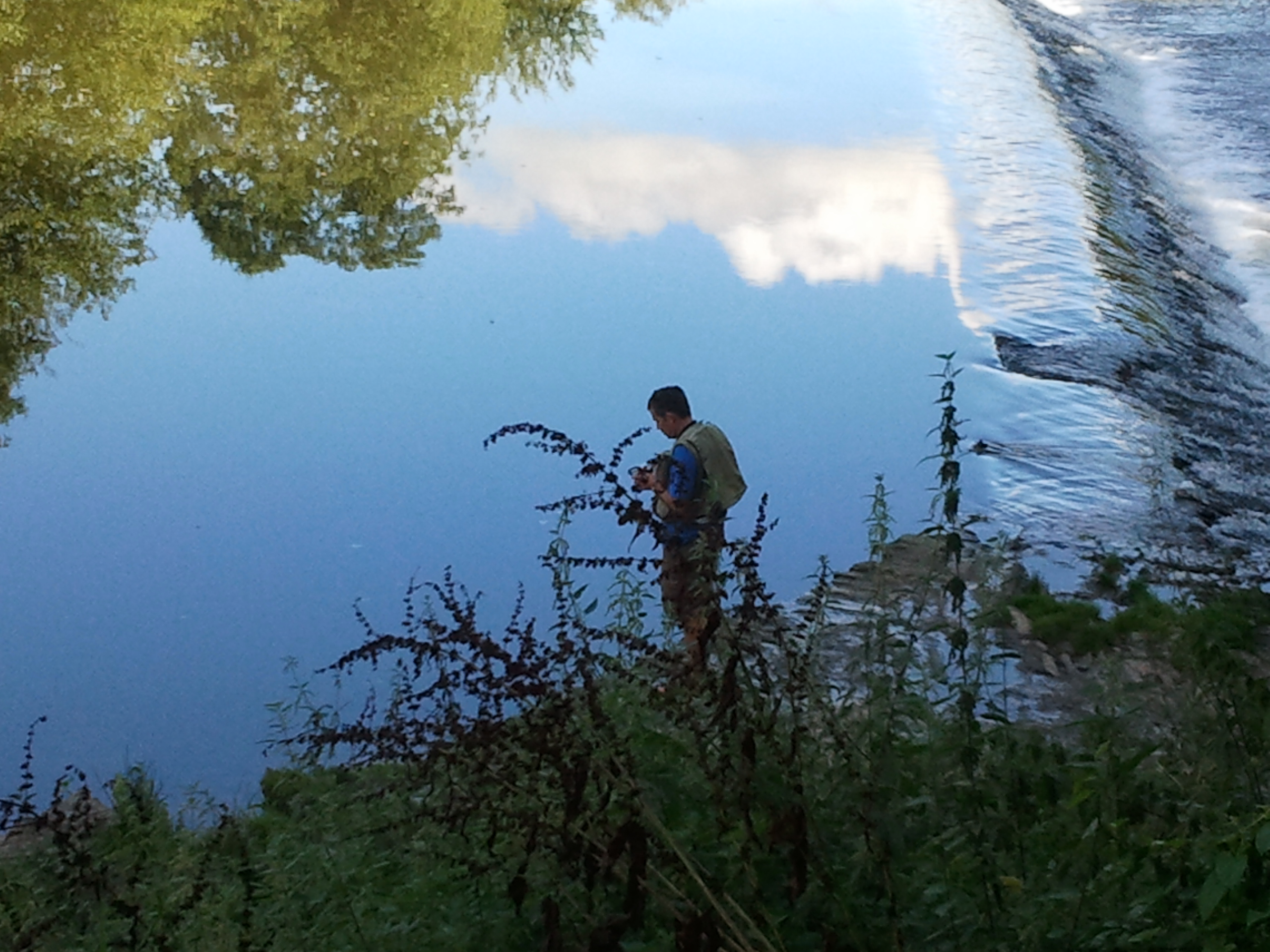
It is a popular place for fisherman, both course and fly.

We walked as far as the weir where our path rose steeply through woodland. My legs decided it was safer not to go on.

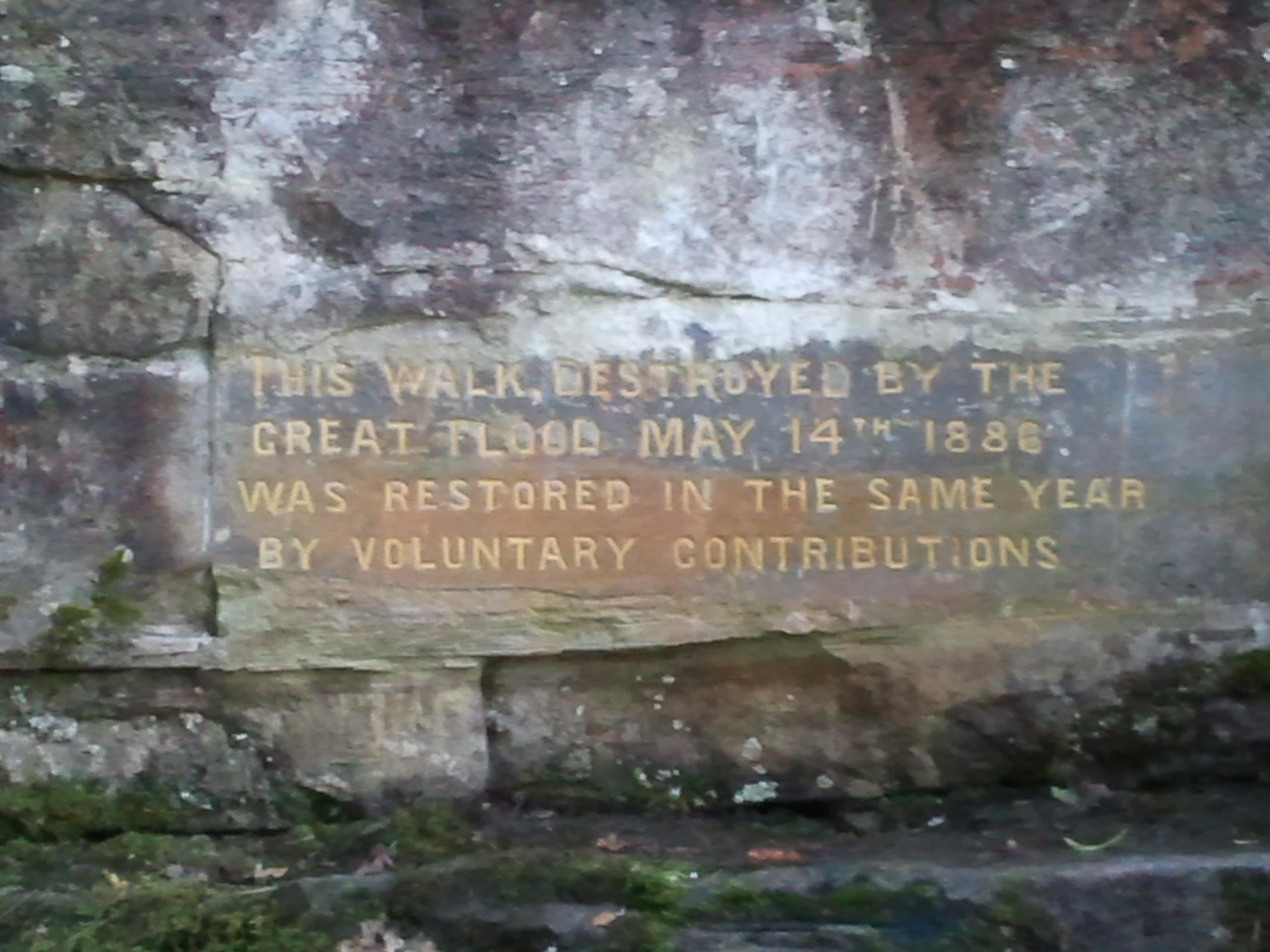
Just where we turned back we found this interesting old stone plaque, emphasising the power of the water along which we were walking.

Categories
birds climbing plants photography Shropshire trees wildlife woodland

Through the Garden Gate – part two – getting lost!

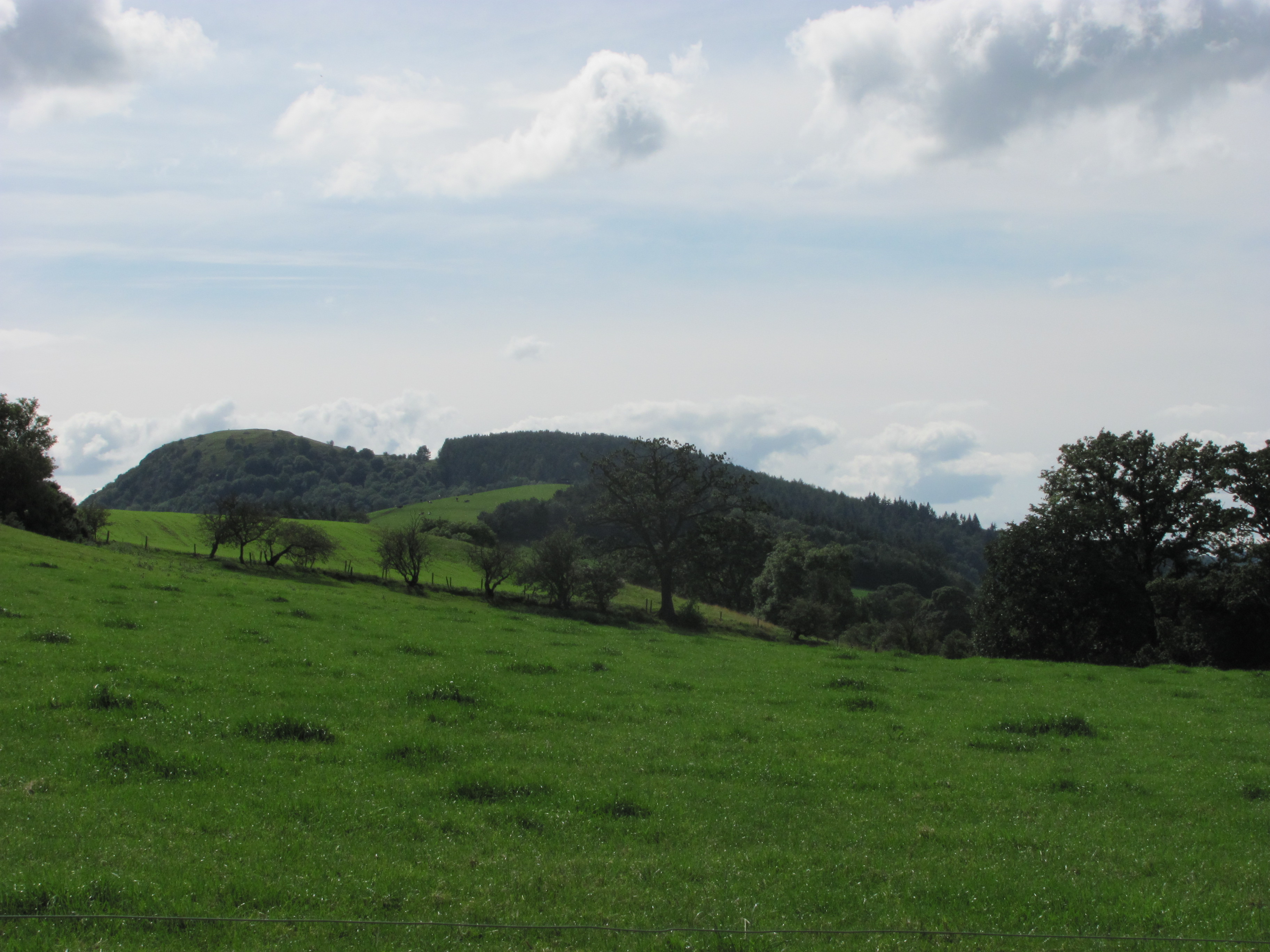
From the pool we could look back at the wood we had just left and enjoy a different view of the hill that we usually look at from our garden and over which we watch Buzzards riding the thermals created by its slopes.

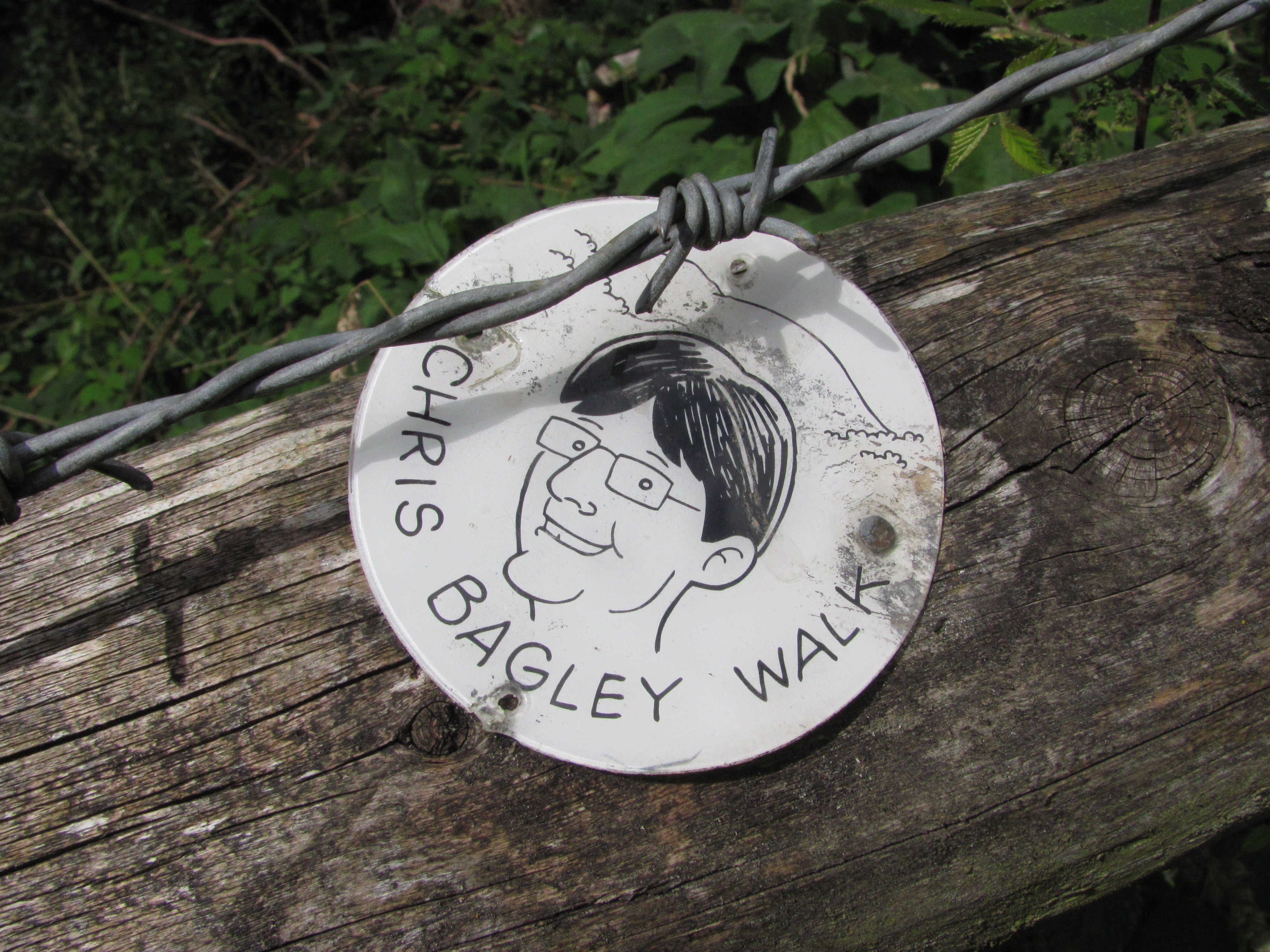
Well we may never have been more than a mile from home on this walk from our garden gate, but we did manage to get lost. The footpath signs kept disappearing, or that is our excuse. Our wander took us along sections of the long distance path, “The Shropshire Way” and on a local path “The Chris Bagley Walk”.

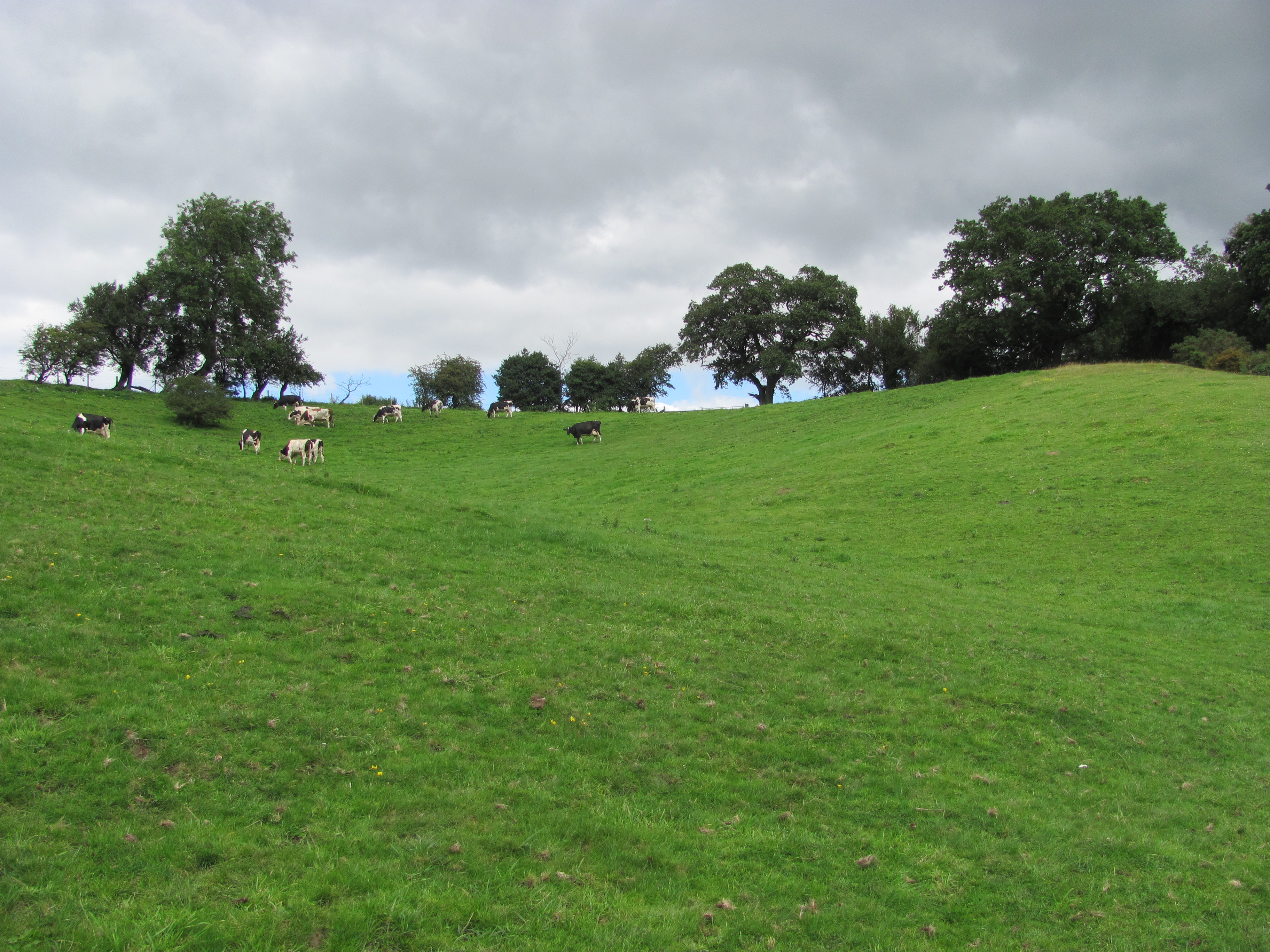
Leaving the fishing pool we followed the valley of the stream that fed it. The grassland here was rich and was being enjoyed by dairy calves, who watched our every move as we passed close to them.

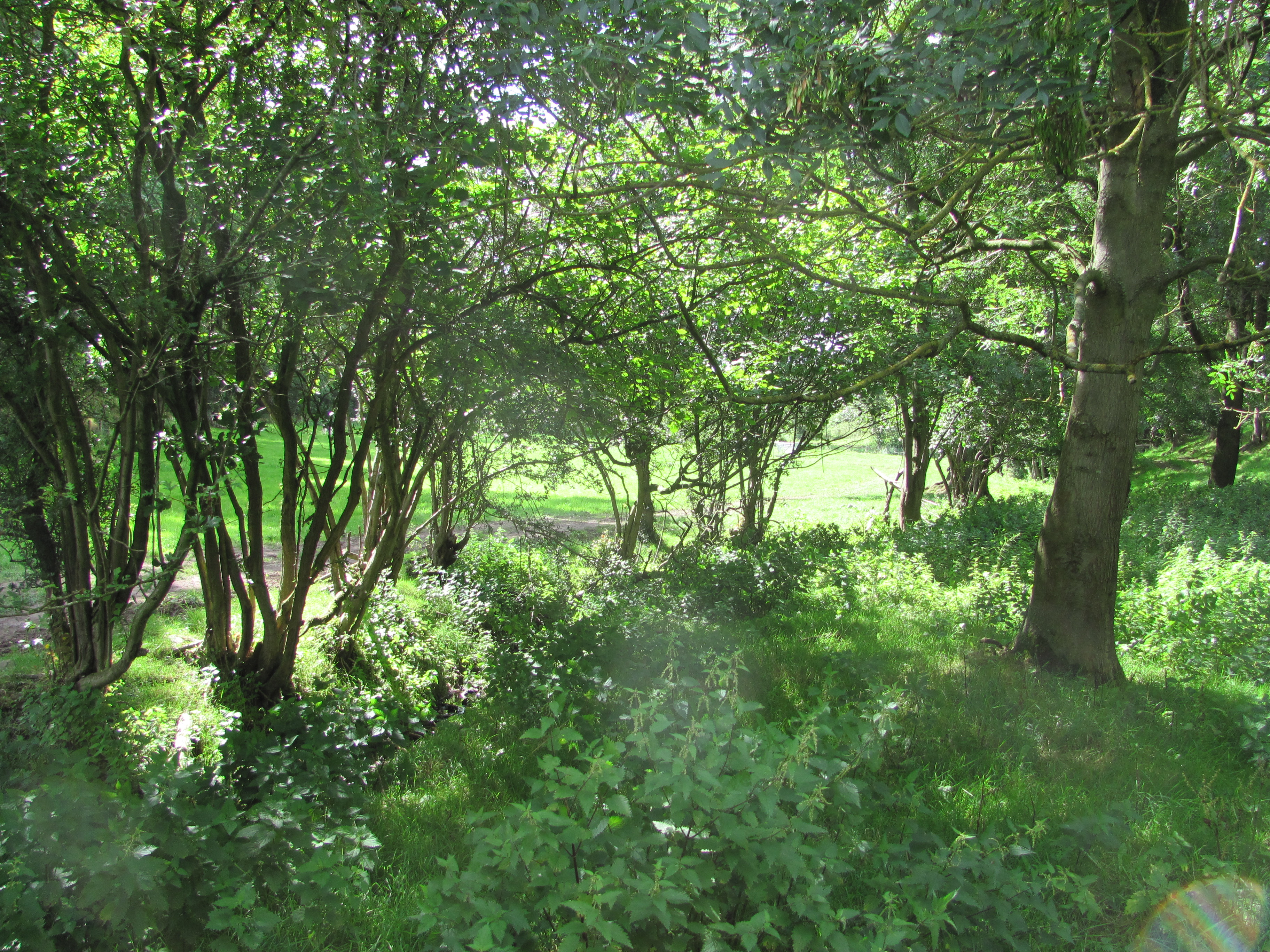
The valley widen out but the wooded slopes and tiny stream running through it kept it intimate. The fields of grass on which the calves fed was a lush green but was devoid of wild flowers, a sad sign of modern farming practices. we followed the path until it took us up a gentle slope away from the stream and up into a wood which was partly coppiced.

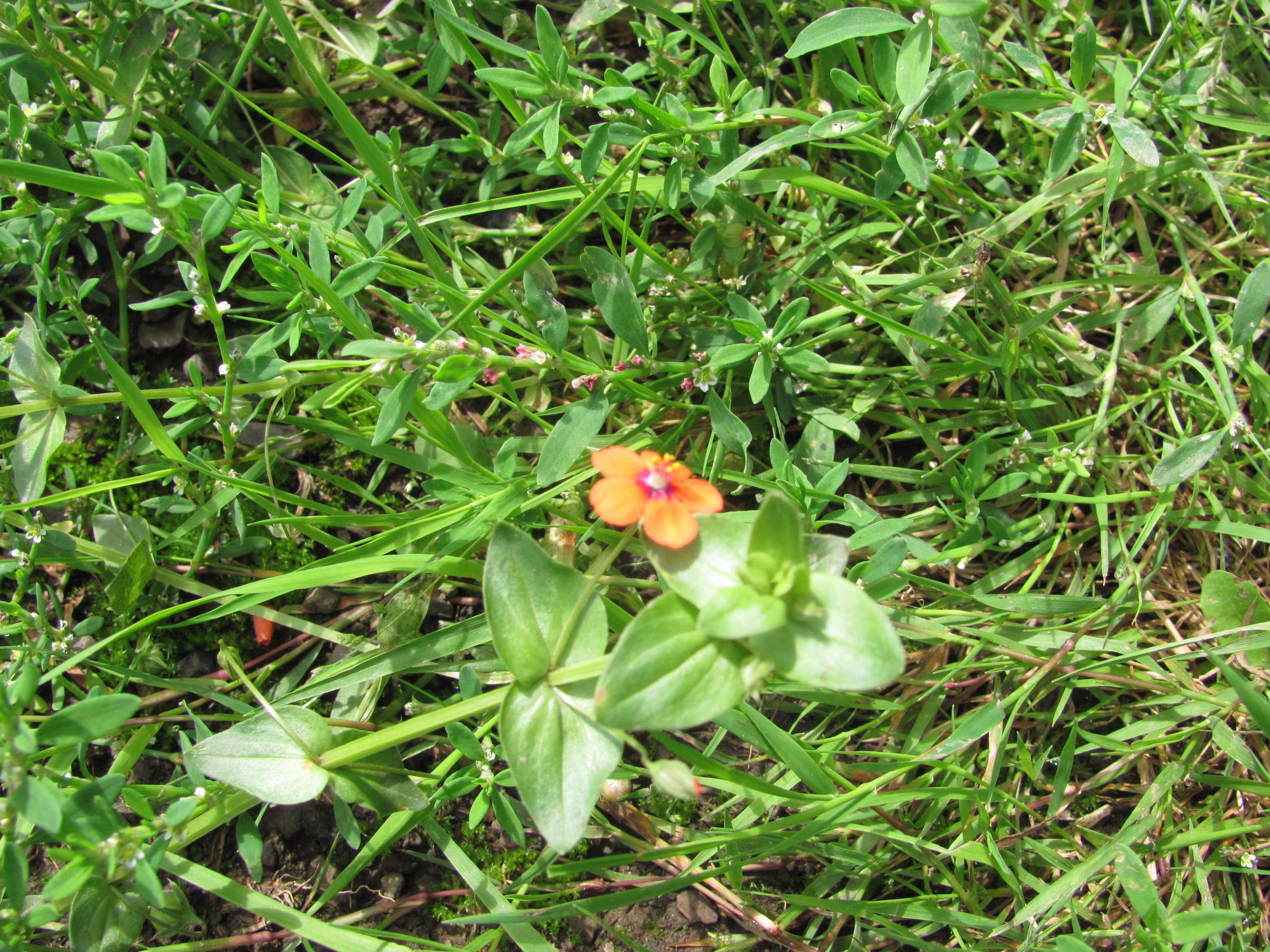
On the slope up to the wood we spotted this Scarlet Pimpernel in flower on the pathway beneath our feet. Although only a tiny flower its orange petals glow so it can be seen from a distance. We now lost the footpath and had to consult maps on the smart phone, which rescued us nicely.

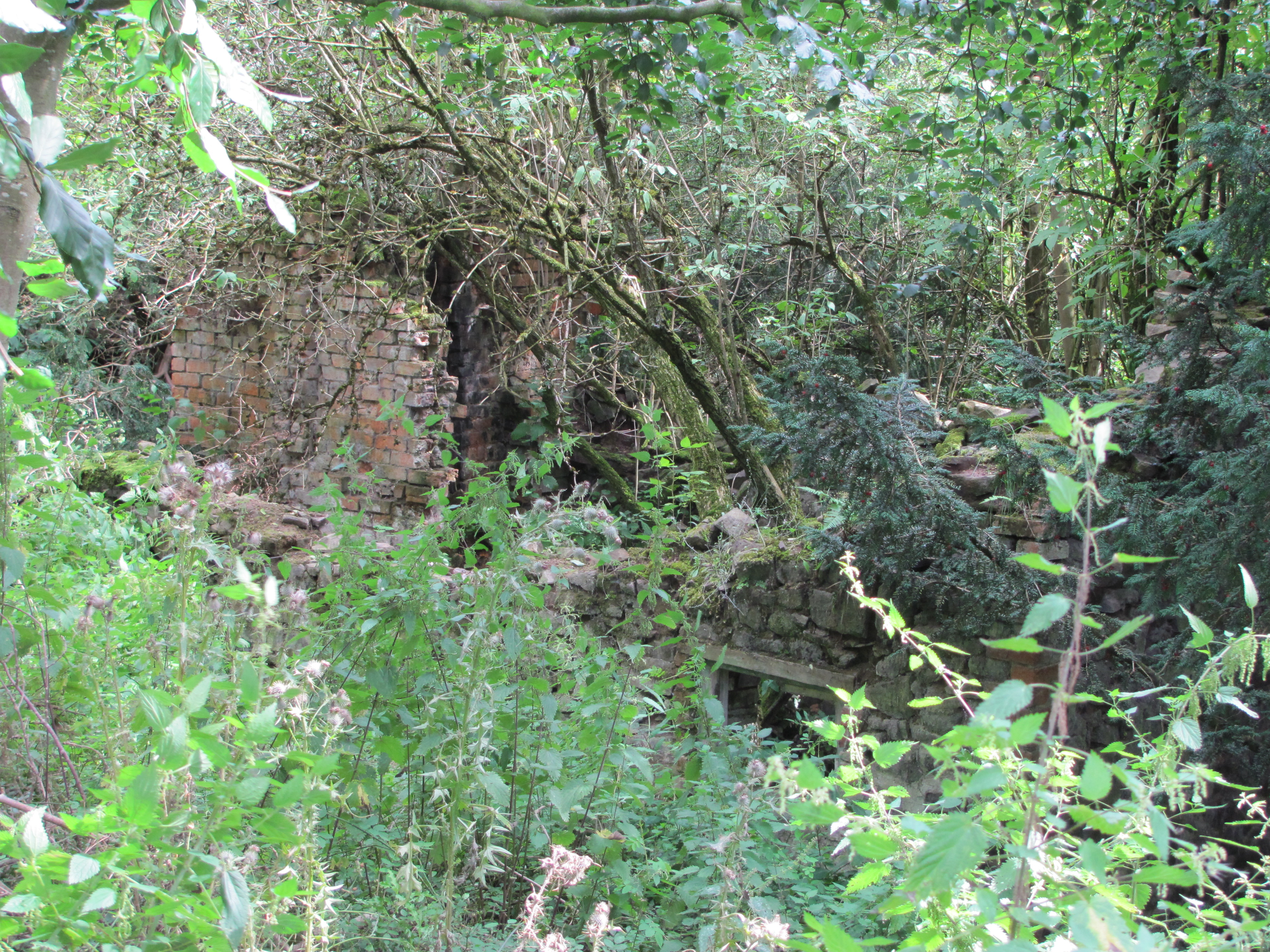
The wood gave away its past. Signs of the work of woodlanders abound. Their homes were now mere ruins covered in Ivy as Mother Nature reclaims her woodland. A clearing showed signs of coppicing.

The darkness of the wood and its cooler atmosphere was in stark contrast to the brightness and warmth that greeted us as we left it behind and returned to farmland. The path narrowed and took led us around a field edge where the sterility and silence of the arable farming on our left clashed with the natural exuberance of the hedge and the wildflower filled verges.

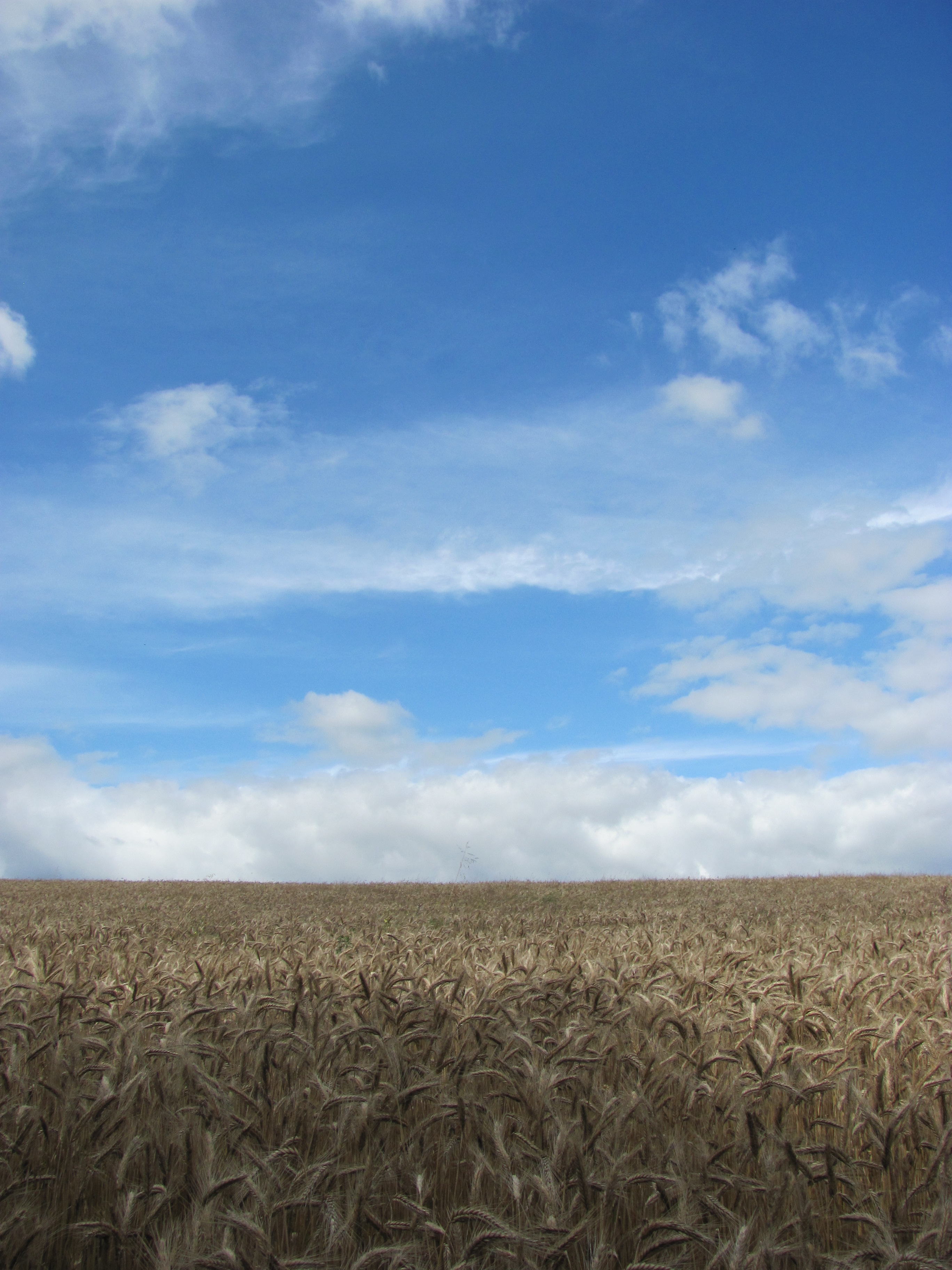
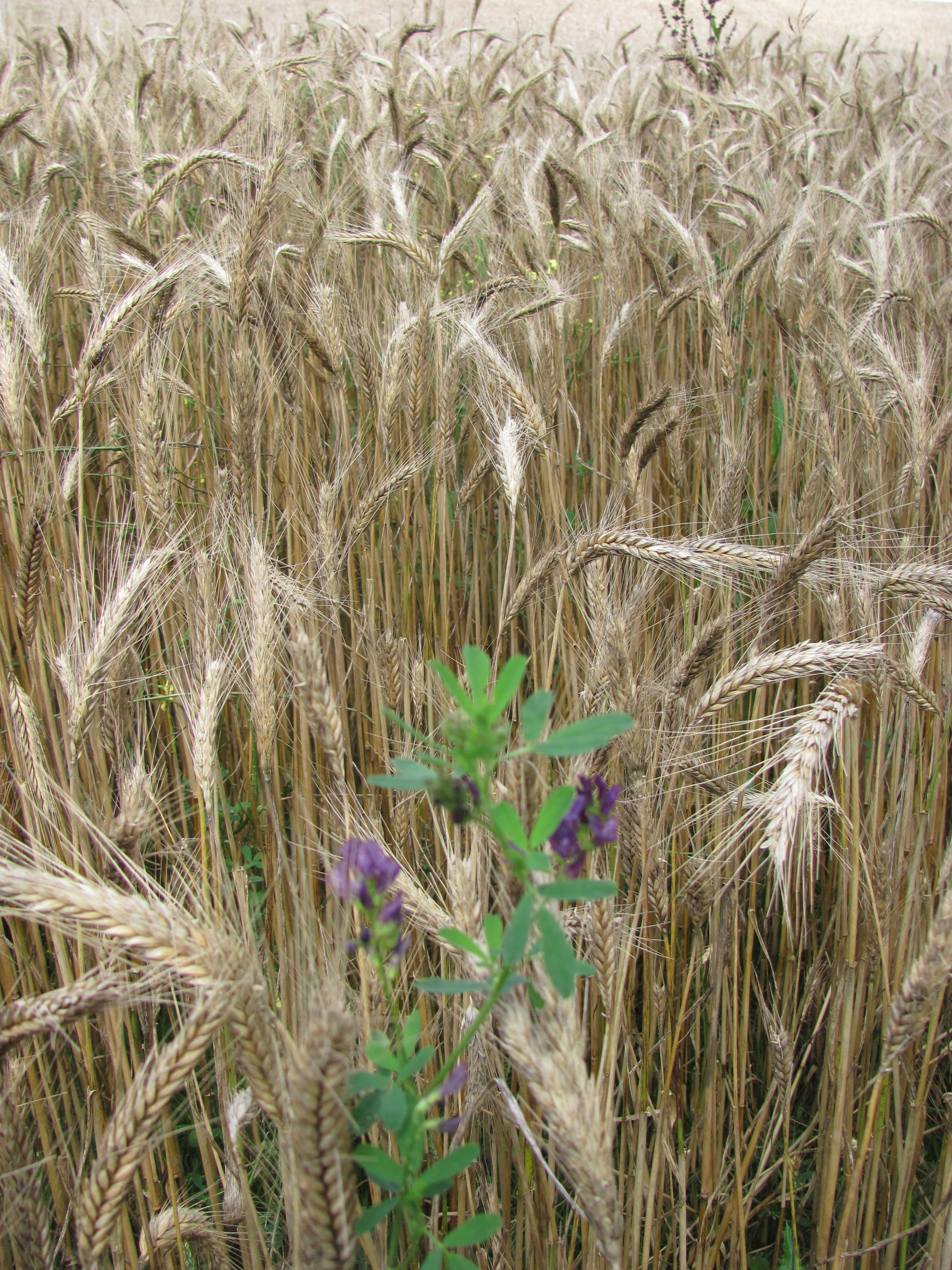
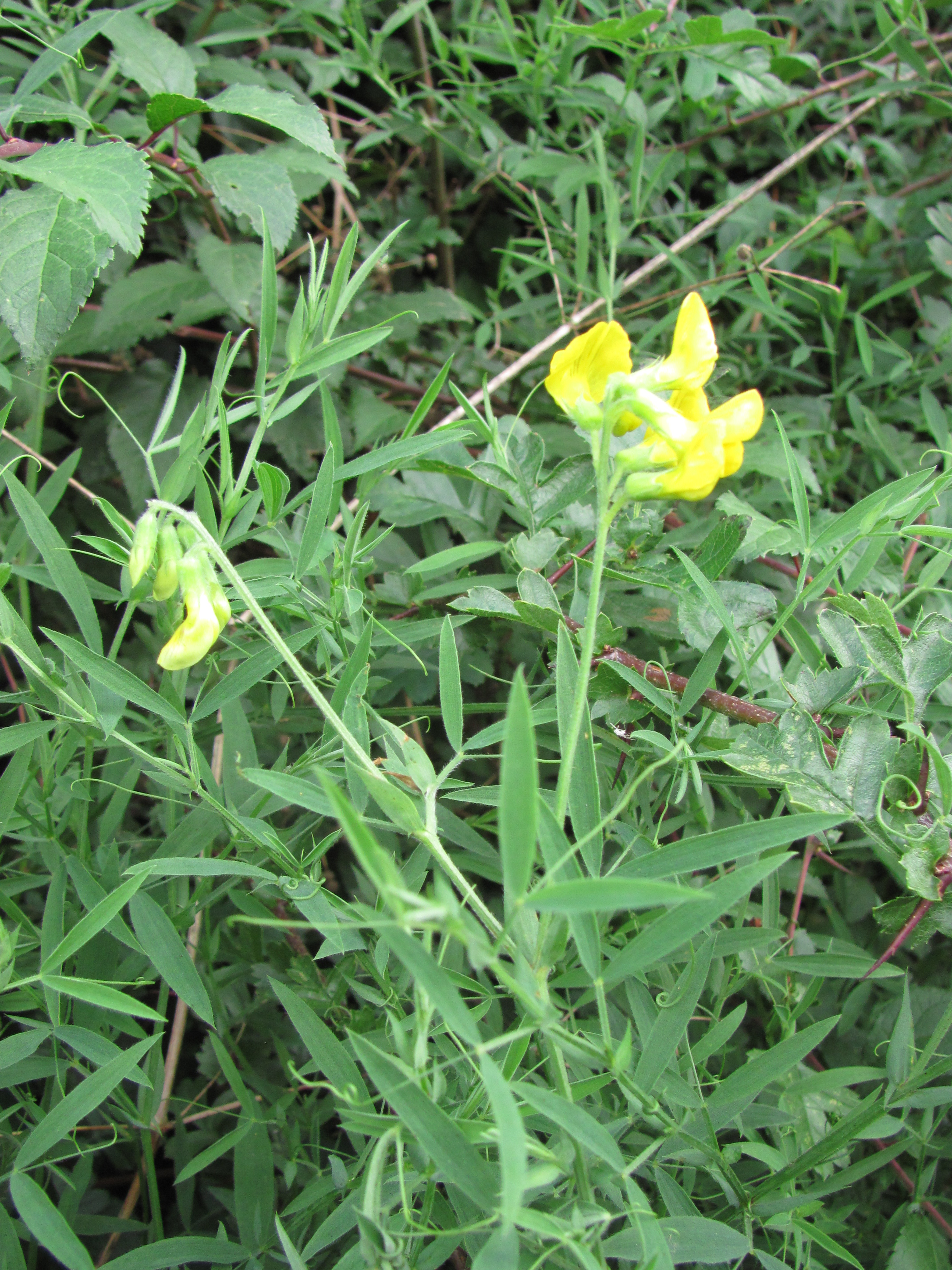
This was modern agricultural practice at its worse. We crossed over several of these fields and saw no signs of life apart from two Wood Pigeons flying overhead. The only flowers were a few yellow Rape plants from a previous crop and brave purple flowered Vetches attempting to clamber the Barley stalks close to the path. Years of pesticide and herbicide use coupled with monoculture has wiped out wildlife from these acres of land. To illustrate the point a small group of Swallows flew over the crop in search of insects, but it was in vain and they quickly moved on. At least until the footpath signs disappeared once more and we relied again on the smart phone maps to rescue us.

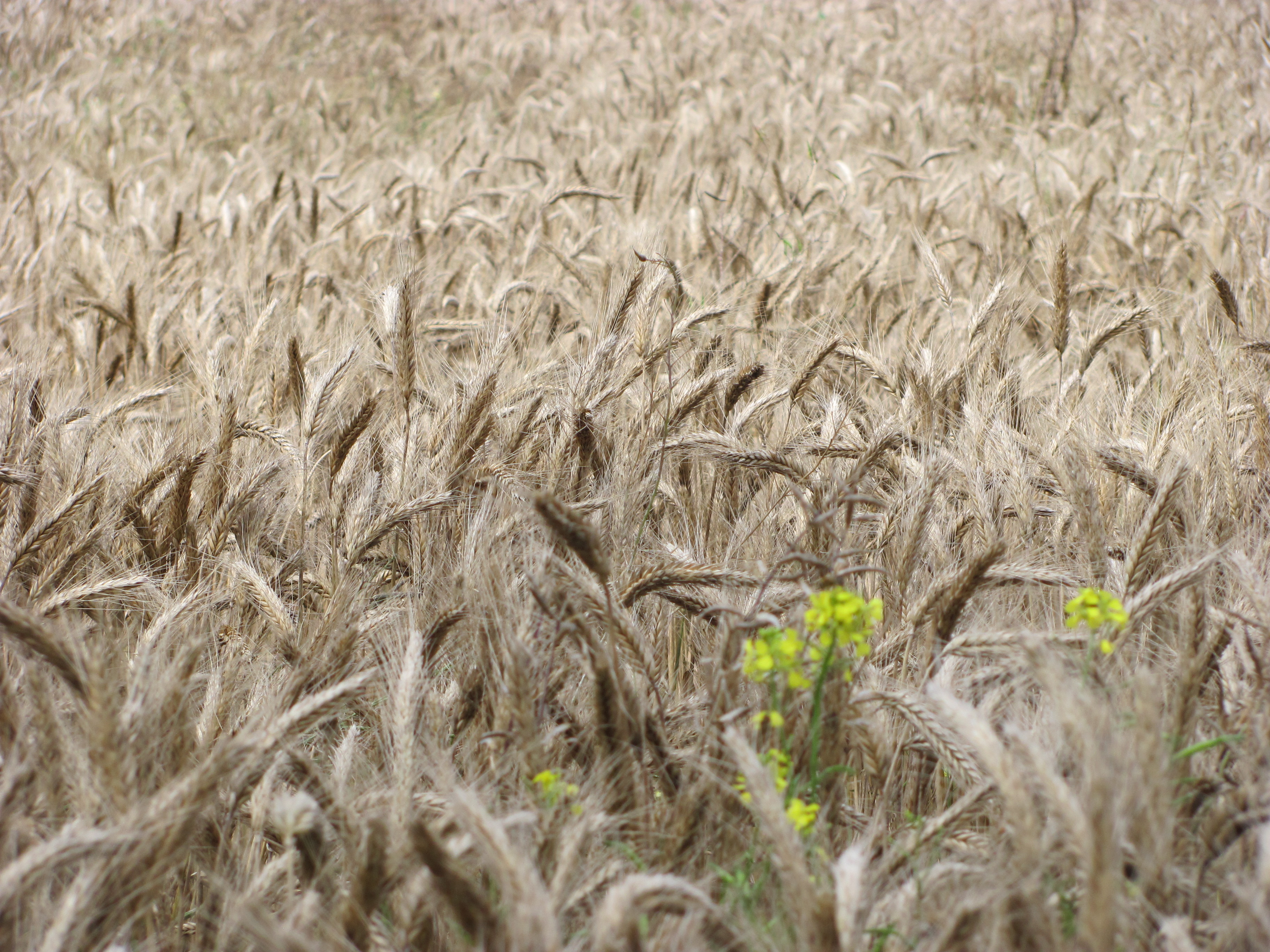
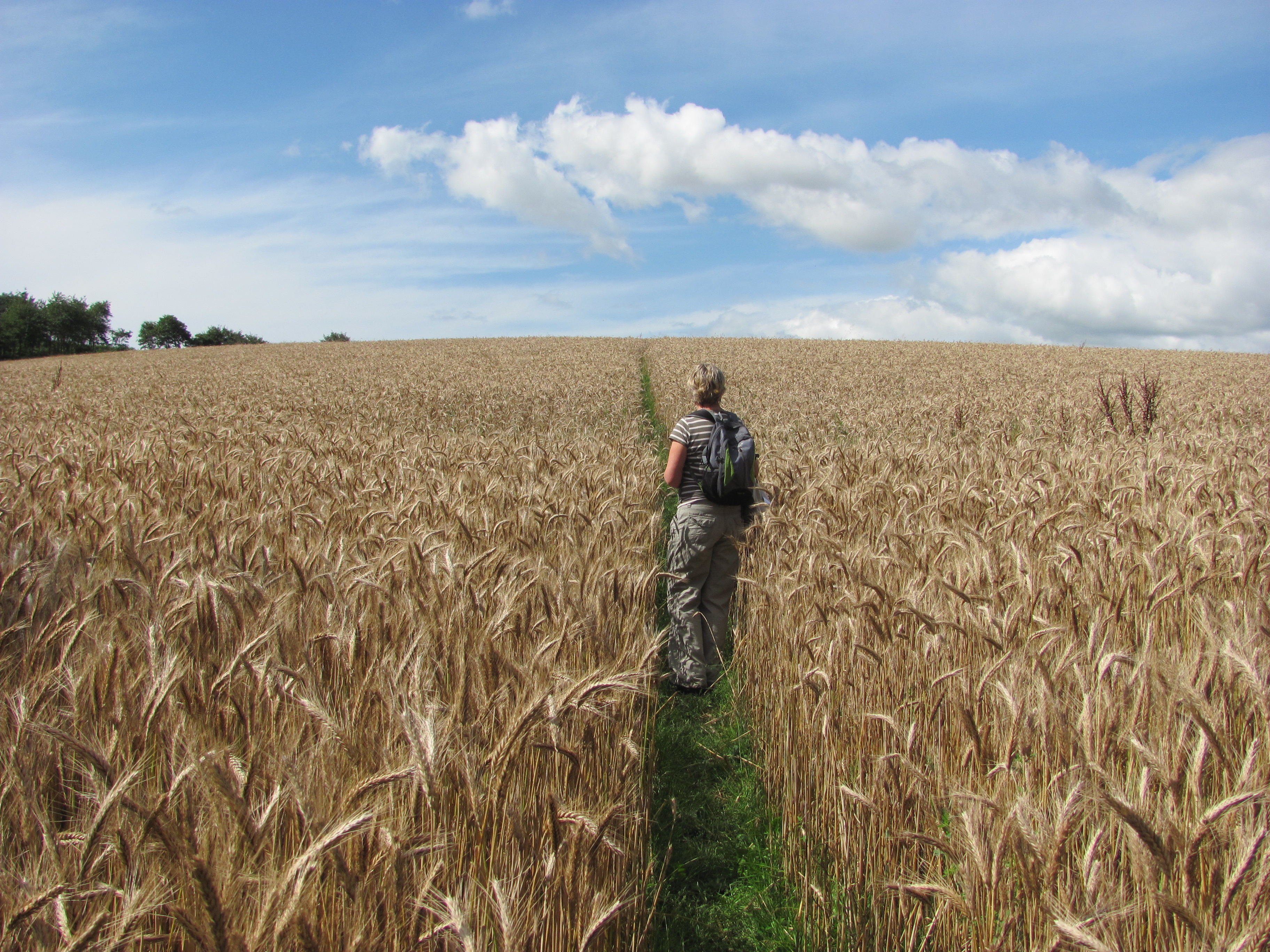
The path crossed one of these fields creating a narrow band of green which cut through the drab grey-yellow of the Barley. The only good part of crossing this desert was the rattling sound that the ears of Barley made as our elbows brushed past them.

Walking across the field we aimed for a style in the distant hedge. It seemed a long way across as there was little to look at or to listen to. The style in the hedge turned ou to be a double style, one each side of a thick, dense, tall hedge. there was a different world awaiting us on the other side. The grassland here was full of clovers and there were many different grasses, not just the ryegrass we had walked through earlier.

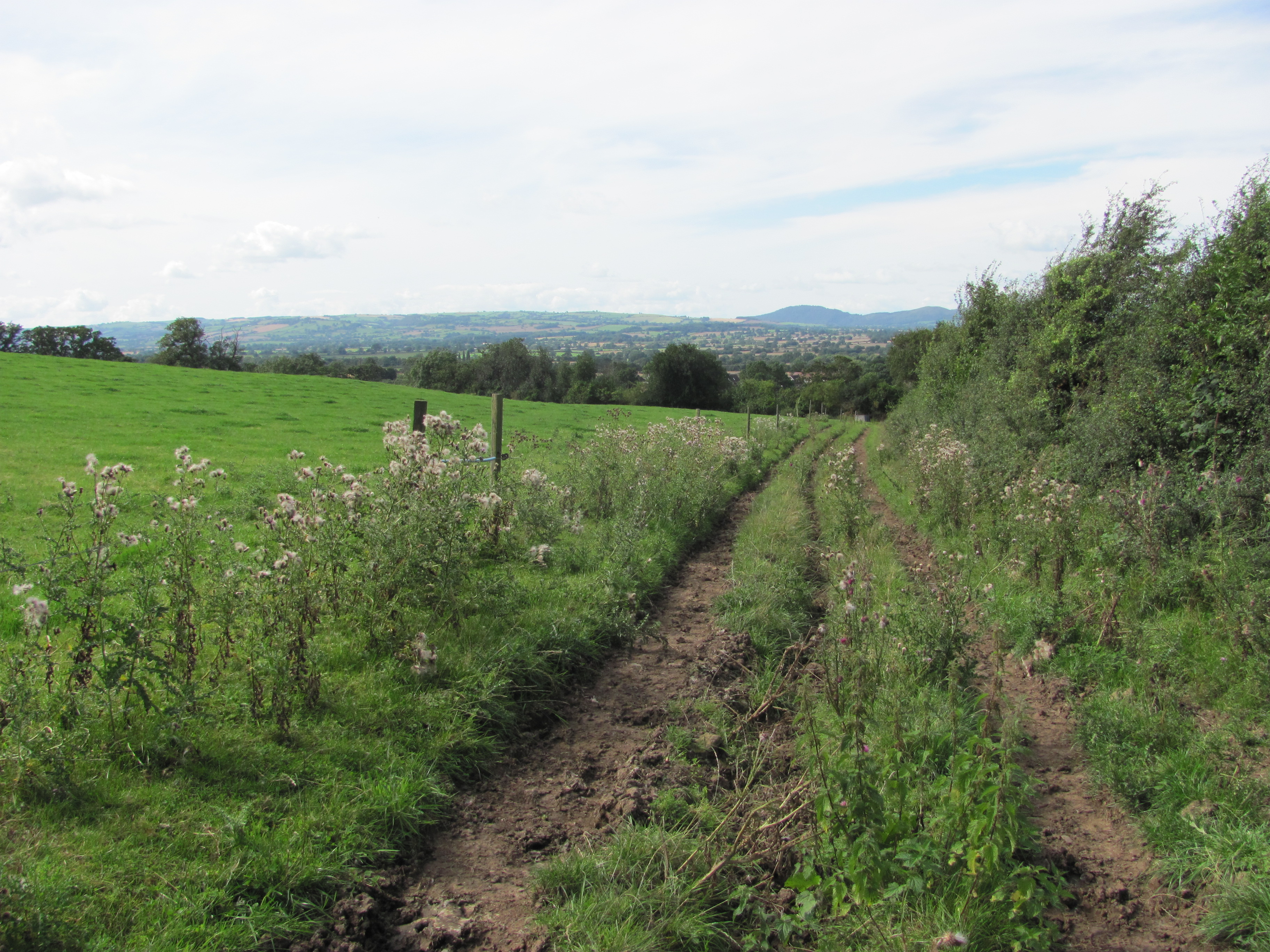
We were now within the land of our local organic dairy farmer. The hedgerows had deep verges full of wildlflowers, thistles, mallows and vetches. No hedges had been removed and the fields were much smaller.

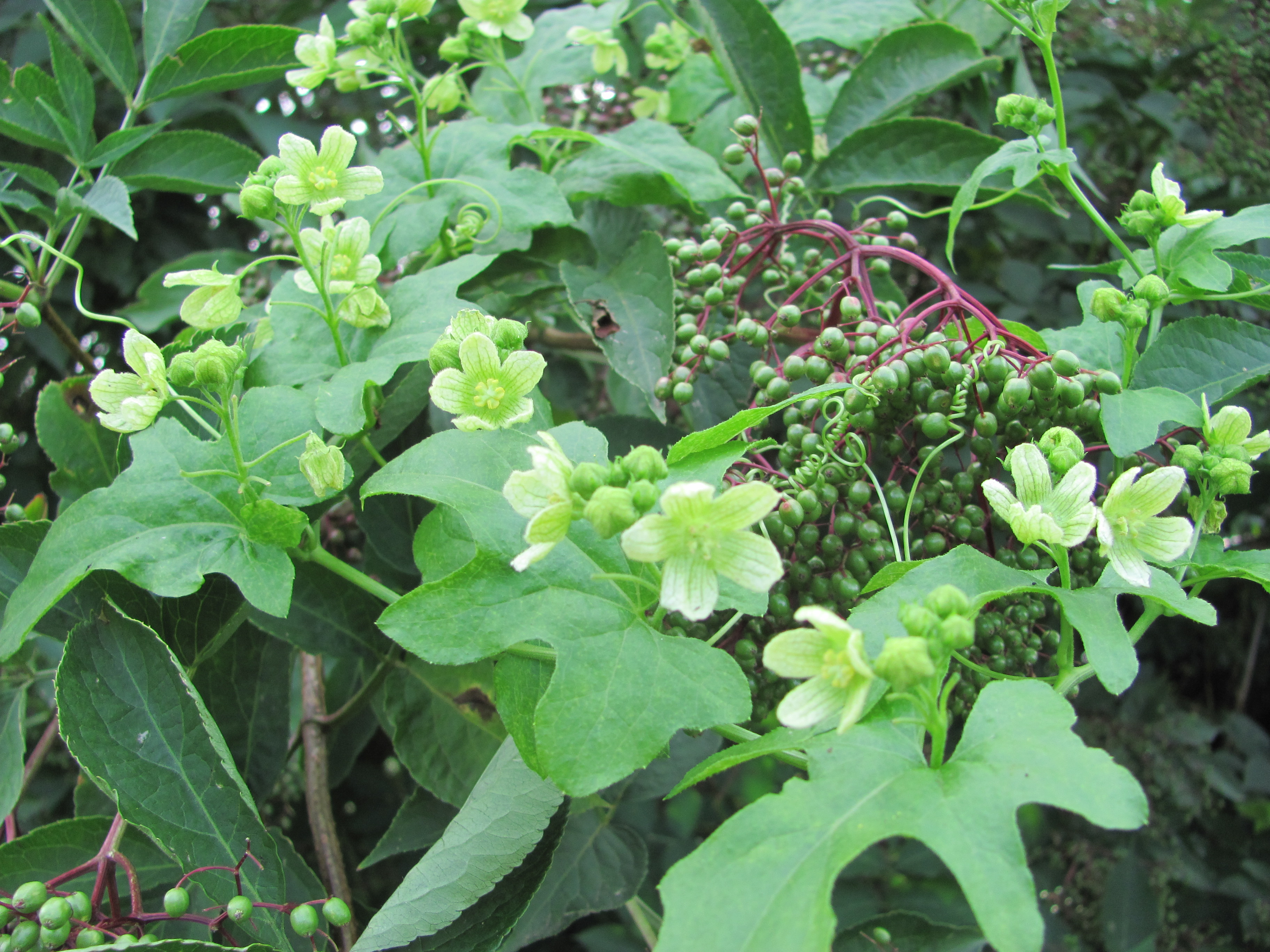
As we passed through to another field we were hit by a sweet. rich aroma from the hedge. It took us a while to find the source – a Sweet Bryony clambering over an Elder.

It was downhill now all the way home and we enjoyed lovely views through gaps in the tall hedges.

As we left the final field of pastureland we spied our house across the hayfield. We had to pass our big old oak tree which we admire from out back garden. As we walked along the fence to the garden gate we called out to the chickens. They looked totally confused – we were the wrong side of the fence.

Categories
birds meadows photography Shropshire trees wildlife woodland

Through the Garden Gate – part one – to the Pool.

This post features a wander in the countryside beyond our garden gate. We literally walk down to the bottom of the garden, past the chucks, go through the wooden gate and enter our borrowed landscape. We ambled for four hours spending much of the time standing, looking and listening or sitting and taking in the atmosphere. At no time were we more than a mile from our home.

An alternative title for the post could be “Why we live where we live and why we love where we live.” Join us as we wander around our local patch, our own personal bit of countryside.

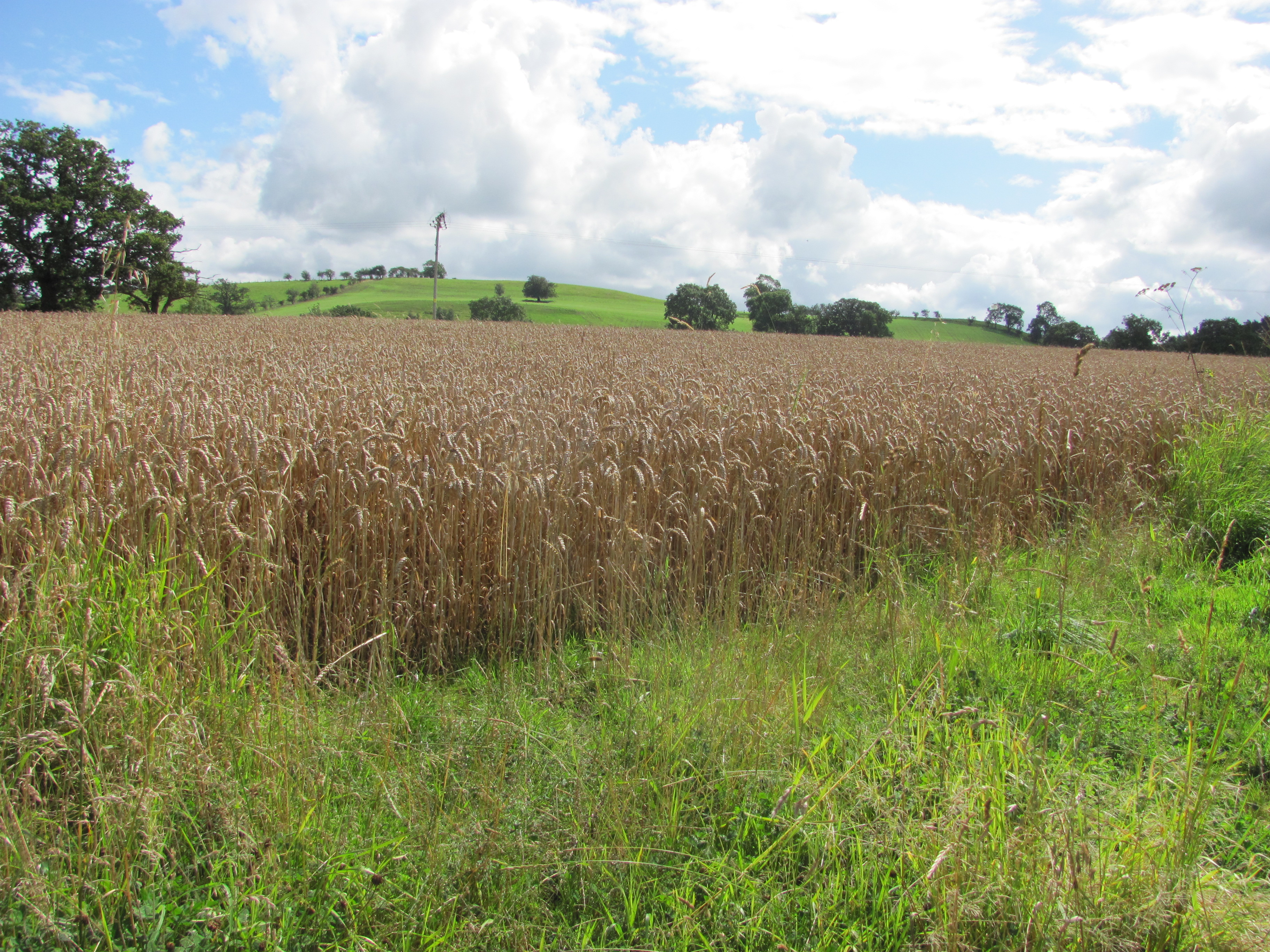
We walked alongside the fence line along the paddock to join the public footpath which led us diagonally across a field of winter wheat. Reaching the far side of the field we looked back to get a view of our home snuggled within the short row of houses.

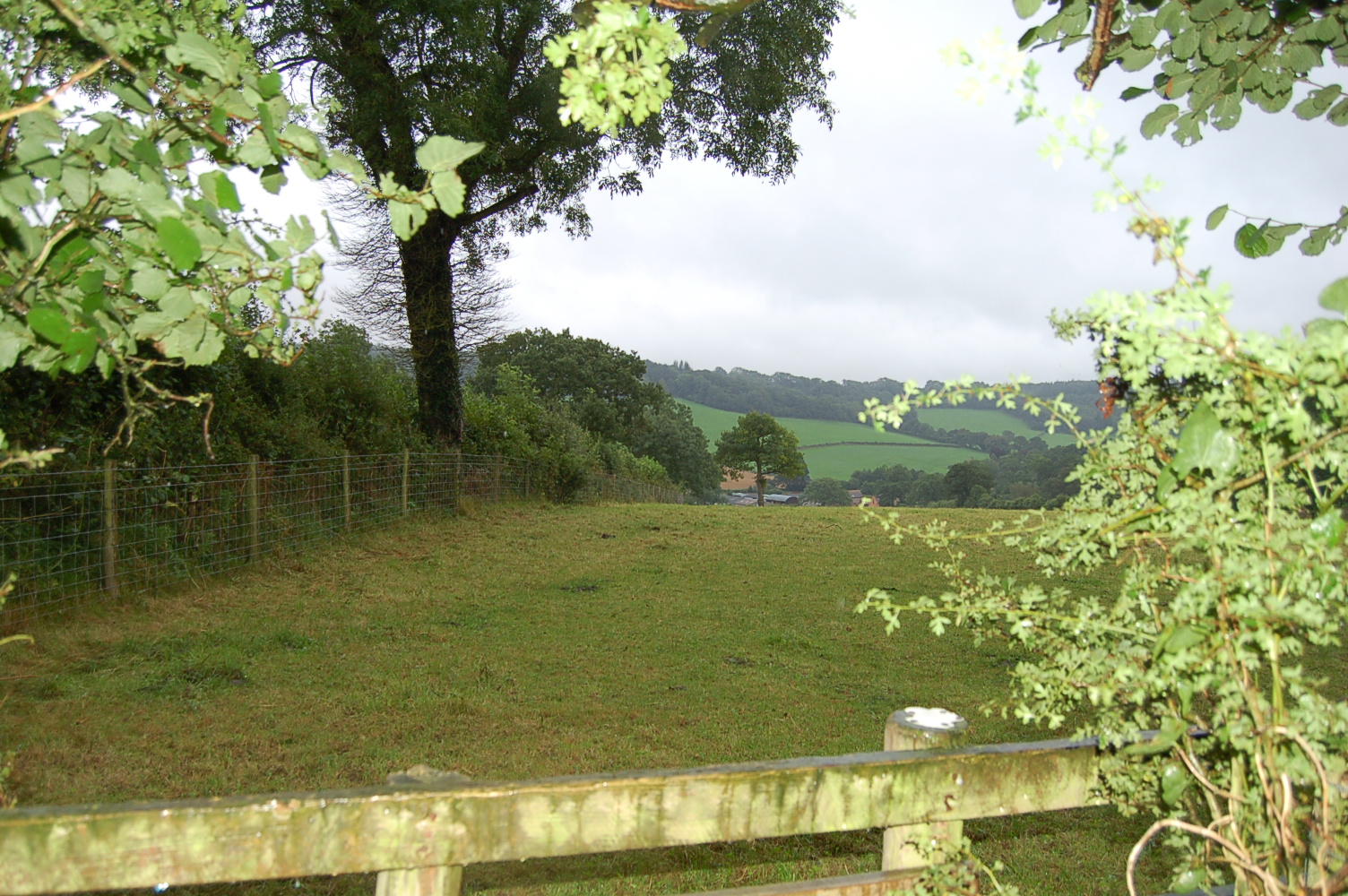
Looking back across the field we have just crossed gives us a different view of one of the hills we can see from the garden.

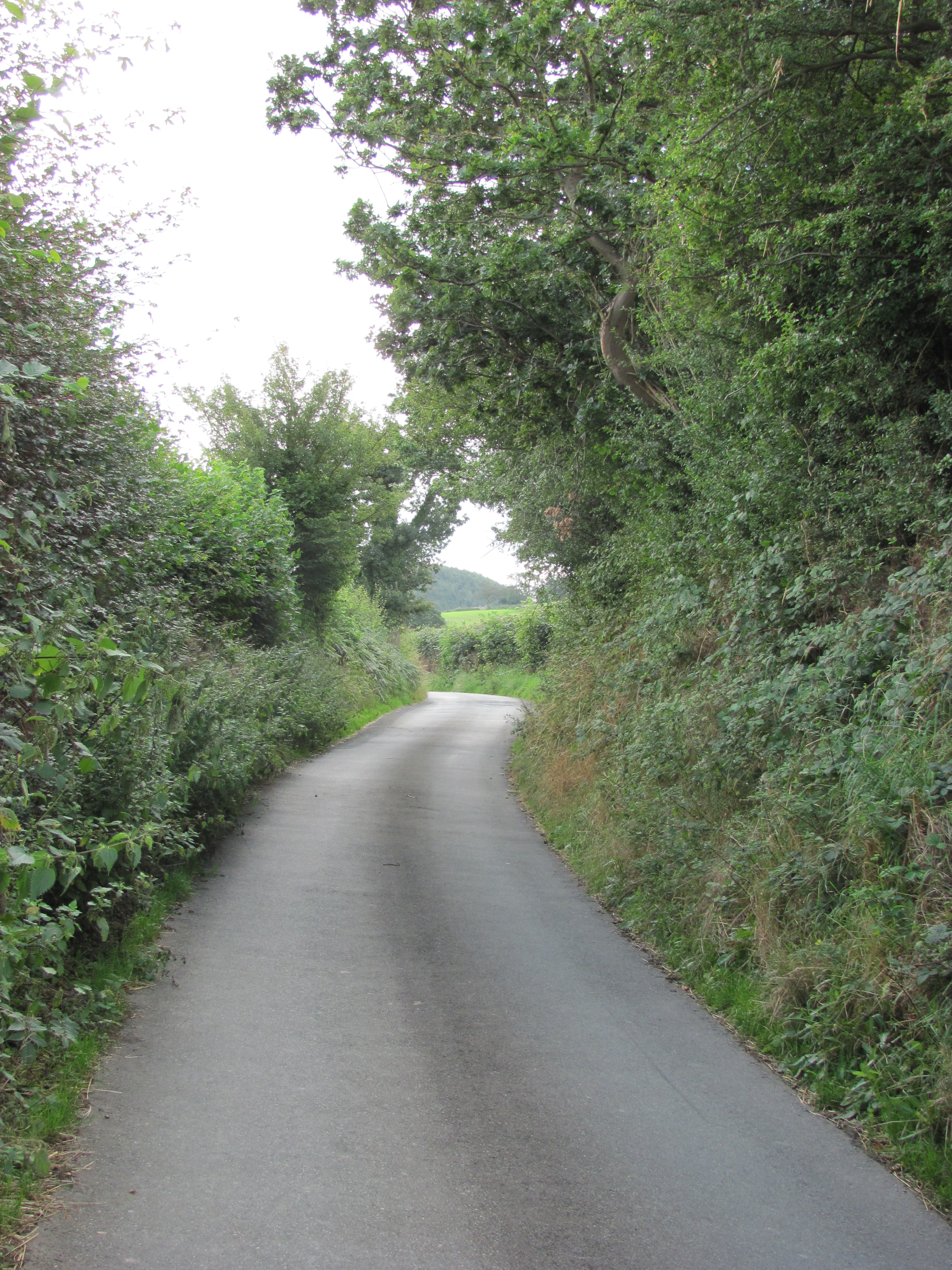
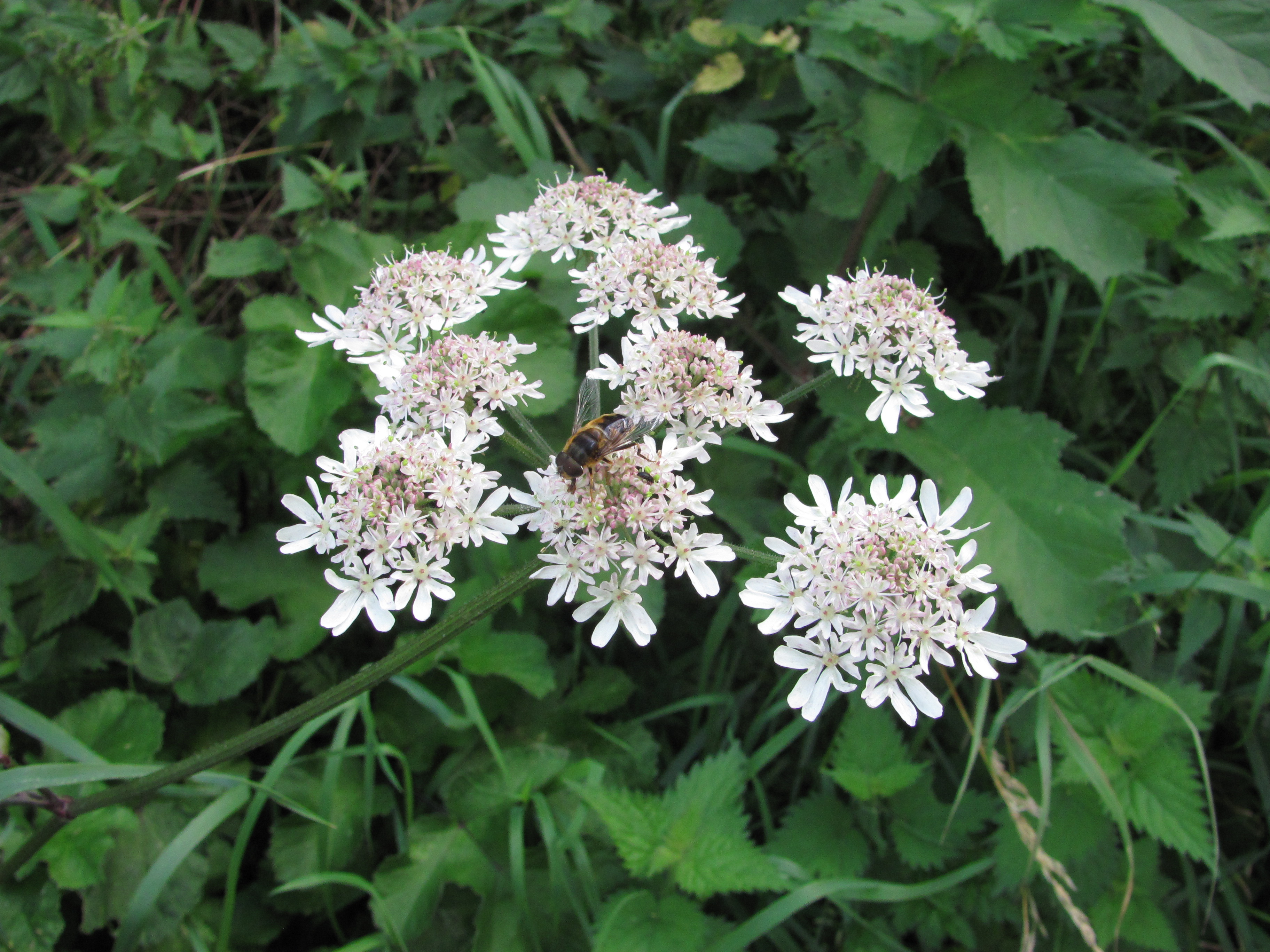
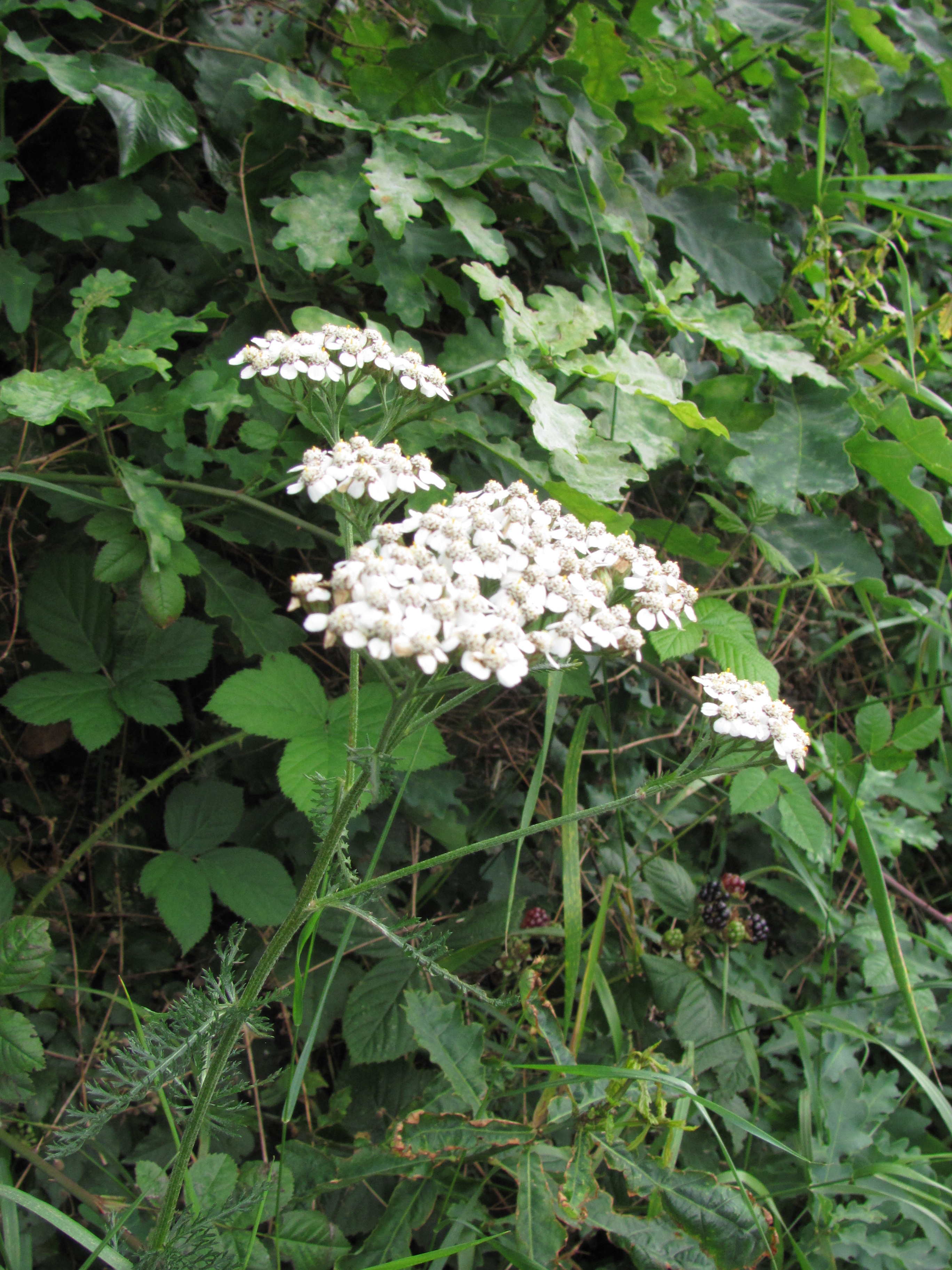
We needed now to walk along a lane for a while, a narrow lane with high hedges on each side and verges full of wildflowers. Climbers clambered over the hedging bushes.

A bonus was the appearance of the first ripe blackberries. We enjoyed them and thanked the blackbirds for sharing their larder with us.

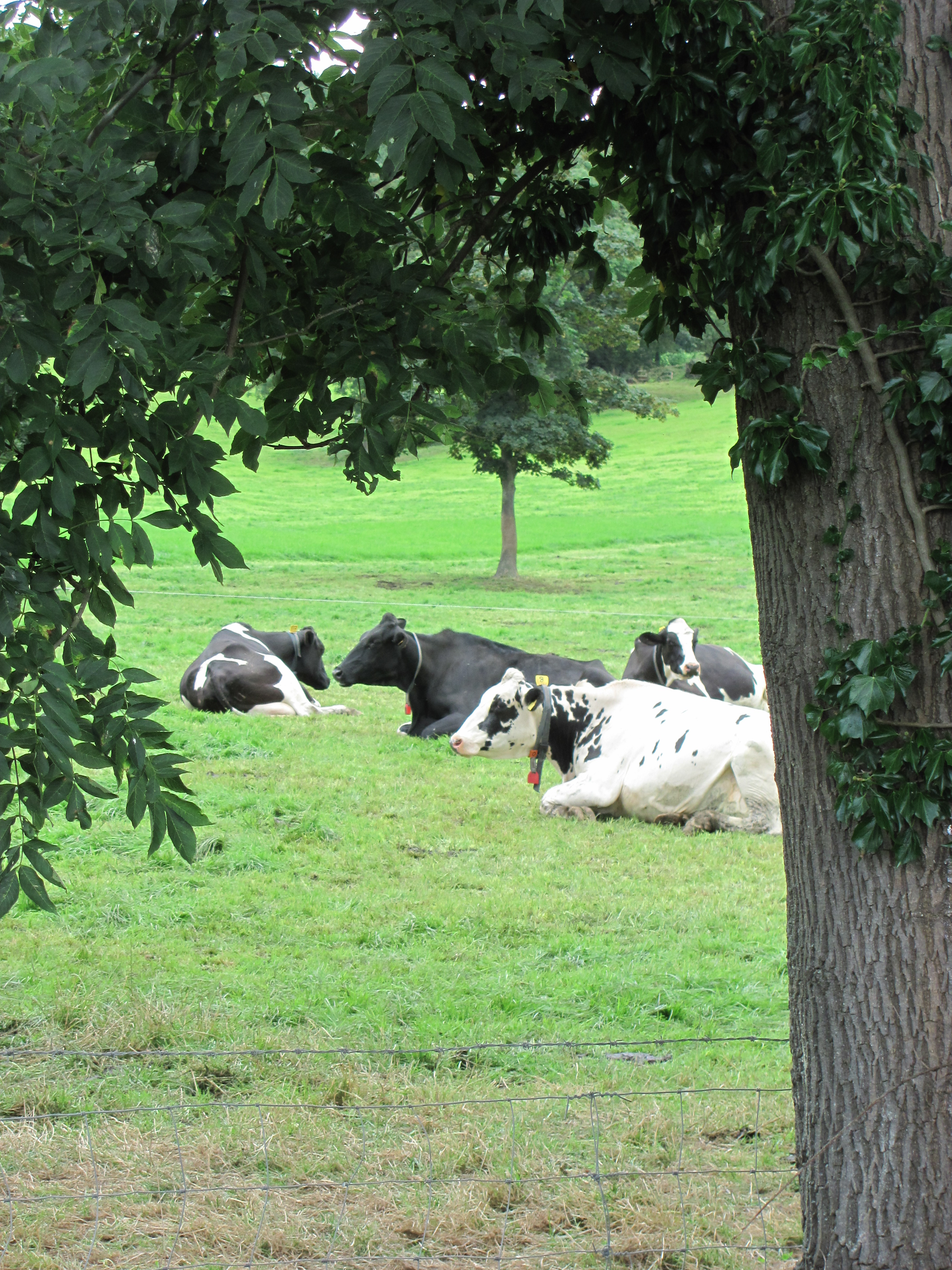
Luckily this gently uphill trek on tarmac was short-lived and we soon clambered over the hedge via a wooden style and revelled in walking with the feel of soft grass beneath our feet. Here the land is rich pastureland enjoyed by dairy cattle. The cows here were all lazily sitting down chewing their cud.

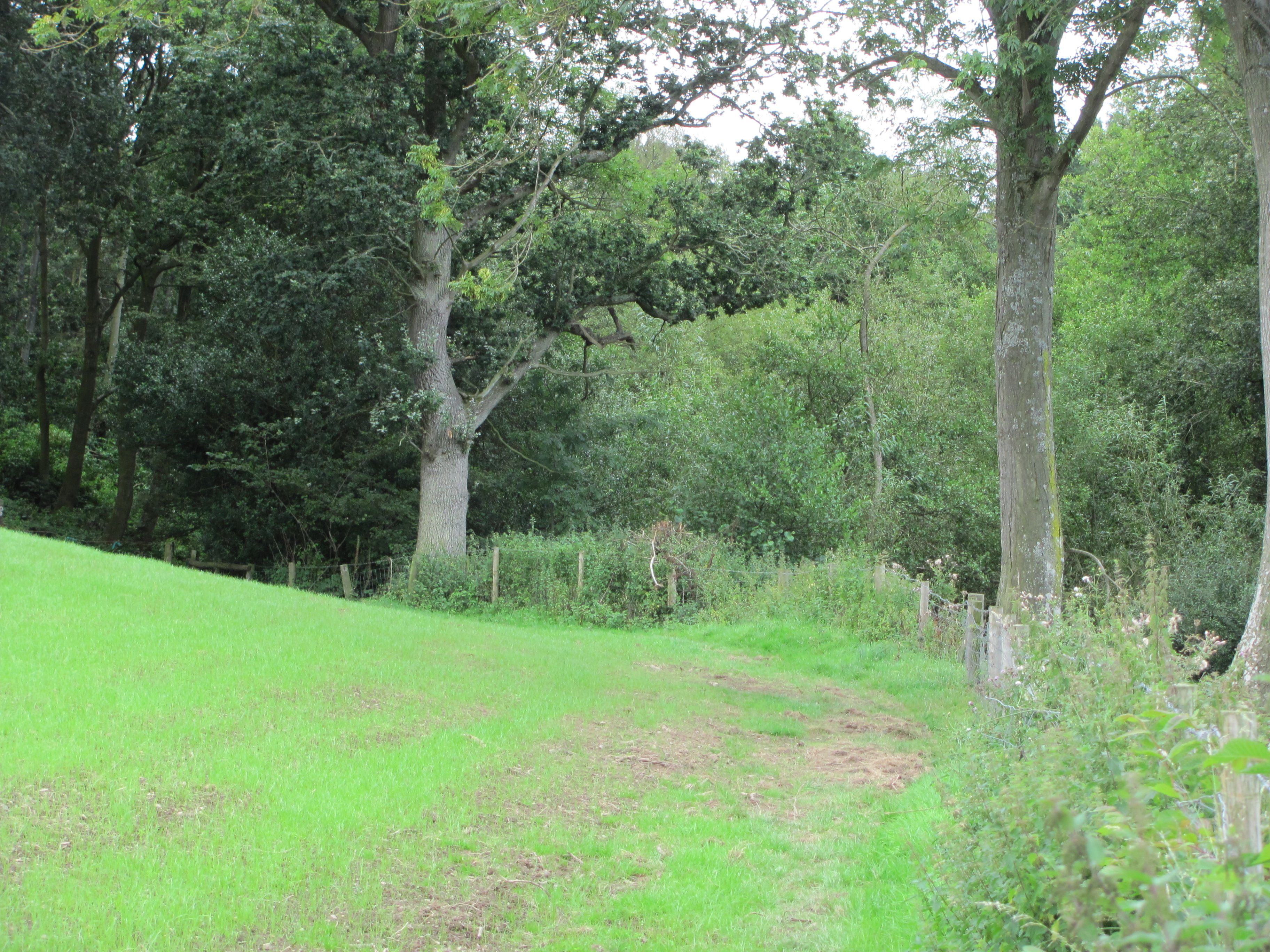
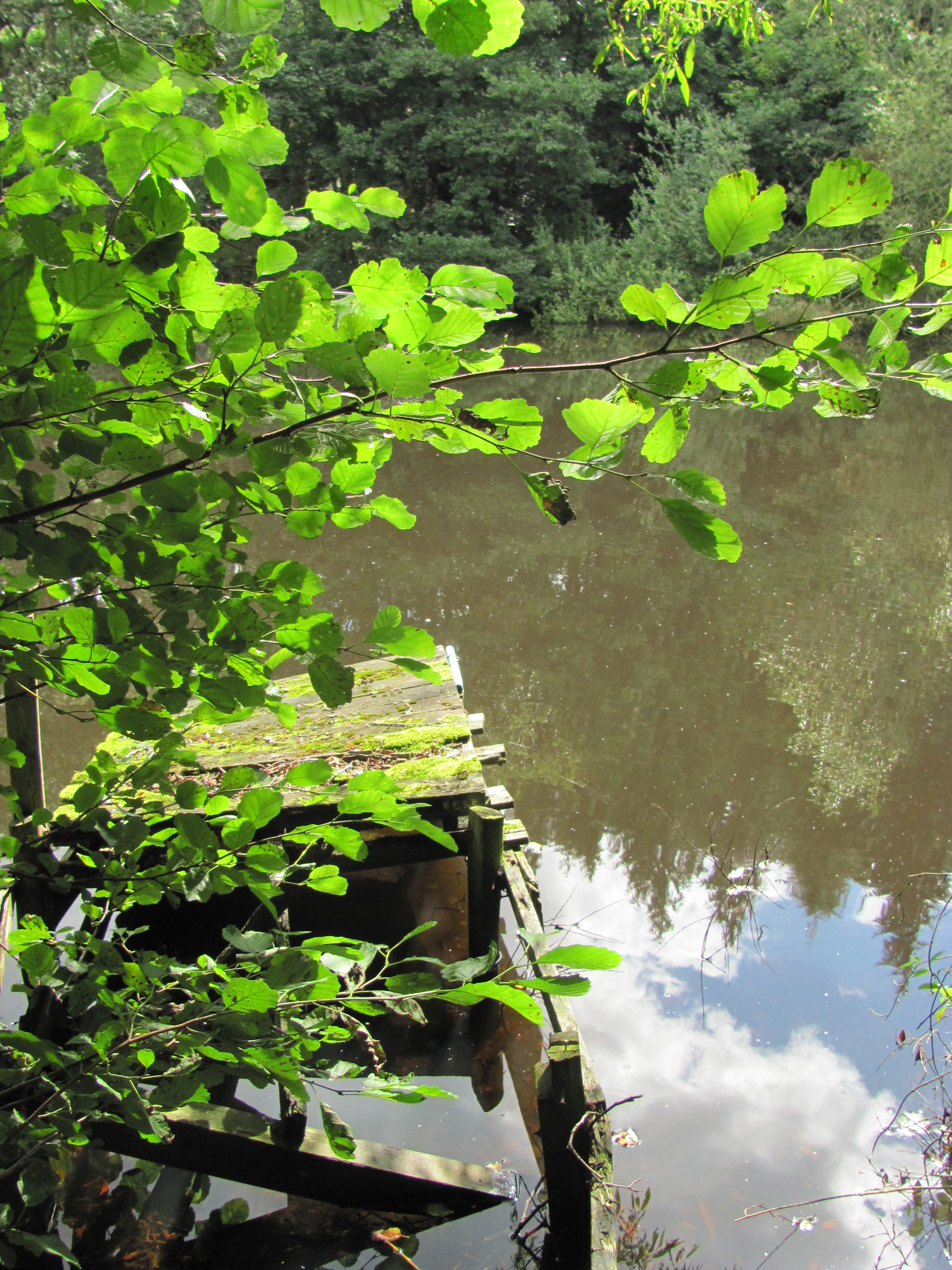
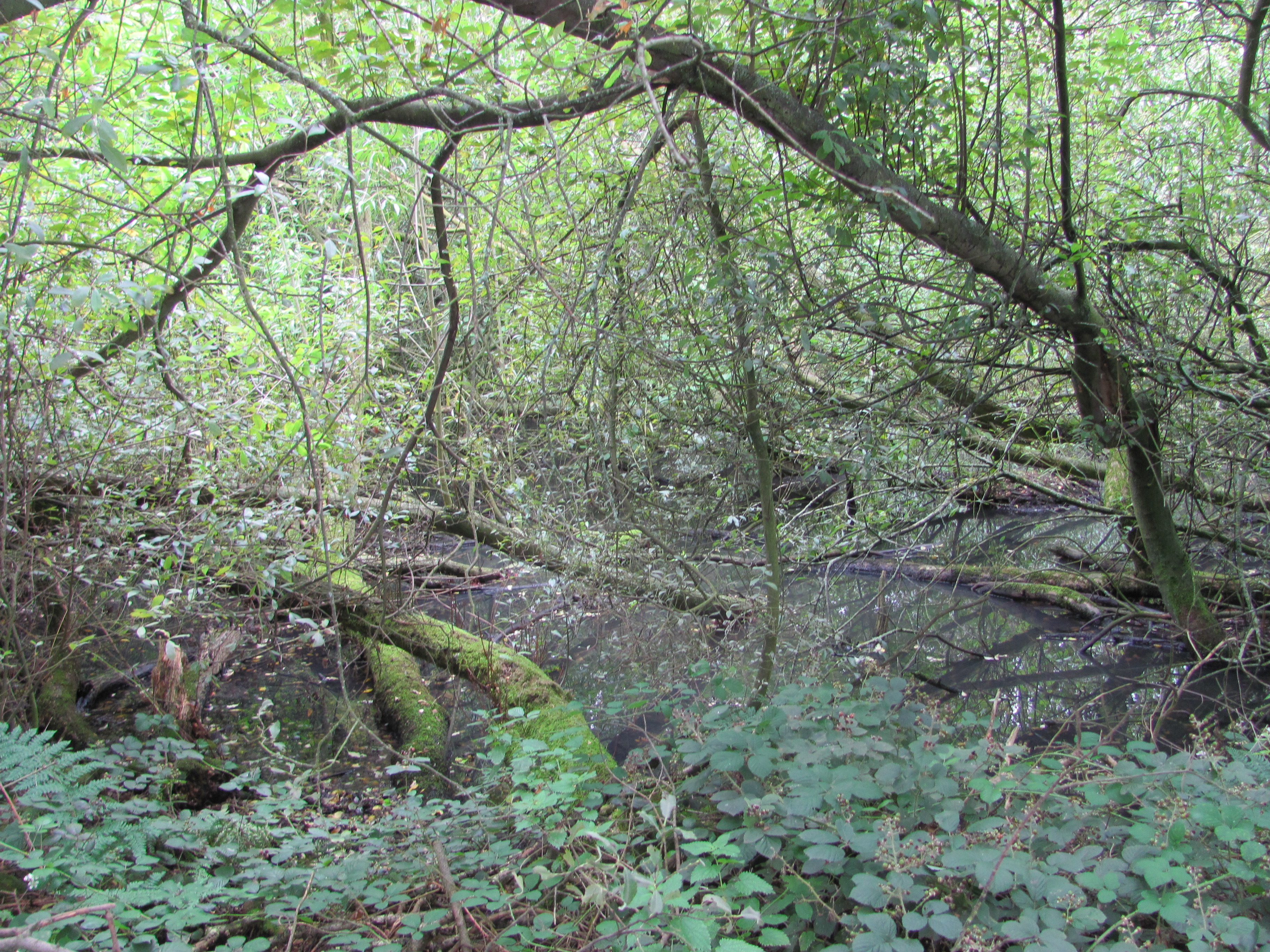
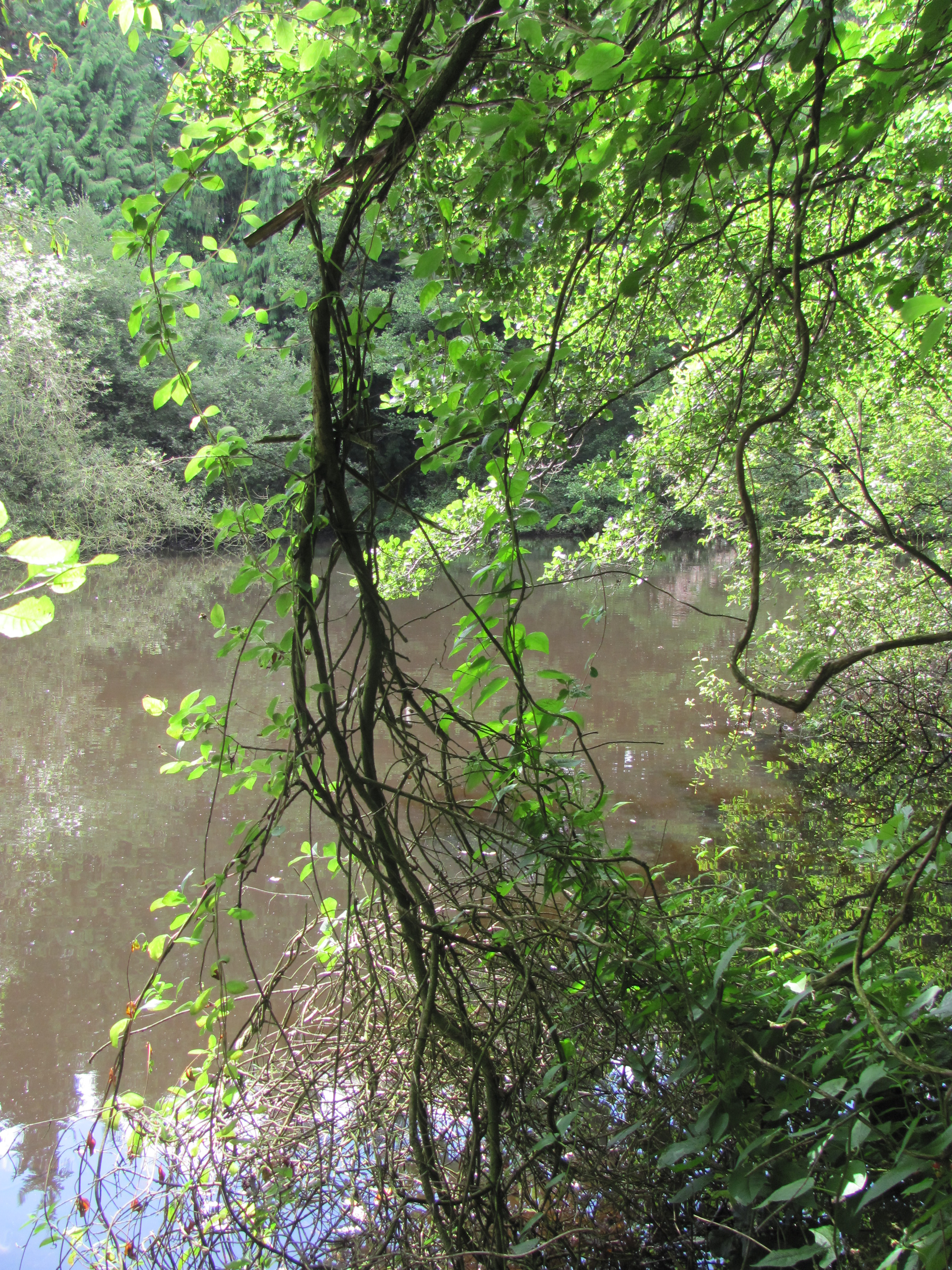
A tiny stream acted as our guide across the pasture and to the edge of our secret wood with abandoned fishing pools now overgrown and in places looking more like swamp land.

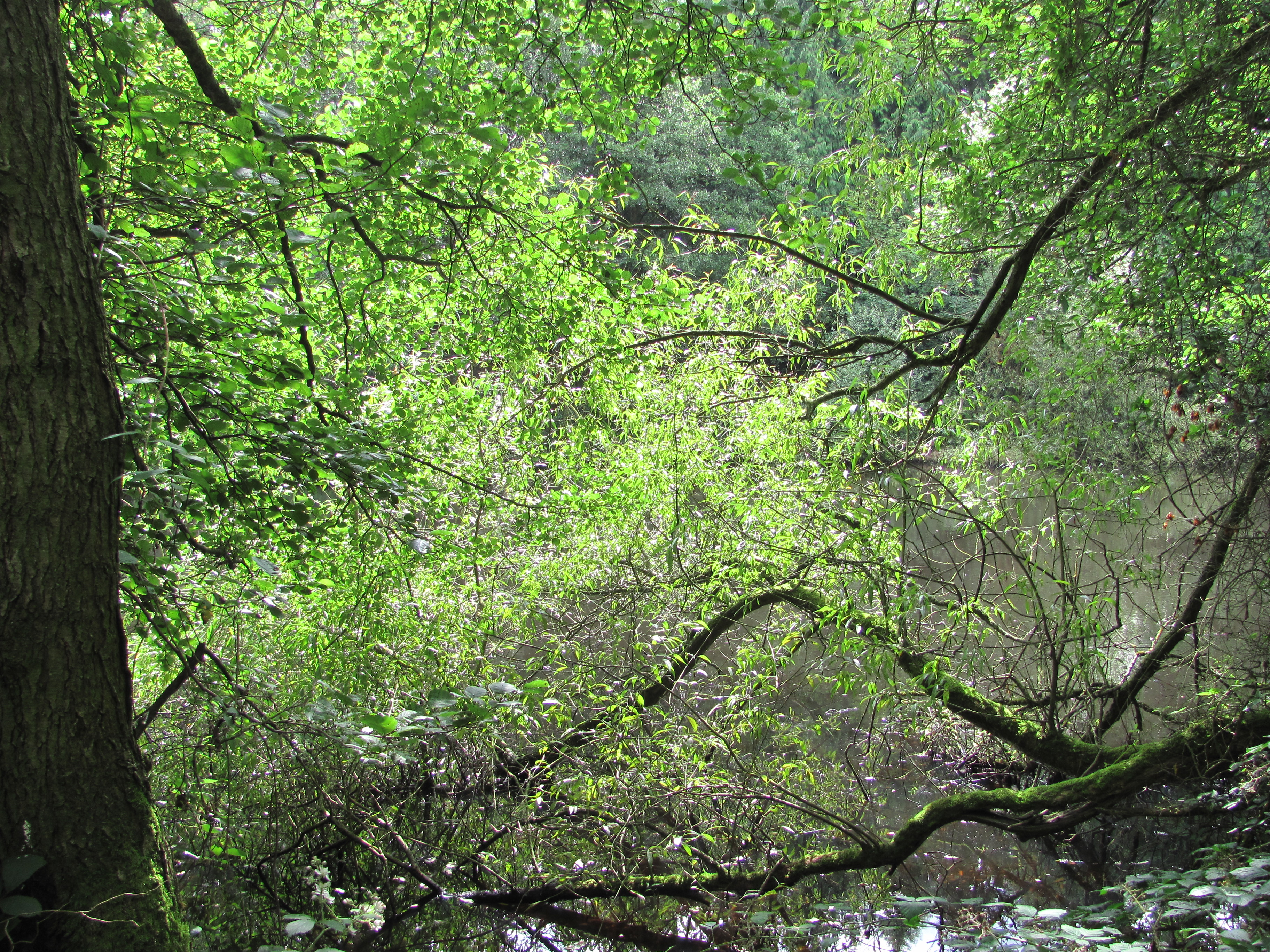
Whenever we walk this wood, whatever the time of year and whatever the weather, the light has a special quality which lights up the overgrown pools and turns trees and bushes into silhouettes.

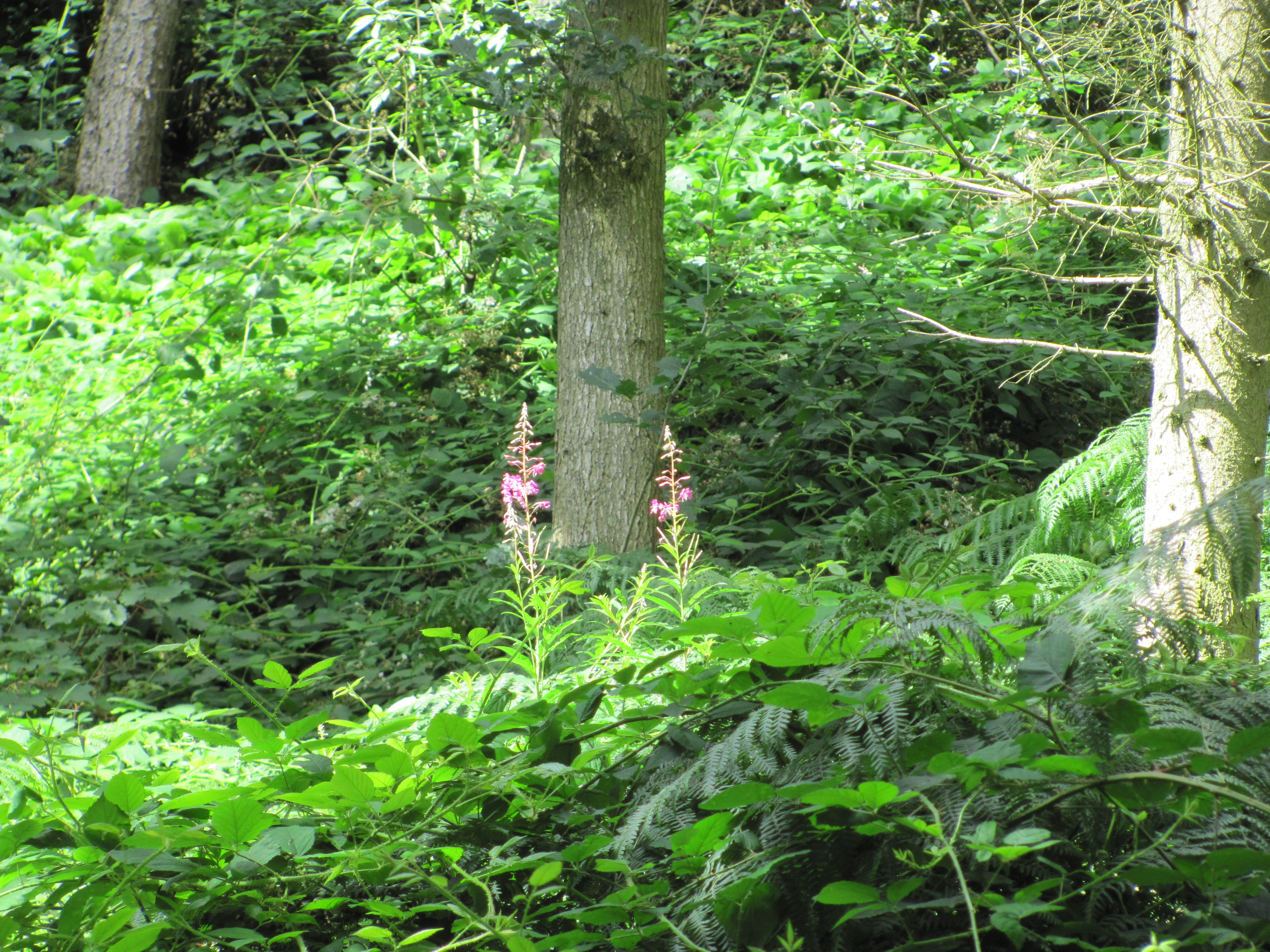
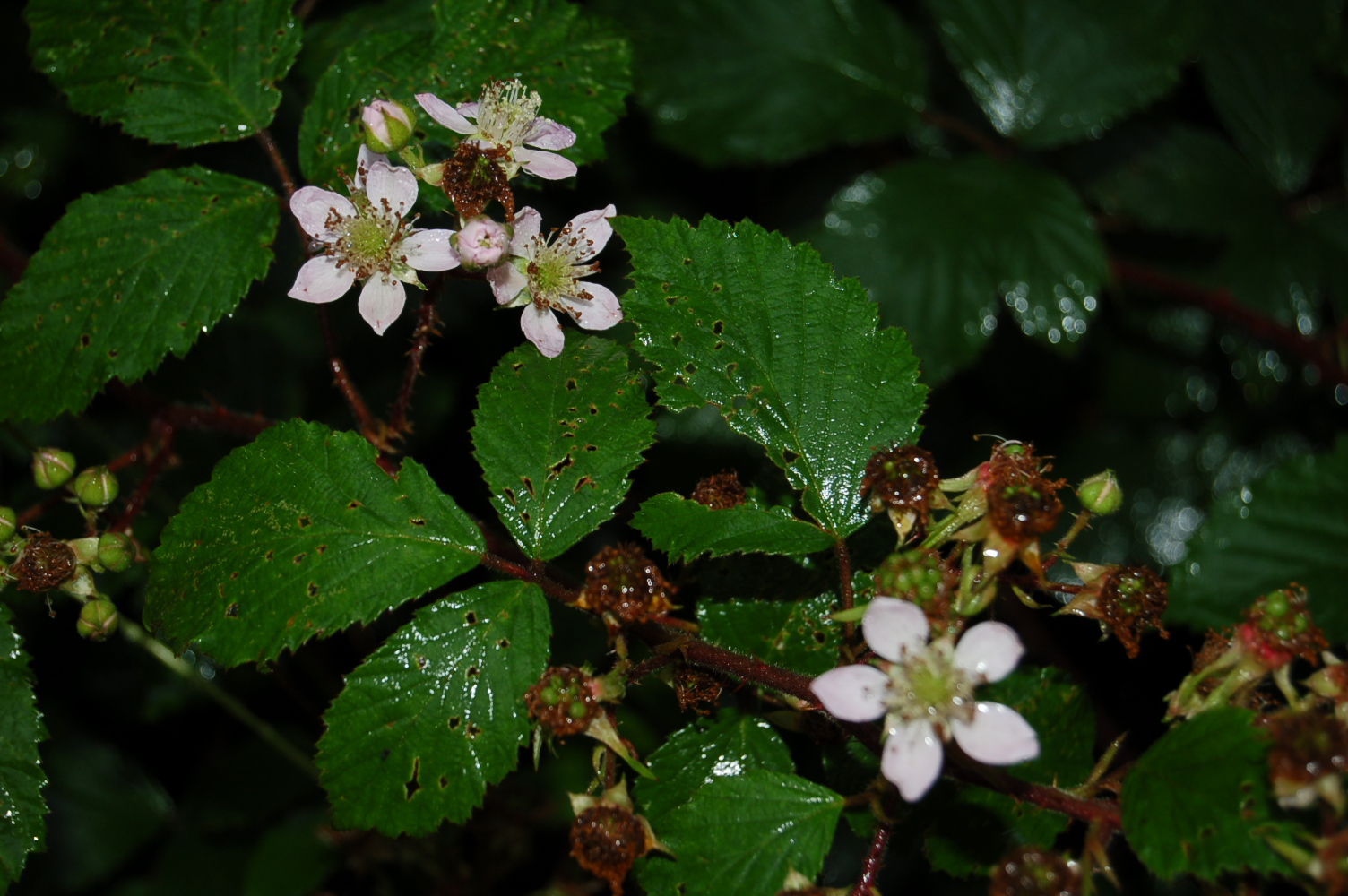
We can look up into the tree canopy of the steep valley sides as we walk along the water’s edge and appreciate just how tall some of the trees are. Below them is a thick carpet of brambles displaying their white flowers with hints of pink and their glossy, black fruits. Occasionally a tall rose-coloured flower spike of Rosebay pushes up through the bramble carpet. The trees are busy with mixed feeding flocks of Warblers and Titmice, the brambles resonating to the powerful song of Wrens and Dunnock.

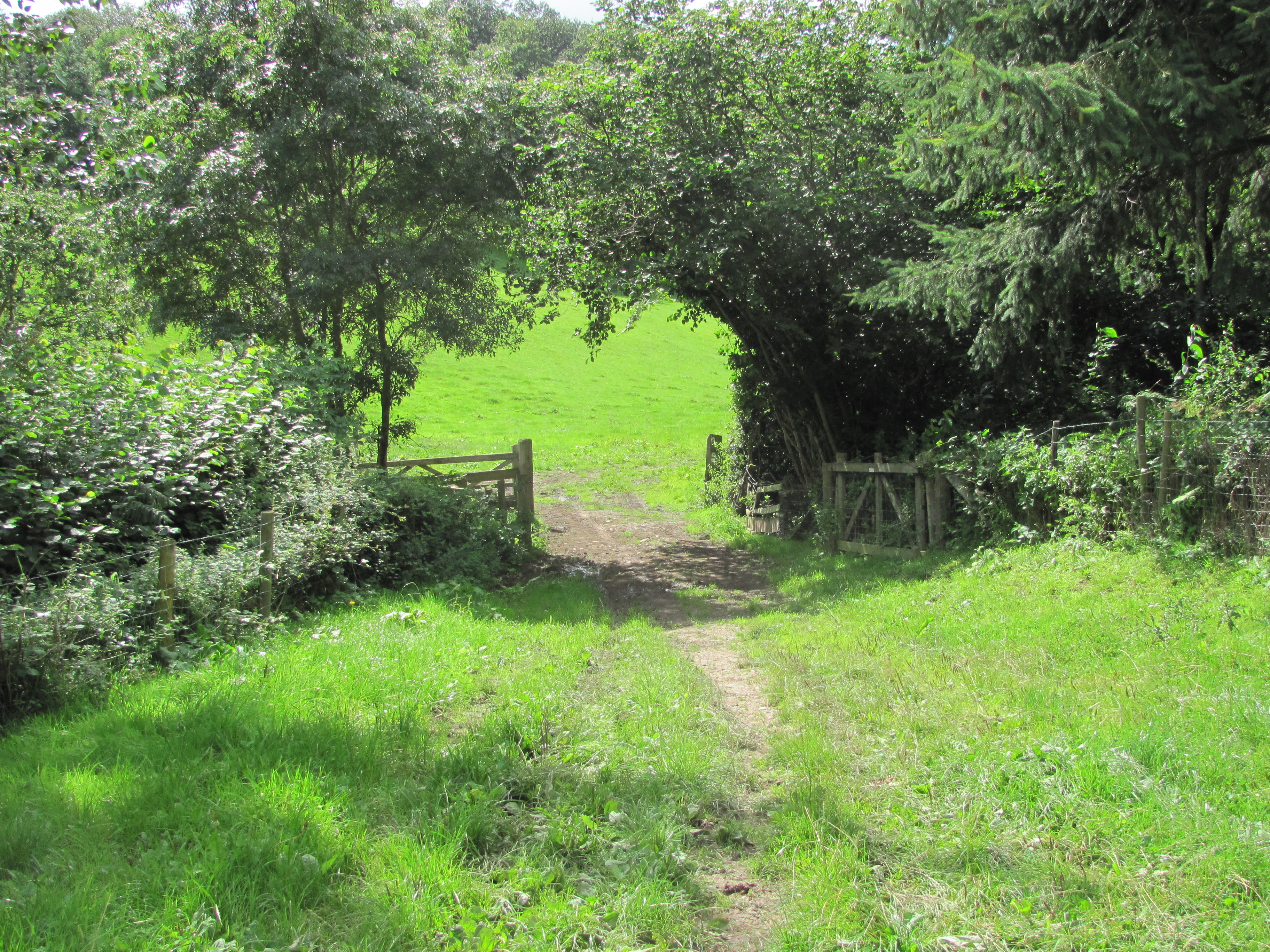
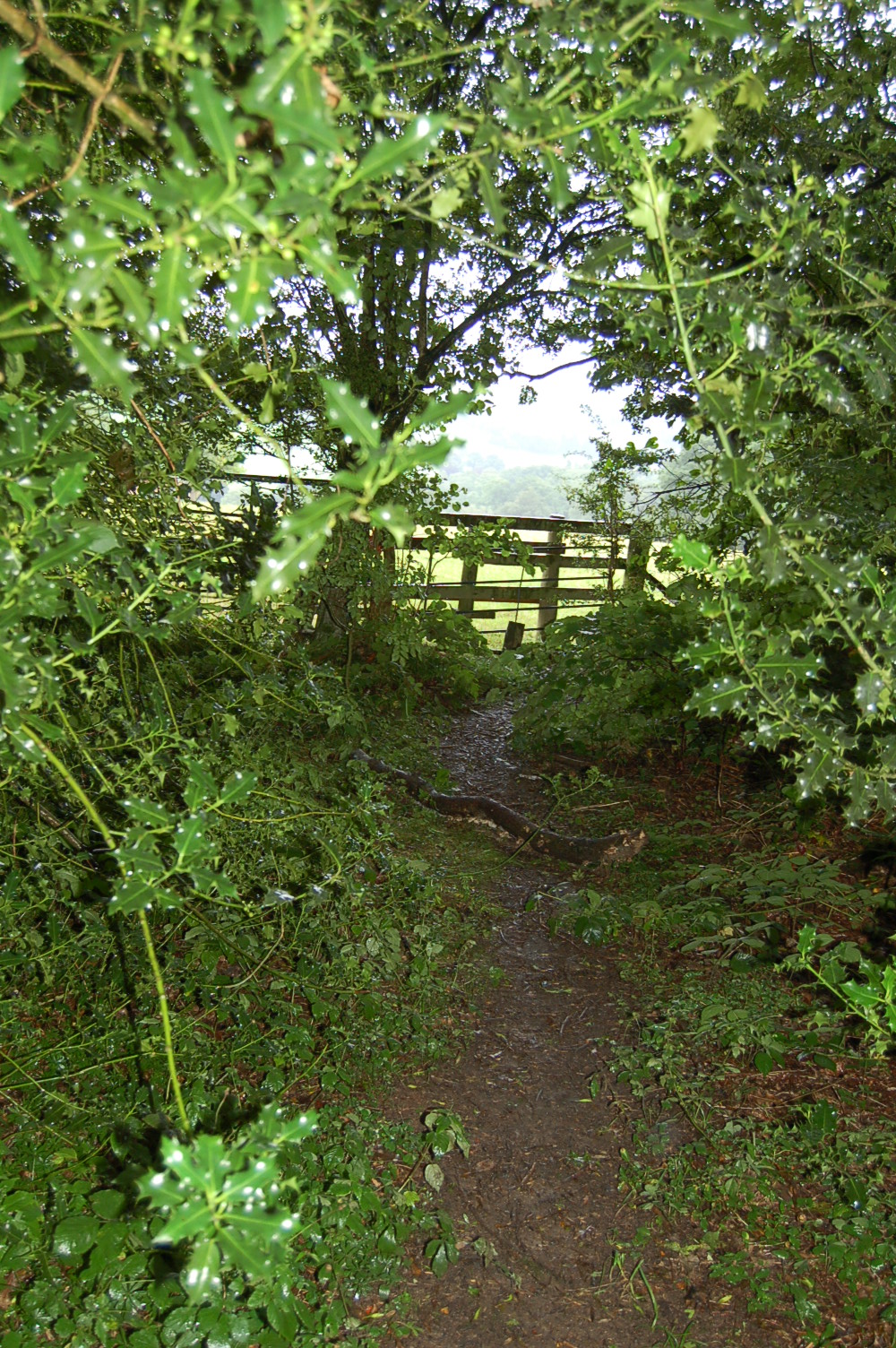
As we reached the end of the wood walk an old wooden gate invited us back into open countryside. Jude the Undergardener glimpses the next part of our walk leaning on the gate as she waits for me as I finish taking photos.

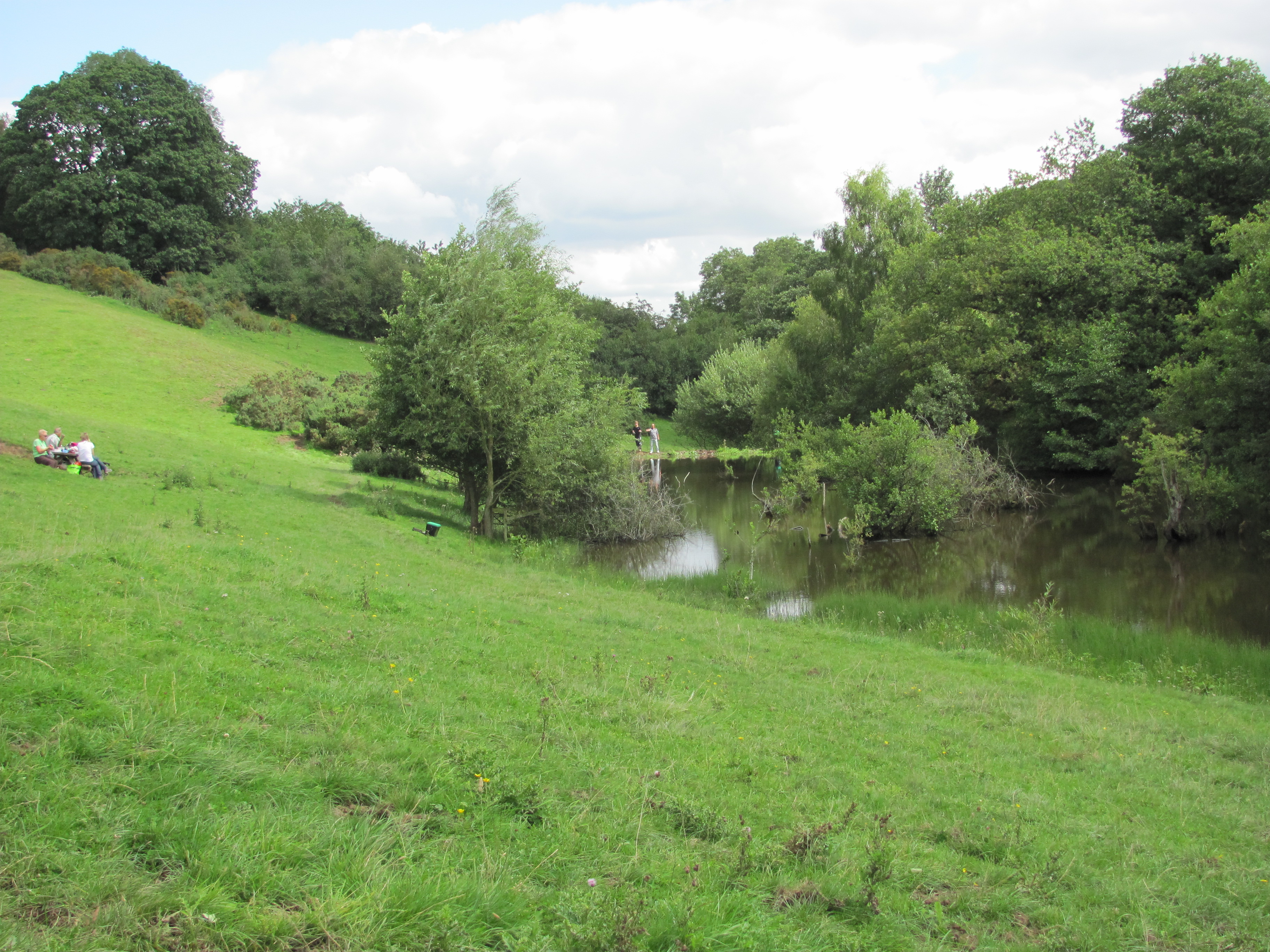
A walk across a sloping field on ground churned up by the feet of cattle takes us to the fishing pool, our halfway point and the perfect place to sit on the grass slope and enjoy our usual fruit and coffee. By the pool the farmer has provided a picnic bench and today a family are enjoying a picnic and three generations are doing a spot of fishing.

Categories
bird watching birds climbing plants conservation photography Shropshire Shropshire Wildlife Trust trees wildlife woodland

Wandering in a Wet Woodland

It is pouring with rain – continuous heavy miserable rain pouring down from a dark grey headache-inducing sky. Humidity clings to us. Too wet even for us rain-defying gardeners to get out and garden, too hot and humid to work in the greenhouse. so what to do today? Go for a walk and just get wet of course.

So off for a half hour drive down flower edged lanes to a wood on Wenlock Edge, a place enjoyed when our two children were young. Edge Wood. We park the car in a clearing – it is so dark and the rain continues to bang on the roof of Jude’s little car.

Waterproofs are donned and the camera hangs around my neck hidden from the rain under my jacket. We set off along rutted paths, the mud has been churned up by the hooves of horses so we struggle through mud and deep ruts off into the canopy of trees, taking dark photos of a dark day.
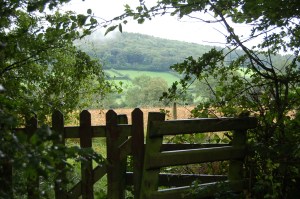
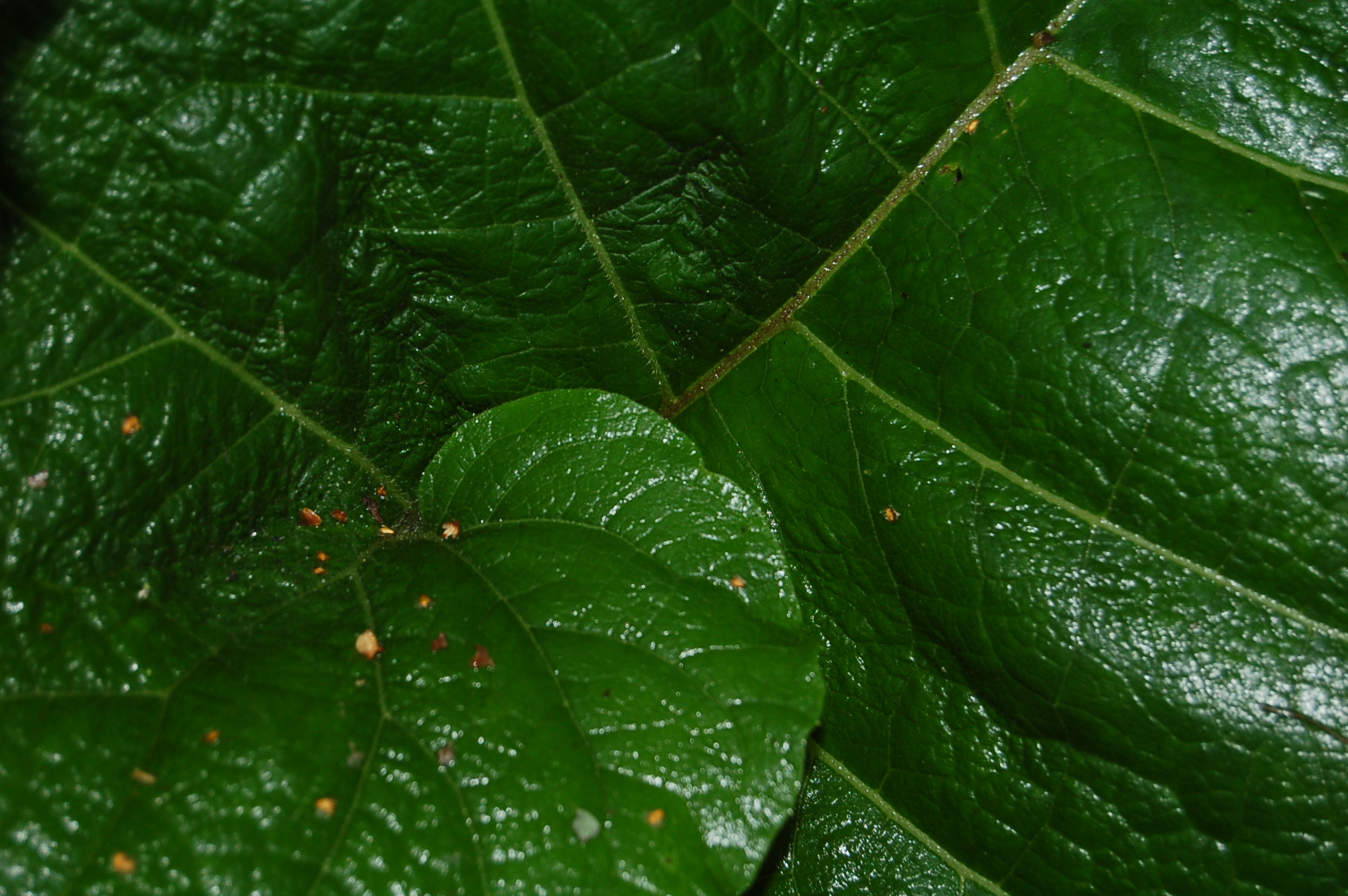
Every leaf surface is shining with wetness and the tip of every leaf has a droplet of rain hanging waiting to drip, matching the drips on the edge of the peak of my cap and on the end of my nose.

The wet surface of foliage serves to emphasise their textures and shapes, increasing their individual beauty.
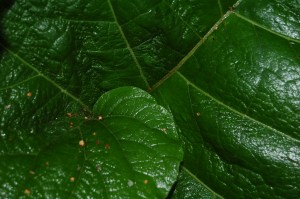
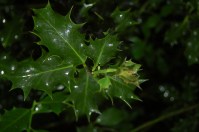
This little wood is home to 250 different wildflowers but today only a handful are in evidence. It is late in the season and the darkness is not enticing buds to open and display their flowers.

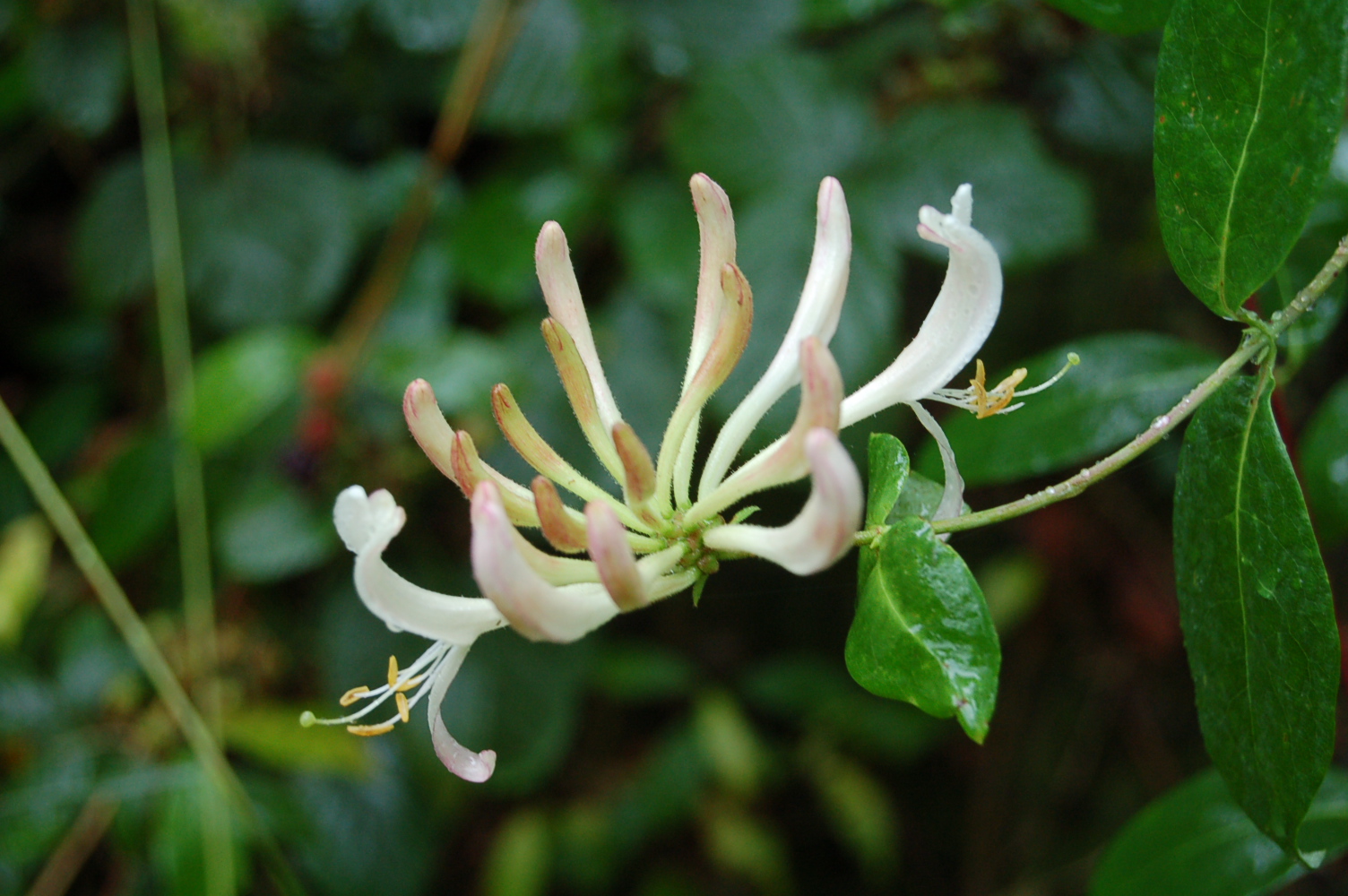
The Woodbine, our native Honeysuckle, clambers up many of the tree trunks and display flowers at nose height encouraging us to enjoy their scent. But in the daytime the scent is hardly discernible from the wet wood smells, for it does not give off scent for us, it will wait until the evening draws in and intensify the scent, a special scent to draw in night-flying moths who will do the Woodbine’s bidding and pollinate the blooms.

This little white gem shone like stars in the night sky – Gipsy Wort. The green of the foliage is so fresh and whitens the flowers even more.

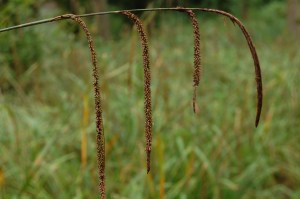
The most floriferous of all plants in the wood in August are the grasses and sedges displaying a rich diversity of shapes and structures in their flowering.

There are signs of man’s influence hidden away in the wood, evidence of coppicing, an old hedgerow, layered hedging gone wild and trees felled. There are clues of man’s past presence, working woodsman and farmers. The hand of man is now being rubbed out by the heart of nature.
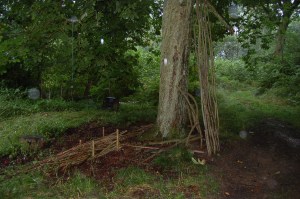
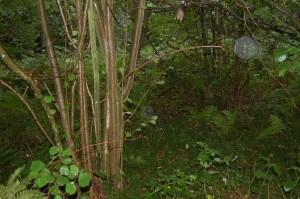
As we wander through the wet wood we get regular glimpses of the Shropshire countryside through gateways and gaps in the hedges and trees. The rain is softening the landscape and hiding hills from view.

The wood is home to a couple of rare mammals, dormice and the Yellow-necked Mice. Nestboxes are provided to encourage the dormice to breed and roost.

The tree canopy is mostly silent, the birds in moult keep out of sight ashamed of their scruffy appearance and worried that they are more susceptible to predators. In odd places the calls of small birds show they are moving about high above us, Goldcrests, Treecreepers, Siskin and Titmice in variety.

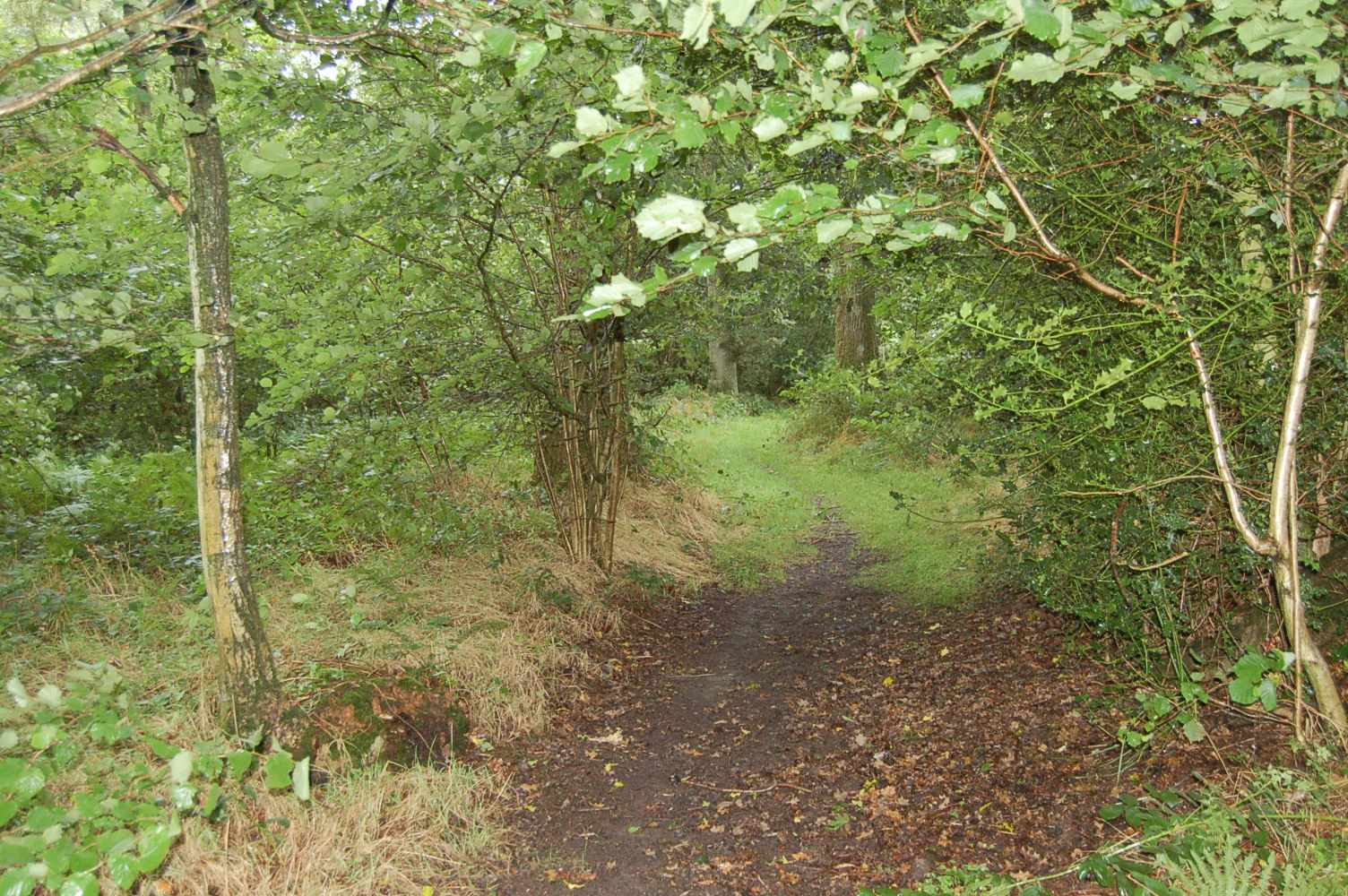
The paths lead us through the wood almost around its perimeter.

At times little cameos of nature’s work present themselves to us, little details giving glimpses of woodland beauty.

Sometimes being in a dark wood getting wet is the best place to be!
This Veggie Life

A Vegetarian | Nature Lifestyle Blog

Rambling in the Garden

.....and nurturing my soul

The Arch City Gardener

Journeys In St. Louis Gardening and Beyond

Garden Dreaming at Châtillon

Consult the genius of the place

Storyshucker

A blog full of humorous and poignant observations.

gardeninacity

Notes from a wildlife-friendly cottage garden

PlayGroundology

...an emerging social science

The Official Blog of British Wildlife

'The most important and informative publication on wildlife of our times' - The Independent. This blog is a member of The UK & Ireland Natural History Bloggers group: www.uknhb.blogspot.com

iGrowHort

Inspire - Cultivate - Grow Native Plants - Restore Landscapes

Bishops Meadow Trust

To create and protect a semi-natural wild space for the people of Farnham to enjoy and experience an array of British wildlife in our town

Gardening with Children

The www.gardeningwithchildren.co.uk Blog

UKbirdingtimeline

birding through the seasons, why birds matter and how to conserve them

NATURE WALKER

with a camera in hand

Jardin

Transform your outdoor space

Eva's space

My allotment, cooking and other interests

Old School Garden

my gardening life through the year

LEANNE COLE

Trying to live a creative life

fromacountrycottage

trying to live as lightly as possible on our beautiful planet

Good Life Gardening

Nature lovers from Leicester living the good life.

mybeautfulthings

Finding the beautiful in the everyday

mawsonmichelle

Michelle's Allotment

In and Out of My Garden

thoughts from and about my garden

Greenhousing

Big plans for a small garden

The Scottish Country Garden

A Walled Country Garden in South East Scotland

The Fruity Chicken

Life at the fruity chicken

willowarchway

Off grid living. Self sufficient. "PERMAGANICS RULE".

St Anns Allotments

Nottingham's Grade 2* Listed Allotments and Community Orchard

Manifest Joy Harvests

a journey in suburban vegetable gardening

Allotmental

The madness of growing your own

Penny's Garden: a harvest beyond my front door

A novel approach to vegetable gardening

arignagardener

Sustainable living in the Irish countryside.

NewEnglandGardenAndThread

Master Gardener, amateur photographer, quilter, NH native, and sometimes SC snowbird

dianajhale

Recent work and work in progress and anything else that interests me

planthoarder

a chaotic cottage gardener

Lens and Pens by Sally

a weekly blog that creates a personal philosophy through photographs and words

Dewdrops and Sunshine

Stories from a sassy and classy Southern farmbelle.

The Pyjama Gardener

Simple Organic Gardening & Seasonal Living

gettin' fresh!
turning dirt into dinner

JOY...

today the world is created anew

Garden Birds

Notes from a Devon garden

ShootAbout

Life Through The Lens

Adapting Pixels

A photography blog showcasing the best photography pictures and videos on the internet

Wildlifegardening's Blog

Just another WordPress.com site

naturestimeline

personal observations from the natural world as the search continues for a new approach to conservation.

LATEBLOOMERBUDS

The Wonders of Life through my Eyes, my Heart, my Soul