Categories
arboreta autumn autumn colours climbing plants colours garden design garden photography gardens open to the public ornamental trees and shrubs shrubs trees Winter Gardening winter gardens

Bluebell Arboretum – Part 2

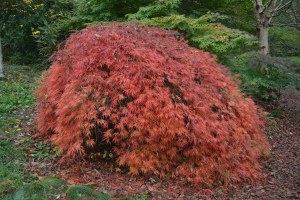
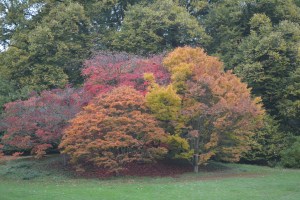
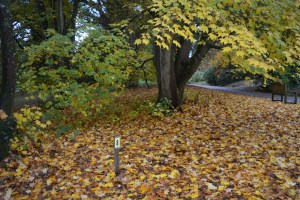
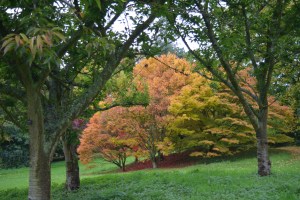
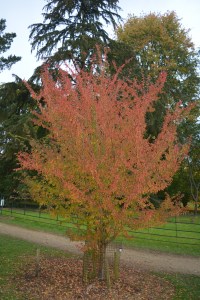
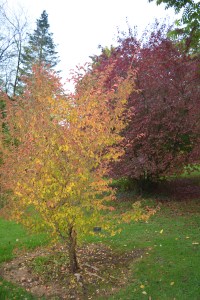
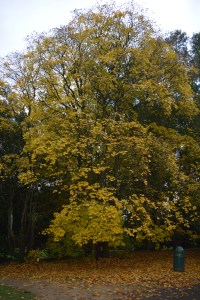
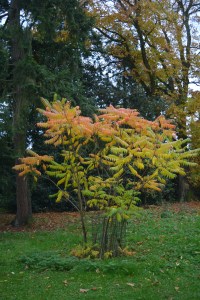
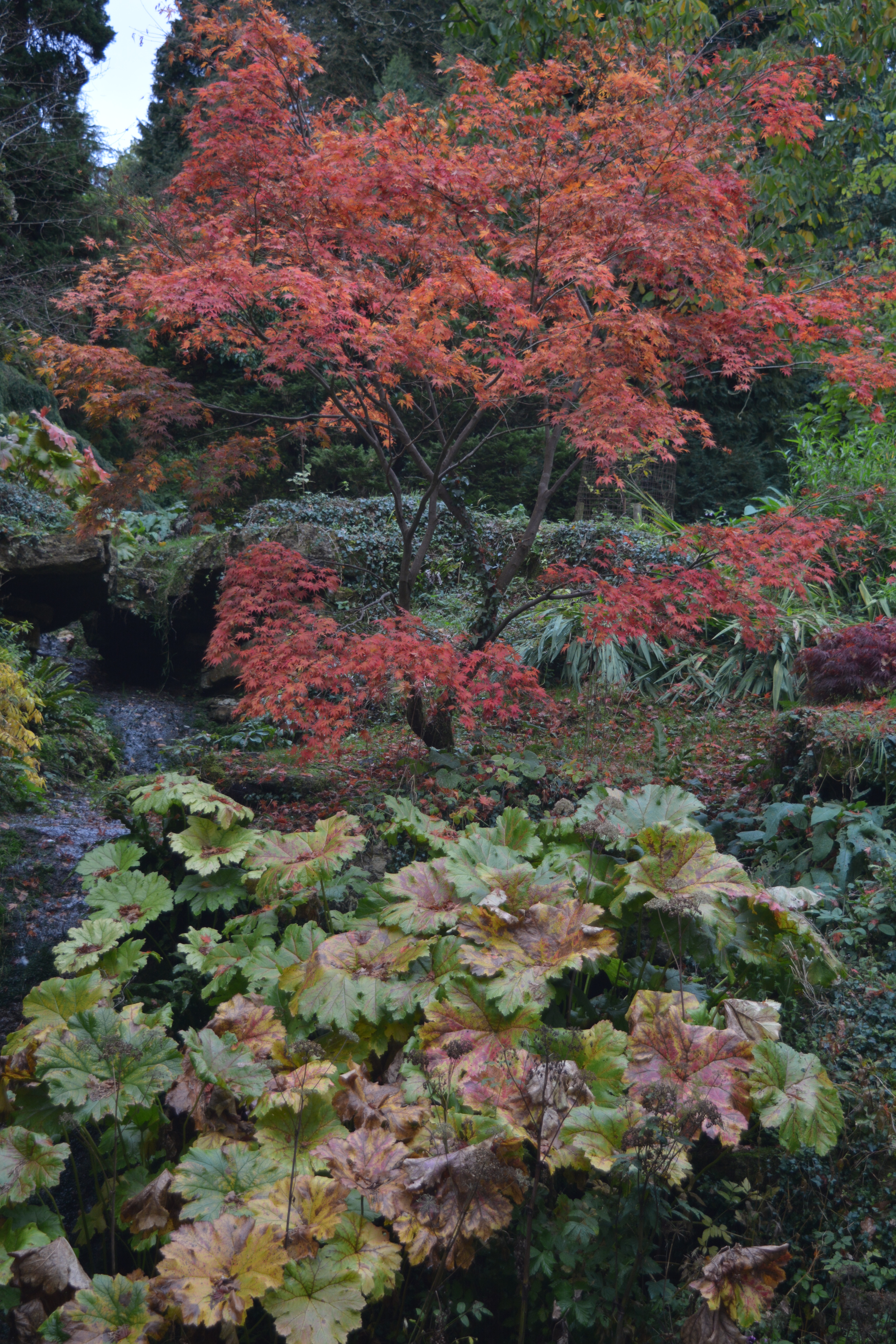
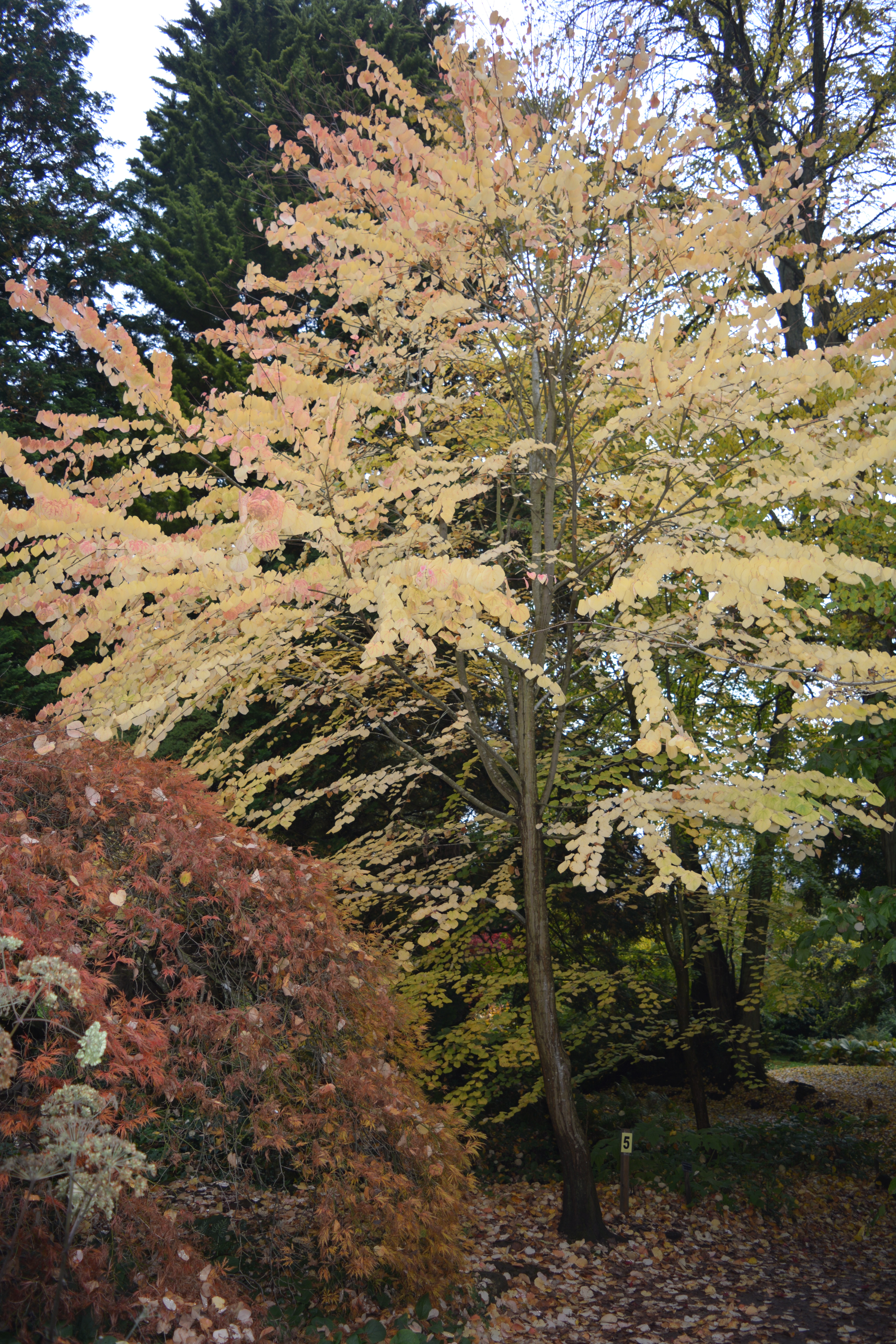
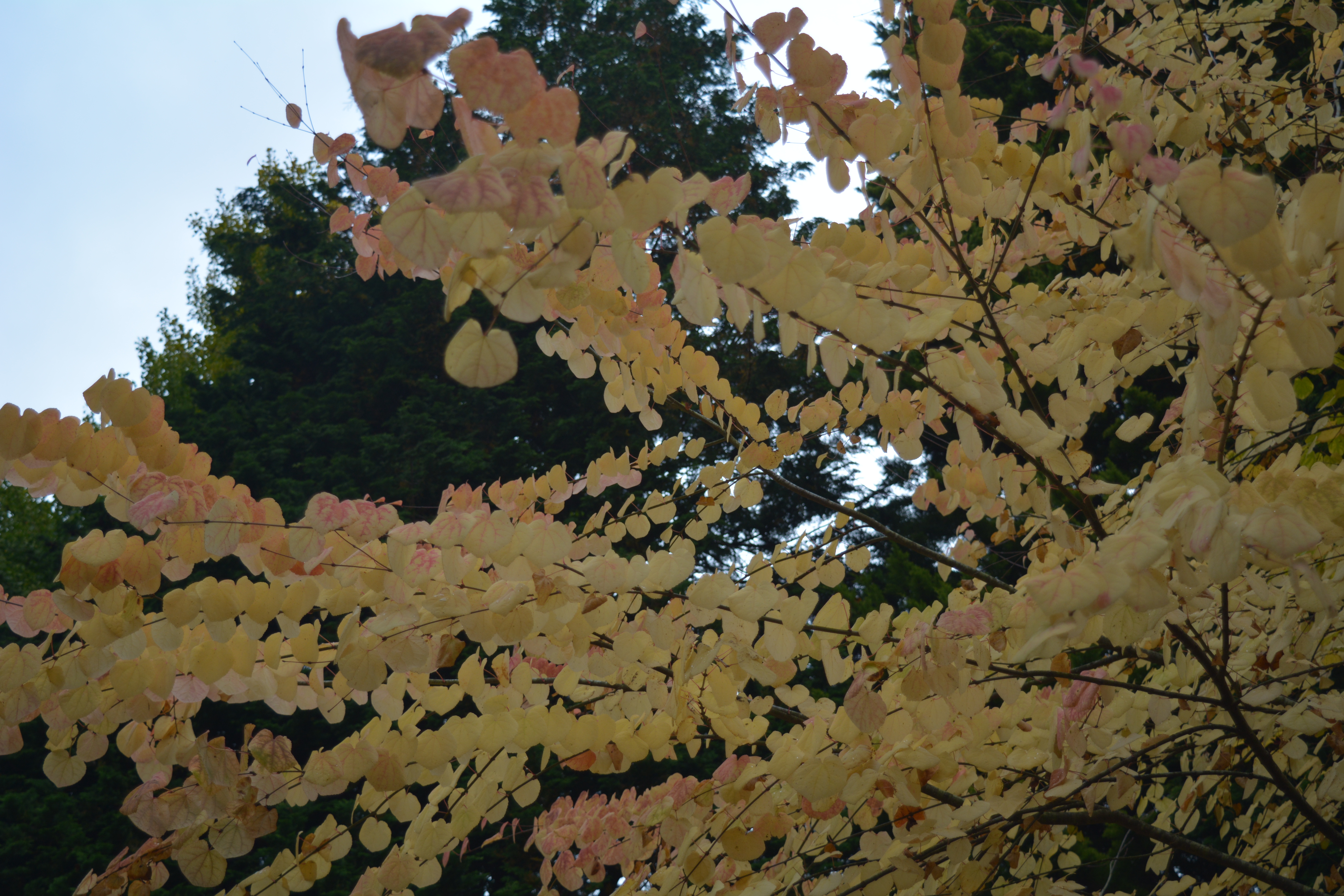
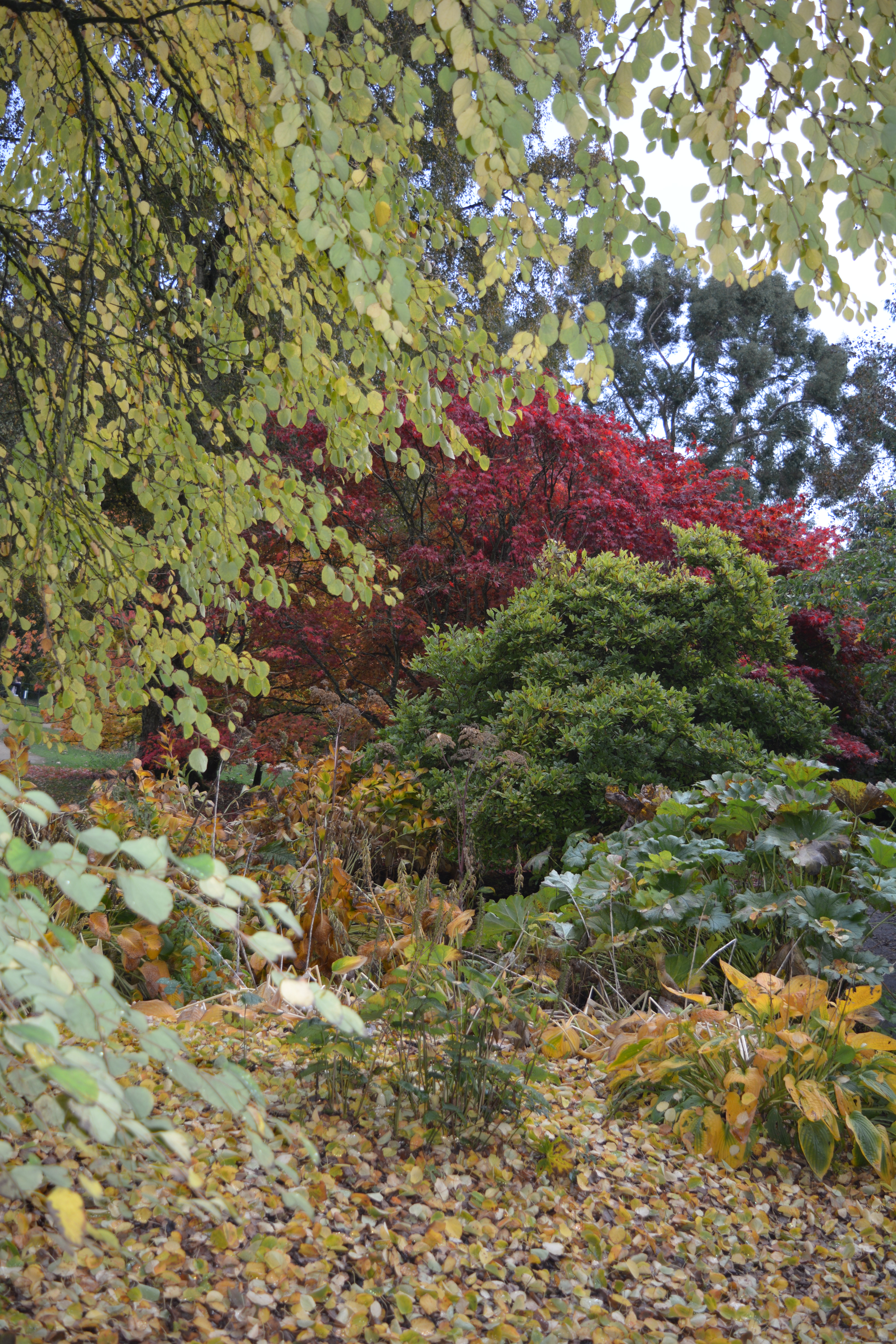
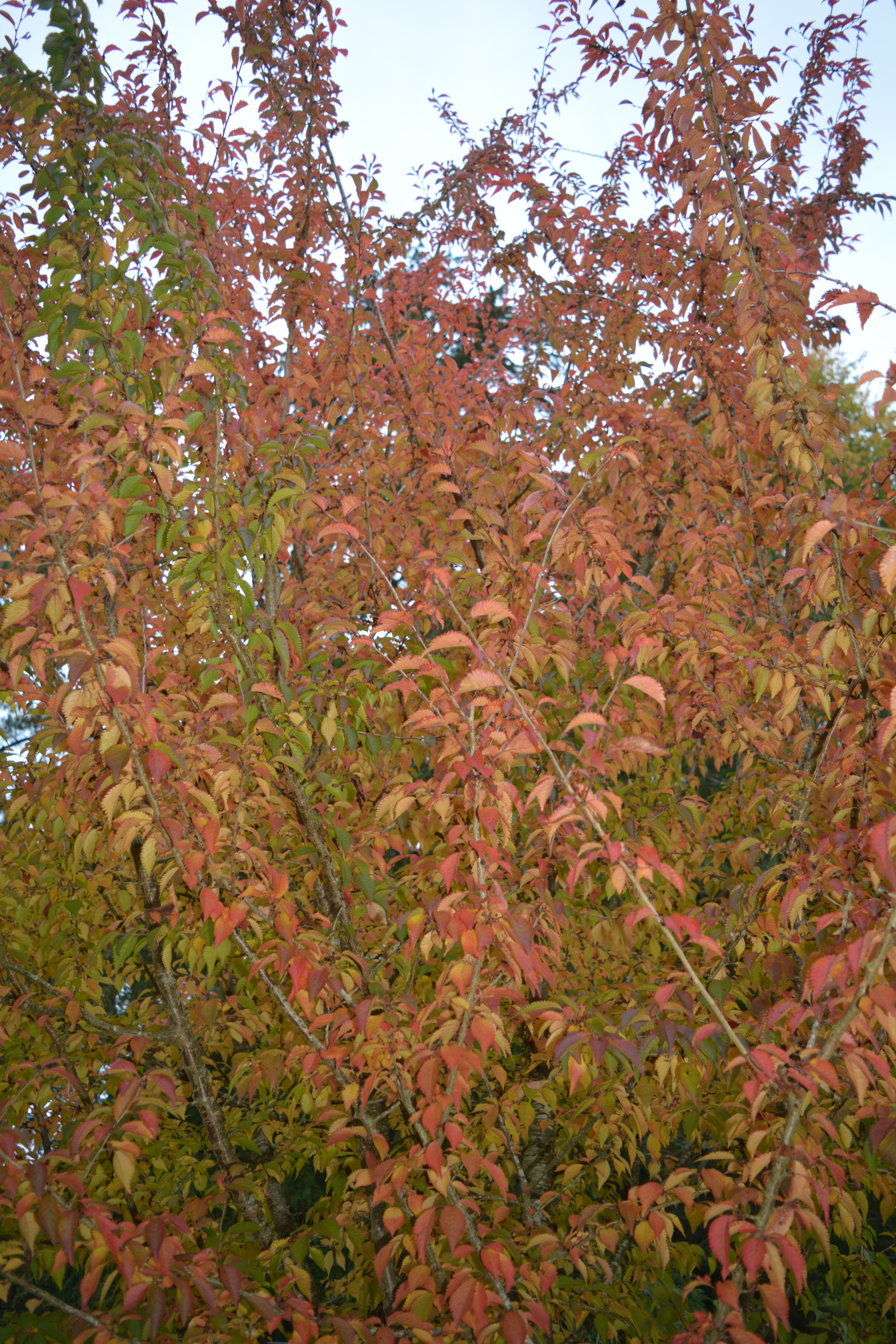
Back to Derbyshire and we shall continue our beautiful autumnal wanderings within the grounds of Bluebell Arboretum and Nursery. I shall concentrate on a selection of the true favourites we enjoyed most of all. The beauty of this arboretum is that there is so much to discover and enjoy that our favourites would be different each time we visit.

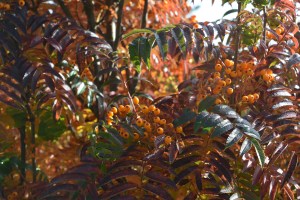
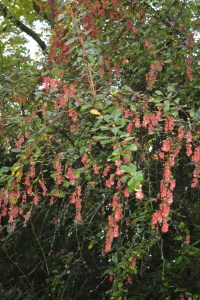
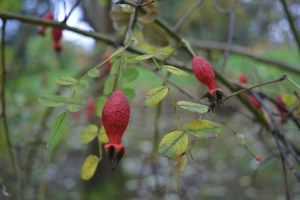
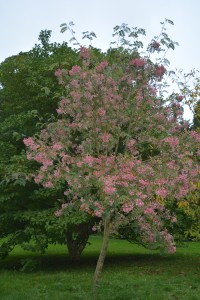
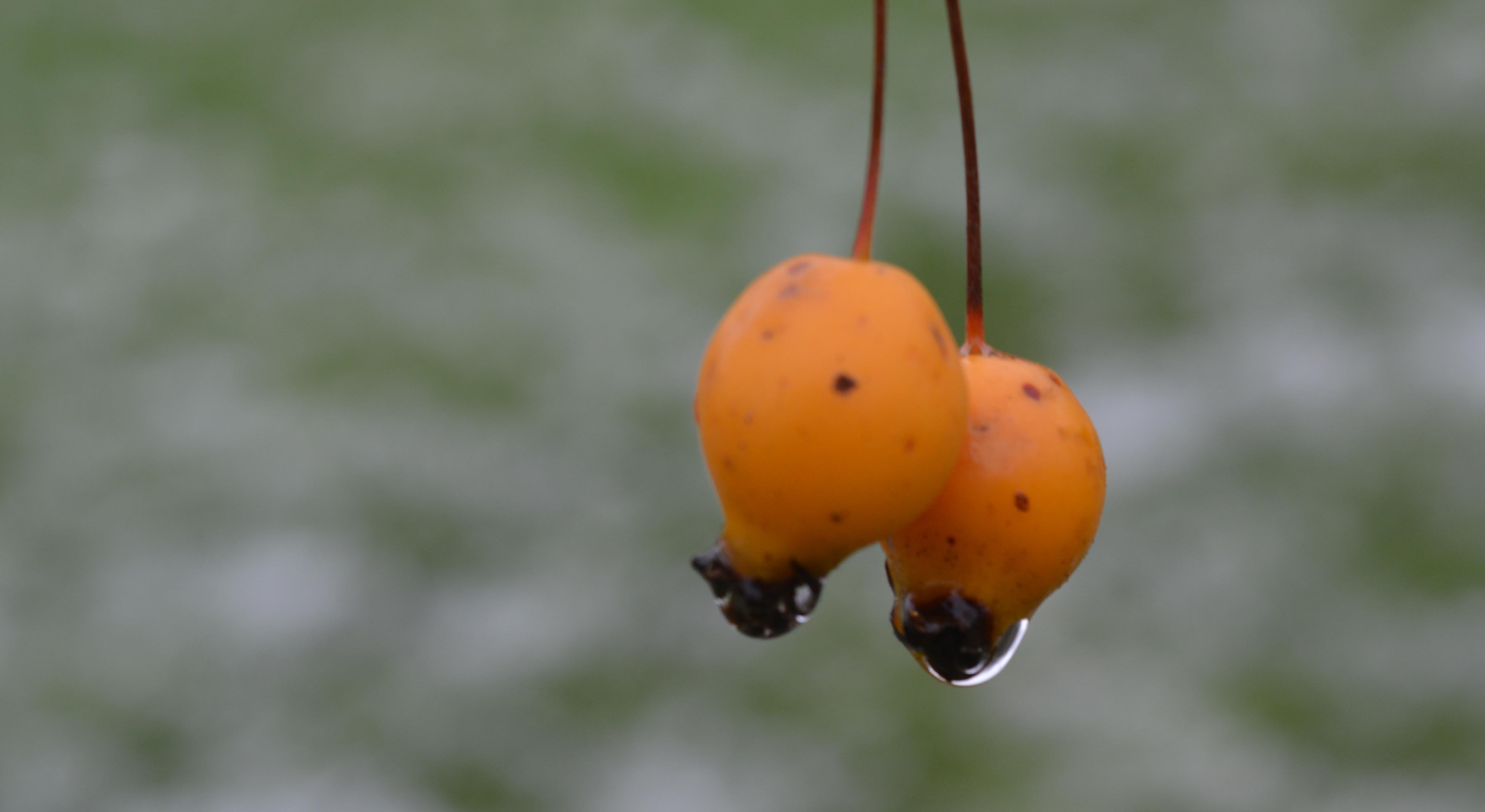
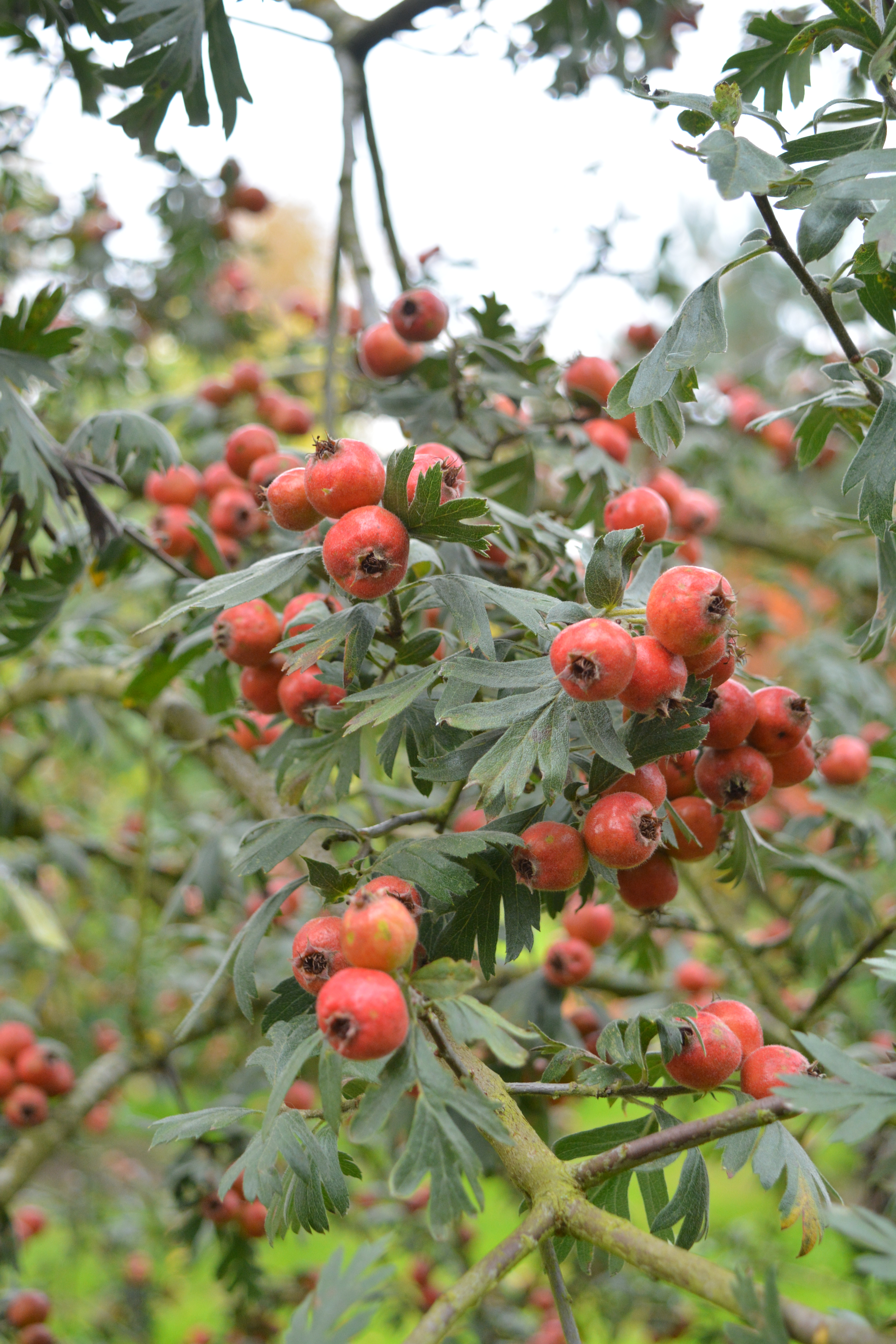
We start again just as we discovered a couple of different Hawthorns which is always interesting as most nurseries sell only the common native as a hedge plant and the double pink ornamental tree form. We enjoyed discovering the unusual Crataegus tanacetifolia, the Tansy Leaved Thorn and the rare Crataegus ellwangeriana “Fireball”. It is amazing how the leaf shapes differ as do the berry colours.

2015 10 19_6264 2015 10 19_6272

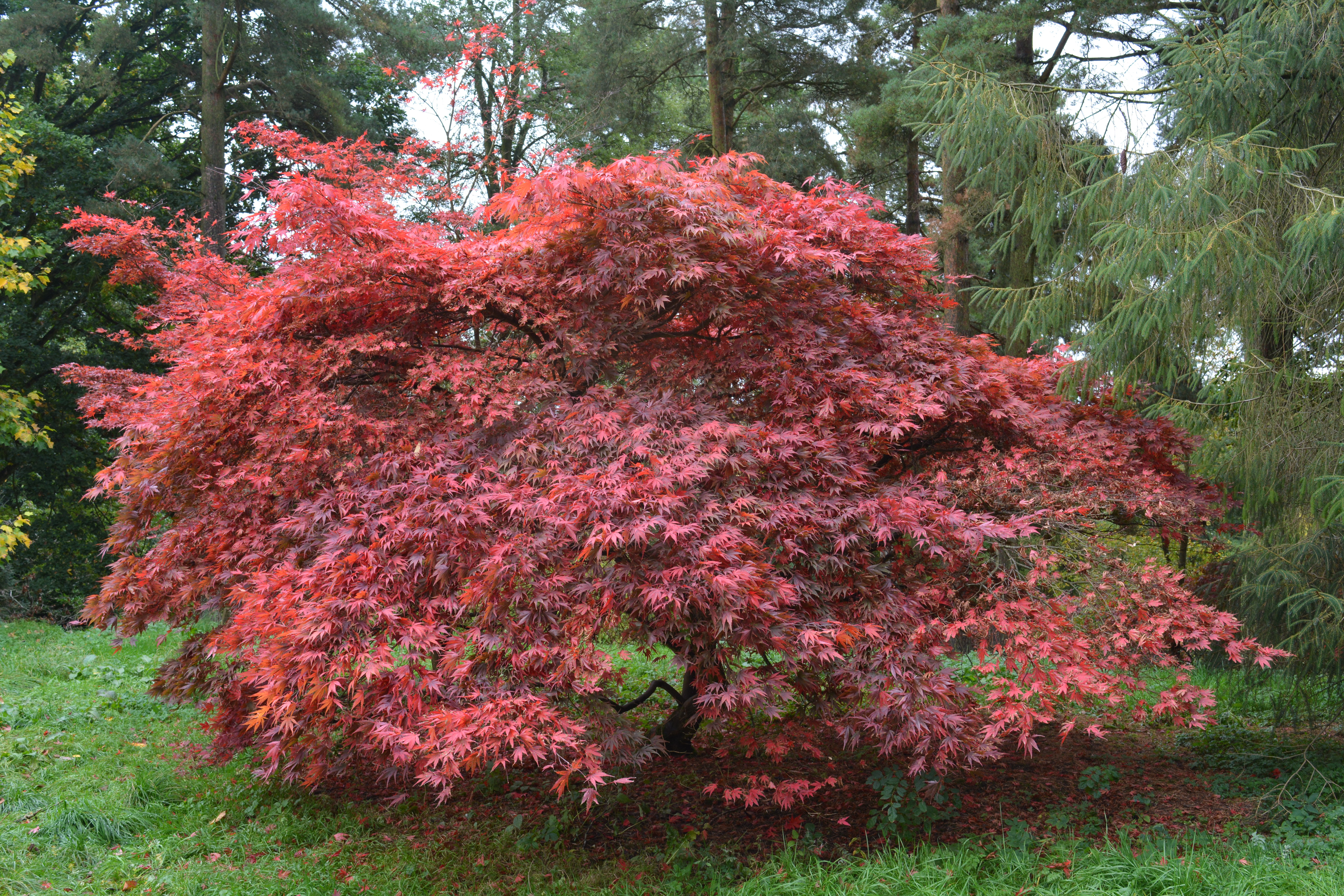
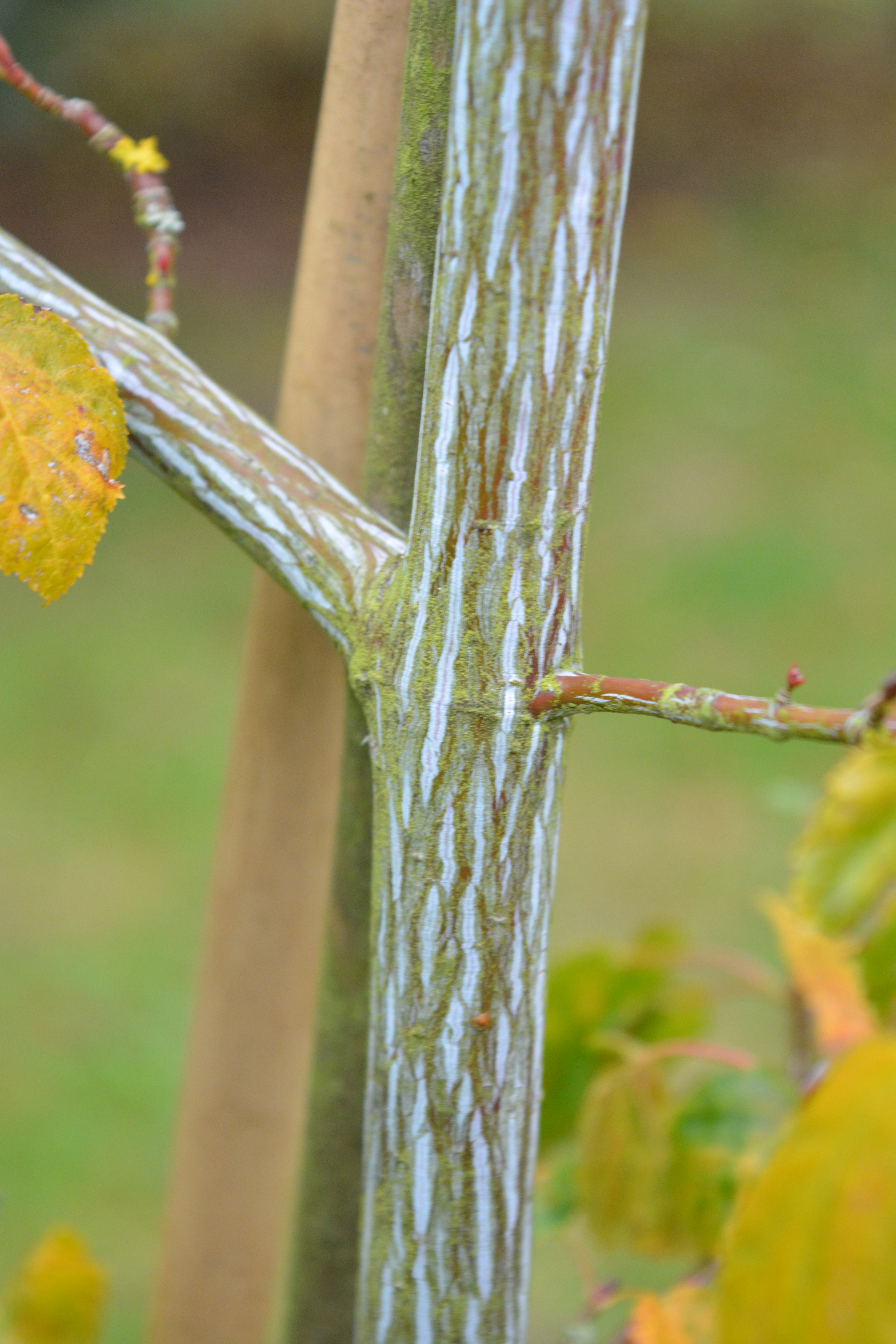
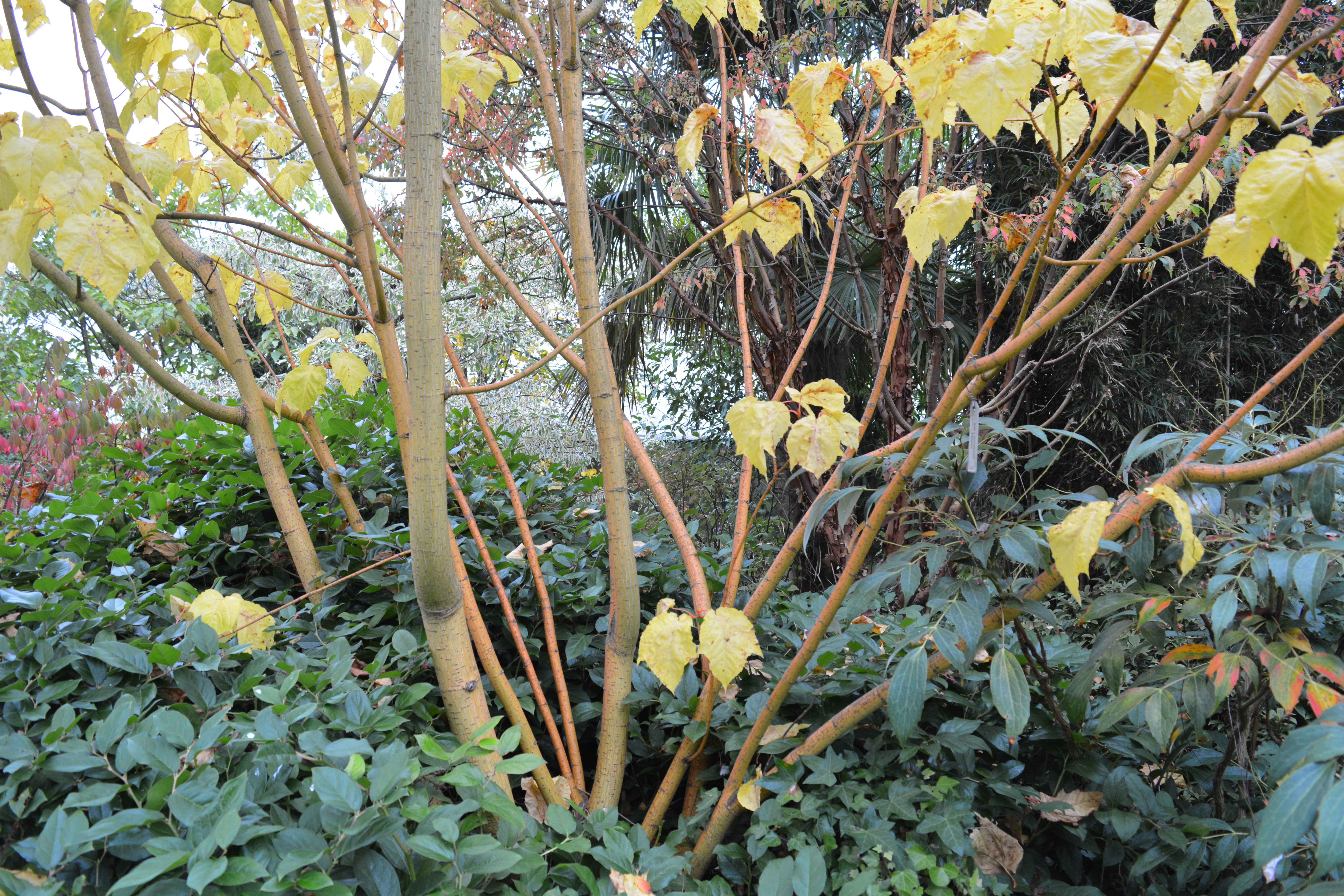
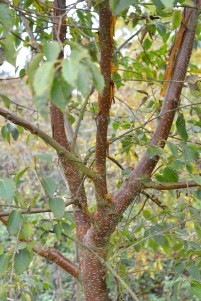
Now I will share two very different trees worth growing for their bark colours, patterns and textures, on the left Betula utilis “Grayswood Ghost” and in the centre and on the right Acer davidii “Cascade”. This selection of snakebark maple has a beautiful delicately weeping habit.

2015 10 19_6274 2015 10 19_6278 2015 10 19_6279

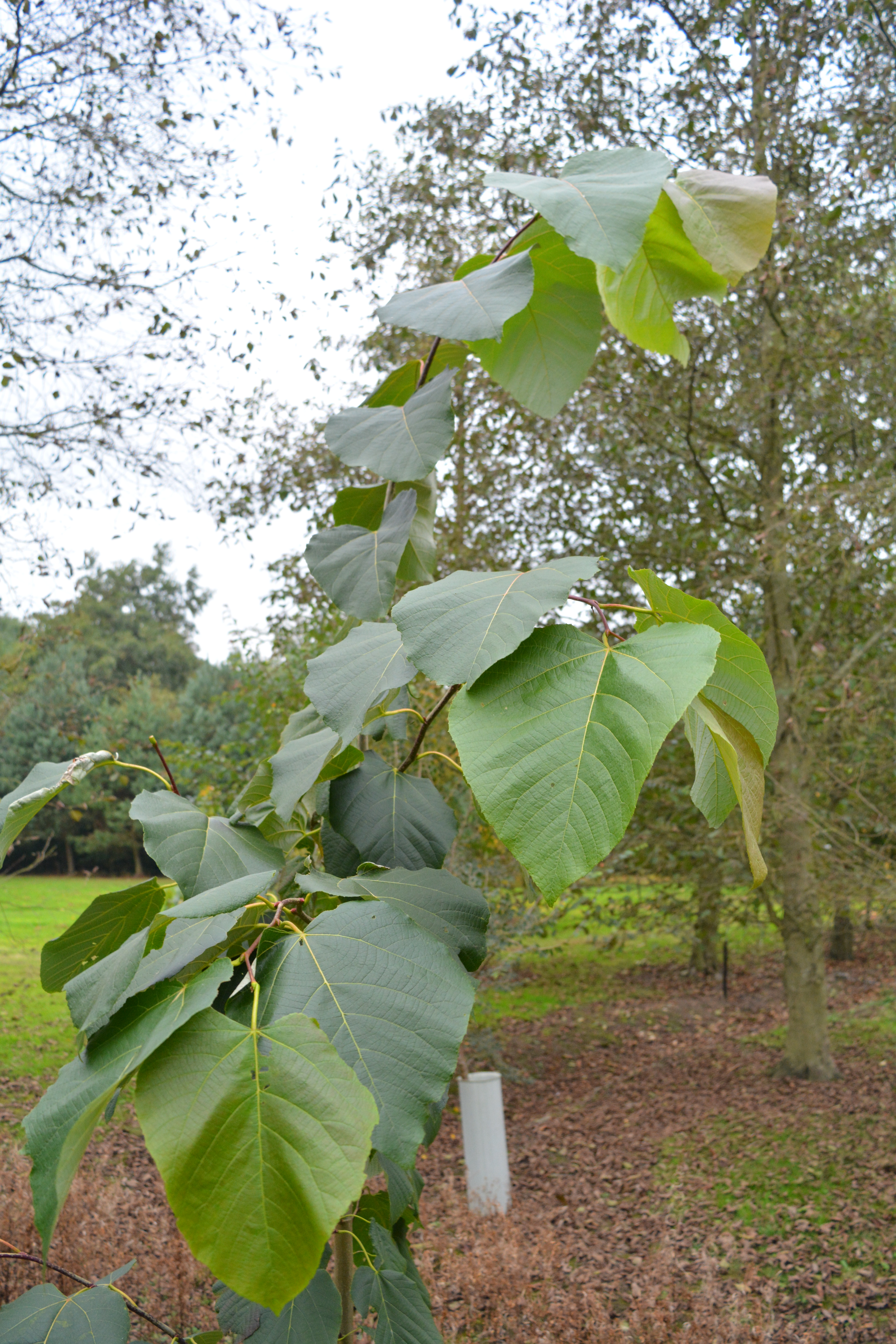
This next specimen had me foxed and I had to go in search of a label. Although it is a Lime the leaves were the size of a Catalpa but the label informed us it was Tilia carolina subs. heterophylla.

2015 10 19_6281 2015 10 19_6283

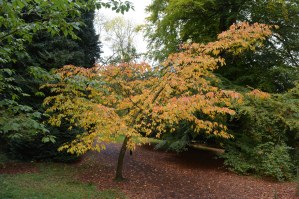
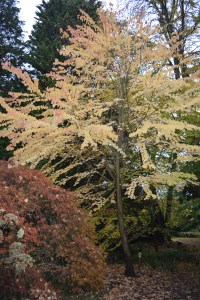
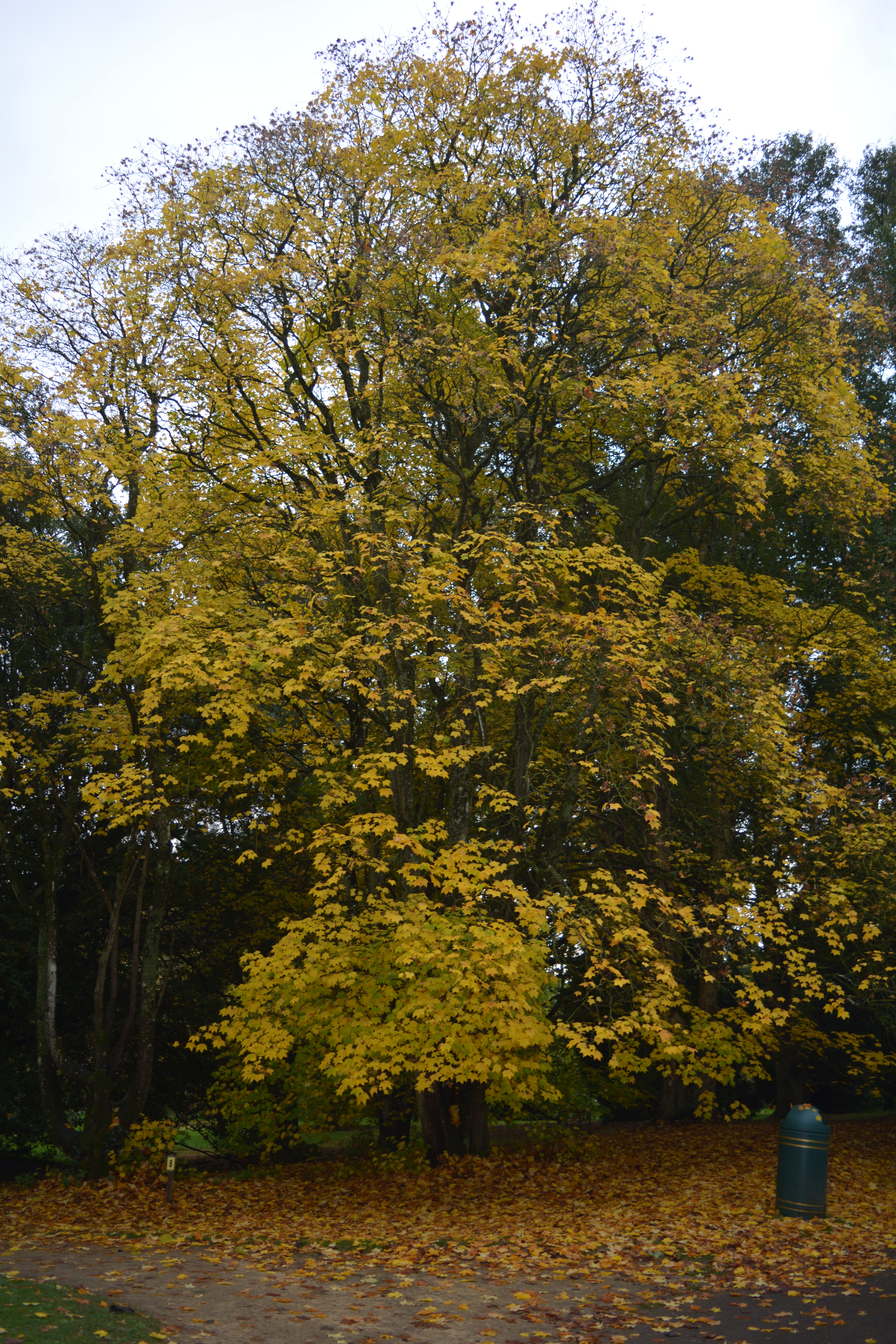
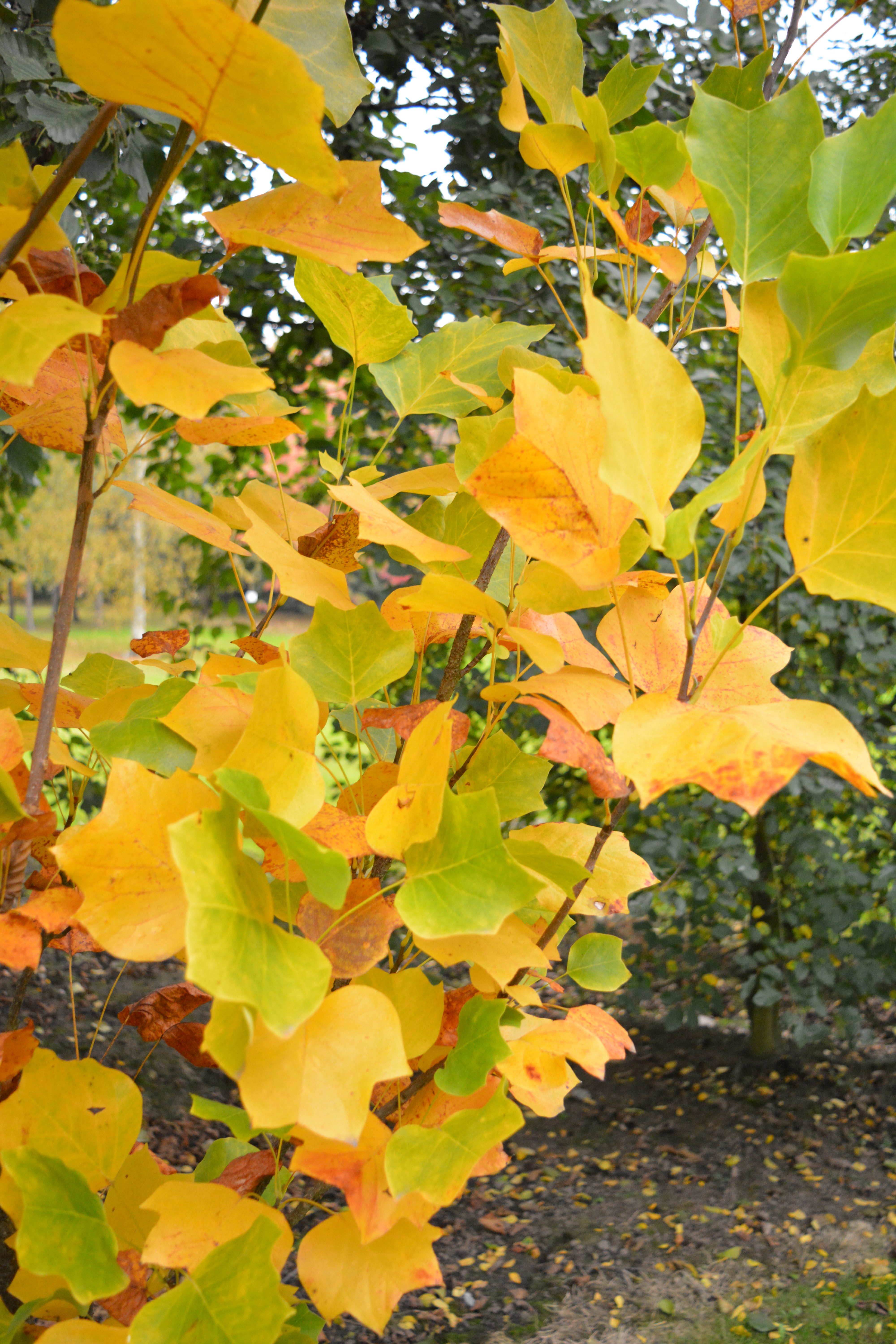
We were attracted to the autumn foliage colour of this Tulip Tree, so crisp and bright on a dull day. It is Lirodendron tulipifera  “Arnold” a tree we had never seen before with its fastigiate form.

2015 10 19_6284 2015 10 19_6285

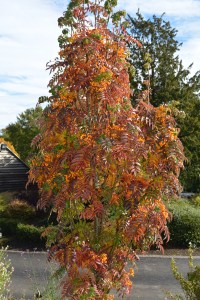
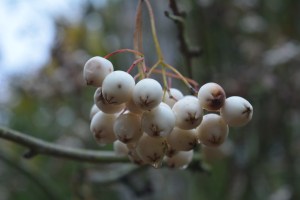
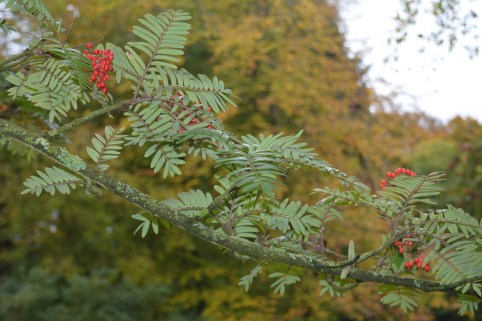
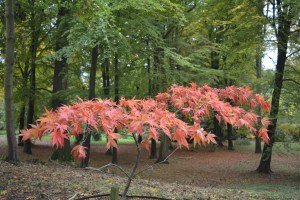
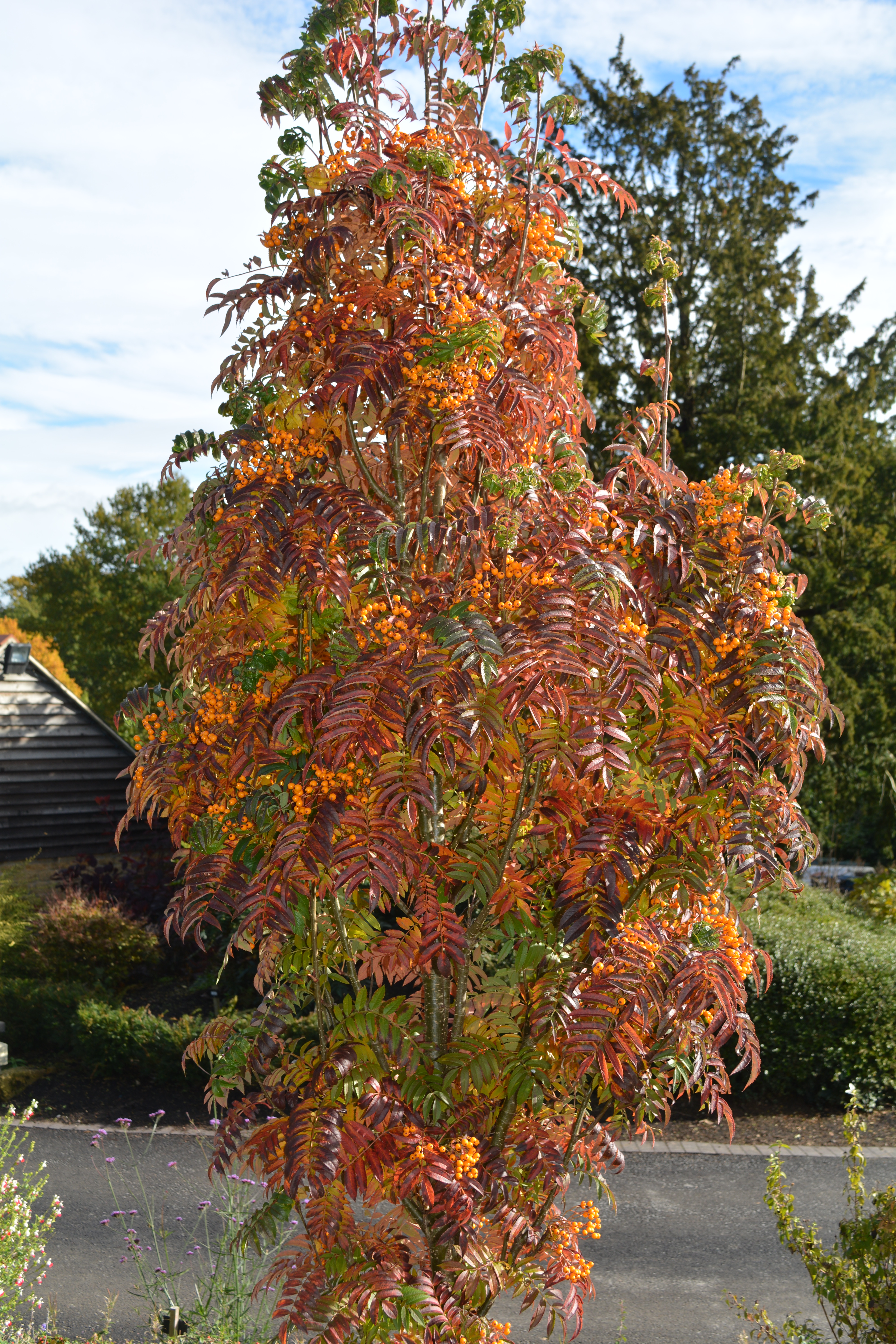
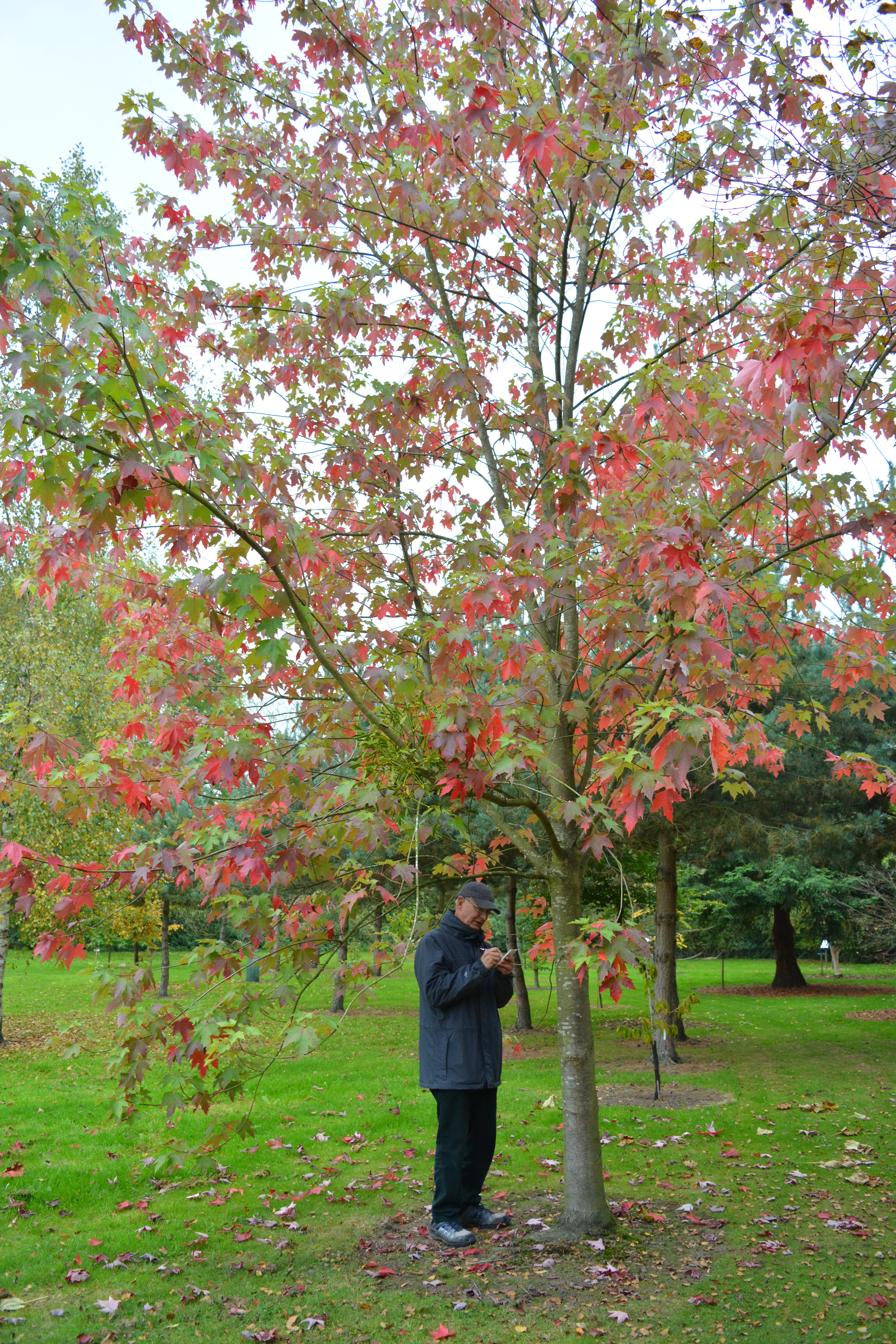
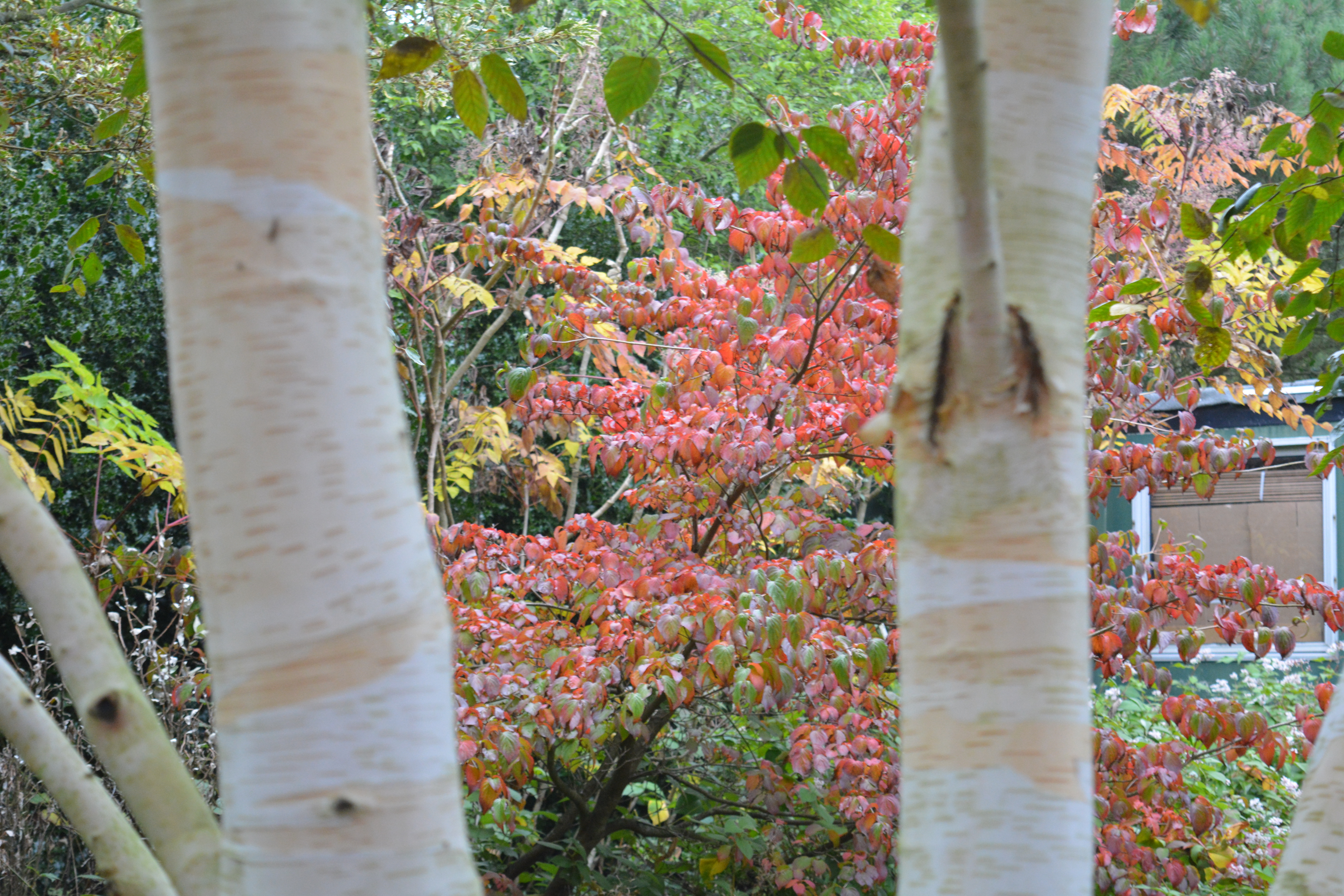
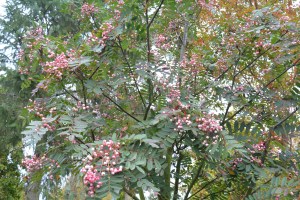
I love the berries and leaf shapes of all the Sorbus and to see a variety new to me was a delightful surprise, Sorbus eburnia “Harry Smith”. It was growing close to a Liquidamber which was turning from deep green to deep reds, and formed a beautiful open specimen.

2015 10 19_6298 2015 10 19_6299 2015 10 19_6300 2015 10 19_6301

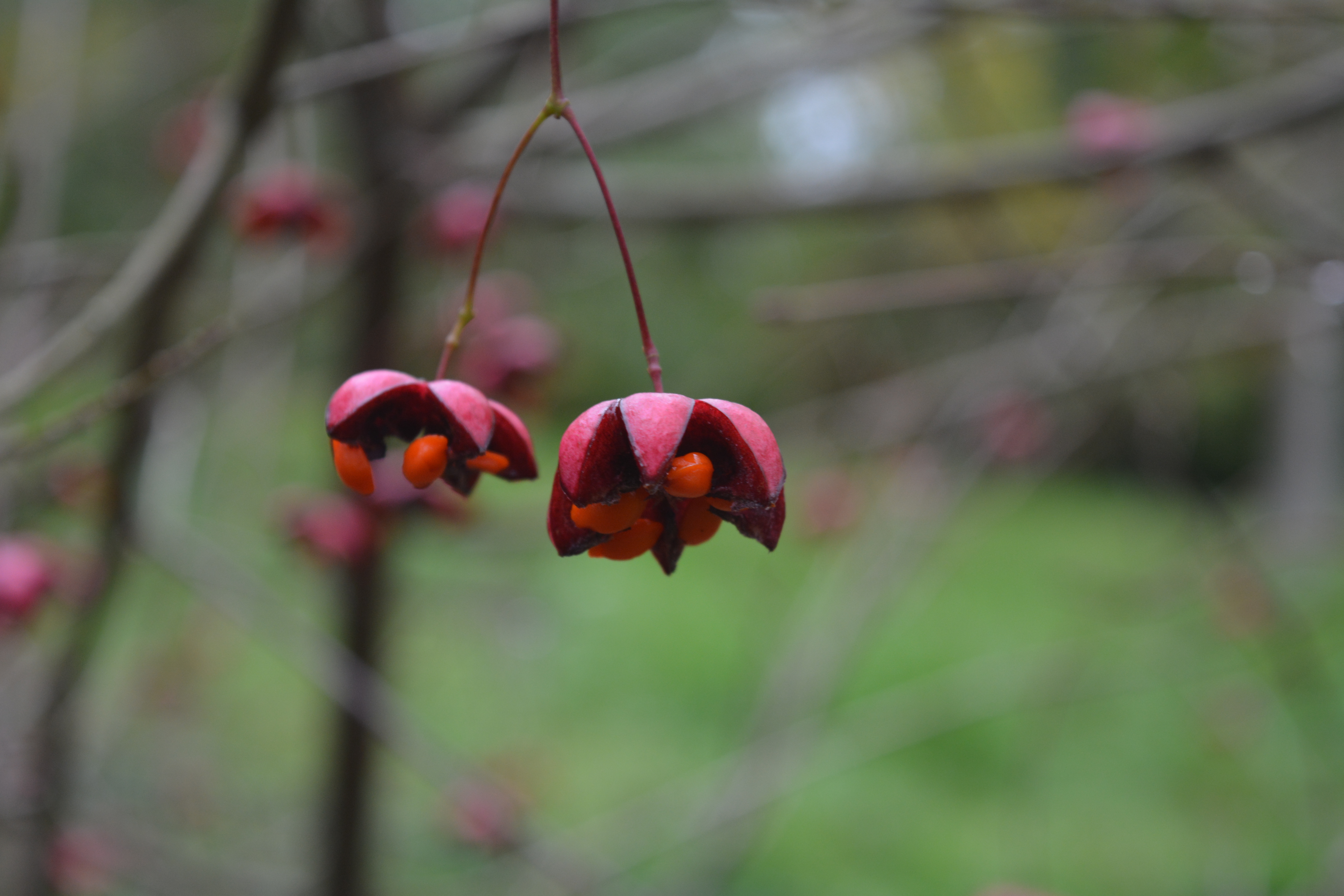
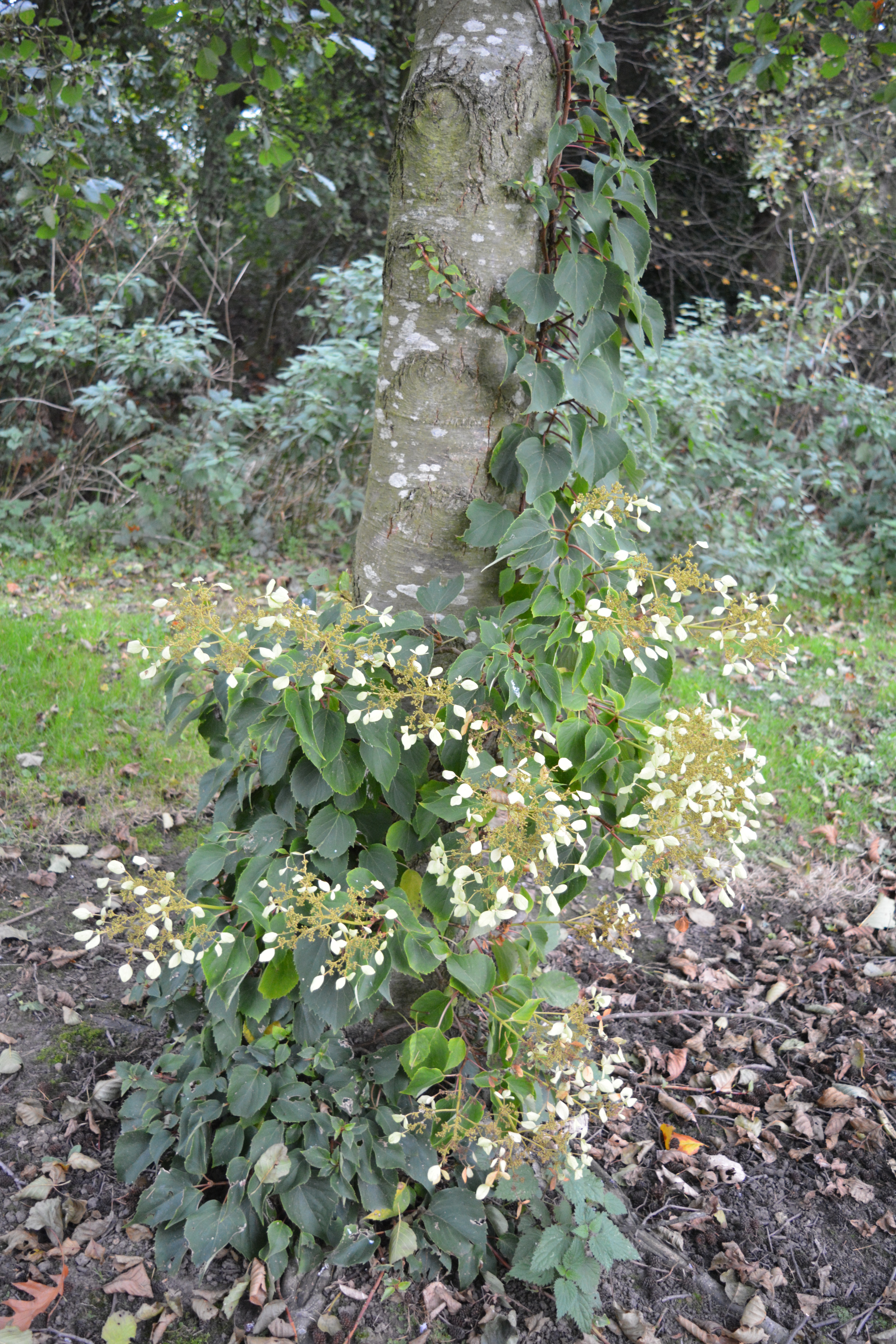
Before I tell you what tree impressed me most at this wonderful arboretum I would like to share a few pics of  Euonymus europaeus “Thornhayes” one of the selections of our native deciduous Euonymus simply because they are my favourite deciduous shrub and a Hydrangea petiolaris just getting established at the base of a tree. This will look great in 5 years time! We can’t grow them and so have given up! I have just discovered that the botanists have now decided that this climbing shrub must be called Hydrangea anomala subsp. petiolaris. I wonder what it did to deserve that!


2015 10 19_6302 2015 10 19_6303 2015 10 19_6305 2015 10 19_6306

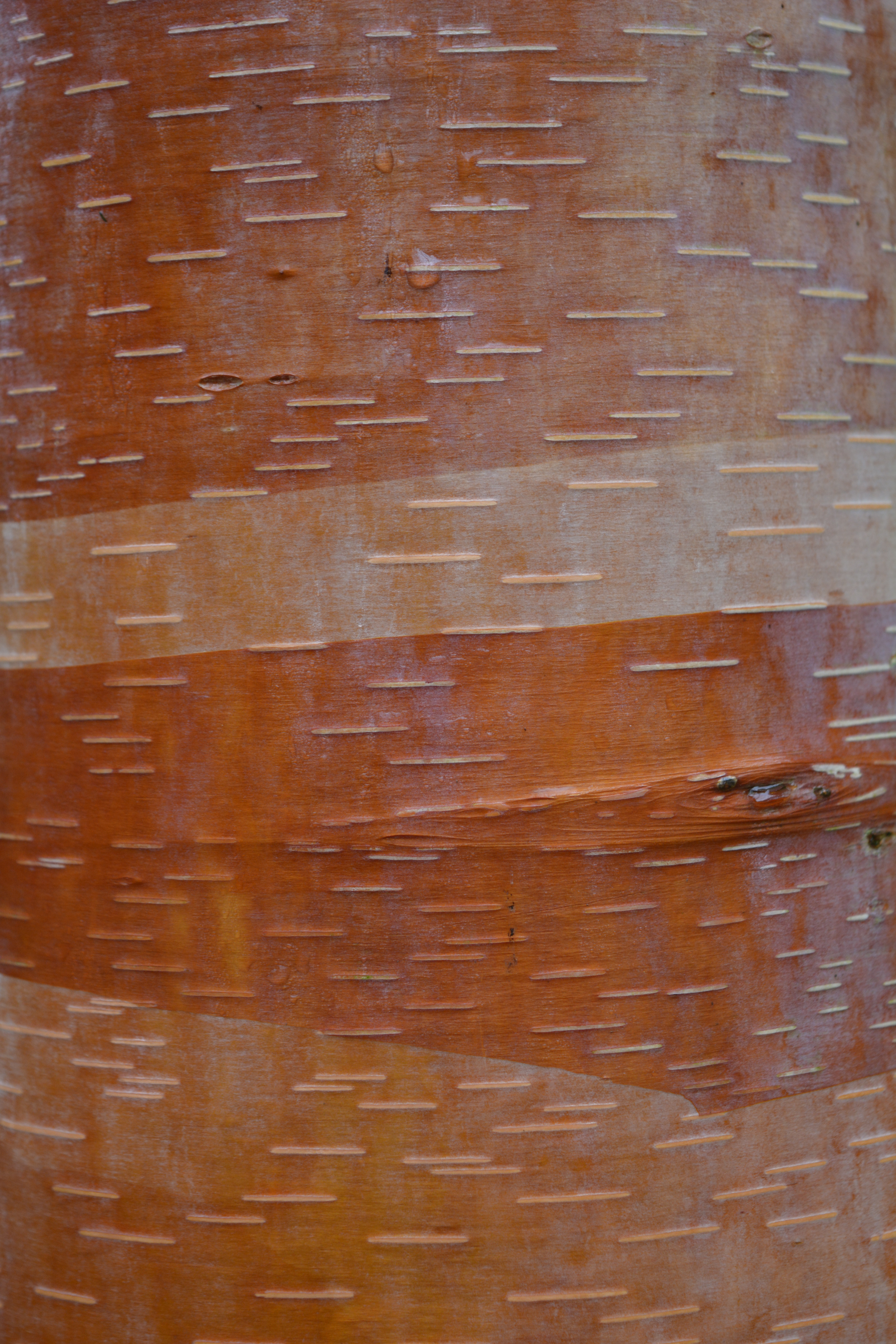
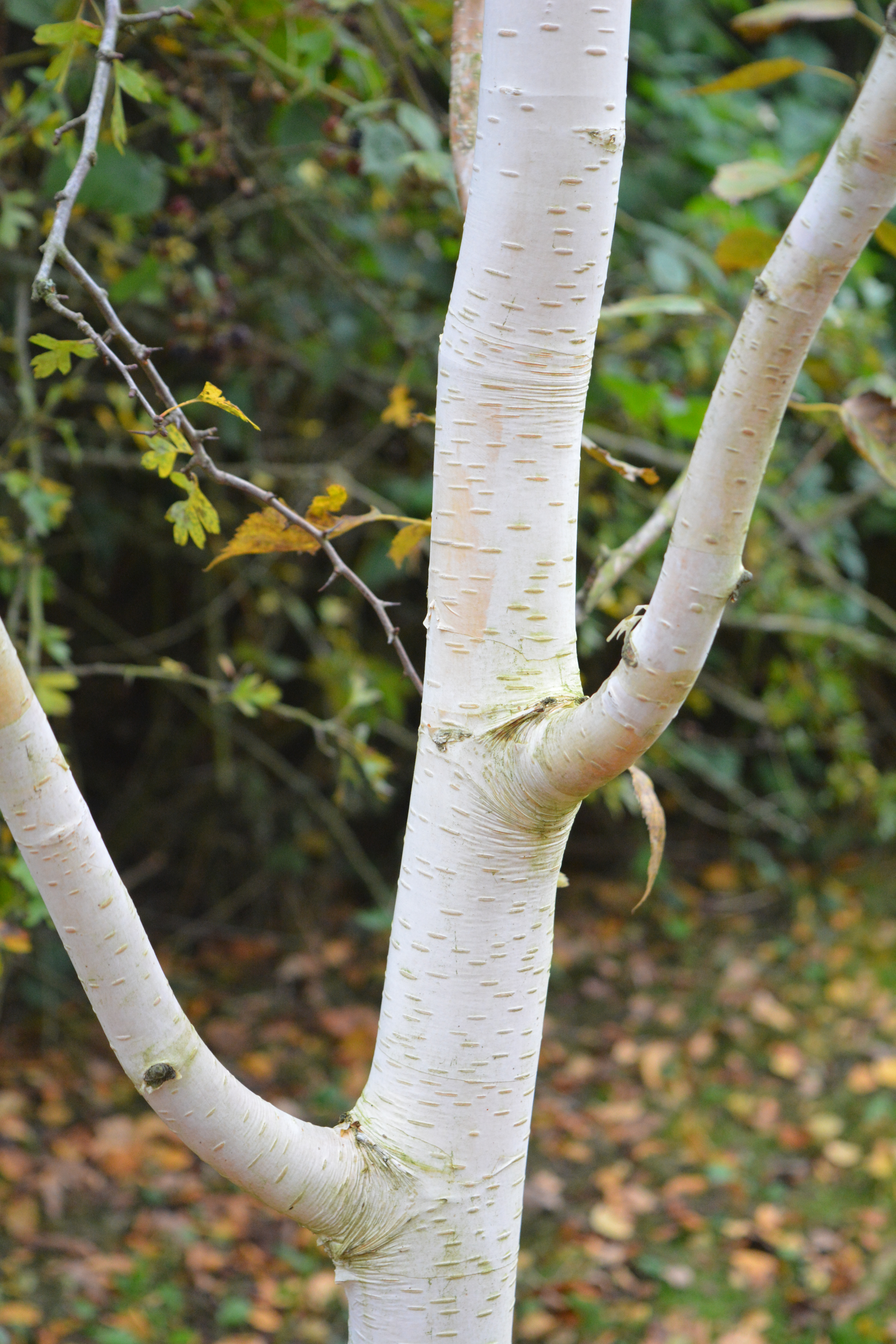
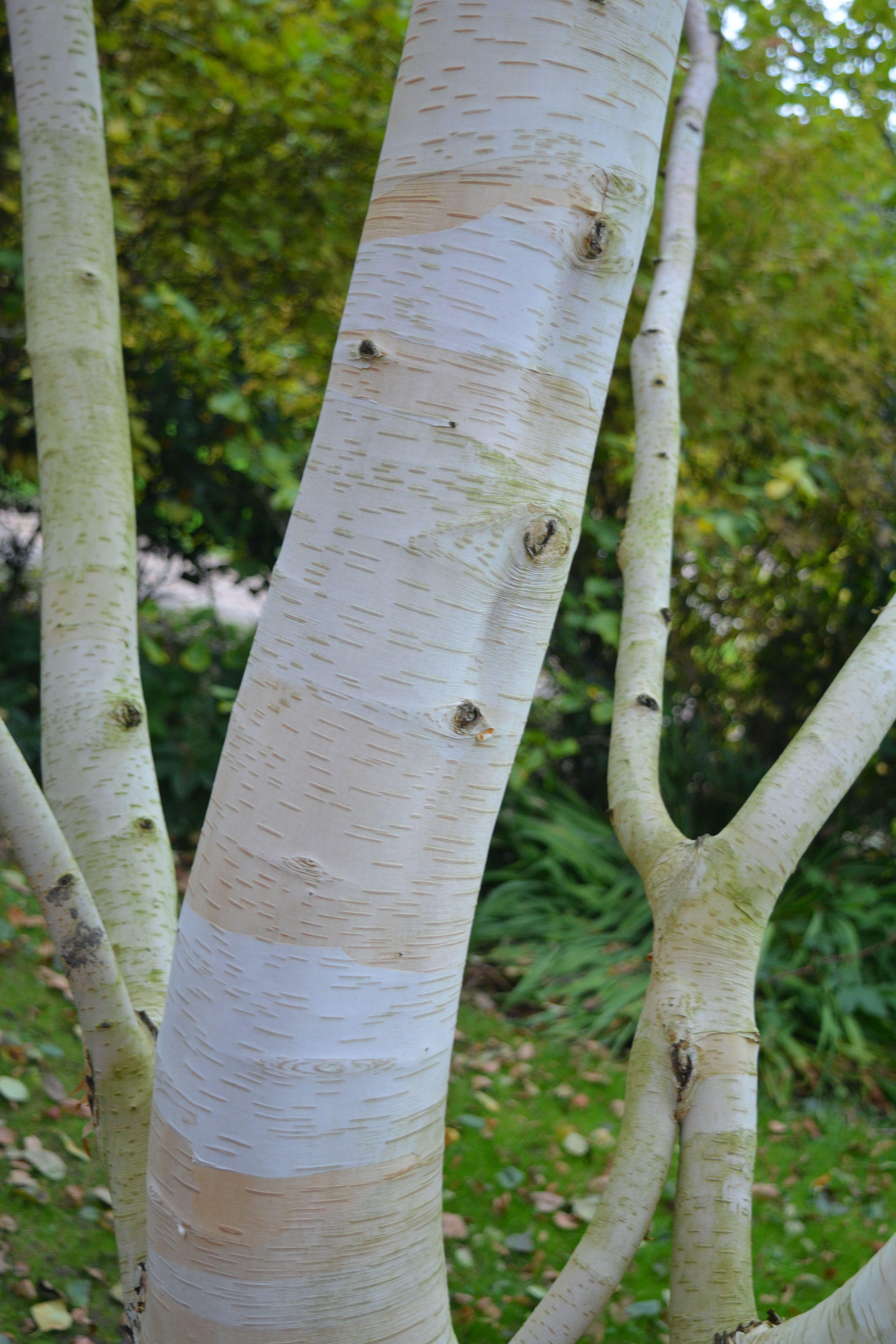
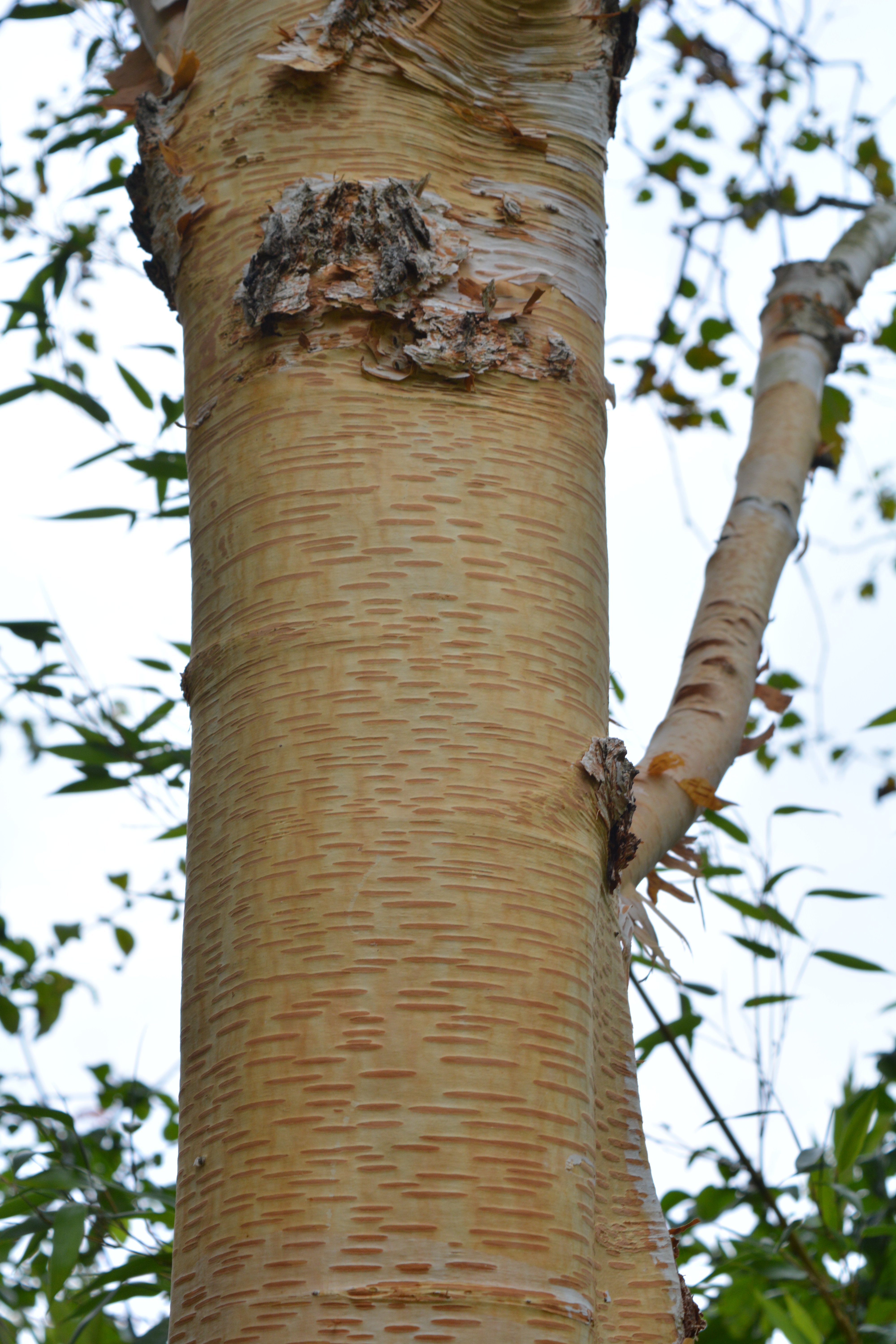
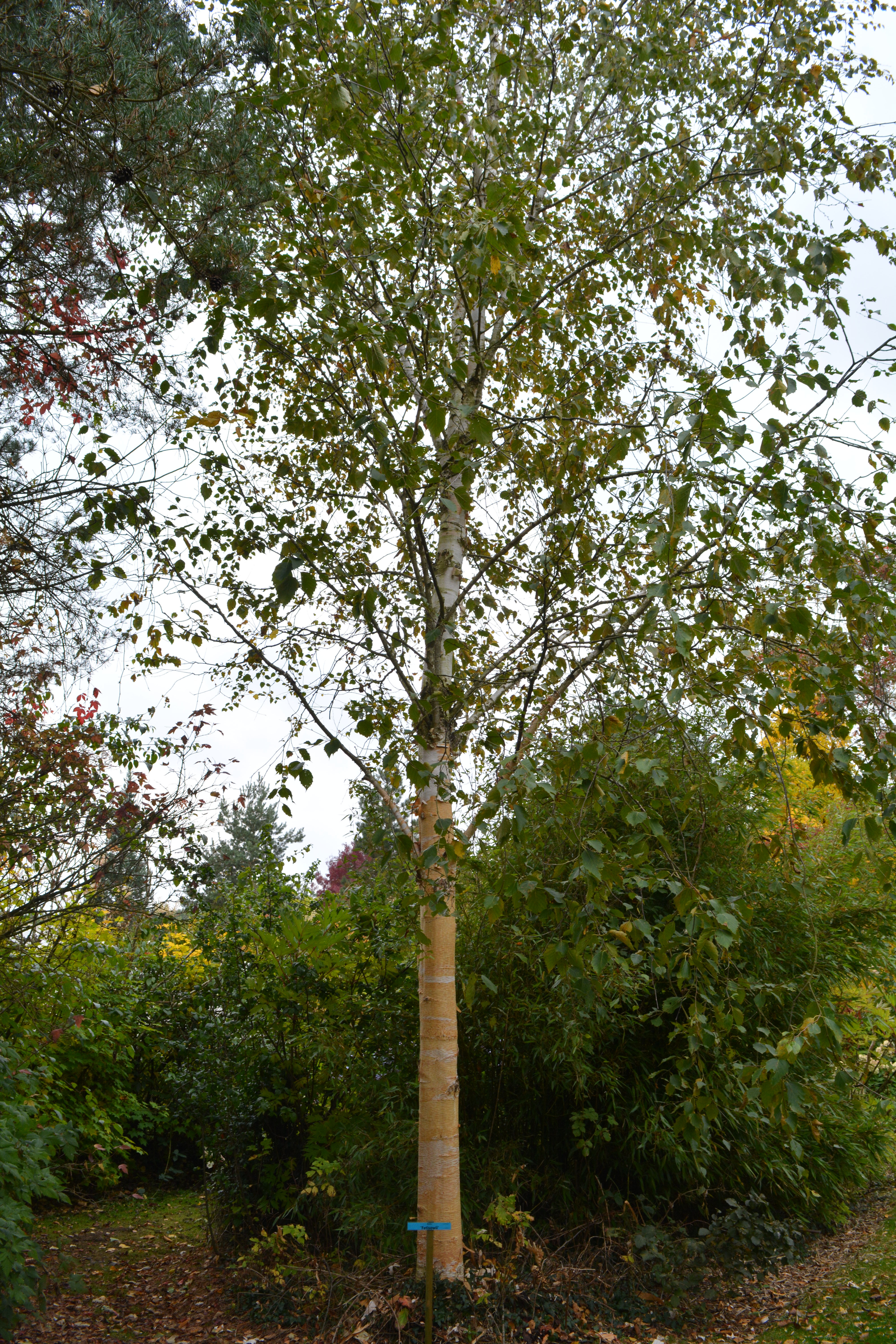
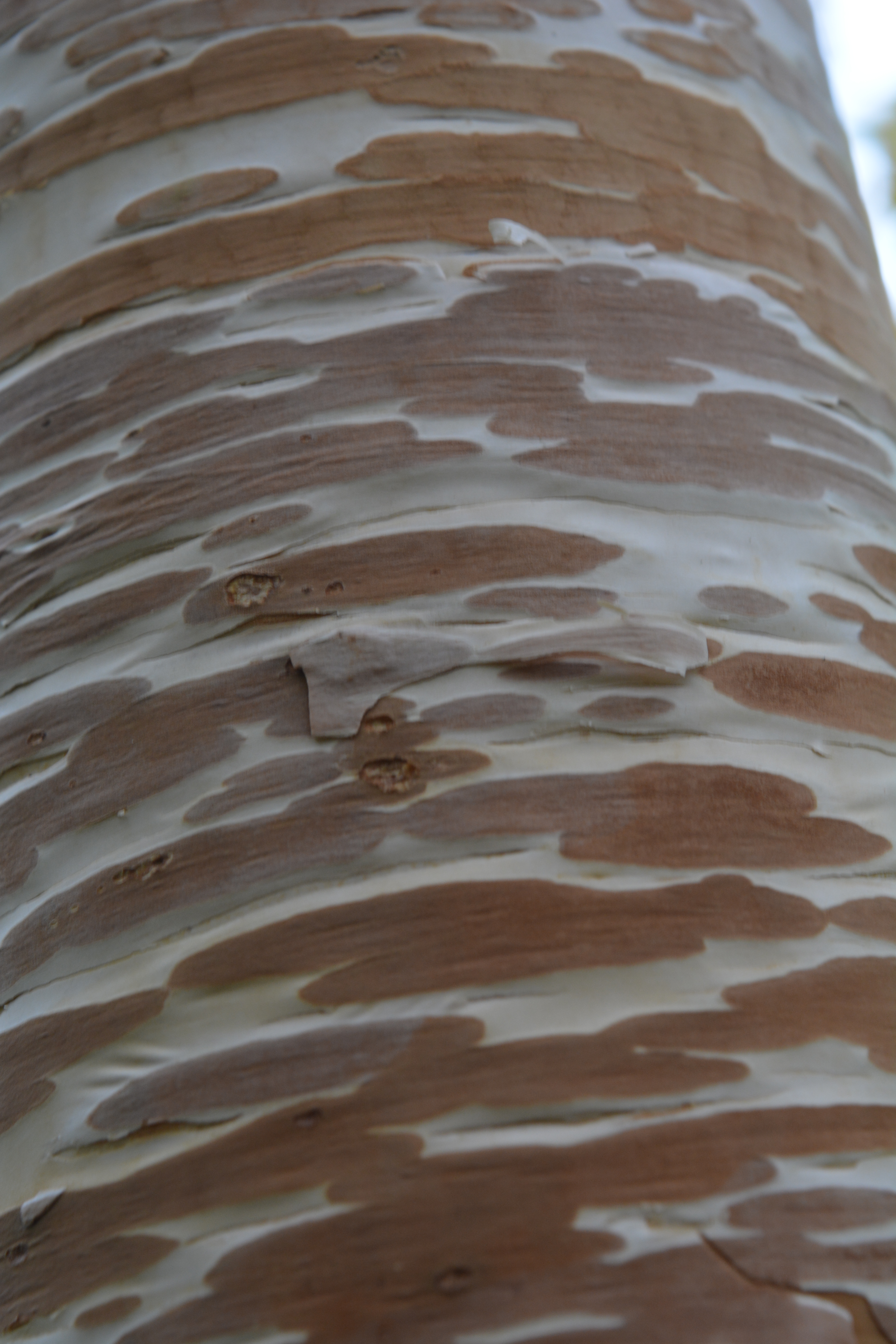
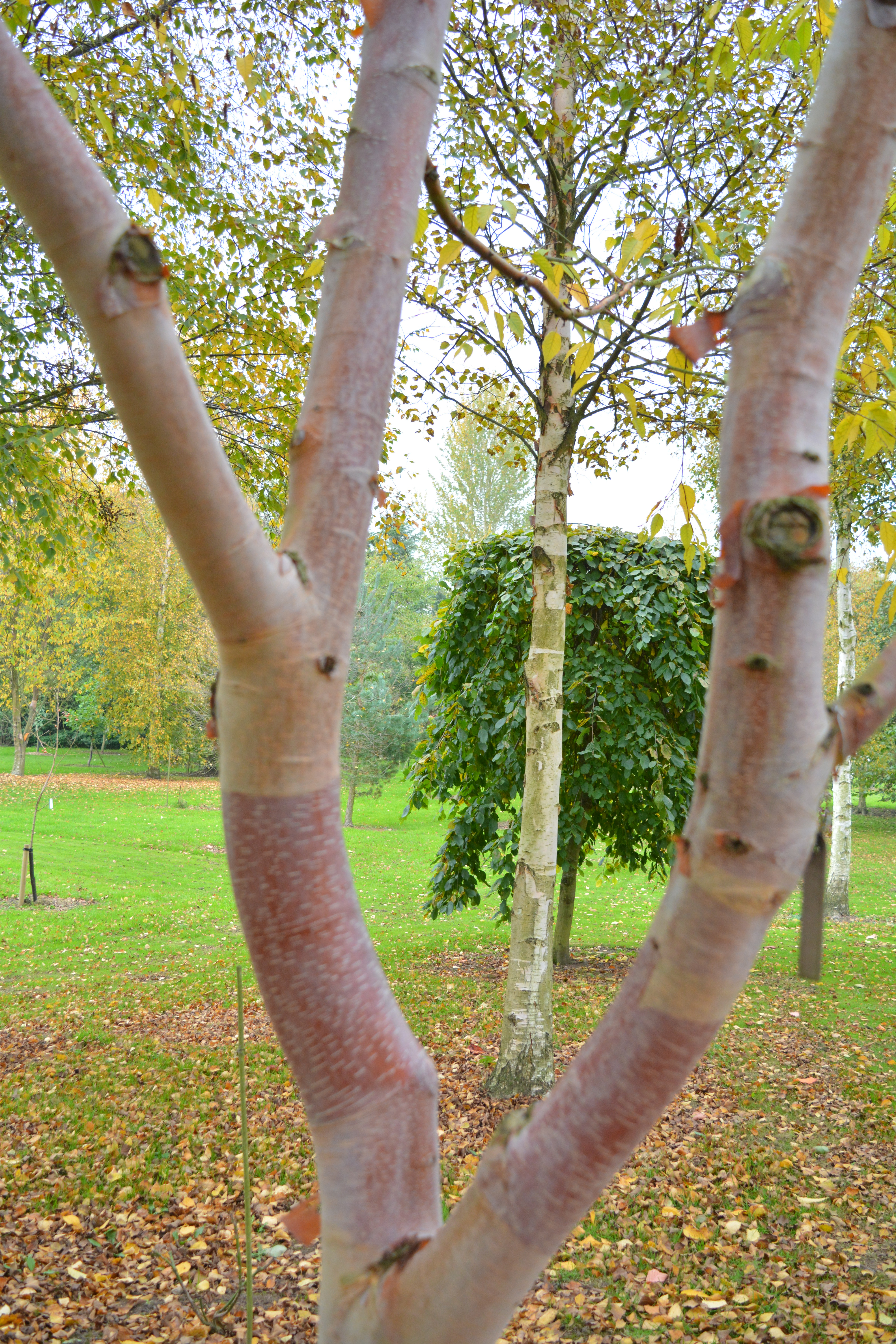
And the star of the show? Well it just has to be a Birch doesn’t it – Betula utilis “Doorenbos”. White stems with the texture of suede and in places the gentlest hints of salmon pink. This multi-stemmed specimen stopped us in our tracks.

2015 10 19_6307 2015 10 19_6309

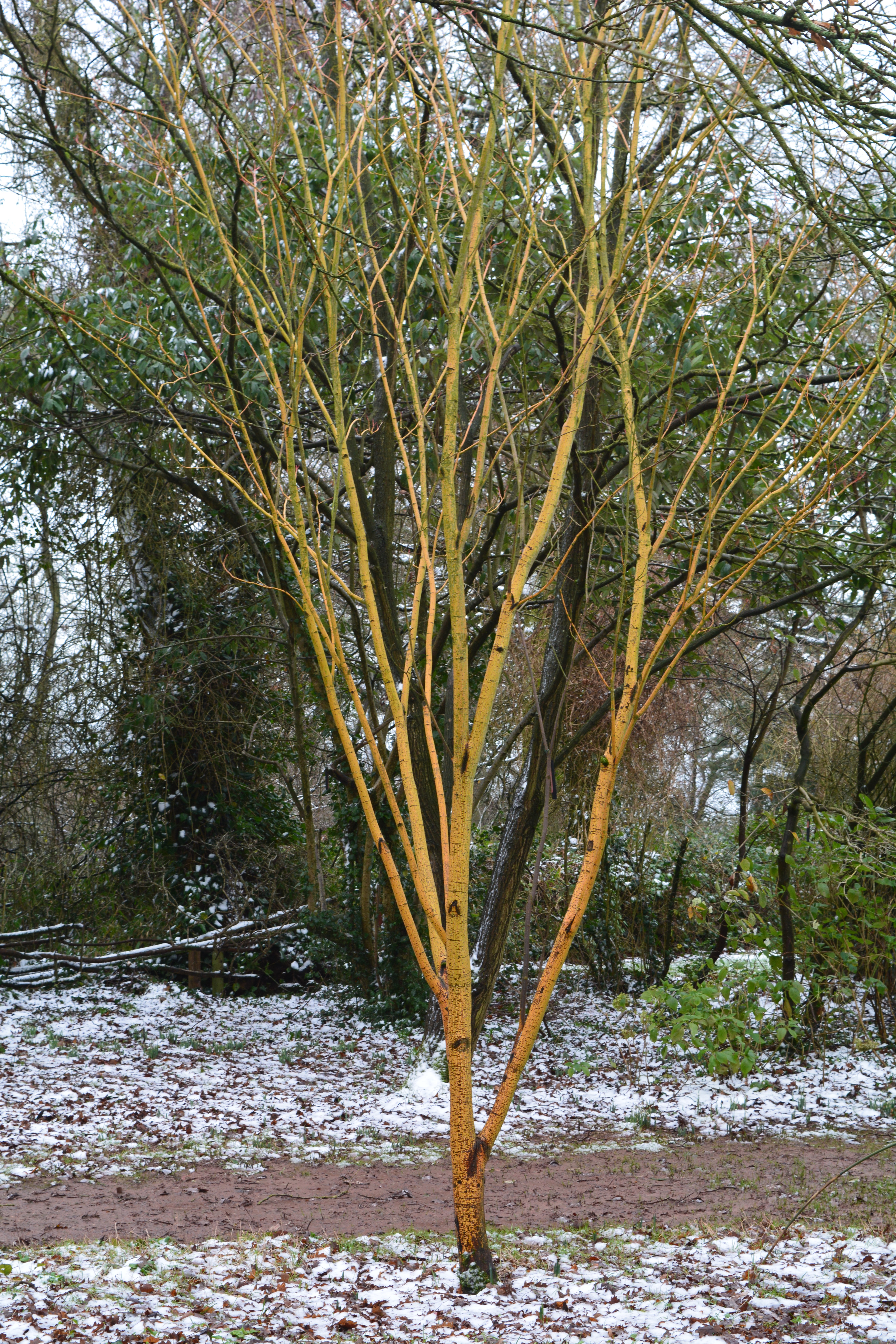
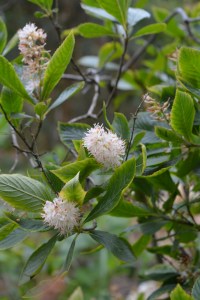
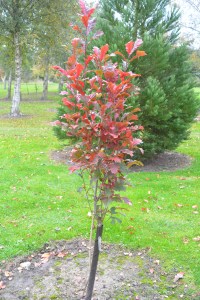
Of course before we left with just minutes until Bluebell shut up shop for the day we had to have a peruse around the nursery. We bought this little beautiful shrub with its delicate little scented yellow flowers and bronzed foliage turning red in places as autumn was approaching. It is called Bush Honeysuckle or Diervilla lonicera for our garden at home and a tree for the Winter Garden at our allotment community gardens, an orange stemmed Lime, Tilia cordata “Winter Orange” a tree we have been searching for since we planted this border up over 6 years ago now. So we had a great day and came home with two wonderful new plants. We were so interested in everything the Bluebell Arboretum has to offer that we almost overstayed our welcome. The owners politely asked if they could close the gate now please so they could take their dogs for a walk and they probably deserved their tea! Below is our newly purchased Diervilla.

2015 10 19_6310


Categories
allotments arboreta autumn autumn colours colours ornamental trees and shrubs shrubs trees woodland

Arboreta in Autumn – part 1- Bluebell Arboretum

The highlight of every autumn season has to be visiting various arboreta of which there are many within a day’s drive. Our first visit this year was to Bluebell Arboretum and Nursery situated in Derbyshire near the town with the wonderful rather eccentric name of  Ashby-de-la-Zouch. The nursery specialises in rare and unusual shrubs and trees and every plant they sell is of excellent quality.

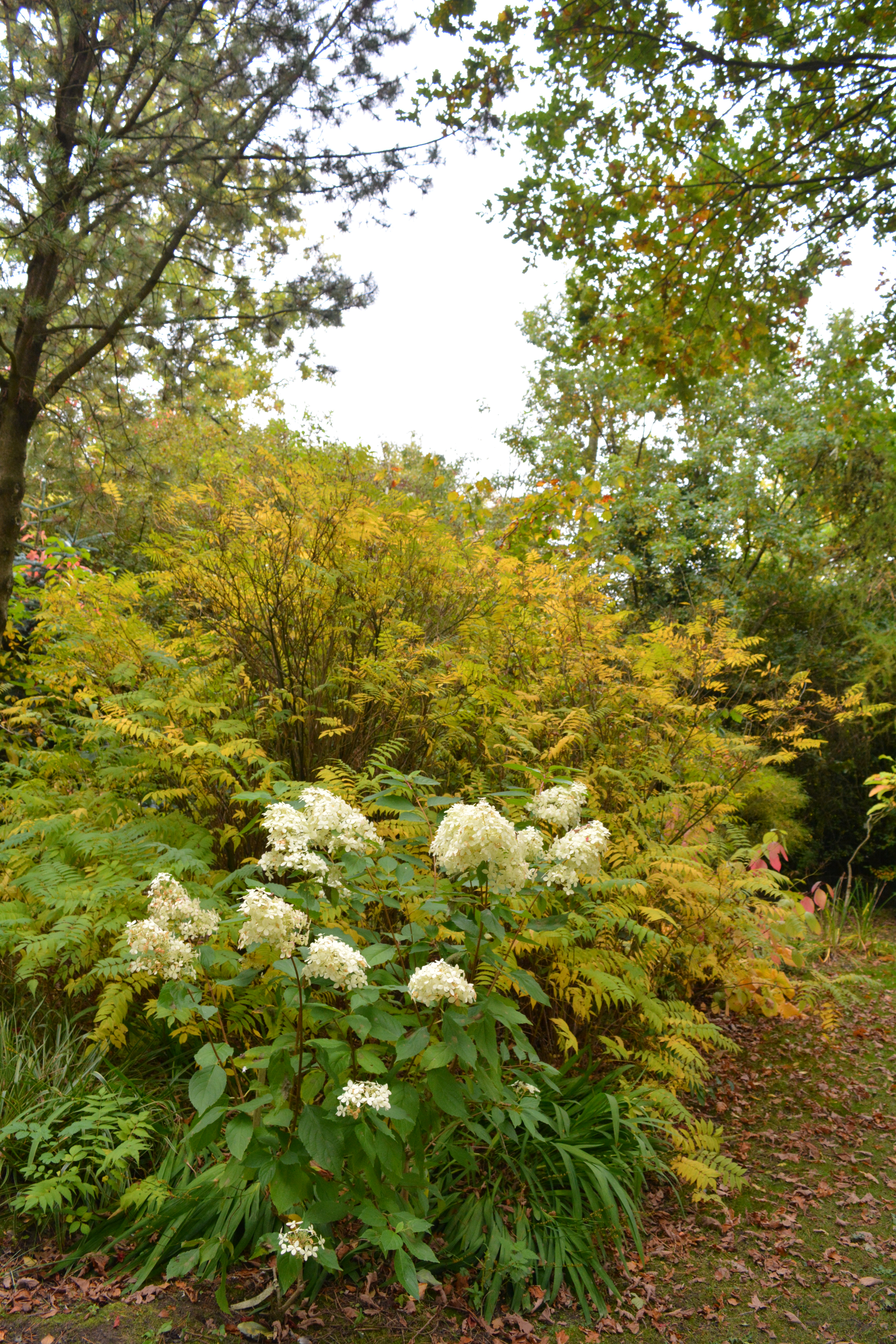
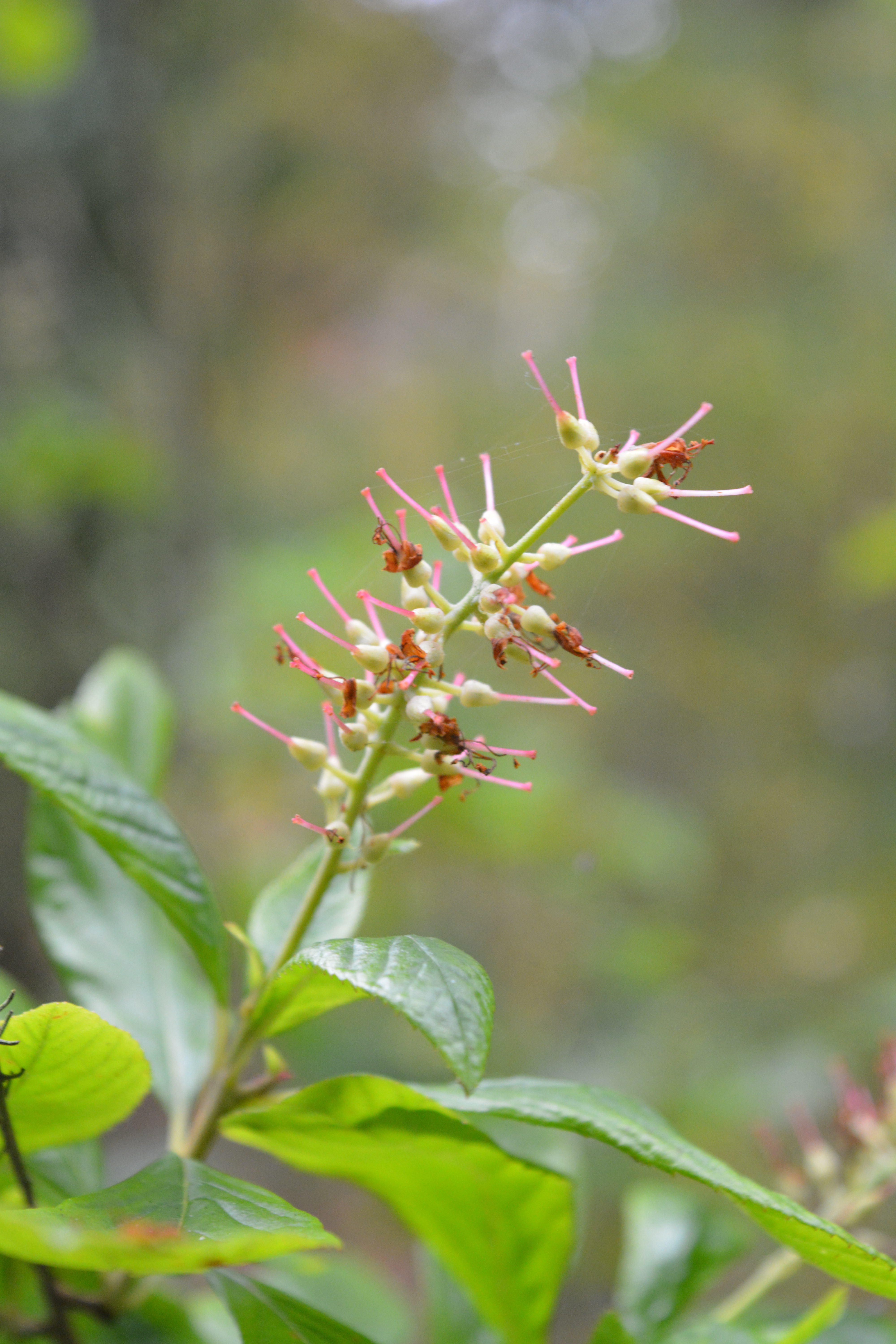
Within the first 5 minutes of our wander around the arboretum we had discovered a lovely variety of trees, shrubs and perennials. Betulas, Acers, Clethras, Euonymus and Hydrangeas.

2015 10 19_6220 2015 10 19_6221 2015 10 19_6222 2015 10 19_6223 2015 10 19_6224 2015 10 19_6227 2015 10 19_6228

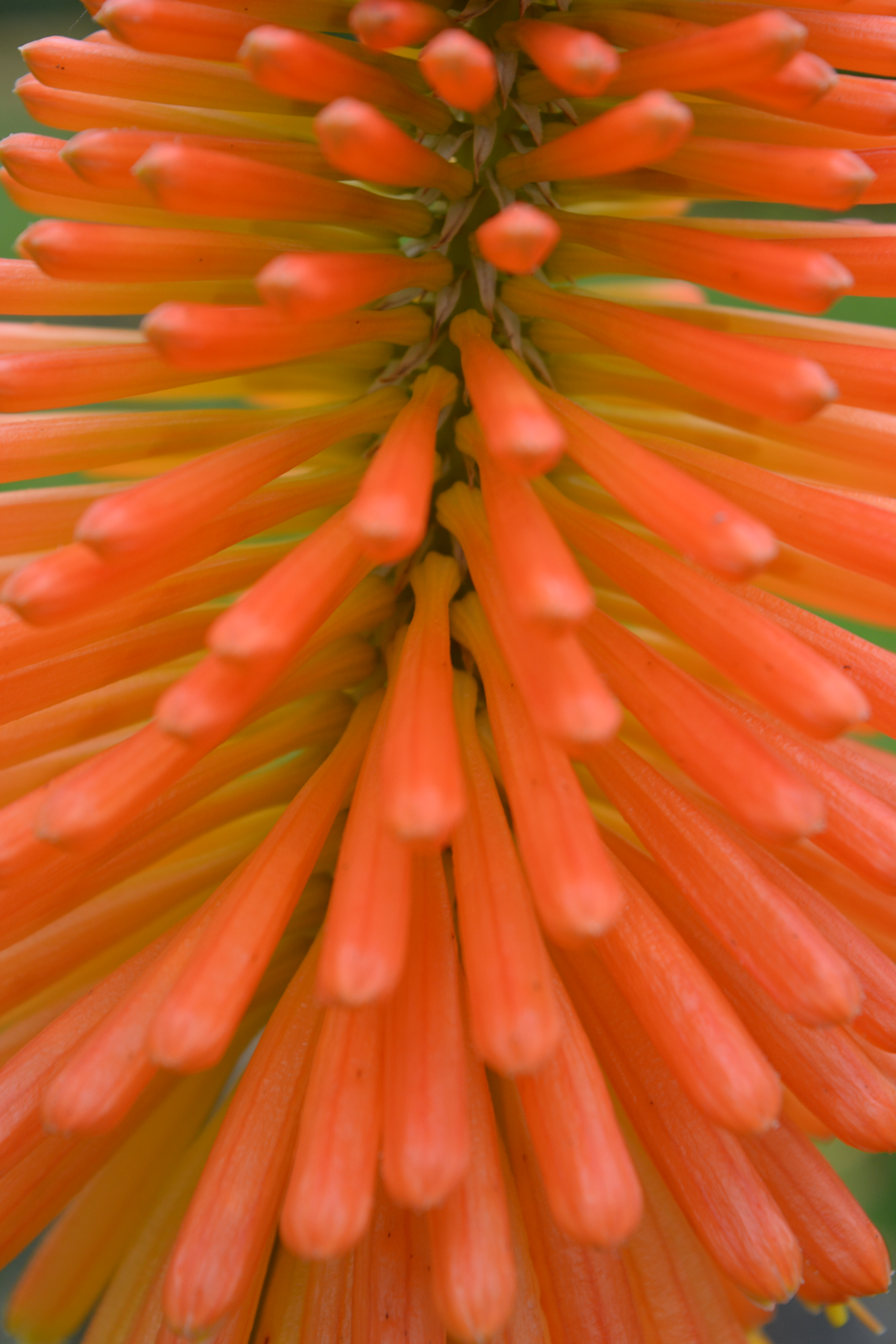
But of course you can find little clumps of the brightest of colours, orange as in these Kniphofias.

2015 10 19_6229 2015 10 19_6230 2015 10 19_6231

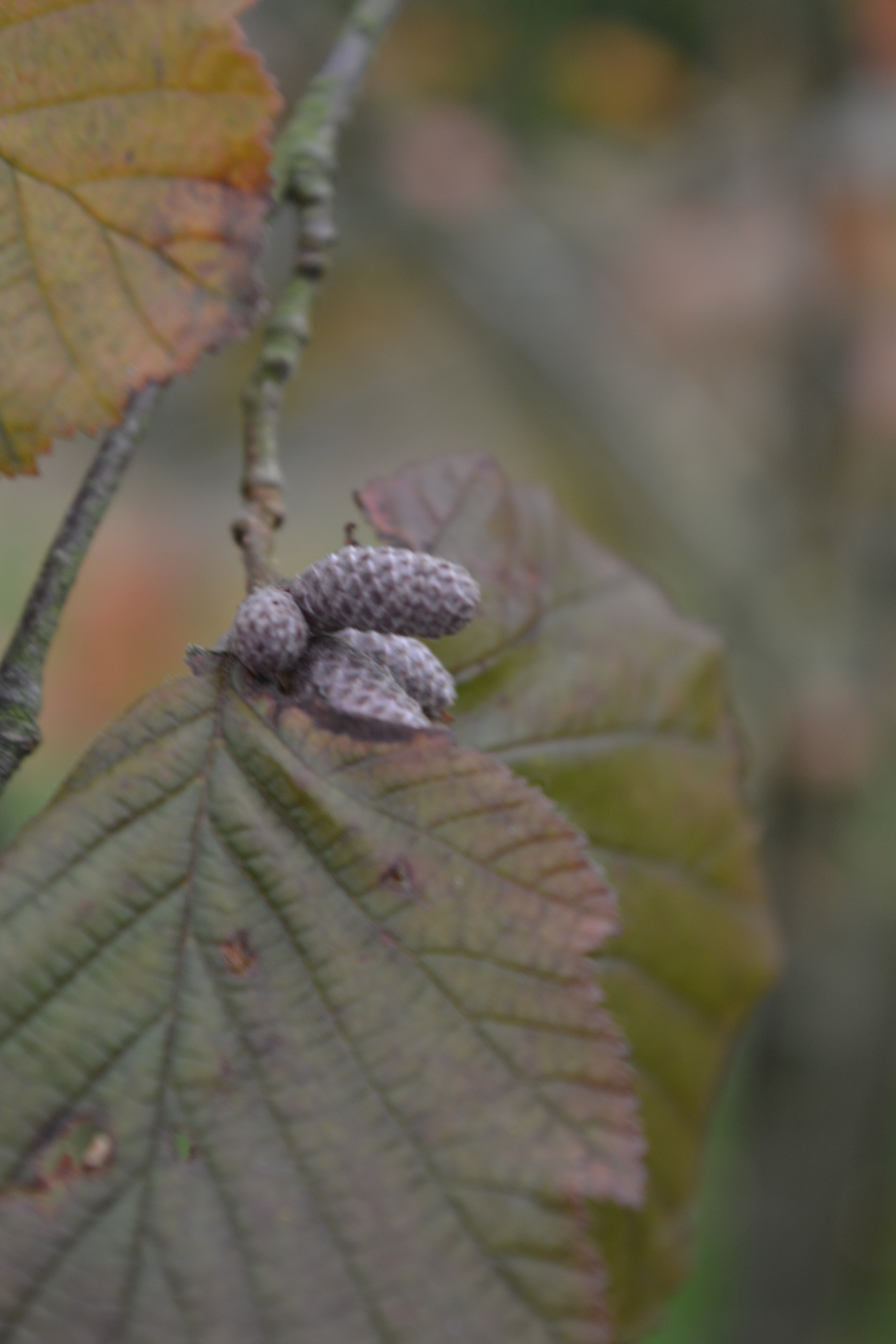
We enjoyed close up views of fruits and flowers in between having to step backwards to appreciate the full beauty of specimen trees.

2015 10 19_6234 2015 10 19_6232 2015 10 19_62352015 10 19_6238 2015 10 19_6261 2015 10 19_62402015 10 19_6248 2015 10 19_62392015 10 19_6242

In close proximity to trees we always take a close look at textures on their bark.

2015 10 19_6236 2015 10 19_6237

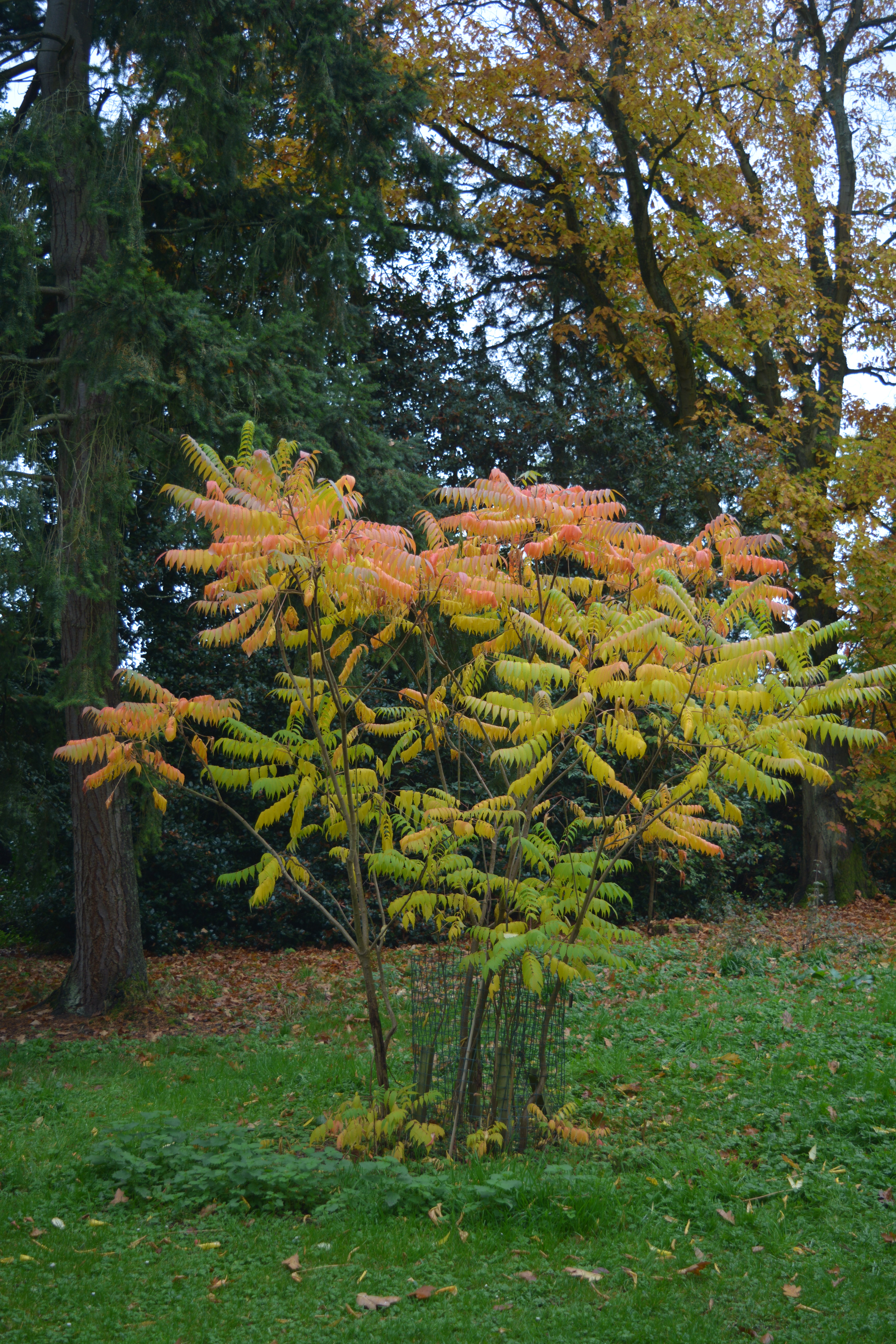
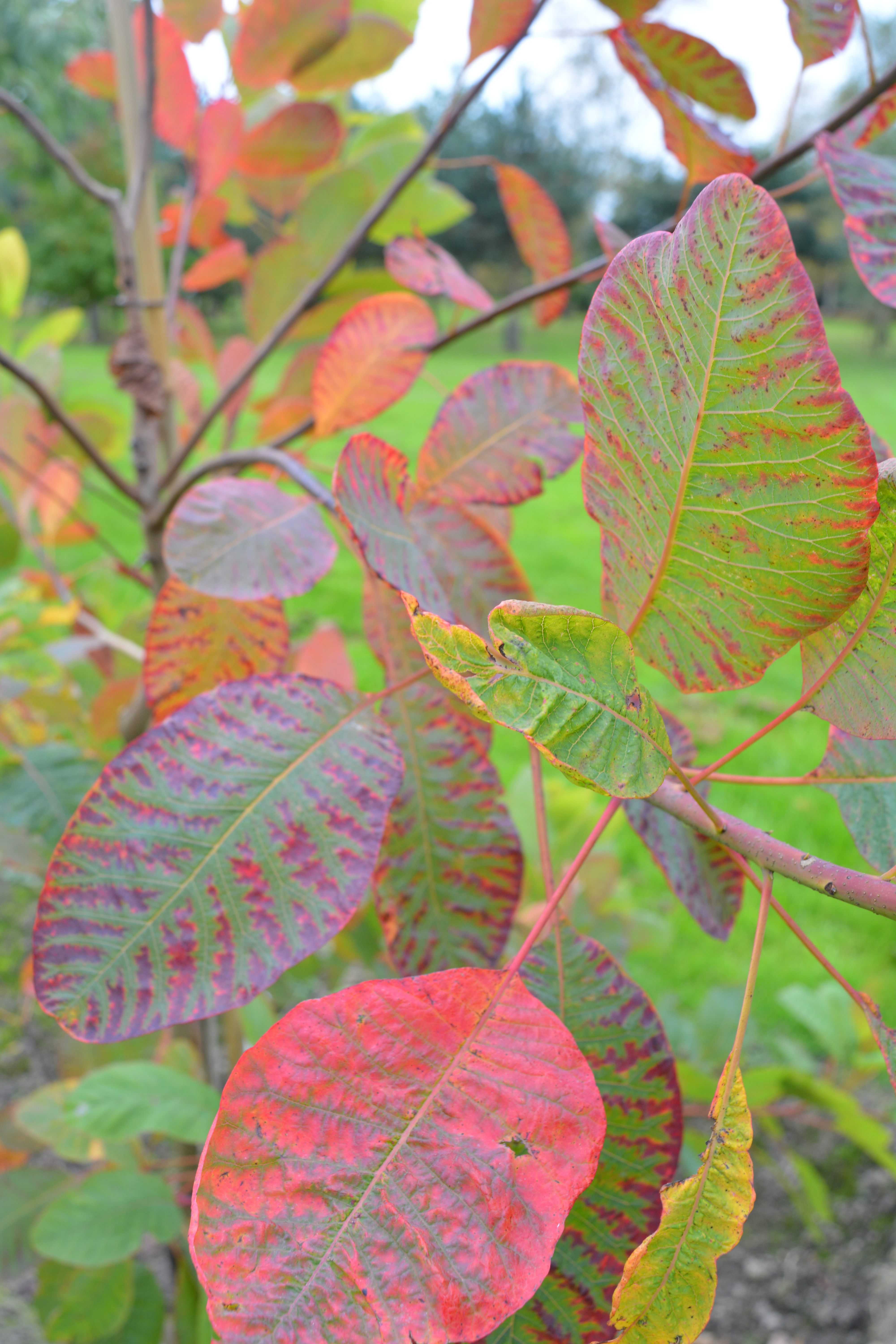
Of course being autumn time we were here largely to view the colours of the season. The leaves of this Cotinus were turning red slowly beginning with splashes of colour between the veins, giving a great contrast of reds and greens. Liquidamber turn deep shades of red through the autumn and hold onto their coloured foliage until the early spring. The first leaves to turn can provide almost black shades amongst the greens.

2015 10 19_6243 2015 10 19_6250

This oak displayed foliage in the deepest orange and had the interesting name “Quercus x Warii “Chimney Sweep”.

2015 10 19_6258 2015 10 19_6259

Where autumnal colours are concerned none could be brighter than this deciduous Euonymus.

2015 10 19_6245 2015 10 19_6246 2015 10 19_6247

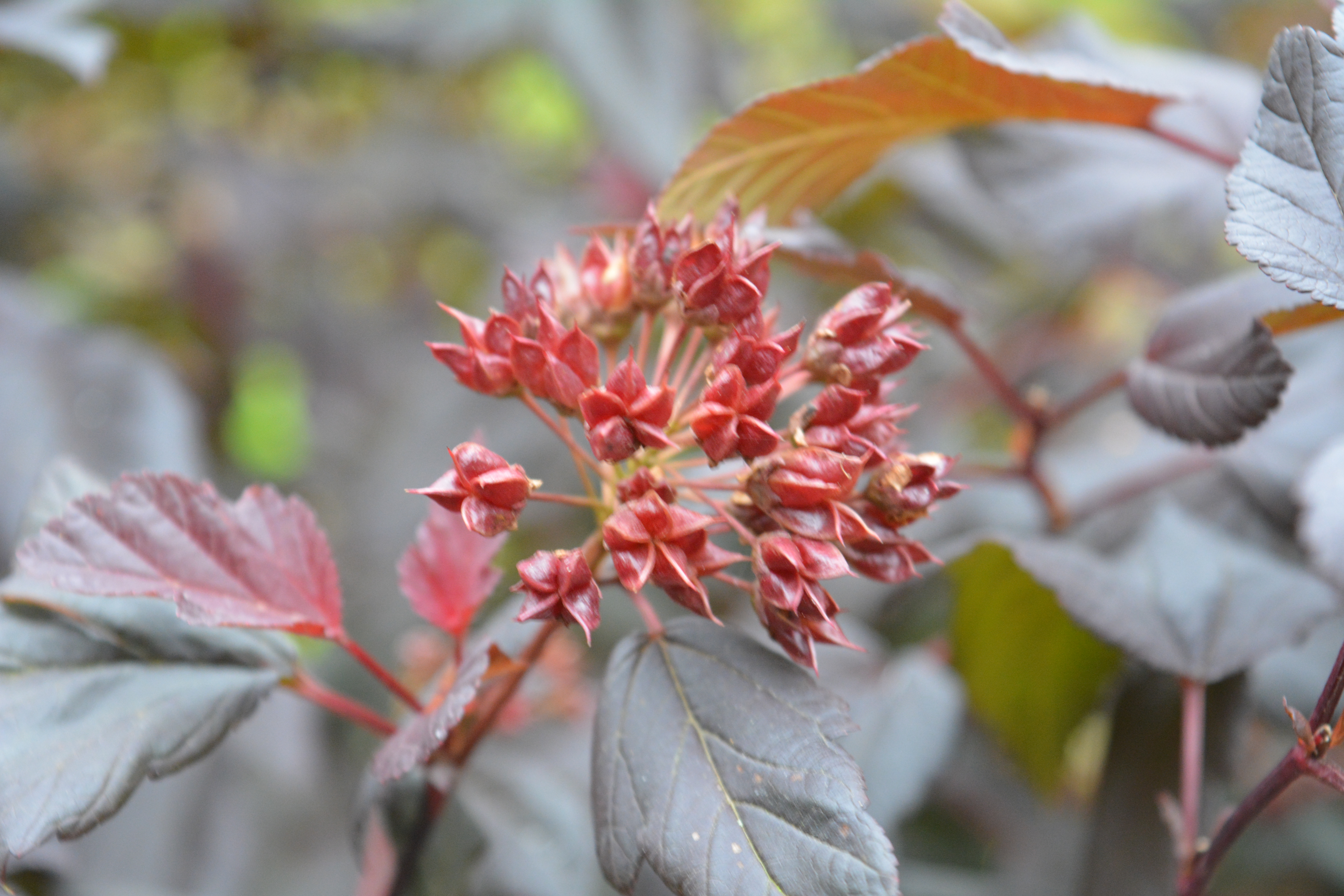
Luckily for us the nurseryman were well into a trial of new strains of Physocarpus opulifolius, those shrubs that afford us the glossy almost black foliage. At home we grow the well established “Diablo” but we were pleased to be able to study newer varieties with differeing tints of colour working amongst the black, such as “Diablo D’or” . In the next few years we will be seeing some interesting improved variations on “Diablo”.

2015 10 19_6252 2015 10 19_6254 2015 10 19_6255 2015 10 19_6257

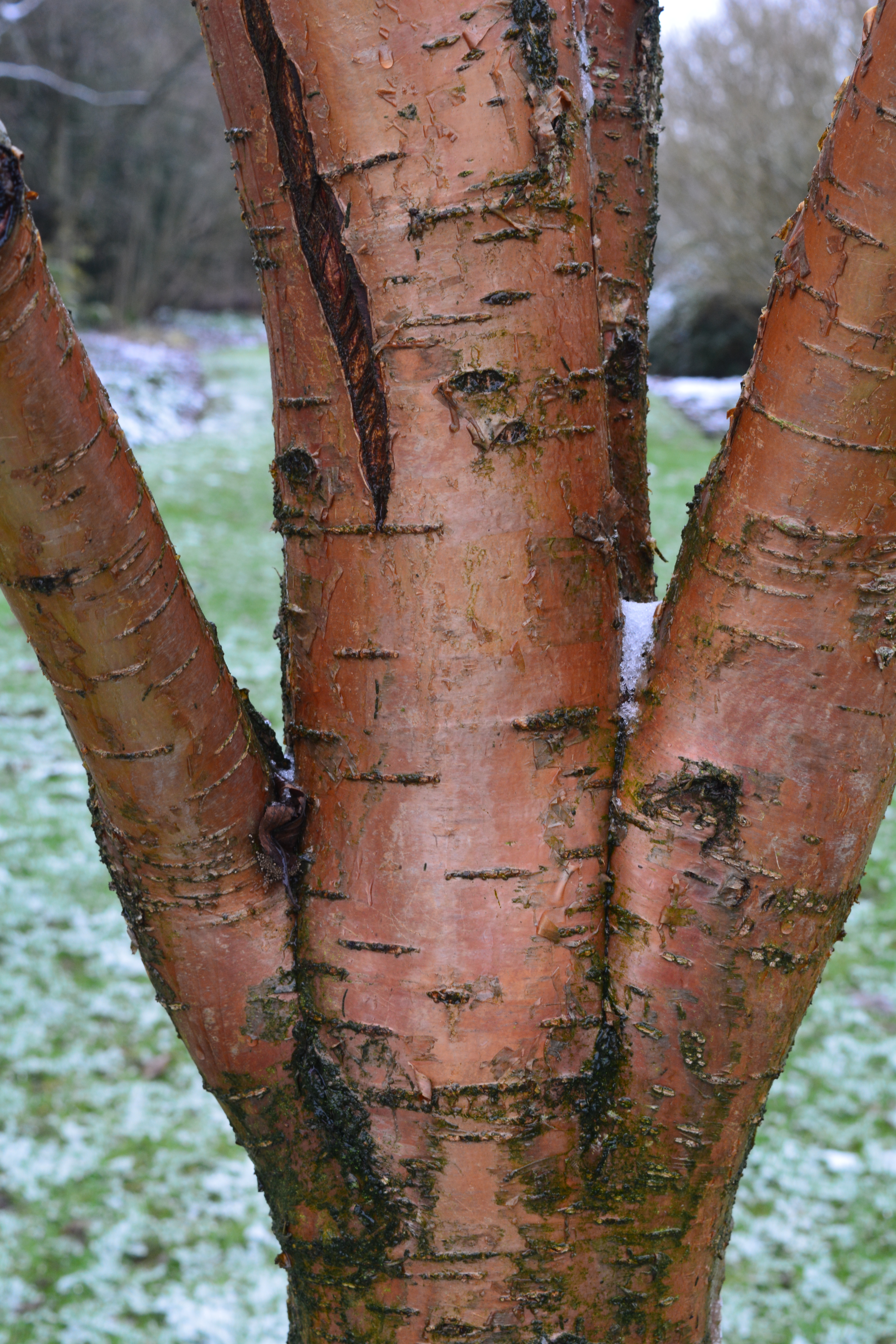
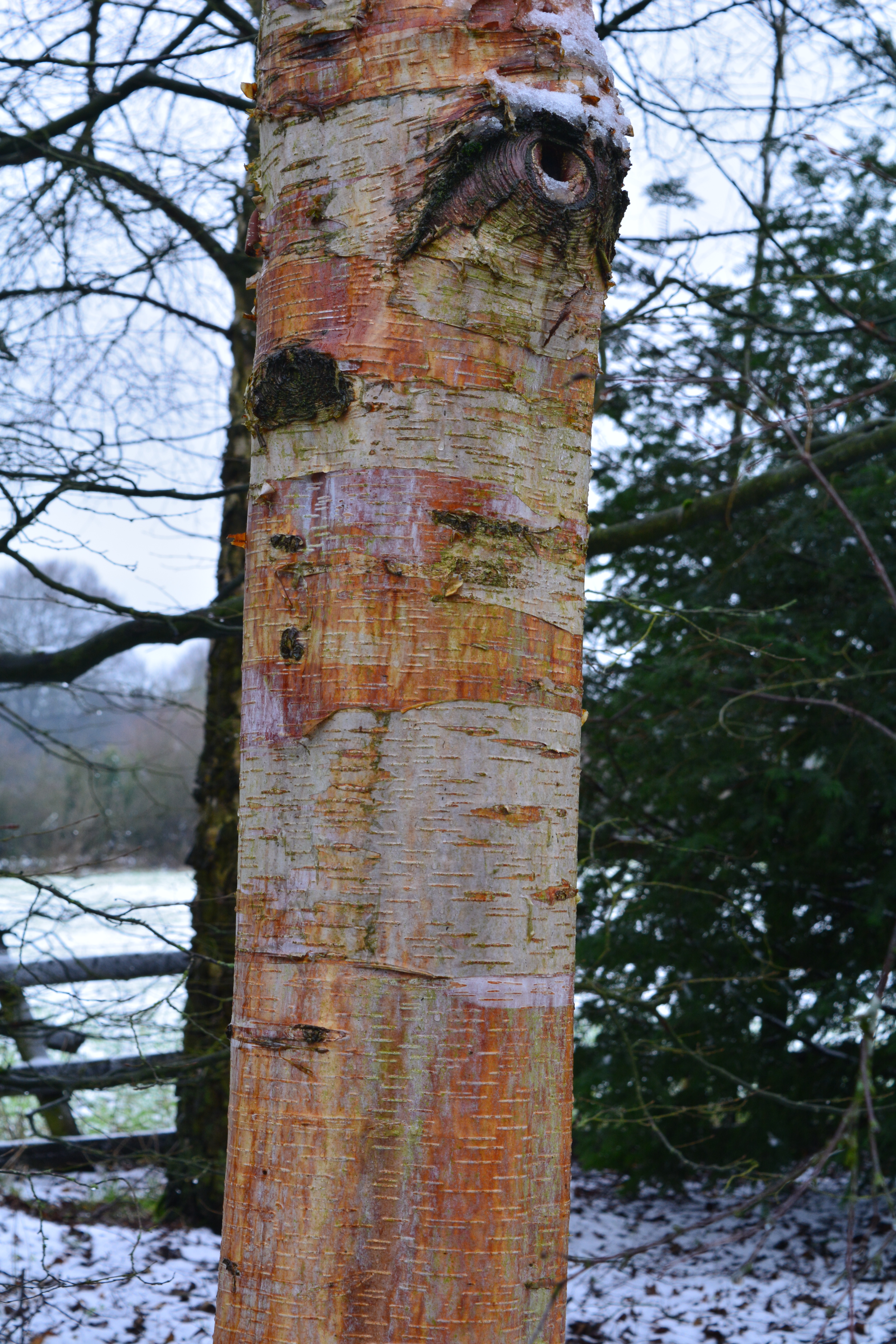
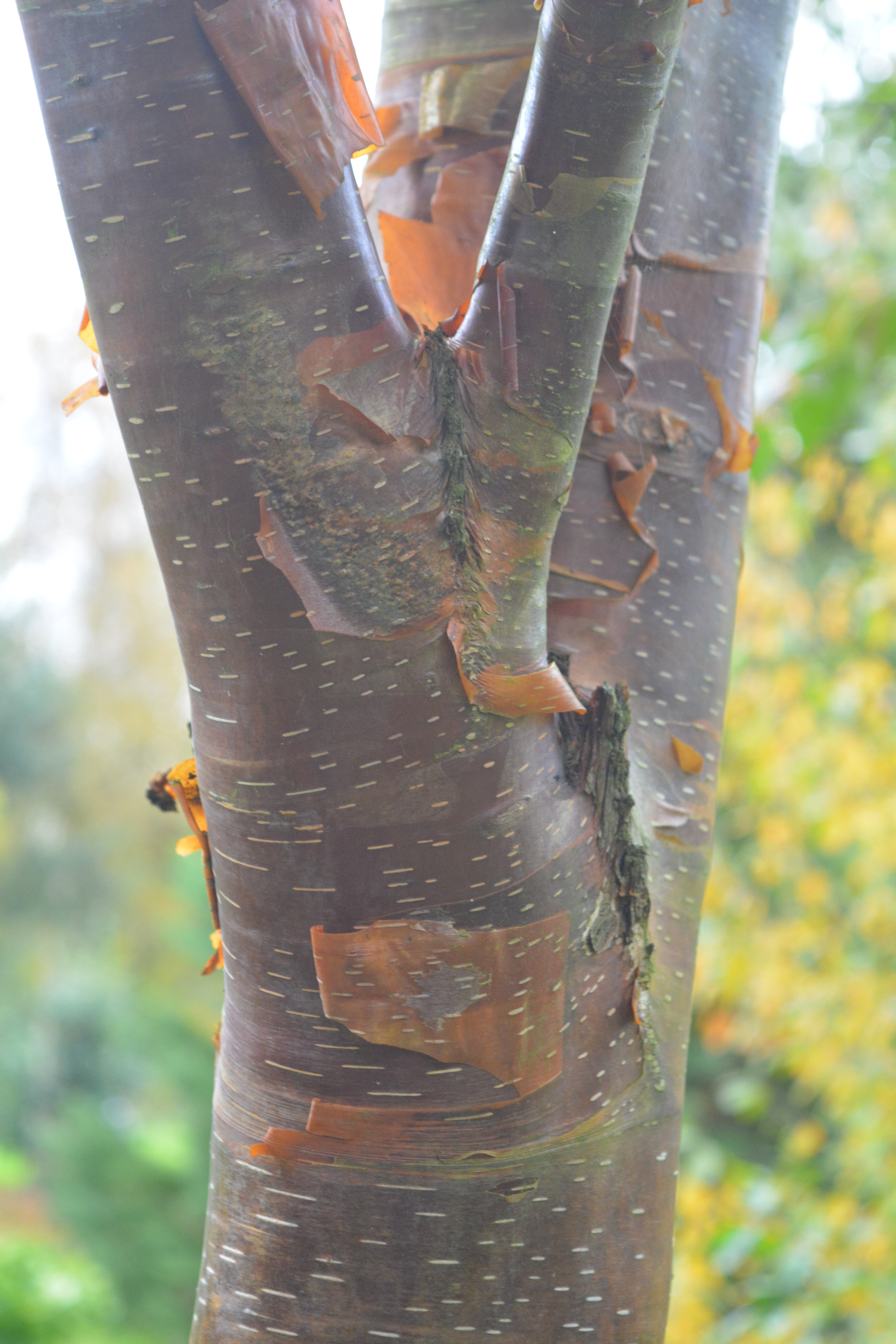
I shall finish the first part of our visit to the Bluebell Arboretum and Nursery with a look at a few specimens of my favourite trees the Birches, grown as usual for their incredible coloured and textured trunks. These three photos show how the trunks can vary from white to black with colours in between.

2015 10 19_6262 2015 10 19_6266 2015 10 19_6269 2015 10 19_6271 2015 10 19_6267

We shall continue our tour of this great little and relatively young arboretum in part 2.

Categories
garden photography gardens gardens open to the public National Garden Scheme ornamental trees and shrubs shrubs Staffordshire water in the garden

A new garden for monthly visits – The Dorothy Clive Garden

After visiting Trentham Gardens monthly throughout 2014 followed by Croft Castle Gardens in 2015 we searched for another local garden which changes with the seasons and has interest every month of the year.

We have chosen The Dorothy Clive Garden, a forty minute drive from home and a real favourite of ours for years. It is one of the gardens we share with family and friends who come to stay. The garden has a postal address which places it in Shropshire but the garden’s guide book says it is situated in neighbouring Staffordshire. Perhaps on one of our visits we may discover its real location.

The garden guide describes it as “An informal hillside garden.” On its website is an invitation to “Explore this charming English country garden. Enjoy great plants throughout the seasons, delightful views and tasty homemade food.” This sounds just up our street – great plants and tasty food!

The website continues describing the Dorothy Clive Garden as “A place to relax and unwind in an intimate, informal and inspiring setting. Experience a really welcoming and friendly environment.”

So it sounds as if we have chosen our feature garden for 2016 rather wisely.

For now here is a gallery of pics from a previous visit just as a taster.

Later this month we will make our first visit to the Dorothy Clive Garden and then create the first monthly post.


Categories
autumn autumn colours colours flowering bulbs garden design gardening grasses hardy perennials ornamental grasses ornamental trees and shrubs shrubs spring bulbs Winter Gardening winter gardens

New Look for our Gateway Planters

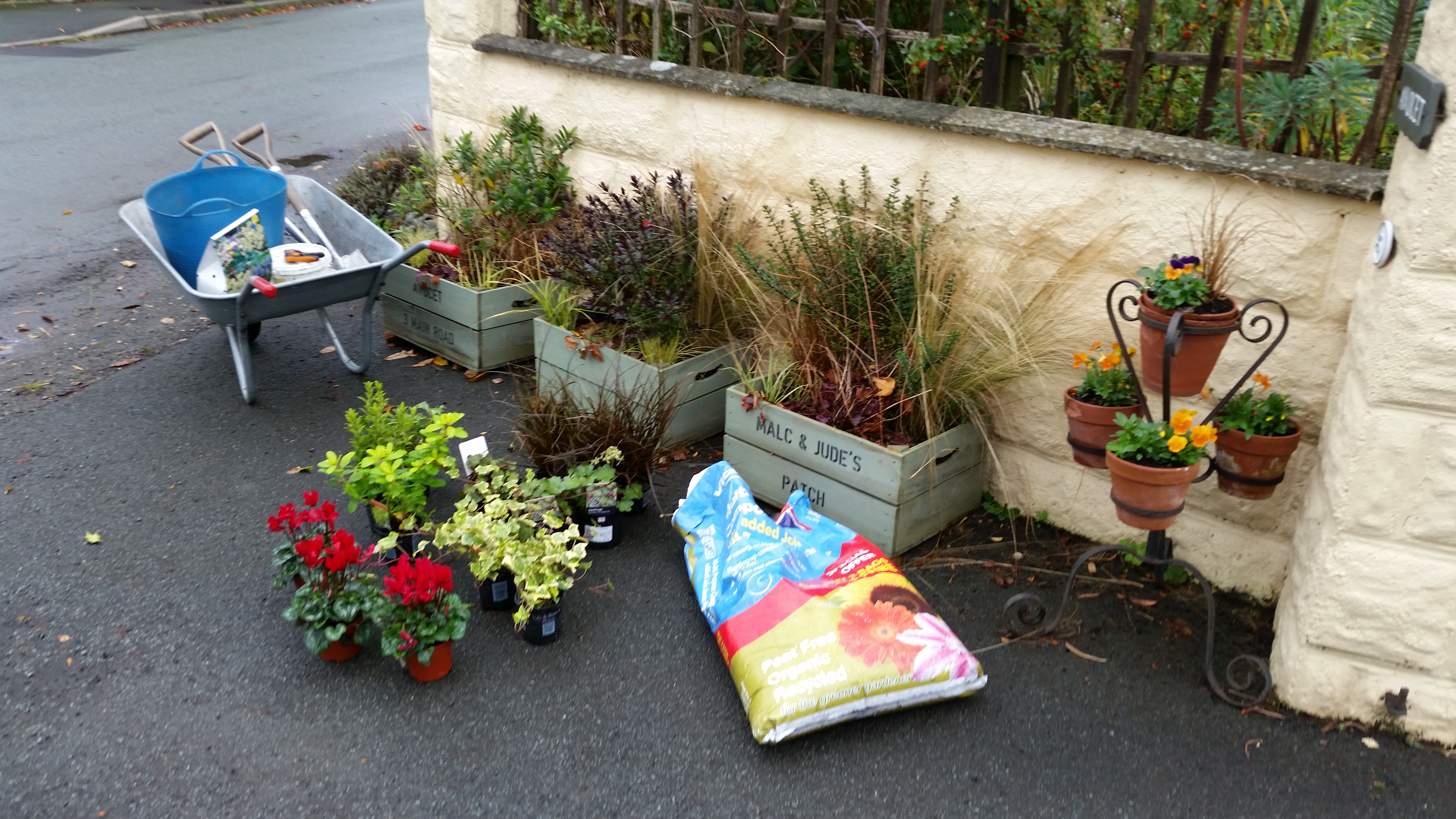
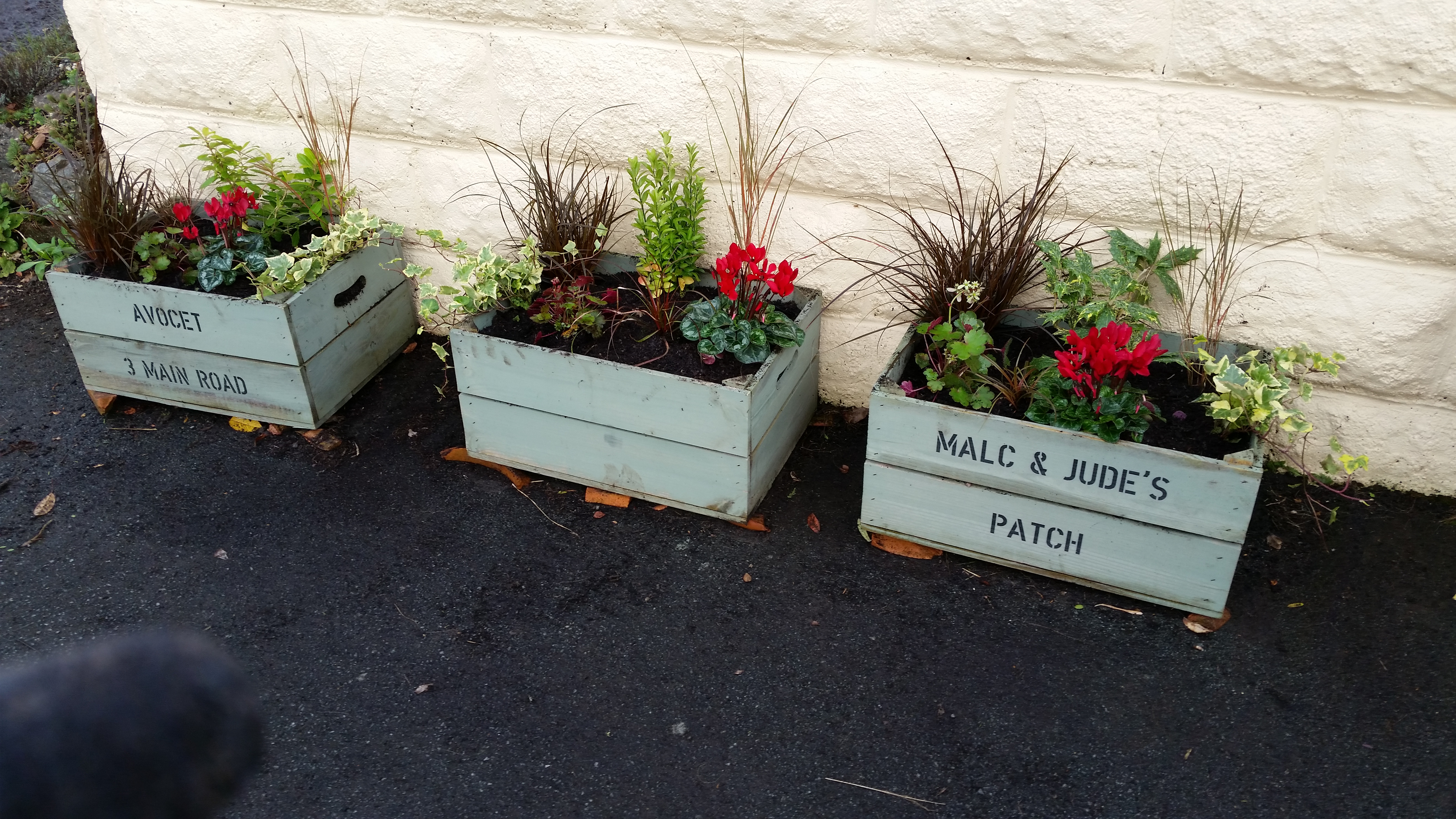
We change the plants in the wooden box planters we have at the bottom of our driveway to give the warmest welcome possible to visitors and to cheer up the entrance to the garden. We recently took out the summer display and changed it into a display more suited for the late autumn and to last through the winter. We often buy young plants to go in these boxes and this gives us a chance to grow them on before moving them into final planting places in the garden proper and it also gives us an opportunity to see how unknown plants perform.

We began by collecting together all the new plants, bags of bulbs, chicken manure pellets, multi-purpose compost and trowels. The summer plantings definitely looked in need of refreshing!

2015 11 01_7125 2015 11 01_7131 2015 11 01_7126 2015 11 01_7127

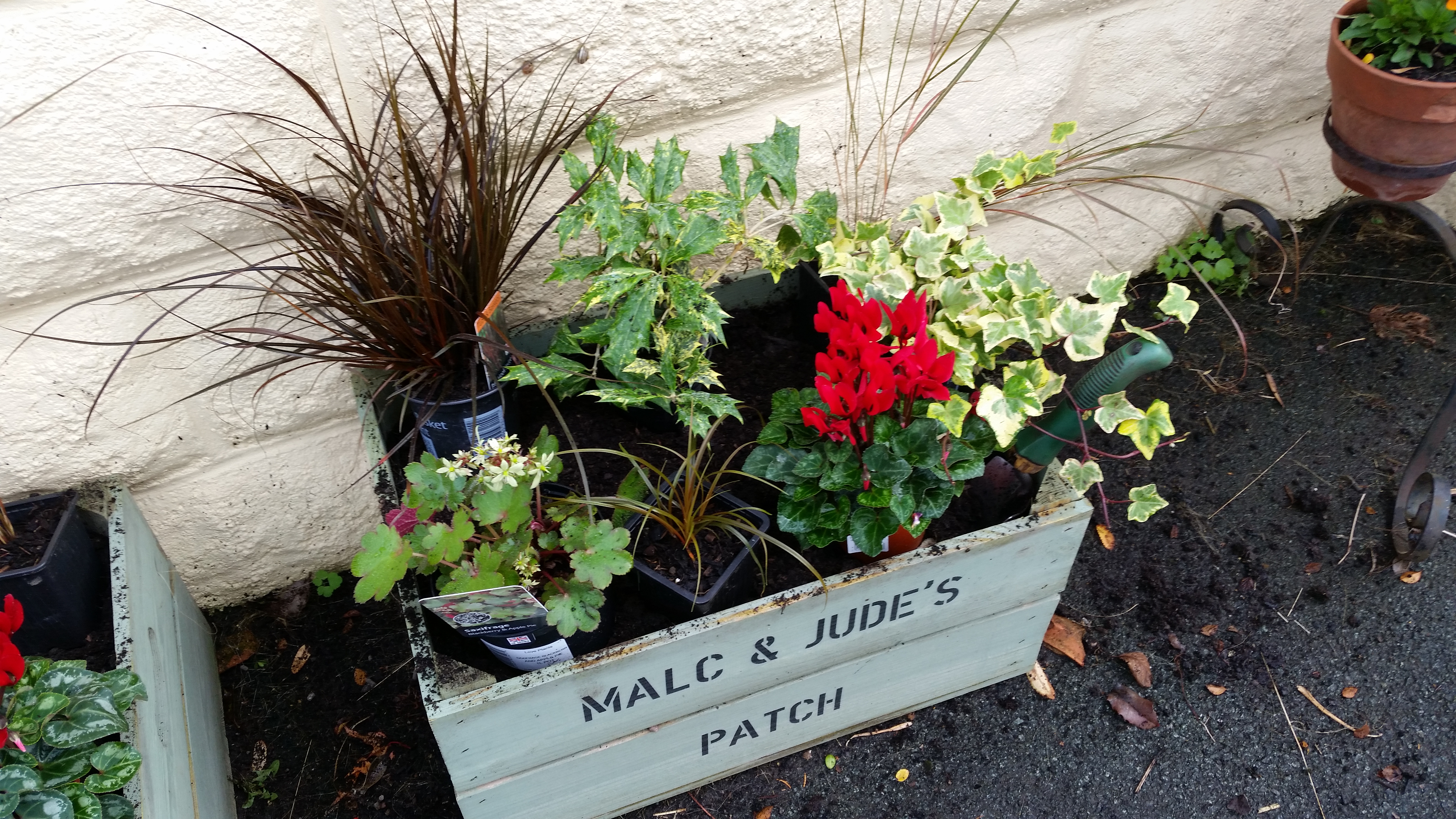
We had collected together some young evergreen shrubs, some deep red cyclamen and variegated ivies together with some richly coloured Uncinia rubra grasses.

2015 11 01_7128

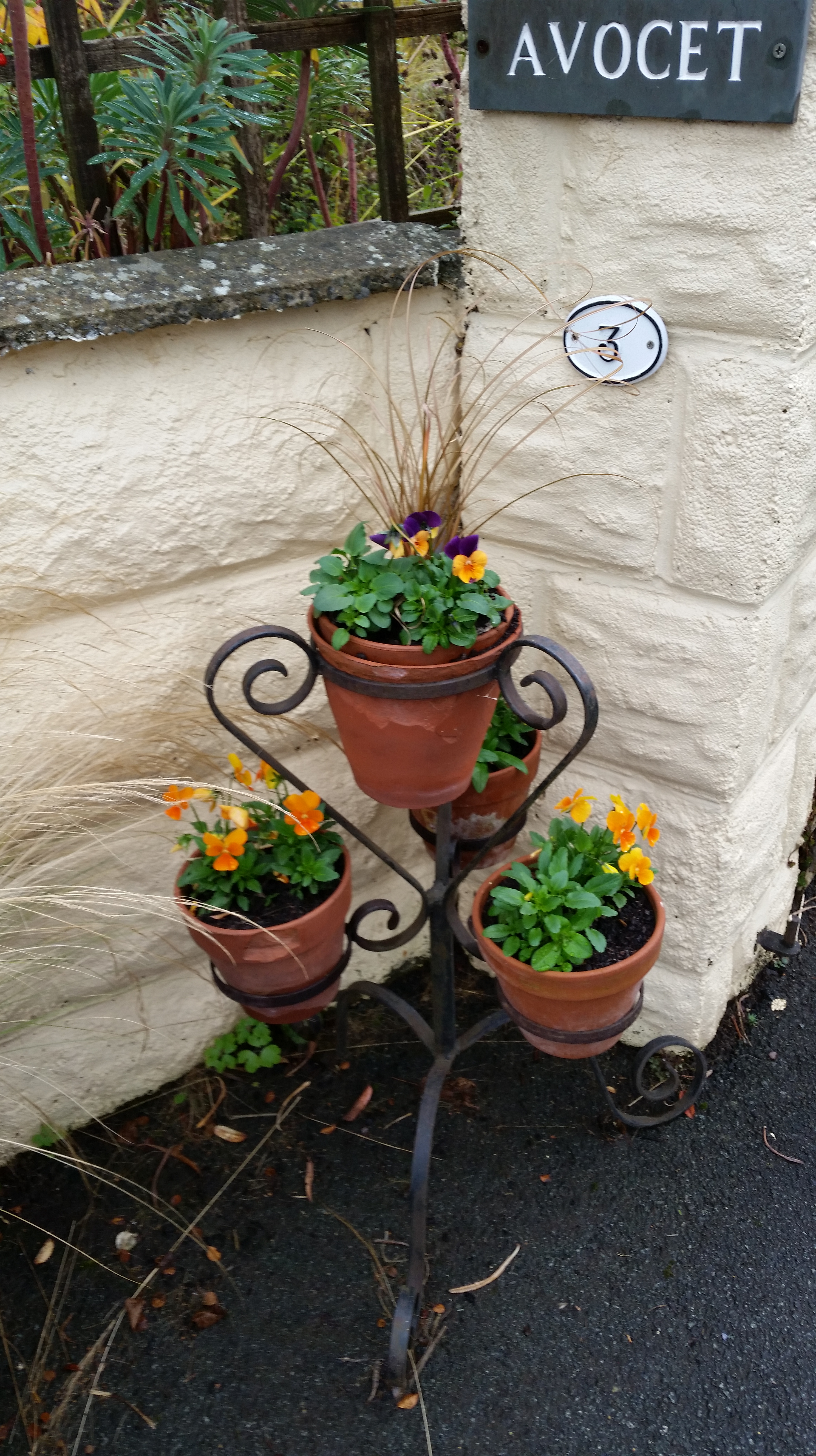
First job was to plant up the terra-cotta pots in the wrought iron plant stand with purple and yellow violas and some of our seedlings of our bronze evergreen grasses.

2015 11 01_7129 2015 11 01_7130

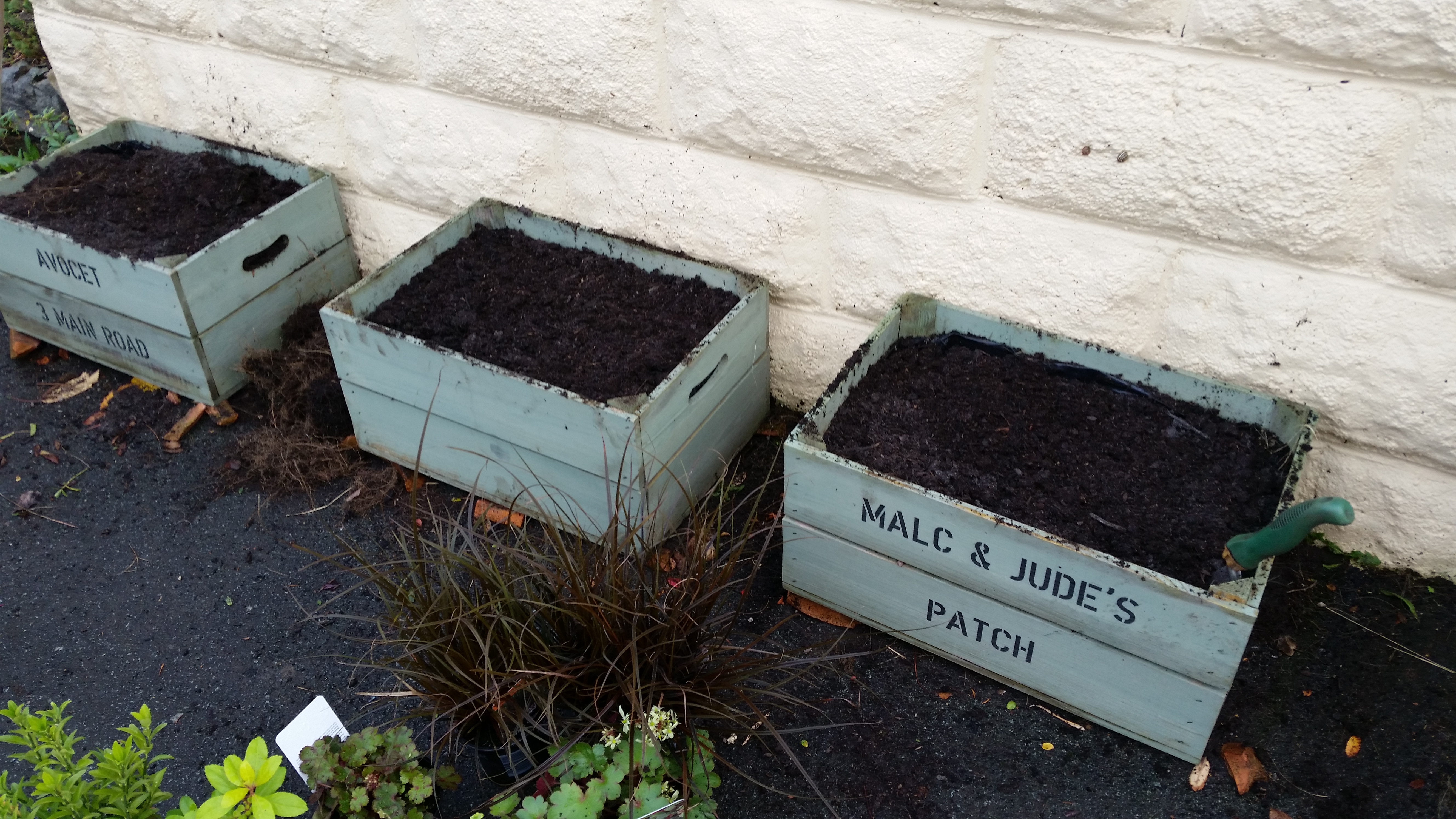
I cleared out the summer plants, removed the top 3 inches of compost and refreshed it with chicken manure pellets as fertiliser and fresh compost. While I did this Jude the Undergardener trimmed back the flowering stems on our hedge of Munstead Lavenders along the road edge and planted a mixture of bulbs in the narrow drive-side border.

2015 11 01_7133 2015 11 01_71352015 11 01_7134 2015 11 01_7132

Once refreshed and ready for planting we got going on the best part of the job, the planting up of the boxes.

2015 11 01_7136 2015 11 01_7138

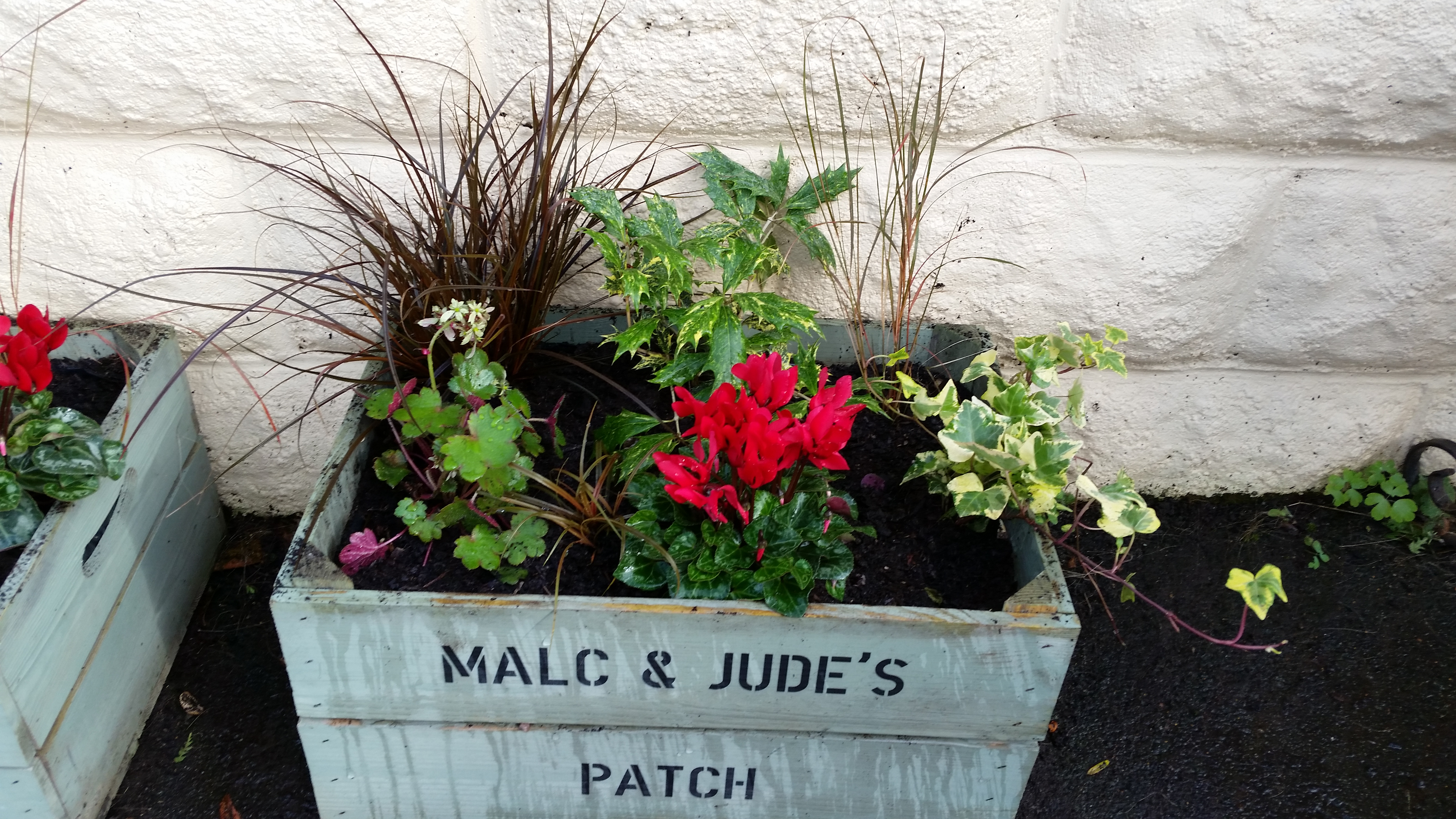
The plants were soon snuggled up to their new partners and the planters looked the part again. The plants removed earlier were loaded into the wheelbarrow ready to be planted out in the garden borders.

2015 11 01_7137  2015 11 01_7139 2015 11 01_7140 2015 11 01_7141

Ah! Now that looks better! That should cheer the garden entrance up for the winter very nicely.

2015 11 01_7143

Categories
birds colours flowering bulbs garden photography garden wildlife gardening grasses half-hardy perennials hardy perennials ornamental grasses ornamental trees and shrubs outdoor sculpture roses shrubs succulents Winter Gardening winter gardens

My Garden Journal – December

To celebrate the moving from 2015 into 2016 I thought an appropriate post to publish would be my final monthly garden journal entries for 2015.

This is the final month of reporting on my garden journal where I have been keeping track of what has been happening in our Avocet garden. December should be a month of cold nights, frosts and wintry showers but this year it has been a month of strong winds and rain accompanying mild temperatures. We have still only had one frost in this last bit of the year. Our Dahlias remain outside as we move into the first week of December as we are waiting for frosts to blacken their foliage which would allow us to prepare them for their winter rest.

Opening up my garden journal onto the first pages for December reveals photos of berries which are such a strong feature of our winter garden.

2015 12 28_7595_edited-1

My first entry for December reads, “The berries of our trees and shrubs give bright splashes of colour in the Winter Garden.”

My photos show berries of Hypericum, Sarcoccoca, various Hollies and one of our Sorbus.

2015 12 01_7338 2015 12 01_73362015 12 01_7334 2015 12 01_73552015 12 01_7363 2015 12 01_7366

We have many different Cotoneasters throughout the garden giving shiny berries in many red shades – ruby, scarlet, crimson – and one even has yellow berries. They are so easy to grow but add so much to the garden. Each variety has a different habit and foliage in different shades of green, different sizes, shapes and textures. But what is common to them all is that they are true favourites of our berry eating thrushes.”

2015 12 01_7354 2015 12 01_7357 2015 12 01_7358 2015 12 01_7362 2015 12 01_7364 2015 12 01_73682015 12 01_7377 2015 12 01_7340 2015 12 01_7365

The greenhouse features next in my December Journal as it is during this month that it fills up with tender plants which we want to overwinter.

“The greenhouse is very full and busy in December. Our Fuschia thalia after flowering outdoors for months is still full of bloom now but in the sheltered environment of the greenhouse. Accompanying this special Fuschia, our succulents are also sitting out winter under shelter, after spending the summer and autumn in the Rill Garden.” 

2015 12 28_7596_edited-12015 12 01_7323 2015 12 01_7322

I tried to show the uniqueness of the Fuschia and its incredibly bright colour with watercolours.

2015 12 28_7597_edited-1

My final quote for 2015 from the little book by Jenny Joseph, “Led by the Nose” appears as we turn the next page.

2015 12 28_7598_edited-1

Fragrance outdoors in this season is not so much a twinkle in the eye as a sniff in the nosmic imagination. You will see the tips of bulbs and look forward to being overcome by spring.” 

Below these words I share photos of a few of the flowers that are sharing their scent with us this month, roses and perennial wallflowers.

2015 12 01_7343 2015 12 01_7384 2015 12 01_7361_edited-1 2015 12 01_7398 2015 12 01_7376_edited-1 2015 12 01_7372

“Roses and Perennial Wallflowers invite us to get our noses close to their blooms so that we can enjoy the sweetest of scents. Other plants need us to rub their leaves before they share the secrets of the scent with us.” 

The accompanying pictures show two such plants, salvias and mints.

2015 12 01_7319 2015 12 01_73812015 12 01_7320

The colour yellow can cheer up the garden in the deep dark days of December, so I moved on to see what plants were giving us these golden tints.

2015 12 28_7599_edited-1

“On gloomy days in December when there is no sign or chance of sunshine, we really are grateful to plants that give us cheerful yellow flower and foliage.”

2015 12 01_7382 2015 12 01_7383 2015 12 01_7412 2015 12 01_7406 2015 12 01_7347  2015 12 01_7352_edited-1

Opposite my tour of our garden yellows I make mention of the members of the ?thrush family that share our garden with us in the winter.

“Let me introduce you to our Winter Thrushes, drawn in a stylised fashion.”  I hope you enjoy them.

2015 12 28_7600_edited-1

We next turn from the colour yellow to bright pinks, Nerines.

2015 12 28_7606_edited-1

“Nerine bowdenii is the shocking pink of winter. It is difficult looking at these dry bulbs to think that such bright and wonderfully shaped flowers can burst from them.”

2015 12 16_7522 2015 12 01_7339

Seed heads are the theme of the page opposite the Nerines.

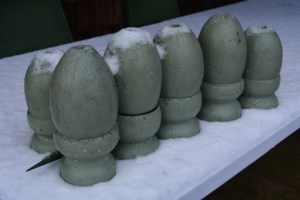
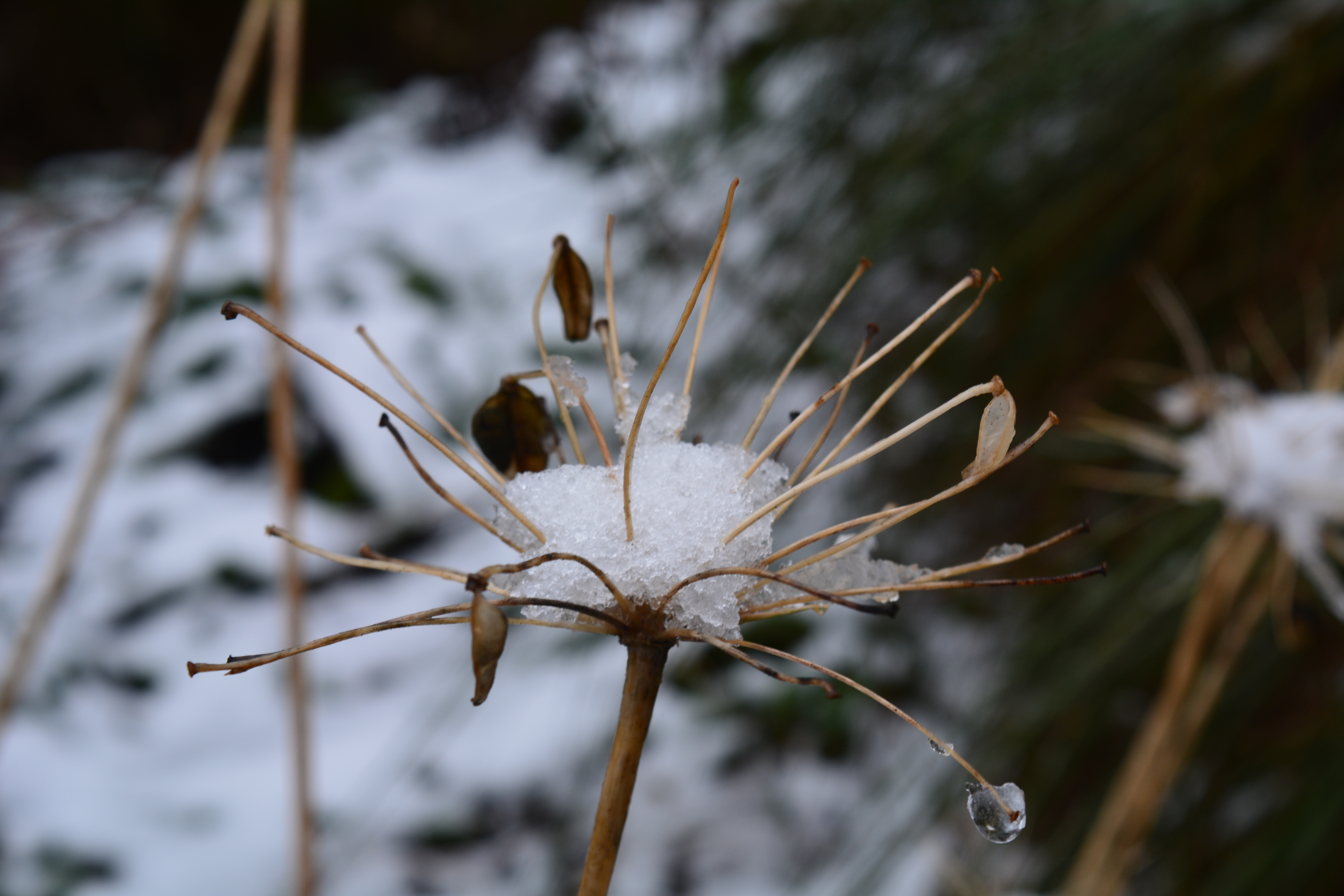
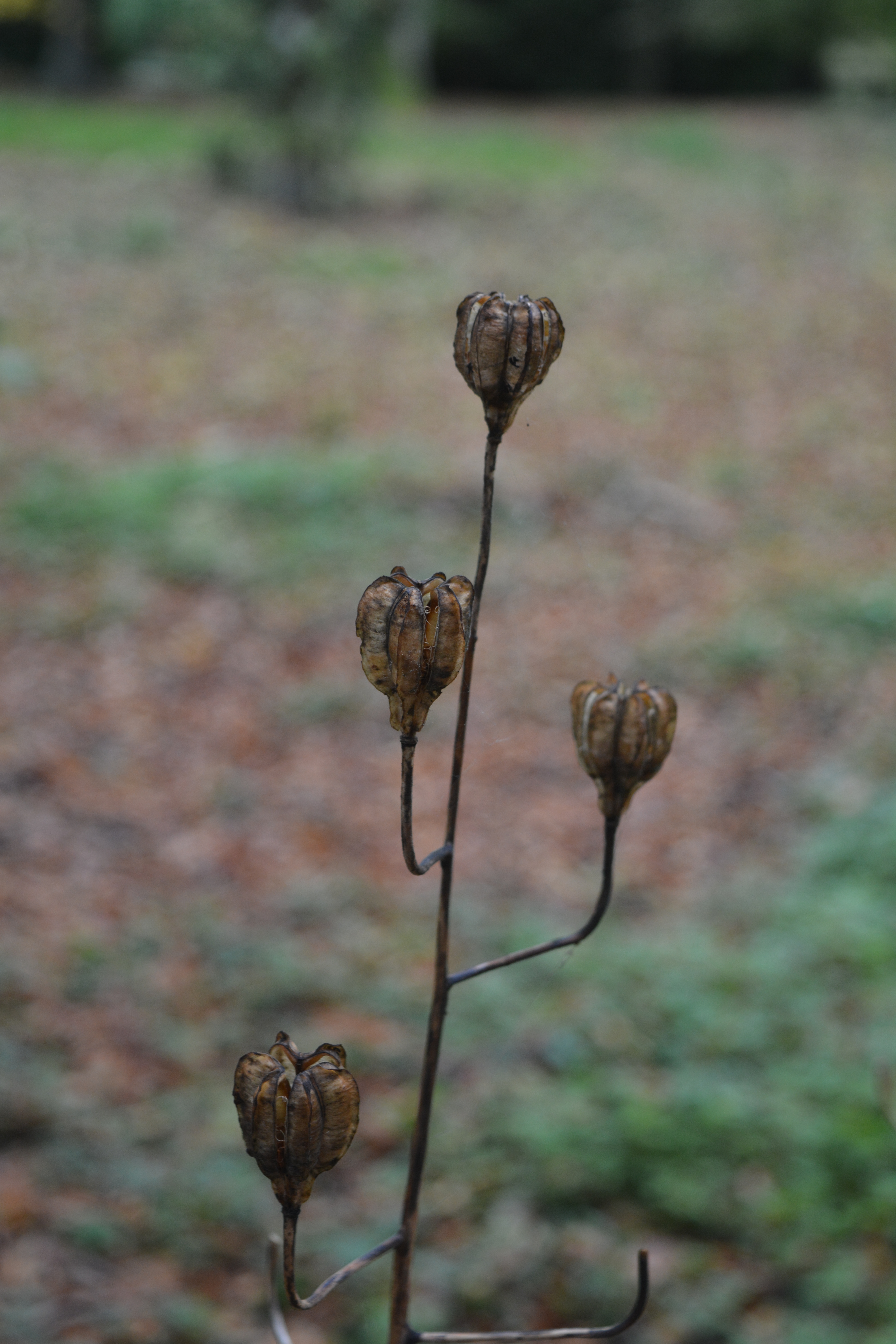
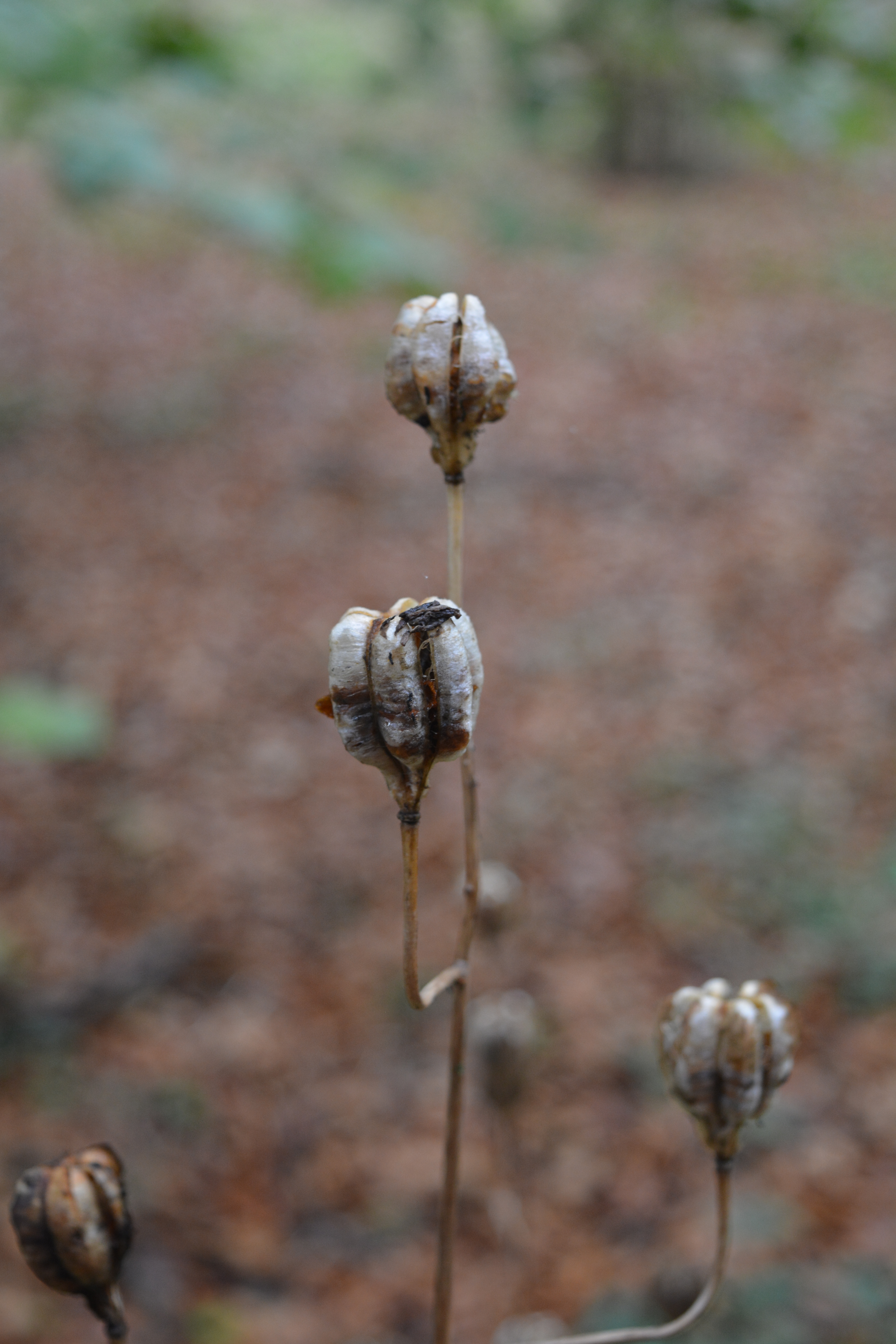
“Seedheads on perennials and grasses play such an important part in our Winter garden. We have even bought ourselves a trio of seedhead sculptures made from stoneware.”

2015 12 01_7353 2015 12 01_73492015 12 01_7350 2015 12 01_7392_edited-1

2015 12 01_7360 2015 12 01_7359

So now we turn the page to the very last entry in my 2015 Garden Journal.

2015 12 28_7607_edited-1

As December slowly comes to an end for 2015, we are already looking ahead. Jude’s little nursery is well-stocked with young plants which we will sell on our open days and to garden clubs who visit Avocet. The greenhouse keeps our tender plants warm and snug. They are patiently awaiting Spring 2016.”

2015 12 01_7317 2015 12 01_7318   2015 12 01_7333

Young plants that we are growing on for sale at next year’s open days are sheltering in a plastic mini-greenhouse to encourage them to grow strong and healthy ready for next year. They look pretty sad through the winter though as most are herbaceous perennials.

2015 12 01_7337


Categories
Uncategorized

2015 in review

The WordPress.com stats helper monkeys prepared a 2015 annual report for this blog.

Here’s an excerpt:

The concert hall at the Sydney Opera House holds 2,700 people. This blog was viewed about 13,000 times in 2015. If it were a concert at Sydney Opera House, it would take about 5 sold-out performances for that many people to see it.

Click here to see the complete report.

Categories
allotments community gardening fruit and veg garden furniture gardening recycling

Trug, trug, trug and trug!

It is strange how the word trug has come to mean slightly different things over the last decade or so. Until then the word trug referred to the wooden, hand-made garden carriers first made in Sussex and thus called the Sussex Trug.

This post is specially for one of my followers – she will know who she is – but I hope everyone likes it too.

The Sussex Trugs are still made from chestnut and willow, the  sweet chestnut being used for the frame and willow for the body. The willow is a by-product of the cricket bat industry and the chestnut comes from coppiced wood.

We use our Sussex Trug in the garden when we harvest fruit from our trees, to hold bulbs ready to be planted and we find them convenient for lots of small jobs. We have been using Sussex Trugs for 20 years or so and we are only on our second one – they last for ages!

2015 12 16_7545

We also have a trug which we use for collecting cut flowers from the garden. This one is made from willow wands. This one has a flat bottom rather than the boat shape of its Sussex cousins so is great for holding our cut flowers as we cut them from the garden. The photo shows it being used to hold Nerine bulbs ready for planting.

2015 12 16_7522

The latest garden carrier to be given the name trug is made from recycled plastic and has proven itself to be one of the most useful pieces of garden equipment to hit the garden centres for years. These are available in lots of colours, sizes and dimensions so have a wide variety of uses around the garden.

We use ours when we are harvesting, pruning in the borders, watering and spreading compost as a mulch on our soil. On our allotment we even used a shallow but wide one to create a small wildlife pond. Every gardener has their own range of uses for the plastic trug.

2015 12 16_7520 2015 12 16_7546_edited-1 2015 12 16_7550  2015 12 16_7547 2015 12 16_7549

Trugs originated in Sussex, where they have been made for two centuries, because there was plenty of coppiced woods with Sweet Chestnut trees and plenty of willows found in marshy areas of the county. The word trug originated from the Anglo-Saxon word trog meaning a wooden vessel or boat-shaped article. They were used as measures or scoops for grain.

So just one more trug to show, the new veg trug. These big wooden raised beds for growing vegetables in are sold by several companies now but they are all virtually the same. The veg trug provides a growing space which is raised to a comfortable working height and allows anyone with the smallest space, even a patio, to grow vegetables and herbs. On our allotment site we have three which we use for our young gardeners to use. The first one we had was planted up by them as a pollinators garden. The other two are recent acquisitions so have yet to be planted by the youngsters of Bowbrook Allotment Community.

We spent a sunny spring day planting up the trug. The children worked with their parents, grandparents and committee members planting up herbaceous perennials and watering them in.

2015 06 28_3316 2015 06 28_3314 2015 06 28_3304 2015 06 28_3305 2015 06 28_3303

The children have been looking after their pollinator garden ever since. They particularly enjoyed the watering!

2015 08 06_4488_edited-1 2015 08 06_4616

Jude and friend Sherlie made up the two new trugs which arrived flat packed. In the spring the children will plant them up and will then have a trio of trugs to look after.

2015 11 01_7109-2

And here are our two new trugs built by Sherlie and Jude now filled with compost and planted with lots of different bulbs of every possible colour shape and size. Can’t wait until Spring wakes them up!

2015 12 25_7579 2015 12 25_7578

Categories
Uncategorized

Christmas Greetings from the Green Bench

Christmas Greetings to everyone who reads my musings from my Green Bench.

Three pictures of our December garden for you to enjoy.

2015 12 01_7334_edited-1 2015 12 06_7489_edited-1 2015 12 16_7544_edited-1-1

Categories
autumn autumn colours climbing plants colours flowering bulbs garden photography gardening gardens gardens open to the public hardy perennials Herefordshire irises light light quality National Trust ornamental trees and shrubs poppies roses shrubs The National Trust walled gardens Winter Gardening winter gardens

Croft Castle – month by month – the final report

Illness has prevented us making our monthly visit to Croft Castle where I would take photographs and report back about all that is going on in the gardens of this Herefordshire property run by the National Trust. Thus this final visit for the year took place in early December and will be a joint report for November and December together.

2015 12 06_7440 2015 12 06_7441 2015 12 06_7442 2015 12 06_7443 2015 12 06_7444 2015 12 06_7446 2015 12 06_7447 2015 12 06_7448 2015 12 06_7449 2015 12 06_7450

2015 12 06_7451 2015 12 06_7452 2015 12 06_7453 2015 12 06_7454 2015 12 06_7455 2015 12 06_7456 2015 12 06_7457 2015 12 06_7459 2015 12 06_7460 2015 12 06_7461

2015 12 06_7462 2015 12 06_7463 2015 12 06_7464 2015 12 06_7465 2015 12 06_7466 2015 12 06_7467 2015 12 06_7468 2015 12 06_7471 2015 12 06_7472 2015 12 06_7473

2015 12 06_7474 2015 12 06_7475 2015 12 06_7476 2015 12 06_7477 2015 12 06_7478 2015 12 06_7479 2015 12 06_7480 2015 12 06_7481 2015 12 06_7482 2015 12 06_7483

2015 12 06_7484 2015 12 06_7486 2015 12 06_7485 2015 12 06_7487 2015 12 06_7488 2015 12 06_7489 2015 12 06_7496 2015 12 06_7495 2015 12 06_7497 2015 12 06_7490

2015 12 06_7498 2015 12 06_7499 2015 12 06_7500 2015 12 06_7501 2015 12 06_7502 2015 12 06_7503 2015 12 06_7504 2015 12 06_7507 2015 12 06_7508 2015 12 06_7509

2015 12 06_7510 2015 12 06_7511 2015 12 06_7512 2015 12 06_7513 2015 12 06_7514 2015 12 06_7515 2015 12 06_7516 2015 12 06_7517 2015 12 06_7518 2015 12 06_7519 2015 12 06_7445 2015 12 06_7445_edited-1 2015 12 06_7458 2015 12 06_7458_edited-1 2015 12 06_7470

2015 12 06_7470_edited-1 2015 12 06_7469_edited-1 2015 12 06_7494_edited-1 2015 12 06_7491_edited-1 2015 12 06_7492_edited-1 2015 12 06_7493_edited-1 2015 12 06_7505_edited-1 2015 12 06_7506_edited-1


Categories
autumn autumn colours colours garden photography gardening hardy perennials ornamental trees and shrubs poppies roses Shropshire shrubs Winter Gardening

My Garden Journal – November

The penultimate visit to my garden journal for this year is here already, and I write this as November comes to a close. The strong winds of November howl around the house and roar down our chimneys. The rain has persisted for virtually every day of the month along with the strong winds.

My journal for the dreary month of November began “Our wonderful, heart warming Indian Summer lasts until the very last day of October, so we waited for the first day of November hoping for the continuation of warm, bright days. The eleventh month is usually a time of mists, fog and heavy dews.”

Jenny Joseph wrote of November, “Much of November belies the dread attached to its reputation, the shutting down, the gloom, the fog, the dark wet, the cold and the colds, autumn shrinking into winter.”

2015 11 30_7310_edited-1

On November 1st we woke to a heavy dew, thick fog and the rest of the day was damp and dreary. The whole first week was the same. Oh dear!

Thank goodness for our garden which on the dreariest of days provided bright, colourful sparks. In every border there is a flower blooming its heart out to please us and of course any brave bees out on the wing in search of pollen and nectar.

All the photos below were taken on the same day in late November.

2015 12 01_7376_edited-1 2015 12 01_7361_edited-1 2015 12 01_7412 2015 12 01_7406 2015 12 01_7398 2015 12 01_7389 2015 12 01_7387 2015 12 01_7382 2015 12 01_7384 2015 12 01_7383 2015 12 01_7381 2015 12 01_7380 2015 12 01_7379 2015 12 01_7378 2015 12 01_7374 2015 12 01_7372 2015 12 01_7371 2015 12 01_7370 2015 12 01_7343 2015 12 01_7346

I next wrote about a real favourite plant of mine, a shrubby Buddleja rarely grown but oh so beautiful! Buddleja lindleyana.

We grow an unusual Buddleja, which is still flowering this month. Buddleja lindleyana hails from china and boasts beautiful two-tone purple flowers. Racemes arch from the tip of every arching stem. Sadly it is rarely grown. I take cuttings every November to give to friends. They love it too!”

2015 11 30_7311_edited-1

I enjoyed painting it too!

2015 11 30_7312_edited-1

I took a couple of photos as well which you may like to see, as they illustrate the colour range found within the flowers.

2015 10 28_6954 2015 10 28_69552015 09 21_5471 2015 09 21_5469

On the opposite page from my Buddleja lindleyana painting I have featured another special plant again rarely grown. This one though is a tree, an Acer.

“A young Acer tree is growing in our front garden. At this time of the year its leaves turn into the colours of fire. Its leaf petioles glow red. Acer pectinatum – a very special tree!”

2015 10 26_6826-2 2015 10 26_6830-22015 10 26_6827-2 2015 10 26_6838-2

Turning the journal’s page over we have a mouth watering page about apples! and on the opposite page I look at our Viburnums.

2015 11 30_7313_edited-1

“By this time of the year we have usually harvested our tree fruit and it is safely in store. This year we are still picking apples, some varieties should have been harvested by early September.” 

I reveled in the chance to get out the watercolours and study two tasty and very colourful apples, Scrumptious and Red Falstaff which grow one either side of the green house door.

2015 11 30_7314_edited-1

I moved on to consider the Viburnum shrubs putting on performances in our garden this month. “Various Viburnums give Winter interest and start their show now in mid-November. Their show is a profusion of gently coloured flowers, scent and shining red and black berries.”

2015 12 01_7341 2015 10 26_6950-22015 12 01_7375-1 2015 09 24_5834 2015 09 24_5888 2015 09 24_5836

More shrubs graced the next few pages too, deciduous Euonymus and a Hydrangea.

2015 11 30_7315_edited-1

“Our deciduous Euonymus give us so many shades of pink as they metamorphose into their Autumn personas.”

2015 10 19_6224-1  2015 10 26_6749-2 2015 10 26_6837-2

At the bottom of this page beneath the Euonymus I just found room for a pic of the thistle-like Silybum maritimum.

“The teal-green and silver foliage rosette will give us these colours through the winter. In Spring flowering shoots will creep upwards full of promise.”

2015 10 26_6839-2

Another all time great of the shrub world is featured on my next page in the journal, A Hydrangea that gives us flowers that change colour, foliage that changes colour and a most unusual shaped leaf for a Hydrangea. It is Hydrangea quercifolia.

I wrote of it, “Hydrangea quercifolia is giving its all in the garden with white flowers turning pink and then finally rust. Autumn turns its leaves from bright apple green through to ruby red.” 

Its name gives a clue to its leaf shape as quercifolia means simply “oak leaved”. Our specimen has an extra attribute in that in Summer on humid days it emits a sweet honeyed scent. As far as I know they are not supposed to be graced with scent of any kind let alone one so special.

2015 11 27_7283 2015 11 27_7284 2015 11 27_7285 2015 11 27_7286 2015 11 27_7280 2015 11 27_7281 2015 11 27_7282 2015 12 01_7401-1

My last double page spread is all about Persicarias, a really useful perennial for any garden with hints of the new perennial movement or a nod towards the Prairie style planting. We love both these styles so we grow several different ones.

2015 11 30_7316_edited-1

“A plant that gives us great pleasure in the Autumn is the Persicaria. We grow one type for its flowers and seed heads and another for its incredibly coloured and marked foliage. Persicaria amplexicaulis have poker-like flowers in various shades of red, pink and white followed by chocolate coloured seed heads.”

2015 12 01_7346 2015 09 21_5514 2015 09 21_5511 2015 09 21_5509 2015 10 10_5932 2015 10 10_5948

“Persicaria virginata gives us wonderfully coloured and unusual marked foliage with the addition of tiny white flowers.”

2015 10 10_5949 2015 10 10_5921 2015 10 11_5996 2015 10 11_5998 2015 10 11_5997

So that is the November visit to my journal. Next month will see me fill up my lovely little “Moleskine” note book as my December thoughts, photos and paintings bring the journal to an end for 2015.

This Veggie Life

A Vegetarian | Nature Lifestyle Blog

Rambling in the Garden

.....and nurturing my soul

The Arch City Gardener

Journeys In St. Louis Gardening and Beyond

Garden Dreaming at Châtillon

Consult the genius of the place

Storyshucker

A blog full of humorous and poignant observations.

gardeninacity

Notes from a wildlife-friendly cottage garden

PlayGroundology

...an emerging social science

The Official Blog of British Wildlife

'The most important and informative publication on wildlife of our times' - The Independent. This blog is a member of The UK & Ireland Natural History Bloggers group: www.uknhb.blogspot.com

iGrowHort

Inspire - Cultivate - Grow Native Plants - Restore Landscapes

Bishops Meadow Trust

To create and protect a semi-natural wild space for the people of Farnham to enjoy and experience an array of British wildlife in our town

Gardening with Children

The www.gardeningwithchildren.co.uk Blog

UKbirdingtimeline

birding through the seasons, why birds matter and how to conserve them

NATURE WALKER

with a camera in hand

Jardin

Transform your outdoor space

Eva's space

My allotment, cooking and other interests

Old School Garden

my gardening life through the year

LEANNE COLE

Trying to live a creative life

fromacountrycottage

trying to live as lightly as possible on our beautiful planet

Good Life Gardening

Nature lovers from Leicester living the good life.

mybeautfulthings

Finding the beautiful in the everyday

mawsonmichelle

Michelle's Allotment

In and Out of My Garden

thoughts from and about my garden

Greenhousing

Big plans for a small garden

The Scottish Country Garden

A Walled Country Garden in South East Scotland

The Fruity Chicken

Life at the fruity chicken

willowarchway

Off grid living. Self sufficient. "PERMAGANICS RULE".

St Anns Allotments

Nottingham's Grade 2* Listed Allotments and Community Orchard

Manifest Joy Harvests

a journey in suburban vegetable gardening

Allotmental

The madness of growing your own

Penny's Garden: a harvest beyond my front door

A novel approach to vegetable gardening

arignagardener

Sustainable living in the Irish countryside.

NewEnglandGardenAndThread

Master Gardener, amateur photographer, quilter, NH native, and sometimes SC snowbird

dianajhale

Recent work and work in progress and anything else that interests me

planthoarder

a chaotic cottage gardener

Lens and Pens by Sally

a weekly blog that creates a personal philosophy through photographs and words

Dewdrops and Sunshine

Stories from a sassy and classy Southern farmbelle.
The Pyjama Gardener

Simple Organic Gardening & Seasonal Living

gettin' fresh!

turning dirt into dinner

JOY...

today the world is created anew

Garden Birds

Notes from a Devon garden

ShootAbout

Life Through The Lens

Adapting Pixels

A photography blog showcasing the best photography pictures and videos on the internet

Wildlifegardening's Blog

Just another WordPress.com site

naturestimeline

personal observations from the natural world as the search continues for a new approach to conservation.

LATEBLOOMERBUDS

The Wonders of Life through my Eyes, my Heart, my Soul