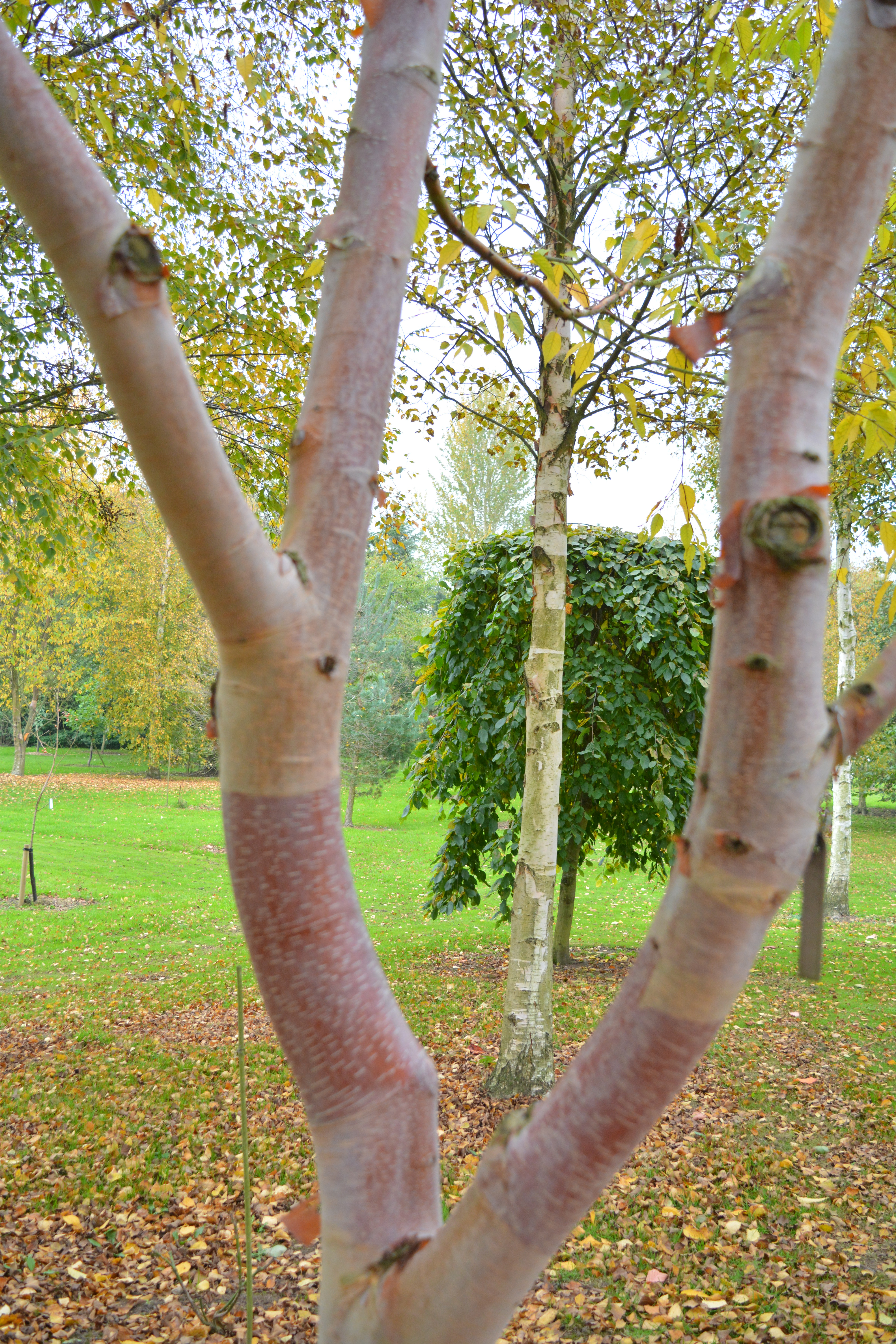
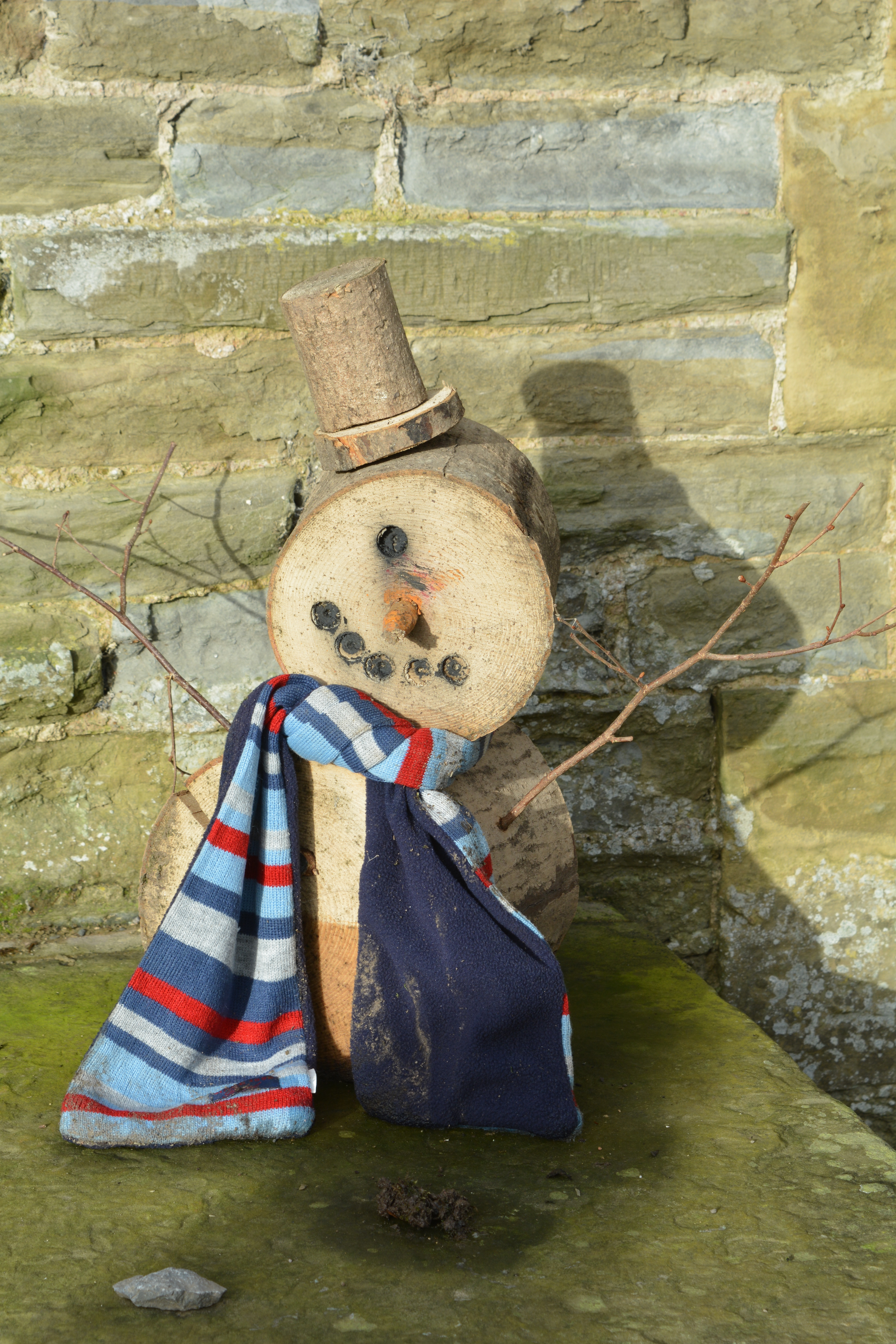
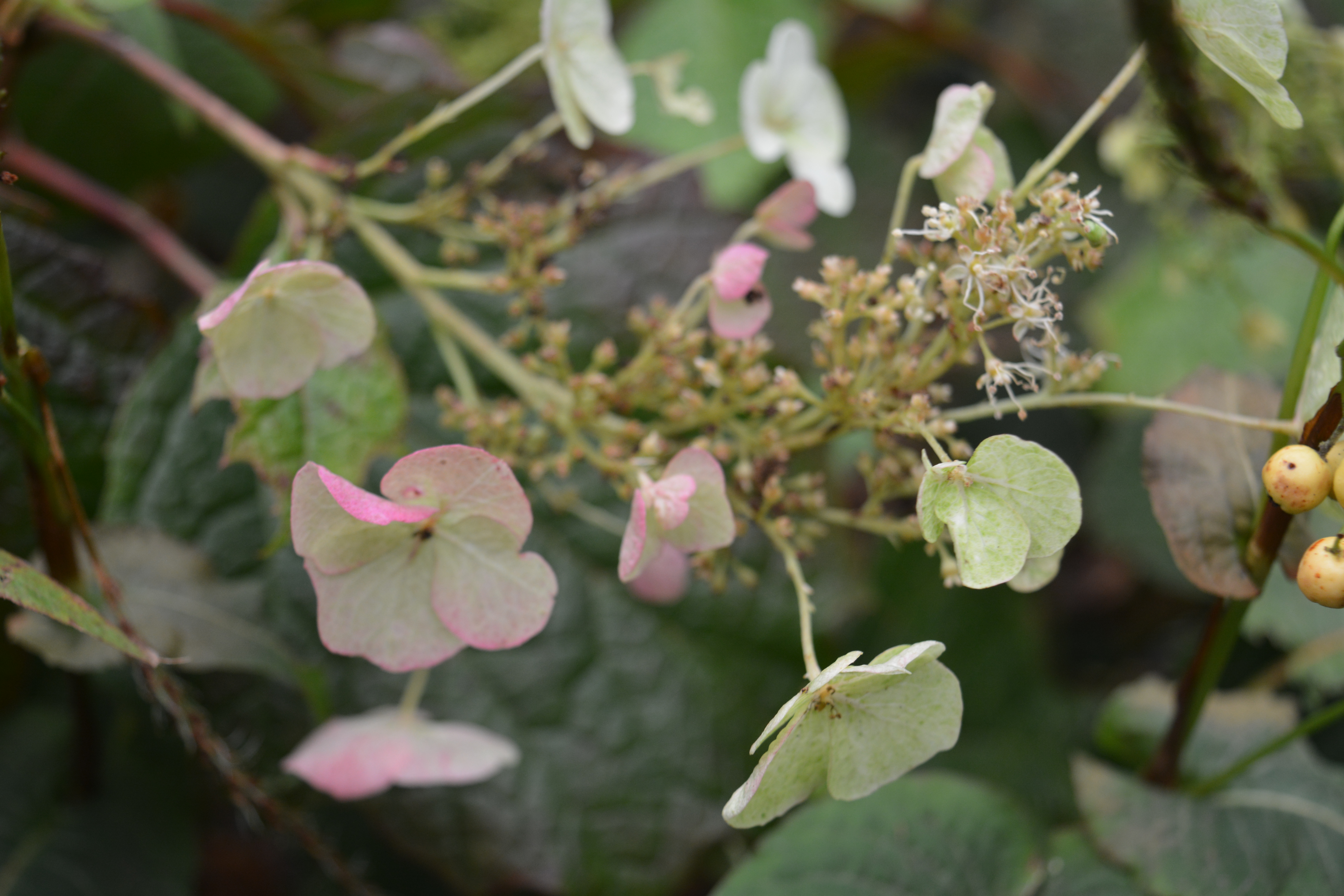
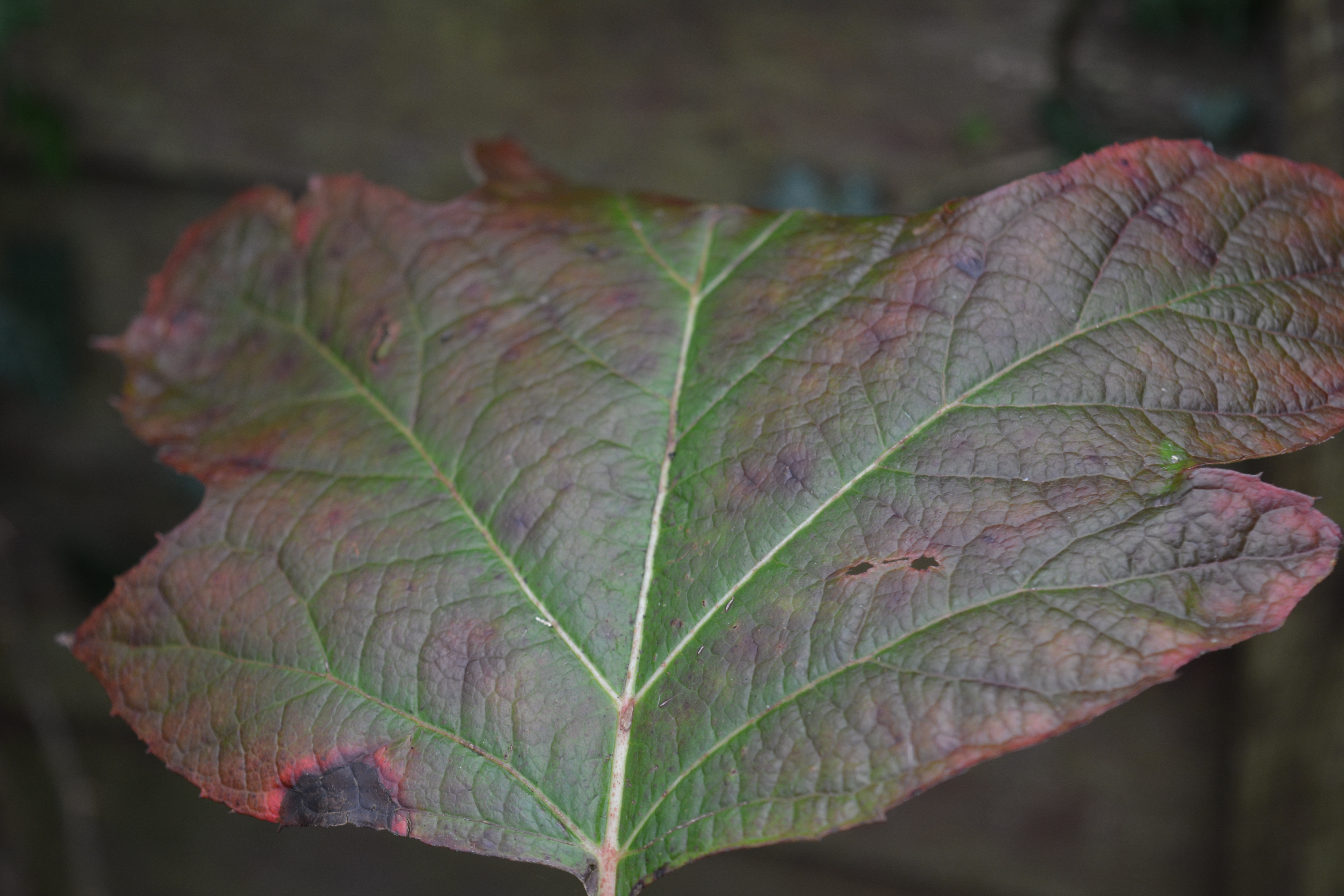
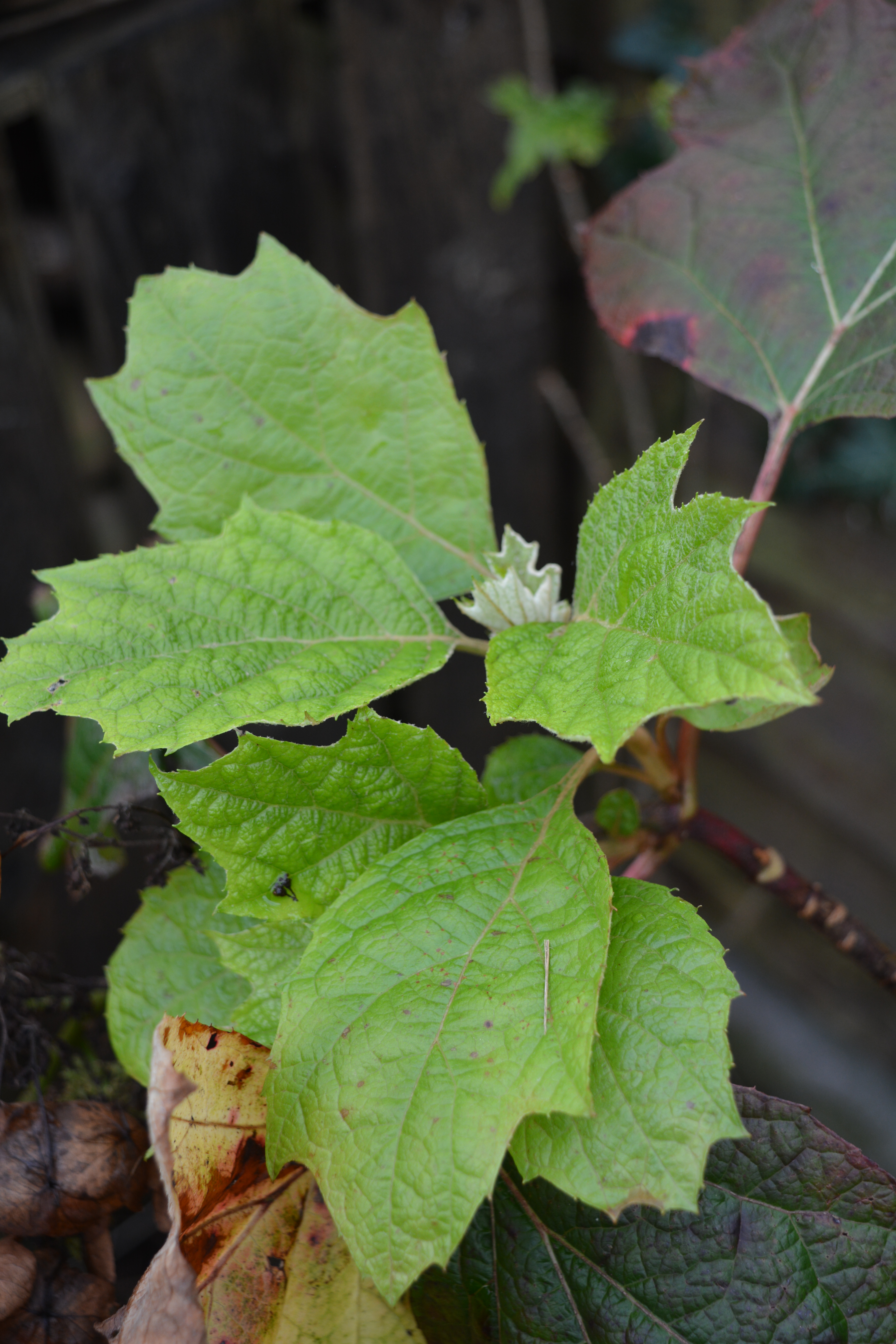
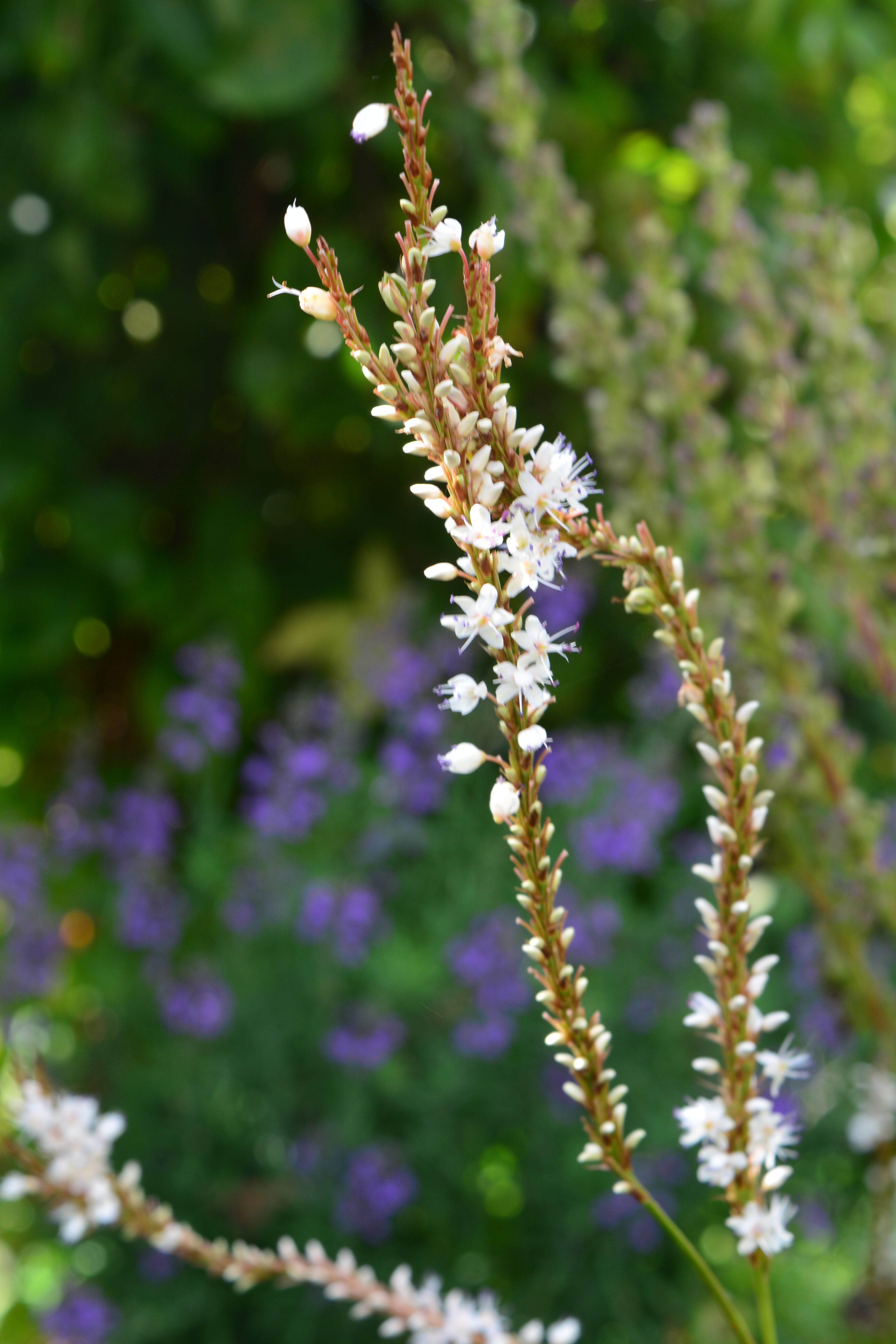
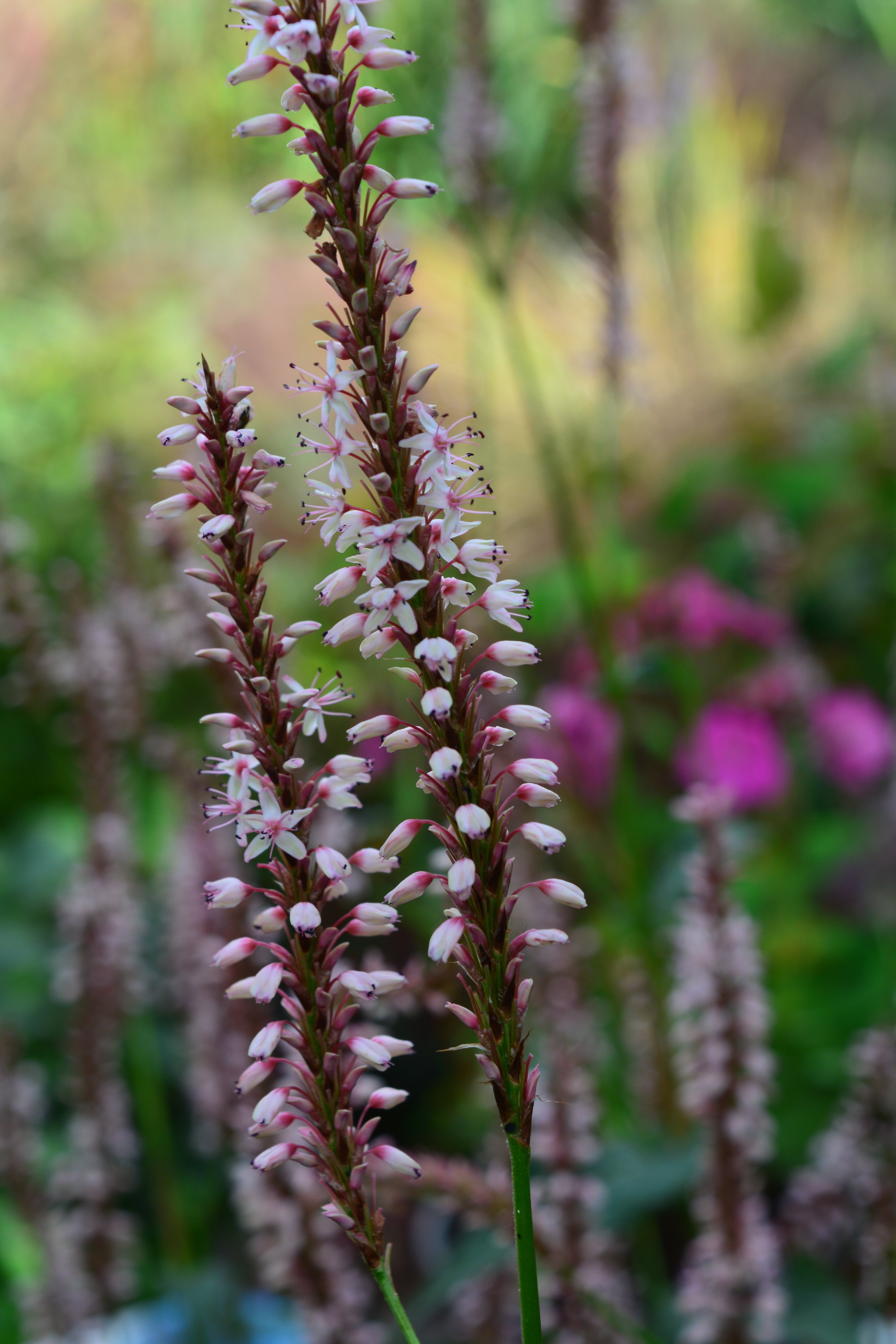
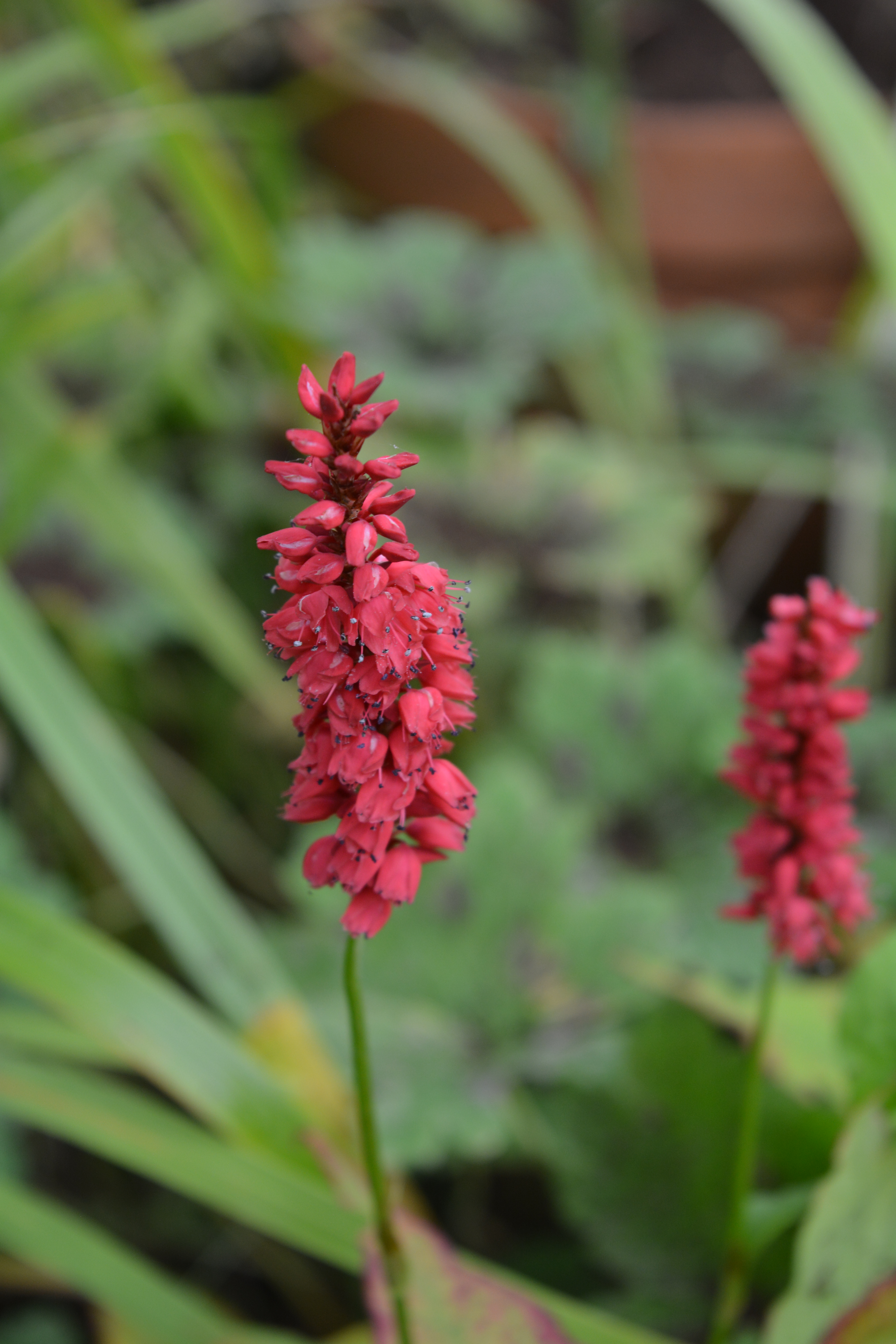
Christmas Greetings to everyone who reads my musings from my Green Bench.
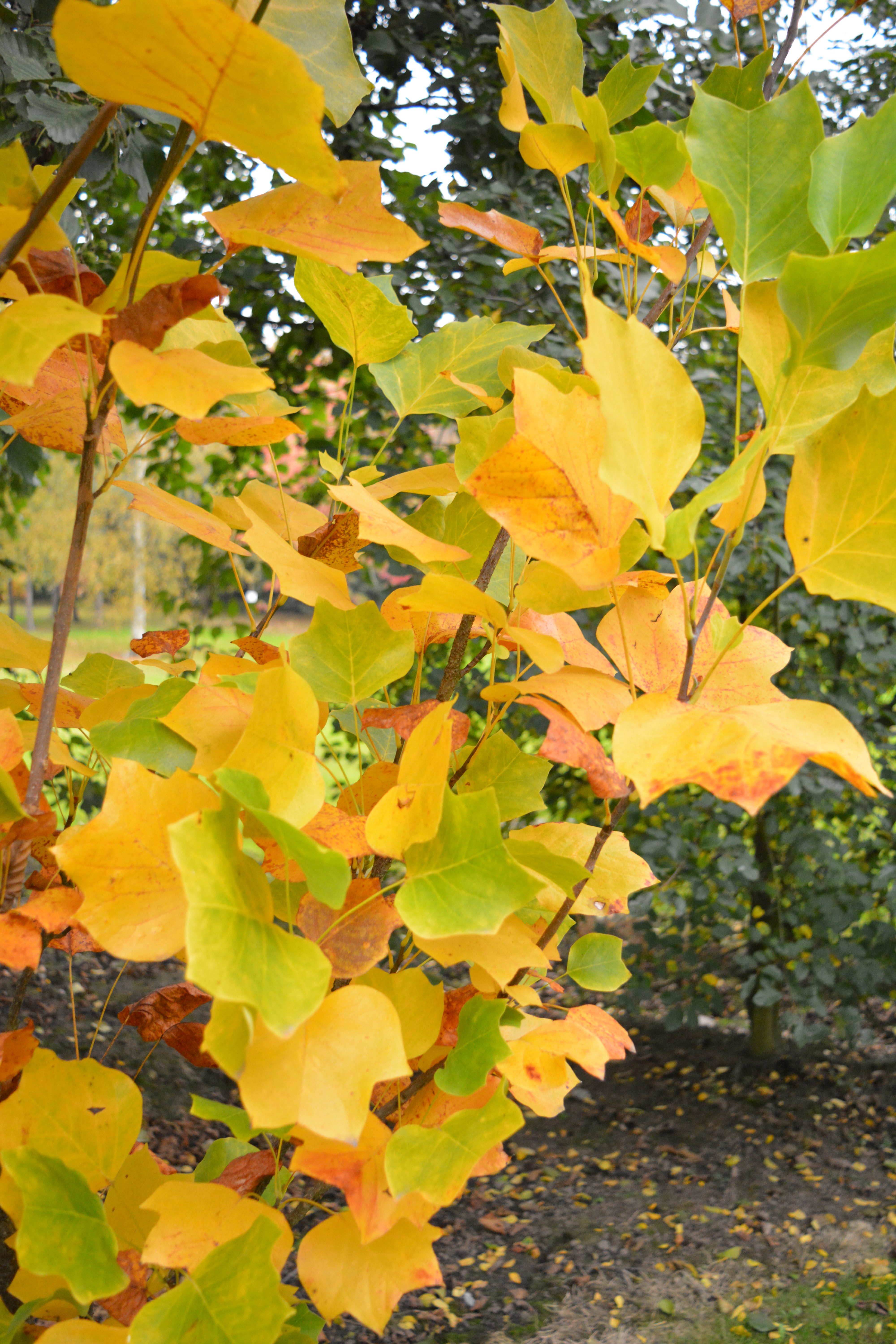
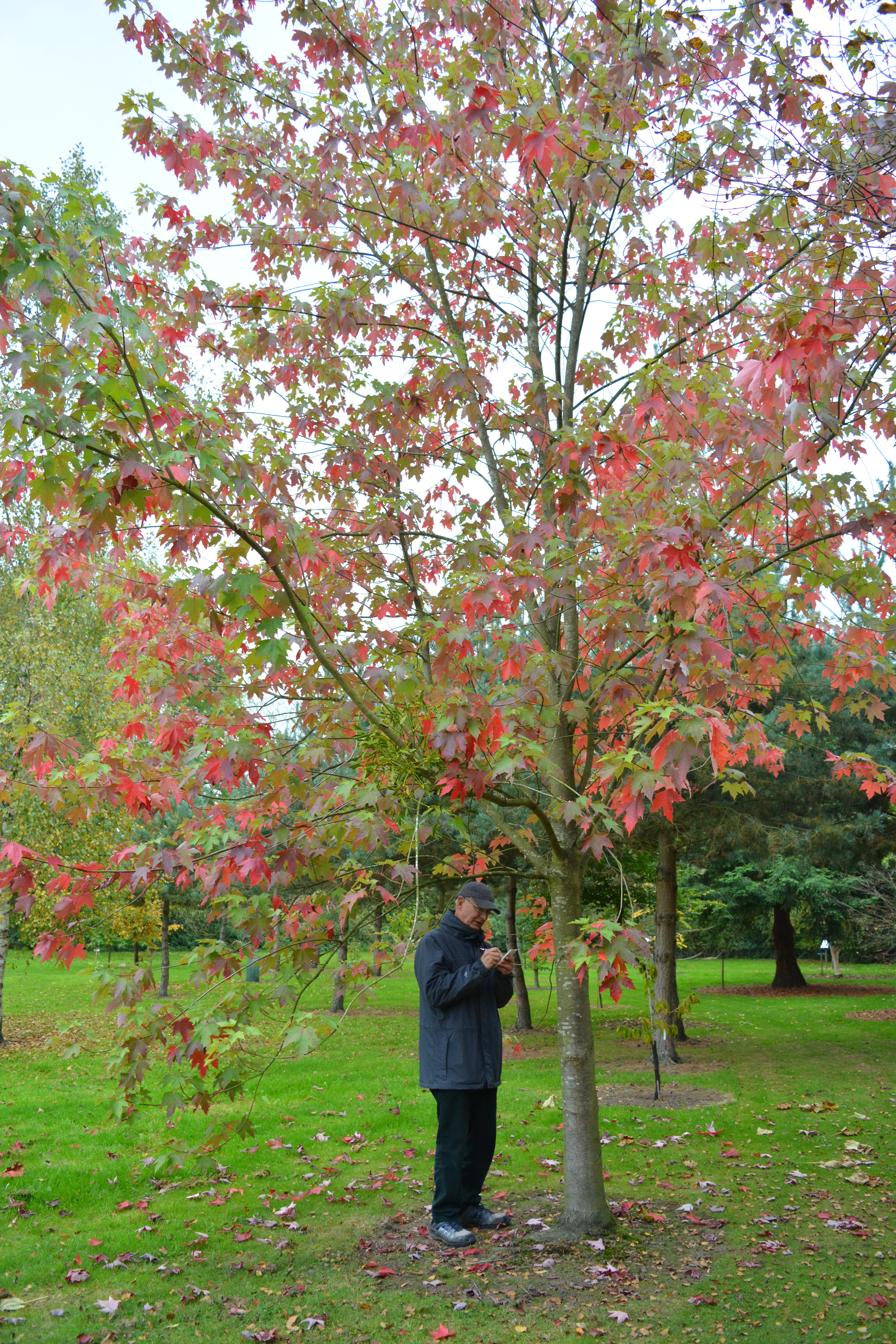
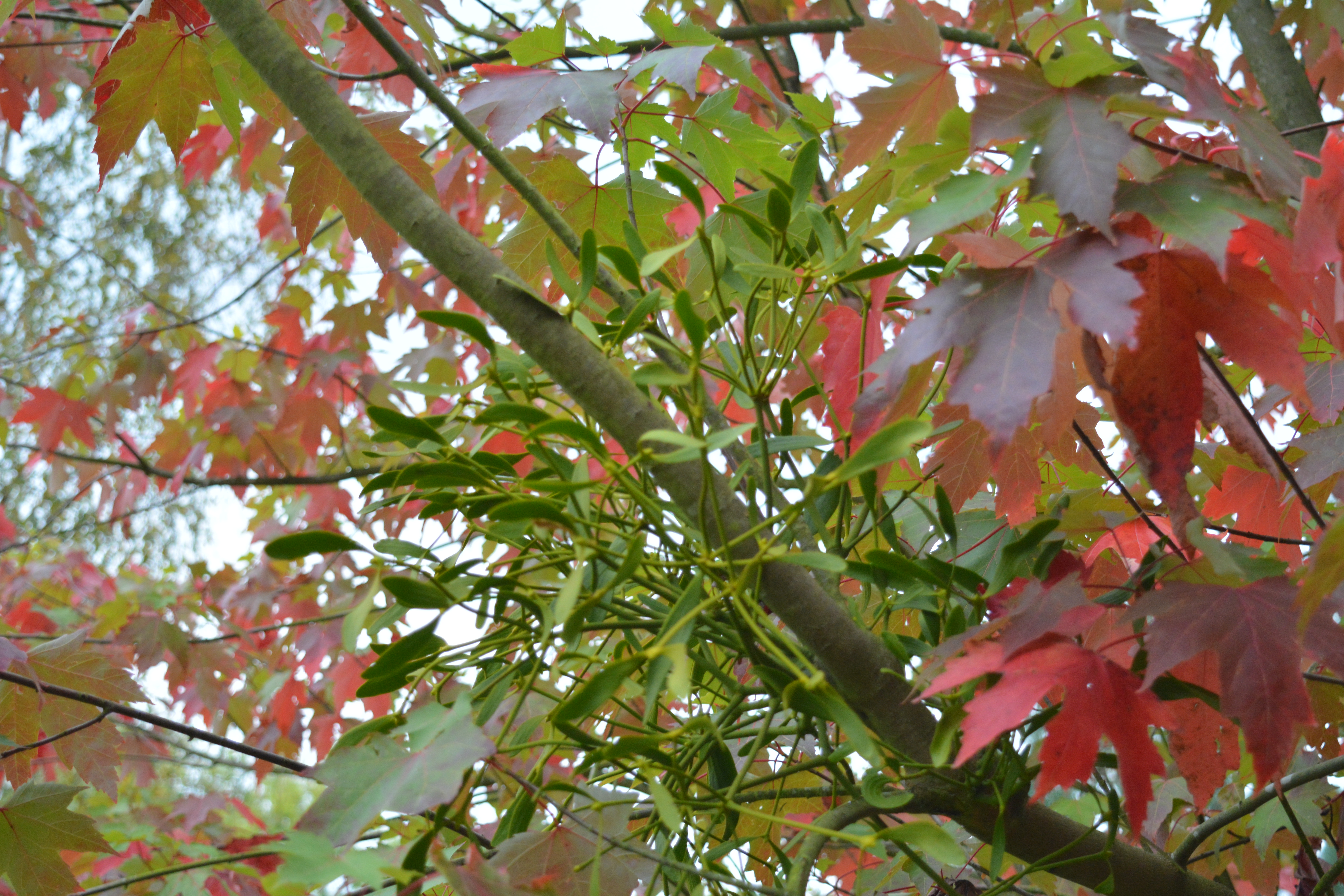
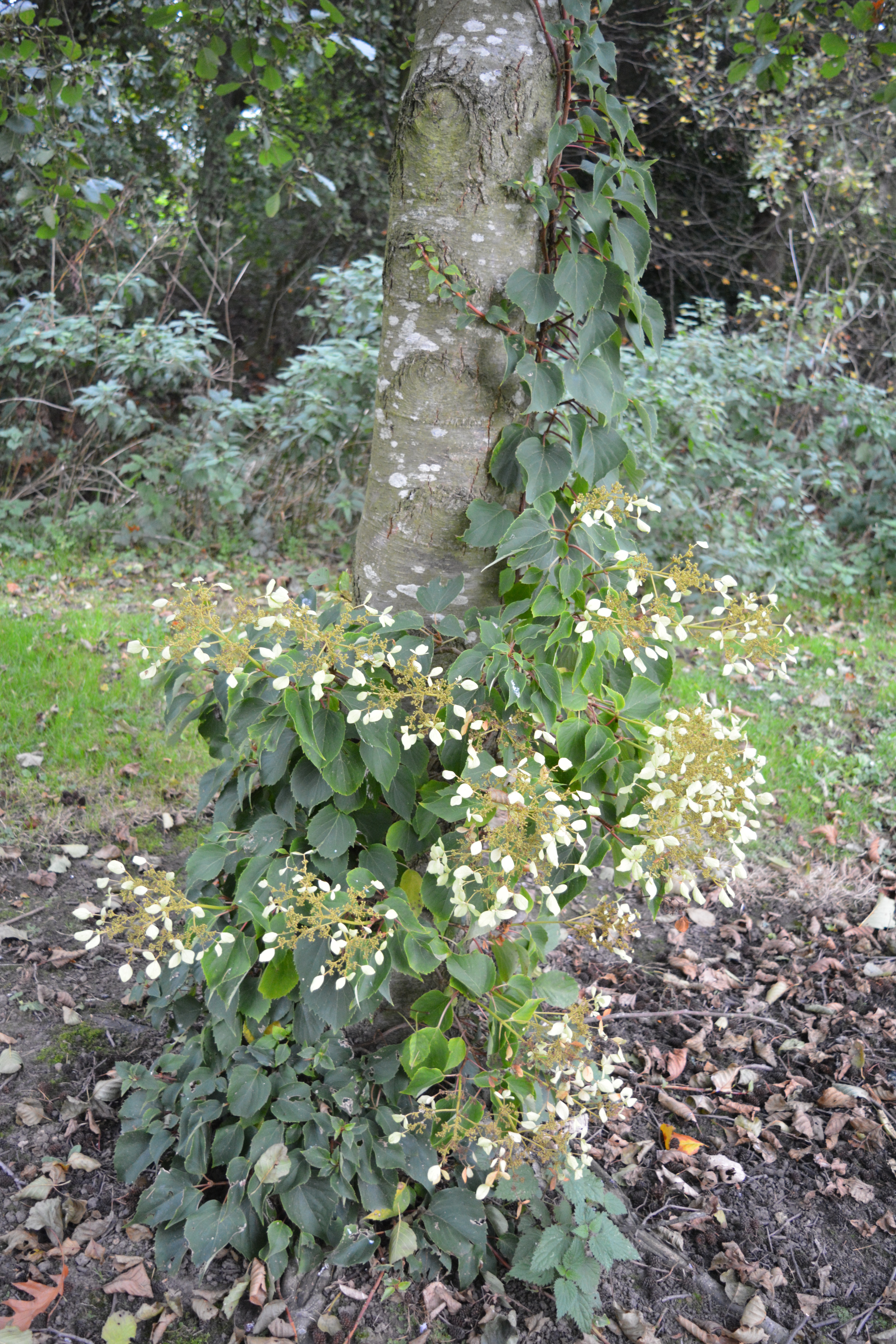
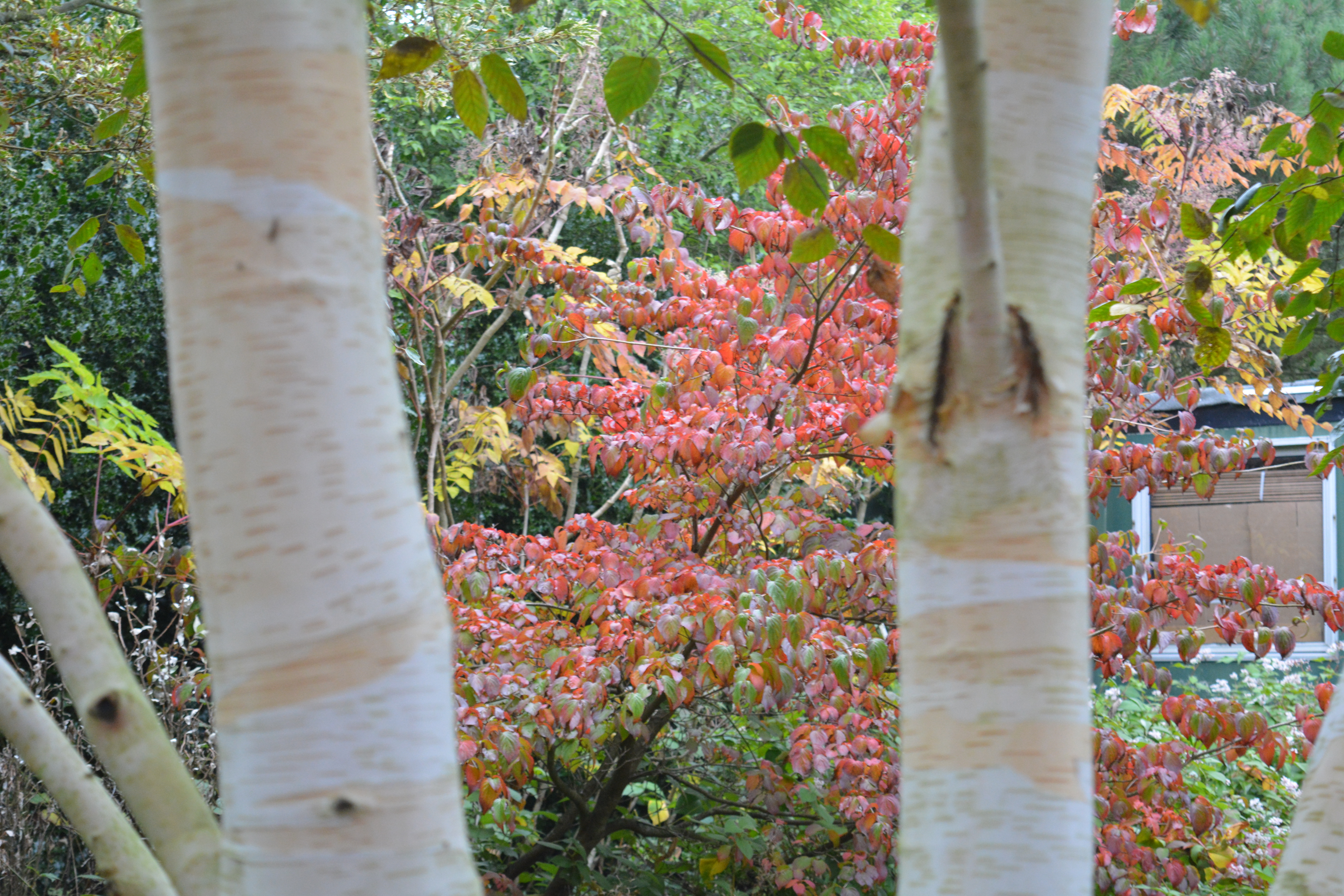
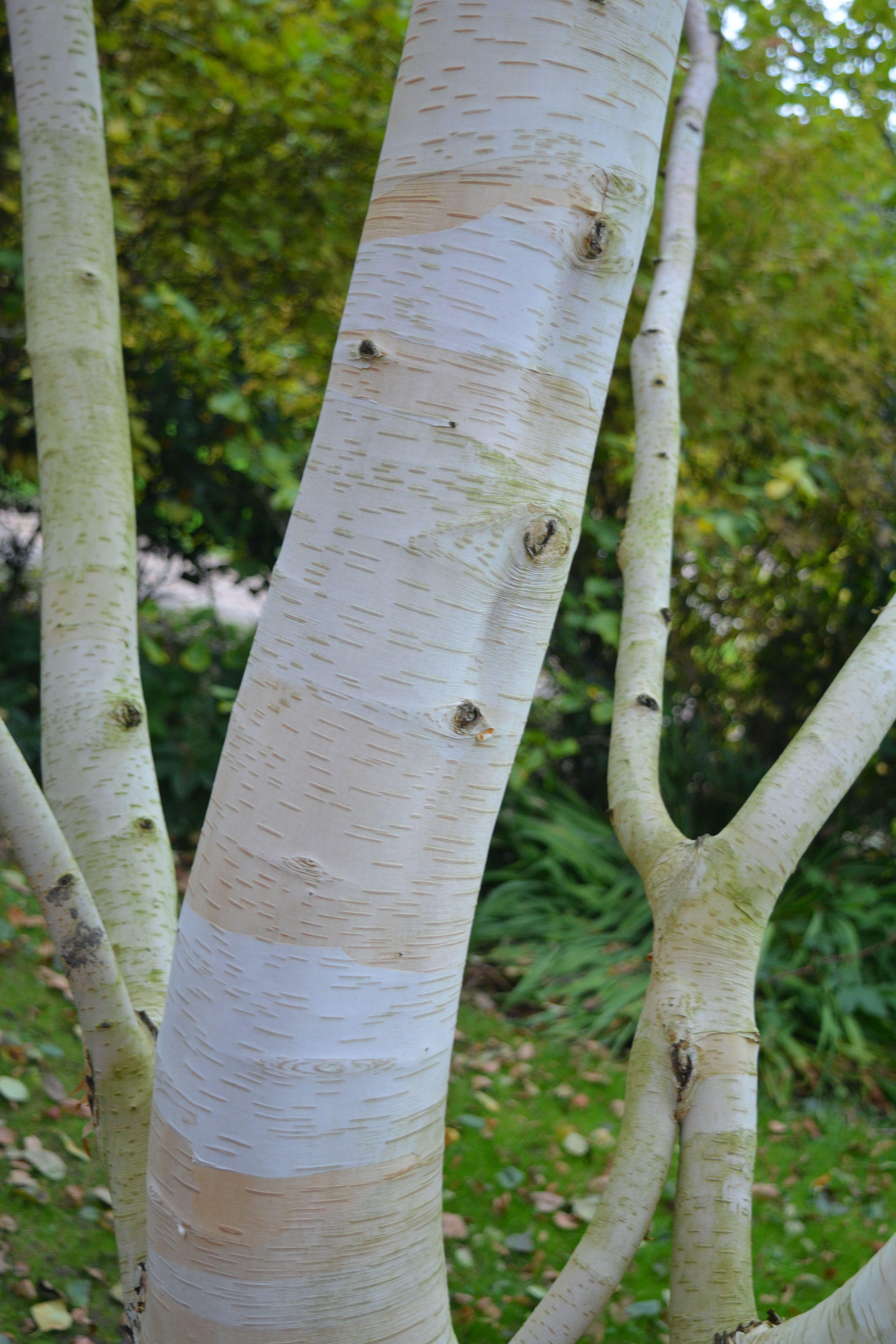
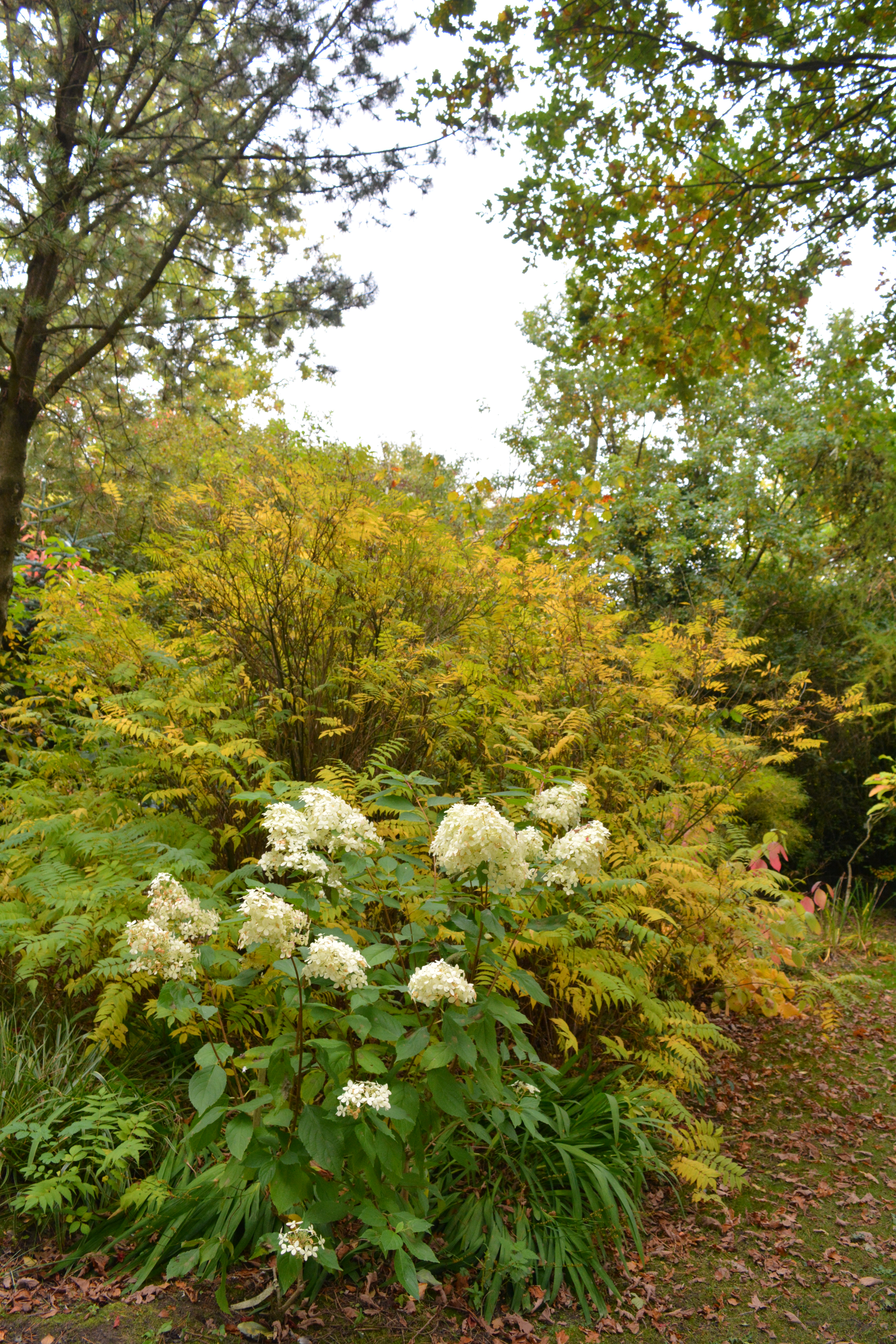
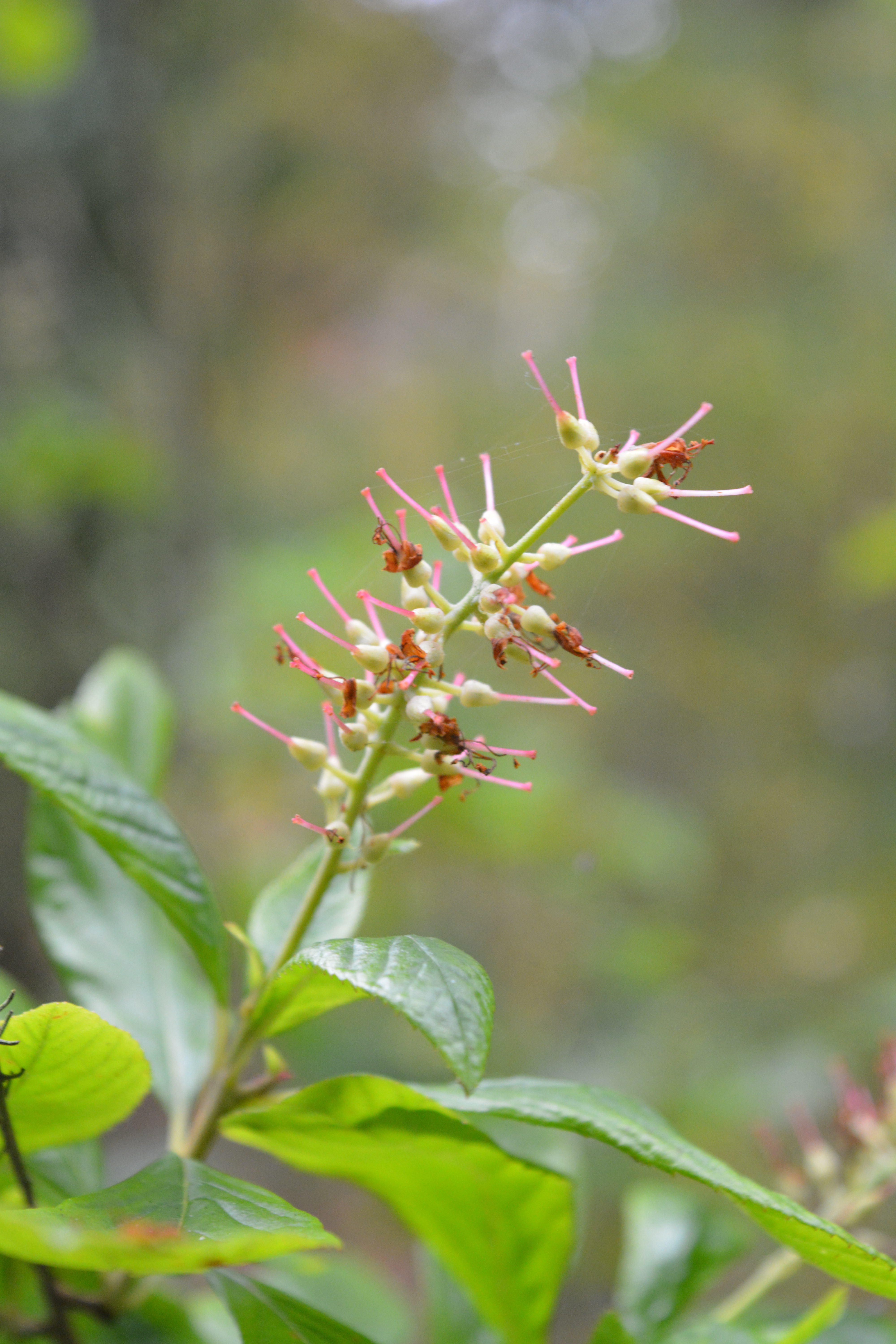
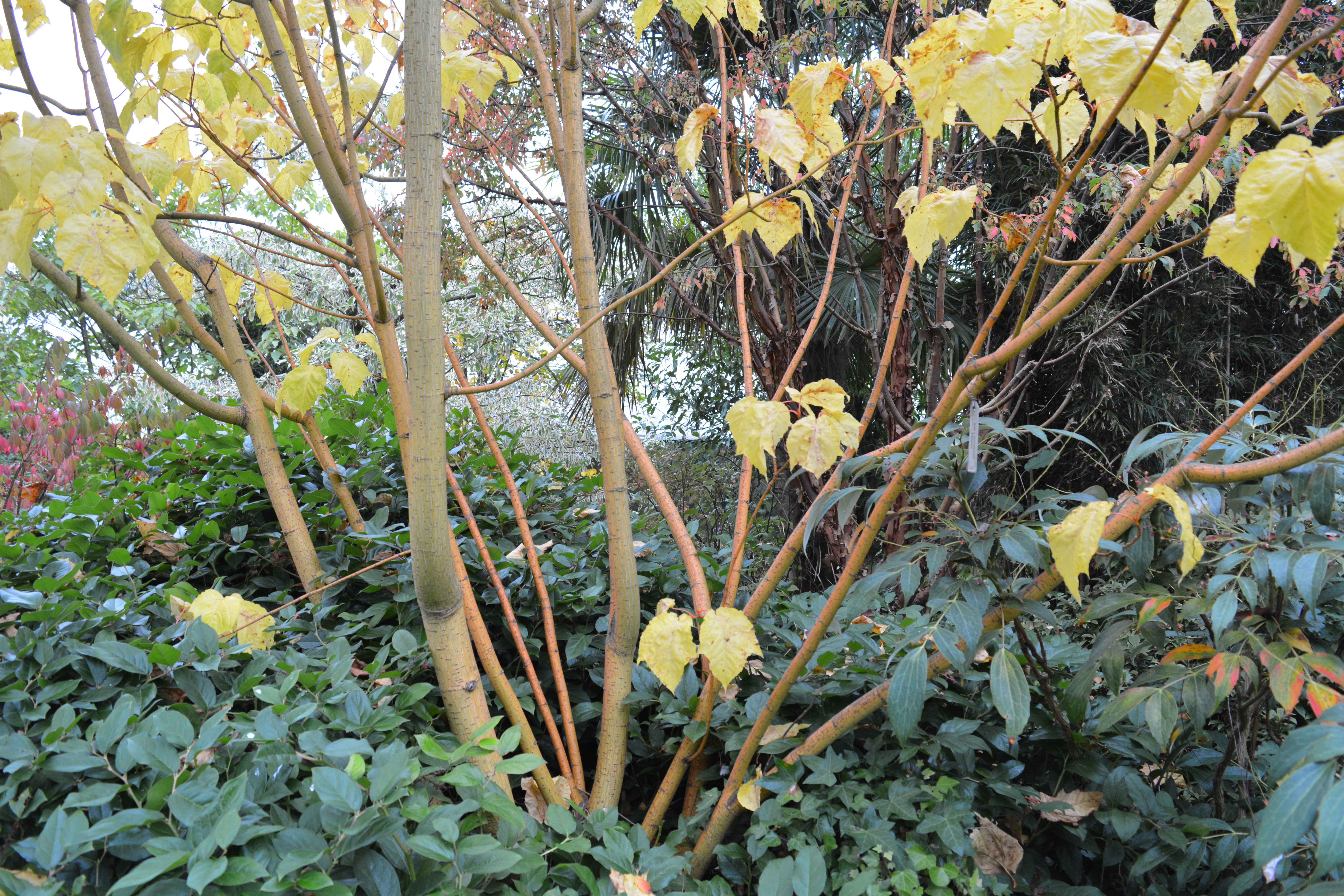
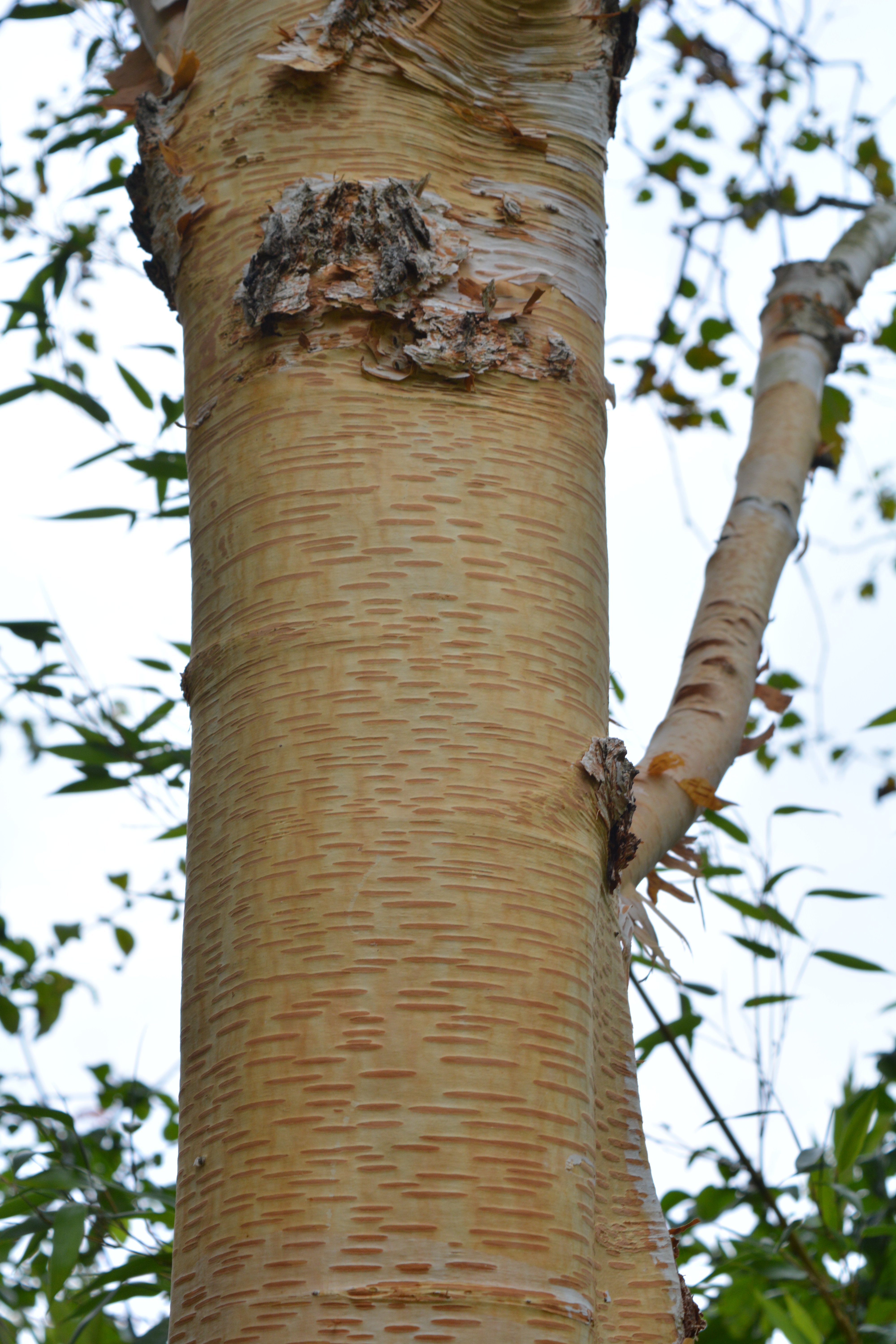
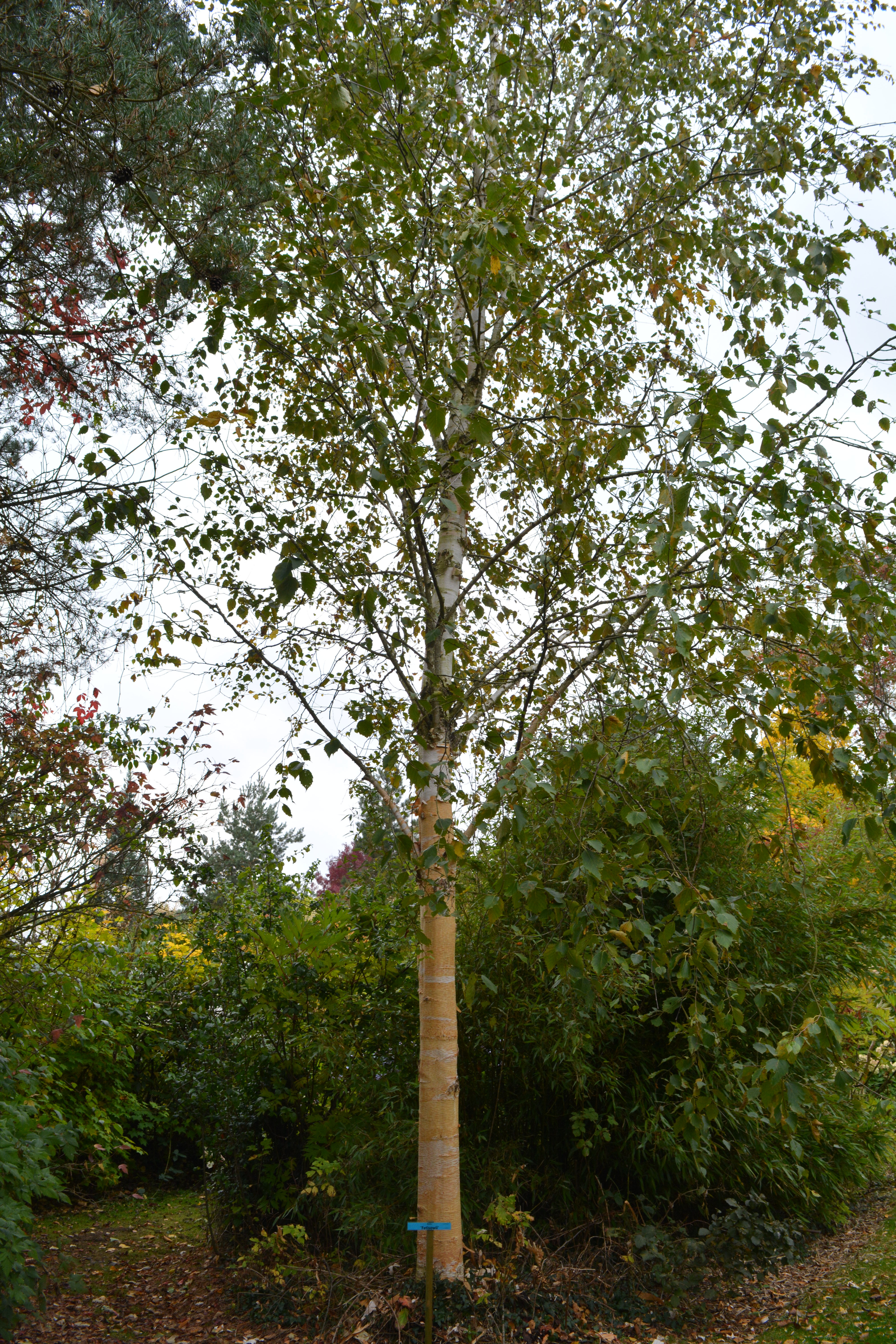
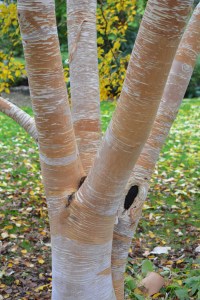
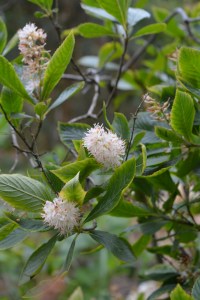
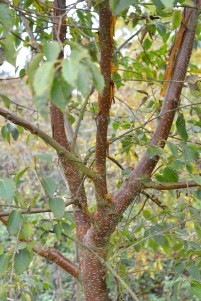
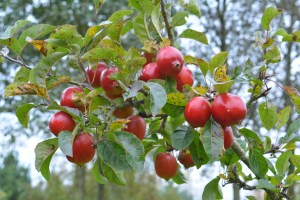
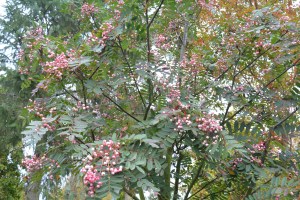
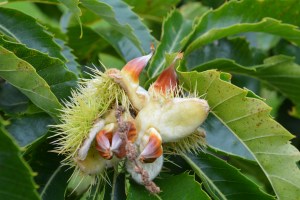
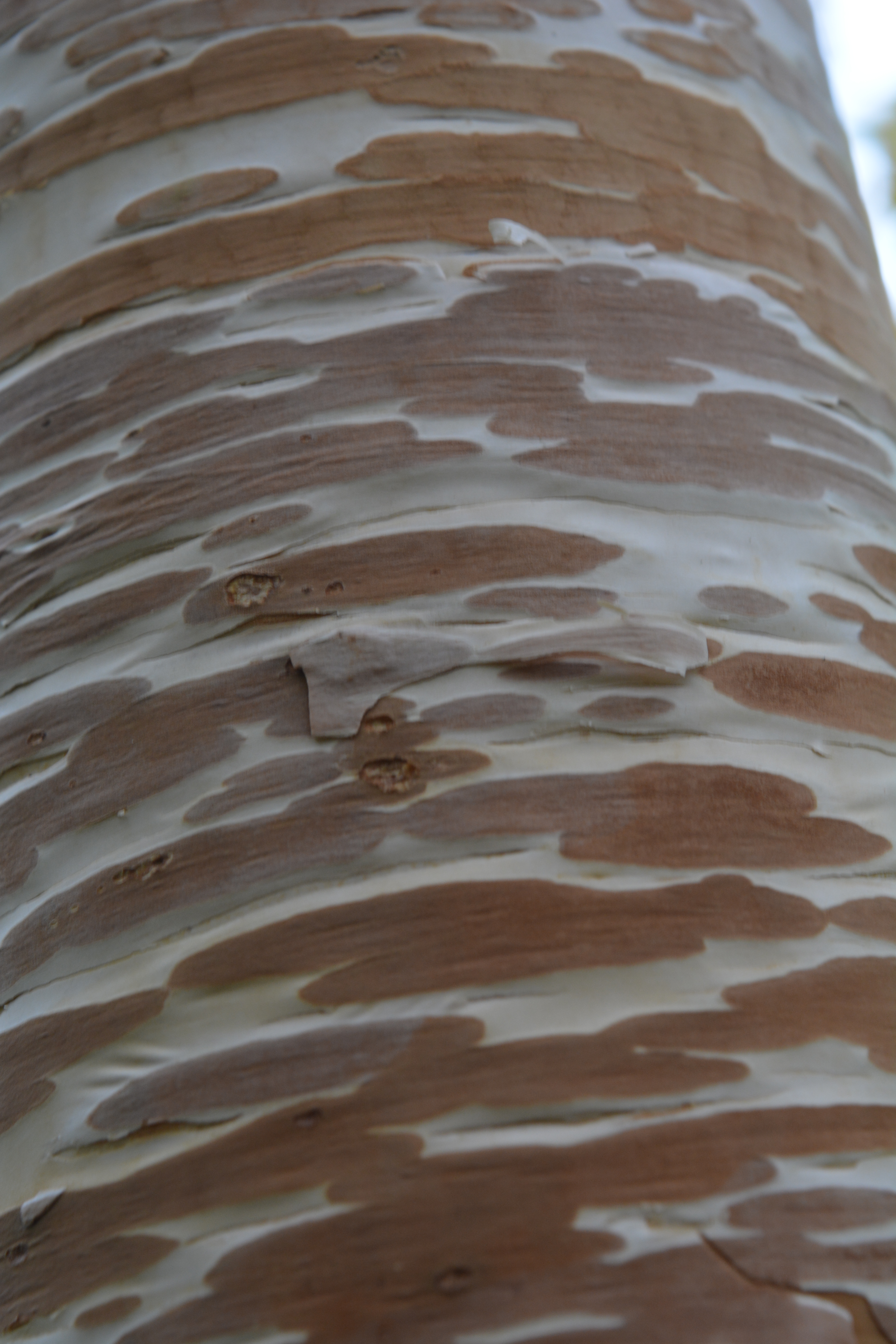
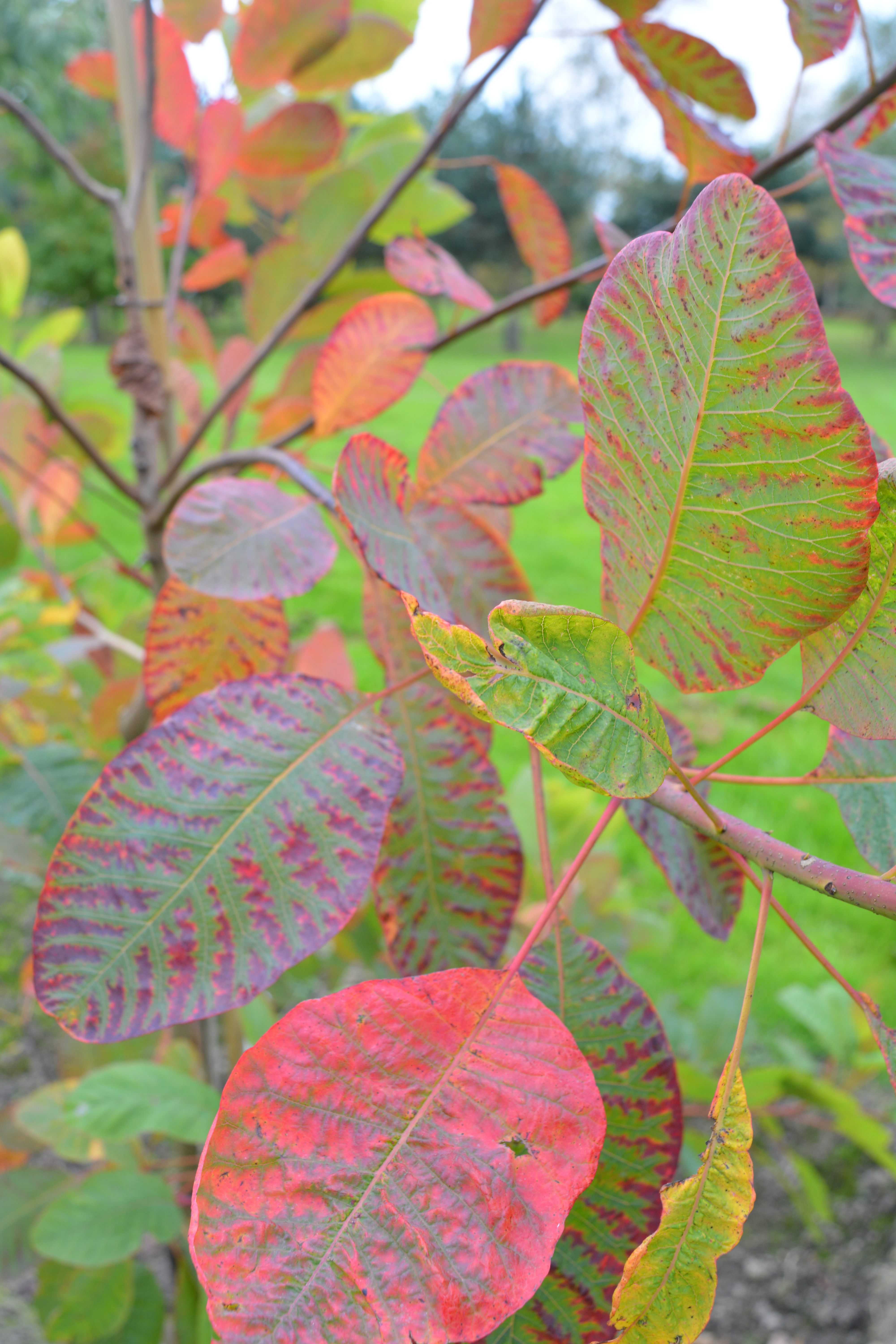
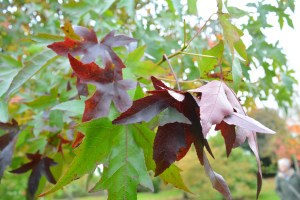
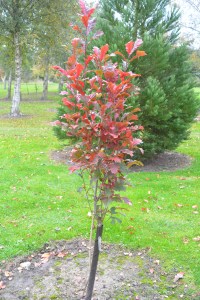
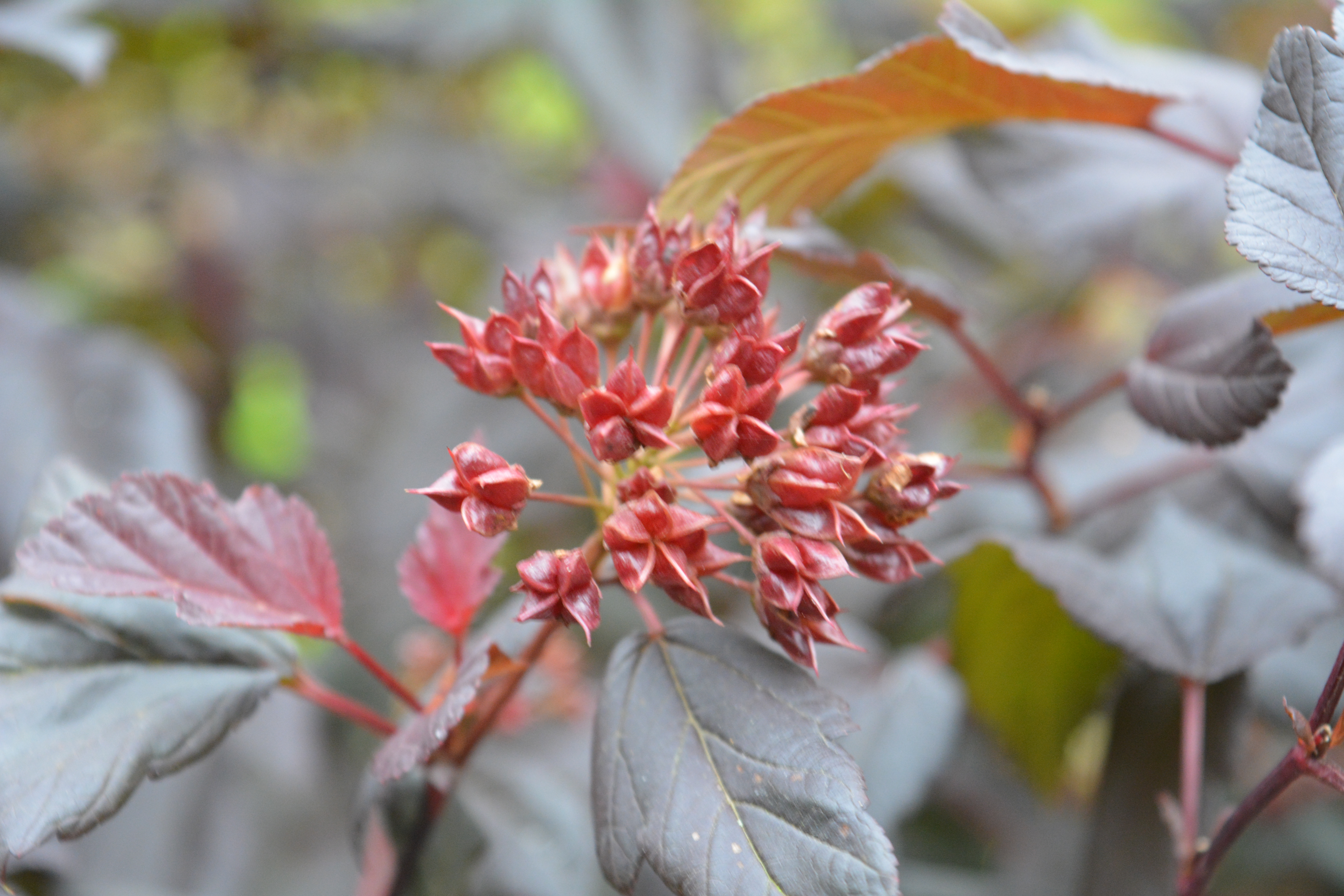
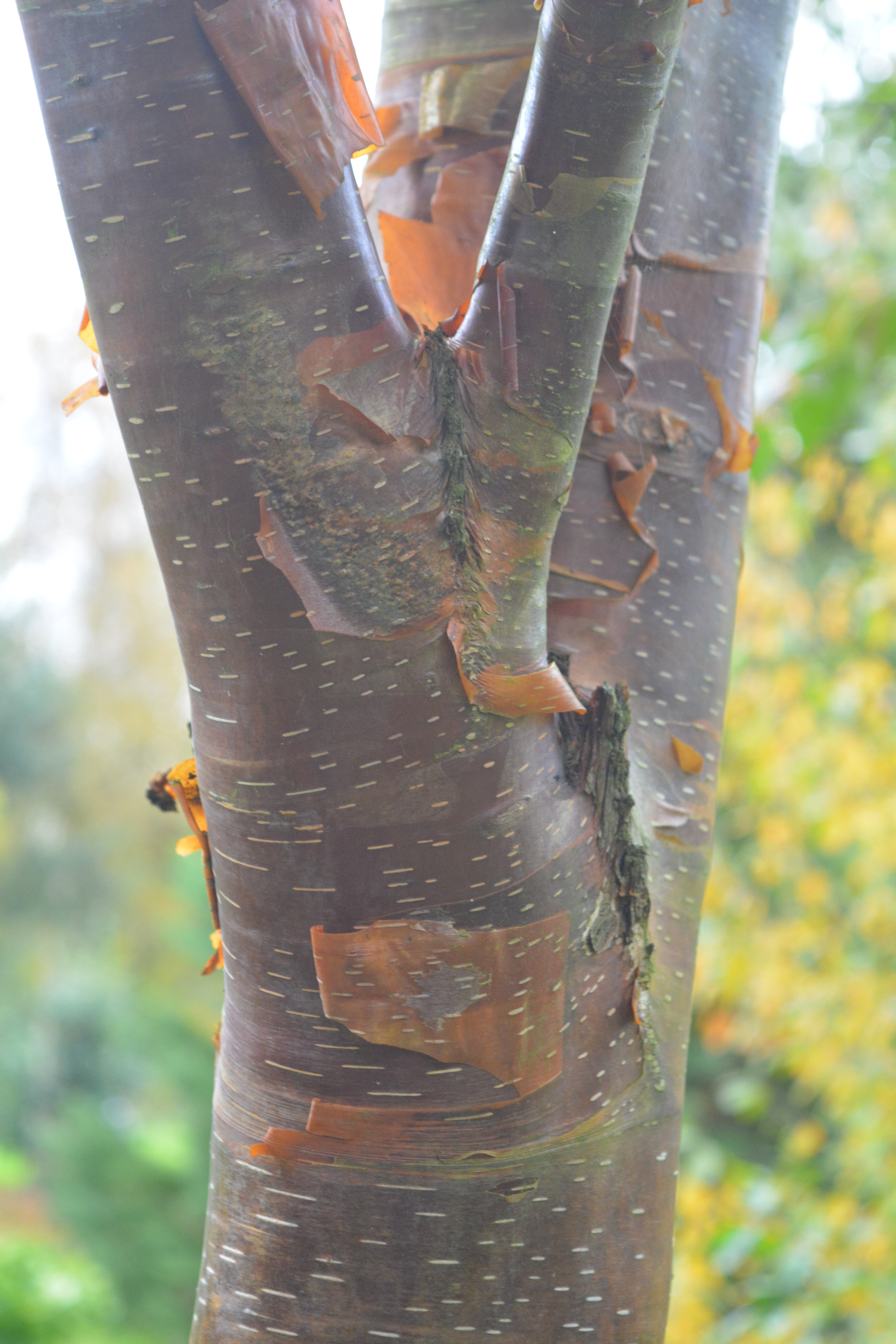
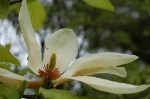
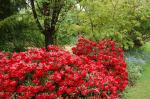
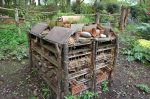
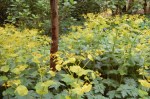
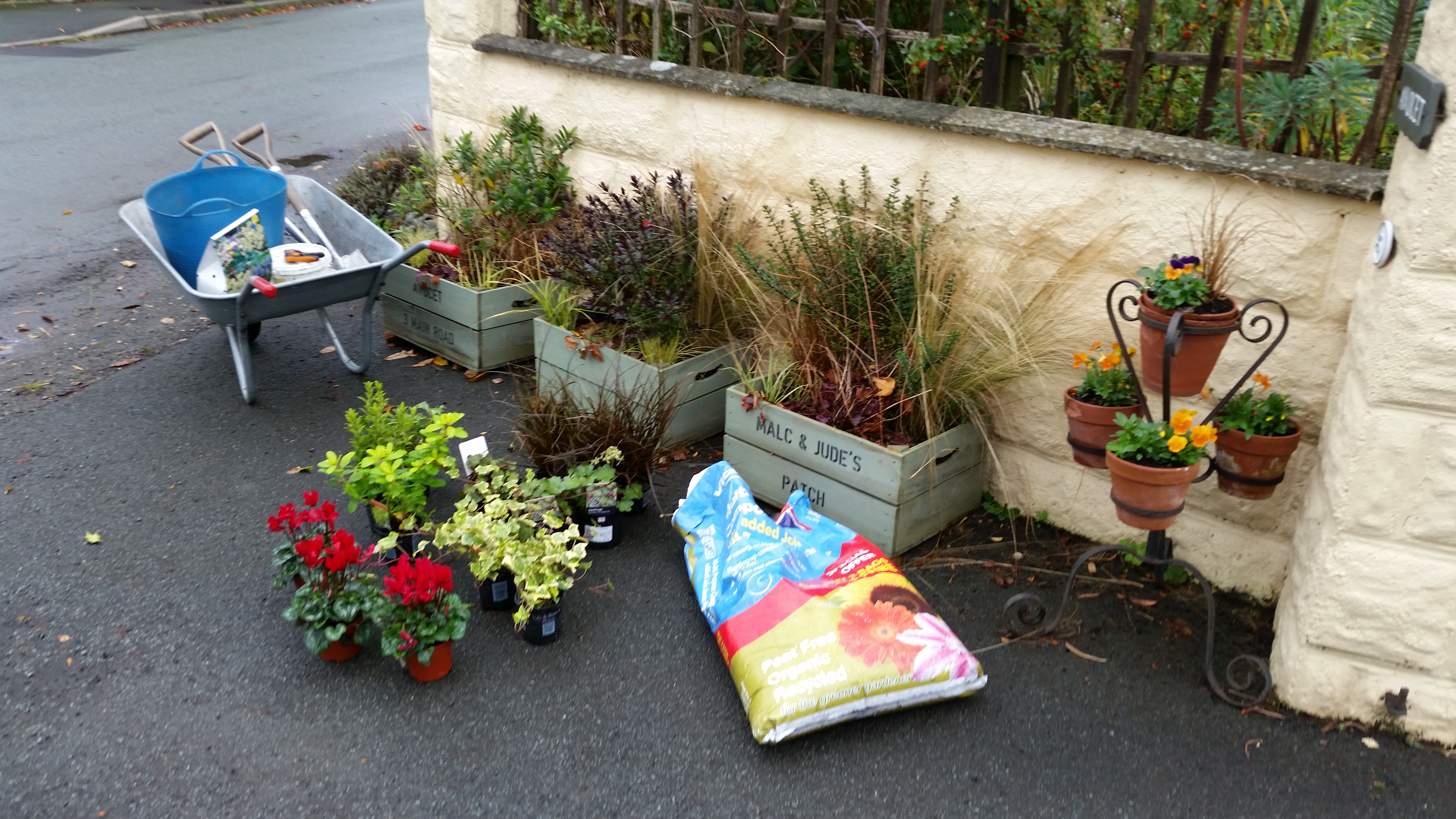
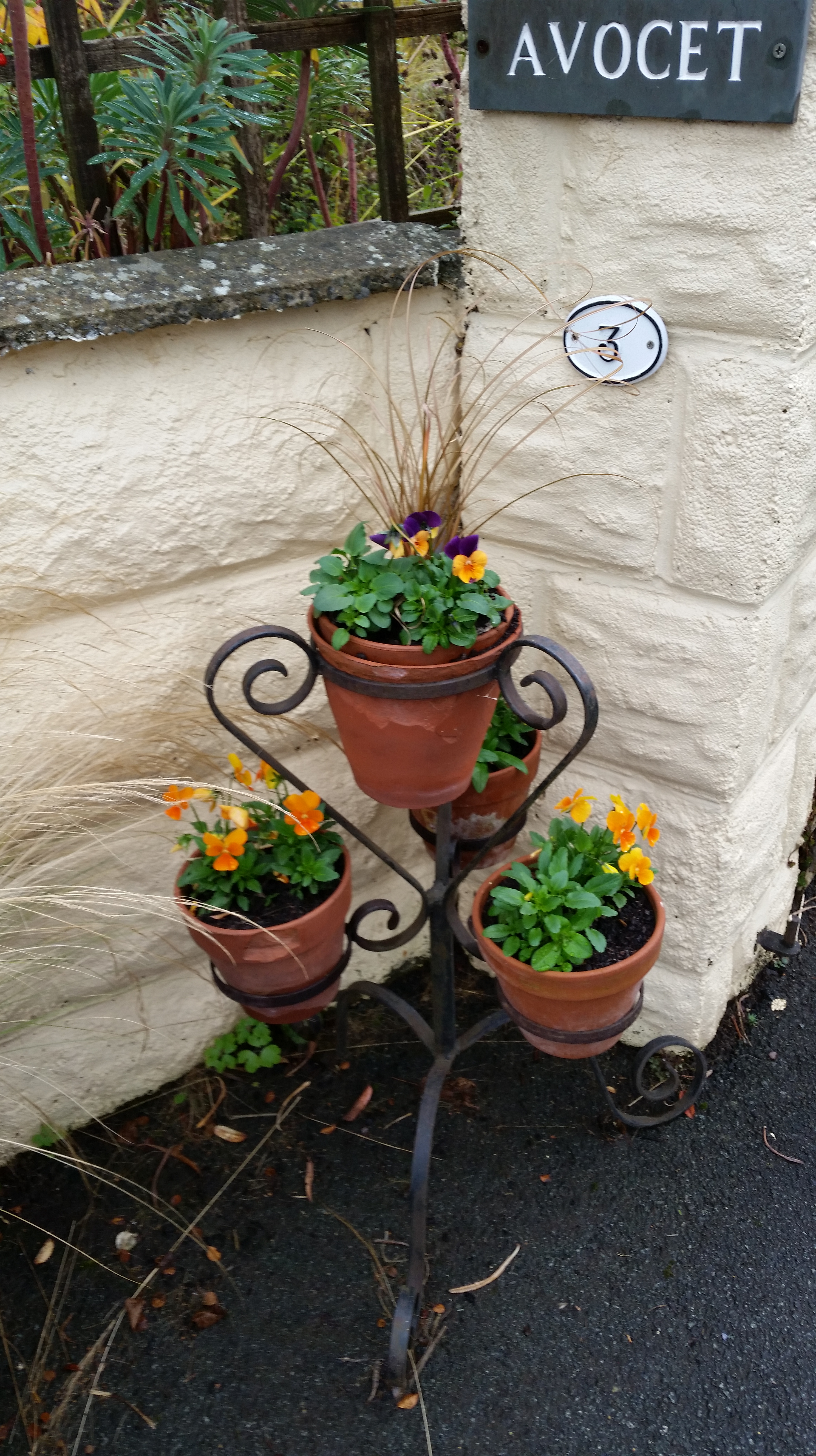
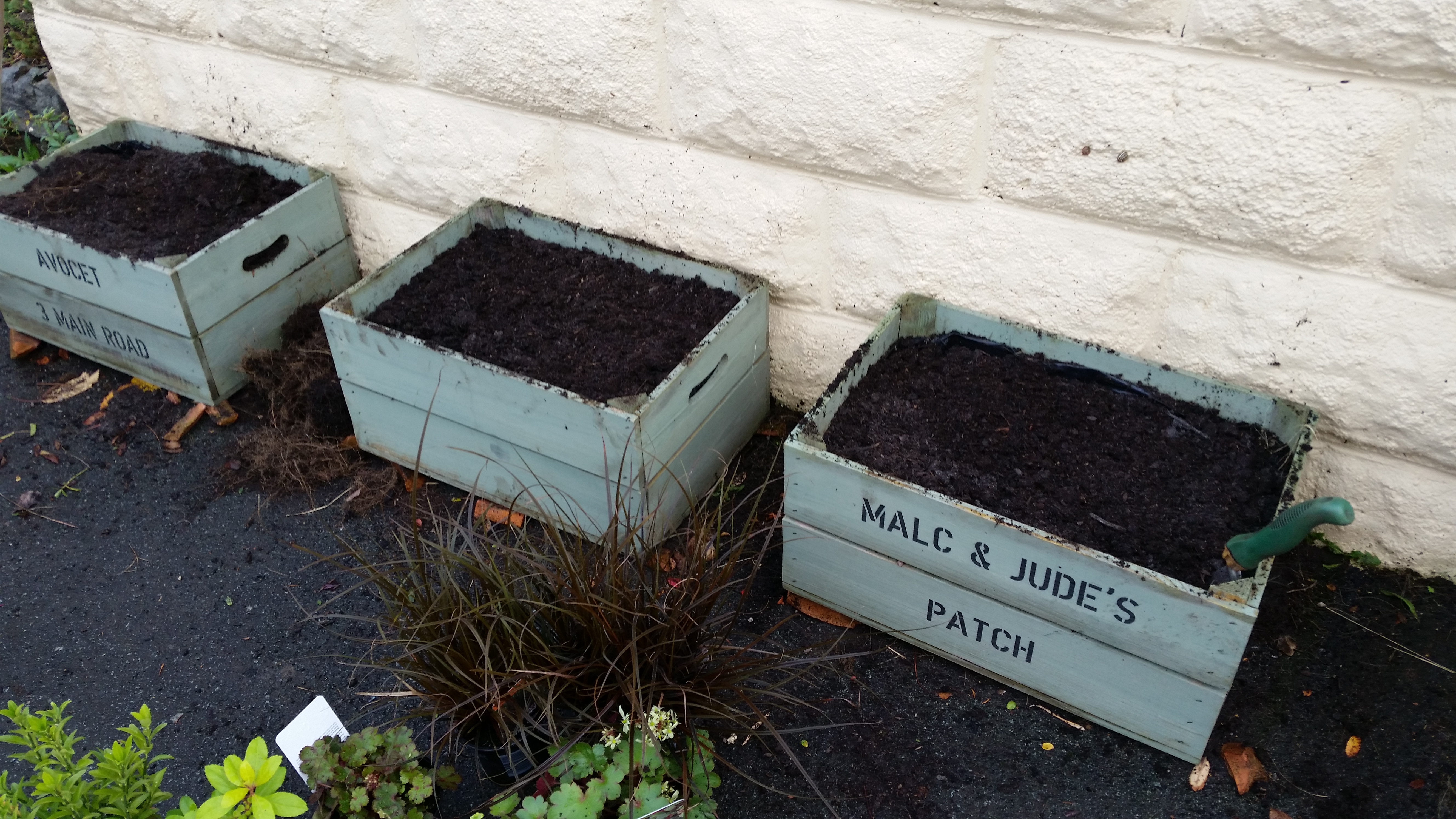
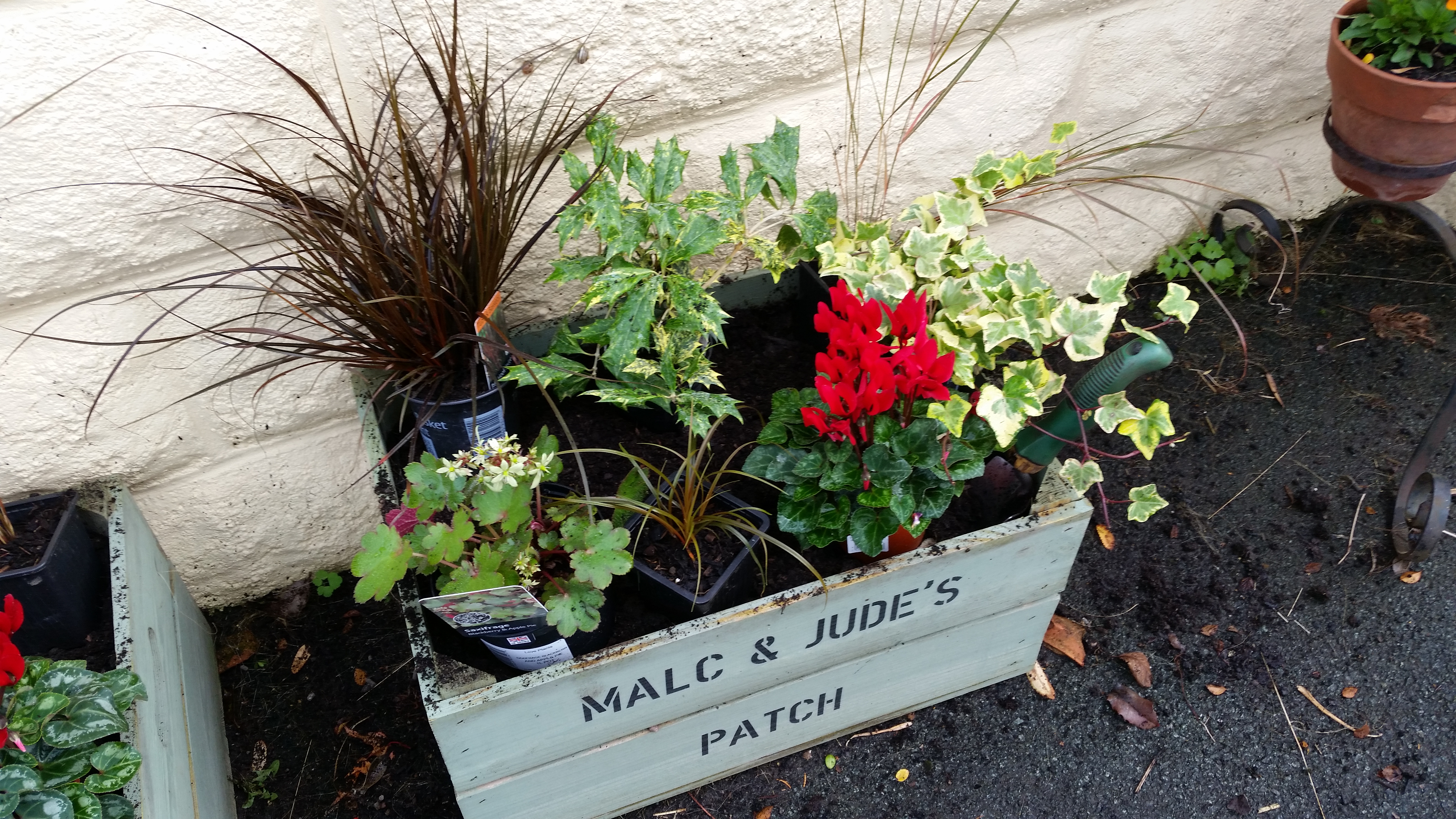
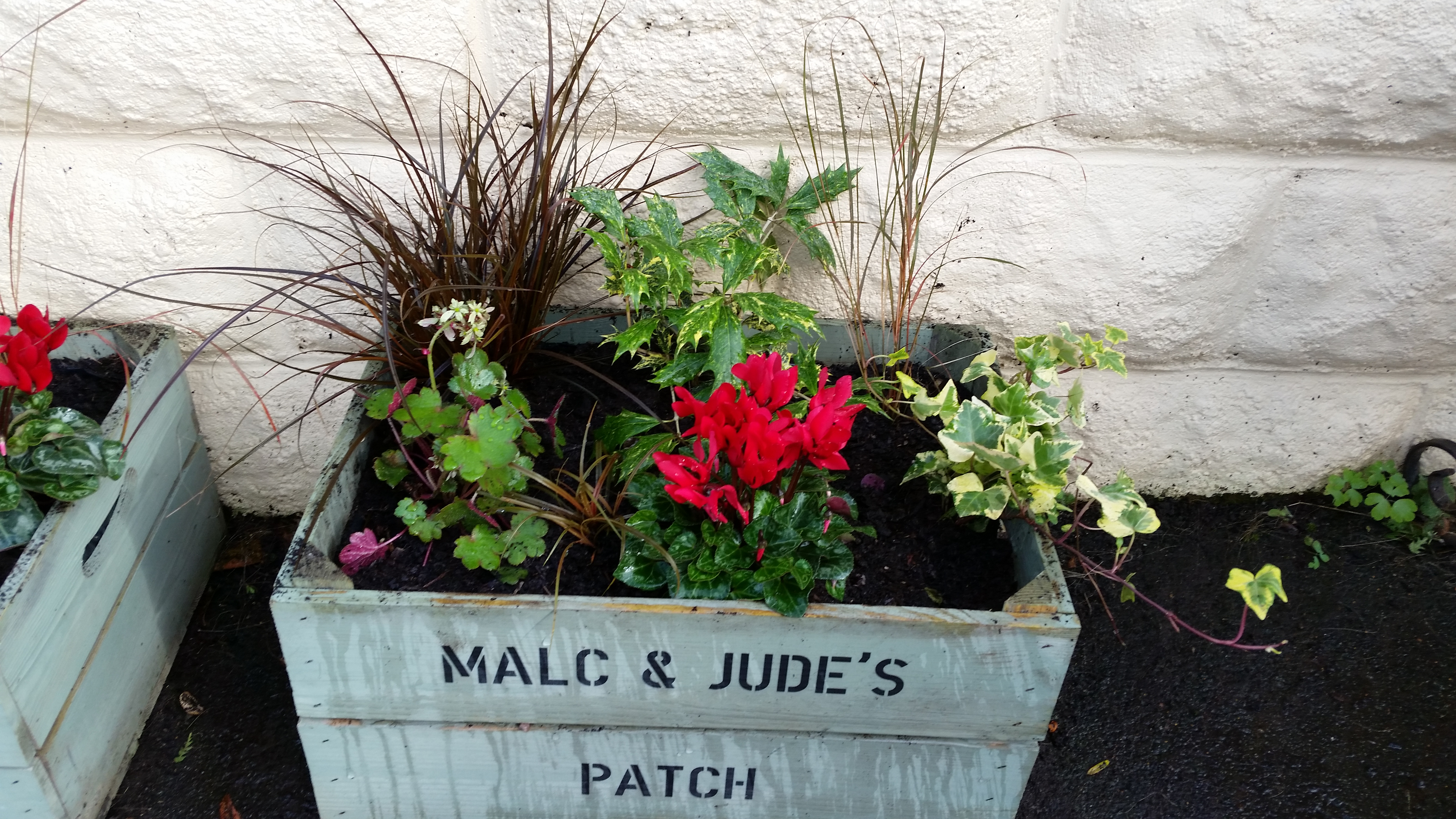
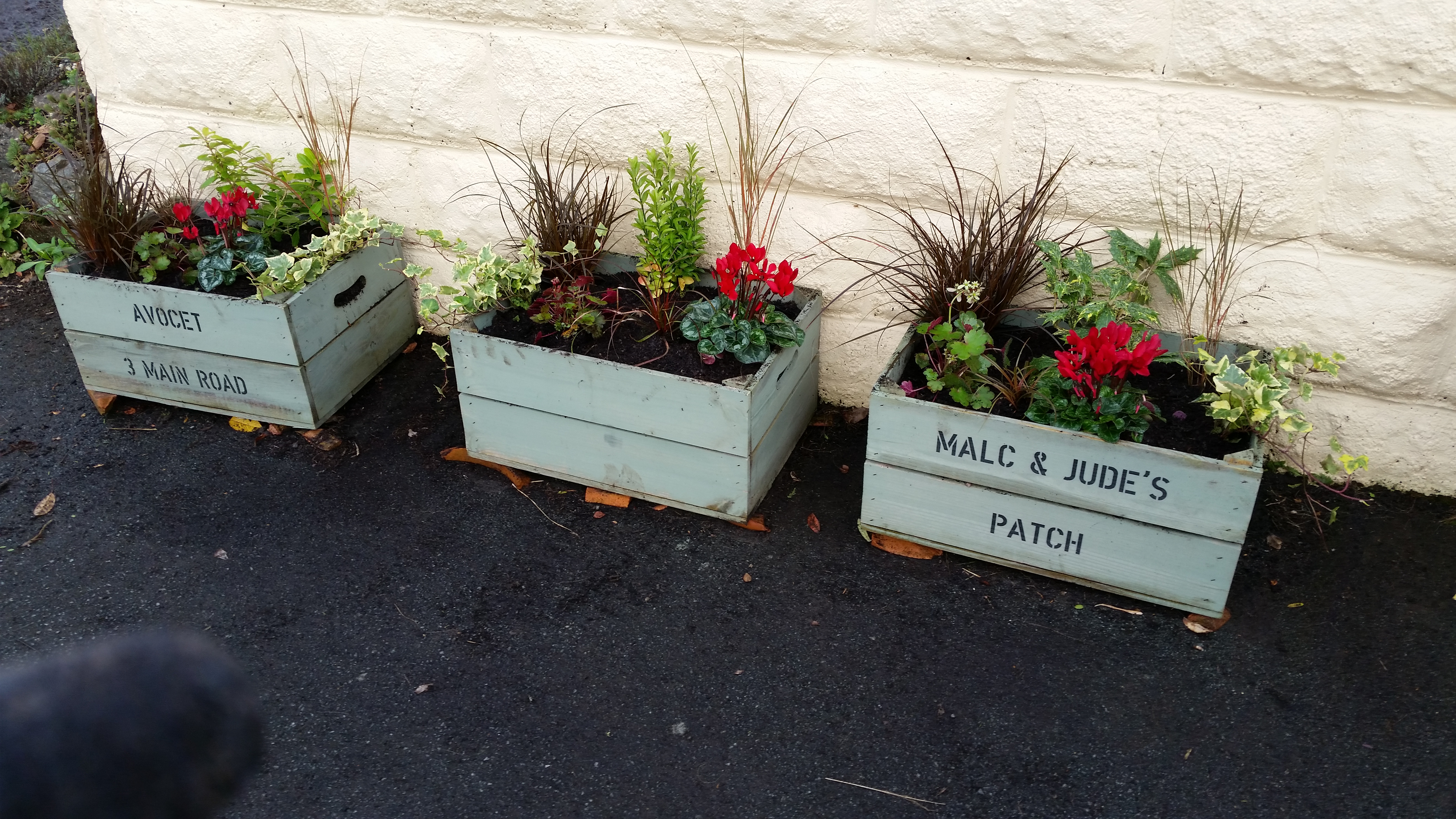
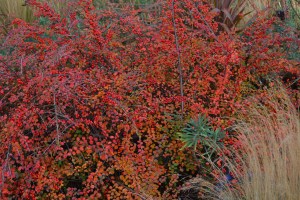
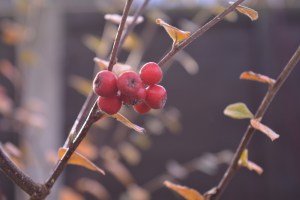
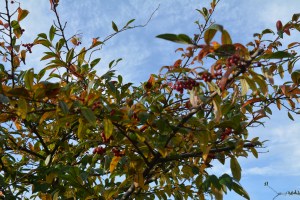
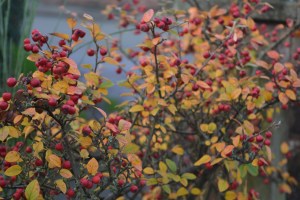
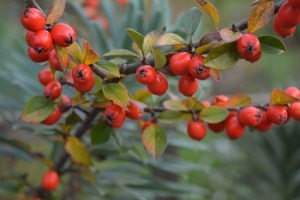
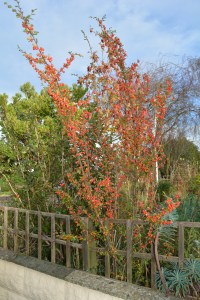
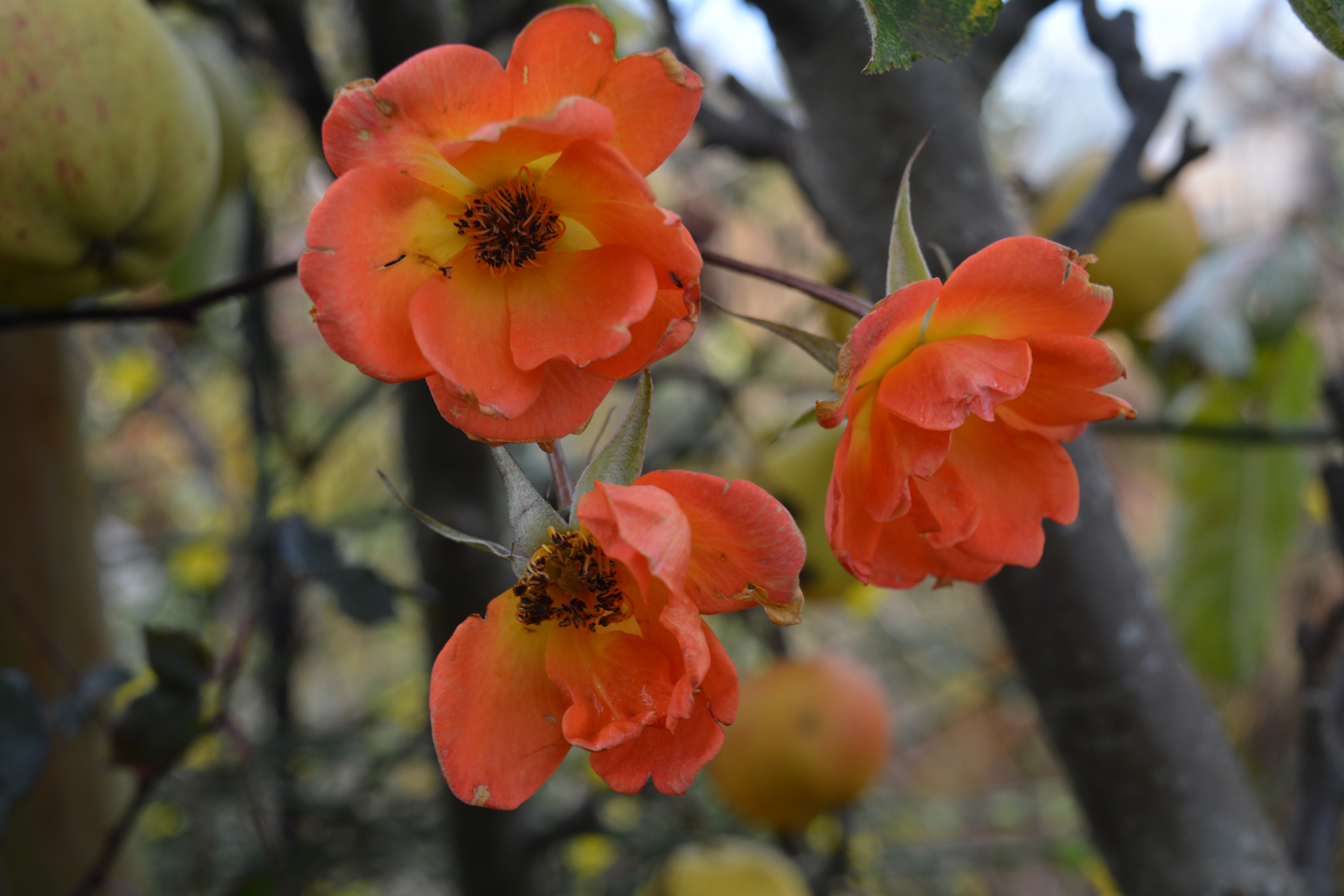
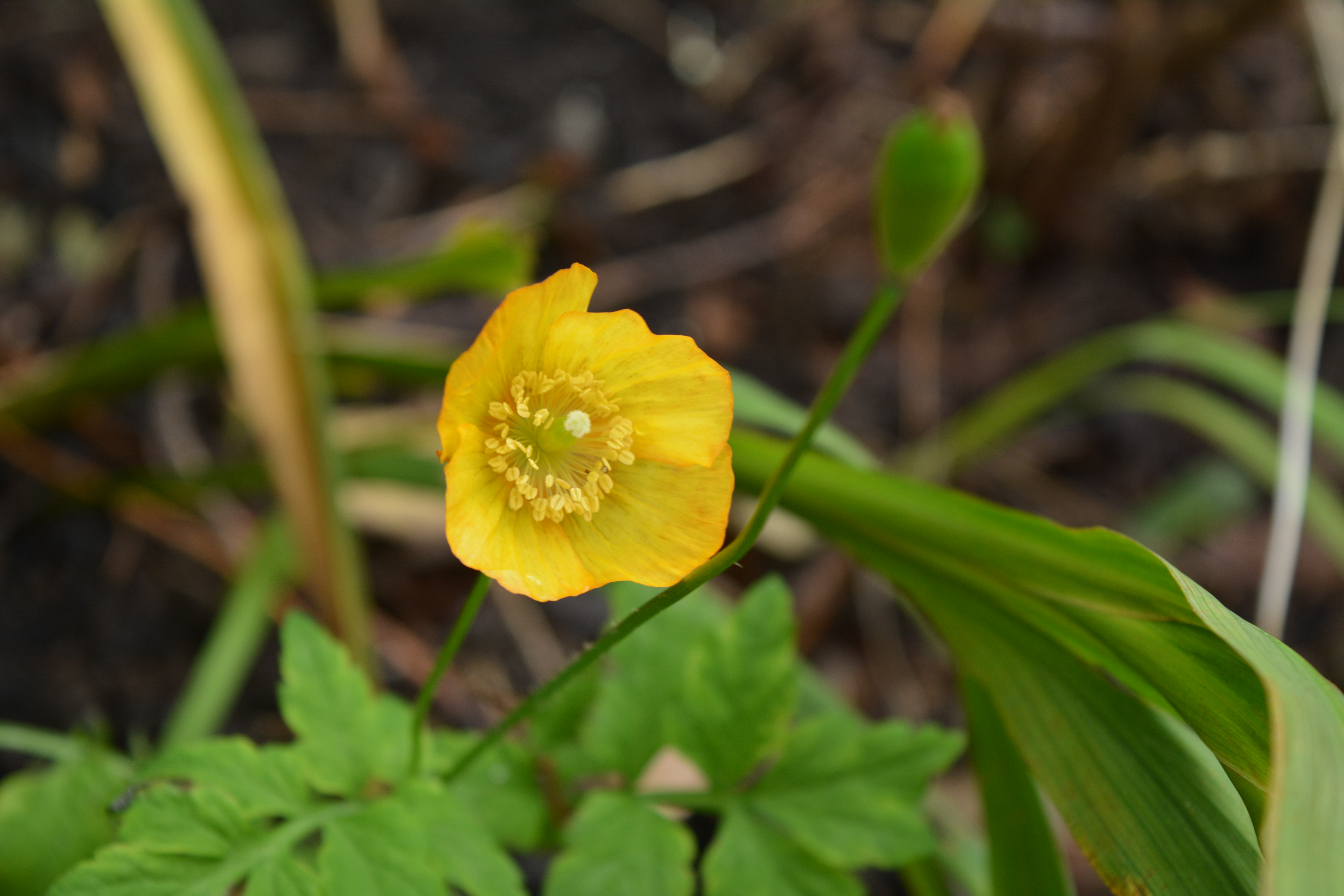
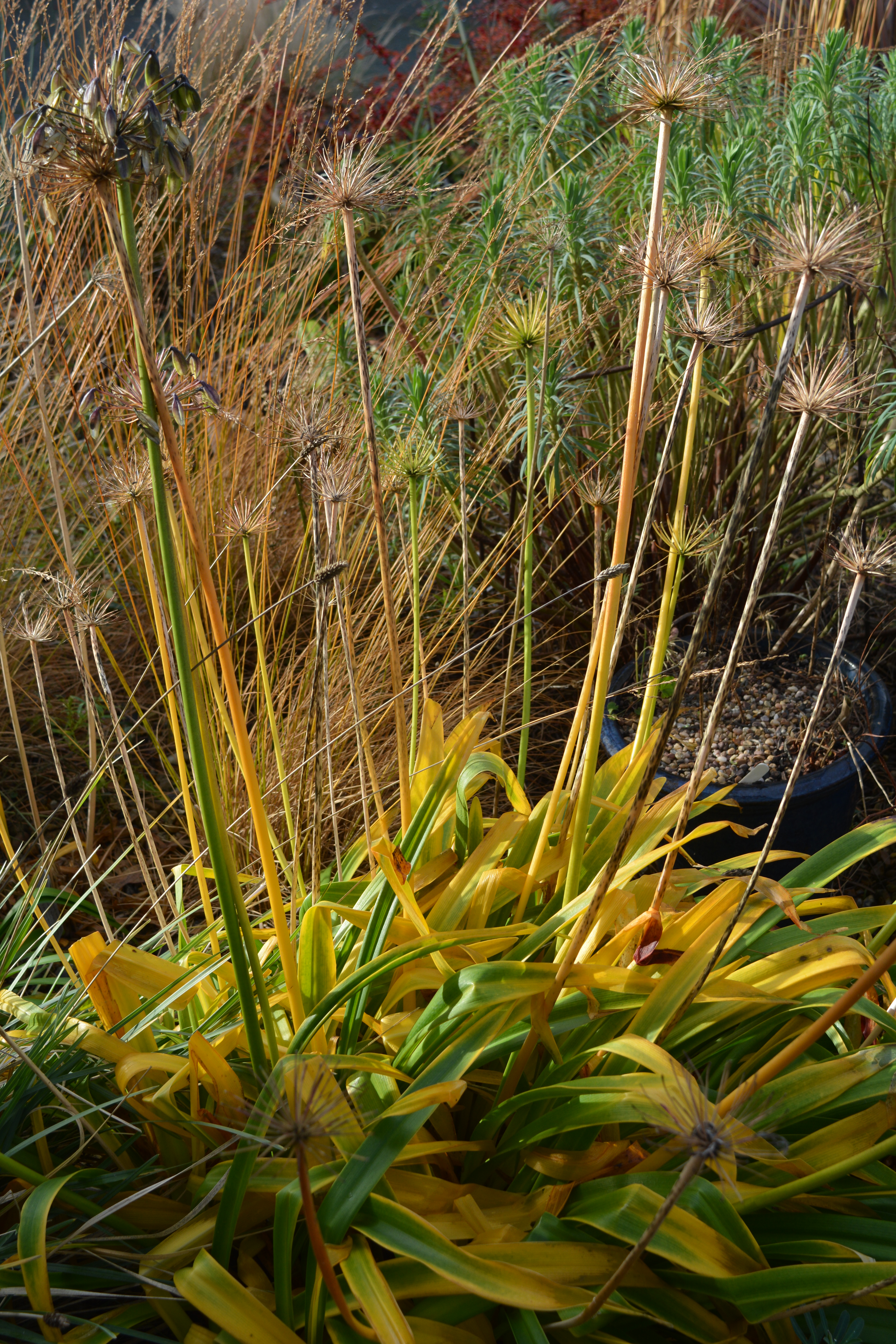
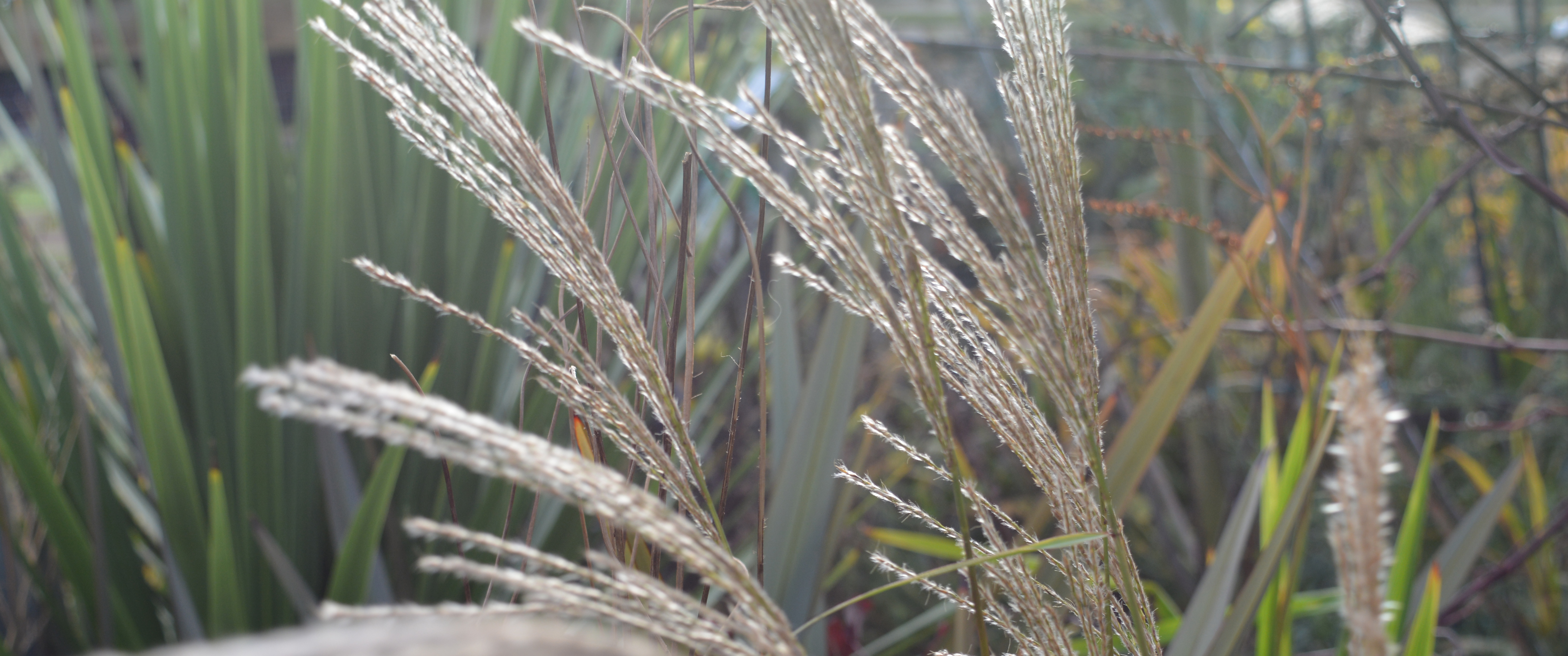
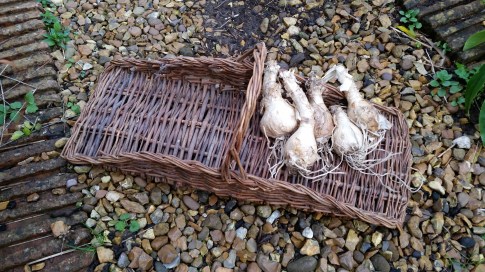
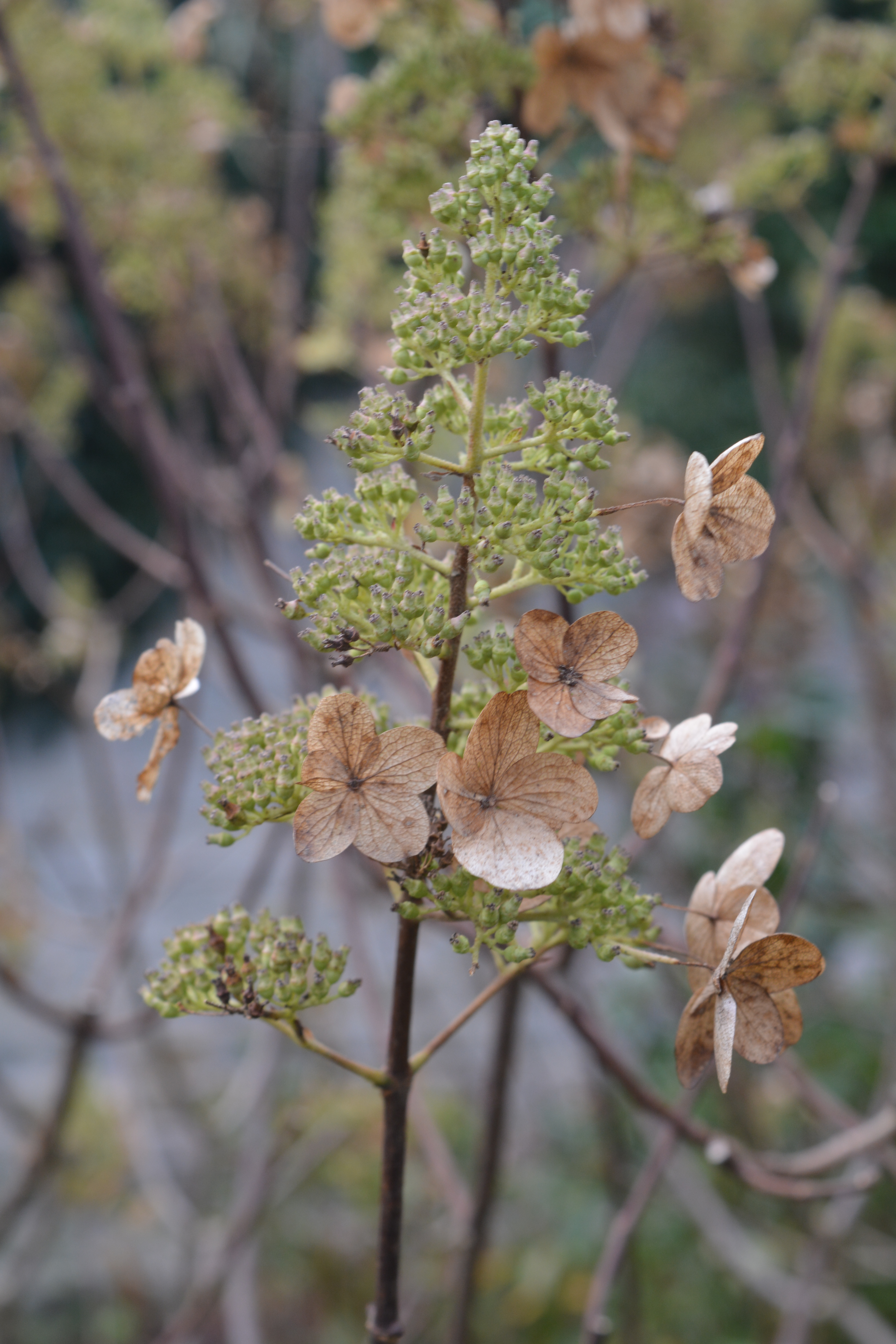
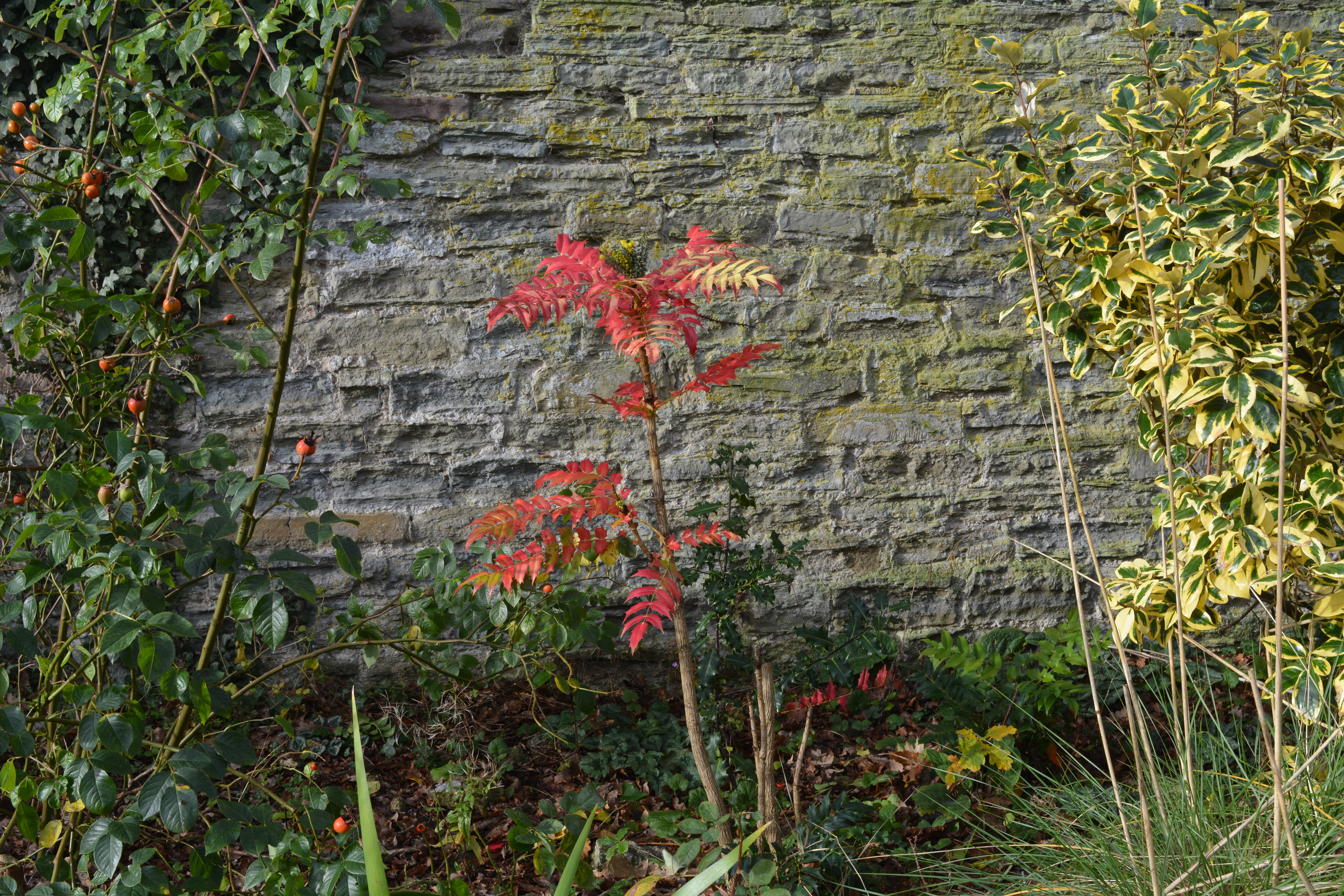
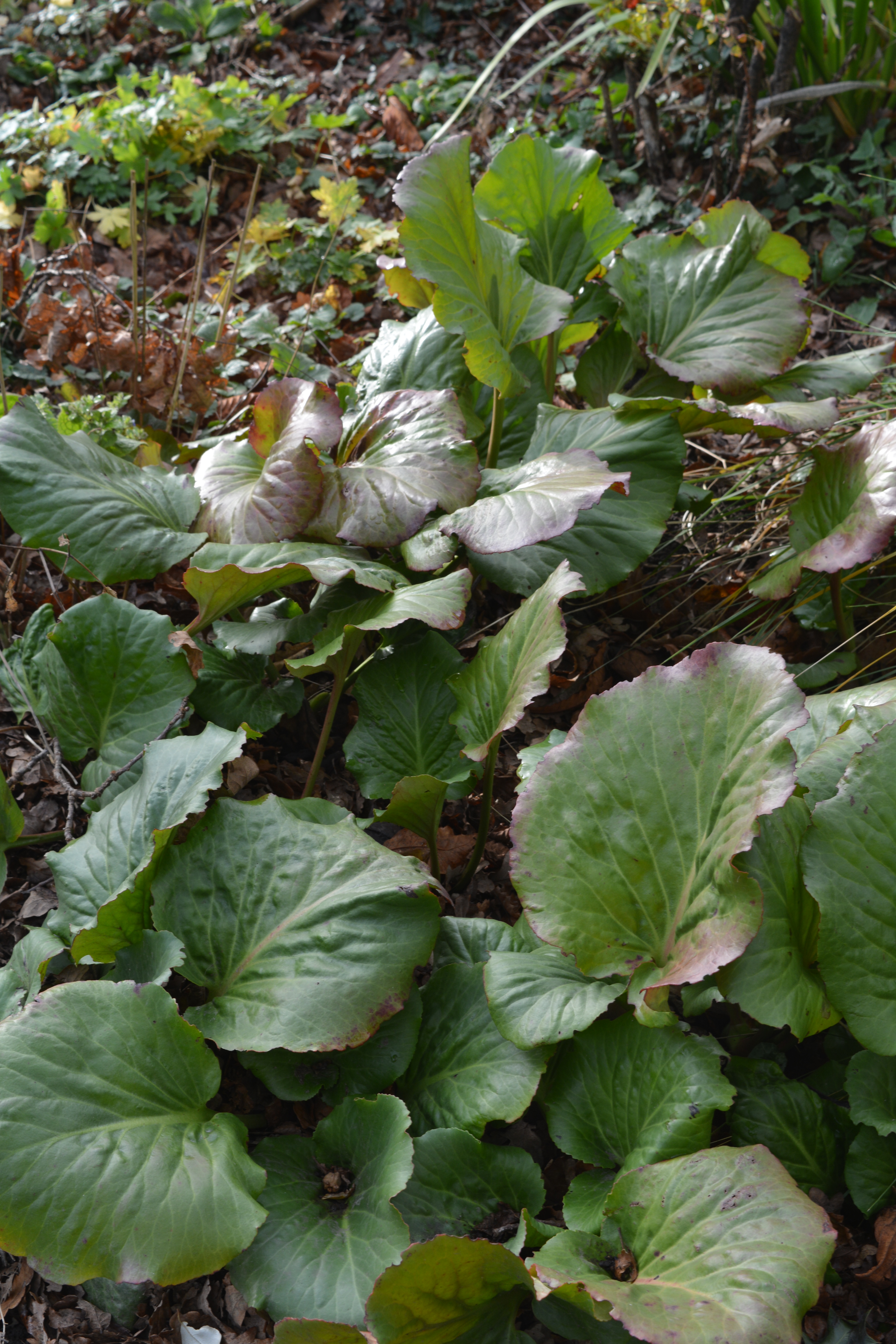
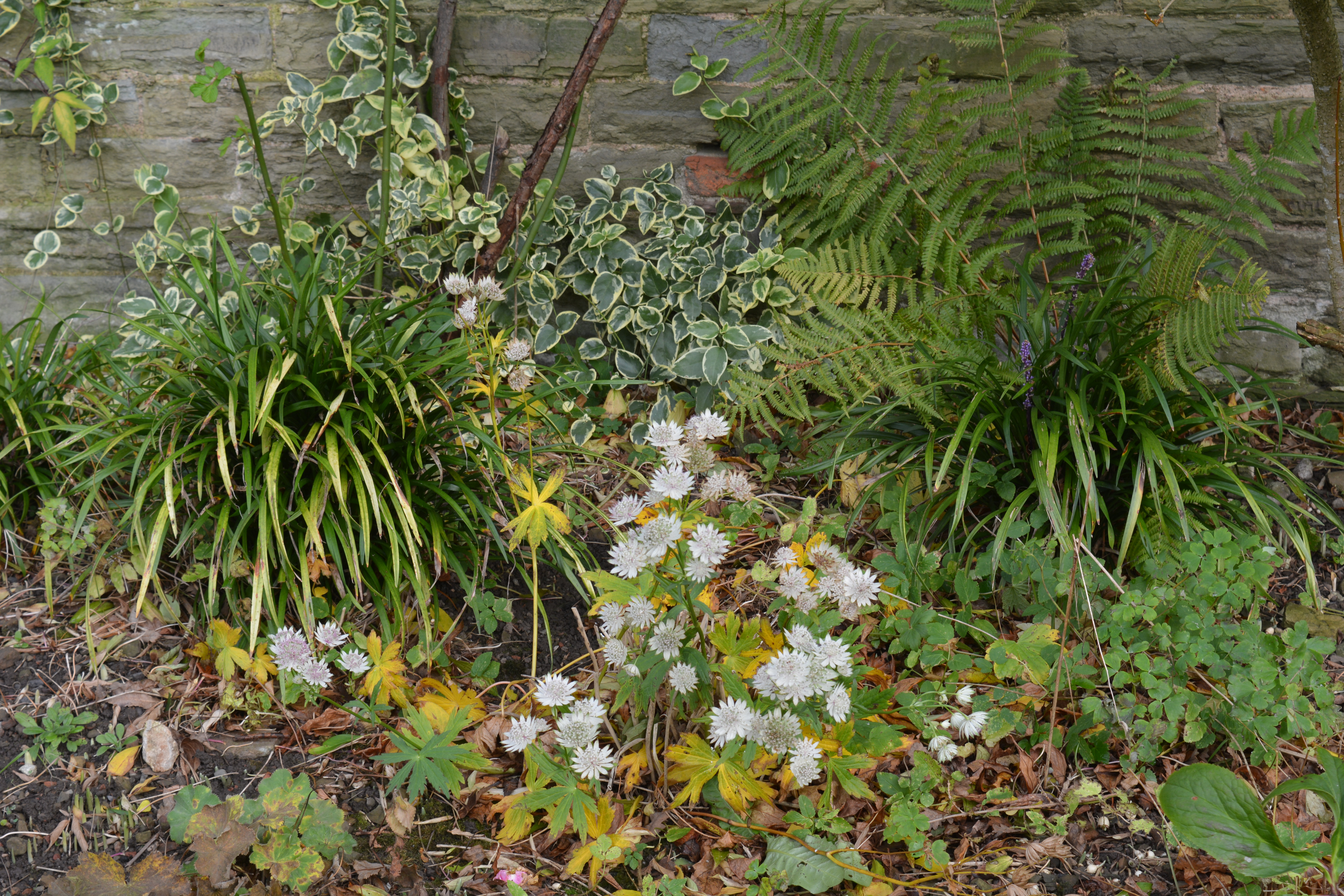
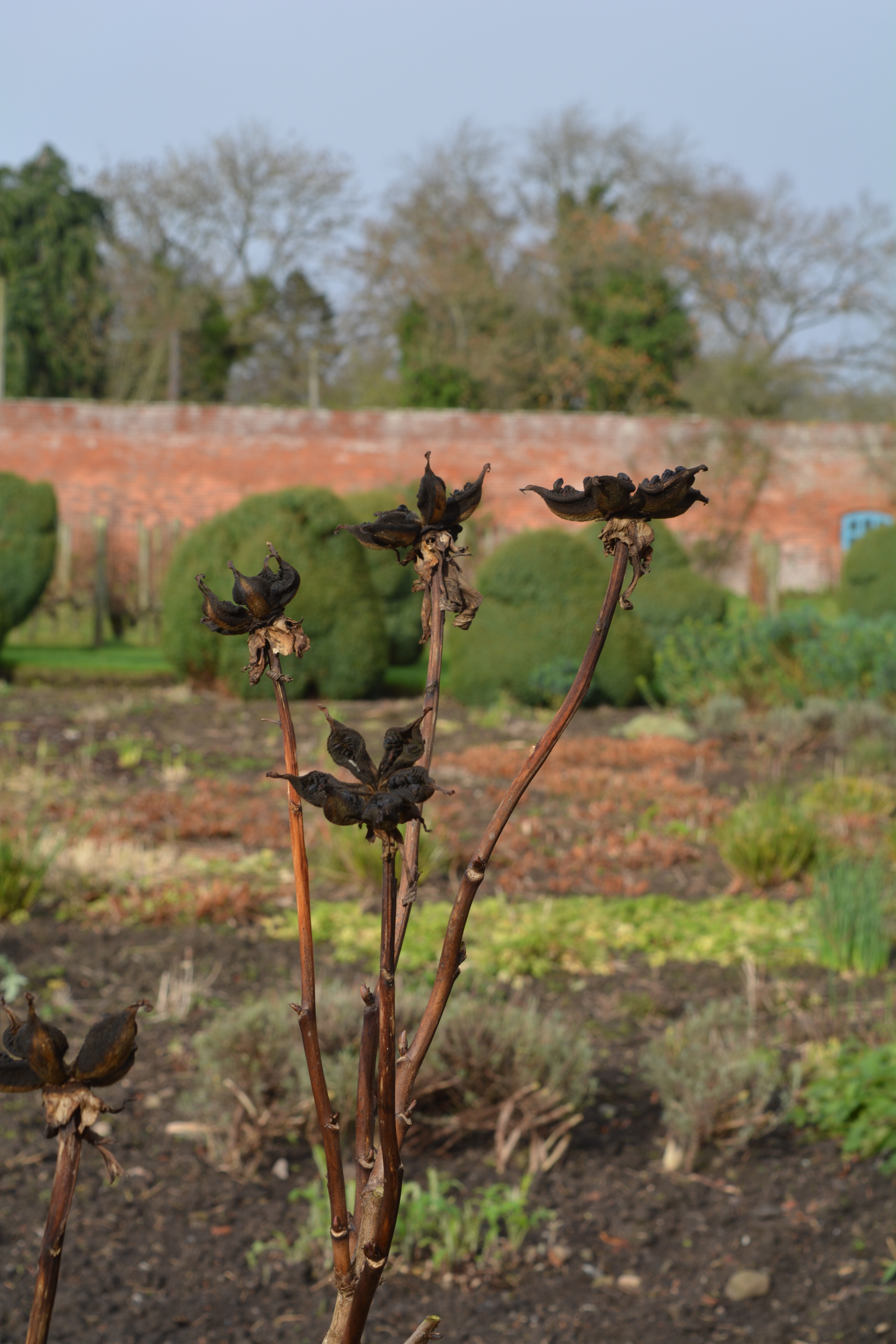
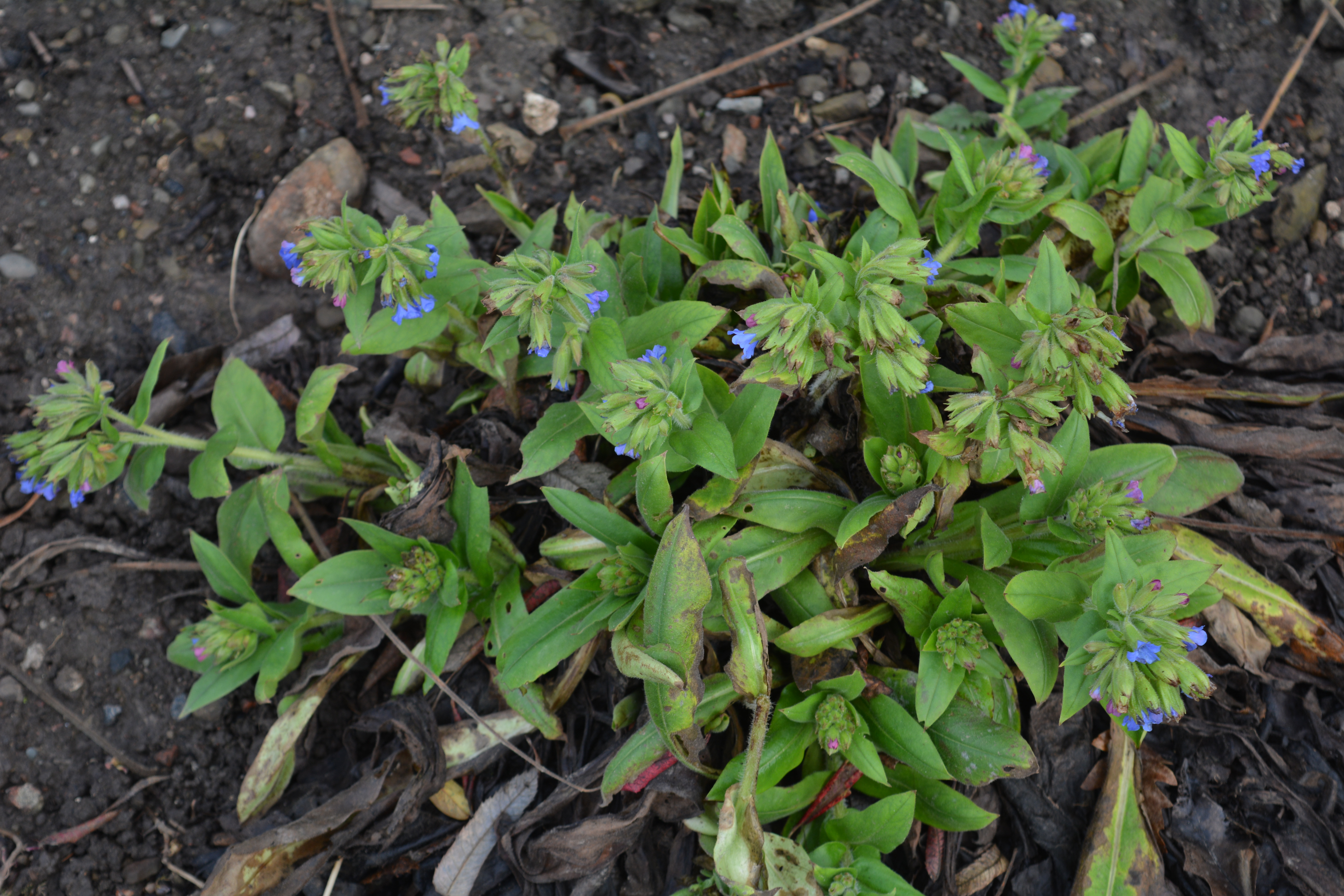
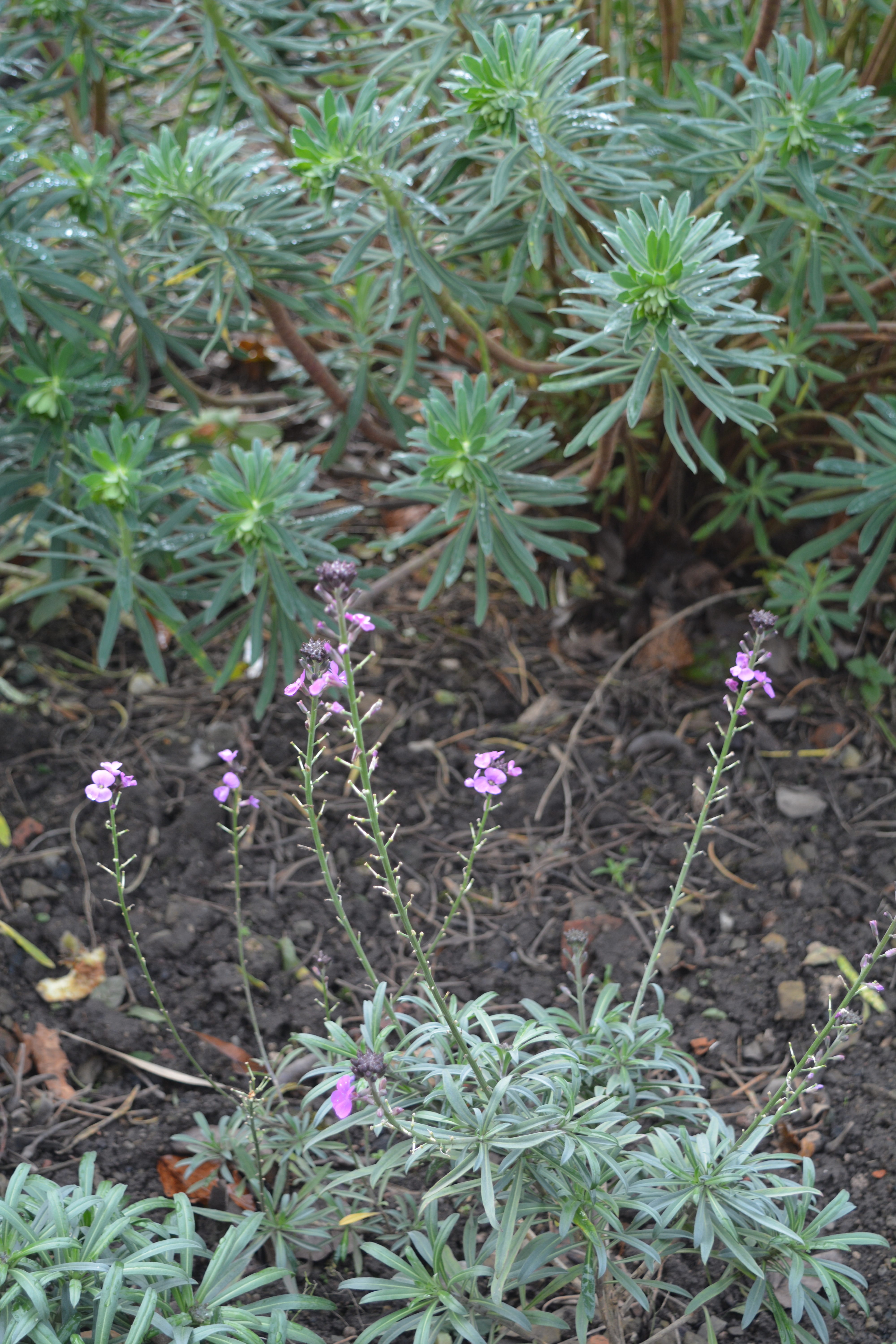
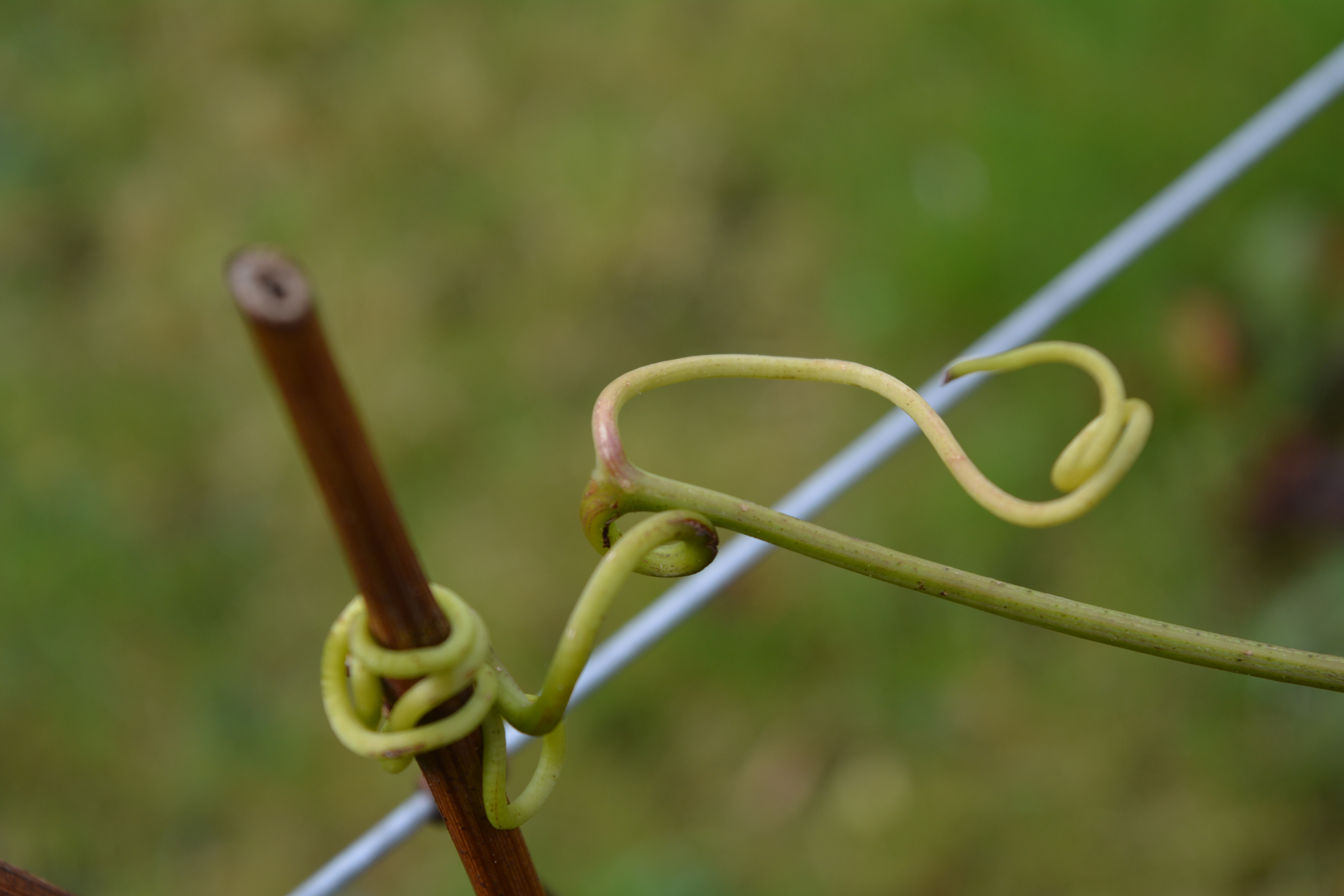
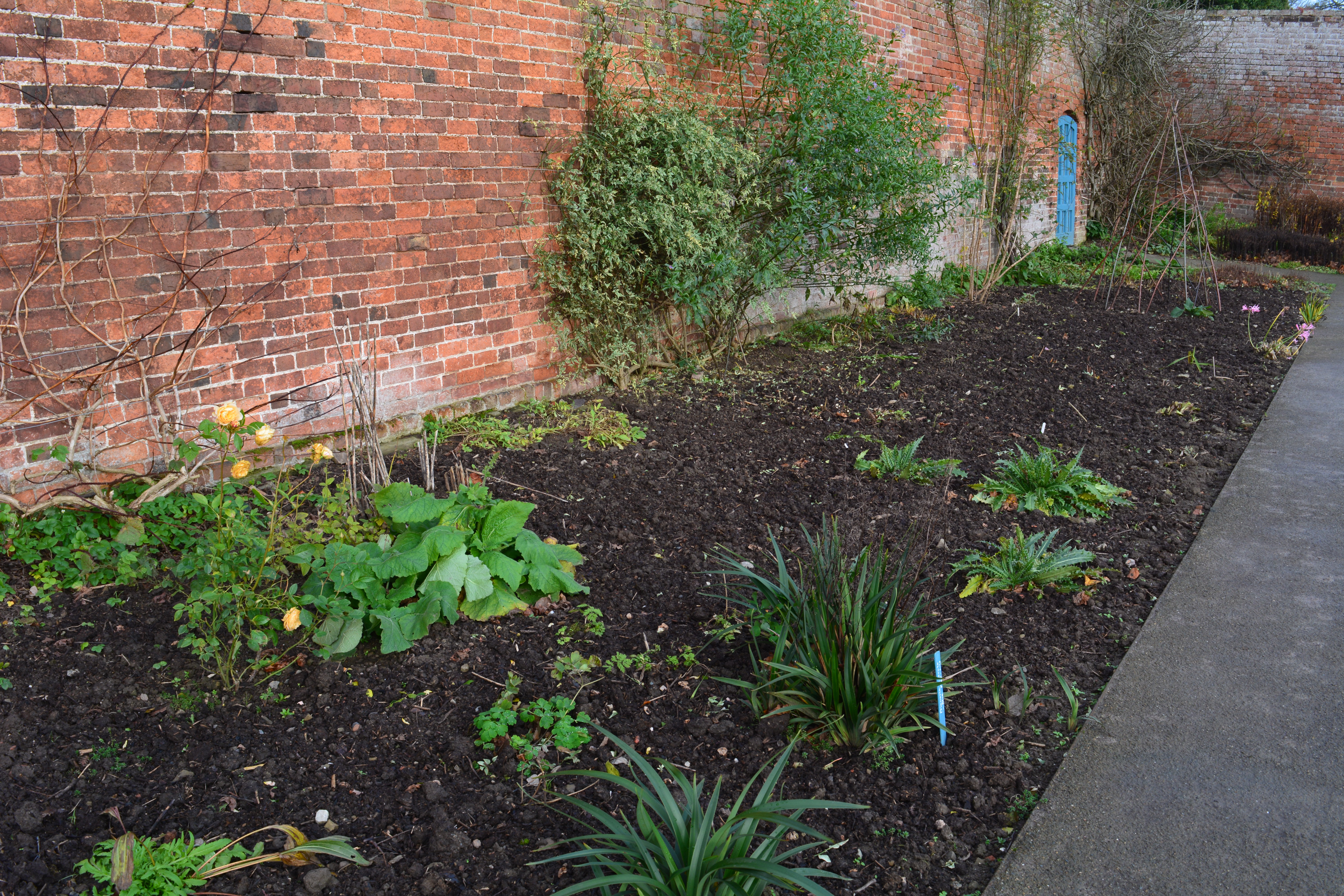
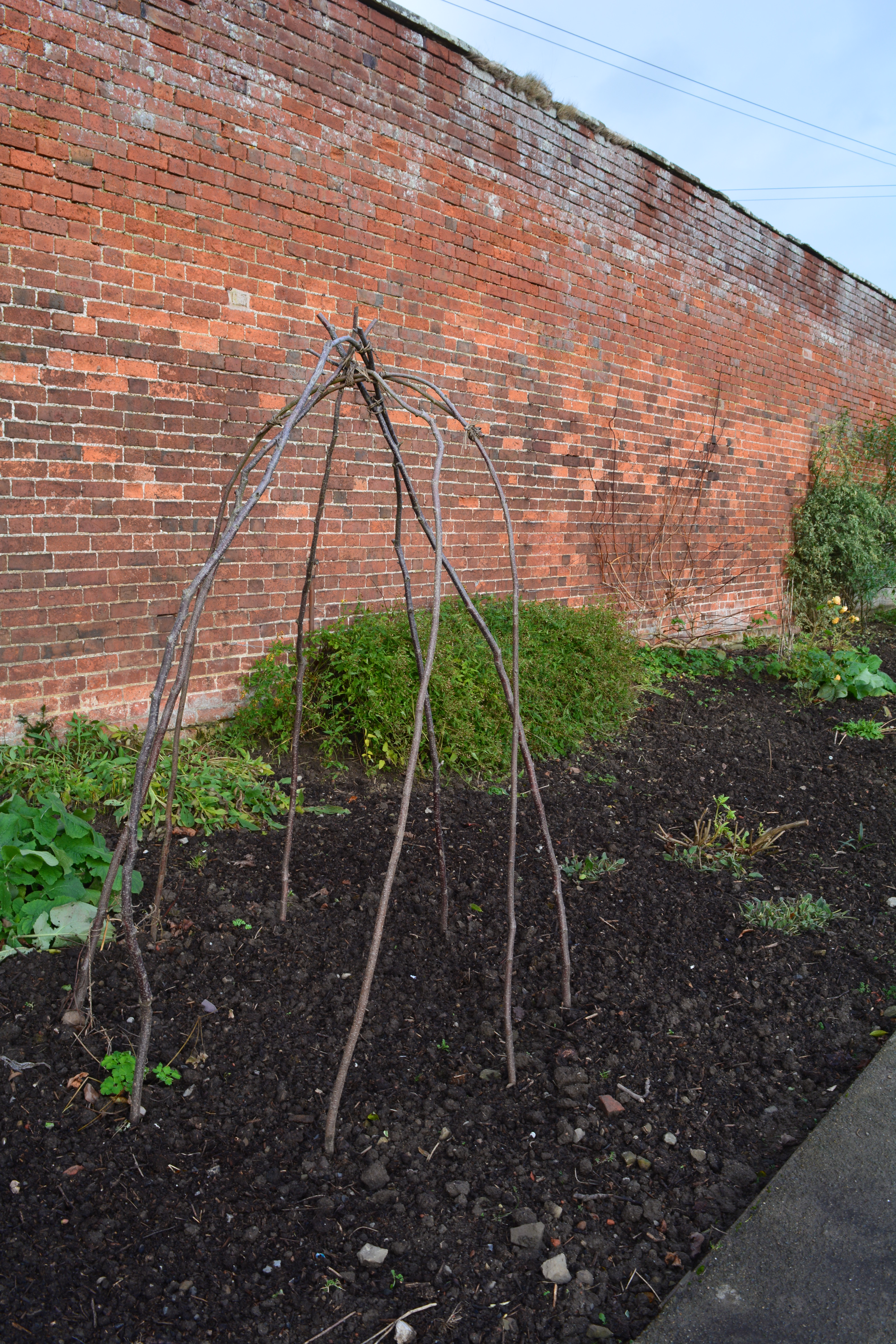
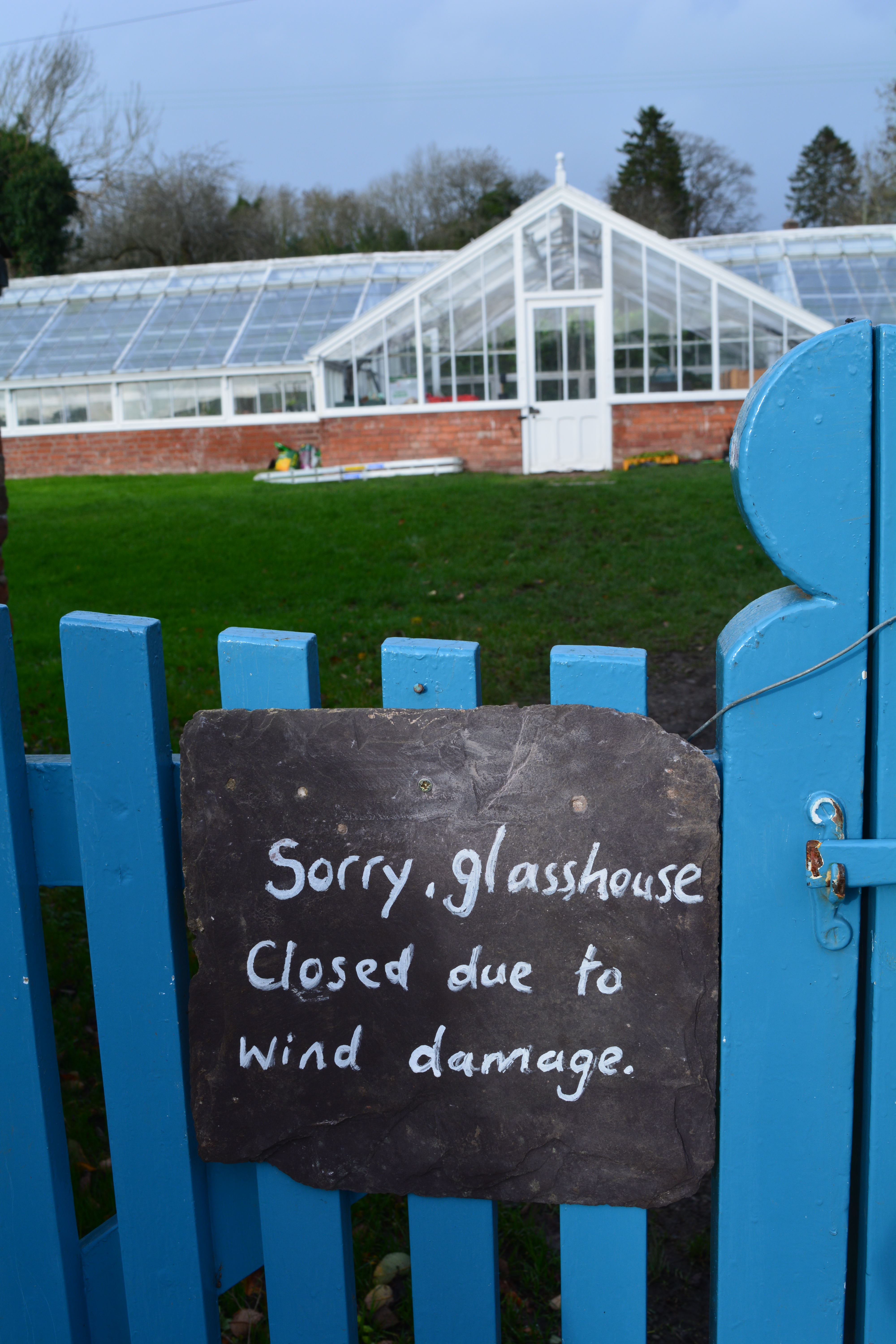
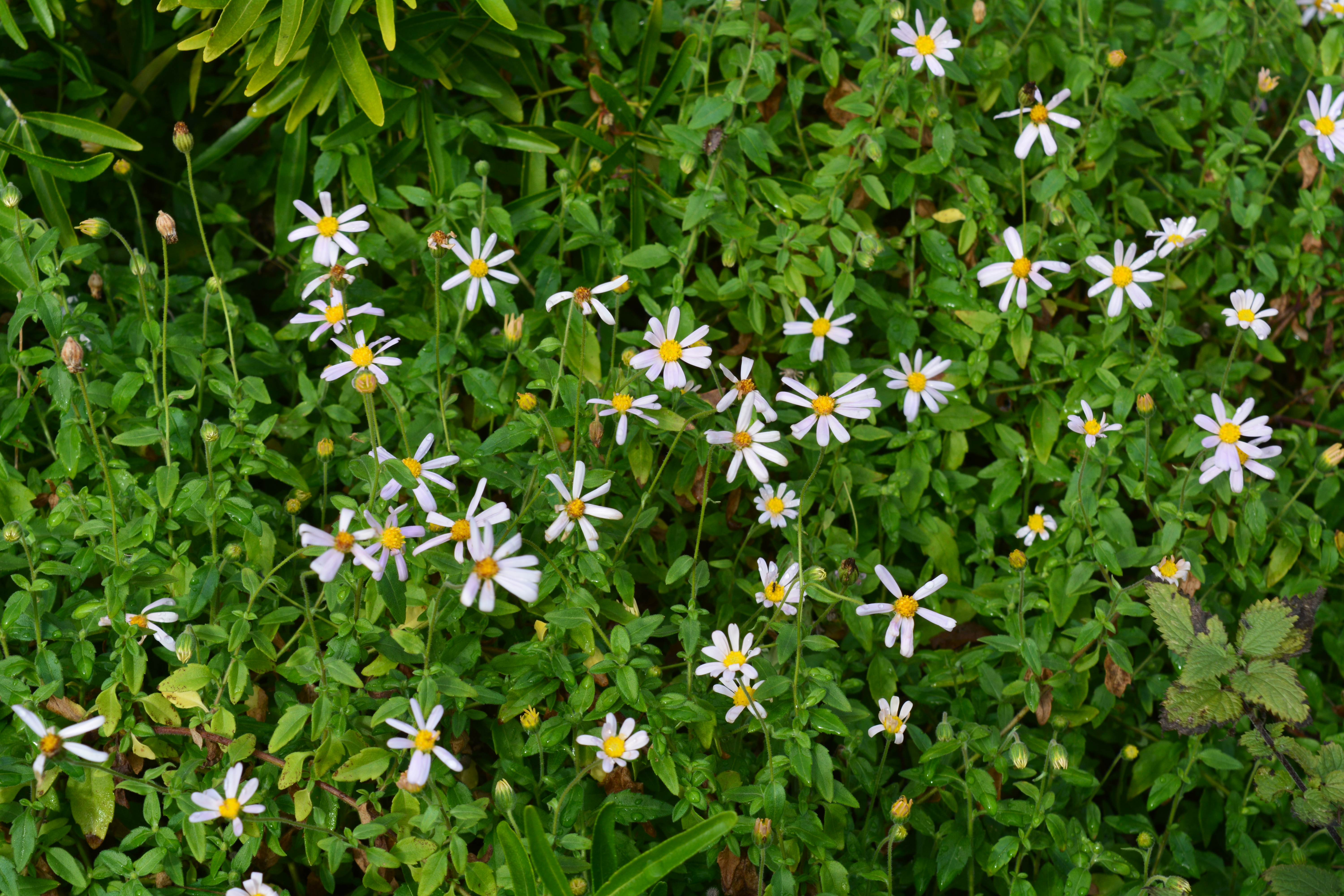
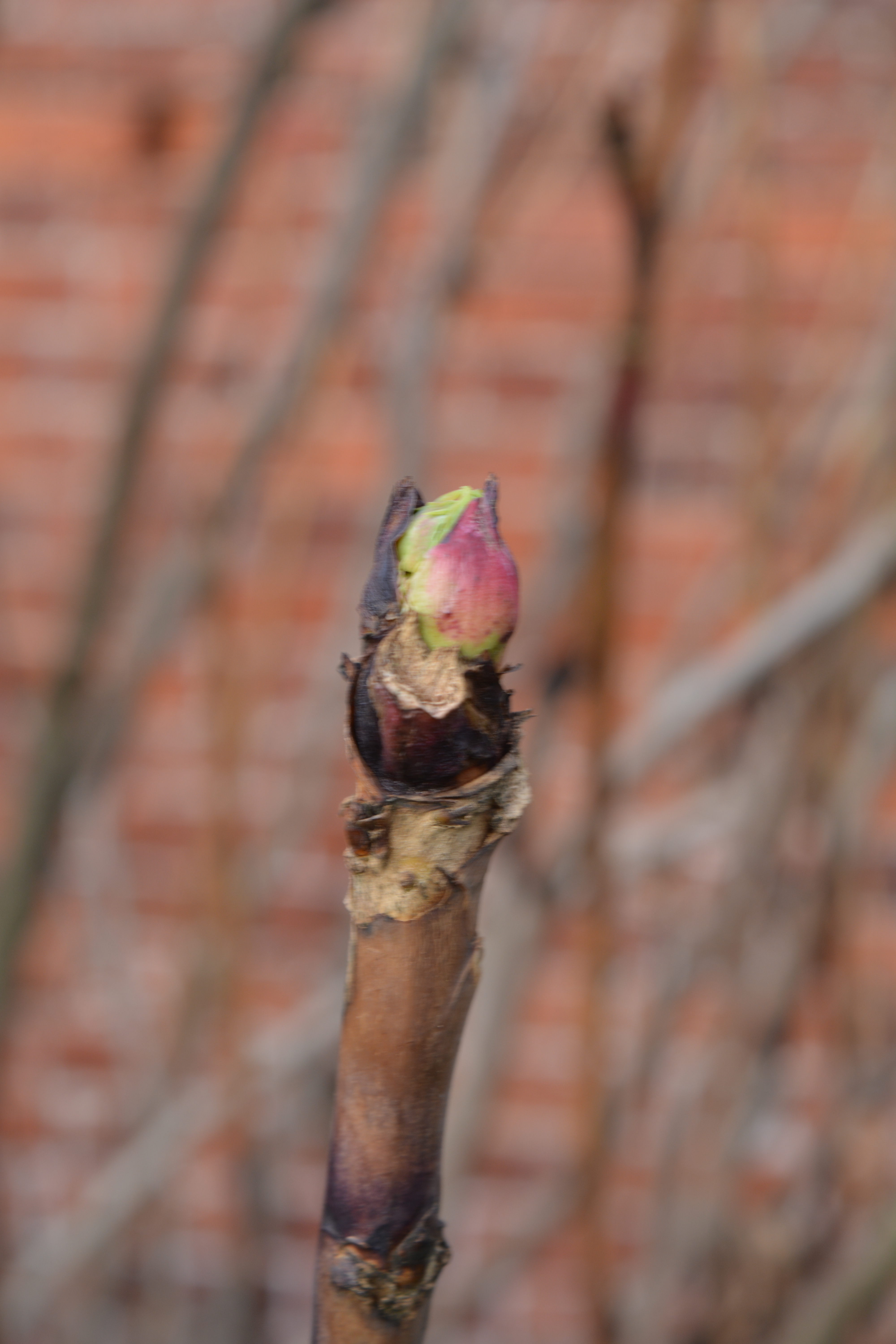
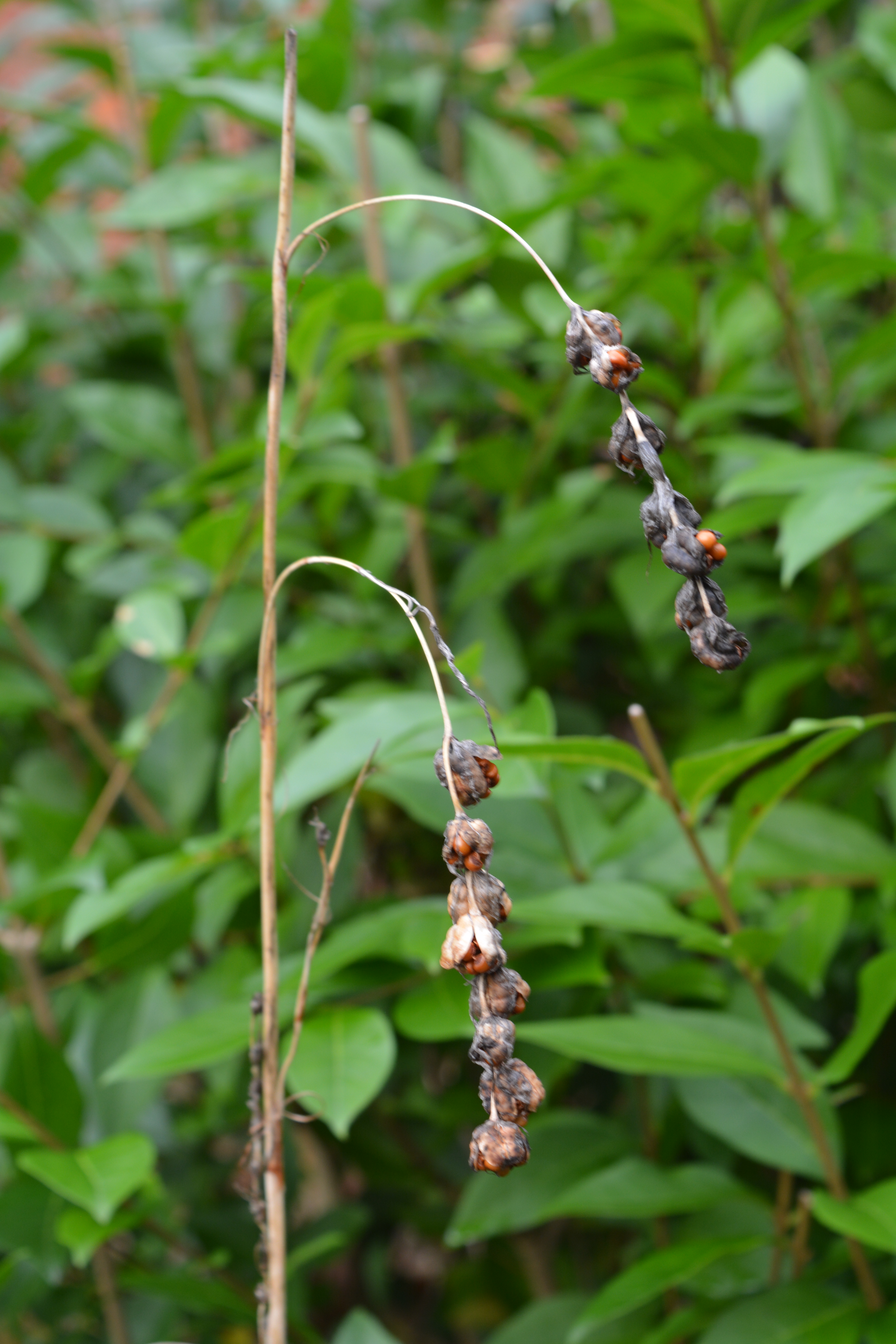
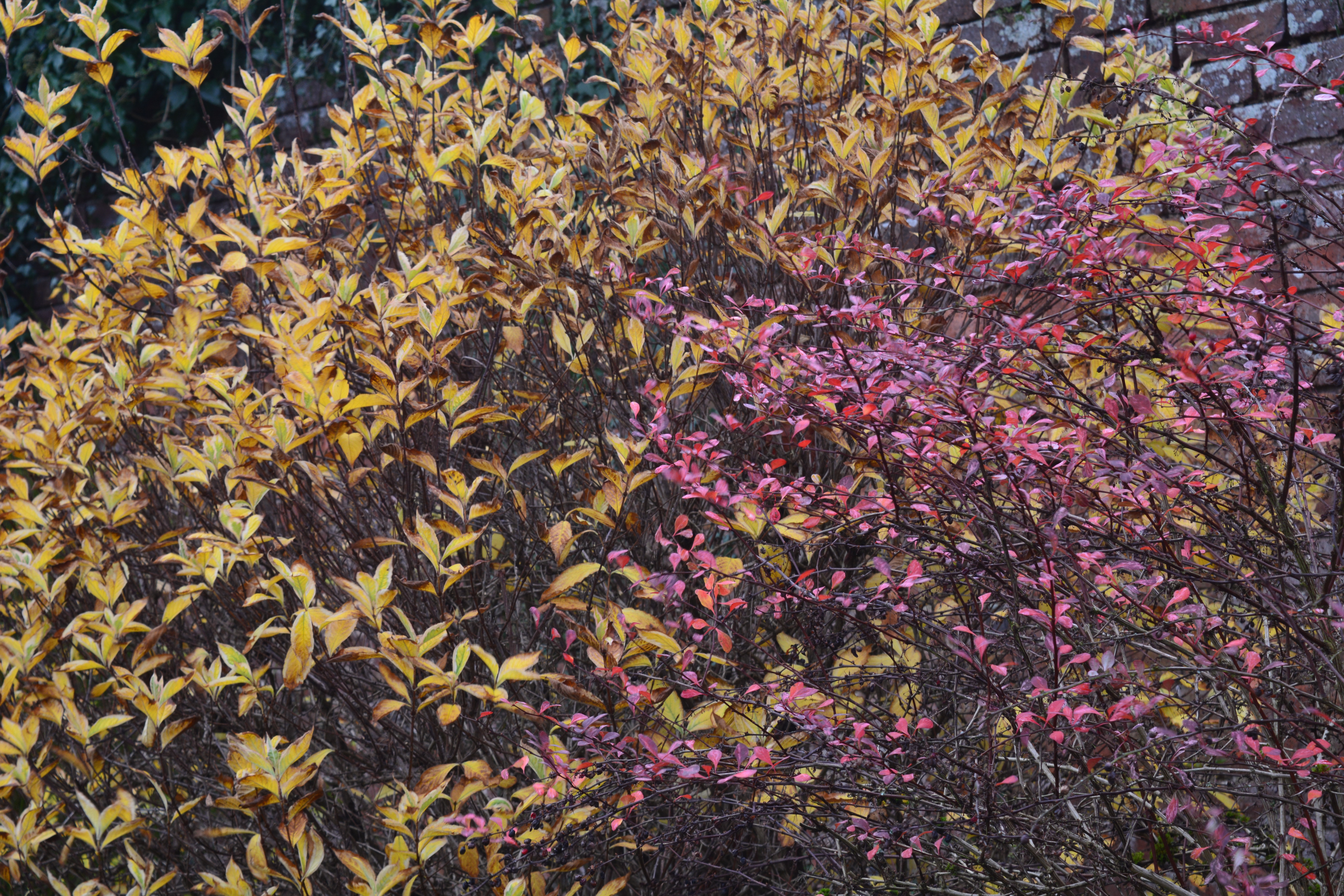
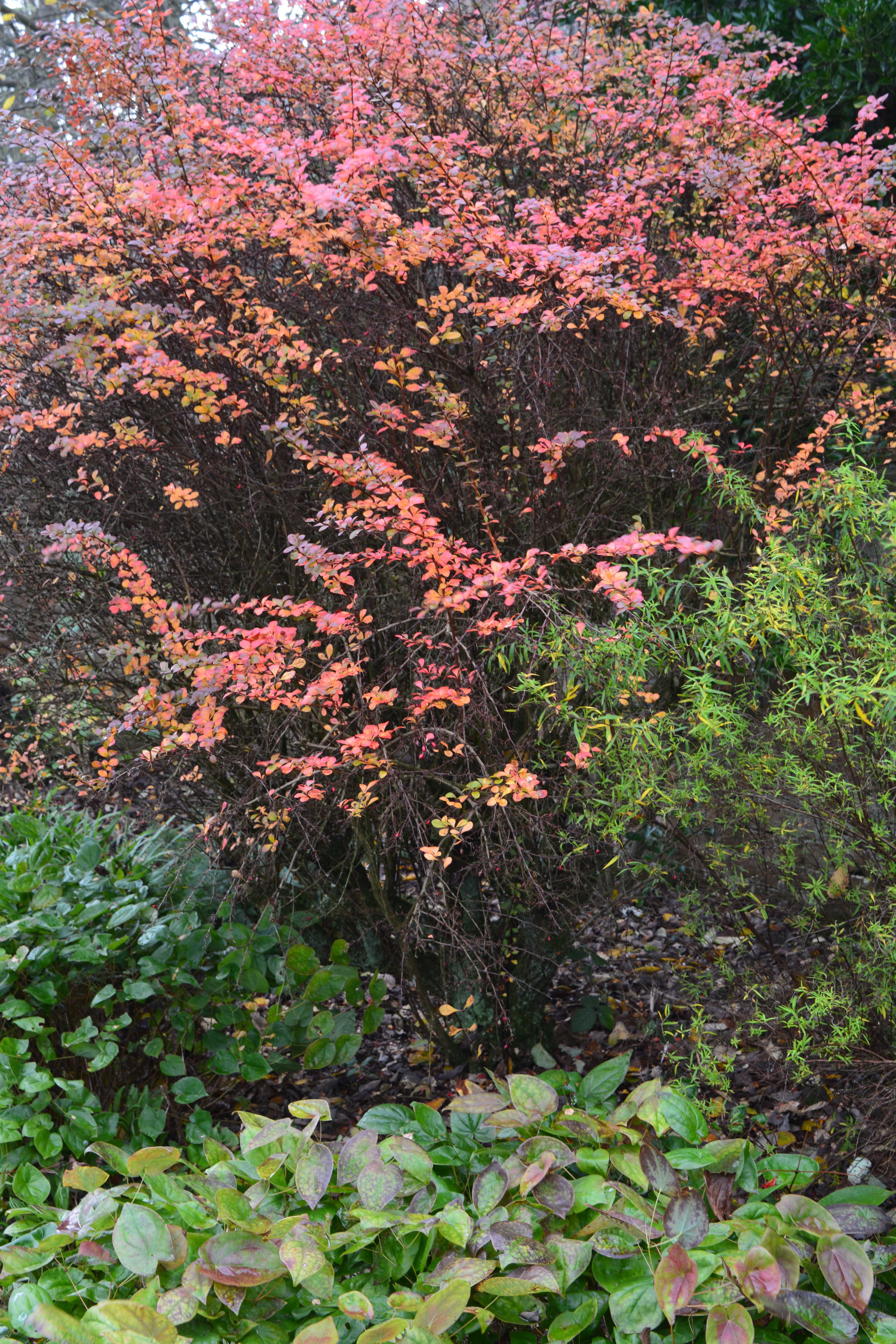
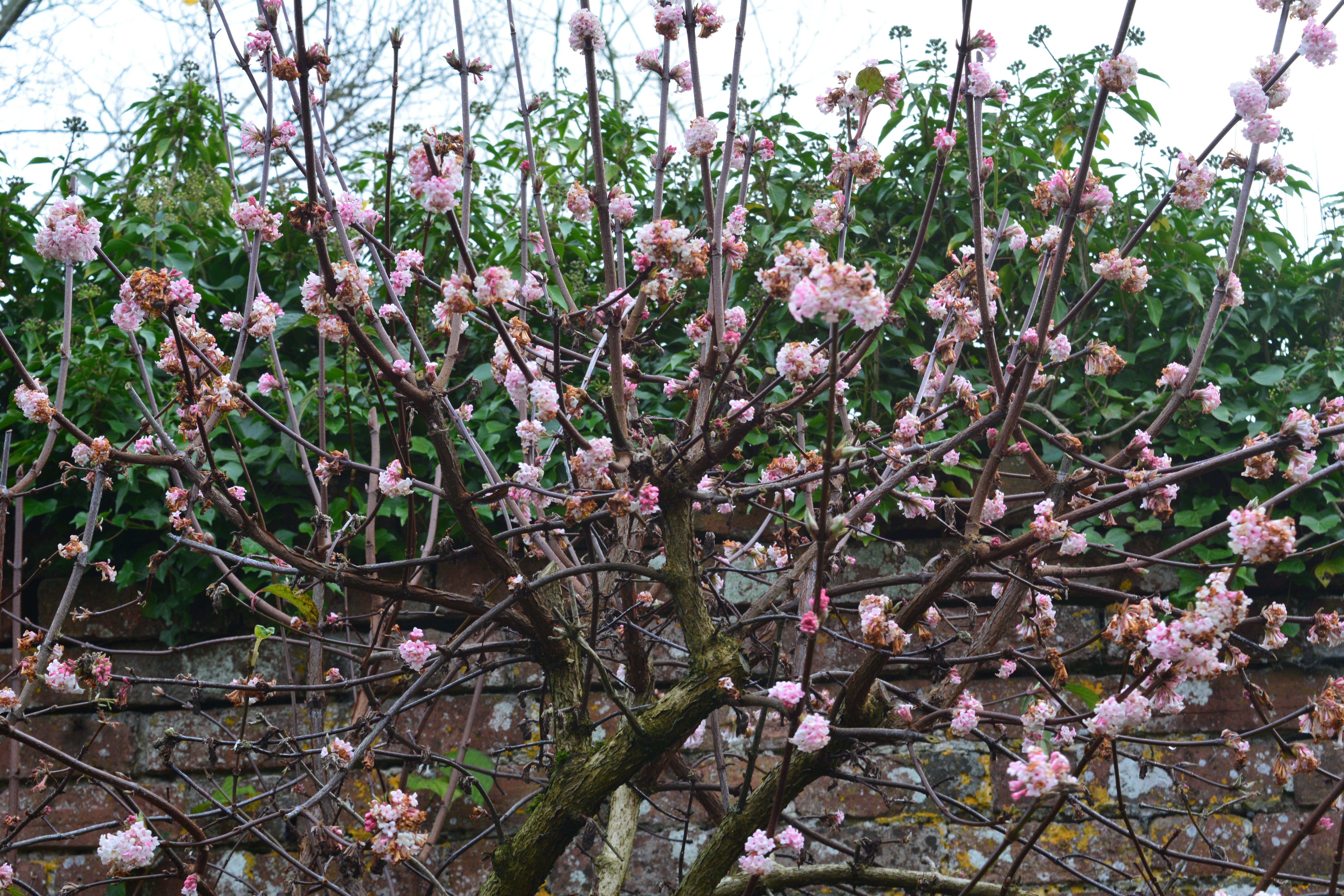
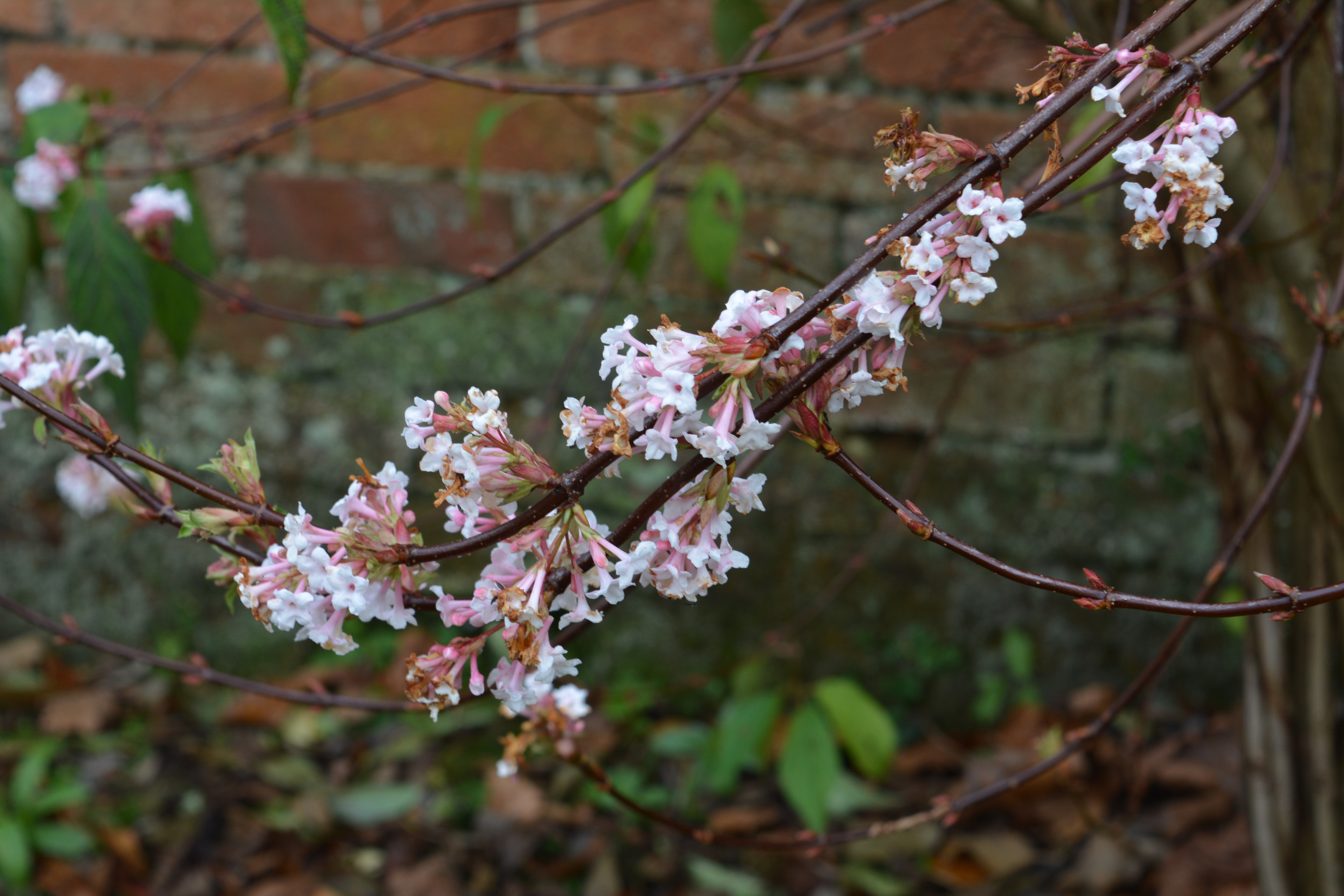
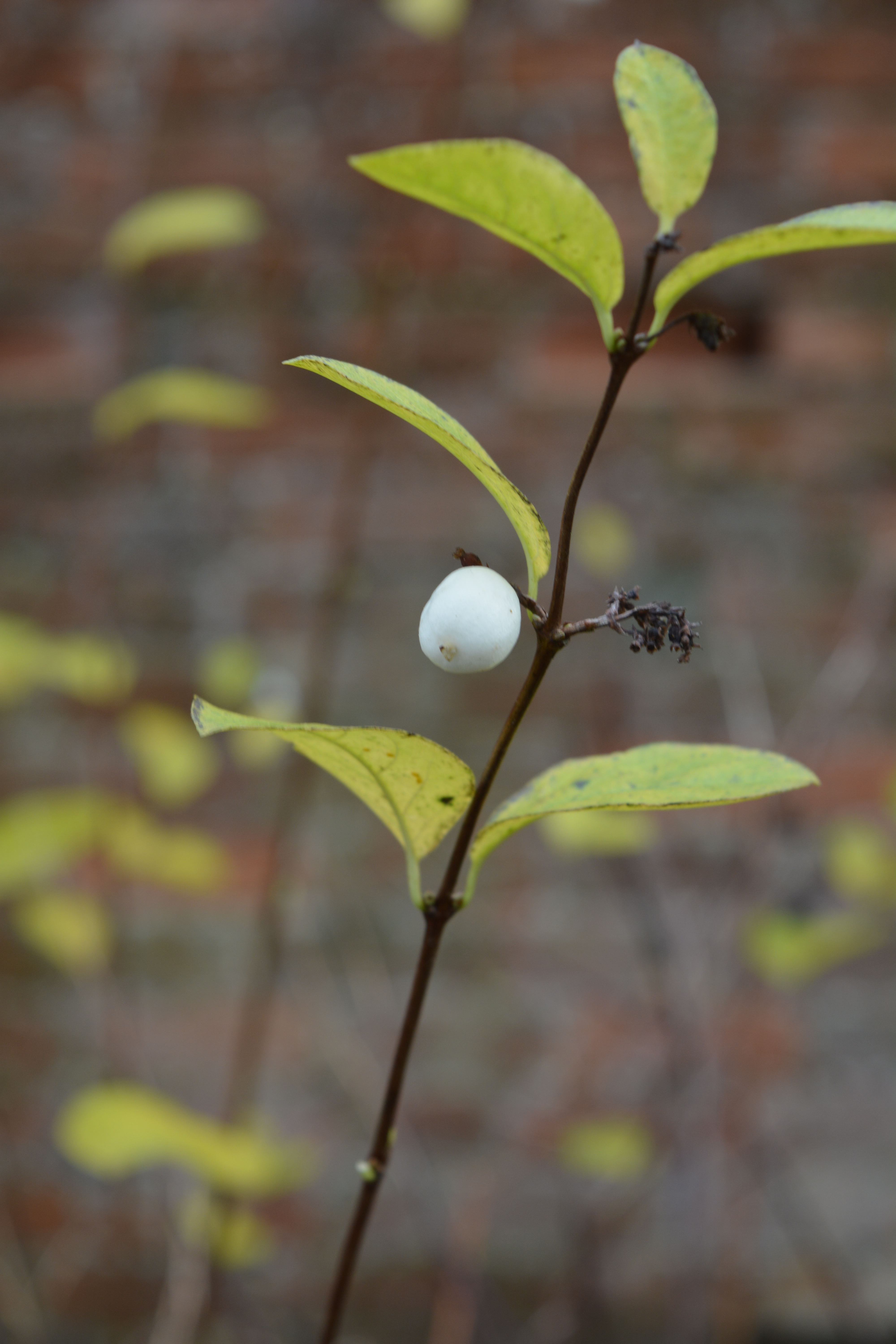
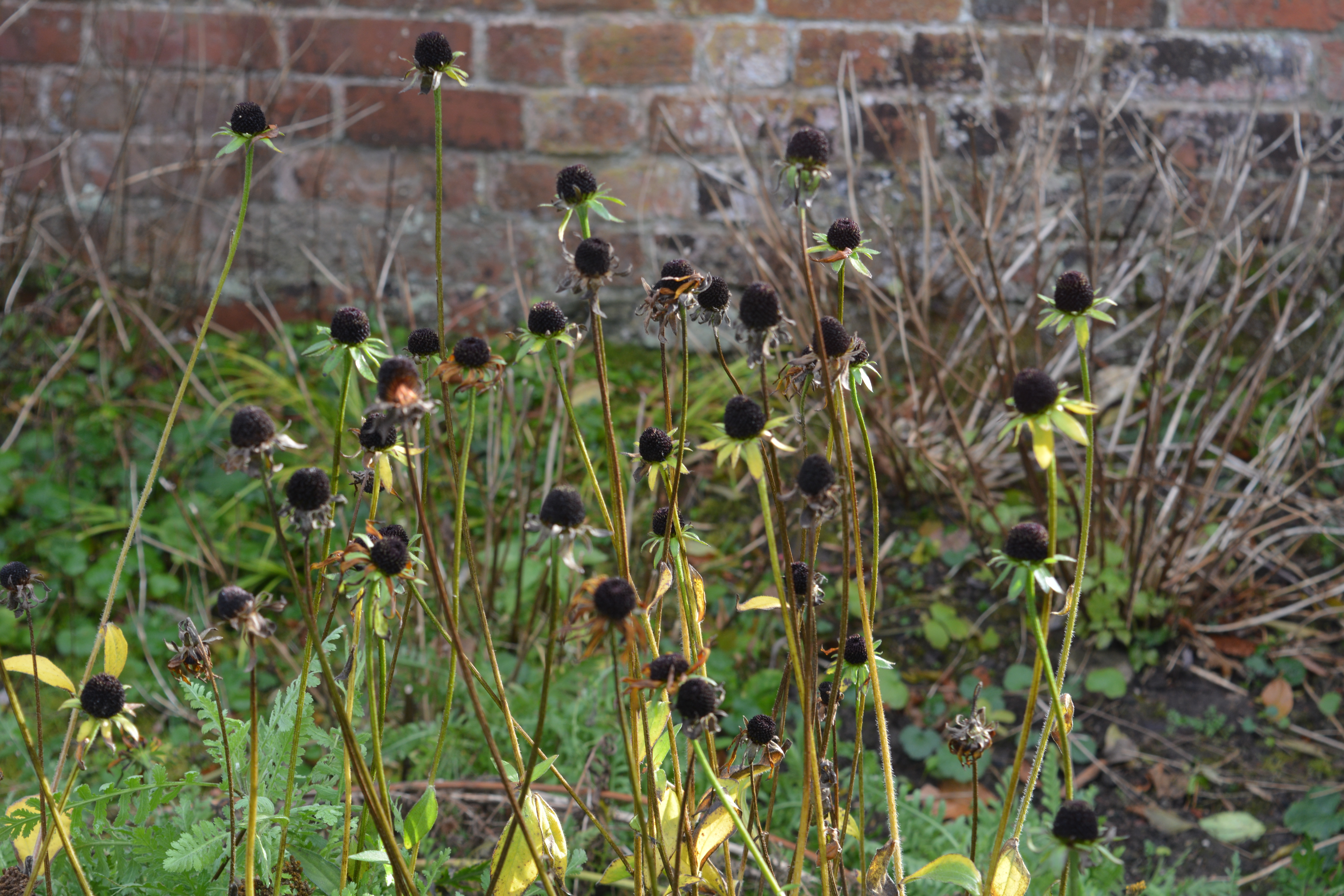
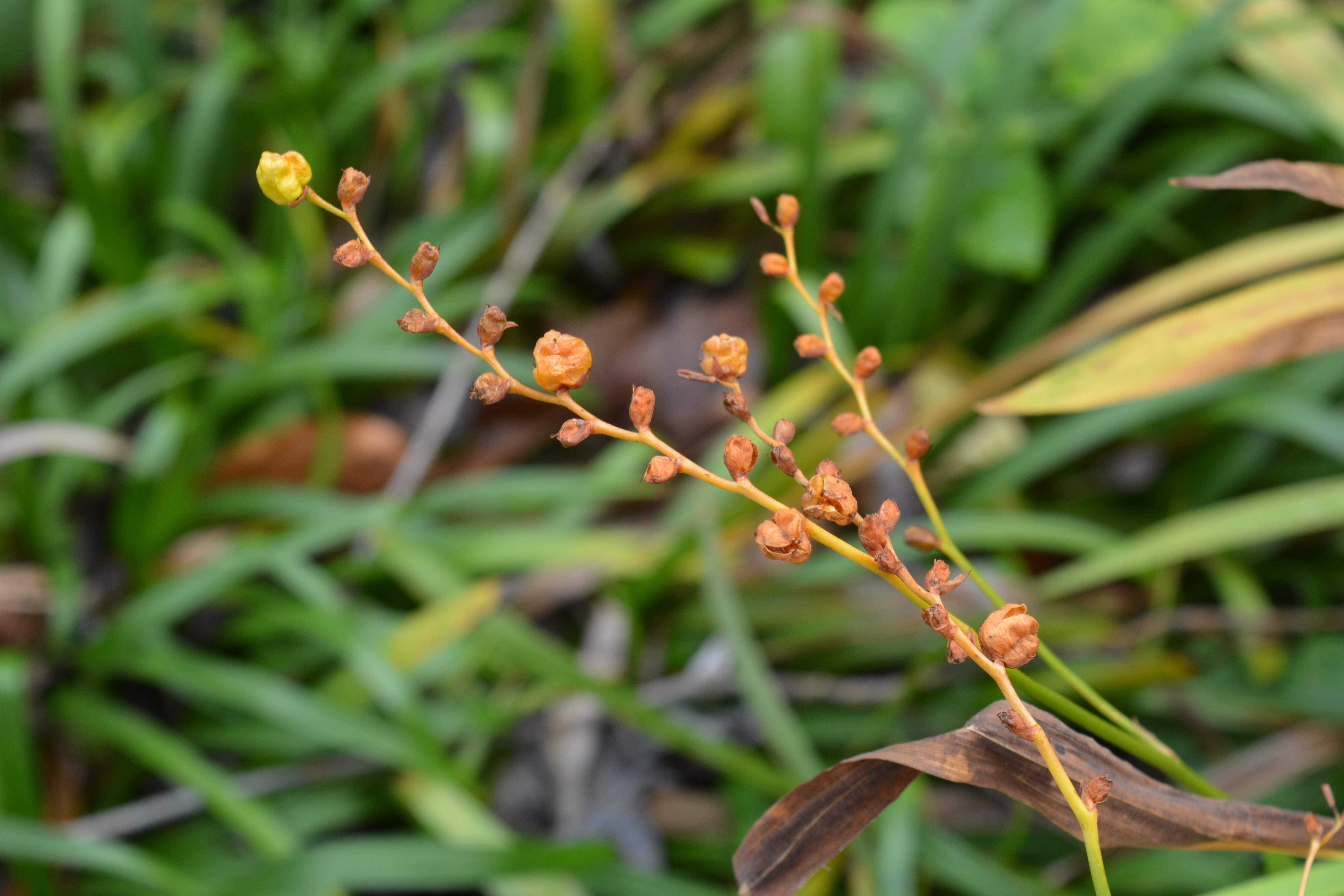
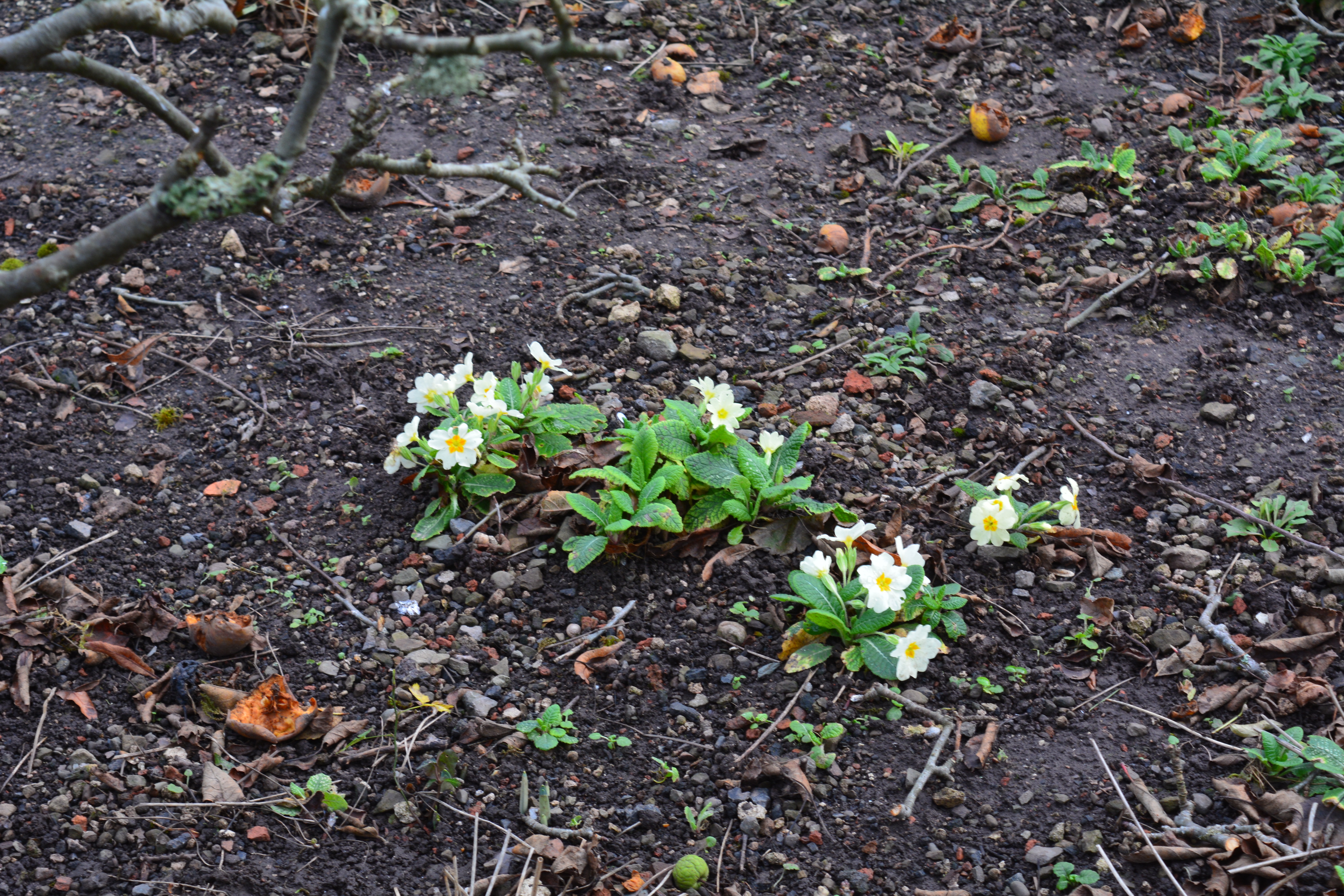
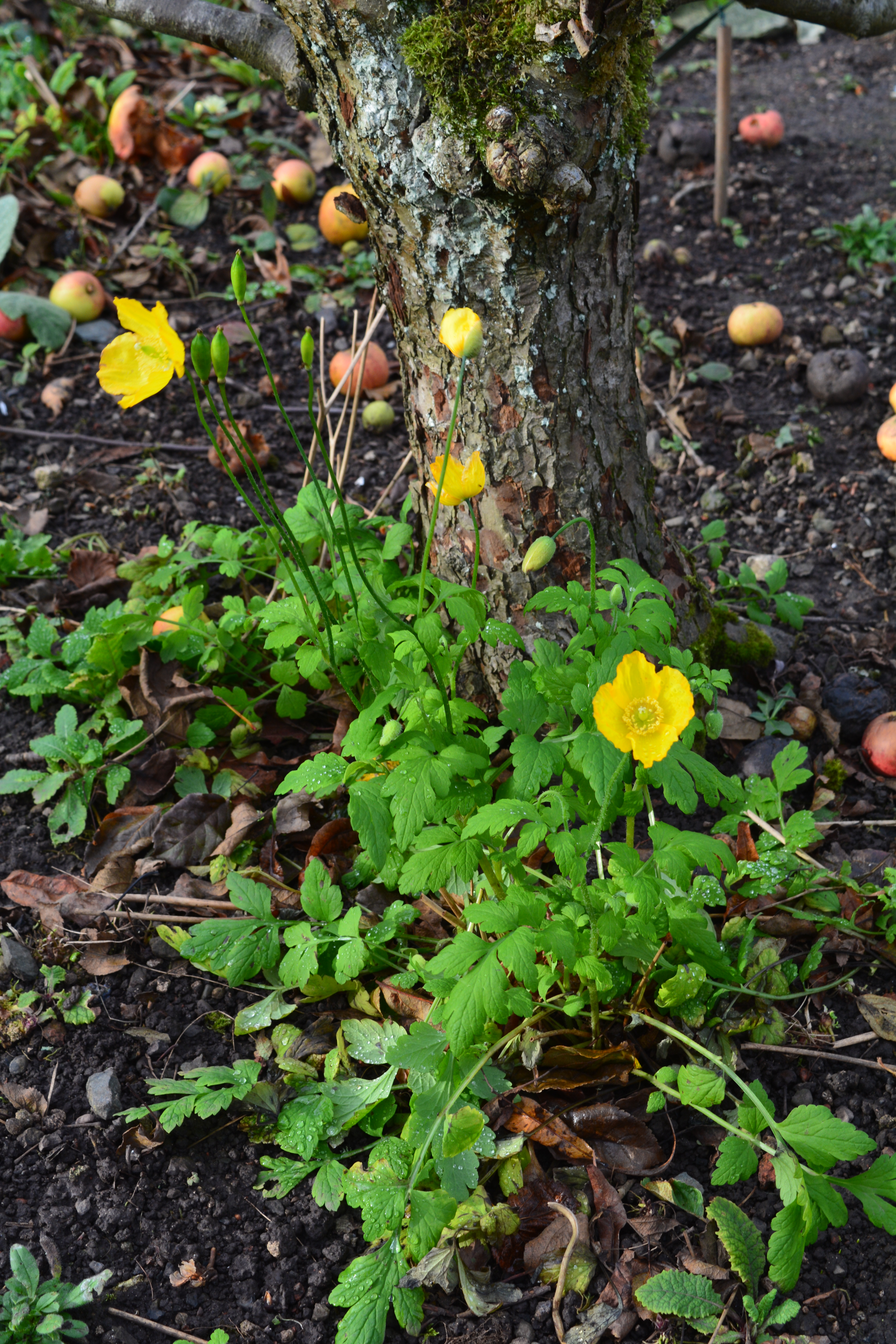
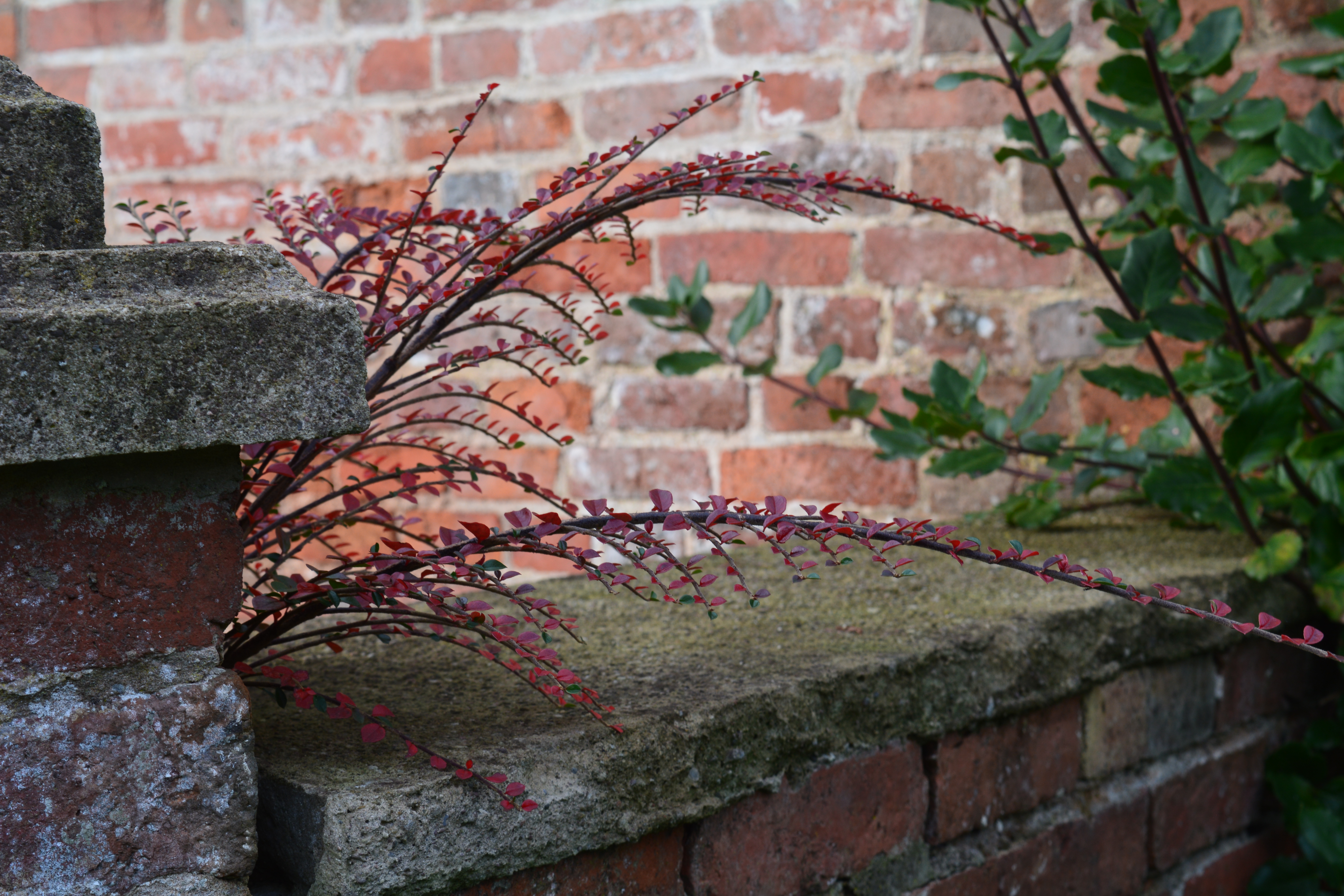
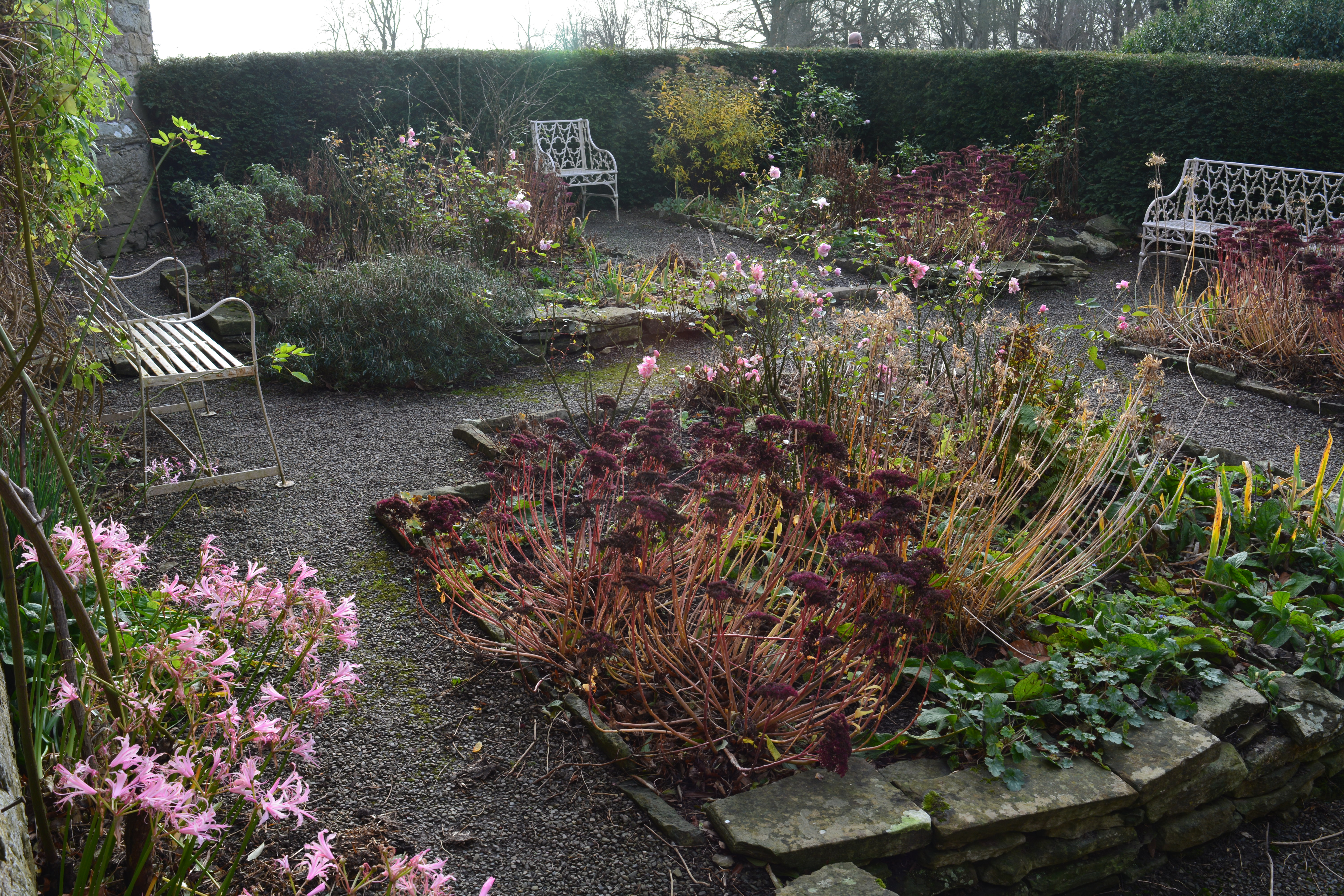
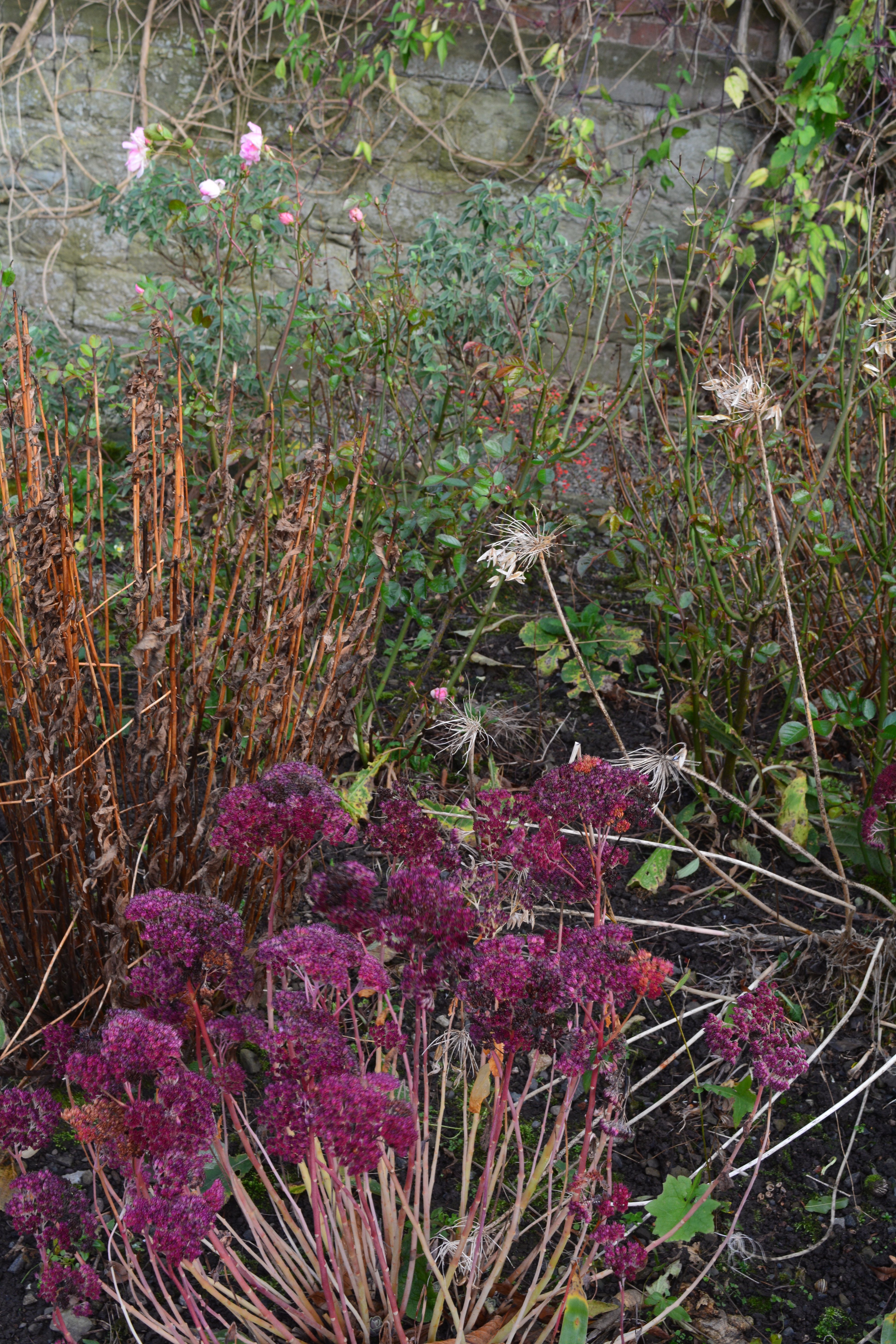
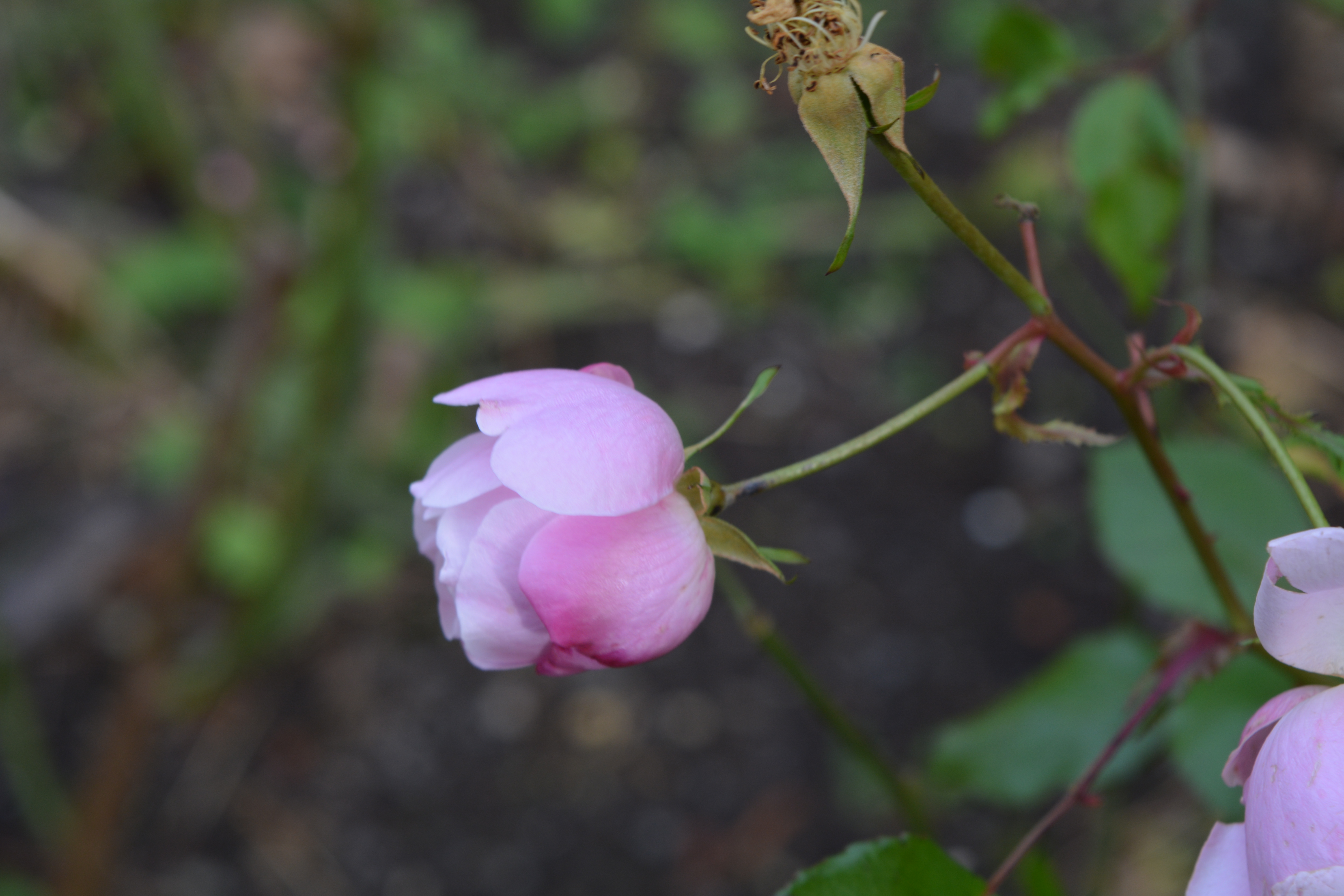
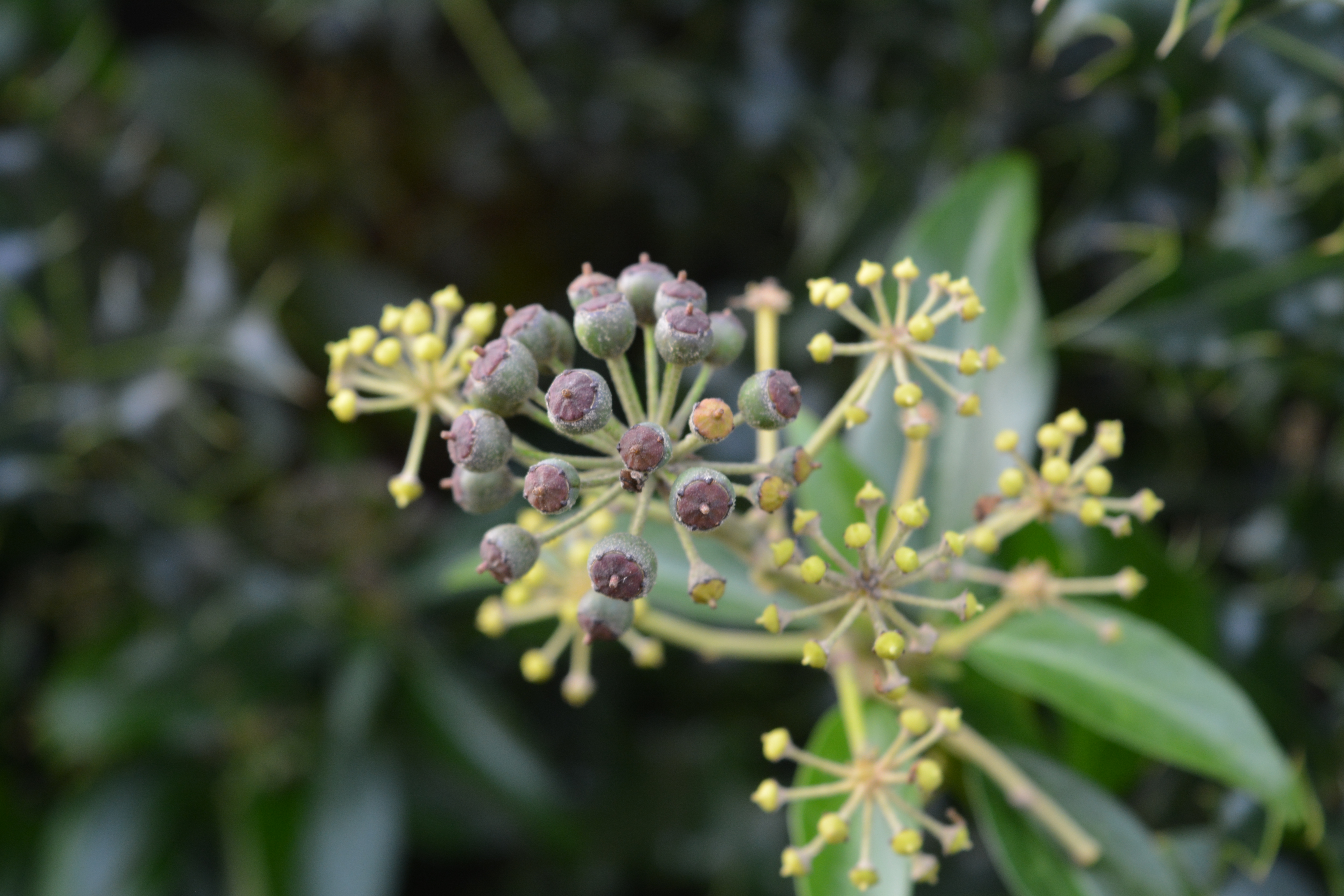
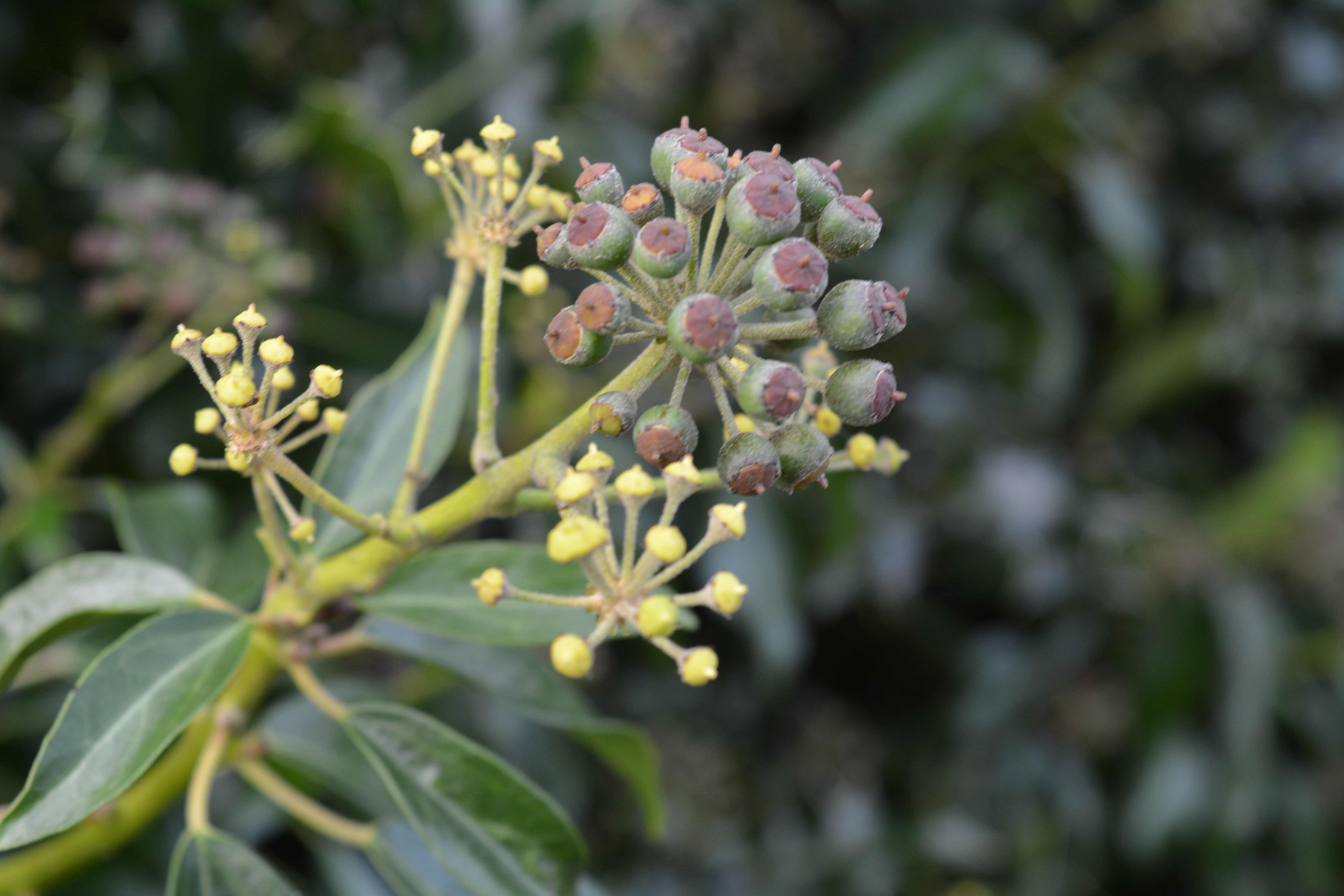
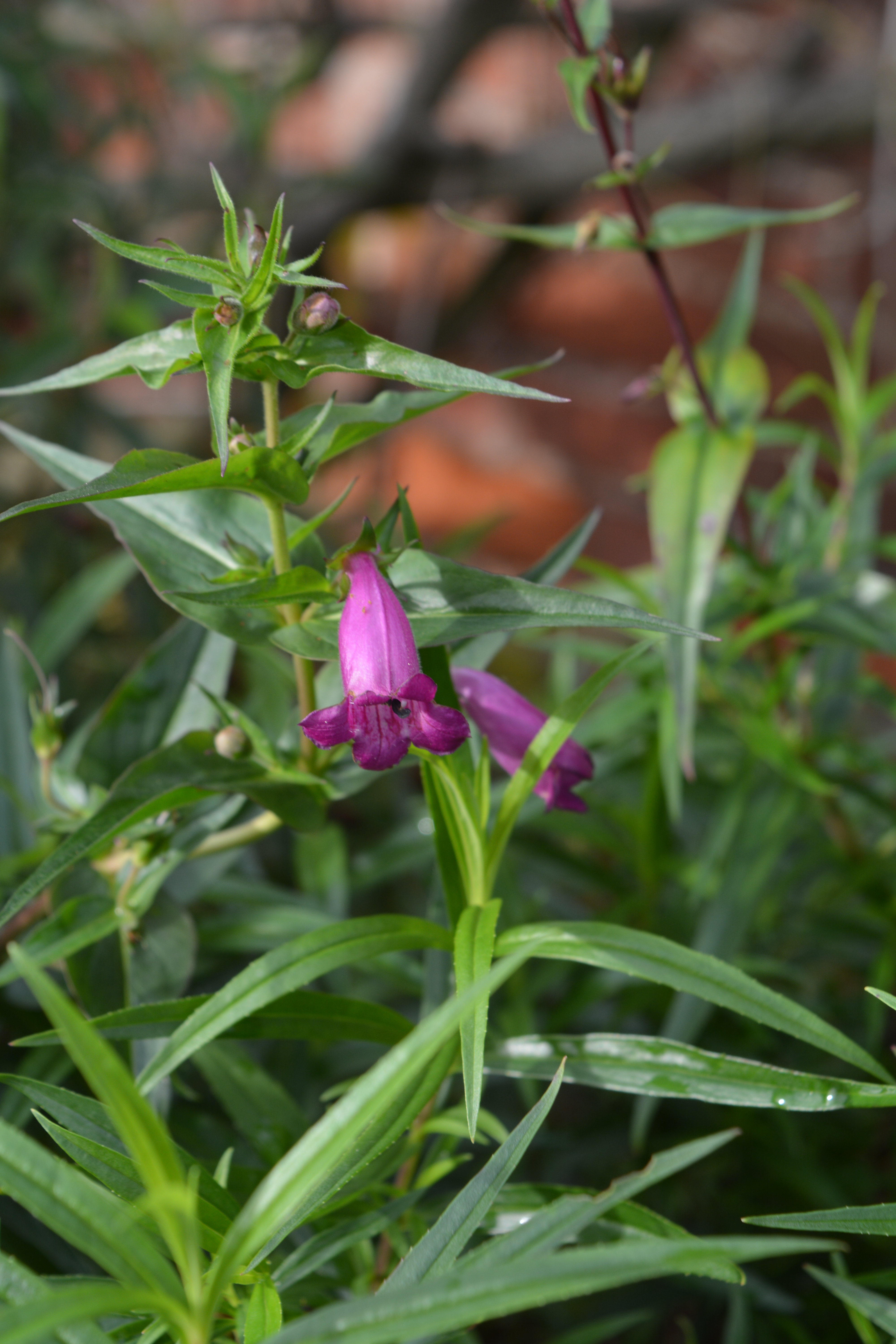
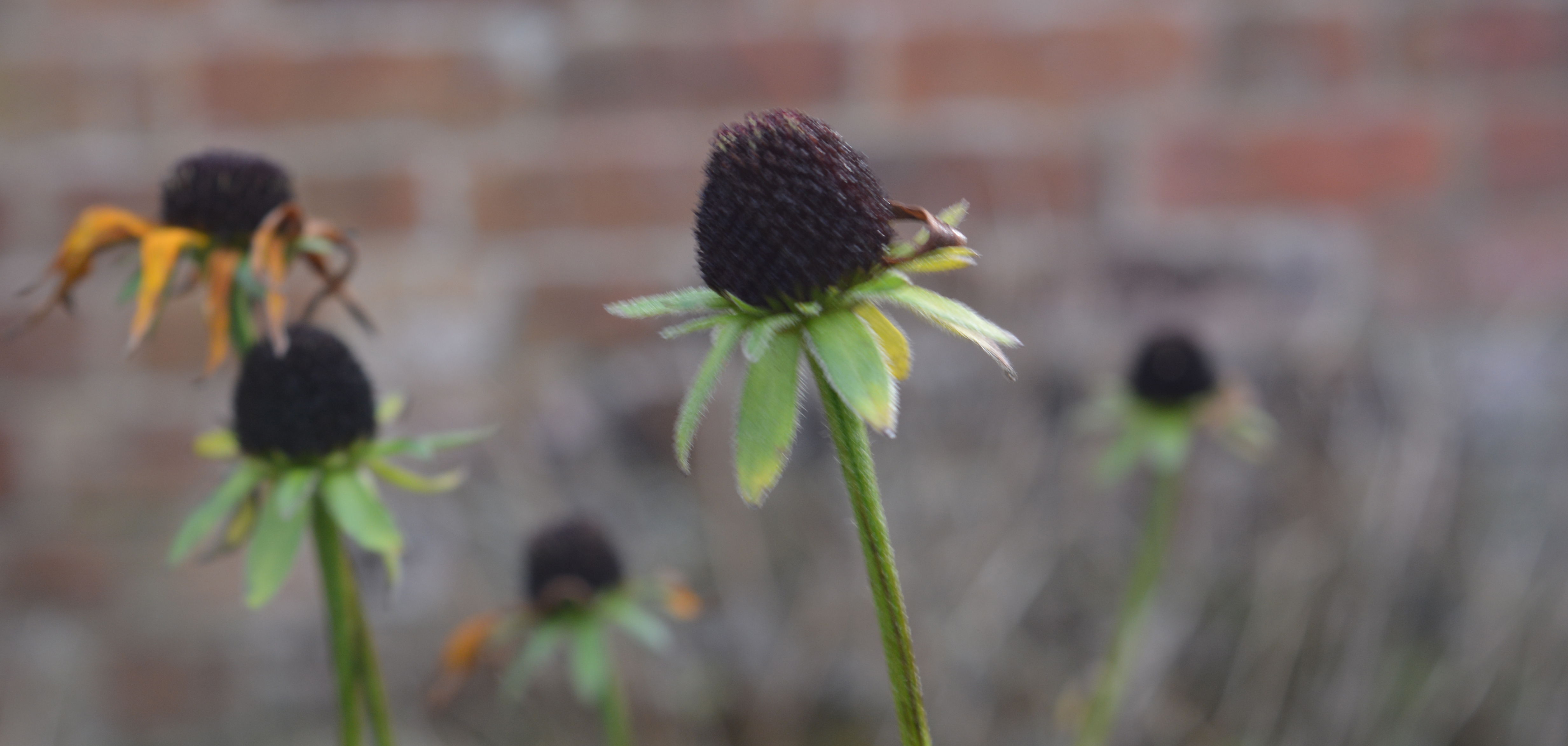
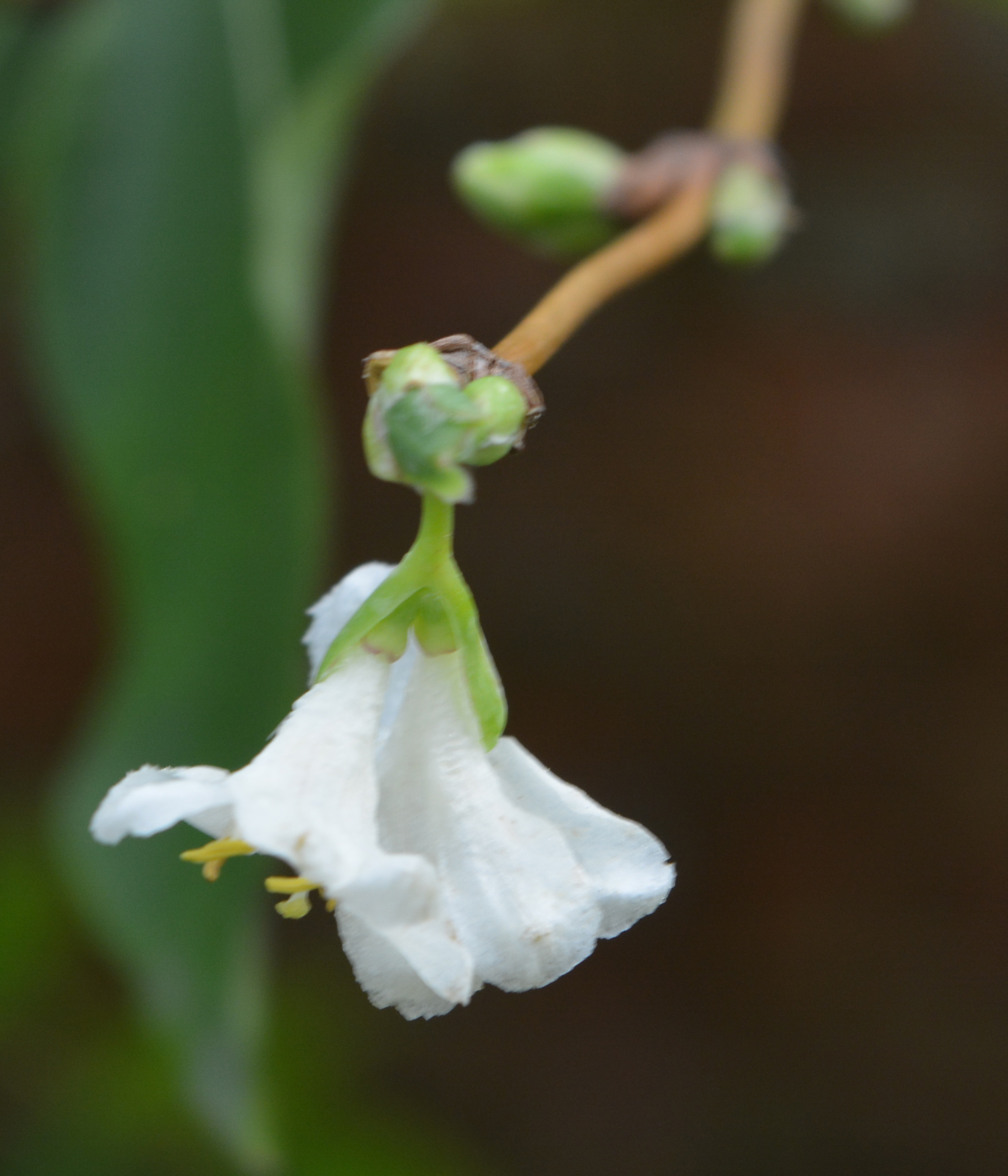
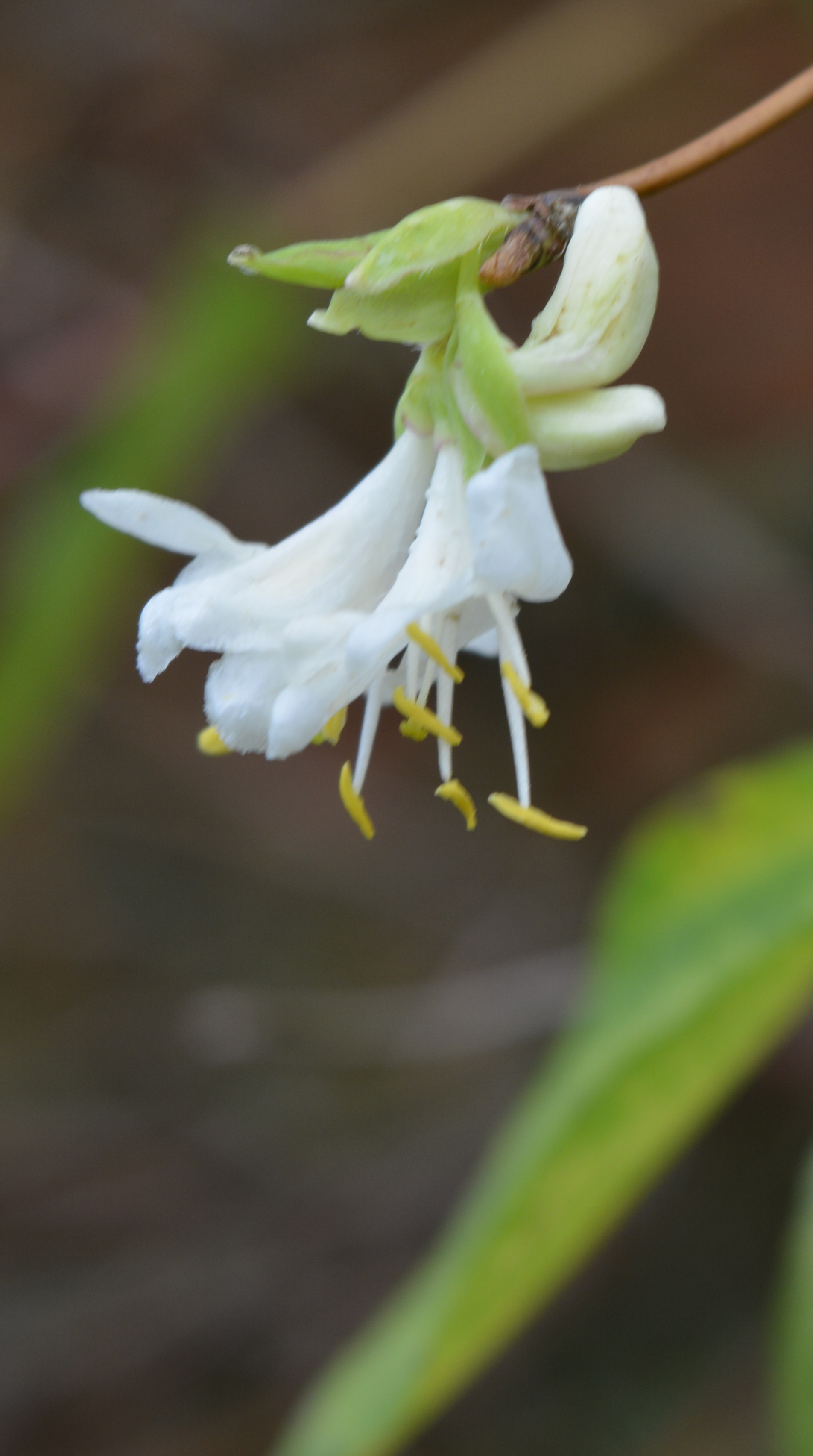
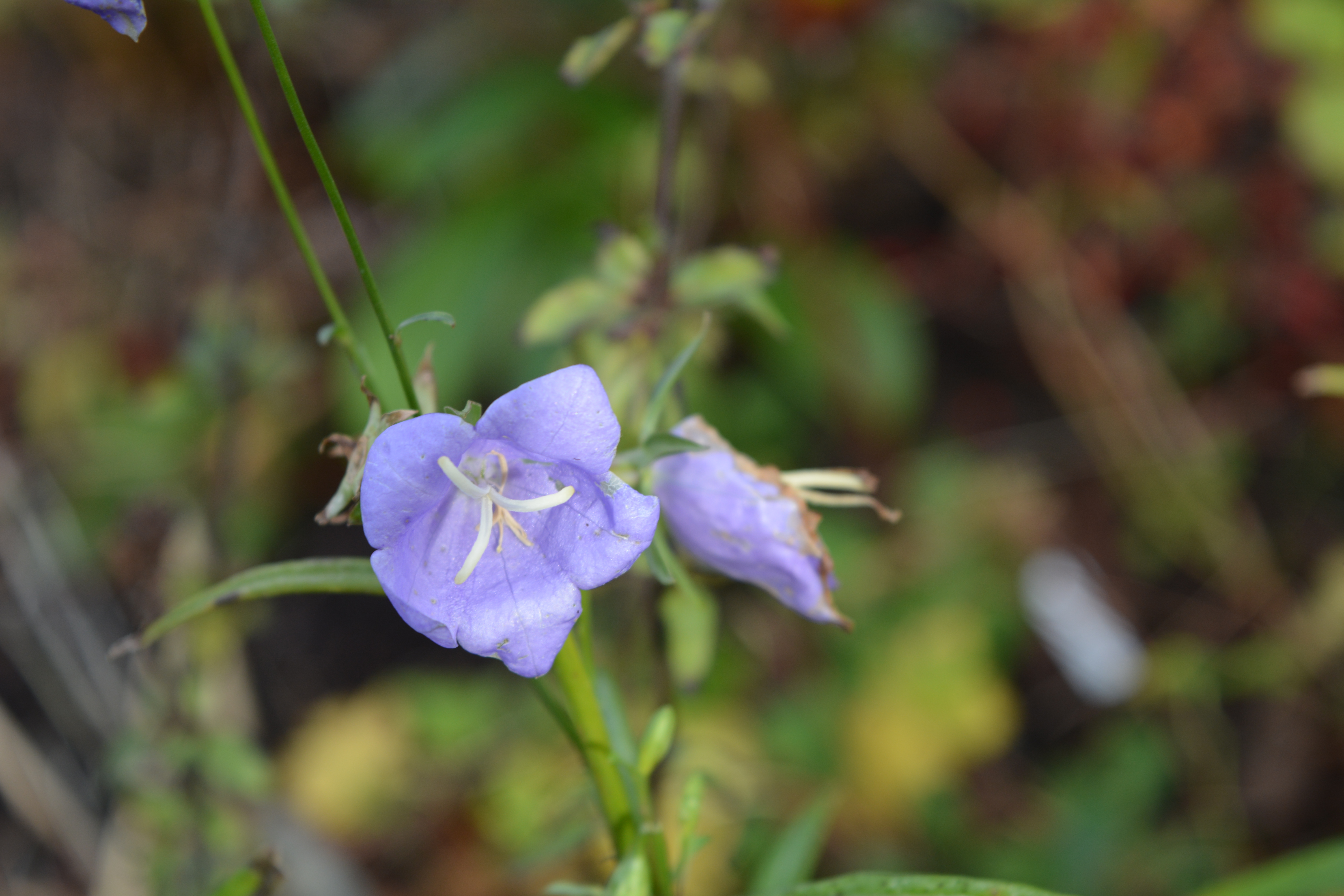
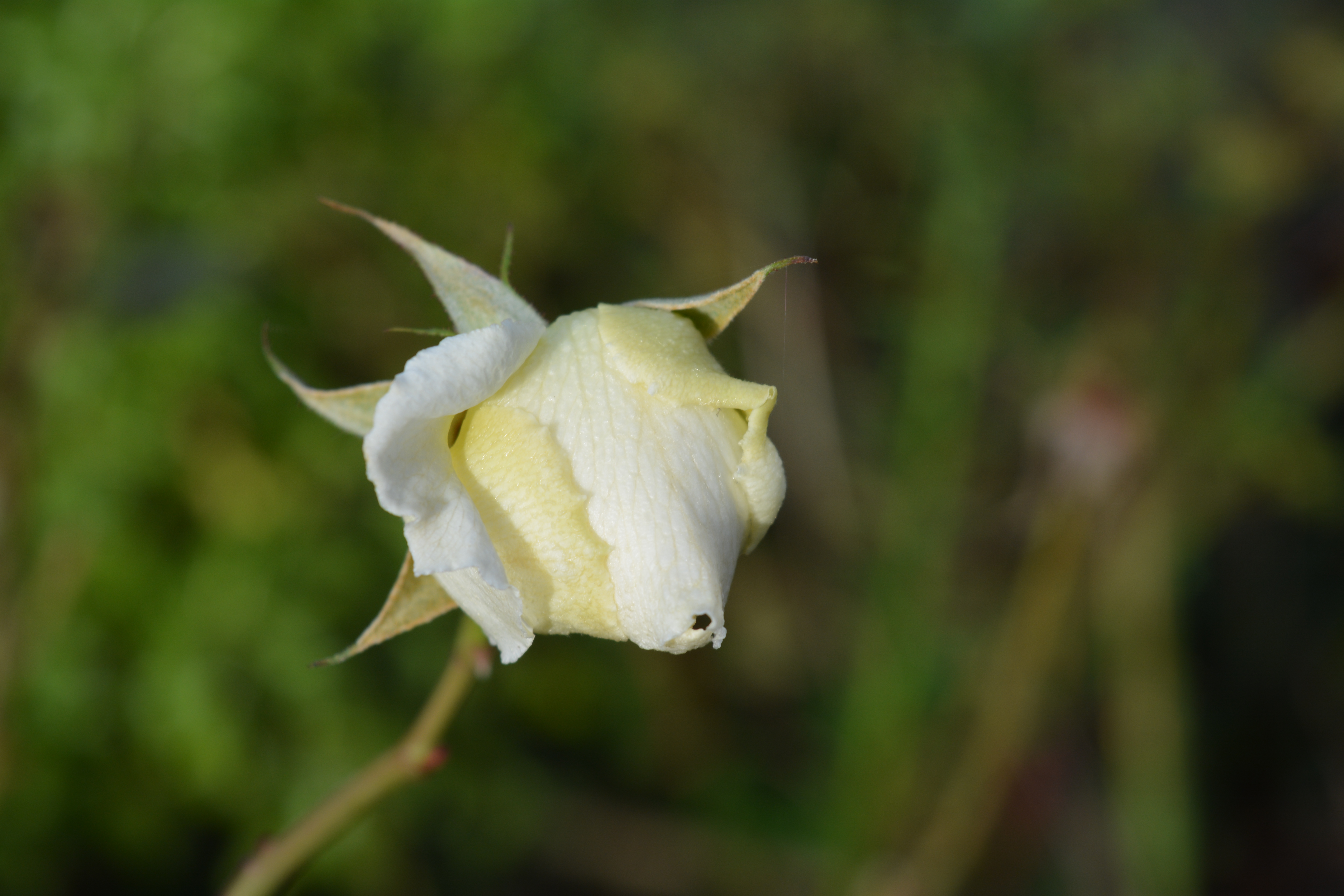
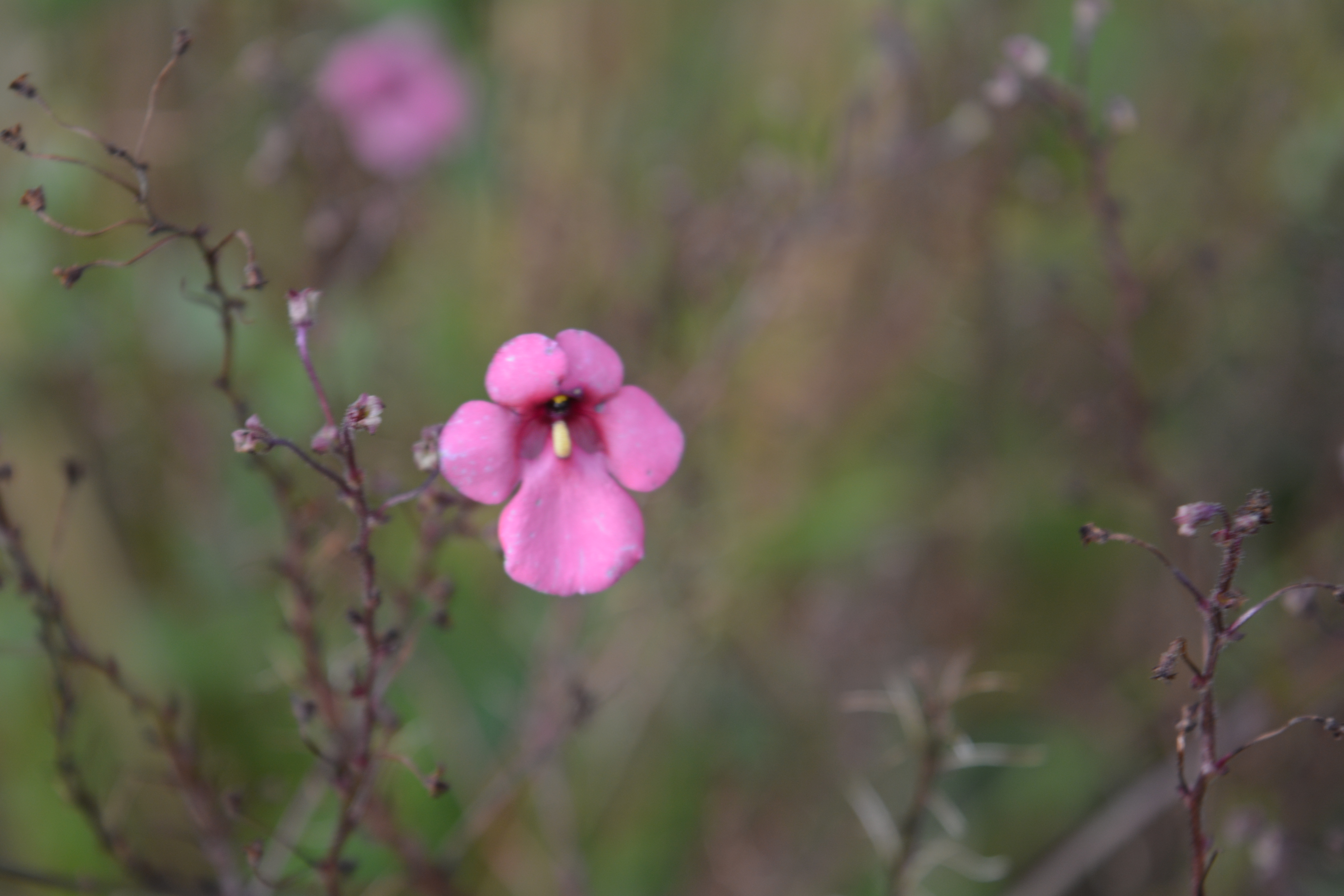
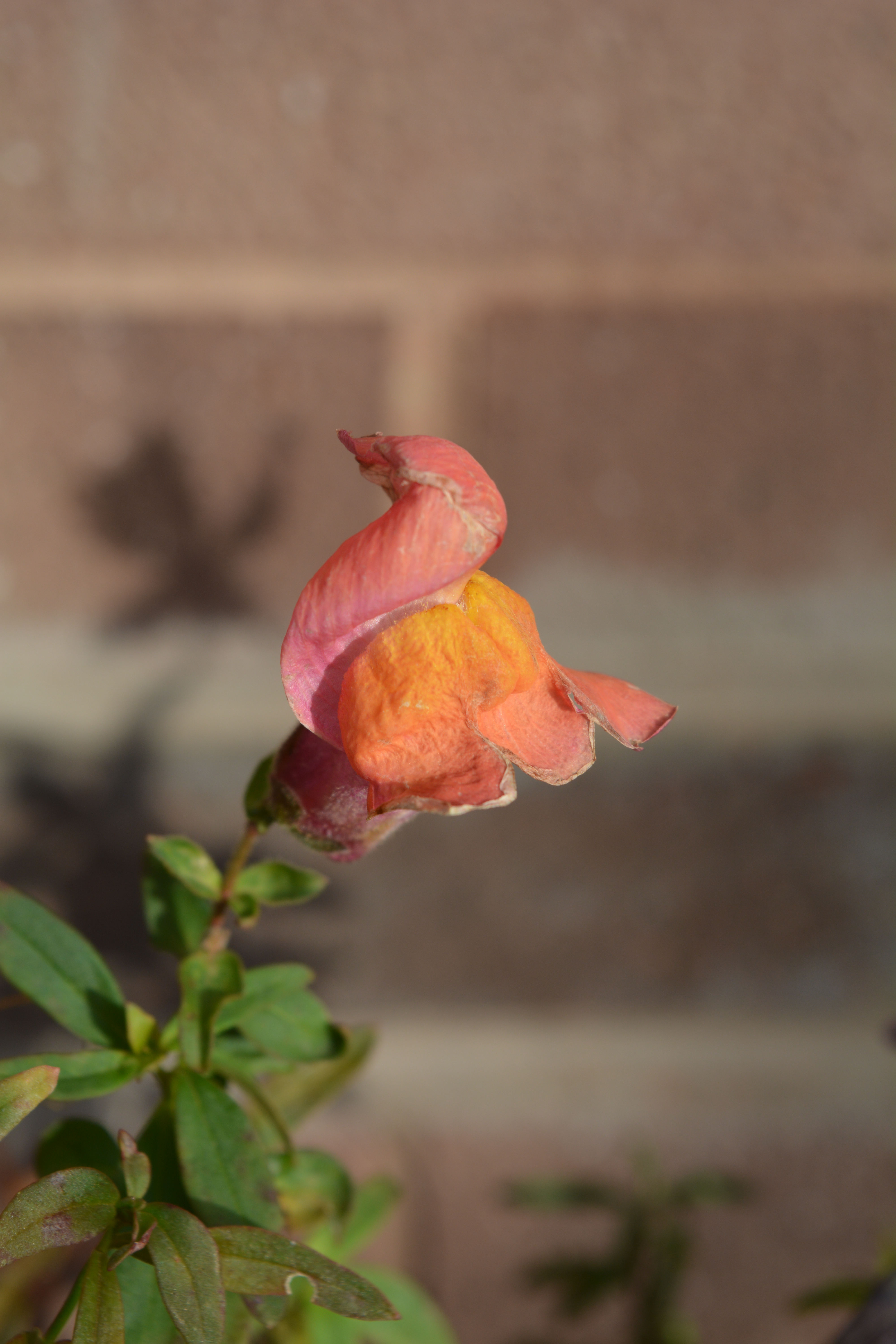
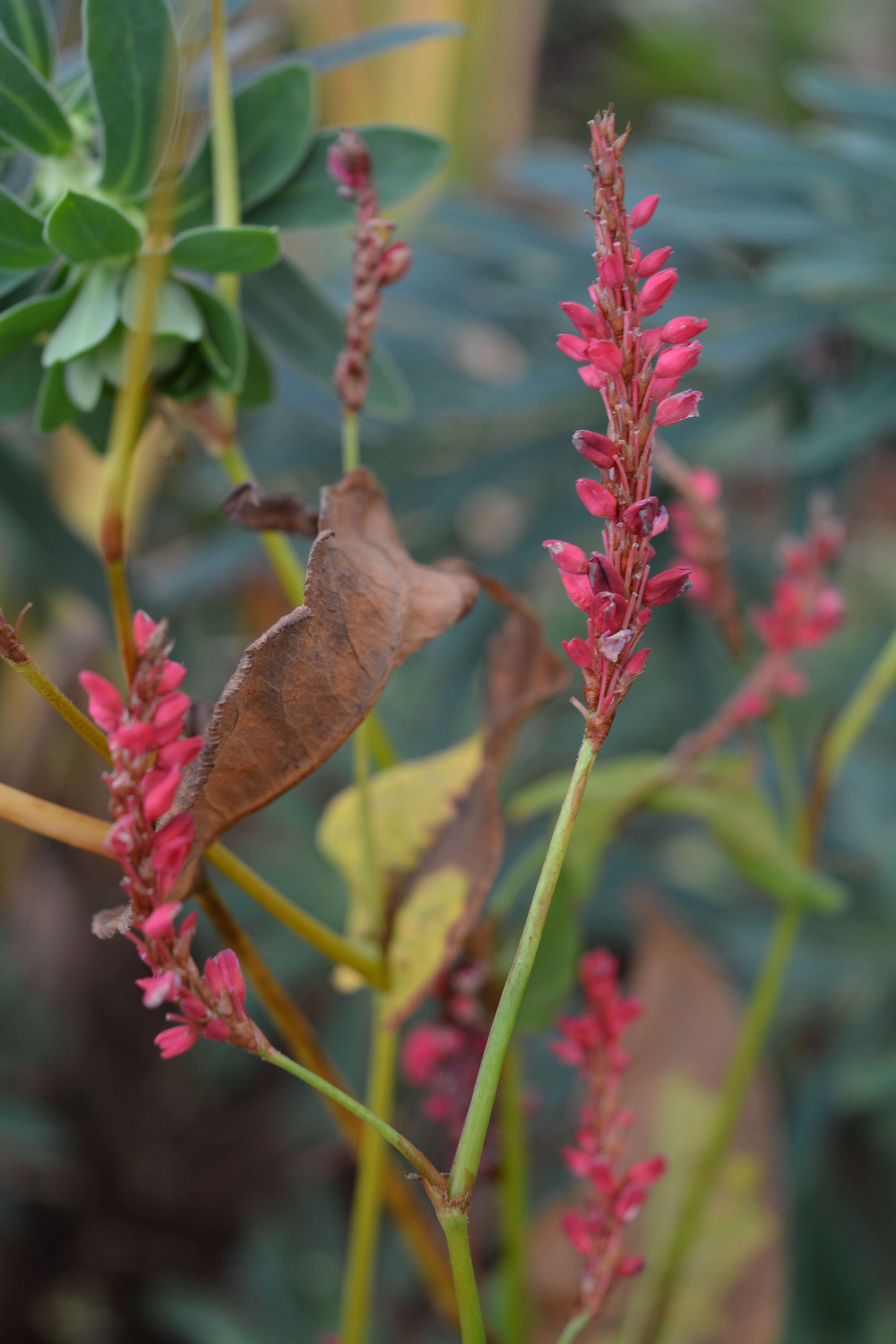
Three pictures of our December garden for you to enjoy.
Illness has prevented us making our monthly visit to Croft Castle where I would take photographs and report back about all that is going on in the gardens of this Herefordshire property run by the National Trust. Thus this final visit for the year took place in early December and will be a joint report for November and December together.
The penultimate visit to my garden journal for this year is here already, and I write this as November comes to a close. The strong winds of November howl around the house and roar down our chimneys. The rain has persisted for virtually every day of the month along with the strong winds.
My journal for the dreary month of November began “Our wonderful, heart warming Indian Summer lasts until the very last day of October, so we waited for the first day of November hoping for the continuation of warm, bright days. The eleventh month is usually a time of mists, fog and heavy dews.”
Jenny Joseph wrote of November, “Much of November belies the dread attached to its reputation, the shutting down, the gloom, the fog, the dark wet, the cold and the colds, autumn shrinking into winter.”
On November 1st we woke to a heavy dew, thick fog and the rest of the day was damp and dreary. The whole first week was the same. Oh dear!
Thank goodness for our garden which on the dreariest of days provided bright, colourful sparks. In every border there is a flower blooming its heart out to please us and of course any brave bees out on the wing in search of pollen and nectar.
All the photos below were taken on the same day in late November.
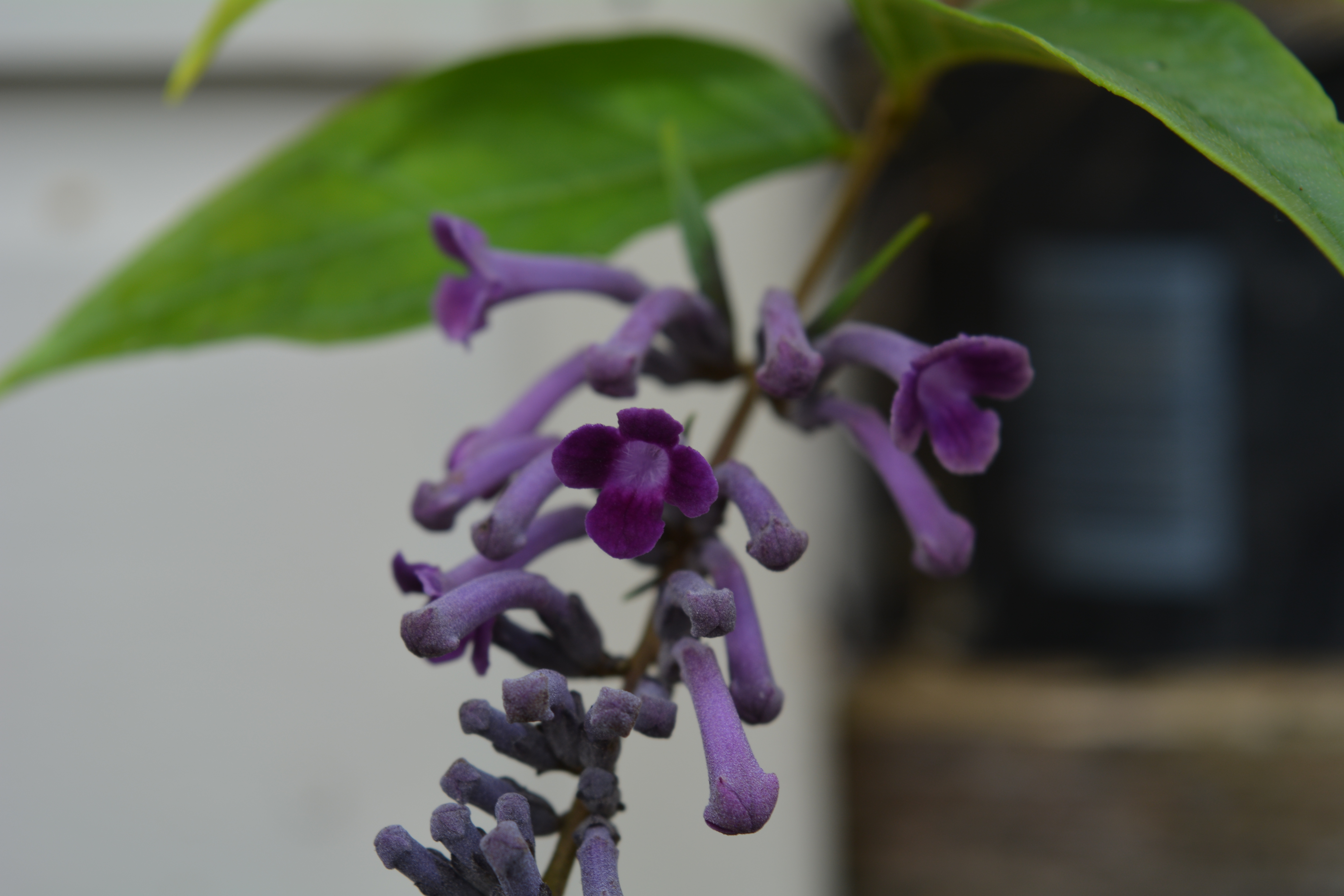
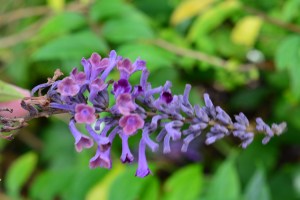
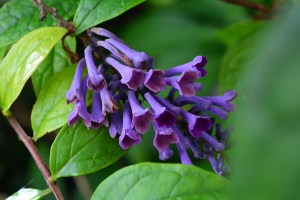
I next wrote about a real favourite plant of mine, a shrubby Buddleja rarely grown but oh so beautiful! Buddleja lindleyana.
“We grow an unusual Buddleja, which is still flowering this month. Buddleja lindleyana hails from china and boasts beautiful two-tone purple flowers. Racemes arch from the tip of every arching stem. Sadly it is rarely grown. I take cuttings every November to give to friends. They love it too!”
I enjoyed painting it too!
I took a couple of photos as well which you may like to see, as they illustrate the colour range found within the flowers.
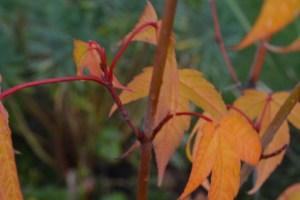
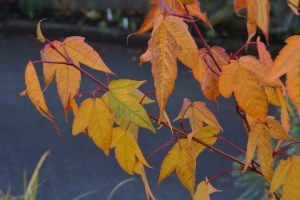
On the opposite page from my Buddleja lindleyana painting I have featured another special plant again rarely grown. This one though is a tree, an Acer.
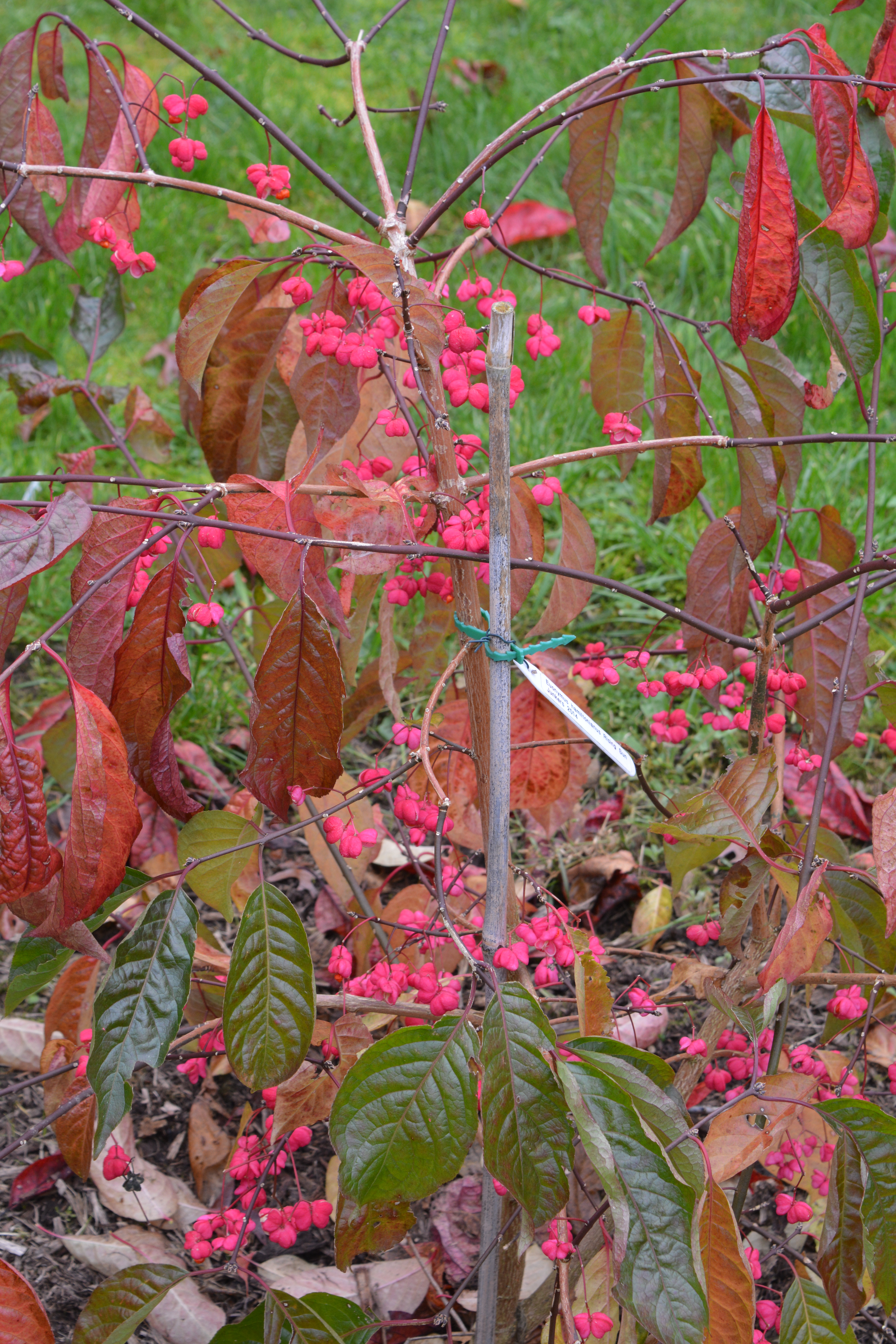
“A young Acer tree is growing in our front garden. At this time of the year its leaves turn into the colours of fire. Its leaf petioles glow red. Acer pectinatum – a very special tree!”


Turning the journal’s page over we have a mouth watering page about apples! and on the opposite page I look at our Viburnums.
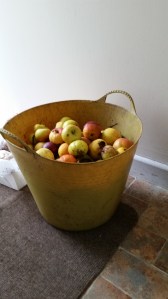
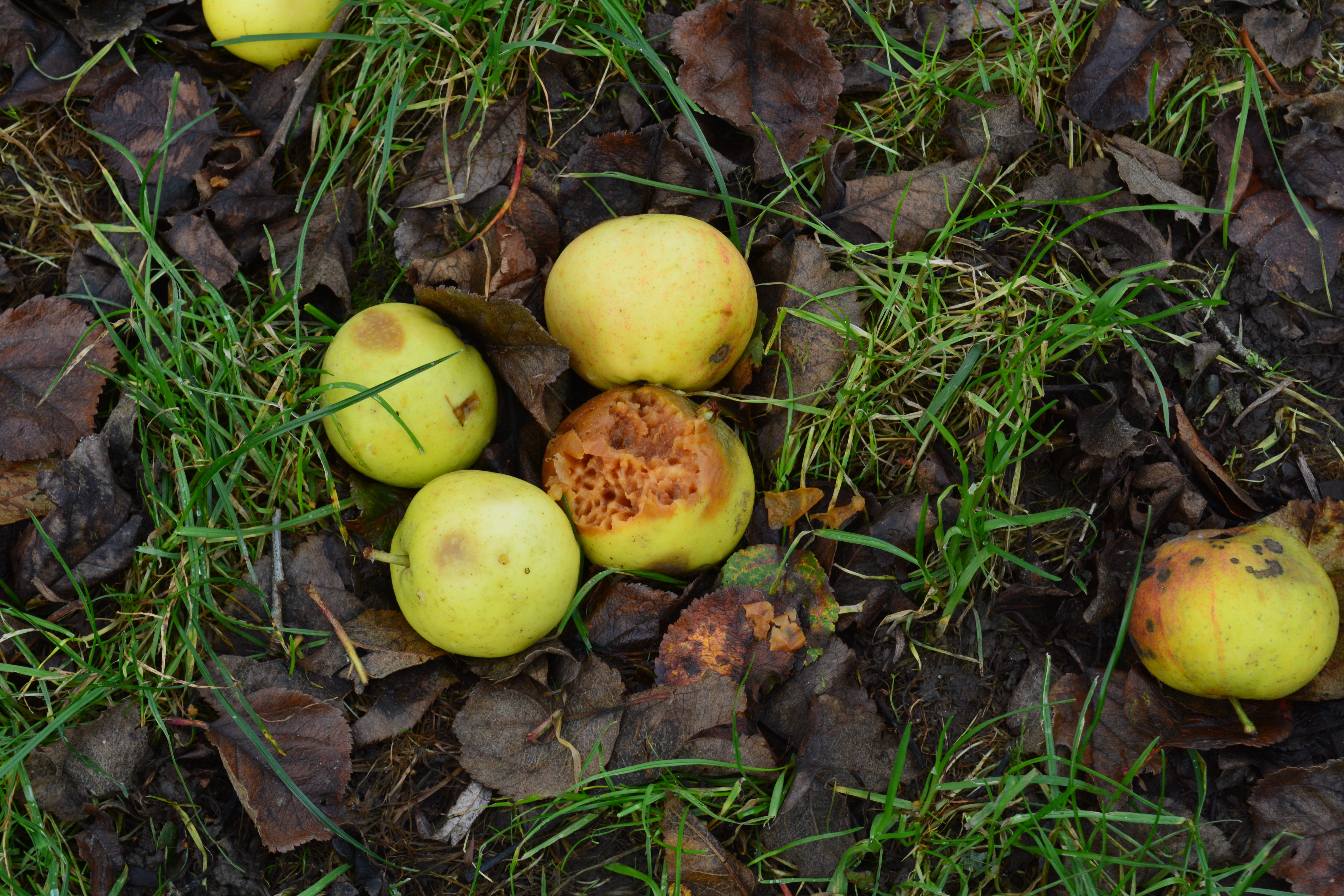
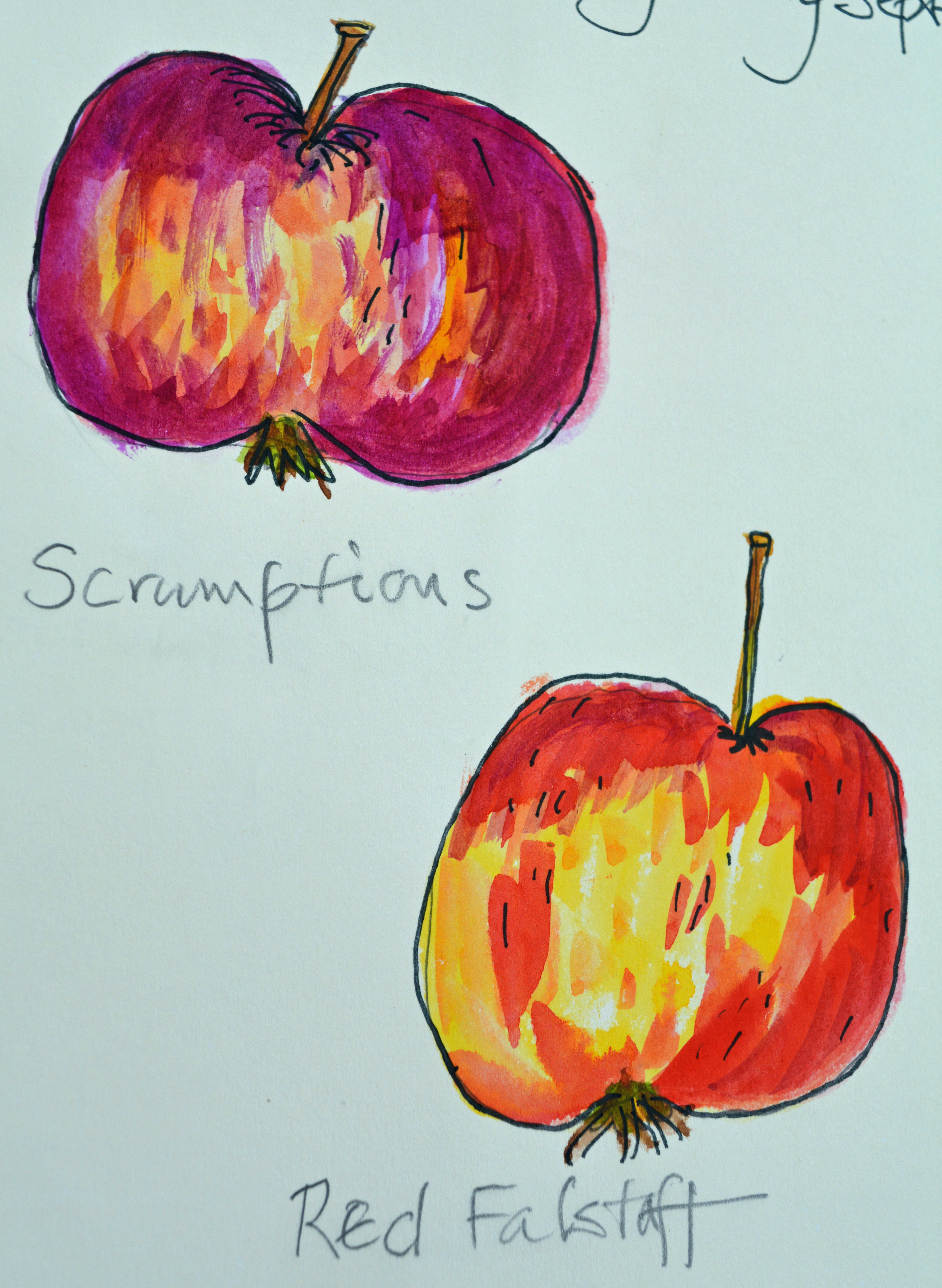
“By this time of the year we have usually harvested our tree fruit and it is safely in store. This year we are still picking apples, some varieties should have been harvested by early September.”
I reveled in the chance to get out the watercolours and study two tasty and very colourful apples, Scrumptious and Red Falstaff which grow one either side of the green house door.
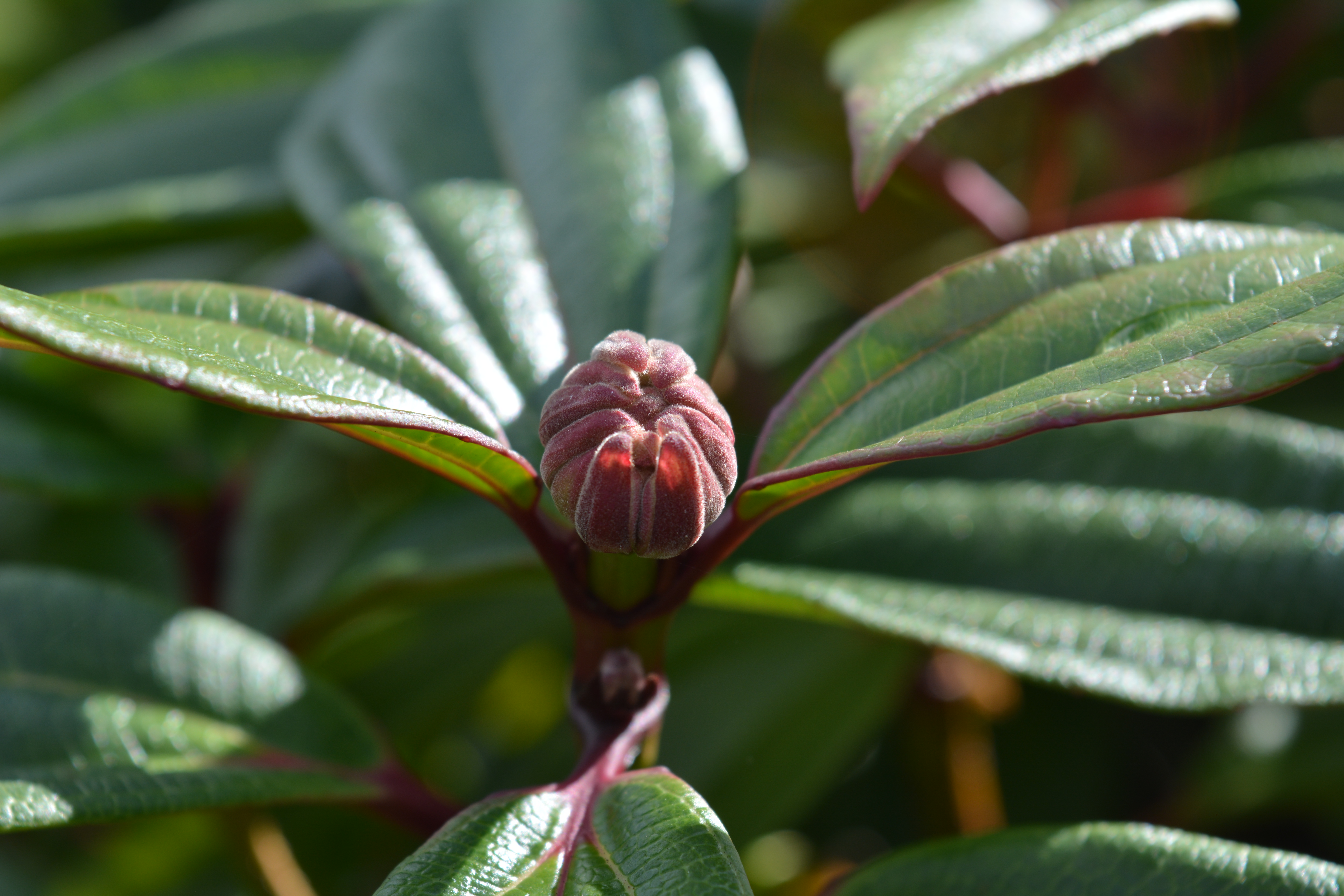
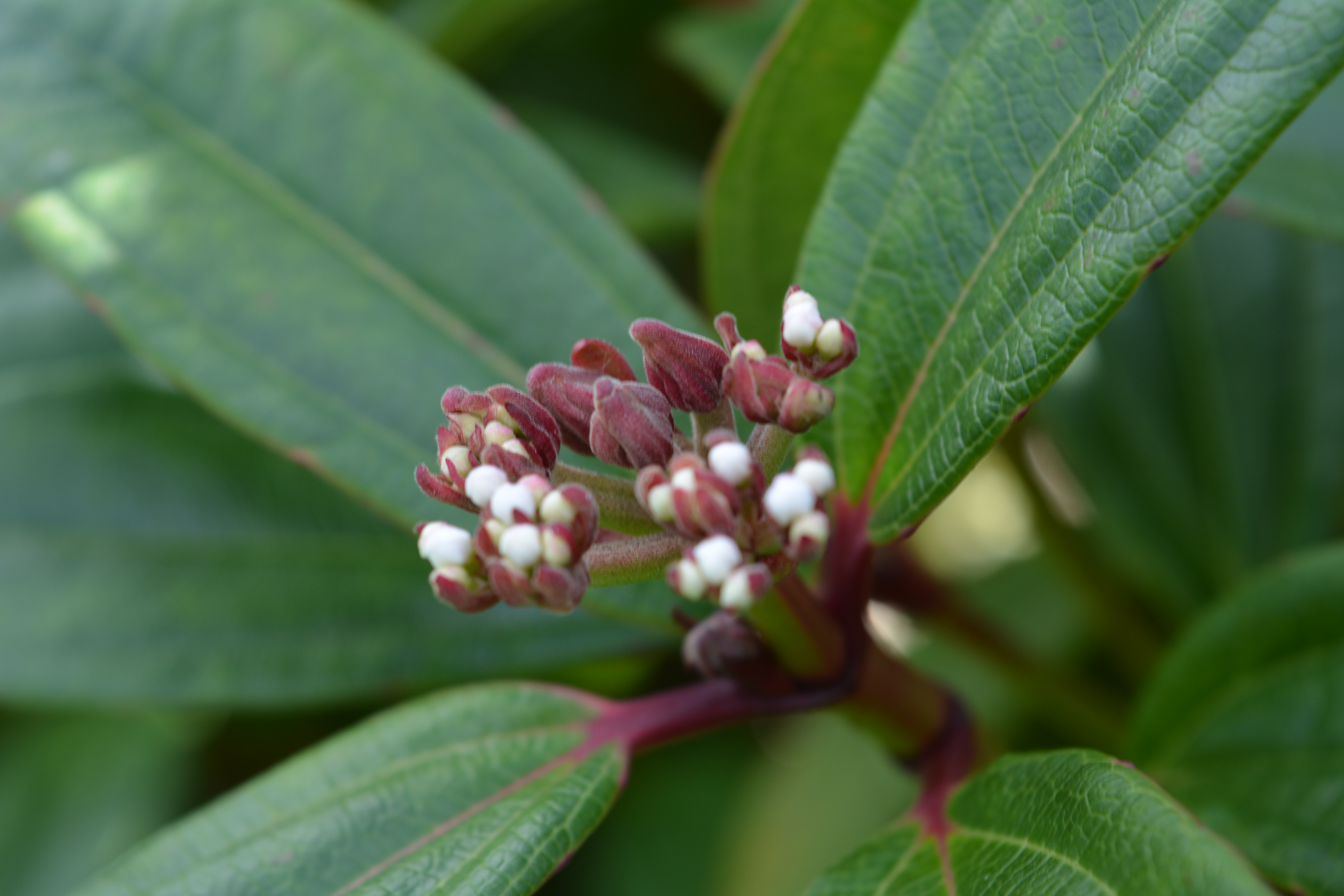
I moved on to consider the Viburnum shrubs putting on performances in our garden this month. “Various Viburnums give Winter interest and start their show now in mid-November. Their show is a profusion of gently coloured flowers, scent and shining red and black berries.”
More shrubs graced the next few pages too, deciduous Euonymus and a Hydrangea.
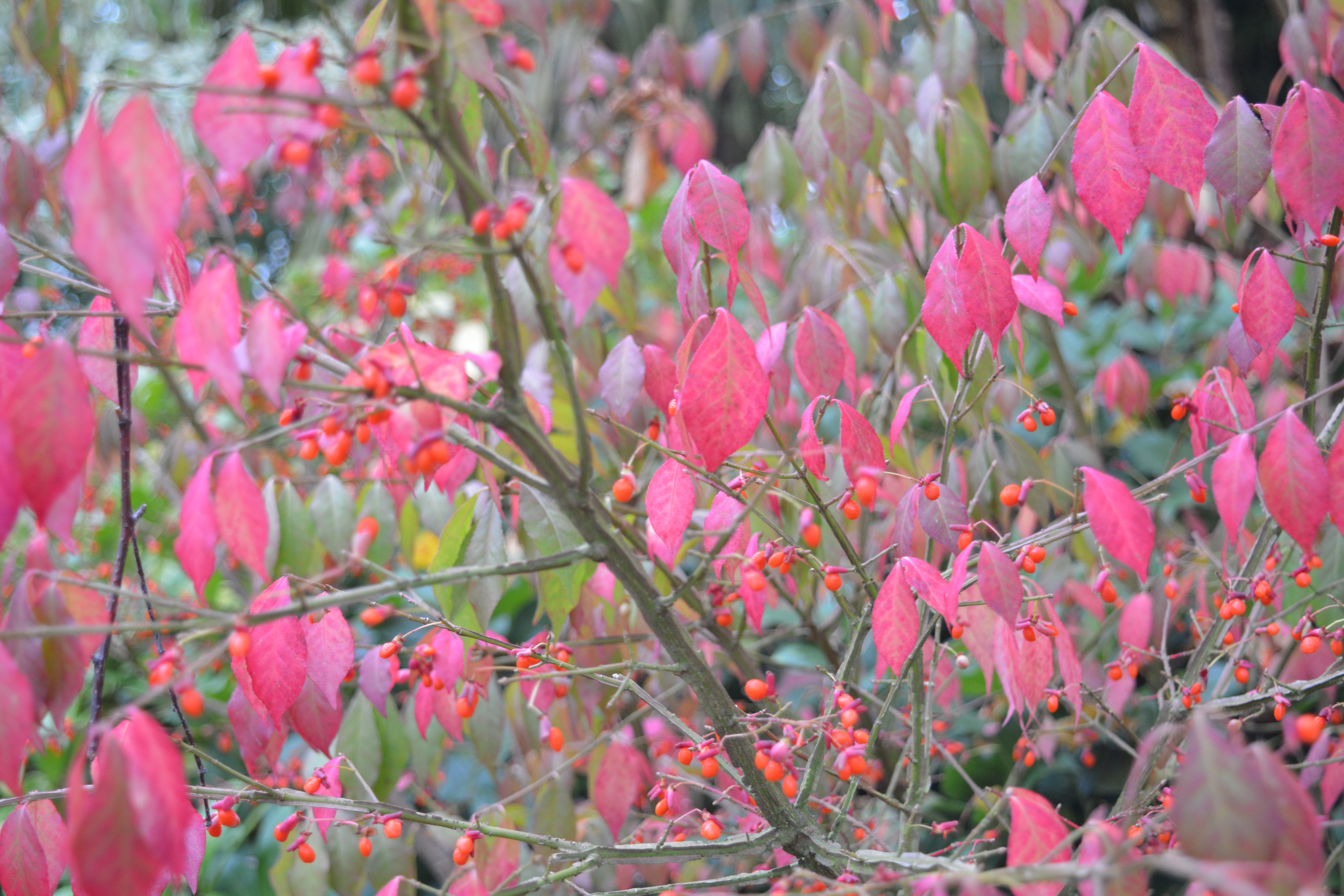
“Our deciduous Euonymus give us so many shades of pink as they metamorphose into their Autumn personas.”
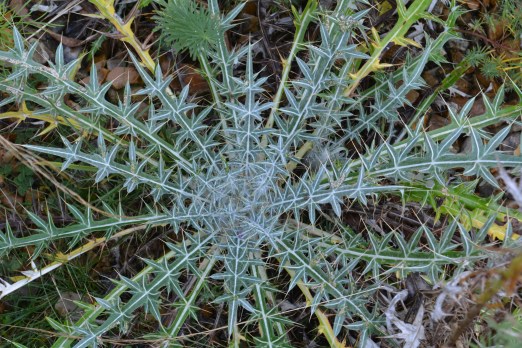
At the bottom of this page beneath the Euonymus I just found room for a pic of the thistle-like Silybum maritimum.
“The teal-green and silver foliage rosette will give us these colours through the winter. In Spring flowering shoots will creep upwards full of promise.”

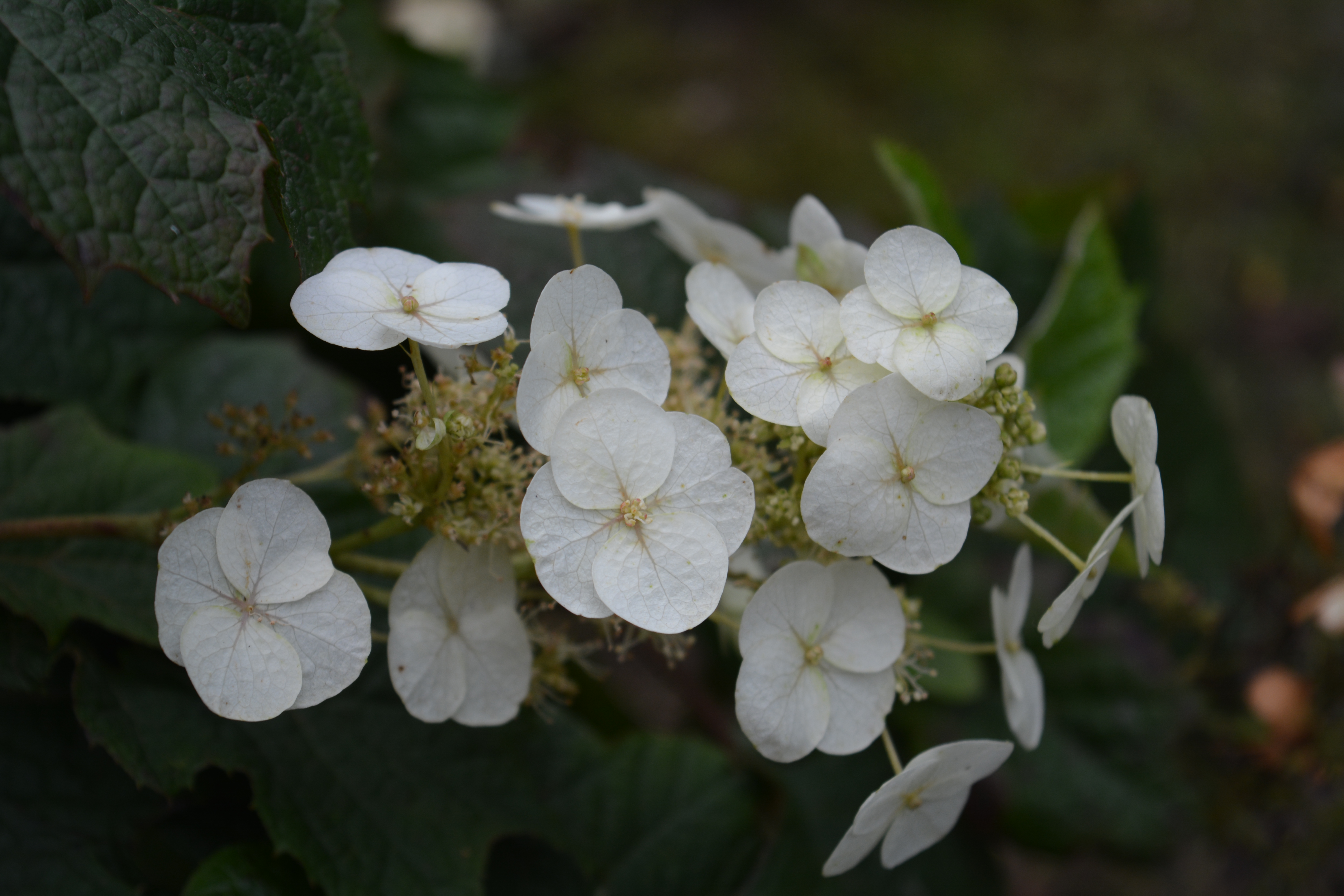
Another all time great of the shrub world is featured on my next page in the journal, A Hydrangea that gives us flowers that change colour, foliage that changes colour and a most unusual shaped leaf for a Hydrangea. It is Hydrangea quercifolia.
I wrote of it, “Hydrangea quercifolia is giving its all in the garden with white flowers turning pink and then finally rust. Autumn turns its leaves from bright apple green through to ruby red.”
Its name gives a clue to its leaf shape as quercifolia means simply “oak leaved”. Our specimen has an extra attribute in that in Summer on humid days it emits a sweet honeyed scent. As far as I know they are not supposed to be graced with scent of any kind let alone one so special.
My last double page spread is all about Persicarias, a really useful perennial for any garden with hints of the new perennial movement or a nod towards the Prairie style planting. We love both these styles so we grow several different ones.
“A plant that gives us great pleasure in the Autumn is the Persicaria. We grow one type for its flowers and seed heads and another for its incredibly coloured and marked foliage. Persicaria amplexicaulis have poker-like flowers in various shades of red, pink and white followed by chocolate coloured seed heads.”
“Persicaria virginata gives us wonderfully coloured and unusual marked foliage with the addition of tiny white flowers.”
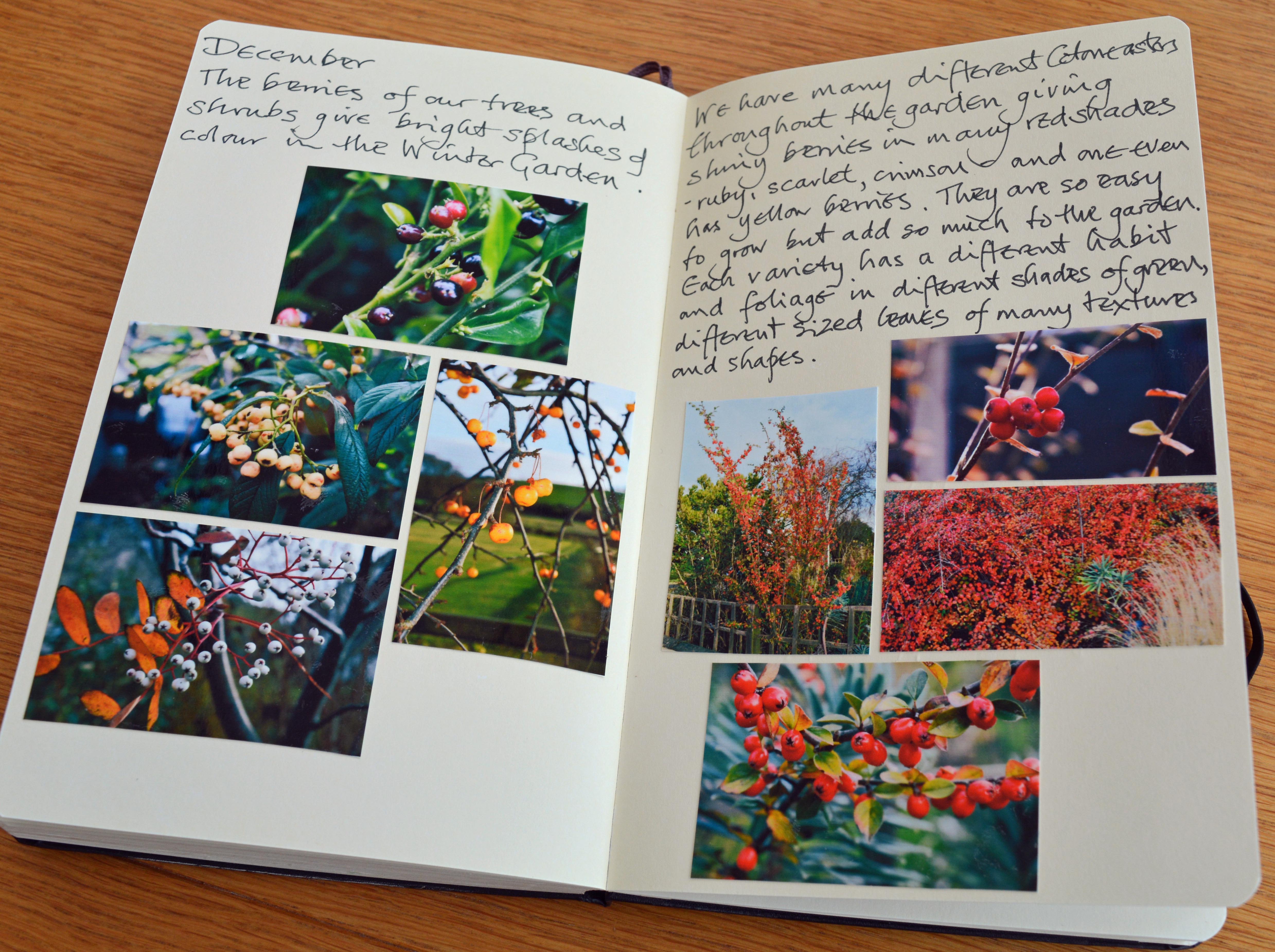
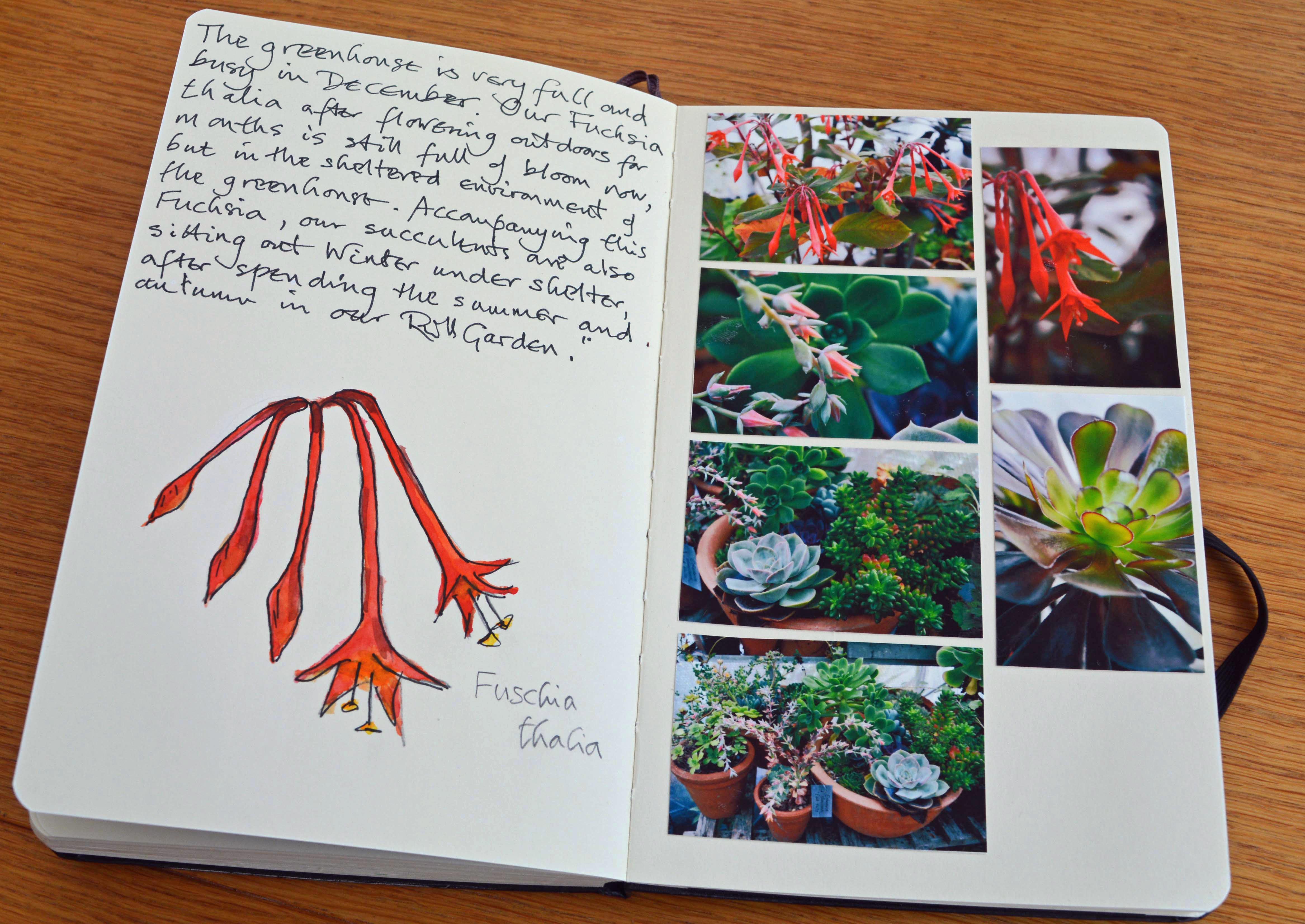
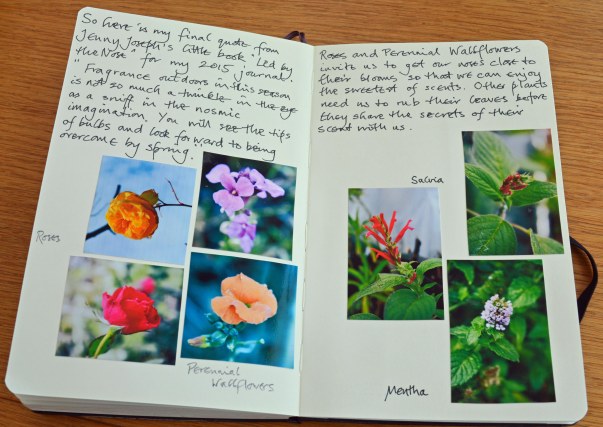
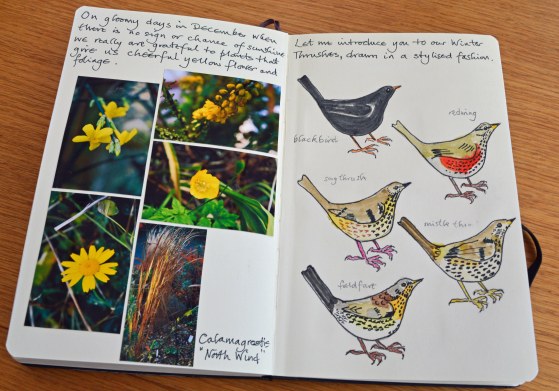
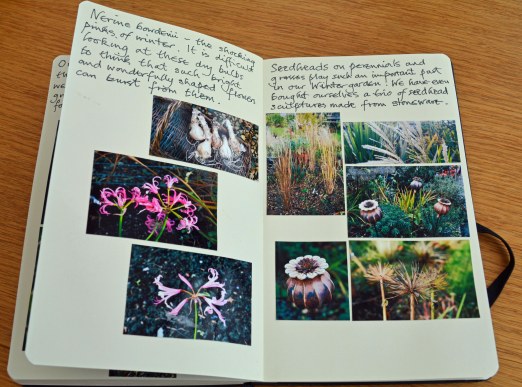
So that is the November visit to my journal. Next month will see me fill up my lovely little “Moleskine” note book as my December thoughts, photos and paintings bring the journal to an end for 2015.
Back at Furzey Gardens we continued to wander along its magical paths seeking out secret places and reveling in its beautiful plants. Beyond each corner more beauty was revealed and the depth of its calmness and peace increased. Furzey Gardens takes hold of its visitors and admirers. Throughout the garden volunteers and clients work together, laugh together and learn together. The trust here is set up to help adults with learning difficulties gain new skills, social and horticultural and develop a sense of self esteem and confidence. This results in everyone at Furzey having great pride in what they are doing and a deep level of satisfaction.

A graceful stand of Birches with the white umbels of Cow Parsley scattered at their feet felt as full of calm and contentment as any place could possibly feel.
The rust colours of autumn trees matched the seeds of Primula close by.
The colours, tints and shades of Autumn can make ordinary places look special but it can also make special places look exceptionally beautiful. Just as we discovered here at Furzey.
Homes for everything can be found at Furzey. As well as homes for fairies we found homes for hay bales and homes for birds.
The hedges along the edge of the gardens were full of fruit ready for the invasion of winter migrating thrushes and our resident Blackbirds and Thrushes.
Enjoy our wanderings back to the cafe where we refreshed ourselves before journeying back to out hotel.
Among shrubs and trees we discovered a building which hid a secret place for sky viewing.
I thought I would drop in a couple of pics of herbaceous flowers to show that there was a lot more to Furzey than shrubs and trees.
I promised to share with you more of those Fairy and Insect Doors secreted around Furzey.


Our tour of the gardens at Furzey finished as we explored the 16th Century Forest Cottage, beautifully renovated and re-furnished in simple elegance. It sat in a garden of equal character and an accurate portrayal of its period.
Jude, The Undergardener, and I always love visiting community gardens to see what is going on. As we are Chairman and Secretary of a community garden, Bowbrook Allotment Community, we always appreciate everything our fellow community gardeners are achieving.
When in Hampshire we discovered that we were close to Furzey Gardens, run as a charitable trust and a very special community garden indeed, described as “A haven of peace and tranquility in the heart of the New Forest.”
We discovered this 10 acre garden created within woodland around a 16th Century forest cottage. It is a partnership between Furzey Gardens and the Minstead Training Trust. To find out more check out their respective websites, http://www.furzey-gardens.org and http://www.minsteadtt.org .
We arrived at their car park where our progress into the car park was hindered by wandering pigs belonging to local commoners taking advantage of their “rights of pannage”. The signage looked promising. We soon came across a photograph of some of the garden’s volunteers and a shed where produce was sold.
And once inside we discovered a lovely cafe and gallery run by some of the trust’s volunteers. This was to set the scene for the whole visit.

The views from the table at which we enjoyed our coffee and cakes were certainly very encouraging. We set off with high expectations!
We noticed within the outside seating area this huge table carved by a local wood sculptor from the trunk of a tree. It was hard to see how this was possible. But possible it was! In the picnic area we found another!
We found more beautiful hand made furniture throughout the gardens.
We soon discovered that this was a garden sporting some beautiful specimen trees and shrubs which in early autumn were performing a colourful show. The volunteers maintained the gardens and individual specimens to a very high standard. Above all a sense of peace pervaded every space and the volunteers we saw working looked full of contentment and displayed a great pride in their work.
We loved this sign which faced us as we followed our pathway through the garden.
“We love children but we also love plants!
Many of the plants at Furzey are old, rare and fragile.
So please don’t climb our trees or trample on the flowers.
Feel free to hop and skip along the paths
And follow the secret places map.”

We moved on and the low autumn sunshine lit up the foliage all around like a massive stained glass window.
We enjoyed having so much choice when it came to sitting resting and taking in the beauty of Furzey. Many benches were memorials of volunteers, clients and visitors who simply enjoyed the special nature of this place.
After a break for tea and yet more cake we set off through the shrubs and trees to find the lake, a lake whose surface was cluttered with water lily leaves and its moist margins decorated by big-leaved plants and umbel seed heads.
Throughout the walkways there were secret places for children to discover, “Fairy Houses” hidden low down and camouflaged.
We shall find more of these little magic places in part two of our visit to Furzey, but I shall finish this first part by sharing with you one of the many thatched rustic garden buildings scattered throughout the gardens. The use of coloured glass leaves added magical light effects.
In my last post we looked at what we discovered was going on in the old Walled Garden at Attinham Park and I finished just as we left the walled garden behind and began wandering around the woodlands.

So here is the second part of our Attingham Park autumn adventure.

When taking a wander along the woodland trails at our local National Trust property, Attingham Park, we were amazed to come across this little art installation close to the soft surfaced woodchip path. Woodlands are like the seashore as they often seem to bring out creativity in people, perhaps even a return to making things which was last enjoyed in childhood. At the sea people often pile up pebbles to make simple sculptures, collect together mixed objects from the surf line and carefully put them together. This simple little piece sits beautifully in its surroundings and stopped many people walking by to have a closer look. No-one touched it, but simply looked, smiled, made a comment to their companions and walked on. It is a beautiful piece of sculpture, made anonymously and left for others to enjoy.
We wandered on into the woods along winding paths beneath towering trees above while at our feet the orange, yellows and reds of fallen leaves. Fallen leaves always bring the children out in Jude and I and we kicked our feet through them, enjoying the sounds and woody aromas.
The woodsmen who had been working on autumnal maintenance work left behind them little blocks and wedges of wood. Following on from the piece of found object sculpture we discovered and enjoyed earlier we both started to follow their initiative and got creative. The stumps left behind gave us ready-made plinths to work on.

We collected bits and pieces of wood left by the woodsman or by Mother Nature and made various compositions on top of our wooden stump plinths. We couldn’t stop smiling as we played with the wood and loved the wonderful sweet aroma of fresh cut wood and leafmould. An outdoor studio! What a treat!
As we completed each set we wandered on. Looking back through the trees we spotted other walkers stopping and taking photos of what we had left for them to enjoy, just as we had when we found that piece close to the walled garden.
Moving further into the woodland the woodsmen had left areas cleared for coppicing, leaving multi-stemmed trees cut low to encourage regrowth. They reminded me of sculpture by Barbara Hepworth which are exhibited among trees at the Yorkshire Sculpture Park.
I found slithers, slices and wedges of freshly cut wood and placed them among the stumps.
Logs had been piled up to create habitats for wildlife winding wooden walls through the trees. The aroma here was of rotting wood, dampness and fungi.
A huge old tree trunk felled years ago and left to rot providing shelter, food and homes for wildlife, had been sculpted by the weather, rain, wind, ice and snow, worked upon by insects, invertebrates and fungi to present us with a beautiful softly carved piece of Mother Nature’s sculpture.
We loved finding this nest box beautifully and thoughtfully positioned on top of a rotting tree stump. We shall watch this in the spring to see if any birds like it as much as we did.

As we left the woodland we moved into the deer park where trees were much further apart separated by tracts of bright green grass. Here fallen branches, trunks and brash had been left for children to make dens from. Another form of sculpture created by youngsters using wood from the surrounding trees. The dens had their own beauty and naivety. Each time we visit Attingham these dens change, new ones appear, the oldest begin to fall apart and some just seem to get bigger and bigger. Well done to the National Trust for encouraging such creativity for the visiting youngsters and for affording them the opportunity to get in touch with nature.
I hope you have enjoyed sharing our spell of creativity in the woodlands at Attingham Park. When we next visit it will be interesting to see if any of our pieces remain intact after the winter storms and to discover how the children’s dens have been transformed by nature or by other children.
Our local National Trust property, Attingham Park, is just a 20 minute drive away. We are so lucky as within the grounds are several different walks to choose from including woodland walks, but we also love visiting the renovated walled gardens. When we first visited Attingham Park years ago now there were very few walks accessible, the walled gardens were in a poor state of repair and the refreshment facilities were poor. Things have certainly changed for the better!
In late November we decided to go for a walk around the woodlands and explore the walled garden to see what was going on. The improvements become immediately obvious as there is now a new entrance building and a newly refurbished Carriage House Cafe in the stable yard. After sampling the delights in the cafe we wandered off towards the Walled Garden one of our favourite elements of the Attingham Estate. In the Stable Yard sits a little sales hut selling produce from the walled garden, freshly picked and delivered by bike.

The Walled Garden was originally created way back in 1780 and its job was to provide the estate with fresh fruit and vegetables throughout the year. Looking at it now it is hard to believe that it fell into total disuse and dereliction. An amazing team of volunteers have recently brought it back to life. It no longer produces food for the “big house” but instead sends its organic produce up to the restaurant and cafe and for sale to the visitors.
One of the impressive features of the Walled Garden is the amount of information boards placed carefully to keep visitors fully informed. Before passing through the gateway into the garden itself we always love seeing the beautifully trained fruit on the outside wall.
Taking a step inside and the garden came to life before our eyes, volunteers busy harvesting, weeding the beds and clearing ground ready for winter digging.
The volunteer gardeners enjoy getting creative with Birch and Hazel boughs and branches and their bean supports, tunnels and wigwams always look impressive.
It was good to see sound organic principles being used here, barriers, green manures and companion planting and herbaceous borders to attract beneficial insects, predators and pollinators.
As we moved into the glasshouse area we were impressed by the renovation work being carried out on the glasshouse ranges. Information boards show visitors what the area looked like prior to its rescue.
Cut flowers were also grown here and even in November the Dahlias were flowering well due to the protection of the walls and protection from Earwigs provided by the old fashioned method of putting a pot stuffed with straw on top of a cane.
On a cold day a look inside the gardeners bothy proved to be a welcome time to warm up and enjoy the displays.
Exiting the Walled Garden via the orchard gave us a chance to look at the front of the old red brick buildings. The Walled Gardens here at Attingham are worth visiting throughout the year as there is always something interesting going on. We are so lucky having this national trust property so close to Shrewsbury.
From the walled gardens we wandered off into the woodlands following one of the marked trails. My next post will feature what we found there.
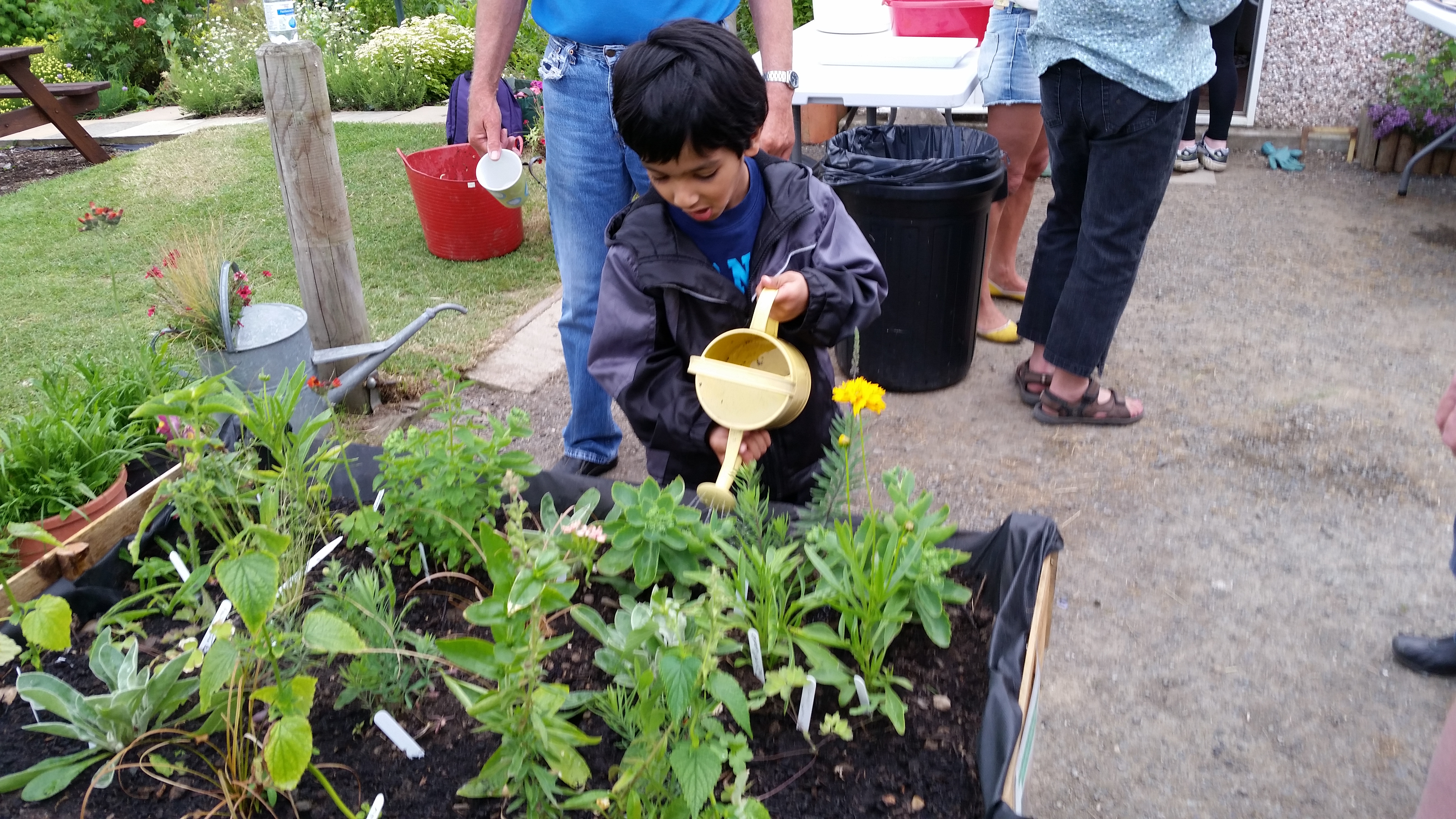
It is always exciting to get new equipment for our community allotments, Bowbrook Allotment Community (BAC), but when we get three close together, two of which are real boys’ (and girls’) toys then it really is extra exciting. You will notice as this post moves forward that the girls mix it with the boys at BAC however tough the tasks.
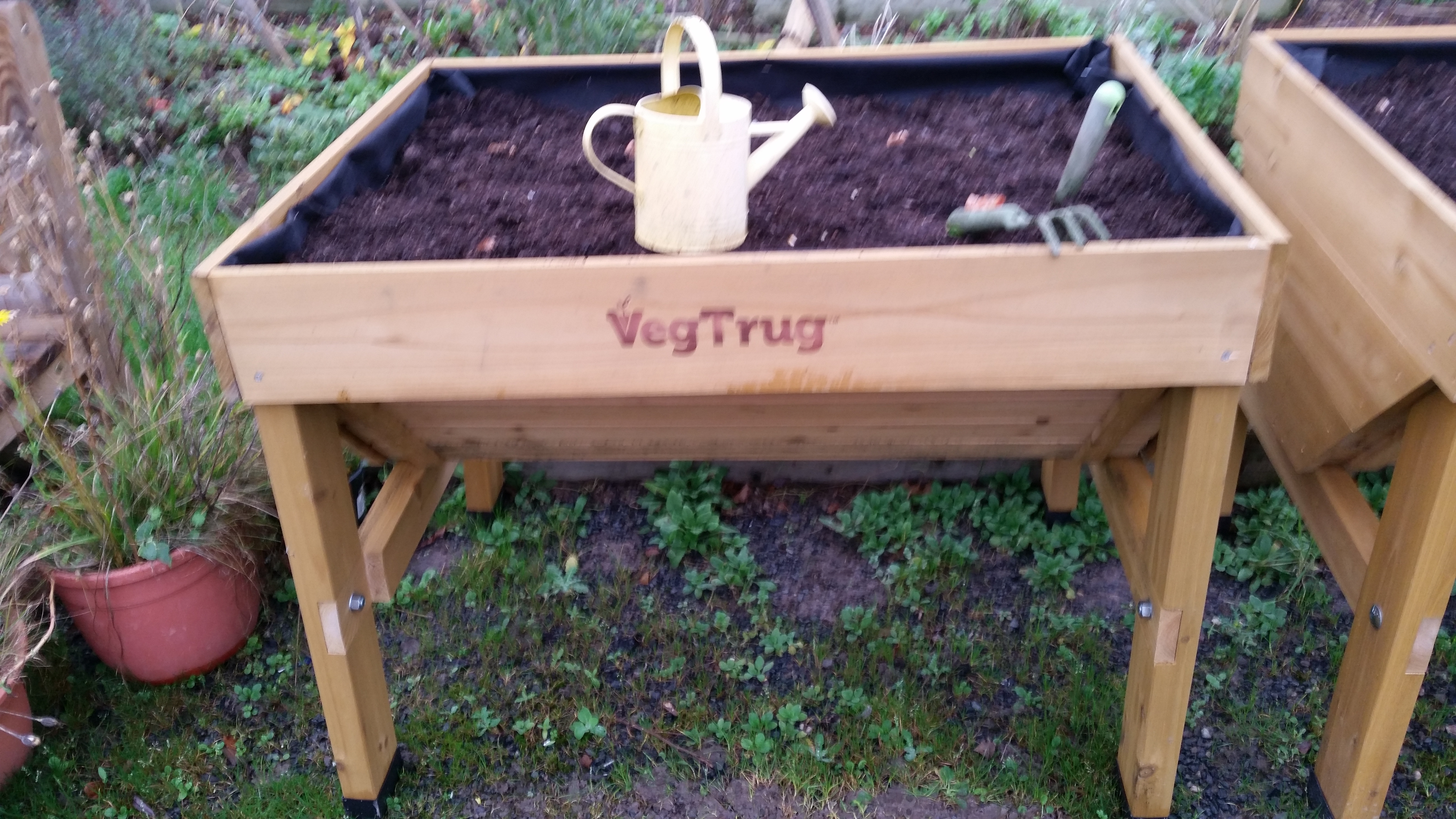
Our first new toy, or should I say piece of equipment, was an attachment for our Ryobi strimmers which allows us to prune thick branches, a bit like a mini-chainsaw. The second was a mighty petrol-driven chipper/shredder, and the third a pair of wooden raised vegetable trugs. Jude and I give talks to garden groups and together with other committee members provide “Walk and Talk” sessions for groups at the allotment. With the fees we charge we manage to buy extras for the site. Using some of this money together with a generous grant from our local town councillor we were able to acquire these helpful machines.
We were so excited when the huge box arrived with our big red toy inside. Michael soon got to work breaking the box open.
We quickly set about deciphering the instructions and putting all the extra bits and pieces together.


Once all put together and filled with fuel we wheeled the red chipper all the way up the big grass path to the mature trees around our picnic area, where a mighty big pile of prunings awaited chipping. We had produced the pile of prunings when we used our other toy, the Ryobi pruning attachment.


We have a policy at Bowbrook Allotment Community of following the 3-Rs, reuse, reduce and recycle. A key element of this is keeping as much green waste as possible on site where we can use it again. Thus all the cut branches from tree work and shrub pruning are now going into our new shredder.
Jude the Undergardener piled the shreddings into a wheelbarrow and wheeled them off to the Winter Garden where they gave us a fresh soft pathway.

Our 3-Rs policy also meant that we recycled the cardboard from the box that the big red chipper arrived in. Sherlie tore it all up into pieces and mixed it with grass cuttings and this will produce quality compost for using as a mulch on our communal borders.

Earlier on while Mike, Pete and I were unpacking and putting the new chipper together Jude and Sherlie got out the tools and put together our two new wooden raised trugs.
Quite soon after the big red chipper was rolled out again as we began our hedge cutting season.We chose an extremely wet and windy day but everyone had lots of fun fortified throughout by soup and cake provided by the committee and served up by our tea committee, “The Tea Bags”.
To discover more about BAC please check out our website http://www.bowbrookallotments.co.uk
As we return to Salisbury you find us still exploring the Cathedral. We left the Chapter House behind after a long stay and returned to the nave. Enjoy a tour with my photos.
Two mystery photos to finish off our tour of the cathedral – what do the two following pictures show?
As we left the cathedral after several hours of walking on hard stone floors our feet were relieved. We were pleased to discover that the weather had improved and we had blue skies and sunshine. This gave me the chance to take a few more pics of the cathedral as we walked through the close and back into the town.
We went off in search of more architecture but this time on a much more domestic level.
We returned to the car via the river bank where we followed a path that we used to walk along when we used to live close to Salisbury over 40 years ago. I thought I would finish my two posts from the city with this shot of a brightly coloured outhouse door. Someone has a sense of humour!
We hadn’t visited the city of Salisbury for many years so as we traveled down to Hampshire for a mid-week break we decided to drop off there on our way. We wondered if any memories were stirred up.
We wandered through the city following tourist signs which directed us to the cathedral. As we passed through the streets we tried to see if we remembered anywhere but it all seemed such a long time ago.

We found the ancient stone gateway which led us to the Cathedral Close, a peaceful open grassed area where couples sat talking and individuals sat with a book or newspaper. A group of youngsters played a game of cricket appreciating all the freedom the space gave them.
We wandered around the Close to gain views of the vast building and discovered the occasional piece of sculpture.


The Cathedral in Salisbury is well known for two main features, the Magna Carta and its wonderfully preserved cloisters. When we walked around the four sides of the square Cloisters memories began to stir. We remembered this part of the building clearly.


There were small reminders around the Cloisters about the importance of the Magna Carta. We loved this piece of calligraphy on the floor. “Responsibilty, Society, Change, Freedom, Justice, Liberty”. We found the historically important document itself carefully protected from the light and visitors’ fingers deep within the Cathedral building.
The document itself was displayed in the Chapter House where a new display showed replicas of King John’s seal and a piece of vellum on a stretcher. When we saw the Magna Carta we were in total awe at being so close to possibly the most important document ever written. Our hearts skipped a beat! It was incredible to think that this document was written in 1215 and it was still in perfect condition.


We loved this quotation from Franklin Roosevelt!

The Chapter House which housed the Magna Carta was beautiful in its own right especially its vaulted ceiling. A Peppa Pig helium balloon had floated to the ceiling and added a splash of colour, bright cerise pink! Jude was pleased to find a kneeler dedicated to St Jude!


Wandering around the Cathedral we found many interesting artifacts illustrating many centuries, including the world’s oldest surviving mechanical clock created in 1386 and a memorial plaque from the Burma Campaign.
A much more recent and very eye-catching piece was this font designed by William Pye. It reflected the stained glass windows and produced a gentle sound of running water.
The huge stone pillars in the nave were decorated with fabric hangings once again reflecting the thinking behind the Magna Carta. They said so much and also added great beauty and colour.
Art work hung from the roof of the side aisle depicting the colours and falling leaves of autumn. They were fascinating and intensely beautiful, moving in the slightest breeze.
Salisbury was so full of interest I will continue in part two.
for people who want more than gardening from gardens
A Vegetarian | Nature Lifestyle Blog
.....and nurturing my soul
Journeys In St. Louis Gardening and Beyond
Consult the genius of the place
A blog full of humorous and poignant observations.
Notes from a wildlife-friendly cottage garden
...an emerging social science
'The most important and informative publication on wildlife of our times' - The Independent. This blog is a member of The UK & Ireland Natural History Bloggers group: www.uknhb.blogspot.com
Inspire - Cultivate - Grow Native Plants - Restore Landscapes
To create and protect a semi-natural wild space for the people of Farnham to enjoy and experience an array of British wildlife in our town
The www.gardeningwithchildren.co.uk Blog
birding through the seasons, why birds matter and how to conserve them
with a camera in hand
Transform your outdoor space
My allotment, cooking and other interests
my gardening life through the year
Trying to live a creative life
trying to live as lightly as possible on our beautiful planet
Nature lovers from Leicester living the good life.
Finding the beautiful in the everyday
Michelle's Allotment
thoughts from and about my garden
Big plans for a small garden
A Walled Country Garden in South East Scotland
Life at the fruity chicken
Off grid living. Self sufficient. "PERMAGANICS RULE".
Nottingham's Grade 2* Listed Allotments and Community Orchard
a journey in suburban vegetable gardening
The madness of growing your own
A novel approach to vegetable gardening
Sustainable living in the Irish countryside.
Master Gardener, amateur photographer, quilter, NH native, and sometimes SC snowbird
Recent work and work in progress and anything else that interests me
a chaotic cottage gardener
a weekly blog that creates a personal philosophy through photographs and words
Stories from a sassy and classy Southern farmbelle.
Simple Organic Gardening & Seasonal Living
turning dirt into dinner
today the world is created anew
Notes from a Devon garden
Life Through The Lens
A photography blog showcasing the best photography pictures and videos on the internet
Just another WordPress.com site
personal observations from the natural world as the search continues for a new approach to conservation.