Categories
birds conservation landscapes Shropshire trees wildlife

Hedgerow Maintenance – the good, the bad and the downright ugly.

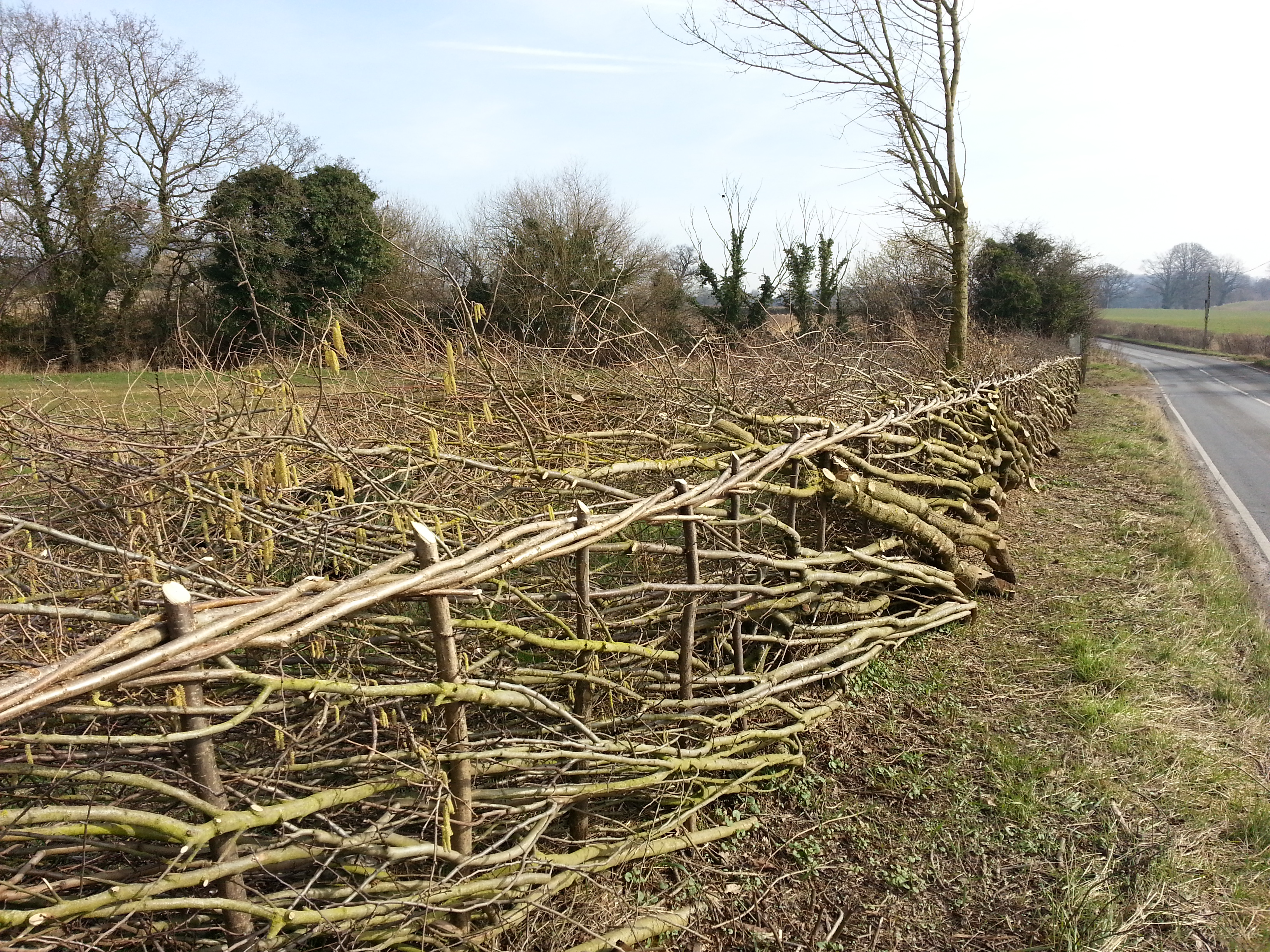
Driving around the countryside around our home in Shropshire we are struck at the difference between the worst and the best examples of hedgerow maintenance. Some are beautifully trimmed providing stock proof boundaries which benefit and encourage wildlife. The best examples of these are those that are “layered” as these remain dense in growth and provide homes, food, shelter and nest sites for all aspects of wildlife and often result in special habitats at the base of them full of wildflowers and accompanying wildlife. Insects, small mammals, birds, butterflies, bees and so much more of our wildlife can take advantage of this beautiful and skilful country craft. The trees of the hedgerow even those of reasonable girth can be trimmed and layered to create dense hedges. We found this beautiful length of hedge in a country lane a few miles from home.

layering 4

I particularly like the artful way it has been thoughtfully finished with a flourish of woven hazel. This may be some sort of “signature” – the craftsman leaving his mark. Although artistic this probably strengthens the structure further by binding the top of the hedge tightly together. This hedger is such a craftsman that the angle of cut on the top of every stake is exactly the same.

layering 5

A mix of shrubs and trees have been beautifully entwined. Even trees with trunks up to 12 inches thick have been split and layered. It is easy to see how impenetrable to stock these layered hedges are.

We were lucky to find  this other hedge in the process of being layered so took some pics. It would have been even luckier if the hedge layer was still around for me to photograph him at work but it must have been his day off!

 hedge 11 hedge 10 hedge 12

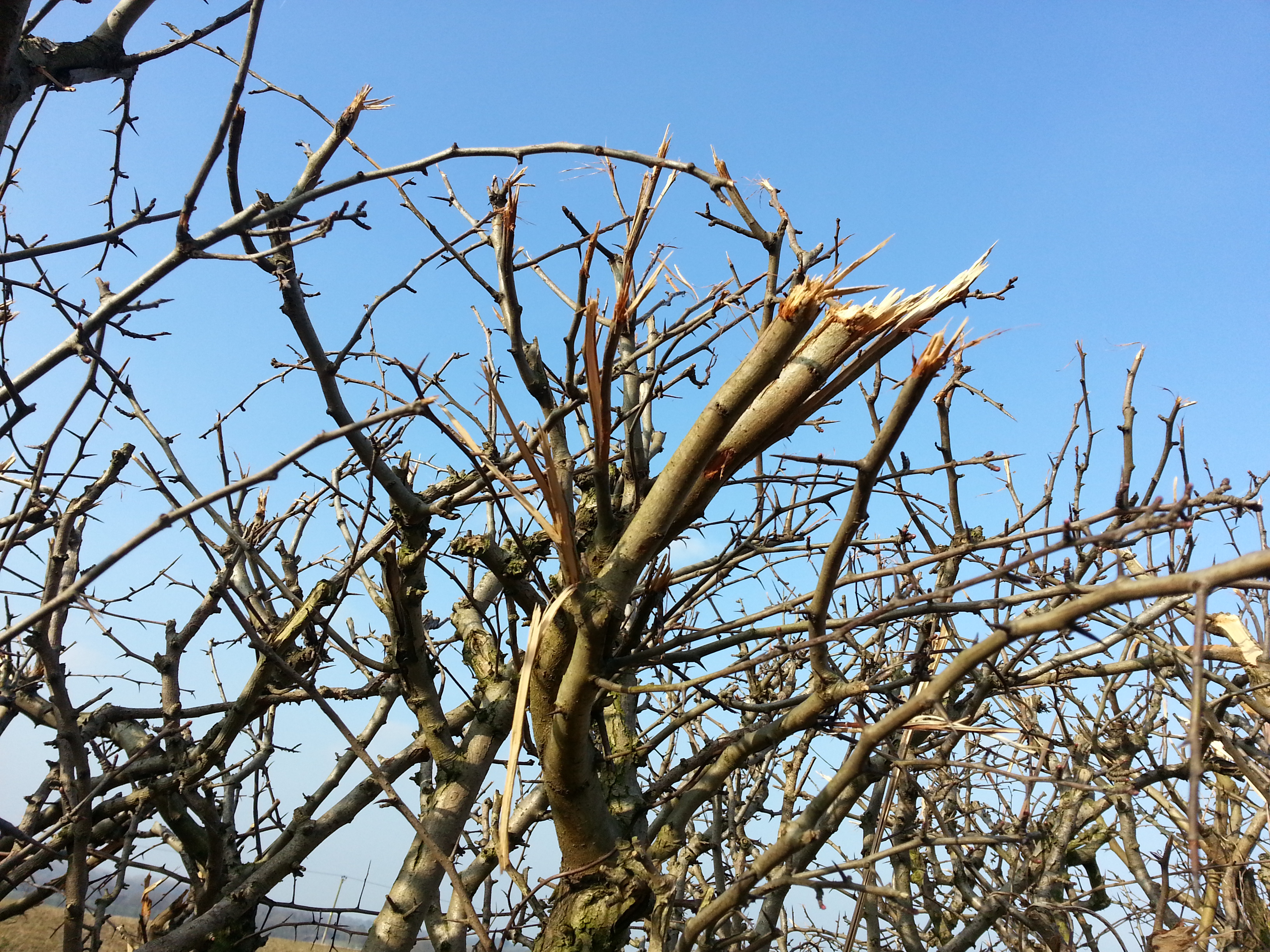
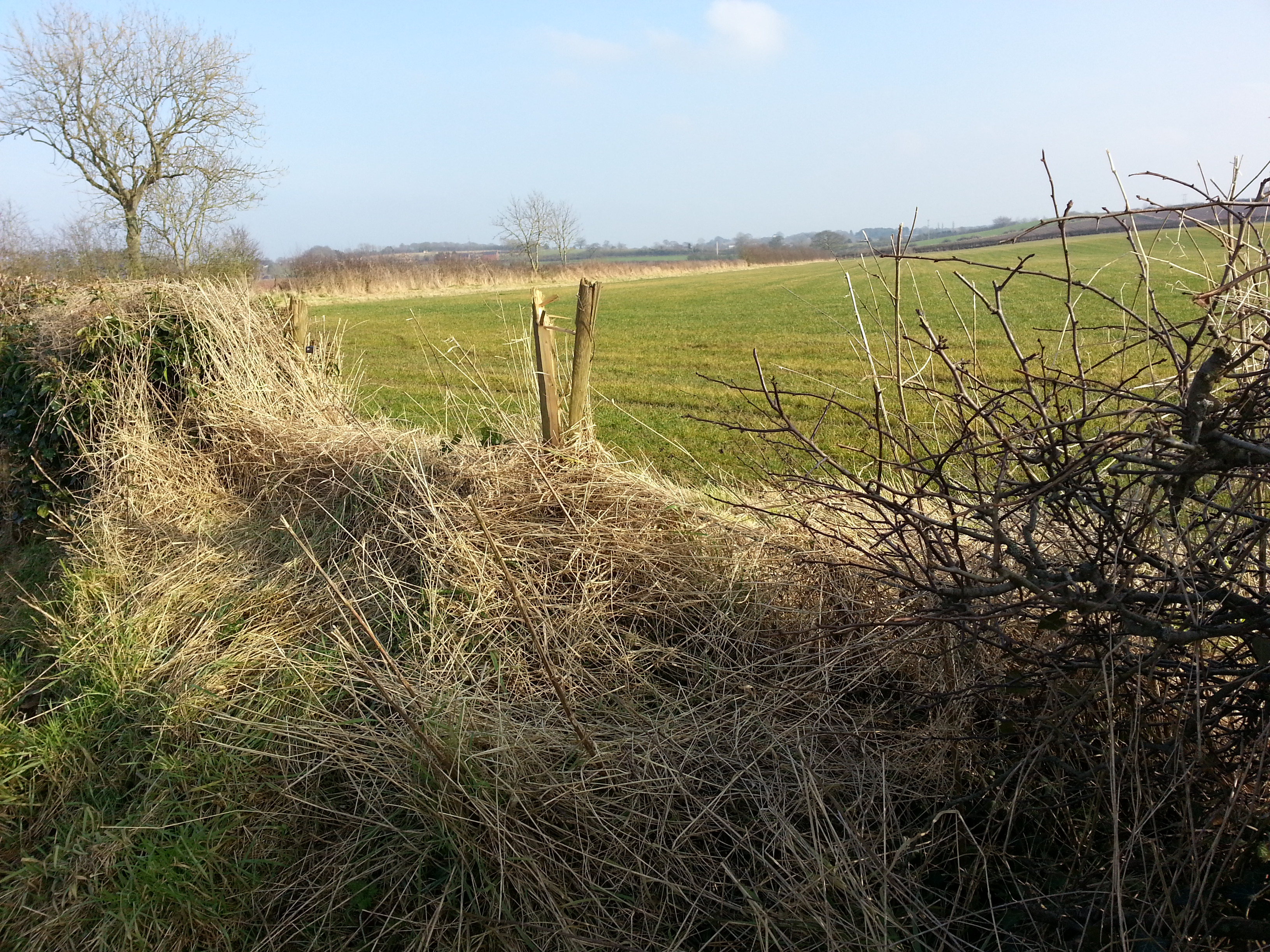
So those are good examples which are few and far between. The bad and ugly are sadly much more common now, hedges cut by machine, slashed to create ugliness. Some of the cutting blades on these machines seem blunt or perhaps inappropriate for the job in hand.  Thicker branches get torn and slowly after a few years these hedges get thinner so are poor as stock proof barriers and even poorer wildlife habitats. Whole sections disappear and tend to be replaced with fencing so the wildlife benefit is lessened further. When the hedge cutter in his tractor cab comes across trees, whatever their size they are cut just the same. The old oak in the photos below had its lower branches hacked off.

hedge 4 hedge 8 hedge 7 hedge 6 hedge 5 hedge 3 hedge 2 hedge 1

The messy hedges that are left are a waste of time, too thin to keep stock in and of little use to wildlife and too thin to allow the usual wildflowers associated with a hedge’s shelter and shade to thrive.

What the answer is to improving hedgerow management in a wildlife friendly manner is difficult to come up with. The agricultural industry in the UK needs to rethink, look again at the idea of countryside stewardship and responsibilities towards the land.

Here endeth my major rant for 2013!

Categories
allotments birds community gardening garden photography garden wildlife gardening grow your own ornamental grasses ornamental trees and shrubs photography shrubs trees wildlife winter gardens

Allotments under Snow

IMG_5307n

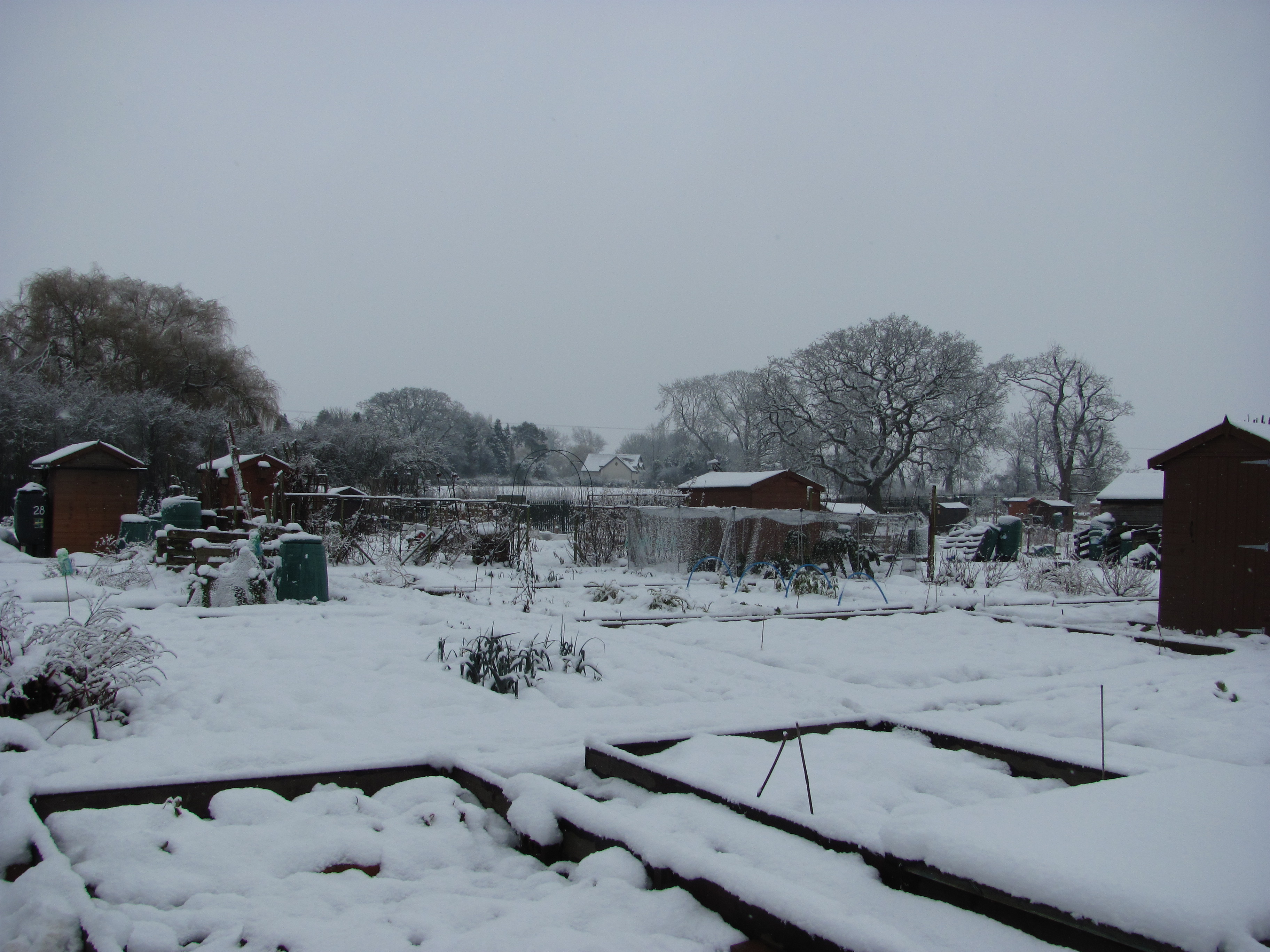
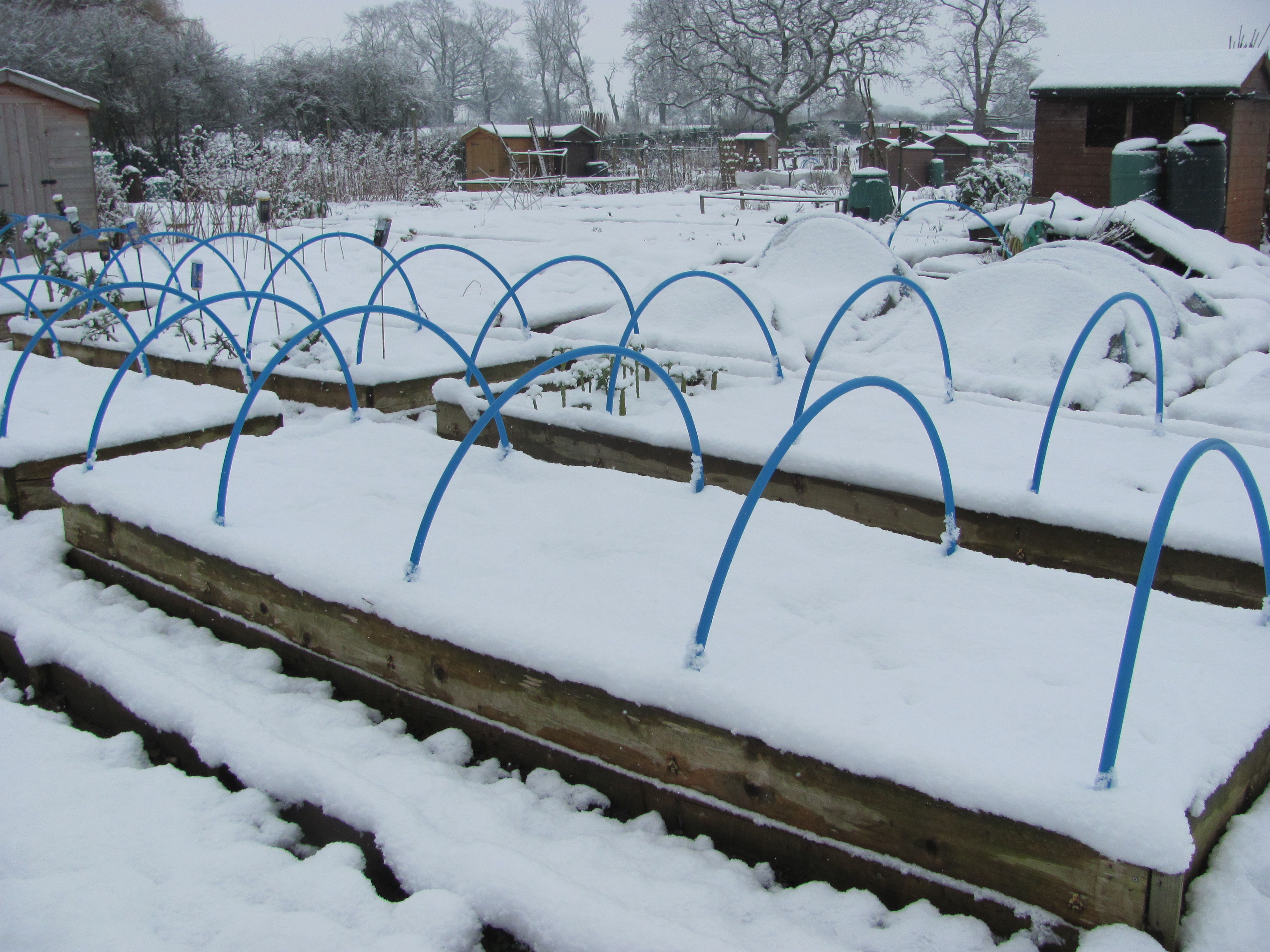
Today we braved the snow and floods up at our allotment site and went for a walk around to look at what turned out to be a very different world to the one we usually see. The pictures illustrate just how long it may be before we can get any gardening done up there. We still have root crops in the ground – in December it was too wet to get on the soil and now it is all under the white stuff.

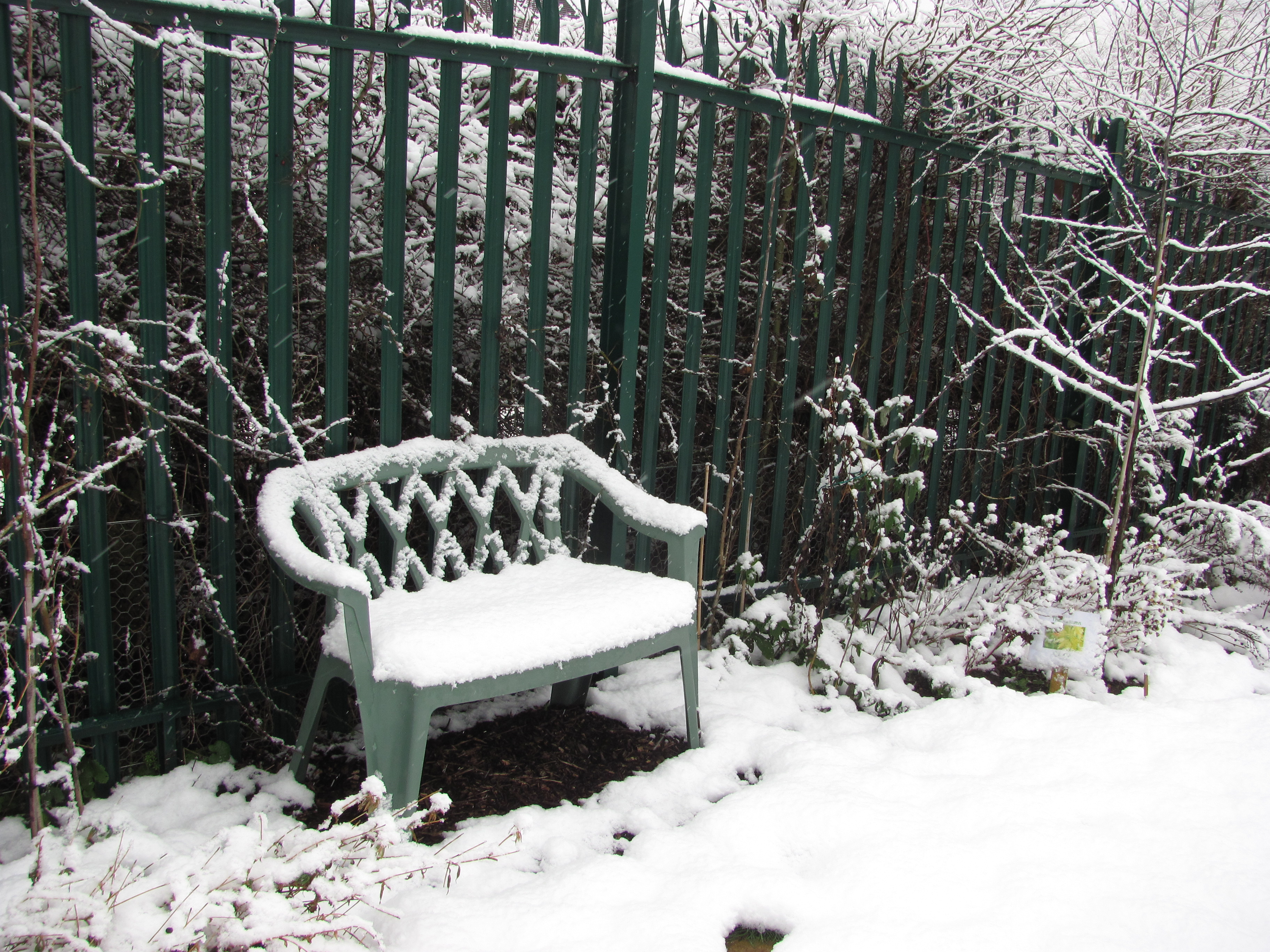
Here is the actual green bench that inspires the name of my blog.

IMG_5275

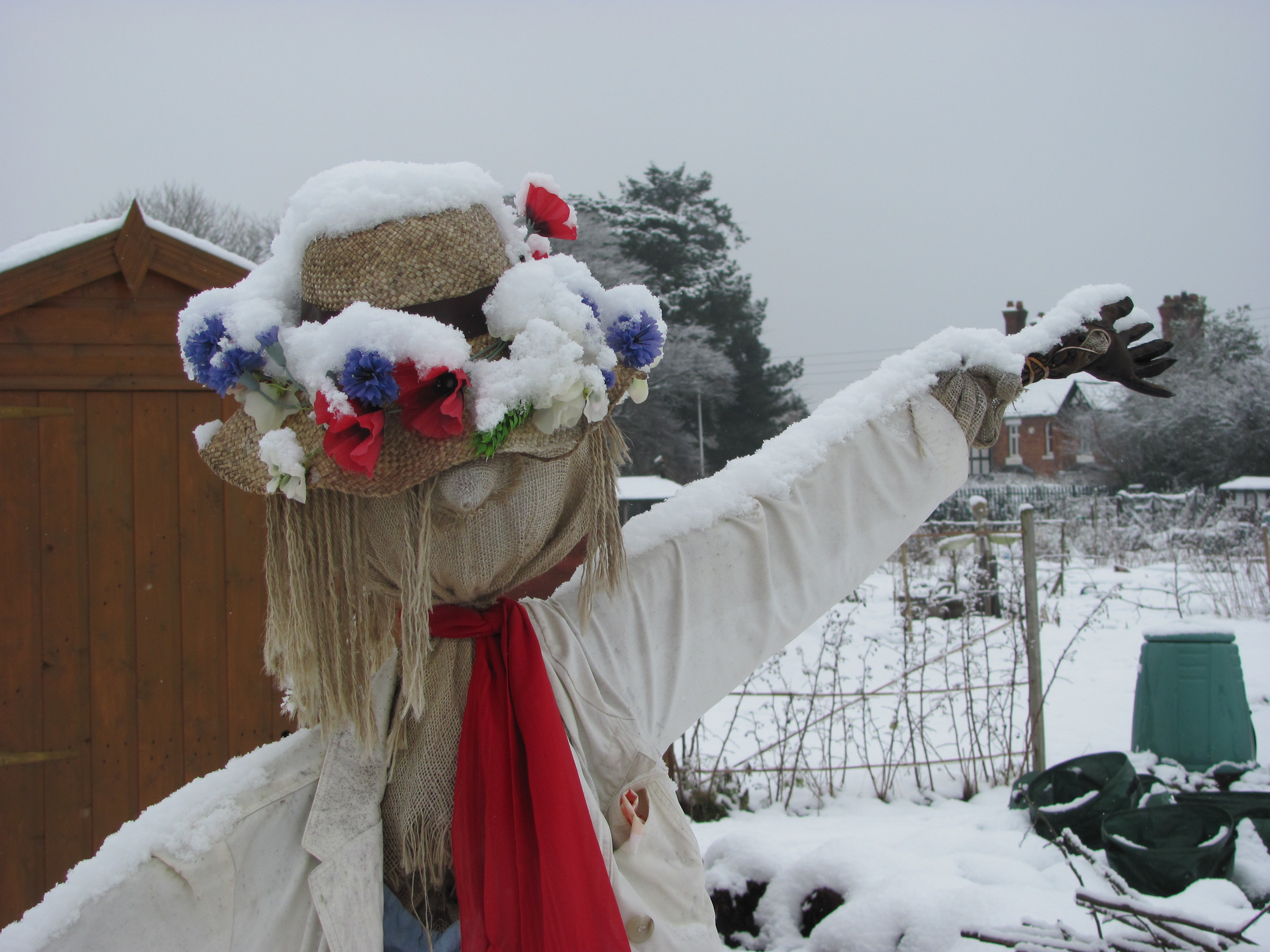
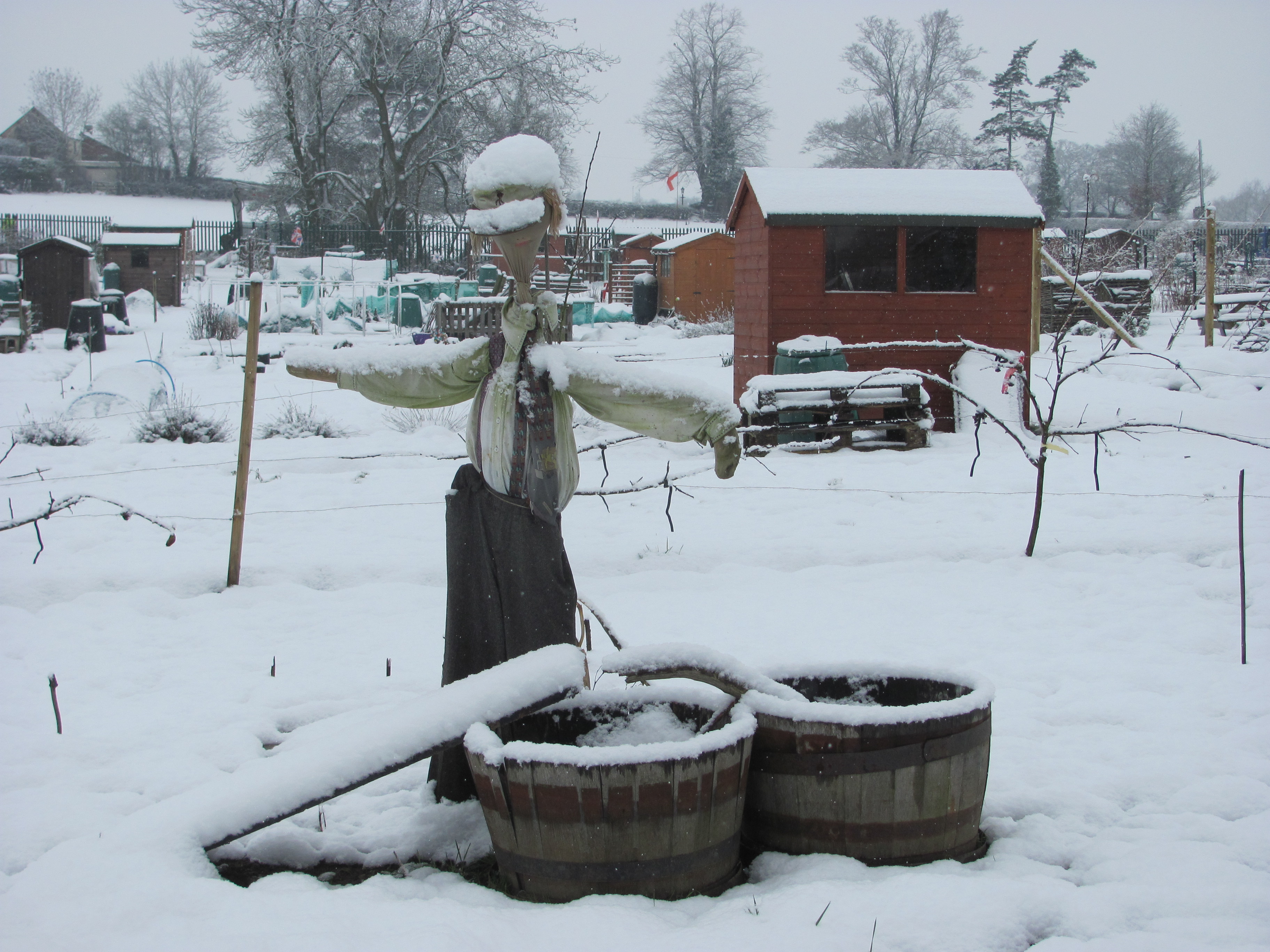
The scarecrows remain on duty whatever the weather and shrug off the snow and ice.

IMG_5321

IMG_5287-1

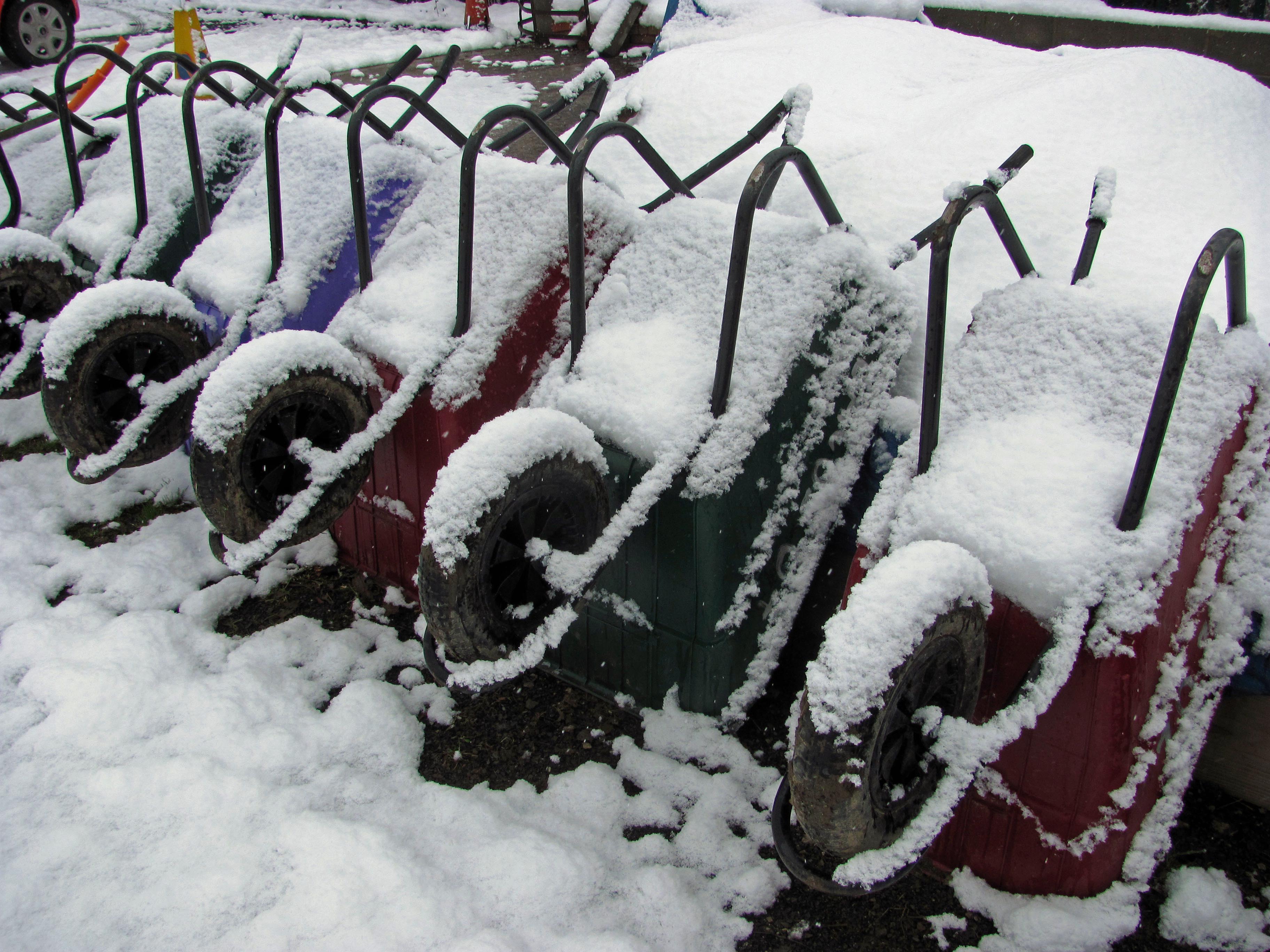
Wheelbarrows wait patiently.

IMG_5286 IMG_5272bgt IMG_5274-1

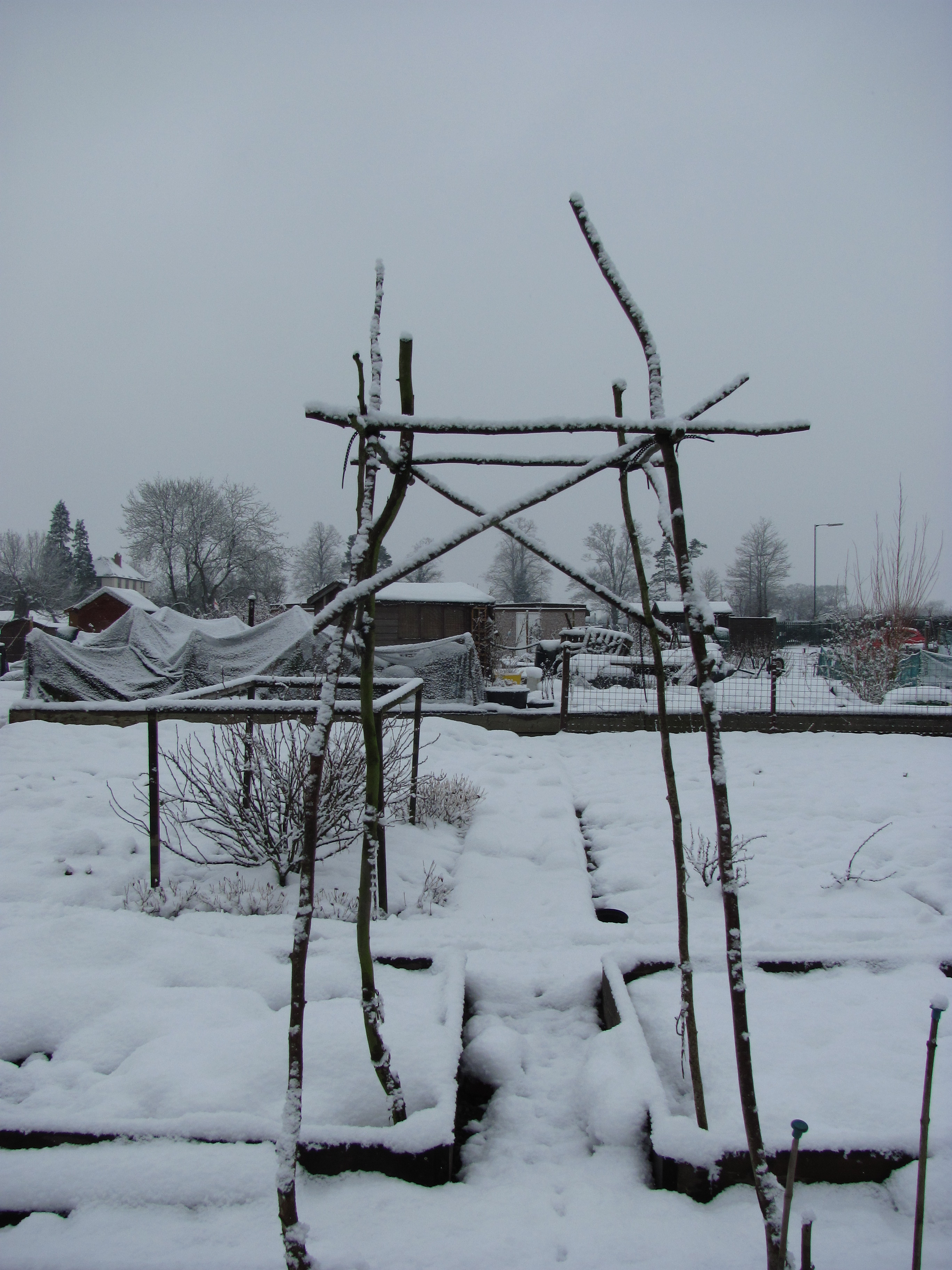
The plots have a forlorn look but beneath the ice and snow the soil is waiting – waiting for a little more light, more heat from the sun and plenty of evaporation to lessen the moisture content.

IMG_5279 IMG_5280-1 IMG_5284-1 IMG_5320-1

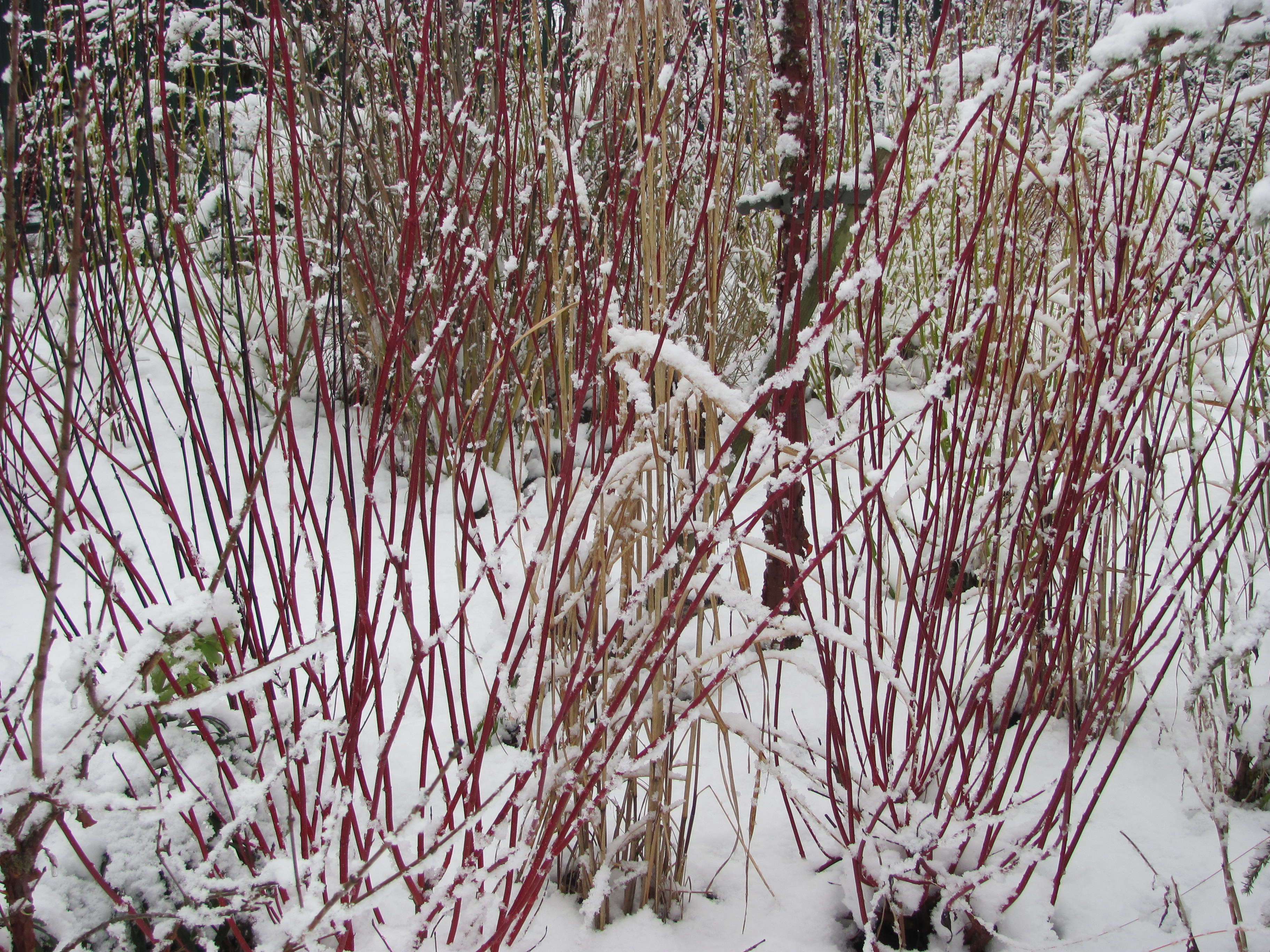
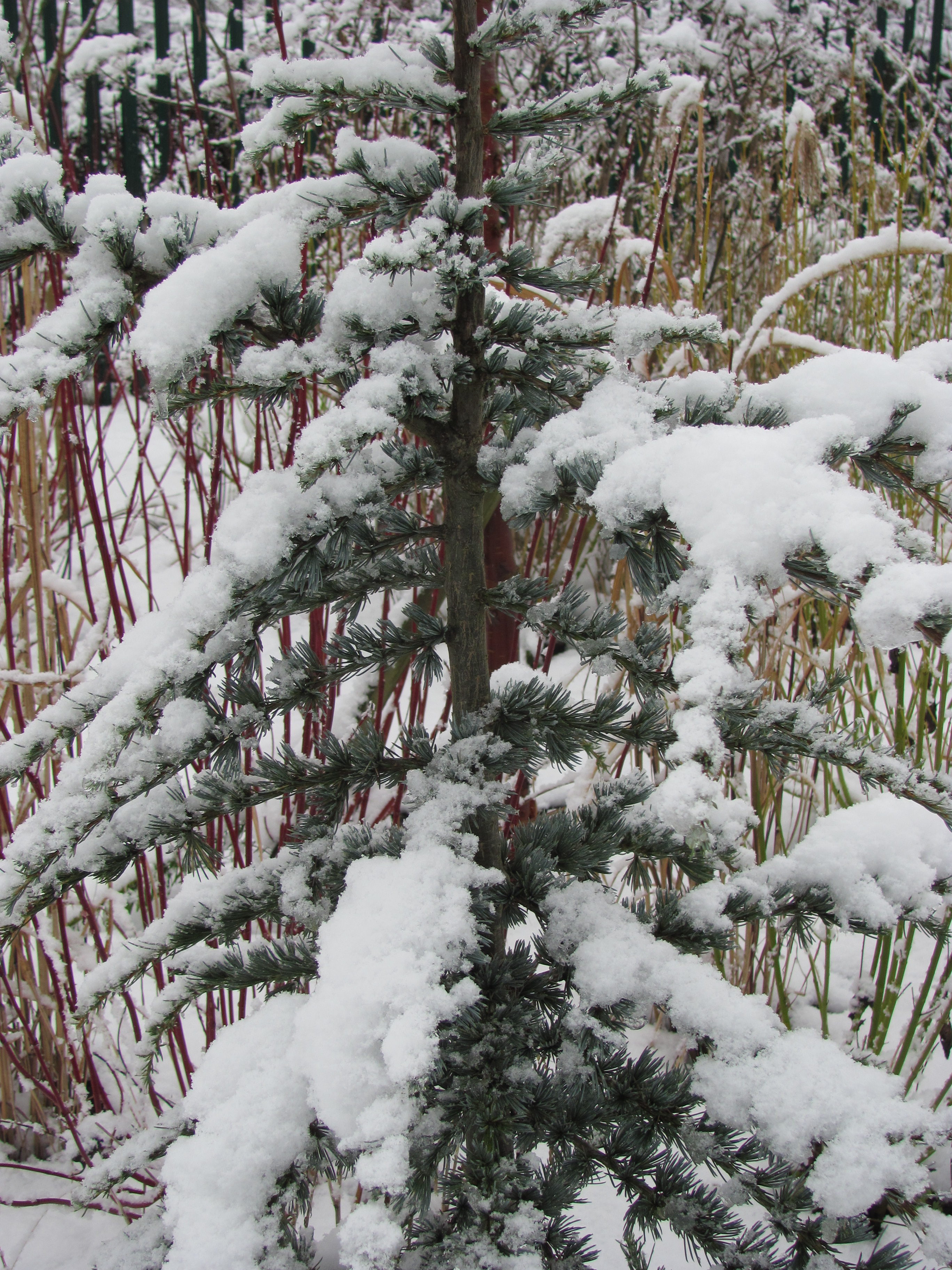
The Winter Garden is full of interest.

IMG_5296-1 IMG_5297-1 IMG_5298-1 IMG_5301-1 IMG_5302-1 IMG_5304-1 IMG_5305-1 IMG_5308-1 IMG_5309 IMG_5311 IMG_5312-1 IMG_5313

The contractors preparing our site extension in the adjoining field were toiling away in the snow, ice and waterlogged soil. They are putting in drainage and clearing out an old pond to create a wildlife pond for us all to enjoy. The ground they overturn presented birds with a rich feeding ground. Blackbirds, Redwings, Fieldfares, Jays, and Thrushes both Song and Thrush revelled in a fresh supply of worms and ground creatures.

IMG_5322

Categories
bird watching birds garden wildlife wildlife

Garden Birds in the Snow

gardeb bird 4

Today the snow came! We had hoped for a snow-free winter but the weather defied us. We woke at 7:00 expecting a covering but we were gladdened to see not an iota of white stuff. Half an hour later it started and by mid-morning we were under a 3 inch layer.

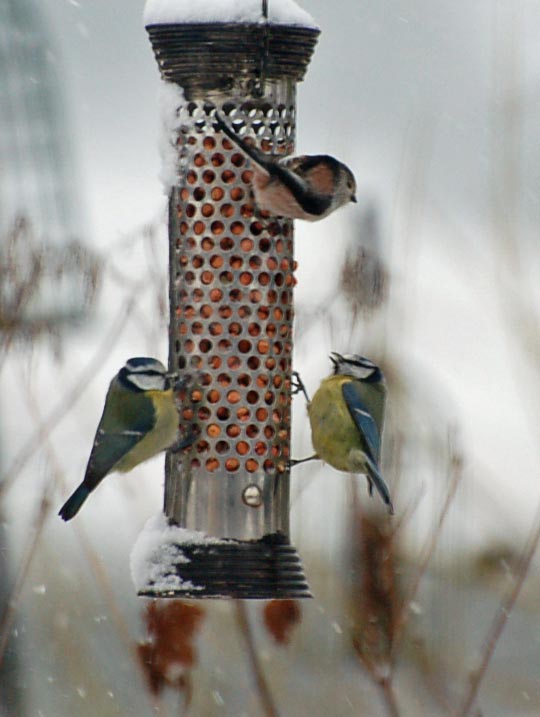
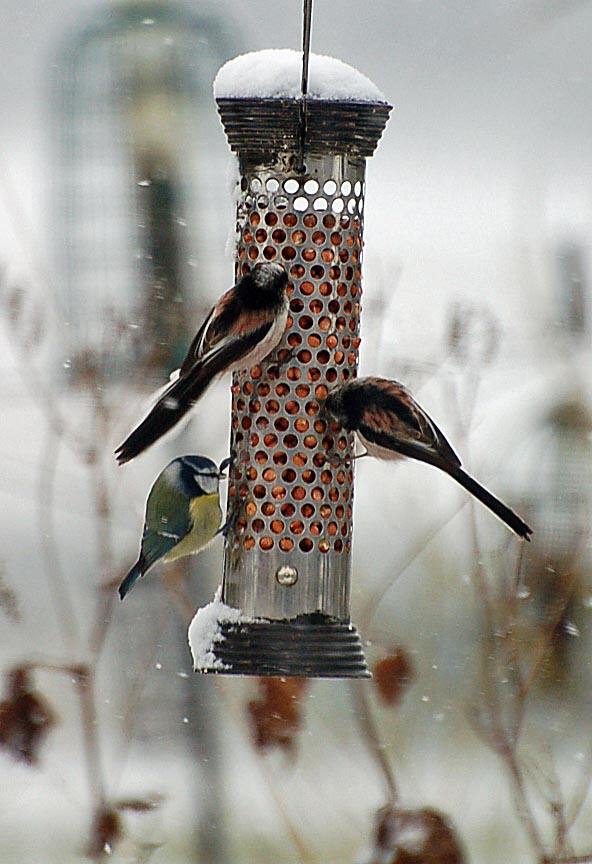
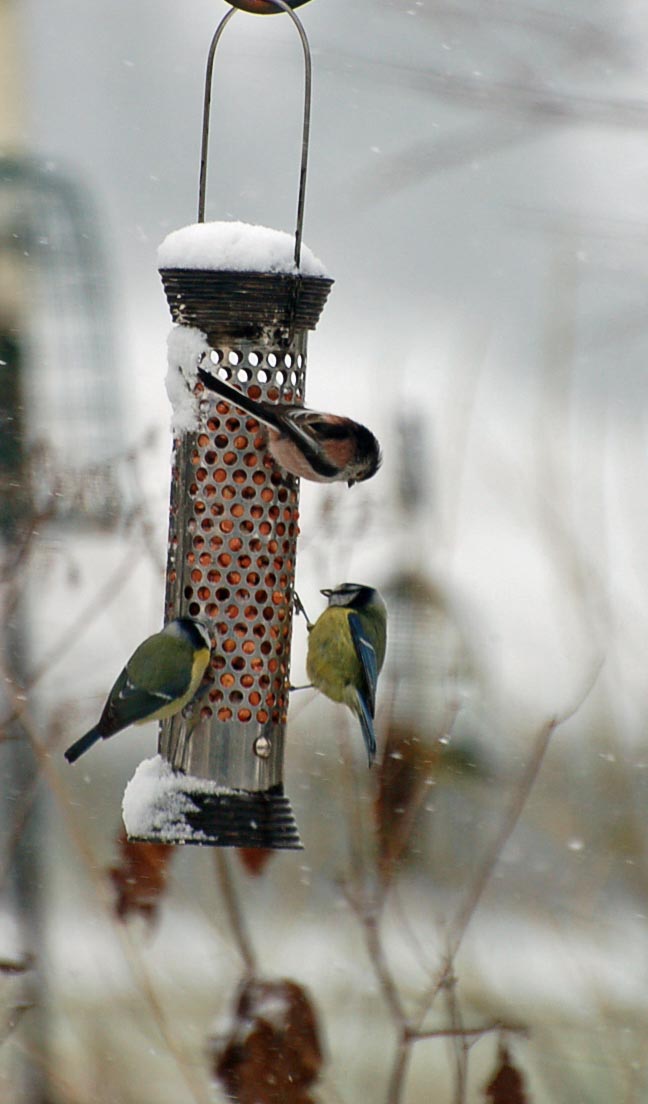
The birds arrived in force queueing up at each feeding post. A flock of Fieldfare and Redwing dropped in as did the first Siskins of the winter.

garden birds 2

The garden was alive with Titmice, Blue, Great, Coal and Long Tailed and mixed flocks of finches, Green, Gold and Chaffinch. The Great Spotted Woodpeckers made regular forays from the old oak in the paddock onto our peanut feeders.

garden birds 7 garden birds 10 garden birds 9

garden birds 8 garden birds 11

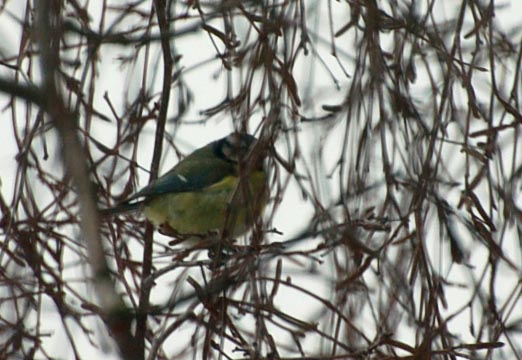
The picture below was the best of a bad bunch – I have decided that trying to take a photo of a Blue Tit within the fine filigree of Birch branches is not easy!

garden birds 3

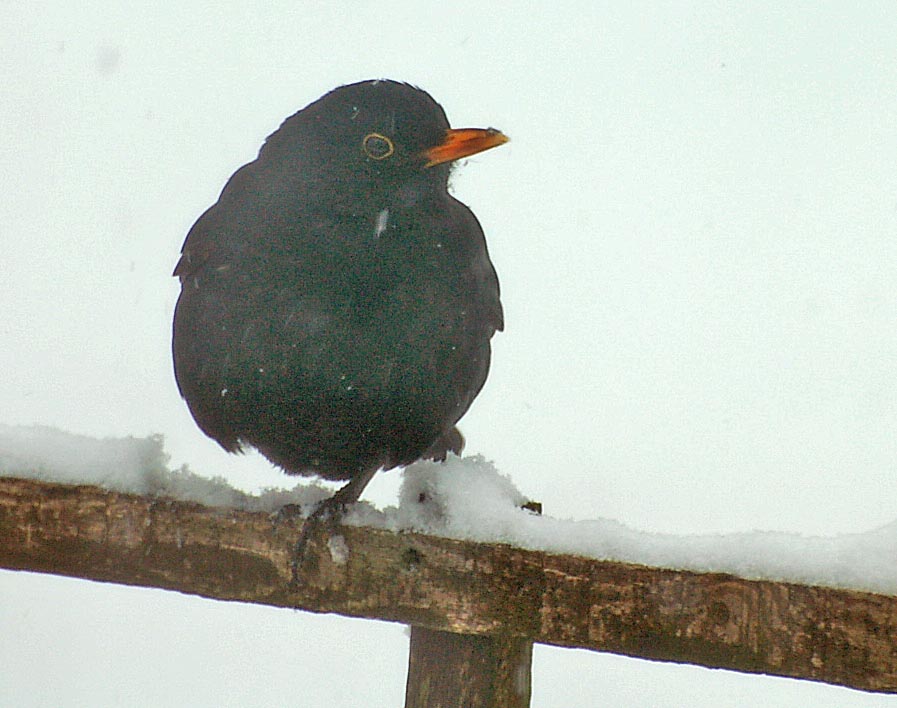
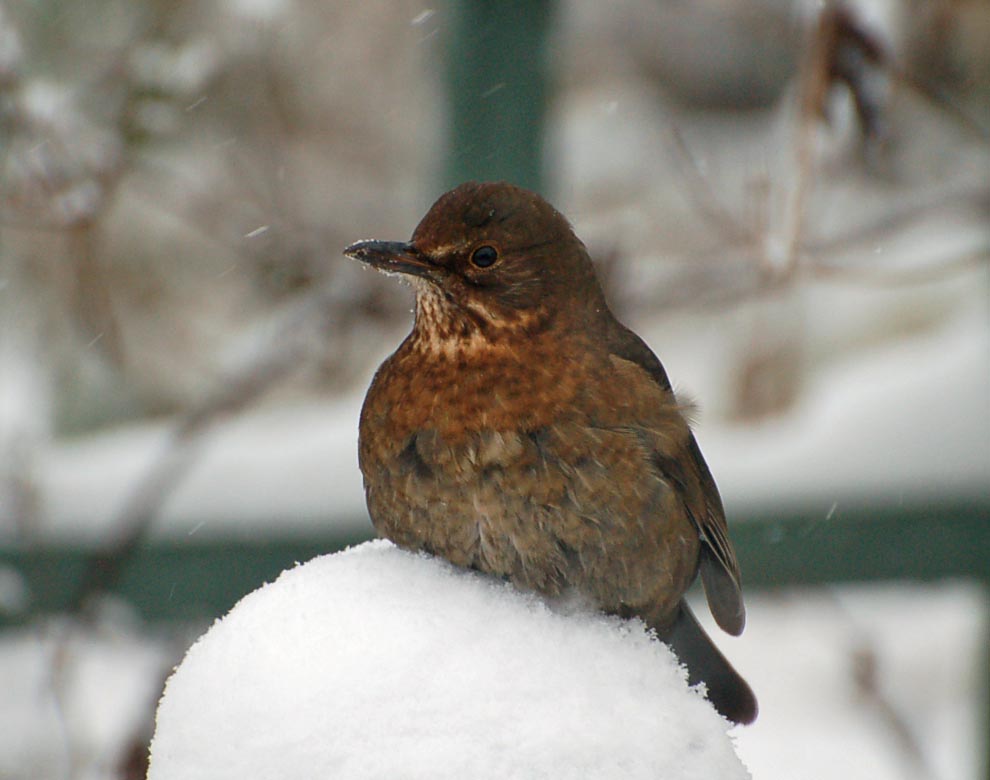
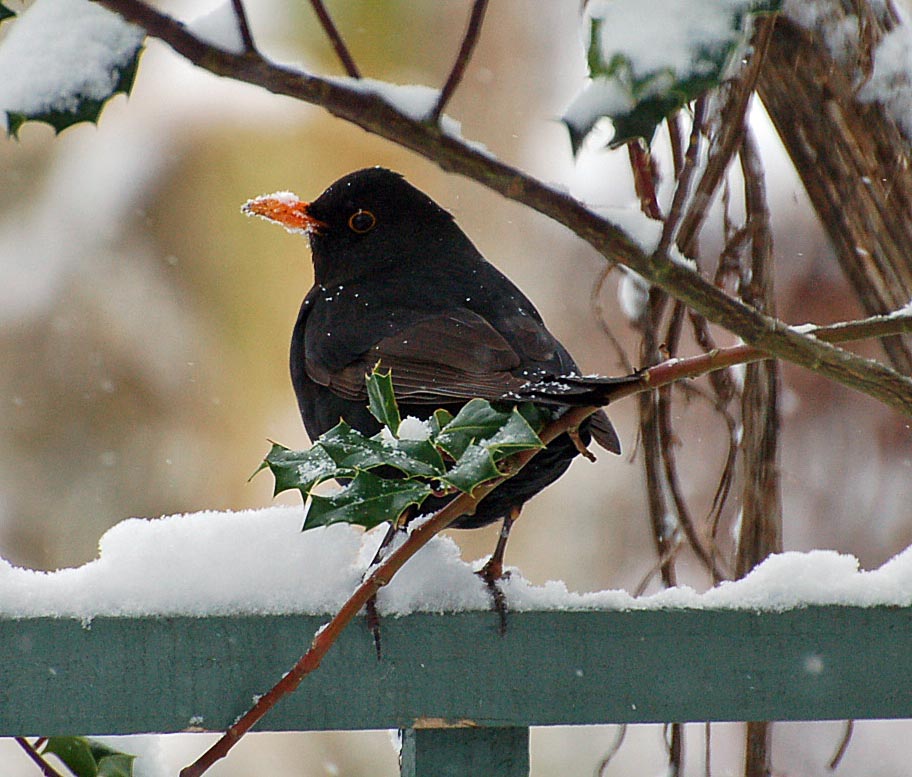
Blackbirds were far more amenable as they sat for longer and seemed to ignore this very amateur cameraman.

garden birds 4 garden birds 5 january birds 1 garden birds 12

The only time the garden was quiet today was just after the flypast of a Sparrowhawk, but hunger soon overcame fear. Back they all came.

It is essential that we all feed the birds throughout the year but even more so in the winter and provide fresh water. The birds benefit but so do our gardens as we help maintain the balance of nature. Some of the birds who use our feeding stations are also part of our balanced organic pest control.

Categories
birds colours garden photography garden wildlife gardening natural pest control outdoor sculpture photography Winter Gardening winter gardens

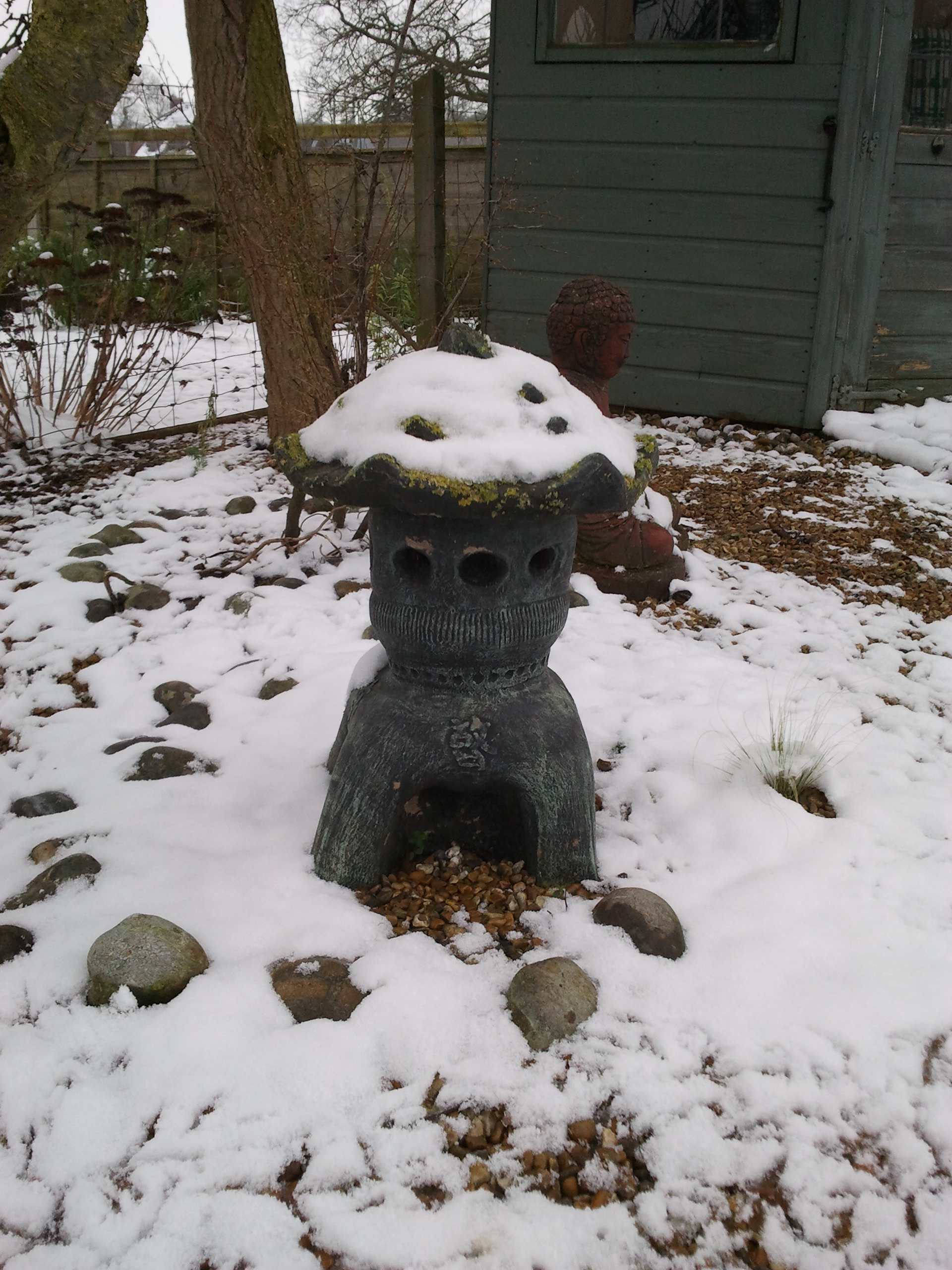
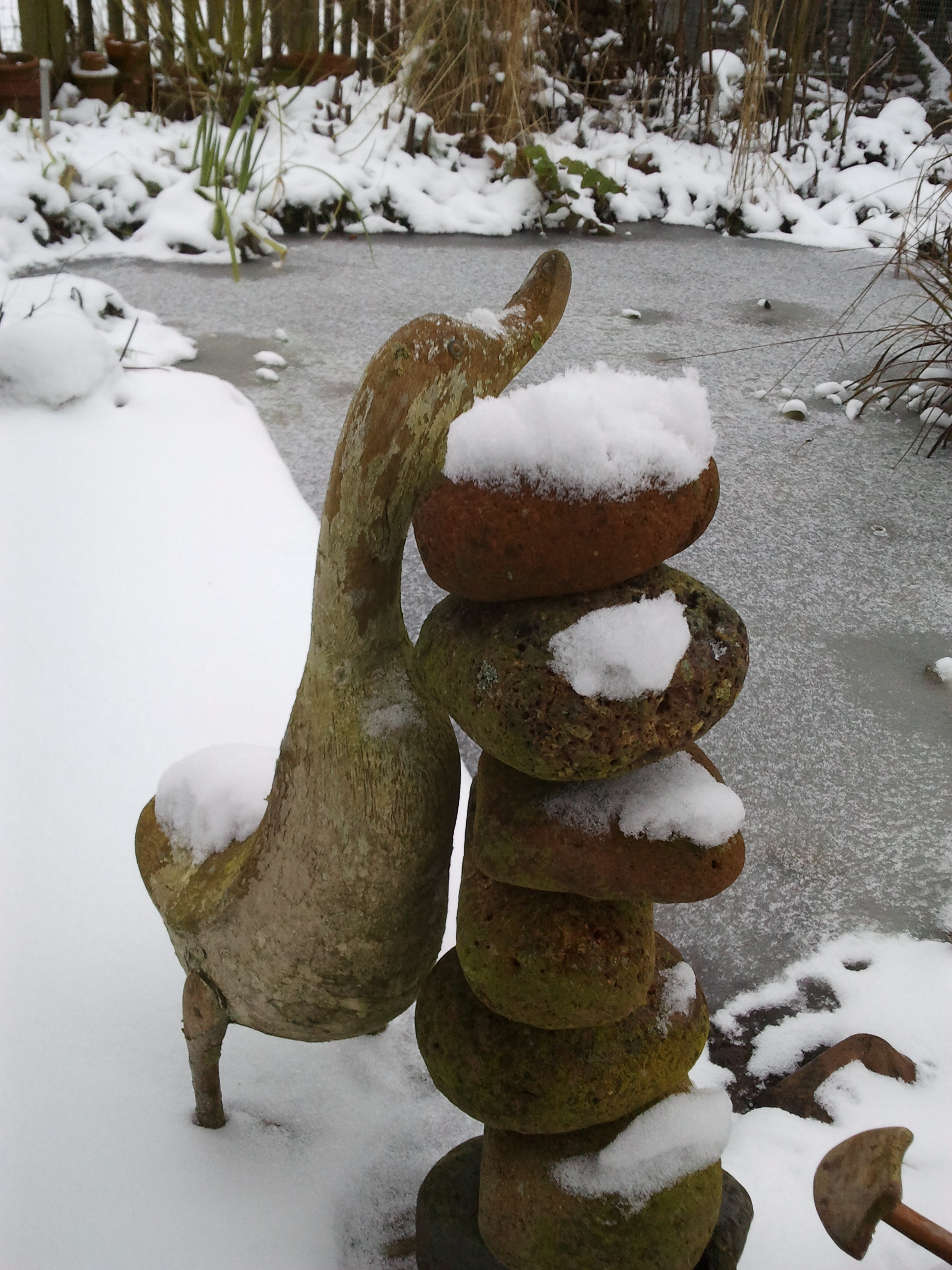
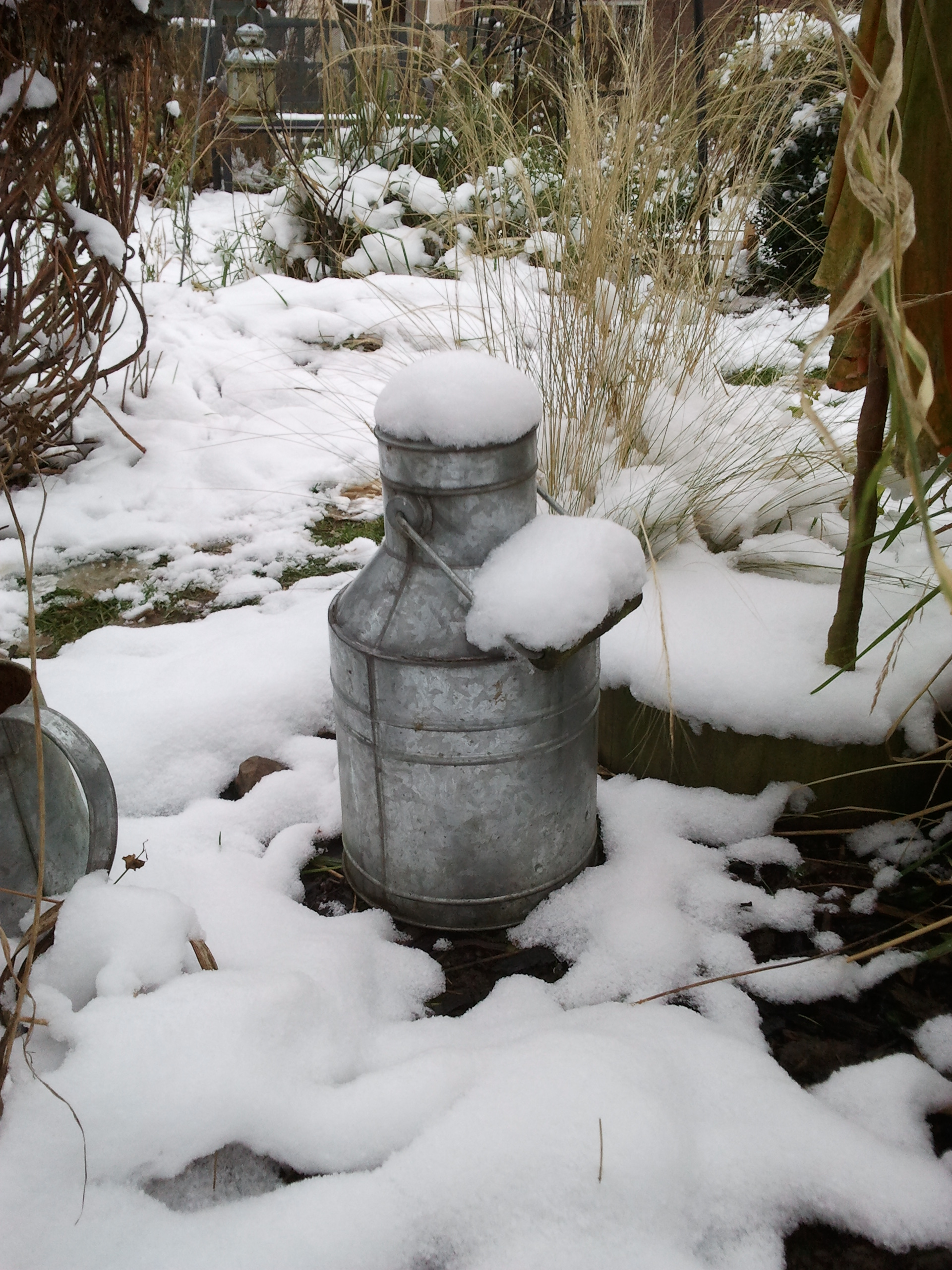
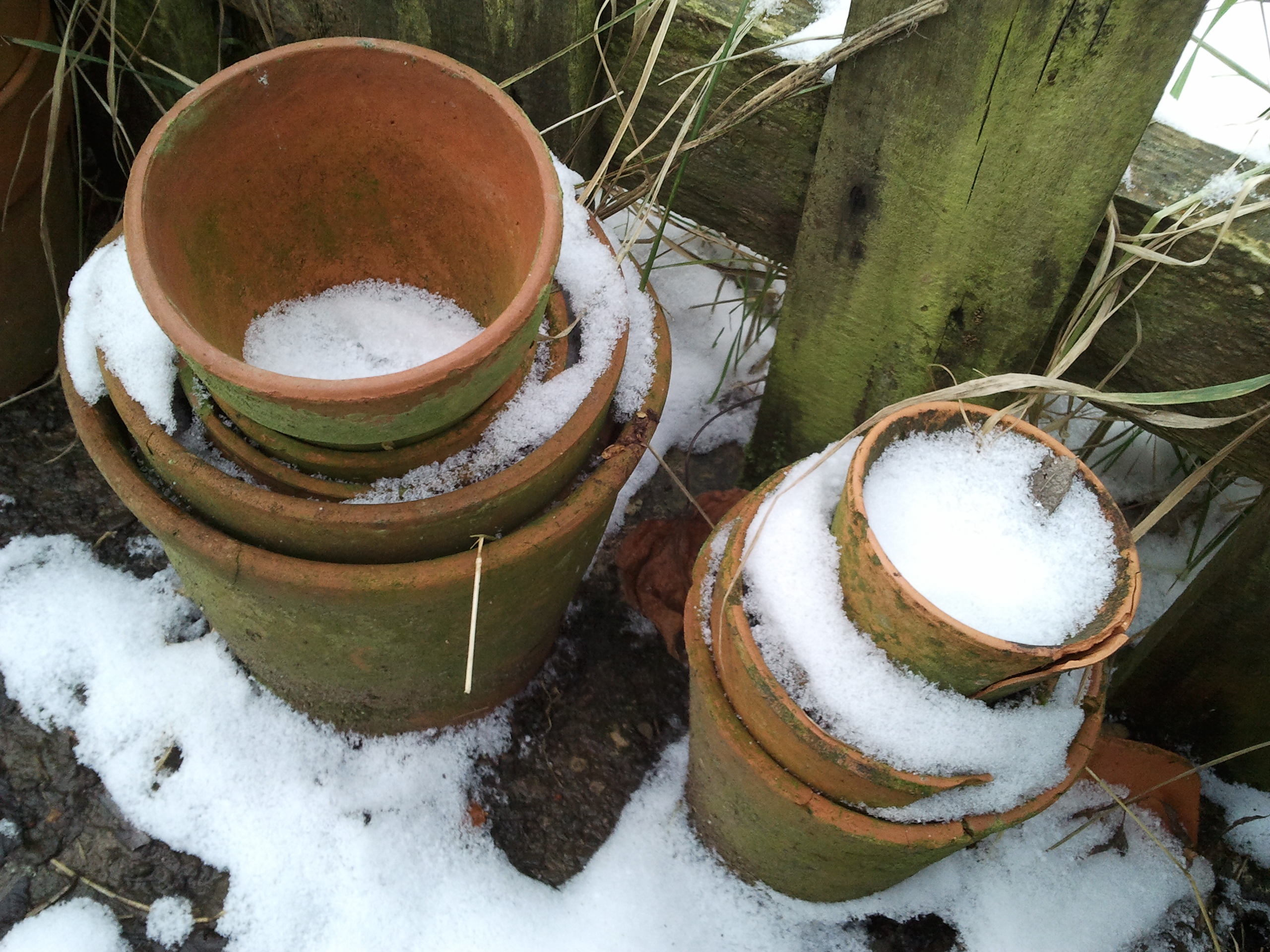
The Garden’s got its hat on, hip hip hip hooray ……

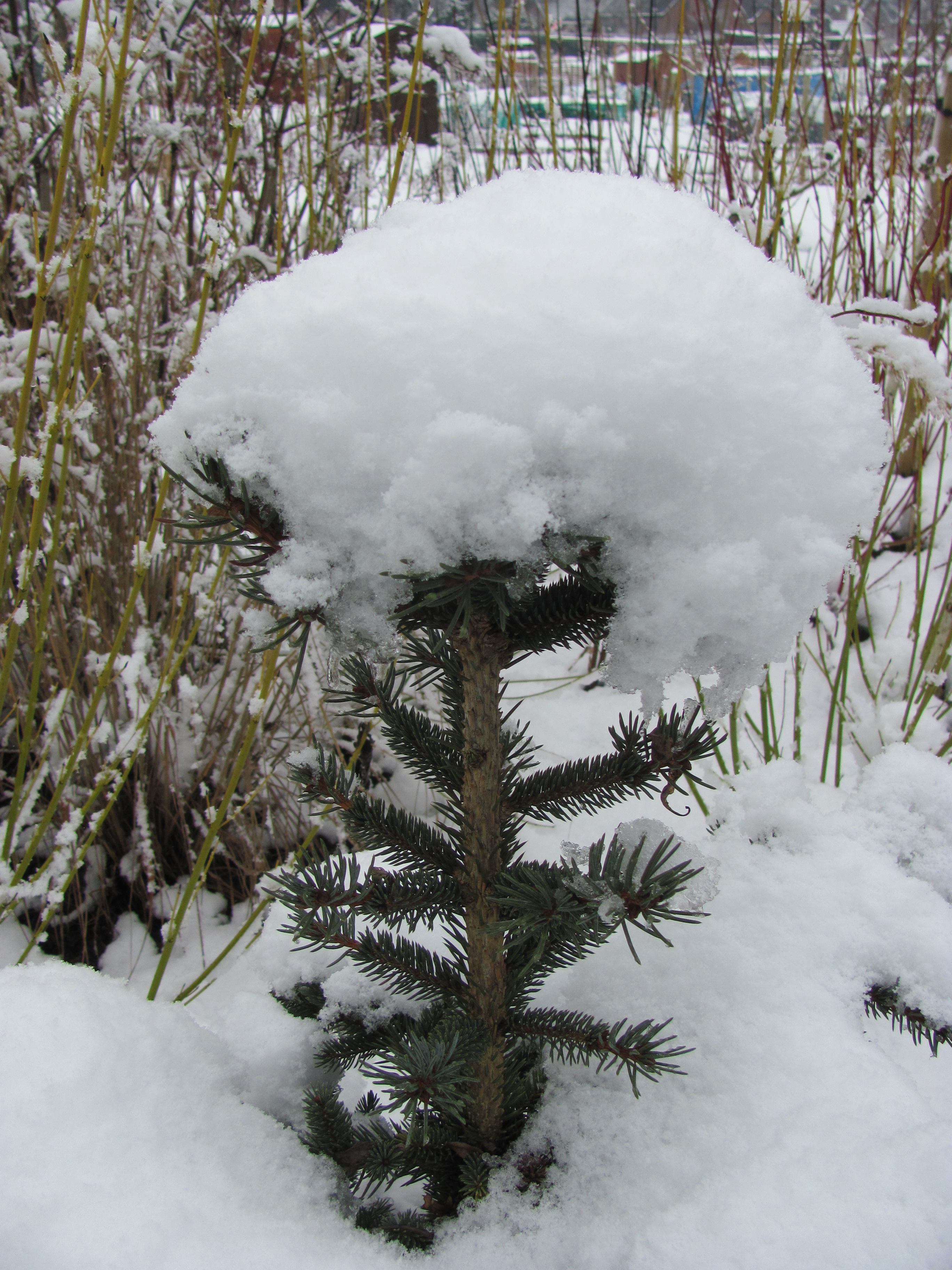
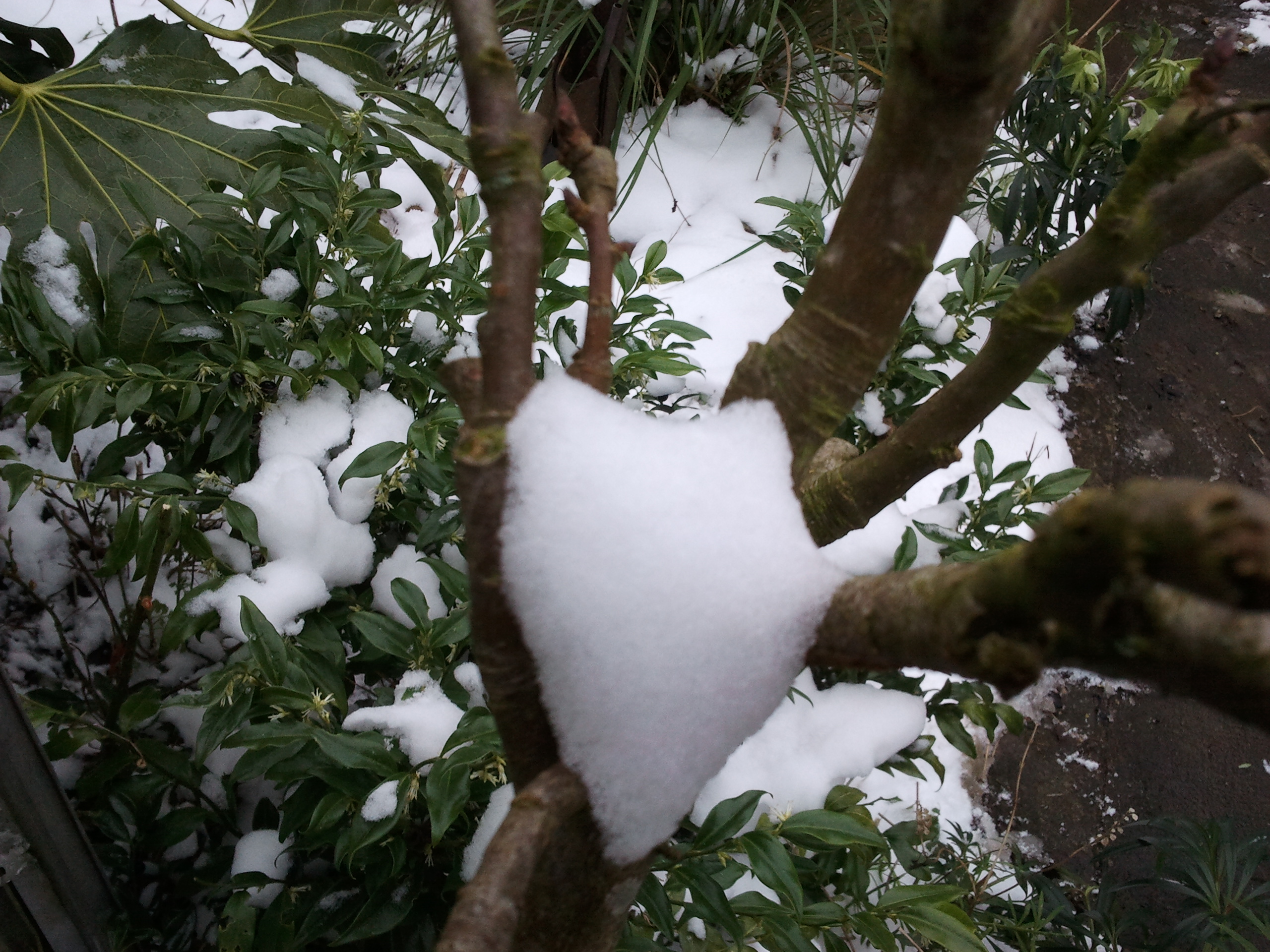
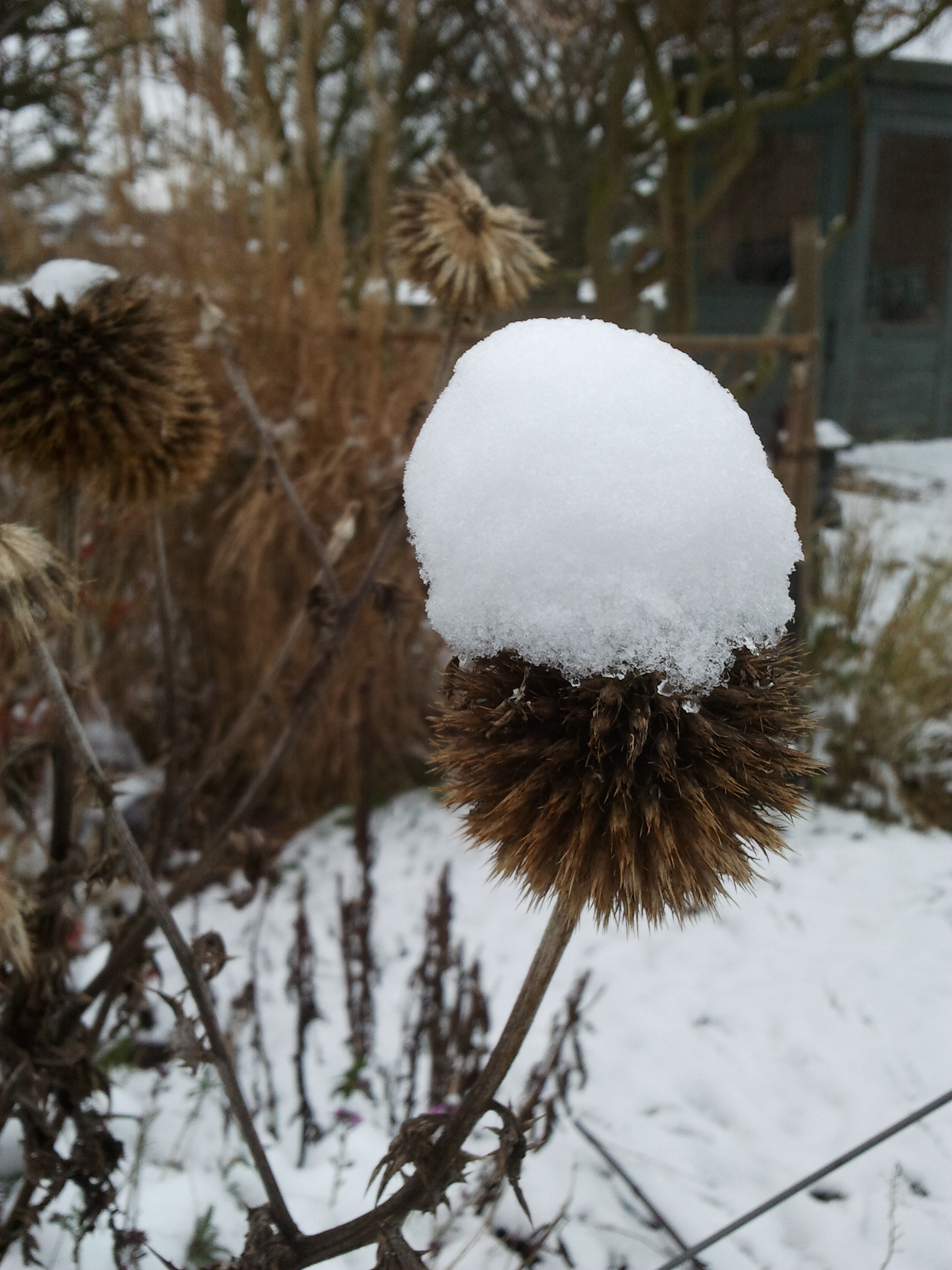
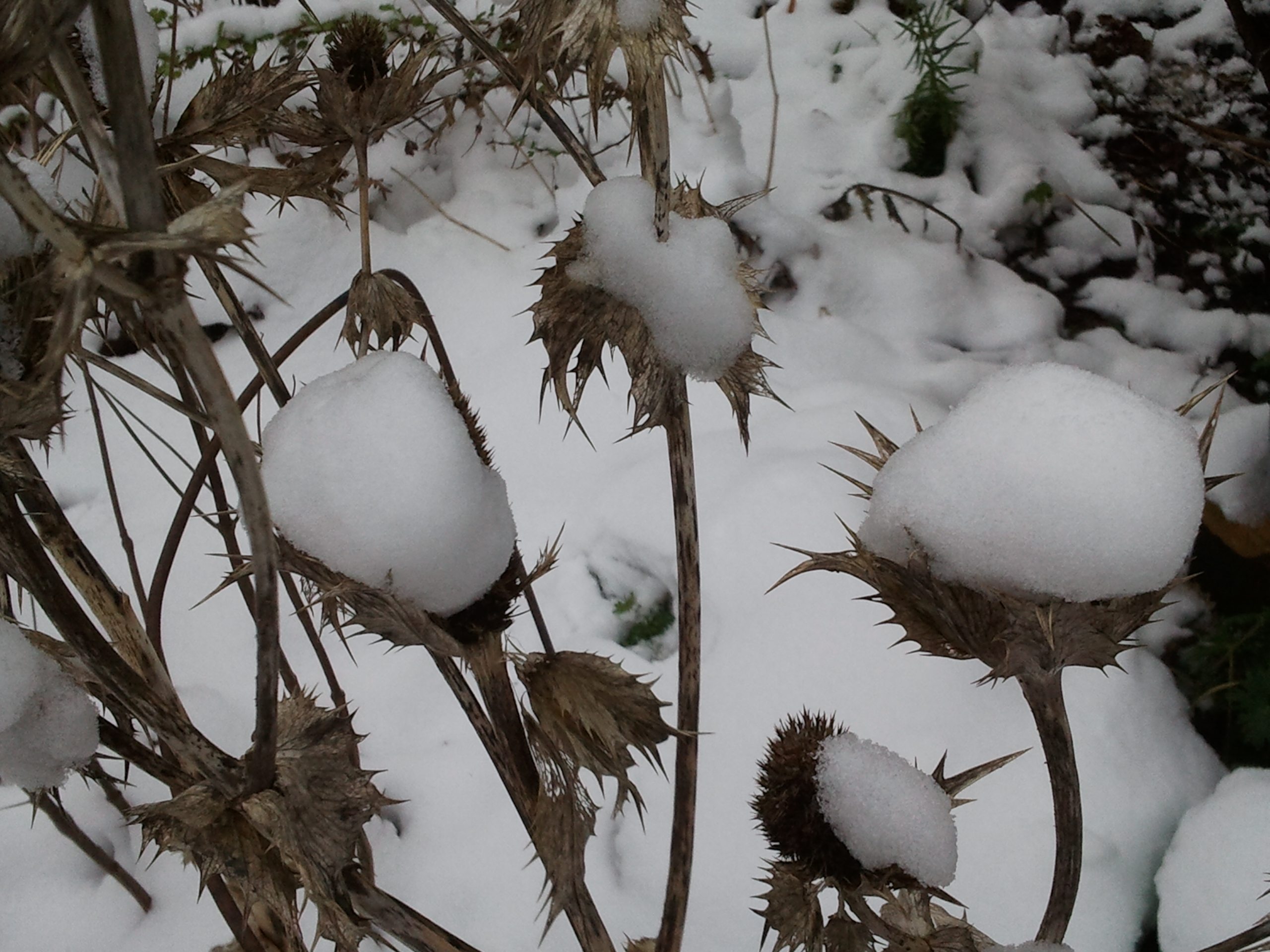
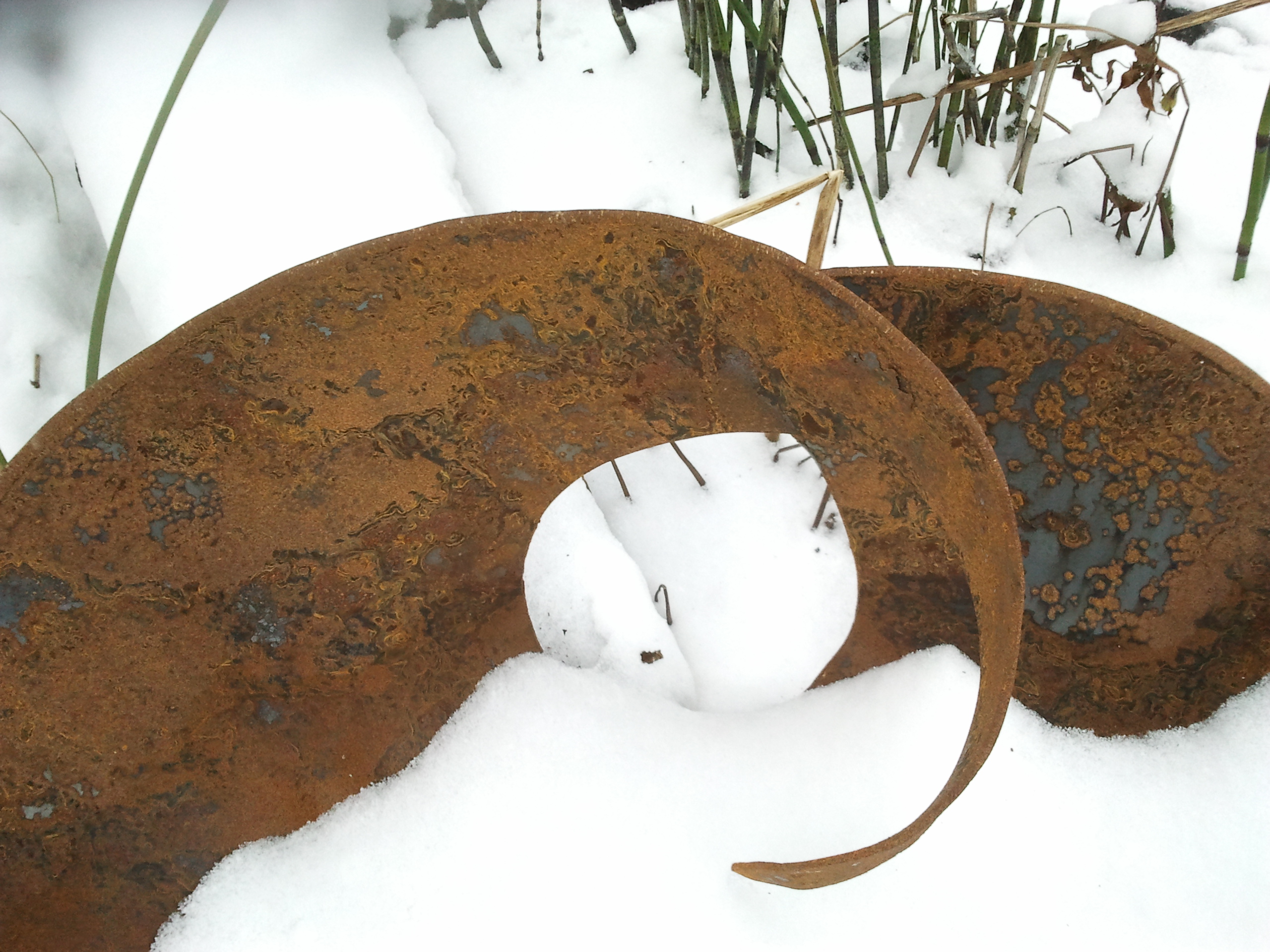
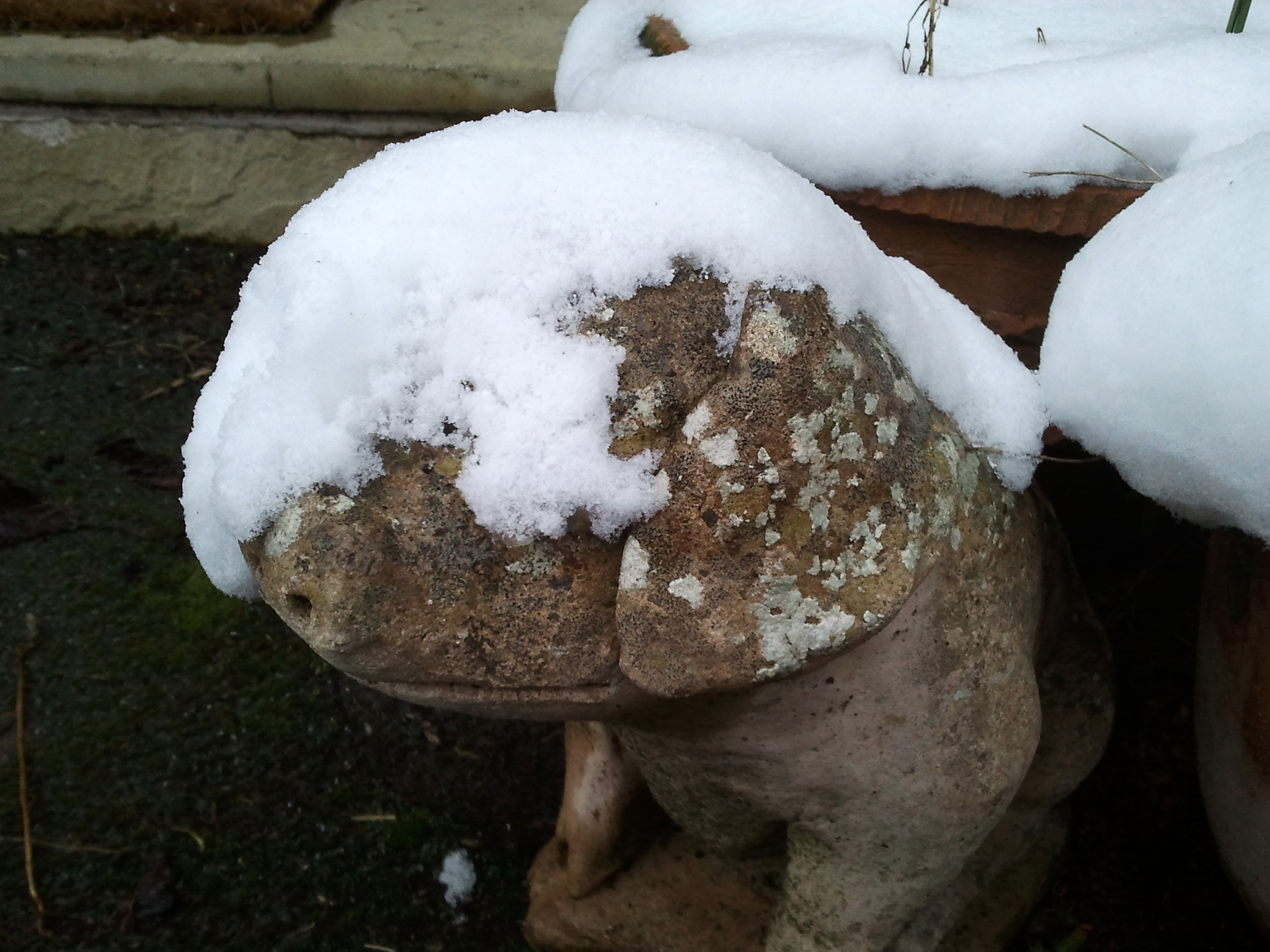
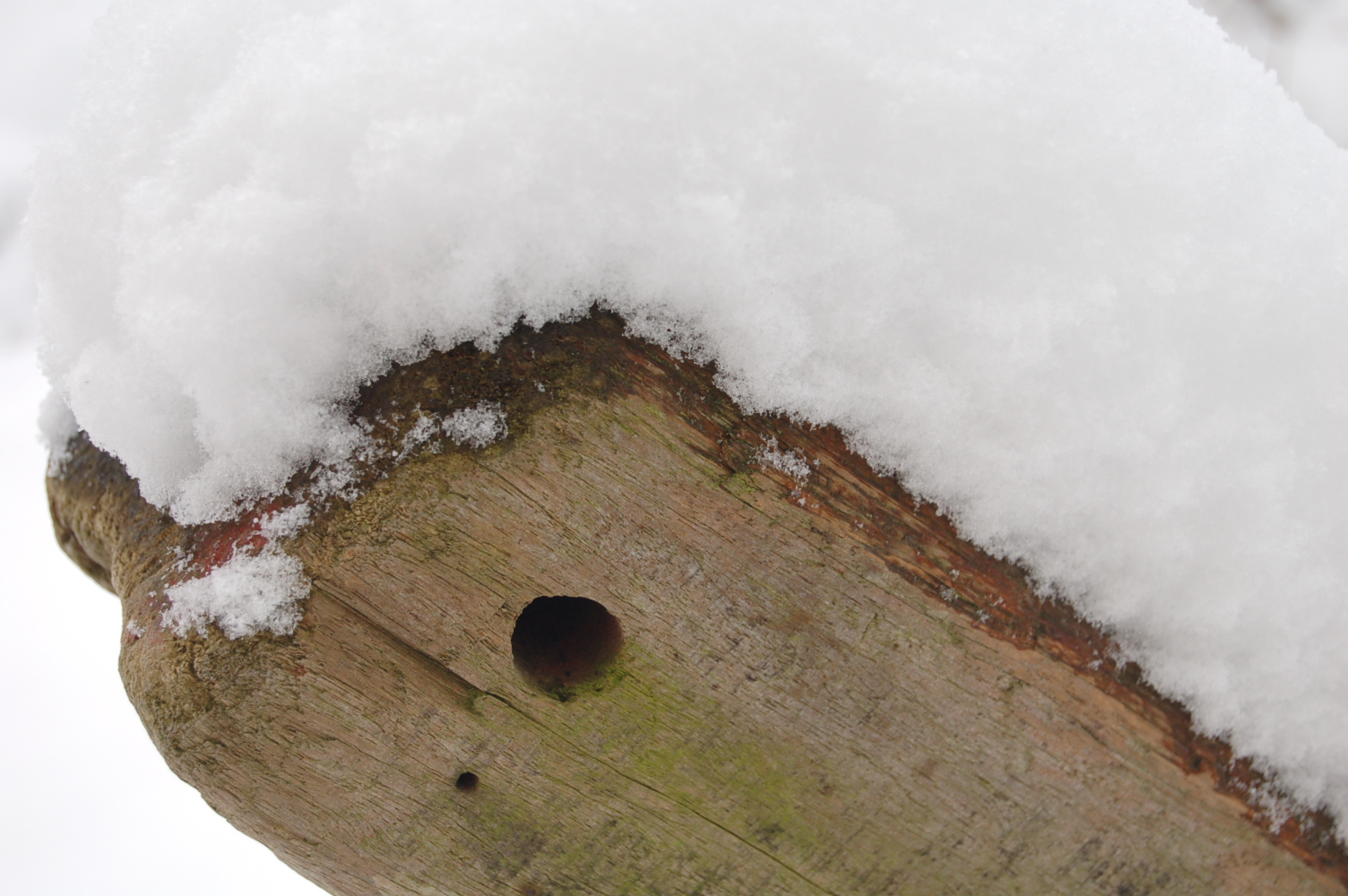
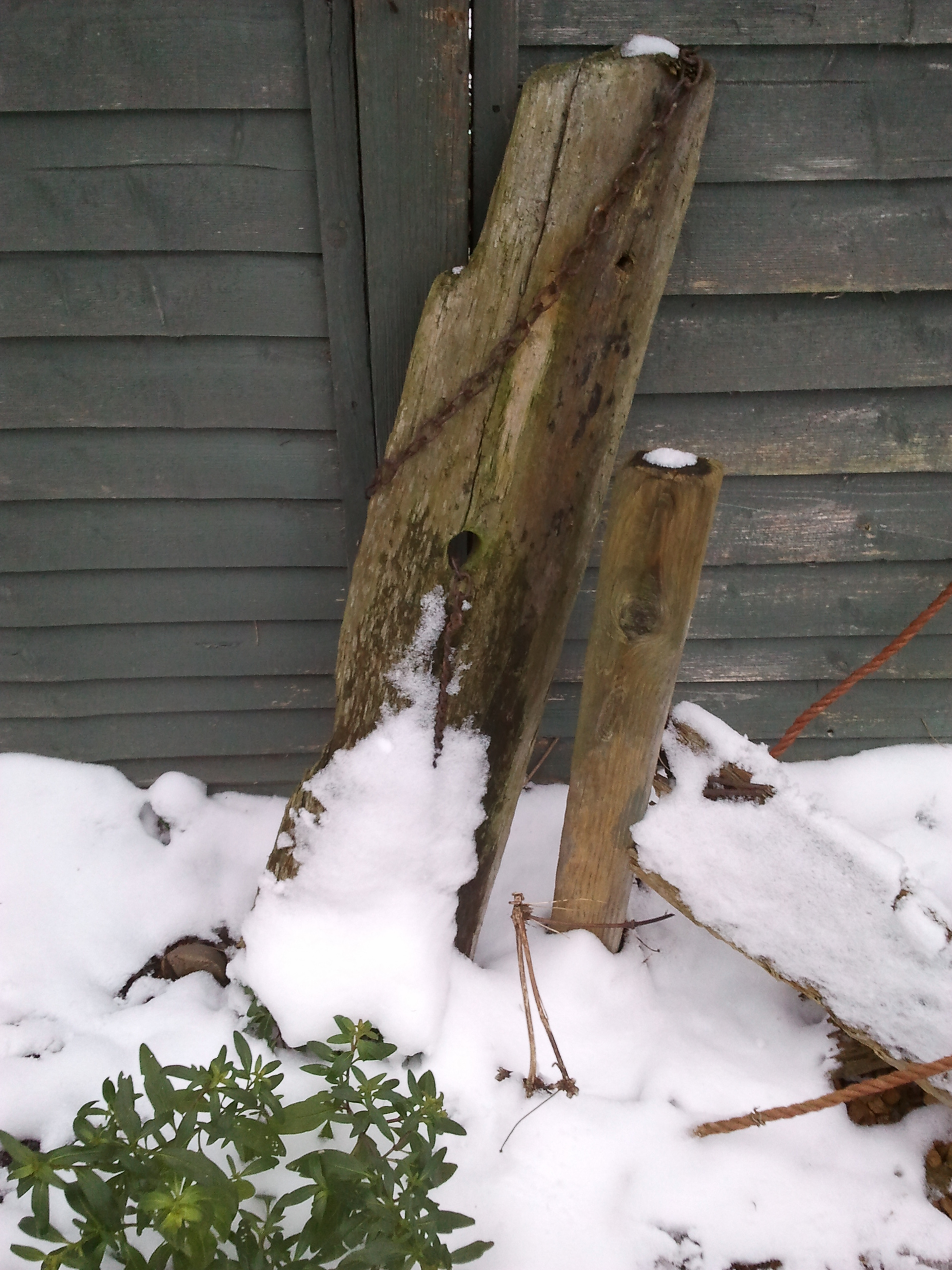
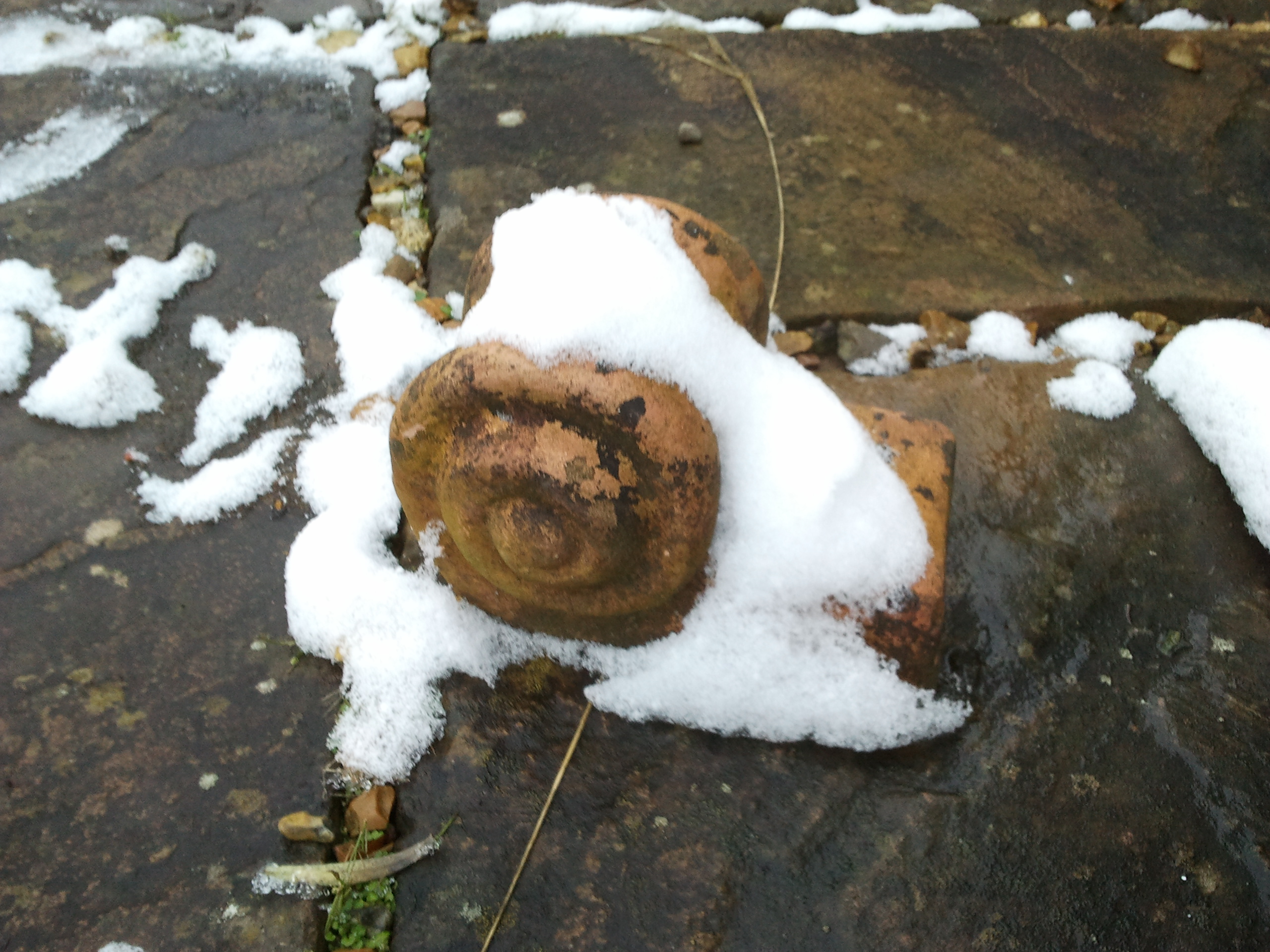
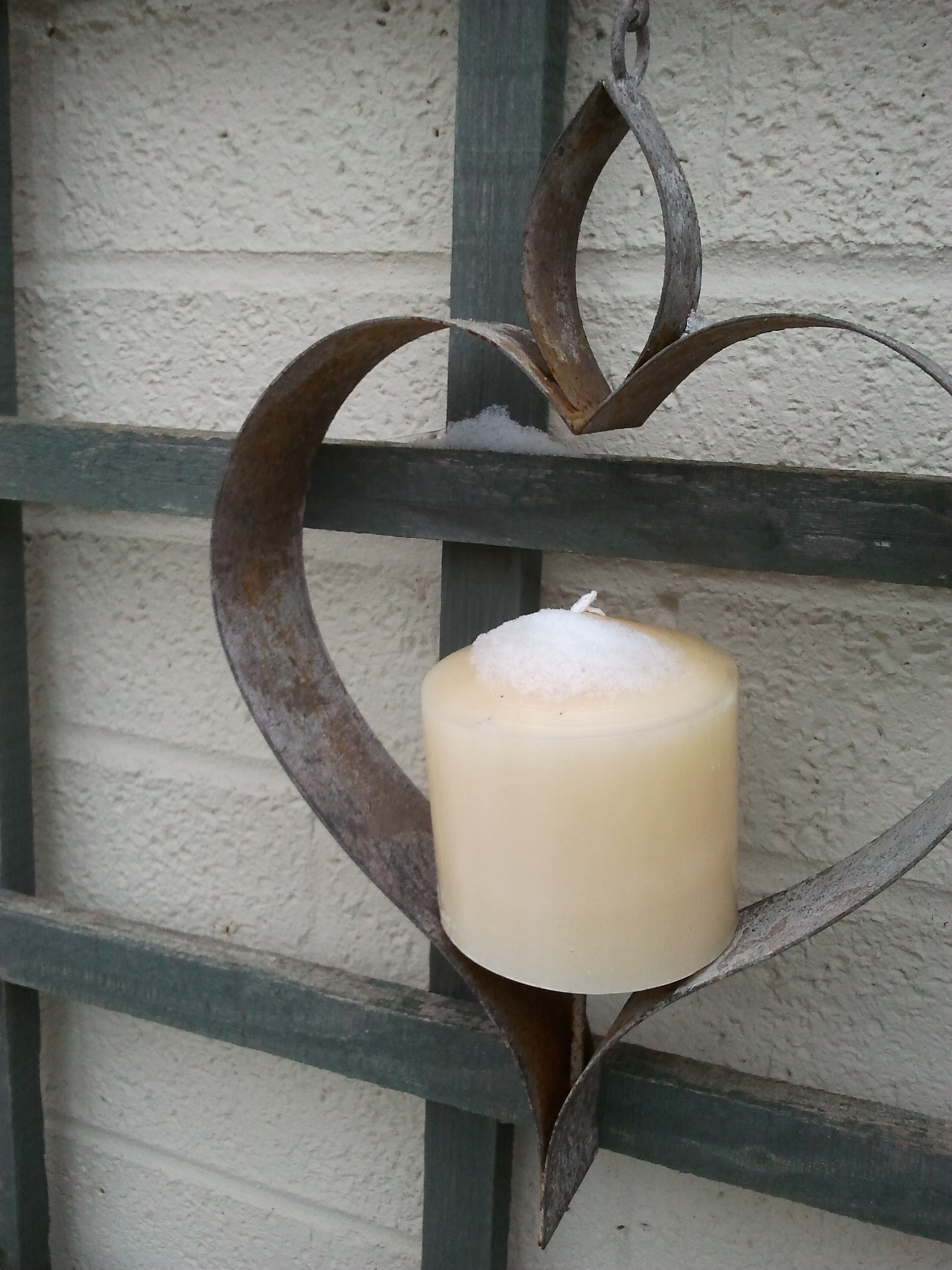
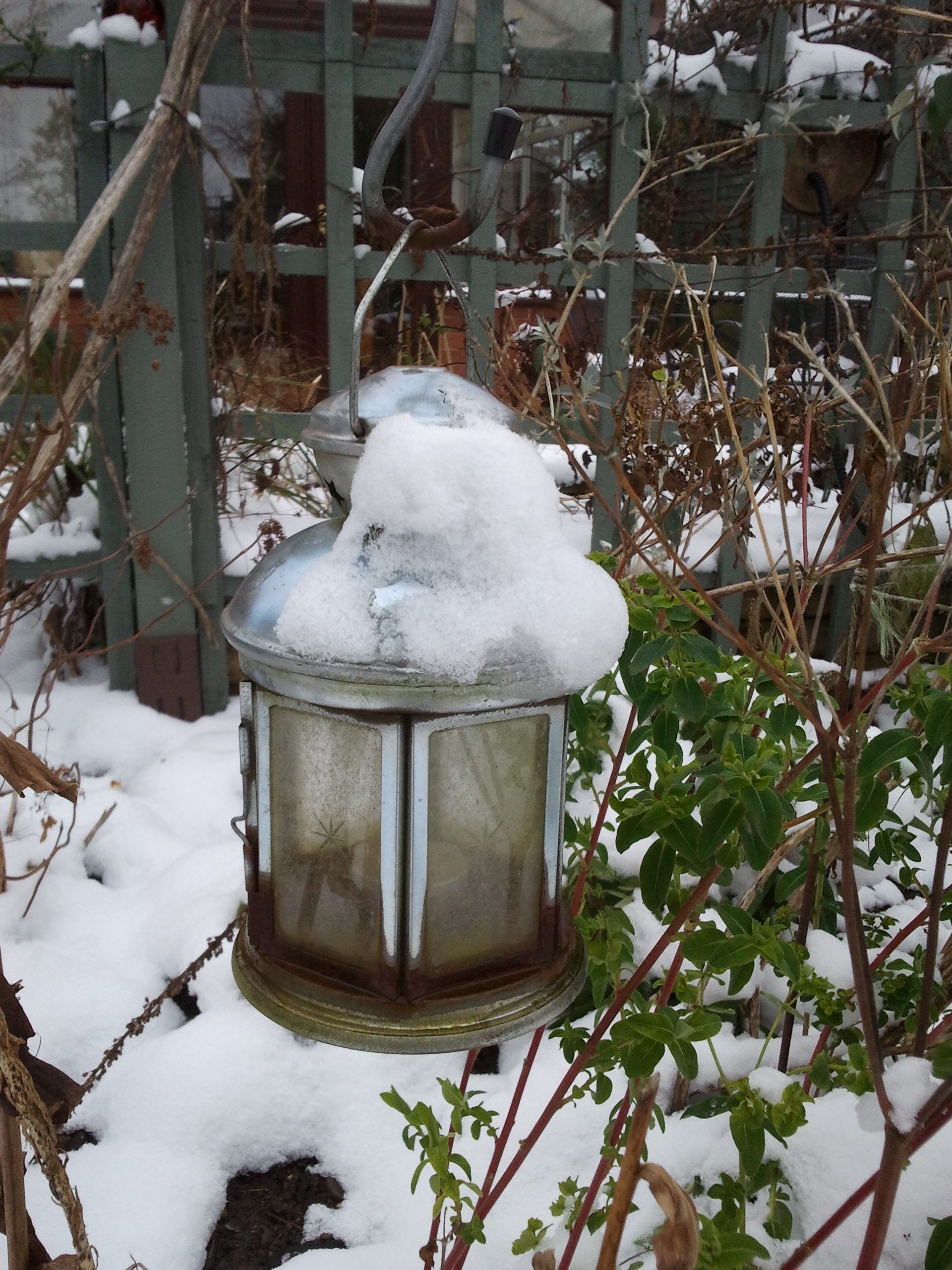
The garden has its hat on – a hat of snow.

Plants are sporting their new white headgear.

SAMSUNG SAMSUNG SAMSUNG SAMSUNG

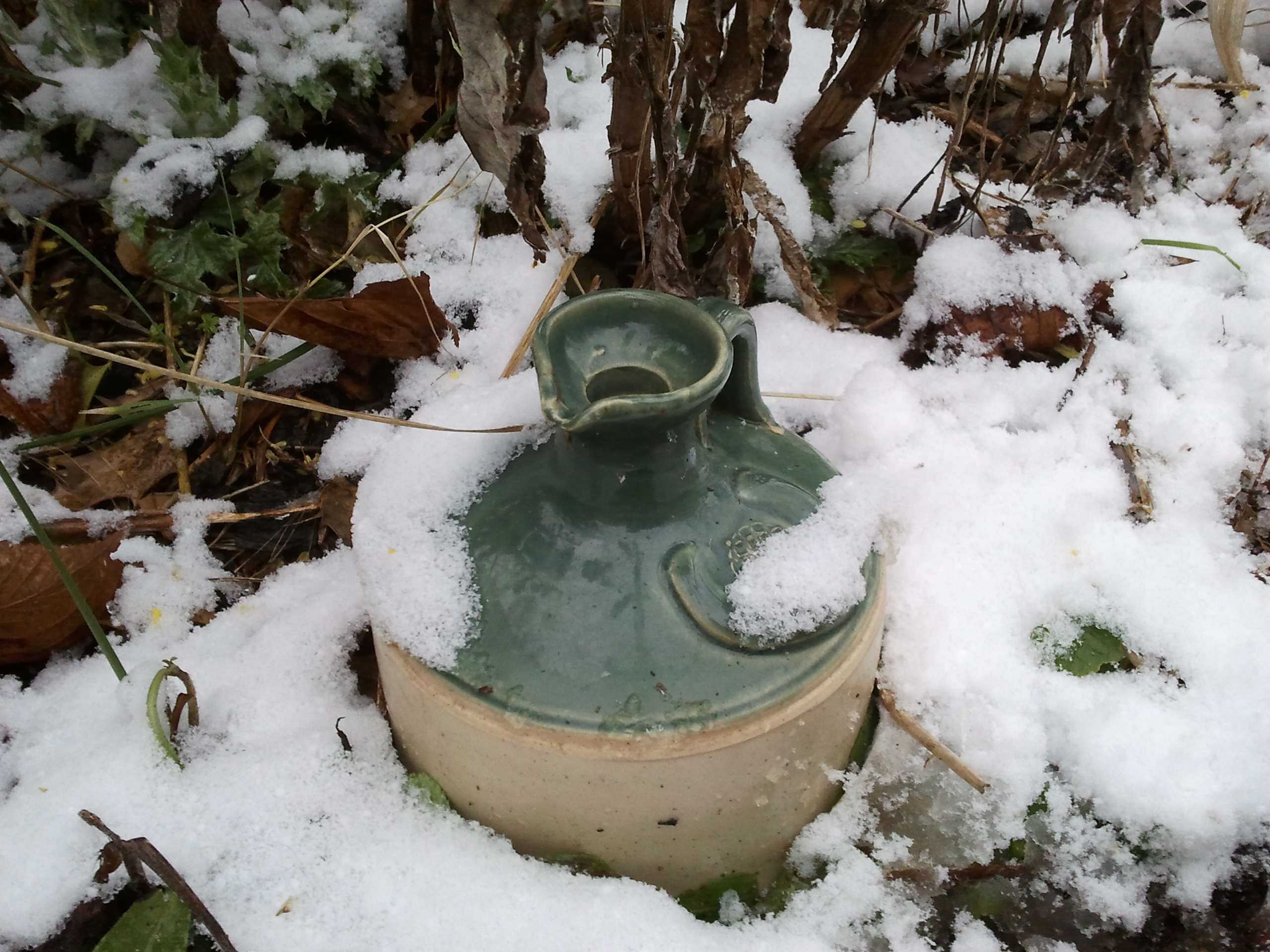
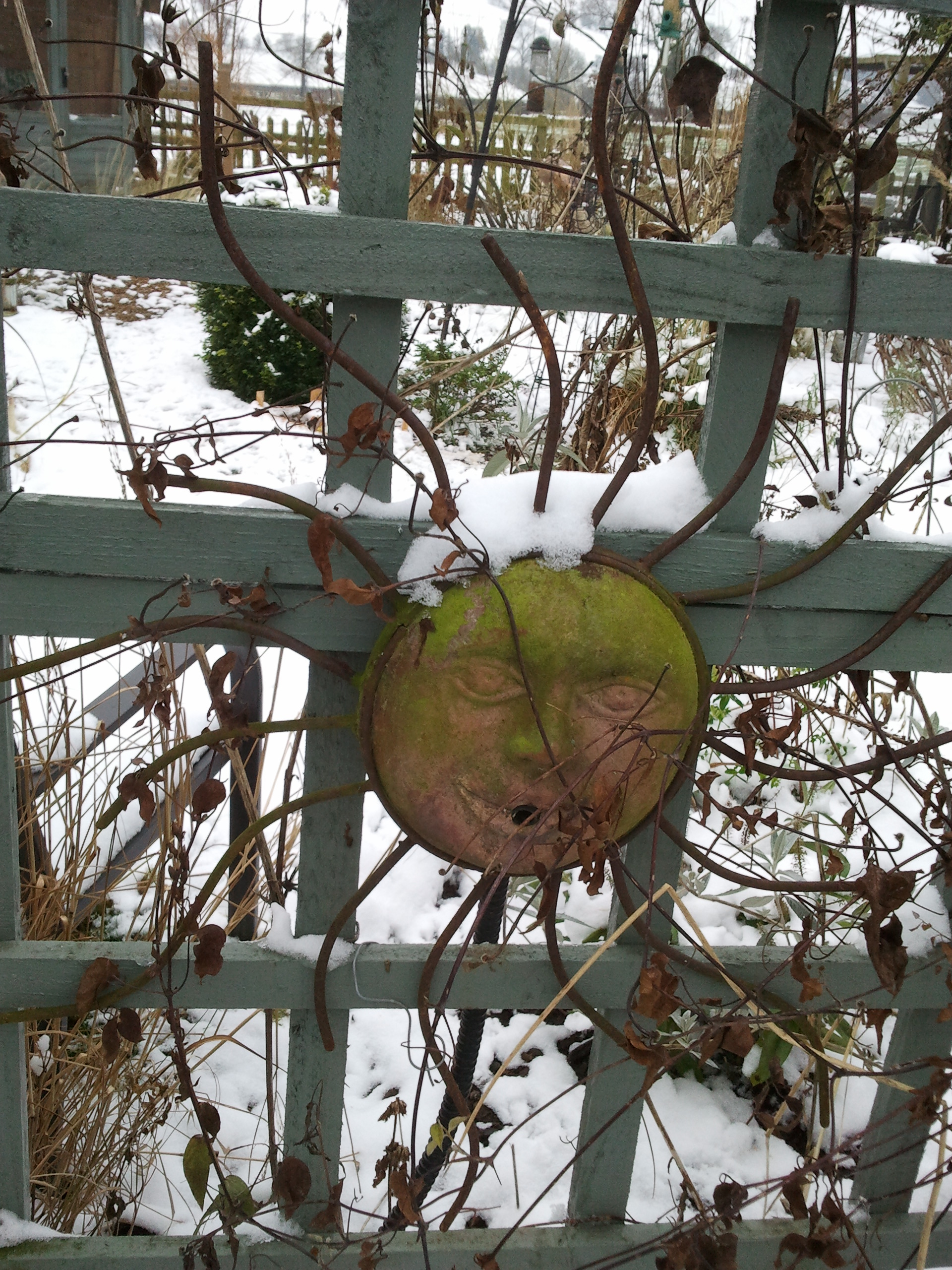
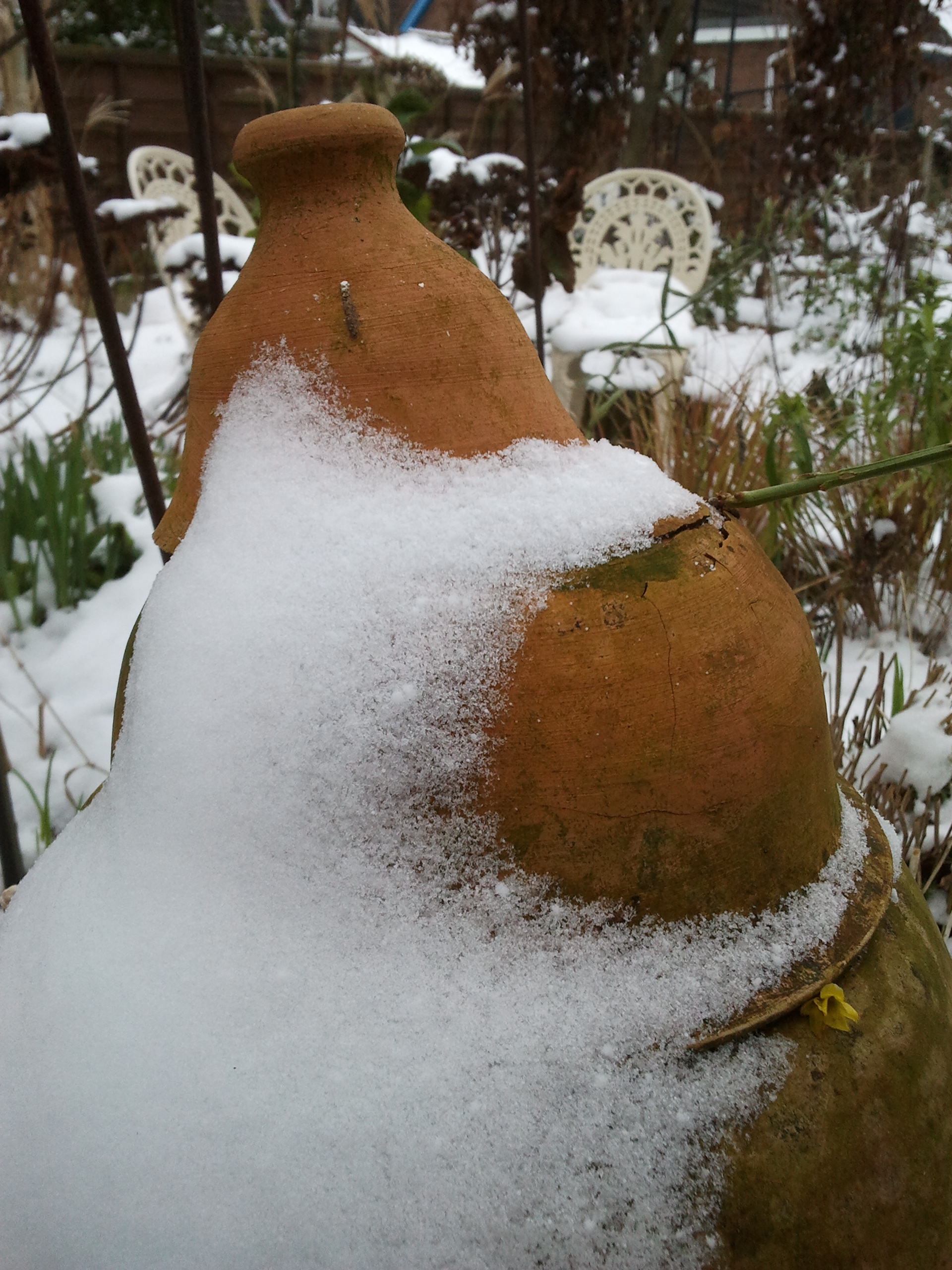
All sculptures and ornaments are wearing their ermine hats and coats.

SAMSUNG SAMSUNG SAMSUNG SAMSUNG SAMSUNG DSC_0001-17DSC_0003-18

SAMSUNG SAMSUNG SAMSUNG SAMSUNG SAMSUNG SAMSUNG SAMSUNG SAMSUNG SAMSUNG SAMSUNG SAMSUNG

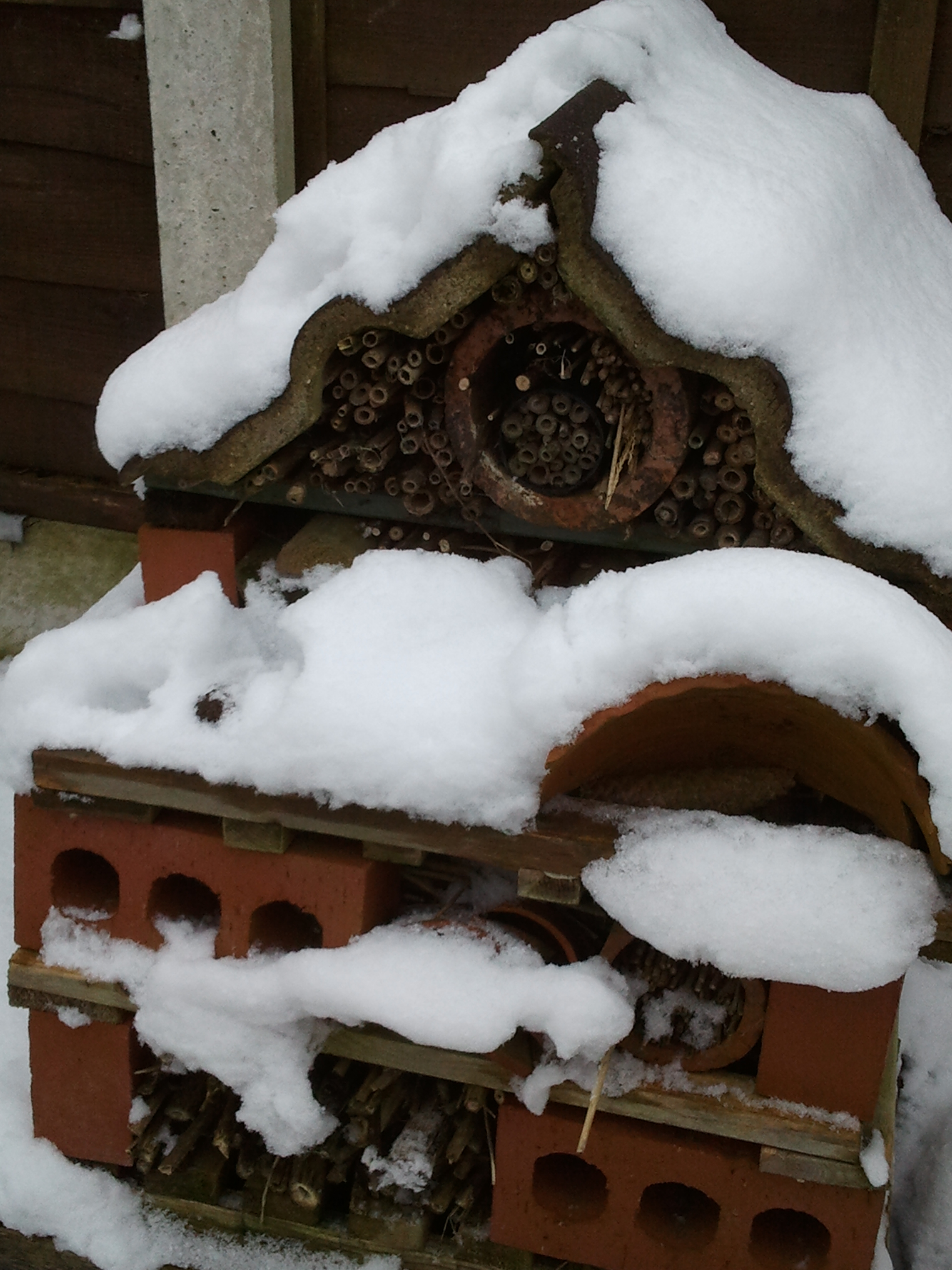
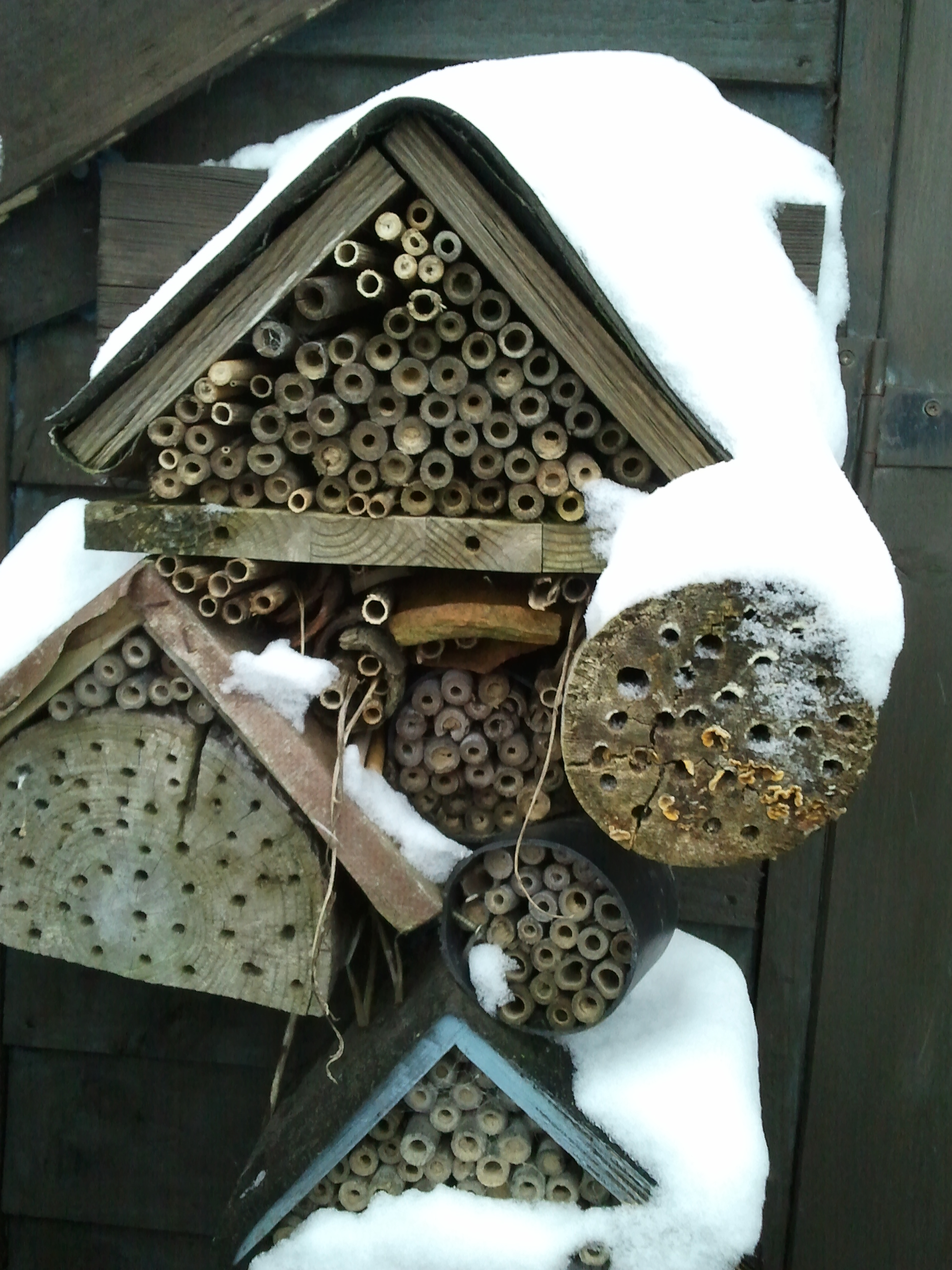
The insects are warm in their homes, hopefully hibernating safely, but we will not know until the spring. Each night the little Jenny Wrens queue up to roost in their wicker basket.

SAMSUNG SAMSUNG SAMSUNG

Categories
autumn autumn colours bird watching birds landscapes nature reserves photography wildlife

Walking on the Beacons – The Brecons

We always seem to walk over hill and moor country on cold days. Even back in the Autumn we found ourselves choosing a cold day to journey down to the Brecon Beacons in Carmthenshire for a moorland amble. The Brecons are an upland area of Wales that we tend to drive through but rarely visit so this was our chance to discover its landscape and wildlife.

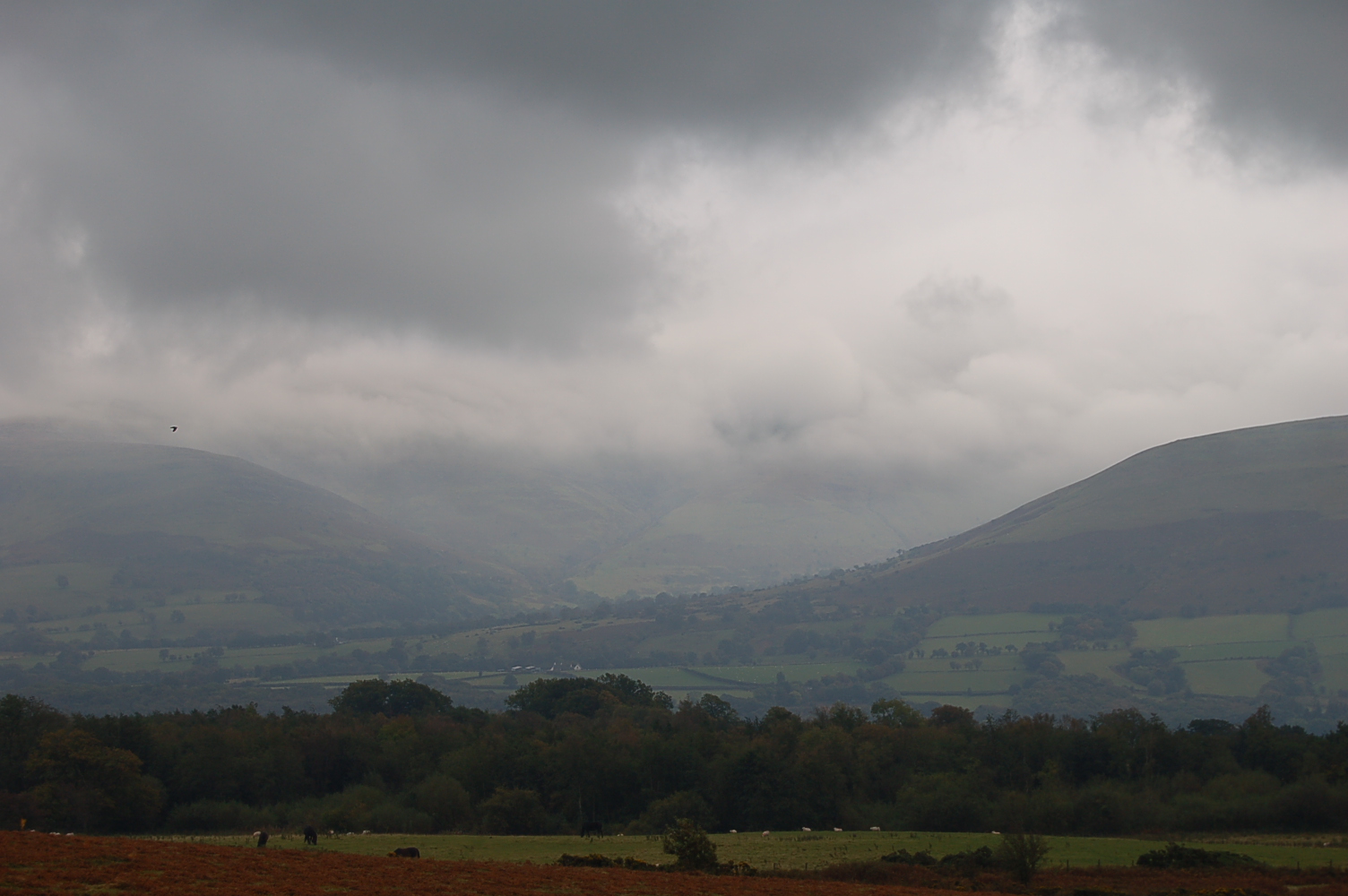
As we set out on our walk the sky looked threatening.

DSC_0001

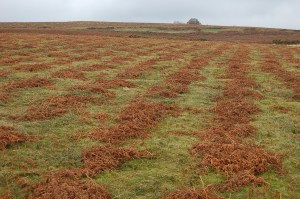
With each step we took up the gently slopes the temperature dropped and the wind got stronger. Around us the bracken had been cut, perhaps to reduce its dominance on the landscape and let other species come through. It seems that wherever there are too many sheep grazing such areas as this the bracken takes over as sheep do not eat it. An excess of bracken reduces biodiversity. Half way across this trimmed area of bracken we came across a flock of waders nervously feeding on the soft soil in the green grassed areas between the rust-coloured stripes. We moved slowly forward, binoculars in hands, desperately trying to work out what they were. Our first thought was Curlews but as we got closer we realised they were too small. Next idea that sprang to mind was Grey Plover which proved correct. they were obviously on the move to somewhere on the coast and had dropped in for shelter from the wind as it got stronger, for a rest and for nutrition. The soft soil would give easy access to creatures below the surface, for which they were probing with their long, strong bills.

DSC_0003

DSC_0016

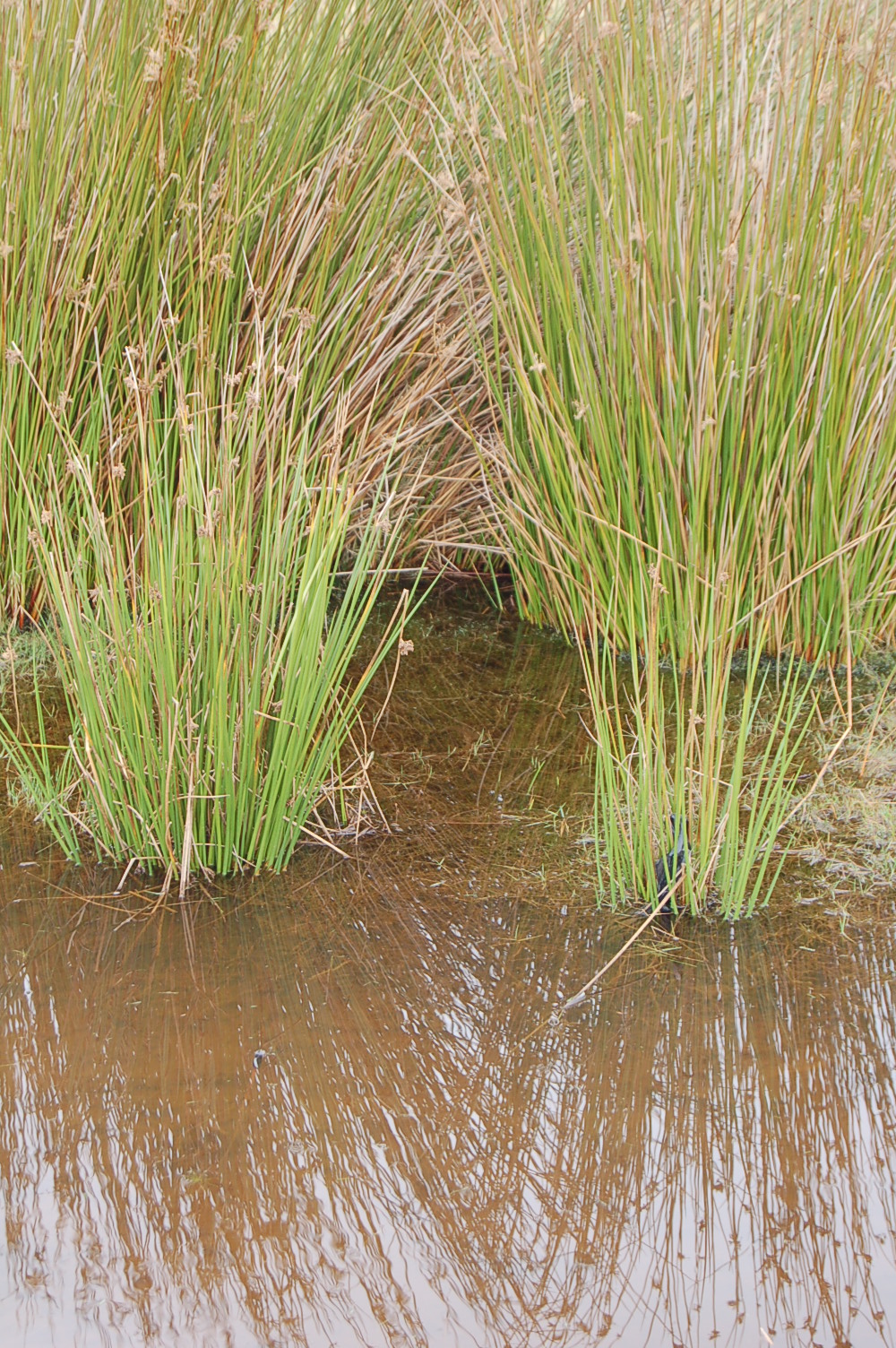
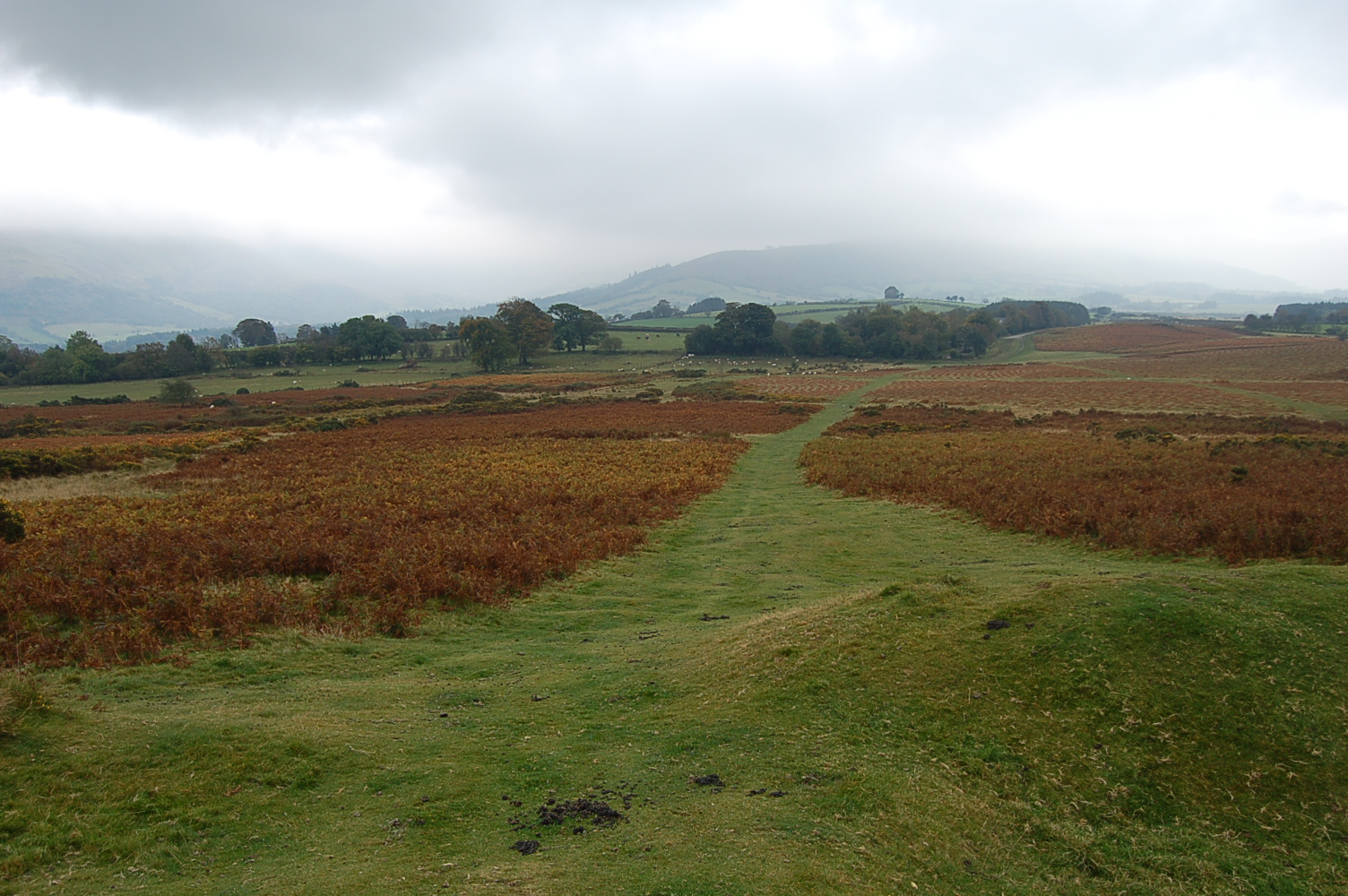
The slow walk up the slope took us through wet areas and gave us varied views.

DSC_0005 DSC_0006 DSC_0007 DSC_0008 DSC_0010 DSC_0012 DSC_0013

When we reached the highest point we stopped for a coffee break and froze! The biting wind stung our eyes and made them run, making tears run down our cheeks, and blew my hat away.

SAMSUNG

We were hoping the dry-stone wall would afford some shelter, but most of it had long fallen exposing a rough old fence of pig-wire and gnarled posts. After replenishing our spirits we followed the fence-line along the ridge. It is amazing how photogenic a tumbledown, weather-beaten fence can prove to be.

DSC_0017 DSC_0018 DSC_0019 DSC_0020 DSC_0026 DSC_0030 DSC_0031 DSC_0032 DSC_0033

While having our break we watched Red Kite gracefully soaring overhead in search of carrion.

DSC_0006

DSC_0035

DSC_0043

As we dropped back down the slope at the end of the old wall we were sheltered slightly and the wind was on our backs – much better!

On the lower slopes just above the car park we came across two interesting fungi, very different in habit but both deep yellow in colour.

DSC_0040

DSC_0047

So an exhilarating walk in exhilarating weather! We must return in more clement weather!

Categories
bird watching birds garden wildlife gardening wildlife

Winter Birds in our Garden

(Hope you like the new look! Please let me know what you think.)

In recent years we have seen the numbers of most birds visiting our garden, even the commonest, dropping most drastically. Goldfinches, House Sparrows, House Martins, Swallows and Starlings seem particularly badly affected. We try to help by providing food, shelter and nest boxes but our actions must be a drop in the ocean. What would make a real difference would be for some serious research to find the root causes of this sad decline, and then putting it to rights.

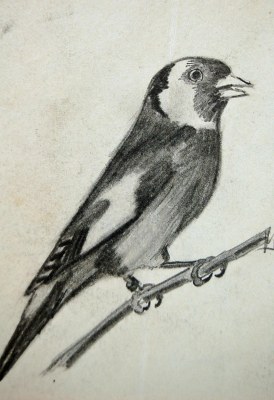
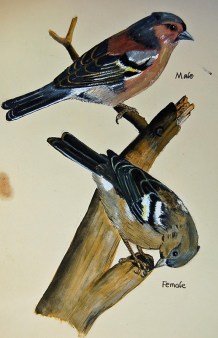
For a change I thought I would add some of my drawings and paintings to the usual photos I include in my postings. The pencil sketch below is of the multi-coloured Goldfinch.

DSC_0005bnm

This year the flocks of Goldfinches are showing signs of improvement, the sparrows are back cheerily entertaining us with their constant chatterings and the tit family seem more numerous. We notice these changes just by observing activity on and around our three feeding stations.

Some birds though still seem to be suffering especially Chaffinches and Greenfinches which until a few years ago were two of our garden’s commonest species.

DSC_0002dfg  DSC_0006nm

Happily the Great Tit population here appears stable and their cousins the Coal Tits seem more numerous. These related birds display very different characters when visiting the feeders. The larger Great Tits are confident and stay feeding for long periods often chasing away other birds with wing-flaring and threatening shouting, while the Coal Tit comes quickly and quietly, selects its nourishment and disappears into nearby vegetation.

DSC_0007bnm

DSC_0004bnm

Many birds come into the garden to feed even when we are around, confidently feeding and foraging as we go about our business.

DSC_0108bn

DSC_0109nm

Winter brings into our garden for our enjoyment birds that we rarely see for the rest of the year. Winter visitors like the continental thrushes are the most obvious as they arrive in great numbers noisily and feed voraciously on berries and bits and pieces dropped from the bird table by the residents. Smaller less obvious visitors are Blackcaps and Siskins and these are welcomed with open arms. They are lovely to watch in the shrubs and trees. Goldcrests move in from the local woodlands and add wonderful bright splashes of colour.

DSC_0009bnm

A strange happening that we have observed this winter for the first time kept us amused for while. Our Nuthatches have started hiding peanuts away under the edges of the roofing felt of the garage and sheds. They ram them in a long way and very firmly. We wonder if they will recall where they left them when they need them in the future. It seems more likely that the Bluetits will discover them as they search all nooks and crannies in search of bugs.

Feeding the birds in our gardens may be drops in the ocean, but lots of drops may make a big wave!

Categories
birds garden photography garden wildlife gardening grasses hardy perennials ornamental grasses ornamental trees and shrubs roses shrubs trees winter gardens

A Wander around our Garden in December

DSC_0065

The last month of 2012 and therefore here is the last post in the “wander around our garden” series. December was a month that started wet and cold and quickly got wetter and colder. We have found ourselves carrying on regardless – we weren’t going to let the weather beat us. So we donned warm waterproofs and busied ourselves clearing soggy perennials and pruning shrubs.

The birds are suffering from lack of natural food in the surrounding countryside so are flocking to our feeders. They add so much colour and song. This year’s flocks of Long Tailed Tits and Goldfinches are much larger than in recent times. Mixed tit flocks have reached over 70 in number at times and finch flocks up to 25. So we are kept busy regularly topping up the seeds, nuts and fatballs. As a result of the poor harvests of berries and fruit in the woods and hedgerows we have had invasions of large flocks of Blackbirds into the garden and already our shrubs are stripped of their produce. The blackbirds are aided in their berry stripping by Thrushes, Redwings and Fieldfares. All the red berried shrubs were denuded first, leaving not a single berry on our Cotoneasters, Hollies and Mountain Ashes so they are looking a little less colourful. They have now started on their second choice berries – yellows and whites.

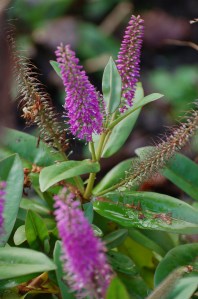
There is still an amazing amount of colour in the garden with some flowers still going strong. This Hebe just ignores whatever the weather throws at it and keeps on flowering. When a frost comes these delicate looking flowers prove they are not delicate at all. They stand to attention even when coated in frost.

DSC_0010

DSC_0011

DSC_0064

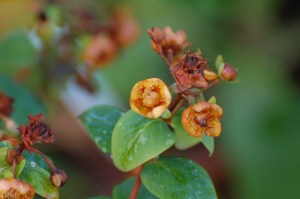
These small Hypericum  shrubs, similar in size to the Hebes, perform on several fronts with flowers still apparent, berries showing several colours on the same plant and leaf colour which gets richer as the weather gets colder.

DSC_0012

DSC_0013

Odd flowers of Rudbeckias appear throughout the winter way outside their peak flowering period. They are like little bursts of sunshine.

DSC_0014

Other plants are meant to be winter flowering and we look forward to these each year.  Mahonia japonica exhibits its long thin upright racemes of buttercup yellow flowers with the added luxury of a beautiful warm scent, somewhat reminiscent of pineapples.

DSC_0046

The glossy, dark hand shaped leaves of Fatshedera are a perfect foil for bright summer flowers in our Shed Bed, but it produces its own much more subtle flowers throught the winter. They are the palest of cream with a dull orange centre. They look as if they should emit the mouth-watering aroma of vanilla but that is sadly only in my imagination.

DSC_0016

After a deep frost these flowers loose substance and flop, hanging lifelessly until warmed by the sun.

DSC_0133

The starkness of winter structure exposes simple shapes and patterns working together. This yellowed sword shaped leaf of a Crocosmia cuts dramatically across the curved metal seat back.

DSC_0015

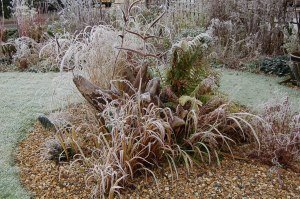
Sculptures take on a new life. Our ironwork ferns rimmed with frost particles curls through the whitened grasses in the Stump Garden.

DSC_0054 DSC_0055

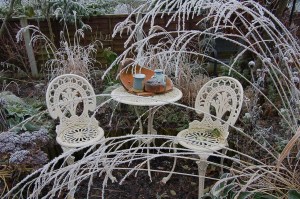
Seating areas look less inviting!

DSC_0058

 DSC_0061

Right down at the bottom of the garden the summerhouse looks sadly at the pool which sits frozen solid at its feet.

DSC_0062

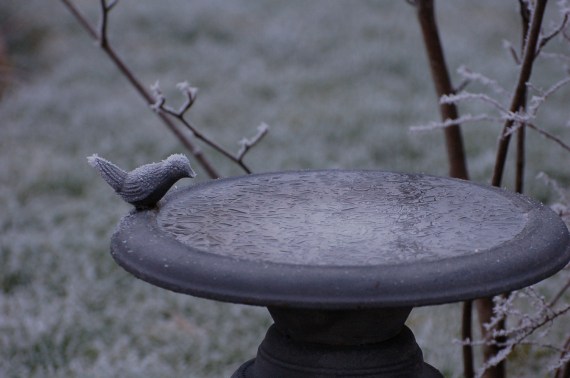
Similarly the water in the birdbaths is often frozen. Each morning as I wander down the garden to feed the chucks I take a detour to add warm water to the birdbaths to melt the ice.

DSC_0063

DSC_0091

Frost decorates ornamental features giving them a new winter look.

DSC_0086

DSC_0098

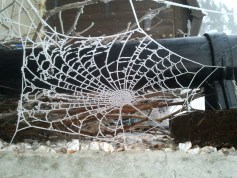
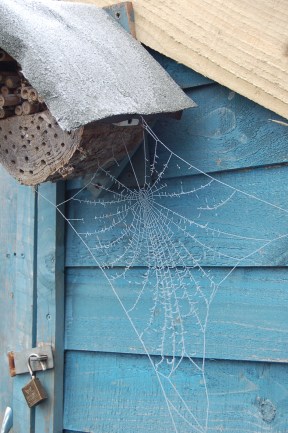
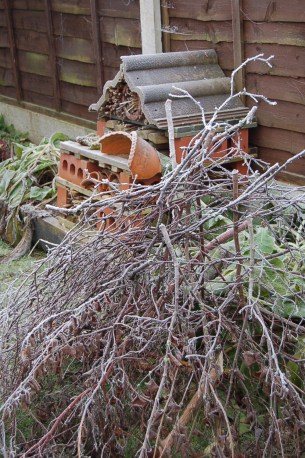
Frost highlights the overnight toils of spiders who weave webs around sheds, nest boxes and insect homes.

DSC_0069

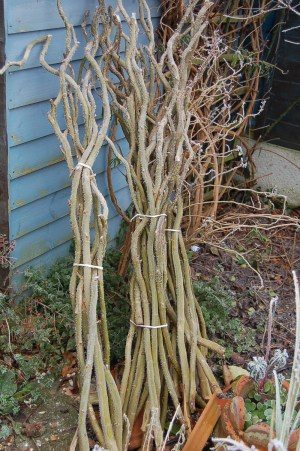
There is little to harvest in December but we harvest various prunings. Taller thicker branches will be used as bean poles, smaller branches as pea sticks and to support perennials next year, and these spiral willow stems will be part of some sculpture that I am planning. Bamboo prunings will give us our own bamboo canes. Our first real crop of canes! That should save a few air miles!

DSC_0067

DSC_0068

Whatever the winter has in store for us, we are well-prepared. This pile of hardwood logs, oak and birch, will keep us warm and cosy and its scent of woodlands give a good welcome. And outside the chimenia patiently waits with its own fuel supply for us to venture outside to garden and enjoy a coffee break in the winter sun. Alongside the sculptural fire bowl adds further interest.

DSC_0070

DSC_0045

And what is happening in our borrowed landscape in December? Sheep seek nourishment in the paddock and provide a little natural fertiliser for the grass, and the wheat fields sadly sits waterlogged, growth at a standstill.

DSC_0038

DSC_0039

DSC_0040

Categories
allotments autumn colours birds community gardening conservation garden wildlife gardening grow your own hardy perennials meadows ornamental trees and shrubs trees wildlife

A Wander around the Allotments in December

December hasn’t afforded us many days suitable for lottie gardening, sending us too much rain and flooding the site again for a while early on in the month . In fact the first attempt at working on our plot this month resulted in that too well-known sinking feeling. Algae has turned the soil green again.

We arranged to meet council officers and contractors on site one morning to start sorting out the flooding issues. It was of course raining when we met! Four trucks full of machinery and fluorescent coated workers arrived soon after, champing at the bit to start. Sods law came into play. The floods reappeared and water began lapping at our feet and at the wheels of the vehicles. One tractor got stuck in the mud!

The weather won the first round as work was abandoned even before it started, but at least everyone knows what to do now. We were promised that work would commence as soon as the weather allowed.

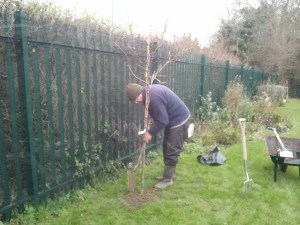
Things had improved a little by the end of the first week of the month, enough to arrange a day for Jude and I to meet our friend Pete to get some site tasks done in the communal gardens. We planted trees that had been donated by members in the new coppice we are developing, plus two others in the Autumn Garden. These were purchased with the prize money we had received when we won an award as the Best Community Garden in Shropshire by the National Garden Scheme.
SAMSUNG

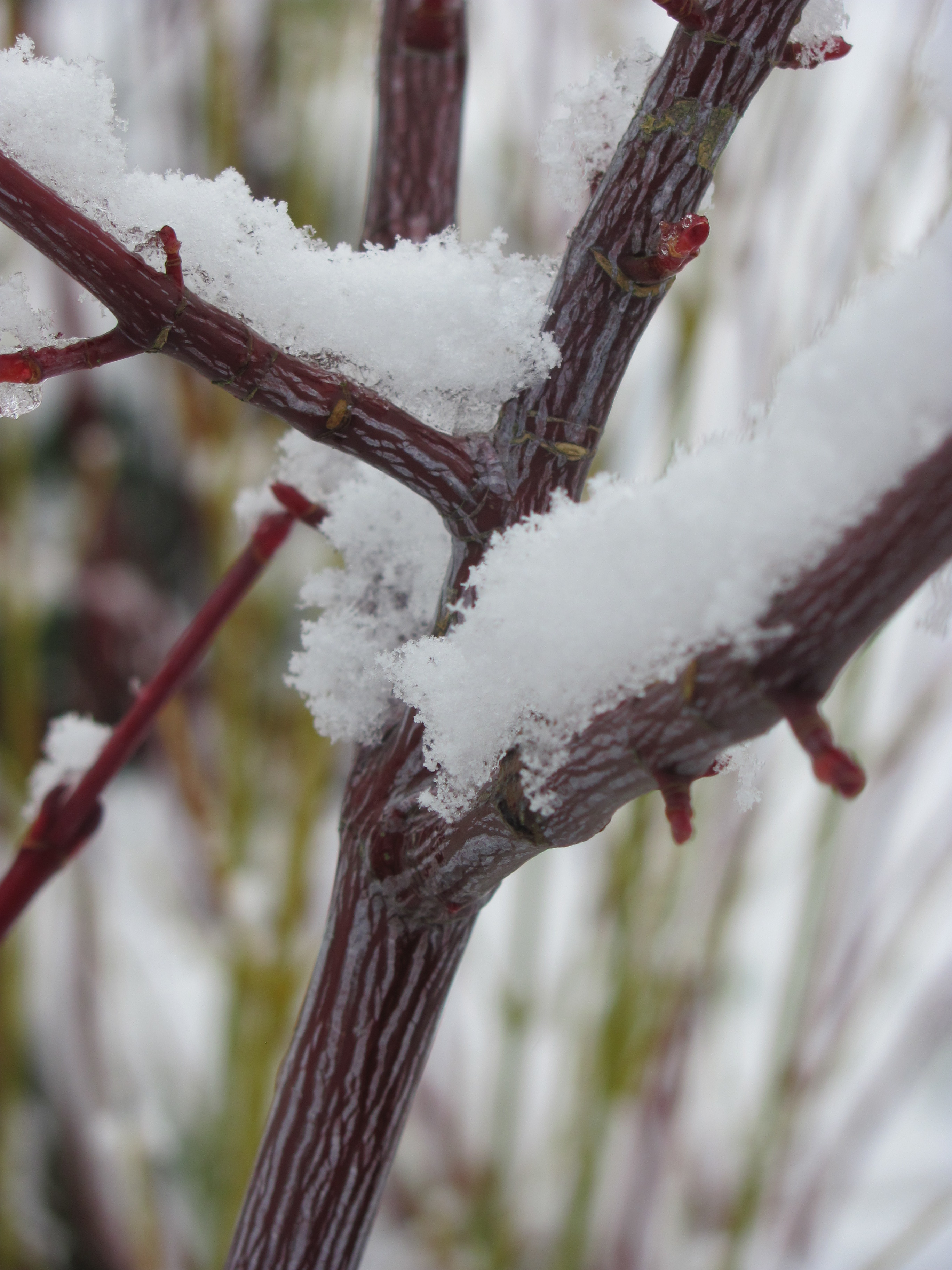
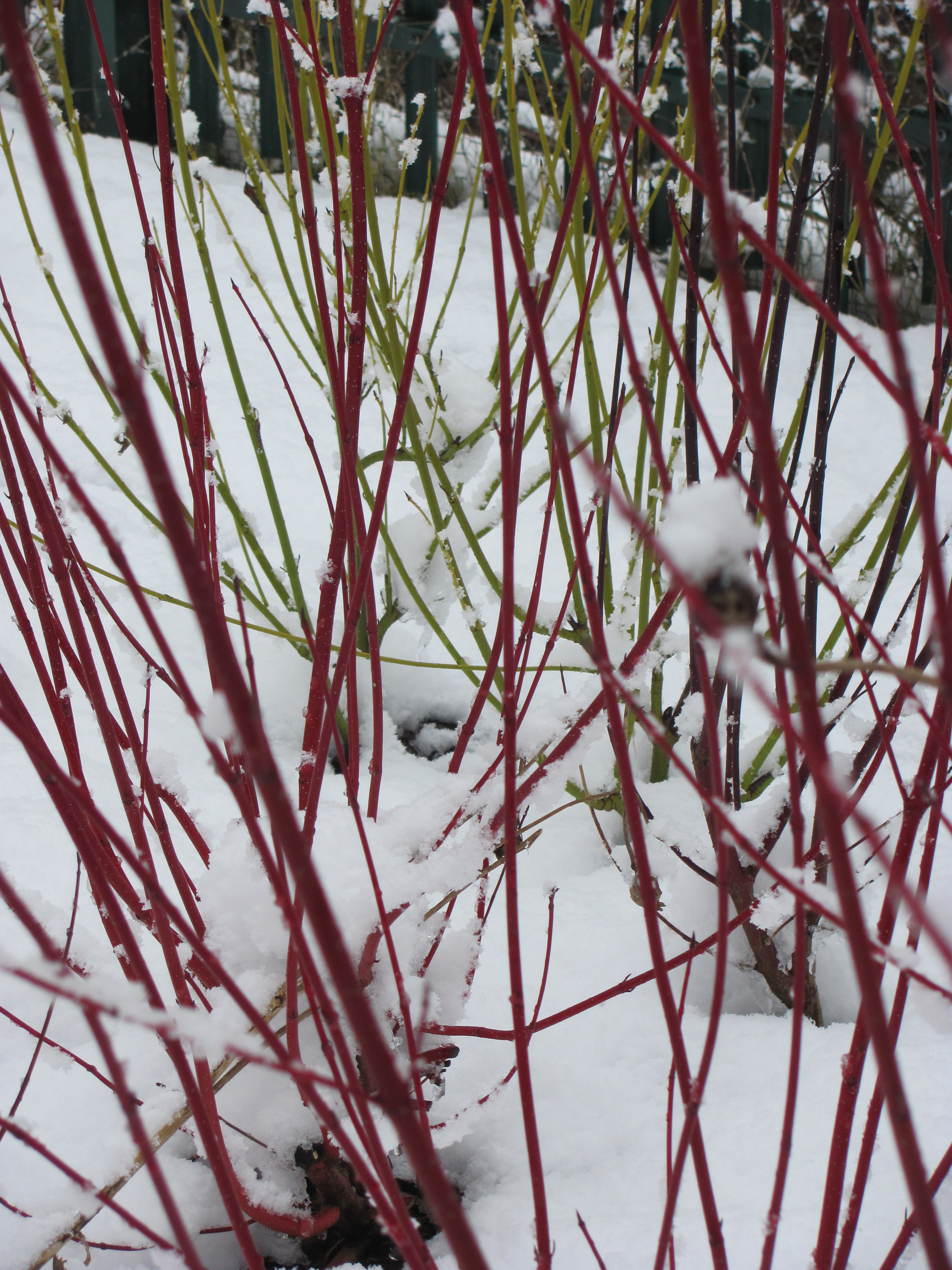
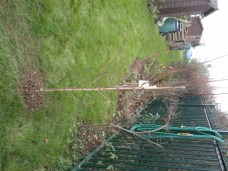
As Pete looks after the Autumn Garden he chose the trees. Two great specimens arrived in the back of his car, an Acer rubra and a Gleditsia Sungold.  In the photo above Pete is planting the Gleditsia and below is the Acer with its red stems. We can now look forward to the golden foliage of the Gleditsia and the red petioles of the Acer which contrast so well with the yellow autumn leaf colour.
SAMSUNG

We also transplanted some wild flowers and wildlife friendly plants kindly donated by a member, Dee. They were on her plot and we transplanted them to the meadows and orchards. Wild Hypericum, Red and White Campion, Mallows, Plantain, Foxgloves and Teasles plus a selection of Verbascum. In the picture below Jude is busily planting verbascum in the orchard meadows. The insect homes look so much bigger when plants die down for the winter. We just hope they are full of our friends, the overwintering pest controllers.

SAMSUNG

In the first few days of December I completed constructing the Tawny Owl nesting box which I had started weeks ago. It is by far the biggest nest box I have ever attempted to make. Each year I ask members to donate their spare wood for nest box construction and plenty came in this year so I hope to make several boxes. My next challenge is to make a box for House Sparrows.

SAMSUNG

On our own plot we have dug over the plot and given it a deep duvet mulch of manure. Now we will let the worms and other little critters get to work on it. We have pruned our fruit bushes and brambles, and are mid-point through cutting down and digging up a blackberry which refuses to produce any fruit. We gave it our “three chance and out” treatment which we allow every failing plant in our gardens.

At the mid-point of December the weather turned cold with clear ” blue-skied” days and deep frosty nights. The workers came back to get started on the flood prevention work. They are getting on well. We met them early one morning to sort things out and I took advantage of the bright conditions to get some photos taken. Having just my Samsung Galaxy with me the rest of the pics in this post are taken with its camera – a great camera for a phone.

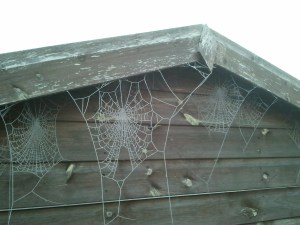
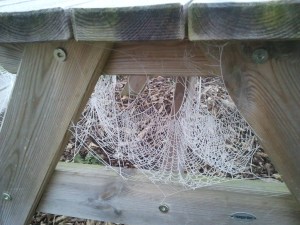
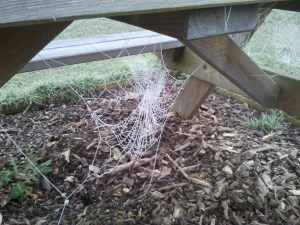
Spiders appeared to have been industrious all through the hours of darkness creating works of art for Jack Frost to add the finishing touches. In the first pic we can admire how they have decorated a shed’s gable end and the second and third show where they have added a feature to the Communal Hut.
SAMSUNG

SAMSUNG

SAMSUNG

It looks as though the spider population of the lotties have taken to using the picnic benches when it is too cold on the rear end for us gardeners to enjoy our coffee breaks on them.
SAMSUNG

SAMSUNG

On Wendy’s plot Jack Frost had iced the rose hips.

SAMSUNG

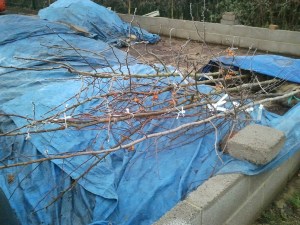
We have had some beautiful new trees delivered to the site ready for planting when the soil is not frozen. At the moment we would not get a spade in. We have been given a Weeping Silver Lime which we selected to celebrate the Queen’s Jubilee Year, plus two crab apples Malus “Evereste” and Malus “Golden Hornet” to plant, one in each orchard to improve fruit pollination, and two ornamental Hawthorns.
SAMSUNG

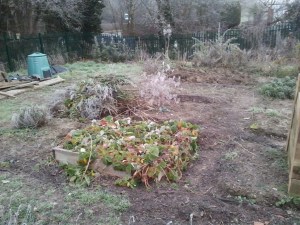
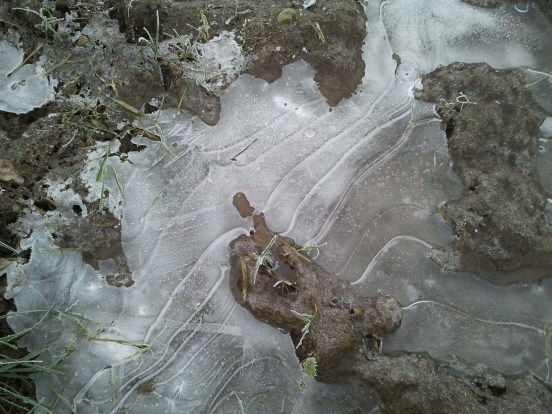
The individual plots are looking bare and forgotten. Some have been well dug for the winter, others await better weather. Where water sits in puddles it had frozen solid. On one plot a double digging session had been interrupted by the weather.
SAMSUNG

SAMSUNG

SAMSUNG

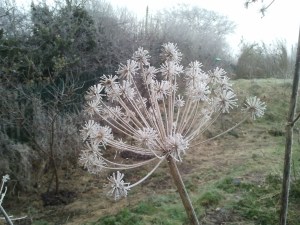
On one plot next to the new coppice area the seed heads of Angelica, left for the Goldfinches and Bullfinches to feast upon, were covered in frost.
SAMSUNG

SAMSUNG

In the coppice area itself, our newly planted Hollies had attracted spiders.

SAMSUNG

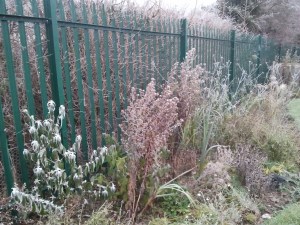
The communal gardens  looked monochrome  with frost covering the herbage.
SAMSUNG

SAMSUNG

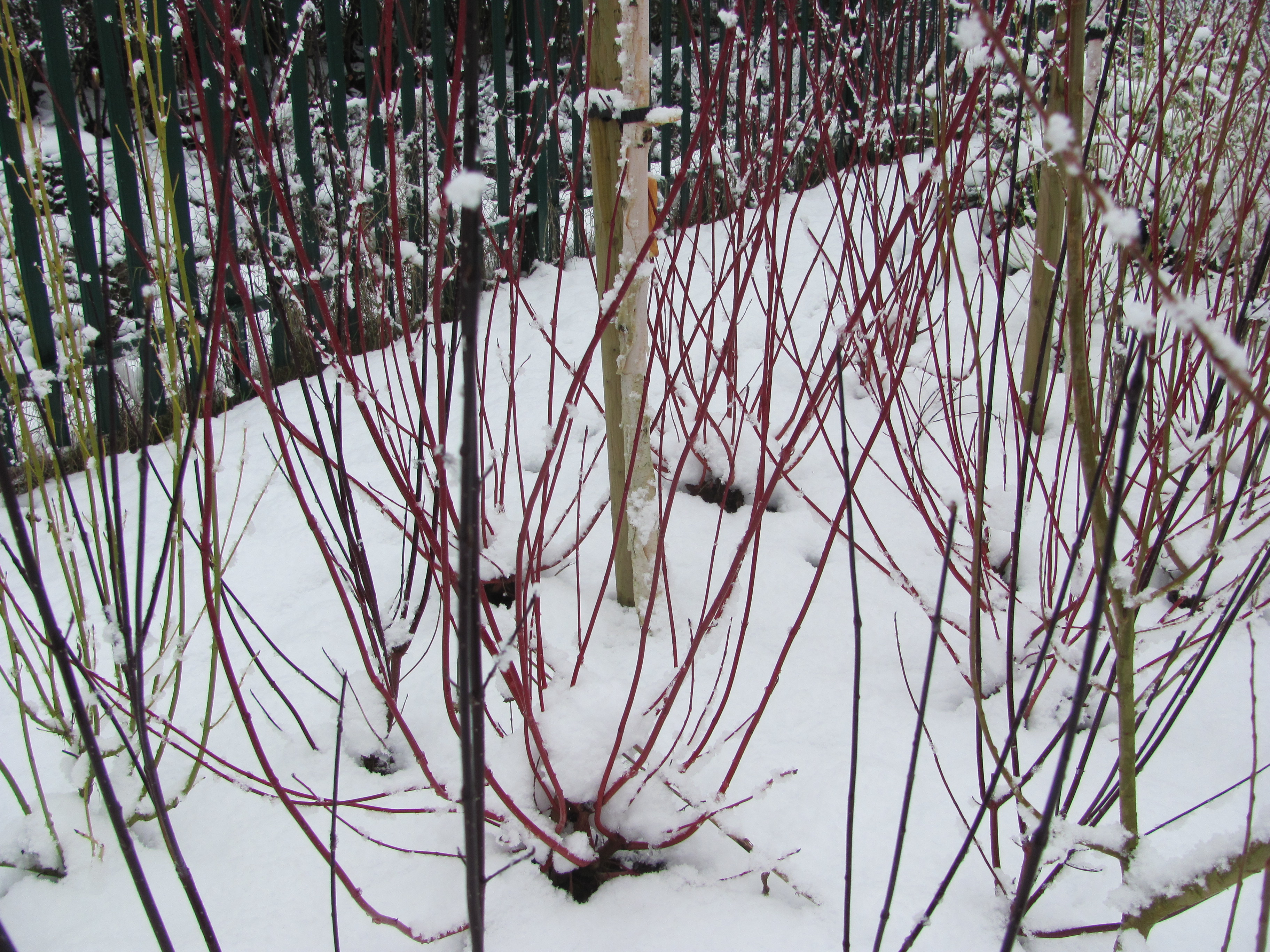
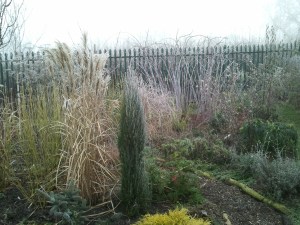
As befits the season, our Winter Garden is looking good! Pete was with me as I took these photos and he and I created this garden less than two years ago, so we keep admiring our handy work.
SAMSUNG

SAMSUNG

SAMSUNG

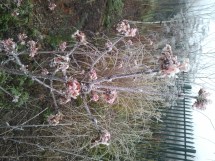
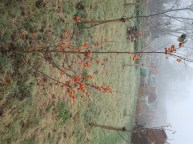
Splashes of colour sprang up to shine out in the gloom of the misty grey day, the fruit of the Malus “Evereste”, and the fire-coloured leaves of a Hawthorn in the hedge and a Raspberry on a plot.SAMSUNG
SAMSUNG

SAMSUNG

As we wandered taking these pictures we were followed around by the resident Robins who were waiting for us to start work turning soil over and exposing bugs for them to pounce upon. But no gardening was done, the soil being too solid with frost so no sod could be turned. We found time to top up the bird feeders in our feeding stations. These are busy with tits, finches, Nuthatches and Woodpeckers.
Categories
bird watching birds landscapes nature reserves Shropshire Wildlife Trusts

Bracken and Bilberries – Part 3. The Easy Walk at Stiperstones

In Shropshire we are lucky to have a few paths in nature reserves that are designed for visitors with mobility issues. The ones we have tried out are excellent, but the best we have experienced so far has to be the walk at Stiperstones. We tried it out when I was suffering with my spine and leg pain and followed the trail on crutches.

The route has been well chosen taking in many of the important features of the reserve and has a few useful information boards along the way. There are many resting places, some with wheelchair space alongside a bench for able-bodied companions. On our walk we were impressed with the design of seats for crutch/walking stick users. In actual fact seat is not the correct term – they were really like perches with backs all just at comfortable heights. Simple wooden construction makes them look like a section of fencing but they proved to be quite comfortable.
Every point of interest and each special viewpoint seemed to have a resting place perfectly sited.

The pathway and its resting places gave good close up views of many wild plants which sparkled in the low light of setting autumnal sun.

Alongside the track we came across a small patch of woodland being used for pheasant rearing. The local finch population had cottoned on to the value of this woodland and the easy food source. There are so few trees on the Stiperstones that this group of trees must have seemed like an oasis to small birds. The feeders intended for the young pheasants were attracting Greenfinches, Goldfinches, Chaffinches and Bullfinches as well as the odd Robin and Blackbird.

This was a surprisingly interesting and enjoyable walk so well done to whoever designed and built it. It combines easy access with features to view and plenty of info.

Categories
birds colours gardens open to the public Land Art National Trust outdoor sculpture photography Shropshire The National Trust trees wildlife woodland

Woodland – Mother Nature as Artist, Sculptor, and Scribe.

A winter wander around our local woodland patch within the grounds of the National Trust’s Attingham Park got off to a strange start. Expecting the cold weather to have restricted visitors to a few hardy souls, we arrived to see the main car park full, all overflow parking fields full and lots of extra parking also filling up rapidly.

We had arrived just after the start of their first Christmas related event – The Frost Fair. Bad planning! However the woodlands were quiet, the only sounds following us around were the songs of small and squeaky birds, Coal Tits, Treecreepers and Goldcrests.

DSC_0037

The event we searched out was the art exhibition of the works of Mother Nature. She was her usual brilliant imaginative self.

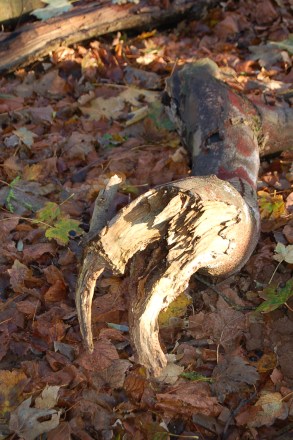
Her woodcarving looked freshly made and full of texture and colour.

DSC_0017

This piece looks to be based on the shapes of a crab’s claw.

DSC_0034

DSC_0022

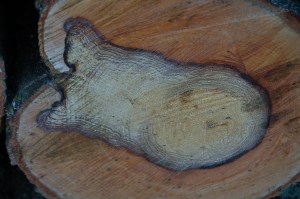
Drawings on the cut trunks of a diseased Ash tree reminded me of cave paintings.

DSC_0018

DSC_0021


DSC_0020

This triangular land art installation shows Mother Nature working in a more geometric way.

DSC_0025

As the woodland path took us deeper in amongst the trees we appreciated the quietness of our footfalls, the quietness of the soft deep pine needle duvet. When it is quiet the subtleties of bird songs and calls are more easily enjoyed. We stood feet away from a Goldcrest feeding on insects he had searched out from the conifer needles with thin probing beak. He suddenly fell to the floor as if dead, or mimicking the gentleness of a falling leaf. He dropped into the fern and bramble undergrowth and stayed there out of sight. Was he feigning death to fool a predator or pretending to be a falling leaf with the same purpose in mind? As we stood silently in awe of what we had witnessed he reappeared vertically up into the branch he had fallen out of. One of those magical moments that two observers of the natural world will never forget! Any idea what he may have been up to?

DSC_0032

DSC_0031

DSC_0035

Nature playing with light fascinated us as the sun dropped lower in the thin blue sky lighting up the understory  with golds and oranges.

DSC_0033

DSC_0039

DSC_0044

DSC_0052

DSC_0051

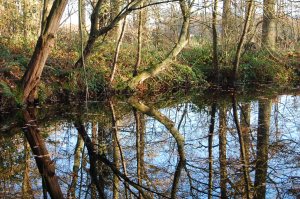
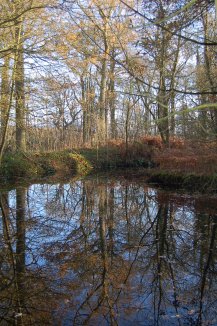
Water, be it a stream, ditch, river or pool, affords nature the chance of playing with mirrors to create illusions and mysteries.

DSC_0042

DSC_0041

DSC_0043

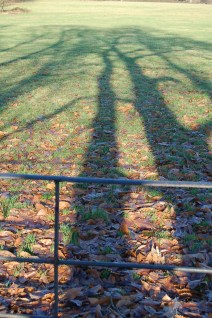
On the land shadows are drawn long and dark. The long tall tree shadow stretches out across the pastureland. My own shadow tried to get in the picture until I managed to persuade it to move into the shadow of one of the tree trunks.

DSC_0023

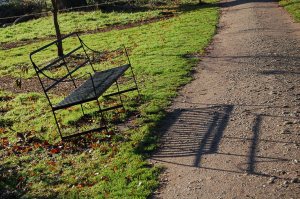
The shadow of the precariously leaning seat crossed our path as we approached the gap in the tall wall that would take us into the productive gardens.

DSC_0026

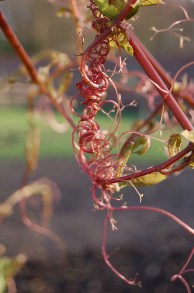
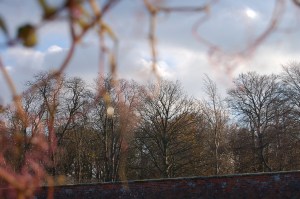
The climbing, curling tendrils of this vine glow pink and red in the sunlight, forming a natural frame for the filigree skeletons of trees.

DSC_0030

DSC_0029

We greatly enjoyed our visit to the open air gallery.

DSC_0053nbm

This Veggie Life

A Vegetarian | Nature Lifestyle Blog

Rambling in the Garden

.....and nurturing my soul

The Arch City Gardener

Journeys In St. Louis Gardening and Beyond

Garden Dreaming at Châtillon

Consult the genius of the place

Storyshucker

A blog full of humorous and poignant observations.

gardeninacity

Notes from a wildlife-friendly cottage garden

PlayGroundology

...an emerging social science

The Official Blog of British Wildlife

'The most important and informative publication on wildlife of our times' - The Independent. This blog is a member of The UK & Ireland Natural History Bloggers group: www.uknhb.blogspot.com

iGrowHort

Inspire - Cultivate - Grow Native Plants - Restore Landscapes

Bishops Meadow Trust

To create and protect a semi-natural wild space for the people of Farnham to enjoy and experience an array of British wildlife in our town

Gardening with Children

The www.gardeningwithchildren.co.uk Blog

UKbirdingtimeline

birding through the seasons, why birds matter and how to conserve them

NATURE WALKER

with a camera in hand

Jardin

Transform your outdoor space

Eva's space

My allotment, cooking and other interests

Old School Garden

my gardening life through the year

LEANNE COLE

Trying to live a creative life

fromacountrycottage

trying to live as lightly as possible on our beautiful planet

Good Life Gardening

Nature lovers from Leicester living the good life.

mybeautfulthings

Finding the beautiful in the everyday

mawsonmichelle

Michelle's Allotment

In and Out of My Garden

thoughts from and about my garden

Greenhousing

Big plans for a small garden

The Scottish Country Garden

A Walled Country Garden in South East Scotland

The Fruity Chicken

Life at the fruity chicken

willowarchway

Off grid living. Self sufficient. "PERMAGANICS RULE".

St Anns Allotments

Nottingham's Grade 2* Listed Allotments and Community Orchard

Manifest Joy Harvests

a journey in suburban vegetable gardening

Allotmental

The madness of growing your own

Penny's Garden: a harvest beyond my front door

A novel approach to vegetable gardening

arignagardener

Sustainable living in the Irish countryside.

NewEnglandGardenAndThread

Master Gardener, amateur photographer, quilter, NH native, and sometimes SC snowbird

dianajhale

Recent work and work in progress and anything else that interests me

planthoarder

a chaotic cottage gardener

Lens and Pens by Sally

a weekly blog that creates a personal philosophy through photographs and words

Dewdrops and Sunshine

Stories from a sassy and classy Southern farmbelle.

The Pyjama Gardener

Simple Organic Gardening & Seasonal Living

gettin' fresh!

turning dirt into dinner

JOY...

today the world is created anew

Garden Birds

Notes from a Devon garden

ShootAbout

Life Through The Lens

Adapting Pixels

A photography blog showcasing the best photography pictures and videos on the internet

Wildlifegardening's Blog

Just another WordPress.com site

naturestimeline

personal observations from the natural world as the search continues for a new approach to conservation.

LATEBLOOMERBUDS

The Wonders of Life through my Eyes, my Heart, my Soul