Categories
Uncategorized

Our February Visit to John’s Garden at Ashwood Nurseries

We had hoped to be able to share our visit to John’s Garden at Ashwood Nurseries with you this month and be able to take you around this astonishing space. However as often happens in this country especially in the winter months the weather was in control!

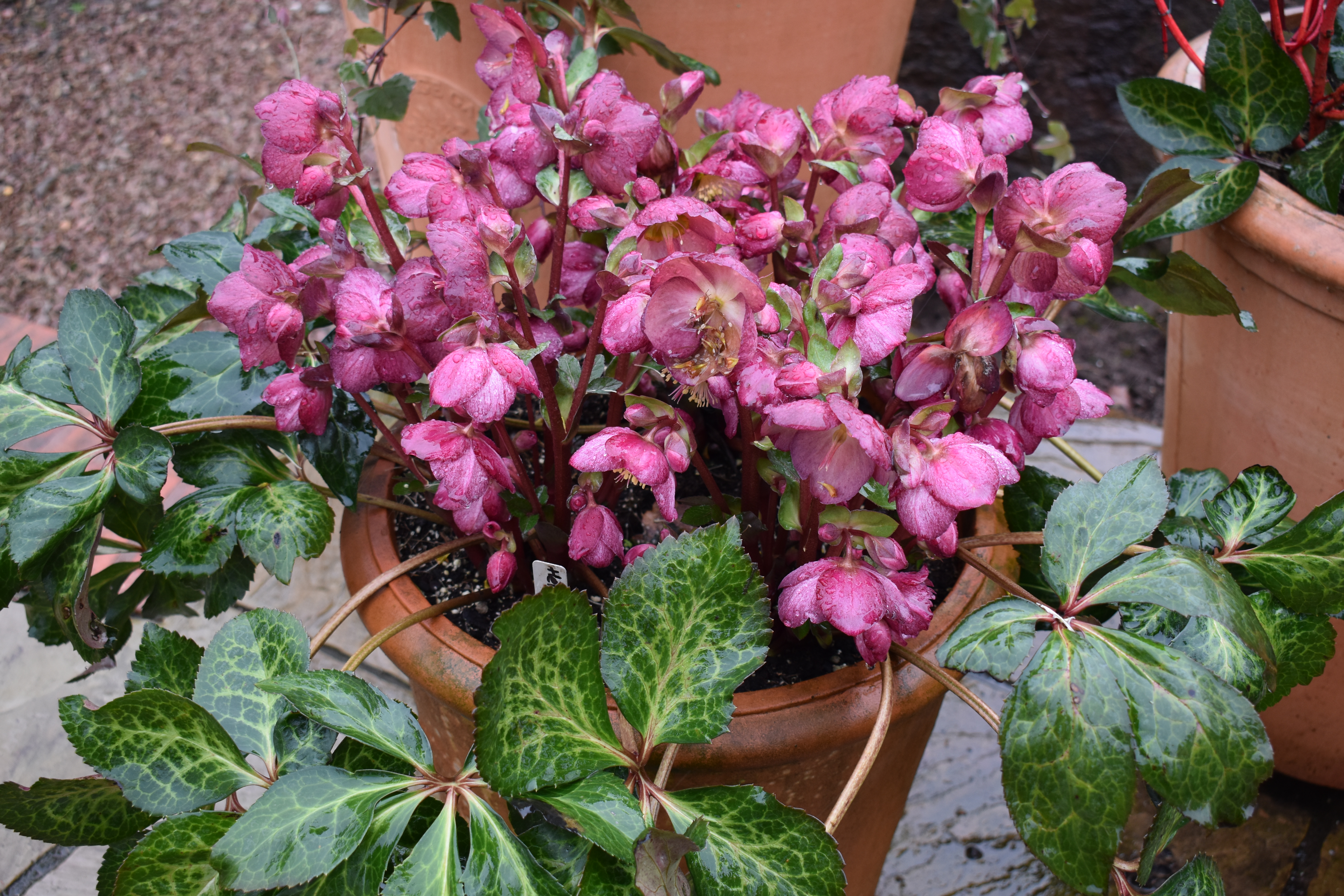
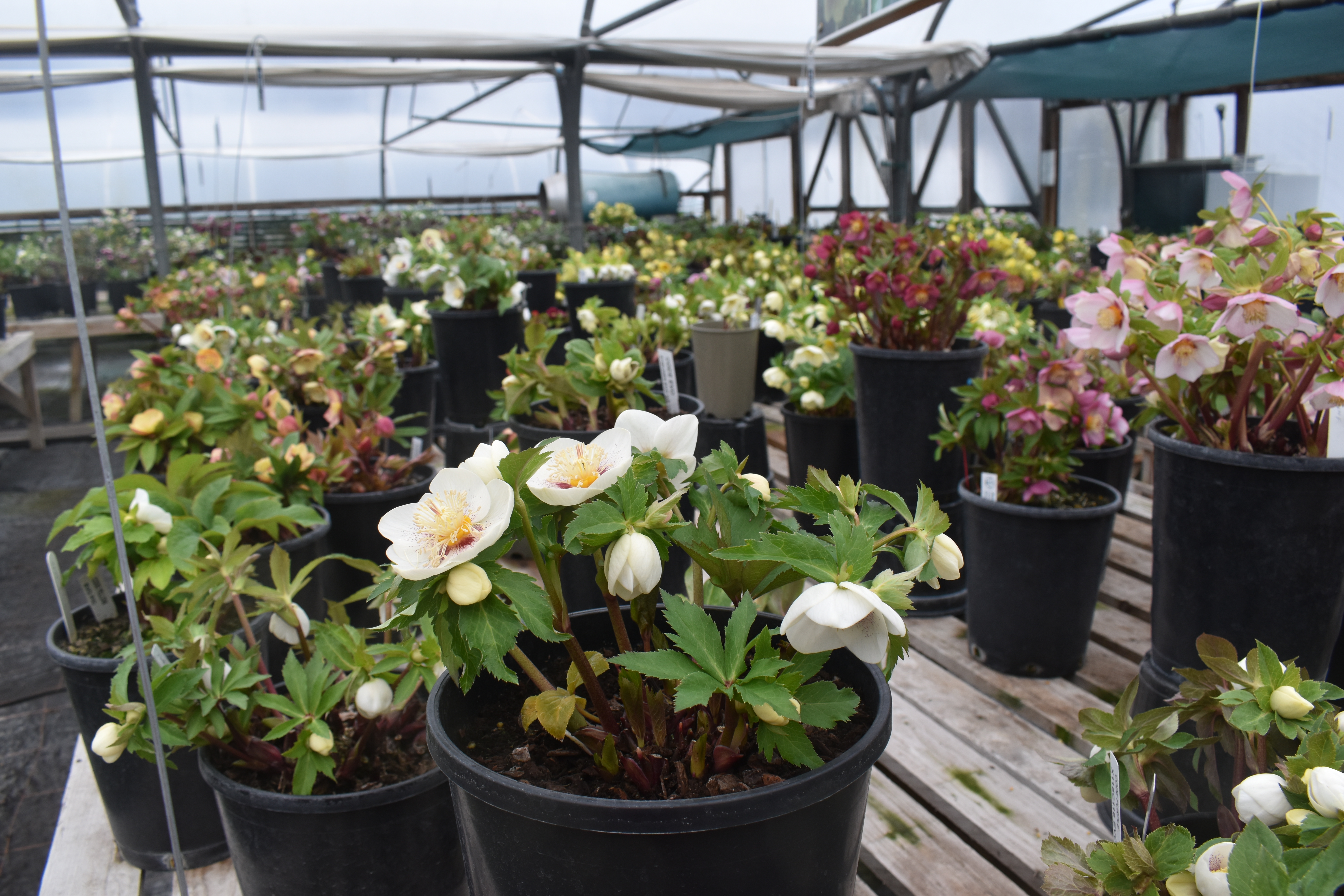
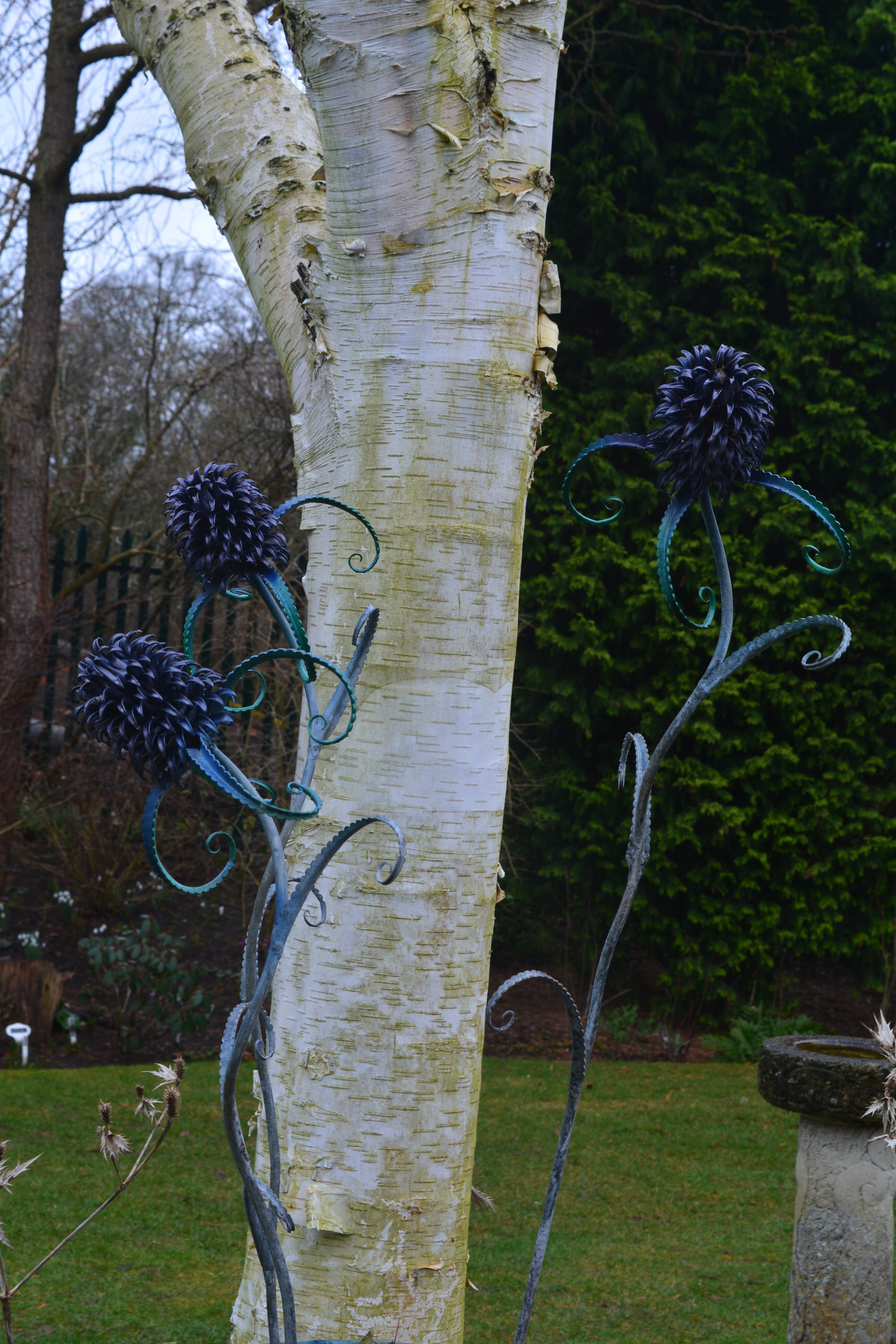
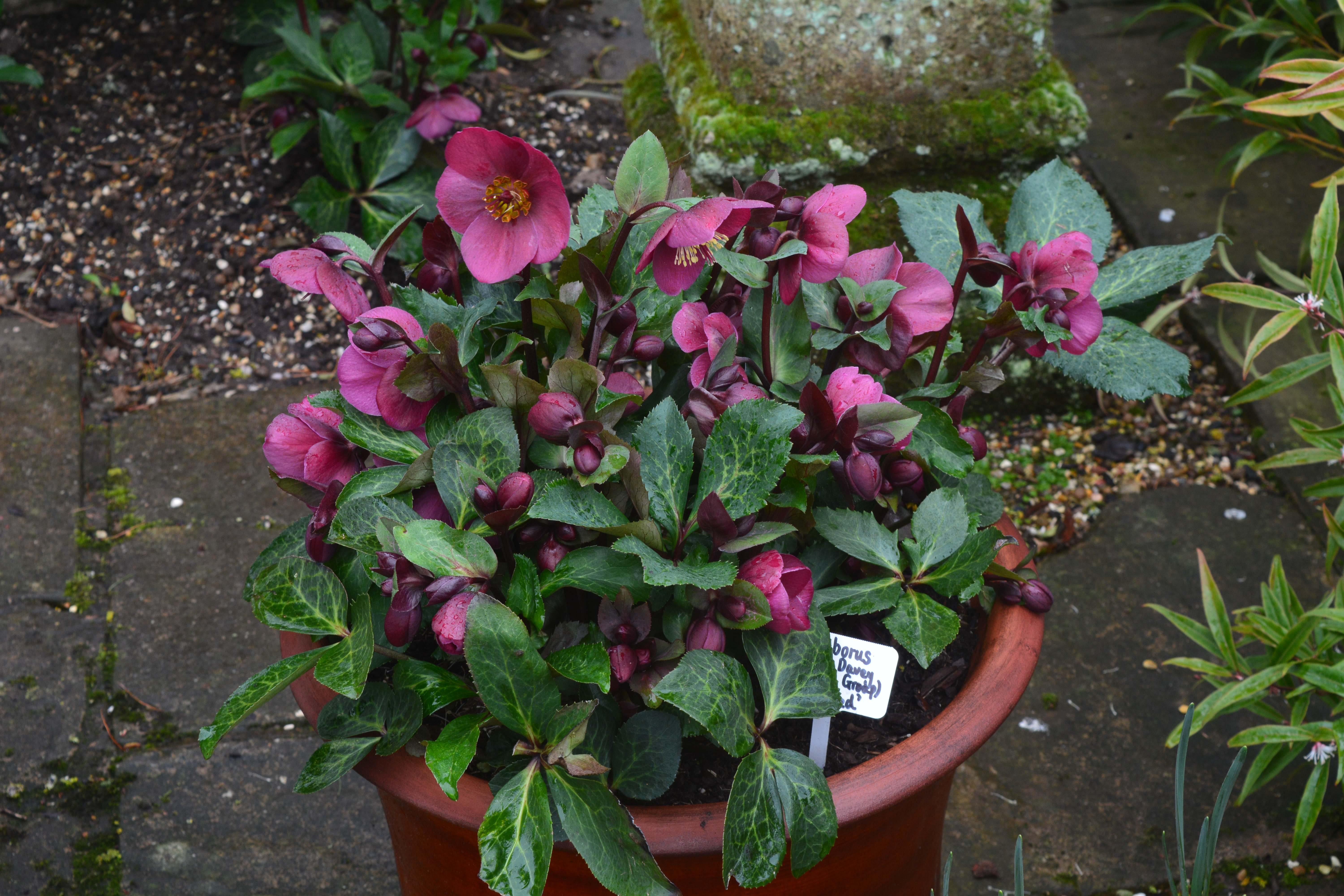
The main garden was so wet underfoot that it was considered not to be safe enough for visitors. To make up for this the hellebore polytunnel was open where we would be treated to the view of the hundreds of stock plants and some new colours and patterns under development.

Although rain was forecast for the day we decided to set off whatever for a day in John’s Garden only to find out that only one area of the garden was open, Adam’s Garden. This area was developed in 2018 as a tribute to John’s young head gardener, who unexpectedly died in his sleep. It is now where visitors enter John’s Garden and through which they must pass to reach the main garden.
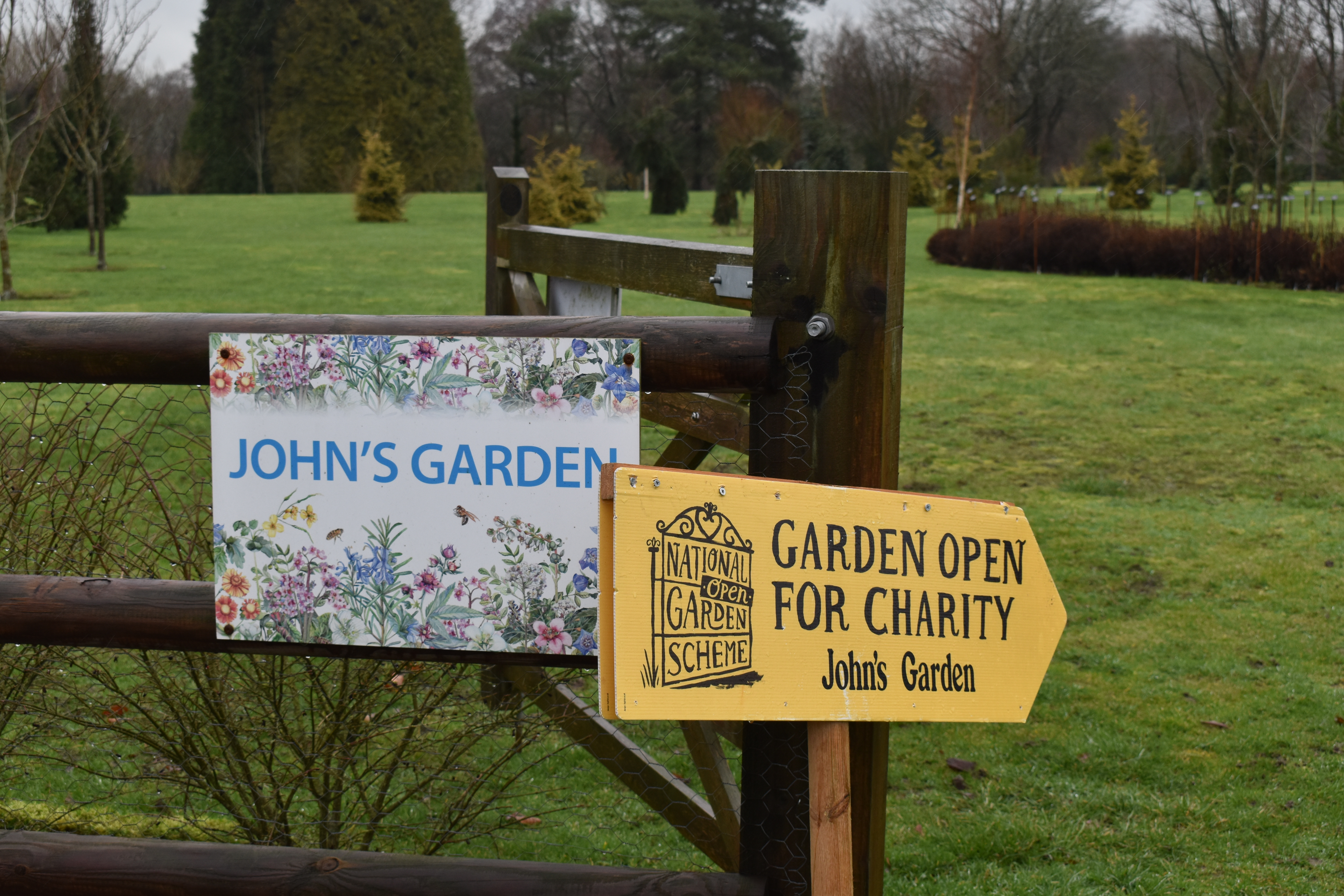
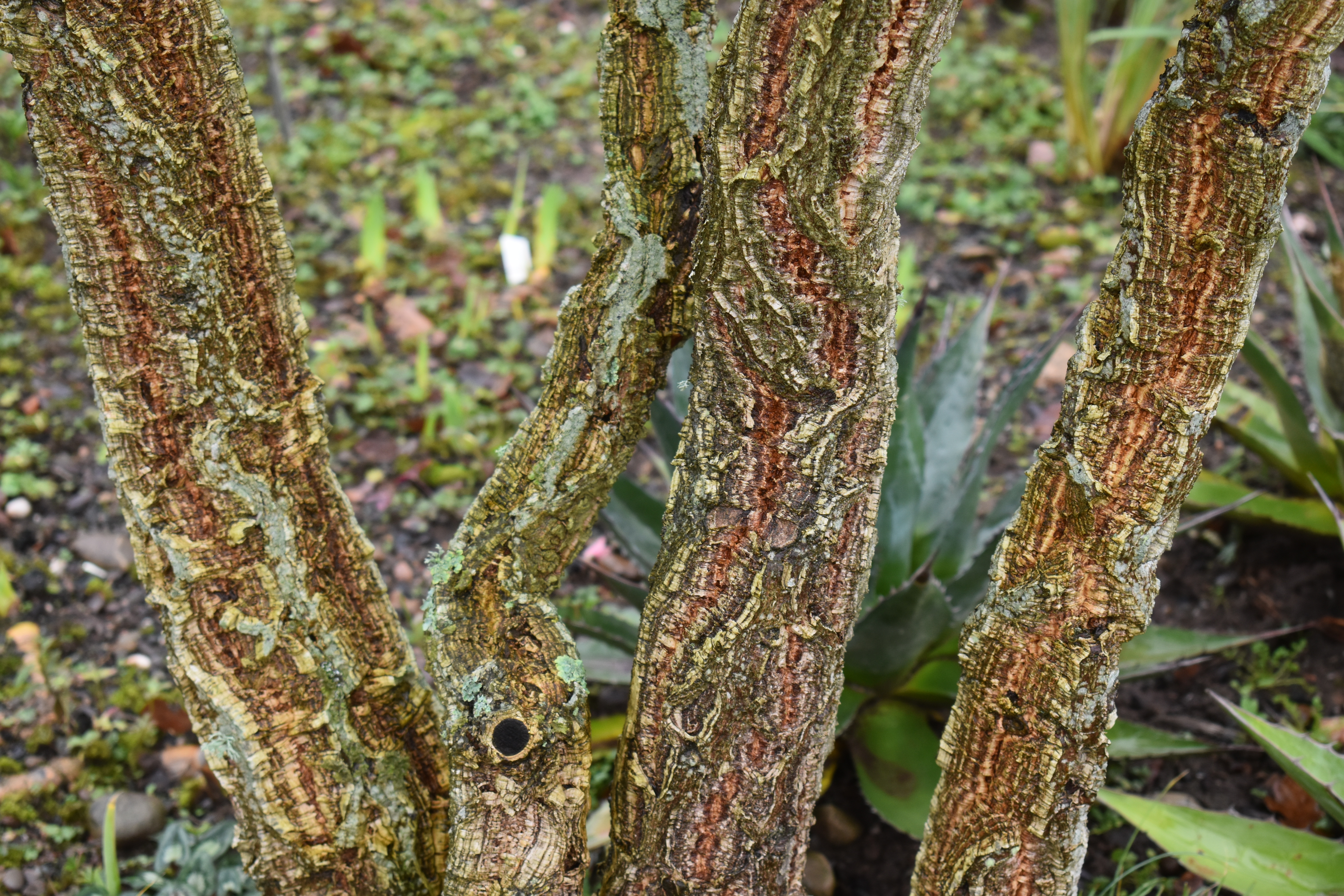
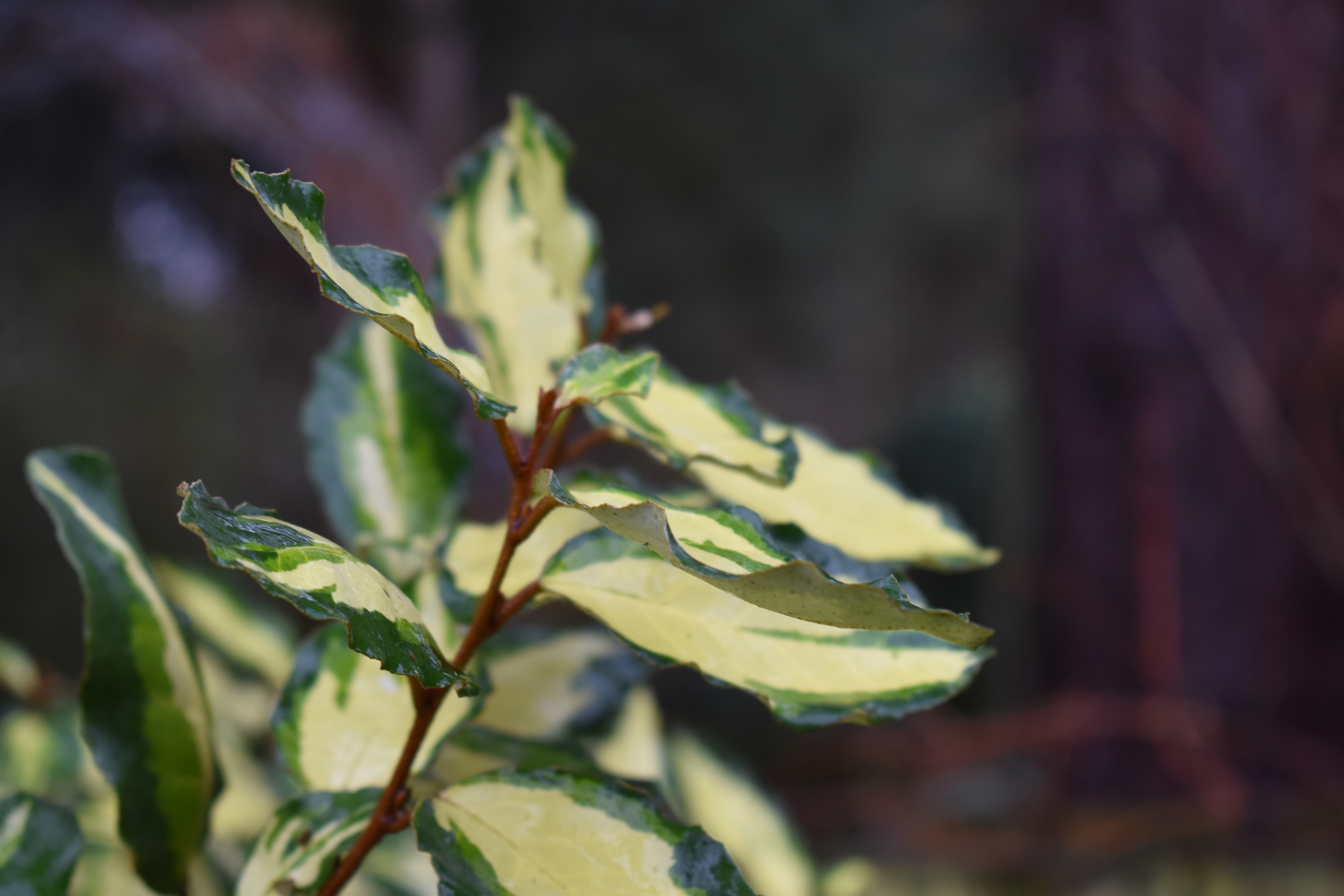
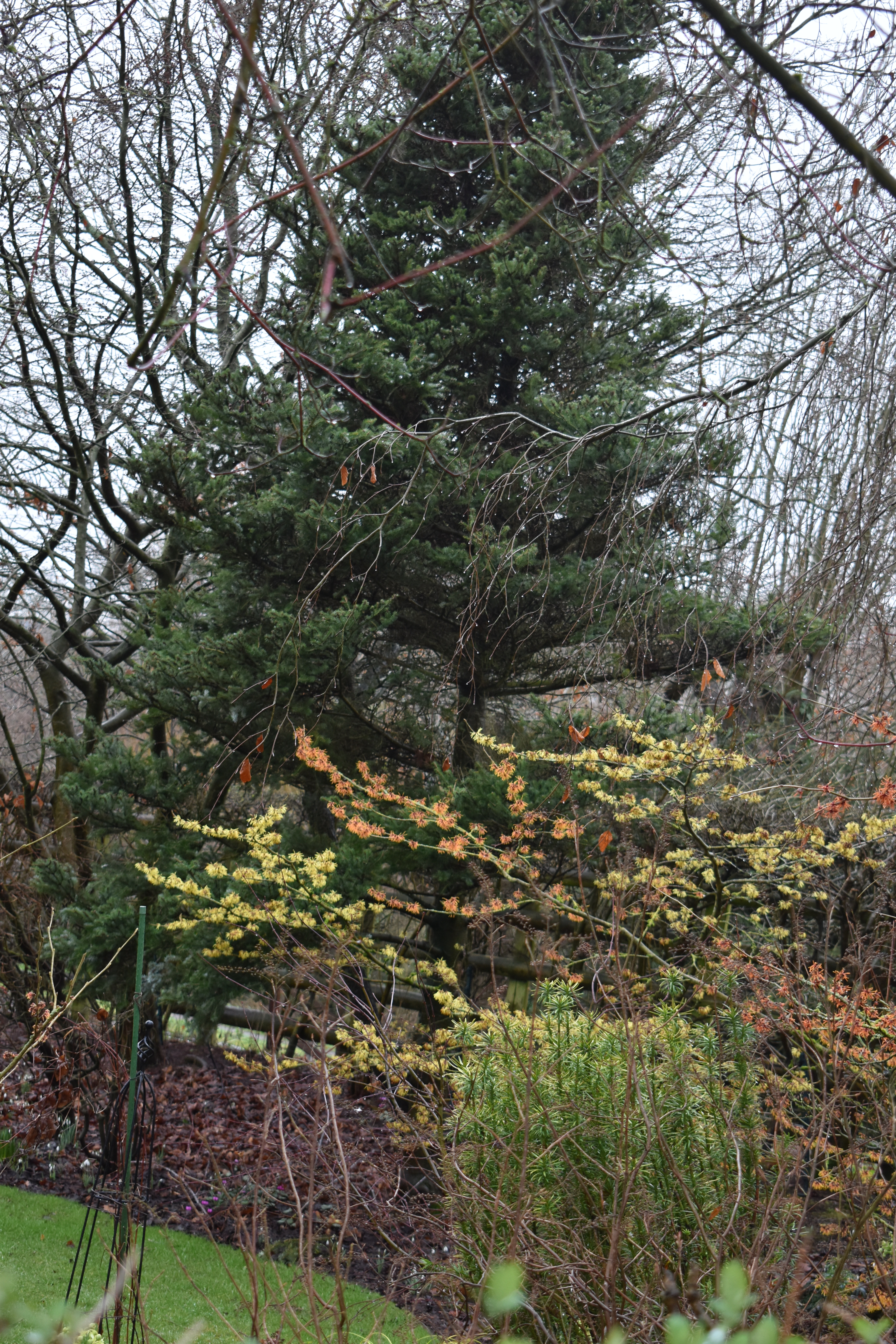
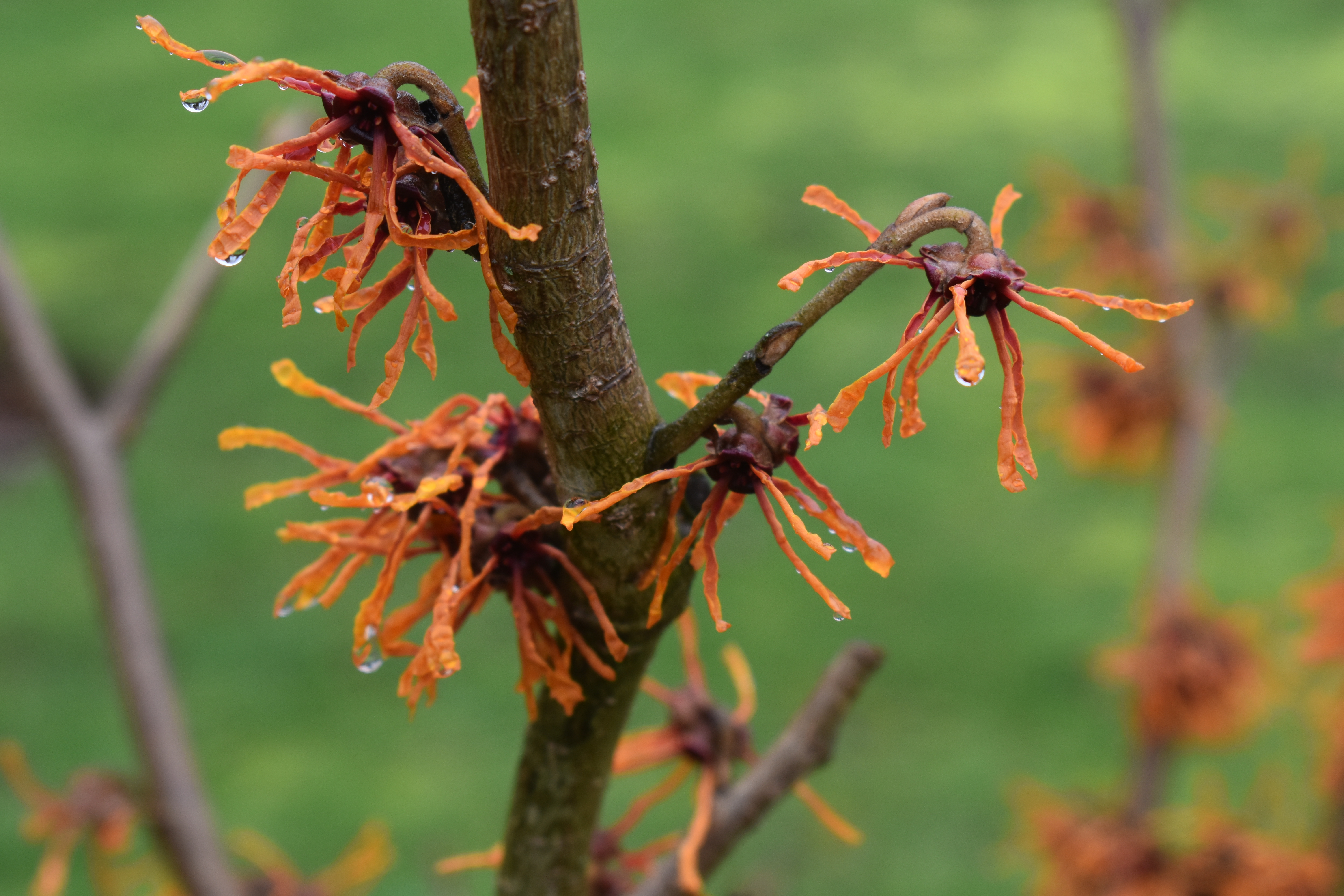
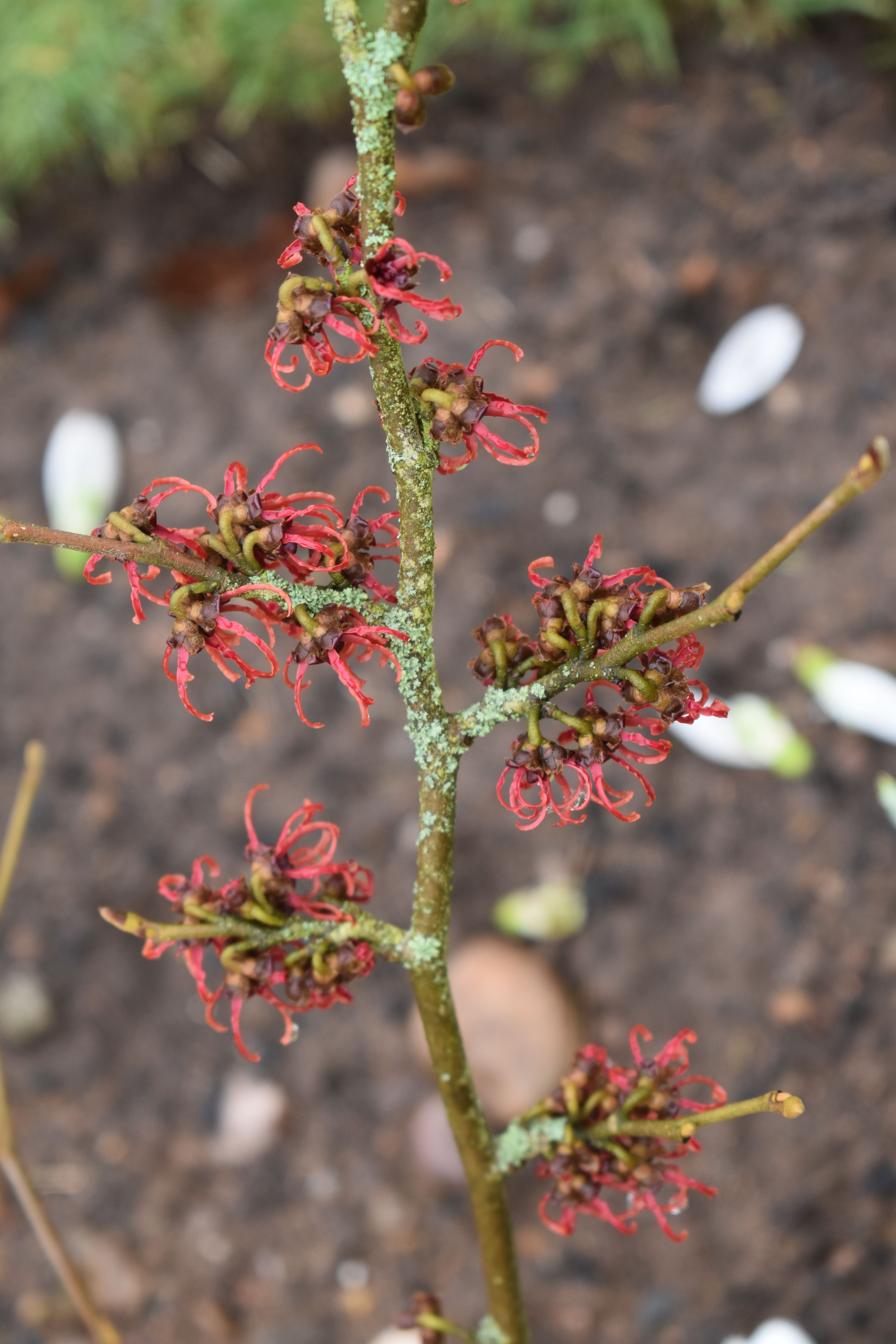
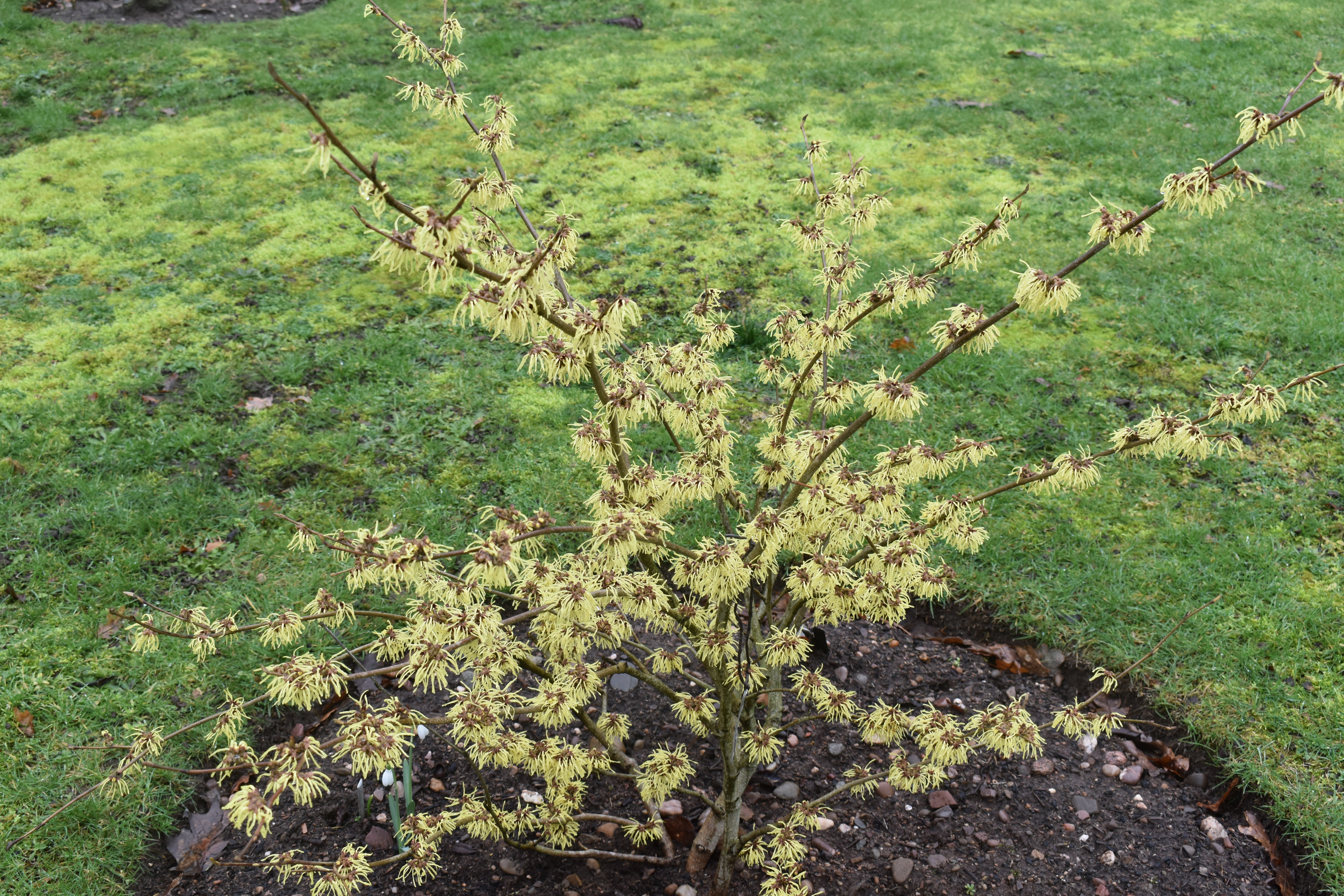
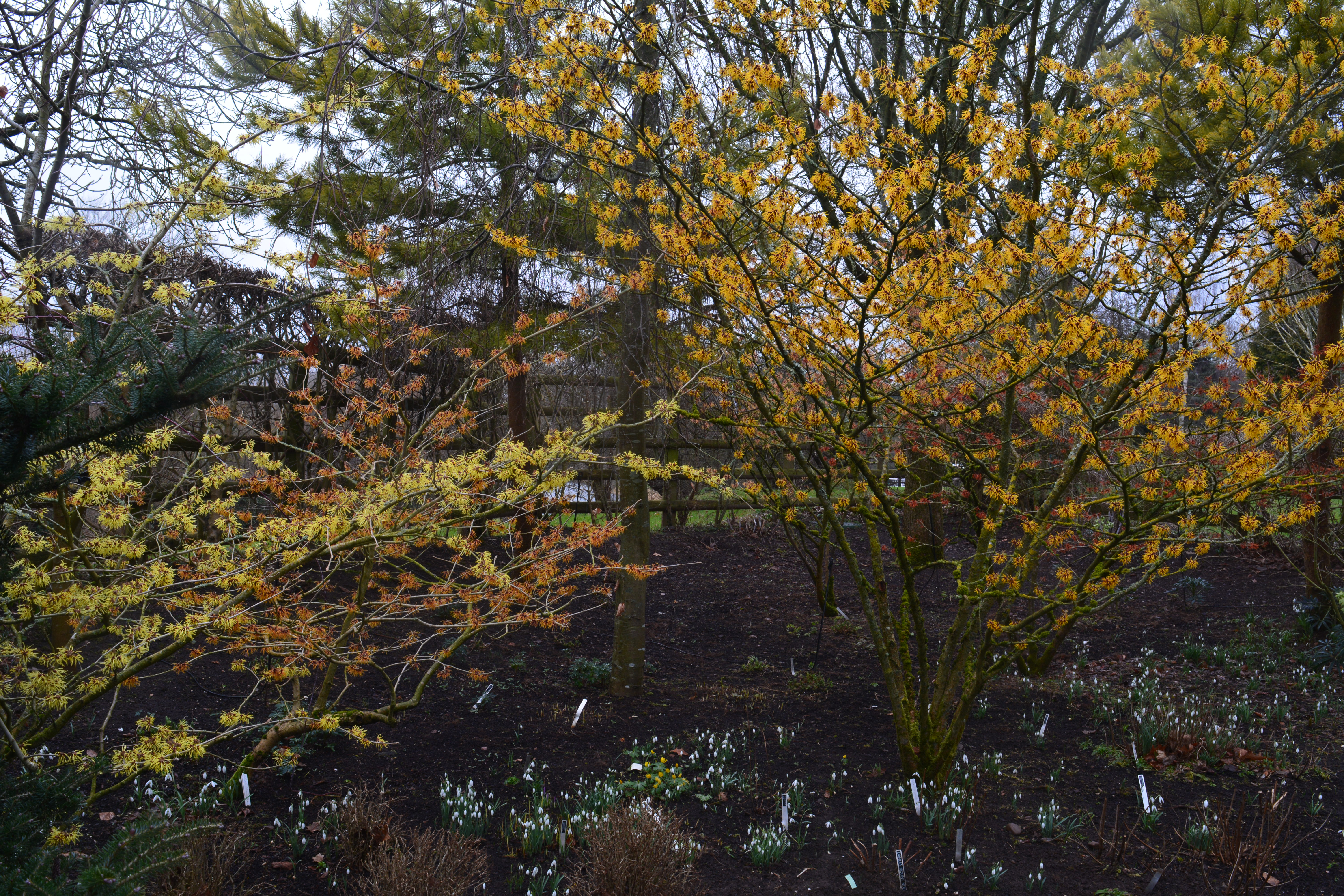
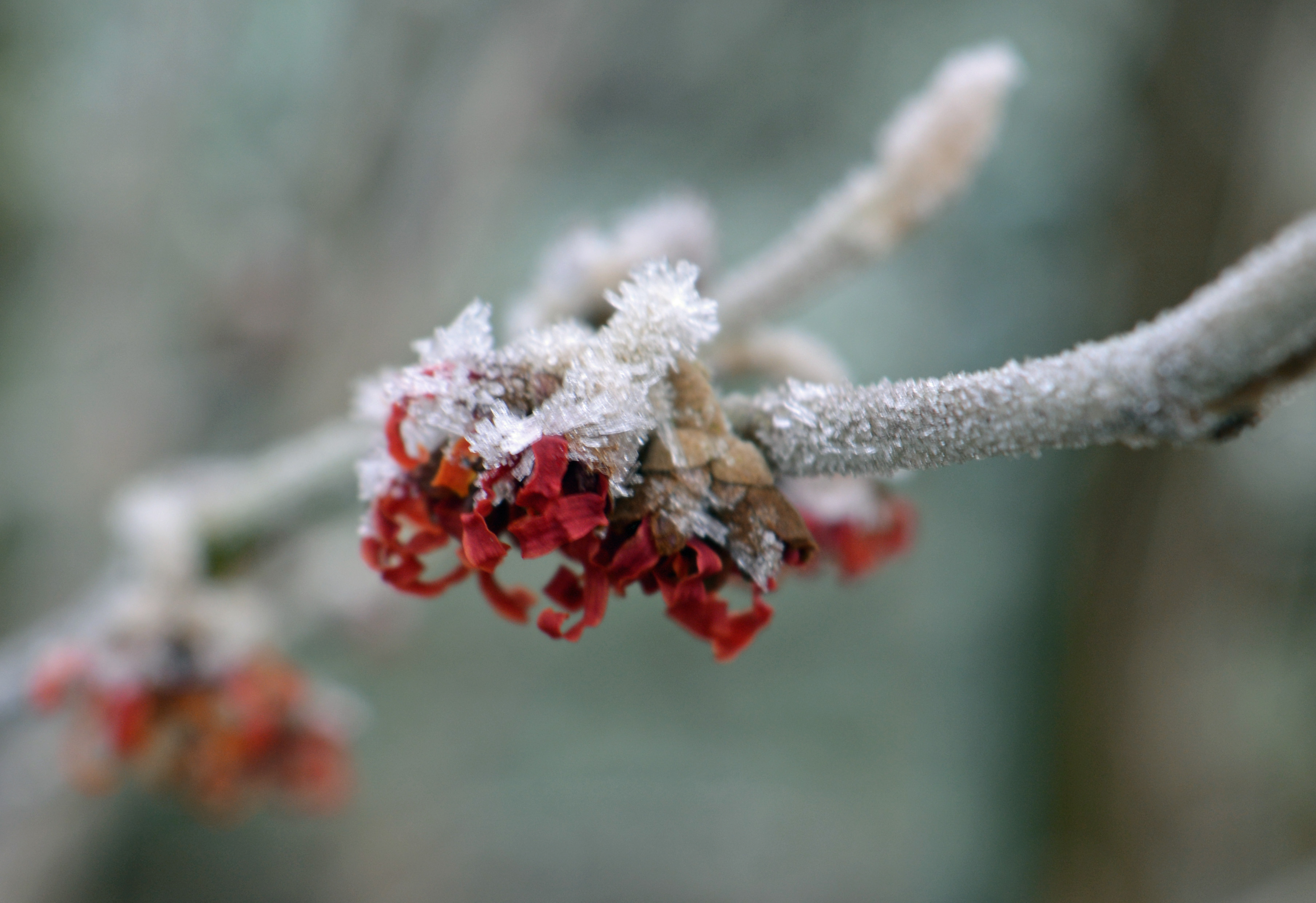
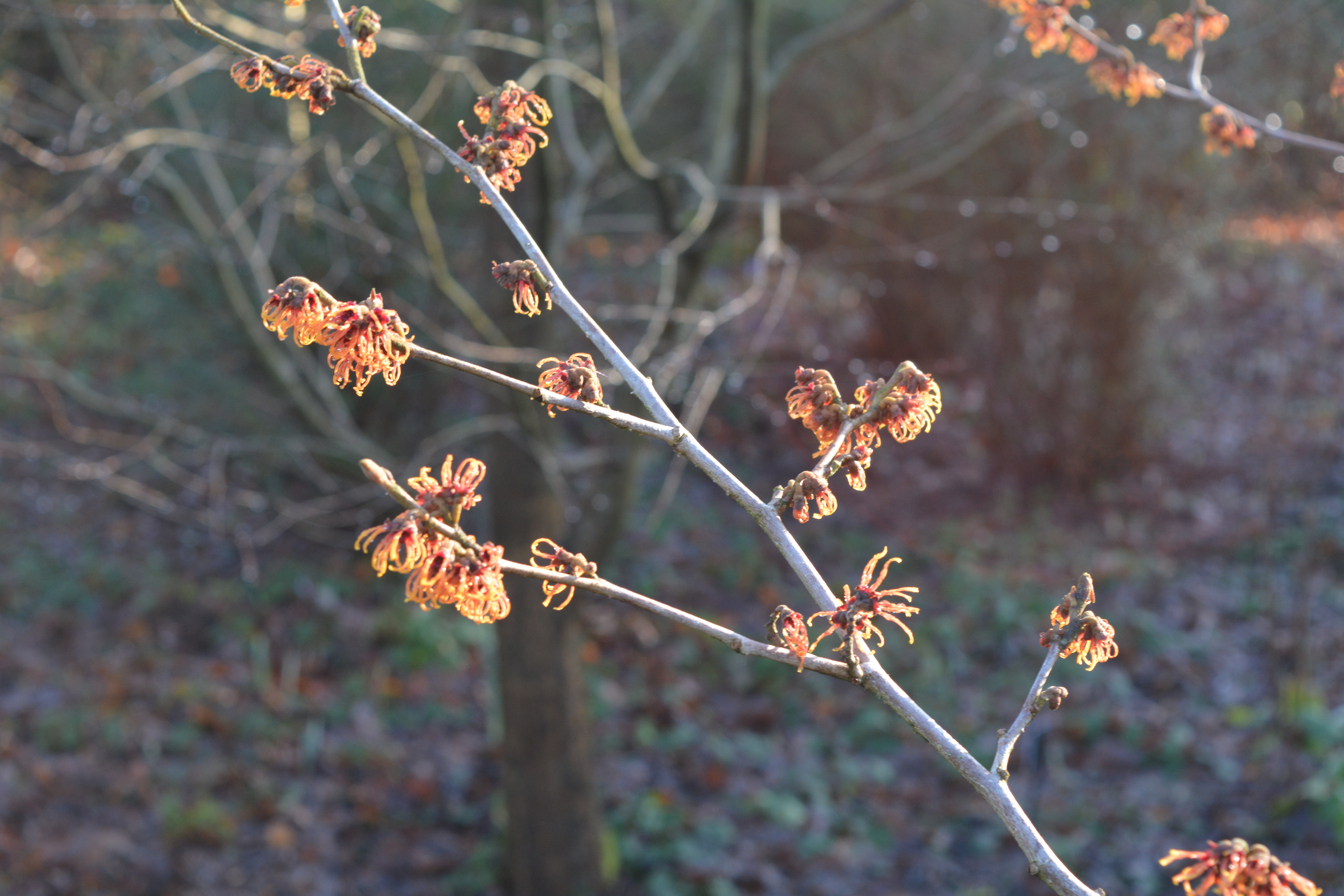
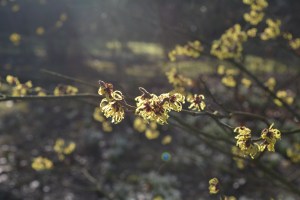
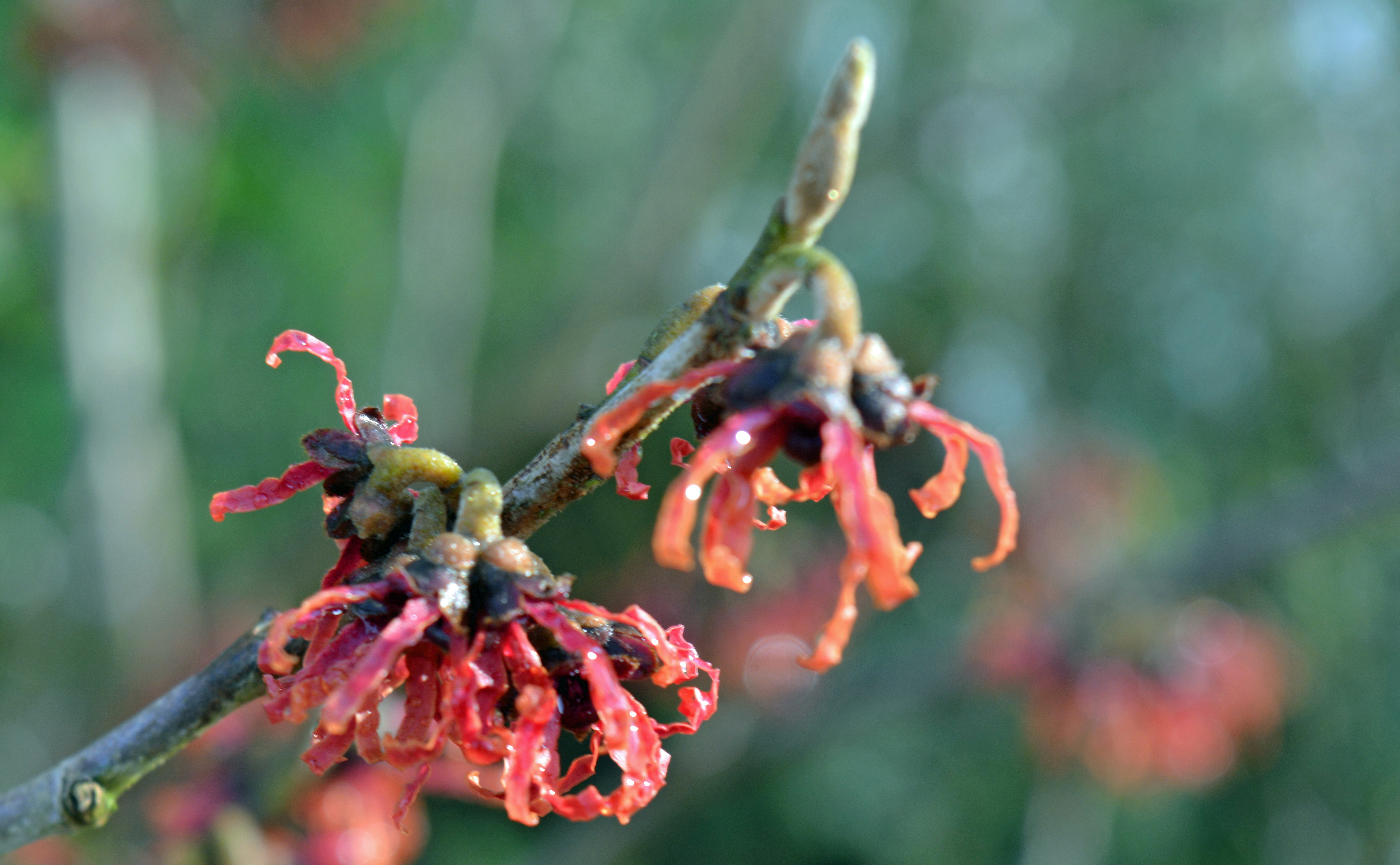
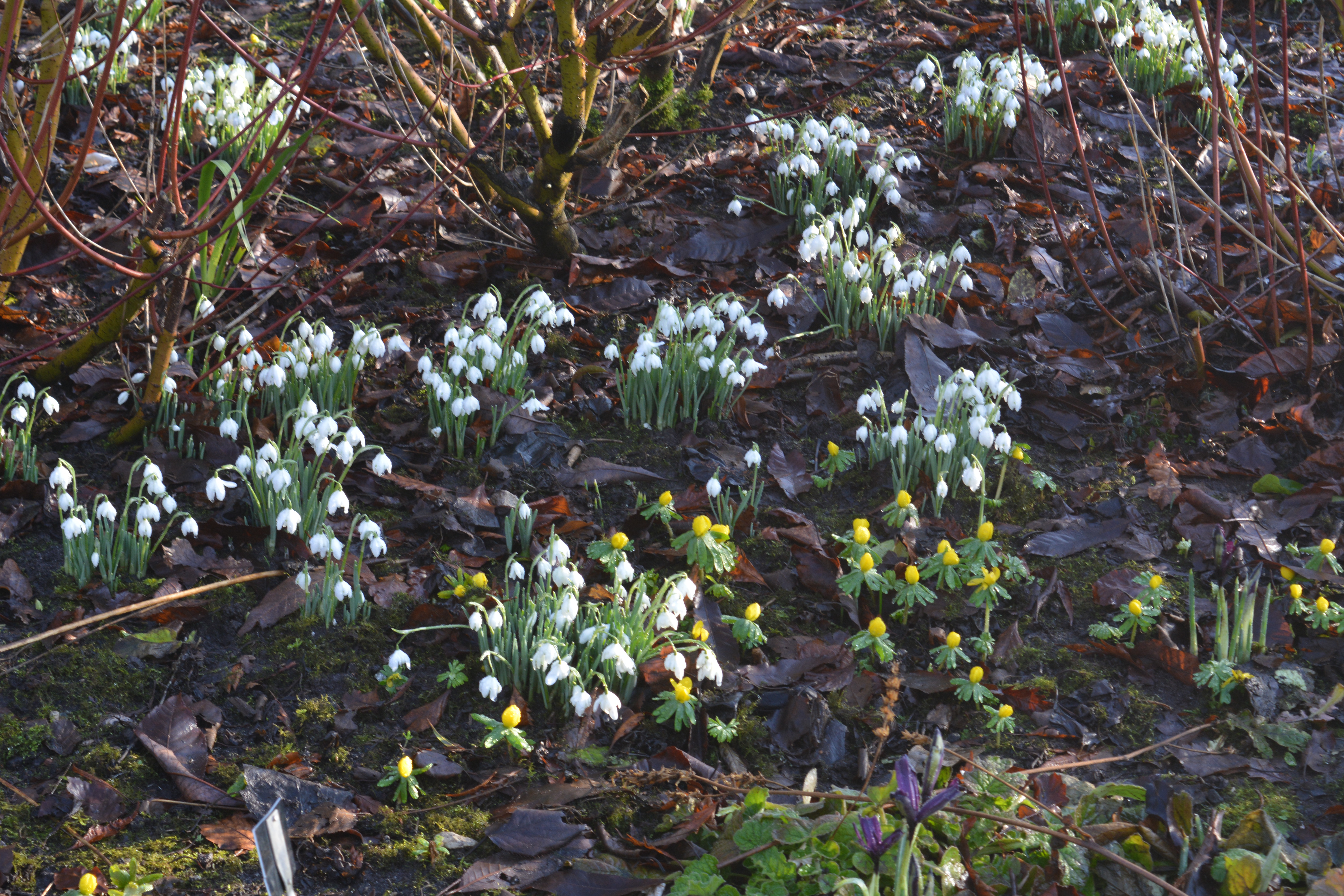
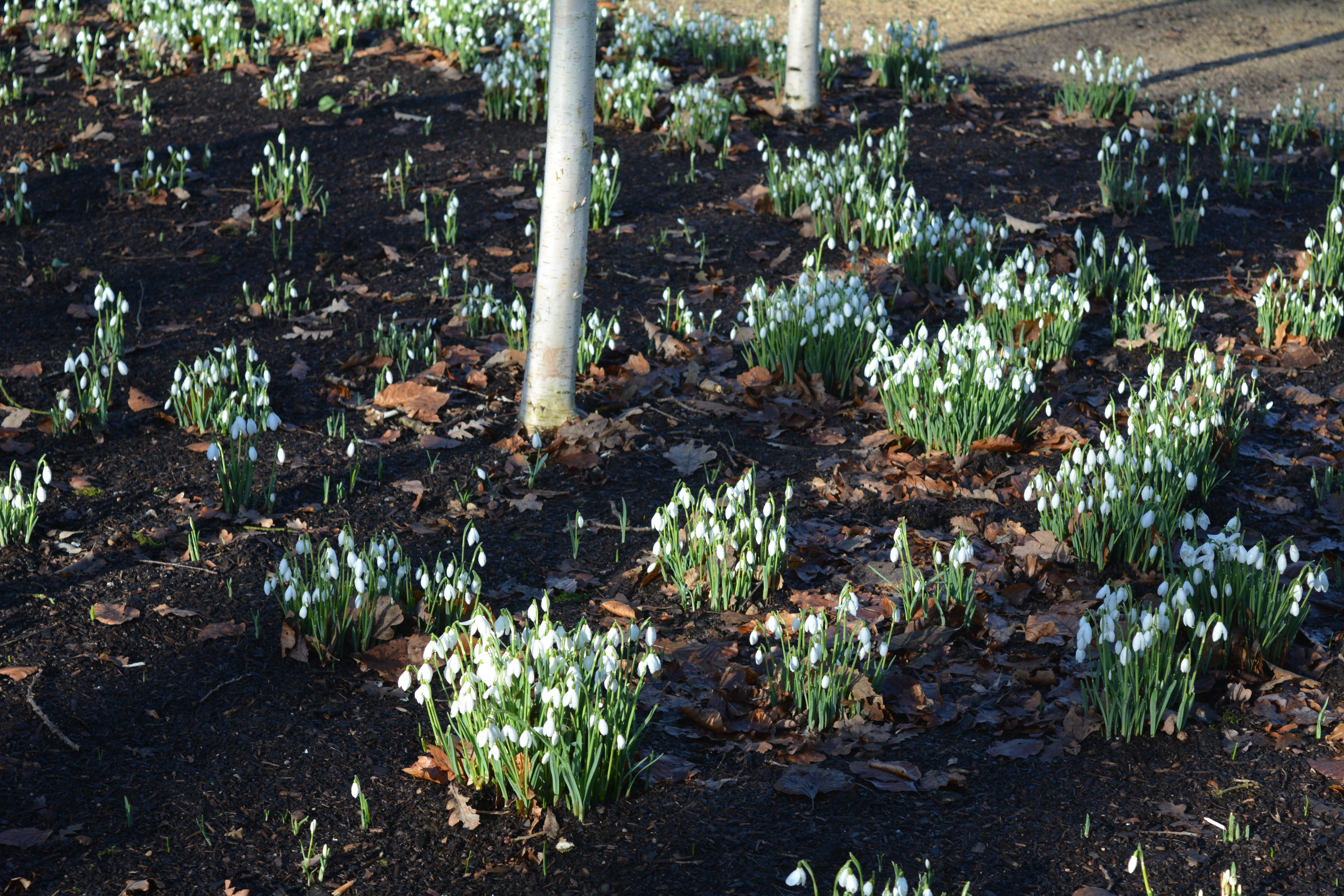
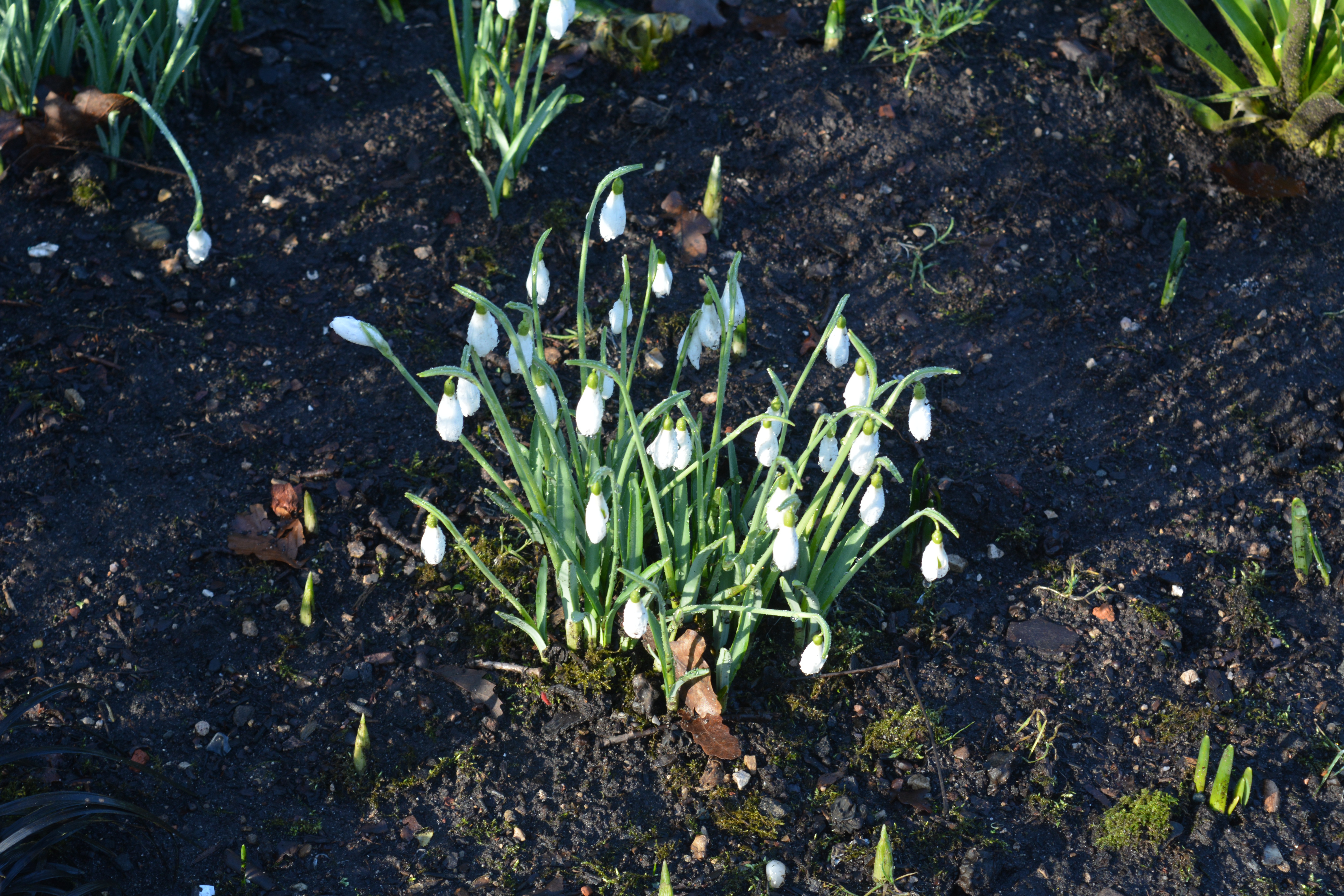
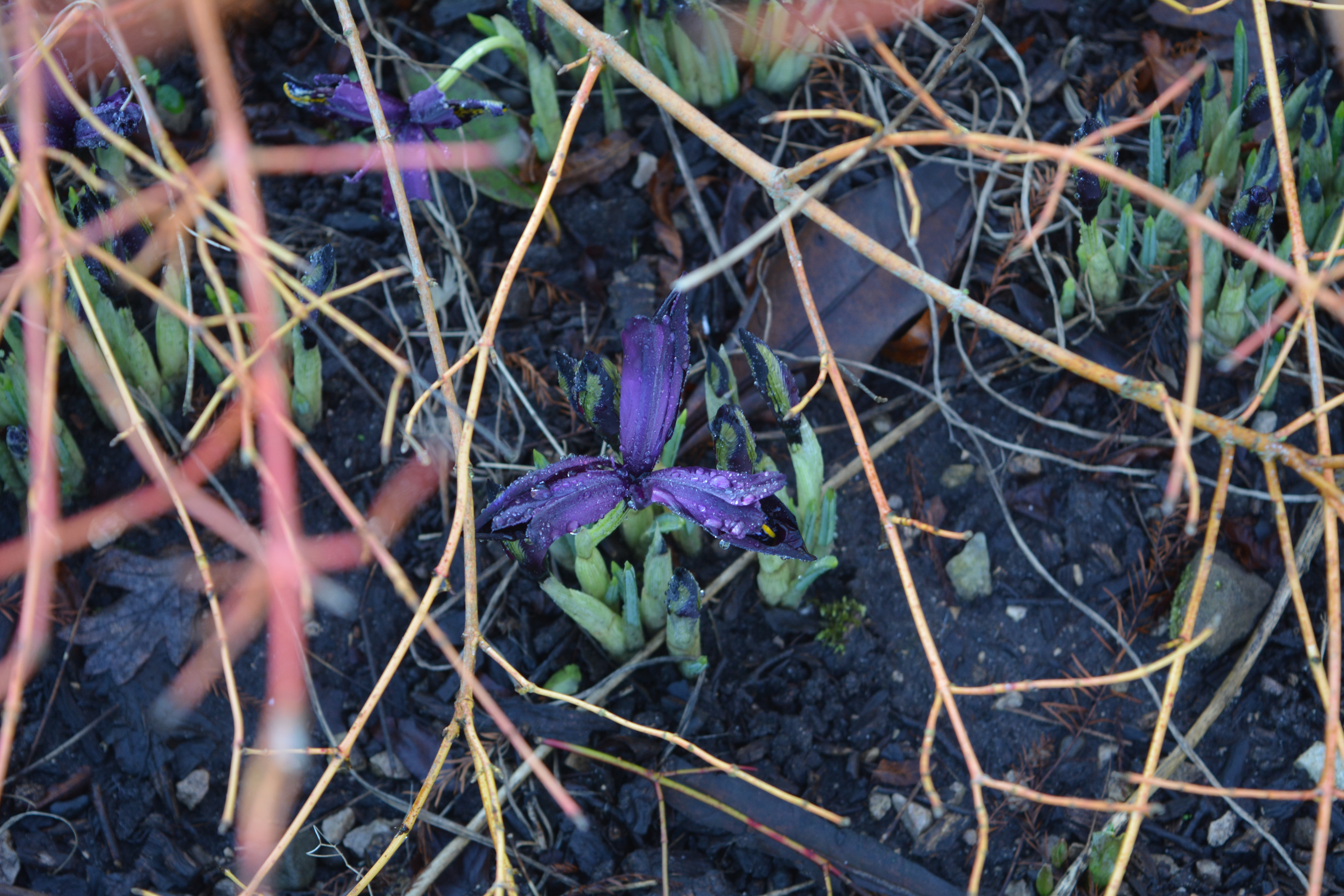
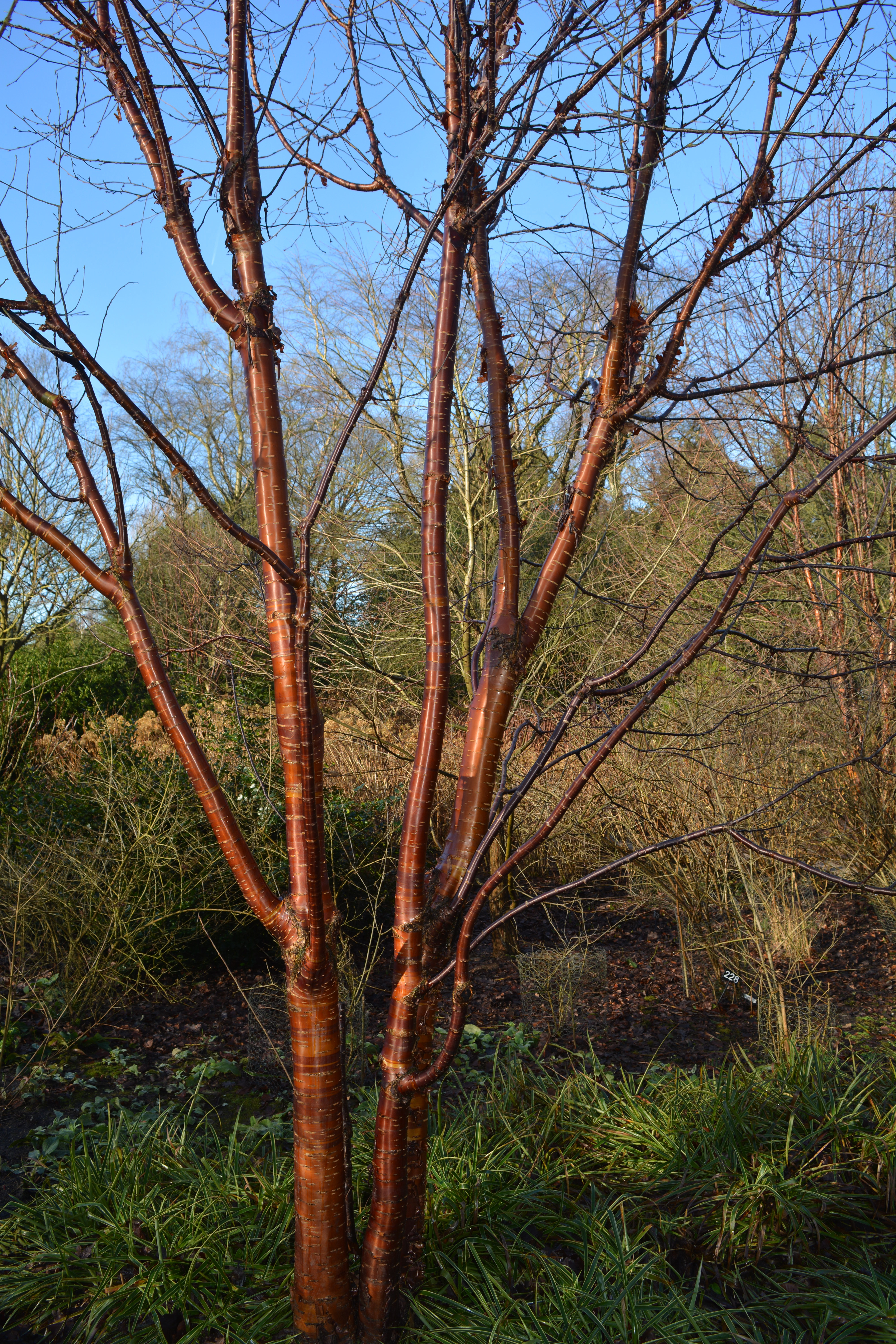
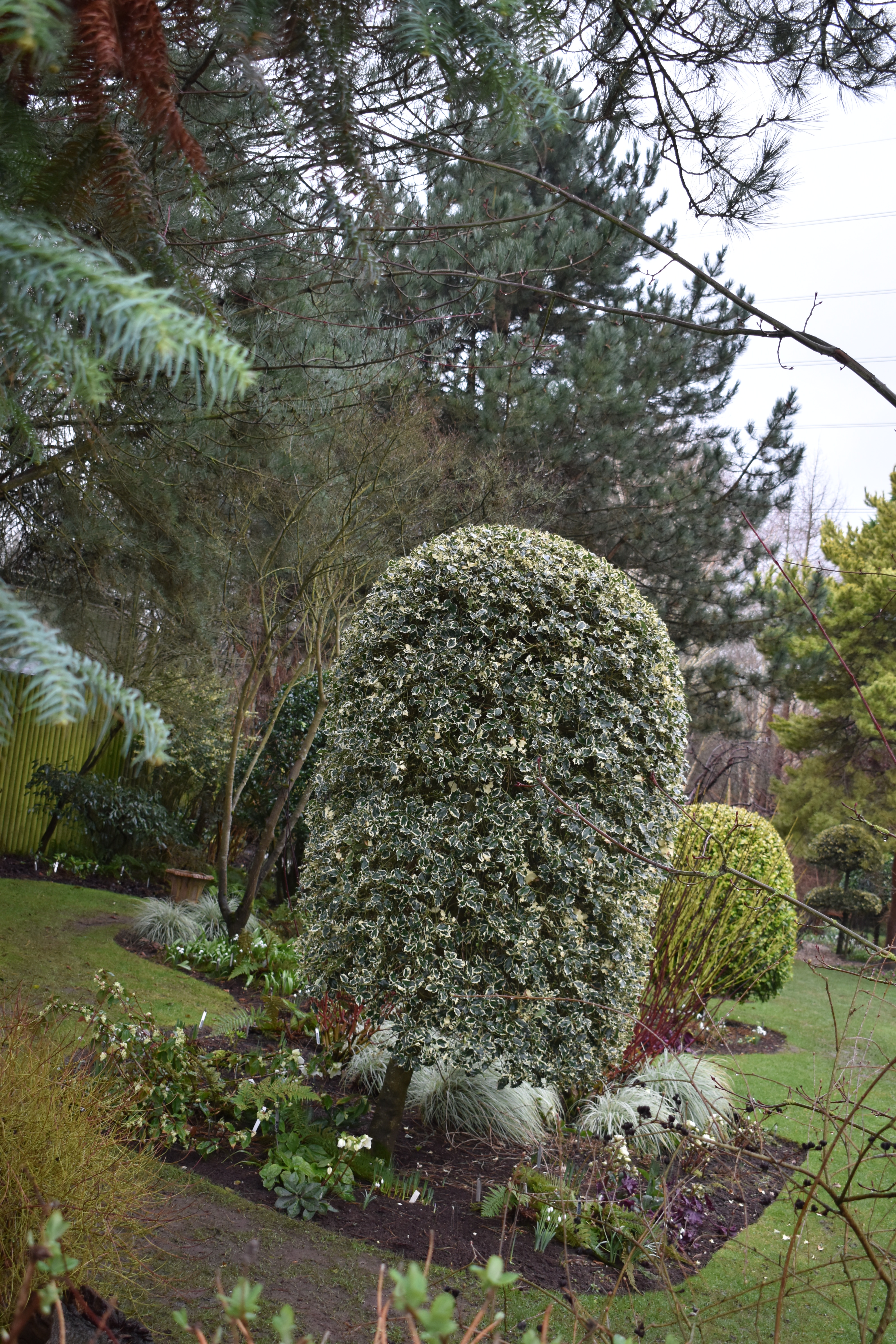
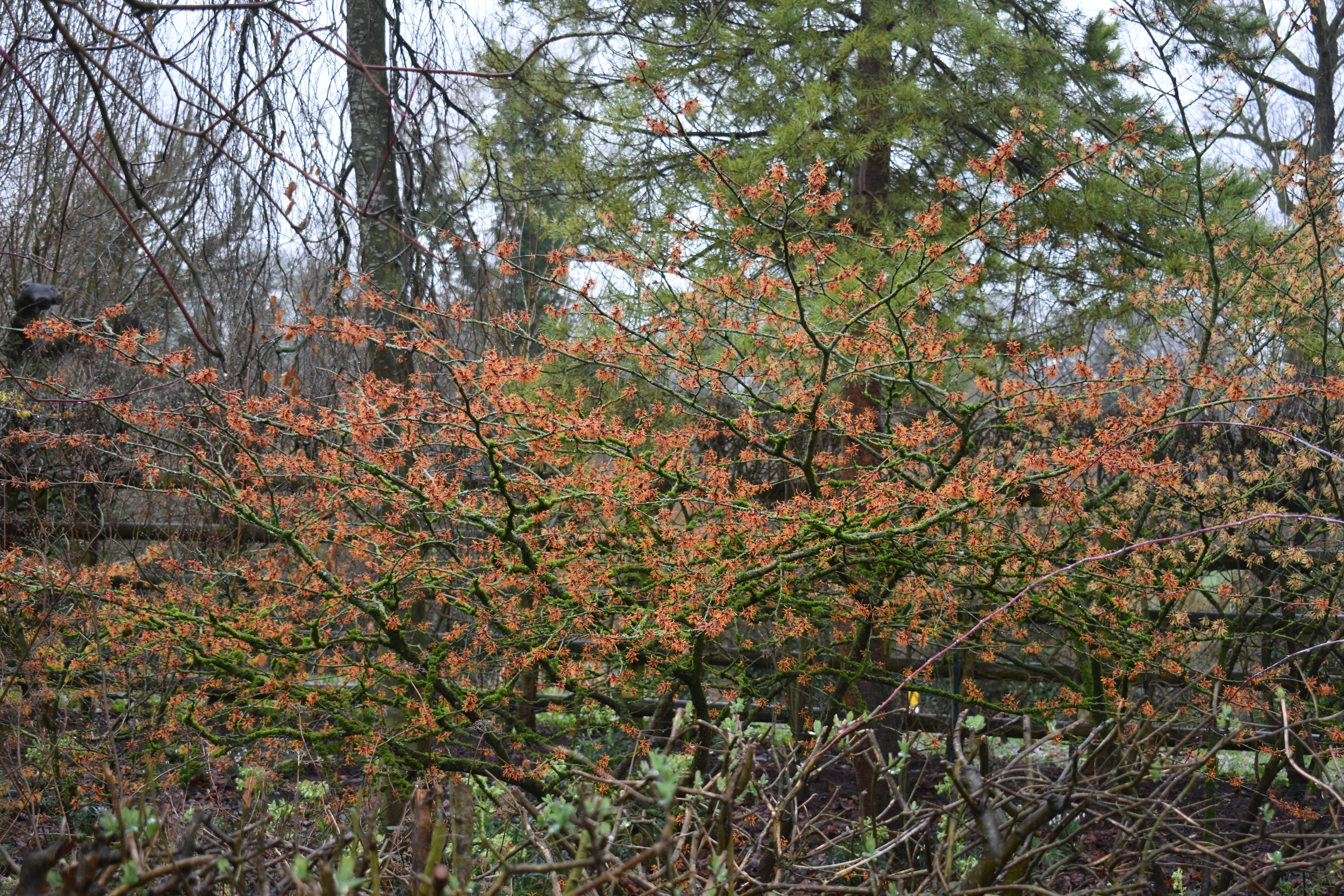
There was so much to see in Adam’s Garden as we slowly made our way around enjoying interesting collections of conifers, Witch Hazels and a variety of trees. In addition to this there were some large mixed borders in front of the cream coloured glasshouse. Snowdrops were a feature of these borders with lots of different ones to study and in some cases try to see what was significantly different enough about them to deserve a name and a place in garden centres and nurseries in the future.

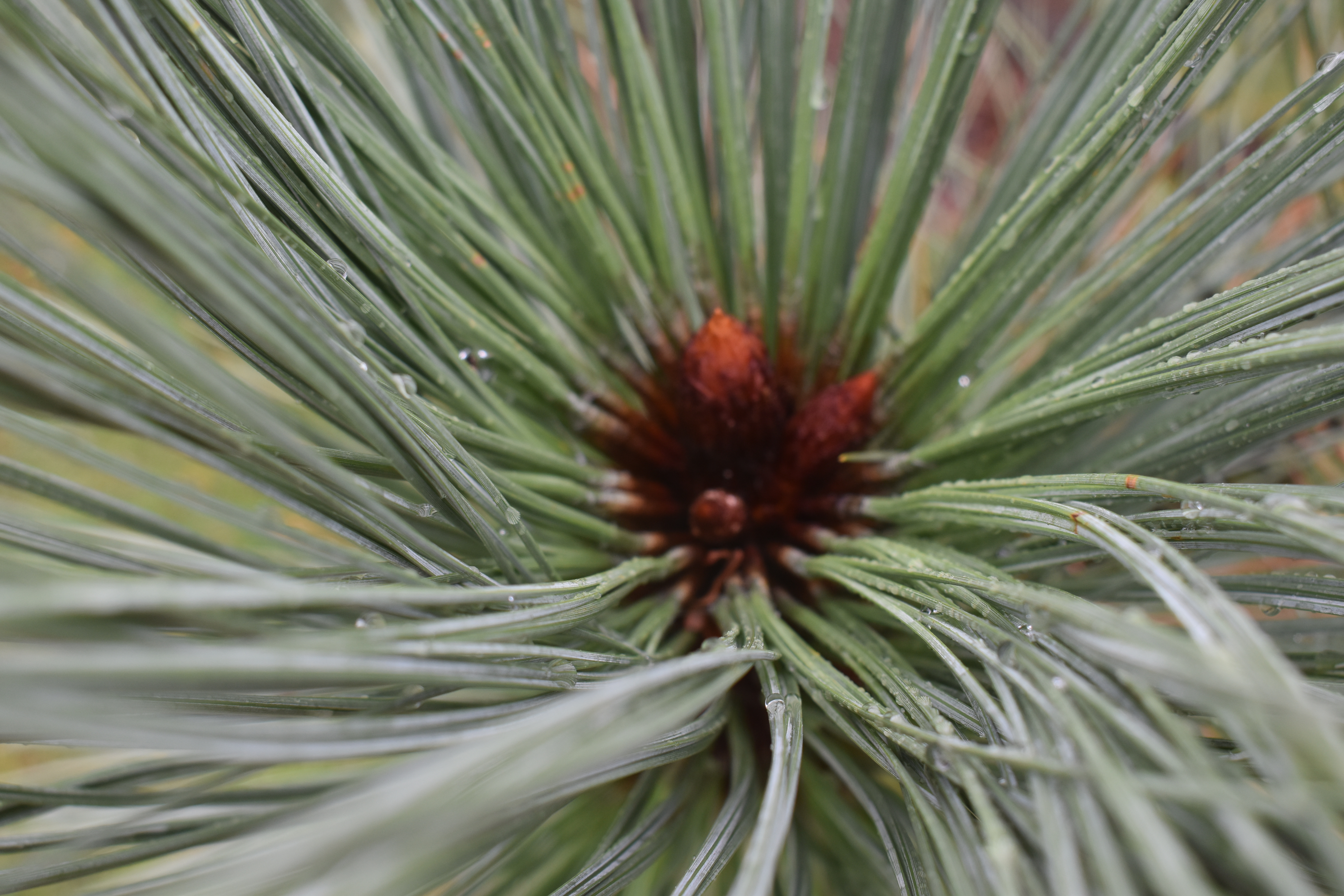
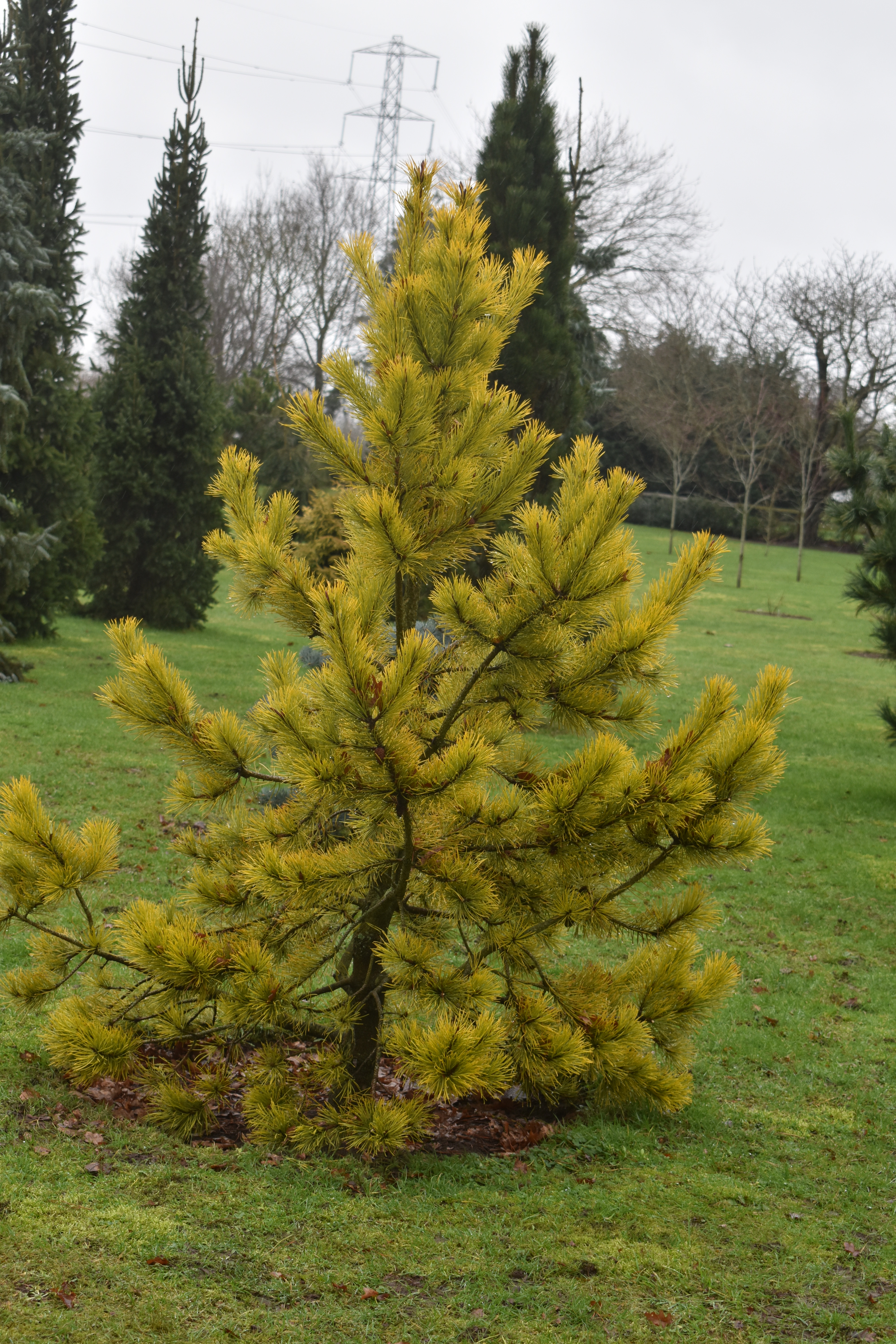
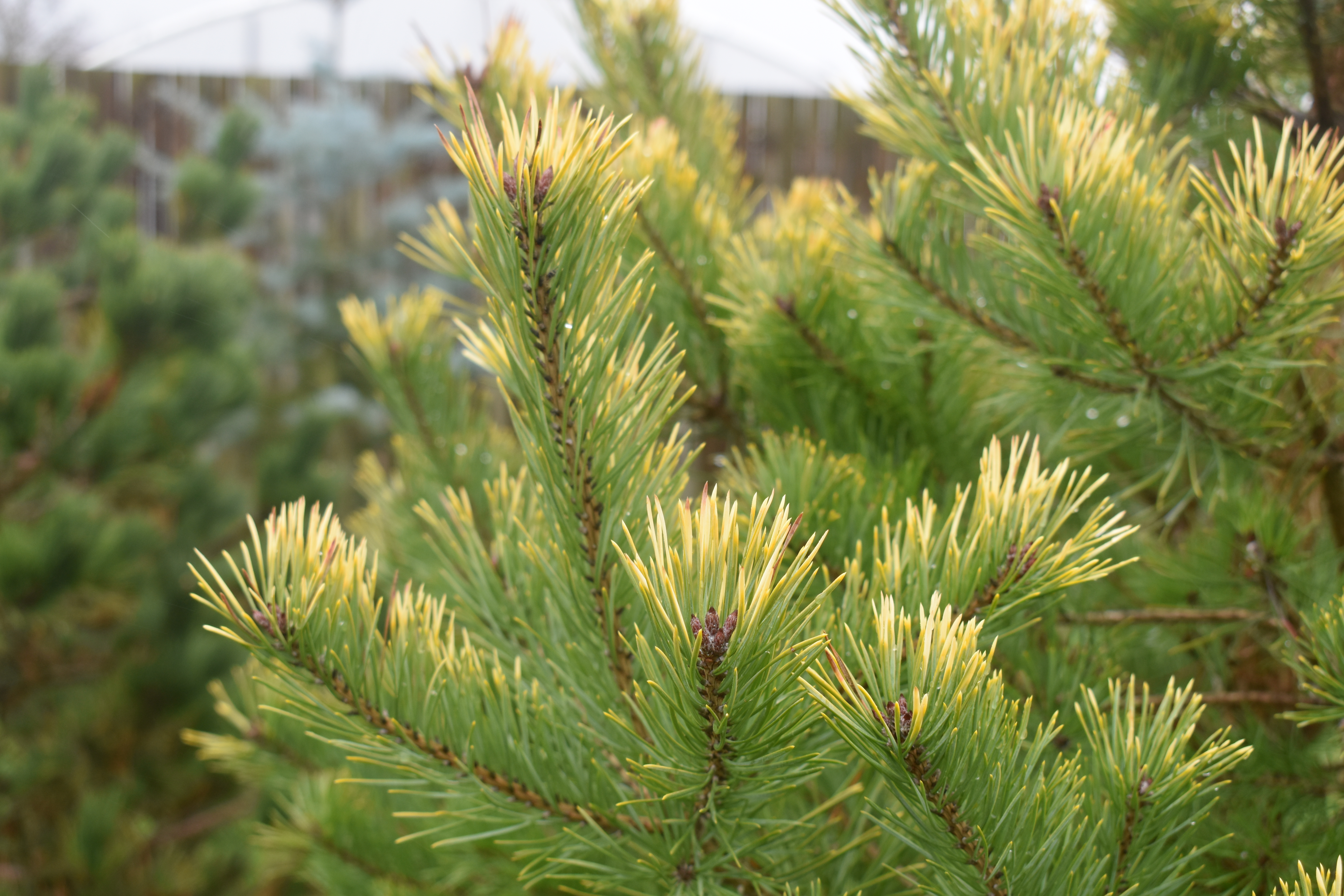
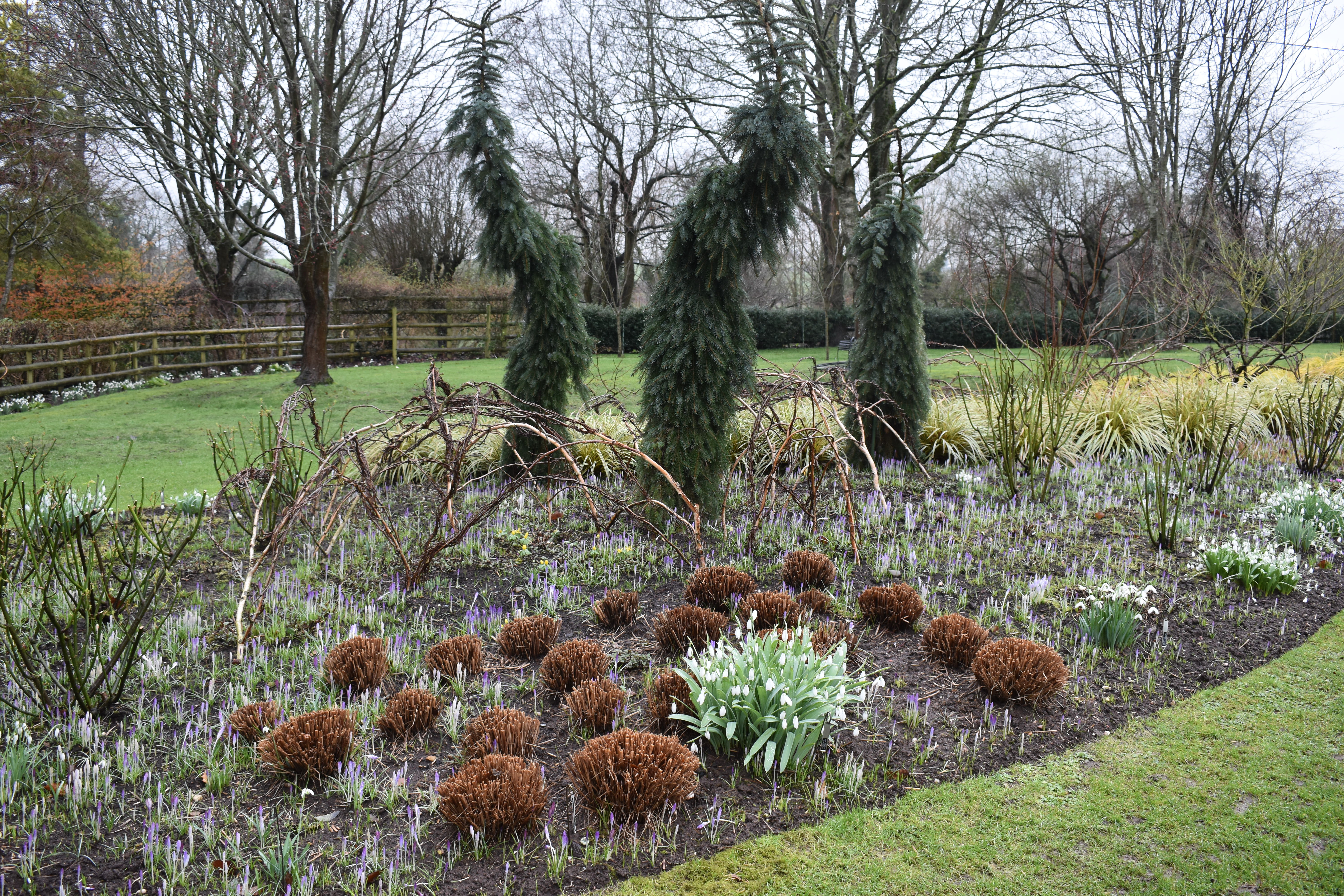
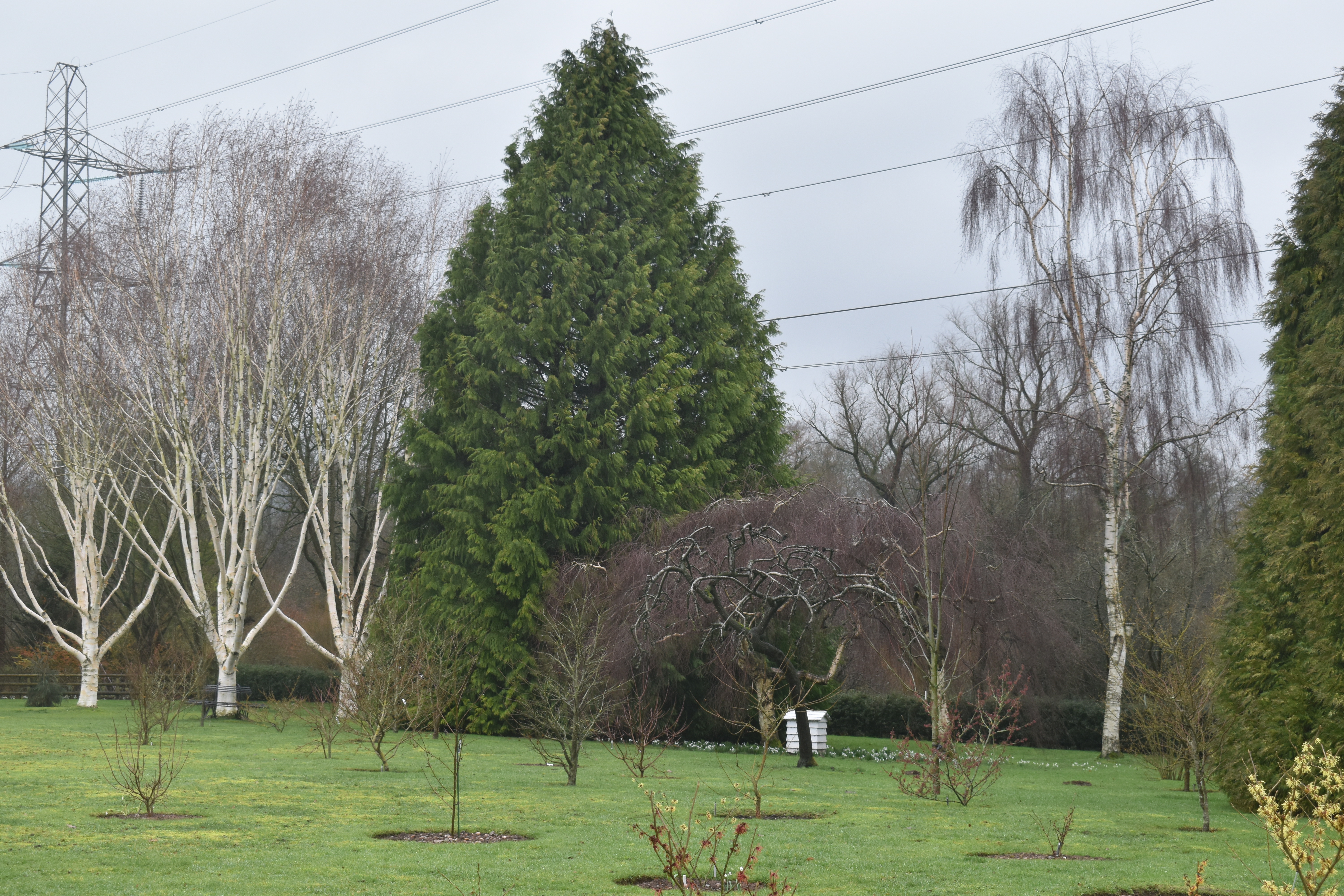
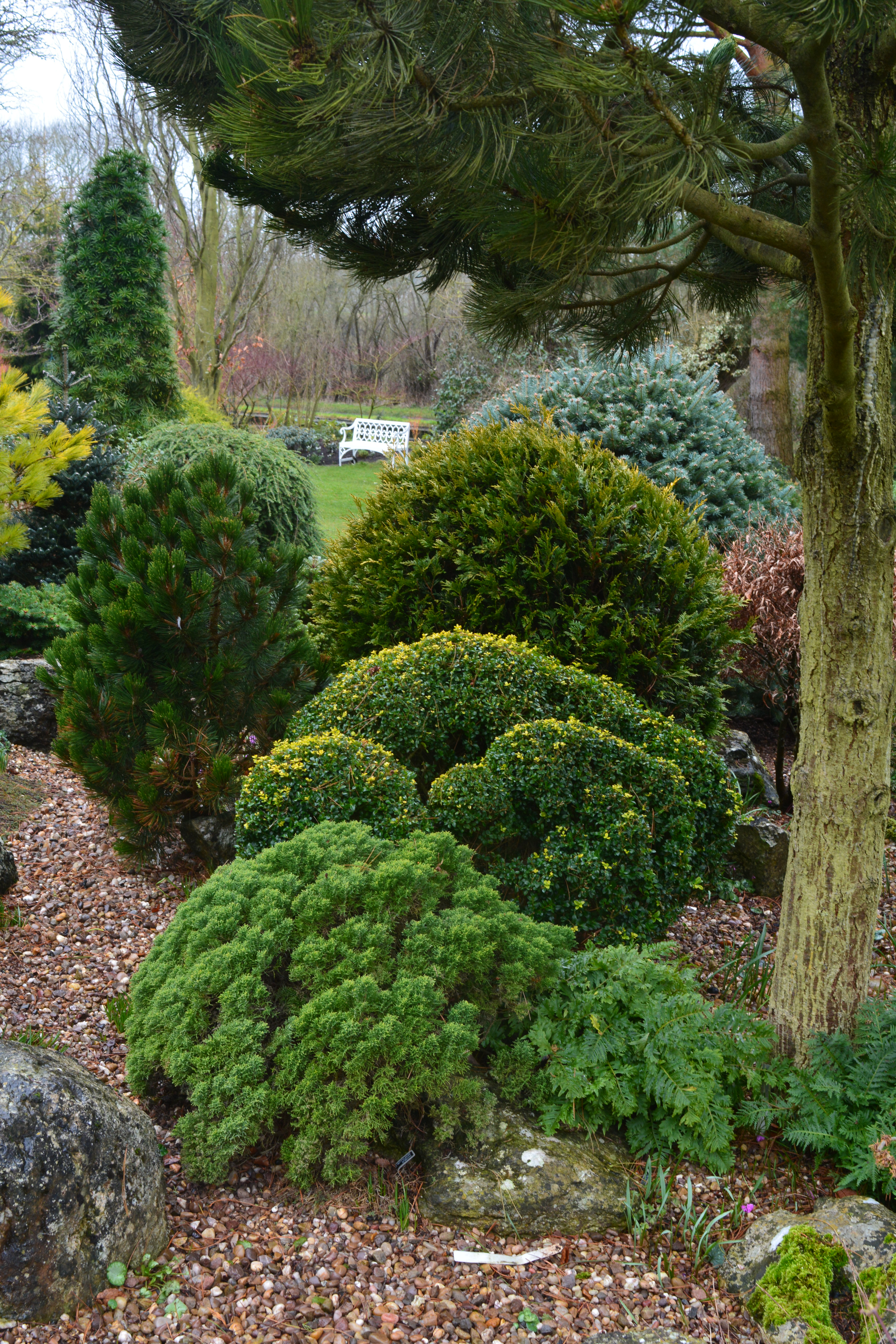
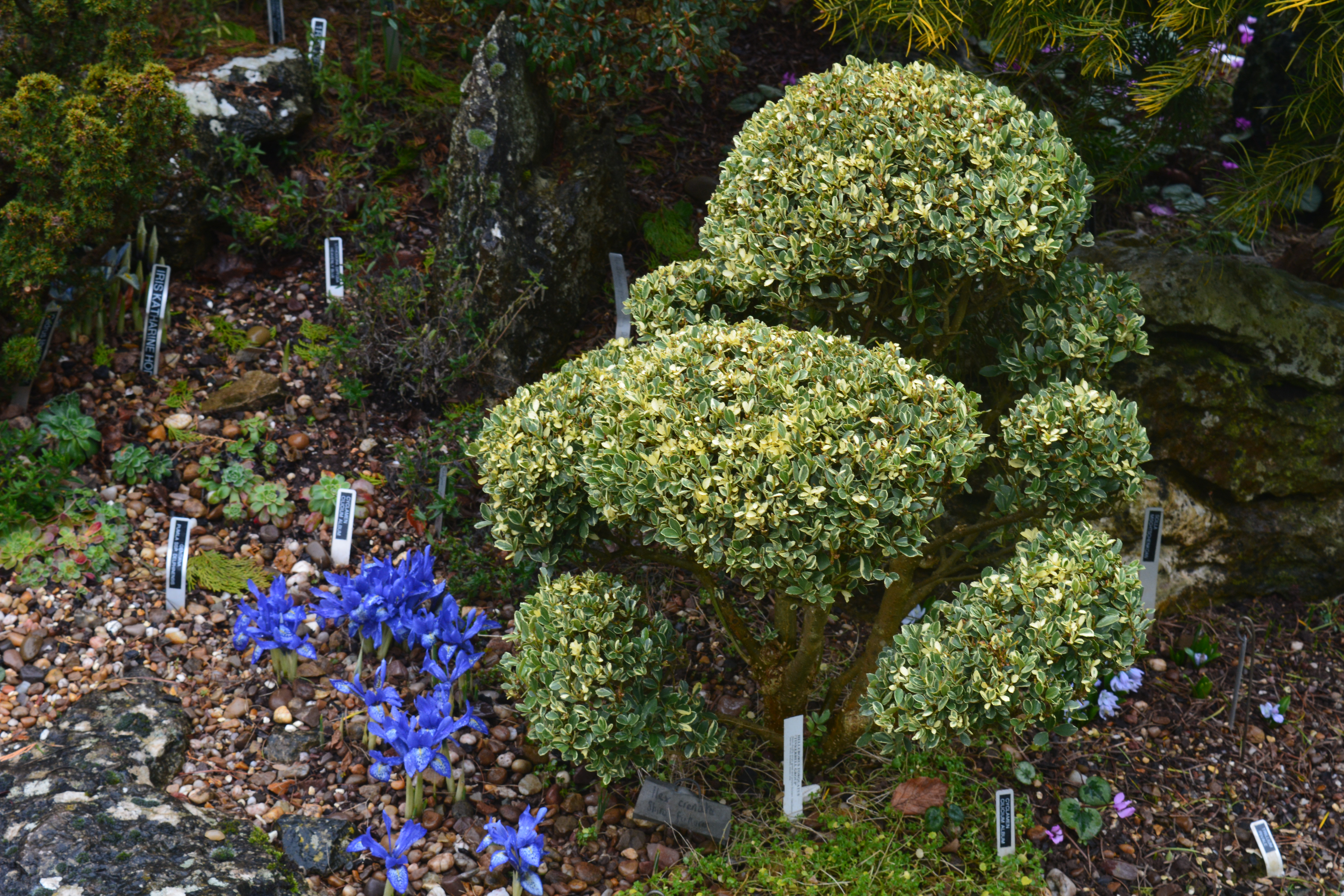
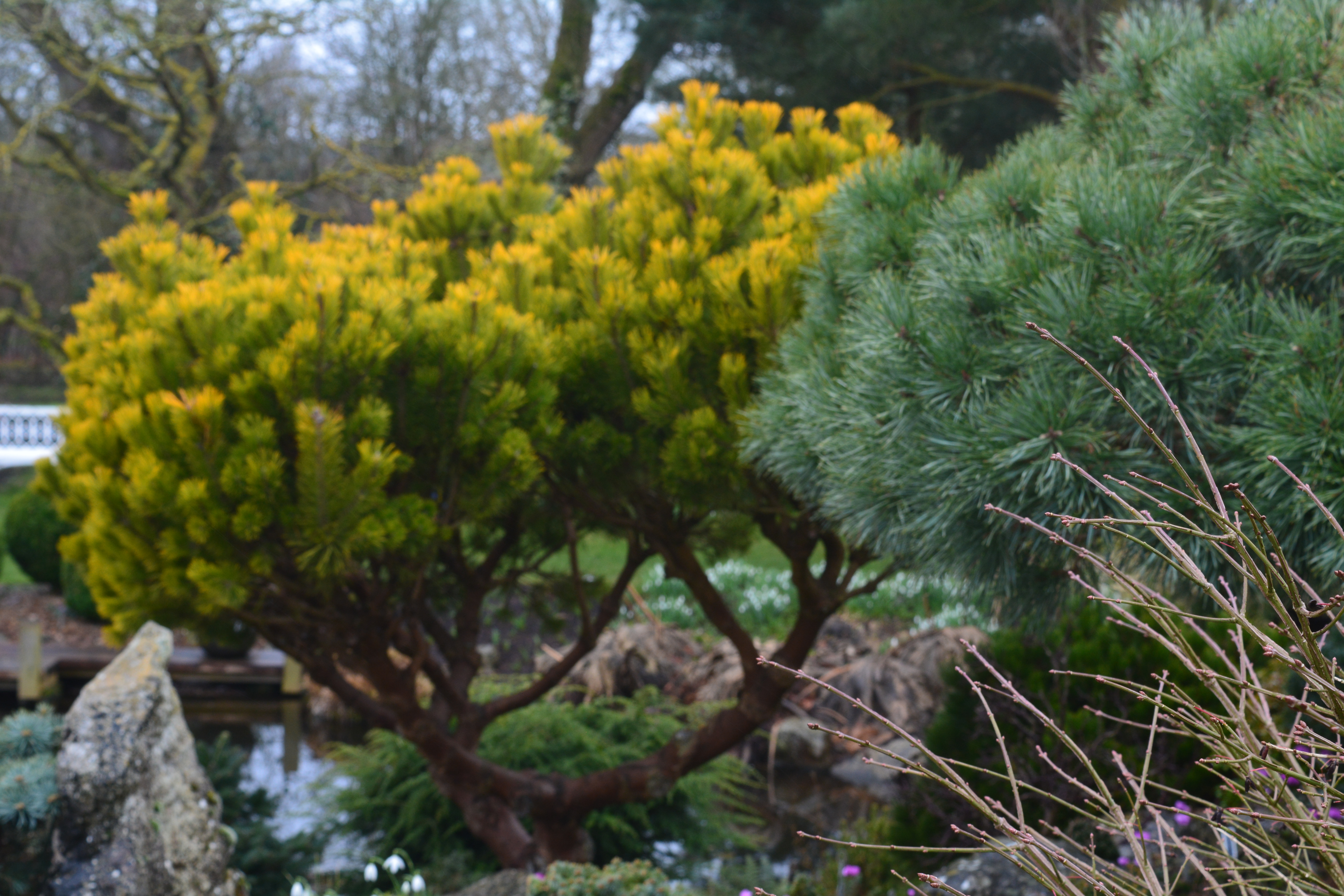
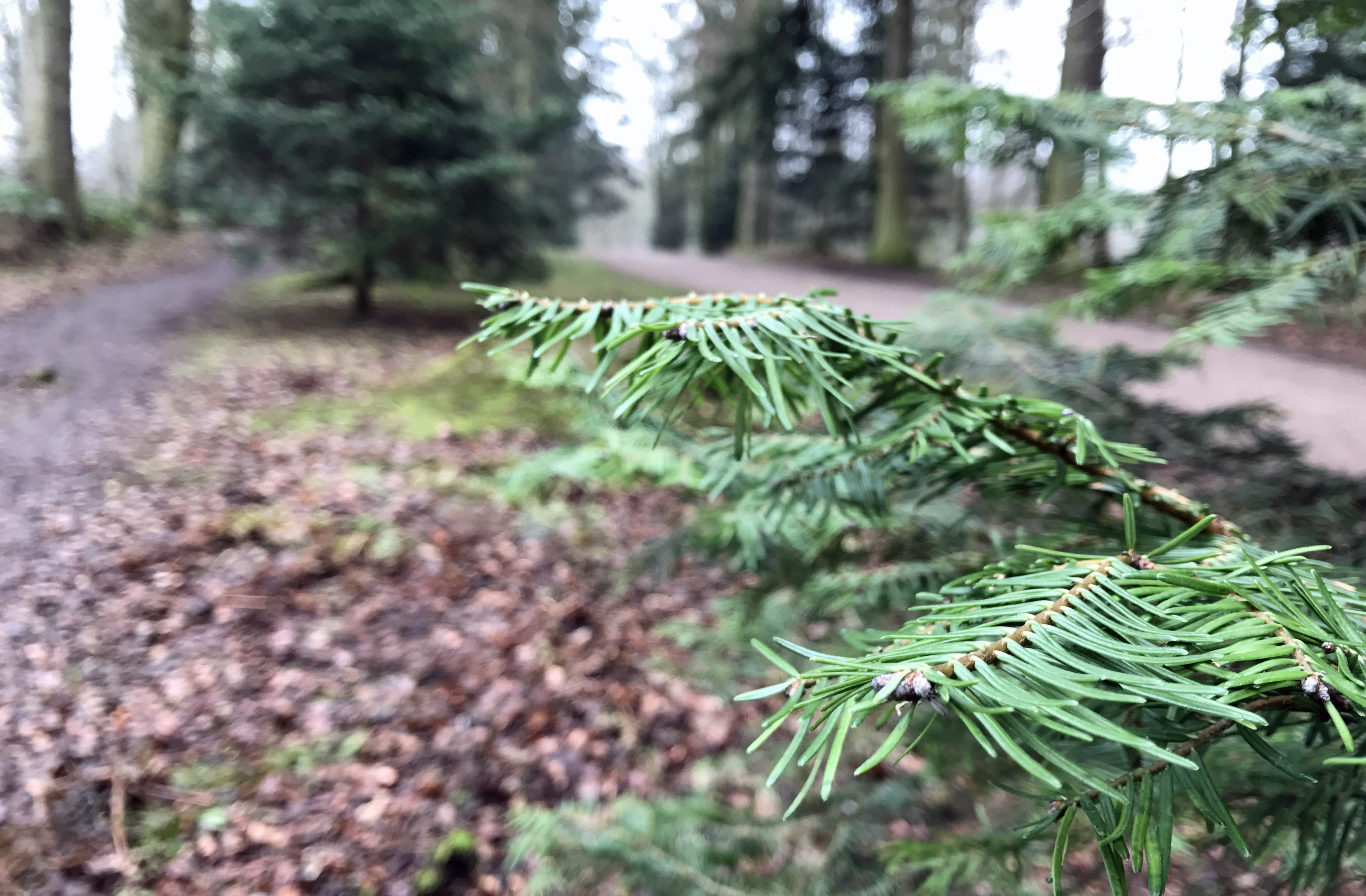
Soon after entering Adam’s Garden we met a collection of interesting conifers most of which we hadn’t come across before. Each had interesting features which made them stand out.
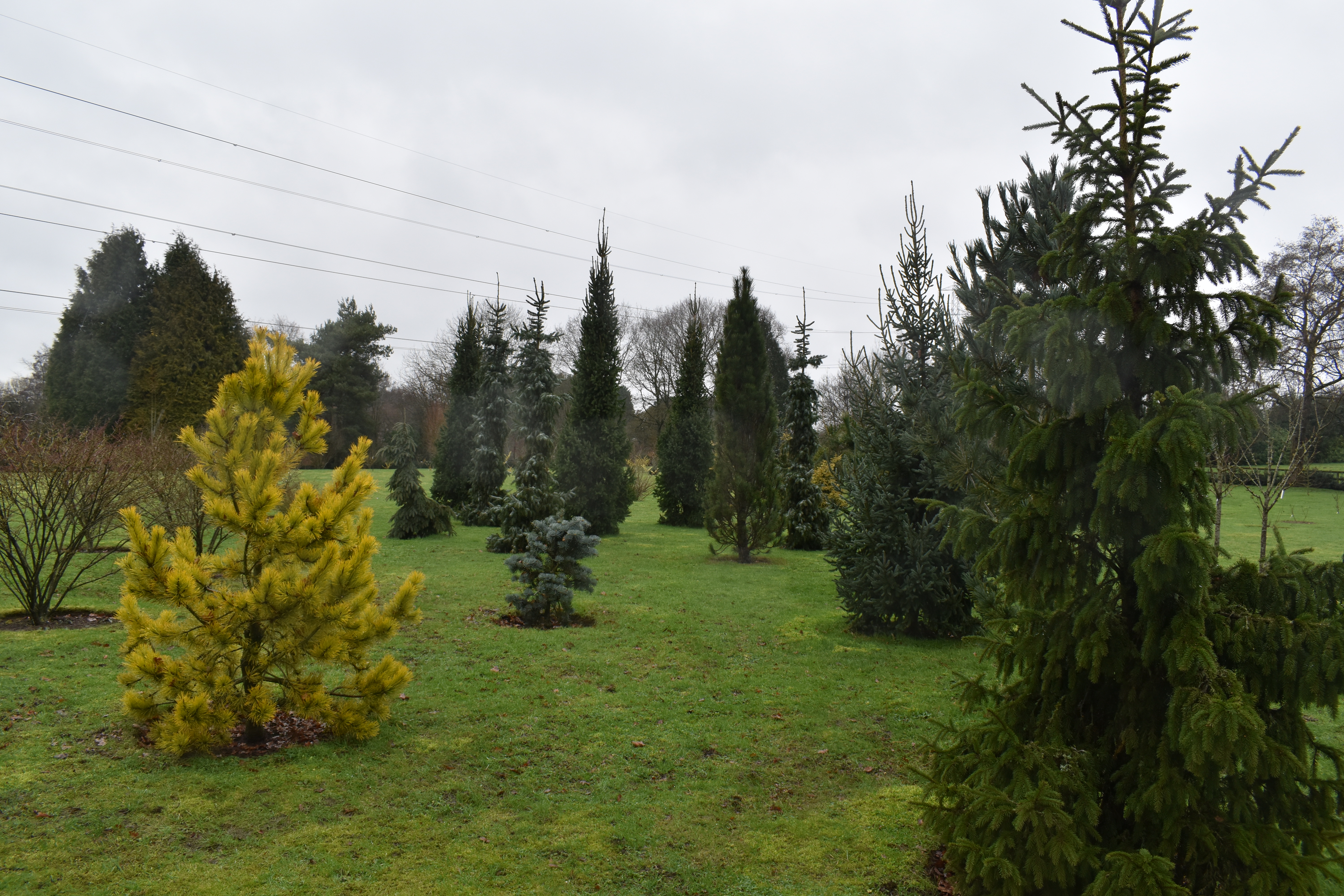
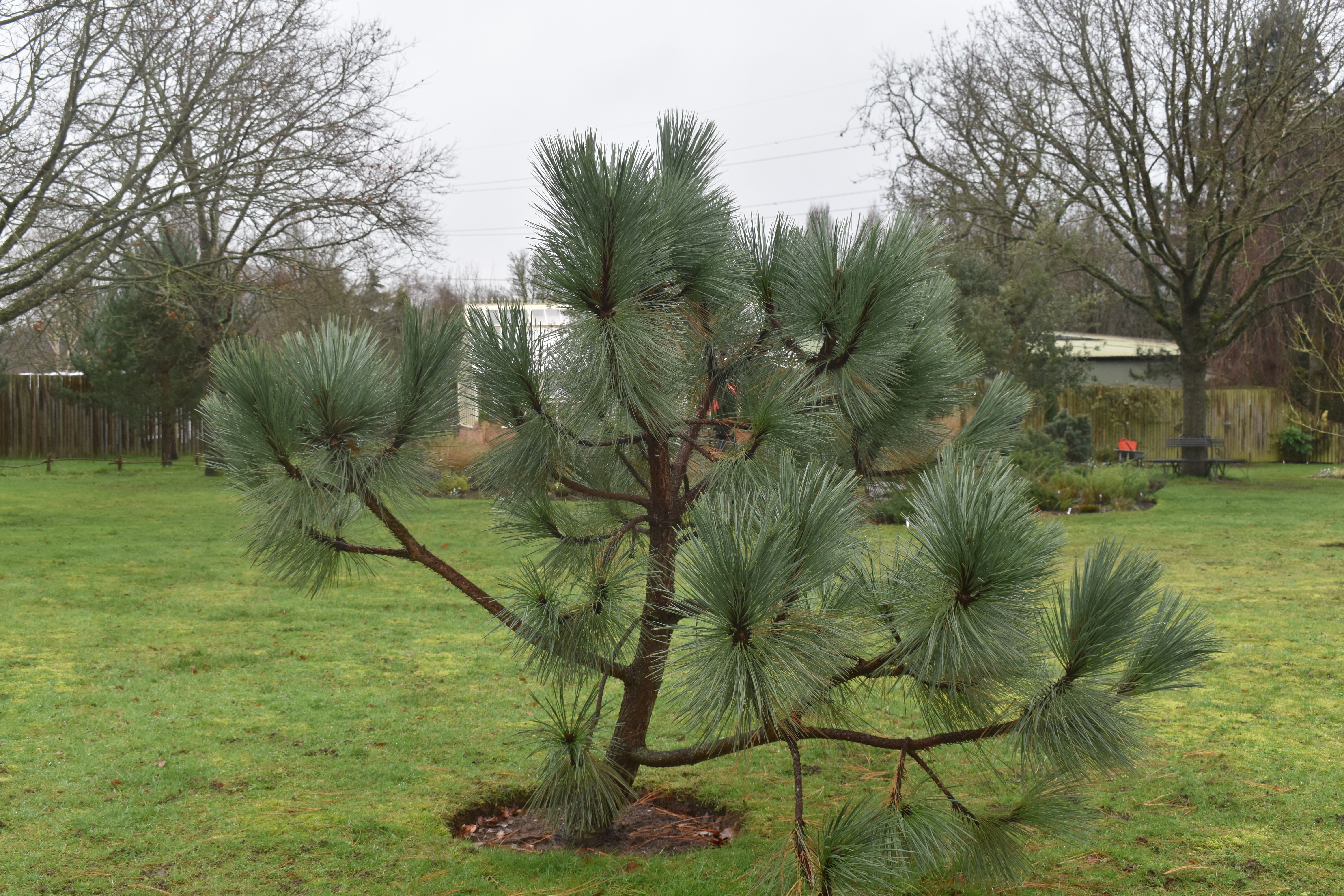
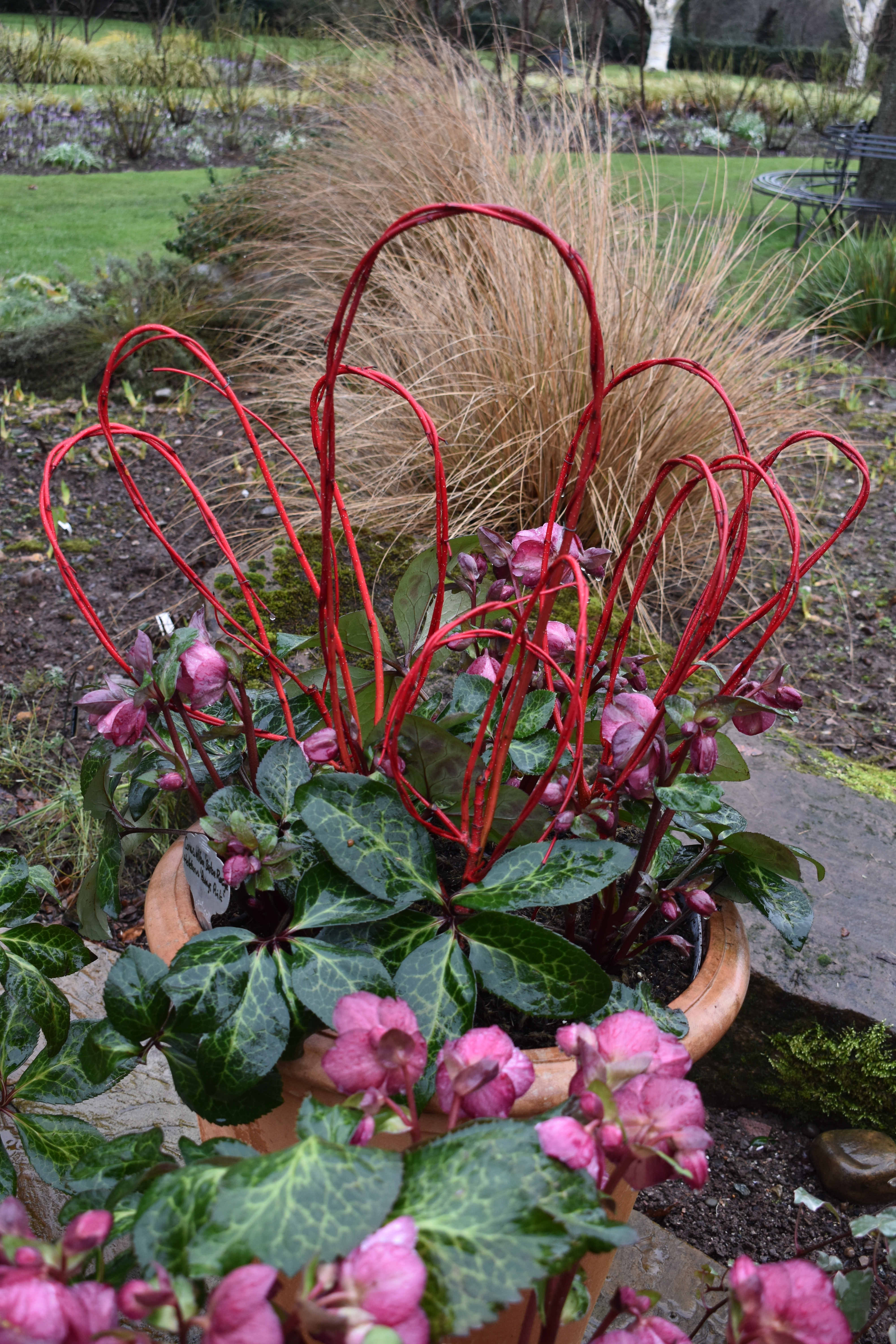
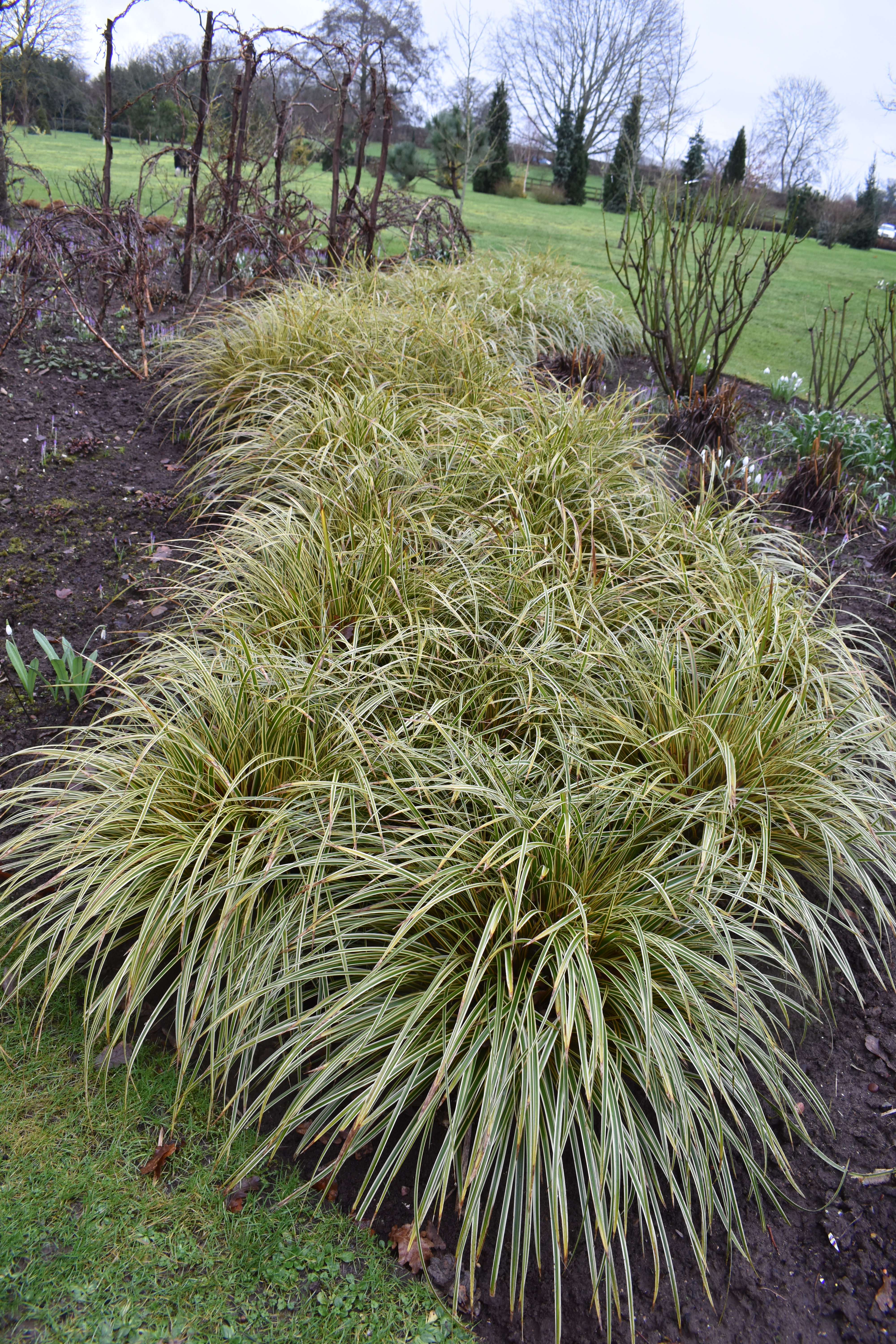
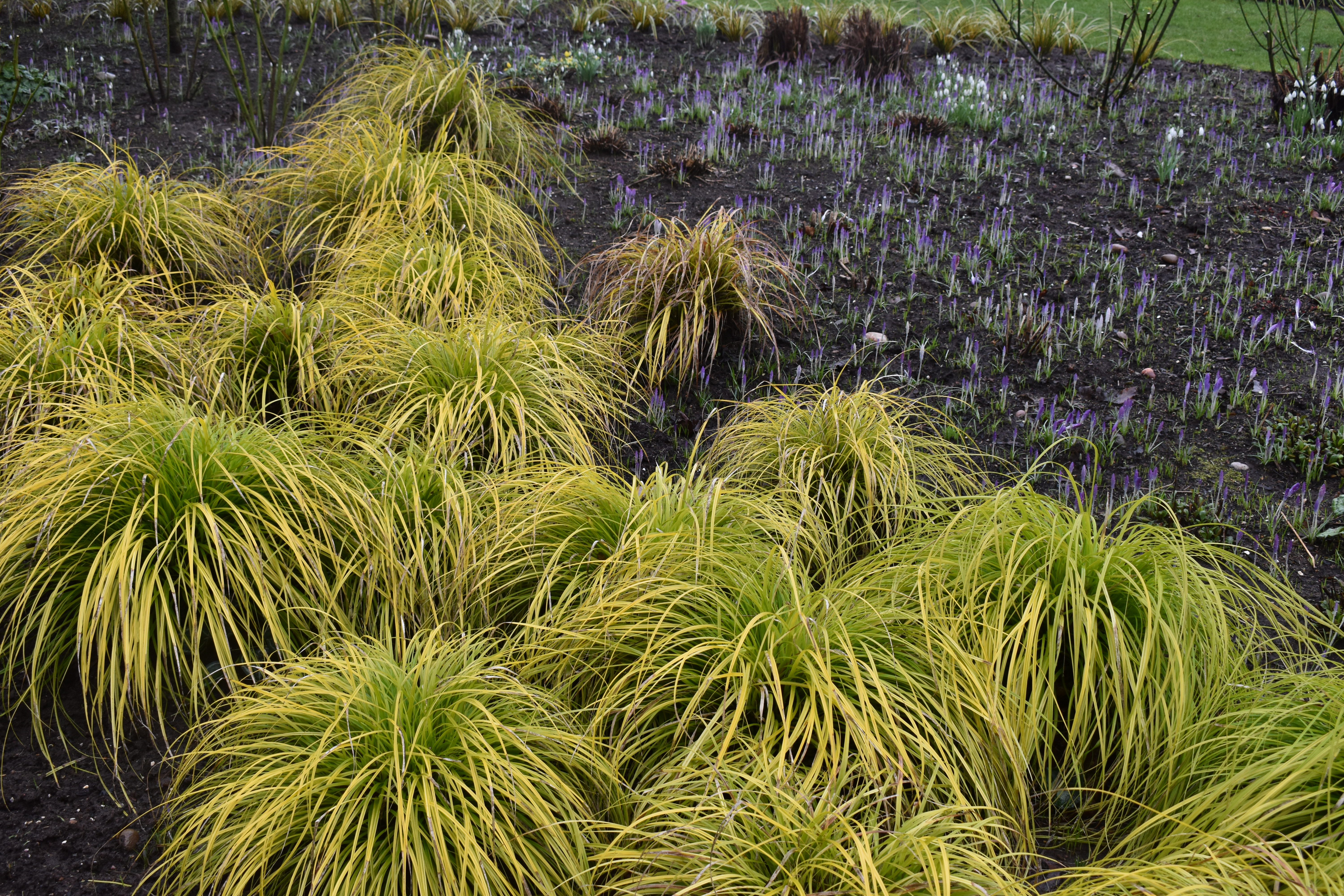
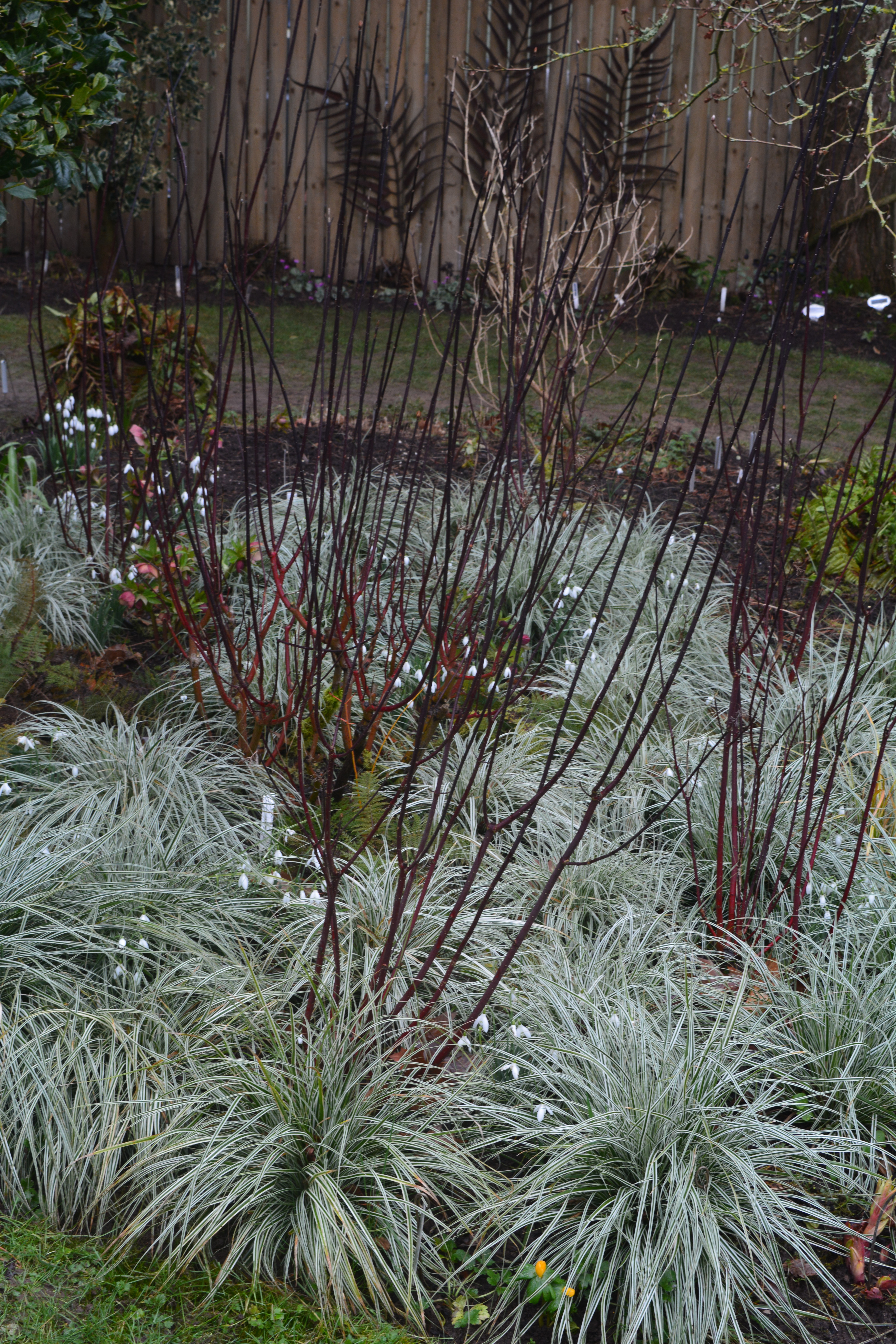
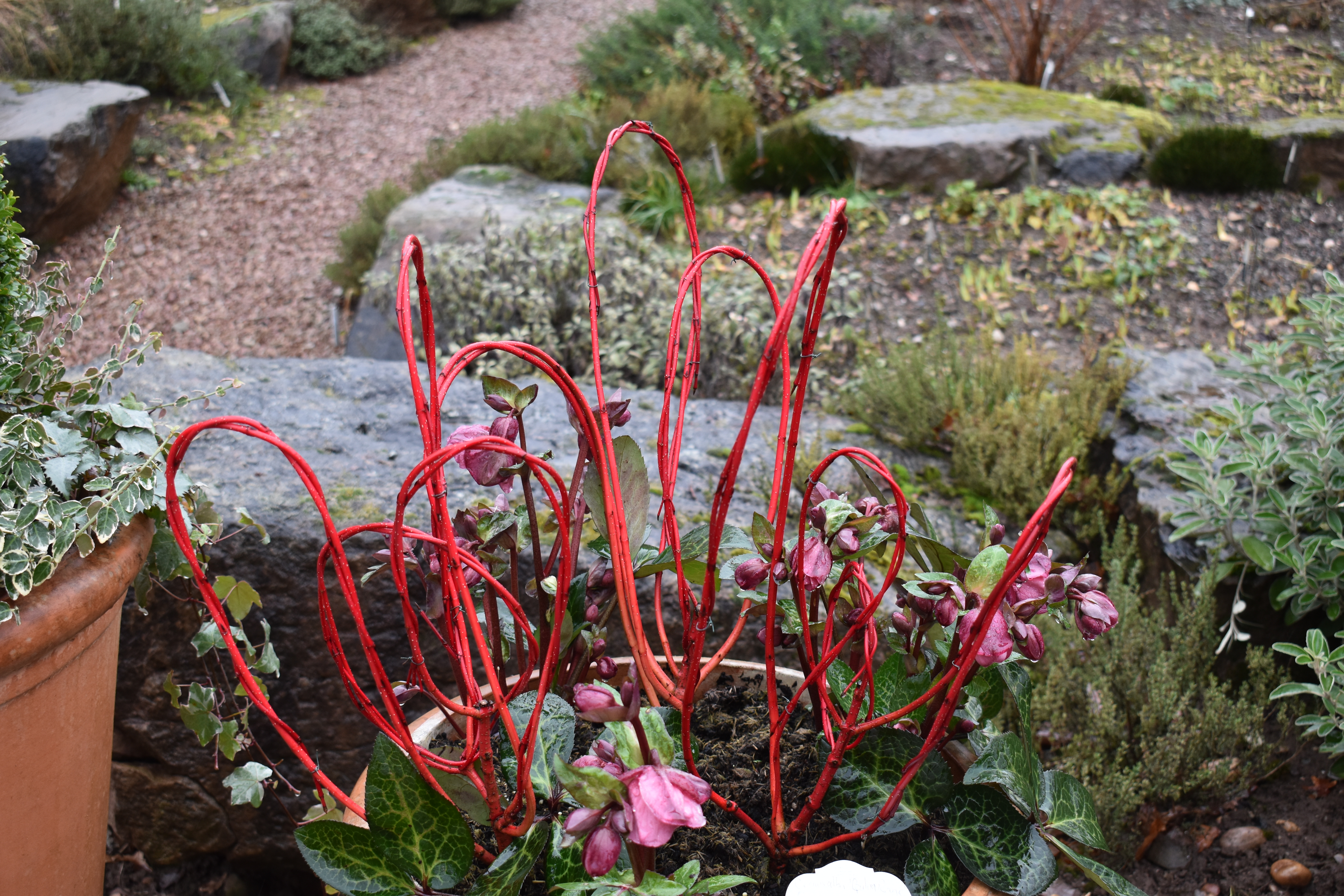
After studying the conifers, we wandered towards the glasshouse and the island beds. We were most impressed to see the way coloured stems had been used to add extra colour to containers of hellebores. The island beds showed how Carex can be used to create rivers of colour.
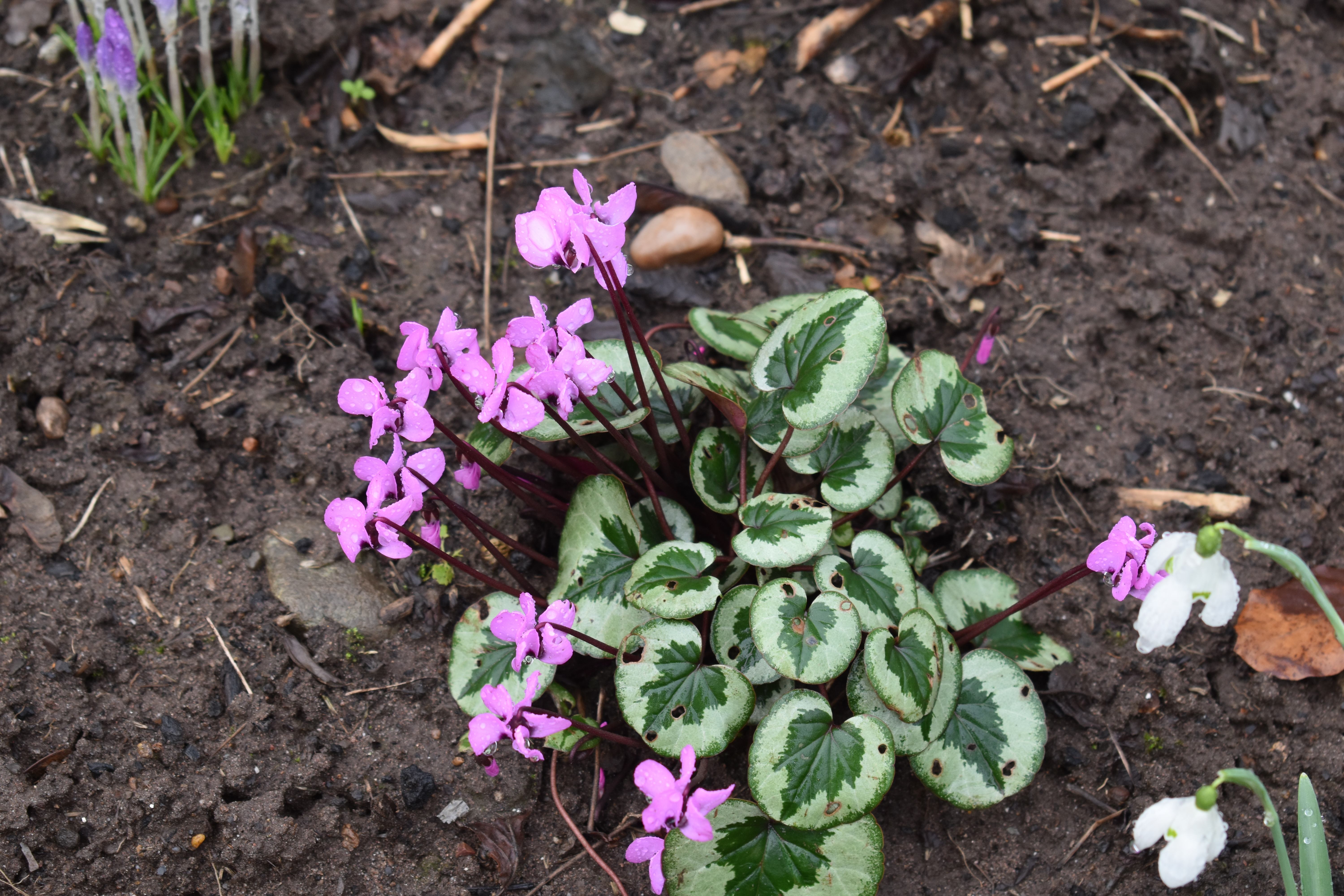
Walking around the perimeter of these borders gave us close up views of the many interesting plants, small shrubs, spring bulbs and perennials. While there, we met a garden student/apprentice who was so interesting to talk to and we were able to answer her many queries about other local gardens as well as our favourite national choices. She felt special to be working in John’s Garden and would soon be off to Great Dixter to work with Fergus. It is good to know that gardening is in good hands if youngsters are coming through with this level of enthusiasm.
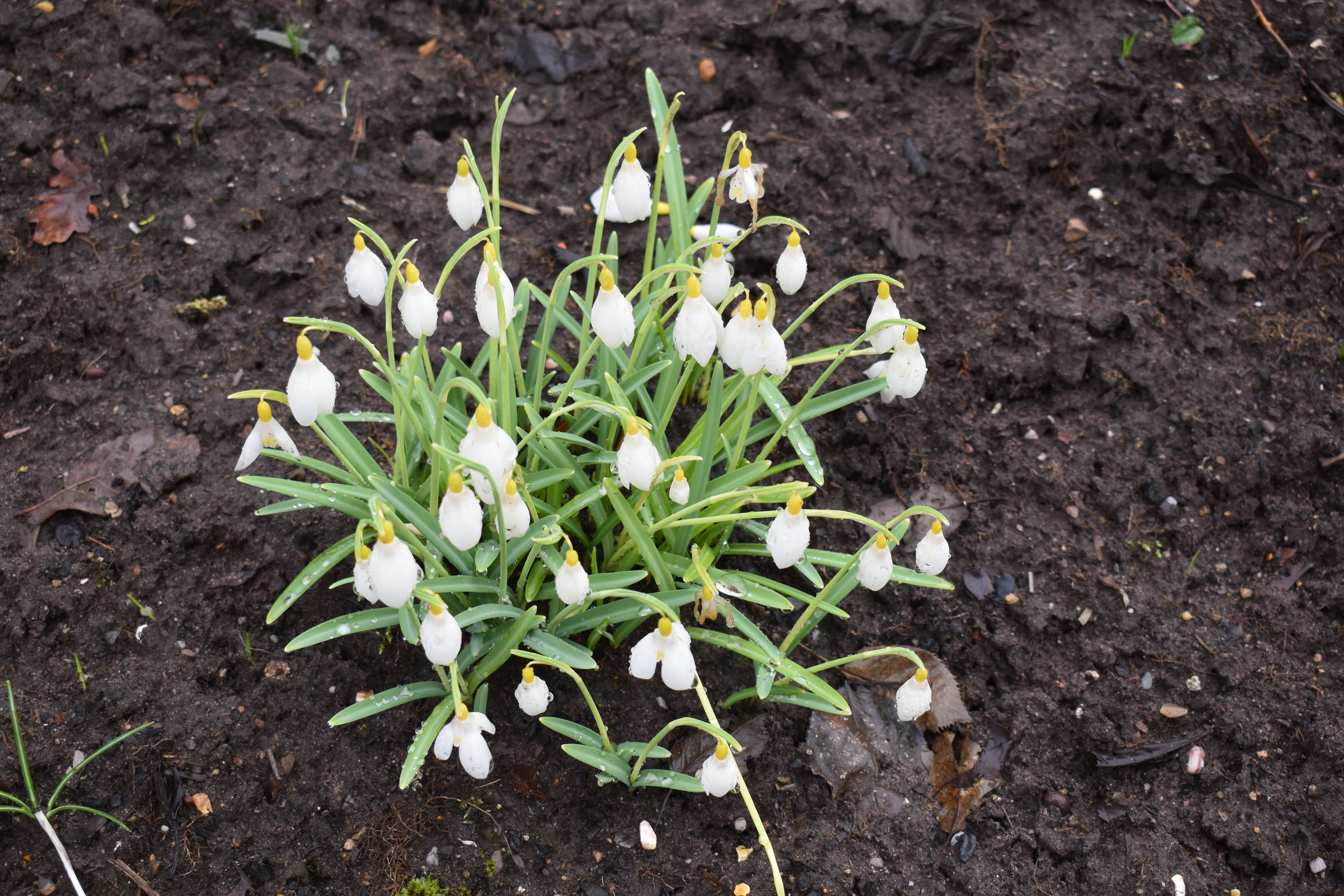
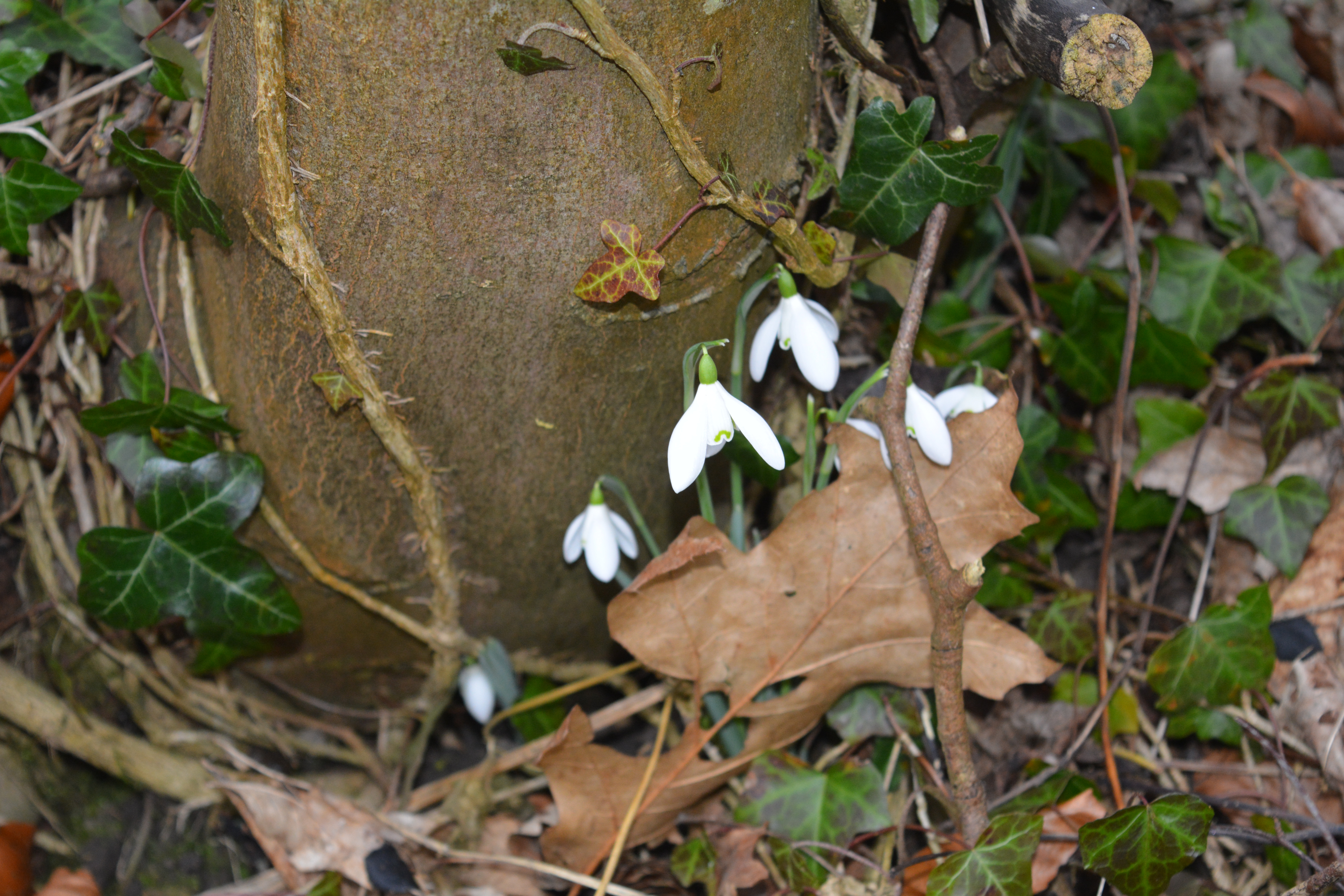
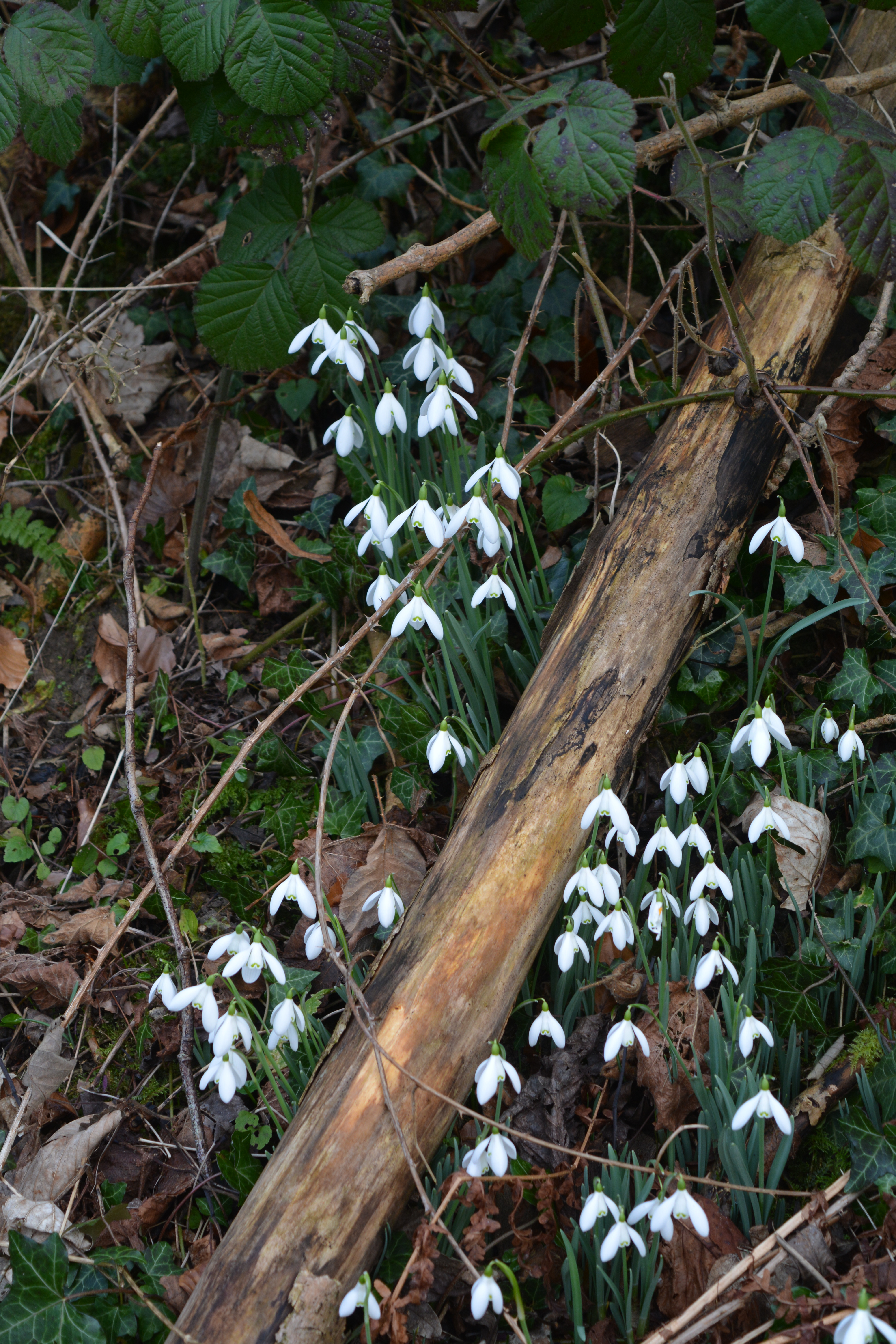
One of John’s favourite plants is the snowdrop and he has a large collection of special ones as well as large clumps of G. nivea.
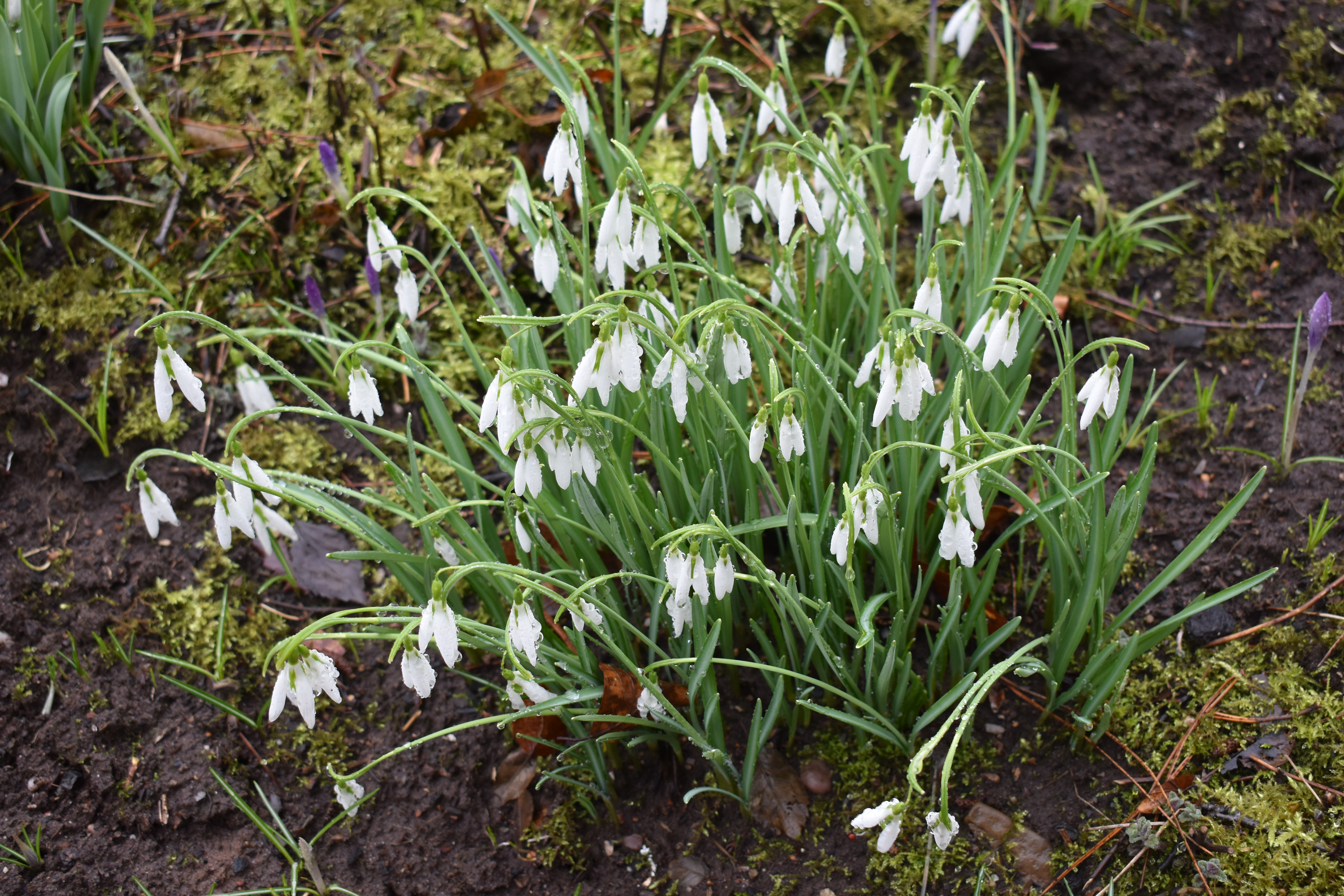
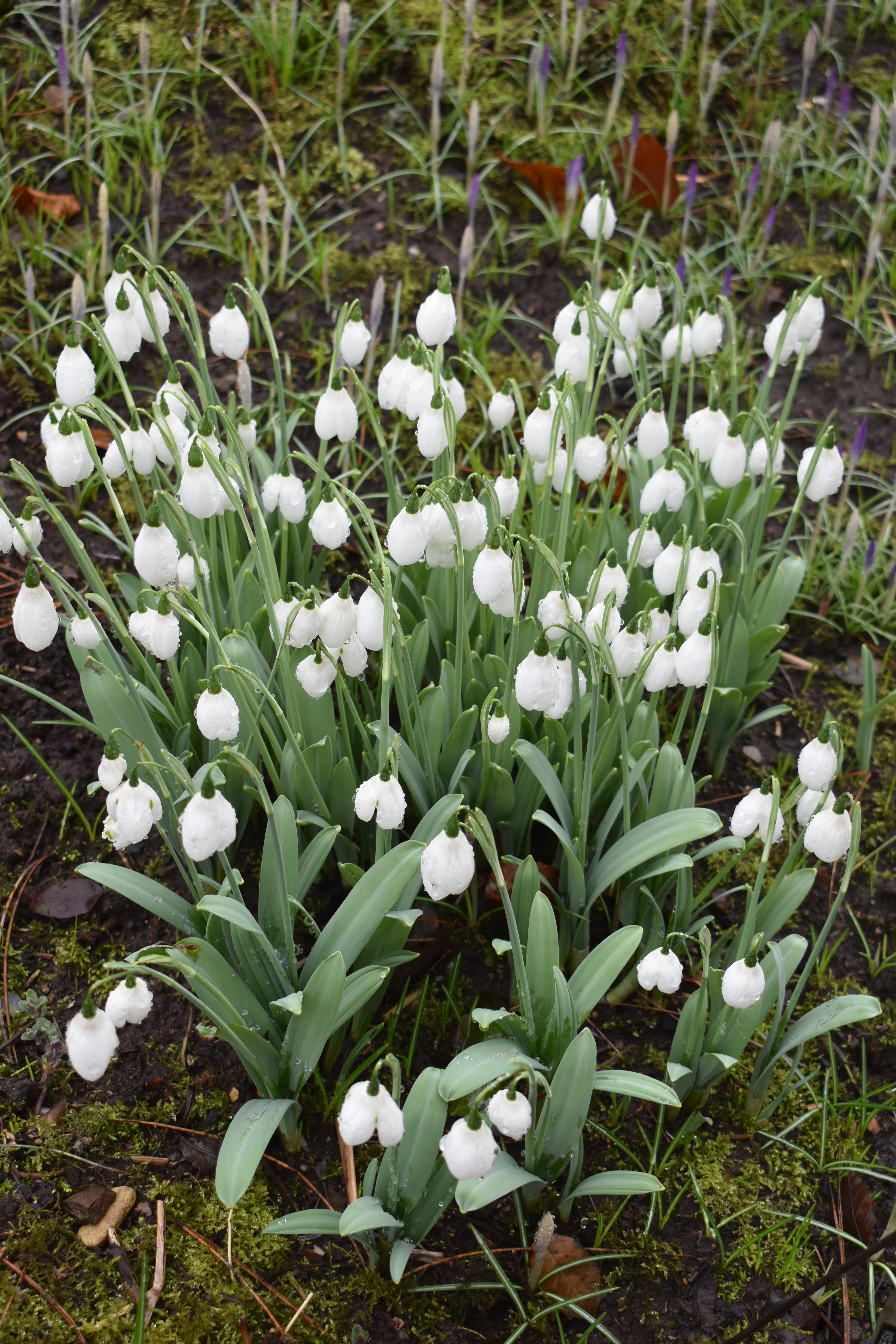
G. Wasp G. elwesii ‘Natalie Garton’

Two of the selection with golden features on the flowers.
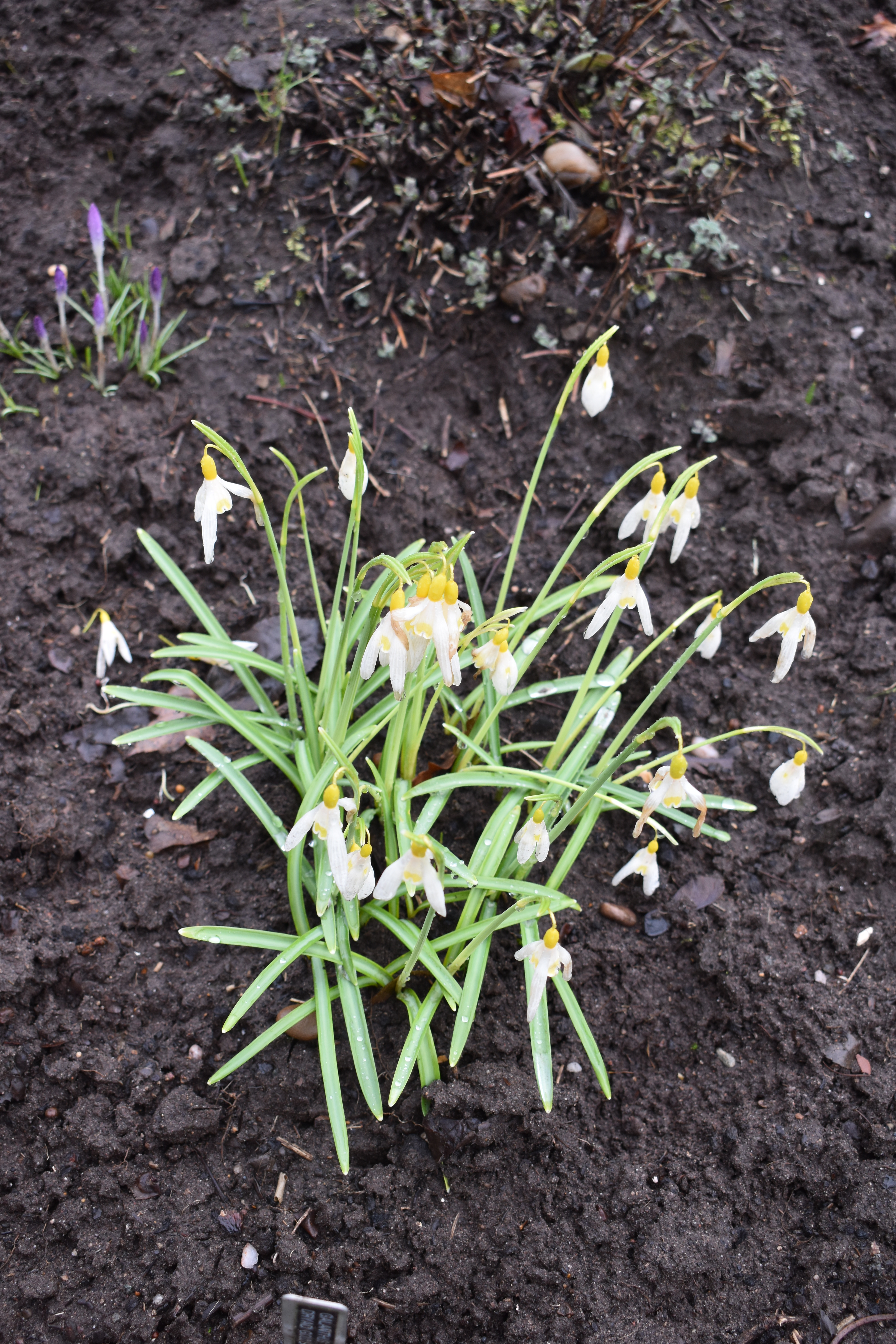
G. Dryad Gold Sovereign G. Dryad Gold Bullion

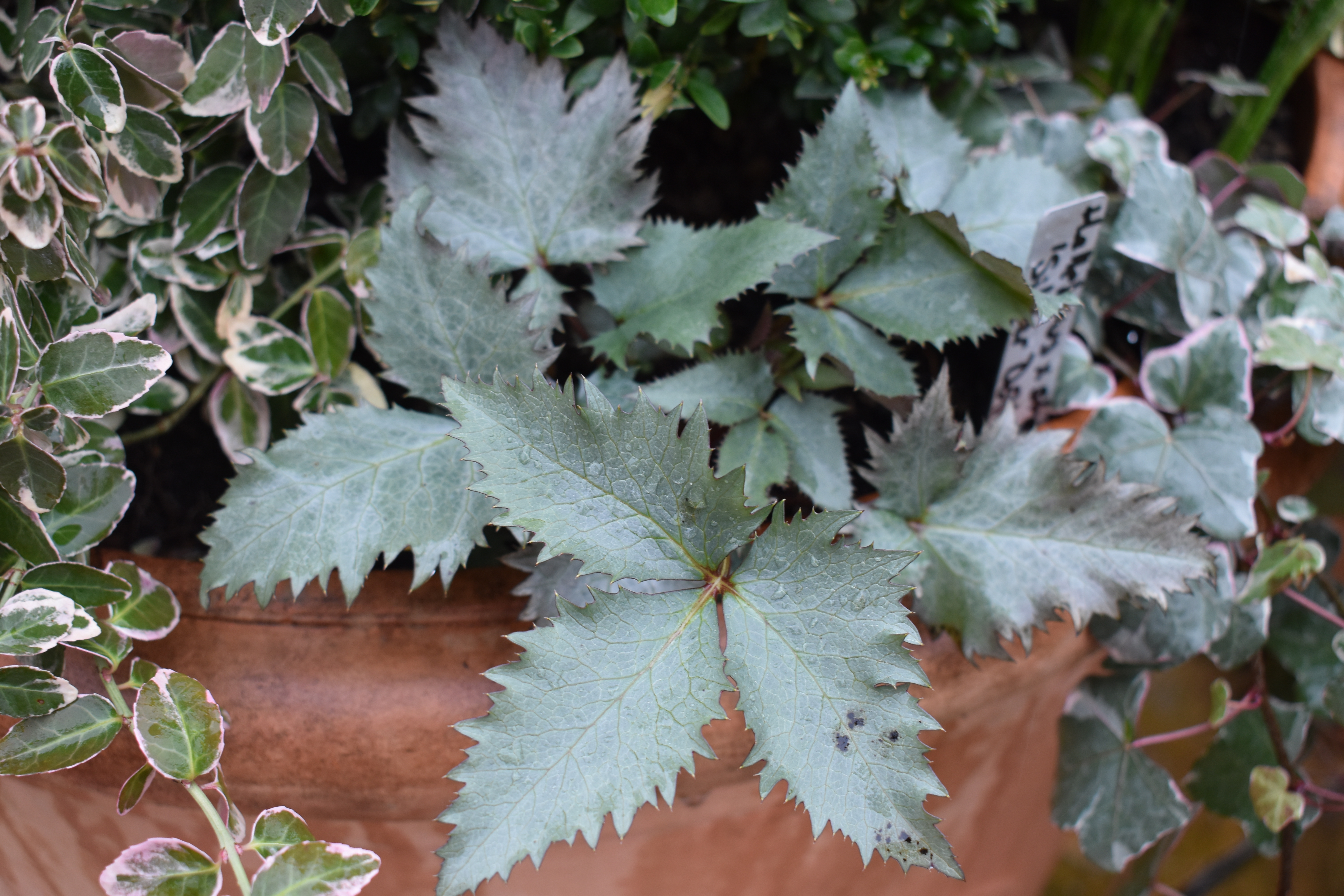
We were then very much surprised to see one with interesting foliage, broad mid-green leaves with a silver centre. Equally our eyes were drawn to the flowers of the next selection with extra green on some of their petals.
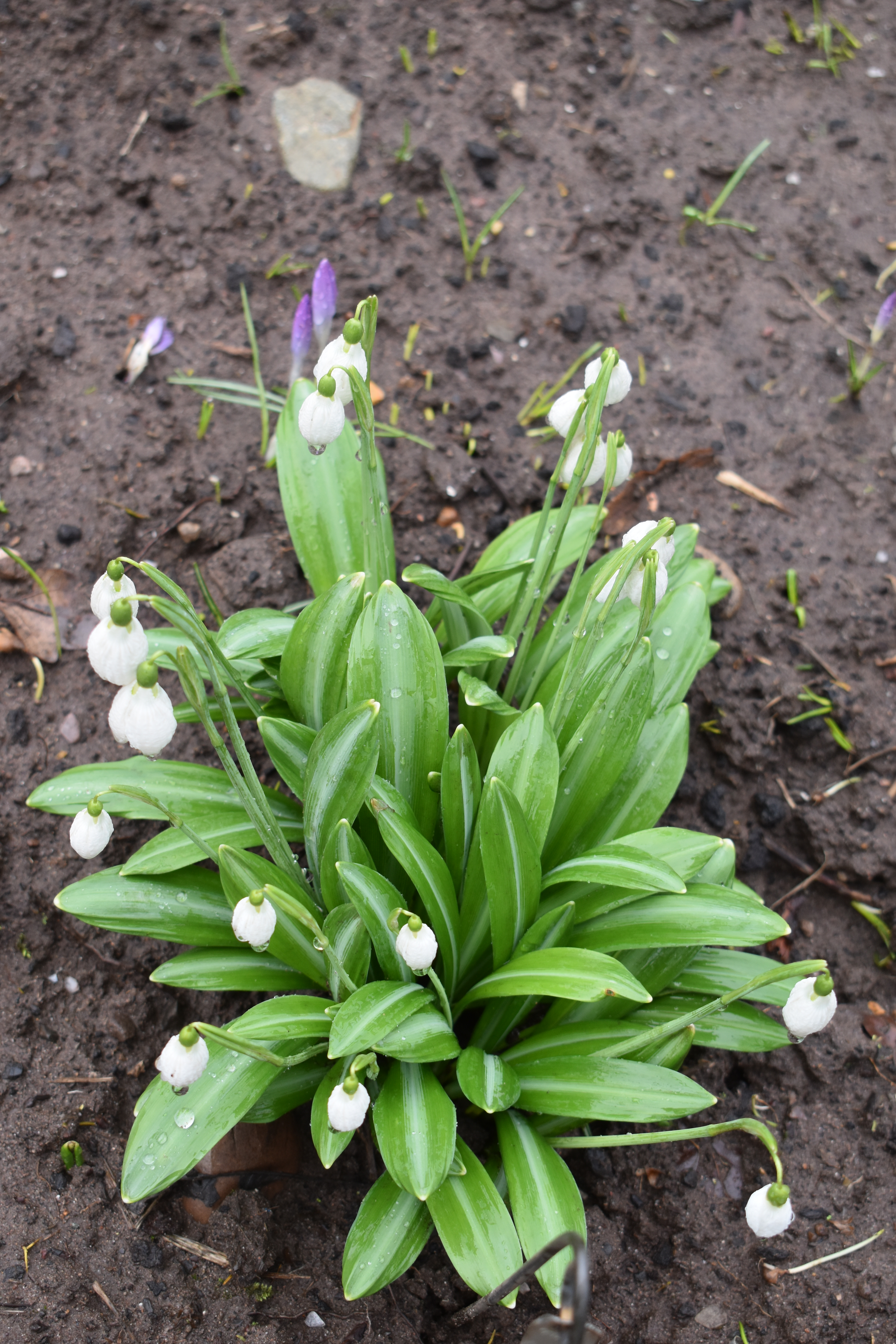
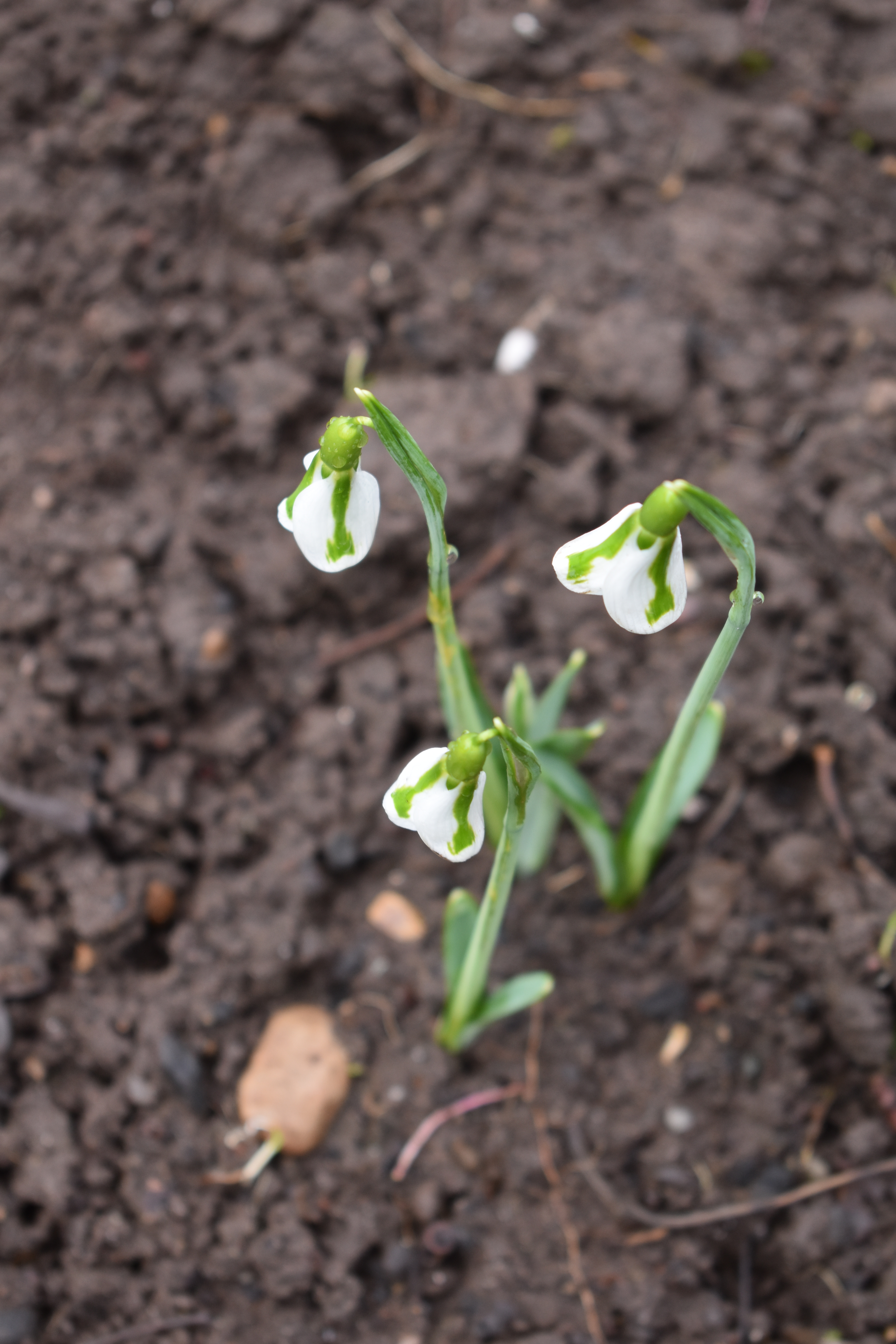
G. ‘Spring Cottage’. G. ‘South Hayes’

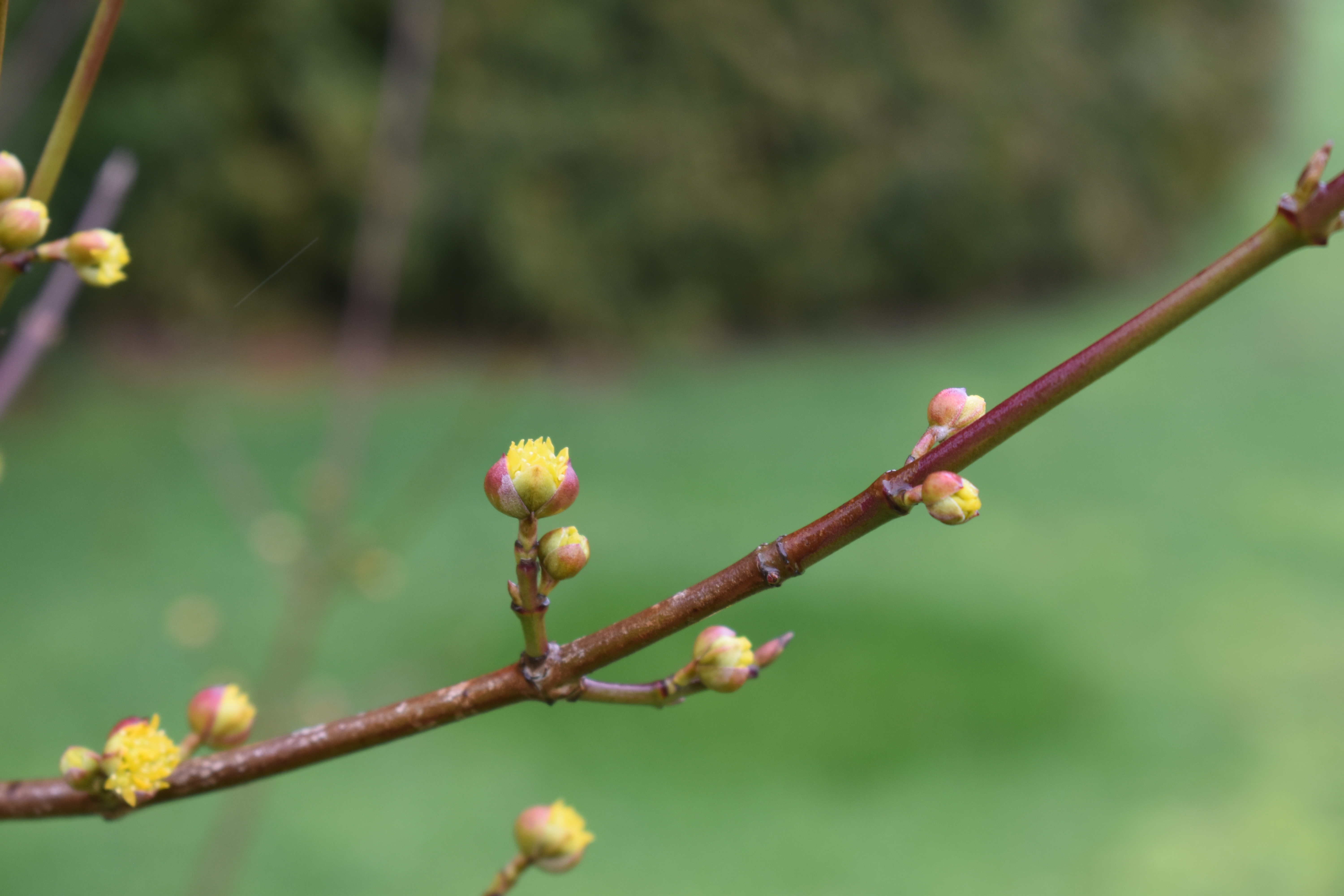
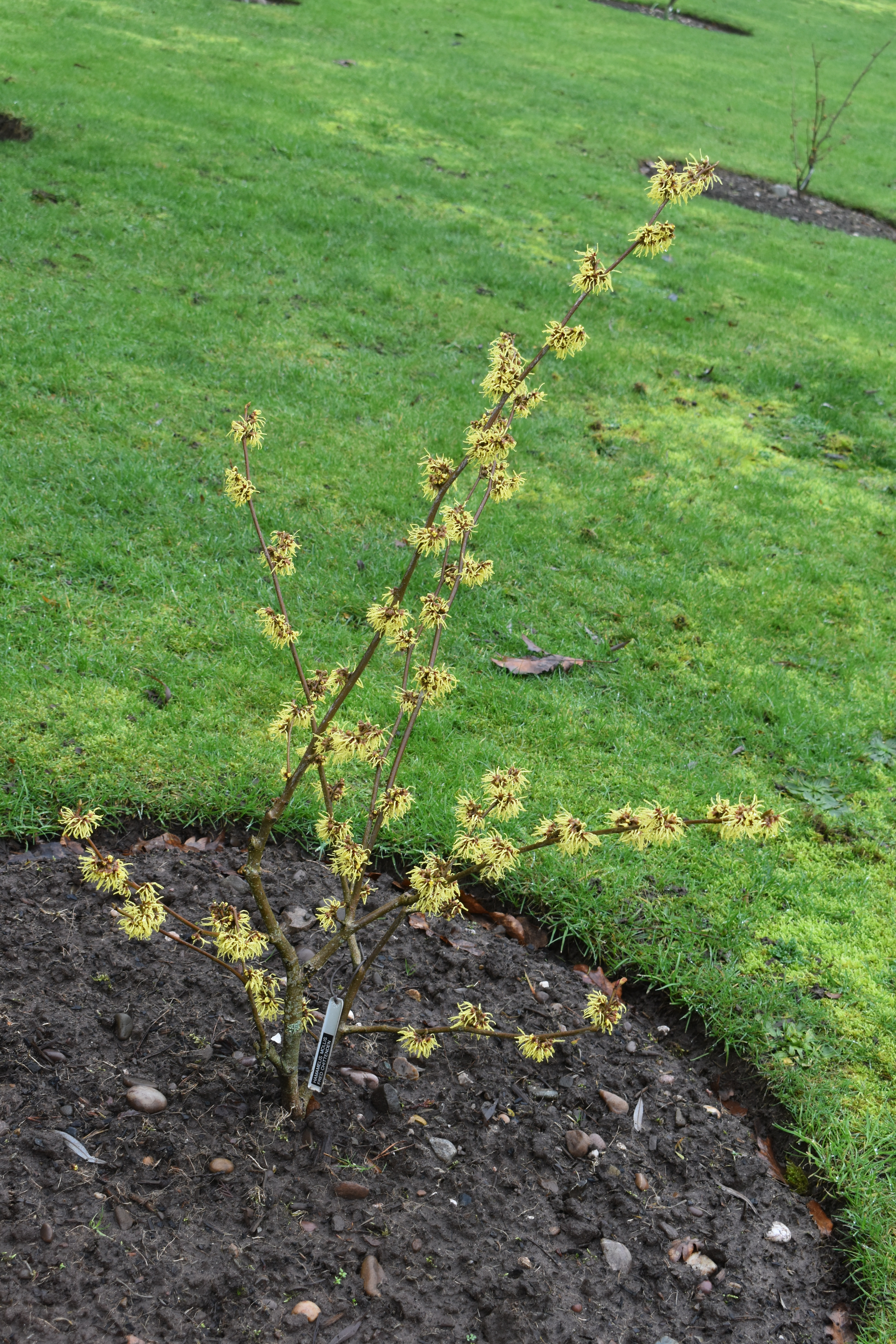
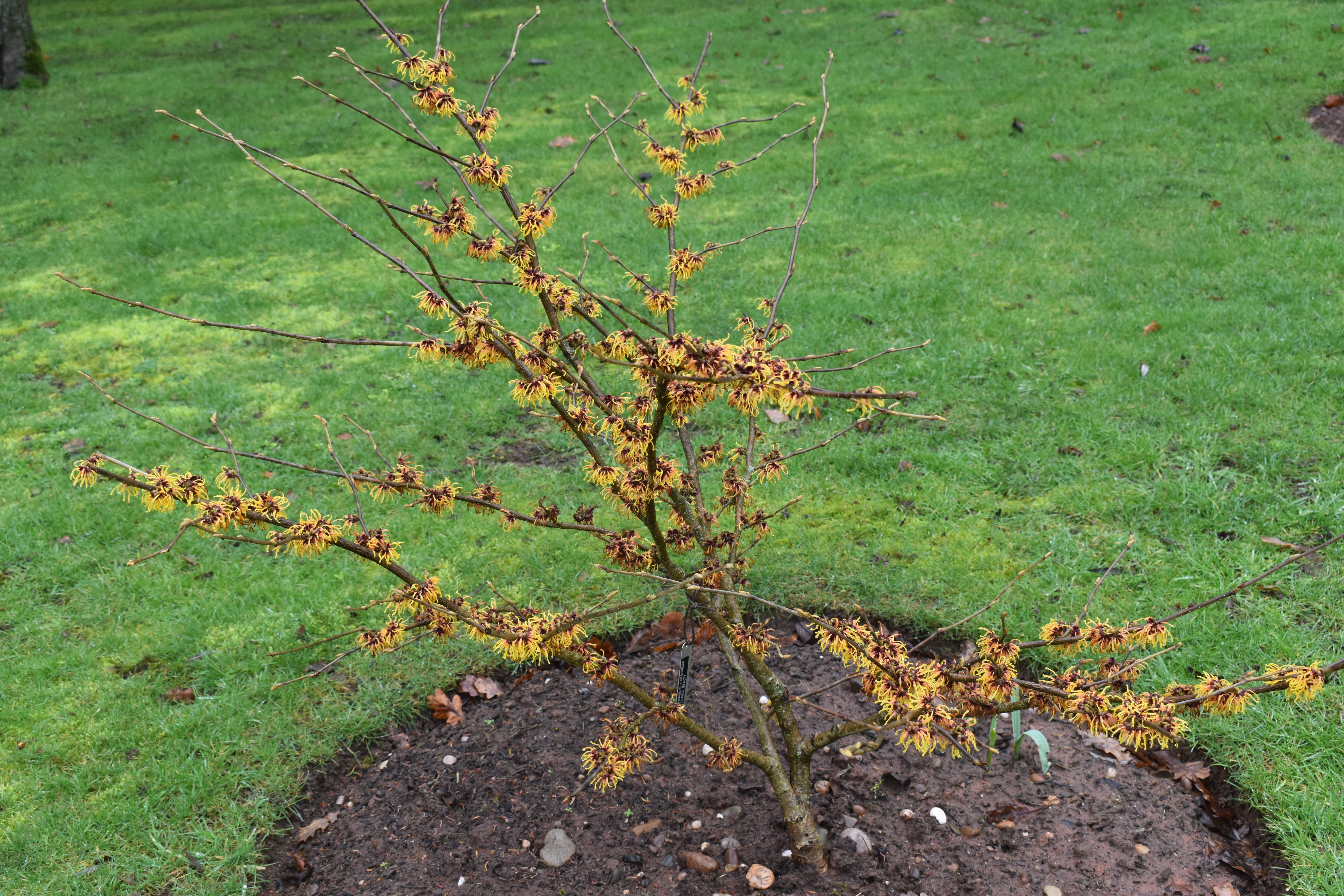
We then traced the fence separating ‘Adam’s Garden’ from the main part of ‘John’s Garden’ and looked out for the shrubs in the border this side of the fence, which then took us to some interesting trees and back to ‘Adam’s Garden’ where we were drawn to the large selection of Witch Hazels.
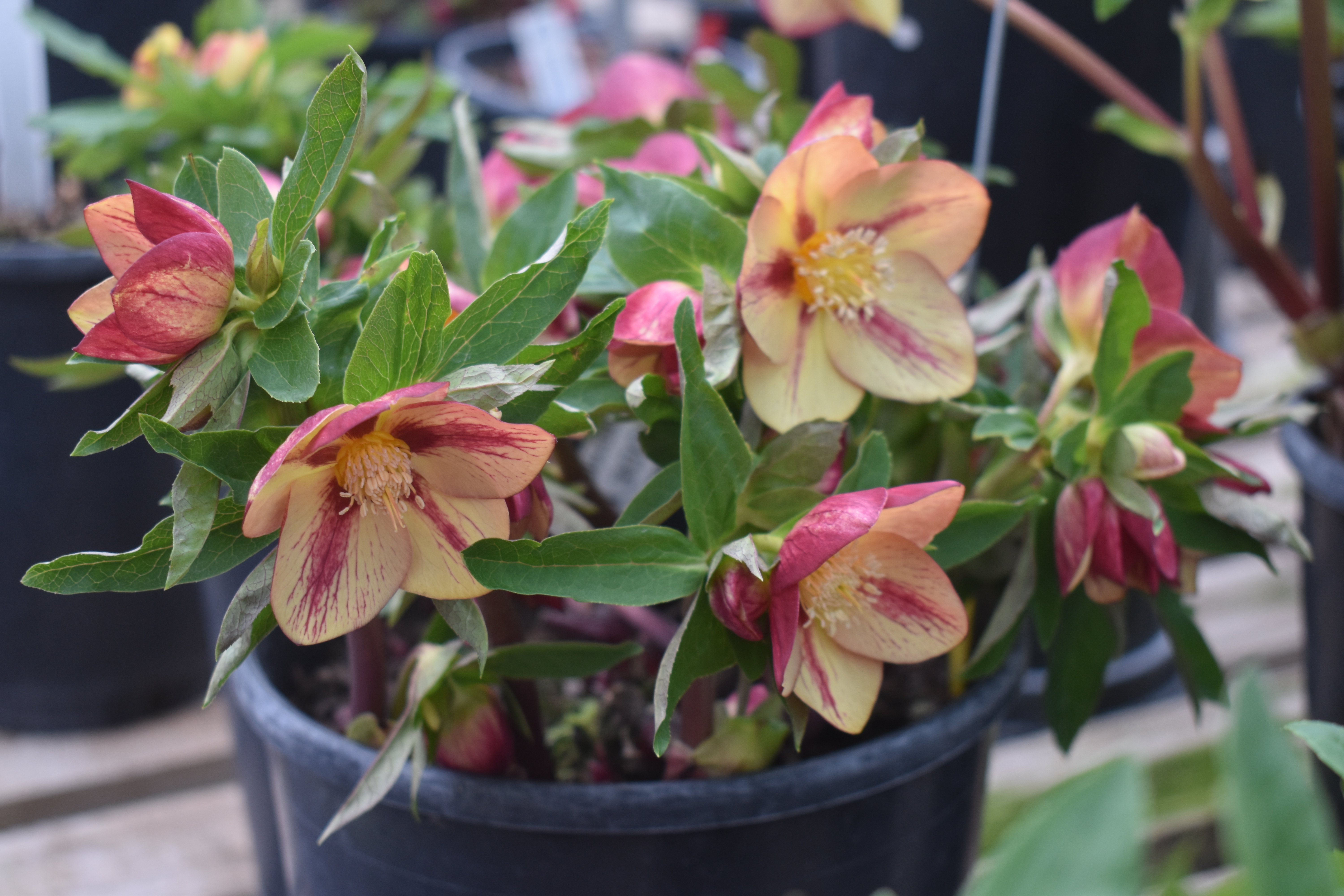
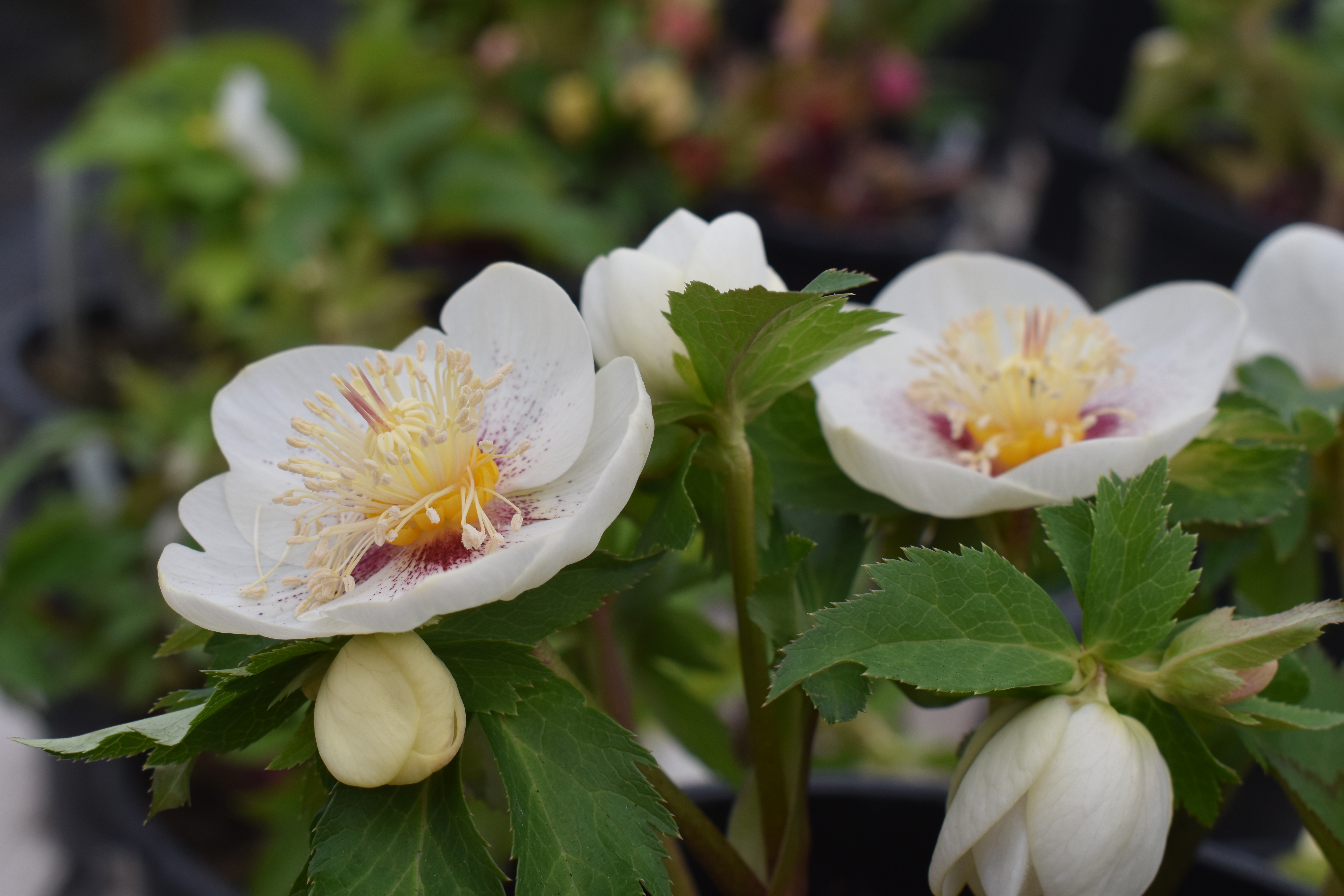
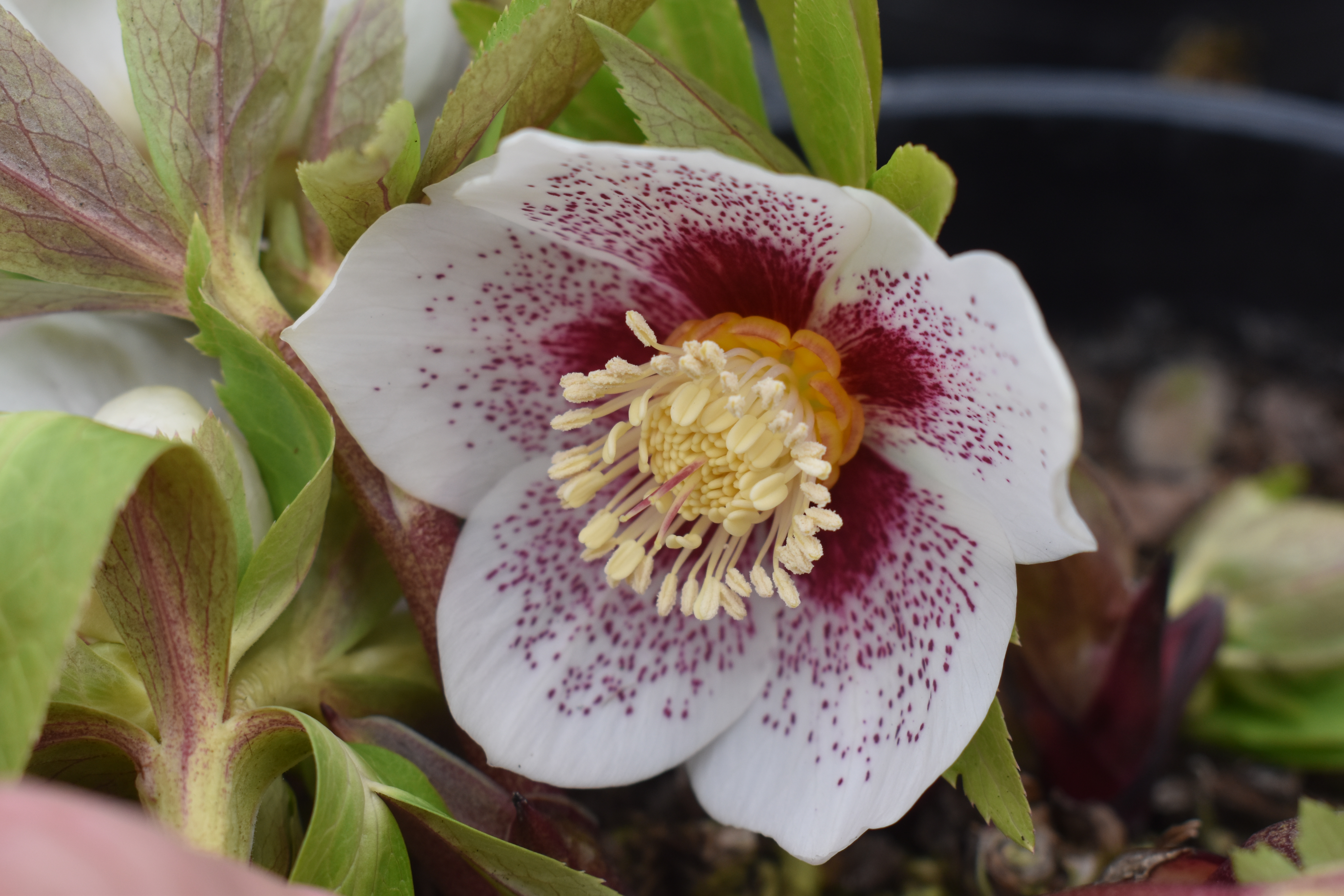
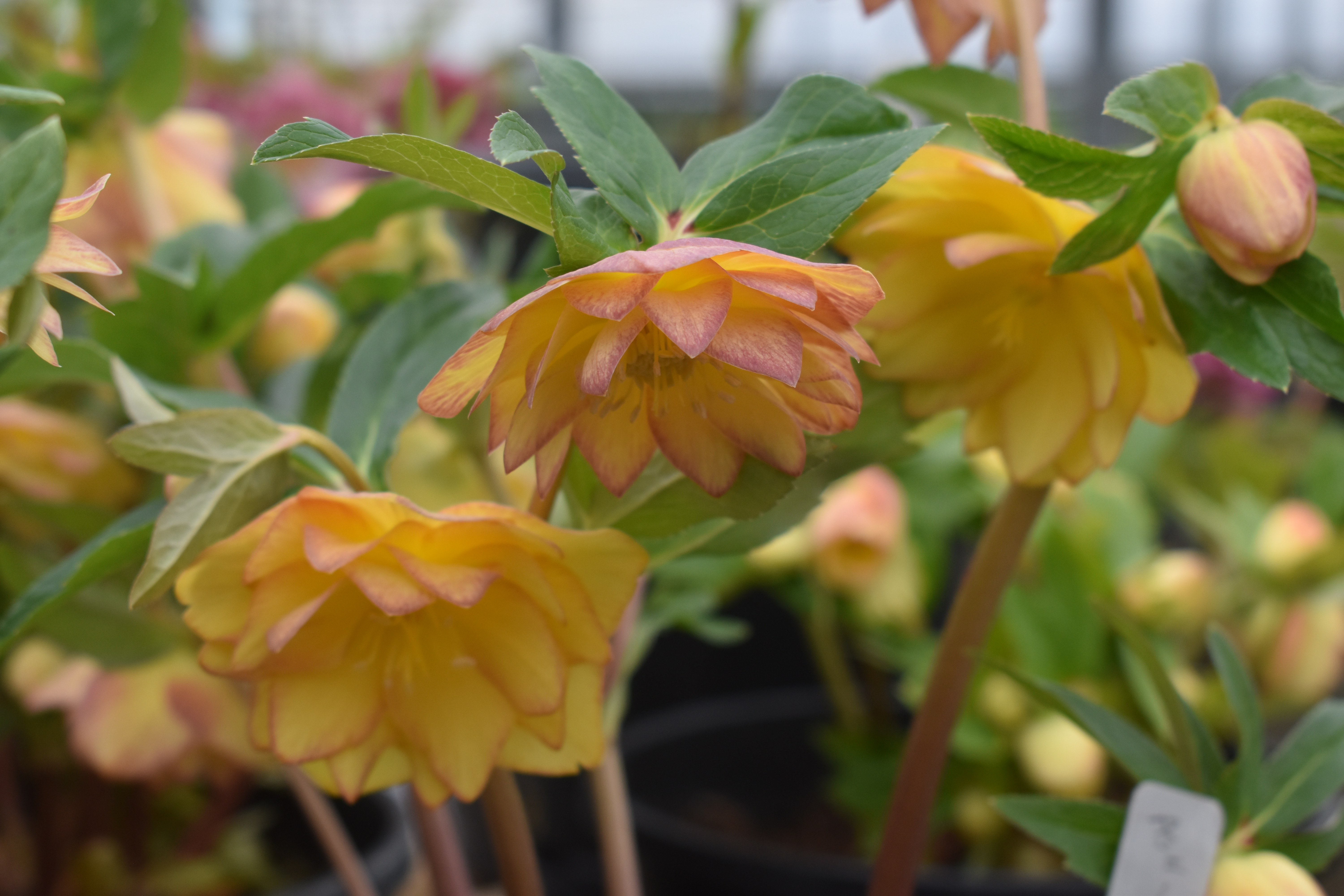
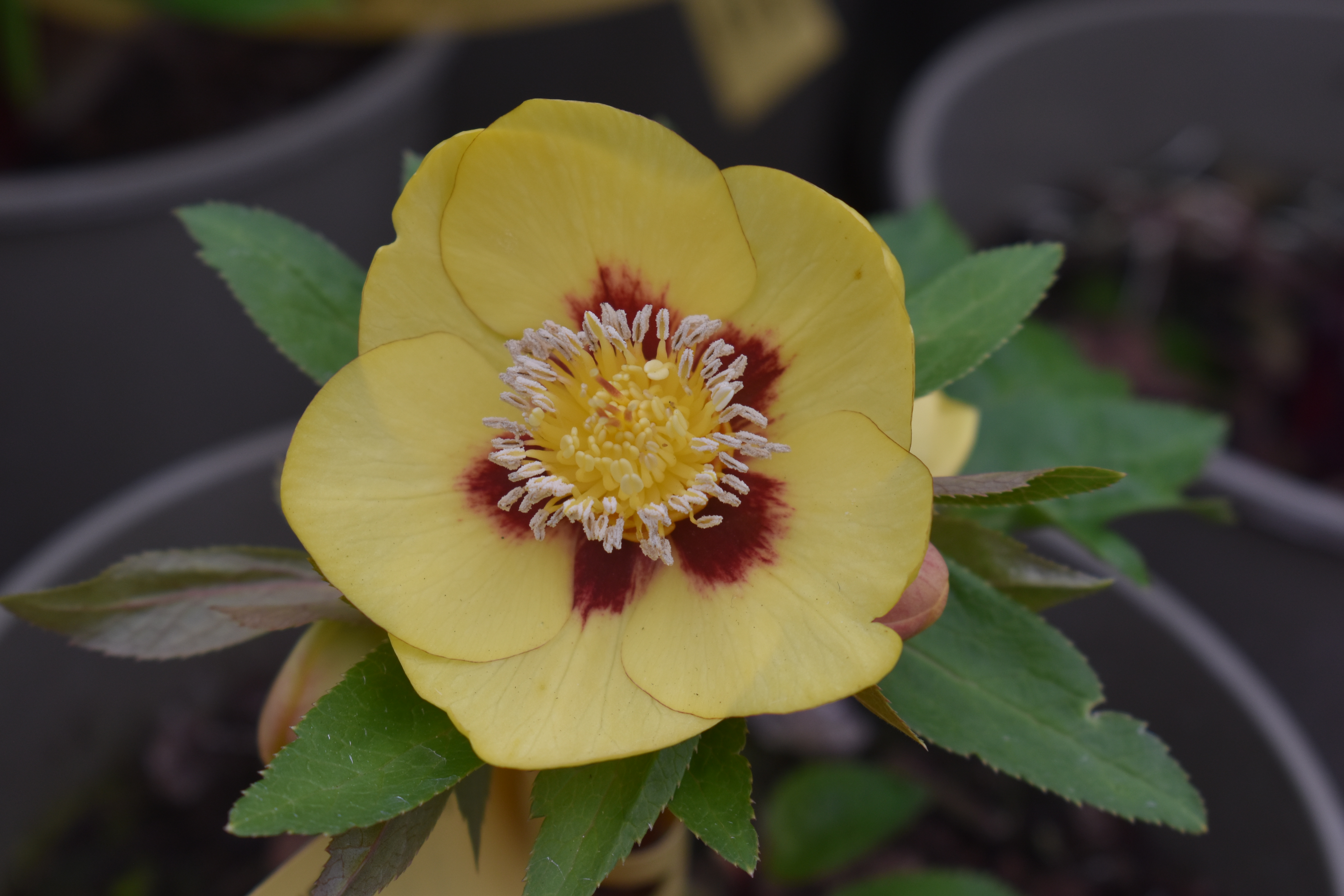
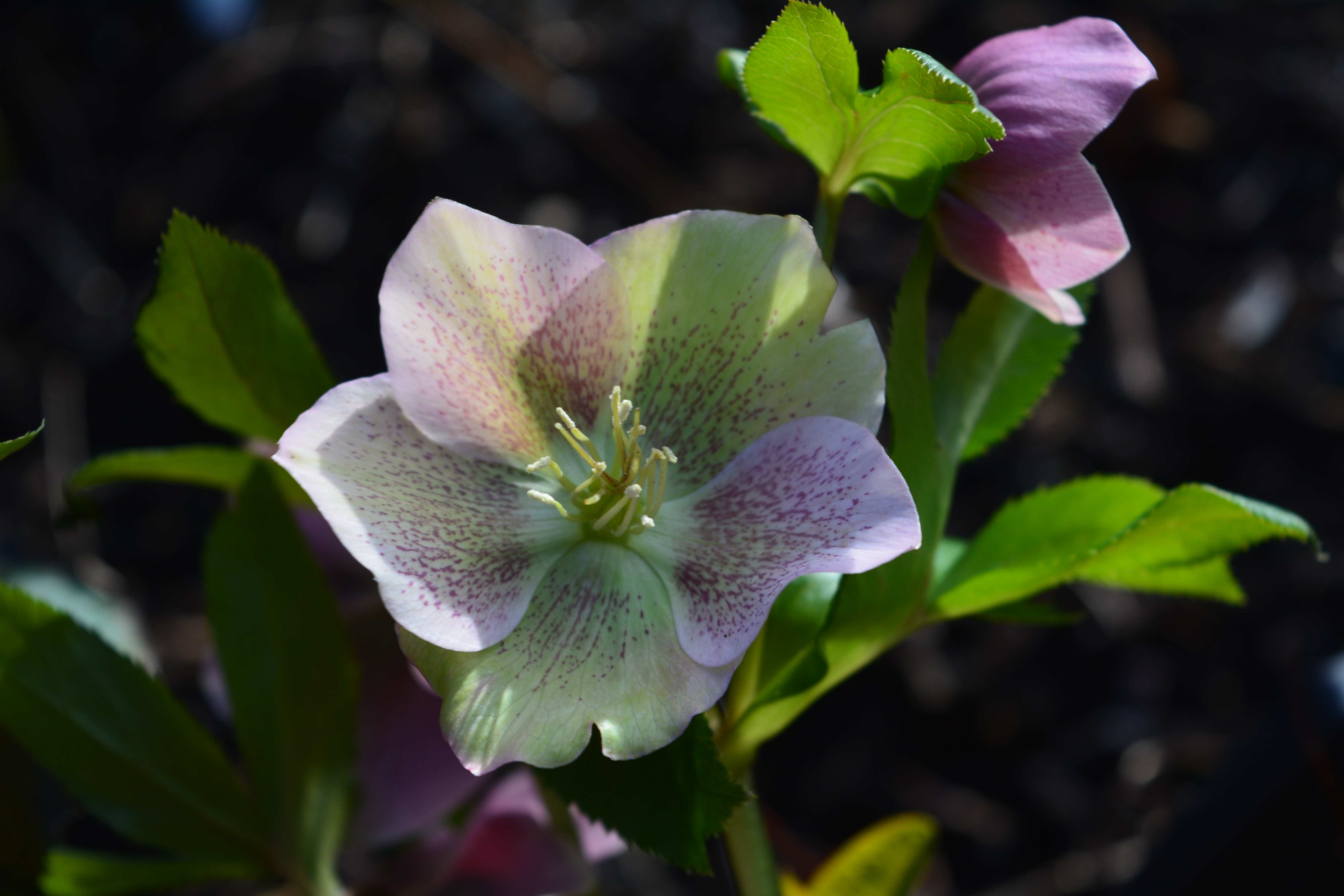
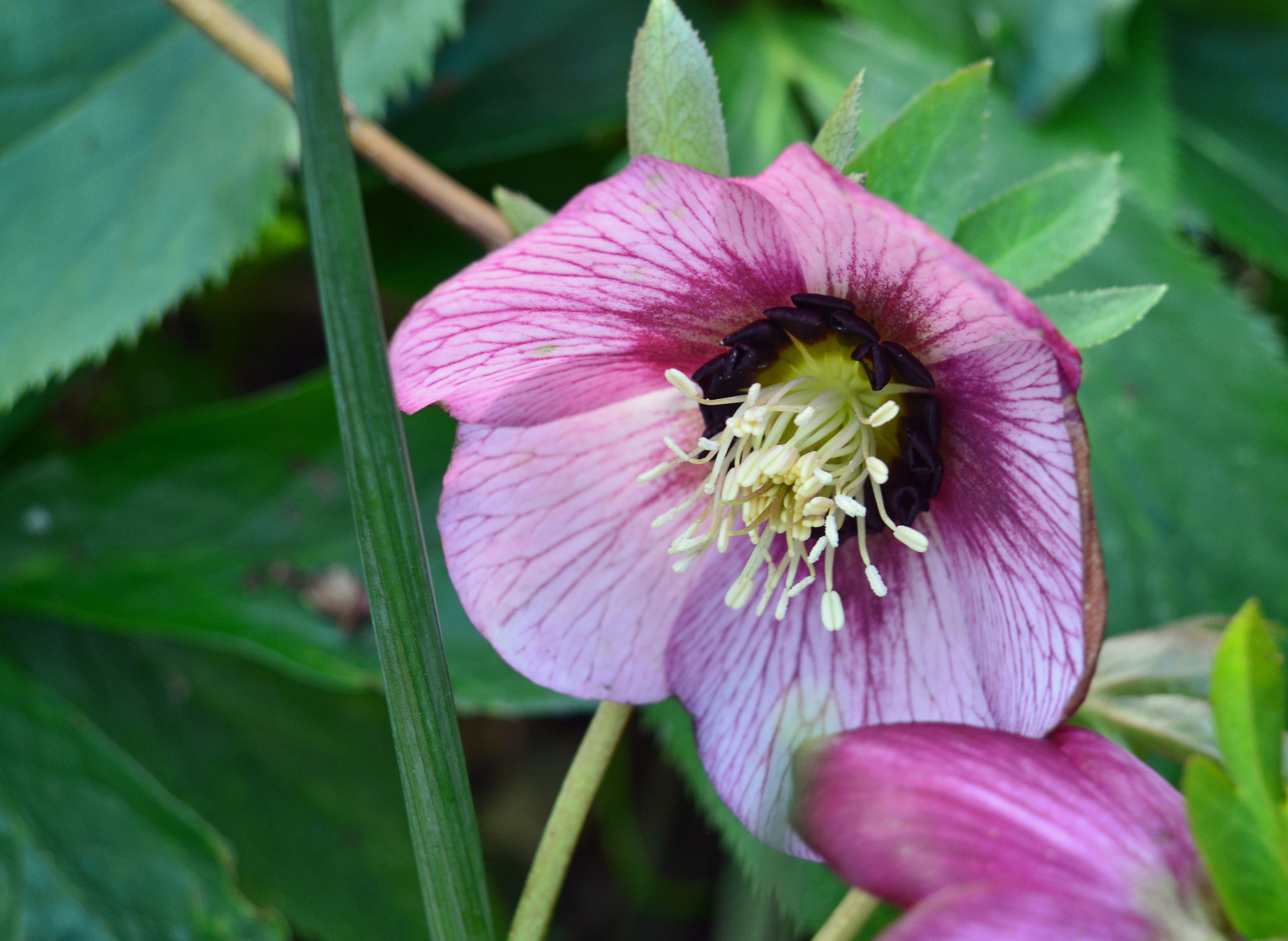
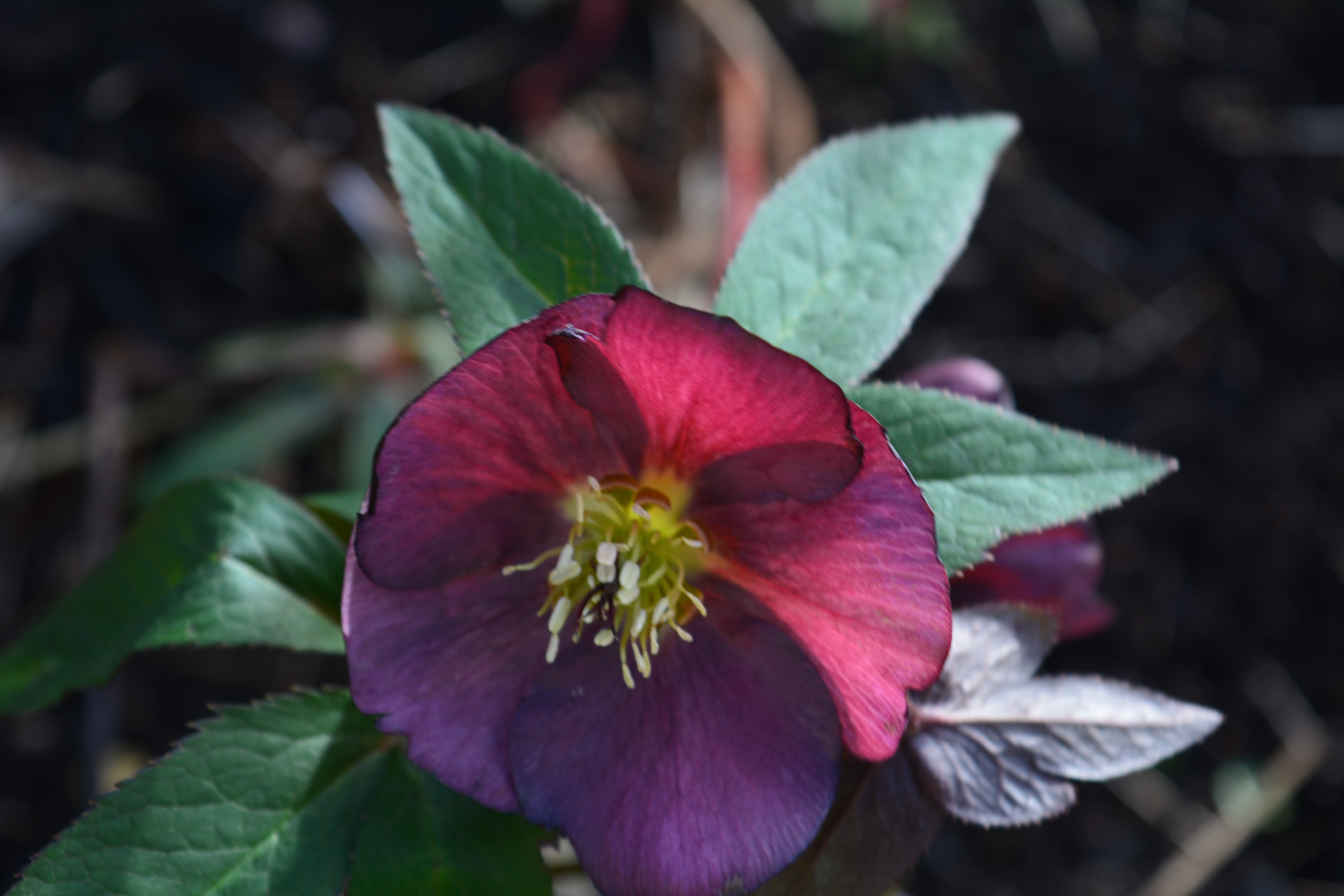
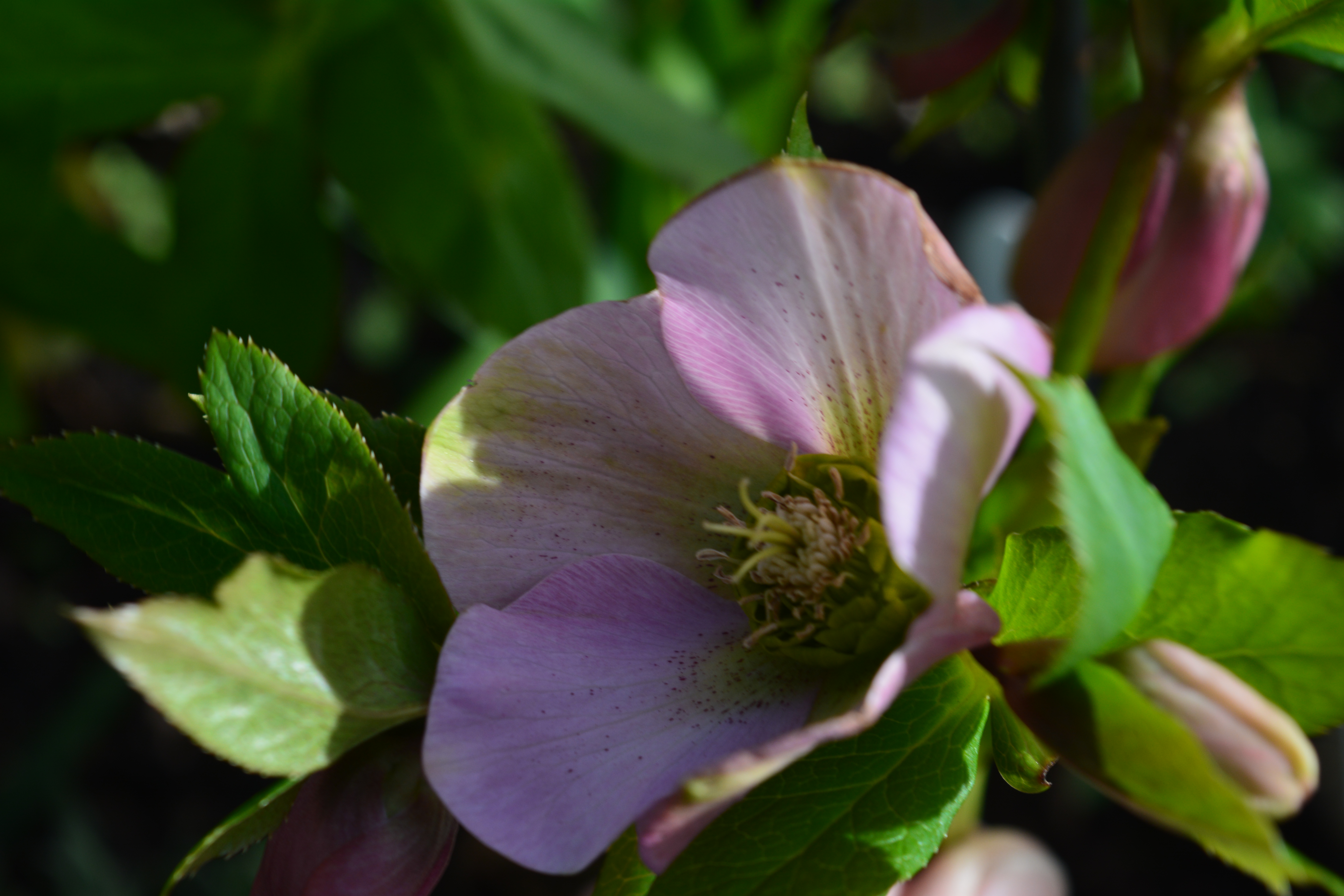
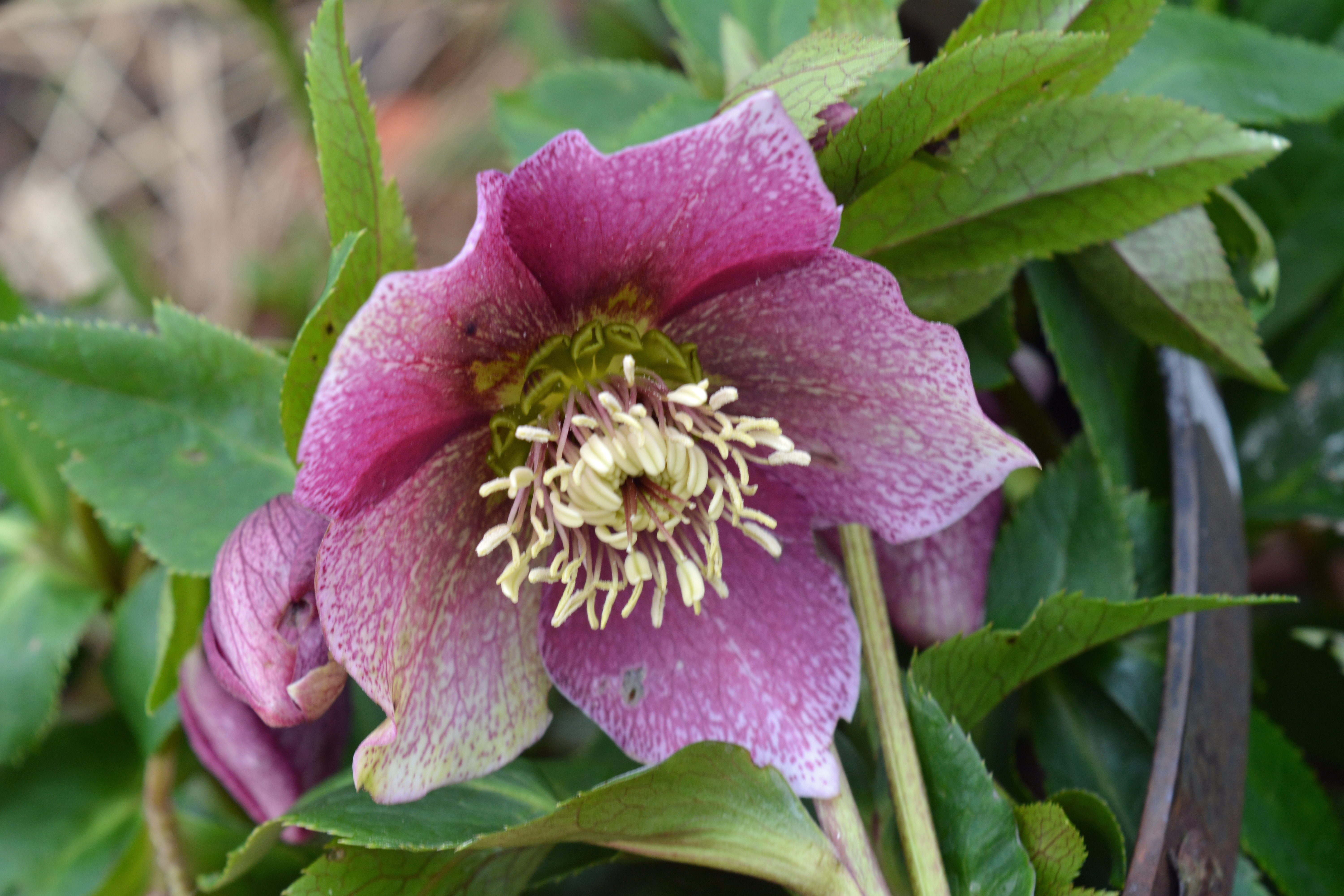
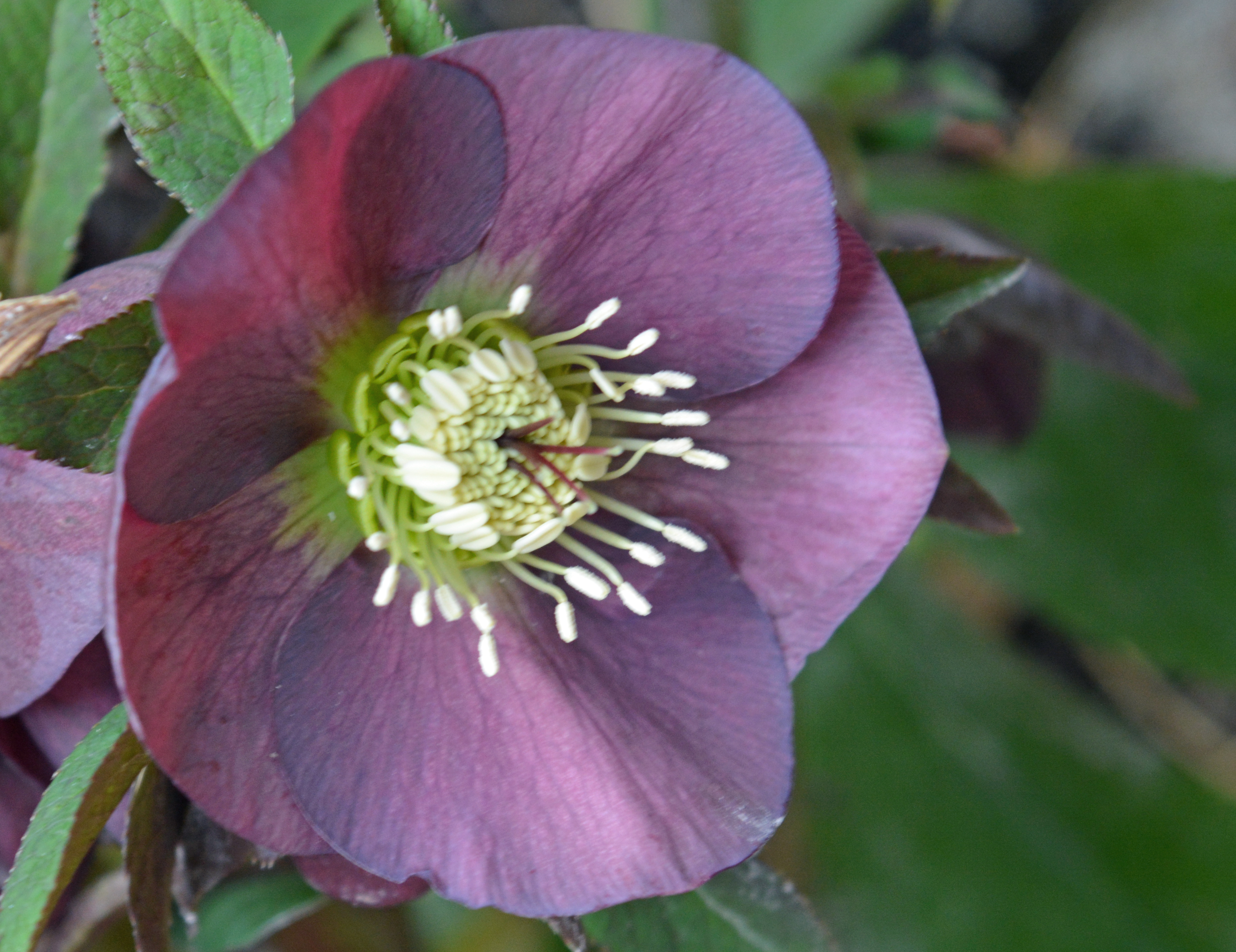
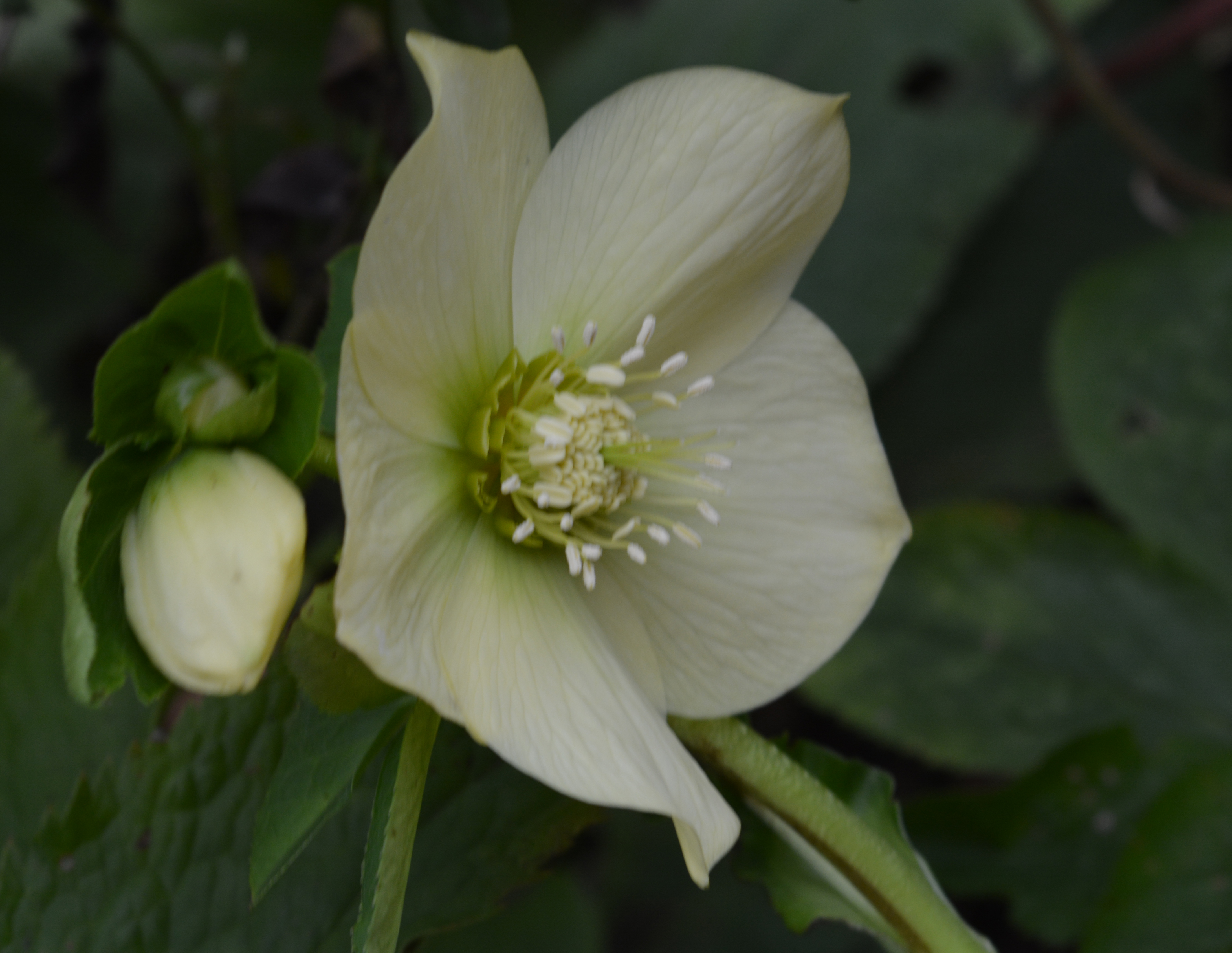
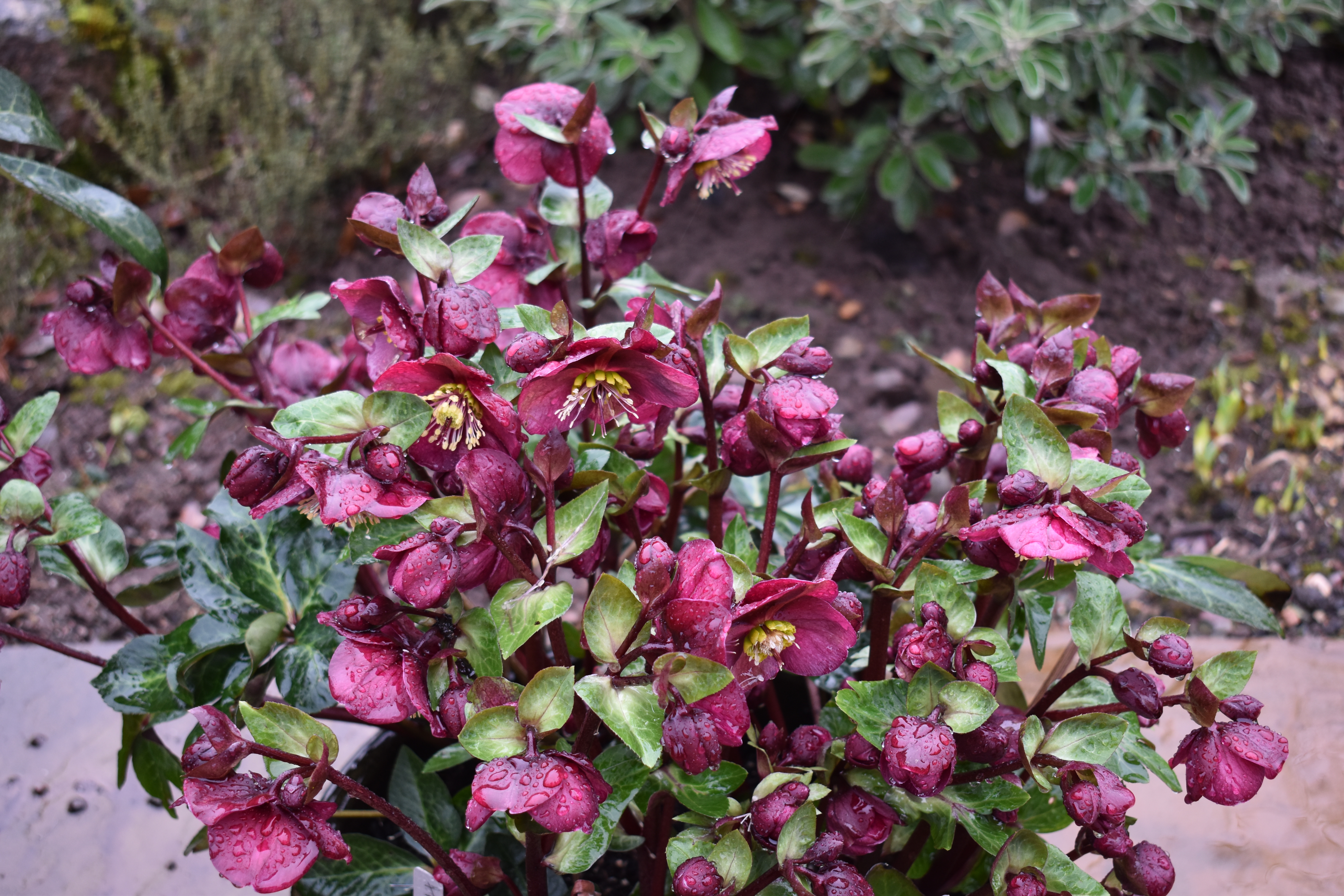
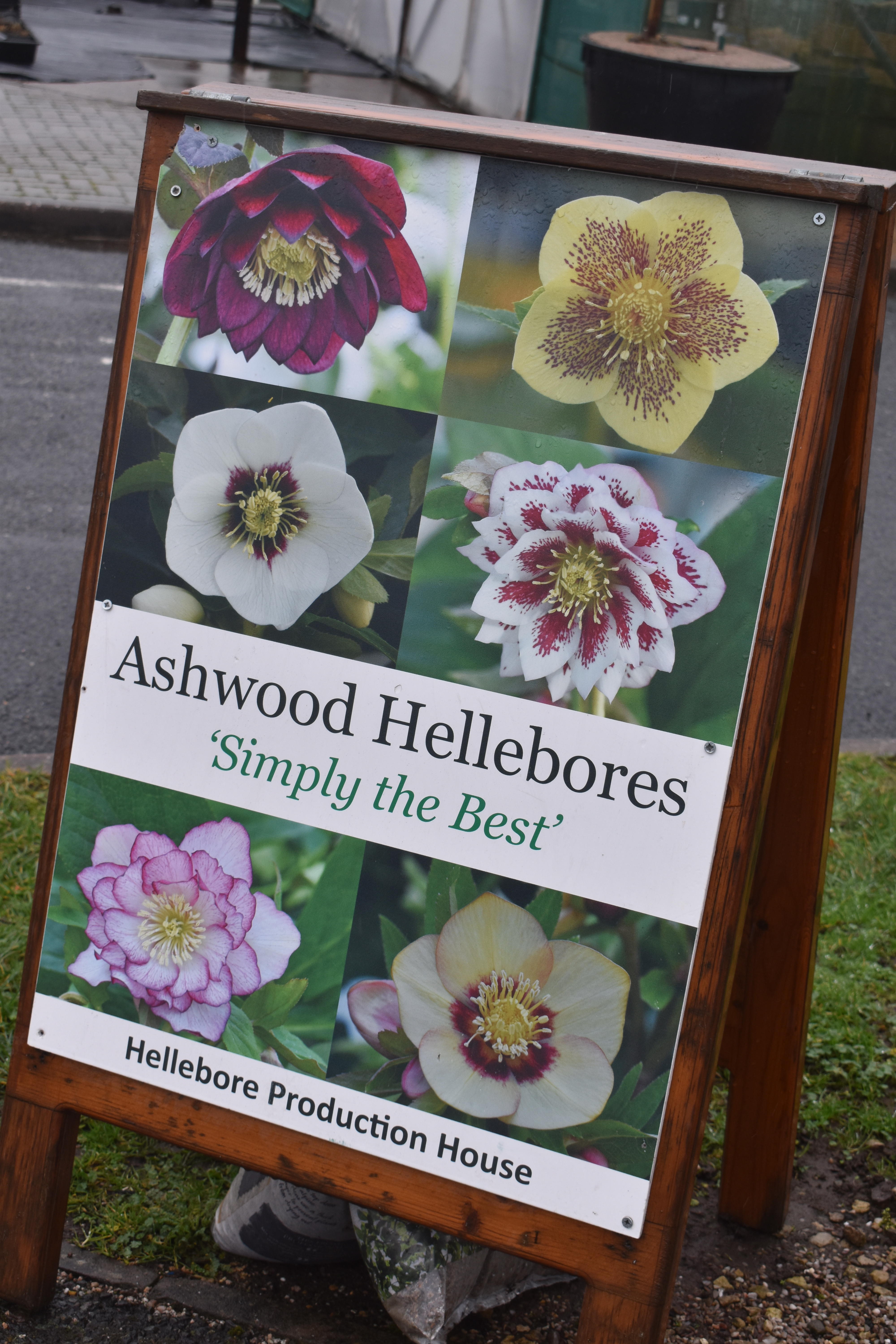
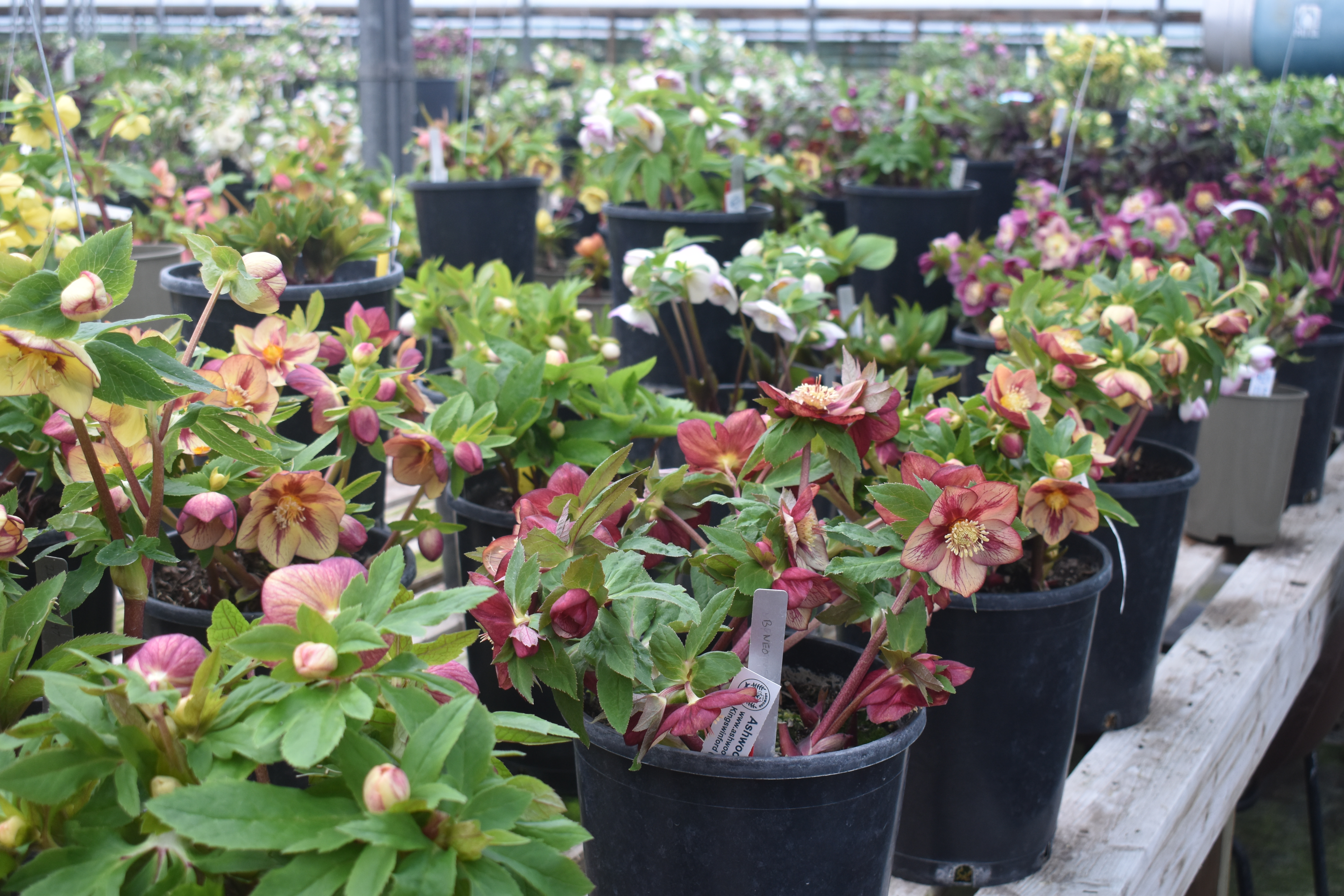
As only a small percentage. of John’s Garden was open for visitors it was decided to give a bonus – we could go into the Hellebore stock and breeding plants tunnel. It was so colourful and exciting to spot new colours being developed and the mass of different hellebores all together.
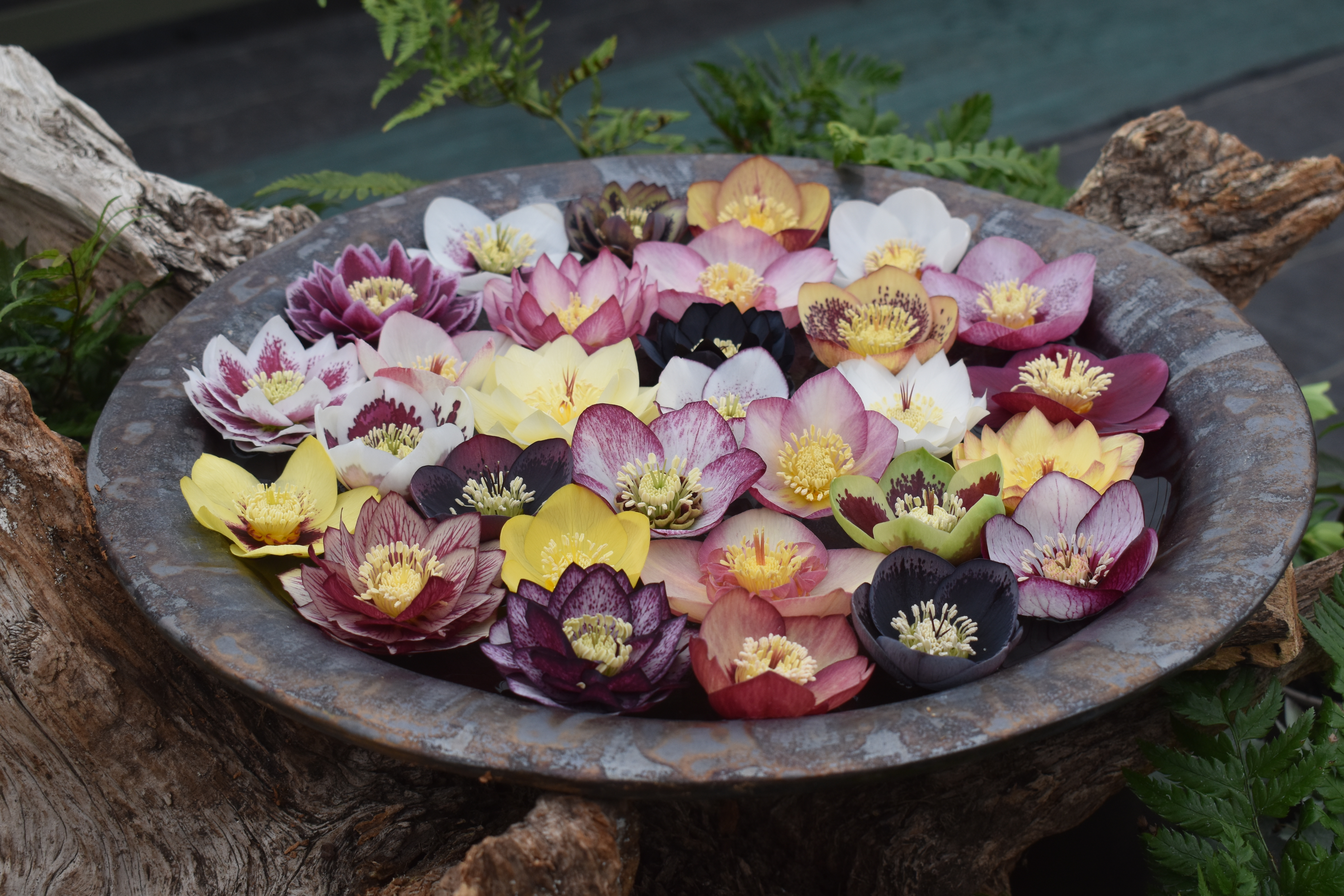
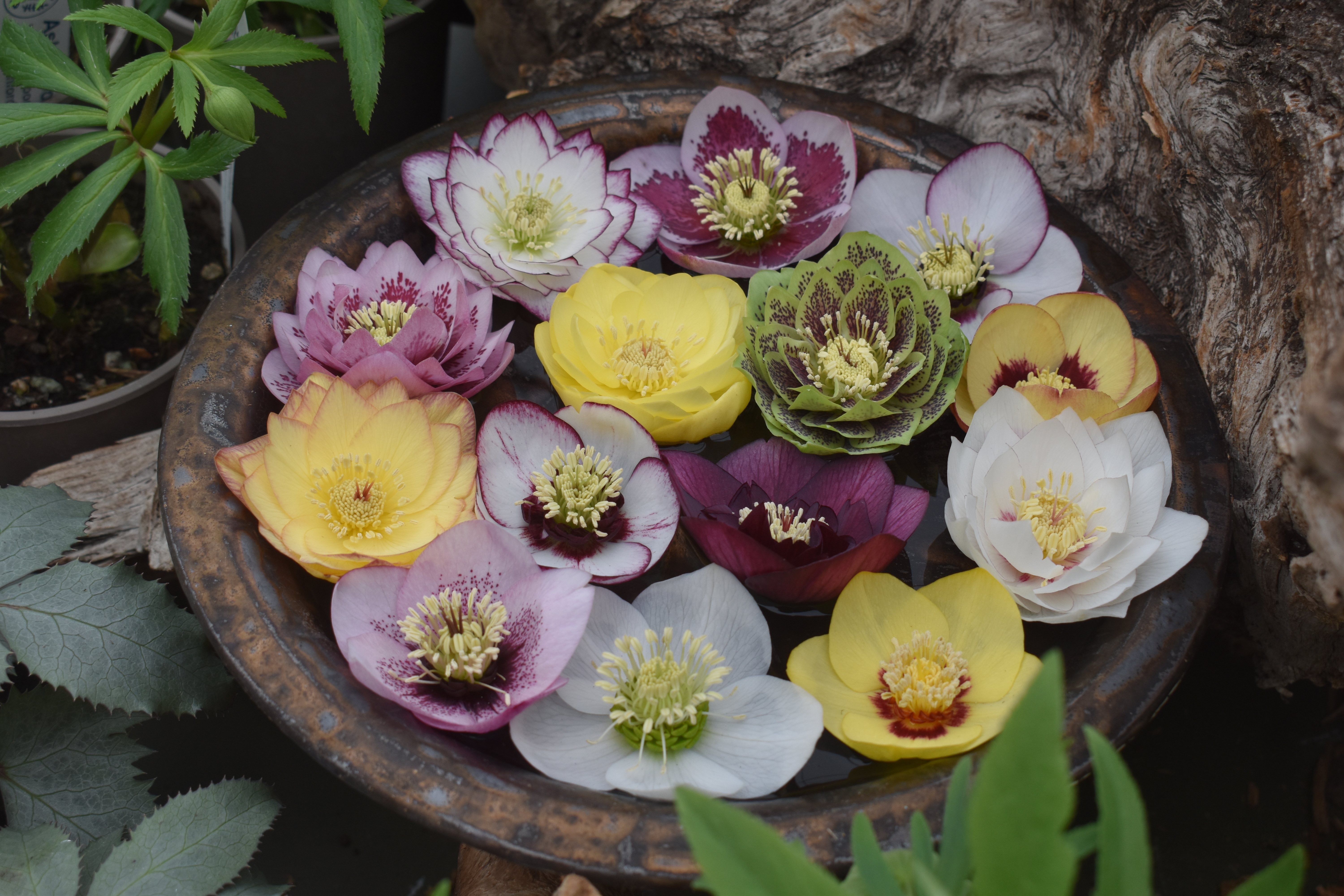
We have always admired the way John displays his hellebores as cut flowers by using just the flower heads floating in shallow bowls of water. We have followed his example at home for several years now. It is such a simple but clever idea, and a great way to finish reporting on our February visit to John’s Garden.
Categories
flowering bulbs garden photography

Attingham snowdrop walk

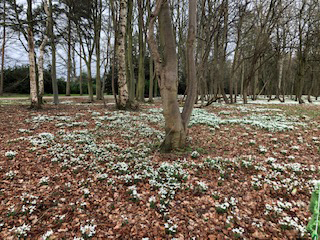
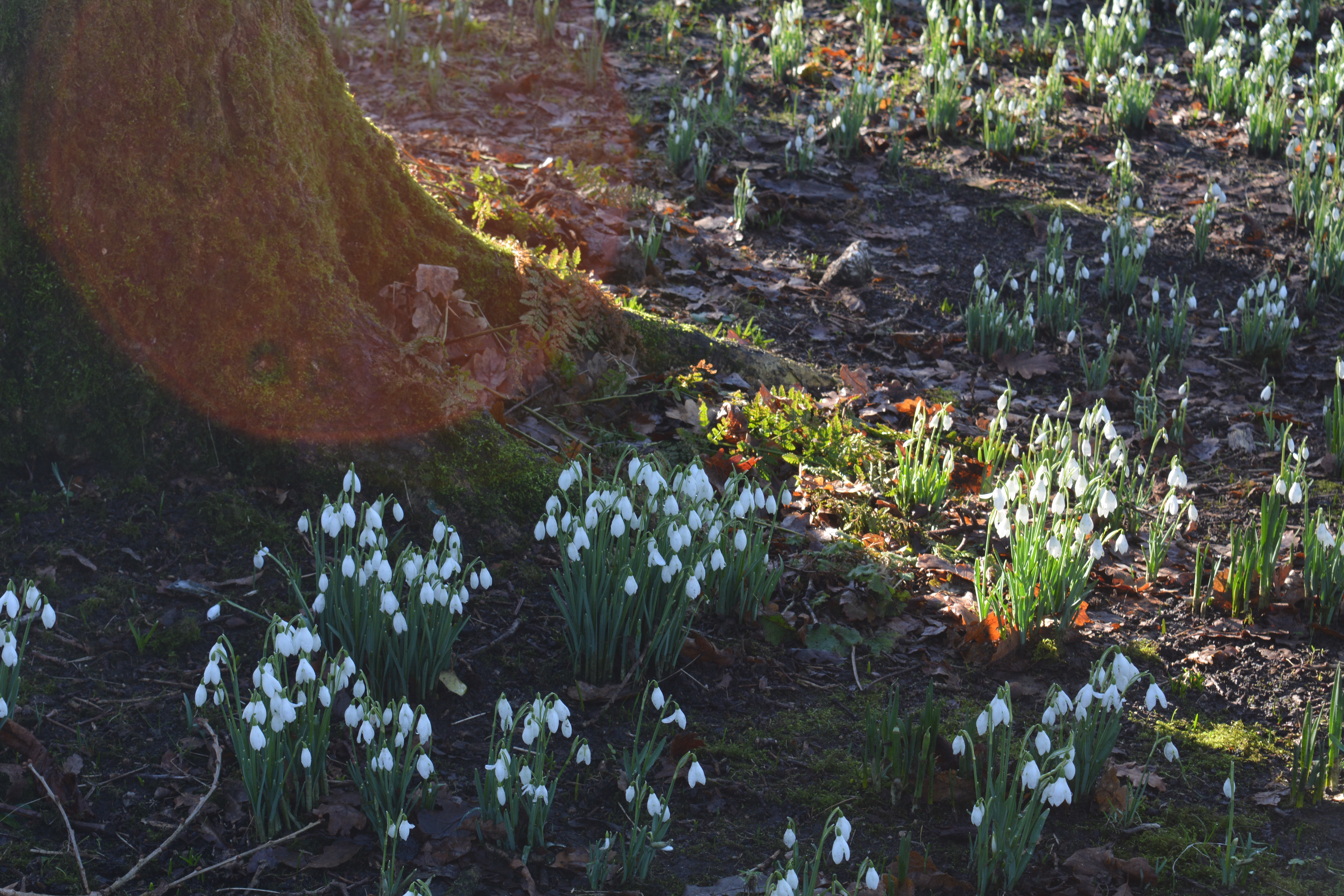
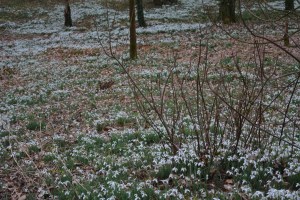
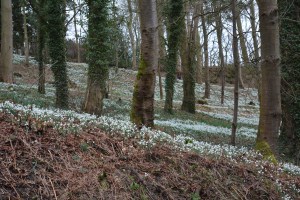
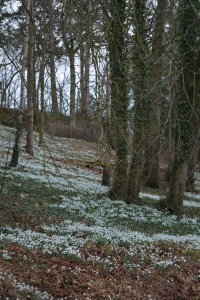
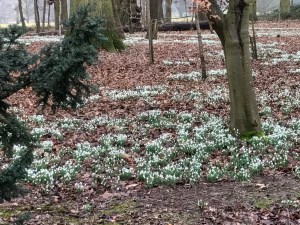
Every year in February we follow our usual walk around the grounds of Attingham Park, a National Trust property just a half hour drive away. What makes this February walk different is the thousands of snowdrops growing happily beneath beautiful mature trees.

Another unusual aspect of our walk was the amount of standing water around, including flooding from the river that runs through the parkland.

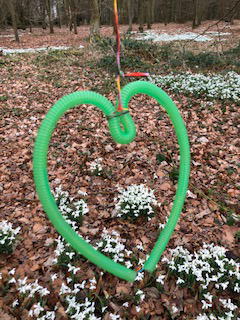
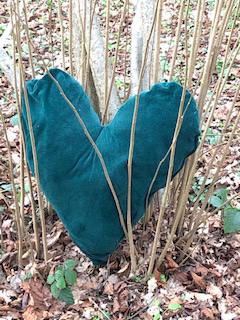
An extra feature this year was a display put on by the local WI (Women’s Institute) all knitting and different forms of fabric craft. The pieces were displayed on the trees and on lengths of woolen yarn strung between trees and were created to highlight the plight of our planet, caused by climate change issues.


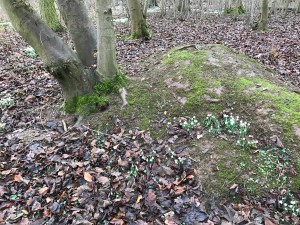
We particularly liked our first sighting of the signs of spring!


Categories
colours garden design garden furniture garden photography garden ponds garden pools garden seat garden seating gardening gardens gardens open to the public grasses hardy perennials light light quality NGS ornamental grasses ornamental trees and shrubs outdoor sculpture photography sculpture shrubs spring bulbs trees water in the garden Winter Gardening winter gardens Yellow Book Gardens

A canal-side garden in winter – John’s Garden Part 2

I found this unpublished post originally written back in mid-February of 2018. I hope you enjoy it!

Back at John’s Garden for our February visit in the cold we can carry on with our exploration as we wander further along the canal-side borders to the canal bridge. In part two we will move along the canal borders before returning along the opposite side of the patch, while along the way discovering a pool, sculpture and a terrace and lots more exciting plants and plant pairings.

Conifers, grasses and trees and shrubs with coloured stems and bark give a common theme throughout. The first two photos below show the matching gold coloured foliage of a group of conifers and a swathe of grasses.


The Rhodendron above has a surprise for you if you turn over its leaves! Who would expect orange on the reverse side of a touch dark green leaf? And it feels like the softest felt.

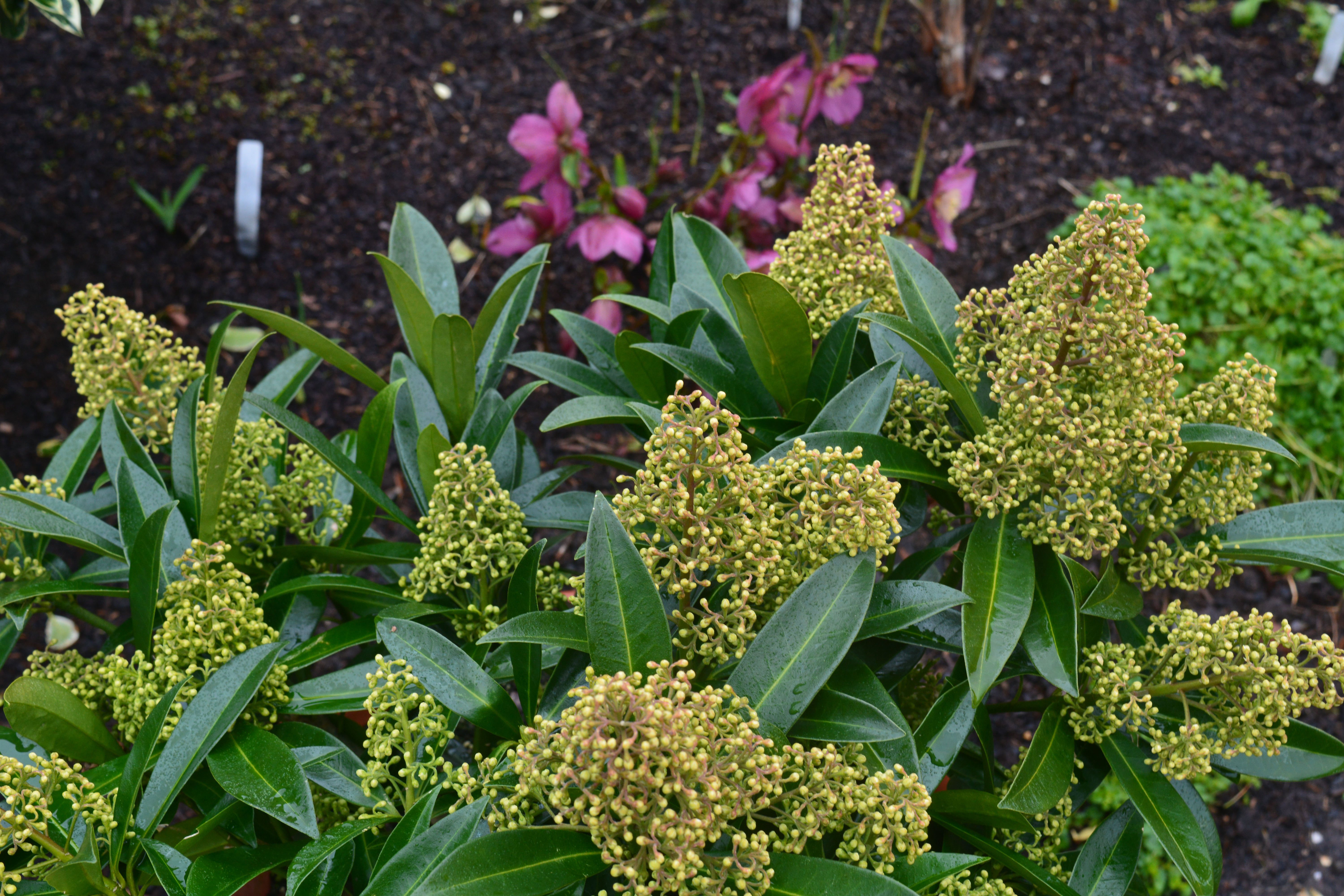
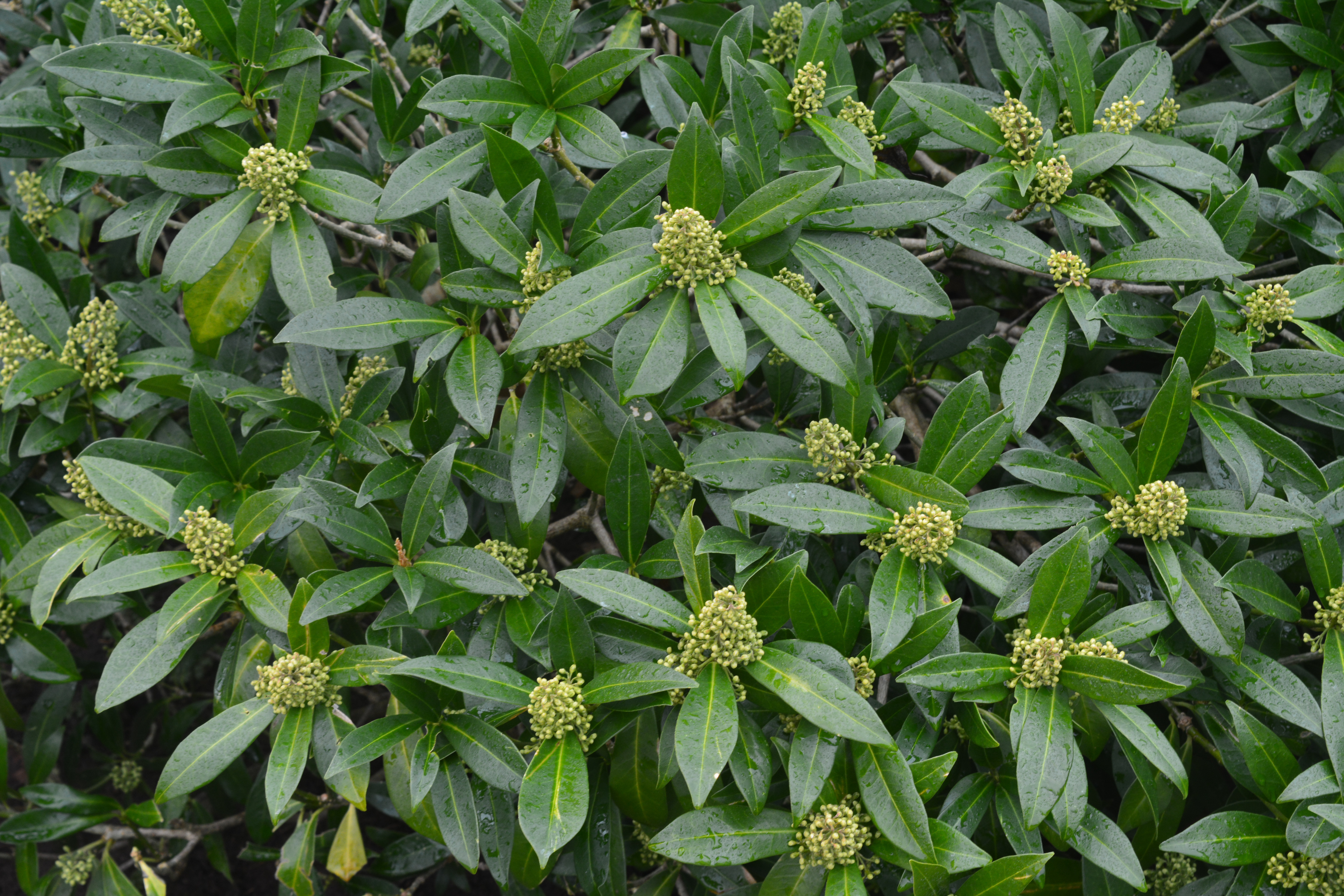
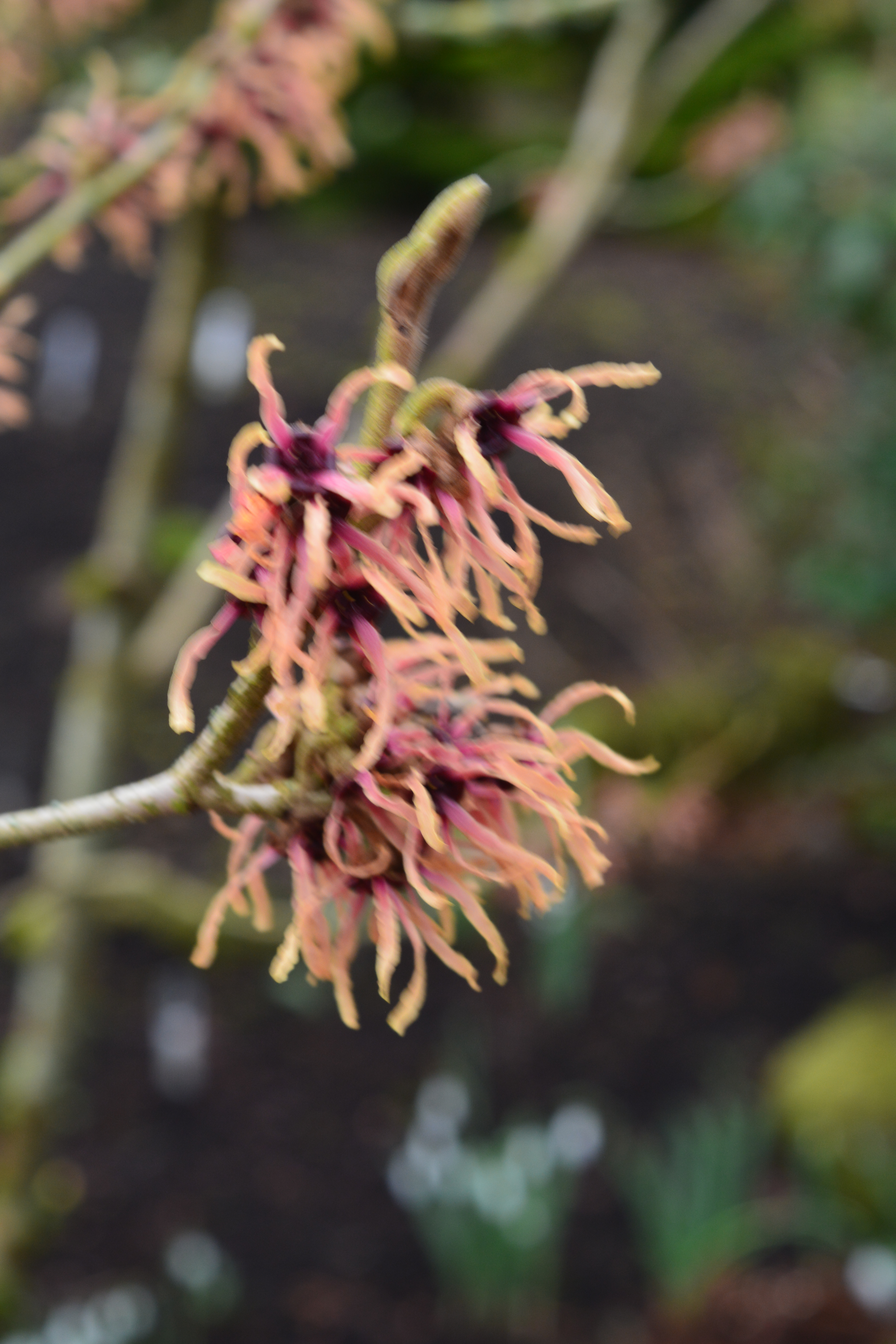
Skimmia “Kew Green” has unusual green flowers instead of the usual reddish shades, while the Witch Hazels sport many shades of yellow.


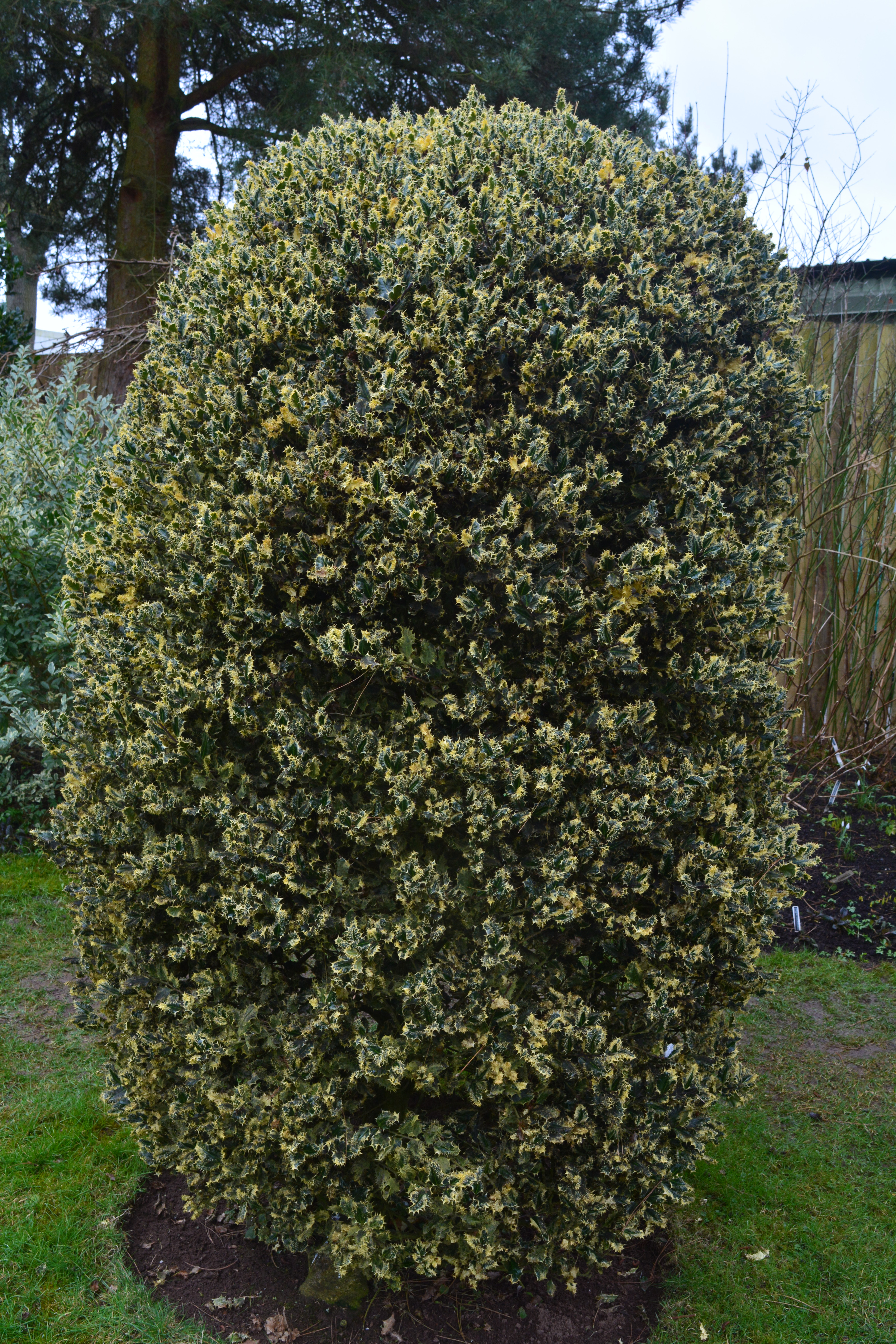
Snowdrops in drifts light up the ground beneath the tree. Ilex “Ferox” sparkles with variegated leaves curled and heavily spined, probably one of the best hollies available for the small garden.


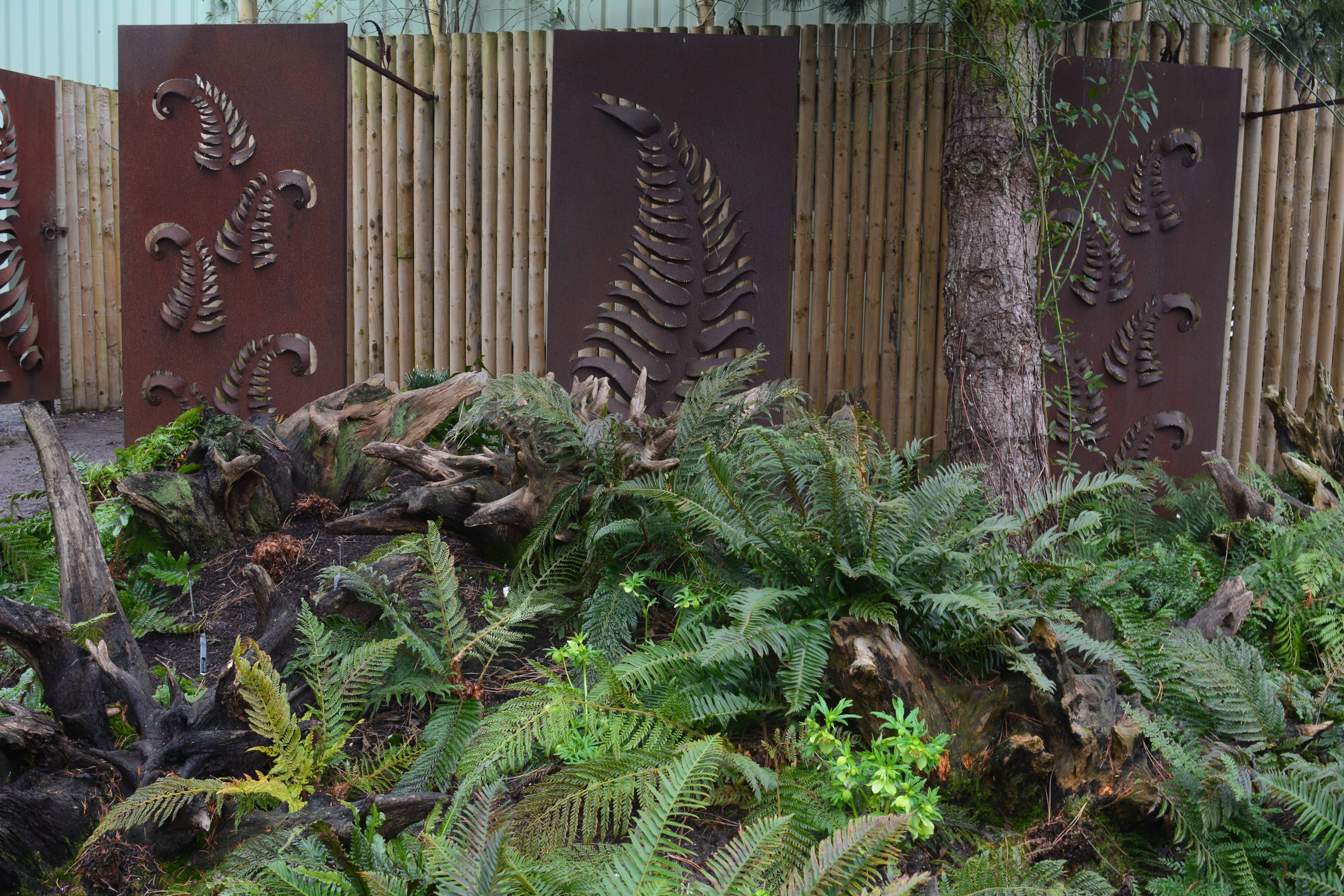
Metal panels with cut-out shapes of fern leaves reflect the planting beneath them in the border. John features many different versions of the low growing evergreen shrub, Leucothe. This one was a real beauty!


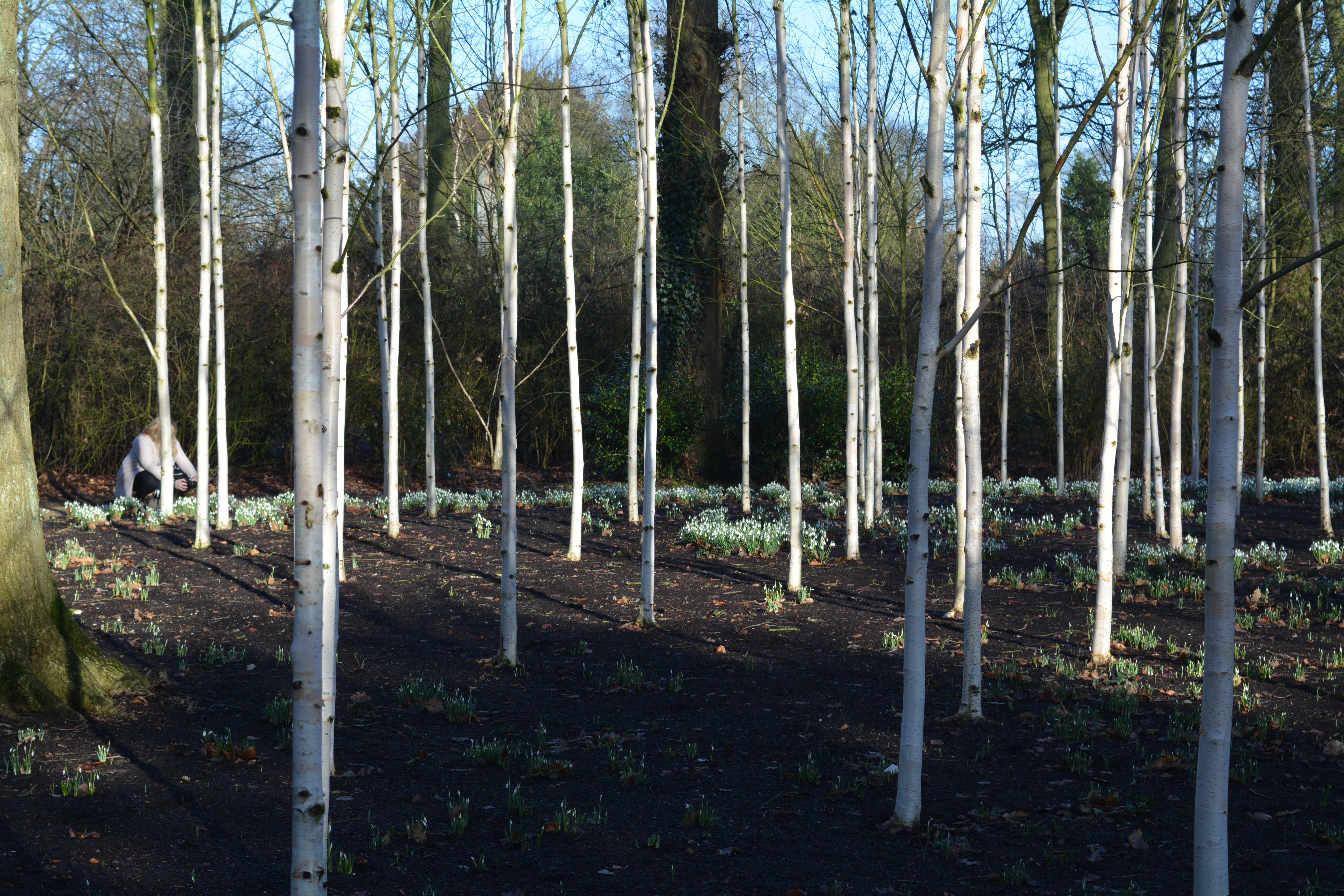
White can be a powerful colour when the winter sun catches it, as in the bleached stems of Teasels, the trunks of white-bark Birch and the ground covering Carex.


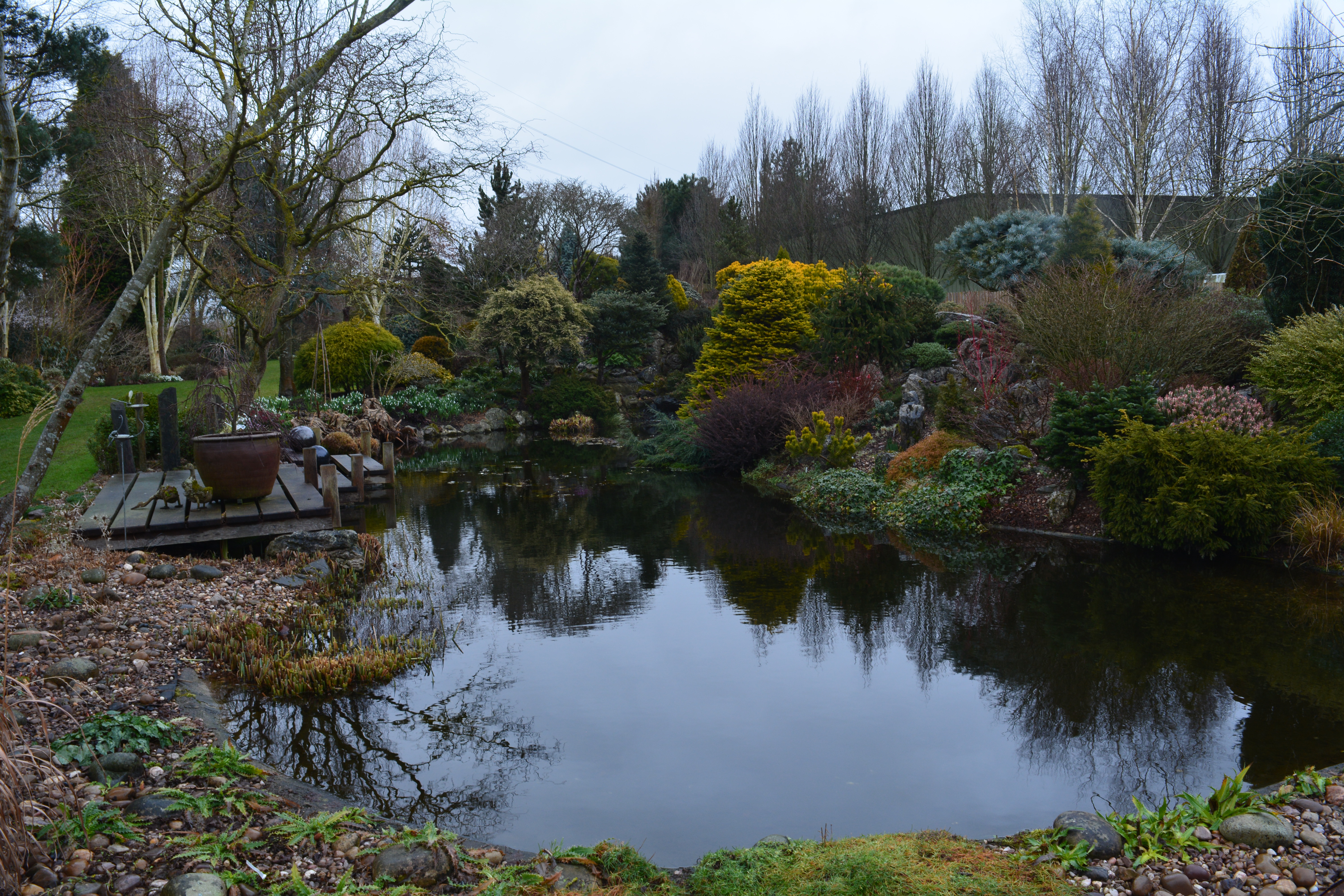
Along the way a beautiful pool gave a space to slow down and take a deep breath to take in all we had so far seen.


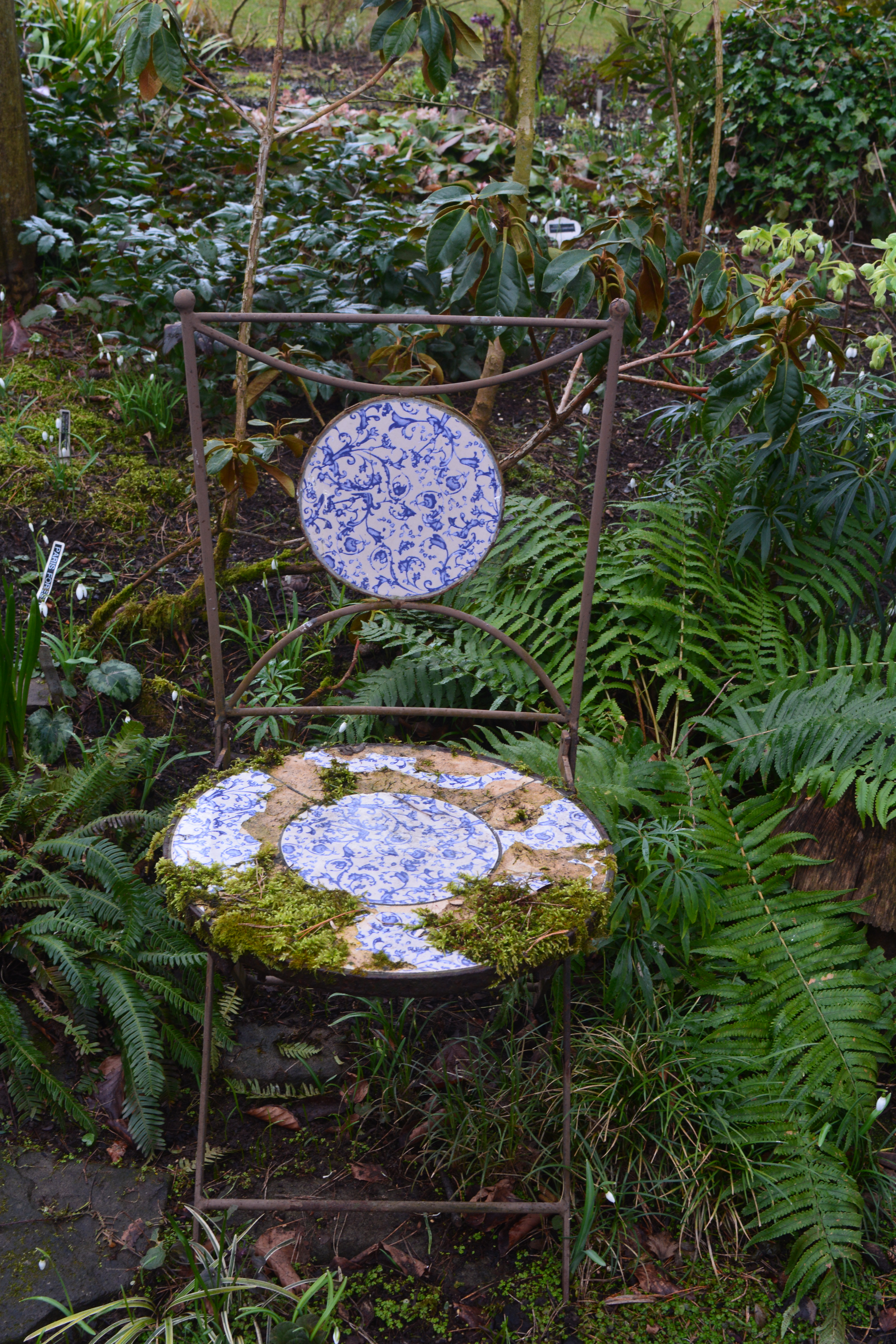
Every garden however small needs seats and they must be chosen to fit the design and atmosphere.


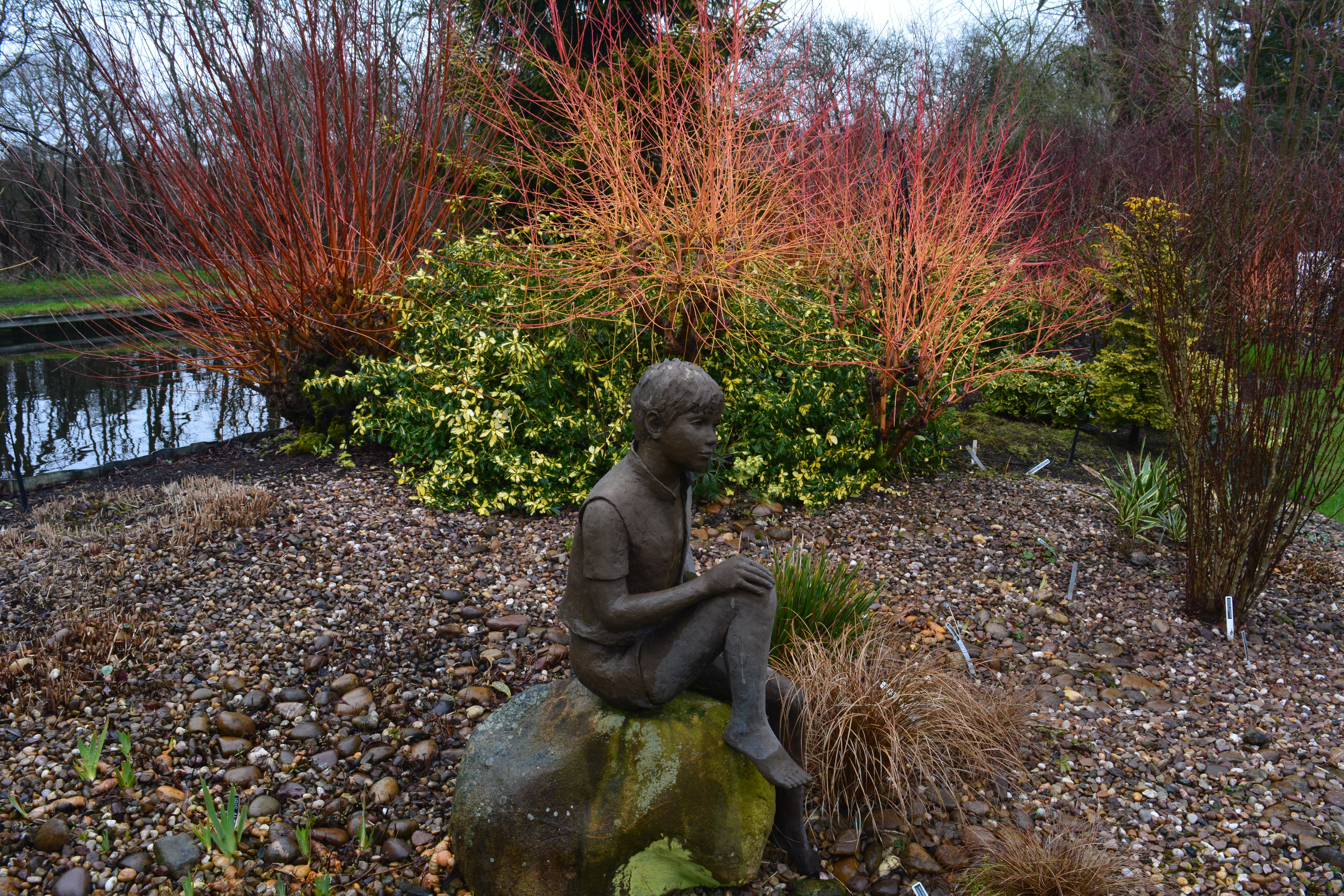
Sculpture is scattered around the garden providing us with pleasant surprises among our delight at its plants.


Turning at the far end of the garden we had a quick look at the new garden which has just begun being created, Adam’s Garden, designed in memory of John’s gardener who died very young late last year. This will be a great addition to the garden and we look forward to seeing it develop. We then returned on the opposite side of the long garden making interesting discoveries all the way.

The terrace is a place where you need to stop and study the small details, the pots full of original planting ideas, trimmed shrubs, interesting foliage and some floating blossoms.


Exploring an interesting little terrace garden finished our visit and we returned to the cafe via John’s lawned area with Betula, Snowdrops, Crocus and sheep.

We have a list of the other few open days the rest of the year so aim to return. All of John’s open days are to raise money for charity including some for the National Garden Scheme, the NGS. We will be back!

Categories
flowering bulbs garden photography ornamental grasses ornamental trees and shrubs Winter Gardening winter gardens

My Garden Journal 2019 – February

Here we are visiting my garden journal for the second time in 2019 with my February entries. My first double page spread was all about the week that spanned the last few days of January which delivered snowfall and the first few days of February which gave us a heavy frost.

The photos on the left hand page illustrated some of our winter flowering scented shrubs topped off with a layer of deep frost. I wrote, The last few days of January shared a week with the first few days of February. It was a cold week cheered greatly by the appearance of flowers on our winter shrubs, which also delighted with their rich scents.”

“The delights of scented winter shrubs. Food for winter flying moths.”


Opposite my photos showed the effects of snow on our sculpture, both man-made and created by Mother Nature, the seedleads of grasses and perennials.

“The snowfall that came and went all within a day.”


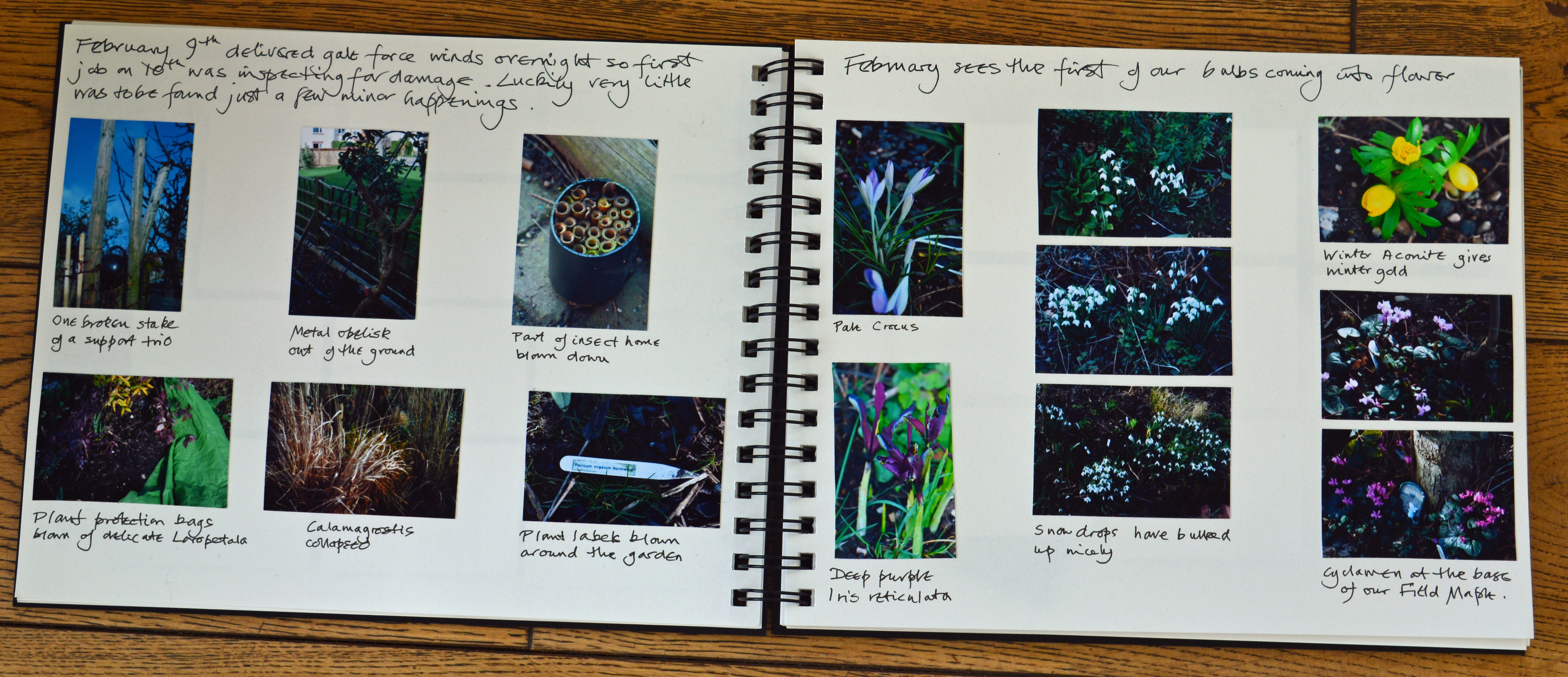
Over the page my next two pages concerned with a period of strong winds and the earliest of bulbs to flower in our patch.

I wrote, “February 9th delivered gale force winds overnight so firstjob on the 10th was inspecting for damage. Luckily very little was to be found just a few minor happenings.” 


“One broken stake of a support trio. Plant labels blown around the garden. 

“Part of an insect home blown down. Plant protection bags blown off delicate shrub Loropetala.”

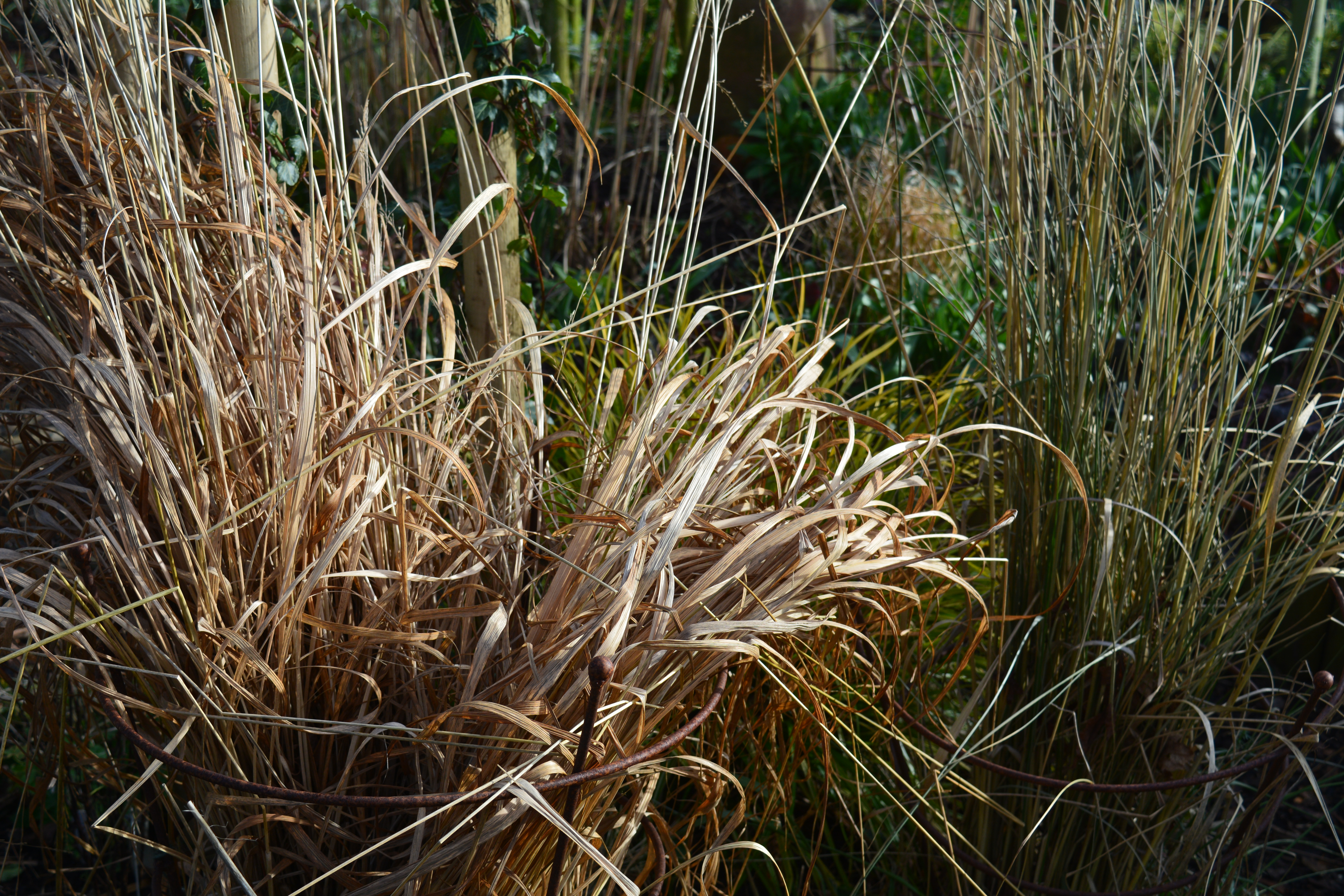
 “Collapsed Calamagrostis”

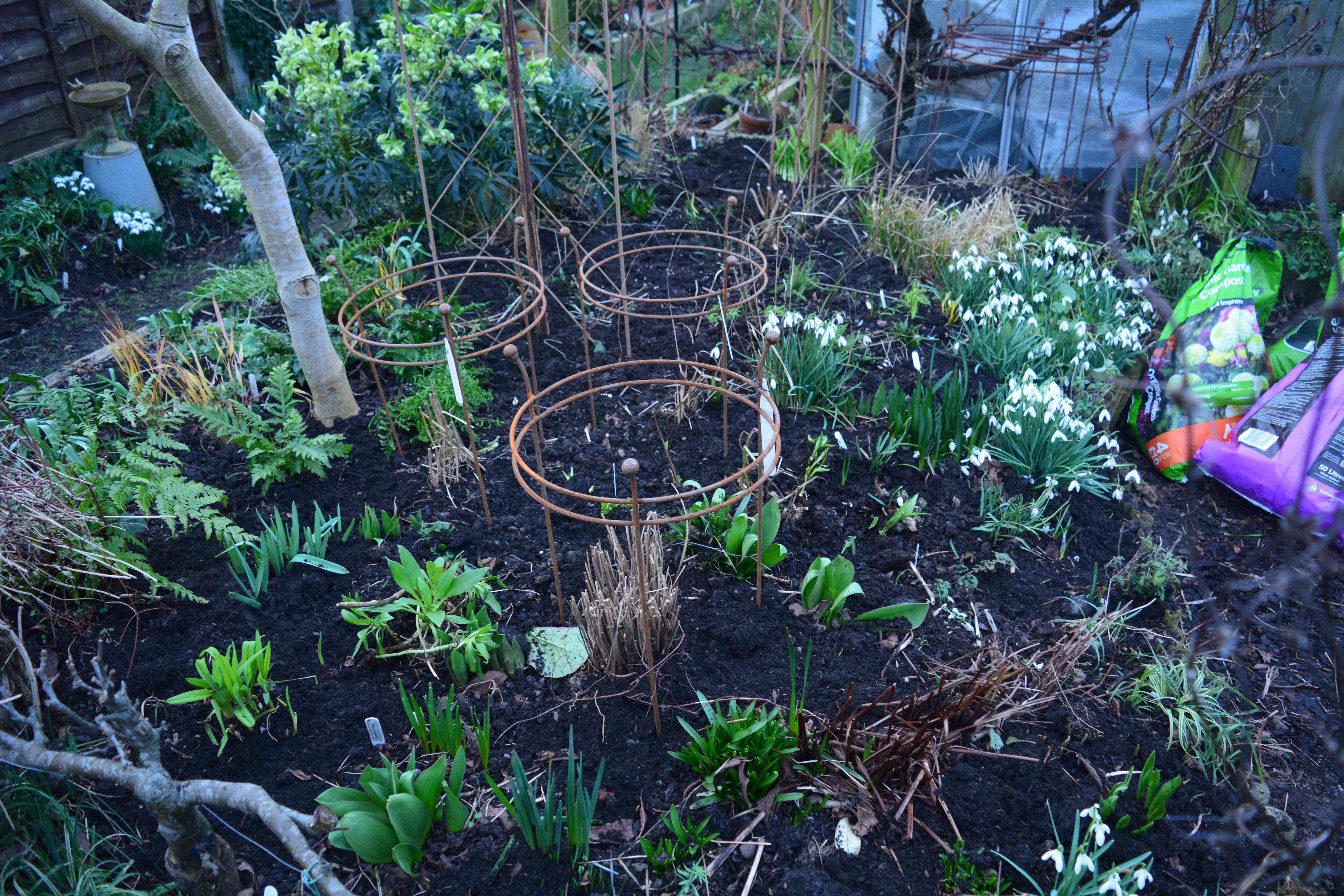
On the opposite page I wrote, “February sees the first of our bulbs coming into flower.”


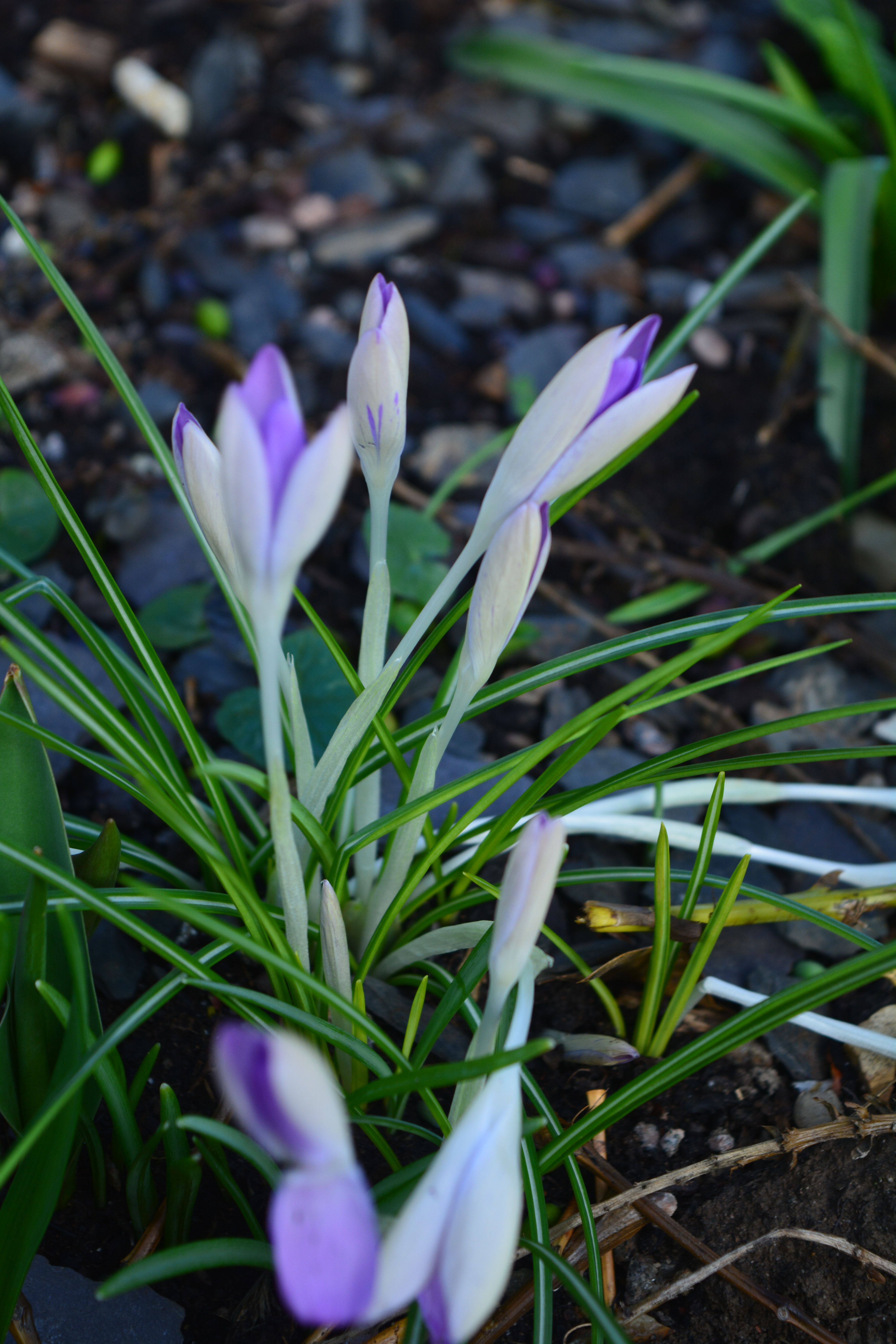
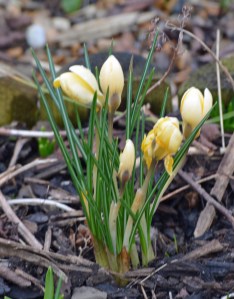
“A pale crocus and an deep purple Iris reticulata.”


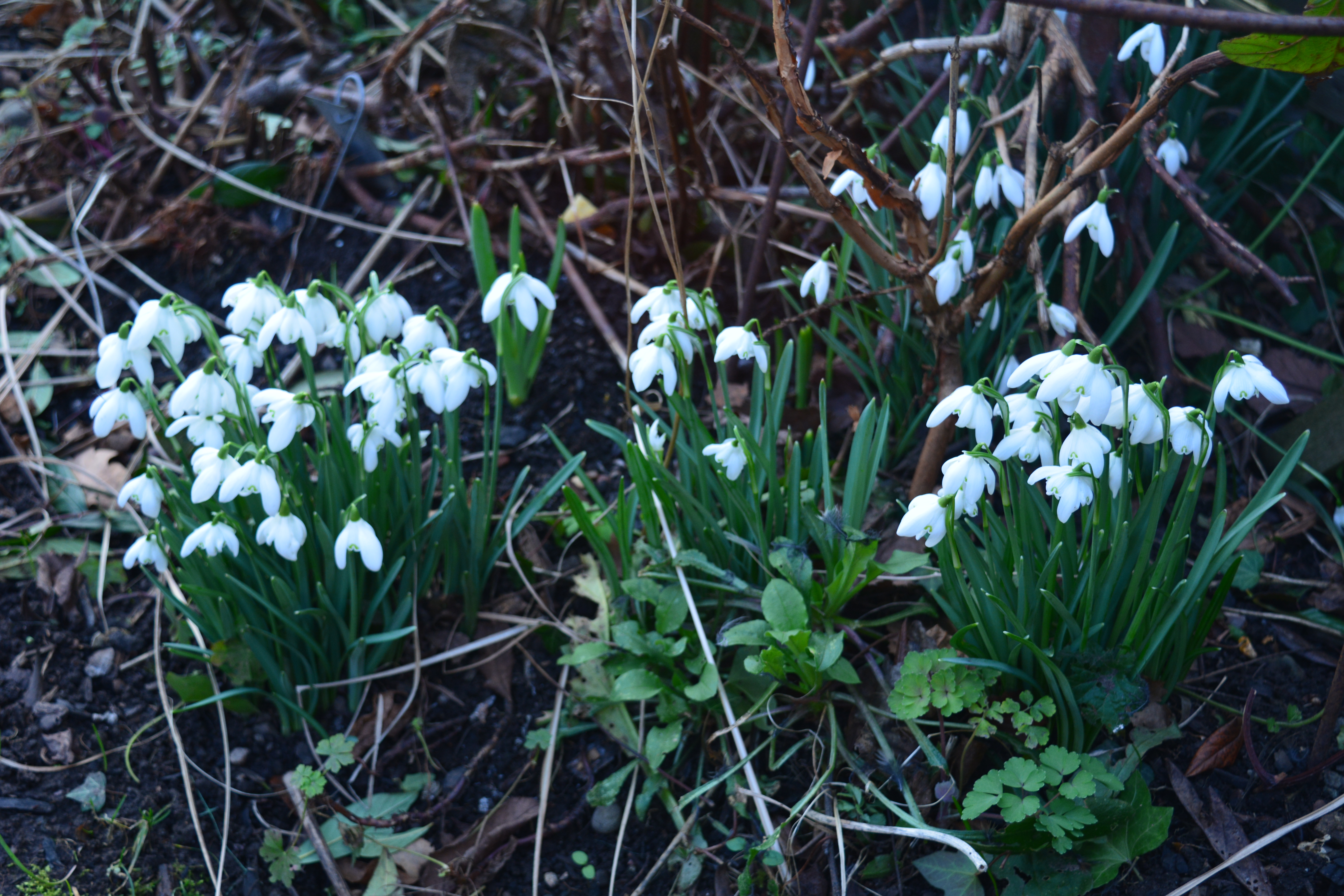
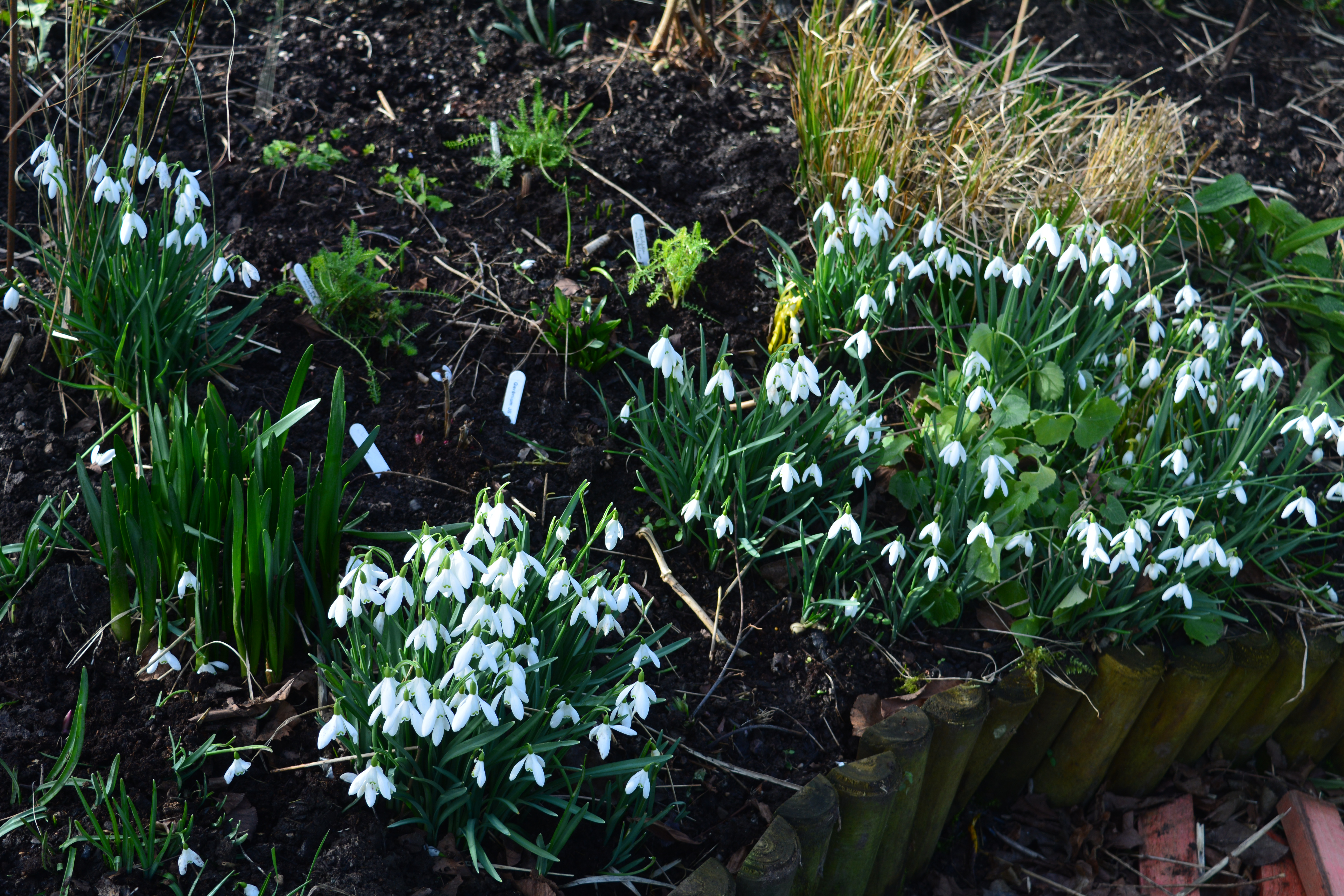
“Snowdrops have bulked up nicely.”

 “Winter Aconite give winter gold”  

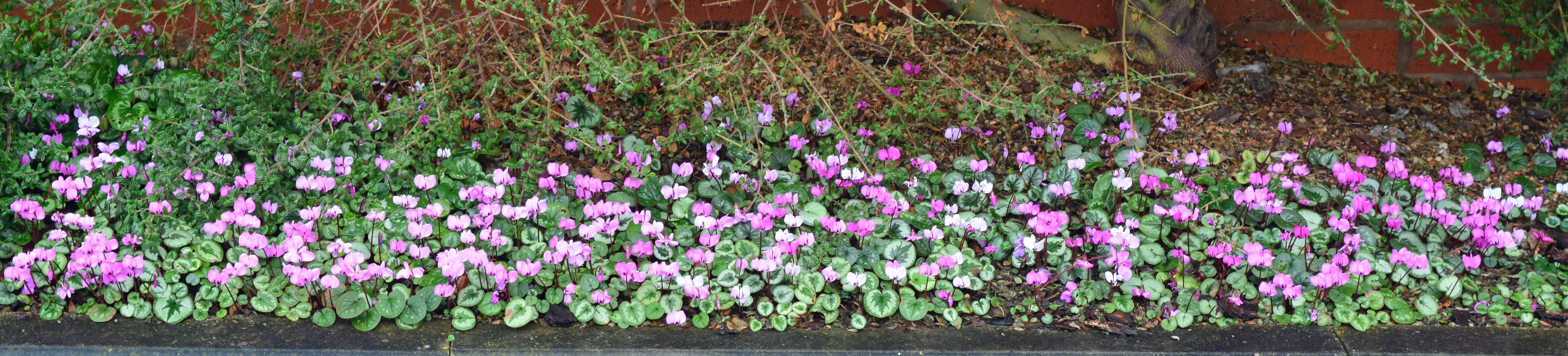
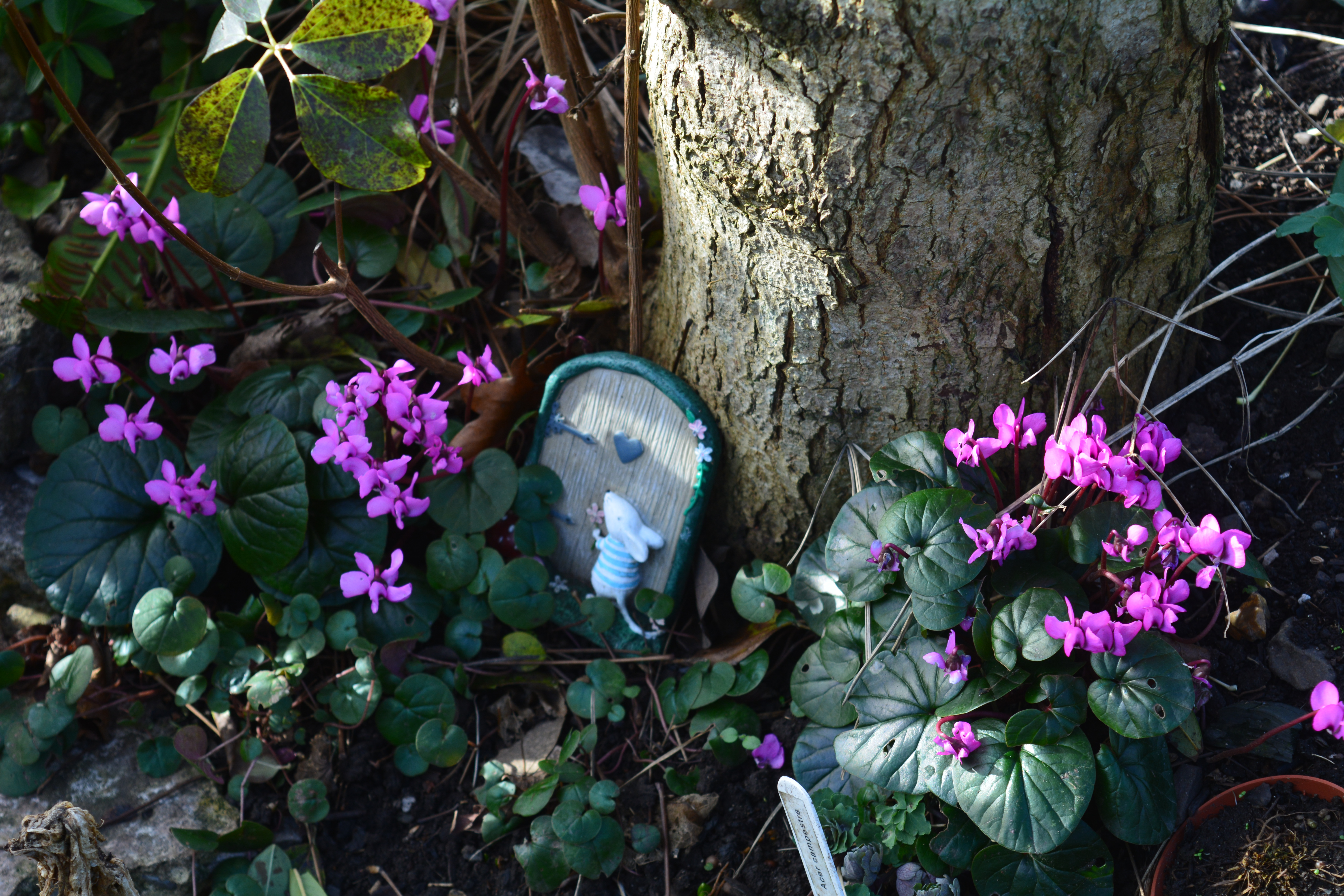
“Cyclamen at the base of our Field Maple.”

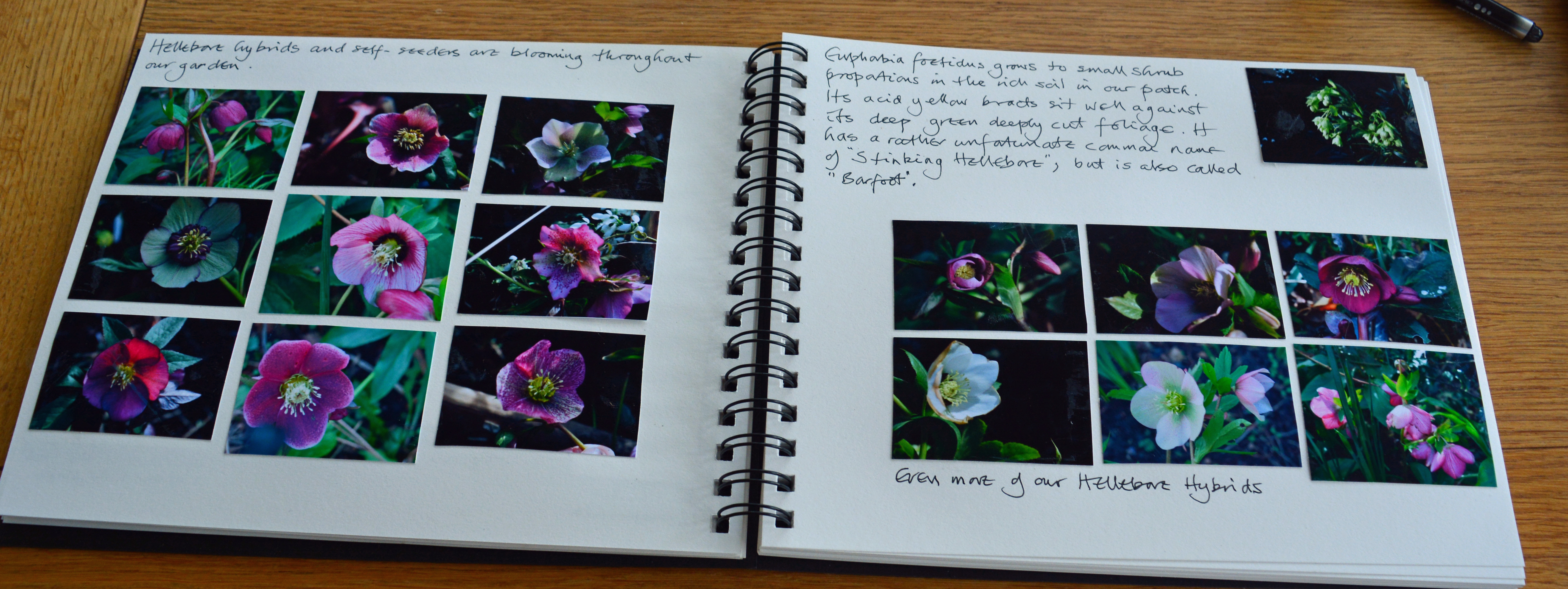
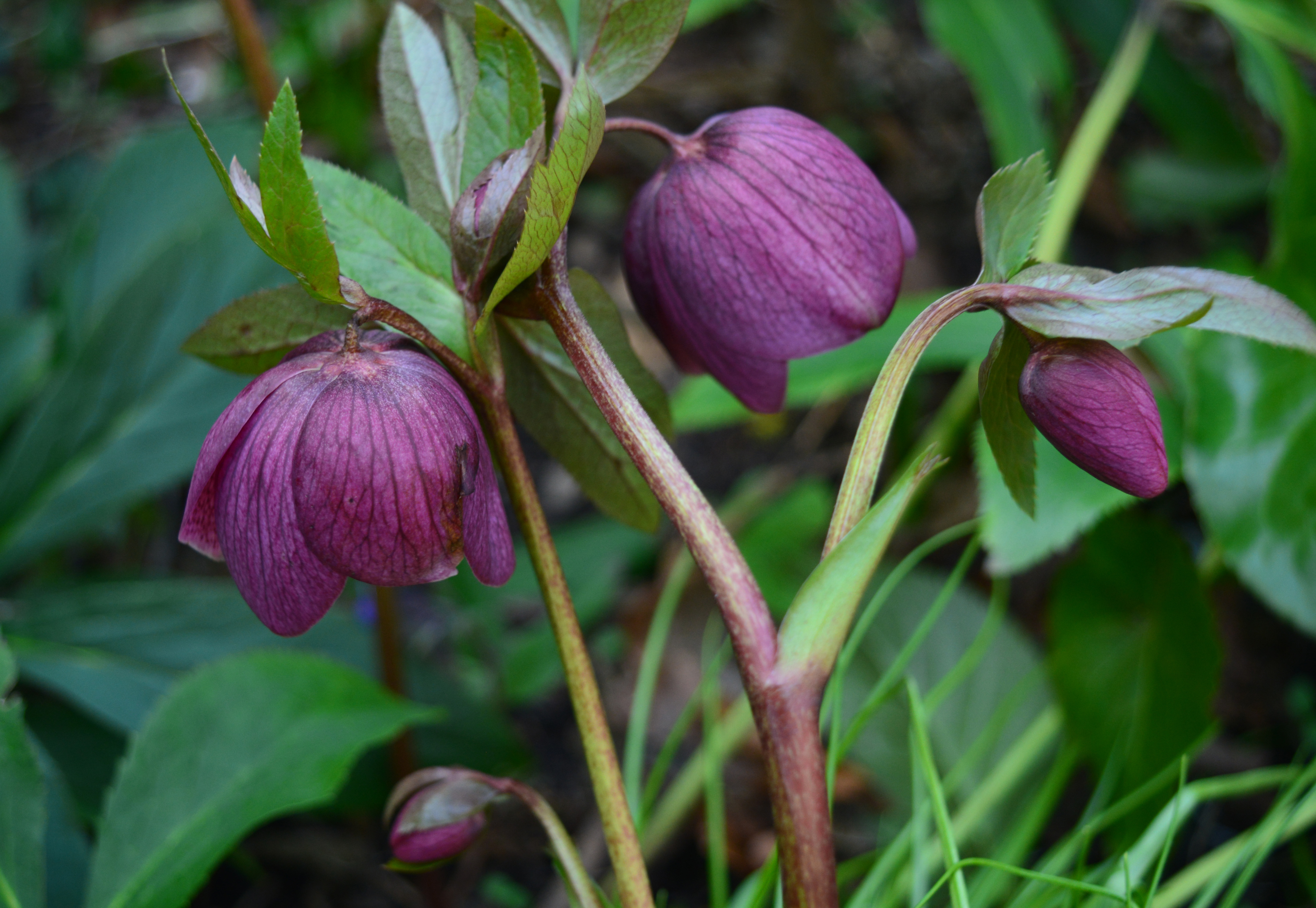
The next double page spread is all about Hellebores and we have so many.

I wrote, “Hellebore hybrids and self-seeders are blooming throughout our garden.”


“Euphorbia foetidus grows to small shrub proportions in the rich soil in our patch. Its acid-yellow bracts sit well against its deep green deeply cut foliage. It has a rather unfortunate common name of “Stinking Hellebore”, but is also called “Barfoot”.

“Even more of our Hellebore hybrids.”


Turning over the page one more time I looked at some indoor gardening related jobs and wrote, “Wet days in February afford us the opportunity to catch up on indoor tasks such as chitting potatoes, starting off Dahlias and Cannas as well as sowing seeds of perennials and a few annuals.”


I continued, “Meanwhile outside we continue to tidy up border by border. Sorting our gravel garden, the Chatto Border, is a major task so we do that work on days when Ian, our part-time gardener is around to help us. We also dug up and divided Day Lilies.”


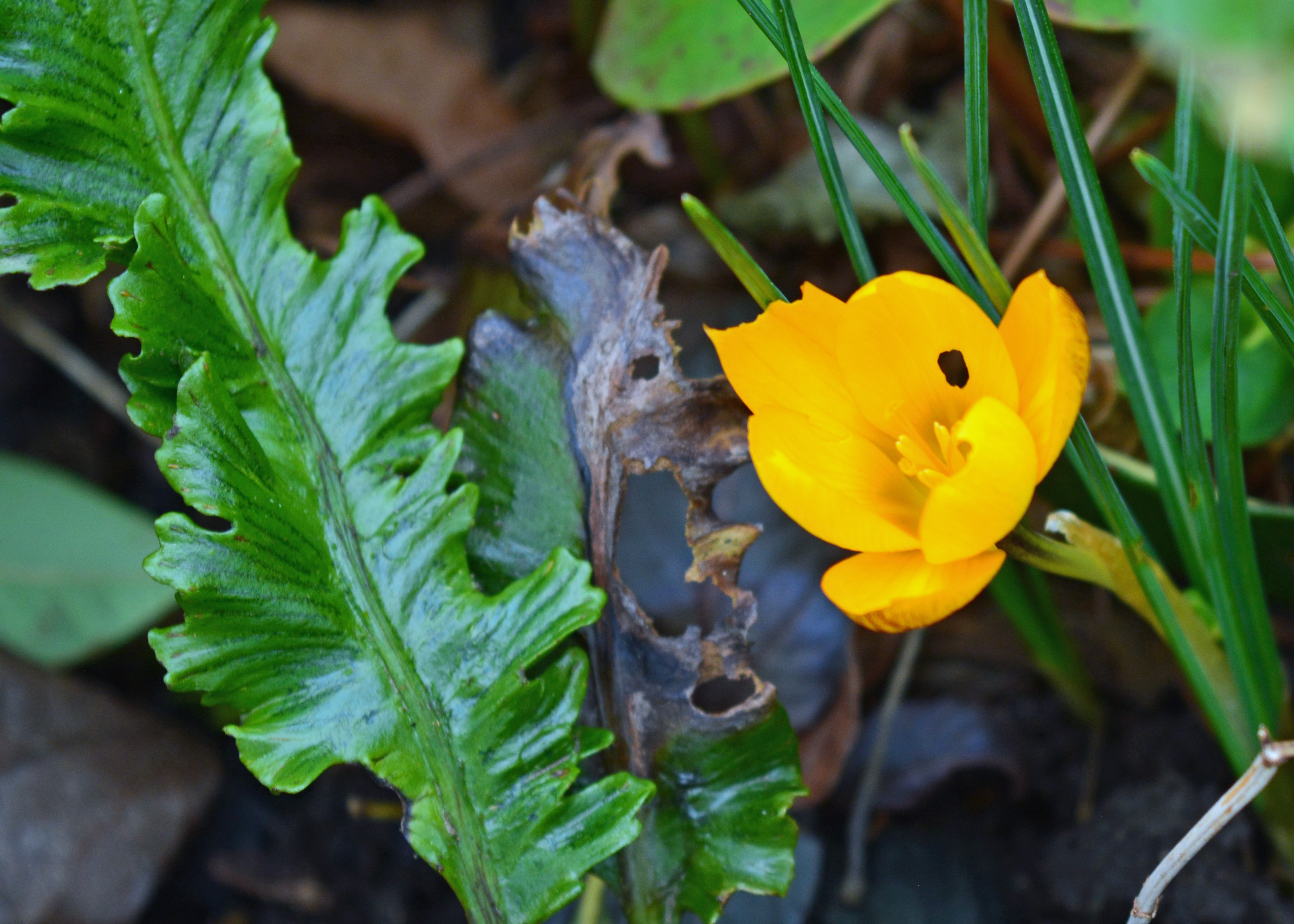
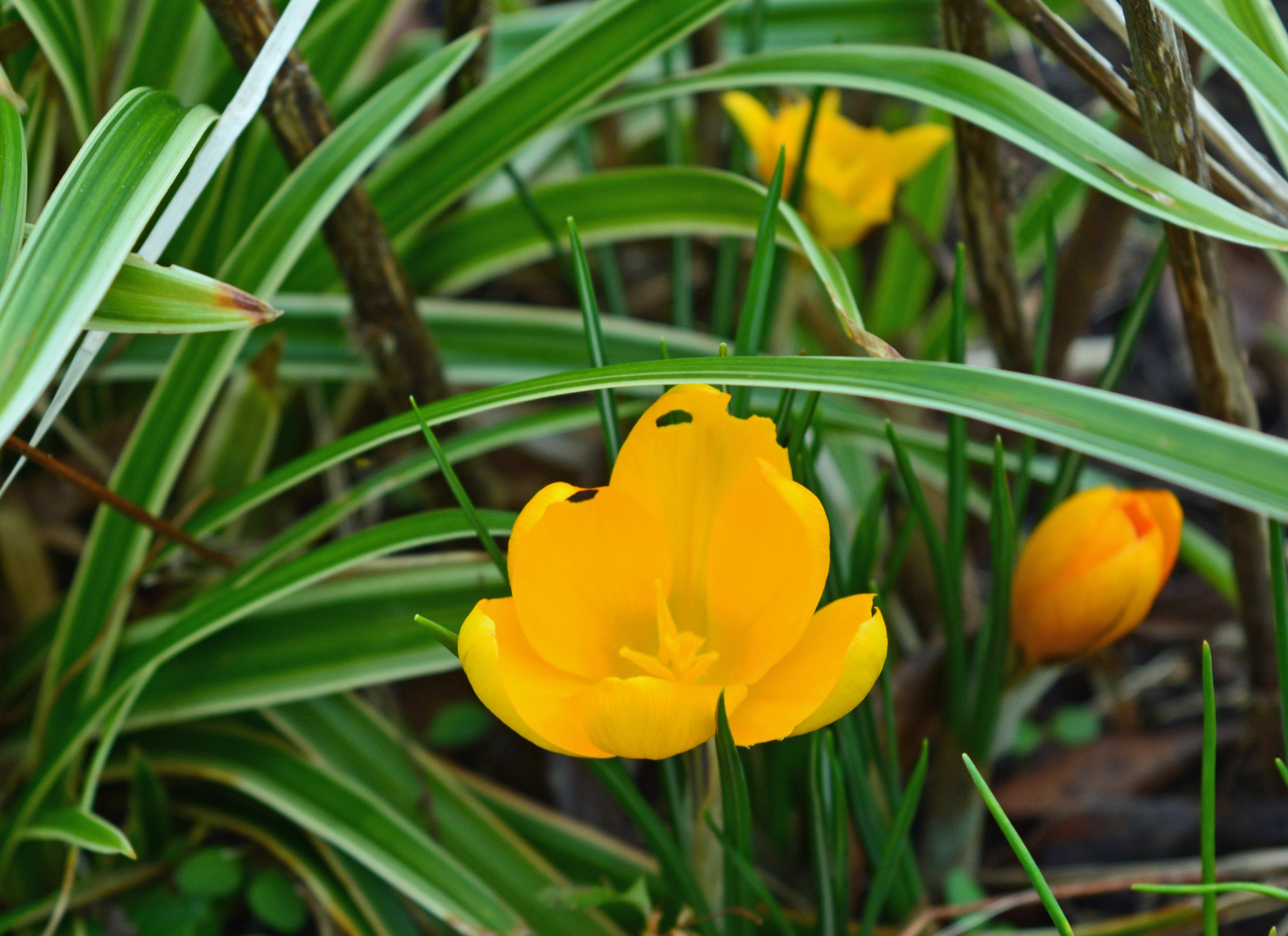
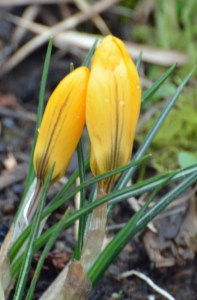
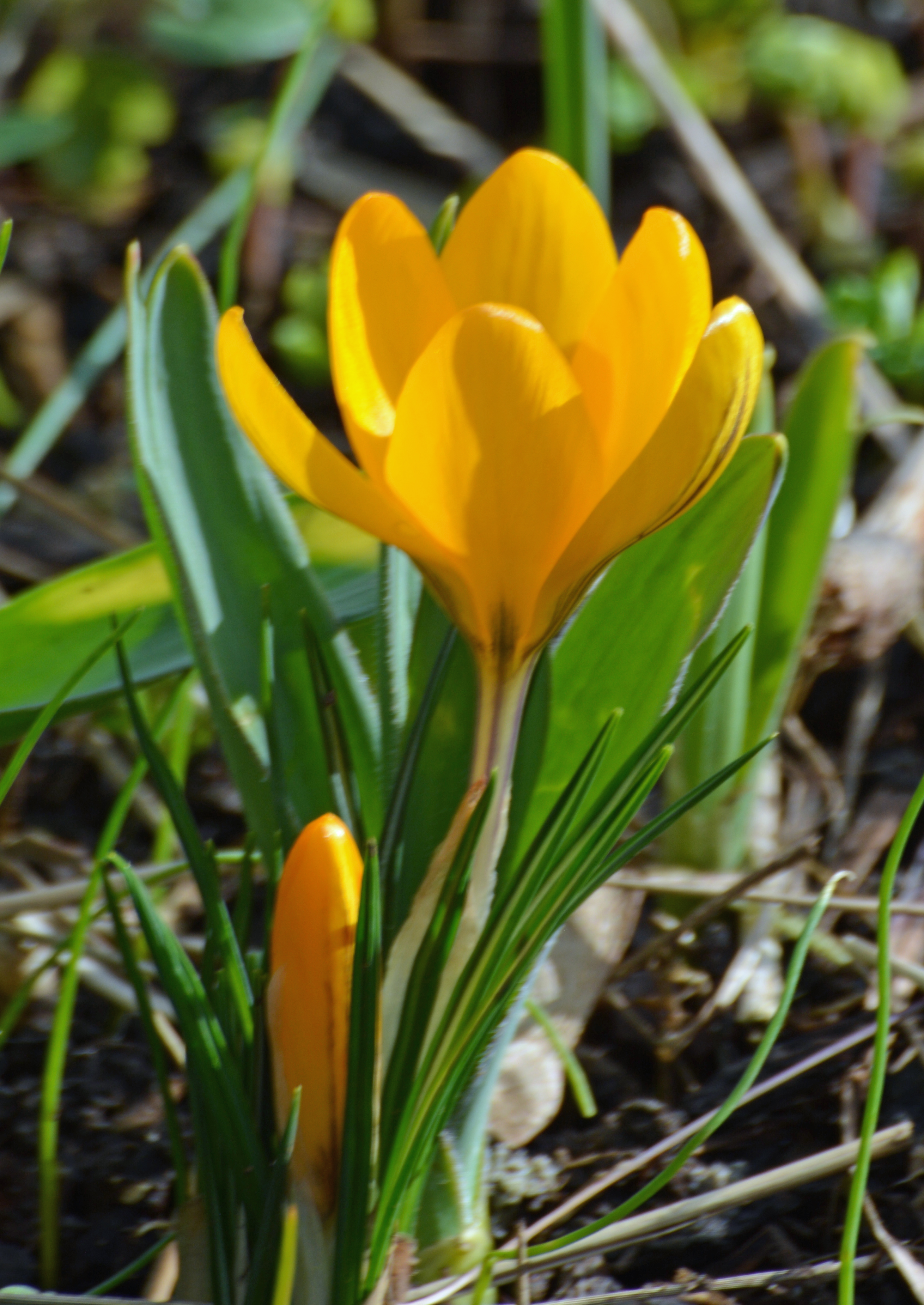
About Crocus I wrote, “Whatever the weather, sunny or overcast, the gold of Crocus shines through, even the purple coloured varieties have spots of deep yellow, almost orange.”

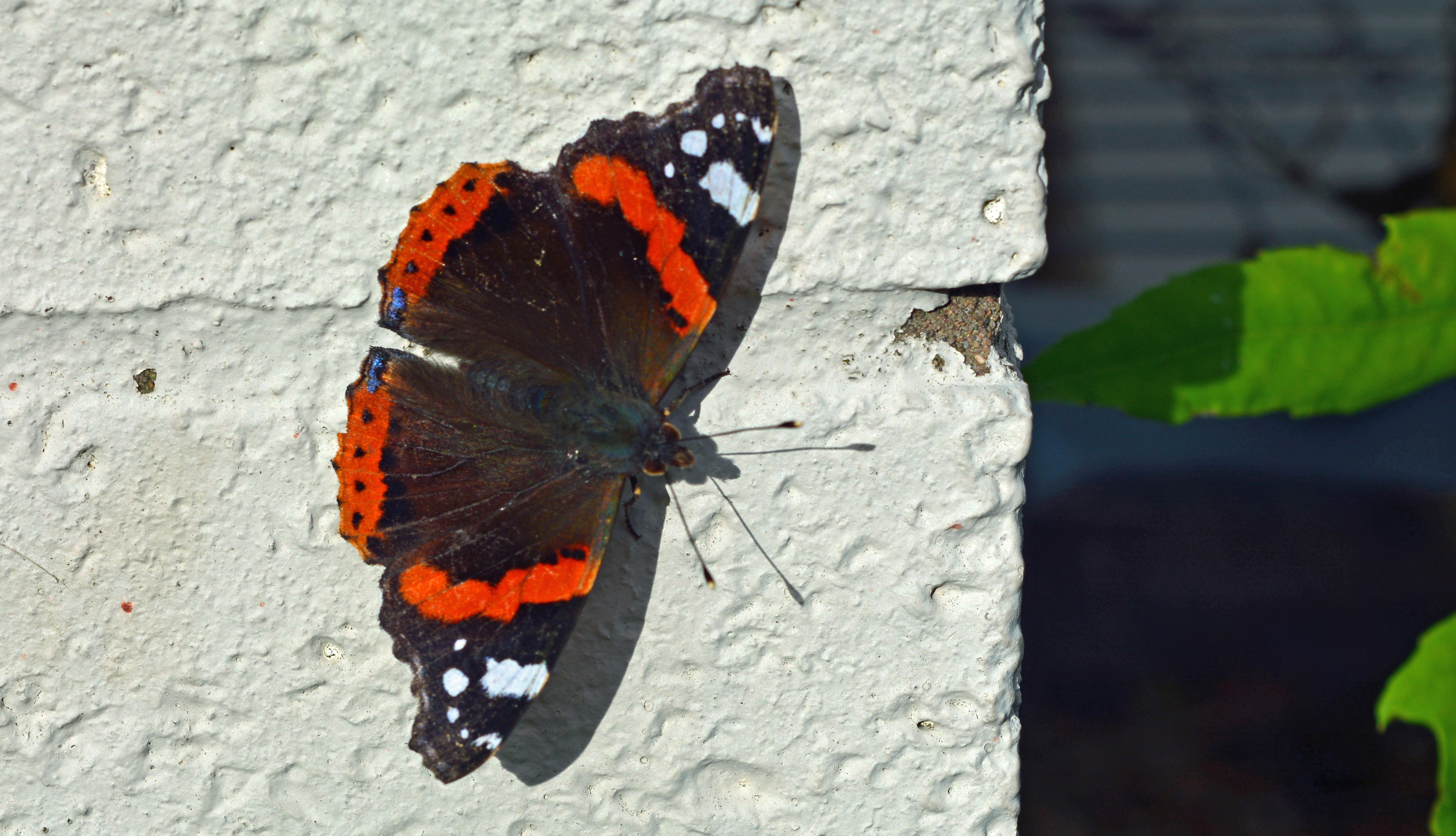
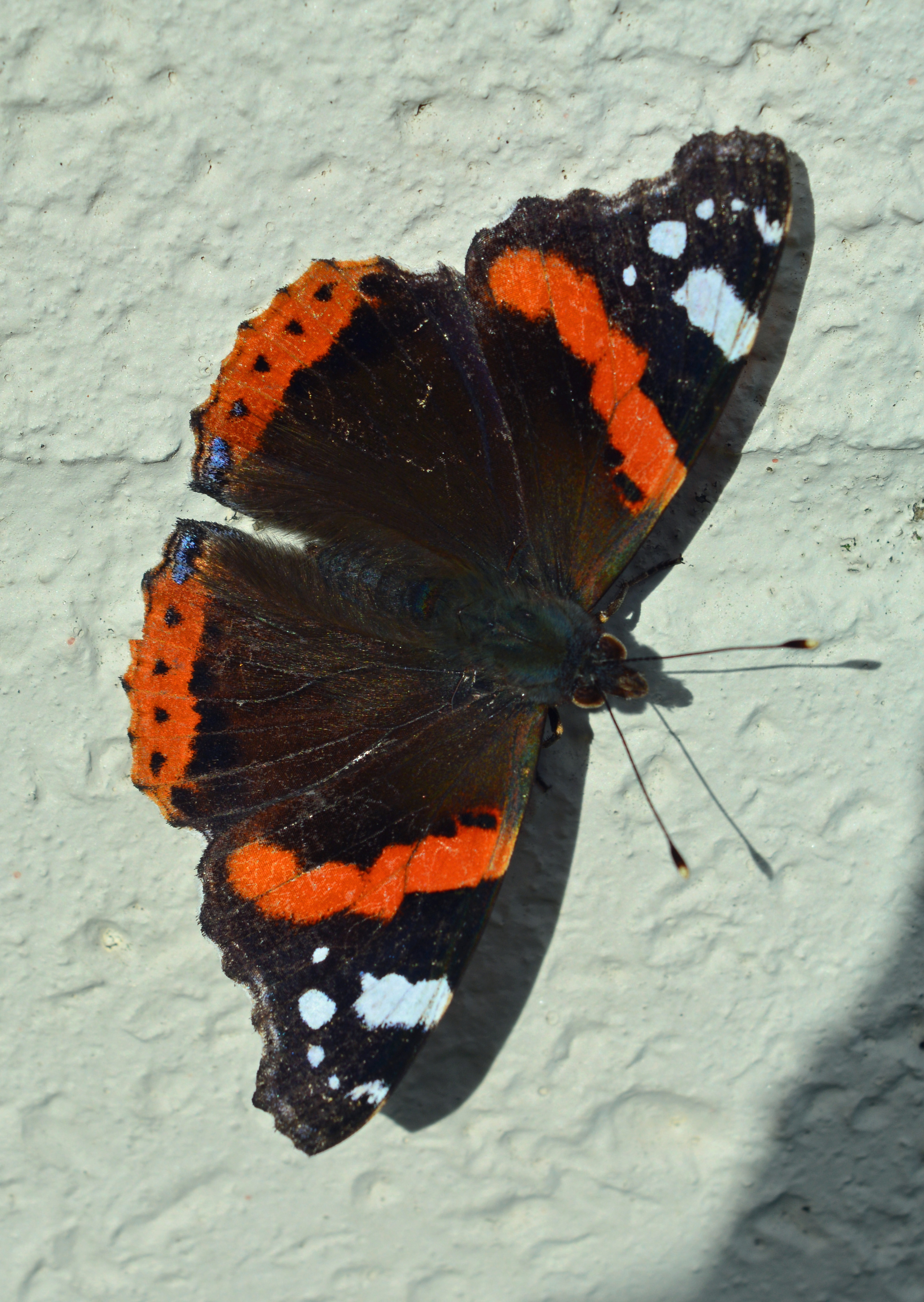
Turn over and I share the surprise of a wildlife visitor, about which I wrote, “There is a surprising amount of wildlife activity in our February garden. Recent sunny, warmer than average days have encouraged our resident birds to start singing and calling. The Song Thrush calls loudly from first light along with Robins, Dunnock and Wren while overhead Buzzards and Red Kite mewl as they soar. As the light levels drop Tawny Owls called for long periods of time. Sunshine also brings out Bumble Bees and Honey Bees to feed off early flowers of bulbs and the first butterfly of the year makes its appearance. A stunningly beautiful Red Admiral rests on a wall taking in the extra warmth of the sun on the bricks.


Categories
flowering bulbs garden design garden photography garden seat garden seating gardening gardens gardens open to the public grasses hardy perennials Herefordshire irises kitchen gardens log piles logs National Garden Scheme NGS nurseries ornamental grasses ornamental trees and shrubs spring bulbs trees village gardens Winter Gardening winter gardens Yellow Book Gardens

Snowdrops and Creative Pruning – Ivy Croft Garden

I often publish posts about summer days out in winter to help us warm up so as we are in the middle of an exceptionally hot period of weather I shall do the opposite and publish this post I wrote in the winter in the hope it may cool us down!

There were two main reasons we wanted to visit Ivy Croft Garden and Nursery to look at, firstly their huge collection of snowdrops and secondly their imaginative pruning techniques. Both these elements are highlights of the February garden. We drove down to Herefordshire with gardening friends Pete and Sherlie who had never visited the garden before. We had been once before several years ago, when it was still quite early on in the development stage. We were looking forward to seeing what it was like after so many years.

The garden which was started in 1997, surrounds the cottage which has a formal area close to the house partly enclosed by an ivy hedge. Further afield the garden becomes less formal and a wander around gave us the chance to look at its pond, willow and dogwood collections, a perry pear orchard and a vegetable garden enclosed with trained fruit trees.

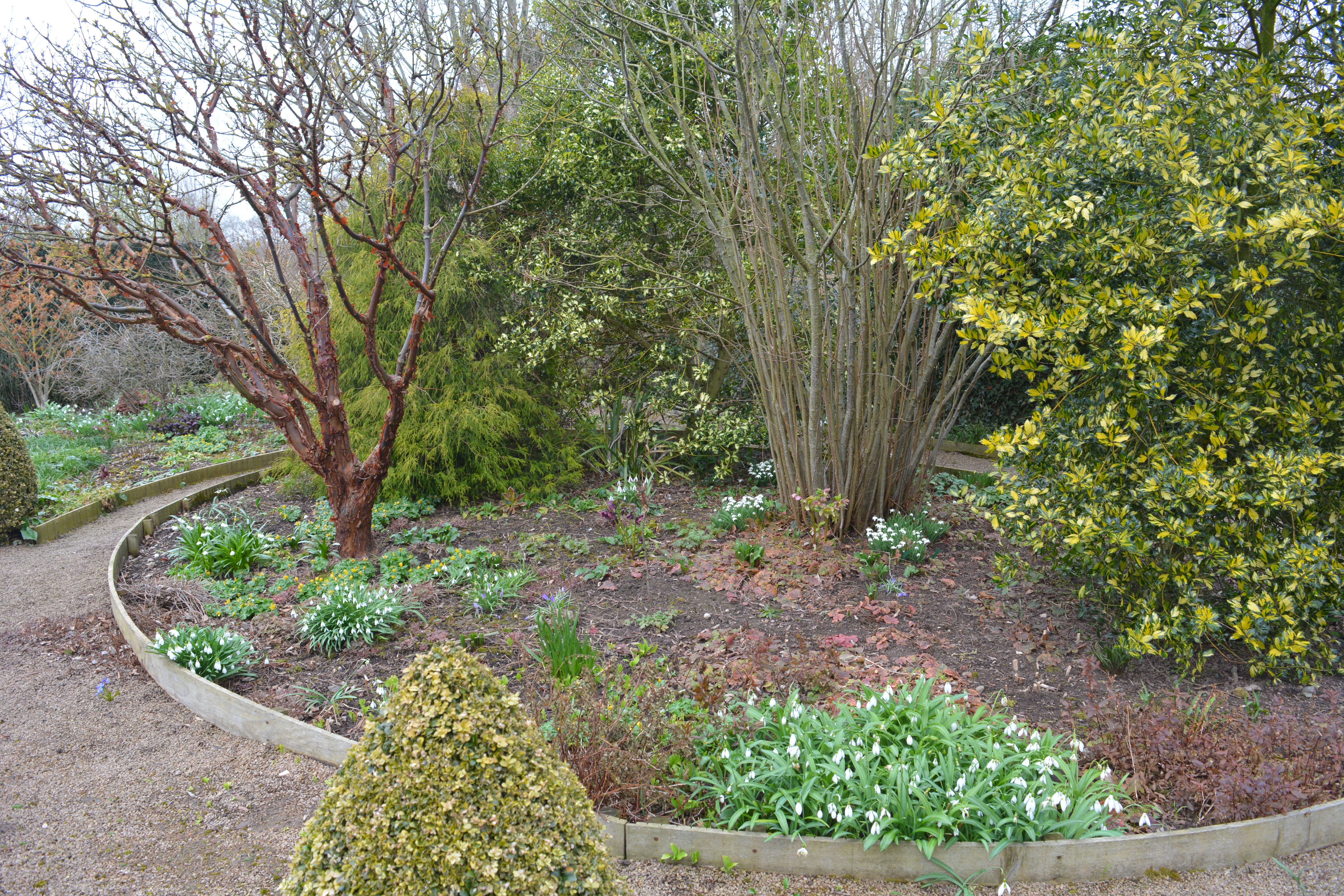
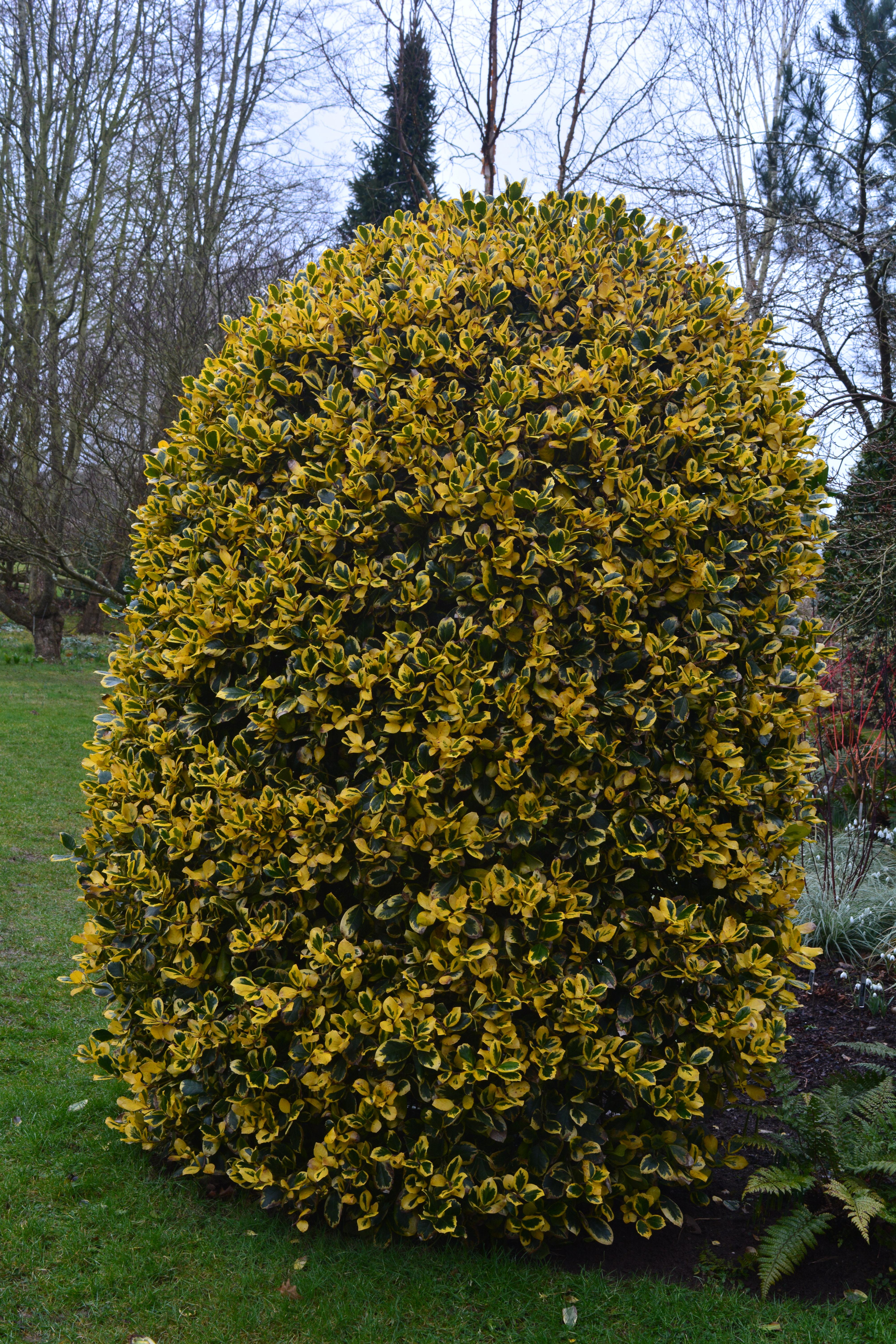
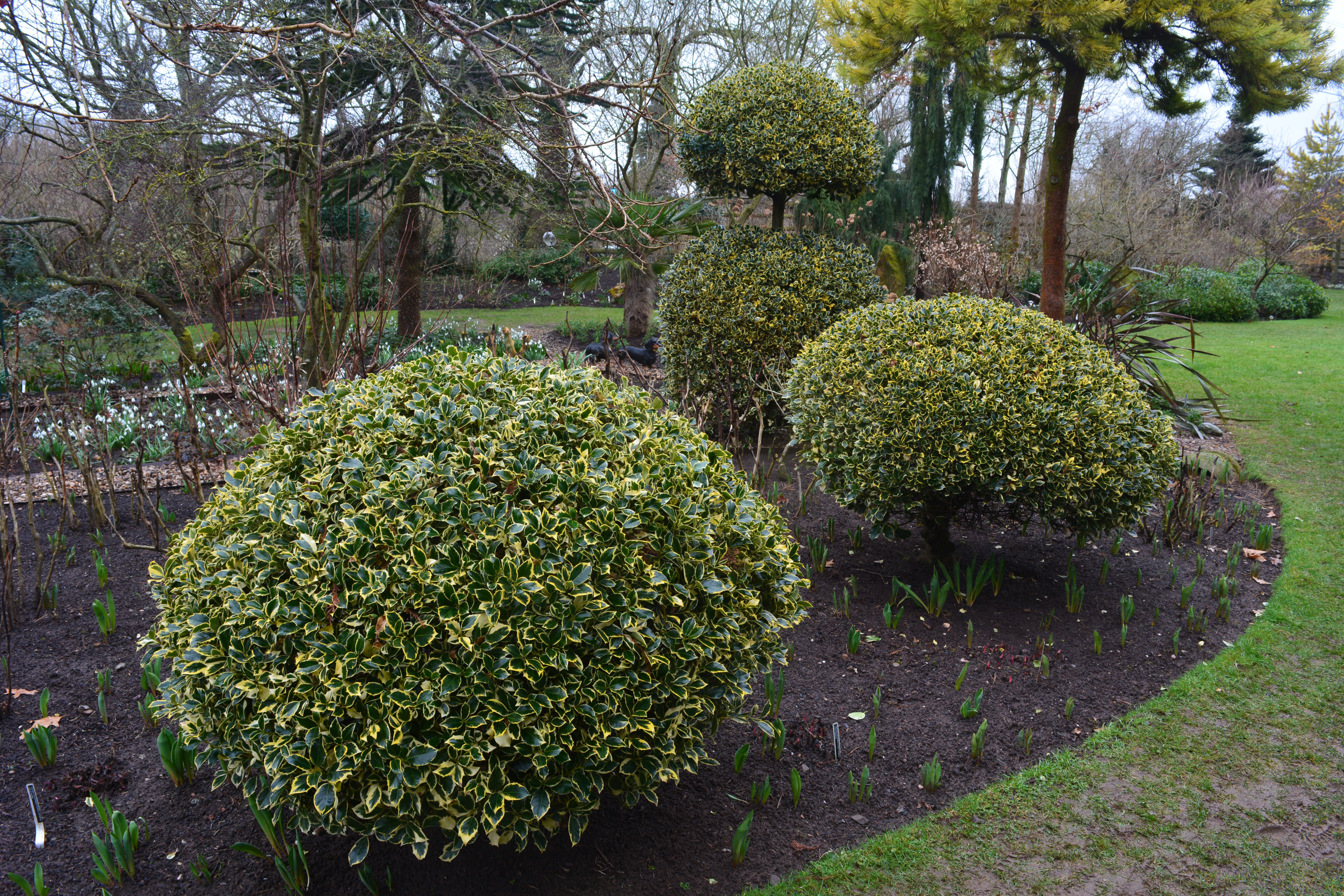
The area around the house featured many flowering bulbs and in the spring and summer alpines would take over. A colourful Acer griseum stood with two variegated Hollies in a circular bed surrounded by a gravel pathway.


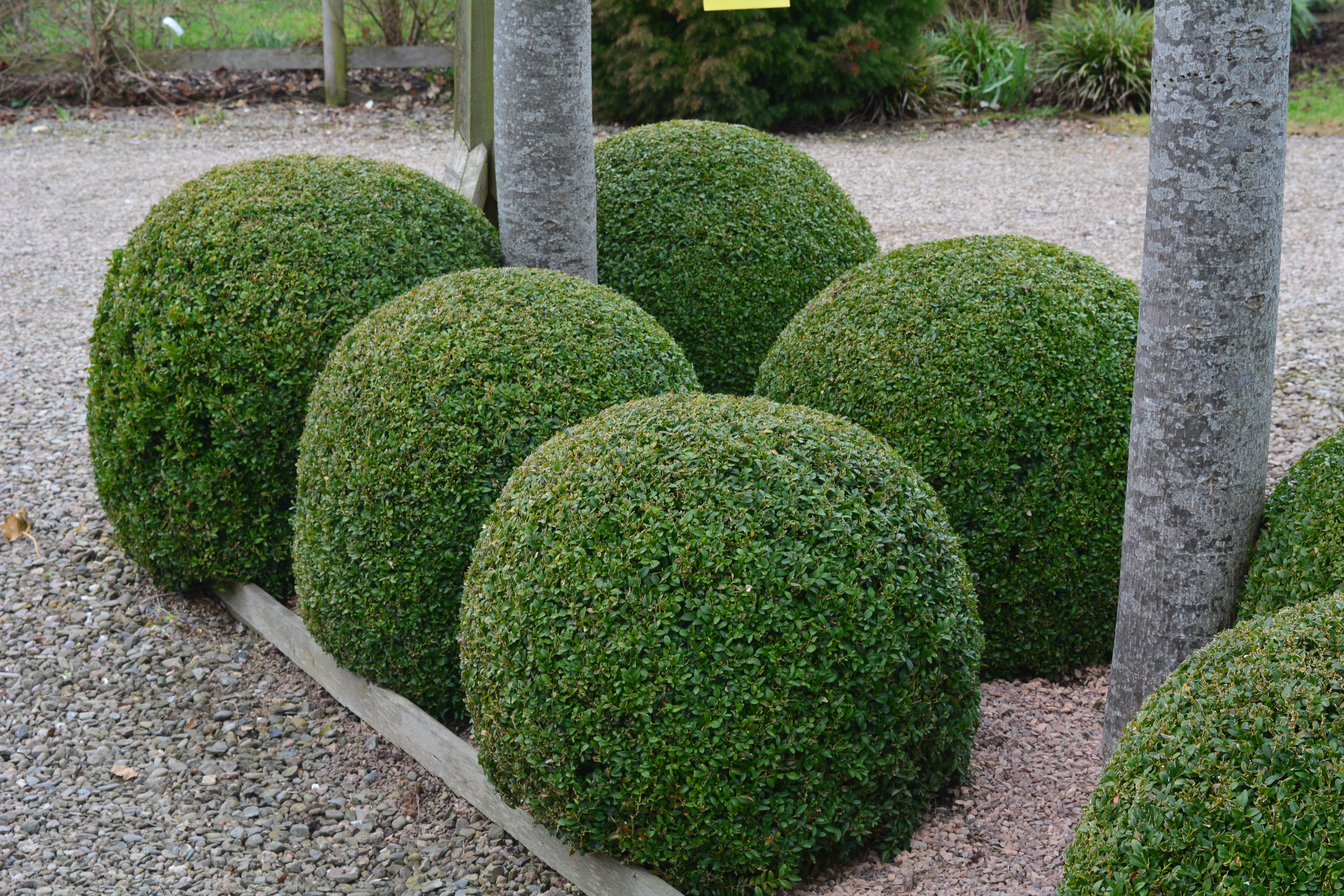
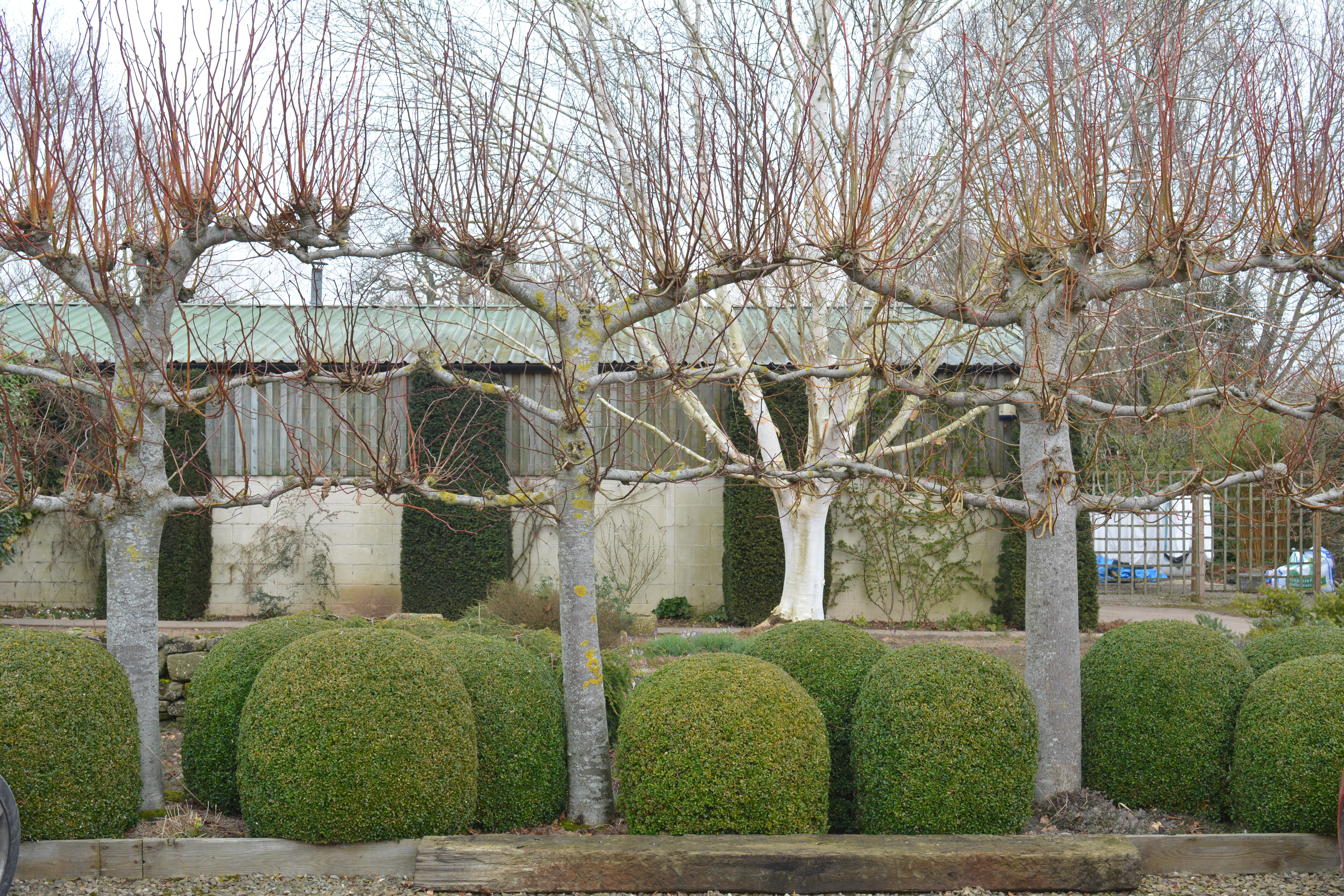
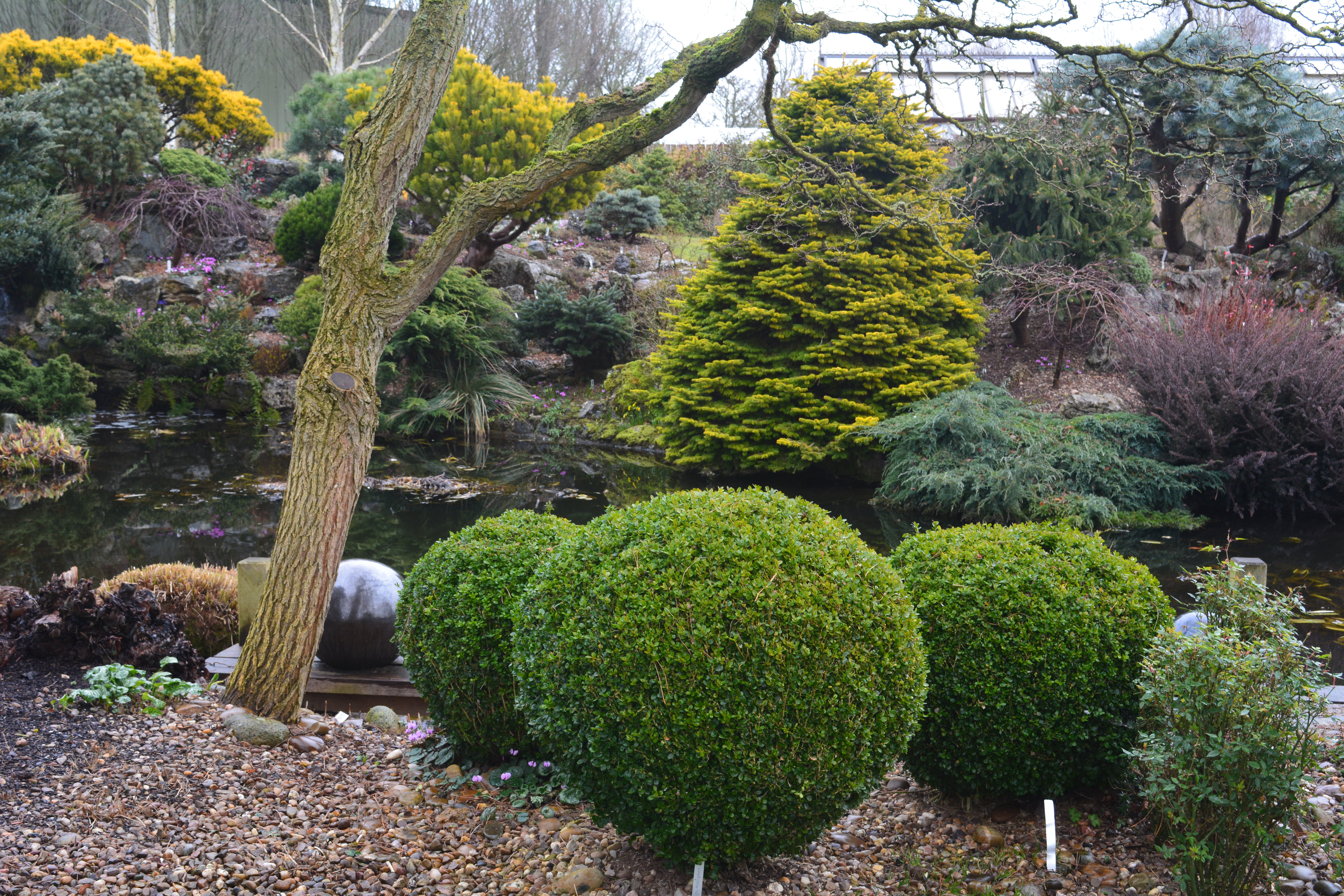
The pruned features we discovered as we parked up included a pleached limes, box balls and all were neatly presented.


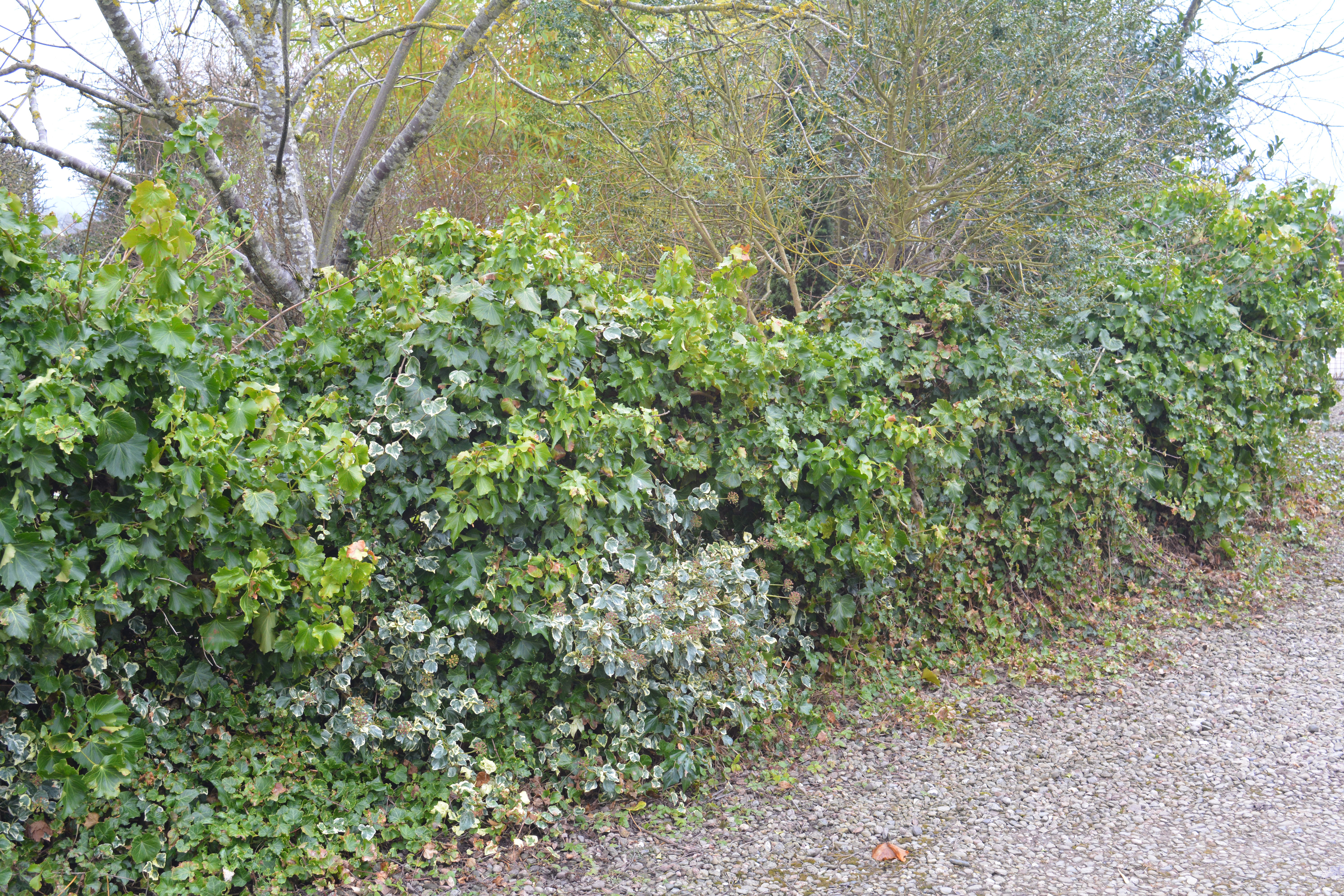
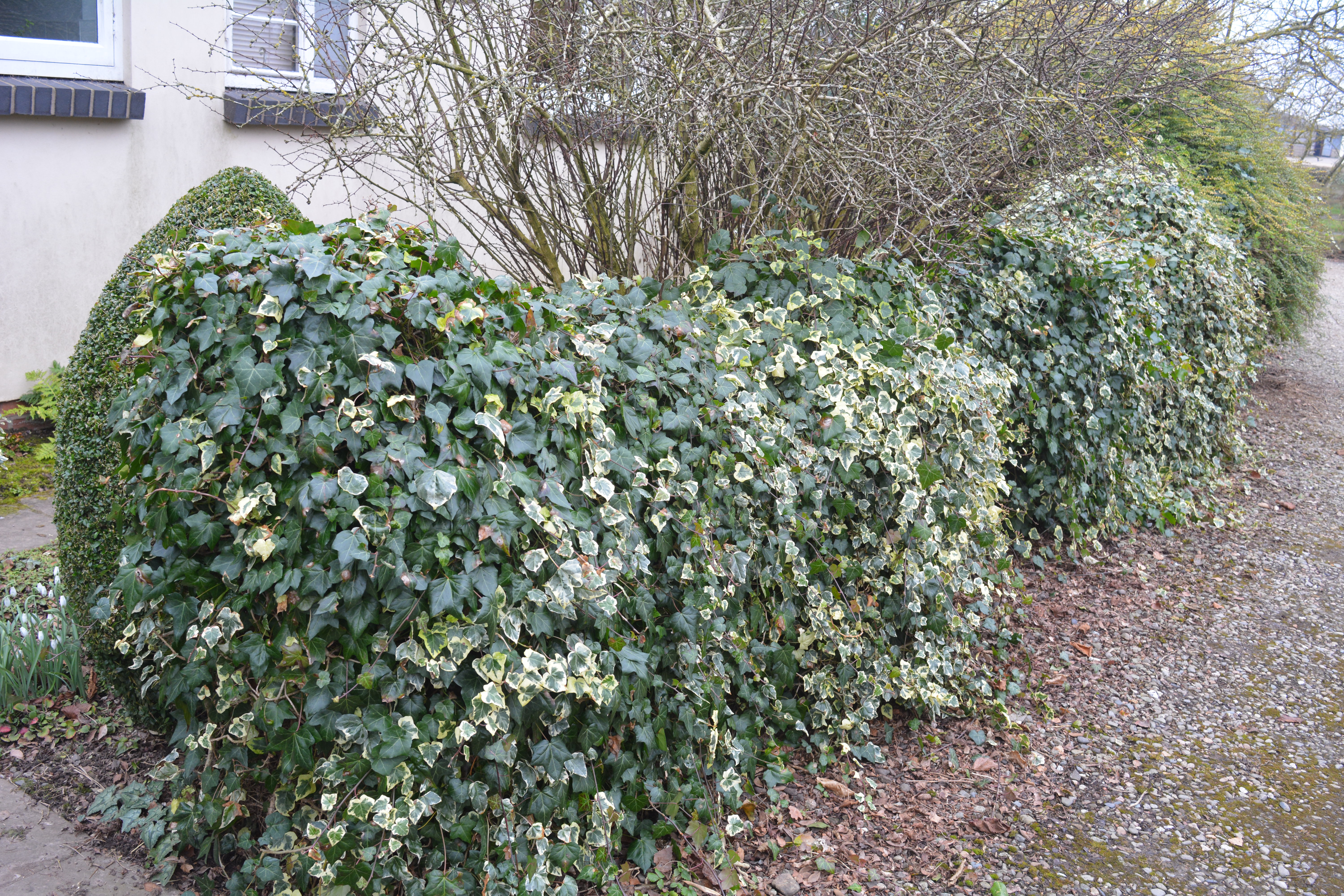
An amazing selection of ivies made up the ivy hedge which surround two sides of the formal garden around the cottage. It was a beautiful, unusual feature to welcome visitors.


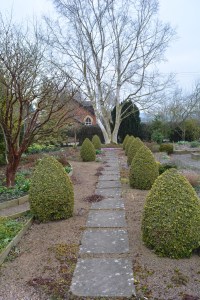
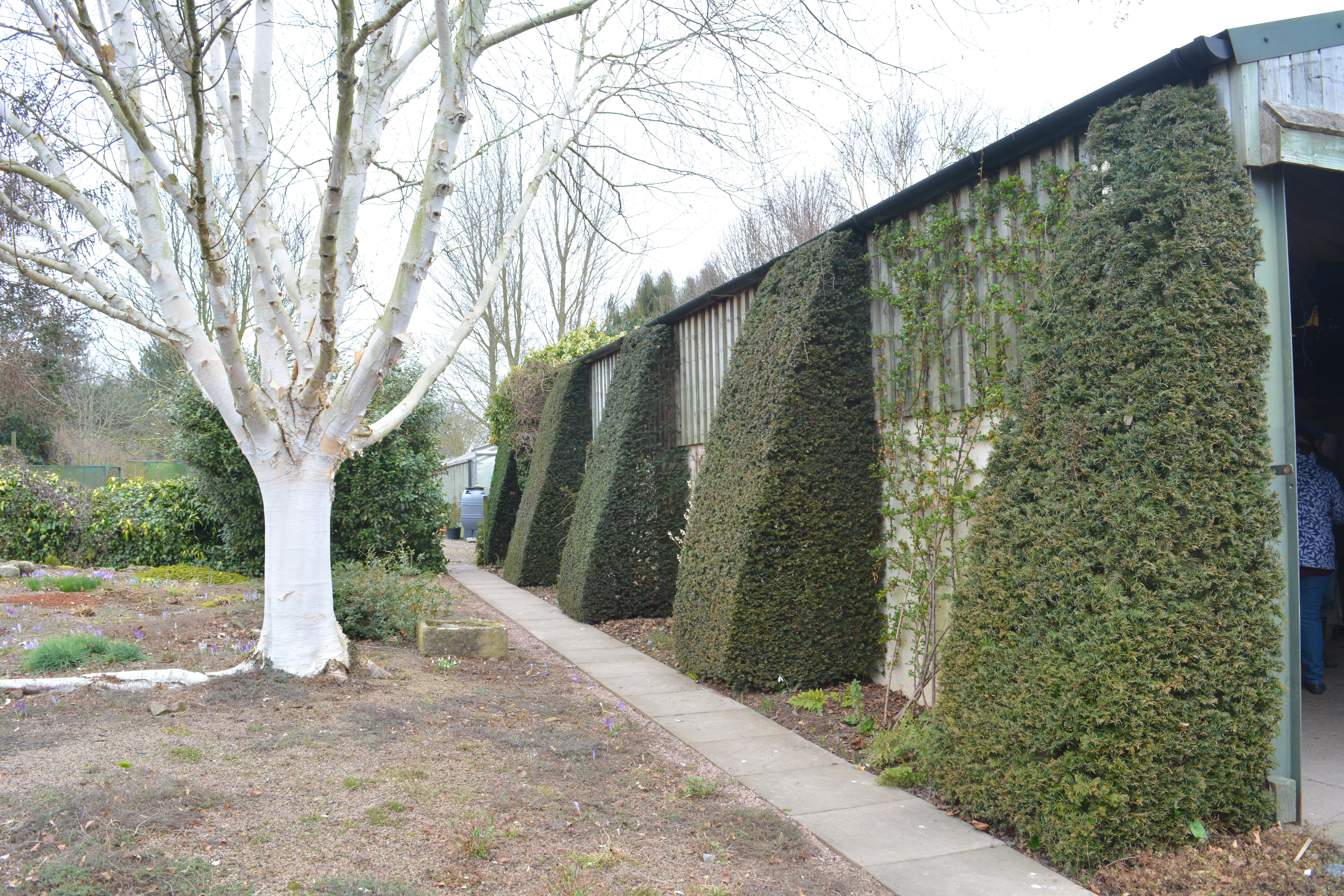
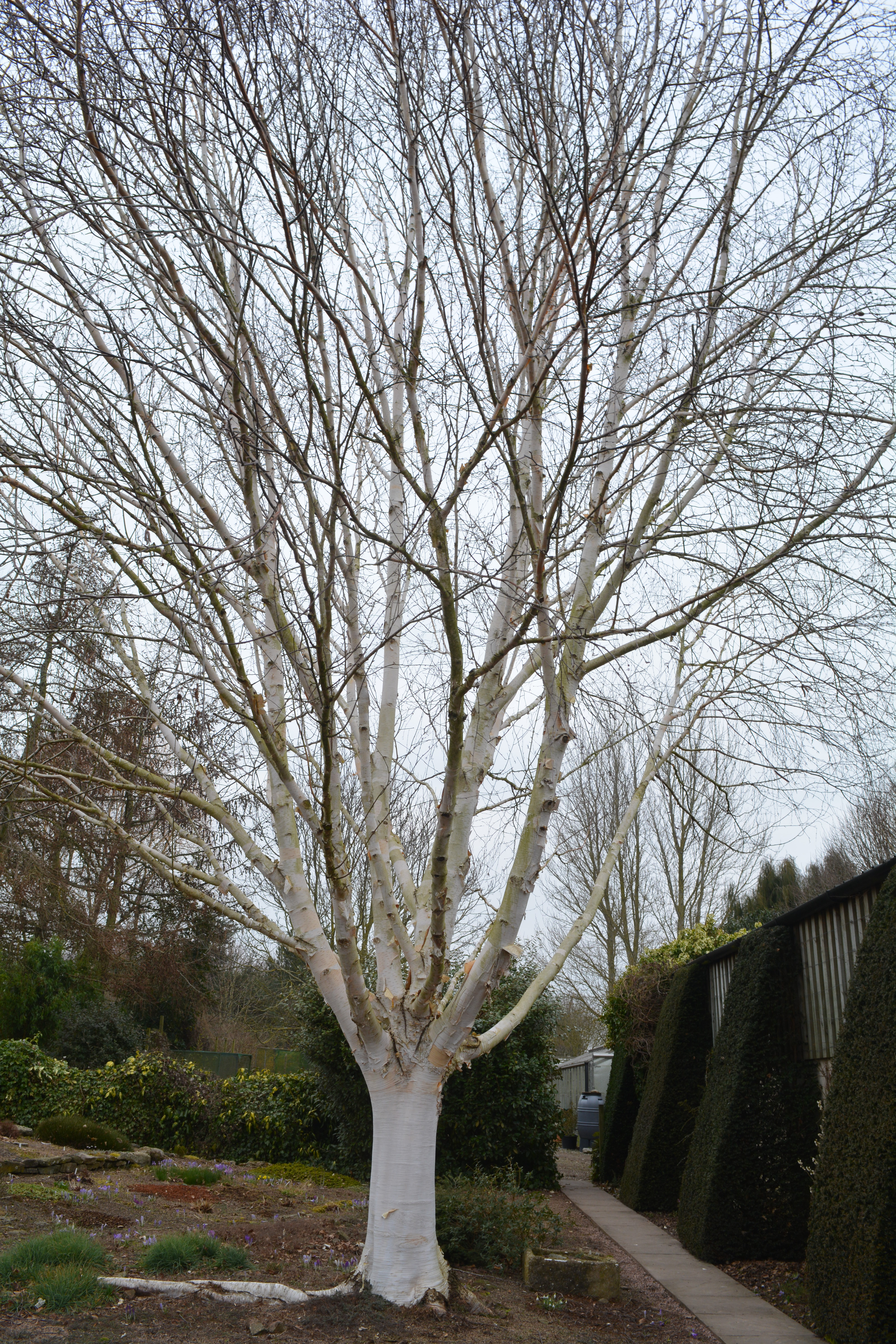
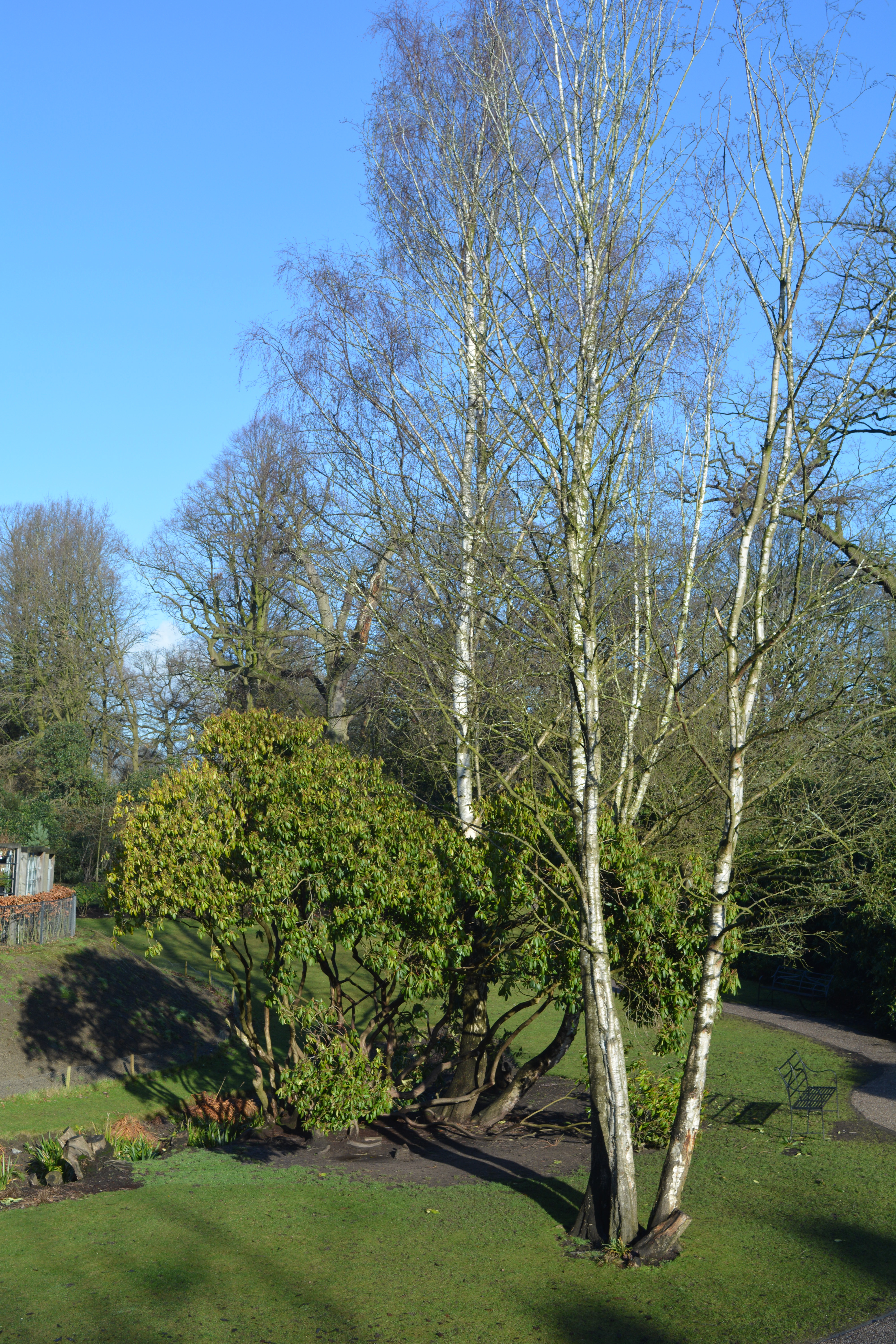
The huge work shed had a unique humorous tough, buttresses created by training and pruning yew trees. Close by stood this beautiful white barked birch tree.


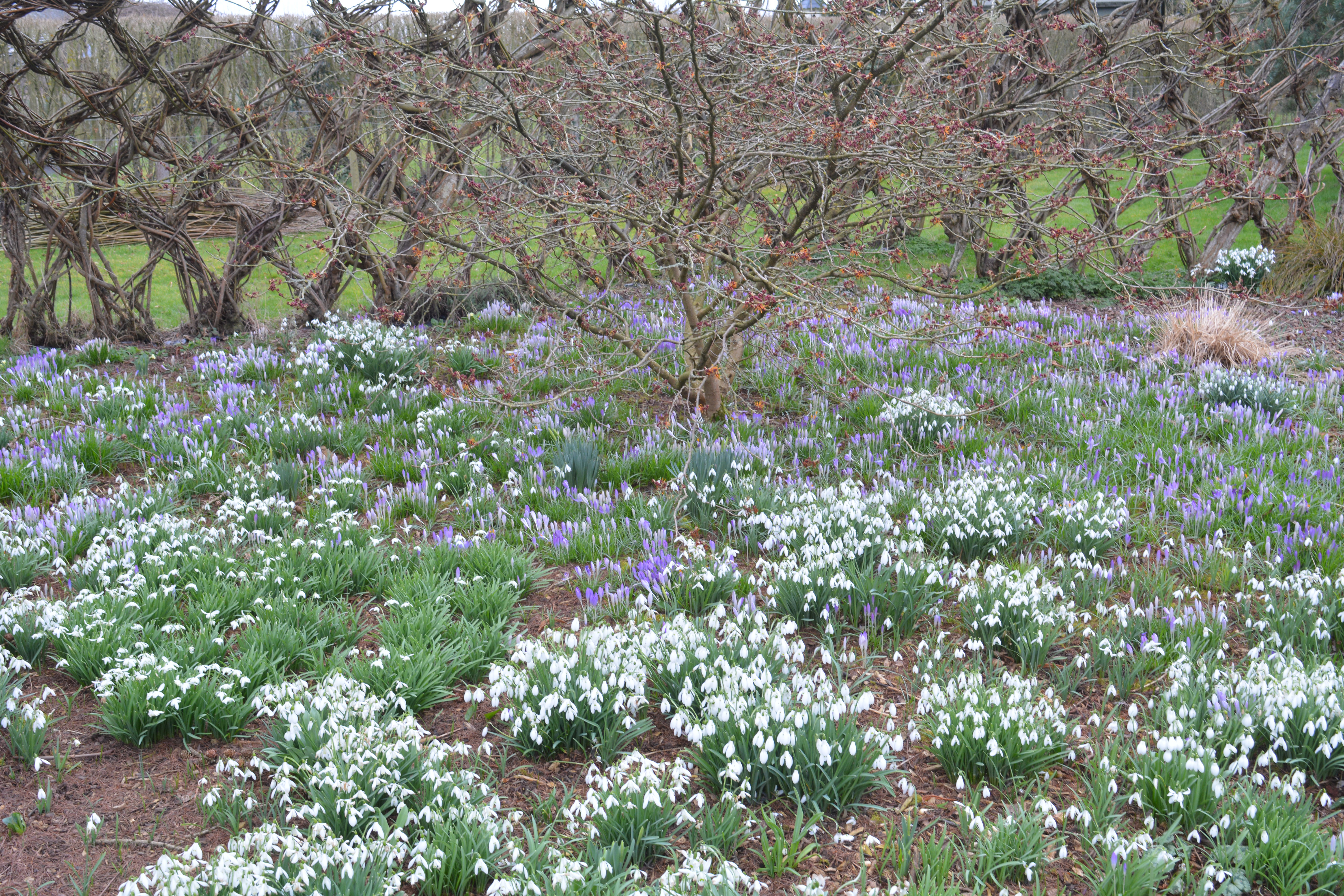
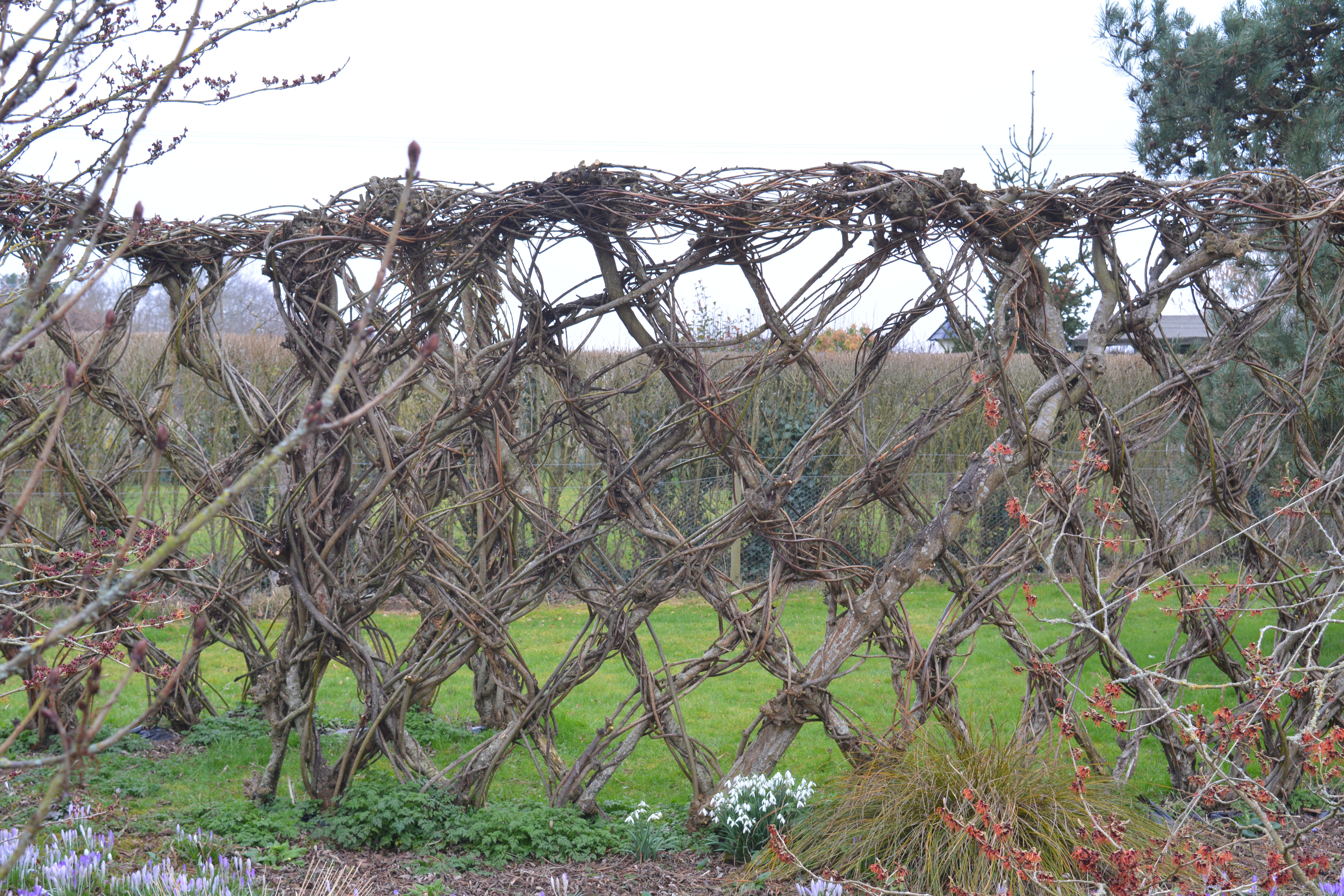
As we walked away from the pleached limes and box ball topiary, we wandered through the wide selection of rare and unusual snowdrops. Beyond this border was a trellis-like “fedge”, a living hedge made from willow.


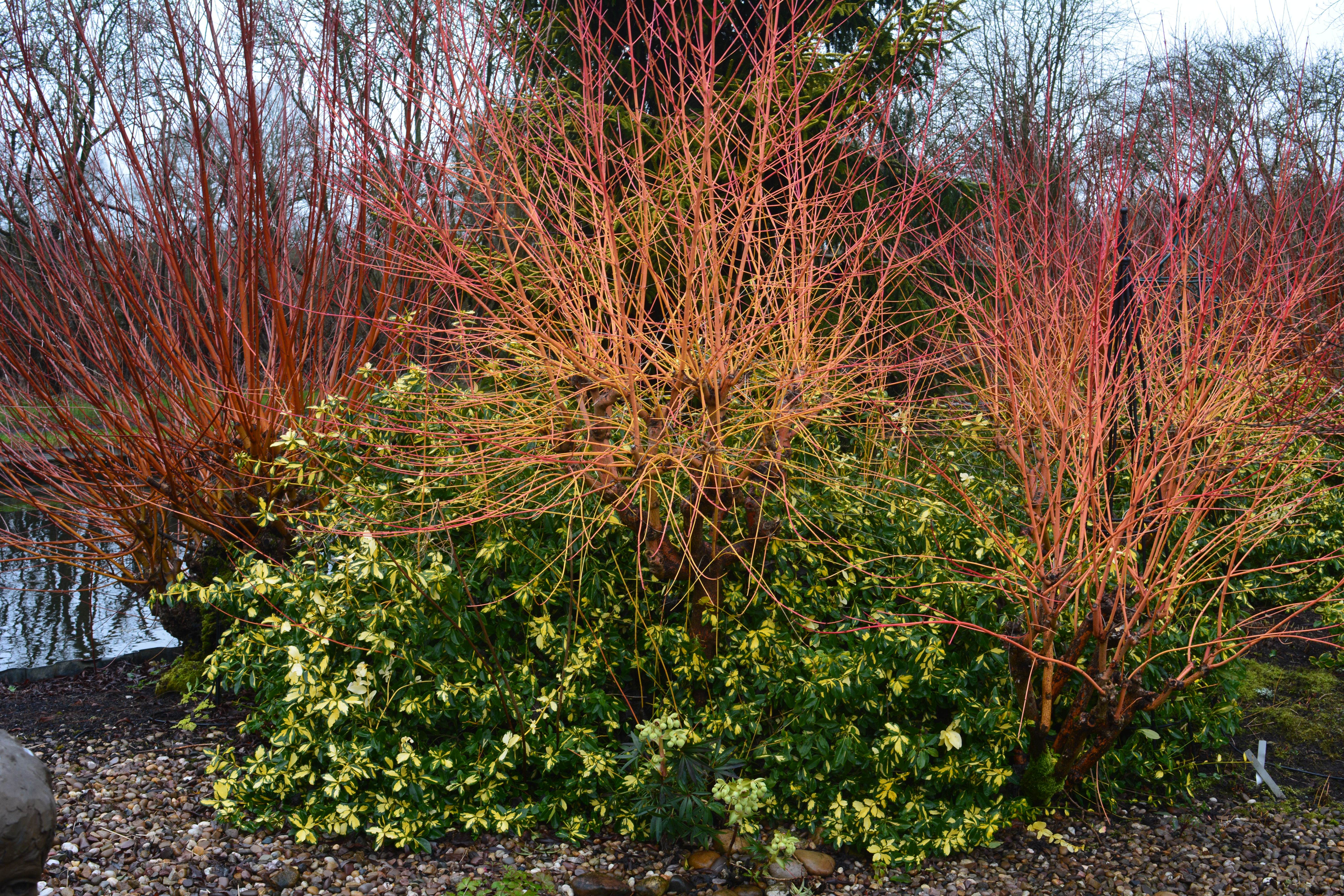
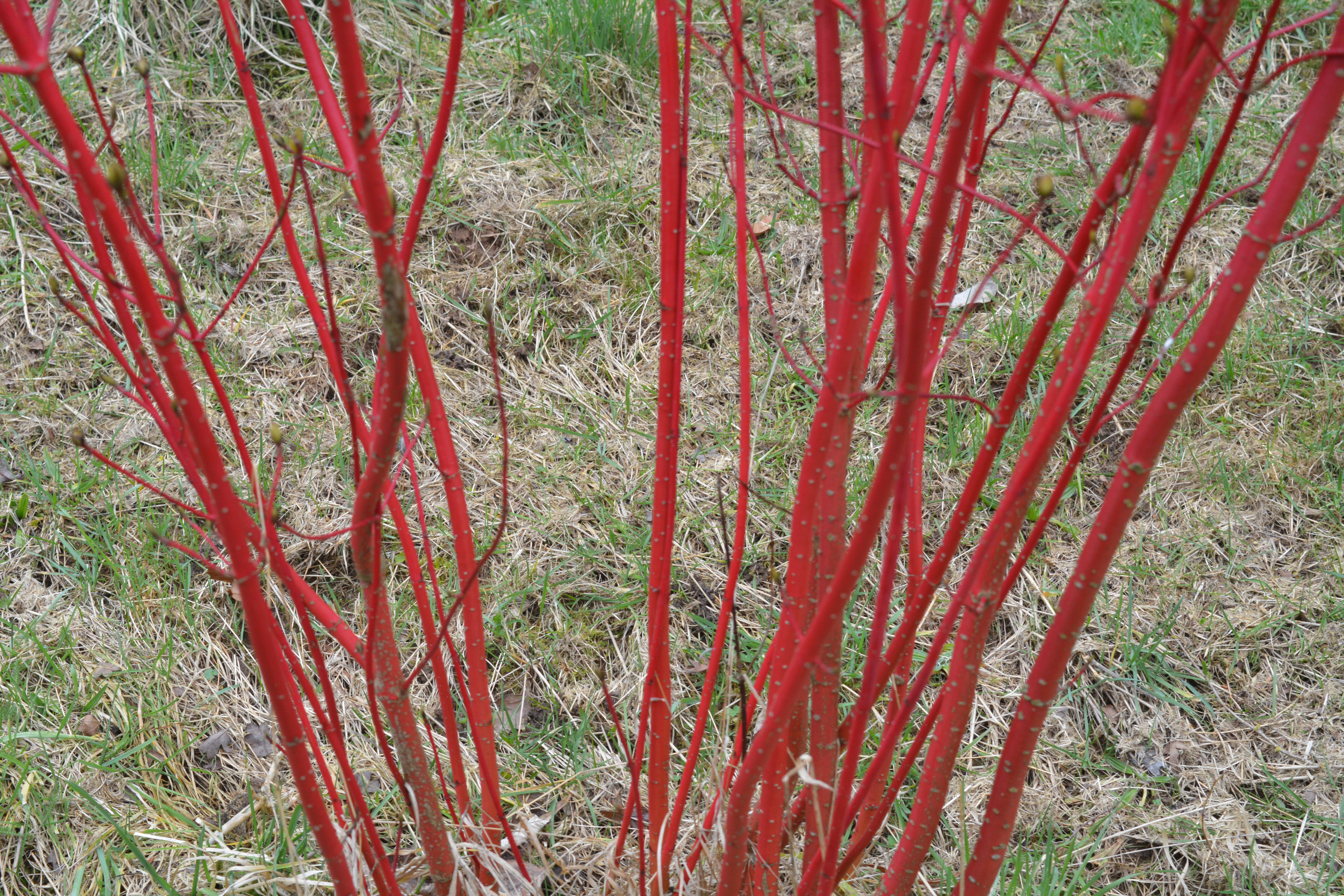
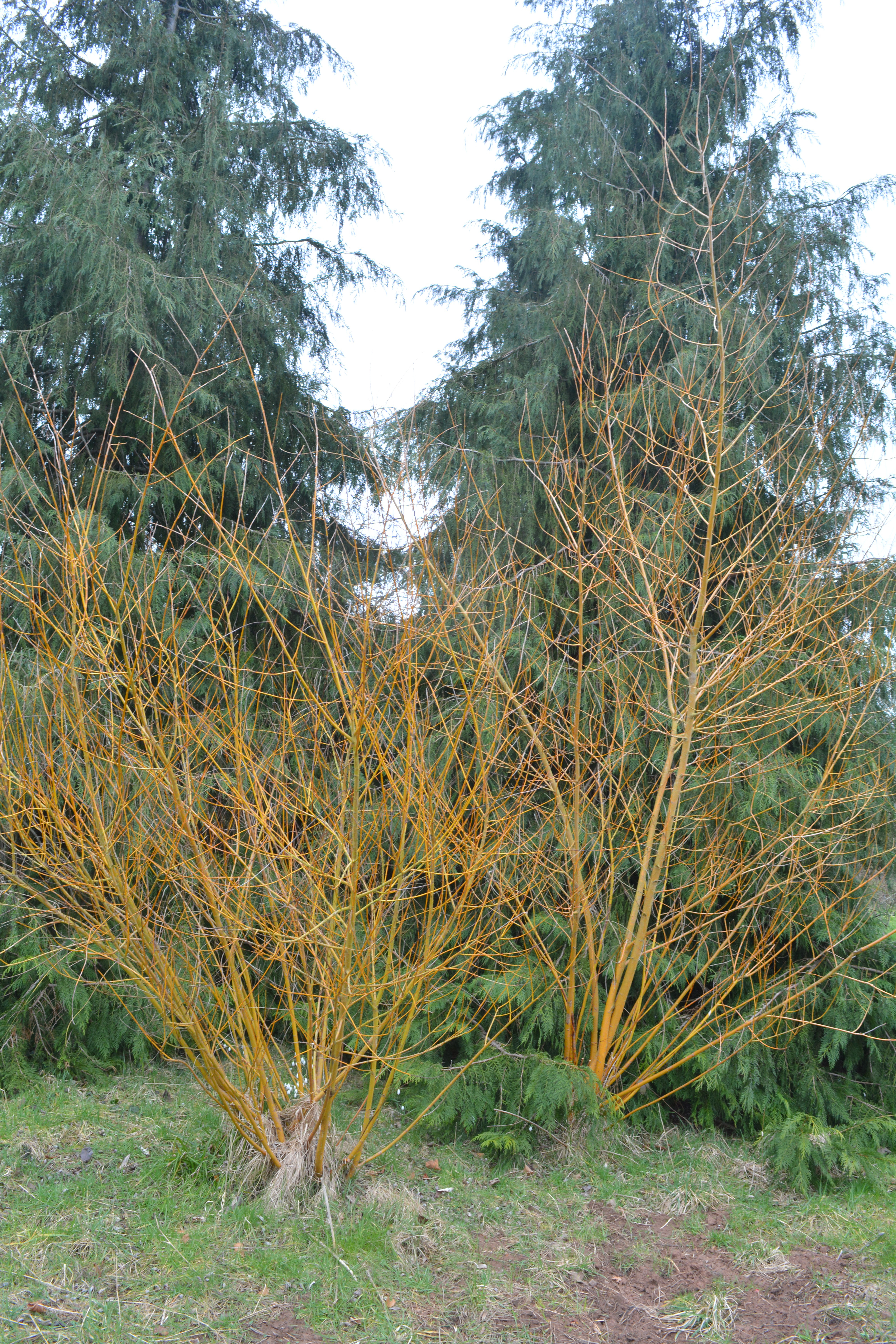
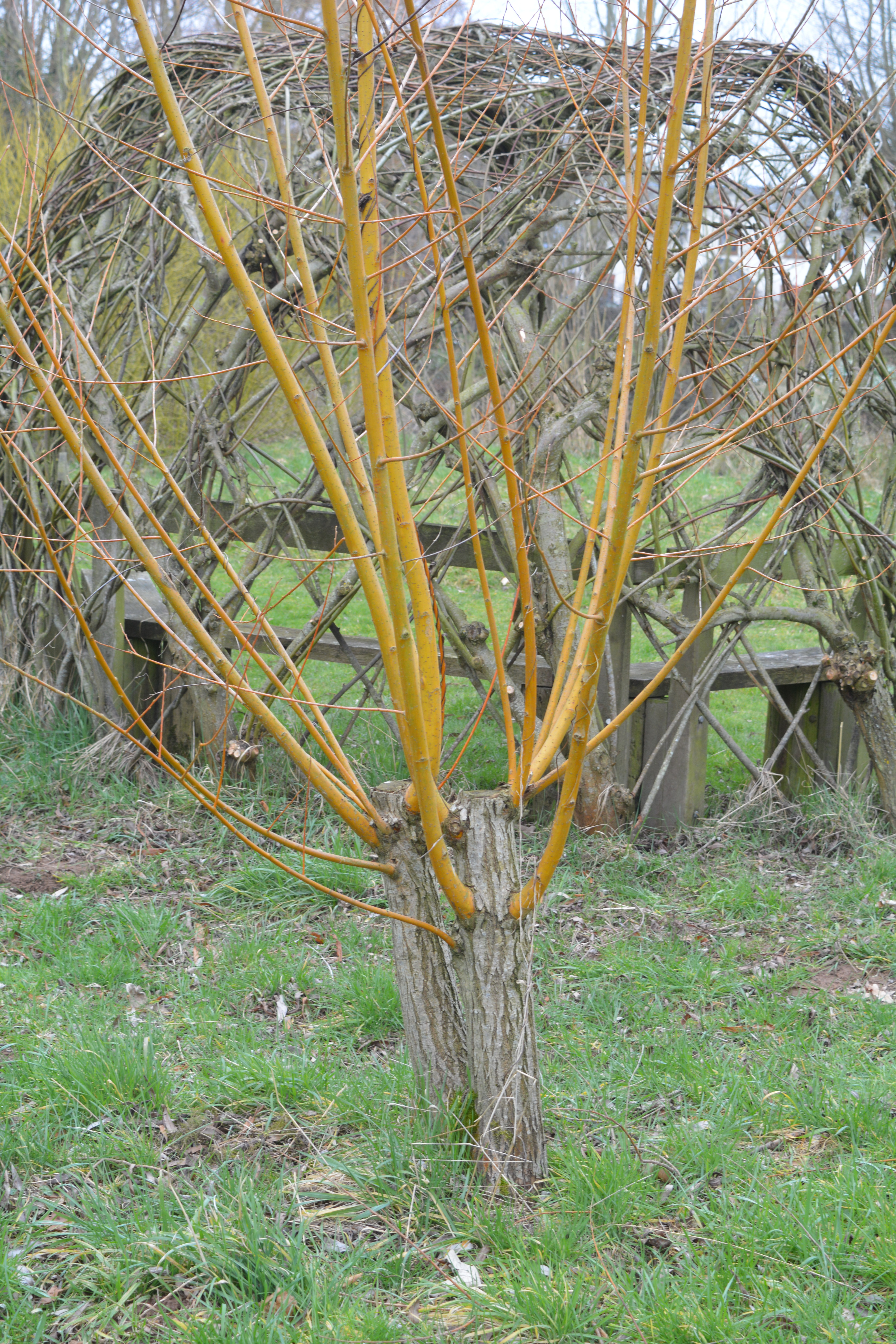
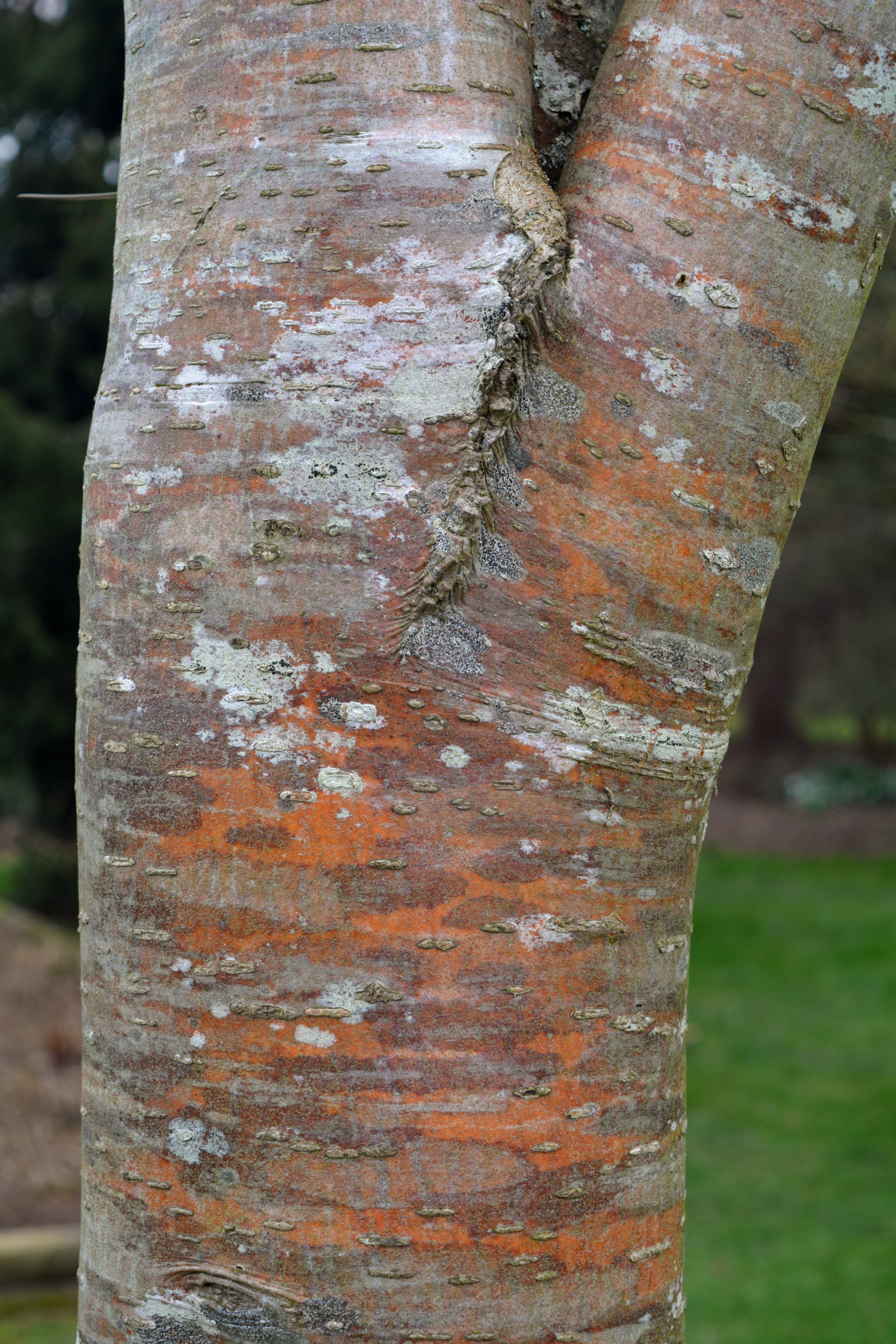
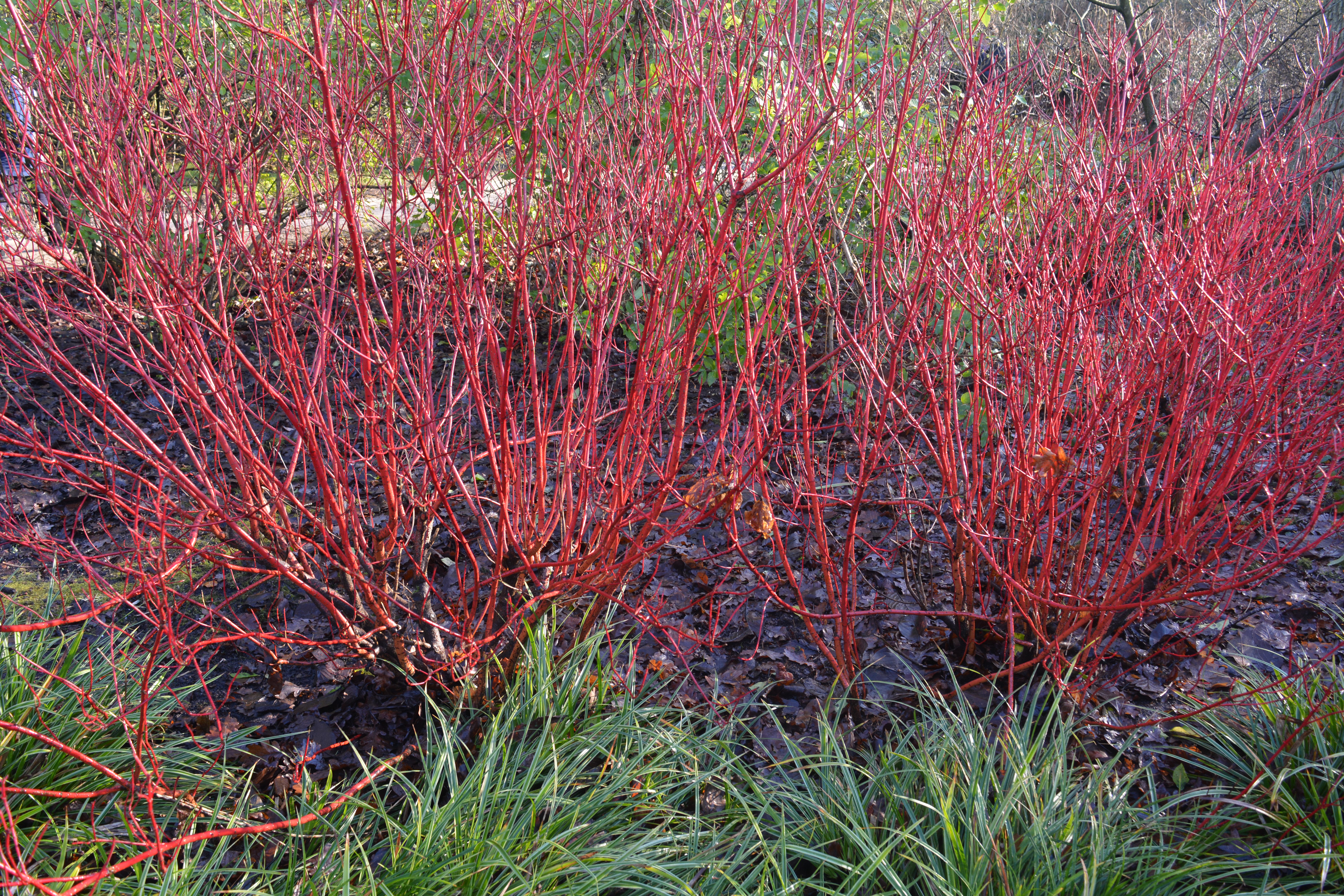
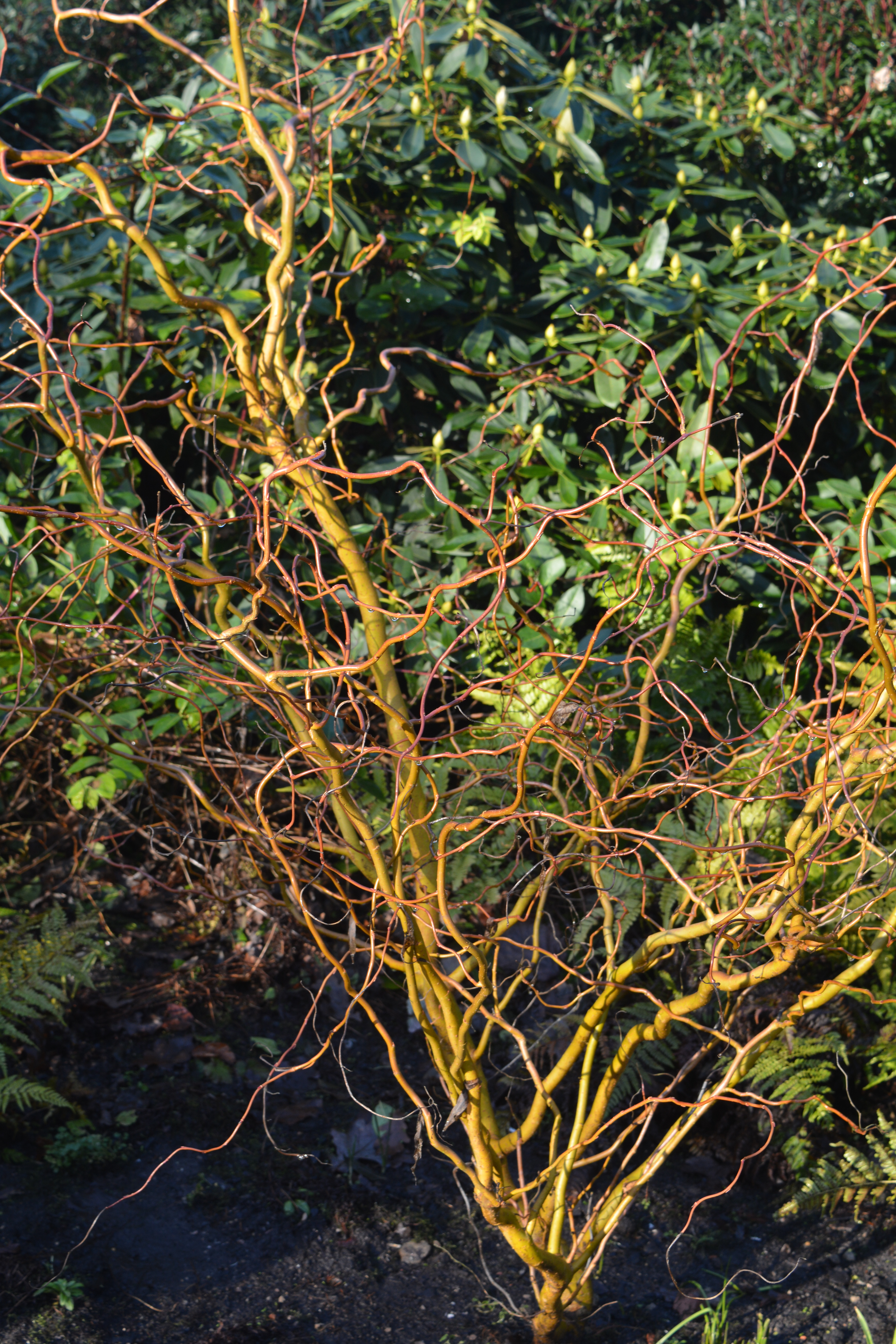
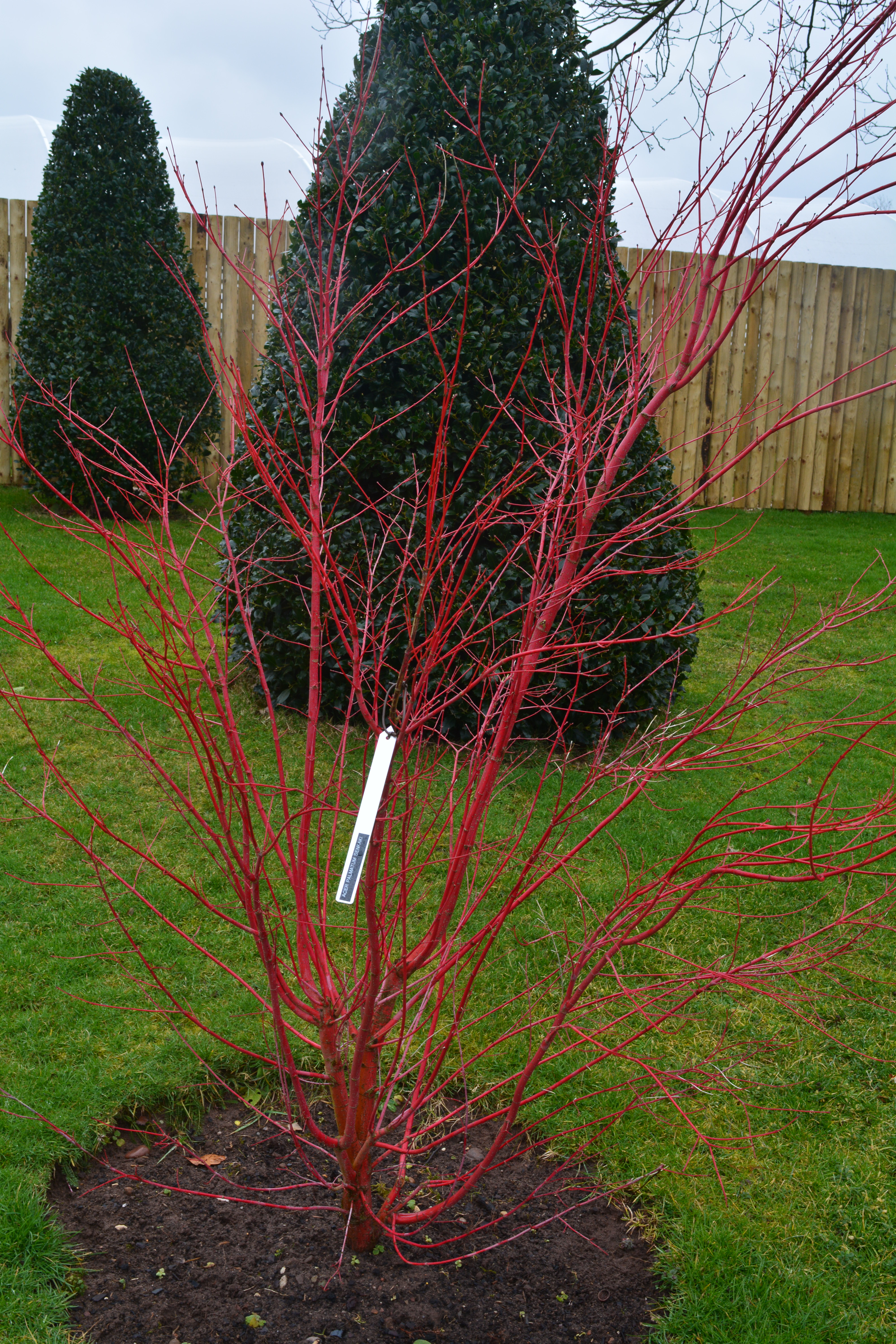
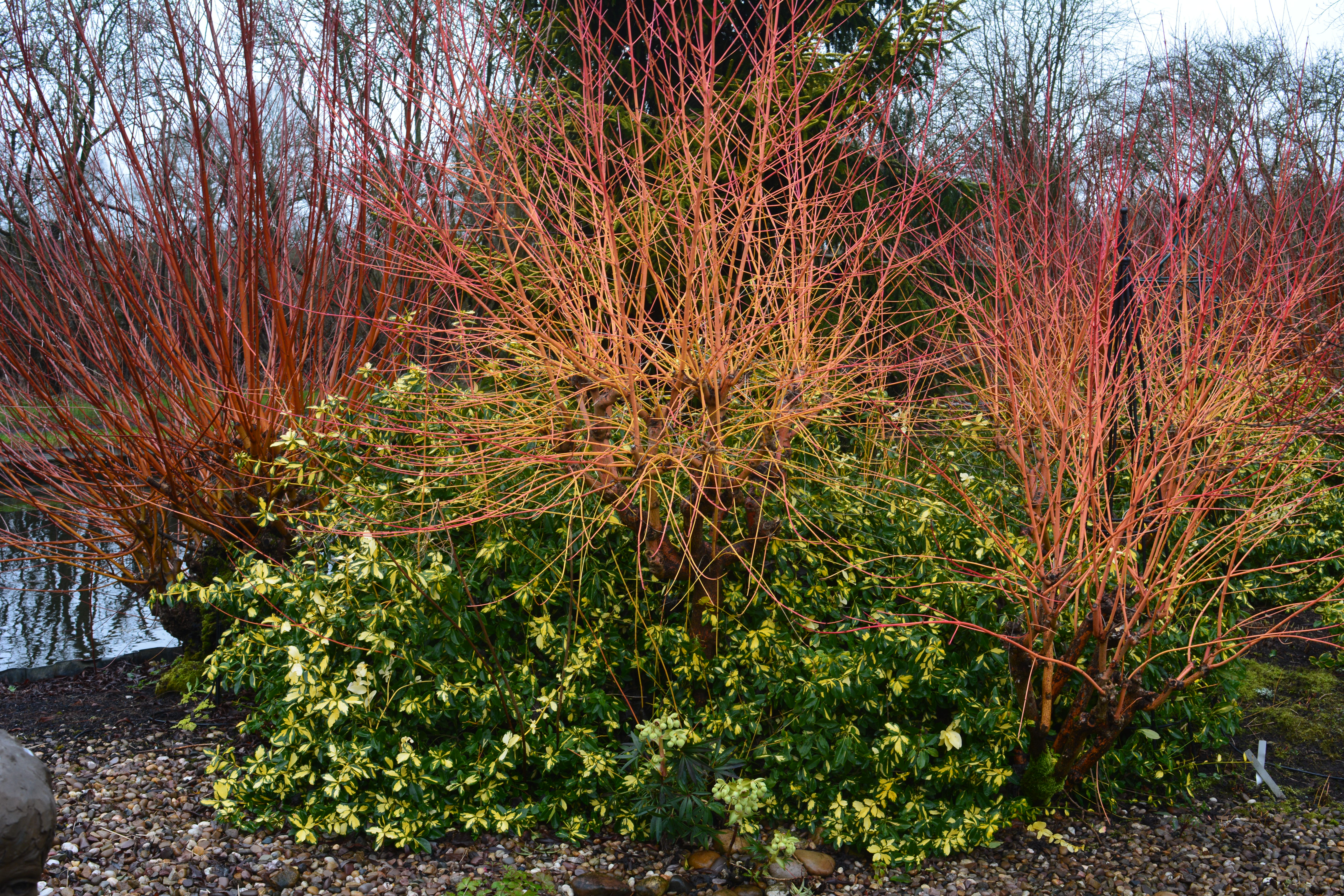
Shrubs with coloured stems and trees with coloured bark are strong features of the winter garden, and Ivycroft had some fine examples of both. Coloured stems were provided by Salix and Cornus, whereas the coloured bark appeared on Betulas and Prunus.


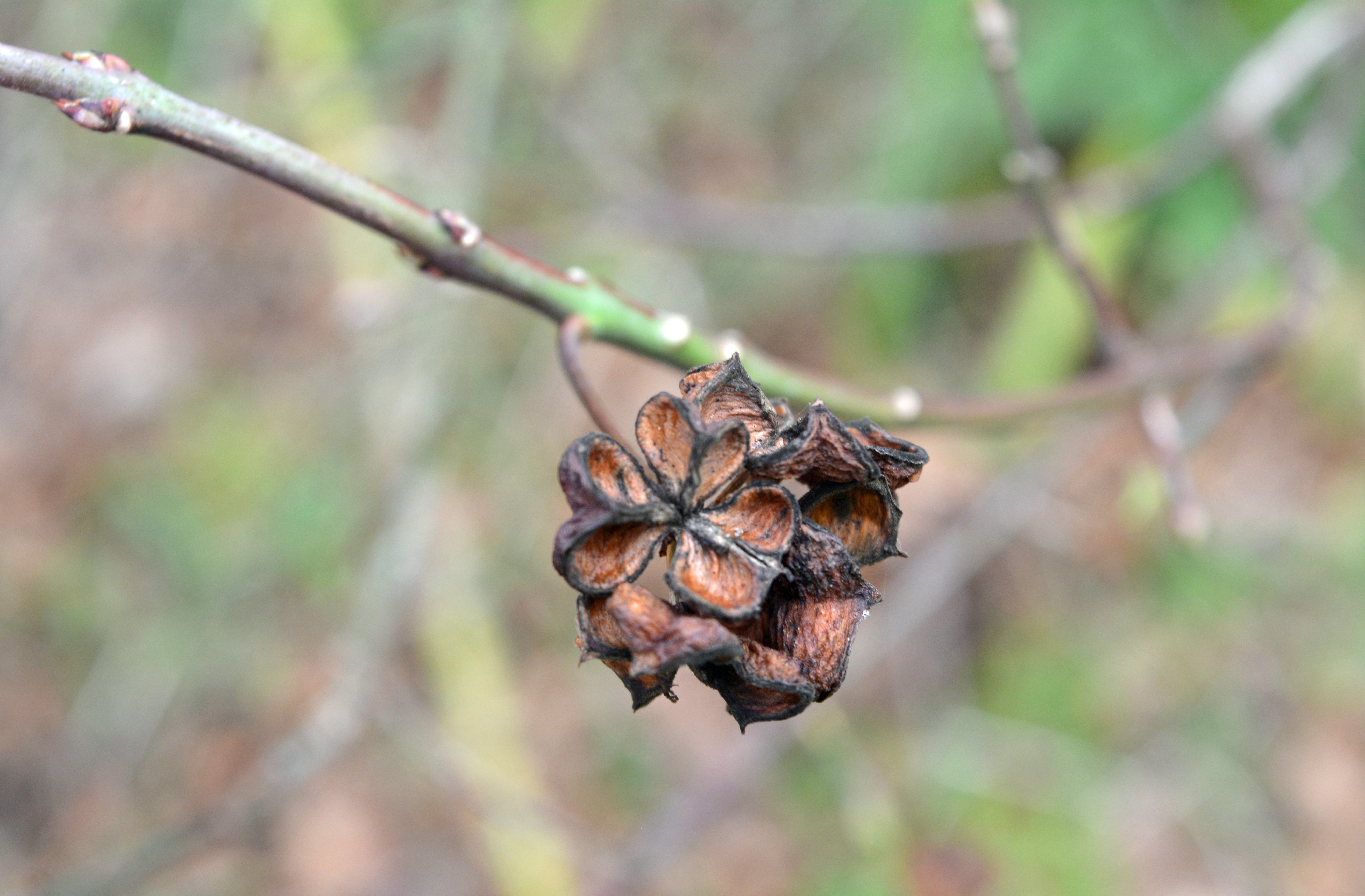
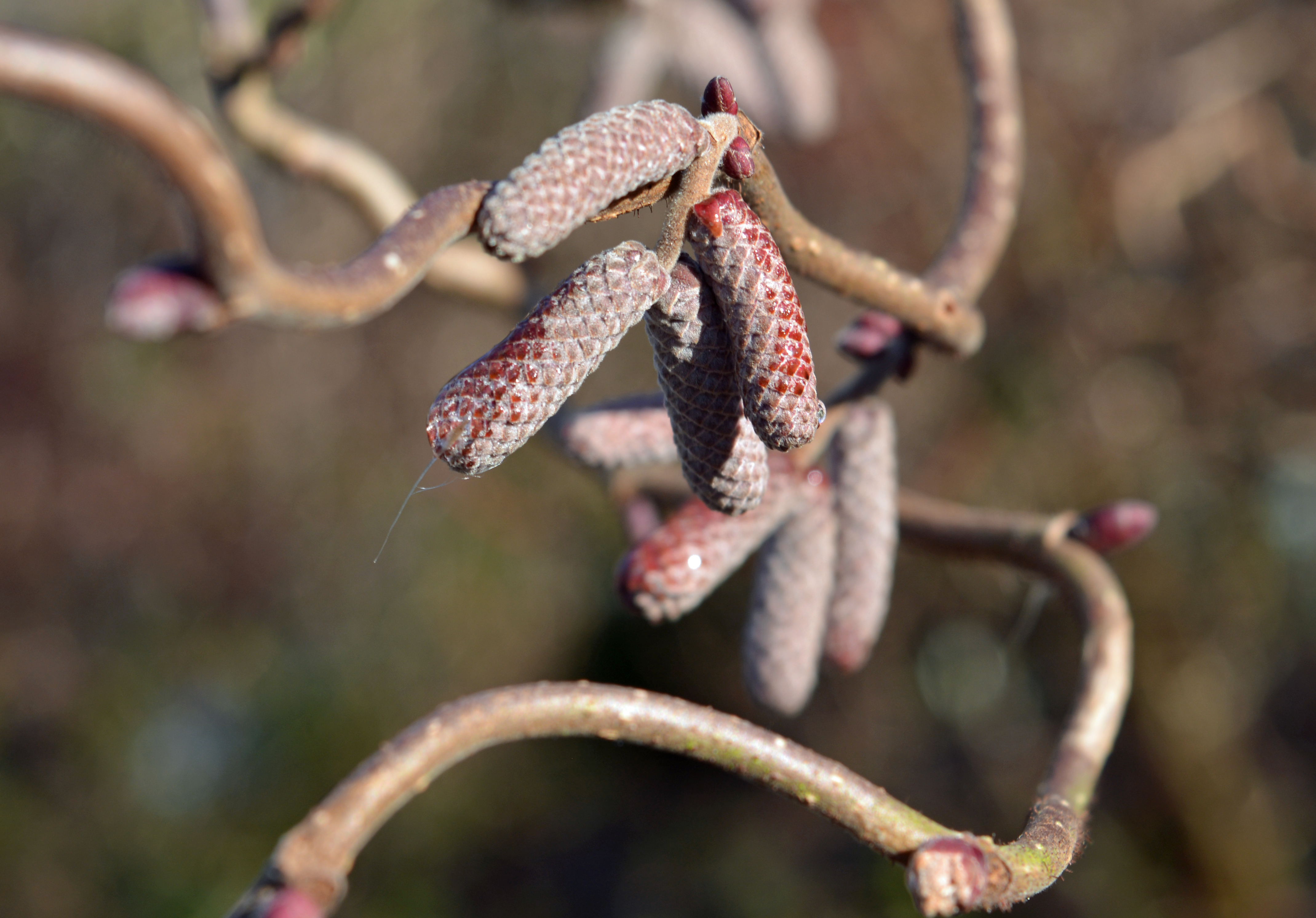
Little details reward those who take a closer look, a catkin, a flower or an old seed pod.


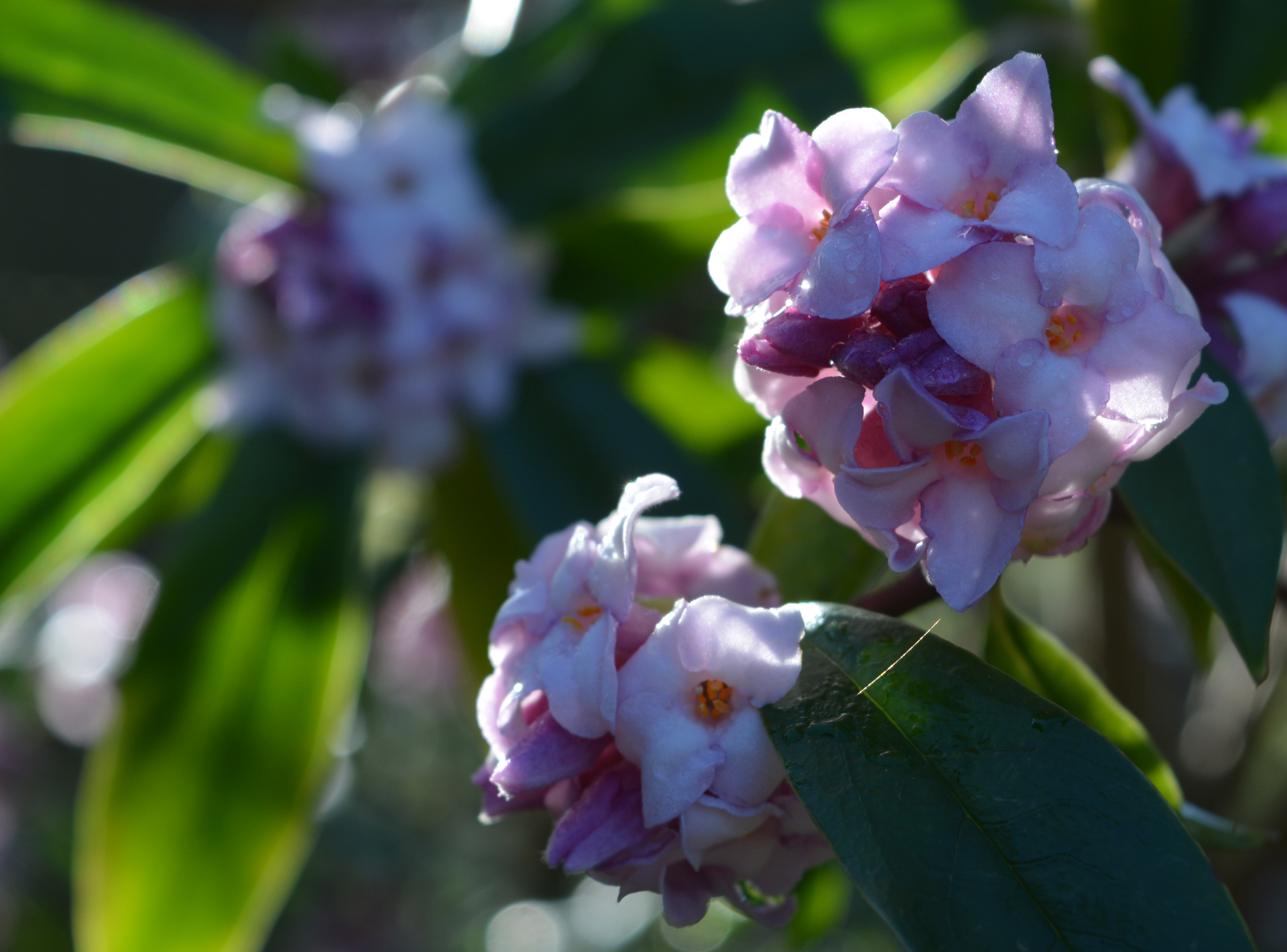
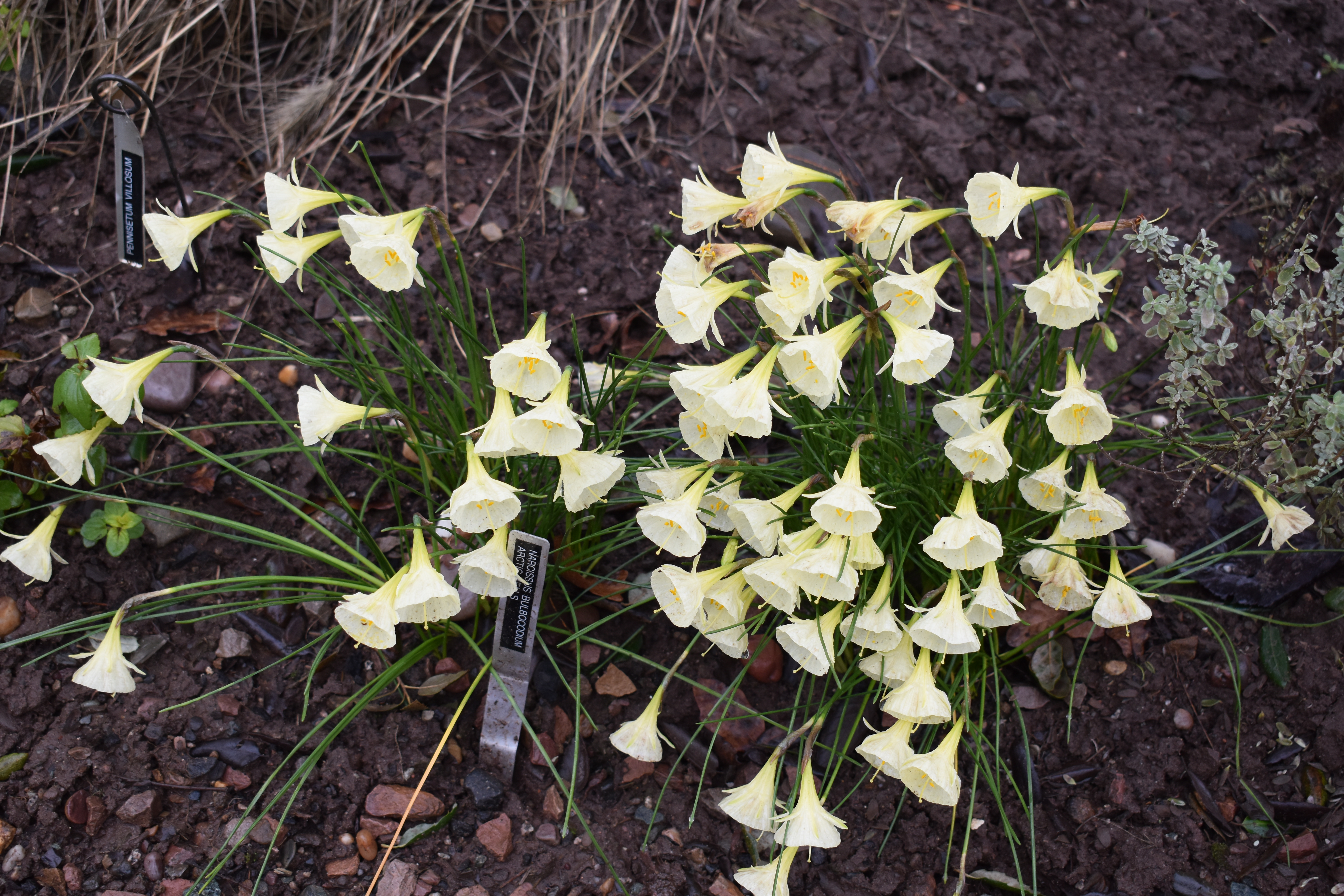
As mentioned earlier Snowdrops were a special feature of the gardens at Ivy Croft, but we also enjoyed cyclamen, miniature daffodils and hellebores. Colours shone from shrubs too, Hamamelis, Daphne mezereum and Hedera helix in its shrubby form.


We certainly had plenty to enjoy at Ivy Croft and it had changed so much since our last visit over 10 years ago. We will certainly be visiting once again when it opens again for a day in the spring.


Categories
flowering bulbs garden design garden photography gardening gardens gardens open to the public hardy perennials irises light quality National Trust ornamental grasses ornamental trees and shrubs shrubs spring bulbs The National Trust trees Winter Gardening winter gardens

A Favourite Winter Garden – Dunham Massey

This will be our third visit to the relatively new winter garden at Dunham Massey, a National Trust property in Cheshire, our neighbouring county to the north of our home county, Shropshire. The leaflets concerning the garden refer to it as a “Curiosity Garden”, while inside is written, “Forget hibernating until spring, Dunham Massey’s Winter Garden is wide awake with colour.”


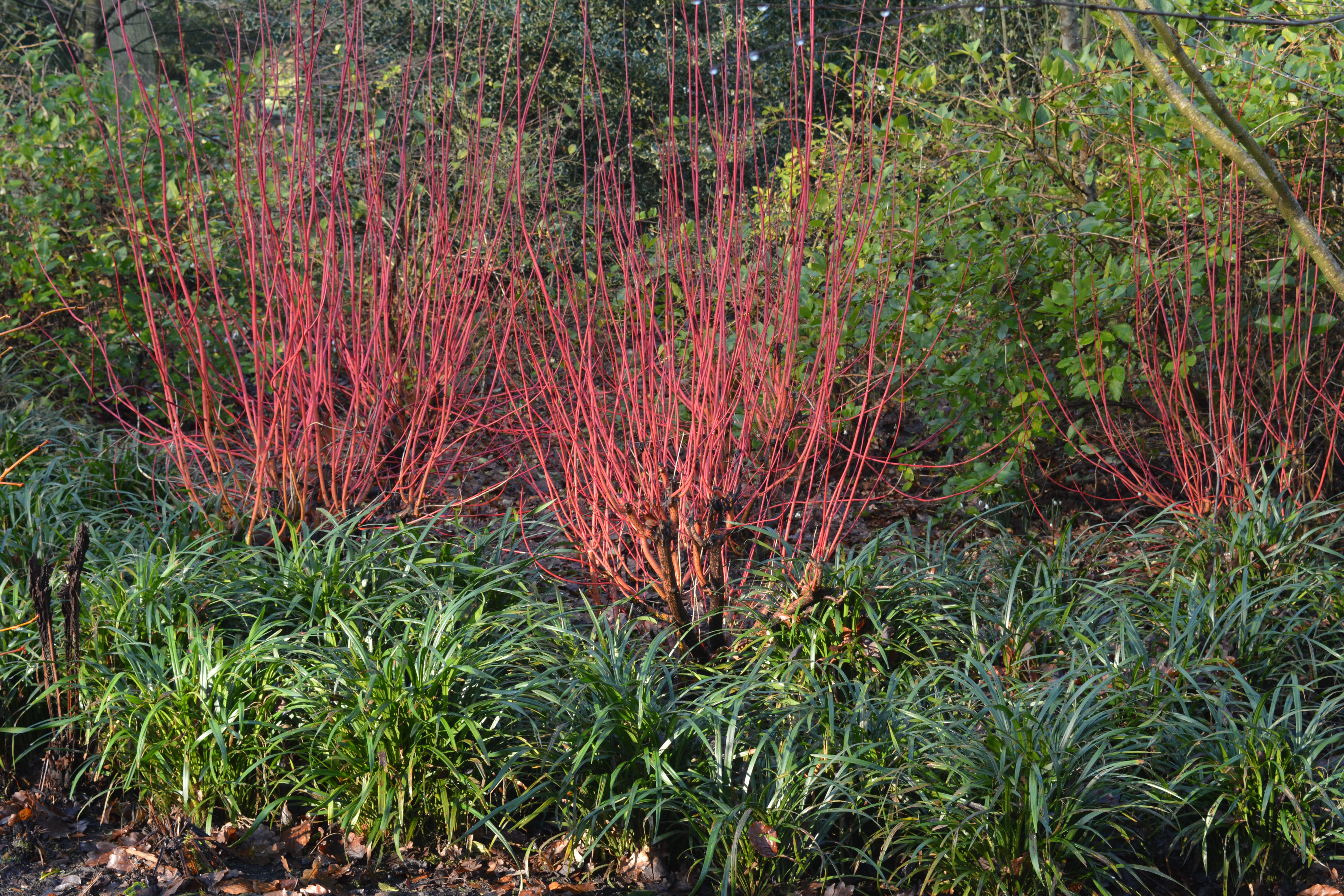
The leaflet then invites us to “Take a refreshing walk in the Winter Garden along meandering paths with shocking red cornus and brilliant white birch trees trees glittering in the winter sun. Discover bright winter berries, late flowering scented shrubs and thousands of snowdrops and iris in the new year.”

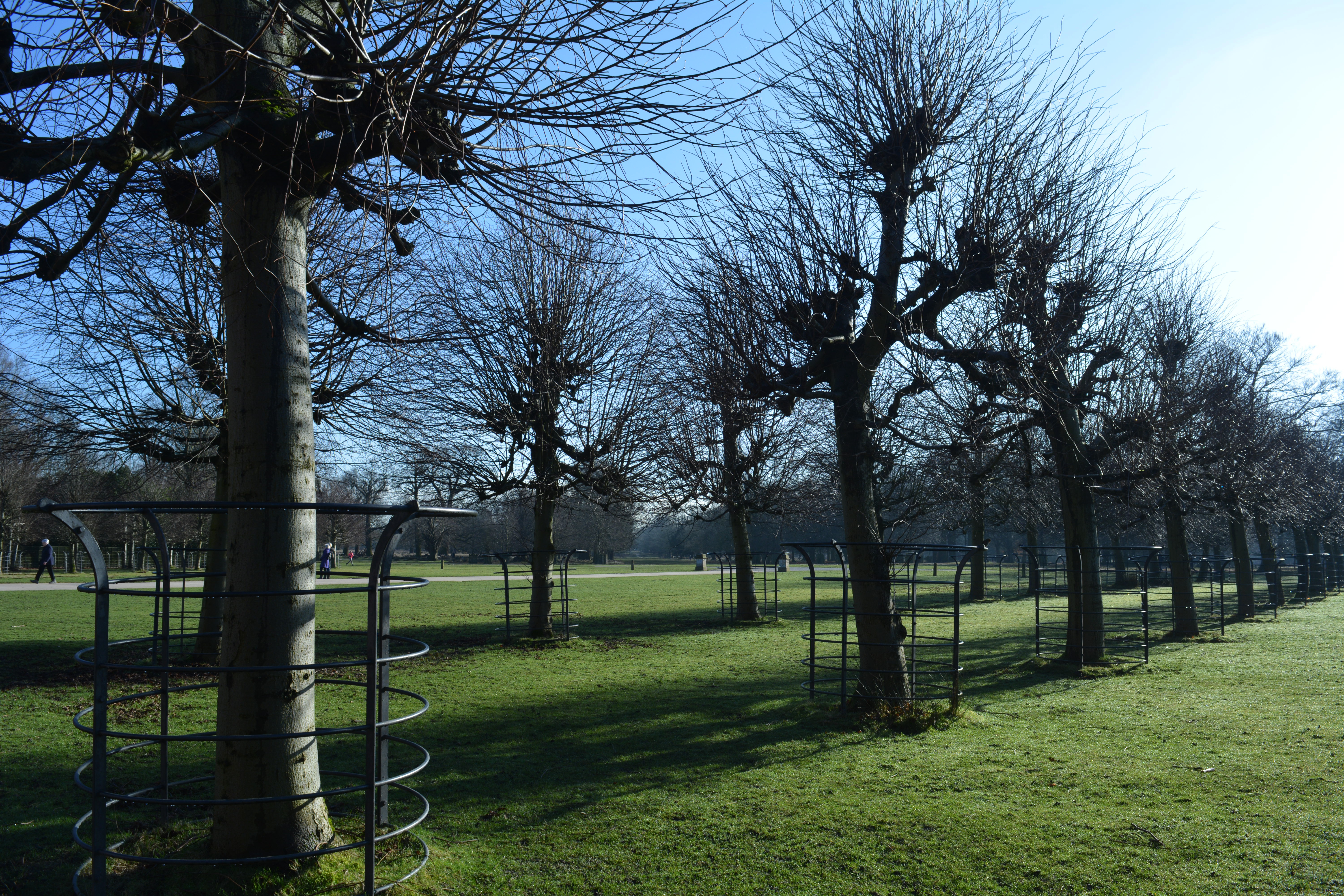
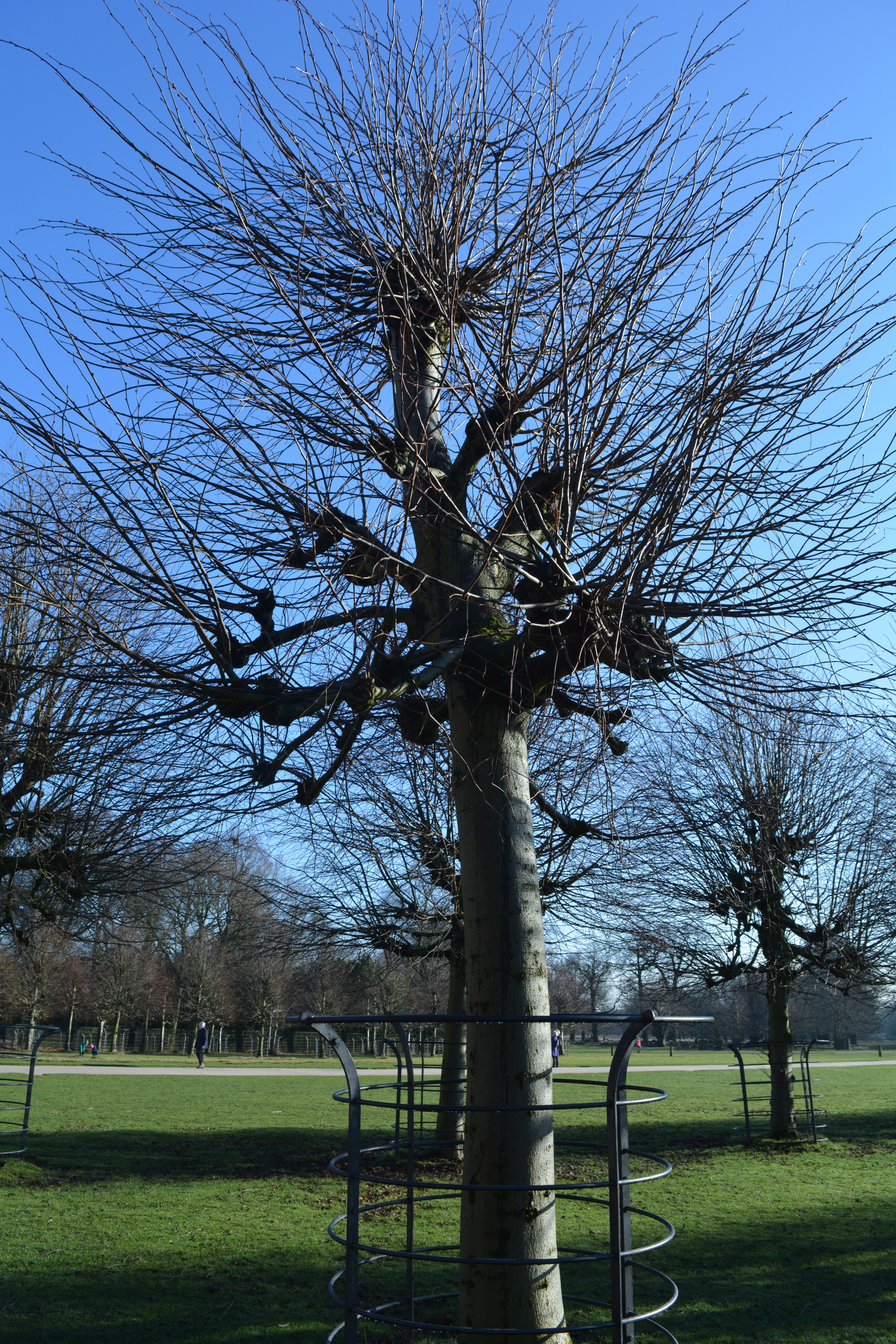
We approached the winter garden by meandering along gravel paths across a shallow valley, when upon passing through the first red-bricked outbuildings we discovered some of the best pleaching we had ever seen. It stops us in our tracks on every visit.

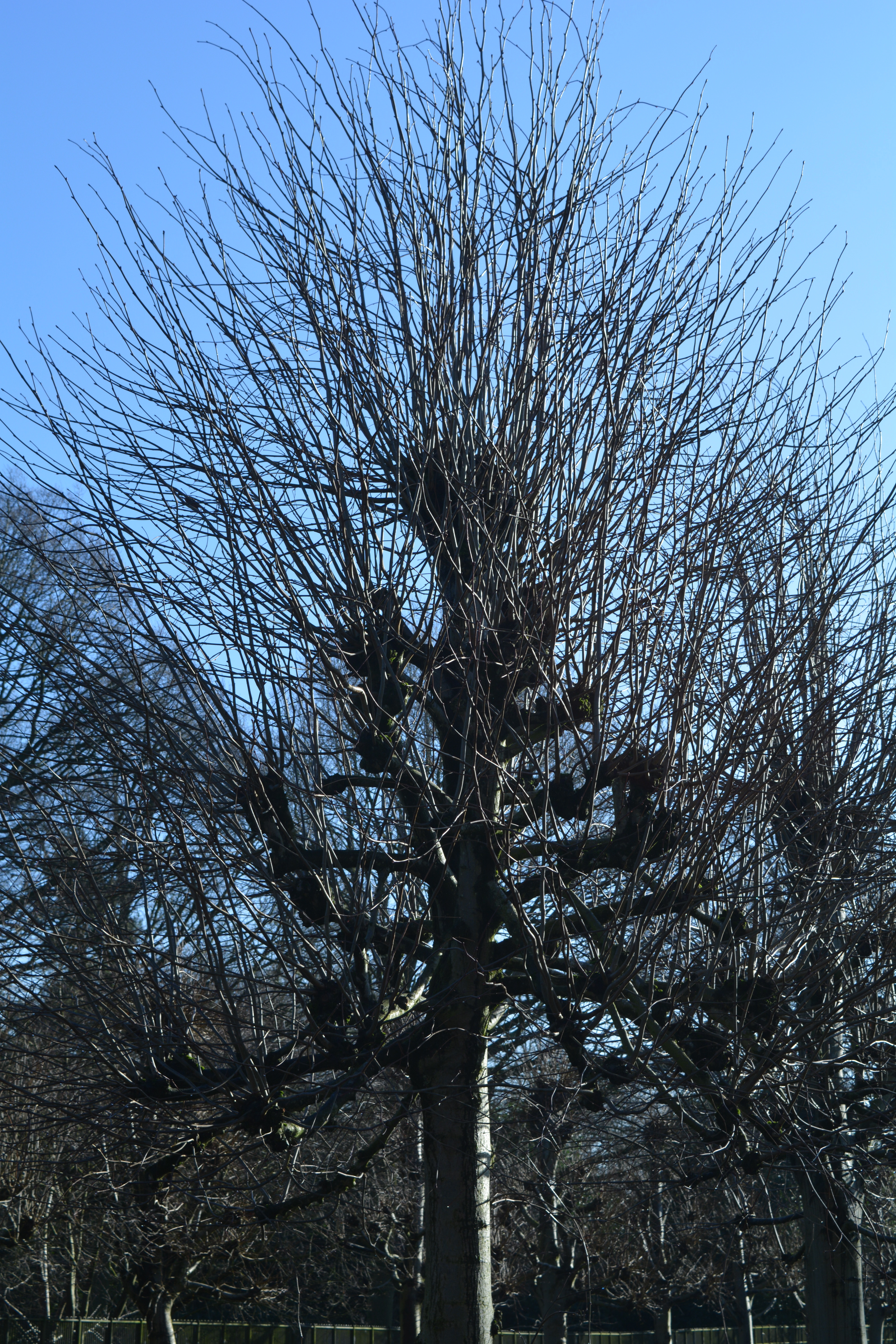
The pleached limes look a few decades old and possess the ubiquitous knobbles from where the new wands of growth spurt in the spring after their annual pollarding.

Shrubs come into their own in the winter season with their coloured stems, their scent and beautiful hanging flower clusters.


Early flowering bulbs add much of the colour in the garden in February. Sunlight catches them and highlights their bright colours.


All winter gardens open to the public make strong features of trees with coloured, textured bark, Betulas, Acers and Prunus.


Shrubs with coloured stems provide effective partner planting for these trees, especially Cornus and Salix varieties. The gardeners at Dunham Massey are adept at transparency pruning, effectively lifting the akirts of shrubs and small trees to expose their trunks and lower branches.


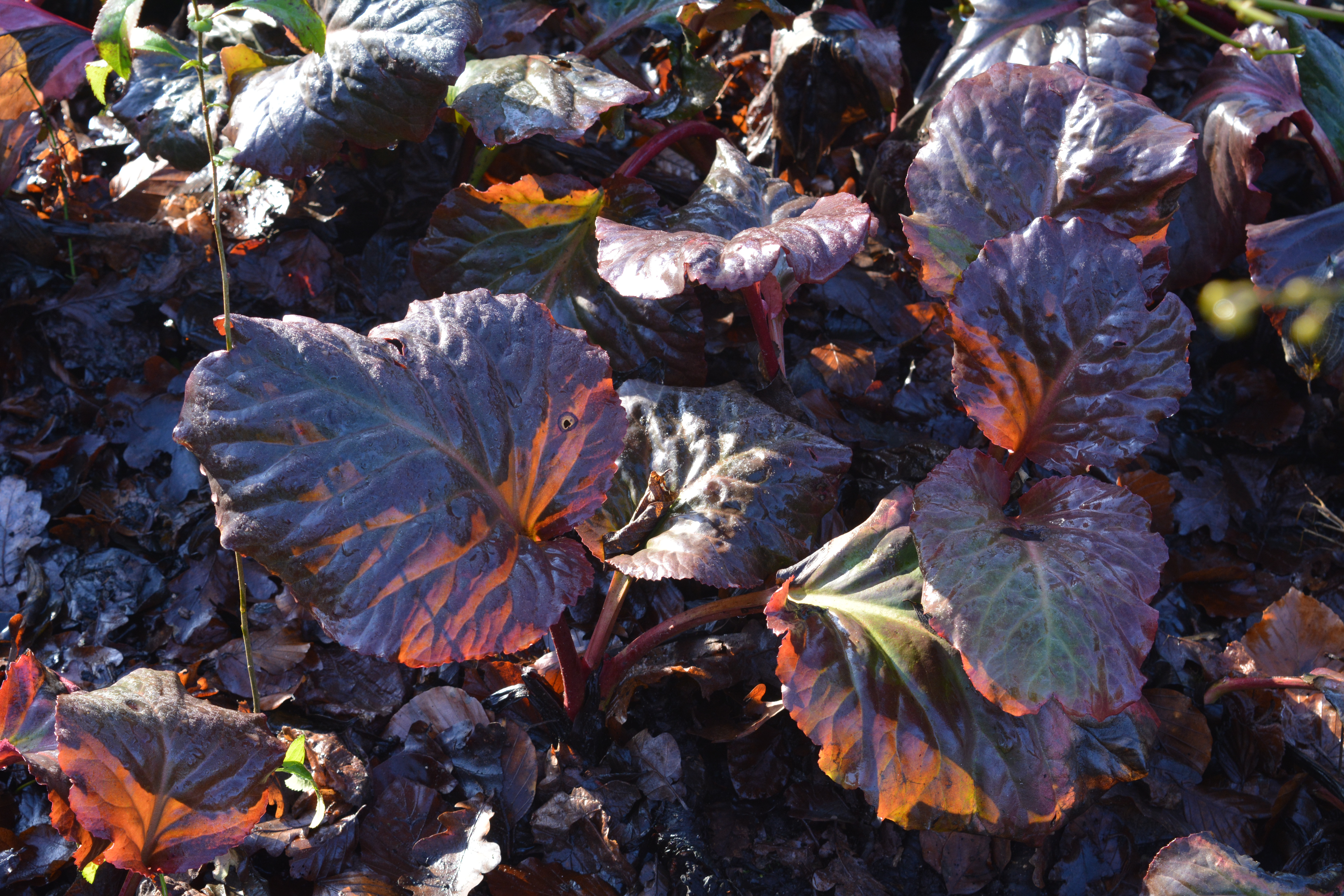
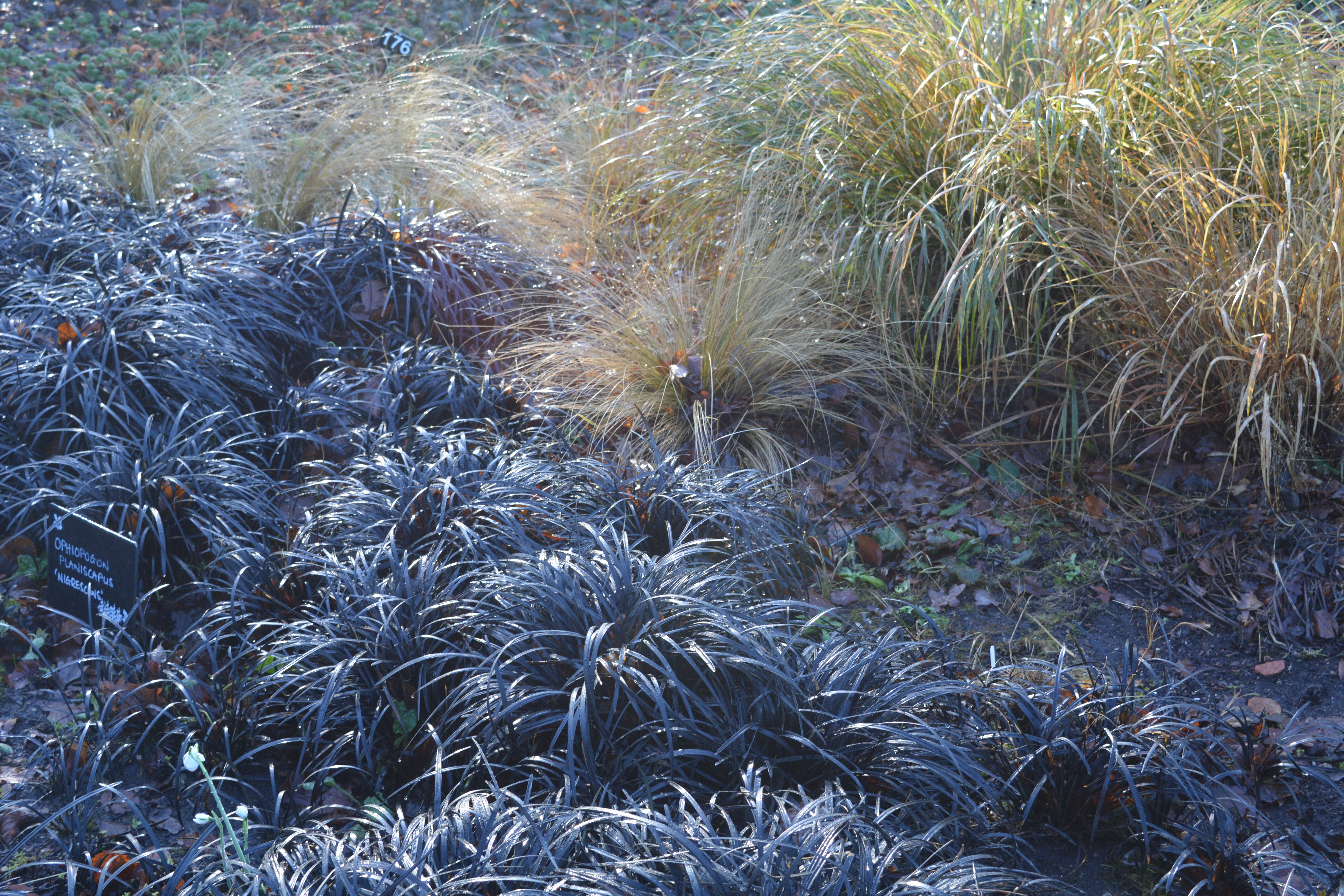
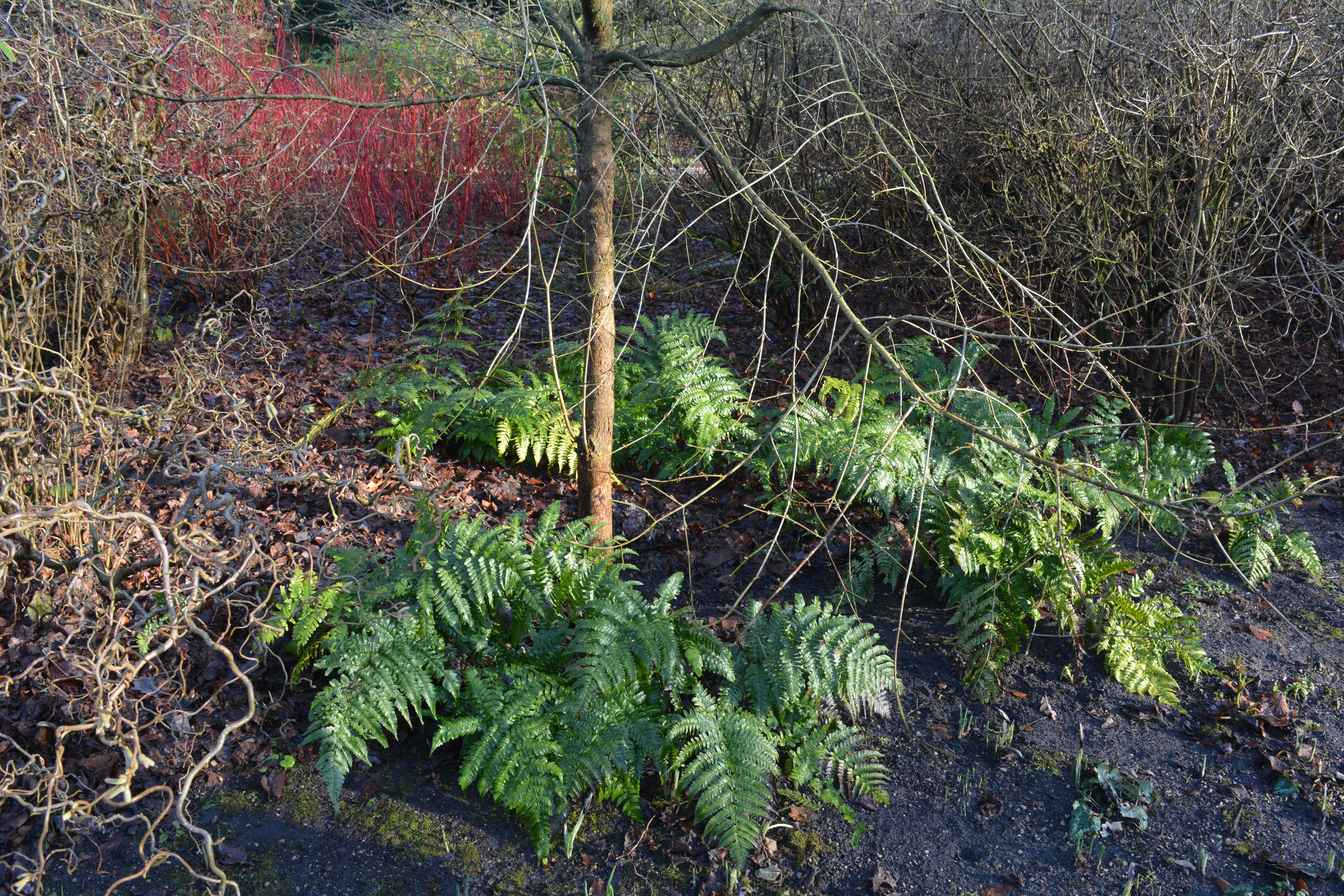
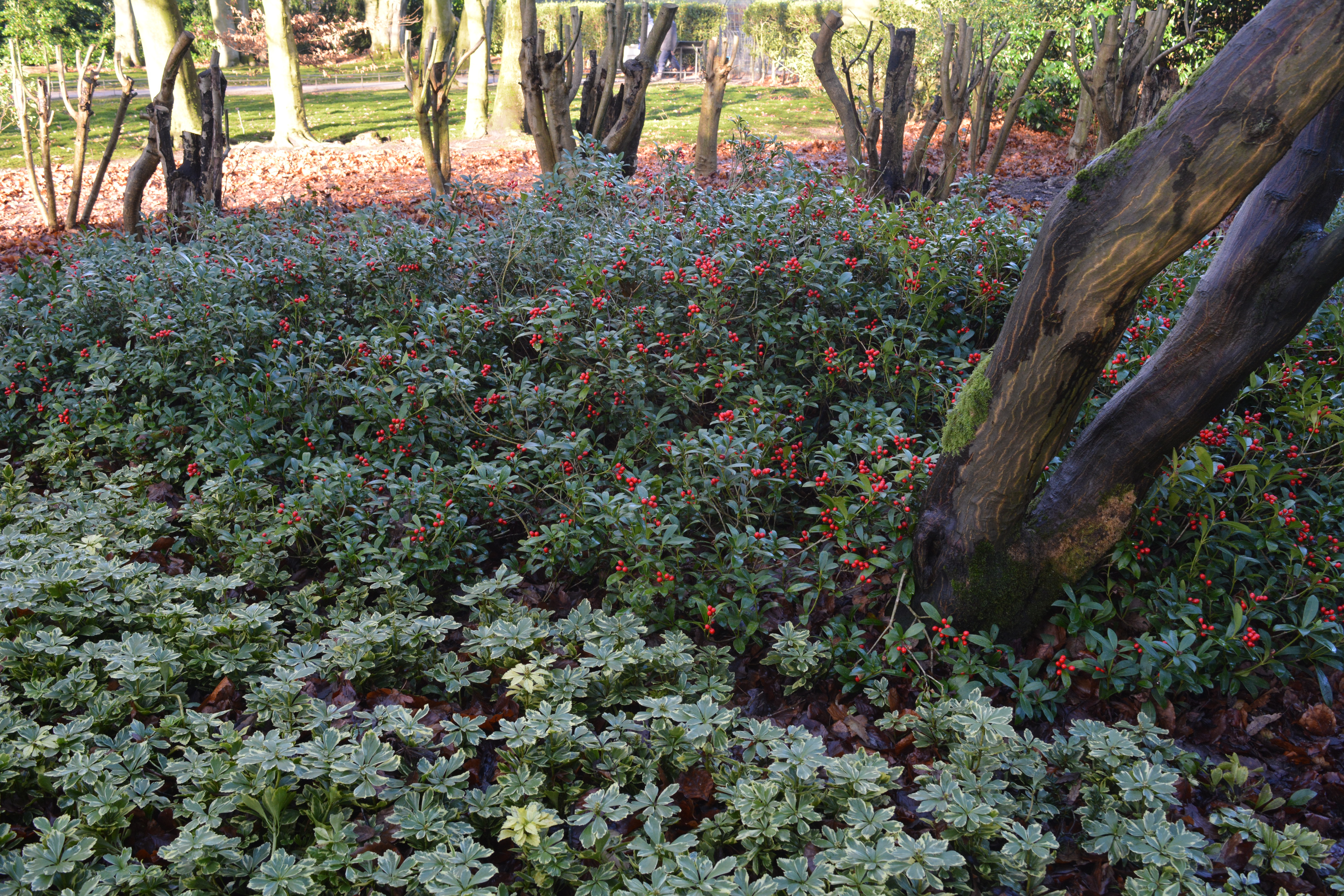
The one plantingcategory that sorts out the best winter gardens from the average is the good creative use of ground cover. It is all too easy to use bark mulch but there are good interesting plants that can cover the ground and add new dimensions to planting schemes. Dunham Massey is on the way to sorting this well, using Carex, Bergenia, Ophiopogon, ferns and Pachysandra.

So there we have it, a thoroughly inspiring visit to one of our favourite winter gardens.


Categories
colours flowering bulbs garden design garden furniture garden photography garden ponds garden pools garden seat garden seating gardening gardens gardens open to the public grasses hardy perennials light light quality NGS ornamental grasses ornamental trees and shrubs photography sculpture shrubs spring bulbs trees water in the garden Winter Gardening winter gardens Yellow Book Gardens

A canal-side garden in winter – John’s Garden Part 1

We have visited “John’s Garden” before in the height of summer and really enjoyed it, so much so that we were determined to re-visit at different times of the year. We imagined it would be an effective all-year garden. Mid-February and John opened his garden on a cold and wet winters day, so we went along with garden-loving friends Pete and Sherlie.

We started with a hot mug of coffee in the nursery coffee shop to warm us up, so with added warmth and lots of excitement and anticipation we wandered down the drive from Ashwood Nurseries to his own 3 acre-garden.

The garden has the advantage of boasting a canal, the Staffordshire and Worcestershire Canal, running along its length – not many gardeners could say that about their patch!

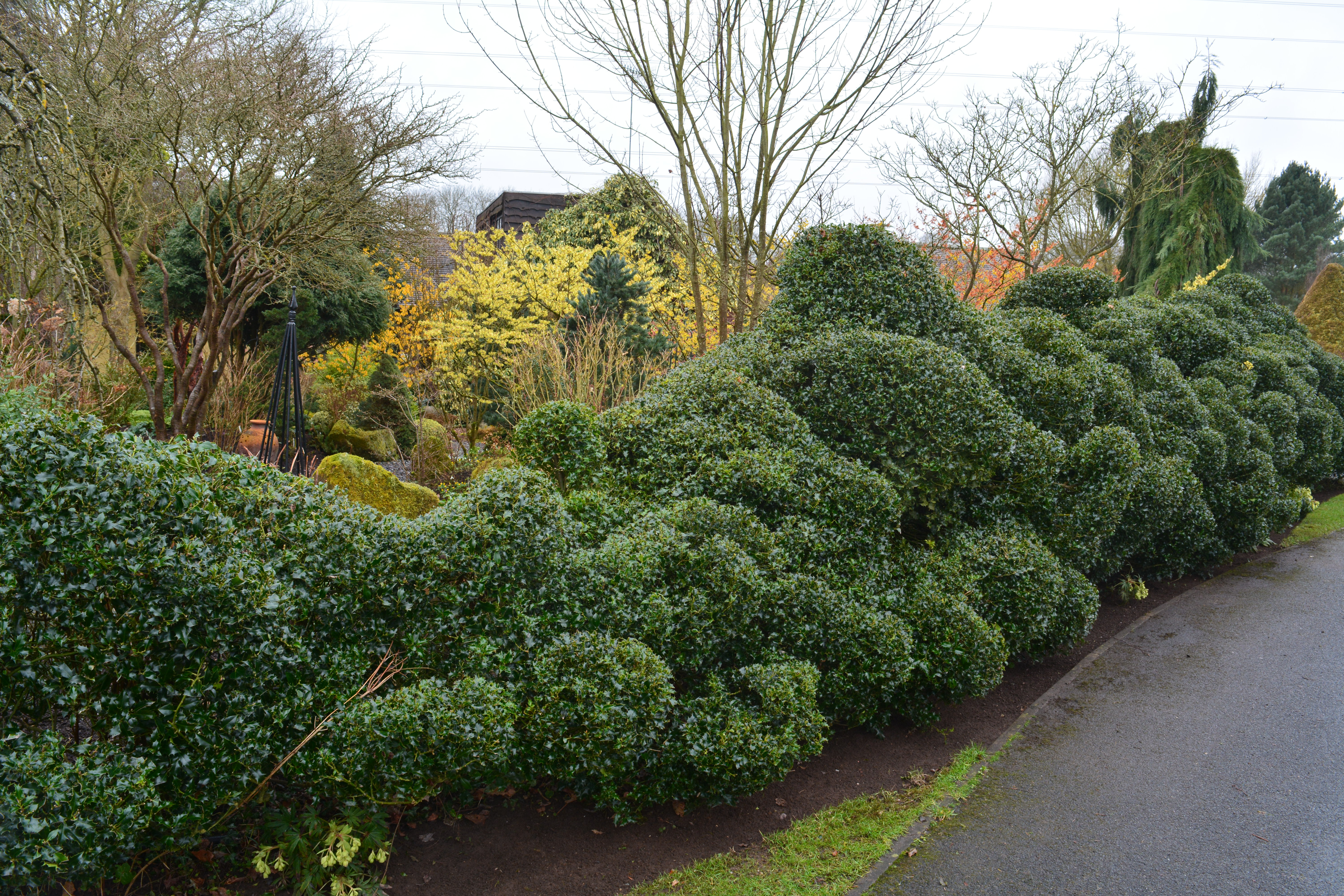
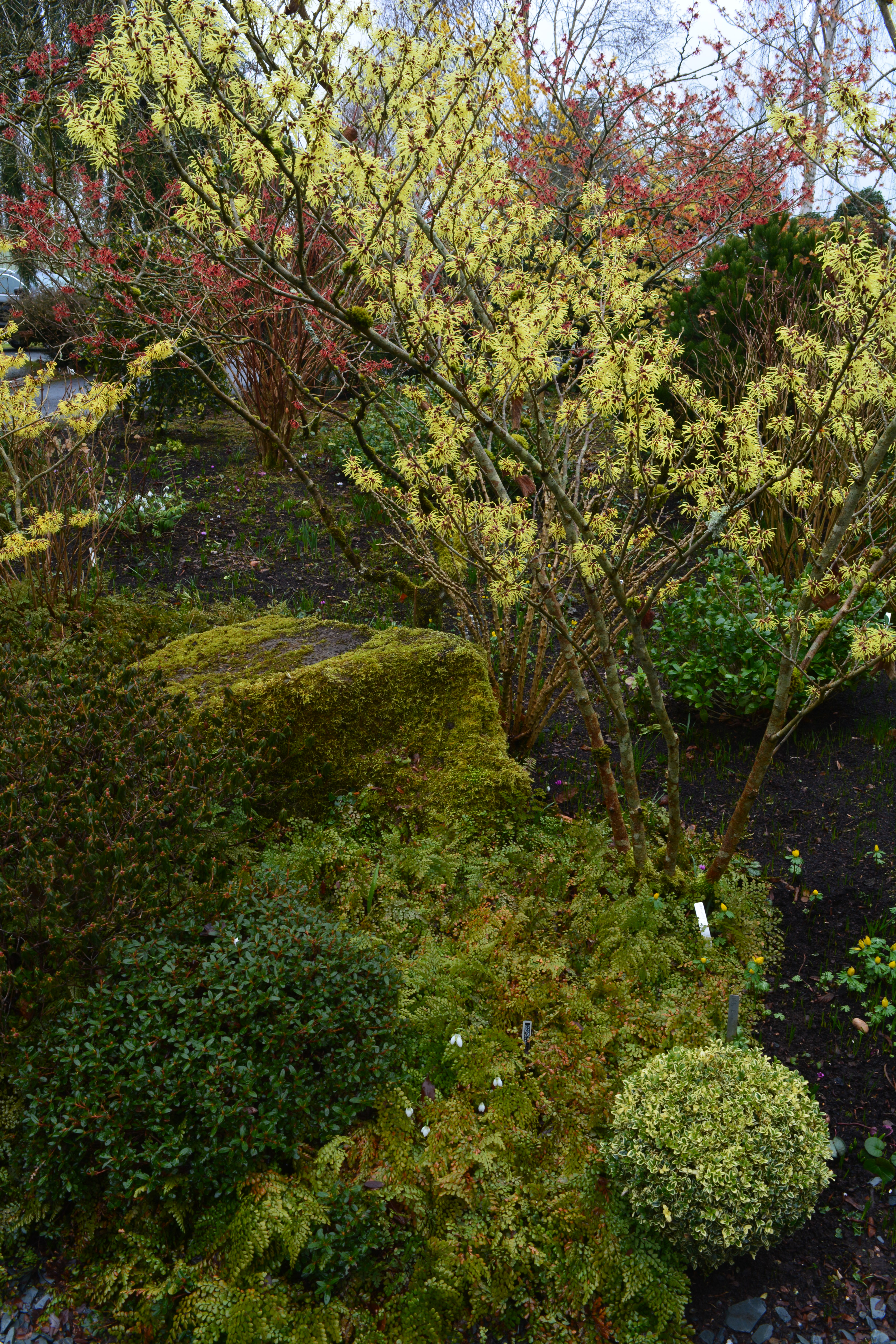
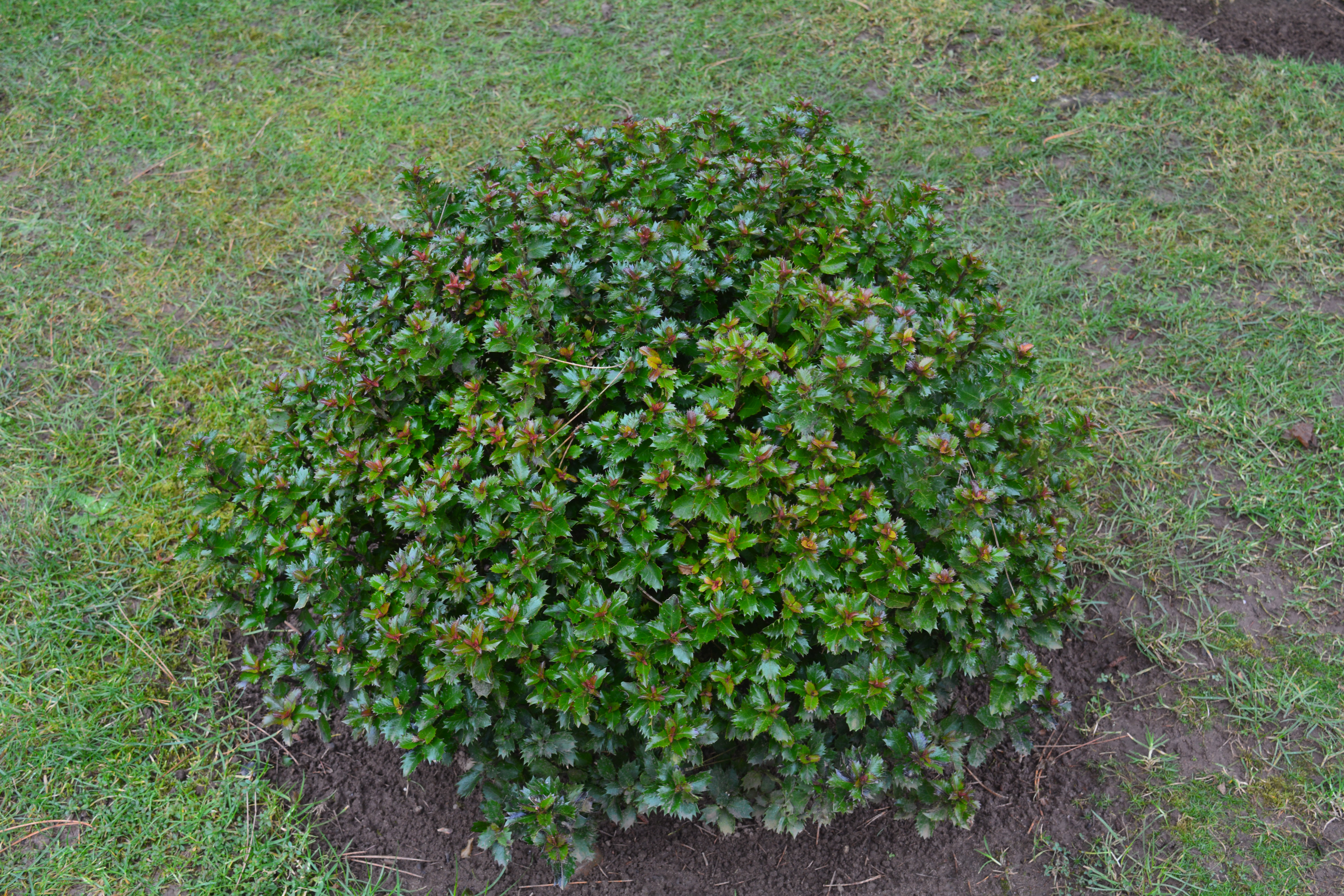
An unusual hedge greeted us as we entered the garden, a long cloud pruned hedge, beautifully sculpted. A slate pathway at its end took us into a colourful area full of winter interest. Hamamelis and small deciduous trees were the stars, supported ably by ferns, bergenias, snowdrops and a variety of small-leaved shrubs trained as spheres.


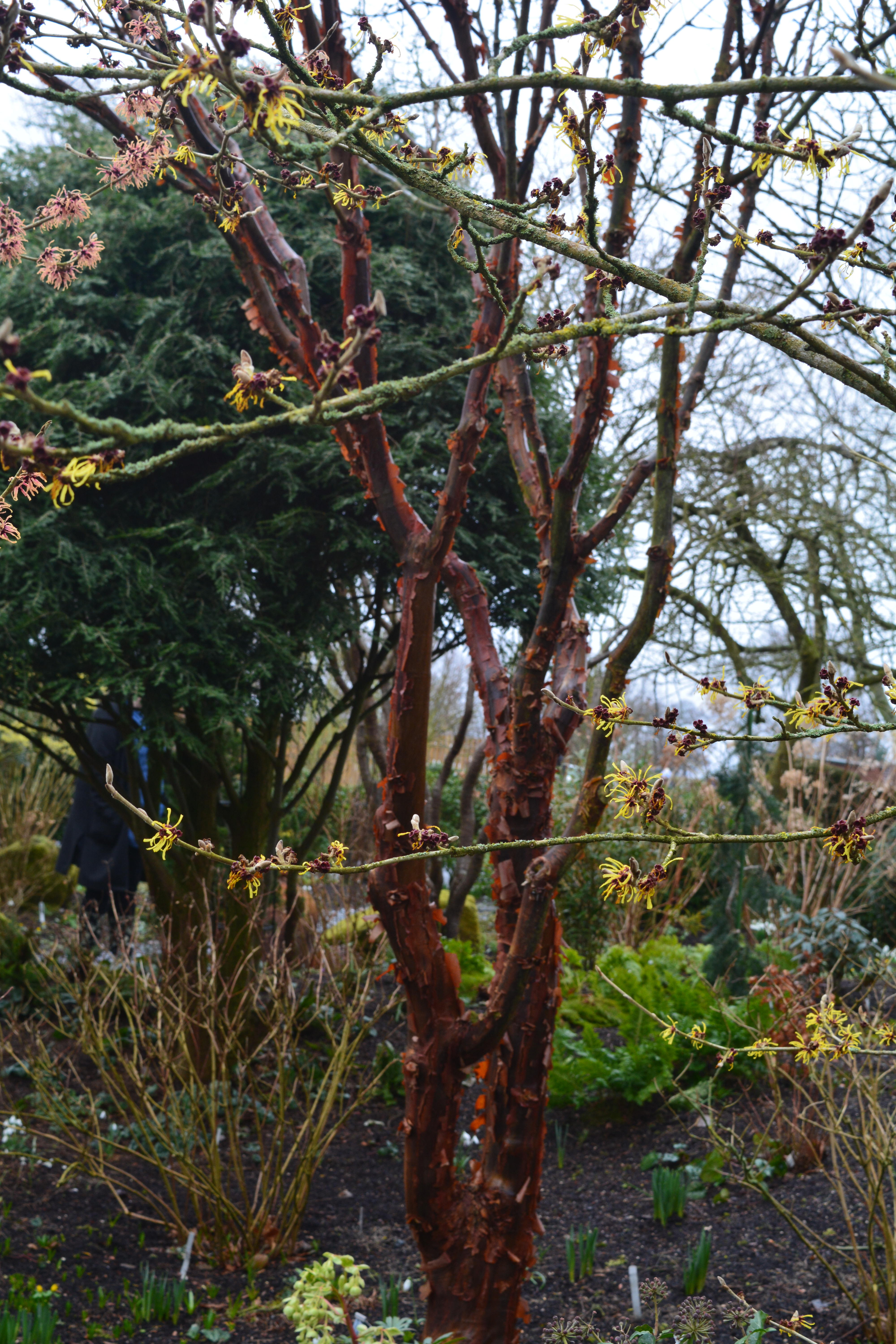
We left this little garden behind and crossed an open lawned area dotted with topiary specimens and trees with interesting bark, coloured, textured or peeling. We joined up with the gardens bordering the canal, the sort of background gardeners can only dream of.


After a close up look at these trees and touching their bark, we followed the canal-side borders into the main gardens. Here grasses mingled with dogwoods and Willows, both pollarded and coppiced to enhanced their stem colours. Conifers of all sorts of shapes, colours and sizes began to appear here becoming strong features of this garden during the winter months. John is a master at transparency pruning which brings out the trees attributes. Interestingly he prunes both deciduous trees and shrubs and coniferous specimens too, which makes them look so much more interesting and they add so much to borders.

John is also a master of topiarising shrubs to emphasise their beauty and give structural elements throughout the garden. All sorts of conifers and evergreen shrubs have been given this treatment.


In part two of my post all about our winter visit to John’s Garden, we will move along the canal borders before returning along the opposite side of the patch, while along the way discovering a pool, sculpture and a terrace and lots more exciting plants and plant pairings.


Categories
flowering bulbs garden buildings garden photography gardening gardens gardens open to the public National Garden Scheme NGS Shropshire walled gardens water in the garden Yellow Book Gardens

A Snowdrop Walk – Millichope Hall

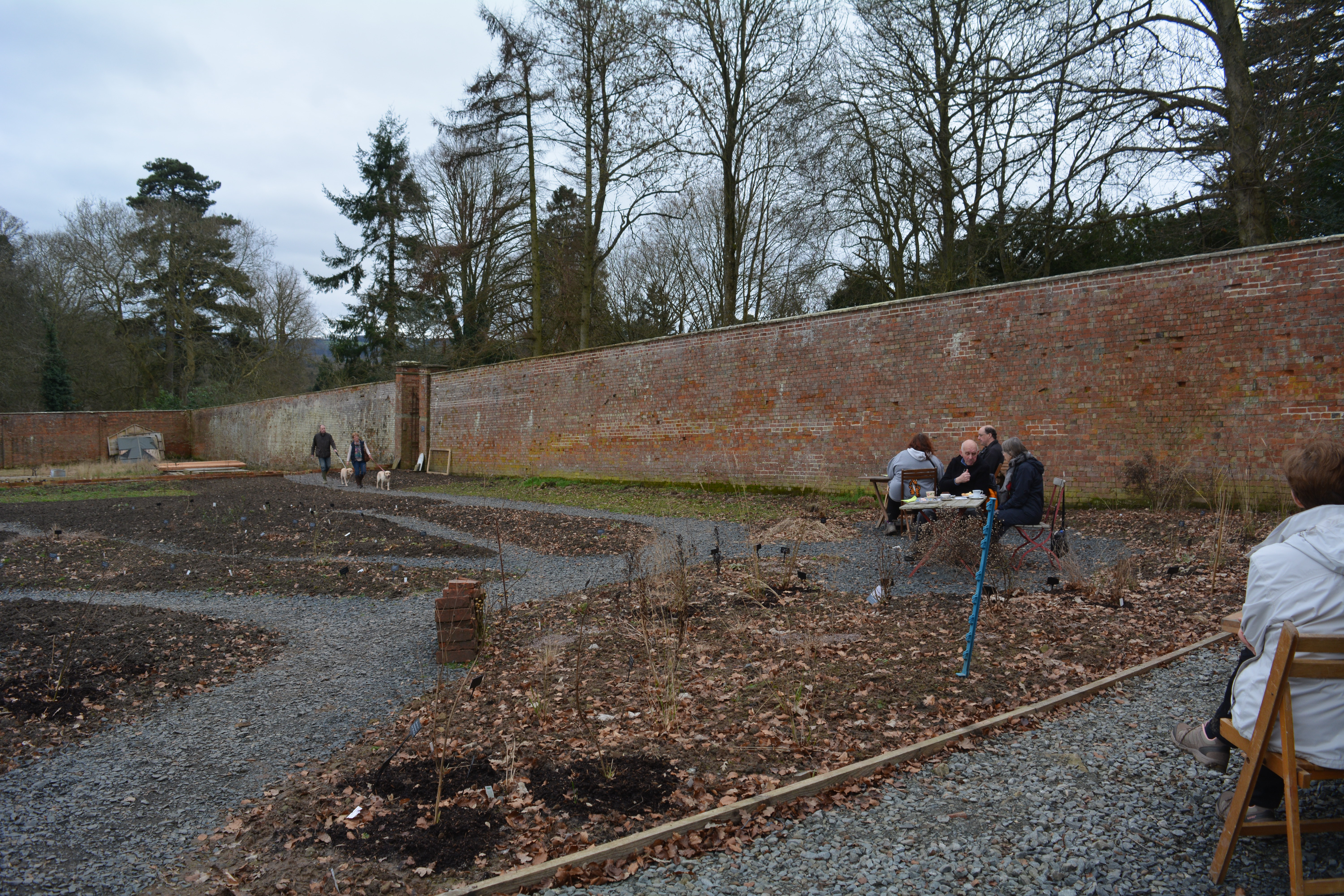
Every year we look forward to one walk early each year dedicated to snowdrops en masse. We are not seriously interested in the huge variety of different Snowdrop cultivars but enjoy the simple single Snowdrops seen in huge “flocks” particularly in woodland where they look at their best. This year we decided to follow a Snowdrop walk at Shropshire’s Millichope Hall because we also wanted to explore the walled garden being revamped by a young couple who have established a nursery, within the protection of the walls, and display gardens too. The nursery specialises in old fashioned scented Violas.

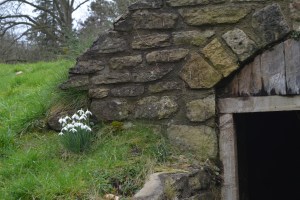
We arrived in the temporary car park in one of the estate’s fields after less than an hour drive. The weather looked and felt fine for a good day out. We took a wandering pathway through the parkland to get to the walled garden nursery and the all important tea with cake. En route we passed patches of Snowdrops beneath the park’s mature trees, looking like wispy clouds or puddles of frost on the short grass. We found a striking patch looking happily established on the ice-house entrance wall.


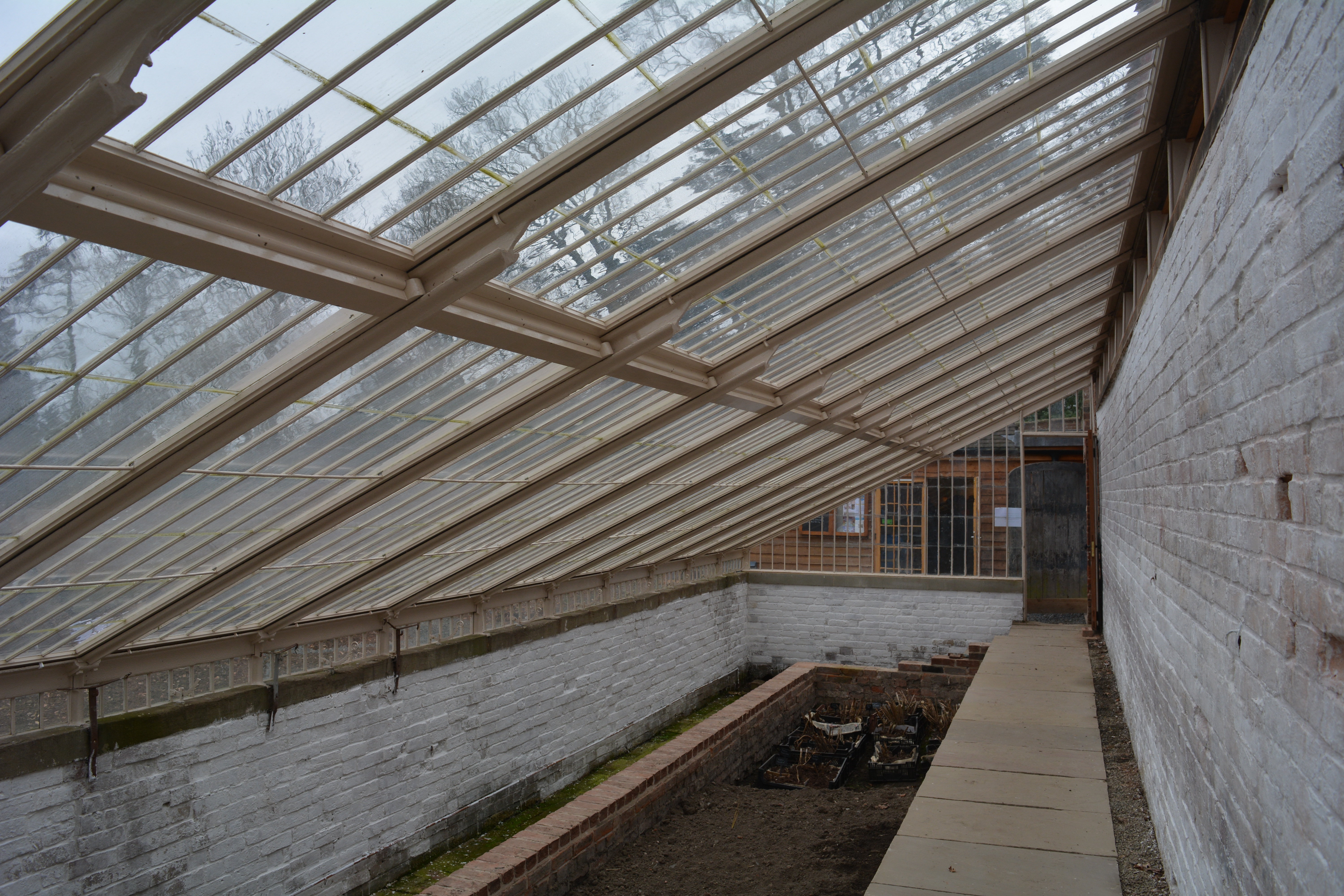
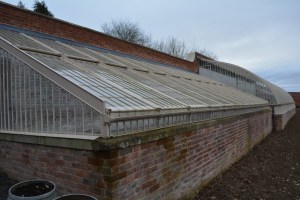
Once in the walled garden we were immediately drawn to these glasshouses with areas of elegantly curved glass. They had been beautifully restored!


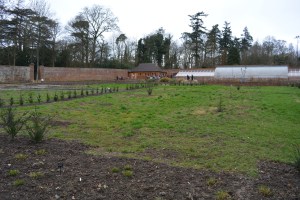
The gardens themselves inside the weathered old red brick walls were being recreated as flowing herbaceous borders. Definitely a sign reminding us to visit in the summer to see progress.


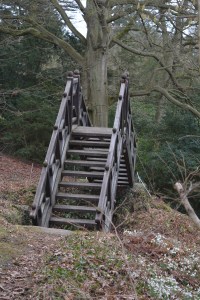
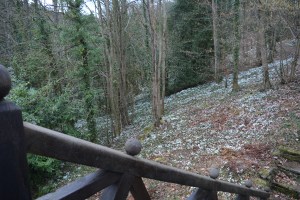
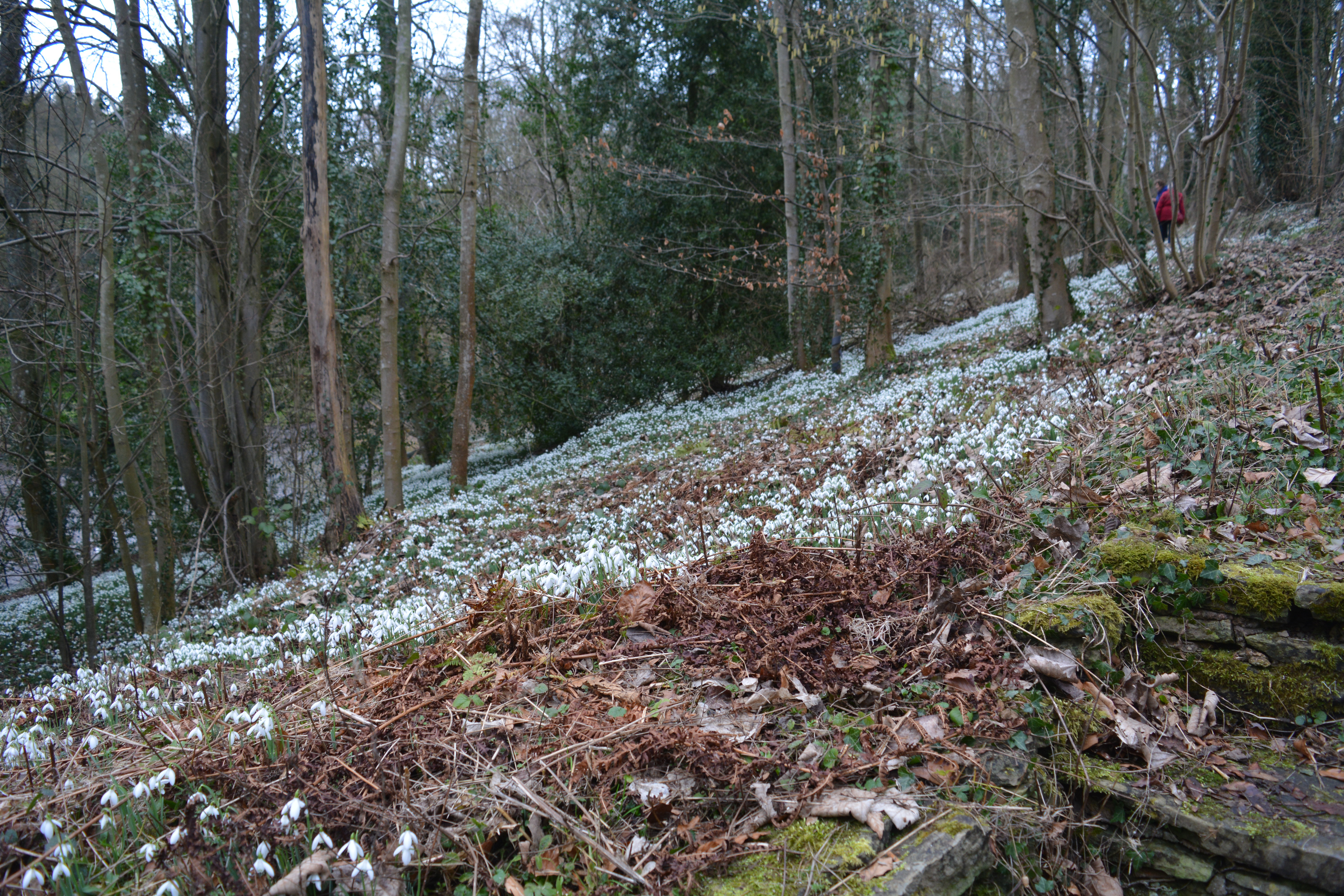
Leaving the walled garden we crossed a beautiful and very sturdy wooden footbridge over the hall’s driveway and we began to experience the joy and atmosphere of seeing masses of naturalised Snowdrops, tumbling down slopes and covering the shadows beneath trees.


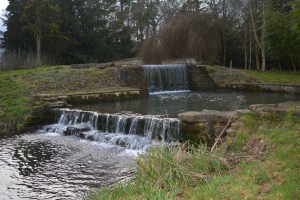
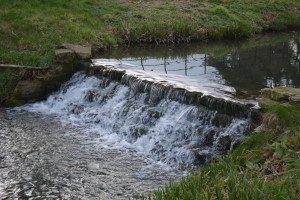
The walk back took us alongside a beautiful stream which has been straightened and turned into a feature with different heights of steps for the water to fall over creating gently rippling sounds. We had enjoyed our annual snowdrop walk, which put us in the right frame of mind to enjoy spring which was waiting in the wings.


Categories
colours garden photography gardening gardens gardens open to the public National Trust ornamental trees and shrubs Shrewsbury Shropshire shrubs The National Trust trees Winter Gardening winter gardens woodland woodlands

A Walk in the Park – February at Attingham Park – Part 2

After enjoying time exploring the walled garden and its outbuildings we continued our wanderings towards the beginning of “The Mile Walk”, passing along the way this tree half covered by orange lichen, which looked so colourful on this dull day.

a9-16 a10-5

On the way we noticed how much moss was growing at the bases of the mature trees and how bright their green colours were. Of course we enjoyed the white sparkles of snowdrops on the way.

a9-01 a9-04a9-06 a9-14a9-11 a9-03a9-05 a9-02

There is a wide variety of coniferous evergreens growing close to the path, collected centuries ago under the guidance of Lord Berwick, a keen tree and shrub collector. We looked closely at the freshest of branches to compare colours and shapes.

a9-07 a9-10a9-18 a9-17

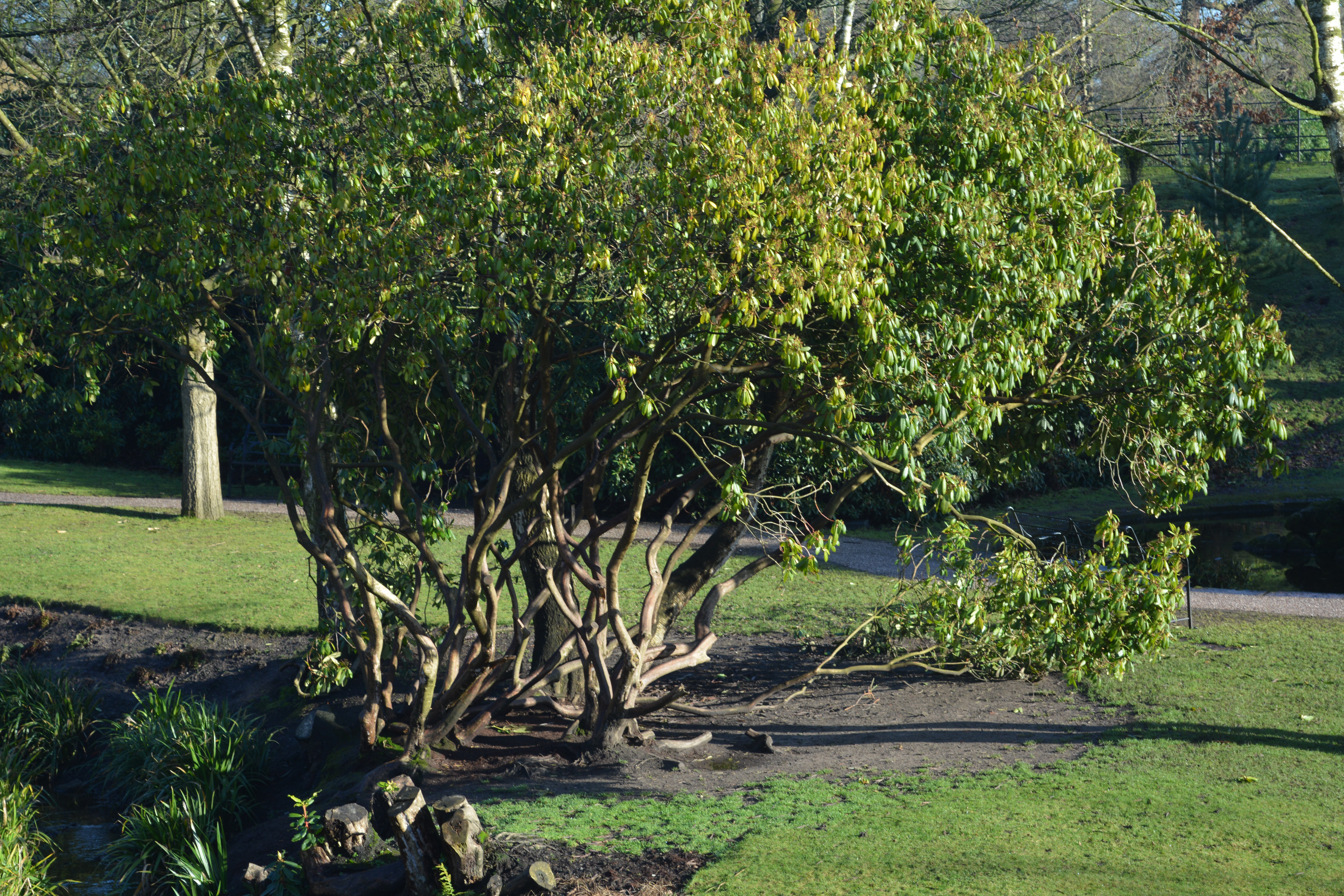
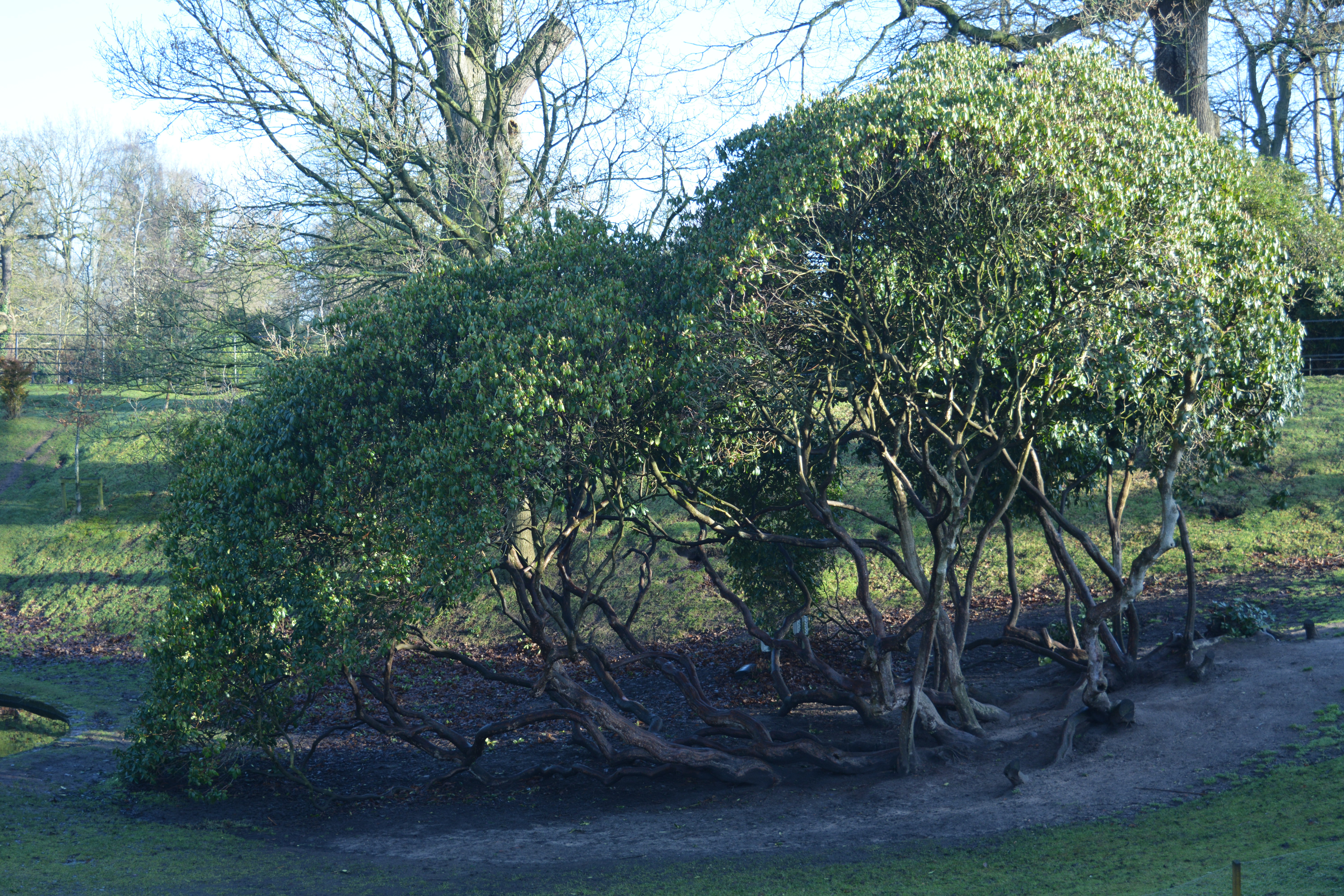
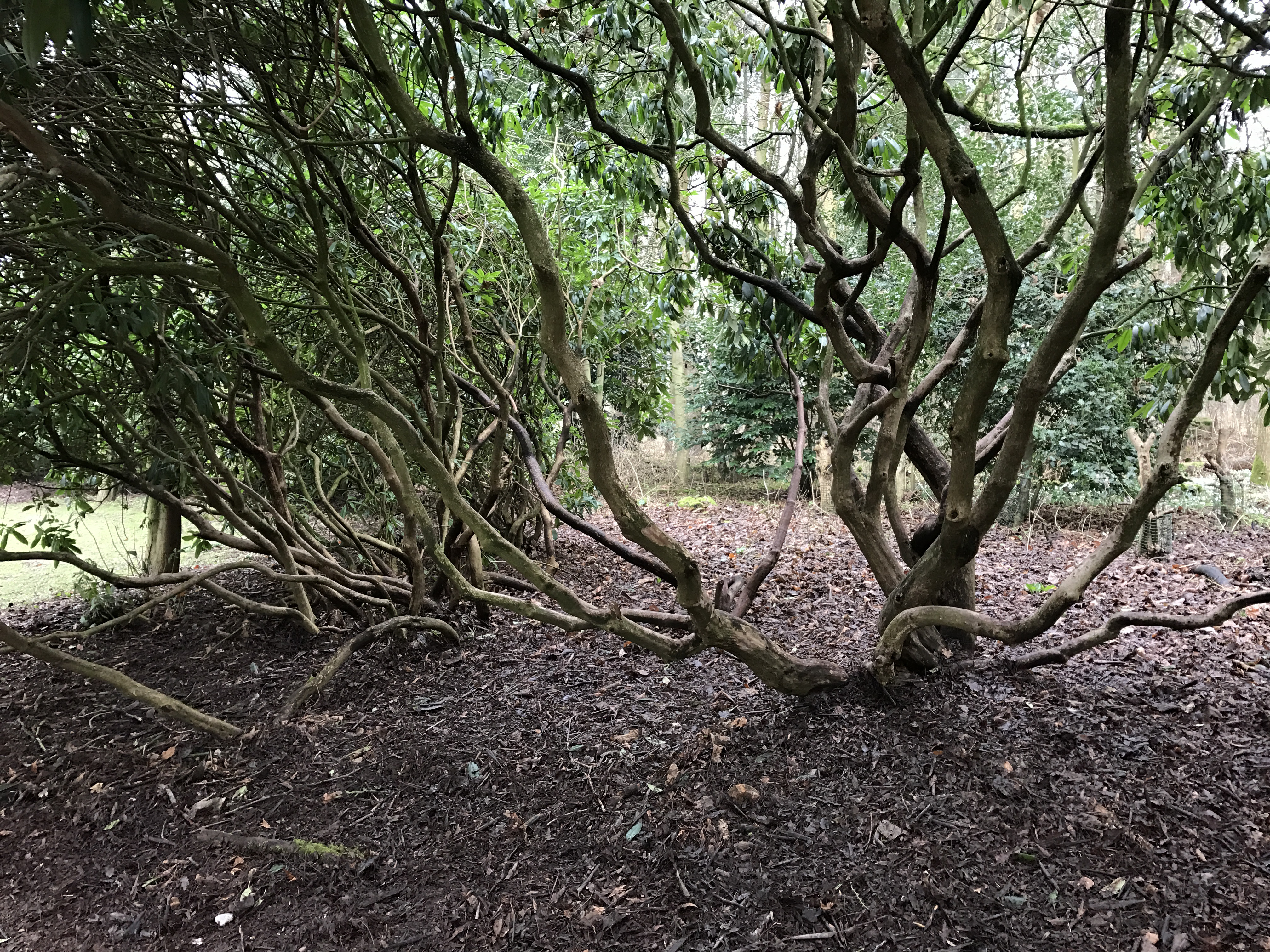
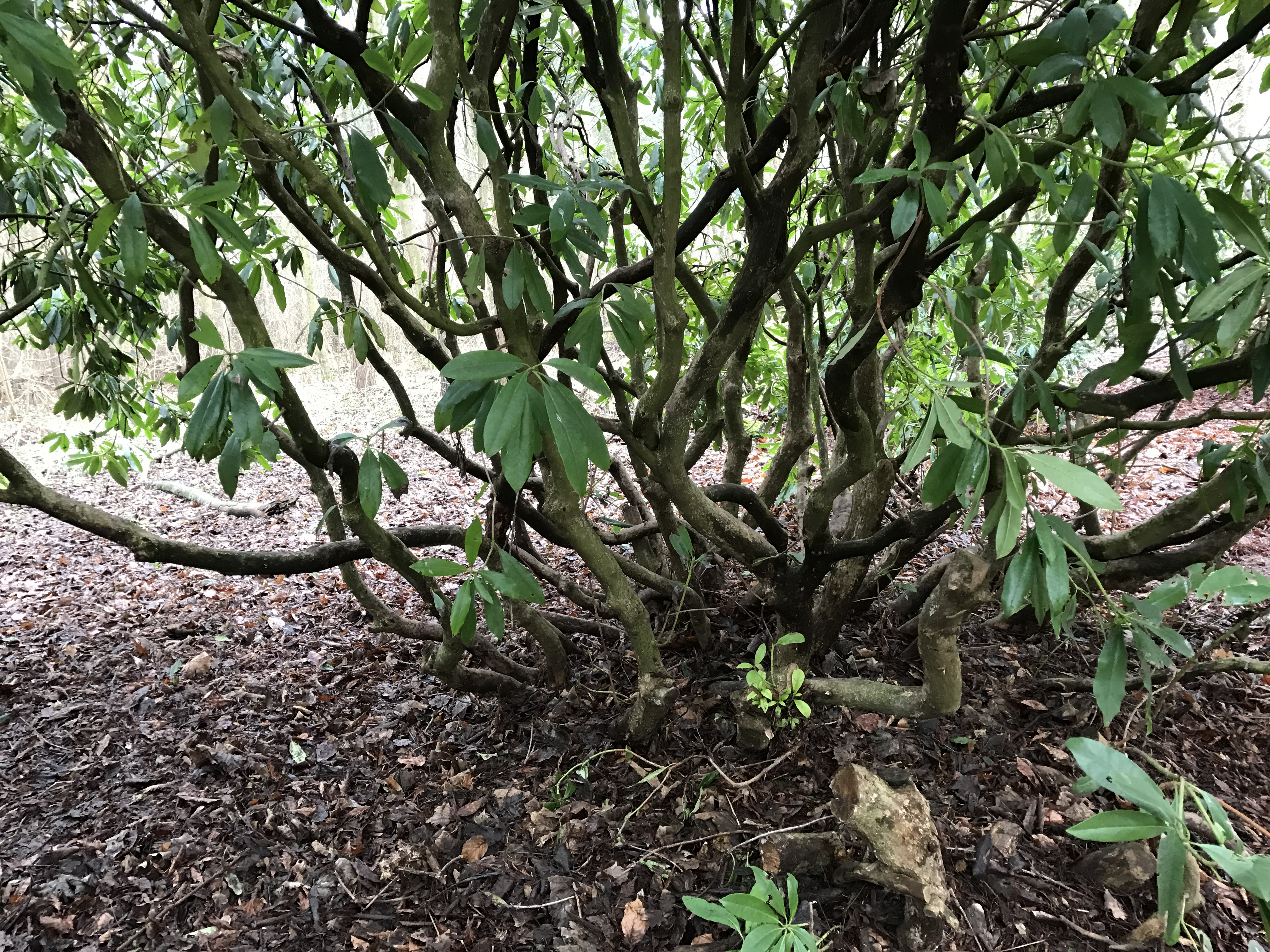
It is only in the depth of winter that we can really appreciate the beautifully gnarled lower stem structure of rhododendron bushes.

a9-12 a9-13

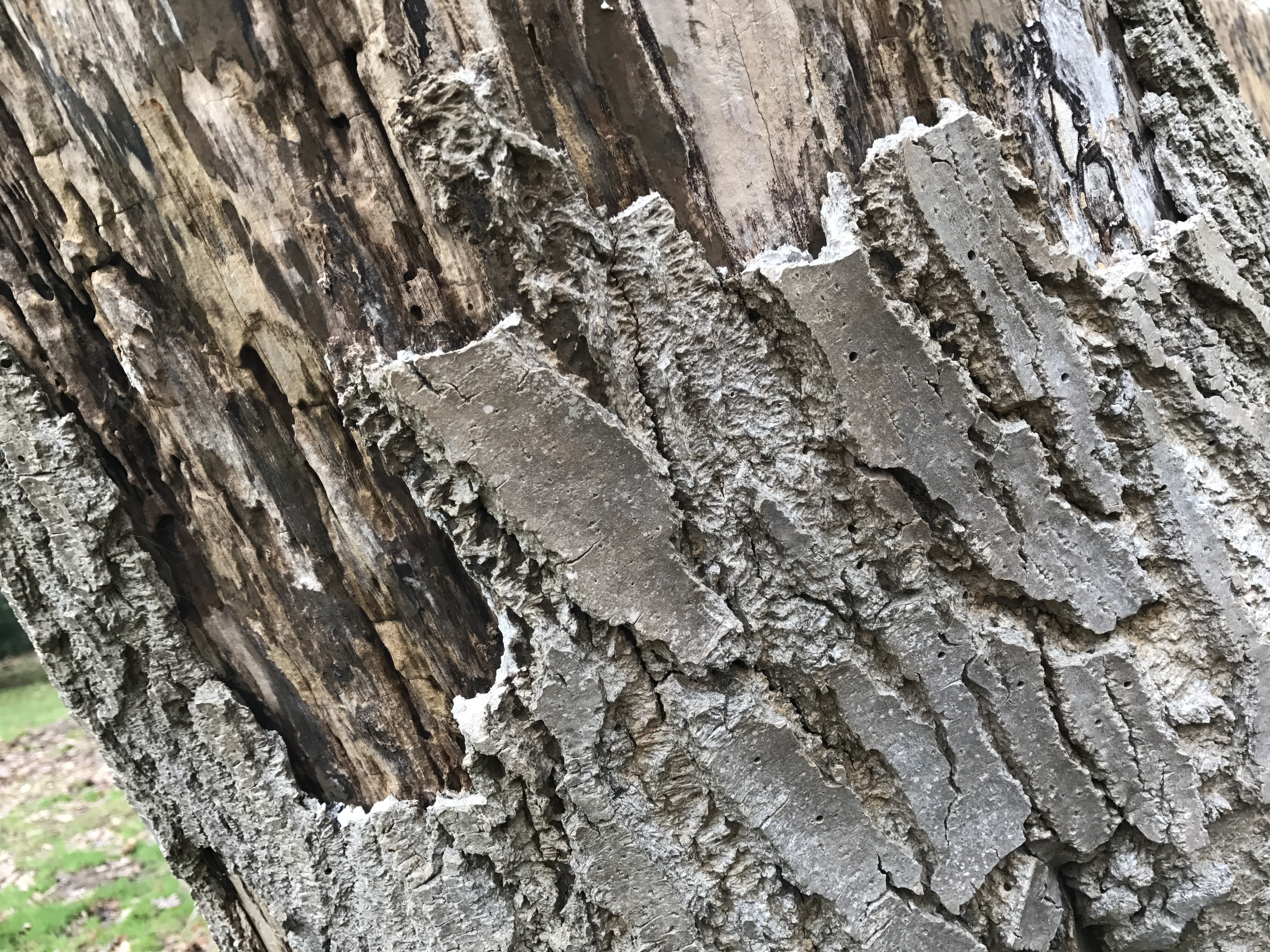
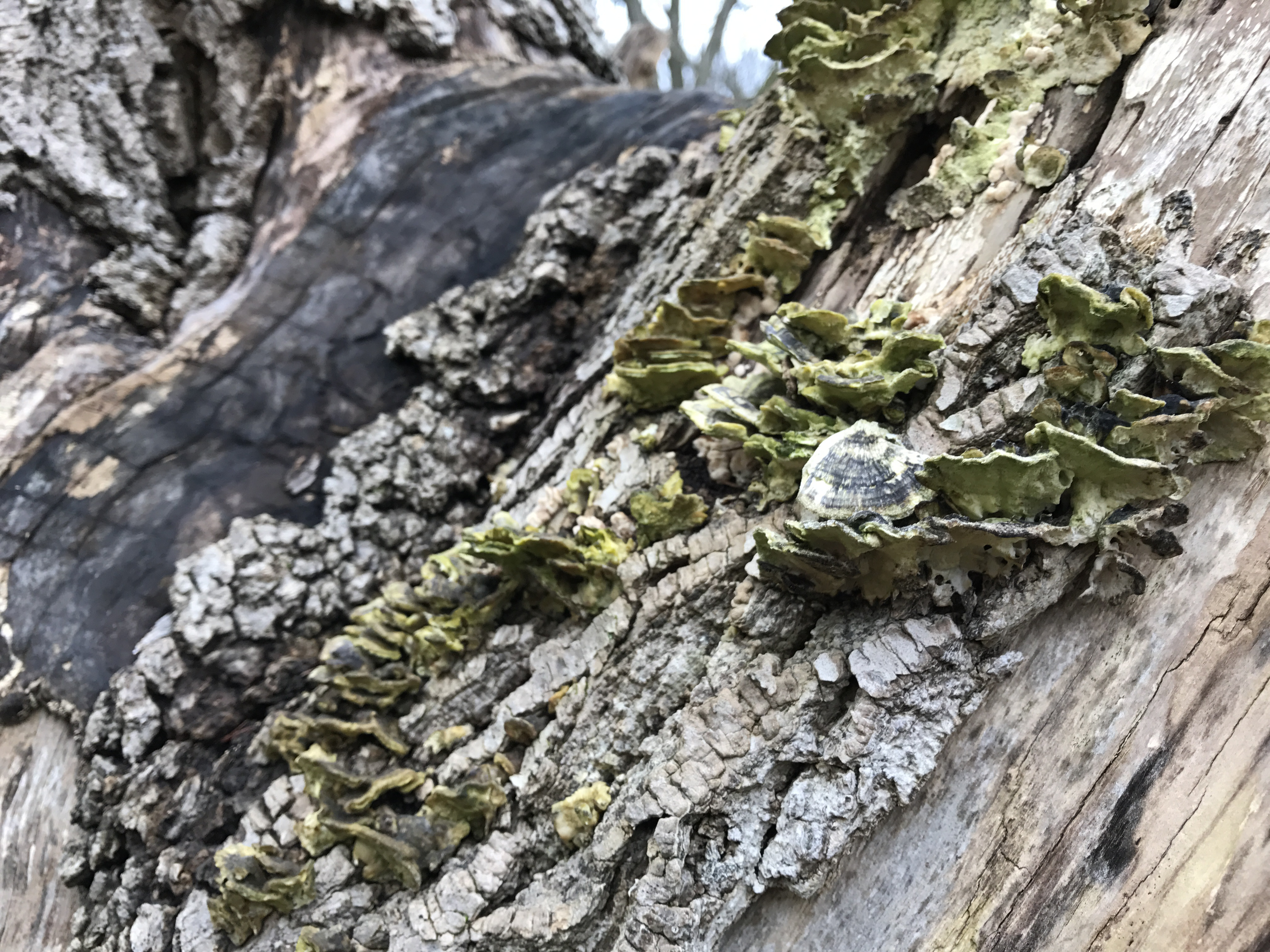
Old tree trunks hollowed out over centuries always bring the child out in us. We were drawn to it as soon as we spotted it along the riverbank.

a10-4 a9-21 a9-22 a9-23 a9-24

Closer study revealed wide varieties of texture and pattern.

a9-25 a9-26 a9-27 a9-28 a9-29 a9-30

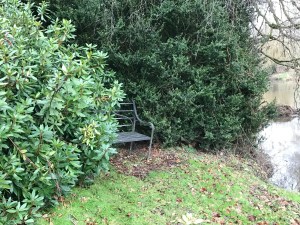
It is always good to find a little humour in gardens and parks. This worm was enjoying nibbling away at the big apple. What a great way to take advantage of an old uprooted tree stump. The final photo shows a seat which we imagines was rarely used particularly as it was just a few feet from the river!

a2-51 a2-50   a9-19

Our next visit to Attingham Park will be in March so we are already looking forward to searching for changes. Of course we will be full of anticipation knowing that the new coffee shop is getting close to its opening date!

a10-6 a10-7


Categories
birds flowering bulbs garden design garden photography garden wildlife gardening gardens hardy perennials ornamental trees and shrubs Shropshire shrubs spring bulbs wildlife Winter Gardening winter gardens

My 2017 Garden Journal – February

Here is the second time in 2017 when I share with you my Garden Journal, so please enjoy my February pages.

fj-1

On the first double page spread I look at Snowdrops and some early plants of interest. I wrote, “February, the month when gardeners’ working hours increase and the light values improve strongly. The snow white of the humble Snowdrop intensifies in the special brightness.”

fj1-03 fj1-06fj1-01 fj1-05 fj1-02 fj1-04

On the opposite page I wrote, “Our native Primroses, Primula vulgaris, begin to flower in February ready to be at their peak in early Spring. Pink “rogue” Primroses appear as self-seeders. Foliage of Primula vulgaris is beautifully textured and patterned.”

fj1-07 fj1-08

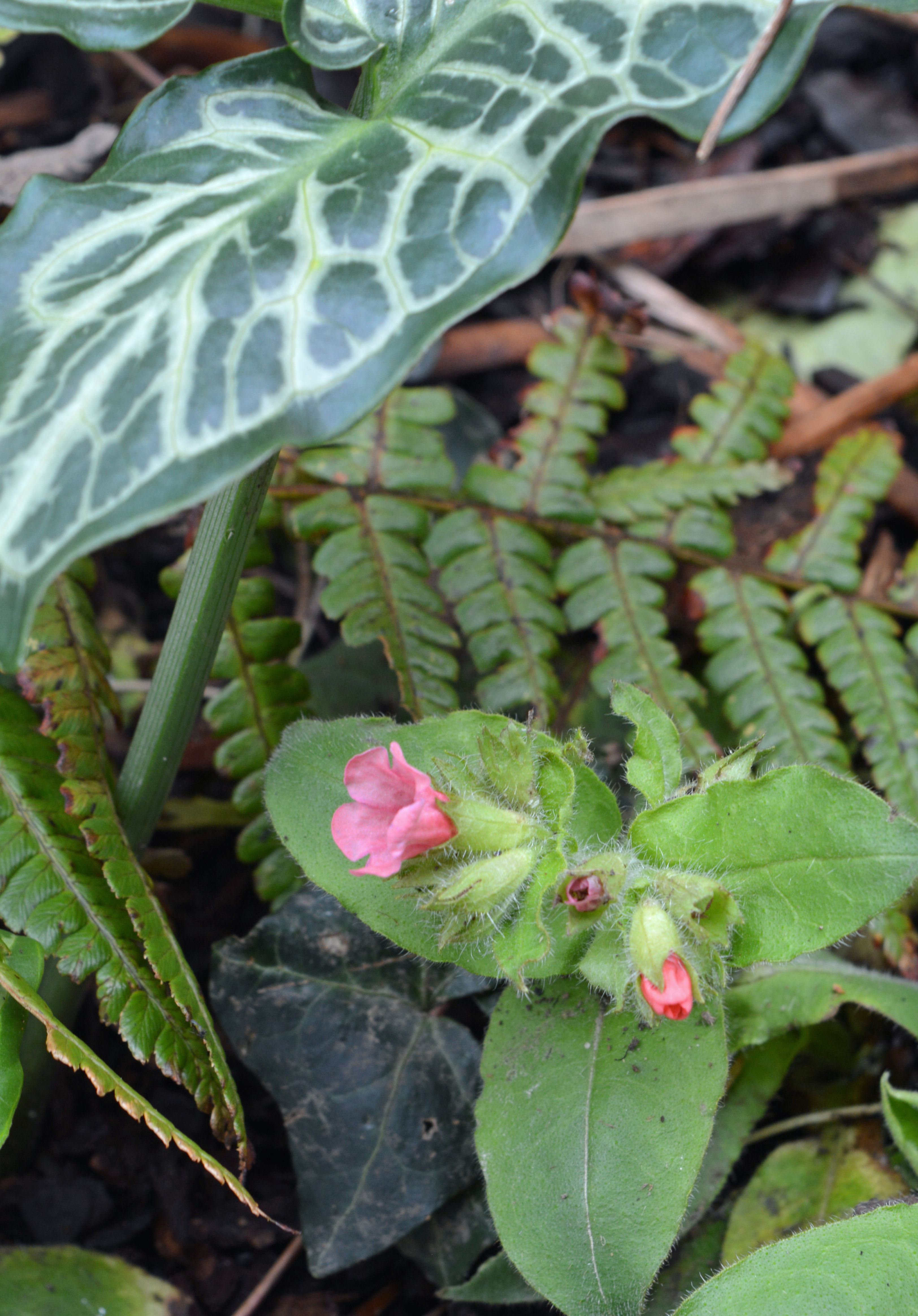
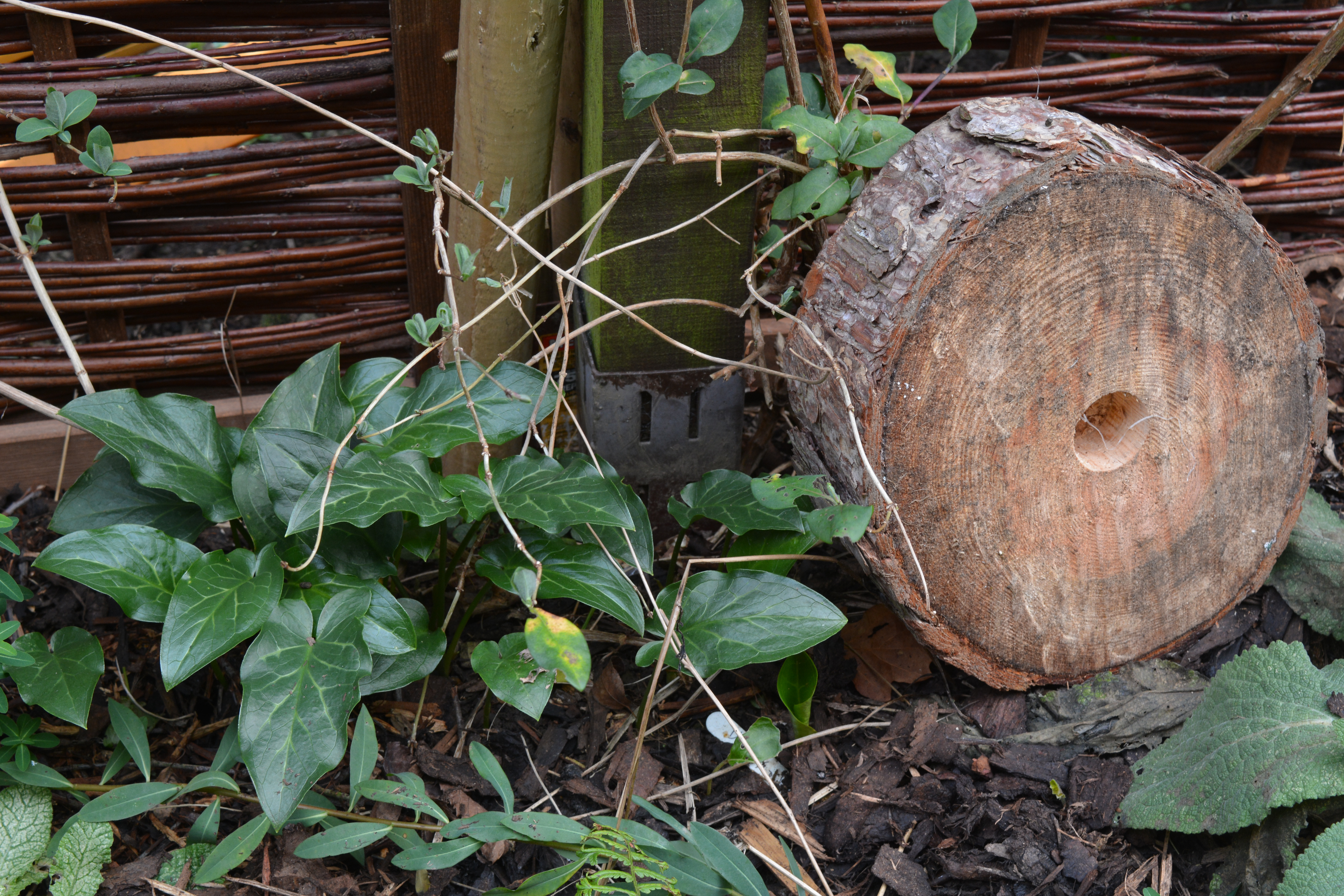
Other early flowering plants giving bright spots in our borders include Crocus and Pulmonaria. This golden Crocus has a bright green Pittosporum as its partner. The pink Pulmonaria is partnering a fern and an Arum, A. italicum “Marmoratum”.

fj1-09 fj1-10 fj1-11

A February flowering shrub features on the next double-page spread along with Hellebores.

fj-2

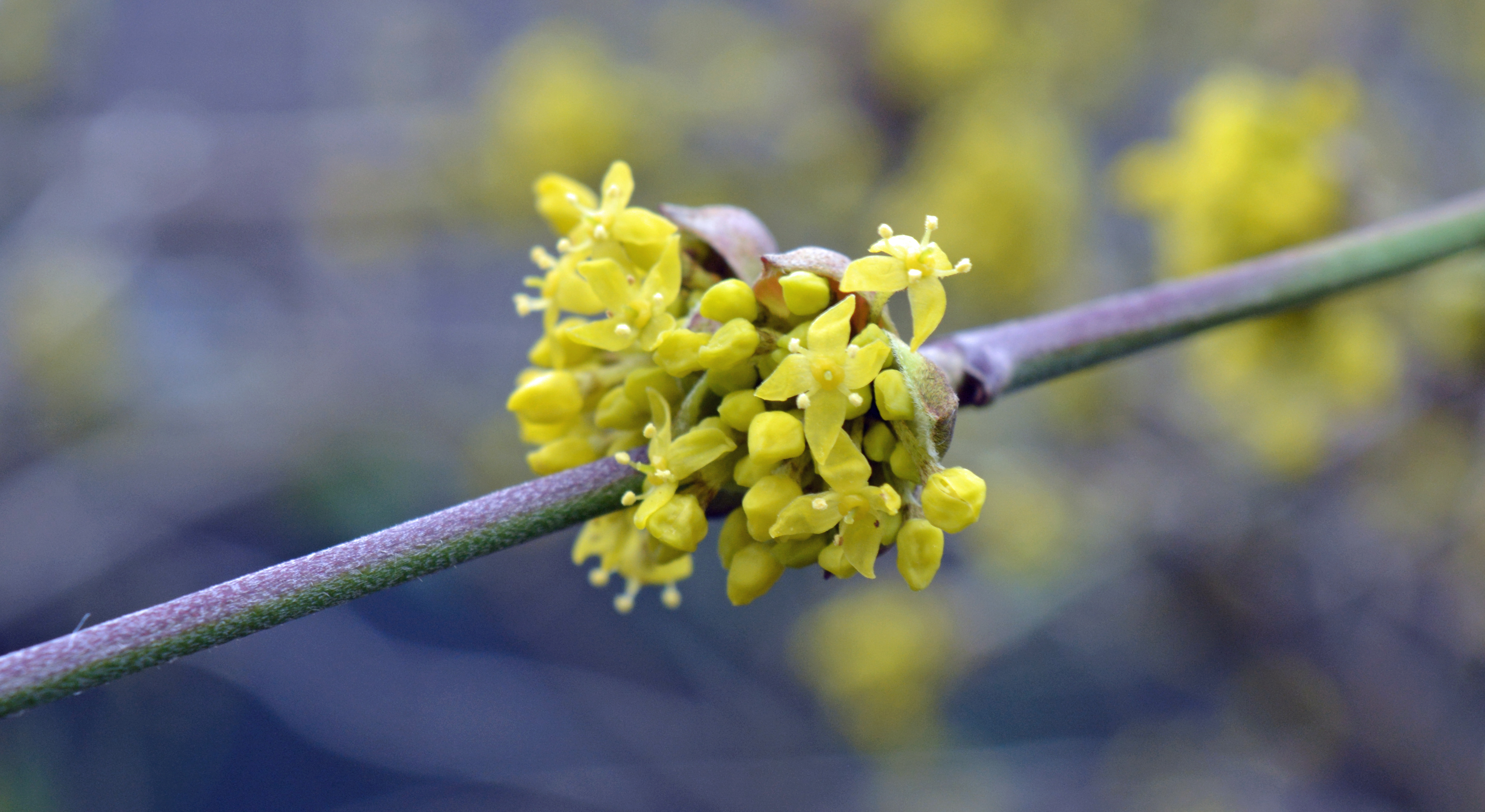
The flowering shrub is Cornus mas, which reliably flowers profusely early every year. I  have selected it as my “Plant of the Month” for February. I wrote, “The star of our garden this month has to be Cornus mas, the Cornelian Cherry, with its bright yellow flowers with just a hint of green. We prune off the lower branches and select main boughs to improve the structure of our’s and this also exposes the texture of the bark on the lowest boughs.”

fj2-01 fj2-07 fj2-05fj2-03 fj2-06fj2-04

I moved on to show a few of our many Hellebore hybrids and wrote, “Hellebore hybrids start to put on a colourful show from green to yellow and from red to purple. Lots more will come into flower throughout the coming weeks.”

fj2-10 fj2-12fj2-09 fj2-11  fj2-13 fj2-08

The last photo is not a hybrid Hellebore like the others but our native Helleborus foetidus with its pale green flowers, a subtle beauty with an upright habit.

On the turning of the page we discover my account of re-developing an old border, the Shade Garden”.

fj-3

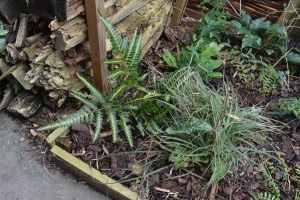
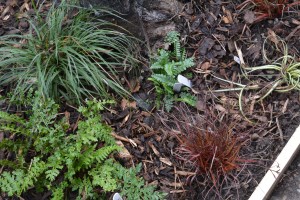
I wrote that “By mid-February we had finished re-vamping our “Shade Garden”, an opportunity that arose when we moved a shed that was situated part way along it. The shed was just 6ft by 3ft but the space released by its removal seemed far more significant that that. Its removal opened up the border. We decided to add a couple of Maples, Acer palmatum “Koto-no-ito” and Acer palmatum “Eddisbury”, and increase the variety and number of ferns and grasses, We liked the idea of mixing ferns and grasses, a new plant combination for us.”

fj3-08 fj3-02fj3-07 fj3-09fj3-11

“Mr and Mrs Green Man”

fj3-03 fj3-05

Rotting wood pile, Acer and Ivy, Ivy and Fern.”

fj3-06 fj3-01 fj3-12

New growth appearing in the Shade Garden”

fj3-04 fj3-10

Ivy is the feature plant over the next pair of pages.

fj-4

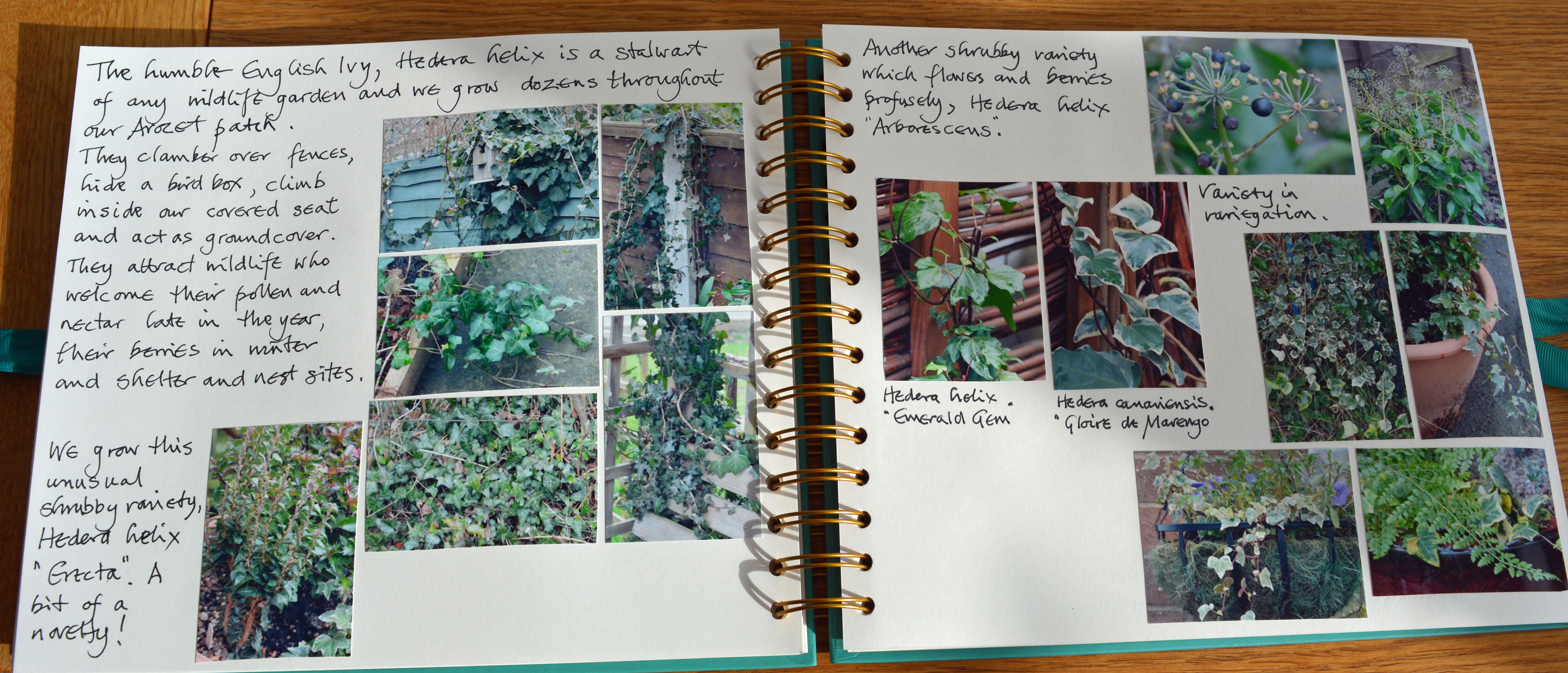
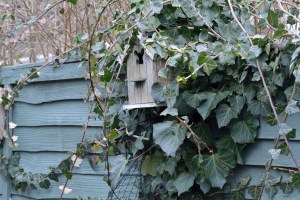
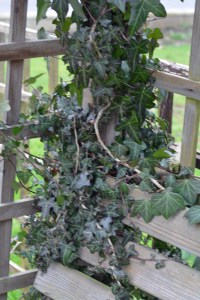
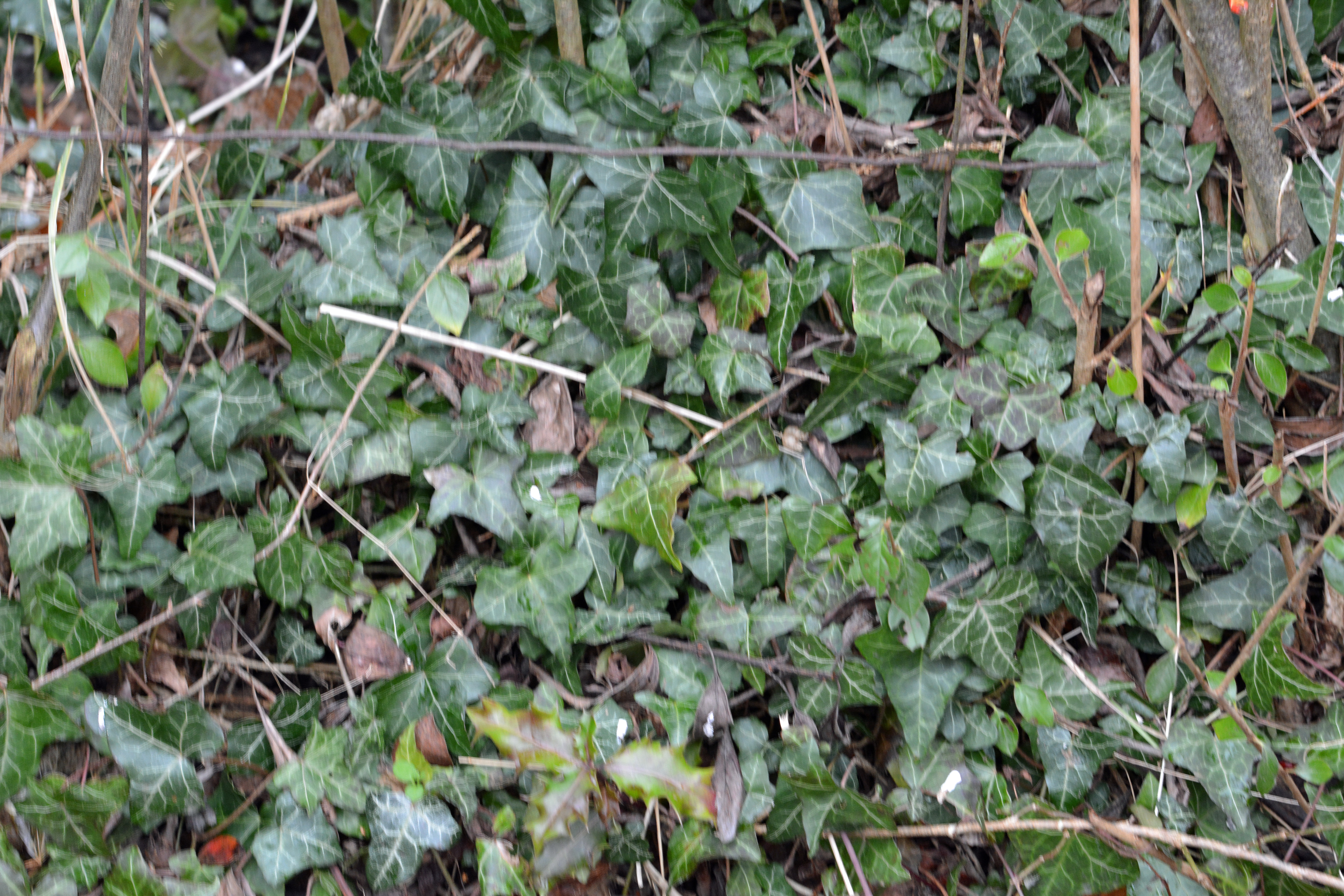
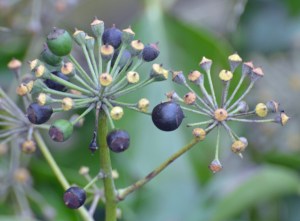
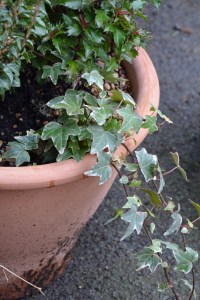
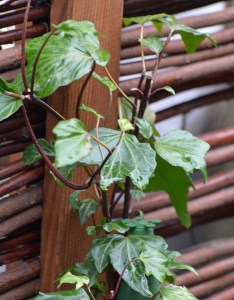
I wrote of the ivy, “The humble English Ivy, Hedera helix is a stalwart of any wildlife garden and we grow dozens throughout our Avocet patch. They clamber over fences, climb inside our covered seat and act as ground-cover. They attract wildlife who welcome their pollen and nectar late in the year, their berries in winter and shelter and nest sites.”

fj4-15 fj4-11fj4-03 fj4-10 fj4-09

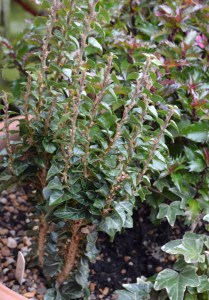
We grow this unusual shrubby variety, Hedera helix “Erecta”, a bit of a novelty!”

fj4-05 fj4-07

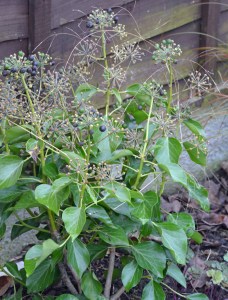
Another shrubby variety which flowers and berries profusely, Hedera helix “Arborescens.”

fj4-02 fj4-01

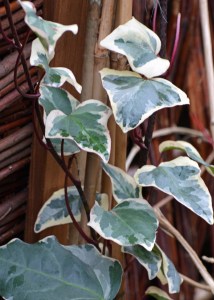
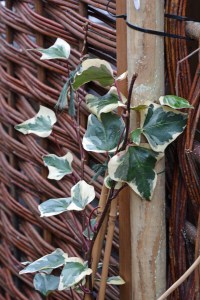
Variety in variegation.”

fj4-08 fj4-06fj4-04 fj4-16

Finally two climbing ivies growing in our Shade Garden.

fj4-12 fj4-13 fj4-14

“Hedera helix “Emerald Gem”                         “Hedera canariensis “Gloire de Marengo.”

Next I featured the birds that share our garden with us, particularly the ones who take advantage of our feeding stations.

fj-7

“The birds have been busy in the garden during the month, feeding heavily to compensate for the cold nights. Their new year songs fill the garden from dawn until dusk. The Tawny Owls keep going, calling loudly from dusk through the hours of darkness.”

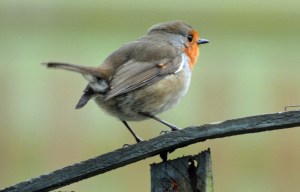
“Birds are singing now to attract mates and make declarations of territory. In January birds just called but now they sing so powerfully and tunefully. Recently a Reed Bunting (photo bottom right) has become a regular visitor as have the pair of Collared Doves.”

fj5-4-1 fj5-9-1fj5-7-1 fj5-8-1fj5-6-1

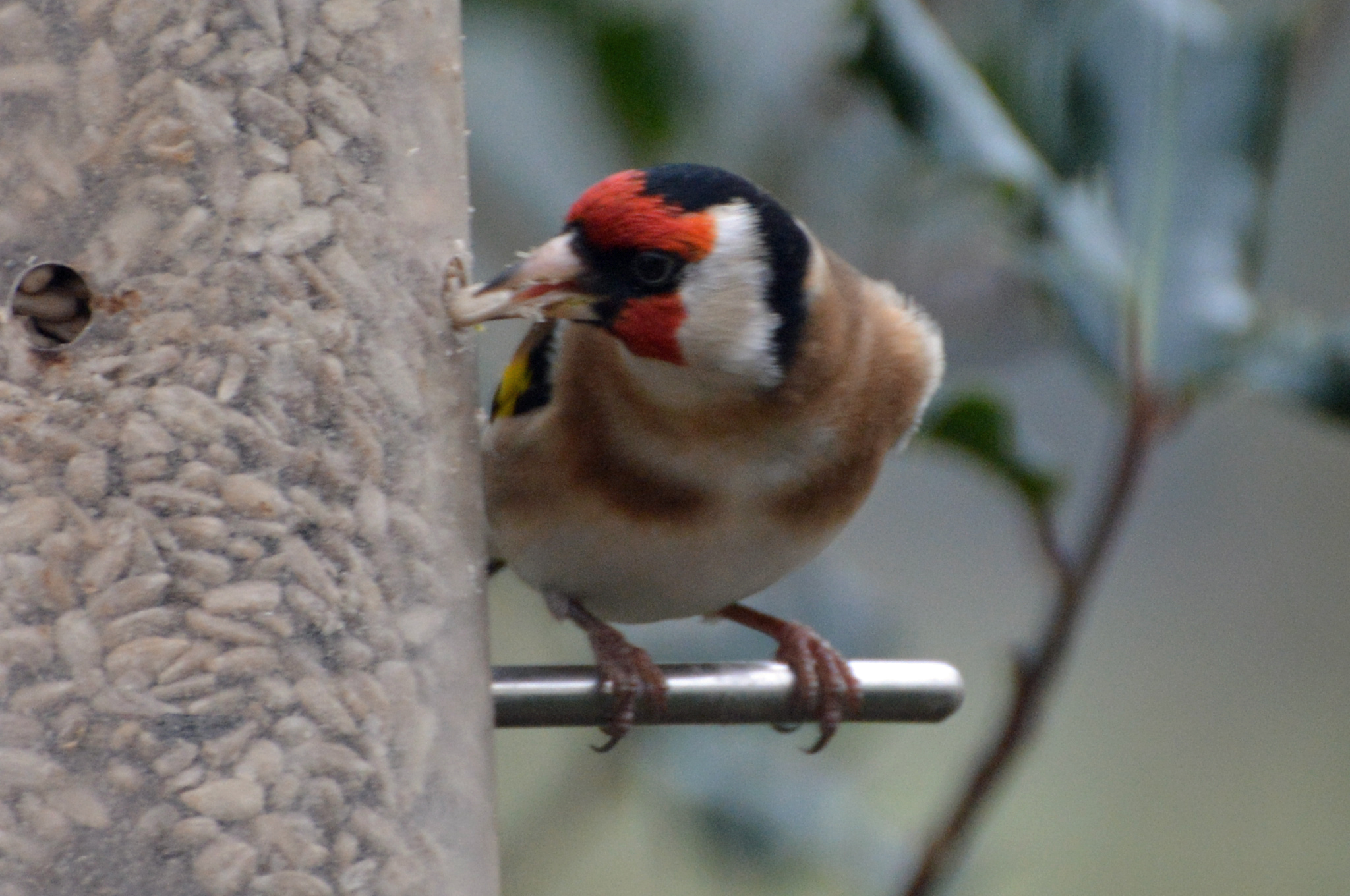
“Goldfinches are now the most common bird in our Avocet garden. The population of most UK birds is dropping and this is especially marked in our song-birds. The wonderful Goldfinch is an exception, with its population on the increase. It is the entertainer of the bird feeders, being agile and fast-moving.
We think of it as our garden’s clown with its bright red face, black and white striped head and bright yellow wing flashes. We managed to increase the numbers visiting our garden by filling some feeders with sunflower hearts. Goldfinches love them as do other finches who visit.”

fj5-3-1 fj5-2-1fj5-1-1 fj5-5-1

We next turn over to a double page spread all about early flowers and a plant that displays amazing unusual foliage.

fj-6

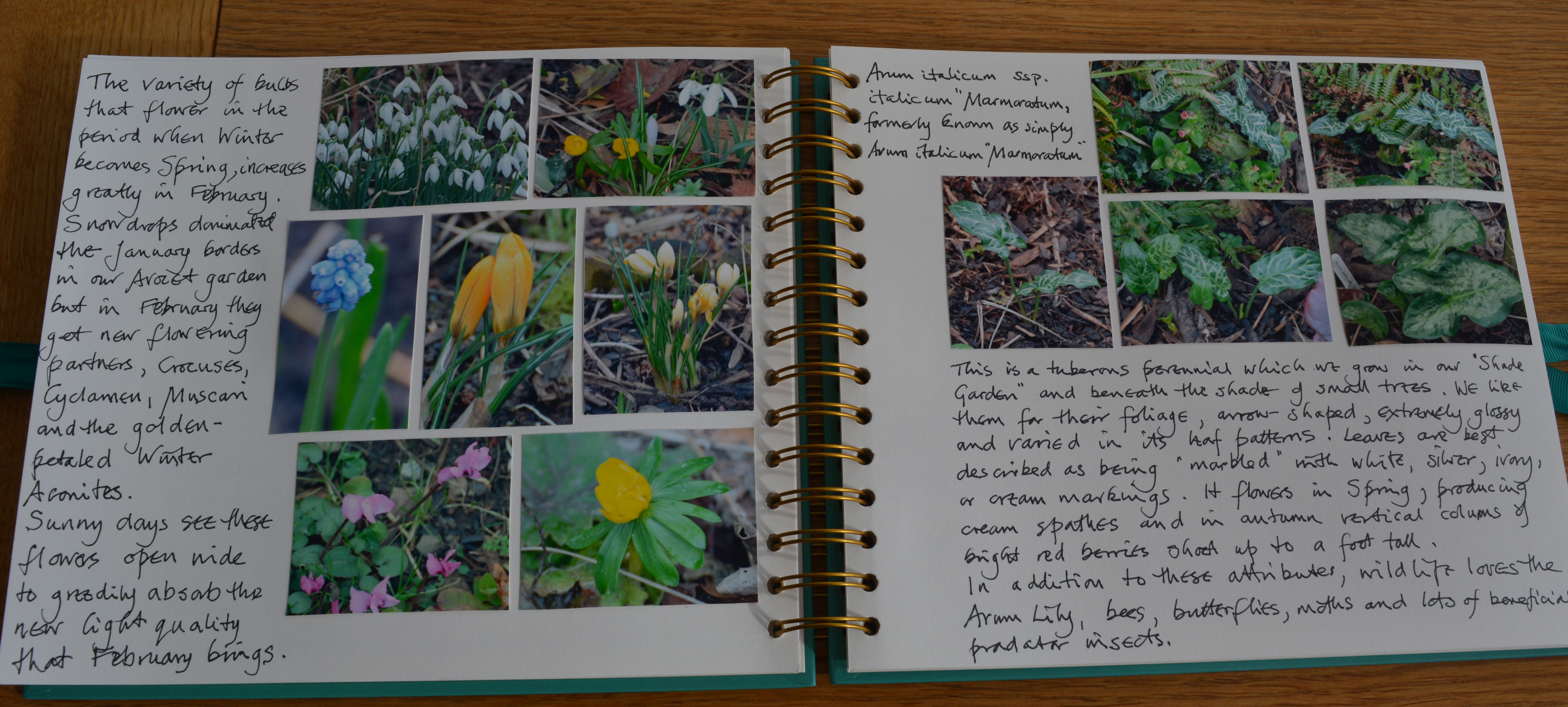
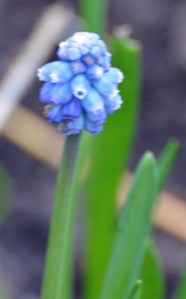
I wrote, “The variety of bulbs that flower in the period when Winter becomes Spring, increases greatly in February. Snowdrops dominated the January borders in our Avocet garden but in February they get new flowering partners, Crocuses, Cyclamen, Muscari and the golden-petaled Winter Aconites.

Sunny days see these flowers open wide to greedily absorb the new light quality that February brings.”

fj6-18 fj6-15fj6-17 fj6-19 fj6-16fj6-01 fj6-02 fj6-03  fj6-05 fj6-06 fj6-07 fj6-14fj6-04 fj6-09

Concerning the unusual Arums we grow I continued, “Arum italicum ssp. italicum “Marmoratum” formerly known simply as Arum italicum “Marmoratum”. This is a tuberous perennial which we grow in our Shade Garden and beneath the shade of small trees. We like them for their foliage, arrow-shaped, extremely glossy and varied in its leaf patterns. Leaves are best described as being “marbled” with white, silver, ivory or cream markings. It flowers in Spring, producing cream spathes and in Autumn vertical columns of bright red berries shoot up to a foot tall. In addition to those attributes, wildlife loves the Arum Lily, bees, butterflies, moths and lots of beneficial predatory insects.” 

fj6-11 fj6-10fj6-13 fj6-12

We are so pleased to have established a clump of the rare Arum Lily called “Arum italicum Chameleon”, seen in photo below.

fj6-08

More foliage features over on the following pages, the newly emerging foliage of perennials.


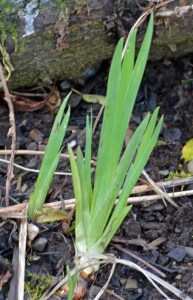
I wrote, “In the second half of the month we had a special treat in store, a few days of heatwave with daytime temperatures reaching 15 C in Plealey. This resulted in rush of new growth from the perennials that had died down after their display last year. The photos show perennial growth with new leaf growth penetrating the soil like the blades of swords.

fj7-11 fj7-09fj7-12 fj7-04fj7-10 fj7-07

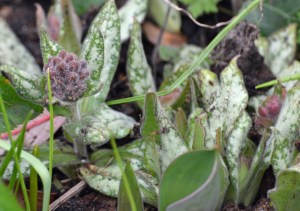
This final picture of new growth illustrates how new growth of Pulmonarias shows both foliage and flower bud shooting together.

fj7-06

Opposite I share photos of broad-leaved perennials displaying their new growth, where I wrote, “Elsewhere broad-leaved herbaceous perennials were unfurling their fresh foliage ready for the new year. Here we have new leaves of Primula vulgaris, Sedum, Aquilegia, Polemonium, Centaurea, Fennel and Geranium palmatum. More growth appears daily as February comes to an end. It all bodes well for Spring and Summer.”

fj7-02 fj7-13fj7-03 fj7-05fj7-01 fj7-08fj7-14

And so that is my February report from my Garden Journal. We will visit again in March.


This Veggie Life

A Vegetarian | Nature Lifestyle Blog

Rambling in the Garden

.....and nurturing my soul

The Arch City Gardener

Journeys In St. Louis Gardening and Beyond

Garden Dreaming at Châtillon

Consult the genius of the place

Storyshucker

A blog full of humorous and poignant observations.

gardeninacity

Notes from a wildlife-friendly cottage garden

PlayGroundology

...an emerging social science

The Official Blog of British Wildlife

'The most important and informative publication on wildlife of our times' - The Independent. This blog is a member of The UK & Ireland Natural History Bloggers group: www.uknhb.blogspot.com

iGrowHort

Inspire - Cultivate - Grow Native Plants - Restore Landscapes

Bishops Meadow Trust

To create and protect a semi-natural wild space for the people of Farnham to enjoy and experience an array of British wildlife in our town

Gardening with Children

The www.gardeningwithchildren.co.uk Blog

UKbirdingtimeline

birding through the seasons, why birds matter and how to conserve them

NATURE WALKER

with a camera in hand

Jardin

Transform your outdoor space

Eva's space

My allotment, cooking and other interests

Old School Garden

my gardening life through the year

LEANNE COLE

Trying to live a creative life

fromacountrycottage

trying to live as lightly as possible on our beautiful planet

Good Life Gardening

Nature lovers from Leicester living the good life.

mybeautfulthings

Finding the beautiful in the everyday

mawsonmichelle

Michelle's Allotment

In and Out of My Garden

thoughts from and about my garden

Greenhousing

Big plans for a small garden

The Scottish Country Garden

A Walled Country Garden in South East Scotland

The Fruity Chicken

Life at the fruity chicken

willowarchway

Off grid living. Self sufficient. "PERMAGANICS RULE".

St Anns Allotments

Nottingham's Grade 2* Listed Allotments and Community Orchard

Manifest Joy Harvests

a journey in suburban vegetable gardening

Allotmental

The madness of growing your own

Penny's Garden: a harvest beyond my front door

A novel approach to vegetable gardening

arignagardener

Sustainable living in the Irish countryside.

NewEnglandGardenAndThread

Master Gardener, amateur photographer, quilter, NH native, and sometimes SC snowbird

dianajhale

Recent work and work in progress and anything else that interests me

planthoarder

a chaotic cottage gardener

Lens and Pens by Sally

a weekly blog that creates a personal philosophy through photographs and words

Dewdrops and Sunshine

Stories from a sassy and classy Southern farmbelle.

The Pyjama Gardener

Simple Organic Gardening & Seasonal Living

gettin' fresh!

turning dirt into dinner

JOY...

today the world is created anew

Garden Birds

Notes from a Devon garden

ShootAbout

Life Through The Lens

Adapting Pixels

A photography blog showcasing the best photography pictures and videos on the internet

Wildlifegardening's Blog

Just another WordPress.com site

naturestimeline

personal observations from the natural world as the search continues for a new approach to conservation.

LATEBLOOMERBUDS

The Wonders of Life through my Eyes, my Heart, my Soul