Categories
colours garden design garden photography gardening gardens gardens open to the public hardy perennials light light quality ornamental trees and shrubs Powis Powys roses shrubs trees Uncategorized Wales woodland woodlands

The Dingle Garden in June

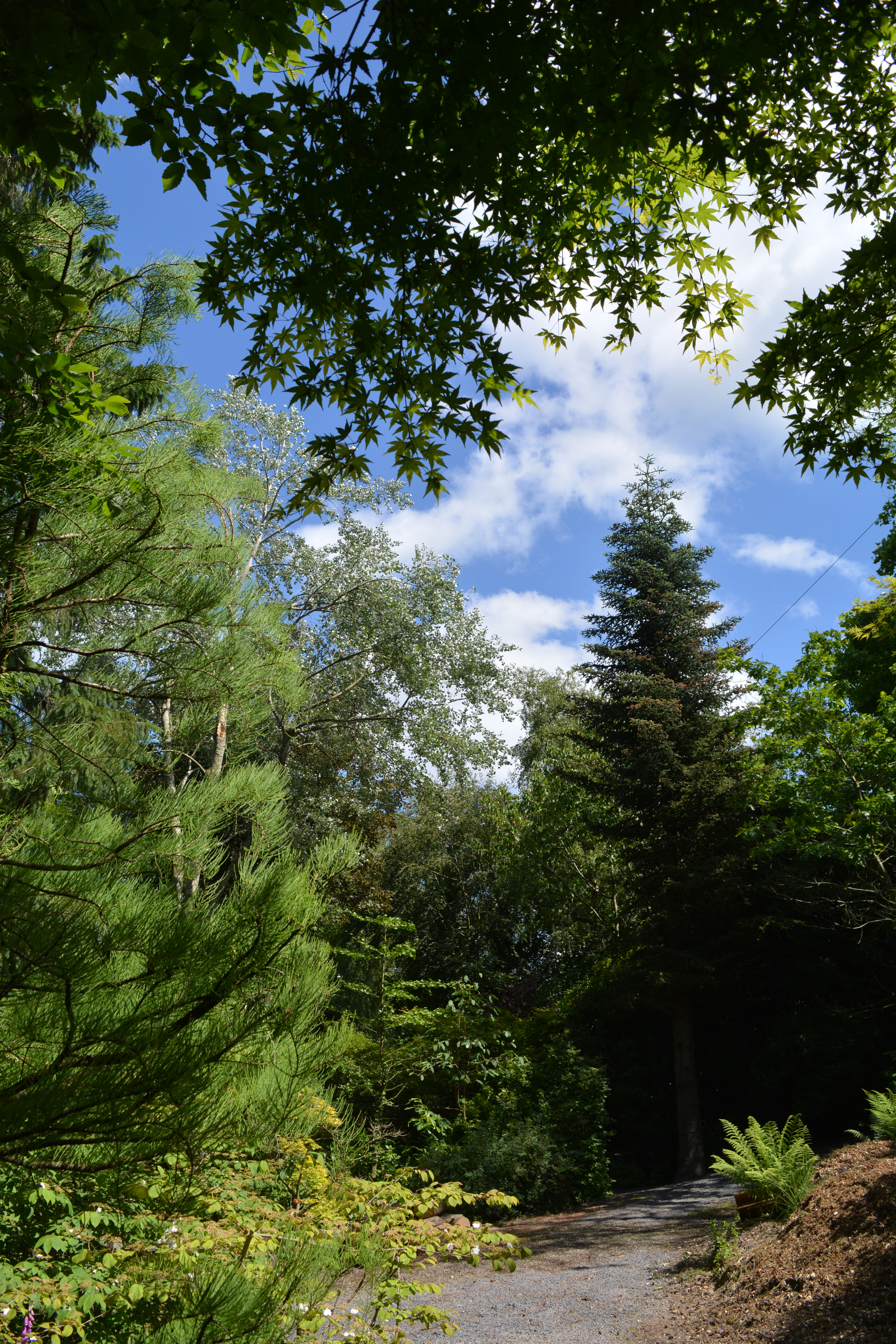
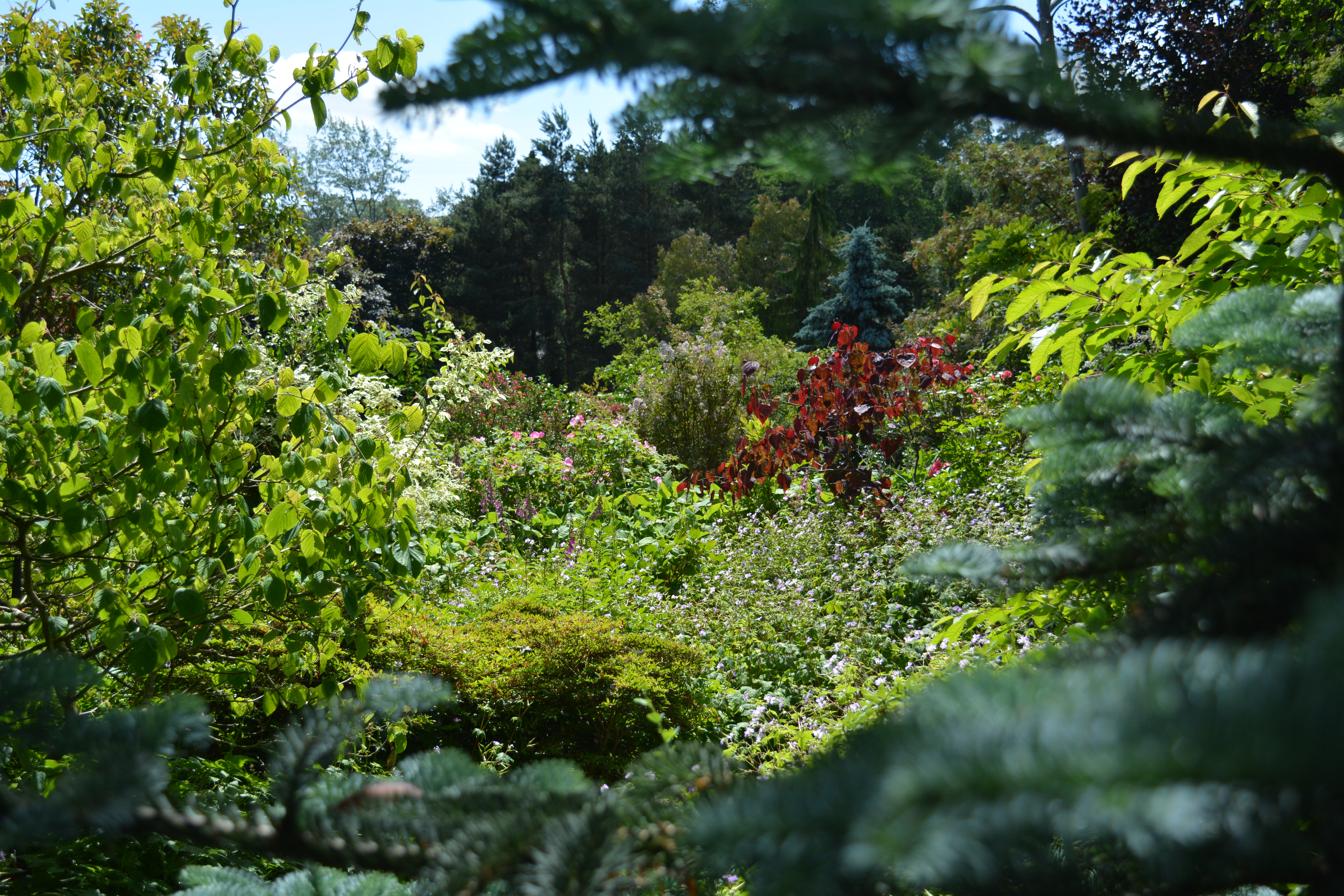
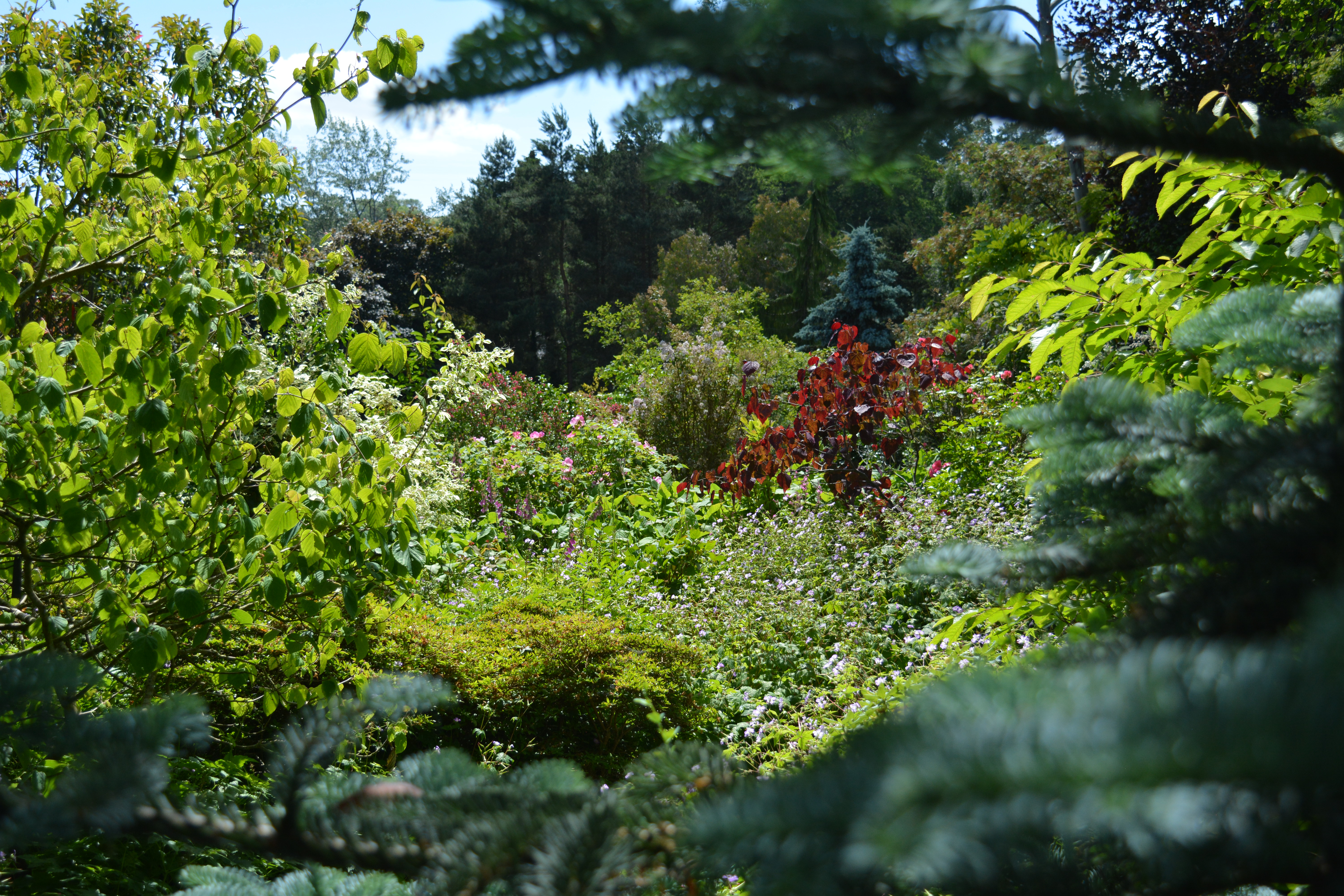
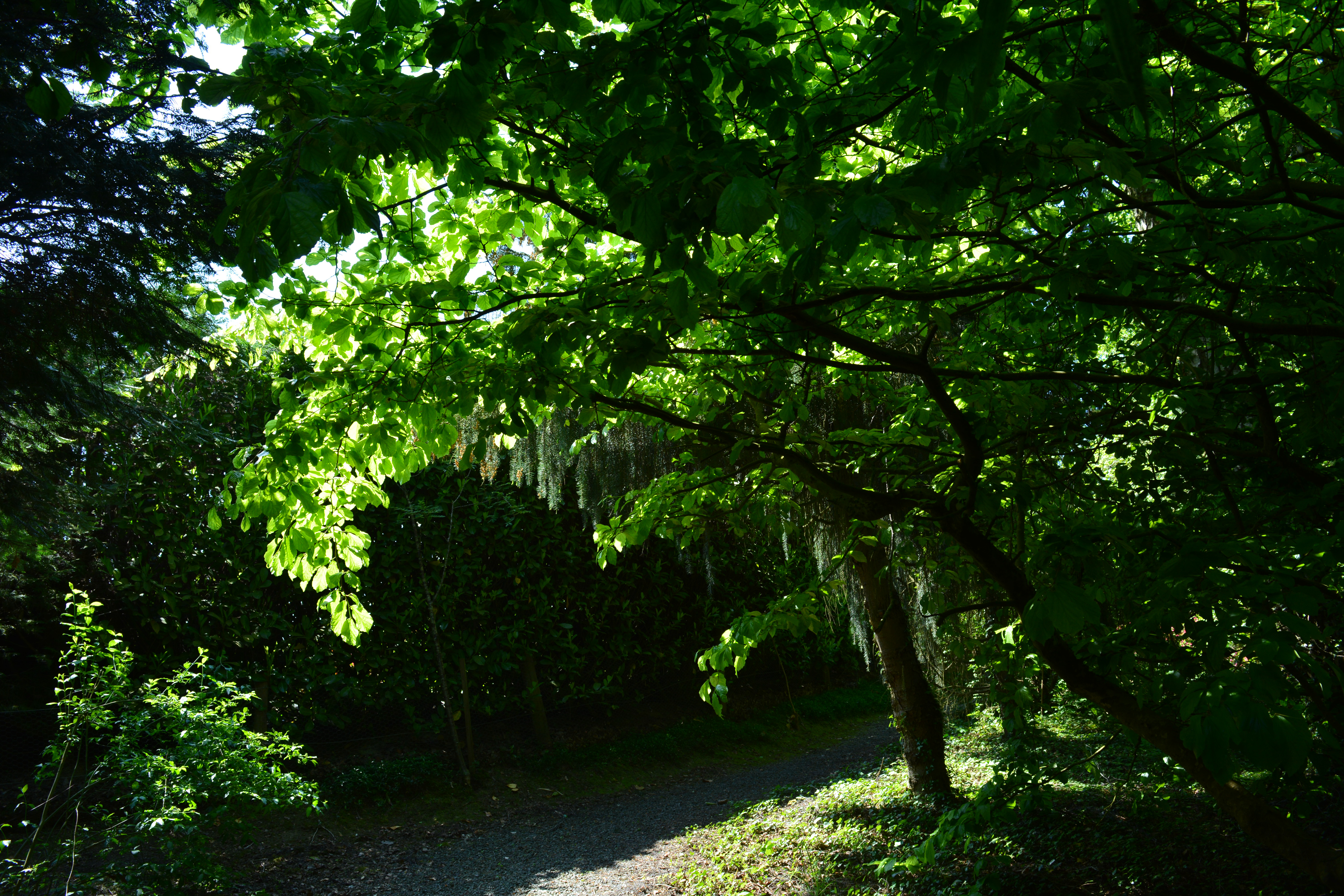
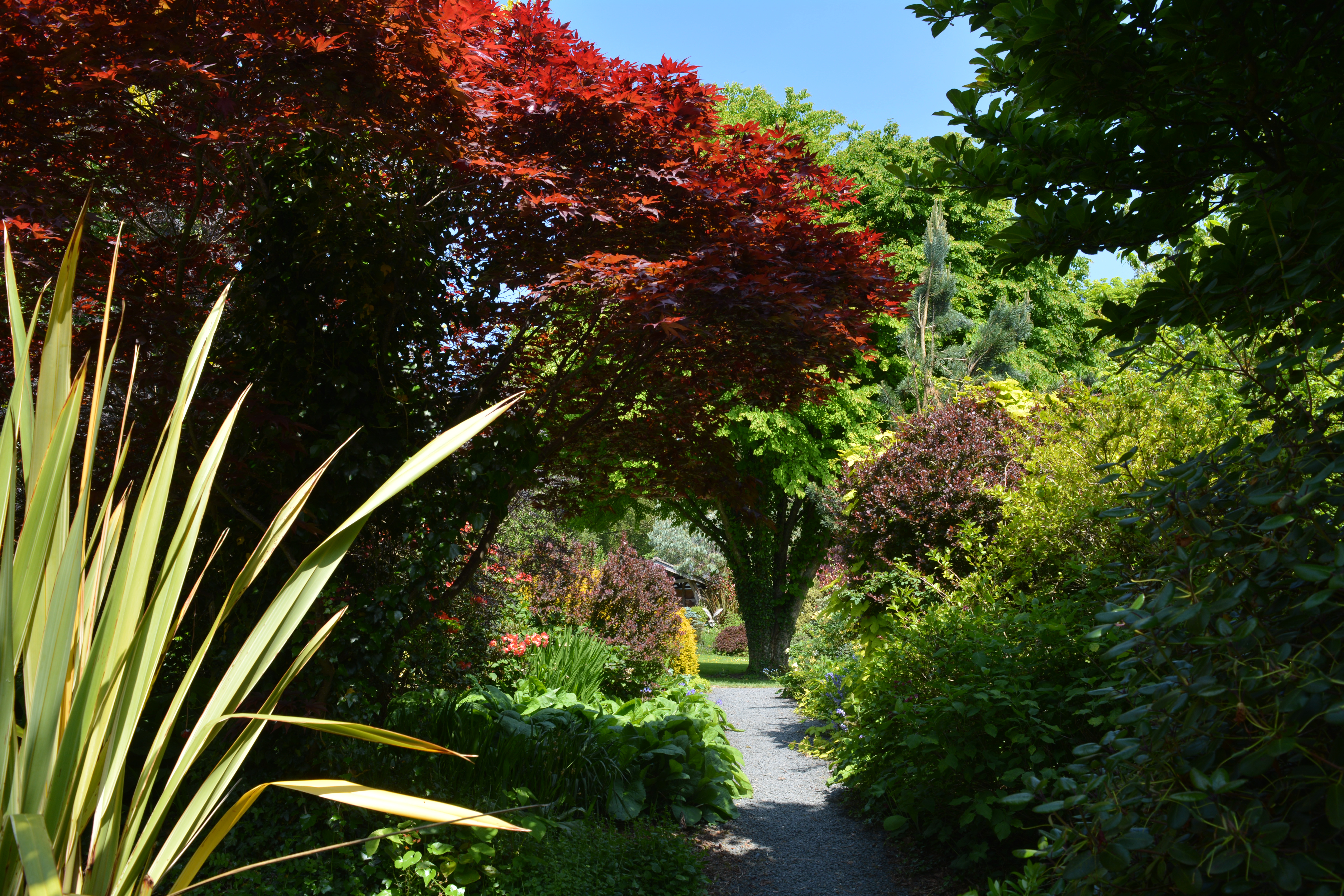
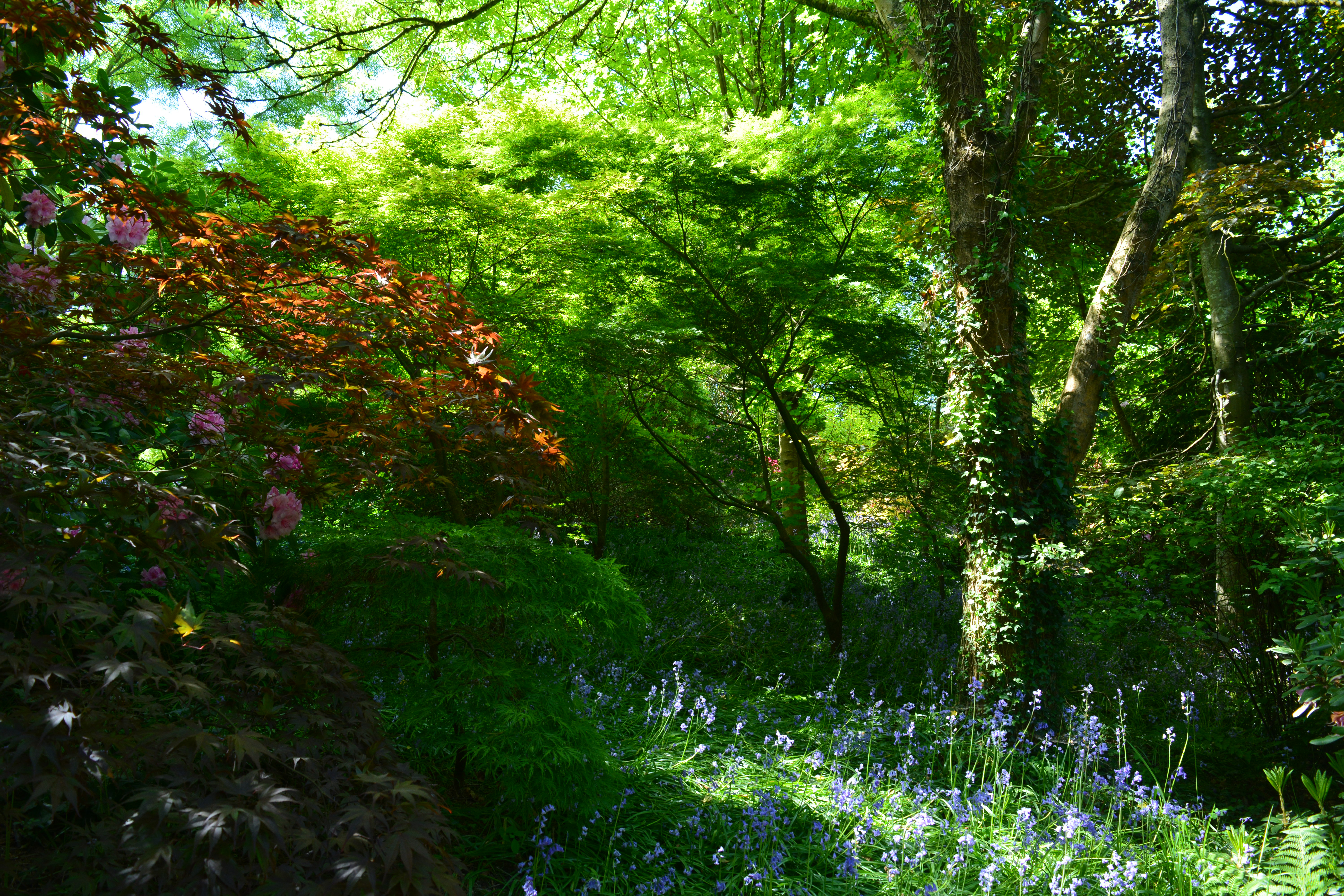
As we reach the middle of the year we made our monthly visit to the Dingle Gardens, and for once the weather looked set fair. This meant that we had strong contrast between light and shade and any colour was brightly lit when the sun hit it, leaf colour or flower colour.

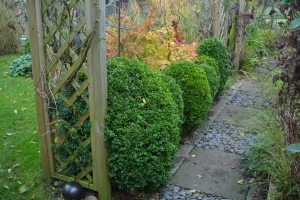
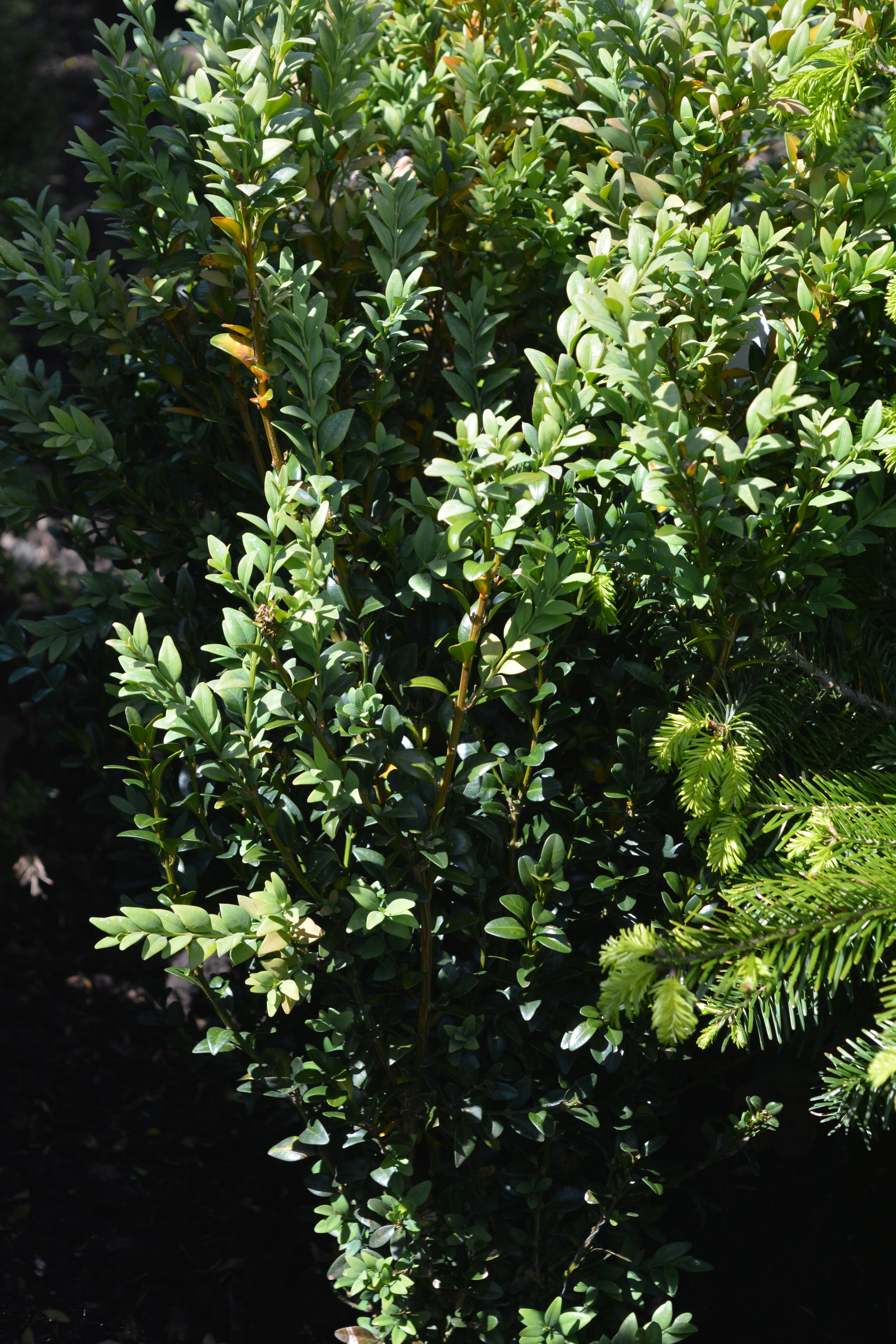
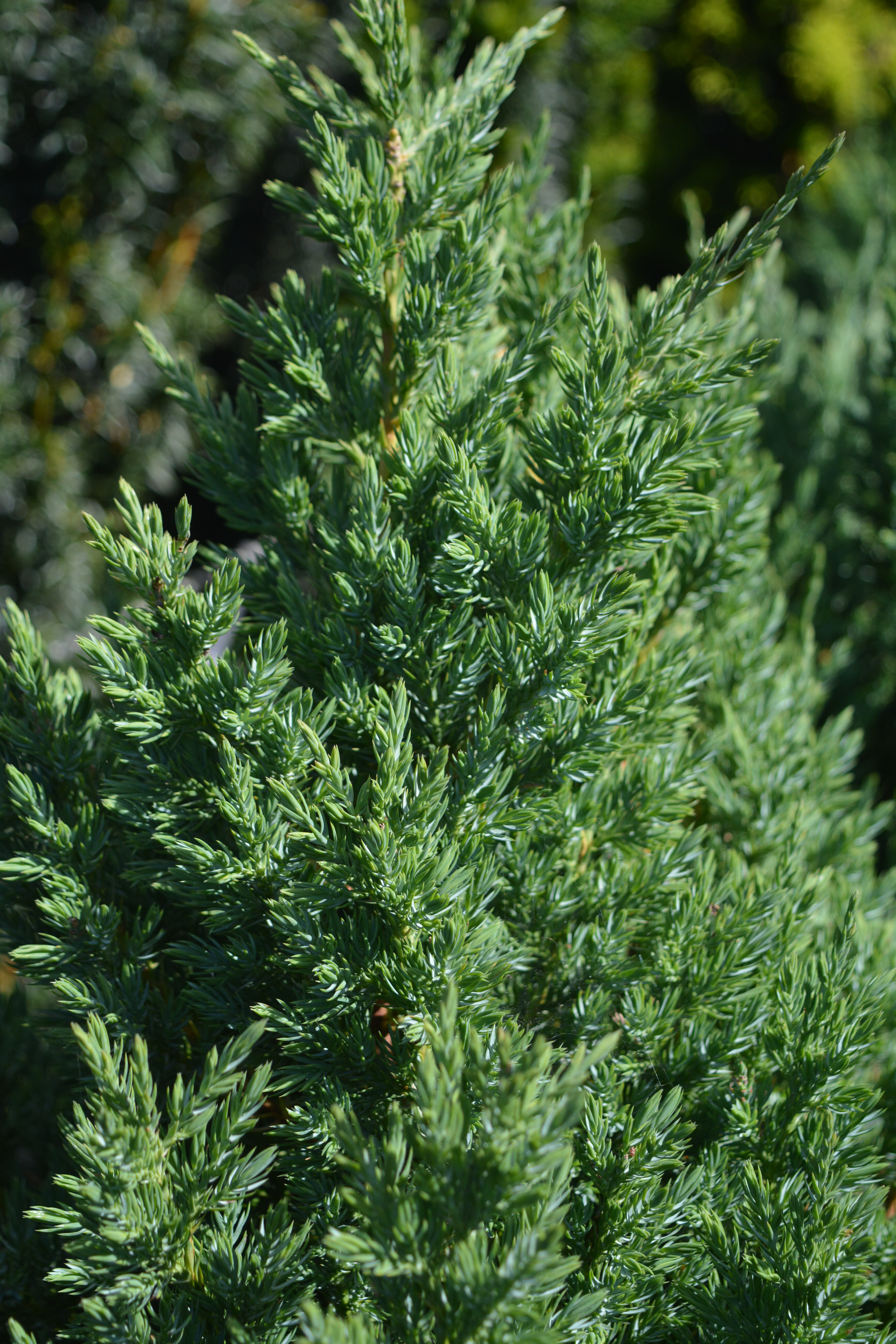
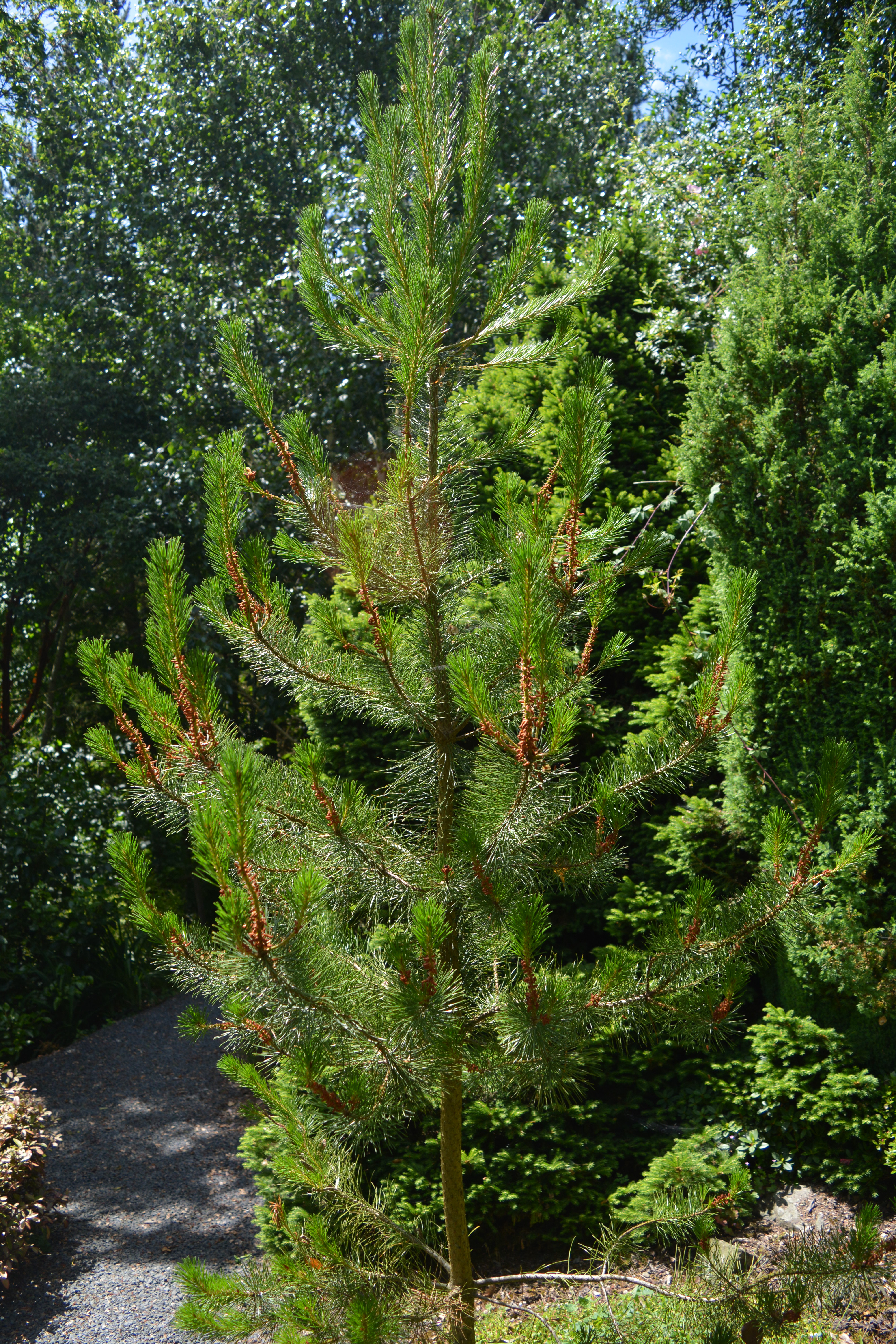
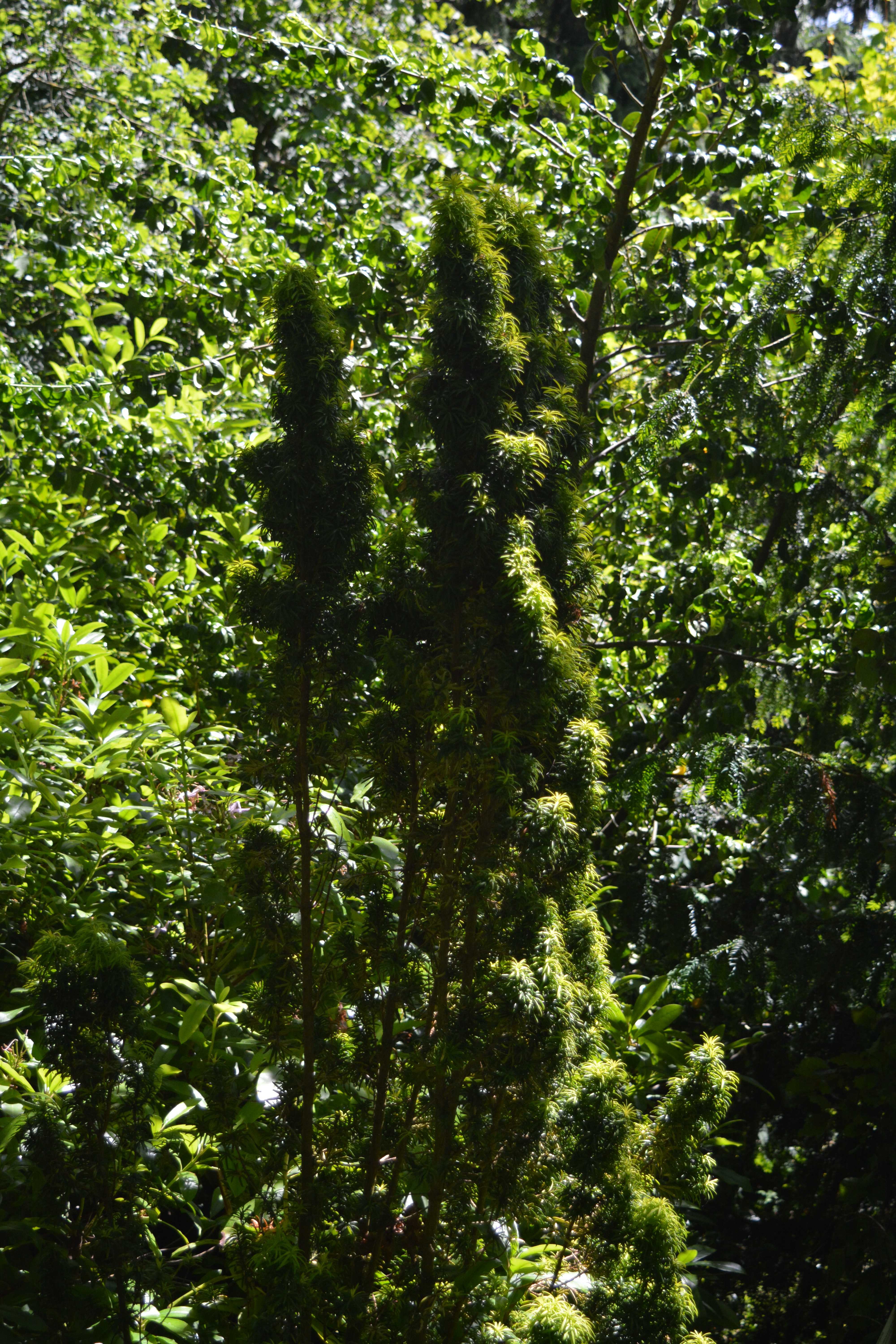
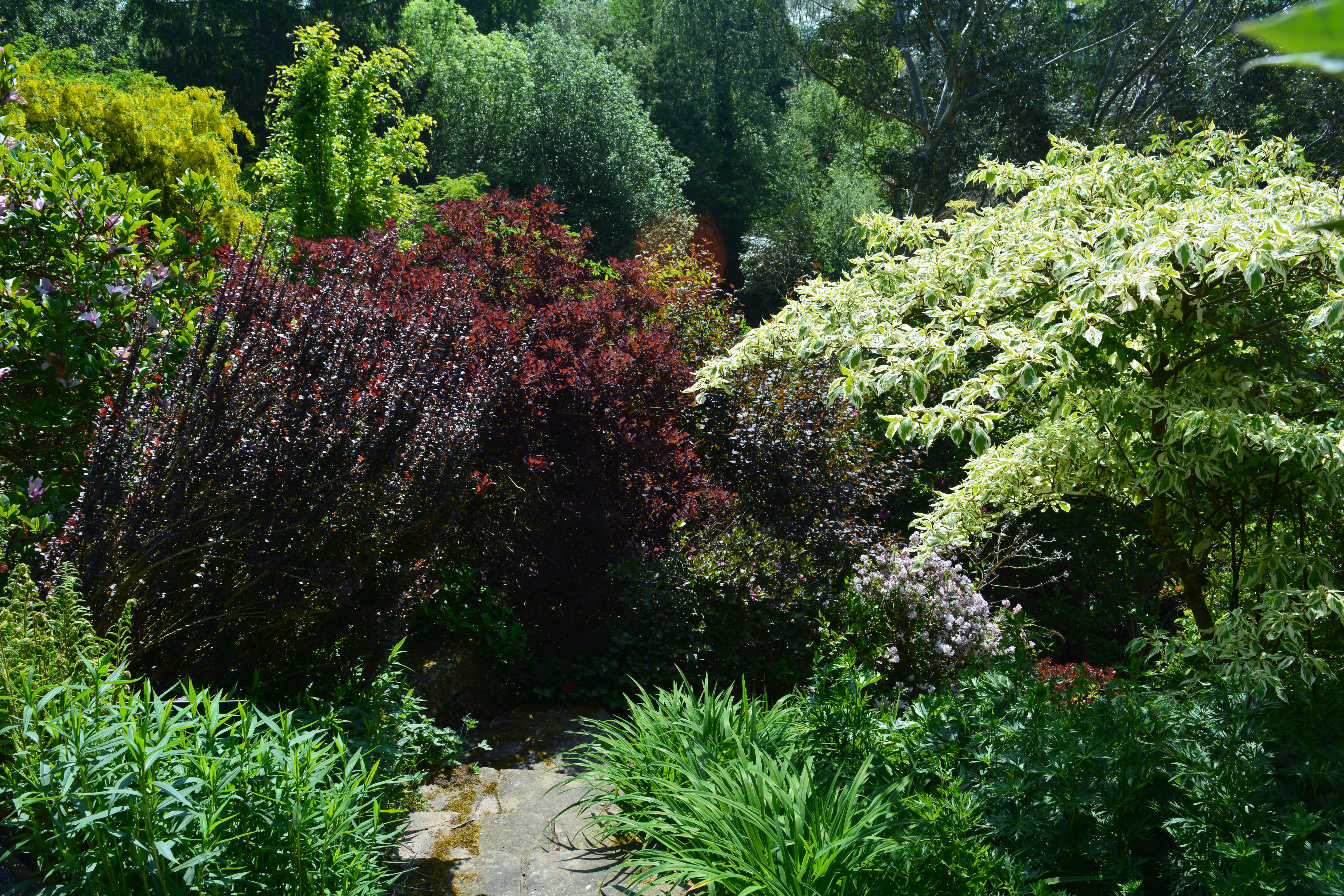
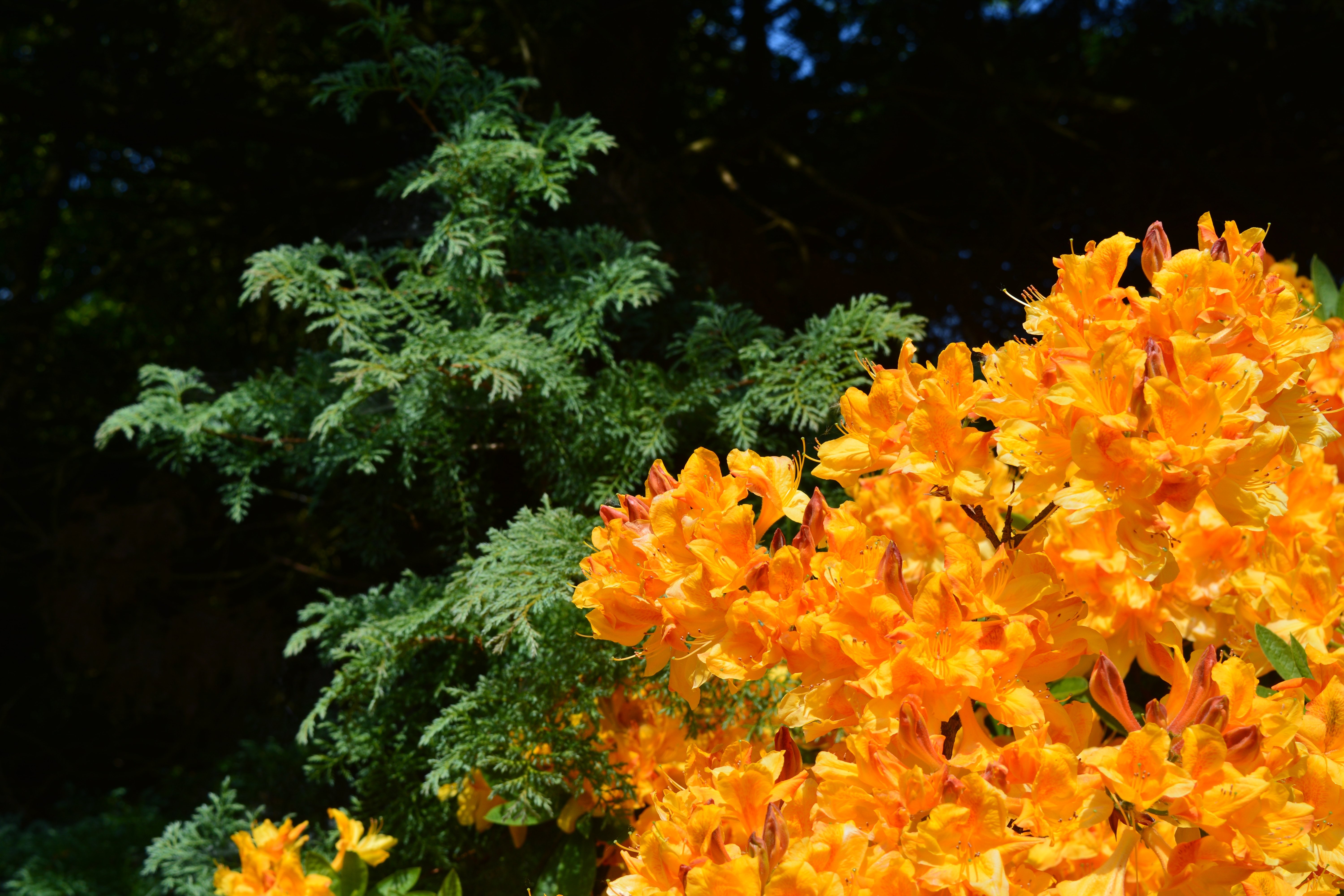
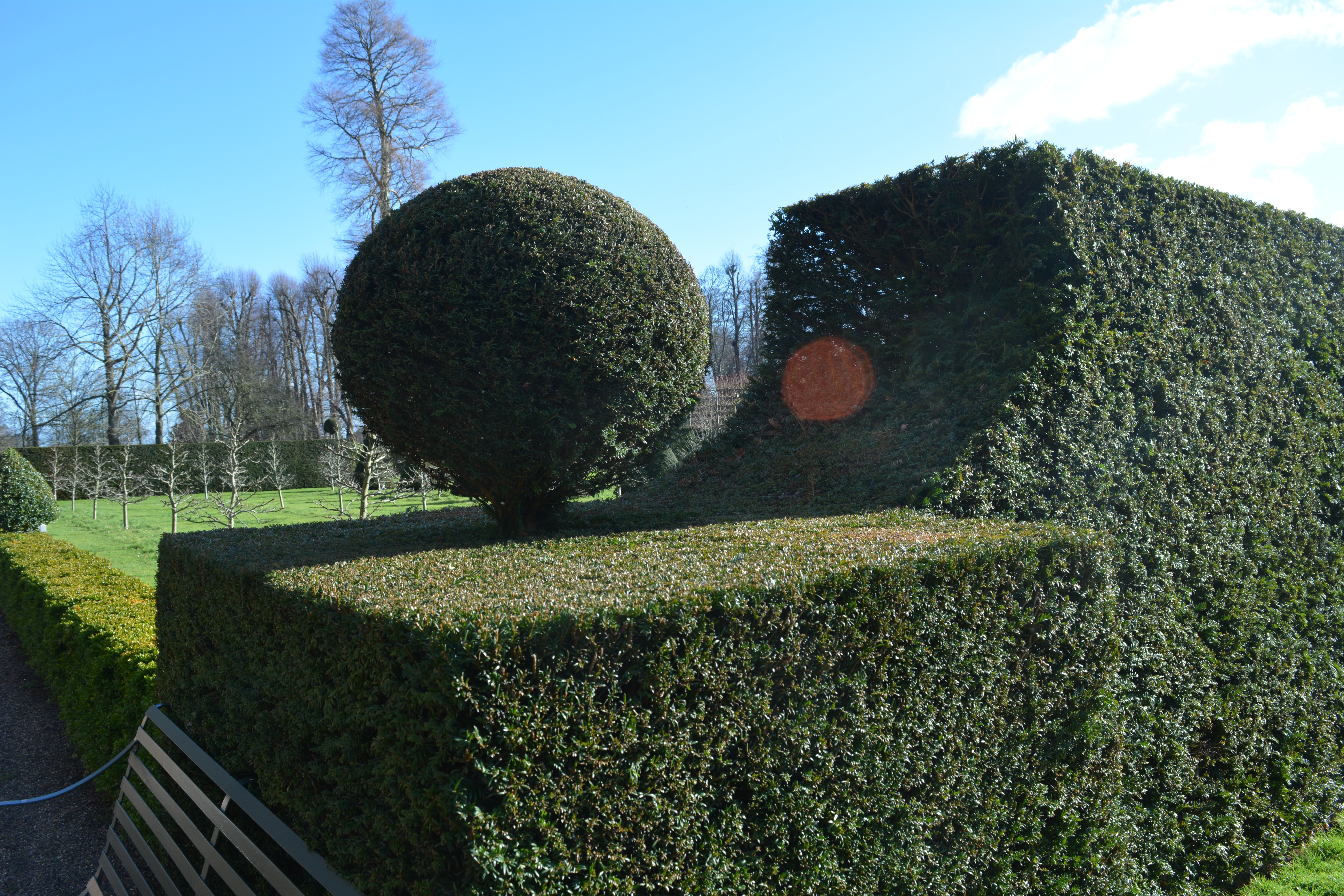
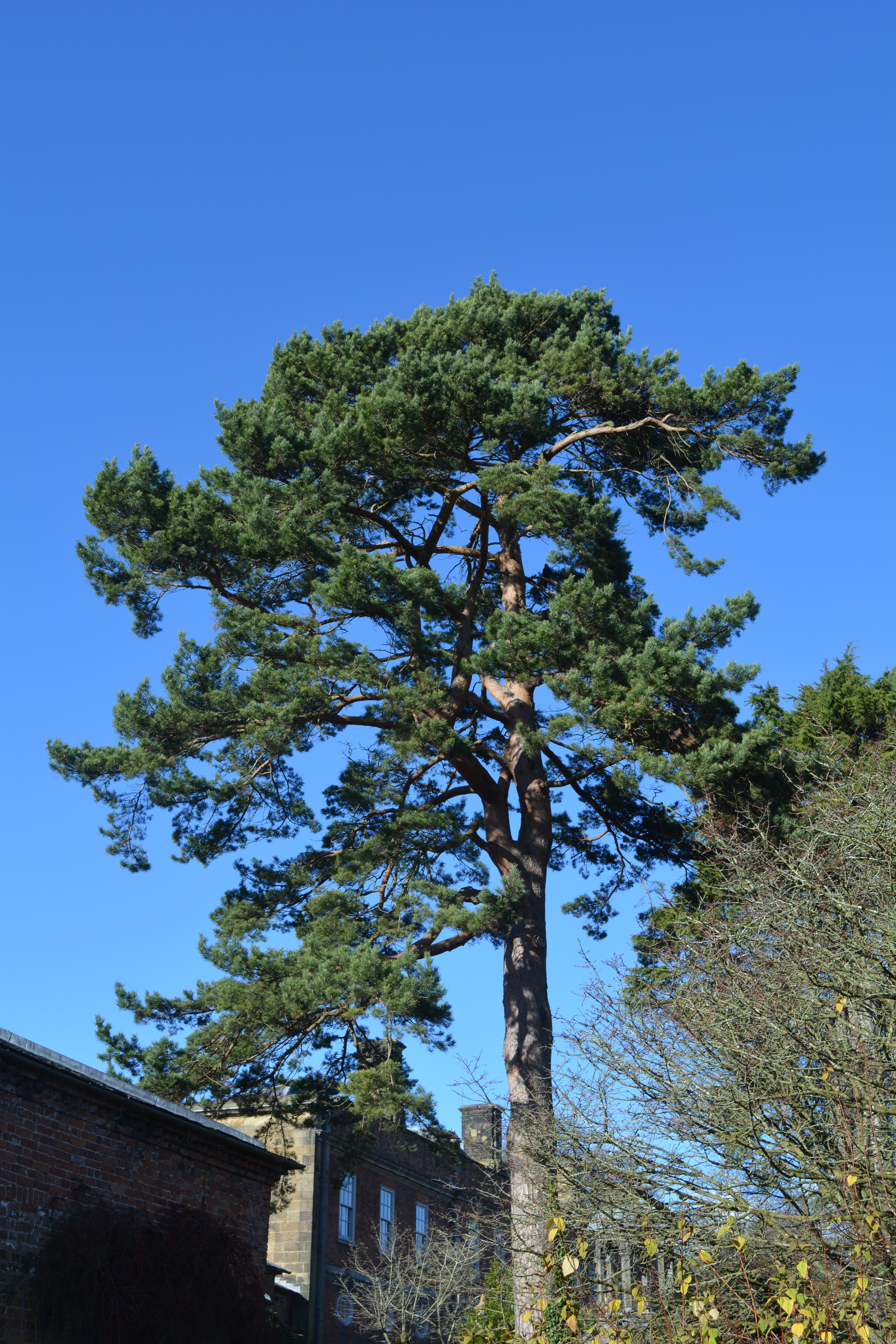
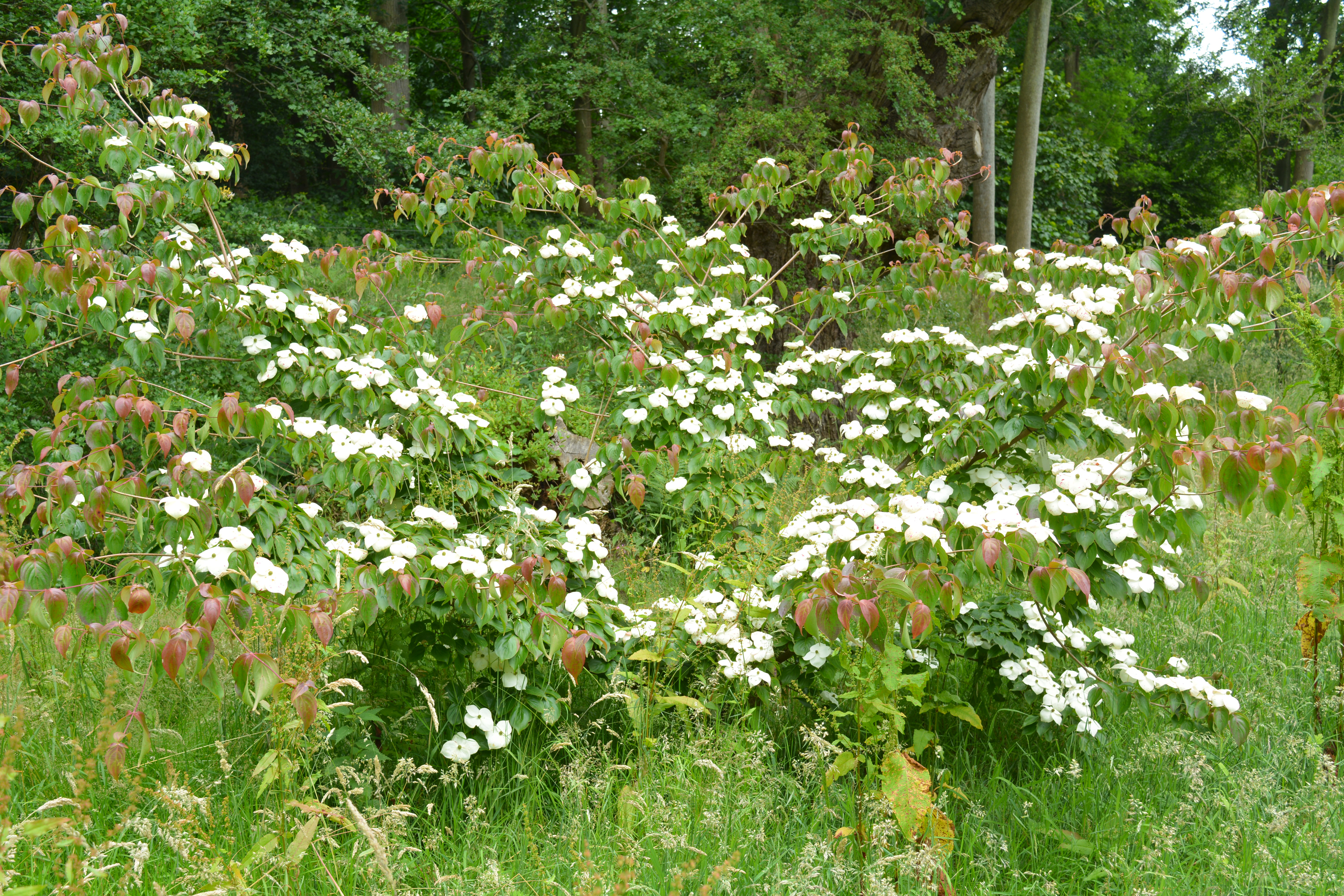
A Cornus kousa on the lawned area loked at its best, with creamy white bracts covering it from head to toe. The light emphasised the shapes and textures of quite ordinary trees ans shrubs lifting them above their normal character, including this tall conifer and the little Box shrub.


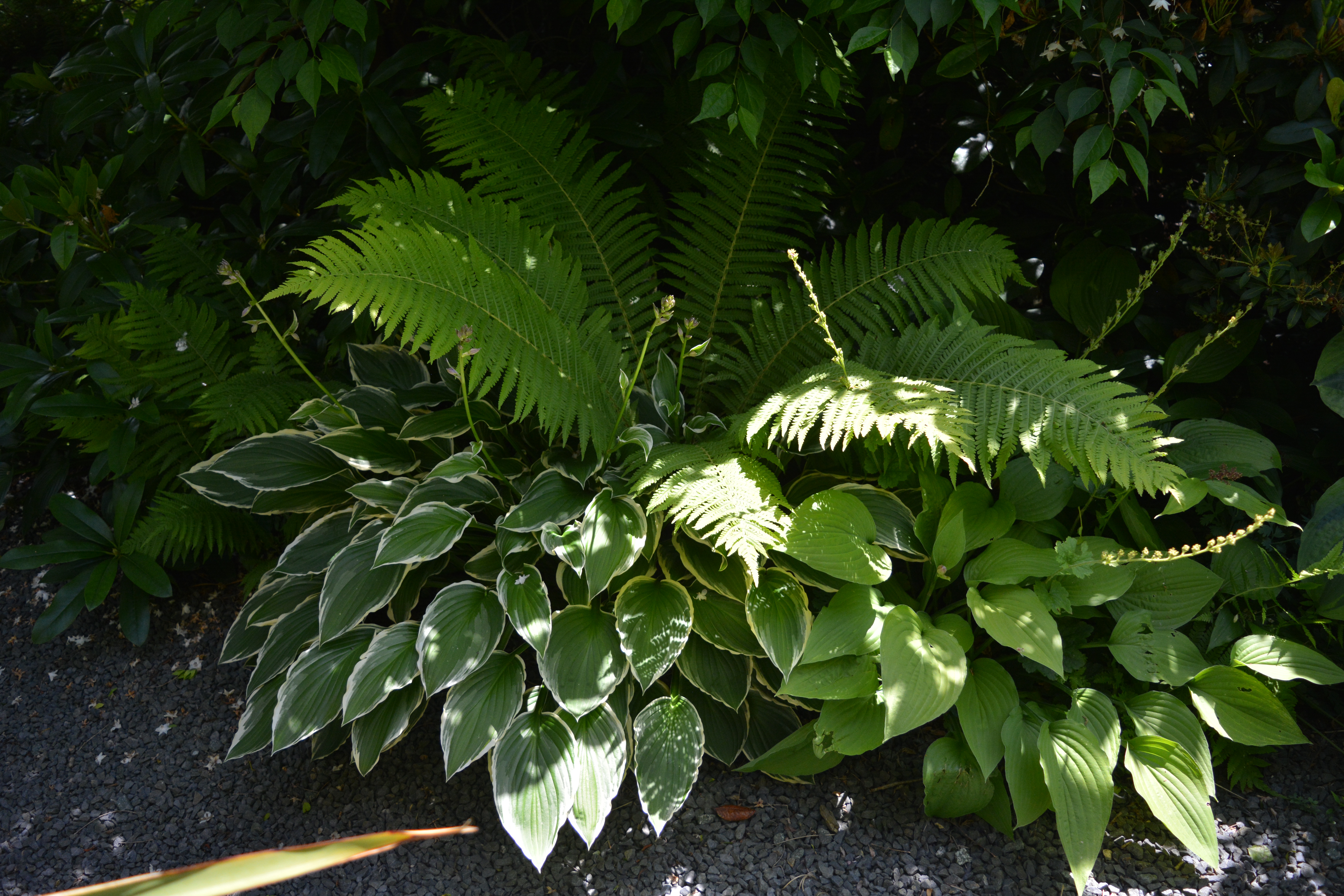
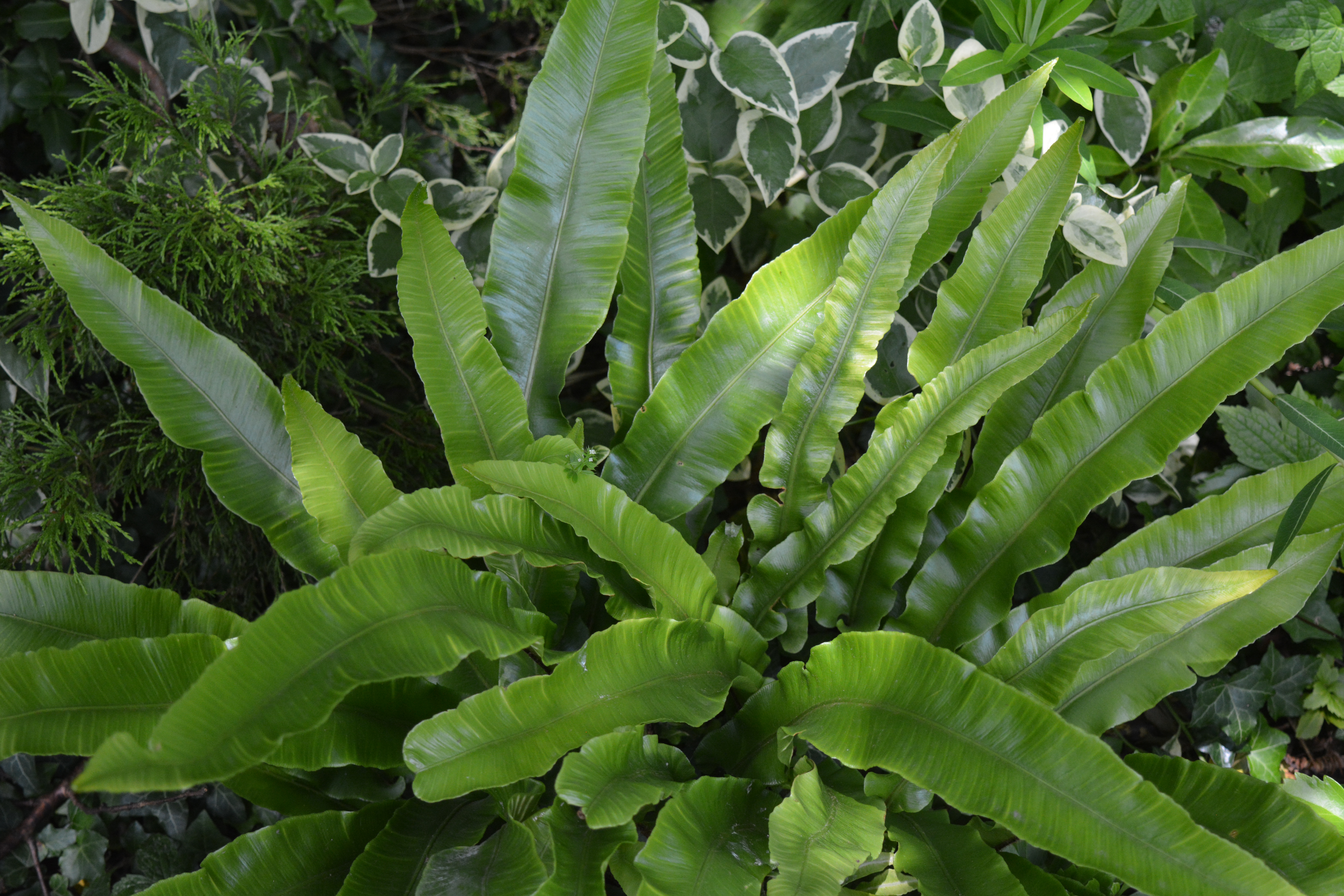
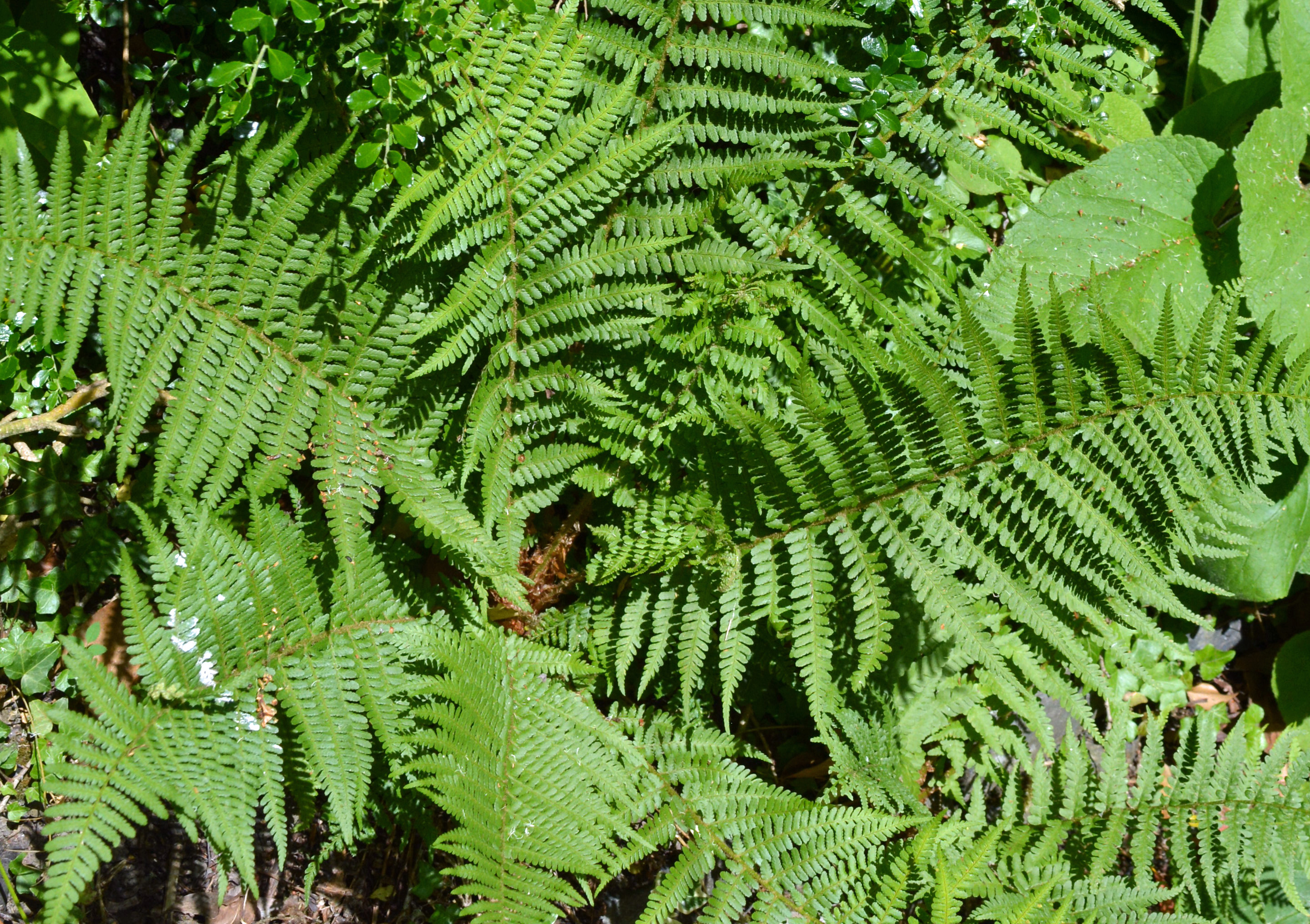
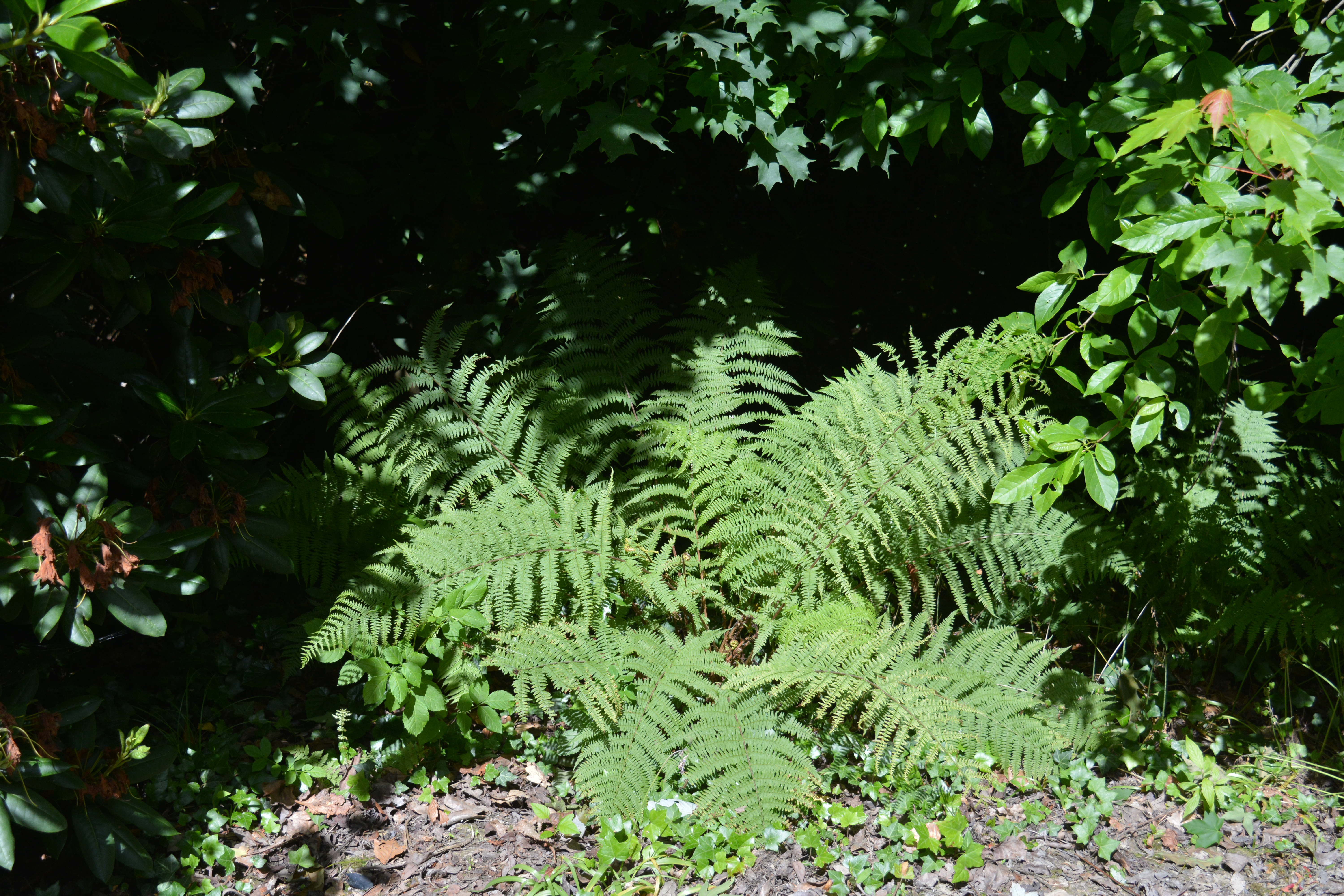
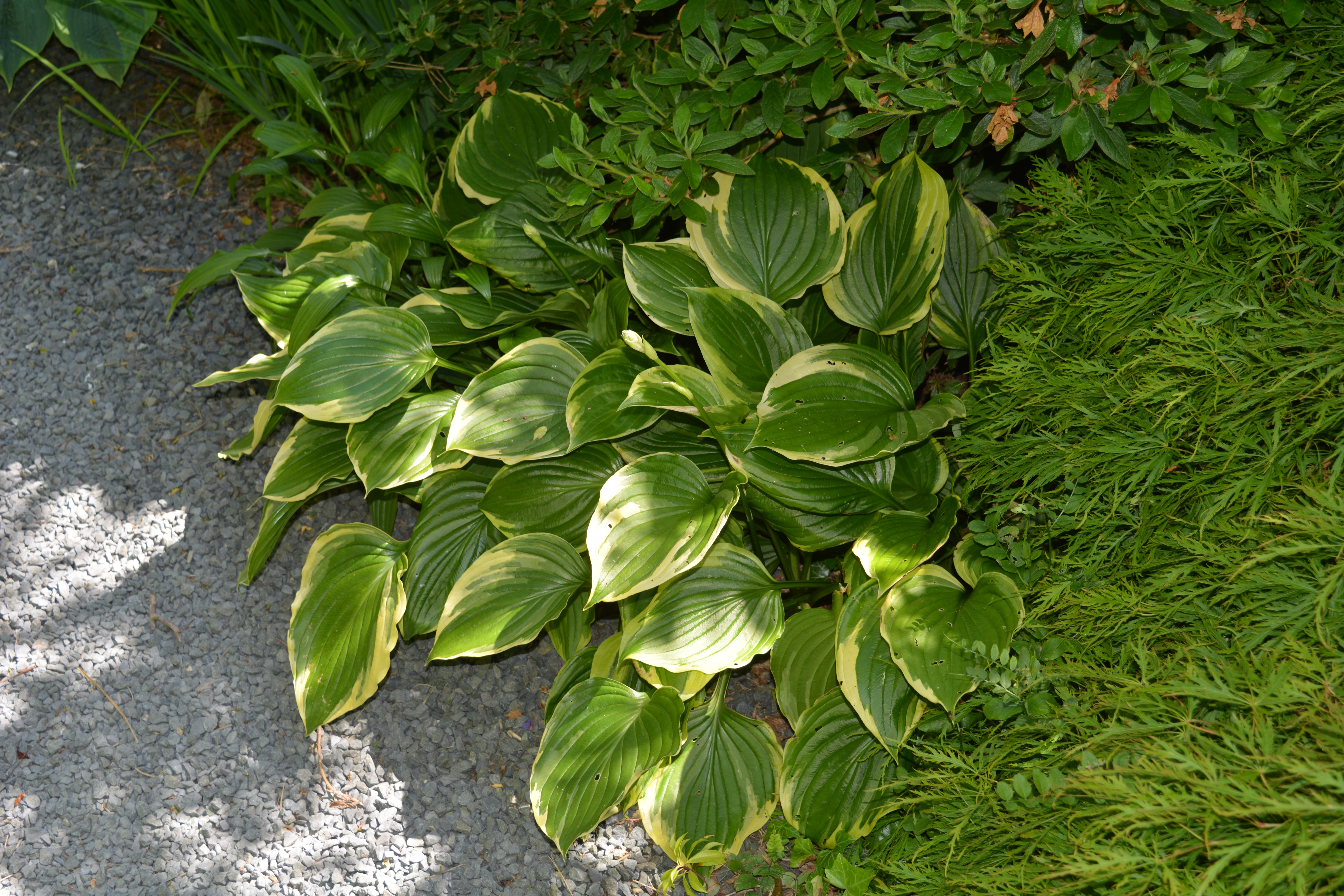
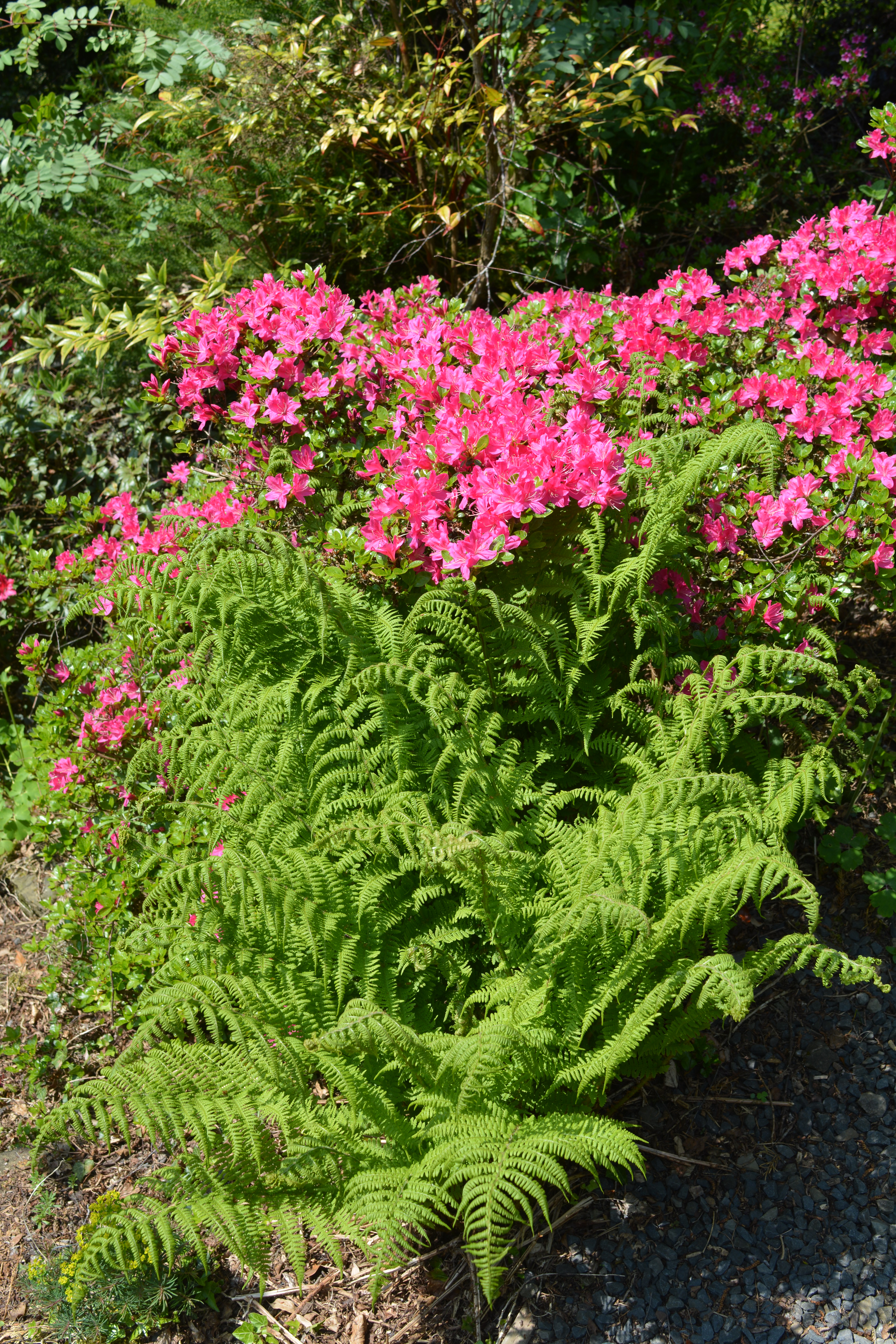
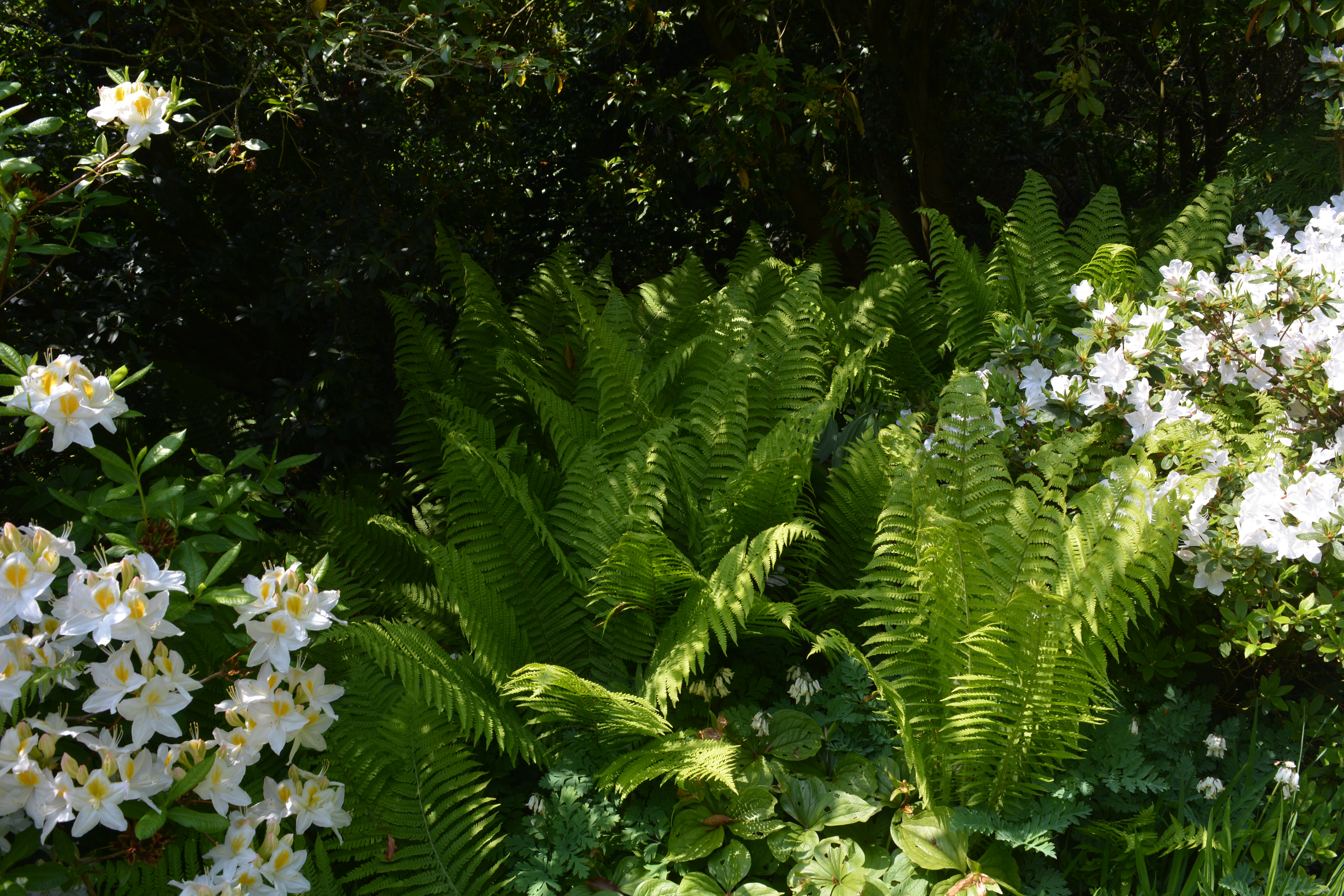
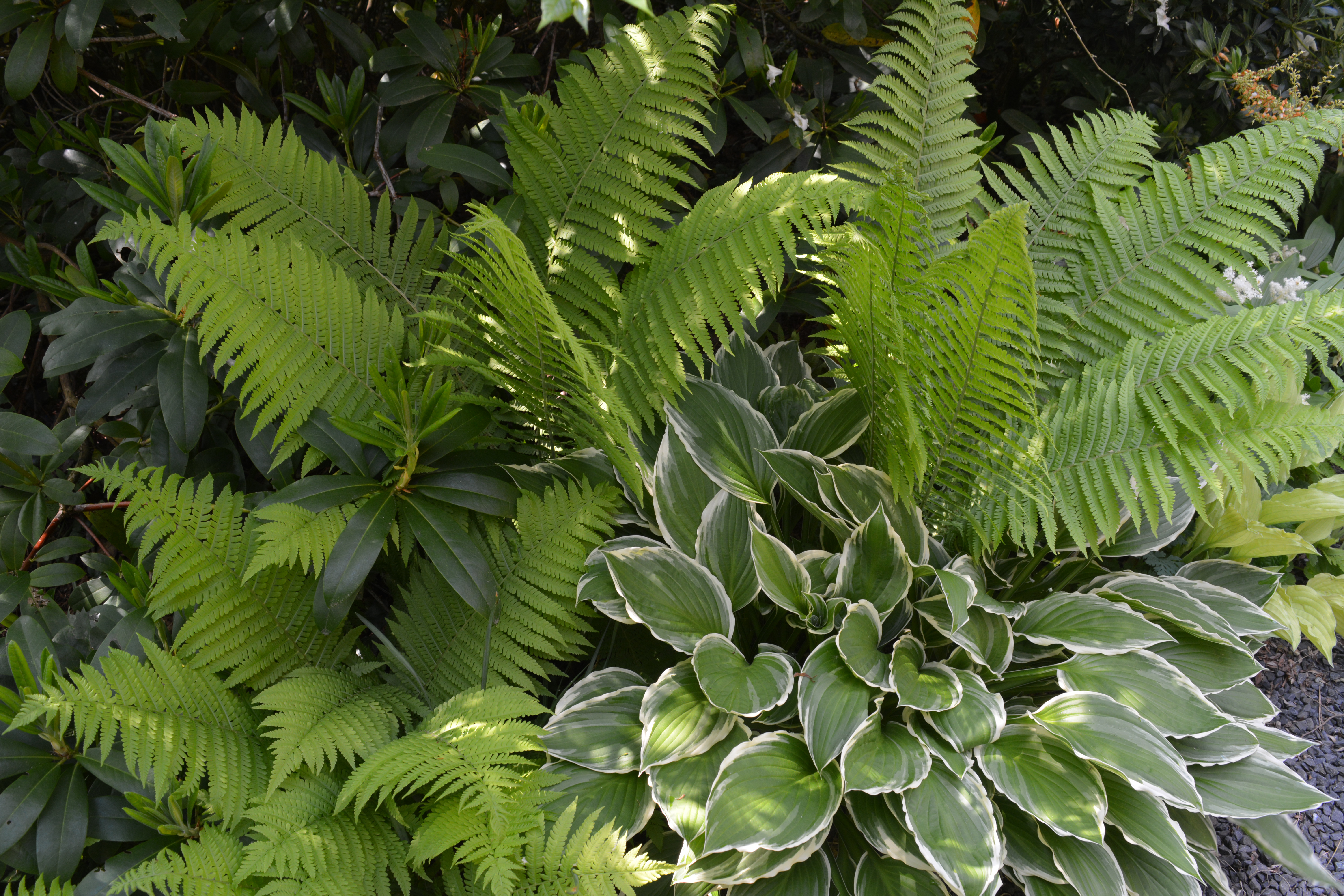
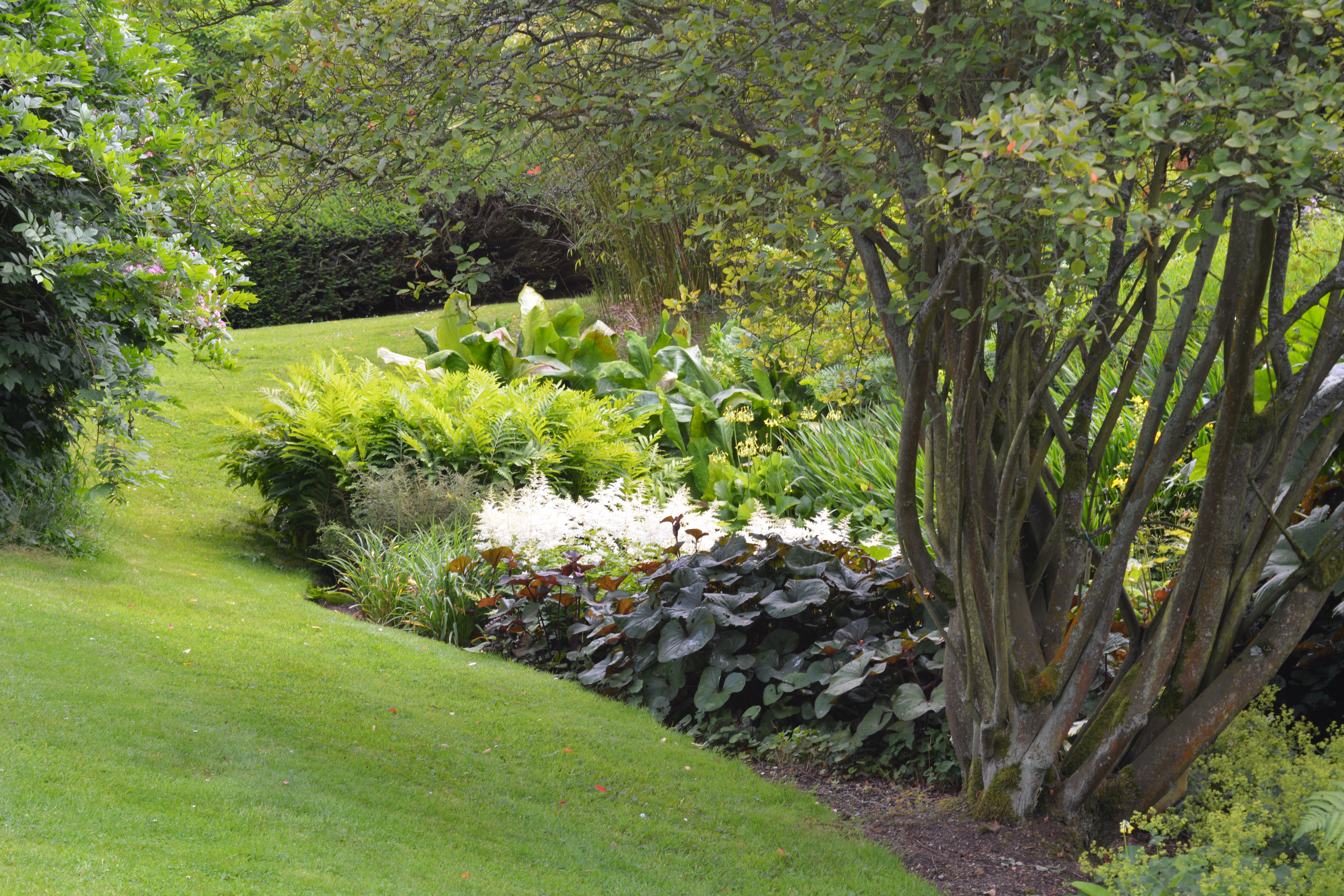
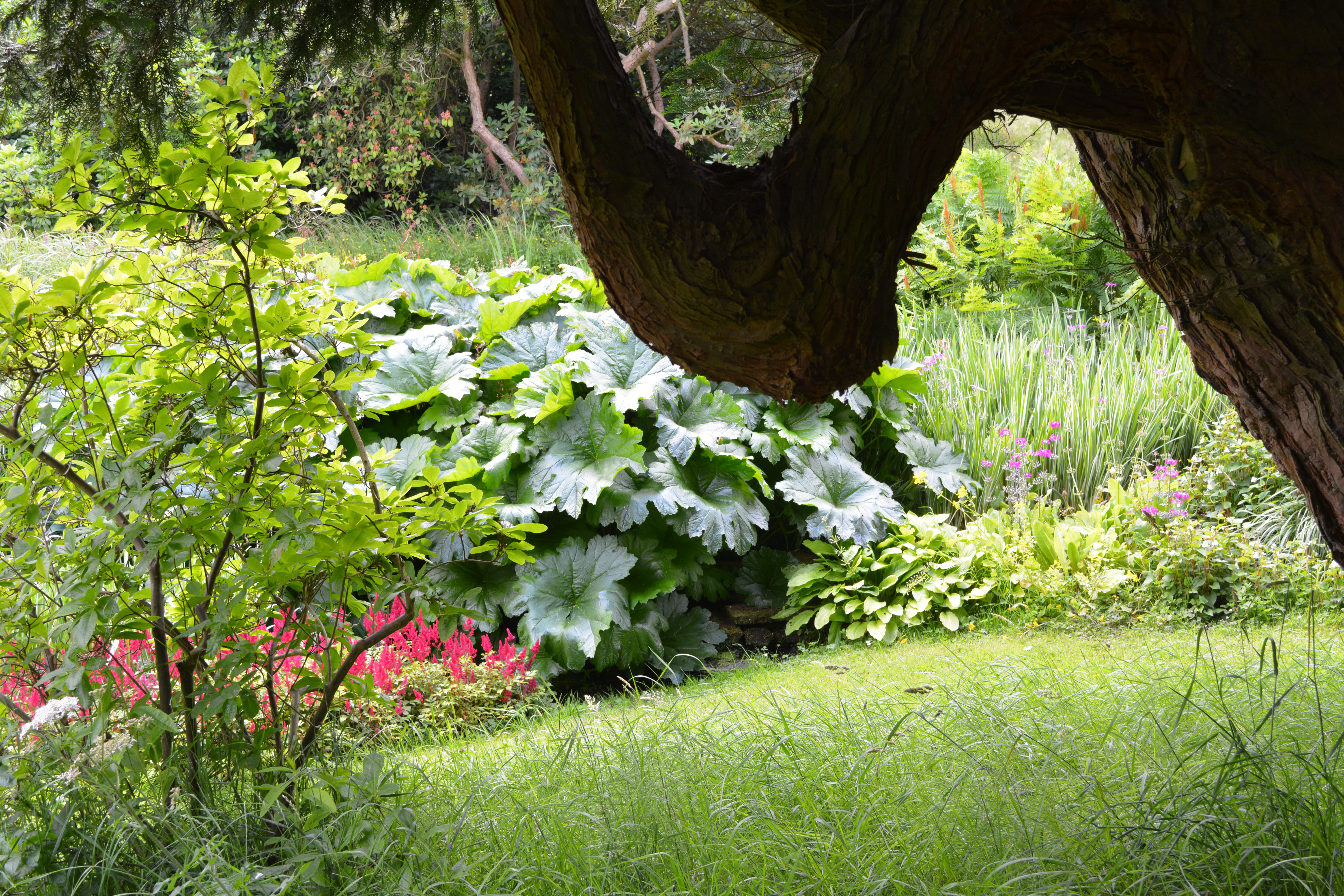
Hosta leaves and fern fronds looked lush and fresh and appeared in every shade of green, some glaucous and some almost yellow. Their textures were emphasised also by the light, every curl and ripple of leaf and each curl and twist of fern fronds.


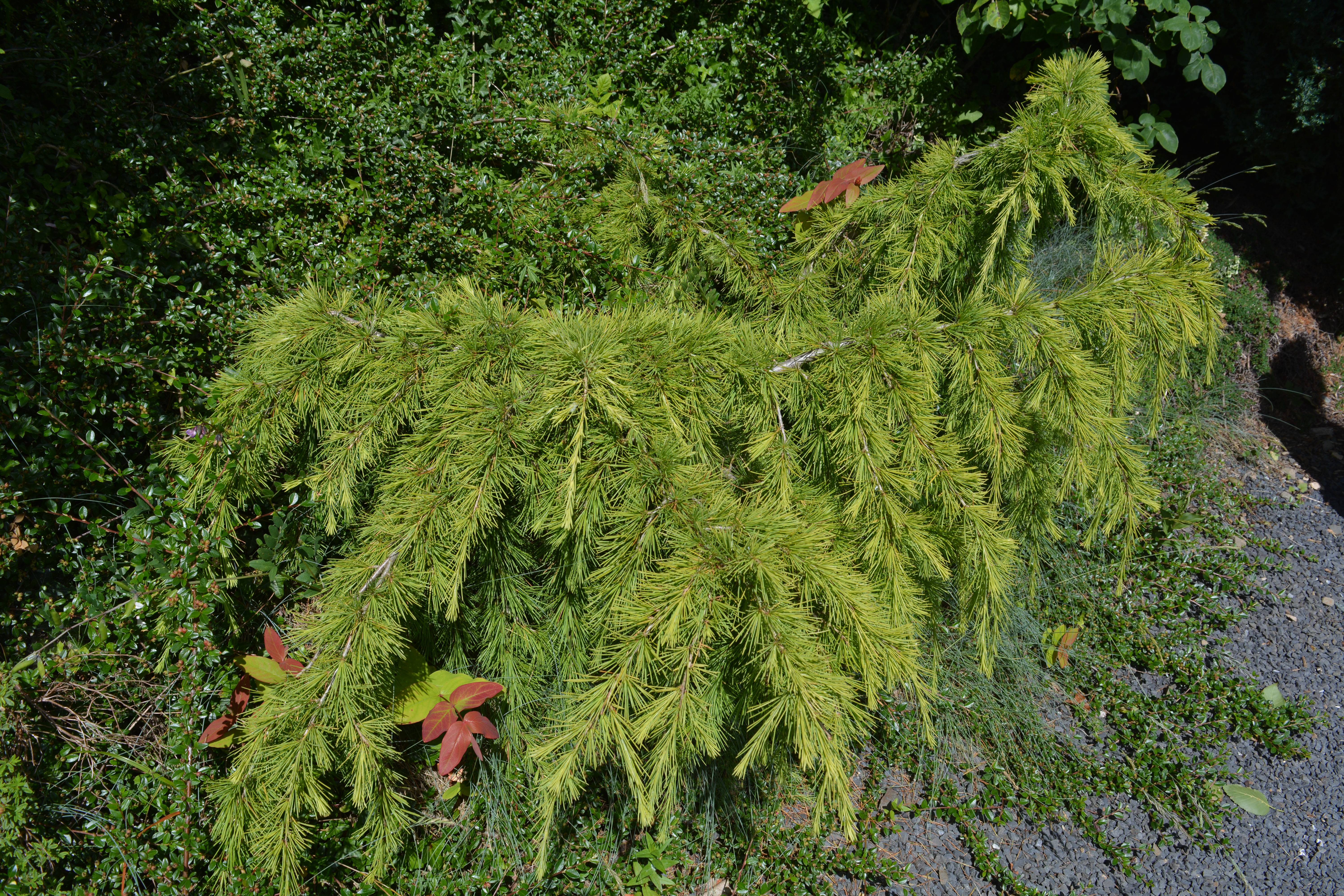
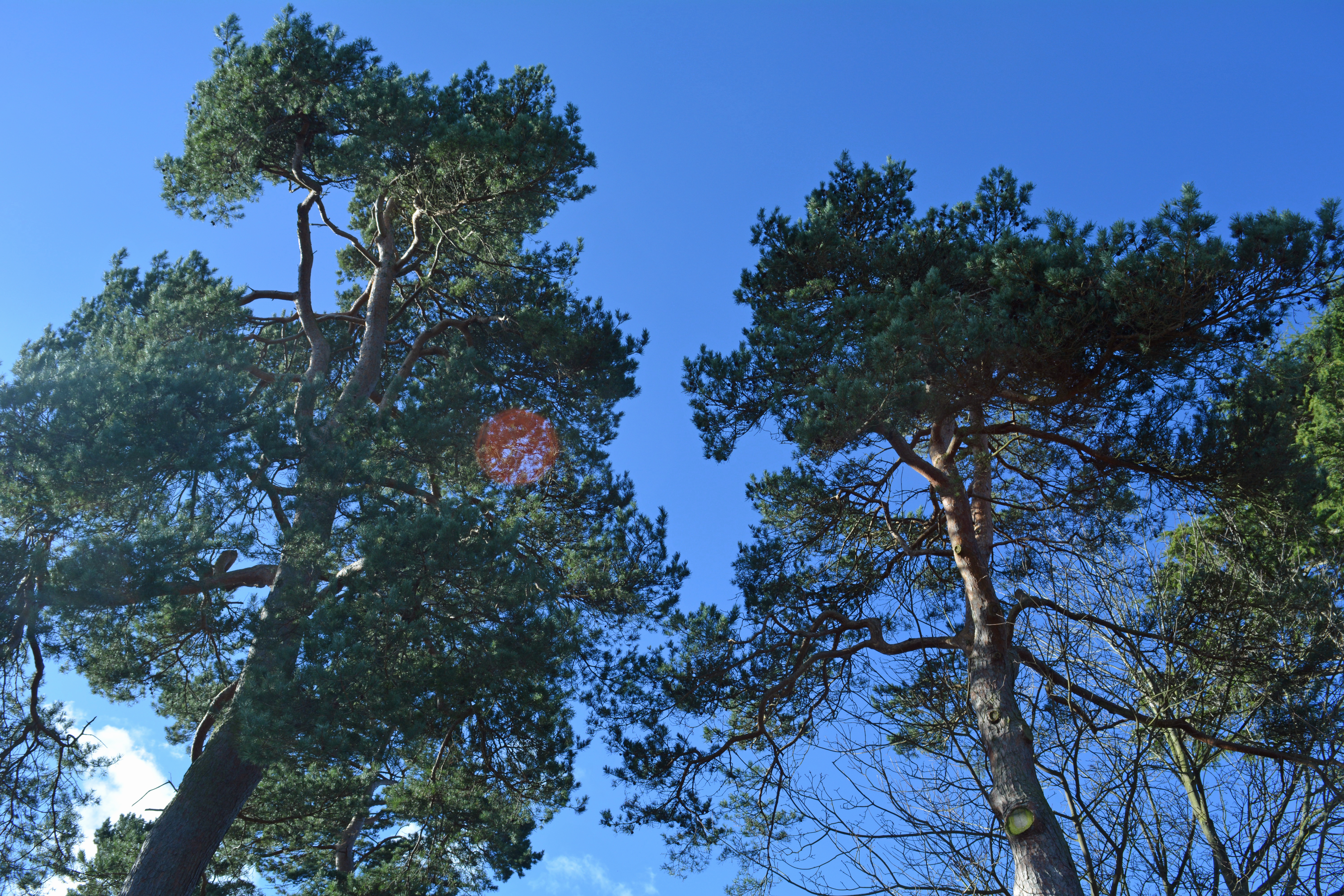
Conifers are difficult to appreciate in such a heavily planted hillside garden but on this day they seemed extra interesting with extra interest in their needle shapes and colours.


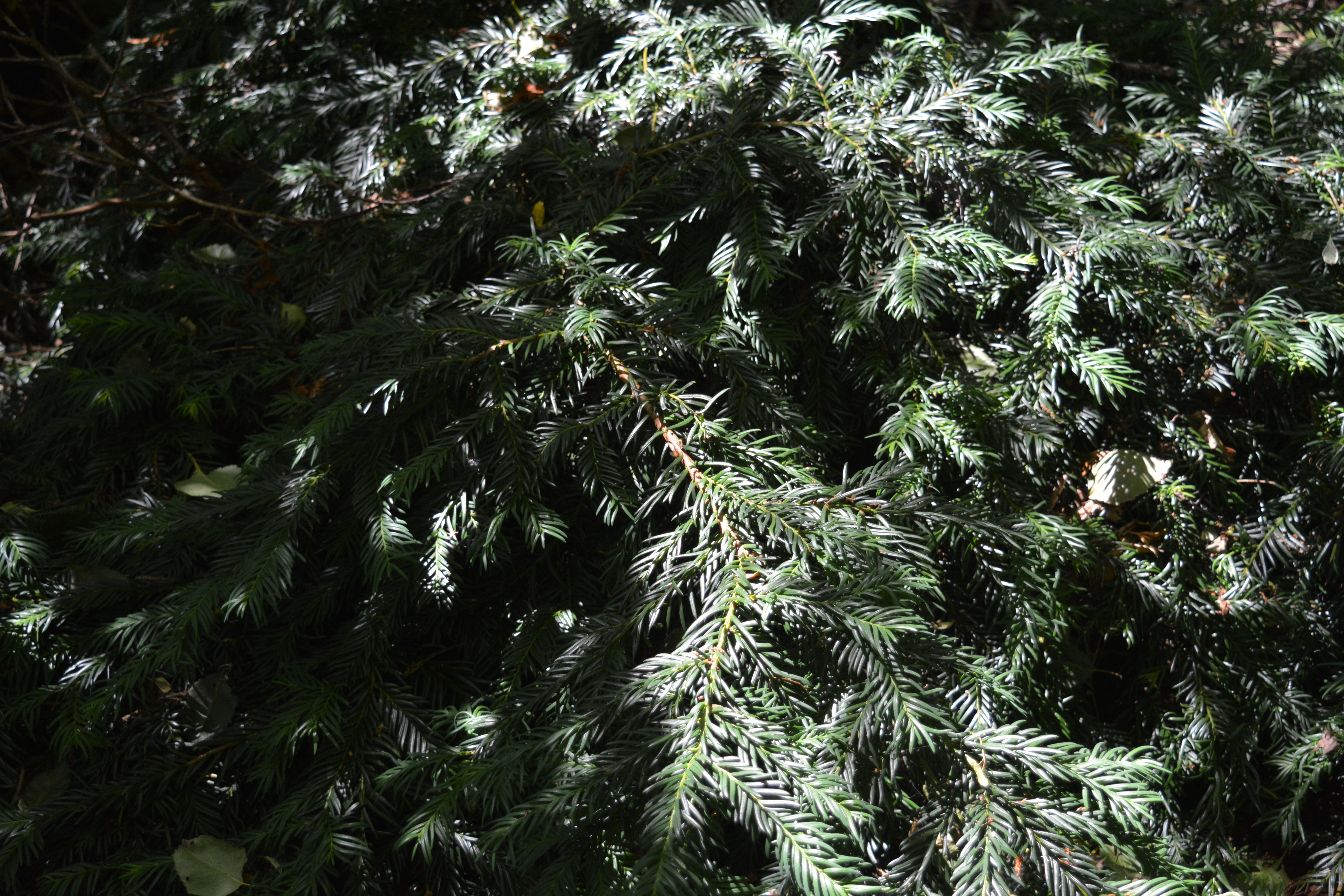
Conifer foliage appeared far more textured and more varied in colour than on the dull days of our earlier visits as the bright sunlight emphasised both the colours and textures.


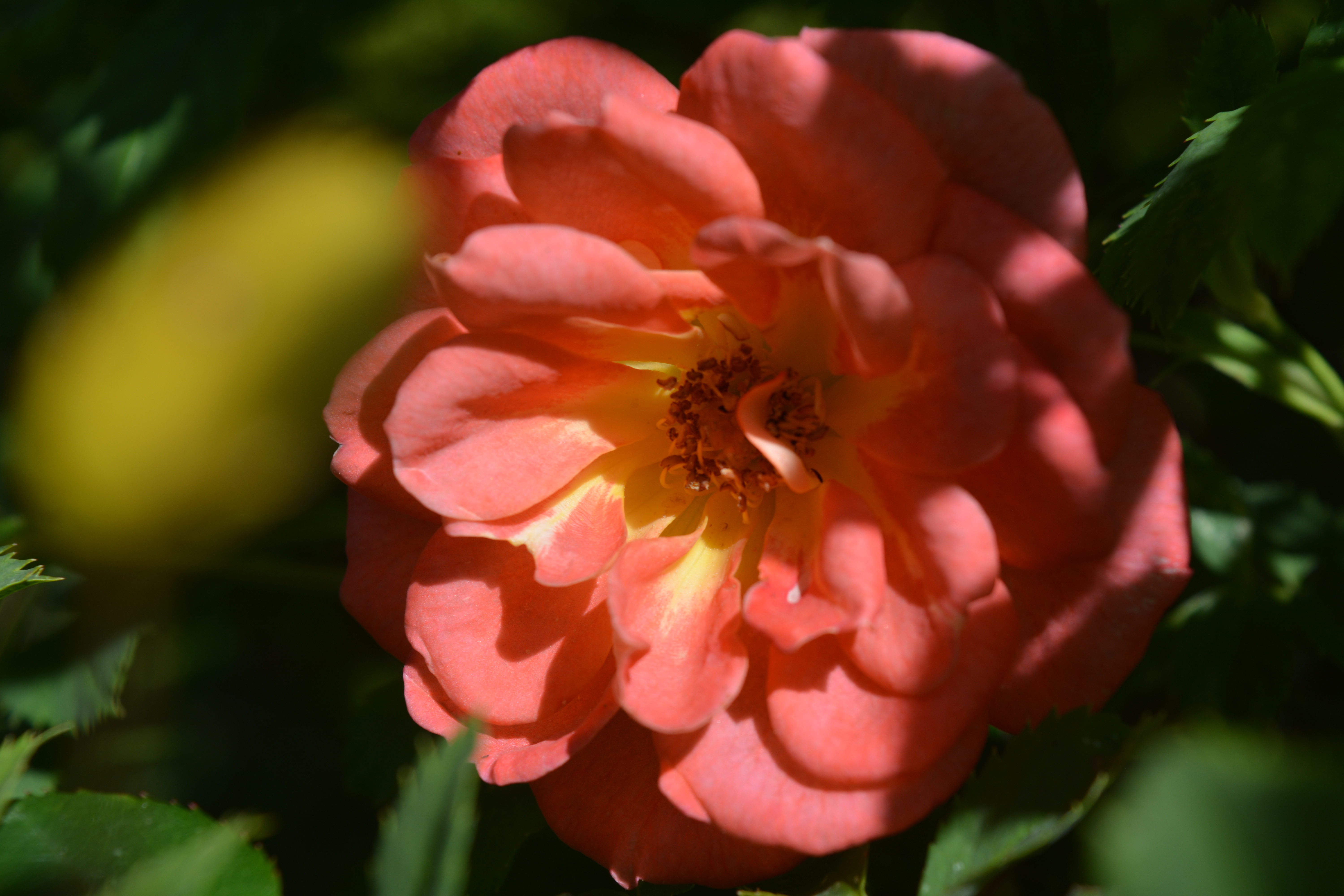
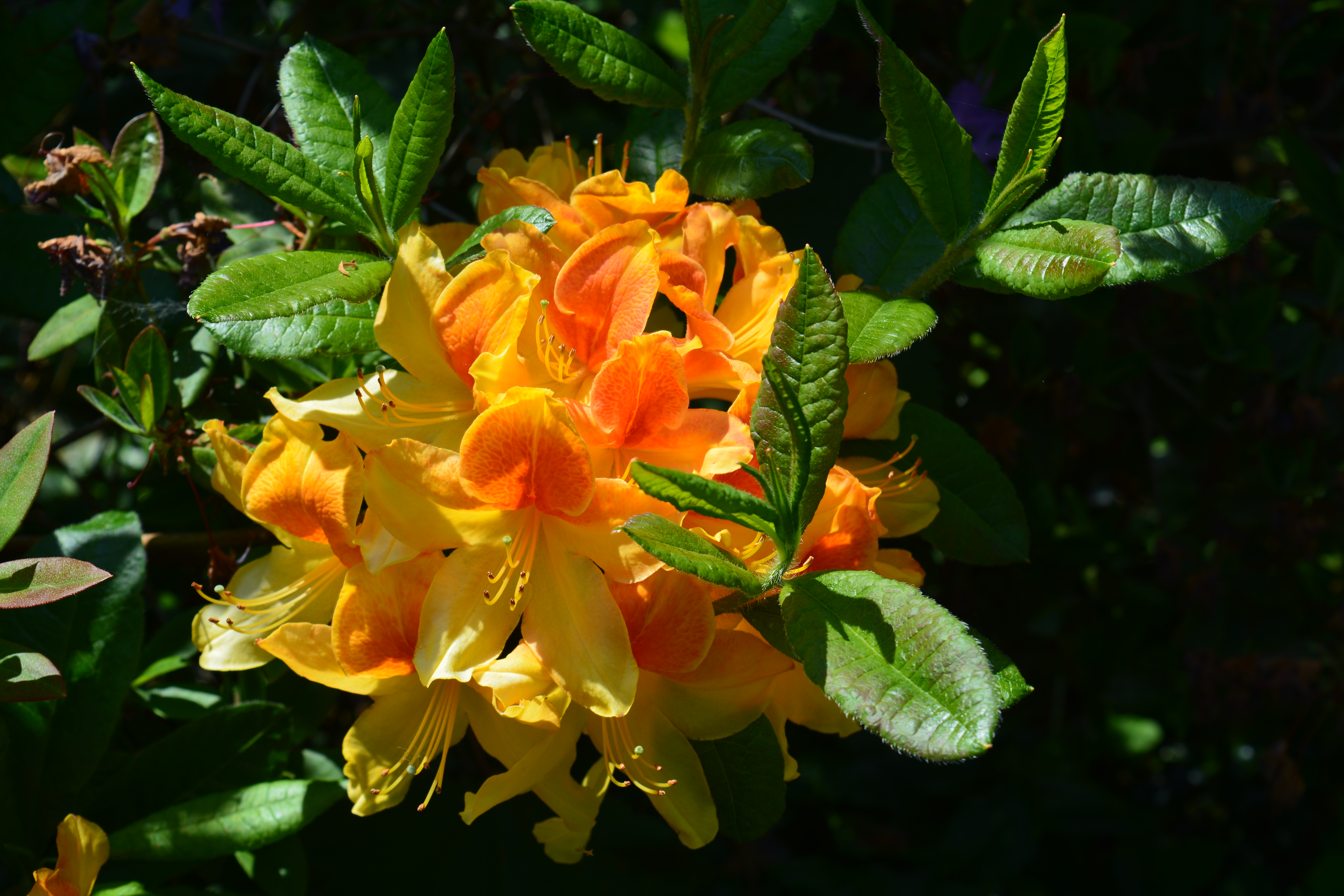
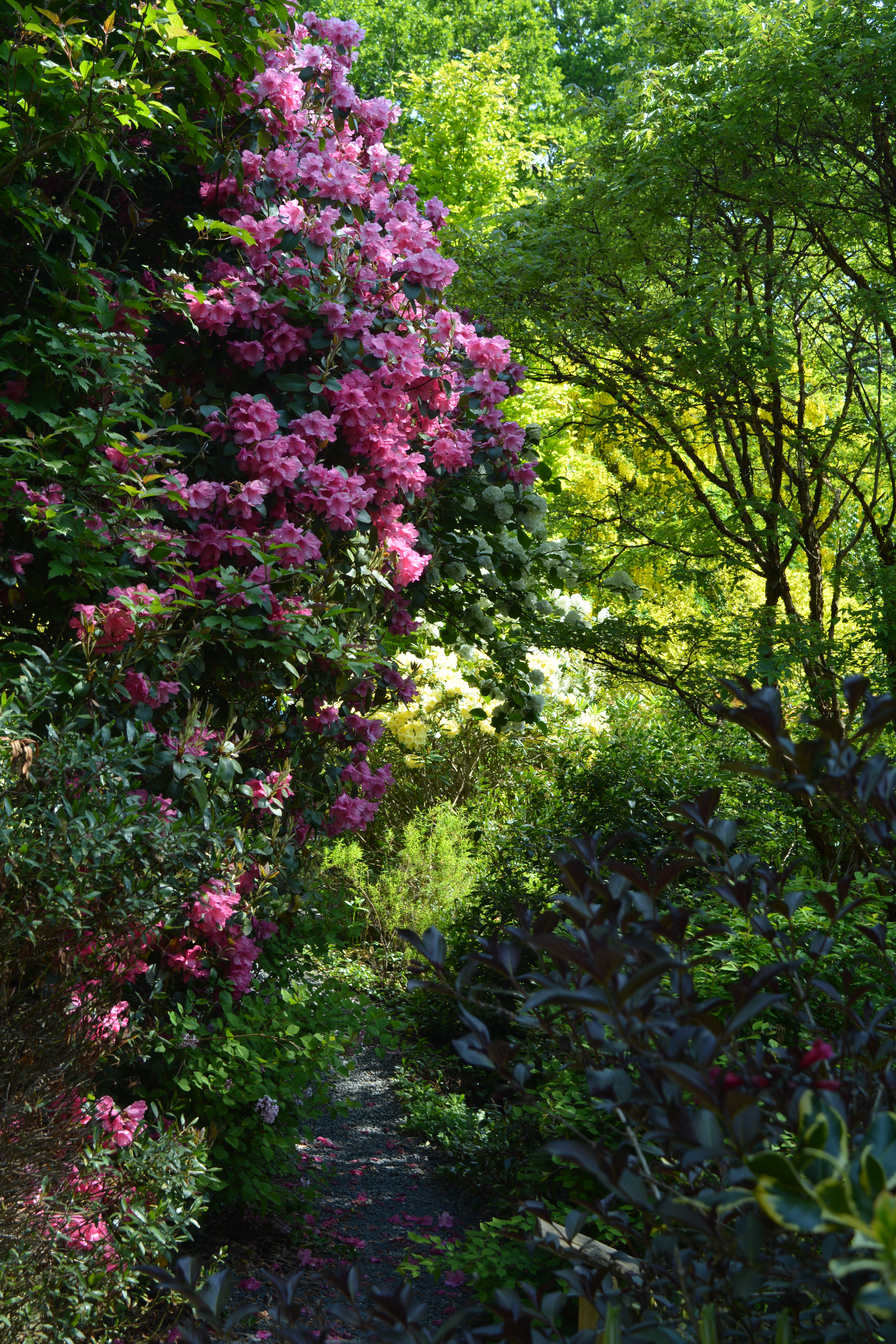
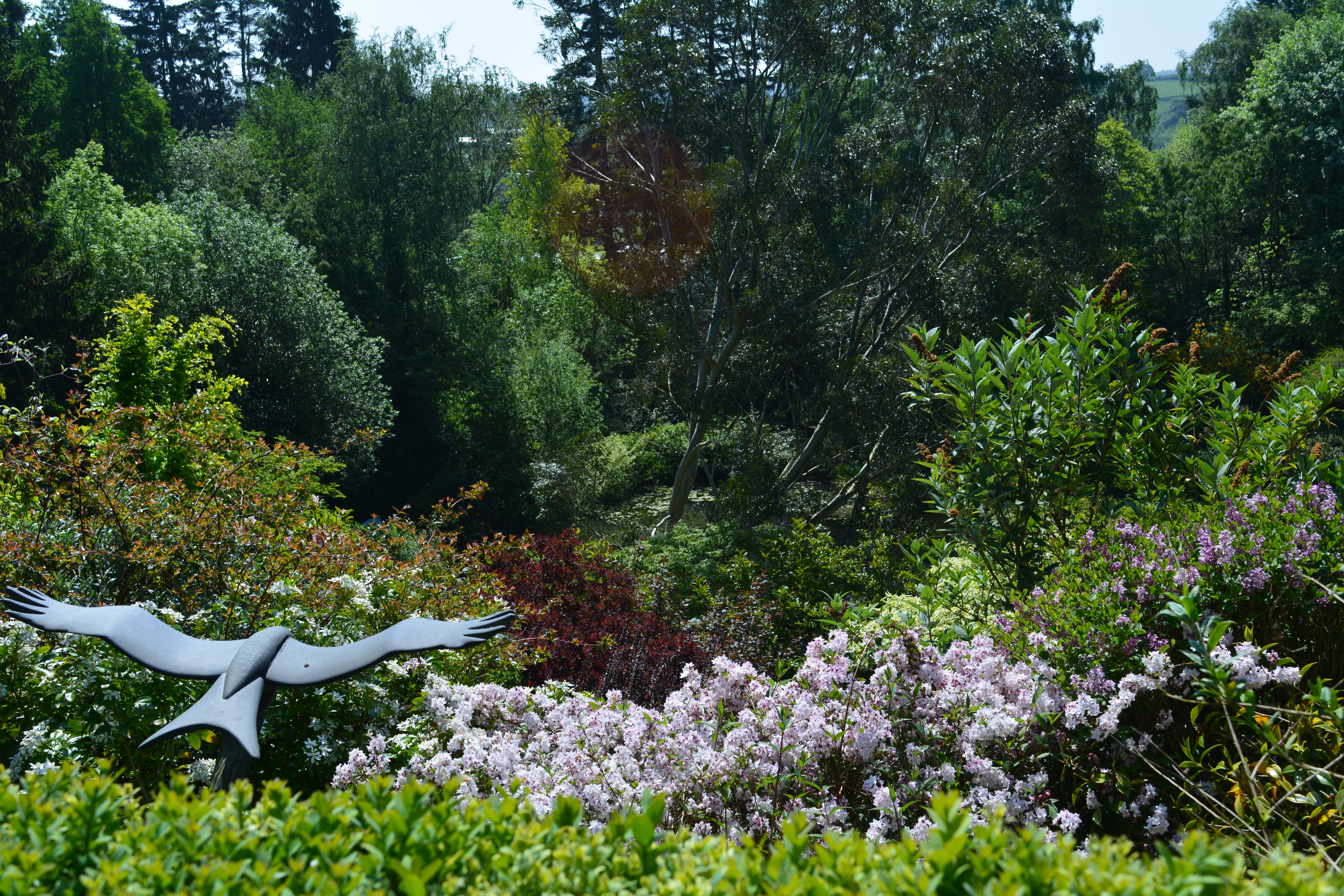
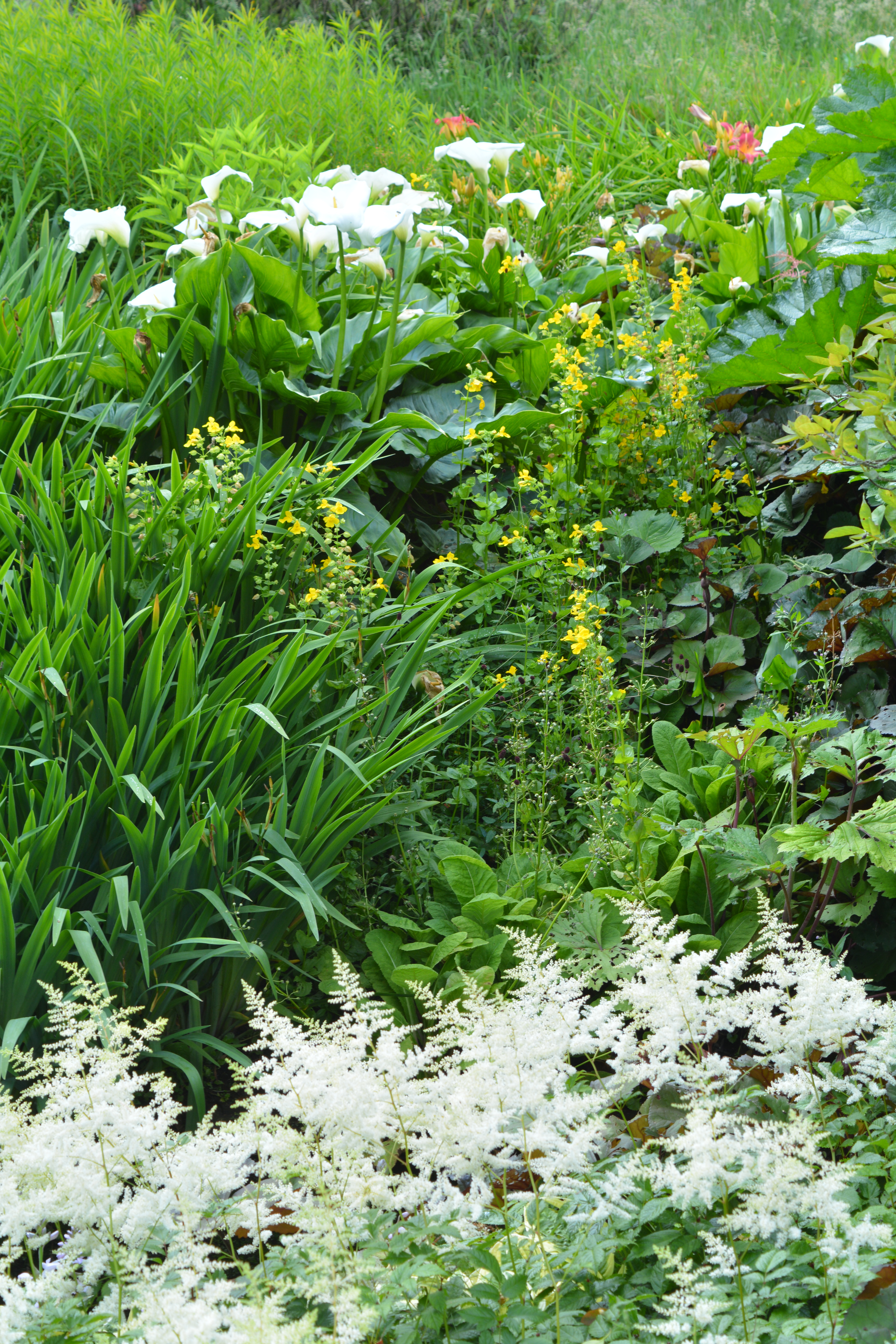
The shubs were flowering well on this visit and some petals became almost translucent and a few perennial plants had cme into bloom too. These flower colours had an extra element of richness to them as they presented strong contrast to the multitude of greens and greys of foliage.

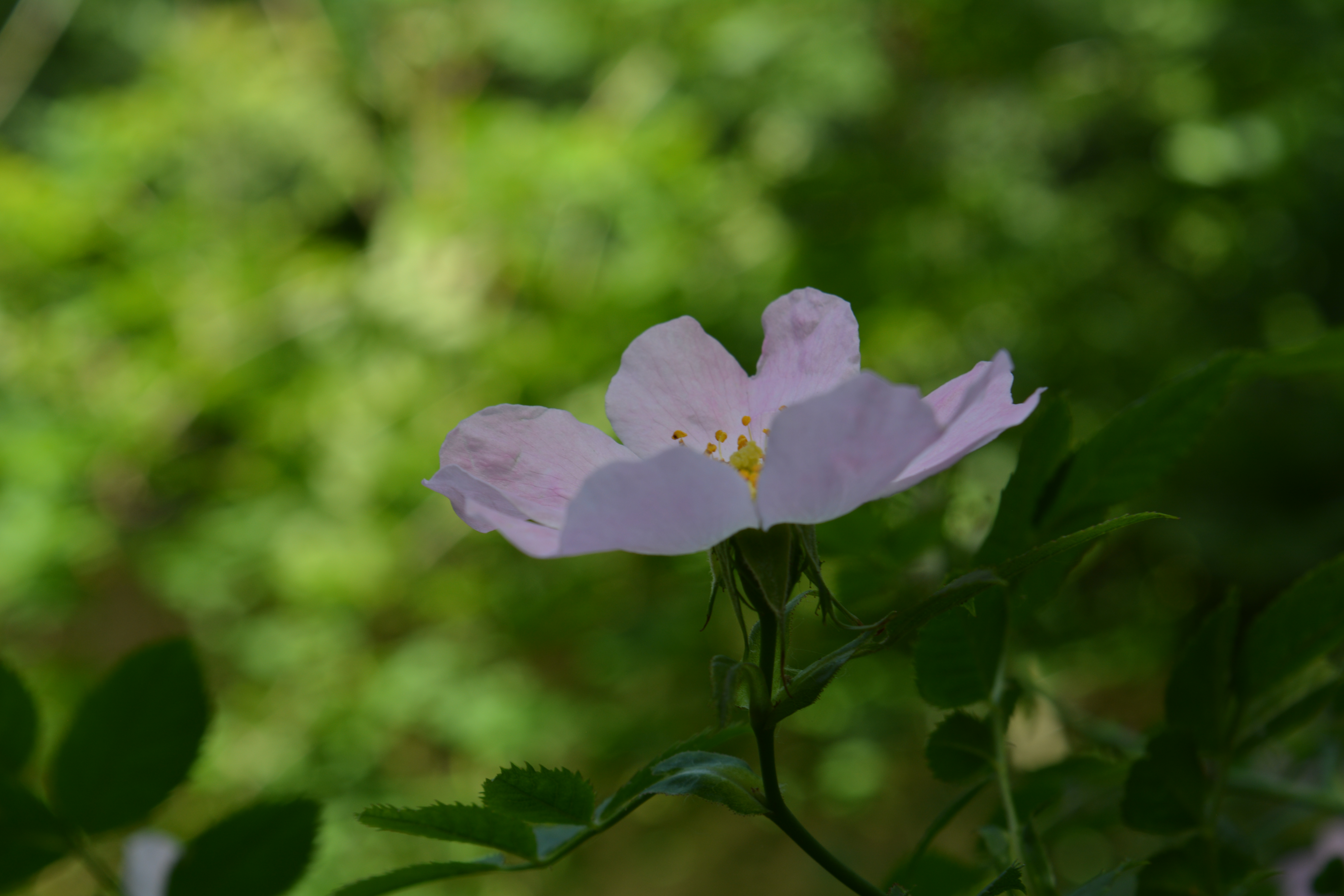
Roses seemed to have appeared from nowhere. In a garden full od trees and shrubs with interesting foliage, bark and stems rose bushes out of flower really do disappear. But in June suddenly the subshine finds heir beautiful scented flowers. Most here are simple blooms including our native roses.

To finish off my post on our June visit to the Dingle Garden I shall sign off with a gallery of flowering shrub photos, which I hope you enjoy. We will be back in July for our next monthly visit to see what is going on.


Categories
colours garden design garden paths garden photography garden ponds garden pools gardening gardens gardens open to the public lakes ornamental trees and shrubs pathways shrubs trees Wales woodland Yellow Book Gardens

The Dingle Garden in May

We planned our fifth visit to the Dingle Gardens near Welshpool for the 23rd May and intended to go whatever the weather. Our April visit was on a day more typical of November than April so the photos I took were rather unusual for a garden in spring.

However for our May visit the sun shone, the sky was clear blue and the warmth allowed us to have a very leisurely stroll around the garden. We had so far this year seen little change from month to month as spring was on hold but this May visit was a strong contrast. We found the garden rich in flowering shrubs and strong fresh growth everywhere.

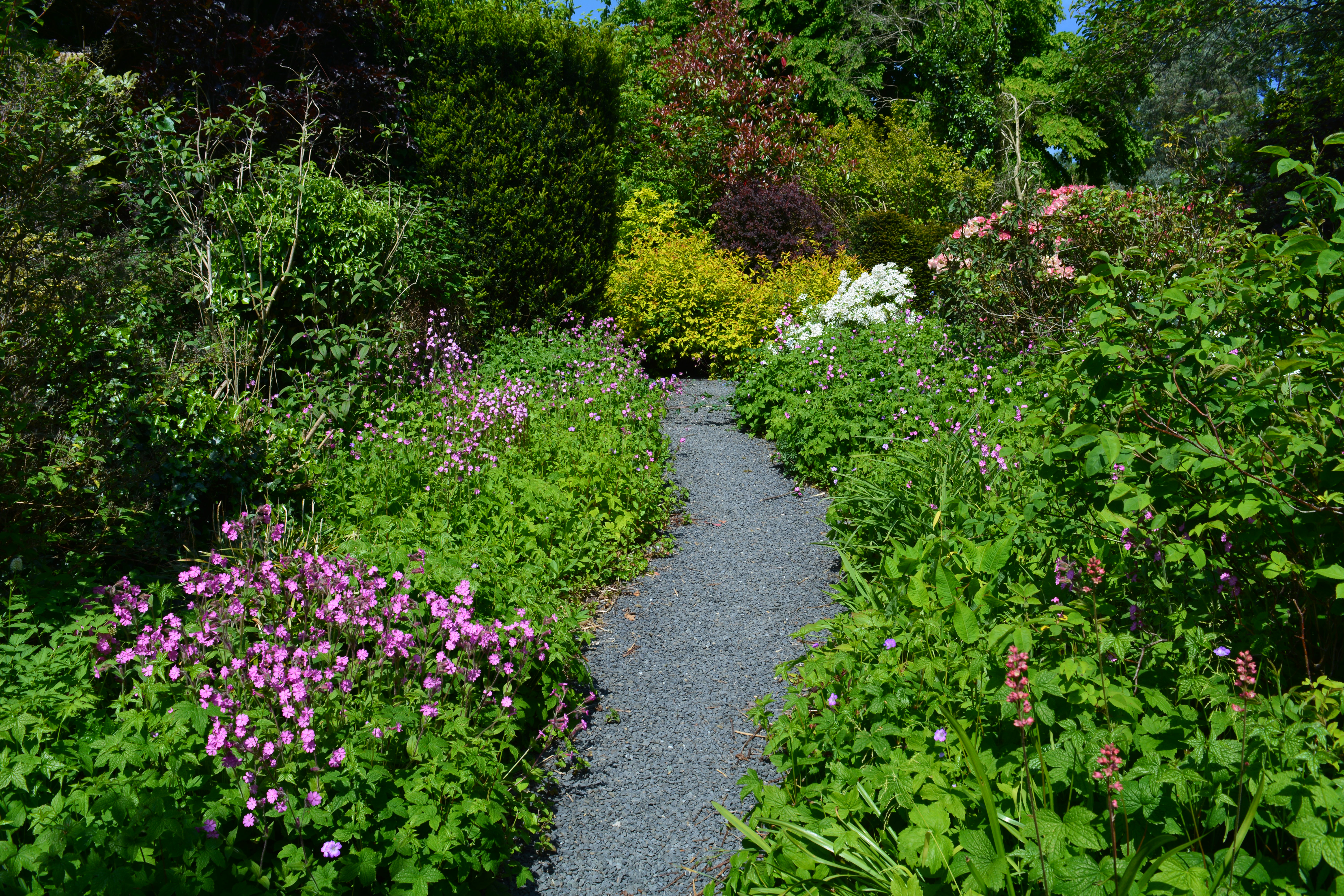
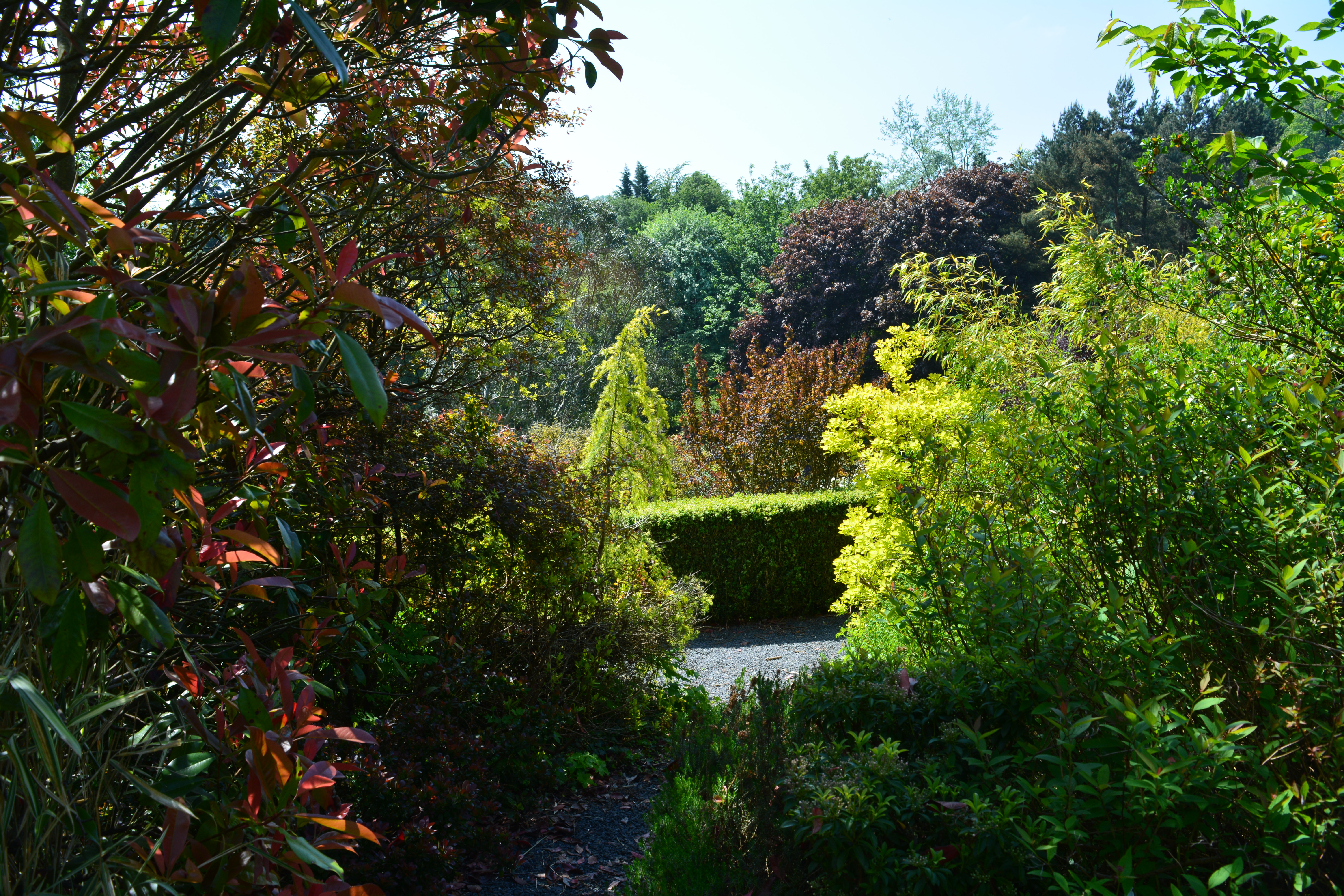
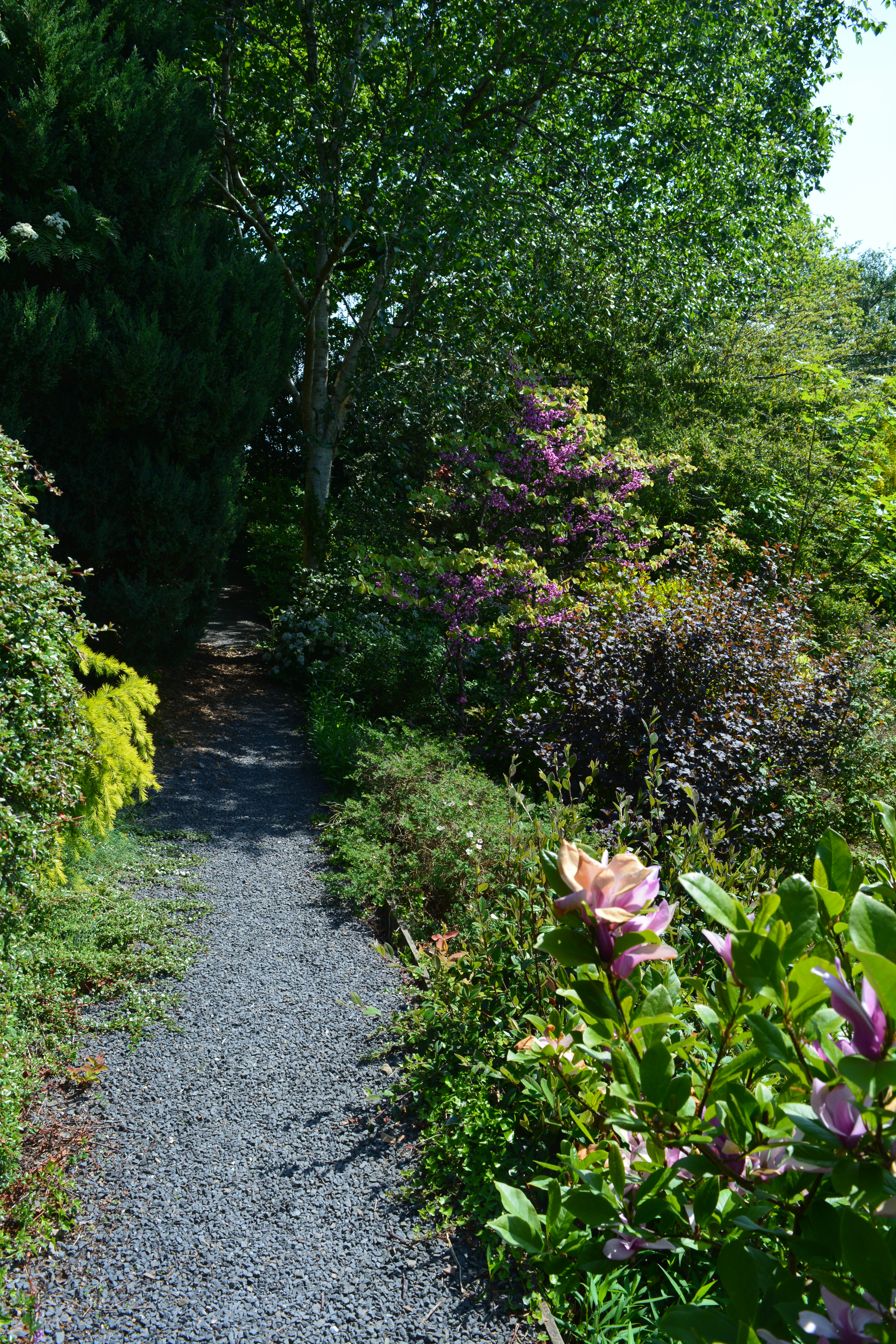
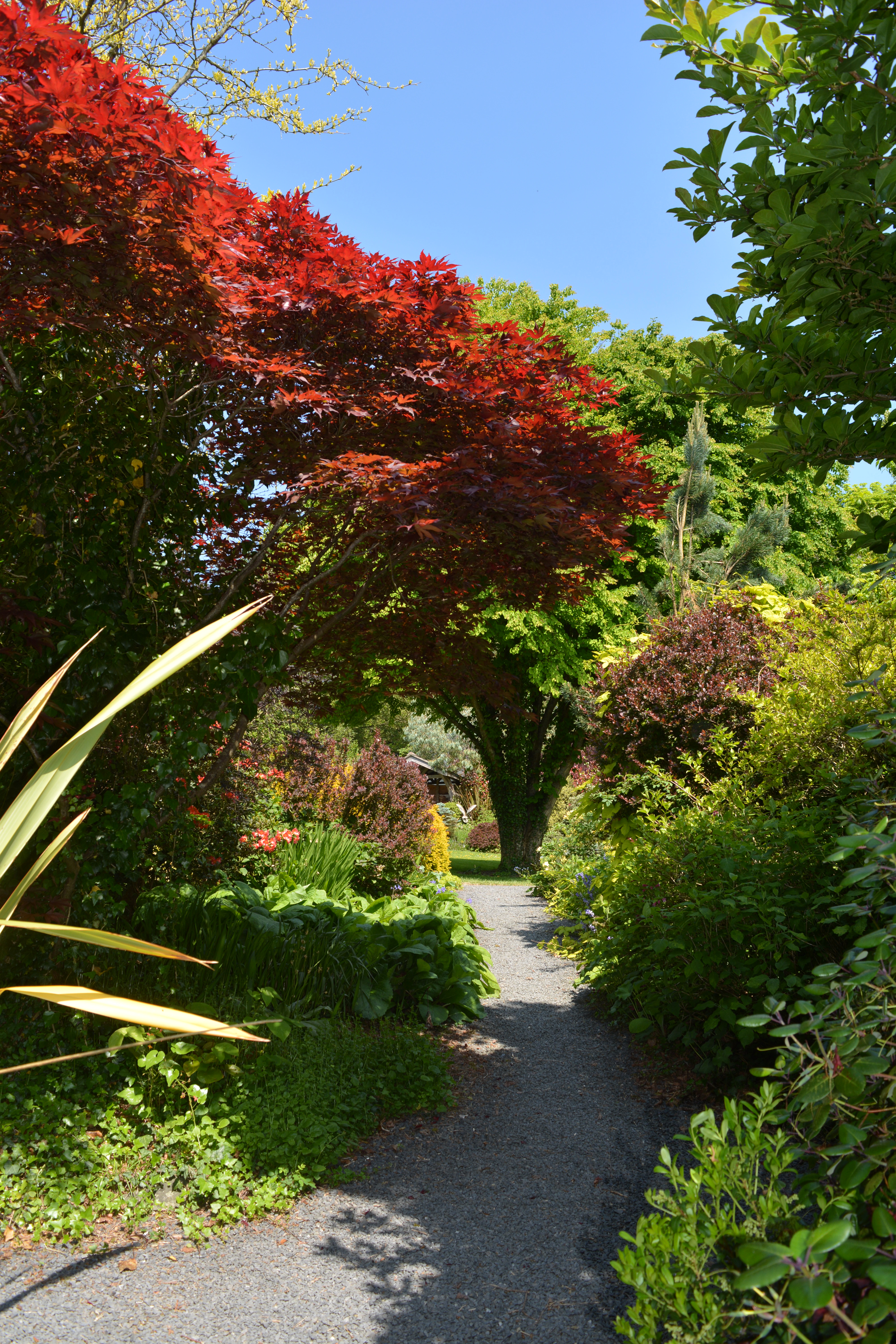
My first set of pics show paths we followed and the views from them.


A real surprise was the explosion of colour provided by the Rhododendrons whose buds we have featured over the first few months of the year. The brightest of reds, oranges, pinks plus cerise hues and shades of white sat together sometimes in harmony but often clashing!

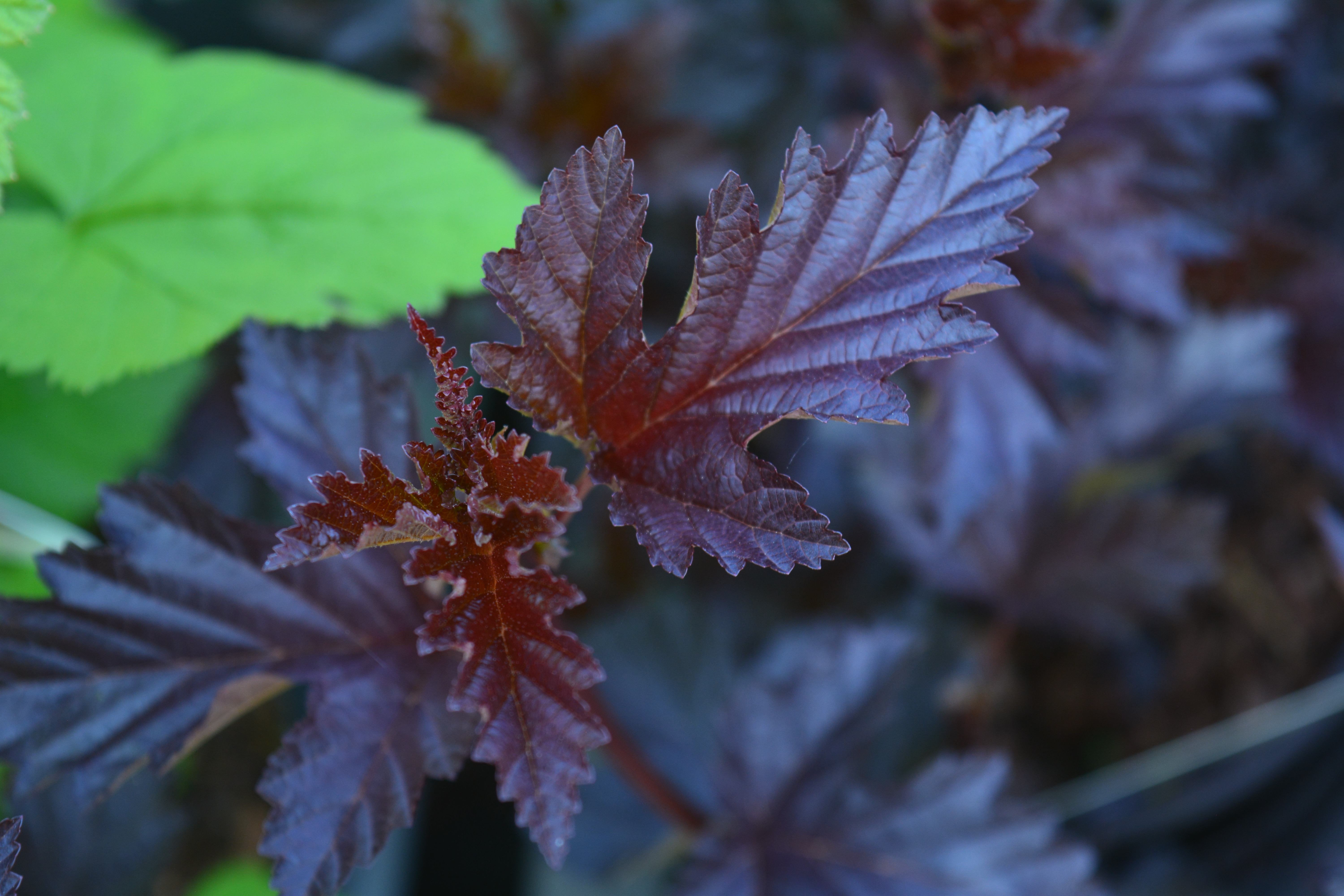
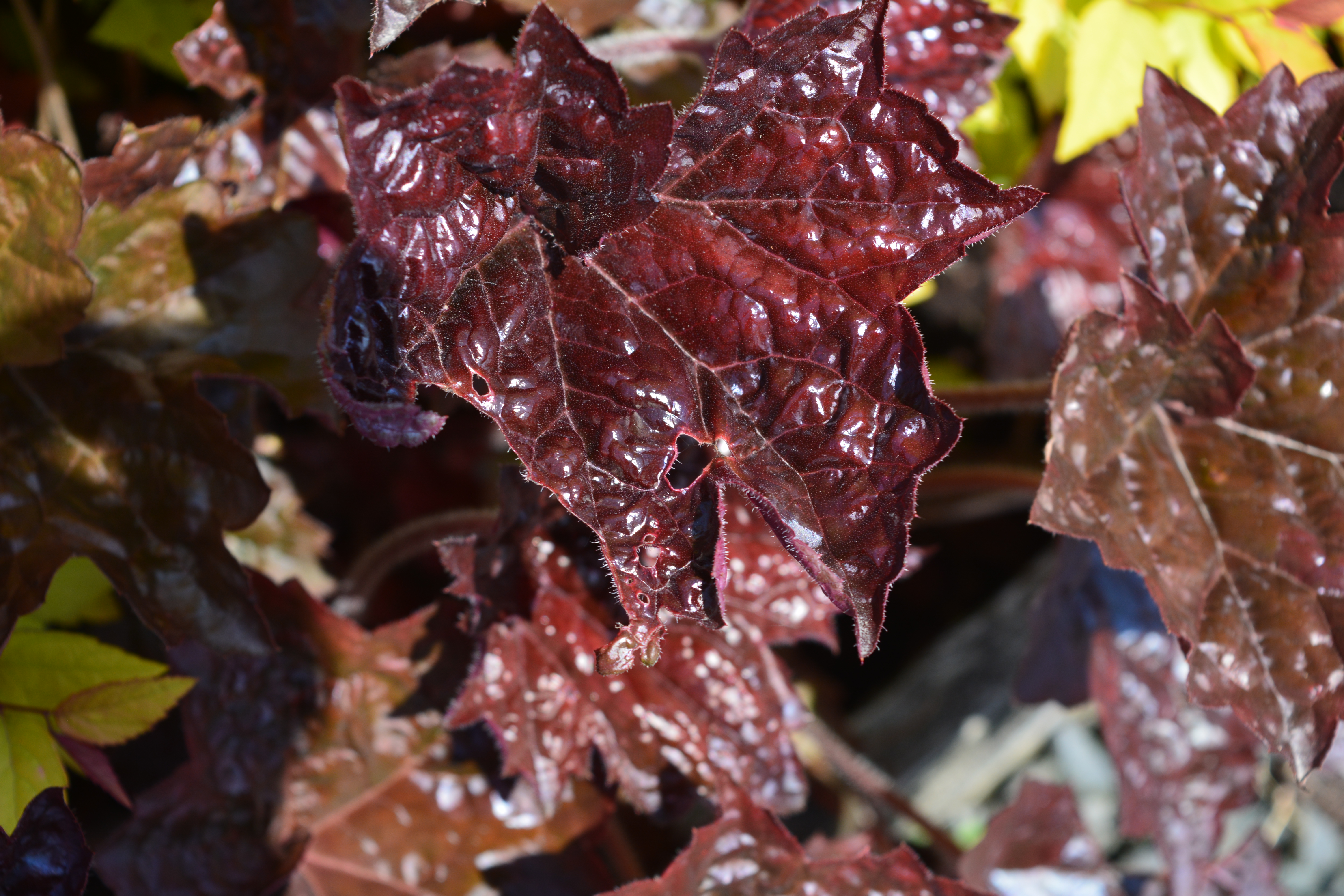
Contrasting and strong coloured foliage provides as much interest as flowers at this time of year as all deciduous foliage is fresh and lively.


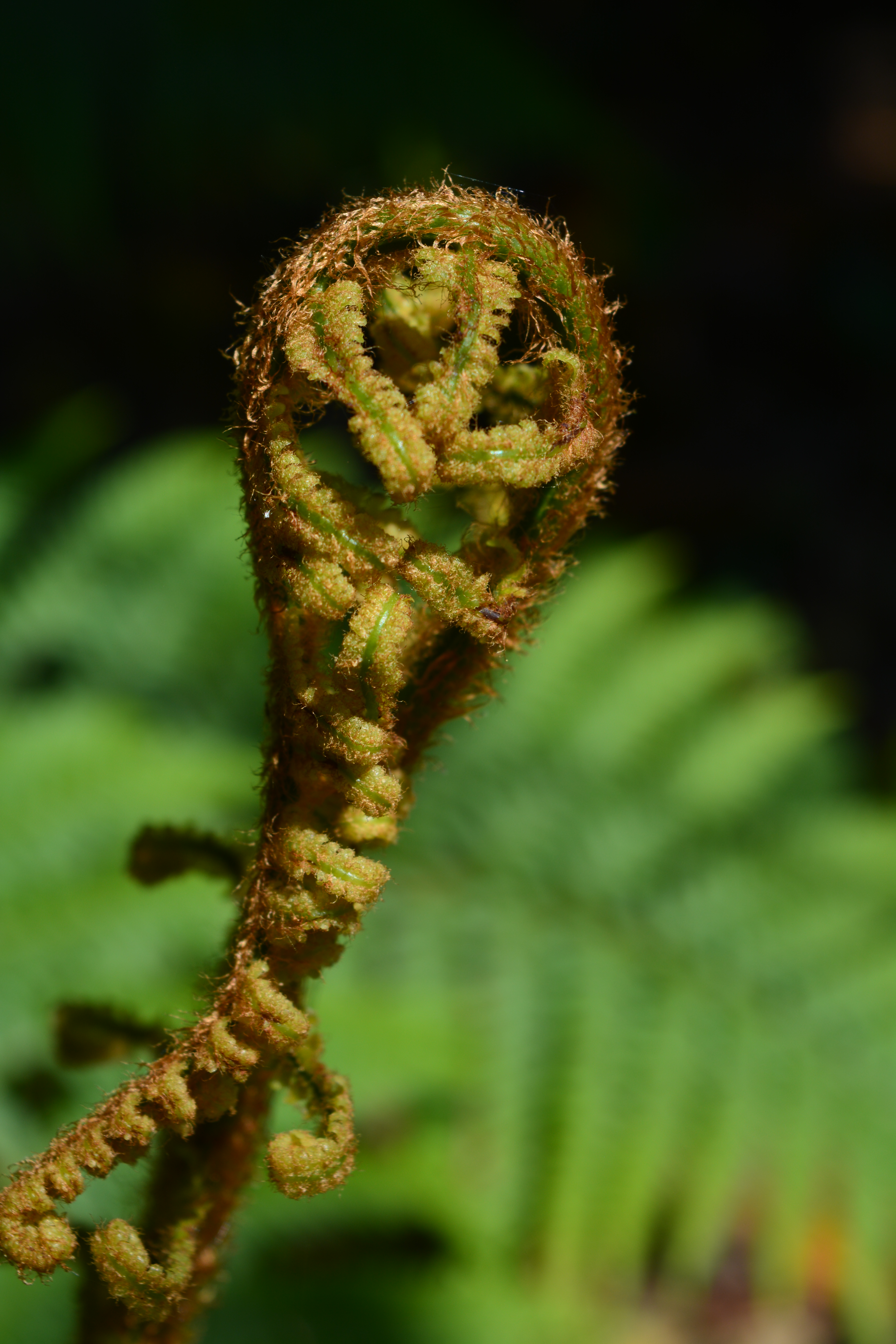
Ferns are an exciting element in the woodland or shade garden in May as fresh fronds unfurl and open to reveal strongly textured and patterned foliage.


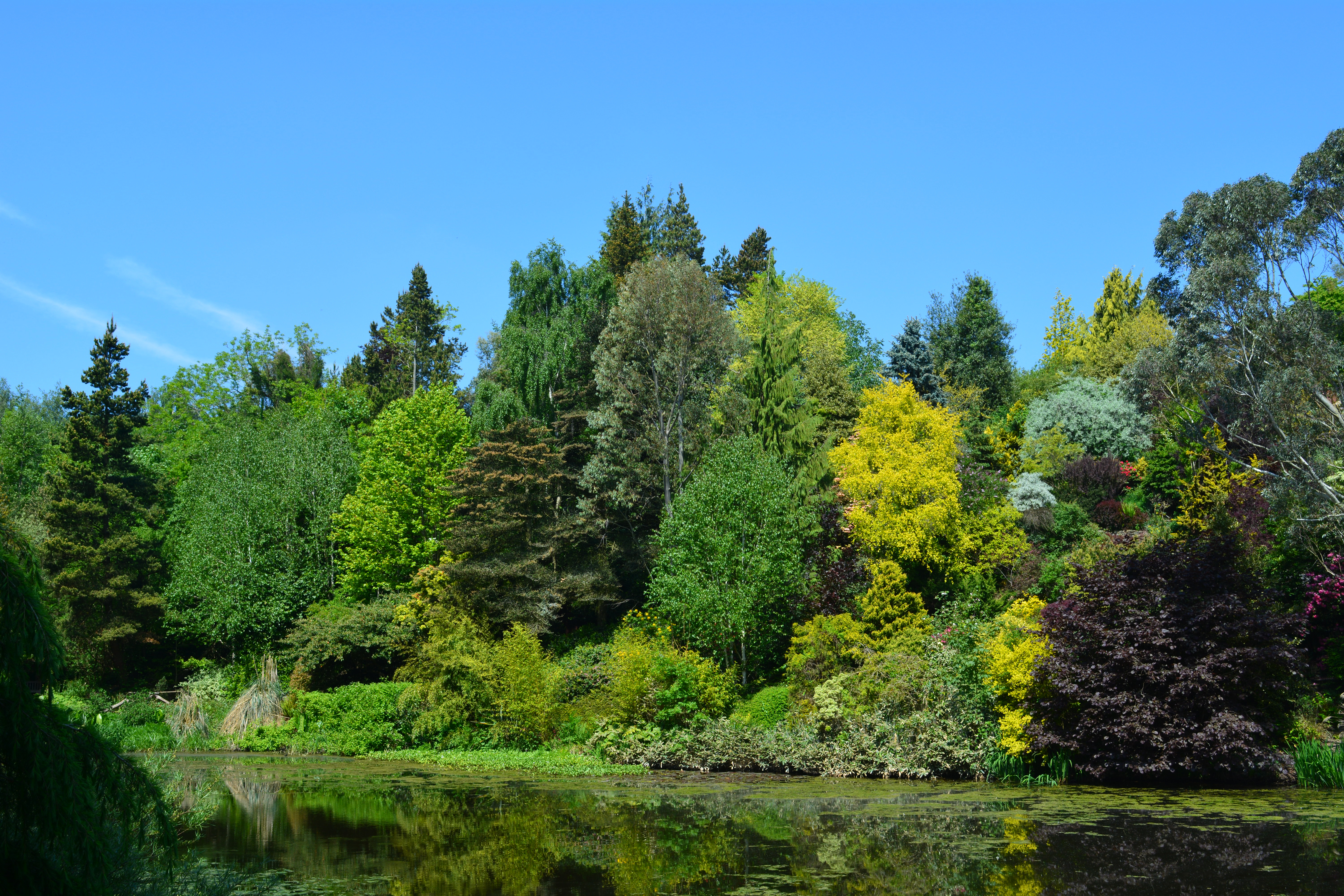
I shall finish this visit report for our May wanderings around the Dingle Garden with a few general shots taken near the lake at the bottom of the sloping garden, showing the variation in foliage apparent in the trees and shrubs. We can now look forward to what June at the Dingle will have to offer.


Categories
flowering bulbs garden pools gardening gardens gardens open to the public hardy perennials lakes light light quality ornamental trees and shrubs shrubs spring bulbs spring gardening trees Wales water in the garden winter gardens woodland woodlands

The Dingle Garden in April

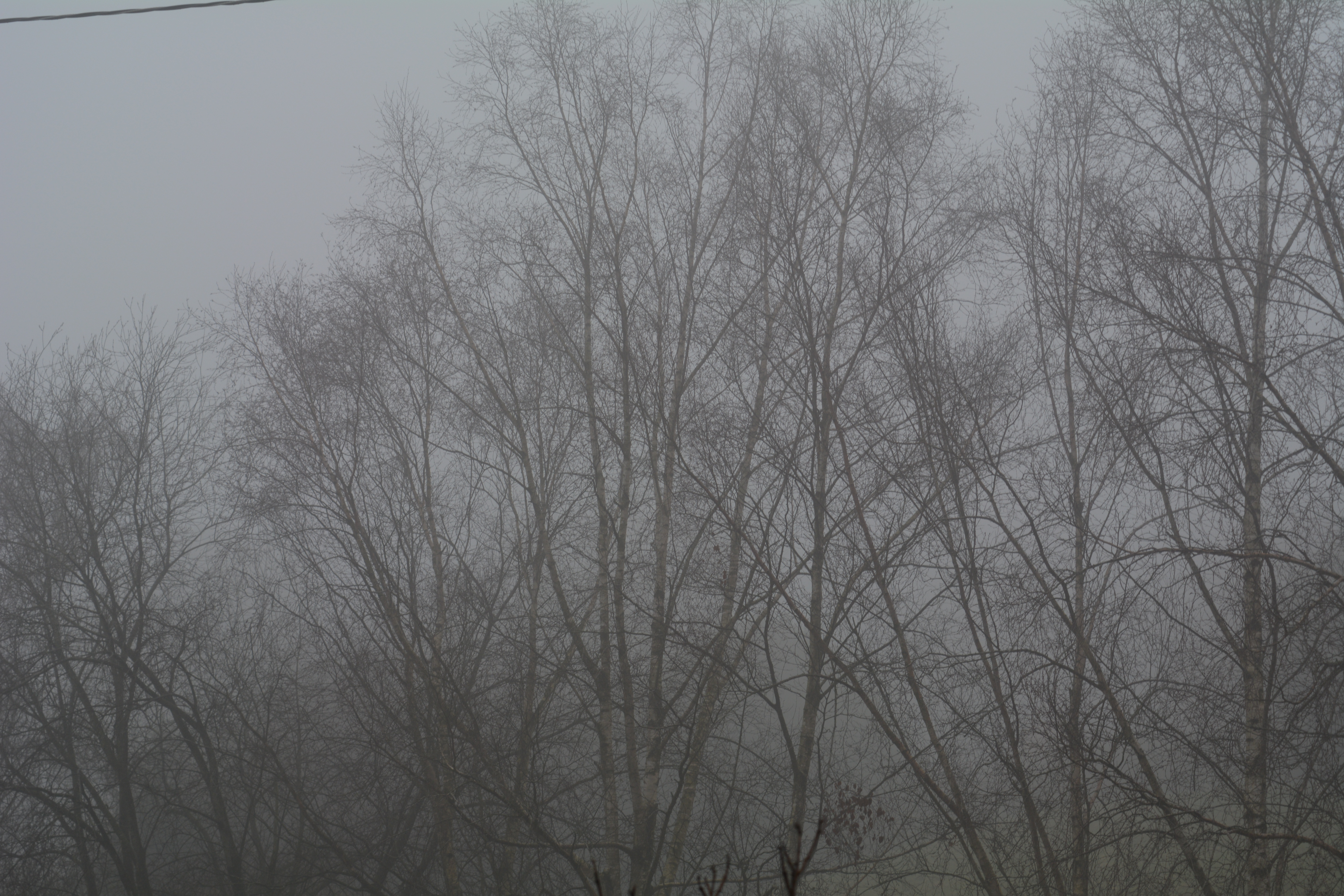
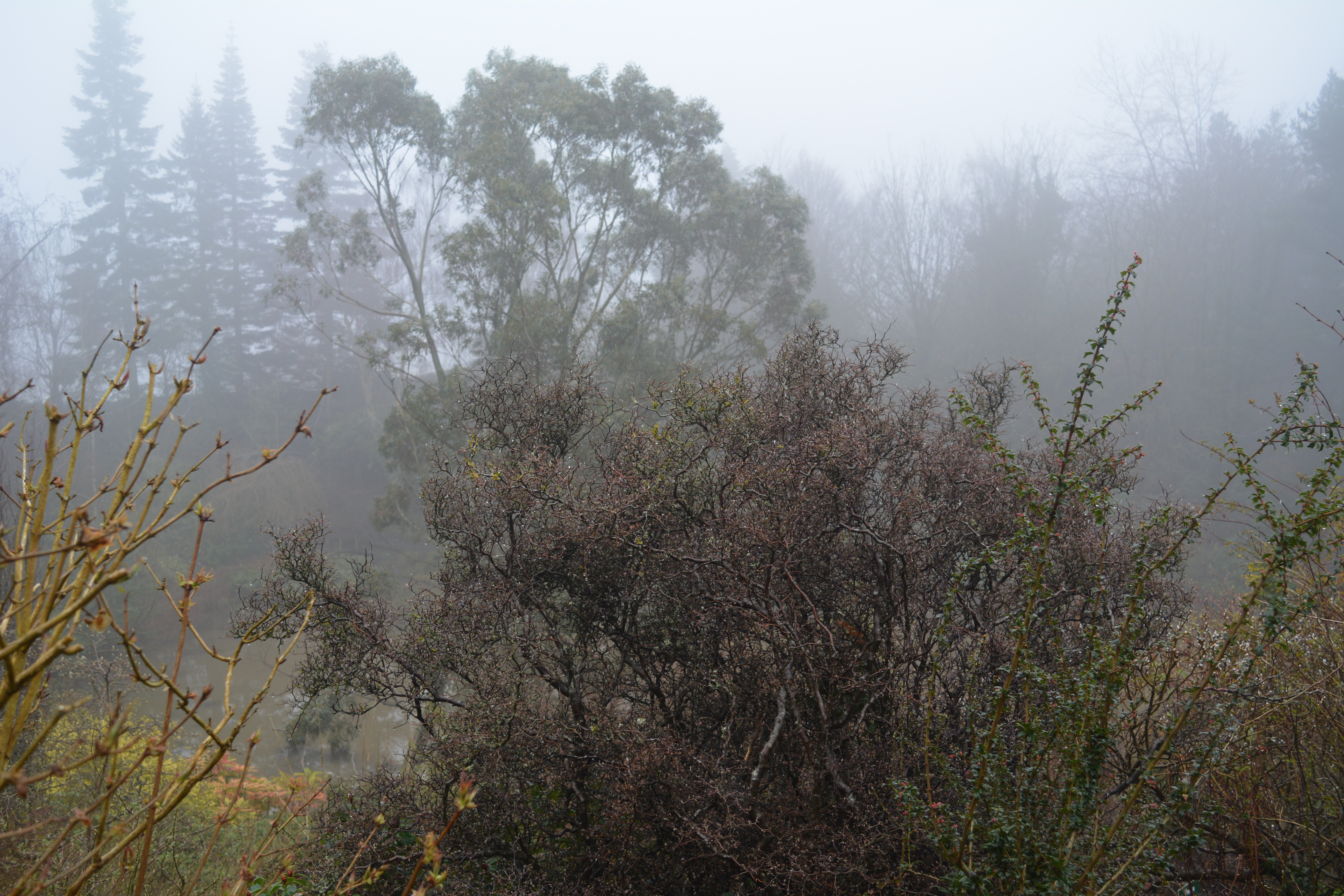
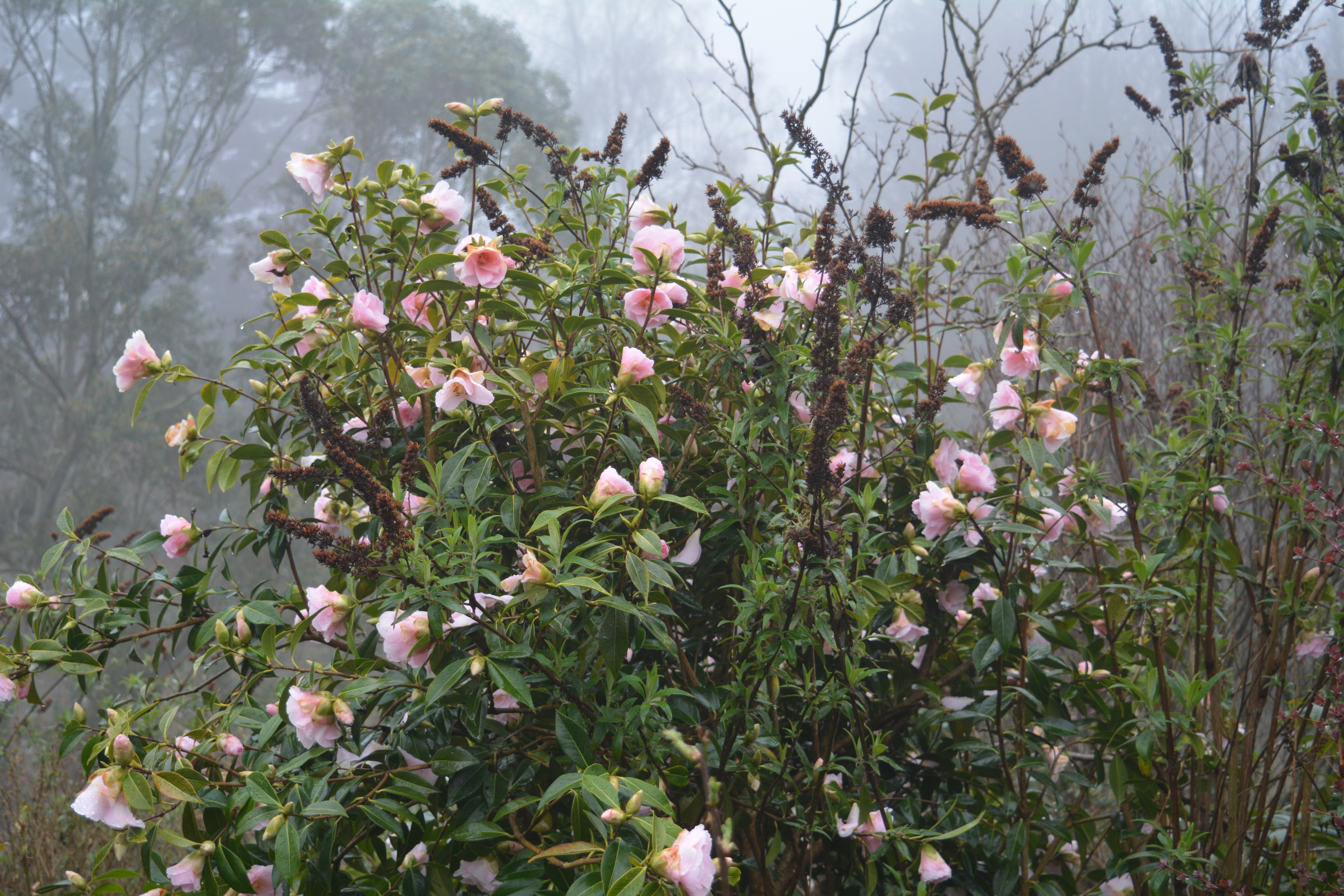
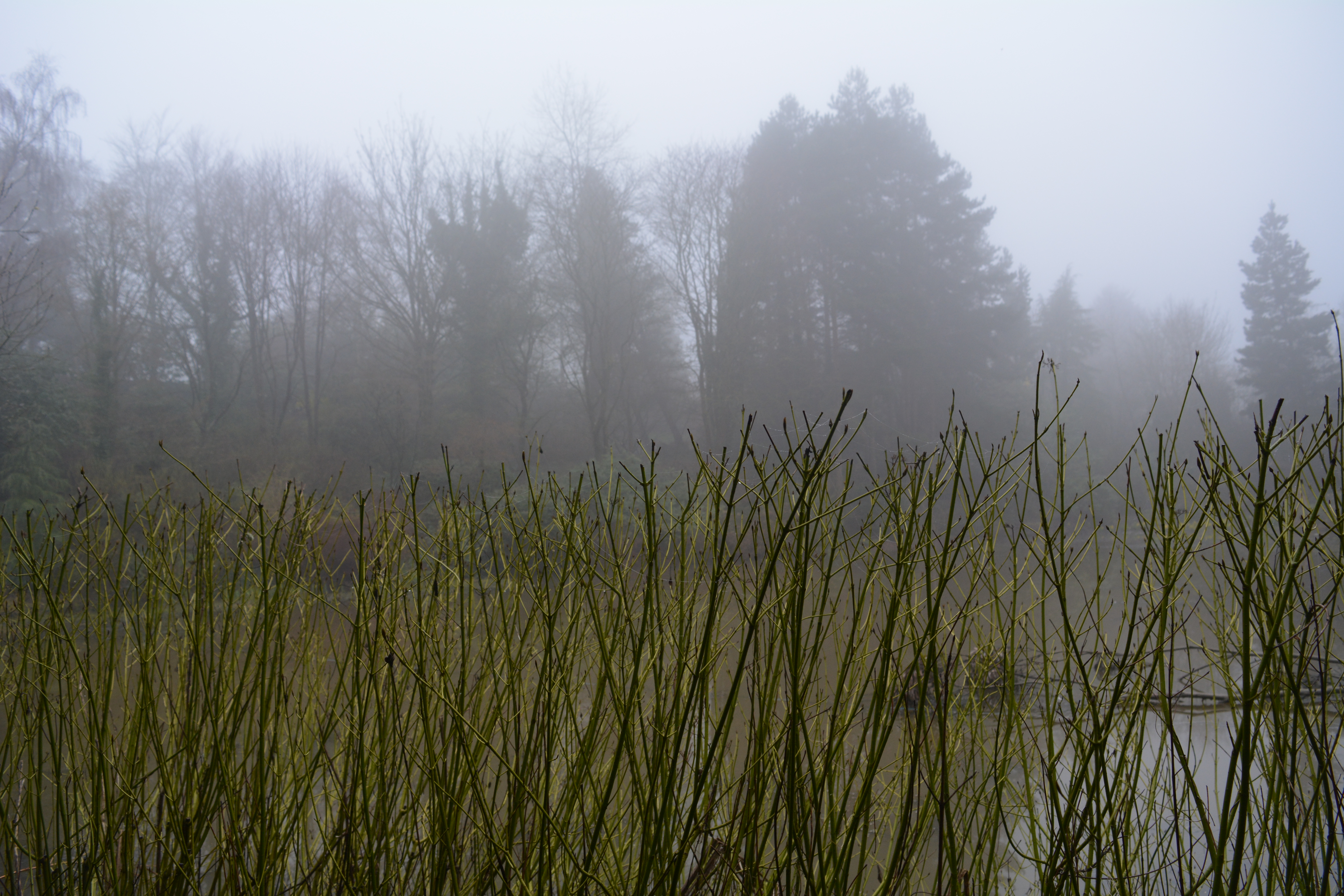
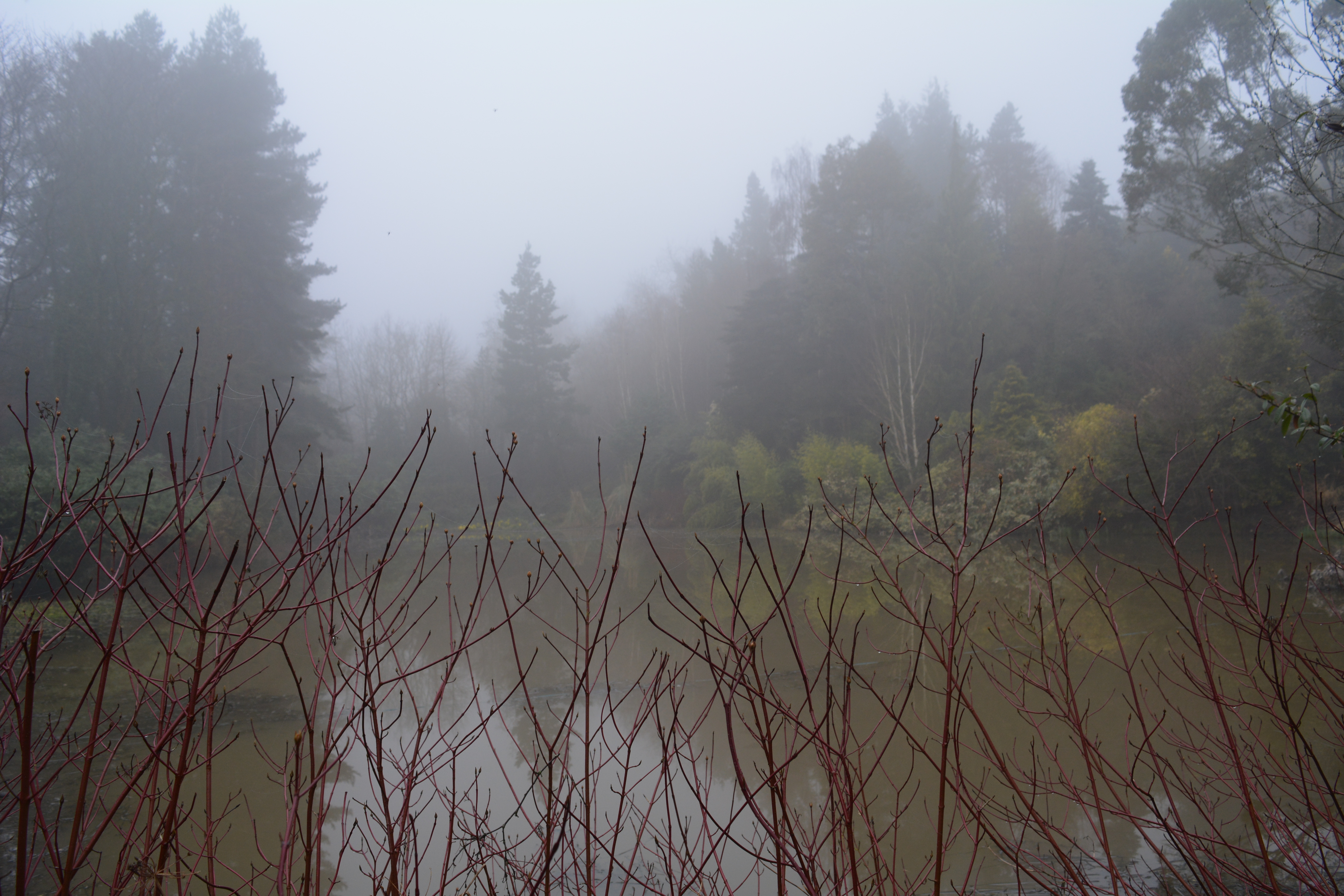
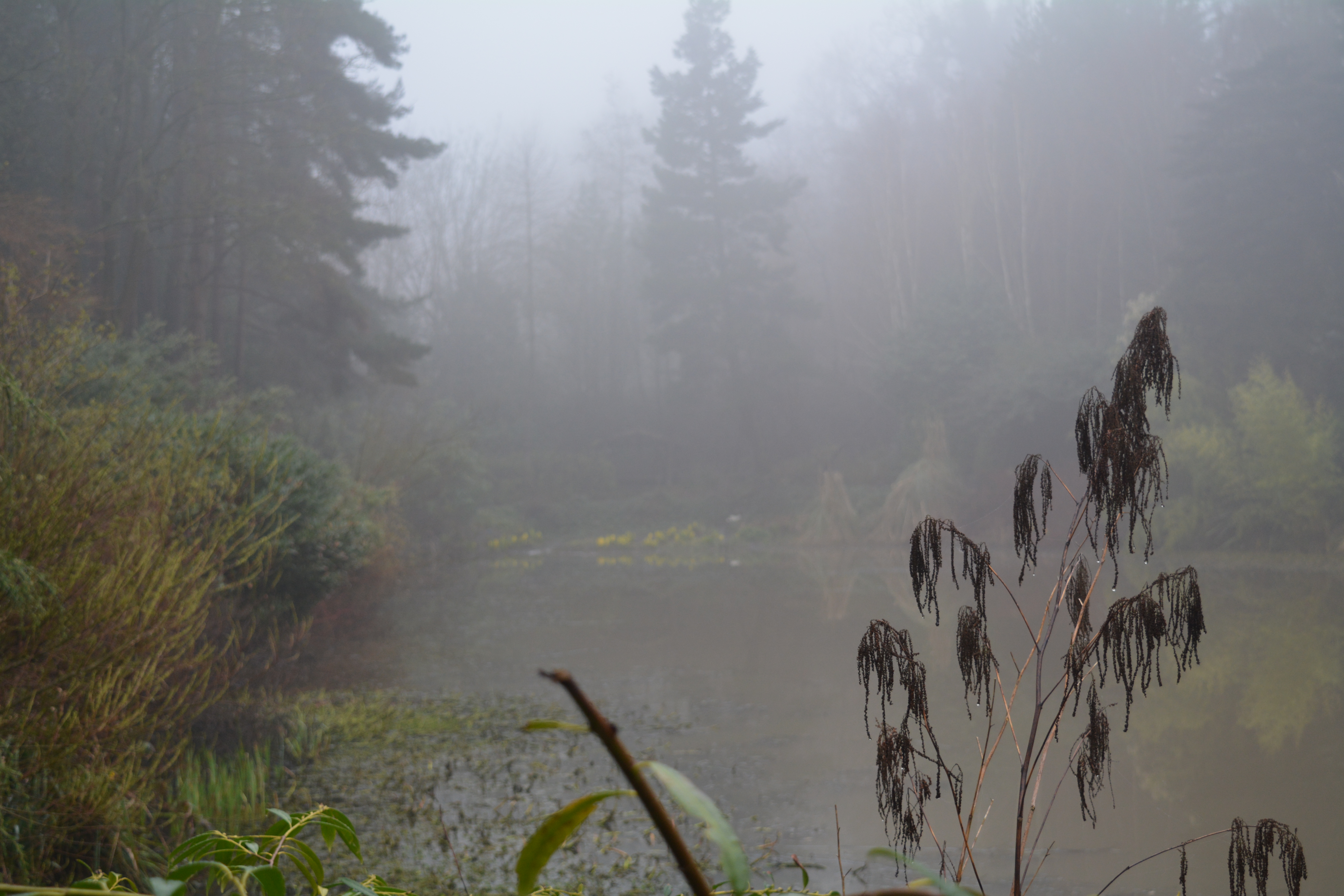
We made our April visit to this year’s chosen garden for monthly visits expecting to enjoy all the freshness of early spring. How wrong could we be! The day dawned cold and misty and as we walked around the gravel paths we got more damp with each step as we were walking in a gentle mist. We felt as if we were wandering around the garden on a typical November day definitely not an April day.

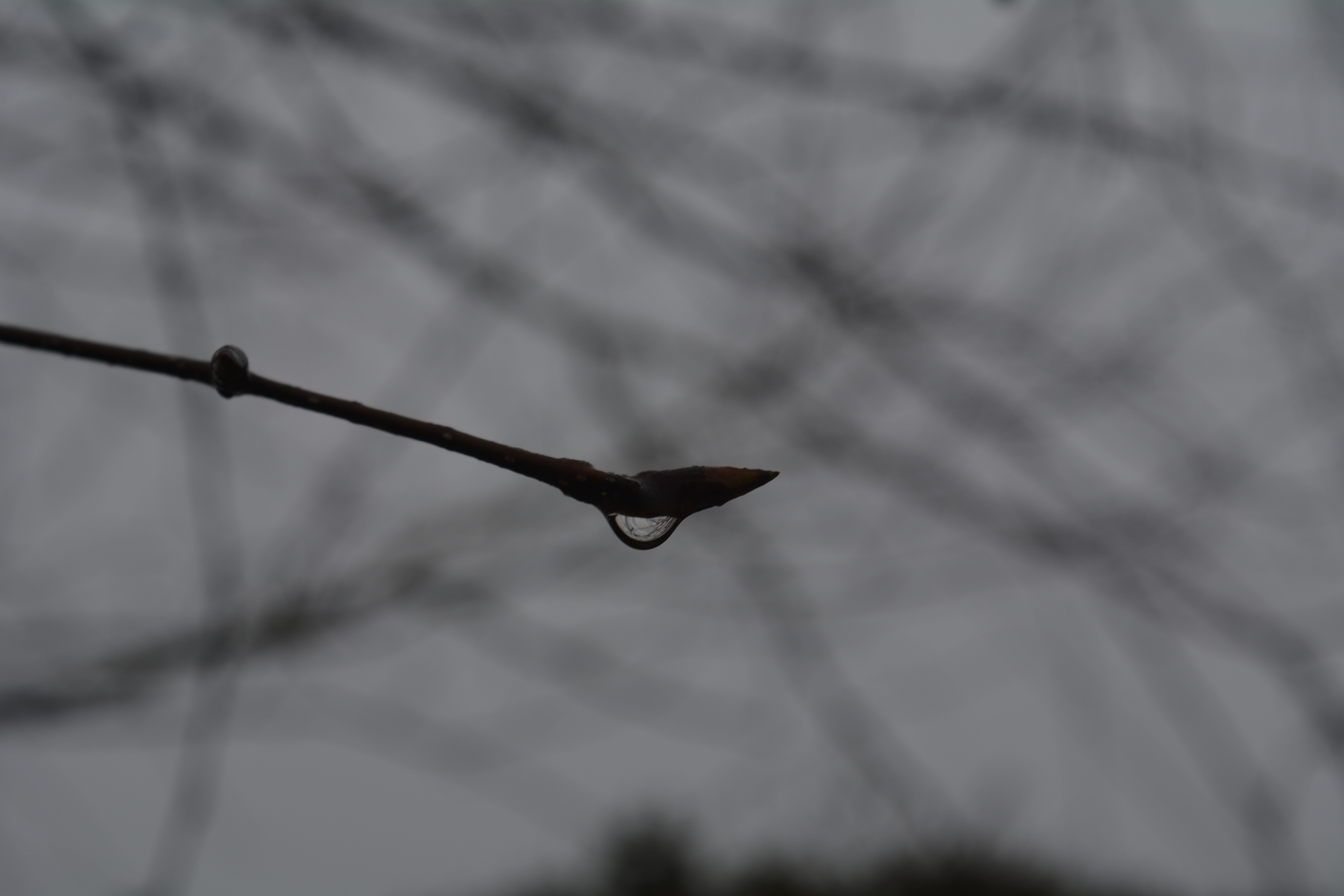
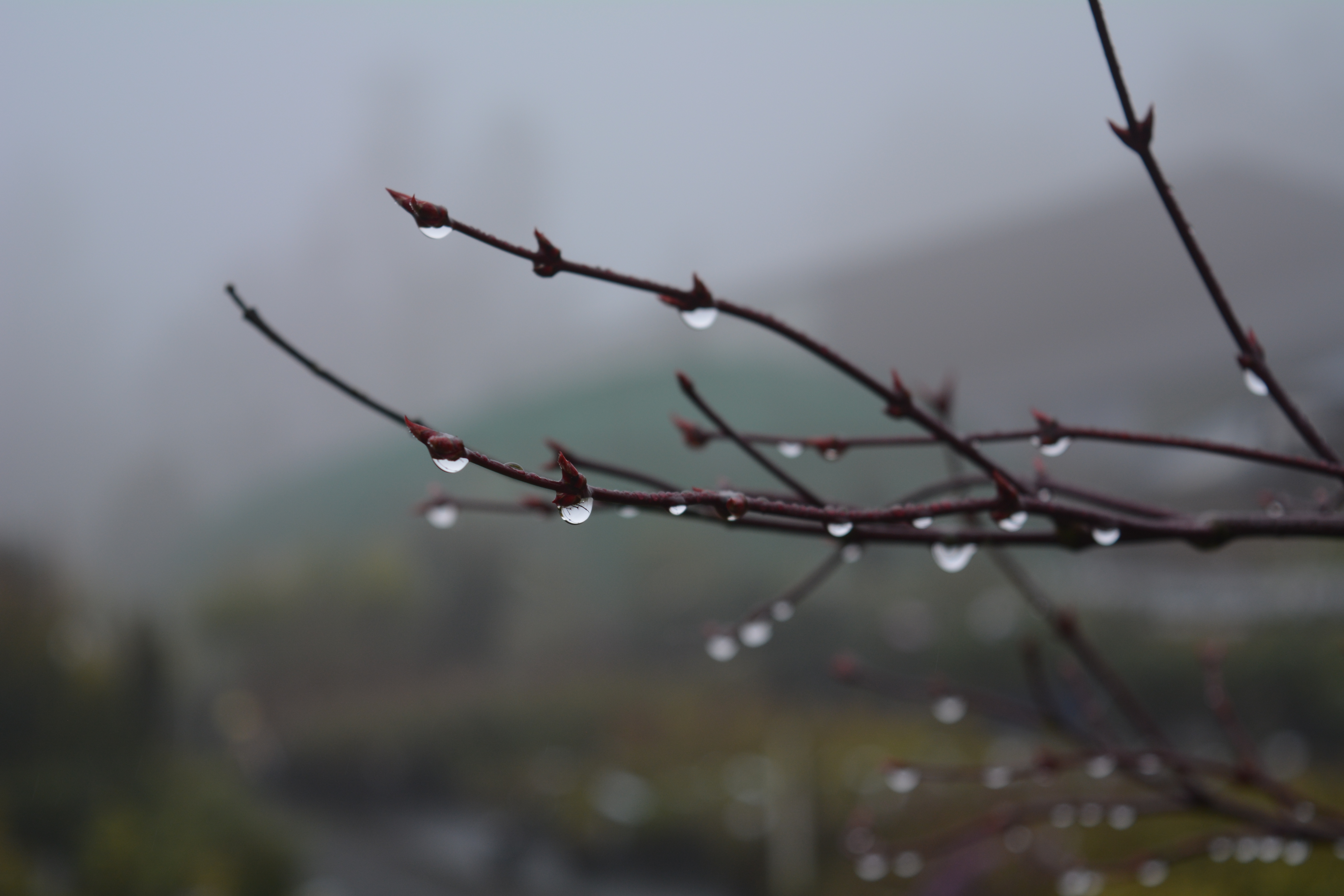
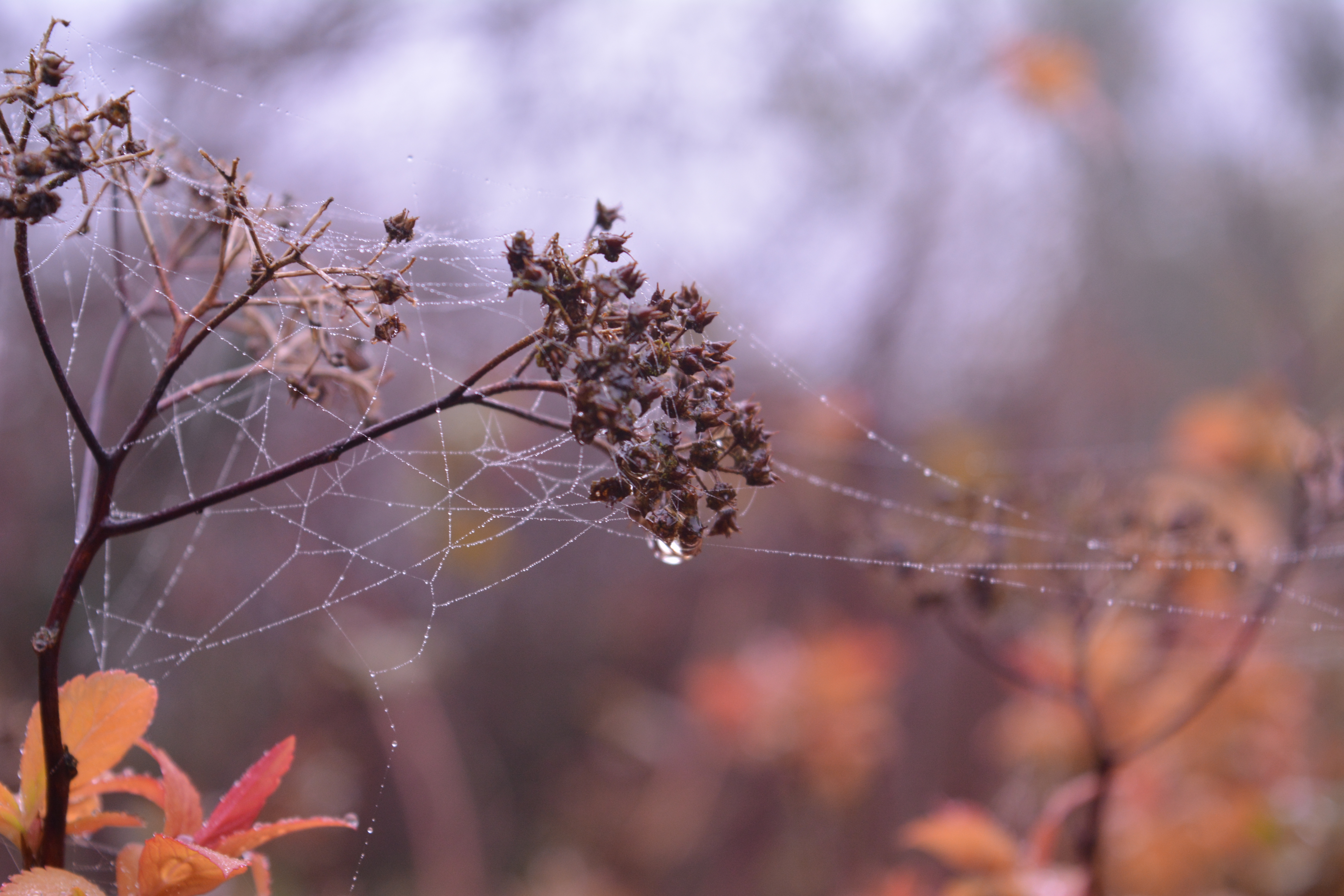
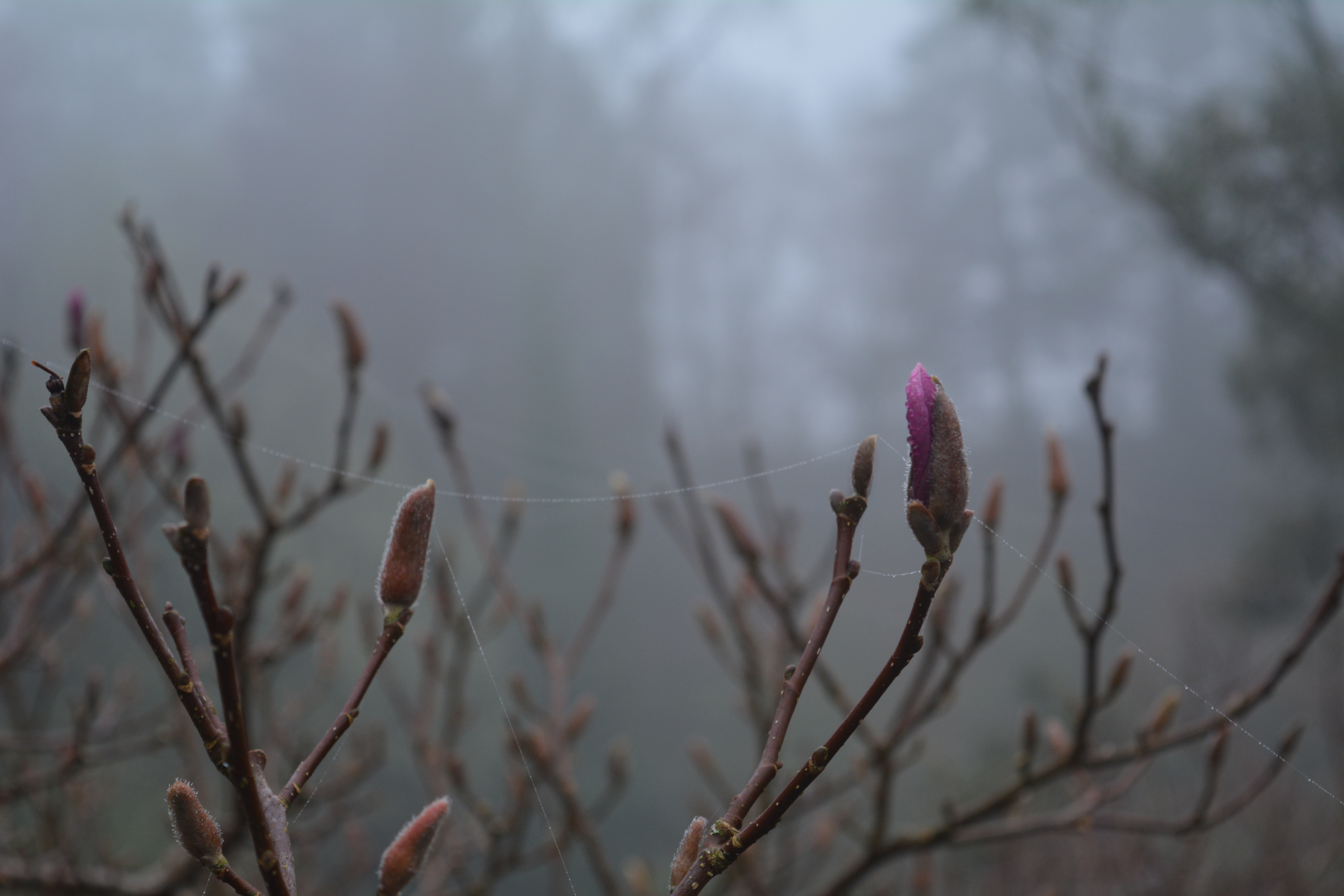
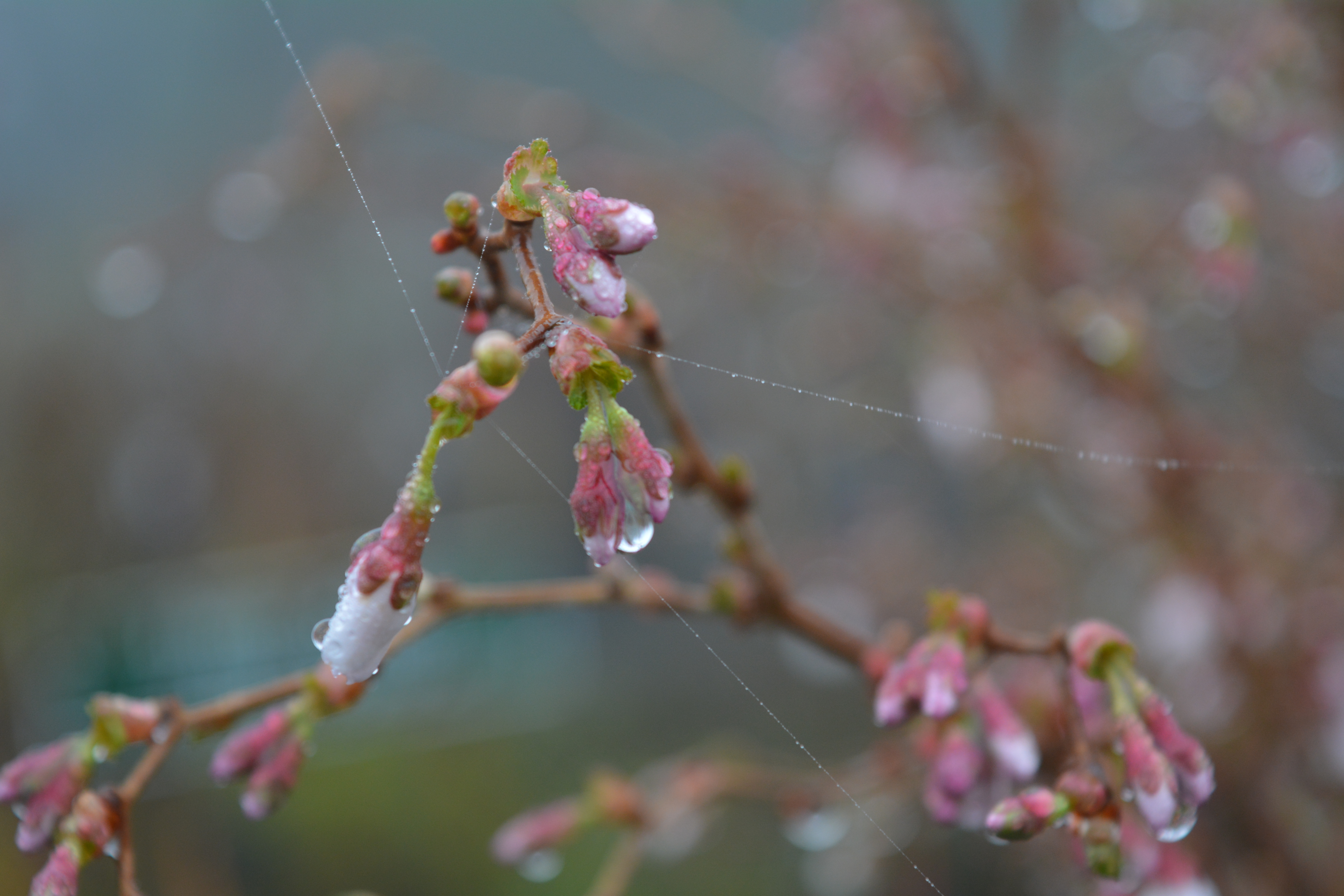
Mist hung among the trees and rain droplets hung from buds and branches.

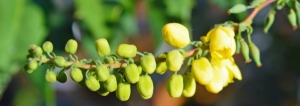
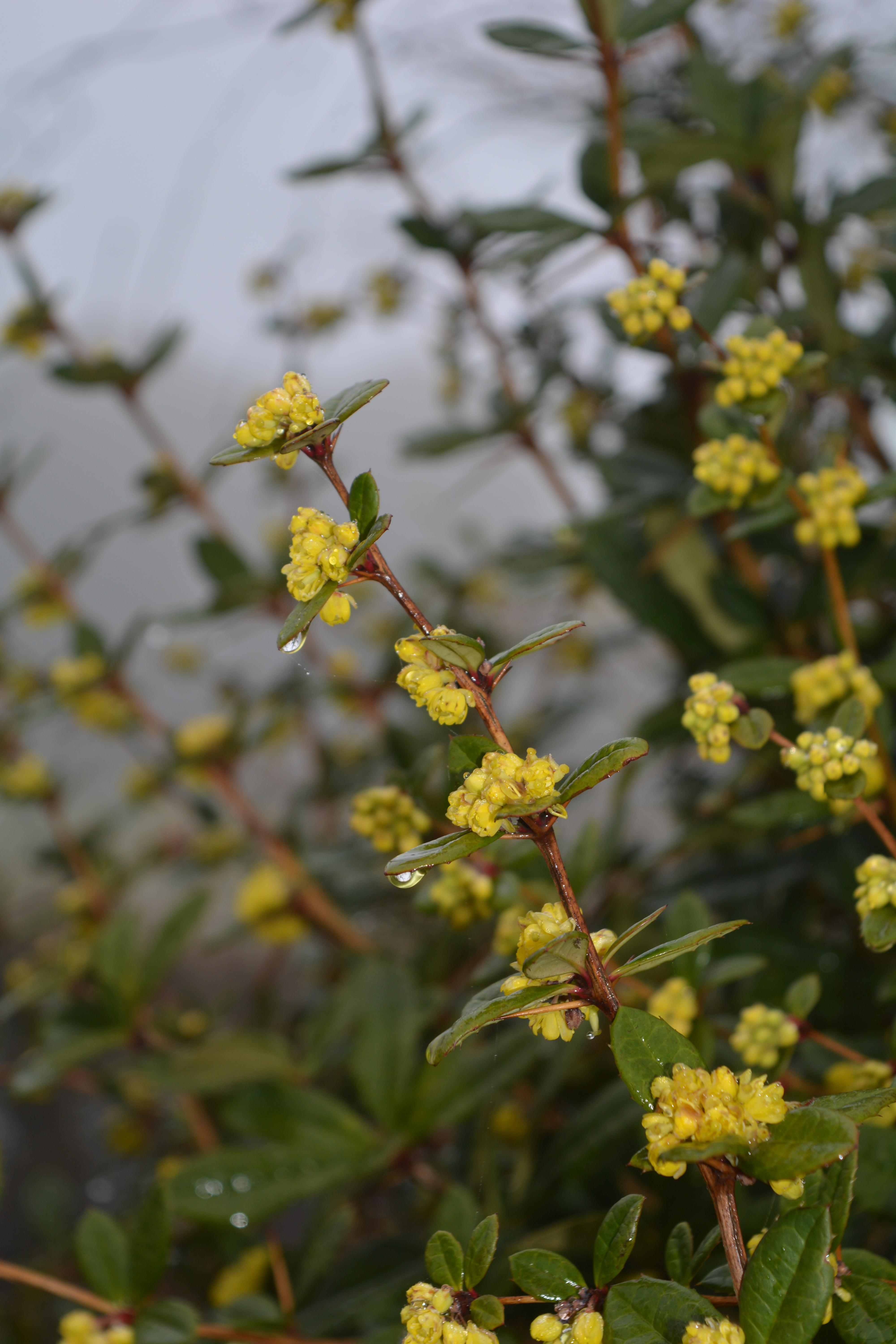
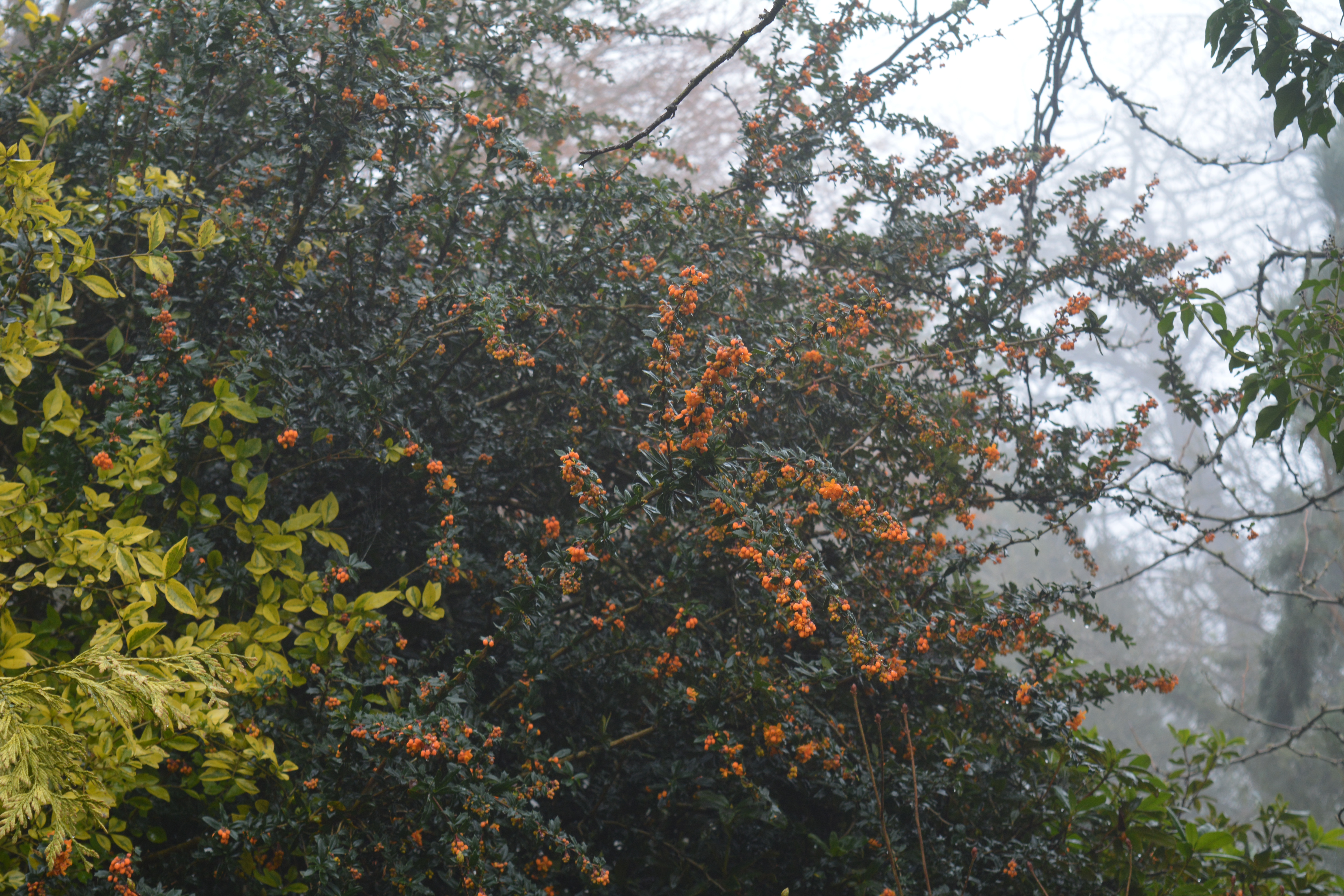
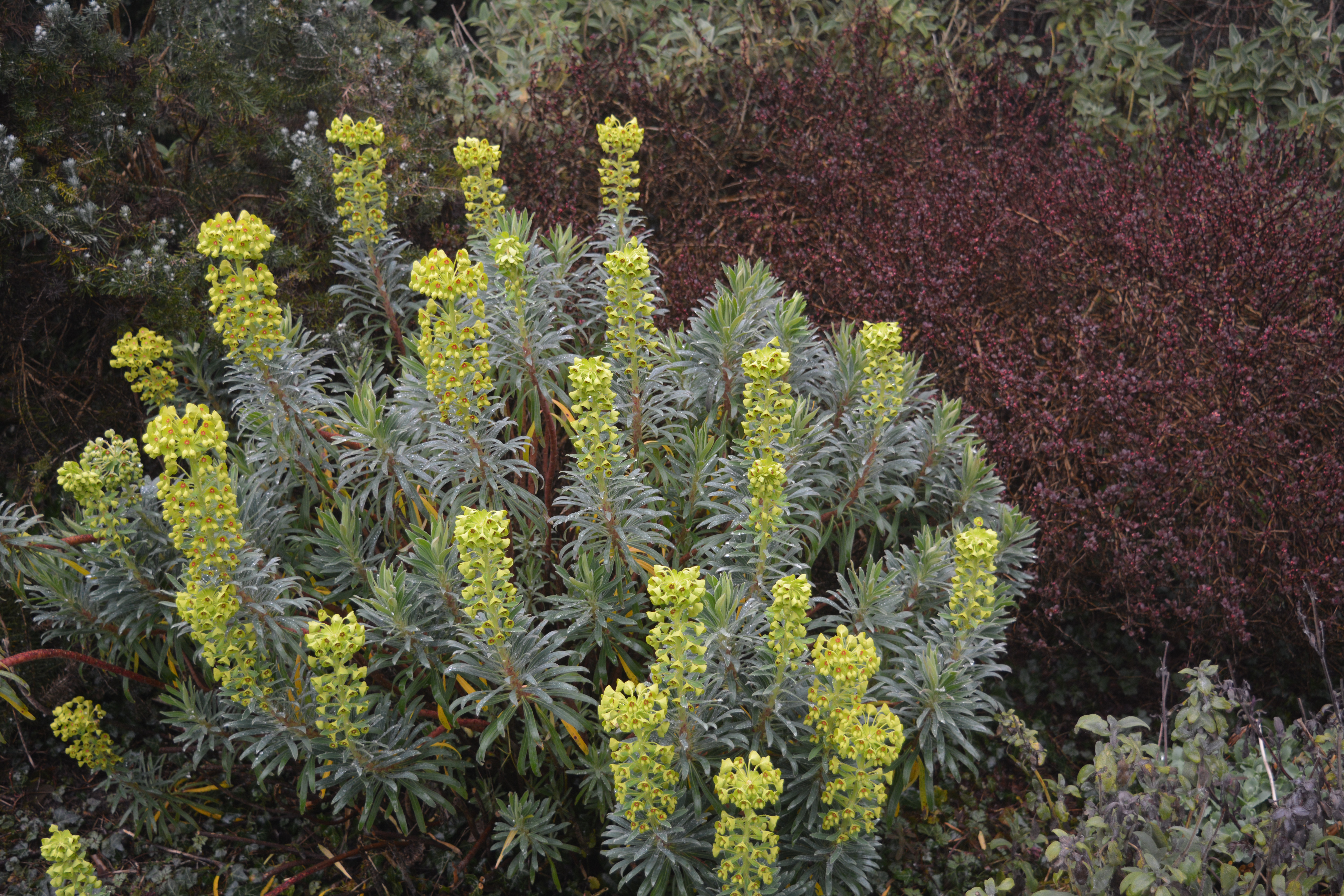
We expected to be able to enjoy early flowering shrubs like rhododendrons and azaleas, but there were just a few as the seasons are still lagging behind. A beautiful bright yellow flowered Berberis really brightened the gloom and an orange flowered variety glowed through the shrubs like beacons. Both of these Berberis added a little welcome scent to the walk.


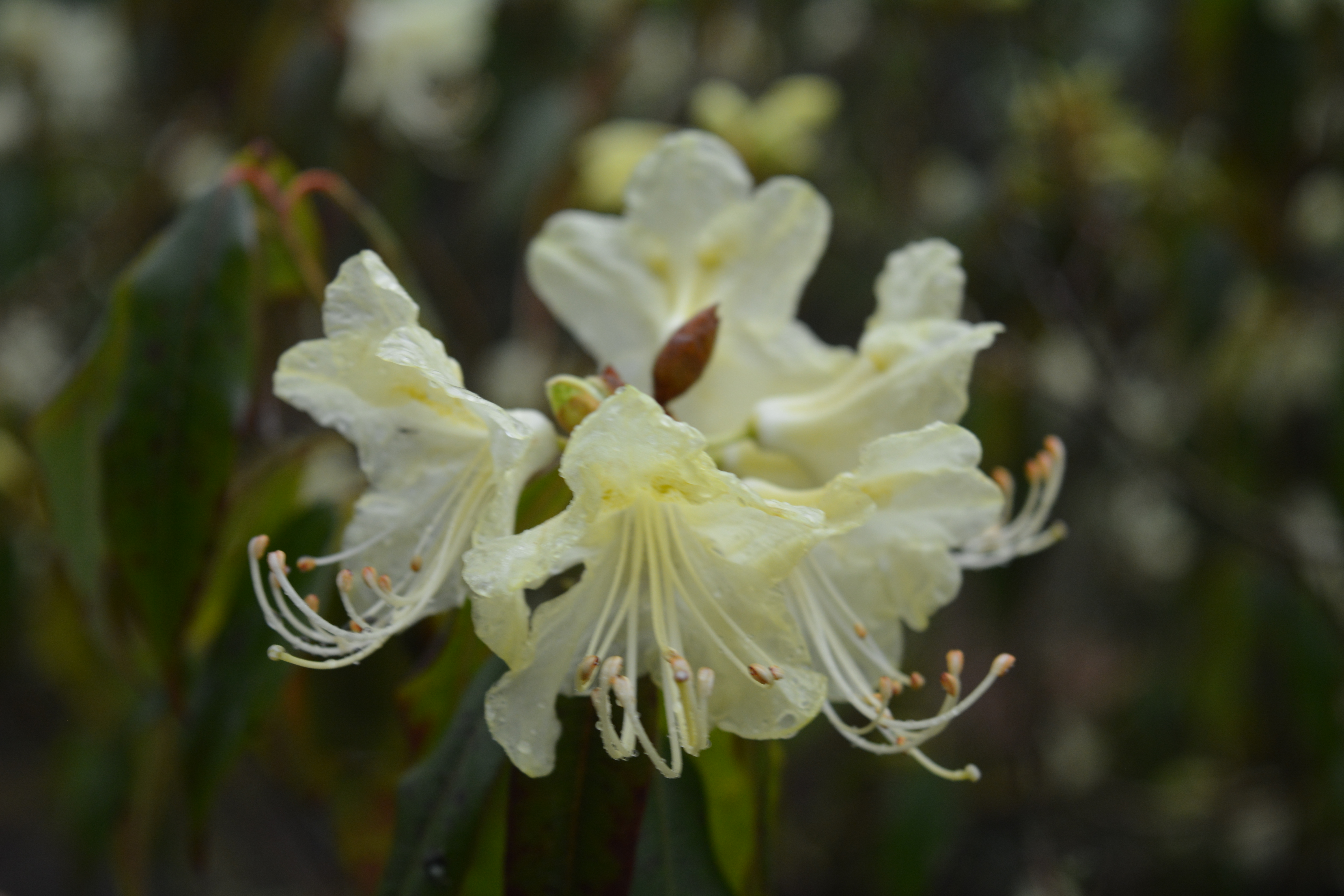
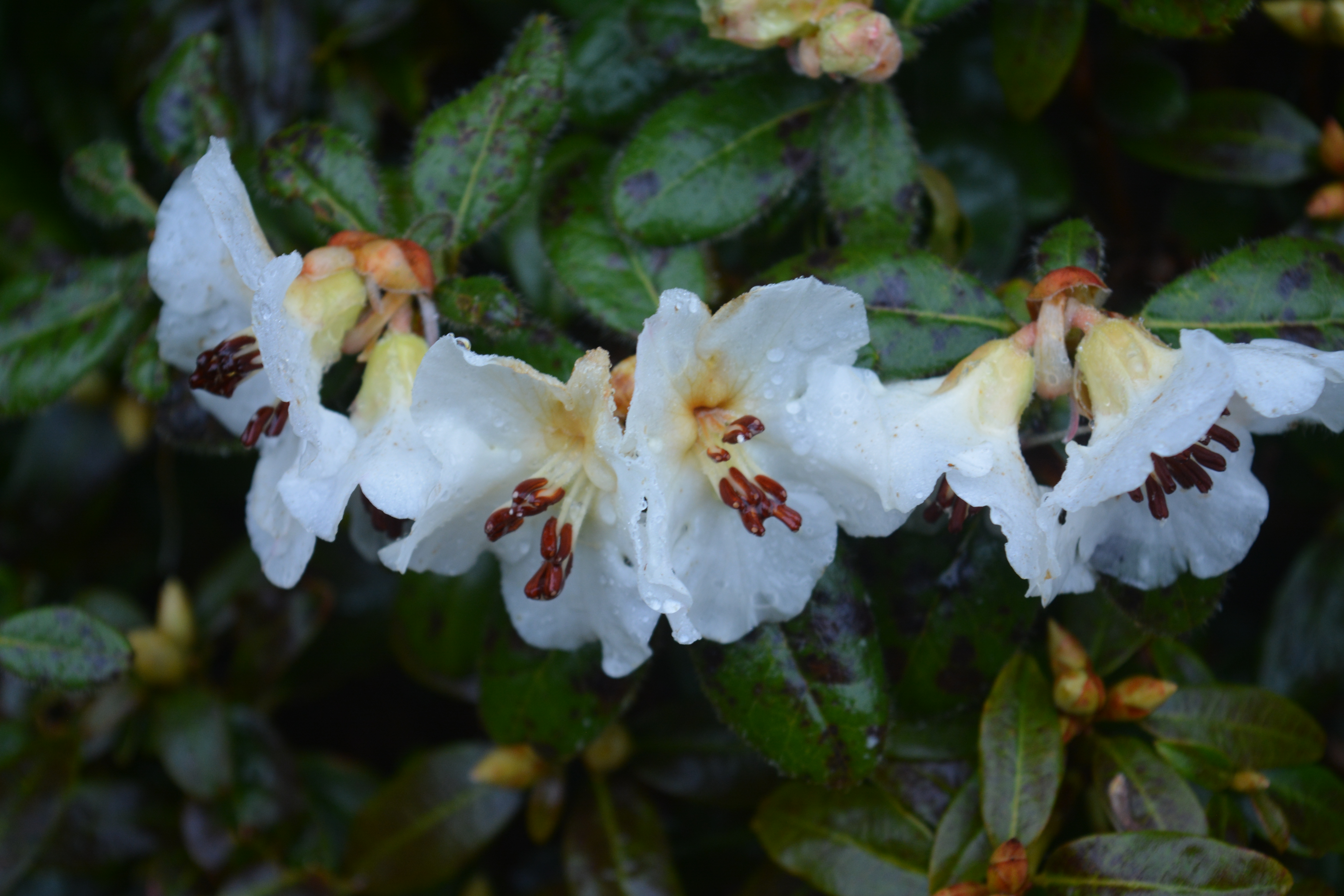
Some Rhododendrons were flowering well while others still showed tight buds. At this time of year every little flower on the shrubs is so powerful.


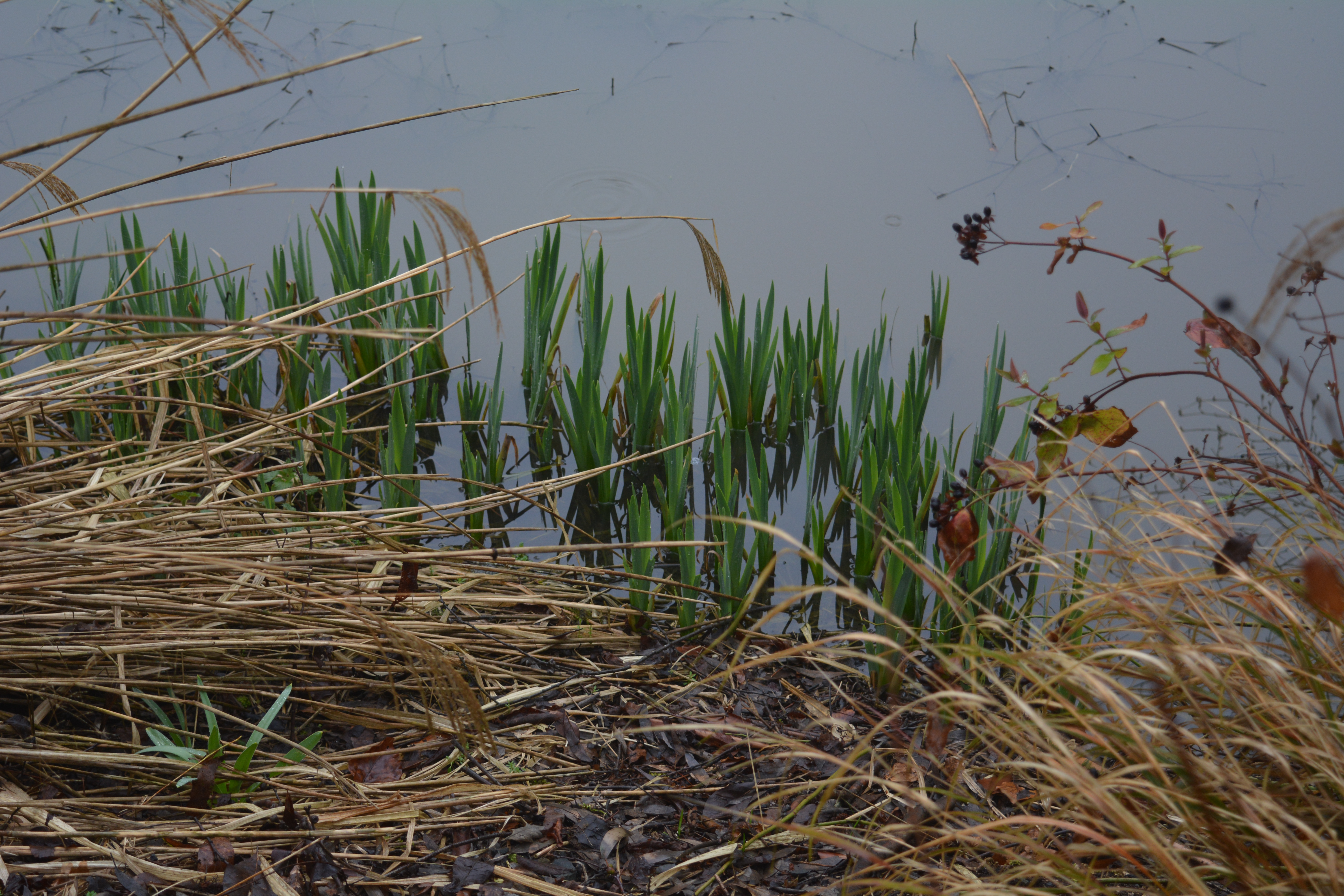
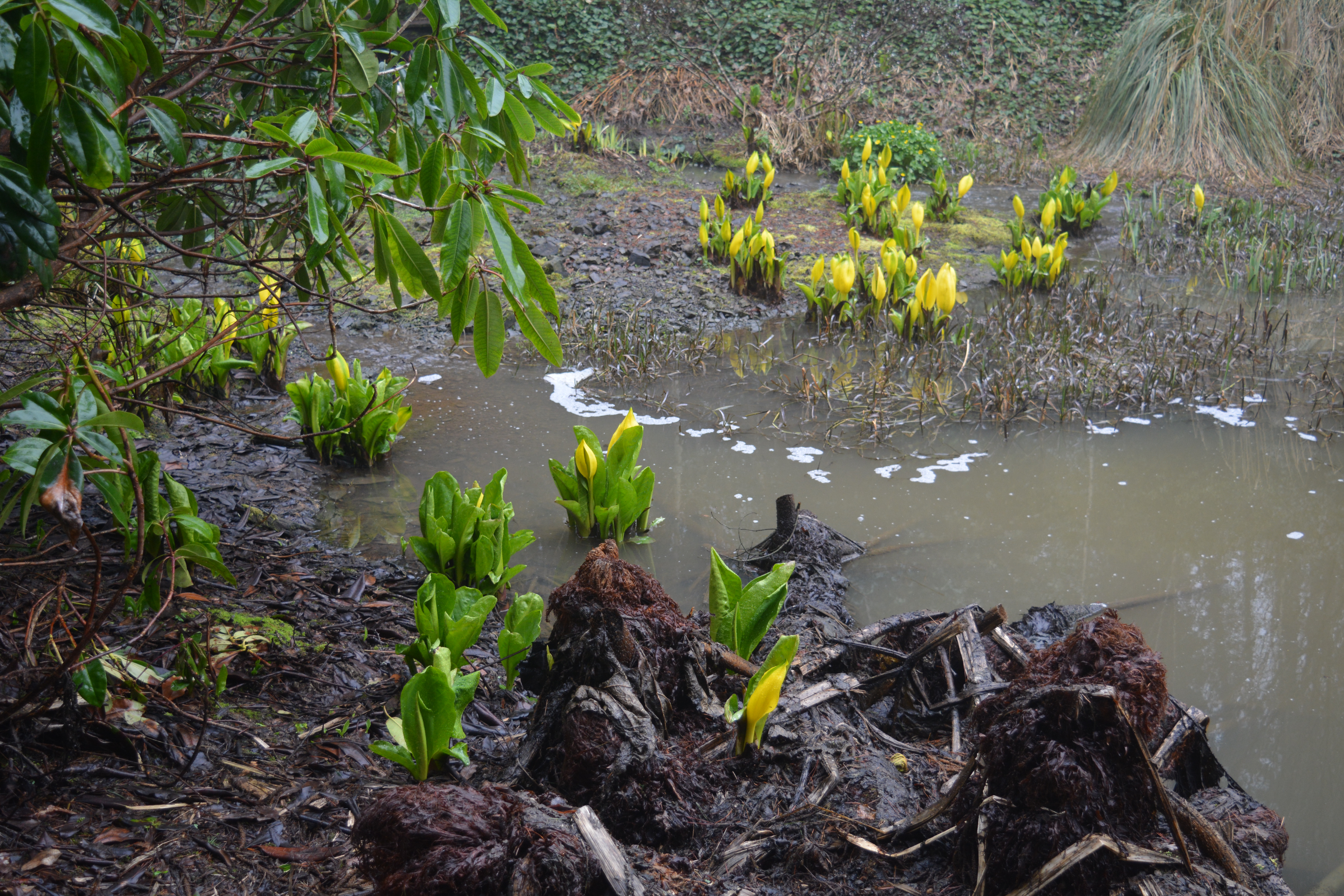
We made our way down towards the lake enjoying the misty views out across the water. When we arrived at the bankside we walked the perimeter and all the way we could see the glow of the yellow-flowered Skunk Cabbage growing on the water’s edge.


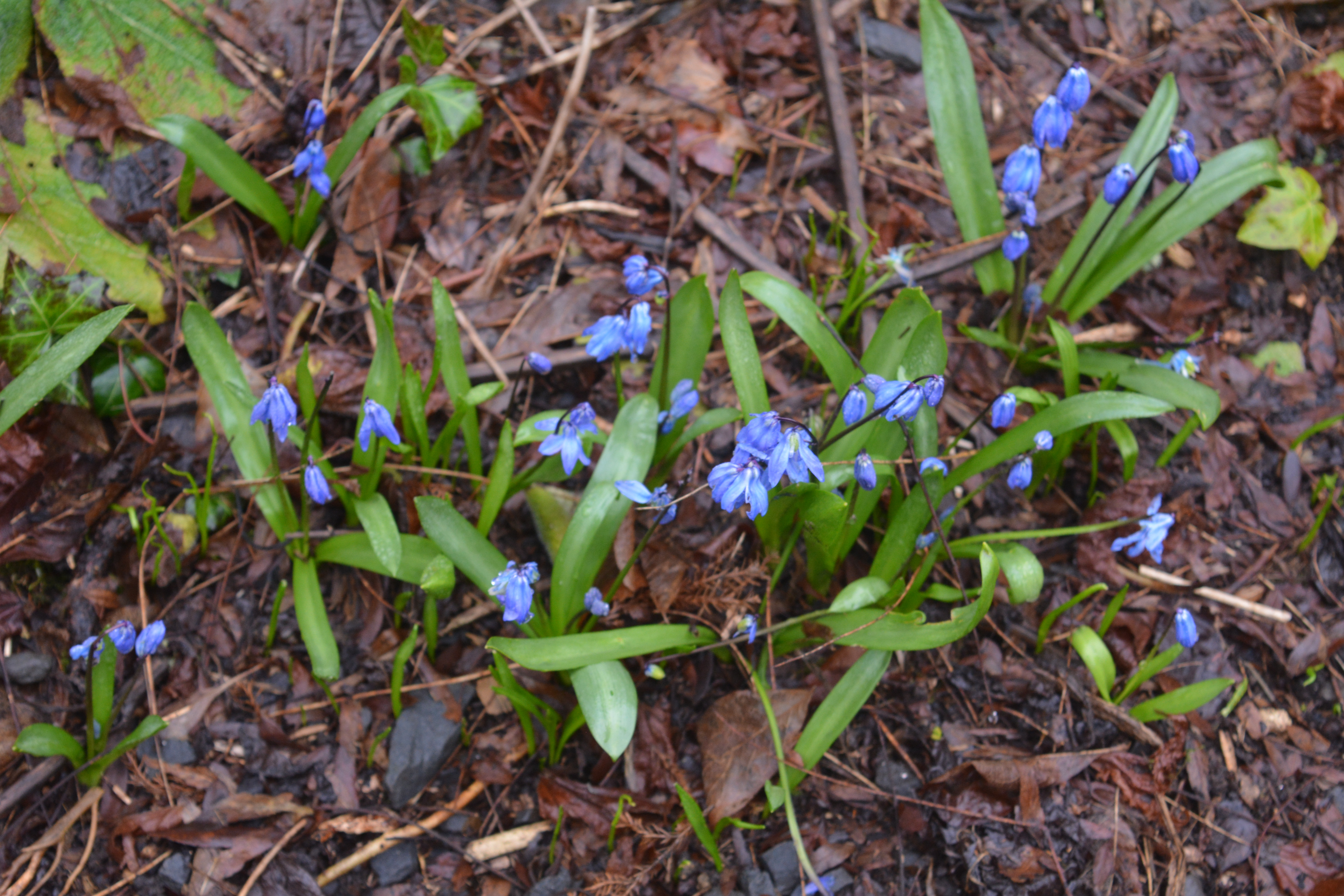
As we wandered back along the gravel paths we spotted odd flowering perennials and bulbs giving patches of colour in the shade of the shrubs.


We were once again surprised by the lack of changes on this month’s visit, but as with anything to do with Mother Nature there was plenty for us to look at and consider. Perhaps on our next visit, which will be in May, we will experience the presence of spring.

Categories
Flintshire fruit and veg garden design garden photography gardening gardens gardens open to the public National Trust ornamental trees and shrubs The National Trust Wales Winter Gardening winter gardens

A Wonderful Welsh Winter Walk – Erddig Hall

We took a short one hour drive out into Wales today to visit a National Trust property, Erddig which we hoped would afford us the opportunity of exploring a garden with winter interest, interest found in its formal structure, its topiary and imaginative pruning as well as planting. We knew that it holds the National Collection of Hedera (Ivies), so we had something specific and extra to look for too.

After too many wet weeks the day dawned bright and we were to be treated to a day of bright winter sunshine, which would play with shadows and light throughout our walk. We were surprised to discover that the whole place, buildings and gardens were in a state of disrepair bordering on dereliction in the 1960’s when a new owner decided to rescue it and awaken a real jewel of a property.

Two welcome signs greeted us as we entered, a rustic overhead design and another with a beautiful quote which read, “Where fragrance, peace and beauty reign ….”. We would soon see if this were true.


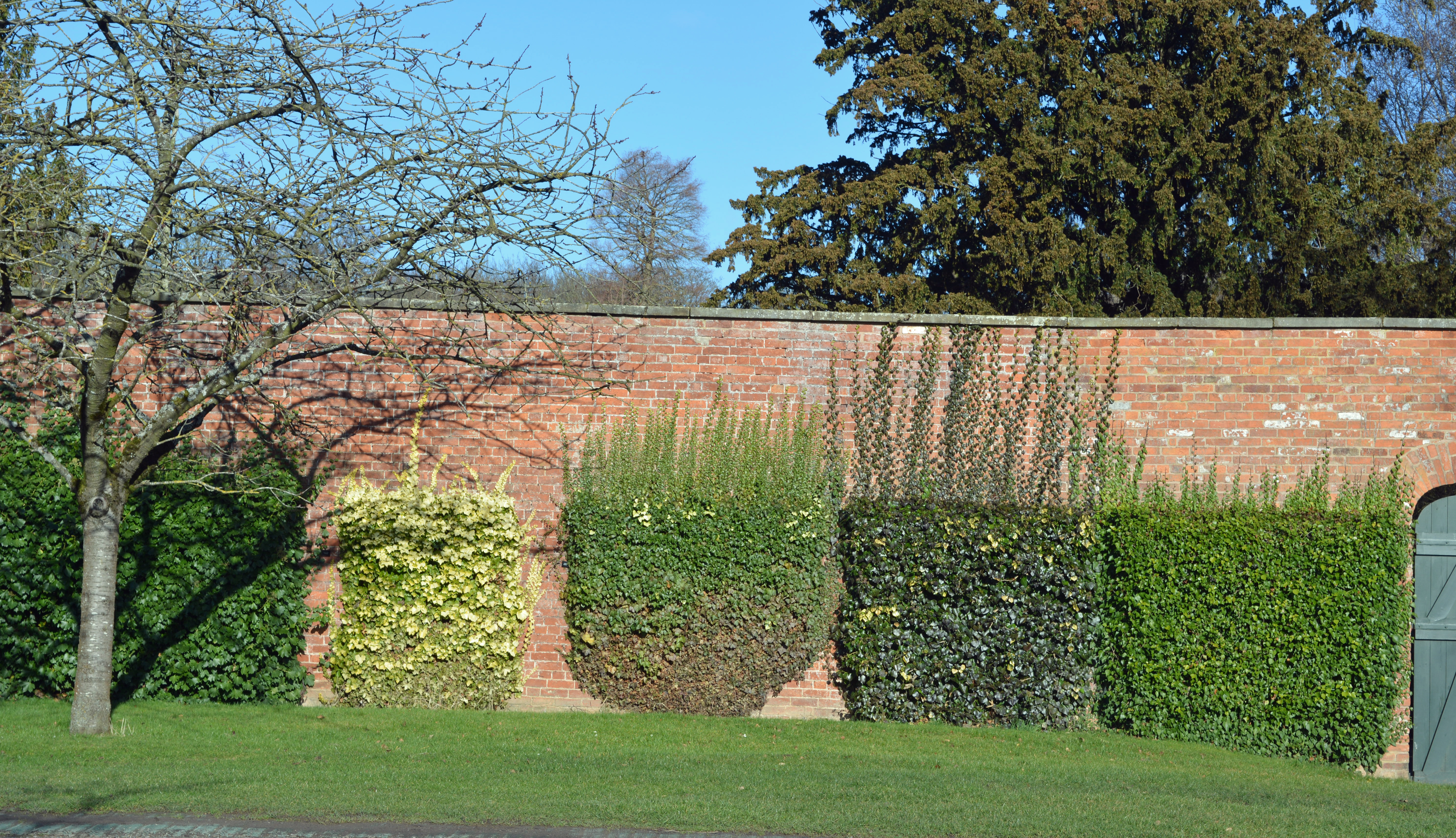
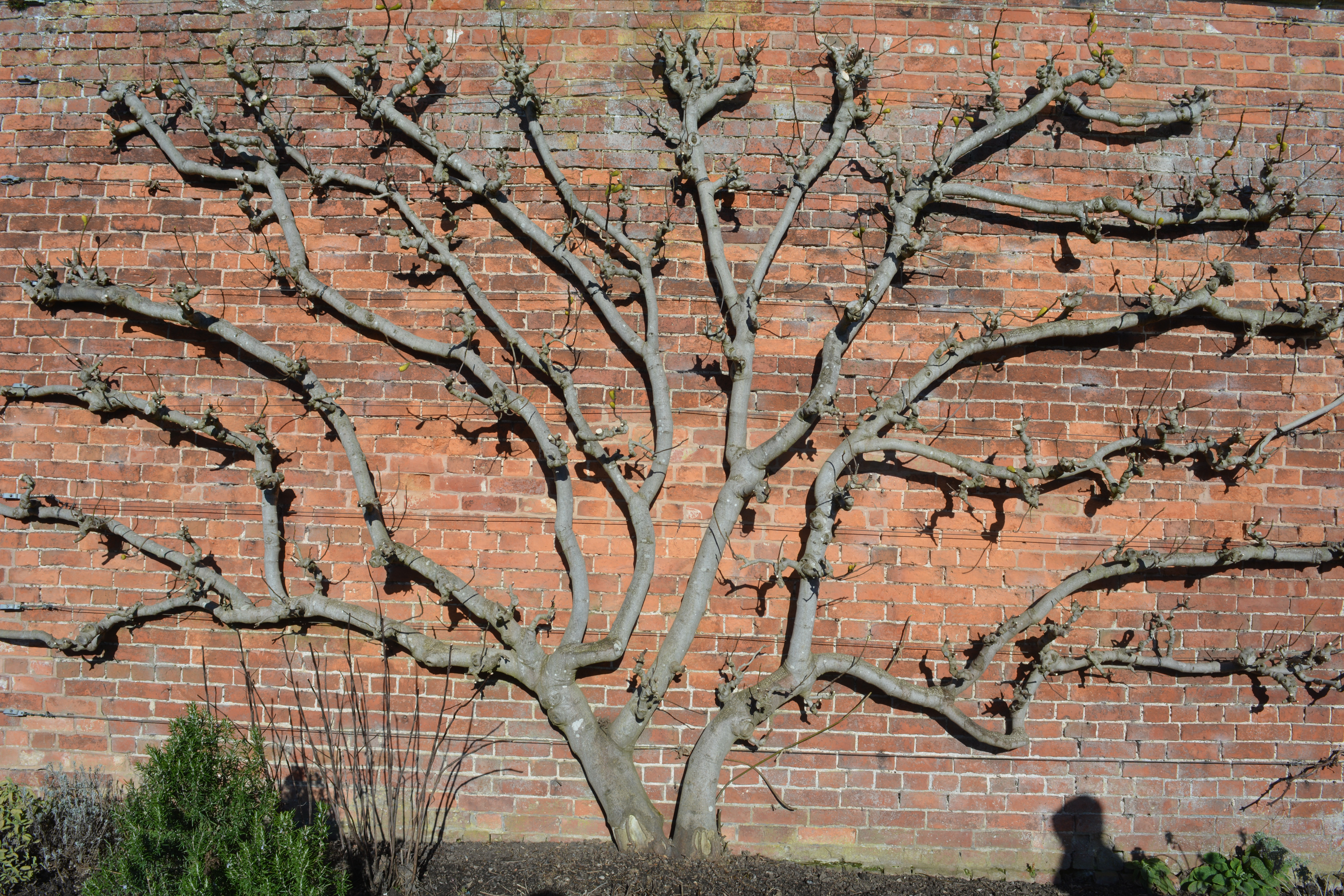
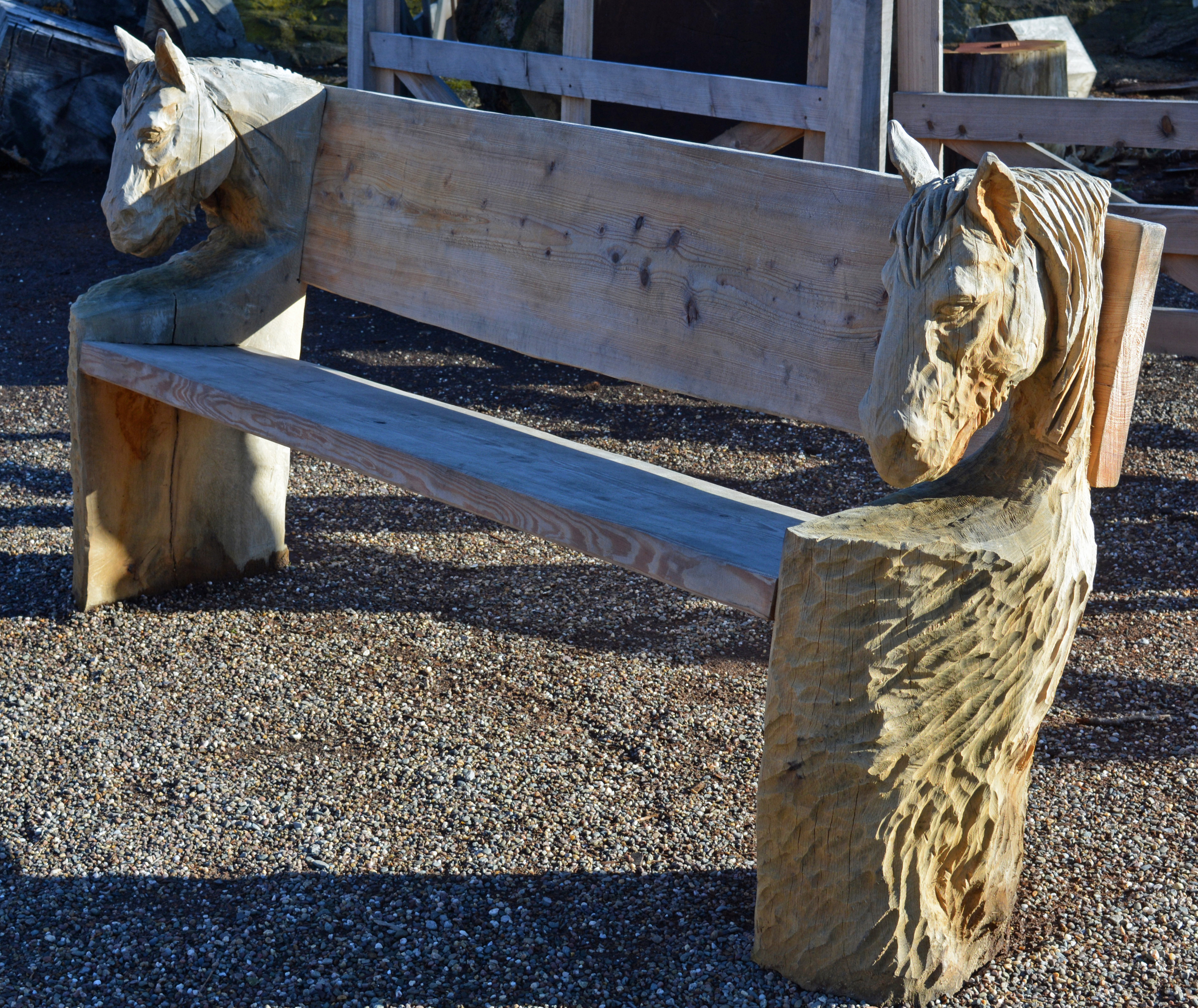
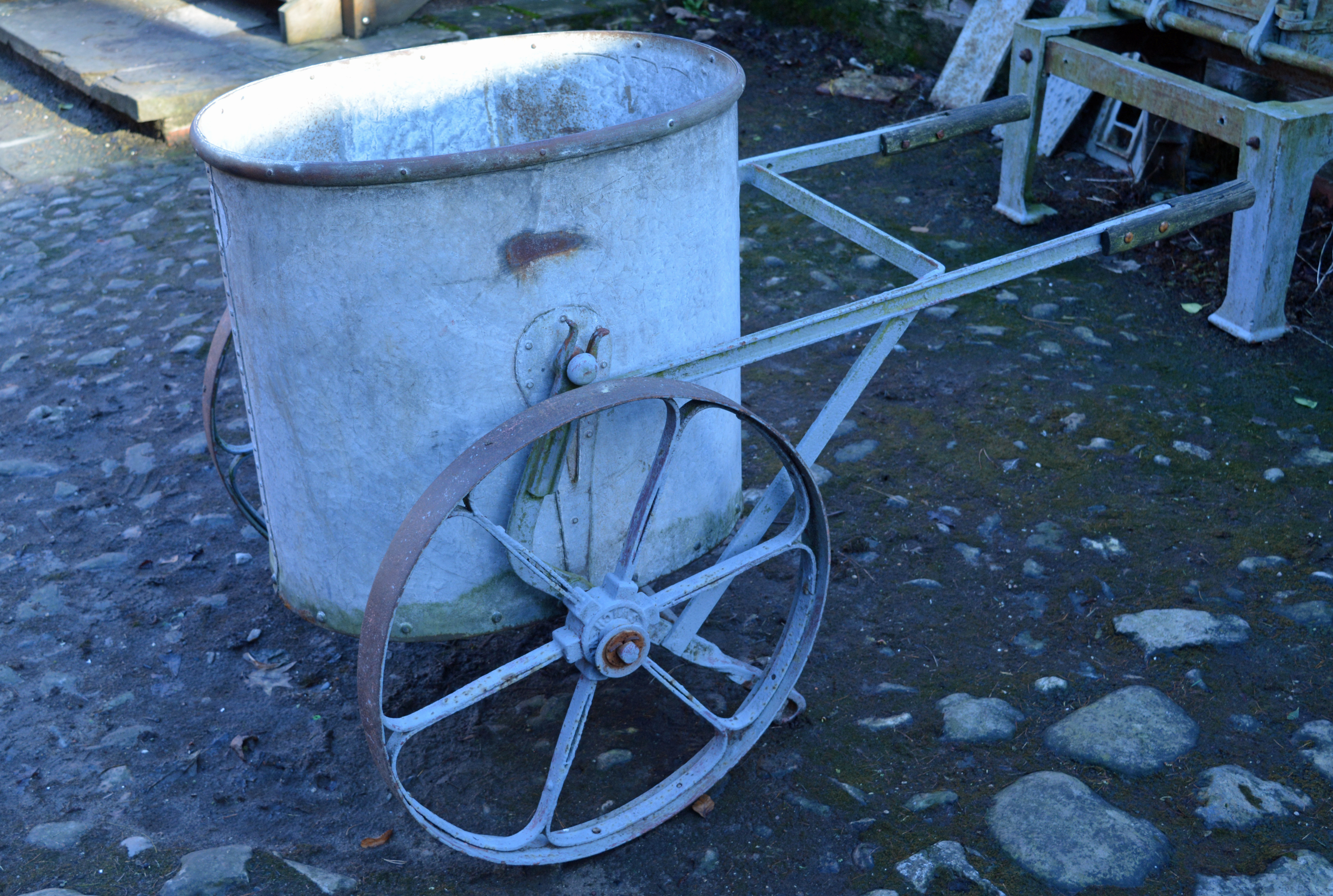
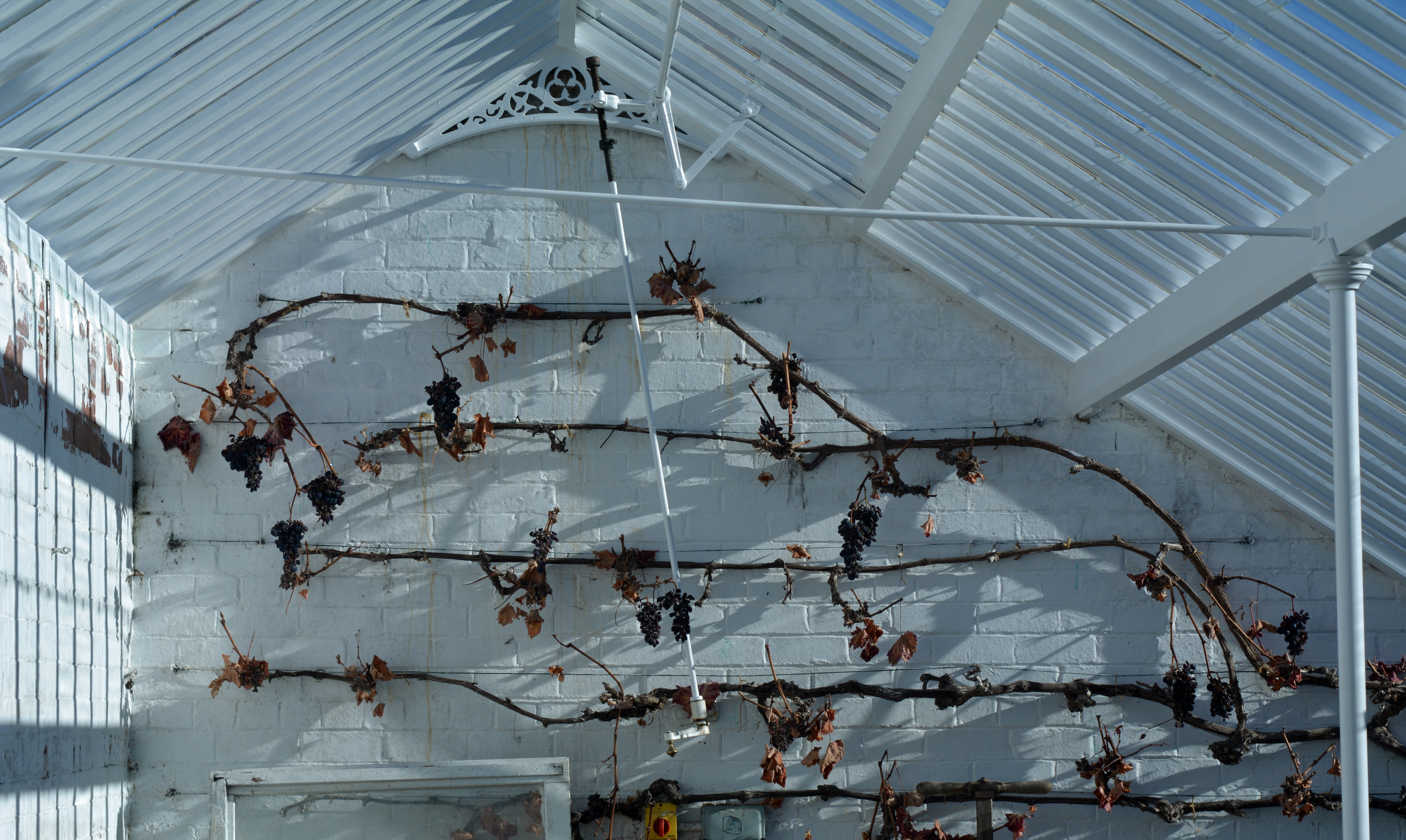
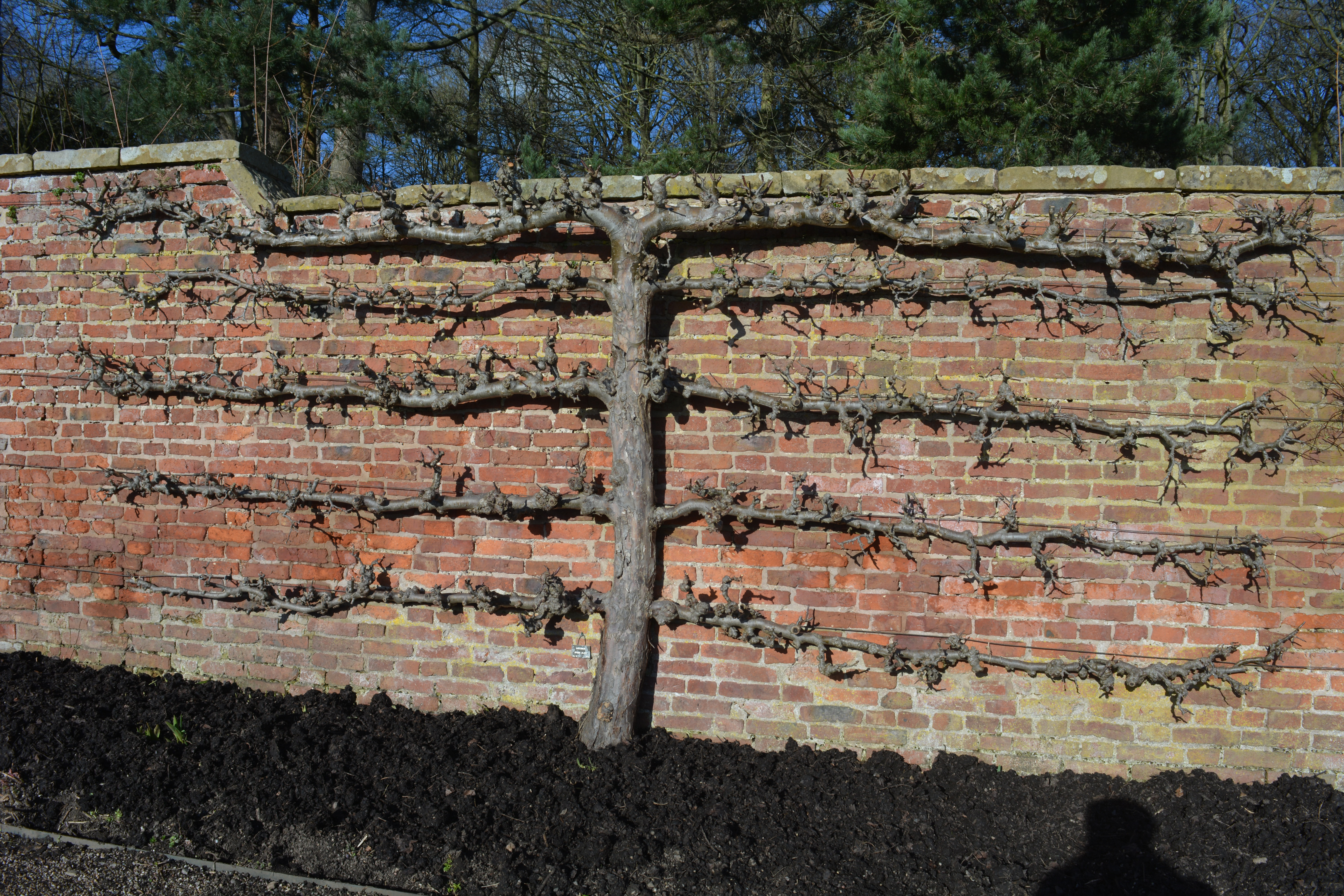
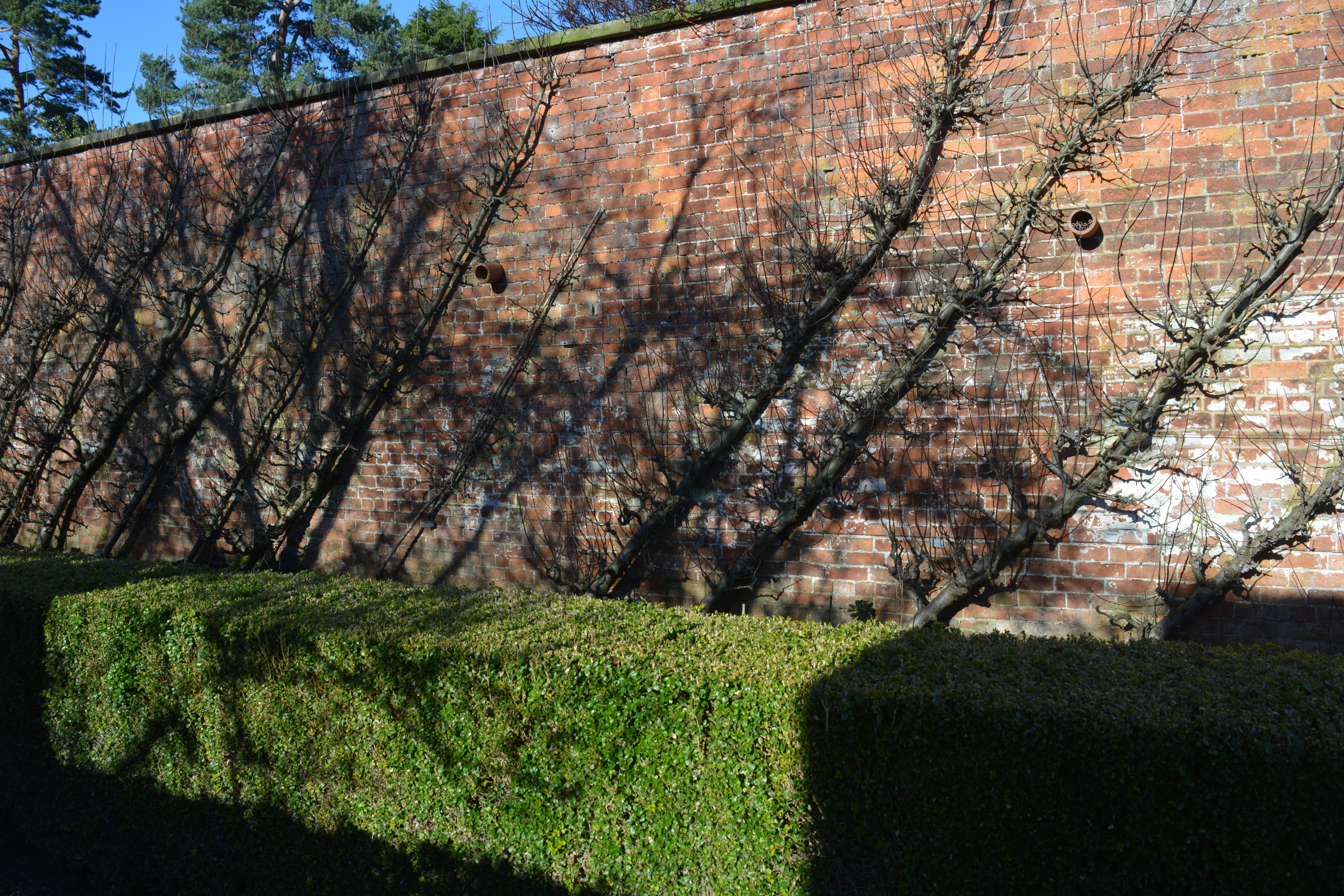
The garden is Grade 1 listed and is based around the 18th Century design. Amazingly it works well today! Even the car park and courtyards on the way in had points of interest to us gardeners, some of the Ivy cultivars, ancient wall-trained fruit, a beautifully carved wooden seat featuring carved horse heads and a vintage garden watering cart. We soon met our first Hederas (Ivy) in the collection, an unlabelled specimen which grew to frame a window, and one with beautiful foliage, Hedera hiburnicum variegata.


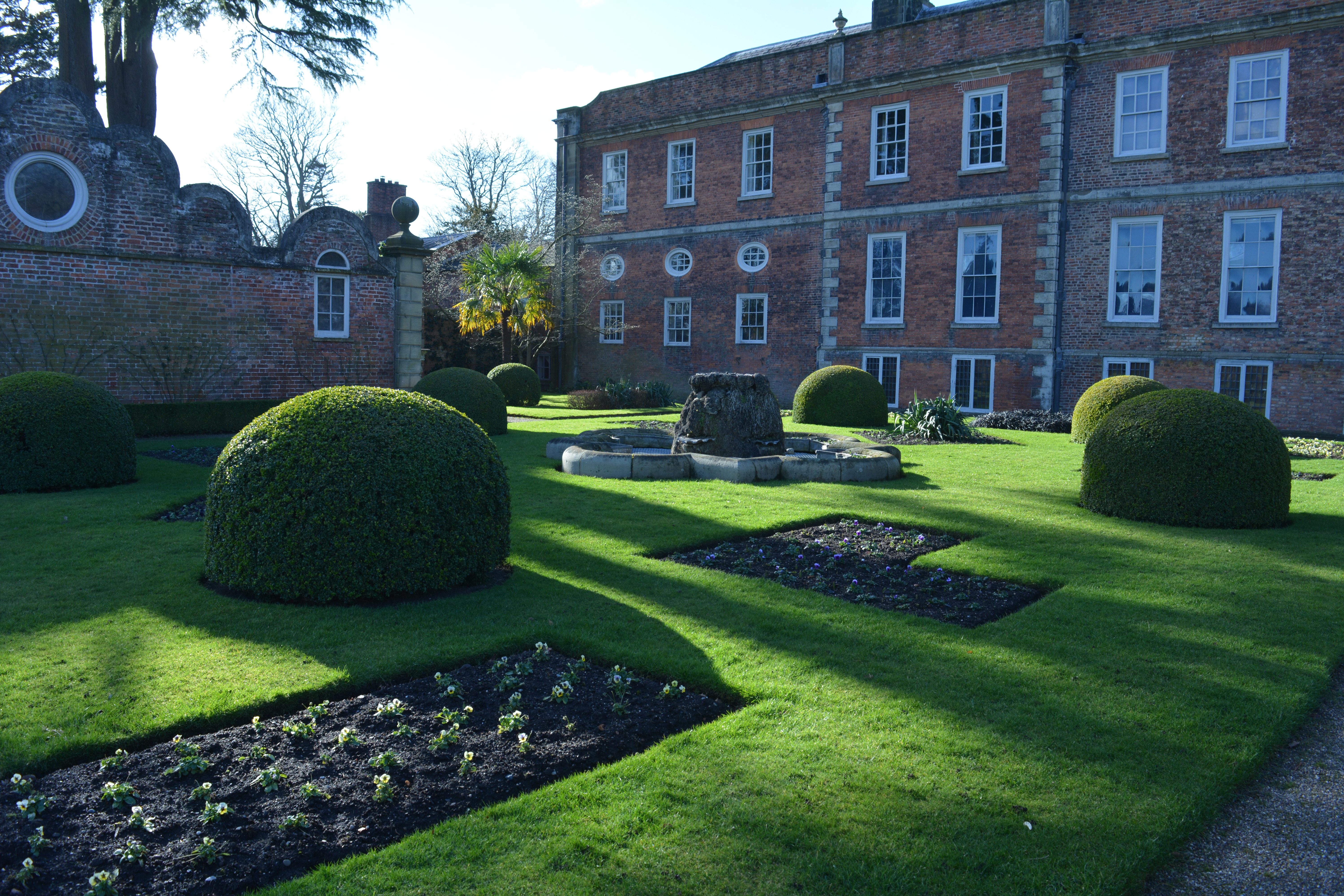
A feature we were looking forward to at Erddig was the huge variety of creatively pruned trees, both fruit trees and conifers. Some of these fruit trees must be decades old but are still skillfully pruned. Really well pruned and trained fruit trees are really beautiful. It felt good to see these age old gardening skills carrying on so professionally.


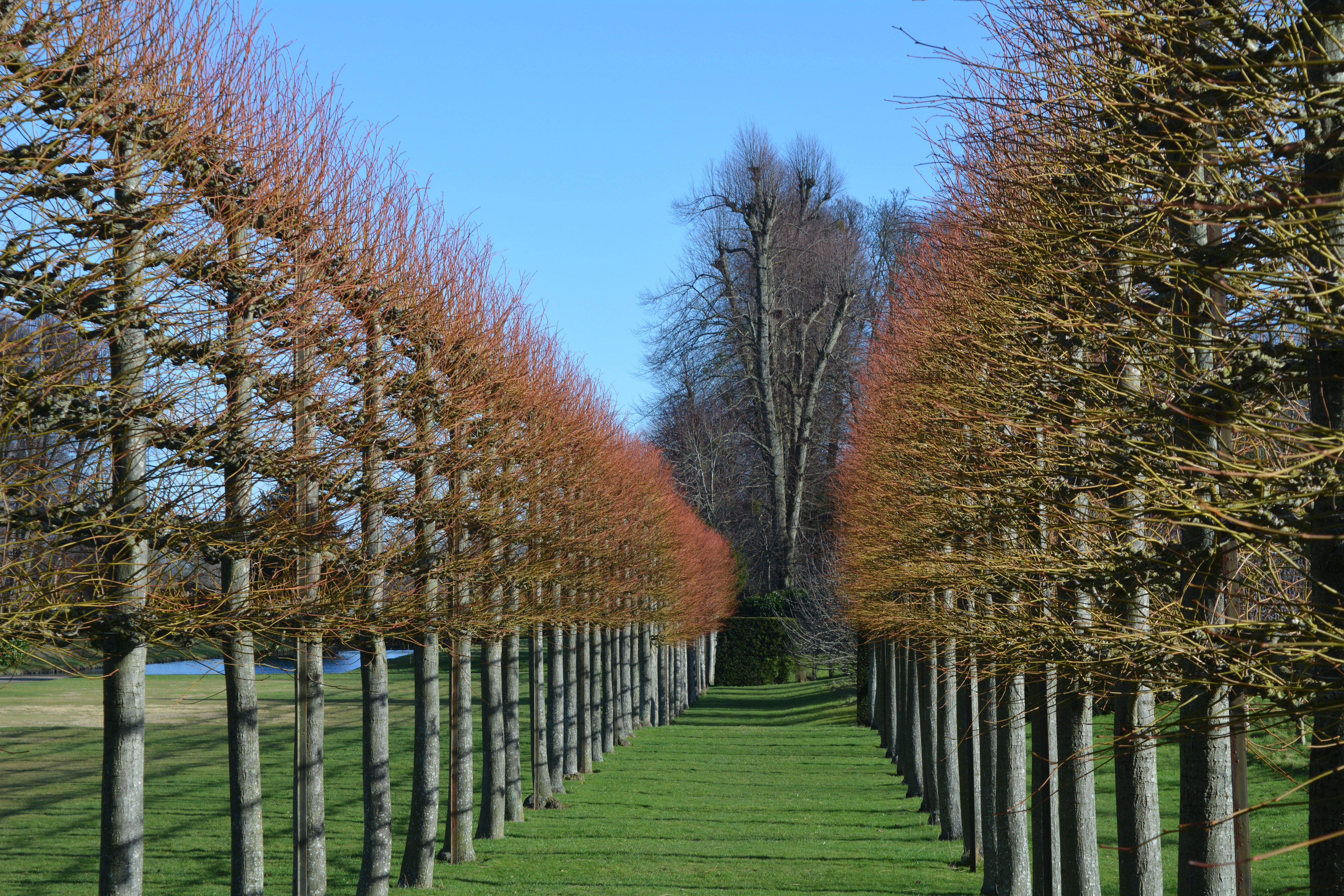
We discovered this double row of pleached limes after spotting an orange glow as the winter sun caught the new twigs and buds.


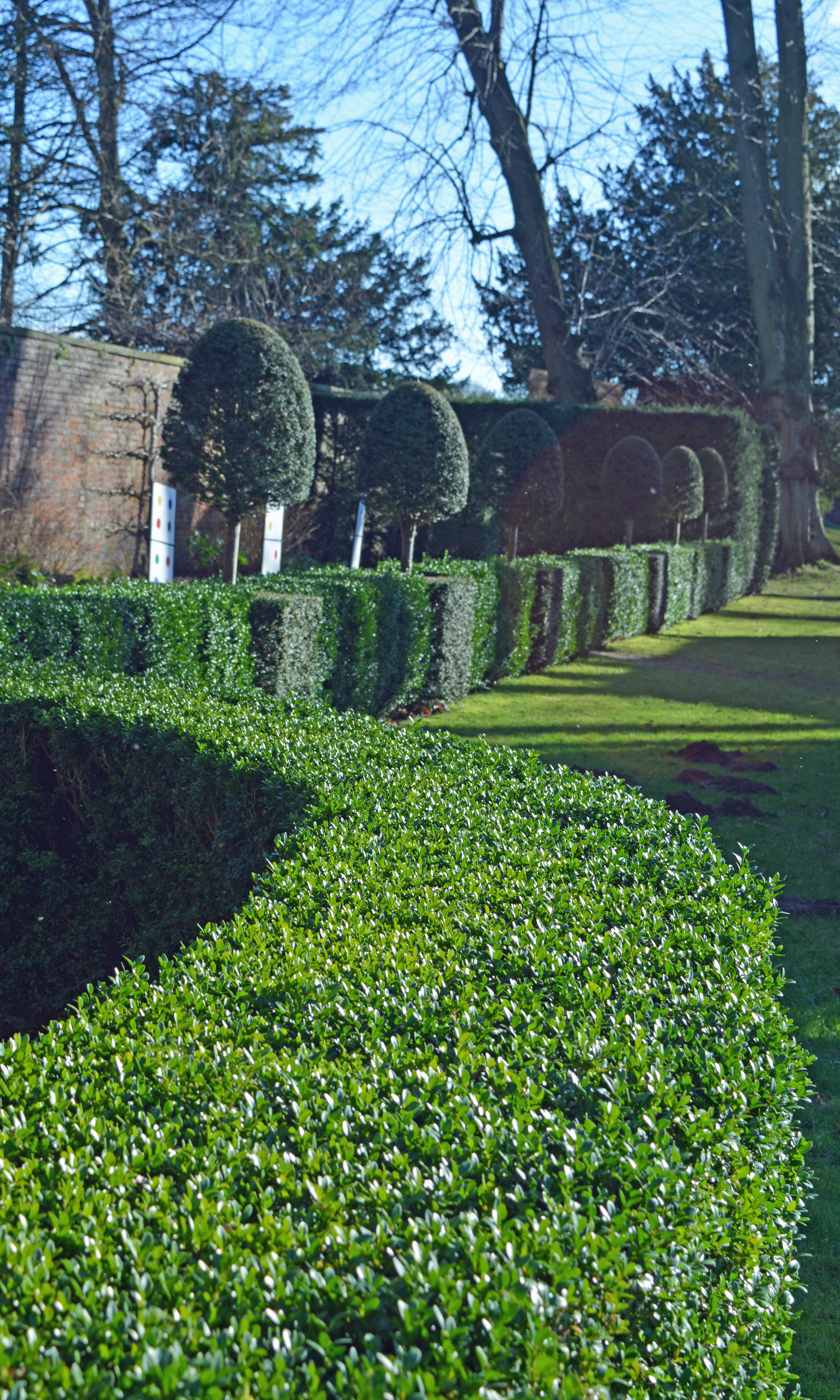
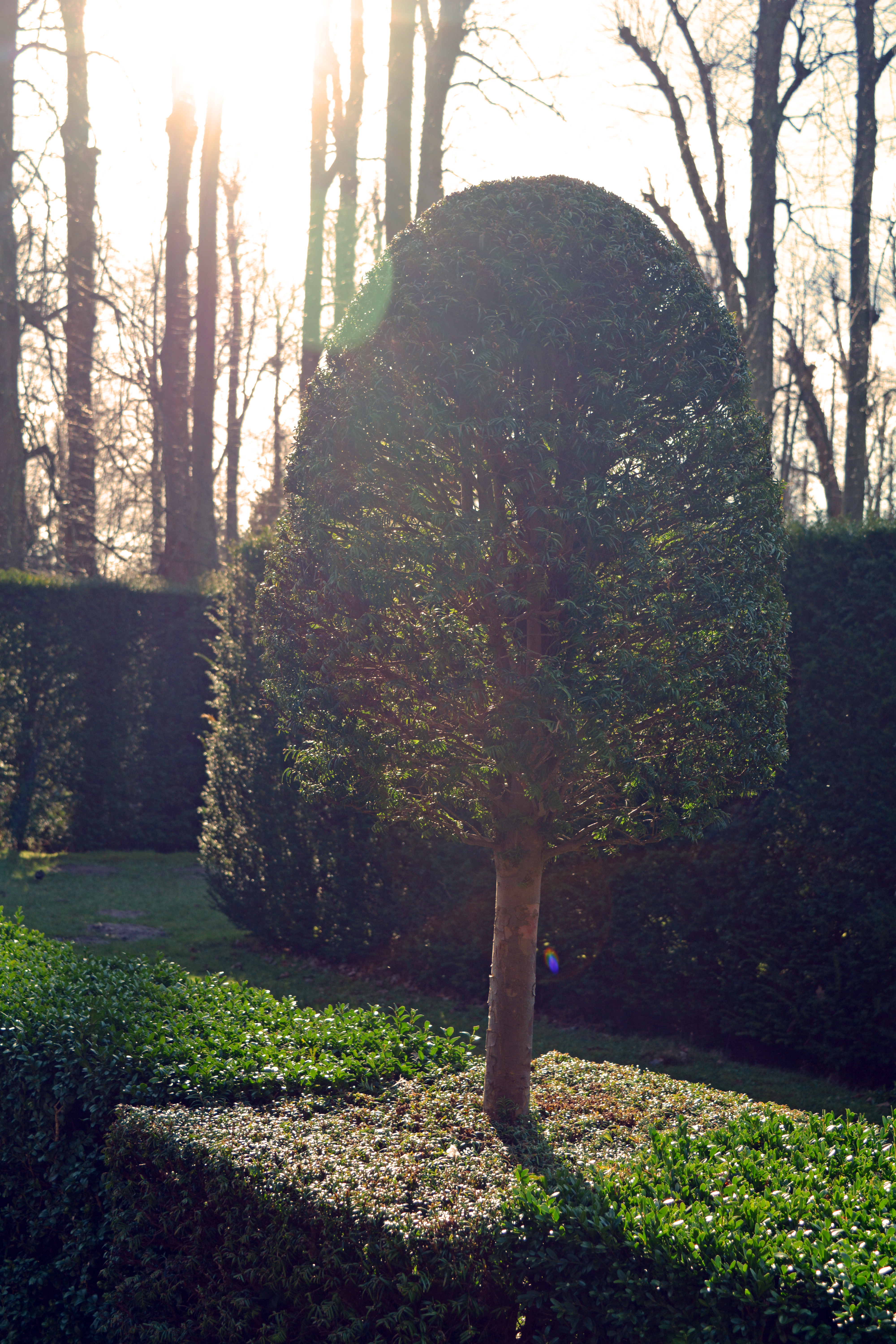
Beautifully topiarised conifers were presented in neat rows and as hedges throughout the formal garden area.


Not all the conifers were trimmed and controlled though, some were left to mature and become tall proud specimens.


We loved this tall double row of pollarded Poplar trees towering above our path, their network of silhouettes highlighted against the blue sky. This added to the strong structure of the garden.


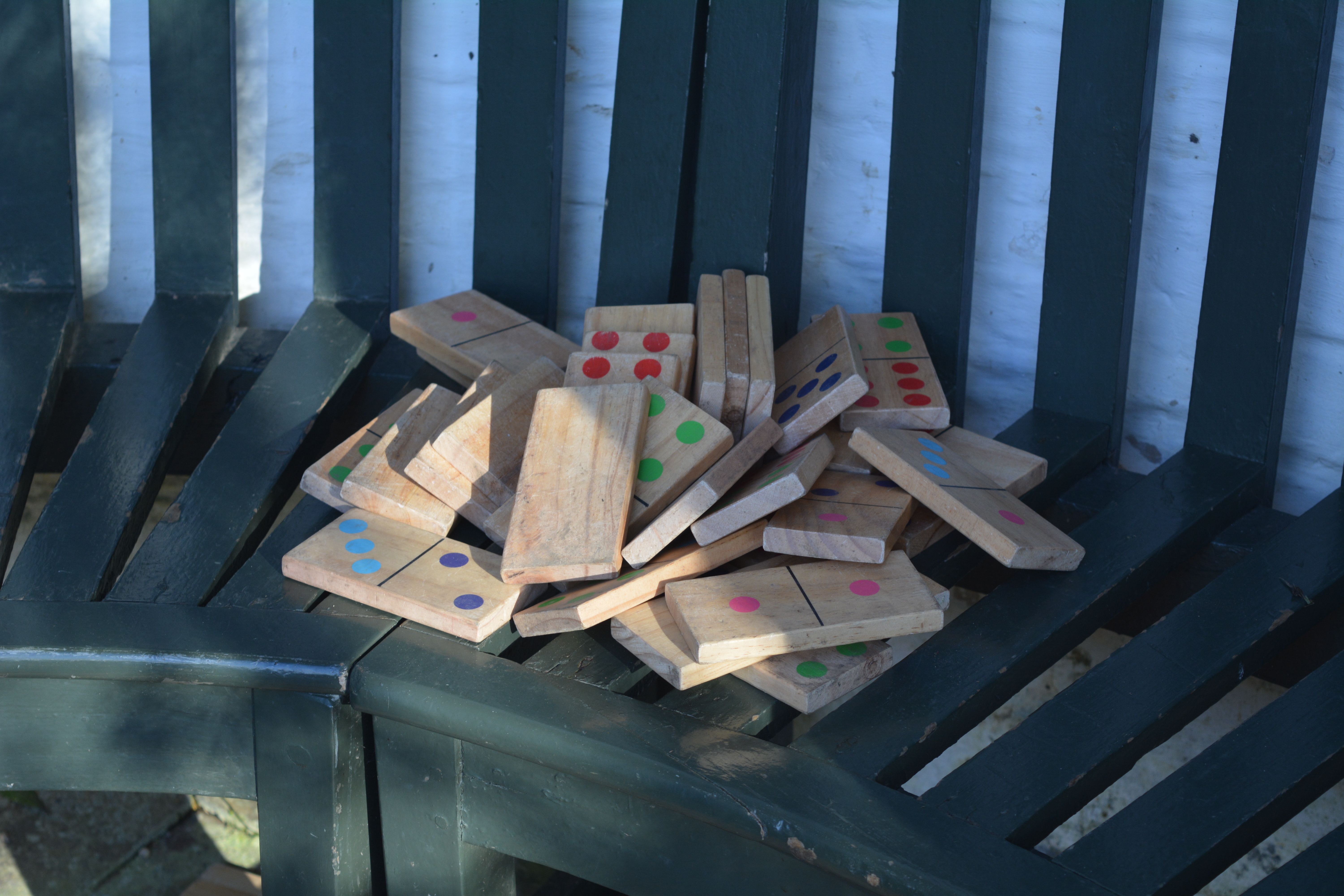
We love to see a touch of humour in gardens and points of interest for children and we enjoyed a few here as we wandered around Erddig.


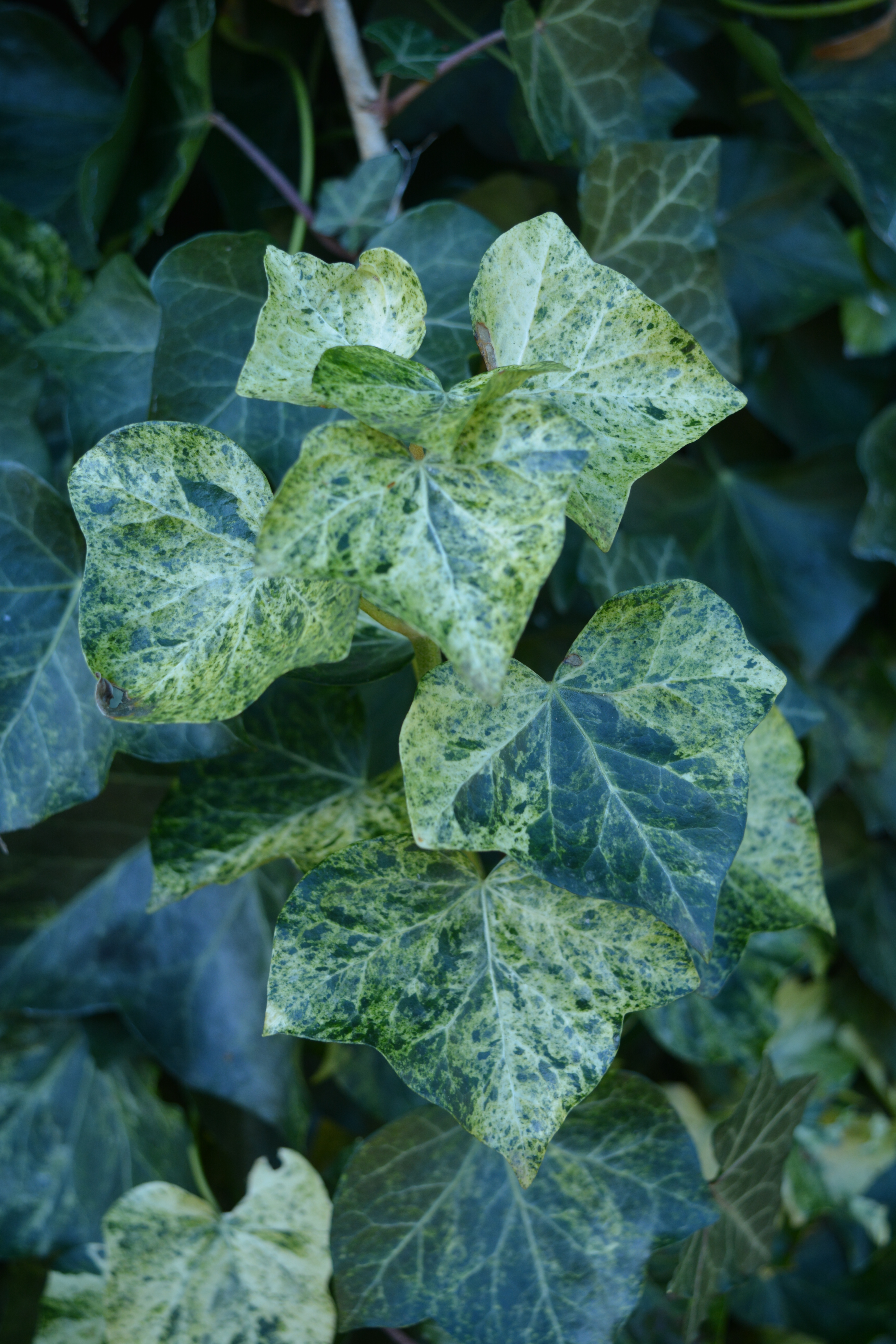
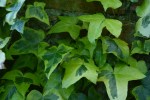
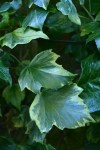
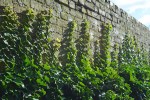
Erddig holds the National collection of Ivies, growing a huge selection of Hedera, but it took us along time to find the organised and well-labelled display of them growing along an old brick-built wall. We were amazed by the sheer variety, from plants with plain green typical leaves to those with the most beautiful and subtle variegation.


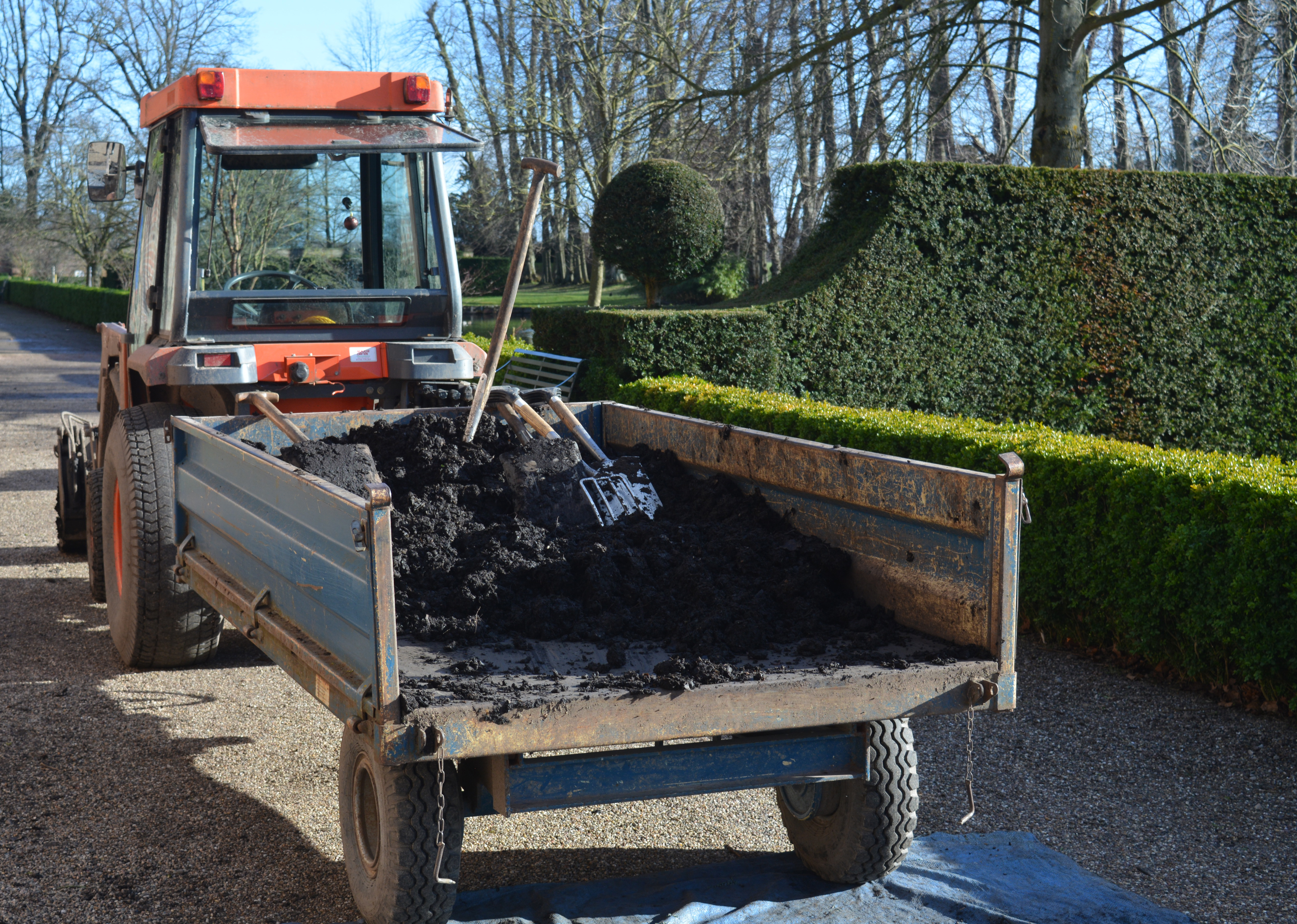
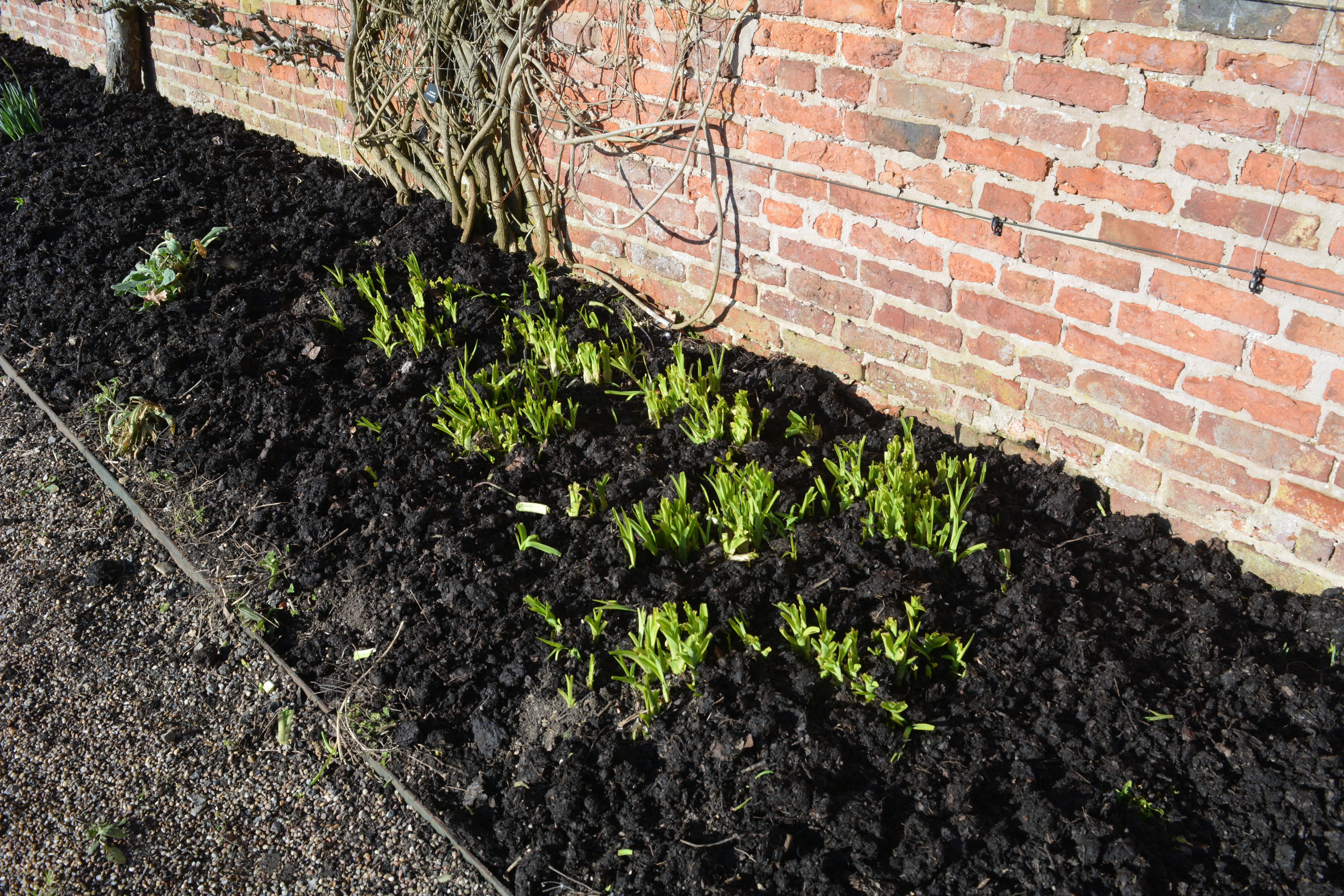
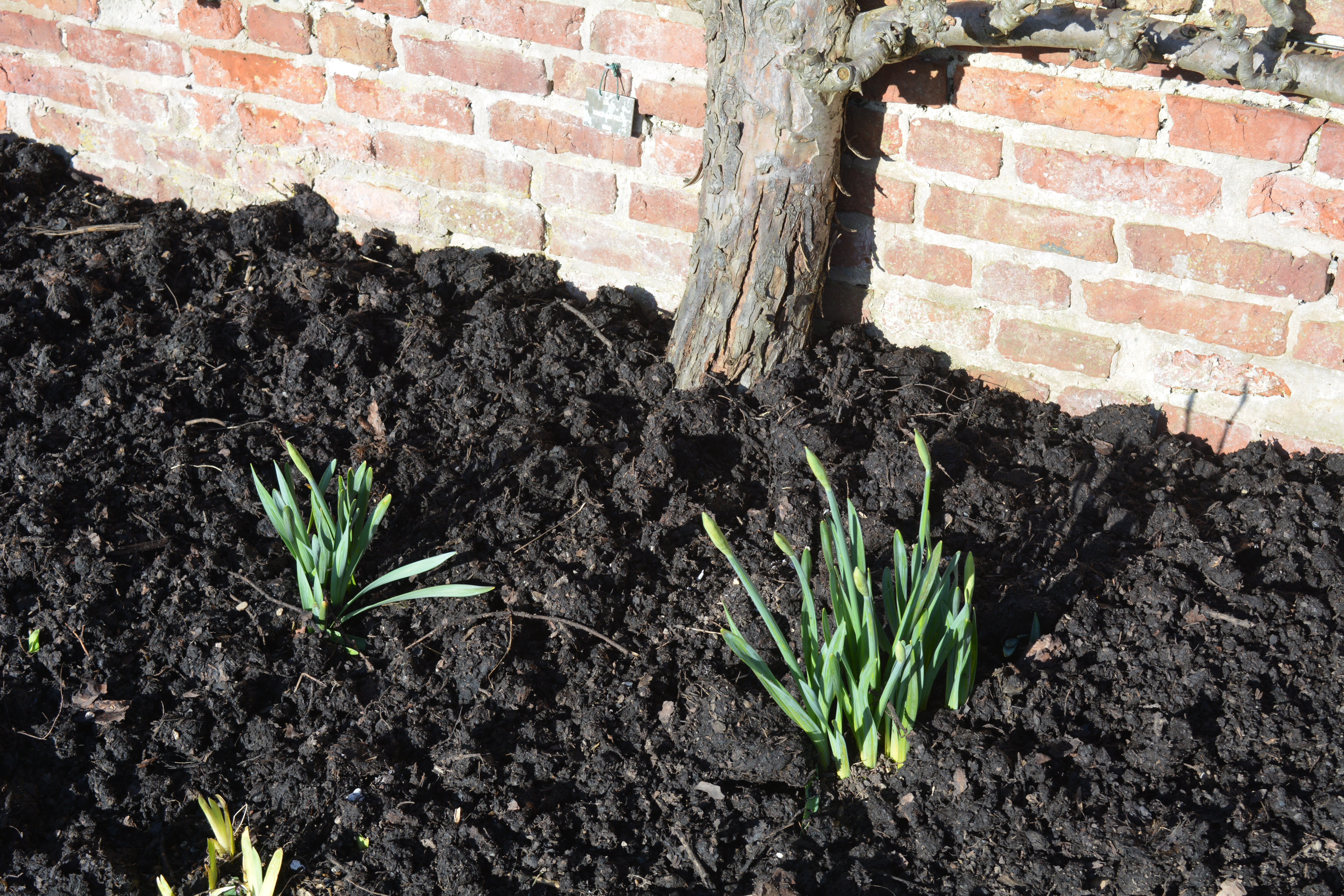
Don’t you just love to see what gardeners are up to when you visit a garden? Here hedge cutting and mulching borders with rich well-matured farmyard manure were keeping the gardeners on their toes. We were very impressed with the quality of their work and the evidence of a sense of pride in everything they did.

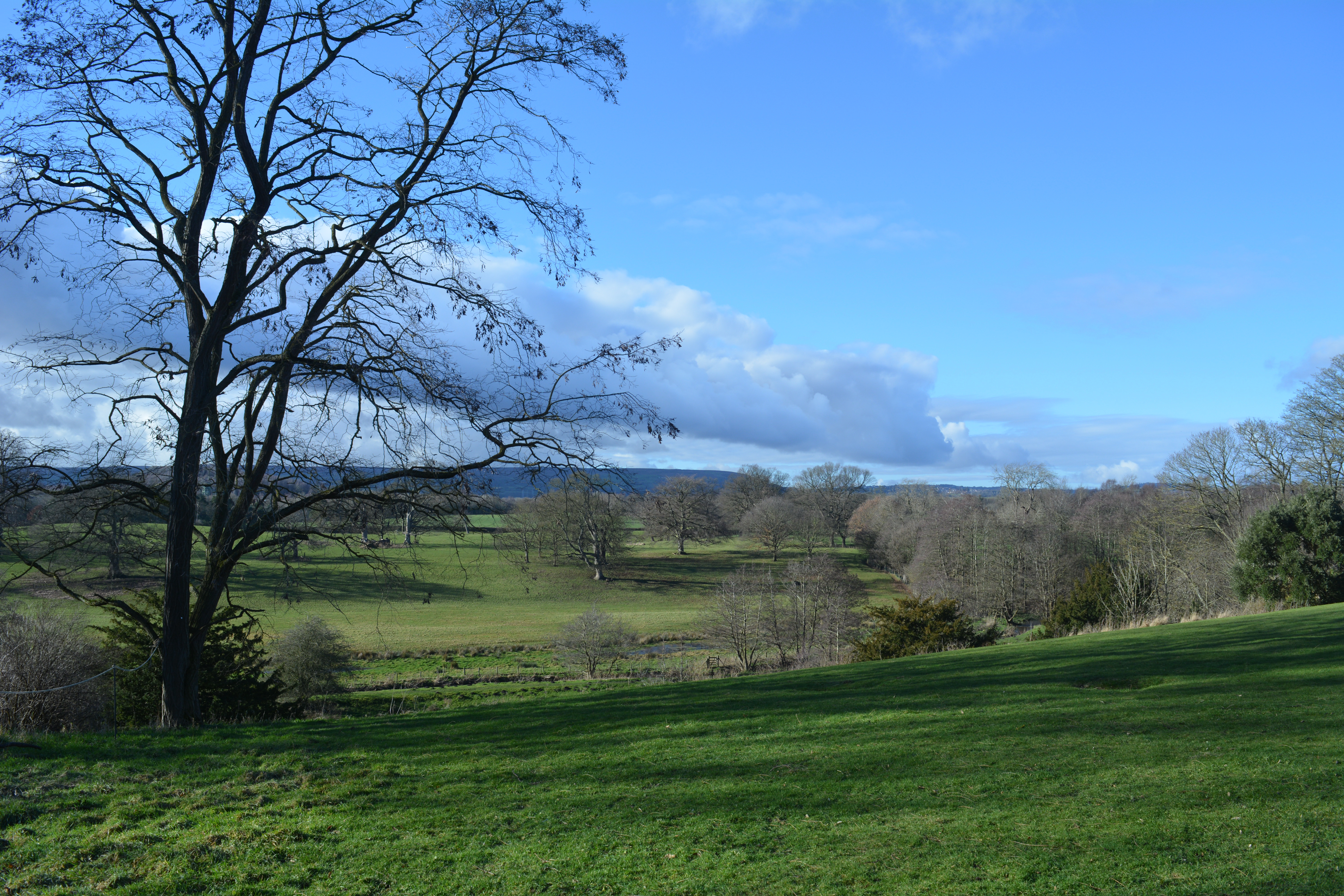
From the front of the house itself we found some wide views over the surrounding countryside.


I have only briefly mentioned the Ivy collection at Erddig so far but I will change all that by sharing a collection of my pics of the Ivies as a gallery. Please enjoy by clicking on the first photo and using the arrows to navigate.

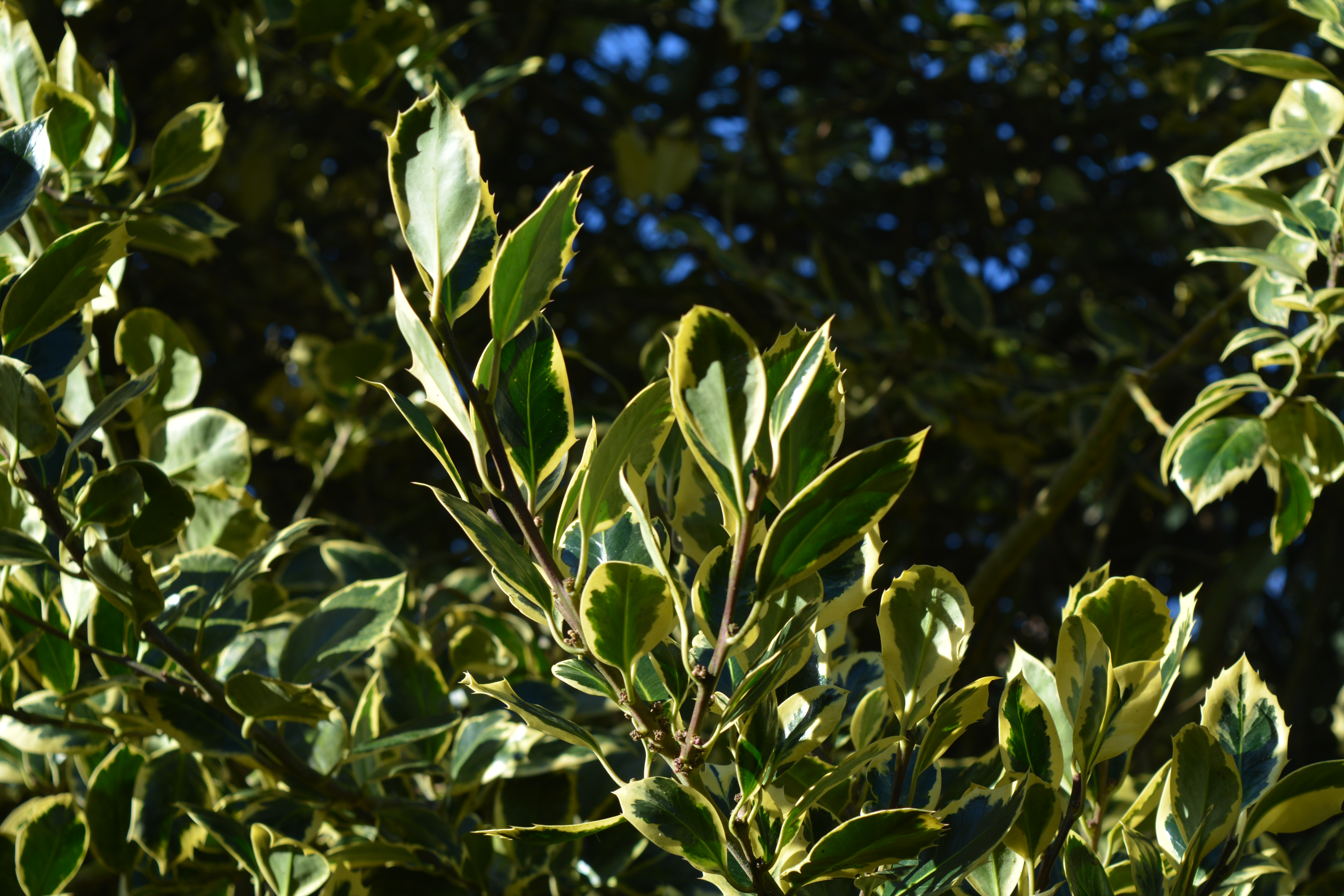
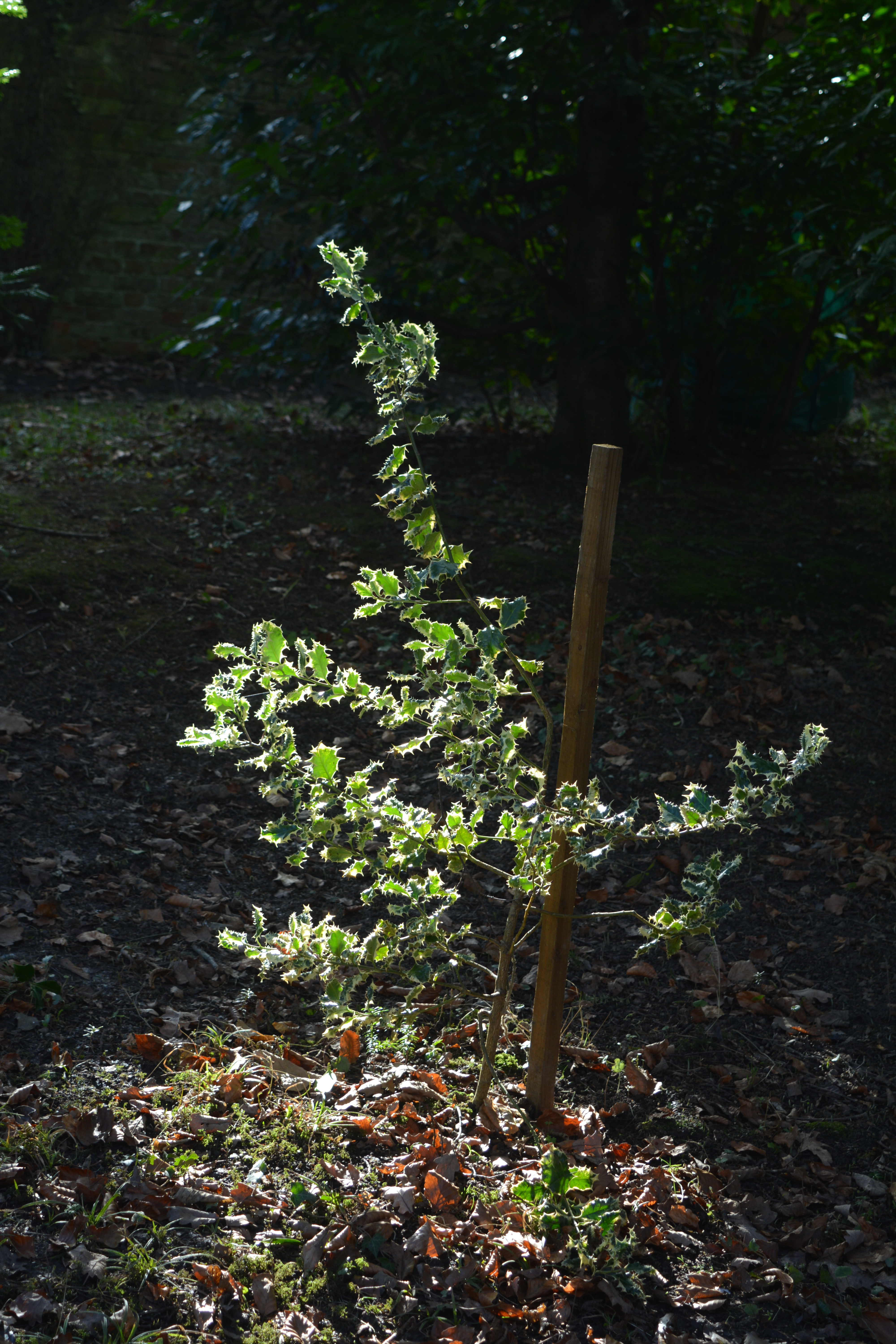
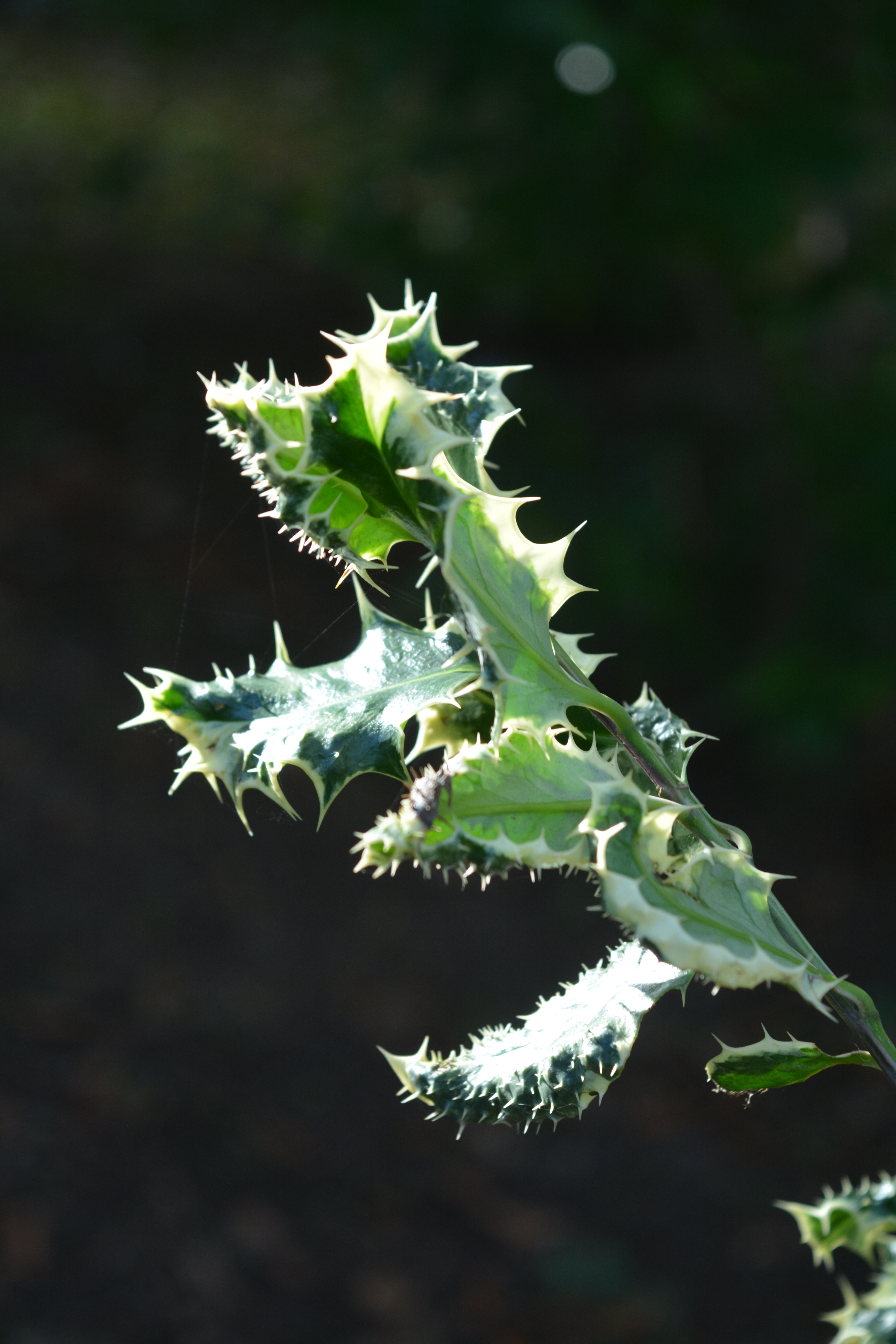
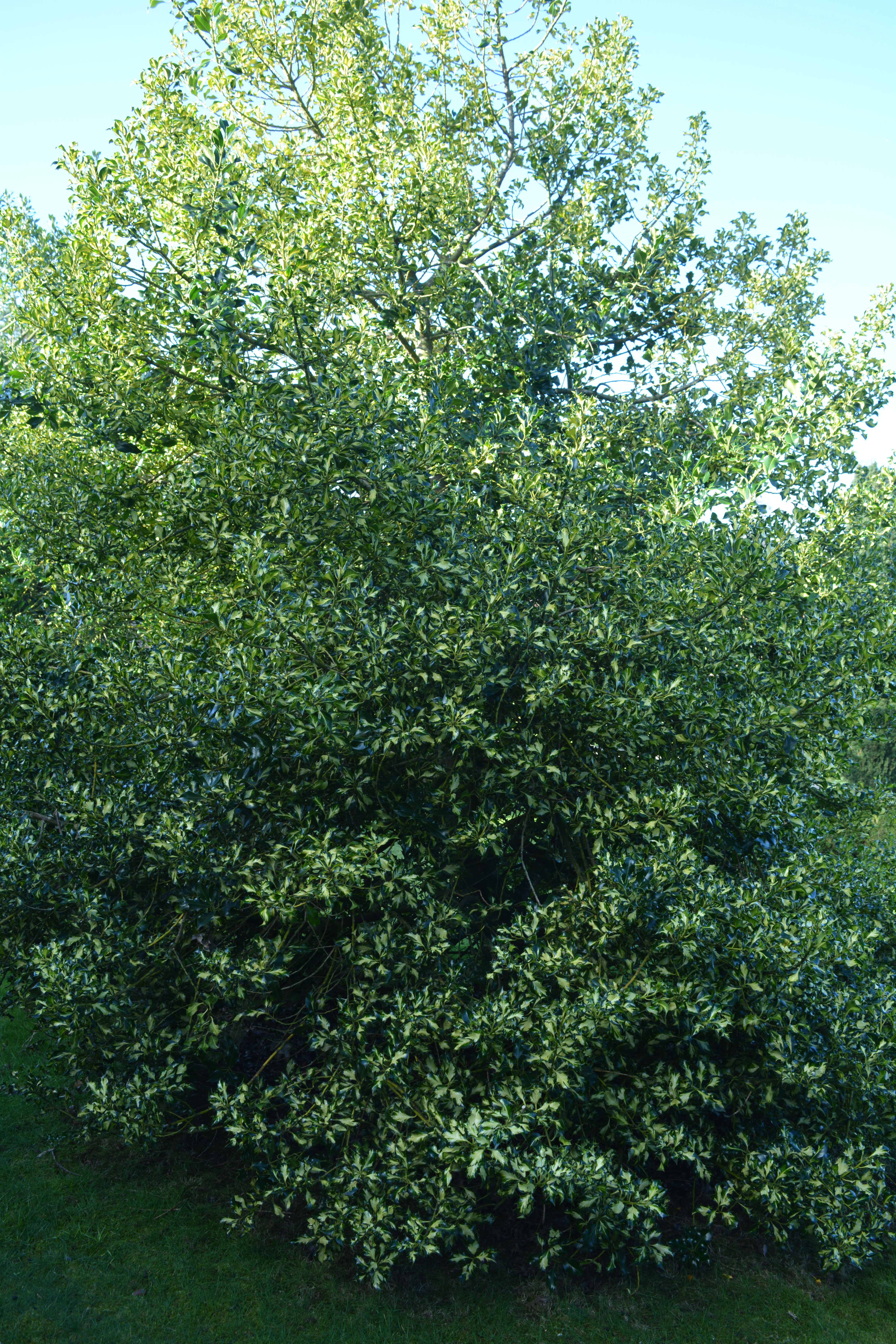
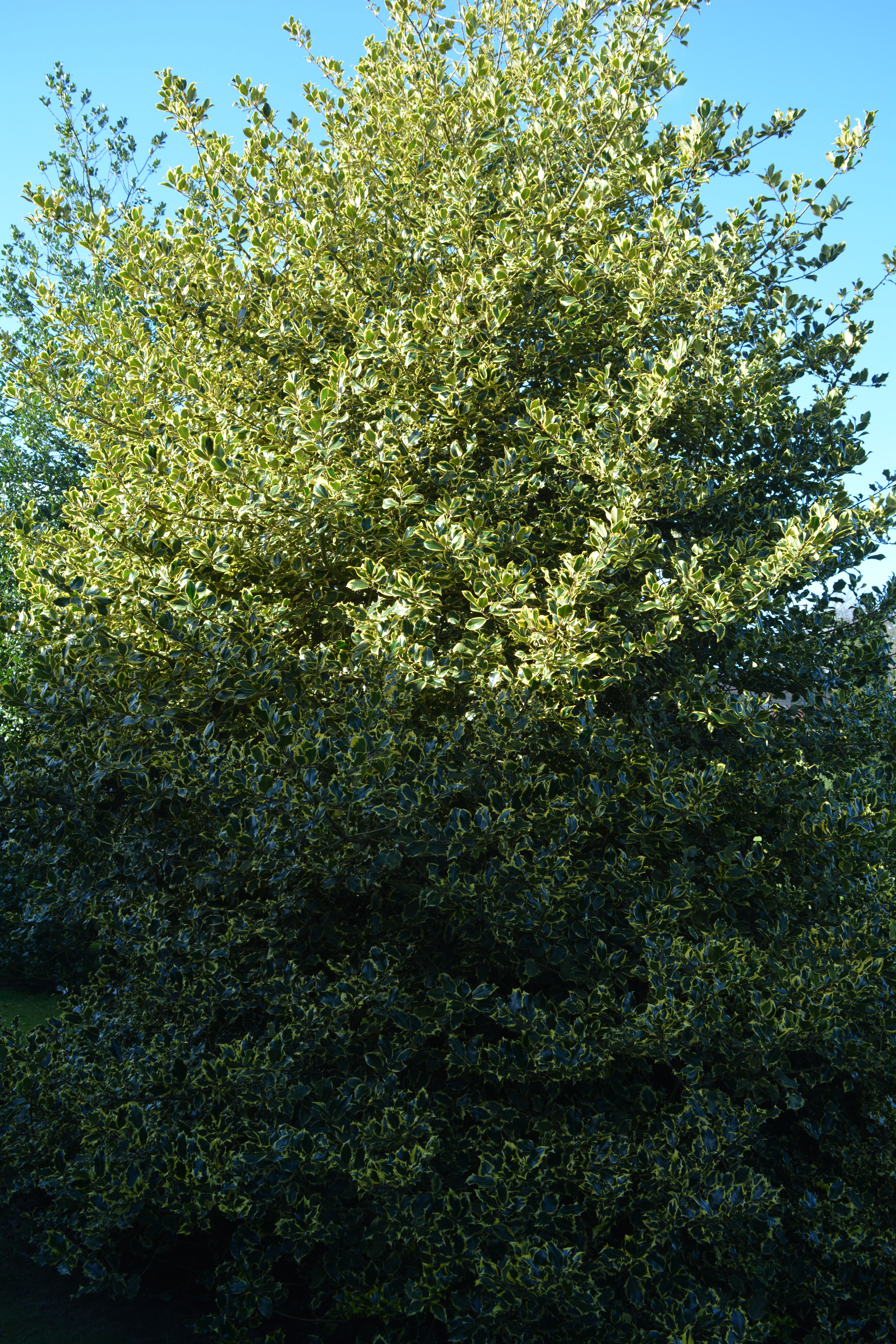
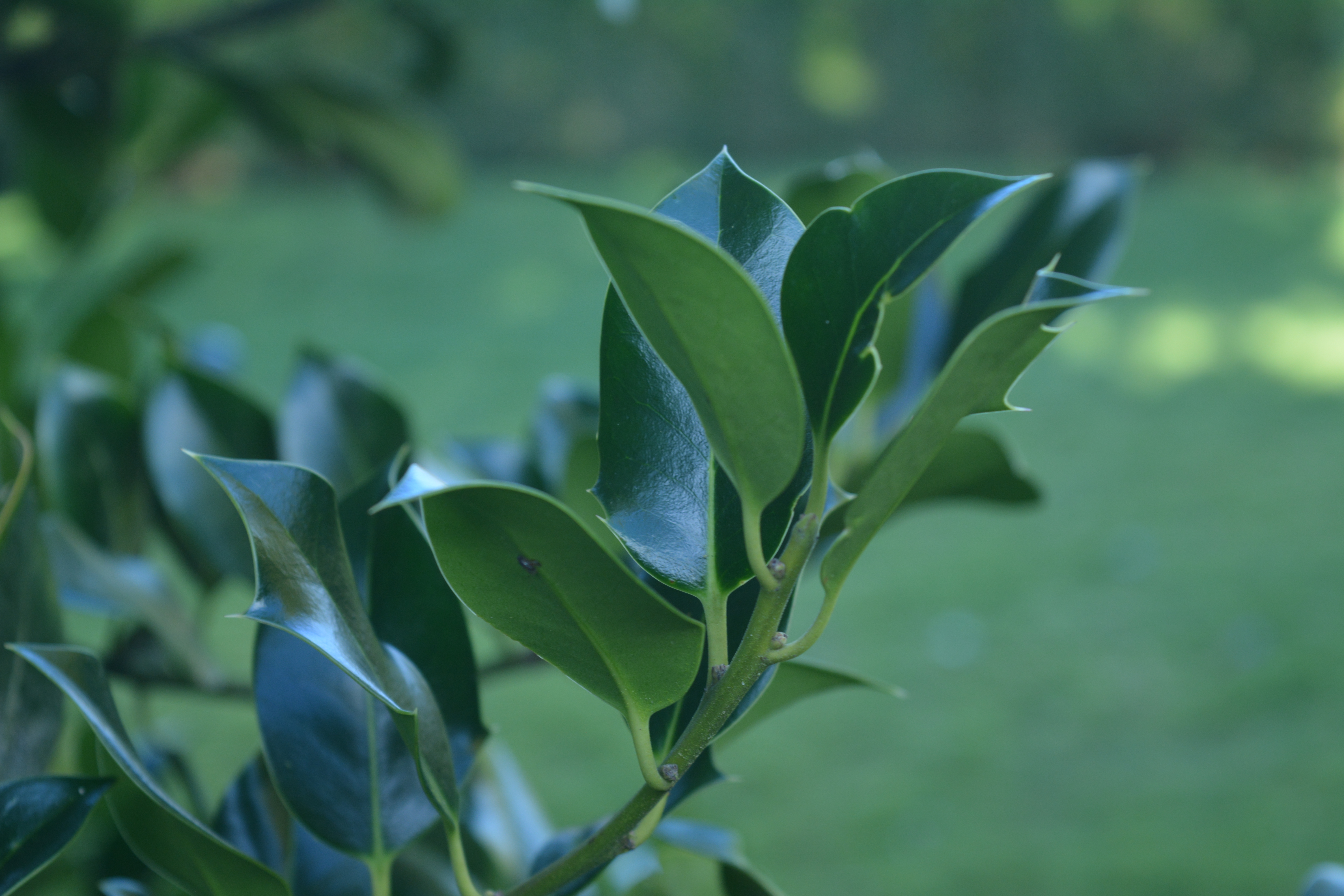
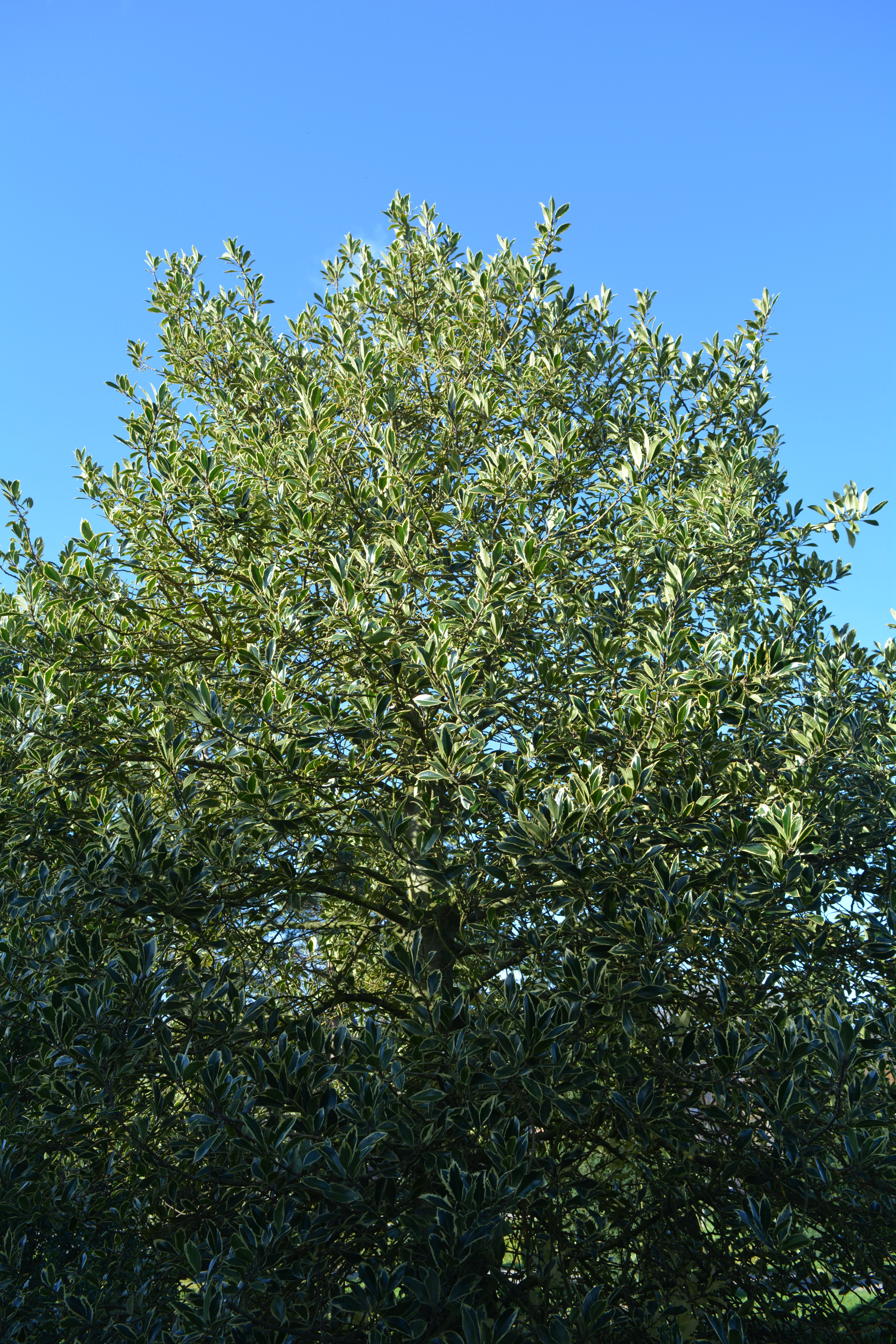
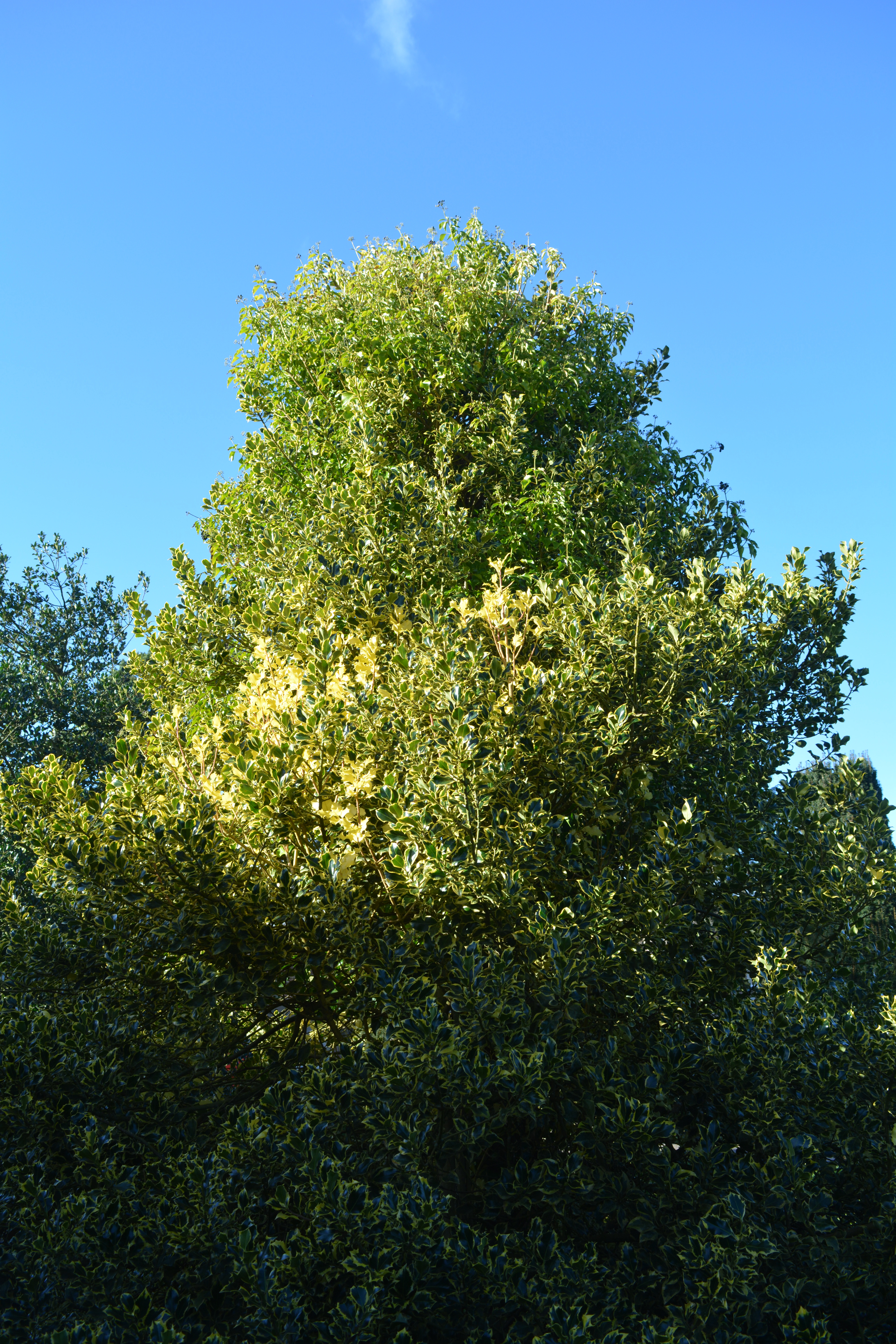
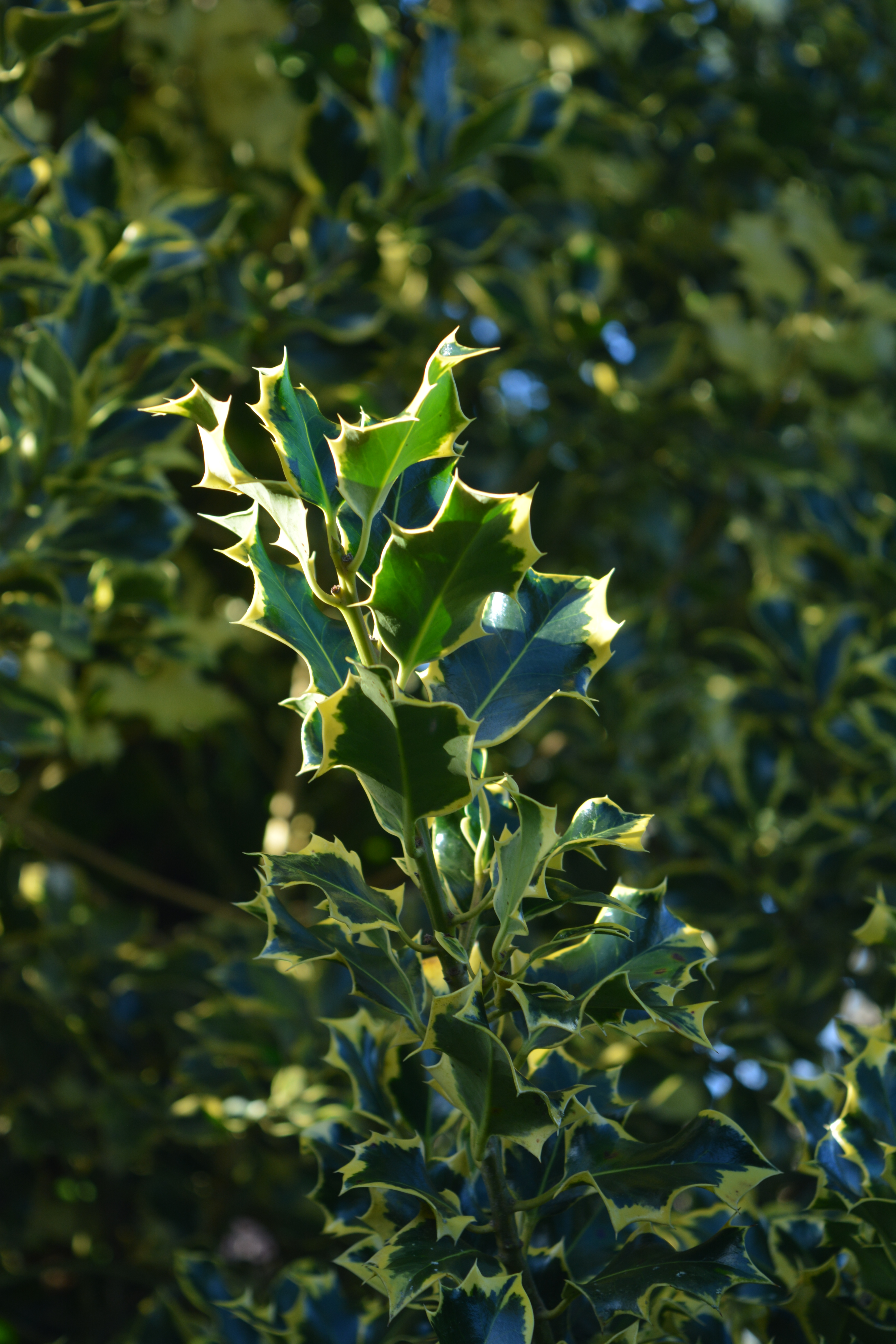
Hollies feature too with a lovely varied collection sadly with no labels but here are some to enjoy anyway.

Each photo of an Ilex tree is matched with a close up of its foliage.

So you can appreciate just how impressed we were with the gardens at Erddig on our return visit after many years. We will be returning more often in the future!

Categories
autumn autumn colours garden design garden photography gardening gardens gardens open to the public lakes National Garden Scheme NGS nurseries ornamental trees and shrubs Powis Powys shrubs trees Wales water in the garden Yellow Book Gardens

The Dingle Gardens Month by Month 2018

My chosen garden f0r my monthly visits in  2018 is so much smaller than Attingham Park which we enjoyed throughout 2017. The Dingle is a Nursery just over the border into Wales situated on the edge of the market town of Welshpool. The garden is accessed through a little wooden gate in the bottom left corner of the nursery where a large selection of Acer shrubs are displayed for sale. It is a garden centred around a huge collection of shrubs and trees, many unusual, growing on a gentle slope down to a lake.

The garden like ours opens at times under the auspices of the National Garden Scheme, but opens every other day of the year bar Christmas Day. I have already featured the gardens four times in my past posts. Here are a few photos to give you a taste of what we might discover during the year.


I hope these few photos will give you an appetite for the 12 posts to come about The Dingle in 2018.

Categories
architecture Cheshire garden design garden paths garden photography garden ponds garden pools garden seat garden seating gardening gardens gardens open to the public grasses hardy perennials ornamental trees and shrubs trees

The Most Romantic Garden in England – Cholmondeley Castle

Many visitors believe that the gardens at Cholmondeley Castle are the most romantic in England, and after each visit we have made it is hard to disagree. Jude, the Undergardener and I visited in mid-September with a group of college friends, every one of whom loved it for its atmosphere. The “Cheshire’s Gardens 2017″ leaflet describe the gardens as “Romantic, beautiful and wild”.

The Cholmondeley family have lived on the site since 1200 but the castle we saw was built in the early 19th Century. Today the gardens feature the Folly Garden, a Lily Pond, a woodland area, as well as smaller borders such as the grass borders. The wide sweeping lawns encourage visitors to wander freely between the borders and enjoy long views.

As we walked these inviting paths, enjoying wide vistas and clumps of mature trees we stopped frequently when our eyes rested upon some fine planting, beautiful individual plants and imaginative groupings.


We had a great day at Cholmondeley Castle discovering what the romantic garden had to offer. It certainly did have a romantic atmosphere!


Categories
colours garden photography gardening light light quality ornamental trees and shrubs spring gardening trees

Simply Beautiful – 11 – Orange Leaves

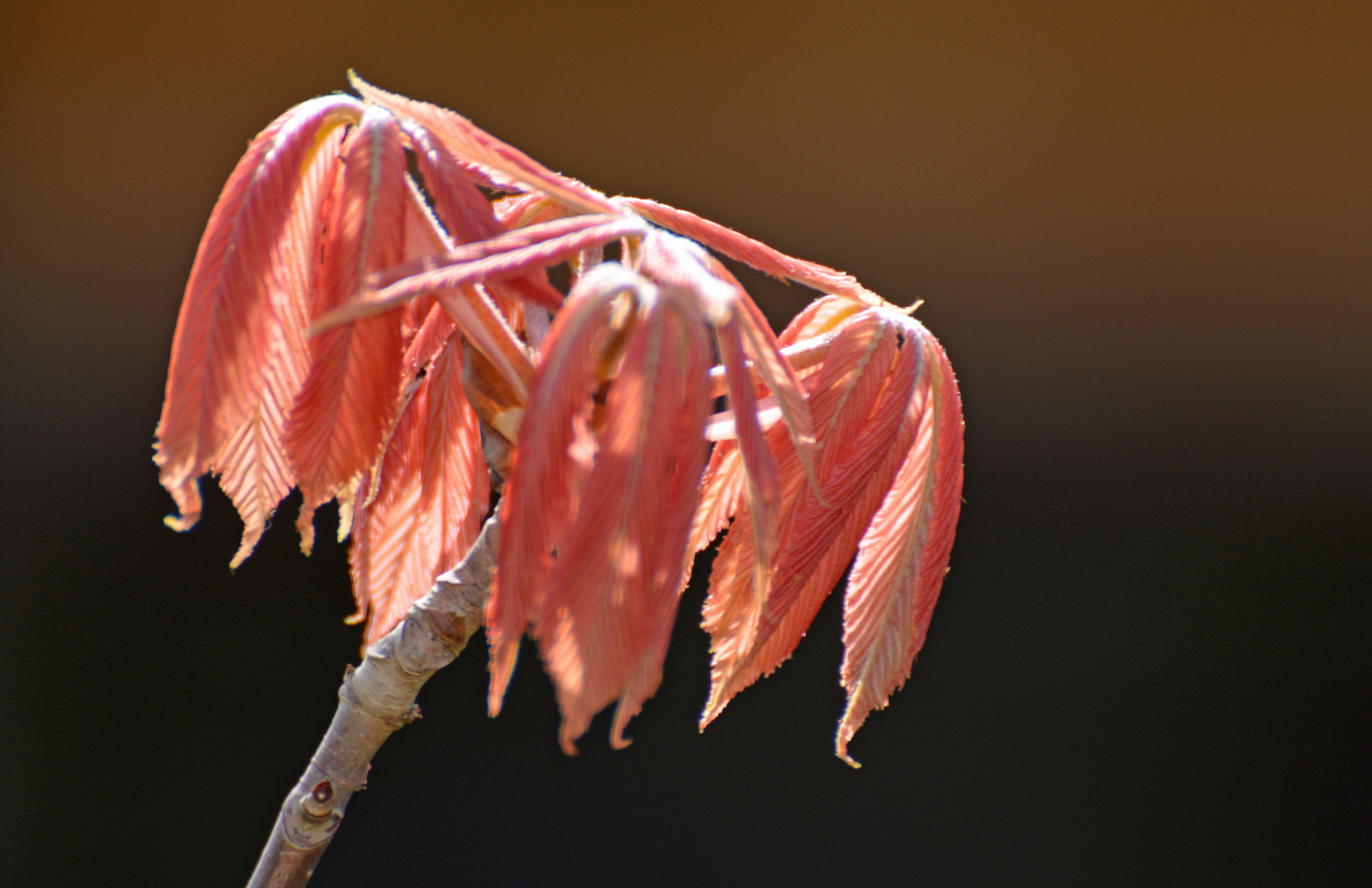
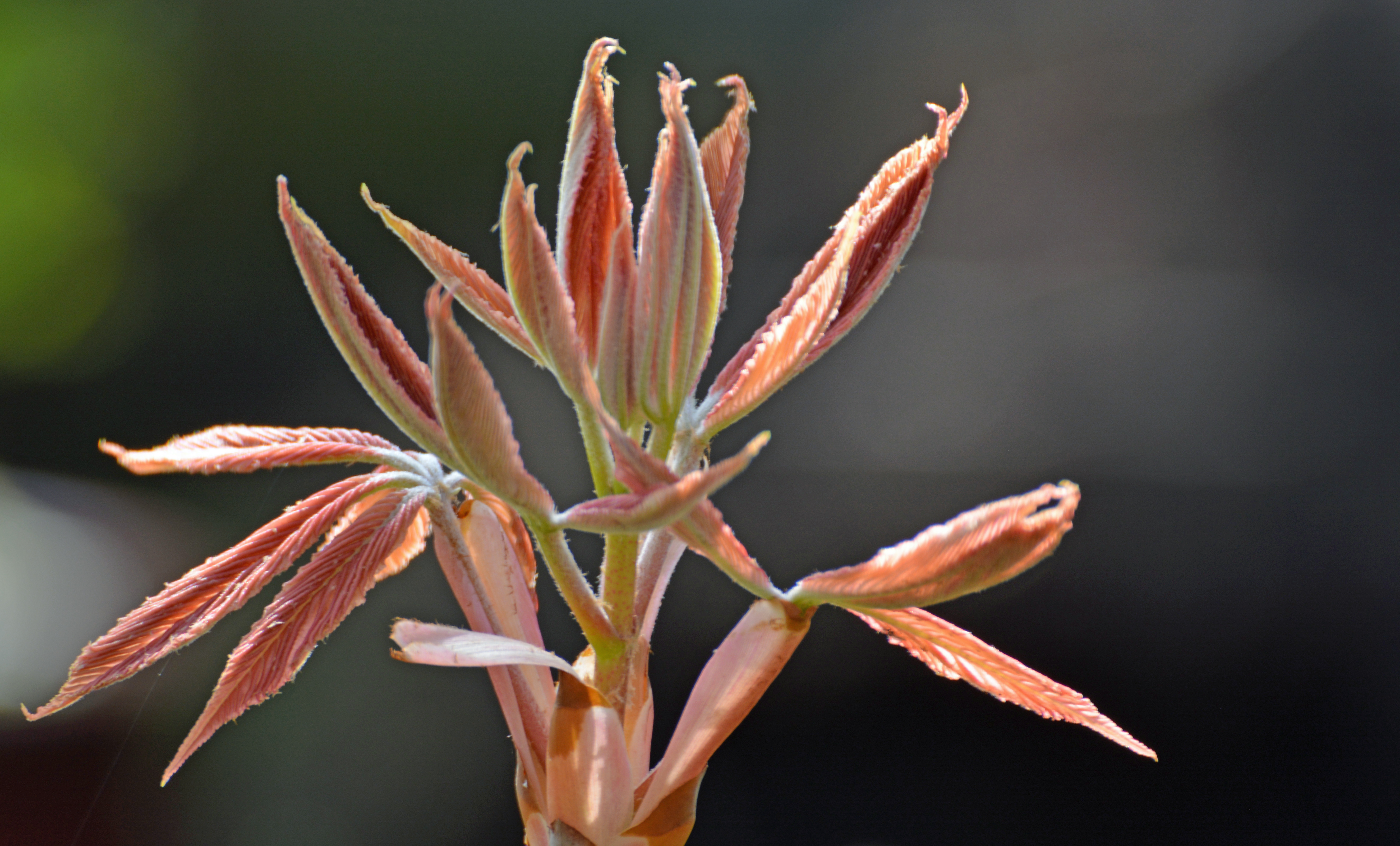
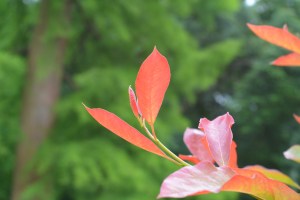
Spring is the time for brightly coloured unfurling leaves on trees and shrubs. Most are green – sparkling fresh green – but occasionally the colours of new leaves makes the gardener stop in his tracks and take a second look to see if the leaves really are the colour he thinks h has just seen.

Take these leaves unfurling from little sticky buds of an unusual Aesculus. Simply beautiful!

This little tree is called Aesculus x neglecta “Erythroblastos”, a big ugly name for a little attractive tree.

Categories
arboreta colours garden design garden photography gardening gardens gardens open to the public hardy perennials ornamental trees and shrubs outdoor sculpture sculpture shrubs trees

The Place for Plants – East Bergholt Place Gardens

As we move towards the end of February it seems a good time to share with you a visit we made to a beautiful garden in the summer.

The gardens at East Bergholt Place, otherwise known as “The Place for Plants” was one of our chosen gardens to visit when we spent a few days down in Suffolk. It is situated in the Stour valley on the border between the counties of Suffolk and Essex. We had high expectations of the gardens as they are affiliated to the Royal Horticultural Society, usually a guarantee of a garden well worth a visit. The garden includes an arboretum and the National Collection of deciduous Euonymus, my favourite family of shrubs.

eb-01 wp-07

East Bergholt is a garden with a calm atmosphere full of peacefulness and contentment. Just to walk its grass paths seeking out specimen trees and shrubs makes the visitor feel calm.

eb-64 eb-37 eb-44 eb-22eb-53 eb-30

Varieties of Cornus kousa with their showy bracts add patches of colour beneath the collection of unusual mature trees.

Cornus kousa “White Dusted”

eb-31 eb-27eb-35

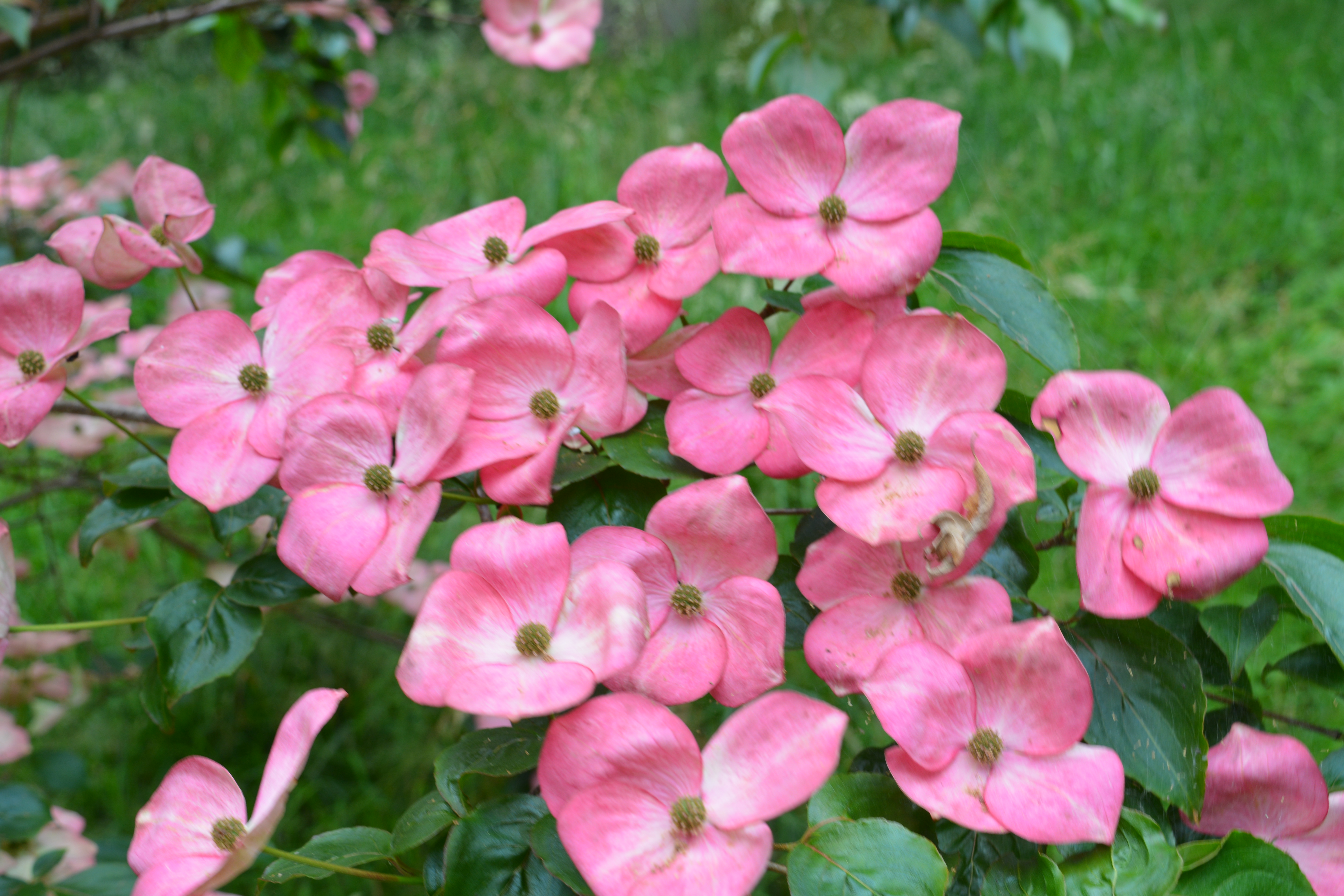
Cornus kousa “Satomi” with its pink bracts.

eb-15 eb-14 eb-03 

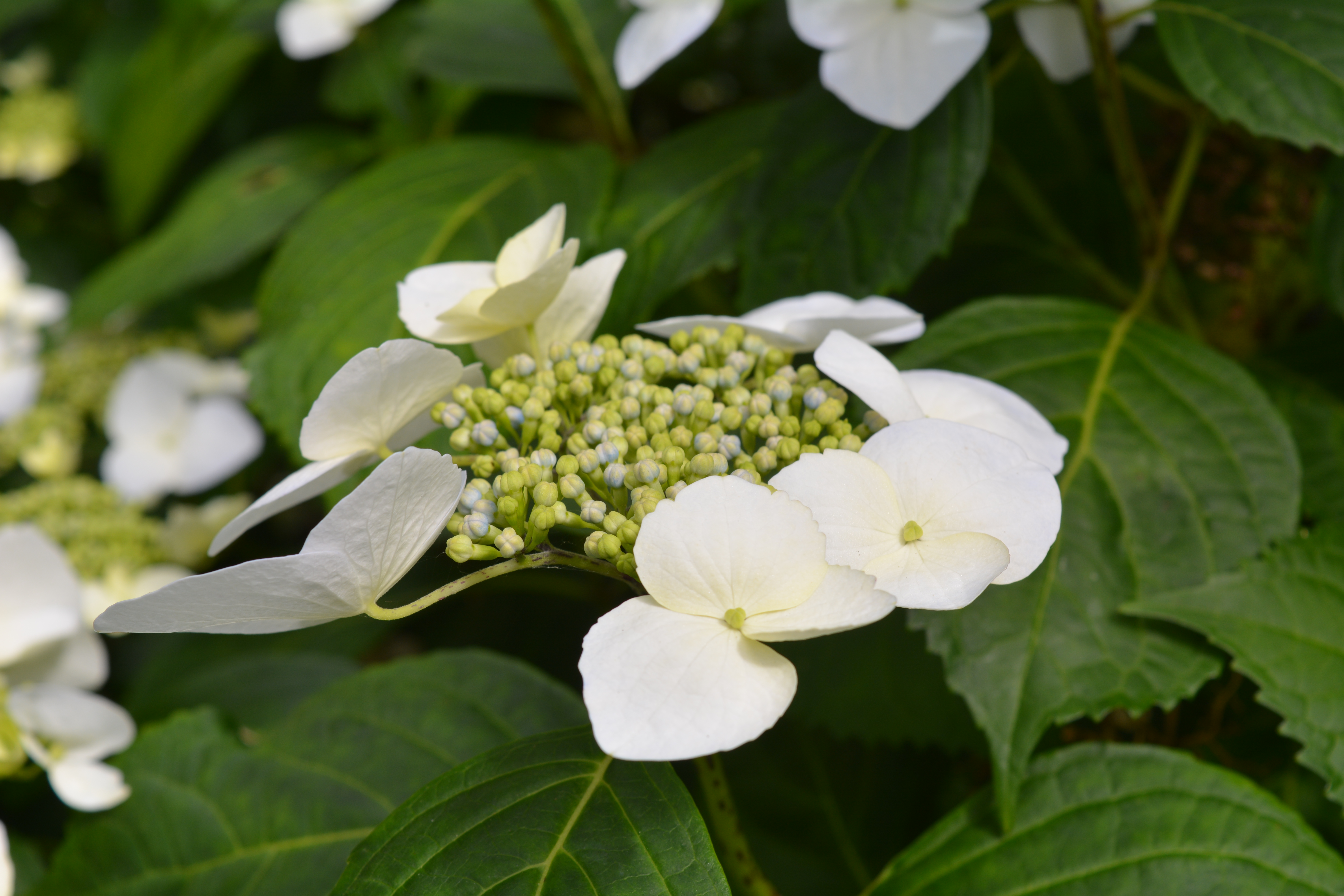
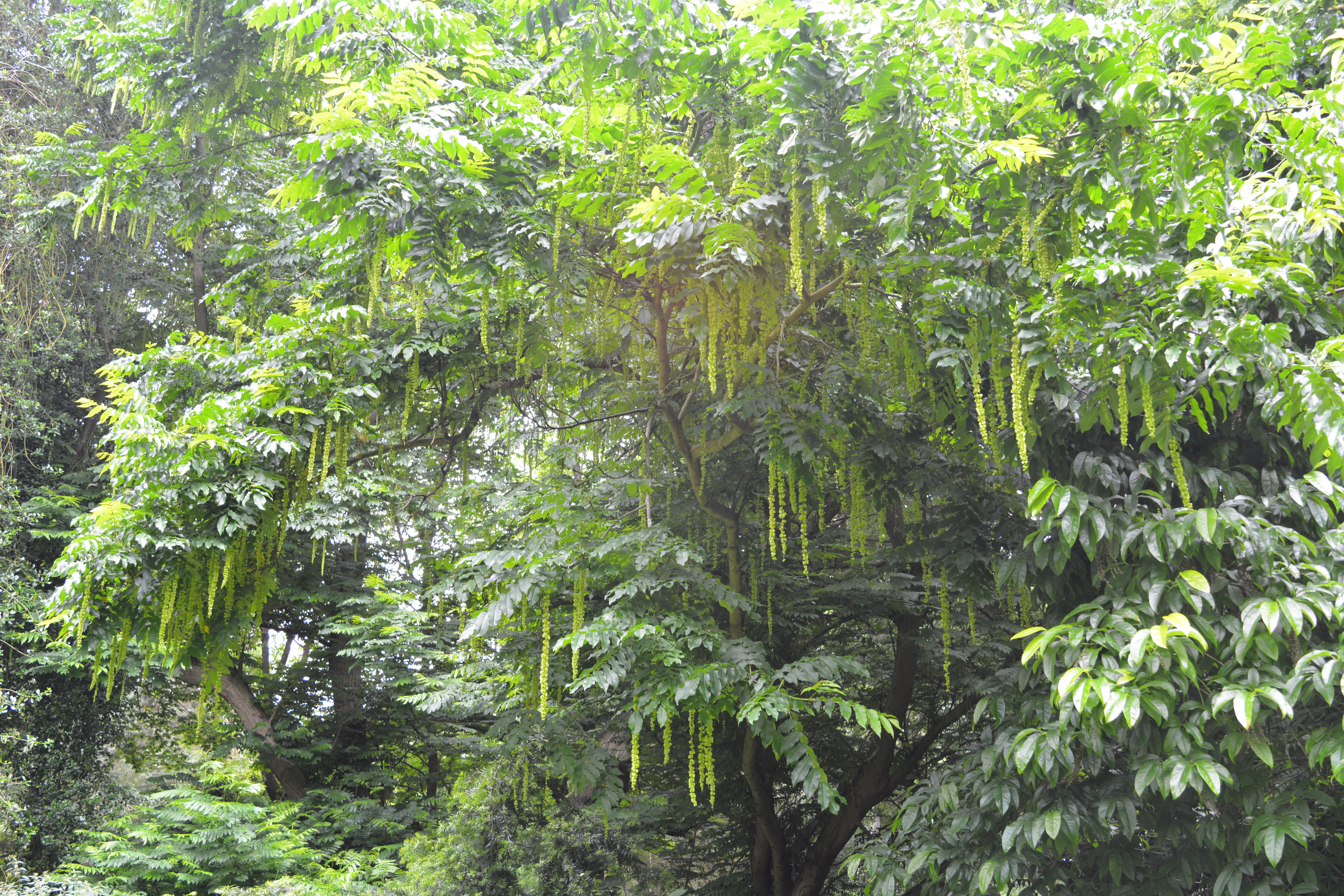
Down in the valley bottom a string of  small lakes provided good habitats for a collection of Hydrangeas which grew beneath a large specimen of the Wing Nut Tree, Pterocarya fraxinifolia, a member of the Walnut family, with its long green “catkins” growing up to 60cm long.

eb-36  eb-34eb-20 eb-19eb-33 eb-28 eb-26 eb-25 eb-24 eb-23eb-16 eb-17

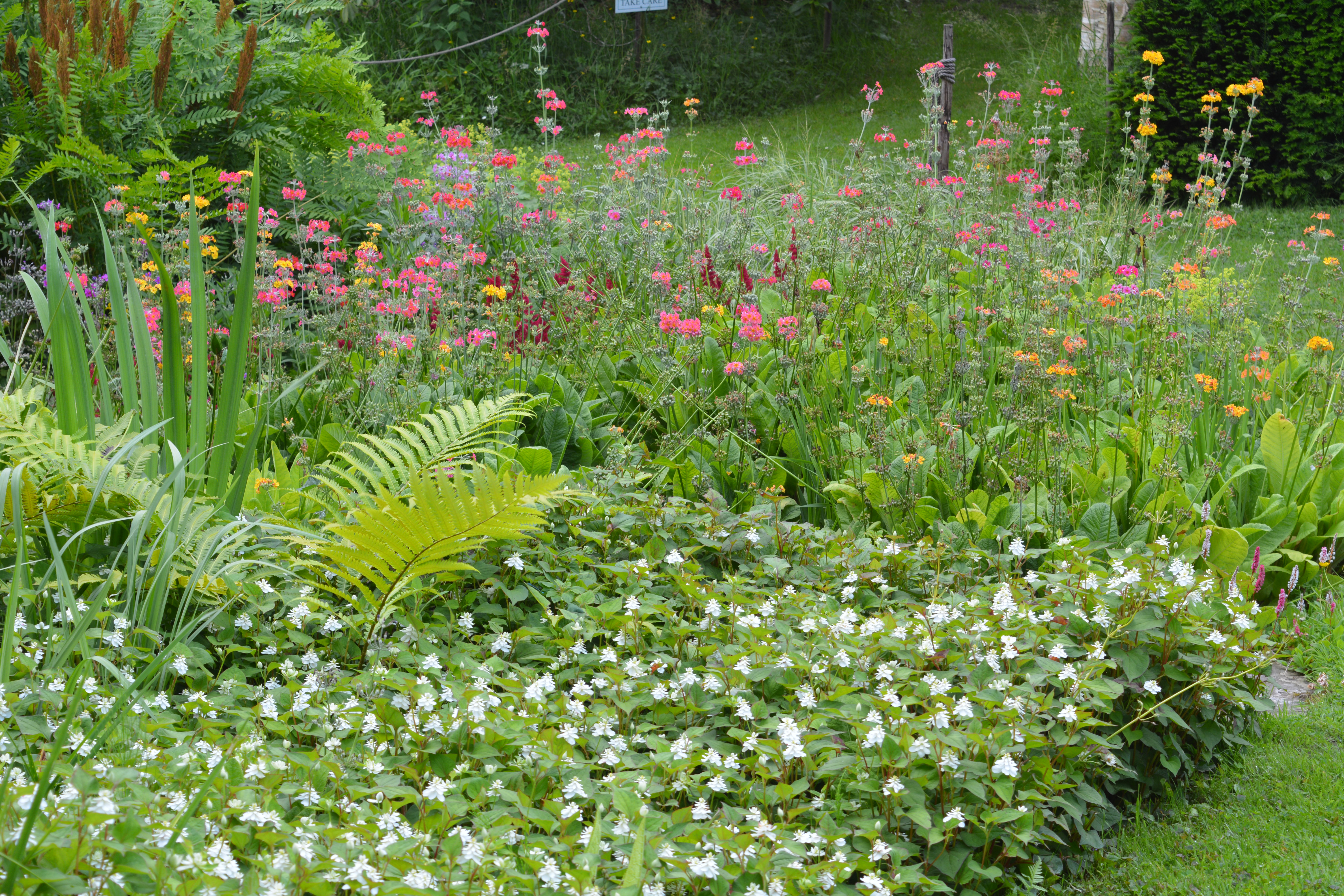
Wandering back towards the nursery and cafe we came across a lush valley with a stream winding its way through, its richly planted banks.

eb-63 eb-62 eb-61 eb-60 eb-59 eb-54

We always enjoy finding quality pieces of sculpture placed carefully and shown to their best advantage and this figure was situated close to the stream in the short-mown grass.

eb-58 eb-56 eb-55 eb-57

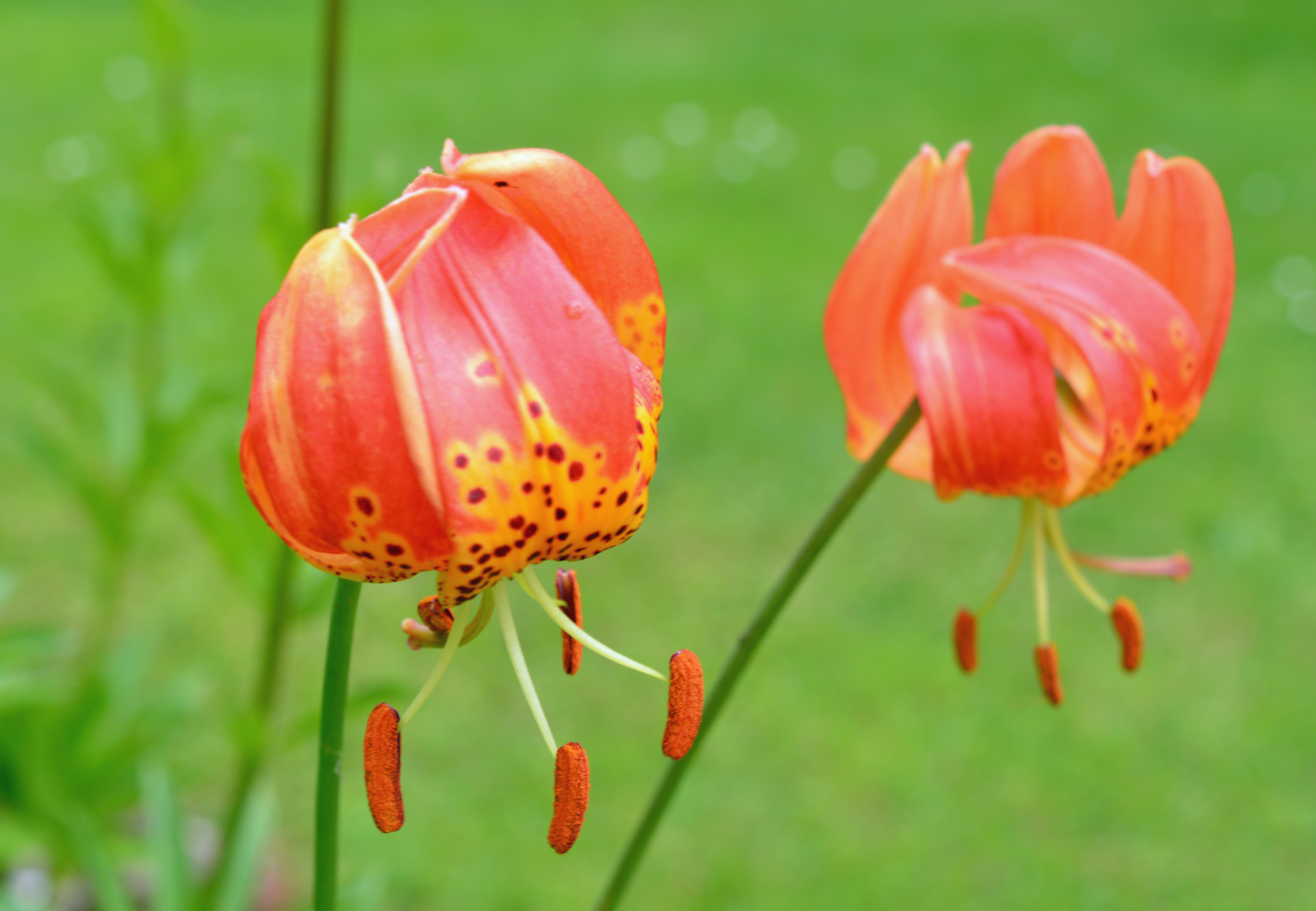
The brightest plant of all was this orange Tiger Lily, looking so fresh amongst the lush rich greens of the trees and shrubs.

eb-50 eb-49 eb-47 eb-46 eb-48

I would like to finish off with a selection of photos illustrating the variety of plants beginning with a couple of interesting trees followed by other flowering plants found throughout the Place for Plants at East Bergholt.

An Aesculus in full flower,

eb-41 eb-42


Staphylea pinnata,

eb-11 eb-10

eb-13 eb-12

and Nyssa sylvatica “Wildfire”.

eb-04 eb-05

Definitely a place for plants!

eb-43 eb-07eb-40 eb-39 eb-30 eb-08


Categories
climbing plants garden design garden wildlife gardening grasses hardy perennials natural pest control ornamental grasses ornamental trees and shrubs Shropshire

Developing 3 spaces in our garden – part 3

The second new area we were able to develop this winter was a very small border created when we rationalised our sheds. The bed was originally used for a selection of mints which we used for cooking so the soil had to be removed and very bit of mint root removed. Some is bound to come back though as it seems impossible to rid yourself of mint in one go. We will have to keep our eyes peeled. As yet we have not named this little patch but I guess it may end up being something akin to “The Old Mint Patch”.

ng1-1

We began by erecting a screen wrapping around behind the bed and one end and we chose willow hurdle panels for this as it lets some wind through but gives some protection. We also love the natural rural look of it, and have used it effectively elsewhere in our garden. To match the natural look of the fencing we added a border edge of log-roll.

ng1-2ng-01

We planned our planting in three layers. First plantings were climbers, followed by shrubs and finally herbaceous perennials including grasses. The first climber we planted was Trachelospermum asiaticum, chosen for its flowers which are creamy coloured and scented in strong contrast to its dark green glossy foliage. We partnered this climber with a Honeysuckle and a Clematis. Clematis Fragrant Auberon has creamy-white, heavily scented flowers in spring contrasting strongly with its evergreen foliage. The Honeysuckle was Lonicera Spring Purple, where the purple refers to its foliage.

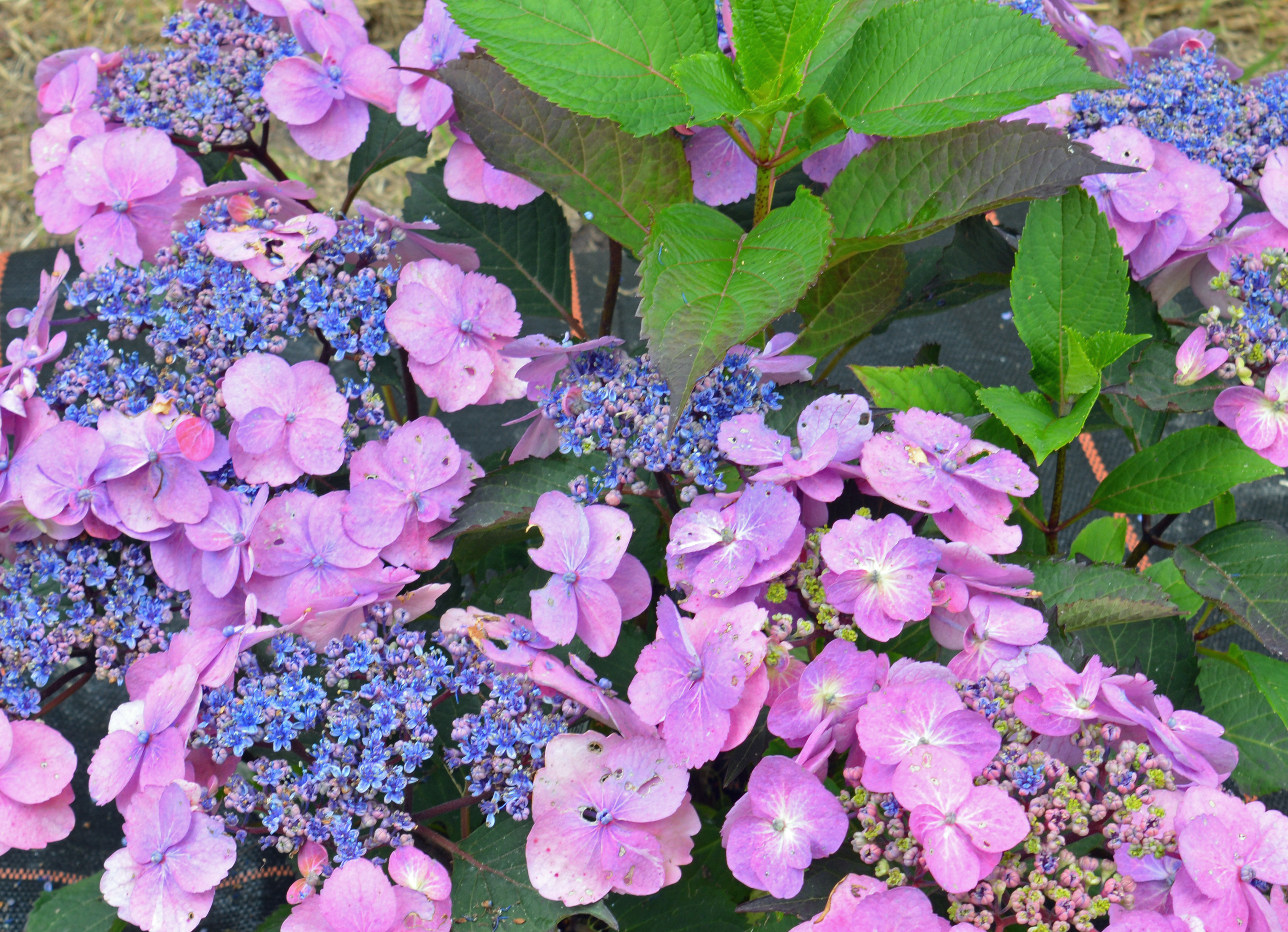
The shrubs we selected were favourites of ours which had graced our wishlist for a few years now so this new, unexpected planting opportunity meant they could now leave their place in the wish list and grace the new border instead. Firstly we planted a Hydrangea aspera, a summer flowering shrub called H. a. “Hot Chocolate”, so we look forward to its lacecap flowers consisting of pink florets surrounding violet florets in the summer, and of course its foliage which is a chocolate colour above and wine-red velvety textured below.

We are always pleased to find space for another deciduous, so we planted a specimen of Euonymus planipes in this new border. We put it in when it was leafless and we spotted its beautiful mahogany long thin leaf buds. Later it will boast bright pink fruits with vivid orange seeds hanging from within, an incredible colour combination.

Our third shrub was an Abeliophyllum distichum, which was showing its gently scented pale pink almost white flowers. We look forward to its foliage turning rich purple in autumn.

fj1-1

The final planting later to put in place was the herbaceous layer where we selected plants mostly for their unusual foliage but a few will flower. Thus we planted three Saxifrages – S. stolonifera called “Hime”, S. fortunei “Blackberry and Apple Pie” and S. stolonifera “Maroon Beauty”, strongly textured, coloured foliage and unusual shaped flowers. We planted a fern too to link across to the one in the container which I write about later. We chose Dryopteris erythrosora “Prolifica” which features copper foliage each spring. Three Libertias join in to give spikes of foliage some with coloured stripes and white flowers in the summer and autumn. These Libertia are L. ixioides “Taupo Sunset”, L. peregrinans “Gold Leaf” and a third is an unknown species we grew from seed. We finished with our usual grasses, essential in every border, so we placed between the other perennials three Uncinia rubra,

We also had space adjacent to the new bed for a large stoneware pot which matched the  one at the far end of the path close by. We planted this up with a Gaultheria mucronata “Sneeuwwiyje” which I think translates as “Snowdrop”. It sports red stems and shiny dark green foliage and in summer white flowers with hints of soft pink followed by white berries later. Beneath this shrub we planted a fern and a couple of trailing ivies for year long foliage colour and texture. The ivies Hedera “Golden Kolibri” and Hedera “White Wonder”, the names reflecting the colour of the leaf variegation. The fern was Polystichum setiferum “Plumosum”, with soft textured foliage.

ng-03 ng-06ng-08 ng-07ng-05 ng-04

The final flourish was installing a wildlife “village” of varied insect homes, some coming from the old garden shed others newly made.

ng-16 ng1-3ng1-4

A few weeks later we added spring flowering bulbs from pots, a few more grasses and a third Saxafraga, S. Blackberry and Apple Pie.

ag2-05 ag2-04 ag2-03 ag2-02 ag2-01

We then had to sit back, let Mother Nature and all her soil workers and the weather do their best and watch the new patch develop. Maybe it will develop well enough to appear in my garden journal later in the year.

Categories
colours garden design garden photography gardening gardens hardy perennials light light quality ornamental trees and shrubs outdoor sculpture Shropshire trees Winter Gardening winter gardens

My Garden Journal in December

Welcome to the final monthly look inside my Garden Journal 2016, when we see what I entered in it during the month of December. Then it will be time to close the 2017 Garden Journal for now, but we share all the journals with our garden visitors on our open days so they regularly get a fresh airing.
nj9-12

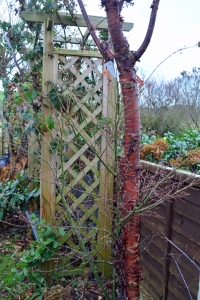
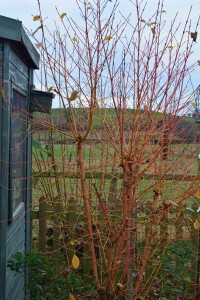
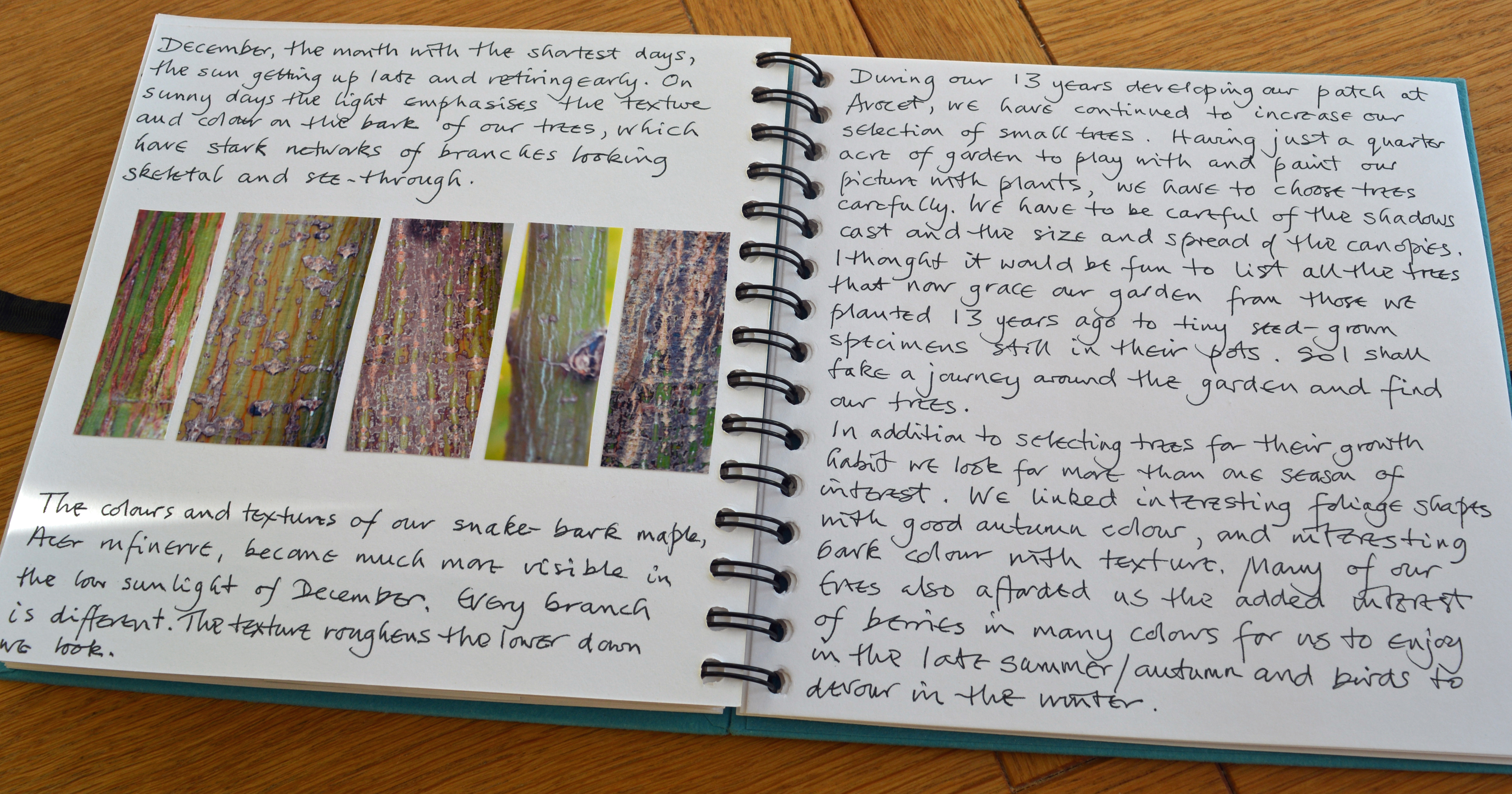
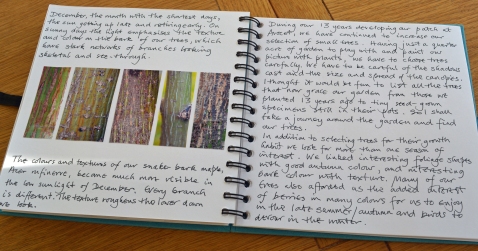
“December, the month with the shortest days, the sun getting up late and retiring early. On sunny days the light emphasises the texture and colour on the bark of our trees, which have stark networks of branches looking skeletal and see-through.

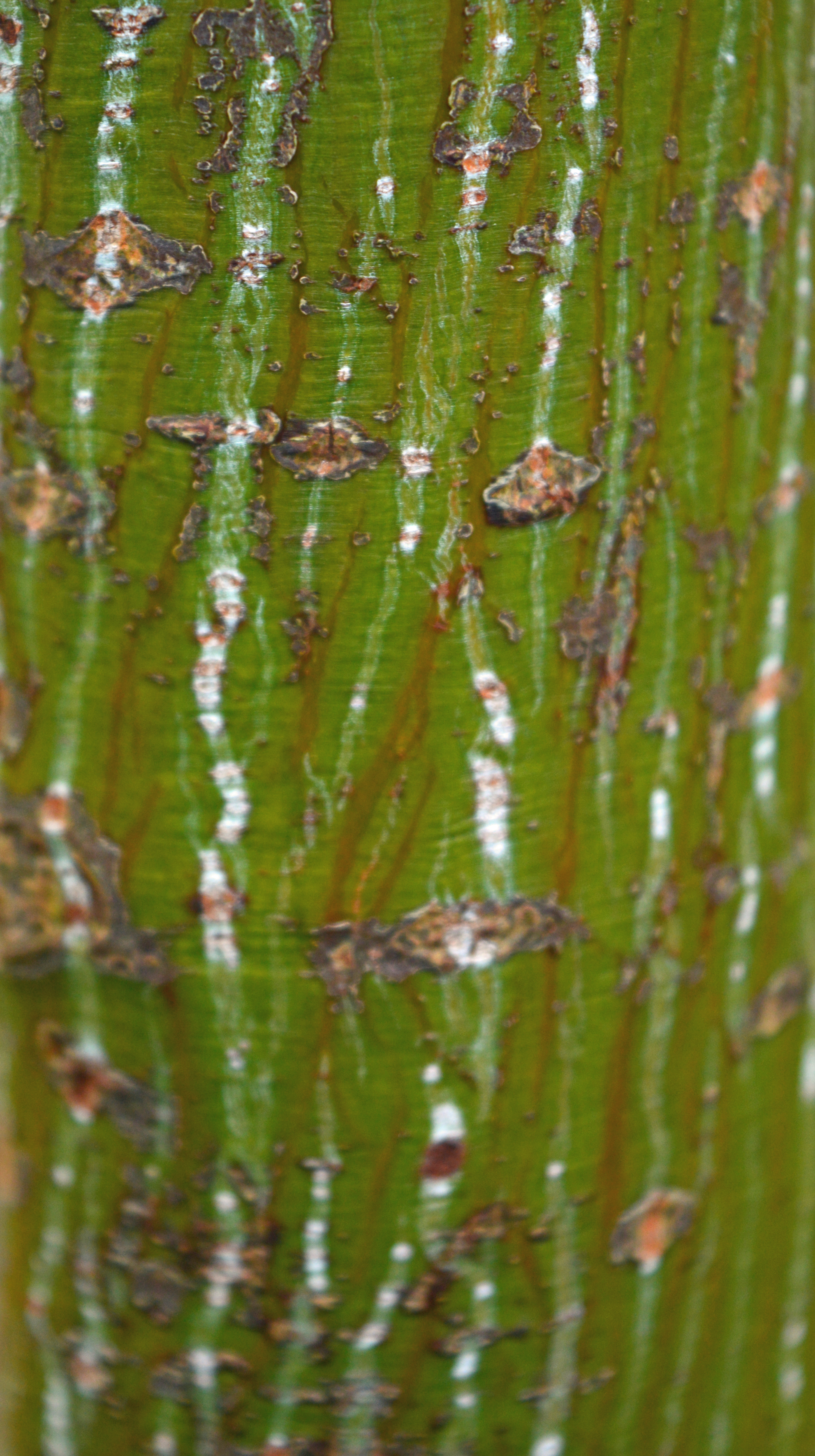
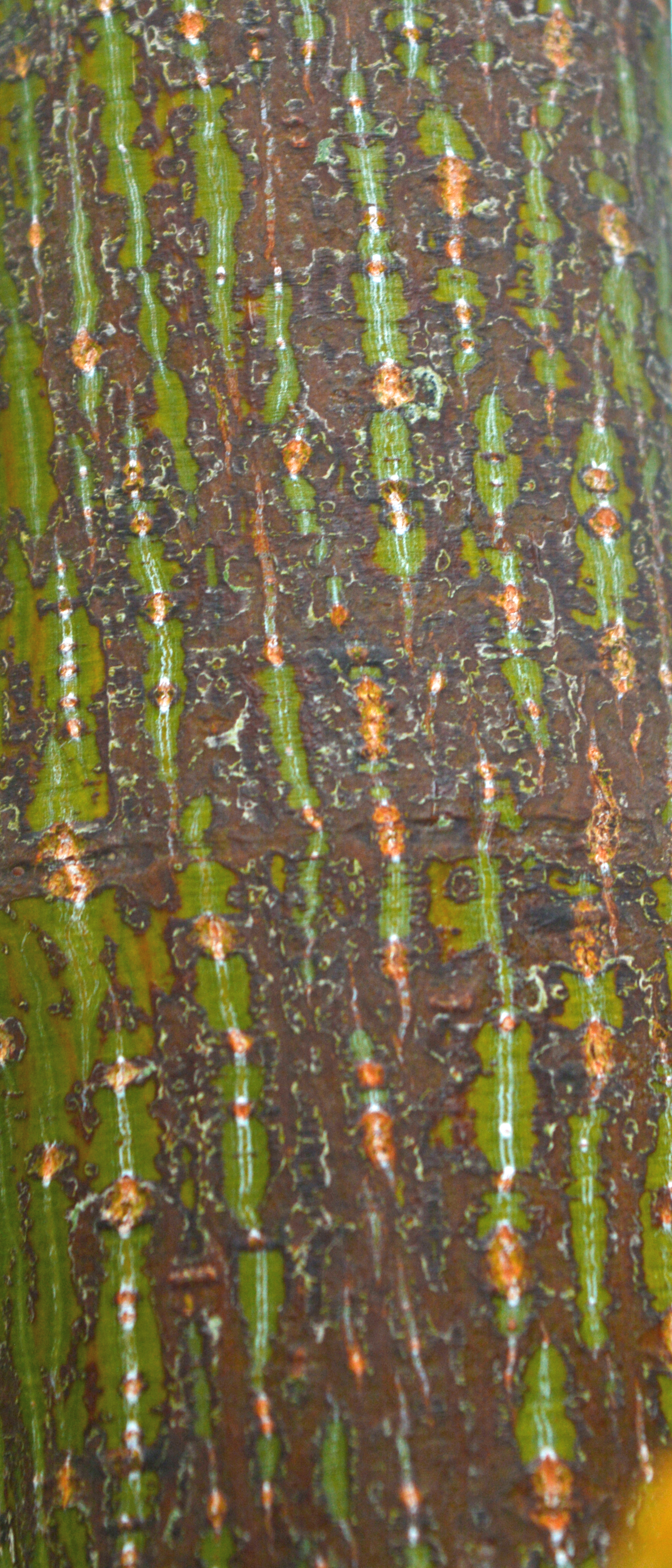
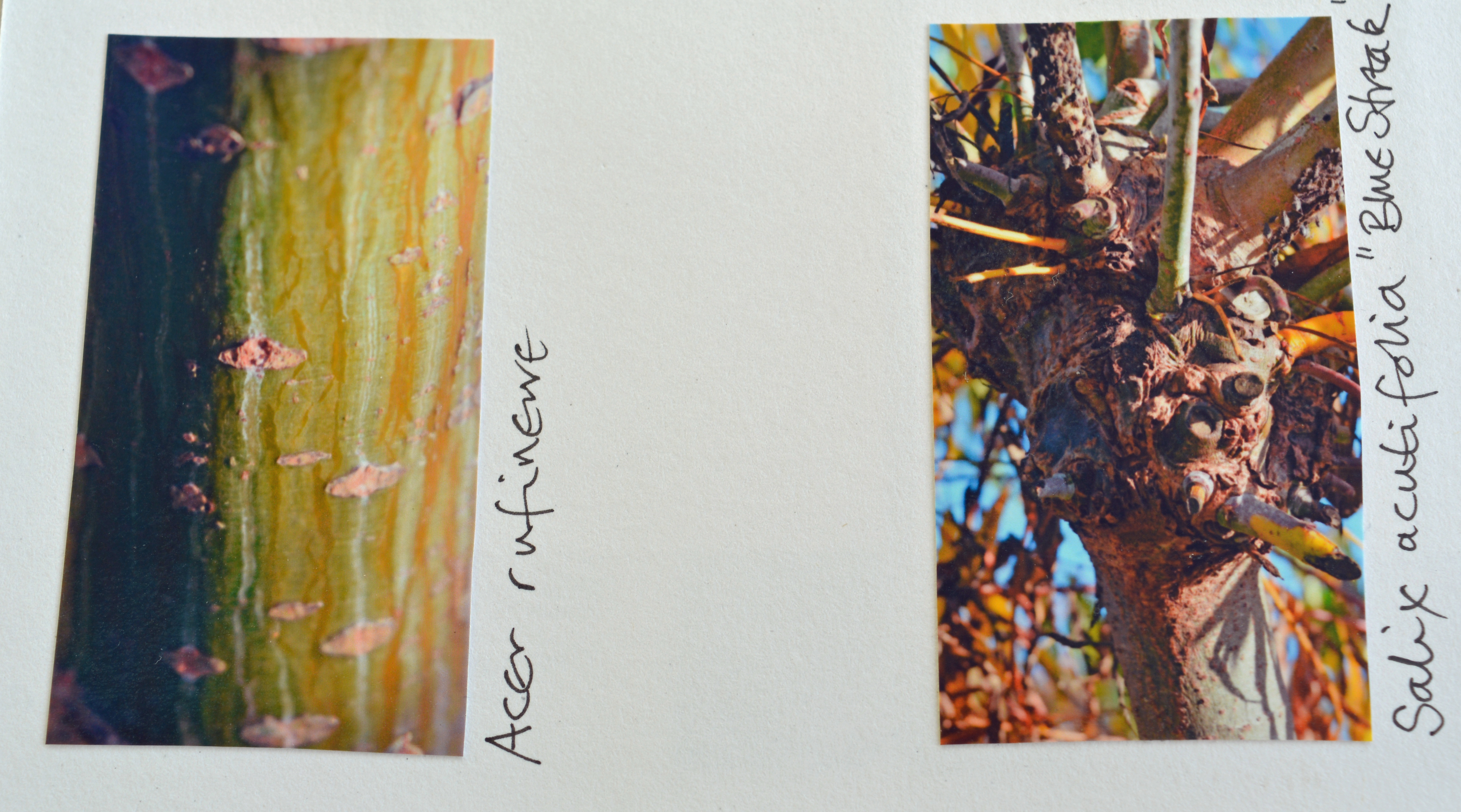
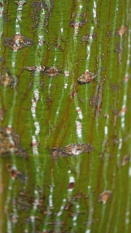
“The colours and textures of our snake-bark maple, Acer rufinerve, become much more visible in the low sunlight of December. Every branch is different. The texture roughens the lower down we look.”

dj1-5 dj1-4 dj1-3 dj1-2 dj1-1

My entries for December continue to consider the trees of our garden, “During our 13 years developing our patch at Avocet, we have continued to increase our selection of small trees. Having just a quarter acre of  garden to play with and paint our pictures with plants, we have to choose trees carefully. We have to be careful of the shadows cast and the size and spread of the canopies. I thought it would be fun to list all the trees that now grace our garden from those we planted 13 years ago to tiny seed-grown specimens still in their pots. So I shall take a journey around the garden and find and list of our trees. 

In addition to selecting trees for their growth habit we look for more than one season of interest. We linked interesting foliage shapes with good autumn colour, and interesting bark colour with texture. Many of our trees also afforded us the add interest of berries in many colours for us to enjoy in the late summer/autumn and birds to devour in the winter.”

Turning over the page we discover a group of 6 photographs I took in November with the intention of taking the same shots from the same places in December to see how things change.

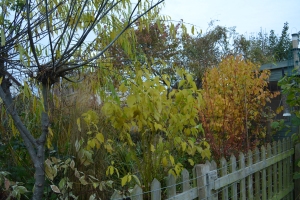
“In November I took these 6 shots of places that looked good around the Avocet Garden. I have now taken them again from the same location to show how things change in a month.”
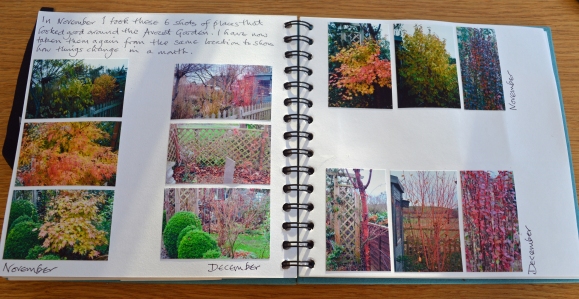
jd1-22ber-2 jd-09

November                                                            December

bb-1 jd-07

November                                                             December

ber-3 jd-03

November                                                             December

ber-4 jd-04

November                                   December

ber-1 jd-06

November                                   December

ber-5 berb-1

November                  December

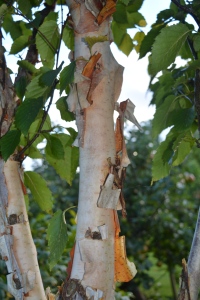
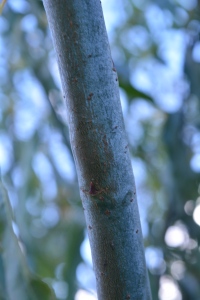
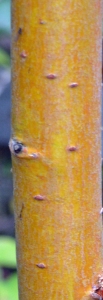
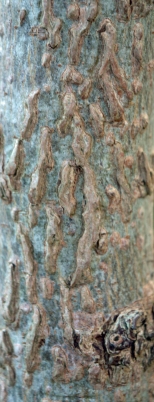
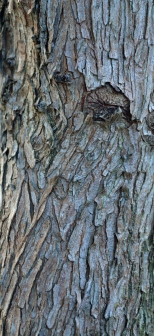
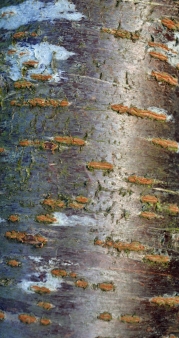
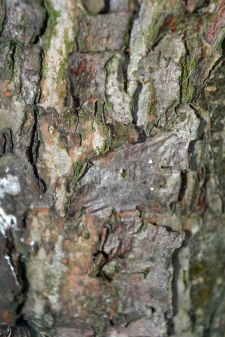
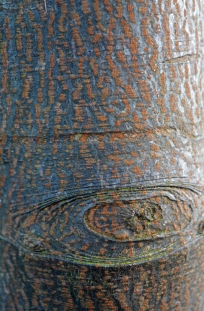
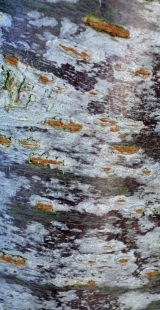
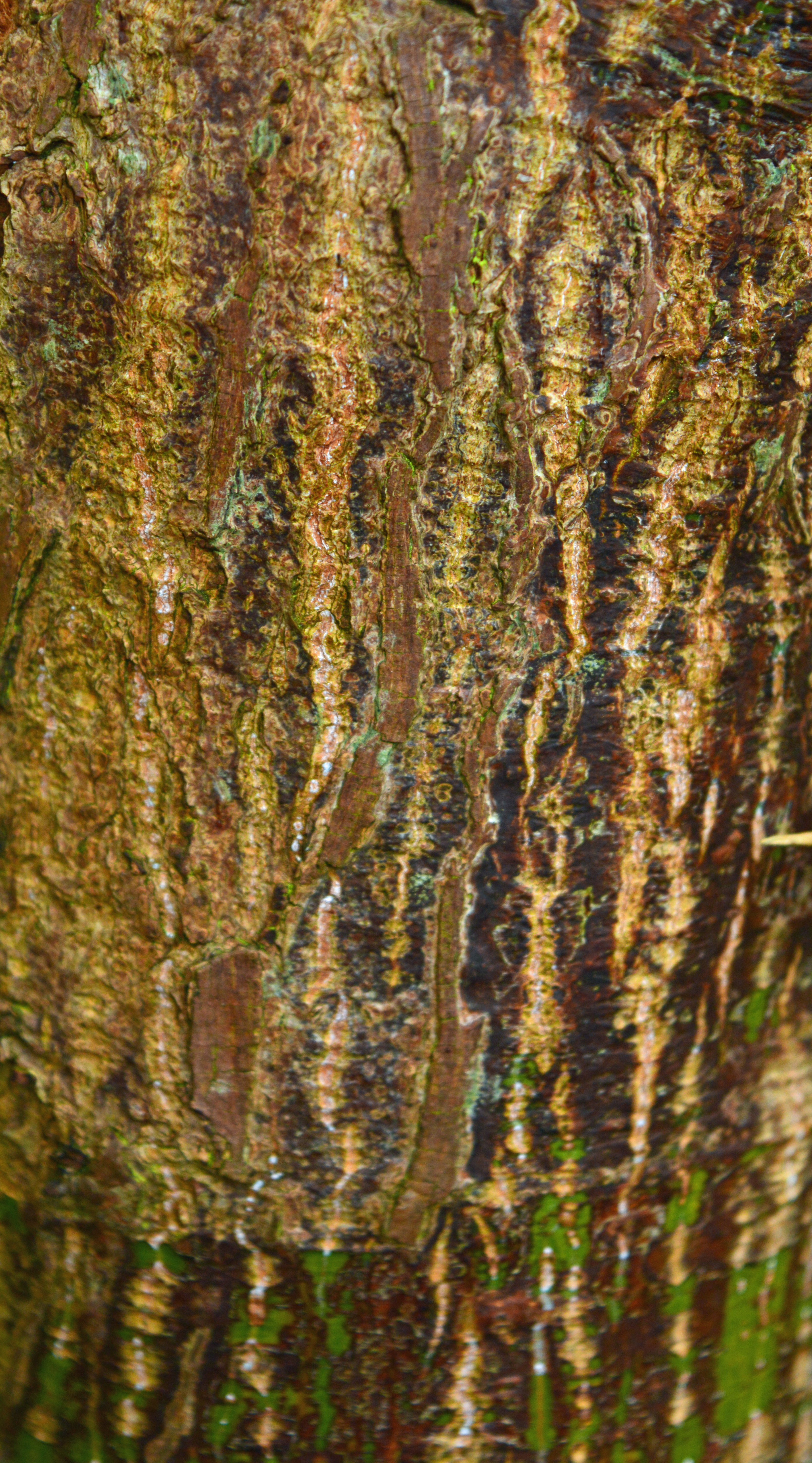
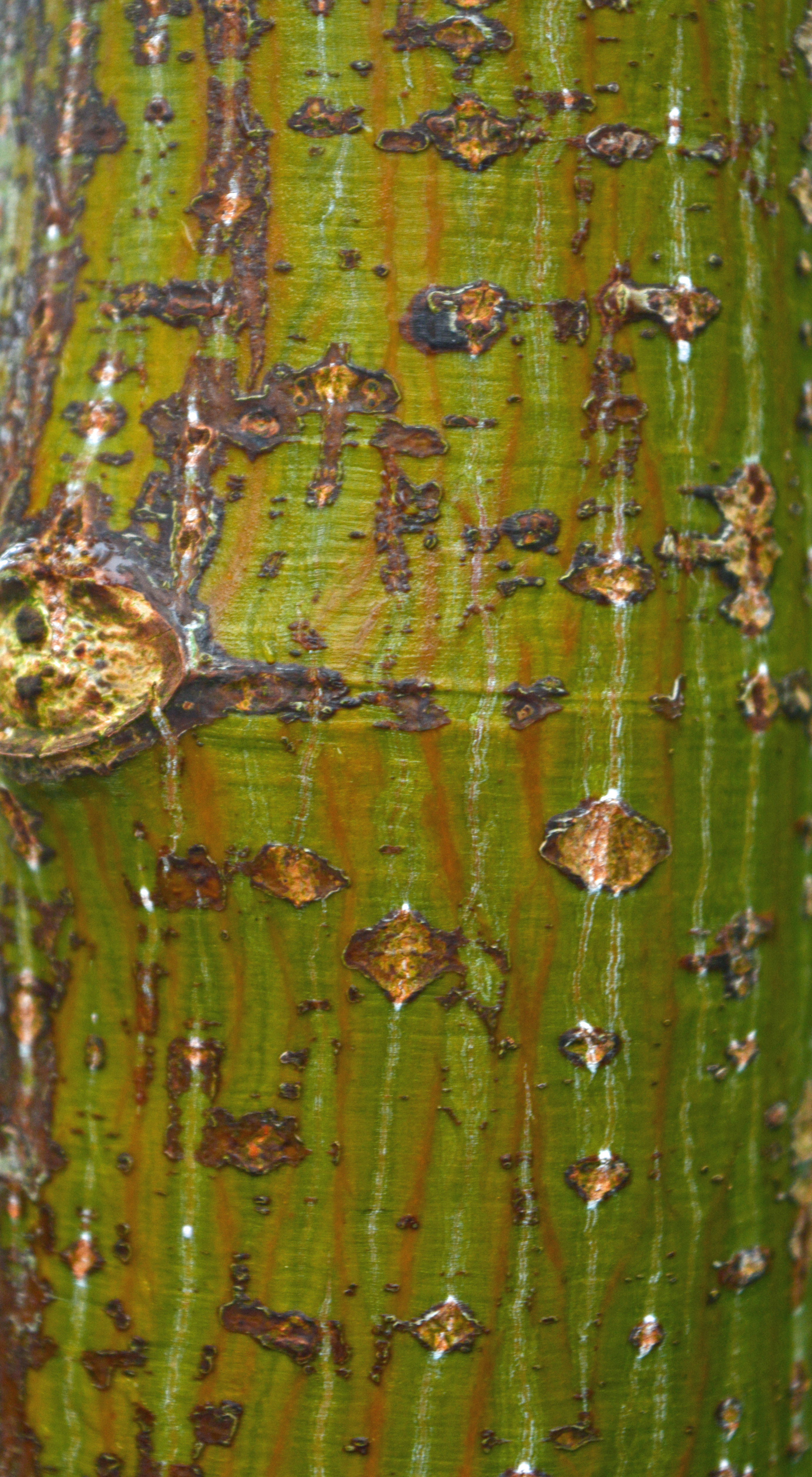
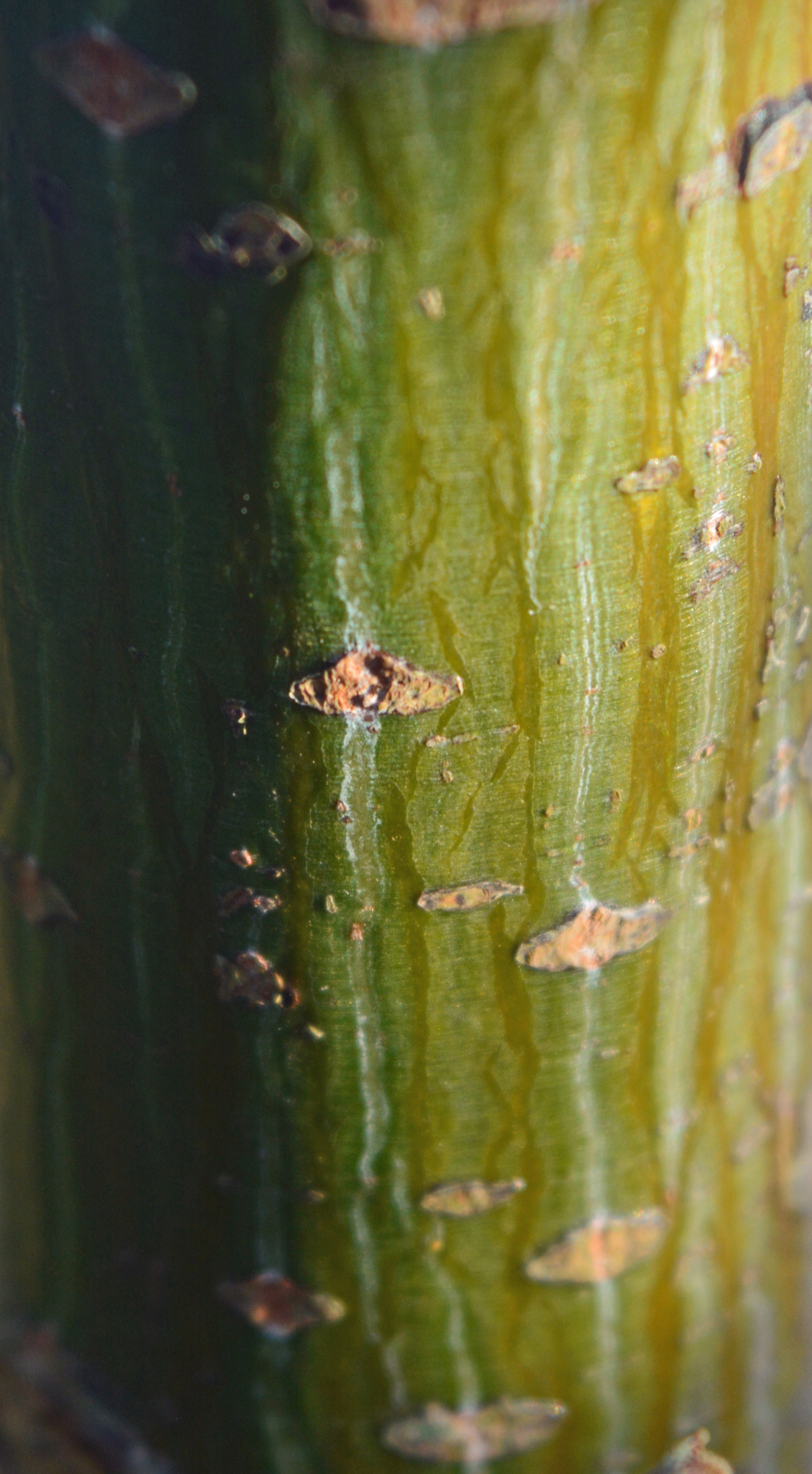
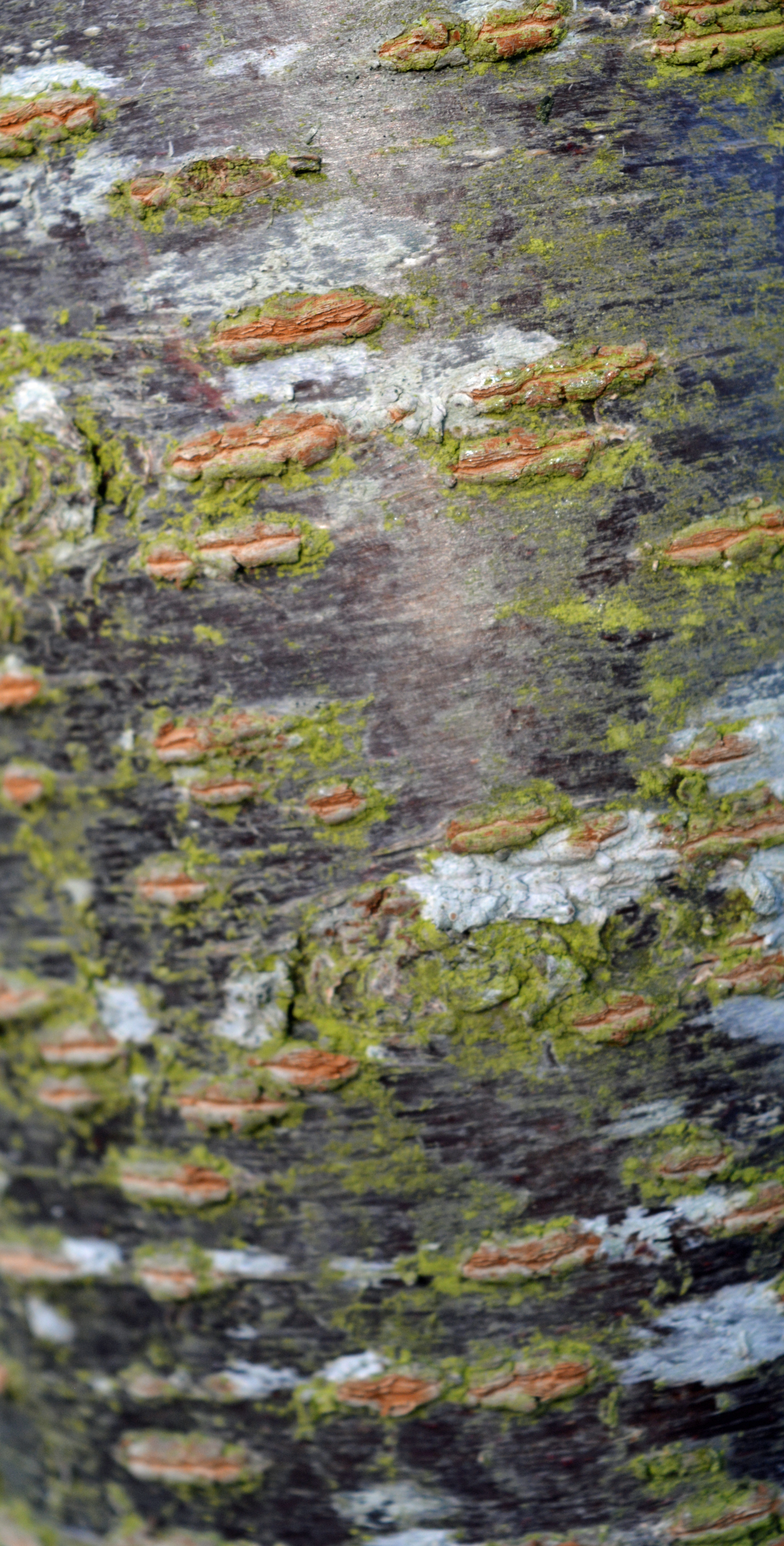
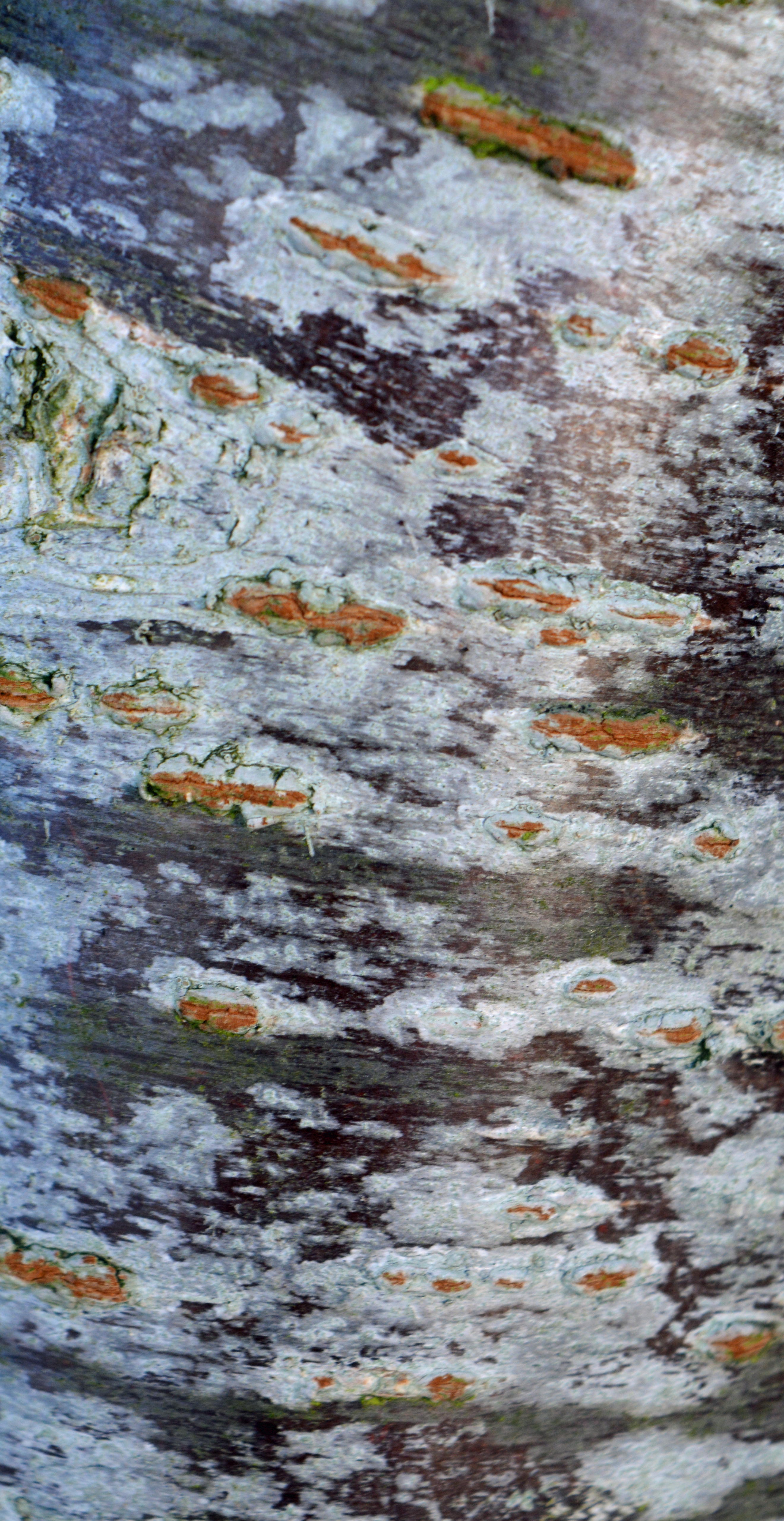
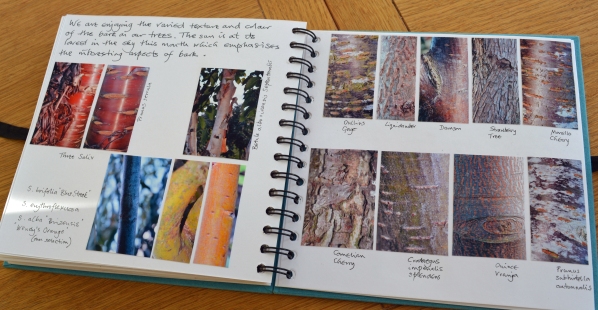
I thought it would be fun to look at the bark of lots of our trees, both their colours and textures, so took close up photos of sections of the tree trunks.
nj9-13

I wrote, “We are enjoying the varied texture and colour of the bark on our trees. The sun is at its lowest in the sky this month which emphasises the interesting aspects of bark.”
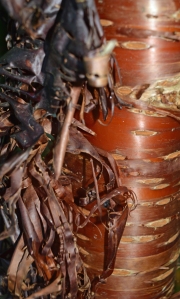
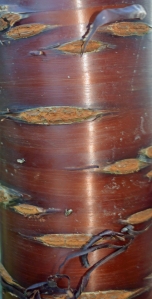
dj2-10 dj2-11 Prunus serruladj2-09 Betula albosinensis Septentronalisdj2-17 dj2-25 dj2-32 Three Salix

Salix trifolia “Blue Streak”, Salix erythroflexuosa, Salix alba “Brizensis” (our own selection we call “Wendy’s Orange”)

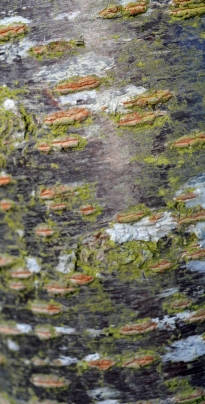
I can now share some close up shots of the bark detail of some of our trees.
dj2-21 dj2-02 dj2-05

Oullins Gage                               Liquidamber                  Damson

dj2-03 dj2-23 dj2-18

Strawberry Tree         Morello Cherry                    Cornelian Cherry
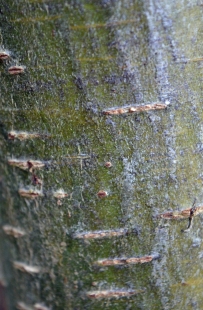
dj2-01 dj2-06 dj2-22

Crataegus i. splendens             Quince Vranja                           Prunus Sub. autumnalis

I then took a look back at my December entries of my first ever garden journal and found the words, “Let’s have our look back at my December entry in my first ever garden journal. I wrote, “Visited David Austin Roses nursery to buy roses for obelisks and arches. We did this but also bought nine shrubs for winter colour plus an Arum italicum “Marmoratum” and two willow trees.” All of these plants are still going strong and playing important roles in our garden borders, with the exception of an acer, Acer pennsylvanica Ethrocadum, which sadly succumbed to “an overly strong rootstock and unobservant gardeners!”
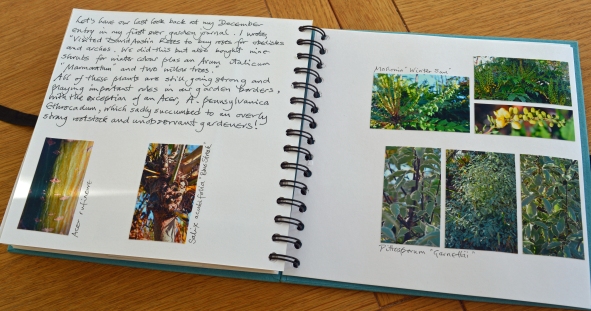
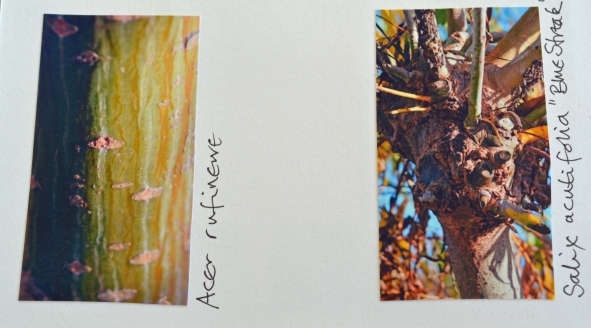
nj9-14dj2-1

Two other plants from our original batch of plantings back at the beginnings of the Avocet patch are looking particularly good now and are strong performers.

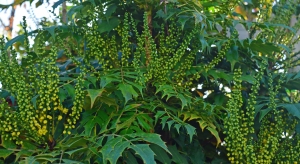
Mahonia “Winter Sun”,
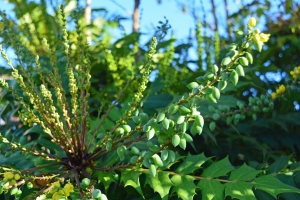
dj3-5 dj3-4dj3-6

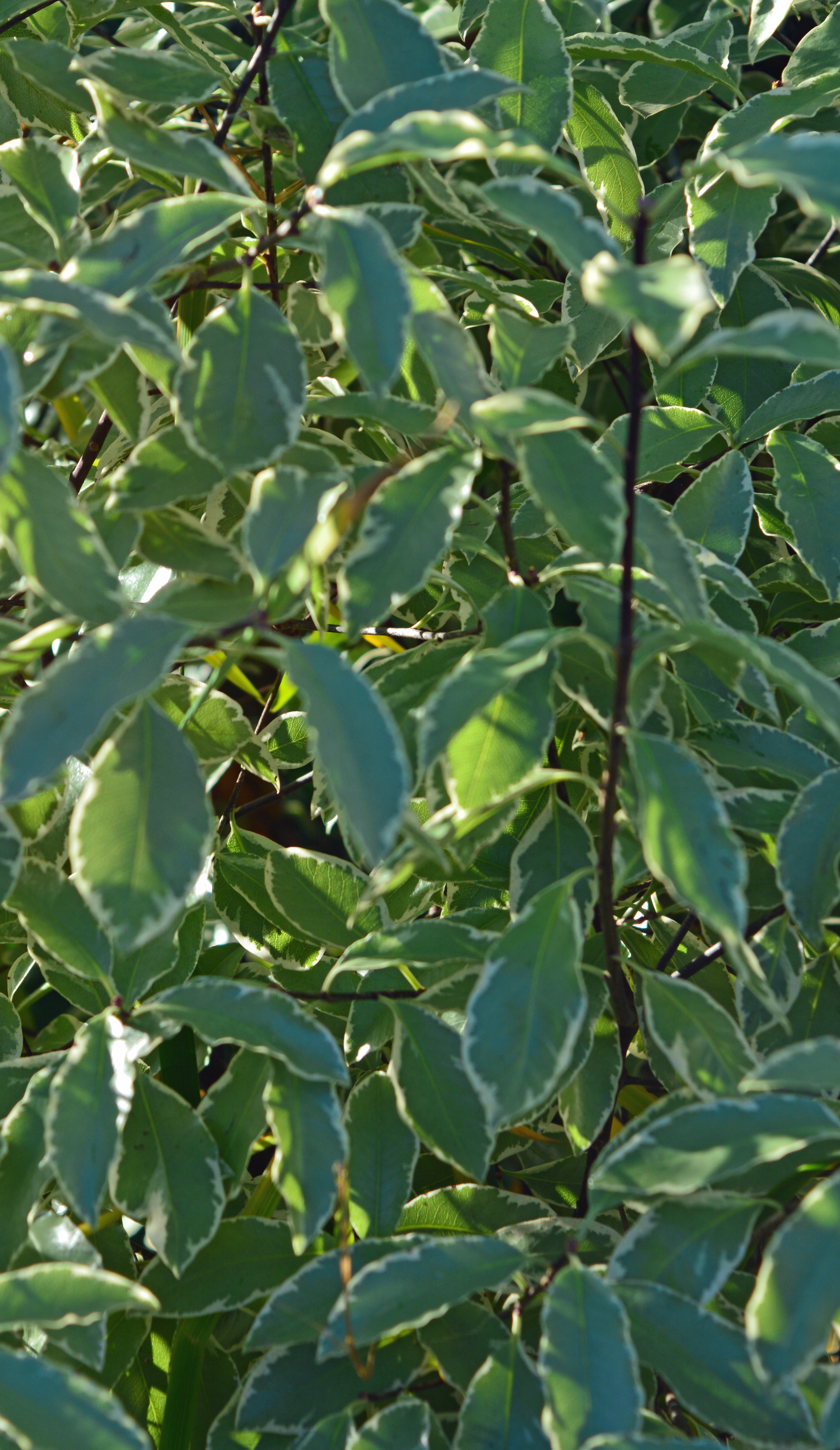
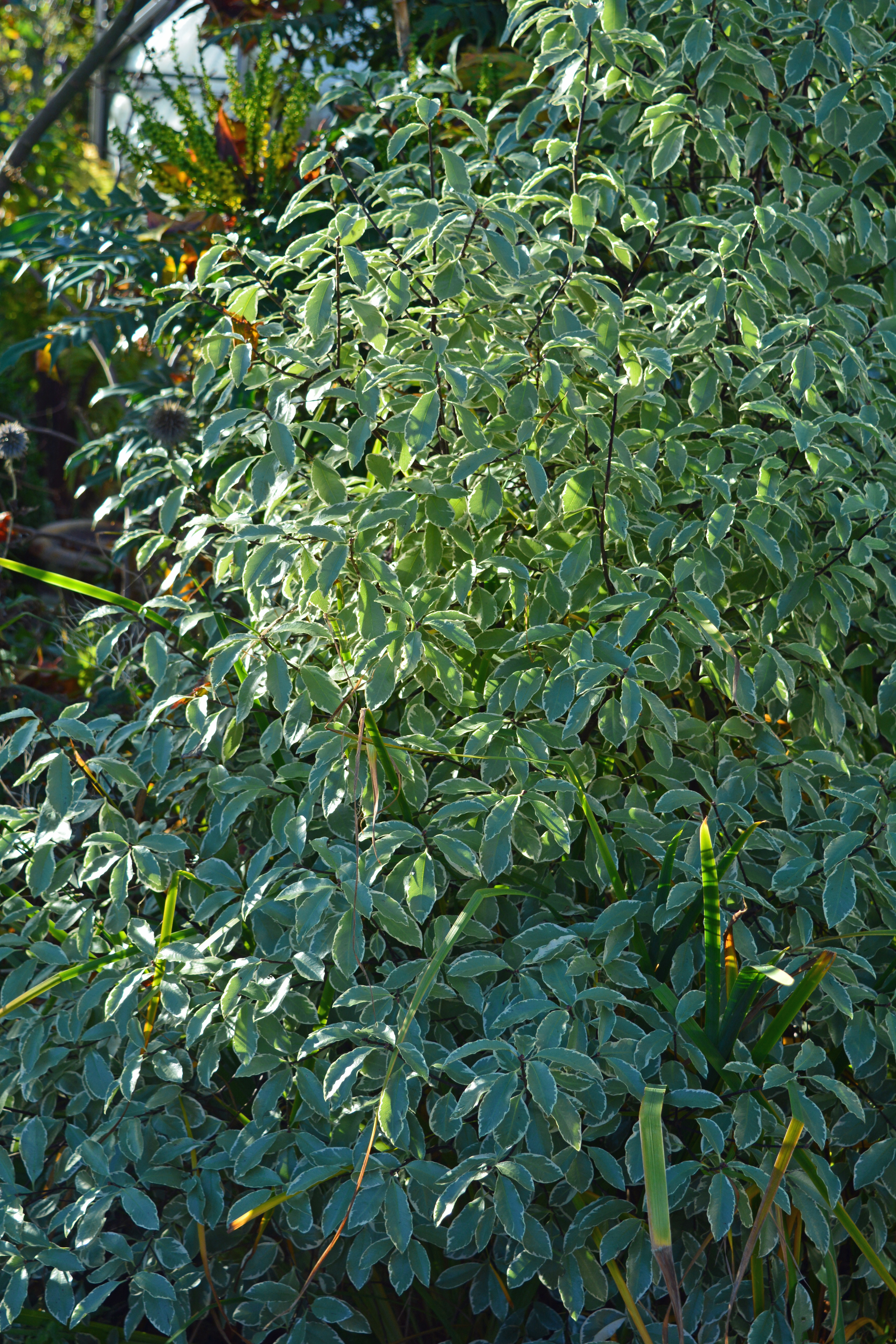
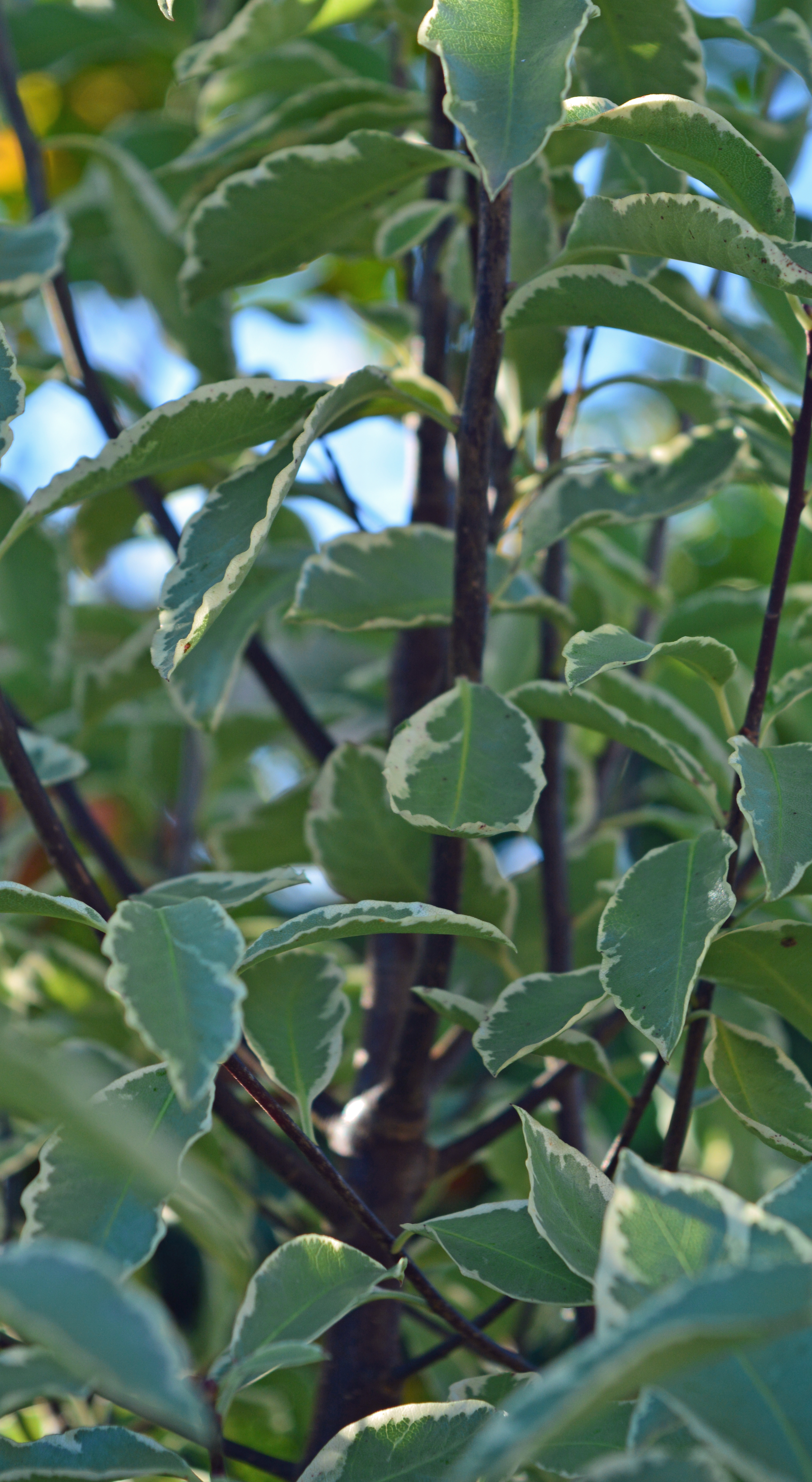
and Pittosporum “Garnettii”

dj3-1 dj3-2 dj3-3

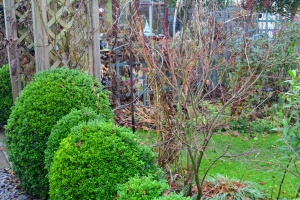
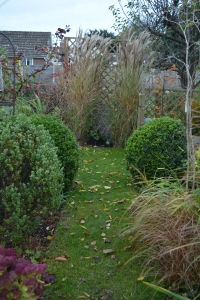
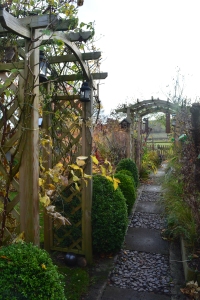
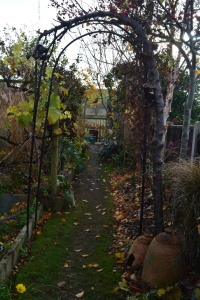
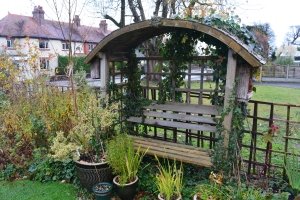
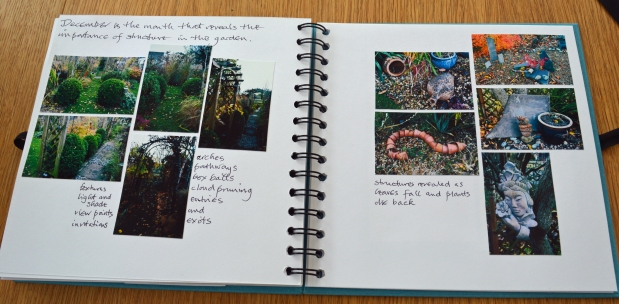
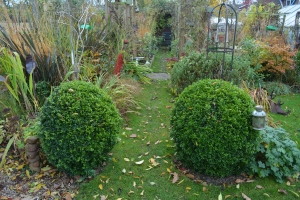
Over the next page we find my look at winter structure, where I wrote “December is the month that reveals the importance of structure in the garden. Teextures, light and shade, view points, invitation, archways, pathways, box balls, cloud pruning, entries and exits.”
te-01tex-02 tex-01tex-04 te-19 te-18t-2

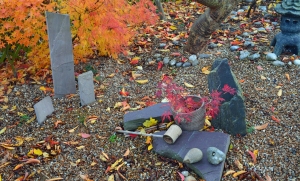
I then included a set of five photos illustrating, as I wrote, “structures revealed as leaves fall and plants die back.”

te-13 te-15 te-12 te-16te-17 tex-03

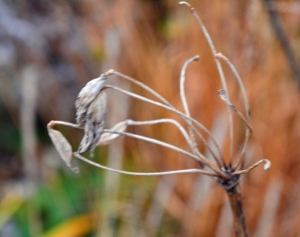
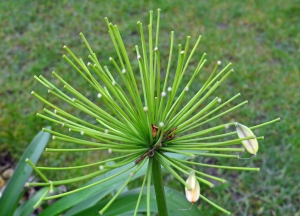
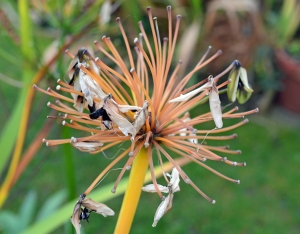
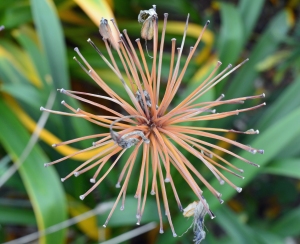
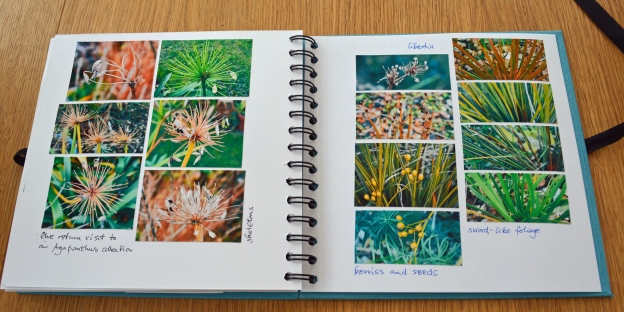
We have taken a close look at our Agapanthus collection on occasion over the last few months in my journal and promised a final look in December, so here is “the return visit to our Agapanthus collection” which I have linked with a page of photos of our collection of Libertias sharing my pics of their “berries and seeds” and their “sword-like foliage.”
te-02te-11 te-06te-09 te-07te-10 te-03

Libertias ………………………

tex-14 tex-05tex-06 tex-07 tex-10 tex-08

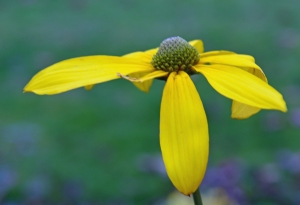
December is the month guaranteed to surprise! End of year surprises! Winter months do have a tendacy to throw up their special surprises, those flowers that pop up out of season to cheer us up with their colour that sparkles in the greyness of the depth of the season.
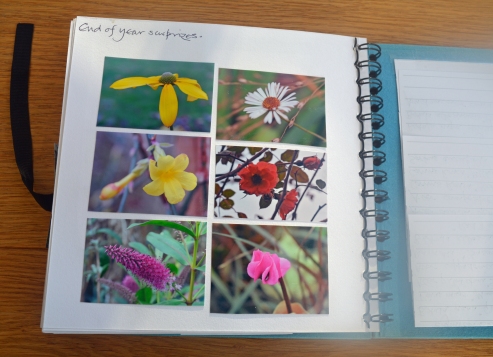
jd1-25jd-08 jd-13jd-11 jd-12tt-1 jd-10

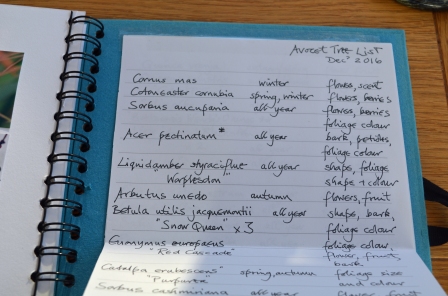
Inside the back cover of my now completely full garden journal, I have glued my tree list that readers can pull out to study if they wish.


jd1-27

In the tree list I wandered around the garden from front to back recording all the hardwood plants classified as trees rather than shrubs, making allowances for our particular methods of pruning some shrubs into small trees. I recorded their seasons of interest and their main points of interest or reasons for growing them in our garden.
jd1-28

The Avocet Tree List gave us a bit of an extra December surprise for when we added up the tree list to see how many trees we have planted here in our beautiful patch of land which is our garden at Avocet. The count revealed that we have planted exactly 50 trees during the last 13 years. That is a lot of tree for a quarter acre but every one is so special to us, like a big expanded woody family.

So that is my 2016 Garden Journal. I hope you have enjoyed sharing it with me. Next year I shall create another Garden Journal the format of which is still being worked on. I shall share it with you again.



This Veggie Life

A Vegetarian | Nature Lifestyle Blog

Rambling in the Garden

.....and nurturing my soul

The Arch City Gardener

Journeys In St. Louis Gardening and Beyond

Garden Dreaming at Châtillon

Consult the genius of the place

Storyshucker

A blog full of humorous and poignant observations.

gardeninacity

Notes from a wildlife-friendly cottage garden

PlayGroundology

...an emerging social science

The Official Blog of British Wildlife

'The most important and informative publication on wildlife of our times' - The Independent. This blog is a member of The UK & Ireland Natural History Bloggers group: www.uknhb.blogspot.com

iGrowHort

Inspire - Cultivate - Grow Native Plants - Restore Landscapes

Bishops Meadow Trust

To create and protect a semi-natural wild space for the people of Farnham to enjoy and experience an array of British wildlife in our town

Gardening with Children

The www.gardeningwithchildren.co.uk Blog

UKbirdingtimeline

birding through the seasons, why birds matter and how to conserve them

NATURE WALKER

with a camera in hand

Jardin

Transform your outdoor space

Eva's space

My allotment, cooking and other interests

Old School Garden

my gardening life through the year

LEANNE COLE

Trying to live a creative life

fromacountrycottage

trying to live as lightly as possible on our beautiful planet

Good Life Gardening

Nature lovers from Leicester living the good life.

mybeautfulthings

Finding the beautiful in the everyday

mawsonmichelle

Michelle's Allotment

In and Out of My Garden

thoughts from and about my garden

Greenhousing

Big plans for a small garden

The Scottish Country Garden

A Walled Country Garden in South East Scotland

The Fruity Chicken

Life at the fruity chicken

willowarchway

Off grid living. Self sufficient. "PERMAGANICS RULE".

St Anns Allotments

Nottingham's Grade 2* Listed Allotments and Community Orchard

Manifest Joy Harvests

a journey in suburban vegetable gardening

Allotmental

The madness of growing your own

Penny's Garden: a harvest beyond my front door

A novel approach to vegetable gardening

arignagardener

Sustainable living in the Irish countryside.

NewEnglandGardenAndThread

Master Gardener, amateur photographer, quilter, NH native, and sometimes SC snowbird

dianajhale

Recent work and work in progress and anything else that interests me

planthoarder

a chaotic cottage gardener

Lens and Pens by Sally

a weekly blog that creates a personal philosophy through photographs and words

Dewdrops and Sunshine

Stories from a sassy and classy Southern farmbelle.

The Pyjama Gardener

Simple Organic Gardening & Seasonal Living

gettin' fresh!

turning dirt into dinner

JOY...

today the world is created anew

Garden Birds

Notes from a Devon garden

ShootAbout

Life Through The Lens

Adapting Pixels

A photography blog showcasing the best photography pictures and videos on the internet

Wildlifegardening's Blog

Just another WordPress.com site

naturestimeline

personal observations from the natural world as the search continues for a new approach to conservation.
LATEBLOOMERBUDS

The Wonders of Life through my Eyes, my Heart, my Soul