Categories
architecture buildings Church architecture townscapes

Three Cathedrals – Hereford – Part Two

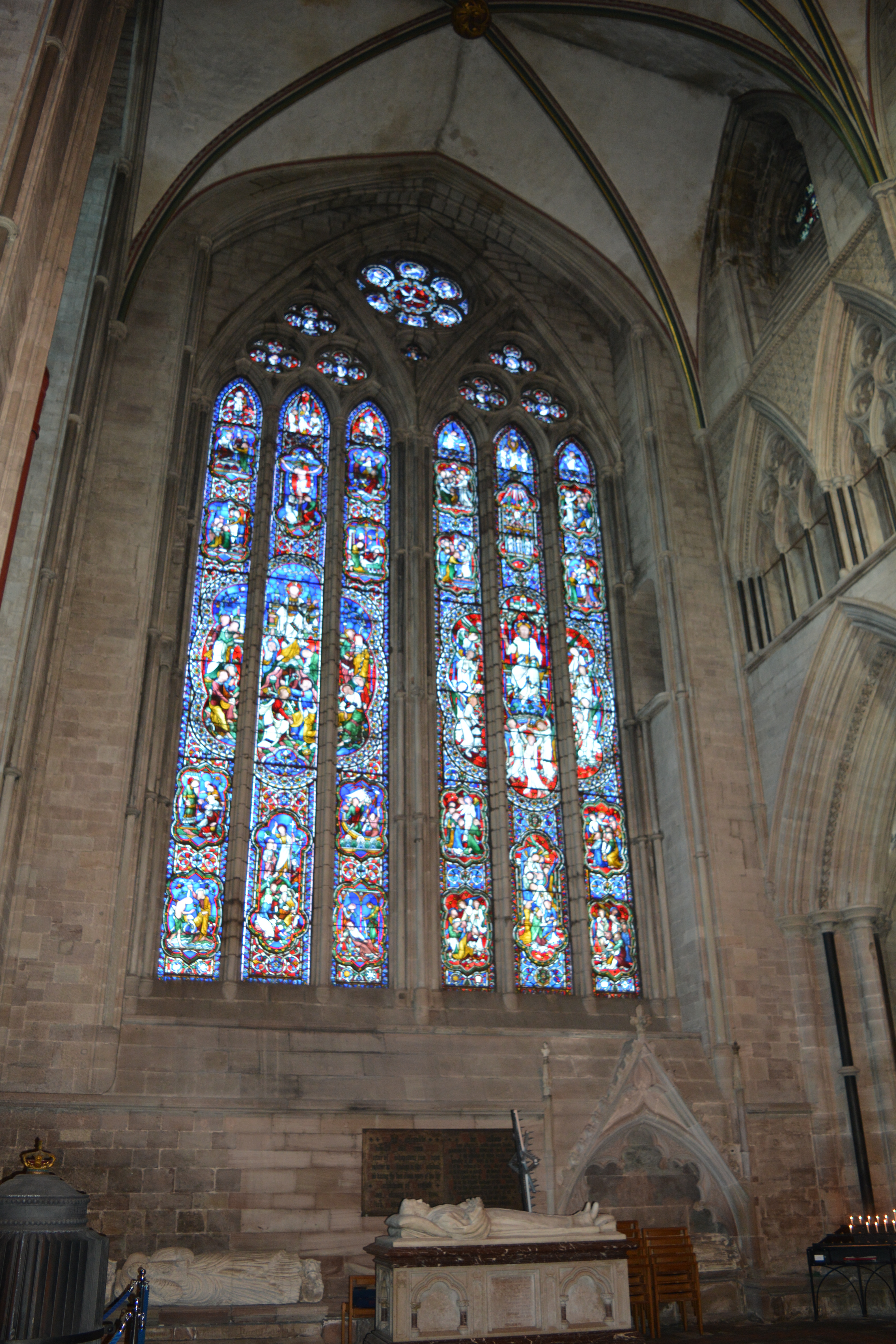
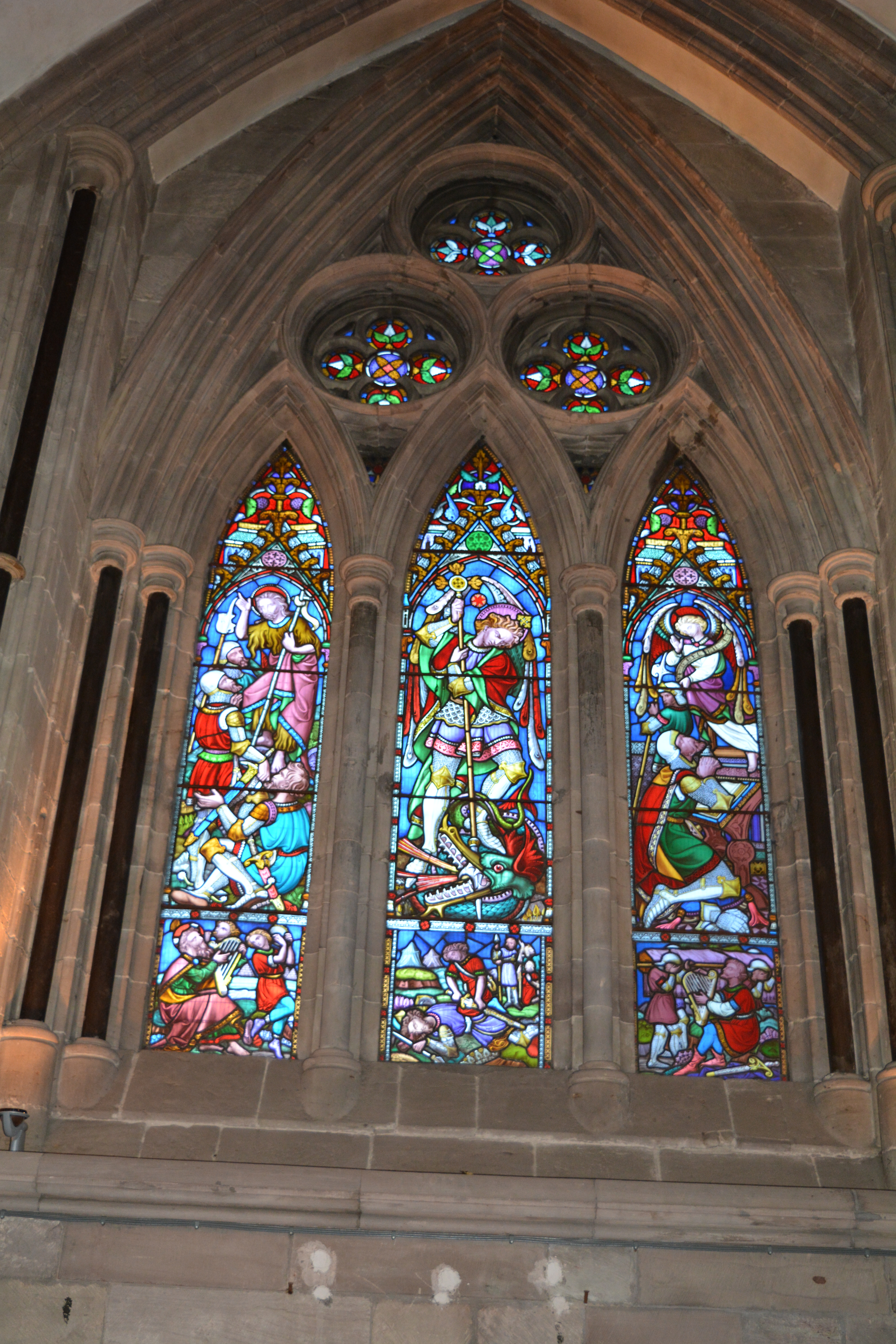
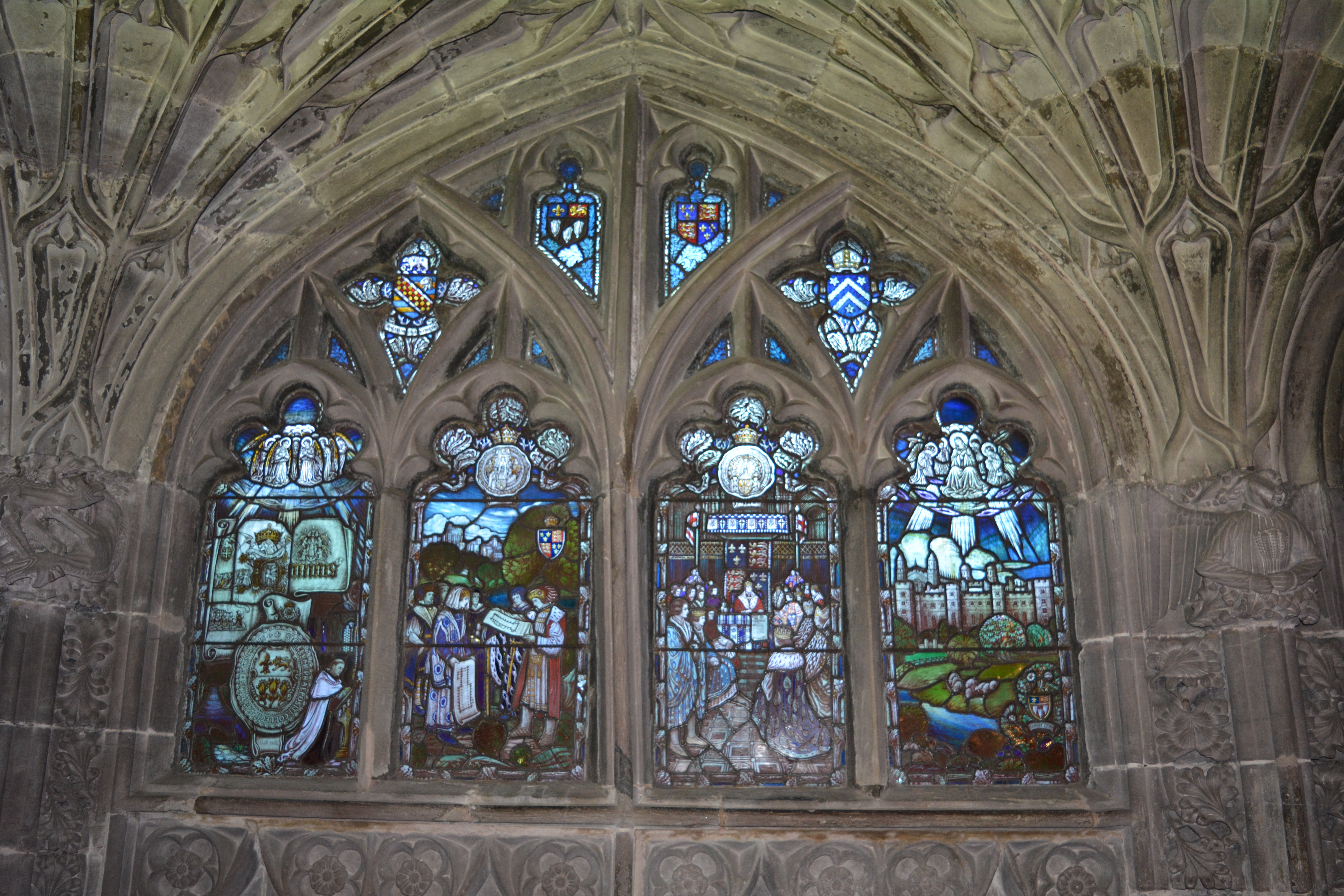
Back at the cathedral in Hereford, we found colour flowing in through the windows even though it was a dull day. The stained glass windows seemed to capture the little light there was. The majority were typical of such windows found in any church building anywhere in the UK …..

2015 01 13_9238 2015 01 13_9251 2015 01 13_9254 2015 01 13_9256 2015 01 13_9261

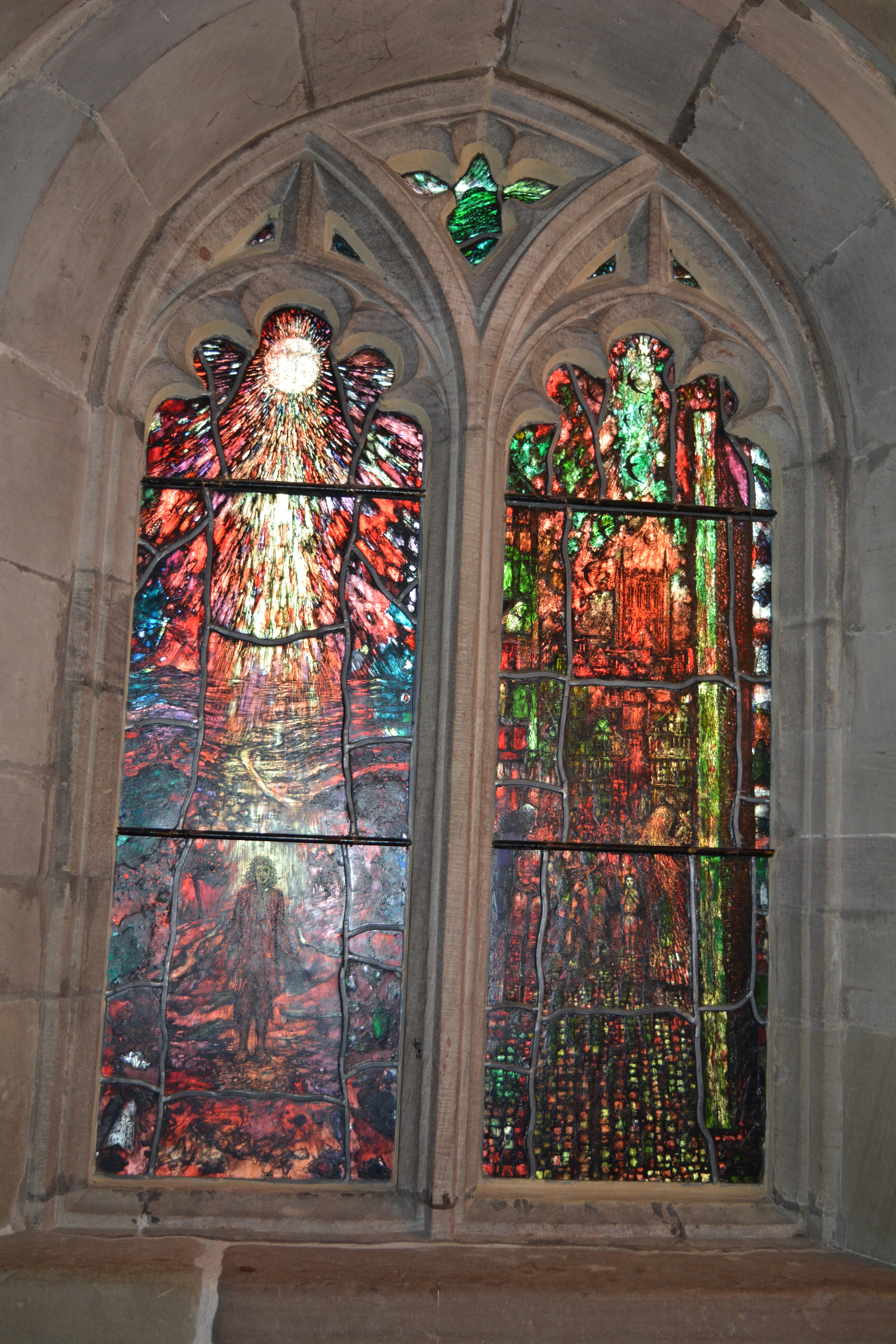
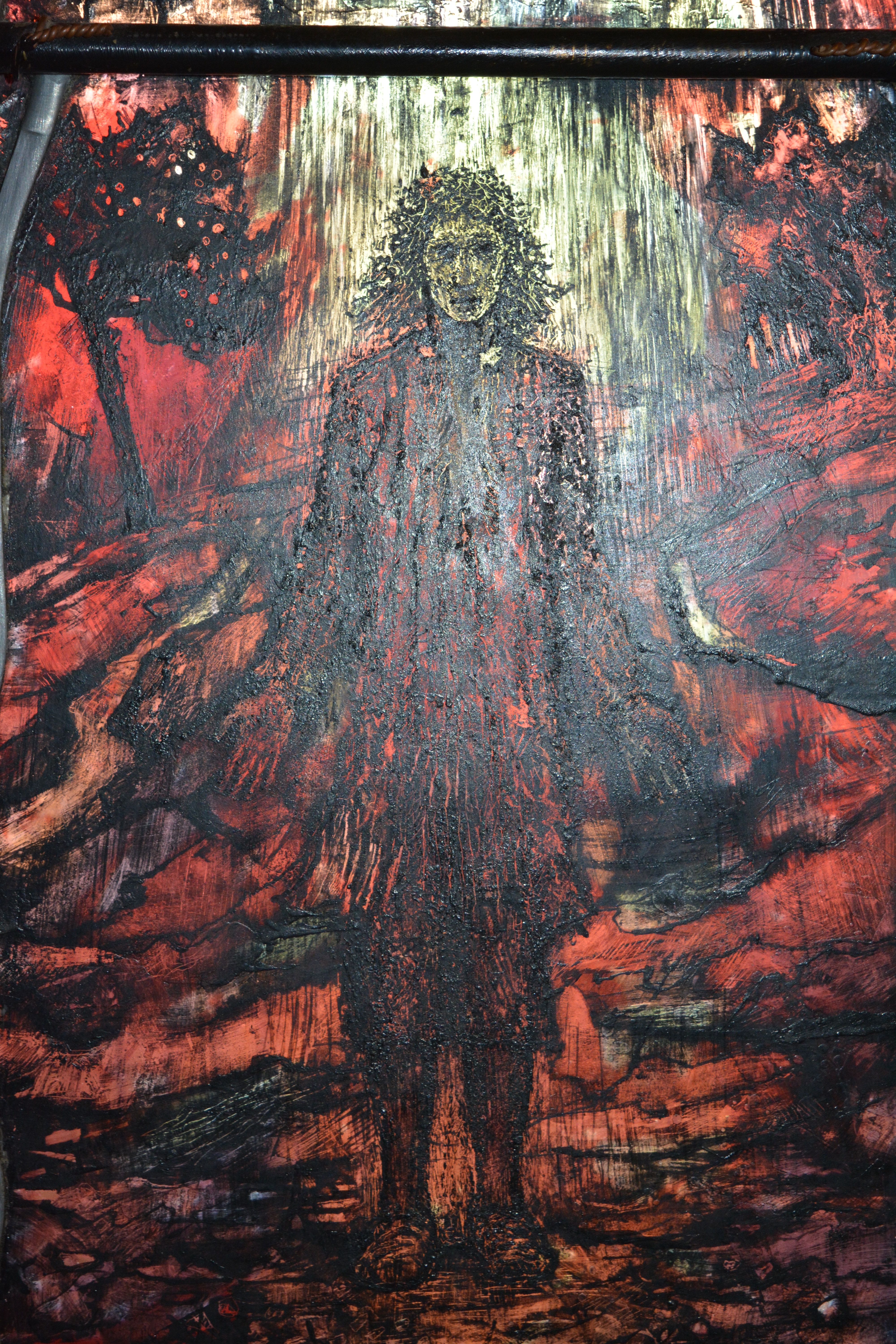
……. but a few were very different indeed. These were of recent design with a original art work and a style and technique we had never seen before.

2015 01 13_9270 2015 01 13_9271 2015 01 13_9272 2015 01 13_9273

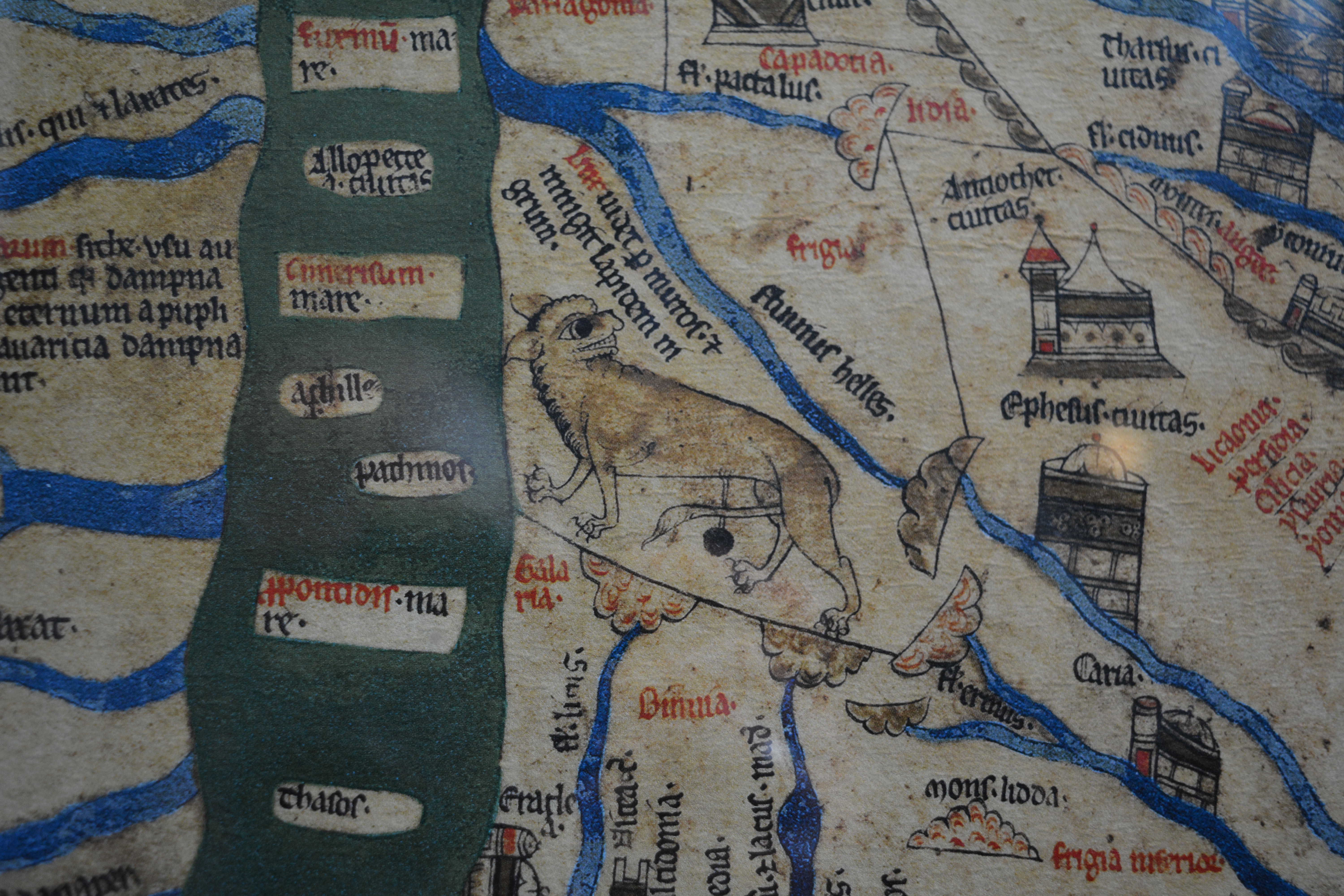
Hereford is famed for being the home of one of the most famous of ancient maps ever produced, the Mappa Mundi. The detail was amazing and it was hard to imagine that this was the work of someone’s imagination. How could it have been conceived? Other ancient books were displayed in glass topped cases.

2015 01 13_9277 2015 01 13_92782015 01 13_9260

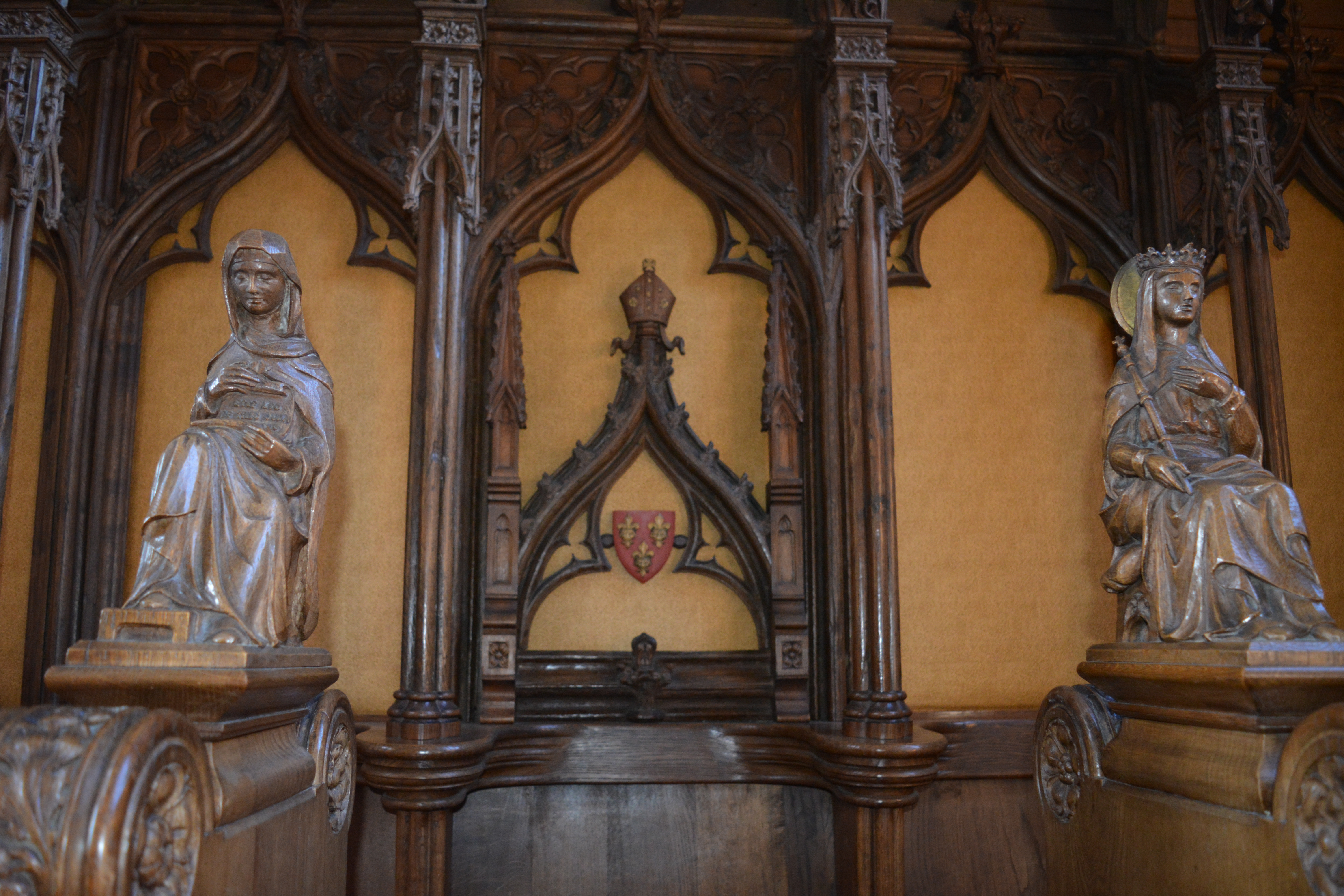
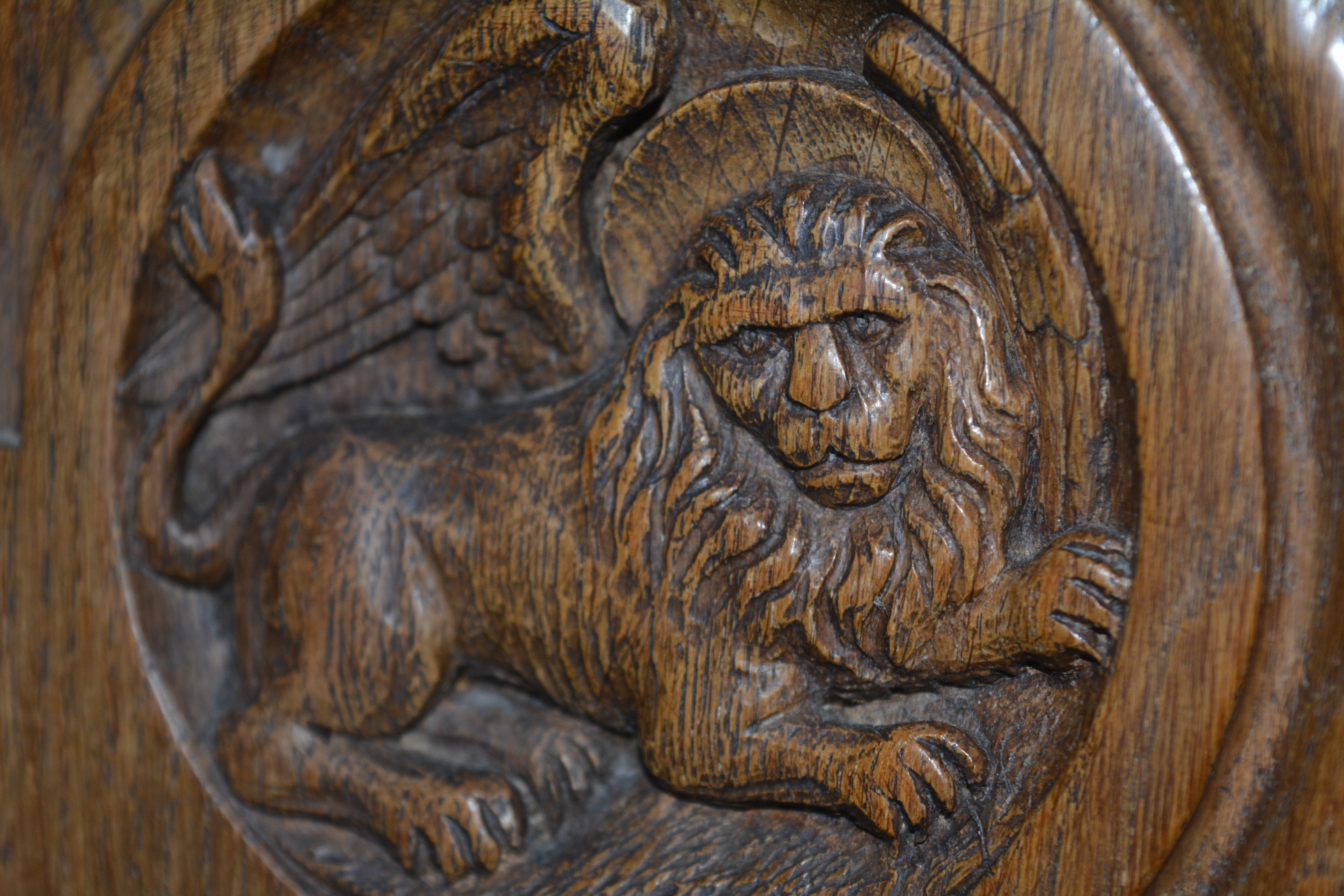
The craft of wood carving is not left out, as we discovered fine examples on misericords and chair backs.

2015 01 13_9248-1 2015 01 13_9246-12015 01 13_9247-1

The smith was not left out either. We found these very detailed carvings on gates at the entrance to a walkway within the cathedral.

2015 01 13_9258-1 2015 01 13_9259-1

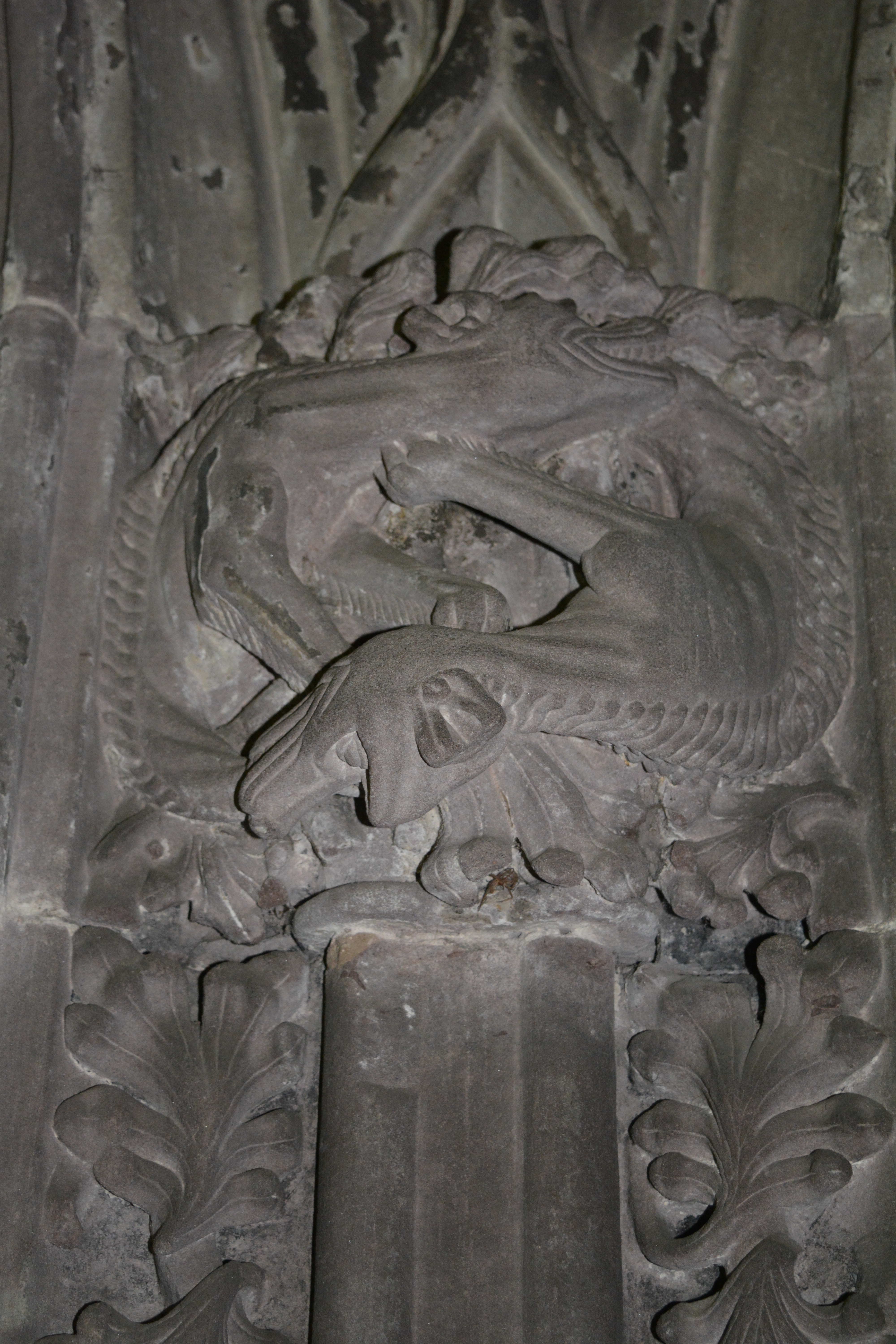
Our final craft we discovered was the work of the stonecarvers. These two dragons topped off pillars in a tiny chapel.

2015 01 13_9262-1 2015 01 13_9263-1

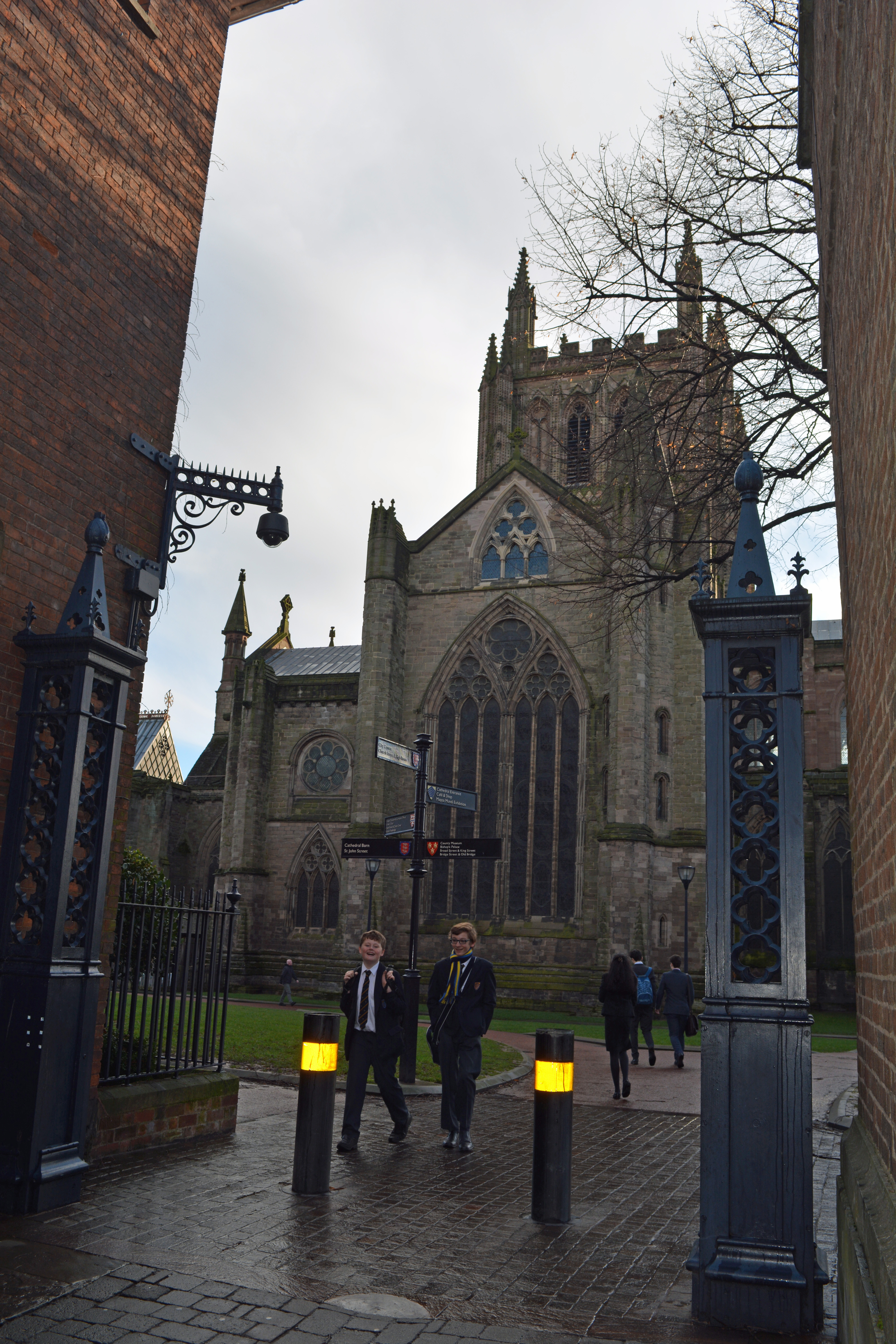
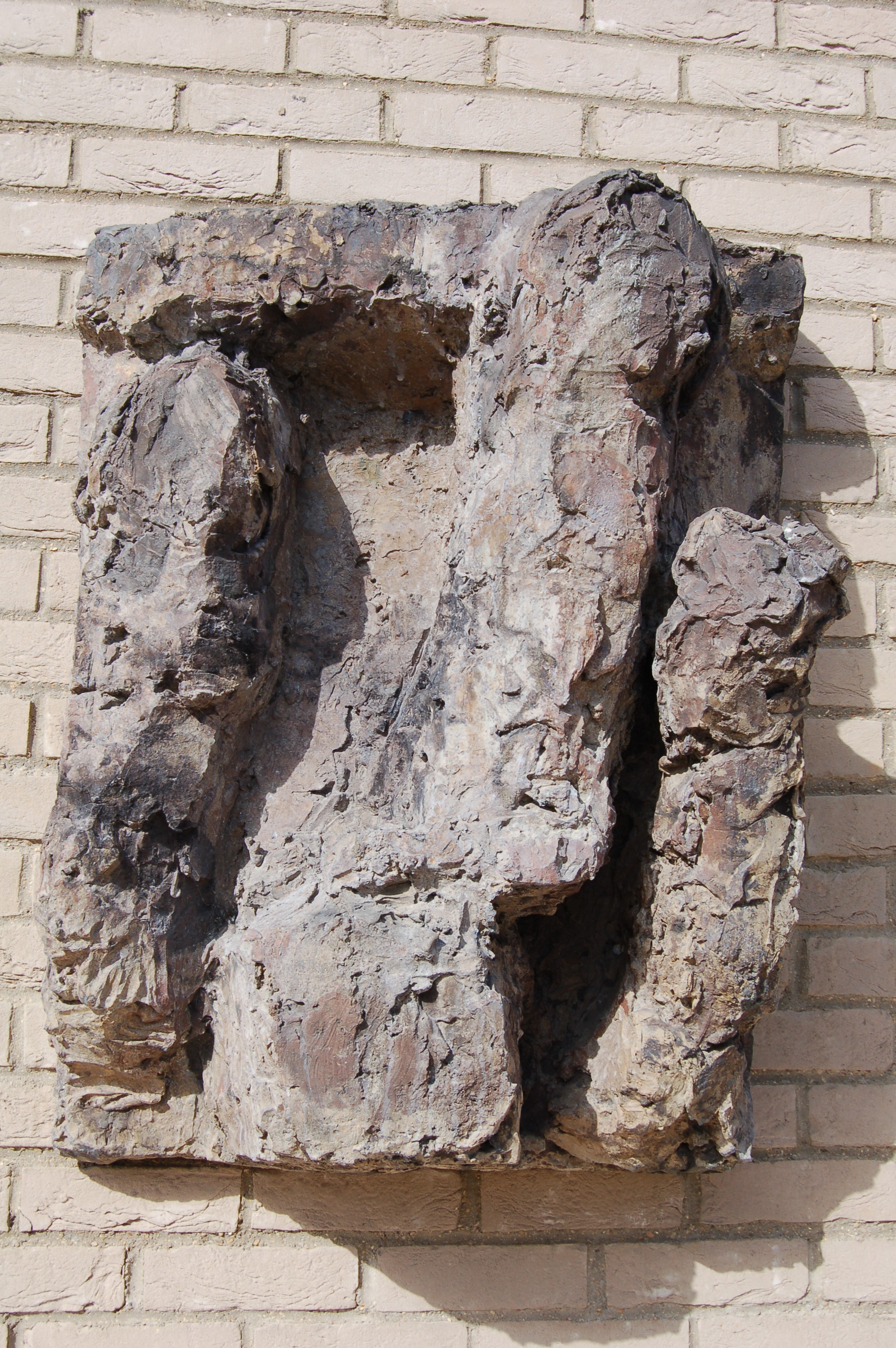
Once back outside we were disappointed not to be able to walk around the the building to view it from all sides but we were very pleased to find a courtyard containing this beautiful piece of sculpture and close by some intricate ironwork on a pair of gates.

2015 01 13_9281 2015 01 13_9282 2015 01 13_9283

2015 01 13_9284-1

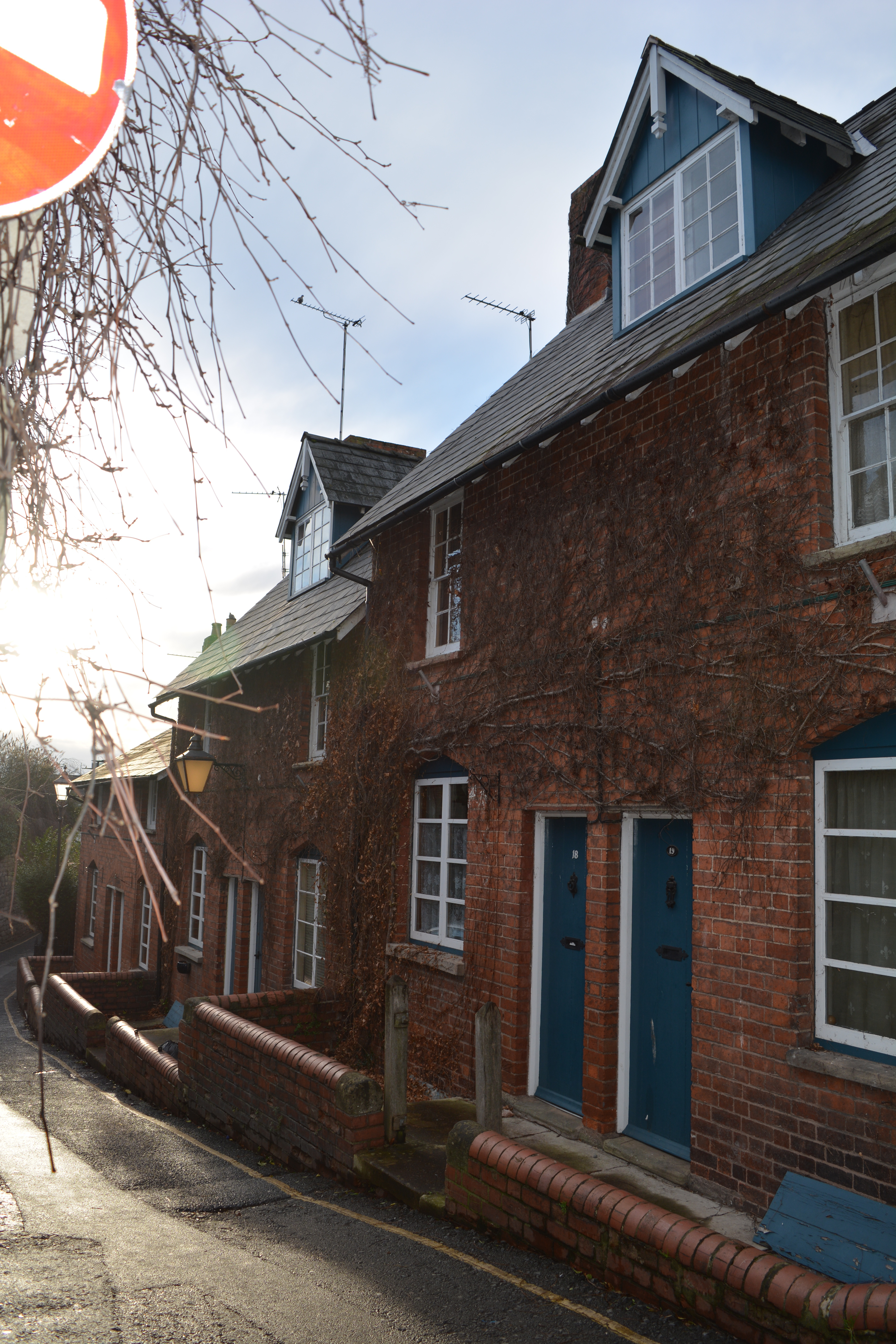
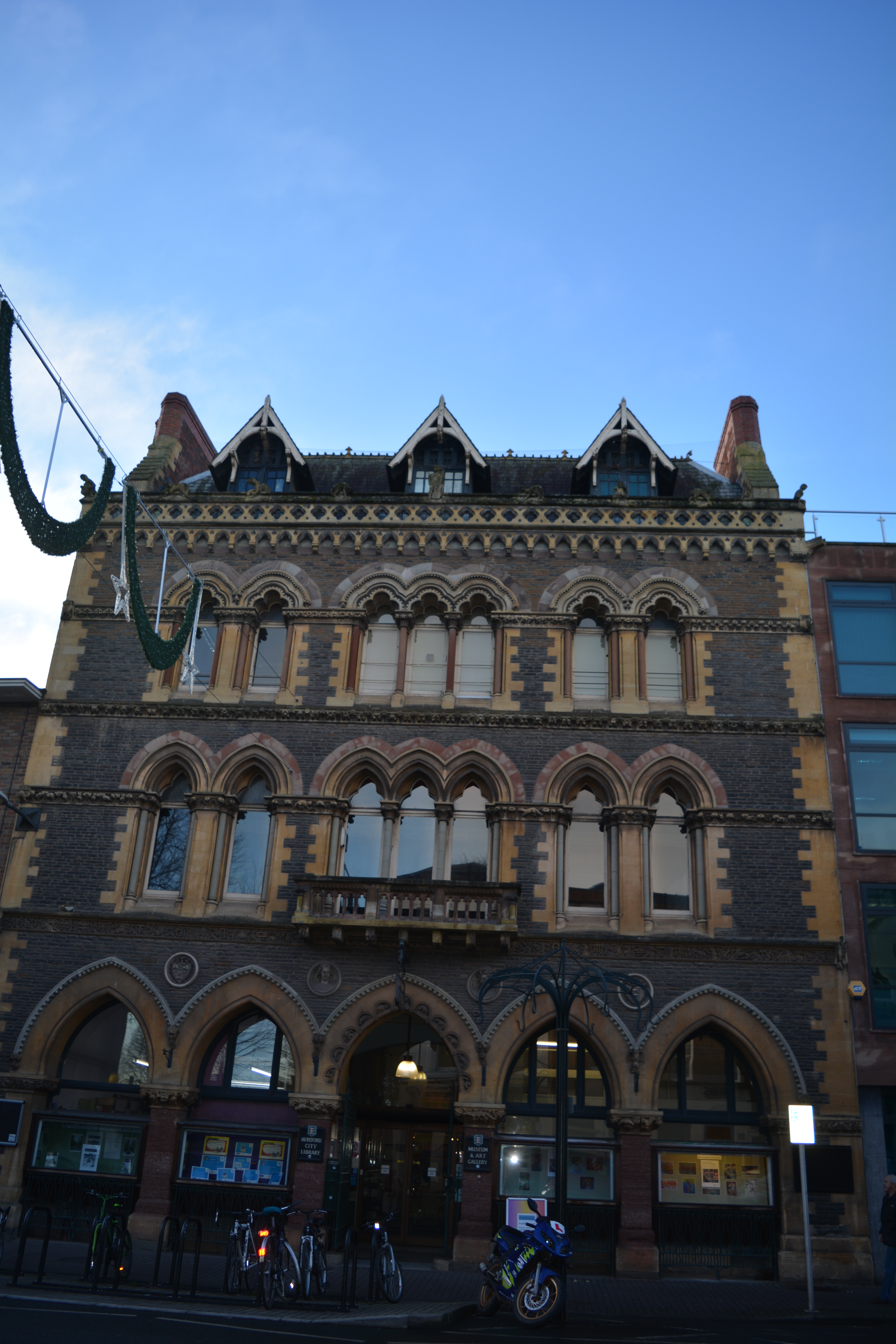
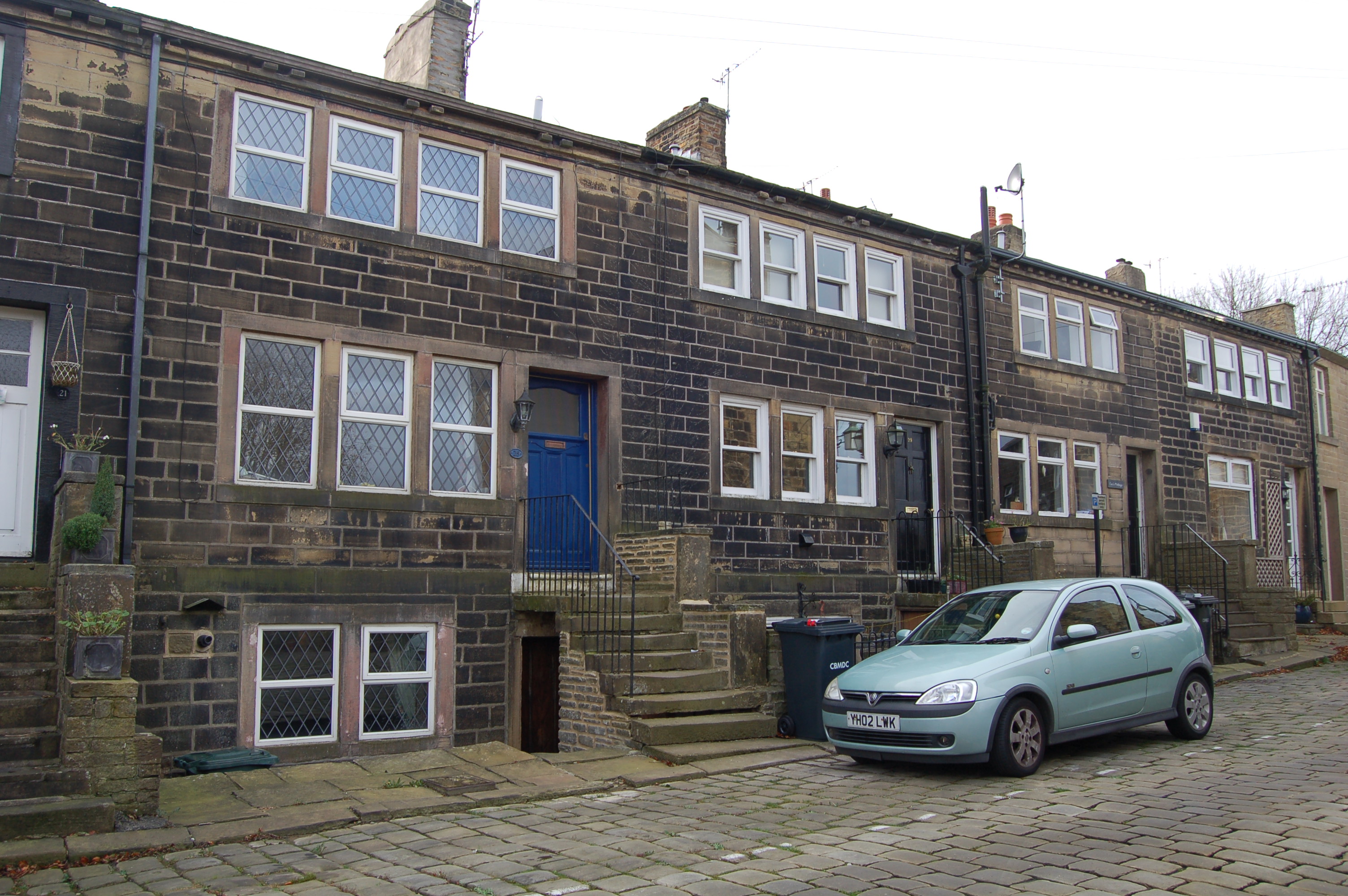
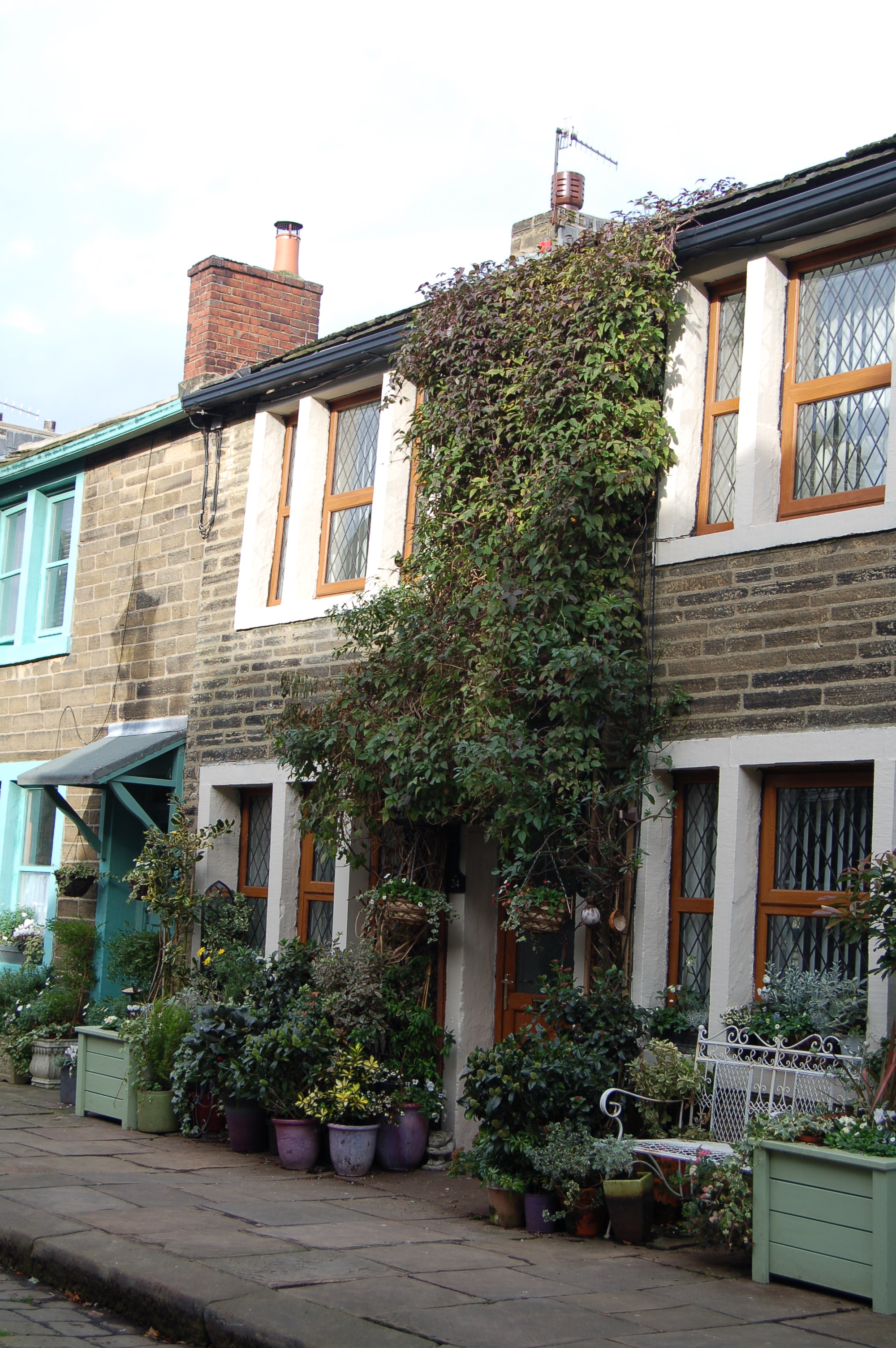
As we returned to the car we found a few interesting buildings left in the centre of the city. A row of old cottages close to the Cathedral, the Victorian Public Library and an old warehouse now restored and extended to provide modern apartments. So there ends the look at the first cathedral in this little series.

2015 01 13_9285-1 2015 01 13_9287-1 2015 01 13_9286-1


Categories
architecture Church architecture

Three Cathedrals – Hereford – Part One

On a freezing cold day in mid January we decided to visit Hereford which, although only an hours journey or so away from us, we had never visited. It is the county capital of Herefordshire. The city centre was not very impressive at all and we had the impression much of its ancient architecture had been destroyed in the ’60’s and ’70’s, exactly the same as had happened to our county town Shrewsbury. A few gems remained but there were an awful lot of ugly building around them.

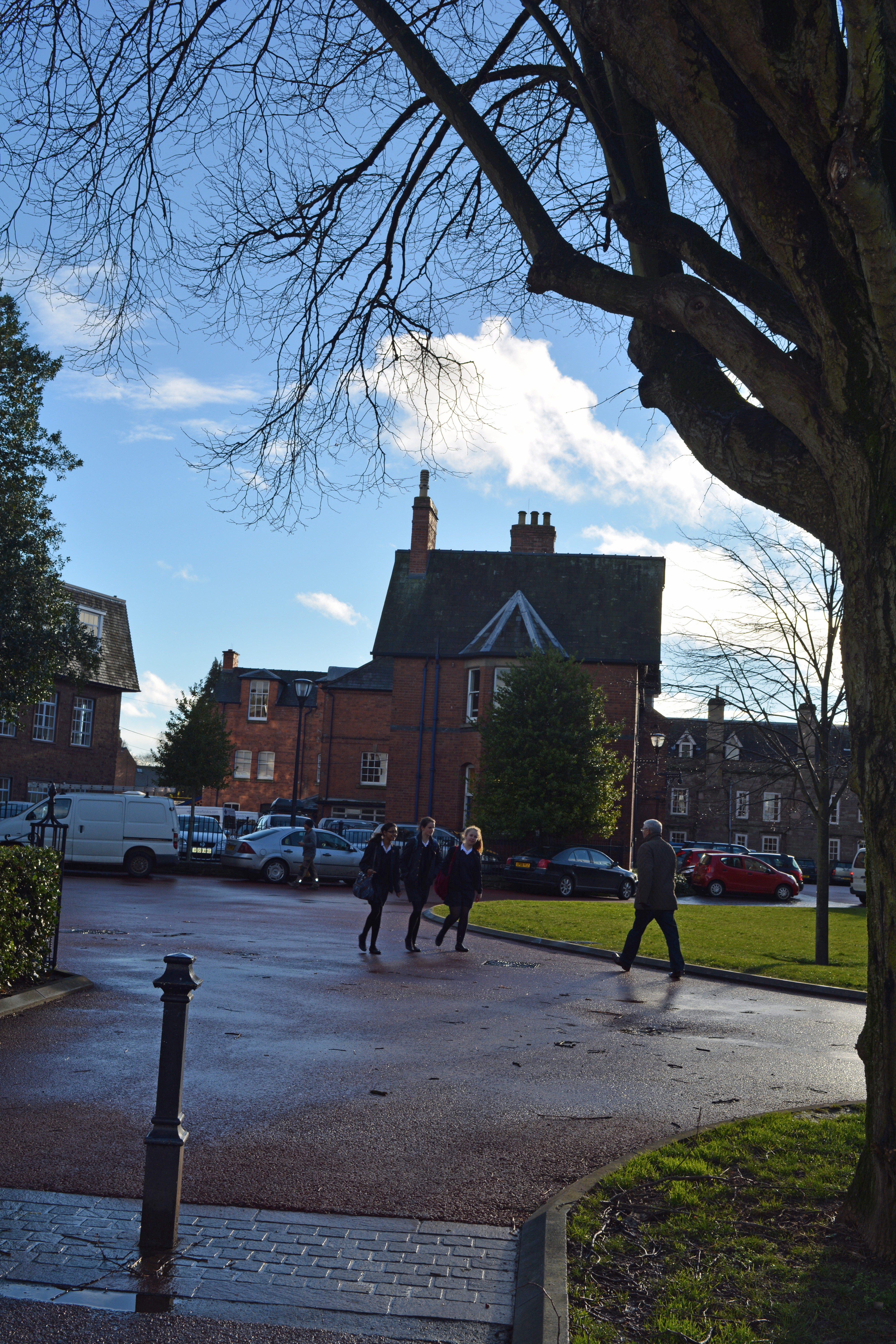
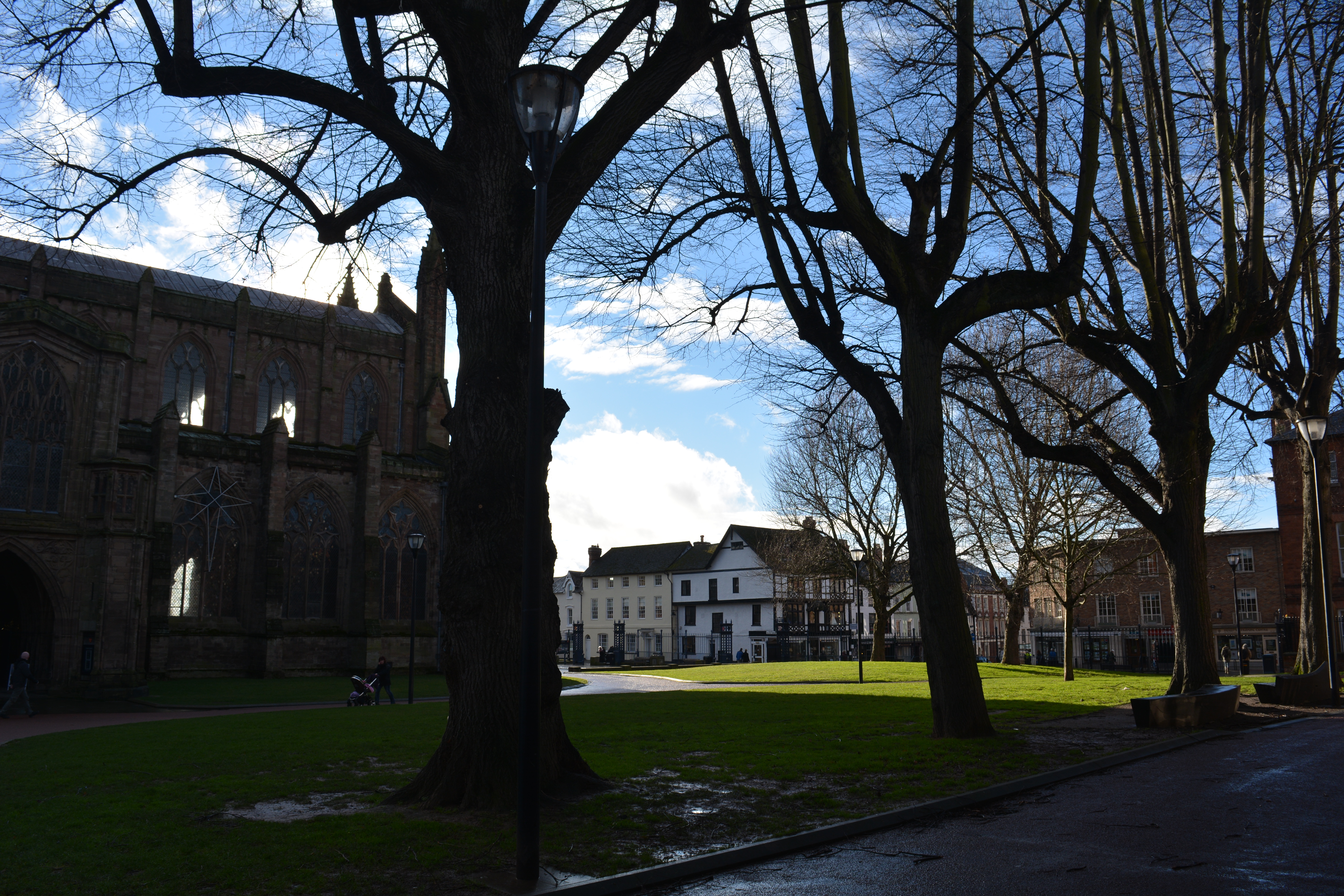
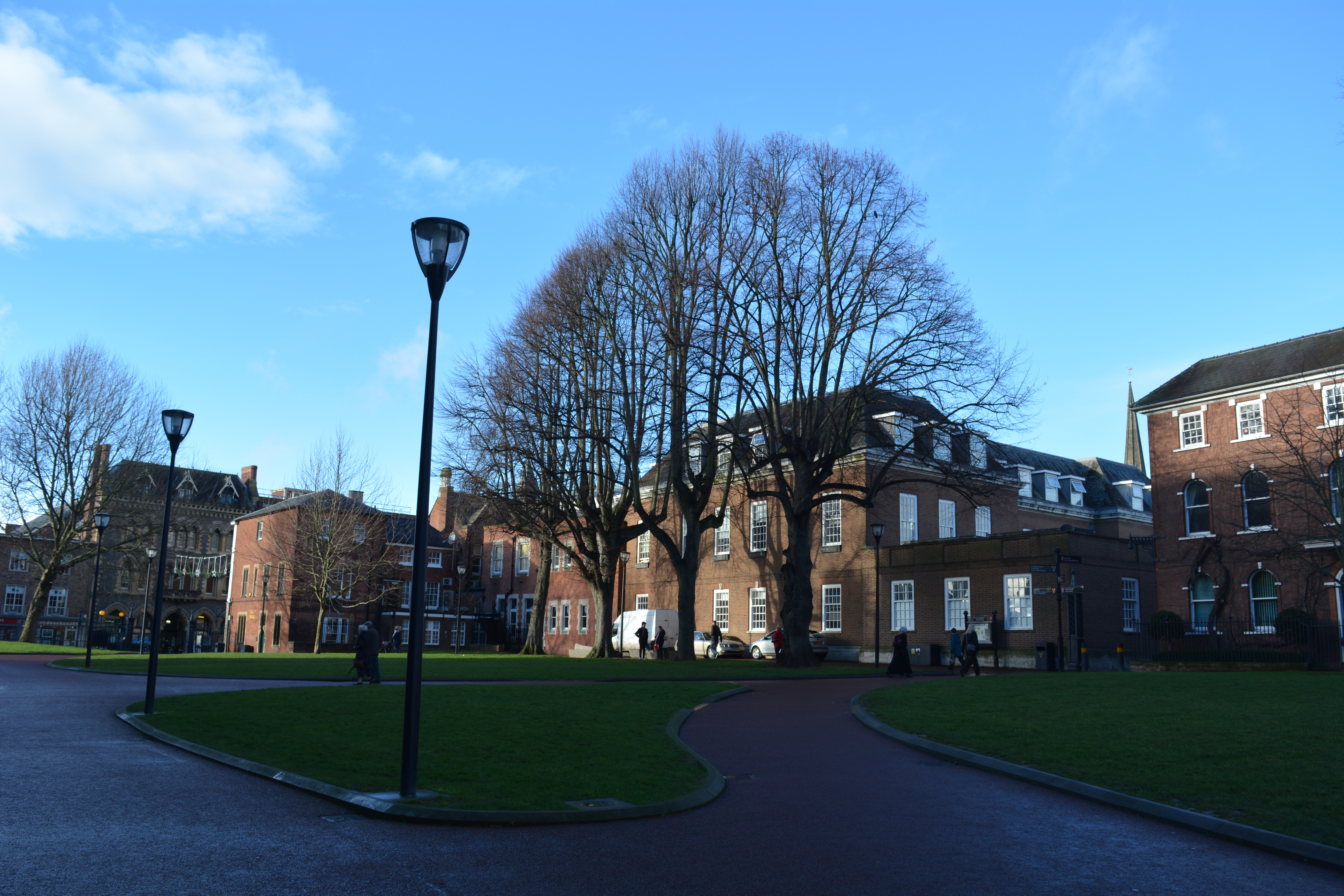
But on a day with sleet and wet snow showers we were here to see the Cathedral. We first sited the cathedral as we walked up a narrow cobbled street with local artisan shops lining each side. The Cathedral School buildings clustered around the entrance gateway to the Cathedral Close so uniformed school children busily and hastily crossed the close in every direction.

2015 01 13_9217_edited-1 2015 01 13_9218_edited-1 2015 01 13_9228_edited-1 2015 01 13_9229_edited-1 2015 01 13_9220

2015 01 13_9219 2015 01 13_9233

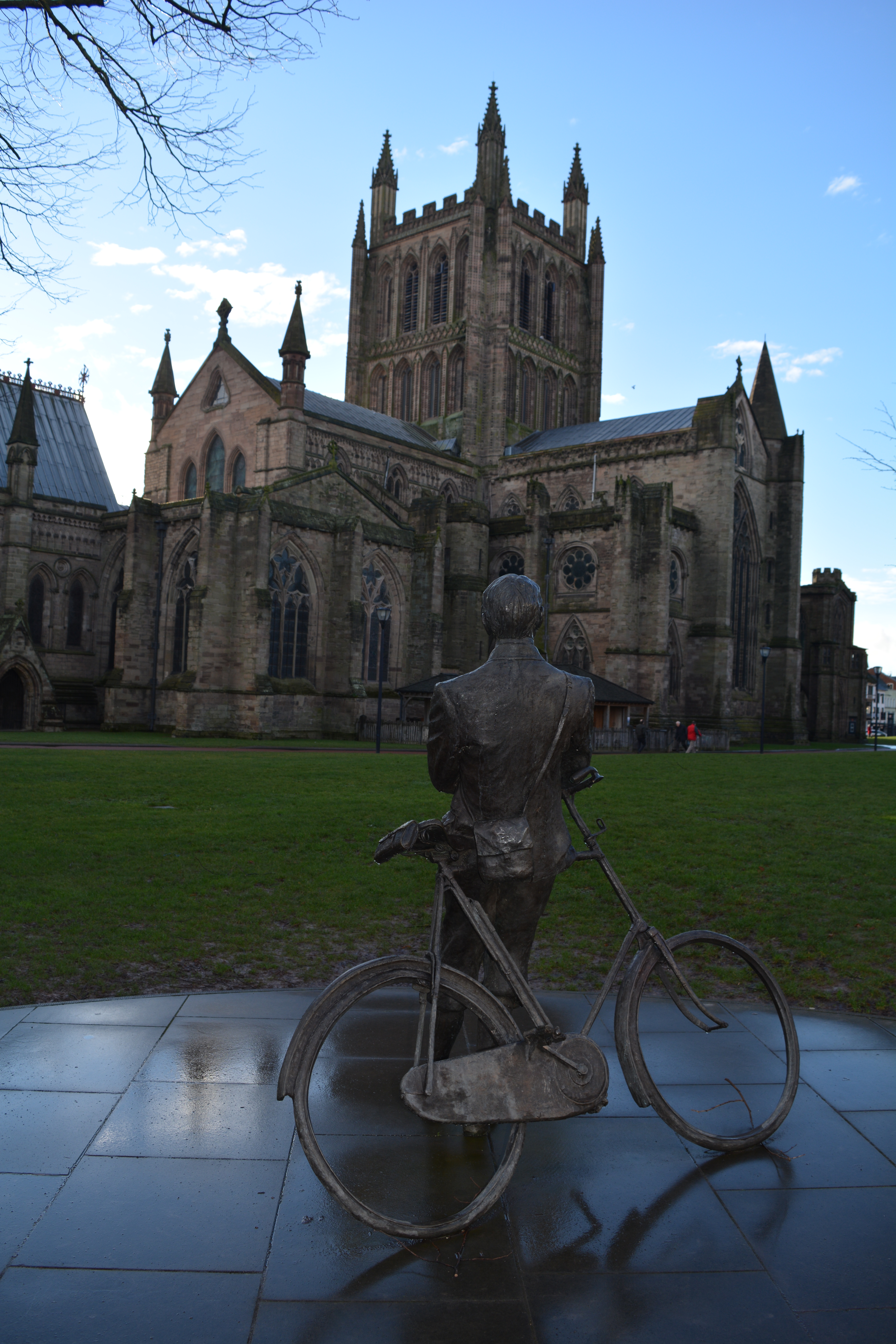
Edward Elgar, composer, is celebrated with this beautiful bronze statue so full of character, where he leans back on his old Samson bicycle admiring the cathedral.

2015 01 13_9222 2015 01 13_9223

A single raindrop had settled itself right on the end of his nose, and hung ready to drip onto his magnificent moustache.

2015 01 13_9224_edited-1

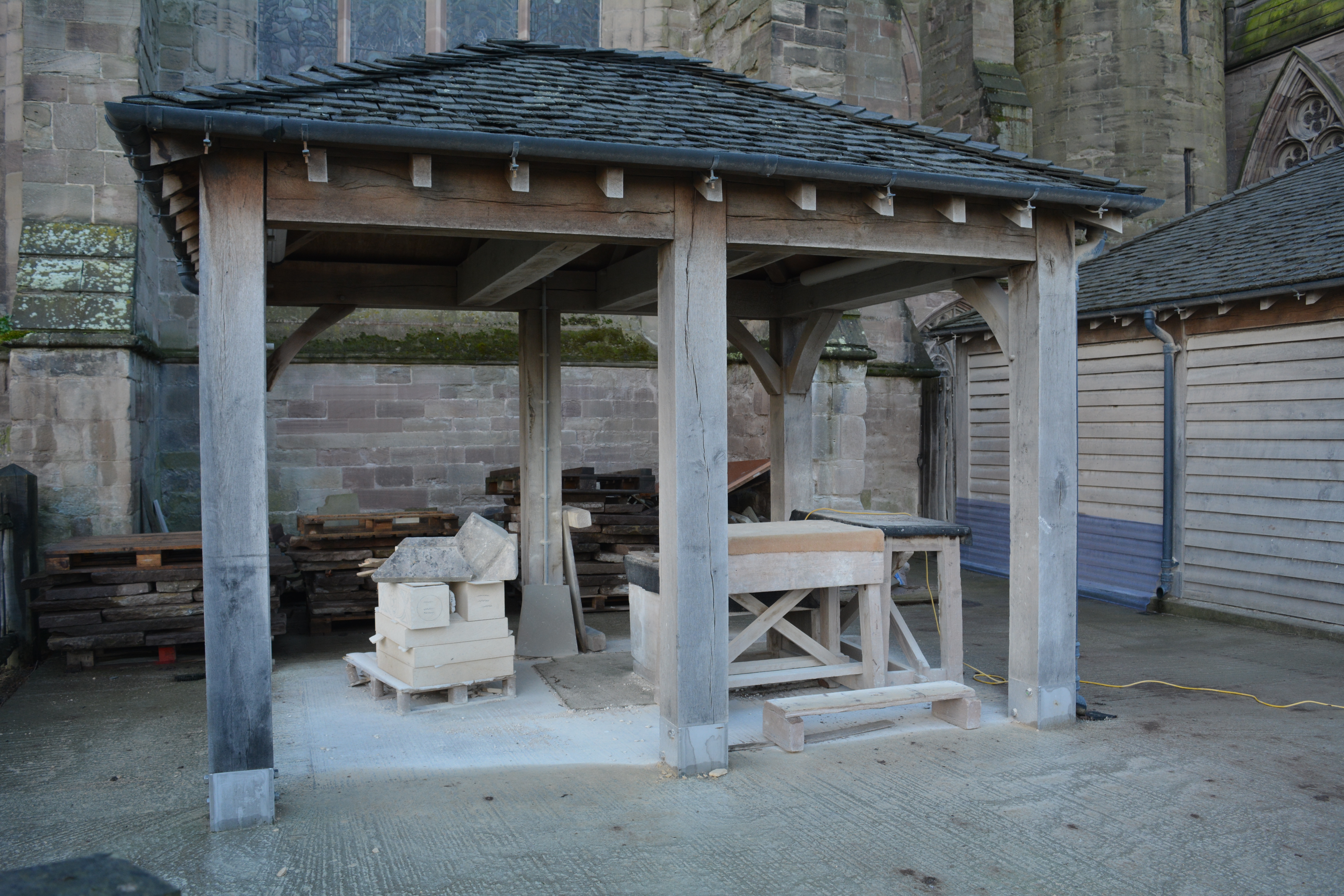
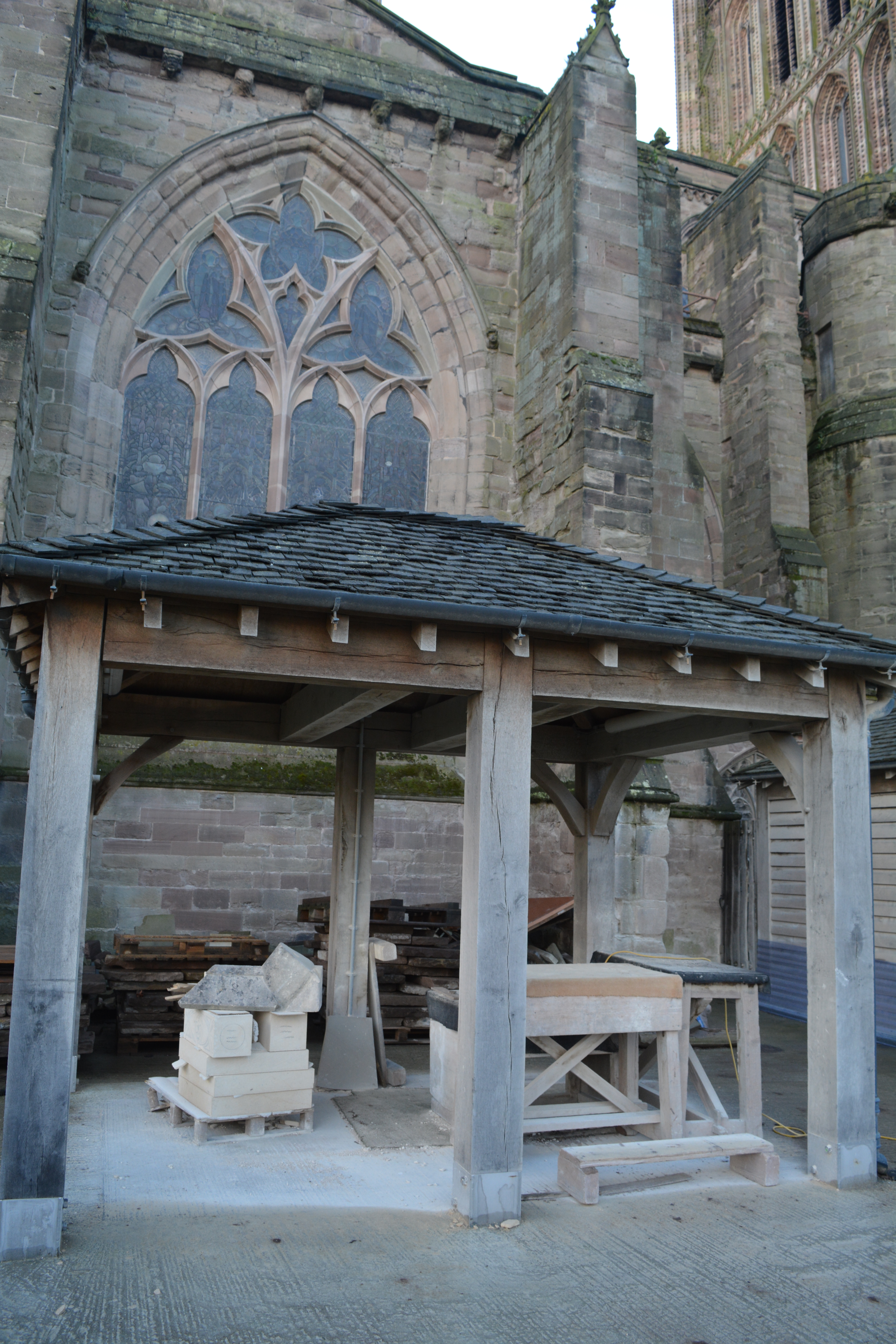
Close to the main Cathedral entrance a recent oak framed building housed the workshop of the stone mason. Masons are constantly kept busy on repairs to stonework in every cathedral around the country.

The Dioscese of Hereford was founded in 676 and the first Cathedral dedicated to King Ethelbert was built in 794. Ethelbert was to become a martyr and the Cathedral dedicated to him became a place of pilgrimage. His bones stored at the Cathedral became a centre of a pilgrimage. A new Cathedral was built between 1020 and 1040 but in 1075 was destroyed by the Welsh.

Thus major rebuilding work followed between 1107 and 1158 in the Norman style, still much in evidence today. So the Cathedral today contains examples of architectural styles from the Norman period right up to the current time.

2015 01 13_9230 2015 01 13_9231

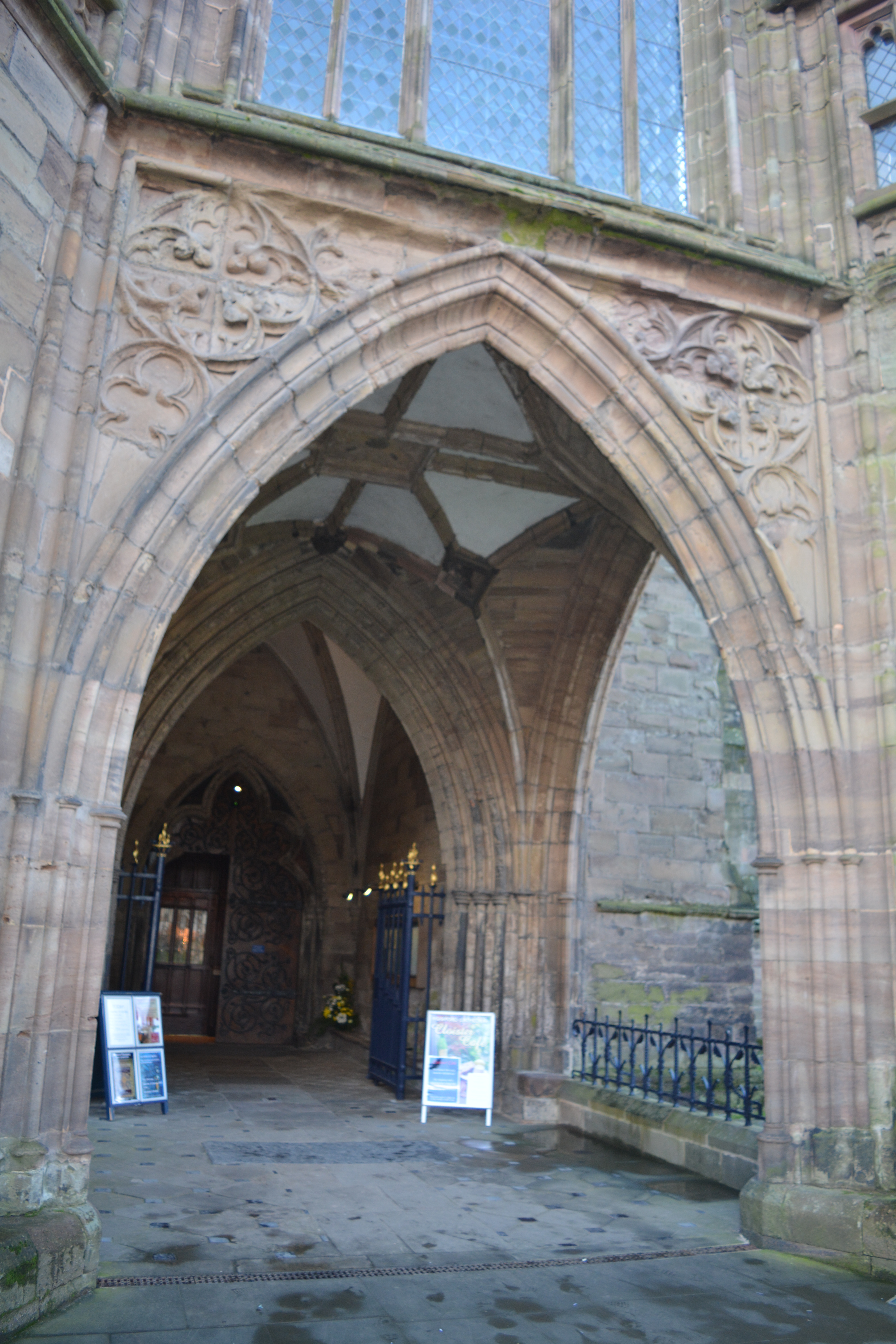
The main way into the Cathedral is through a huge stone porch. Inside massive oak doors were well furnished with iron hinges and a lion headed door knocker.

2015 01 13_9234 2015 01 13_9236

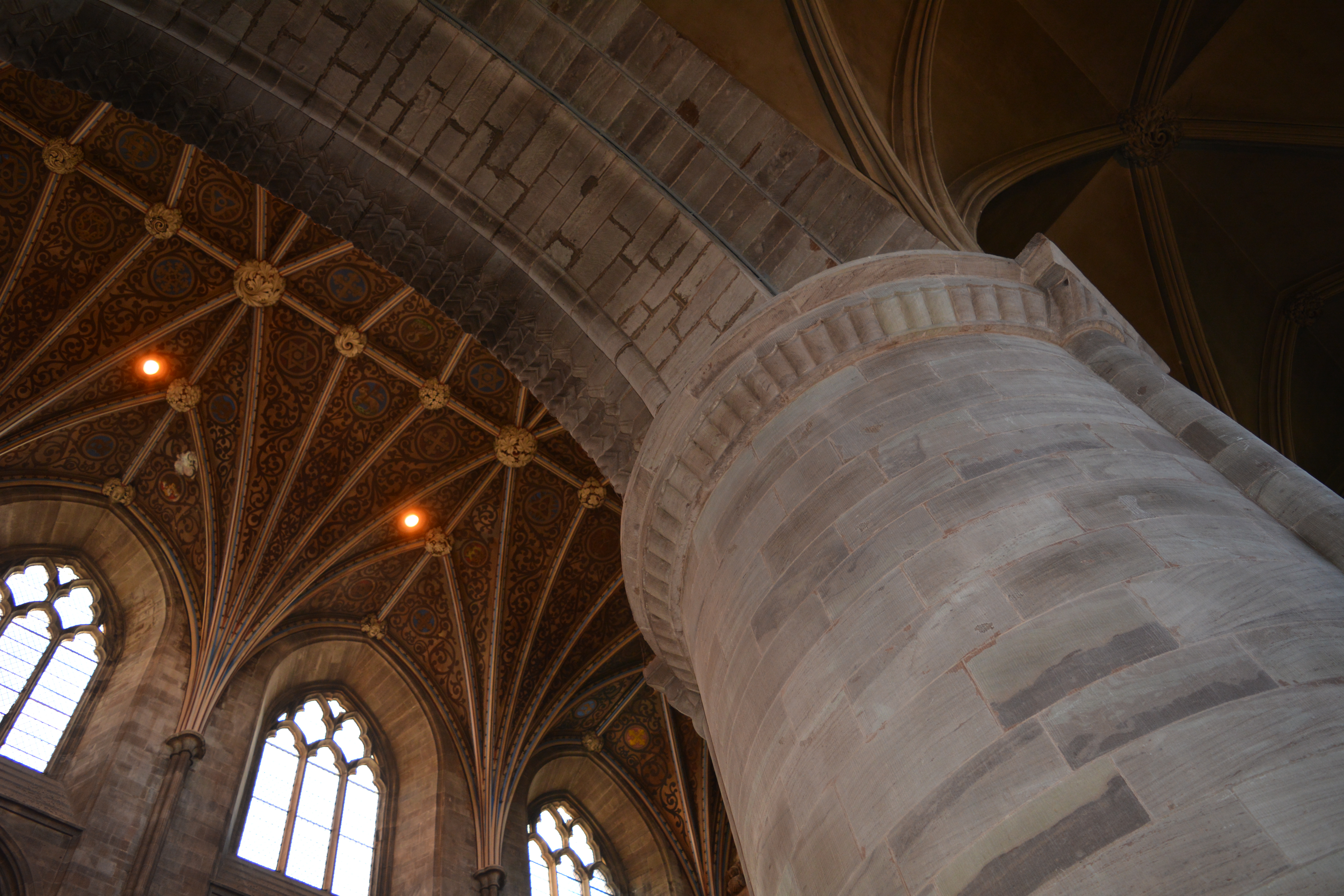
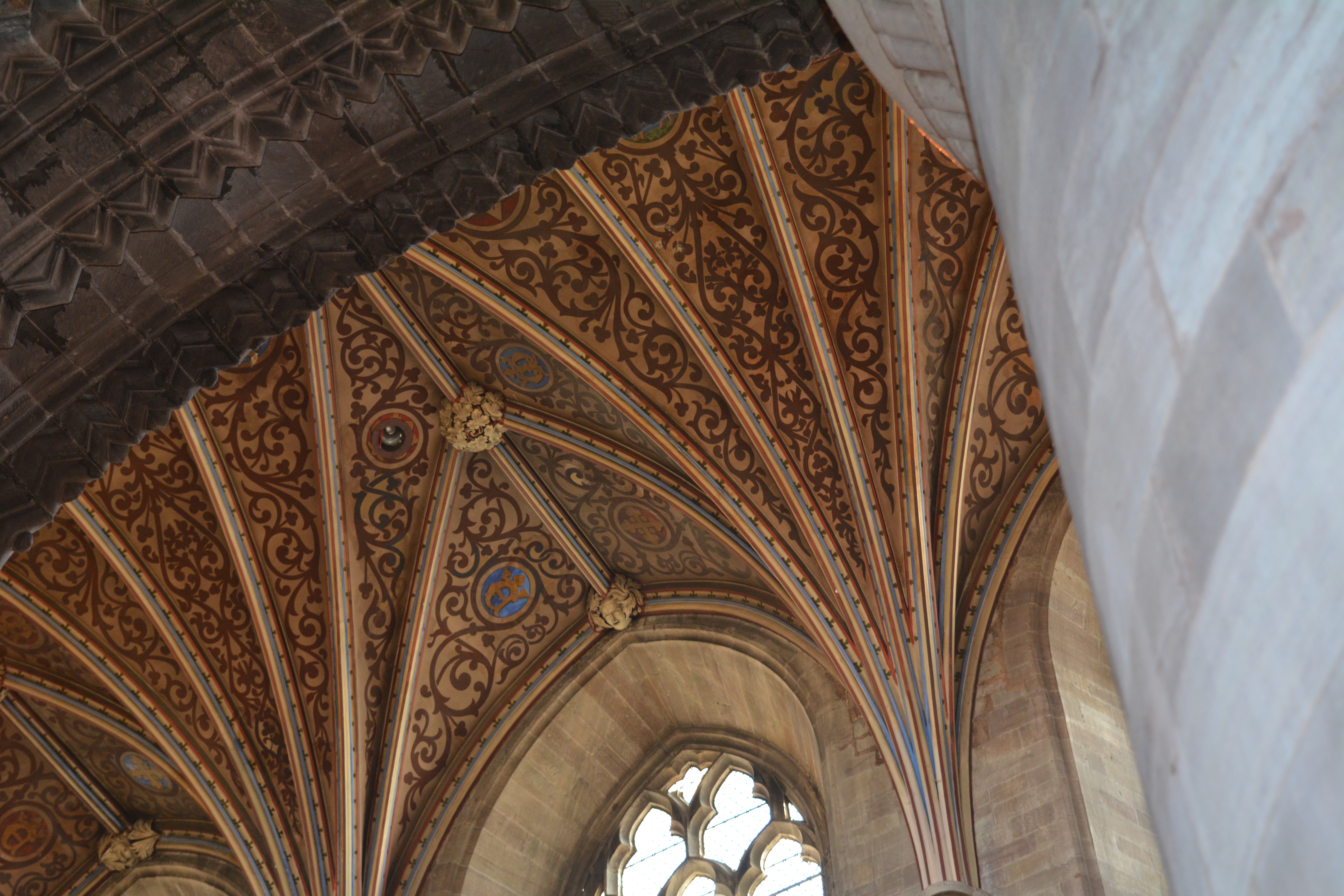
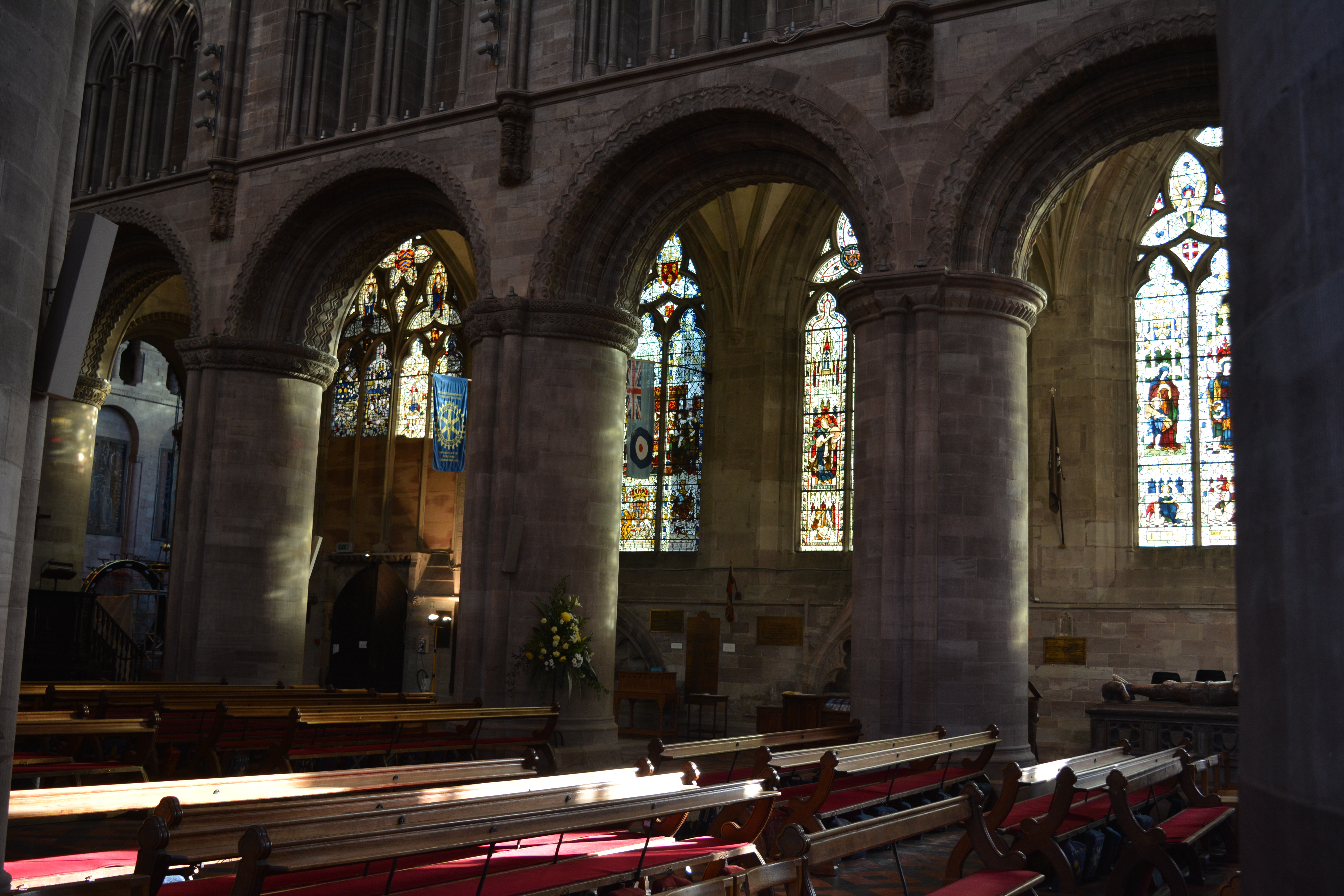
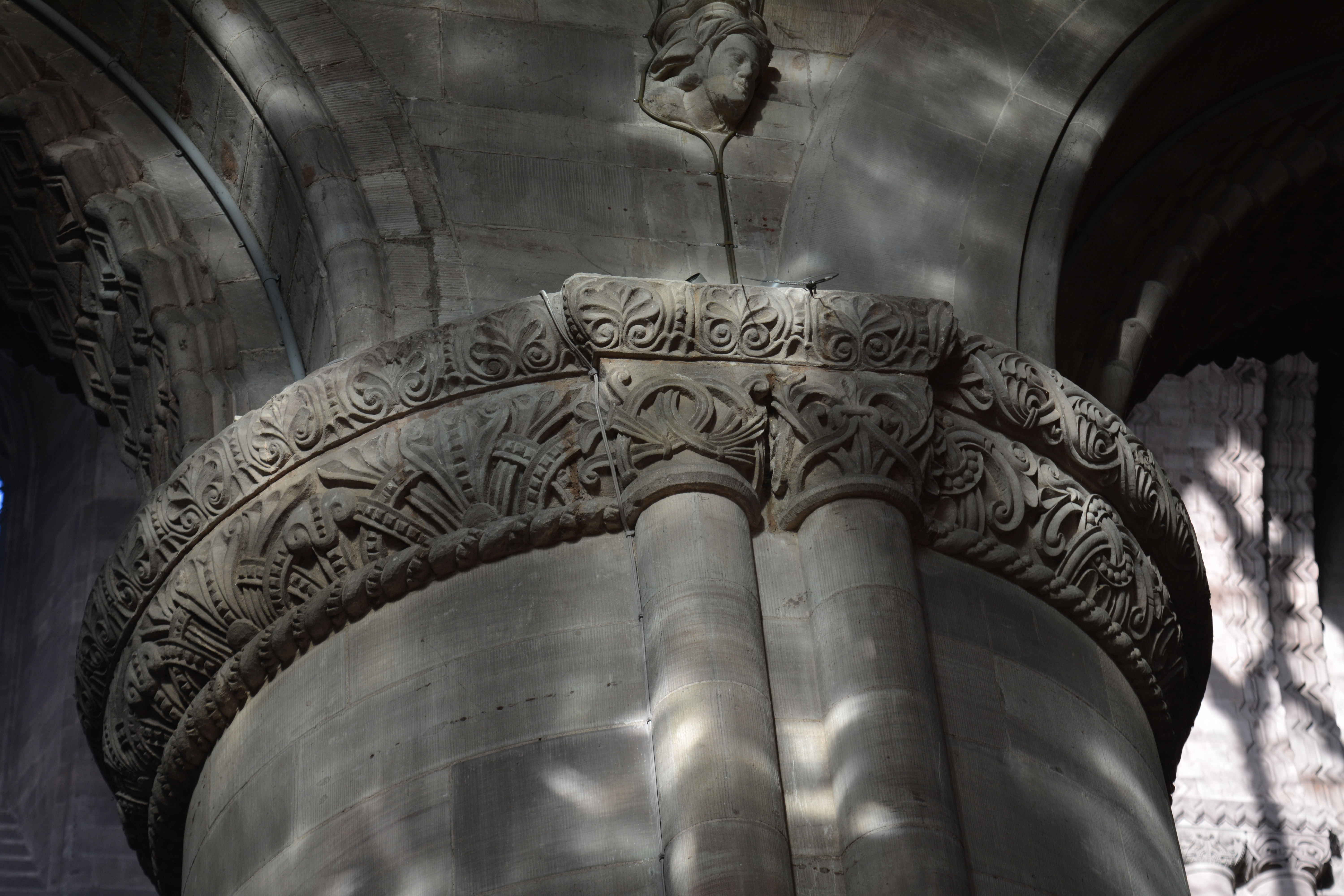
Once inside the incredible height of the building became apparent with wide intricately carved stone pillars leading the eye up to an incredibly beautifully carved and painted vaulted ceiling.

2015 01 13_9237 2015 01 13_92422015 01 13_9243 2015 01 13_92452015 01 13_9250 2015 01 13_9251

It is unusual to see such colour in an Anglican building in this country. We were soon to discover that this building had been very colourfully decorated as we found original examples. Hereford Cathedral is a fine example of English Gothic church architecture. Within it we were to find colour in its stained glass windows, in the tiles on its floor, on wood carvings and in fabric.

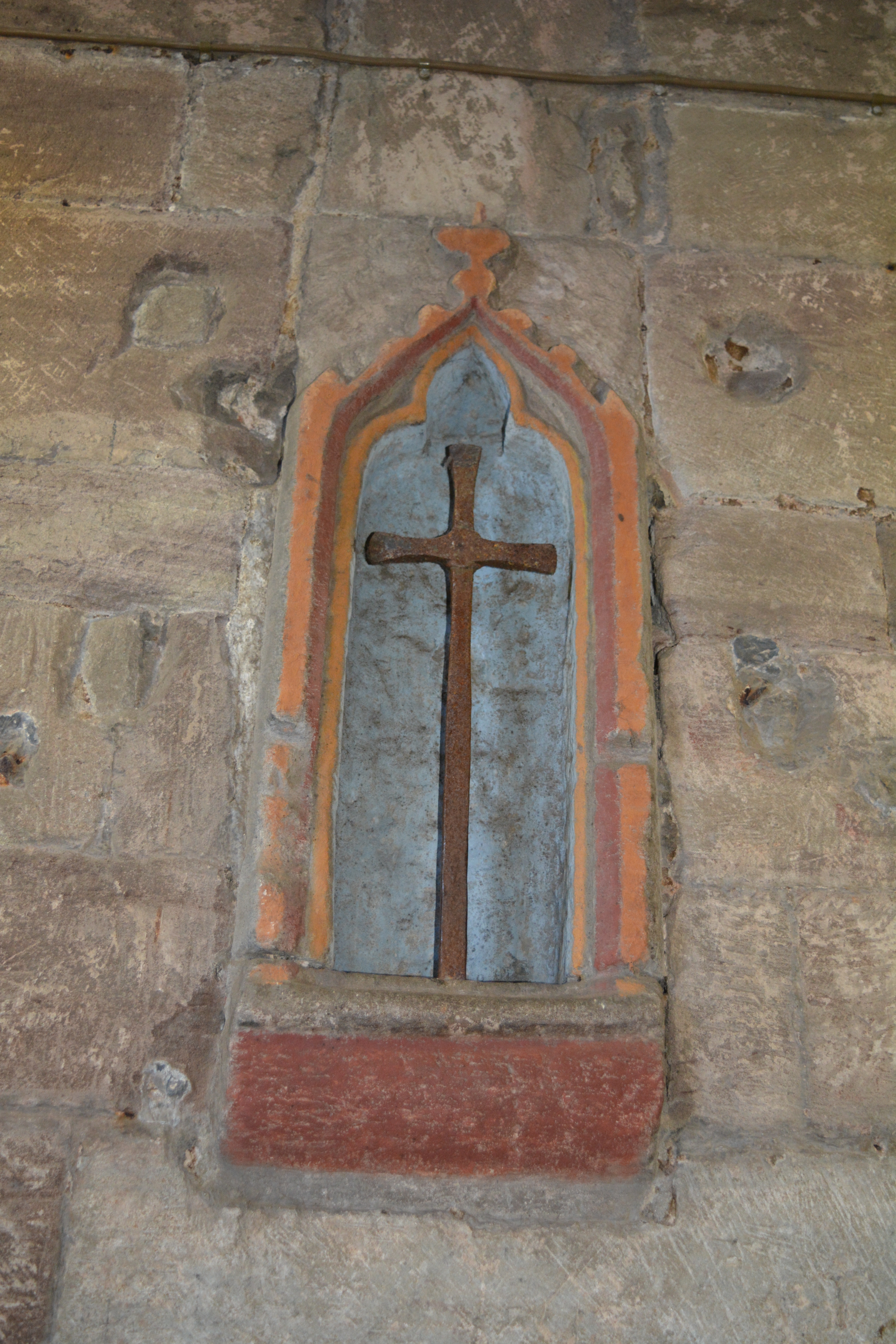
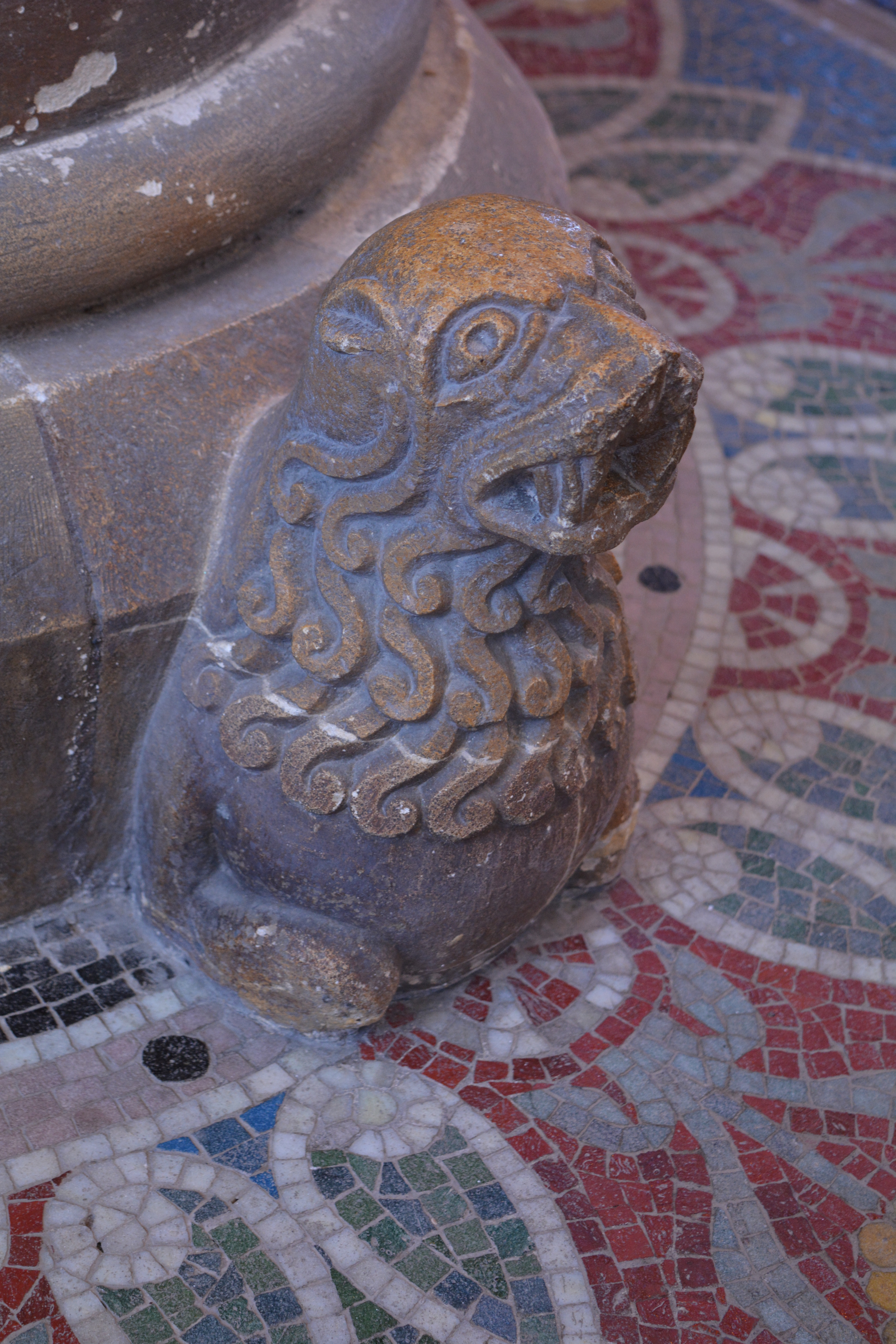
The first example we found was the decoration in orange and red around this tiny stone window but we were soon to find even more colour in the mosaic patterning around the base of the carved stone font.

2015 01 13_9235 2015 01 13_92392015 01 13_9240 2015 01 13_9241

Probably one of the newest examples of colourful craftwork to be found was on the intricately embroidered kneelers hanging from the seats.

2015 01 13_9244

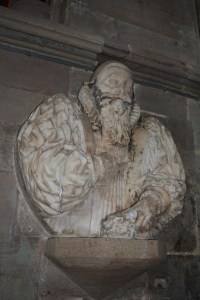
We found many examples of detailed and richly painted carvings in both stone and wood.

2015 01 13_9253  2015 01 13_9257

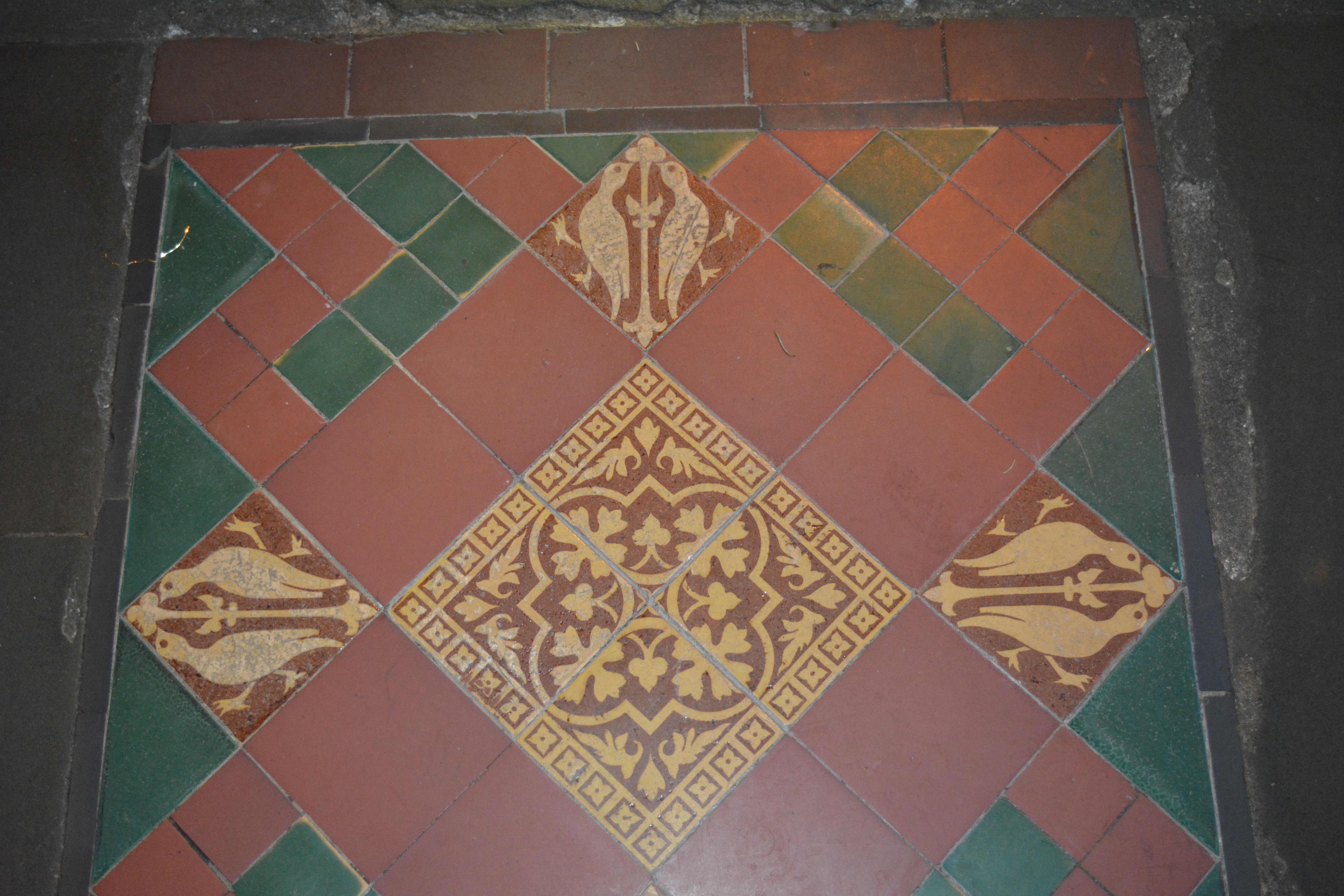
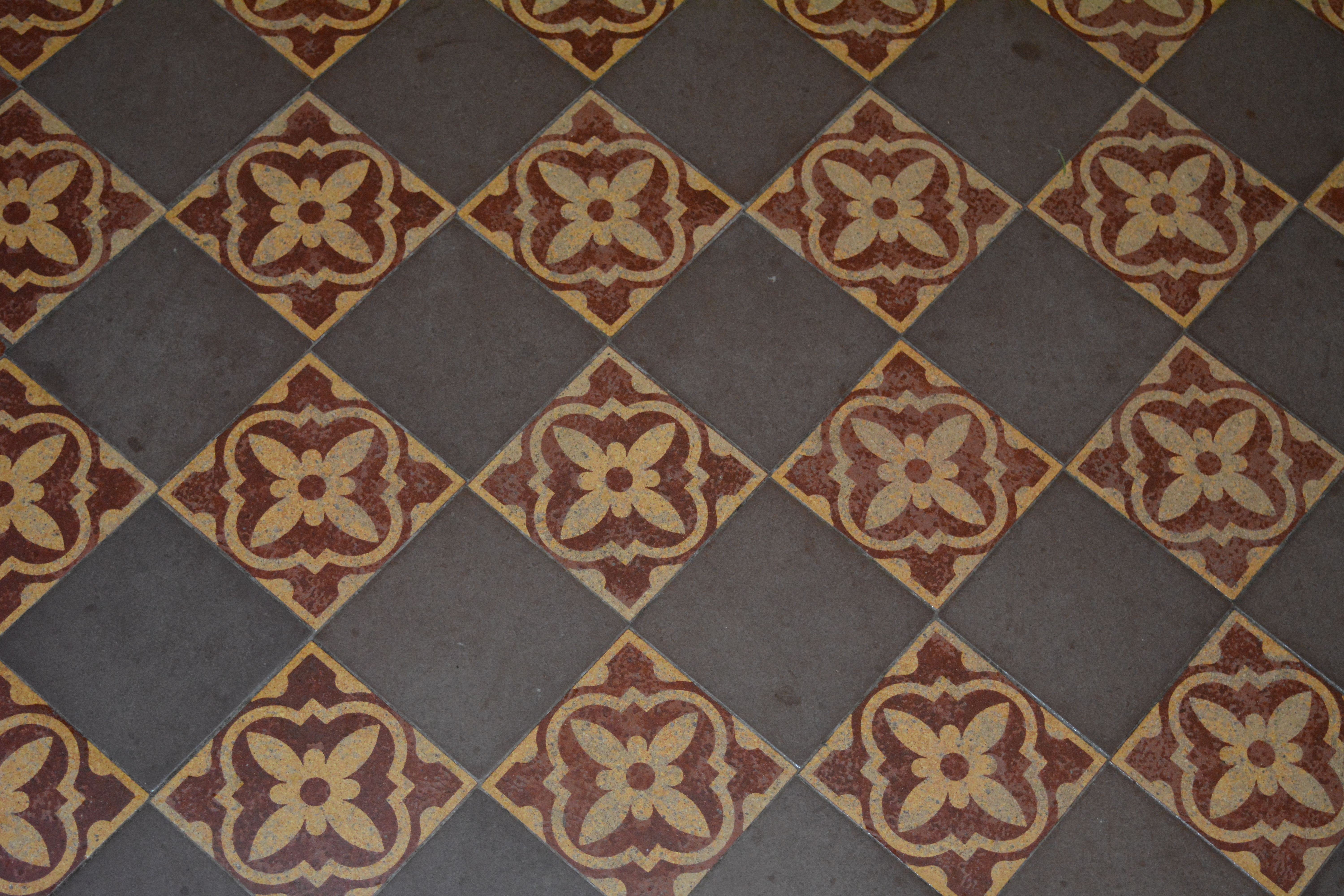
Before we finish part one of our visit to Hereford Cathedral we shall look down at our feet to admire the colourful, patterned tiles.

2015 01 13_9255  2015 01 13_92642015 01 13_9265 2015 01 13_9266

All this ancient delicate craft needs protecting from the damp and cold. Several of these huge, iron, pot-bellied oil burners were working hard to do this. In part two we shall look at carvings in stone and artistry in glass and  in words on paper.

2015 01 13_9252


Categories
architecture climbing plants colours garden buildings garden design garden furniture garden photography garden seating gardening gardens gardens open to the public hardy perennials irises kitchen gardens light quality National Trust ornamental trees and shrubs outdoor sculpture roses The National Trust trees walled gardens Winter Gardening winter gardens

Croft Castle month by month – January – part two

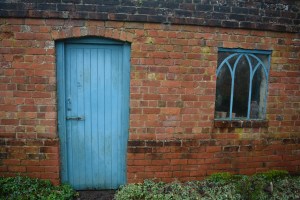
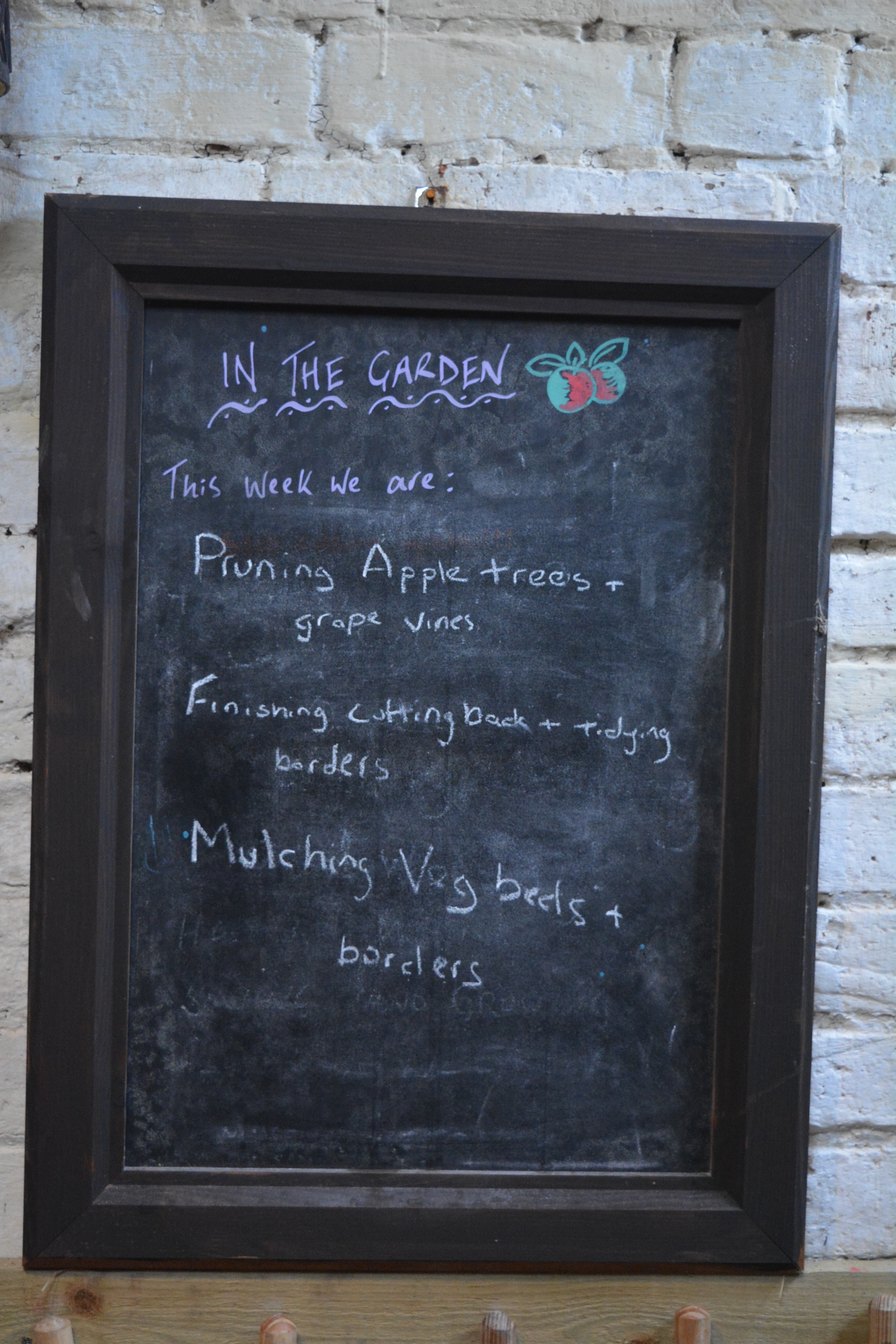
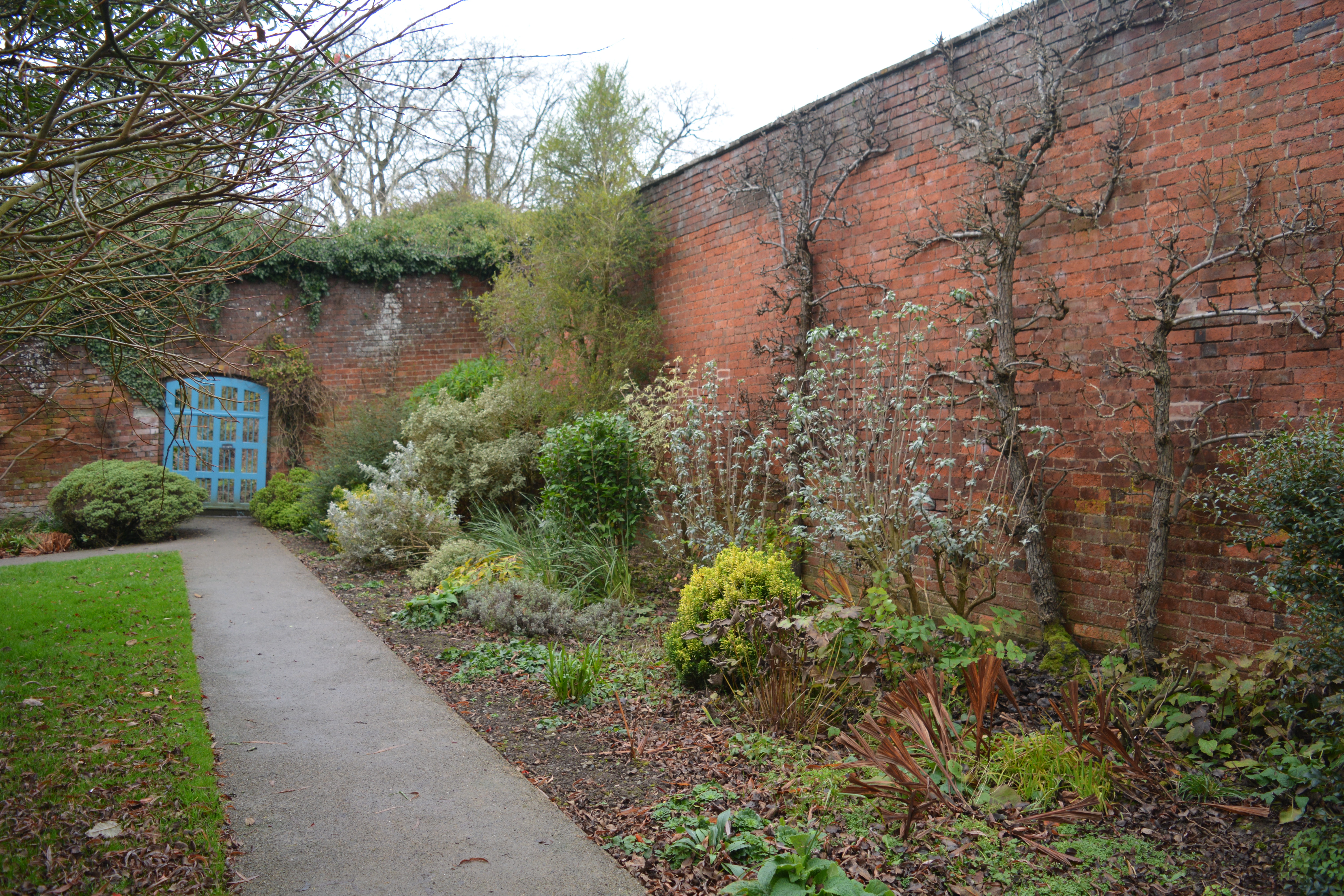
Welcome back to Croft Castle where we were about to find out what lies beyond the blue gate. We entered the space beyond the gate and found immediately to our right one of the gardeners’ buildings from the days when the walled gardens were a productive fruit and veg garden. Today it is a children’s discovery room complete with nature table. A board showed the gardening tasks for the month. Close by hung an old pruning saw.

2015 01 01_9110 2015 01 01_91112015 01 01_9109

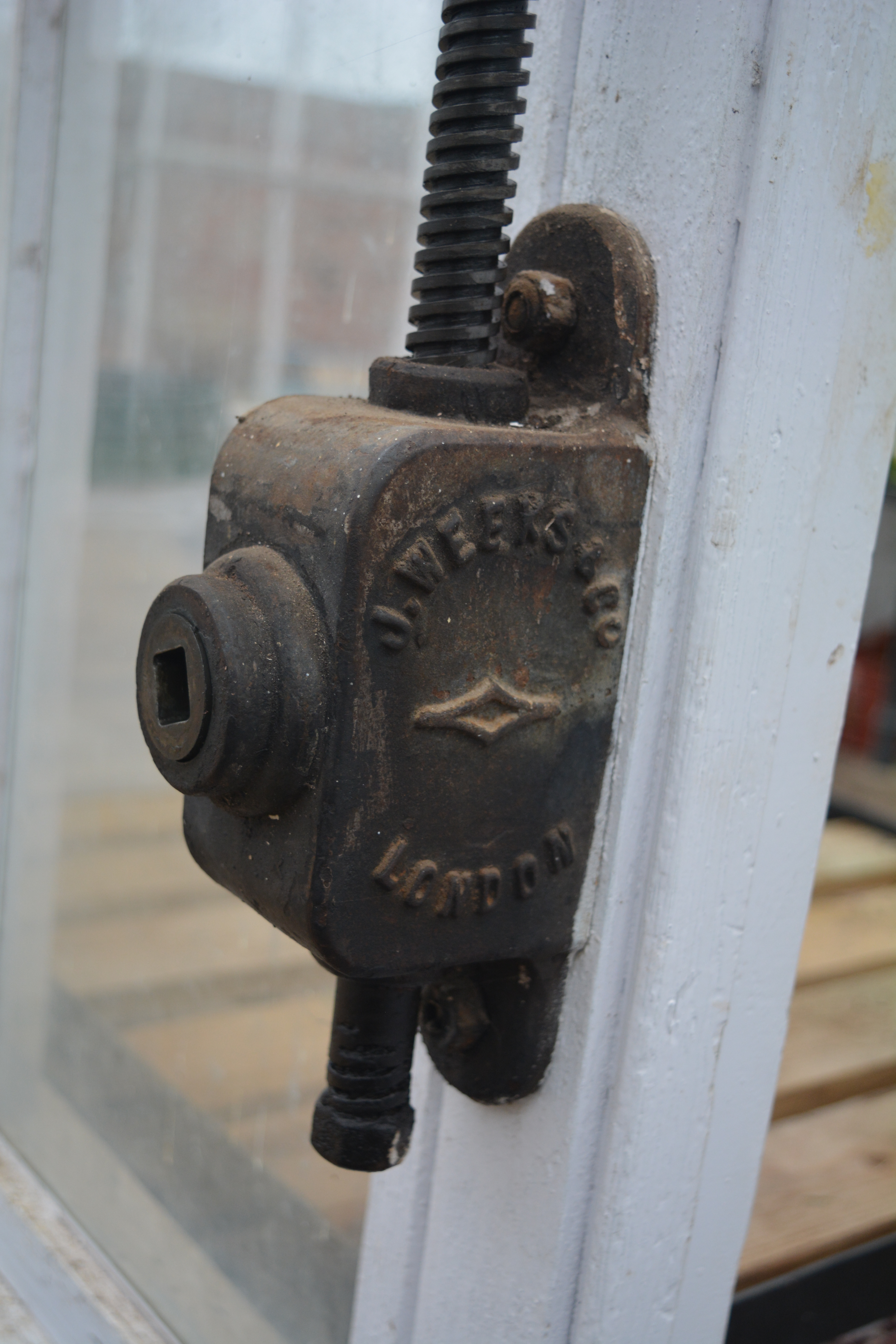
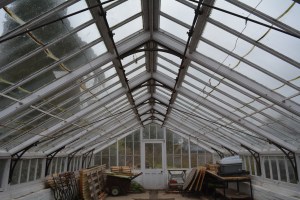
After a good peruse among the dusty artifacts and sharing our memories of nature tables at primary school we moved on to the old, wooden framed greenhouse which until now we had viewed from the gate. On this visit we went inside. We were delighted to find the old iron mechanisms that controlled the windows and vents still intact. We both find these fascinating and are amazed by the ingenuity shown by the greenhouse designers of that era.

2015 01 01_9113 2015 01 01_9112

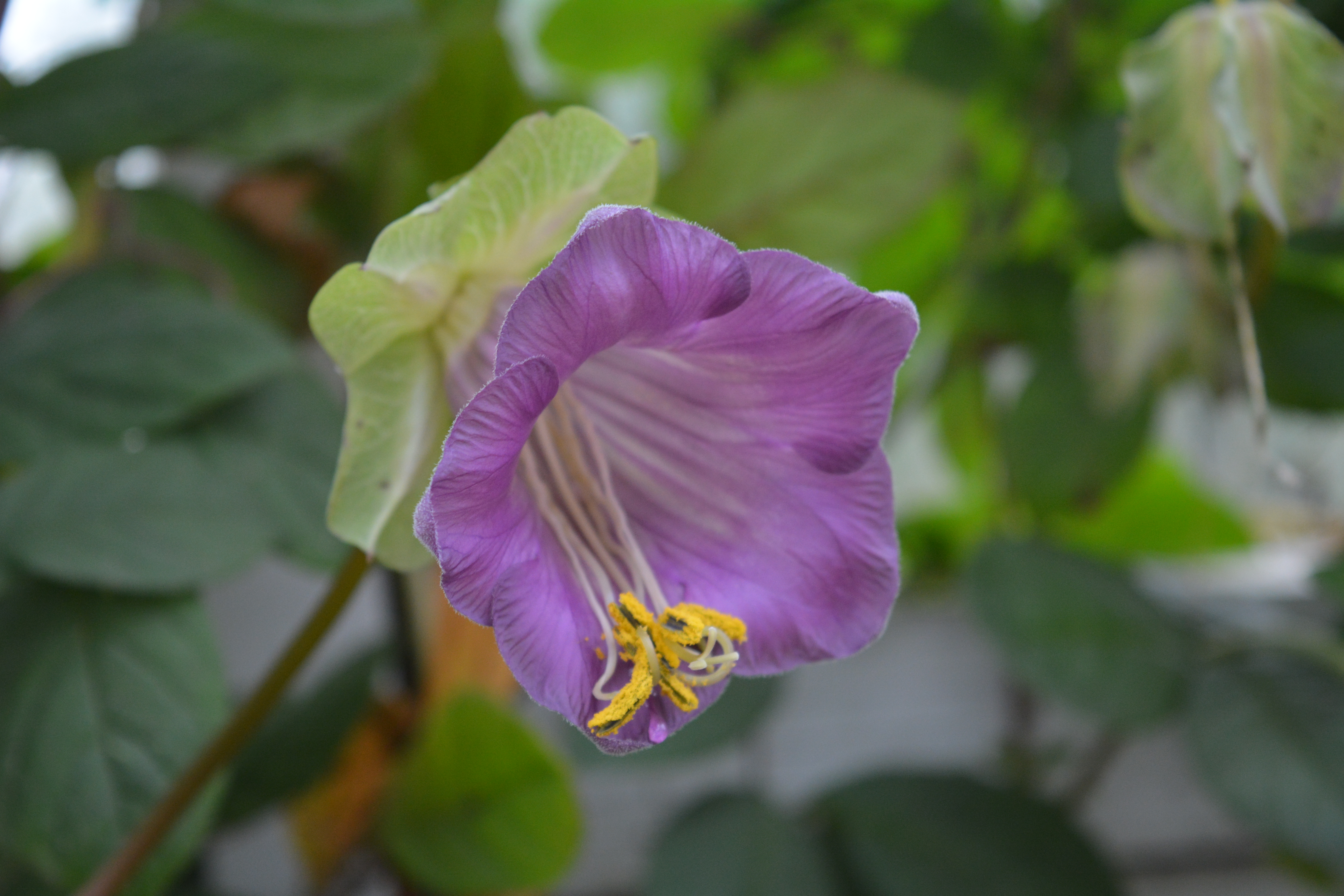
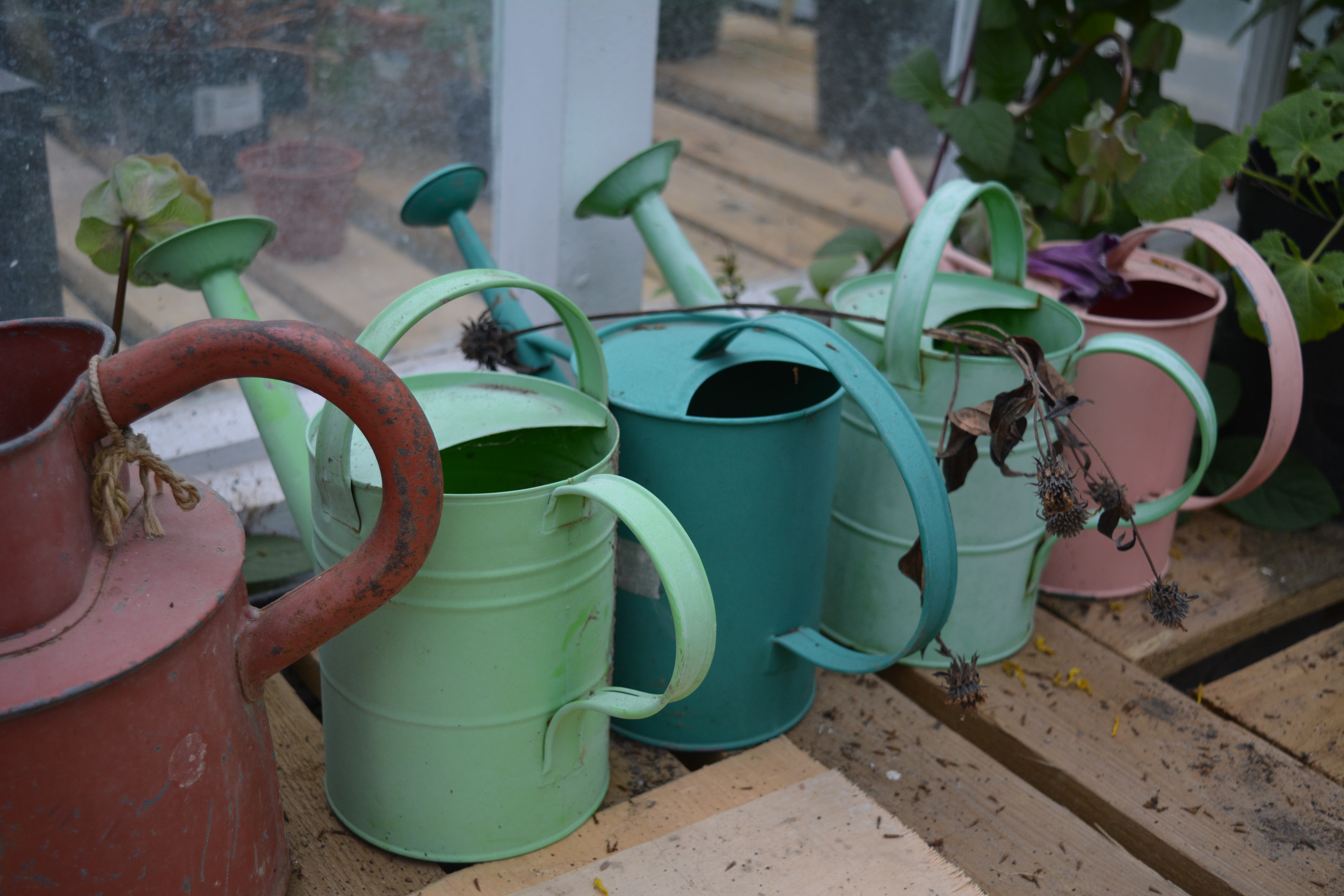
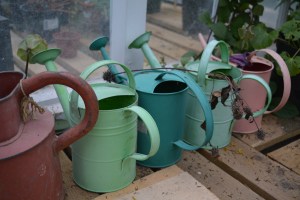
We were pleased to find a colourful line up of watering cans and a very healthy looking Cobaea climbing up wires and flowering profusely. It was easy to see why it is graced with the common name “Cup and Saucer Vine”.

2015 01 01_9114  2015 01 01_9115

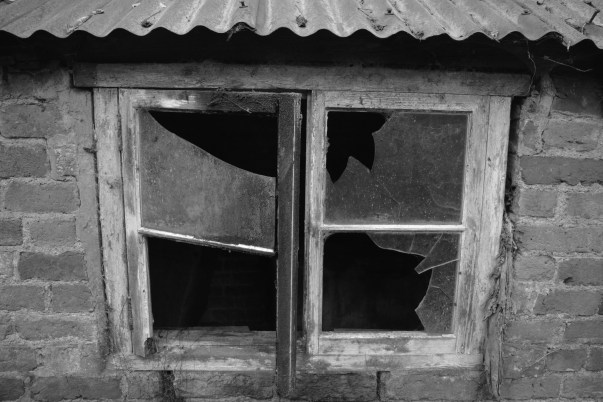
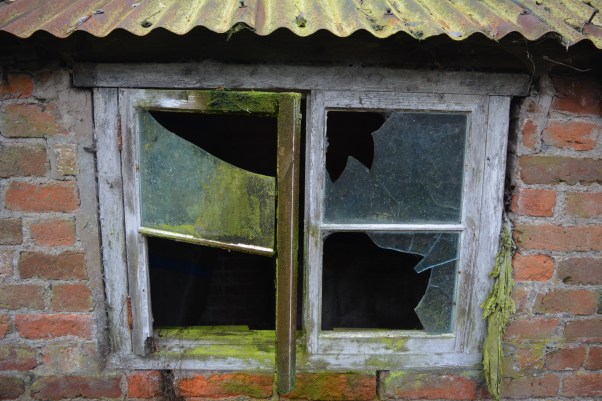
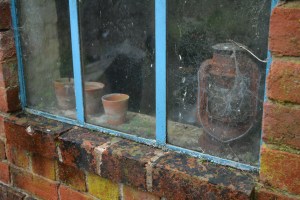
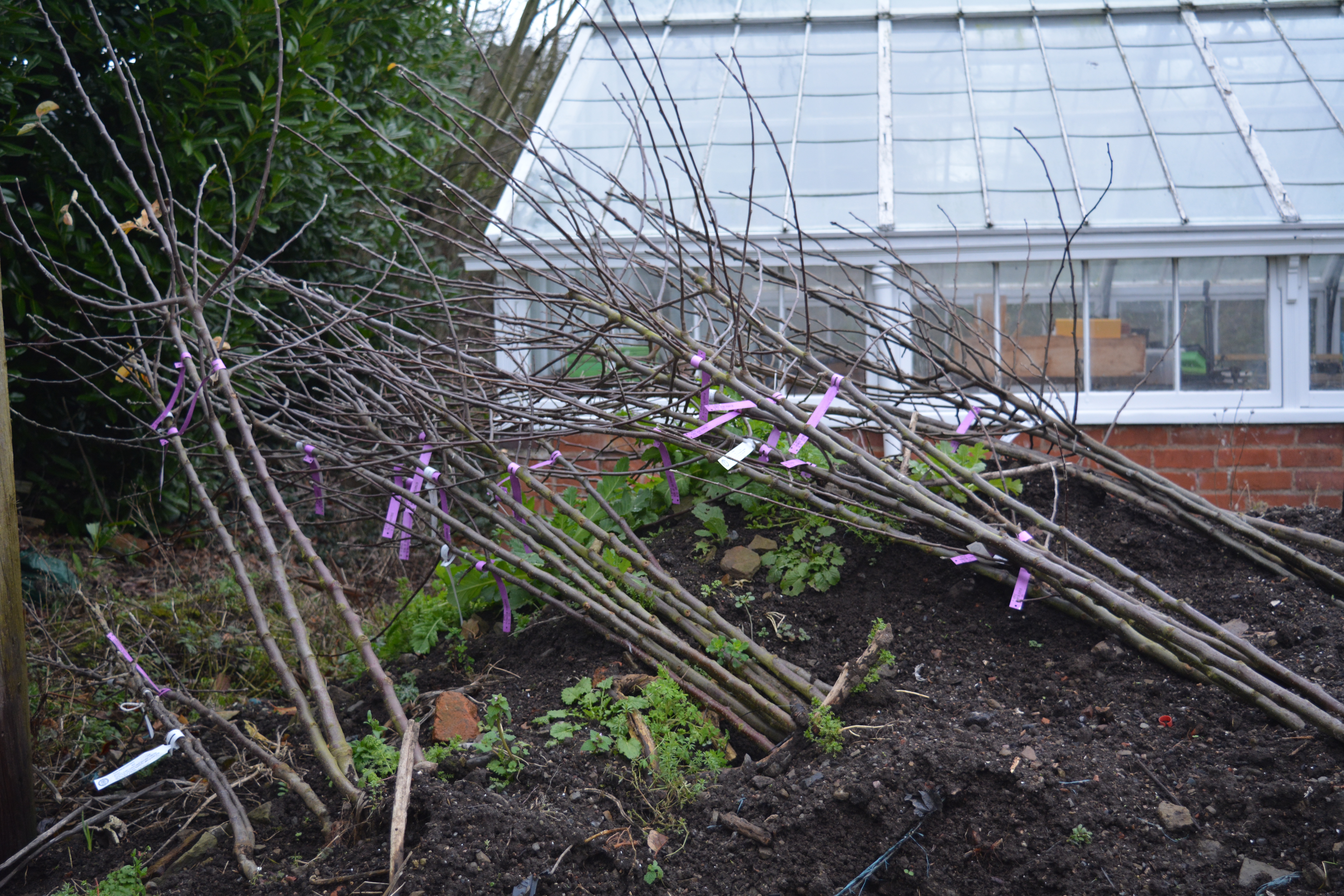
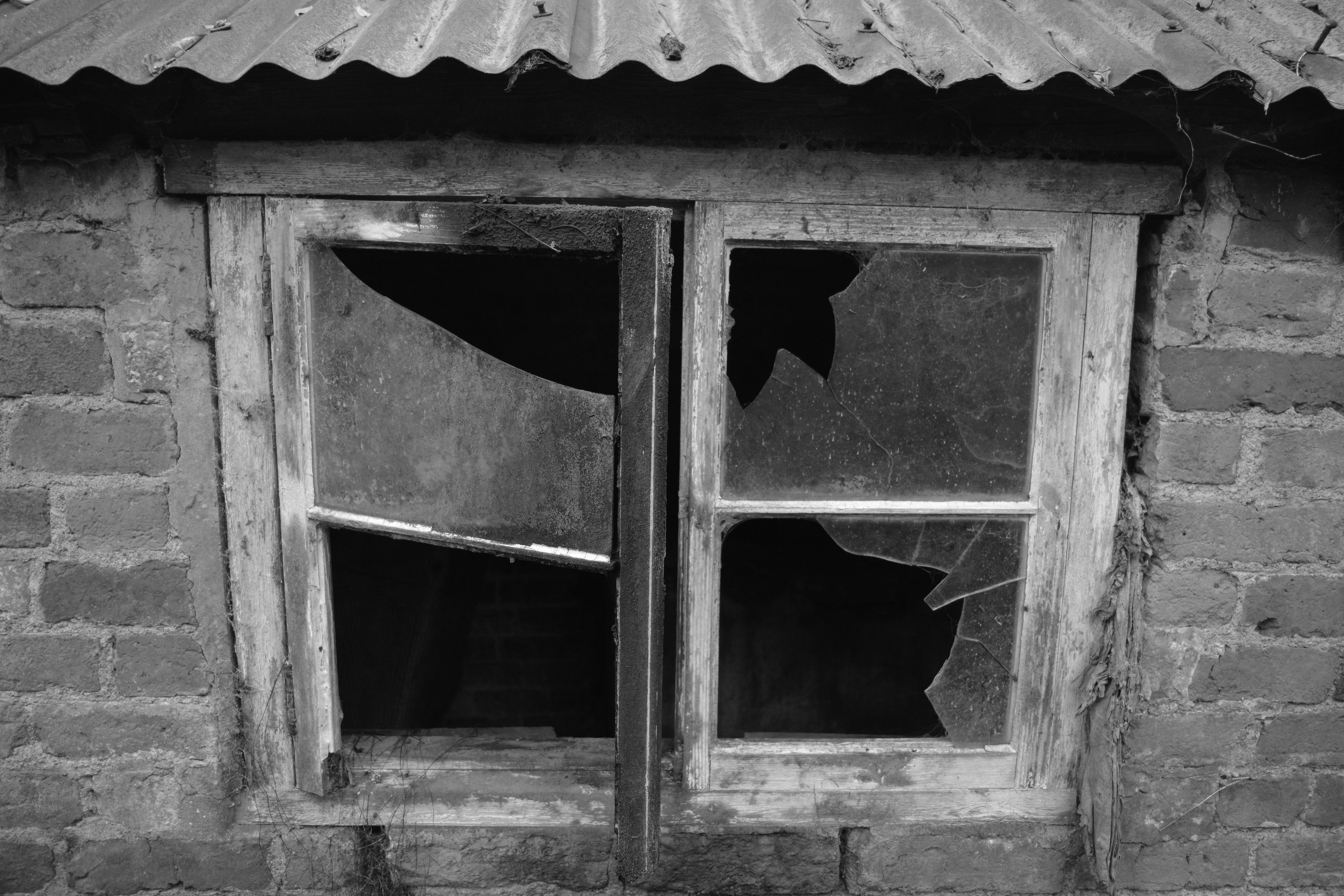
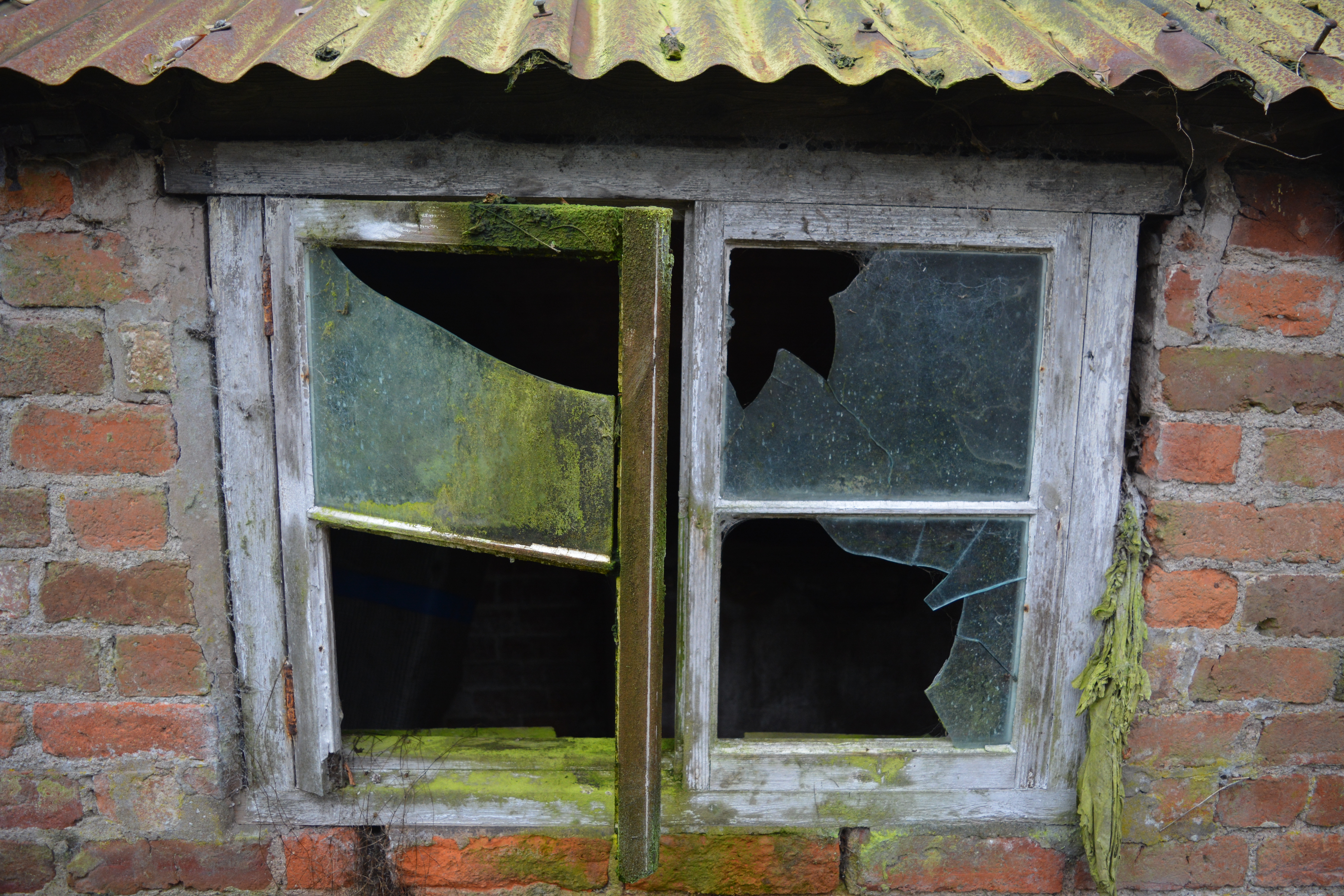
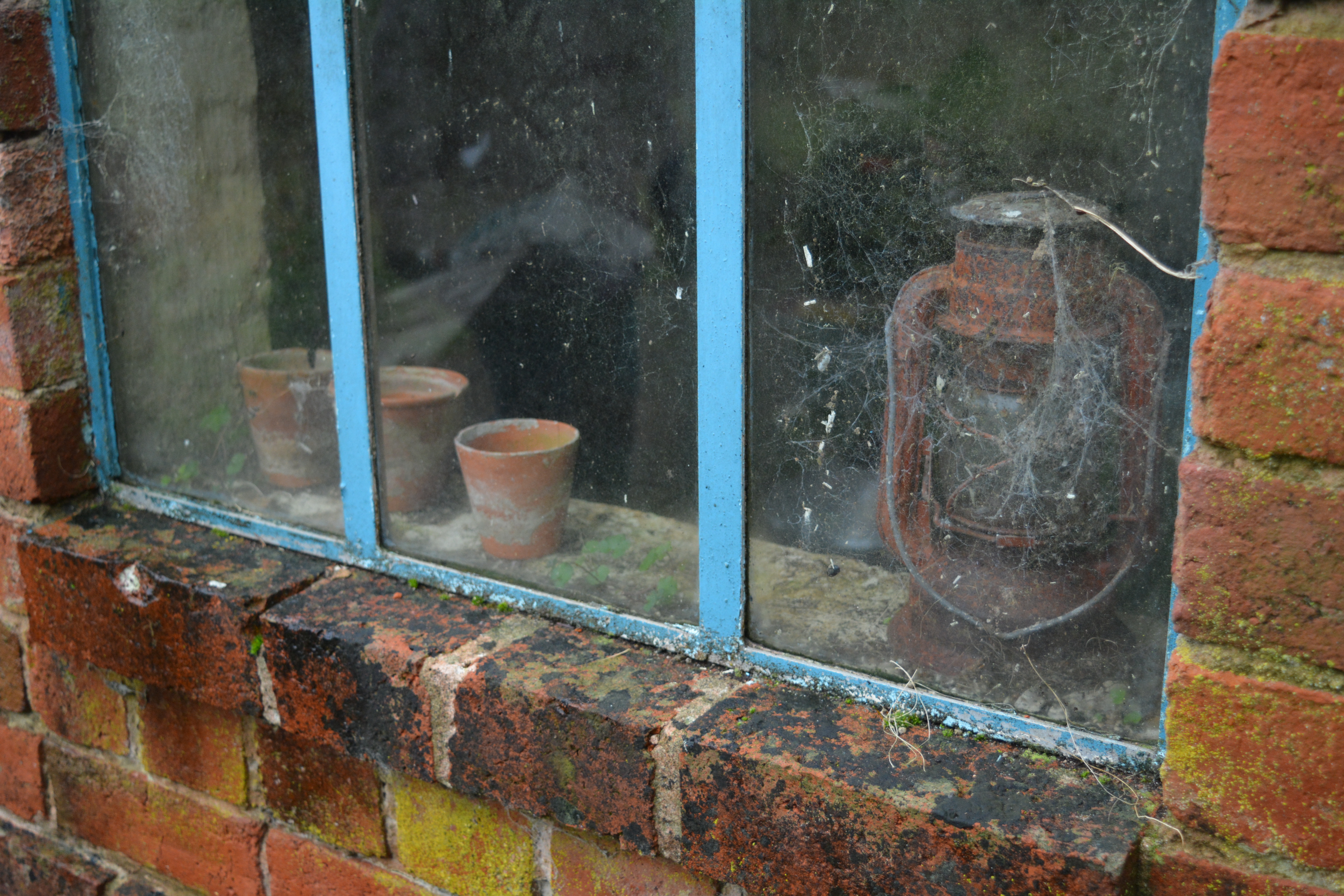
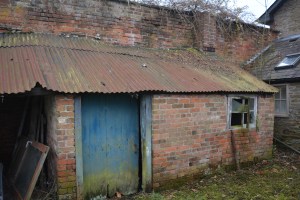
Outside the greenhouse we found a stack of apple trees heeled into a pile of compost awaiting the time when the frozen ground allowed them to be planted. Further old buildings hugged the walls – they were ina tumbled down state. The old window attracted me and my camera but I remain undecided if it is best as a colour or monochrome picture. Any thoughts?

2015 01 01_9116 2015 01 01_91172015 01 01_9118_edited-1

2015 01 01_9118

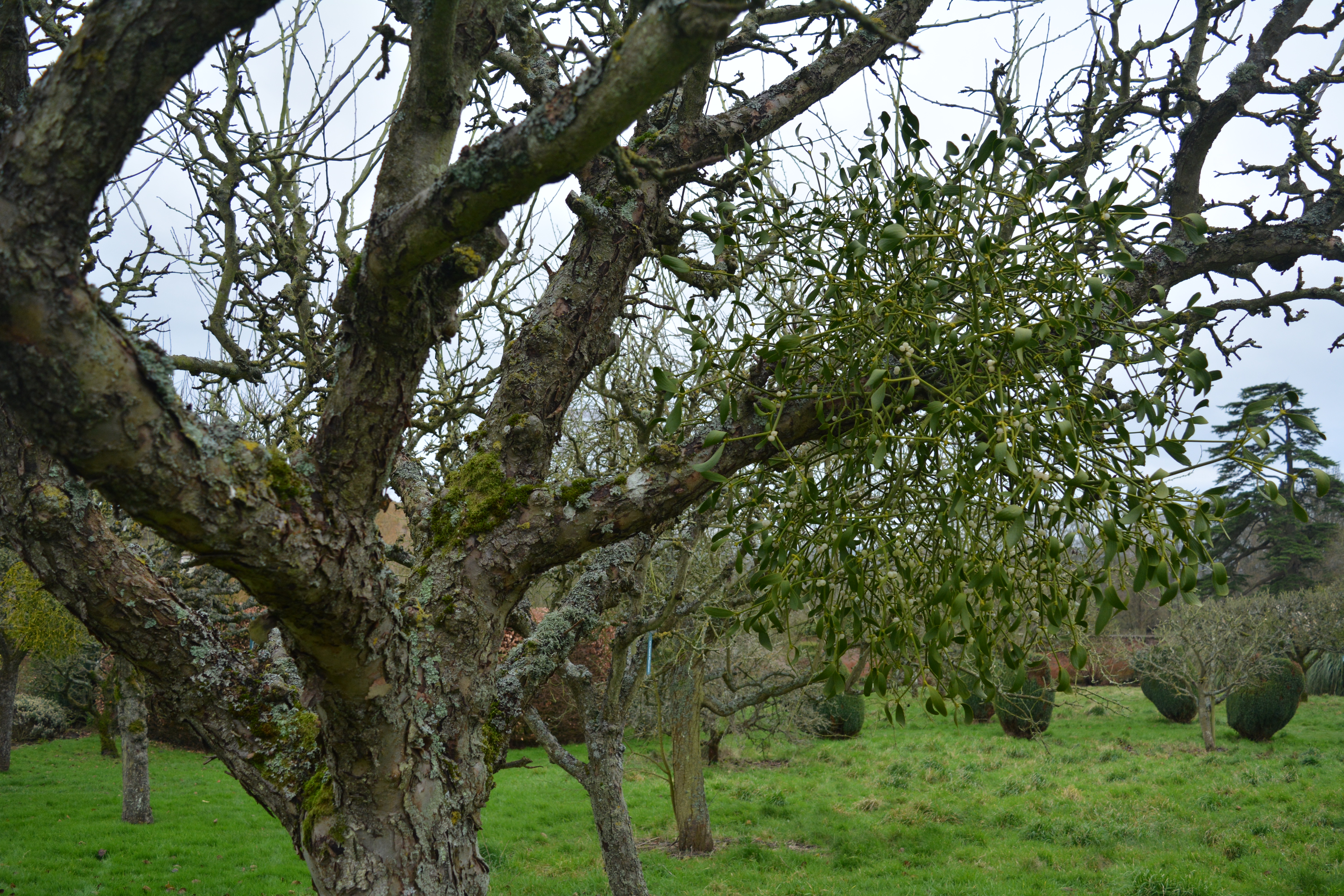
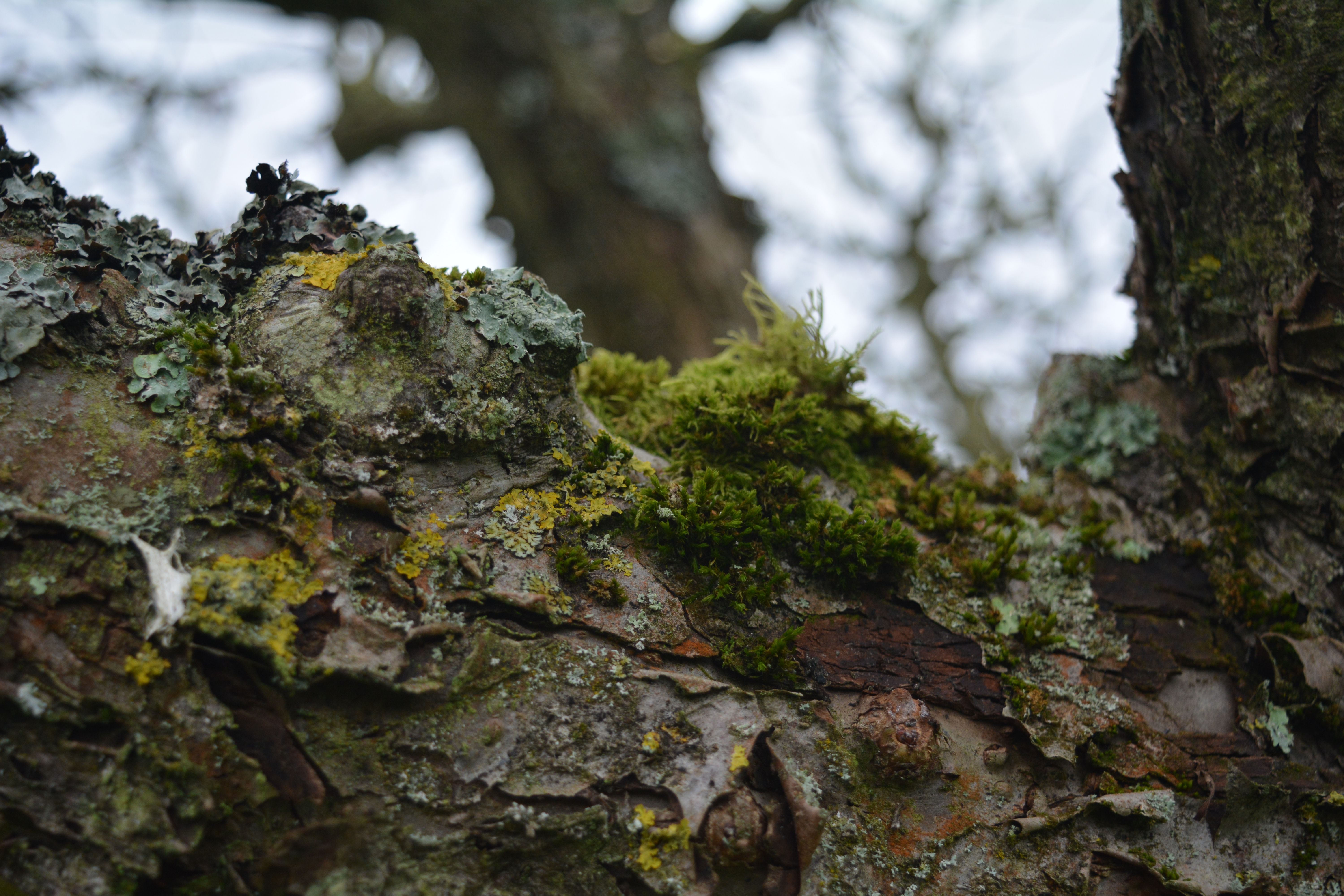
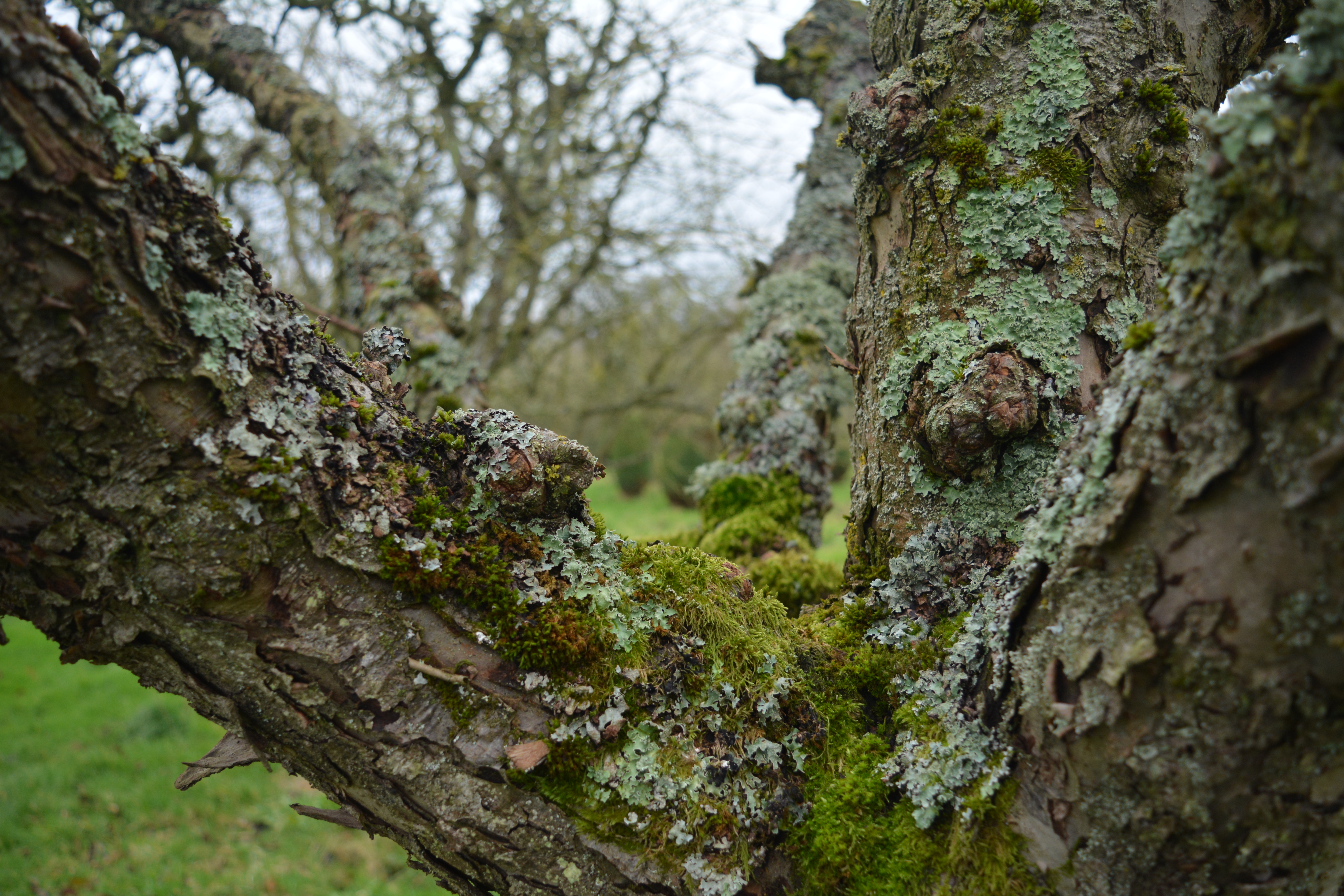
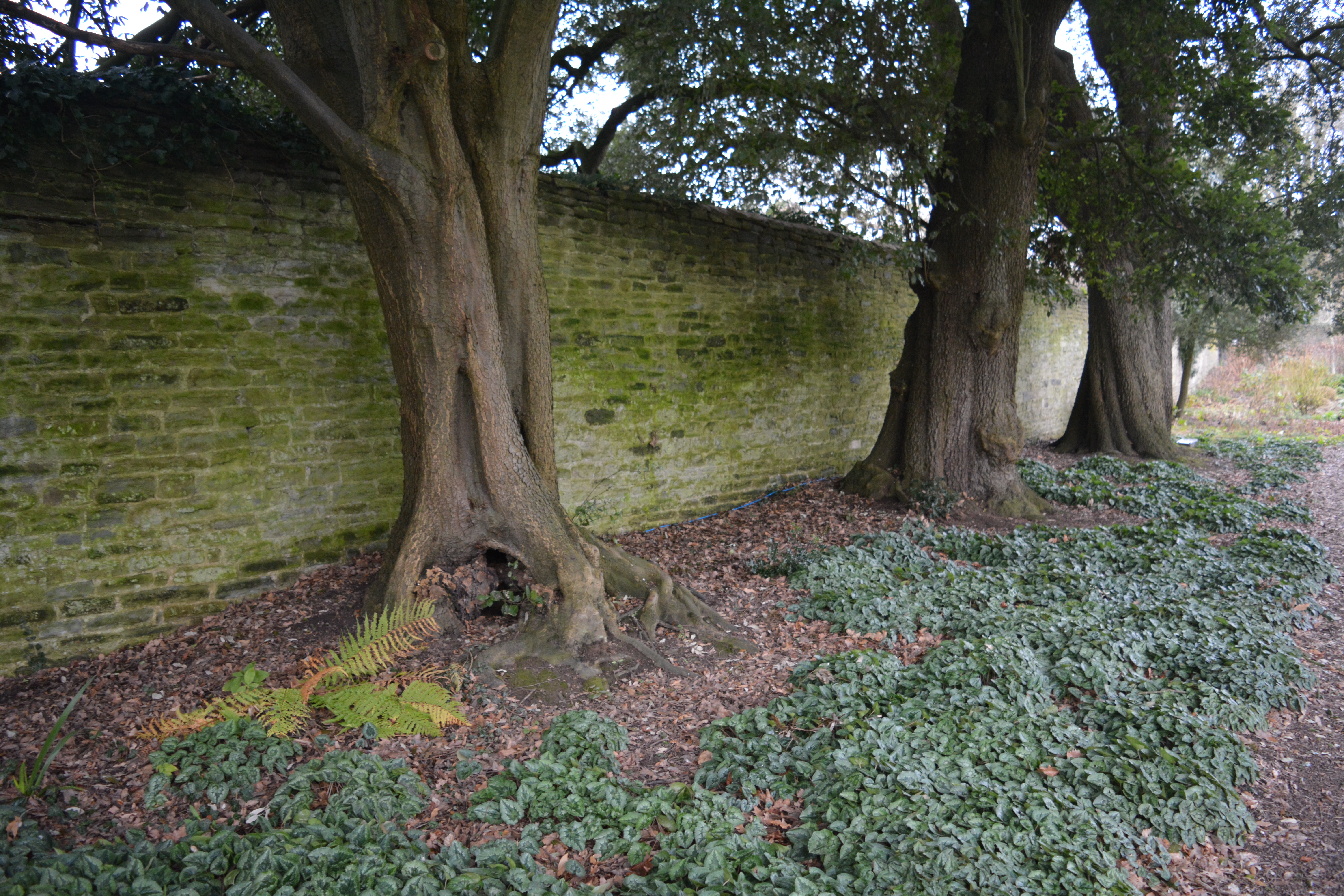
We continued our tour of the main walled garden following the herbaceous borders to discover ancient apple trees beautifully pruned ready for fruiting next season. Their trunks and branches were encrusted with lichens and mosses creating miniature landscapes. Clumps of Mistletoe decorated several of the trees. This is a common parasitic plant in the orchards of Herefordshire. A Mistletoe Fair and market are held in December every year in the nearby market town of Tenbury Wells. They are famous for their mistletoe auctions.

2015 01 01_9120 2015 01 01_9121 2015 01 01_9122 2015 01 01_9123 2015 01 01_9124 2015 01 01_9125

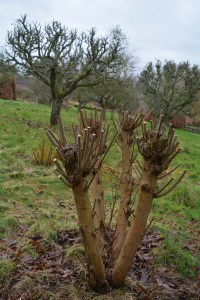
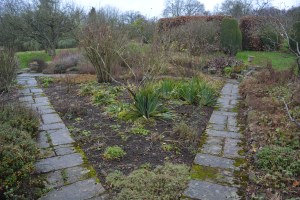
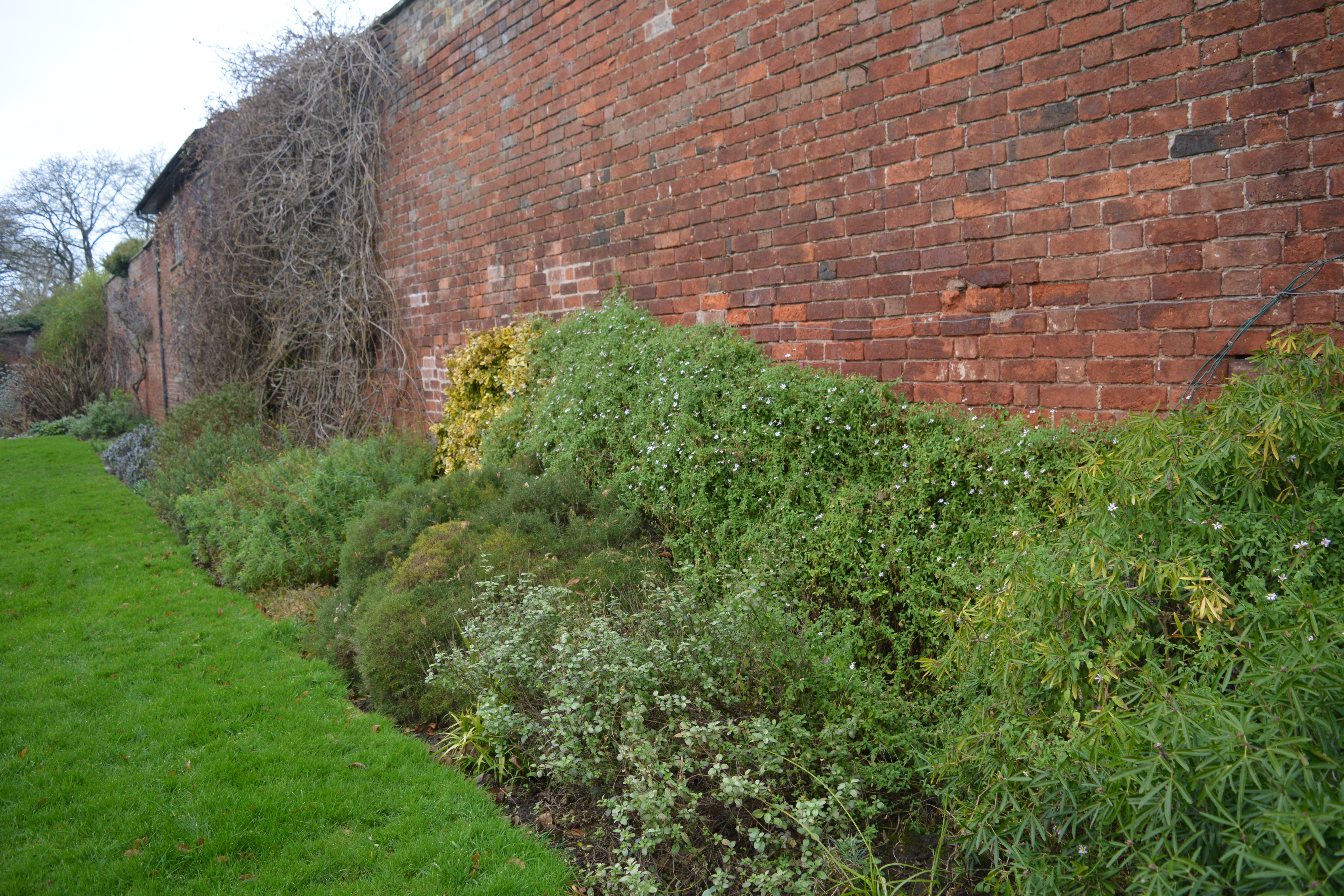
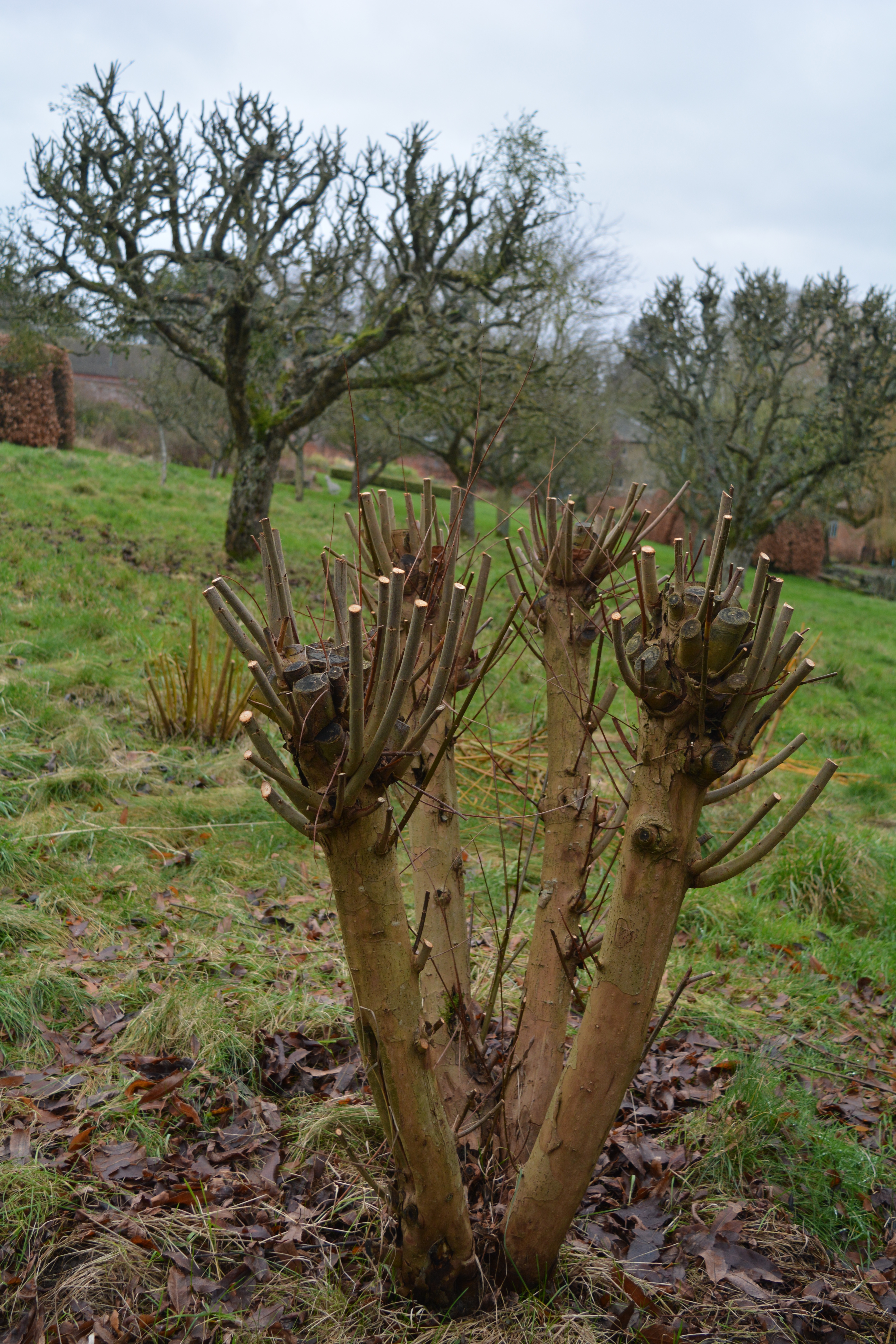
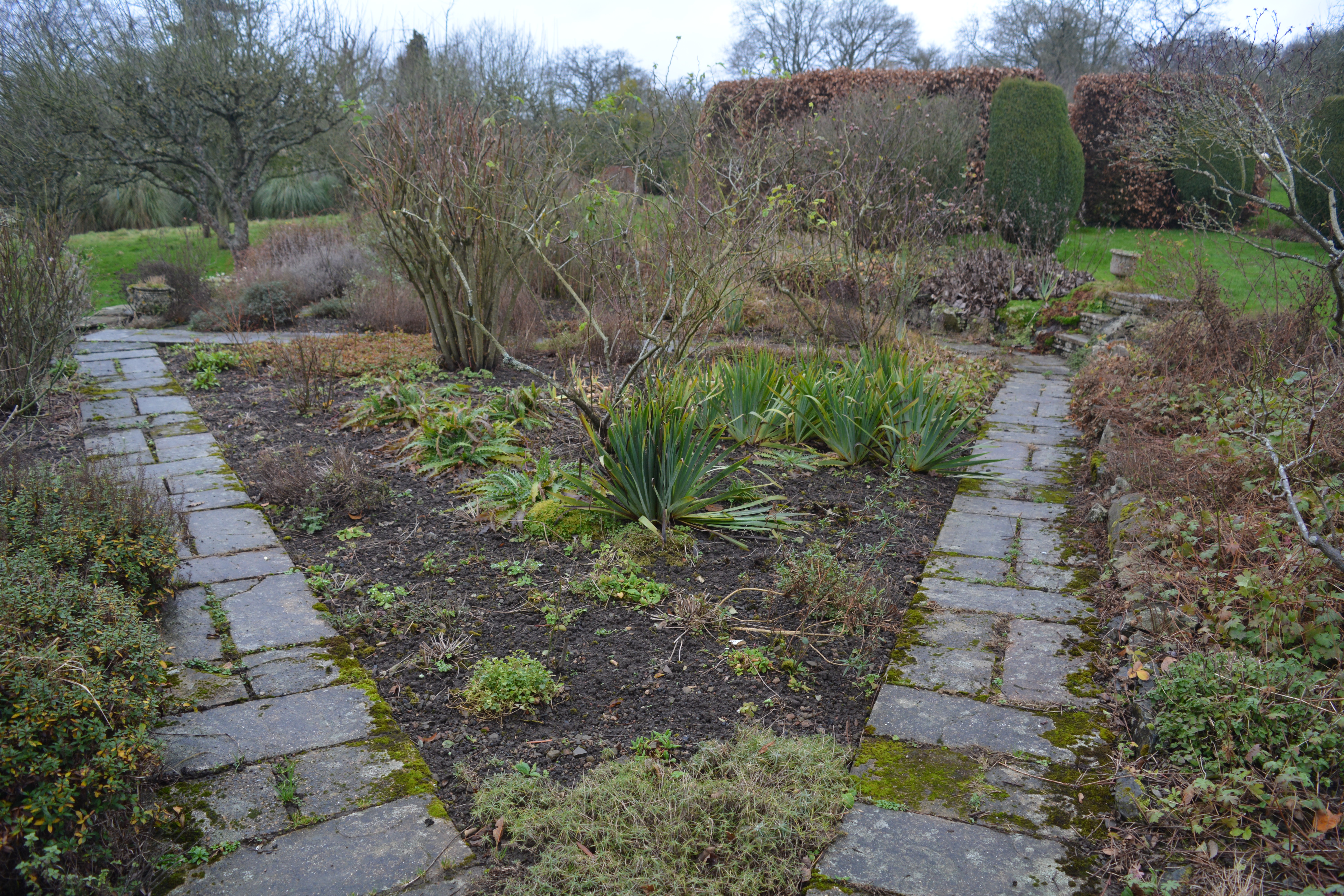
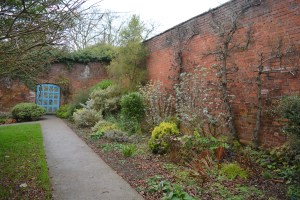
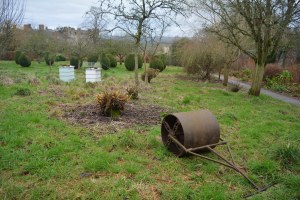
Along the third and fourth walls mixed borders included many shrubs which were well pruned in readiness for new growth when spring arrives. In the central area among the grass willows had been pruned too, cut into low pollarding and coppicing to encourage fresh, long new wands to cut and use around the garden as plant supports or sculpture.
2015 01 01_9126 2015 01 01_9127

2015 01 01_9128 2015 01 01_91292015 01 01_9130  2015 01 01_9119

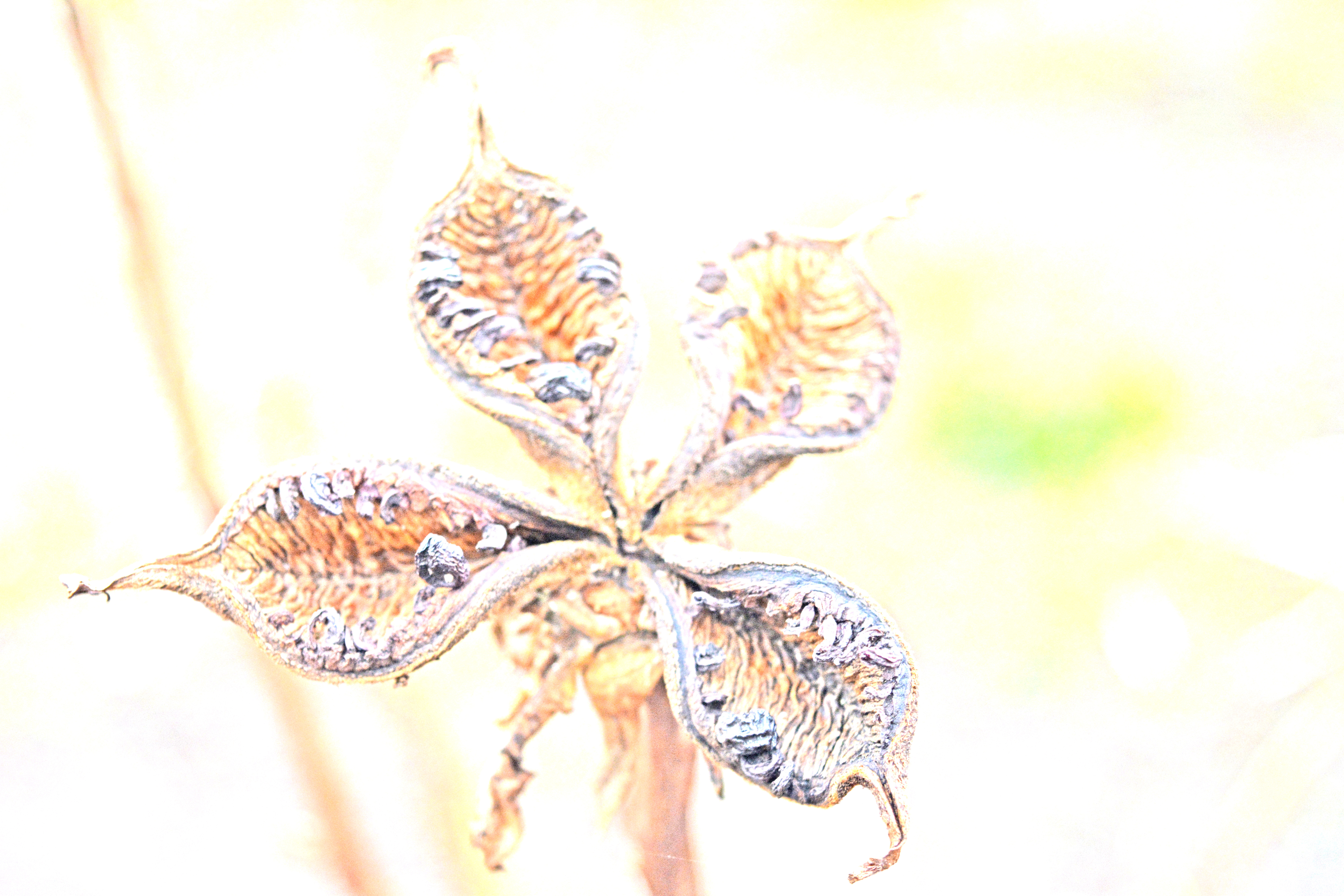
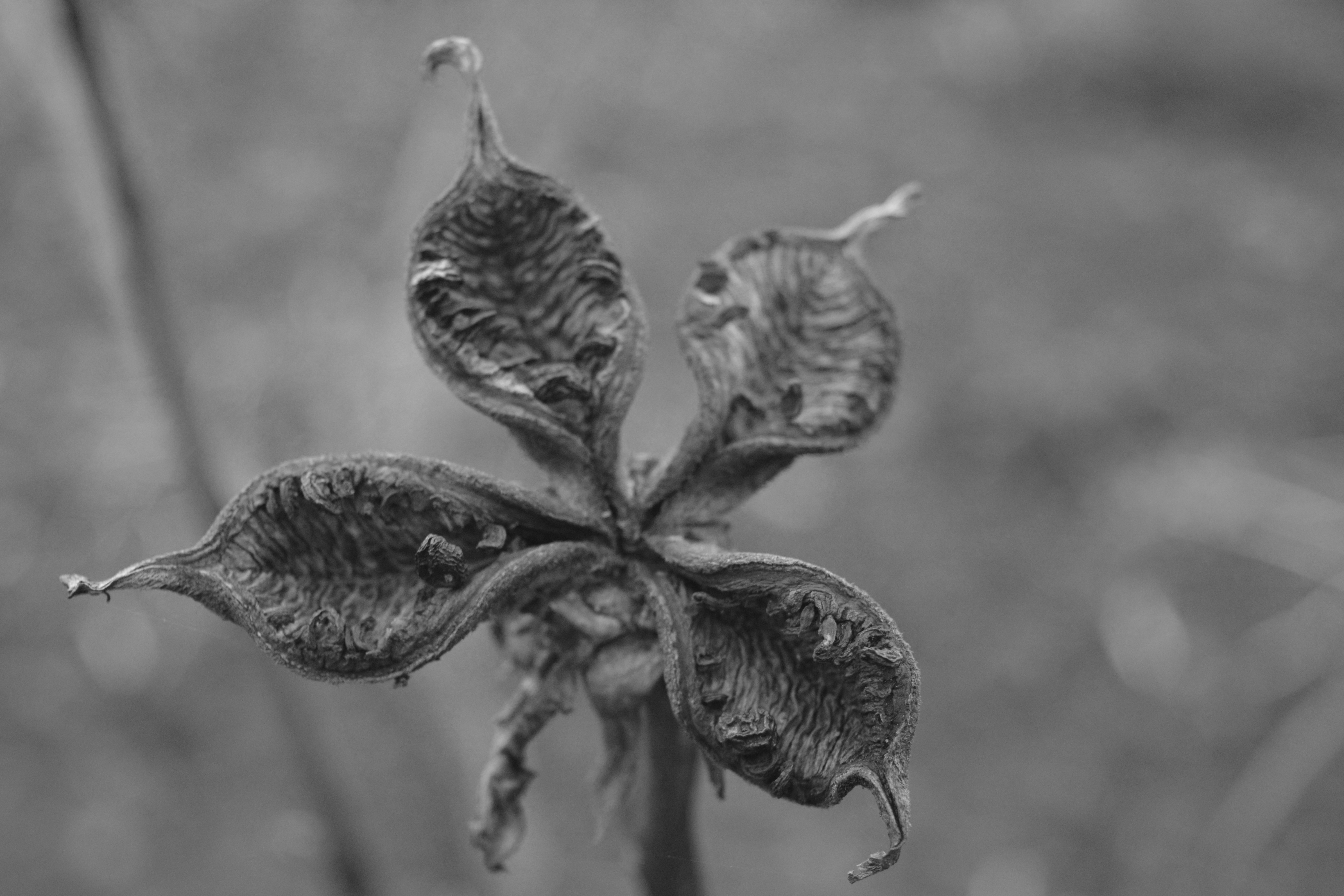
I enjoyed a play with this pic on Photoshop!
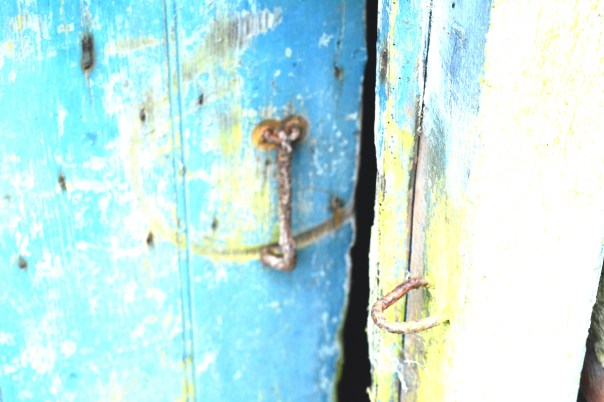
2015 01 01_9119_edited-1

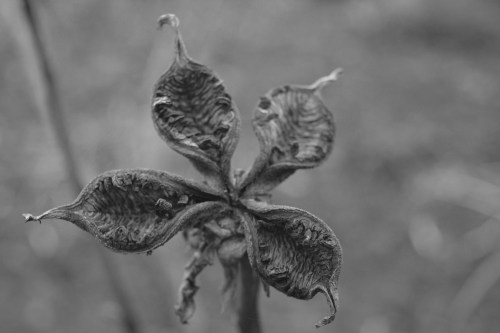
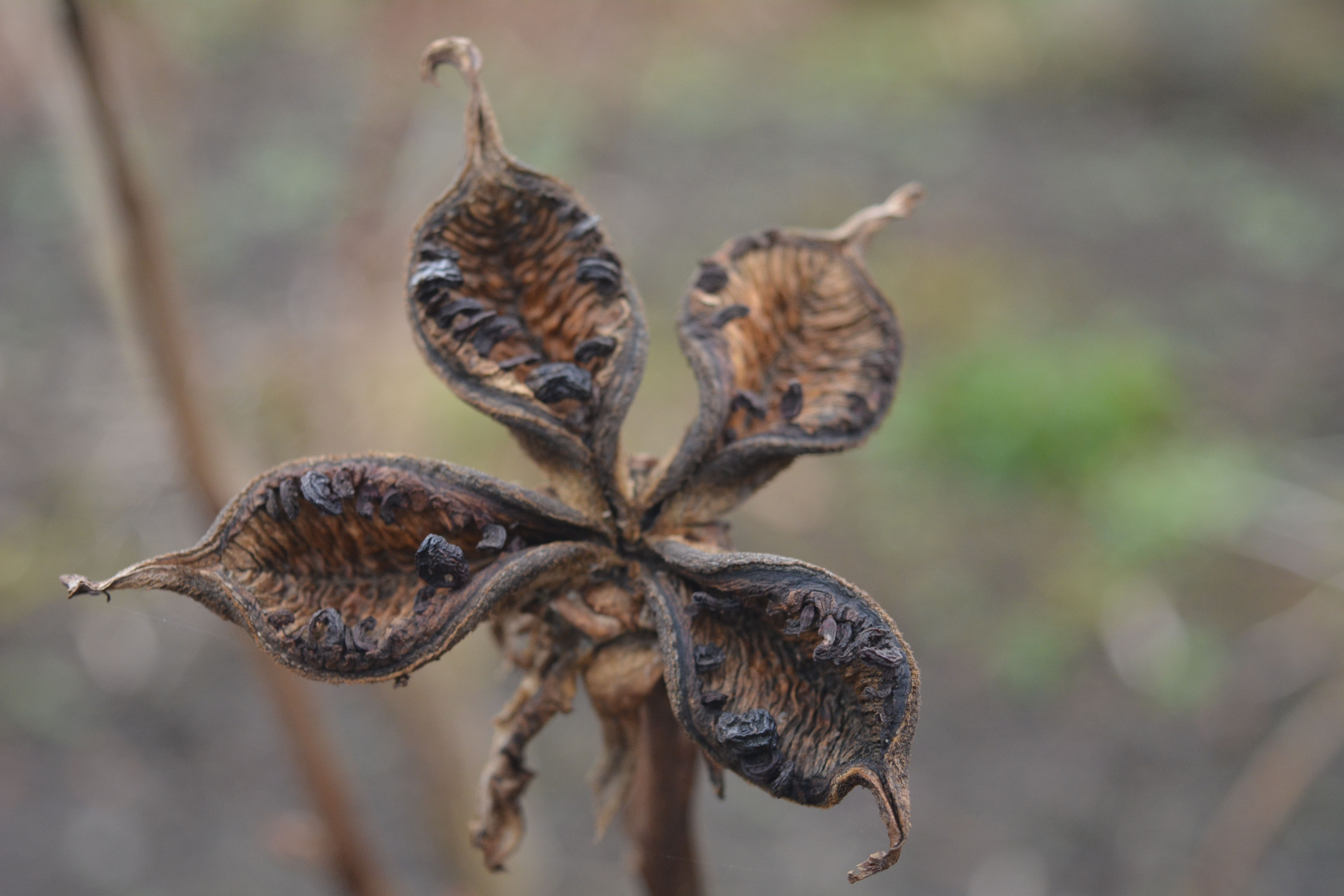
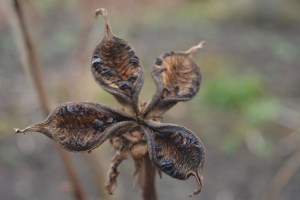
We were attracted to the opened seed pods of a Paeony with its four sections of woody shell. I certainly enjoyed playing with the image on Photoshop! Here you can select your favourite of three versions.
2015 01 01_9097 2015 01 01_9097_edited-2

2015 01 01_9097_edited-1

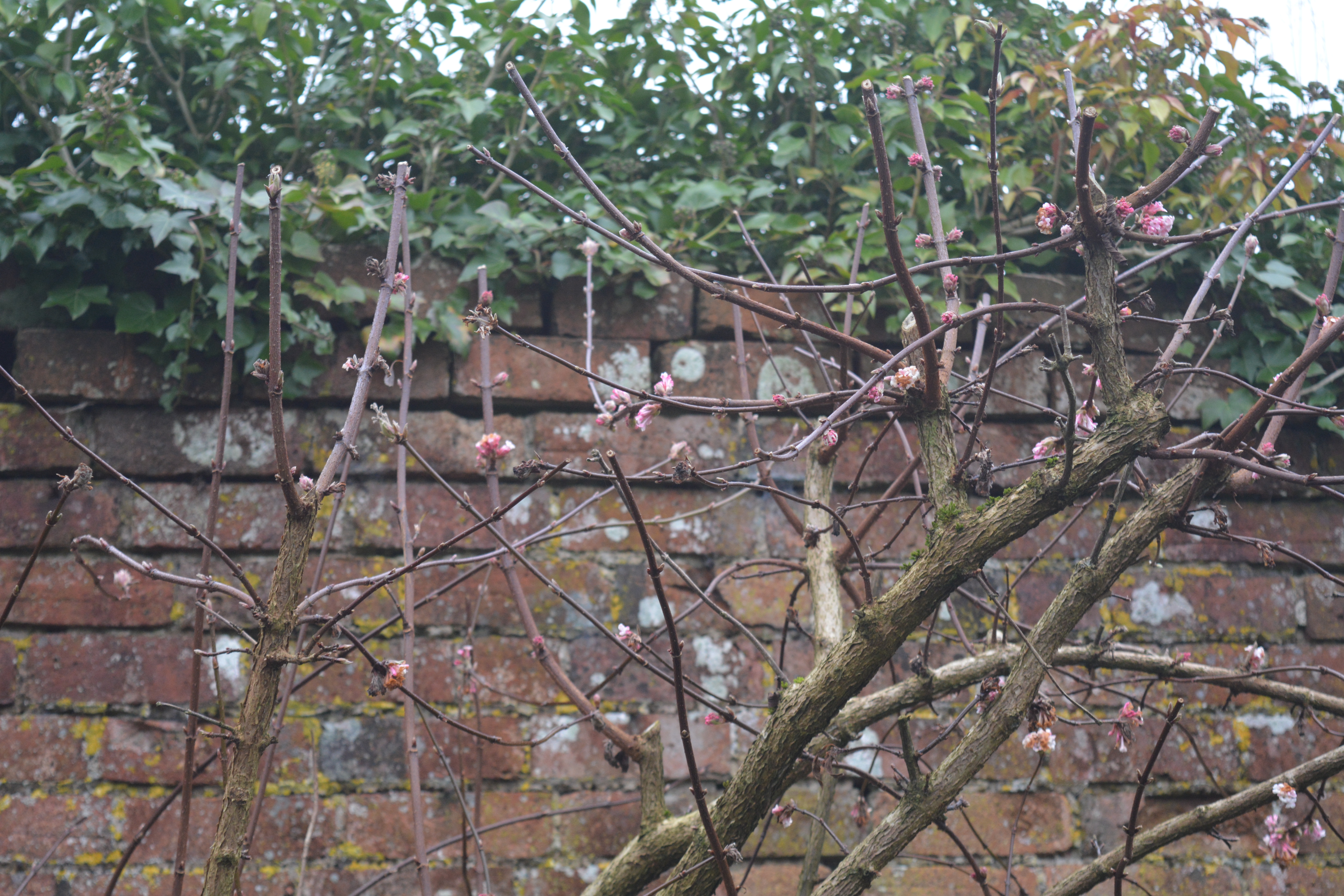
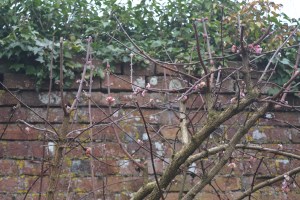
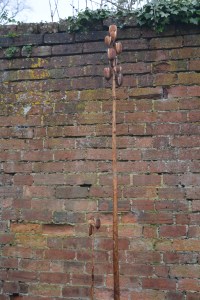
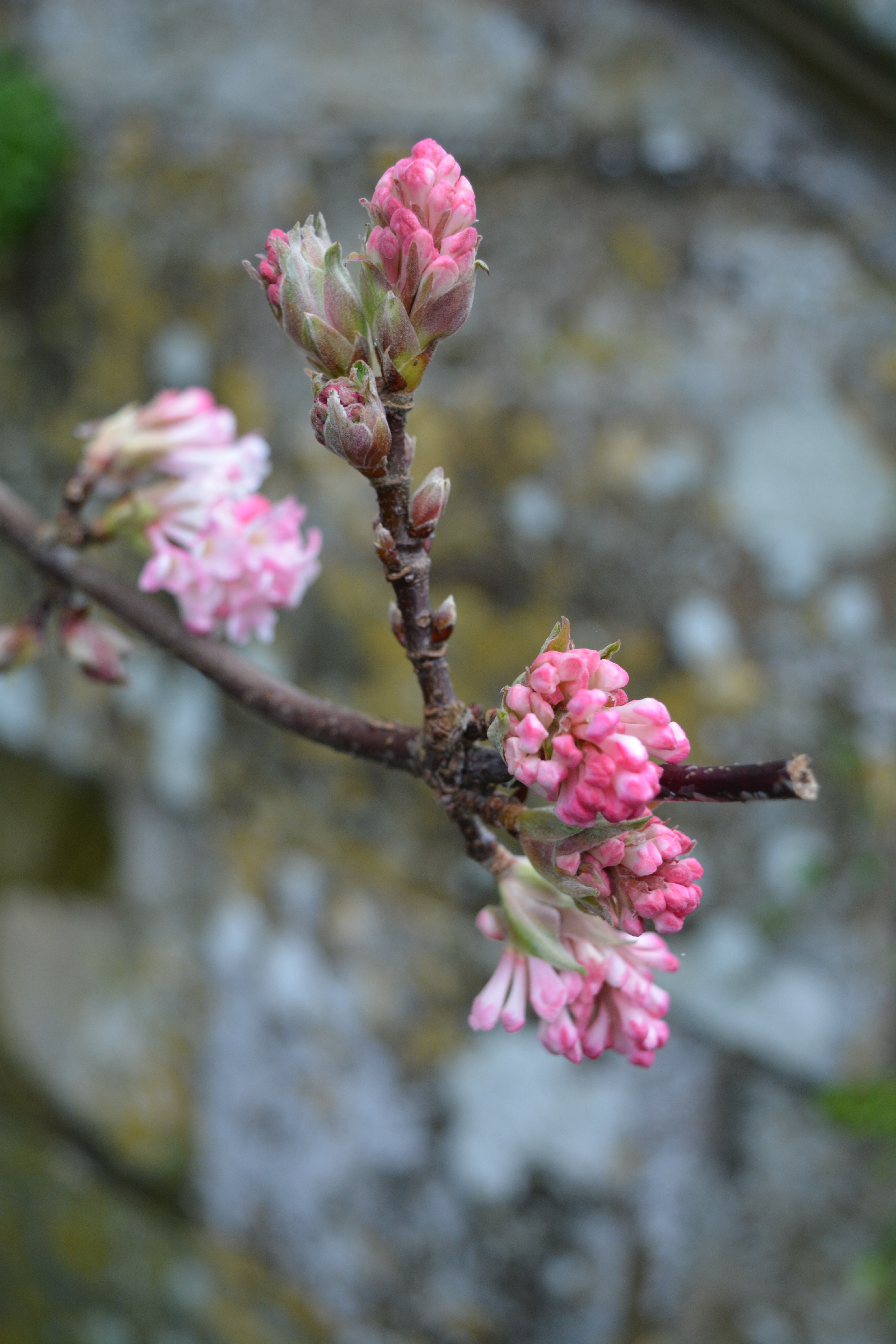
The sweet scent of the pink flowers of Viburnum bodnantense reached our noses long before we spotted the shrub itself. Next to it in the border was the giant stalk of the biggest Lilly we can grow in the UK, the statuesque Cardiocrinum giganteum.
2015 01 01_9131 2015 01 01_9132

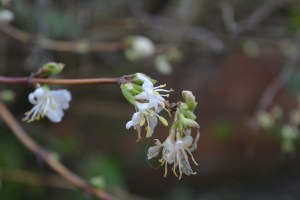
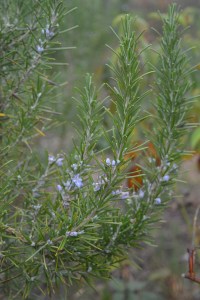
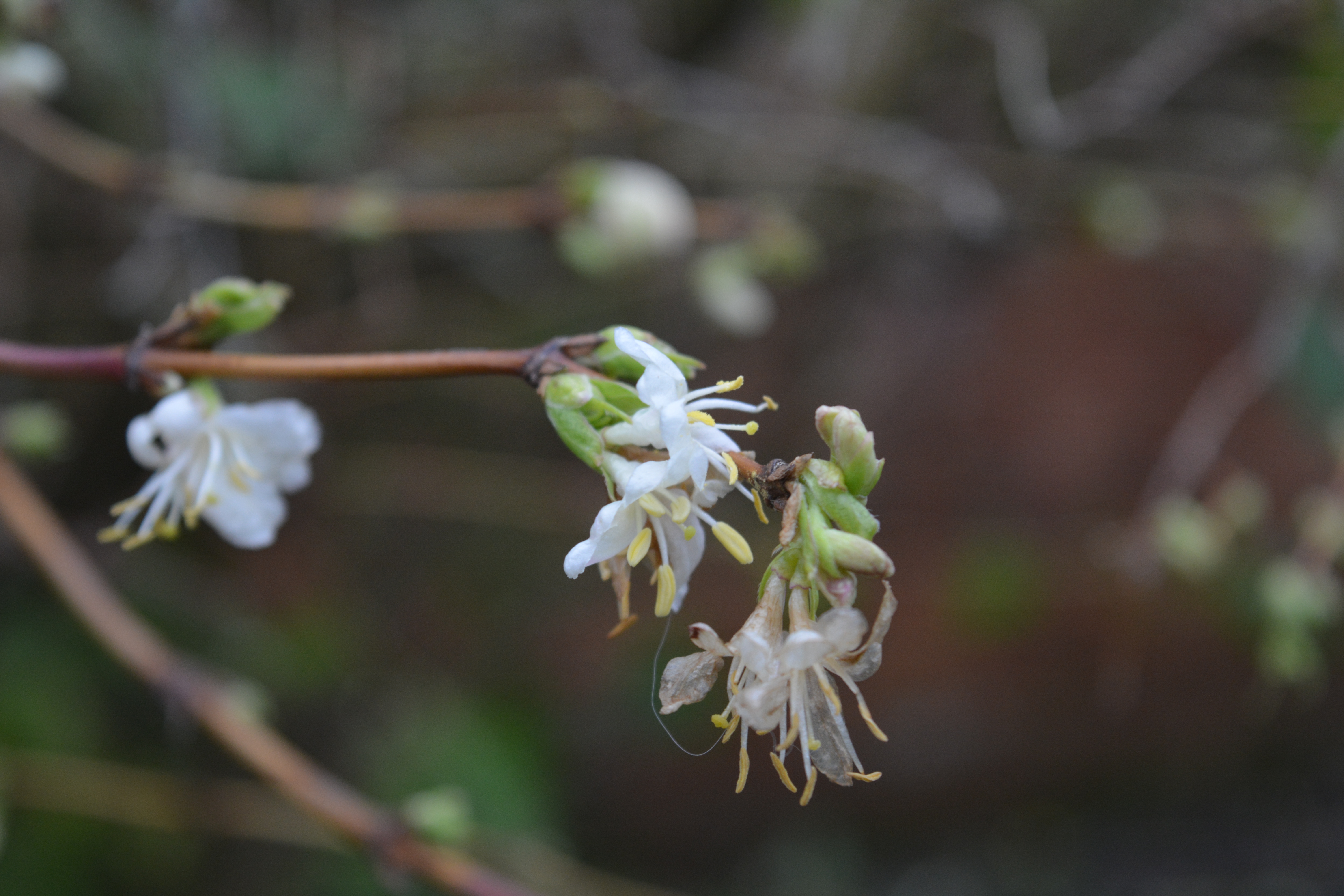
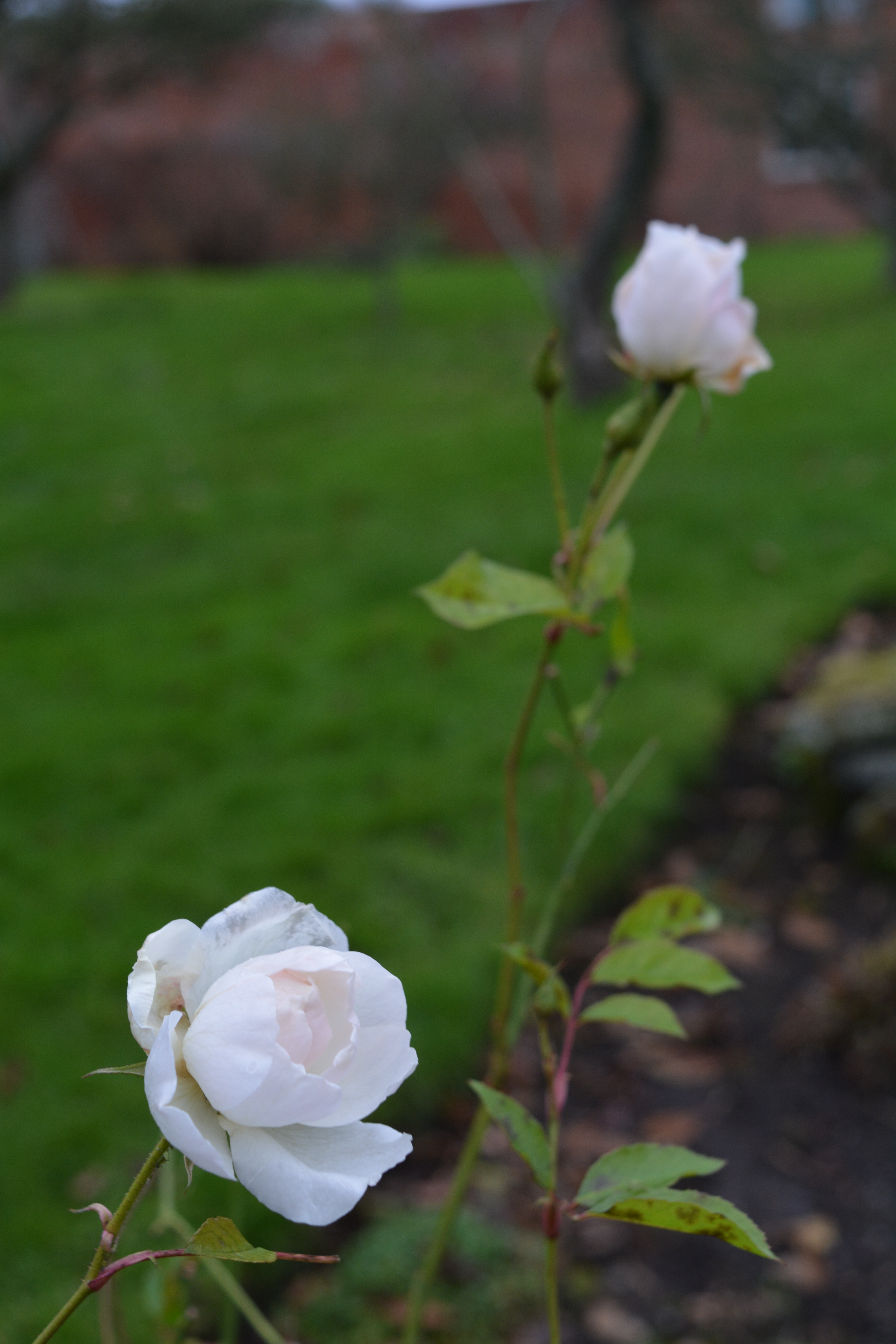
In the growing seasons there are some lovely features within the walled garden like little garden rooms, including a pool garden and a rose garden. In the winter they are so cold and bare! But an odd Rose bloom was trying hard when we visited. It sadly offered no scent though, unlike the neighbouring Rosemary with its gentle aroma coming from the tiny china blue flowers and the Lonicera frangrantisima, the Winter Flowering Honeysuckle.

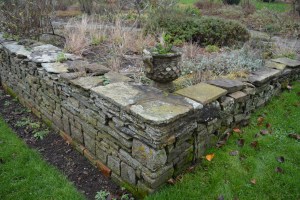
2015 01 01_9133 2015 01 01_91382015 01 01_9139 2015 01 01_91422015 01 01_9141 2015 01 01_9140

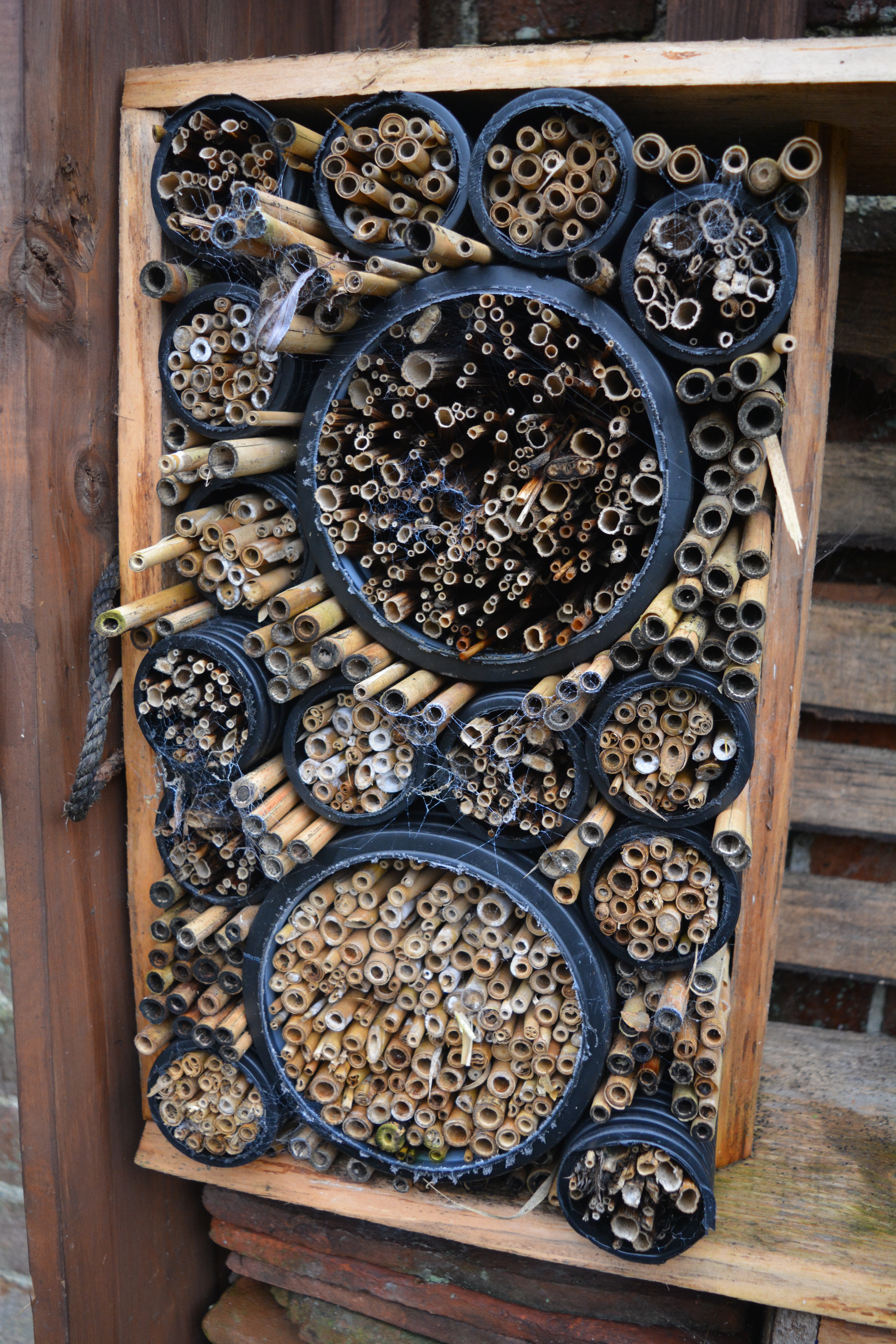
The gardeners have been busy making a huge “bug hotel” which is now almost complete. They have been having fun!
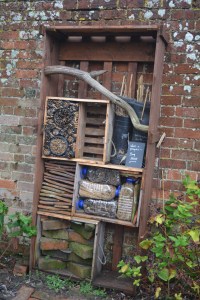
2015 01 01_9134 2015 01 01_9135 2015 01 01_9136

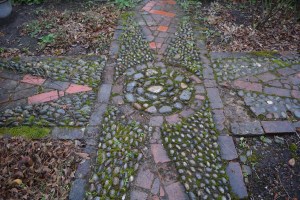
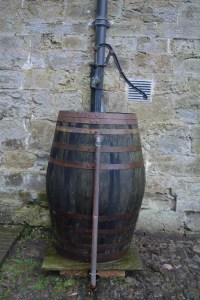
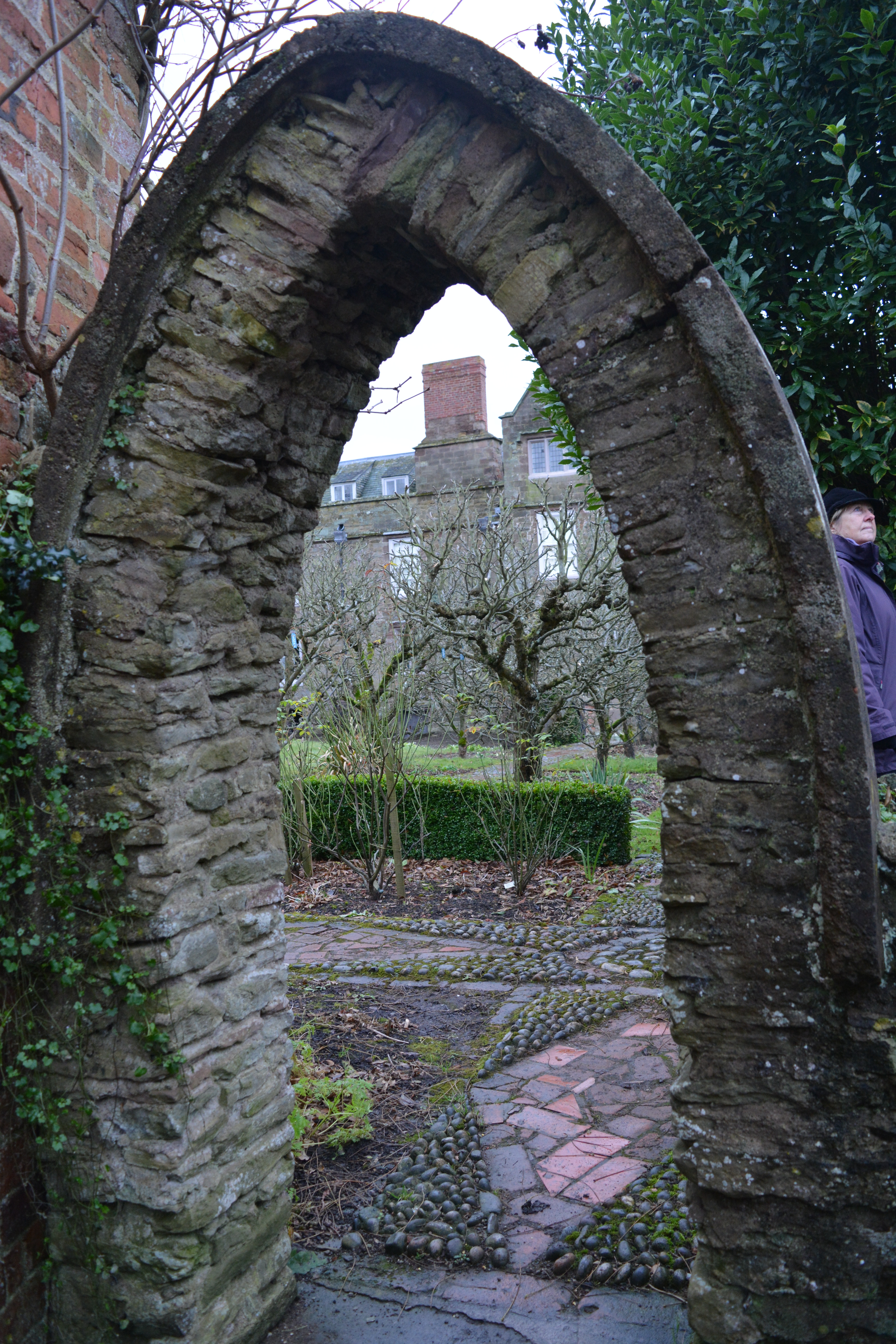
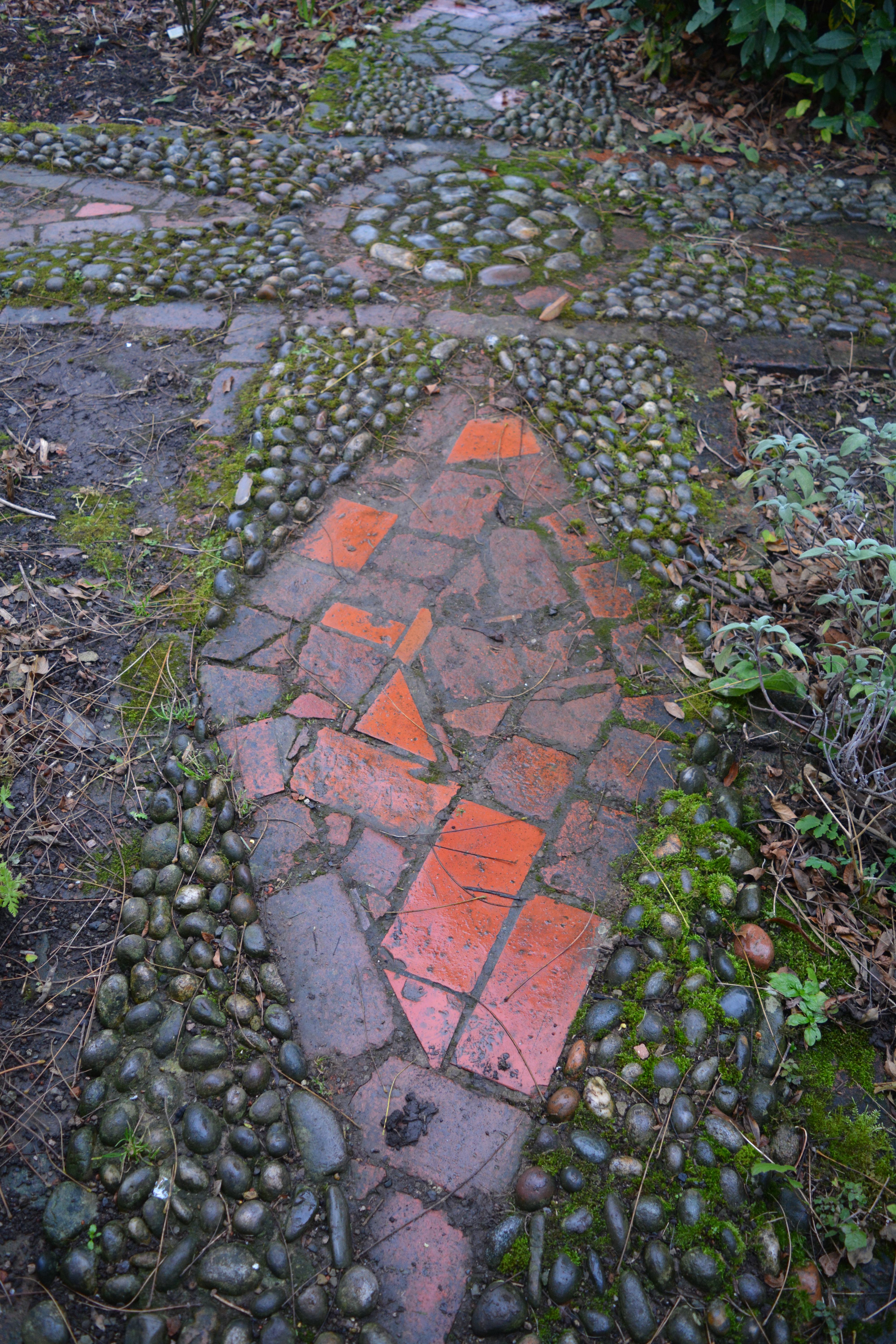
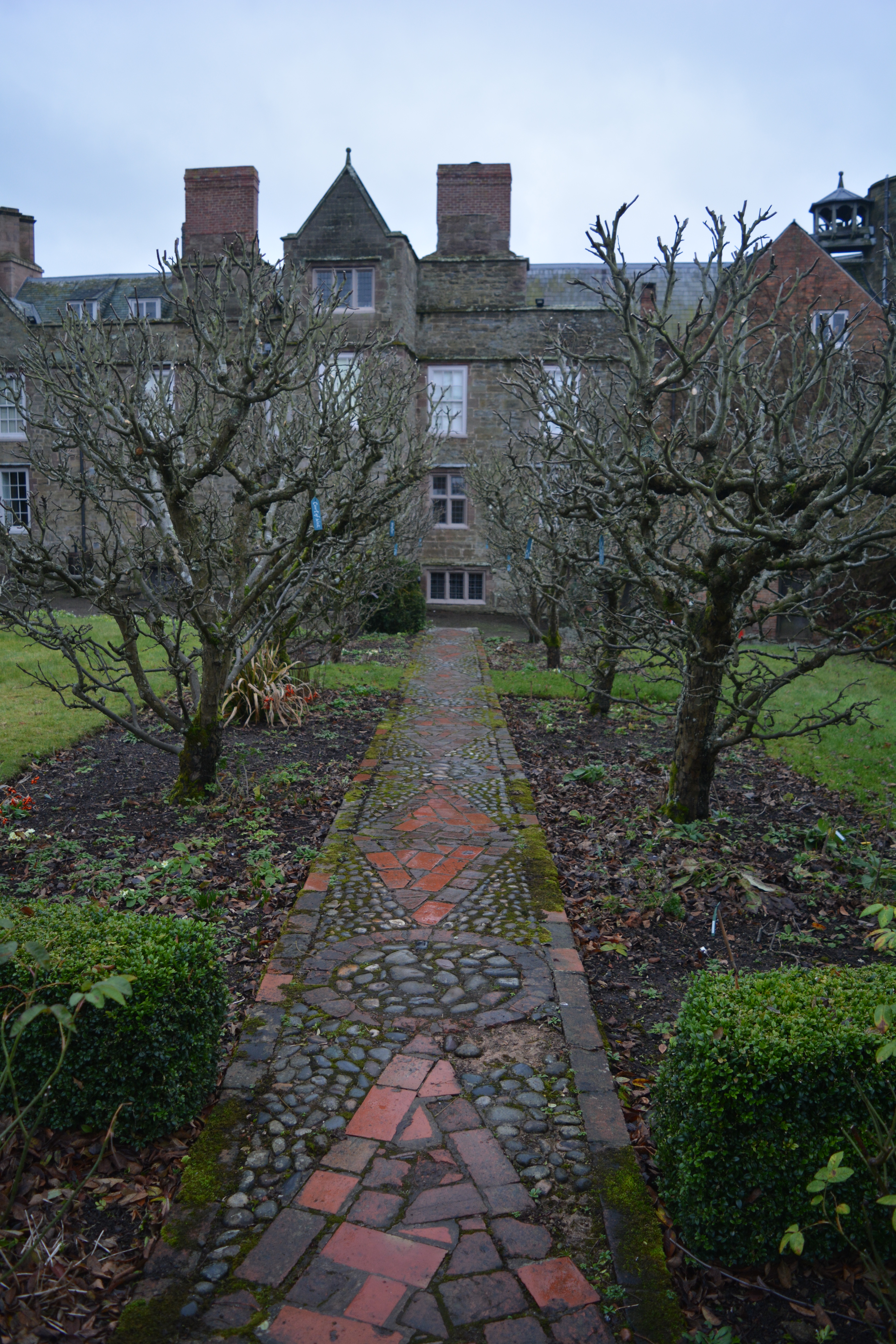
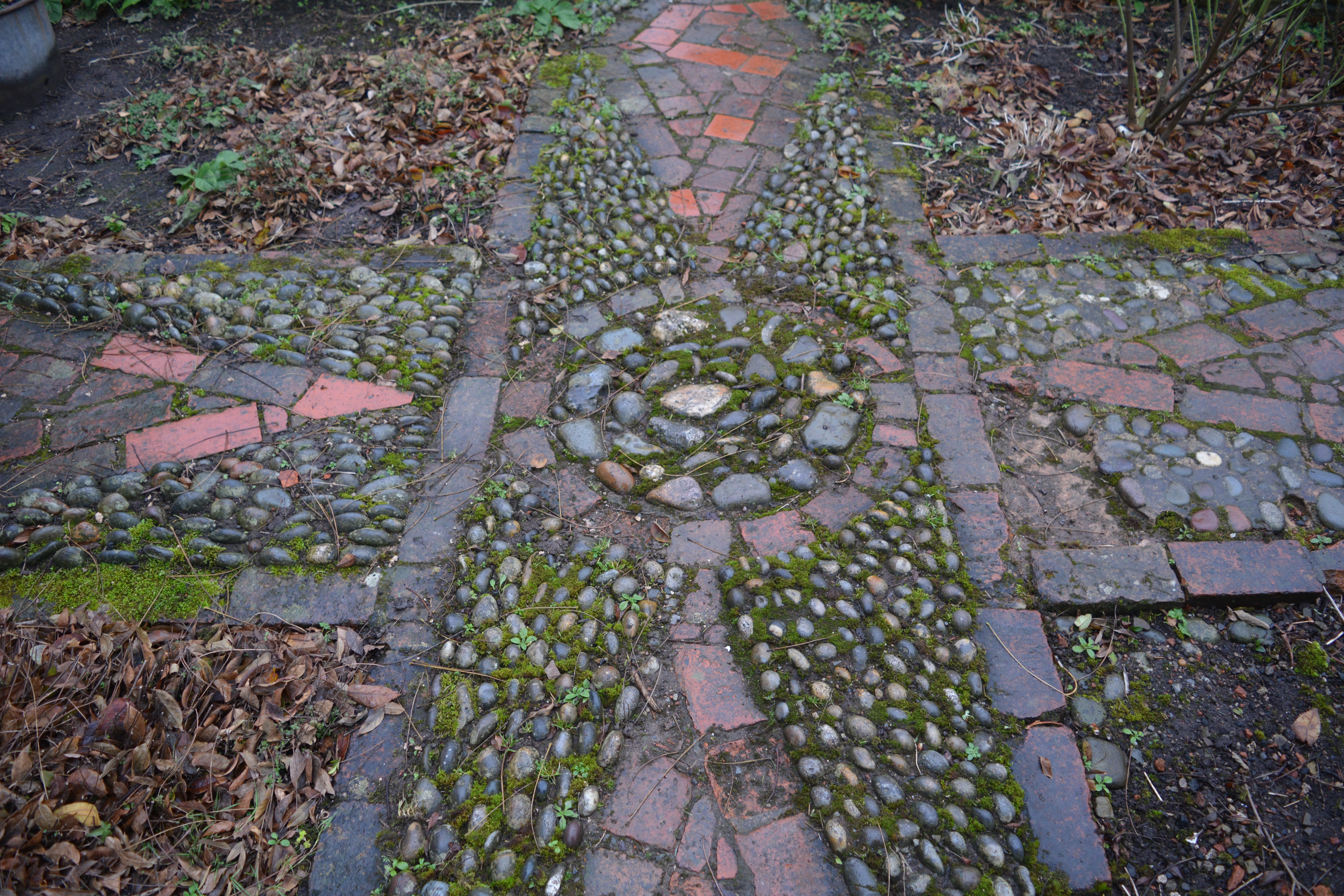
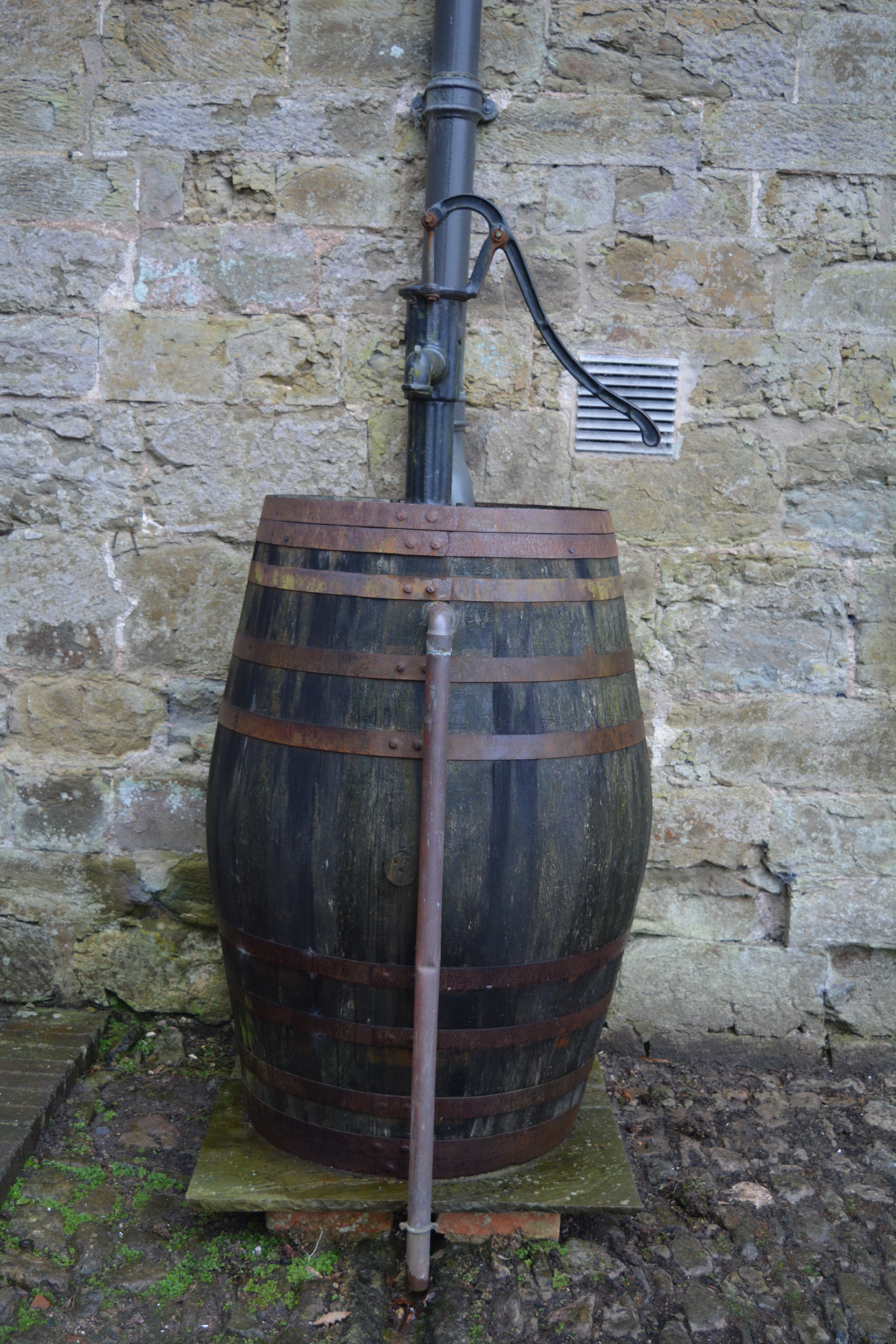
Reluctantly leaving the walled garden through a stone archway, we found small courtyard gardens linked by interesting textural paths. We gained views of the rear of the castle building and its huge water butt!

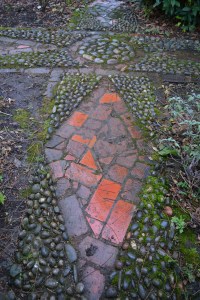
2015 01 01_9143 2015 01 01_9144 2015 01 01_91462015 01 01_9145 2015 01 01_9147

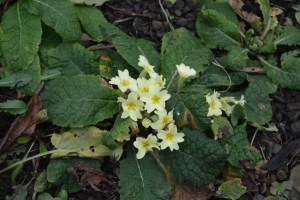
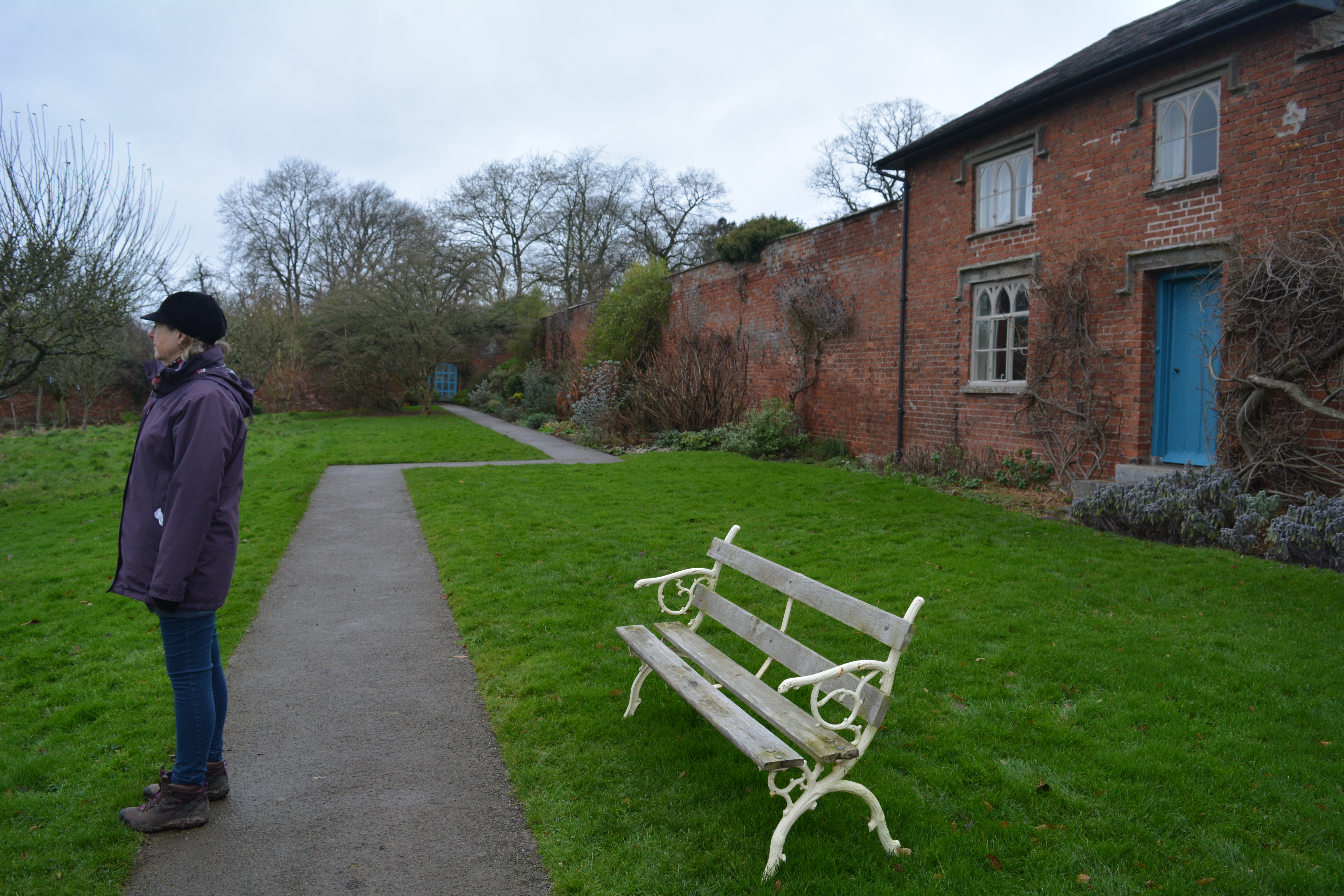
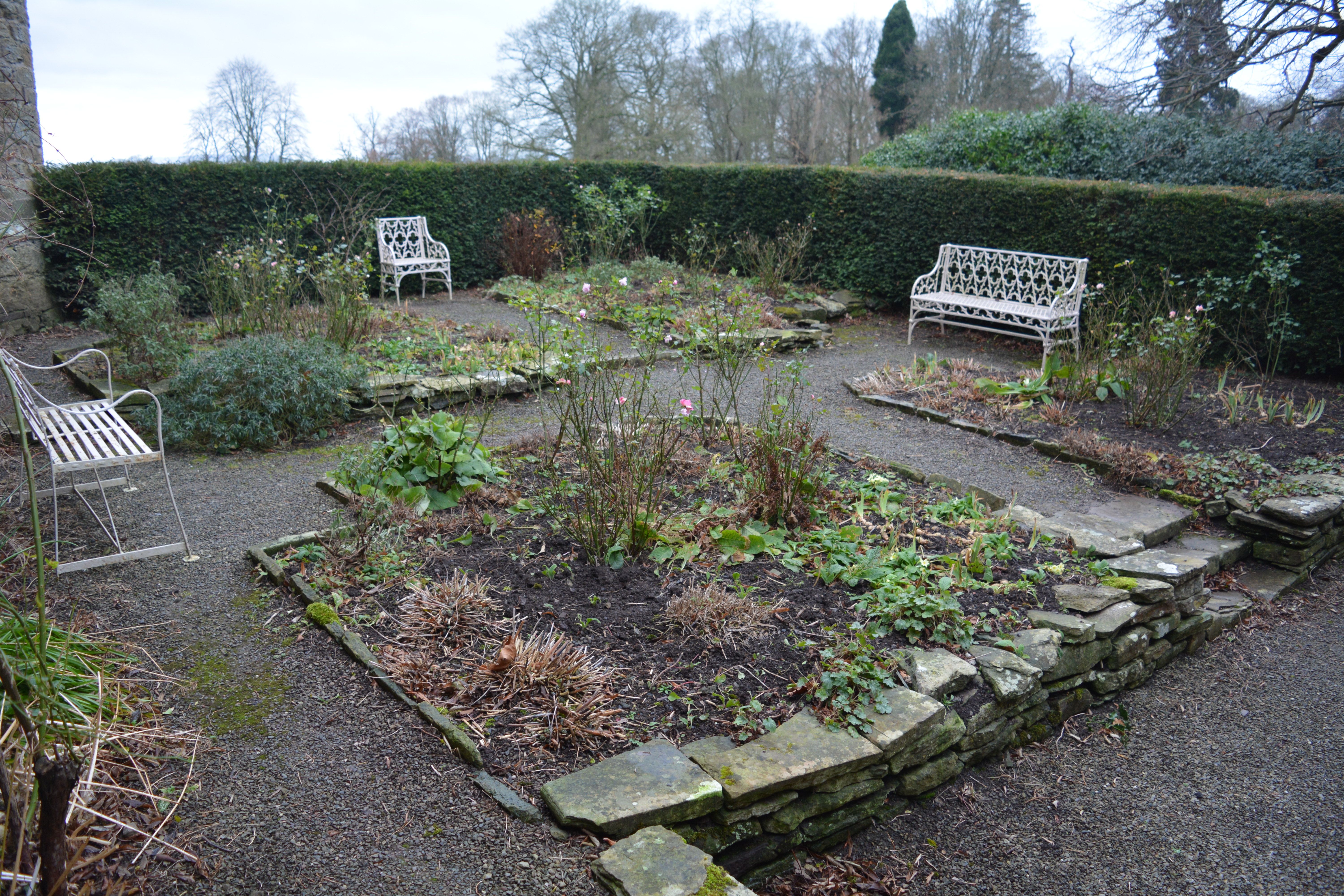
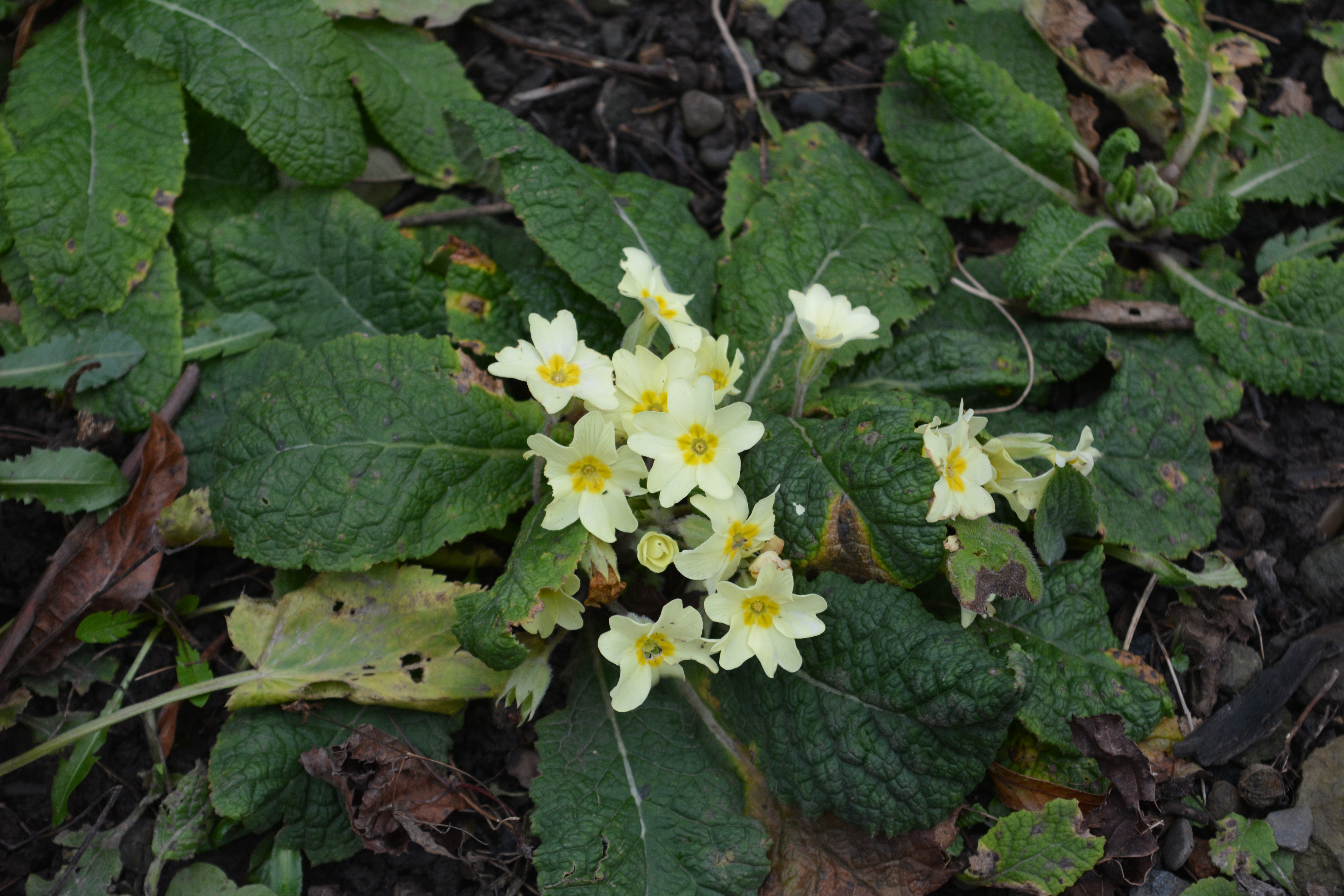
A further archway in a stone wall took us to a quartered courtyard garden with white benches and heavily pruned rose bushes. A strong wind blew through this area, making life difficult when I wanted to take a photograph of a Primrose flowering well out of season, resulting in a blurred close up of my scarf. Oh dear! But I did manage in the end. Definitely better without the scarf.

2015 01 01_9148

2015 01 01_9149 2015 01 01_9150

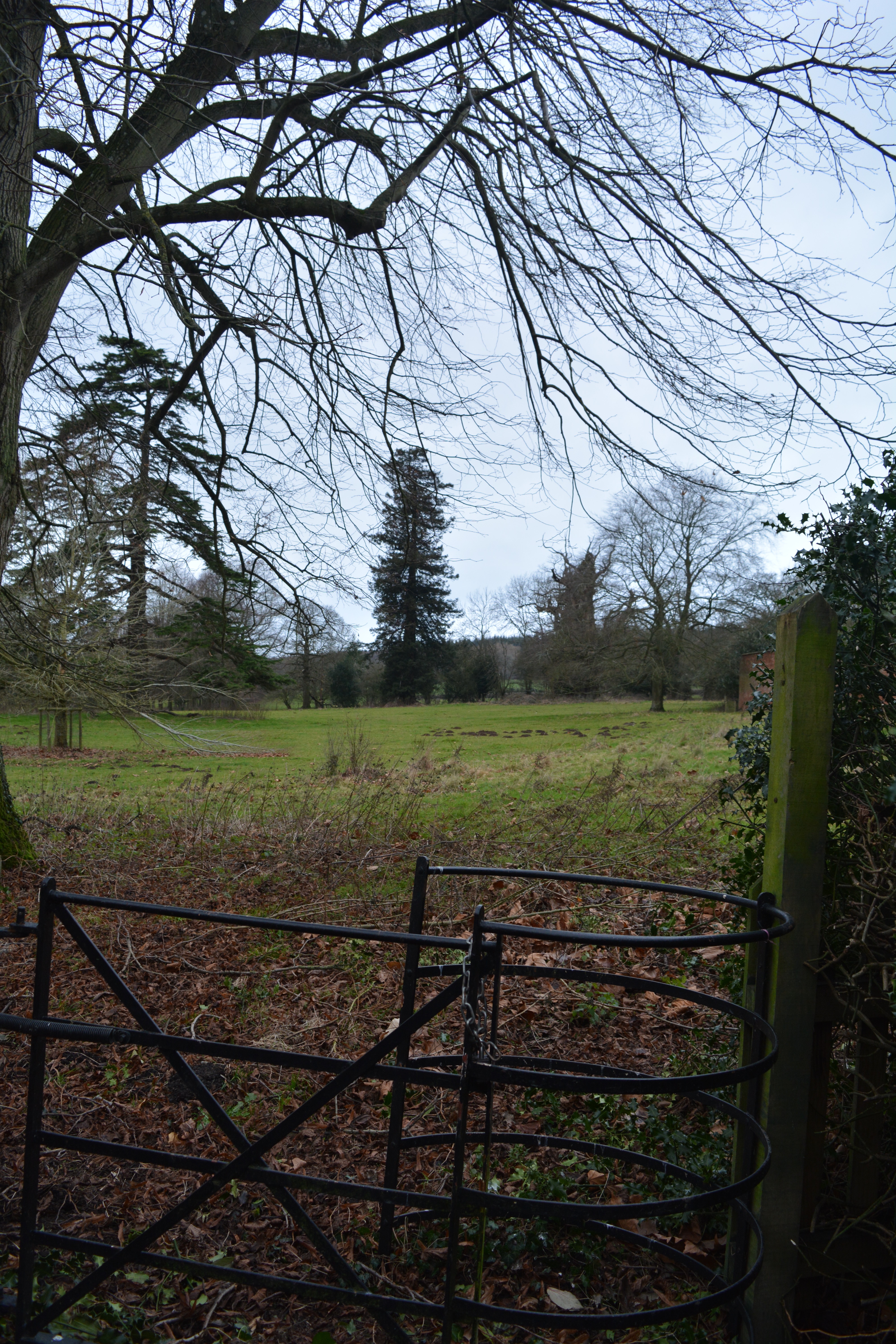
Rounding the next corner we could look out over the low stone wall across the meadows towards the lake and woodlands. The weather was not right for exploring these areas, so we decided to save it for warmer times. Above the corner tower an unusual wooden bell tower peered. Against the house wall we found a second scented Viburnum bodnantense heavy with blossom.

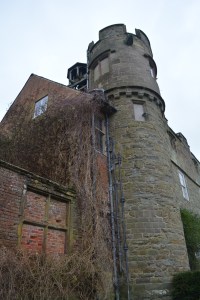
2015 01 01_9153 2015 01 01_9151

2015 01 01_9152 2015 01 01_9154 2015 01 01_9155

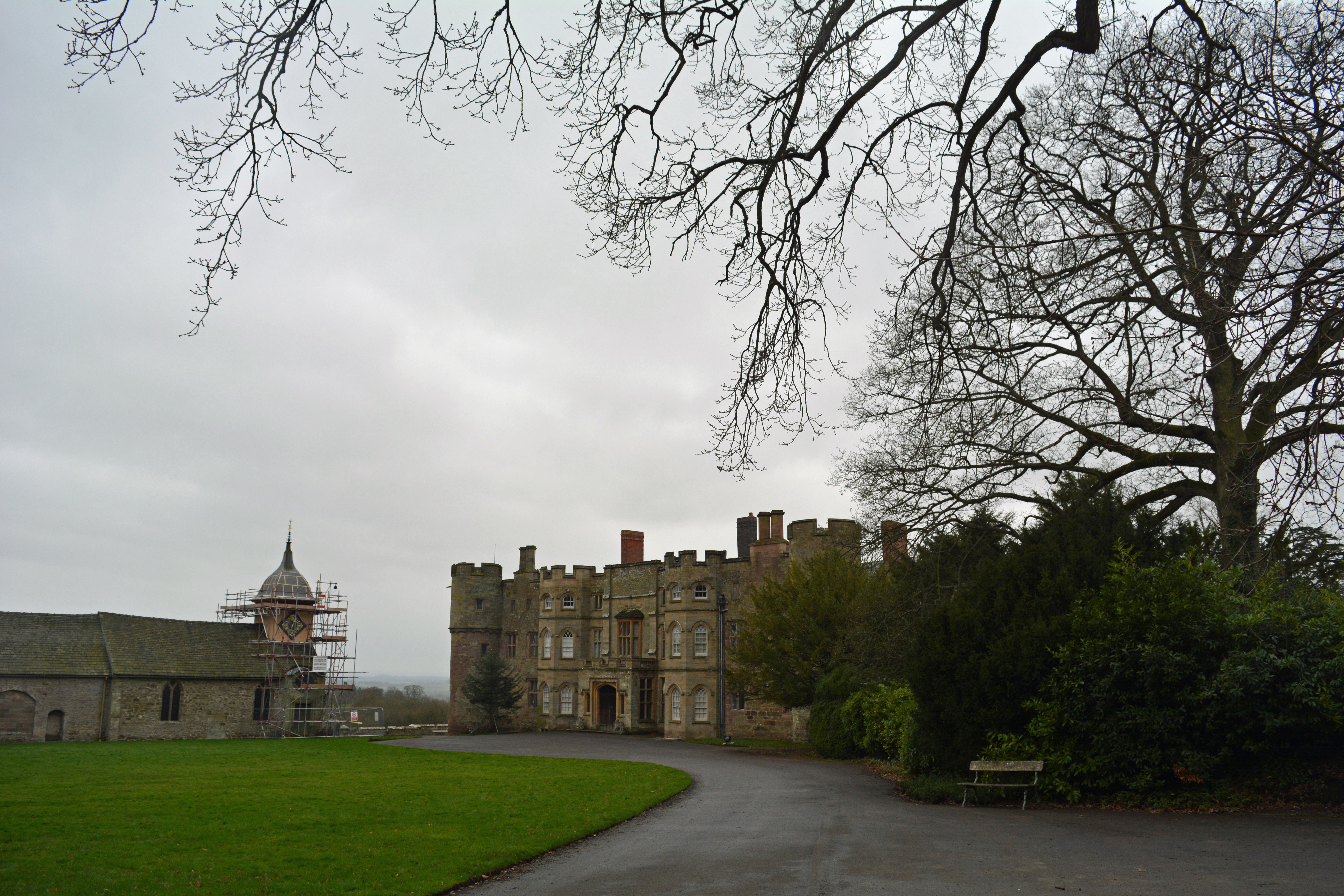
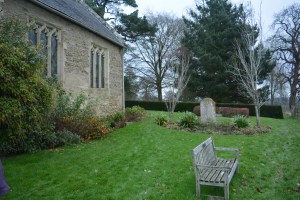
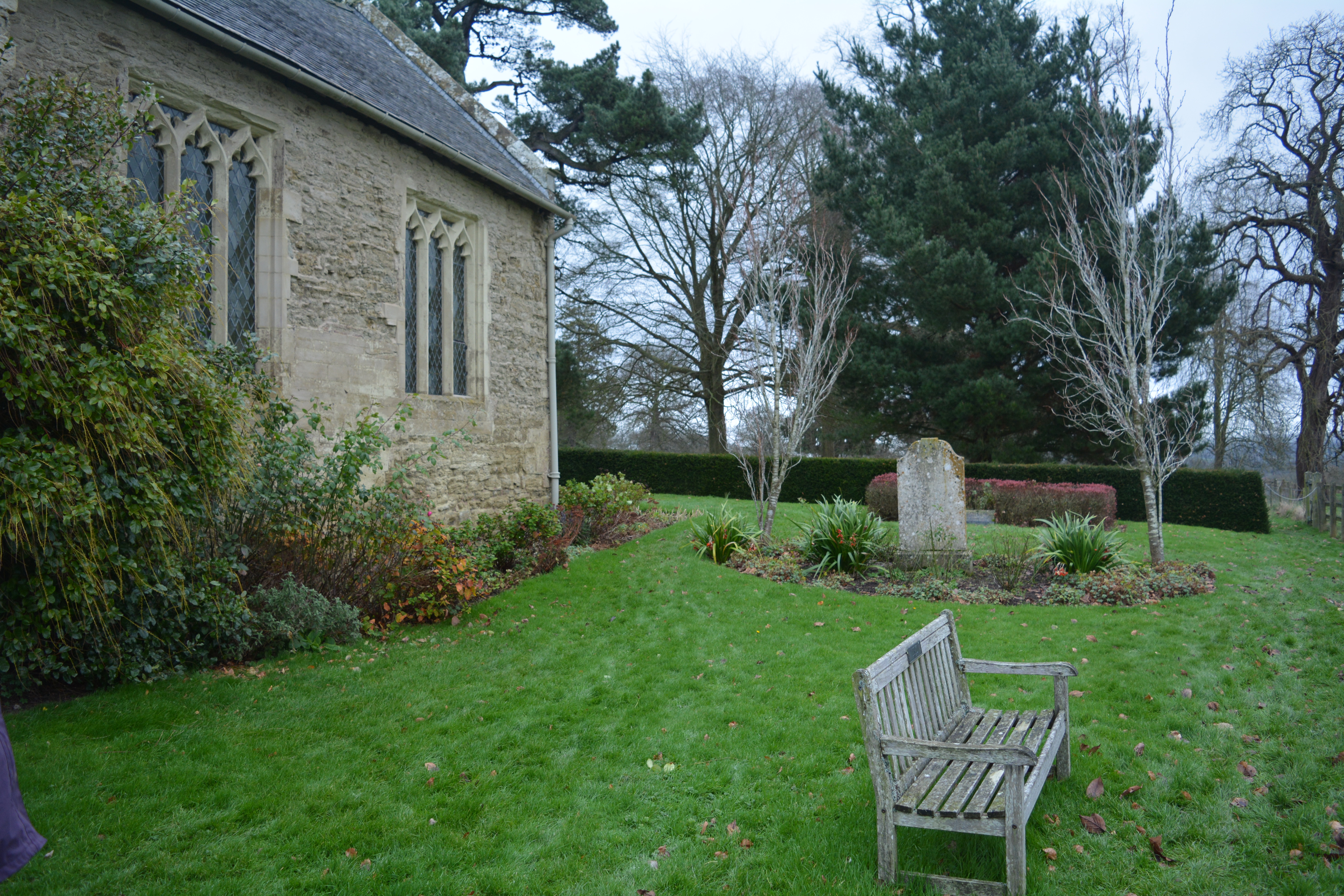
The  tiny garden surrounding the estate church is often colourful but in winter colour was total lacking. The tower of the church was covered in scaffolding and it looked as if restoration work was well under way. I will share some pictures of this lovely building when the scaffolding is down later in the year.
2015 01 01_9156

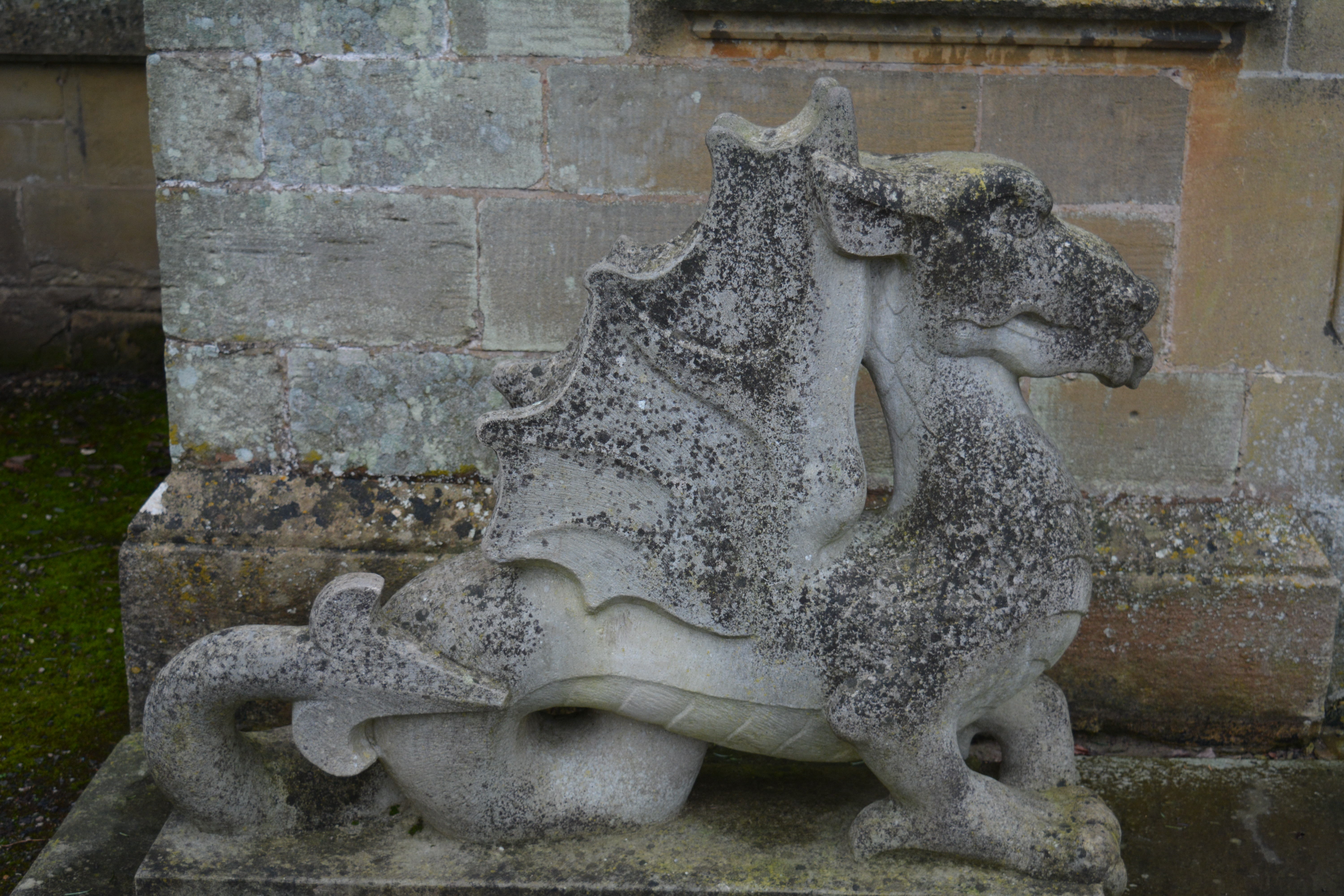
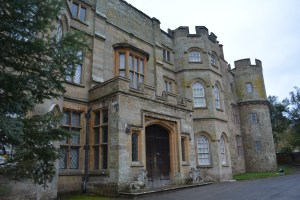
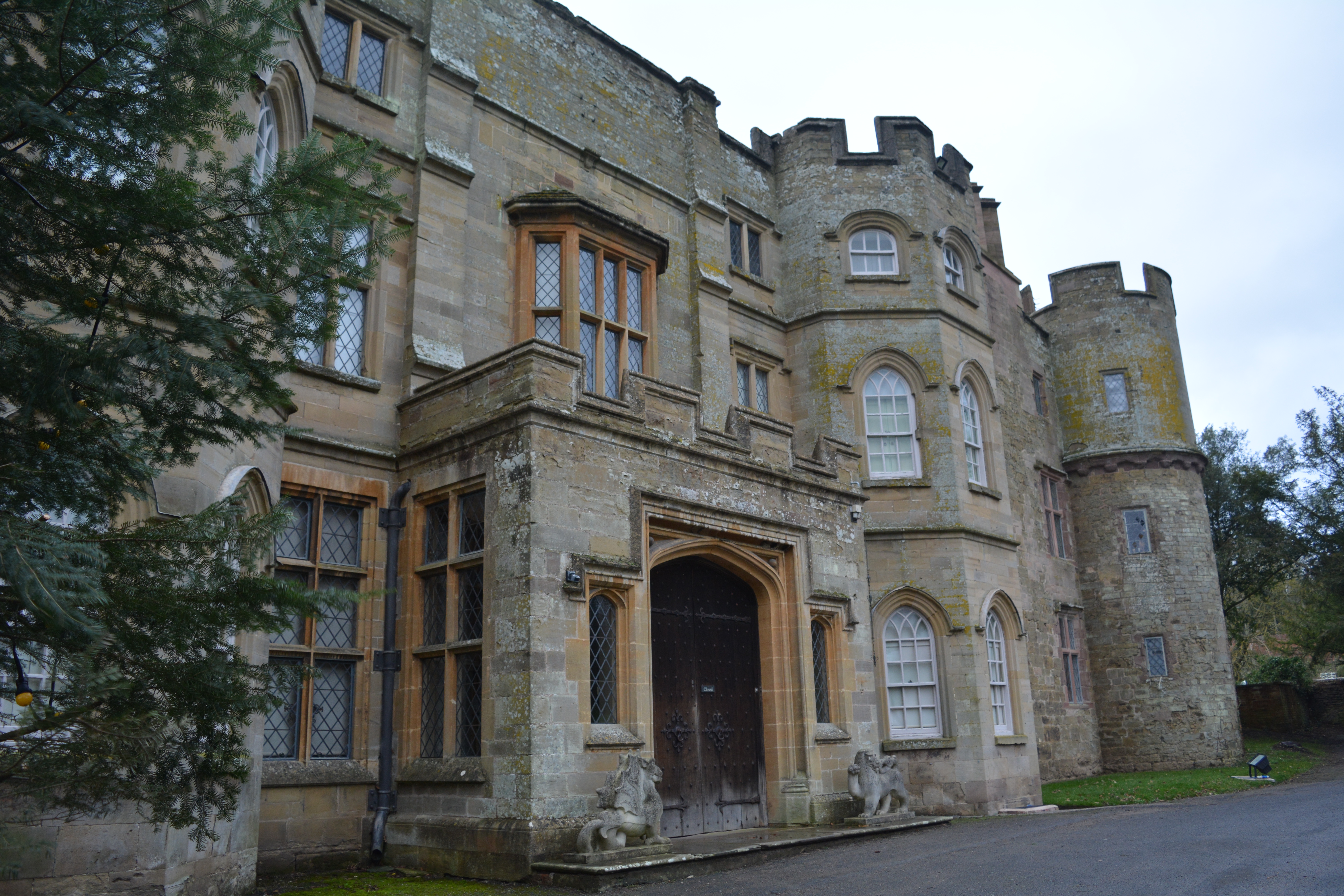
We finally reached the front entrance to the castle, the massive door protected by stone-carved dragon sentinels. As we retraced our steps along the herbaceous border and stone wall we looked back to get views of the whole castle frontage.
2015 01 01_9157 2015 01 01_9158 2015 01 01_9160 2015 01 01_9087_edited-1

Our next visit will be in February when we will see if anything in the garden changes as the days lengthen slightly and the light values improve. It may be a bit warmer too! Fingers crossed.

Categories
architecture buildings Yorkshire

Saltaire – a unique village – Part Two

So here we are suitably refreshed with part two of my postings about the village of Saltaire. We are carrying on with our wander after a well-earned coffee stop. The staff were so friendly and so cheerful, which seems typical of everyone we met in the village. People enjoyed a chat and offered a smile!

We left our tour of Saltaire previously in Alexandra Square where we found the almhouses.

2014 10 30_6738 2014 10 30_6739

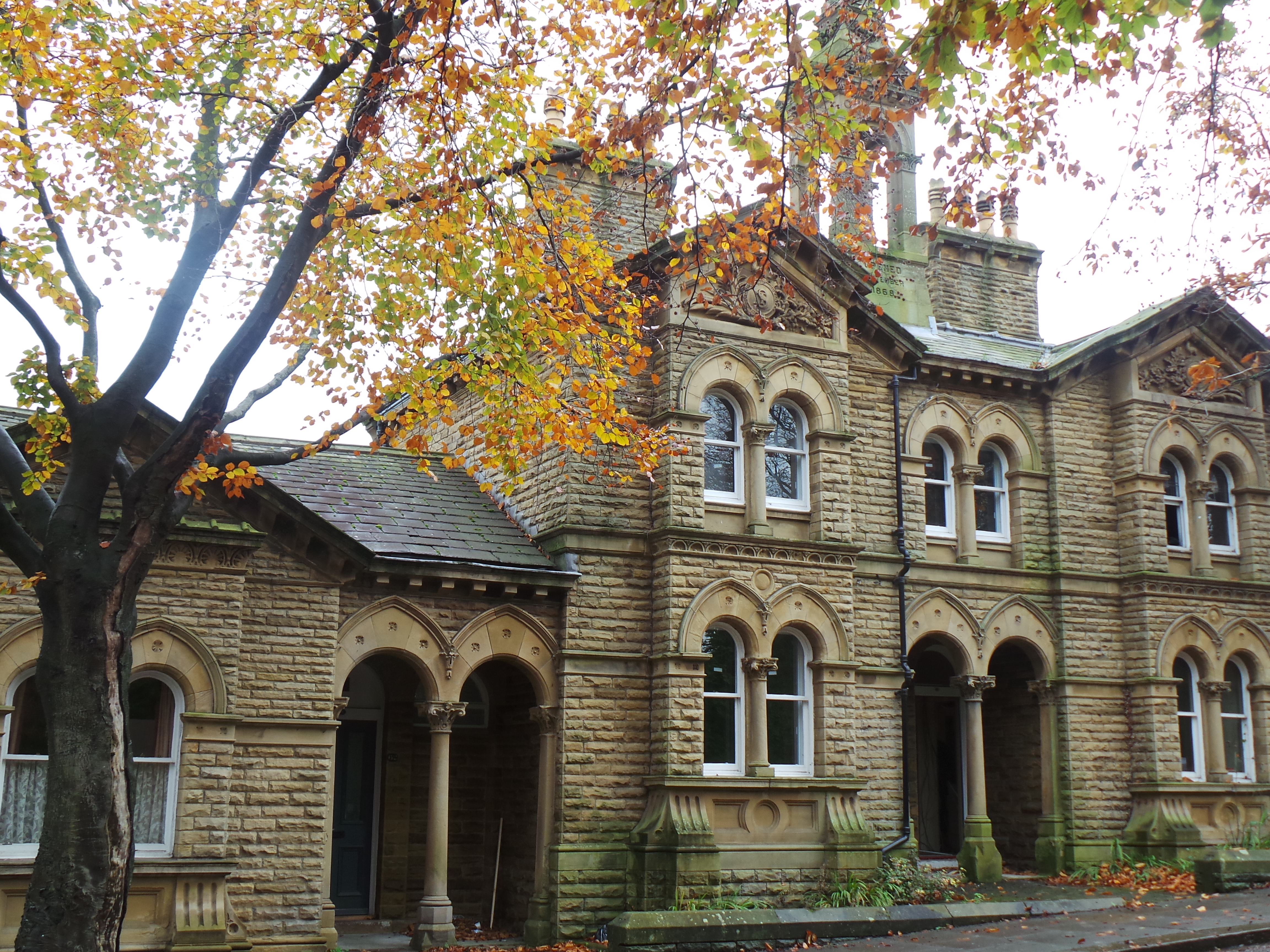
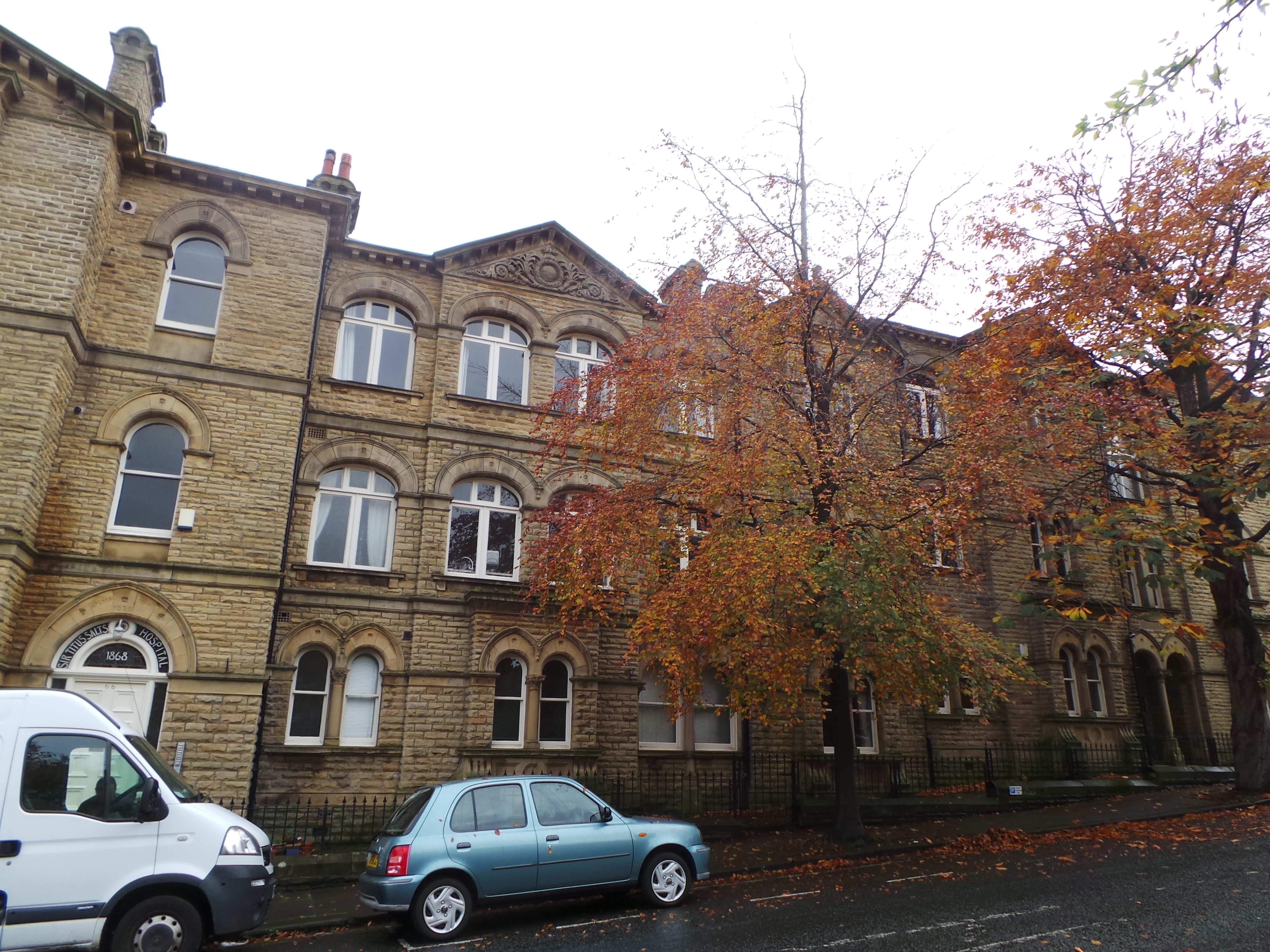
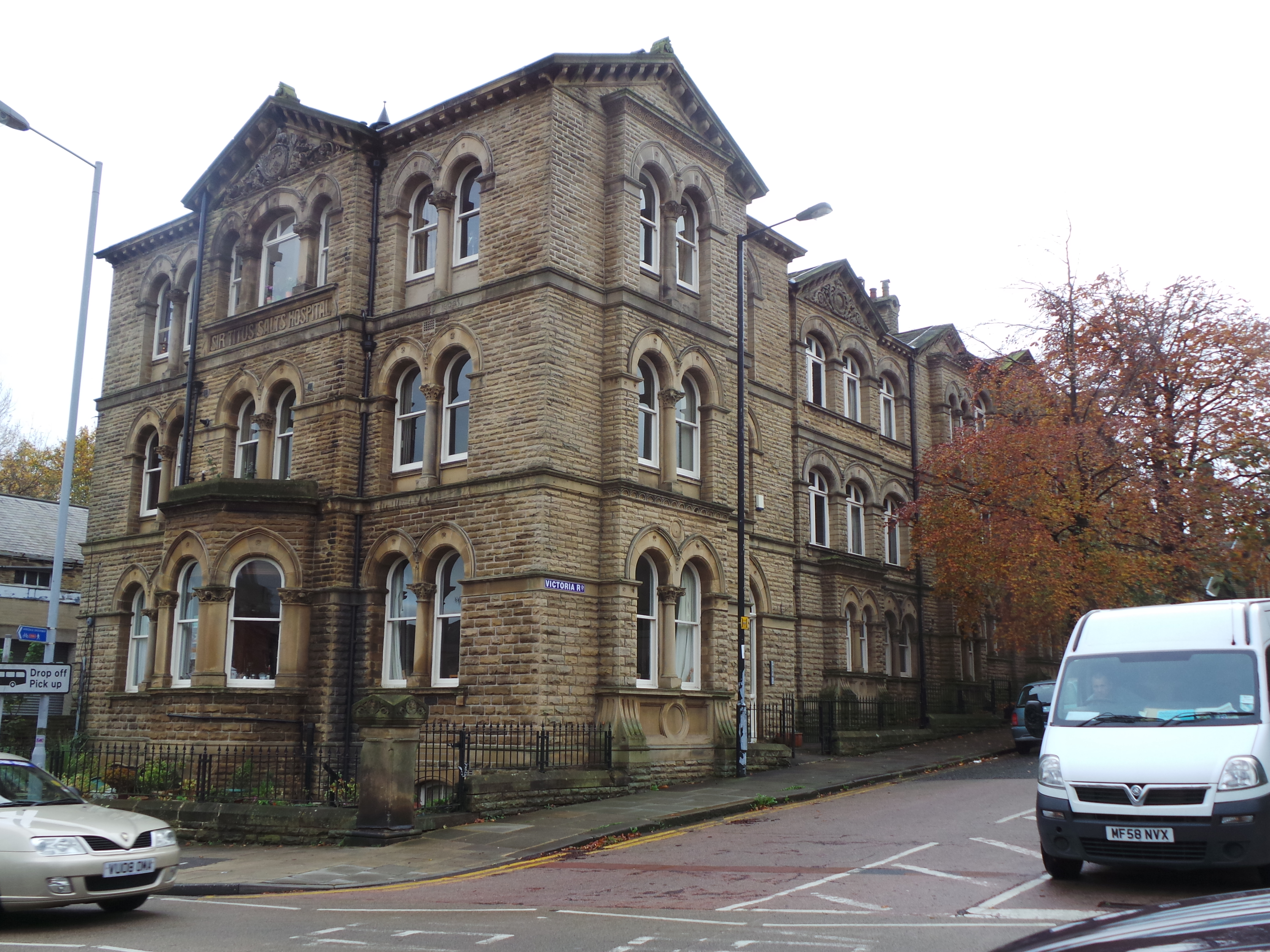
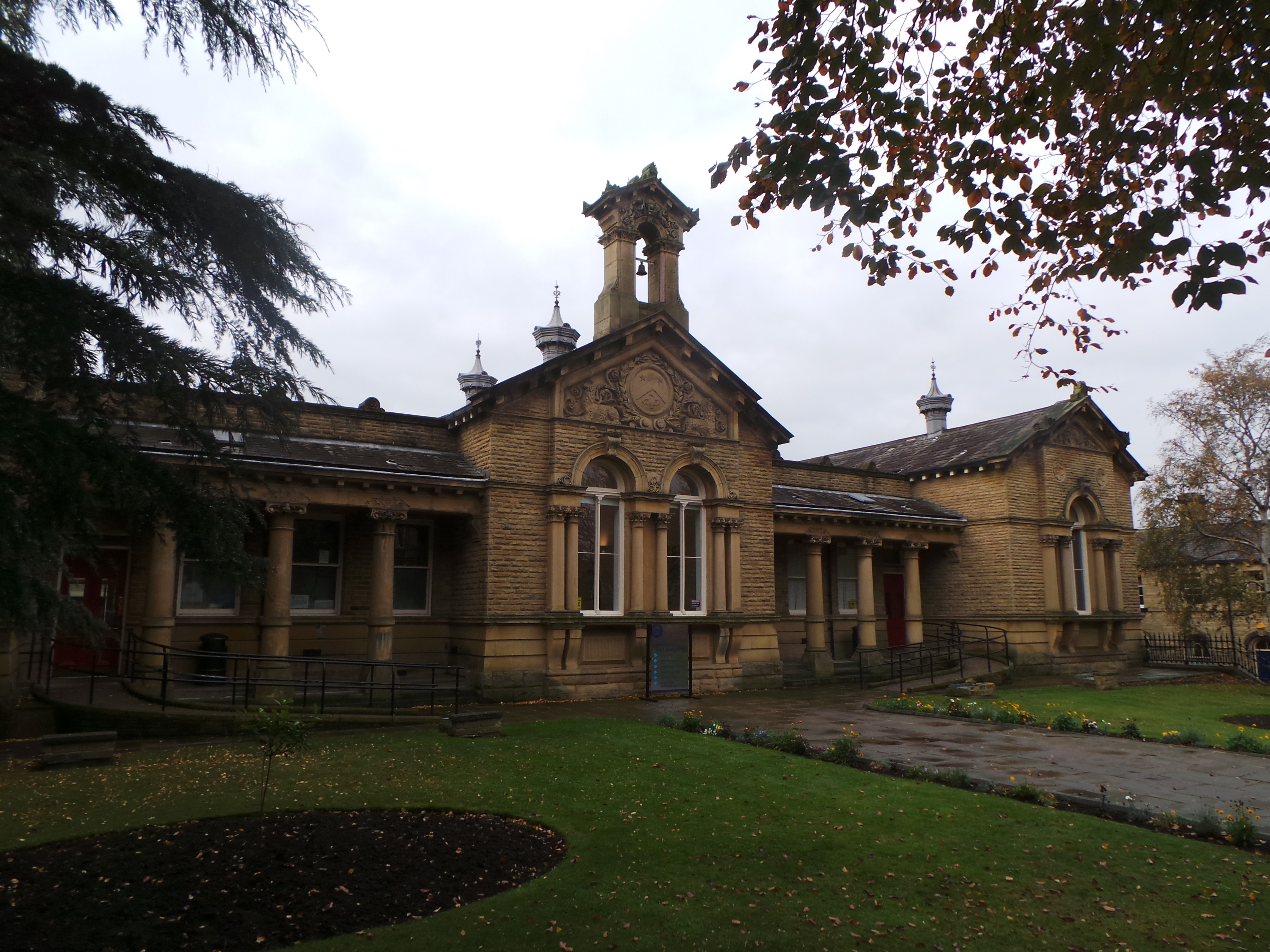
Now we set off in search of the social and community buildings proved by Titus Salt and soon found ourselves studying the impressive building which housed the hospital. Medical care was provided for the Saltaire mill workers way in advance of the idea of the National Health Service. Elsewhere medical care was the province of the rich.

2014 10 30_6740 2014 10 30_6741 2014 10 30_6742 2014 10 30_6743 2014 10 30_6744 2014 10 30_6746

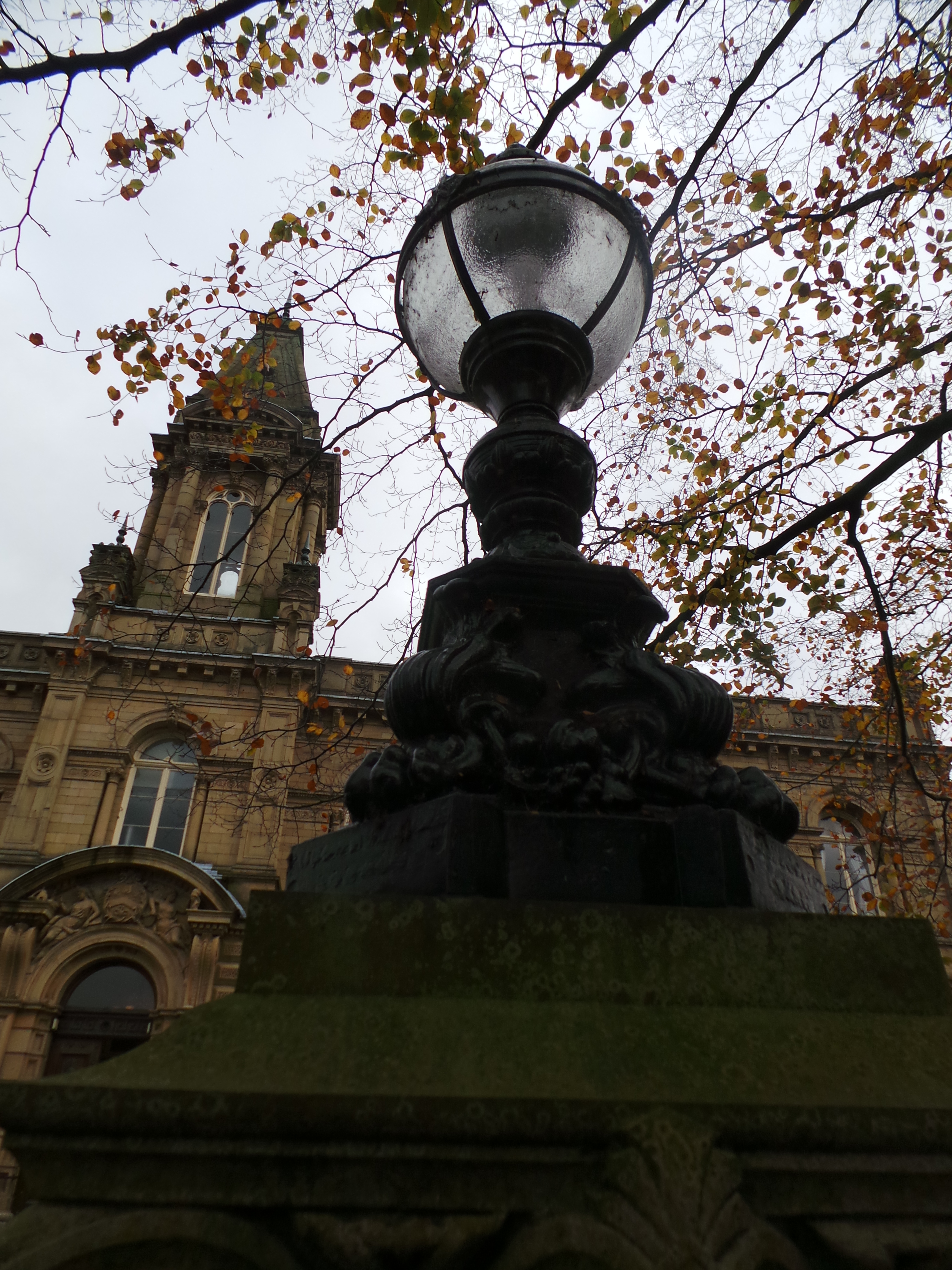
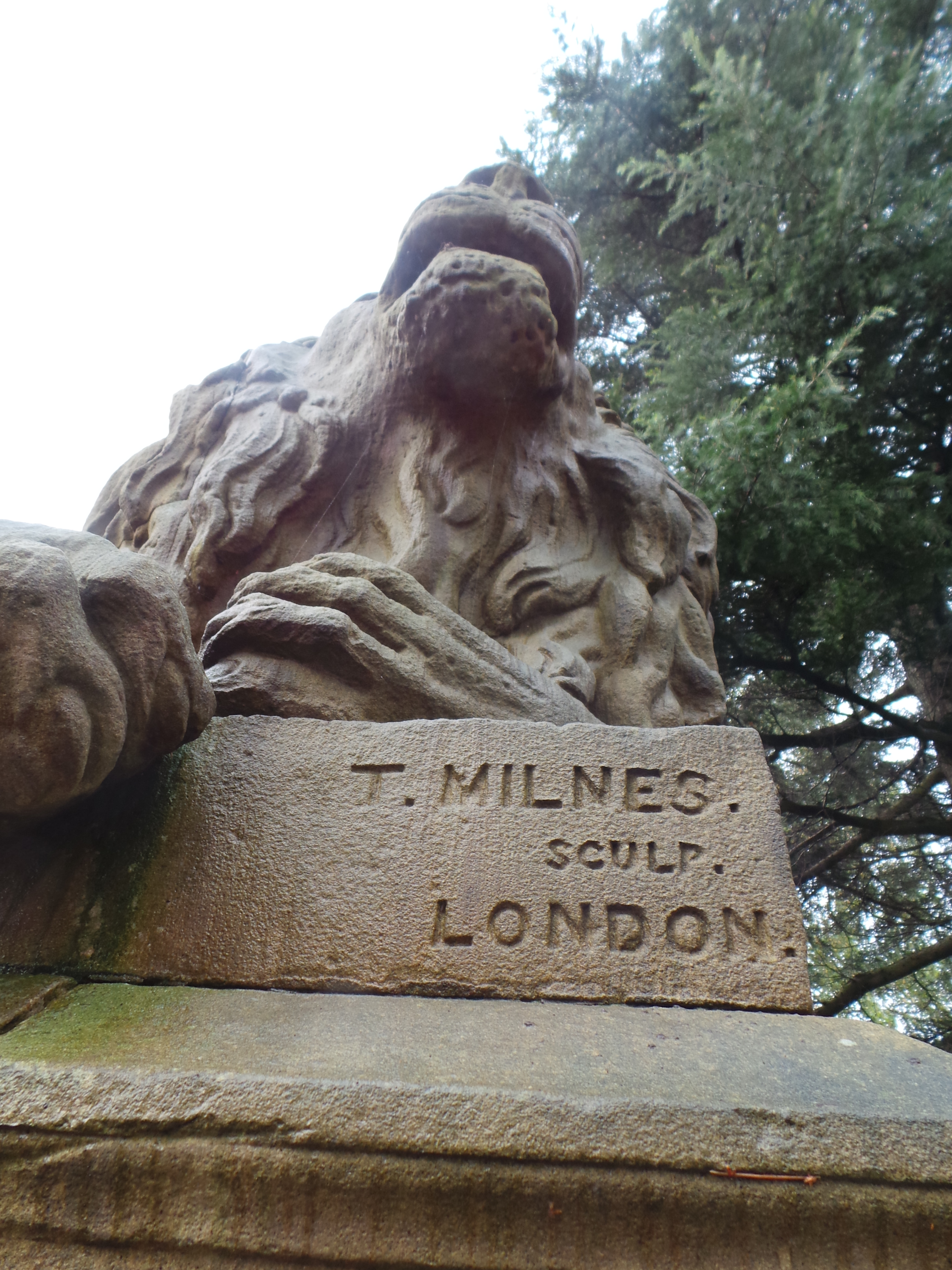
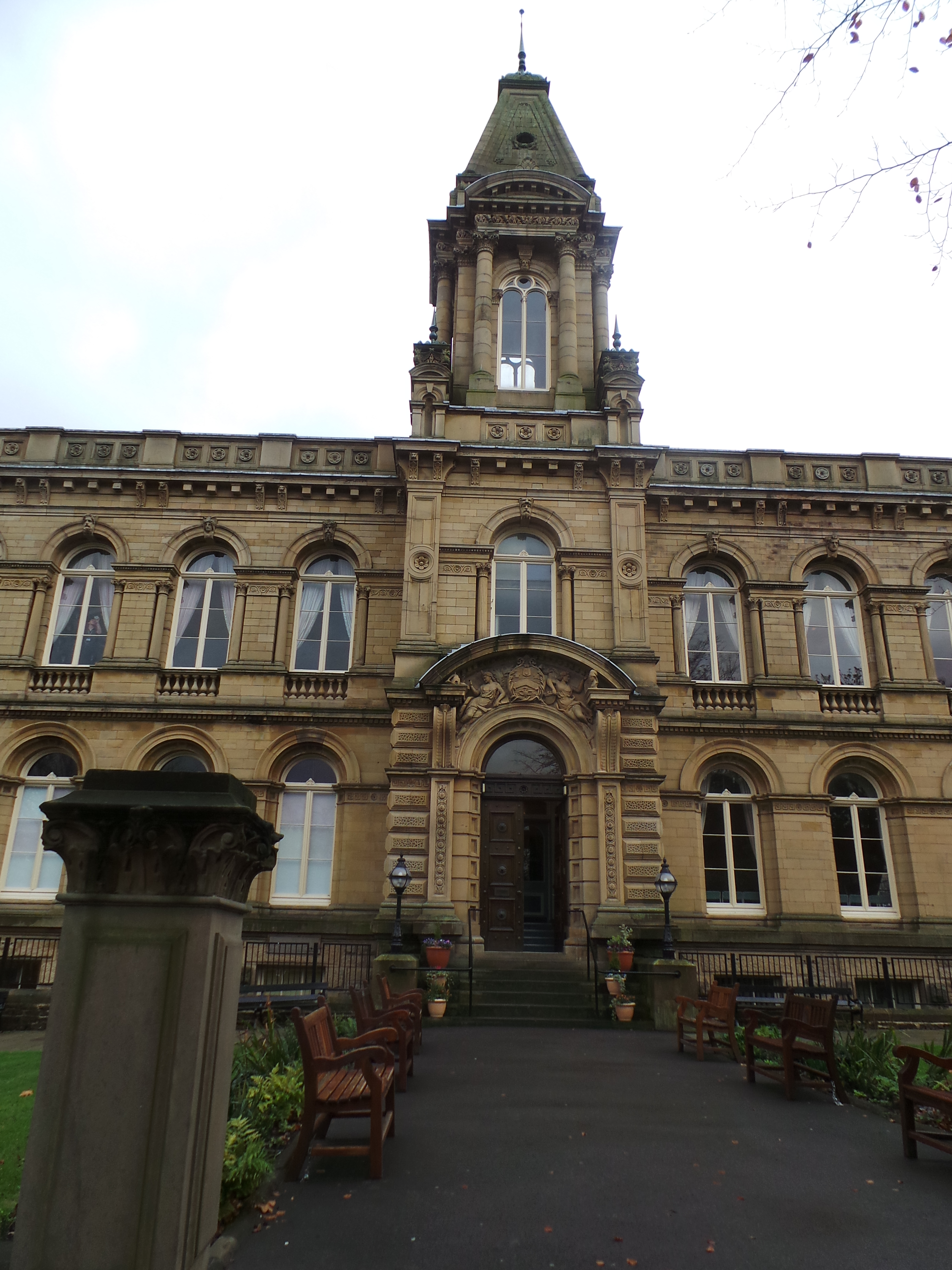
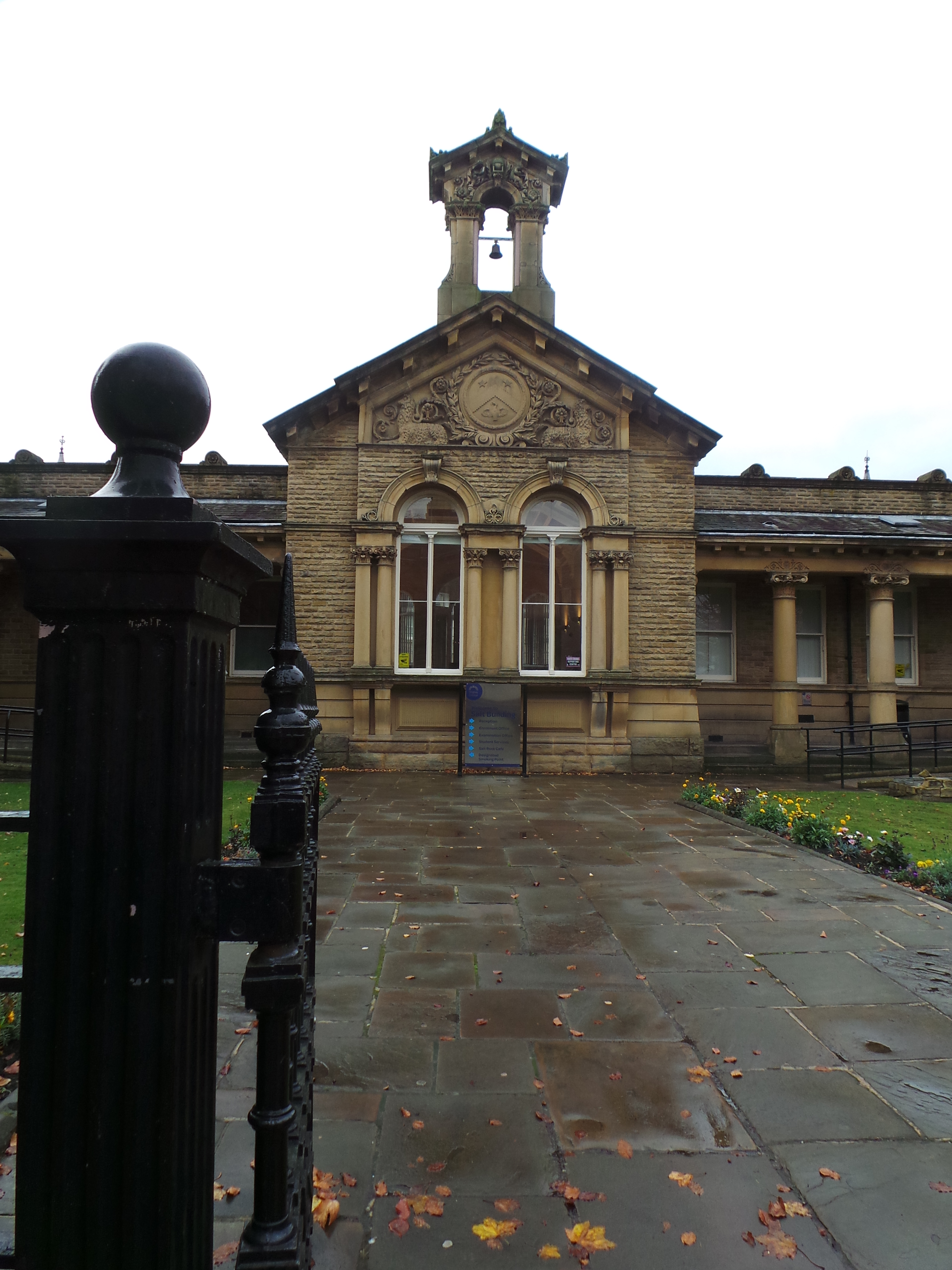
Further up Victoria Road we discovered the institute building which afforded the mill workers opportunities for adult education and socialising. It contained a library, lecture hall, gymnasium and games room, another example of how forward thinking Titus Salt was. On each corner of the wall surrounding the front lawn and entrance to the institute we found 4 lions, one on each corner each with very different expressions.

2014 10 30_6752 2014 10 30_67542014 10 30_6749 2014 10 30_67552014 10 30_6753 2014 10 30_6756


Directly opposite the institute is where the youngsters were educated, the school. It is an impressive building which reflected the importance and emphasis Salt placed on education This was at a time when the mills relied on cheap child labour to boost the work force, but a law was in force to control their working hours.

2014 10 30_6750 2014 10 30_6751


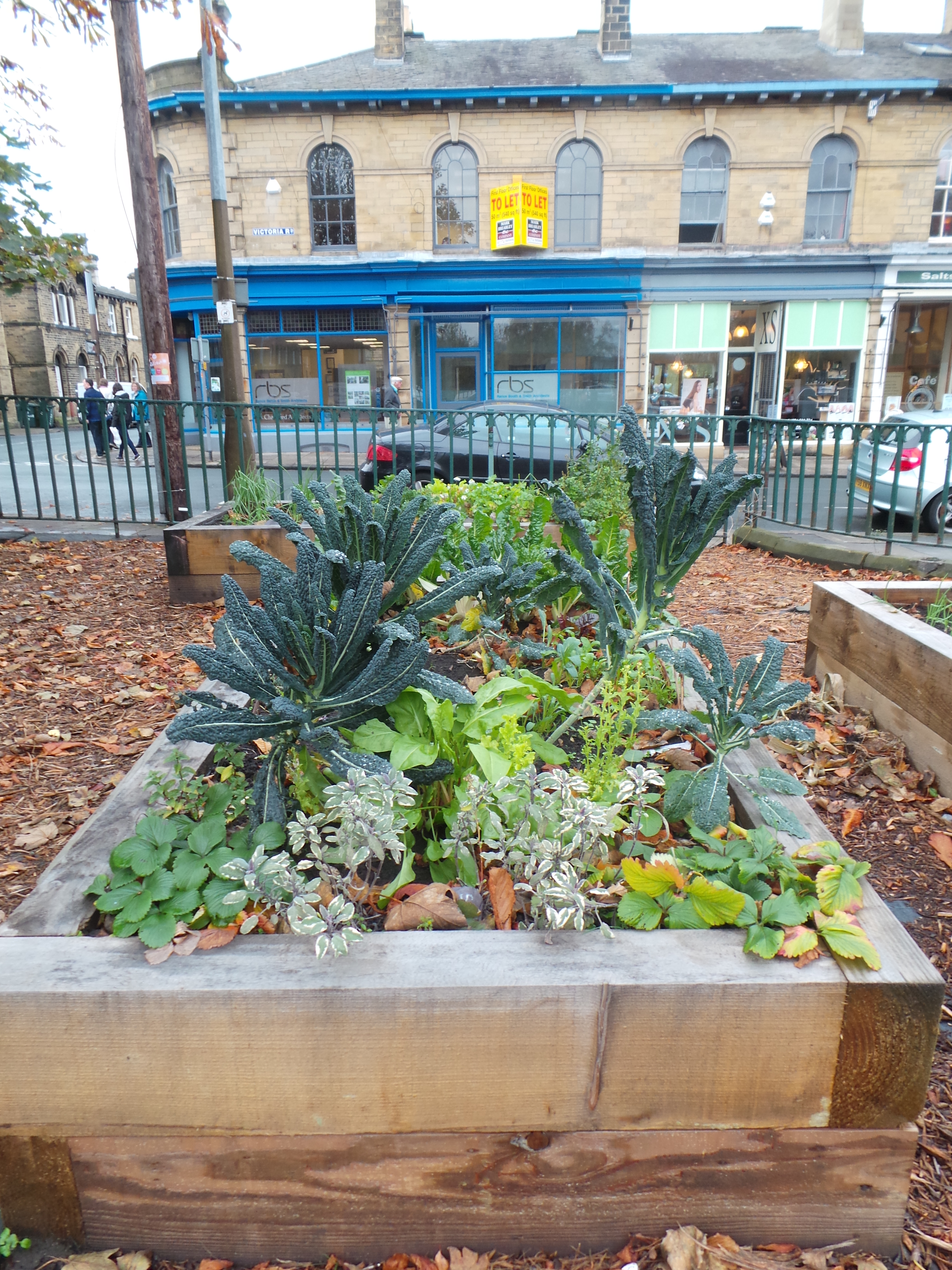
If you cast your mind back to the end of part one, you will remember that Salt had provided allotments for his workers. The first picture below shows part of this community garden. Close by recently created miniature raised beds perform the same function.

2014 10 30_6763 2014 10 30_67622014 10 30_6759 2014 10 30_6760

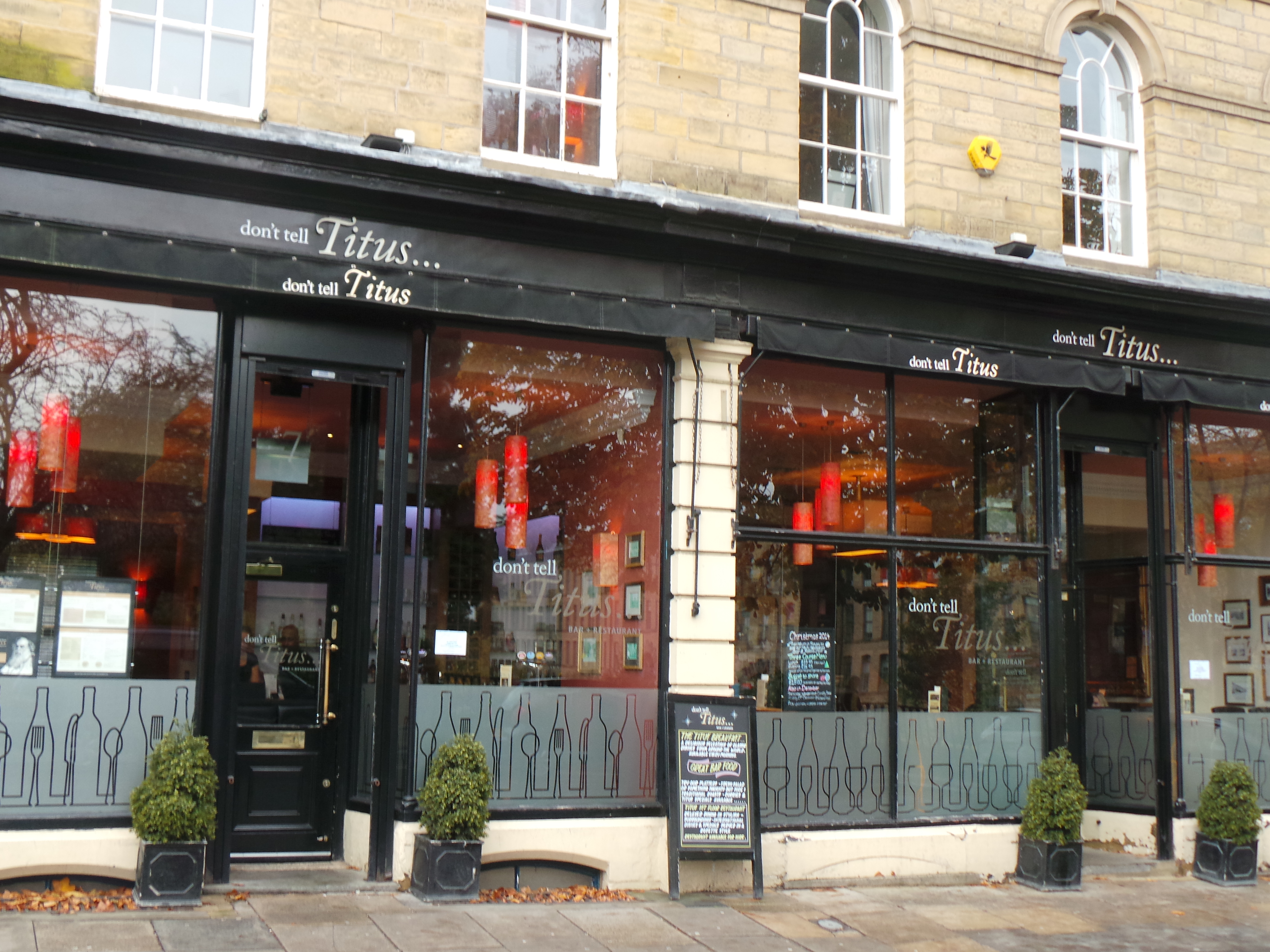
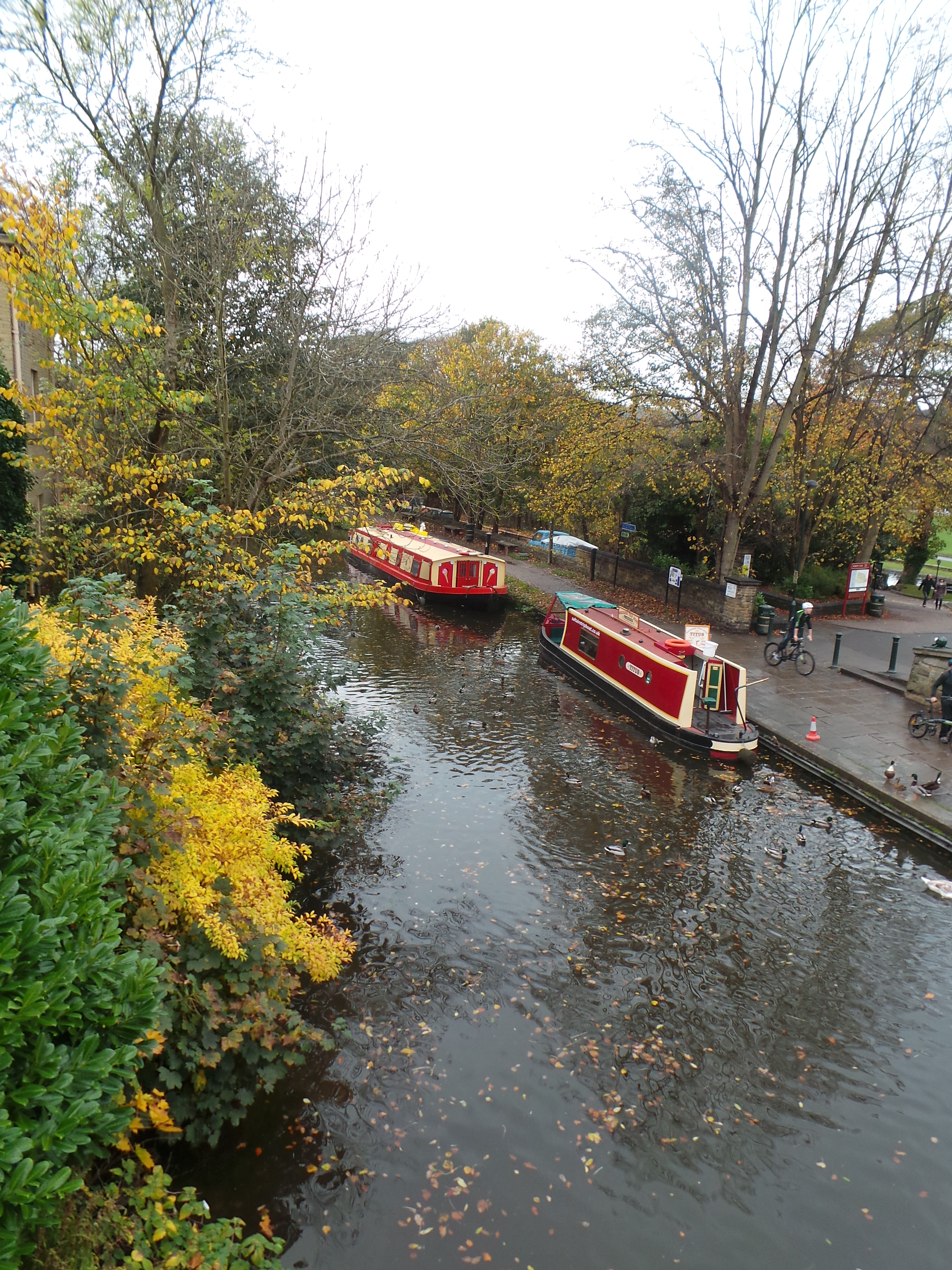
After enjoying these little productive plots we began making our way back to the mill and the canal and the river Aire that run alongside it. We wanted to look around the park on the far side of the canal. On our way we were delighted to see a contemporary tribute to Titus Salt, “Titus Teas”.


2014 10 30_6761

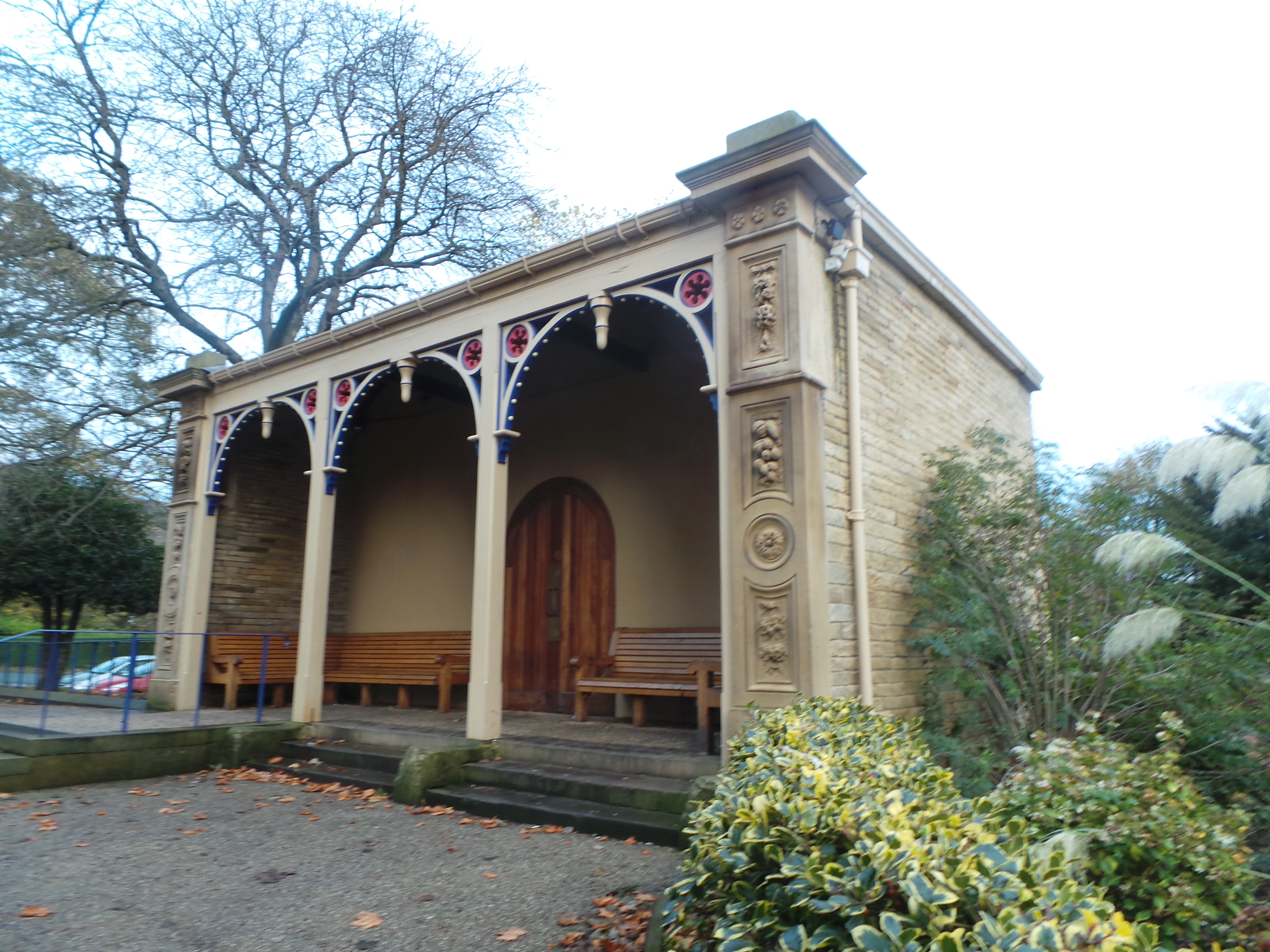
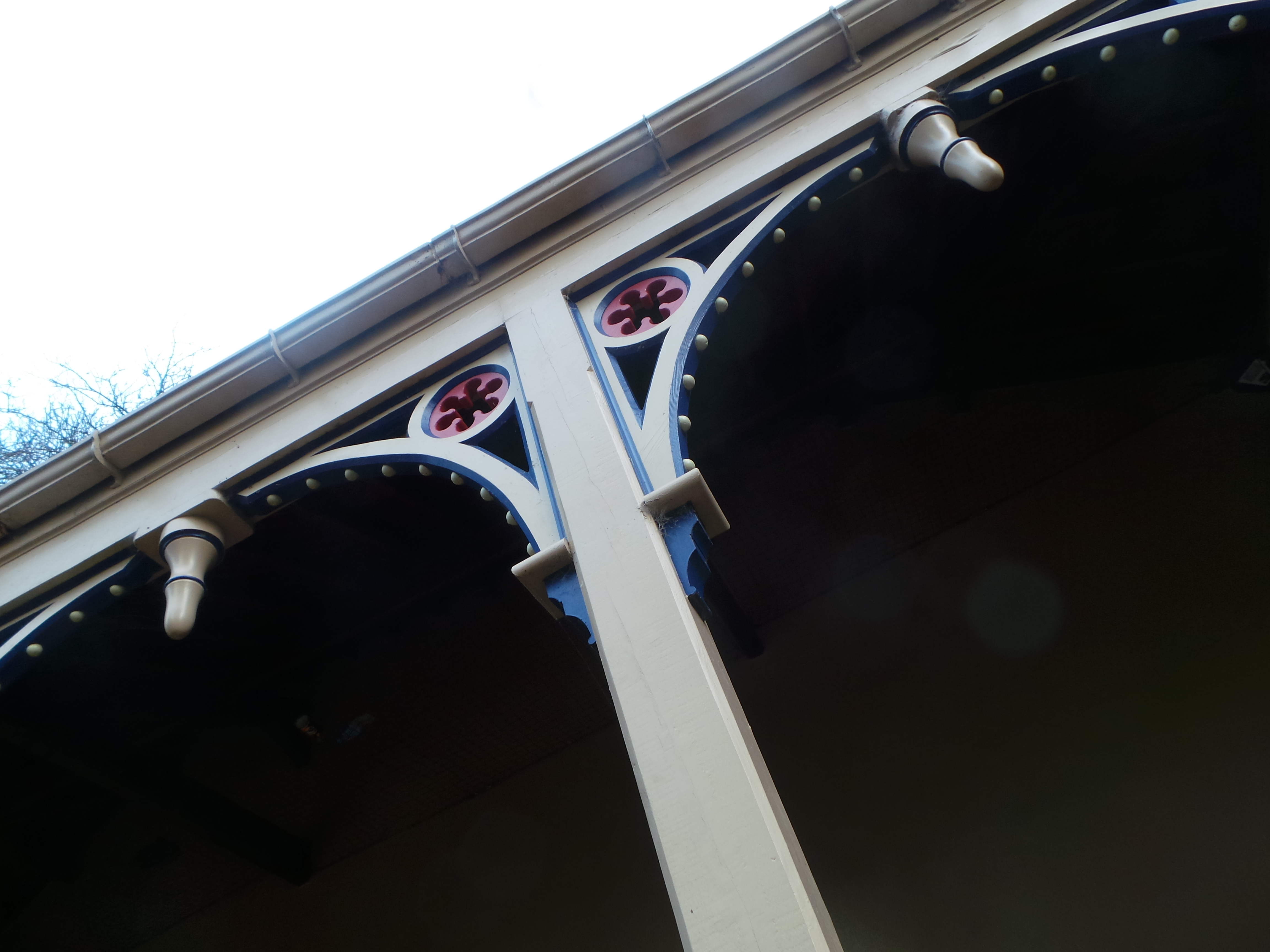
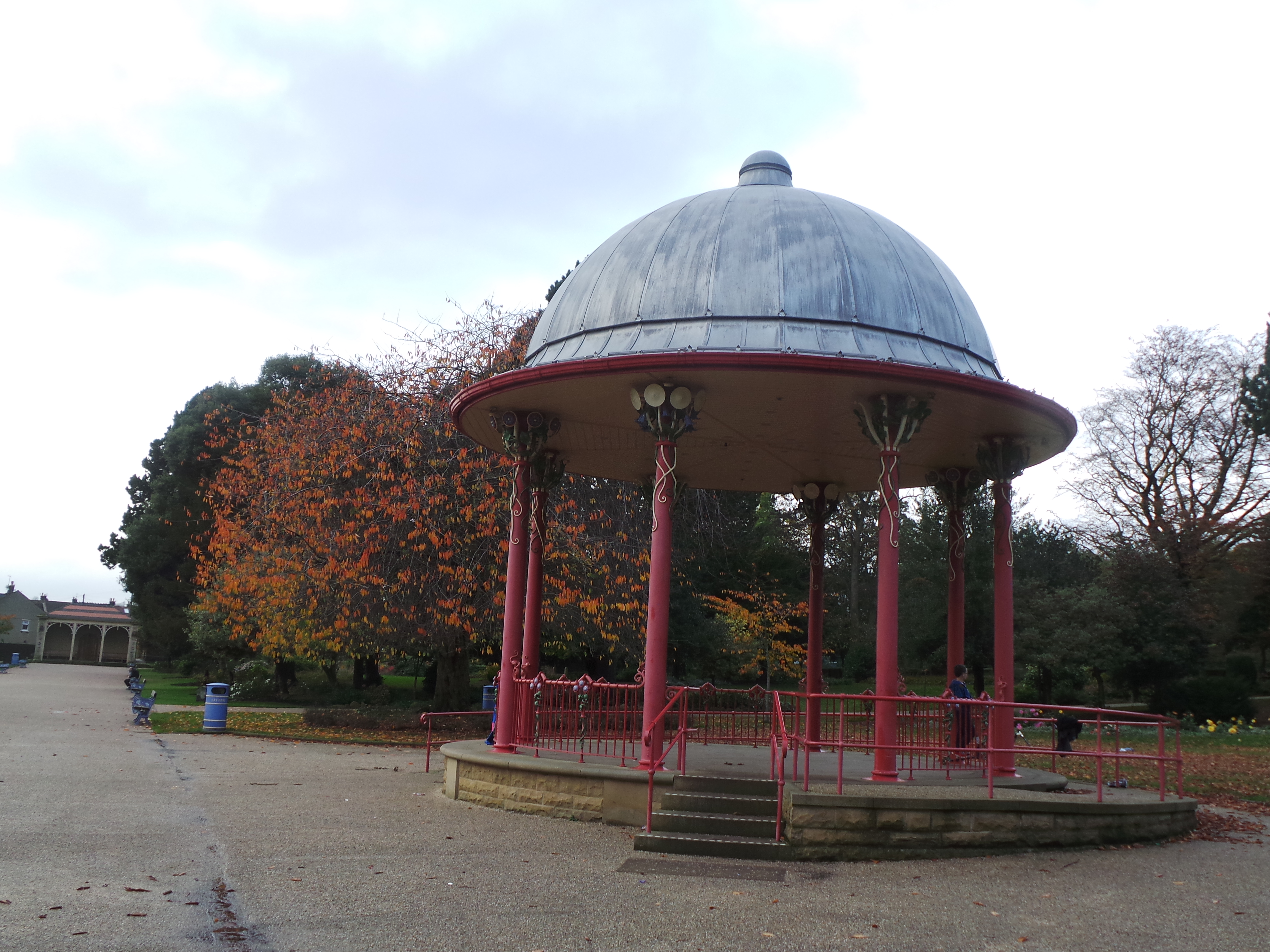
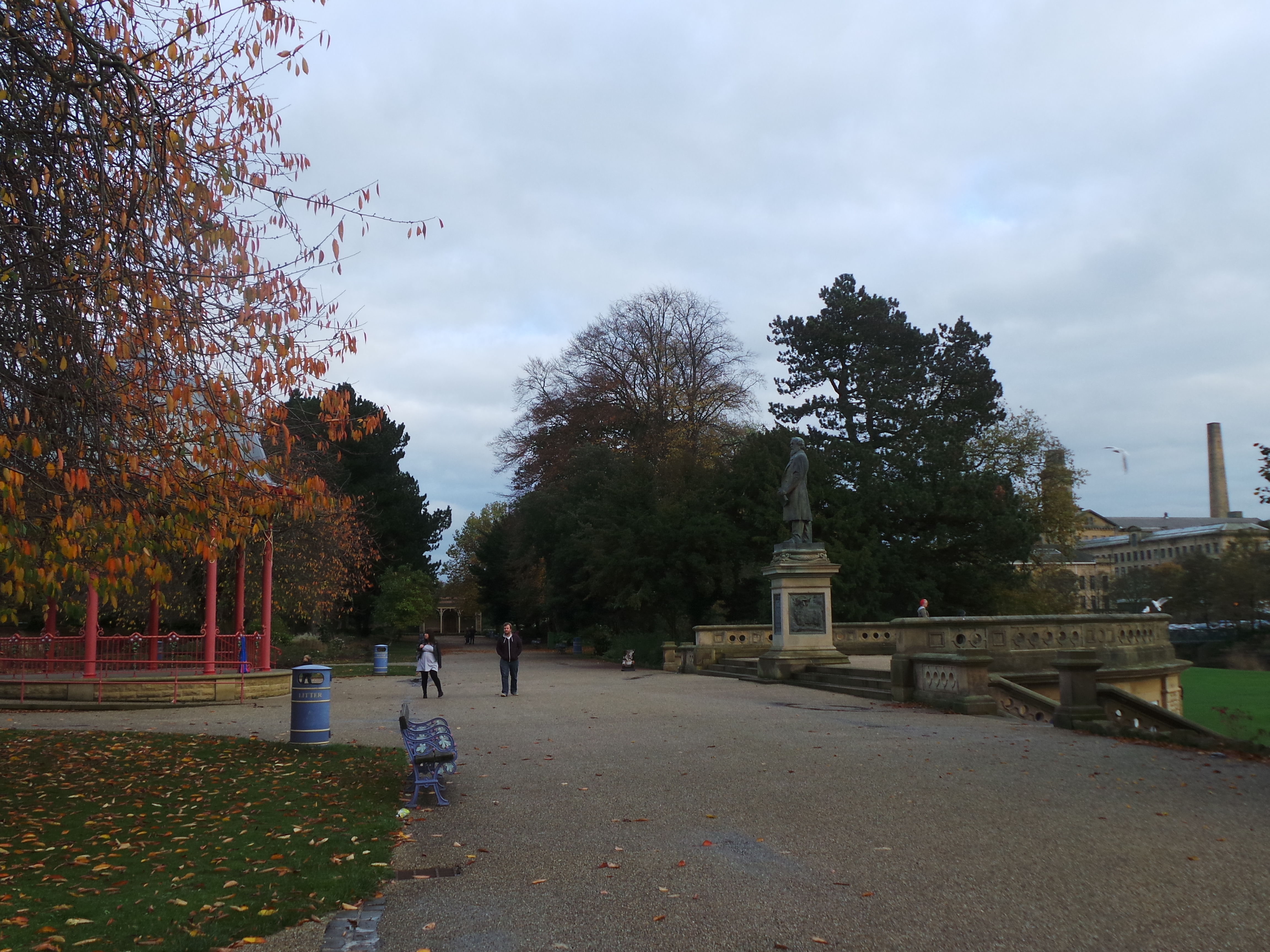
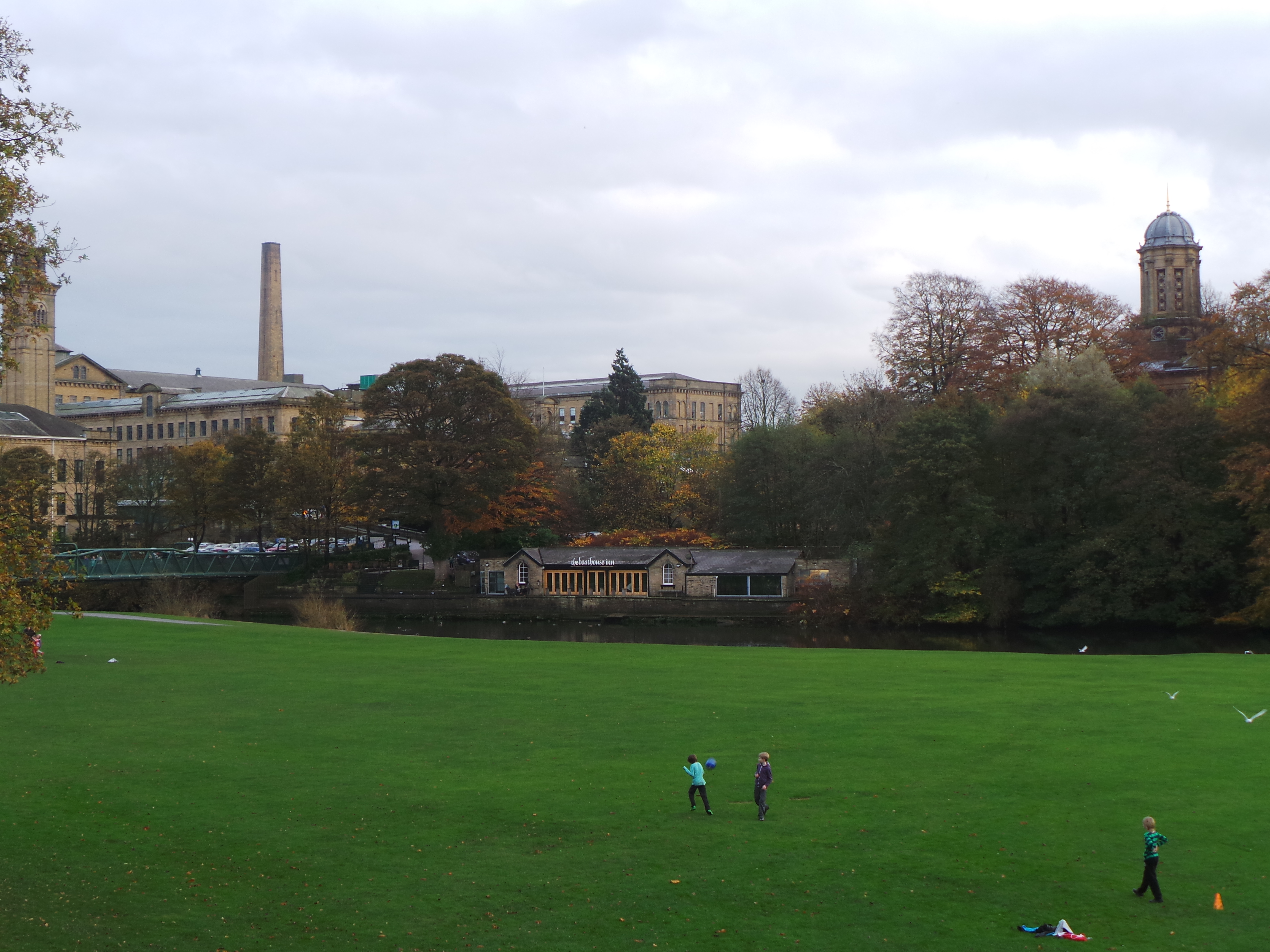
The park is a large open green space away from the mill and the village where Salt’s workers would have had the opportunity to appreciate the space and the freedom to wander. The contrast to work must have been so powerful! Every opportunity to add colour has been taken here, even on the metalwork of the seats and bandstand.

2014 10 30_6764 2014 10 30_6765 2014 10 30_6766 2014 10 30_6768 2014 10 30_6770 2014 10 30_6771 2014 10 30_6772 2014 10 30_6773

2014 10 30_6774 2014 10 30_6778

2014 10 30_6775 2014 10 30_6776

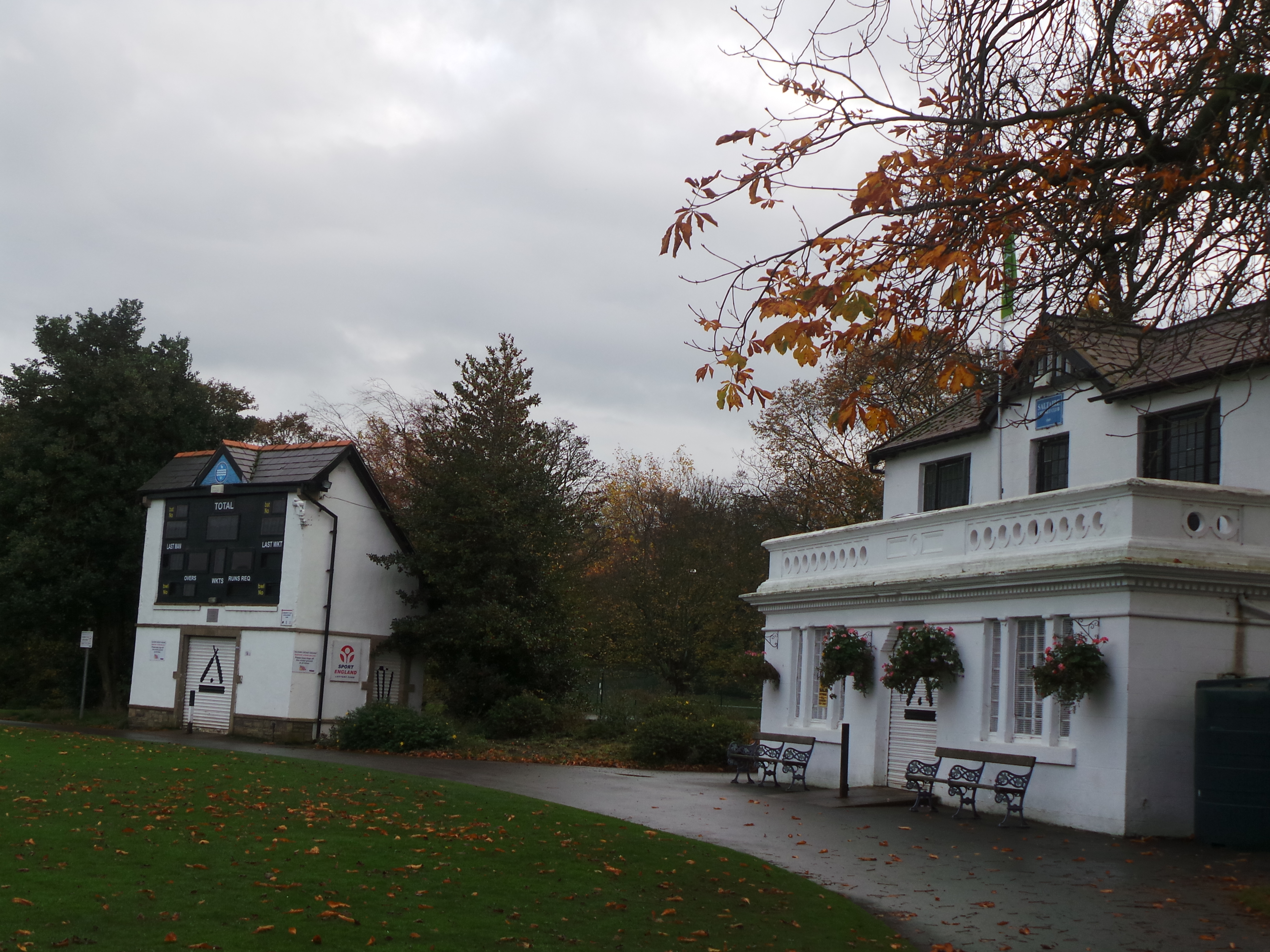
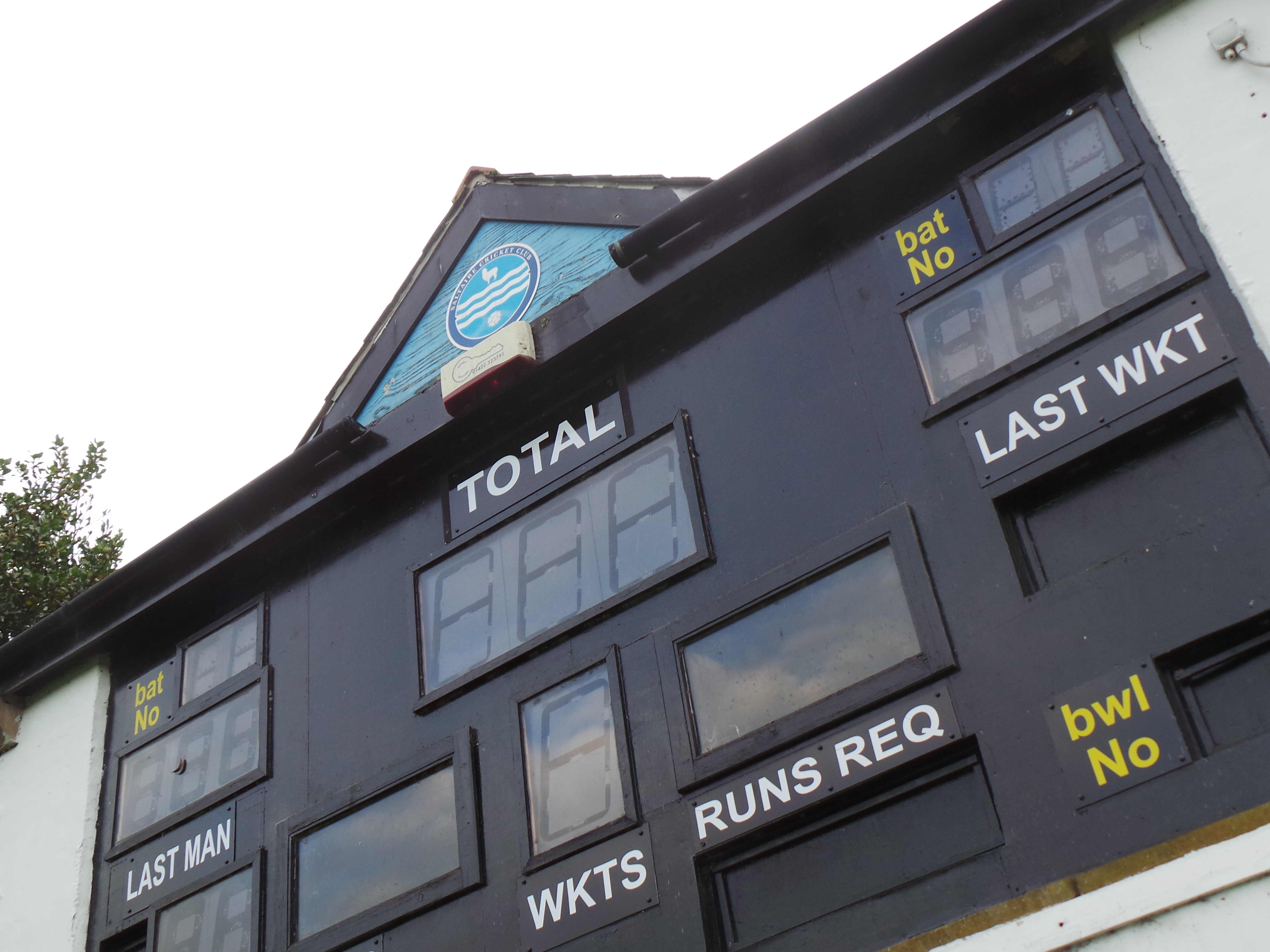
The cricket pitch with its pavilion must have been a real luxury. This is still used today and has been modernised through the addition of an electronic score-board. It was so good to see the thoughts and works of Titus salt still having a meaning in today’s world. The park he created was busy with families and groups of youngsters enjoying the freedom it gives.

Salt was years ahead of his time. His philanthropy pre-empted the things we take for granted today, those things that make our lives more pleasant, such as the health service and pensions. It was a privilege to walk through his model village, to see what he achieved and imagine what it meant to his workers.

2014 10 30_6779 2014 10 30_6780 2014 10 30_6777

Categories
architecture buildings model villages townscapes Yorkshire

Saltaire – a unique village – Part One

Saltaire is a place with a special atmosphere and a special place in British history, but also a place which very few people have ever heard of. We visited last year but then because of time and terribly wet weather we did not have time to look around the village itself. At that time we spent the day exploring the Salts gallery, where you can see so many pieces of art work from David Hockney, as well as galleries of furniture and beautiful craftwork.

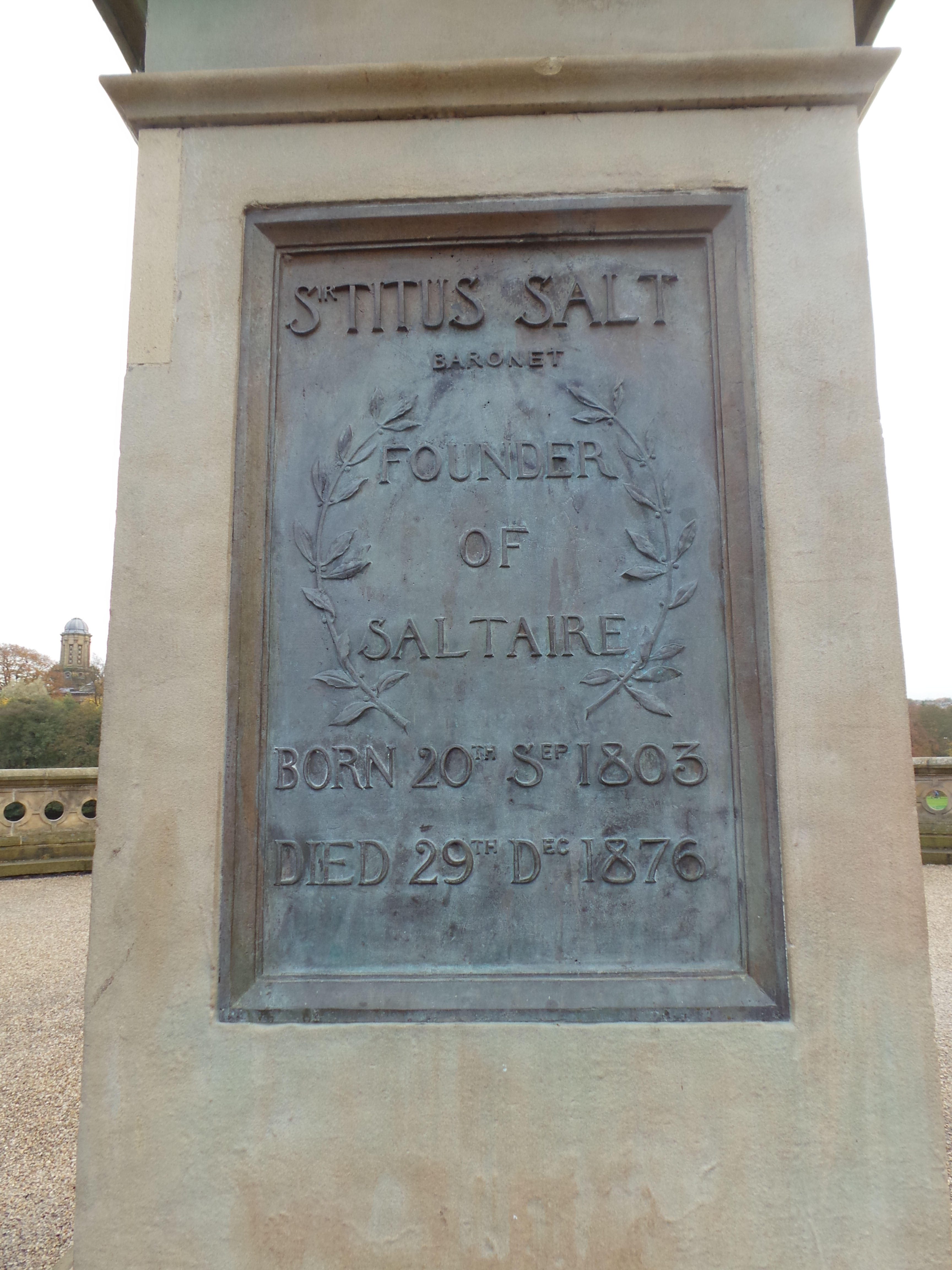
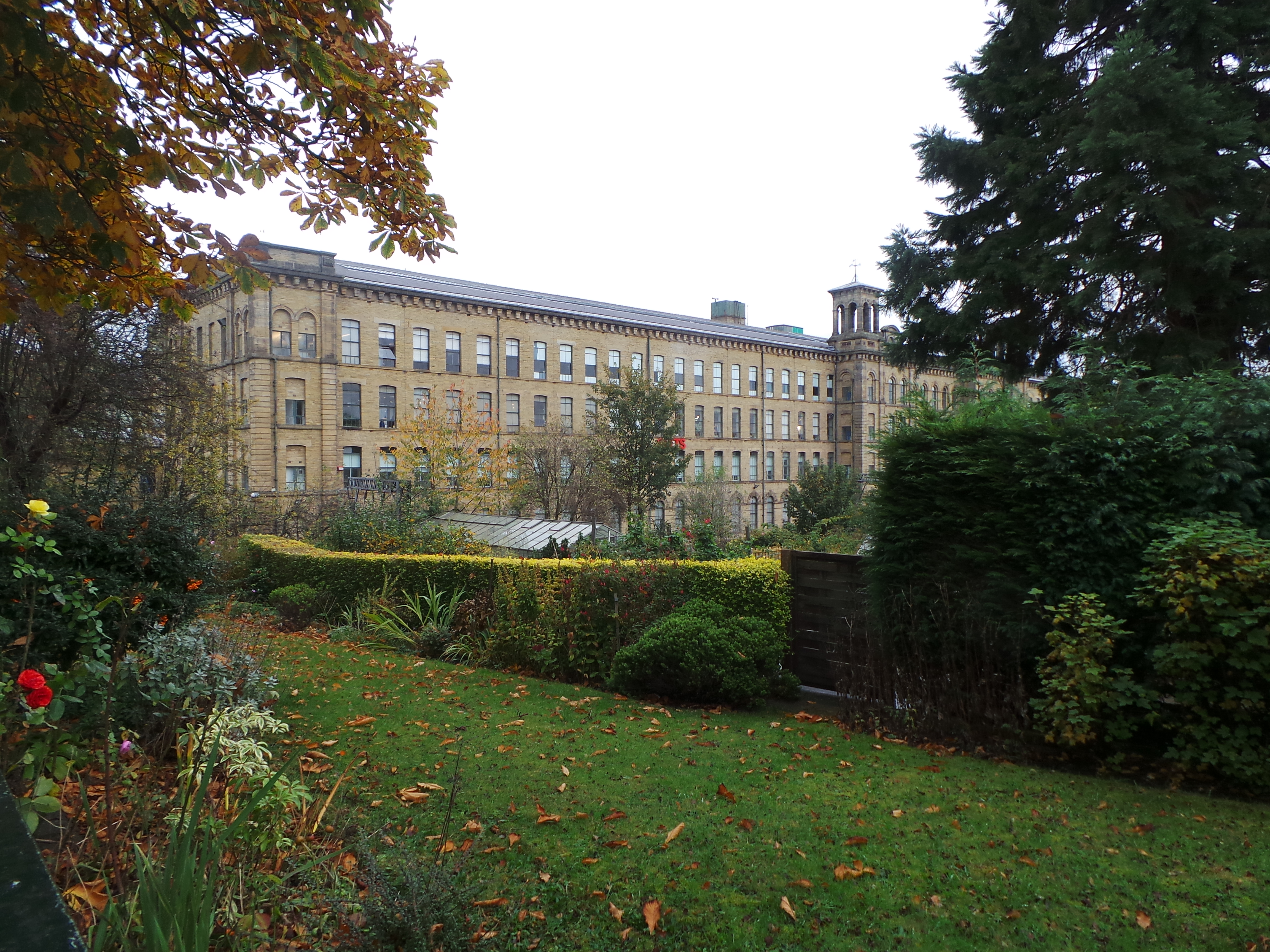
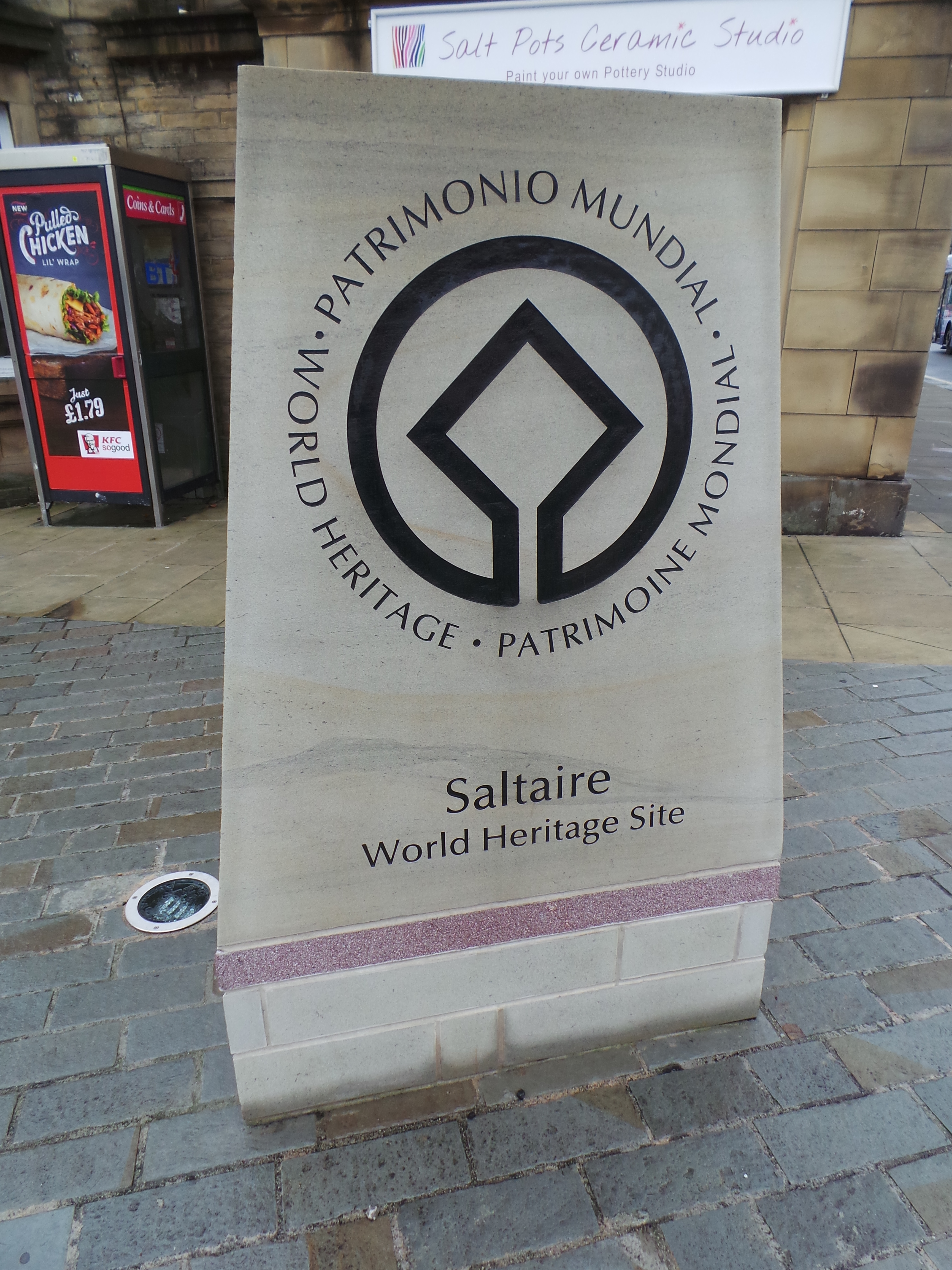
Saltaire is a World Heritage Site and is recognised for the part it played in the development of the society we live in today. When you visit it is hard to believe it was the creation of one man, Titus Salt, a true visionary. He began as a successful business man, indeed one of England’s most eminent Victorian industrialists. He began by building a mill where he aimed to produce the finest wool fabrics utilising the most efficient methods available at the time.

2014 10 30_6765 2014 10 30_67622014 10 30_6732

What made Salt stand “head and shoulders” above his contemporaries was his desire to provide his workers with the healthiest working conditions possible. coupled with this was his ambition to provide his workers and their families with social and community benefits virtually unknown during this period of British social history. We discovered how he achieved this as we explored the “model village” of Saltaire.

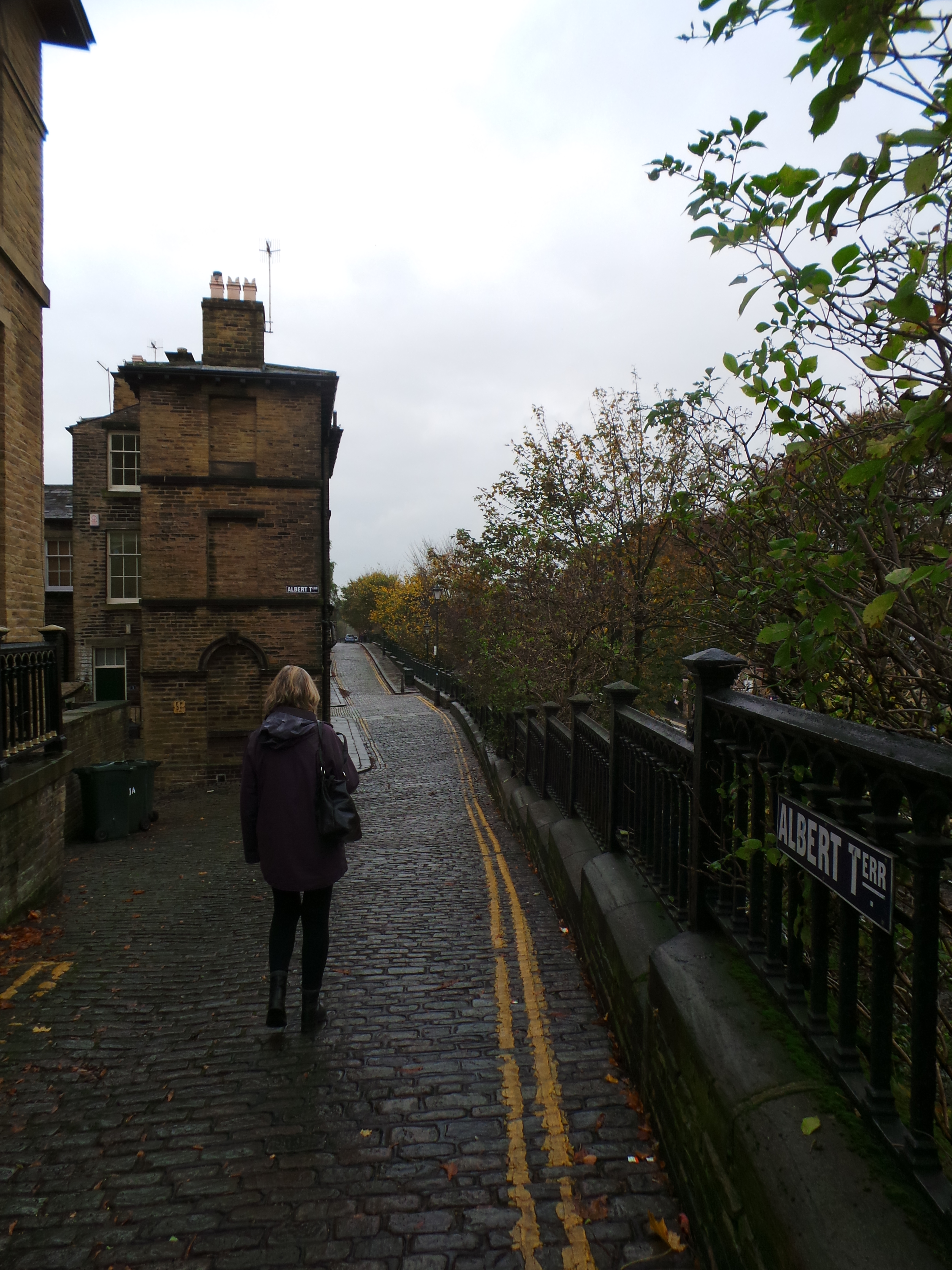
It was great to arrive again at Saltaire with the weather slightly better than on our last visit. Dull, overcast but not raining! So follow in our footsteps along the cobbled streets as Jude the Undergardener negotiates the town trail leaflet which took us down into Albert Terrace.

2014 10 30_6708 2014 10 30_6707

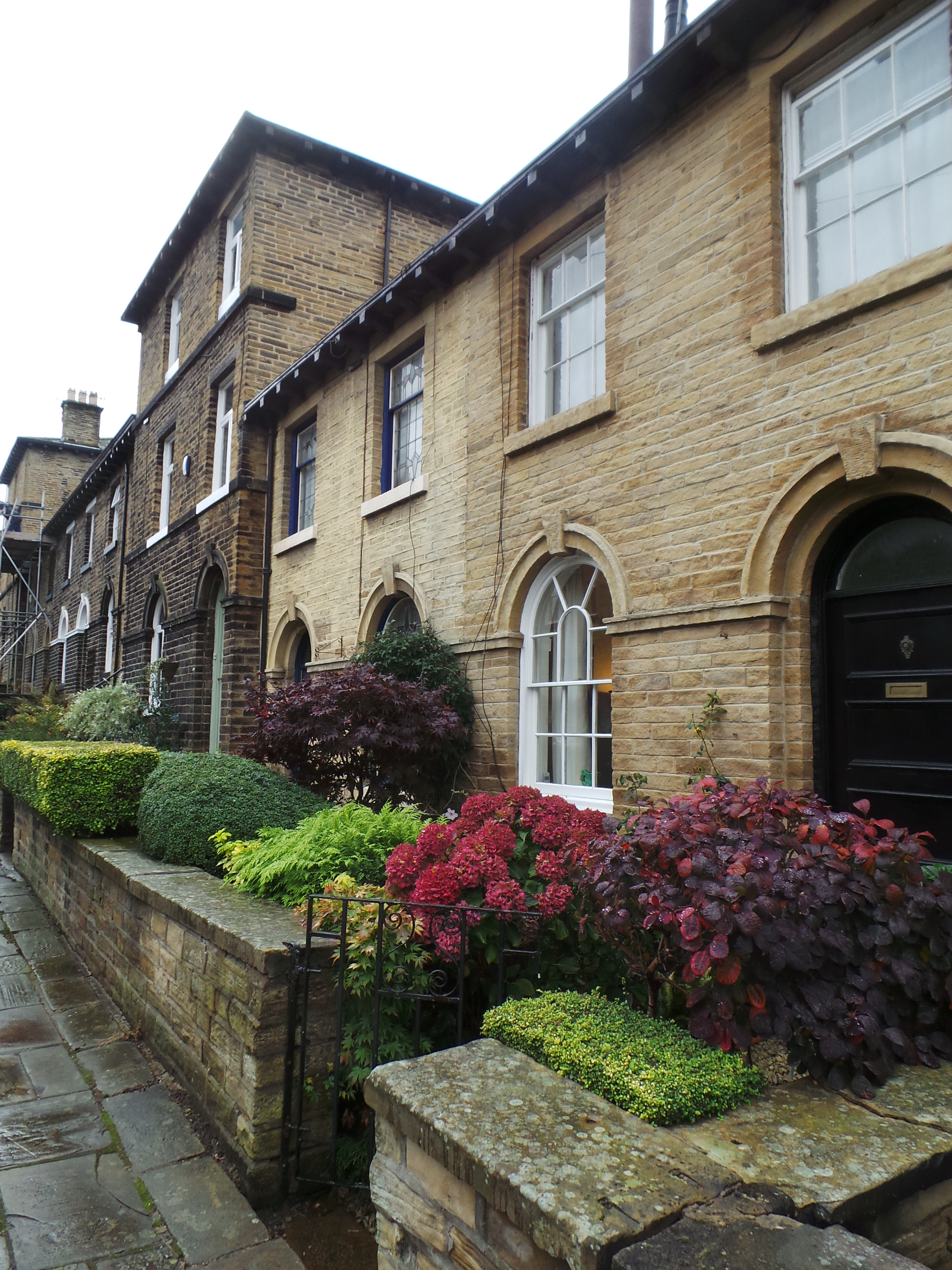
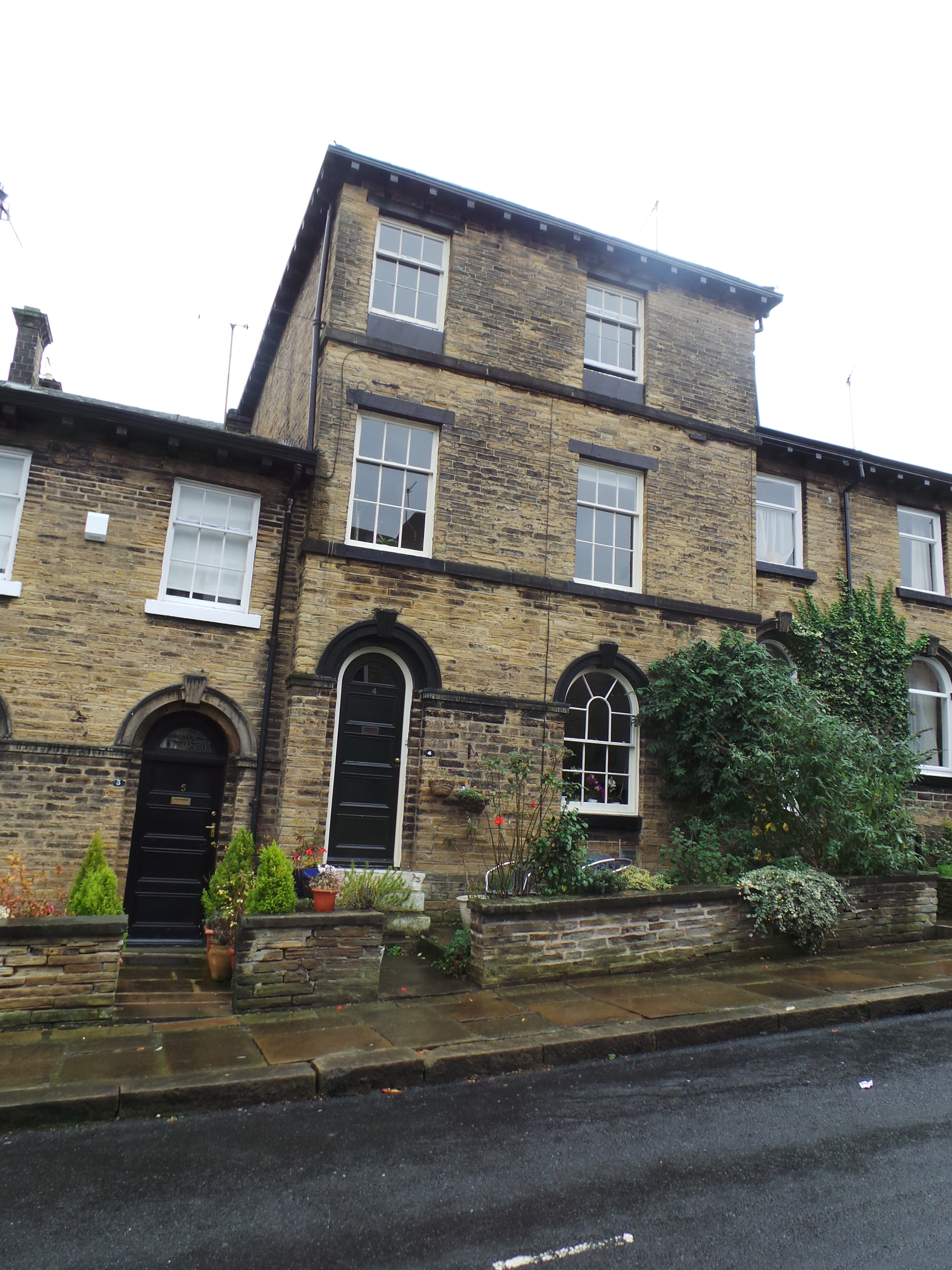
We turned into William Henry Street where we noticed a variety of styles and sizes of house, from the smallest terraces with no front garden to three story town houses and larger semi-detached homes with gardens. This reflected the status and responsibilities of the tenant. Every street in Saltaire is wide enough to ensure natural light for every home. The three story buildings comprised shared lodgings for single workers whereas those adjoining with a small front garden were homes to the factory foremen.

2014 10 30_6710 2014 10 30_6711 2014 10 30_6712

In Caroline Street the front door of every house opens directly onto the street showing that these tenants were the lowliest workers. The back lanes between the rear yards of these terraces, which once would have been home to the washing lines and ash cans have become the habitat of the wheelie-bin.

2014 10 30_6713 2014 10 30_6719

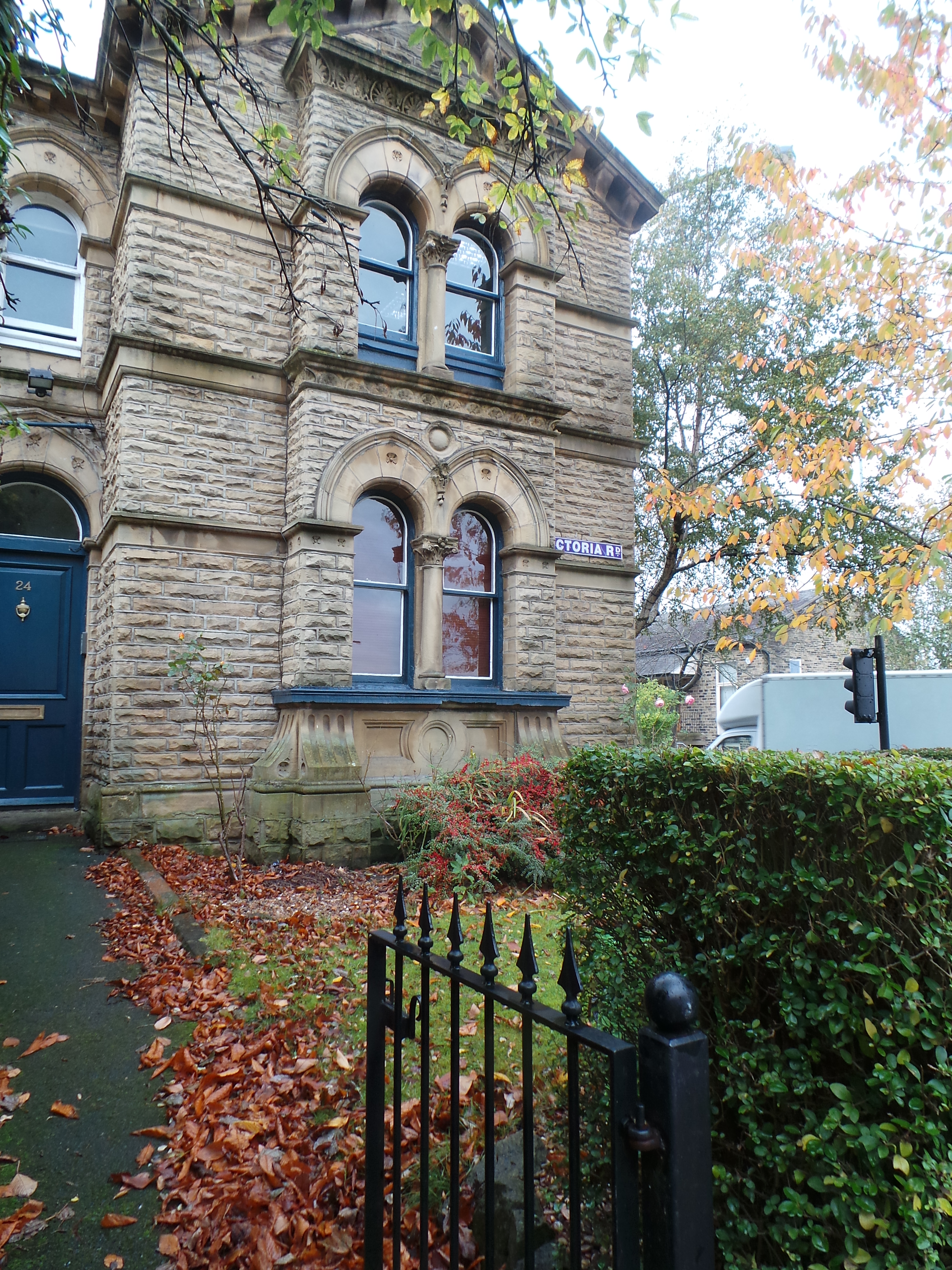
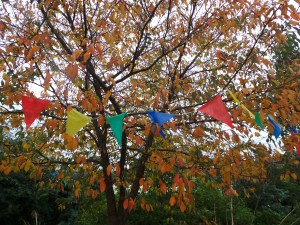
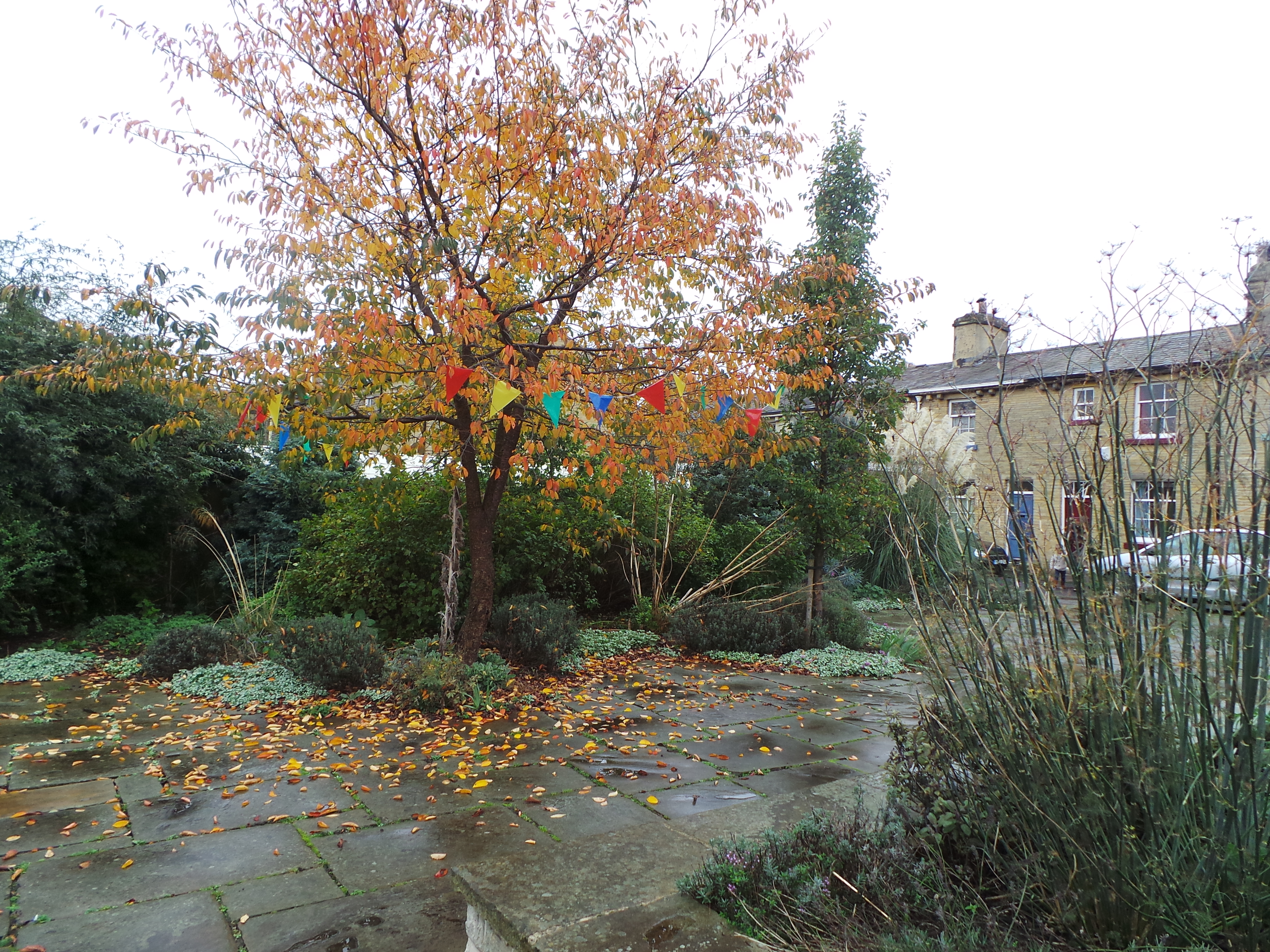
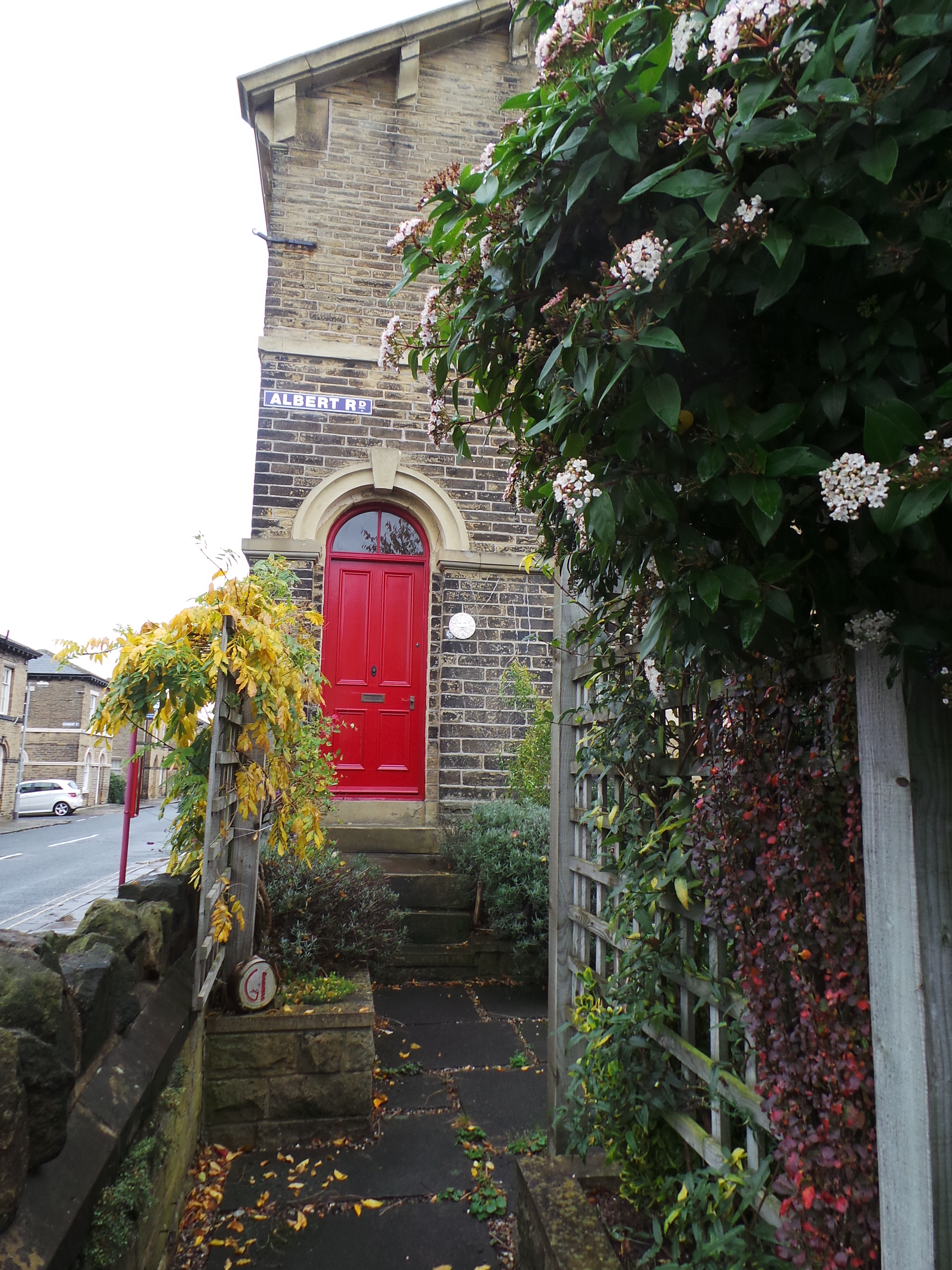
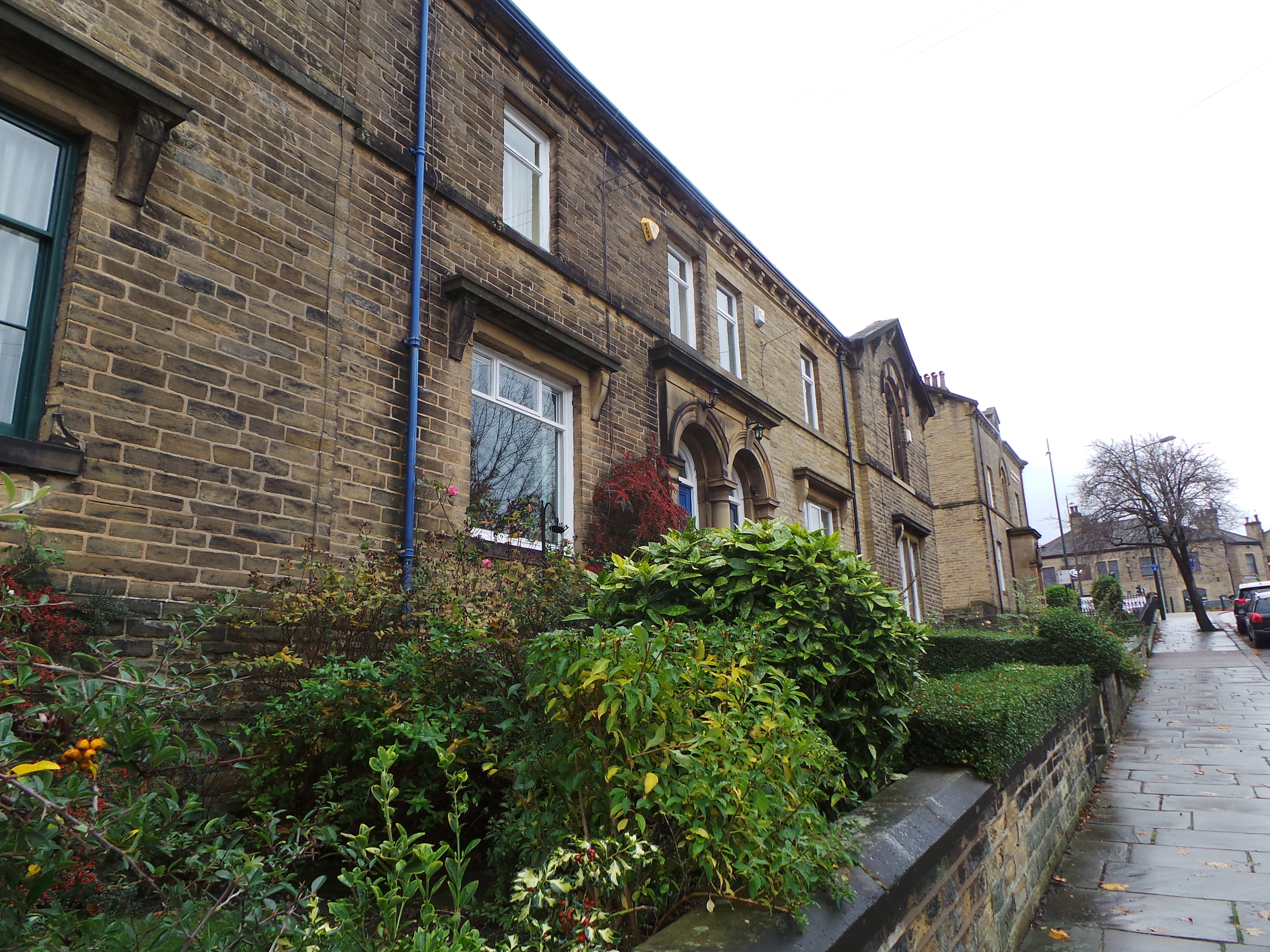
When we turned the corner into Albert Road we noticed a distinct change. The houses here were larger, grander residences and all semi-detached. These were home to company executives, teachers and the church minister. These would have been built  on the outer boundary to ensure their tenants had a view of open countryside as befitting their status at that time. Open spaces throughout were left for small squares and gardens for communal use. The bunting hanging in the trees shows that this still holds true today.
2014 10 30_6717 2014 10 30_6716

All homes whatever the status of the tenant had better conditions than anywhere else in the country at that period. Every house had running water, gas lights, a yard and an outside toilet. There must have been a great sense of pride here. The alternative conditions which most of their contemporaries endured would have been a different world. Salt had moved his factories and his workforce out of Bradford which was then the fastest growing town in the UK. The mill workers of Northern mill towns such as Bradford would have suffered terrible, dirty, dangerous working conditions and slums as homes. Working conditions would still have been difficult and the hours long but Salt was a philanthropic employer.
2014 10 30_6722 2014 10 30_6726

2014 10 30_6715 2014 10 30_67232014 10 30_6727 2014 10 30_6730 2014 10 30_6731

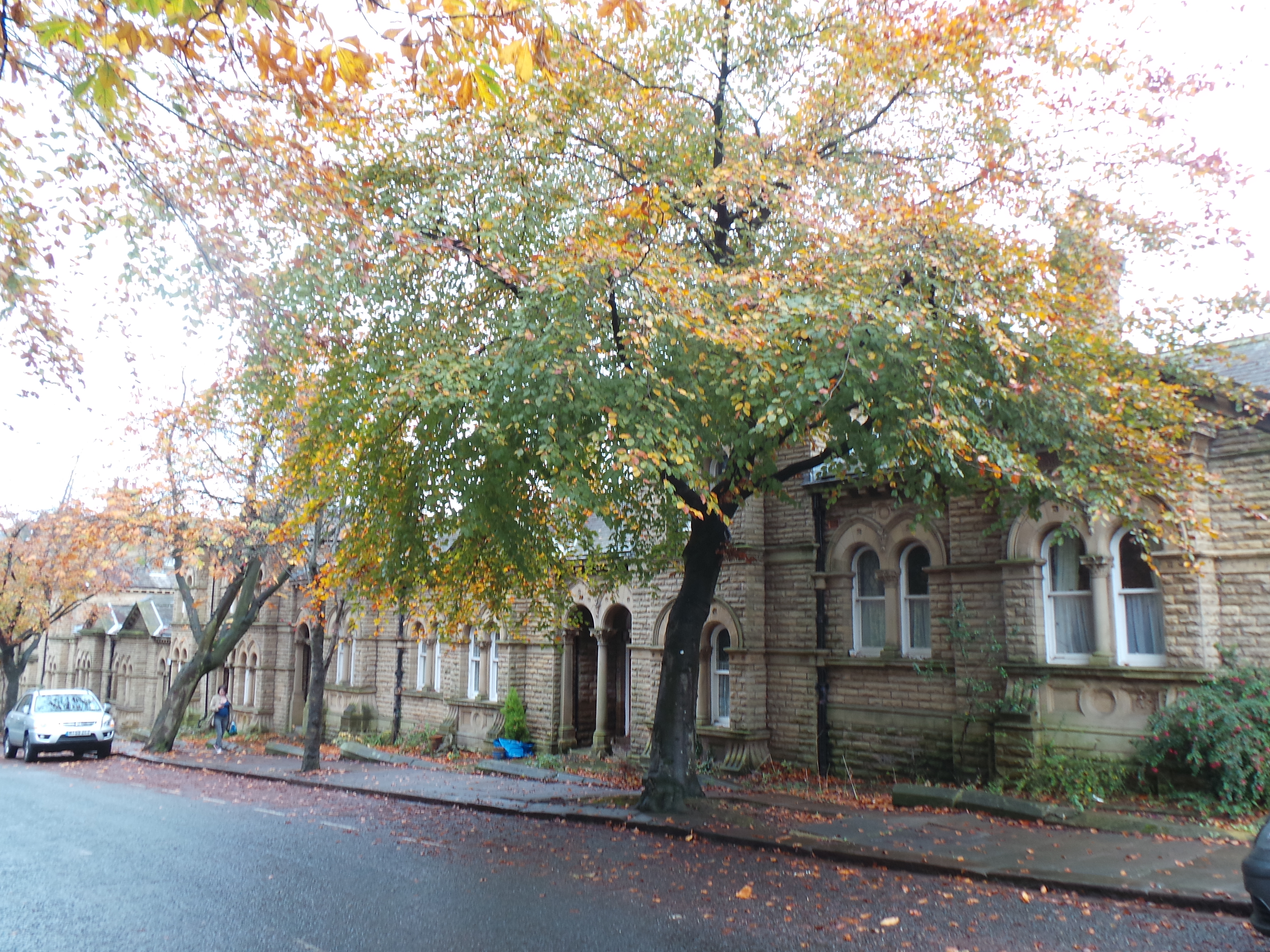
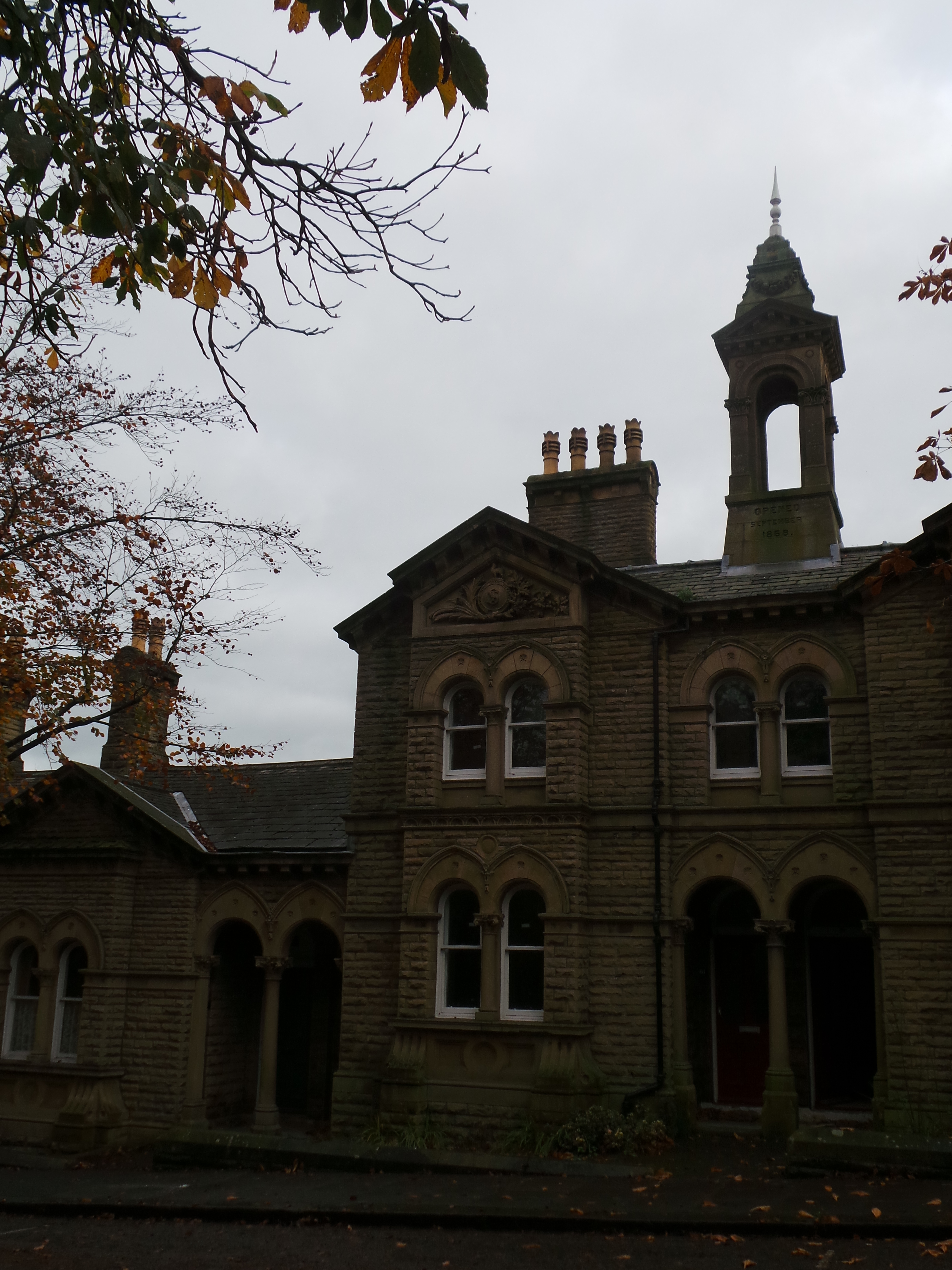
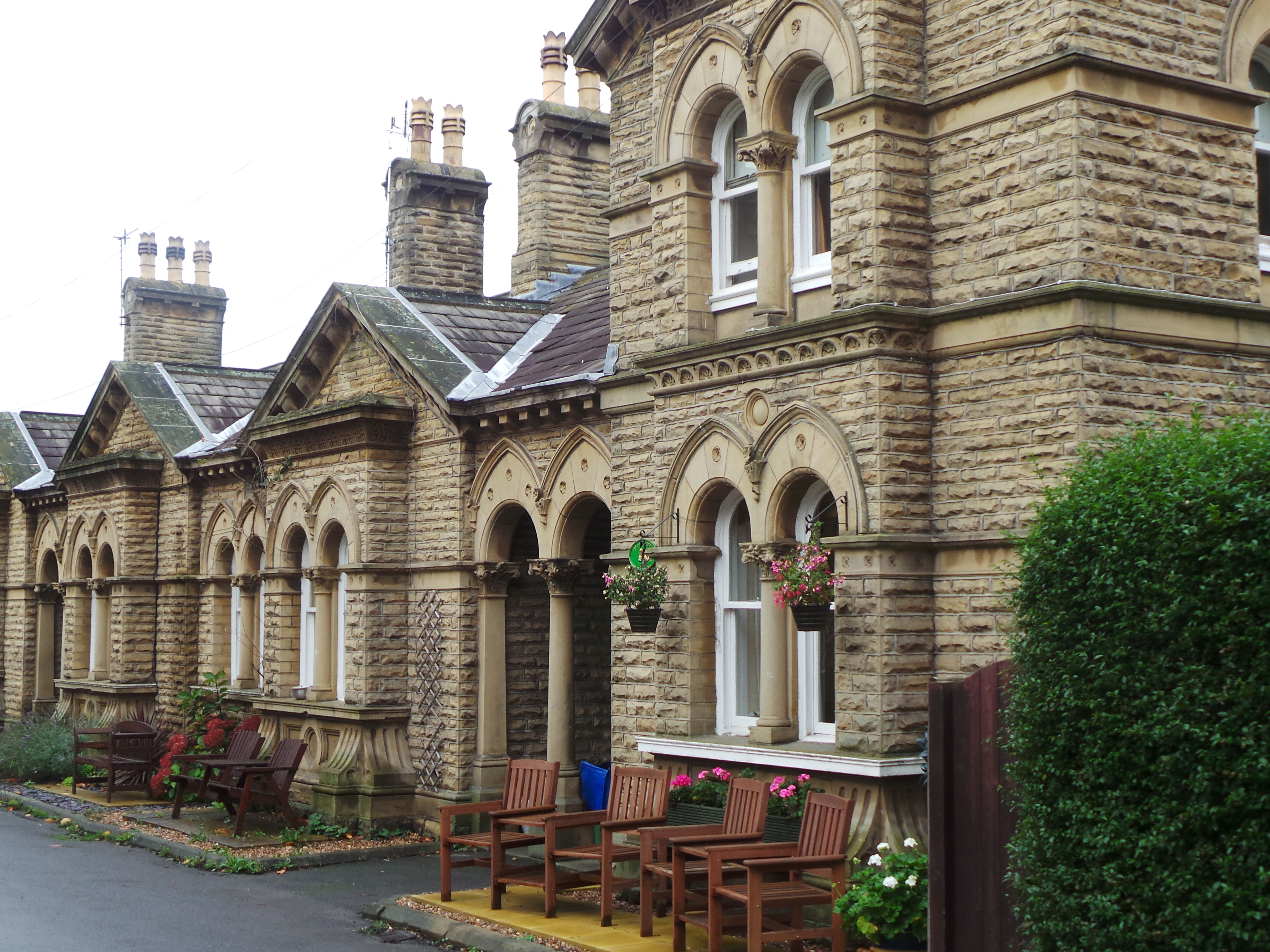
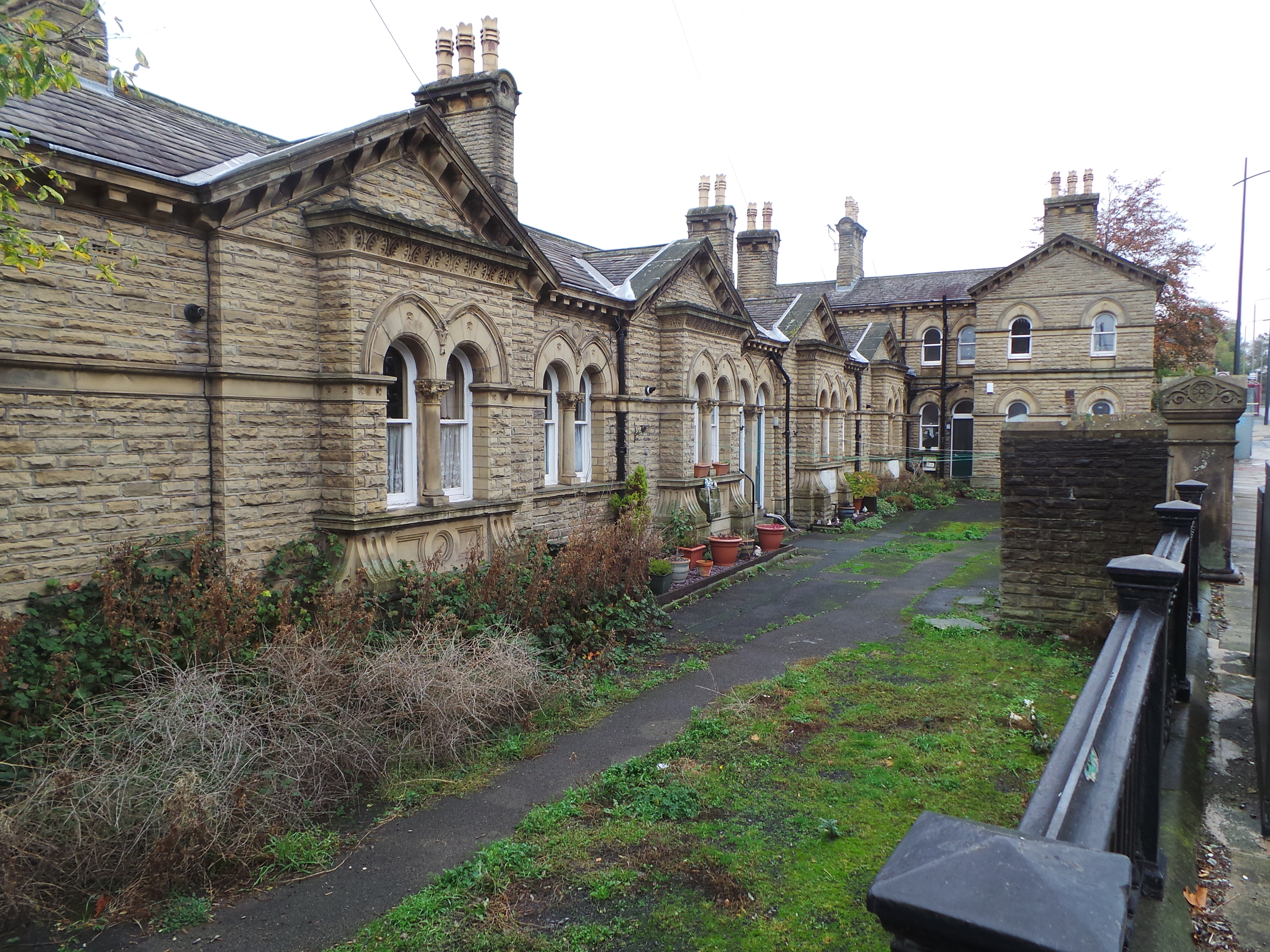
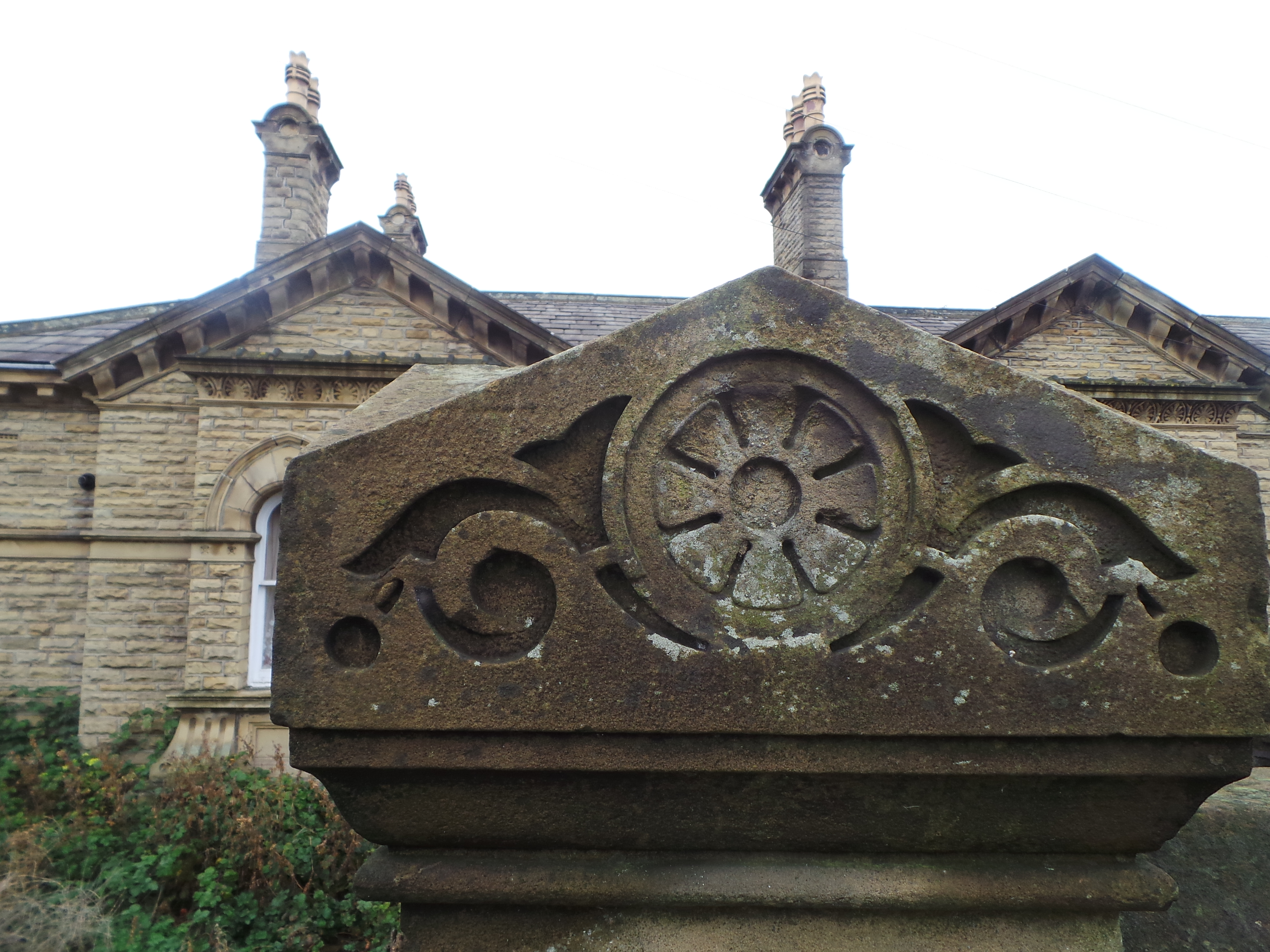
One of Titus Salt’s most thoughtful and forward thinking ideas was the provision of almhouses, which we found situated around Alexandra Square. These were homes for elderly and infirm persons “of good moral character”. The inhabitants of the almhouses were also given a pension, all this 40 years before the first state pension. The buildings themselves were very decorative and overlooked an open area of garden.

2014 10 30_6733 2014 10 30_6734 2014 10 30_6735 2014 10 30_6736

We were by this time well in need of a lunch break so made our way to the small area of shops and cafes in the centre. In part two you will find us in search of the social and community buildings, of which Titus Salt provided many. I leave you with another view of the mill with the allotments in the foreground. Salt ensured that there were green areas between the mill and his workers’ homes. The green spaces around the church served the same purpose.

2014 10 30_6705 2014 10 30_6703


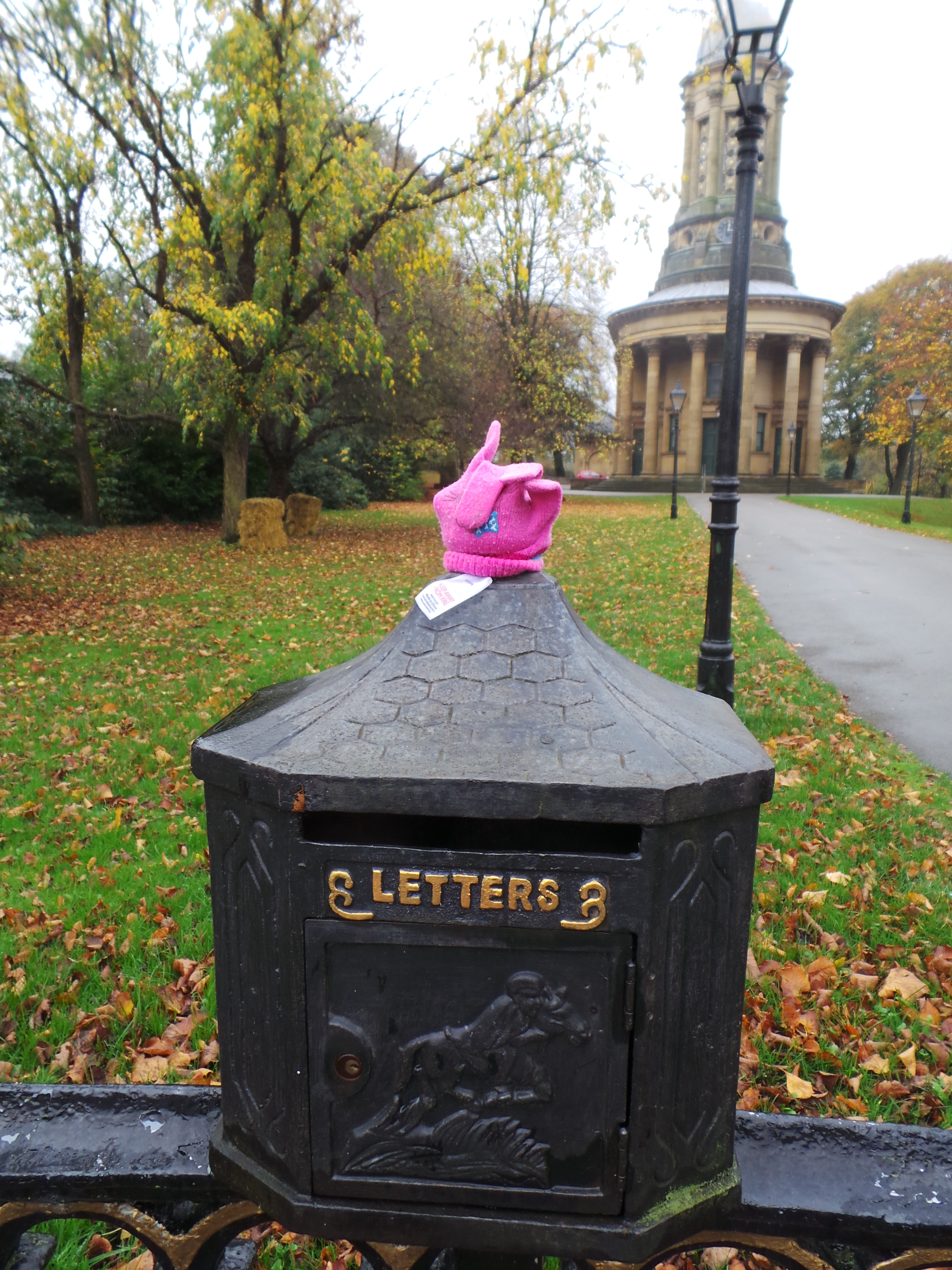
Sadly someone left Saltaire less happy than we were – they went home with only one glove!

2014 10 30_6704


Categories
architecture buildings photography recycling townscapes Yorkshire

Haworth – Village of the Brontes – Part Two

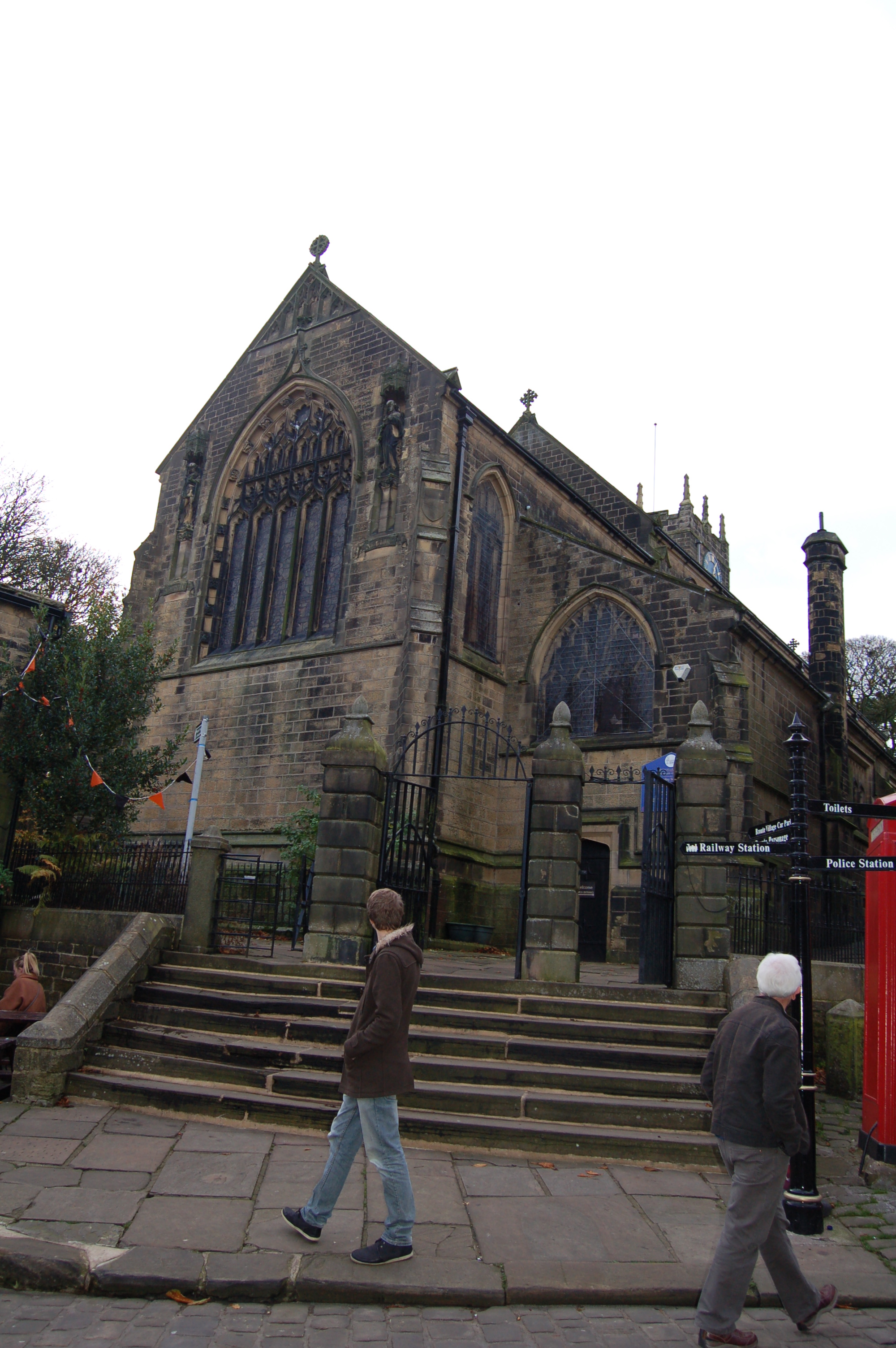
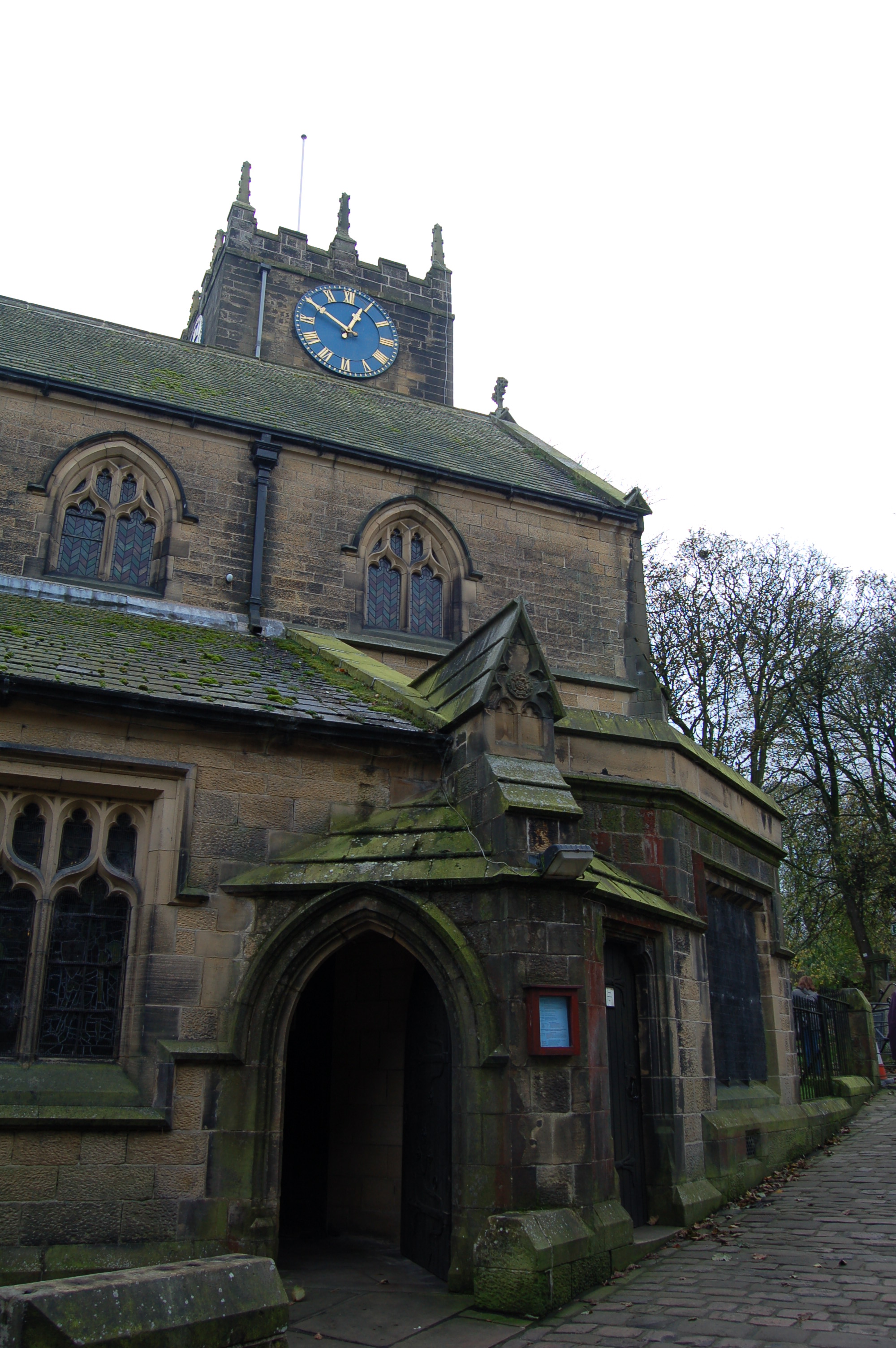
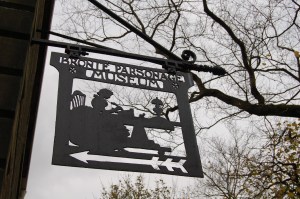
Welcome back to Haworth, the village of the Brontes, where you find us just about to enter the church, in whose parsonage the family of writers lived. As we walked the gently sloping roadway to the church and parsonage we passed another interesting, eccentric shop. Haworth seemed to attract such places. The church itself was a tall, bulky building and very imposing – not an attractive building at all. But visitors are attracted to it for its Bronte links.
2014 11 01_7055 2014 11 01_7062 2014 11 01_70822014 11 01_7120 2014 11 01_7117

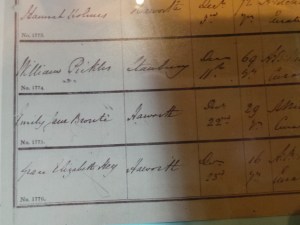
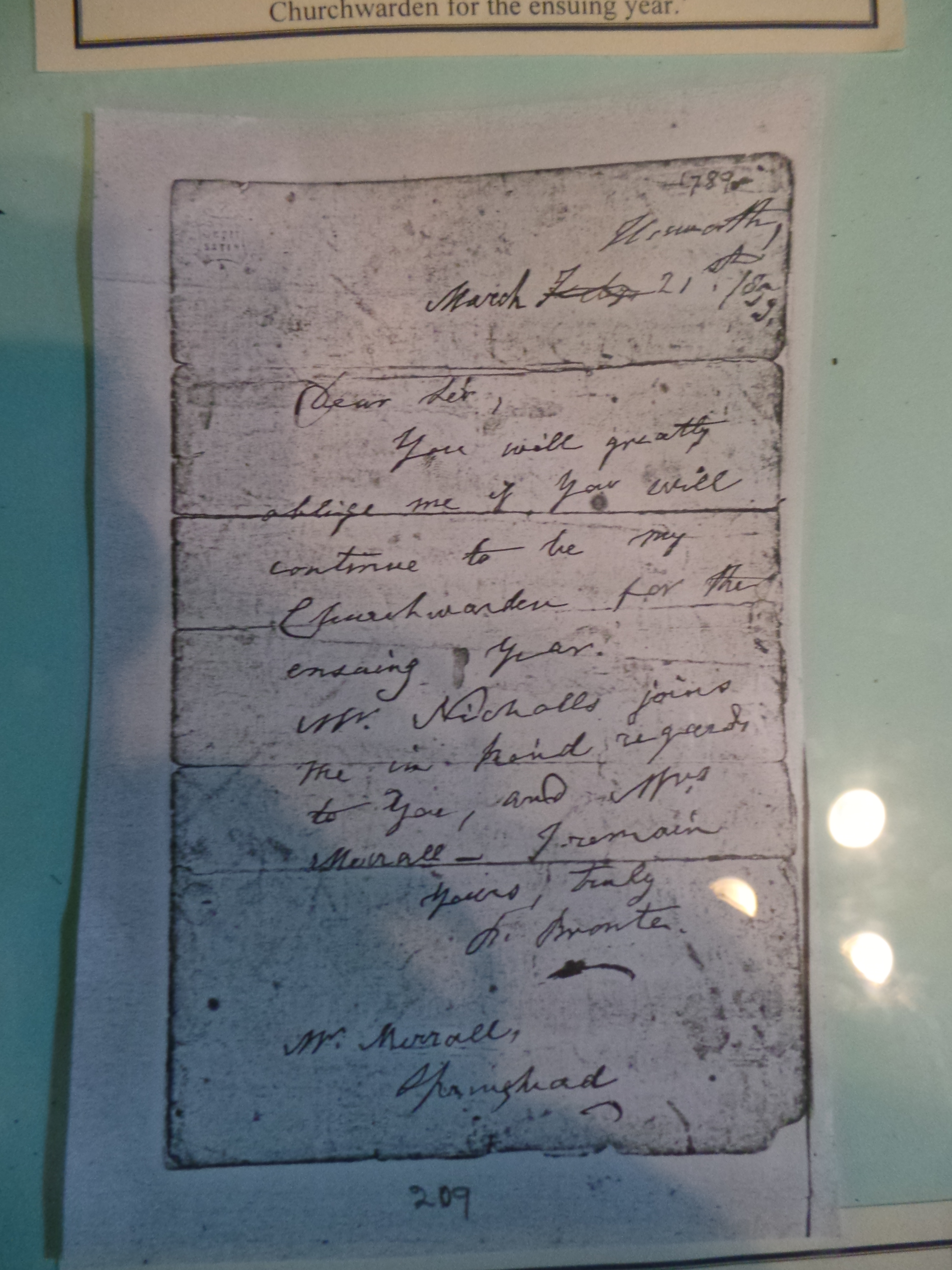
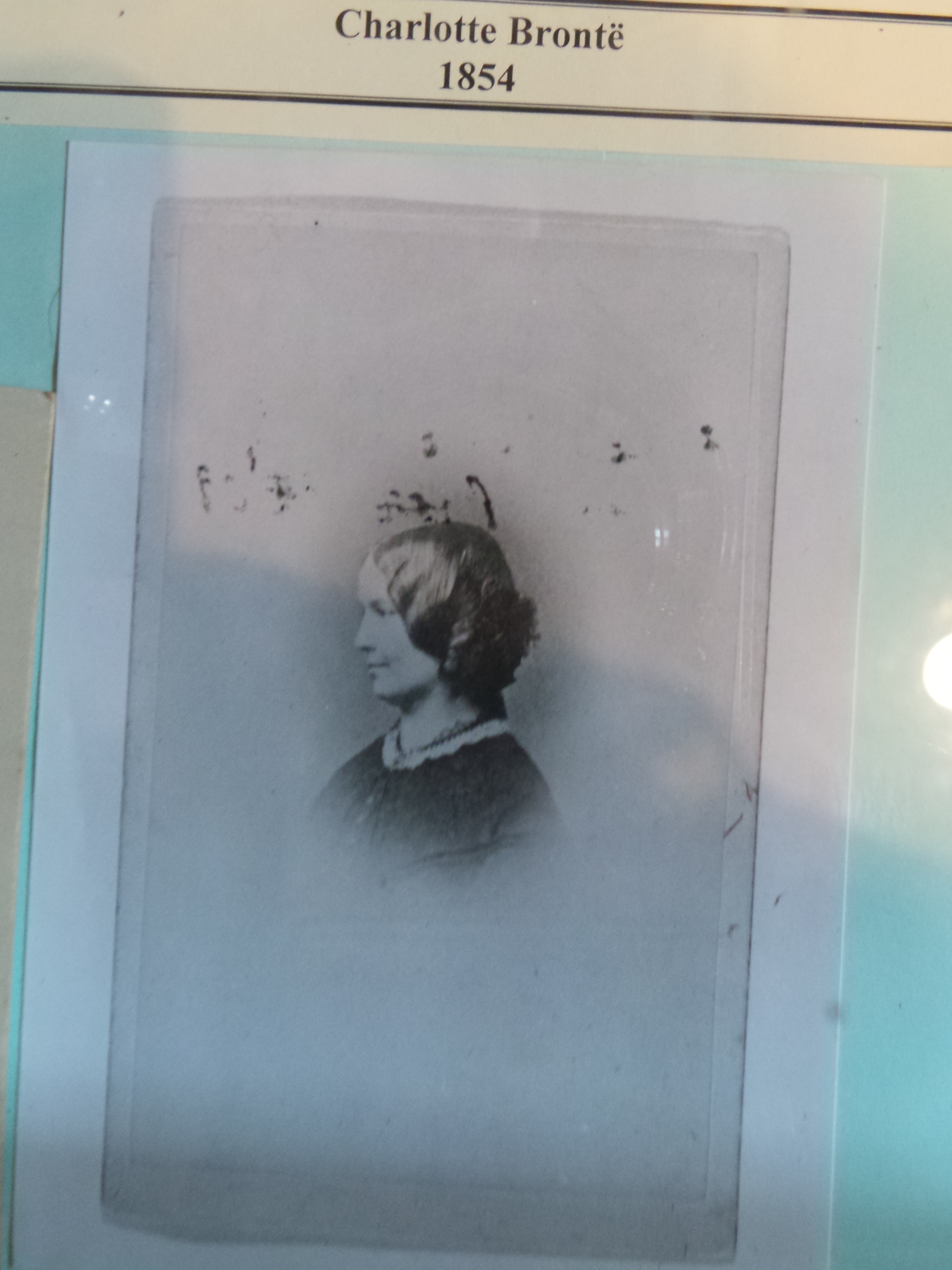
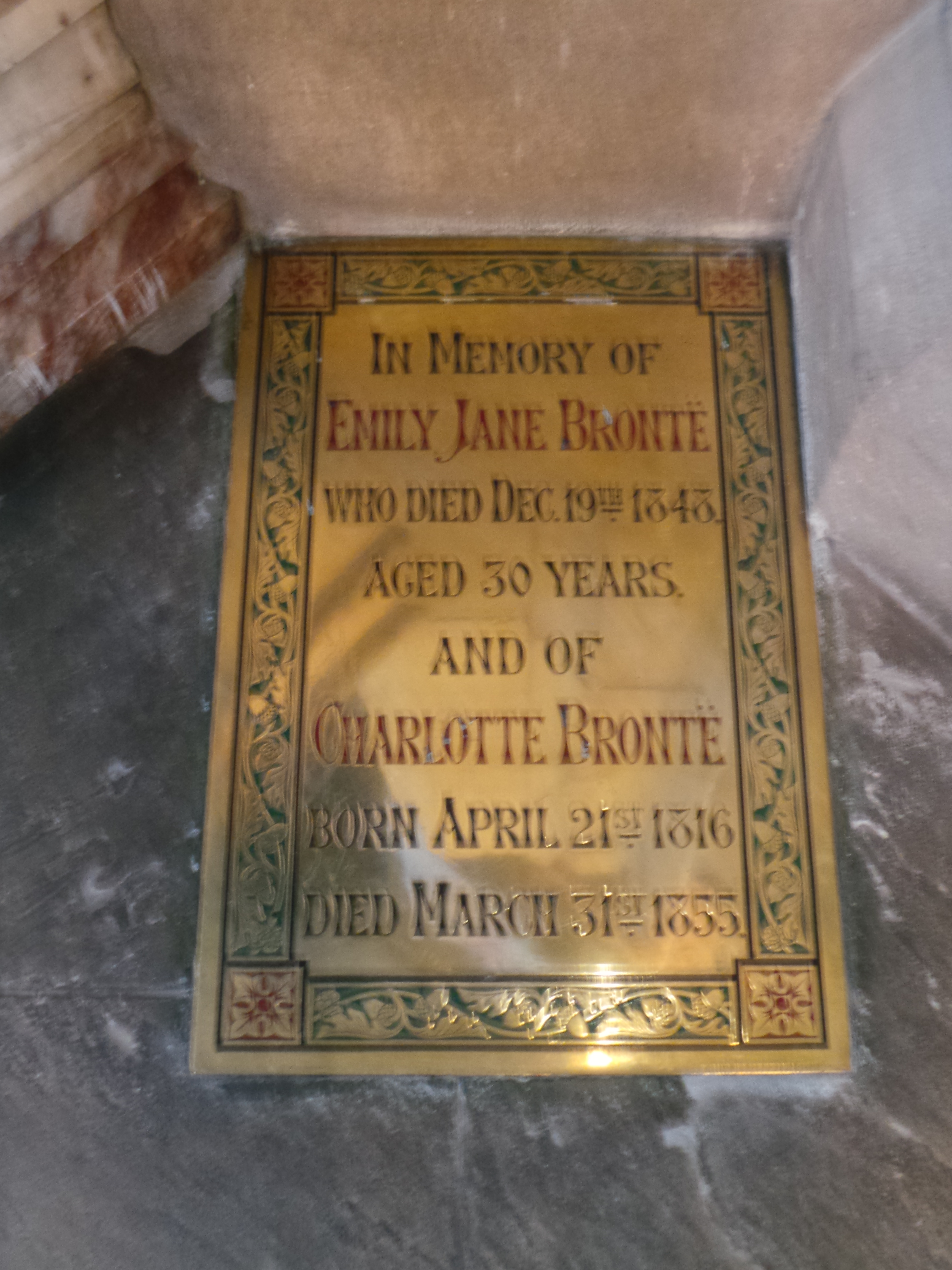
Throughout the church interior we discovered links with the Brontes, which was not always easy in the gloomy interior. Light is always strange inside churches and you feel uncomfortable using a flash. Check out these plaques, old photos and documents.

2014 11 01_7118 2014 11 01_71192014 11 01_7113 2014 11 01_7115

2014 11 01_7111 2014 11 01_7112

2014 11 01_7114 2014 11 01_7116


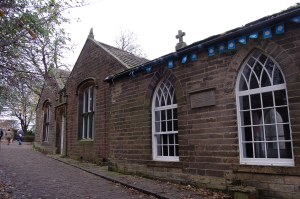
Almost opposite the church was the school in which Charlotte Bronte taught. It was a very short journey to work!

2014 11 01_7063 2014 11 01_7064

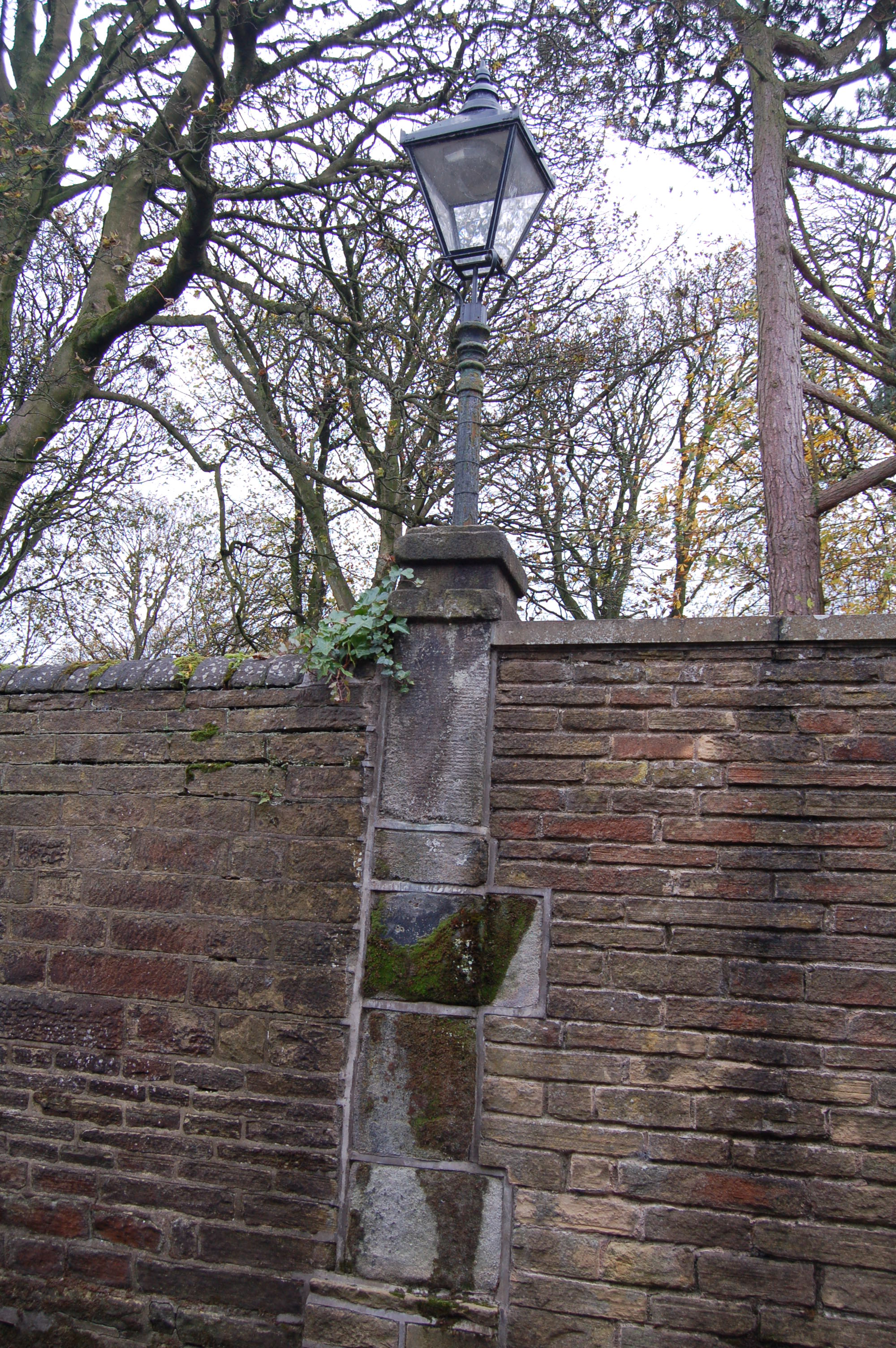
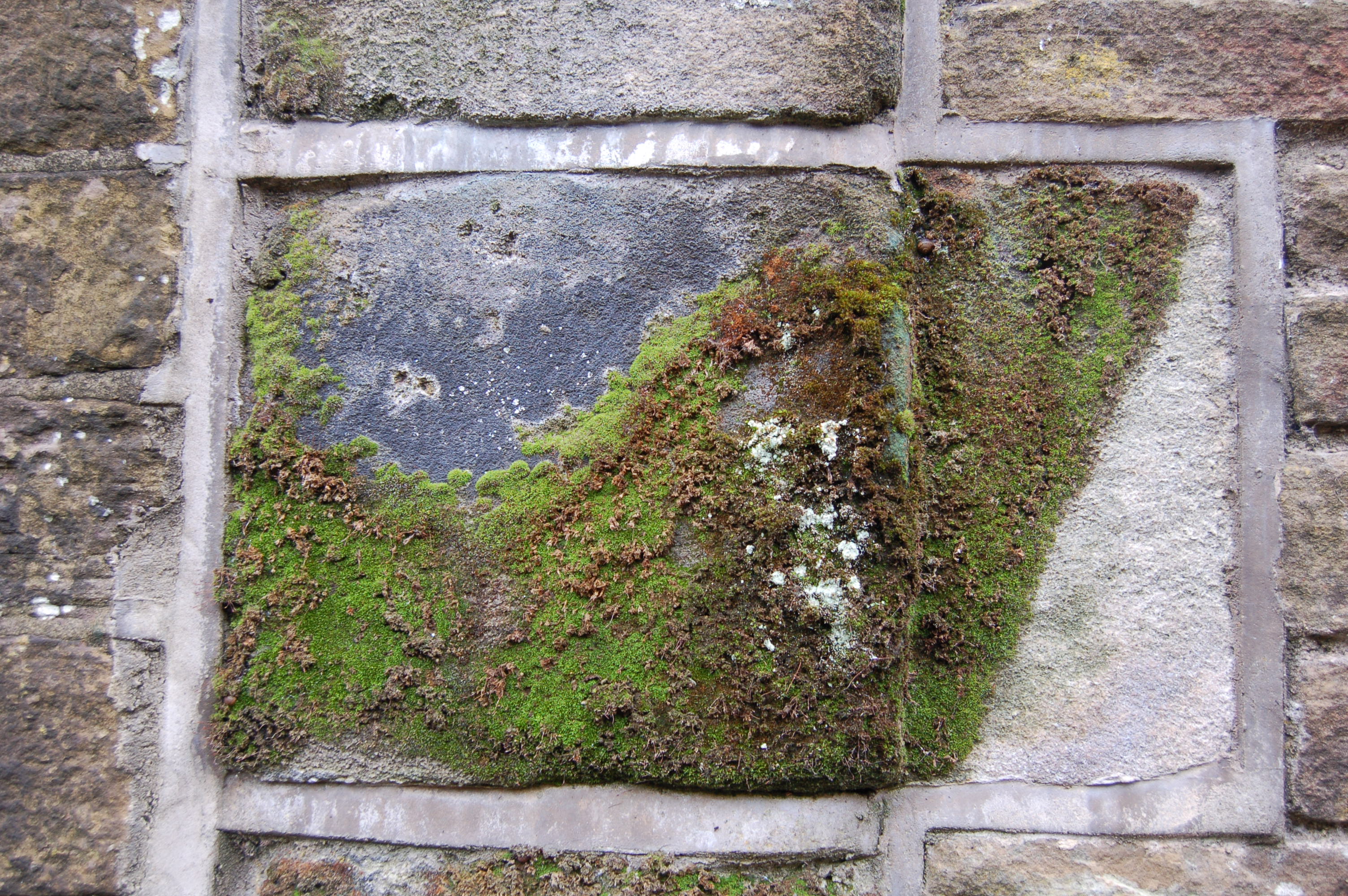
The tall stone wall surrounding the churchyard was covered in mosses. Close up some patches looked like pictures of earth from the air.

2014 11 01_7065 2014 11 01_7066 2014 11 01_7067

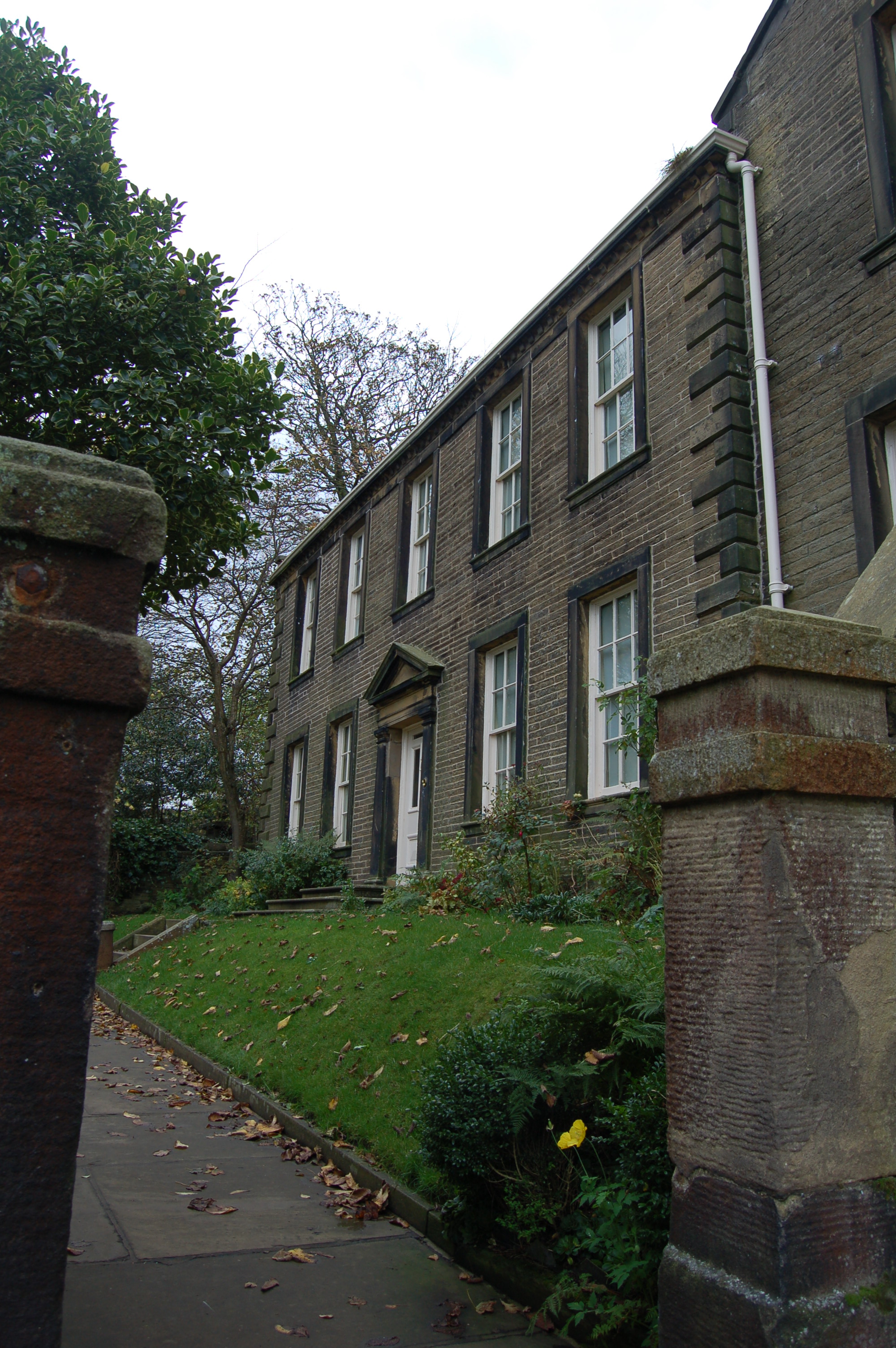
The parsonage frontage looks straight at the church and was built on a high piece of land so looked most imposing.

2014 11 01_7070 2014 11 01_7083

2014 11 01_7068 2014 11 01_7069

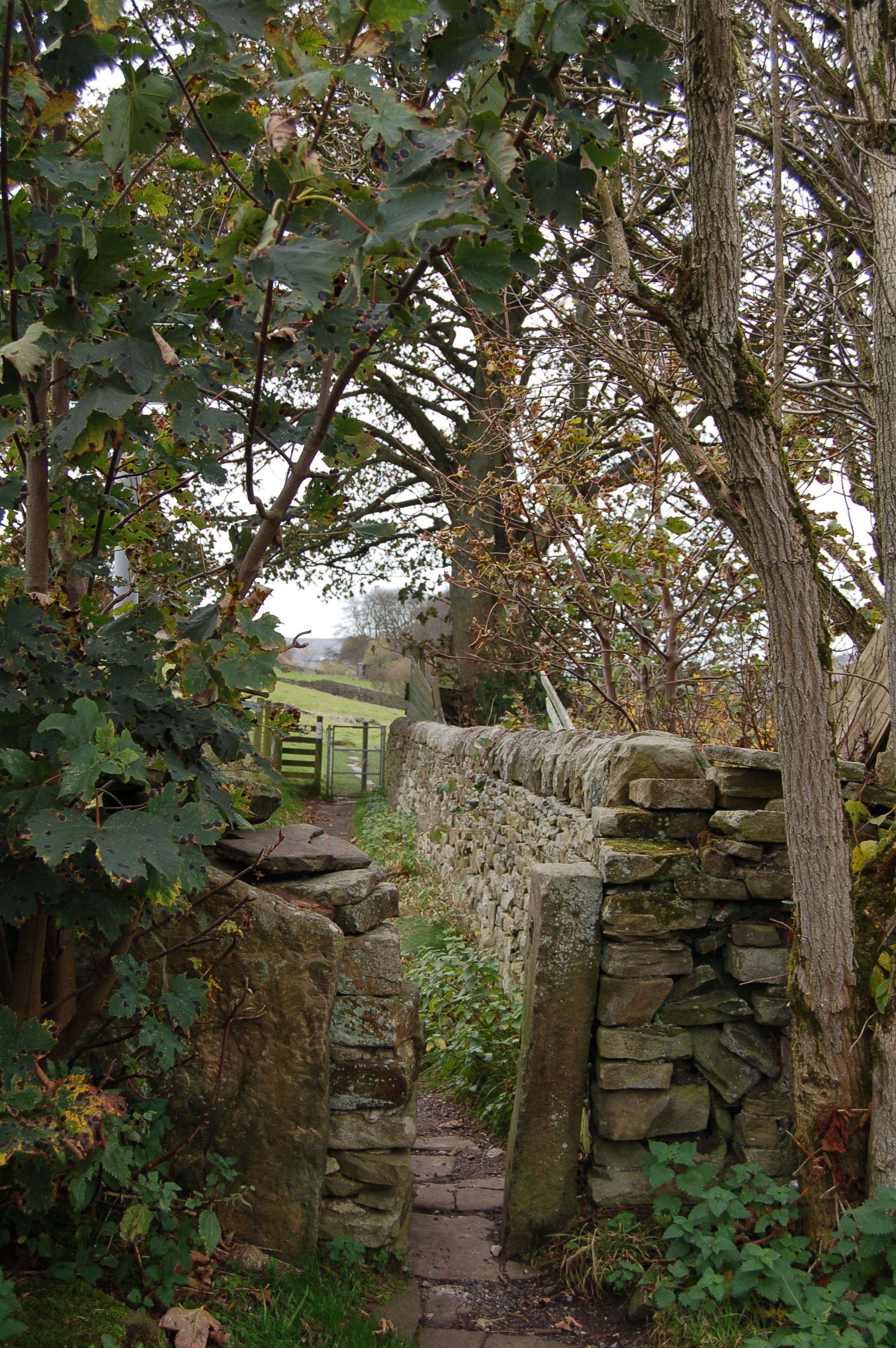
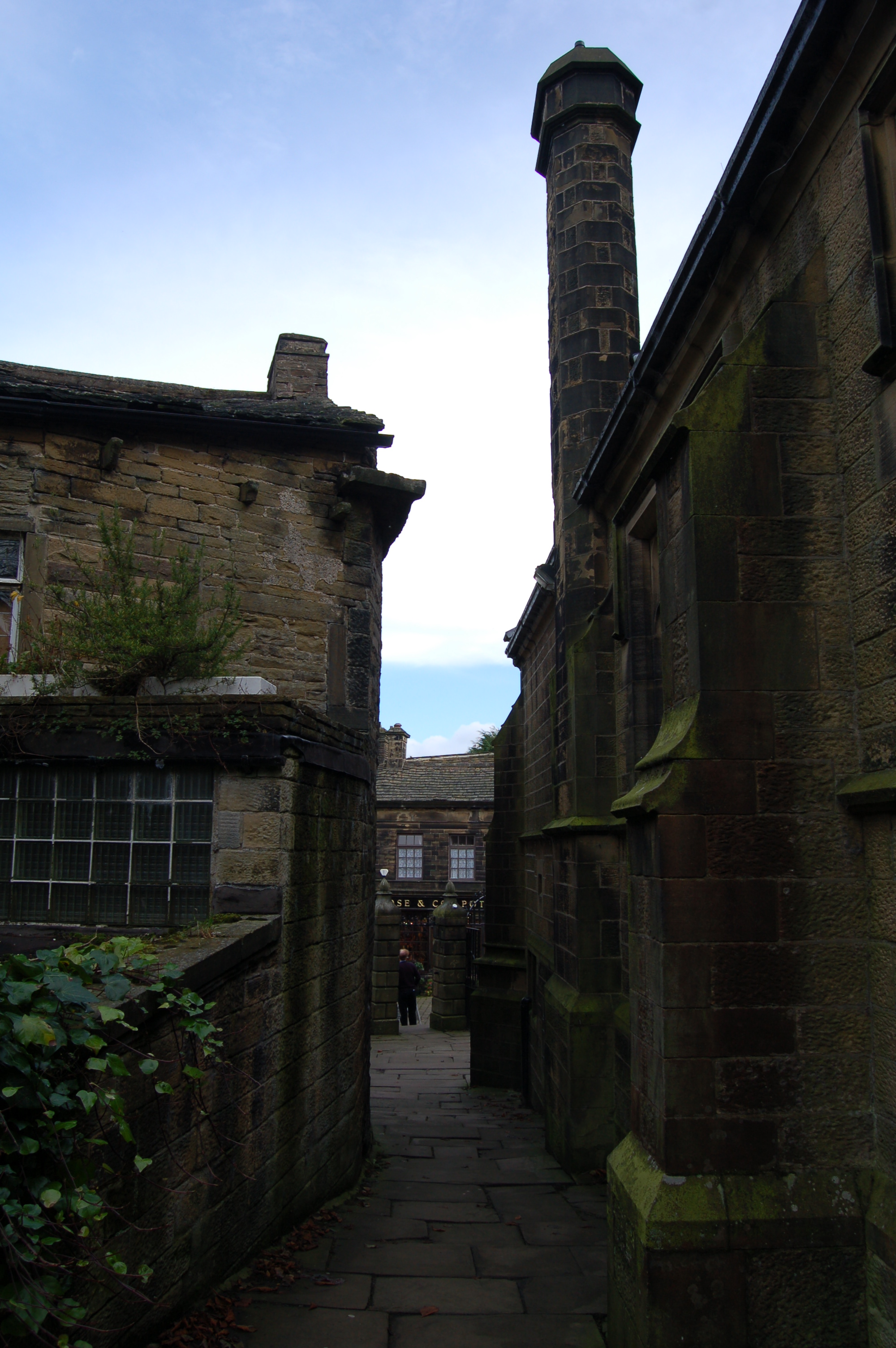
Beyond the Parsonage a narrow footpath took us up to the edge of the moors which influenced so much of the Bronte family writings. Styles and gateways on this track were extremely narrow and walkers had to squeeze through. They were also of strange designs which we had never seen before. The walls alongside the track as it passed the last few village dwellings presented me with the chance to take a few texture shots. In places the path was made of flat stones sunk into the grass.

2014 11 01_7071 2014 11 01_7074 2014 11 01_7077 2014 11 01_7078  2014 11 01_7080 2014 11 01_7081

2014 11 01_7079

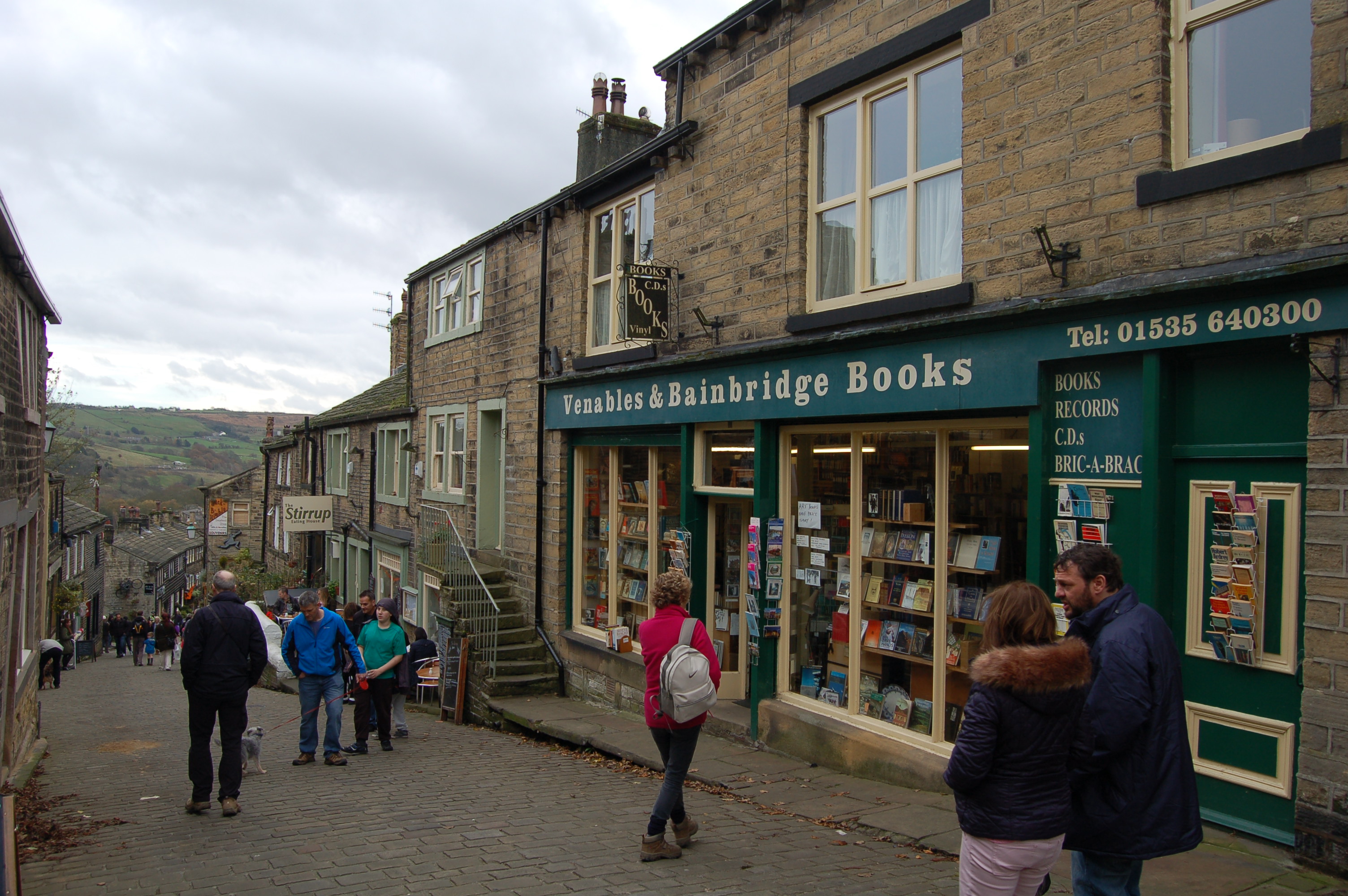
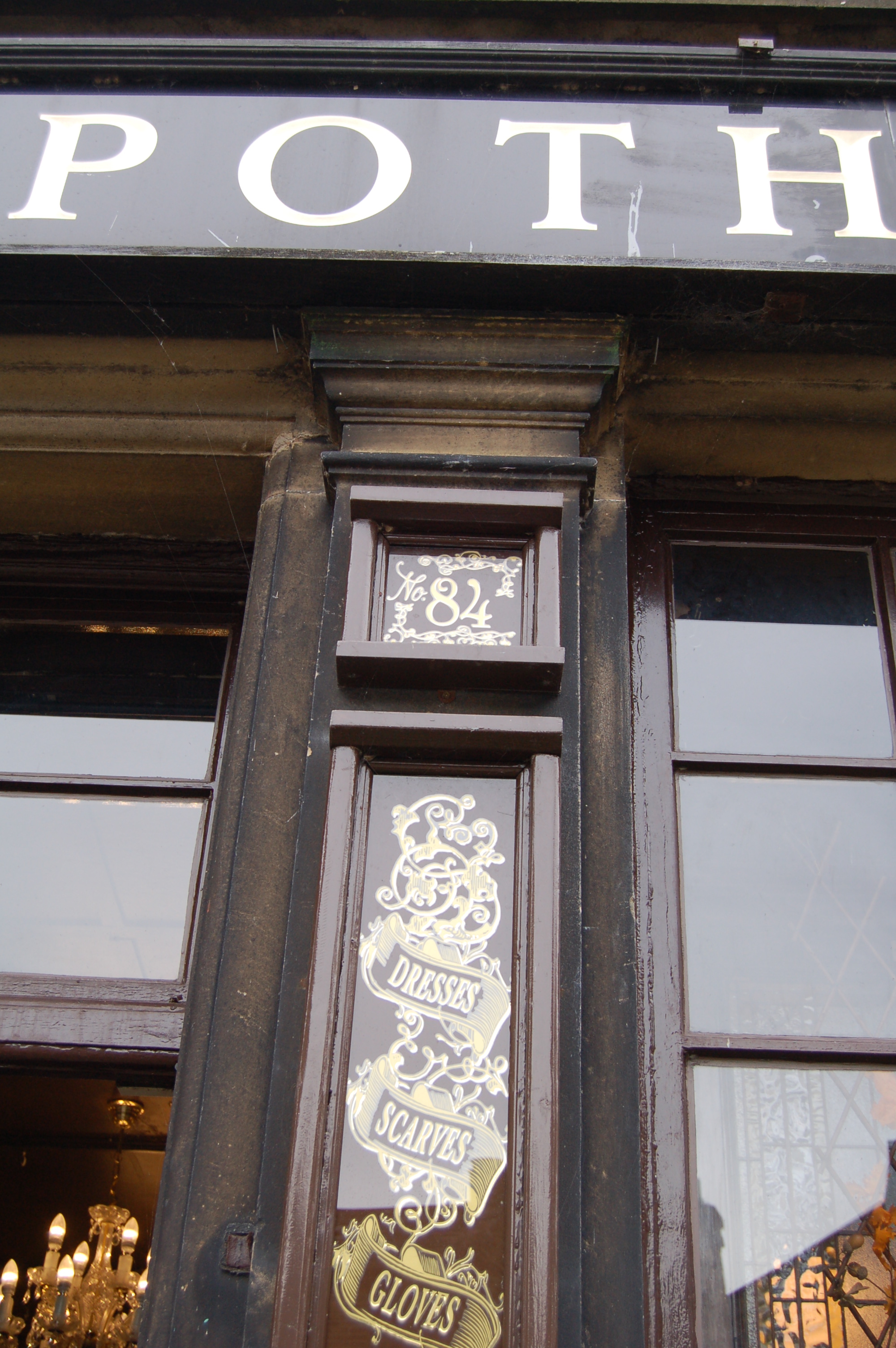
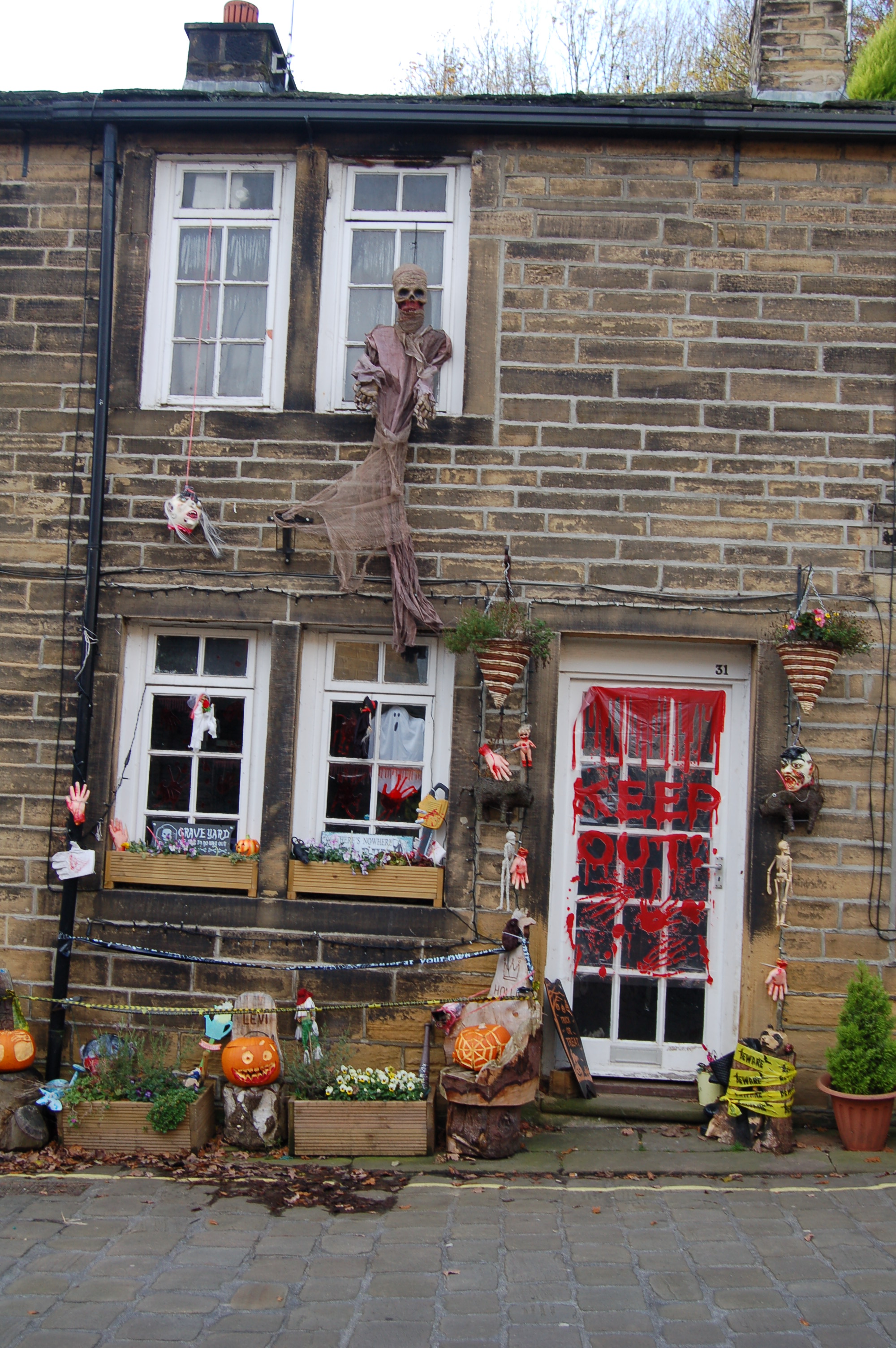
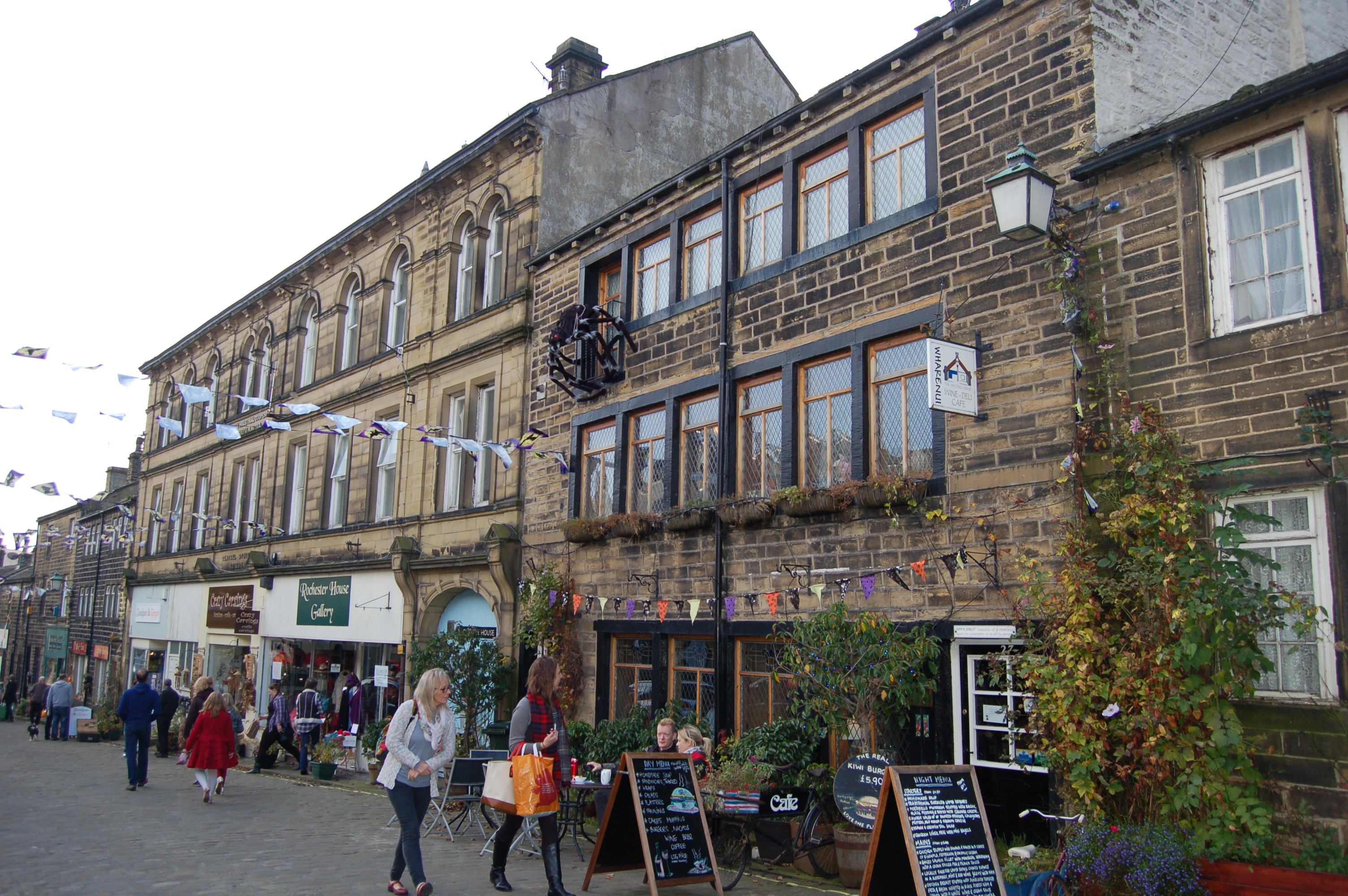
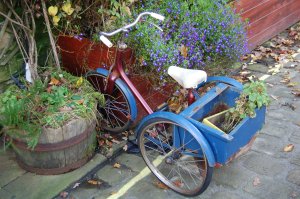
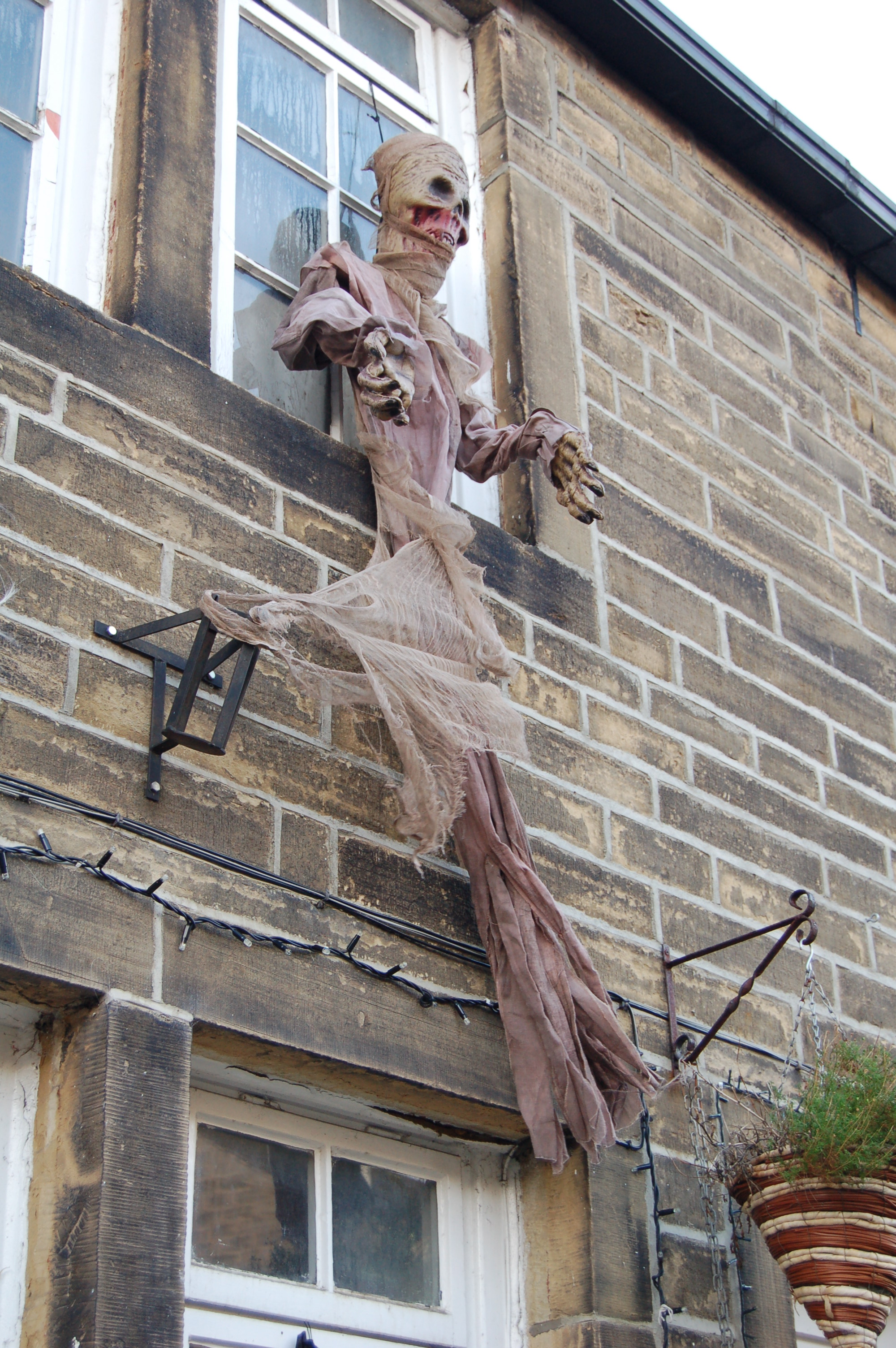
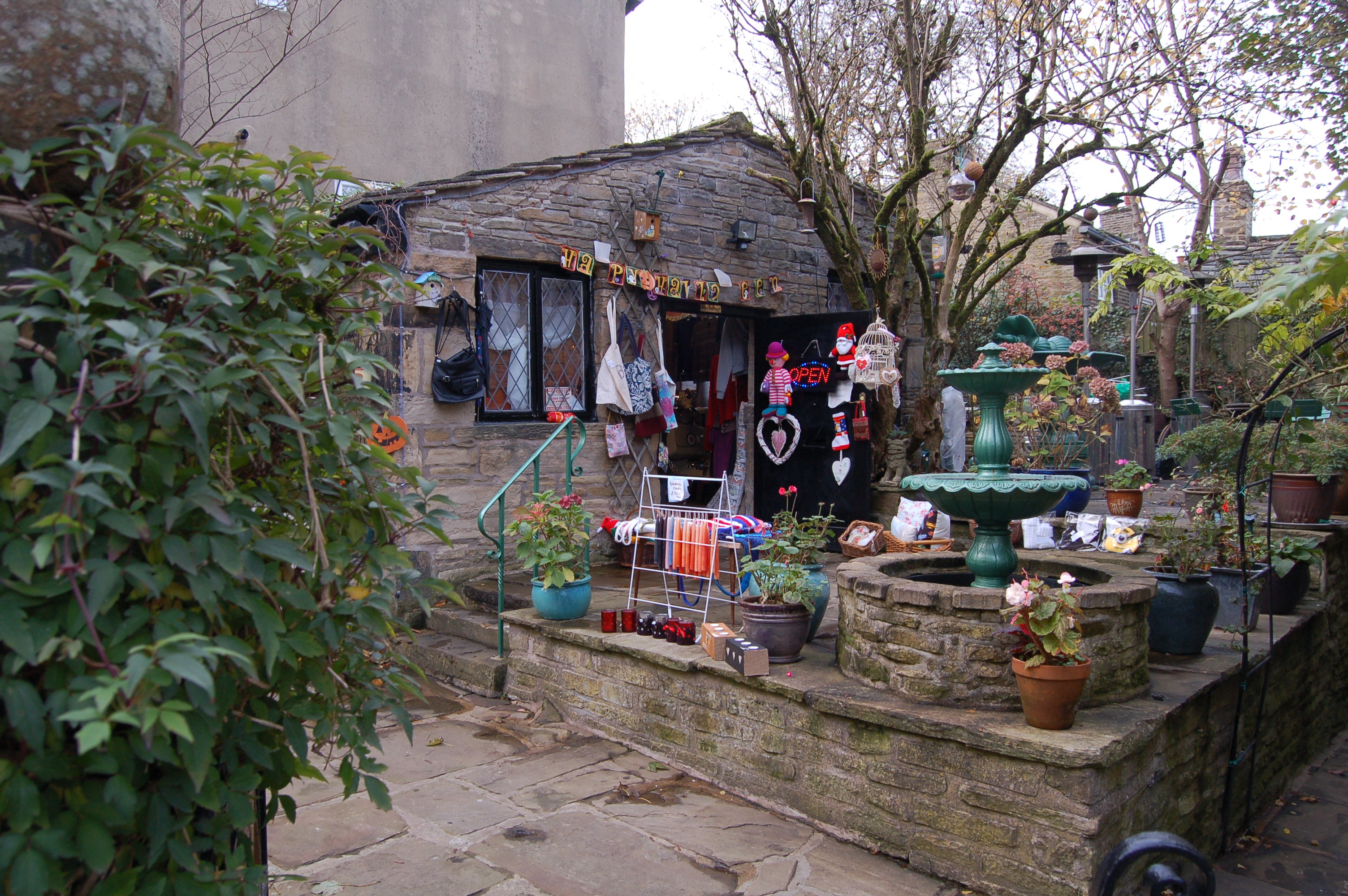
We returned to the village centre and took the gentle stroll down the Main Street, with its eclectic mix of shops many displaying art and crafts. We soon discovered we were visiting soon after the village had celebrated the day the Tour de France cycle race came and the day after it had celebrated Halloween. Spot the recycled cycles and the spooky happenings.

2014 11 01_7092 2014 11 01_7085

2014 11 01_7090 2014 11 01_7095

2014 11 01_7094 2014 11 01_7093  2014 11 01_7091 2014 11 01_7089 2014 11 01_7088 2014 11 01_7087 2014 11 01_7086 2014 11 01_7096

2014 11 01_7098 2014 11 01_7097 2014 11 01_7099 2014 11 01_7100 2014 11 01_7101 2014 11 01_7102 2014 11 01_7103 2014 11 01_7104 2014 11 01_7105 2014 11 01_7106

2014 11 01_7107 2014 11 01_7108 2014 11 01_7109

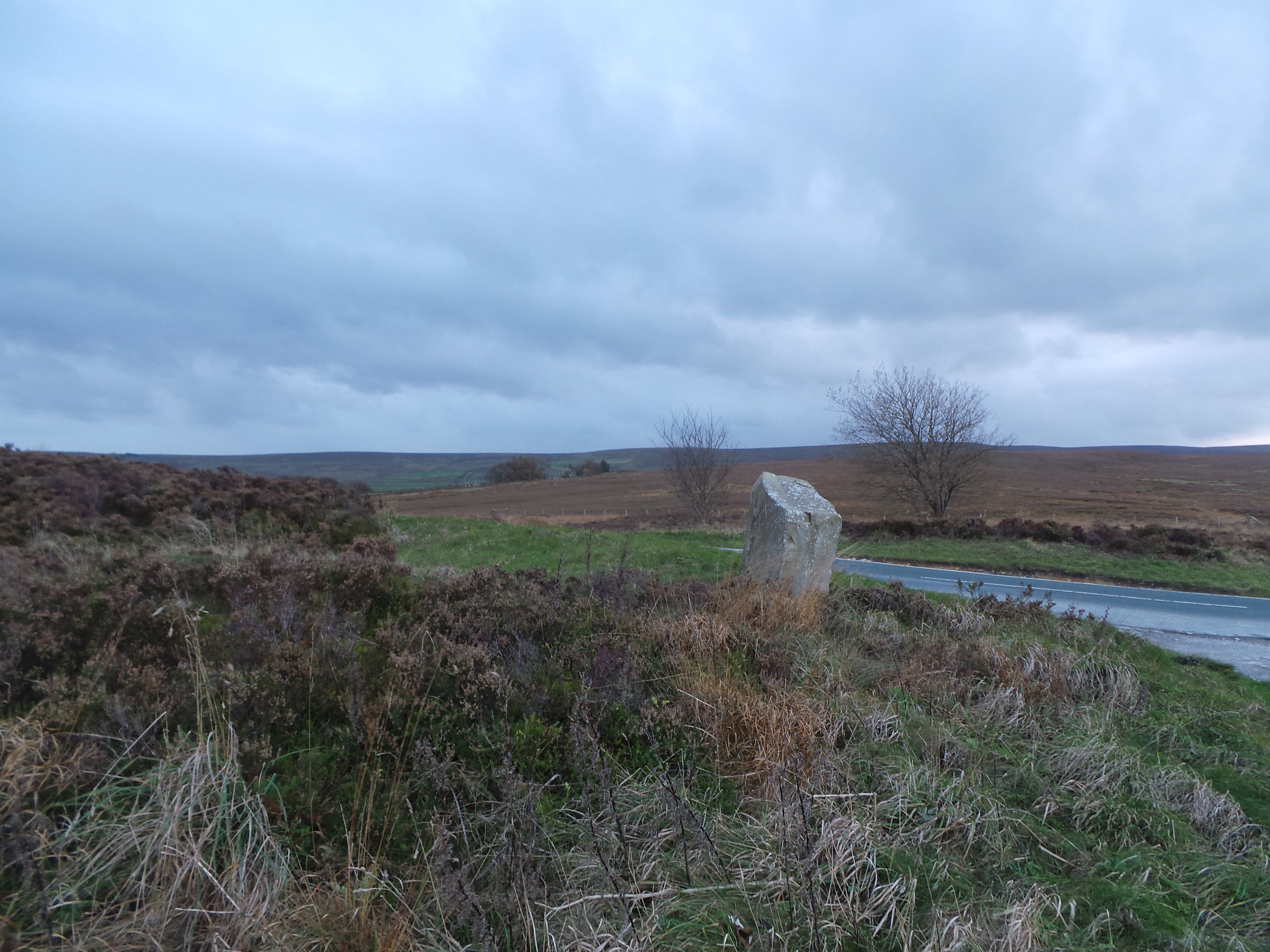
As we left the village to start our long journey home we made a diversion over the moors to take a short wander in the footsteps of the Bronte family. It was easy to see how its isolation and atmosphere provided such inspiration.

2014 11 01_7121 2014 11 01_7122 2014 11 01_7124 2014 11 01_7126 2014 11 01_7127 2014 11 01_7128


Categories
architecture buildings Church architecture photography Yorkshire

Haworth – Village of the Brontes – Part One

We spent a midweek break in Yorkshire this autumn, combining a return visit to the RHS Garden Harlow Carr, with a return to Saltaire and a first visit to the village of the Brontes, Haworth. A busy few days full of interest, enjoyment and variety.

First I shall share with you our visit to Haworth a village up on the moors of Yorkshire. The village and the moors are closely linked to the well-known and much loved family of writers, the Brontes. We found the village after miles of travelling high in the moorland on roads with regular steep climbs and descents. The road began to drop steeply as we approached the village and signposts indicated a car park on the edge of the village. We parked up in a car park hidden in woodland and from there a footpath took us into the very heart of the village.

Haworth is a beautiful place! A village with a strong community feel to it and a centre for creativity where many artists and craftspersons live, work and display their work. To add to the enjoyment of Haworth we discovered that Halloween was due to be celebrated fully. We also discovered that the village has some most excellent coffee houses!

The path took us down below the village’s allotments where the hens entertained us with their contented clucking as we passed unnoticed. We passed the back of the church and entered the very heart of the village, the Square.
2014 11 01_7019 2014 11 01_70182014 11 01_7020 2014 11 01_7022

Small businesses clustered around the Square welcoming visitors. You can see how the street drops steeply away from the Square. We decided that the number of coffee shops reflected the steepness of this hill – visitors need lots of places to stop and rest!

2014 11 01_7023 2014 11 01_70242014 11 01_7025 2014 11 01_7026

We soon realised that this village had a real sense of community feeling accompanied by an equal sense of pride with a gentle humour running through. Just look at the path gardens under the front windows of these cottages complete with seats. A great place to share your thoughts with neighbours, greet visitors with a friendly smile and watch the life of the village going by. Nearby this little humorous figure enjoyed life in another front garden.

2014 11 01_7027 2014 11 01_70282014 11 01_7044

There were frequent reminders too of the place that the Brontes hold in the hearts of the villagers.

2014 11 01_7030

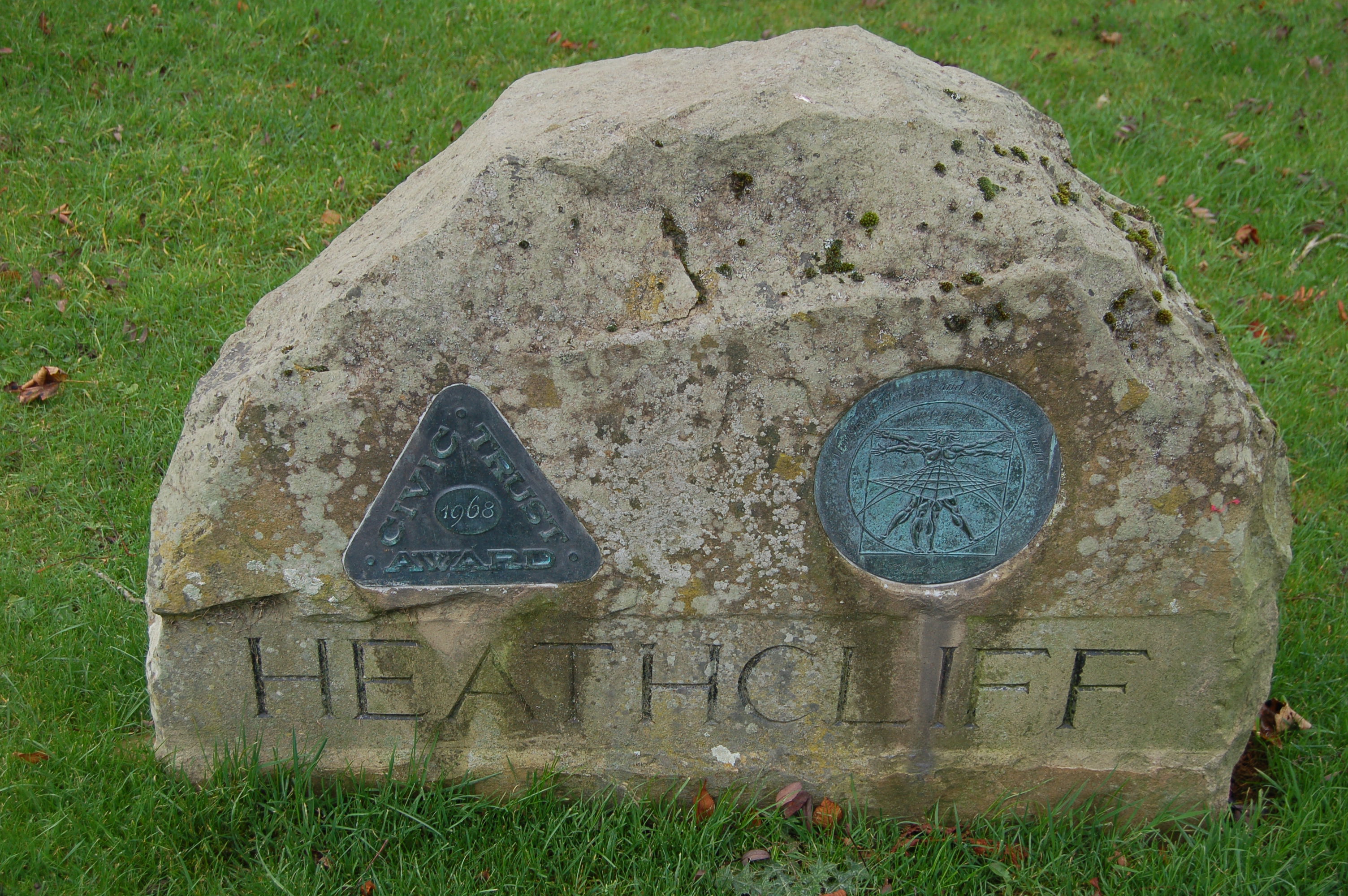
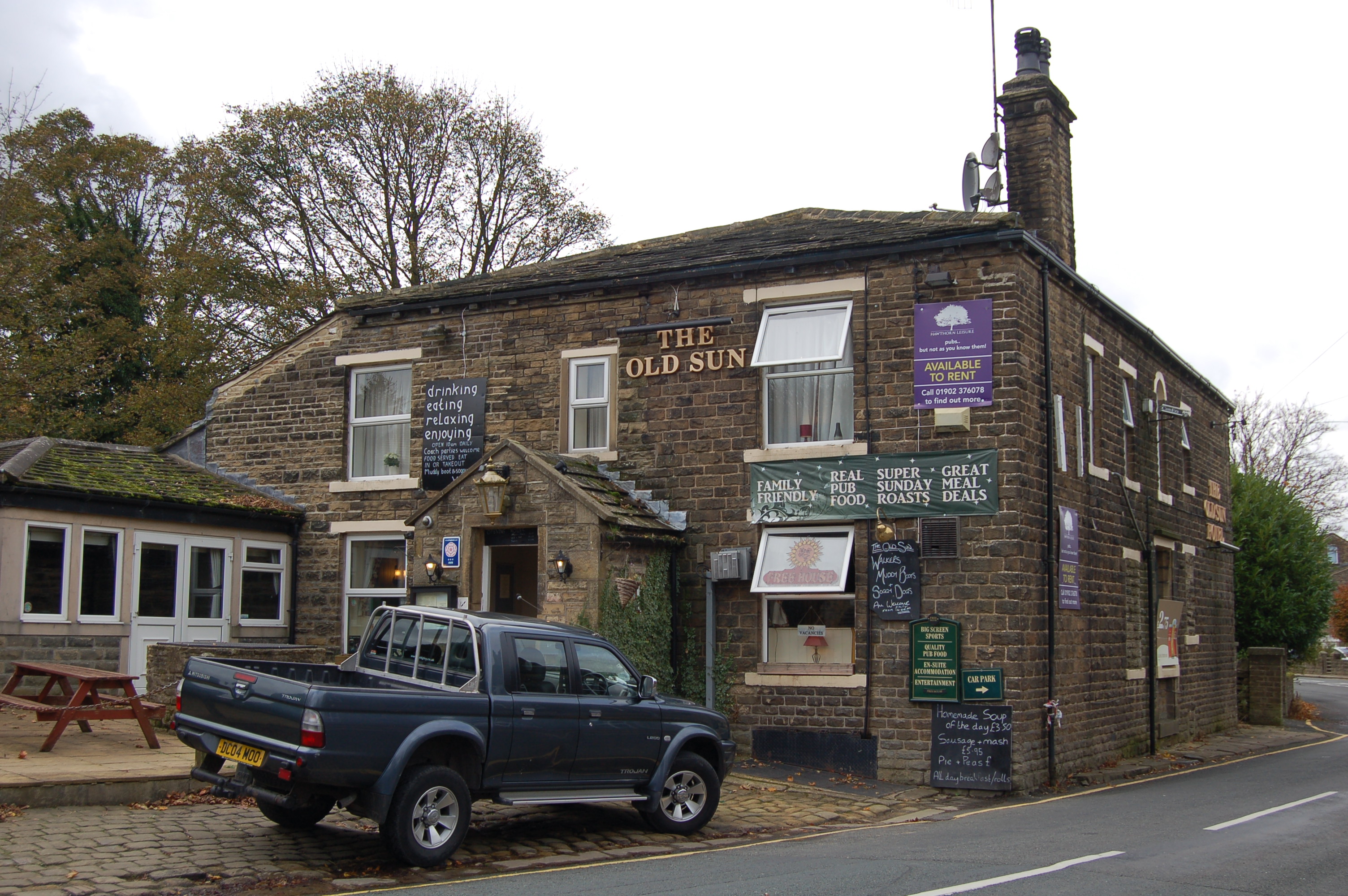
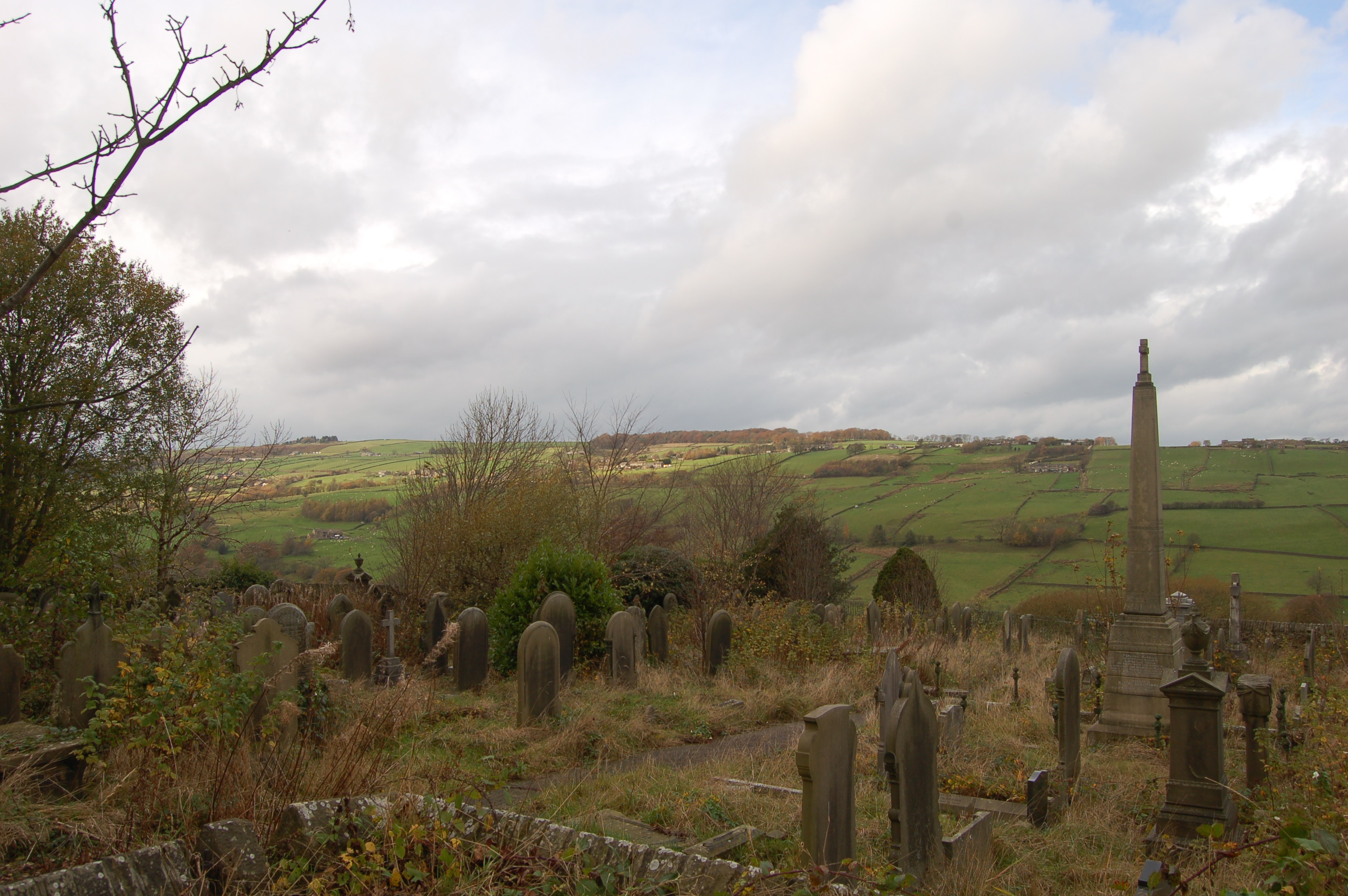
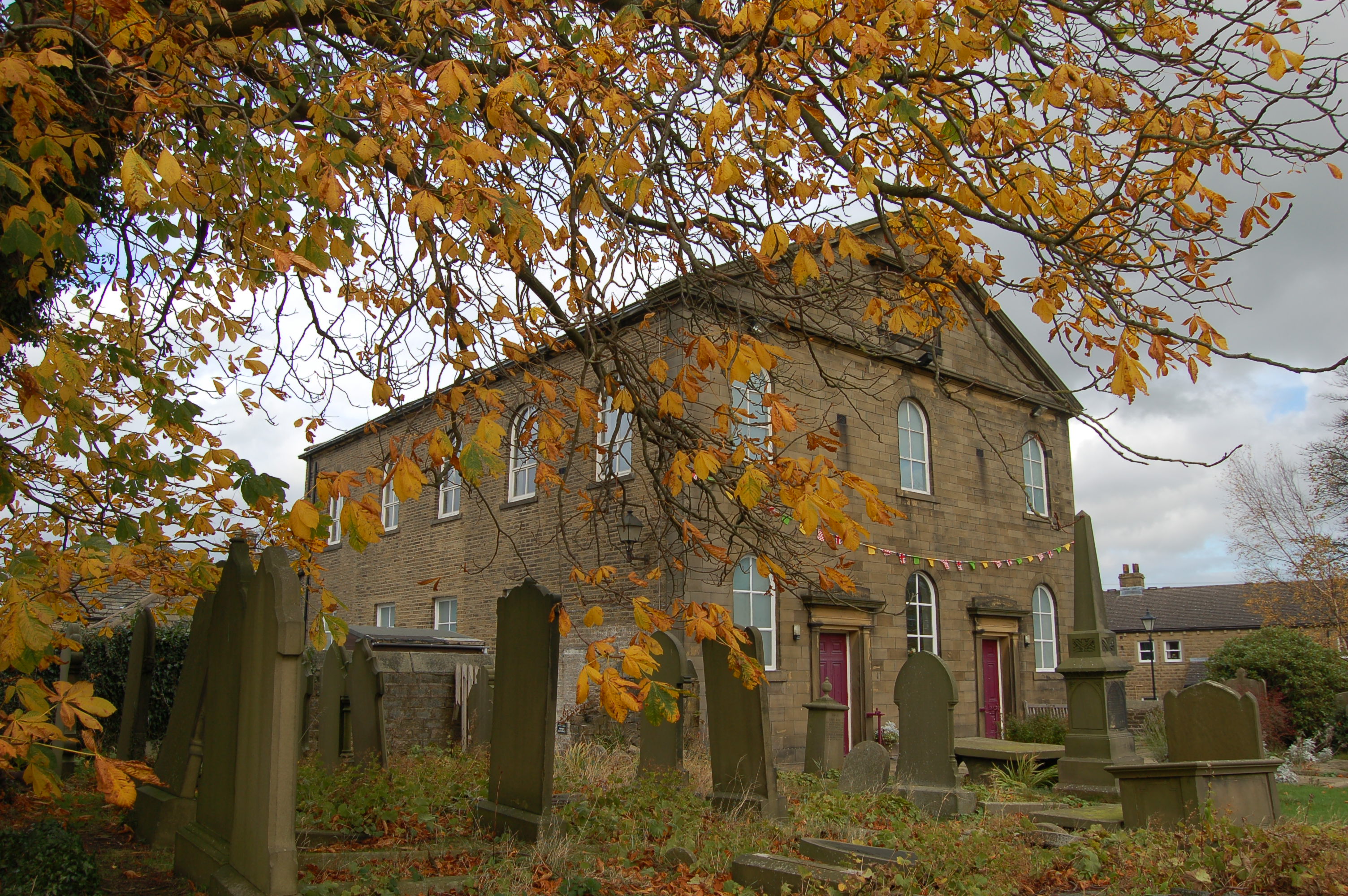
We followed part of the village trail that encompassed the places most relevant to the life of the Bronte family. We had to walk to the edge of the village to find the starting point where we began with a look at the Sun Inn where in the mid-19th century turn pike tolls would have been collected, and then close by we found the schoolroom which was linked to the West Lane Methodist Chapel which has since been demolished. Behind this schoolroom, which is now the meeting place for the Methodist congregation, we found the old graveyard which afforded wide spreading views over the valley.

2014 11 01_7032 2014 11 01_70312014 11 01_7033 2014 11 01_7034

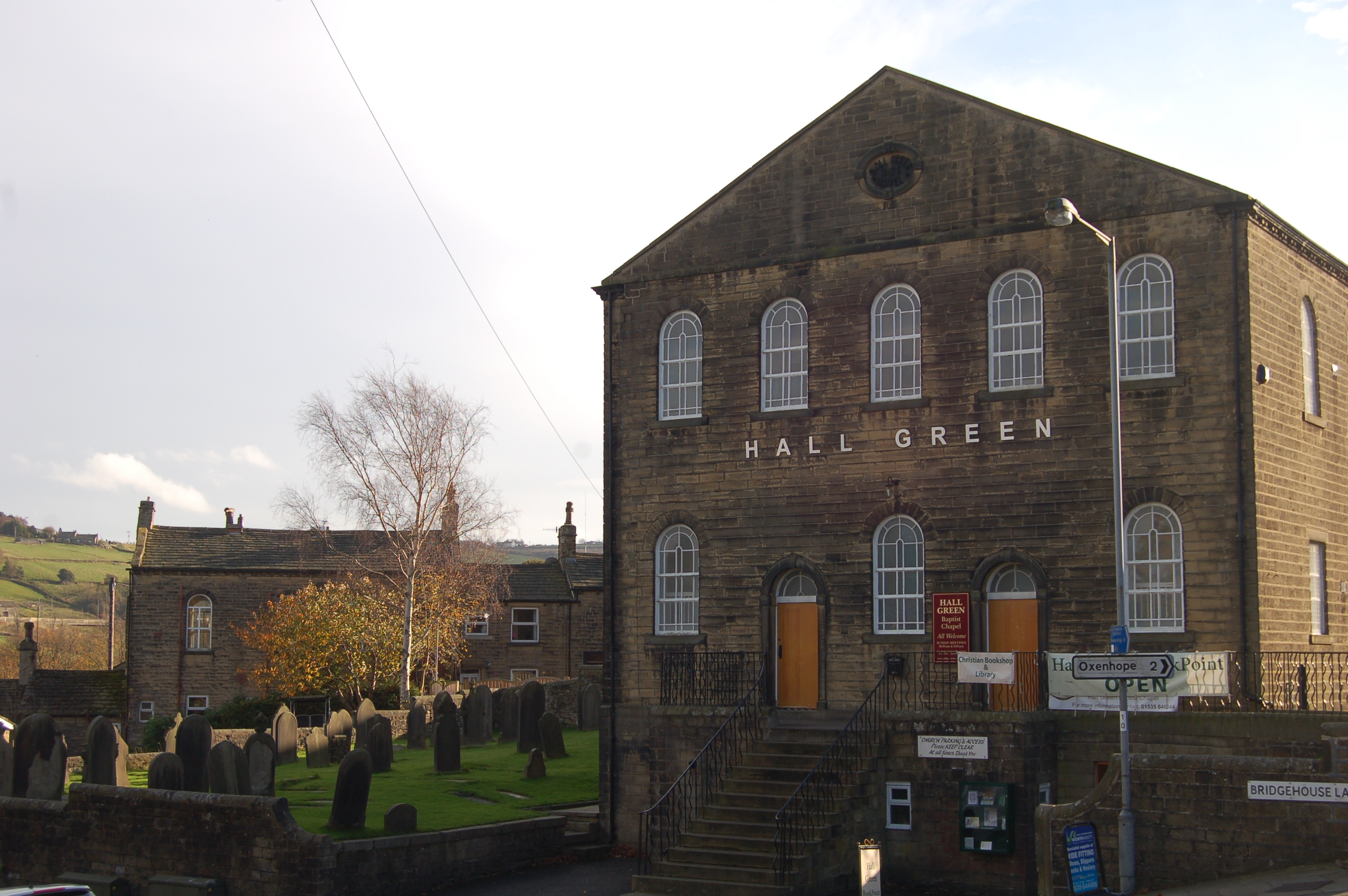
Close by was the rival West Lane Baptist Chapel which had an extensive school room added at the rear. It seemed amazing that this little village huddled in a valley bottom supported several chapels and a church. It reflects the life style of the time, when employers expected their workers to attend their chosen place of worship in order to keep their jobs. Some believed it would keep them out of the inns and public houses.

The second photo below shows a strange arrangement of old gate post ornamentation now displayed atop a garden wall.

2014 11 01_7035 2014 11 01_7037

A short walk down the street back towards the heart of the village we found this beautiful and very old building, Townend Farm with its attached barn. These were built in the 17th century but still retained much of the original features including the most beautiful windows.

2014 11 01_7040 2014 11 01_7038 2014 11 01_7039 2014 11 01_7042

We next found a row of back-to-back workers cottages, and we could tell from the relatively large area of upstairs windows that some sort of weaving must have gone on here. The terraces also had basement dwellings below the street level.

2014 11 01_7043 2014 11 01_7045 2014 11 01_7046

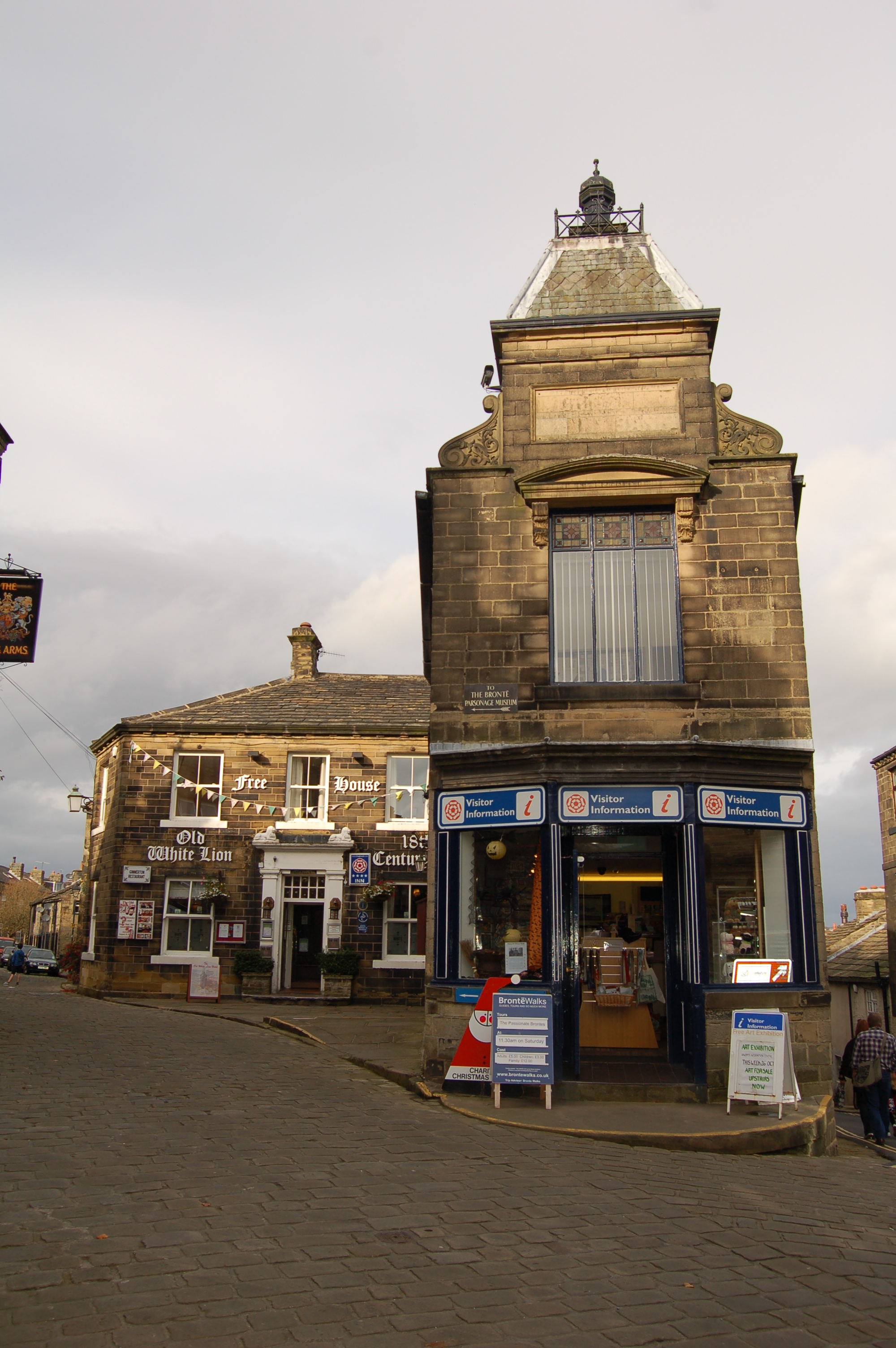
The trail leaflet took us back to the centre where we stopped to look at the interesting array of shops. The Tourist Information Centre was housed in this strange thin building squeezed in a small space between two streets as they merged. The building has a short tower and pyramidal roof which was added when it changed from being the “Mechanics’ Institute” to the “Yorkshire Penny Bank”. The square here sits at the base of the wide steps leading up to the church. The village stocks are still in place outside what were once the post office and a temperance hotel. This teetotal hotel was supported by Patrick Bronte whereas rather ironically Branwell Bronte preferred the building opposite, The Old White Lion Inn.

2014 11 01_7055 2014 11 01_7047

2014 11 01_7048 2014 11 01_7049 2014 11 01_7050 2014 11 01_7052

2014 11 01_7051  2014 11 01_7053 2014 11 01_7054  2014 11 01_7057 2014 11 01_7058 2014 11 01_7059

The Main Street led us out of the square as it dropped away steeply. We took a detour to the church before embarking on the downhill climb to discover the delights of that street. Part 2 of my Bronte posts will see us visiting the church and the Main Street.

2014 11 01_7056


Categories
architecture buildings colours garden design garden designers garden photography garden ponds garden pools garden seating gardens gardens open to the public grasses hardy perennials light light quality meadows ornamental grasses outdoor sculpture Piet Oudolf reflections sculpture Tom Stuart-Smith water garden water in the garden

Post 500 – Part Two – a further visit to the “Oudolf Field”

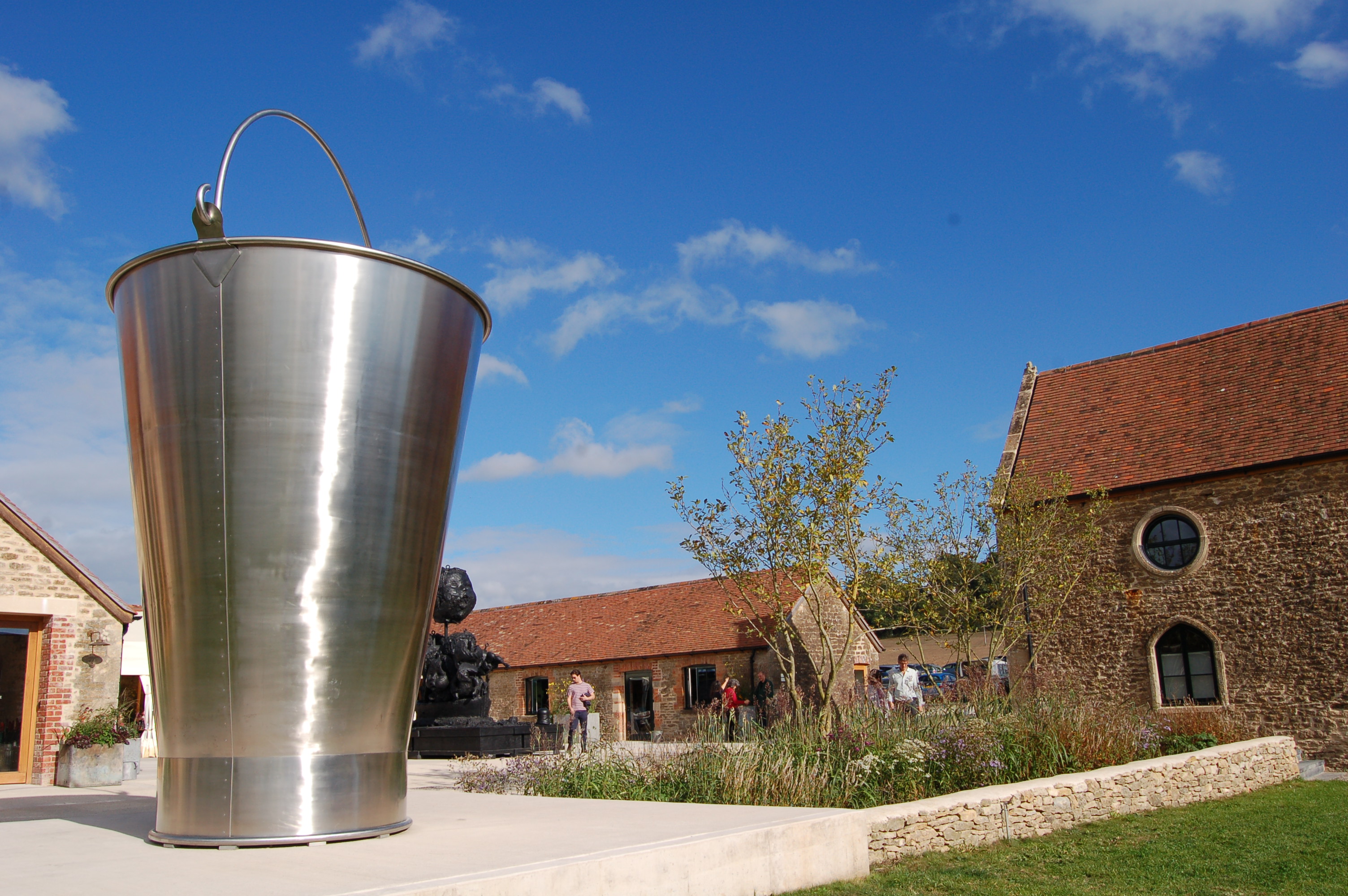
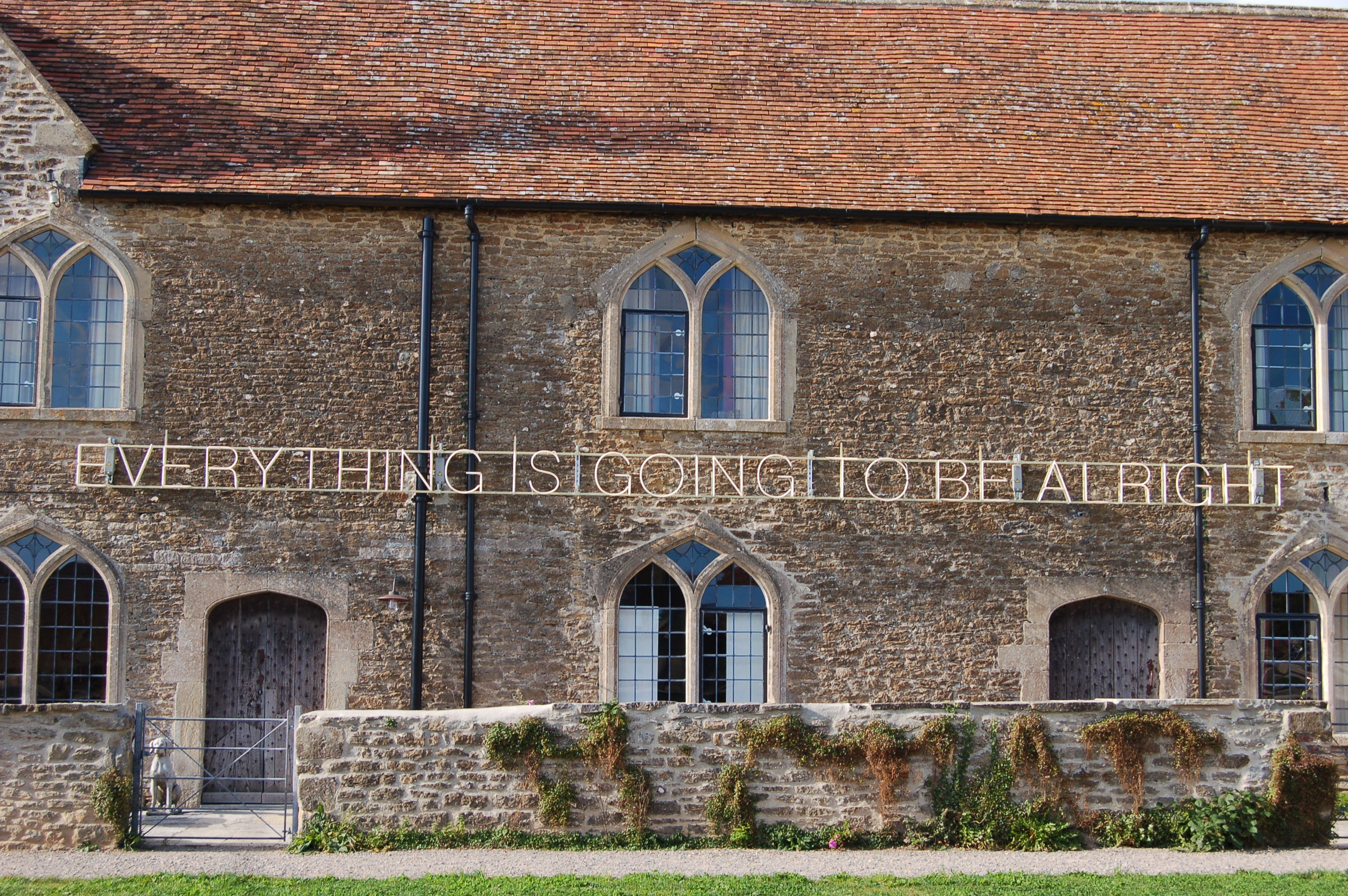
As promised I am returning to the beautiful county of Somerset where Jude and I spent a day exploring the exciting new “Oudolf Field” and the gallery buildings at the Hauser and Wirth’s Durslade Farm.

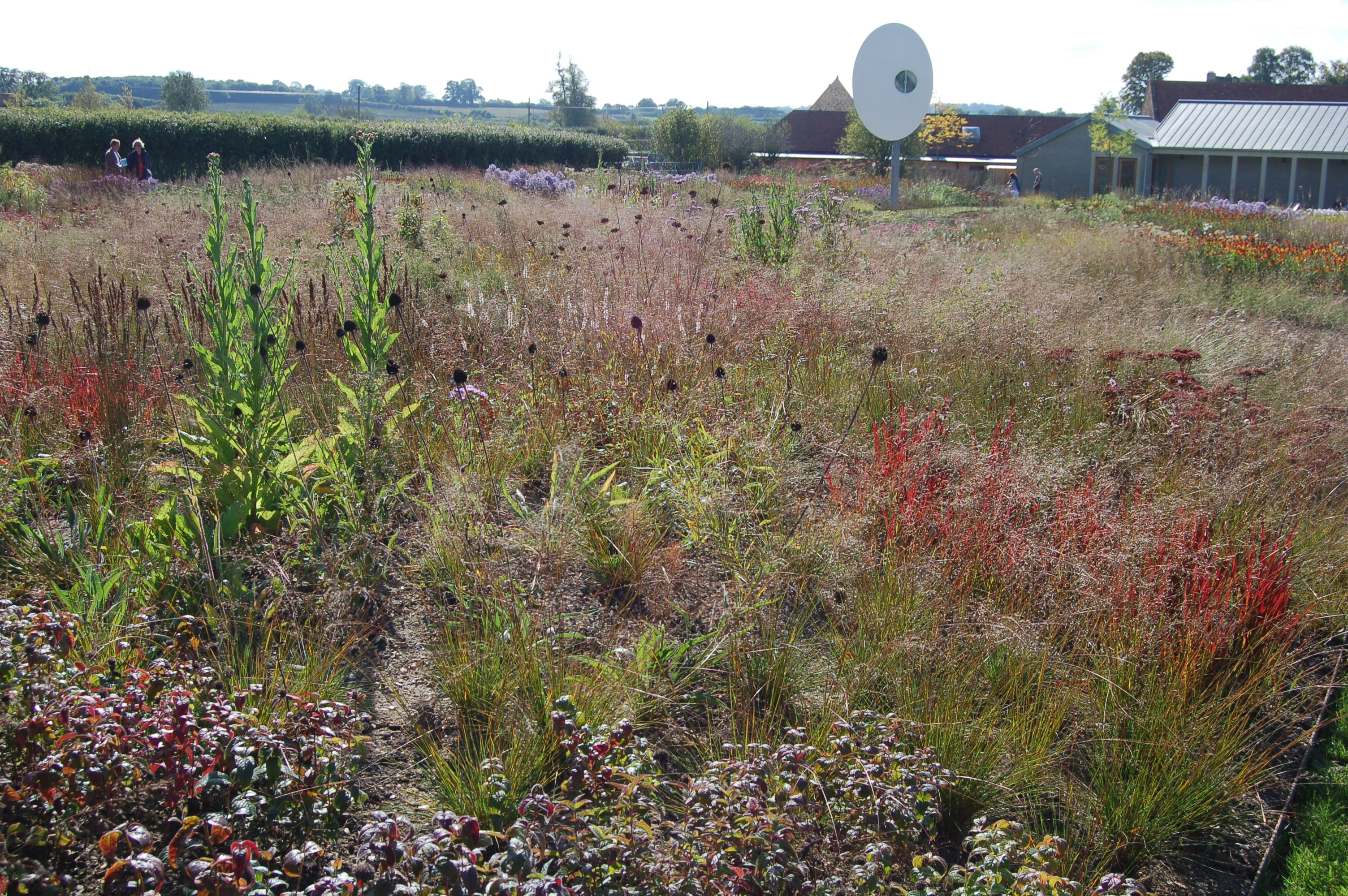
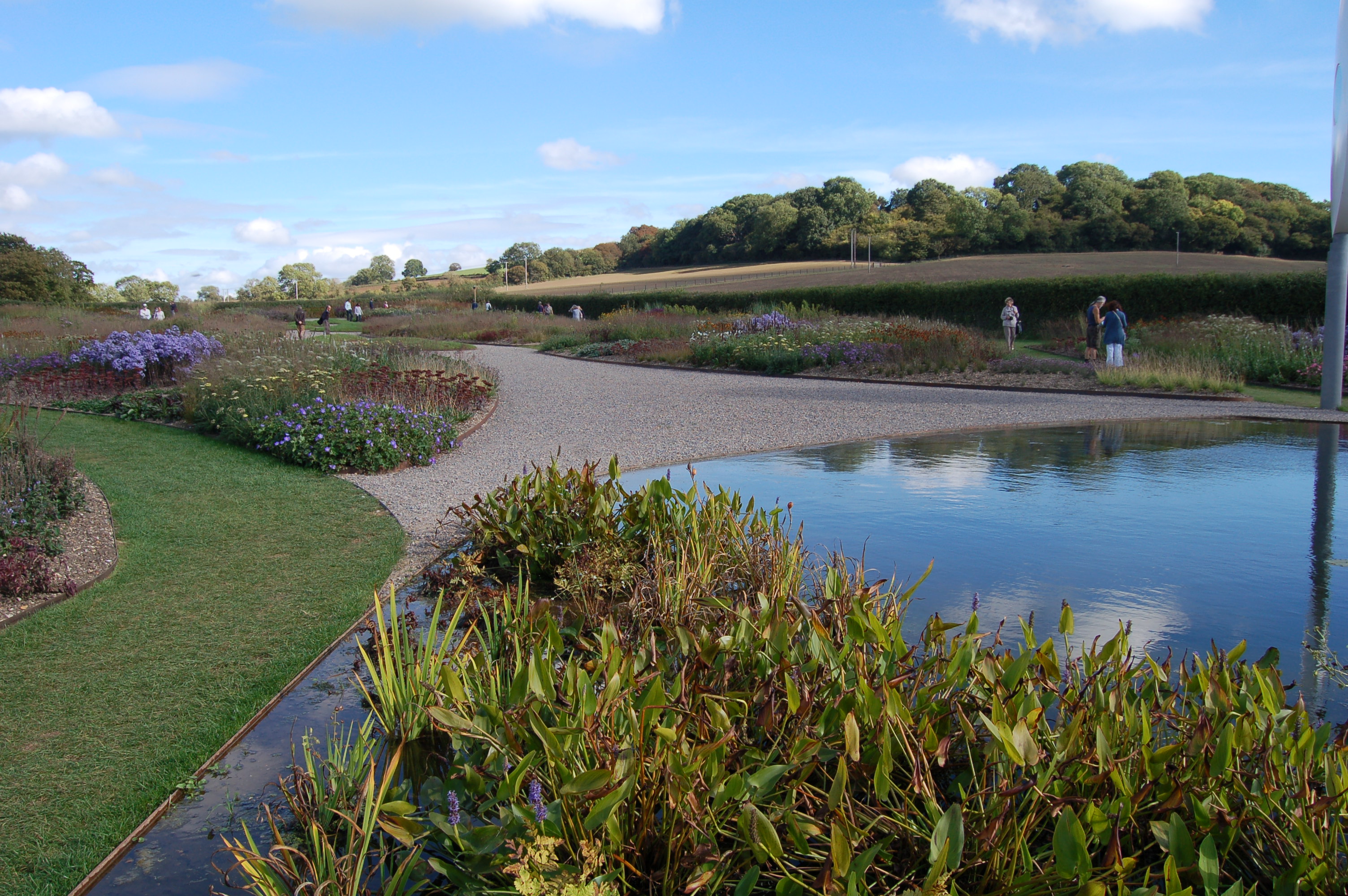
We left off as we were looking at the pool and giant clock. This is the first time we have seen any water designed into an Oudolf designed garden and indeed the first one to include a giant clock. The pool afforded clear reflections of the trees surrounding the site and was only planted around the margin closest to the buildings to give the maximum area of reflecting water.

2014 10 04_5465 2014 10 04_54832014 10 04_5487 2014 10 04_5481

The tall clock towers over the pool and its white face stands out against the brightness of the blue sky. I would imagine it would look great against black clouds too! It casts a beautiful lollipop shadow across the golden gravel. Its face looks like a big circular disc but it is in reality asymmetric in design, which causes the minute hand to move out into clear air as it moves into the narrow side.

2014 10 04_5488 2014 10 04_5486

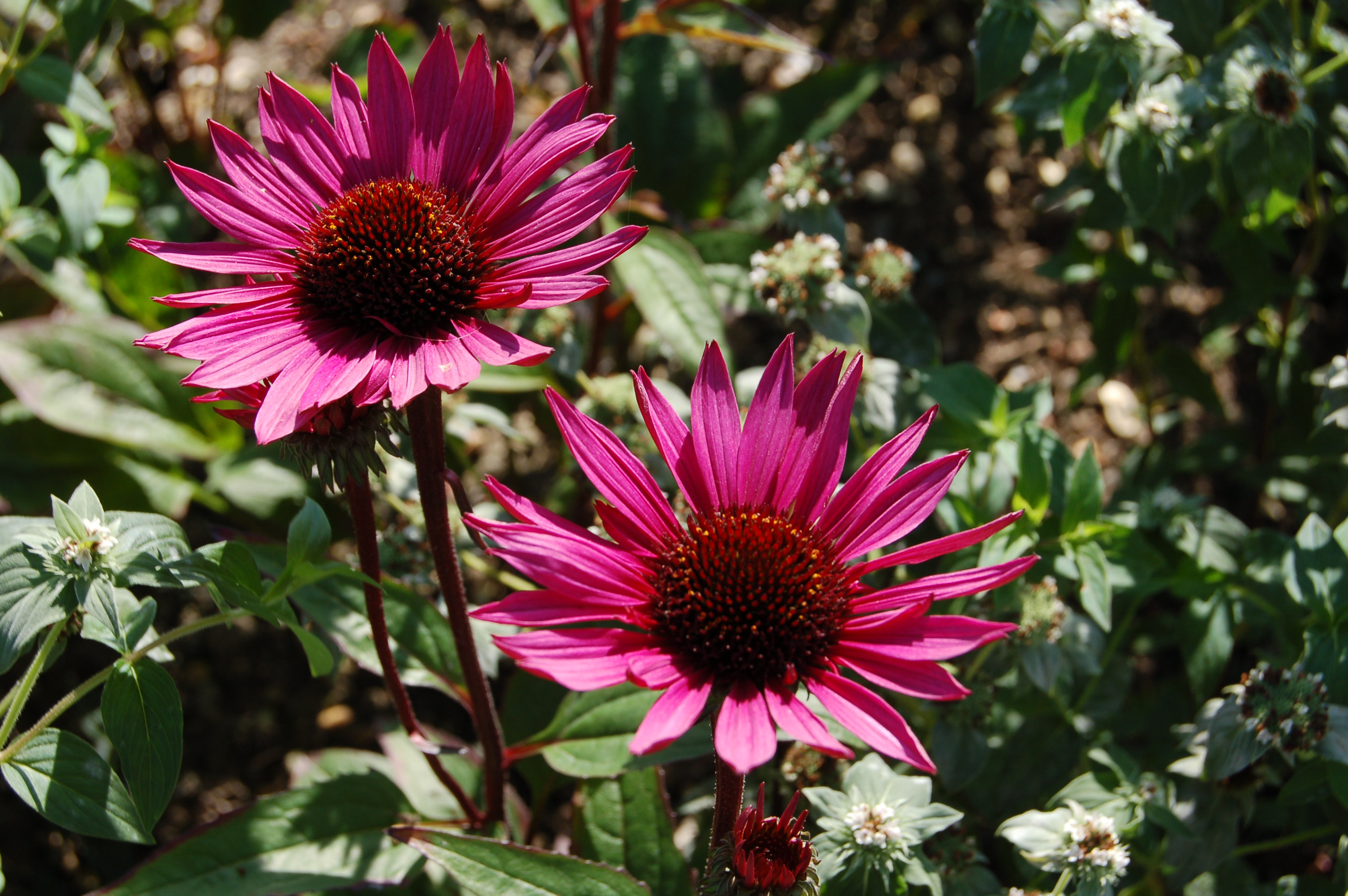
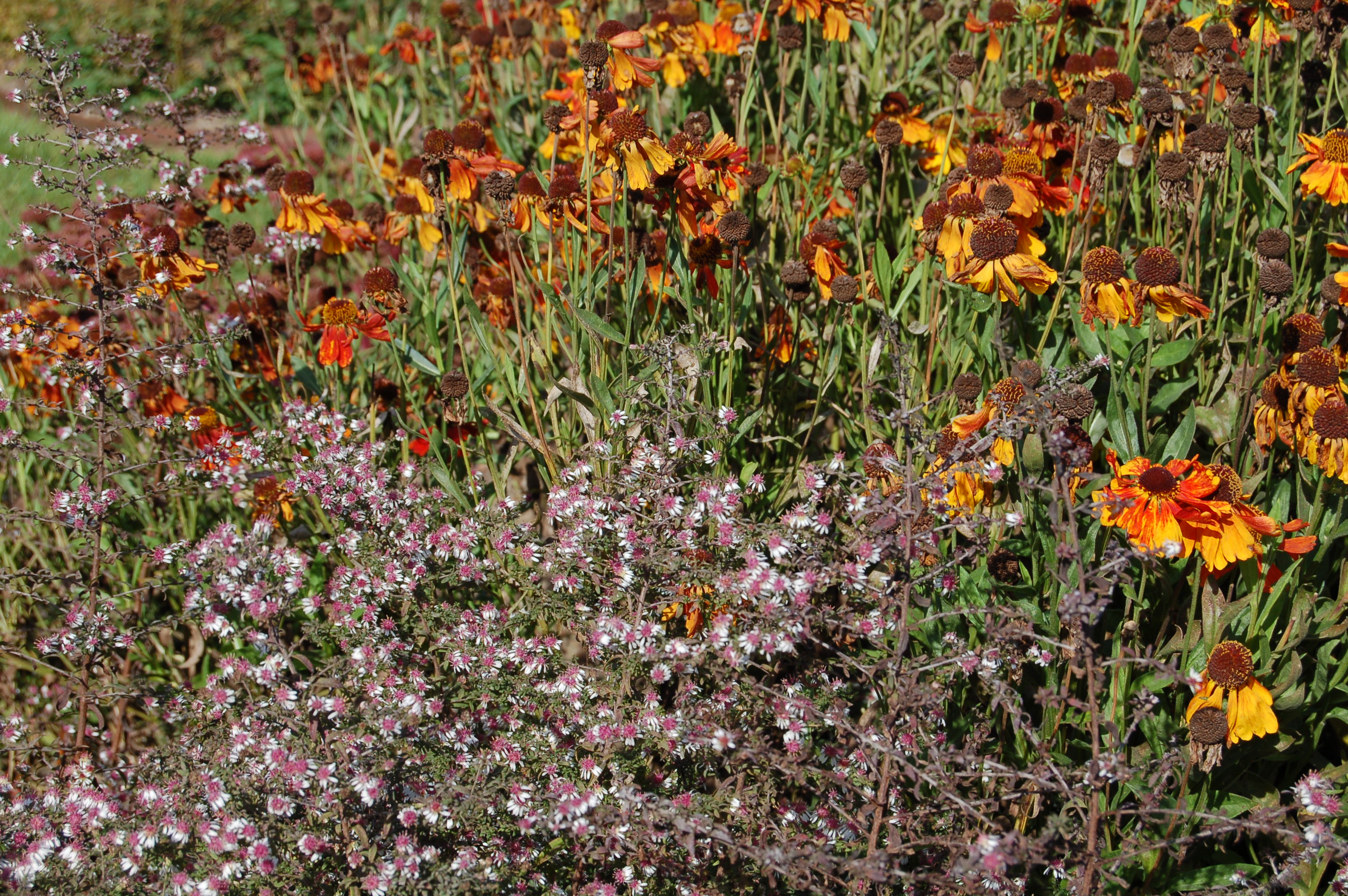
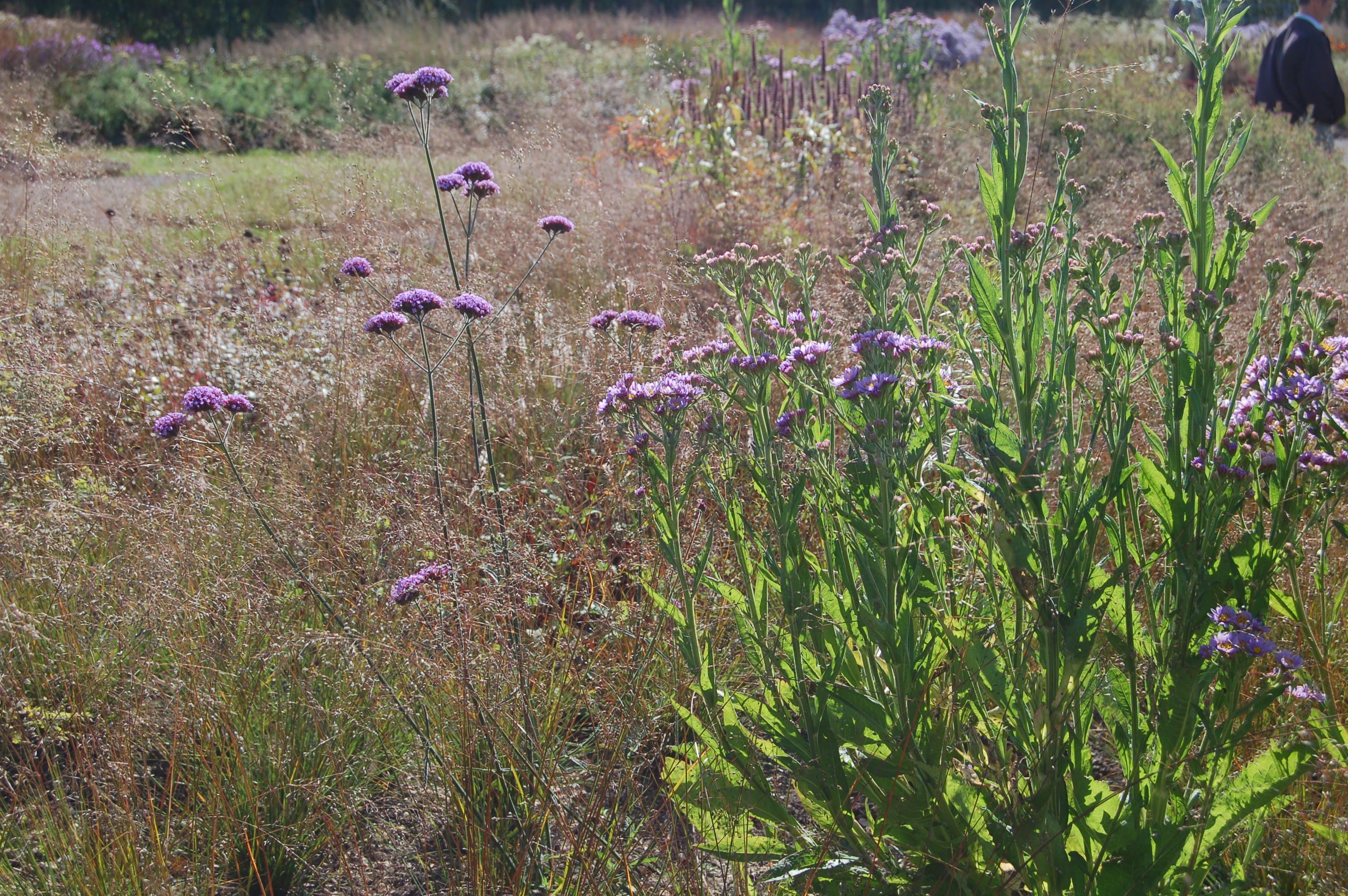
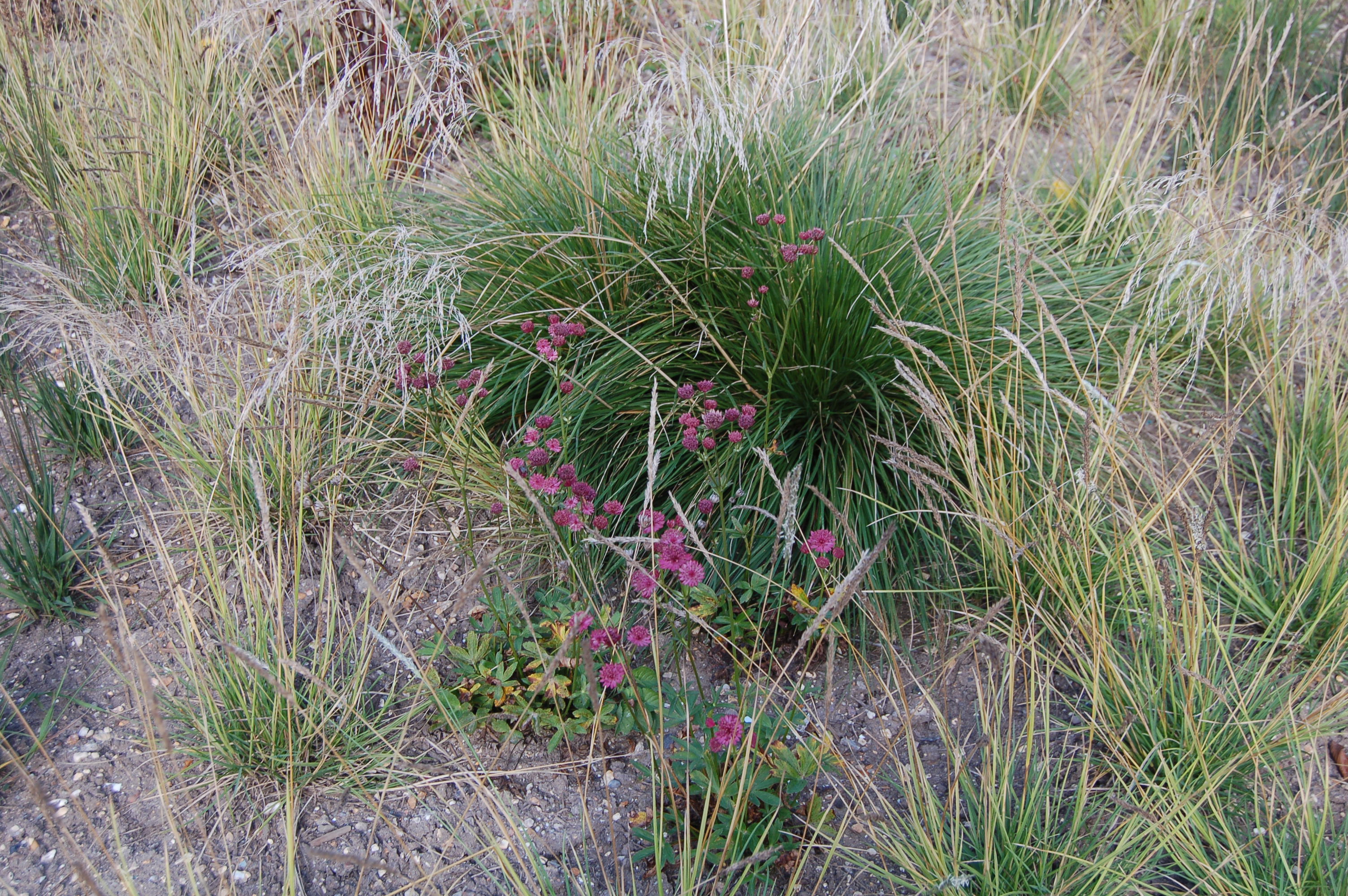
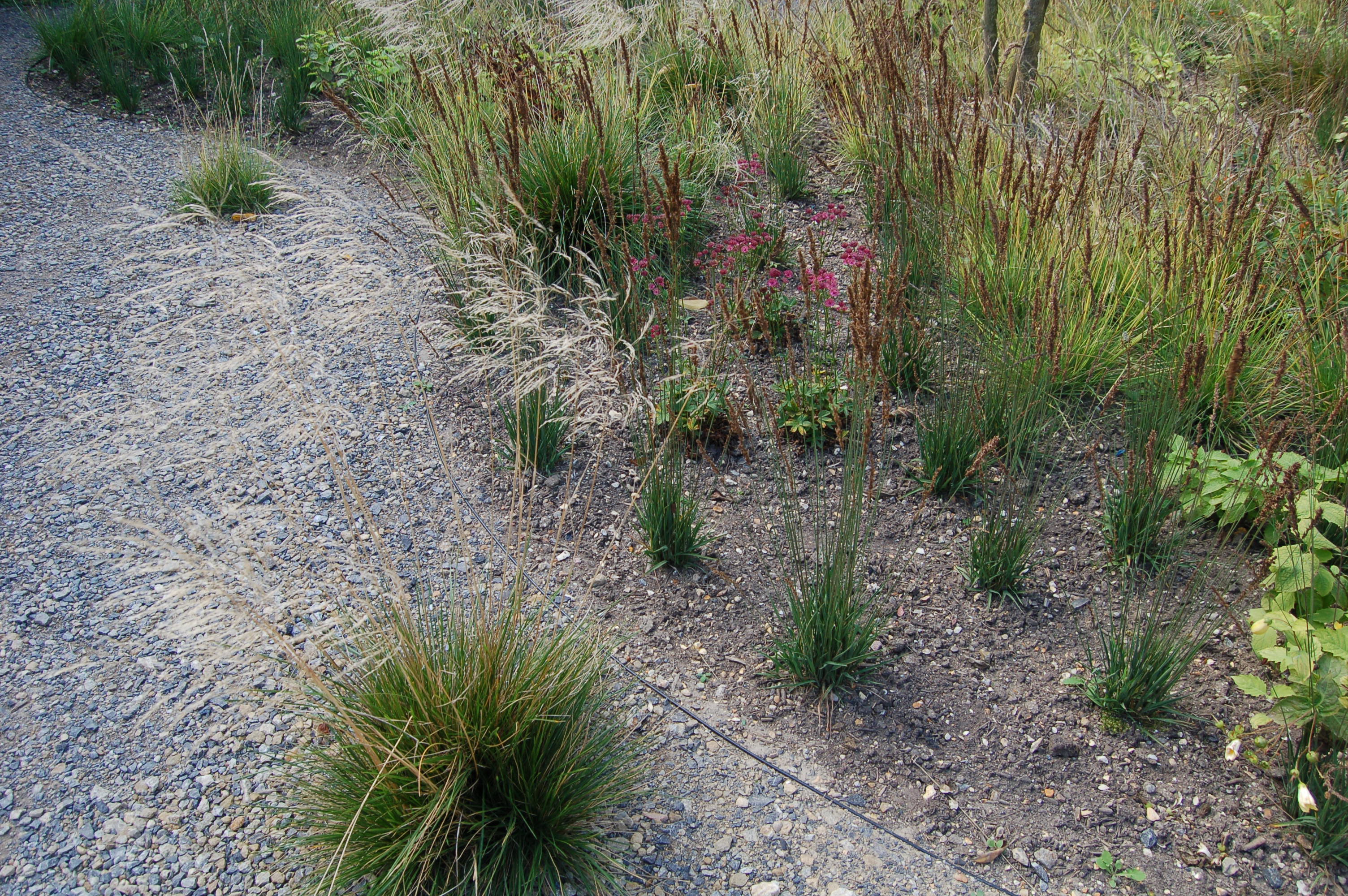
Although the planting is lower than in his previous gardens Piet Oudolf still uses many of his favourite plants such as Sanguisorbas, Echinaceas, Verbenas and Heleniums.

2014 10 04_5471 2014 10 04_5470

2014 10 04_5478 2014 10 04_5479

2014 10 04_5473 2014 10 04_5476

We had a break for coffee and to look around the galleries before wandering the gardens again as the sun dropped slowly in the sky and the light gave the meadows a fresh look.

We were enthralled by a gallery where a display of Oudolf’s garden designs helps reveal how this garden designer’s mind works. We loved the designs and working drawings and “idea jottings” of this garden here in Somerset as well as those from the New York High Line and the Wisley Garden.

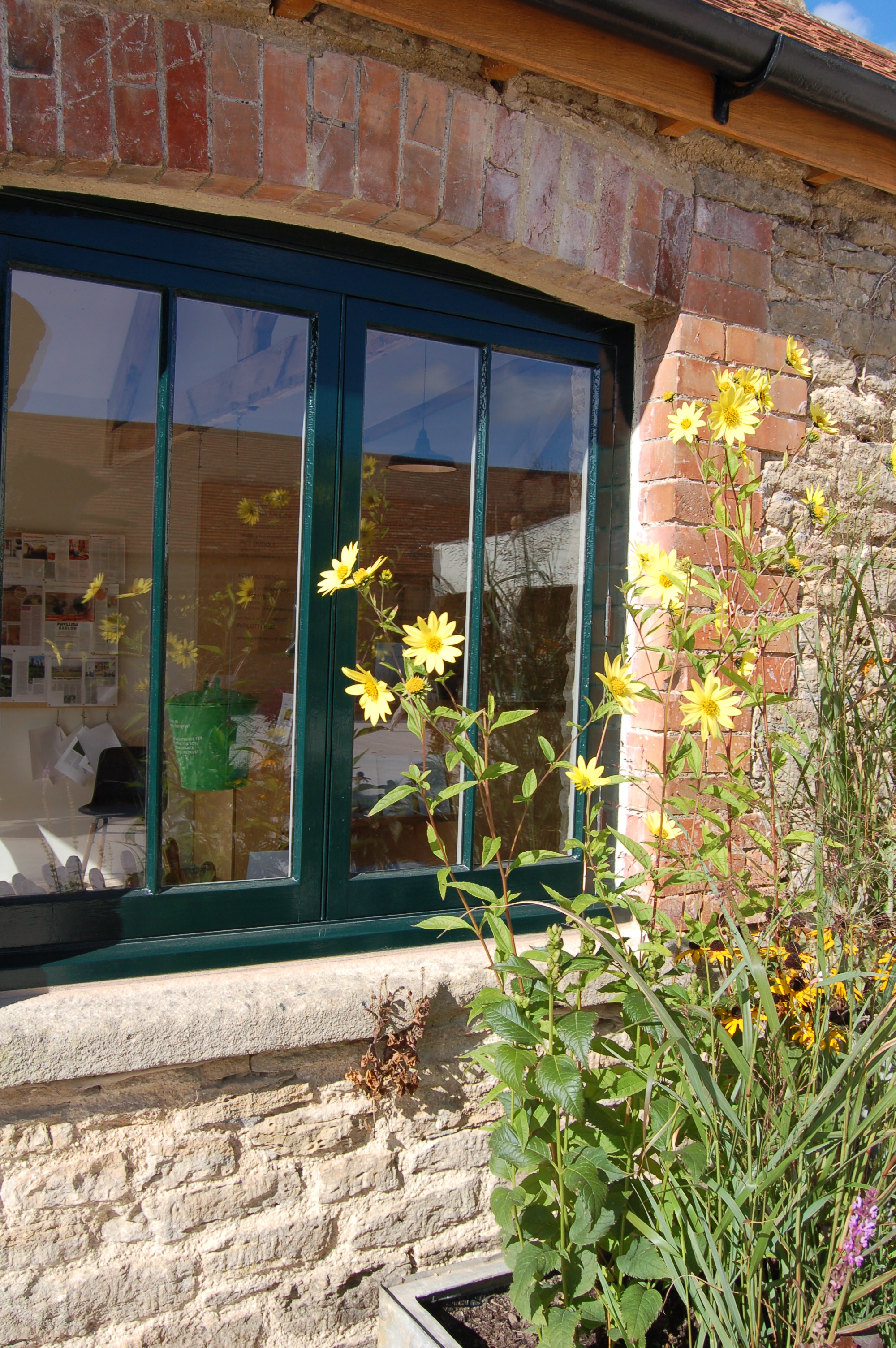
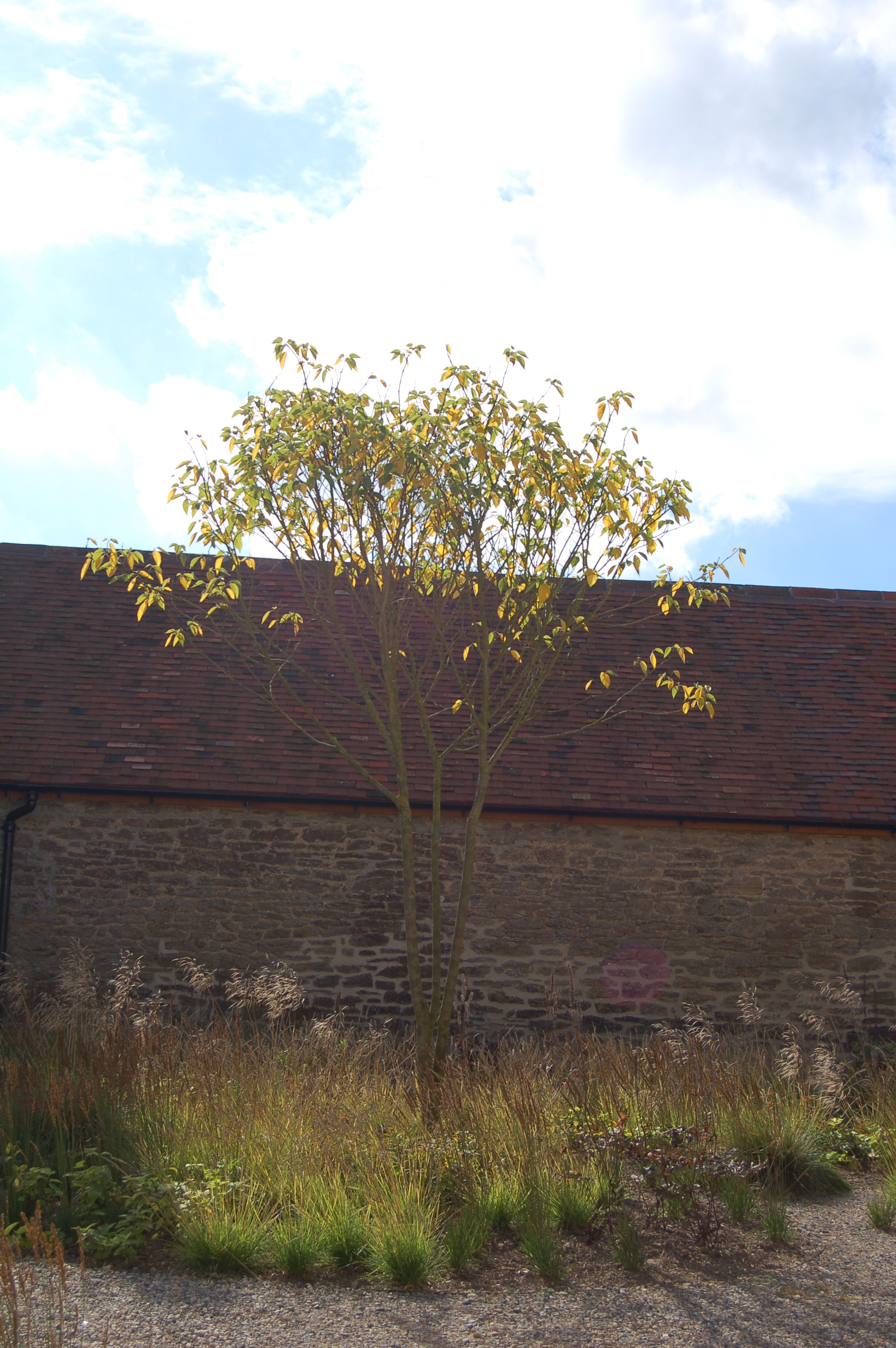
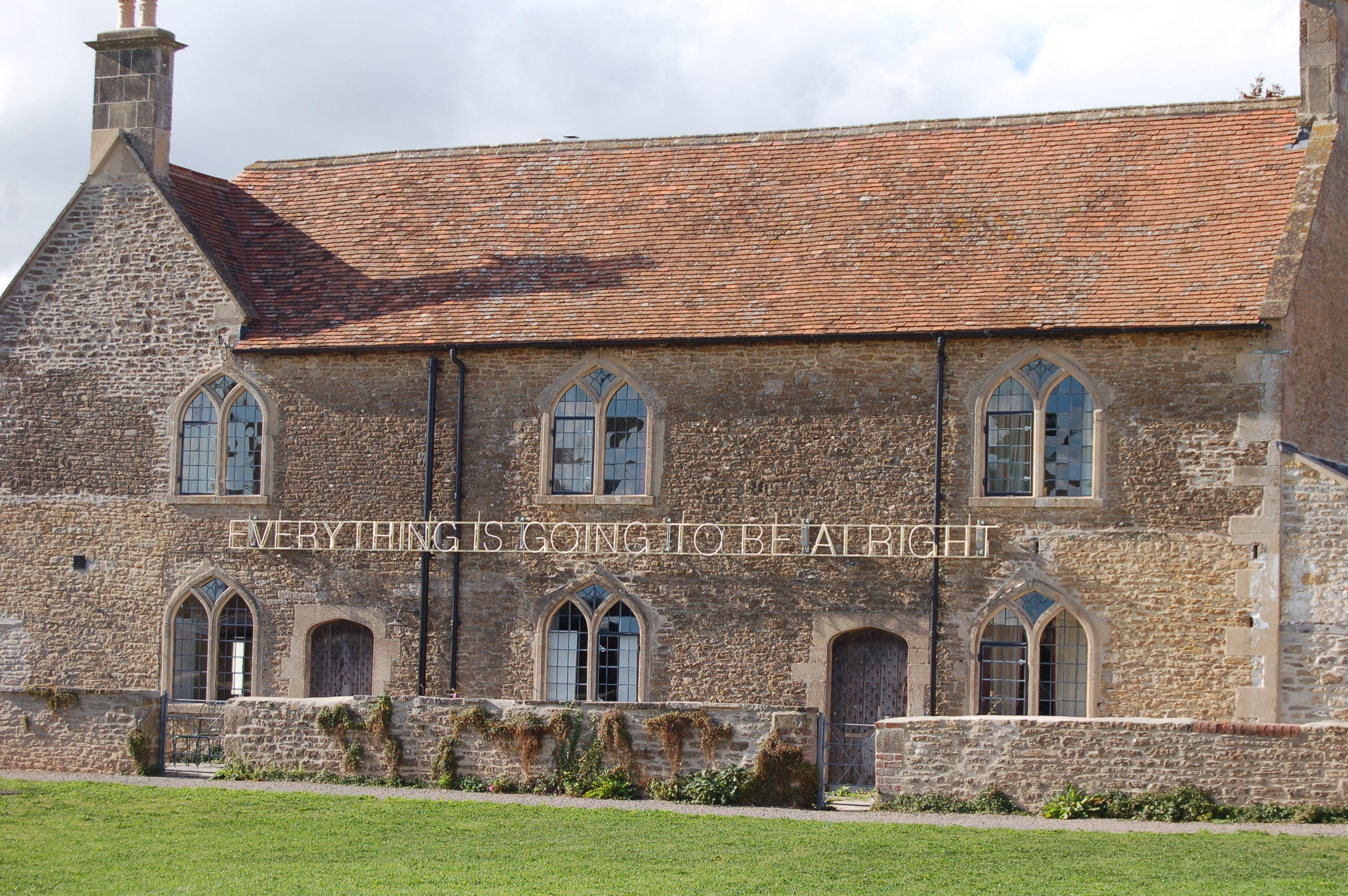
Moving from gallery to gallery each courtyard space is softened by more of Oudolf’s plantings, featuring trees underplanted with grasses and perennials. The sculptural pieces sit comfortably among the old farm buildings with their richly textured surfaces.

2014 10 04_5429 2014 10 04_5431 2014 10 04_5432 2014 10 04_5433 2014 10 04_5434 2014 10 04_5435 2014 10 04_5436 2014 10 04_5437 2014 10 04_5438 2014 10 04_5518 2014 10 04_5517

2014 10 04_5521 2014 10 04_5522 2014 10 04_5524 2014 10 04_5525 2014 10 04_5526 2014 10 04_5527 2014 10 04_5528 2014 10 04_55292014 10 04_5531 2014 10 04_5532

Enjoy the gallery of photos taken in the sparkling late afternoon light. It is amazing how different plantings can look as the light changes within just a few hours at this time of year.

The next post in my 500 Celebration series will find us over in Hertfordshire where Tom Stuart-Smith lives. We had the privilege of visiting his own garden and the one he designed for his sister.


Categories
architecture buildings colours garden buildings gardens gardens open to the public Italian style gardens Wales woodland woodlands

Portmeiron – the work of an eccentric.

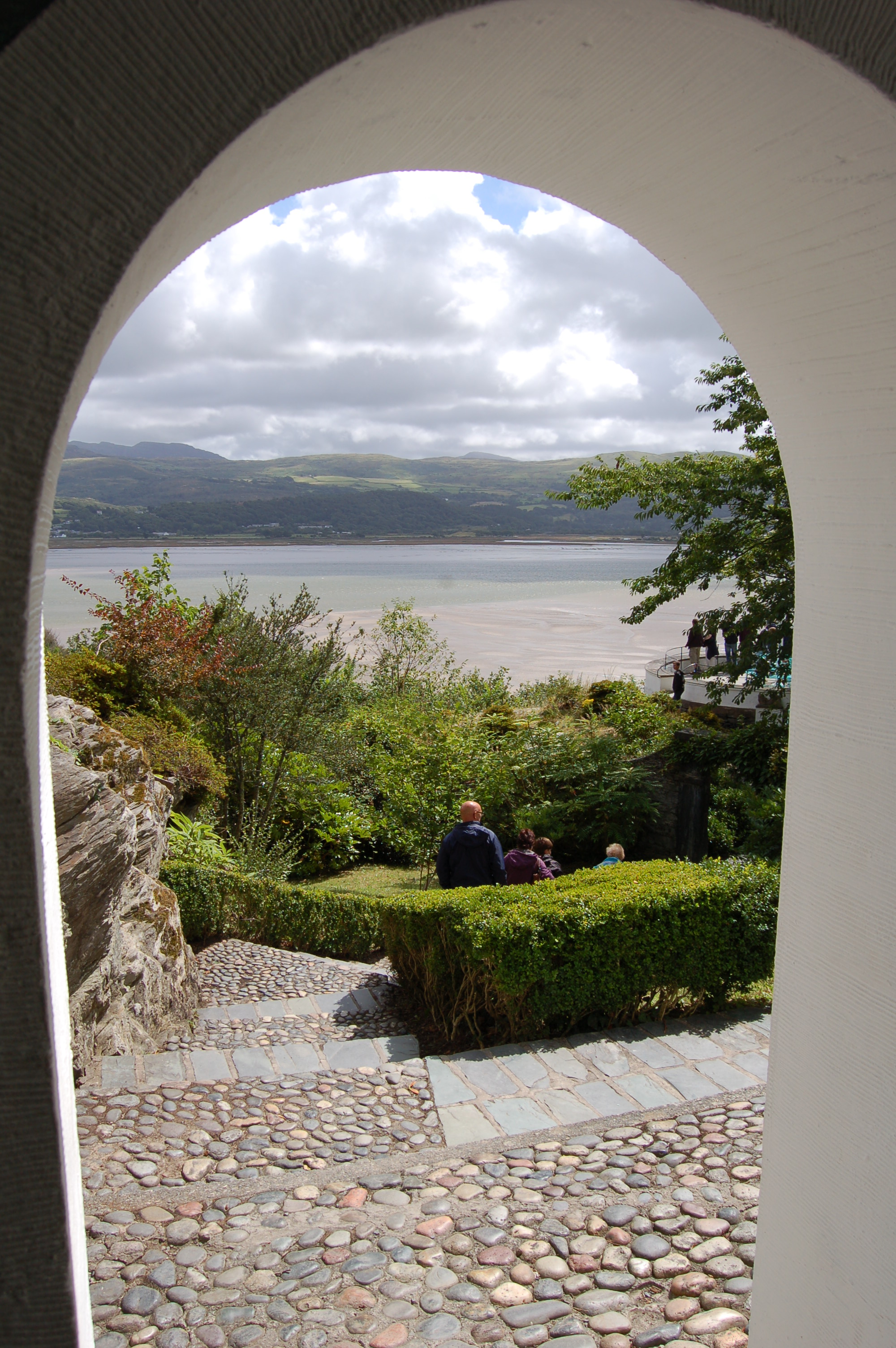
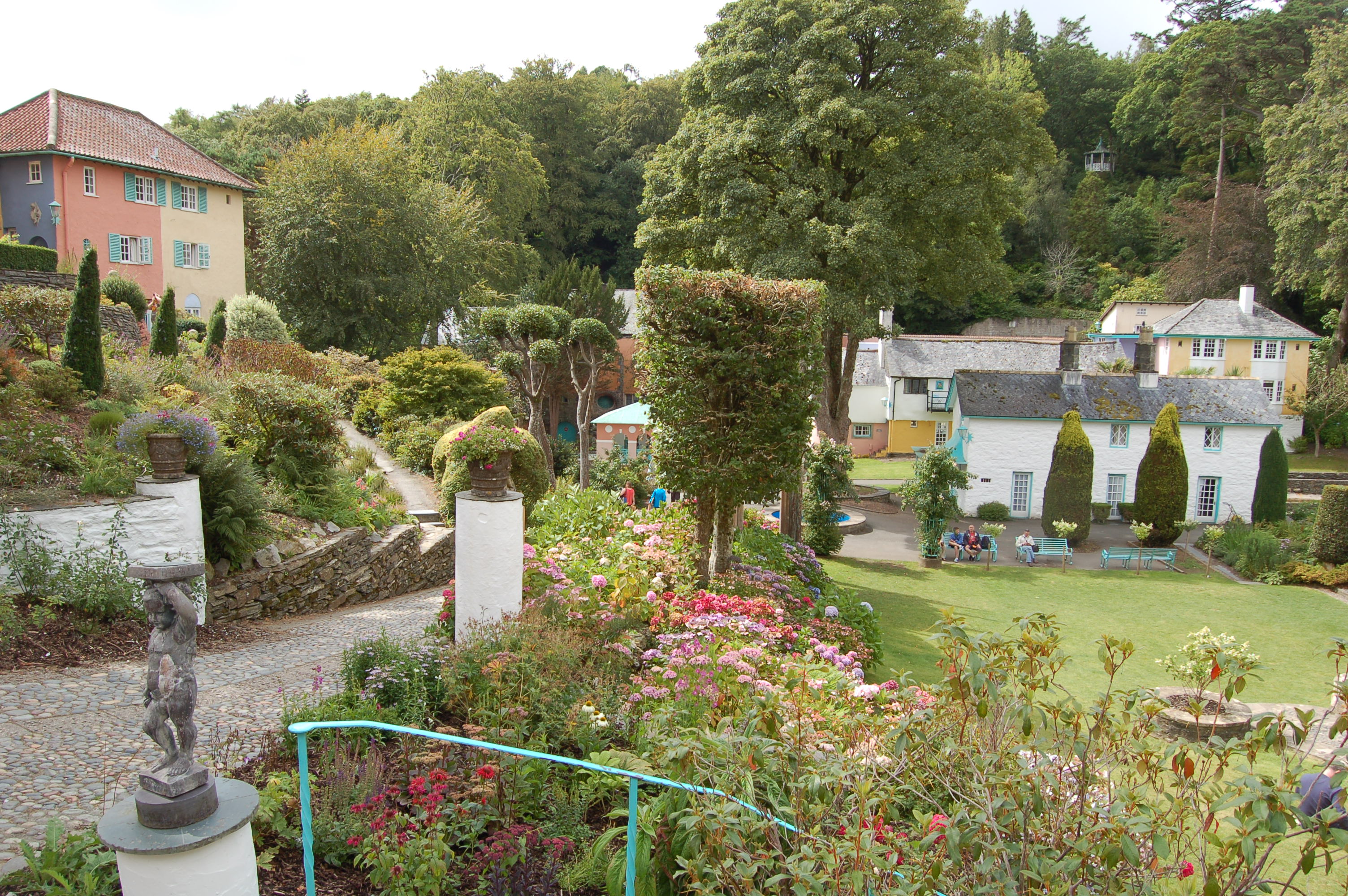
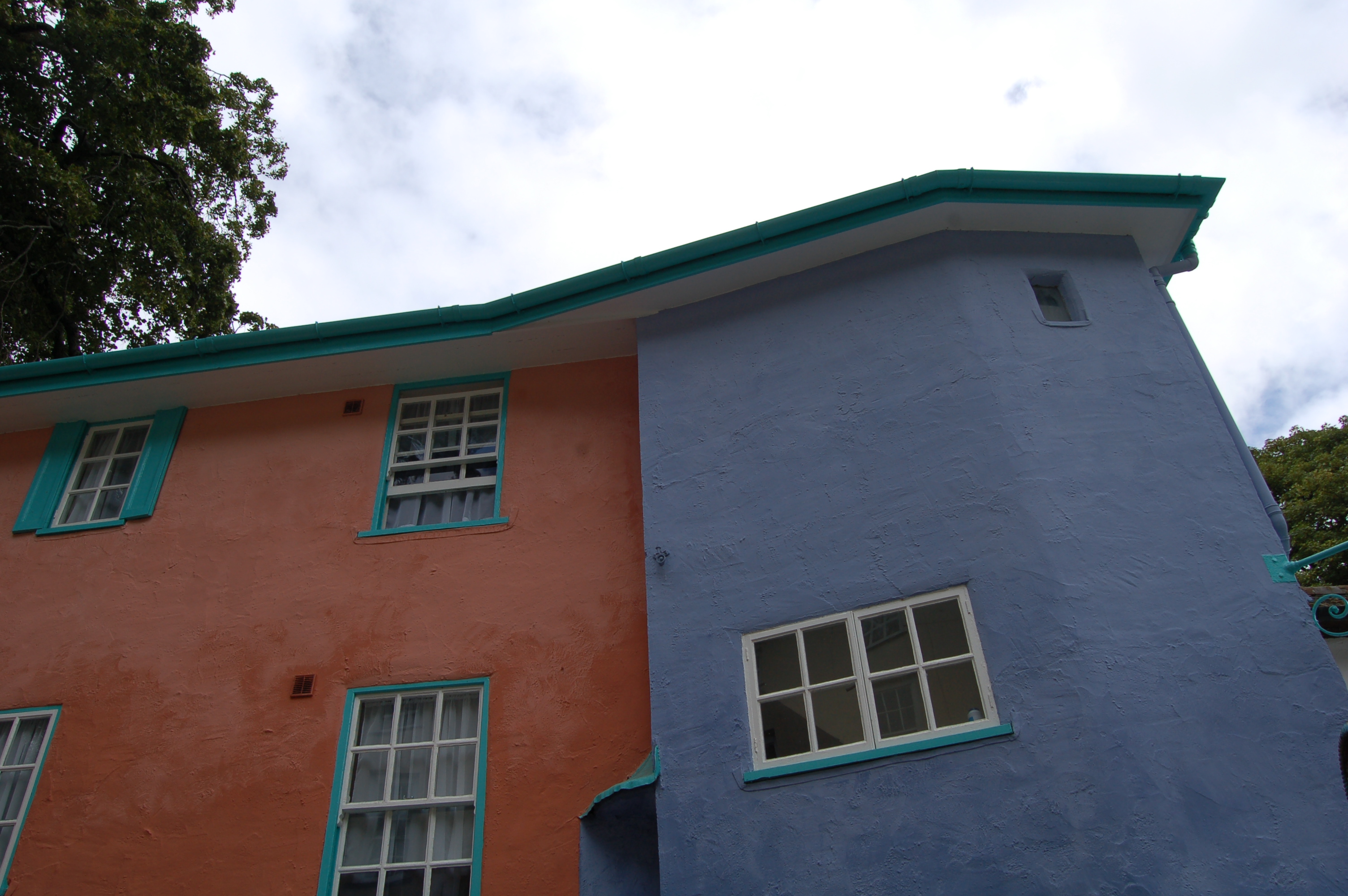
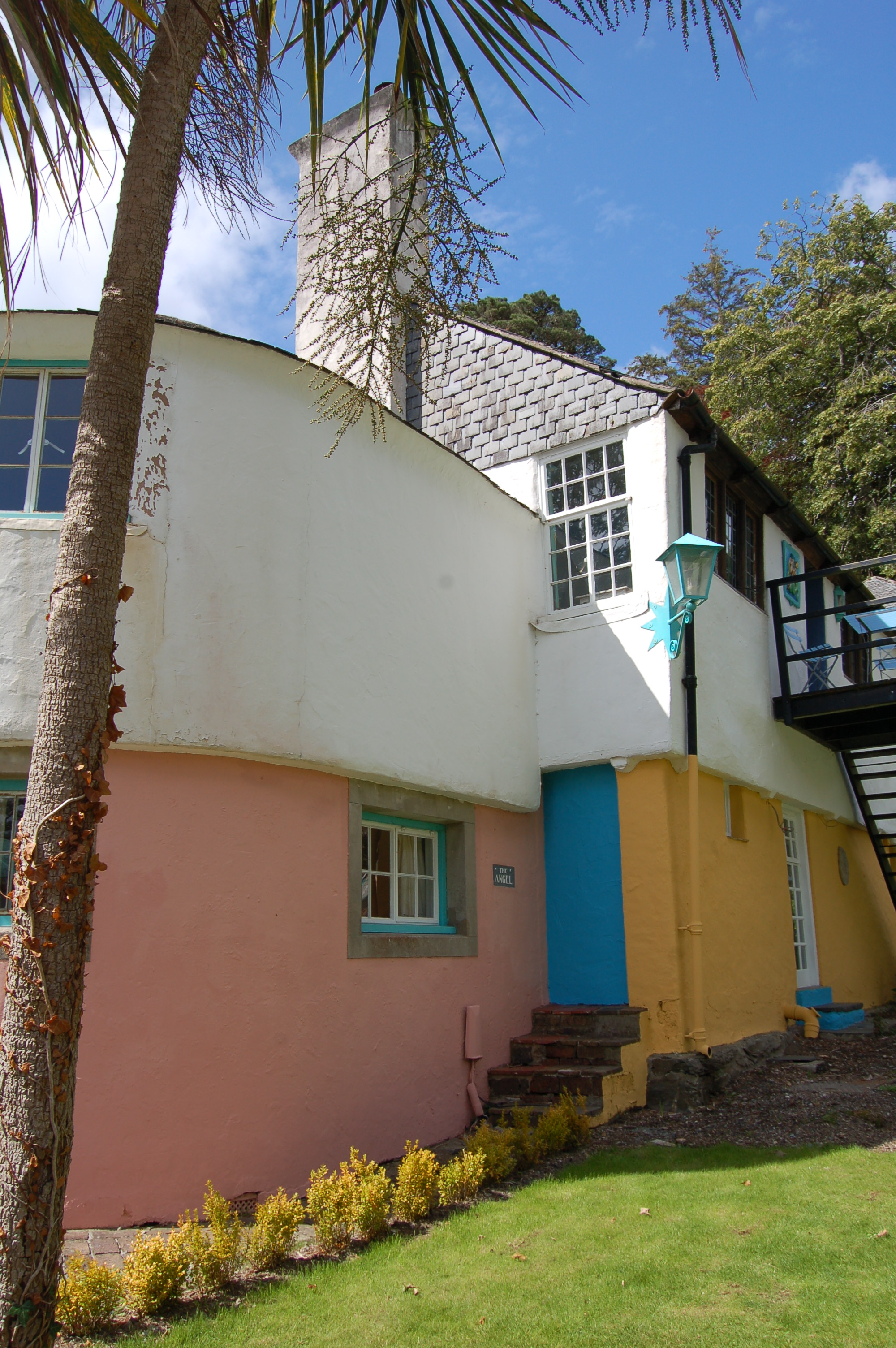
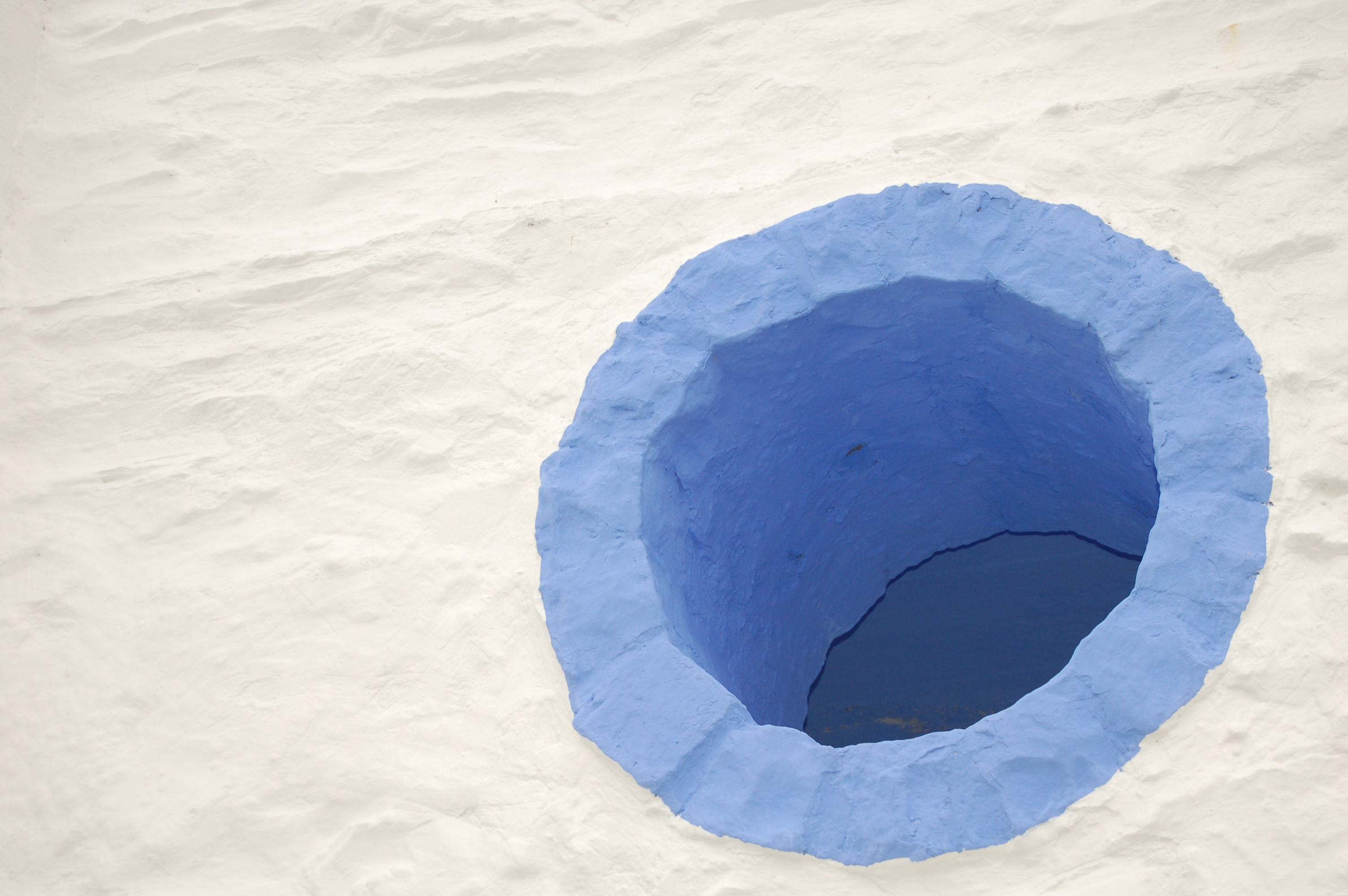
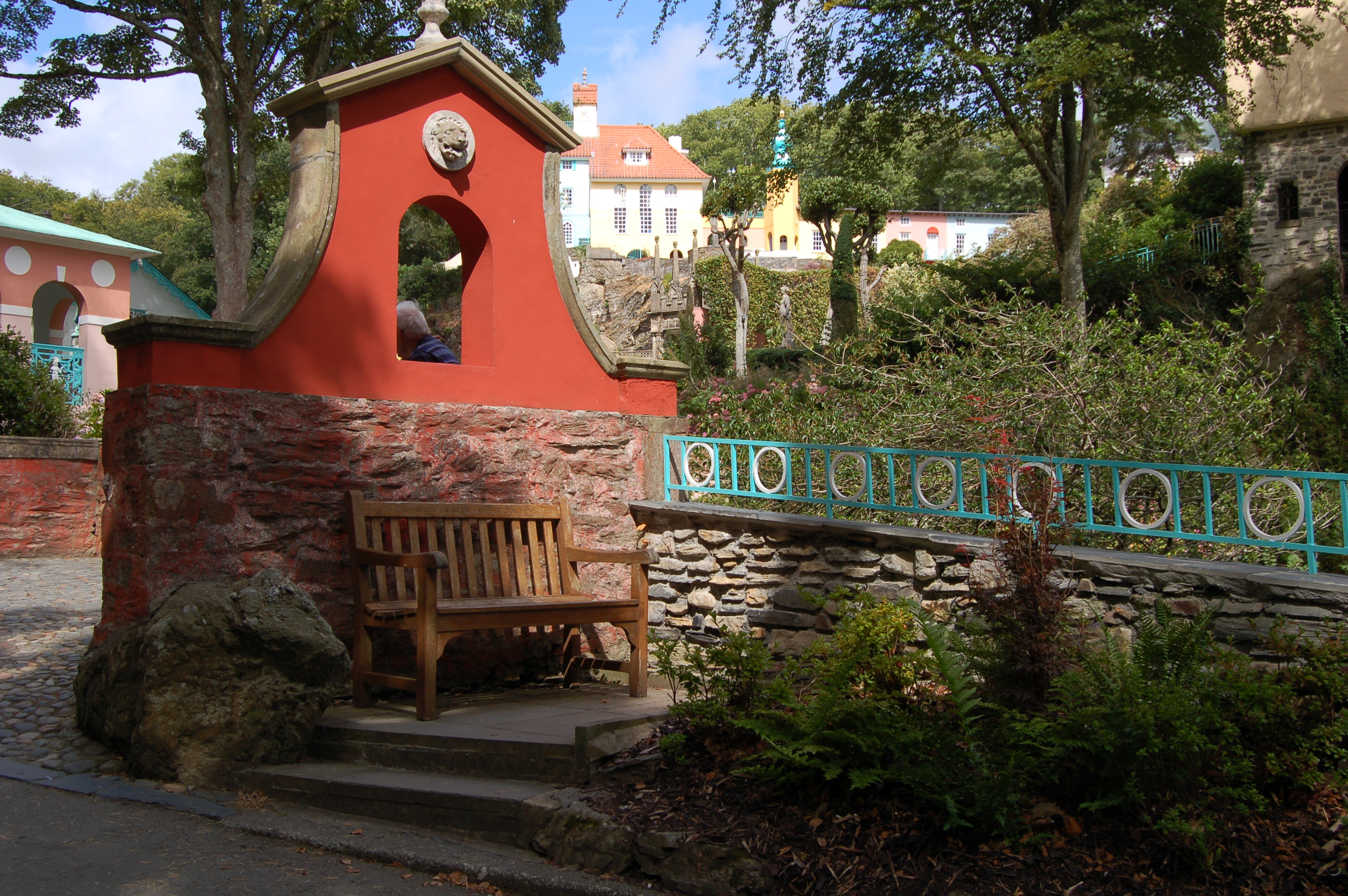
We always enjoy spending the day at this crazy, quirky and totally exuberant “garden” on the Welsh coast near Portmadoc. Portmeiron is a village and gardens created by the eccentric Clough William-Ellis who bought the site in 1925 and then spent the following 50 years developing it into what we can visit and enjoy today.

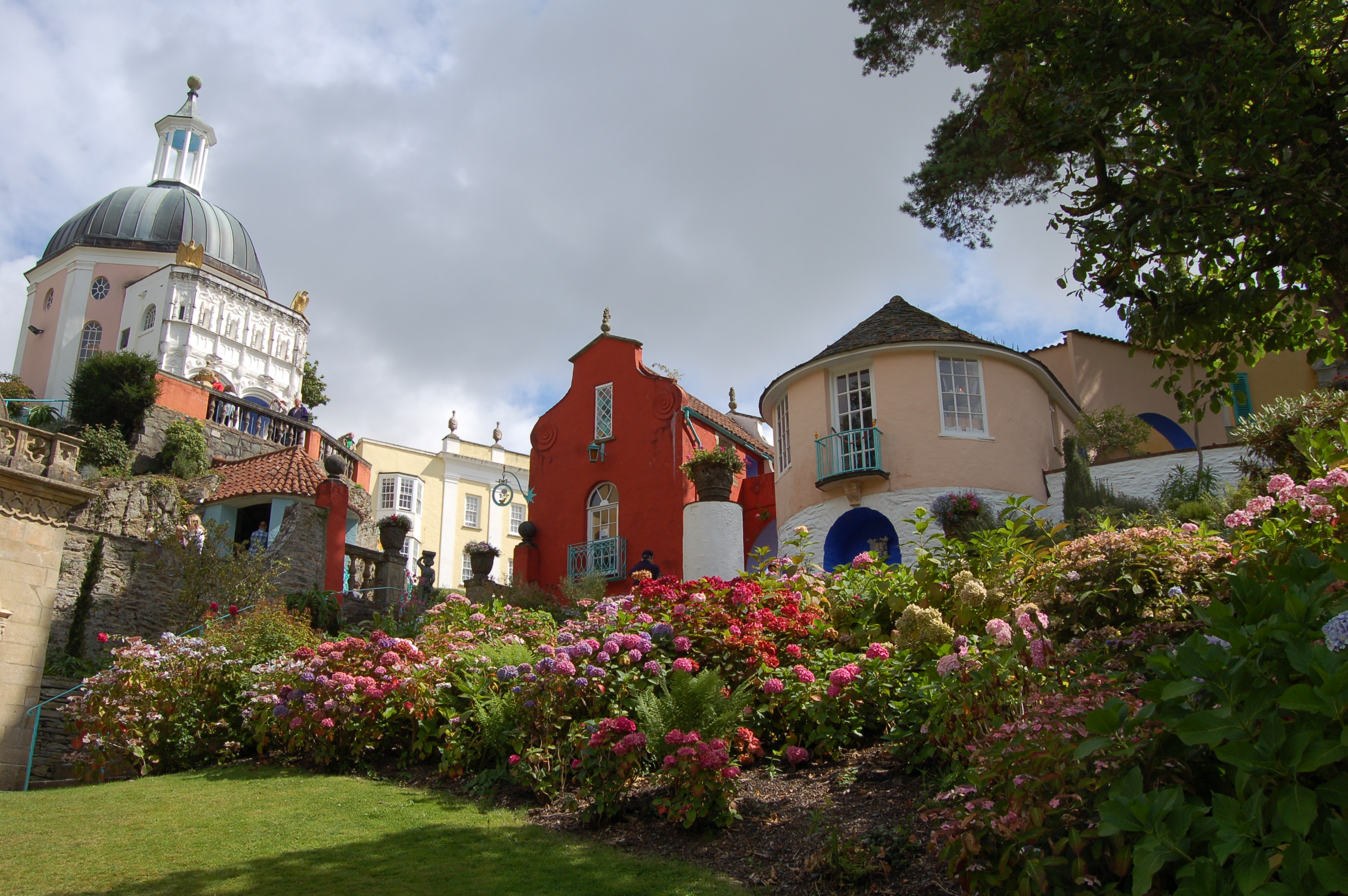
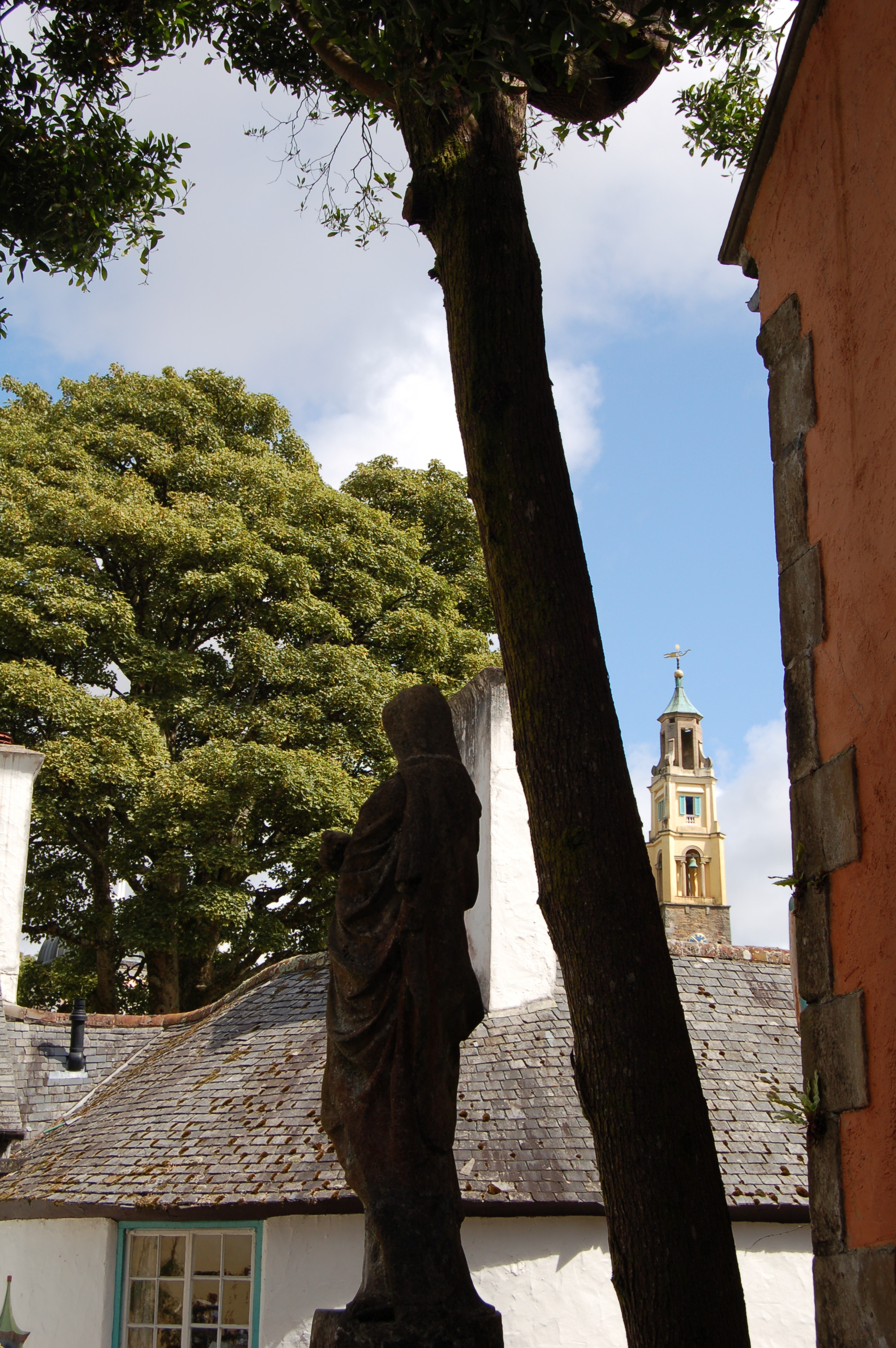
The village is a collection of buildings  reminiscent of an Italianate style. Every wall is brightly painted in an array of extravagant colours. Some are hotels or holiday cottages, others restaurants and cafes while others are shops and galleries. It is a busy little place sitting on a strip of land below the Lleyn Penninsula and it fits snuggly between the beach and a wooded slope.

2014 08 13_3574 2014 08 13_3588

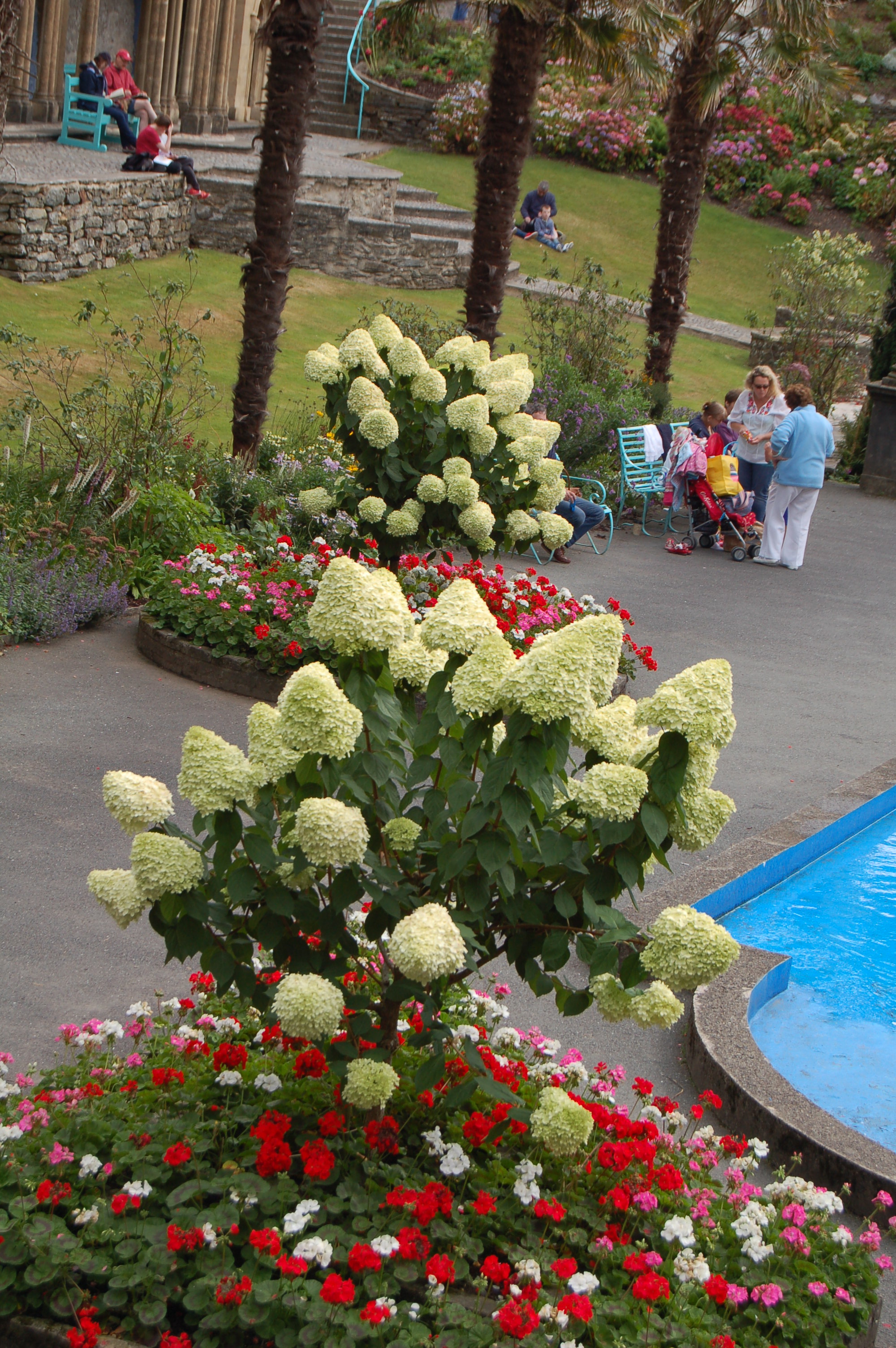
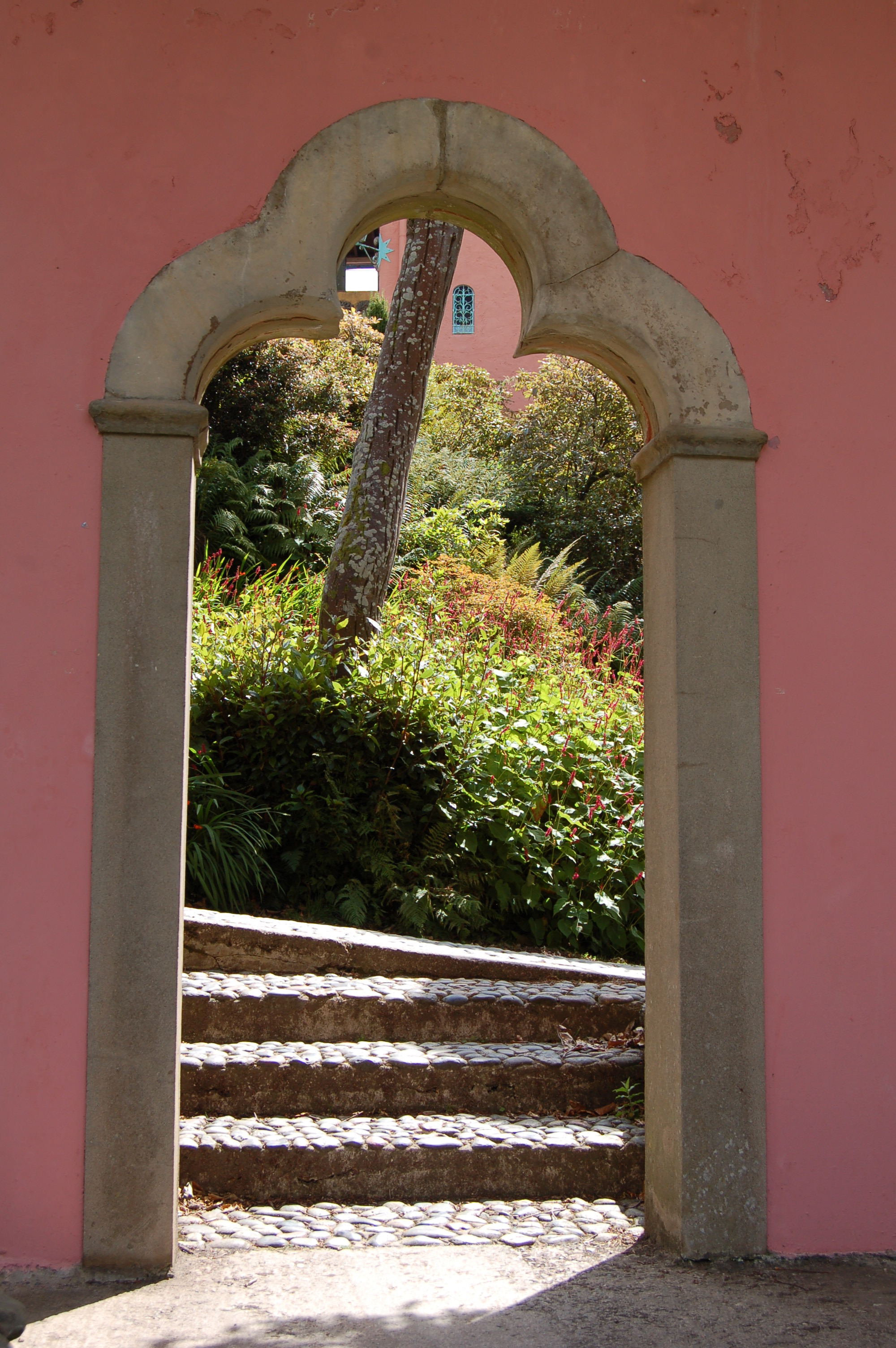
In between the collection of crazy buildings a team  of gardeners work hard to maintain patches of colourful gardens. The soil is both shallow and full of stones and the land is on a steep slope so gardening here is a tough challenge. So come through the towering gateway and wander around with us.

2014 08 13_3569 2014 08 13_3570 2014 08 13_3571 2014 08 13_3573 2014 08 13_3576

2014 08 13_3579 2014 08 13_3580 2014 08 13_3581 2014 08 13_3582 2014 08 13_3583 2014 08 13_3584 2014 08 13_36392014 08 13_3589 2014 08 13_3590 2014 08 13_3592 2014 08 13_3595


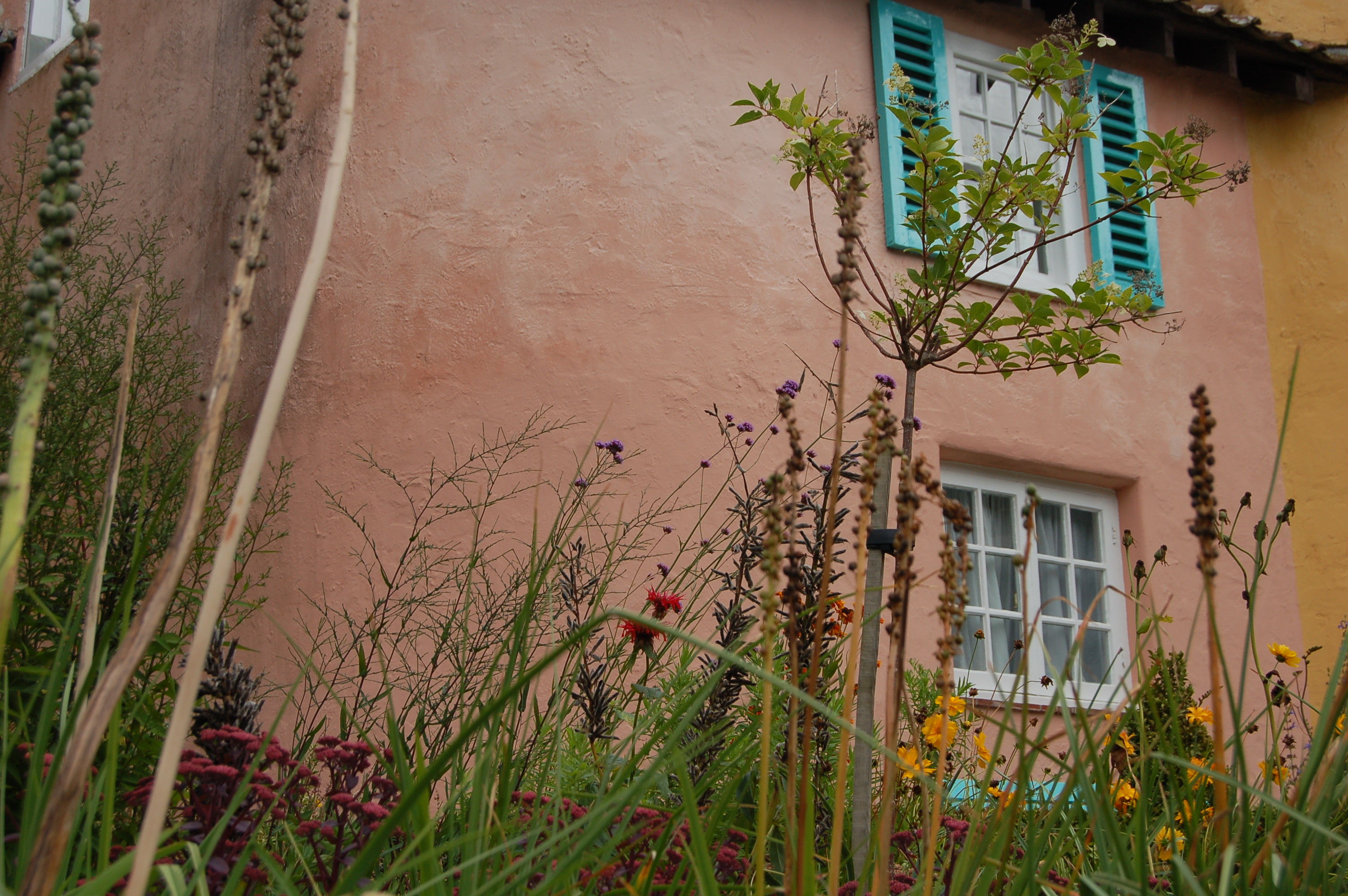
Although the Italianate style of the buildings that fascinates at first glance after a while the interesting juxtaposition of colours begins to catch the eye. Colours that you would not think of putting together when choosing paint for your home actually work beautifully.

2014 08 13_3586 2014 08 13_3597


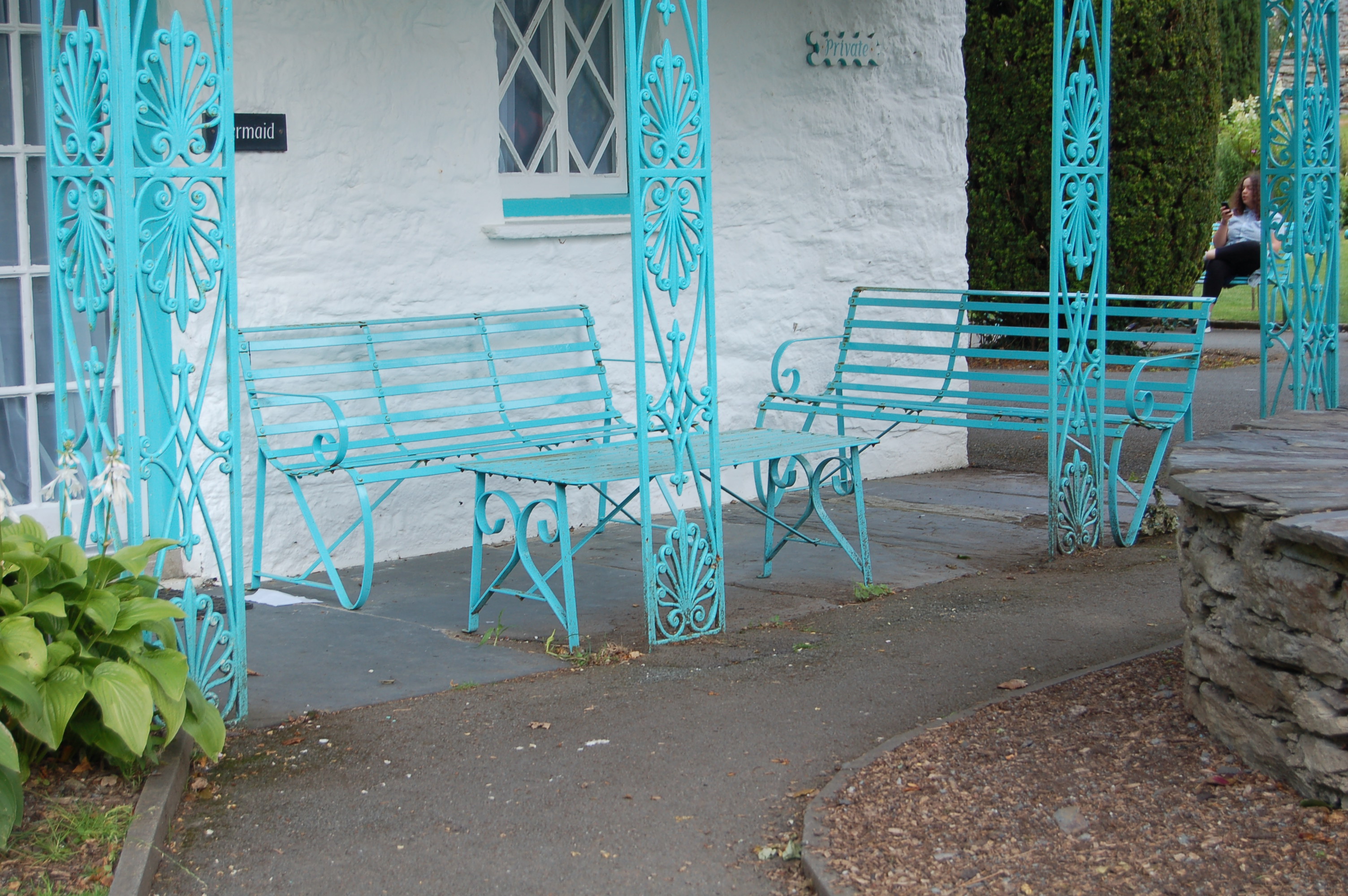
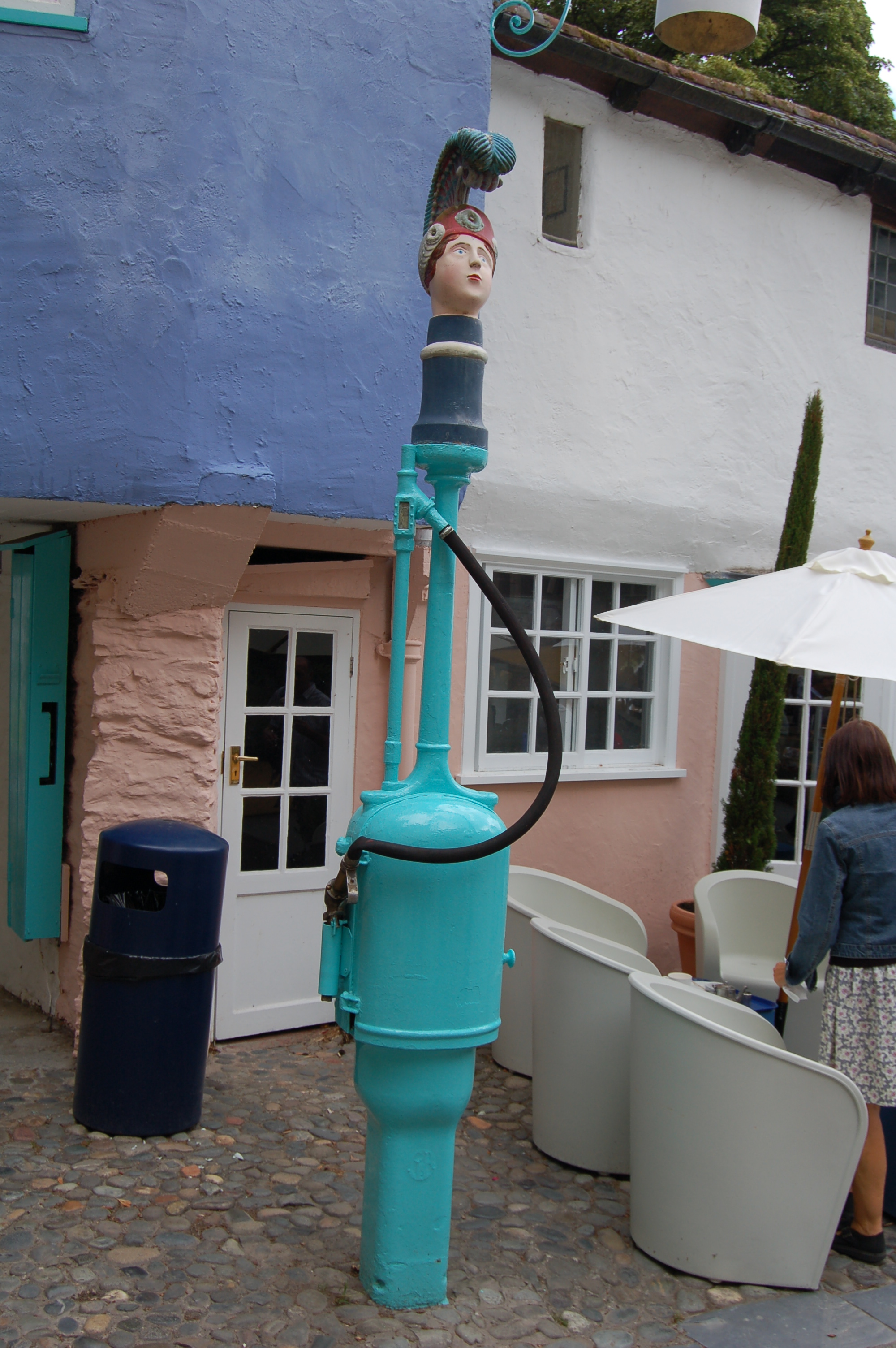
Although the bright colours dominate every scene once your eyes and mind adjust to them interesting details come to the fore, such as these bright blue ironwork, a relief sculpture alongside a ring, classical figures, the beauty of this stone archway and the vintage petrol pump.

2014 08 13_3594 2014 08 13_3598

2014 08 13_3599 2014 08 13_3591 2014 08 13_3585


2014 08 13_3596 2014 08 13_3600

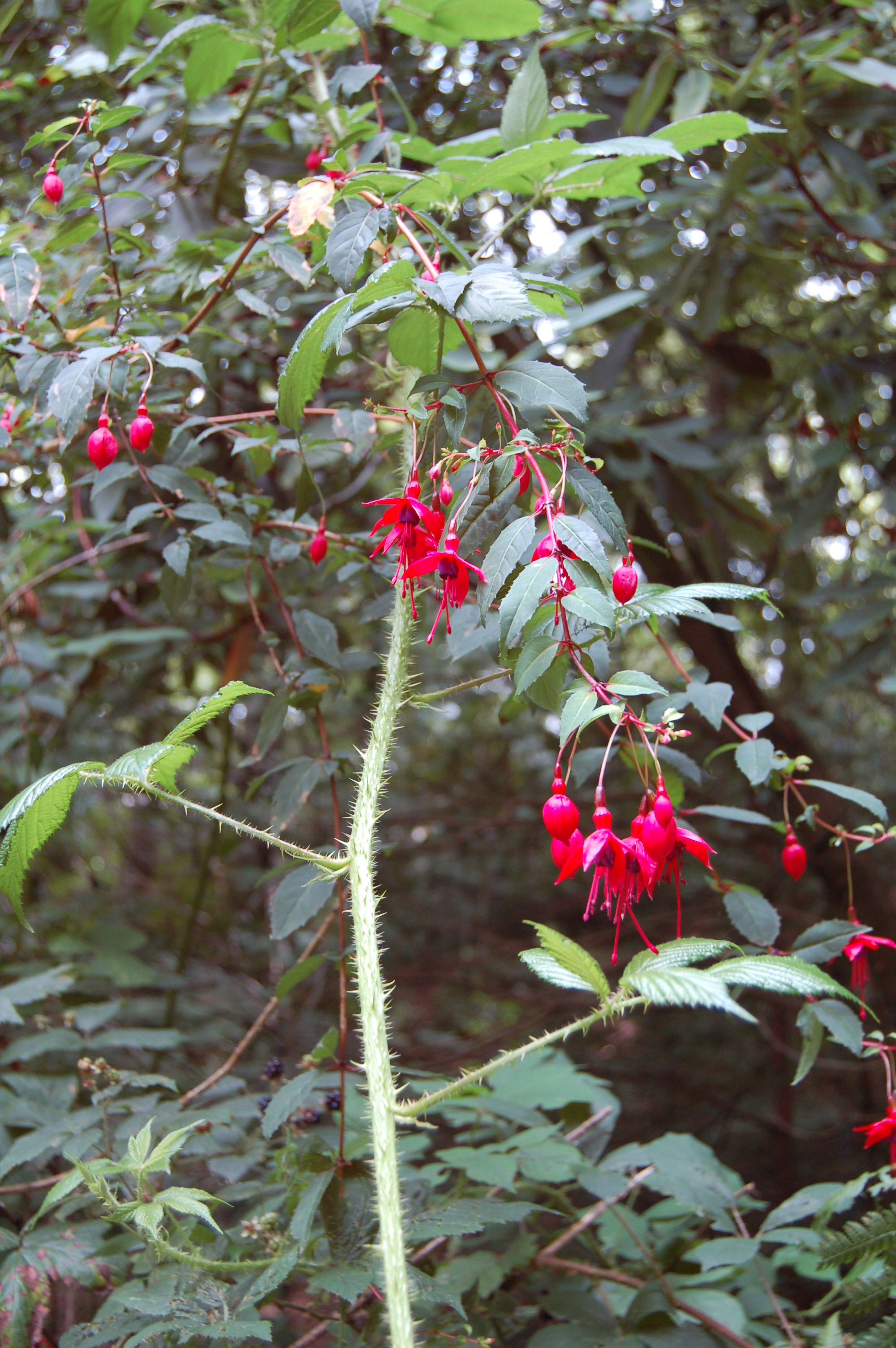
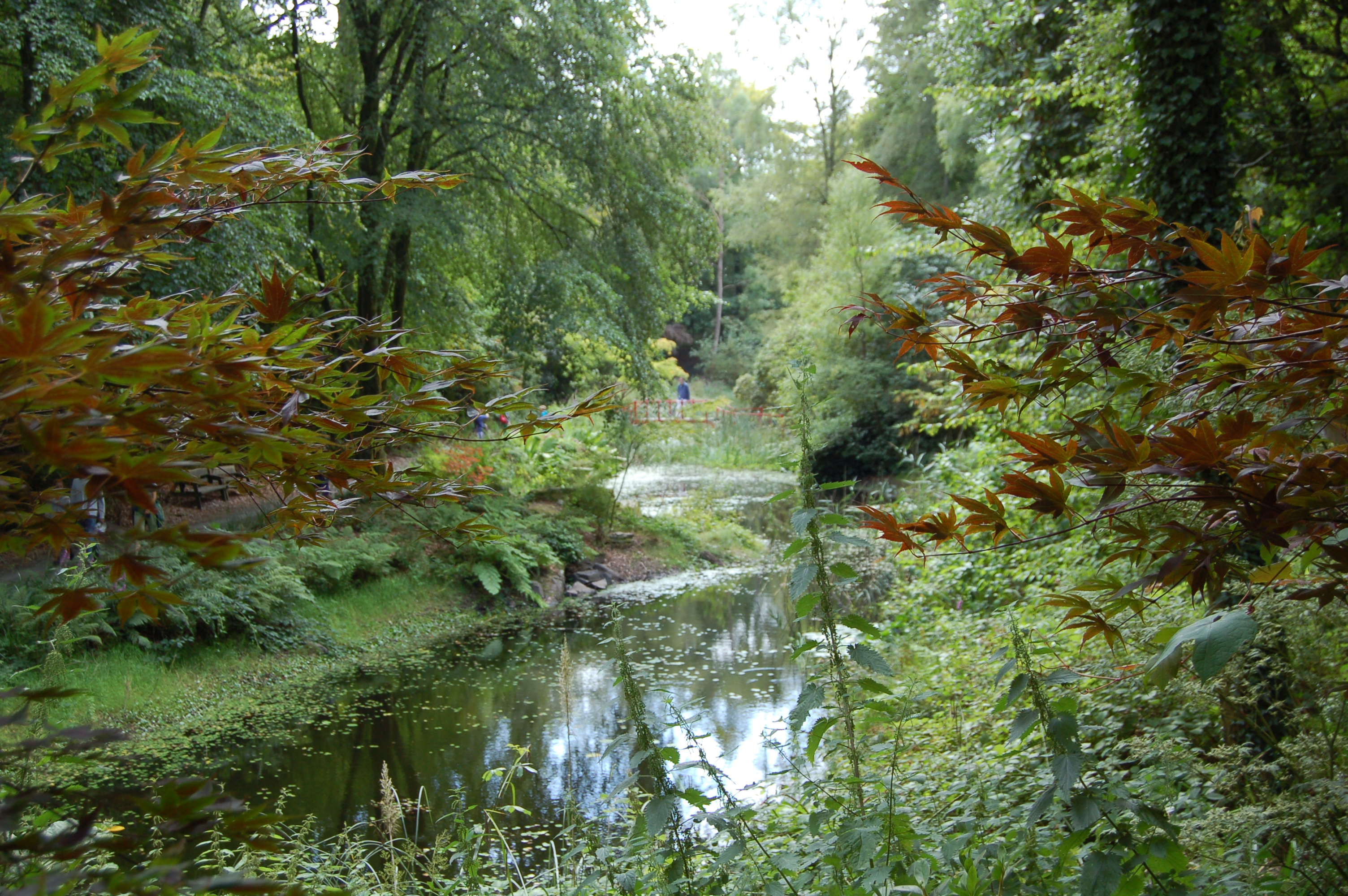
We took a break from the colourful conglomeration of buildings and ambled along through the wooded slopes above the village itself. Here we discovered ancient trees native and cultivated and an atmosphere of peace, with restful greens and relative silence, broken only by the calls and song of birds.

2014 08 13_3602 2014 08 13_3603 2014 08 13_3604 2014 08 13_3605 2014 08 13_3606 2014 08 13_3607 2014 08 13_3608 2014 08 13_3609 2014 08 13_3610 2014 08 13_3611 2014 08 13_3612 2014 08 13_3613 2014 08 13_3614 2014 08 13_3615 2014 08 13_3616 2014 08 13_3617 2014 08 13_3618

2014 08 13_3621 2014 08 13_3622 2014 08 13_3623 2014 08 13_3624 2014 08 13_3625 2014 08 13_3626 2014 08 13_3640

We followed the woodland path until we found ourselves close to the cliff tops and followed it down towards the shore, where the buildings began again. This time they had a maritime twist to their architecture with white and blue colours dominating.

2014 08 13_3628   2014 08 13_3629 2014 08 13_3630 2014 08 13_3631 2014 08 13_3635

As the road way climbed upwards we returned to the brightly coloured buildings of the village.

2014 08 13_3601 2014 08 13_3636

2014 08 13_3637 2014 08 13_3638 

We were fascinated by the interest of some visitors in particular buildings which it appears were featured in a TV series from the 1960’s, The Prisoner, which still has a strong cult following. It adds yet another layer of interest to this utterly fascinating “one-off” place.

Categories
architecture buildings canals Church architecture outdoor sculpture photography renovation sculpture townscapes

Gloucester Docks

2014 06 25_1213 2014 06 25_1214

We had a weekend away recently and passing near to Gloucester on our way back decided to drop into the city and make a return visit to its historic docks. We had not been there for about 30 years and even then it was at the start of a rebirth. A few of the old dockside warehouses had been restored and given a new lease of life. We had gone specifically to see the “Opie Collection” which was an amazing collection of old packets and packaging. we were wondering how the development had fared and if it had an air of rebirth and vibrancy such as developments at Cardiff Dock and Merseyside’s Albert Dock had managed to achieve.

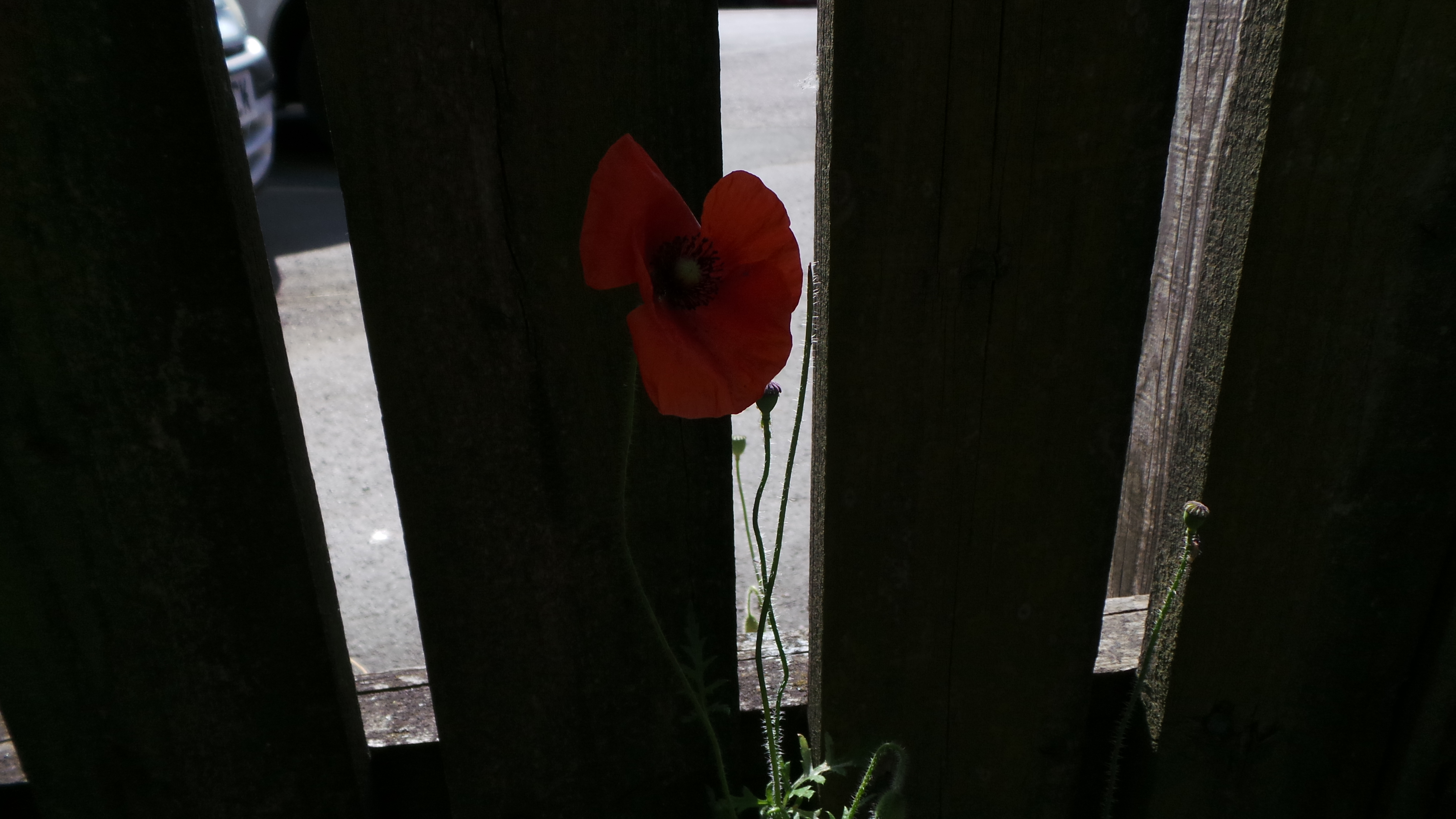
Trying to park was not easy – they hadn’t got that right! And the road signs all around were dreadful but we did manage to park and found our way to the dock area. It was definitely worth the effort. It seemed at first glance to be lively and well-used with little sign of the dereliction that curses most dock areas. On the walk from the car park to the docks I spotted these red poppies bursting with colour and energy through a crack in the pavement. They glowed against the black fence. I loved the image of nature breaking through the concrete and adding a touch of softness to the rigidity of man-made structures.

2014 07 27_2146 2014 07 27_2148

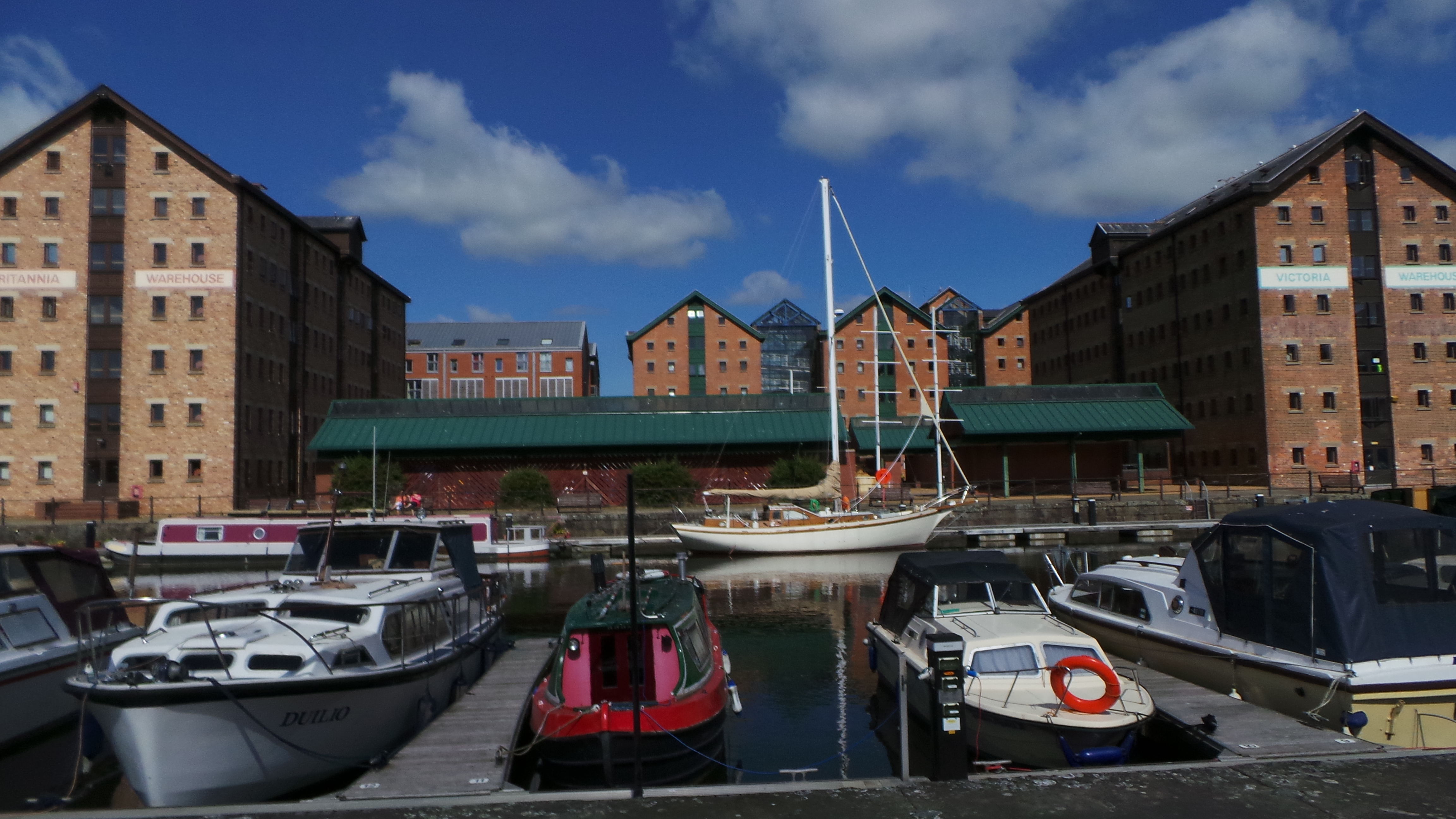
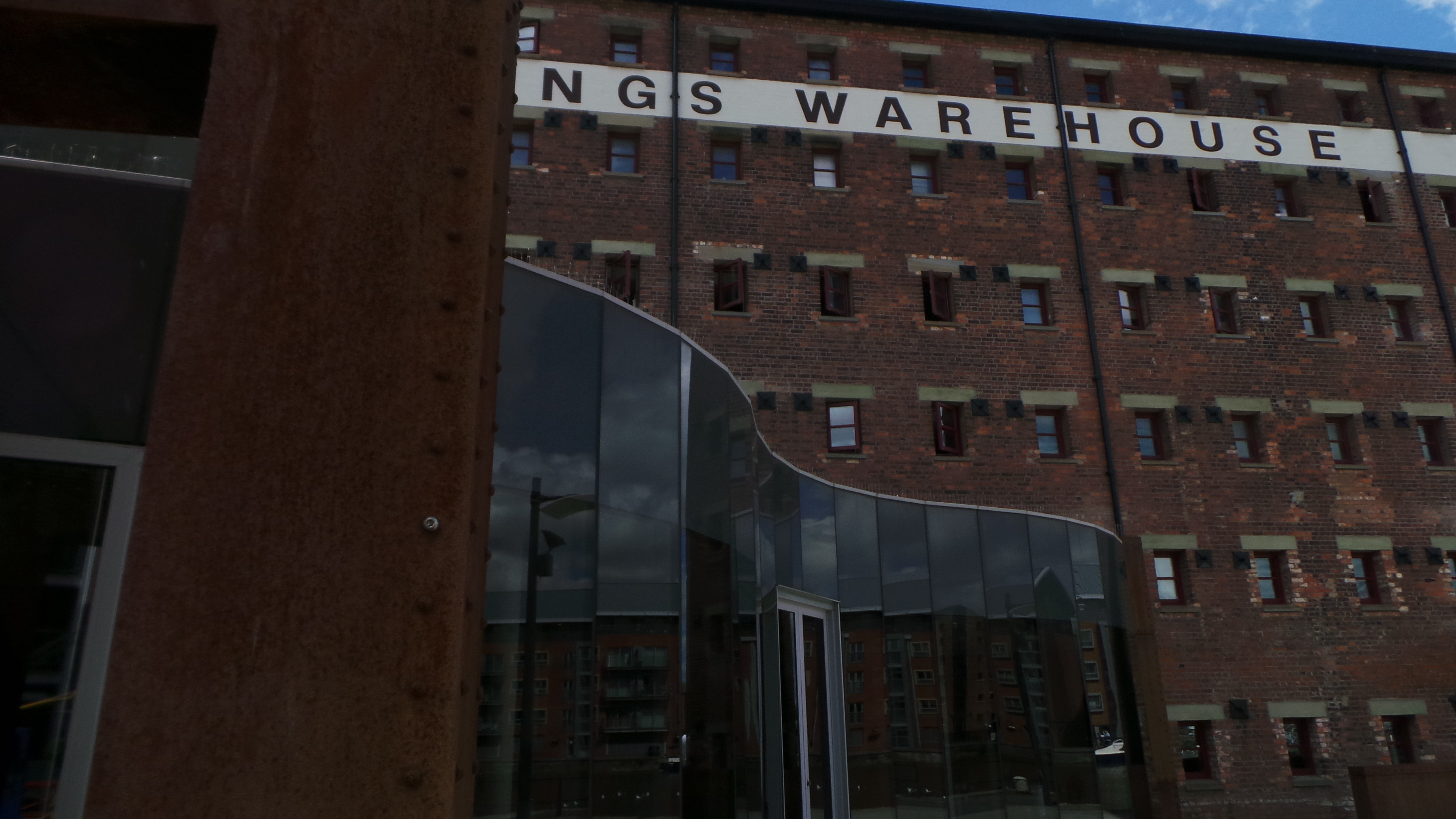
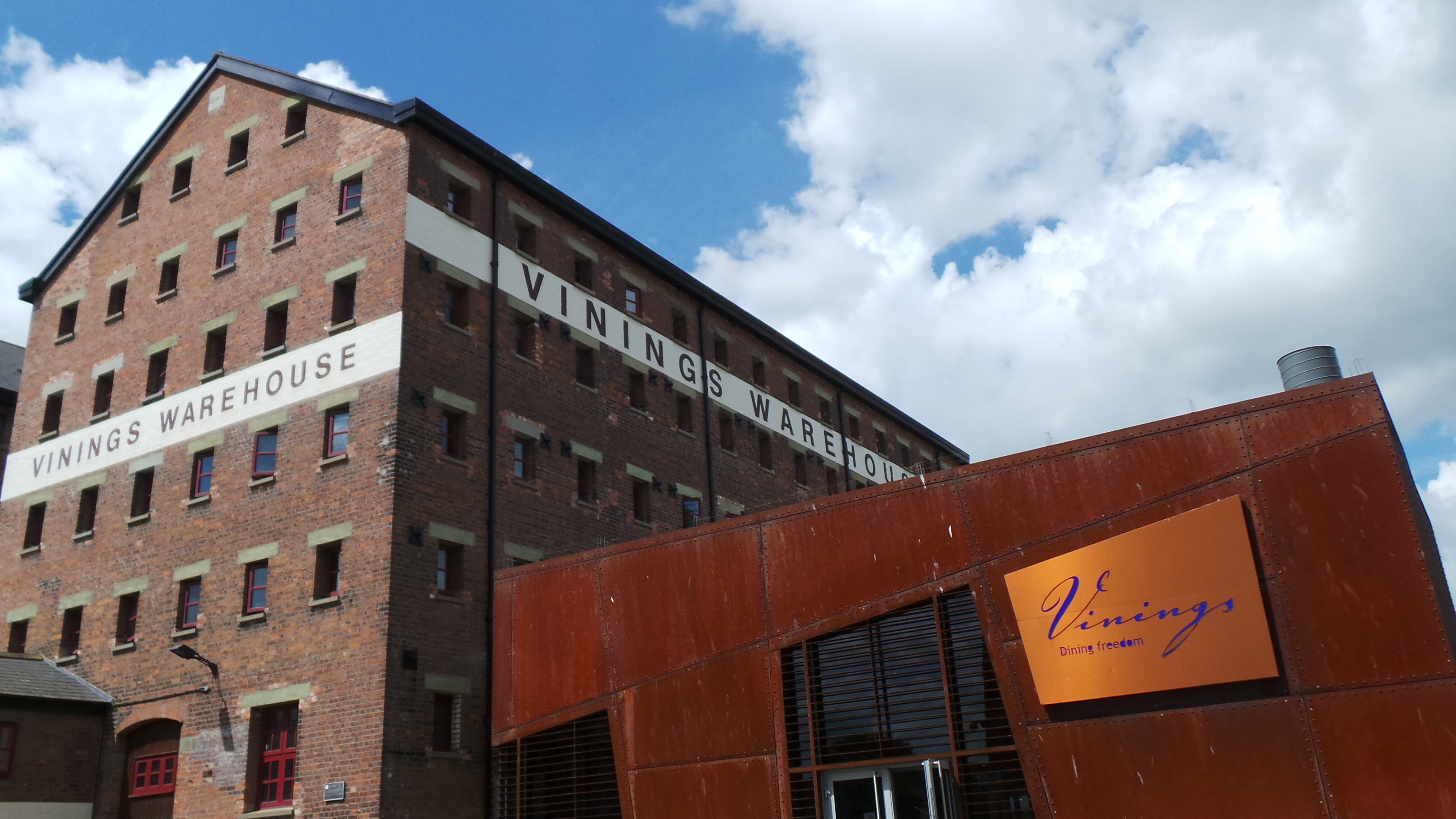
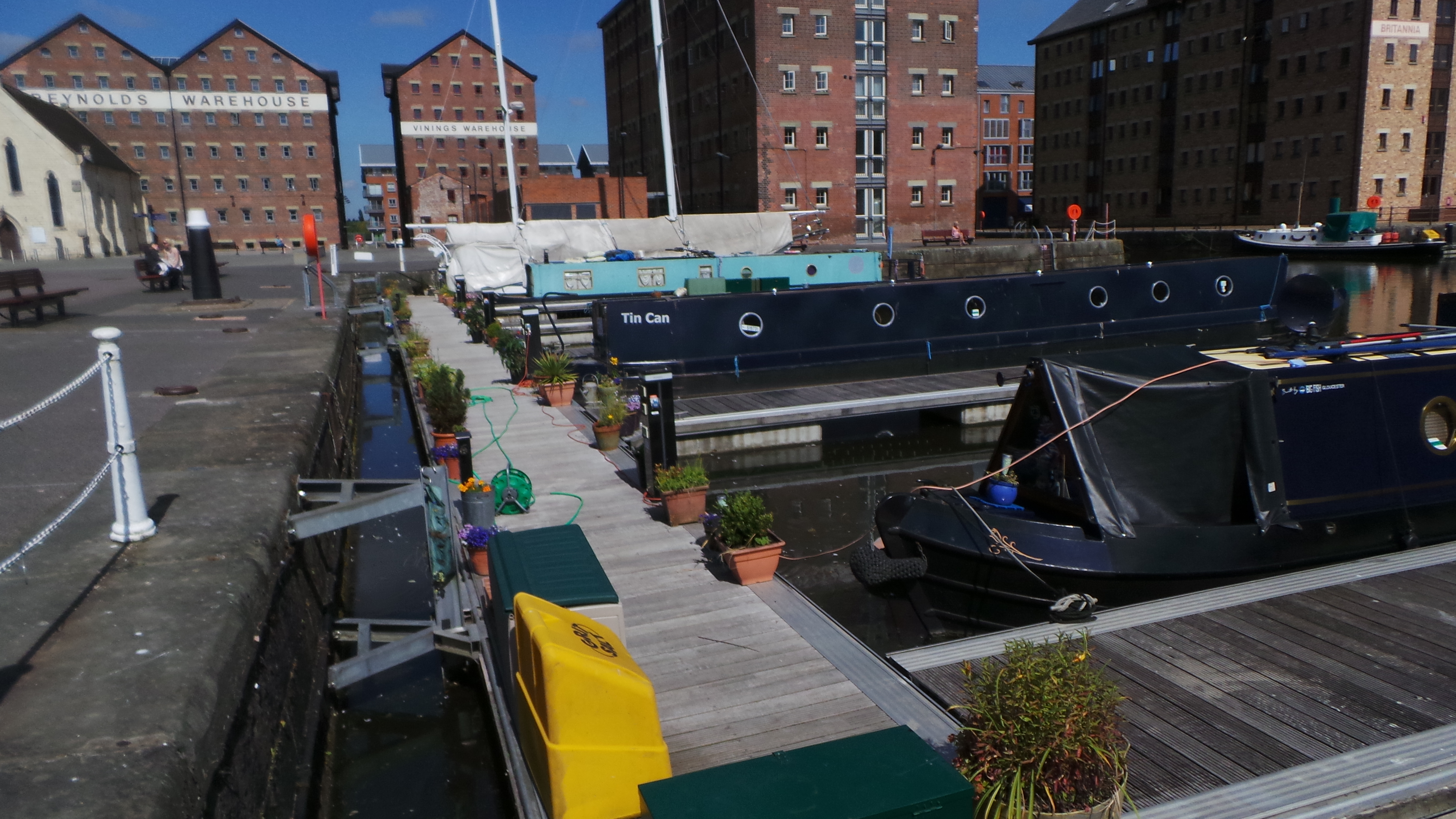
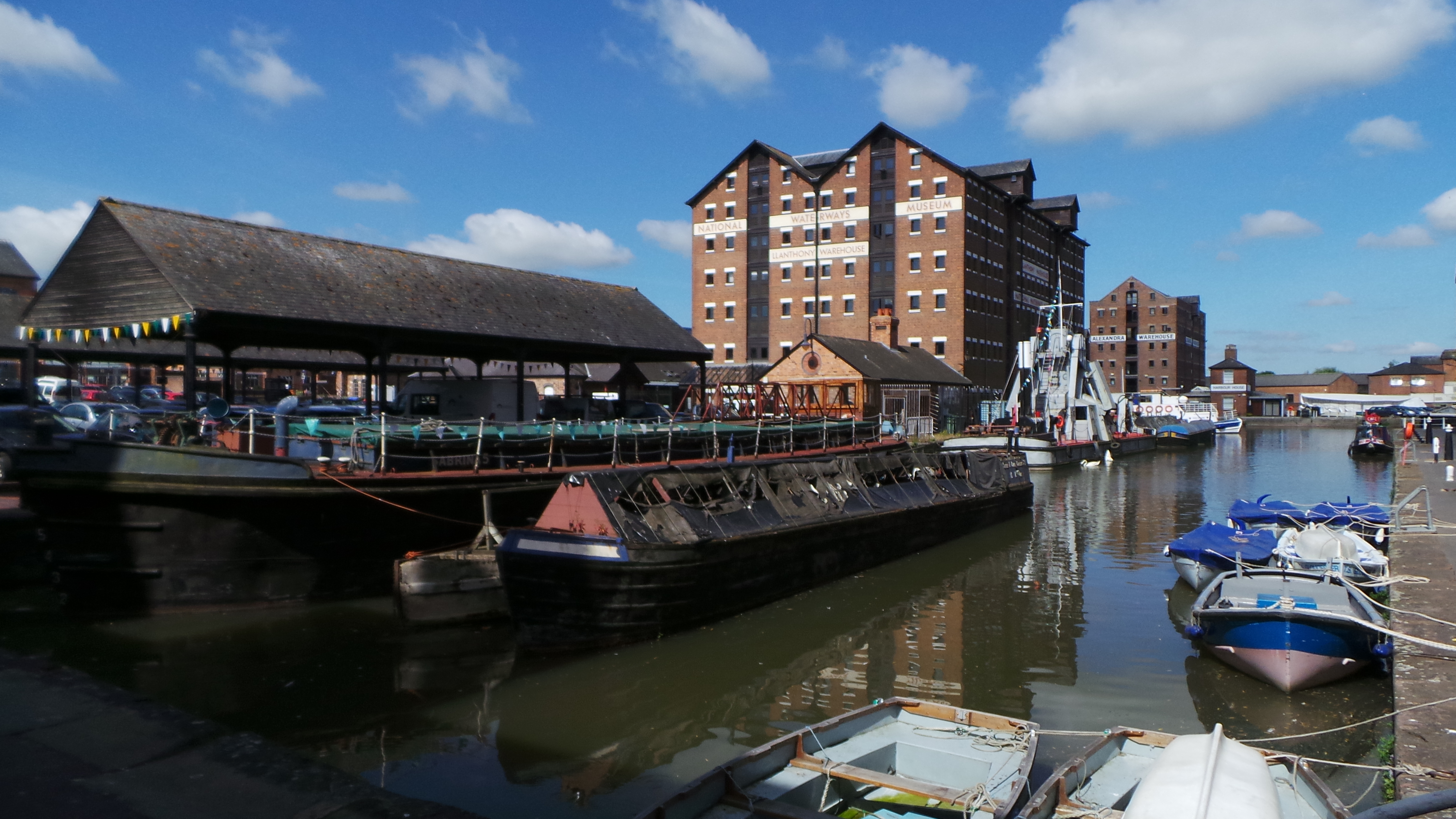
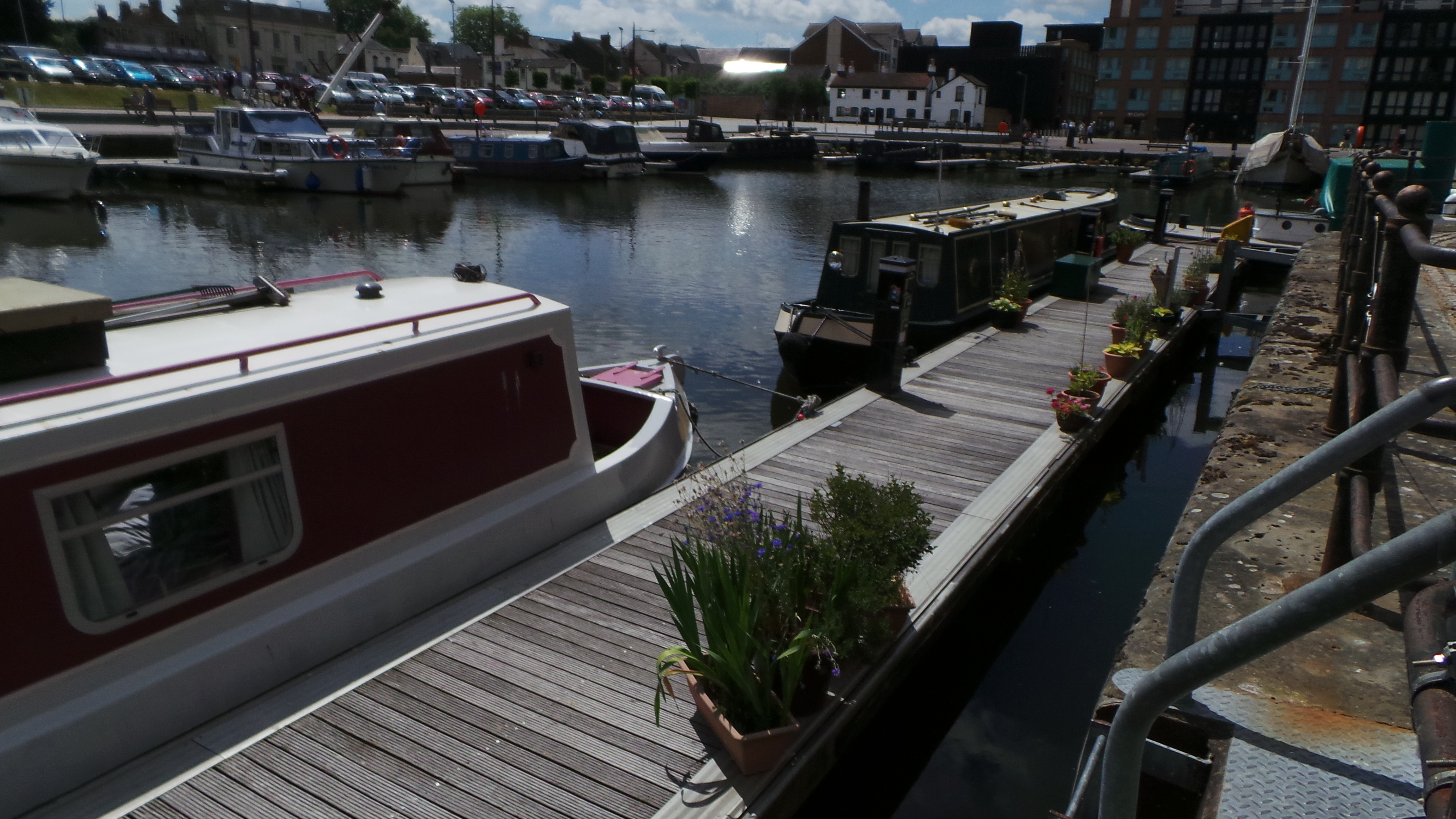
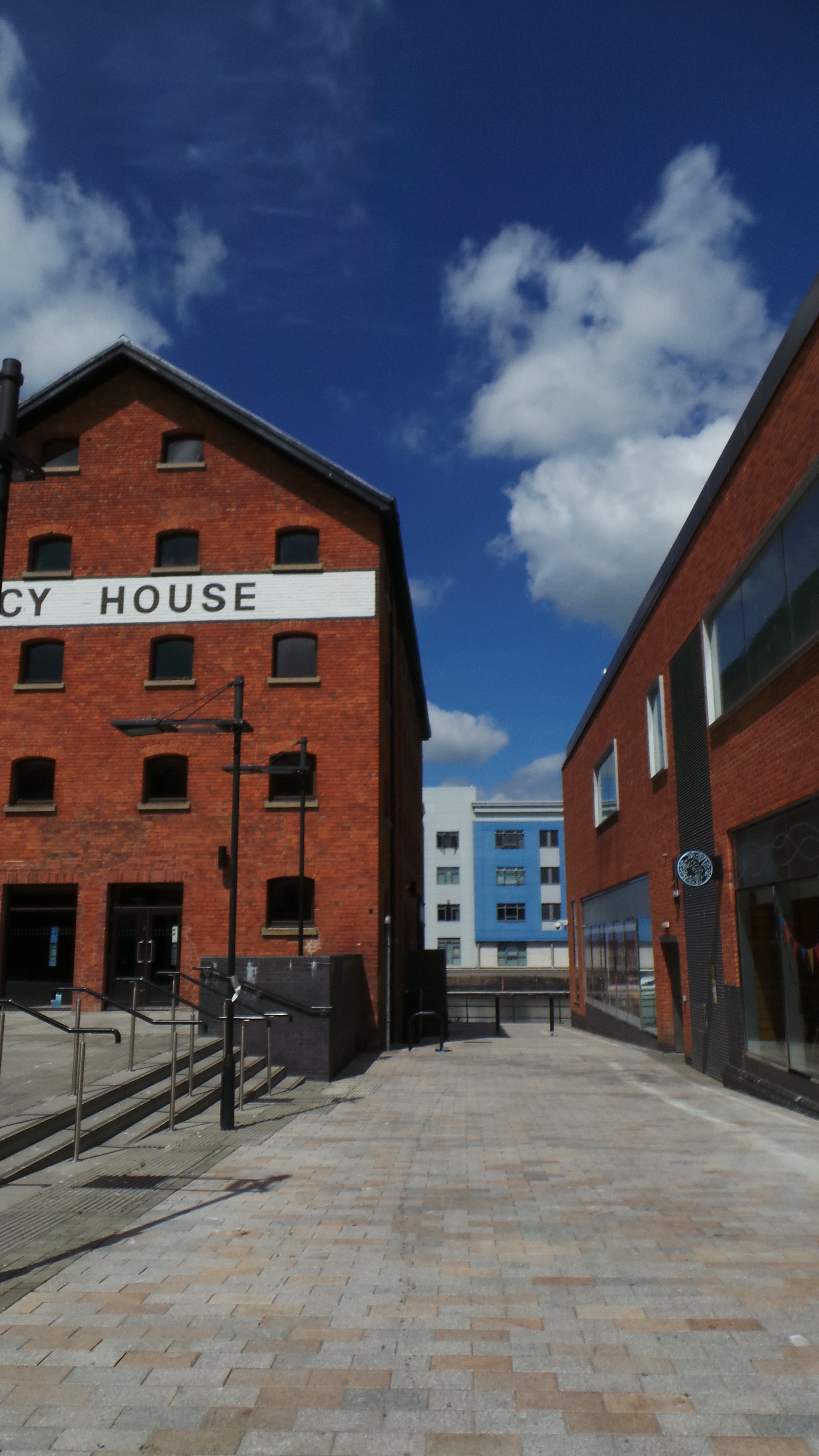
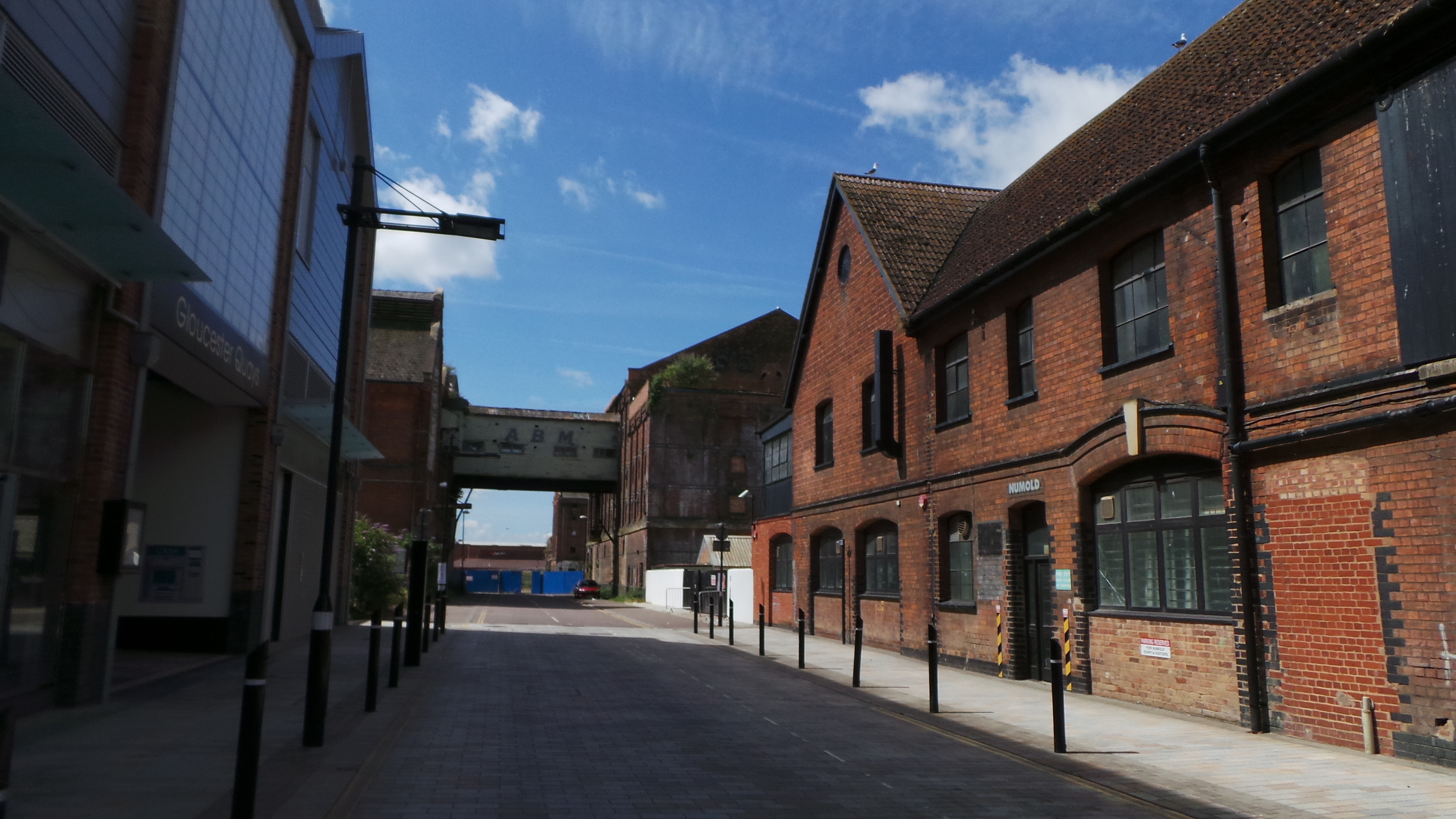
As we entered the docks themselves after a short walk we were instantly amazed by the lively feel of the place. New life had been given to dereliction and what once were working docks and warehouses had been given a second chance to burgeon as leisure, retail and new homes.

2014 06 25_1220 2014 06 25_1245

2014 06 25_1213 2014 06 25_1223


2014 06 25_1250


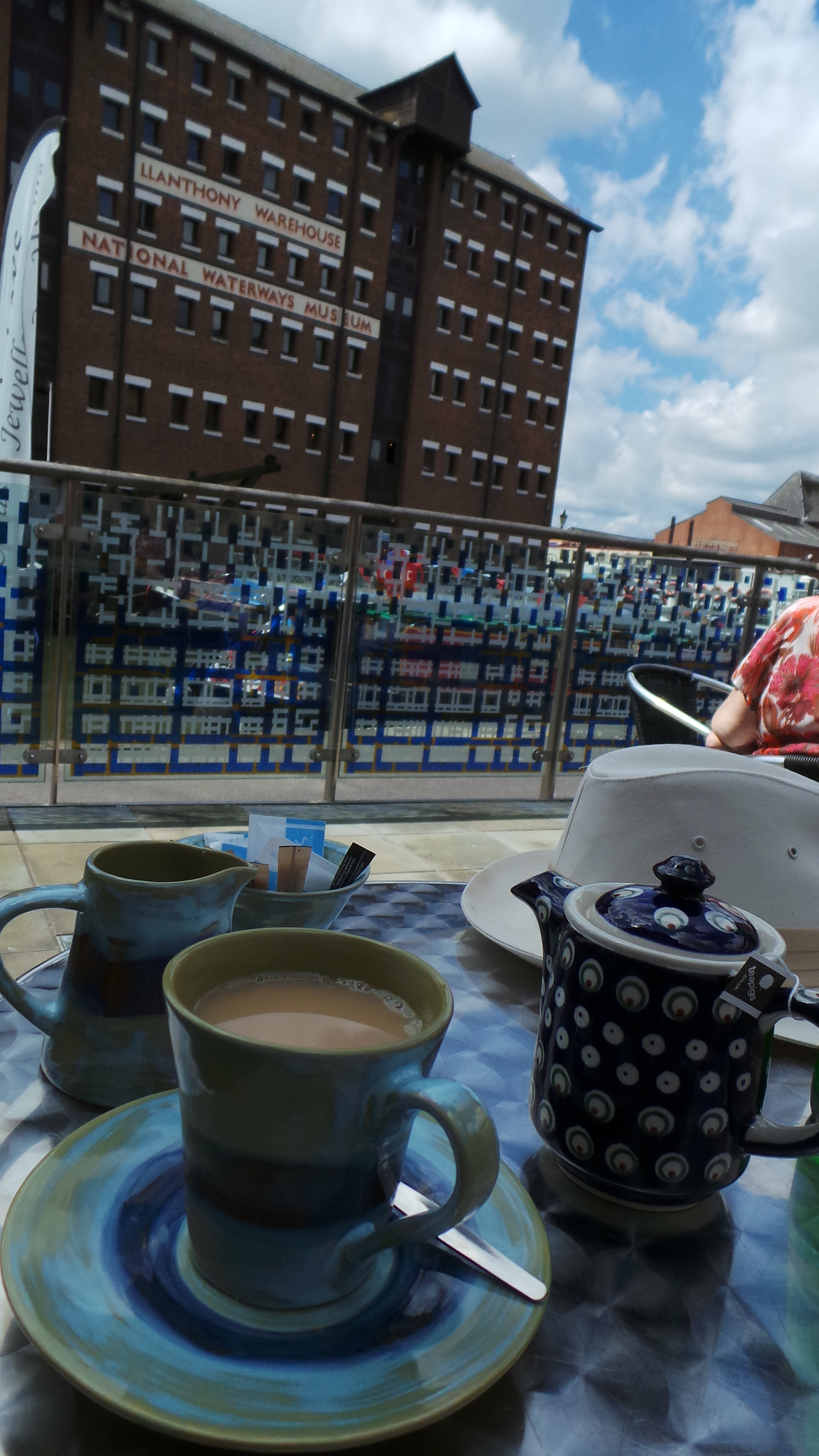
As usual in these reborn docks plenty of coffee shops beckoned. In the evening there are also plenty of restaurants to entice the evening visitors.

2014 06 25_1225 2014 06 25_1261


2014 06 25_1257 2014 06 25_1258


2014 06 25_1252 2014 06 25_1251

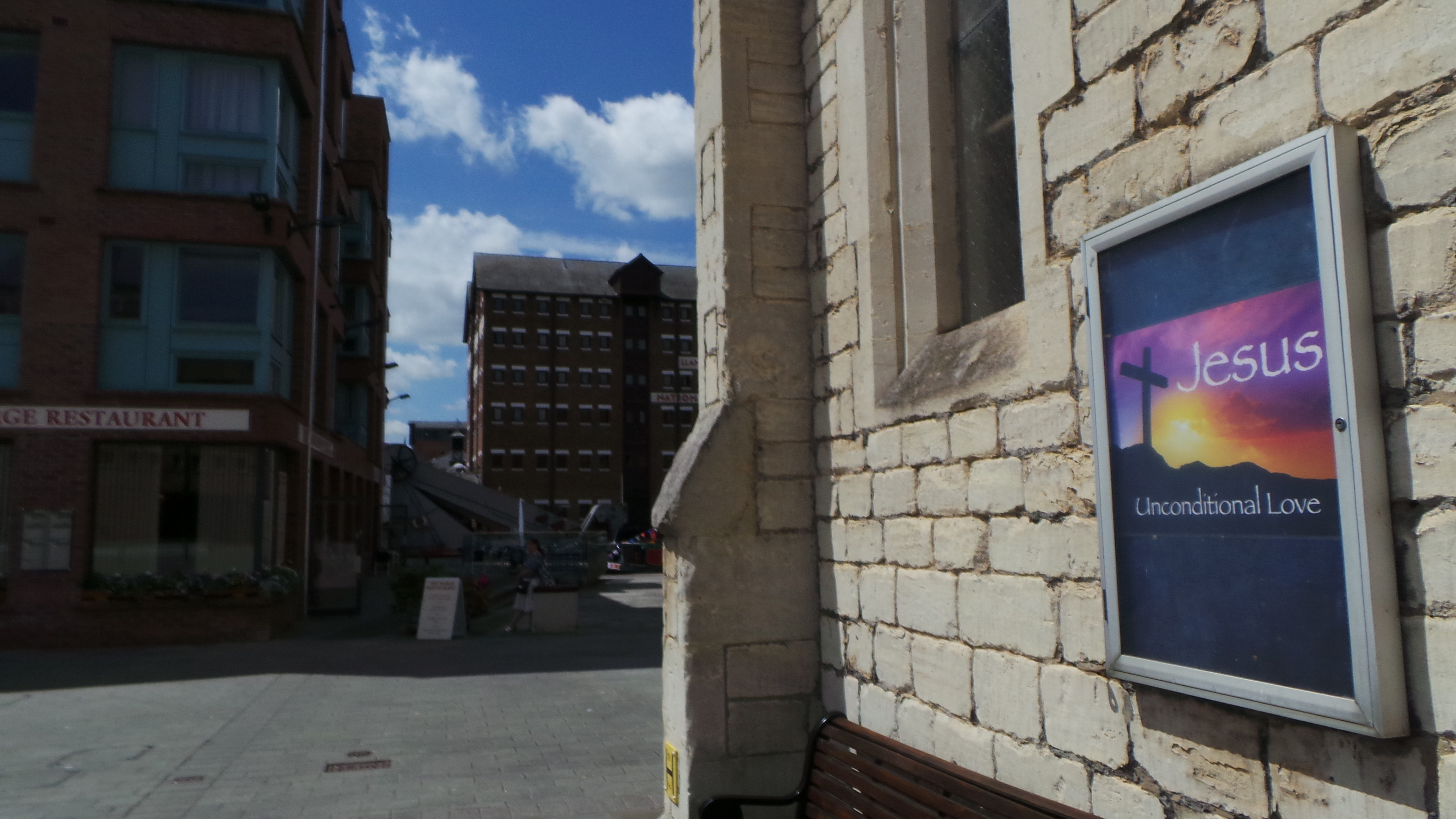
While we turn to restaurant and cafe for refreshment today, in times gone by when the docks were places of strenuous often dangerous labours the dockworkers and bargemen would have turned to religion so all of the larger docks provided a chapel. Gloucester was no exception.

2014 06 25_1253

2014 06 25_1254 2014 06 25_1255

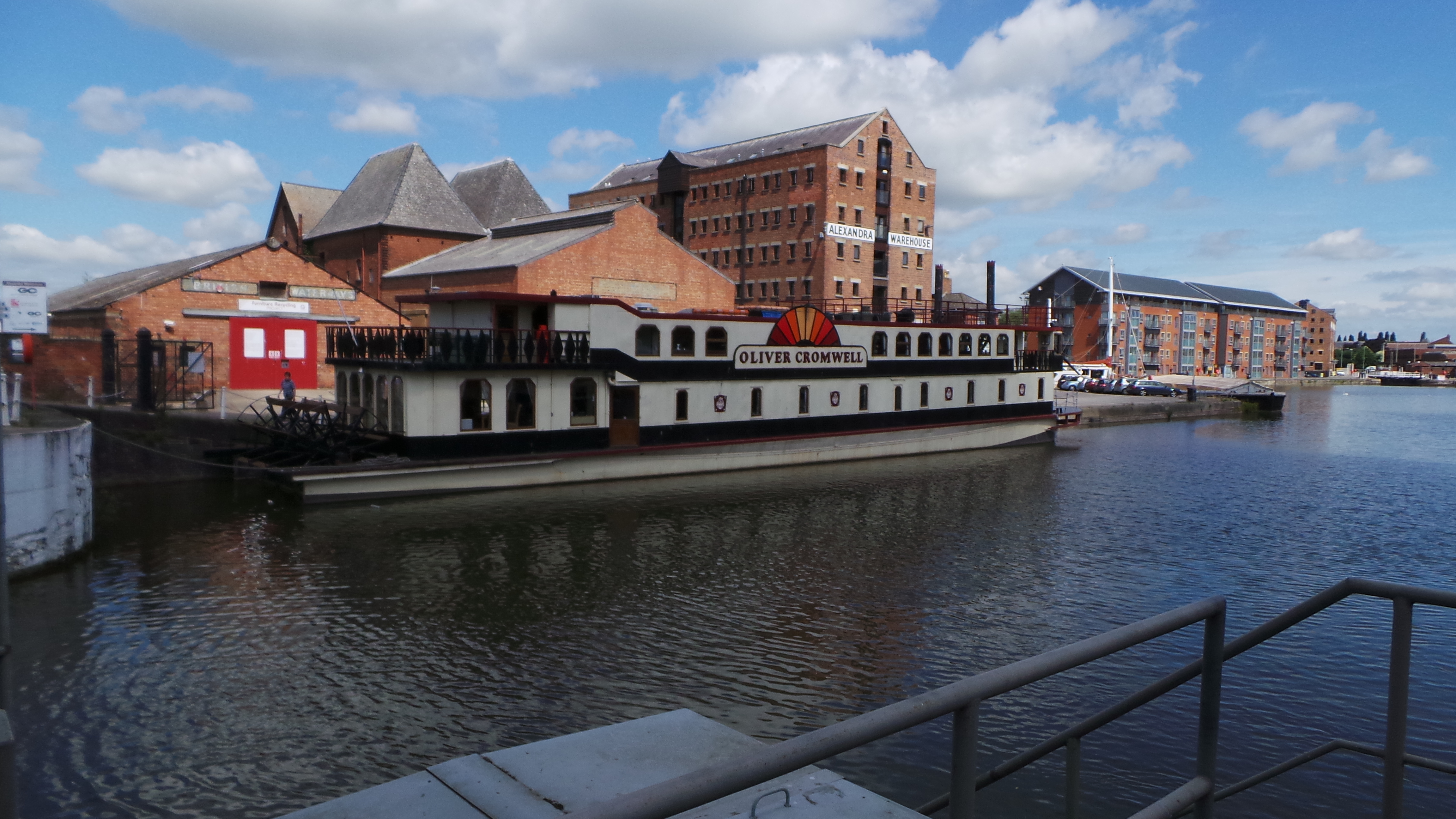
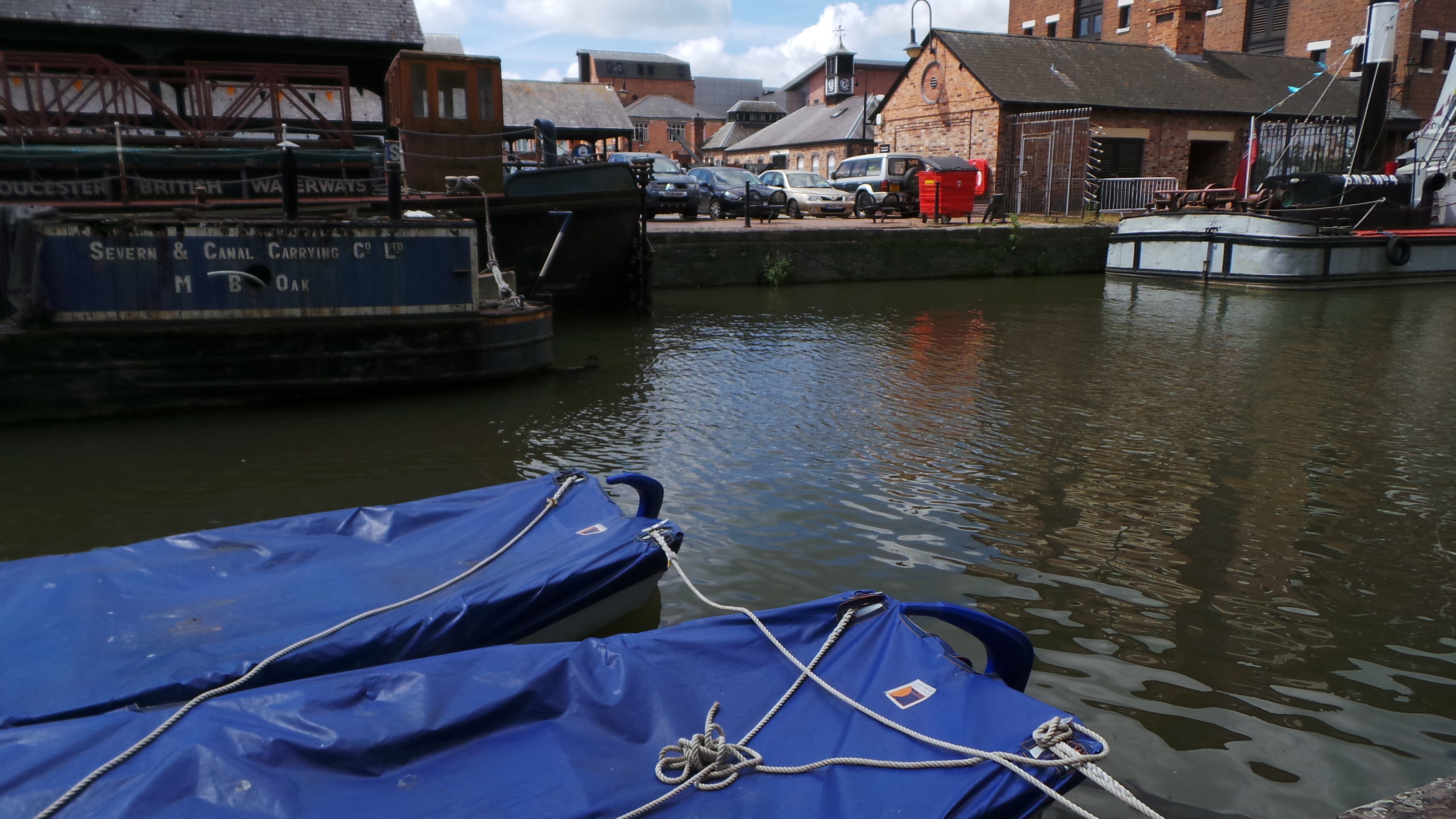
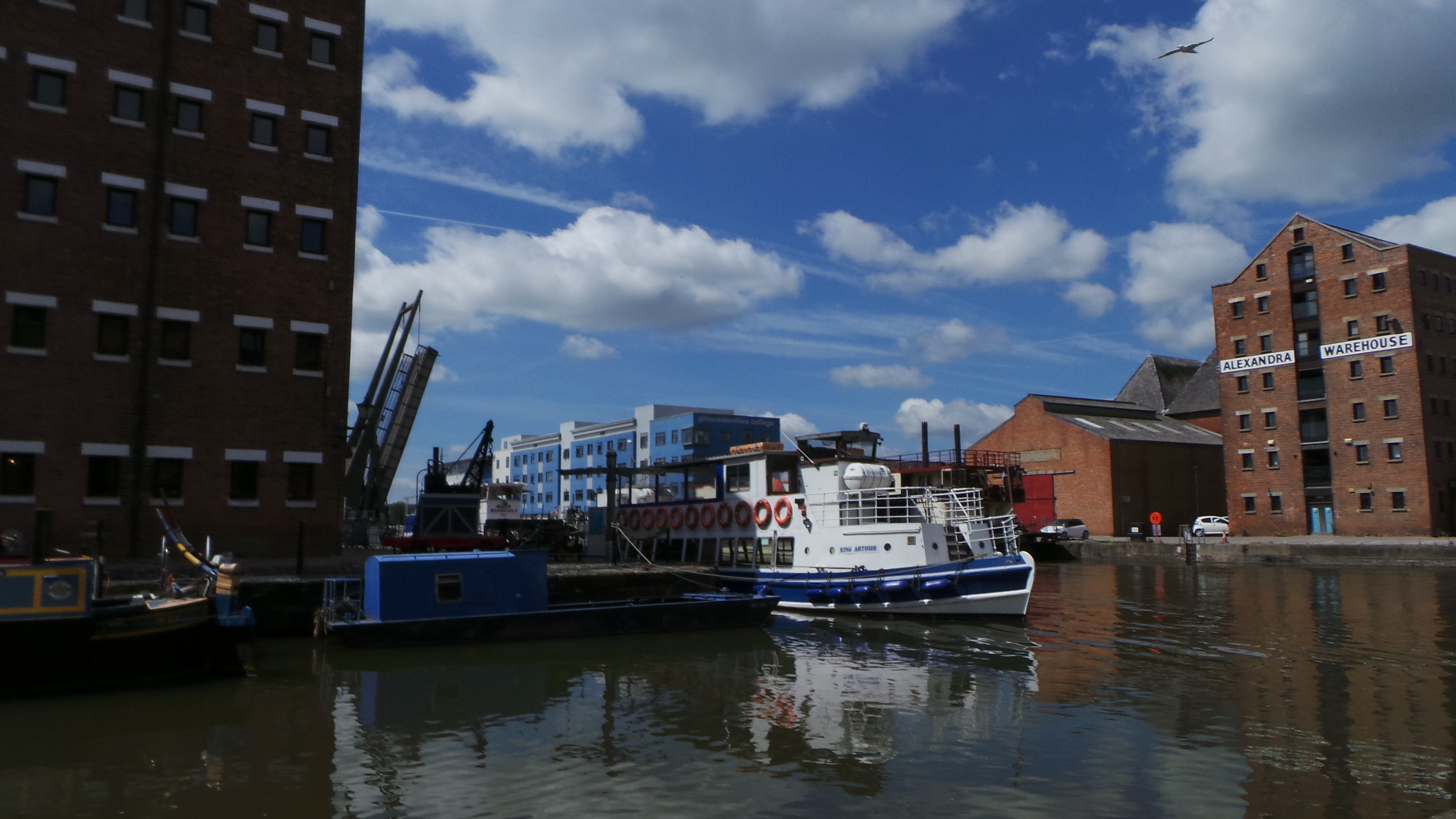
The craft that moor here now are are barges converted for leisure and pleasure and the odd tourist boats offering regular trips. It was hard to imagine the noise and constant movement of barges and their cargoes that must have moved through here every moment of every day when the docks were fully working.

2014 06 25_1222 2014 06 25_1227

2014 06 25_1224 2014 06 25_1260

2014 06 25_1259 2014 06 25_1256

A favourite building of us both is the new Gloucester College of Art which sat in its blue and white crispness as a compliment to the blue of the sky and the white of the slowly passing clouds. When seen through the original dockland warehouses the college presented hope for the future.

2014 06 25_1242 2014 06 25_1229

2014 06 25_1228  2014 06 25_1226

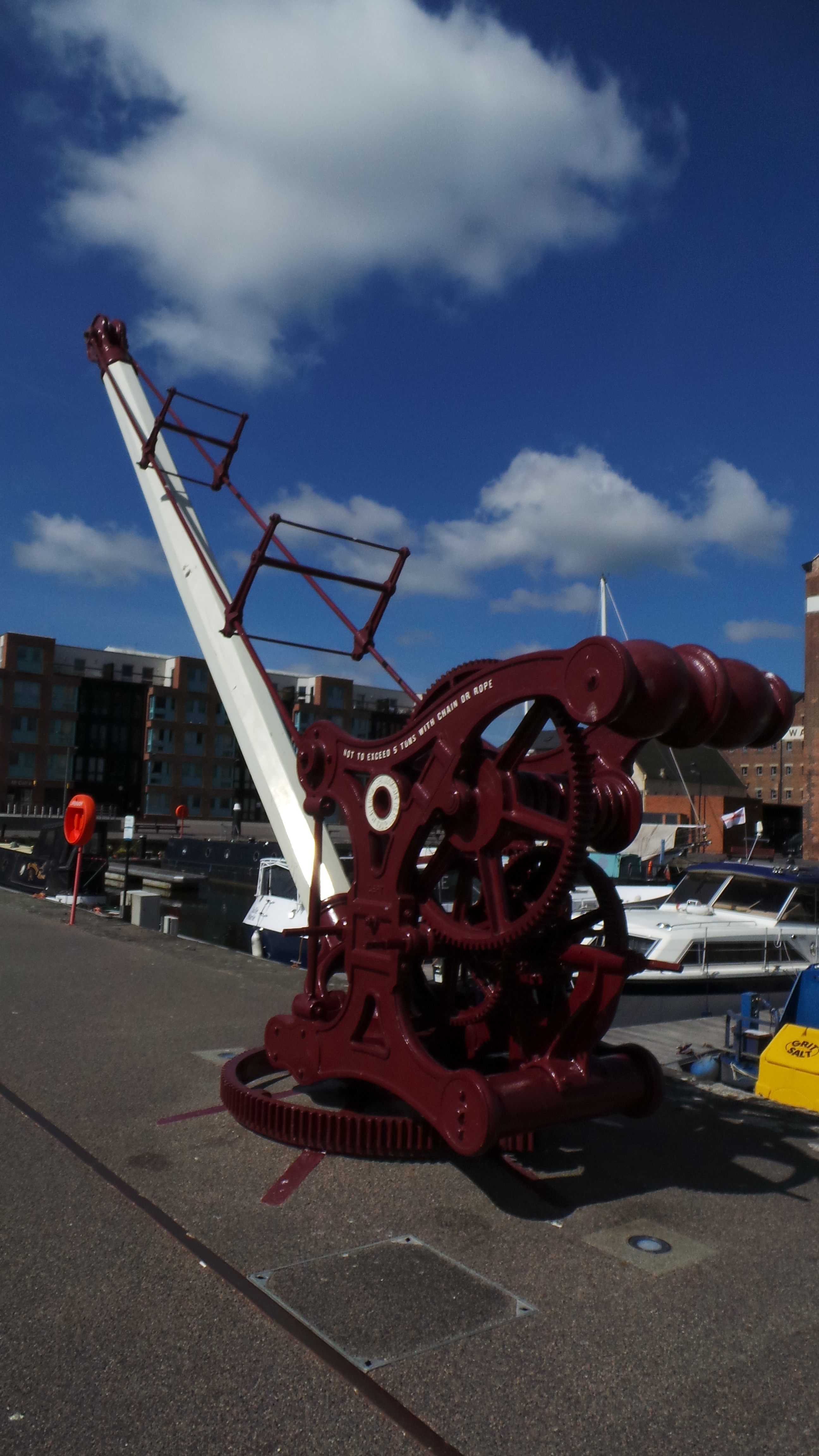
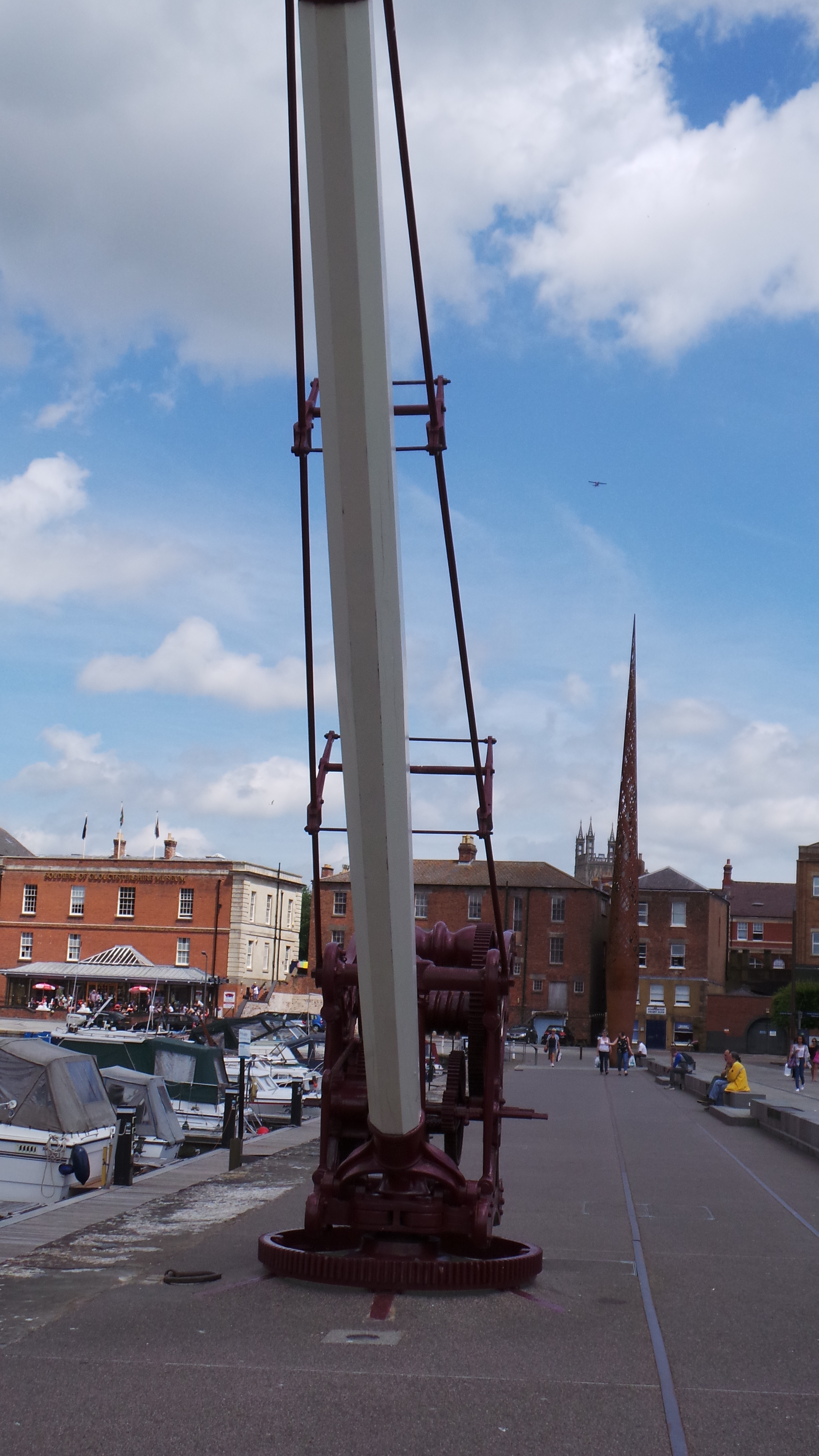
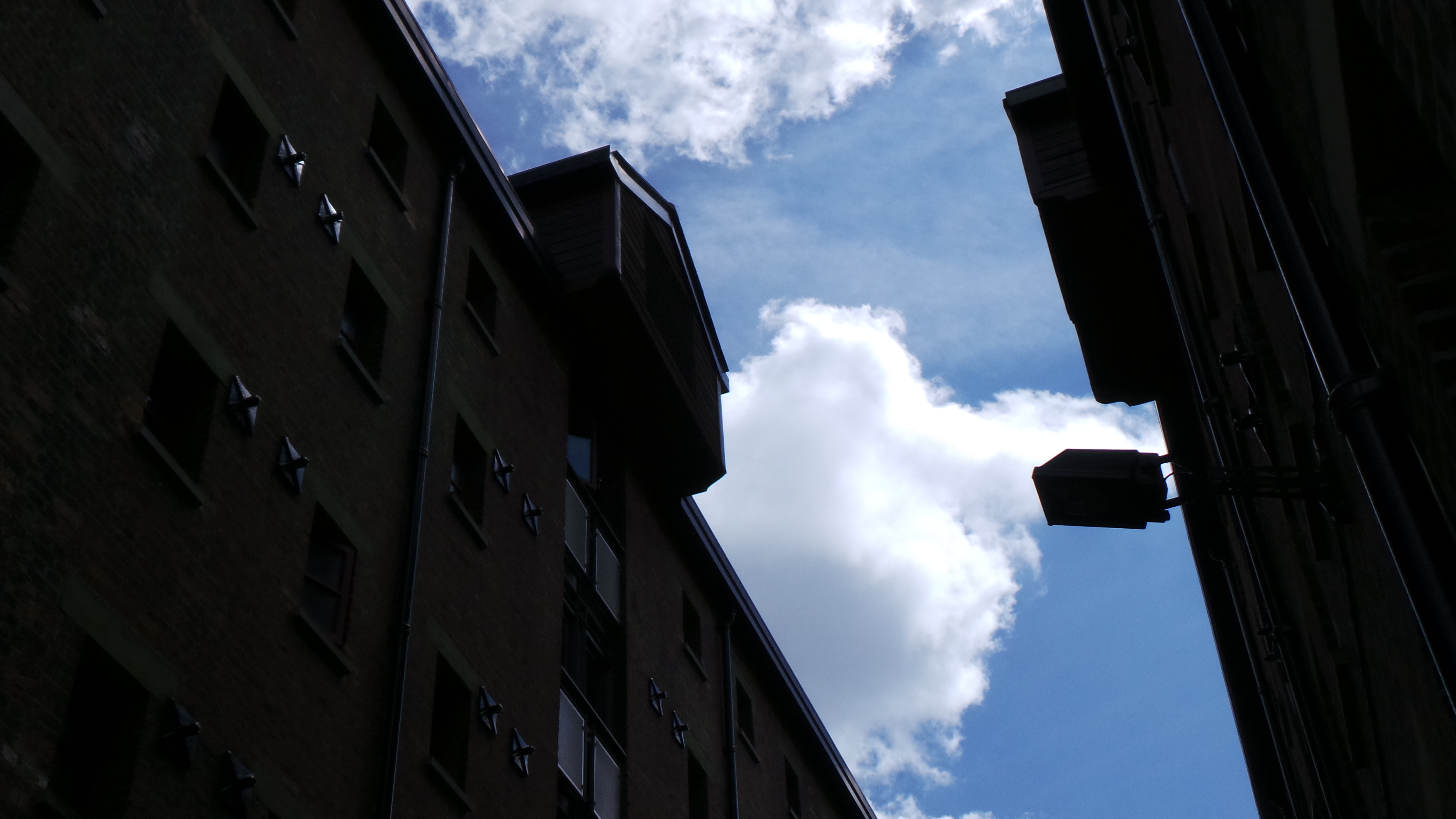
Signs of its bustling past remained and had been lovingly restored as sculptural memorials to its past and to the men and women who toiled there. They have a beauty all of their own.

2014 06 25_1221 2014 06 25_1262

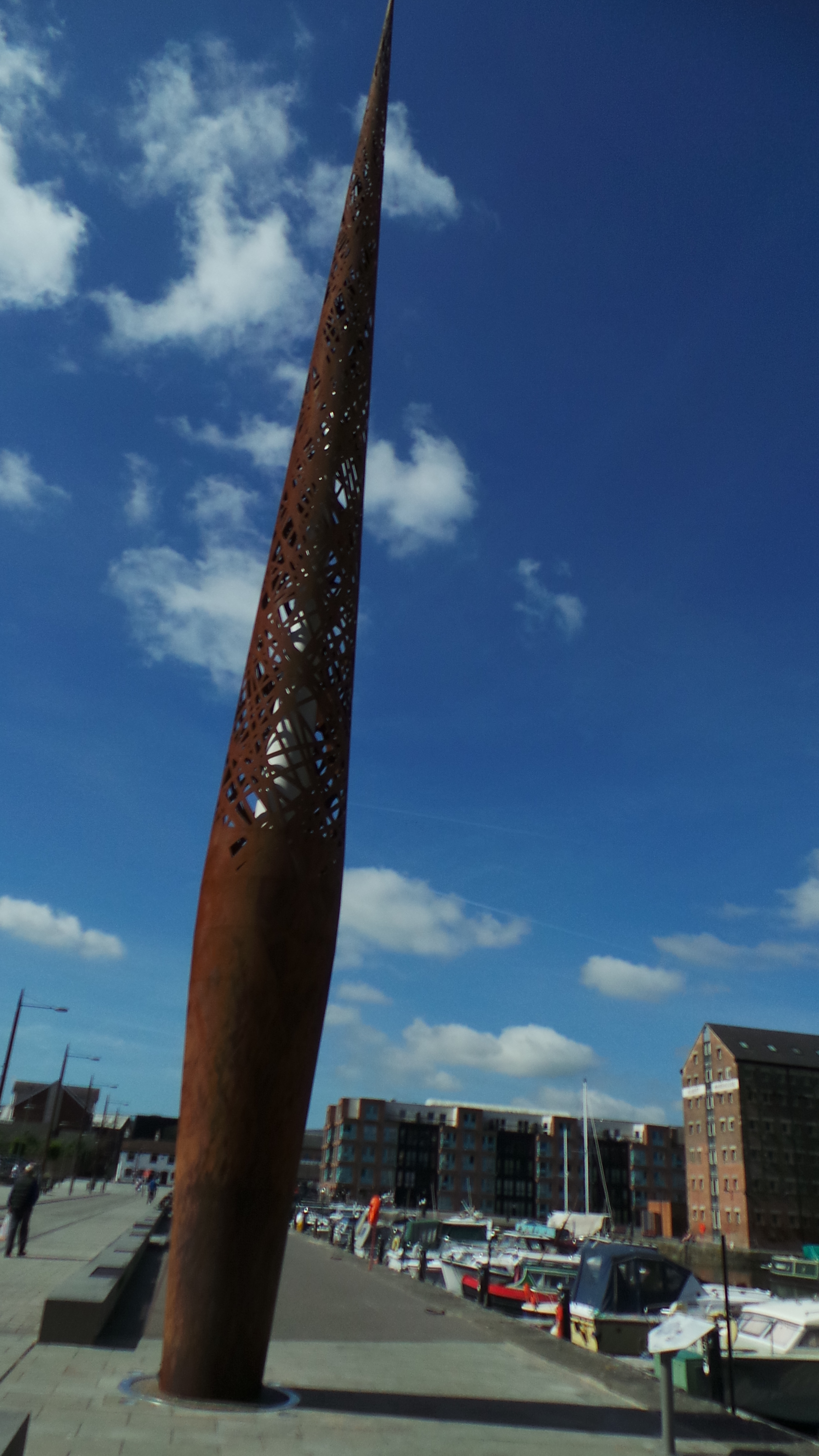
New pieces of sculpture commissioned as tributes to the docks’ past sit alongside the remnants of its earlier industriousness. Some thrusting into the air indicating power while others subtly placed where feet trod and the occasional eyes fell to spot them.

2014 06 25_1215 2014 06 25_1217

2014 06 25_1218

The lift bridge was still toiling away lifting the road to allow water craft to enter or exit the docks. Where once the bridge would have lifted to give passage to working barges now the vessels passing below are pleasure craft manned by weekend sailors or tourists on trips along the waterway.

2014 06 25_1244 2014 06 25_1243

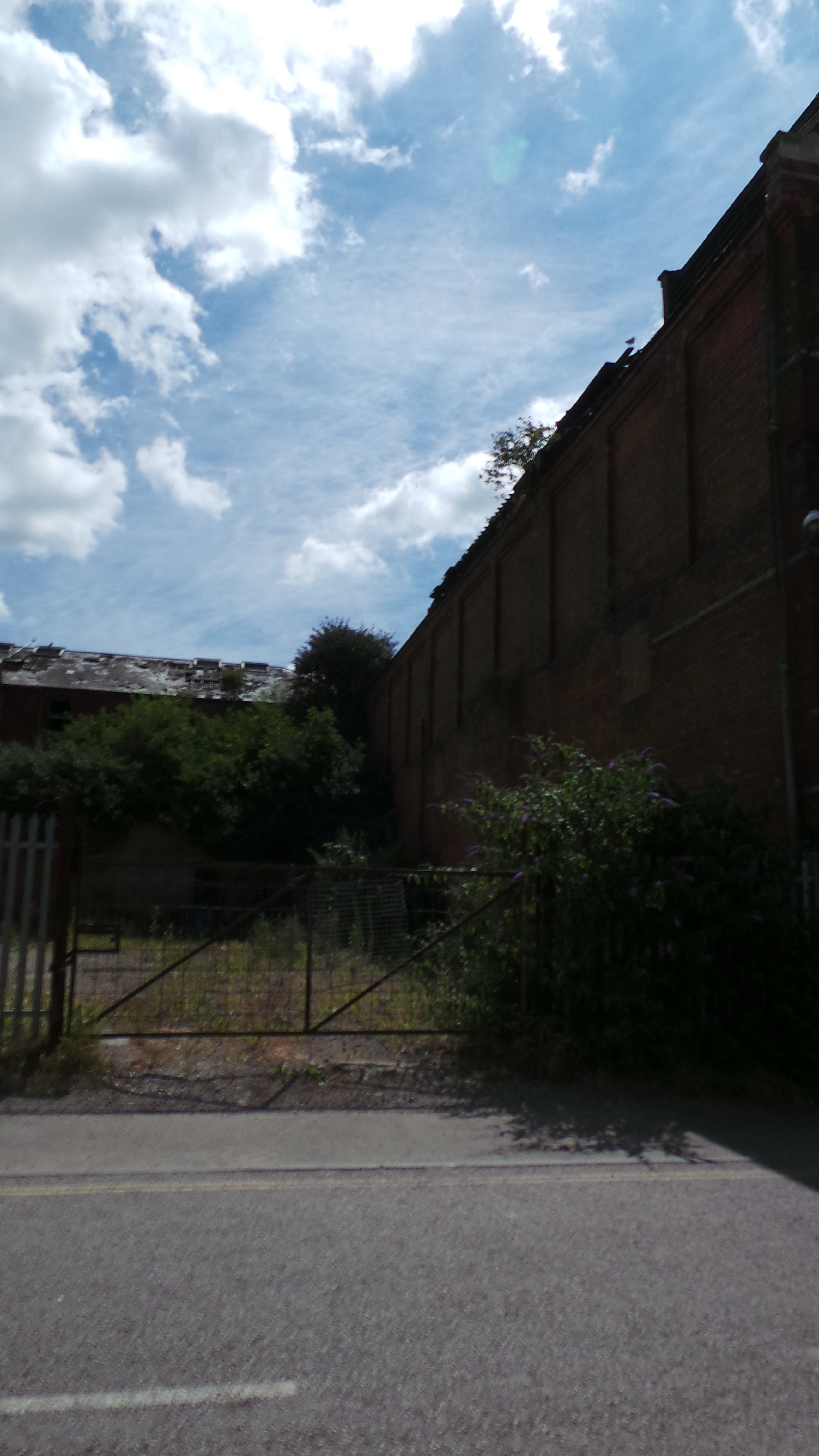
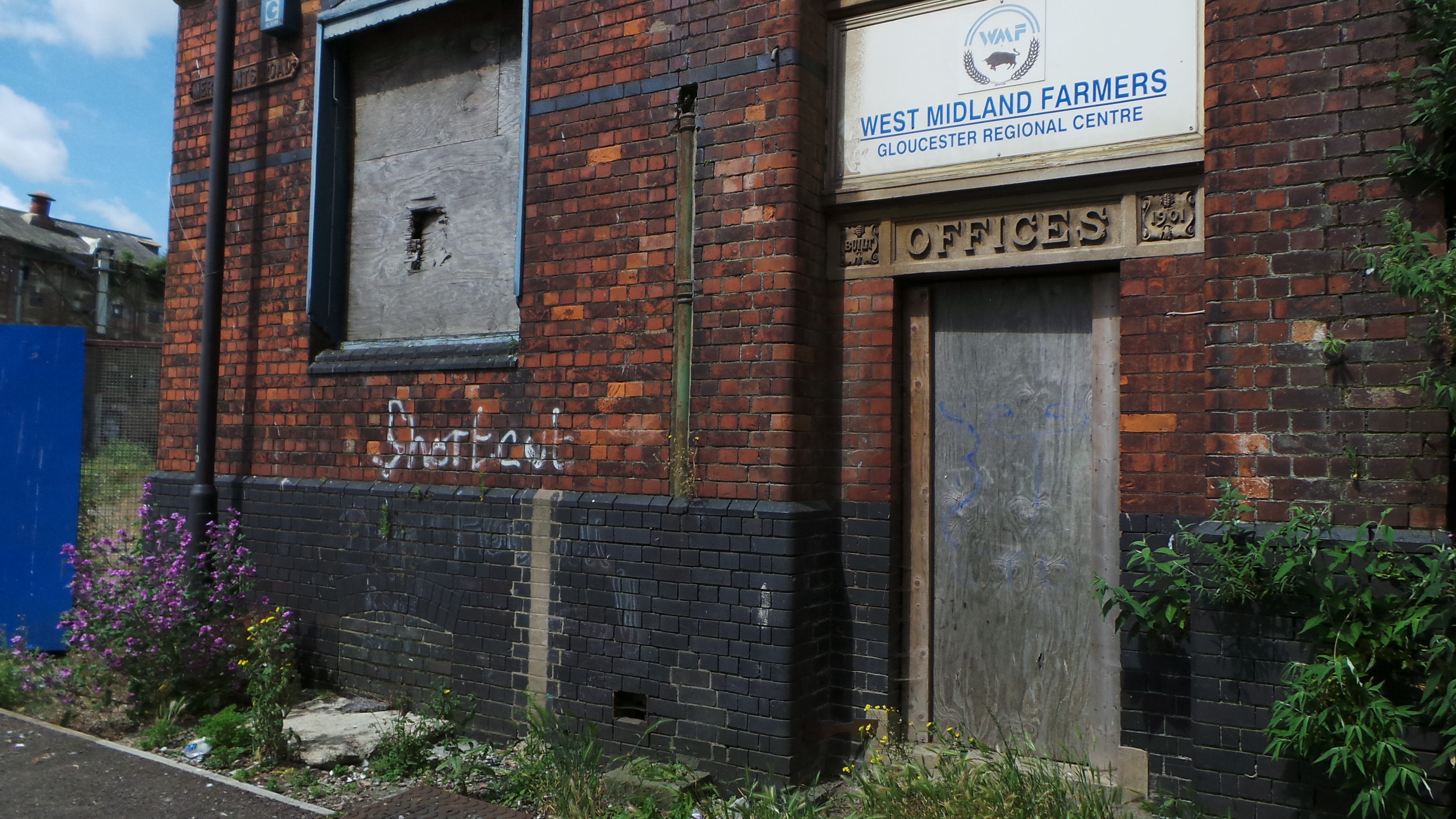
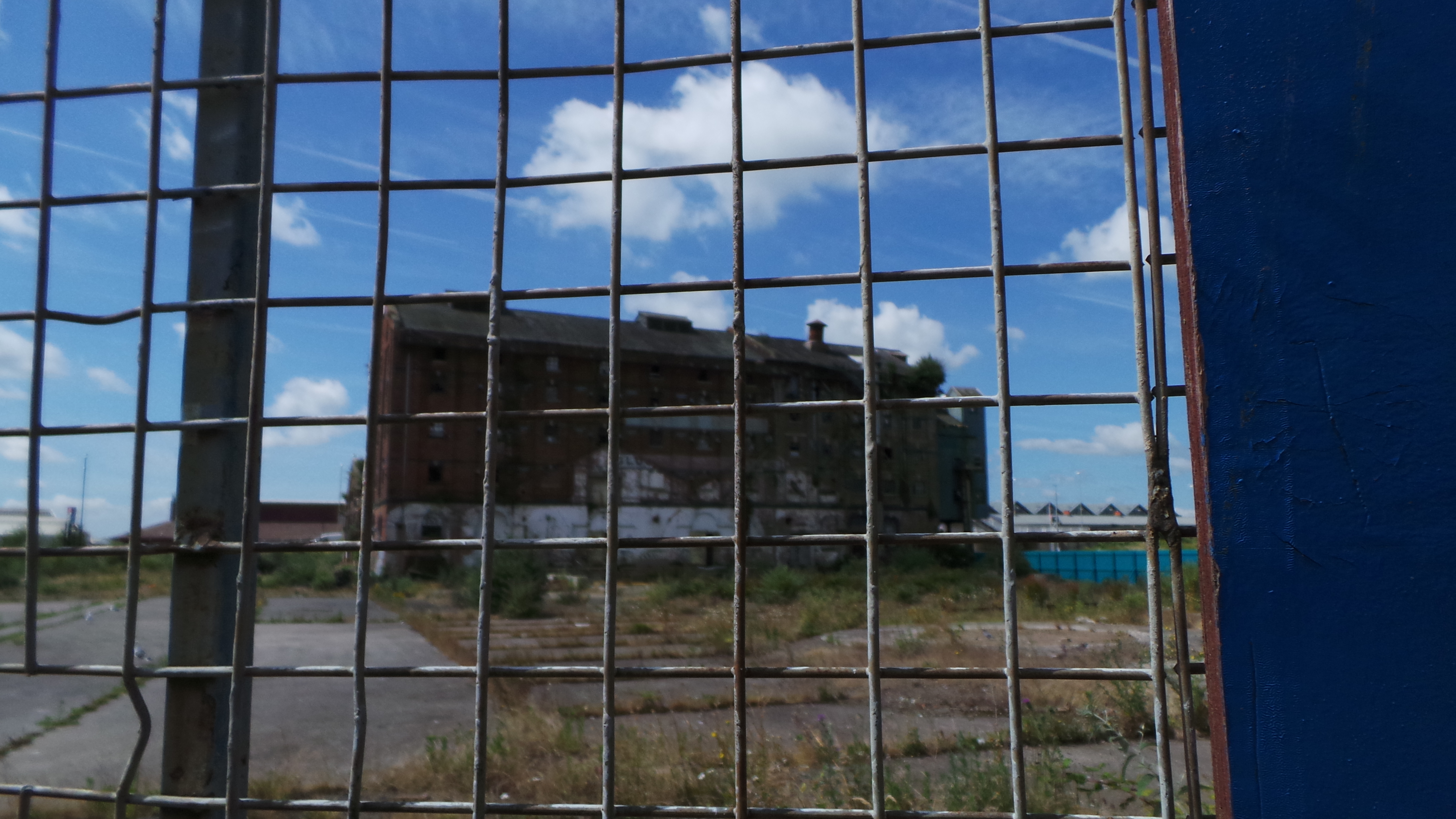
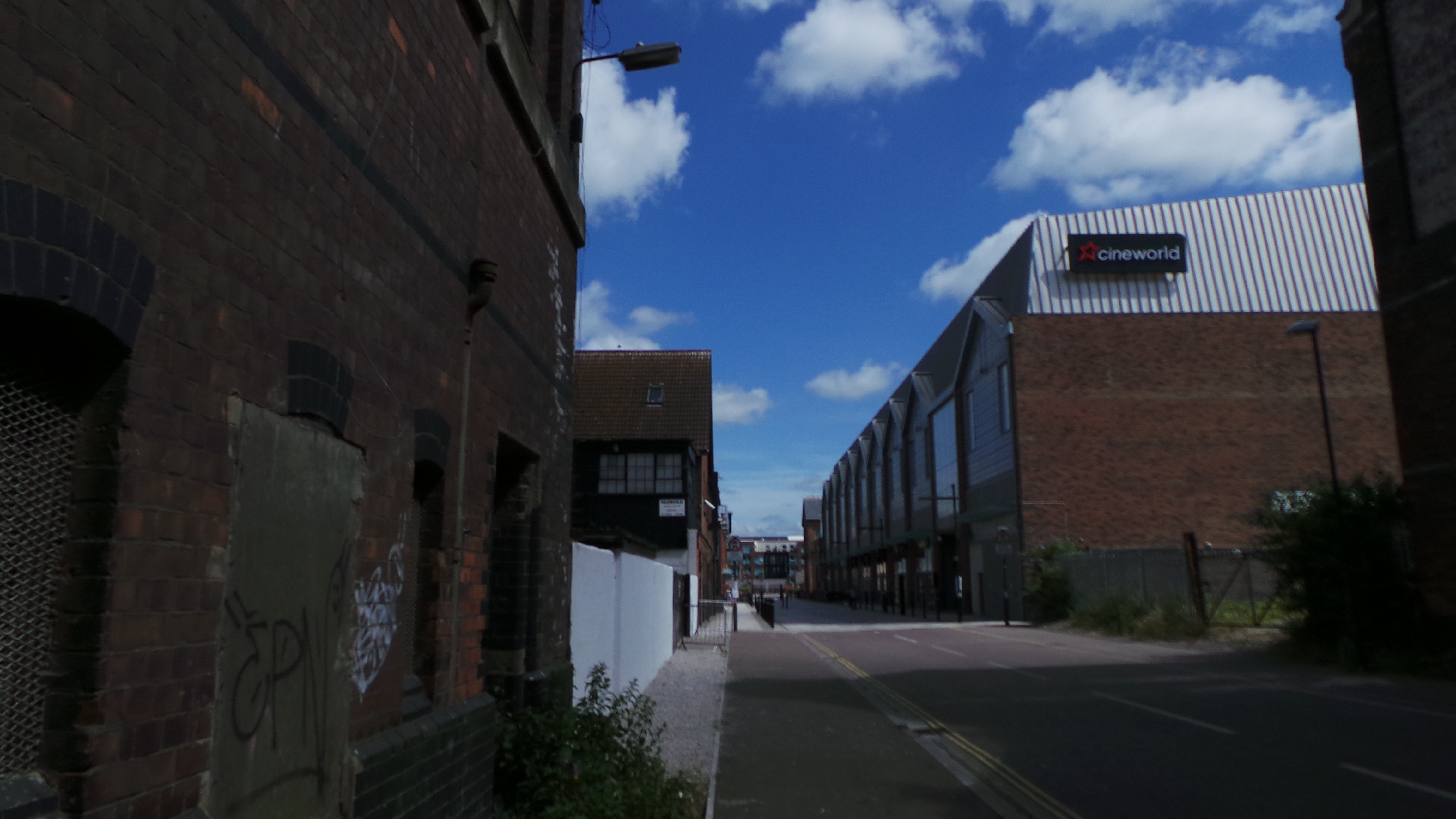
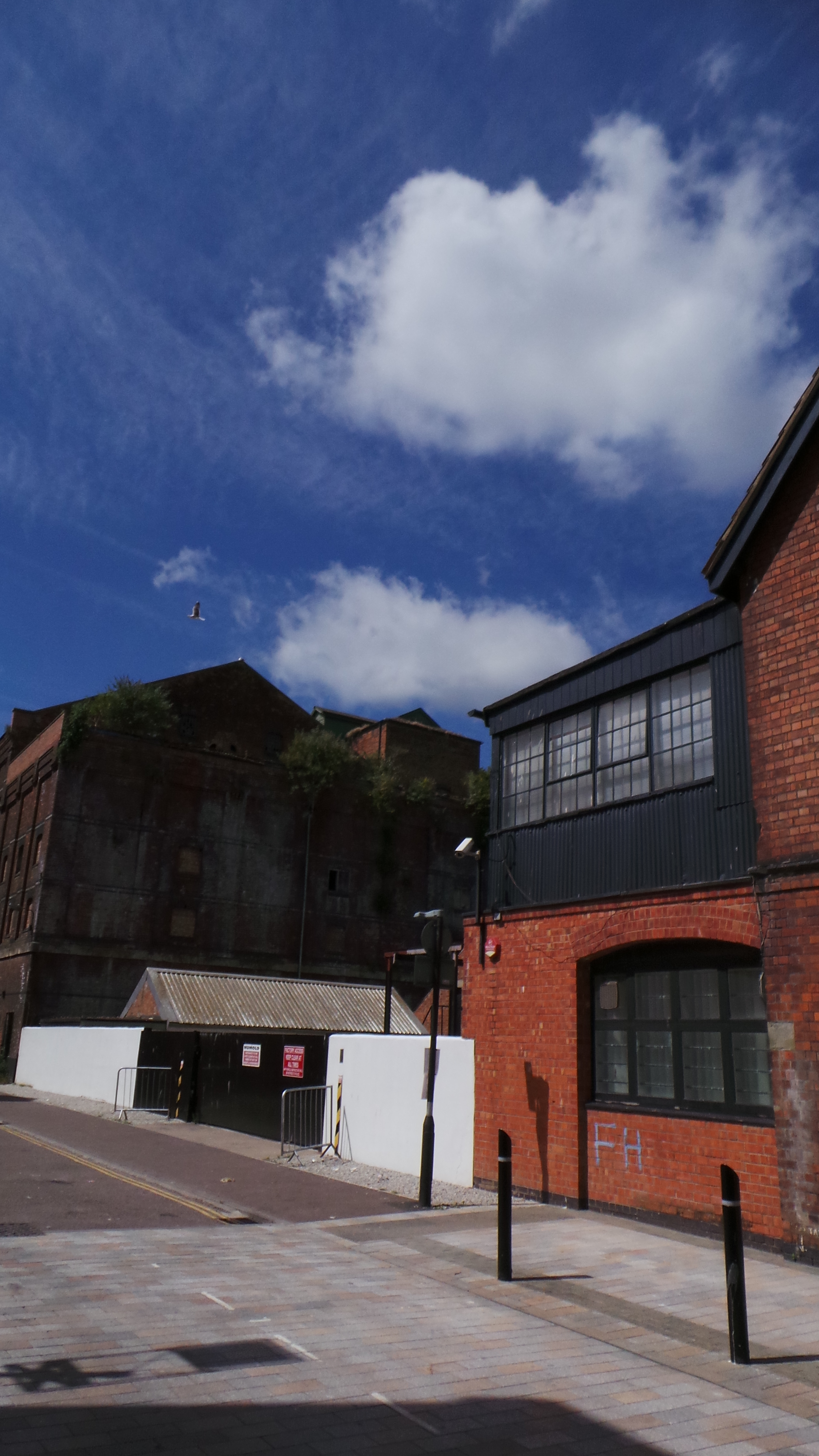
After dropping into a retail centre for coffee we wandered into an area of the docklands still undeveloped and this area presented a stark contrast to the newness we had been enjoying before. They seem to be patiently waiting their turn for fresh breath to be breathed into them them as thoughtless vandals paint graffiti on their doors and throw bricks through their windows.

2014 06 25_1246 2014 06 25_1241

2014 06 25_1237 2014 06 25_1234

2014 06 25_1235 2014 06 25_1238

This final trio of photos illustrates the sharp division between the developed and the symbols of the past.

2014 06 25_1236 2014 06 25_1232

2014 06 25_1230


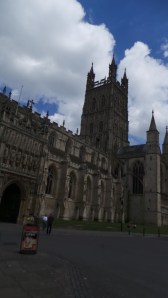
As we took the path back to the car we stopped to get a close up look at this sculpture shooting skyward when we noticed a fingerpost directing us to the cathedral and, as we had never visited it, we naturally followed its invitation. We were impressed enough with a quick view of the outside to think we must come back for another visit.

2014 06 25_1263 2014 06 25_1264

2014 06 25_1265


This Veggie Life

A Vegetarian | Nature Lifestyle Blog

Rambling in the Garden

.....and nurturing my soul

The Arch City Gardener

Journeys In St. Louis Gardening and Beyond

Garden Dreaming at Châtillon

Consult the genius of the place

Storyshucker

A blog full of humorous and poignant observations.

gardeninacity

Notes from a wildlife-friendly cottage garden

PlayGroundology

...an emerging social science

The Official Blog of British Wildlife

'The most important and informative publication on wildlife of our times' - The Independent. This blog is a member of The UK & Ireland Natural History Bloggers group: www.uknhb.blogspot.com

iGrowHort

Inspire - Cultivate - Grow Native Plants - Restore Landscapes

Bishops Meadow Trust

To create and protect a semi-natural wild space for the people of Farnham to enjoy and experience an array of British wildlife in our town

Gardening with Children

The www.gardeningwithchildren.co.uk Blog

UKbirdingtimeline

birding through the seasons, why birds matter and how to conserve them

NATURE WALKER

with a camera in hand

Jardin

Transform your outdoor space

Eva's space

My allotment, cooking and other interests

Old School Garden

my gardening life through the year

LEANNE COLE

Trying to live a creative life

fromacountrycottage

trying to live as lightly as possible on our beautiful planet

Good Life Gardening

Nature lovers from Leicester living the good life.

mybeautfulthings

Finding the beautiful in the everyday

mawsonmichelle

Michelle's Allotment

In and Out of My Garden

thoughts from and about my garden

Greenhousing

Big plans for a small garden

The Scottish Country Garden

A Walled Country Garden in South East Scotland

The Fruity Chicken

Life at the fruity chicken

willowarchway

Off grid living. Self sufficient. "PERMAGANICS RULE".

St Anns Allotments

Nottingham's Grade 2* Listed Allotments and Community Orchard

Manifest Joy Harvests

a journey in suburban vegetable gardening

Allotmental

The madness of growing your own

Penny's Garden: a harvest beyond my front door

A novel approach to vegetable gardening

arignagardener

Sustainable living in the Irish countryside.

NewEnglandGardenAndThread

Master Gardener, amateur photographer, quilter, NH native, and sometimes SC snowbird

dianajhale

Recent work and work in progress and anything else that interests me

planthoarder

a chaotic cottage gardener

Lens and Pens by Sally

a weekly blog that creates a personal philosophy through photographs and words

Dewdrops and Sunshine

Stories from a sassy and classy Southern farmbelle.

The Pyjama Gardener

Simple Organic Gardening & Seasonal Living

gettin' fresh!

turning dirt into dinner

JOY...

today the world is created anew

Garden Birds

Notes from a Devon garden

ShootAbout

Life Through The Lens

Adapting Pixels

A photography blog showcasing the best photography pictures and videos on the internet

Wildlifegardening's Blog

Just another WordPress.com site

naturestimeline

personal observations from the natural world as the search continues for a new approach to conservation.

LATEBLOOMERBUDS

The Wonders of Life through my Eyes, my Heart, my Soul