Categories
birds climbing plants photography Shropshire trees wildlife woodland

Through the Garden Gate – part two – getting lost!

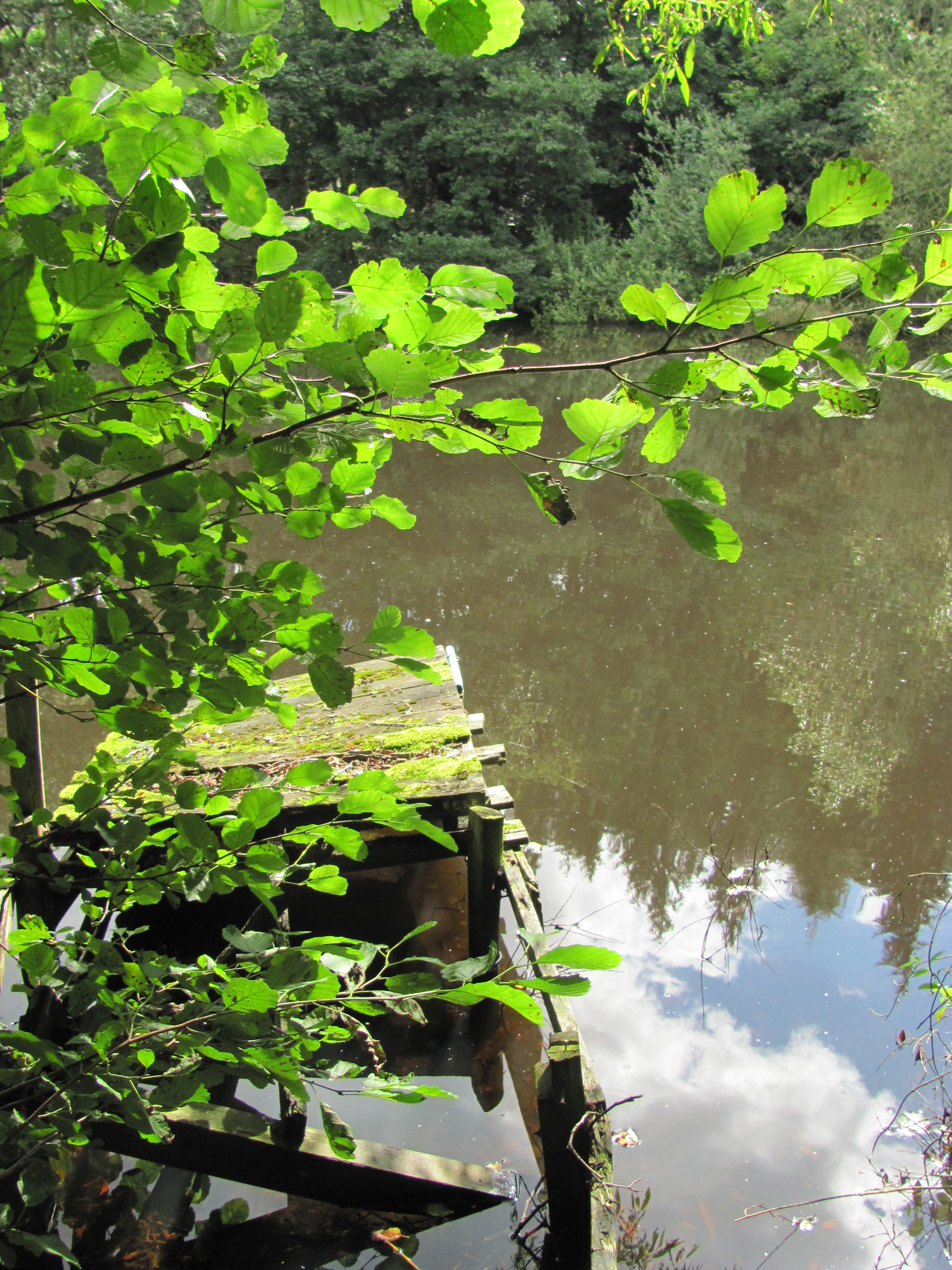
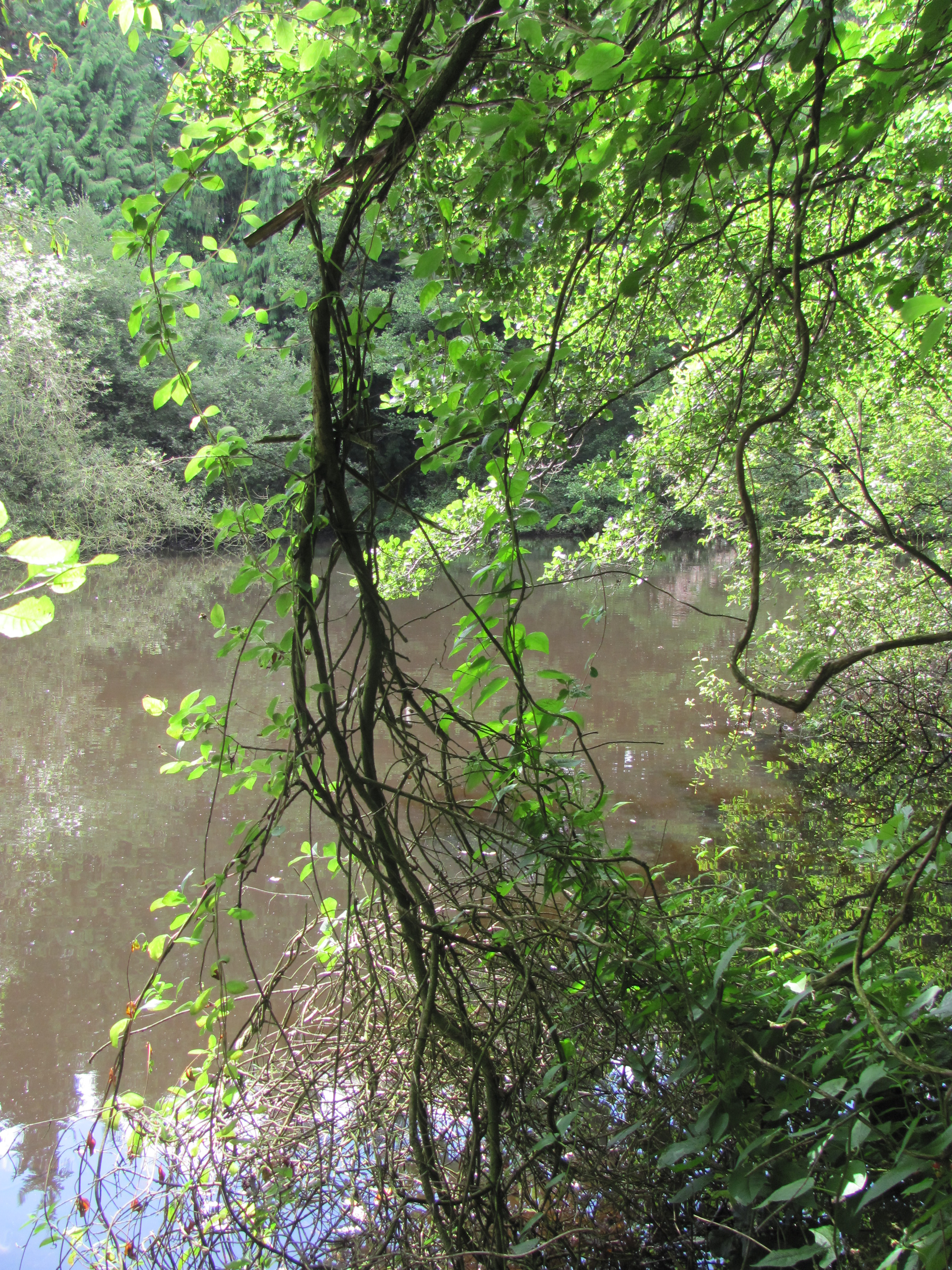
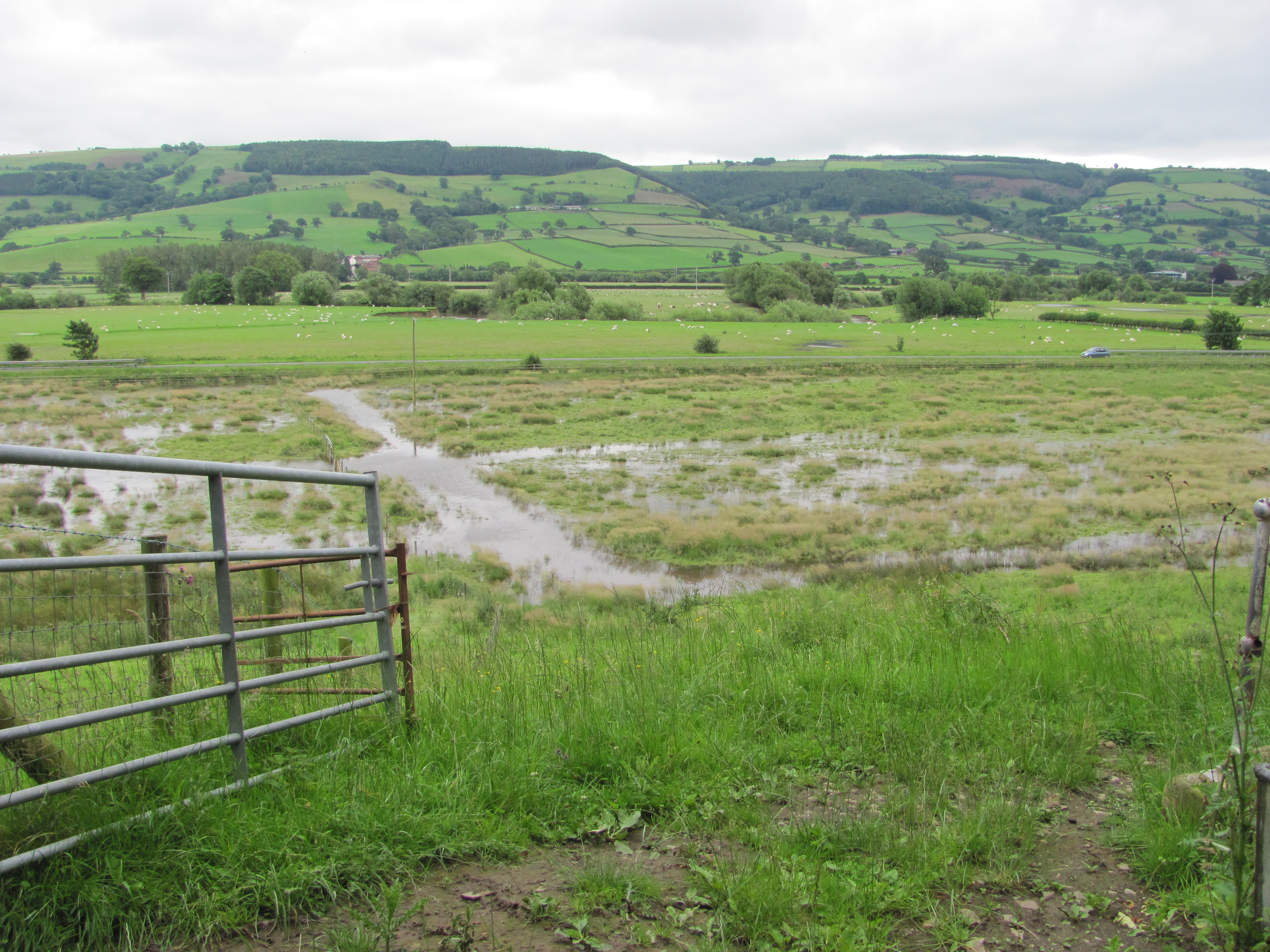
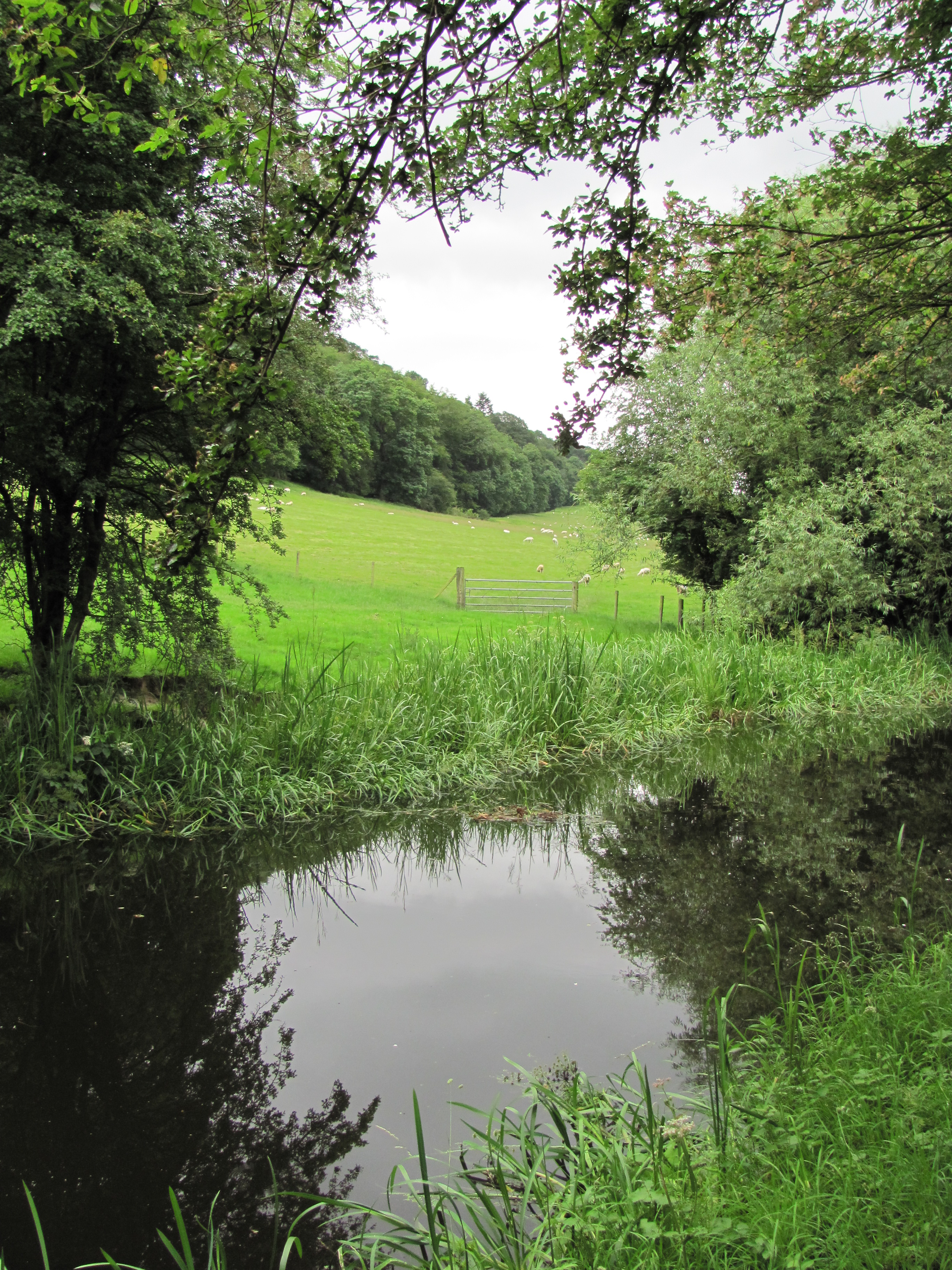
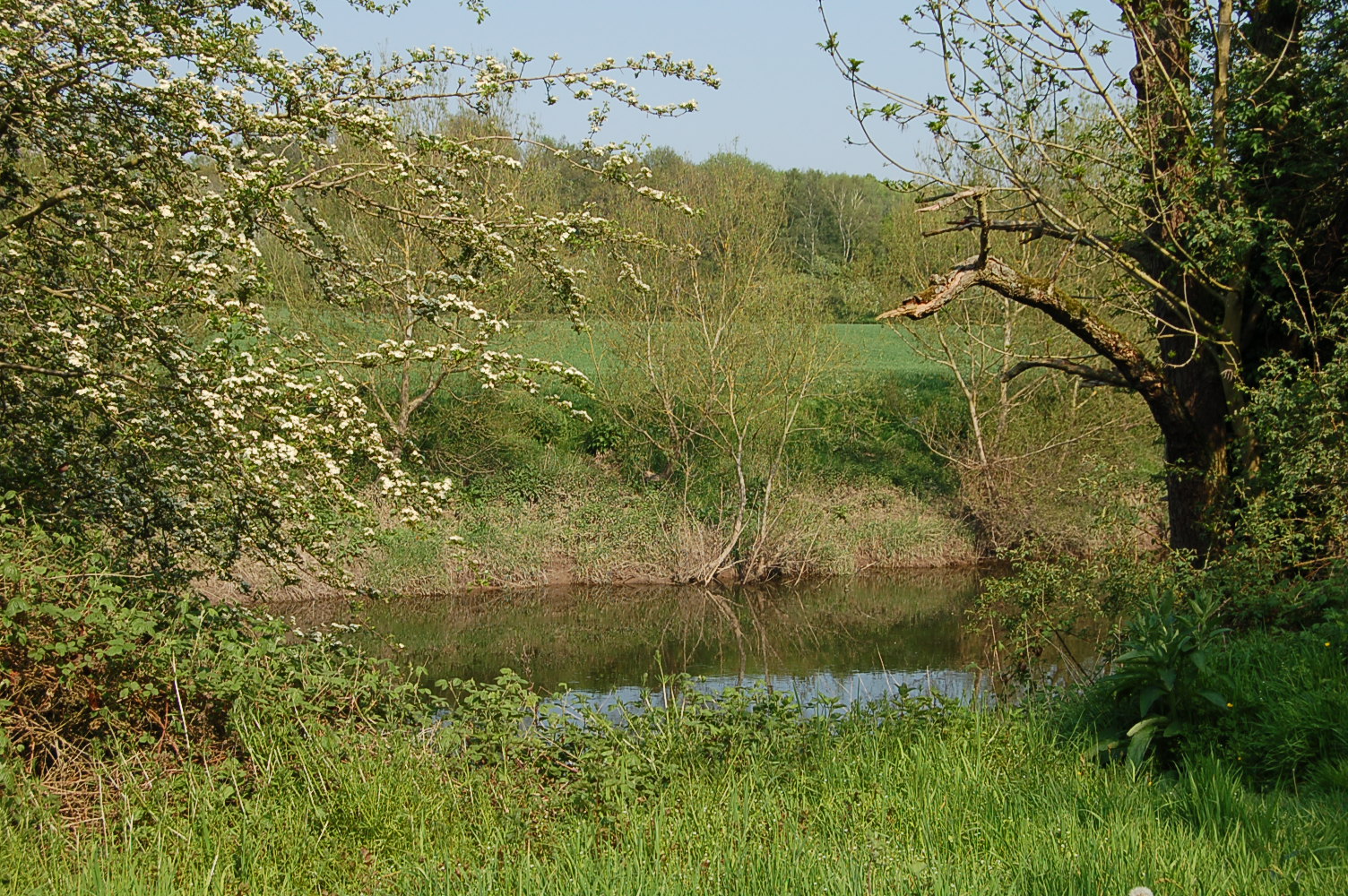
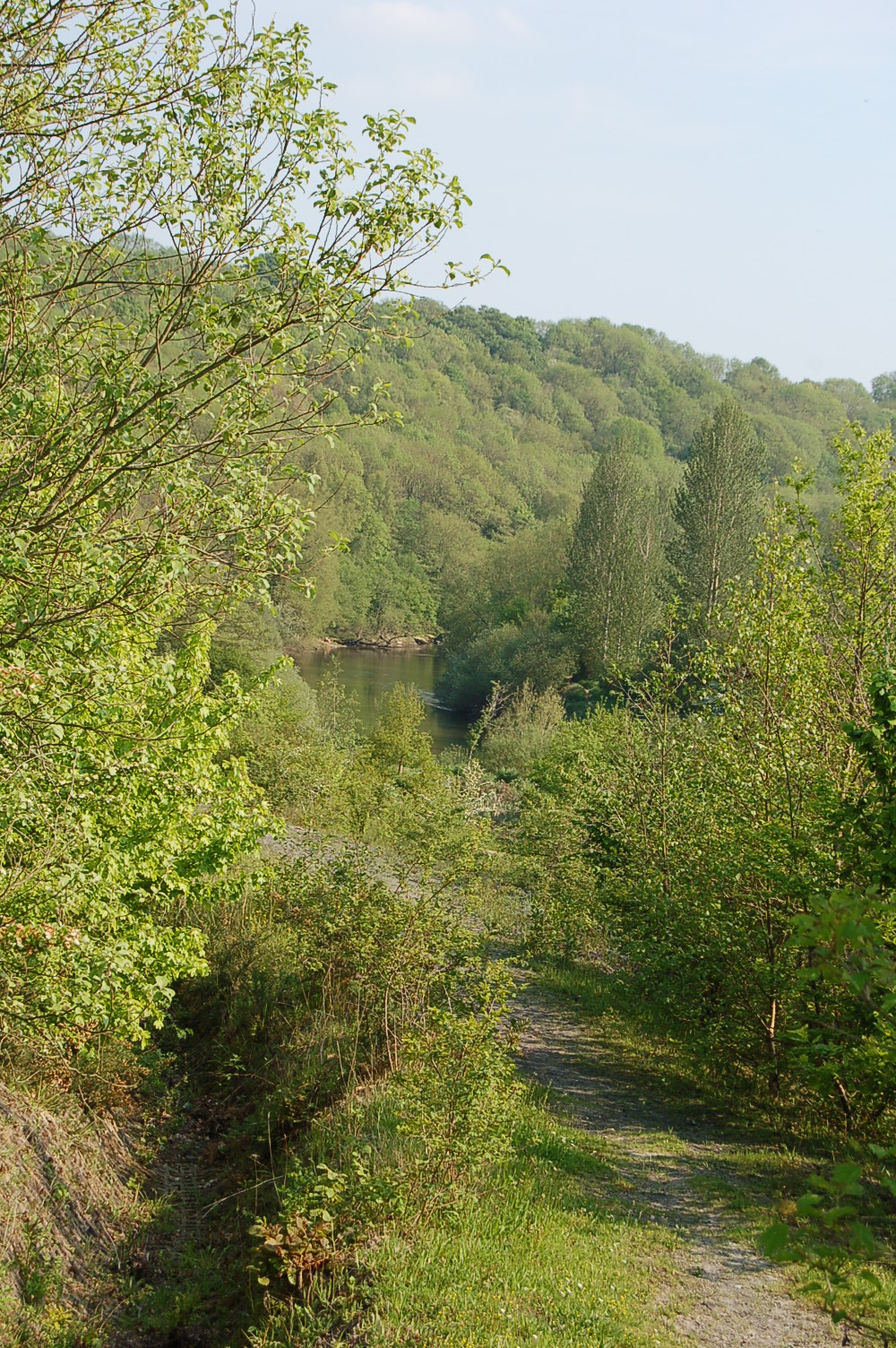
From the pool we could look back at the wood we had just left and enjoy a different view of the hill that we usually look at from our garden and over which we watch Buzzards riding the thermals created by its slopes.

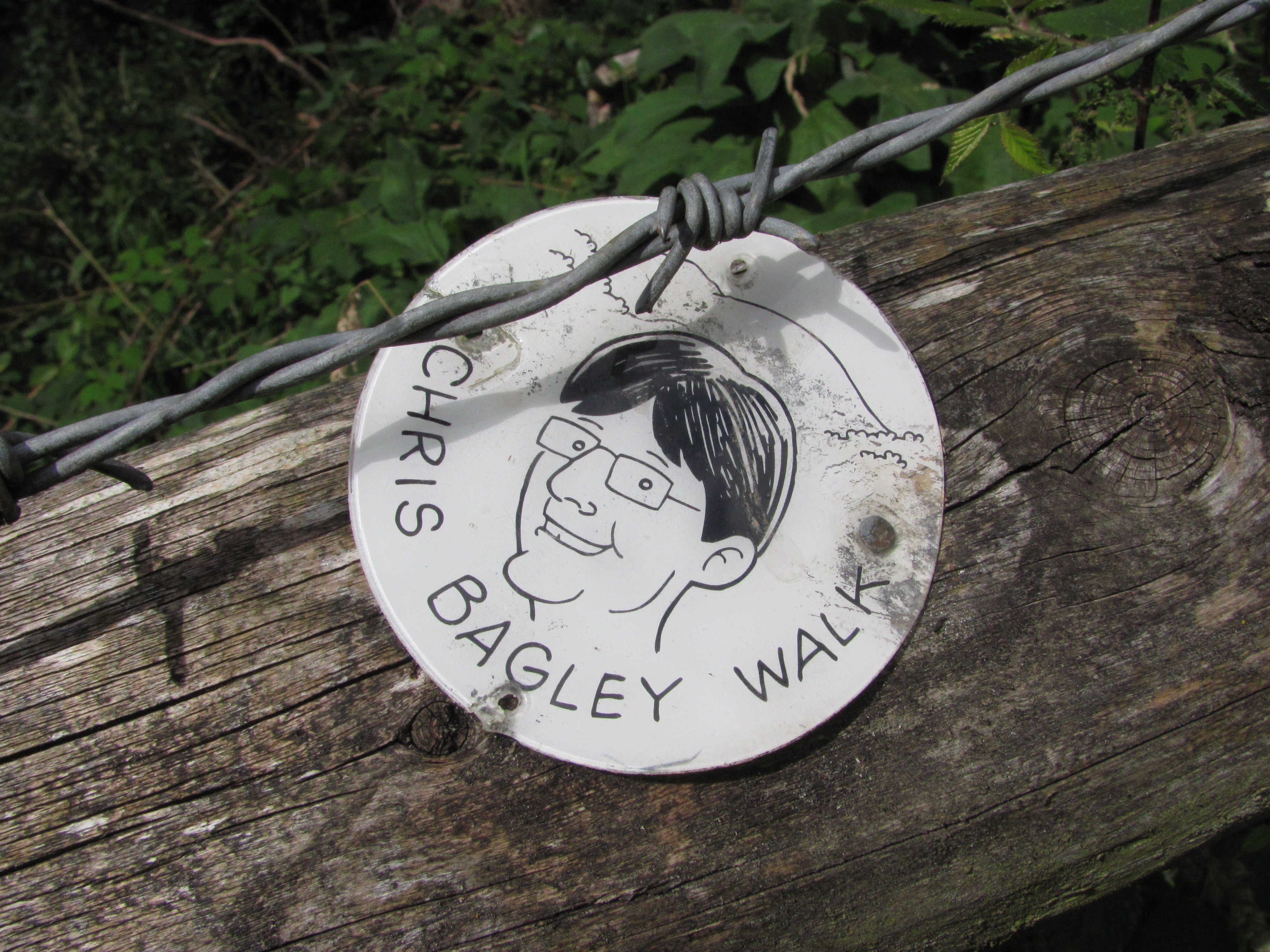
Well we may never have been more than a mile from home on this walk from our garden gate, but we did manage to get lost. The footpath signs kept disappearing, or that is our excuse. Our wander took us along sections of the long distance path, “The Shropshire Way” and on a local path “The Chris Bagley Walk”.
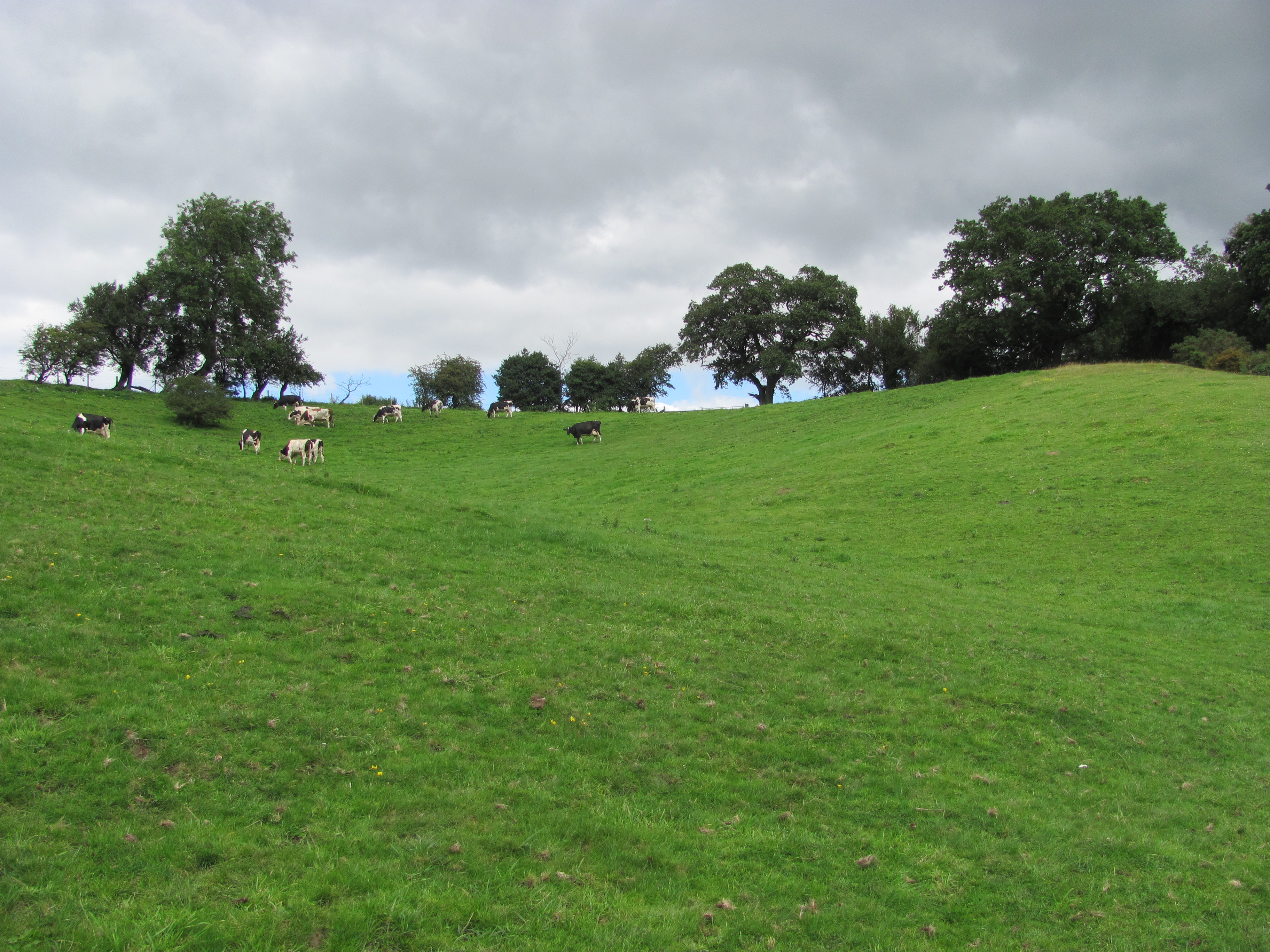
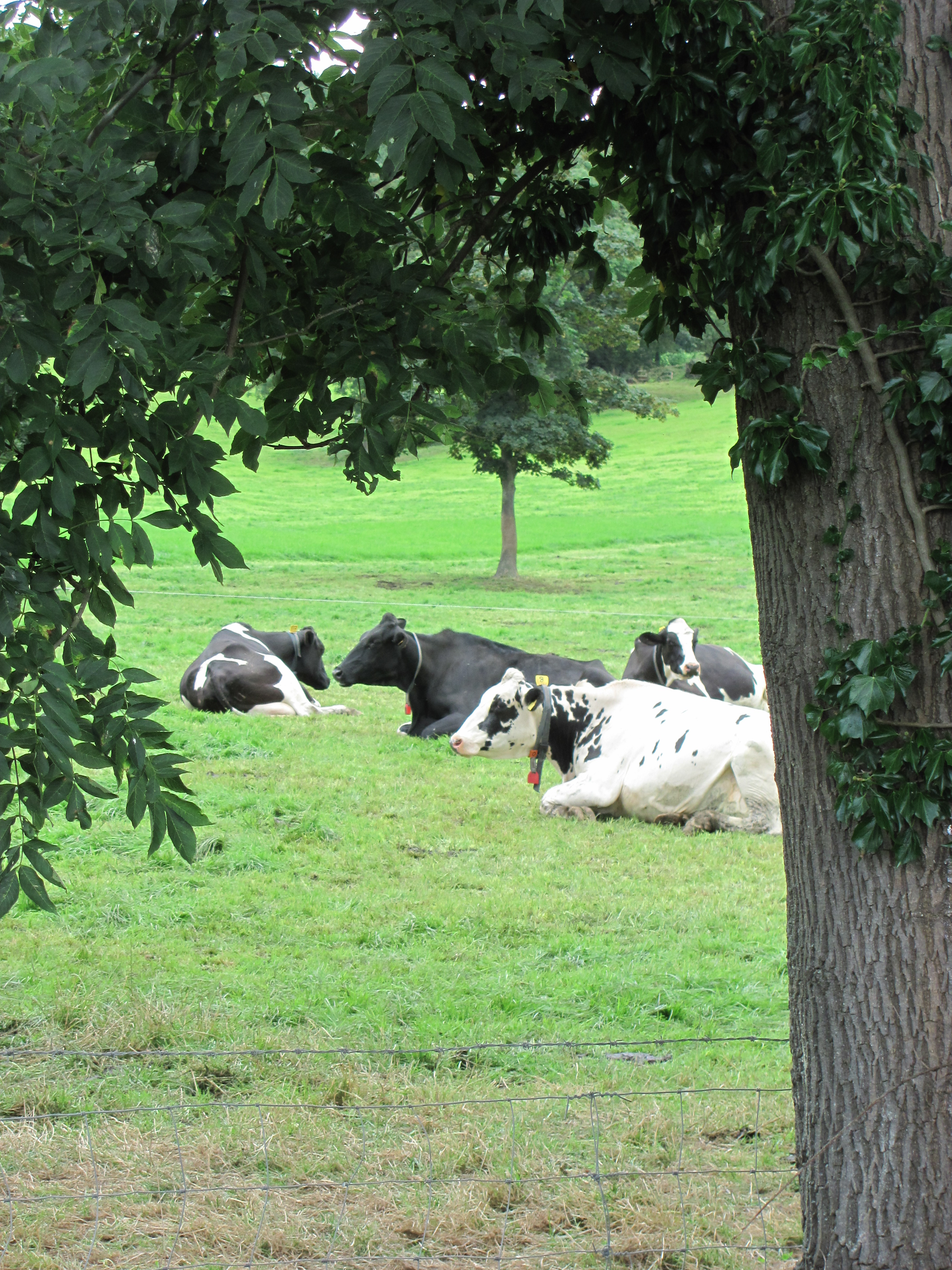
Leaving the fishing pool we followed the valley of the stream that fed it. The grassland here was rich and was being enjoyed by dairy calves, who watched our every move as we passed close to them.
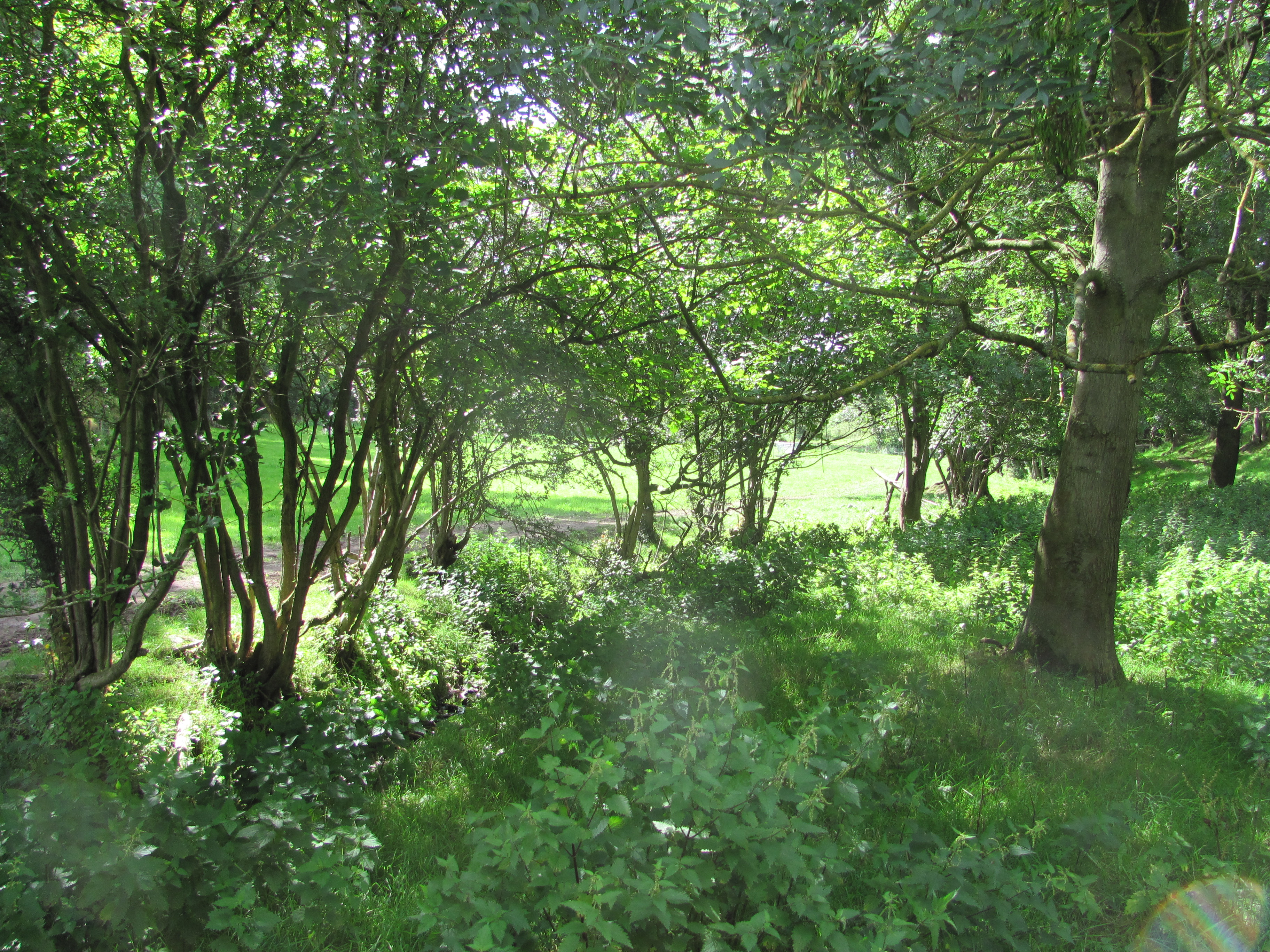
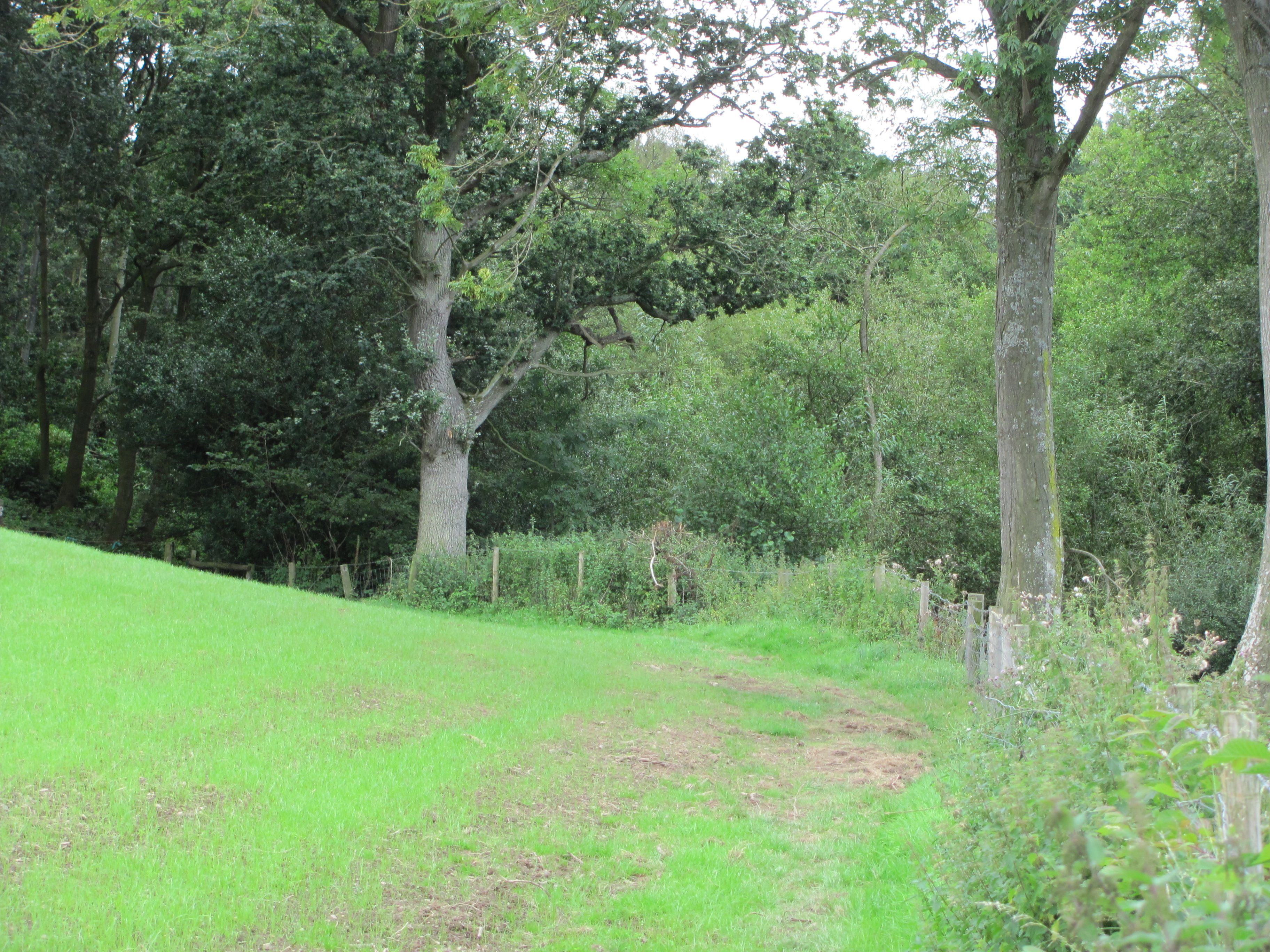
The valley widen out but the wooded slopes and tiny stream running through it kept it intimate. The fields of grass on which the calves fed was a lush green but was devoid of wild flowers, a sad sign of modern farming practices. we followed the path until it took us up a gentle slope away from the stream and up into a wood which was partly coppiced.
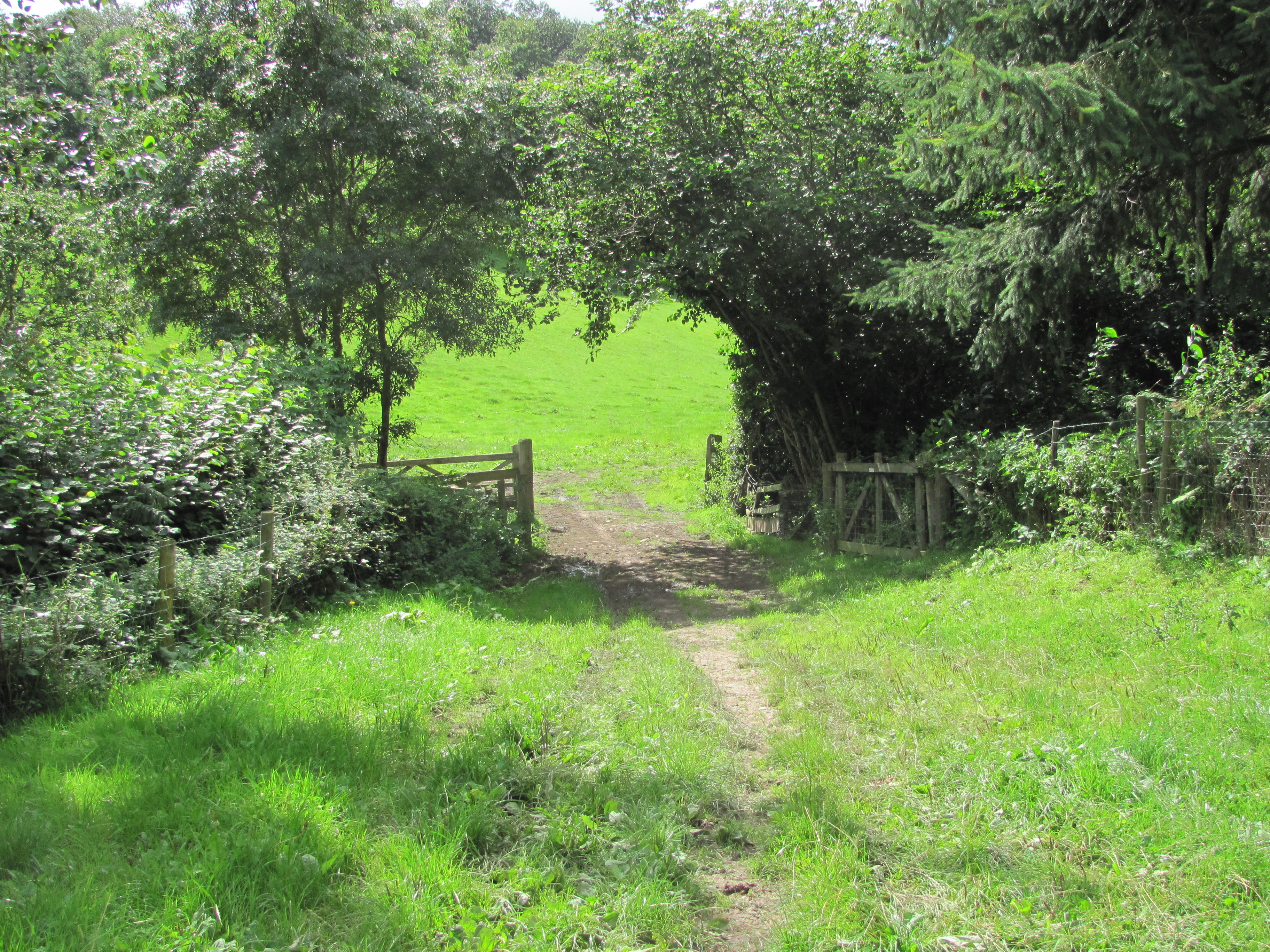
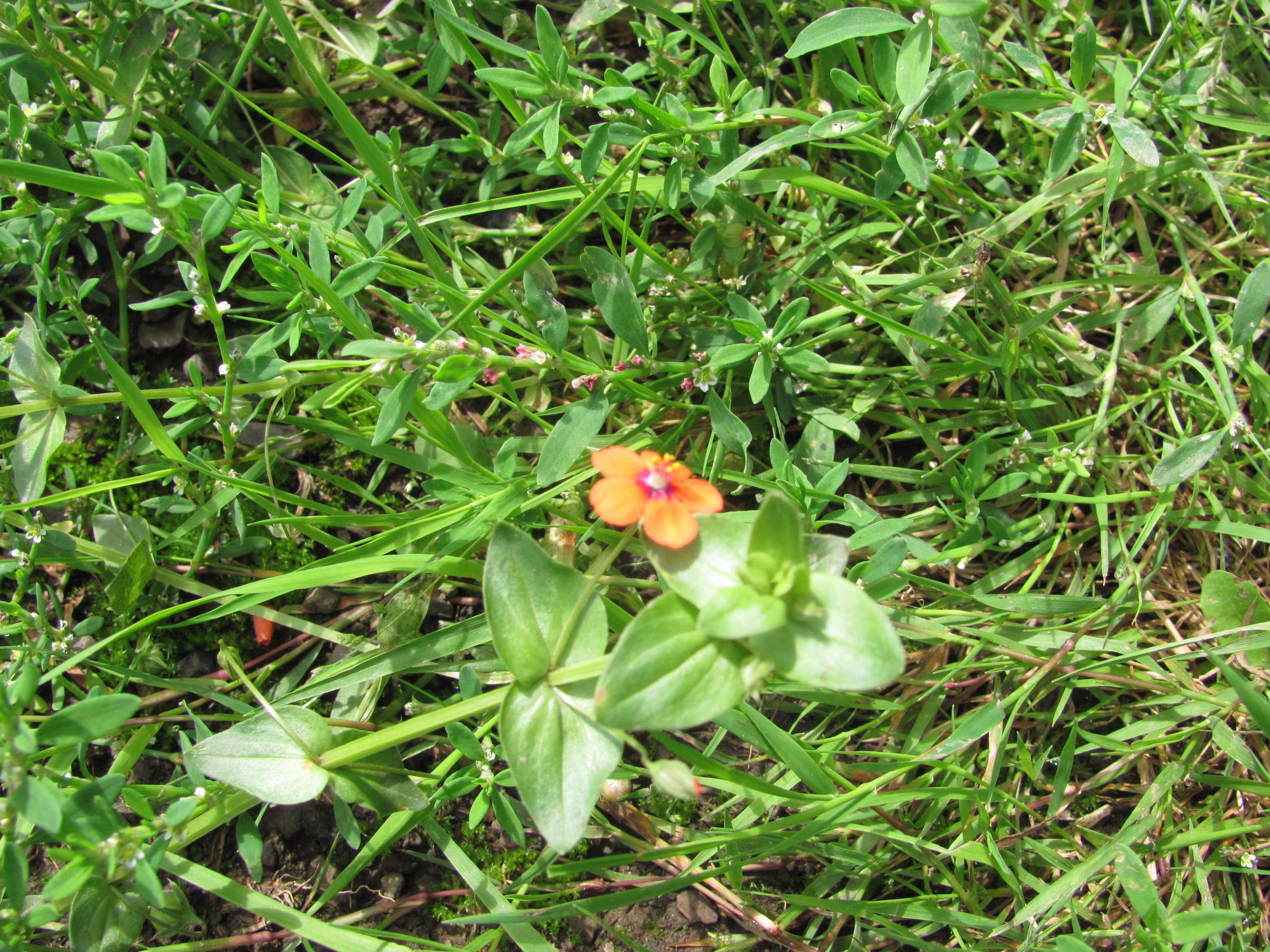
On the slope up to the wood we spotted this Scarlet Pimpernel in flower on the pathway beneath our feet. Although only a tiny flower its orange petals glow so it can be seen from a distance. We now lost the footpath and had to consult maps on the smart phone, which rescued us nicely.
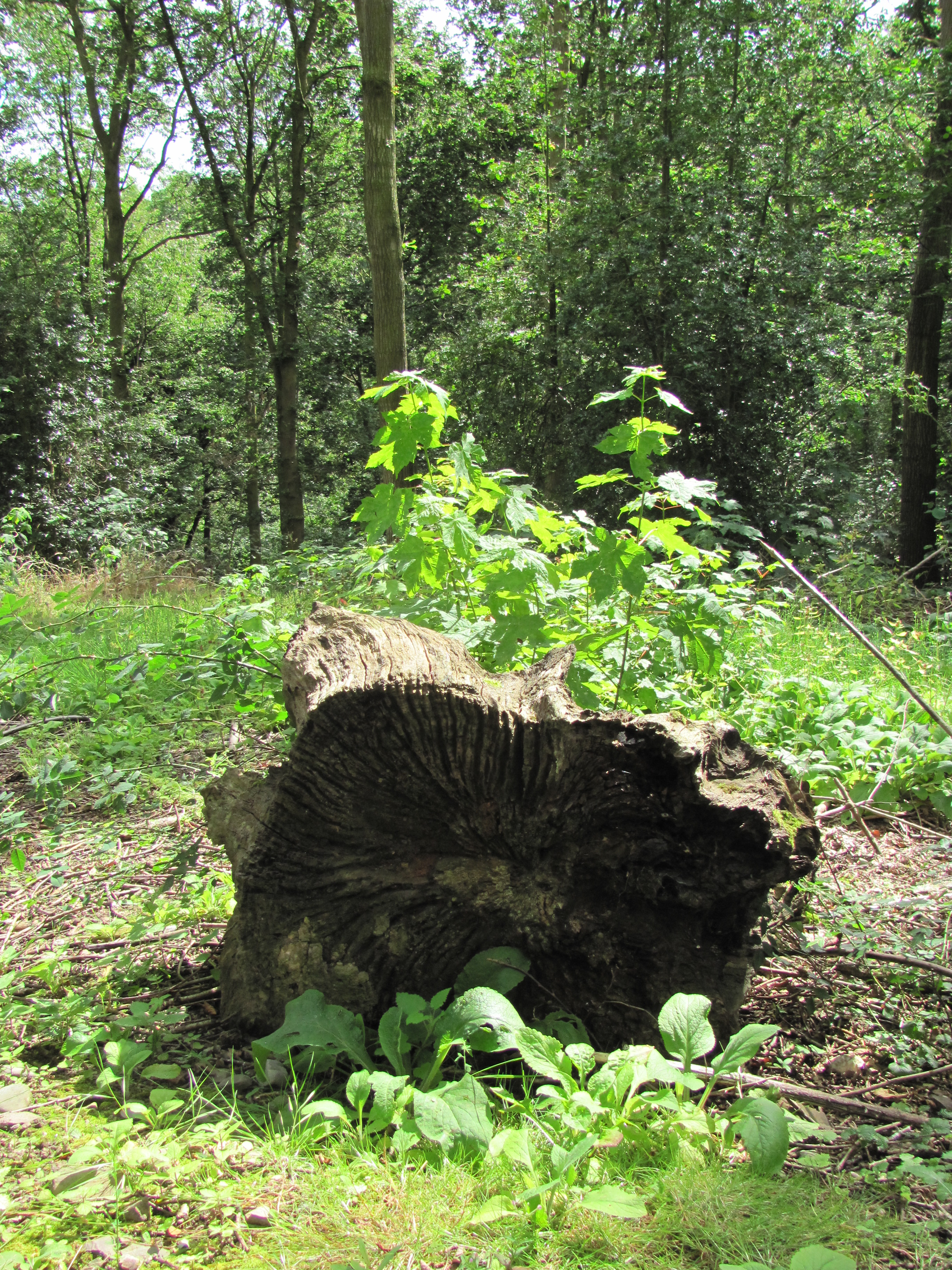
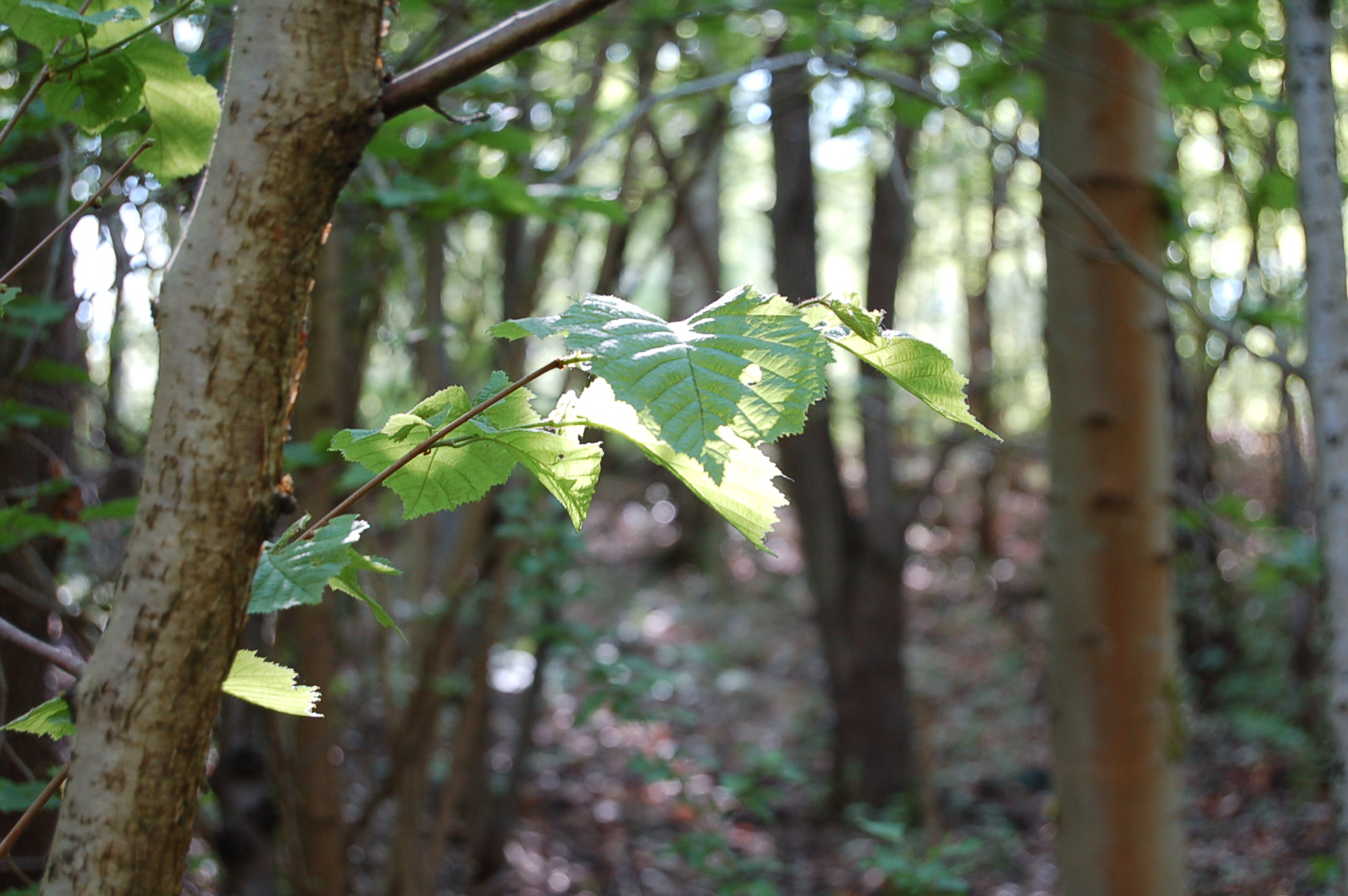
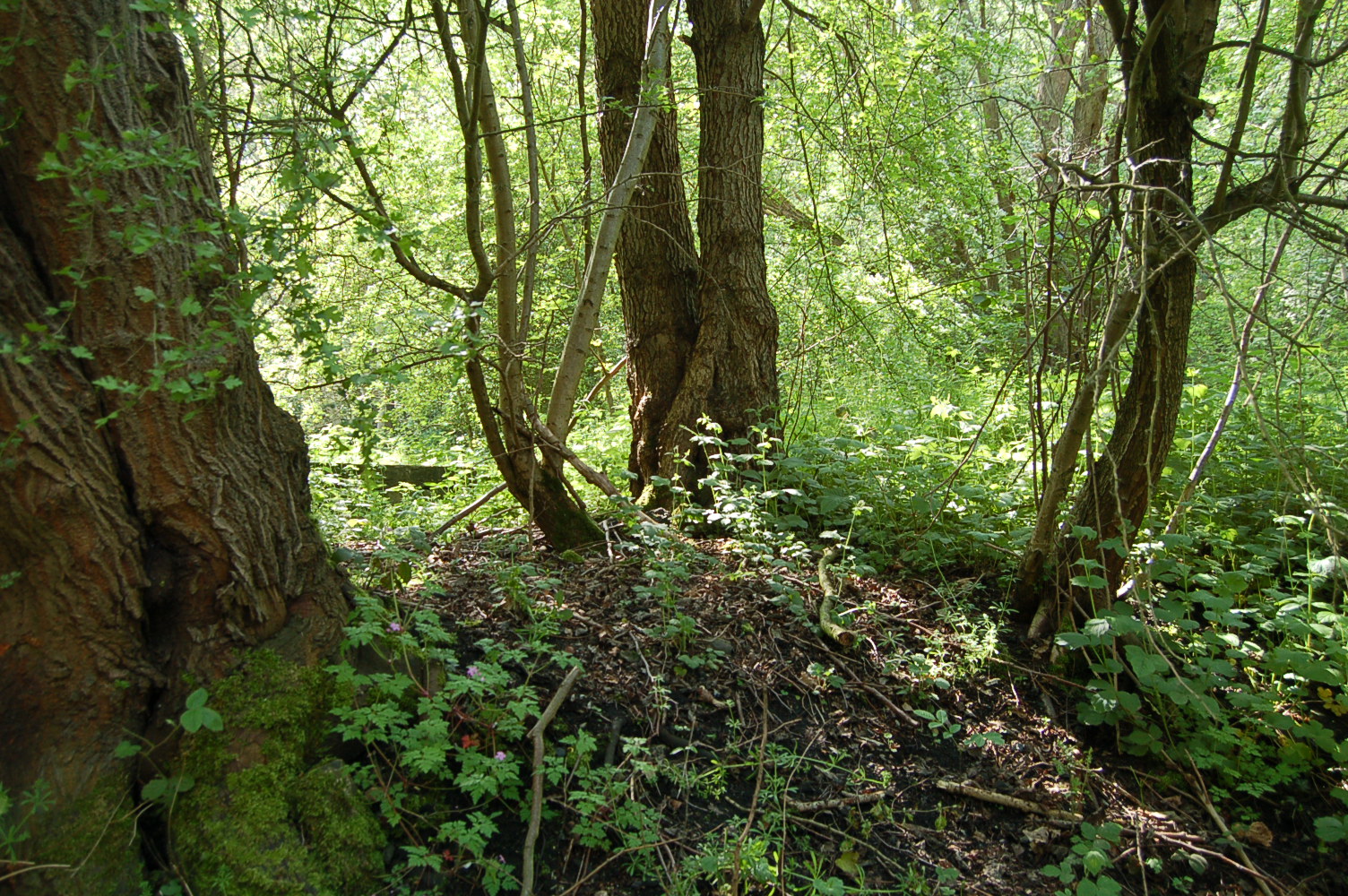
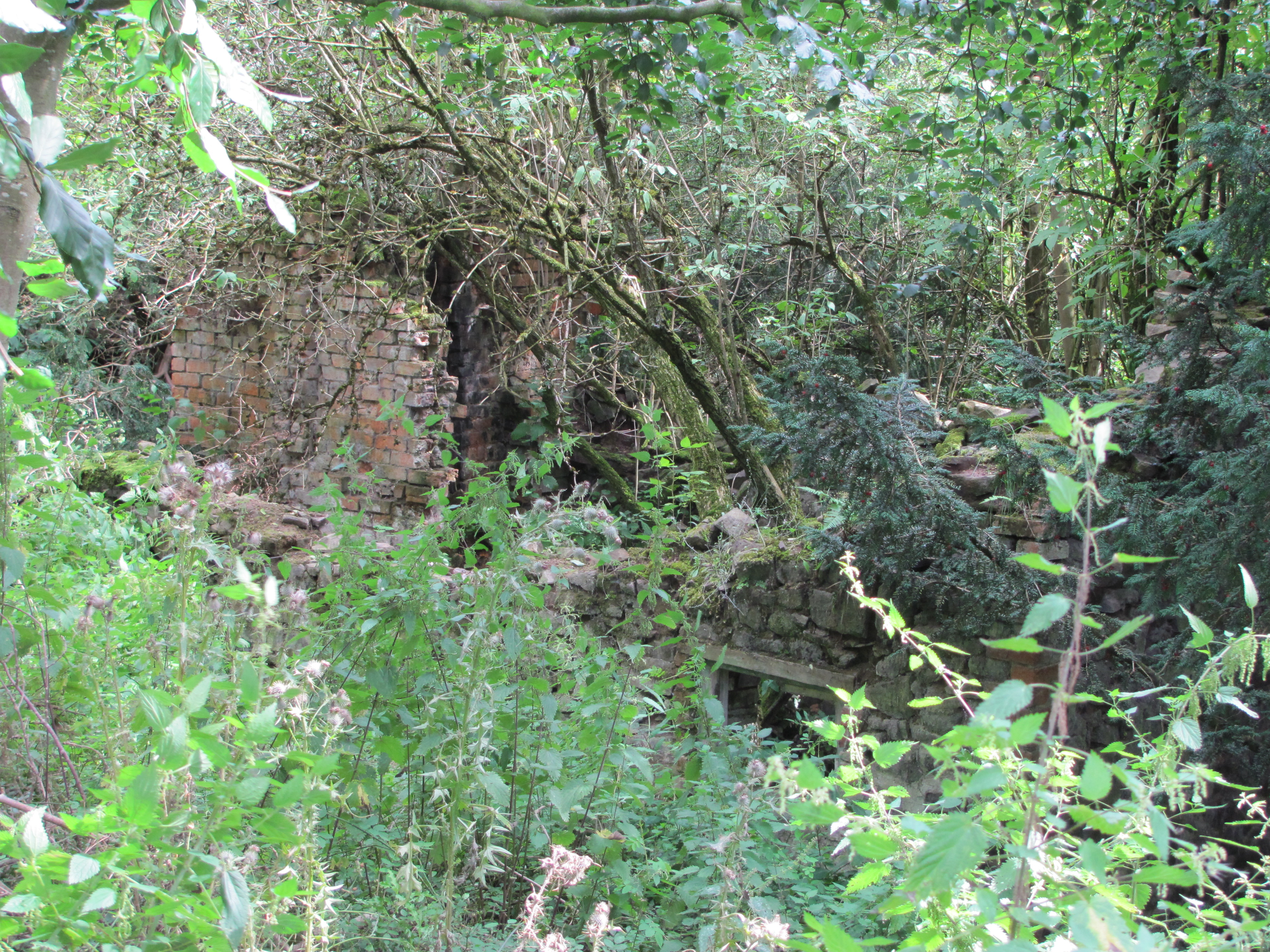
The wood gave away its past. Signs of the work of woodlanders abound. Their homes were now mere ruins covered in Ivy as Mother Nature reclaims her woodland. A clearing showed signs of coppicing.
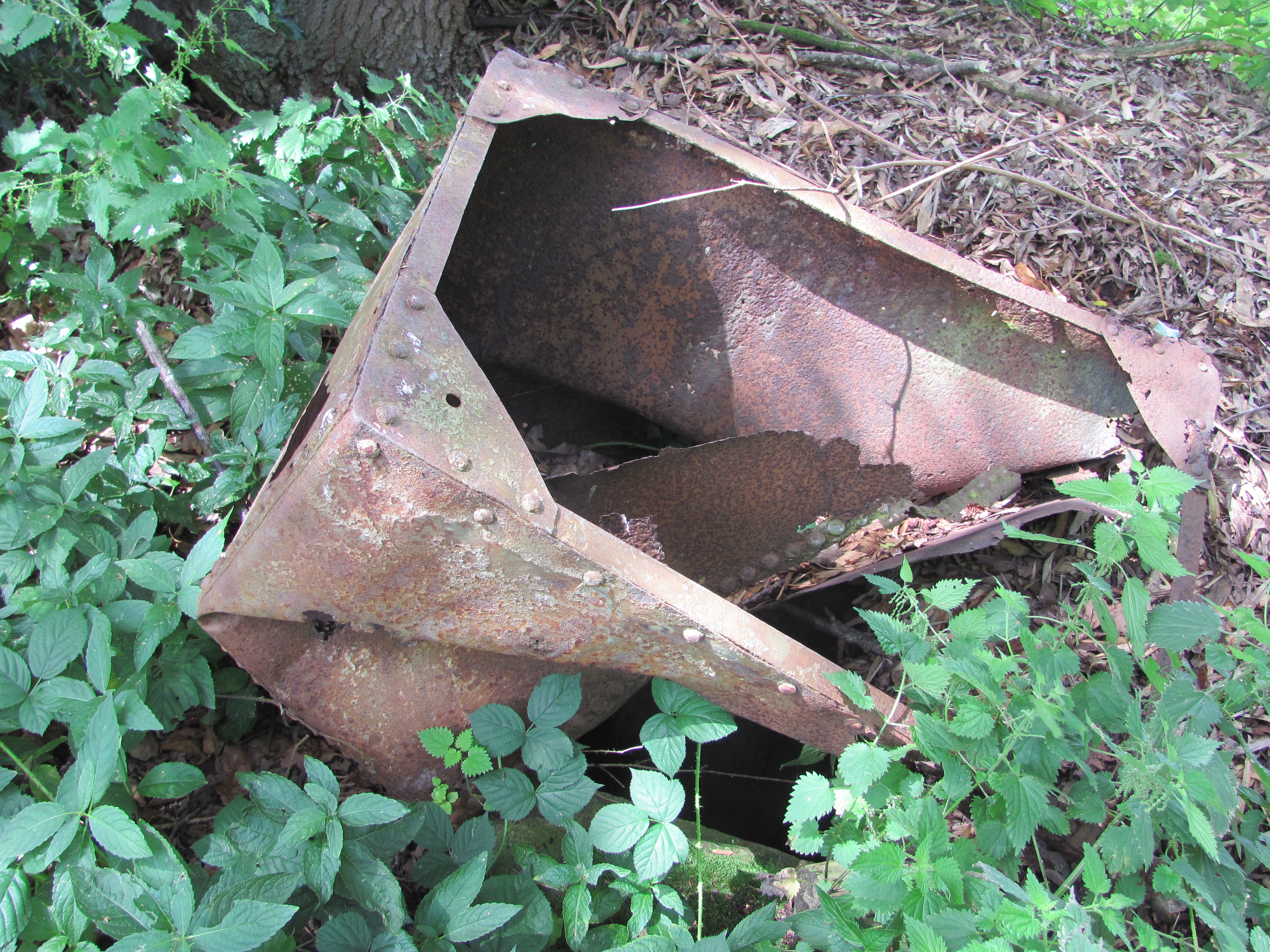
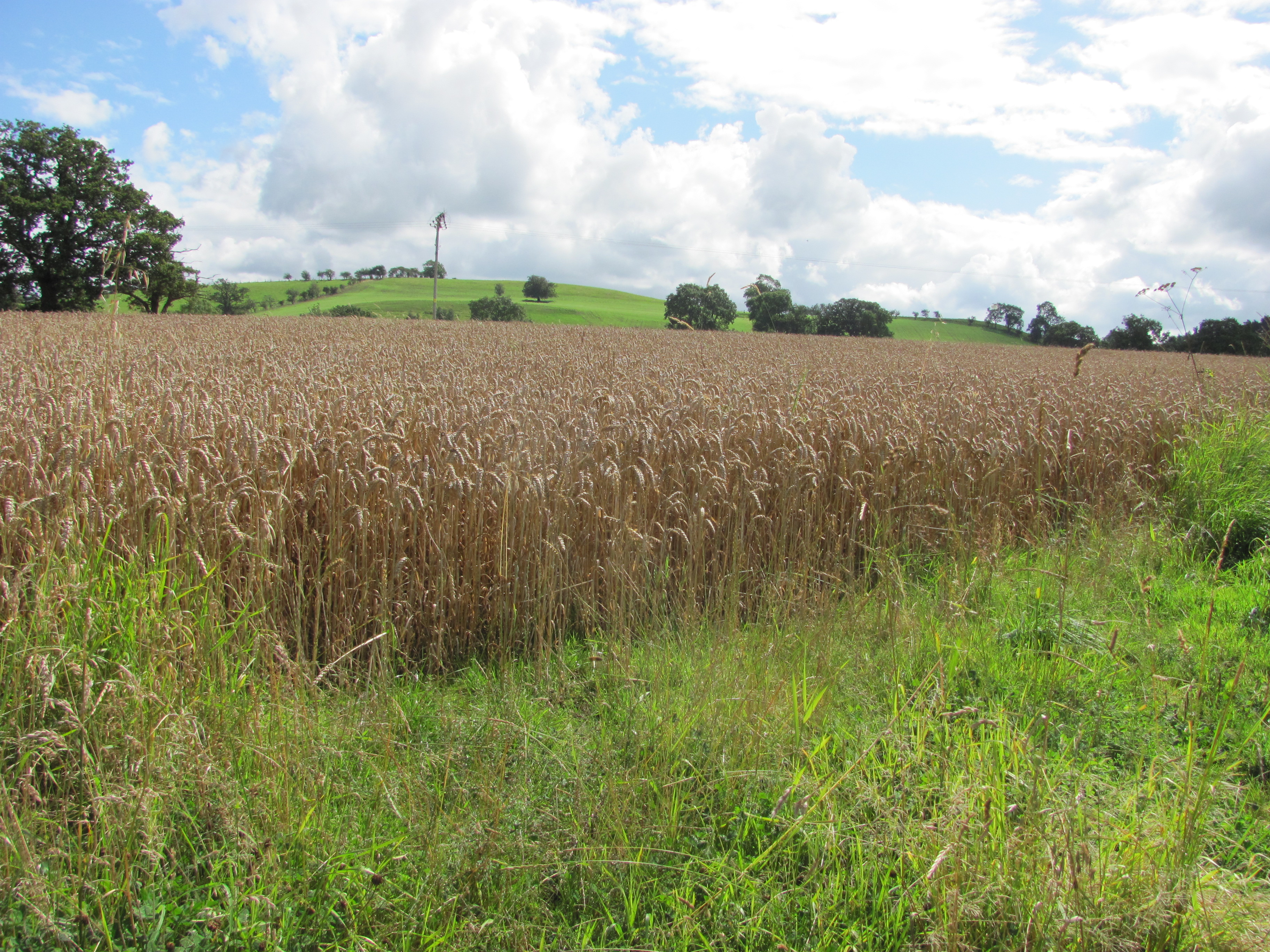
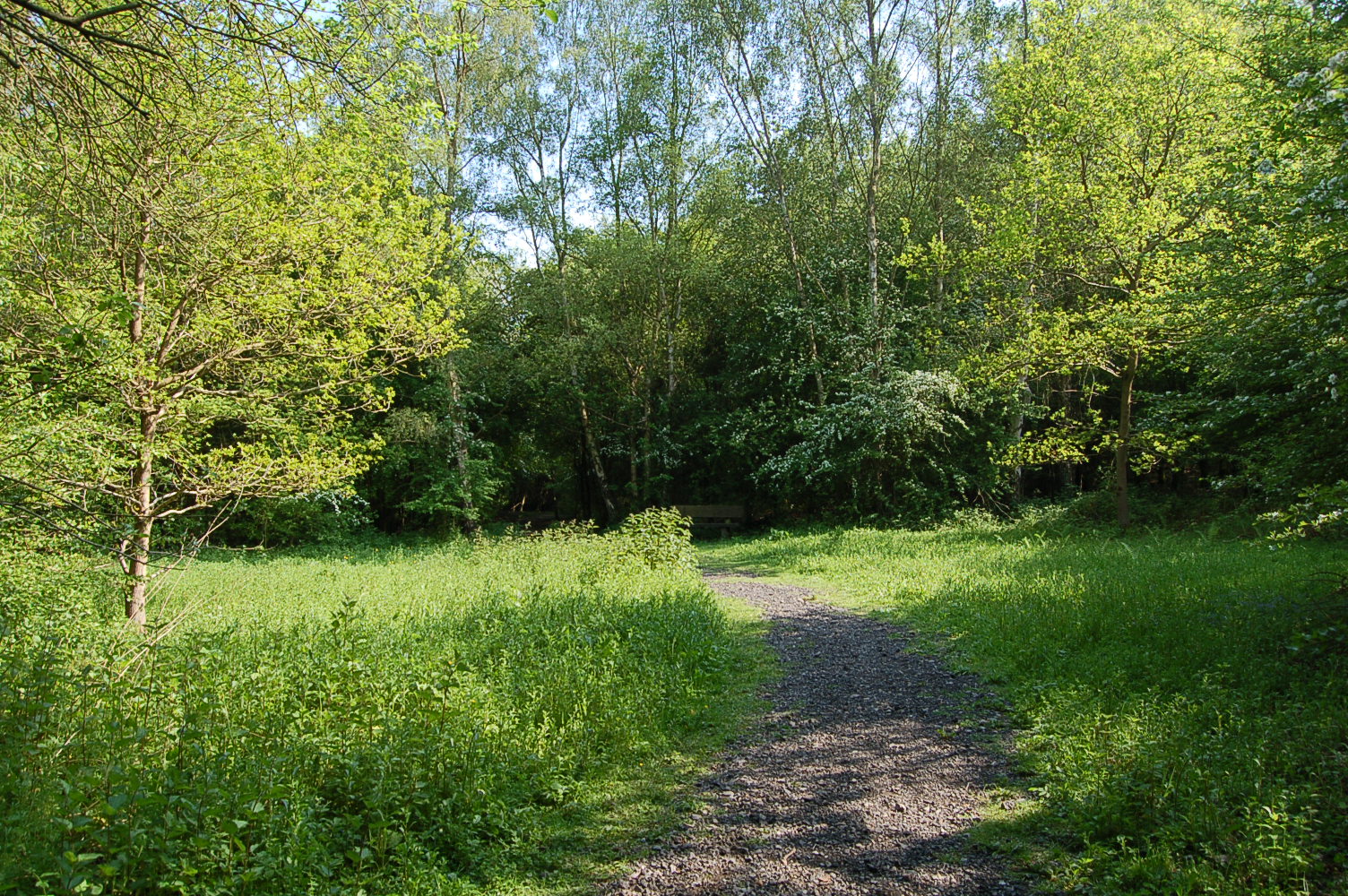
The darkness of the wood and its cooler atmosphere was in stark contrast to the brightness and warmth that greeted us as we left it behind and returned to farmland. The path narrowed and took led us around a field edge where the sterility and silence of the arable farming on our left clashed with the natural exuberance of the hedge and the wildflower filled verges.

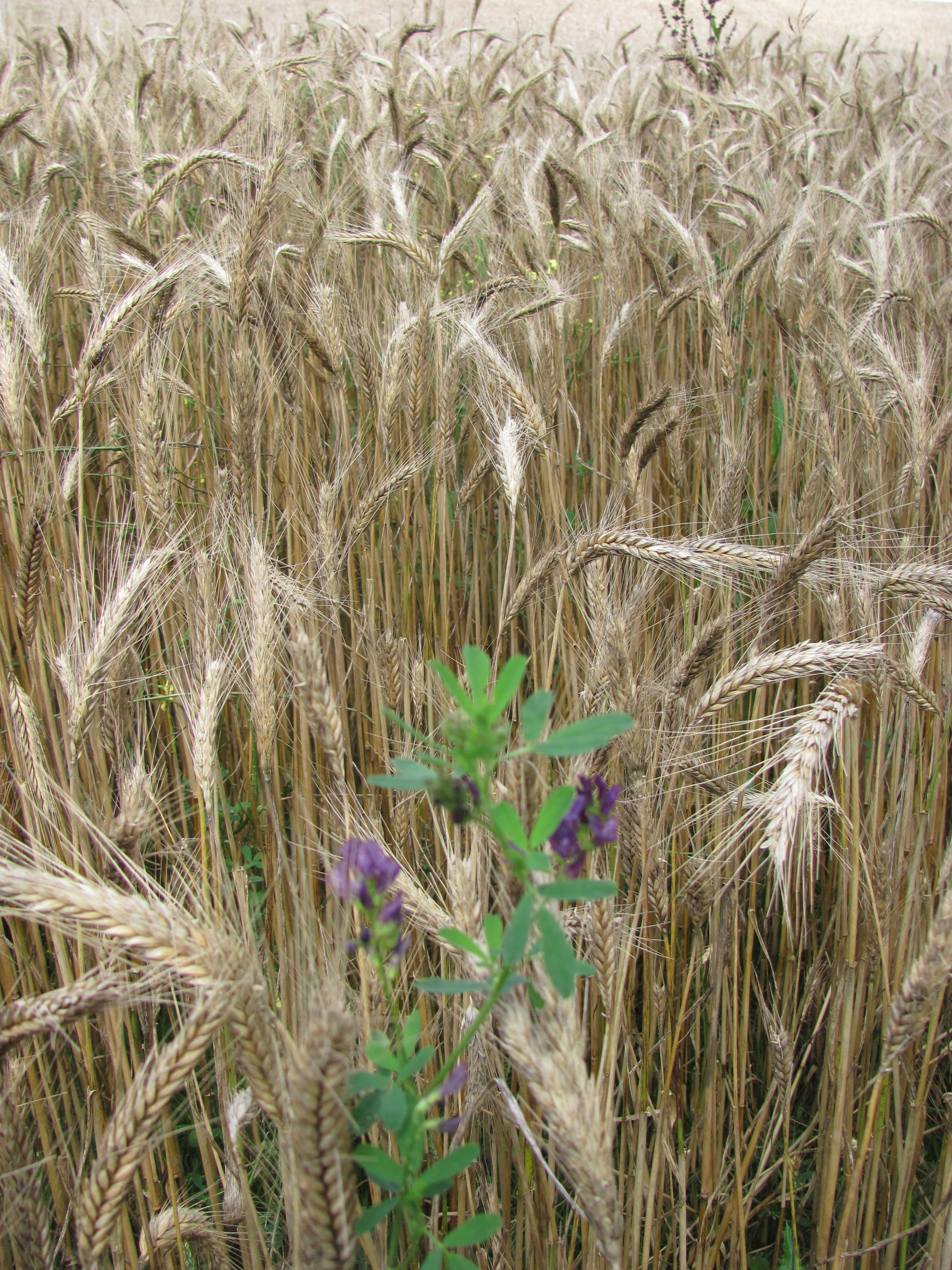
This was modern agricultural practice at its worse. We crossed over several of these fields and saw no signs of life apart from two Wood Pigeons flying overhead. The only flowers were a few yellow Rape plants from a previous crop and brave purple flowered Vetches attempting to clamber the Barley stalks close to the path. Years of pesticide and herbicide use coupled with monoculture has wiped out wildlife from these acres of land. To illustrate the point a small group of Swallows flew over the crop in search of insects, but it was in vain and they quickly moved on. At least until the footpath signs disappeared once more and we relied again on the smart phone maps to rescue us.
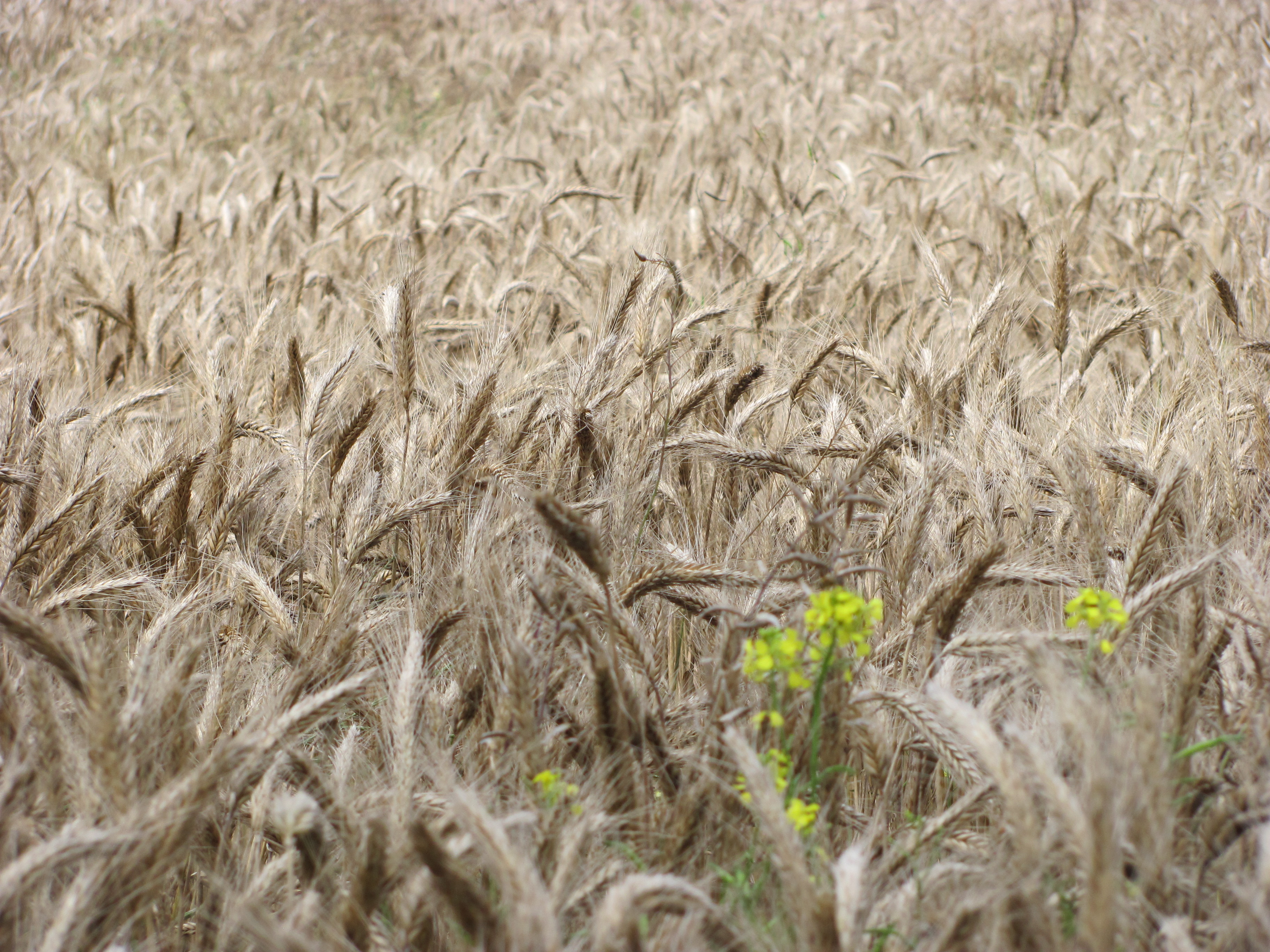
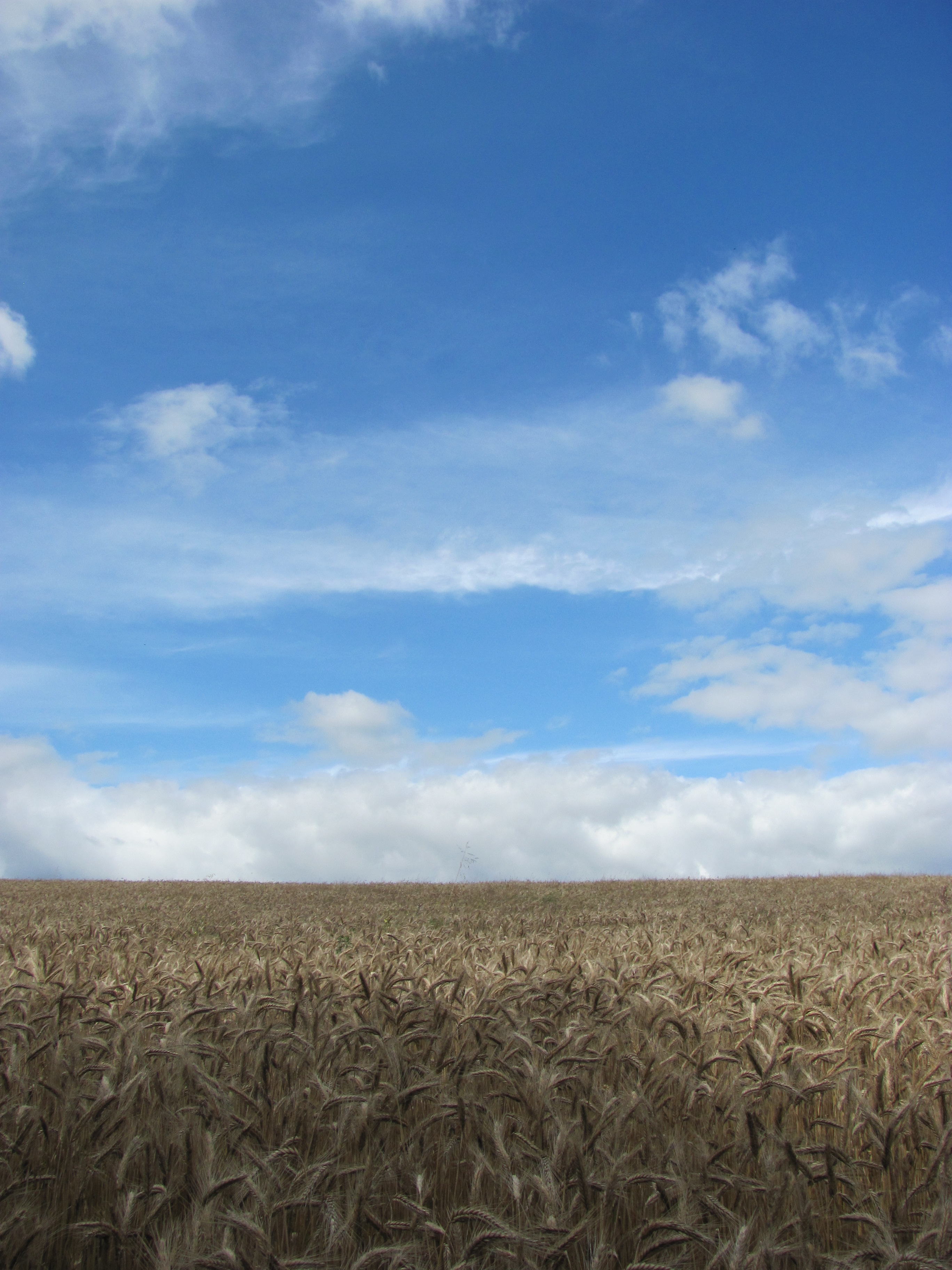
The path crossed one of these fields creating a narrow band of green which cut through the drab grey-yellow of the Barley. The only good part of crossing this desert was the rattling sound that the ears of Barley made as our elbows brushed past them.

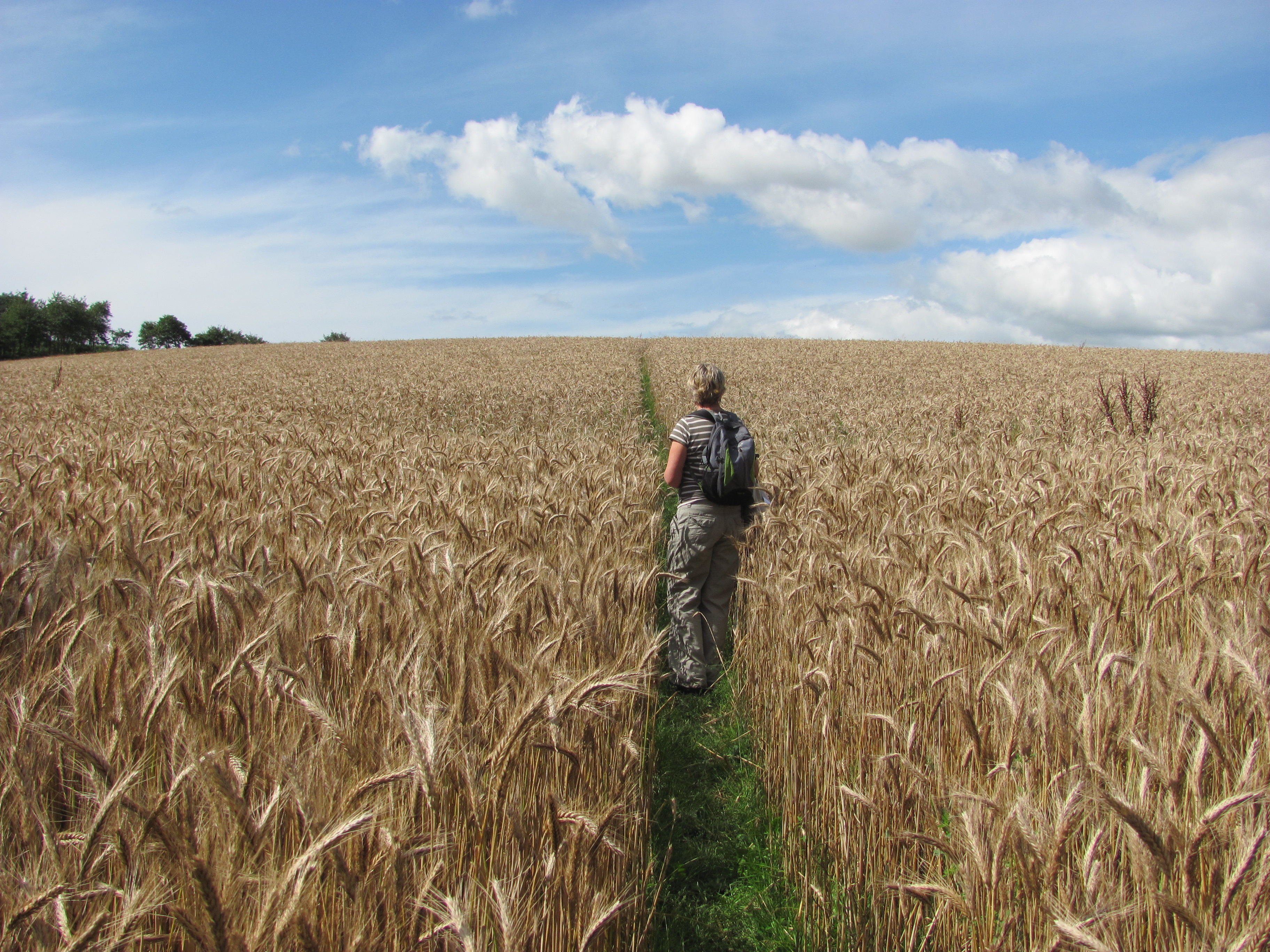
Walking across the field we aimed for a style in the distant hedge. It seemed a long way across as there was little to look at or to listen to. The style in the hedge turned ou to be a double style, one each side of a thick, dense, tall hedge. there was a different world awaiting us on the other side. The grassland here was full of clovers and there were many different grasses, not just the ryegrass we had walked through earlier.

We were now within the land of our local organic dairy farmer. The hedgerows had deep verges full of wildlflowers, thistles, mallows and vetches. No hedges had been removed and the fields were much smaller.
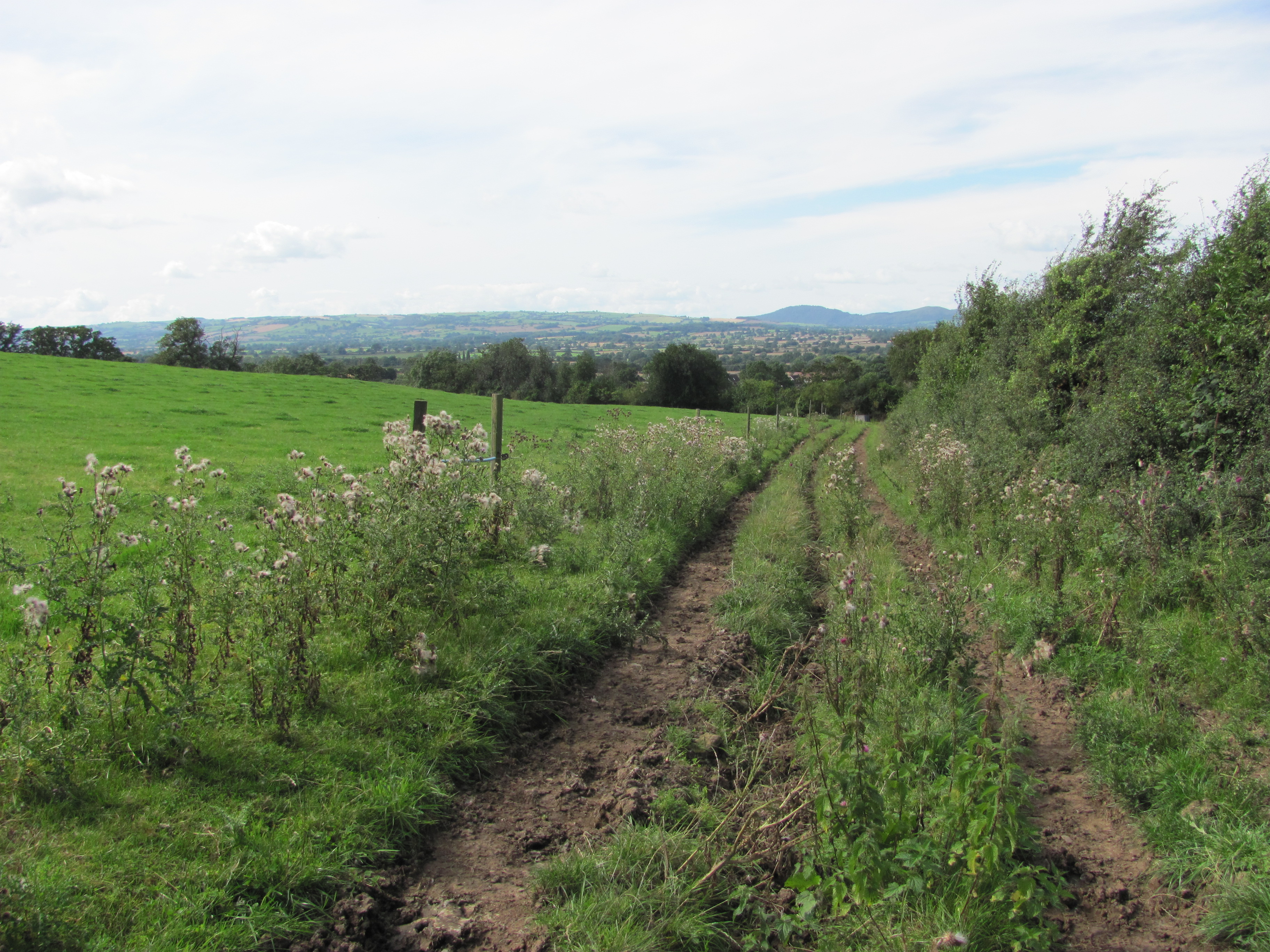
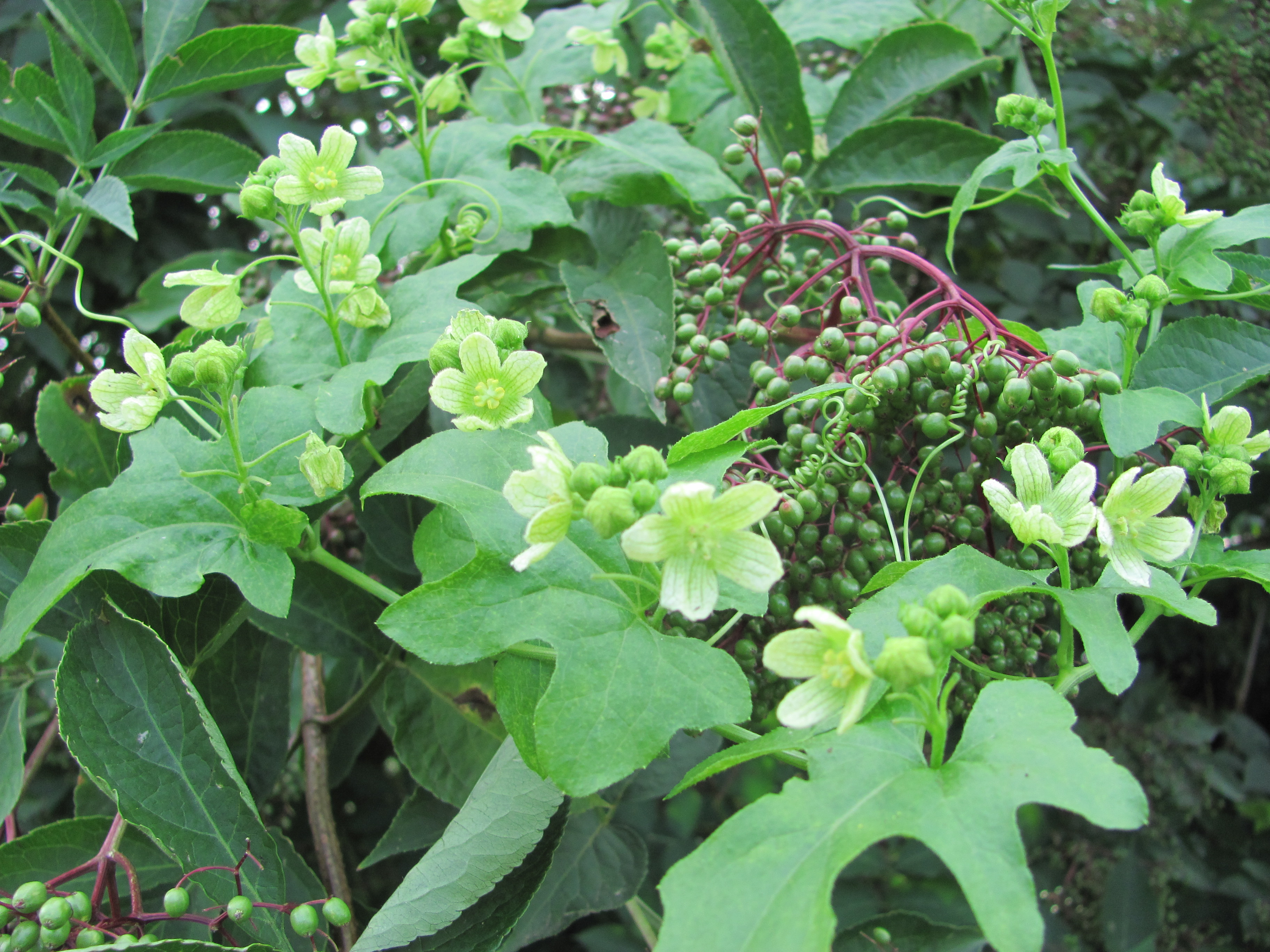
As we passed through to another field we were hit by a sweet. rich aroma from the hedge. It took us a while to find the source – a Sweet Bryony clambering over an Elder.
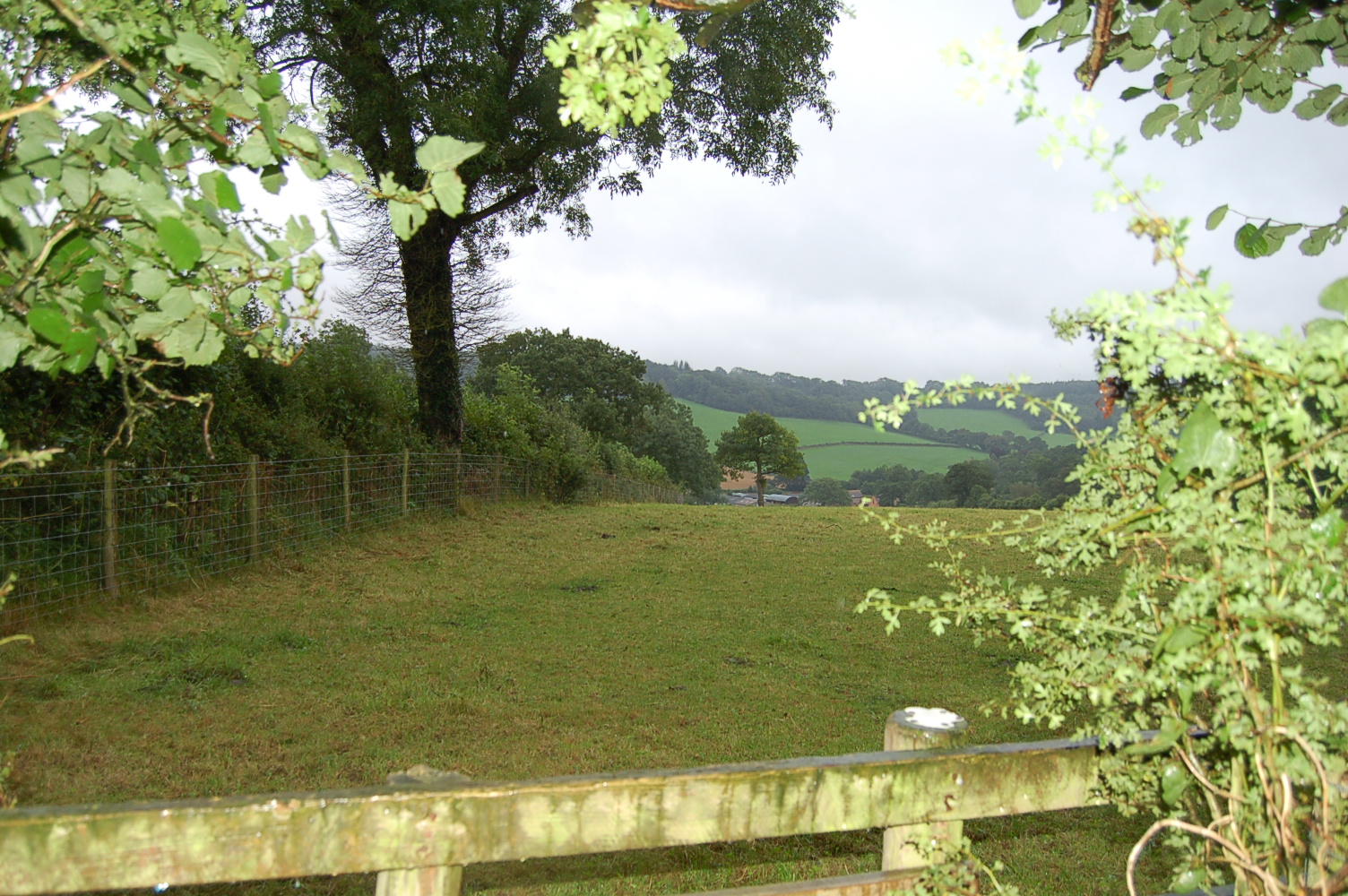
It was downhill now all the way home and we enjoyed lovely views through gaps in the tall hedges.
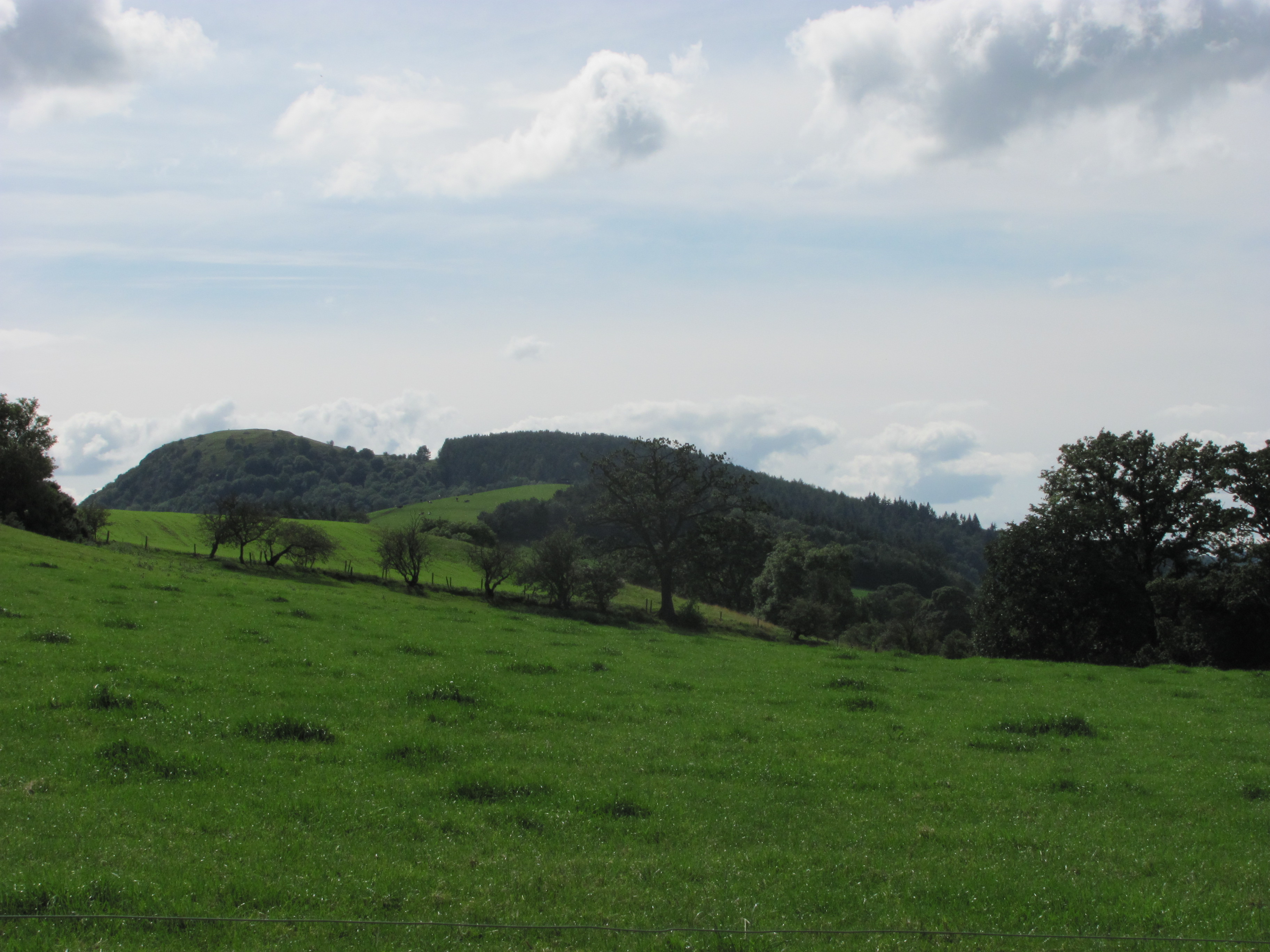
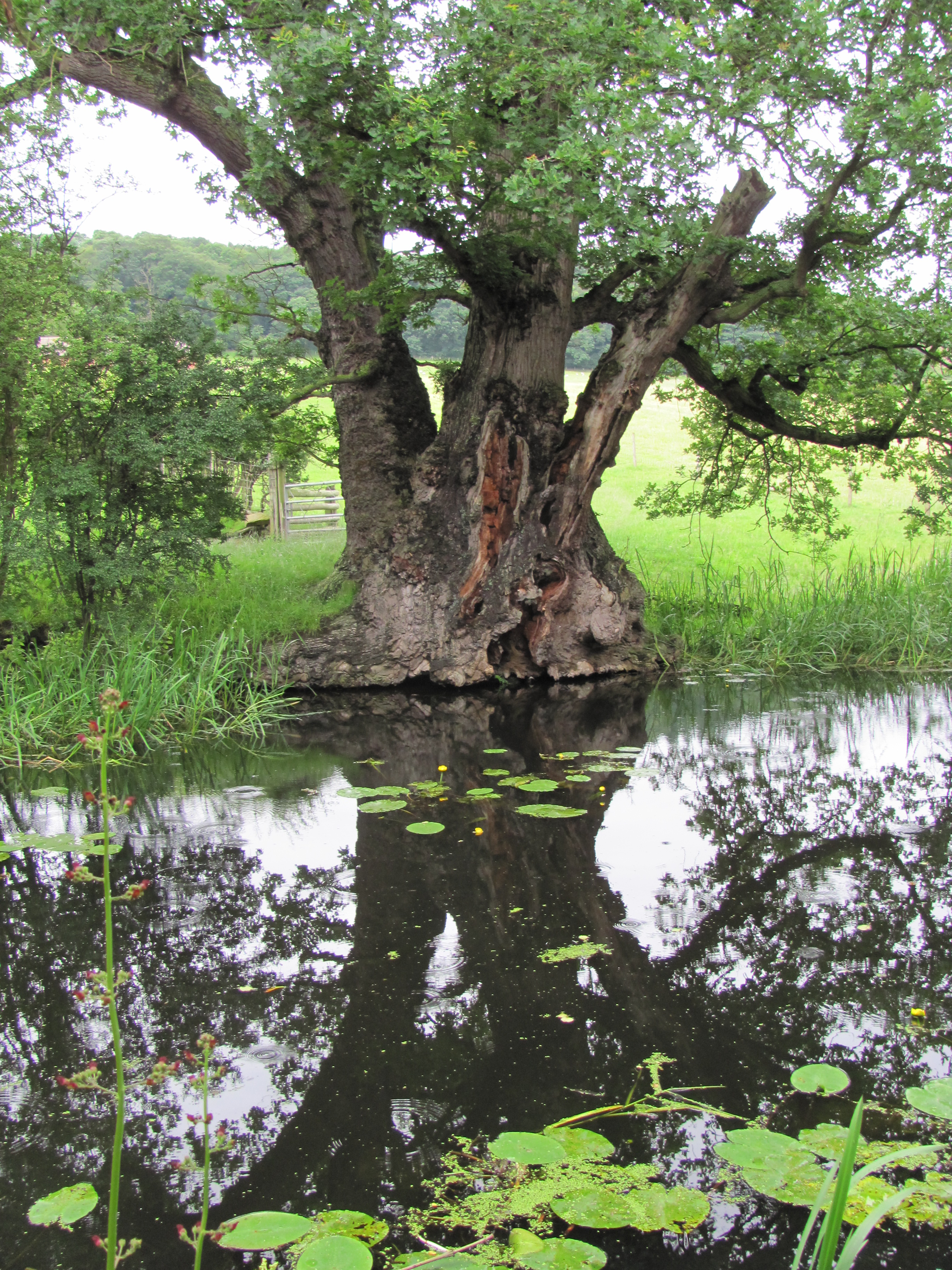
As we left the final field of pastureland we spied our house across the hayfield. We had to pass our big old oak tree which we admire from out back garden. As we walked along the fence to the garden gate we called out to the chickens. They looked totally confused – we were the wrong side of the fence.

Categories
birds meadows photography Shropshire trees wildlife woodland

Through the Garden Gate – part one – to the Pool.

This post features a wander in the countryside beyond our garden gate. We literally walk down to the bottom of the garden, past the chucks, go through the wooden gate and enter our borrowed landscape. We ambled for four hours spending much of the time standing, looking and listening or sitting and taking in the atmosphere. At no time were we more than a mile from our home.

An alternative title for the post could be “Why we live where we live and why we love where we live.” Join us as we wander around our local patch, our own personal bit of countryside.

We walked alongside the fence line along the paddock to join the public footpath which led us diagonally across a field of winter wheat. Reaching the far side of the field we looked back to get a view of our home snuggled within the short row of houses.

Looking back across the field we have just crossed gives us a different view of one of the hills we can see from the garden.

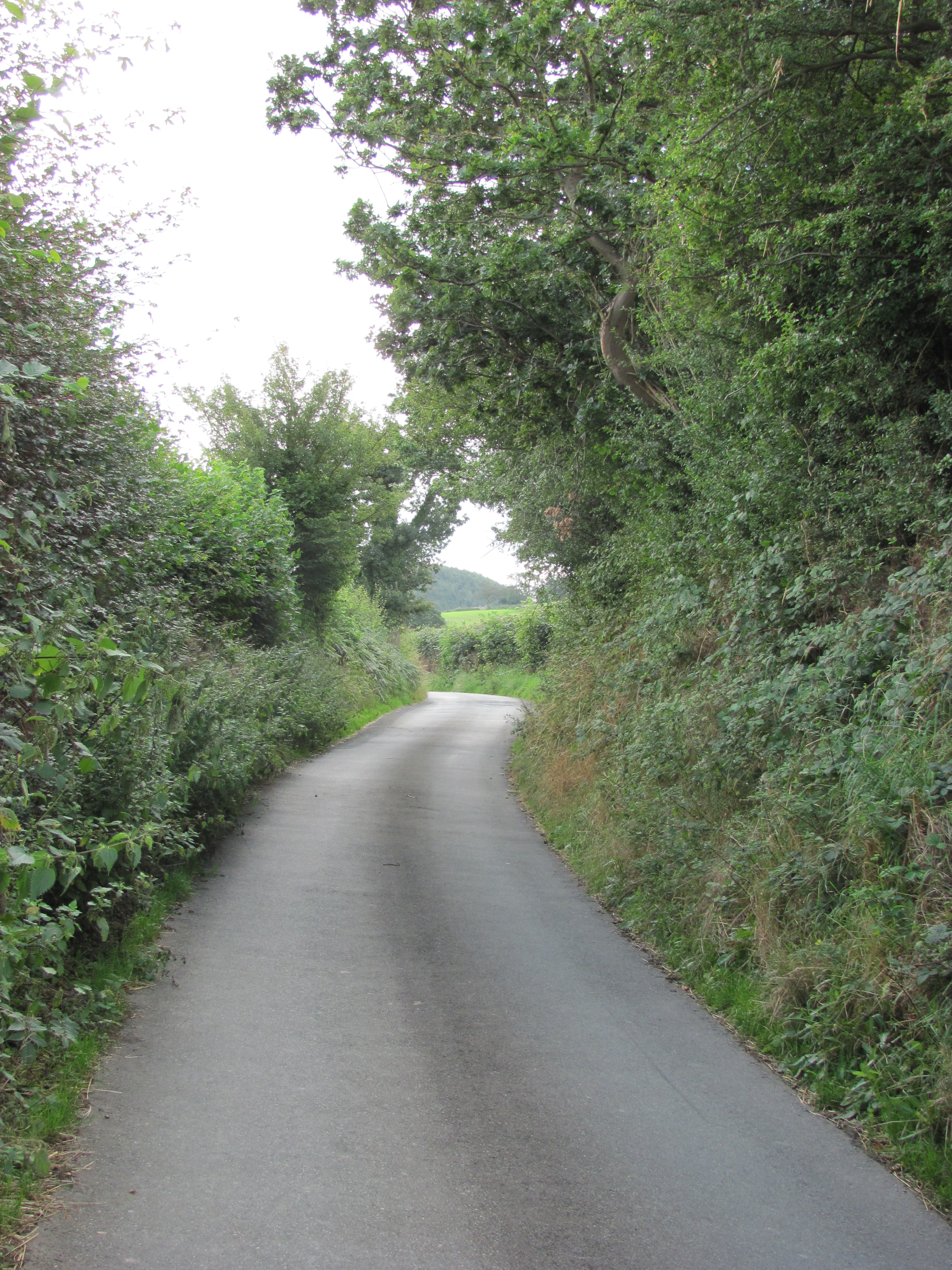
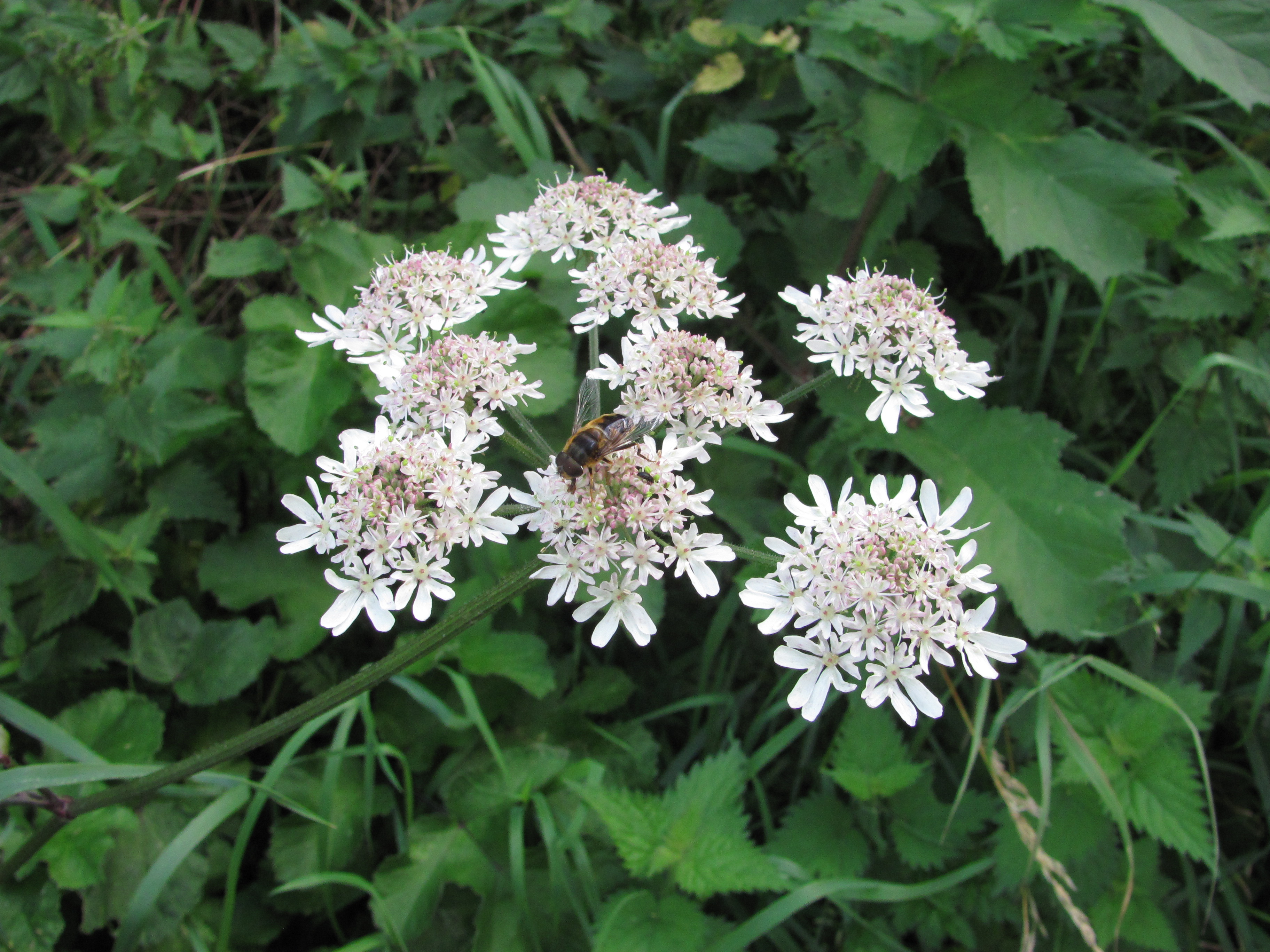
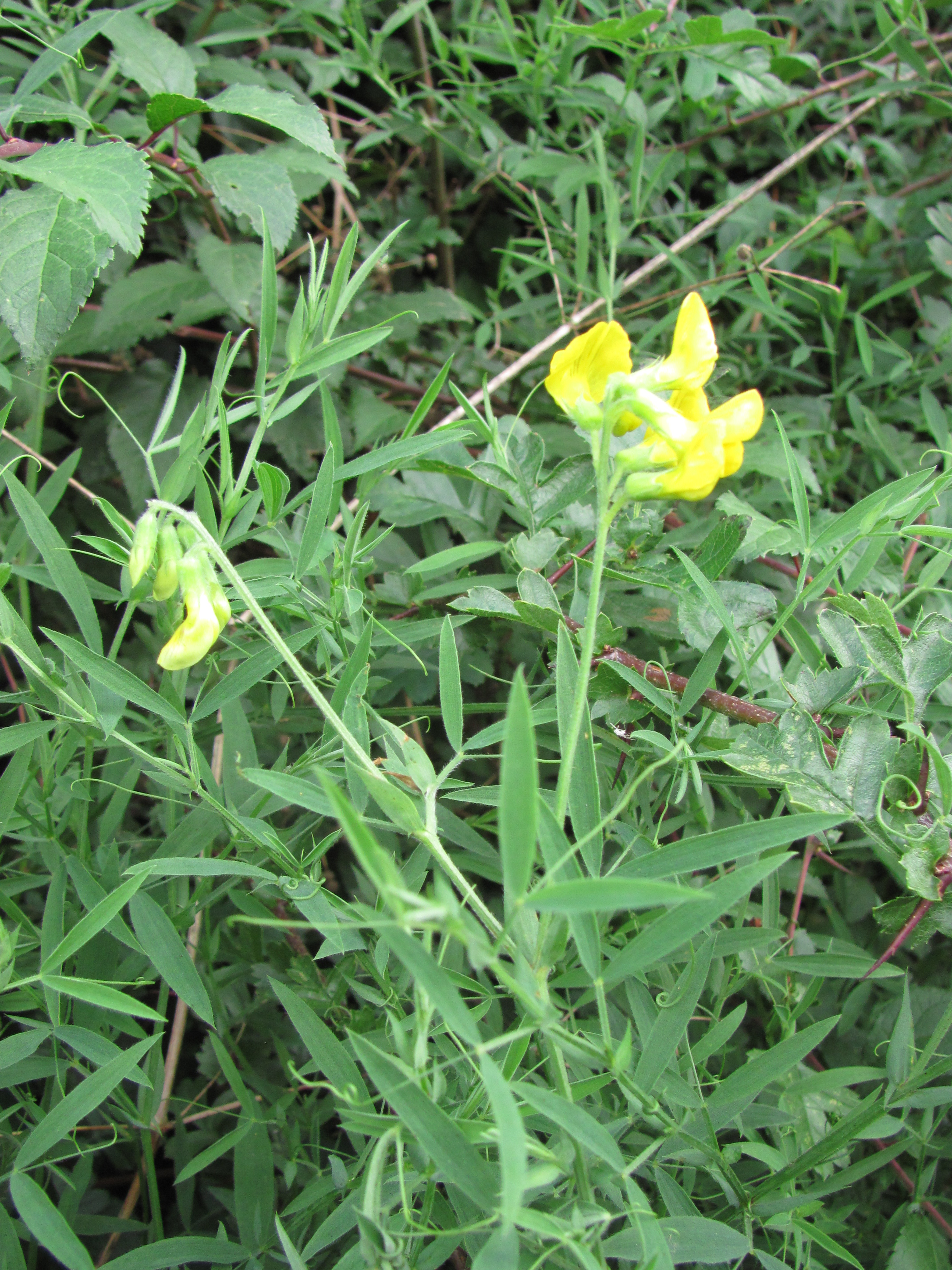
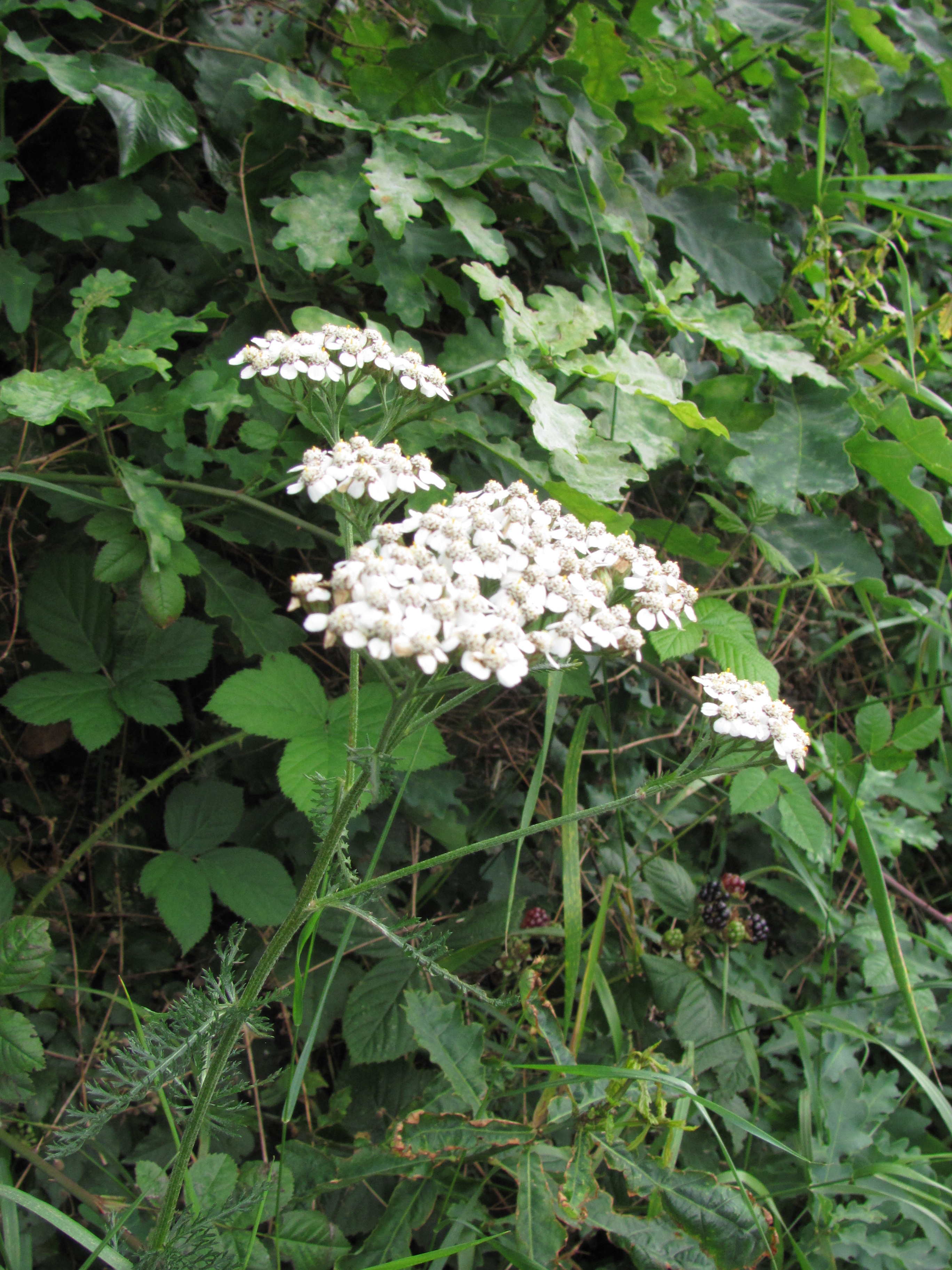
We needed now to walk along a lane for a while, a narrow lane with high hedges on each side and verges full of wildflowers. Climbers clambered over the hedging bushes.

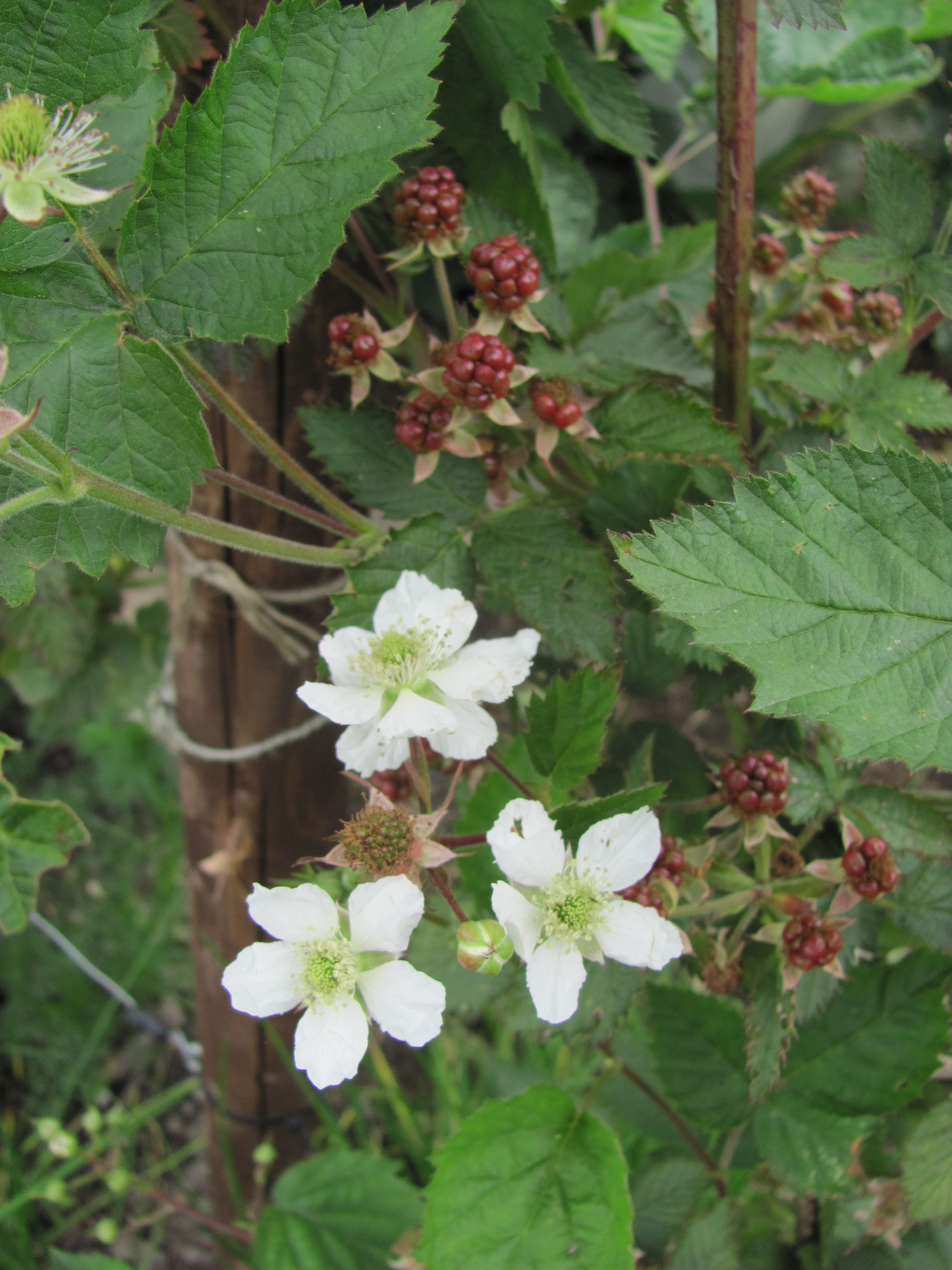
A bonus was the appearance of the first ripe blackberries. We enjoyed them and thanked the blackbirds for sharing their larder with us.

Luckily this gently uphill trek on tarmac was short-lived and we soon clambered over the hedge via a wooden style and revelled in walking with the feel of soft grass beneath our feet. Here the land is rich pastureland enjoyed by dairy cattle. The cows here were all lazily sitting down chewing their cud.

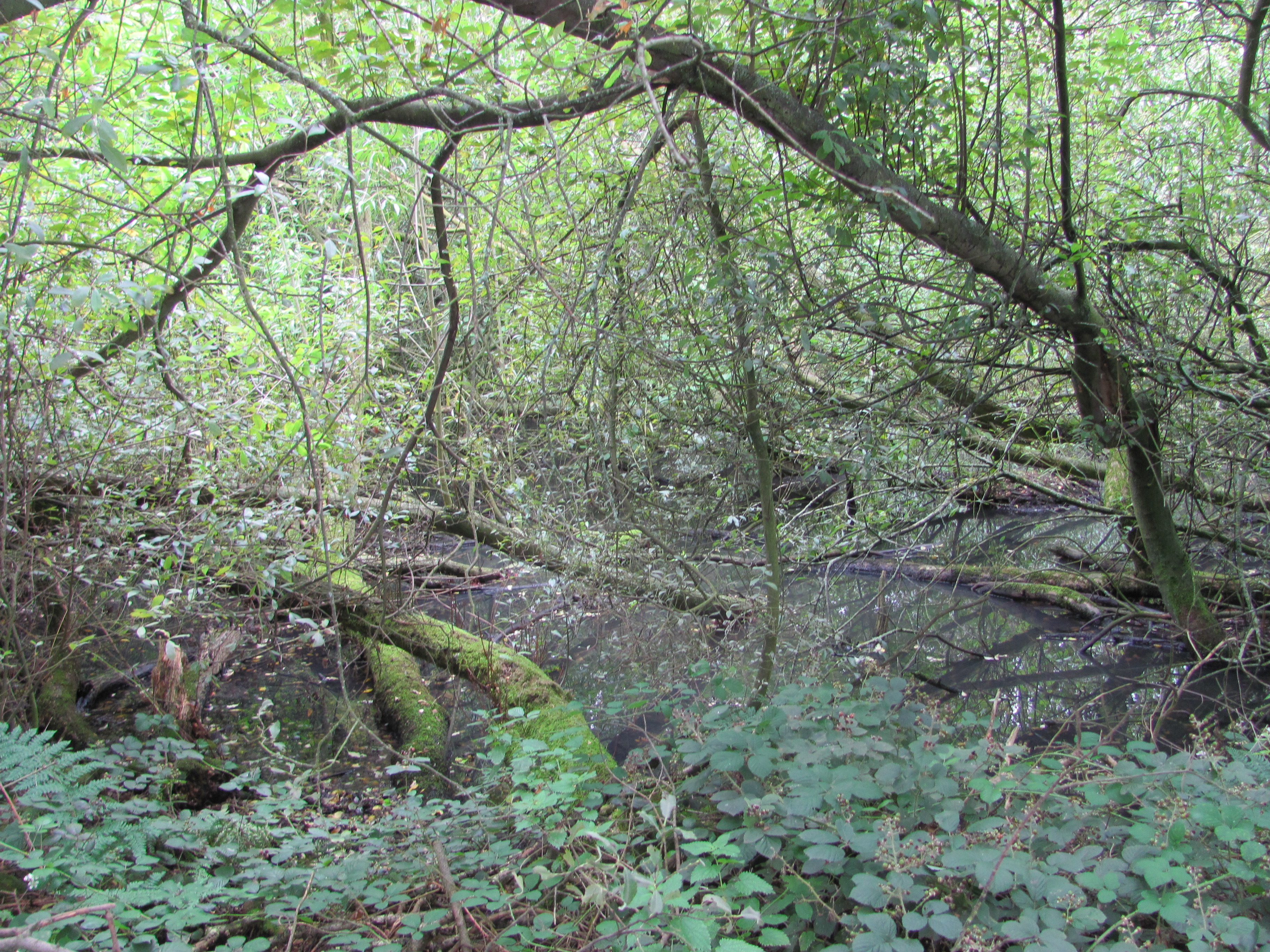
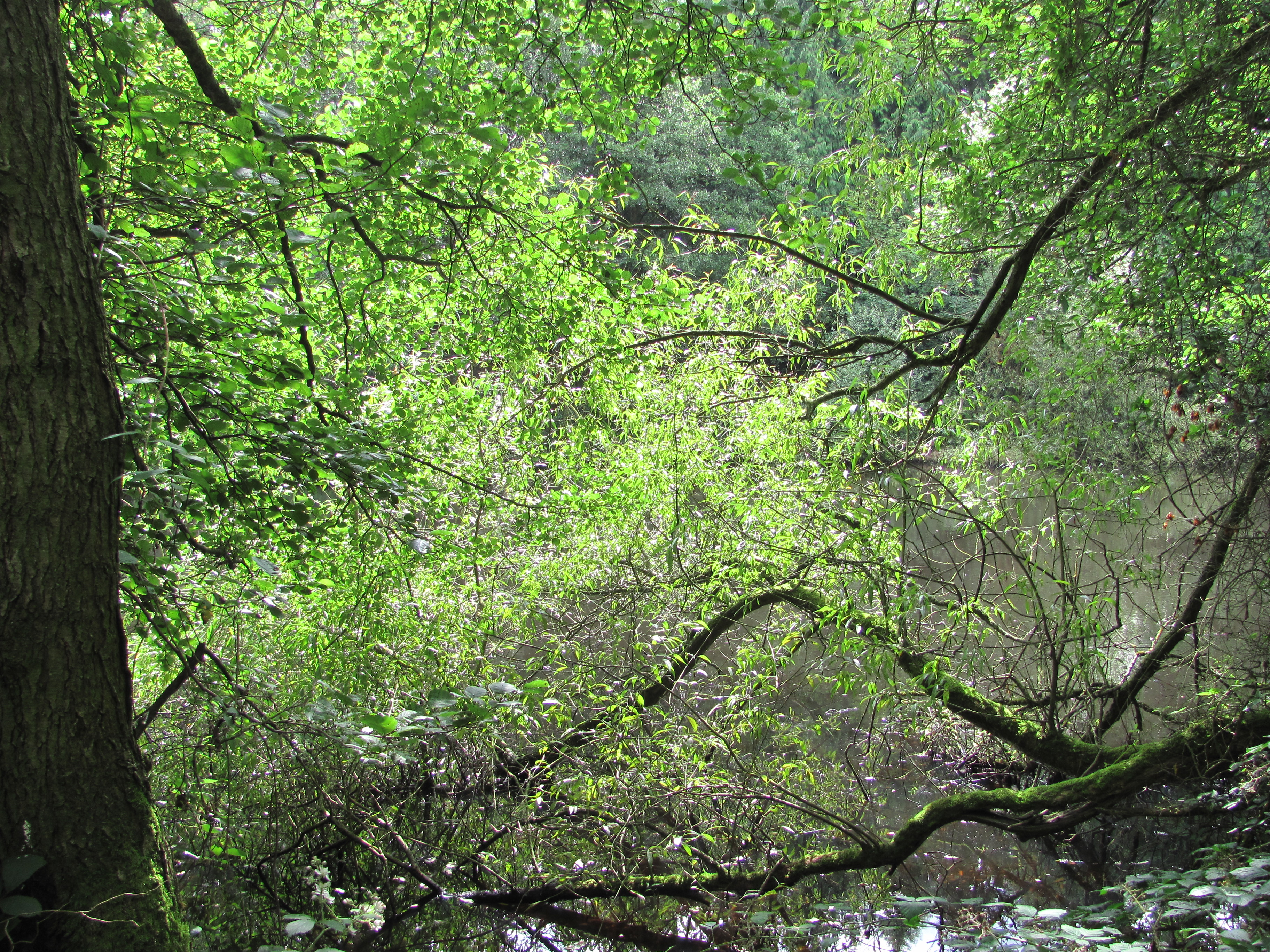
A tiny stream acted as our guide across the pasture and to the edge of our secret wood with abandoned fishing pools now overgrown and in places looking more like swamp land.

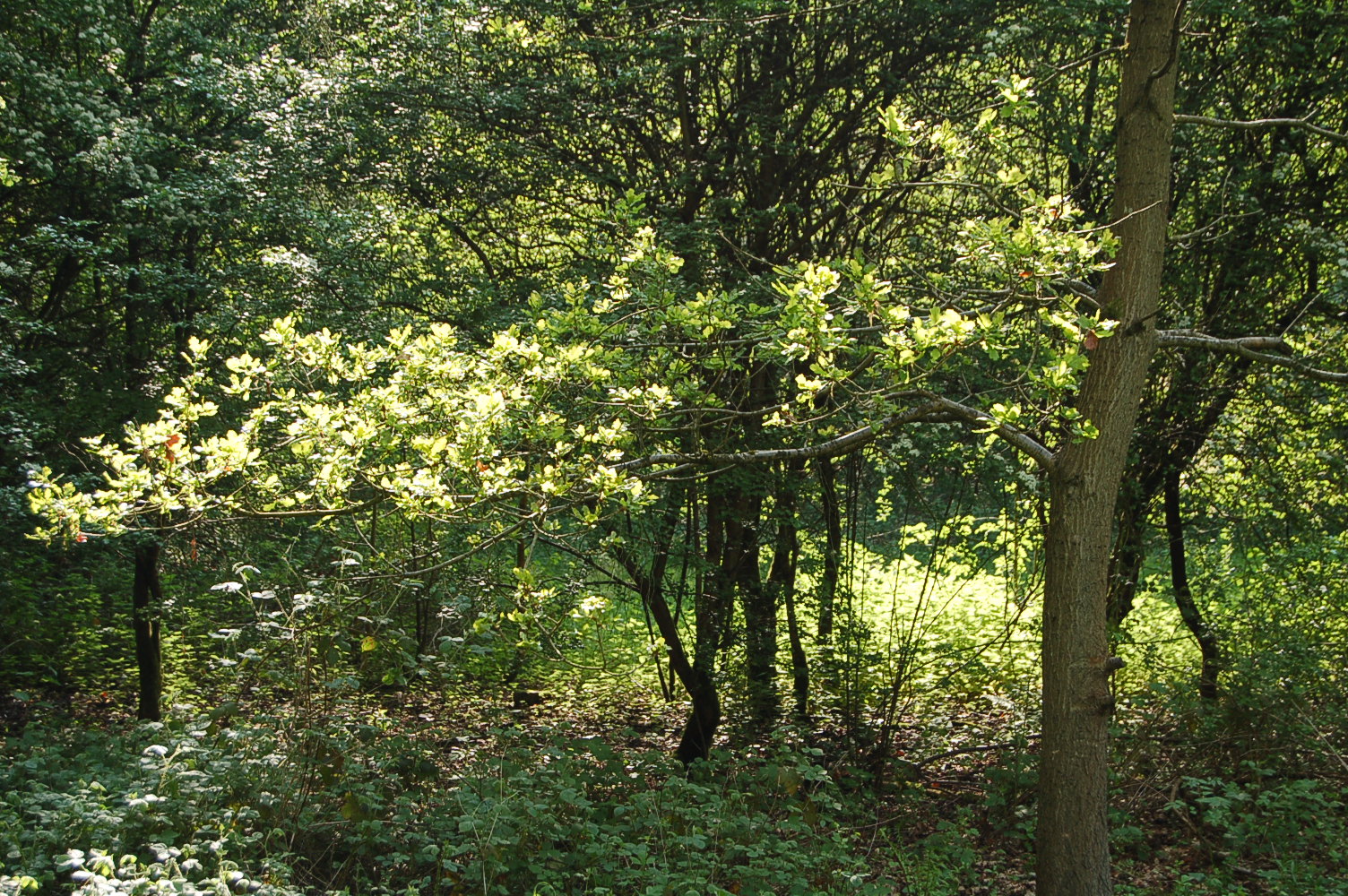
Whenever we walk this wood, whatever the time of year and whatever the weather, the light has a special quality which lights up the overgrown pools and turns trees and bushes into silhouettes.

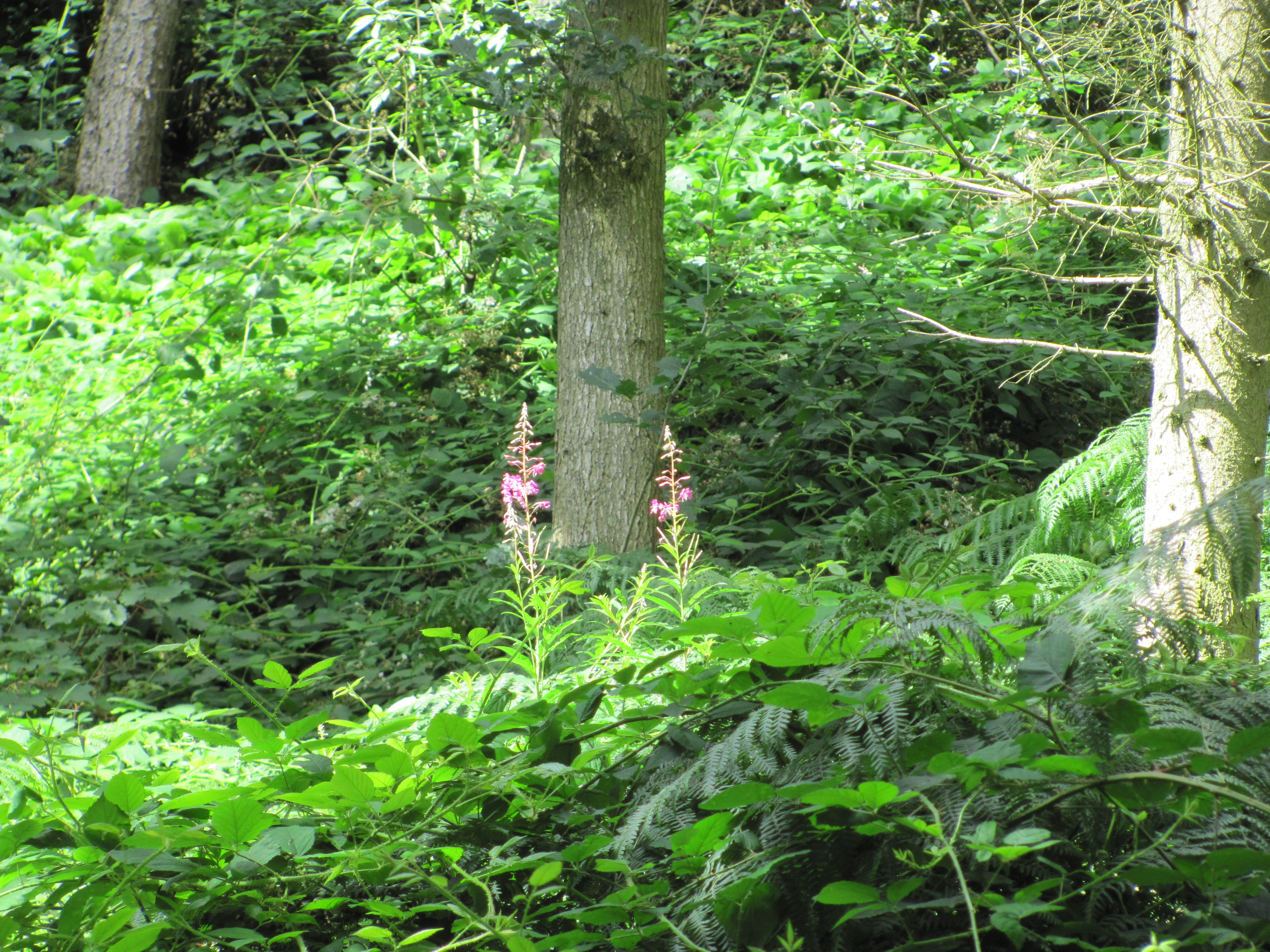
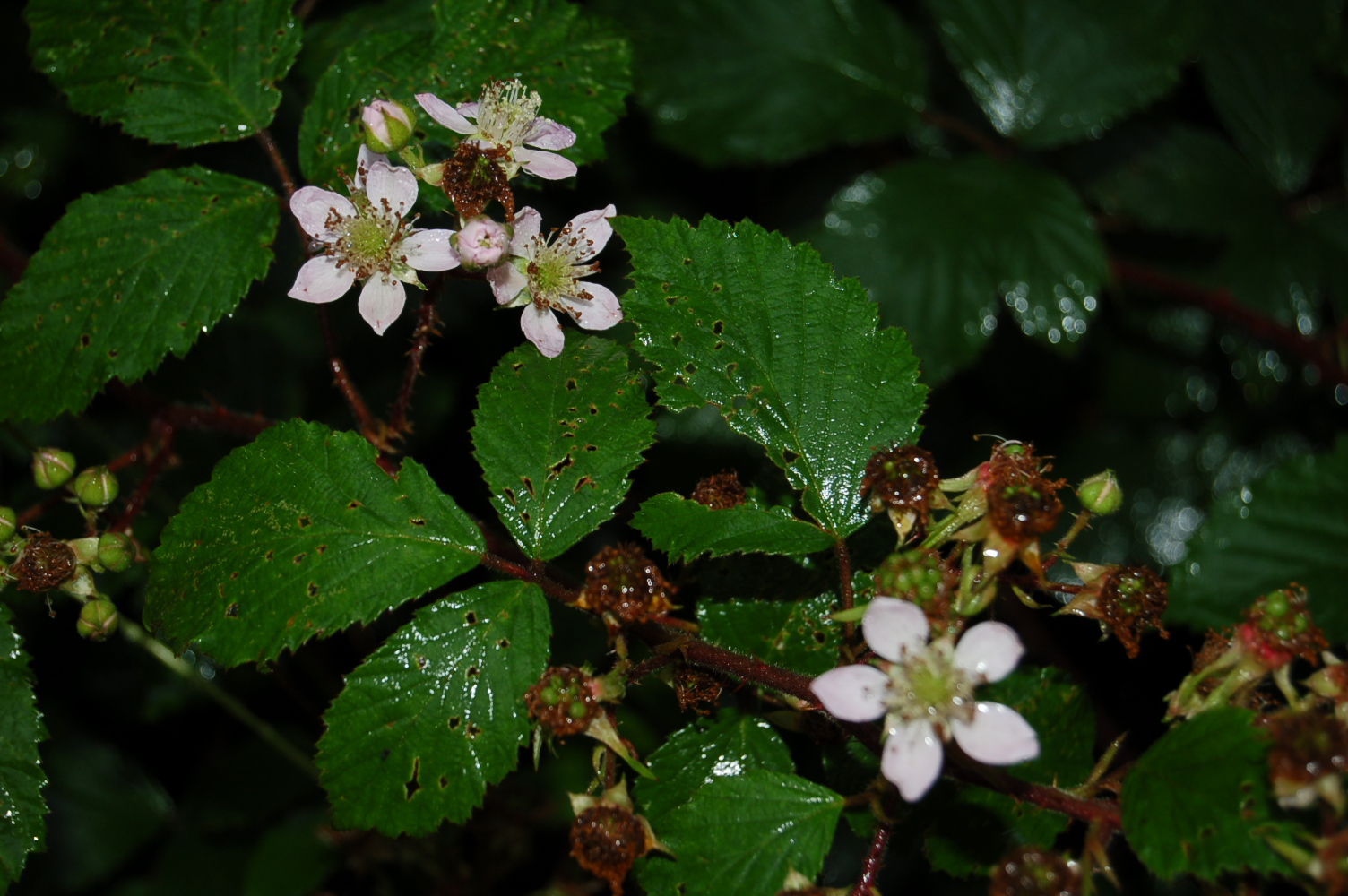
We can look up into the tree canopy of the steep valley sides as we walk along the water’s edge and appreciate just how tall some of the trees are. Below them is a thick carpet of brambles displaying their white flowers with hints of pink and their glossy, black fruits. Occasionally a tall rose-coloured flower spike of Rosebay pushes up through the bramble carpet. The trees are busy with mixed feeding flocks of Warblers and Titmice, the brambles resonating to the powerful song of Wrens and Dunnock.

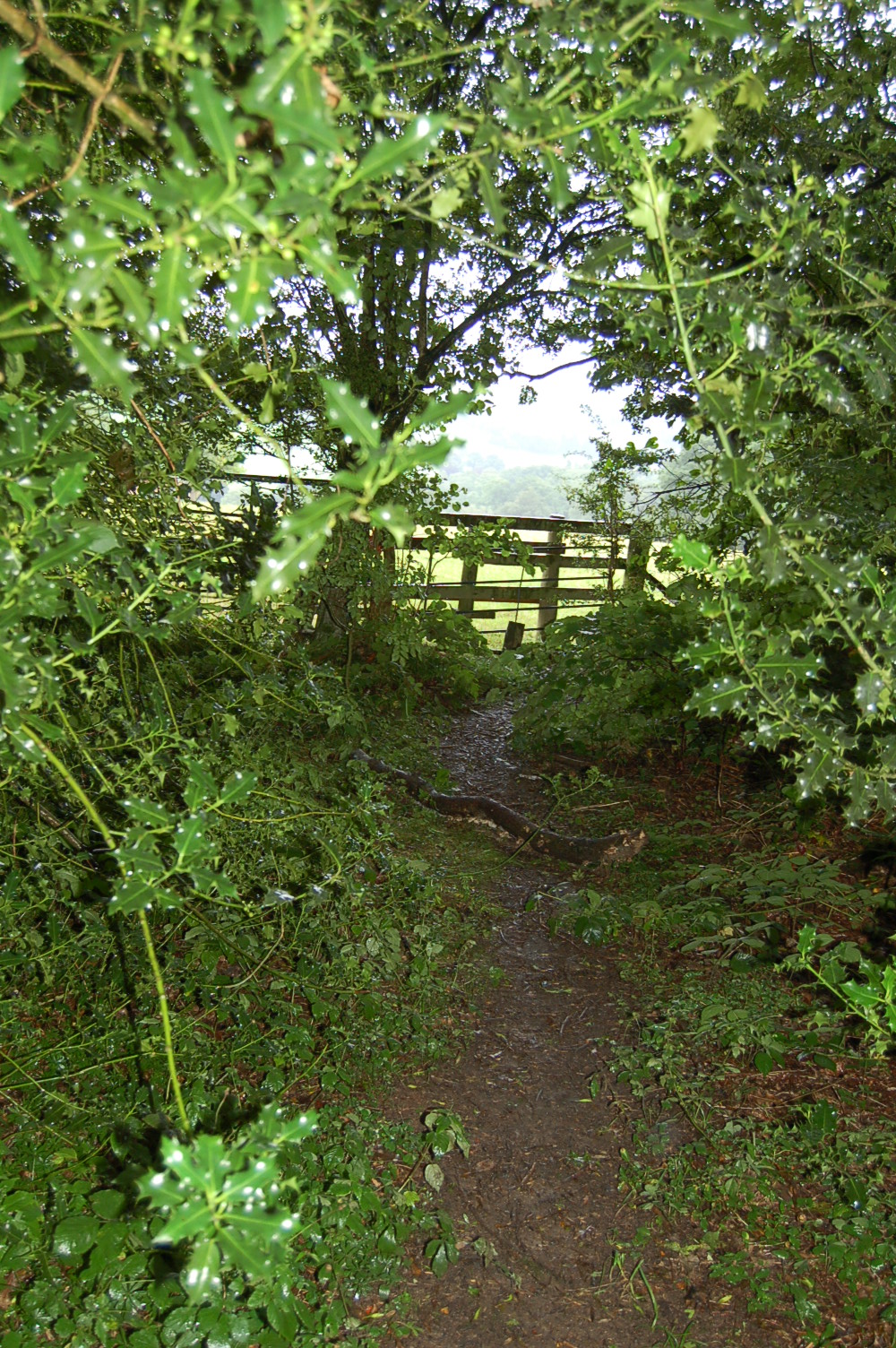
As we reached the end of the wood walk an old wooden gate invited us back into open countryside. Jude the Undergardener glimpses the next part of our walk leaning on the gate as she waits for me as I finish taking photos.

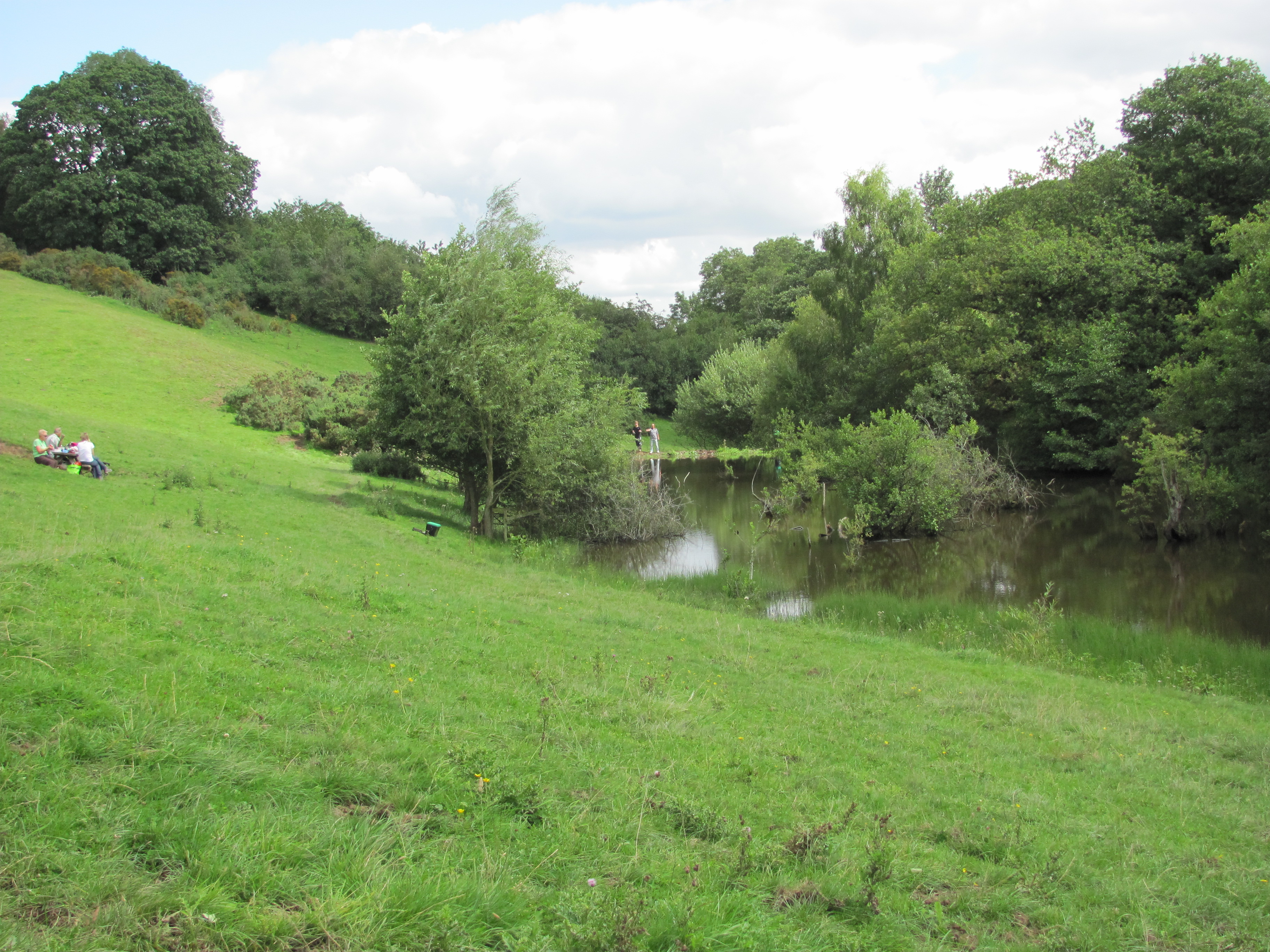
A walk across a sloping field on ground churned up by the feet of cattle takes us to the fishing pool, our halfway point and the perfect place to sit on the grass slope and enjoy our usual fruit and coffee. By the pool the farmer has provided a picnic bench and today a family are enjoying a picnic and three generations are doing a spot of fishing.

Categories
birds climbing plants garden design garden photography garden wildlife gardening photography Shropshire wildlife

Late Summer Clematis

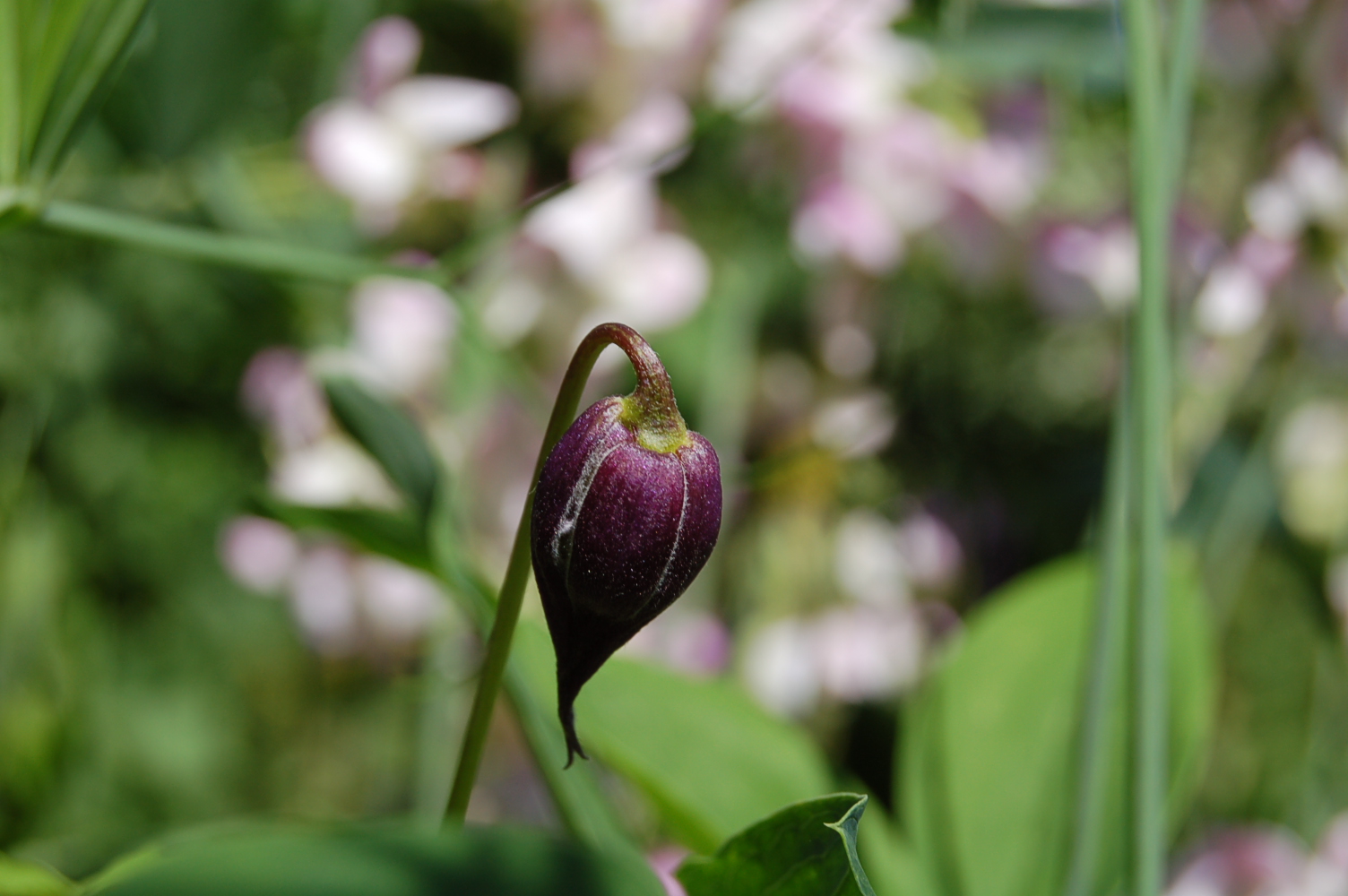
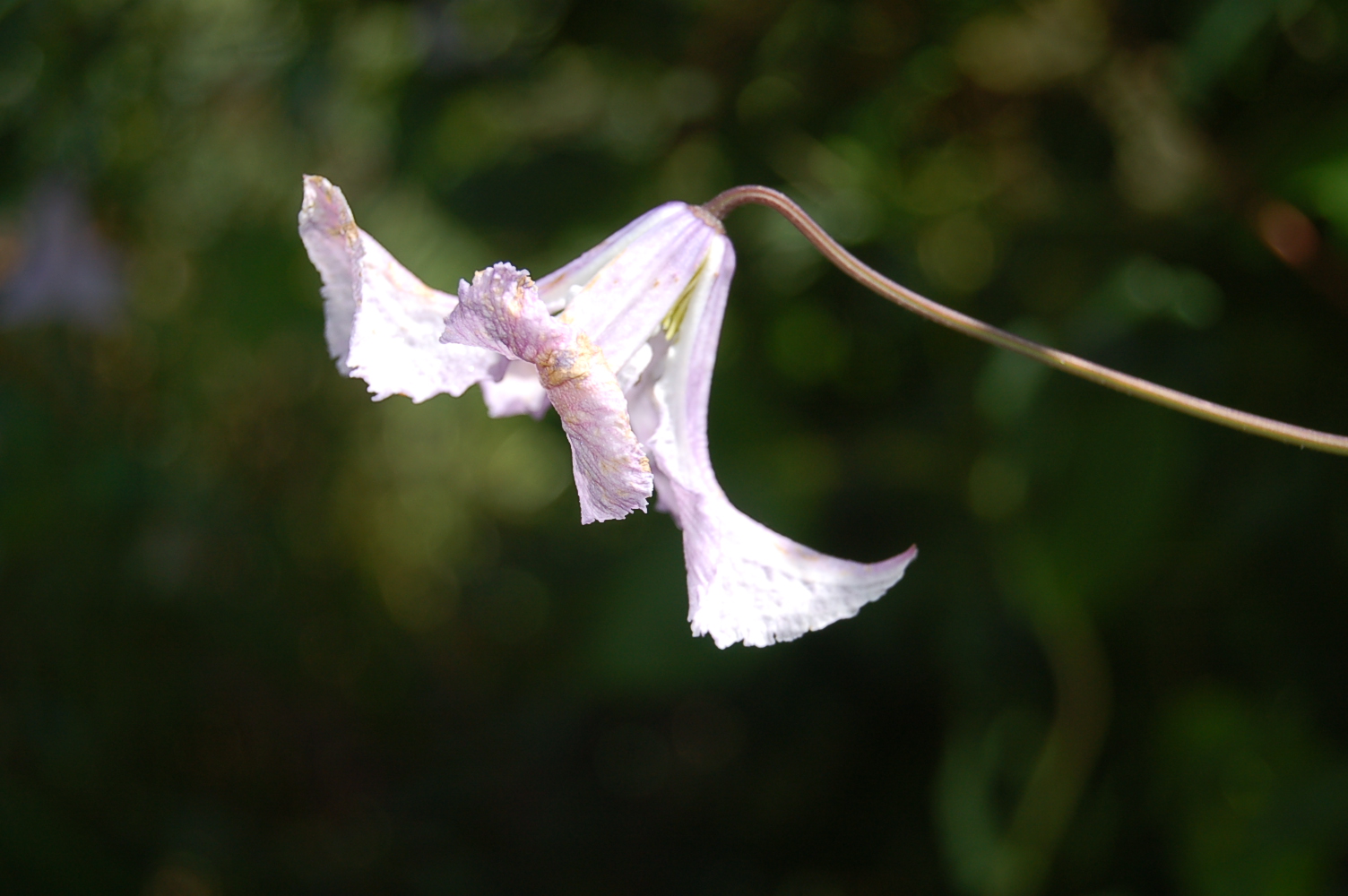
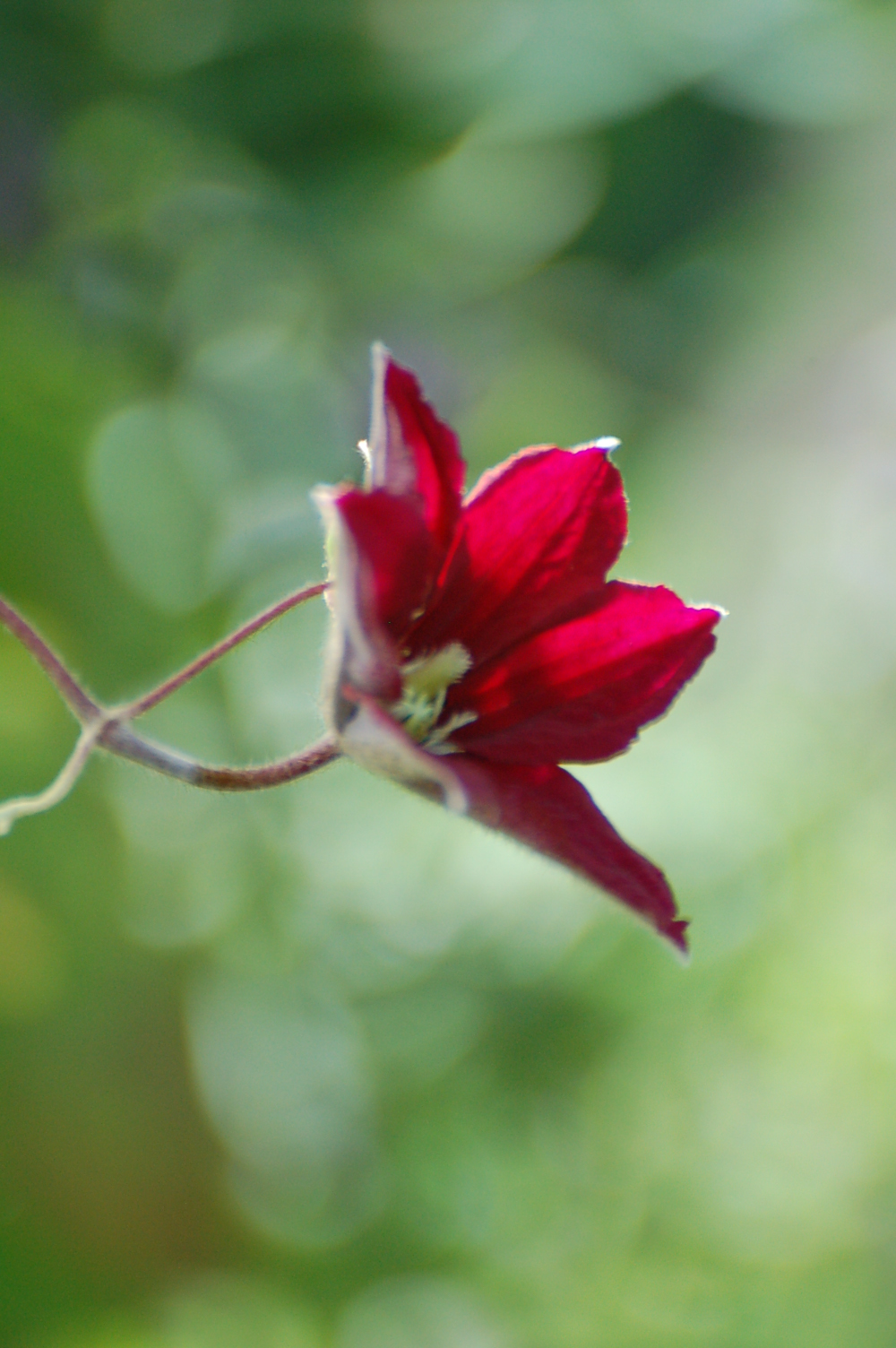
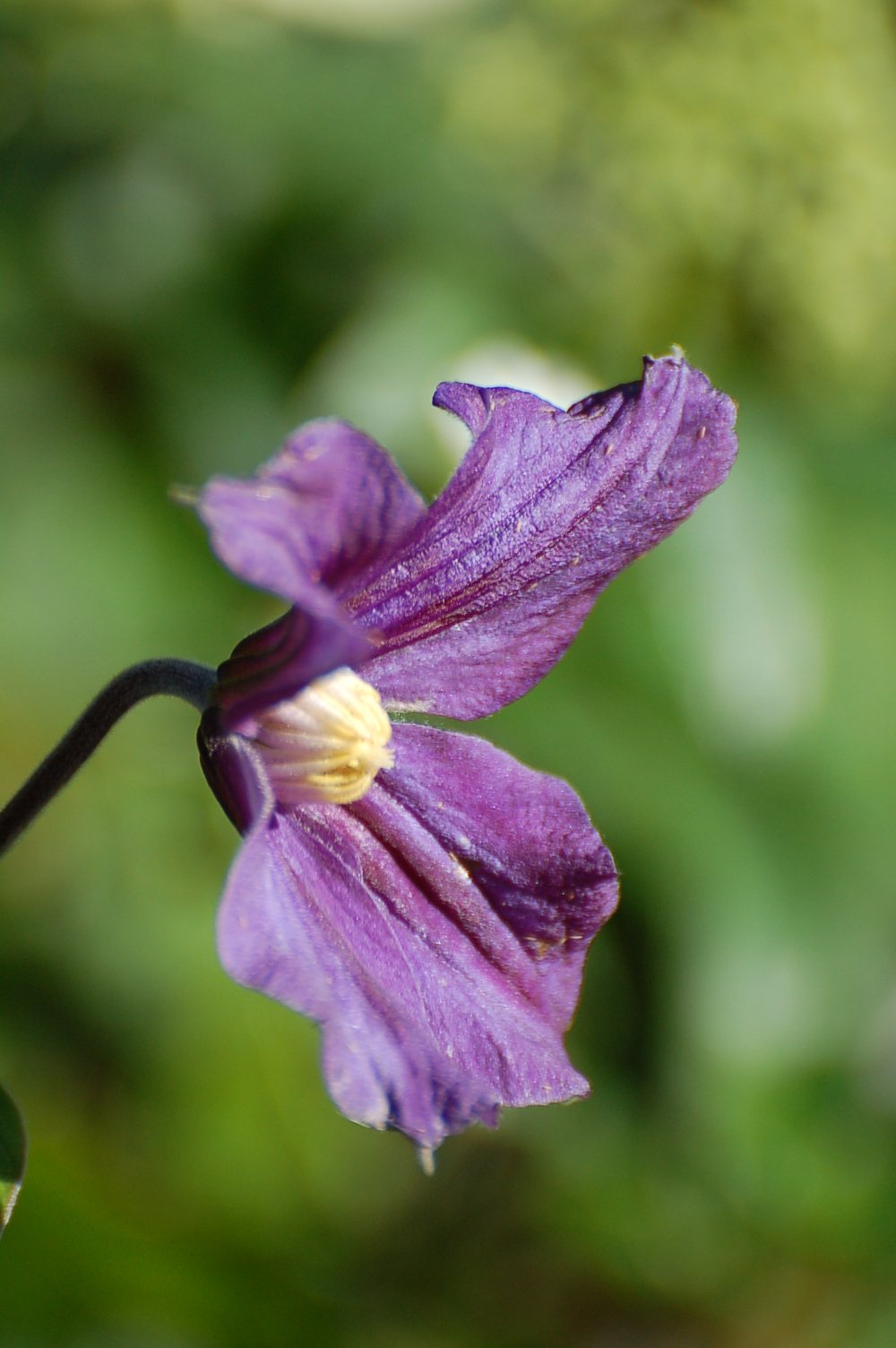
The Undergardener and I don’t really like the big dinner-plate clematis that flower earlier in the year but we adore the small-flowered, often bell-shaped subtle ones that are stars of the late summer. Every time a tree gets tall enough to support one we plant a new clematis to befriend it, even though every obelisk and arch is already adorned with one. To get double the flowering effect clematis love the company of climbing roses and we pair them up with our apples that we have growing over arches. The apples fruit well and the clematis flower well, and I wonder if this is another case of companion planting in action. Could it be that they benefit each other when grown together?

The flowers manage to attract the harsh summer sunlight giving them the appearance of silk or tissue paper.

They are so amenable too. We treat them as herbaceous perennials and cut them down in the winter. Although they have masses of flowers deadheading is not necessary and instead they can produce wonderful seedheads like whispy white spiders. Many flower more than once a year too.

Wildlife love clematis especially our avian friends. They nest in the jumble of vines which also serve as roosting shelters. Dunnocks nest every year in at least one of our clematis and chaffinches and goldfinches do so occasionally. Goldfinches extract the seeds from the fluffy seedheads in winter, Warblers, Robins and all members of the Titmice family gorge on all the insect life that live in them in the summer and feed on the seeds in winter.

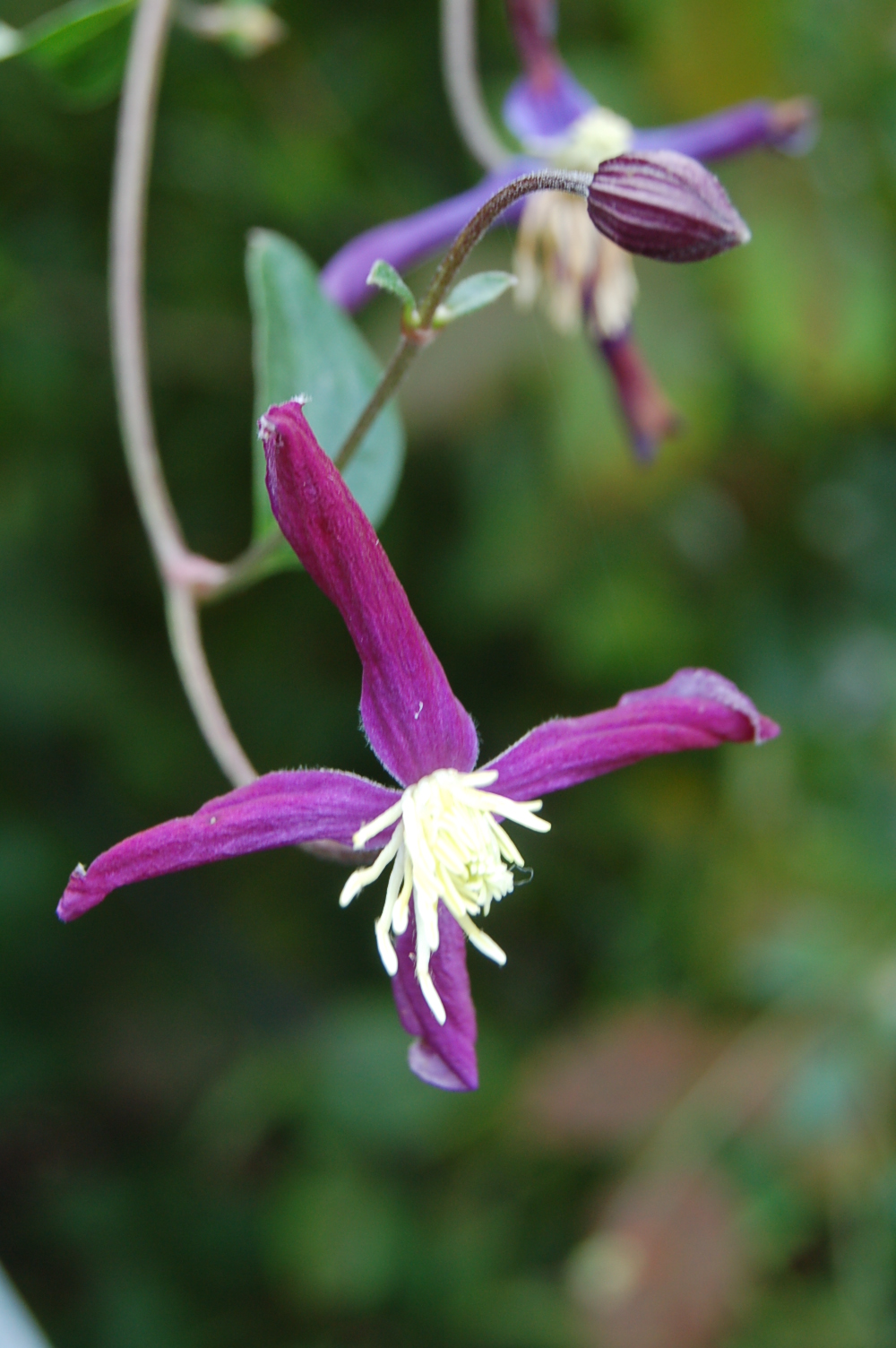
When visiting a garden this August with our fellow Hardy Plant Society enthusiasts we came across the clematis with the tiniest, most delicate flower we had ever seen on a clematis, in the deepest purple hue and to top it all off it had an enticing scent. It was appropriately called Clematis aromatica.

Categories
birds climbing plants garden design garden photography garden wildlife gardening hardy perennials ornamental grasses ornamental trees and shrubs photography Shropshire trees village gardens wildlife

A Wander around our Garden in August

Our garden in August is a bright, colourful place full of lush growth, rich scent and so much wildlife to enjoy. Our wild birds are mostly quiet at present as August is the time when they hide away as they go through their annual moult. They have gone to ground and gone silent.

Above our heads however avian activity is busy and exciting. The Swallows and House Martins are feeding up in anticipation of their migration south. The sky is full of them, but the screaching of Swifts is absent as they began their own long journey a few weeks ago. For a few days there is a gap in the sounds – we miss them for their excited calls and aerial displays.

The calls of the young Buzzards can be heard above the Swallows and Martins, as they excitedly search out thermals and discover the joy of riding them. The Peregrines have reappeared now that their breeding season is over so we can watch the adult pairs rising in ever-higher circles until they disappear from view. Our eyes become incapable of seeing them as they become smaller, become dots and are then gone. They have the luxury of far better long distance vision than us – they will see the movement of their prey from hundreds of feet up in the air. A real treat is to spot them as they stoop, travelling down at speeds of over 200 miles per hour with a pigeon in their sights.

Yesterday when deadheading in one of our borders we were surprised by a low-flying, high speed Green Woodpecker who zoomed close to us, just a few feet away. A real treat!

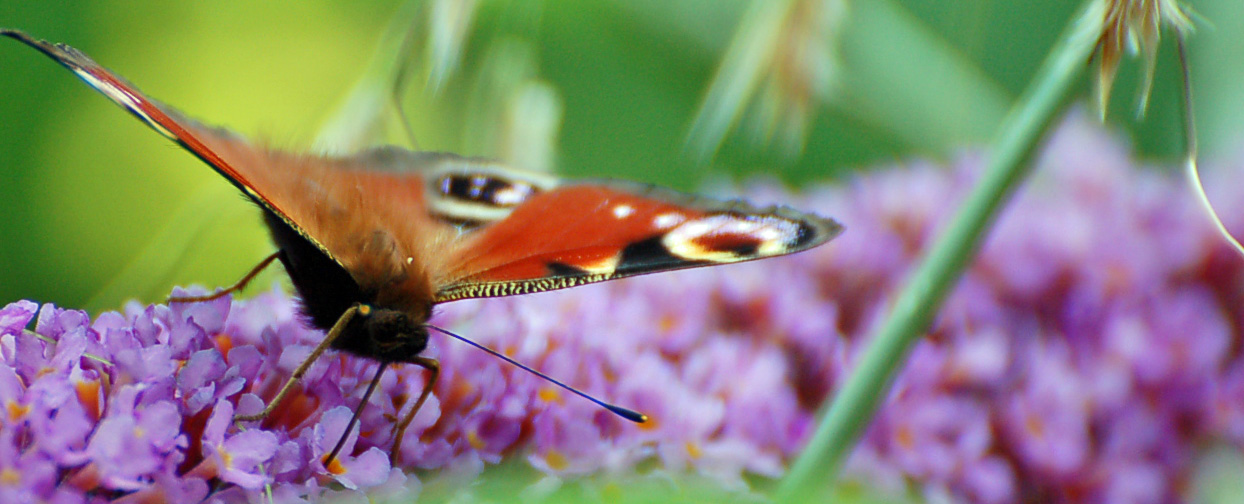
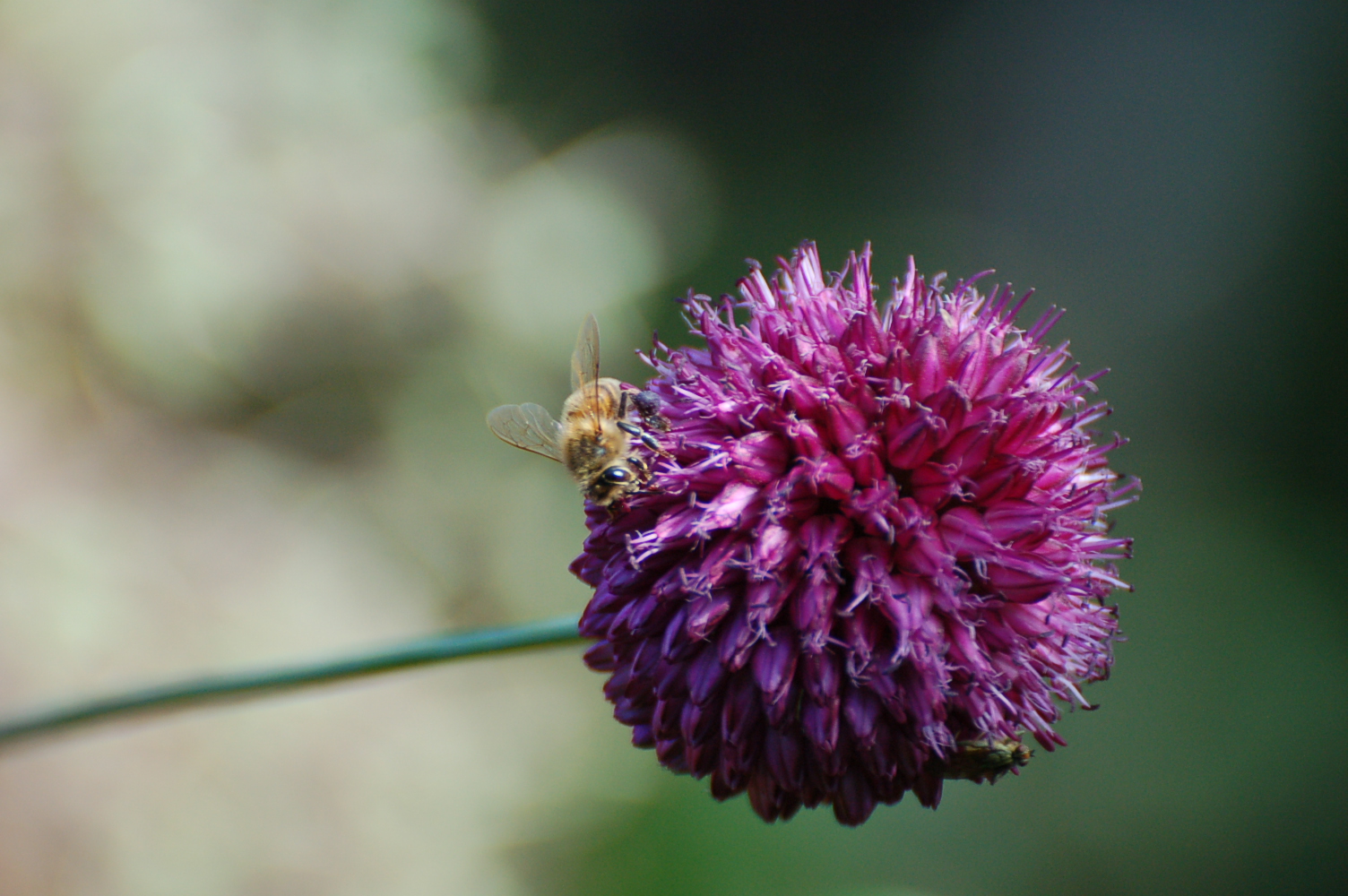
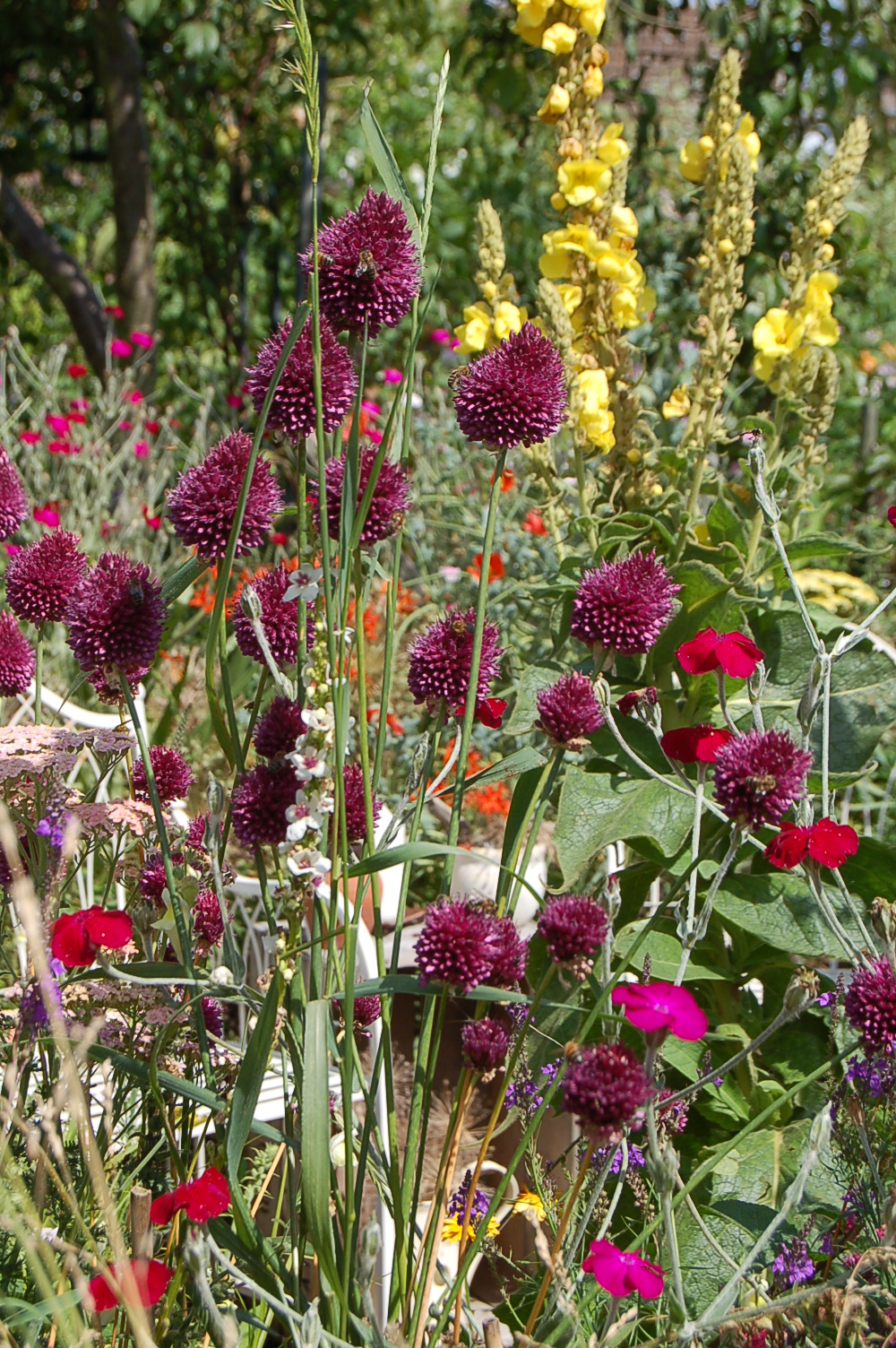
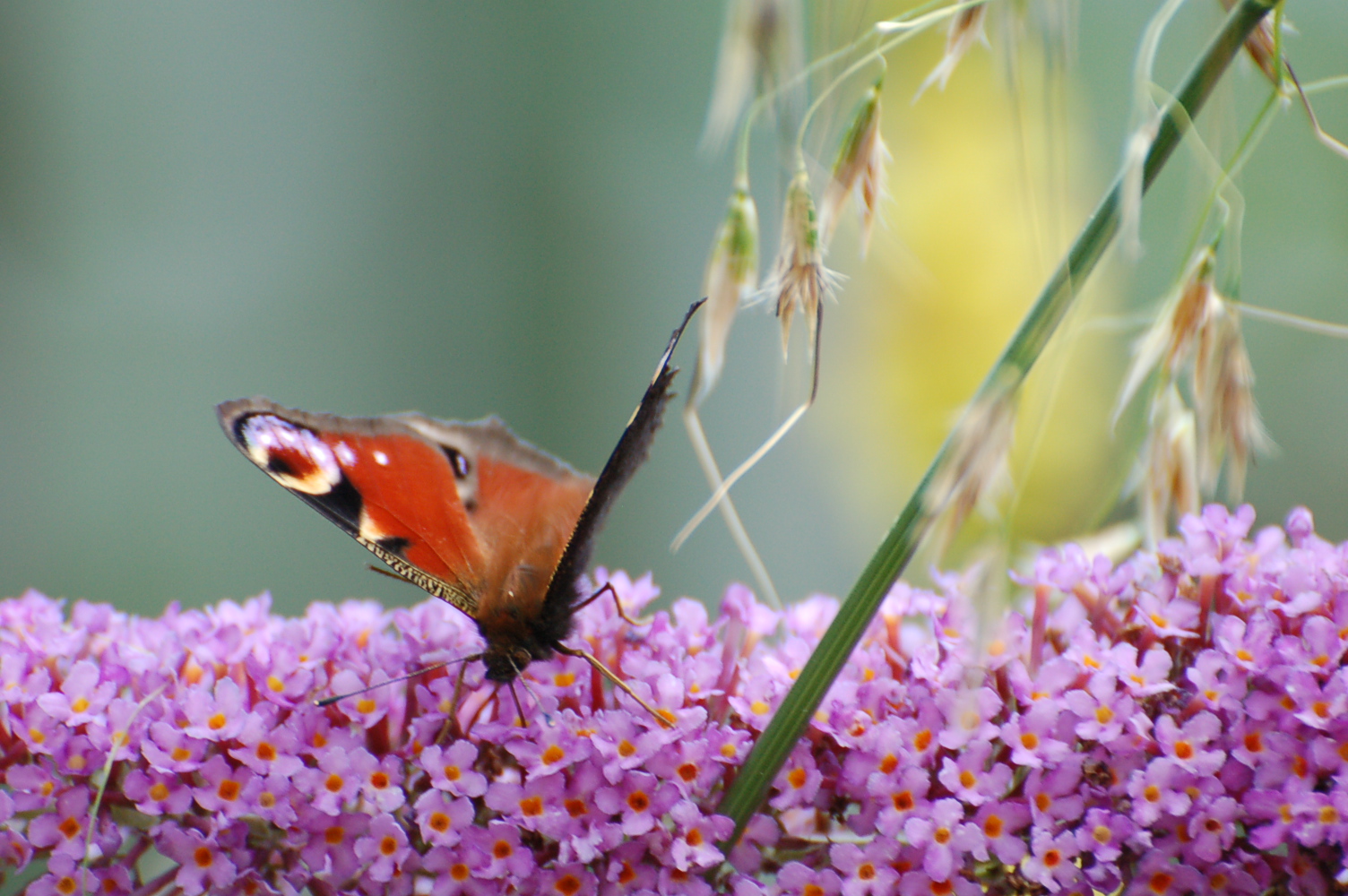
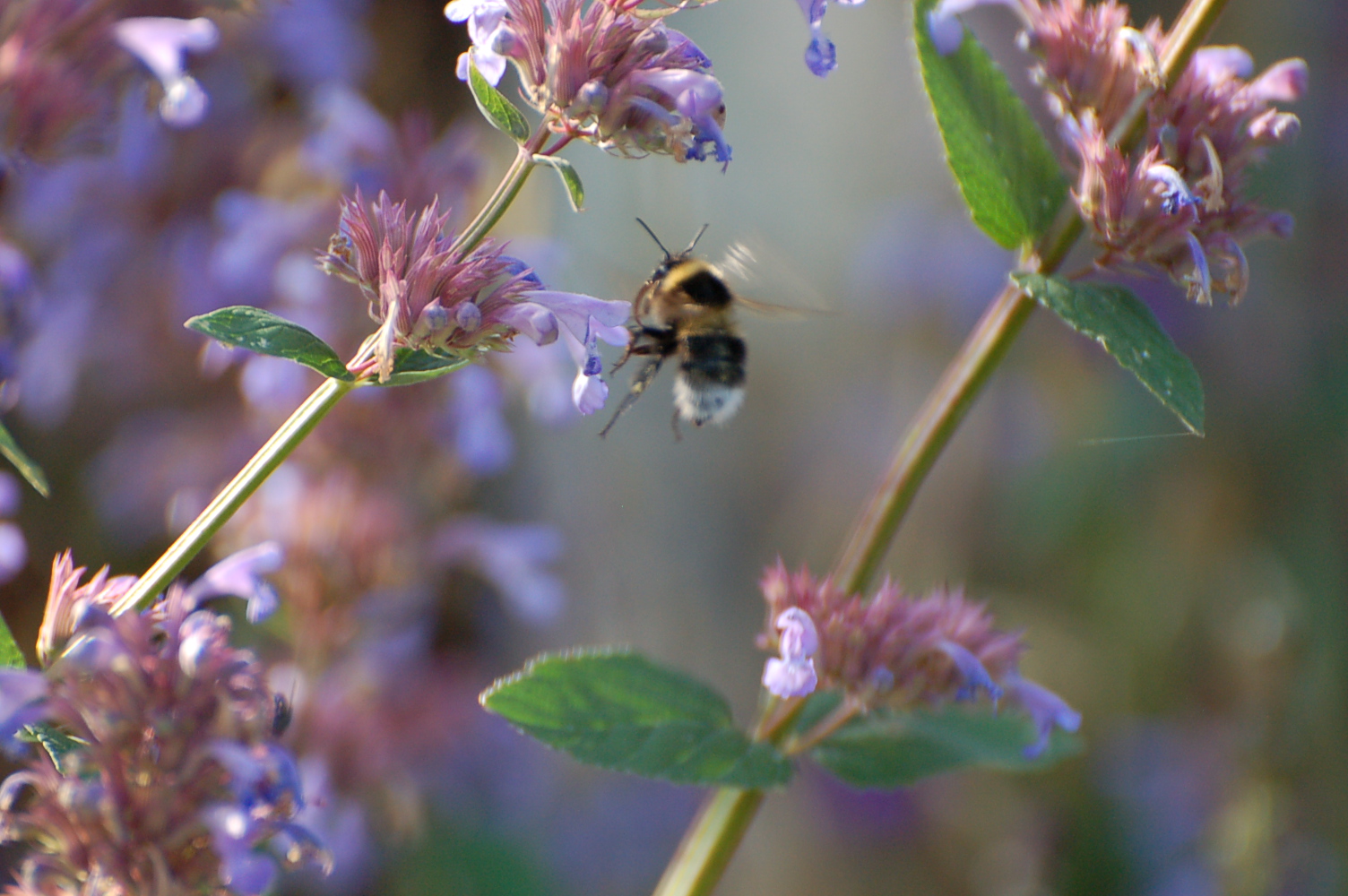
Insect life is flourishing. On any warm bright day a variety of insects can be seen hunting out nectar and pollen. Butterflies, bees and hoverflies are attracted to Buddleias, Alliums, Salvias, Nepetas, Lavenders and Echinops. There are so many Peacock Butterflies around at the moment but you can’t have too many of them. The Holly Blues are much scarcer and flit continuously rarely seeming to settle.

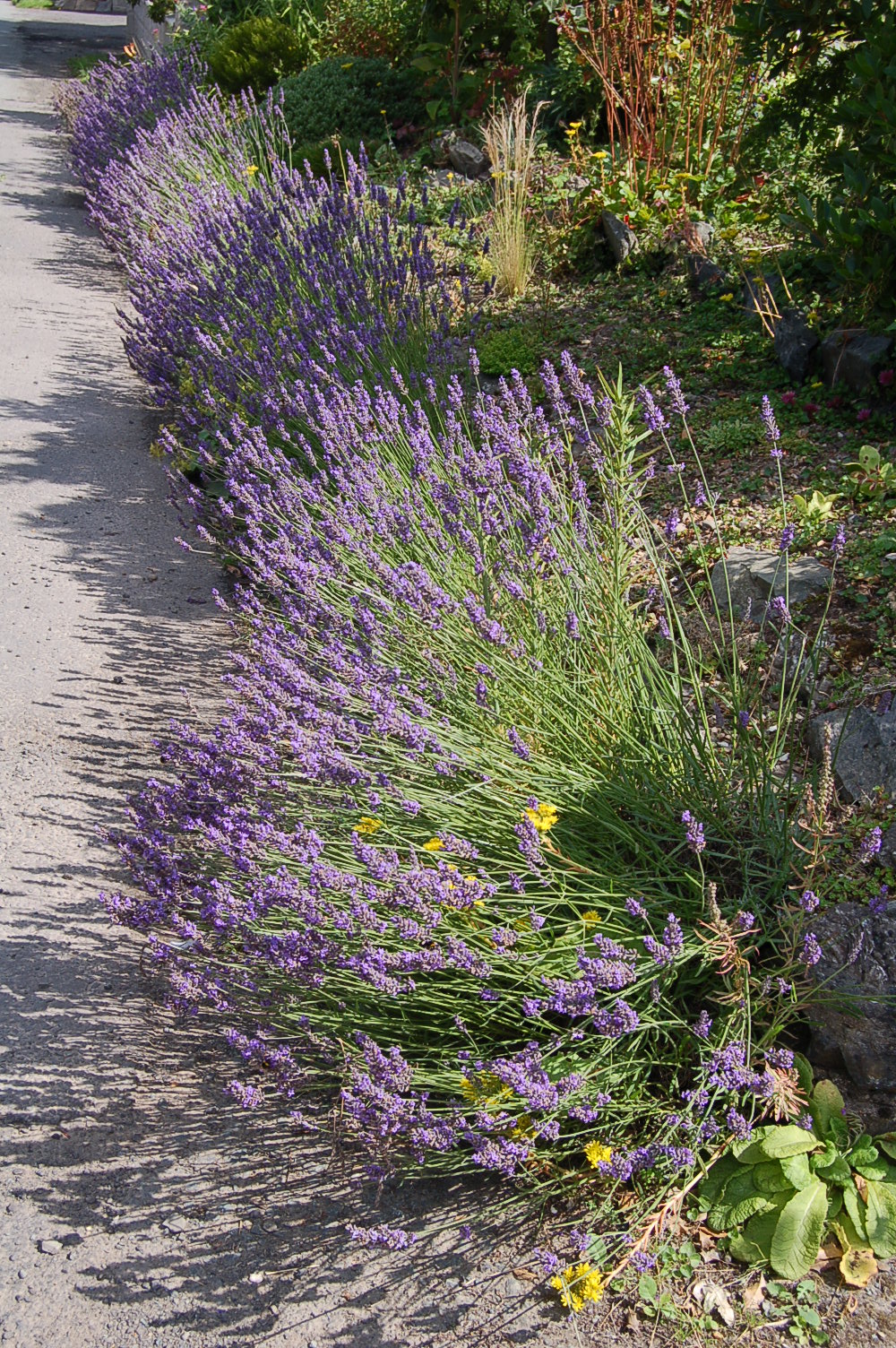
Bees and hoverflies are attracted to our Lavender hedge which borders the lane which passes in front of our garden.

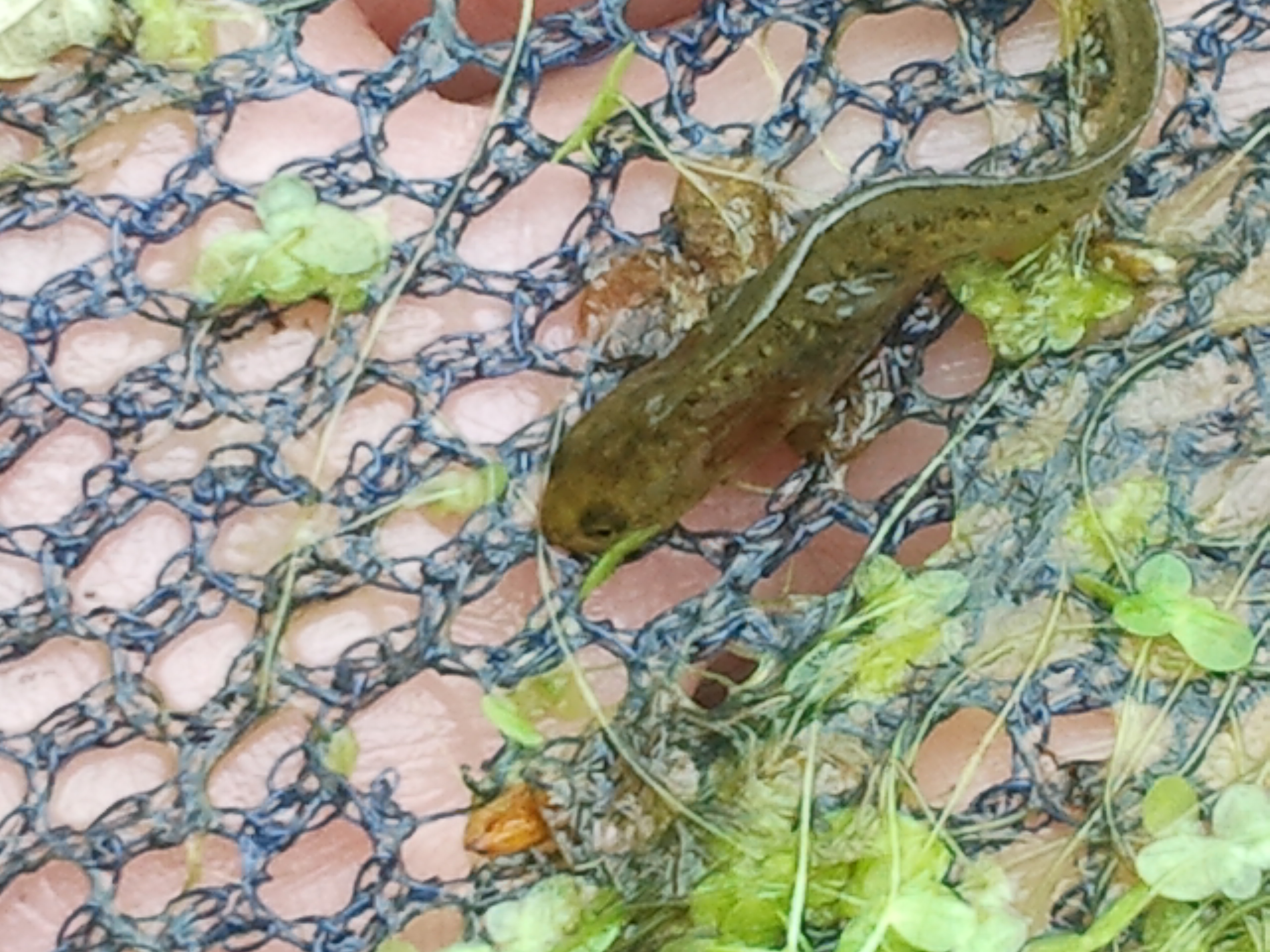
The ponds are full of life with shoals of young fish basking in the shallows, diving Beetles and Boatmen moving up to the surface and back to the bottom regularly. On the surface Pondskaters pace out the length and breadth of the pond surface. Young newts regularly appear at the surface take a gulp of air and drop back down. When Jude the Undergardener nets the duckweed and blanket weed from the pond she catches newts every time. She is delighted with every newt that graces her net. I am convinced that removing the weed is an excuse for her newt catching exploits. In August the majority of newts Jude catches are youngsters.

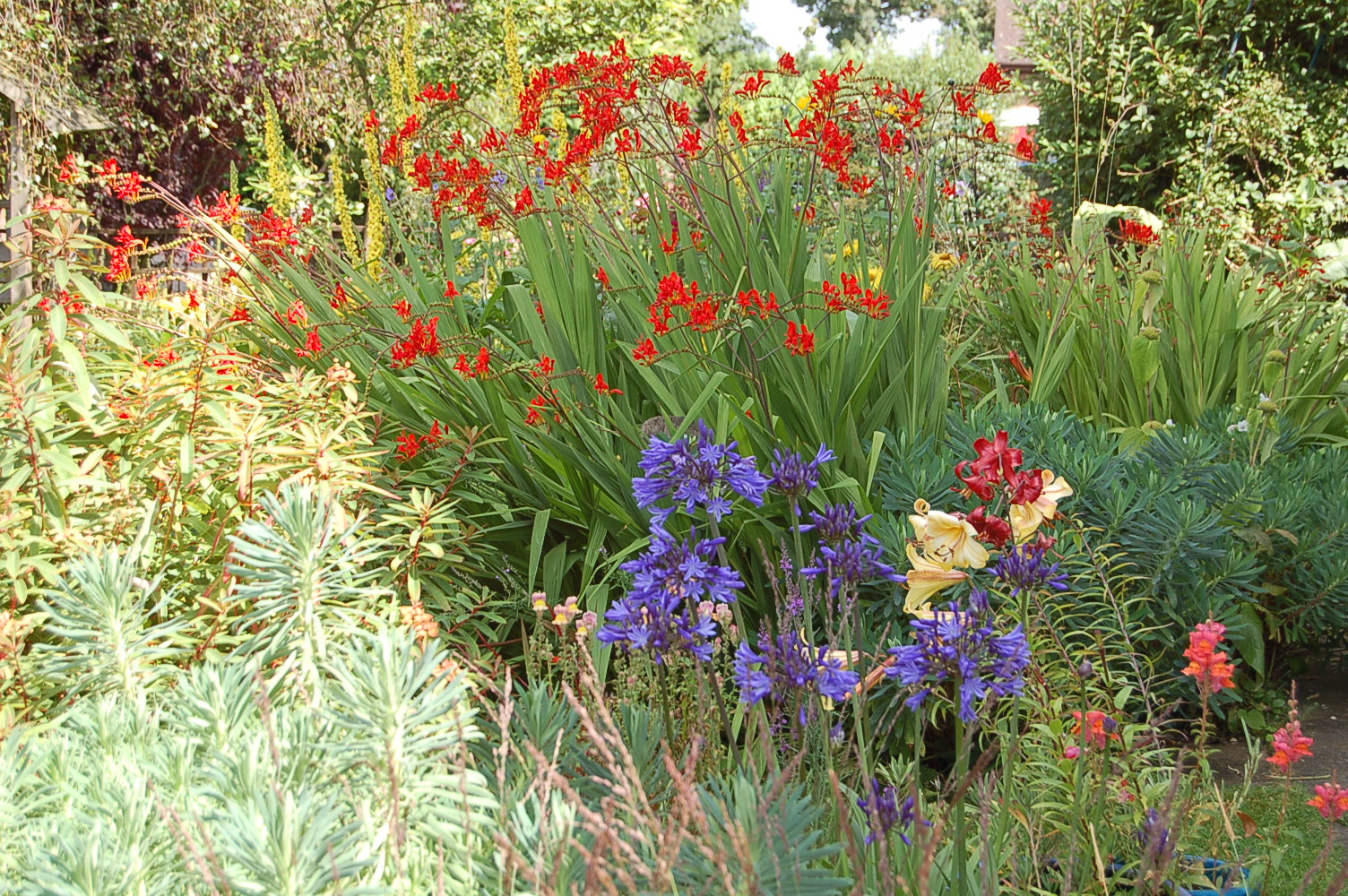
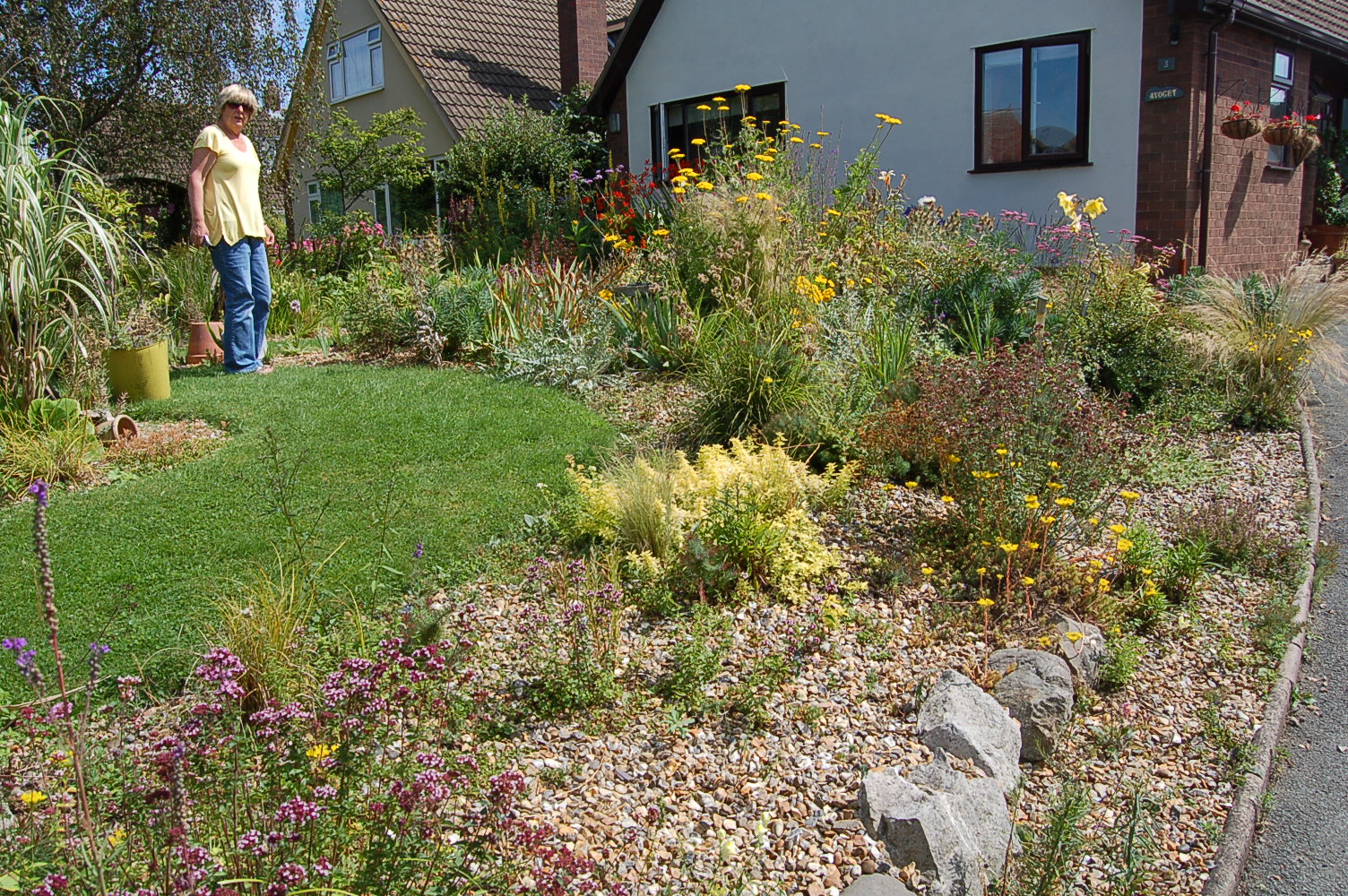
The front garden is looking good! So much colour! The Hot Border is HOT!

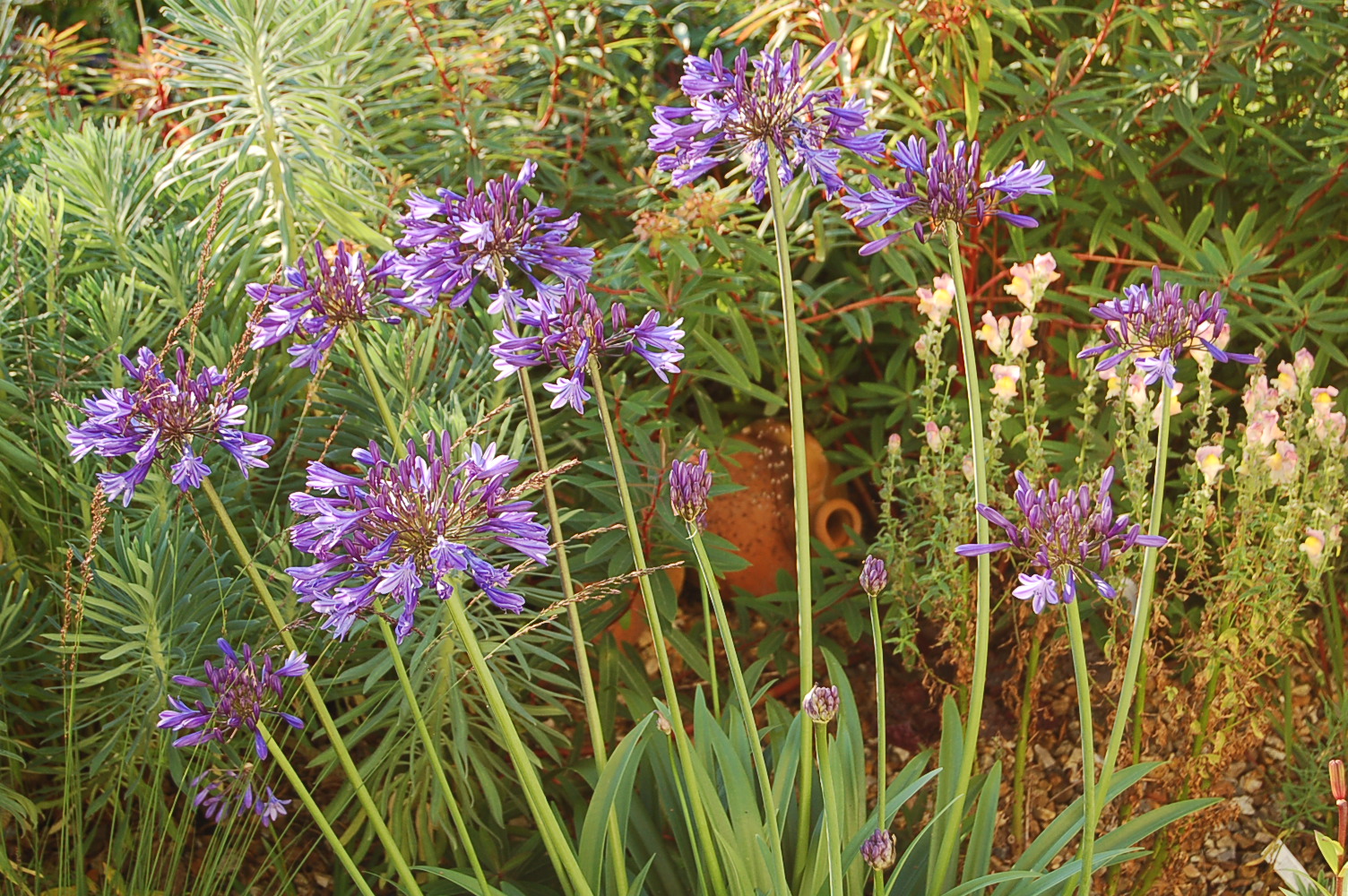
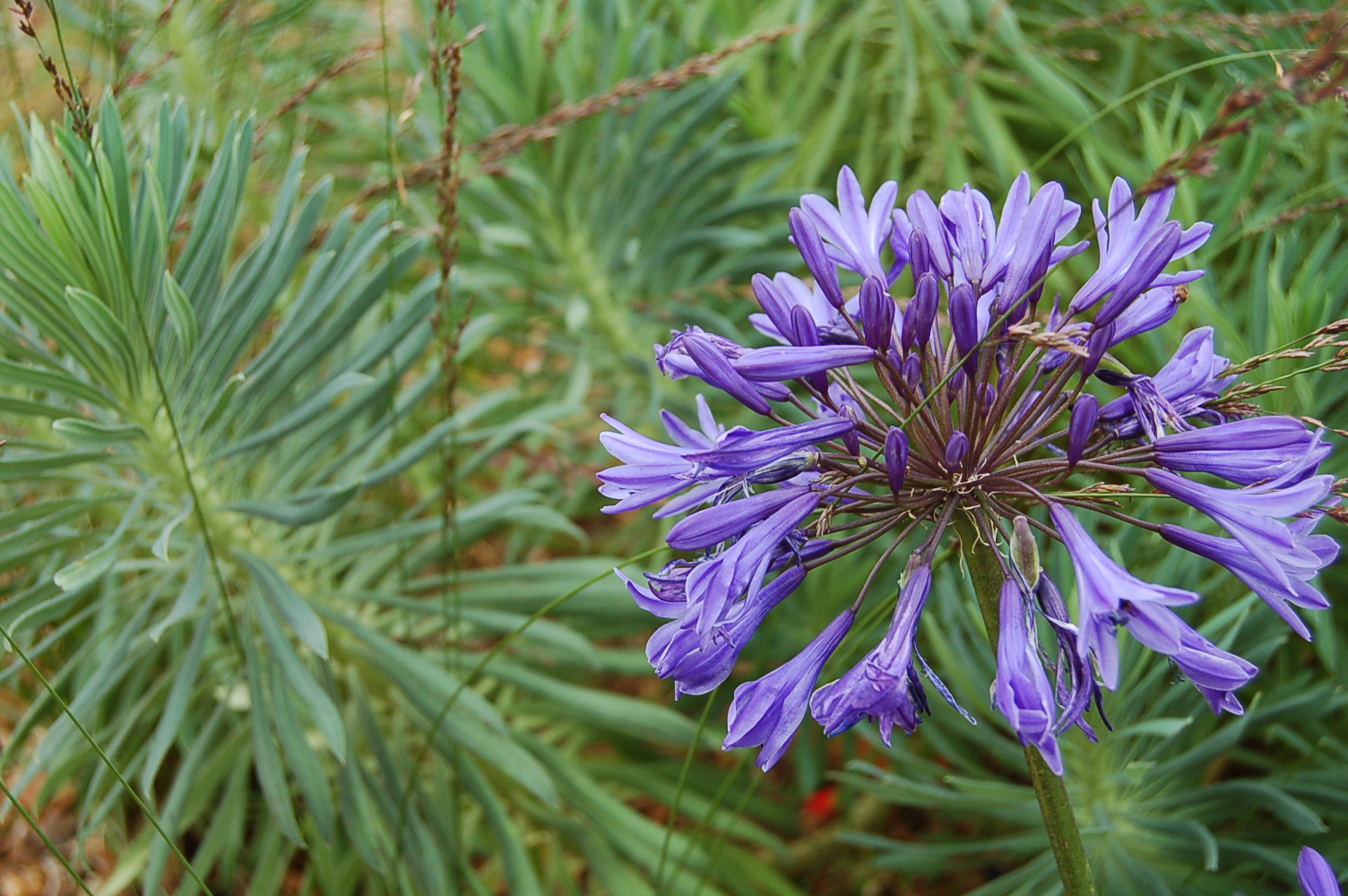
The “Beth Chatto Garden”, our gravel garden, is full of interest with Agapanthus taking centre stage. These Agapanthus were actually bought from the Beth Chattos Gardens nursery.

Early in August the front garden was dominated by yellow – even Jude the Undergardener was wearing yellow – but after a few weeks all the other colours caught up.

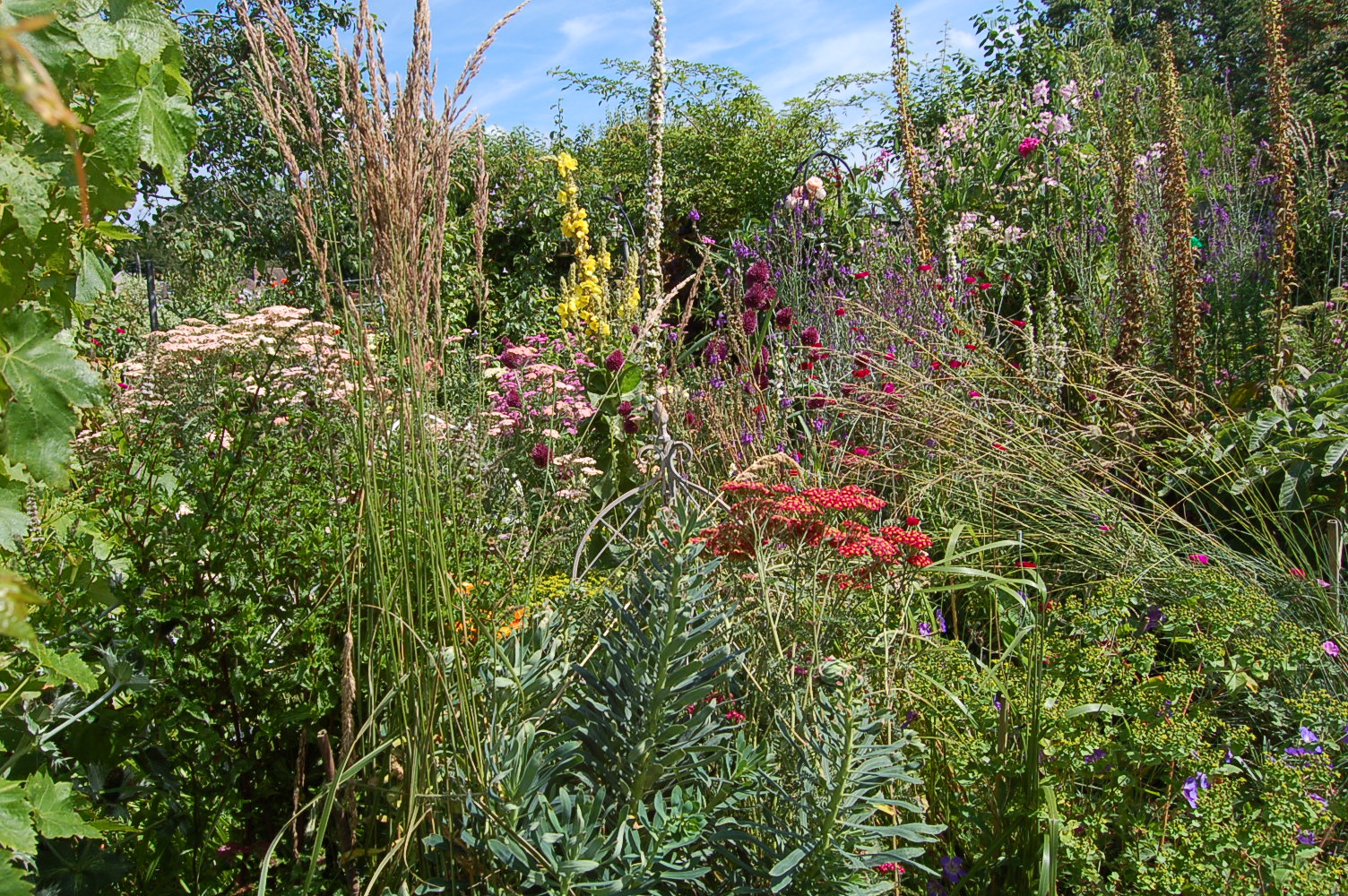
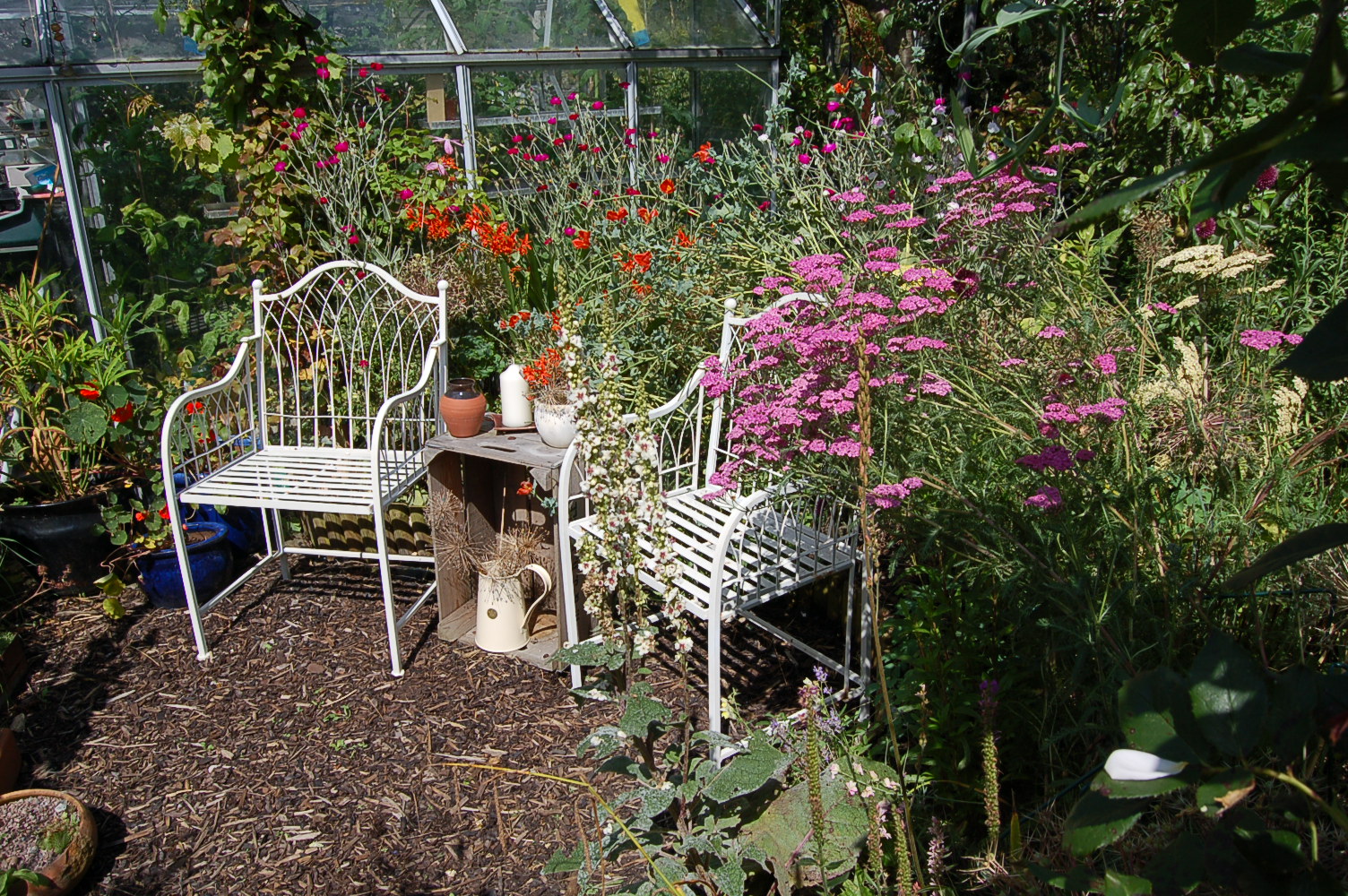
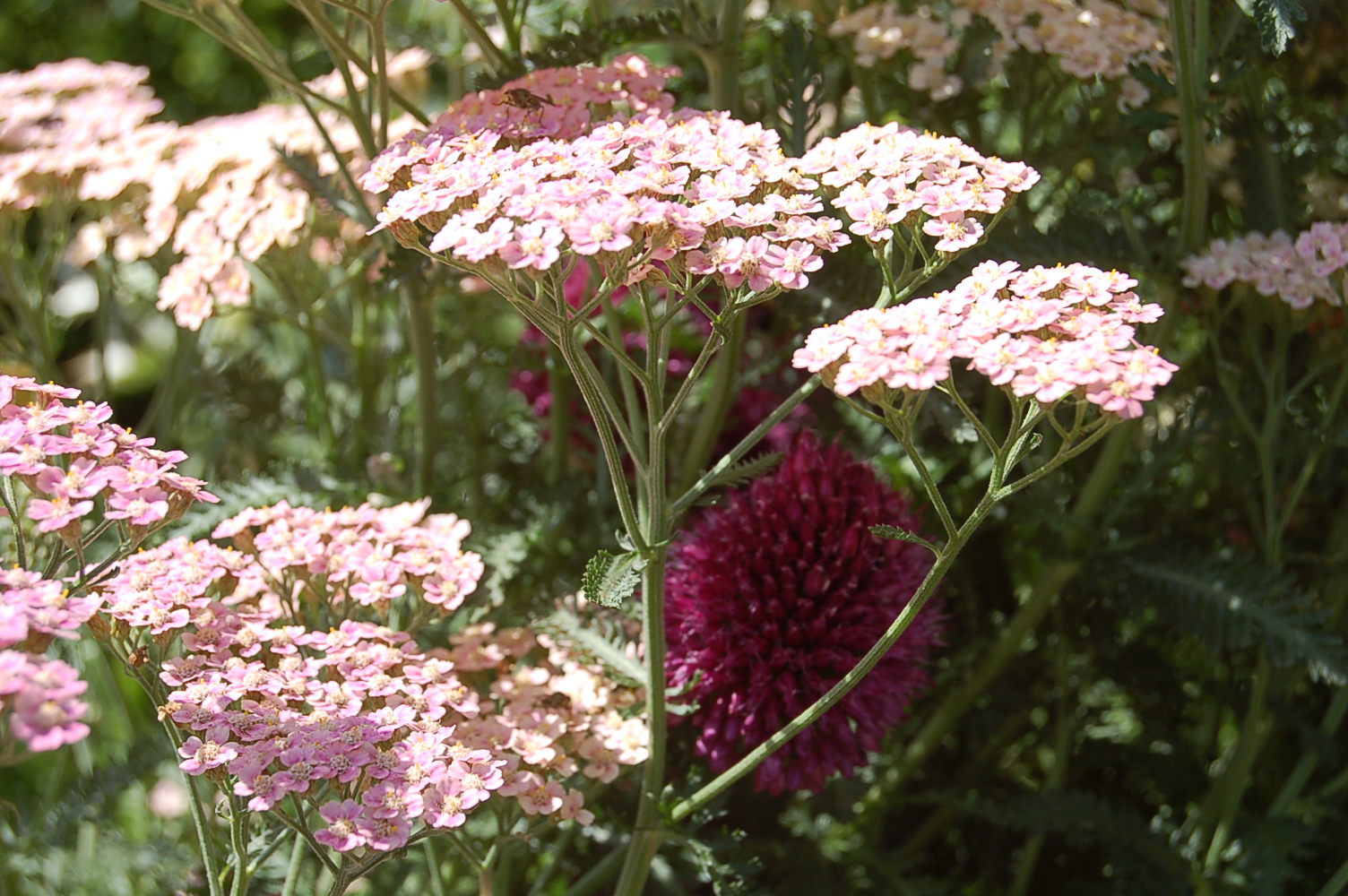
In the back garden the growth in our Secret Garden is exuberant to say the least. The foxgloves are going over but the achilleas, lychnis and alliums are still giving us a full performance.

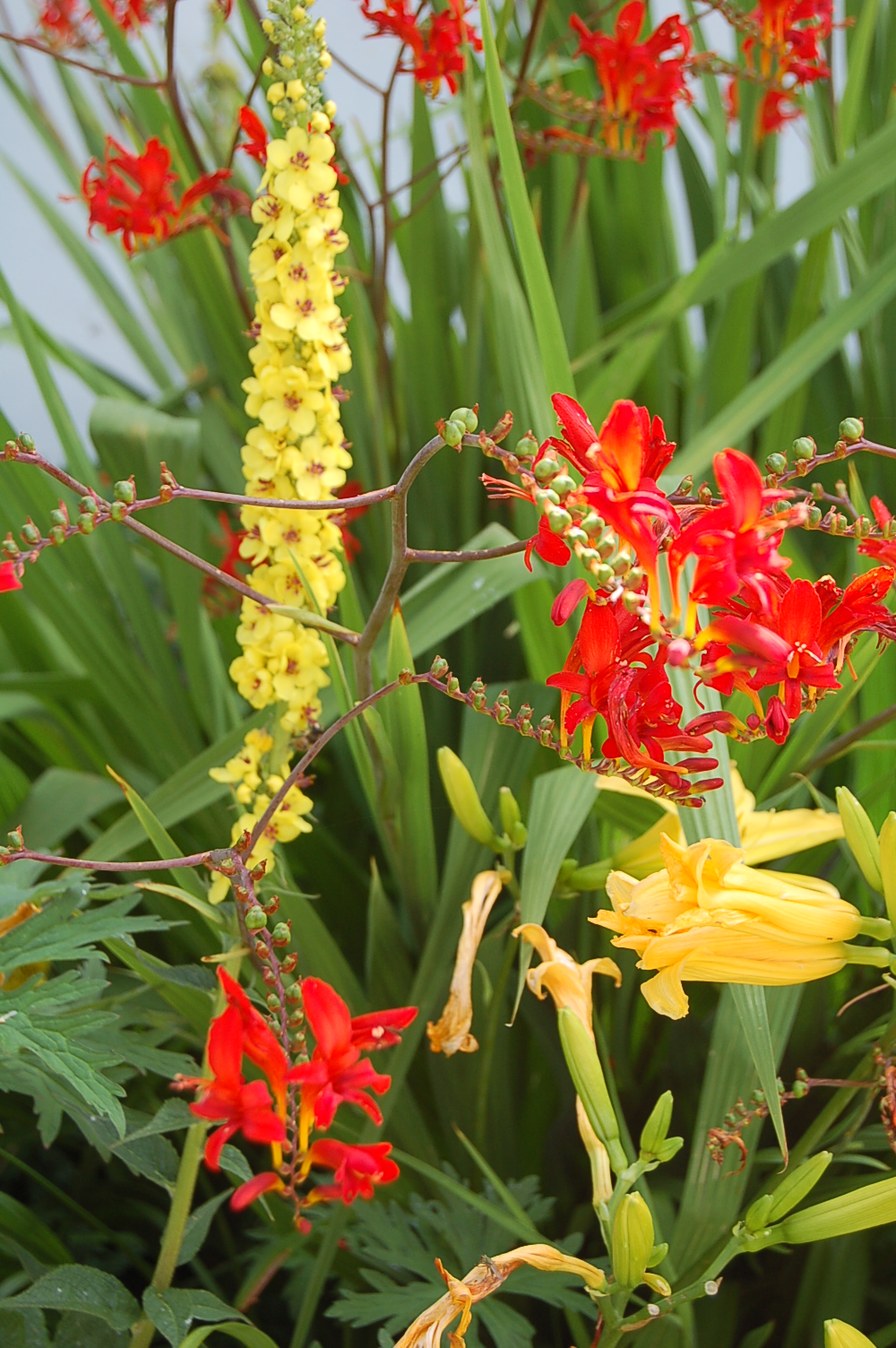
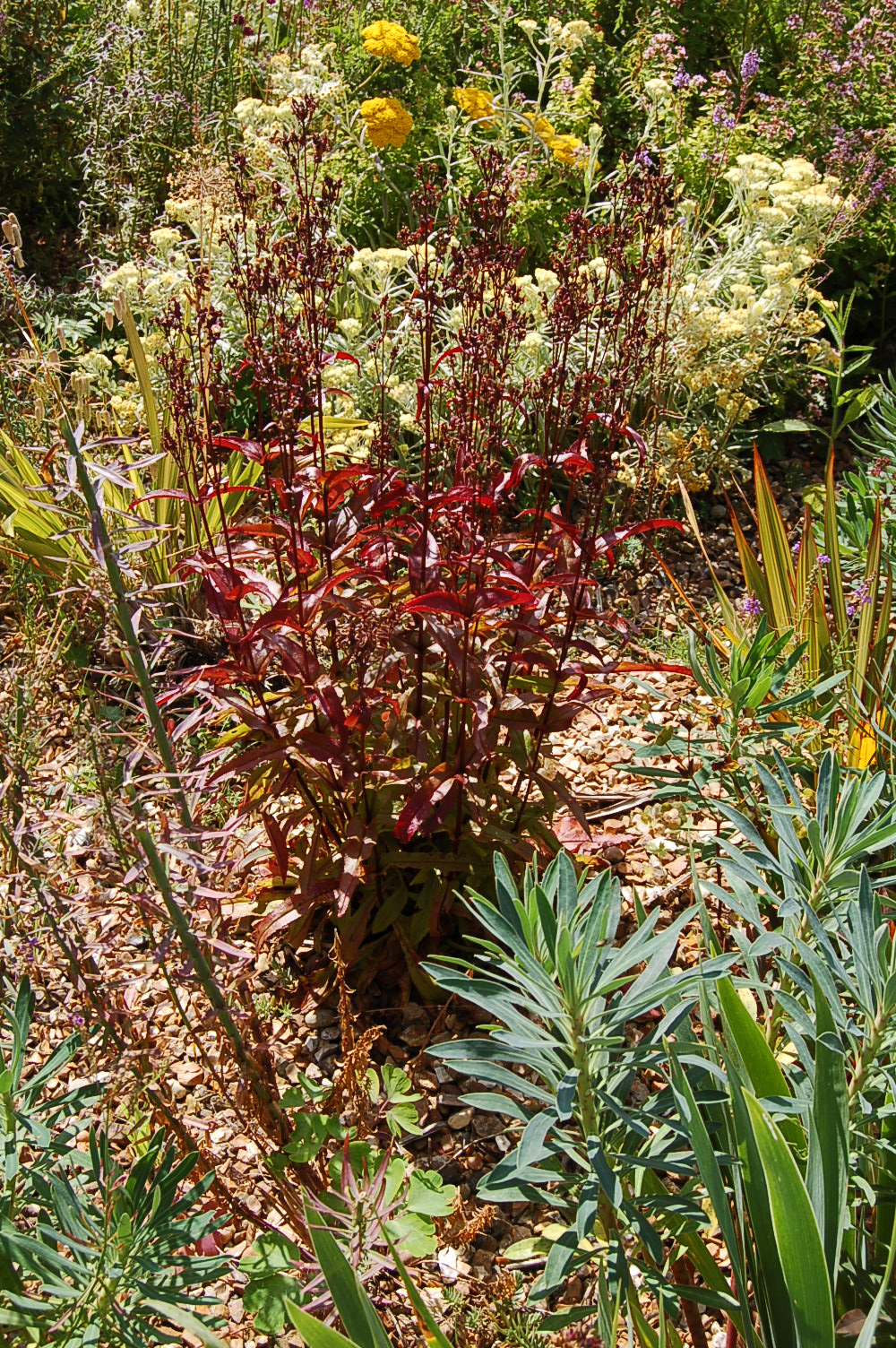
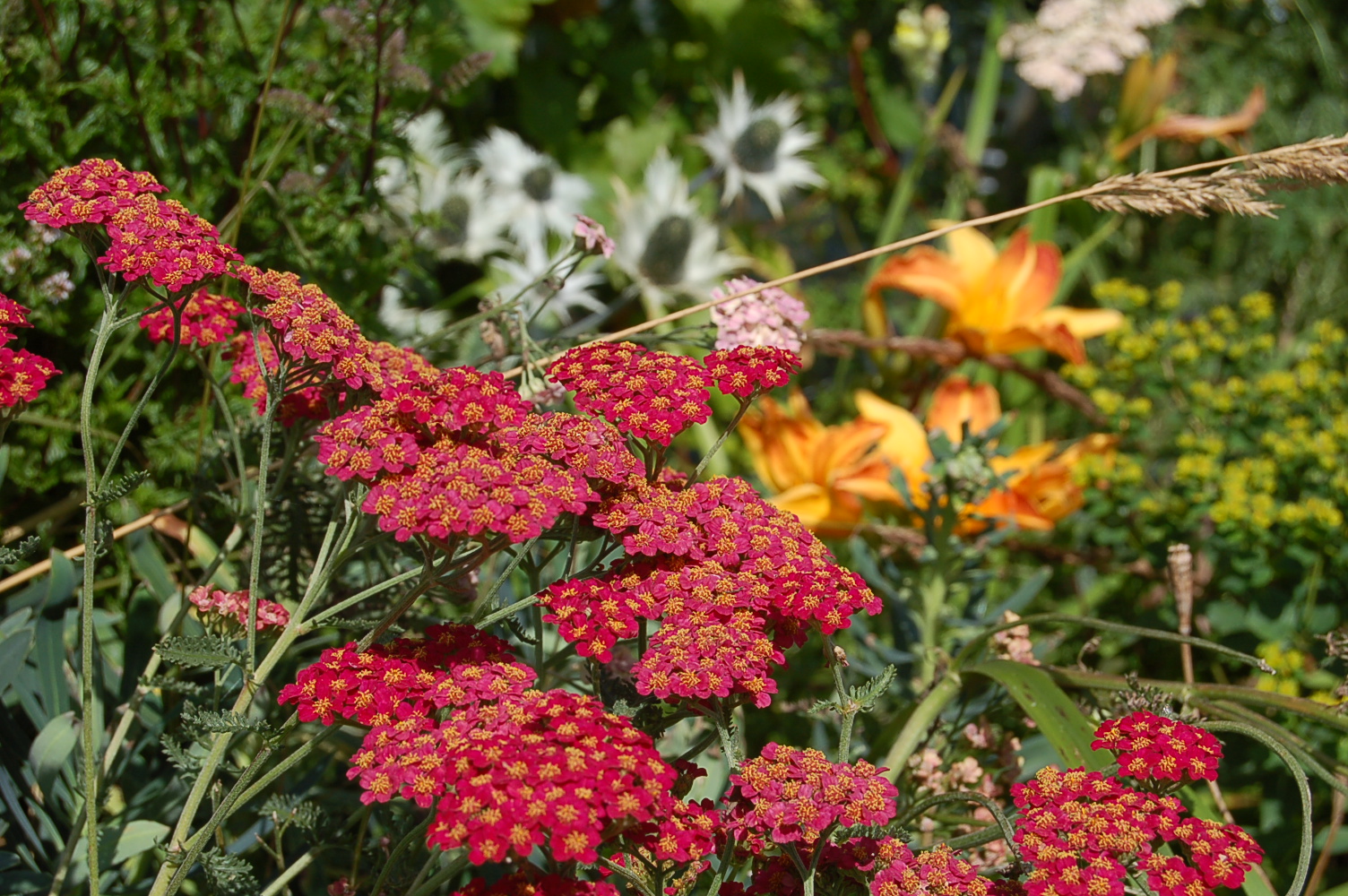
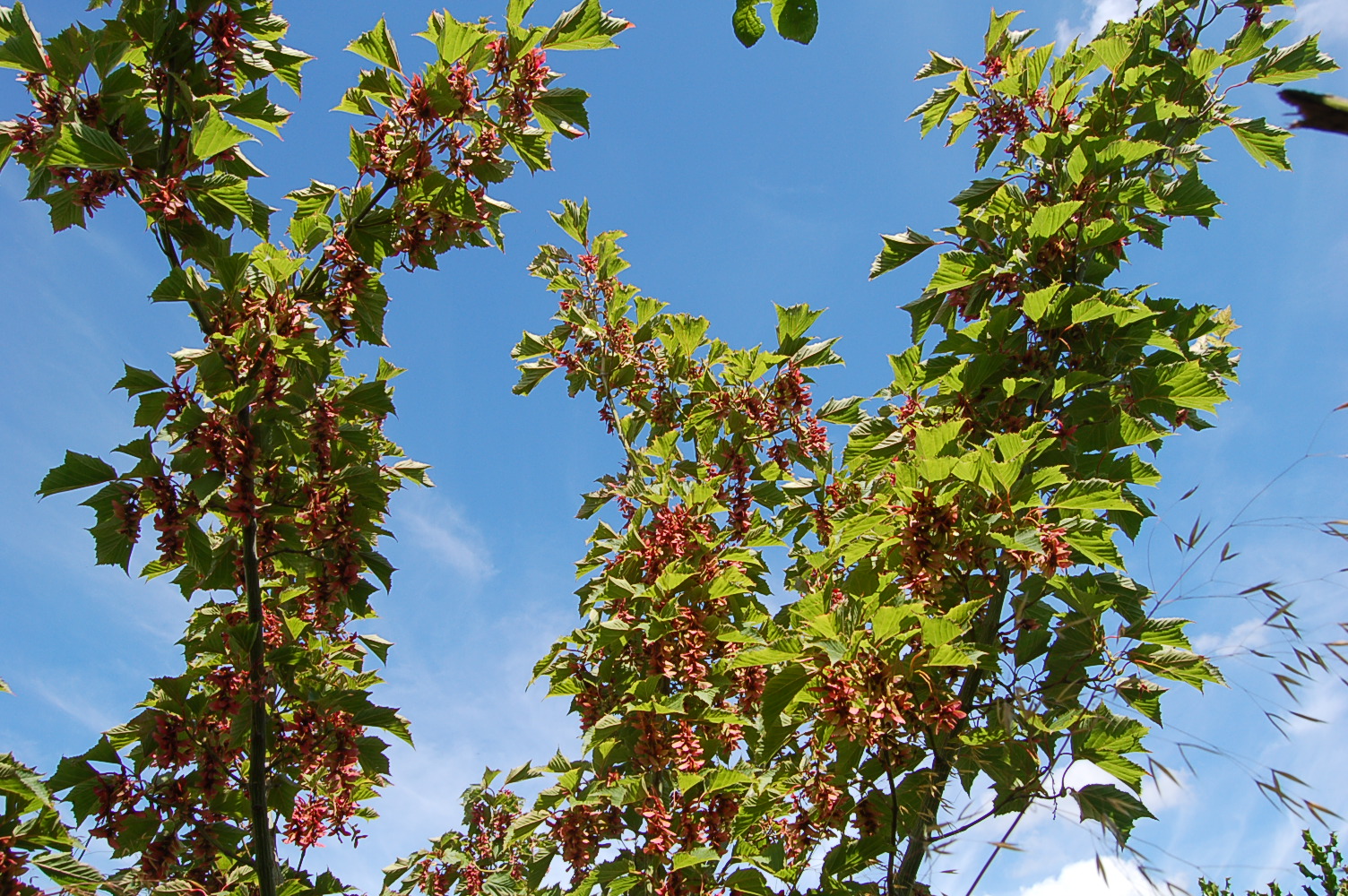
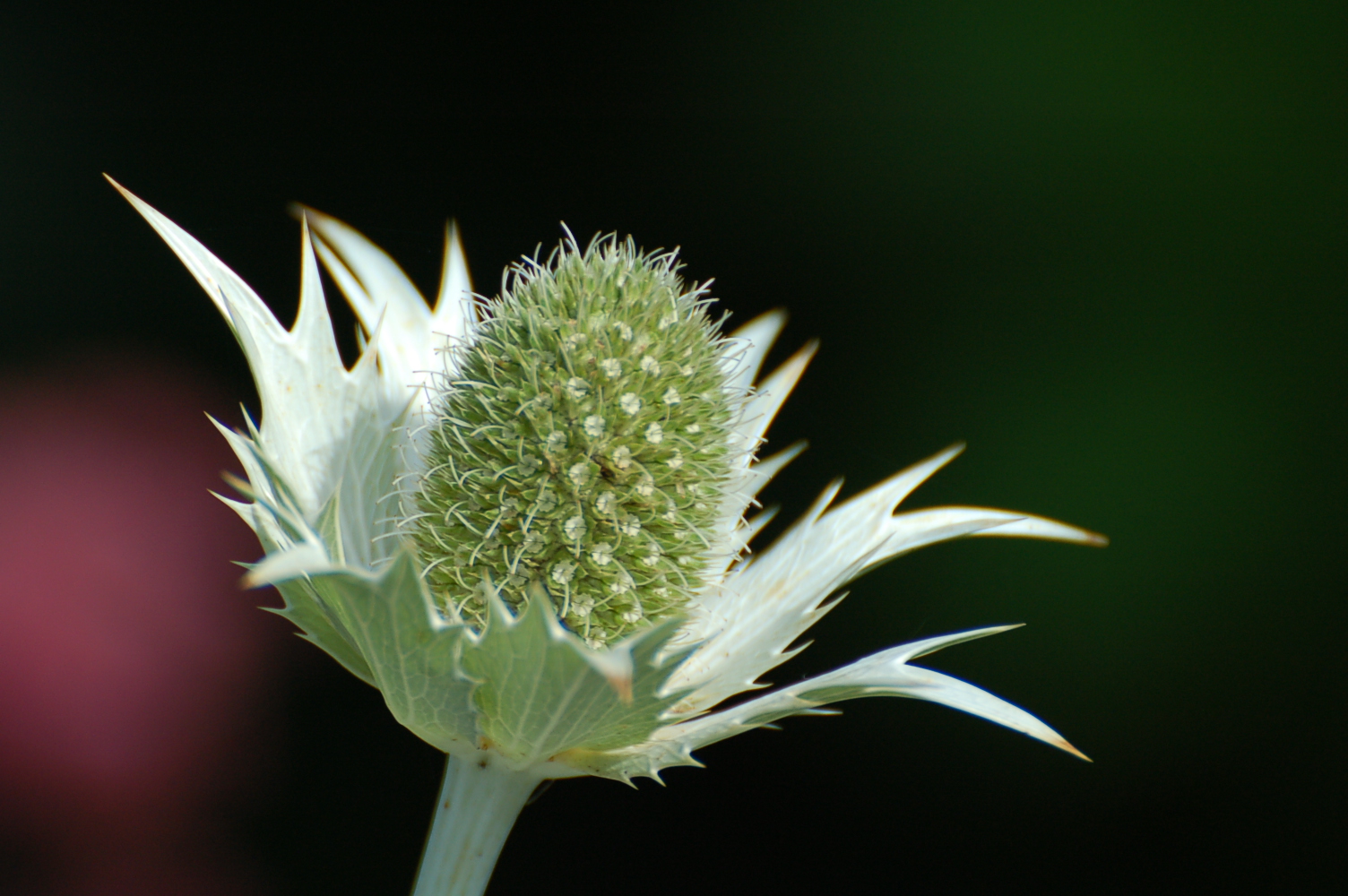
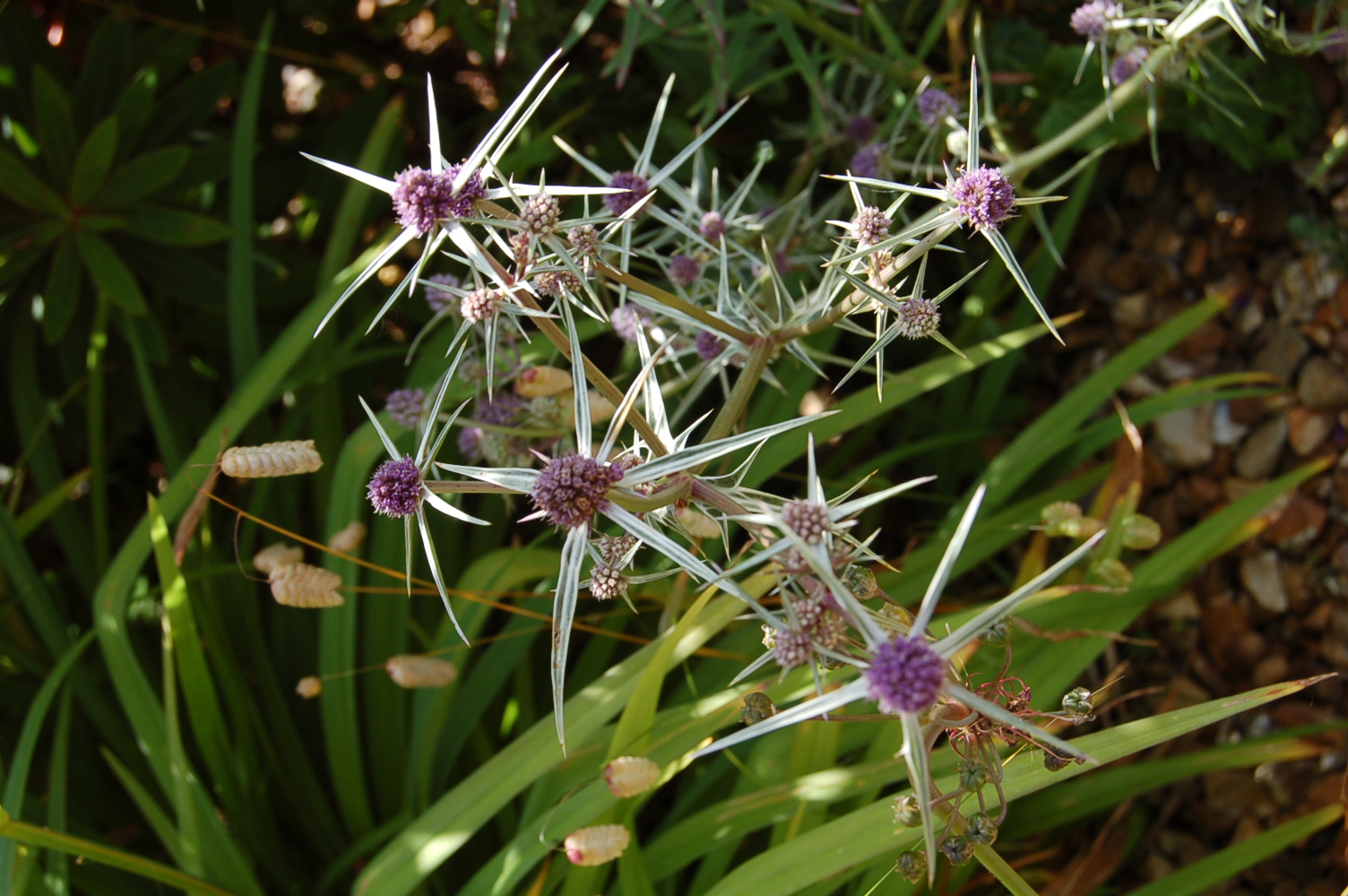
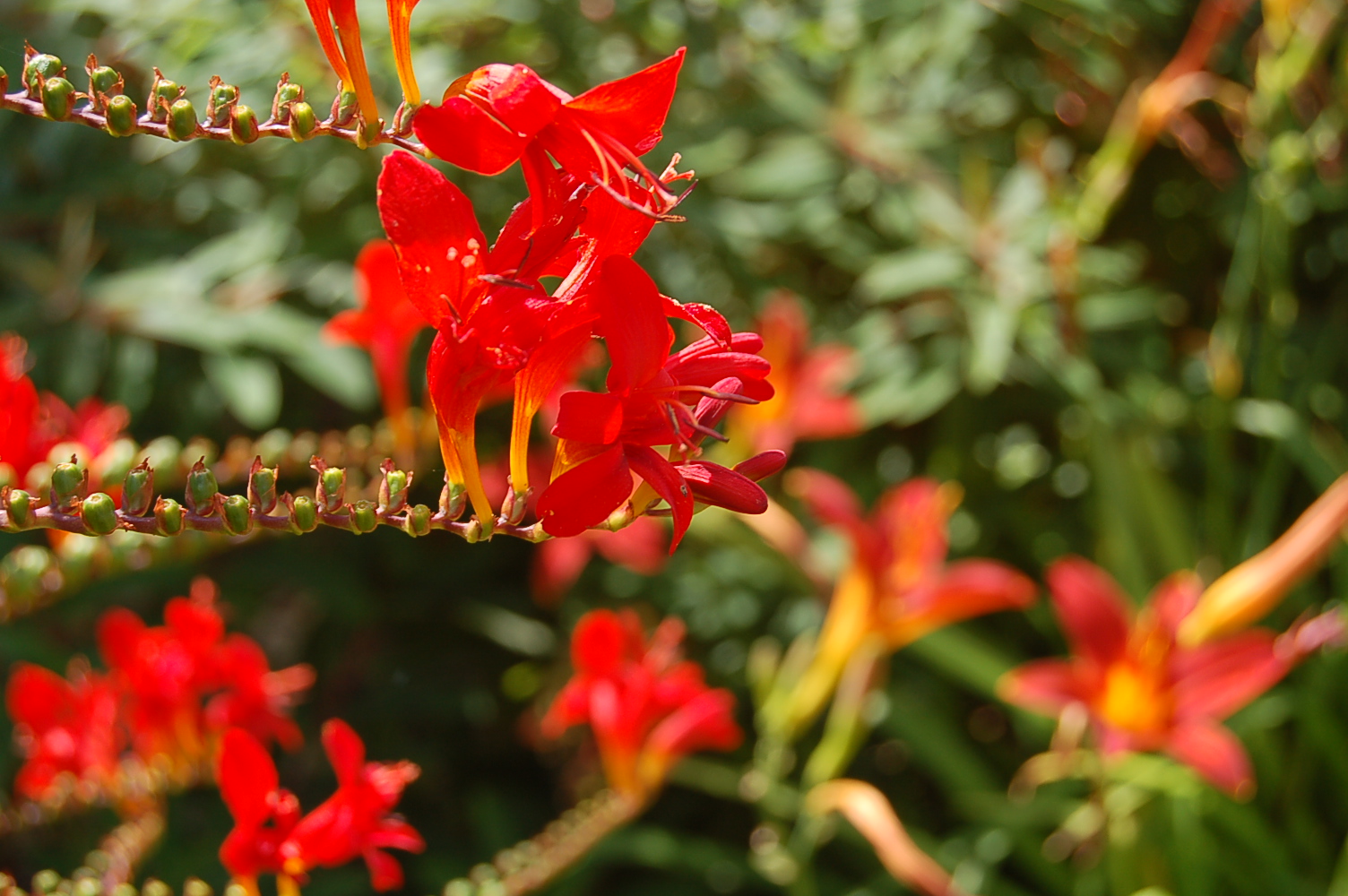
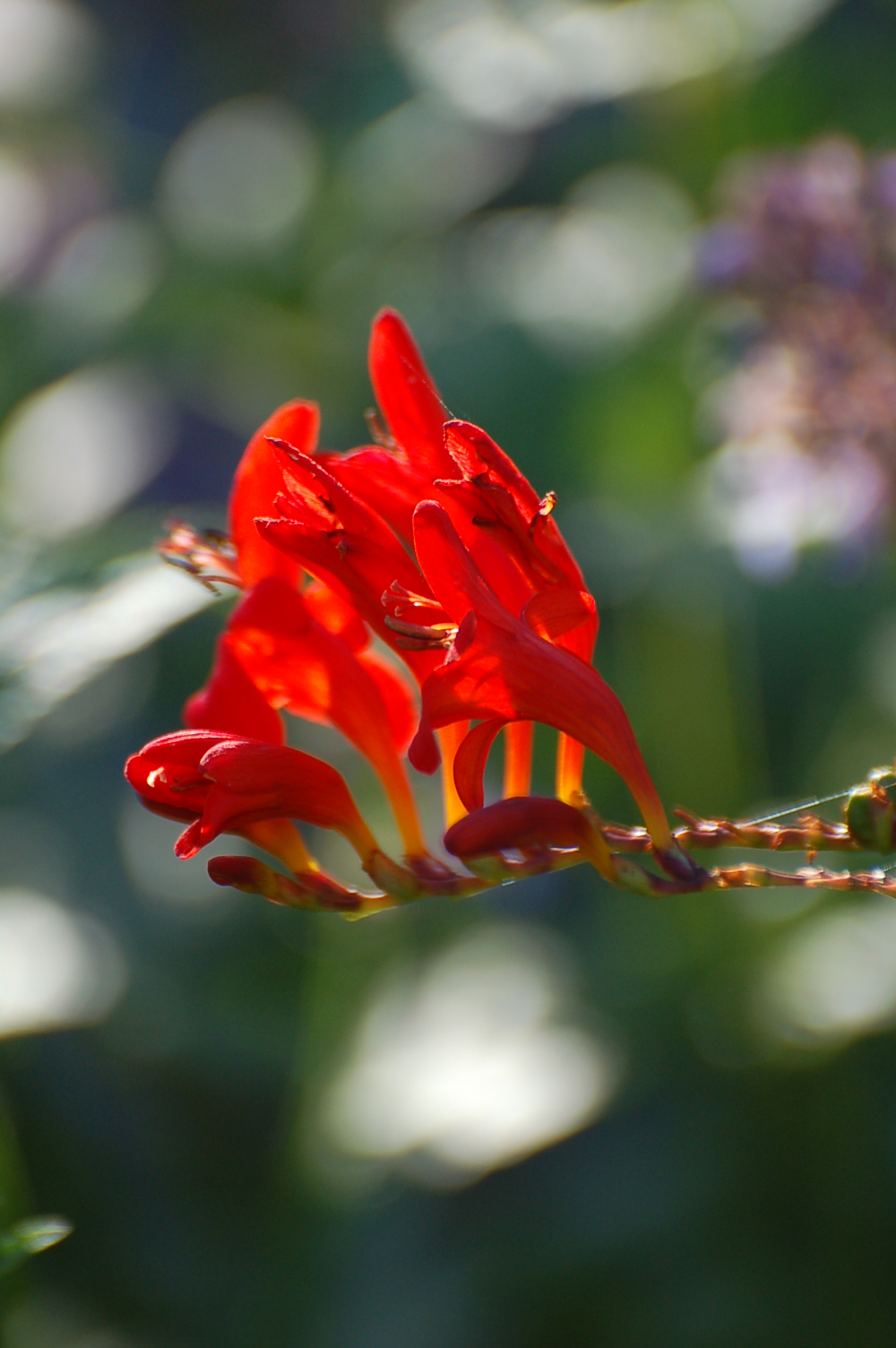
Elsewhere in the borders of the back garden the seedheads of our Snakebark Acer add rich reds, Crocosmias give every shade of yellow, orange and red, Achilleas add subtlety and the spiky Erigeron flowers provide silver.

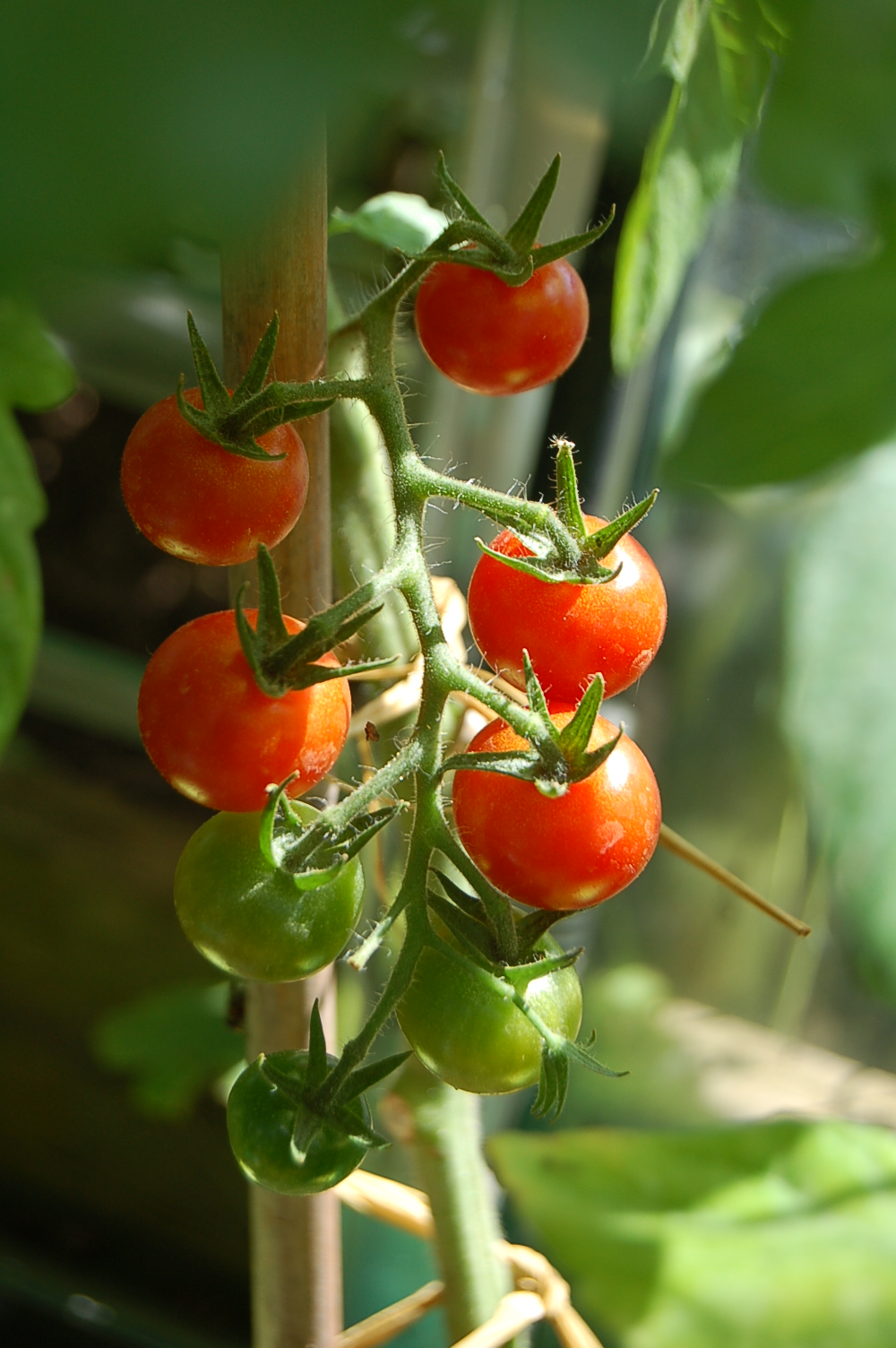
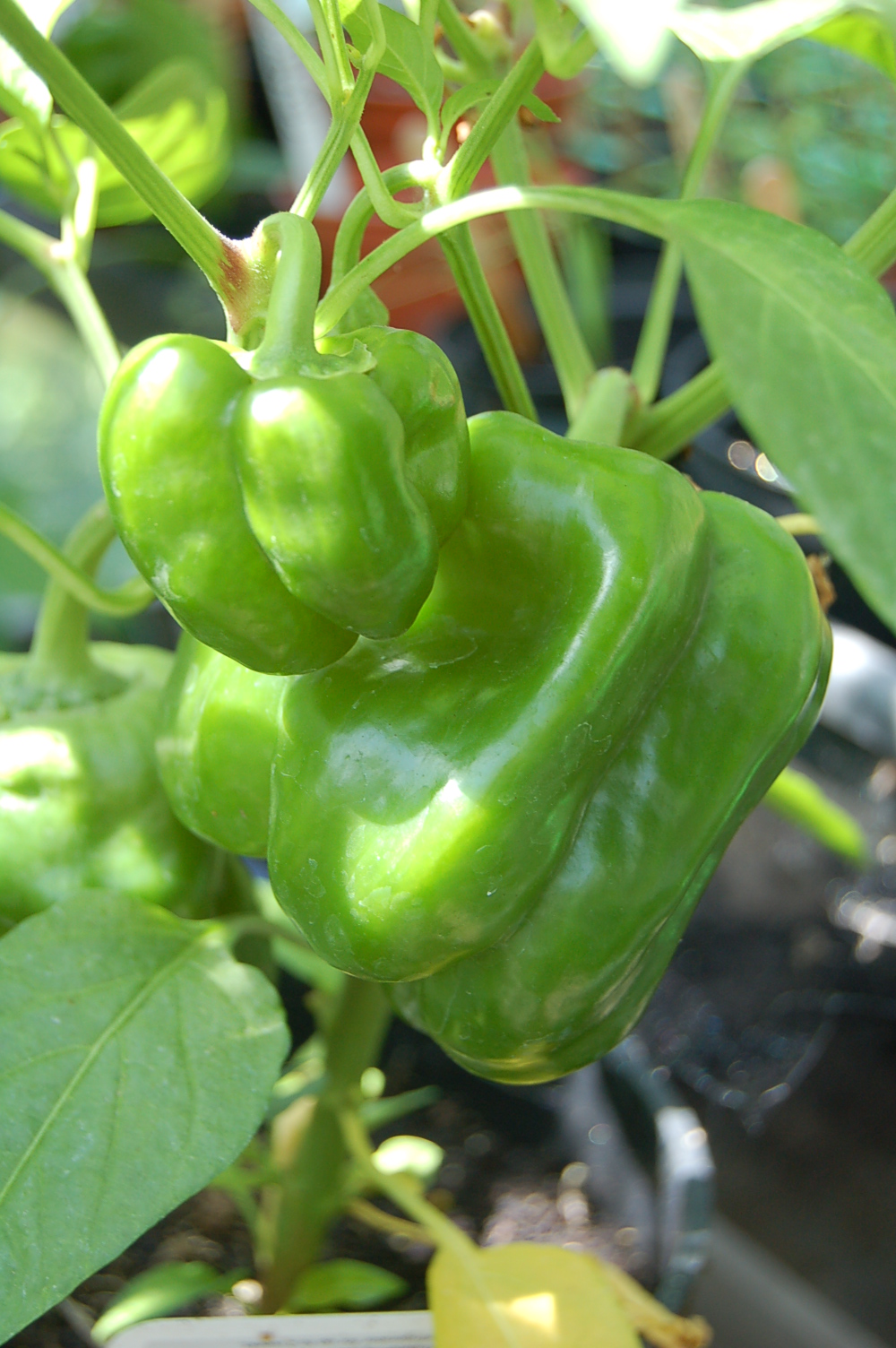
In the greenhouse tomatoes, cucumbers and capsicums are adding sweetness and freshness to the cut-and-come-again mixed leaves of ours summer salads.

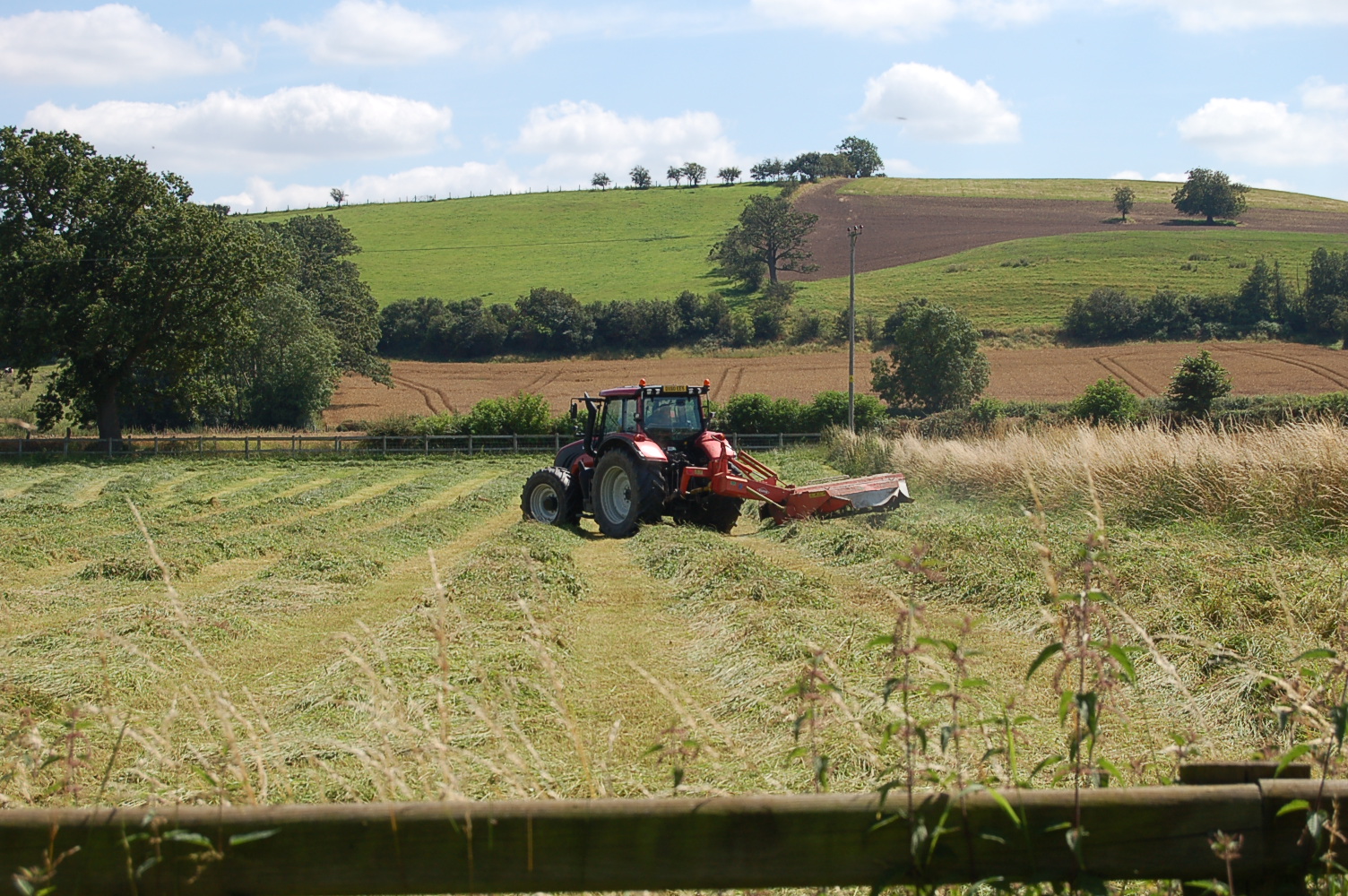
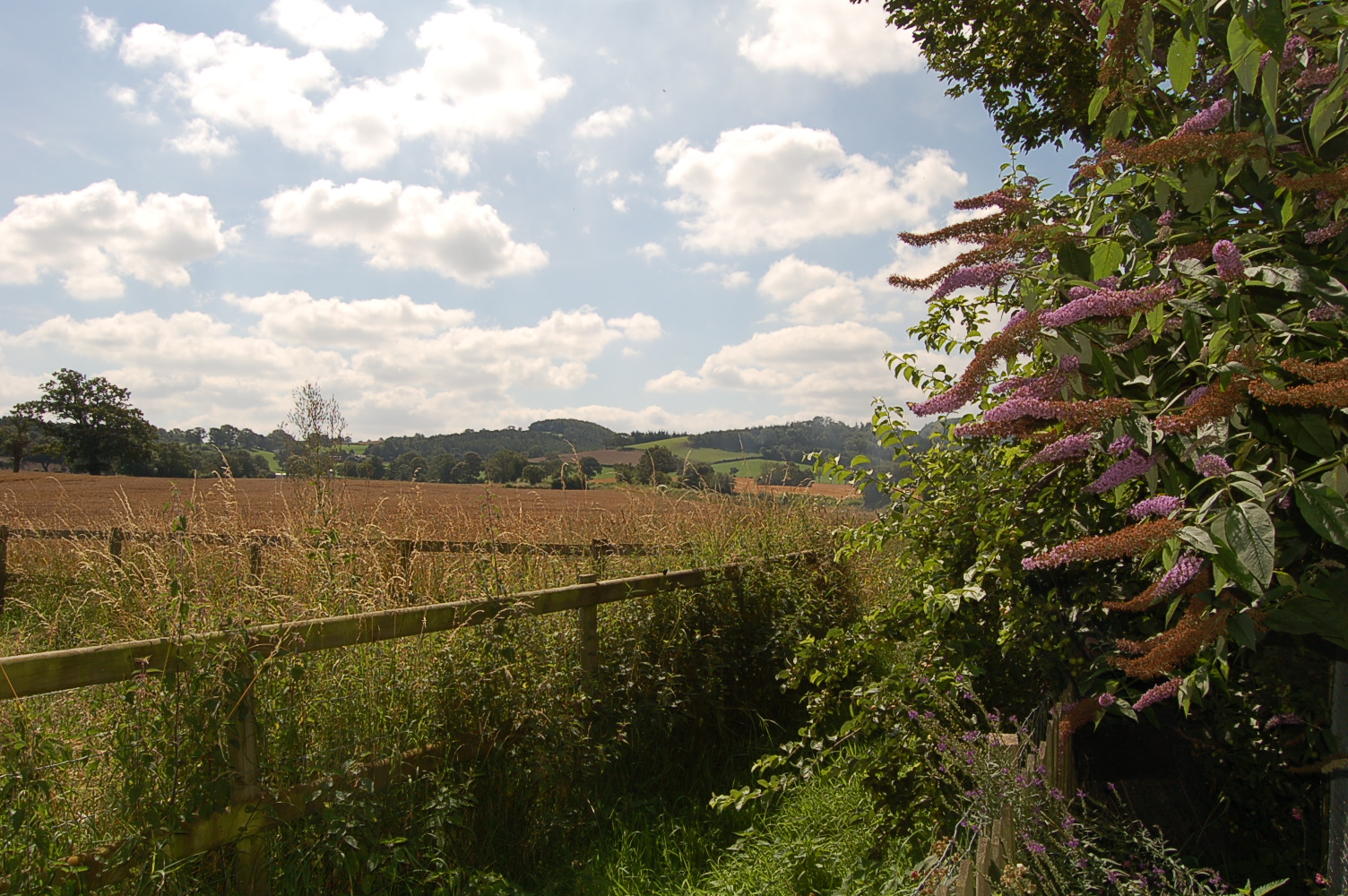
The world beyond our garden is changing this month as in our borrowed landscape the hay in the paddock has been cut and baled and the wheat fields turn gold and are being harvested one by one. By the time my September garden wander comes around the skys will seem empty as the Swallows and Martins will be on their way to warmer climes, but the garden will be getting busier with mixed feeding flocks of titmice and Goldcrests, and others of mixed finches.

Categories
bird watching birds climbing plants conservation photography Shropshire Shropshire Wildlife Trust trees wildlife woodland

Wandering in a Wet Woodland

It is pouring with rain – continuous heavy miserable rain pouring down from a dark grey headache-inducing sky. Humidity clings to us. Too wet even for us rain-defying gardeners to get out and garden, too hot and humid to work in the greenhouse. so what to do today? Go for a walk and just get wet of course.

So off for a half hour drive down flower edged lanes to a wood on Wenlock Edge, a place enjoyed when our two children were young. Edge Wood. We park the car in a clearing – it is so dark and the rain continues to bang on the roof of Jude’s little car.

Waterproofs are donned and the camera hangs around my neck hidden from the rain under my jacket. We set off along rutted paths, the mud has been churned up by the hooves of horses so we struggle through mud and deep ruts off into the canopy of trees, taking dark photos of a dark day.

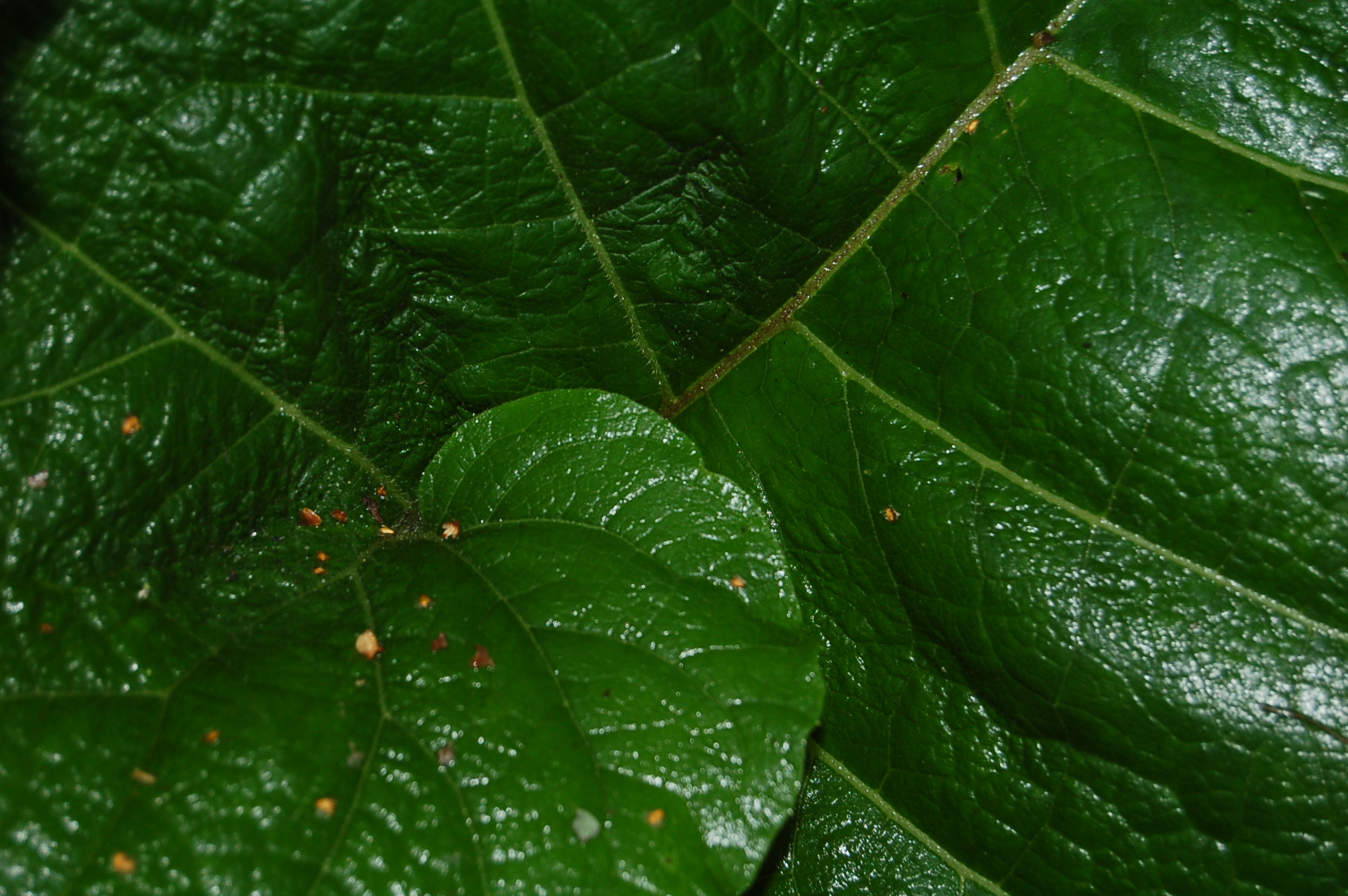
Every leaf surface is shining with wetness and the tip of every leaf has a droplet of rain hanging waiting to drip, matching the drips on the edge of the peak of my cap and on the end of my nose.

The wet surface of foliage serves to emphasise their textures and shapes, increasing their individual beauty.

This little wood is home to 250 different wildflowers but today only a handful are in evidence. It is late in the season and the darkness is not enticing buds to open and display their flowers.
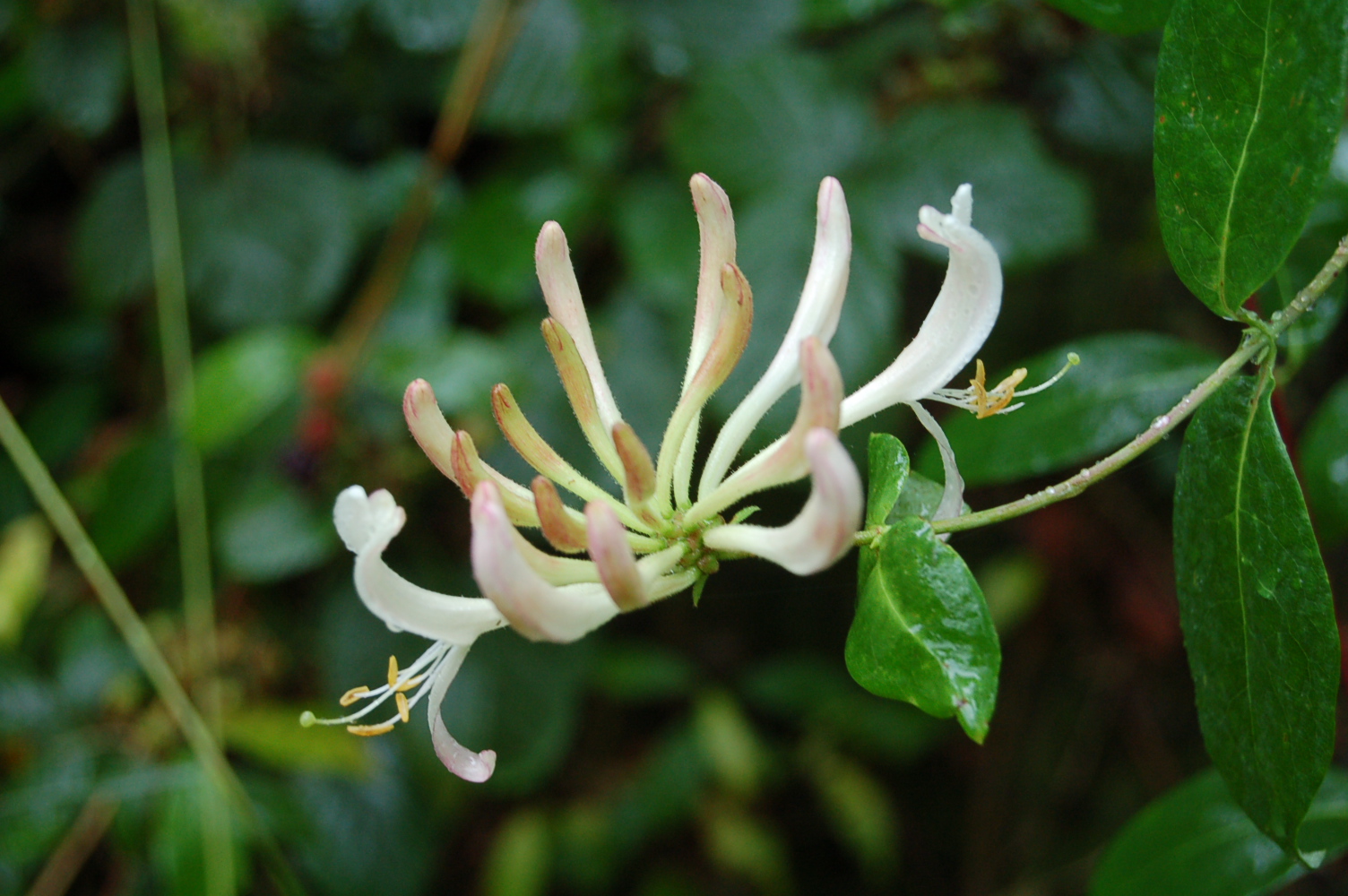
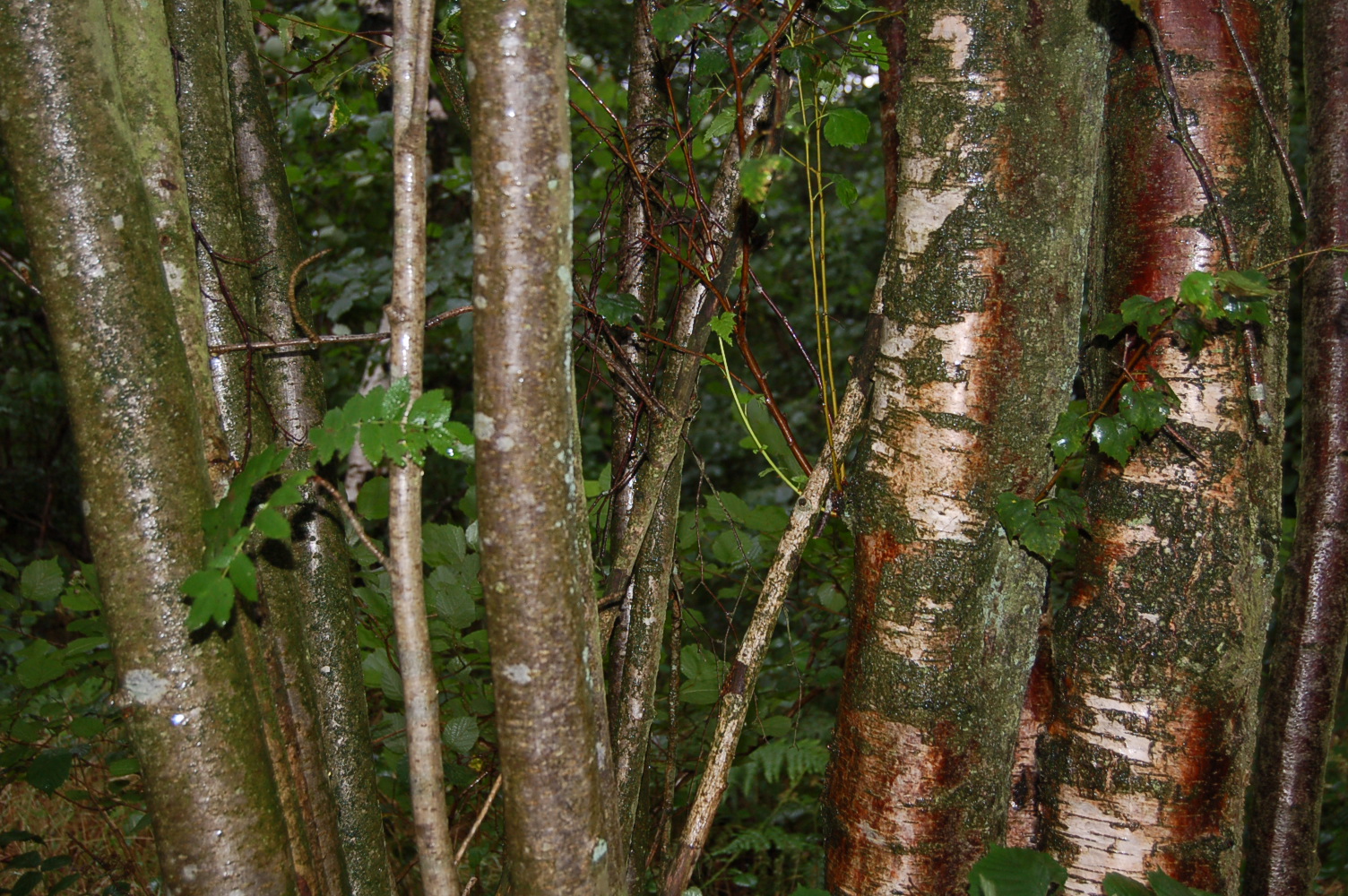
The Woodbine, our native Honeysuckle, clambers up many of the tree trunks and display flowers at nose height encouraging us to enjoy their scent. But in the daytime the scent is hardly discernible from the wet wood smells, for it does not give off scent for us, it will wait until the evening draws in and intensify the scent, a special scent to draw in night-flying moths who will do the Woodbine’s bidding and pollinate the blooms.

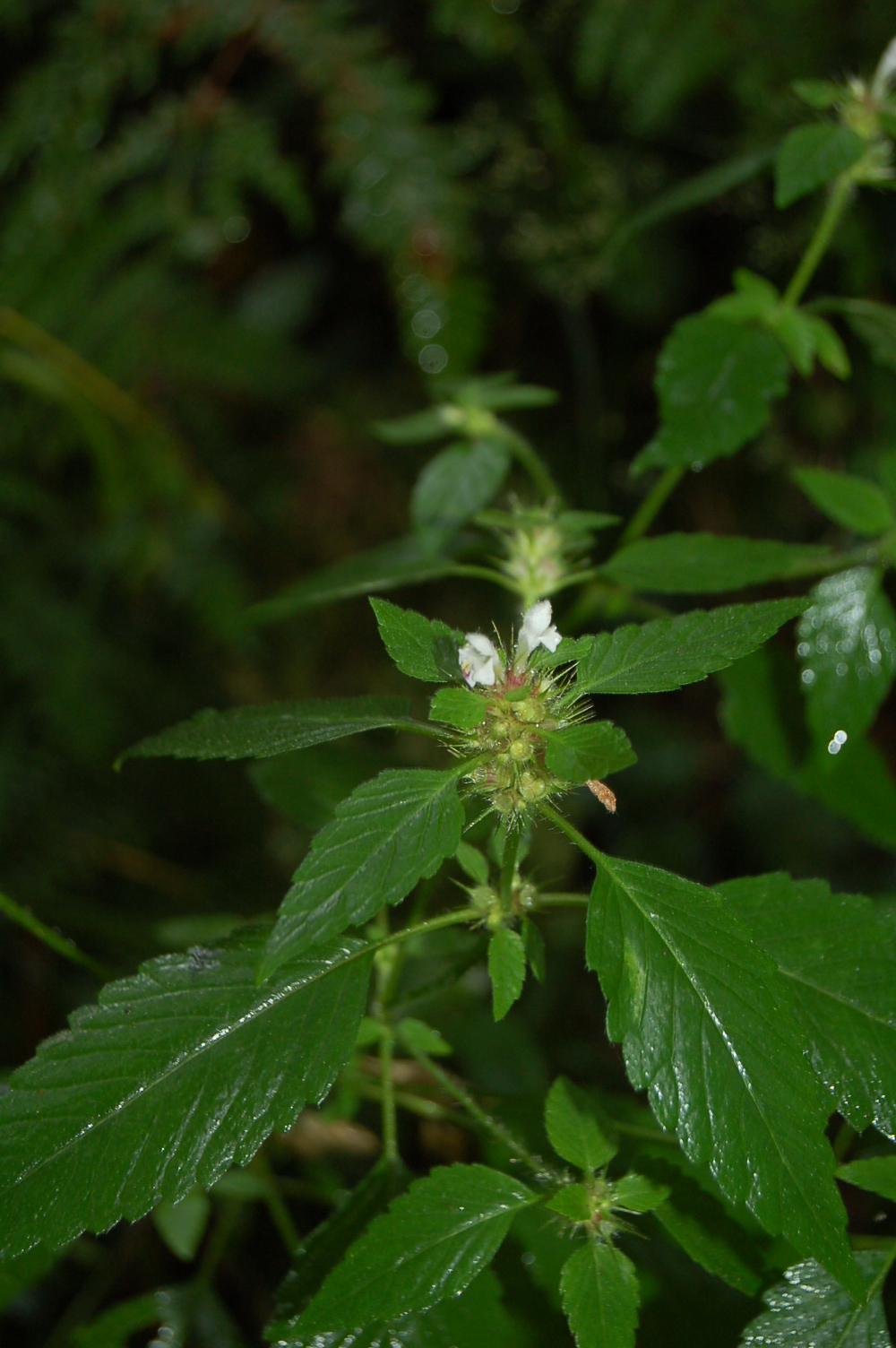
This little white gem shone like stars in the night sky – Gipsy Wort. The green of the foliage is so fresh and whitens the flowers even more.

The most floriferous of all plants in the wood in August are the grasses and sedges displaying a rich diversity of shapes and structures in their flowering.

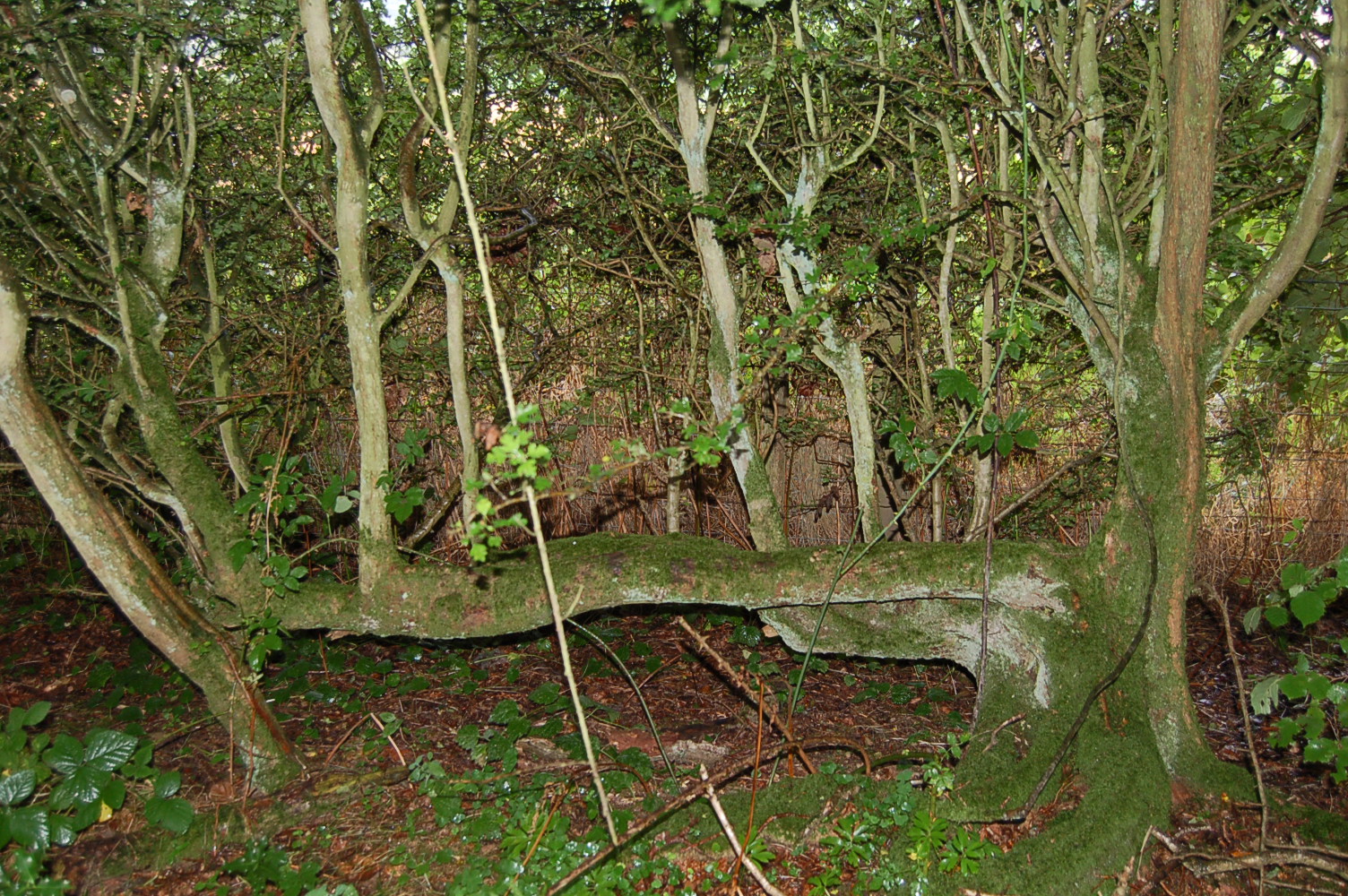
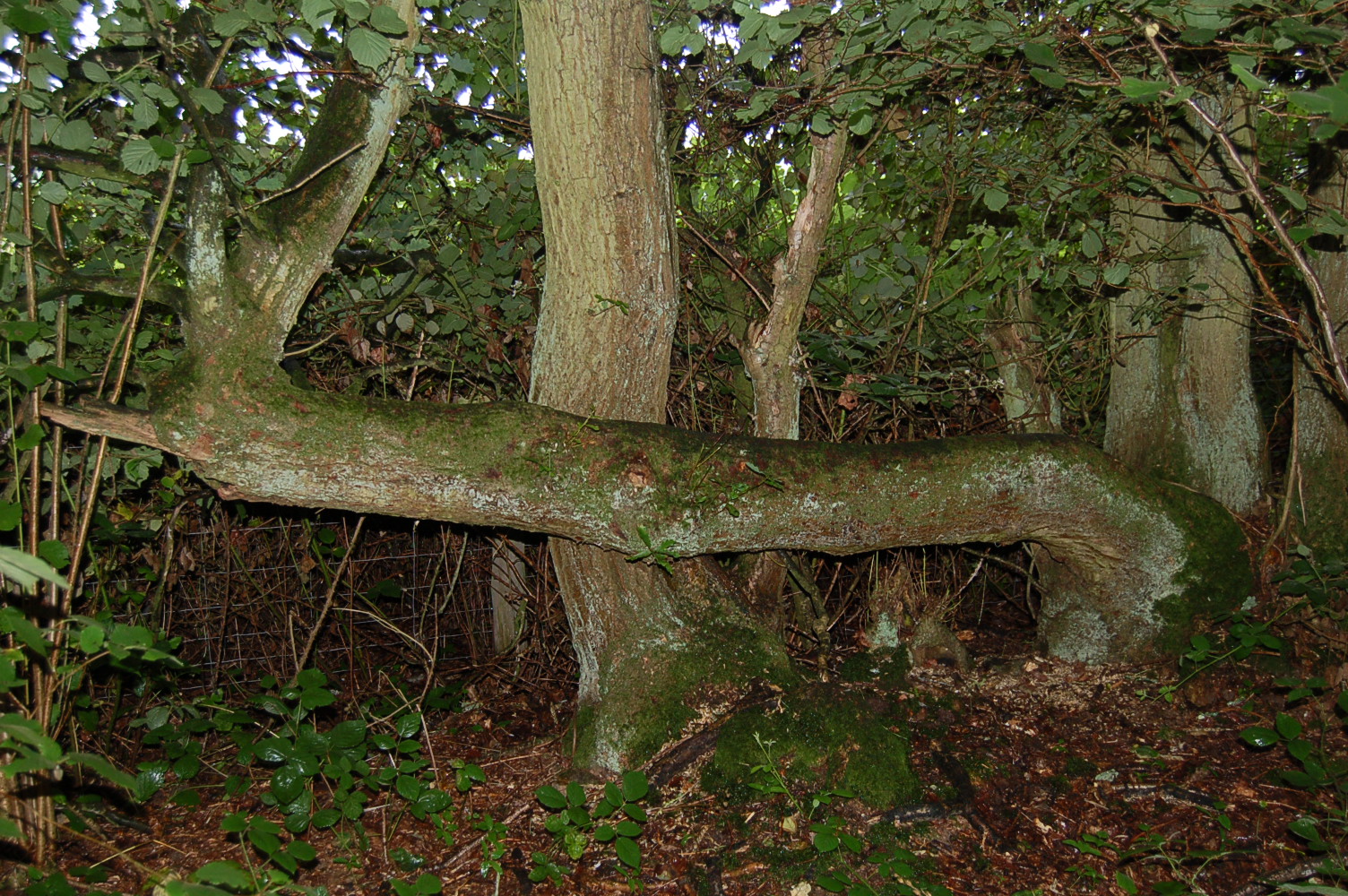
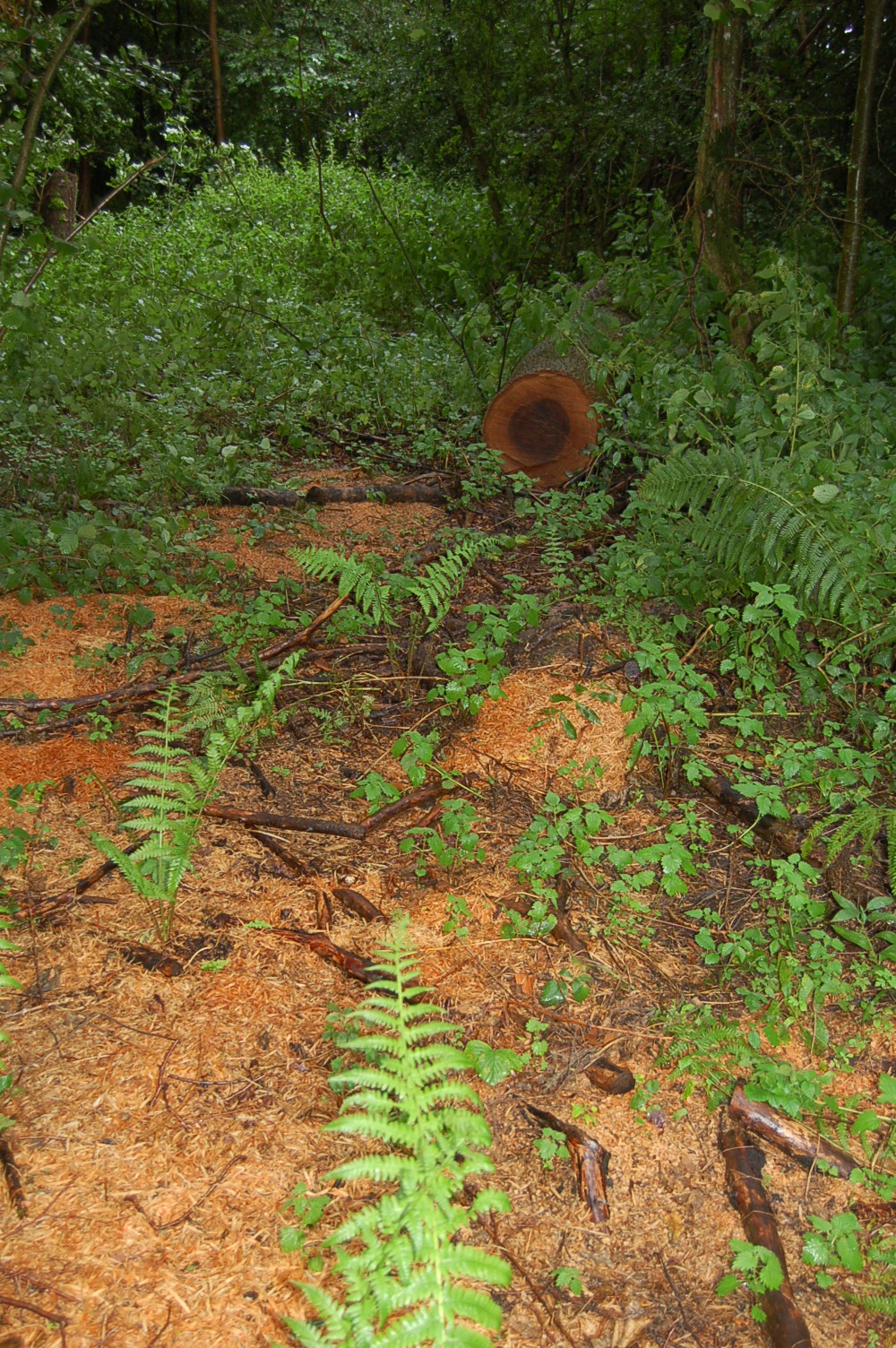
There are signs of man’s influence hidden away in the wood, evidence of coppicing, an old hedgerow, layered hedging gone wild and trees felled. There are clues of man’s past presence, working woodsman and farmers. The hand of man is now being rubbed out by the heart of nature.

As we wander through the wet wood we get regular glimpses of the Shropshire countryside through gateways and gaps in the hedges and trees. The rain is softening the landscape and hiding hills from view.

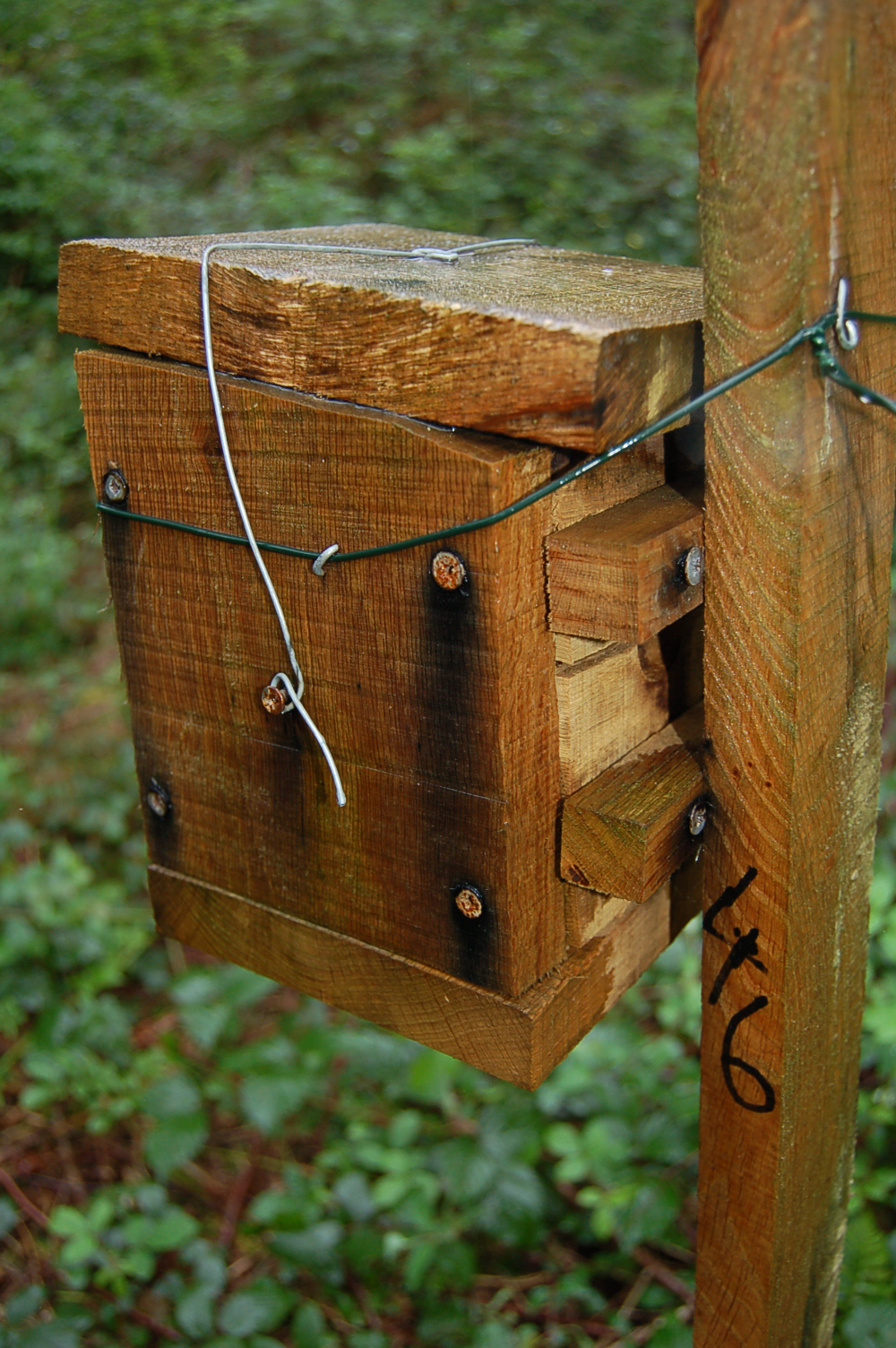
The wood is home to a couple of rare mammals, dormice and the Yellow-necked Mice. Nestboxes are provided to encourage the dormice to breed and roost.
The tree canopy is mostly silent, the birds in moult keep out of sight ashamed of their scruffy appearance and worried that they are more susceptible to predators. In odd places the calls of small birds show they are moving about high above us, Goldcrests, Treecreepers, Siskin and Titmice in variety.

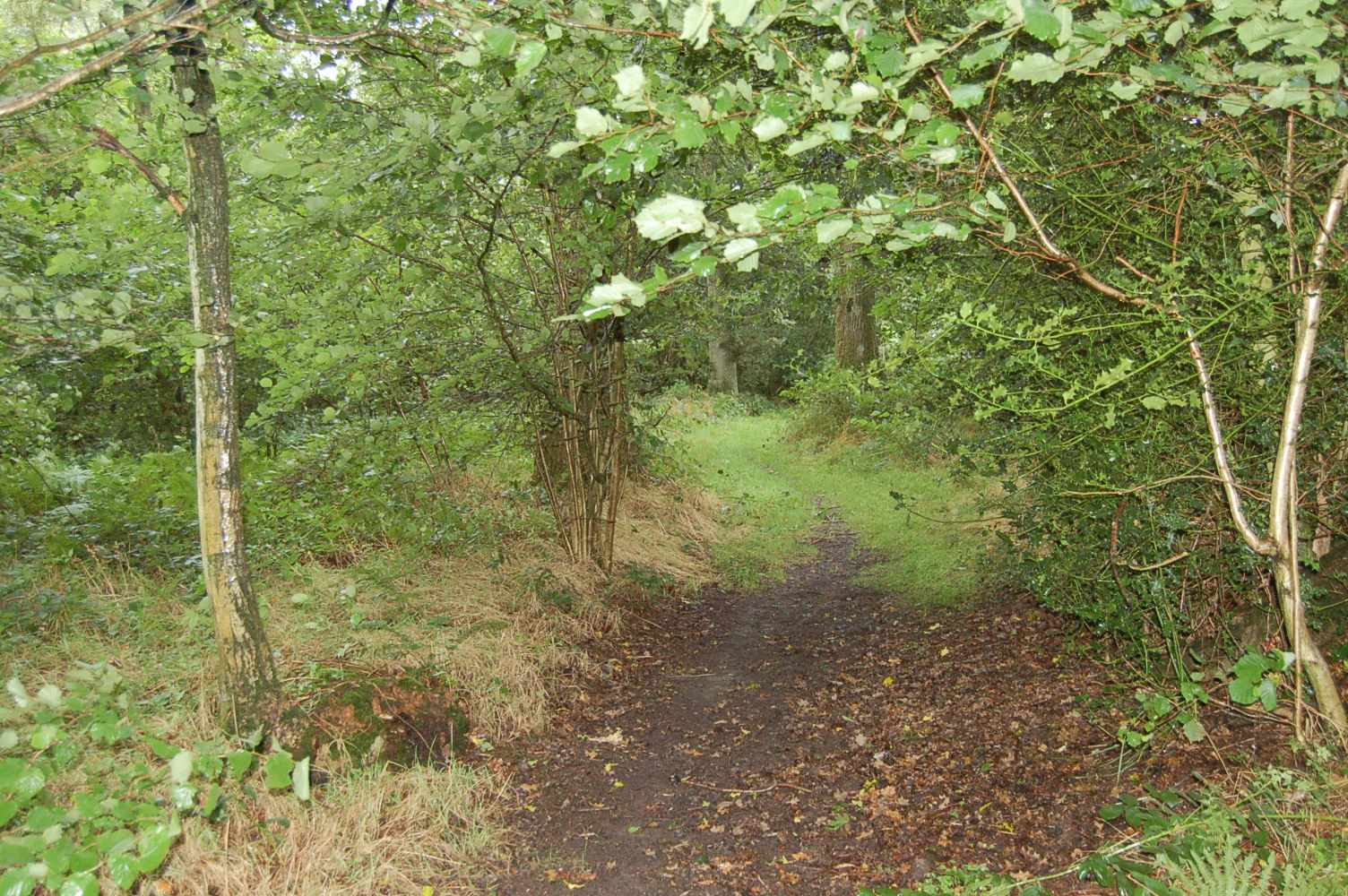
The paths lead us through the wood almost around its perimeter.

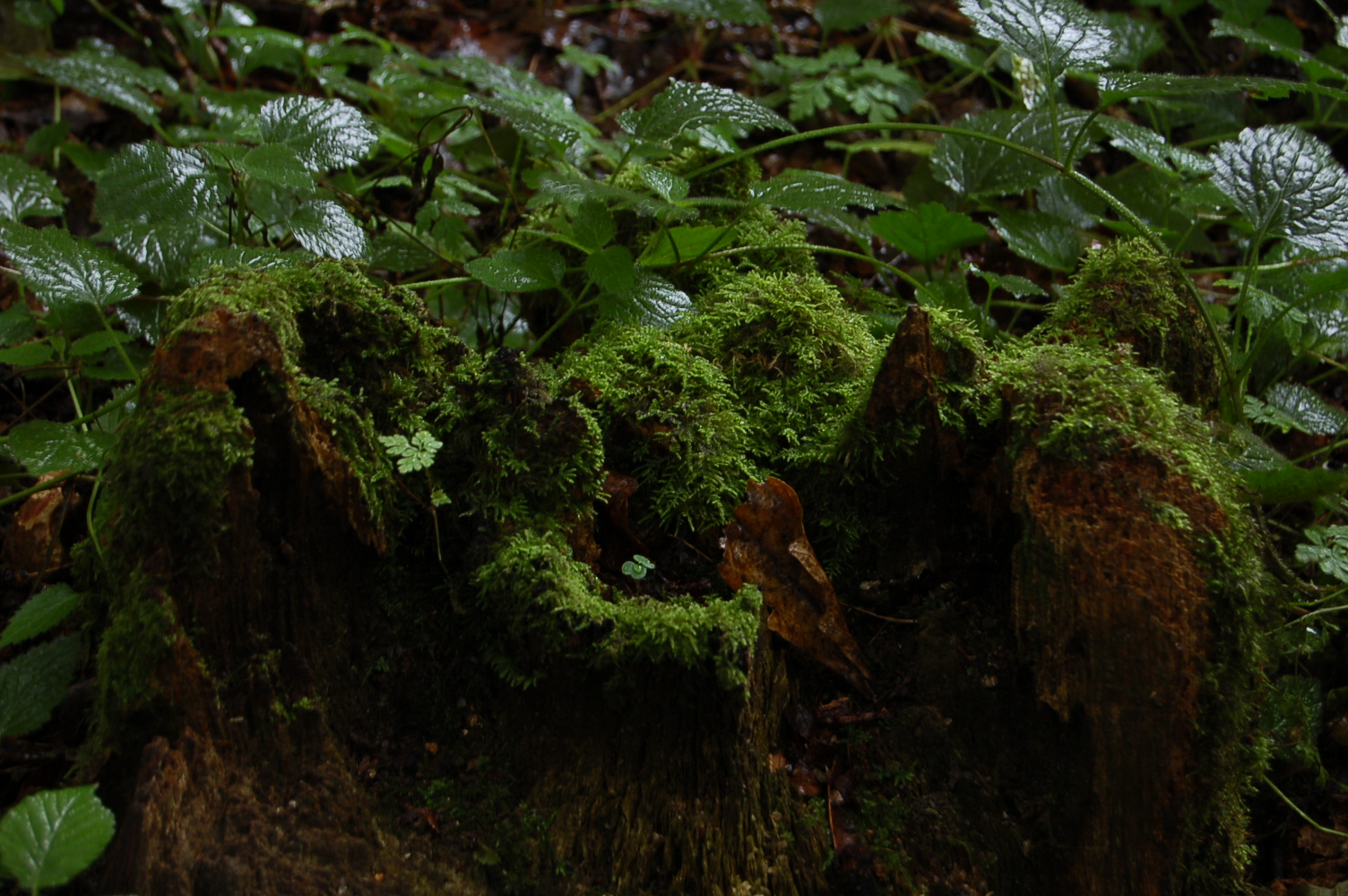
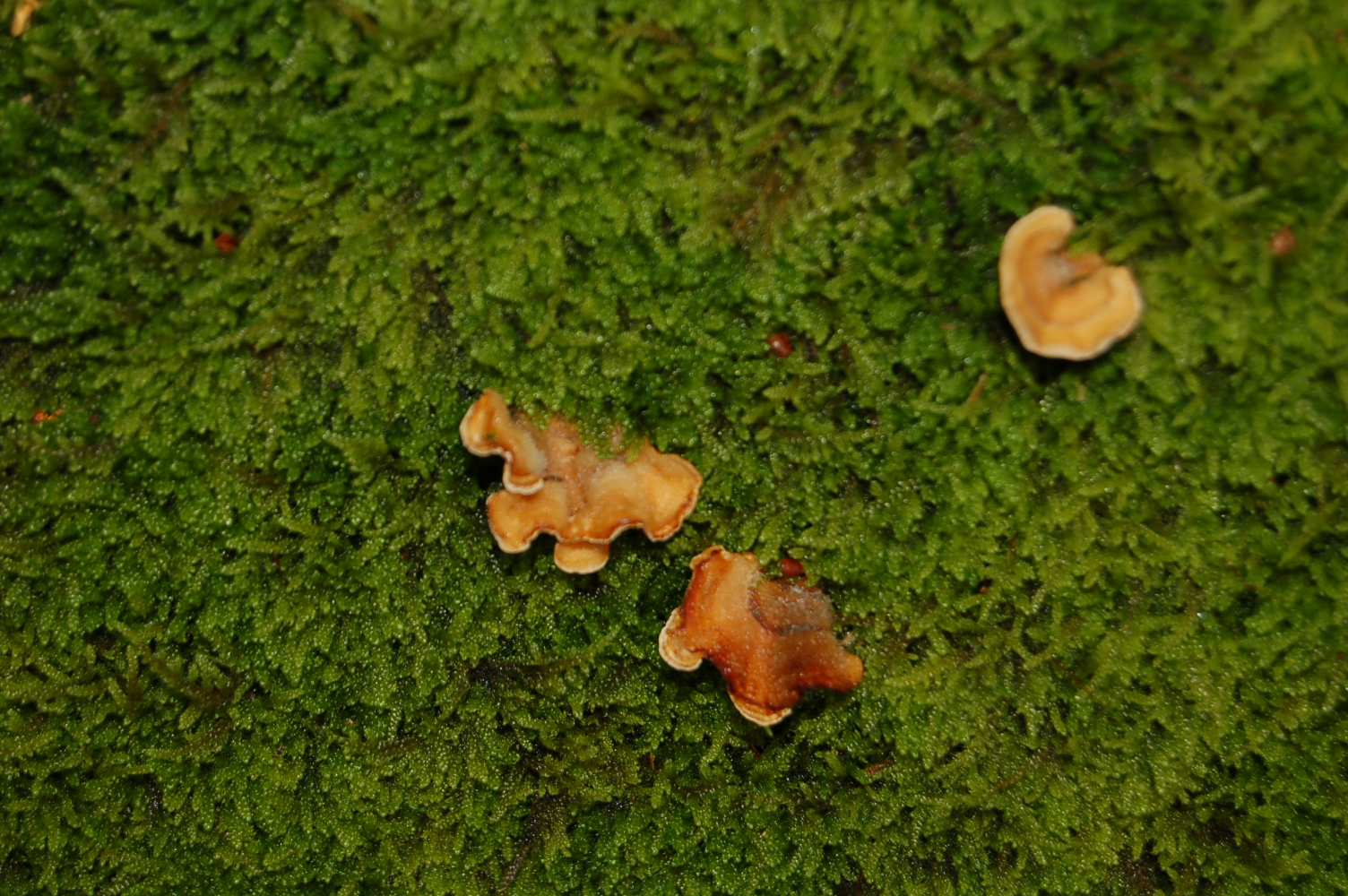
At times little cameos of nature’s work present themselves to us, little details giving glimpses of woodland beauty.

Sometimes being in a dark wood getting wet is the best place to be!

Categories
bird watching birds National Trust photography Shropshire wildlife

A Wild Mountain Pool

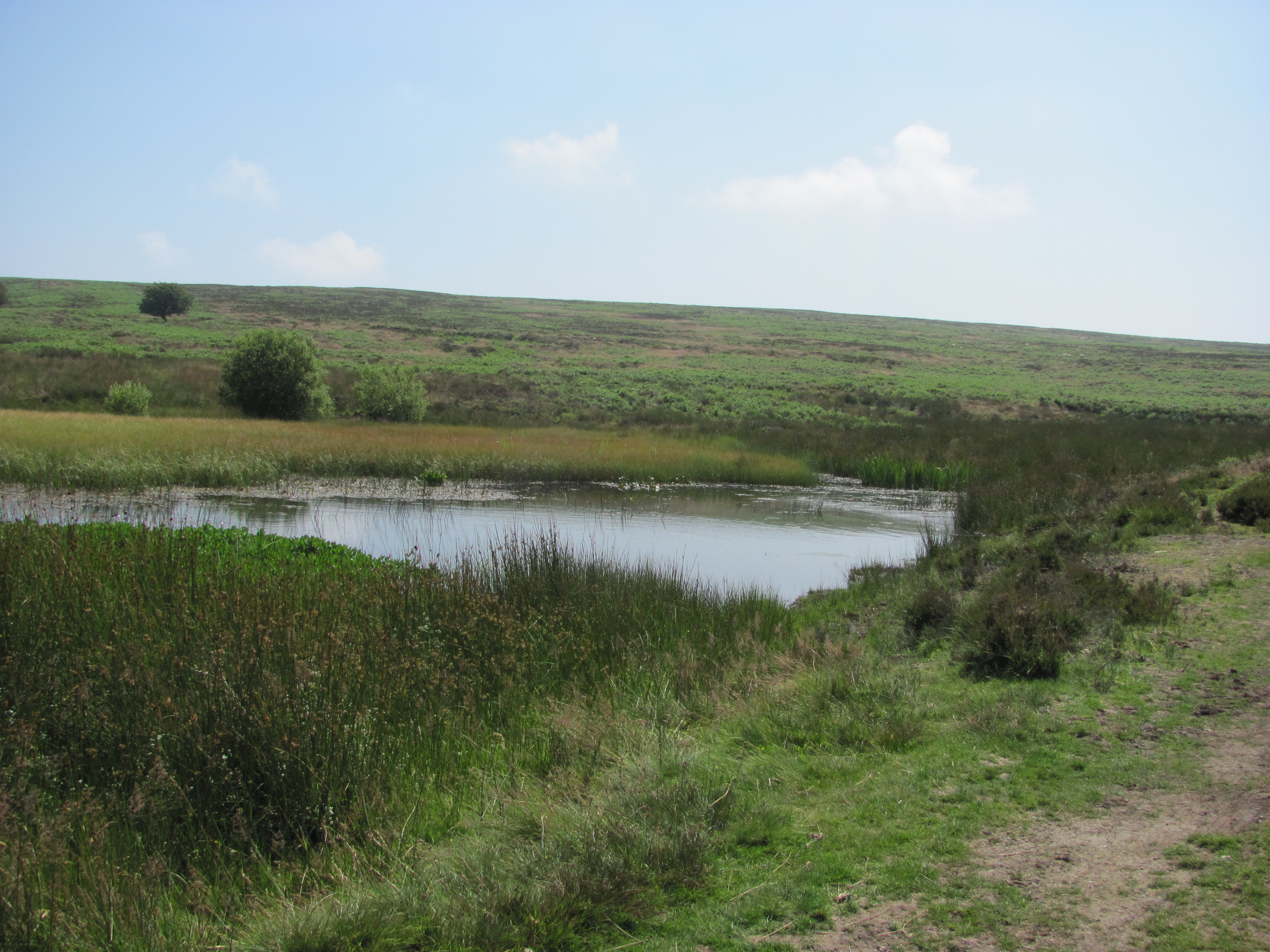
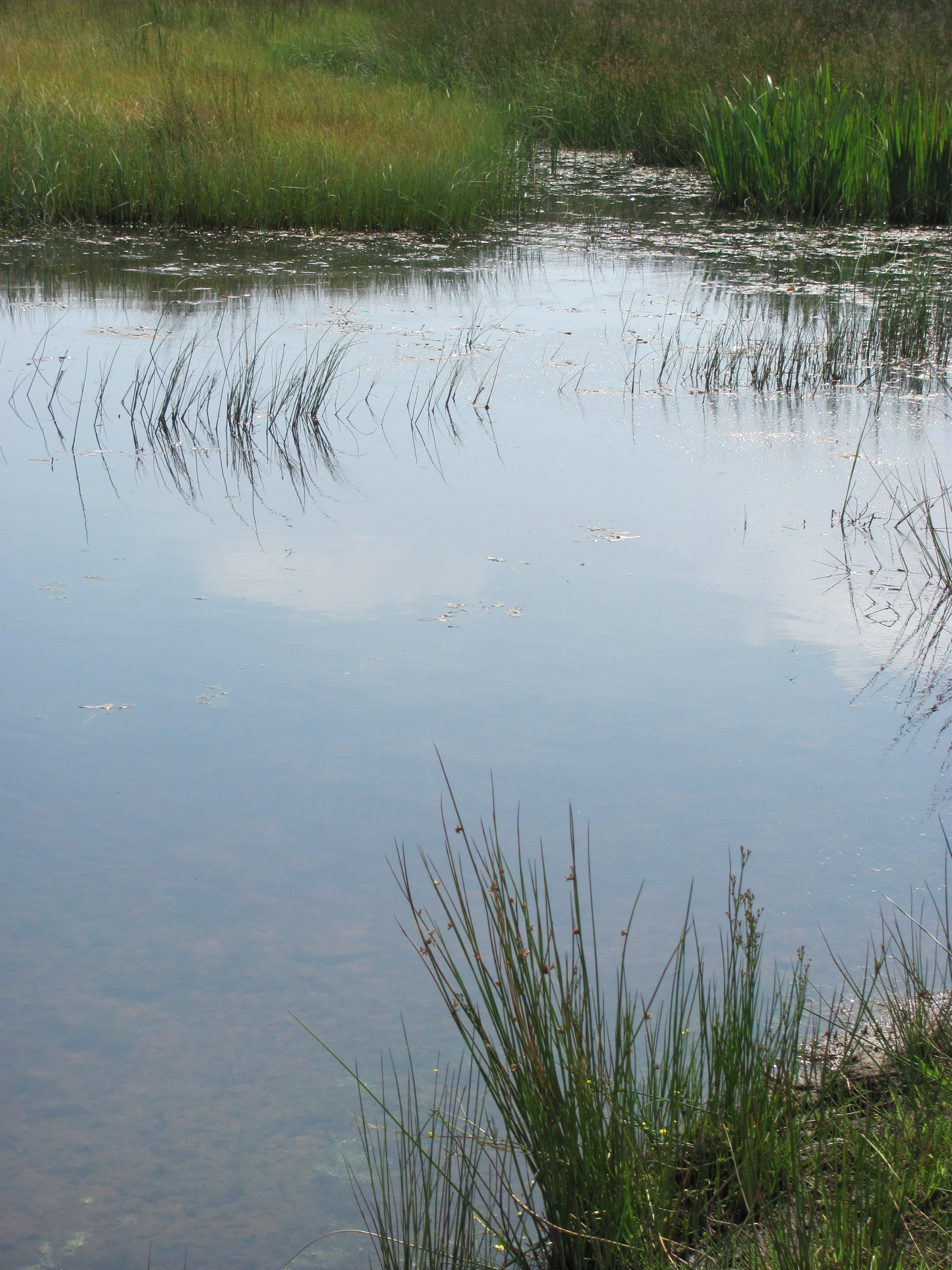
Wildmoor Pool sits alone up on the top of the Long Mynd amongst open moorland. We live on the northern edge of the South Shropshire Hills and we need to drive only a short distance to the Long Mynd at the southern edge of the South Shropshire Hills. On a very hot and humid day we decided to take our books, a flask of coffee and some fruit and seek out the cooler air atop the Long Mynd. We had never been to the Wildmoor Pool before and we were stunned by its beauty and isolation as it came into sight. A triangle of clear water tinged brown by peat.

It is described in my book on the Long Mynd as a place to sit and wait for the wildlife to arrive. This proved to be so true. On our arrival we spotted lots of different Damsel Flies and Dragonflies in a myriad of sparkling colours, but little else, no birds to be seen or heard in the sky, on the bushes or amongst the bracken and heathers.  These dragonflies have such evocative names – Black Darters, Common Hawkers, Golden-ringed Dragonfly.
So we sat, got comfortable, poured coffees and got out our books to enjoy in the peace up on the long mountain. The silence and still warm air created an atmosphere of calm and peacefulness – and above all contentment. This silence was only occasionally interrupted by tiny splashes of water as fingerling Brown Trout plucked flies from the mirrored surface and sent ripples out in concentric rings moving slowly outwards towards the edge of the pool. Deep throated croaks from frogs emerged from deep within the reeds. The surface dwellers barely make a sound or a ripple, the Water Measurers, Pondskaters fail to break the surface. Water Beetles and Water Boatmen pierce through the surface to collect bubbles of oxygen.

Reflections decorated the pool’s surface. When the Brownies’ ripples reached them they shimmered but otherwise they were still as the mountain air.

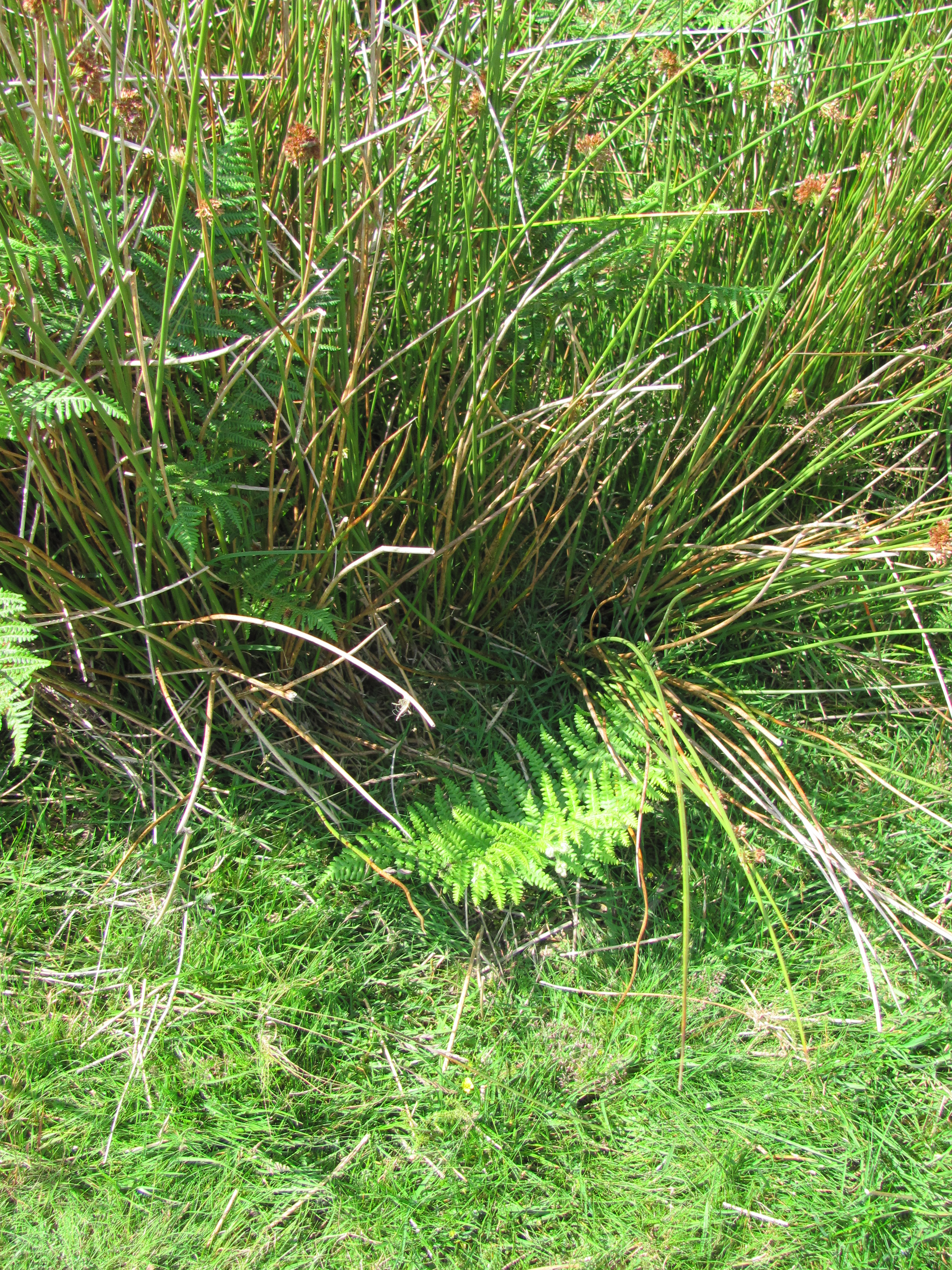
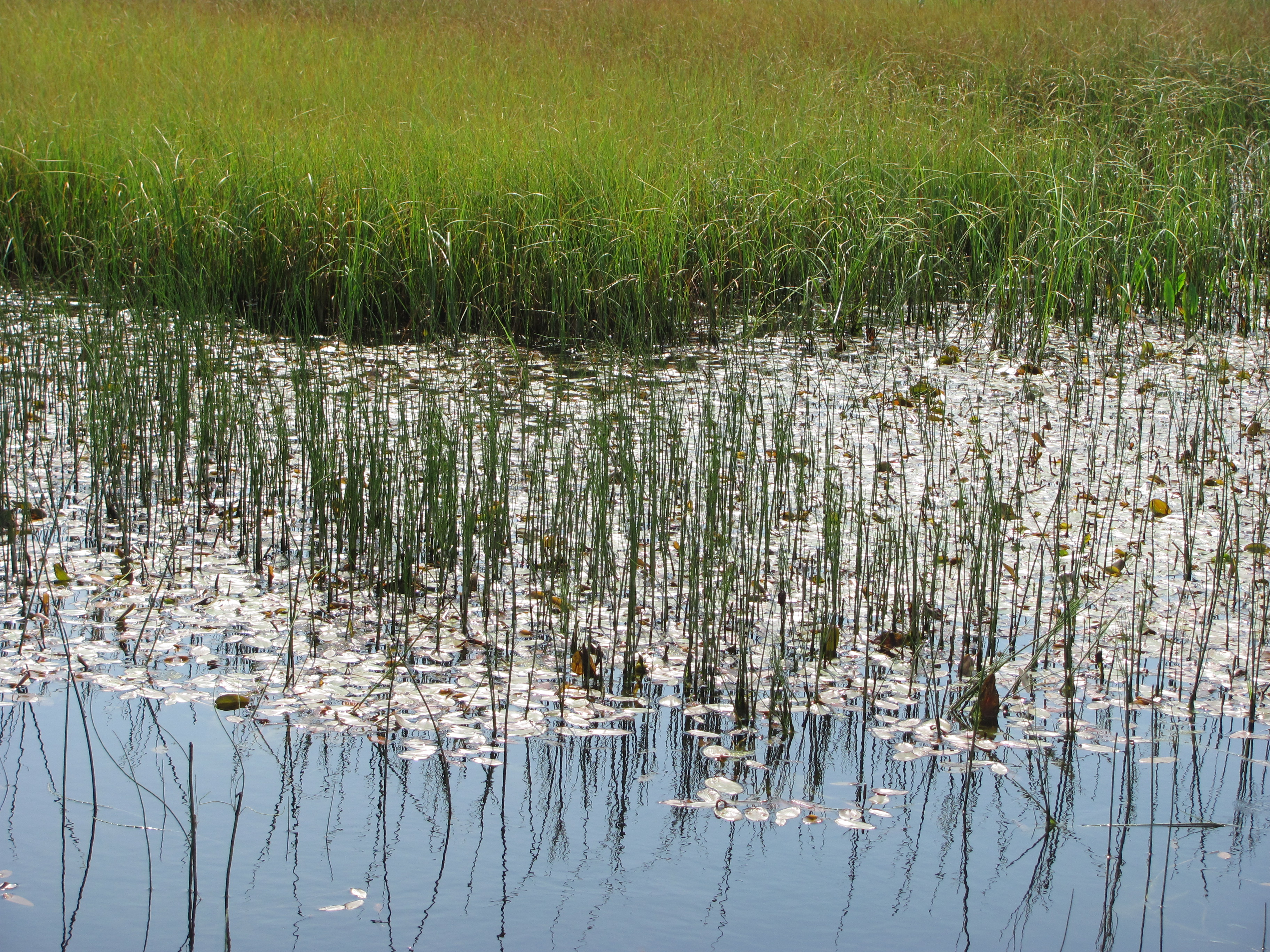
The slopes of the mountain here were decorated with bracken and heather and little else, so the tiny simple blooms of the Tomentil shone like golden stars in a clear sky. Yellow glows in so much green. Close to the pool edge the bracken is joined by tough sedges such as Bottle Sedge, rushes such as Common Spike Rush, with Yellow Flag and Mountain Thistles punctuating them with colour. Further from the bank Bogbeans and Bog Pondweed flourish.

Water plants often take a pool over trying to cover it and dominate, but here the National Trust manage the amount of growth and keep a good percentage of water clear. This allows us to appreciate the large white flowers of the Waterlilies pushing through the surface amongst their flat circular plate-like leaves. As far as we know we have only two native waterlilies, one little yellow one and a larger white one but this one was the palest shade of pink, which confused us.

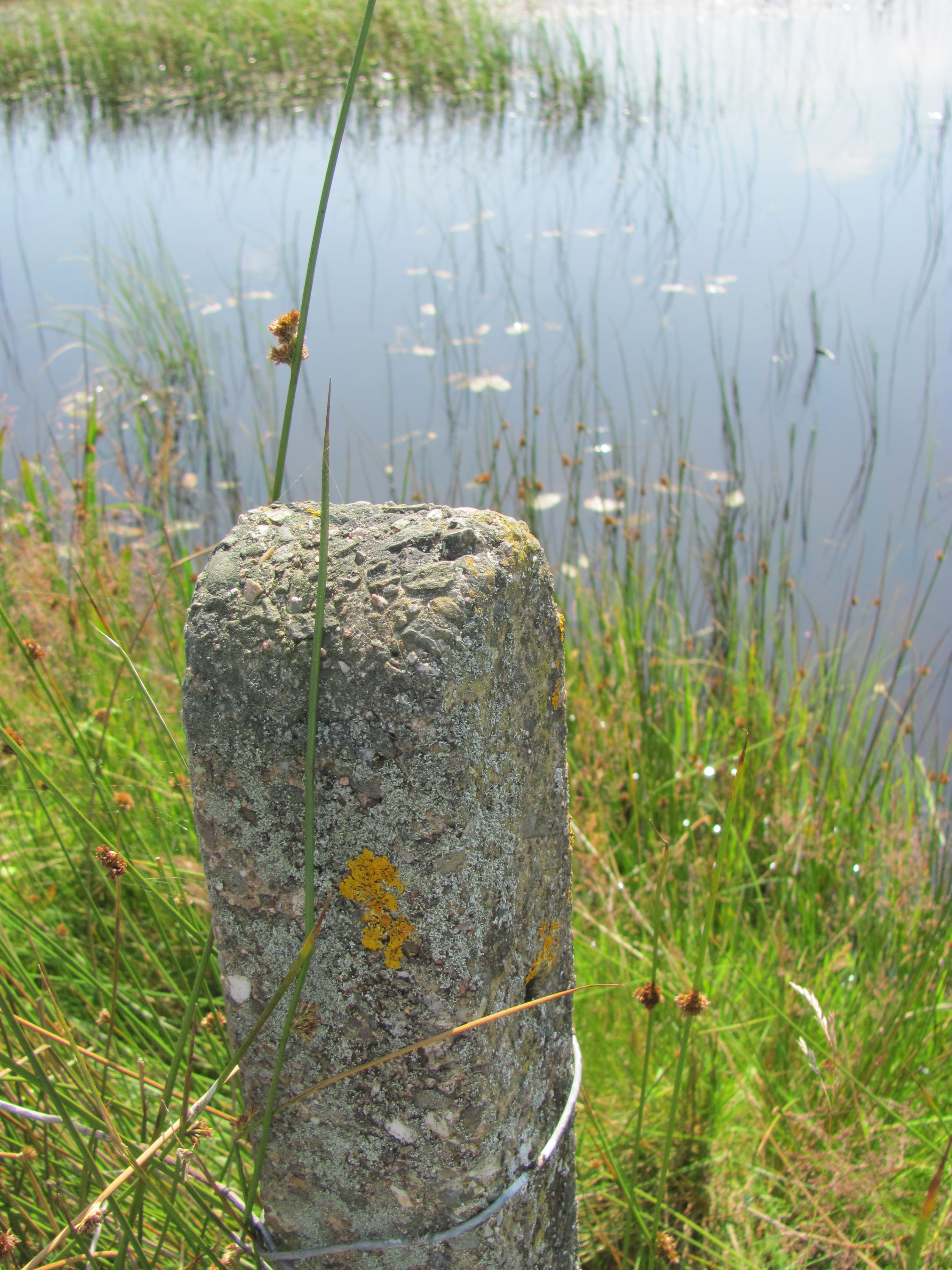
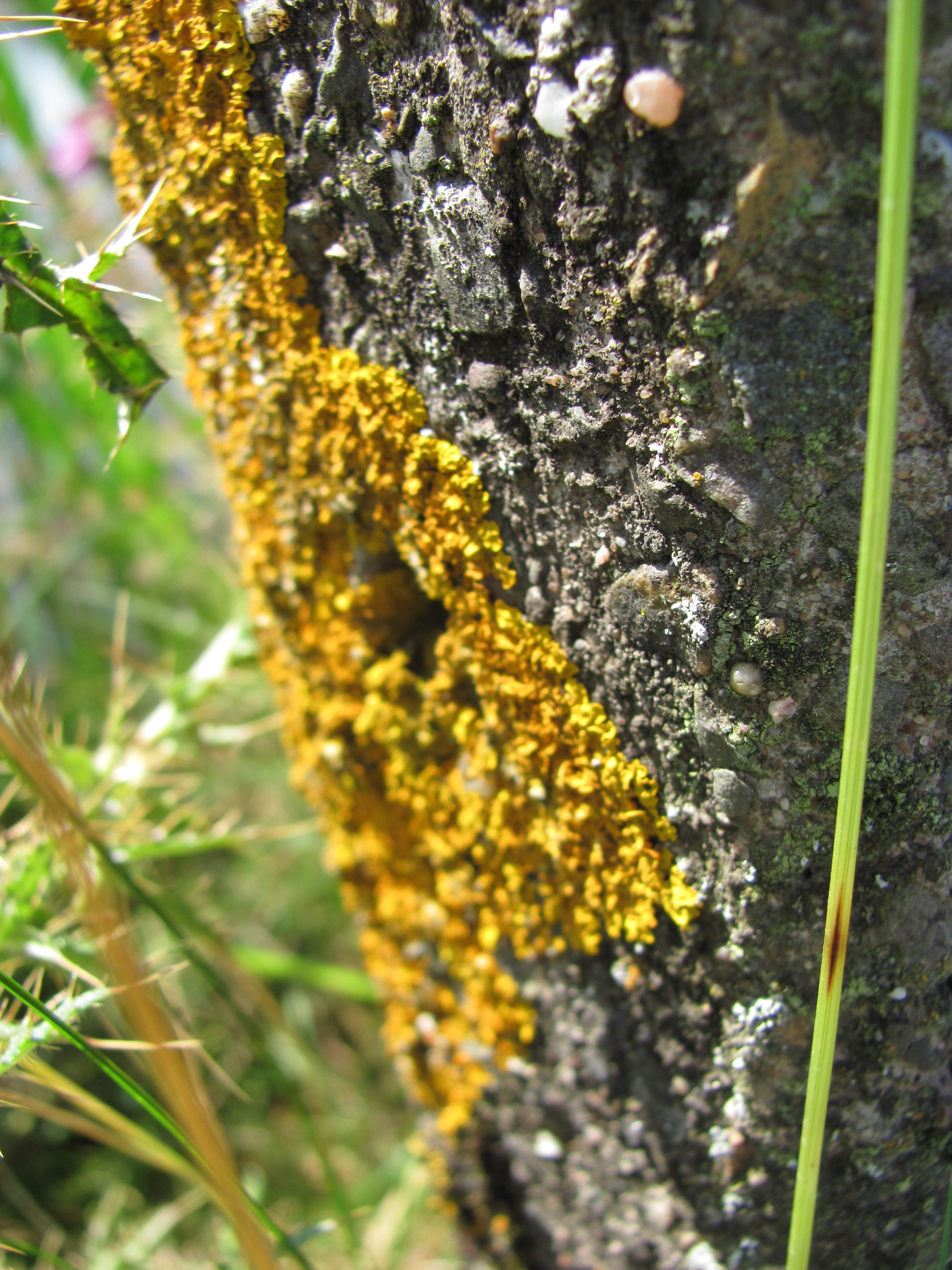
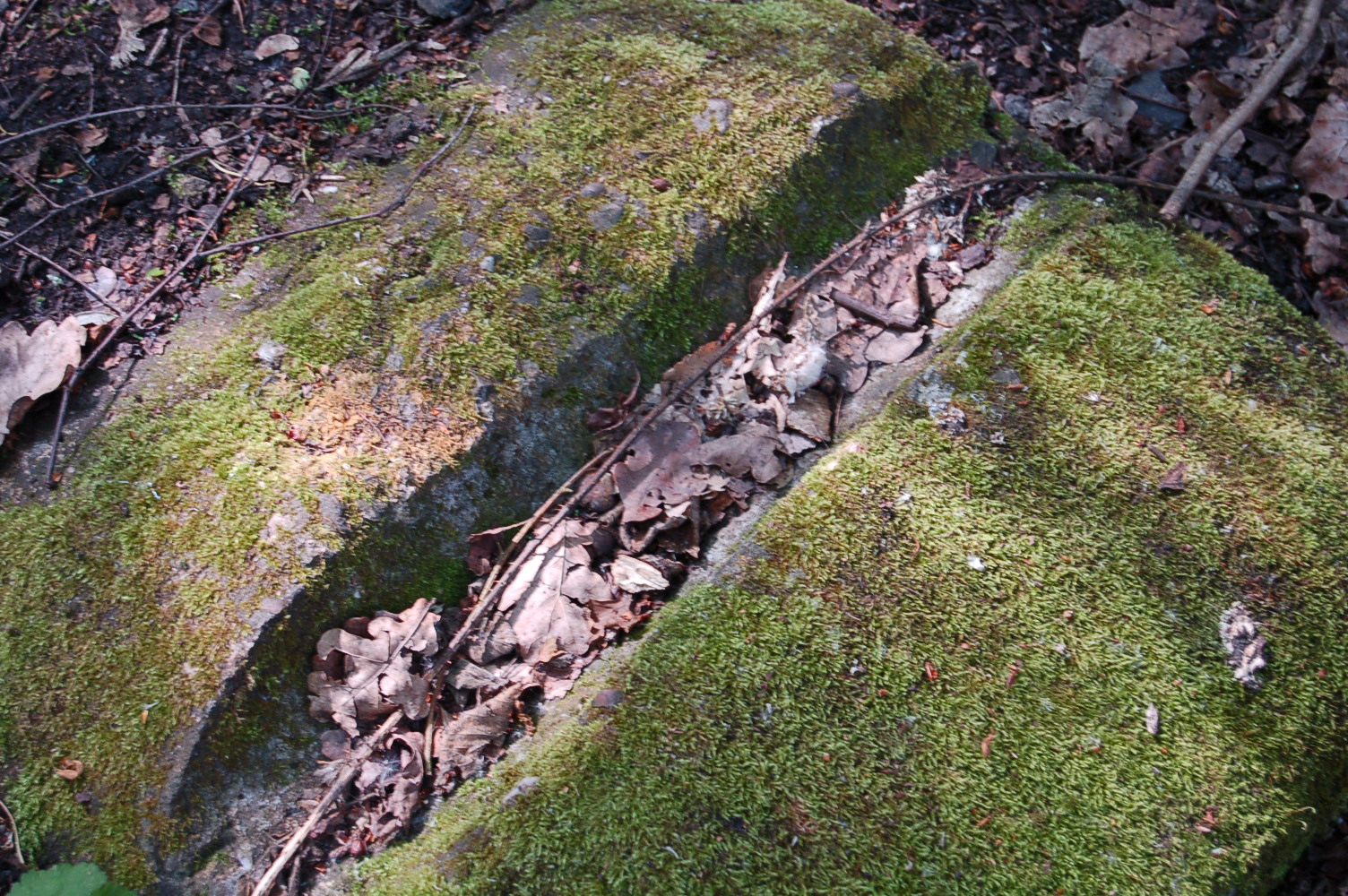
The clear air up here encourages lichens and mosses to grow on any suitable surface. Around the pool and roadside they colonise fenceposts of concrete and wood.

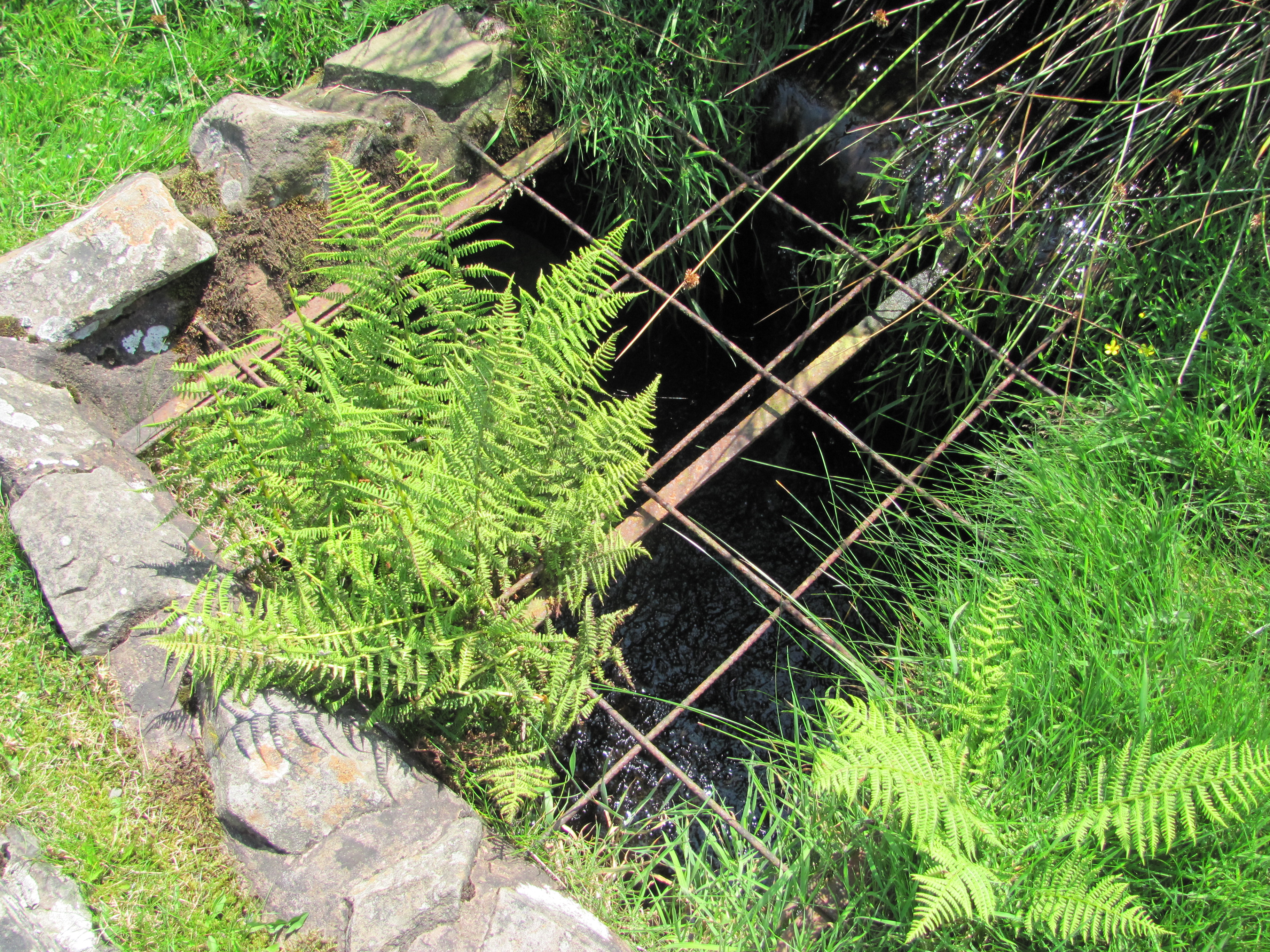
After sitting quietly for a while and enjoying a coffee we became aware of a deep rumbling a little like distant farm machinery at work or a distant hovering helicopter, and after a while we realised this incongruous sound was under the road where it skirted the pool. After a little exploration we discovered that the sound was that of the water overflowing from the pool through a pipe passing under the road. The water drains from the peaty slopes and seeps into the pool. The road acts as a dam and on the far side the overflow bursts from a pipe rumbling and roaring into a tiny stream which disappears into the valley. From the pool side the water disappears beneath a grated hole before rumbling and bubbling its way underground.

After a while we began to hear bird calls and to see the occasional one in the sky passing over our heads or perching atop the tallest fronds of bracken. The smaller birds prove mostly to be Meadow Pipits. But two scarcer species the Stonechats and Whinchats share the same silhouette so are difficult to differentiate when perched on tall strands of bracken. But when they move and their colours and markings become clearer we can see that the Whinchats have definite eye-stripes and the Stonechats black heads. The chest of the Stonechat is more colourful being more pure orange than the buff-orange breast plumage of the Whinchat. This area suits them well as they like steep hillsides covered in bracken with a good understory and enjoy being near water.

Big birds are less frequent, probably the commonest being the large black Ravens which pass high over us nearly always in pairs and cronking deeply. Although we love seeing the dragonflies and their cousins the damsel flies and the small songbirds we are equally enthralled with the sight of their predators. While watching a male Kestrel hovering above the hillside vegetation and admiring his russet and grey tones, I was distracted by the site of a rapidly flying tiny bird of prey, the Hobby. I followed him as he flew to the damp area above the Wild Pool where dense clumps of reed and rush are interspersed with small pools of water. Here he hunts the dragonflies and damselflies. What a flying display!They look like a cross between a Swift and a Peregrine Falcon.

Even smaller is the Merlin, Britain’s smallest bird of prey which we watched as it hunted for the Meadow Pipits just feet above the bracken. They are now rearing their second batch of youngsters so are hunting here and when successful flying off to the nearest trees and small woods lower down the mountain.

As the afternoon wore on the heat increased alongside the humidity and the slopes became quiet. We returned to sitting and admiring the very special pool.

Categories
birds photography Shropshire trees wildlife woodland

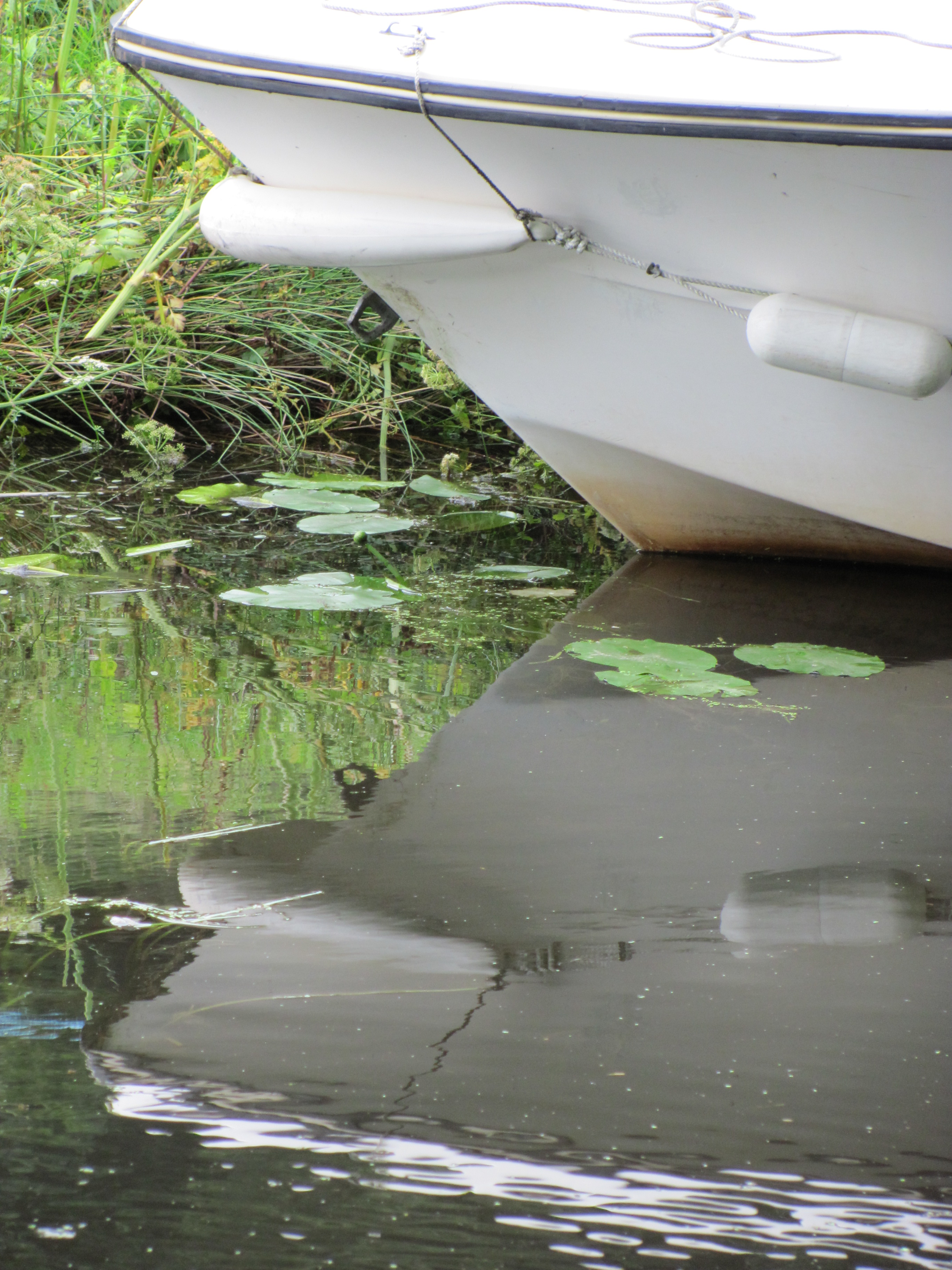
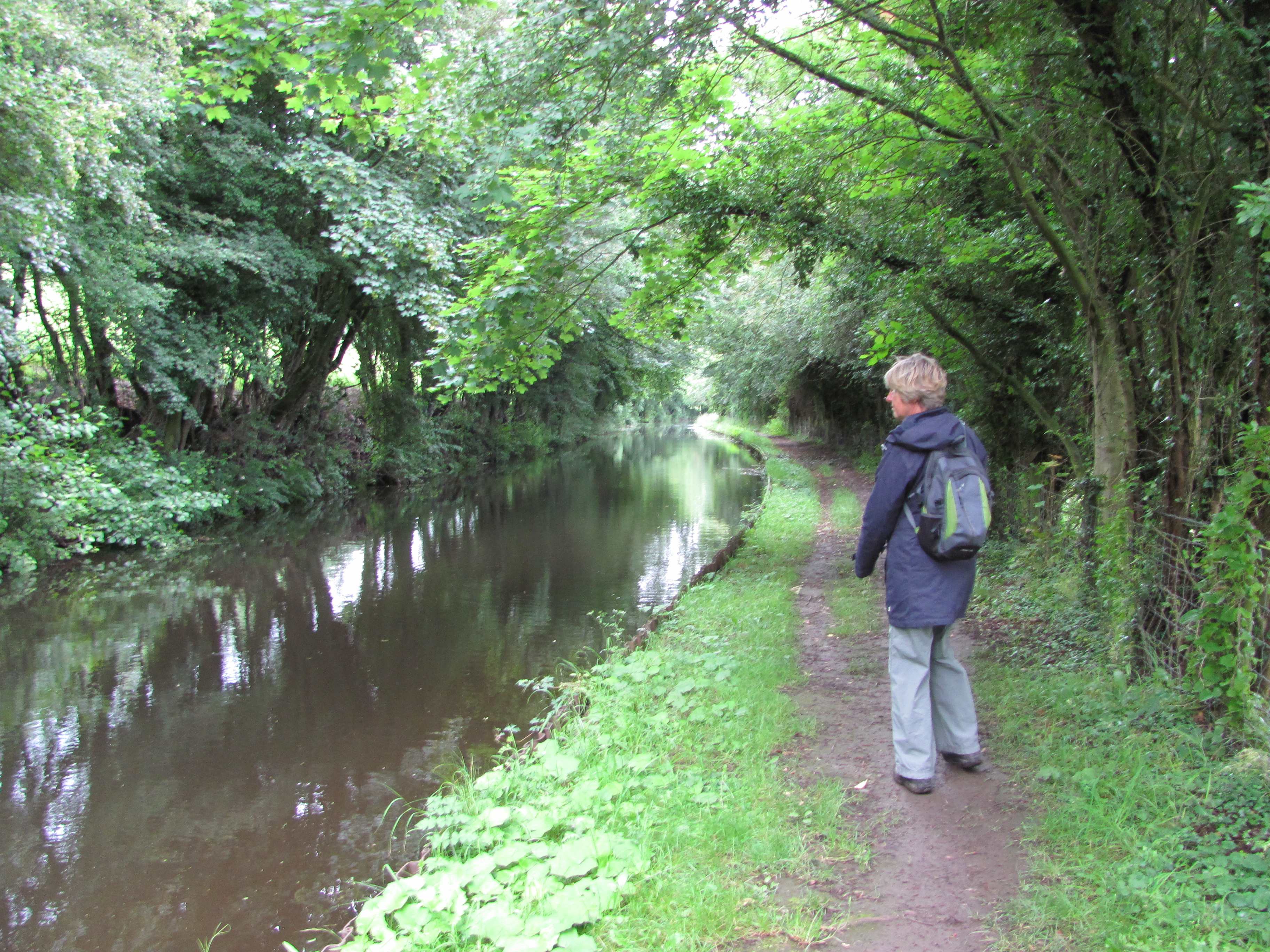
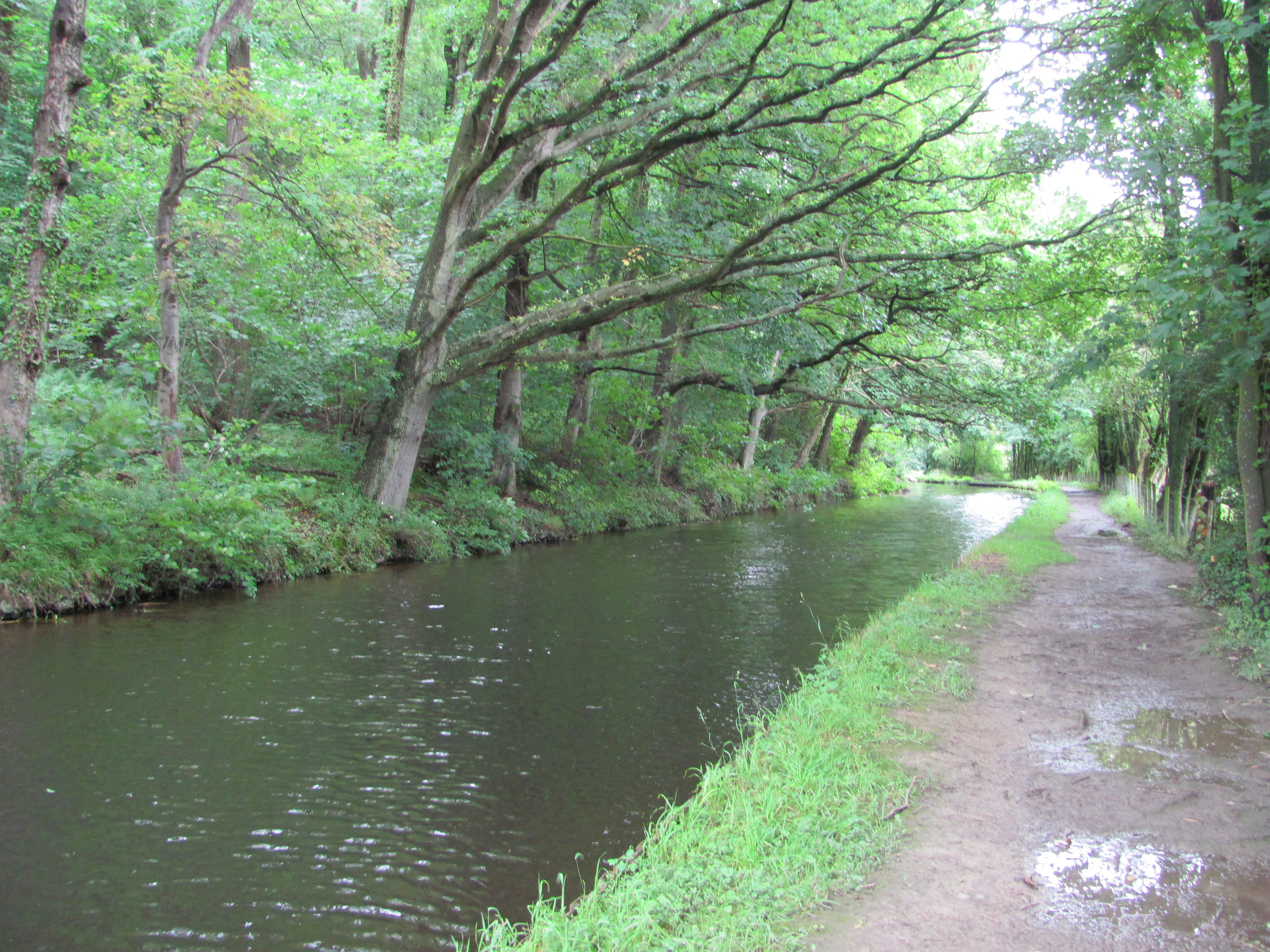
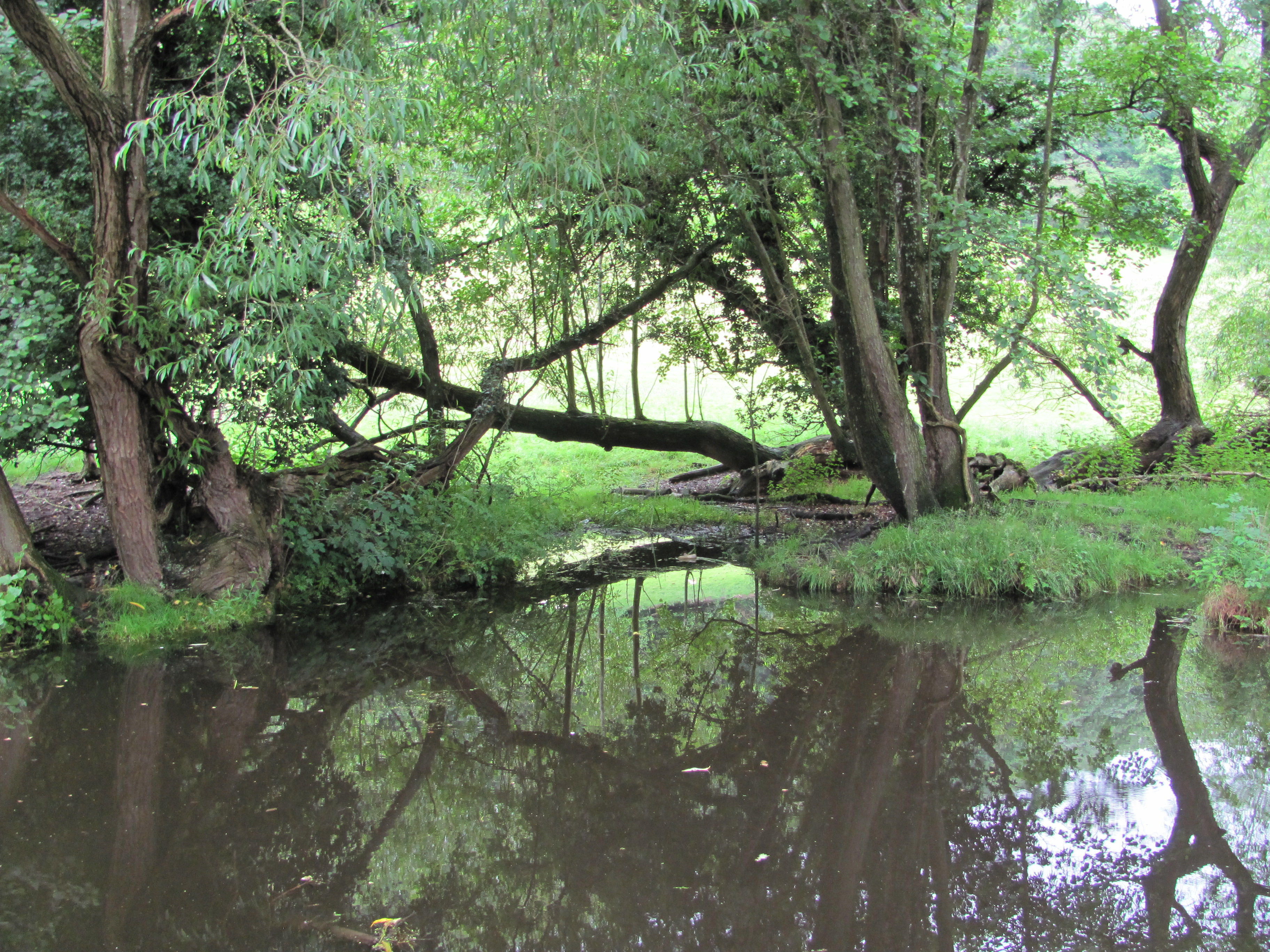
A Walk along the Montgomery Canal – There and Back. – Part 1 There

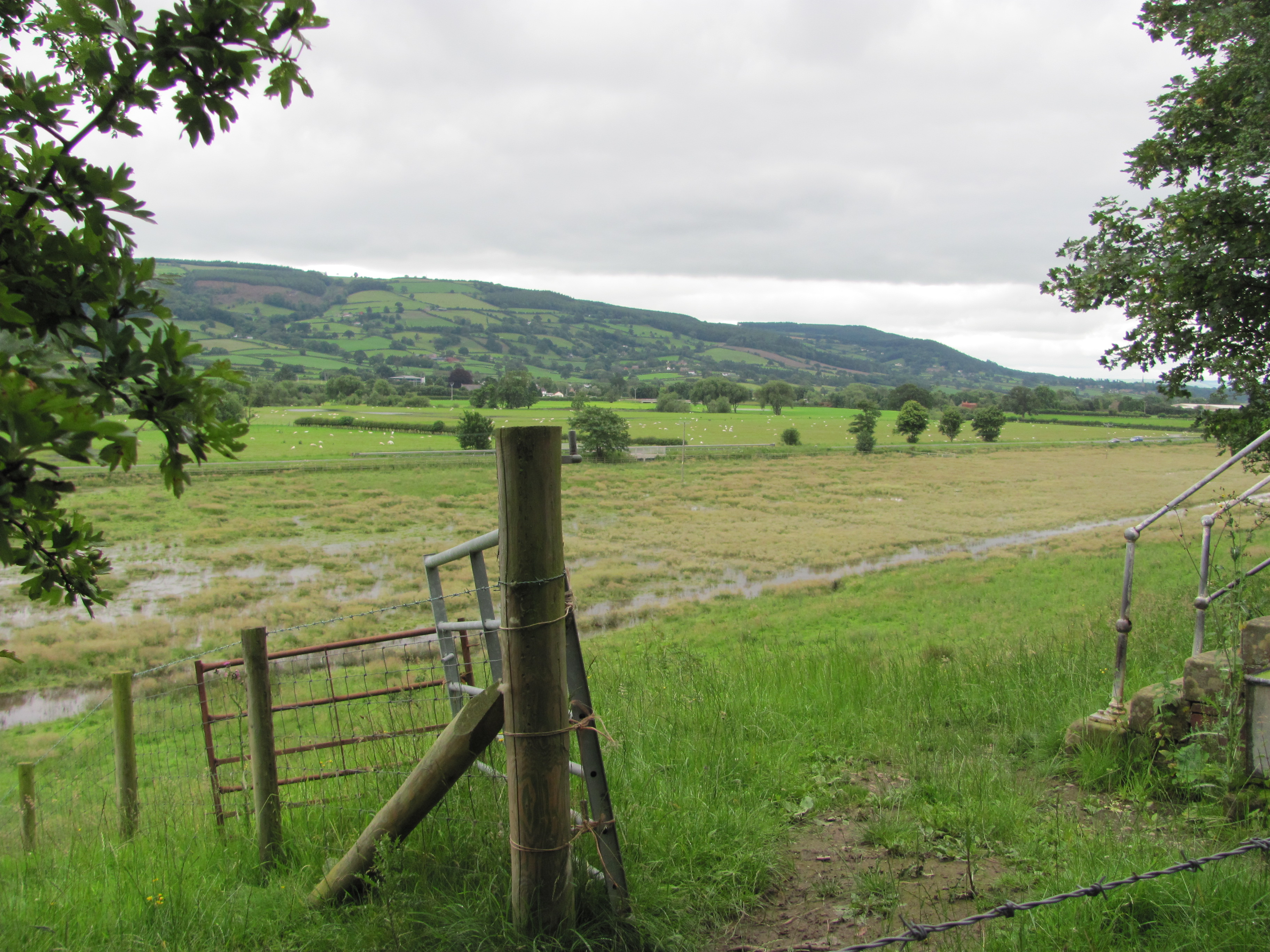
Fed up with the constant rain yesterday we decided we would defy it once again, get our walking boots and waterproof jackets on and go for a walk. We felt like wandering alongside water but as the nearby River Severn and Rea Brook were both flooded we set off for the Montgomery Canal. A half hour drive took us to Welshpool, just into Wales, and surprisingly as we got nearer the rain gave over and we were treated to a dry walk. Dry overhead but very wet and muddy underfoot. I had new walking boots to settle in and make sure they didn’t look new. This was just perfect conditions to knock the shine off them and make them look a bit more lived in and more loved.

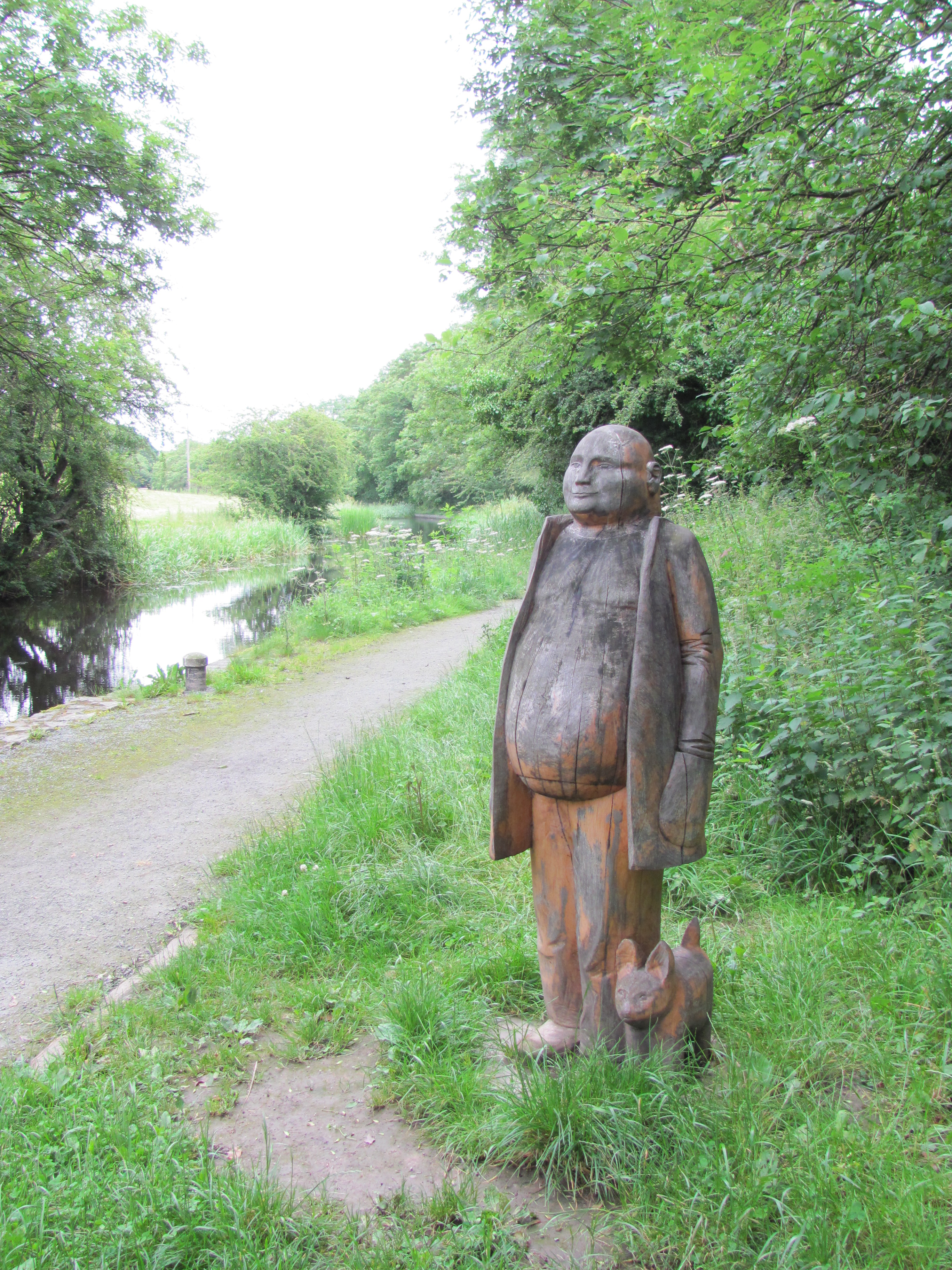
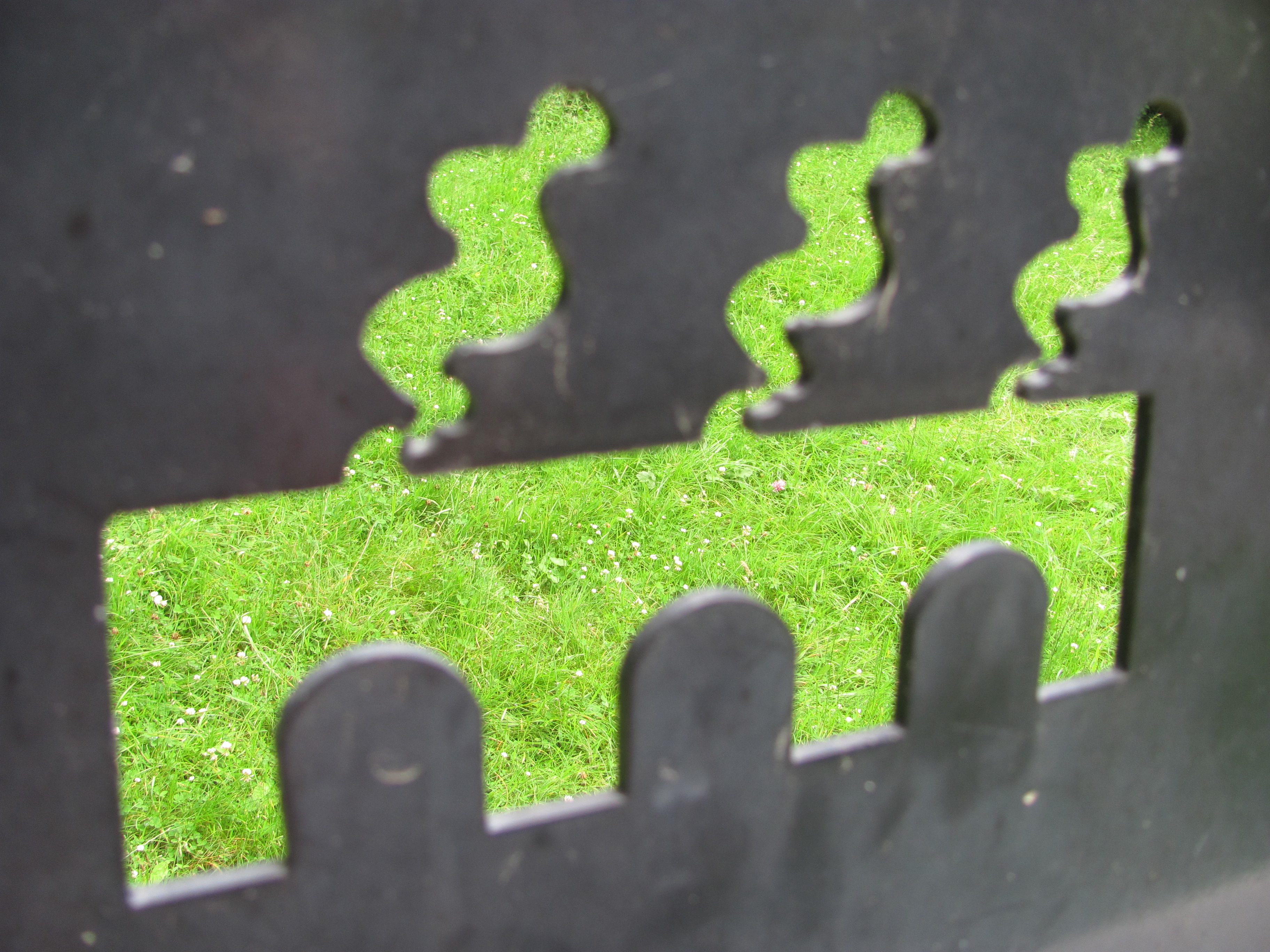
The tiny car park at Buttington Wharf holds a half-dozen or so cars and we were surprised to find three others parked up before us. Other lovers of the great outdoors fed up with the rain? On the banks of the canal just through the trees we spied this sculpture of a jolly looking character – David Jones. He was a lime-kiln owner and coal merchant back in the early 1800’s, and we found signs of the kilns nearby. No wonder he looked jolly – he must have been a rich man.  A symbol based on his working lime kilns was cut out of the metal information board.

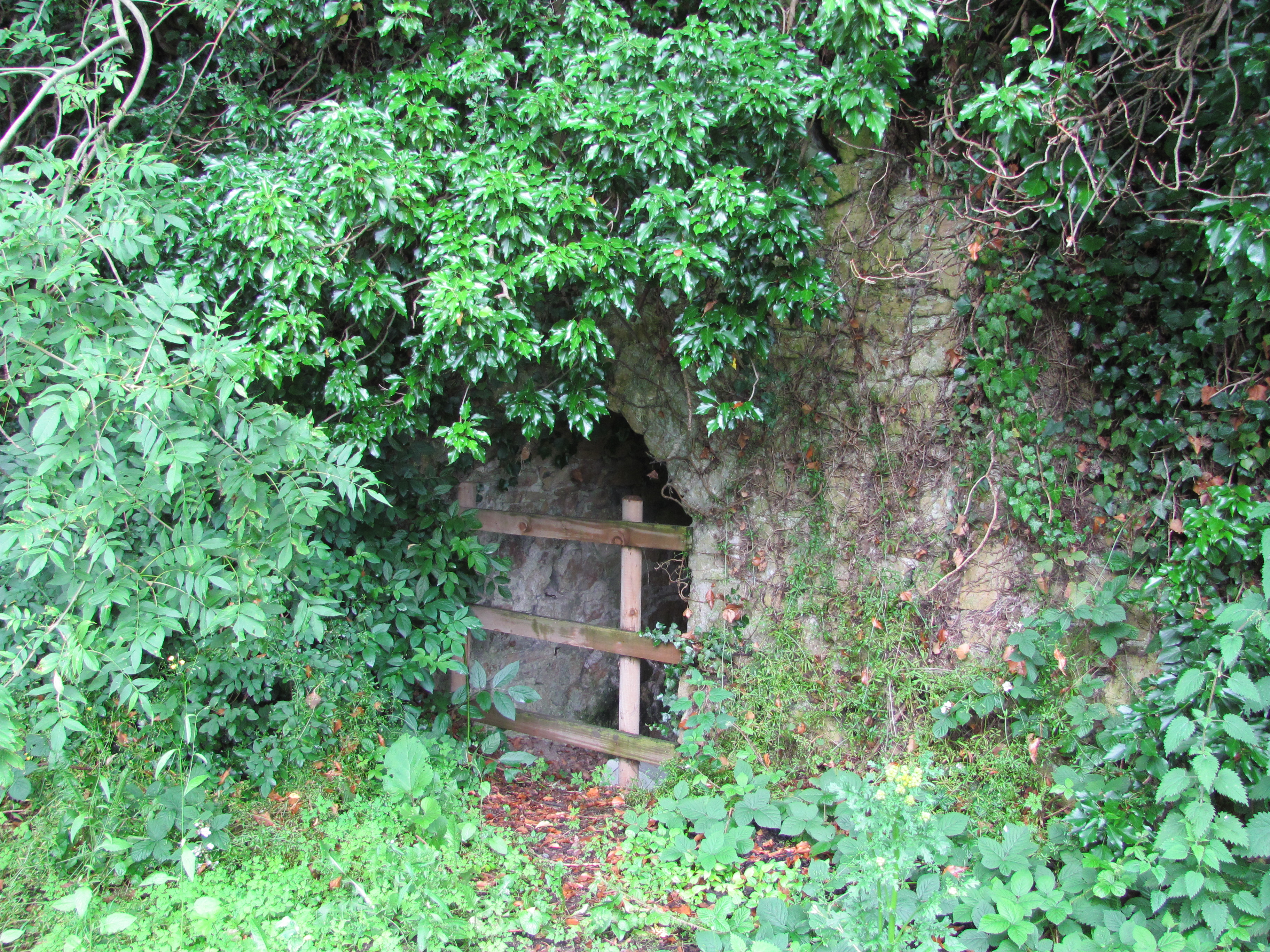
In the surrounding greenery, well-hidden under trees and bushes we found some old brickwork, the remains of the kiln entrances.

After this discovery  we set off along the mud of the towpath under the trees dripping with rain. It looked so inviting. It didn’t disappoint!

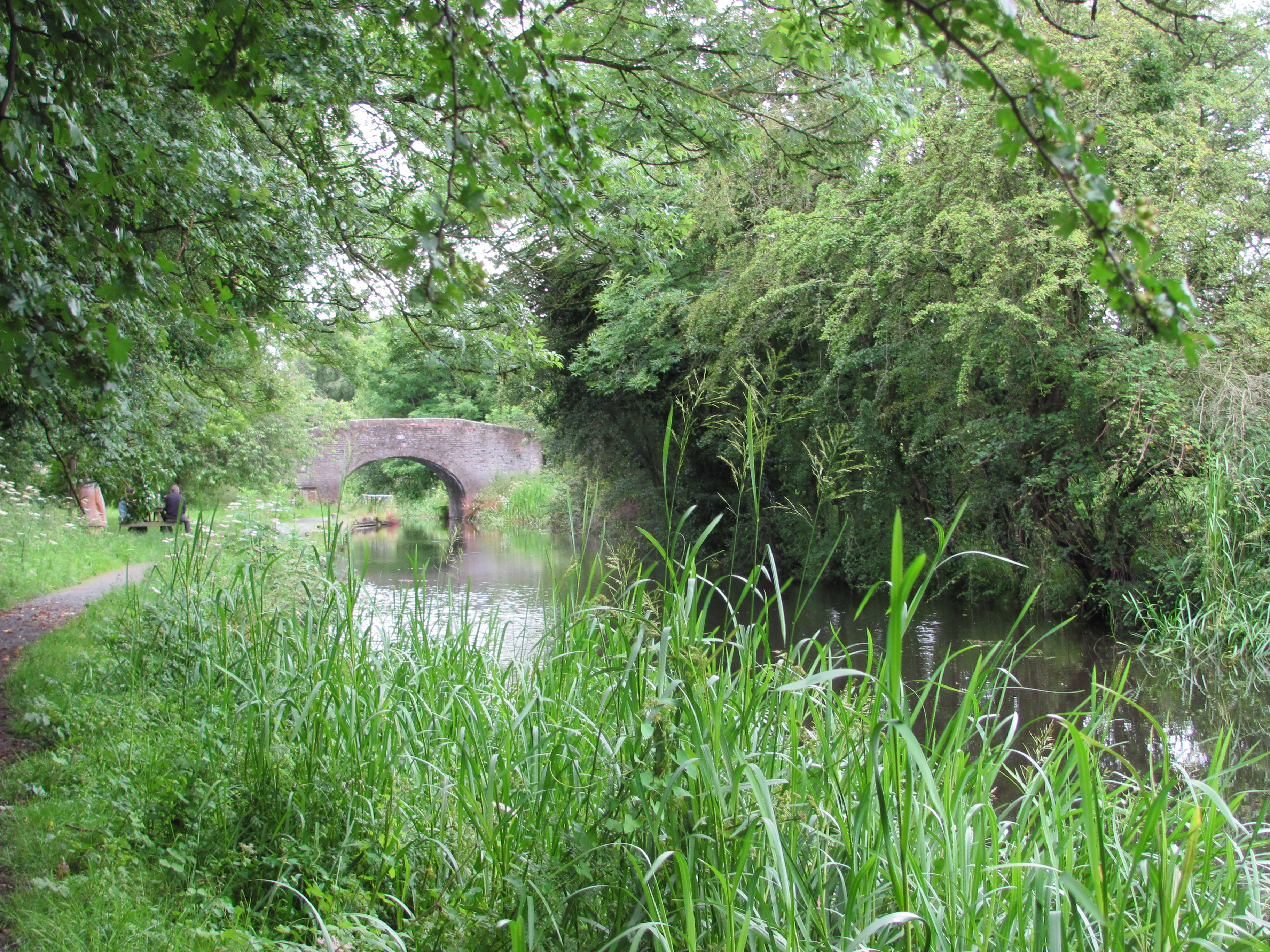
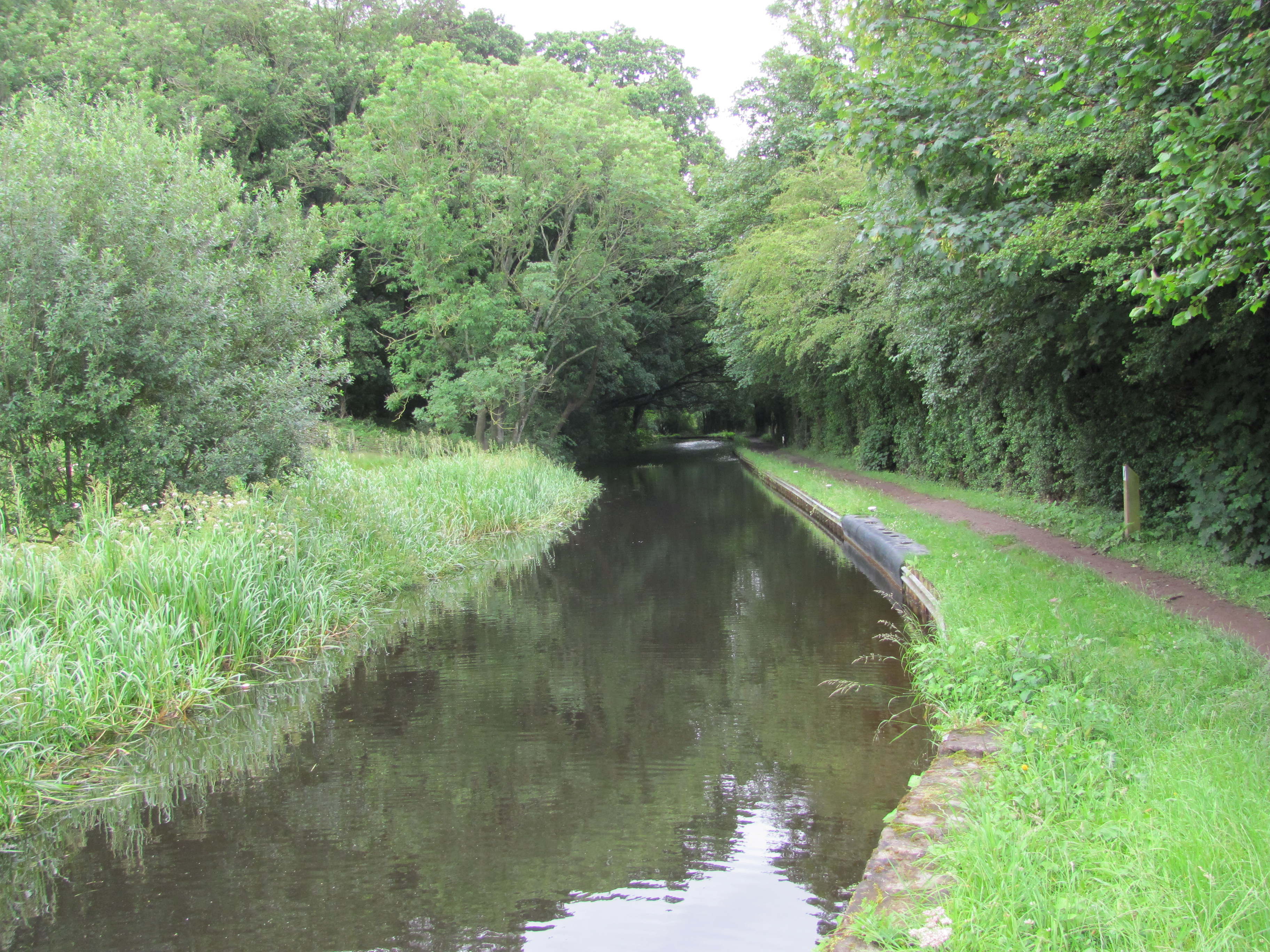
The canal side was lined with trees and mature hedgerows, which occasionally opened up to give windows onto the local Welsh countryside.

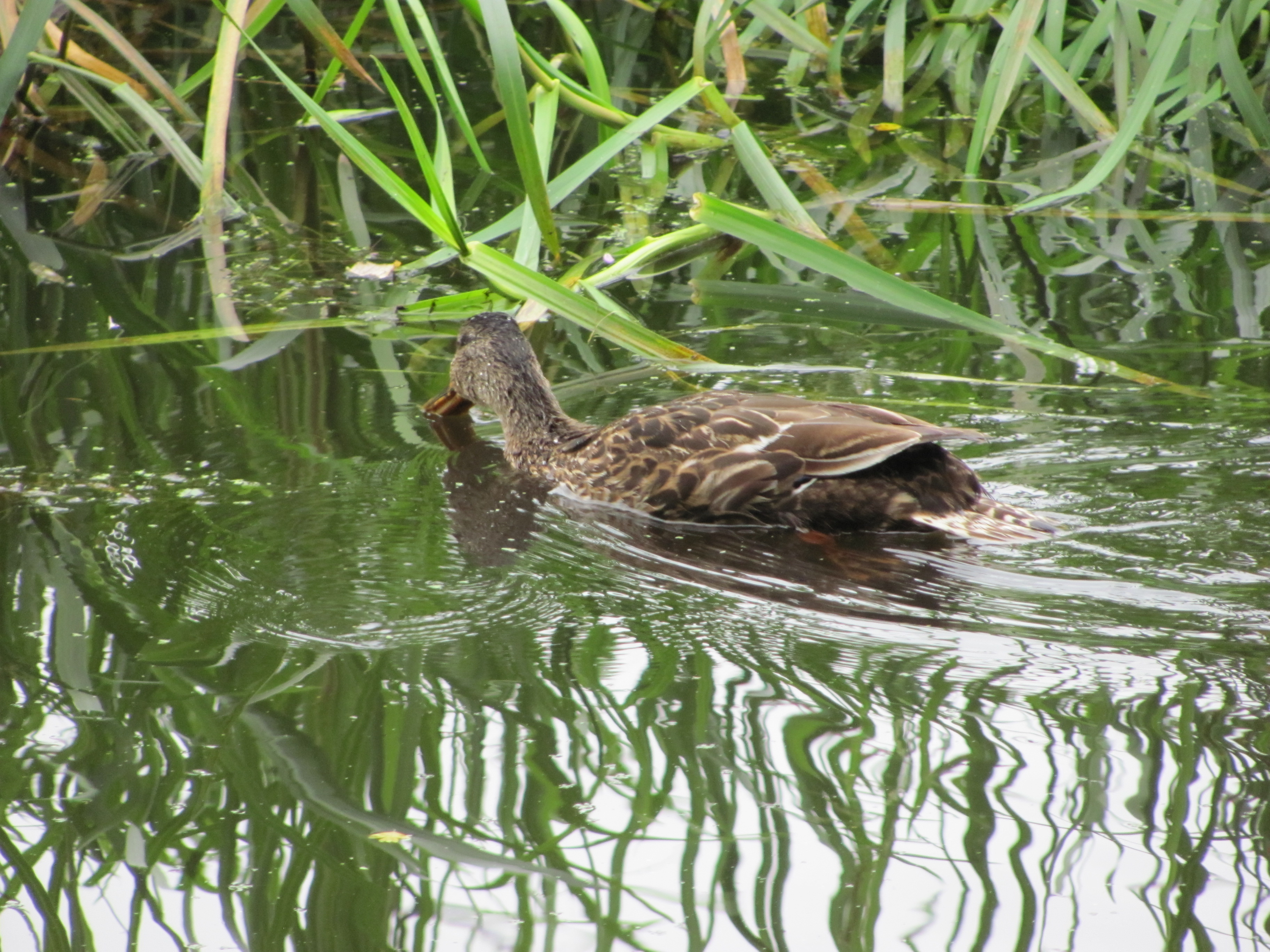
After the rough weather in the morning wildlife was not much in evidence, the skies empty and the trees quiet but this female Mallard fed busily in the far reed-lined margin. But as the day moved on and with the passing of time the weather improved, birds re-appeared and their celebratory song accompanied us for the rest of our waterside wandering. The Mallard created shimmering shapes in the reflections as she busied herself.

The wild flowers decorating the towpath and canal banks were like sparkling jewels glowing in the dull light.

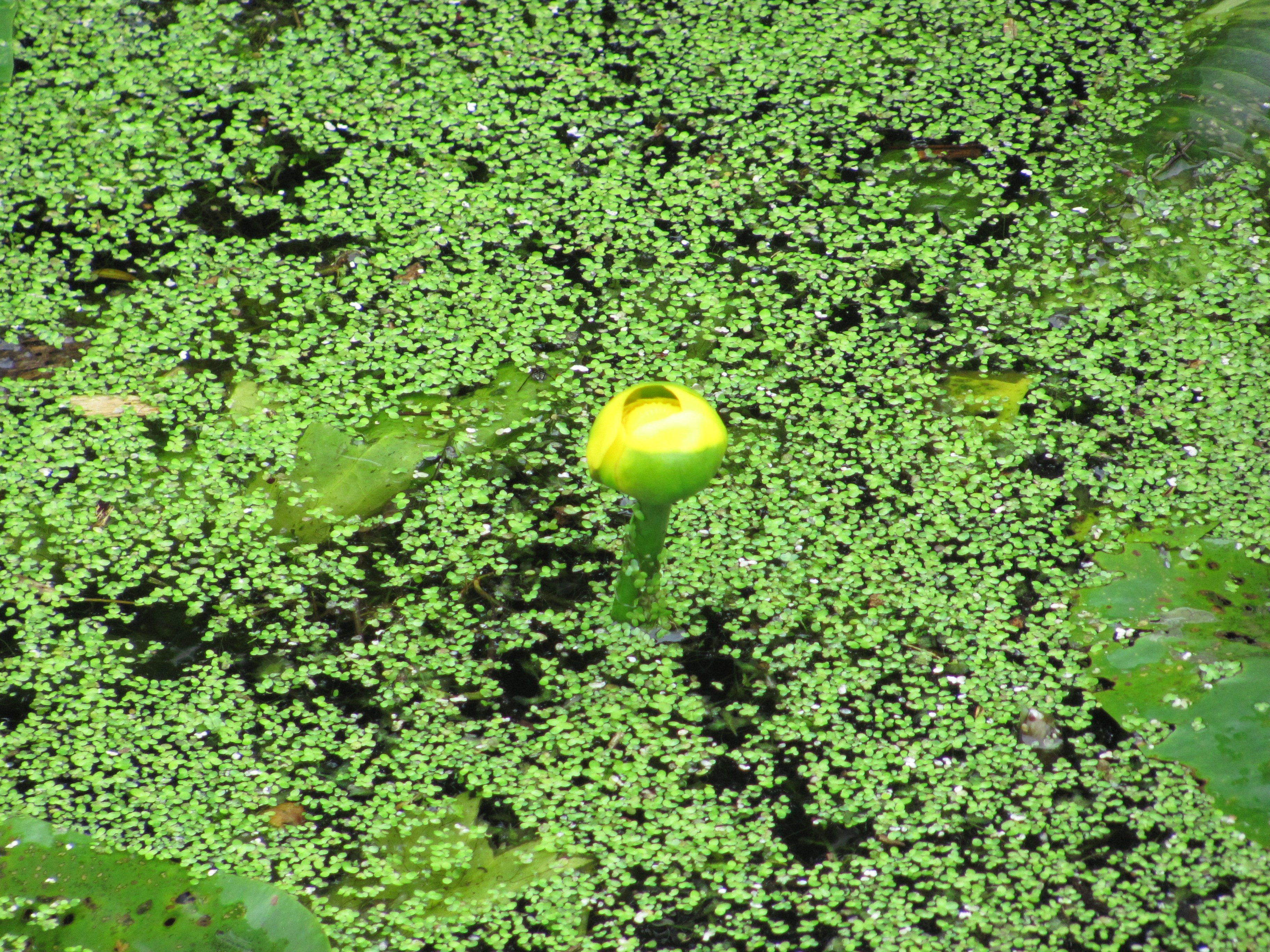
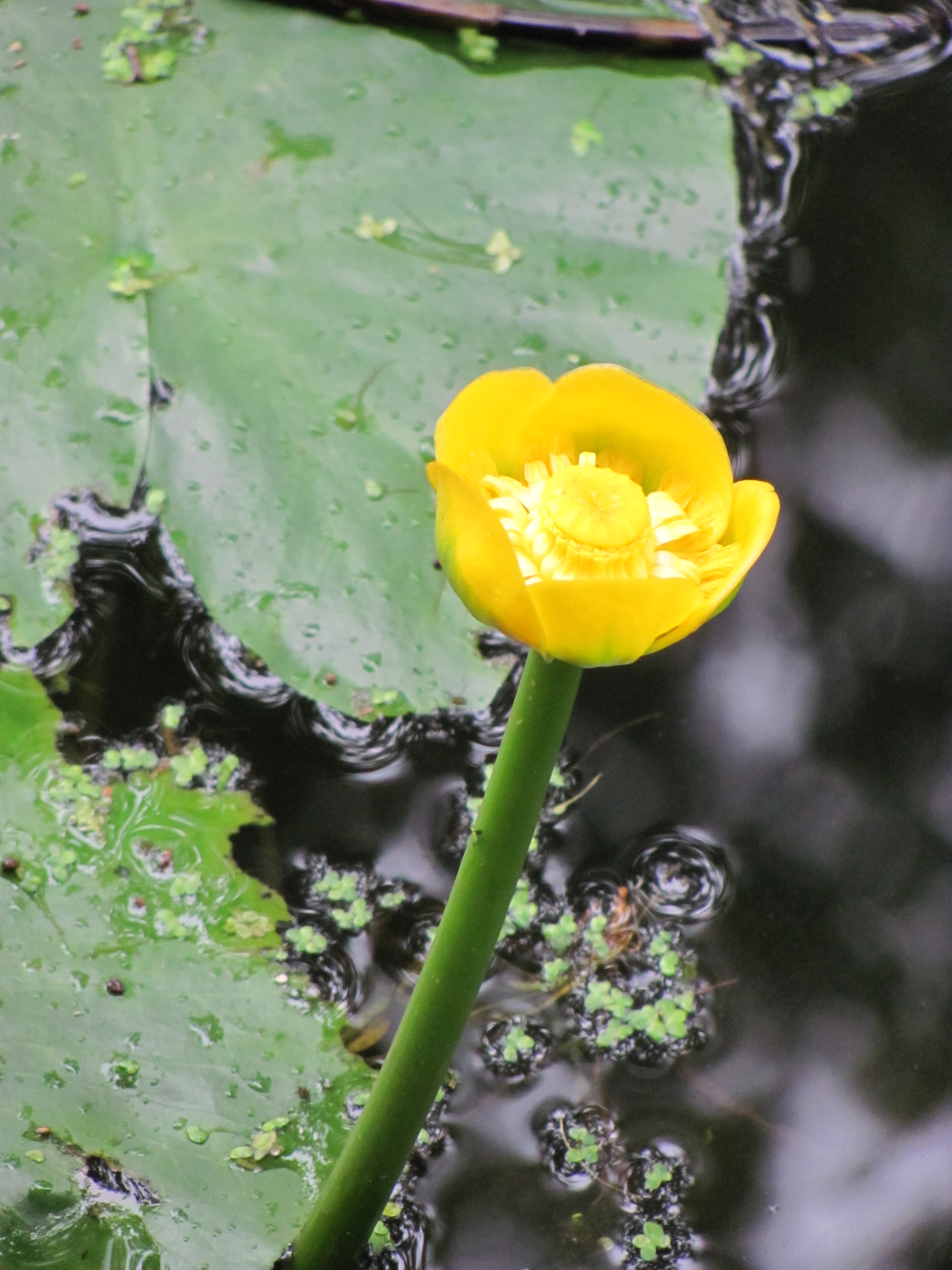
One wild flower shone out like a yellow globe having burst through the surface of the water – one of our native waterlilies.

As we walked, on the light changed and the canal surface reflected the bankside vegetation, the boats moored up against its side and the canal structures.

Half way along our outward journey a coffee stop called and we leant on a gate near a swing bridge and rested awhile.

As we ambled onwards the land alongside the canal opened up and through bankside trees we could view farmland. The thin line of trees appeared as silhouetted sinuous shapes, emphasised by their reflections mirrored on the water. My camera and I enjoyed the challenge presented when trying to get a reasonable shot of reflections.

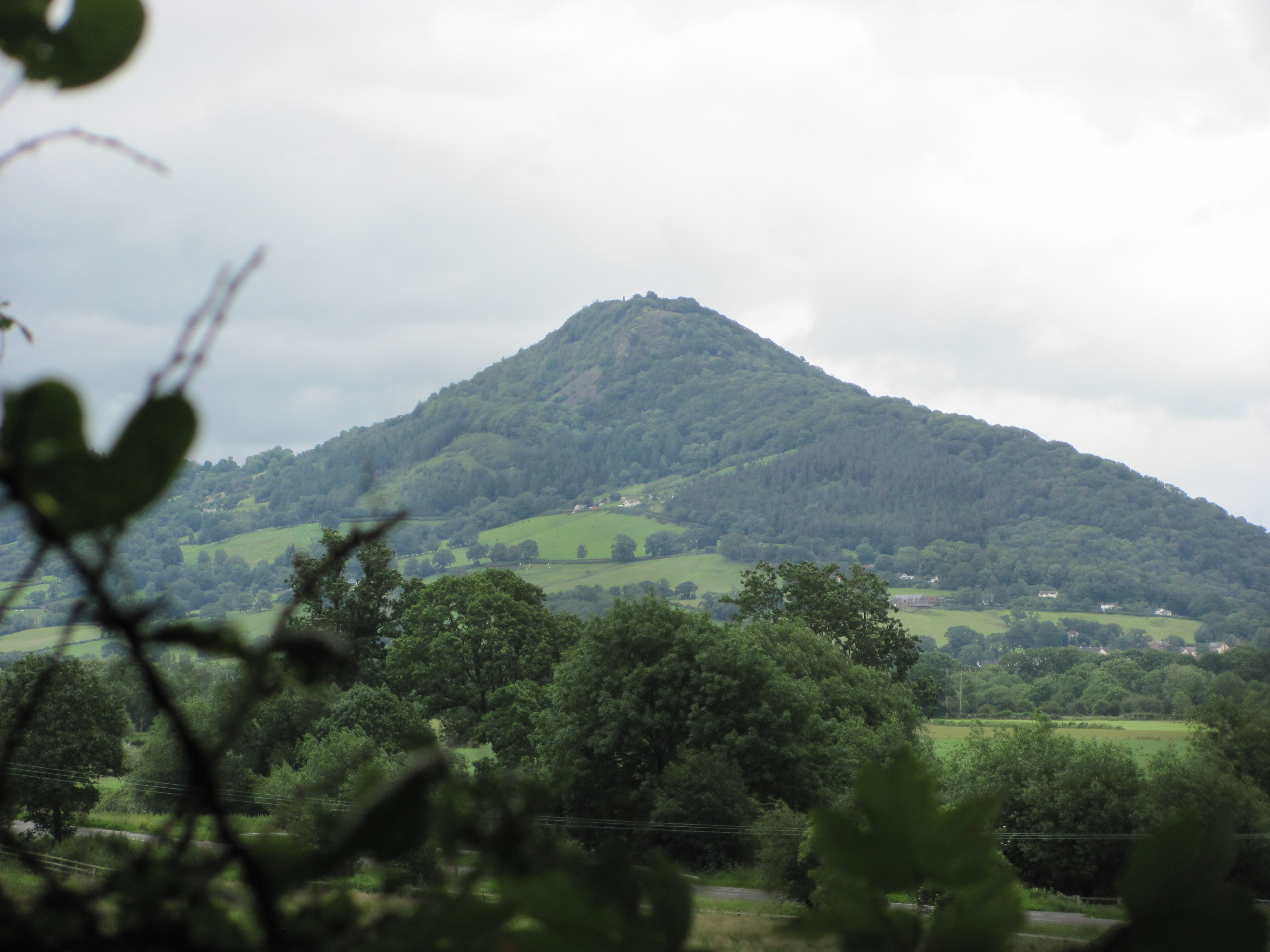
The countryside changed as we continued our ramblings and each opportunity of a broad landscape view, afforded us by breaks in the vegetation was appreciated.

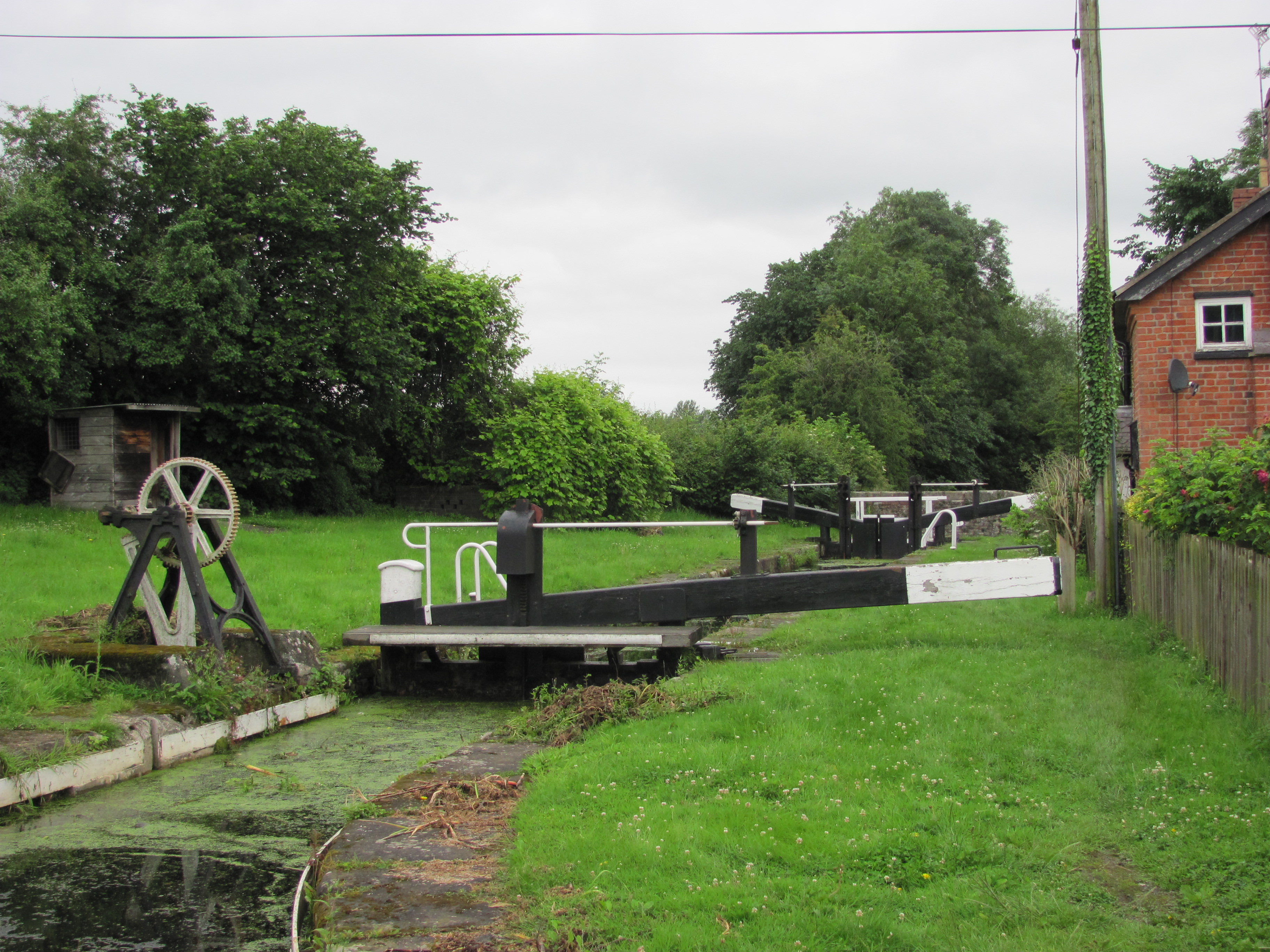
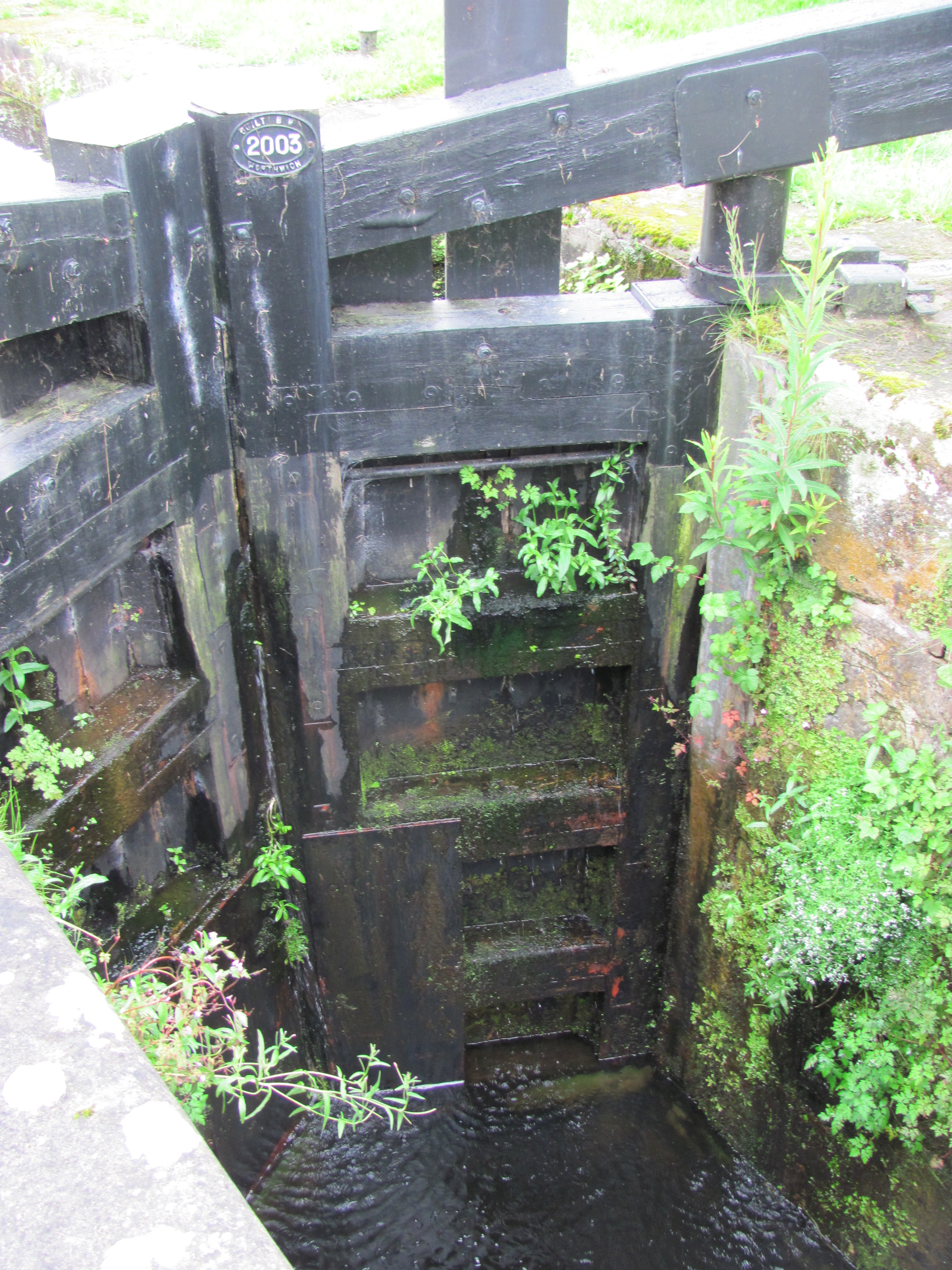
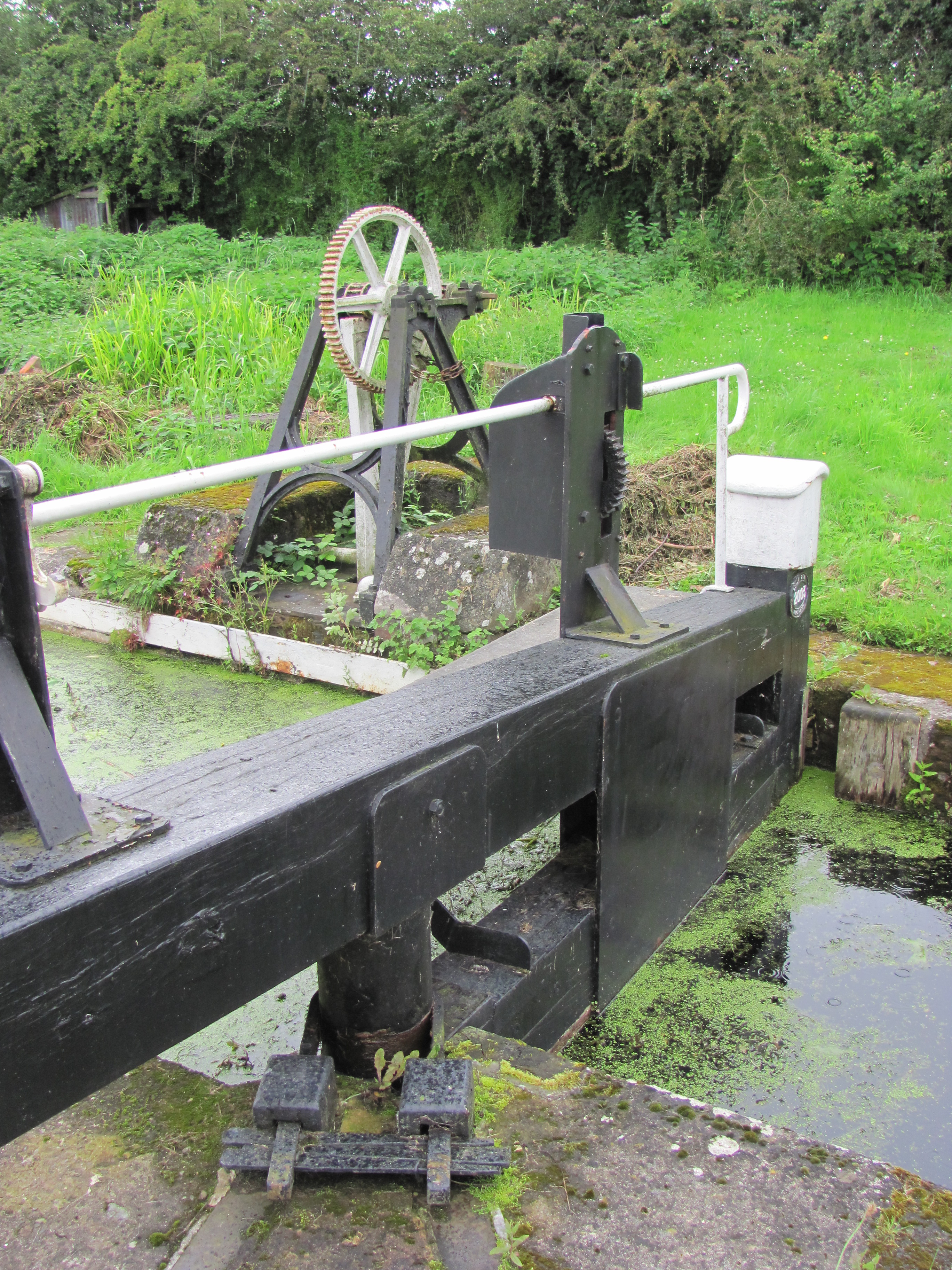
We reached the lock at Pool Quay, the point in our walk where we decided to turn back.

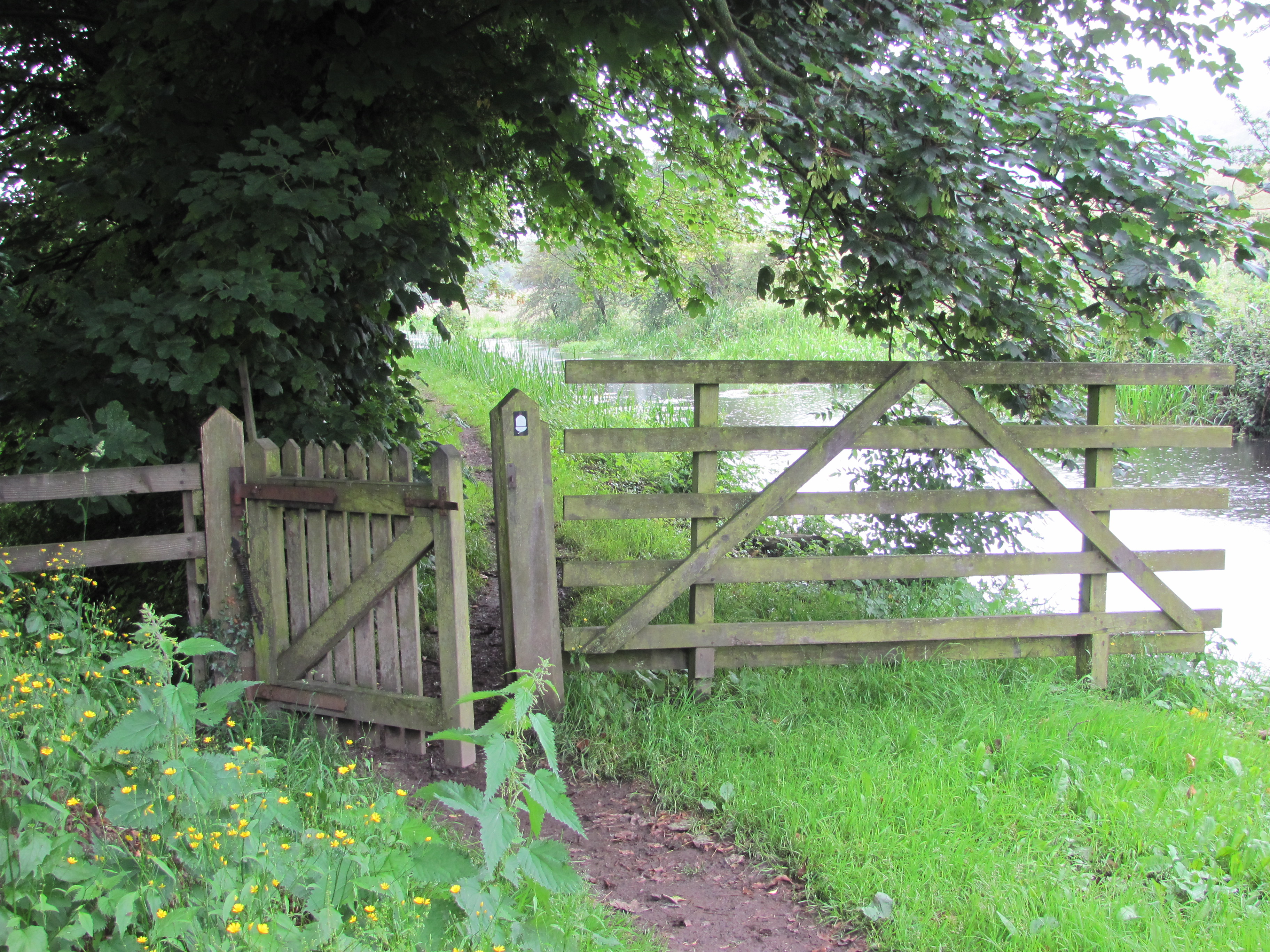
As we enjoyed our exploration of Pool Quay lock and the break from walking the rain returned. The little wooden gate invited us to begin our journey back especially as the tree-lined bank promised shelter.

Categories
bird watching birds community gardening garden design garden photography gardening Land Art outdoor sculpture trees

Willow Features at Bowbrook Allotment Community

At our allotment site, Bowbrook Allotment Community usually known as BAC, we feature willows in several areas of our communal green spaces.

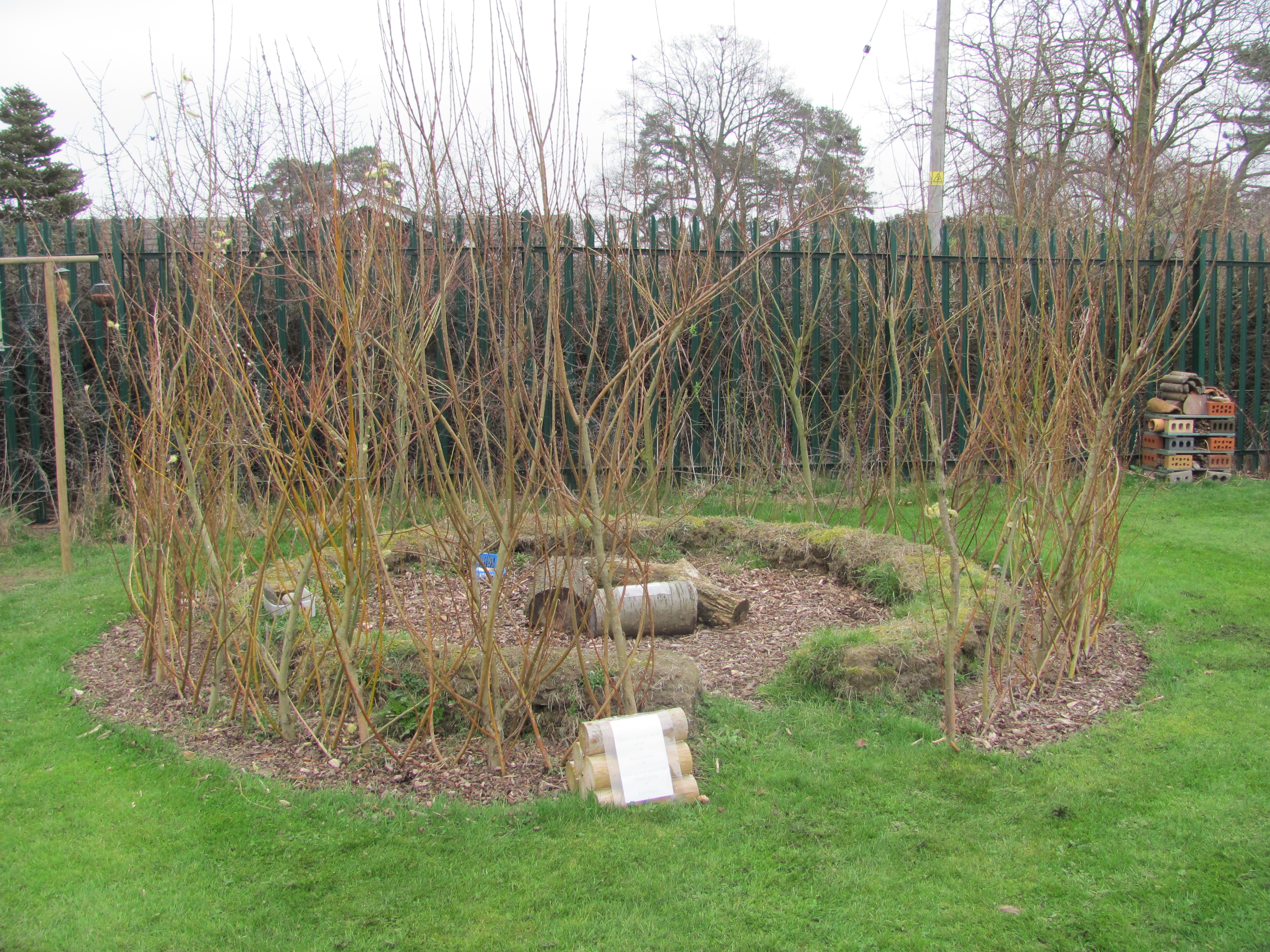
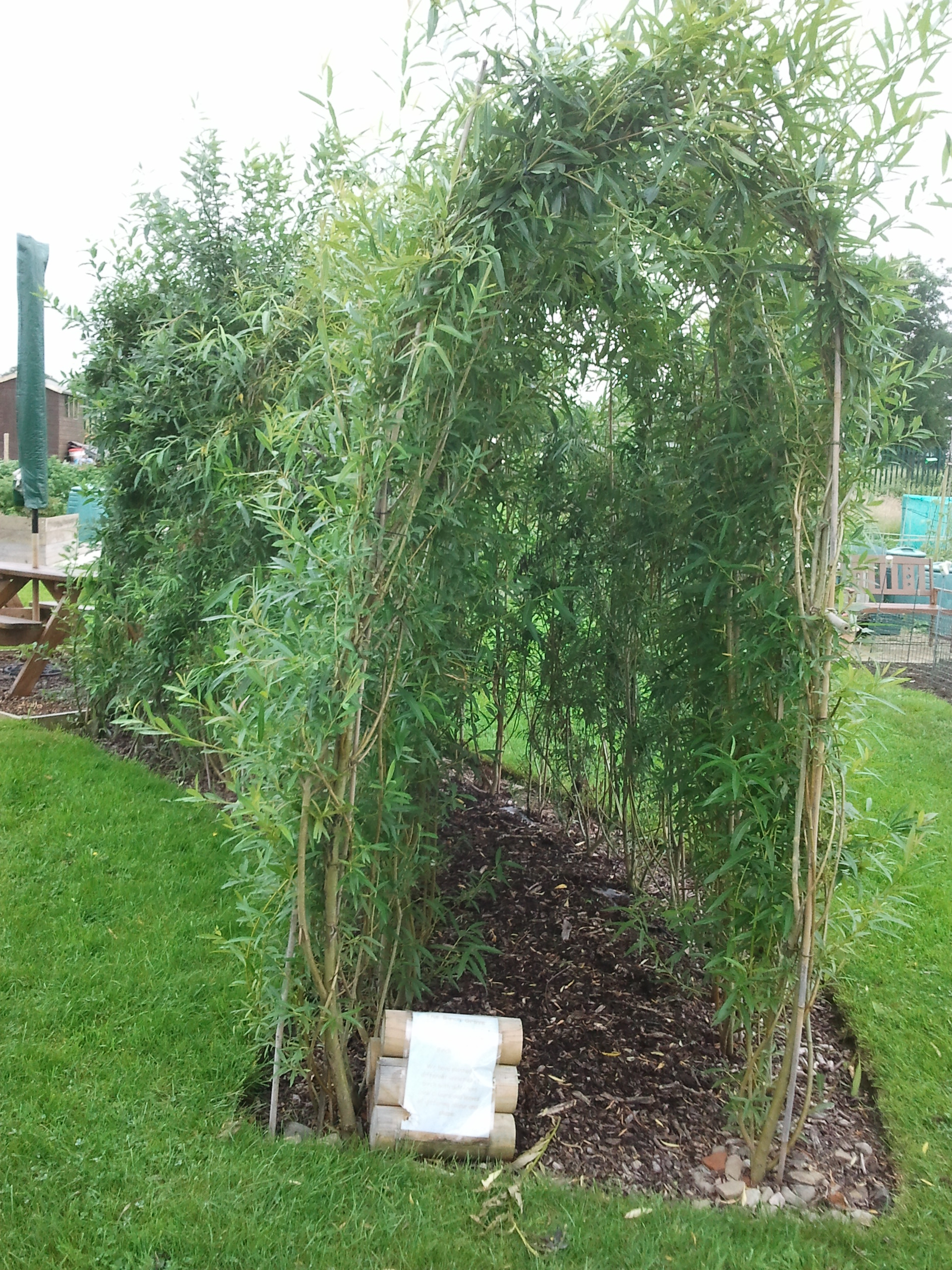
The first to be created was a Willow Dome. Within the dome is a raised turf bench where children sit to have stories read to them and play with toys but the adults tend to use it on sunny days when a little dappled shade is needed as coffee break time arrives. They too enjoy reading books or magazines while resting there. Logs provide extra seats where youngsters can explore trays of rocks and search them for fossils. After two years the sides are getting taller and we wait impatiently for them to be tall enough to pull over, tie together and make our roof.

We built the dome just after the site opened and it was the first of the features we created for children. The willow all came from cuttings taken from a willow arbor we had over our bench on our previous allotment, with additional different stem coloured cuttings donated by other plot holders. We created the willow dome during a working party and as we cut out the shape into which we would plant the willows we turned over the turfs to start the raised seating.

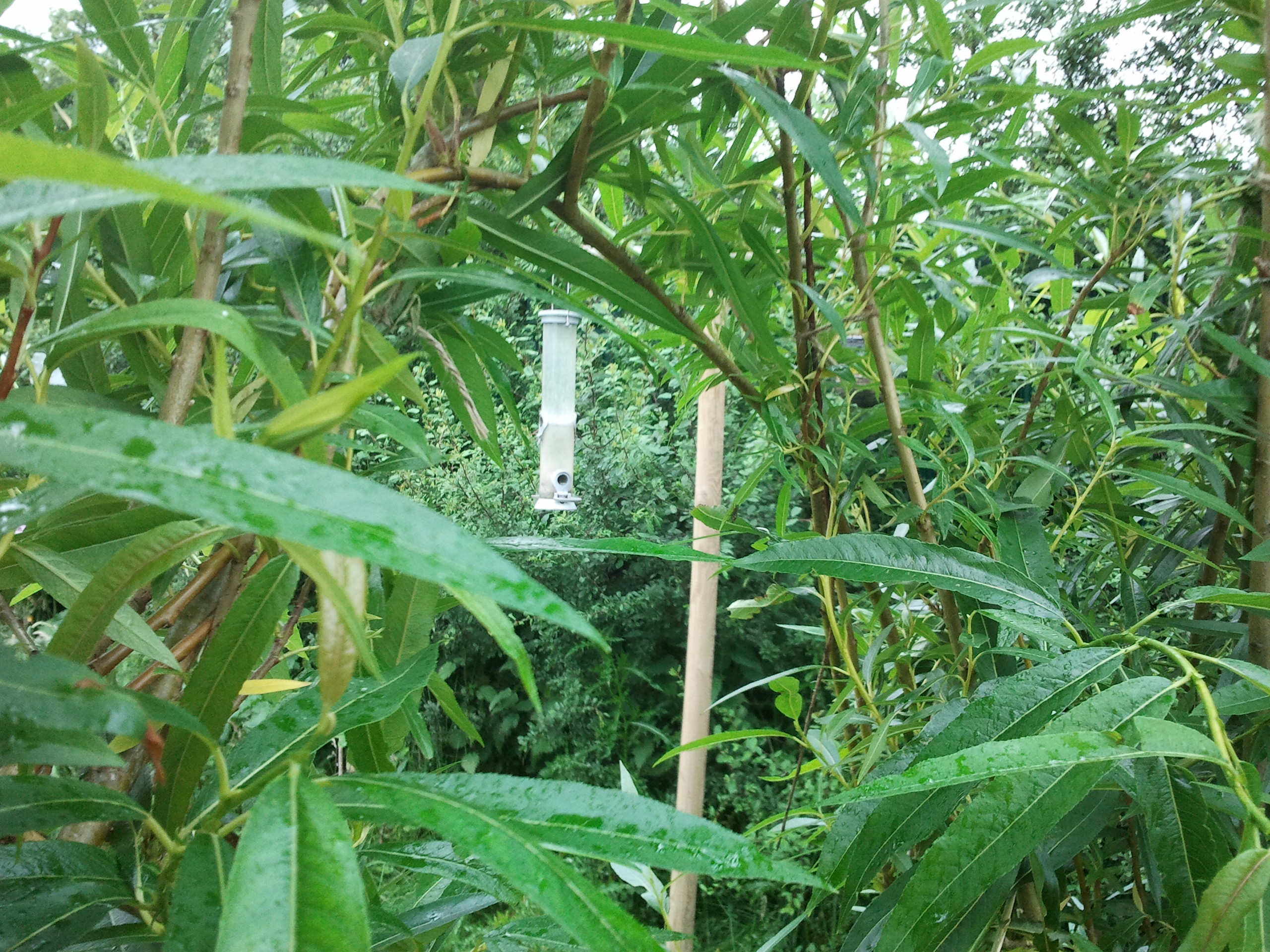
The willow at the entrance has now grown enough to arch over into a doorway just right for children to enter through but adults need to bend down to do so. As the willow it is woven in to shape which strengthens it. We have created windows within the willow wall giving different views. The first photo shows the window that lets children watch birds on the feeders so the dome acts as a living bird hide as well, and the second shows the window with a view into the “Fruit Avenue”.

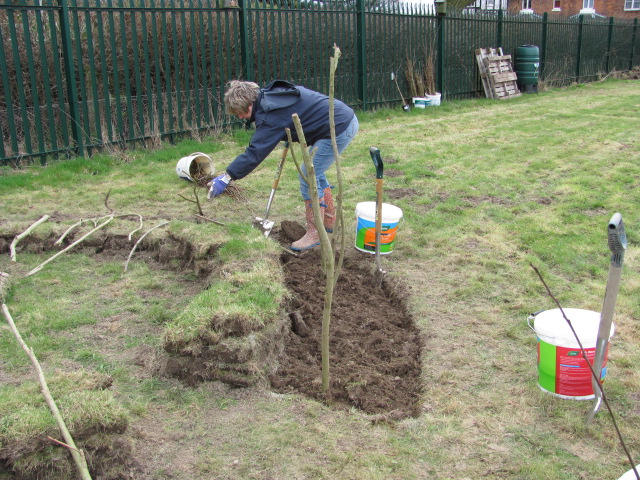
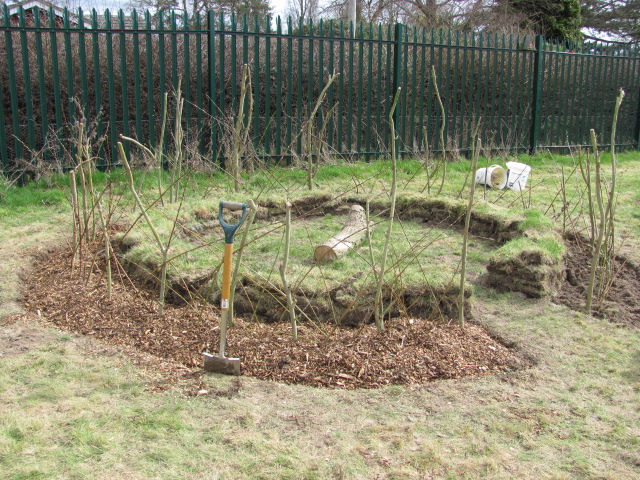
And here are some photos we took as we were creating the dome, showing “The Undergardener” in busy mode and a few as it developed later.

We then had requests to create a willow structure on the other side of the site,  so I designed a new area featuring a Willow Tunnel. We made the tunnel just tall enough for adults to walk through but quite narrow, so that it felt enclosed for children exploring it. As this part of our site is wetter the willow has grown much more quickly so already the tunnel shape has been formed.

Later we placed a picnic bench close by and surrounded it with a circle of five different varieties of birch, with varying leaf colour and shape and trunks with equally varied colours and textures. So now we can walk through the willow tunnel and discover a bench to sit on and enjoy the shade of our birch grove.

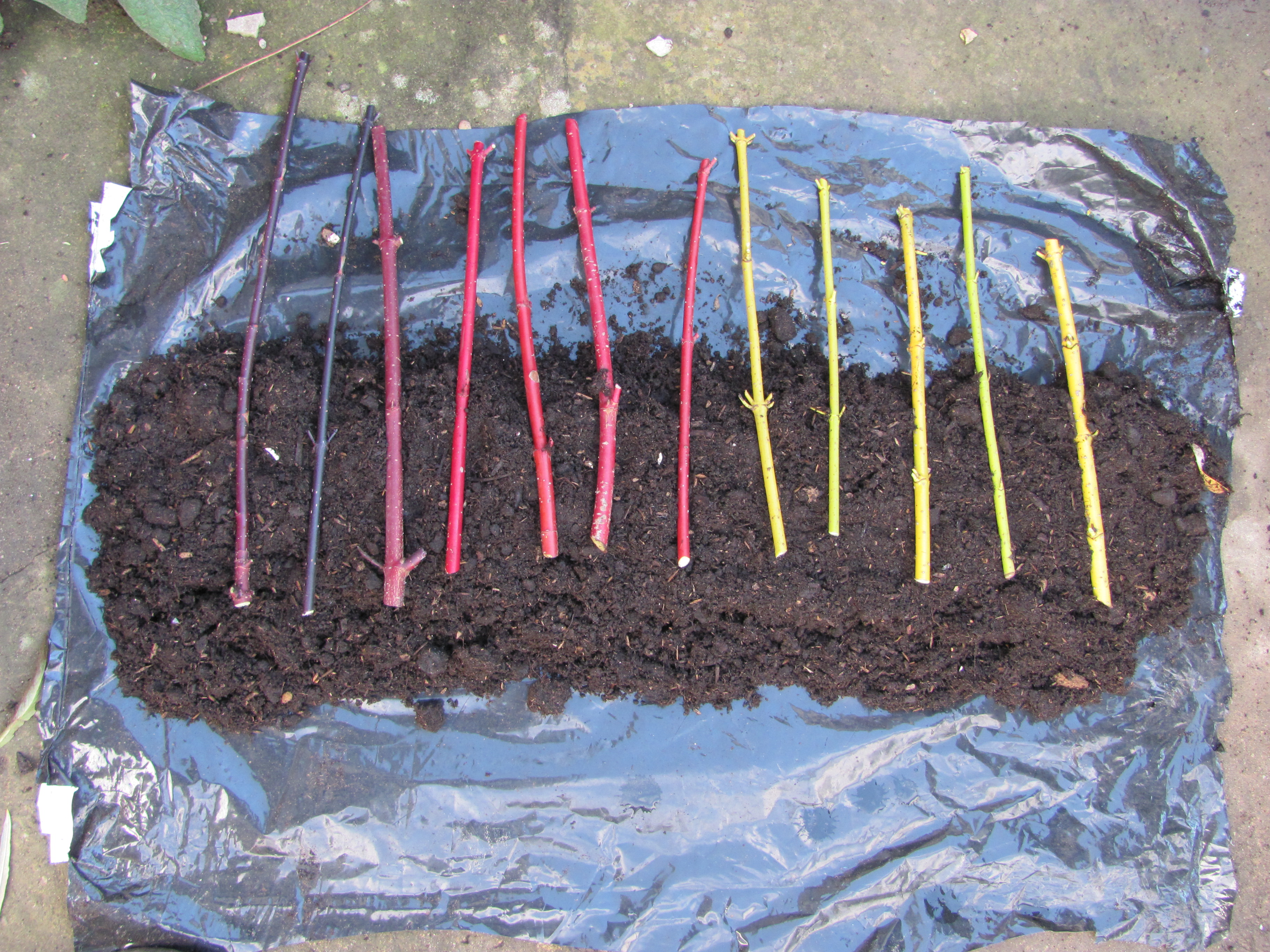
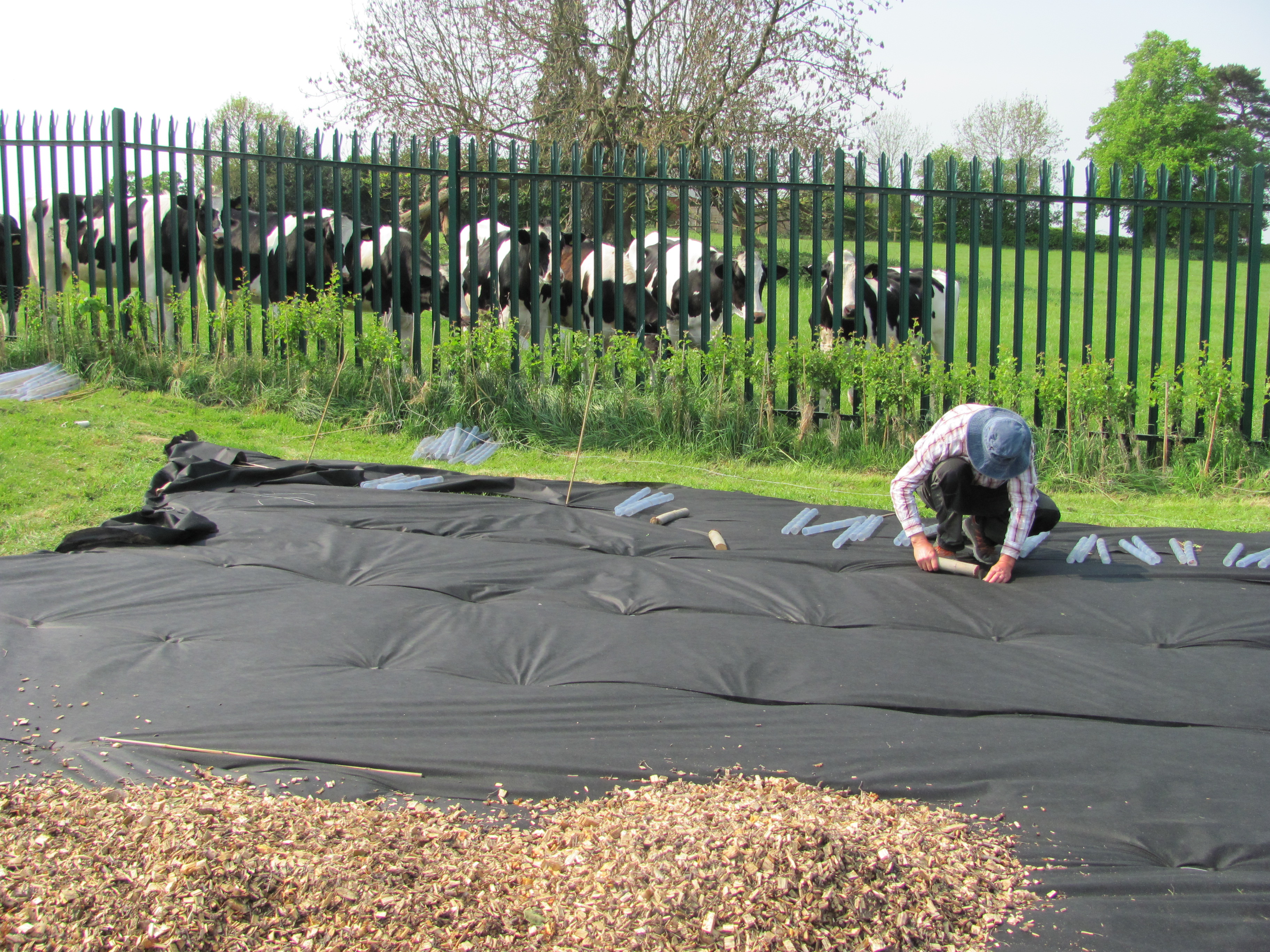
The third feature is all willow – a Withy Bed. Here we grow 17 different varieties of Salix, varying in stem colour from yellow and orange to deep green and black. We planted them as short cuttings, about a foot in length, known as “rods”. We planted the rods in the dampest area of the site which the willows would enjoy but we also hoped it would help reduce some of the winter flooding on the plots at this end of the site and act as a wind break. Eventually we hope to coppice some of the willows and pollard others to provide plant supports when cut. The willows are still young and small but we hope that soon we will be able to start harvesting them.

The following photos show the willow rods as they were delivered and Pete busy working on the withy bed creation.

As this year has been so wet and therefore loved by willows we hope to see massive growth on all these features. It is difficult to know whether we should classify these features as “land art” or “garden sculpture” – whatever they are, they are fun places!

Categories
allotments birds community gardening conservation fruit and veg garden design garden photography garden wildlife gardening grow your own hardy perennials Land Art meadows natural pest control ornamental grasses ornamental trees and shrubs outdoor sculpture photography poppies roses Shropshire shrubs spring gardening wildlife

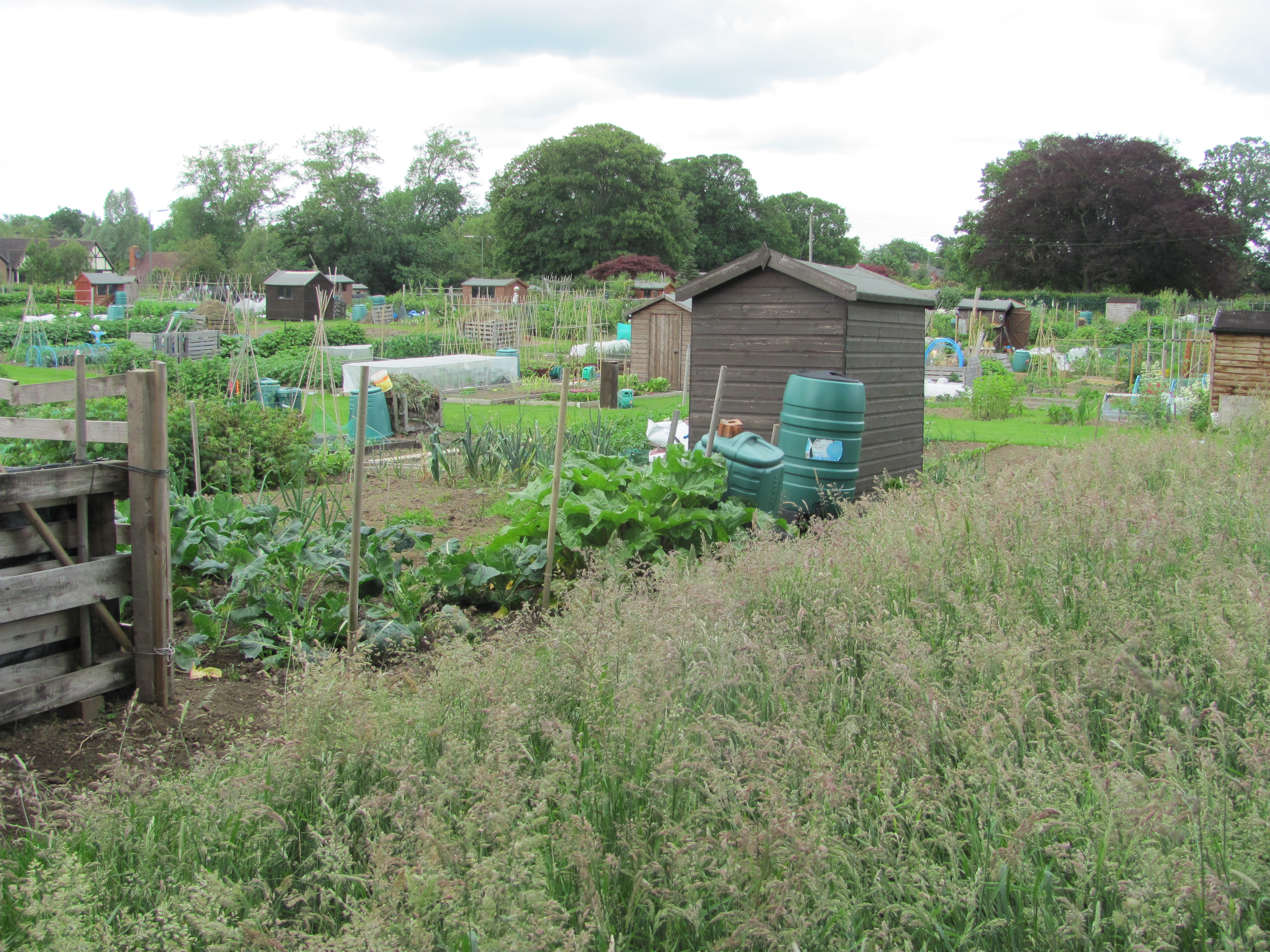
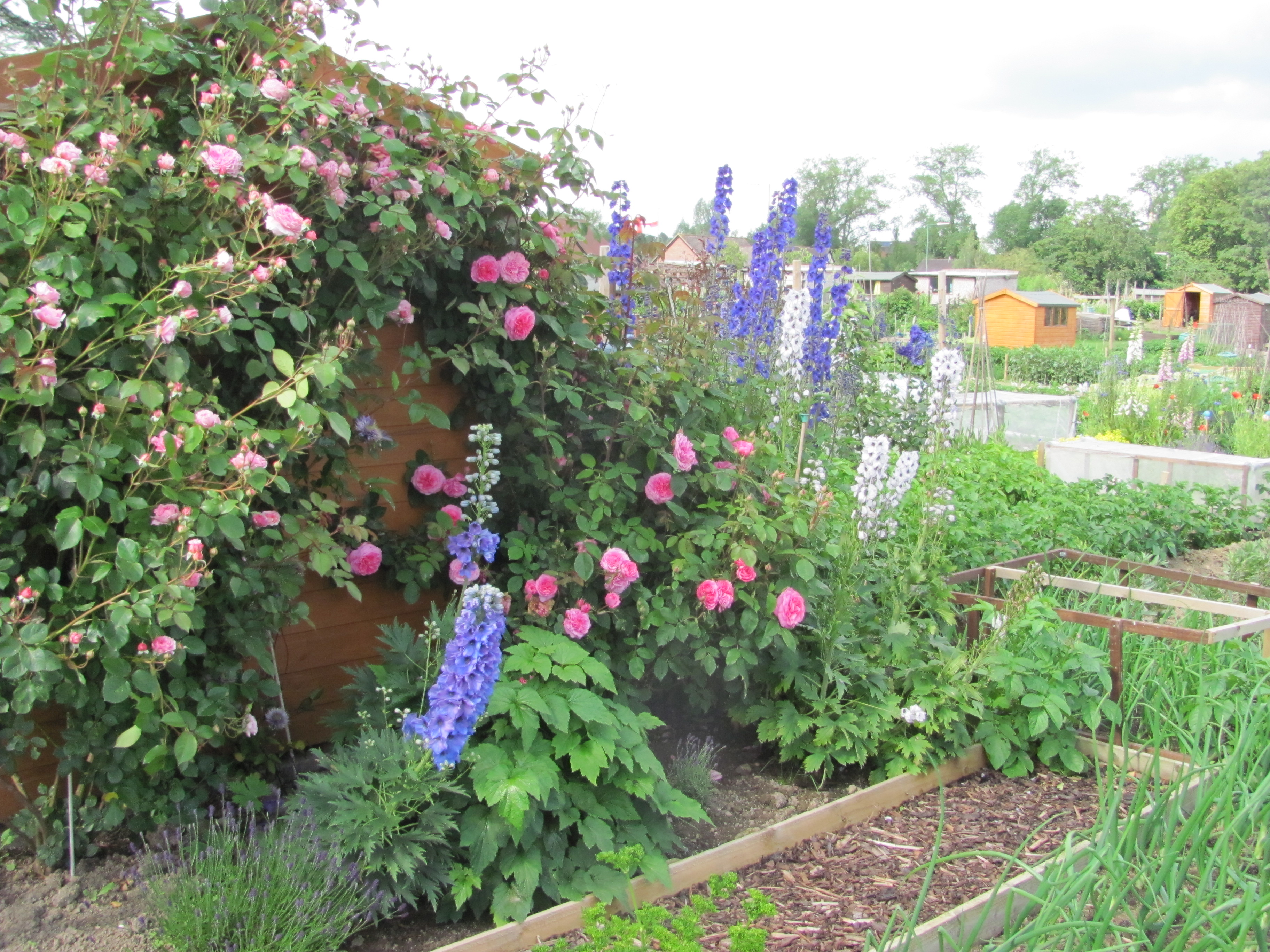
A Wander around the Allotments in June

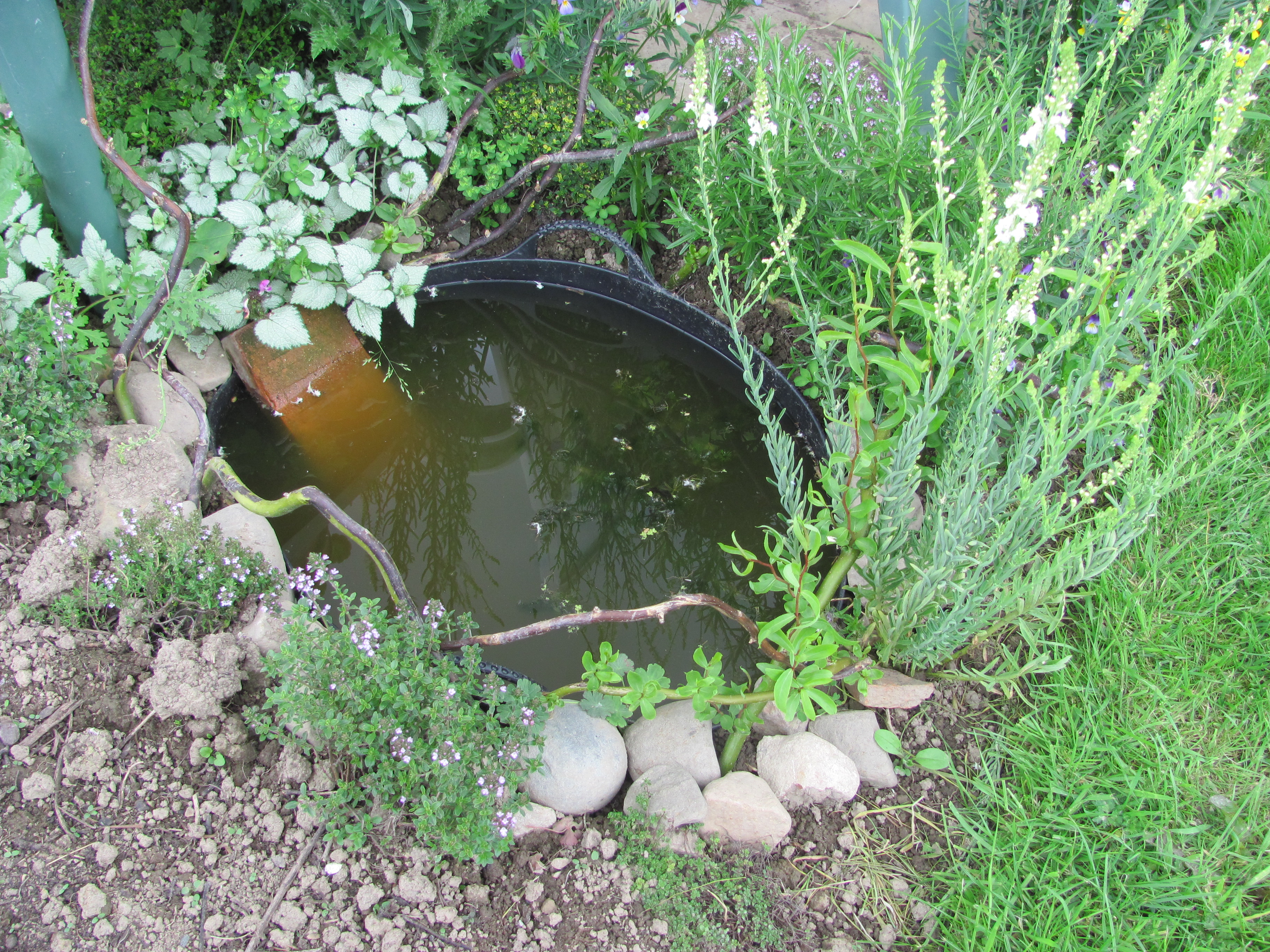
Here we are at the half way point of the year in the June allotment wanderings. As usual we shall start on our own plot to see what has been going on. Our little wildlife pond is beginning to look more established and the tadpoles are growing well. We hope the frogs stay on our plot and eat up all the slugs. As you can see we provided a little wooden ramp to help them get in and out of the water.

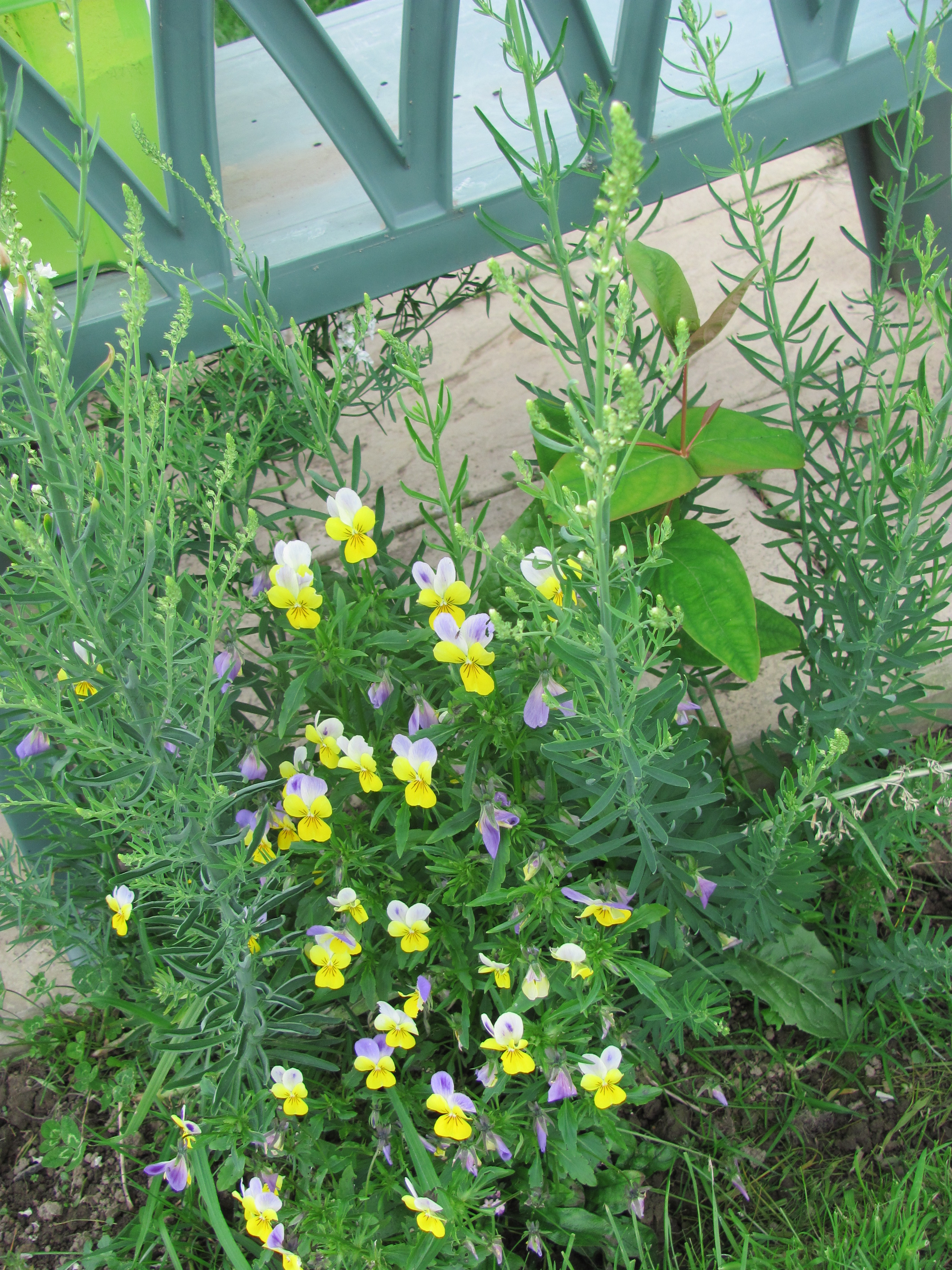
Heartsease self seed around the plot sometimes landing in suitable places arriving in a wide range of colours. This one seeded into the soil behind the green bench.

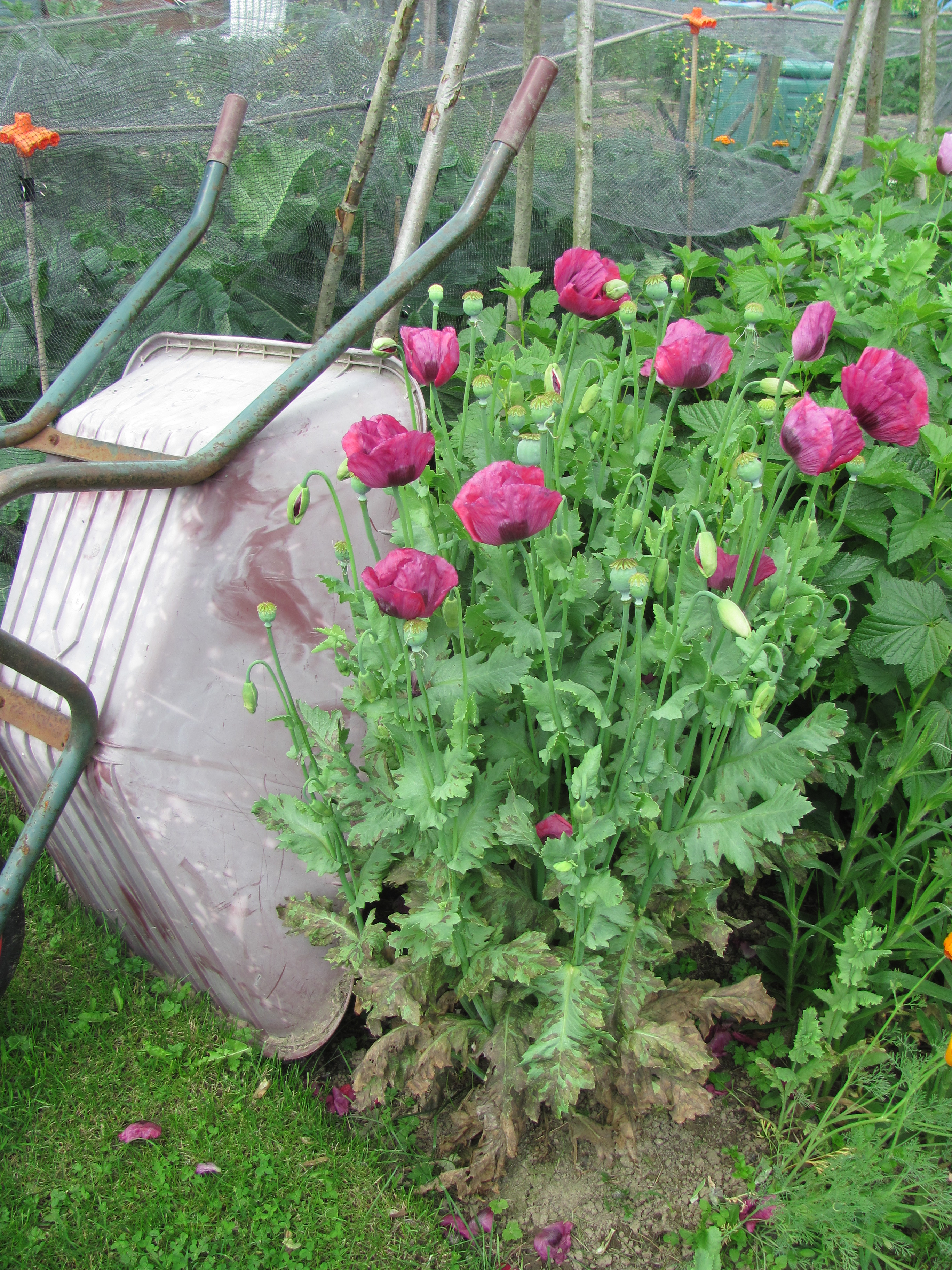
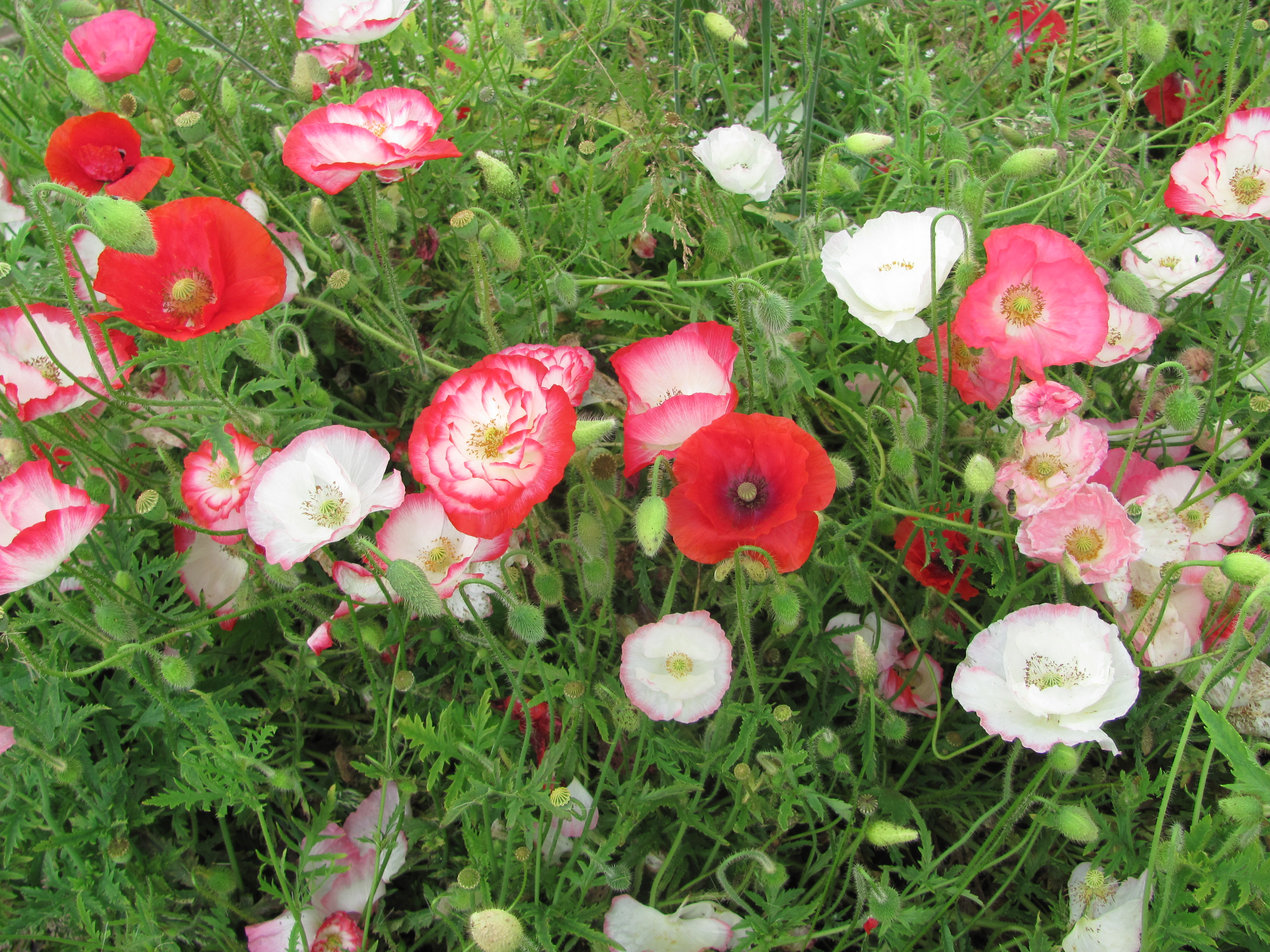
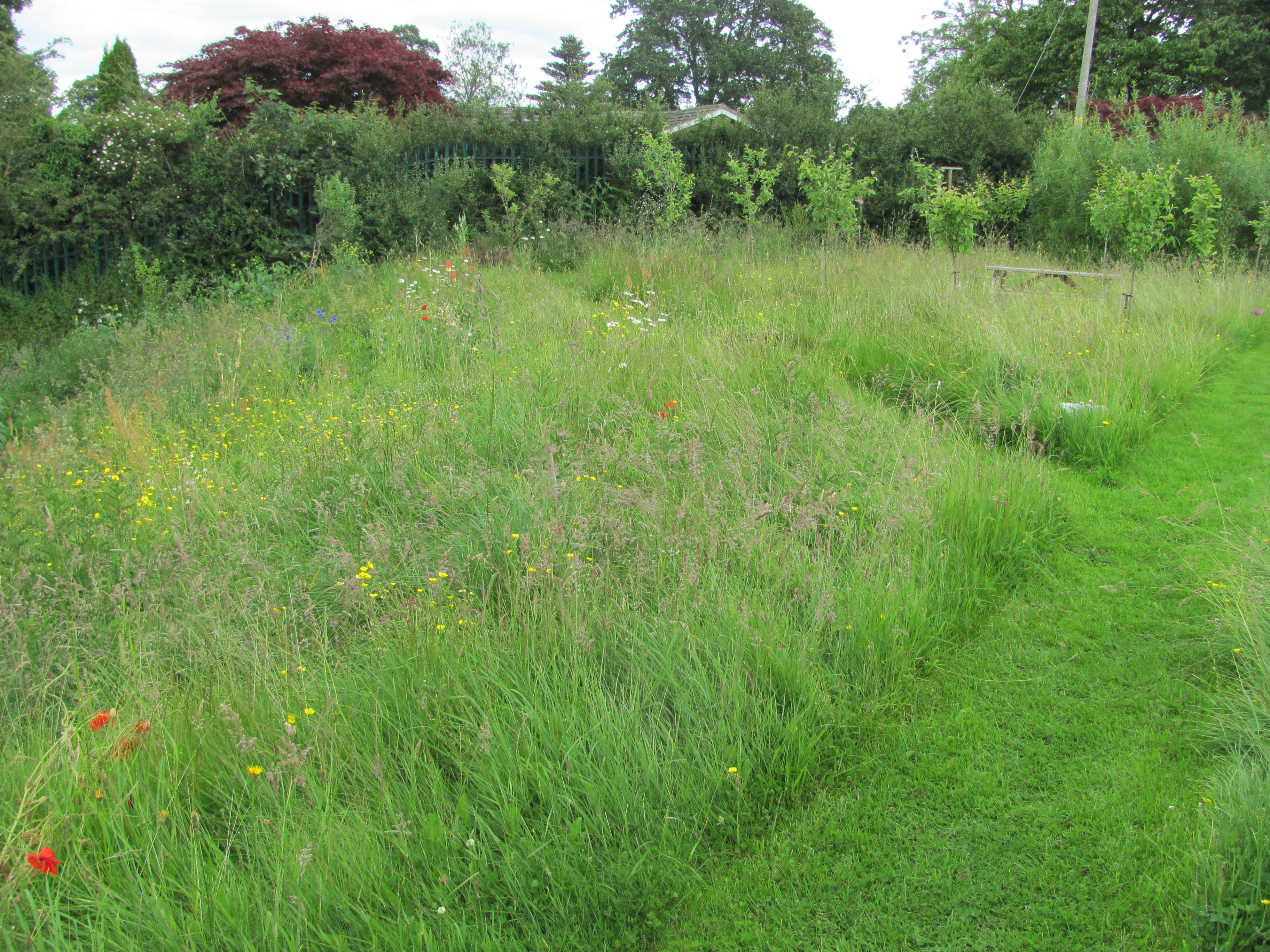
Our strip of wildflowers, a little piece of meadow, is beginning to flower. This Opium Poppy surprised us with its deep pink coloured petals.

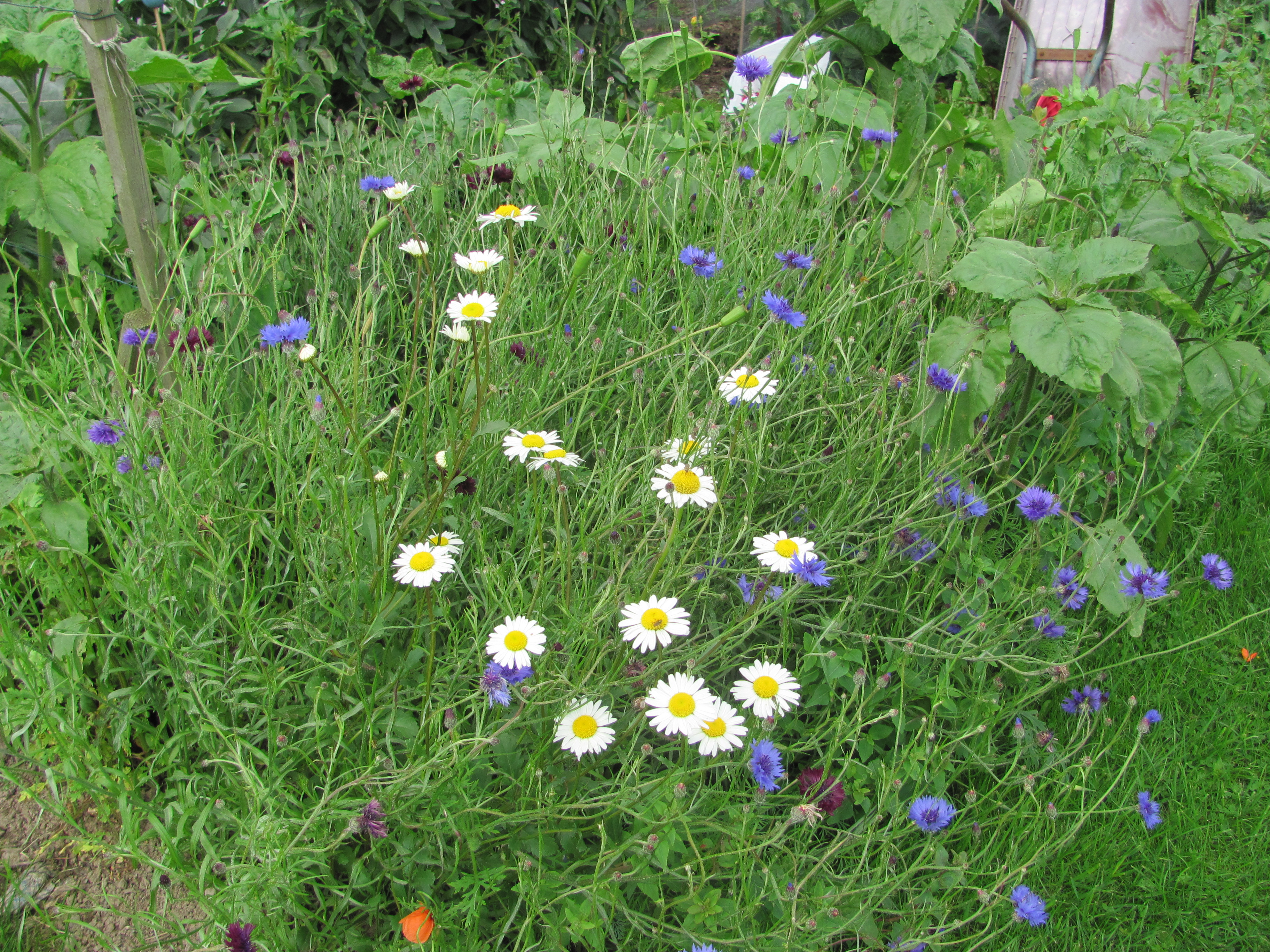
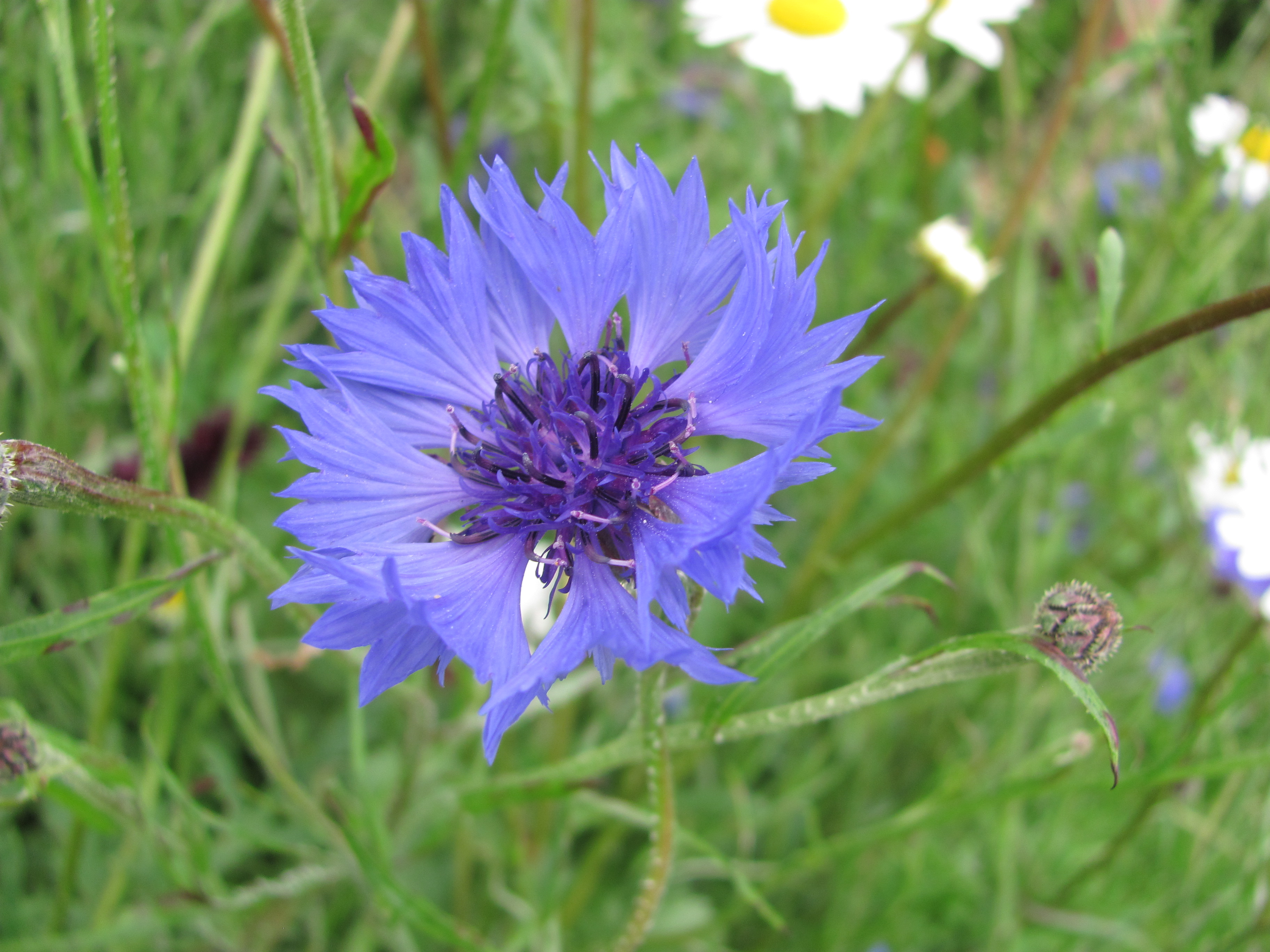
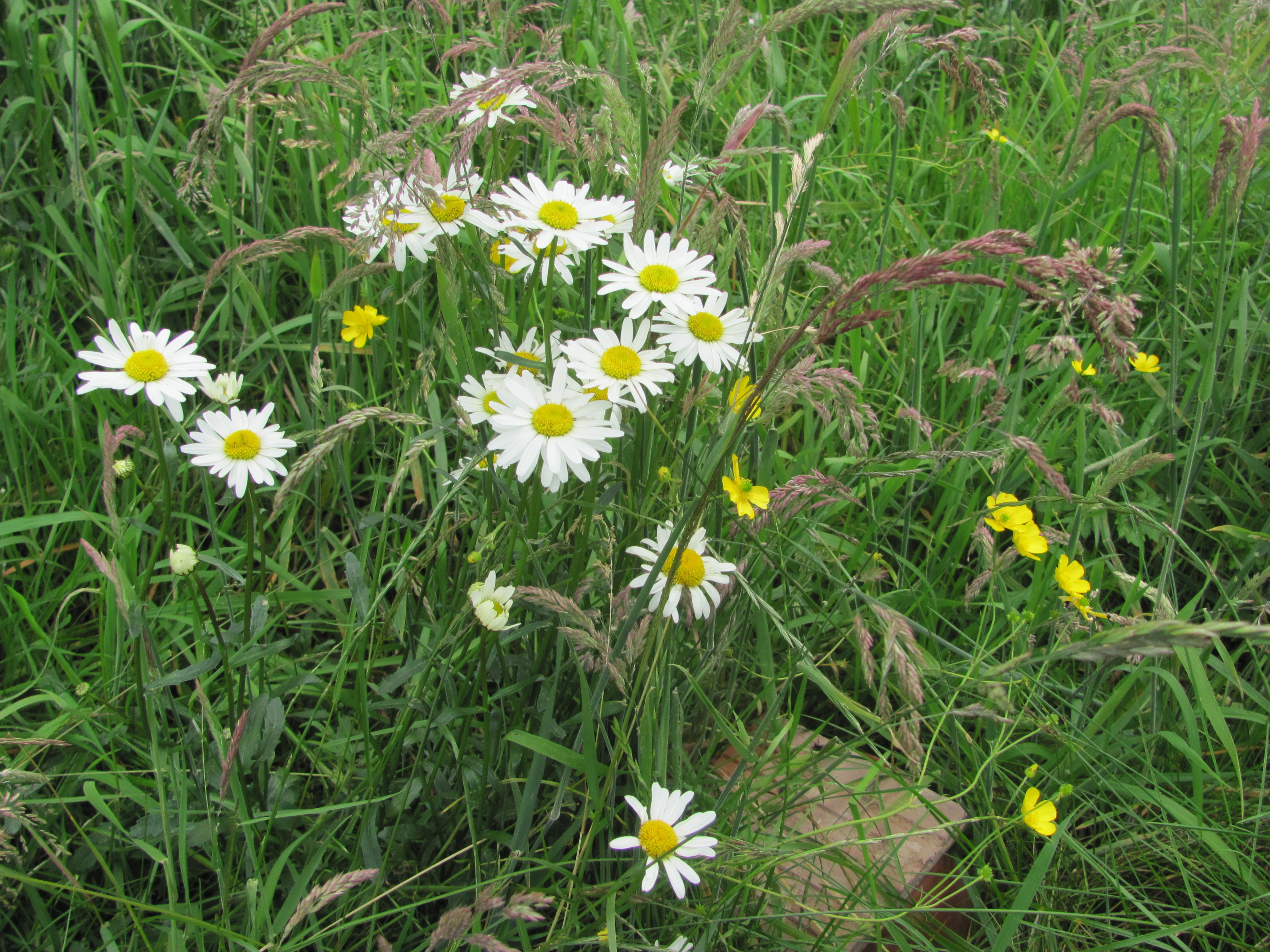
Moon Daisies and Cornflowers.

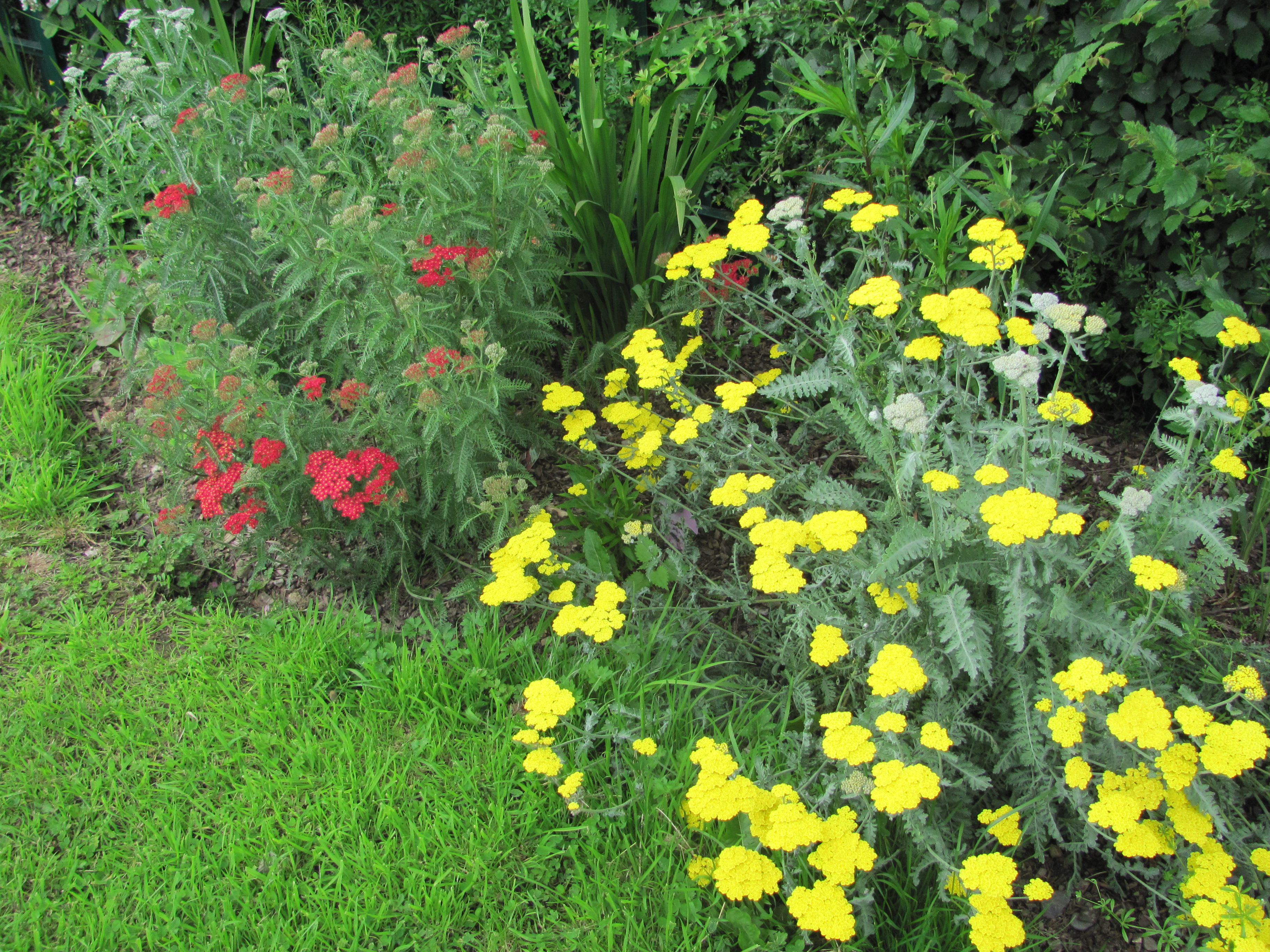
Just as flowers feature strongly on our own plot so they do on other members’ plots and in the Green Space borders. In the Autumn Garden Achilleas are the stars.

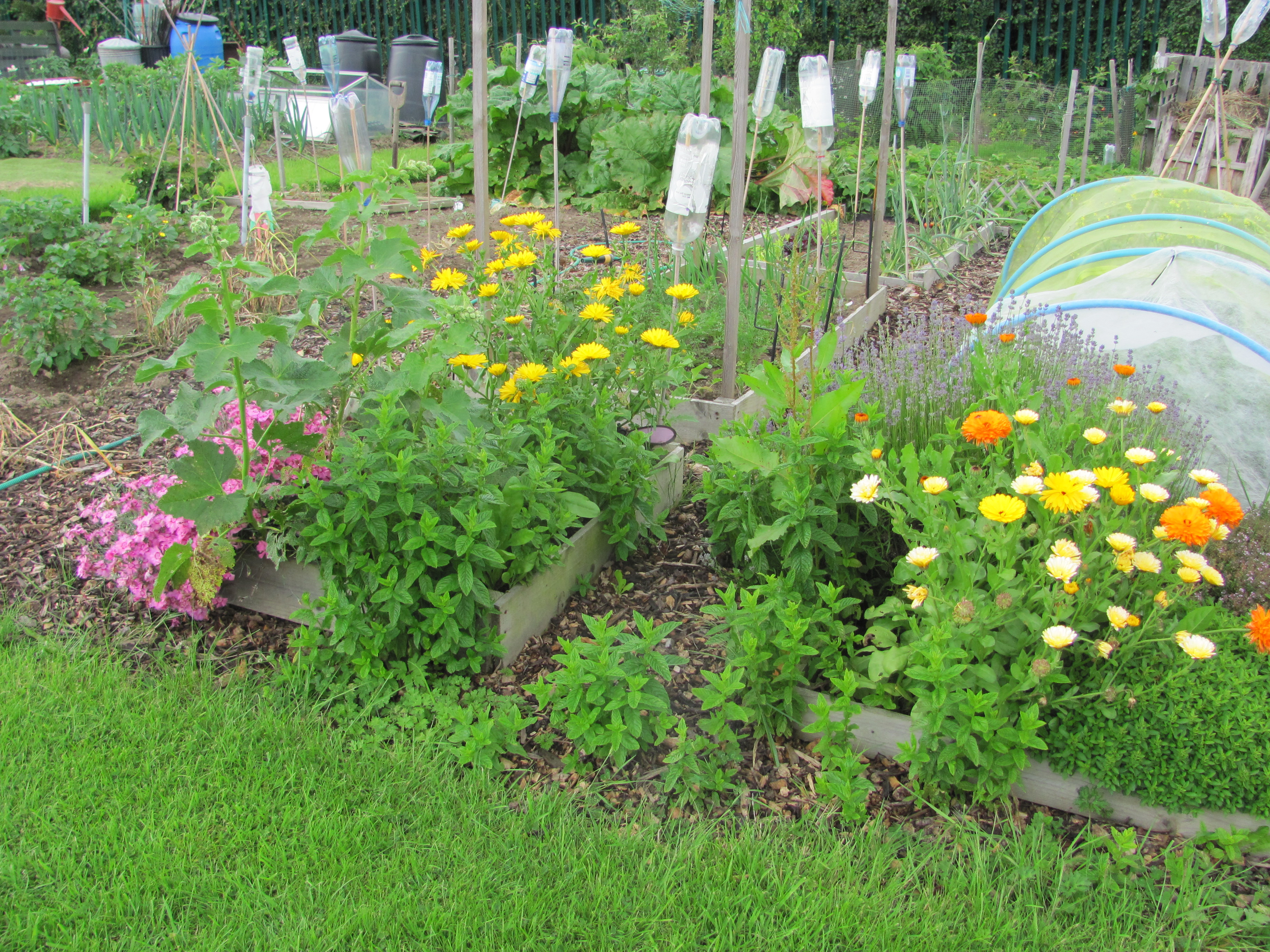
Calendulas feature on many plots as they look so good,  and work hard as part of companion planting helping to attract beneficial insects.

Our first “Buddleja Bed” planted to attract wildlife now looks colourful and full of life. After losing some of our Buddlejas in the dry last year when Shropshire experienced months of drought after two extremely cold winters, the name for these borders currently looks a little inappropriate.

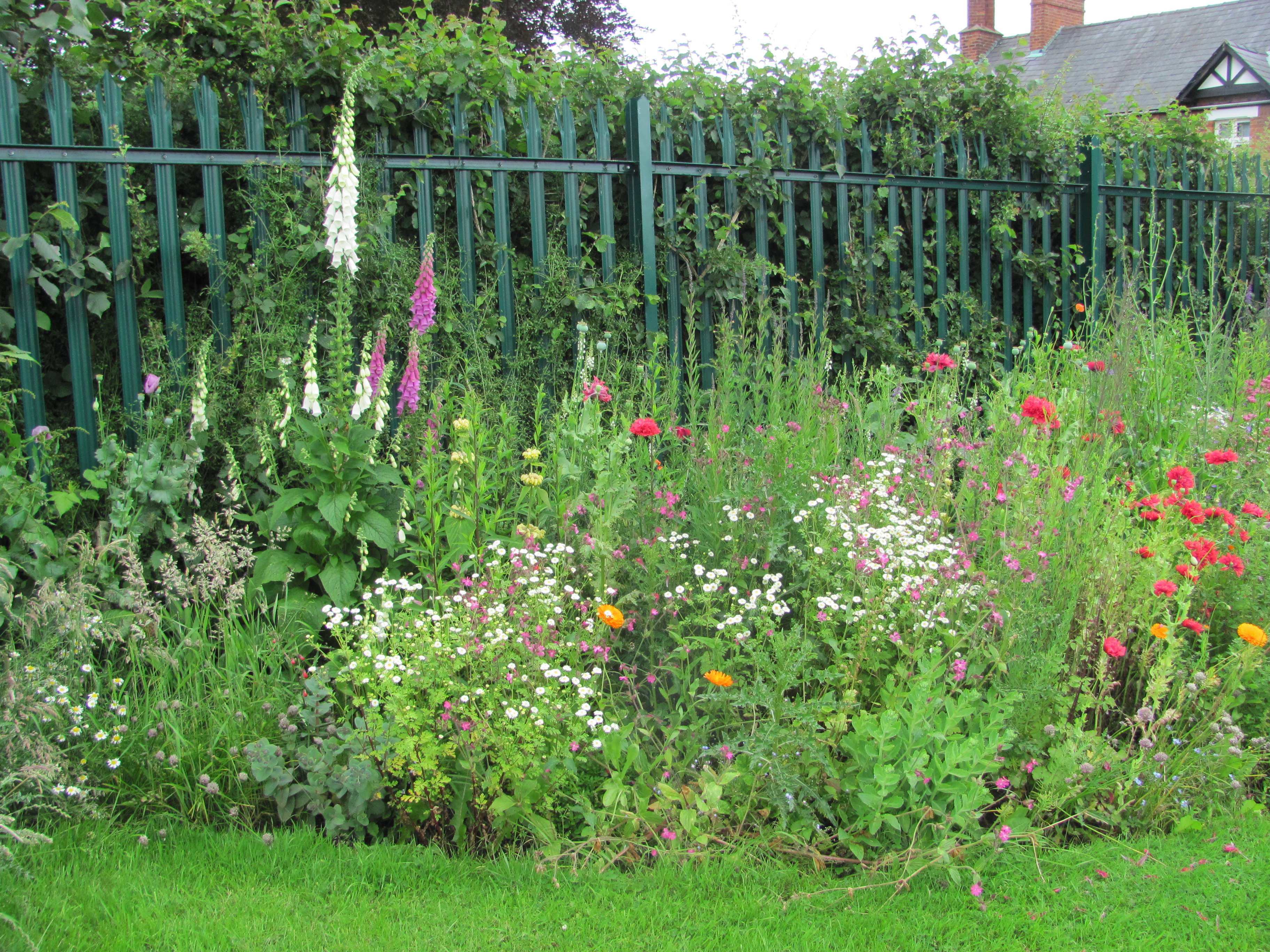
Our wildflower bank sloping up towards one of our orchards is now looking more established as we have added plants that members have donated to add interest.

The Edible Hedge is now fruiting providing sustenance to birds and small mammals. Flowers in the borders at the base bring in bees, butterflies and beneficial insects. Beetles enjoy the long grass and we like them to be there as they feed on slugs.

The most colourful garden on site at the moment is the Spring Garden which still displays much interest as we move into the summer months. This garden is maintained by volunteers, Jill and Geoff who spend many an hour planting, dead heading and weeding.

Geoff and Jill’s plot is renown for its weed free neatness and precision planting.

The Summer Garden  is not to be outdone though as the roses are coming into flower and beautiful scents greet us as we sit on the nearby picnic benches. The lavenders, geraniums and grasses planted between the roses add further interest and textures.

As June moves towards July our meadows really come into their own. Plot holders love to walk through them and a wide variety of birds, bees, butterflies, grass hoppers and every sort of mini-beast visit.

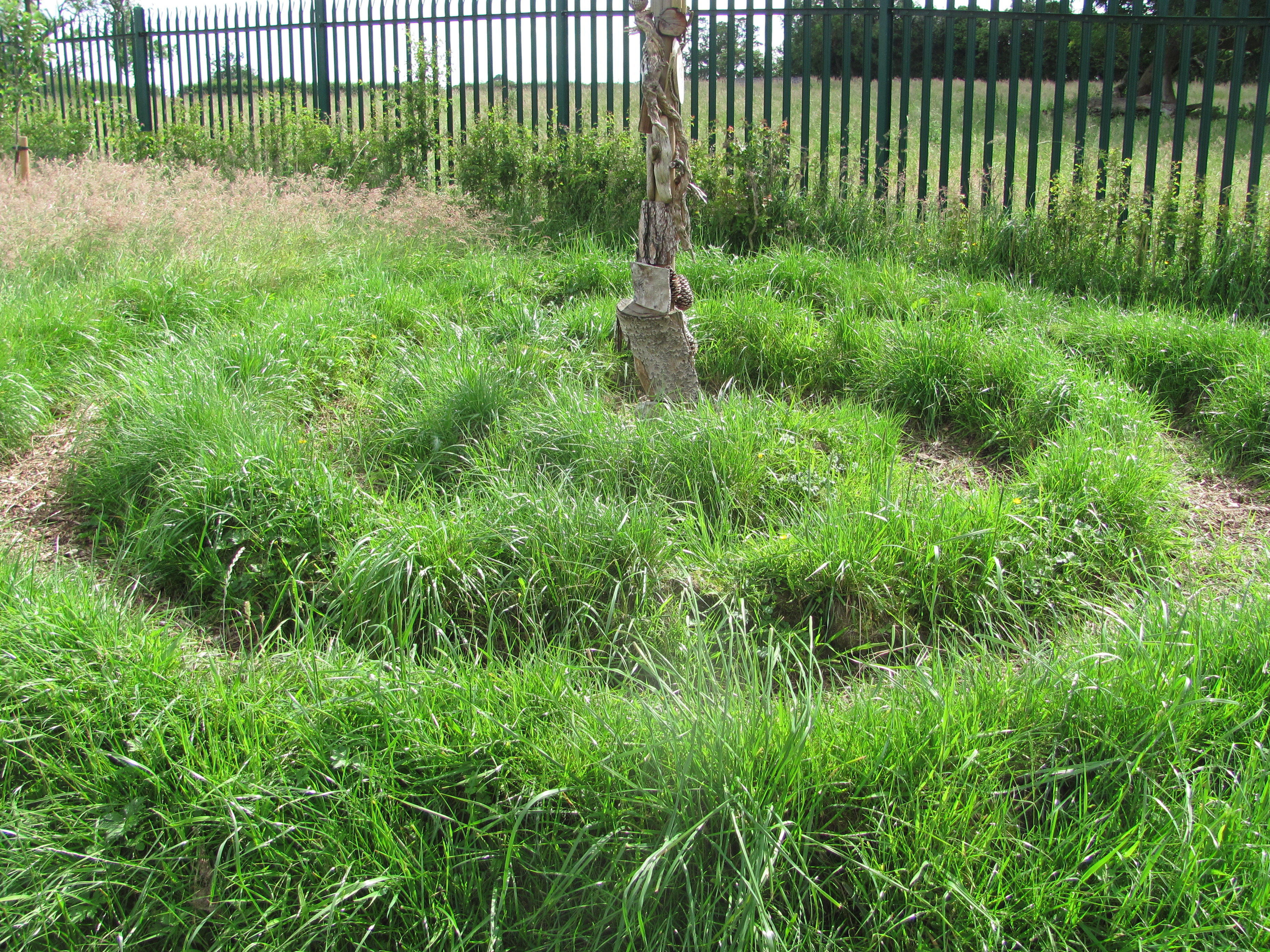
I shall finish with a shot of the plot we have nominated for this year’s Shrewsbury Town Allotment Competition and one of our grass spiral which currently looks most inviting.

Categories
bird watching birds conservation National Trust photography Shropshire The National Trust trees wildlife woodland

A Wander by the River Severn

Shropshire’s largest river is the Severn, one of the most impressive and longest in the UK. We usually walk its banks in our county town of Shrewsbury, for being strongly averse to towns and cities we need the riverside walk as an antidote. But today we decided to go a few miles southwards and find it as it meanders through the beautiful south Shropshire countryside. We parked up near Alveley and ambled our way down towards the river and the woodland on the lower slopes of its valley. The area is a country park jointly maintained by the National Trust and Shropshire Council so there is good parking and a small visitor centre with cafe. But walk a hundred metres or so from the centre and you are right out in the countryside away from signs of civilisation, except for the occasional sound of the steam engines running through the valley on the Severn Valley Railway, the chugging sounds of the engine working hard to get up slopes and the regular hooting as it crosses level crossings.

The track down to the river.

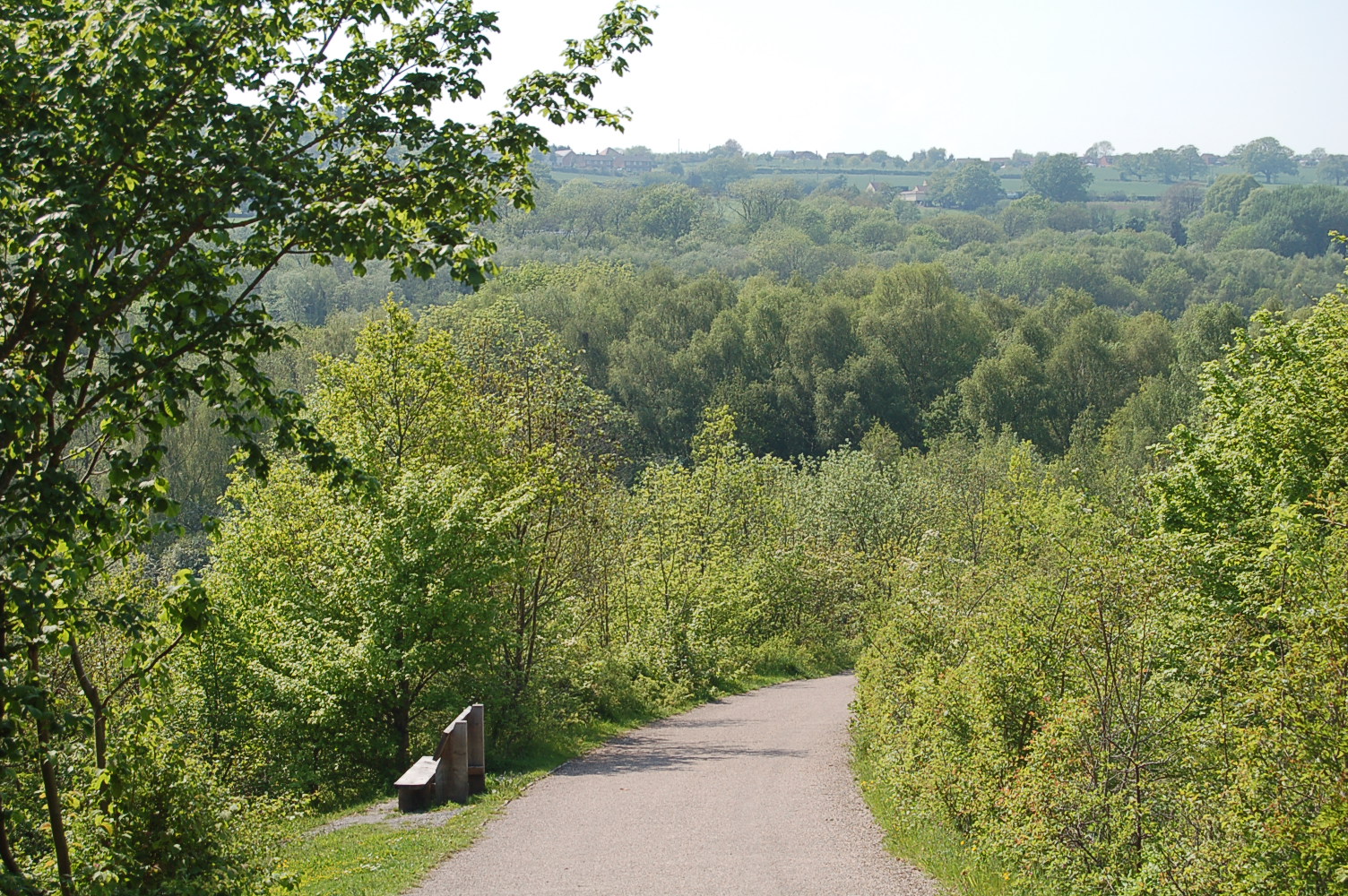
The walk down to the river is a gentle sloping pathway through young woodland interrupted by occasional areas of old industrial landscape which is being reclaimed by mother Nature. Unusual small plants are colonising and tree seedlings only a few inches tall are making inroads into man’s mess. Here a Pied Wagtail deviated from its tail wagging zig zag amble to catch an insect above a clump of tough grass. A true surprise met our eyes – a Black Redstart a bird I had not seen for decades and one Jude had never seen before. They inhabit areas of rubble and human disturbance so this is just perfect hangout for them.

The candle shaped flower cluster of a Horse Chestnut Tree.
New foliage of Oak tinged with bronze.
A view from the path into the wooded valley side.
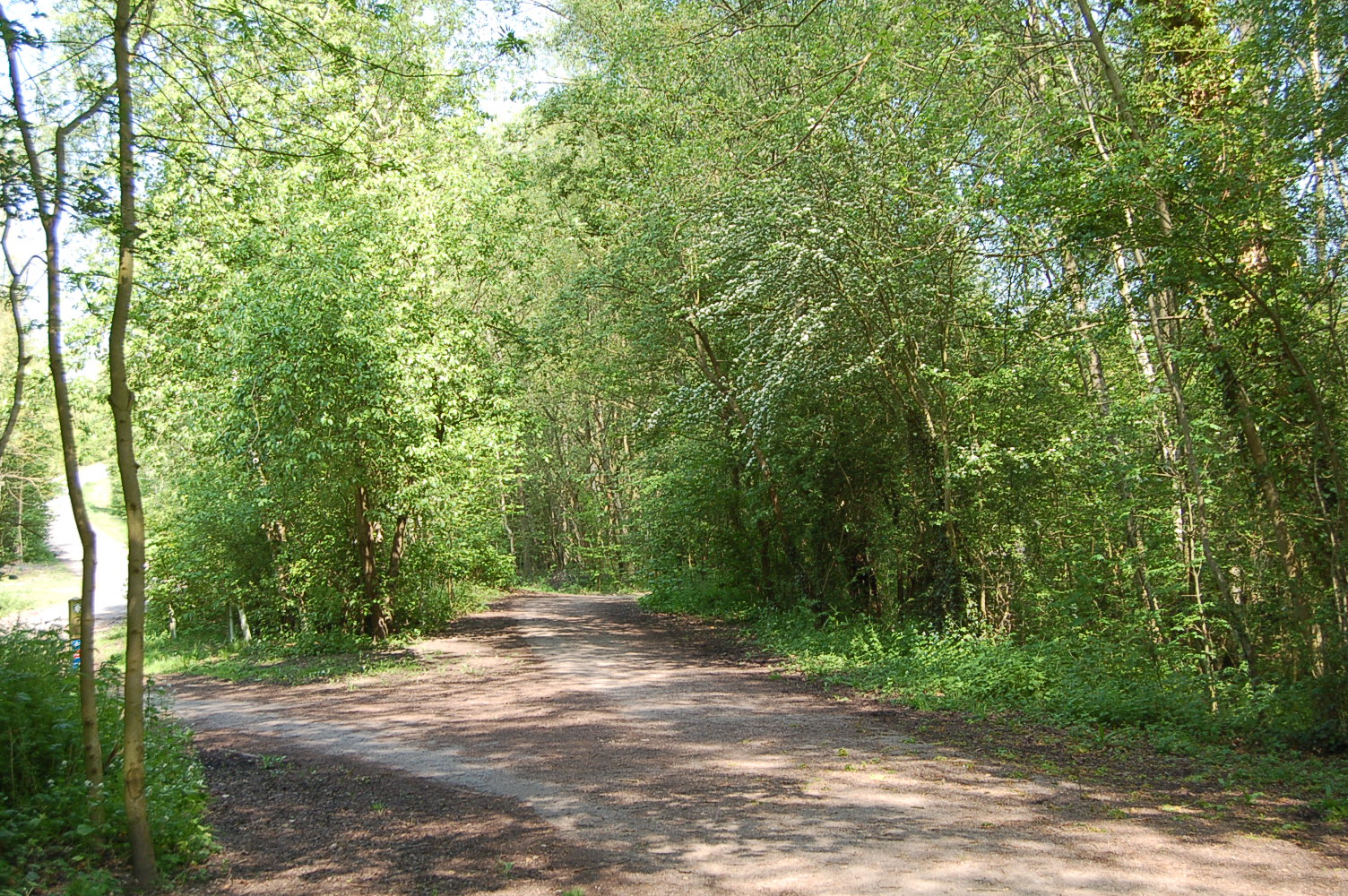
We choose the left fork.
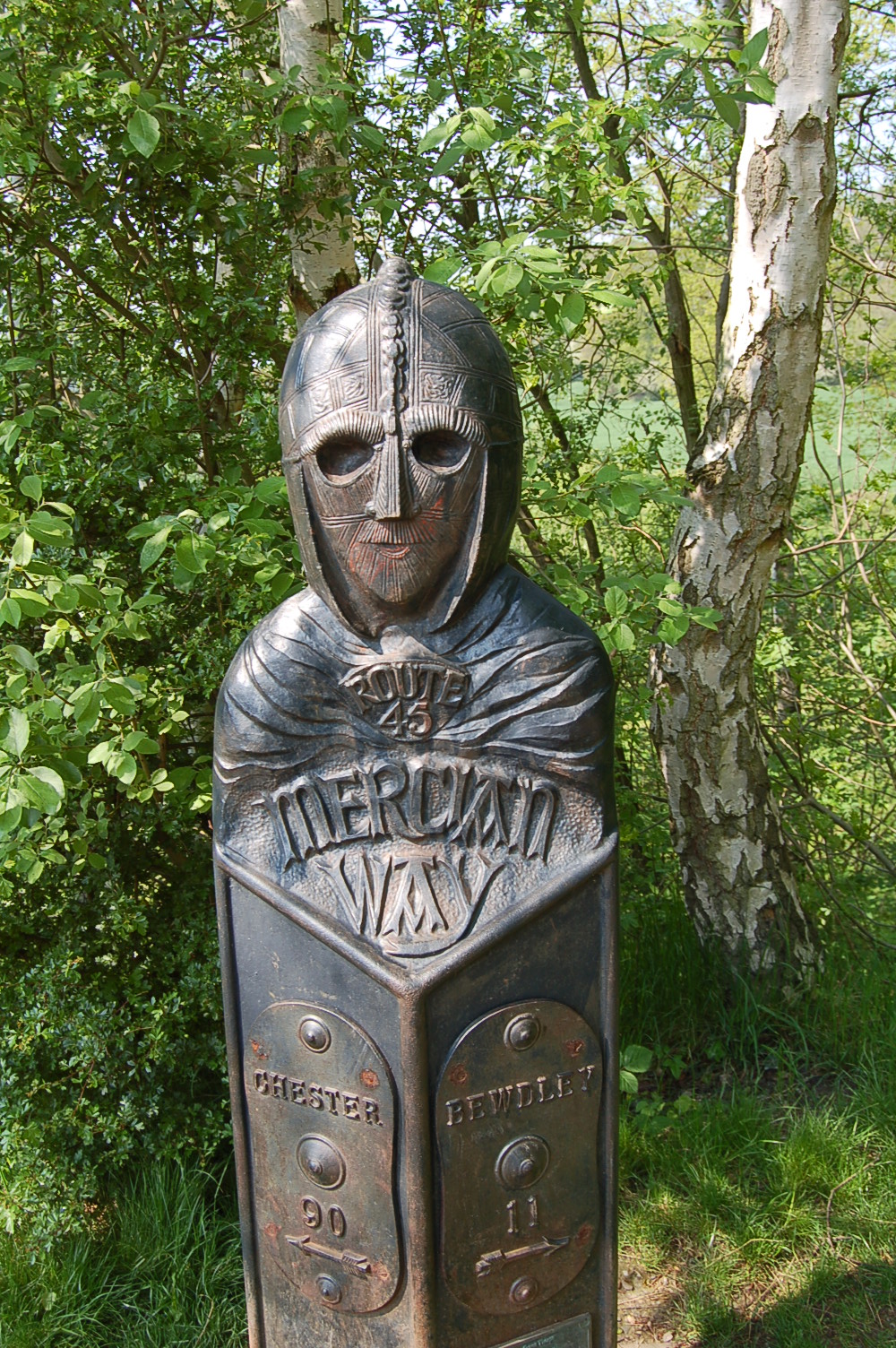
An impressive modern milestone.
A clearing revealed a view of the Shropshire countryside.

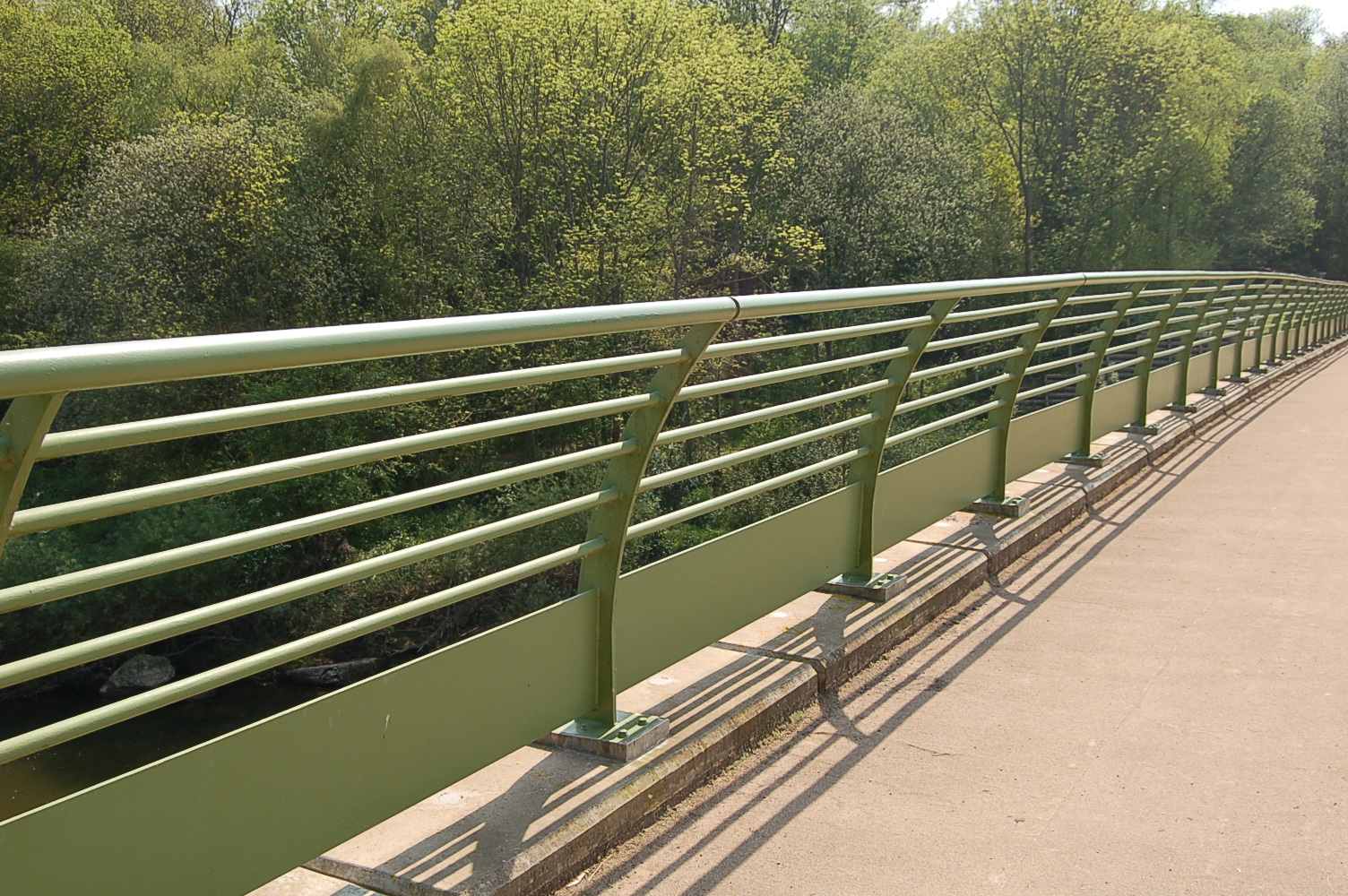
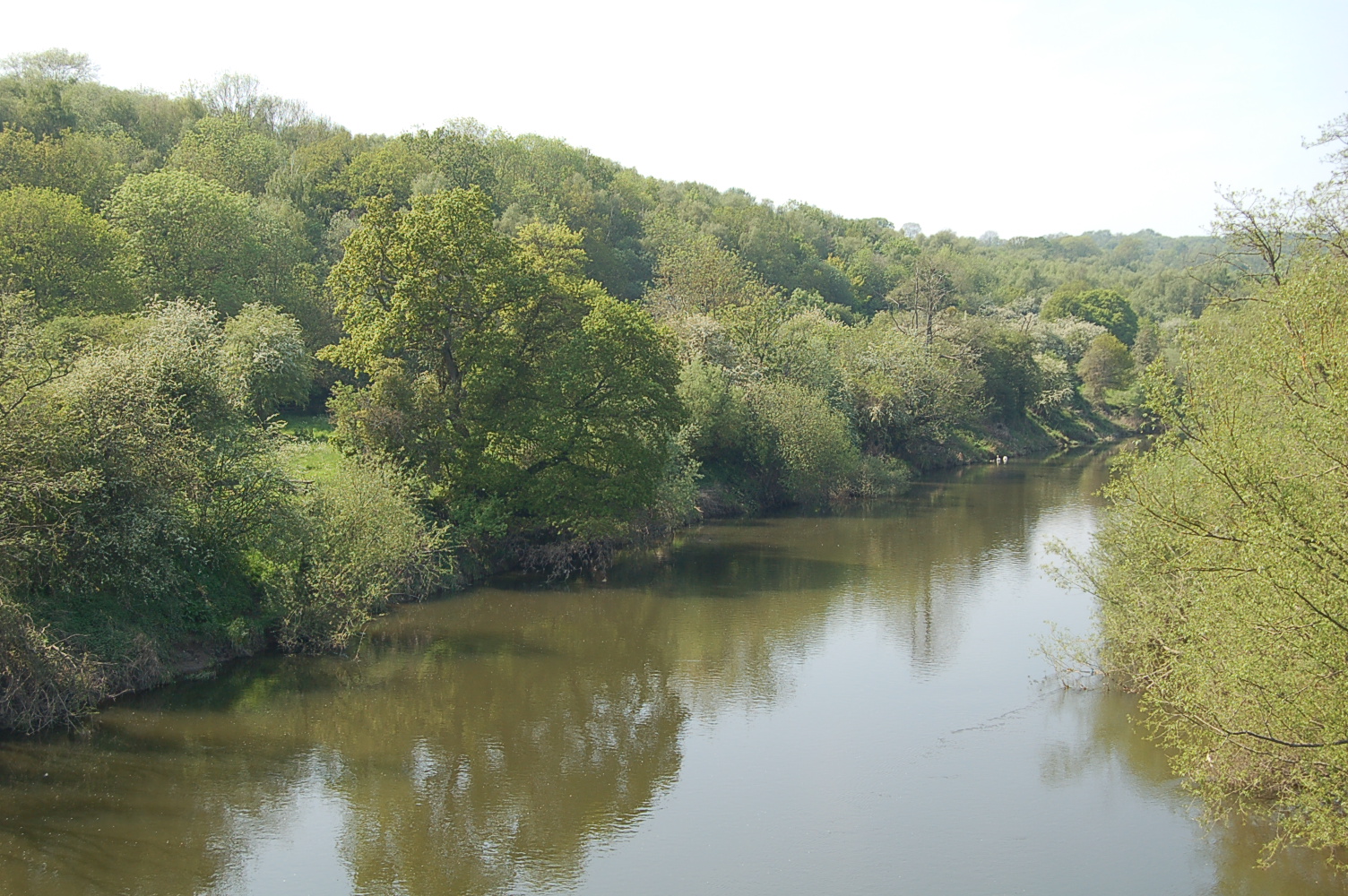
The footbridge over the river is an impressive curving structure, but not as impressive as the views up and down river. The Severn here is wide, tree-lined, deep and slow-moving and home to a family of Mute Swan with six cygnets. We did not spot the keenly anticipated Kingfishers, but that was the only disappointment of the day.

A rather smart bridge carries the path over the Severn.

Once over the bridge we entered woodland, good native hardwood woodland. Here the only sound was our footsteps and bird song and calls. The unpleasant mechanical rasp of Pheasants permeated the trees, but we concentrated on the tuneful songs of Robin, Thrush, Willow Warbler, Blackcap, Chiffchaff and Garden Warbler.

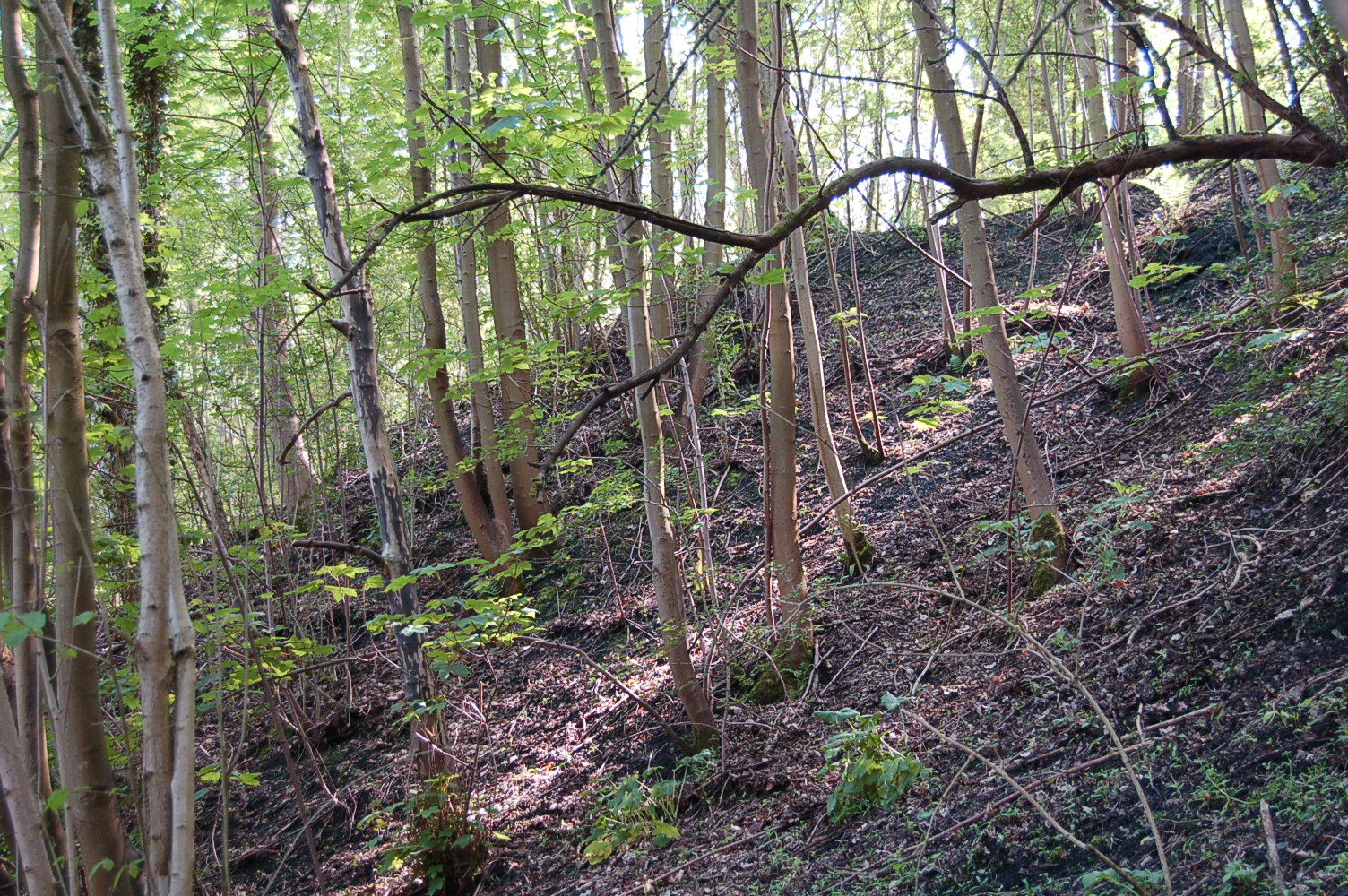
The path turns into the darkness of the wooded valley side.
Flowering plants took advantage wherever light shone through.
Beautiful woodland light.

A shaft of sunlight pierced the valley side.

On the slopes Jays in their smart plumage of pinks, greys and highlights of blue, fed voraciously on acorns and beech mast. They were over-confident and took little notice of our intrusion into their territory as groups of seven or so foraged on the leaf littered slope.

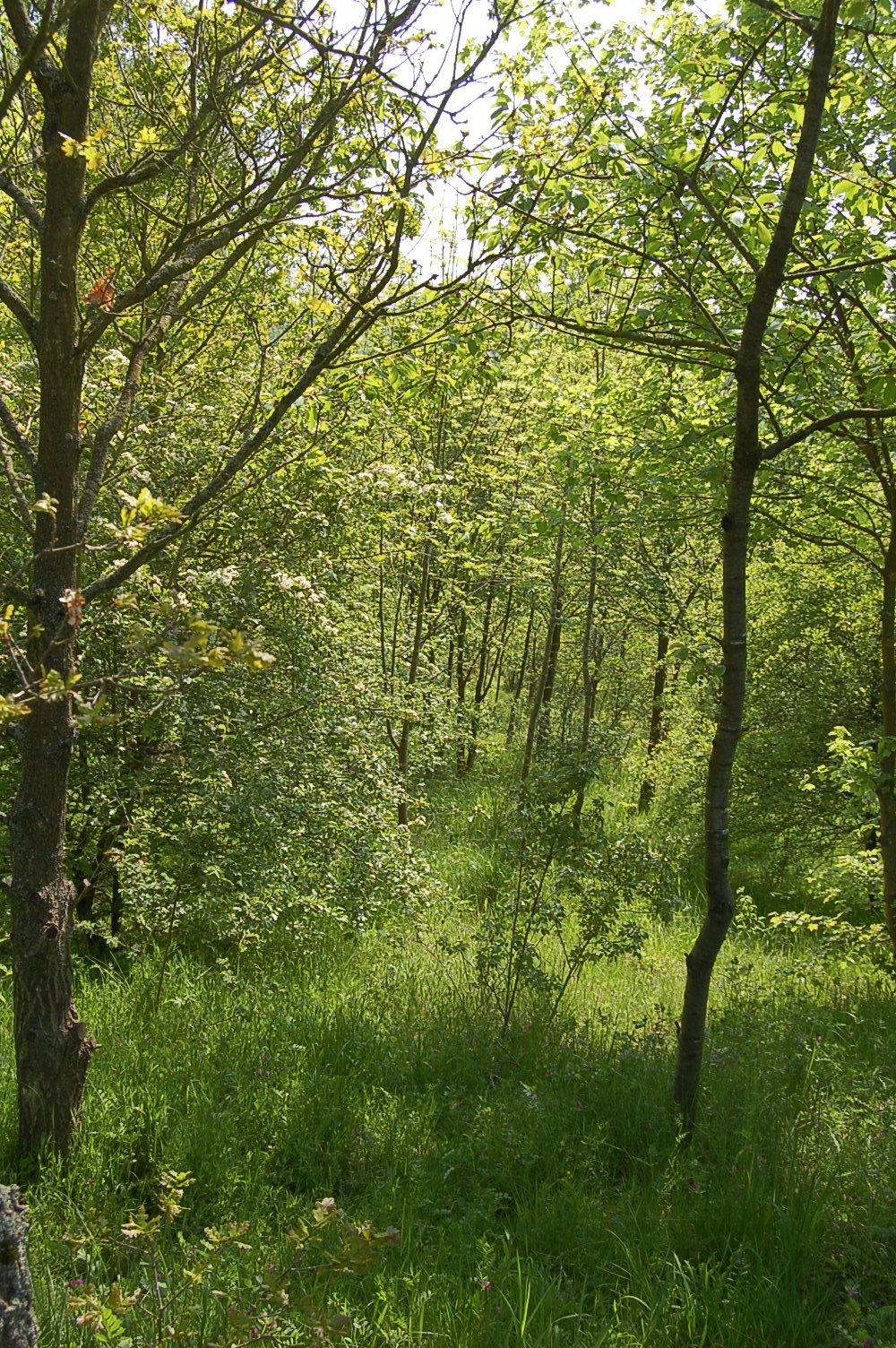
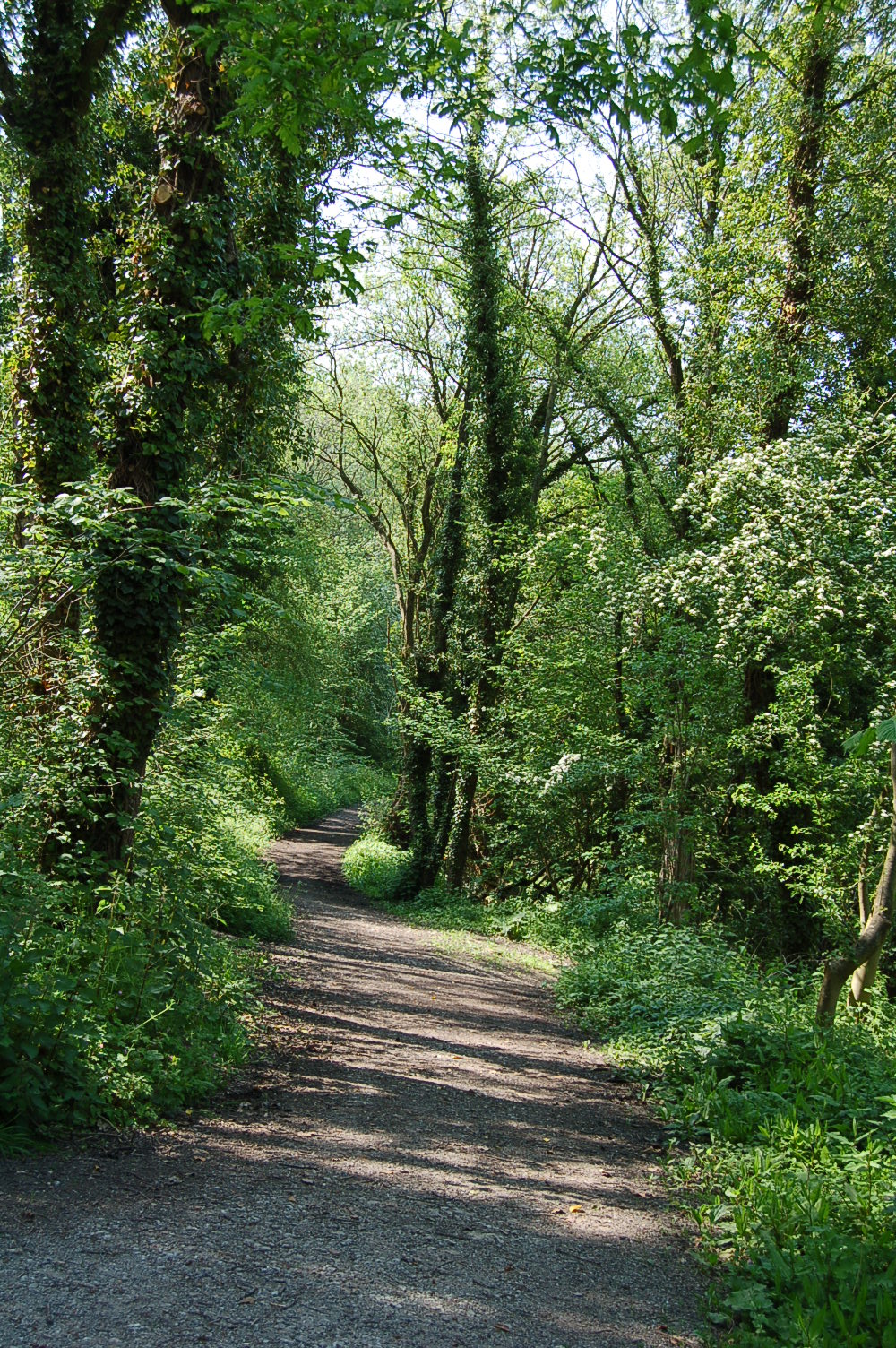
The path became a tunnel of trees.

At one time this valley was the centre of industry and clues still appear now and again as the woods are explored. Surprising man-made artefacts appeared as contradictions to the gentle beauty of the art of Mother Nature.

A sign of past industrial activity.
Signs of an old trackway alongside the path.
Some plants choose to grow on the rubble slopes of old industry.
Light pierced through the trees from the nearby clearing.
Looking from the clearing back into the woodland.

We took advantage of the sunshine in the clearing with its conveniently placed bench. We listened to bird song and watched Blackcaps as they flitted amongst the tree tops. They stopped and perched occasionally to give us a short performance of their enjoyable song. The cerise-breasted  Bullfinch caught our eye as he hovered alongside the clock seedhead of a Dandelion, until he grasped a seed in his beak took it to a low branch of a Hawthorn. He enjoyed it, unaware that two people were watching him.

Sunshine lights up the clearing and invites us to picnic.
Magical light through the trees.
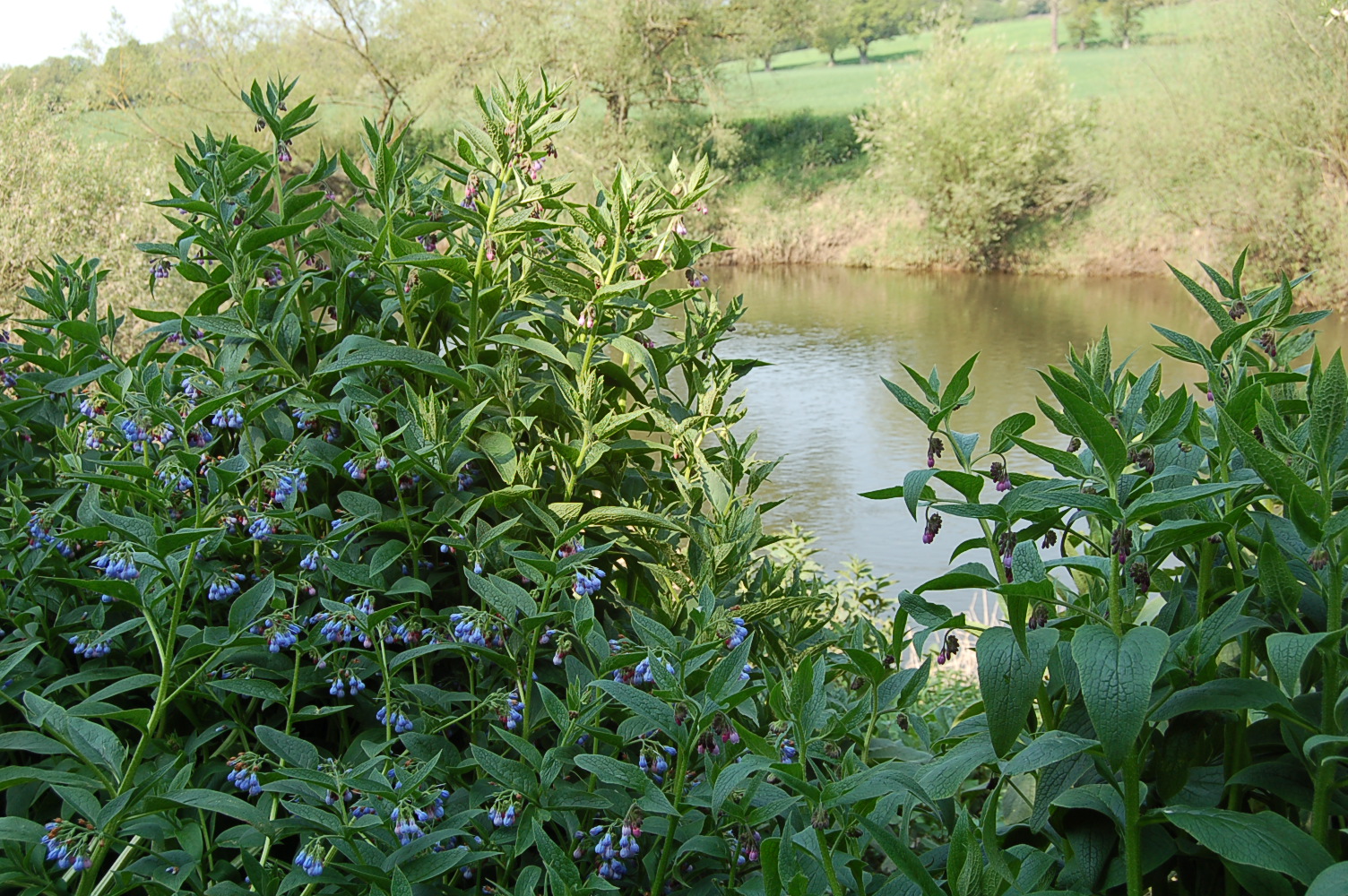
The Severn glimpsed through clumps of Comfrey plants.

As we followed our path back down to the riverside we noticed a change in wildflower species. Here Comfrey dominated and filled the open ground between the willows and alders and our track took us through lush grassed areas. Kestrels and Sparrowhawks hunted along the riverside slopes causing consternation to the nesting Blackbirds, Thrushes and Warblers.

The cotton wool like mass on the willow confused us. Was it hiding caterpillars or young spiders?

In the depth of the shadow under the trees we spotted this Badger Sett.
A glimpse of Shropshire countryside over the river.
Back to the bridge.
The gentle climb back up the valley side to the car park provided plenty of benches to rest on and admire the views.

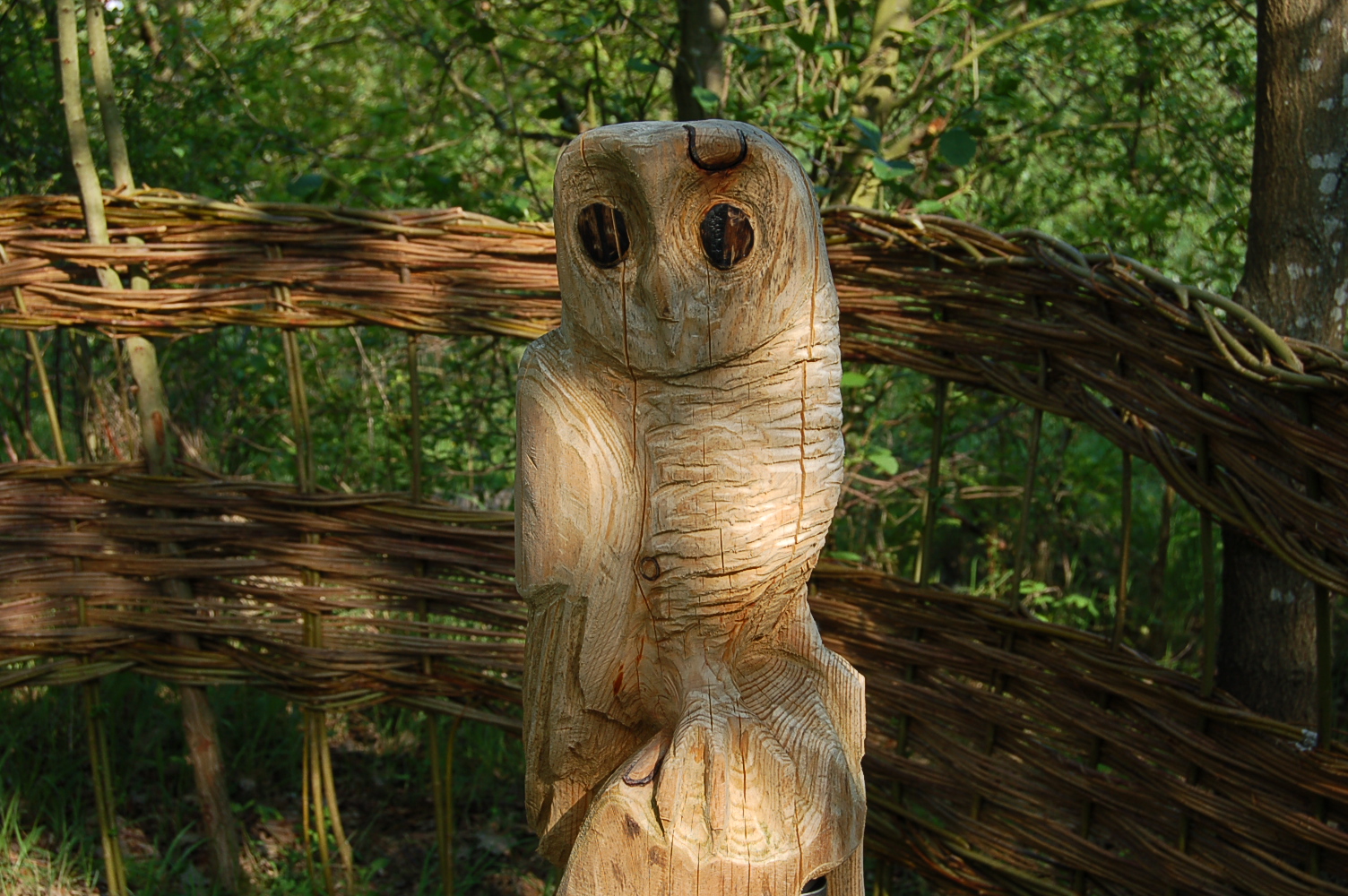
In the wooded edge of the picnic site back near the car park we found these amazing wood carvings representing the wildlife of the area.

The carvings emphasised what a special place we had just explored. We enjoyed the changing light as we moved in and out of the woods, the variety of flowers and birds and the joy of walking alongside our local river

This Veggie Life

A Vegetarian | Nature Lifestyle Blog

Rambling in the Garden

.....and nurturing my soul

The Arch City Gardener

Journeys In St. Louis Gardening and Beyond

Garden Dreaming at Châtillon

Consult the genius of the place

Storyshucker

A blog full of humorous and poignant observations.

gardeninacity

Notes from a wildlife-friendly cottage garden

PlayGroundology

...an emerging social science

The Official Blog of British Wildlife

'The most important and informative publication on wildlife of our times' - The Independent. This blog is a member of The UK & Ireland Natural History Bloggers group: www.uknhb.blogspot.com

iGrowHort

Inspire - Cultivate - Grow Native Plants - Restore Landscapes

Bishops Meadow Trust

To create and protect a semi-natural wild space for the people of Farnham to enjoy and experience an array of British wildlife in our town

Gardening with Children

The www.gardeningwithchildren.co.uk Blog

UKbirdingtimeline

birding through the seasons, why birds matter and how to conserve them

NATURE WALKER

with a camera in hand

Jardin

Transform your outdoor space

Eva's space

My allotment, cooking and other interests

Old School Garden

my gardening life through the year

LEANNE COLE

Trying to live a creative life

fromacountrycottage

trying to live as lightly as possible on our beautiful planet

Good Life Gardening

Nature lovers from Leicester living the good life.

mybeautfulthings

Finding the beautiful in the everyday

mawsonmichelle

Michelle's Allotment

In and Out of My Garden

thoughts from and about my garden

Greenhousing

Big plans for a small garden

The Scottish Country Garden

A Walled Country Garden in South East Scotland

The Fruity Chicken

Life at the fruity chicken

willowarchway

Off grid living. Self sufficient. "PERMAGANICS RULE".

St Anns Allotments

Nottingham's Grade 2* Listed Allotments and Community Orchard

Manifest Joy Harvests

a journey in suburban vegetable gardening

Allotmental

The madness of growing your own

Penny's Garden: a harvest beyond my front door

A novel approach to vegetable gardening

arignagardener

Sustainable living in the Irish countryside.

NewEnglandGardenAndThread

Master Gardener, amateur photographer, quilter, NH native, and sometimes SC snowbird

dianajhale

Recent work and work in progress and anything else that interests me

planthoarder

a chaotic cottage gardener

Lens and Pens by Sally

a weekly blog that creates a personal philosophy through photographs and words

Dewdrops and Sunshine

Stories from a sassy and classy Southern farmbelle.

The Pyjama Gardener

Simple Organic Gardening & Seasonal Living

gettin' fresh!

turning dirt into dinner

JOY...

today the world is created anew

Garden Birds

Notes from a Devon garden

ShootAbout

Life Through The Lens

Adapting Pixels

A photography blog showcasing the best photography pictures and videos on the internet

Wildlifegardening's Blog

Just another WordPress.com site

naturestimeline

personal observations from the natural world as the search continues for a new approach to conservation.

LATEBLOOMERBUDS

The Wonders of Life through my Eyes, my Heart, my Soul