Categories
allotments bird watching birds community gardening conservation diy garden buildings garden photography garden ponds garden pools garden wildlife gardening gardens irises log piles natural pest control recycling renovation Shropshire trees

The wildlife pond and hide at BAC – part one

When Bowbrook Allotment Community first opened we had a old farm pond on our boundary fence but it was fenced off and we had no access to it. After a few years though as the site was extended on the pond side it was integrated into our gardens and the town council put a low security fence around it with a lockable gate. We then had to wait for it to be released into our care which finally happened early in the winter of 2014. This is the story of what we have done to it so far and about our plans for its future.

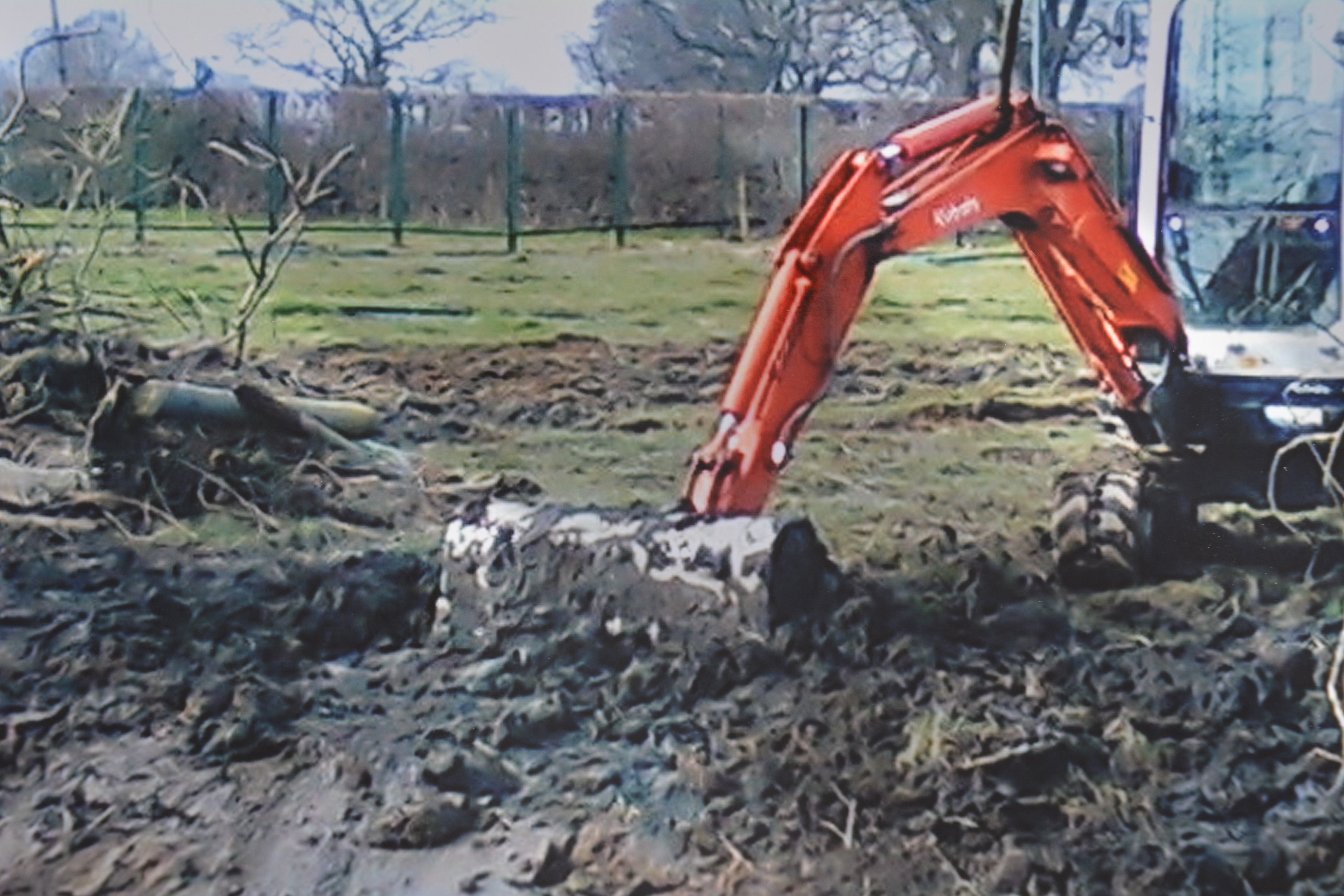
Diggers came in and scooped out all sorts of rubbish thrown into the pond by the farmer over the years, rusted coils of barbed wire, rotting fence posts, old metal fences, branches and boughs of trees. The old puddled clay layer was exposed and smoothed off. The aroma was disgusting! Sadly there was little sign of plant or animal life in the pond. At least all this disturbance didn’t upset the wildlife, the birds soon returned to the trees.
2015 03 04_9790

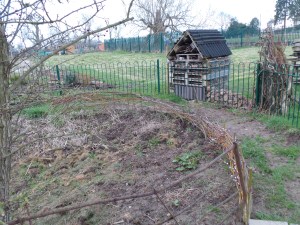
As a community garden determined to increase the biodiversity in our 6 acres there was no question that it would become a wildlife pond. To begin with we had to recontour the area between the pond itself and the fence to make passage around it easier and safer. It was hard graft and took a lot of volunteer hours to get it done.This will enable us to keep a path mown all the way around the pond for maintenance and enjoyment. But first we must rotavate the pathway to prepare it for grass seed sowing as soon as the weather allows.

You can see from the group of photos below the area we have to work with and the work we have done so far, the lopping of the trees, the path leveling and the preparation of the bog garden. The pond itself is about 20 x 10 metres and the marshy patch about 8 x 7 metres so pretty impressive! And then there is a margin area varying in width between just over a metre to about 4 metres. W have set ourselves a mammoth task! But we have allowed ourselves a year to get it right. So far things are moving along much more quickly than anticipated as opportunities have come our way.

2015 01 18_9352-1

The next photo shows the bog area at the end of the pond where the drainage pipes from adjacent farm land brought the water into the pond. This was a steep sided marsh area with a tiny stream meadering through it. We have piped the water below the area now and re-contoured the sides to make it safer. This area will be planted with native and other wildlife attracting plants such as King Cup, Liatris, Yellow Flag and Flowering Rush.

2015 01 18_9353-1

We have recently started the planting and will soon be adding far more. Some we will get as donations from our members and neighbours but others we will get from local nurseries once they have got their stocks out. So far we have planted different sorts of Irises, Water Mint, Water Forget-me-Not, Bog Beans and oxygenators. The first pair of pics shows Jude collecting plants from our pond at home and the second pair shows Sherlie planting some in the new pond.
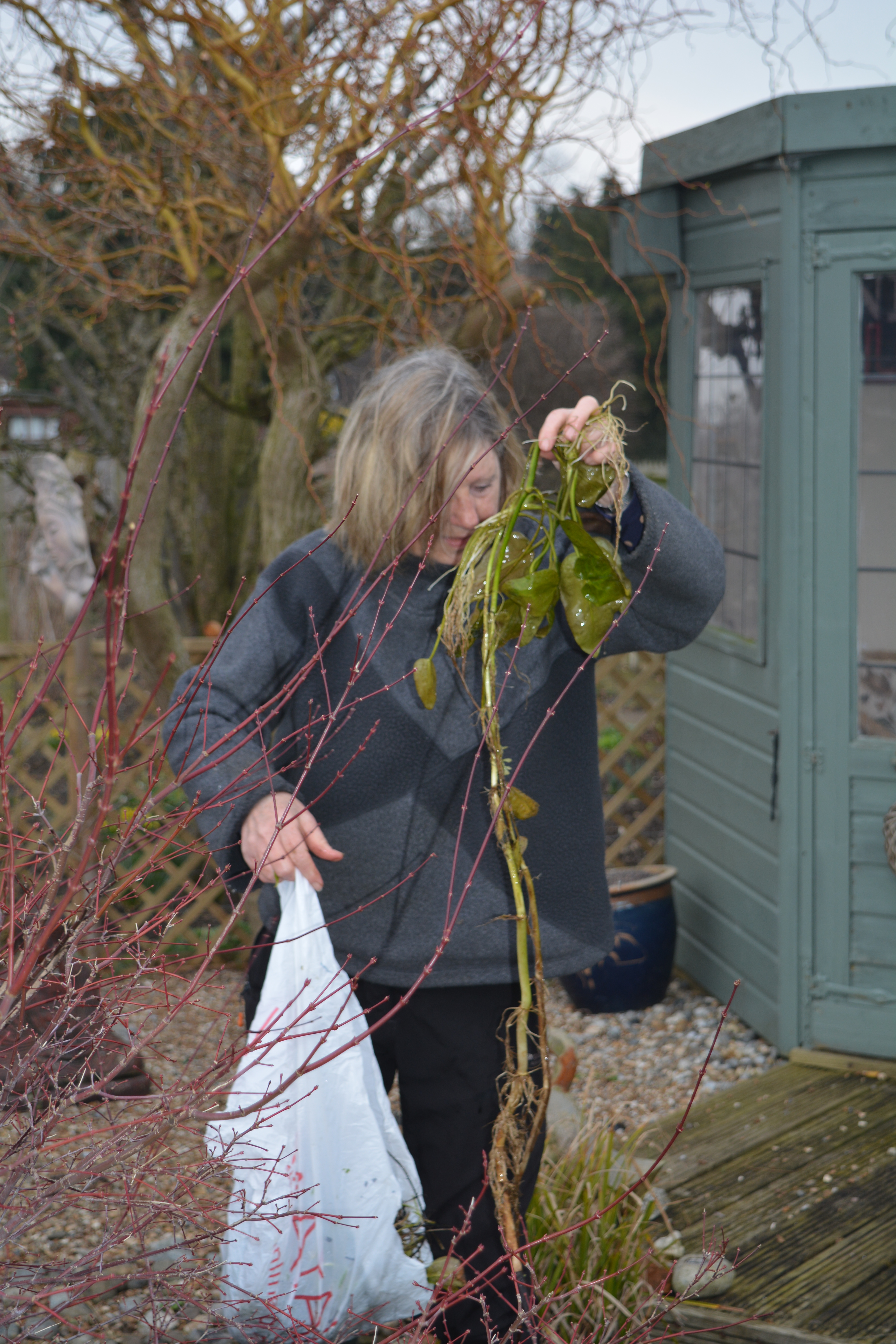
2015 03 17_0035 2015 03 17_0034

2015 03 16_9942 2015 03 16_0007

Several mature Ash trees surround the pond so some surgery was required to let more light in and help plants grow healthily. The bough below was slowly collapsing right over the water across to the far bank so caused us great concern. We had to cut it before it fell! We need to look after the health and safety of our members. I shall show this work in part two.

2015 03 16_9993

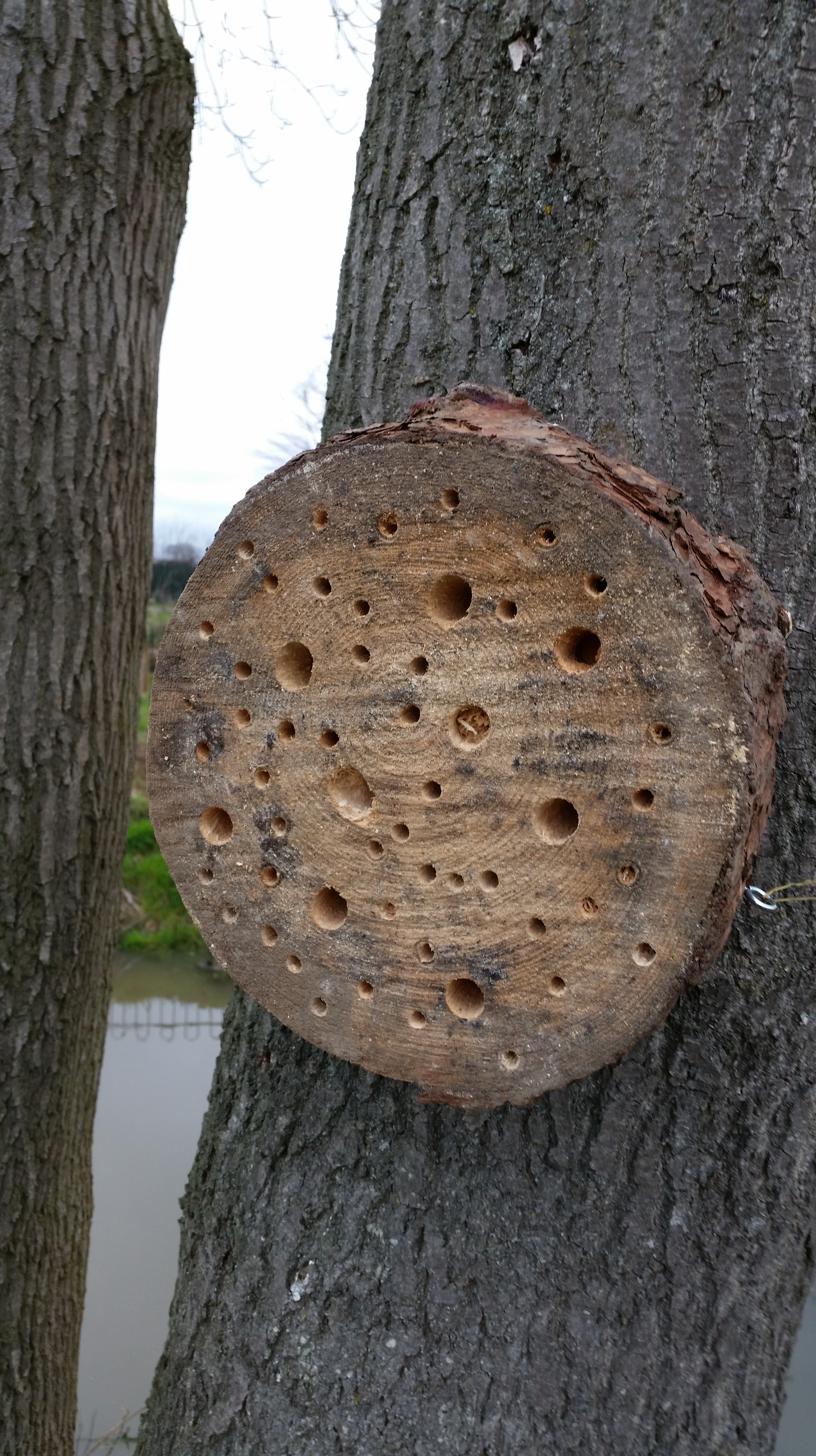
We have put up nest boxes, created a bird feeding station and are creating lots of mini-beast and amphibian habitats. Several are up in the group of Ashes that border one end of the pond.

2015 02 26_9670 2015 03 16_9991 2015 03 16_99852015 03 16_99862015 03 16_9995

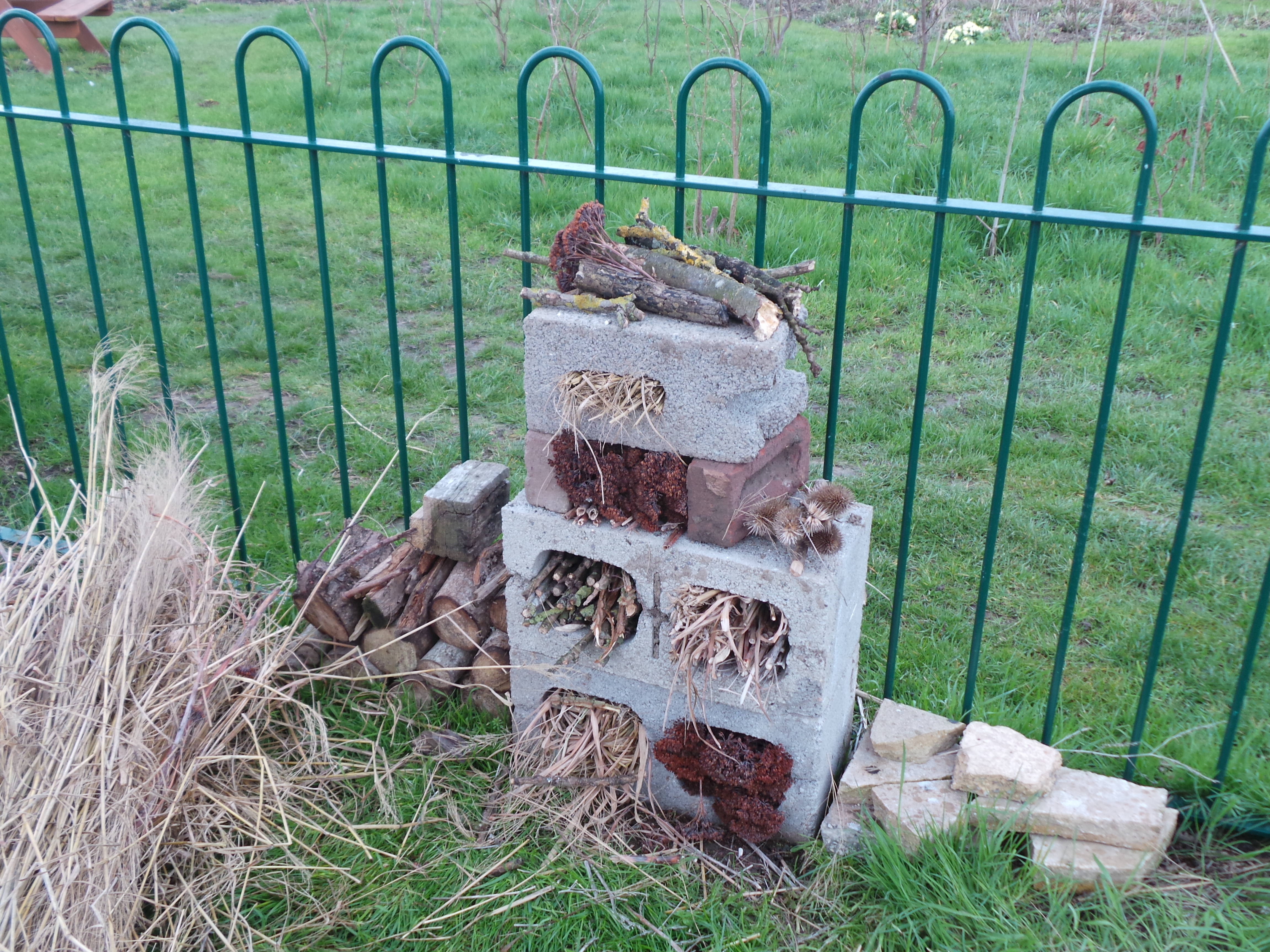
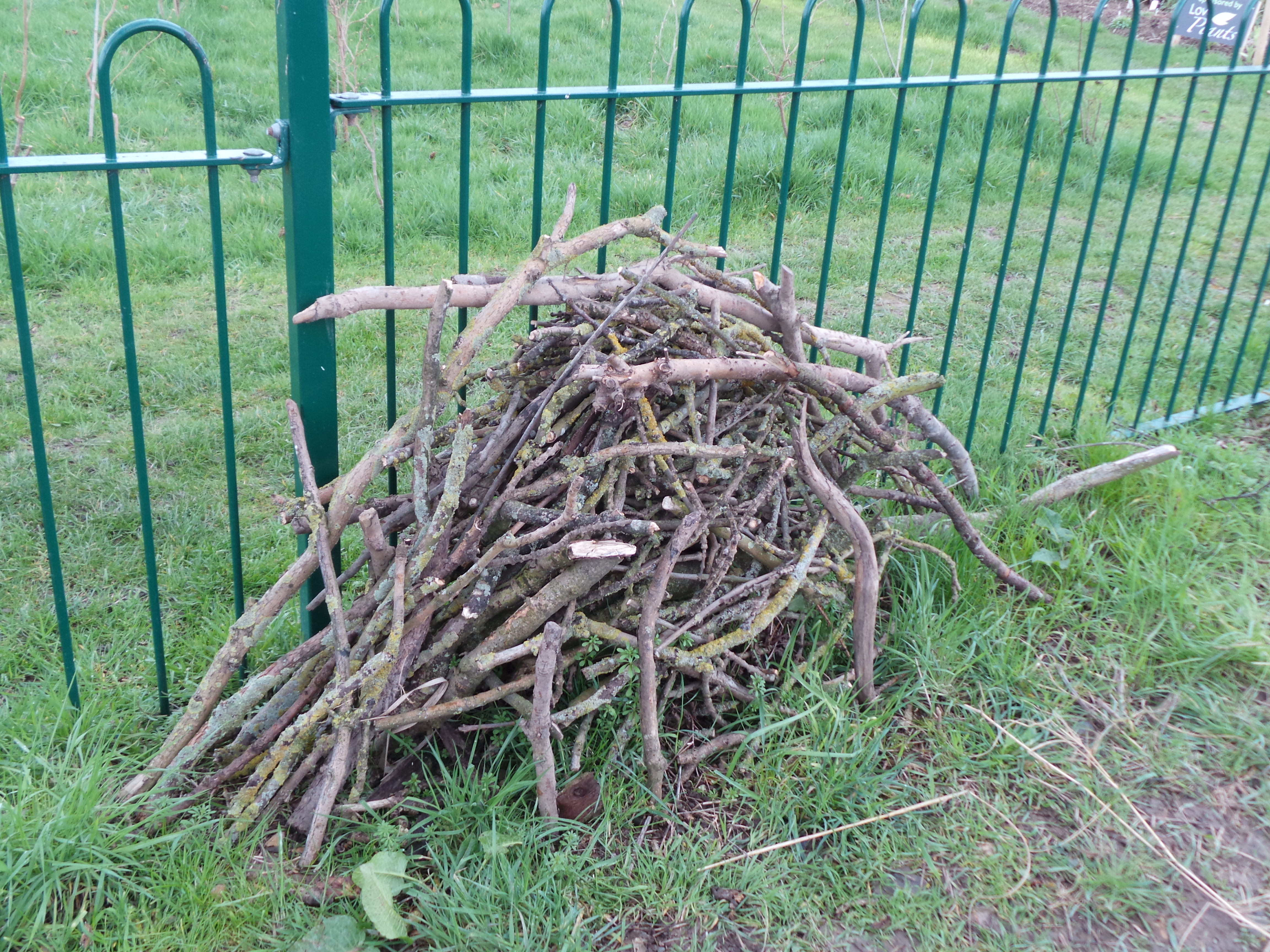
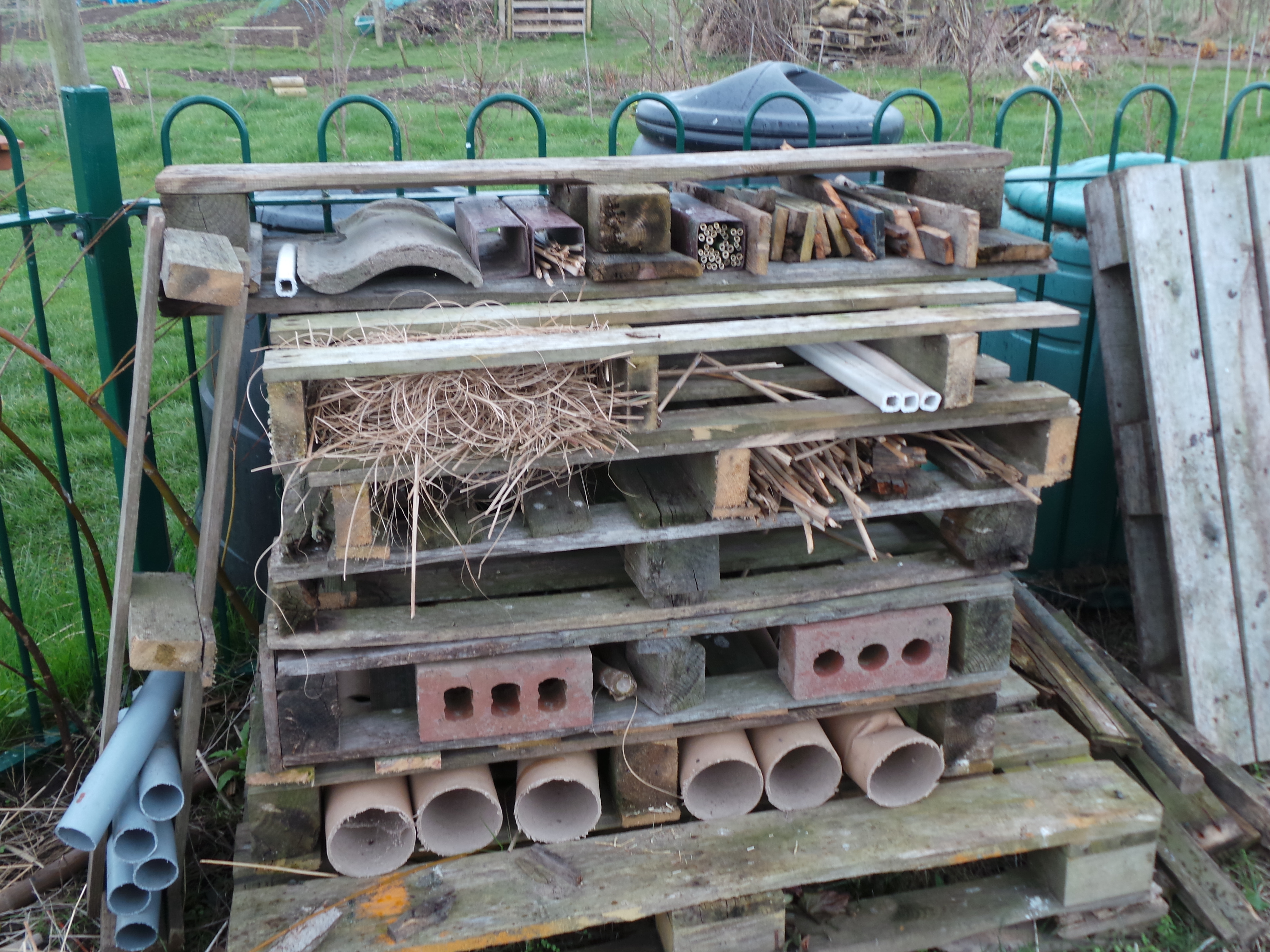
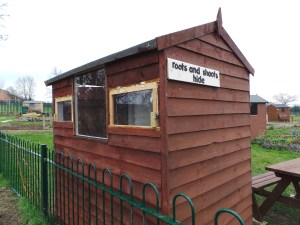
We have created extra wildlife habitats and shelters along the perimeter fence creating them from recycled items and natural materials. 2015 03 16_99872015 03 16_9988 2015 03 16_9989          Probably one of the most exciting elements of the whole project has been the creation of a bird hide for the children to use. This began as a battered old shed donated to us by a plot holder and transformed into a rather fine hide complete with a noticeboard for recording,some identification charts and a small library of identification books. Two plotholders, Sean and his dad Vince volunteered to carry out the conversion and soon other family members joined in. The finished hide was way beyond our expectations as they managed to fit a kneeling bench down the one side to enable children to look through the hatches they had constructed. For wet days when the hatches need to stay closed they added a perspex window. All this from my very simple plans and drawings!
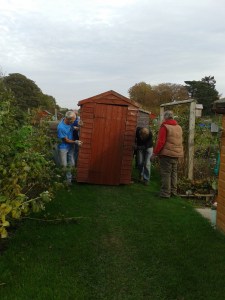
Here we are moving the old shed from one side of the site to the other in true Roman style, rolling it along on round stakes. It proved a great adventure as it kept trying to change shape and the door constantly flew open.

2014 12 08_8466 2014 12 08_8468

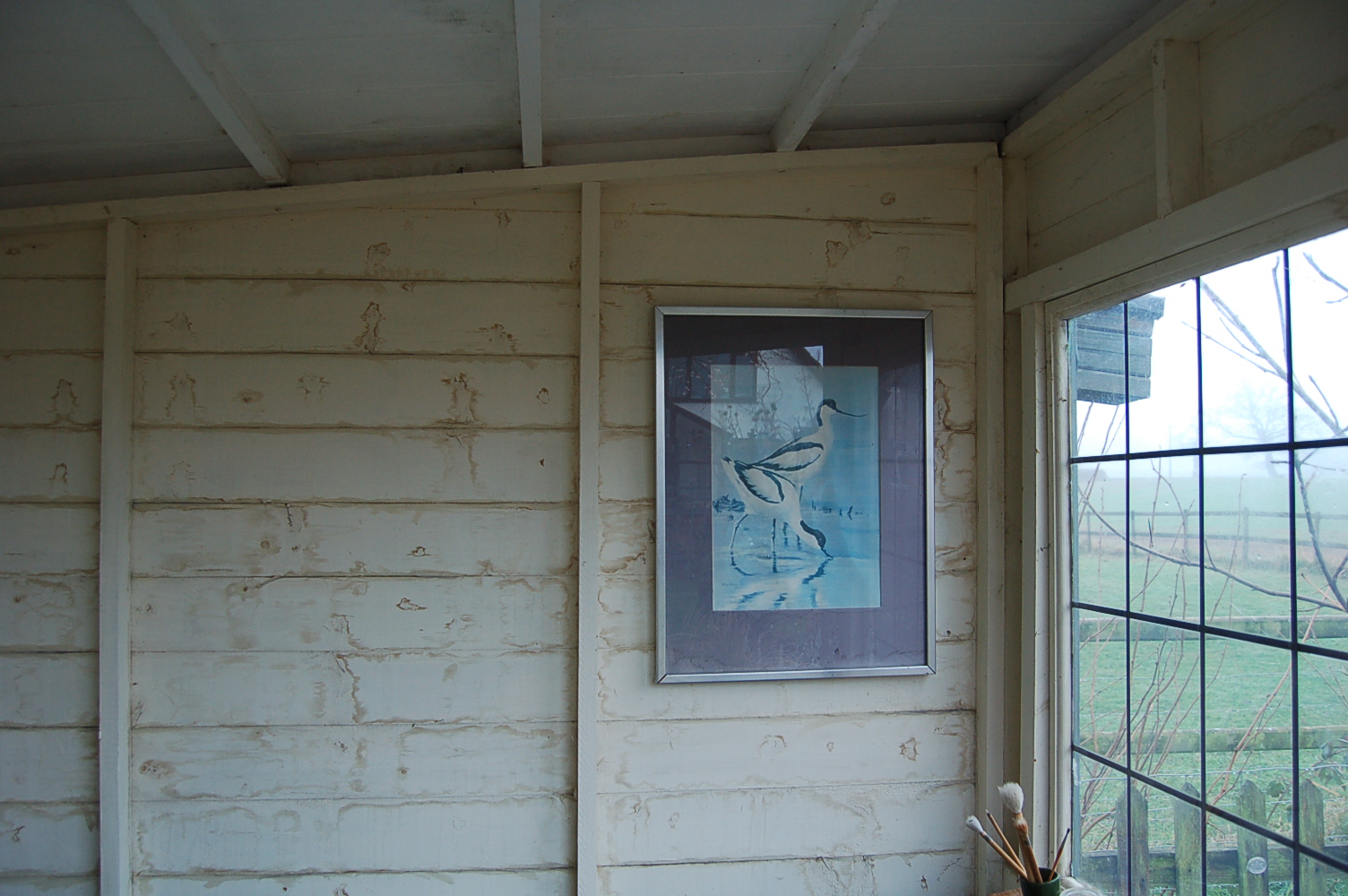
And here is the shed now transformed into a hide, just like the ugly duckling turning into a swan. The rest of the story of how the transformation came about will be in part two.
2015 03 16_0004  2015 03 16_0005

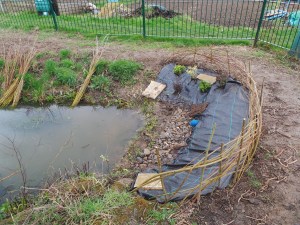
Wherever the pathway gets close to the bank we have planted a low boundary hedge from willows harvested on site and have woven whips of different coloured willows from the brightest yellow to the darkest black  through it. Similarly at the outlet end where water drains to prevent flooding, we have a steep area bank which we have given a similar low willow fence and we are slowly planting up the slopes with small ground covering shrubs that also attract bees, butterflies and hoverflies.
2015 03 16_9998 2015 03 16_00022015 03 16_0000 2015 03 16_9983


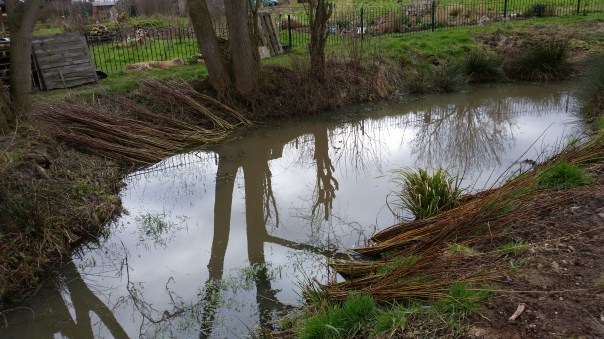
We stored the willow prunings we had after coppicing and pollarding our “Withy Bed”. The photo shows these awaiting action and illustrate just how many colours of willow we have to play with
2015 02 26_9667 2015 02 26_96682015 02 26_9669

A recent job was to make barley straw pouches to drop in the water to help keep down the growth of algae and blanket weed – a good organic solution. Look closely at the picture below to see if you can spot one.

2015 03 09_9802

We know there are some critters who are looking forward to us finishing or at least being somewhere near a livable place for them. the resident group of Weasels, our Mallard families and the site’s frogs. We must pamper to their needs as they entertain us and do much of our pest controlling.

2014 11 28_7933 2014 12 08_85932015 02 28_9789_edited-1 20150207_141312

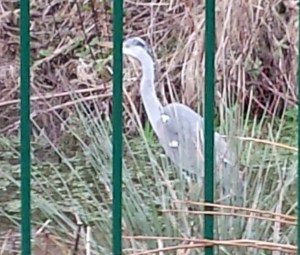
The bird in the fourth of the above photos though arrived amid mixed feelings from us all. Our Grey Heron is most definitely a handsome bird but he is a threat to our fish. We have a small population of native Rudd in the pond brought in as eggs on the feet of the ducks. Sadly until we get some plant cover for them to seek refuge beneath they will soon be wiped out by the Heron. The photo was taken on a member’s mobile phone through our green fence.

In part two we will look at details of how the hide ended up, some of our tree surgery work and the adventures we had putting in our duck tube.


Categories
bird watching birds garden design garden photography garden wildlife gardening natural pest control photography Shropshire shrubs village gardens wildlife

Summer house revamp

After ten years our summer-house, our little quiet place of escape at the bottom of the garden, was beginning to look worse for wear. The back wall faces directly south so gets harsh sun on it in the summer months and as our garden is at the bottom of a hill temperature inversion in the winter means that the poor summer-house feels the full effect of  the cold frosty air as it rolls down the hill to hit our summer-house first. The first two pics show the summer-house as we began work, with the original interior on the left and the first stages of cladding the walls on the right.

DSC_0041 DSC_0040
We decided to re-clad it inside and out and then repaint both the inside and outside. A job that ended up taking us a long time as we fitted it in between more interesting gardening tasks.
But at last we have finished! A big sigh of relief can be heard all over the garden!

So, first let us share with you what it looks like now.

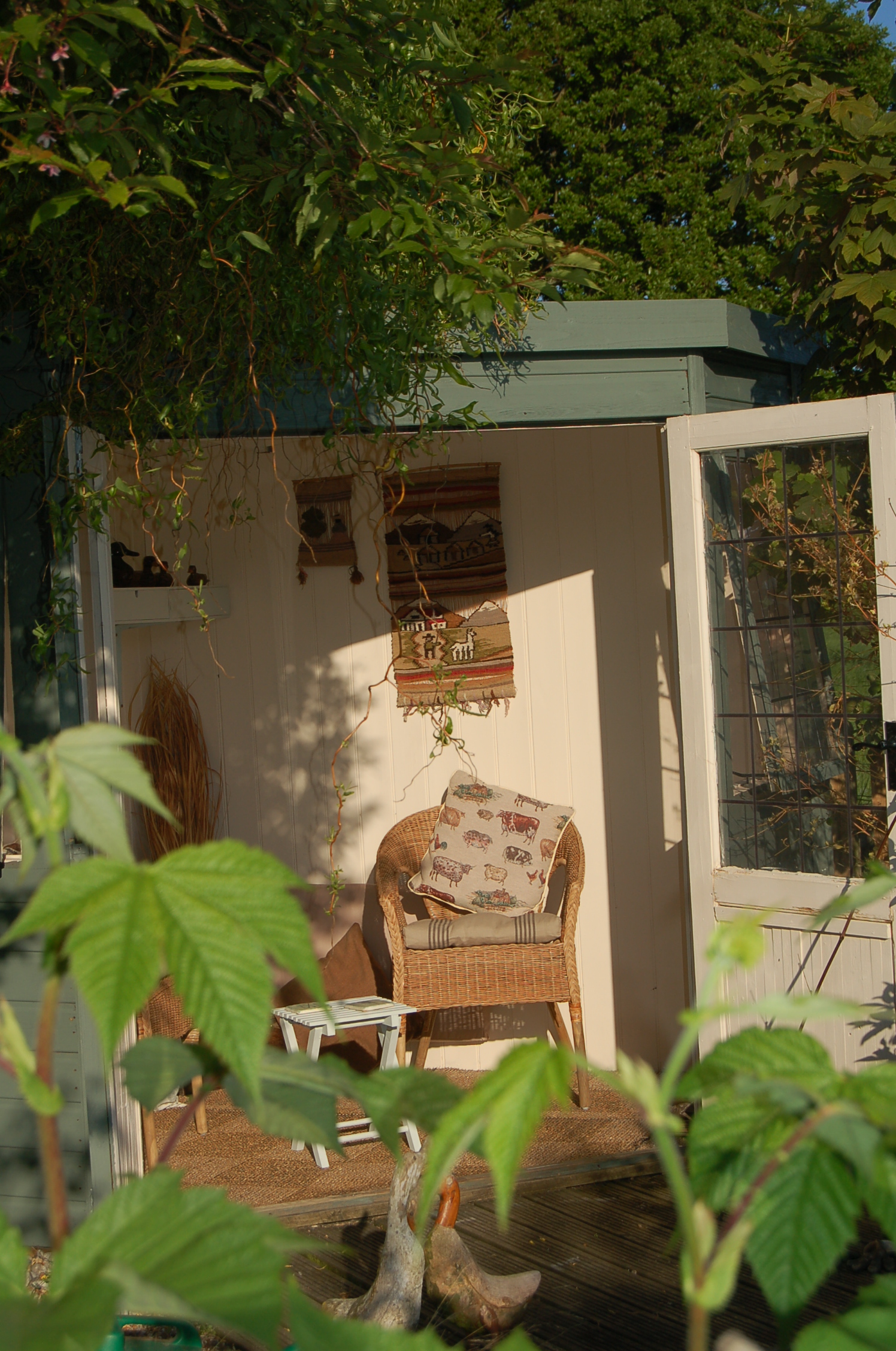
DSC_0001-22 DSC_0002 DSC_0003-22 DSC_0004

The summer-house is our little secret place where we hide at the bottom of the garden and ignore the telephone and doorbell, pretend that television and computers don’t exist and believe there is no lane passing our house.

It catches the evening sun in the last few hours before it sets, so is a great place to end the day. We sit and listen and we can appreciate a different view of our garden. We listen to the calls and songs of our garden birds and those passing over our heads. We can share the intimacy of their bathing as they come to freshen up in the shallow end of our wildlife pool. A square of decking sits in front of the summer-house and hangs over the pool.

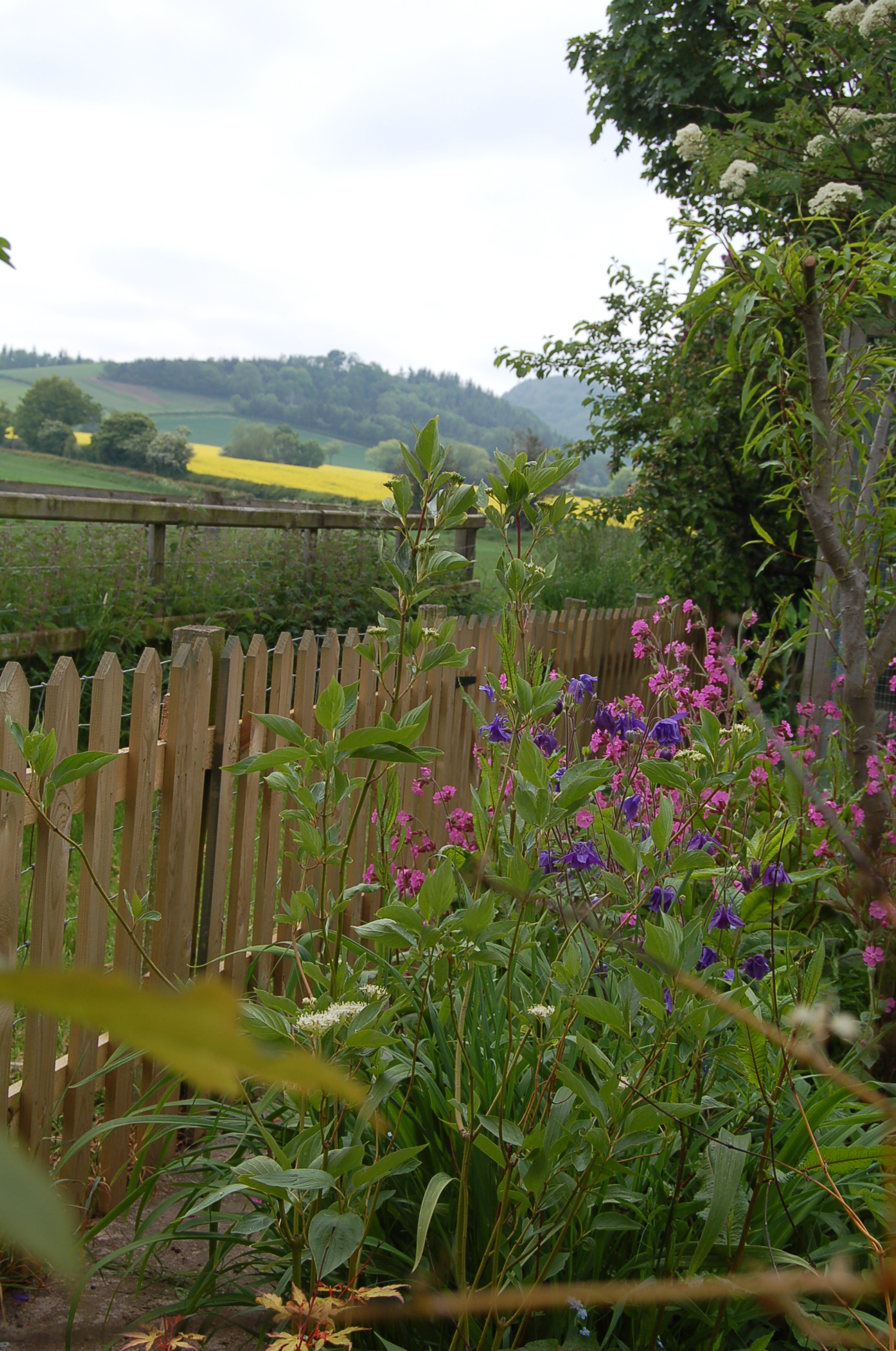
Please share the view from our summer-house seat.

DSC_0001-21 DSC_0002

DSC_0003

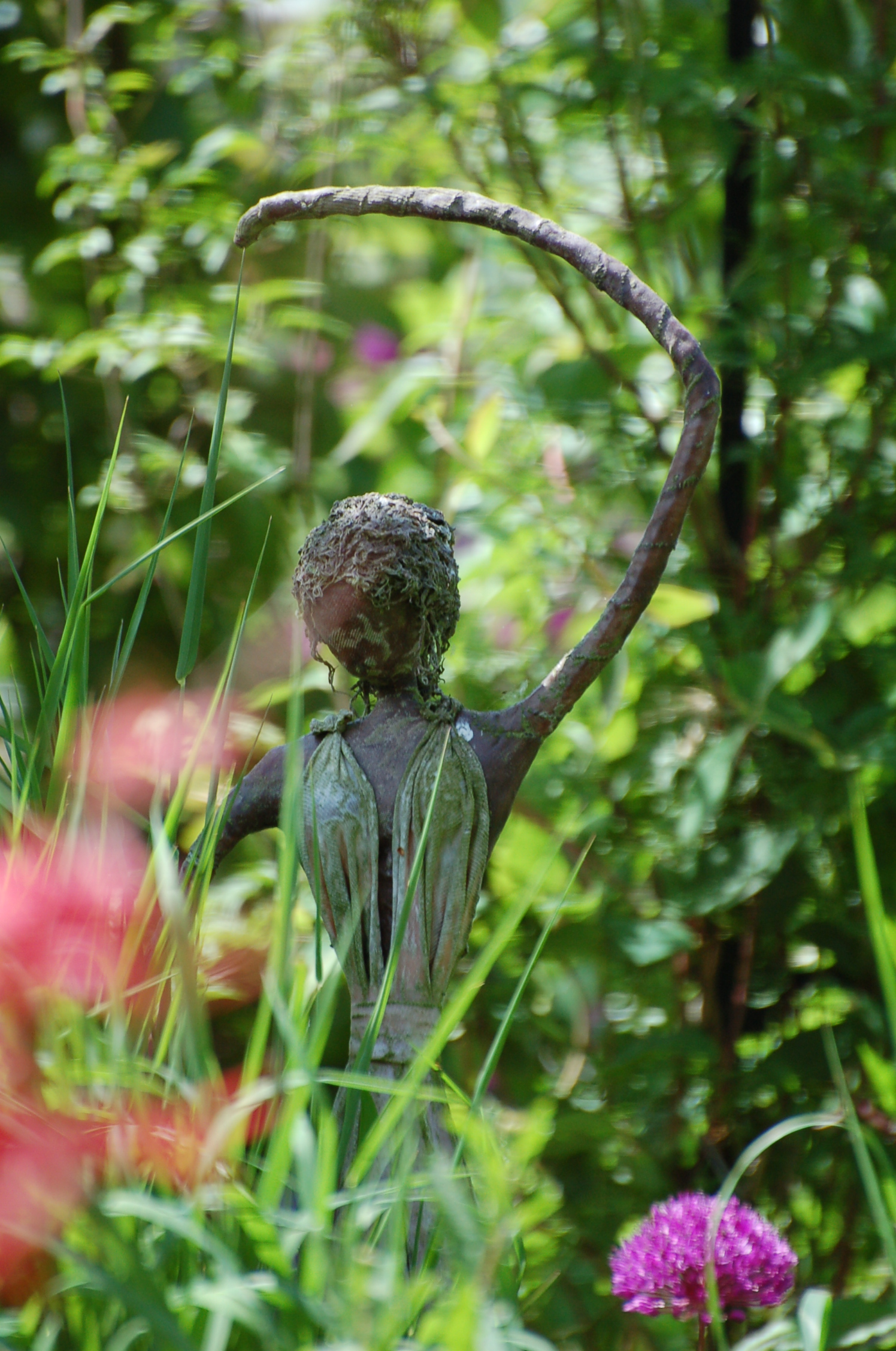
To give you an idea of some of the special things we can see right now from our little house I have taken a few shots with a long zoom on my camera.

DSC_0008 DSC_0007

DSC_0009 DSC_0010

DSC_0011

As we enjoyed a coffee in the summer house today, a female blackbird came to bathe almost splashing our feet. She must have been enjoying a few moments off the nest, a few moments to herself. A house sparrow also came to bathe when the blackbird returned to the nest. On the nearby bird feeders a nuthatch noisily bashed away at the peanuts with its long powerful beak and took small bits back to its young in a hole in a nearby tree. It soon returned for more and we heard its beak tapping on the metal mesh of the feeder.

A blue tit couple are rearing young in a nest box fixed to the summer-house and we watched as they appeared with beaks full of wriggling caterpillars. We could hear the fledglings begging as they open their yellow wide gapes to beg for their share of the wrigglers.

In the pond itself life lives on the film of water and secretly below the surface. Pond skaters dominate the surface but they are frequently joined by sub-surface dwellers in need of a gulp of air, newts, water boatmen and water beetles. Below the surface we can watch tadpoles of frogs and toads feeding and fattening themselves up.

The pond is home to many of our pest controllers such as newts, toads and frogs who all breed here at our feet.

But as we look out and appreciate our garden and its life, one nosey bird looks in to see what we are up to. A robin comes close, perches on the nearby malus and watches us with head cocked to one side as if bemused.

As we rest in our little summer-house world the garden and its wildlife busily carry on close by.

Categories
climbing plants fruit and veg garden design garden photography gardening half-hardy perennials hardy perennials meadows ornamental grasses ornamental trees and shrubs photography poppies roses Shropshire shrubs succulents trees

Another Wander around our Garden in June

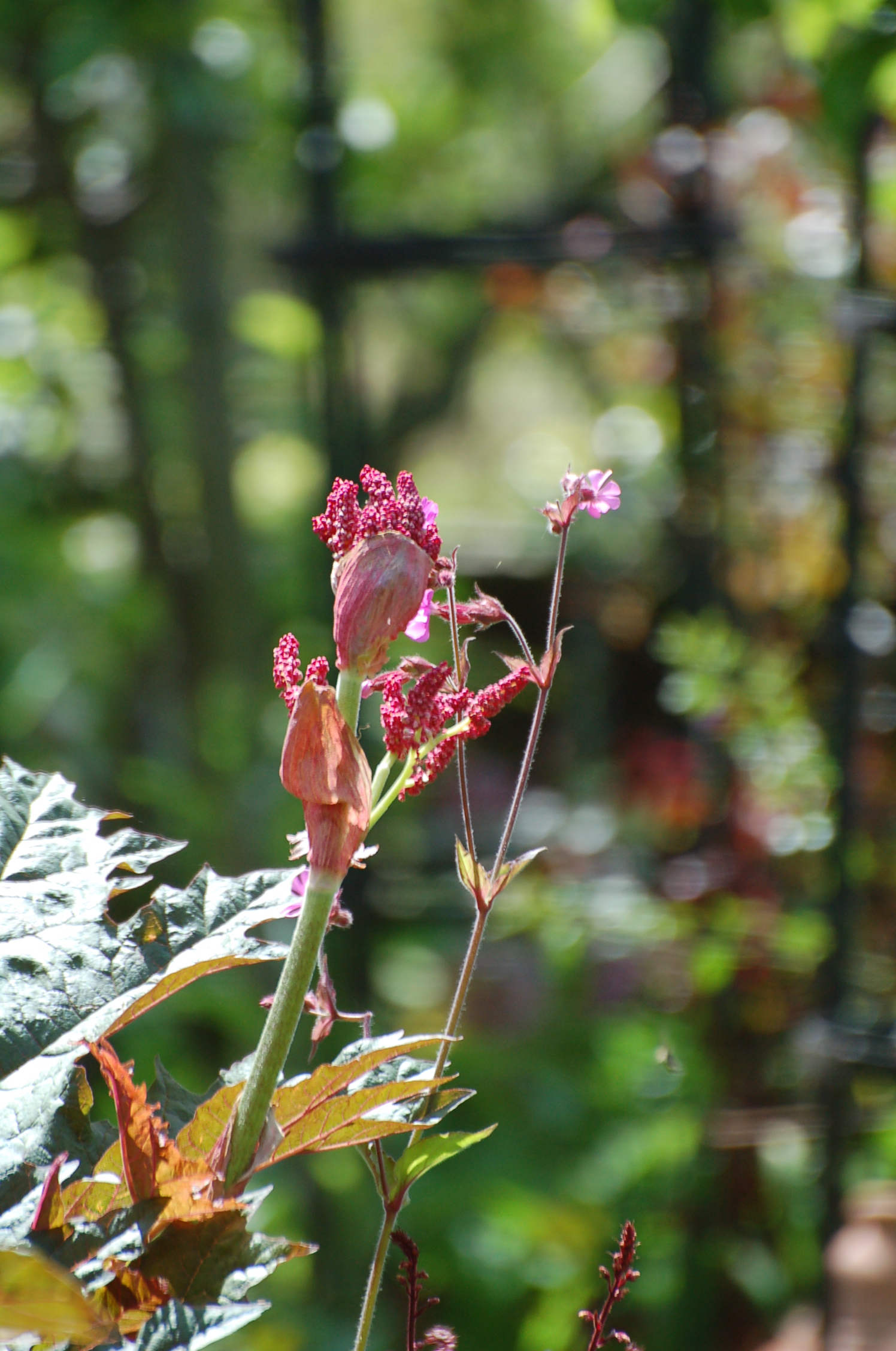
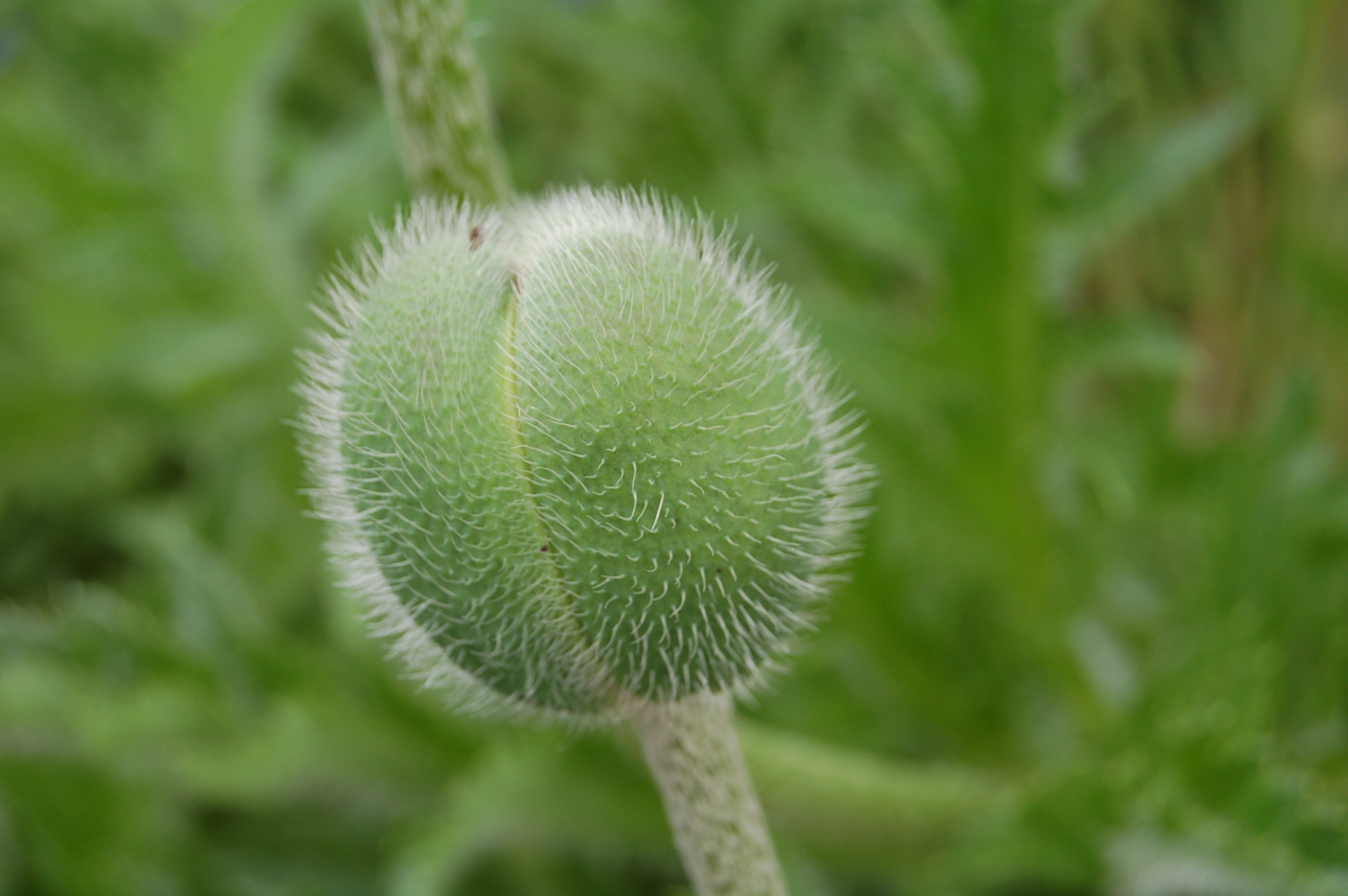
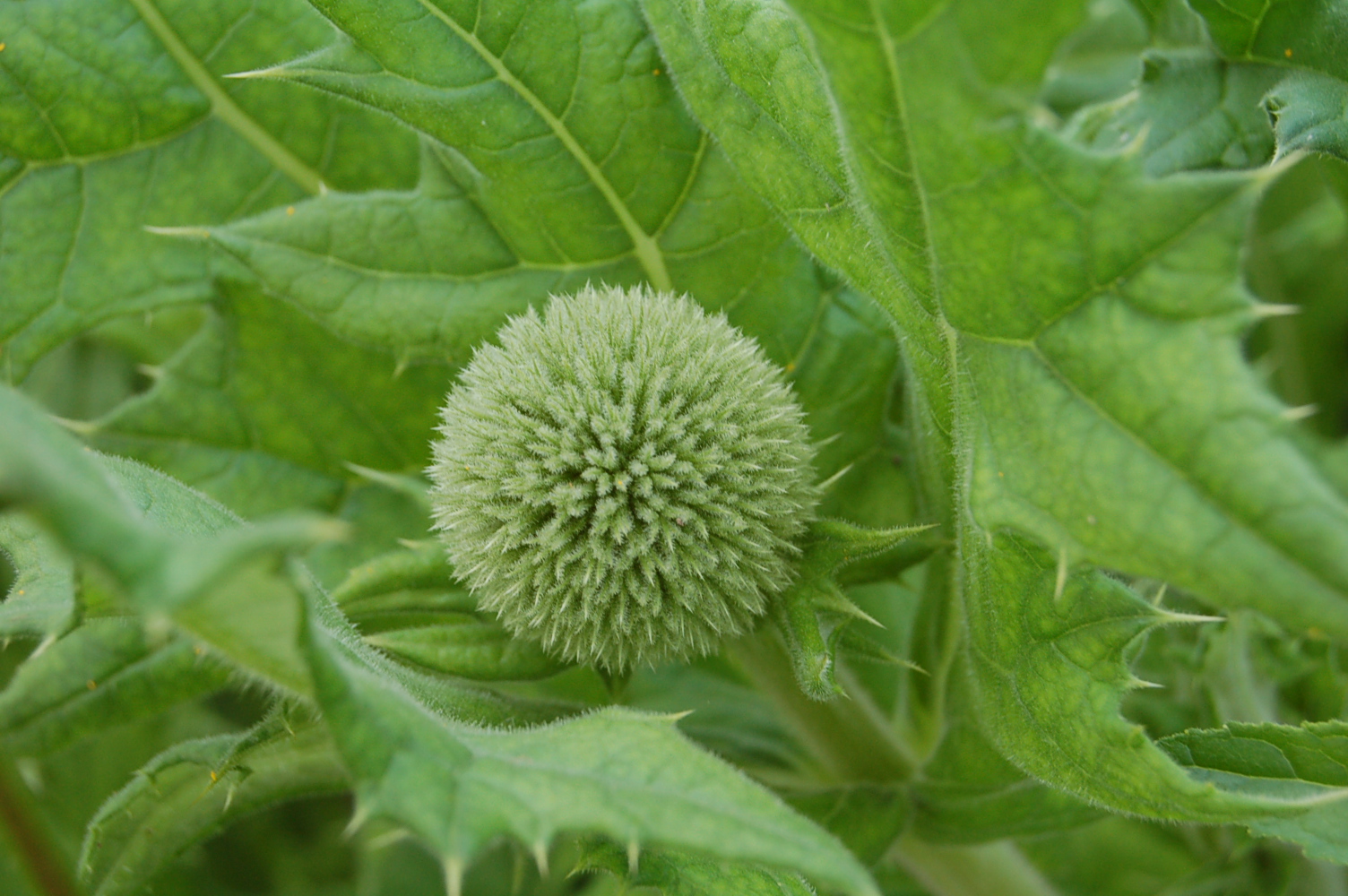
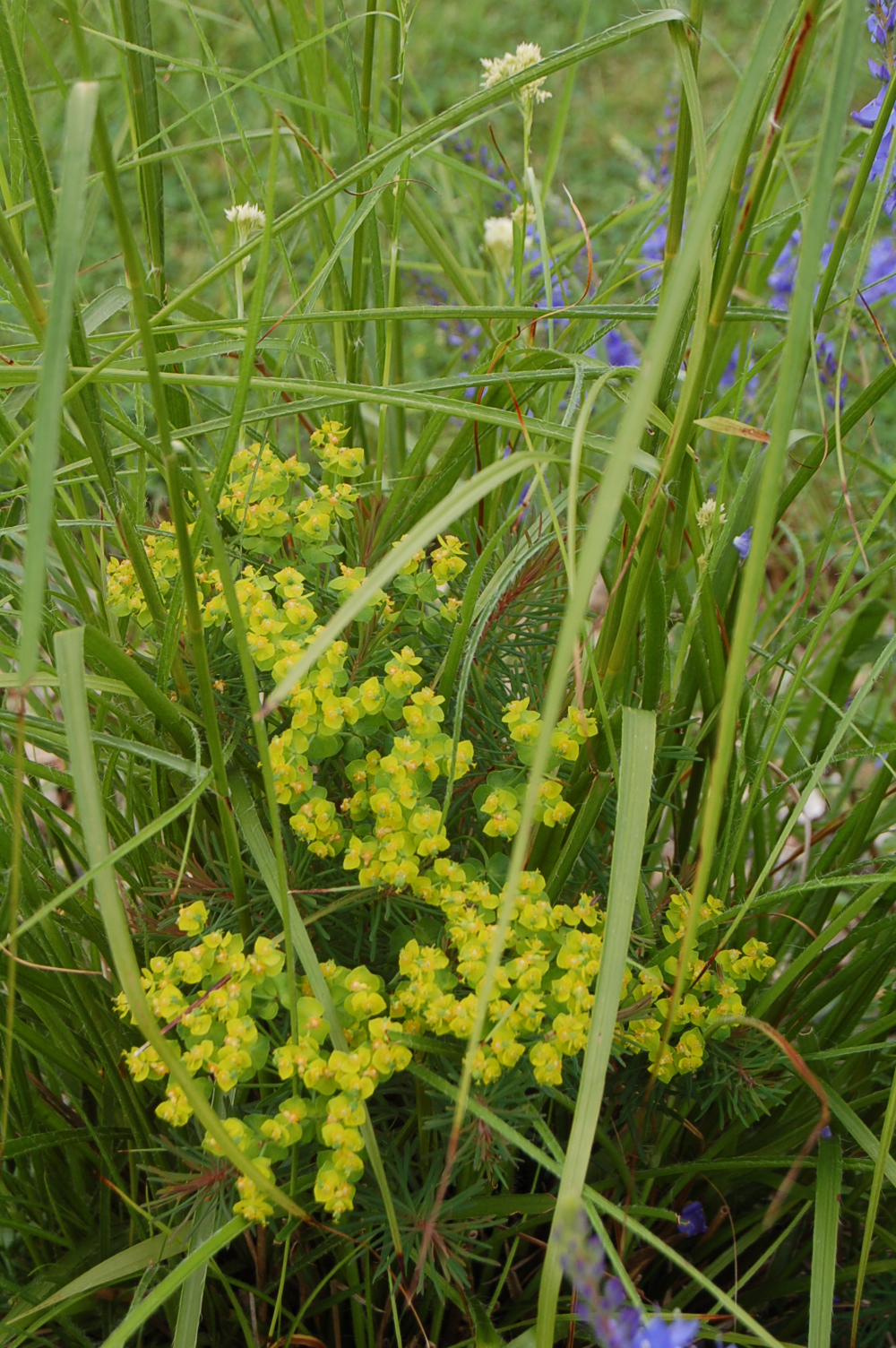
We can start the second part of our wander by looking again at the front garden. Buds give us hints of blooms to come in midsummer, Phlomis, Oriental Poppies, Erygiums and Echinops. Promises of yellows, reds and steely blues.

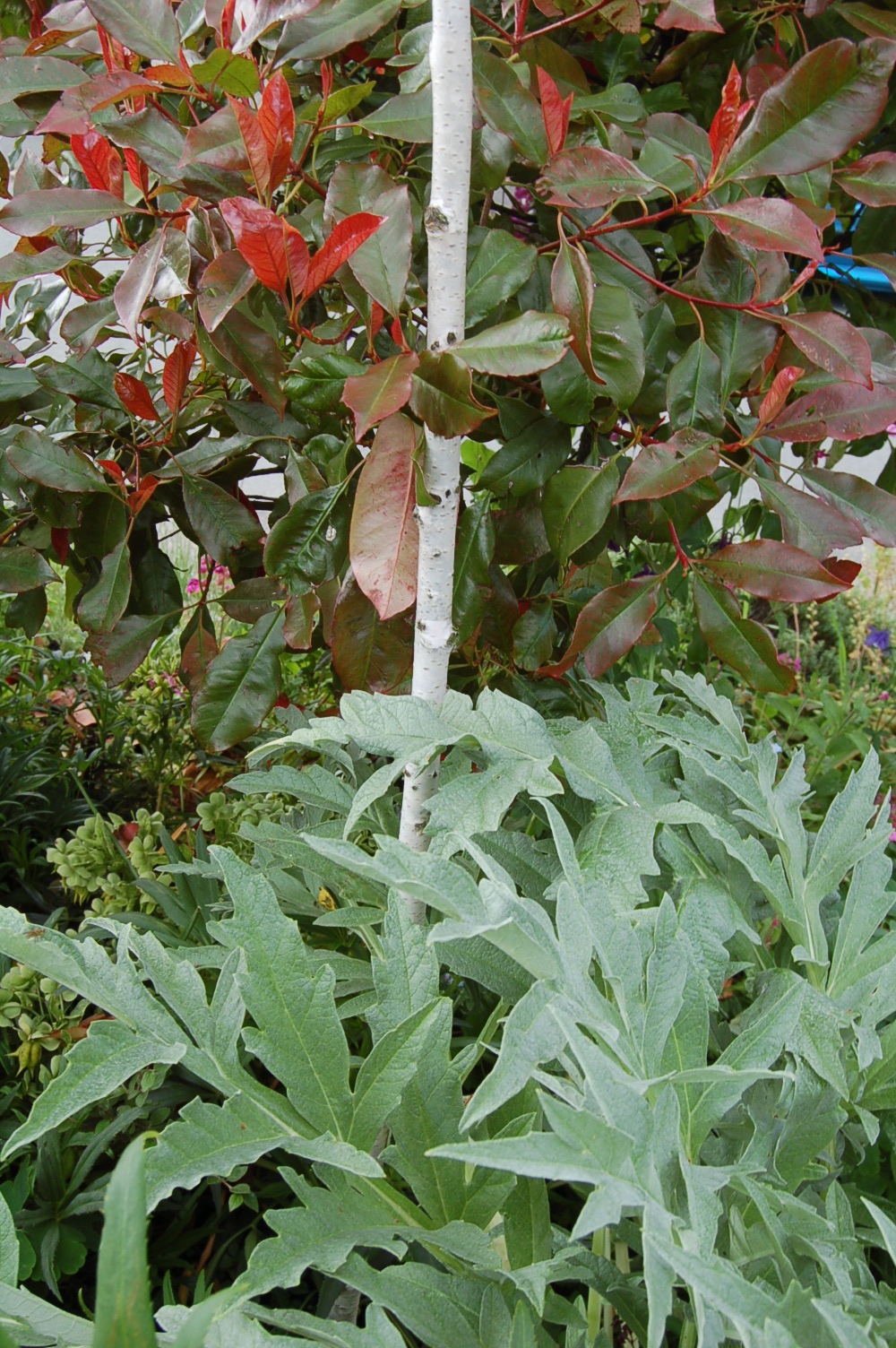
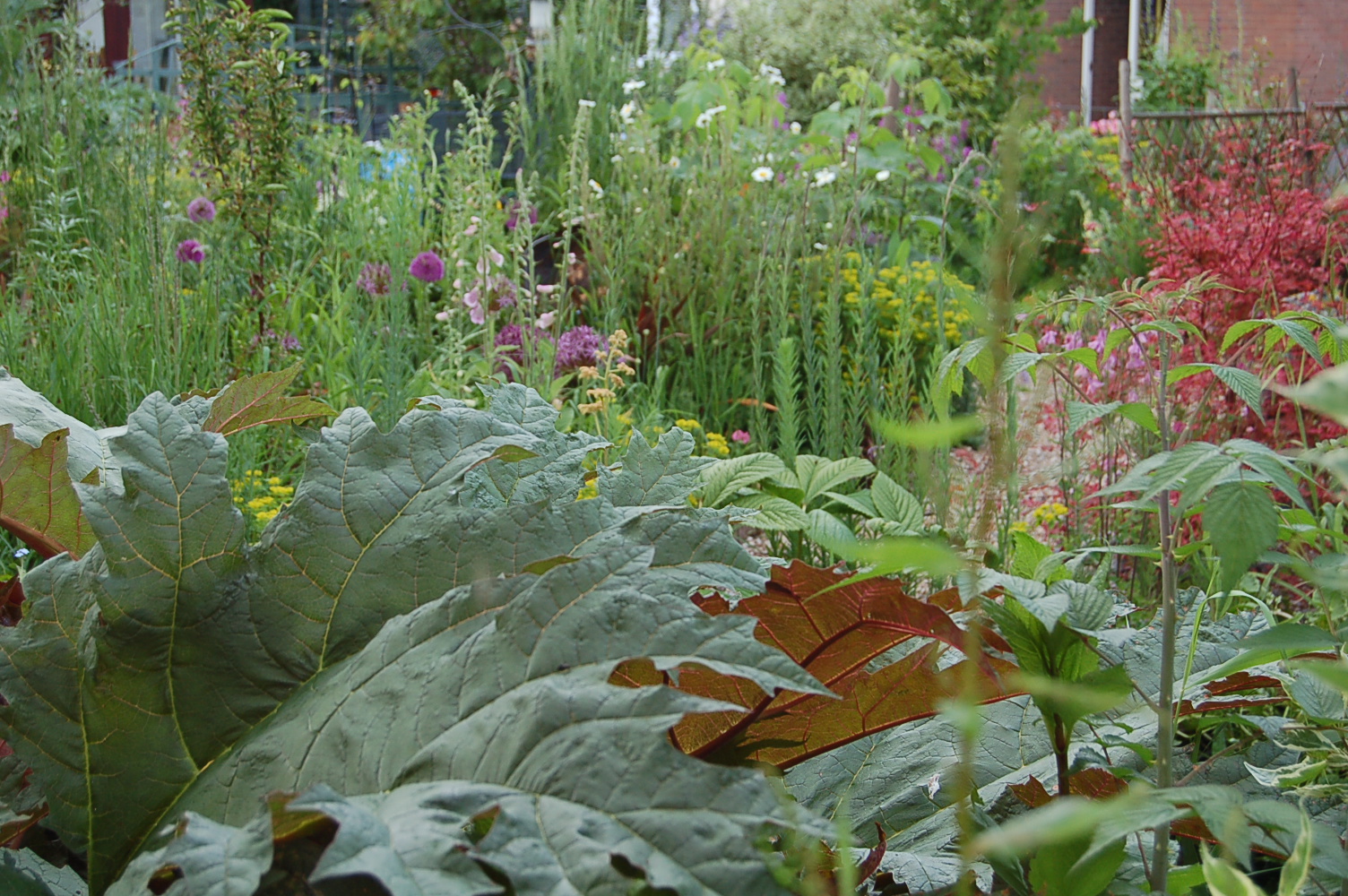
Foliage colour and texture can be as striking as the most colourful of flowers.

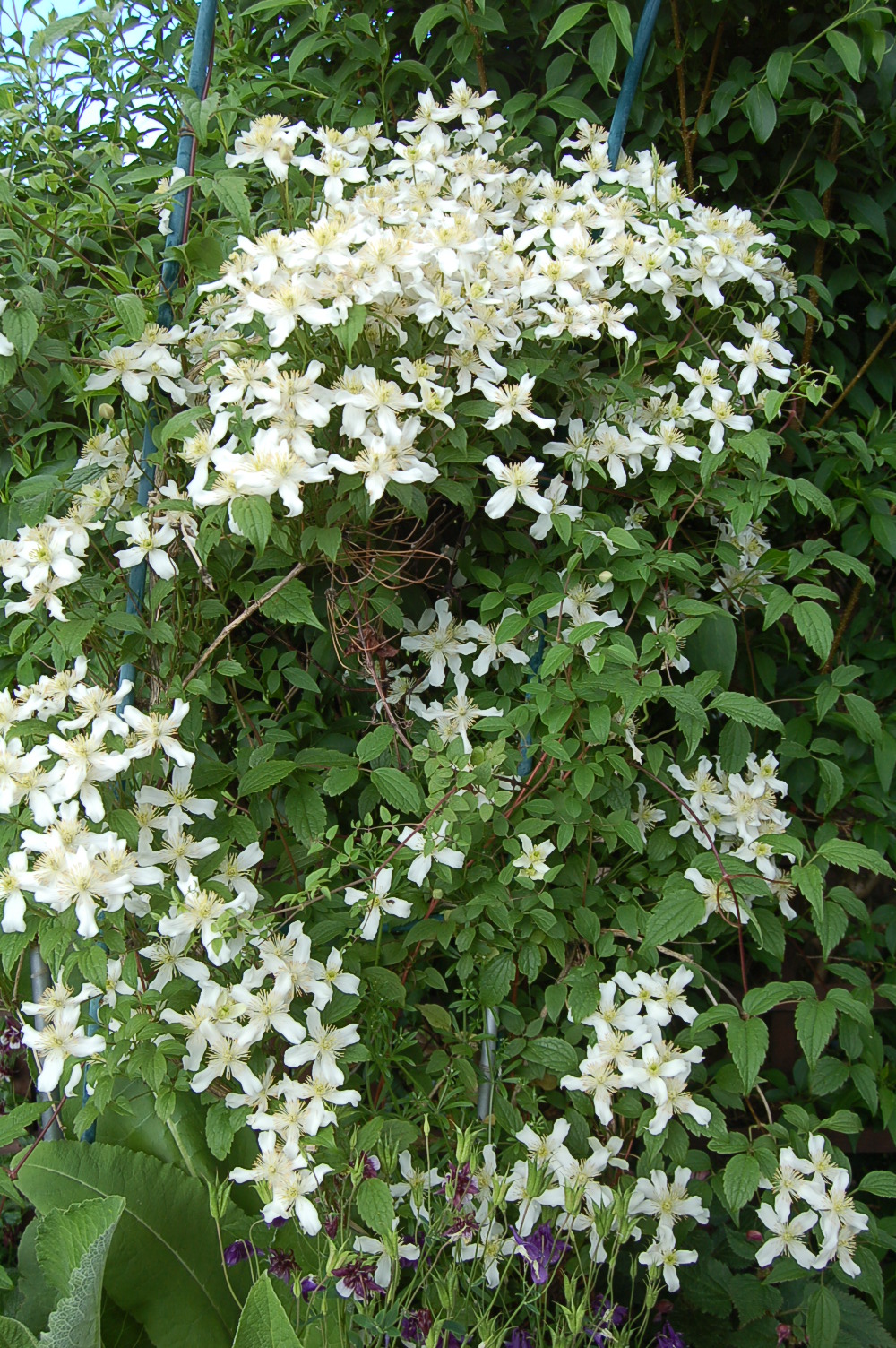
Our collection of Clematis are beginning to flower and others are covered in robust buds.

Flower colours have been so important during the first few weeks of this month simply as an antidote to dull days and dark skies. It matters not whether it is a gaudy cerise beauty or a subtle green or white.

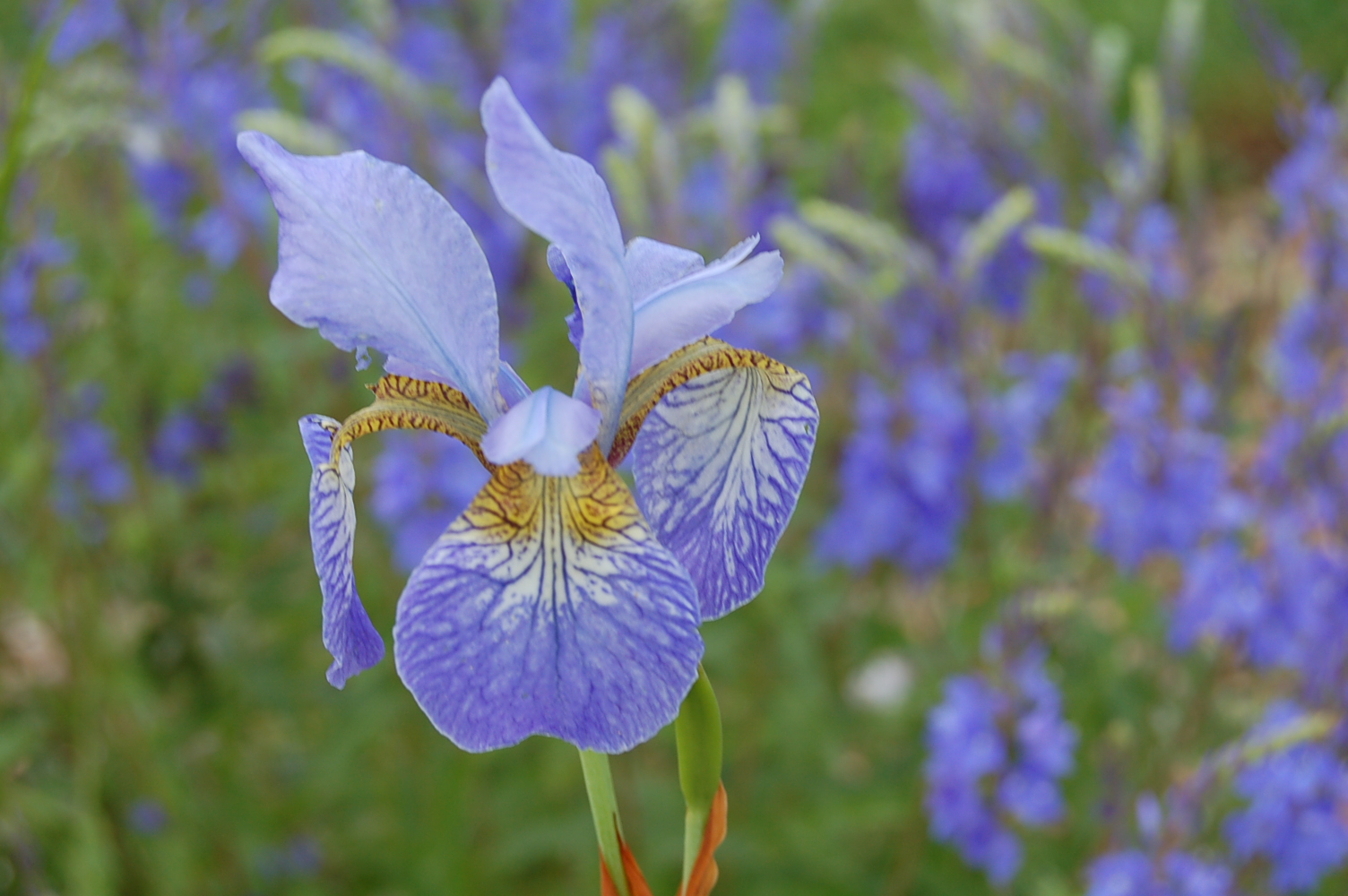
Blue on blue.

Another view of our Freda Border.

Our mini-meadows in their pots are developing well. We think we may be onto a winner.

The Shed Bed created on the site of an old shed which we demolished when we moved in, is really pleasing as below the shed we found just rubble, gravel, broken pots and sand. We added wheelbarrows of compost to improve it and now every little flower is a true gem.

A vine grows over one end of the greenhouse acting as a natural shading agent as well as feeding the gardeners. The startlingly red flowering currant has hitched a lift along it so the vine drips with red droplets.

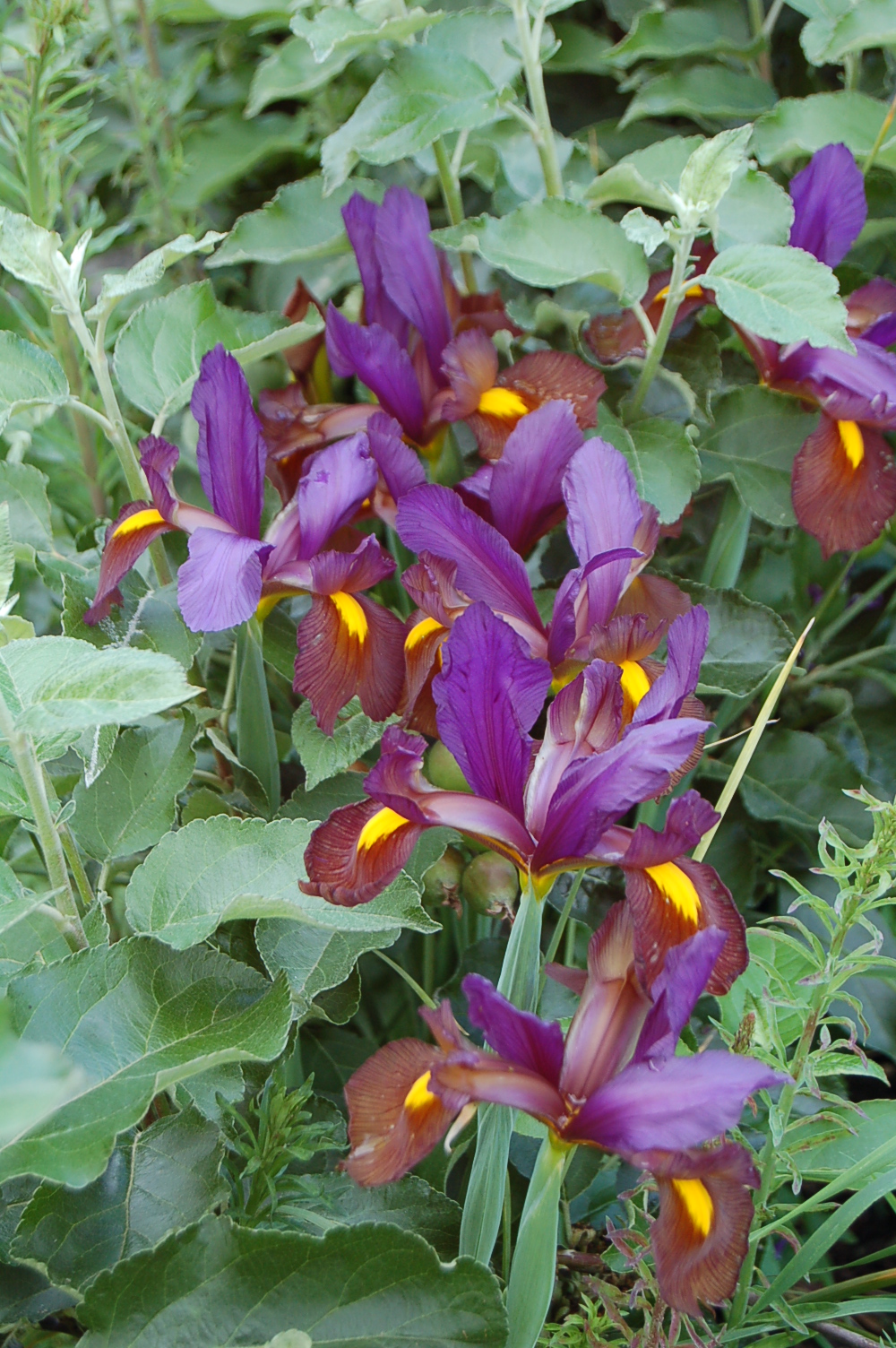
We enjoy these irises as cut flowers but bees take advantage of them before we pick them. This clump is growing through our stepover apples. Double harvesting – cut flowers followed by apples.

The planting around the pool has closed in and made it an intimate area. Nearby the Prairie Garden is bursting with fresh blooms.

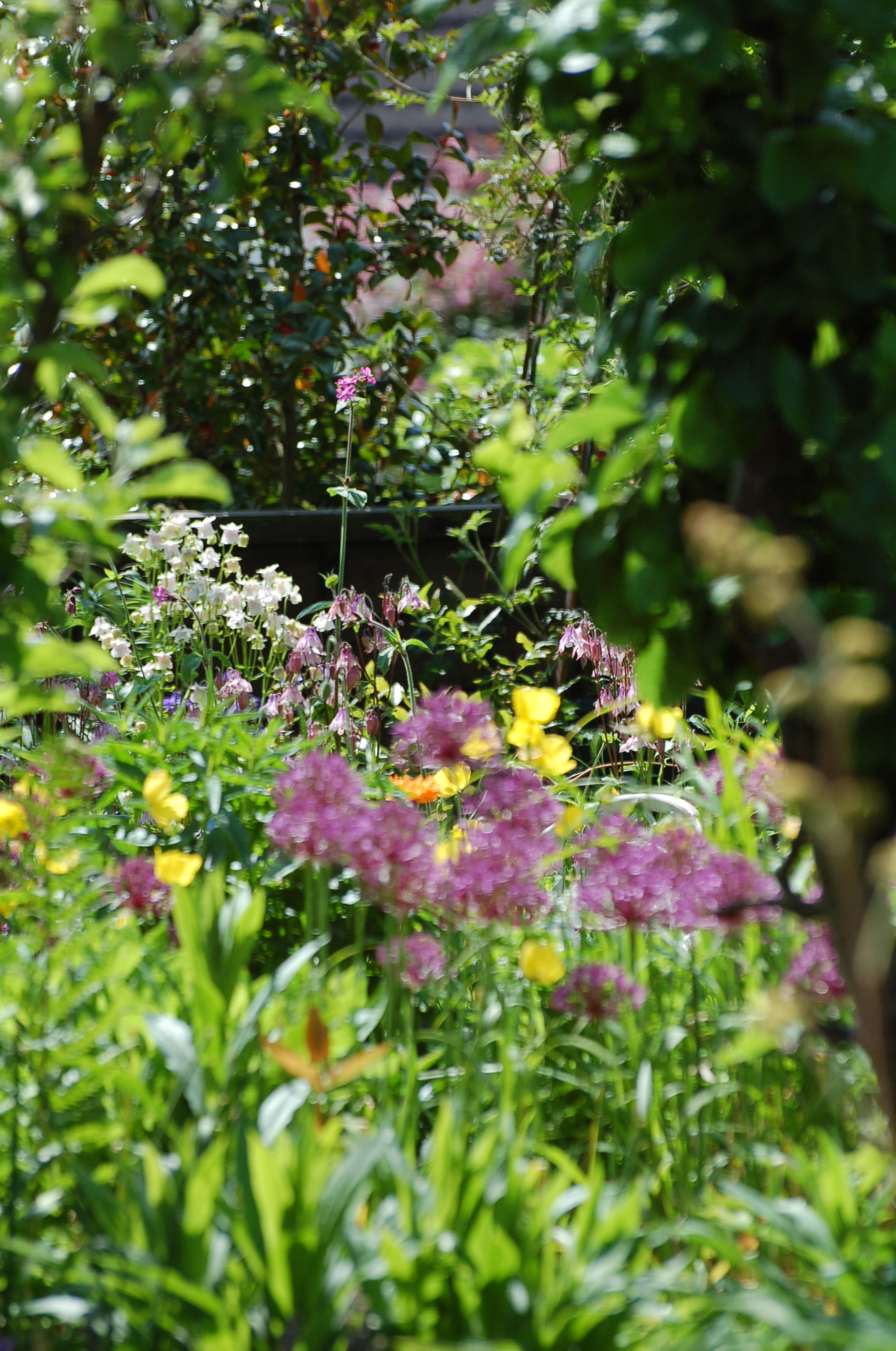
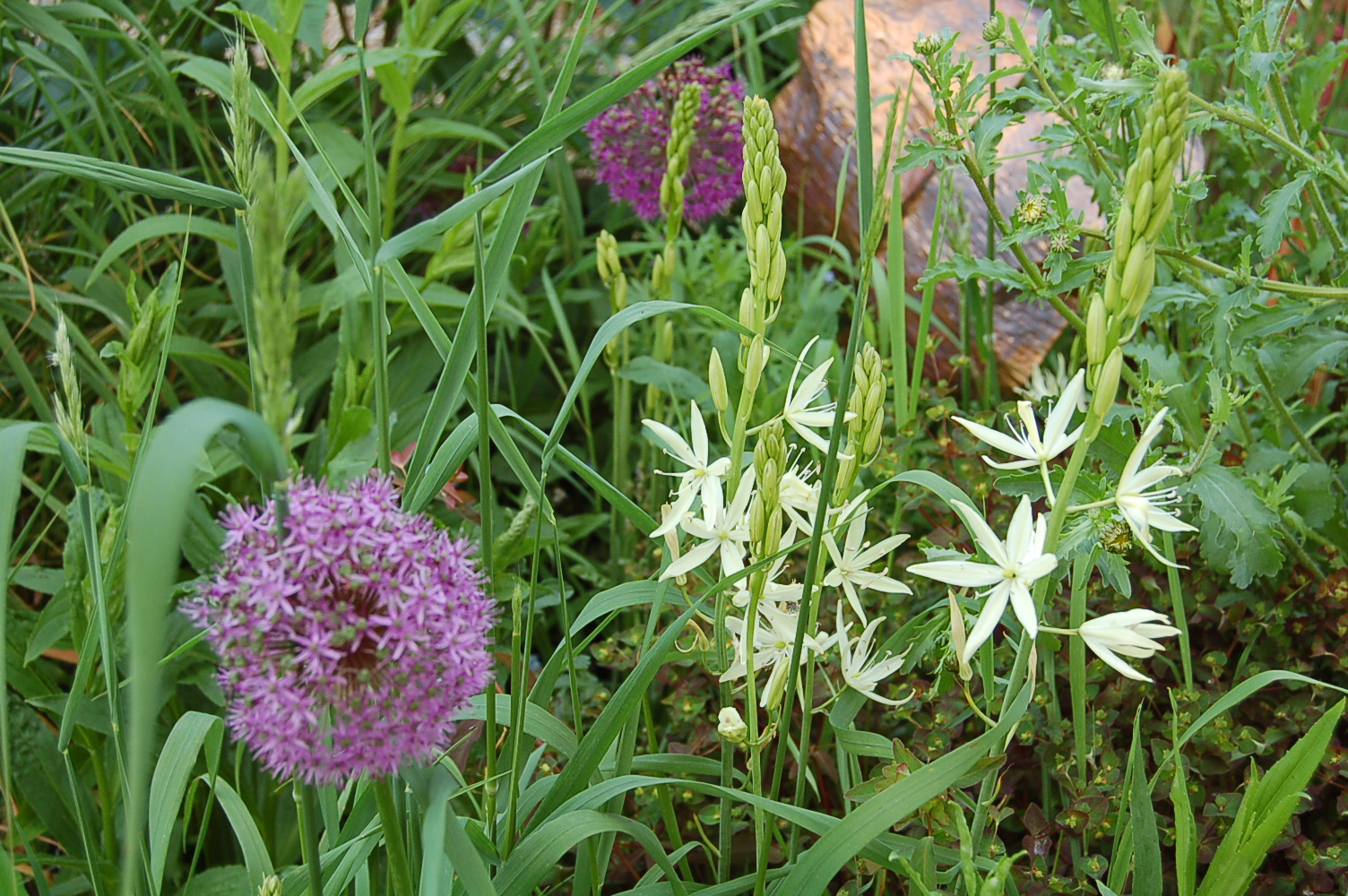
In the Secret Garden Aquilegias and Alliums look good alongside the purple foliage of Pentstemon Huskers Red.

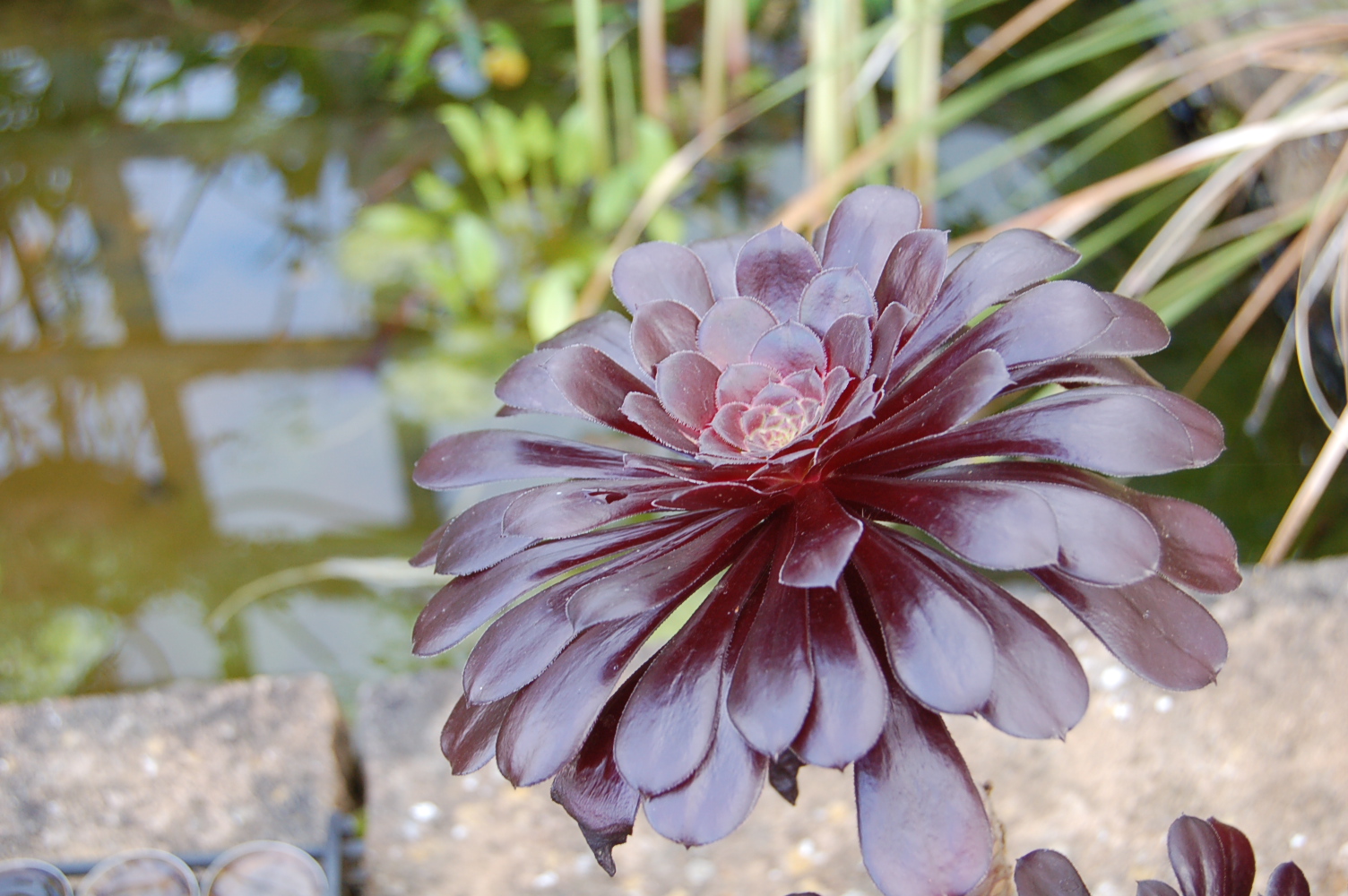
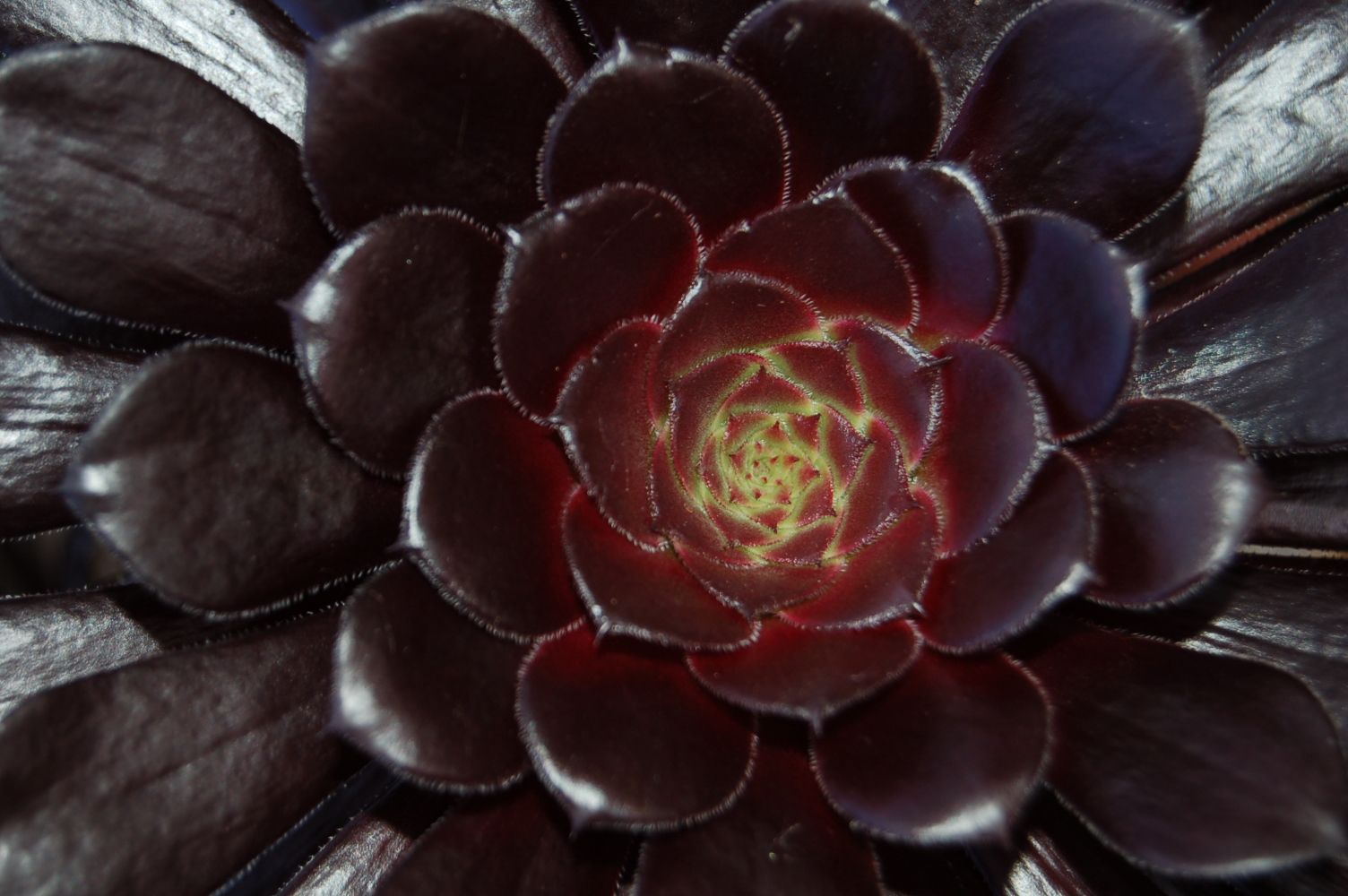
These aeonium enjoy the hottest part of the garden, the Rill Garden.

To one side of the rill we grow a snake bark maple, with silver and green striped bark, cream and red seed capsules and in autumn it has amazing rich red foliage. A wonderful specimen tree to finish this garden wander underneath.

This Veggie Life

A Vegetarian | Nature Lifestyle Blog

Rambling in the Garden

.....and nurturing my soul

The Arch City Gardener

Journeys In St. Louis Gardening and Beyond

Garden Dreaming at Châtillon

Consult the genius of the place

Storyshucker

A blog full of humorous and poignant observations.

gardeninacity

Notes from a wildlife-friendly cottage garden

PlayGroundology

...an emerging social science

The Official Blog of British Wildlife

'The most important and informative publication on wildlife of our times' - The Independent. This blog is a member of The UK & Ireland Natural History Bloggers group: www.uknhb.blogspot.com

iGrowHort

Inspire - Cultivate - Grow Native Plants - Restore Landscapes

Bishops Meadow Trust

To create and protect a semi-natural wild space for the people of Farnham to enjoy and experience an array of British wildlife in our town

Gardening with Children

The www.gardeningwithchildren.co.uk Blog

UKbirdingtimeline

birding through the seasons, why birds matter and how to conserve them

NATURE WALKER

with a camera in hand

Jardin

Transform your outdoor space

Eva's space

My allotment, cooking and other interests

Old School Garden

my gardening life through the year

LEANNE COLE

Trying to live a creative life

fromacountrycottage

trying to live as lightly as possible on our beautiful planet

Good Life Gardening

Nature lovers from Leicester living the good life.

mybeautfulthings

Finding the beautiful in the everyday

mawsonmichelle

Michelle's Allotment

In and Out of My Garden

thoughts from and about my garden

Greenhousing

Big plans for a small garden

The Scottish Country Garden

A Walled Country Garden in South East Scotland

The Fruity Chicken

Life at the fruity chicken

willowarchway

Off grid living. Self sufficient. "PERMAGANICS RULE".

St Anns Allotments

Nottingham's Grade 2* Listed Allotments and Community Orchard

Manifest Joy Harvests

a journey in suburban vegetable gardening

Allotmental

The madness of growing your own

Penny's Garden: a harvest beyond my front door

A novel approach to vegetable gardening

arignagardener

Sustainable living in the Irish countryside.

NewEnglandGardenAndThread

Master Gardener, amateur photographer, quilter, NH native, and sometimes SC snowbird

dianajhale

Recent work and work in progress and anything else that interests me

planthoarder

a chaotic cottage gardener

Lens and Pens by Sally

a weekly blog that creates a personal philosophy through photographs and words

Dewdrops and Sunshine

Stories from a sassy and classy Southern farmbelle.

The Pyjama Gardener

Simple Organic Gardening & Seasonal Living

gettin' fresh!

turning dirt into dinner

JOY...

today the world is created anew

Garden Birds

Notes from a Devon garden

ShootAbout

Life Through The Lens

Adapting Pixels

A photography blog showcasing the best photography pictures and videos on the internet

Wildlifegardening's Blog

Just another WordPress.com site

naturestimeline

personal observations from the natural world as the search continues for a new approach to conservation.

LATEBLOOMERBUDS

The Wonders of Life through my Eyes, my Heart, my Soul