Categories
birds climbing plants garden design garden photography garden wildlife gardening photography Shropshire wildlife

Late Summer Clematis

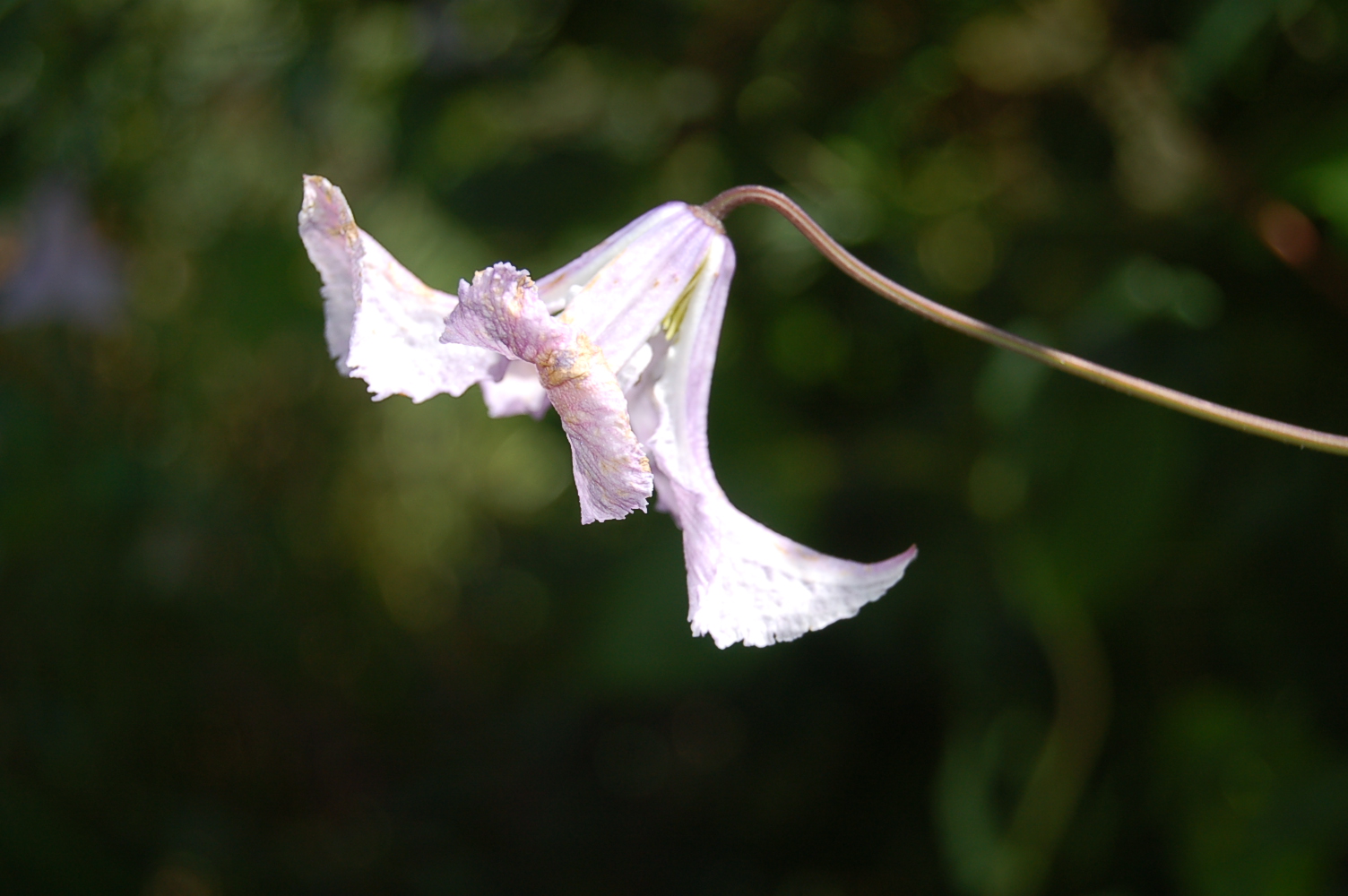
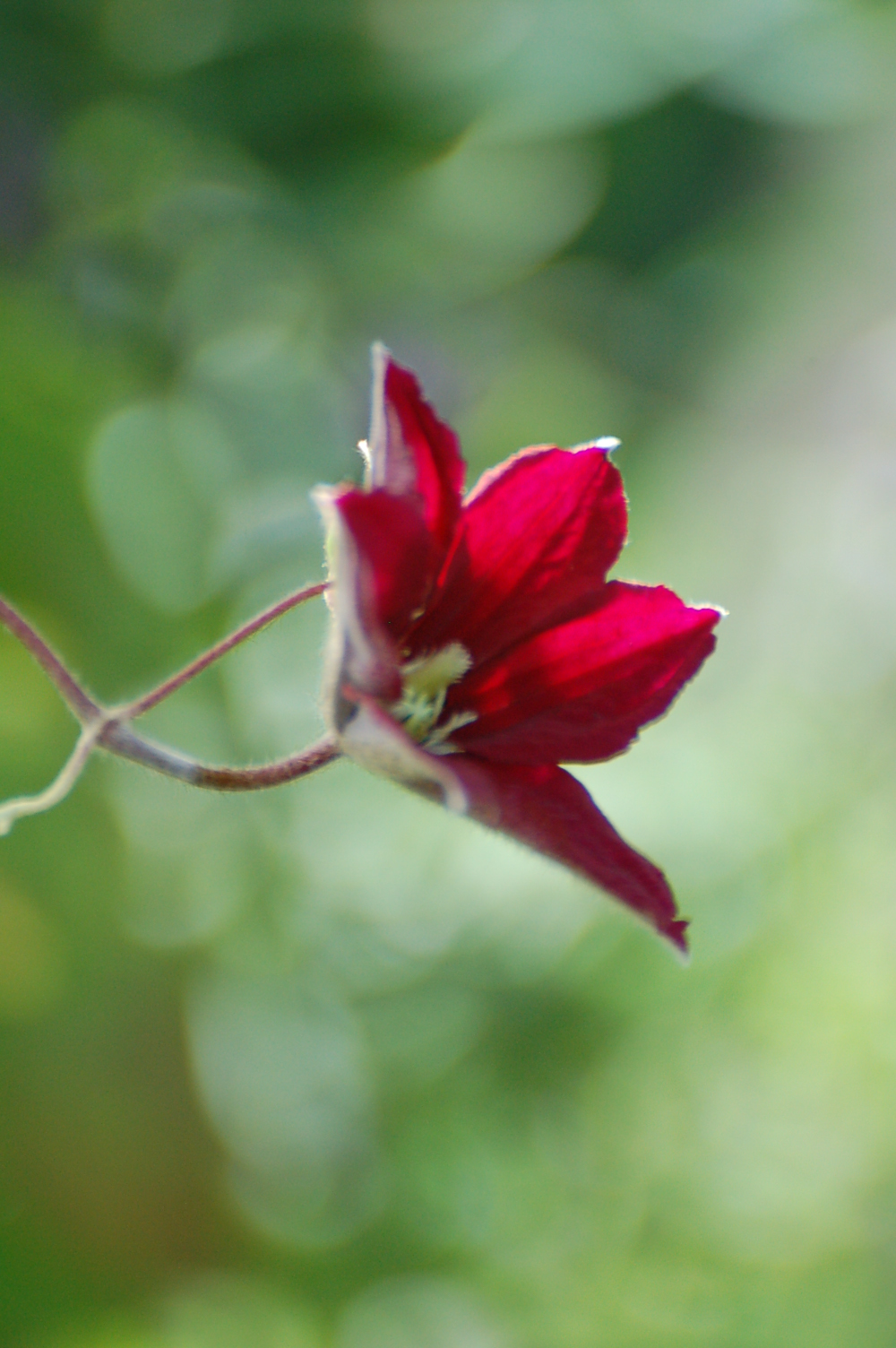
The Undergardener and I don’t really like the big dinner-plate clematis that flower earlier in the year but we adore the small-flowered, often bell-shaped subtle ones that are stars of the late summer. Every time a tree gets tall enough to support one we plant a new clematis to befriend it, even though every obelisk and arch is already adorned with one. To get double the flowering effect clematis love the company of climbing roses and we pair them up with our apples that we have growing over arches. The apples fruit well and the clematis flower well, and I wonder if this is another case of companion planting in action. Could it be that they benefit each other when grown together?

The flowers manage to attract the harsh summer sunlight giving them the appearance of silk or tissue paper.

They are so amenable too. We treat them as herbaceous perennials and cut them down in the winter. Although they have masses of flowers deadheading is not necessary and instead they can produce wonderful seedheads like whispy white spiders. Many flower more than once a year too.

Wildlife love clematis especially our avian friends. They nest in the jumble of vines which also serve as roosting shelters. Dunnocks nest every year in at least one of our clematis and chaffinches and goldfinches do so occasionally. Goldfinches extract the seeds from the fluffy seedheads in winter, Warblers, Robins and all members of the Titmice family gorge on all the insect life that live in them in the summer and feed on the seeds in winter.

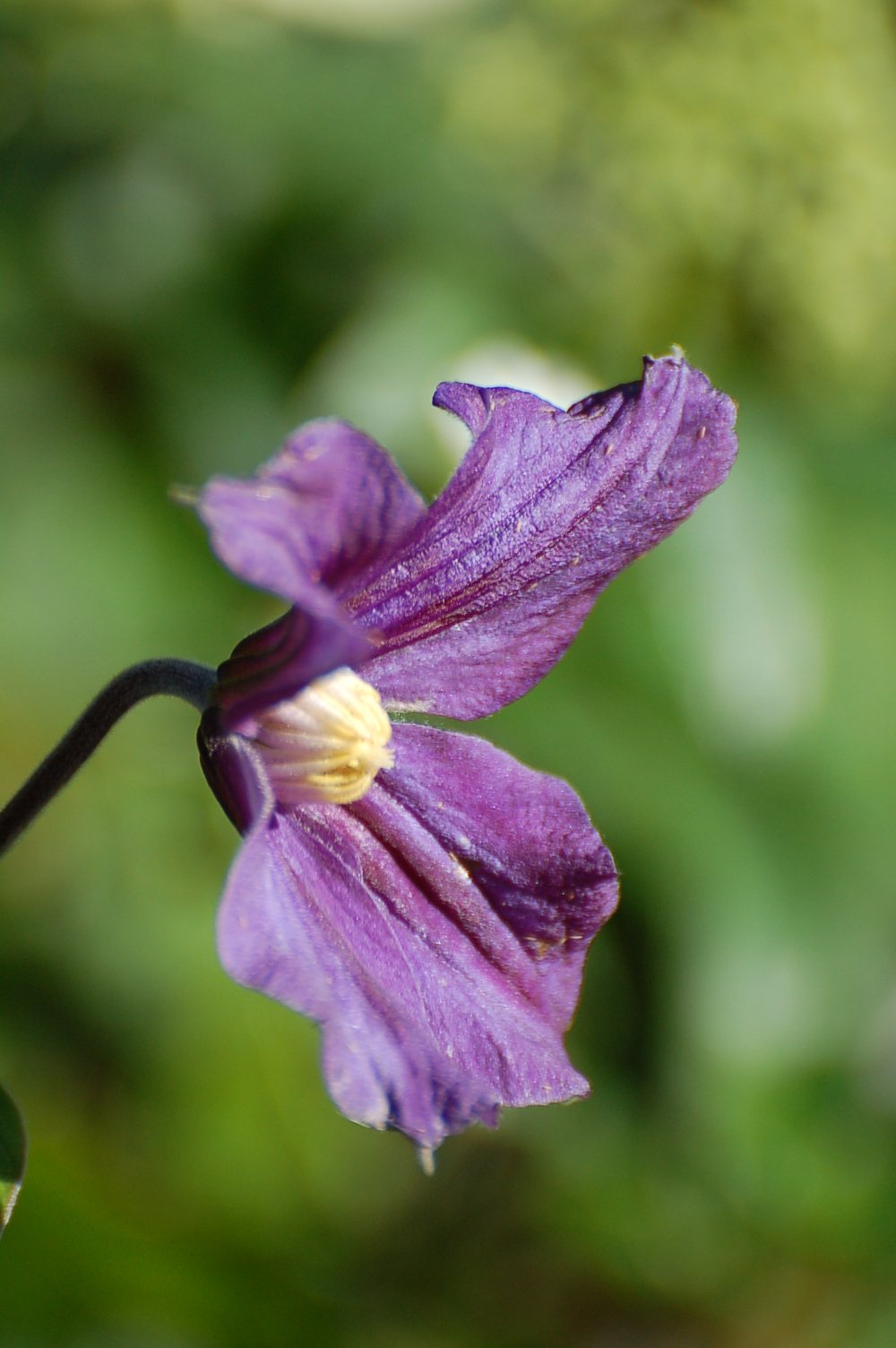
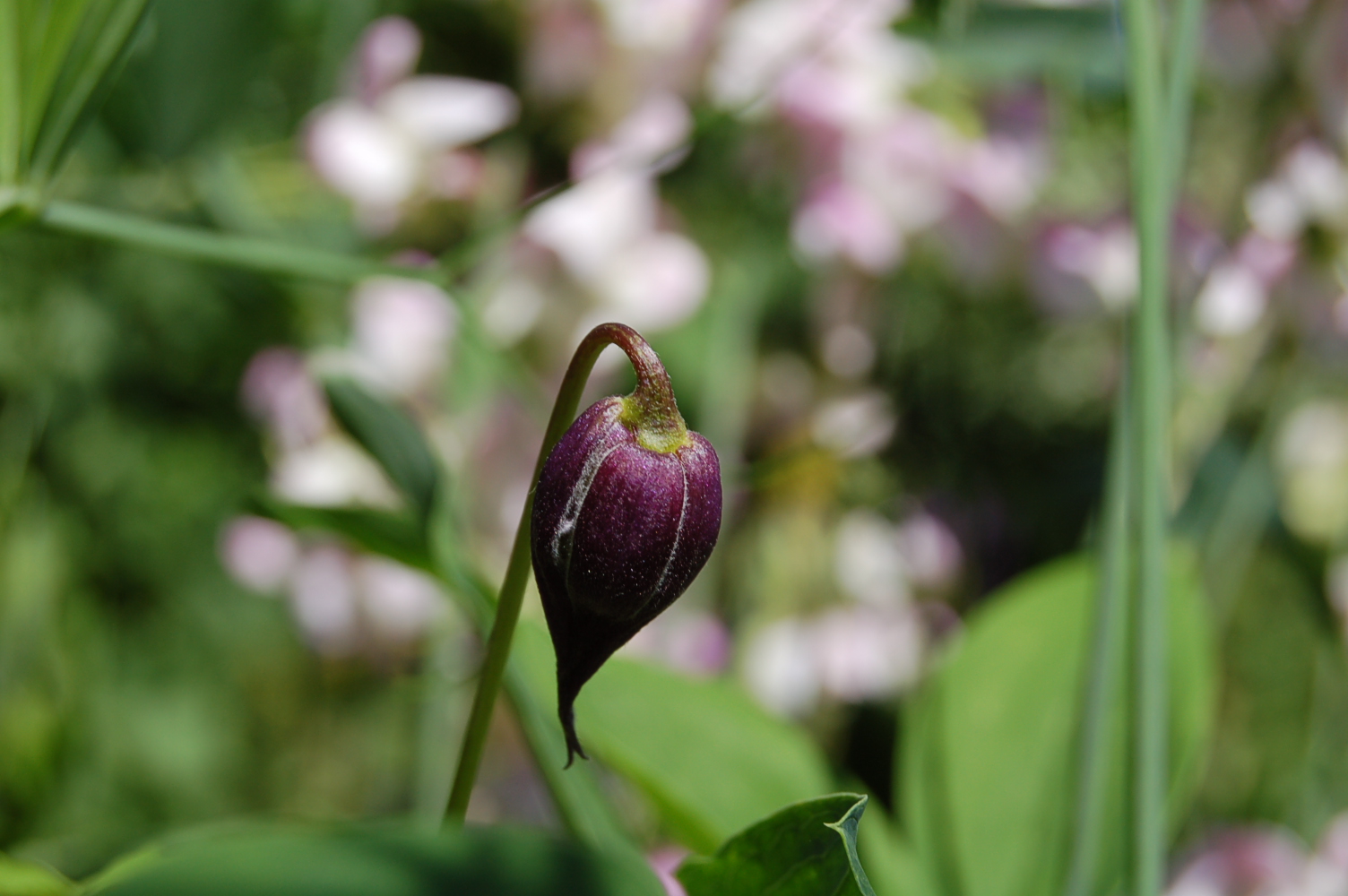
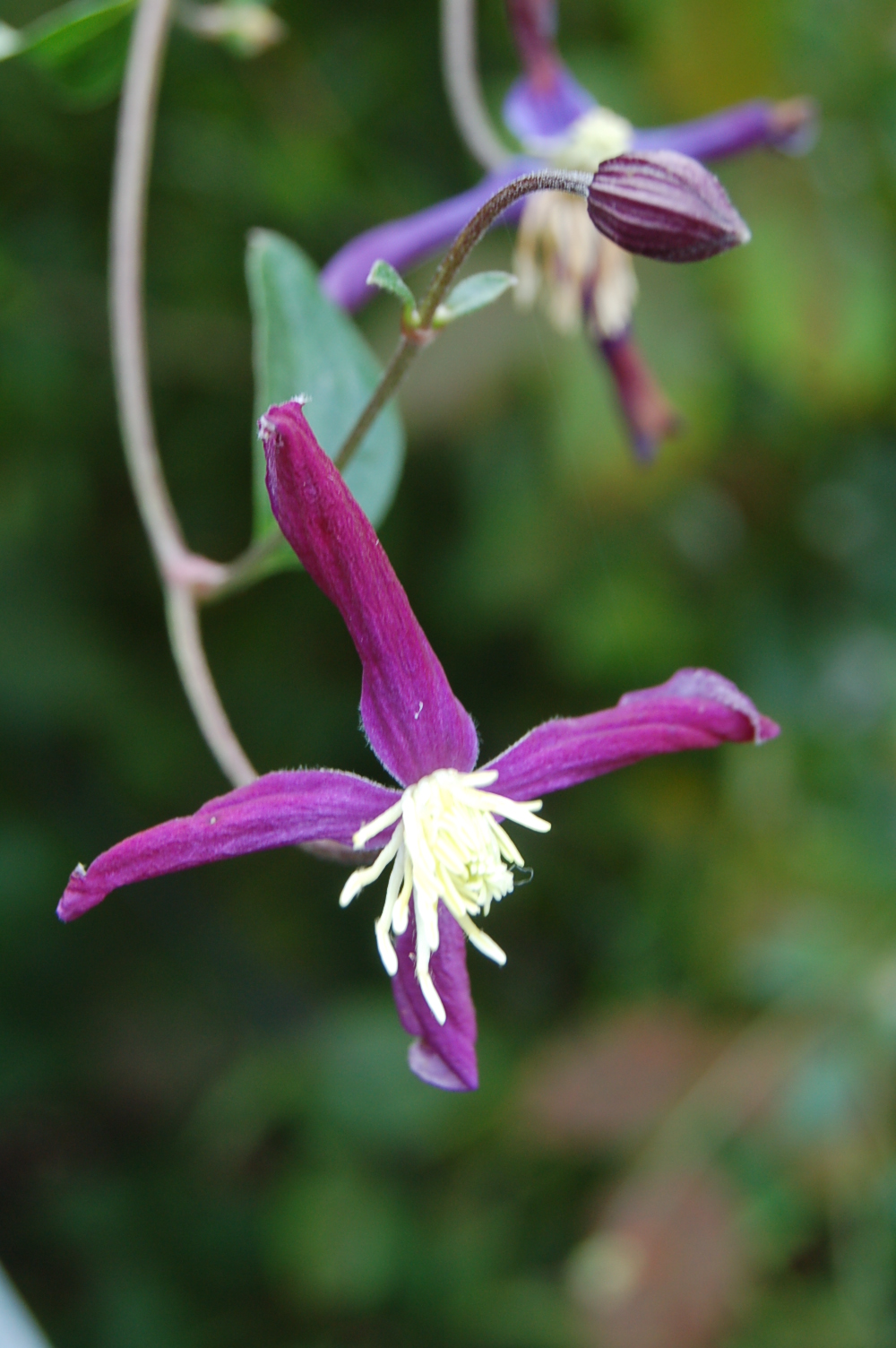
When visiting a garden this August with our fellow Hardy Plant Society enthusiasts we came across the clematis with the tiniest, most delicate flower we had ever seen on a clematis, in the deepest purple hue and to top it all off it had an enticing scent. It was appropriately called Clematis aromatica.
Categories
birds climbing plants garden design garden photography garden wildlife gardening hardy perennials ornamental grasses ornamental trees and shrubs photography Shropshire trees village gardens wildlife

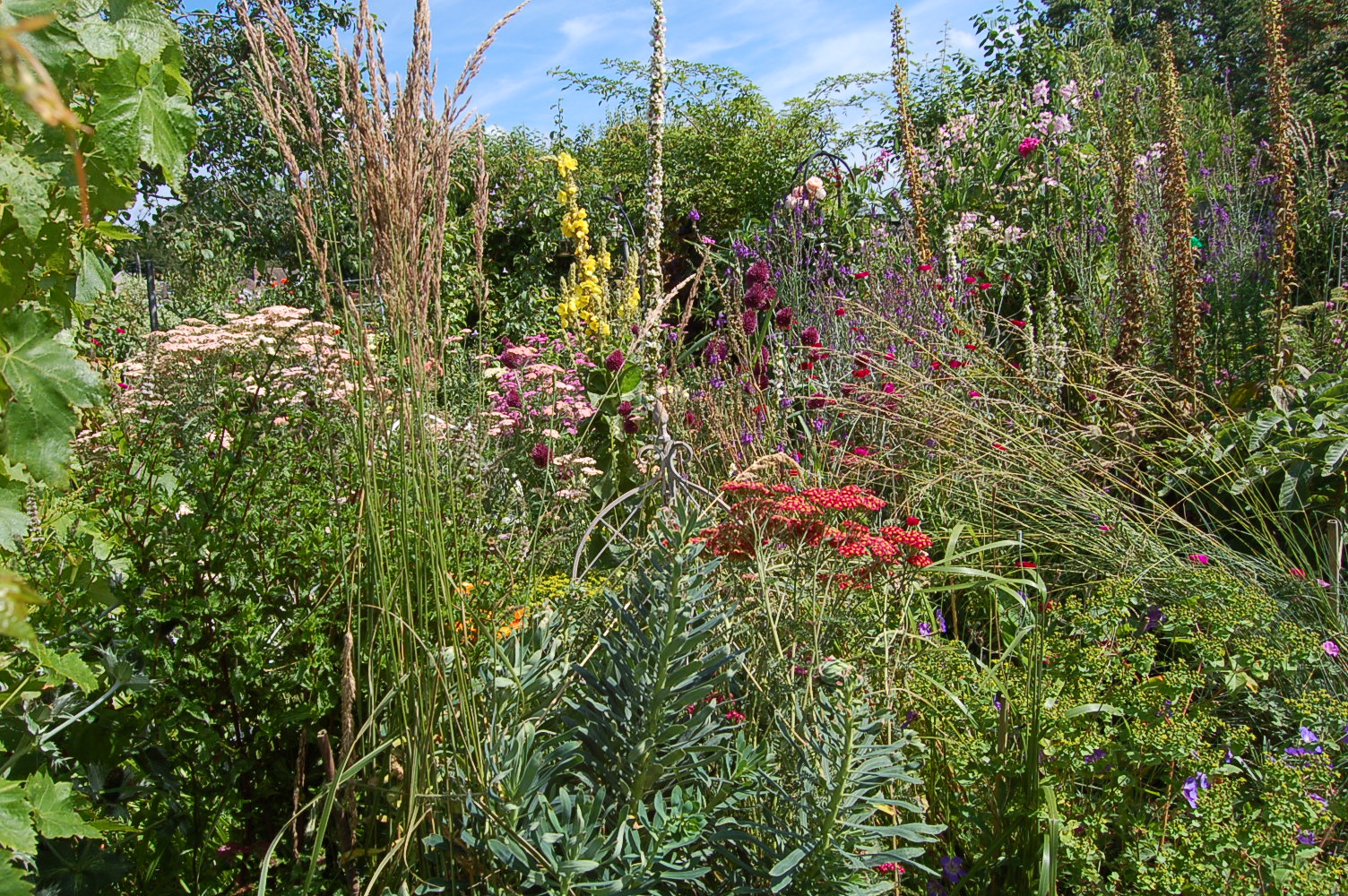
A Wander around our Garden in August

Our garden in August is a bright, colourful place full of lush growth, rich scent and so much wildlife to enjoy. Our wild birds are mostly quiet at present as August is the time when they hide away as they go through their annual moult. They have gone to ground and gone silent.

Above our heads however avian activity is busy and exciting. The Swallows and House Martins are feeding up in anticipation of their migration south. The sky is full of them, but the screaching of Swifts is absent as they began their own long journey a few weeks ago. For a few days there is a gap in the sounds – we miss them for their excited calls and aerial displays.

The calls of the young Buzzards can be heard above the Swallows and Martins, as they excitedly search out thermals and discover the joy of riding them. The Peregrines have reappeared now that their breeding season is over so we can watch the adult pairs rising in ever-higher circles until they disappear from view. Our eyes become incapable of seeing them as they become smaller, become dots and are then gone. They have the luxury of far better long distance vision than us – they will see the movement of their prey from hundreds of feet up in the air. A real treat is to spot them as they stoop, travelling down at speeds of over 200 miles per hour with a pigeon in their sights.

Yesterday when deadheading in one of our borders we were surprised by a low-flying, high speed Green Woodpecker who zoomed close to us, just a few feet away. A real treat!

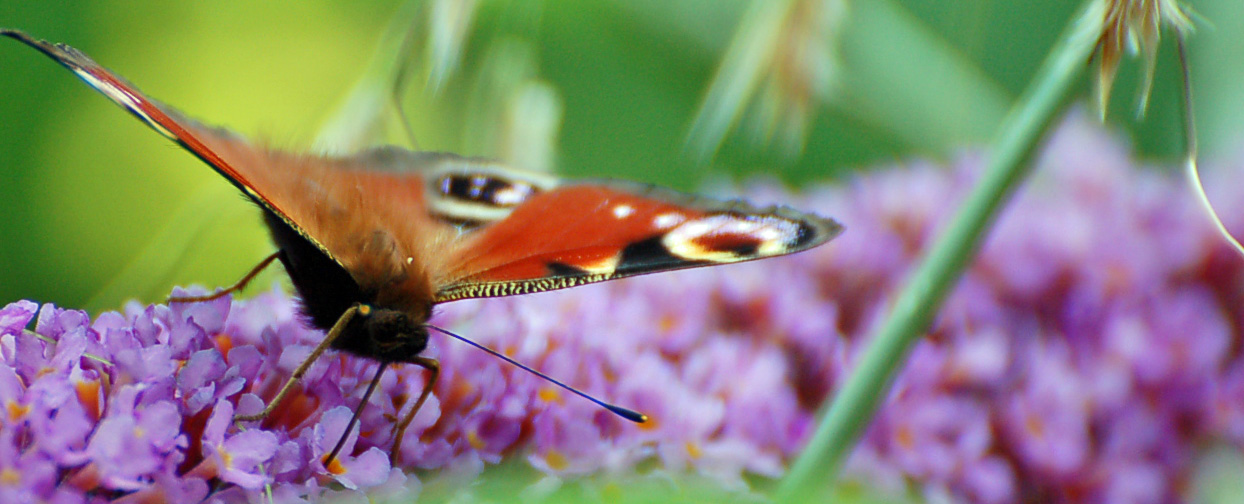
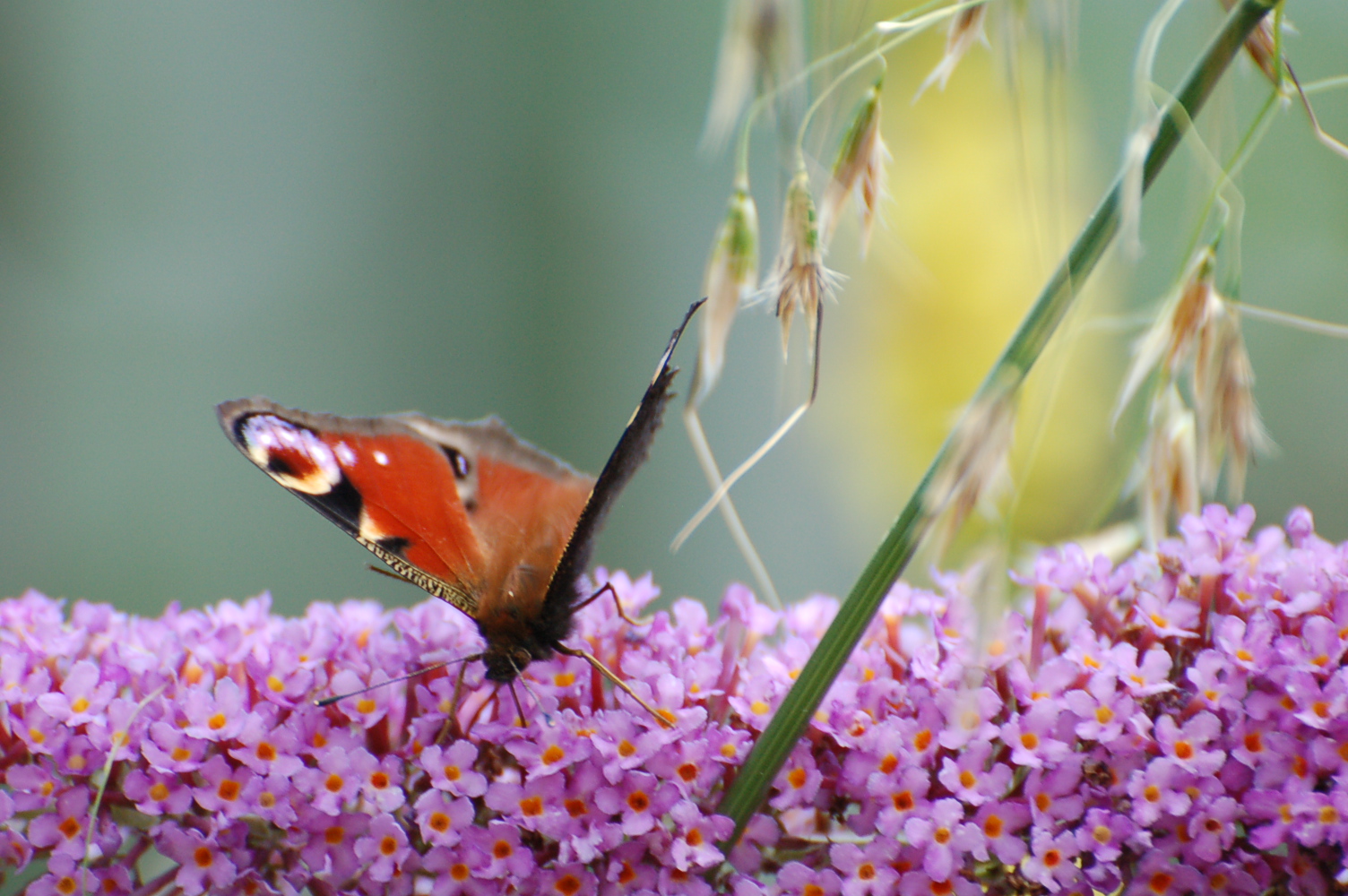
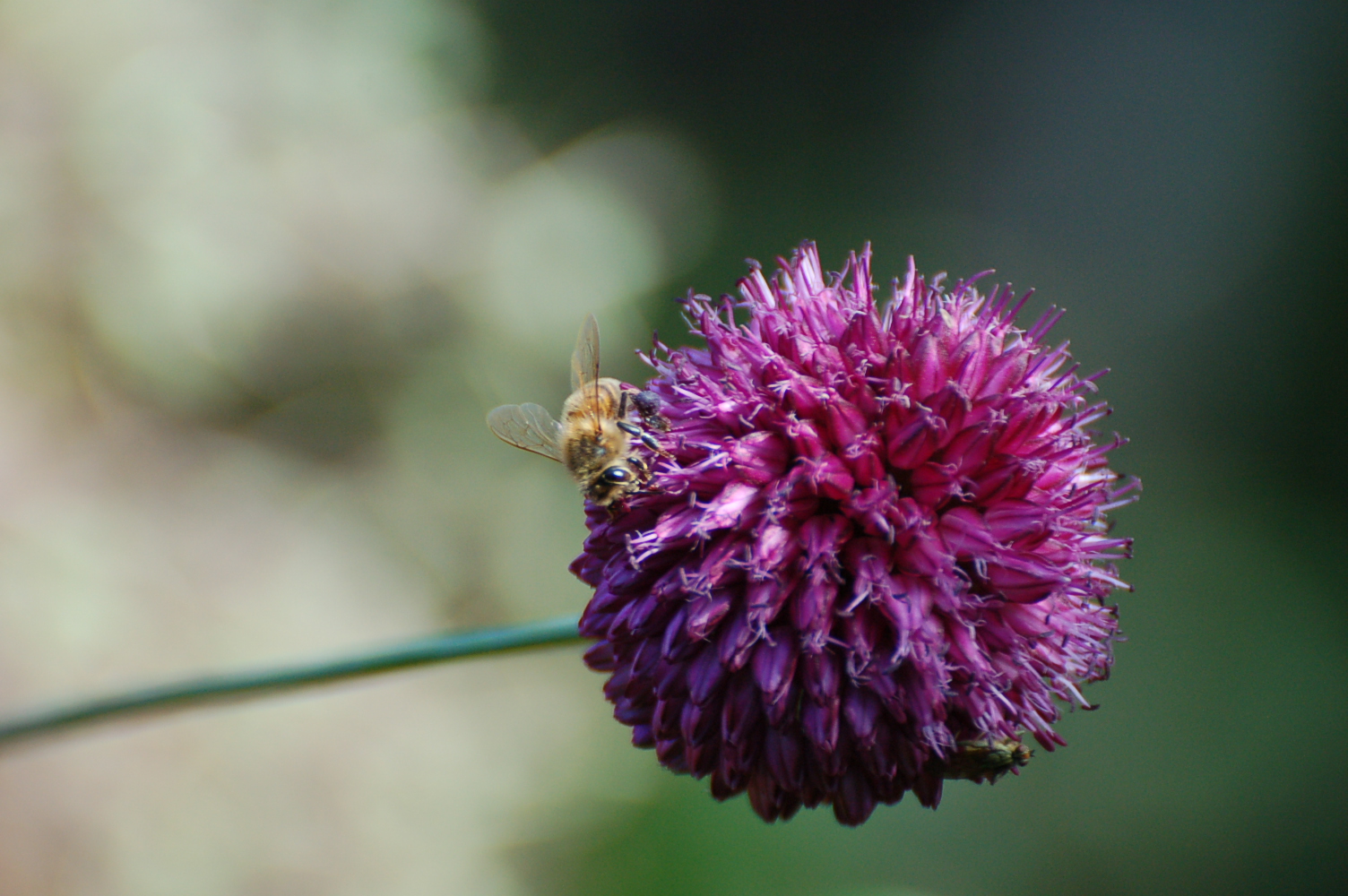
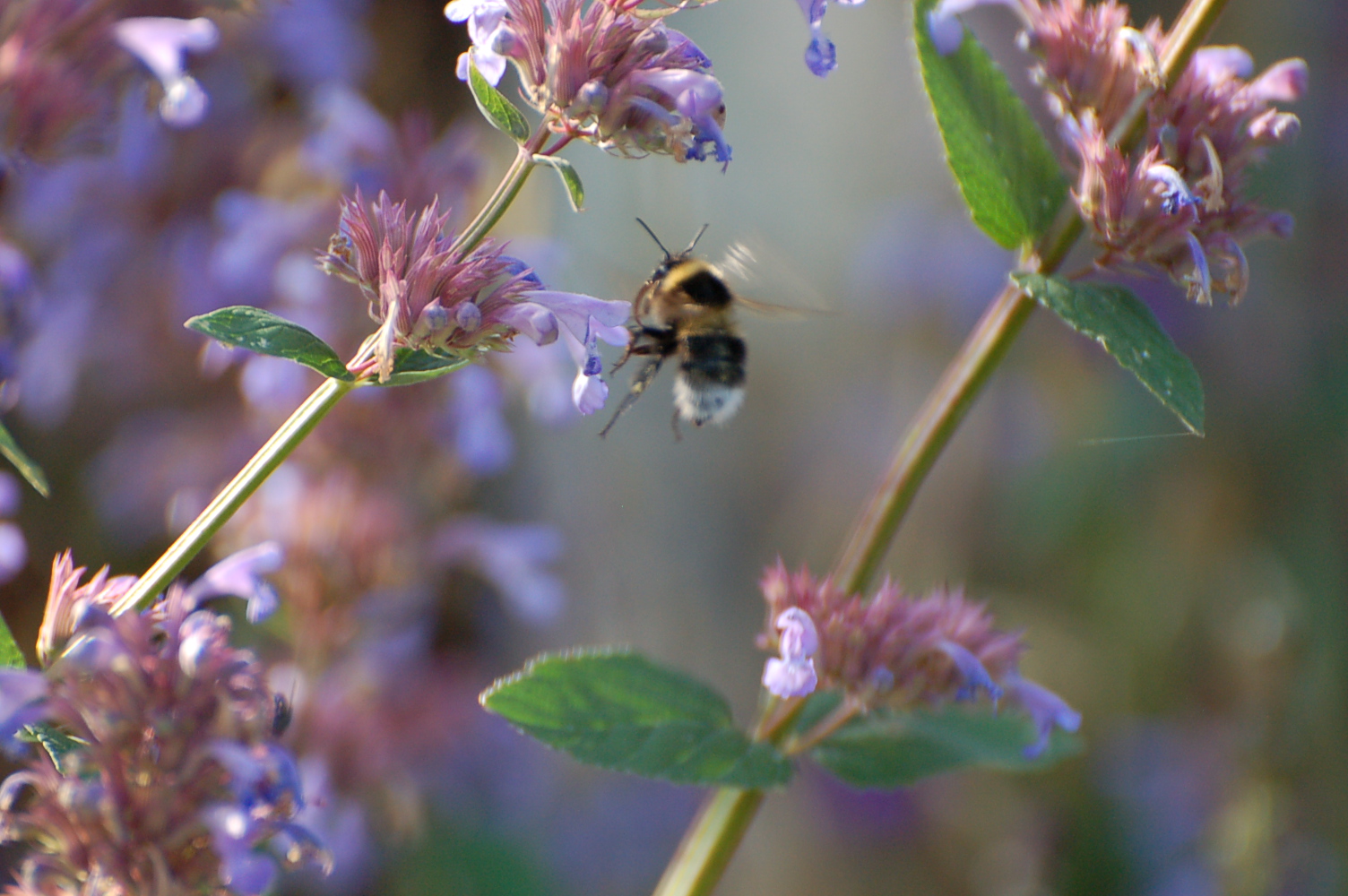
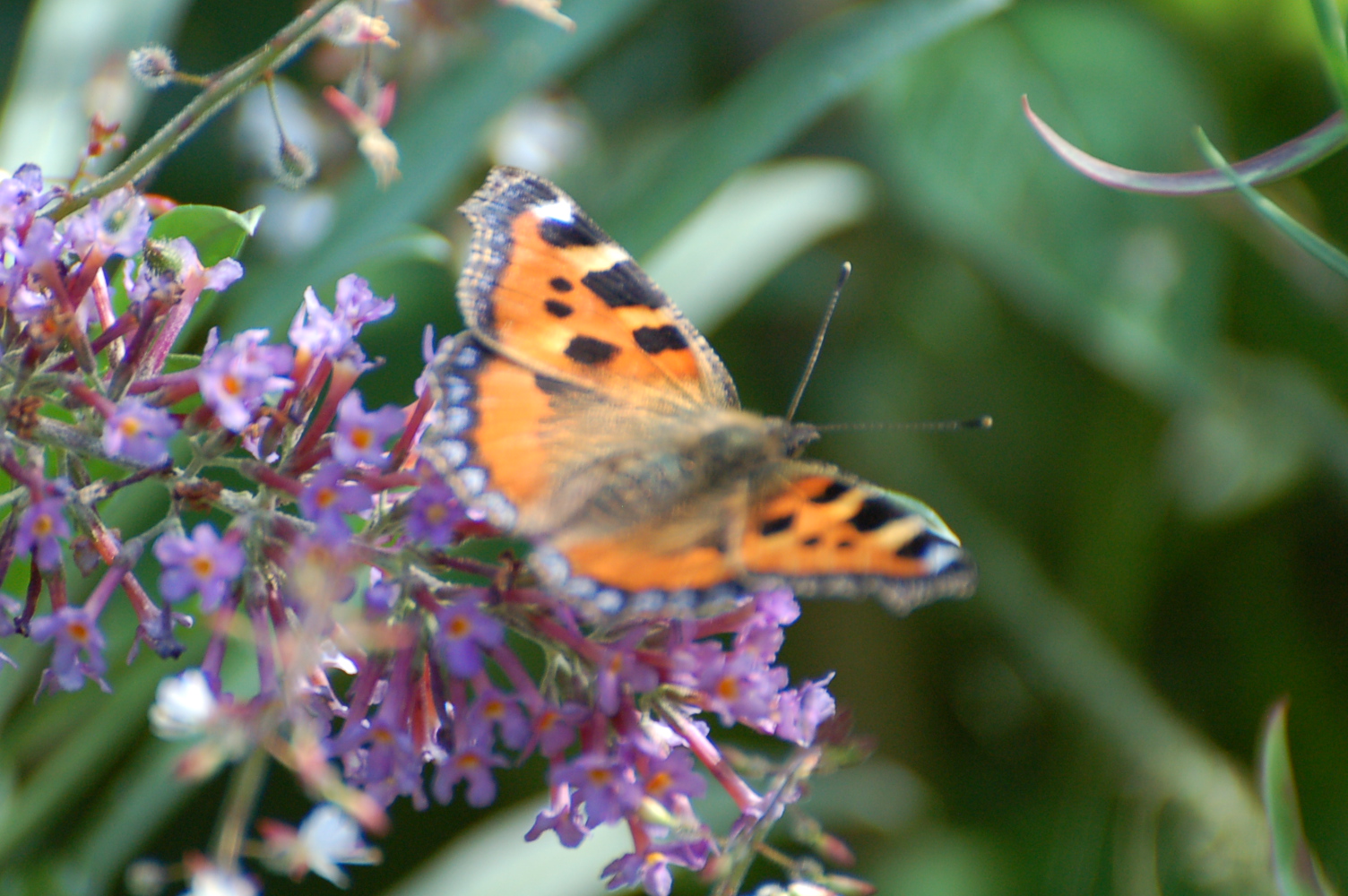
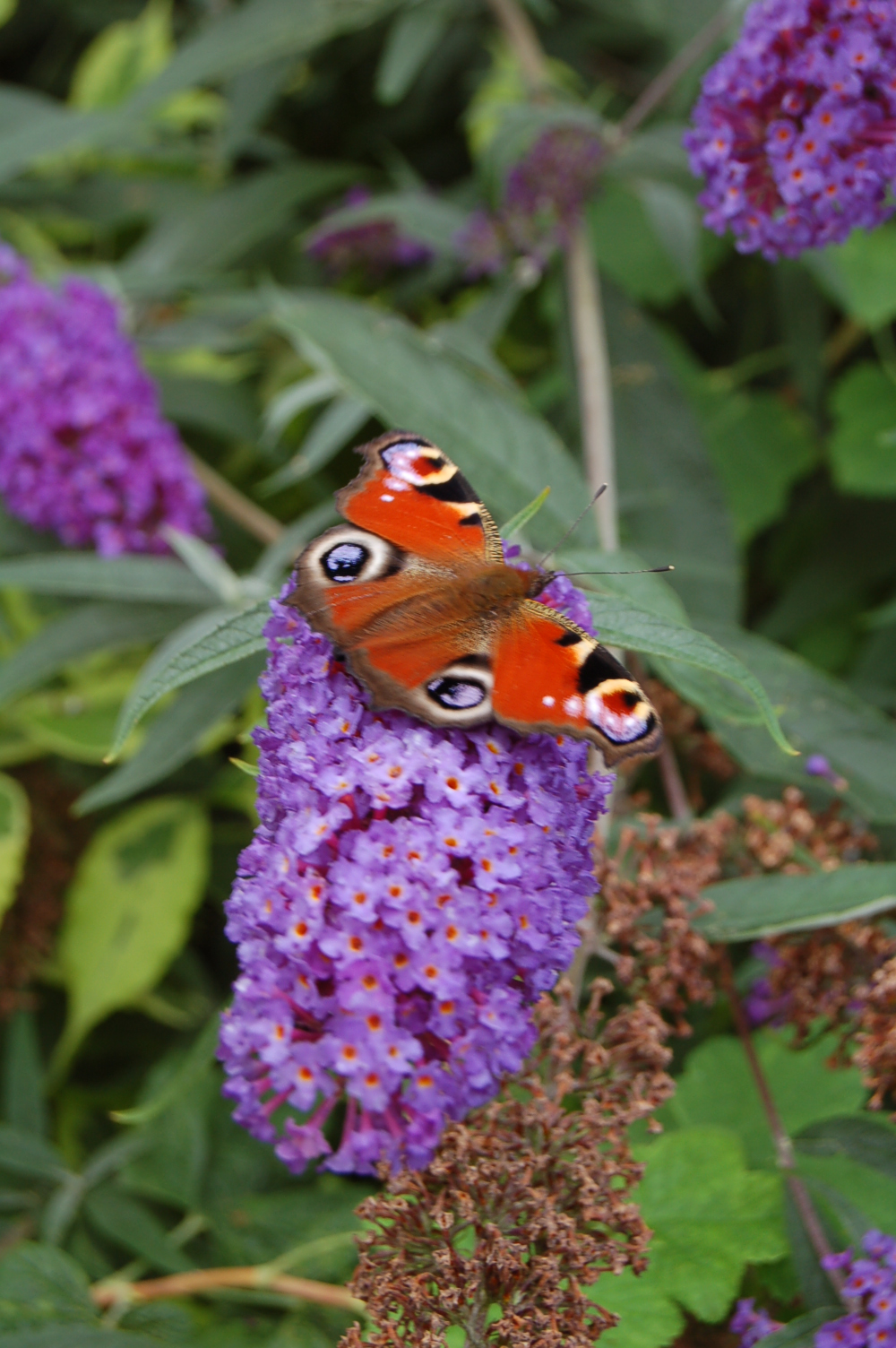
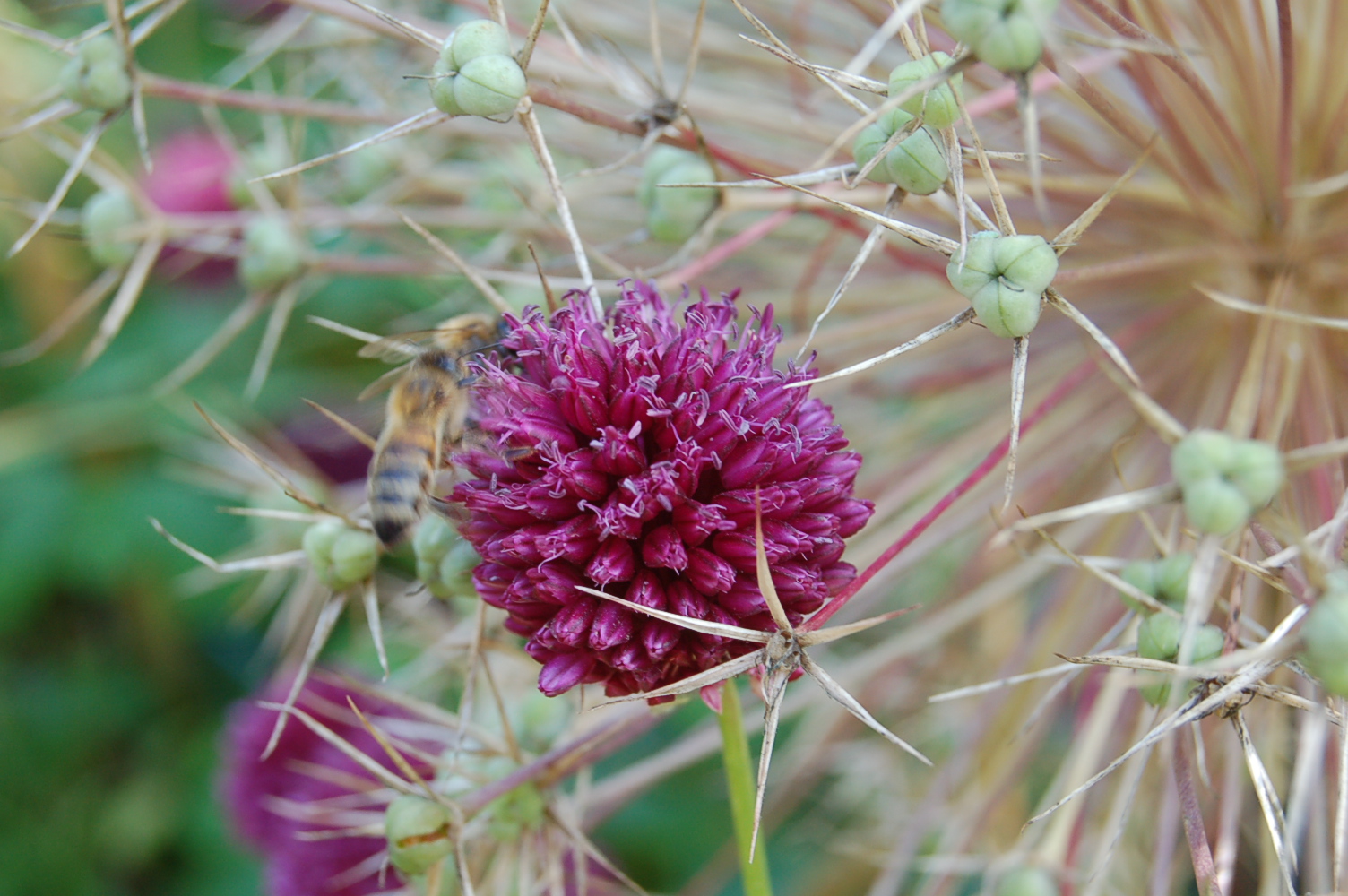
Insect life is flourishing. On any warm bright day a variety of insects can be seen hunting out nectar and pollen. Butterflies, bees and hoverflies are attracted to Buddleias, Alliums, Salvias, Nepetas, Lavenders and Echinops. There are so many Peacock Butterflies around at the moment but you can’t have too many of them. The Holly Blues are much scarcer and flit continuously rarely seeming to settle.

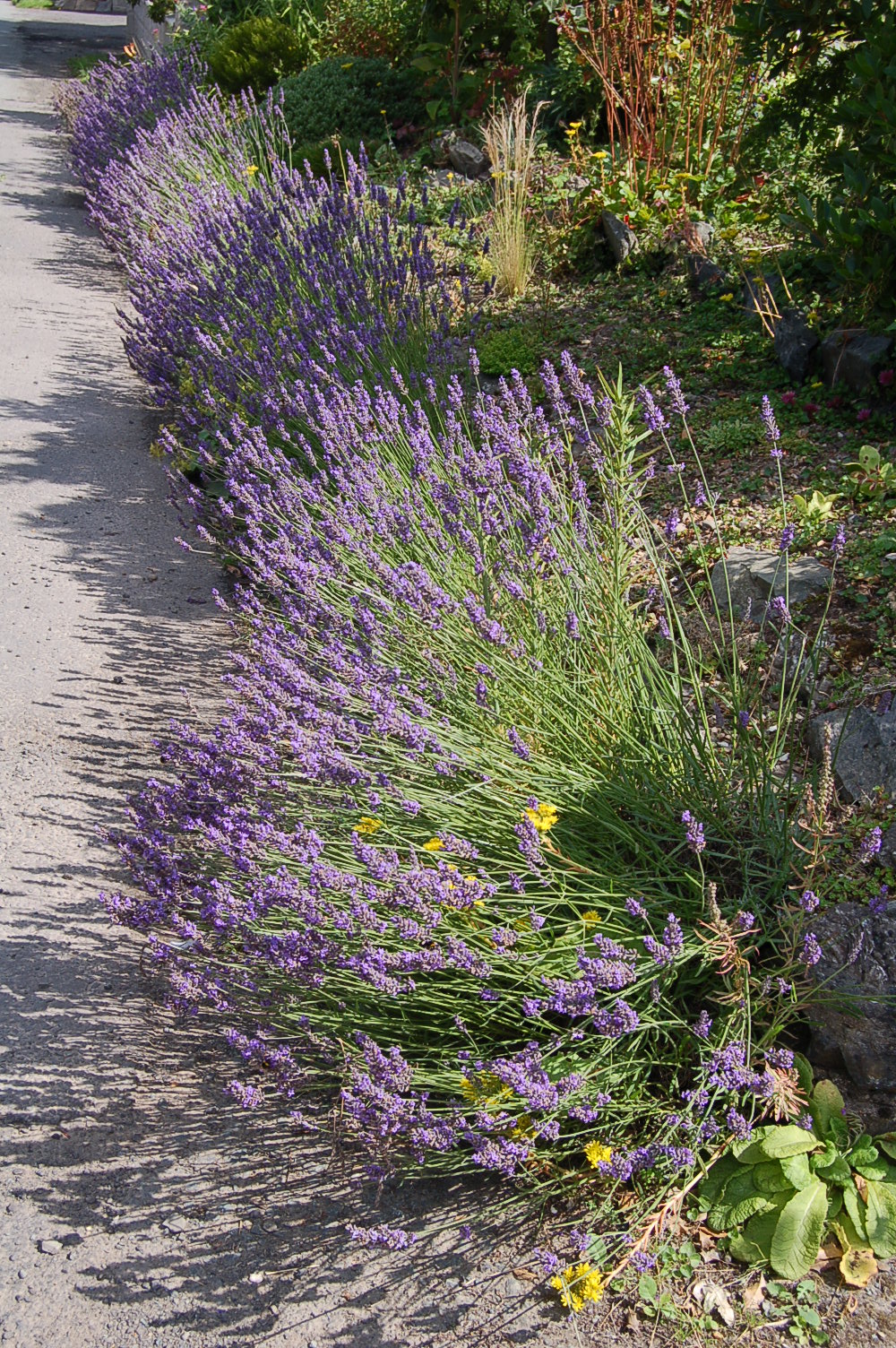
Bees and hoverflies are attracted to our Lavender hedge which borders the lane which passes in front of our garden.

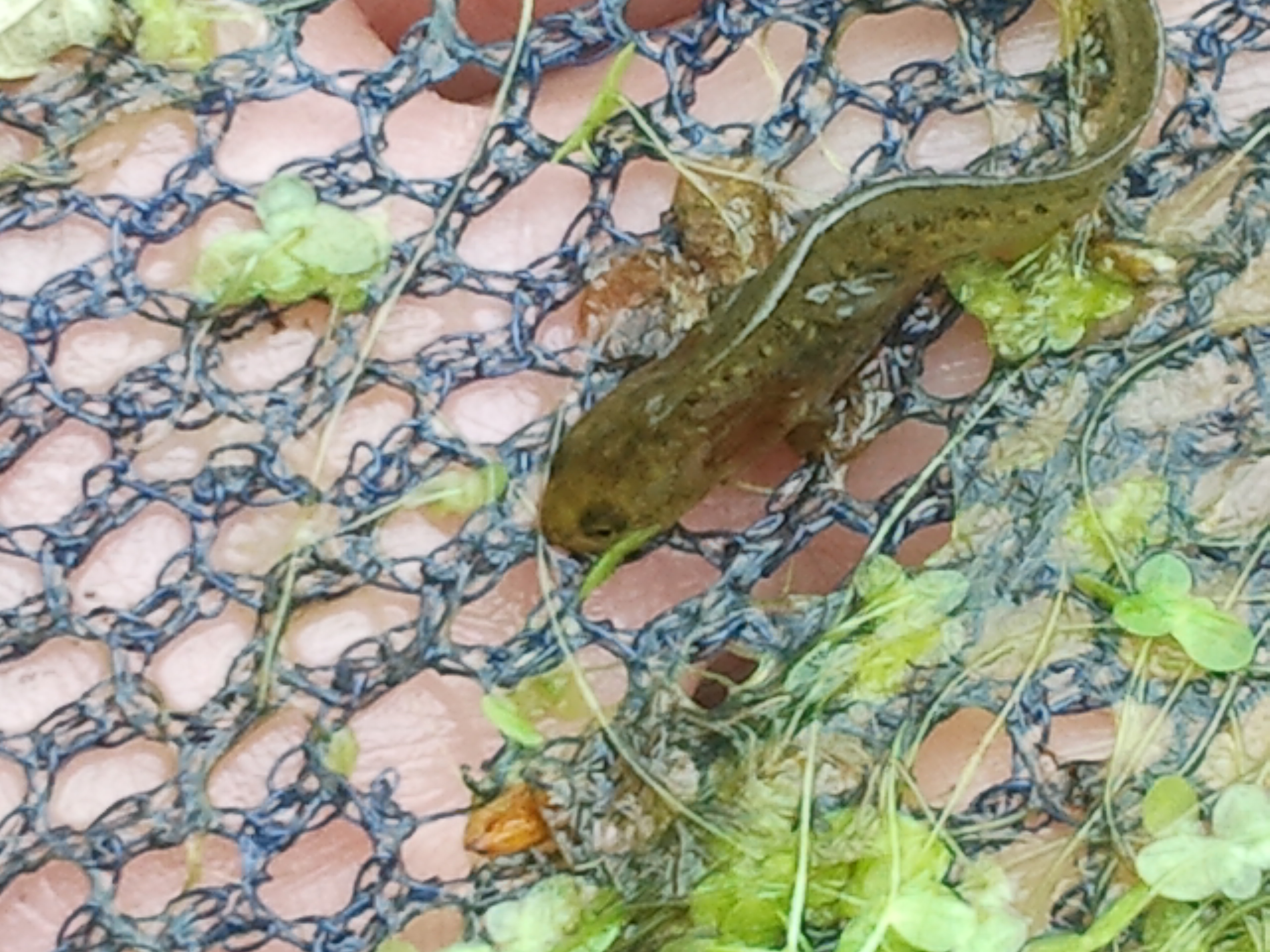
The ponds are full of life with shoals of young fish basking in the shallows, diving Beetles and Boatmen moving up to the surface and back to the bottom regularly. On the surface Pondskaters pace out the length and breadth of the pond surface. Young newts regularly appear at the surface take a gulp of air and drop back down. When Jude the Undergardener nets the duckweed and blanket weed from the pond she catches newts every time. She is delighted with every newt that graces her net. I am convinced that removing the weed is an excuse for her newt catching exploits. In August the majority of newts Jude catches are youngsters.

The front garden is looking good! So much colour! The Hot Border is HOT!

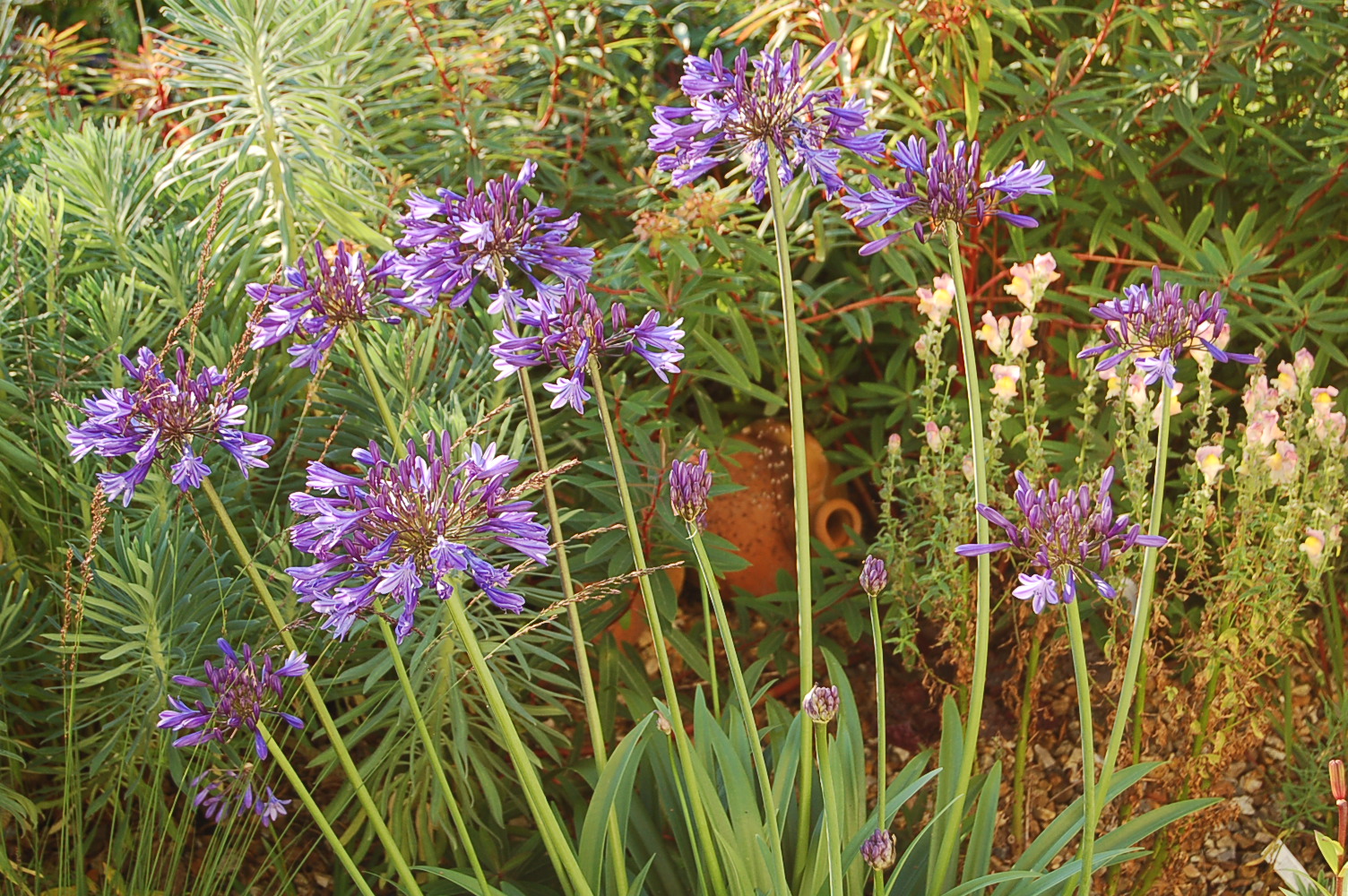
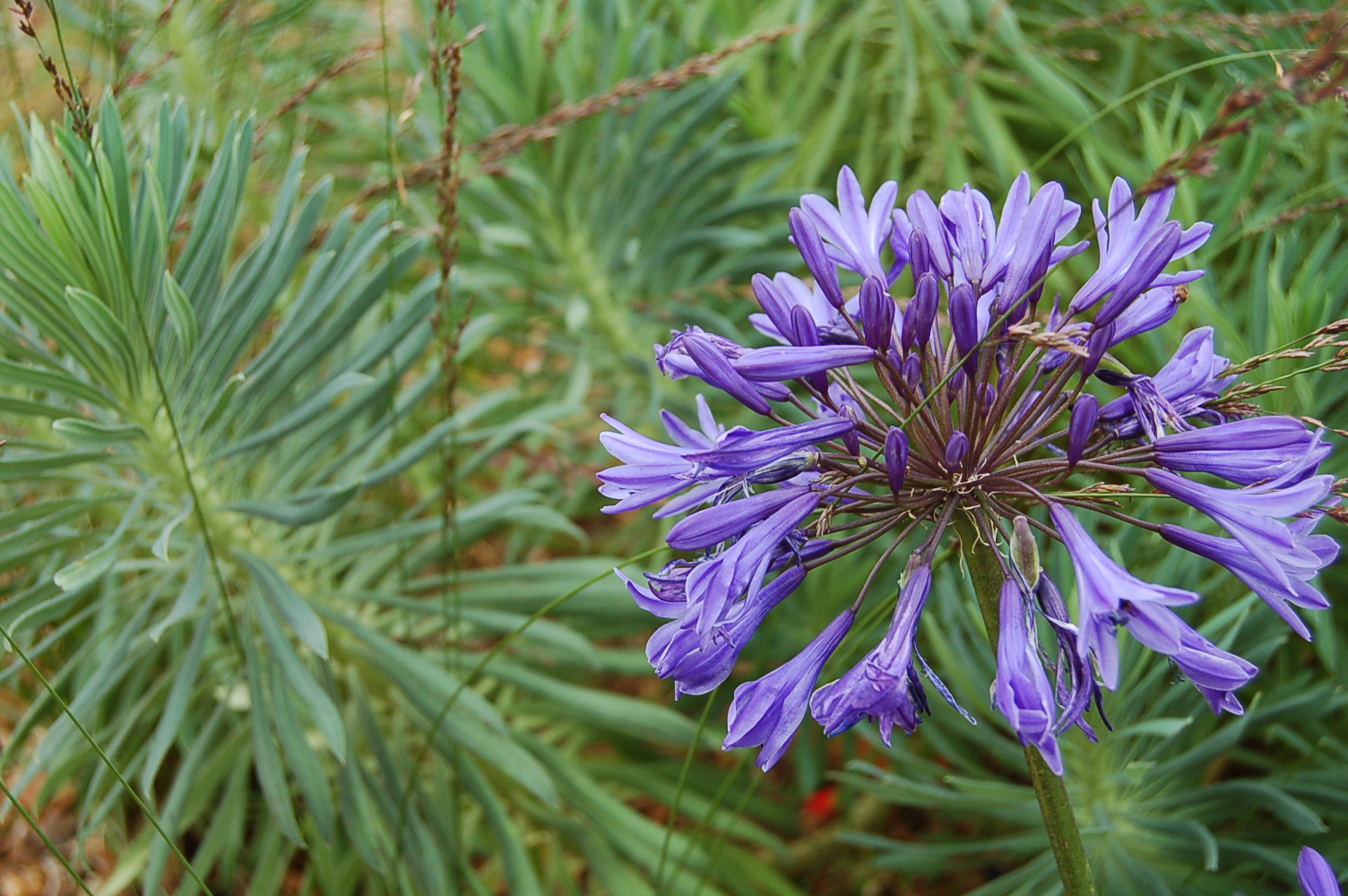
The “Beth Chatto Garden”, our gravel garden, is full of interest with Agapanthus taking centre stage. These Agapanthus were actually bought from the Beth Chattos Gardens nursery.

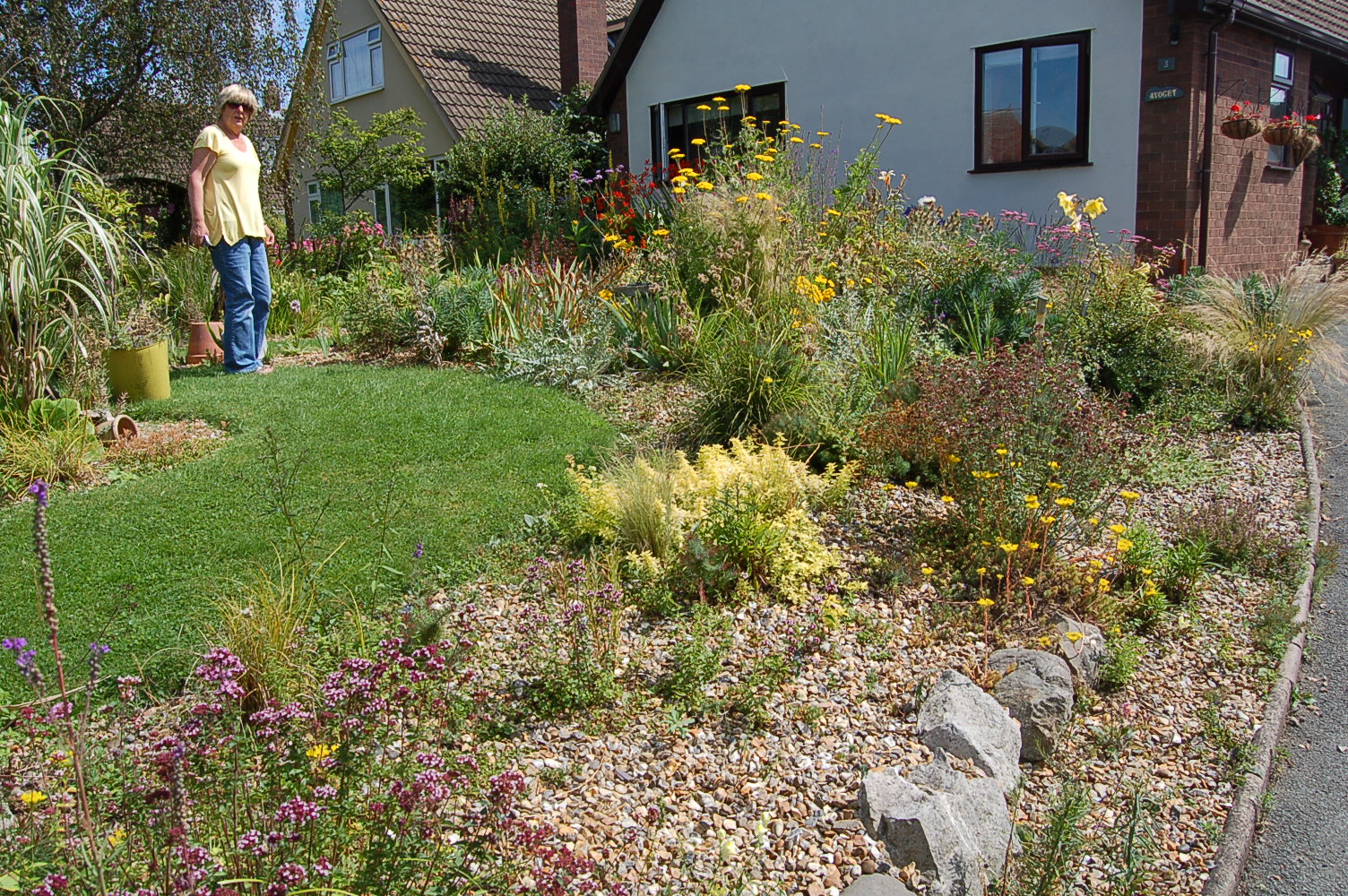
Early in August the front garden was dominated by yellow – even Jude the Undergardener was wearing yellow – but after a few weeks all the other colours caught up.

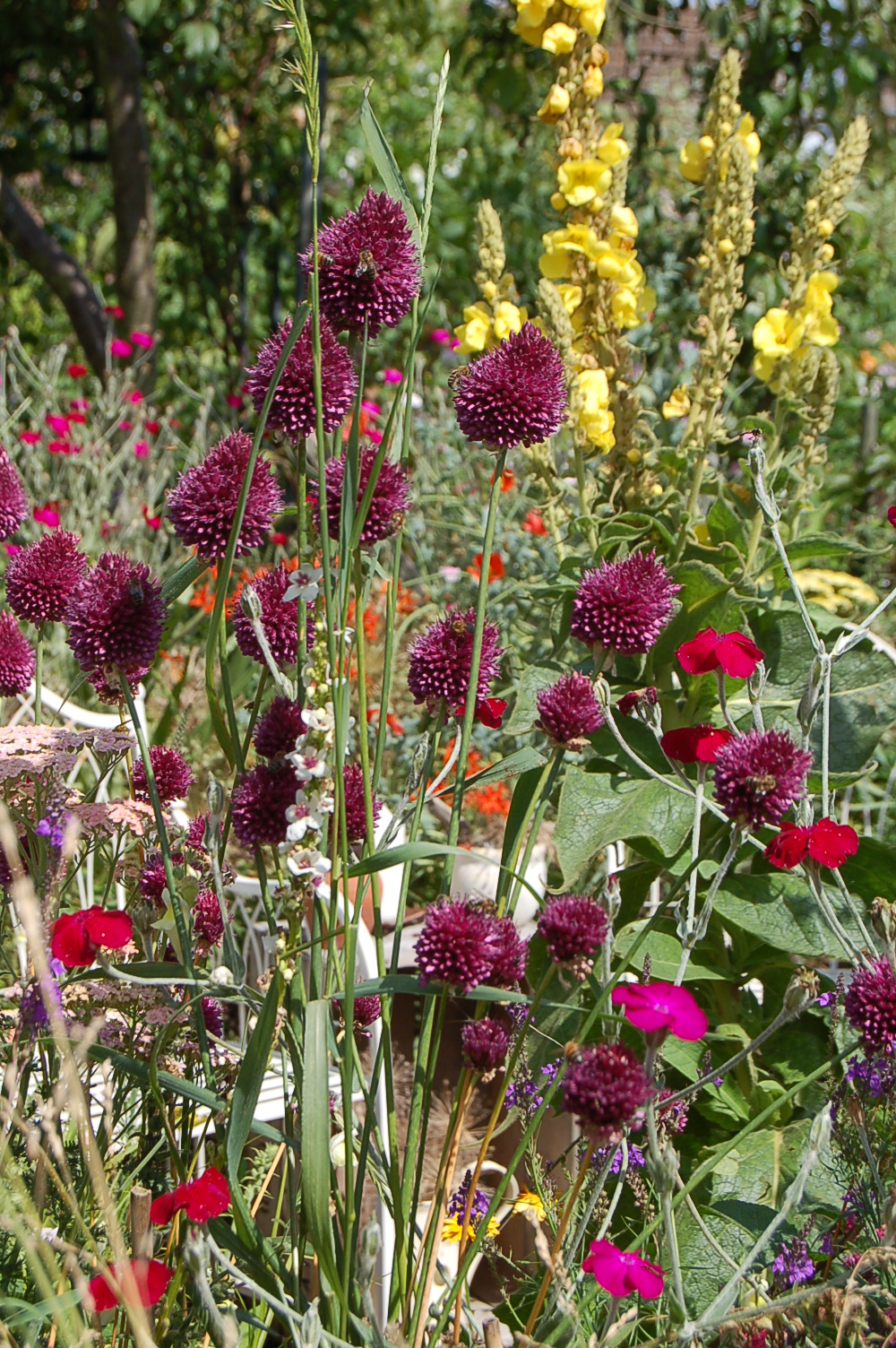
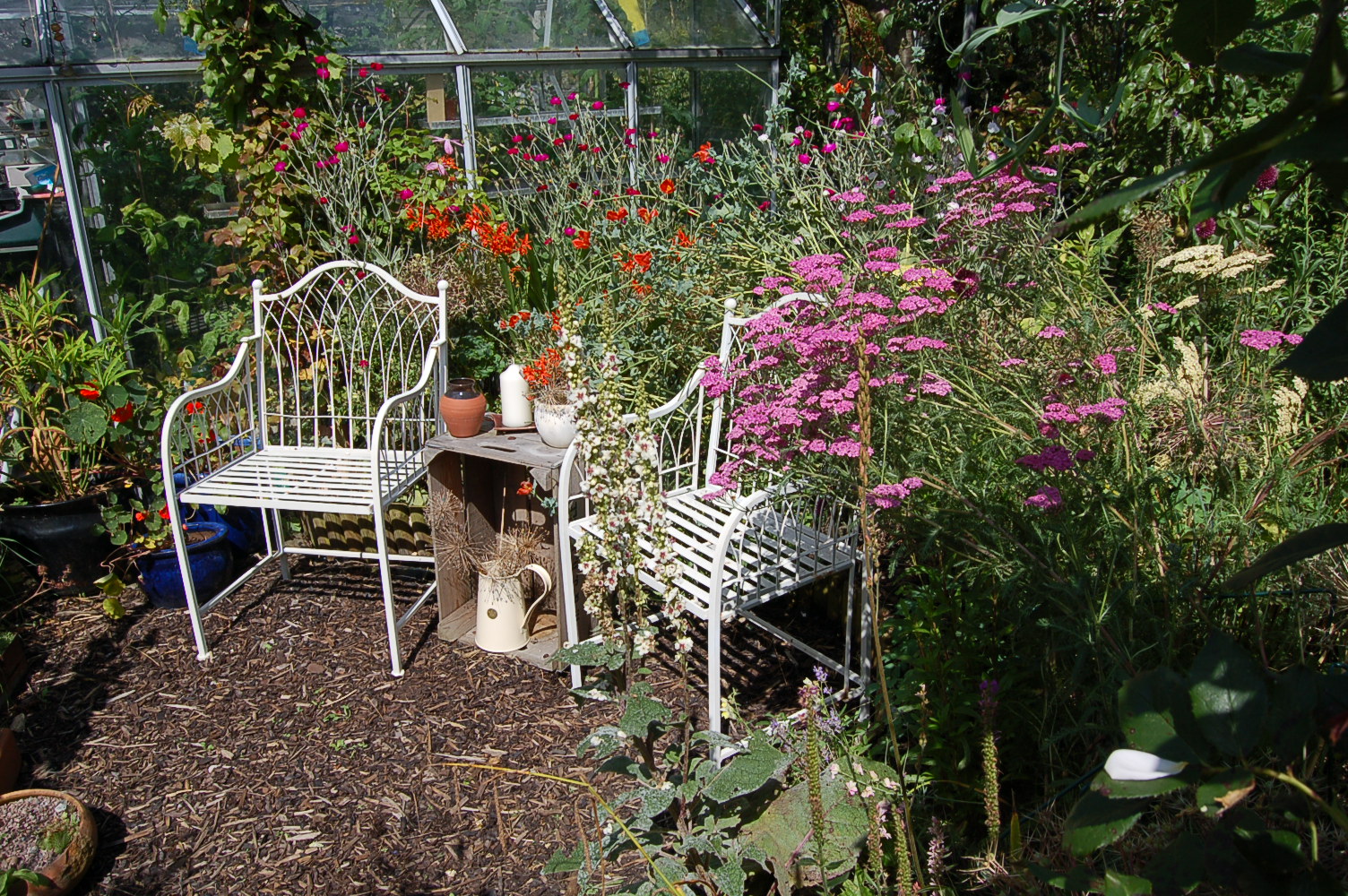
In the back garden the growth in our Secret Garden is exuberant to say the least. The foxgloves are going over but the achilleas, lychnis and alliums are still giving us a full performance.

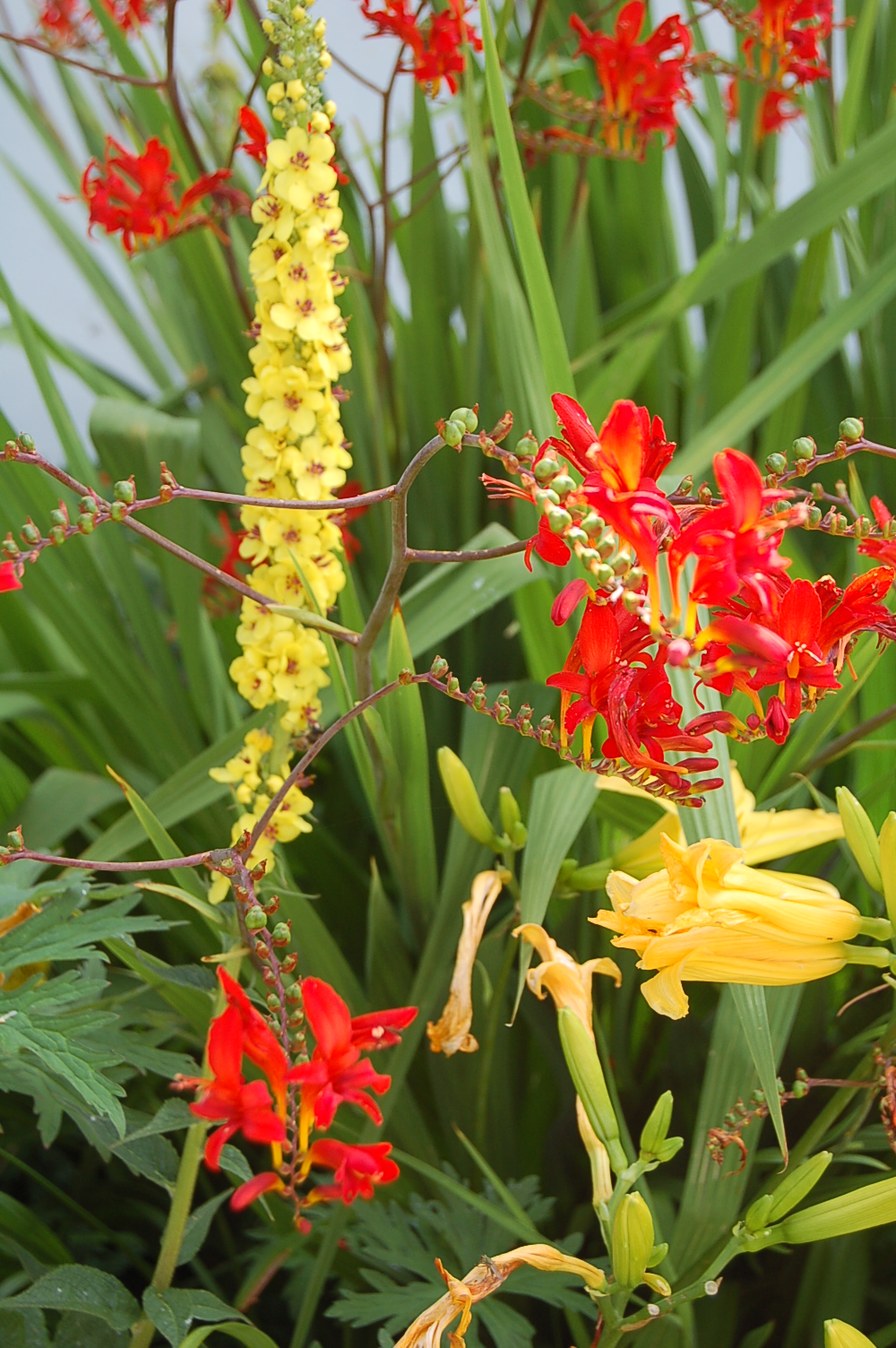
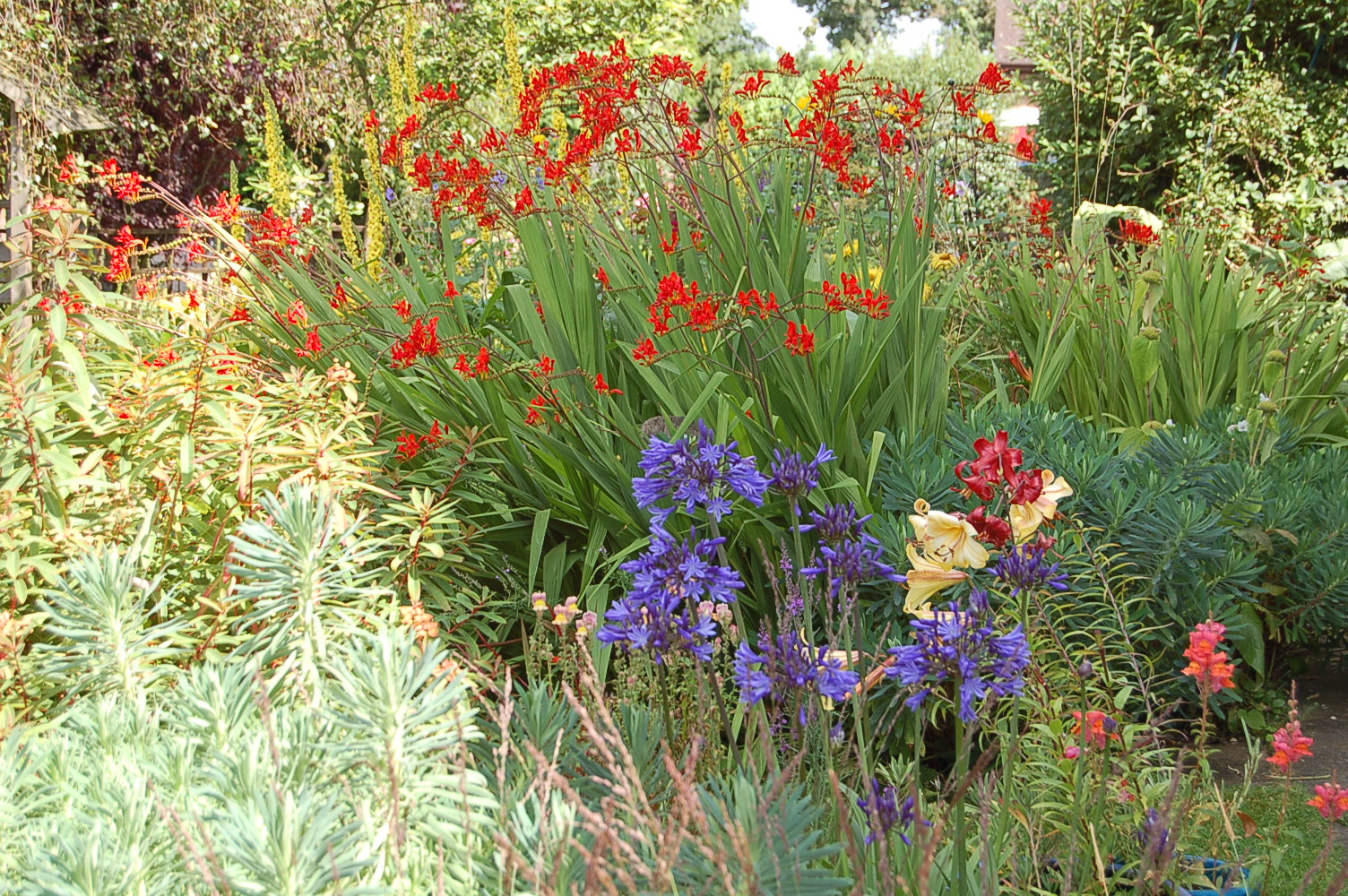
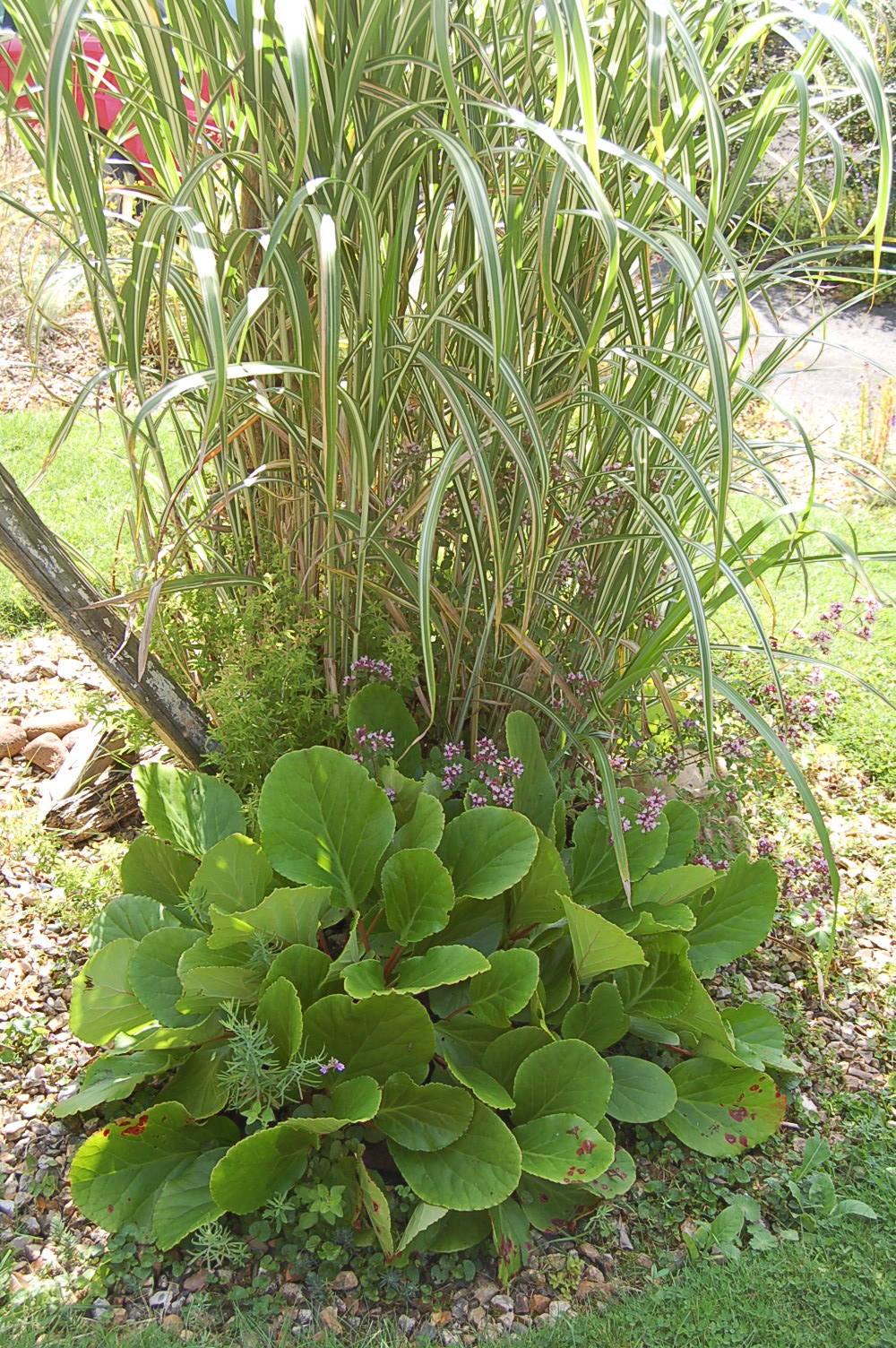
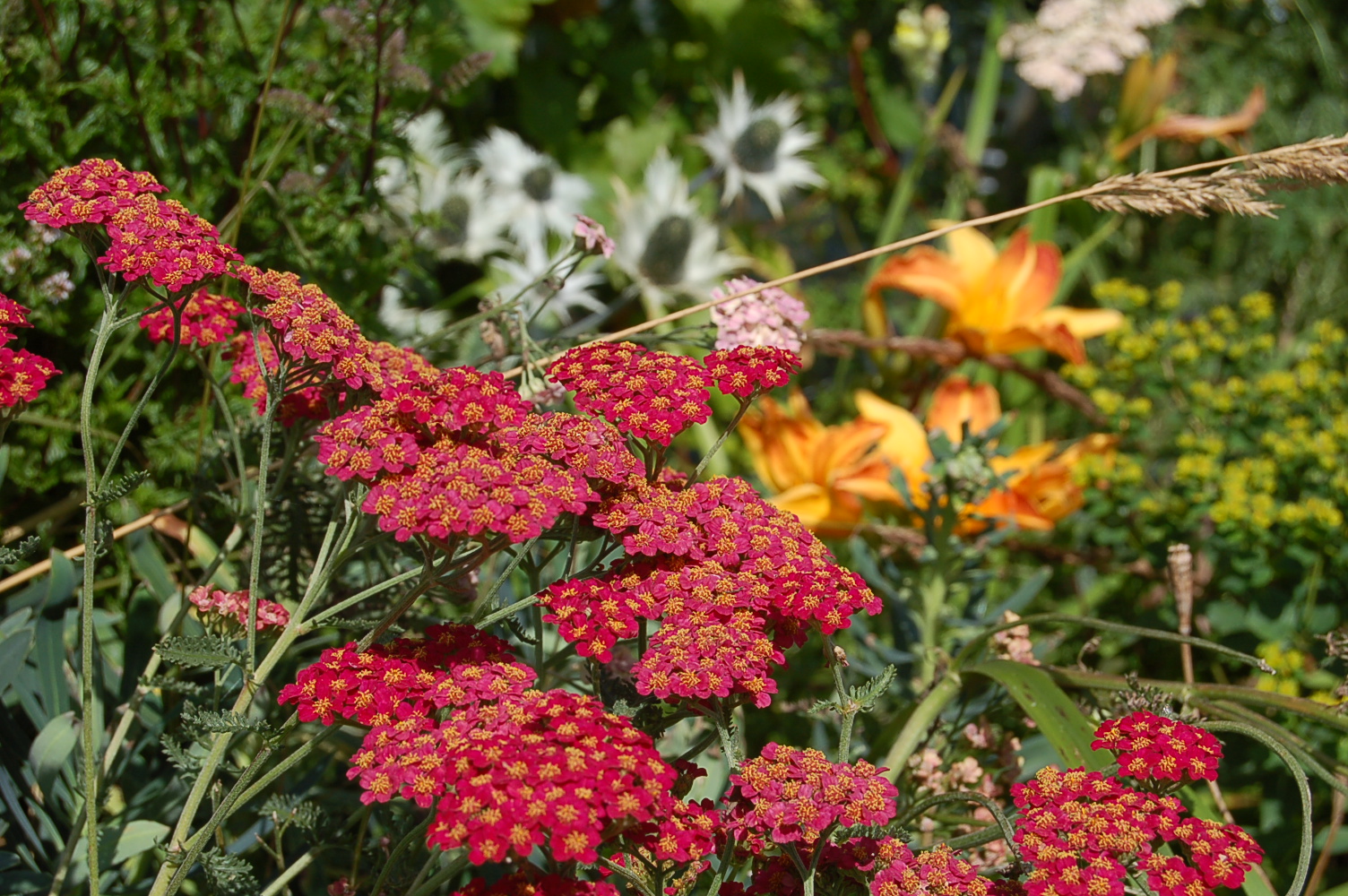
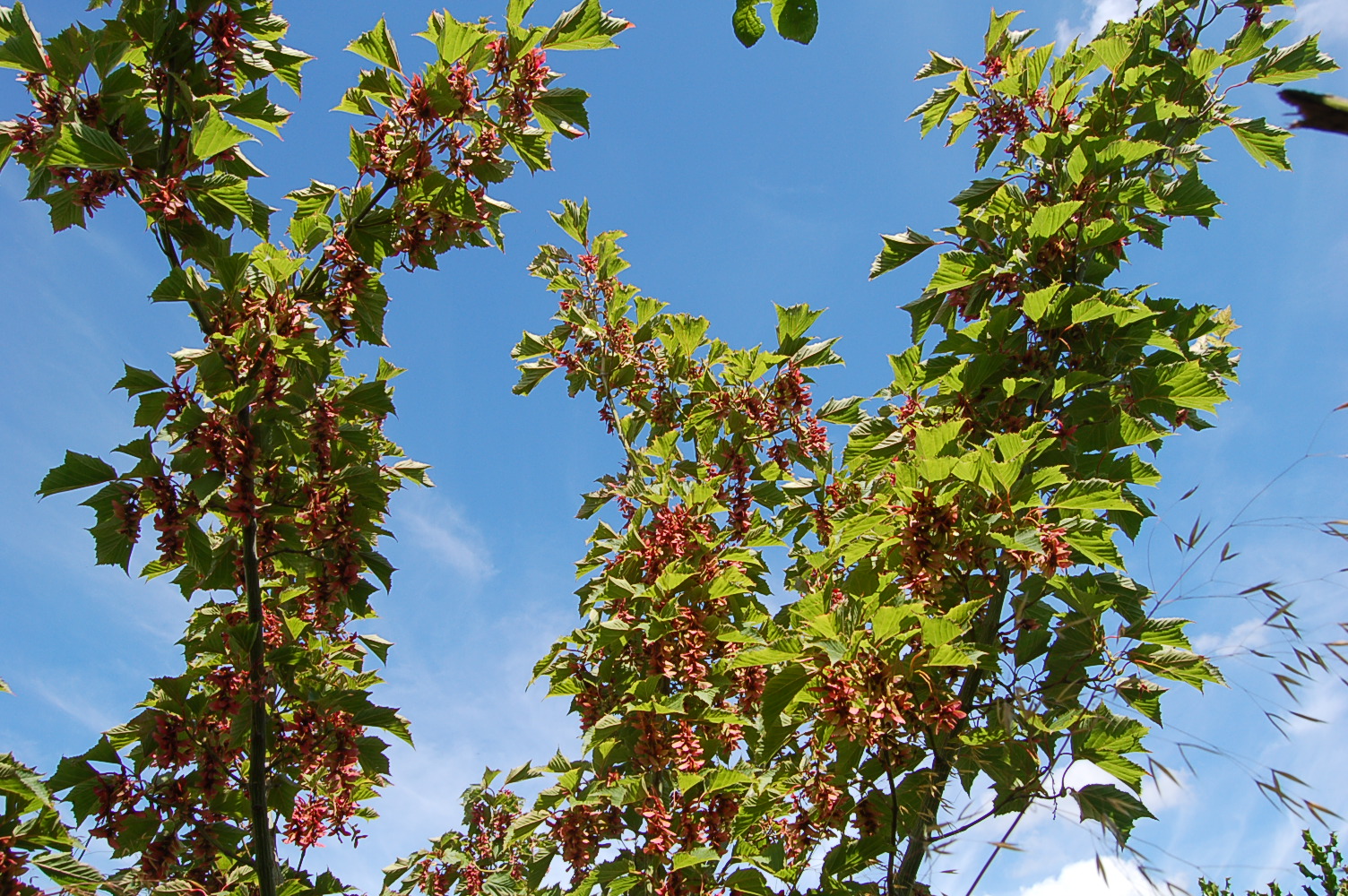
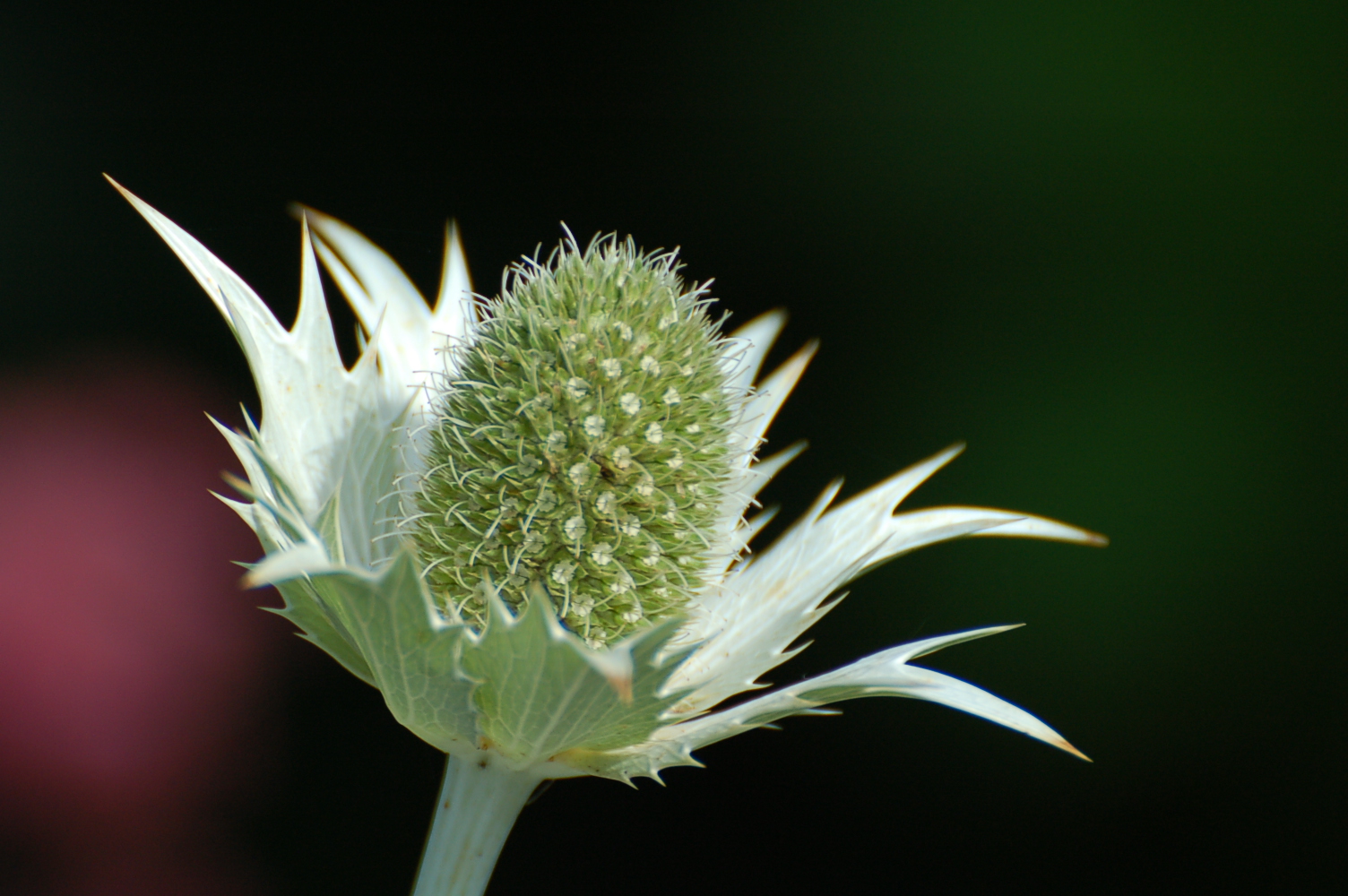
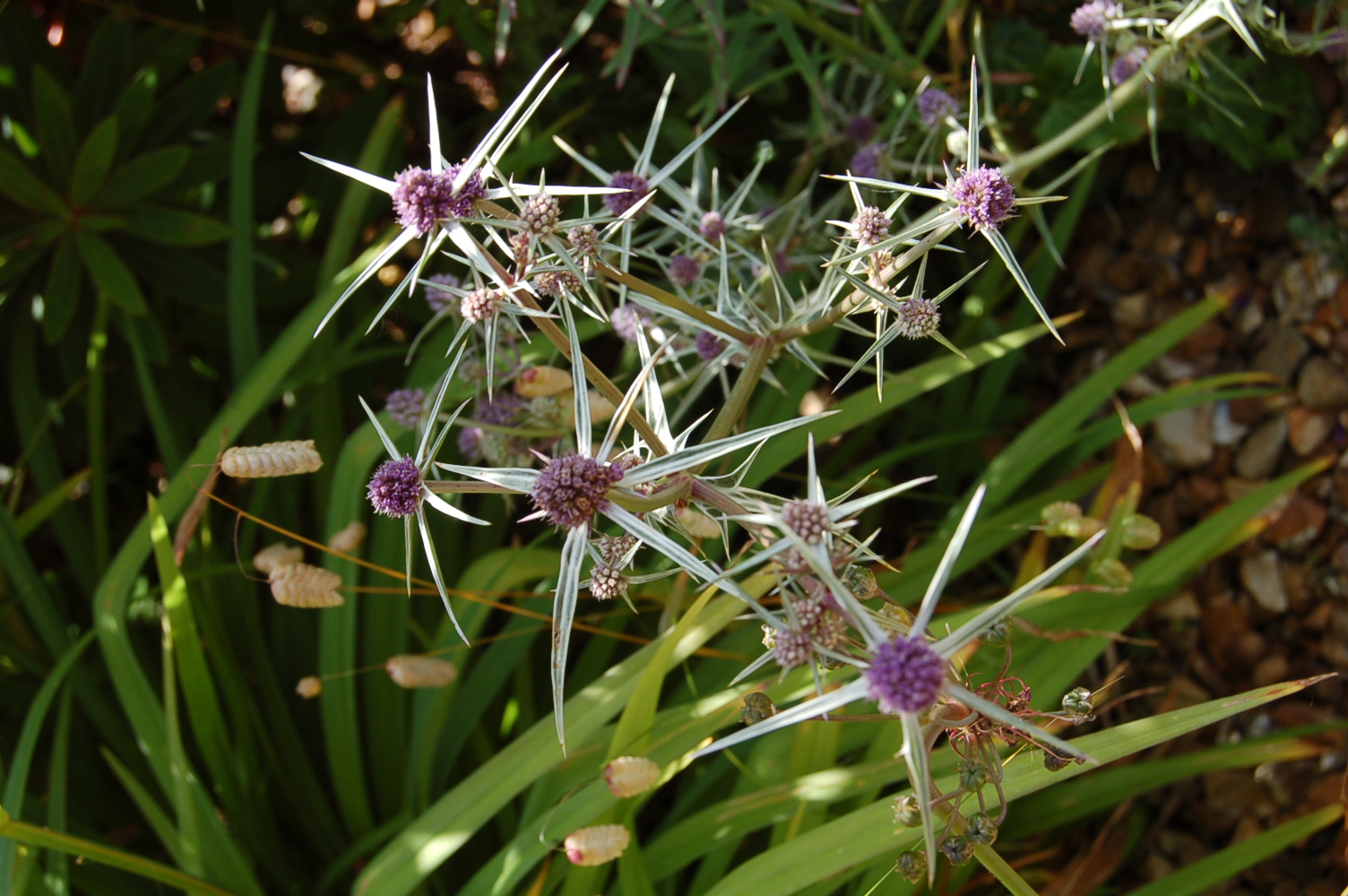
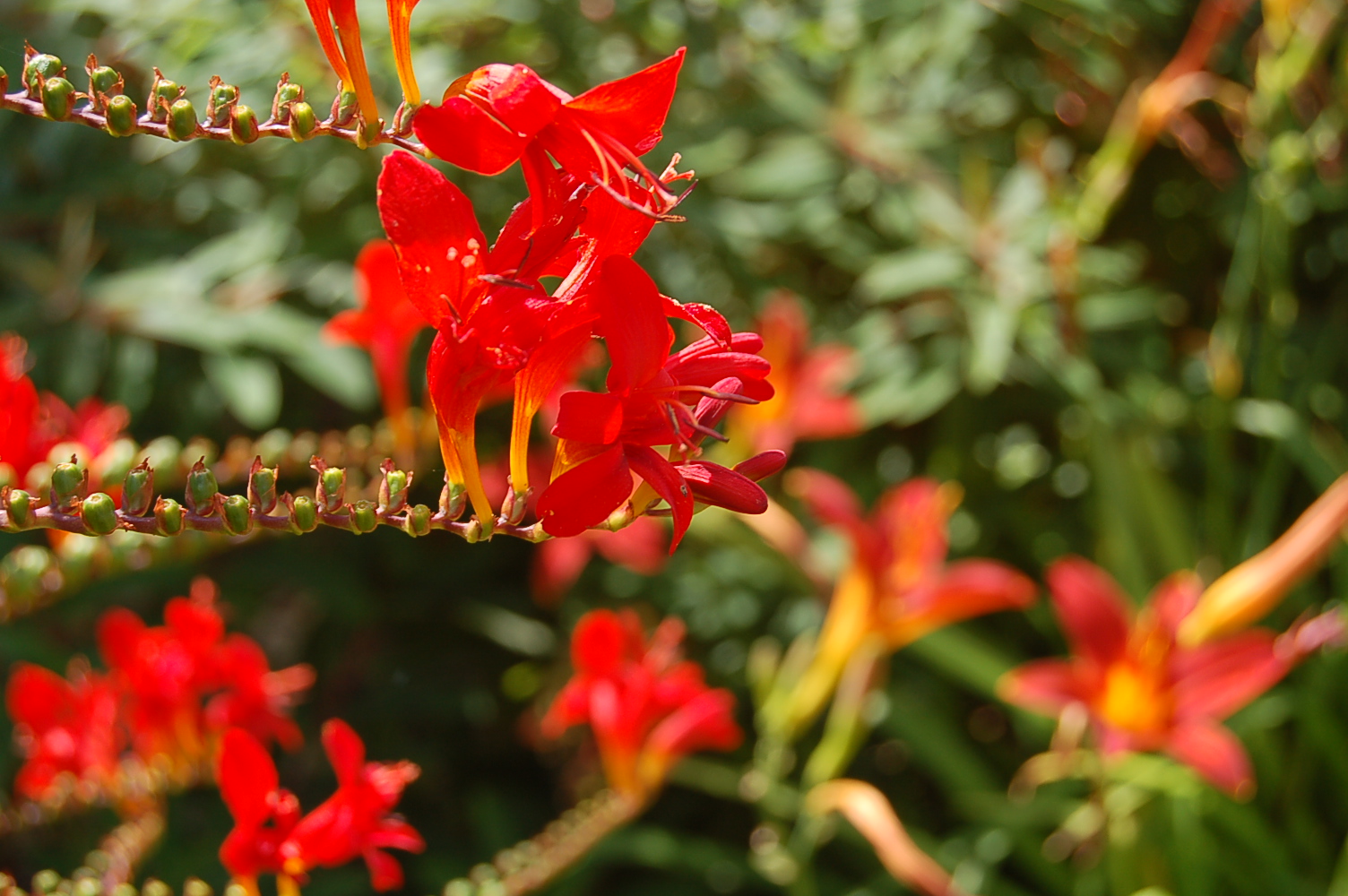
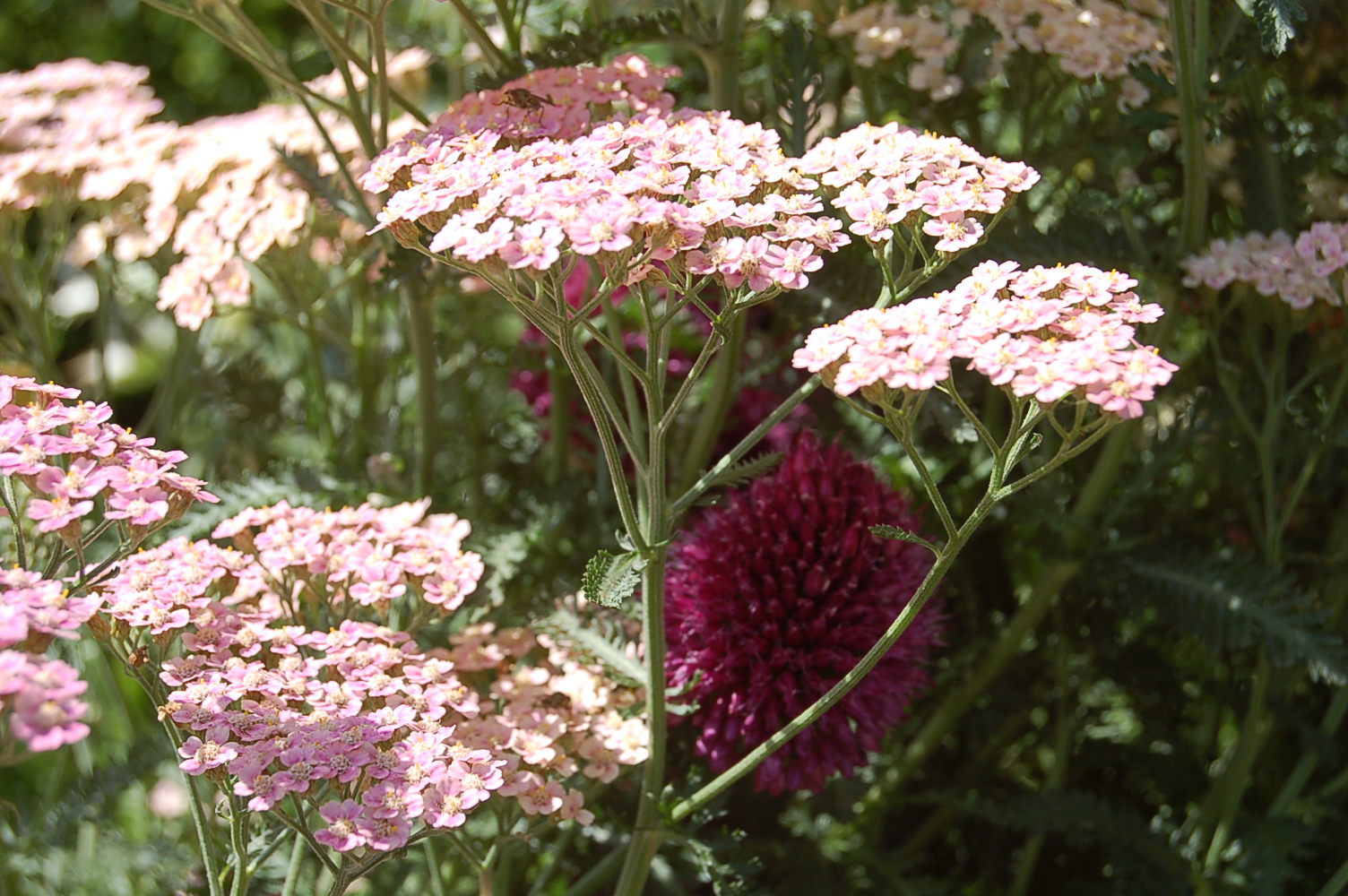
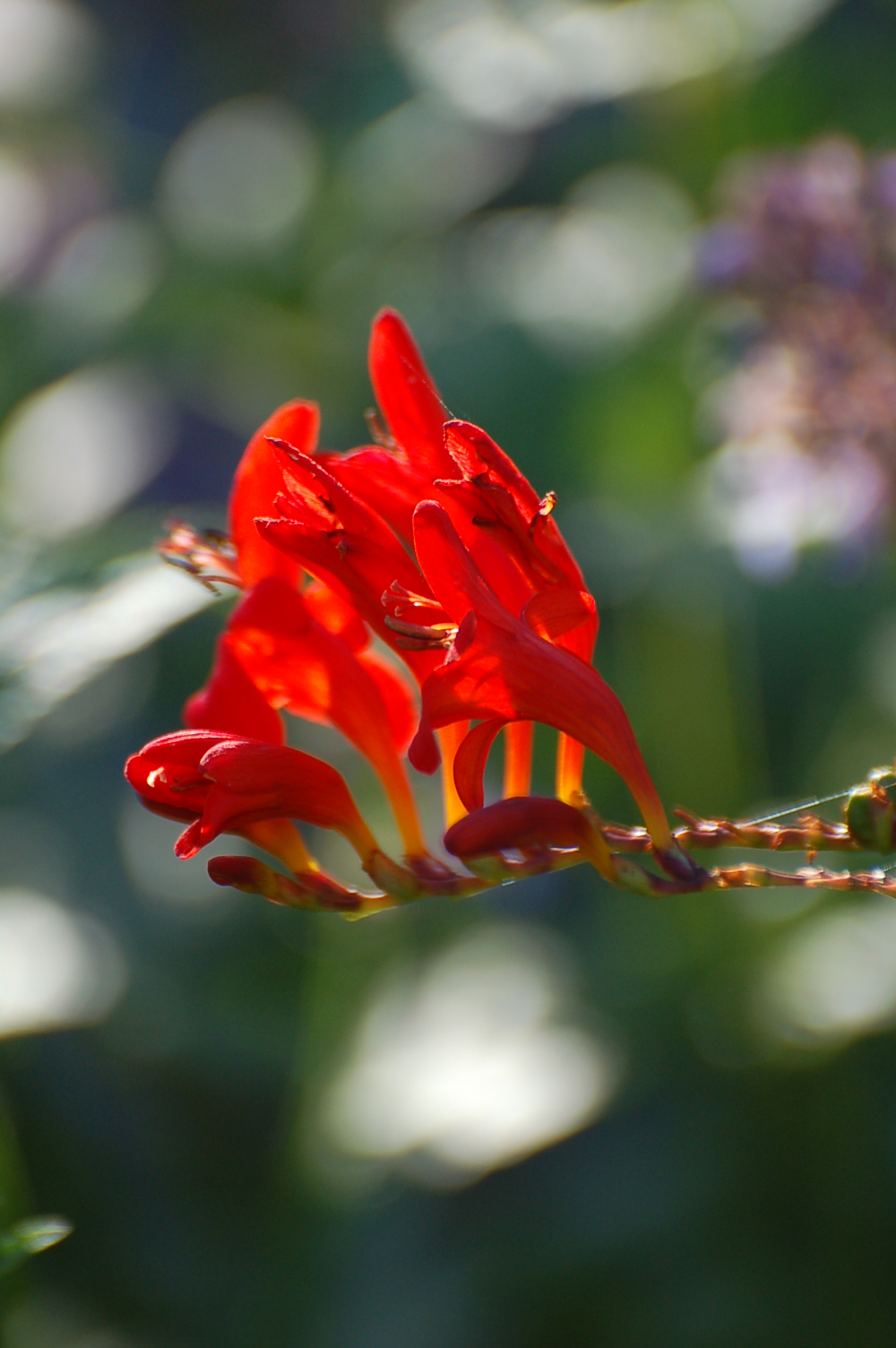
Elsewhere in the borders of the back garden the seedheads of our Snakebark Acer add rich reds, Crocosmias give every shade of yellow, orange and red, Achilleas add subtlety and the spiky Erigeron flowers provide silver.

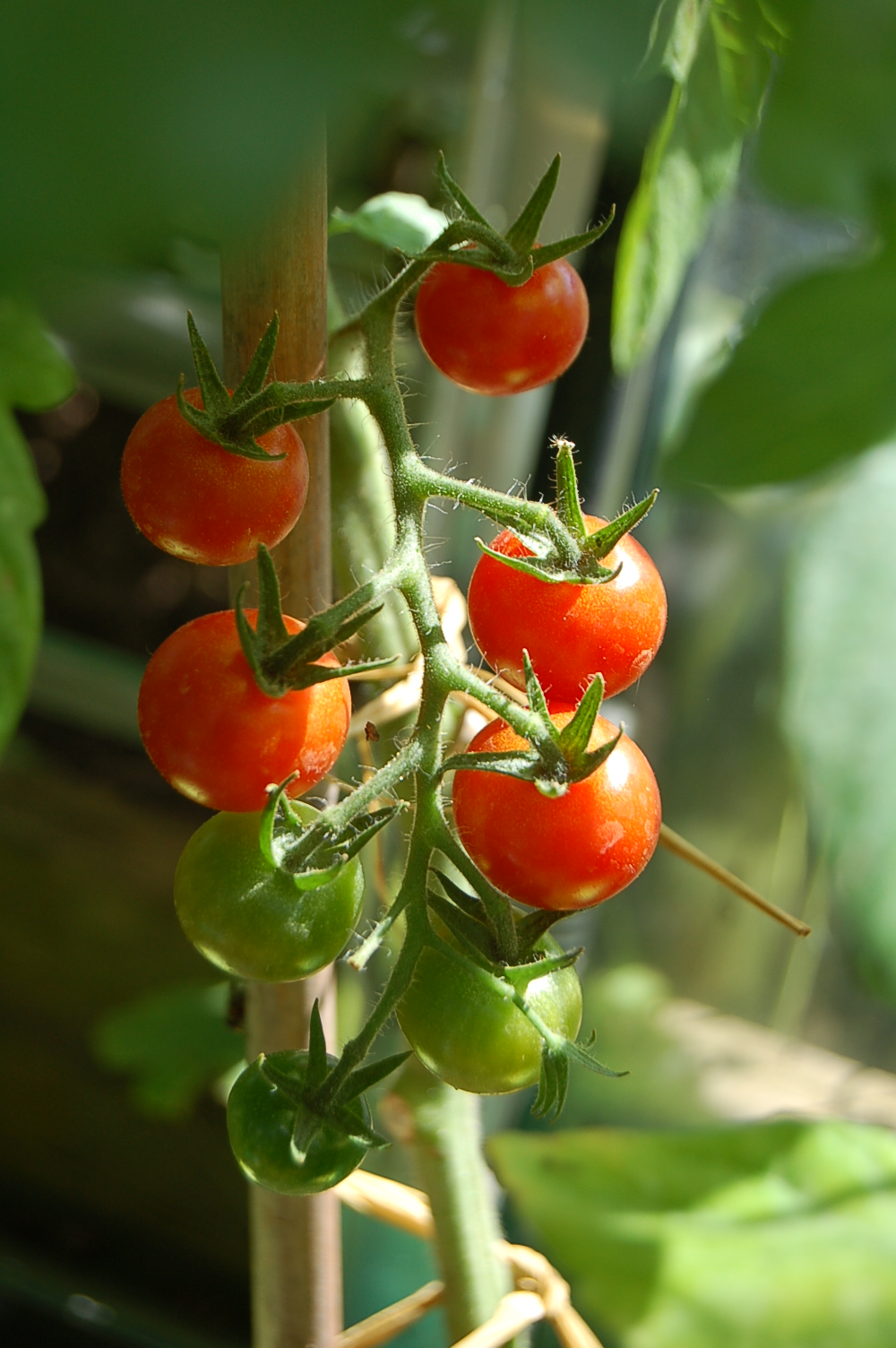
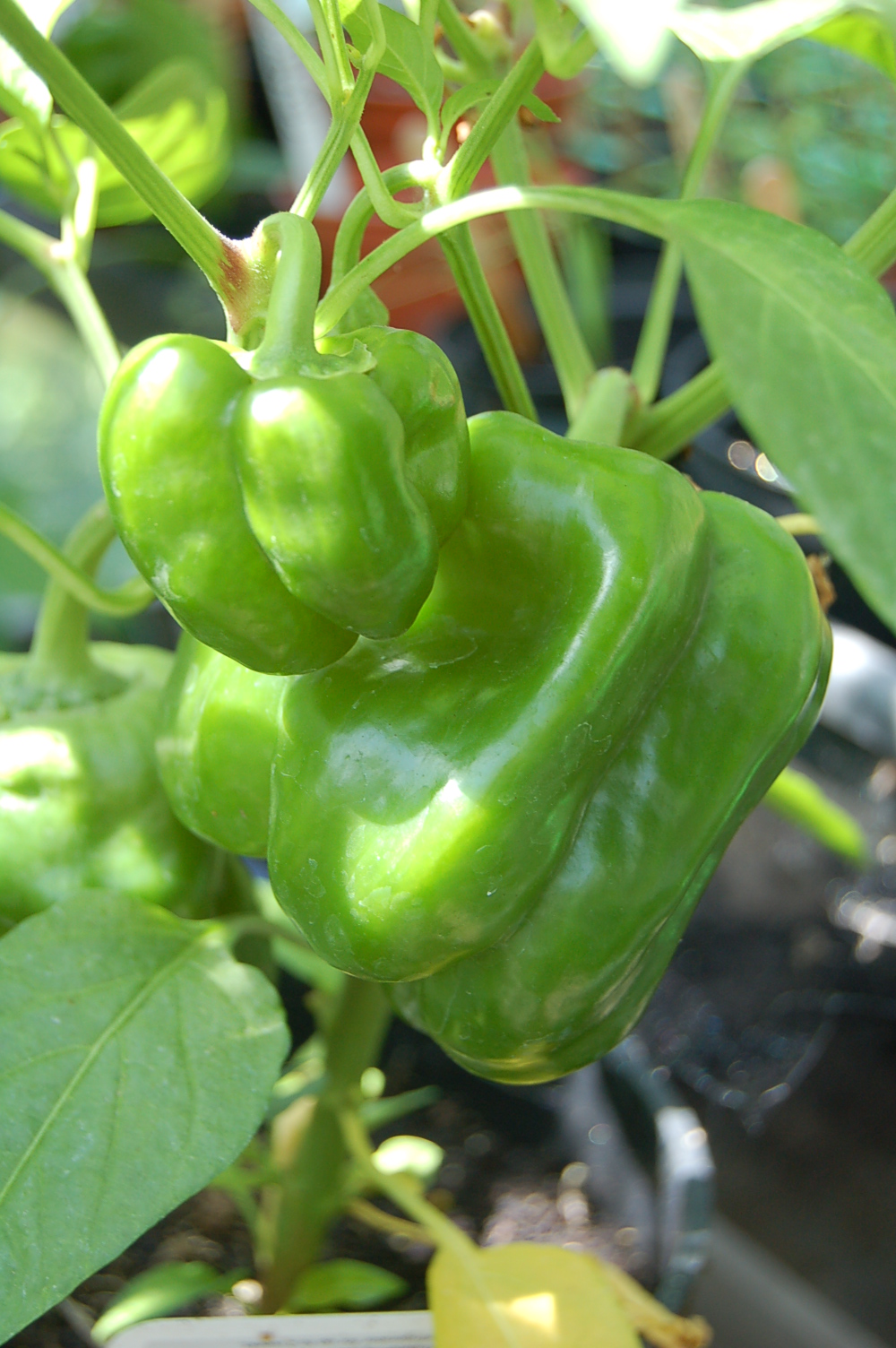
In the greenhouse tomatoes, cucumbers and capsicums are adding sweetness and freshness to the cut-and-come-again mixed leaves of ours summer salads.

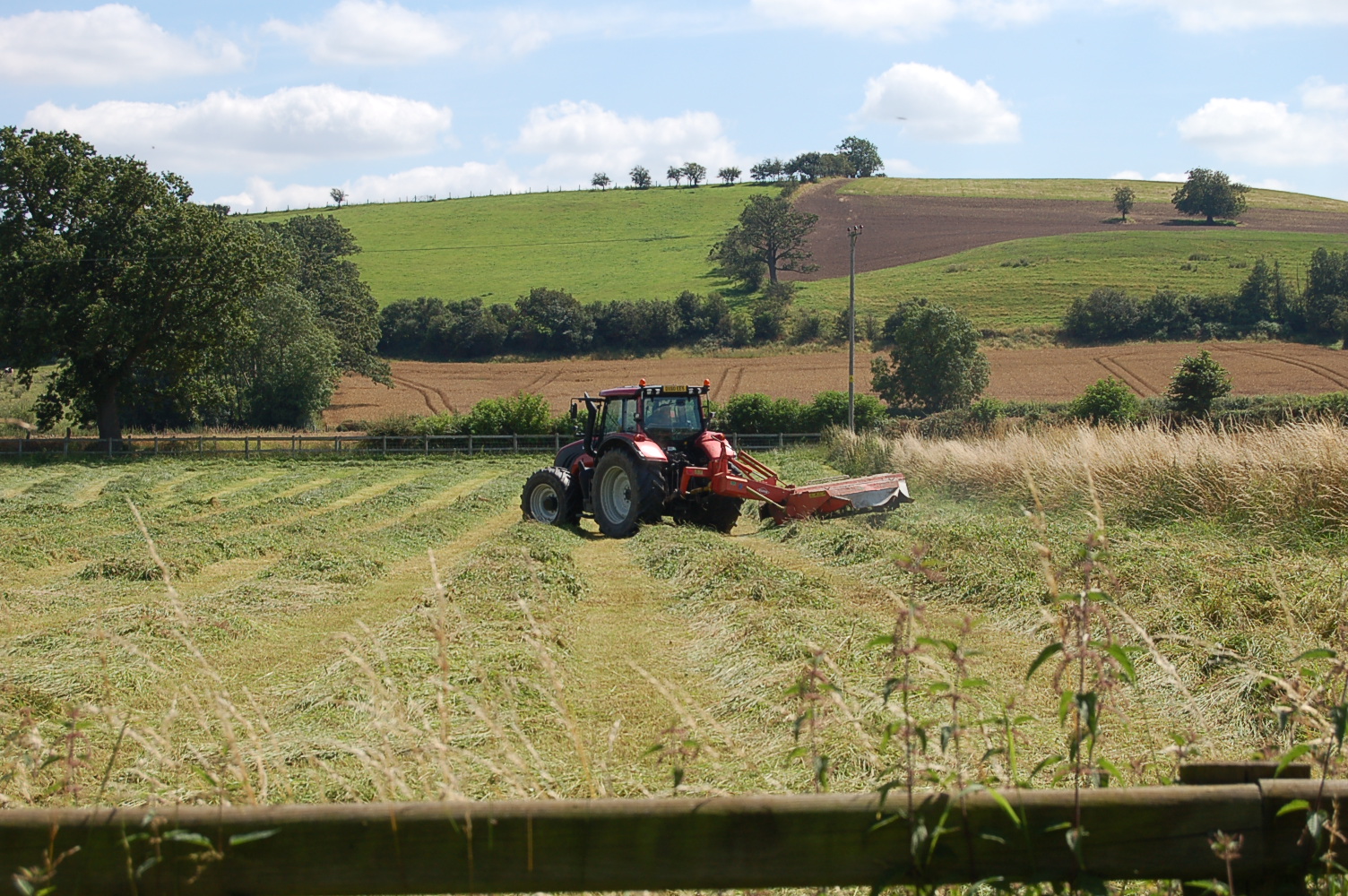
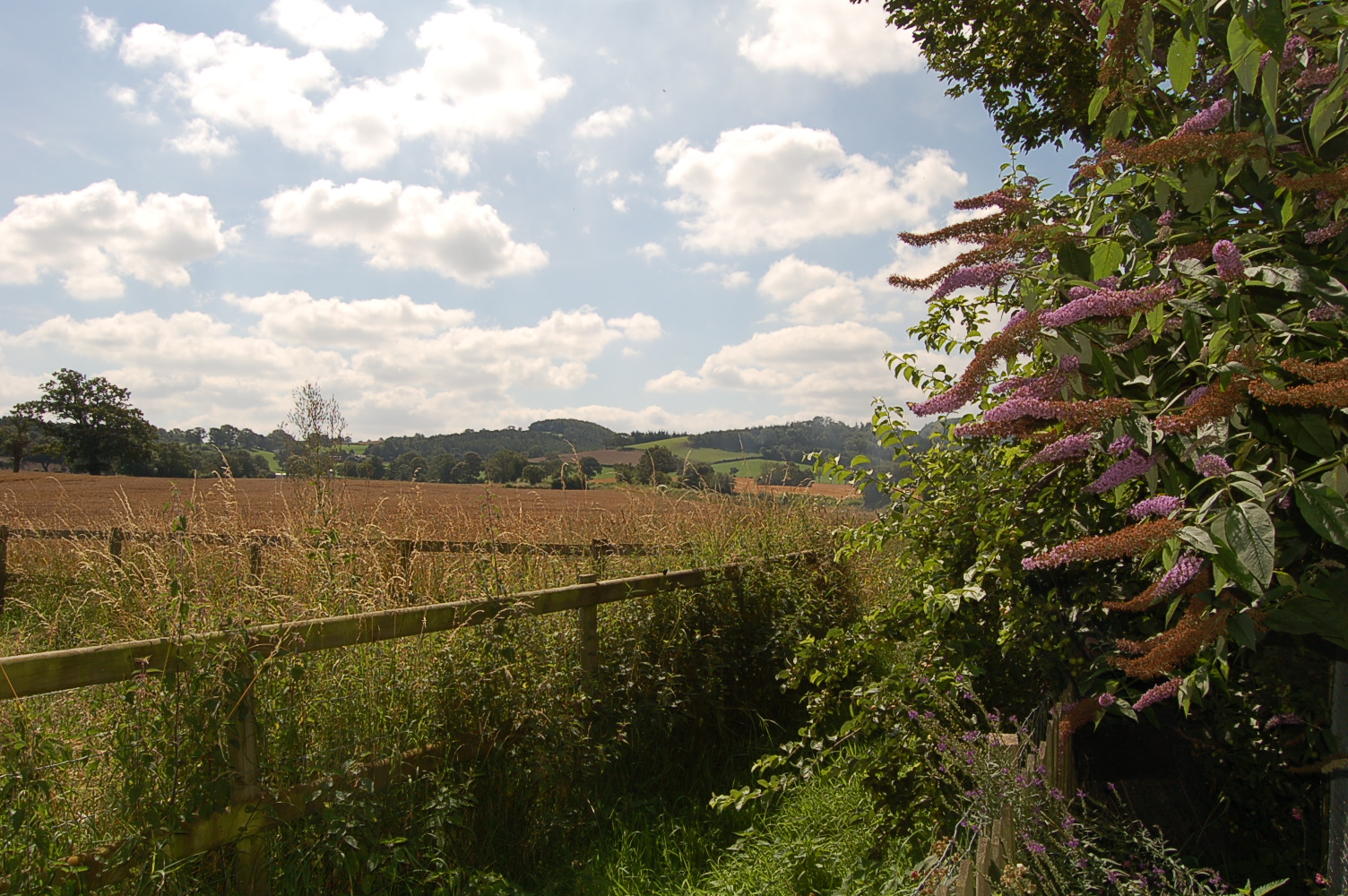
The world beyond our garden is changing this month as in our borrowed landscape the hay in the paddock has been cut and baled and the wheat fields turn gold and are being harvested one by one. By the time my September garden wander comes around the skys will seem empty as the Swallows and Martins will be on their way to warmer climes, but the garden will be getting busier with mixed feeding flocks of titmice and Goldcrests, and others of mixed finches.

Categories
garden design garden photography garden wildlife gardening hardy perennials photography Shropshire wildlife

Plant Portraits – August

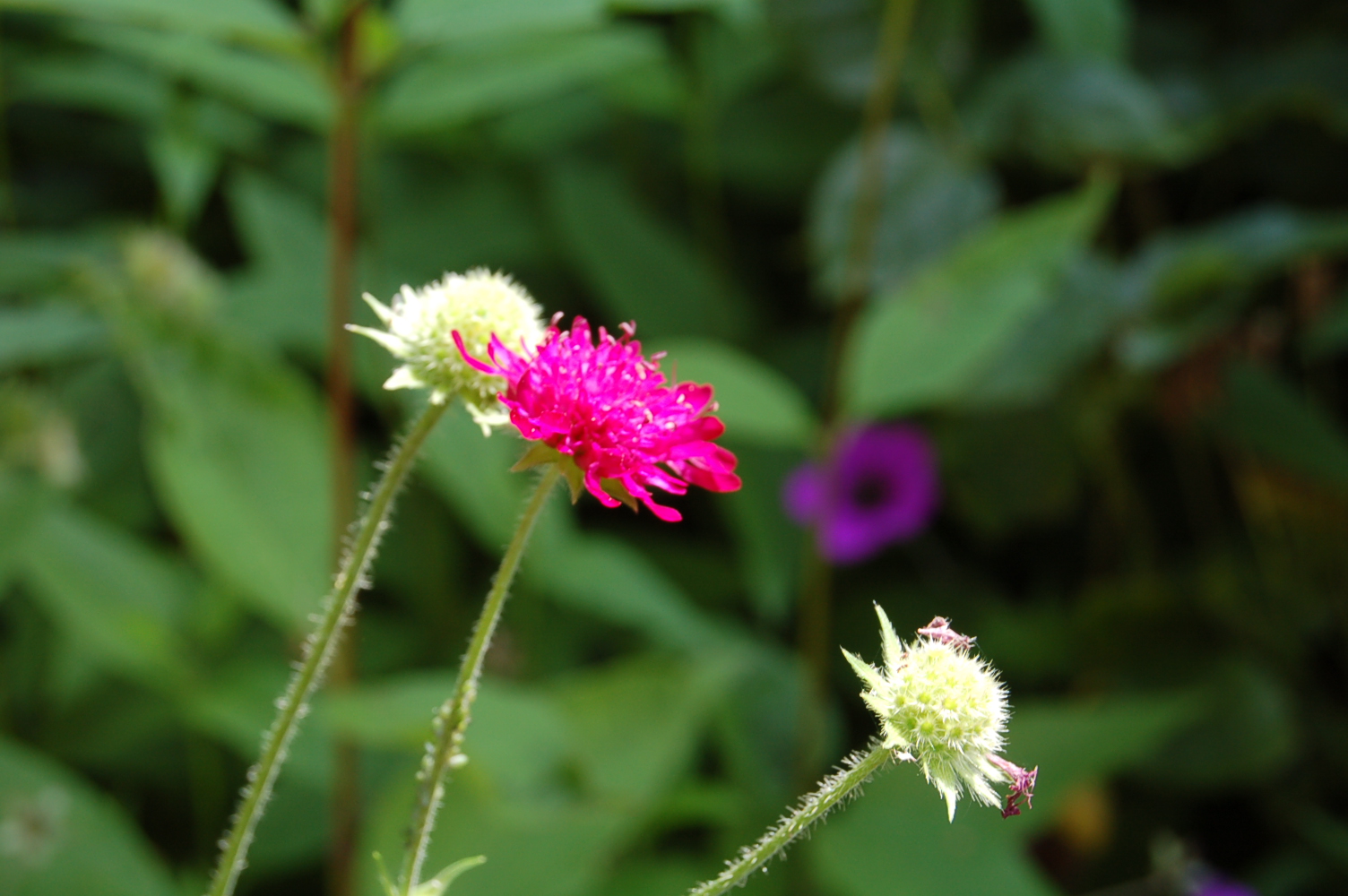
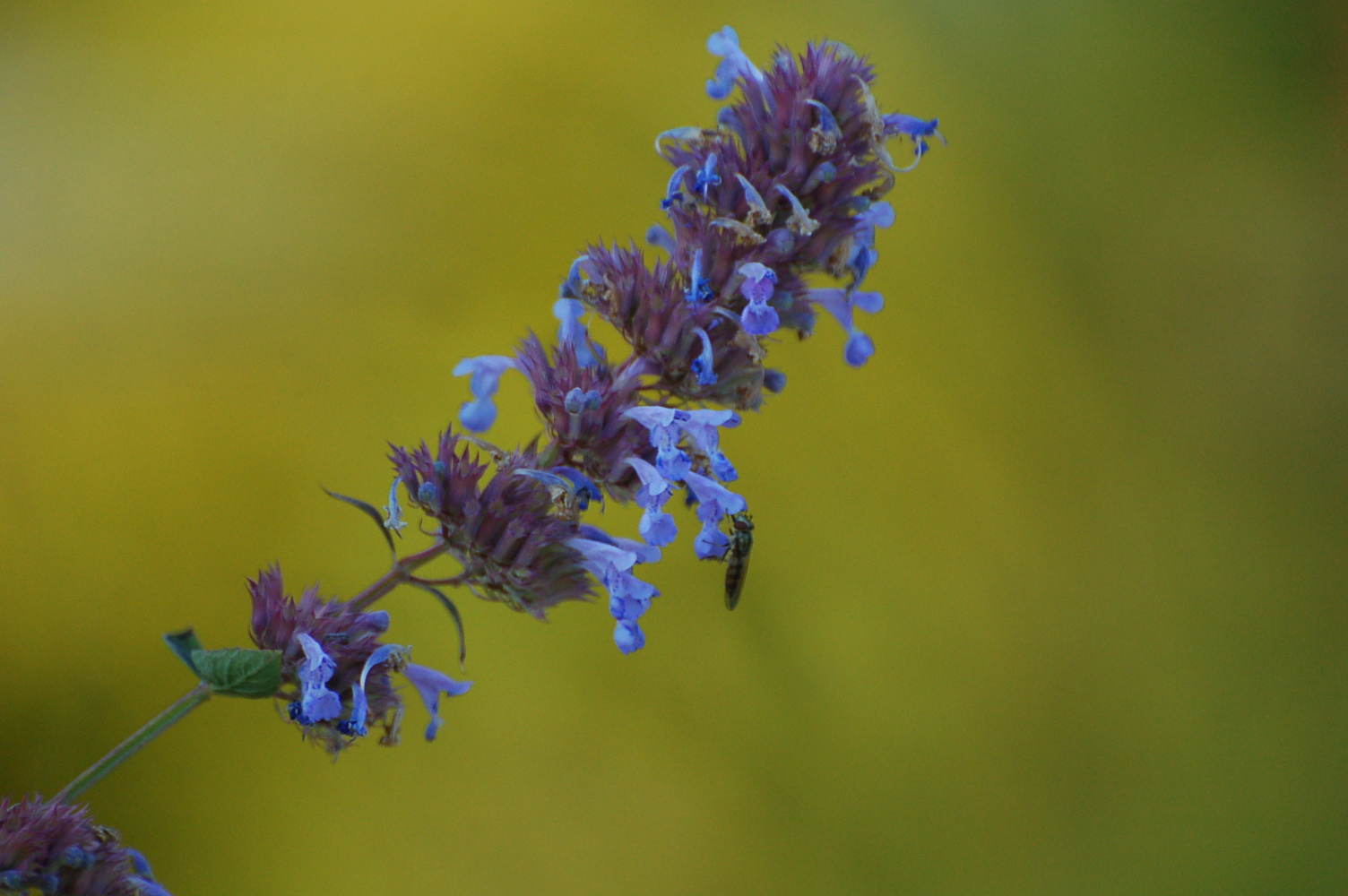
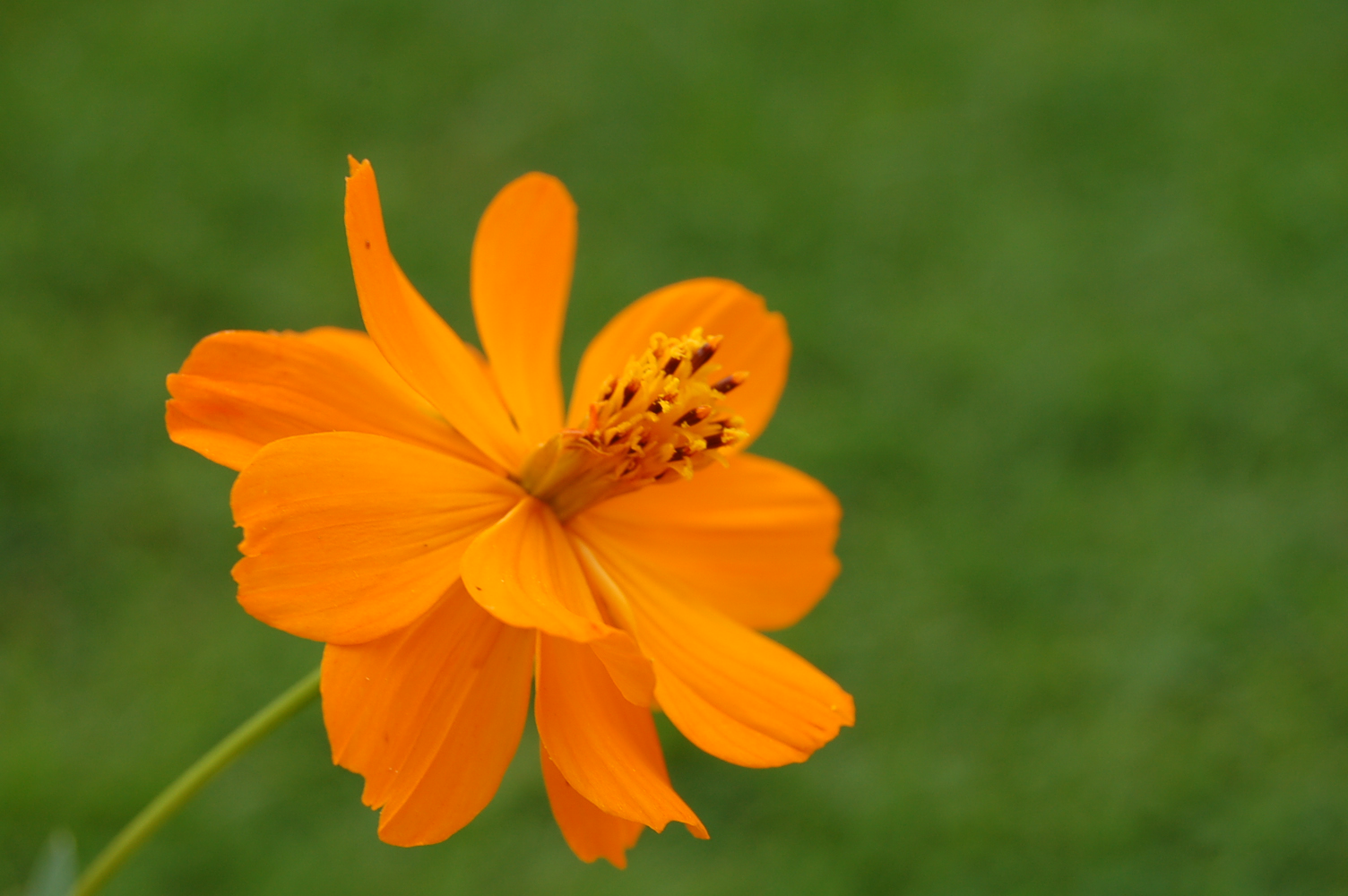
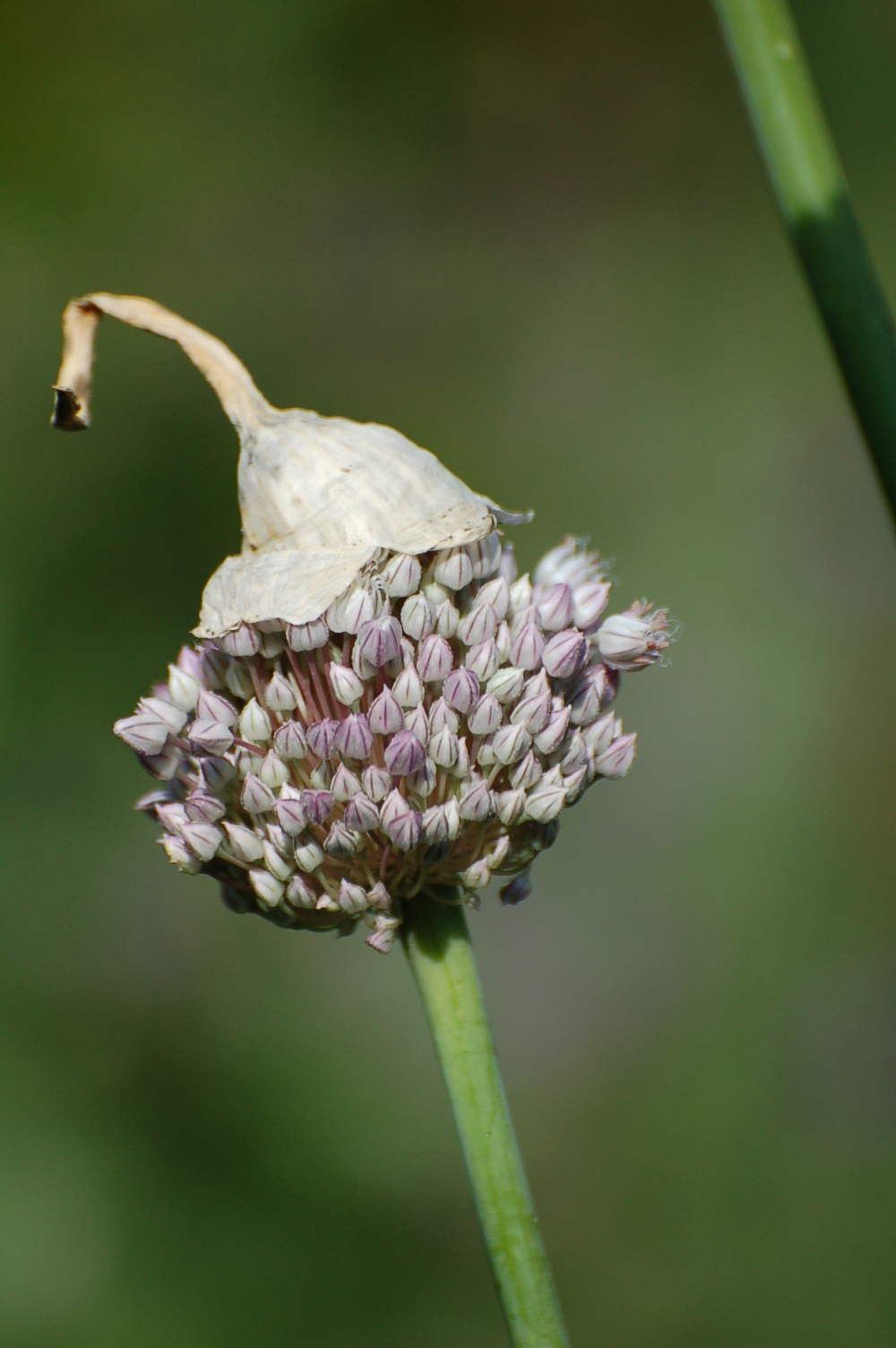
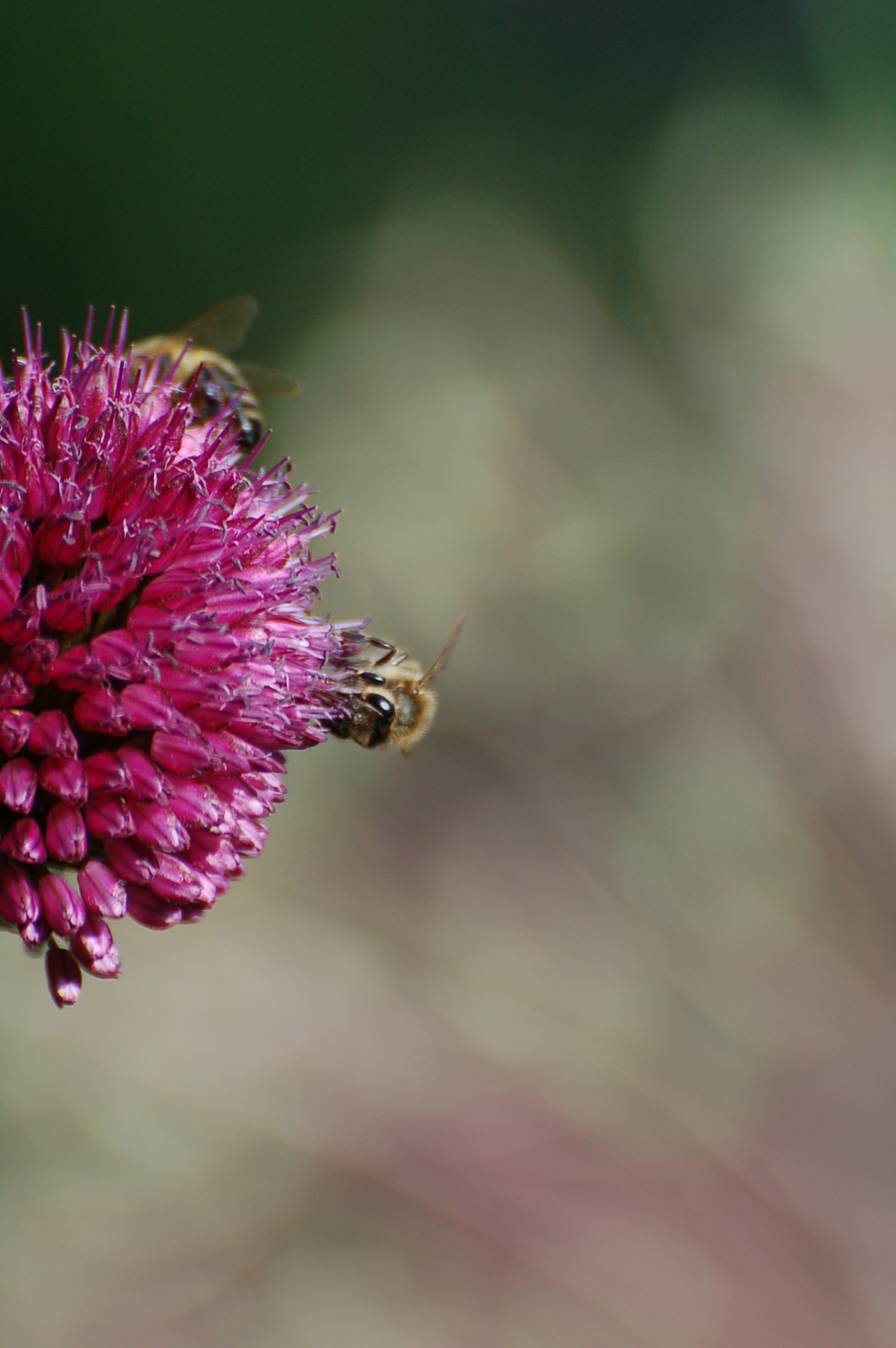
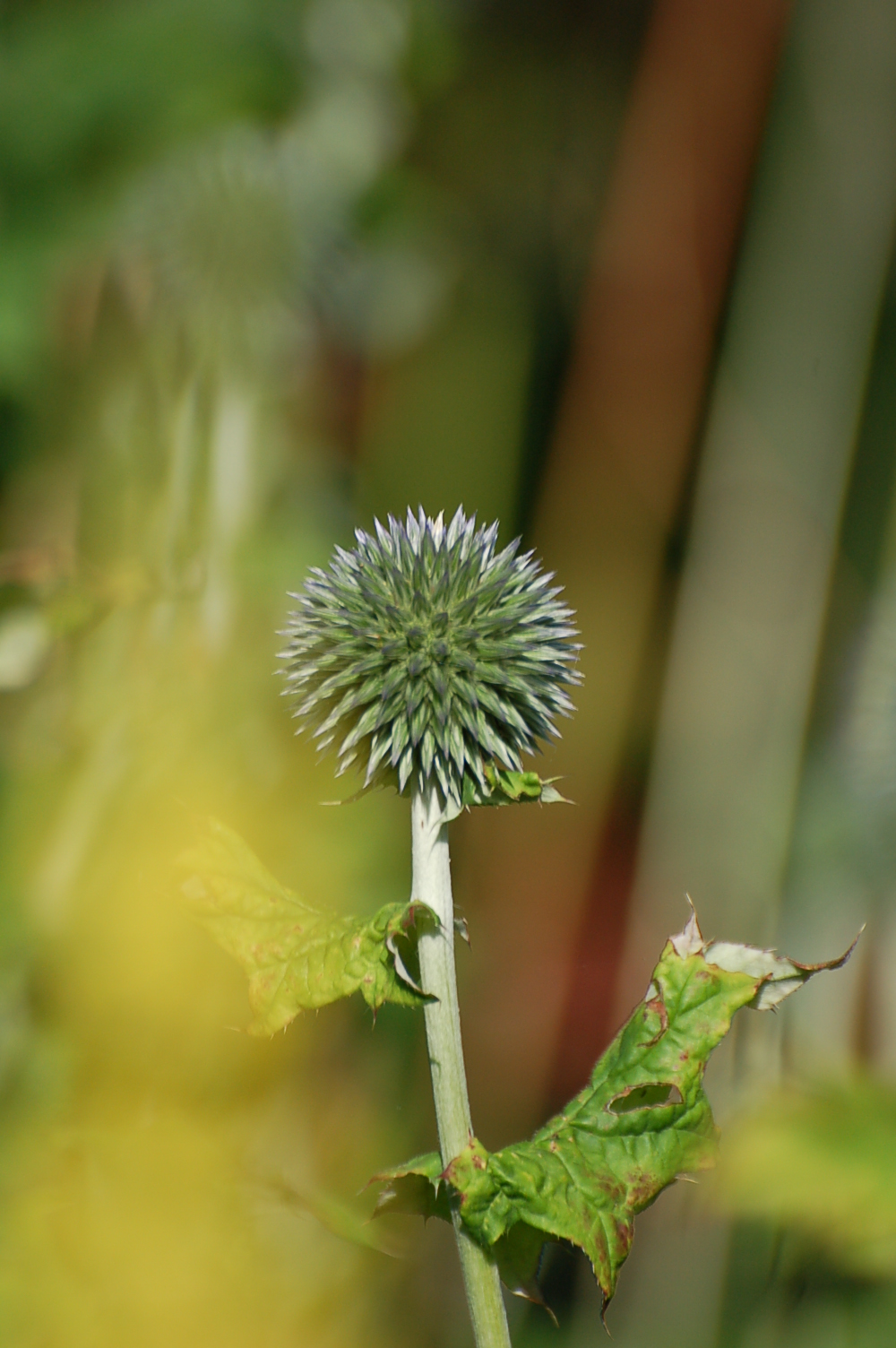
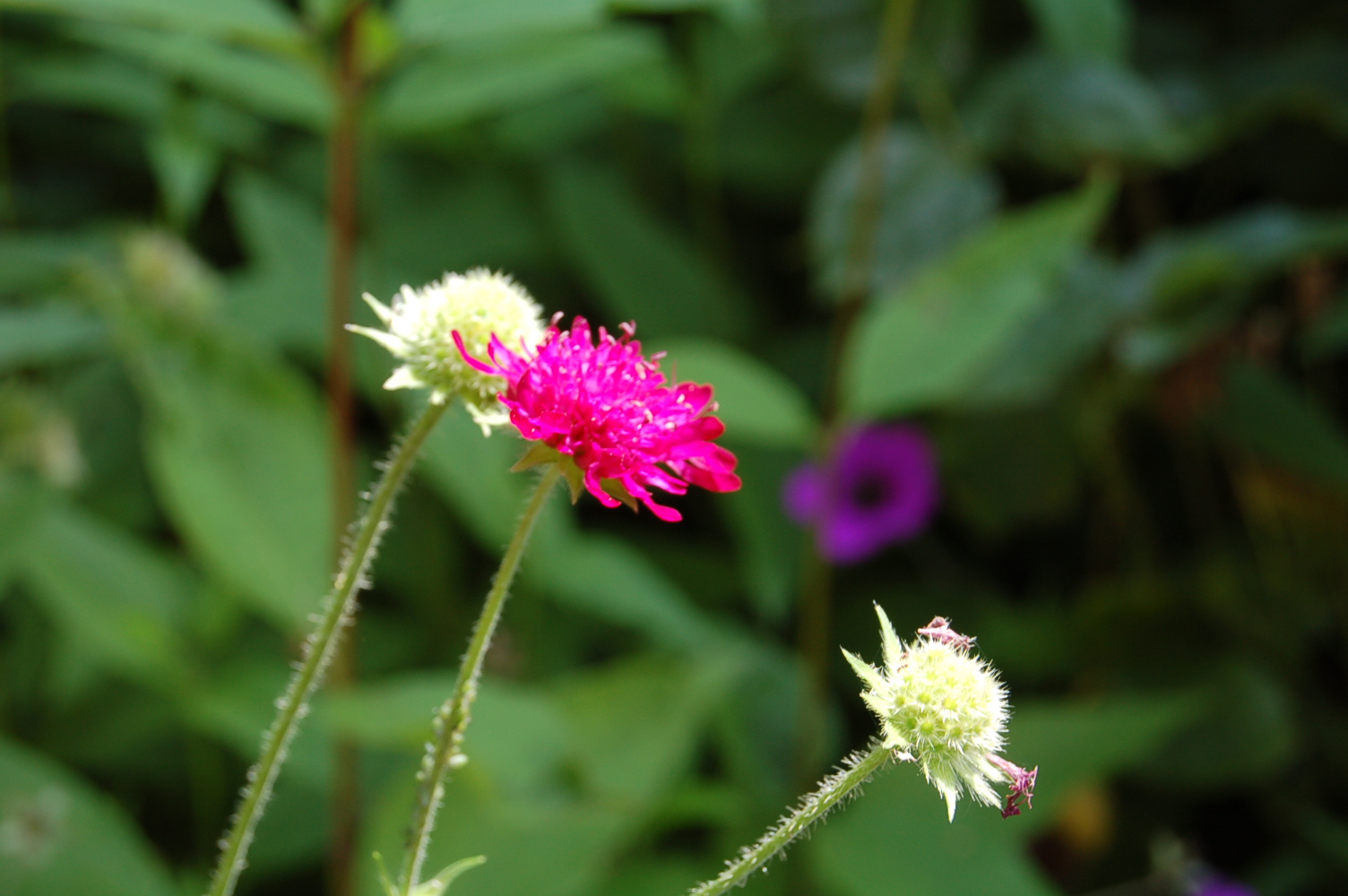
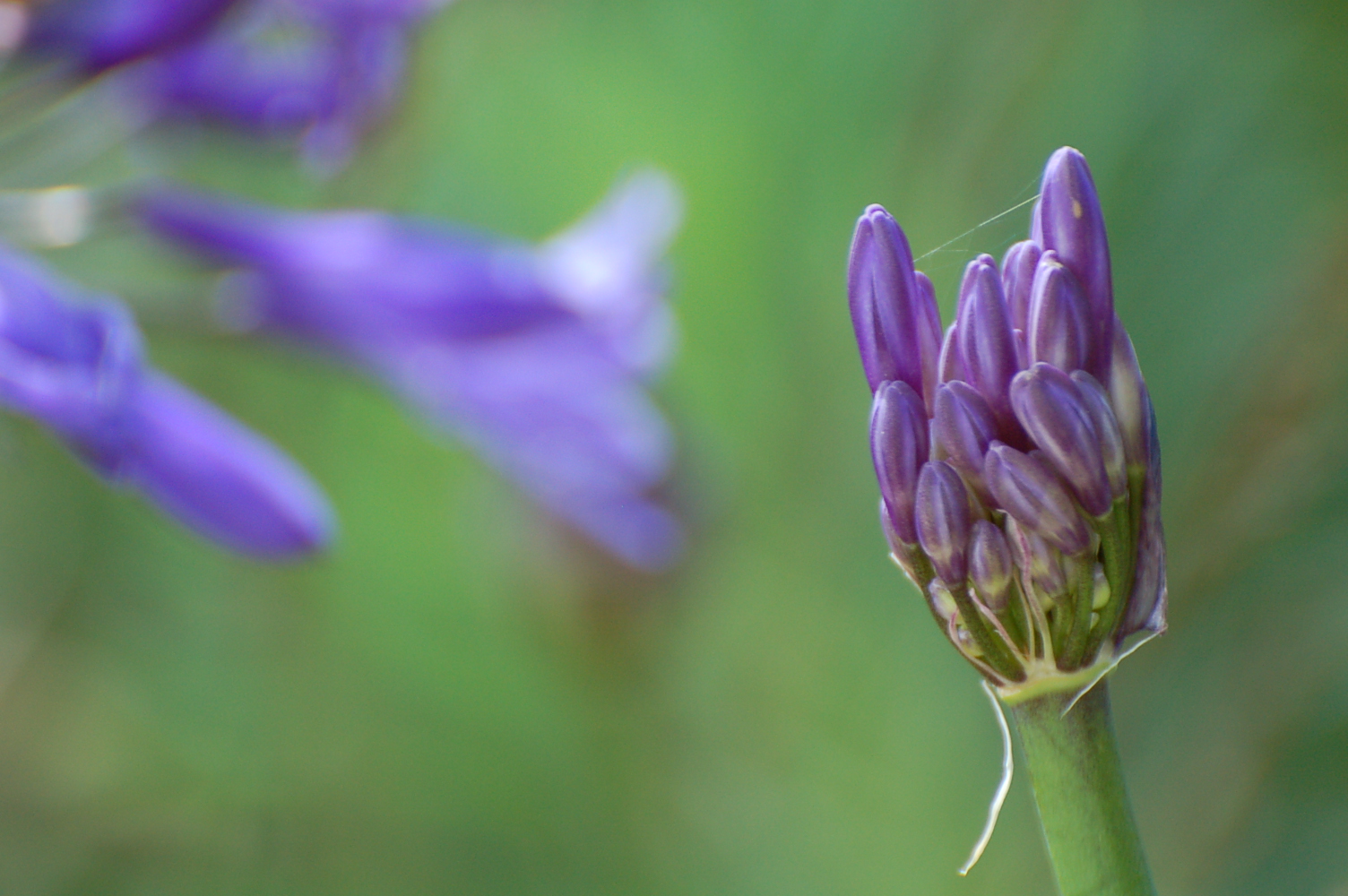
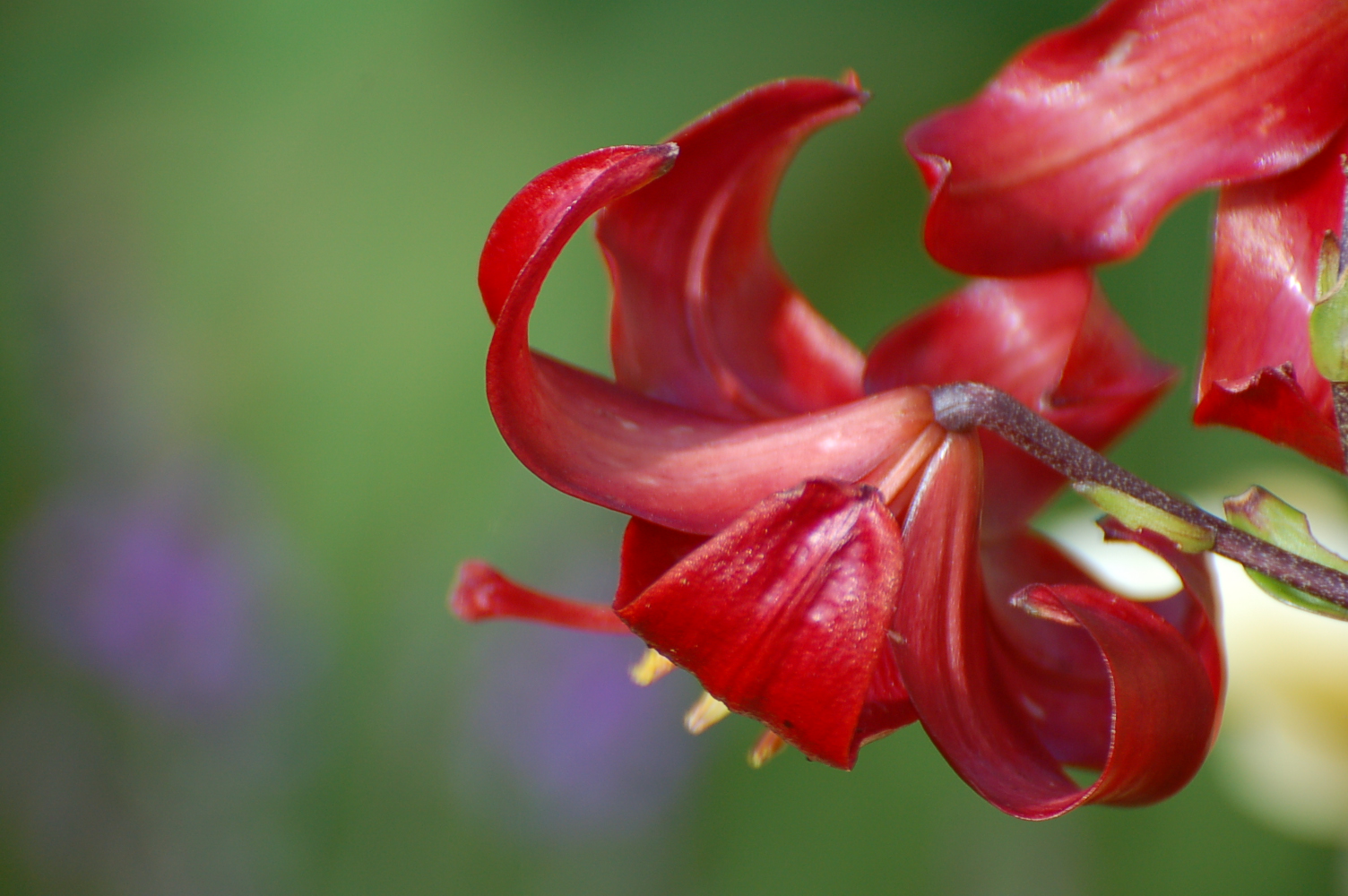
This post is dedicated to portraits of the blooms that are starring in our garden in August. The individual stars which shine out of the borders.

Categories
garden design garden photography garden wildlife gardening July photography shrubs

Mr Buddles Shrubs

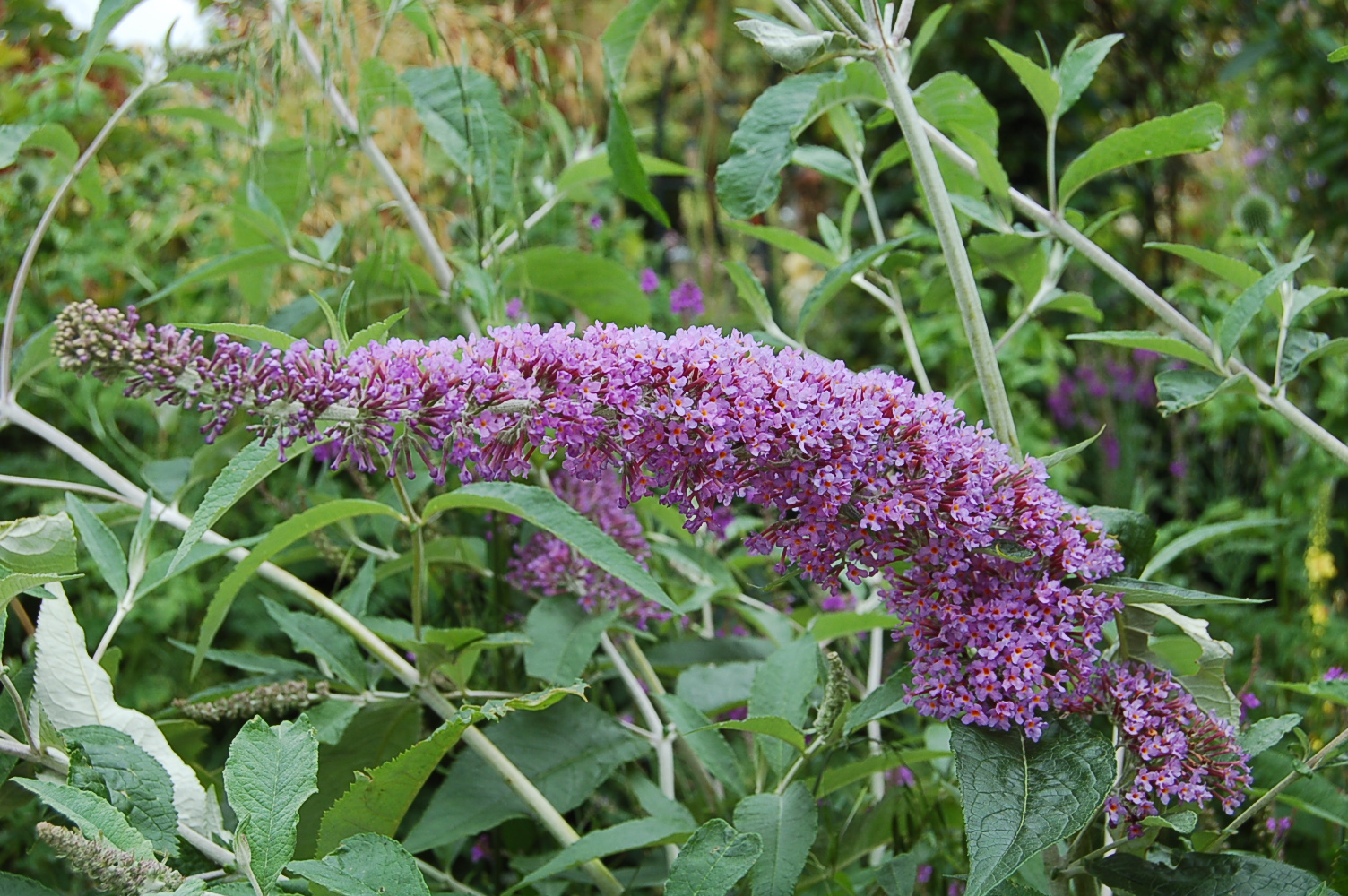
Buddleja can be seen as a common and very ordinary shrub especially when we observe how readily it seeds into gutters, between tiles, along railway embankments, river banks and canal sides. These commonest of buddlejas are quite stunning with their long conical panicles of pale mauve flowers which attract bees, hoverflies and are a firm favourite of butterflies and moths. Move in close and enjoy their delicate scent.

I usually spell it “Buddleja” but I am not sure where that spelling came from. I turned to my garden plant bible, the Royal Horticultural Society’s  “A-Z Encyclopedia of Garden Plants”, and they refer to it as Buddleja but add syn Buddleia.

I continued to research and have now discovered that it was Linnaeus who named it Buddleja with a “j” and he named it to commemorate Adam Buddle. So I still cannot find out where the “j” comes from. Adam Buddle was an English vicar who worked in Essex and like many of his contemporaries turned to botany to fill his time. He compiled an English flora which was never published but little else seems to be known about him.
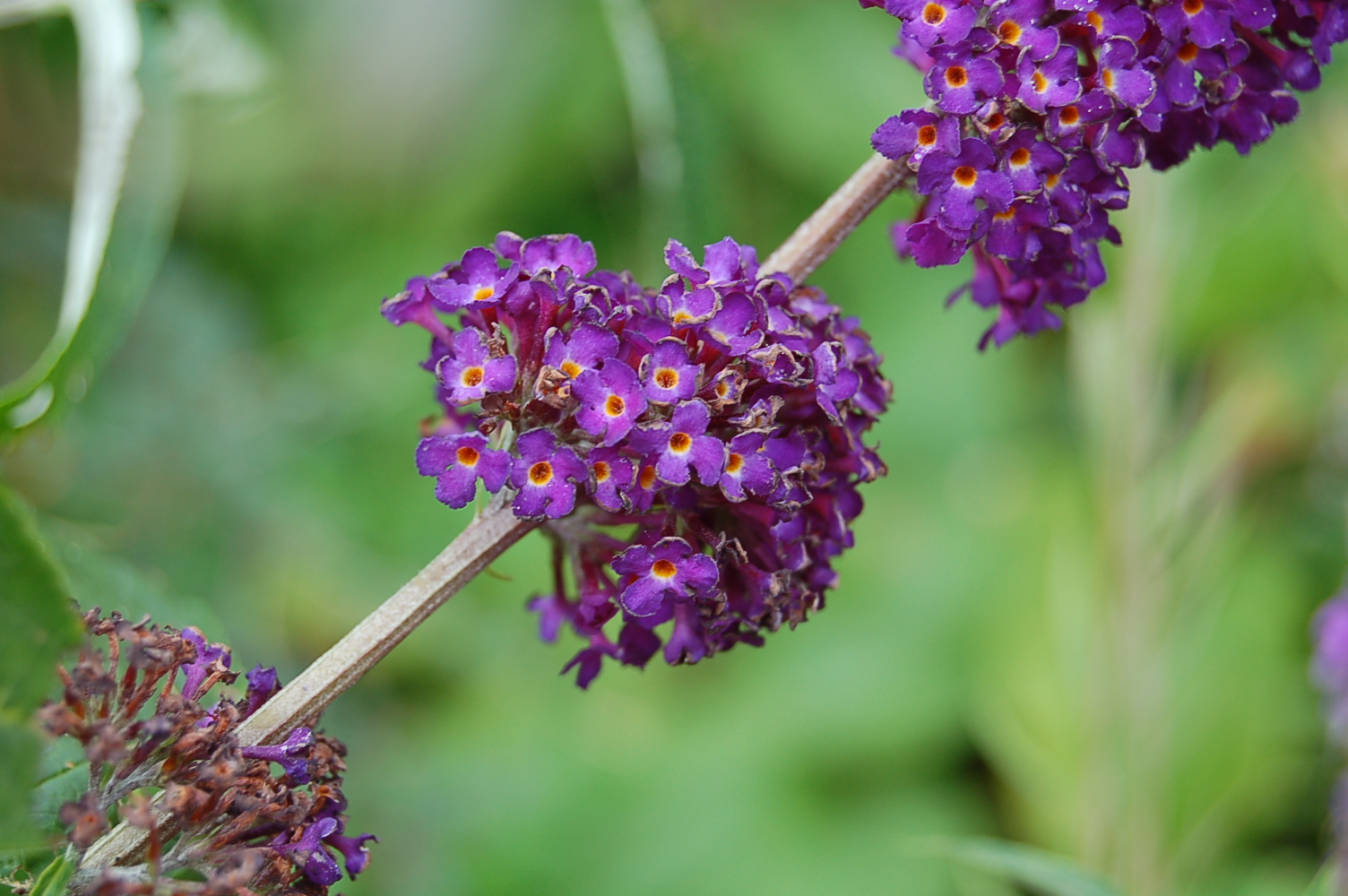
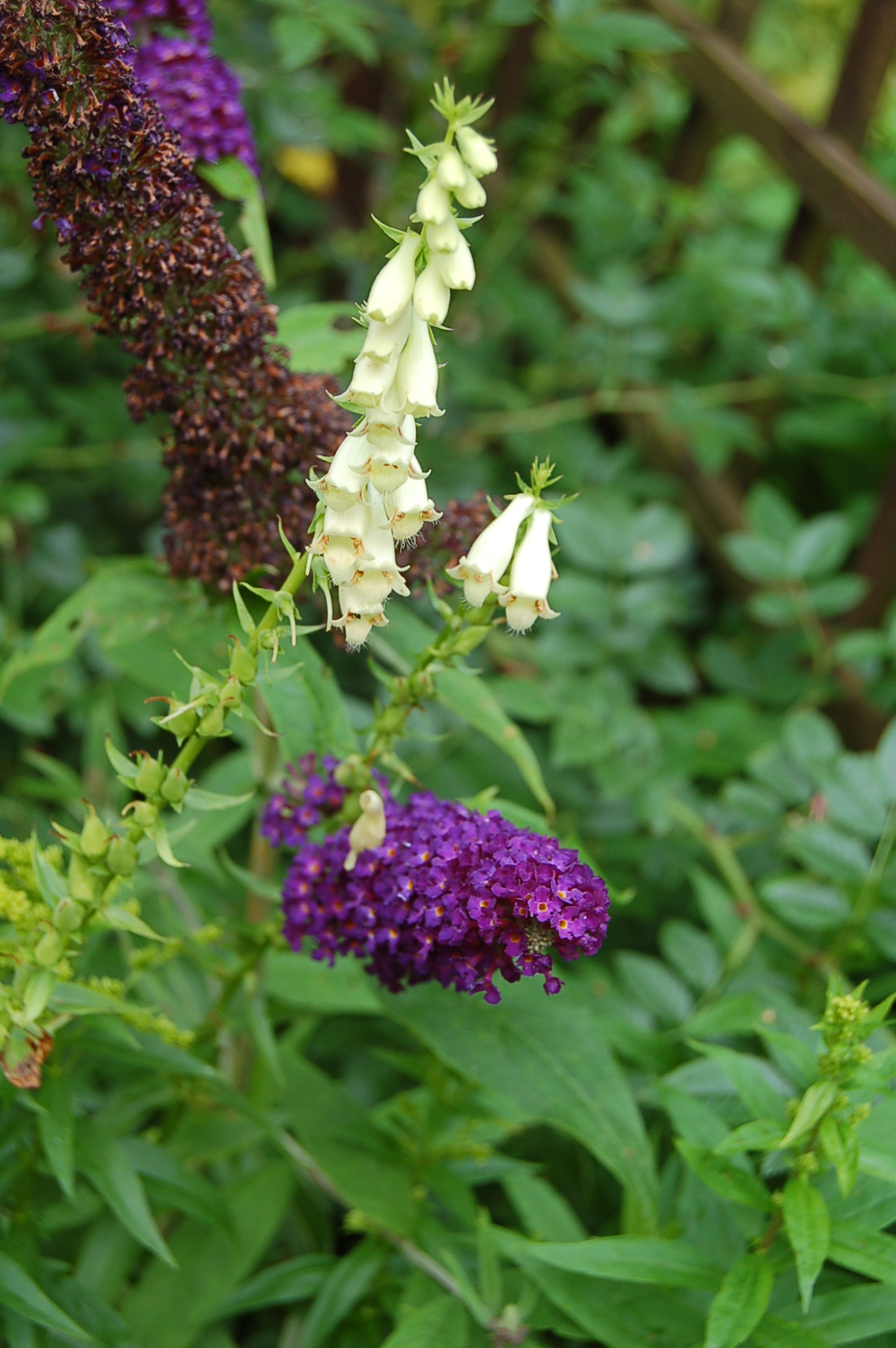
In our gardens we can grow buddlejas with flowers from the purest of white to the deepest purple, from pale to deep pinks and even shades of orange. I decided a few days ago to have a wander around our garden to see which ones we had in flower. Most are varieties of Buddleia davidii. Many have rich yellow or orange centres to each of the tiny individual flowers.

This first set of photographs are of the Buddlejas in flower in our garden this August.

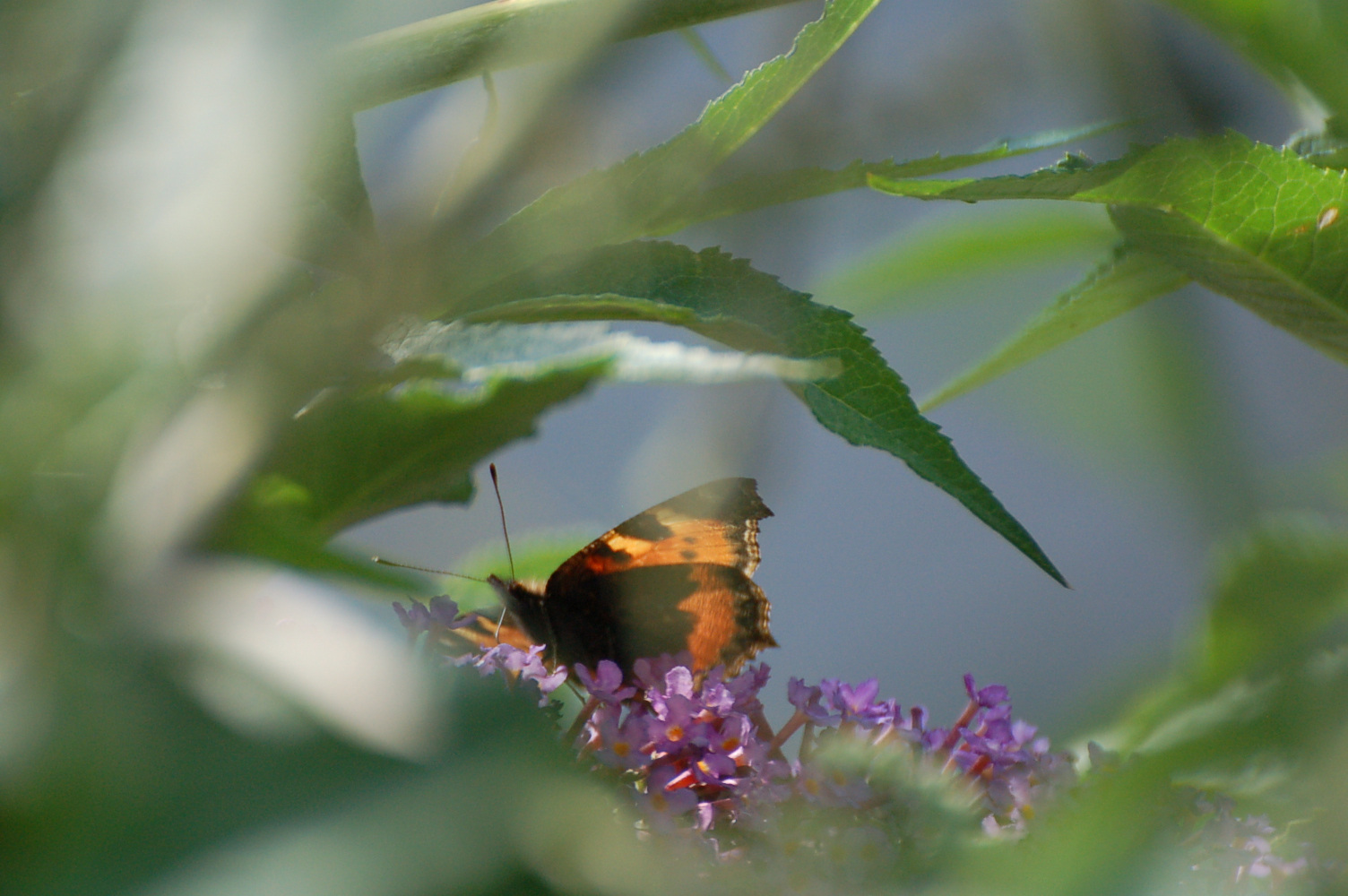
On a day in  mid-August our Buddleja davidii were attracting butterflies, as we had experienced a few warm, bright, calm days after weeks of cold, wet and wind.

In the communal borders on our allotment site we grow many Buddleja davidiis in their full colour range, but we also grow the orange-flowered Buddleja weyeriana.
On a recent visit to a garden with the Shropshire branch of the Hardy Plant Society we came across this beautiful Buddleja davidii with soft grey leaves and blue flowers.
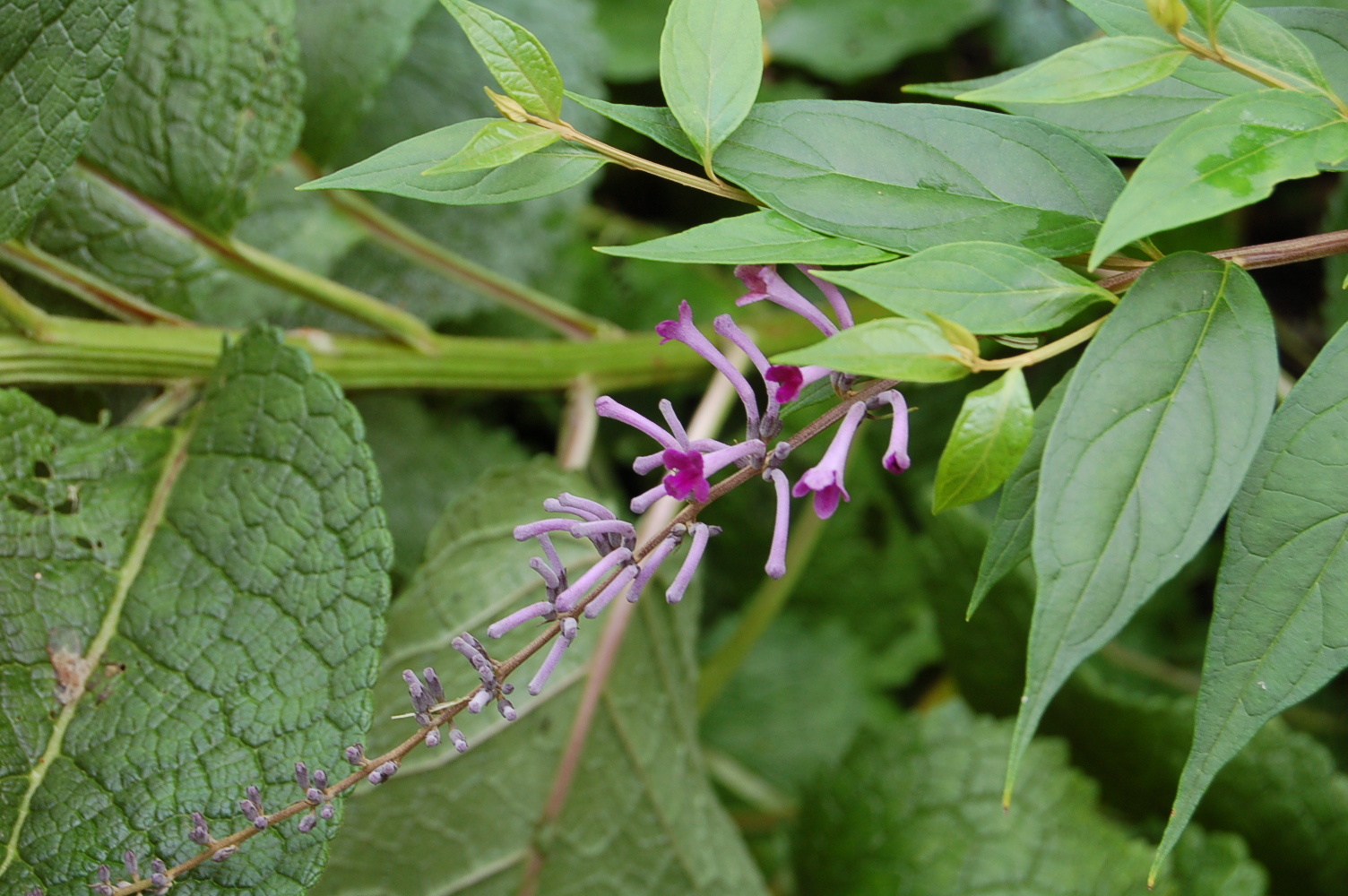
In another border we discovered a much more unusual variety called Buddleja lindleyana. It’s leaves were much brighter green than the davidiis and the individual florets were further apart from each other. The inside of each floret was a rich bright violet while the outsides were a greyish violet.

Categories
conservation flower show garden design garden photography garden wildlife gardening hardy perennials July meadows ornamental grasses ornamental trees and shrubs photography RHS The National Trust wildlife

A Day at the RHS Flower Show Tatton Park

We have been to the Chelsea Flower Show, Harrogate Flower Shows and The Autumn and spring Malvern Flower Shows but the one we enjoy the most is always the one set in the grounds of Tatton Park. Luckily this is the RHS show closest to home. Although Chelsea is often called the greatest flower show, having visited once we have no desire to go again. But we frequently go to Tatton.

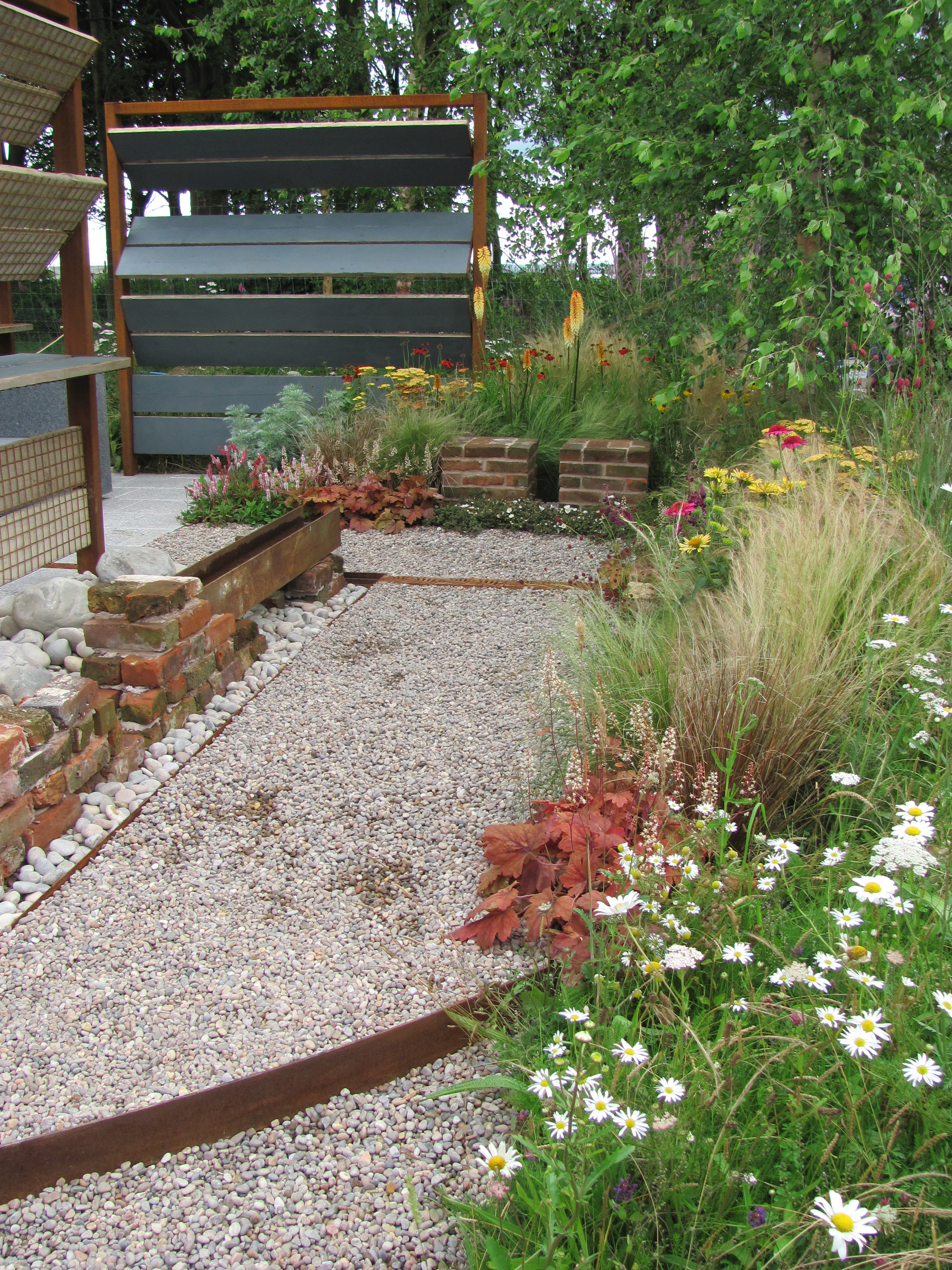
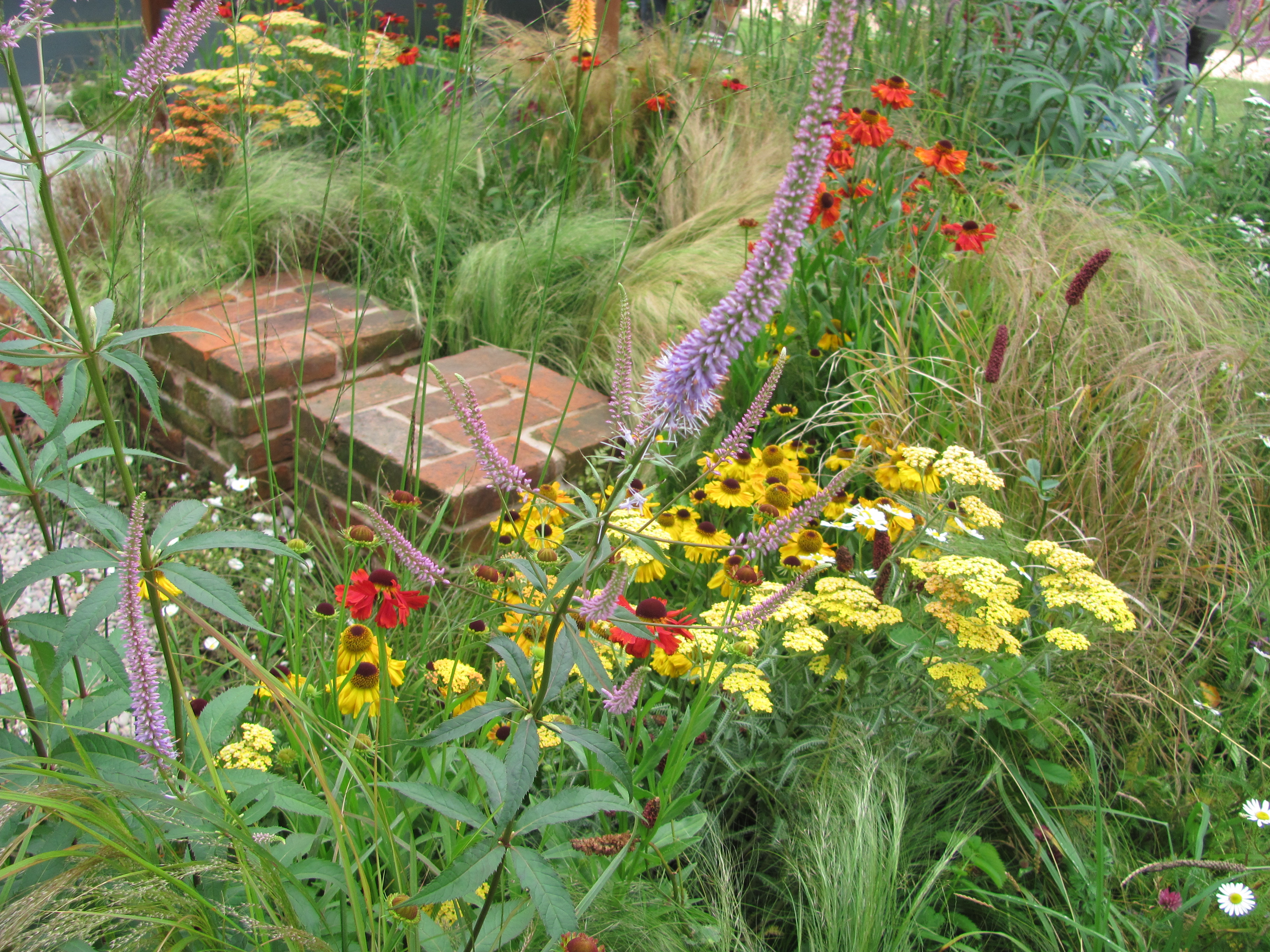
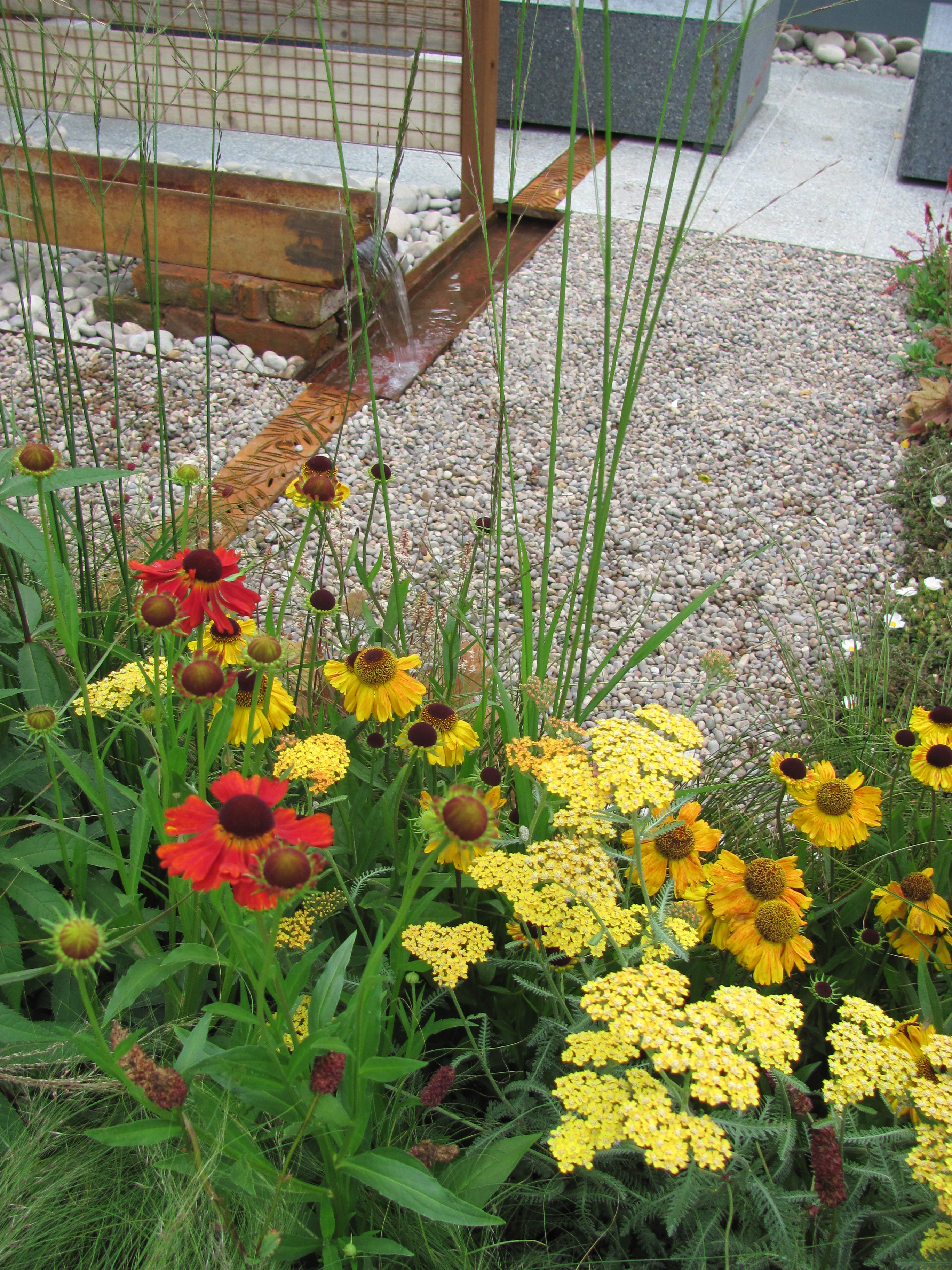
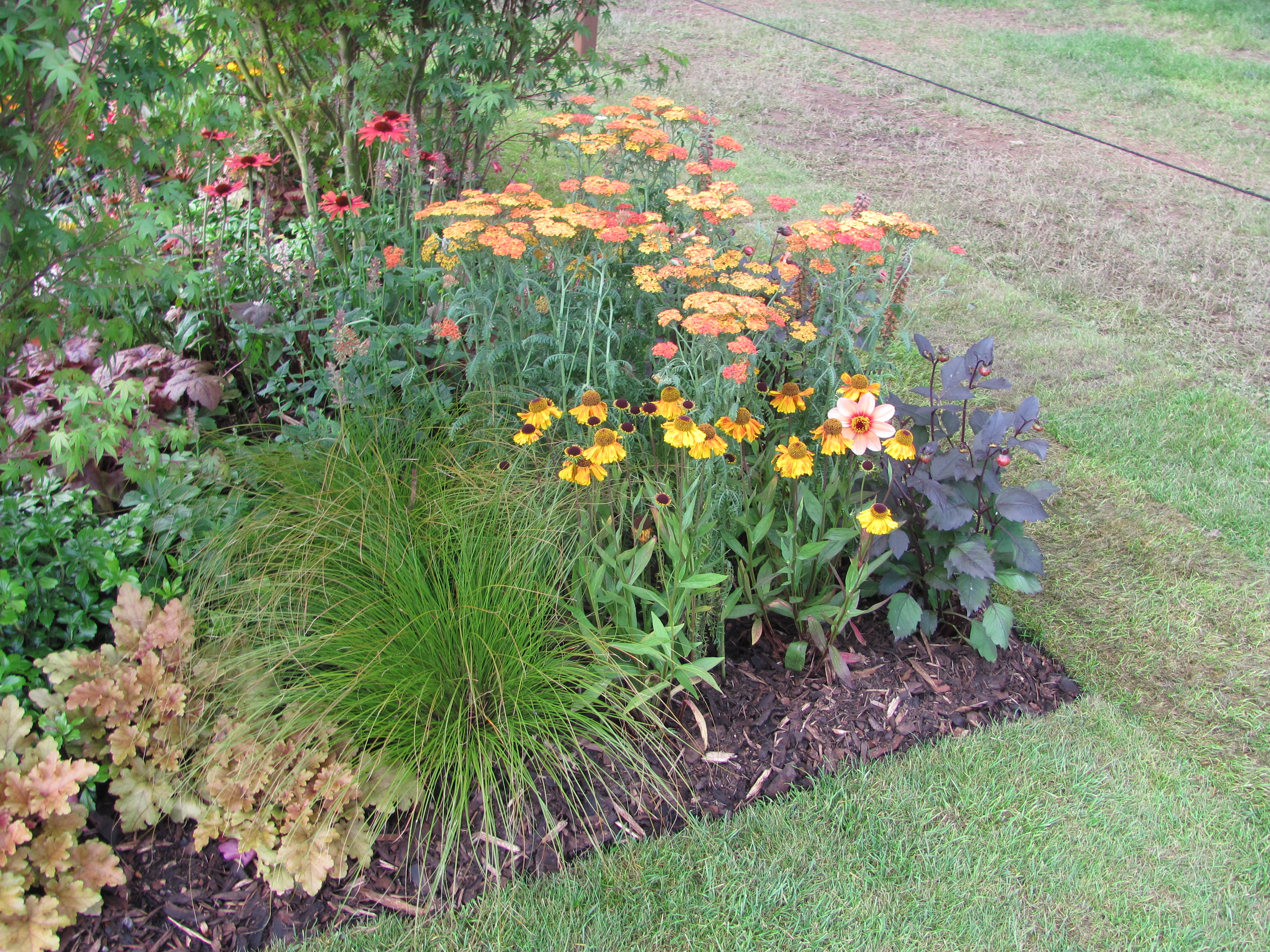
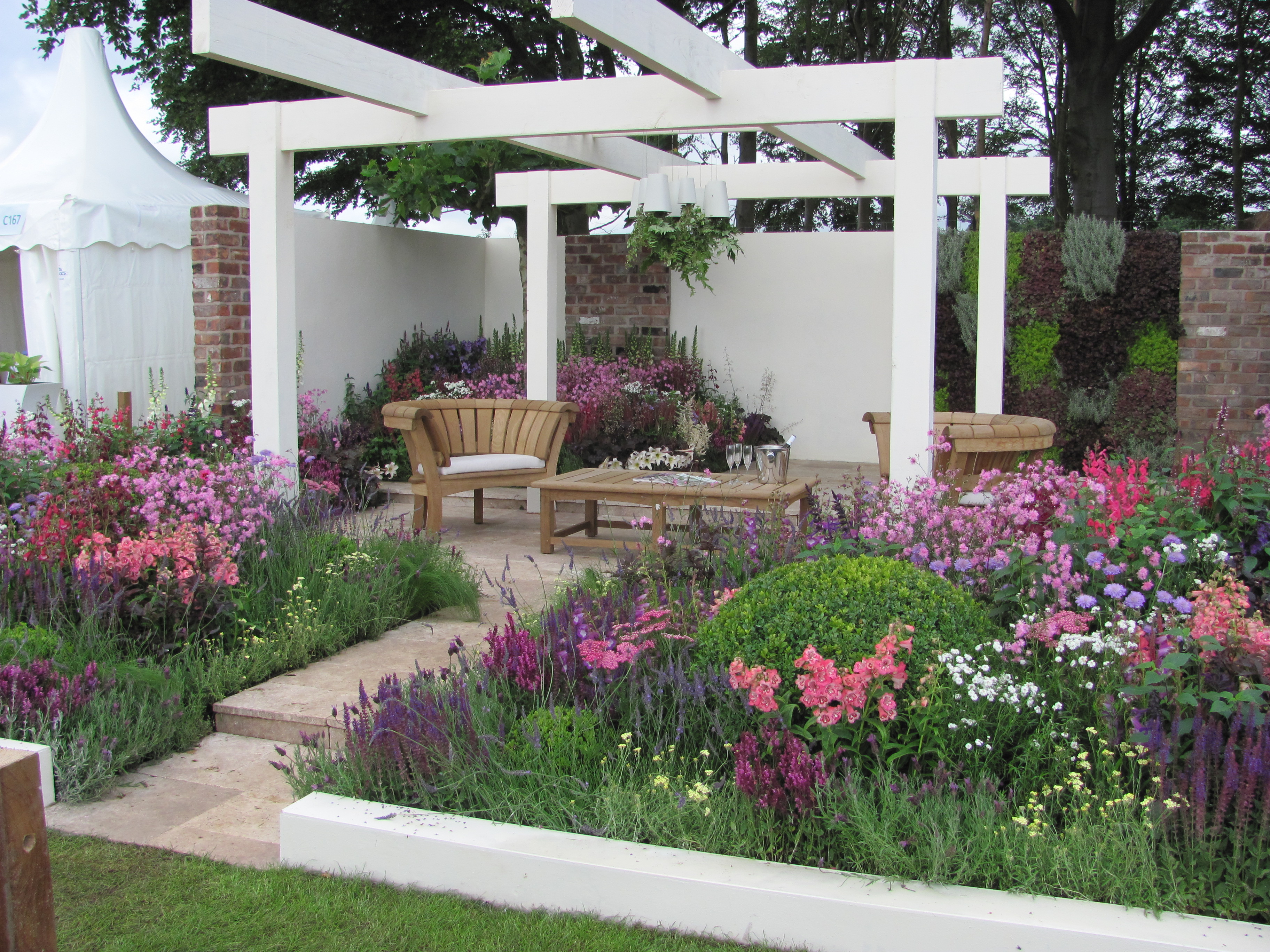
Tatton Park Show is described as “the North’s greatest garden party”. We enjoy its large show gardens, its “Back to Back” gardens and children’s gardens but most of all those designed by young garden designers. This is where the UK’s garden designs of the future lie and the standards are always so high. The designers have to be under 28 and this year their brief was to design a garden based on the theme of “colour”. We were so pleased when we learnt that the designer of our favourite one of these gardens had won the accolade of “RHS National Young Designer of the Year”. Tristen Knight designed this garden using recycled materials and it was full of interesting and original ideas and design feature. The colour of his planting of perennials and grasses was beautiful, all orange and biscuit. He studied for a BA in Industrial Design and Technology before training in garden design at Writtle College. He spoke with great enthusiasm and excitement about his garden and he told us about the materials he had chosen and how they were all items from building sites. For example the rill was formed from a an “H” beam and the flexible screening was created from scaffolding boards. I found it hard to take photographs that did justice to this brilliant young designer’s work. We enjoyed his garden and talking to him about it.

We moved on to the main large garden show gardens, some of which we liked whereas others we did not like at all. But that I suppose is what design is all about. If we all liked the same plants and designs wouldn’t gardens be boring?

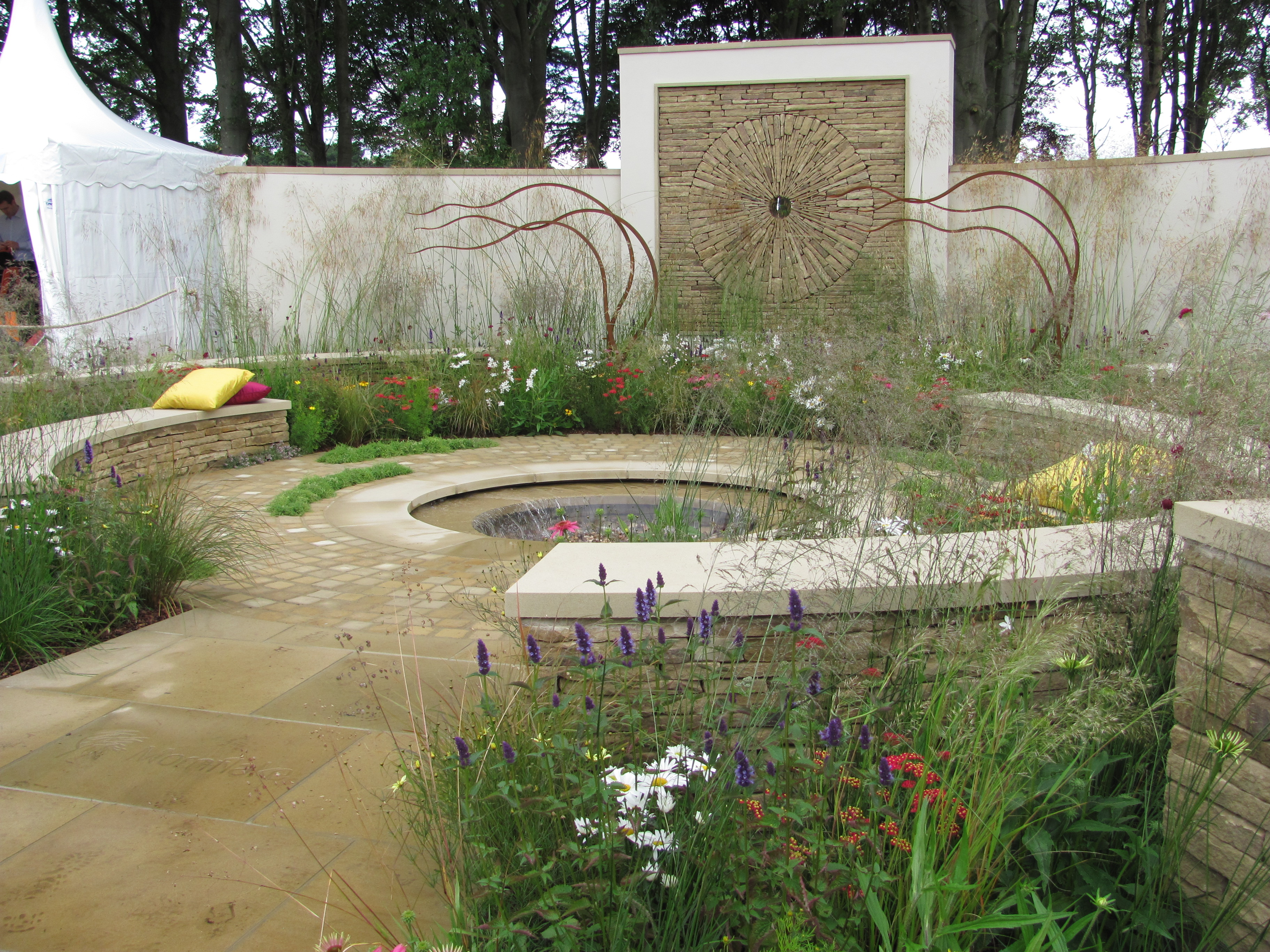
I begin looking at this set of gardens by featuring our favourite, a garden based on circles achieving a wonderful peaceful atmosphere through the planting which was light and wispy. It relied heavily on grasses to do so, with one planting area consisting of just grasses and one variety of allium.

It received the Best in Show award!

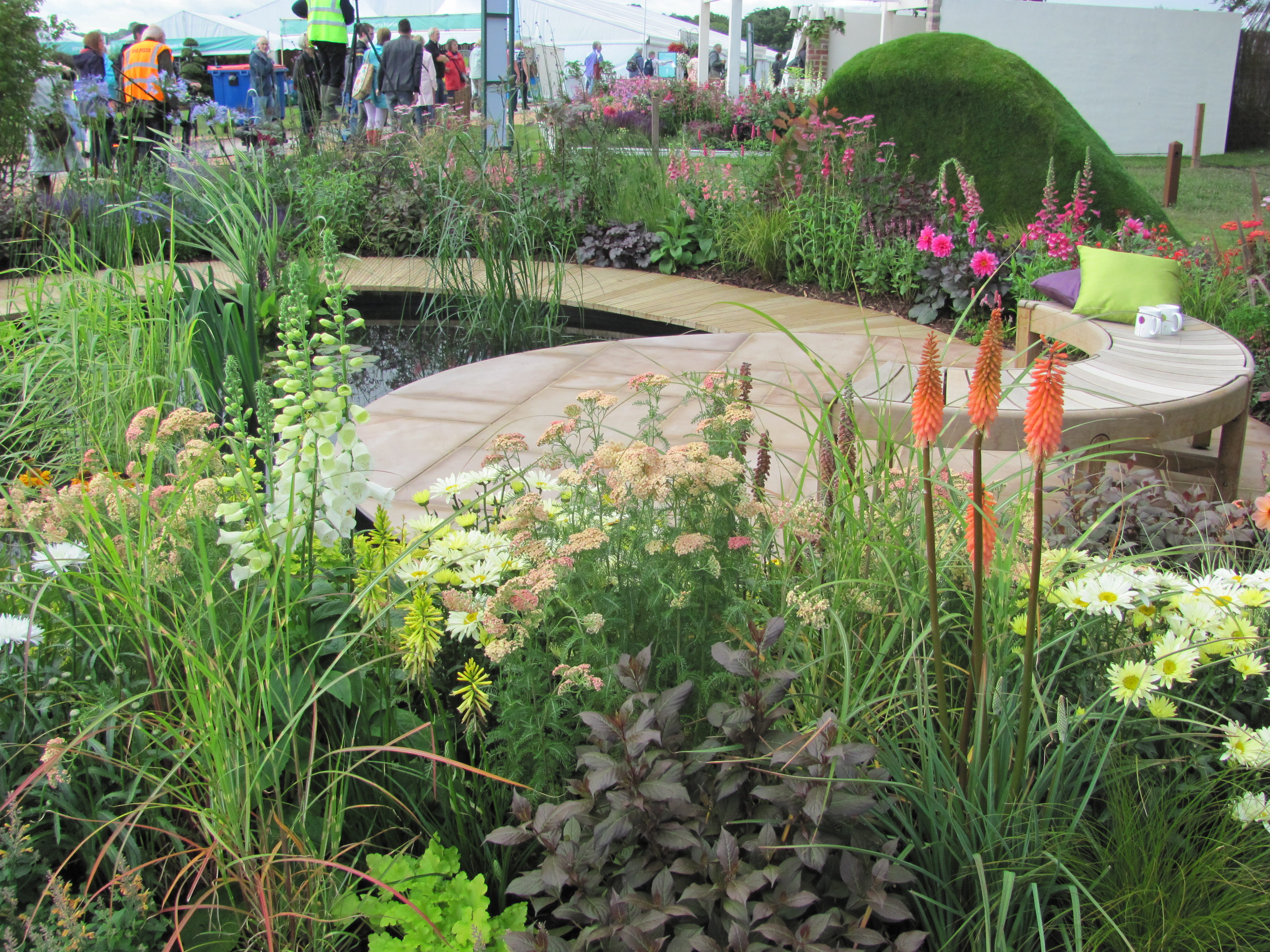
This show garden featured decking curves and colourful planting choice.

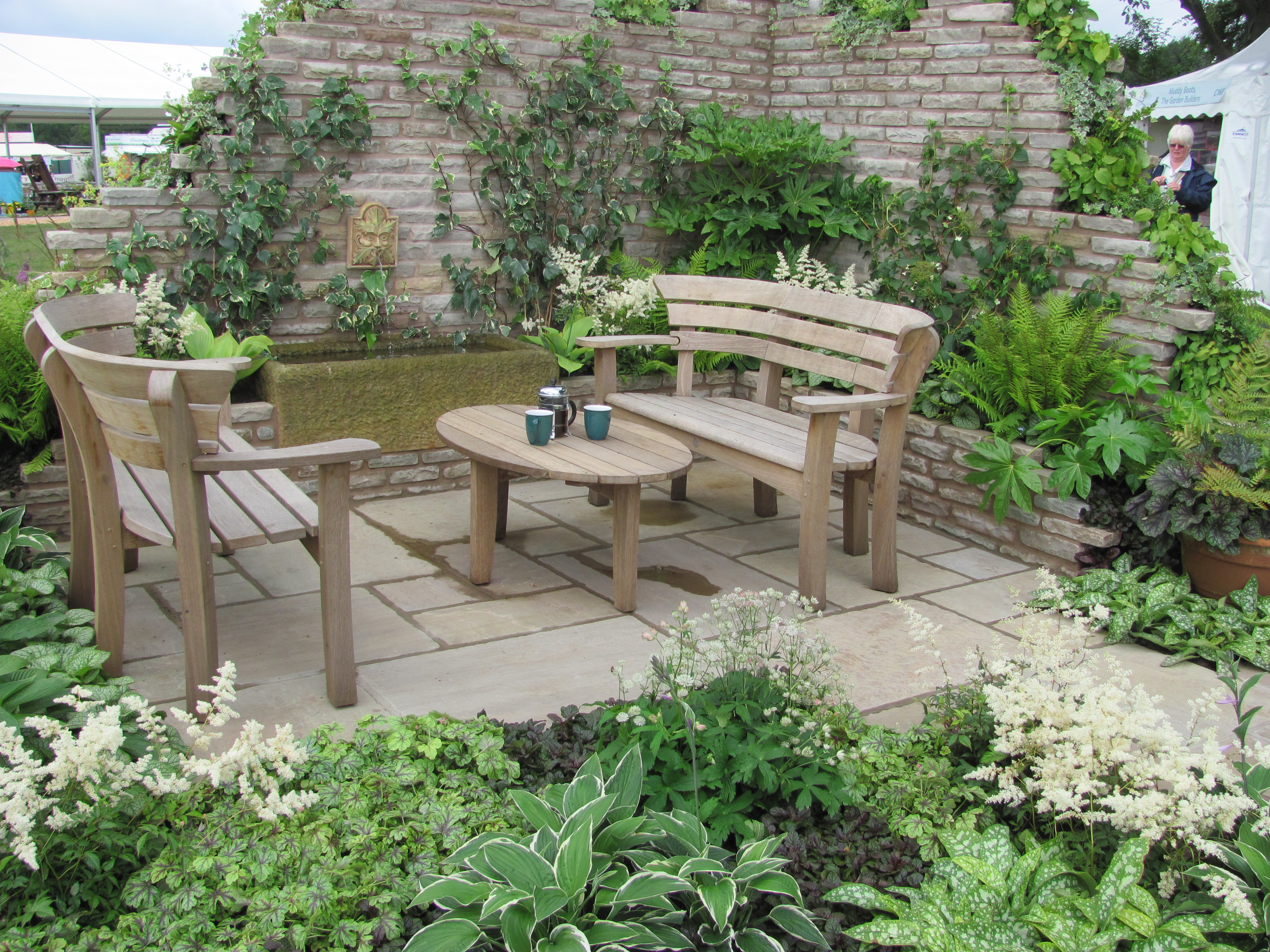
The next sequence of photos illustrates the wide variety of show gardens at Tatton. Enjoy the tour.

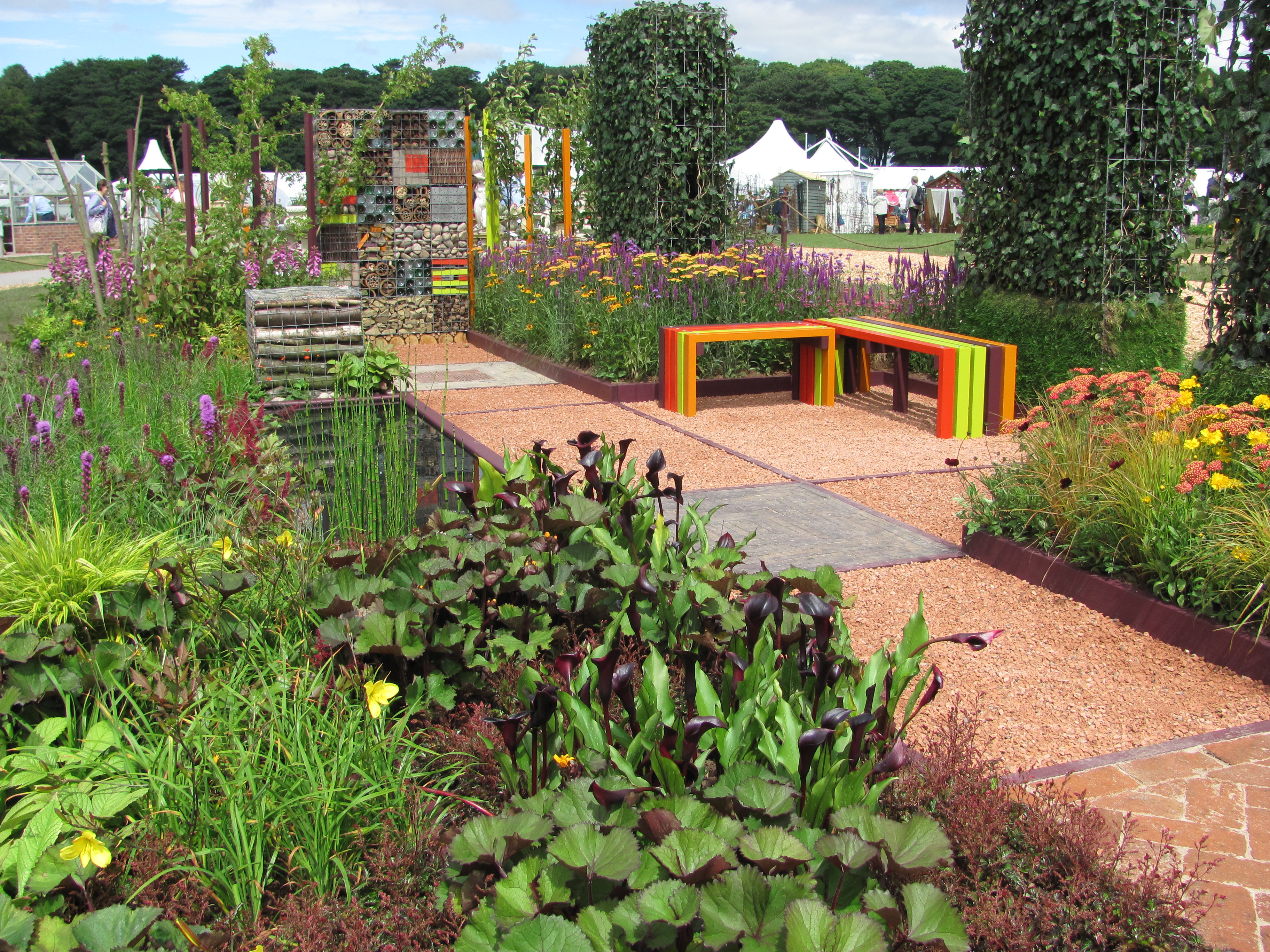
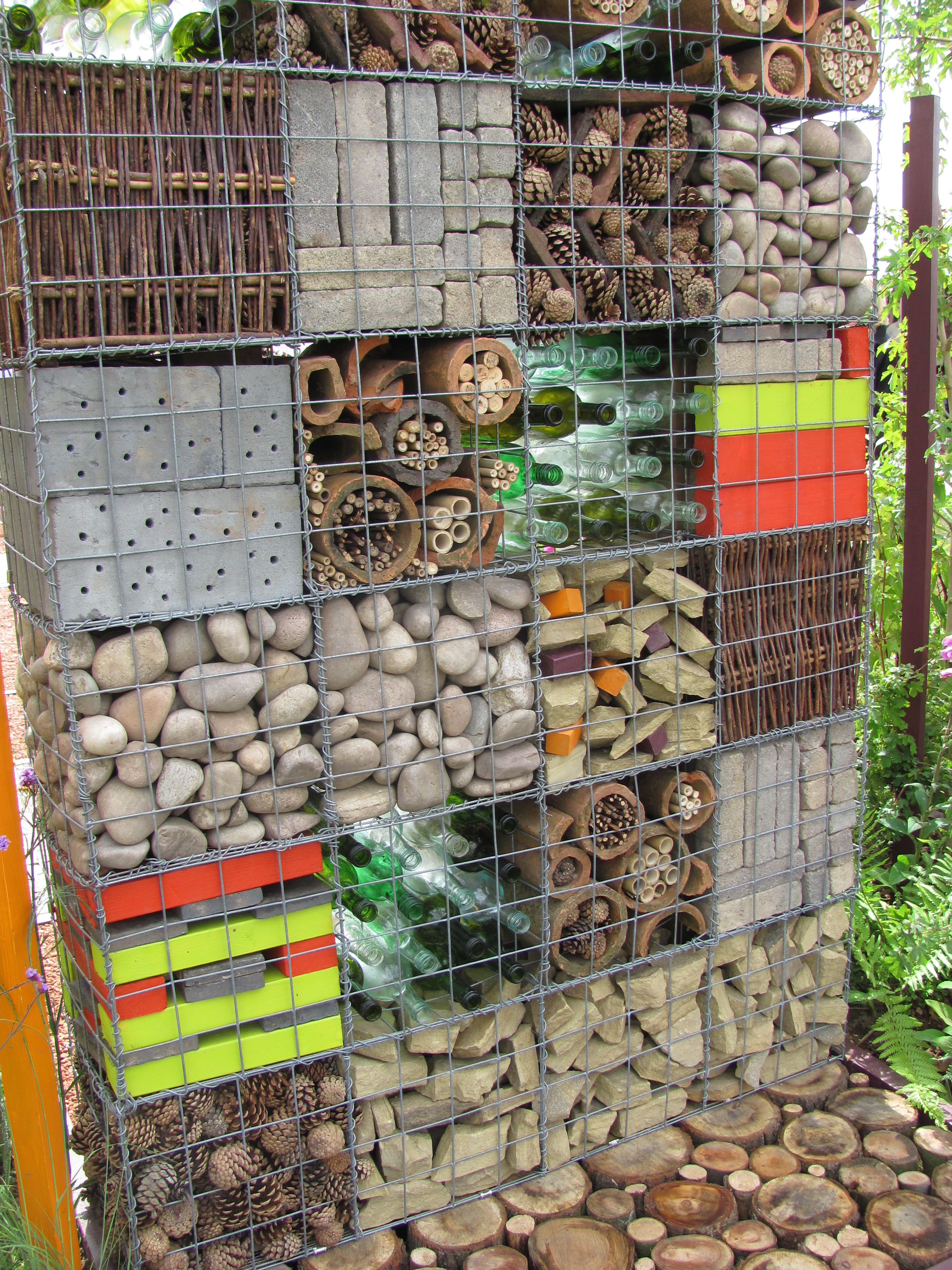
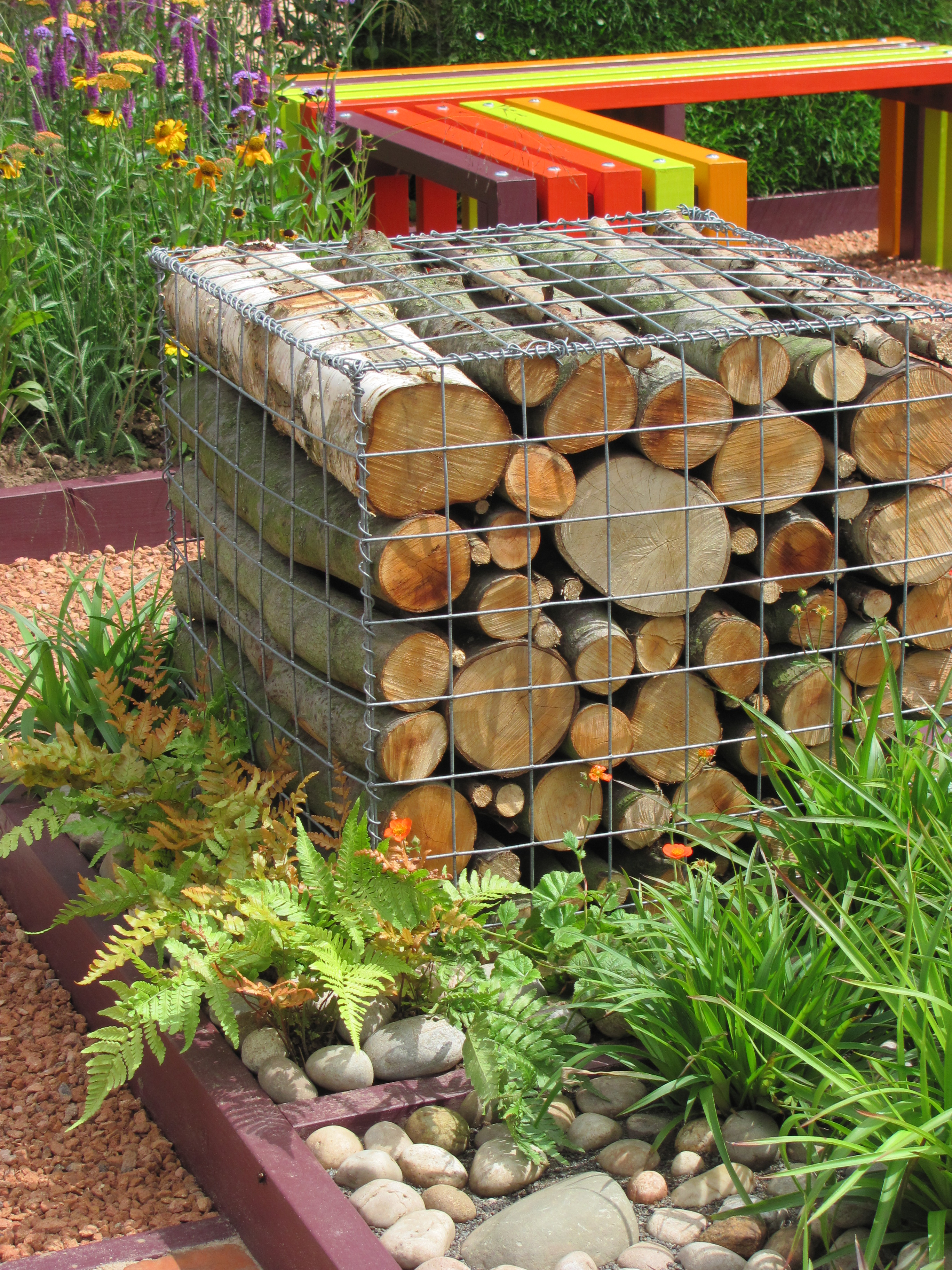
Once we had enjoyed the large show gardens we made a bee line for the garden designed by students and staff of Reaseheath College, partly because their garden is always so interesting with elements of attracting wildlife but also because this is the college where I followed some of my horticulture training several decades ago. This year their garden excelled, with such vibrancy in the planting and in its features. Again the design integrated beautiful features created to attract wildlife.

To finish my first post about the RHS Tatton Park Flower Show I want to share a couple of photos of children’s gardens celebrating the Queen’s Jubilee. In the next post we shall visit the Floral Marquee and the smaller show gardens.

Categories
allotments birds community gardening conservation fruit and veg garden design garden photography garden wildlife gardening grow your own hardy perennials Land Art meadows natural pest control ornamental grasses ornamental trees and shrubs outdoor sculpture photography poppies roses Shropshire shrubs spring gardening wildlife

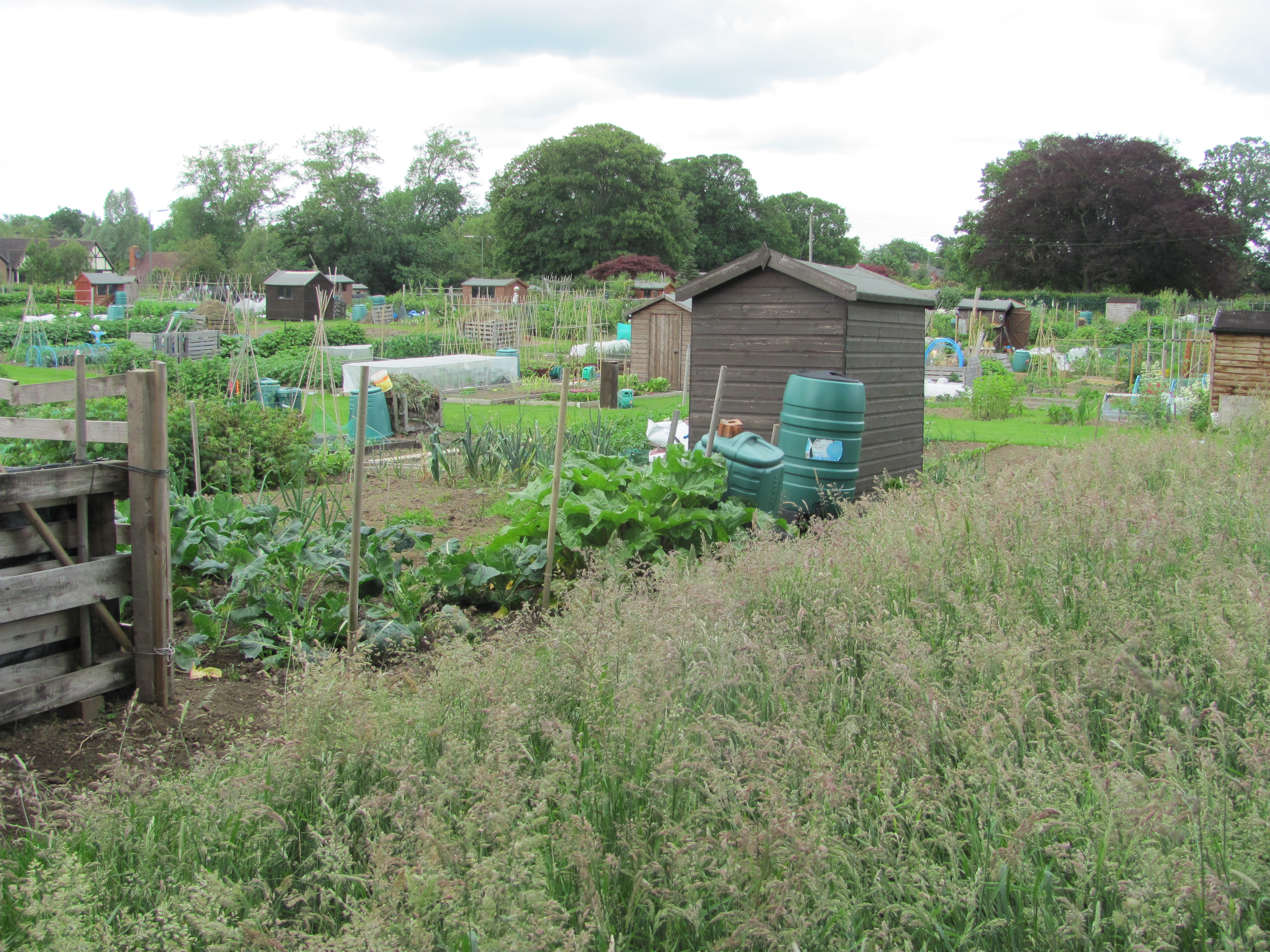
A Wander around the Allotments in June

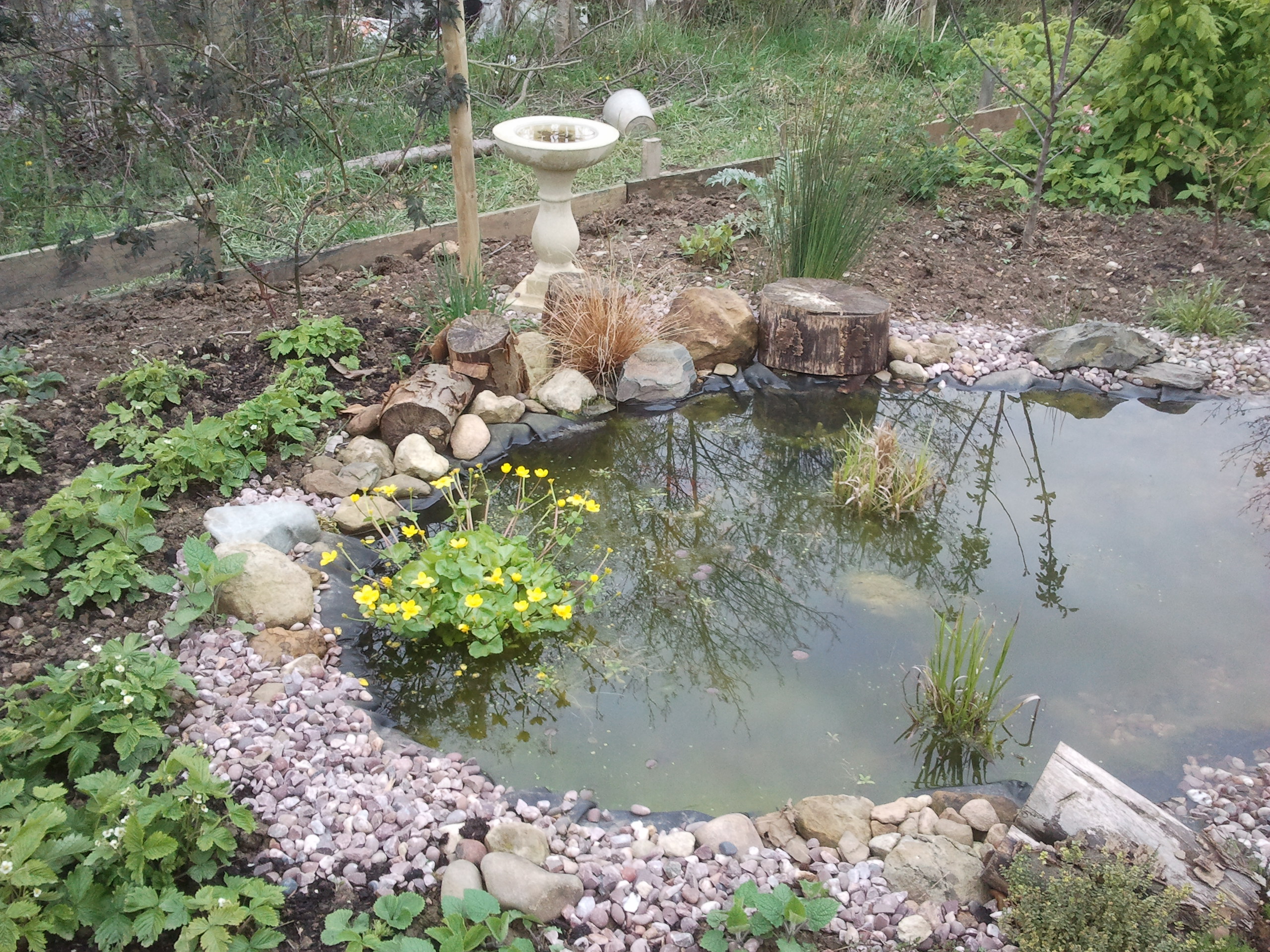
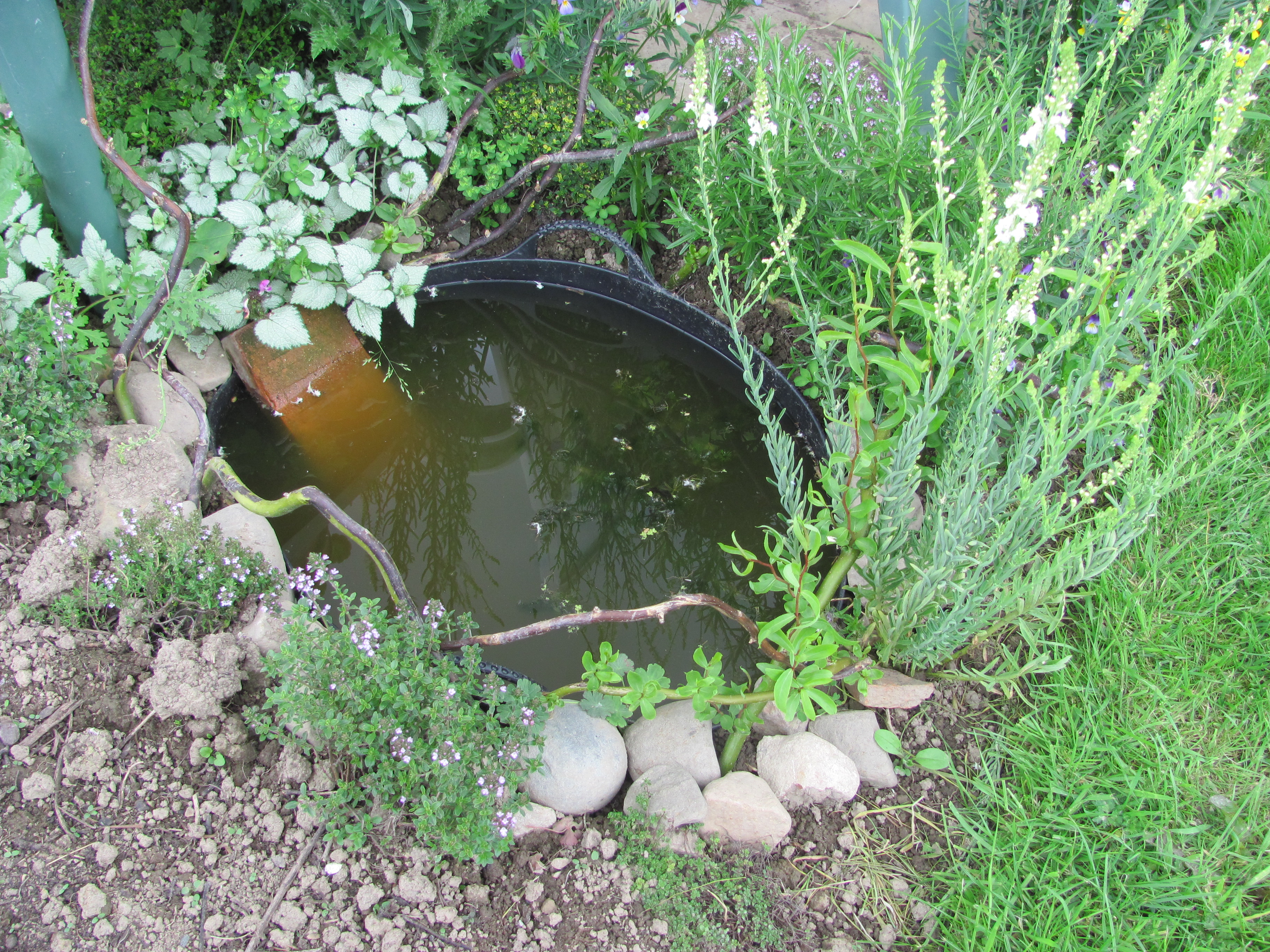
Here we are at the half way point of the year in the June allotment wanderings. As usual we shall start on our own plot to see what has been going on. Our little wildlife pond is beginning to look more established and the tadpoles are growing well. We hope the frogs stay on our plot and eat up all the slugs. As you can see we provided a little wooden ramp to help them get in and out of the water.

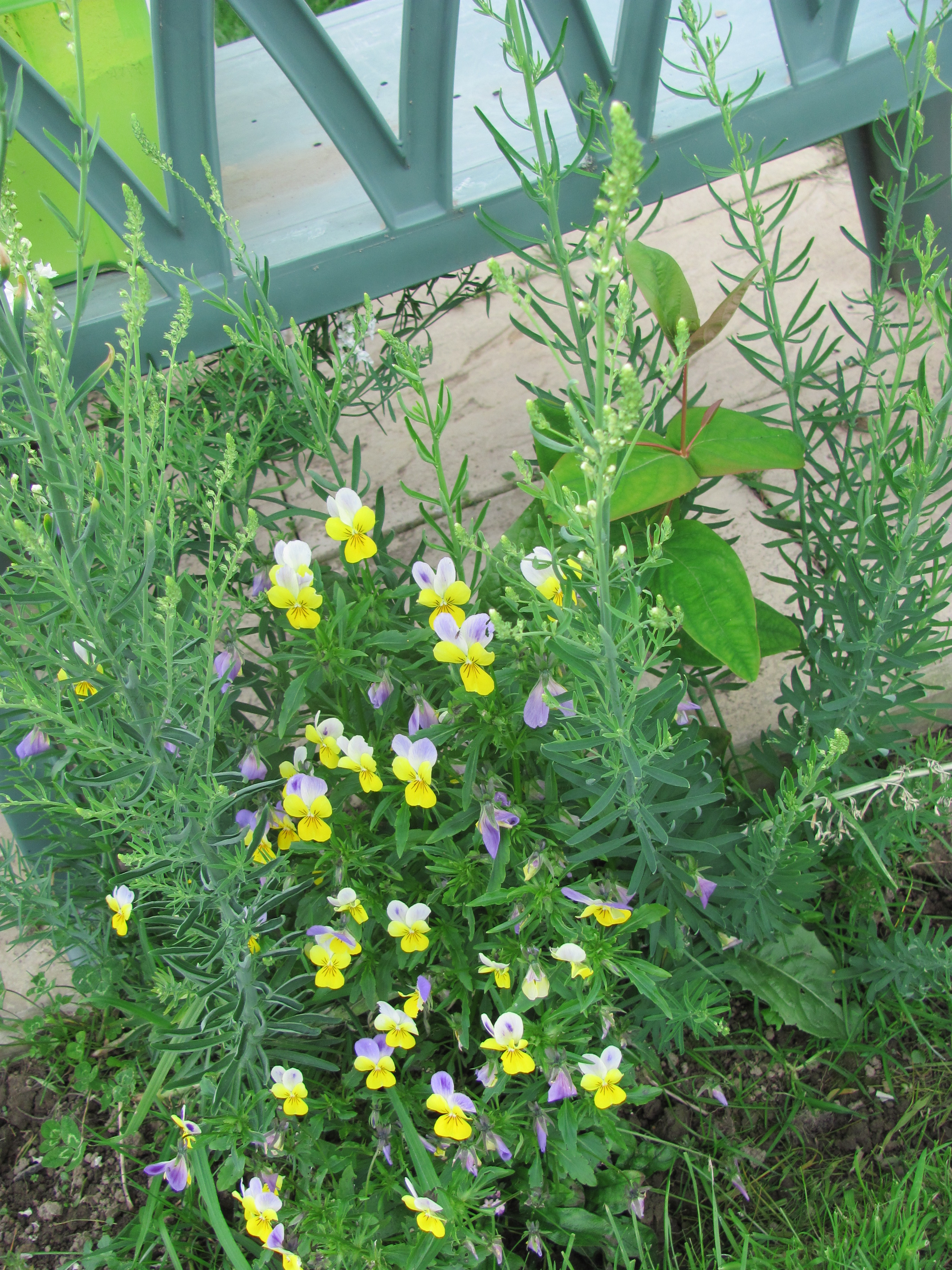
Heartsease self seed around the plot sometimes landing in suitable places arriving in a wide range of colours. This one seeded into the soil behind the green bench.

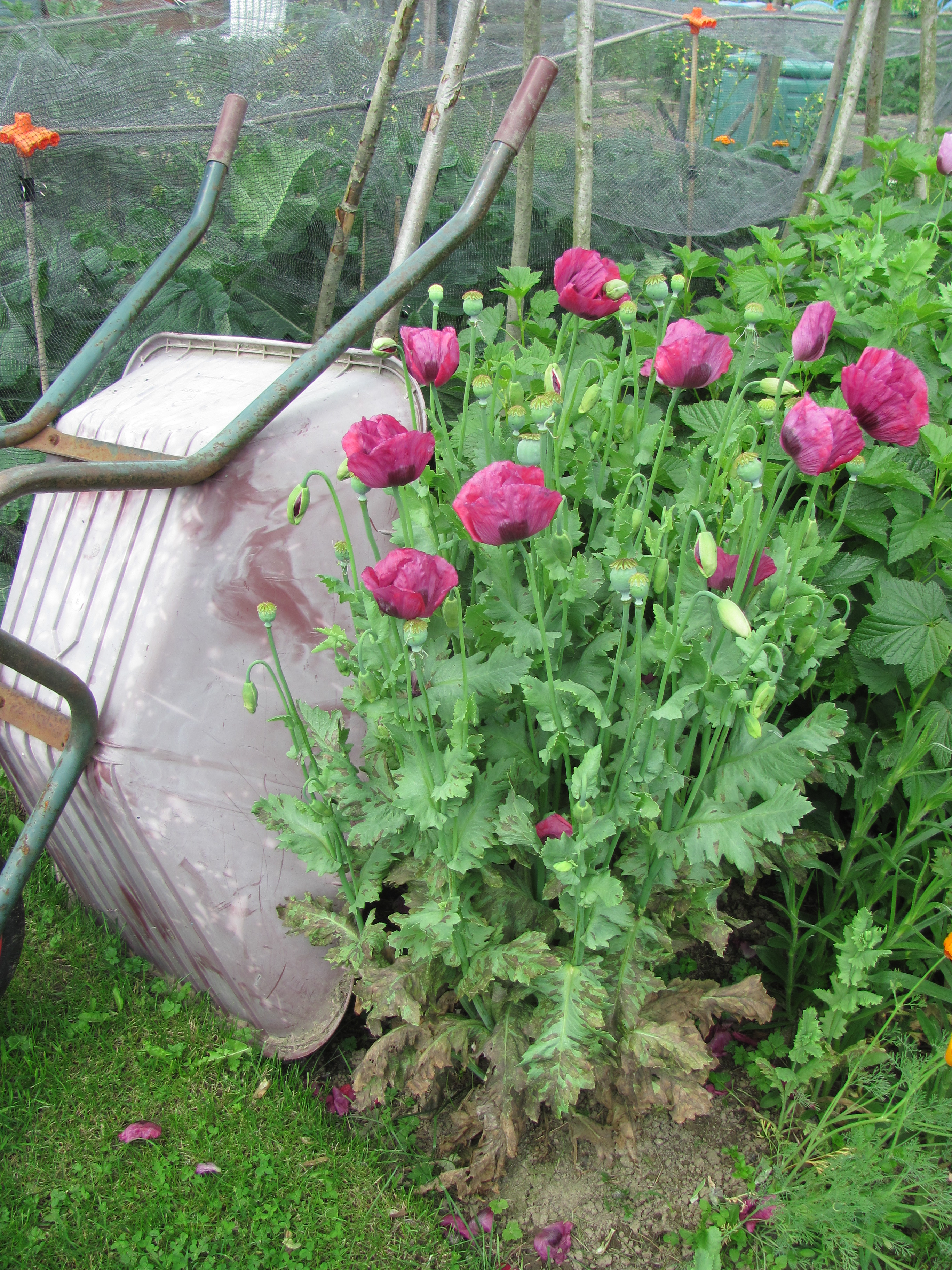
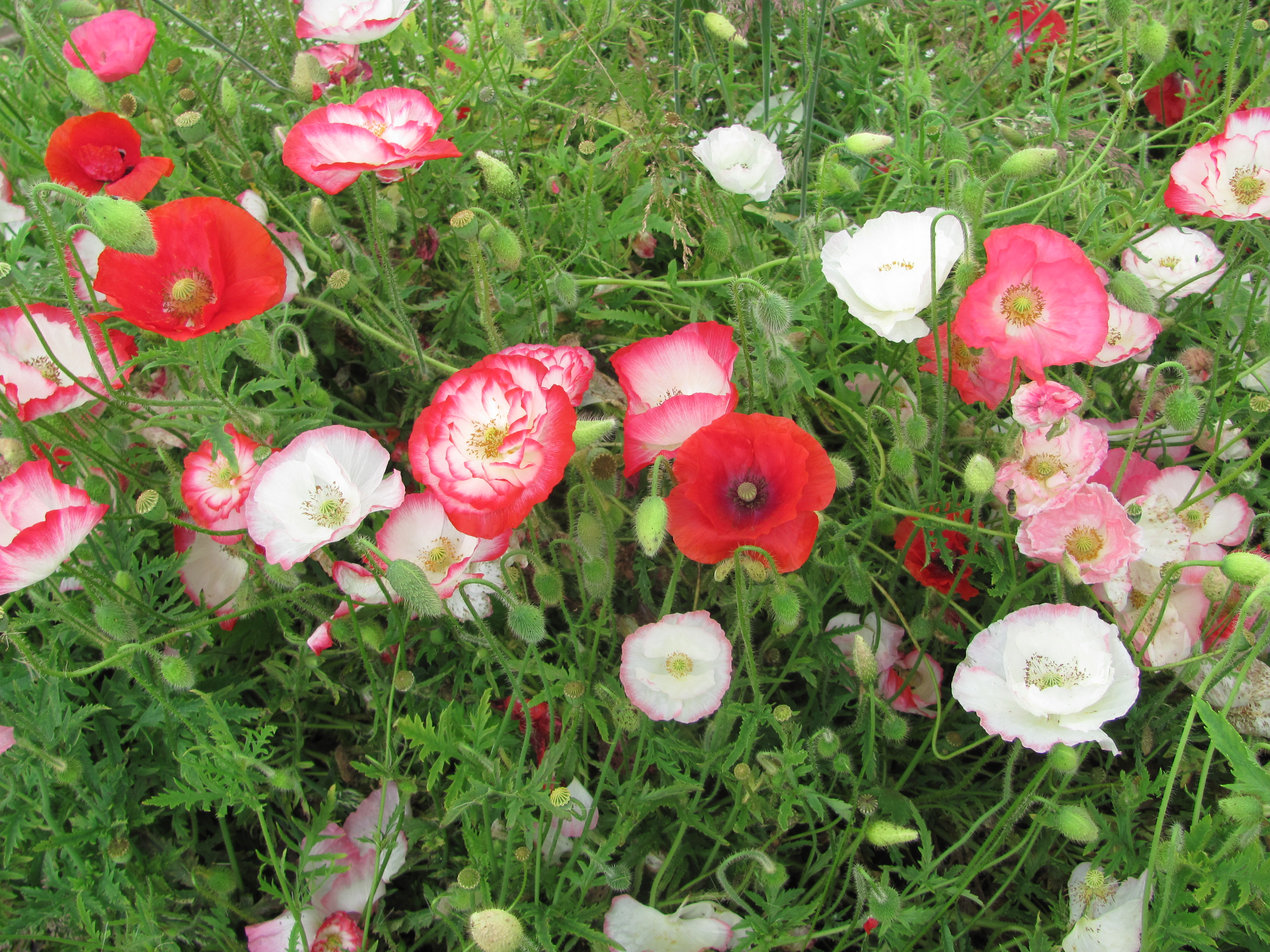
Our strip of wildflowers, a little piece of meadow, is beginning to flower. This Opium Poppy surprised us with its deep pink coloured petals.

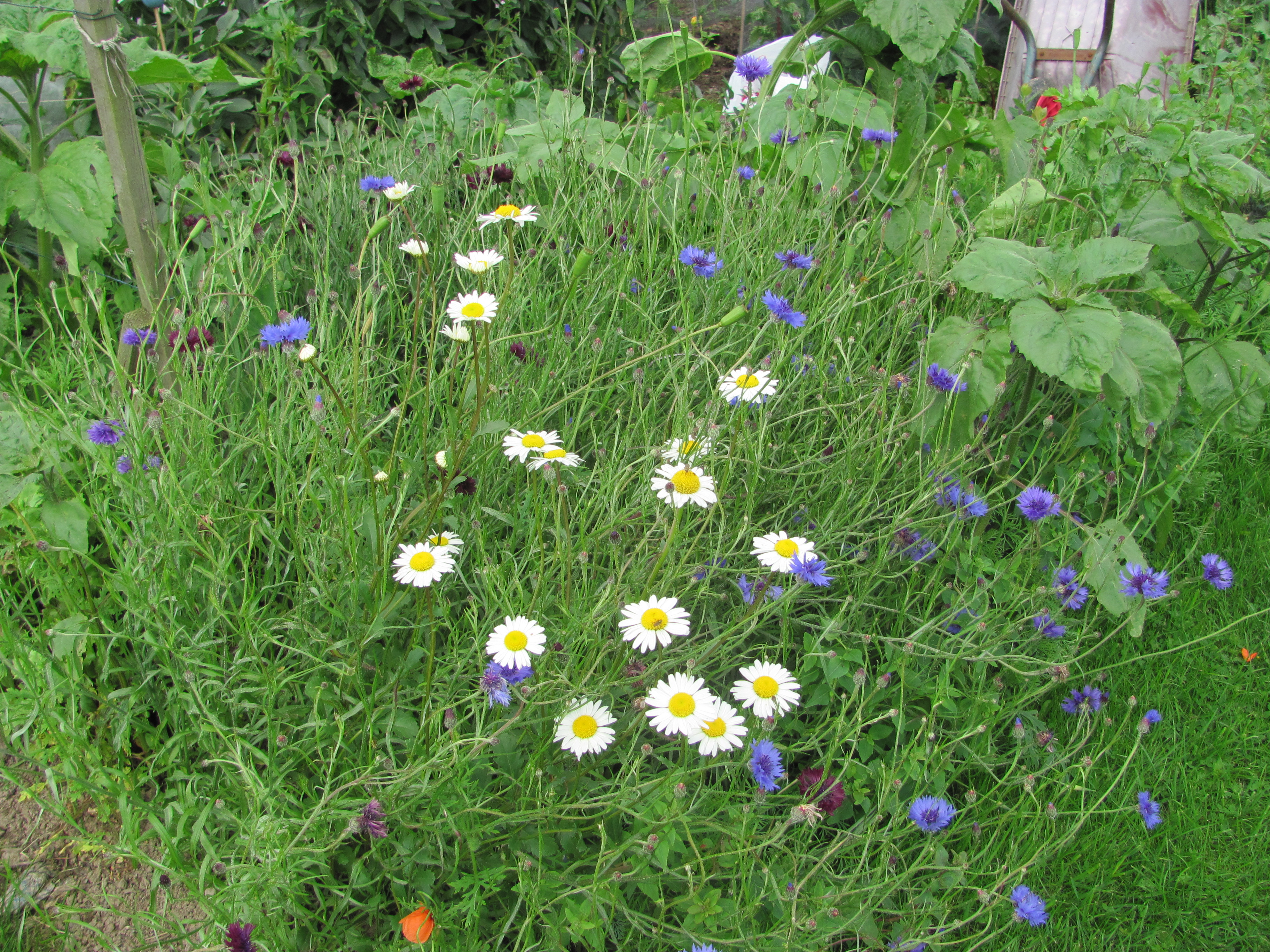
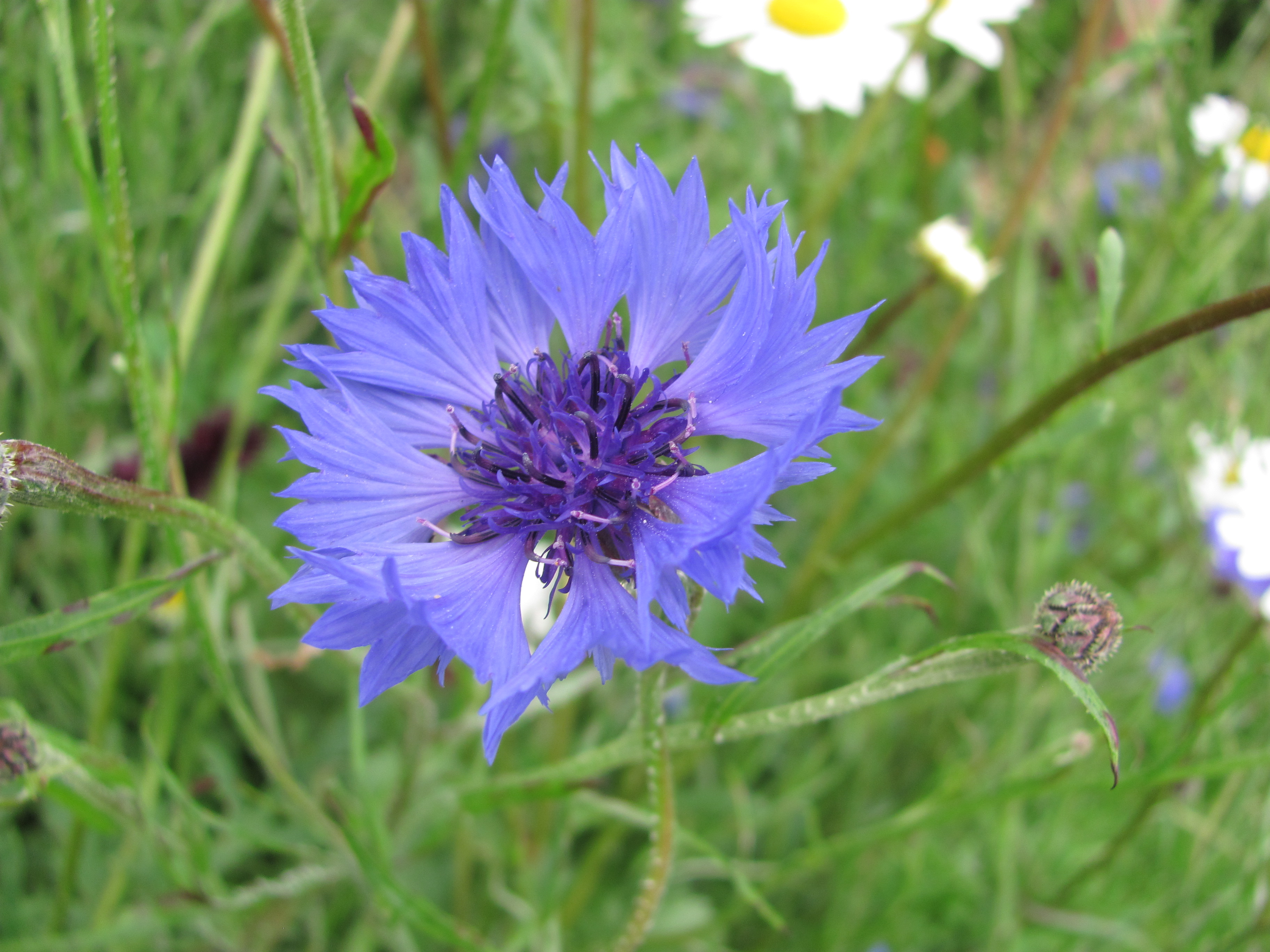
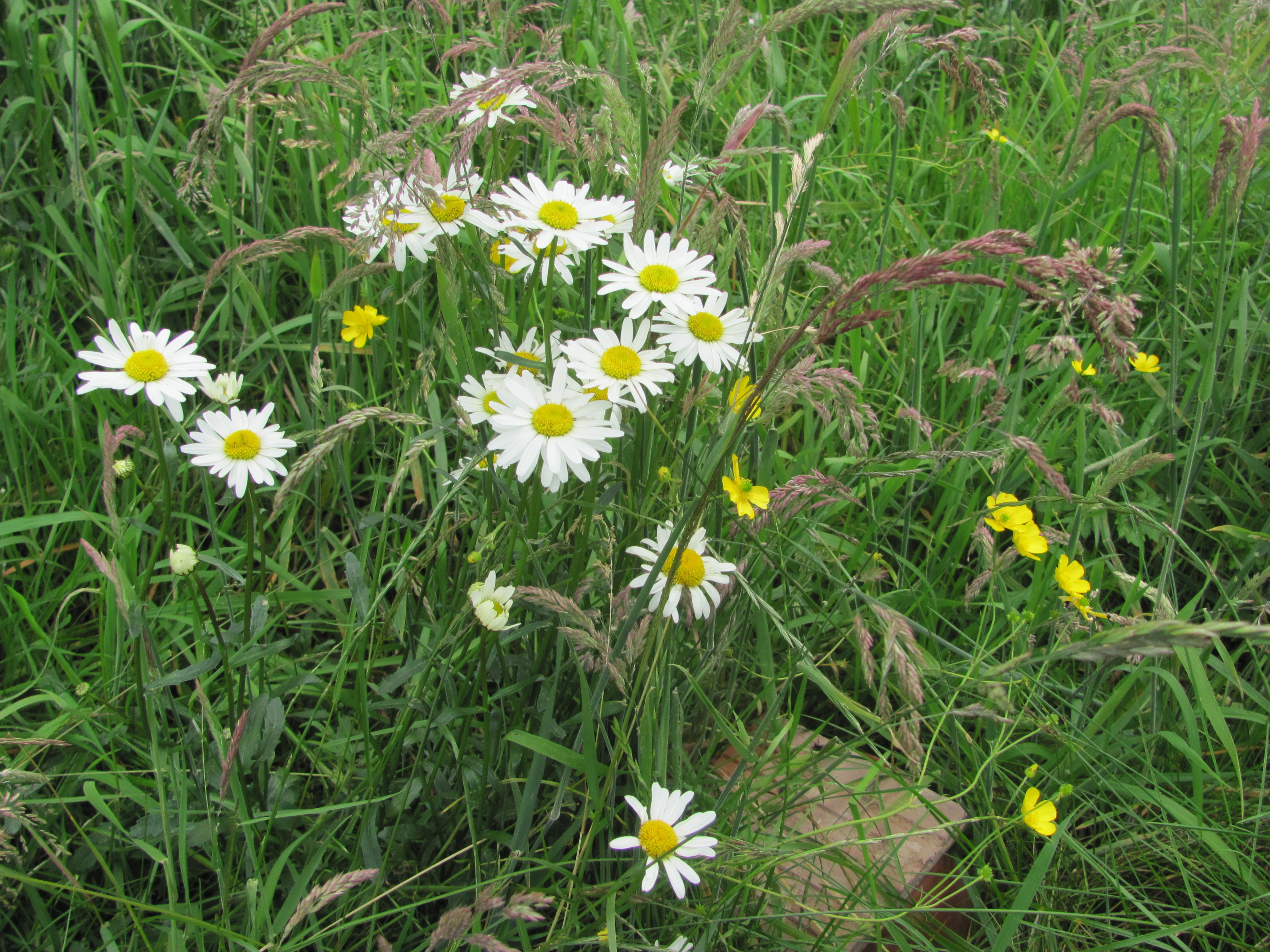
Moon Daisies and Cornflowers.

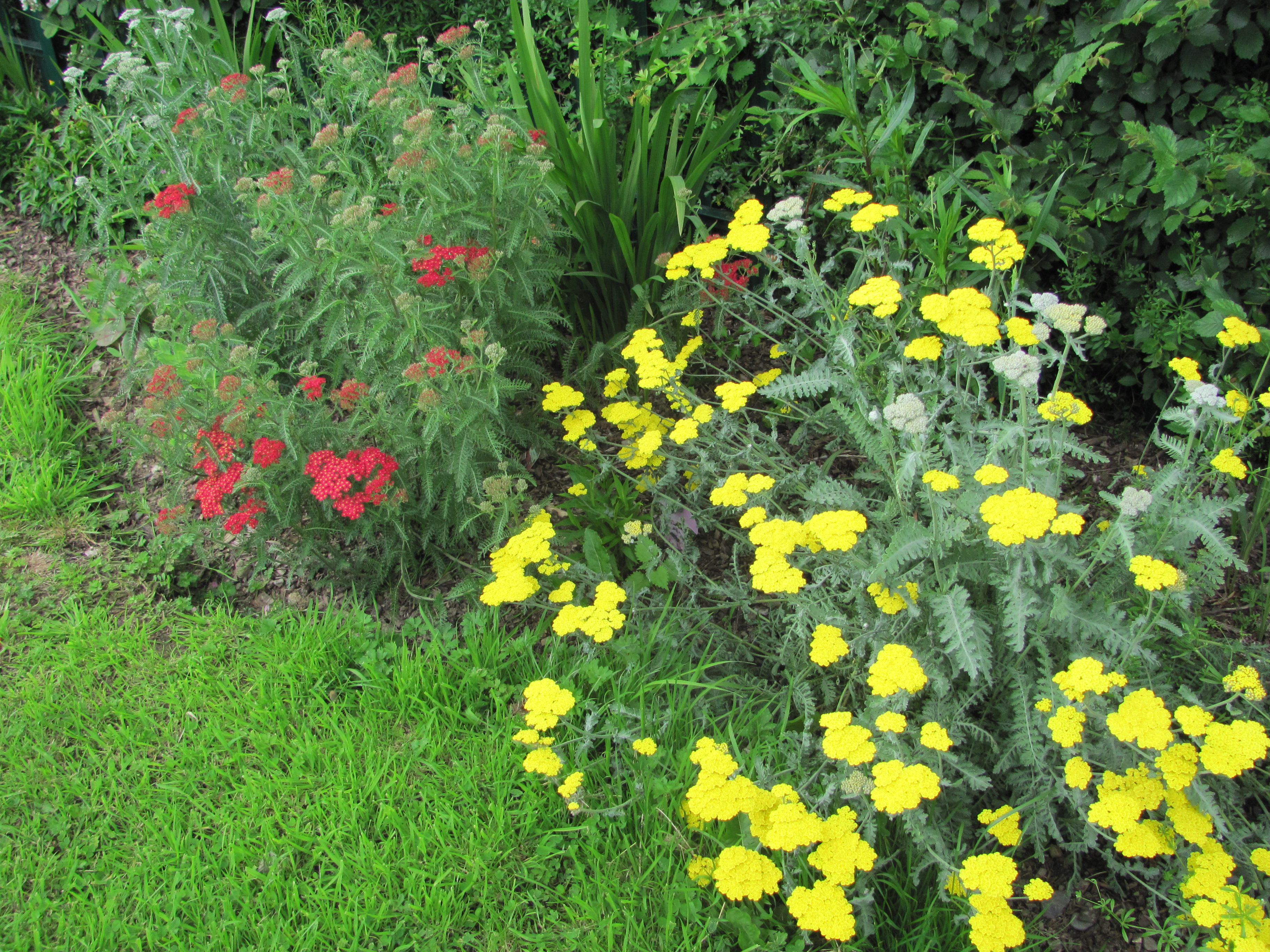
Just as flowers feature strongly on our own plot so they do on other members’ plots and in the Green Space borders. In the Autumn Garden Achilleas are the stars.

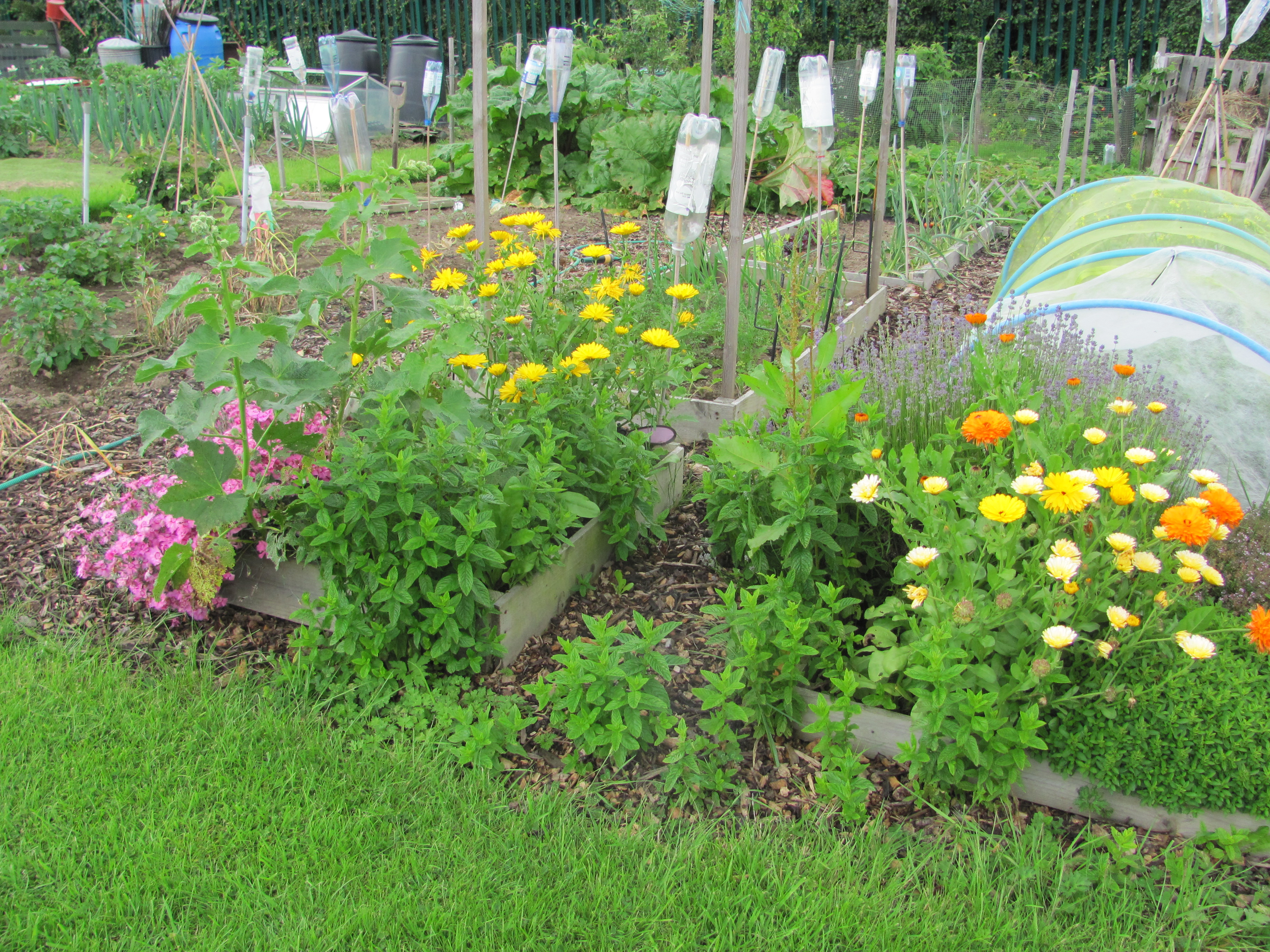
Calendulas feature on many plots as they look so good,  and work hard as part of companion planting helping to attract beneficial insects.

Our first “Buddleja Bed” planted to attract wildlife now looks colourful and full of life. After losing some of our Buddlejas in the dry last year when Shropshire experienced months of drought after two extremely cold winters, the name for these borders currently looks a little inappropriate.

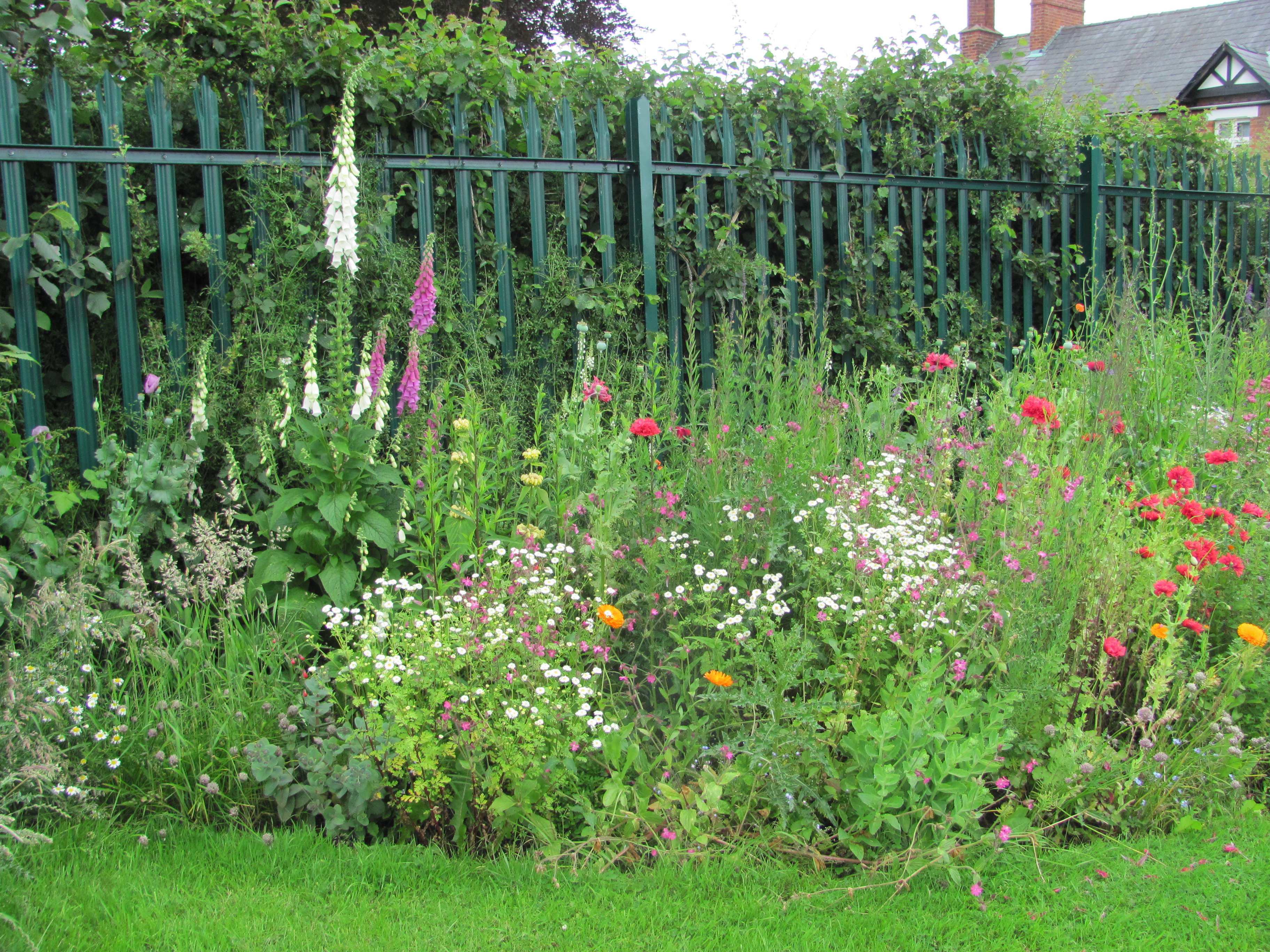
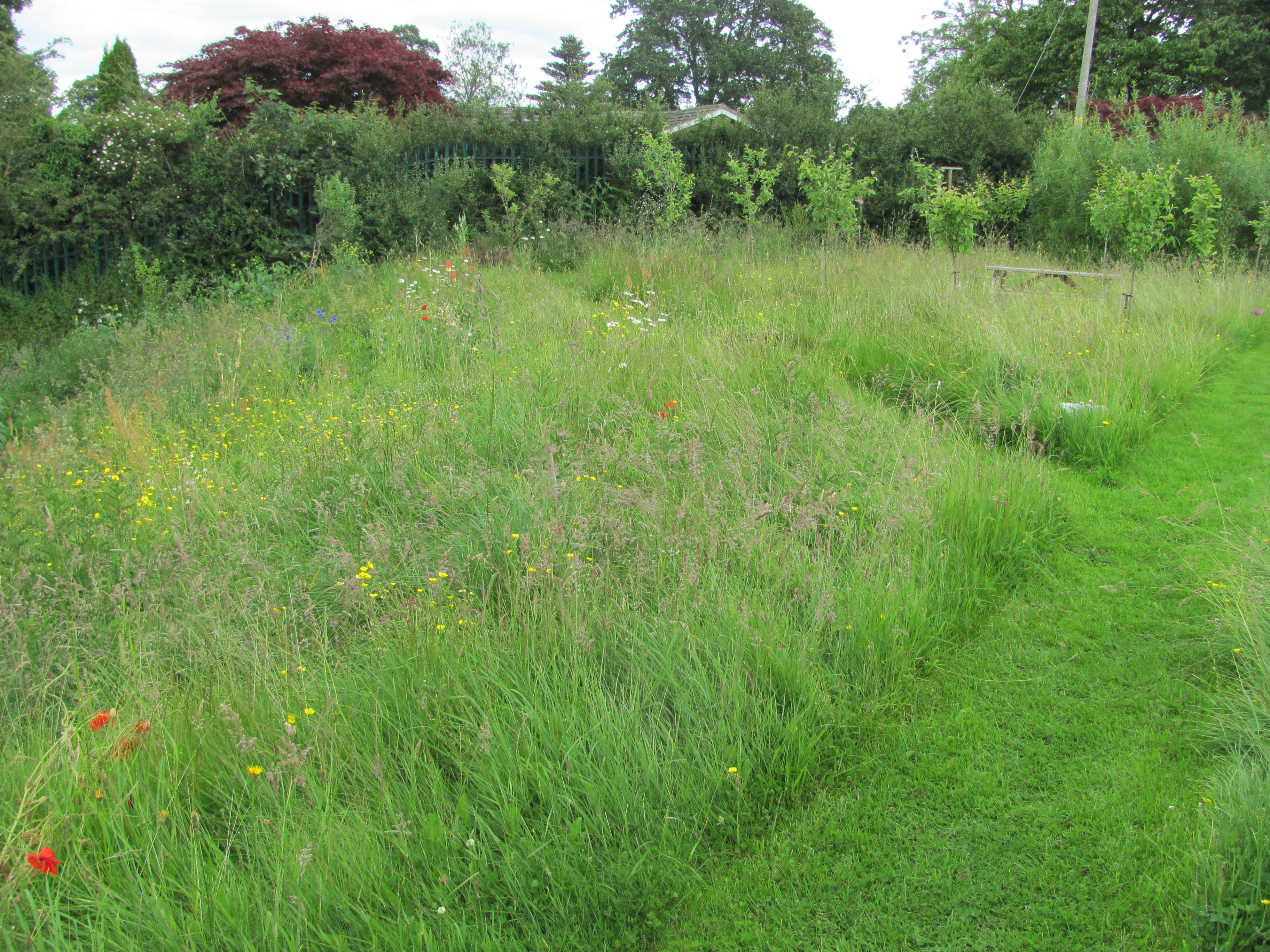
Our wildflower bank sloping up towards one of our orchards is now looking more established as we have added plants that members have donated to add interest.

The Edible Hedge is now fruiting providing sustenance to birds and small mammals. Flowers in the borders at the base bring in bees, butterflies and beneficial insects. Beetles enjoy the long grass and we like them to be there as they feed on slugs.

The most colourful garden on site at the moment is the Spring Garden which still displays much interest as we move into the summer months. This garden is maintained by volunteers, Jill and Geoff who spend many an hour planting, dead heading and weeding.

Geoff and Jill’s plot is renown for its weed free neatness and precision planting.

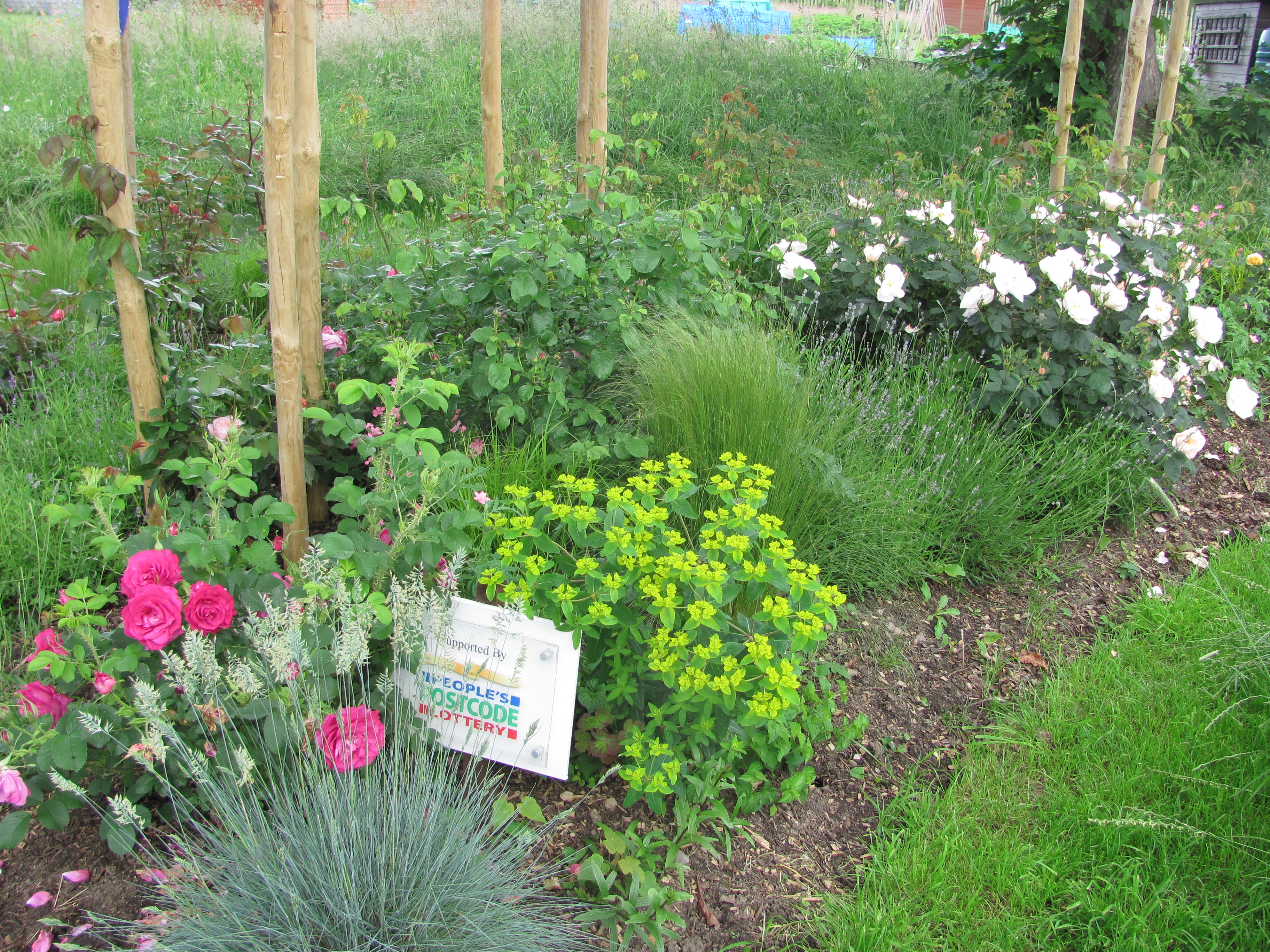
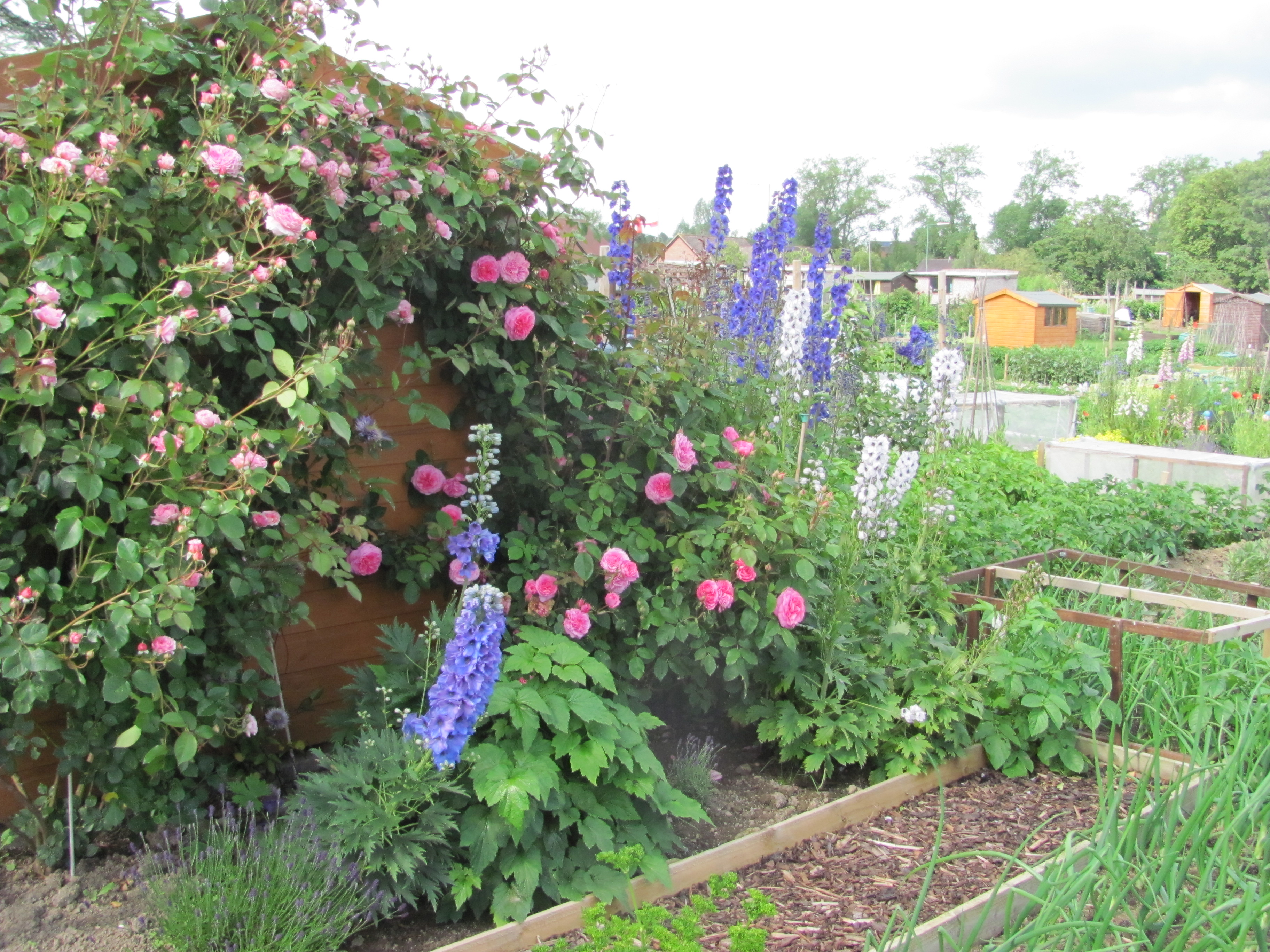
The Summer Garden  is not to be outdone though as the roses are coming into flower and beautiful scents greet us as we sit on the nearby picnic benches. The lavenders, geraniums and grasses planted between the roses add further interest and textures.

As June moves towards July our meadows really come into their own. Plot holders love to walk through them and a wide variety of birds, bees, butterflies, grass hoppers and every sort of mini-beast visit.

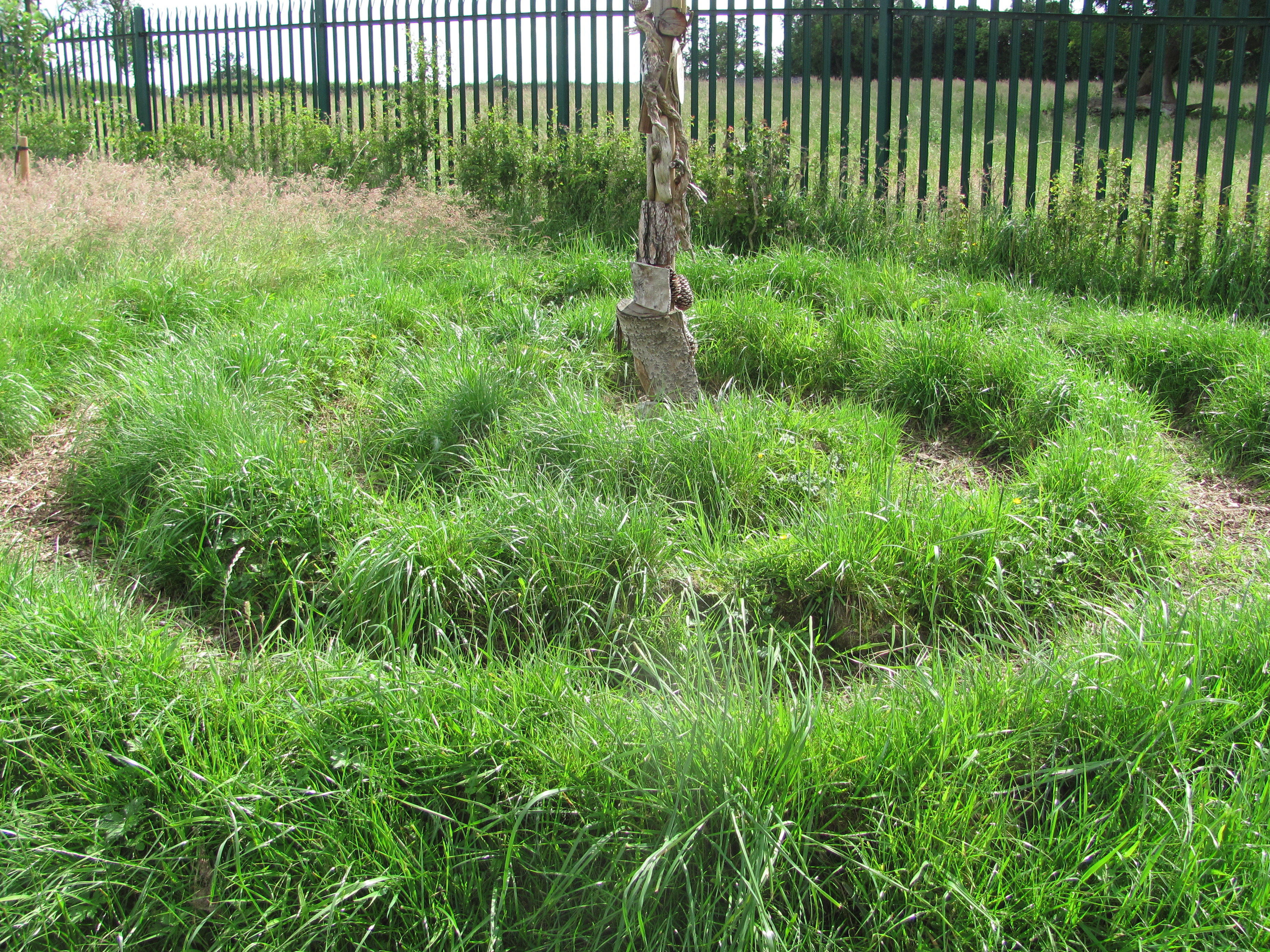
I shall finish with a shot of the plot we have nominated for this year’s Shrewsbury Town Allotment Competition and one of our grass spiral which currently looks most inviting.

Categories
allotments community gardening fruit and veg garden photography garden wildlife gardening grow your own photography wildlife

Allotment Oddities

Visiting allotments is always interesting and an excellent opportunity to glean ideas. Gardeners who cultivate allotments are imaginative and seem to have a penchant for experimenting and trying to find ways of using everyday objects in new ways. Recently we visited the allotment site where our daughter and son-in-law, Jo and Rob garden and finished the day with our usual wander around the site. Here are the oddities and ideas we found there.

One allotment boasted this wildlife pool surrounded by all sorts of herbs, soft fruits and fruit trees. The plot tenant proudly showed us around her plot, told us about her pond and introduced us to her chickens.

This supply of hoolahoops awaited their turn to be used to support netting that would protect crops from pests.

This wheelbarrow on a neglected plot had sprouted a lawn – a lawn in need of a trim.

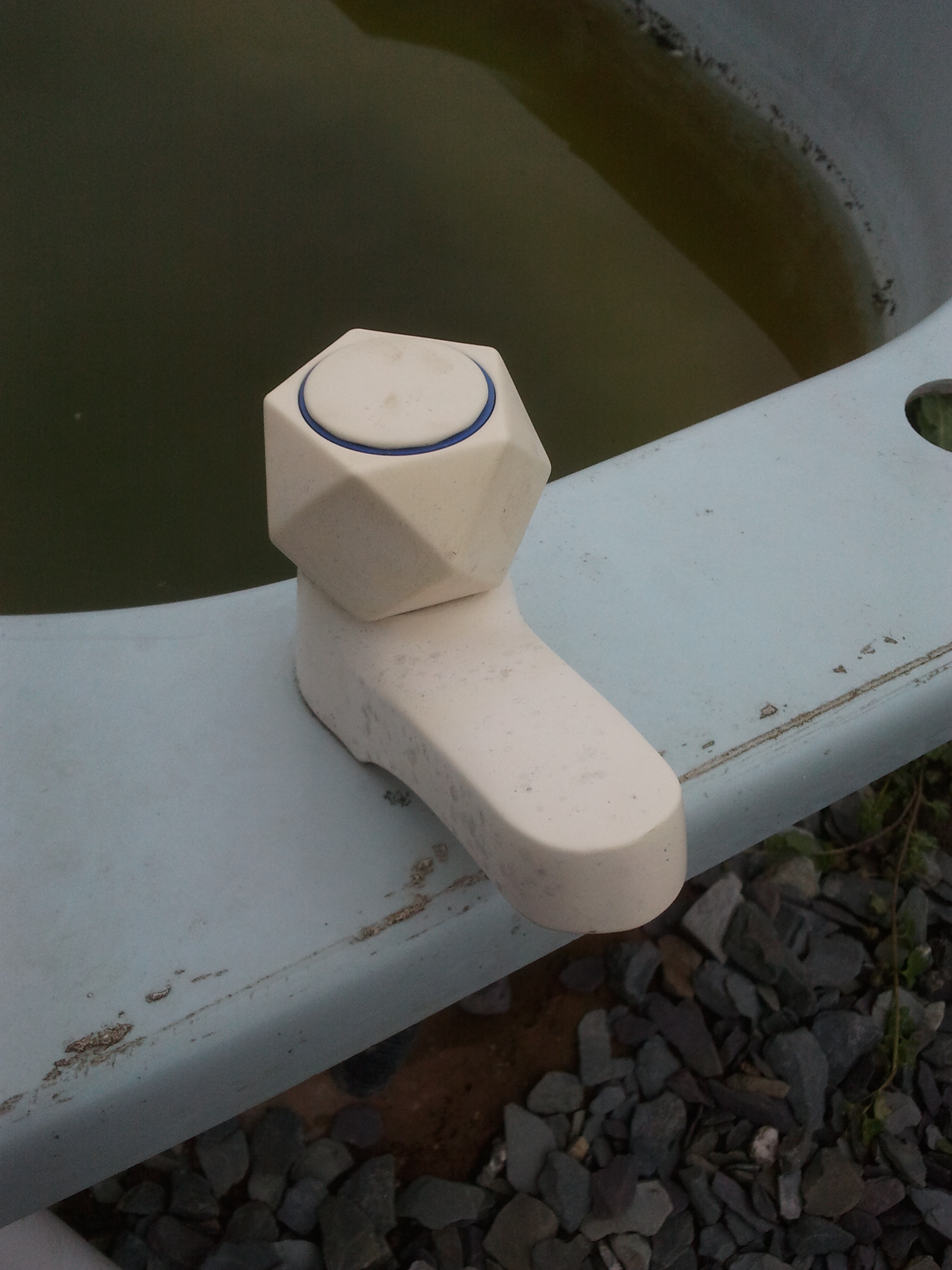
Baths featured on many plots for water storage, this one even retained its tap. Memories of the seventies came flooding back when we spotted the style of the tap.

Mad Jac wasn’t on his plot. Pity that because I bet he would have been great fun to talk with.

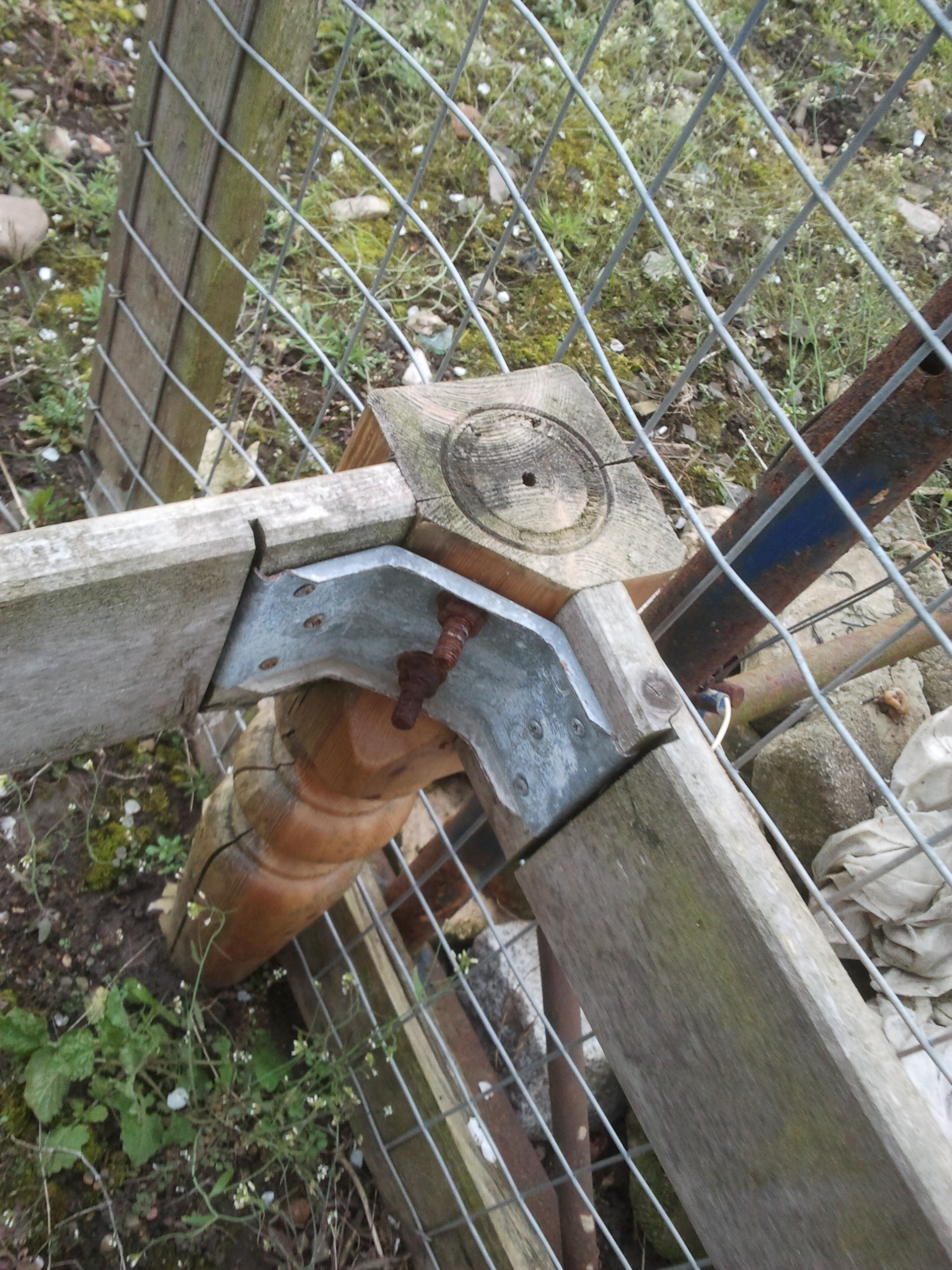
Now just what could the plot holder have intended for a table without a top?

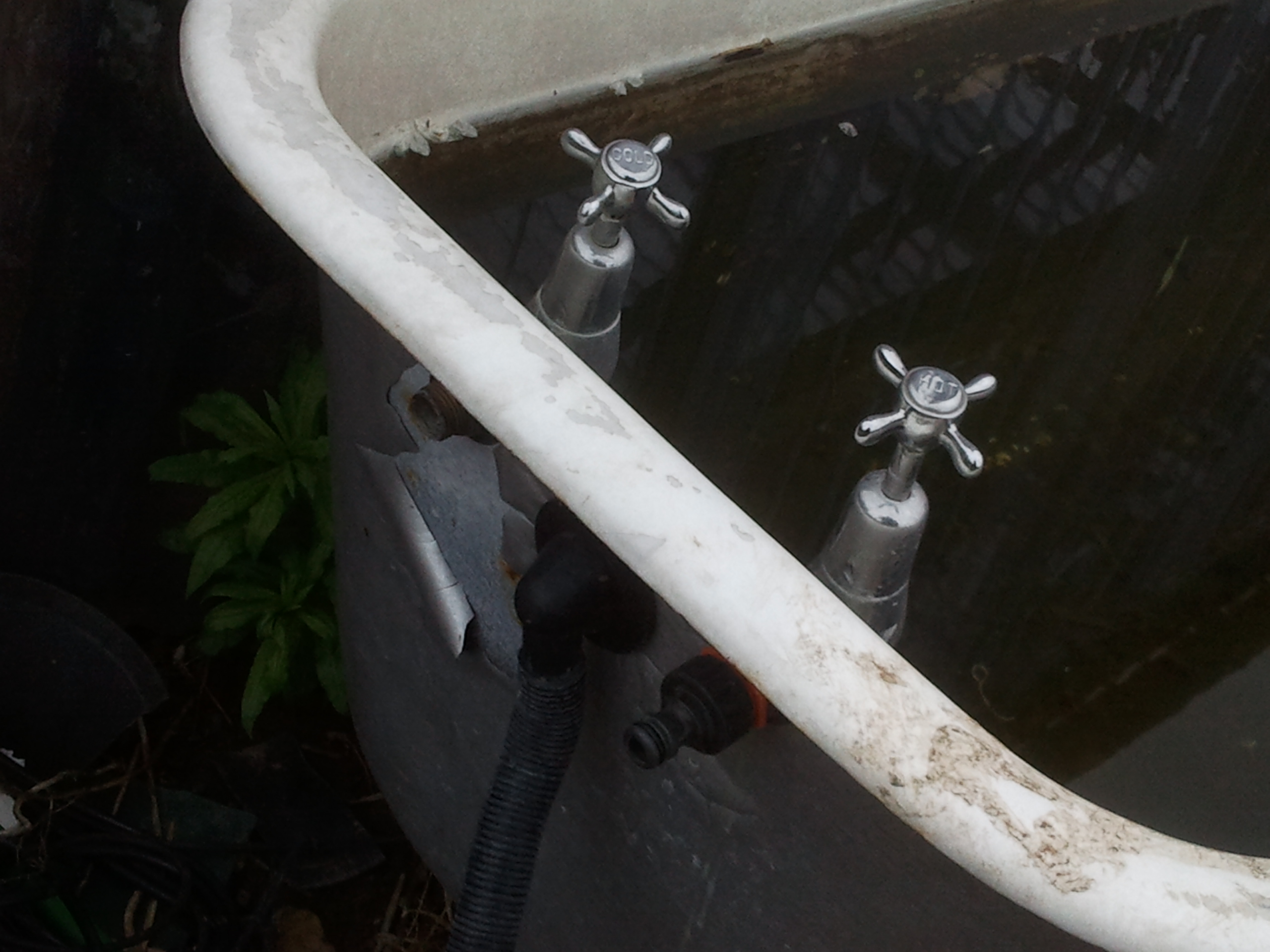
An upmarket bath on this plot. Two taps and chrome rather than plastic!

There must have been some very valuable crops on this plot. Or were they secret?

Categories
allotments community gardening fruit and veg garden photography garden wildlife gardening grow your own hardy perennials meadows National Trust natural pest control photography The National Trust wildlife

Clumber Park – The Walled Garden

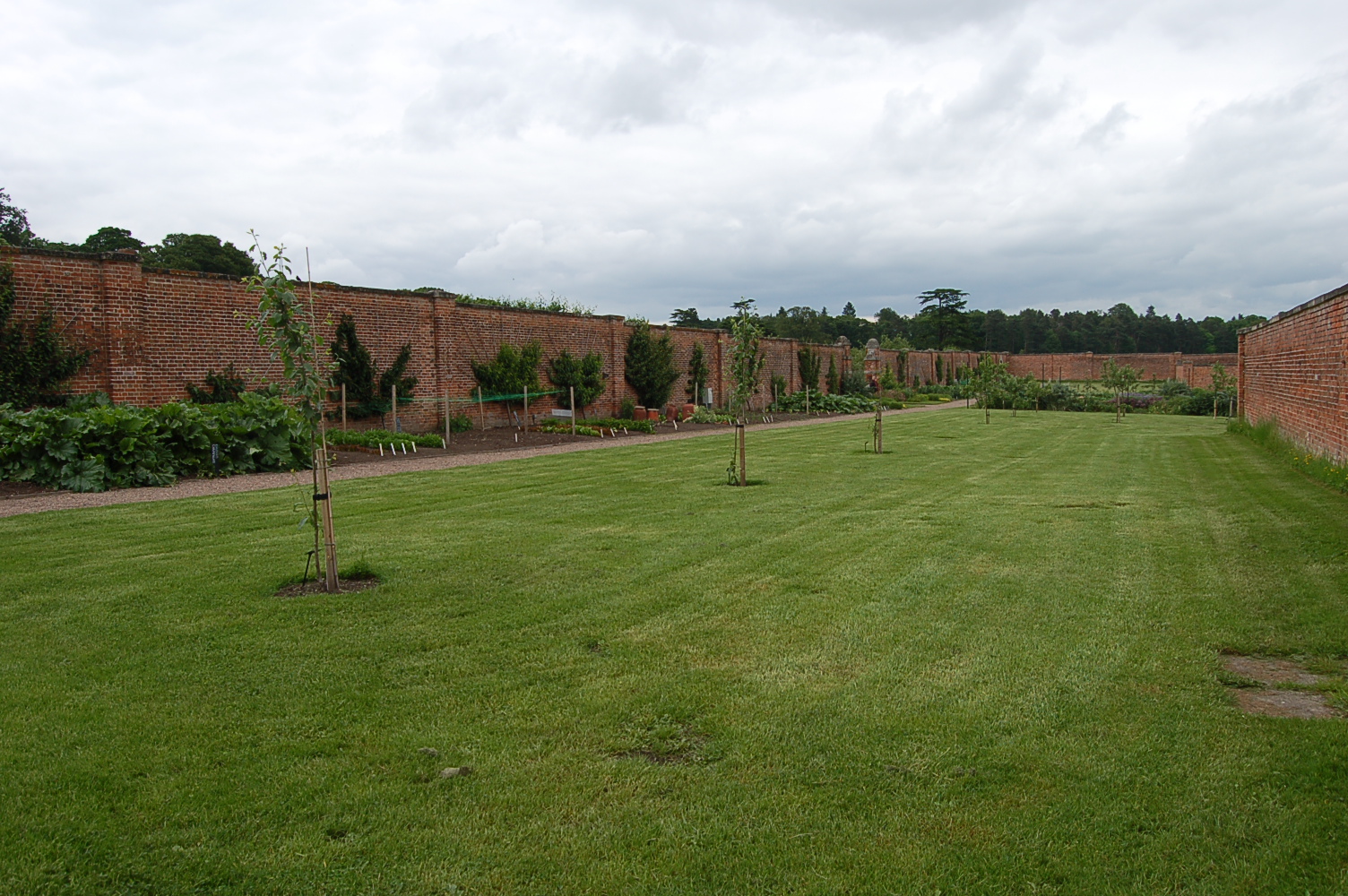
We have watched over the last few years how the walled garden at Clumber Park has been brought back to life. Although it is a few hours from home we visit at least once a year.

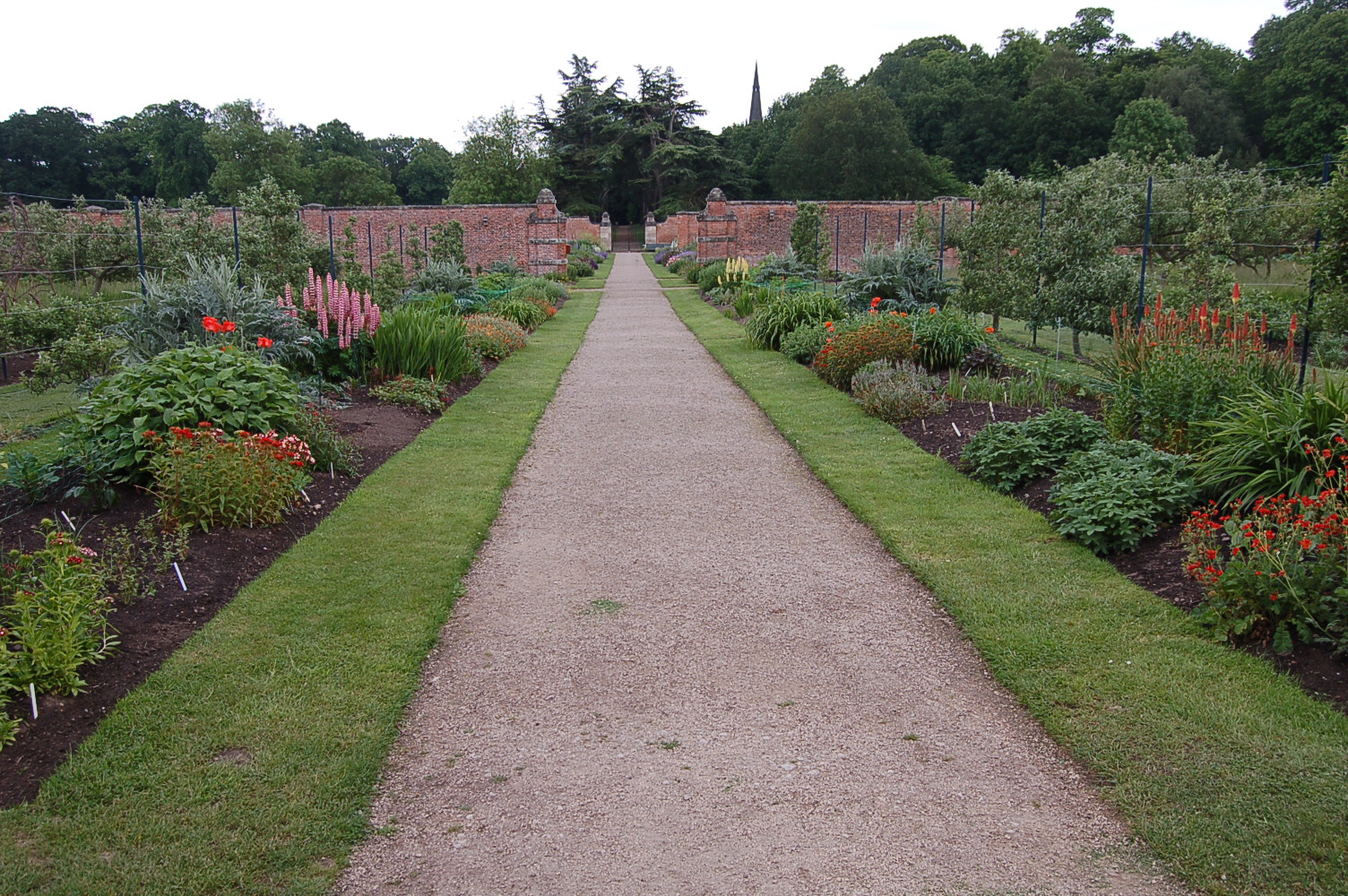
Now it is a peaceful place to wander around admiring the vegetable growing techniques, the orchards and the meadows beneath, the long flower borders, the trained fruit on the walls themselves and the national collection of rhubarb.

We were very lucky on this recent visit as we had our own personal guide who came around with us. He was grey haired and didn’t say a lot but he didn’t mind when I took his portrait.

We like to approach it along the dramatic avenue of cedars where the enticing view of the distant old gates within the warm red of the tall brick walls draws us in. The cedars themselves have such sculptural qualities and an air of mystery pervades the shadows under their glaucous sweeping branches some scooping down to touch the grass below.

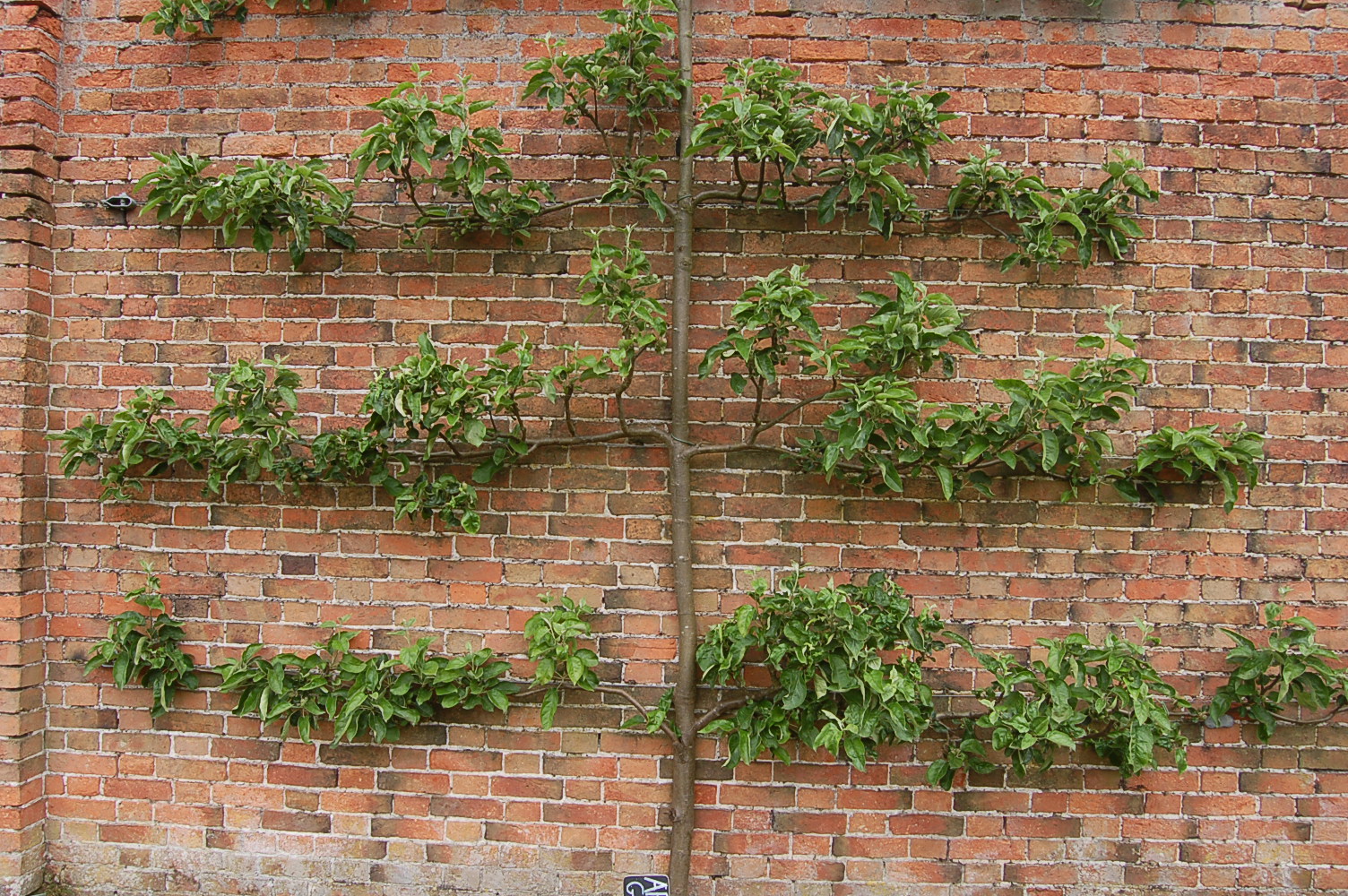
The tall warm bricked walls are now protecting skilfully trained apples, pears, peaches, cherries and figs. In the open a collection local varieties of fruit are being established and in the borders below the walls herbaceous plants, herbs and the National Collection of Rhubarb varieties flourish.

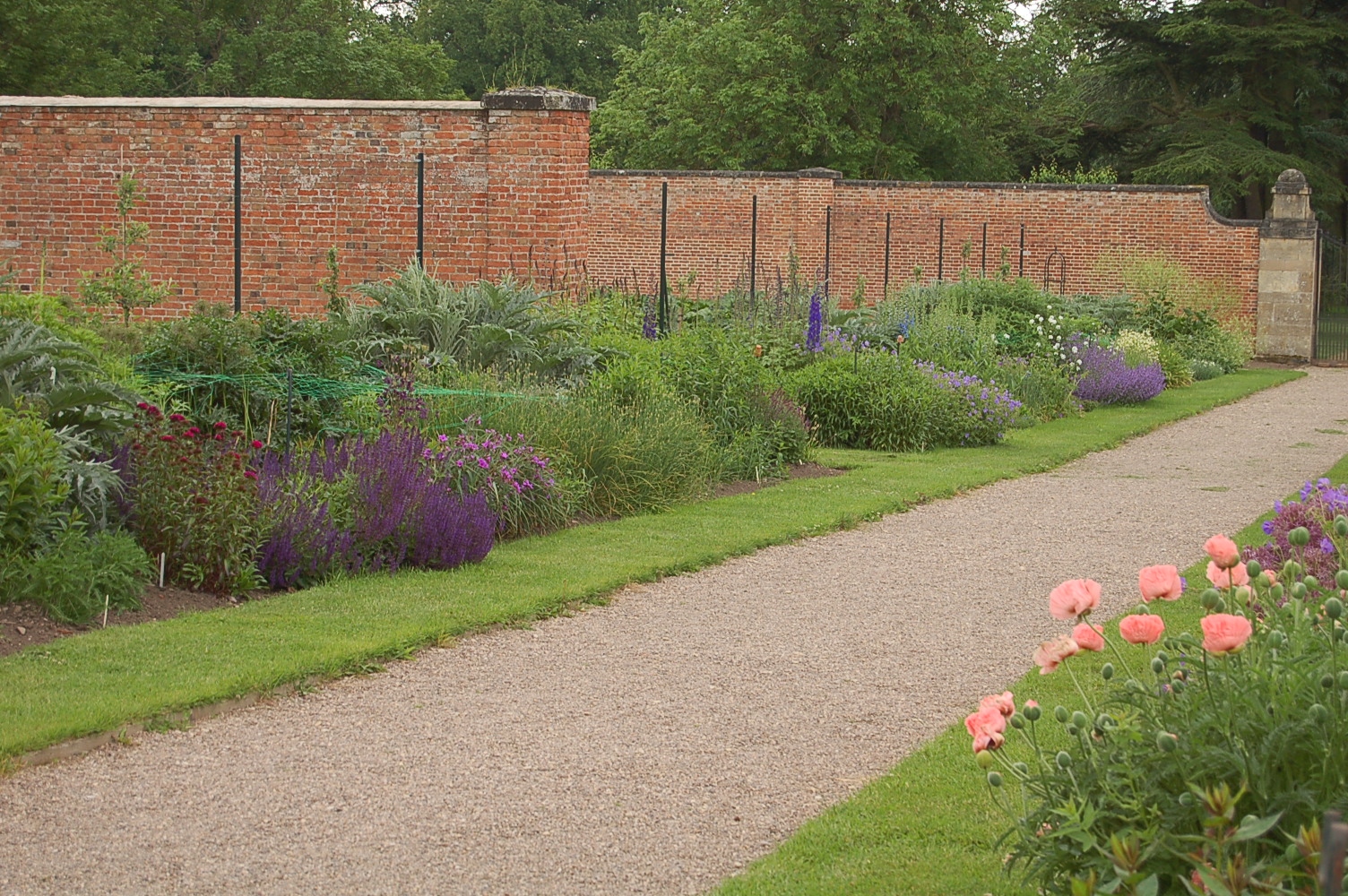
The wide central gravel path that bisects the walled garden runs from the main gates to the greenhouse. It runs between a colourful  double herbaceous border.

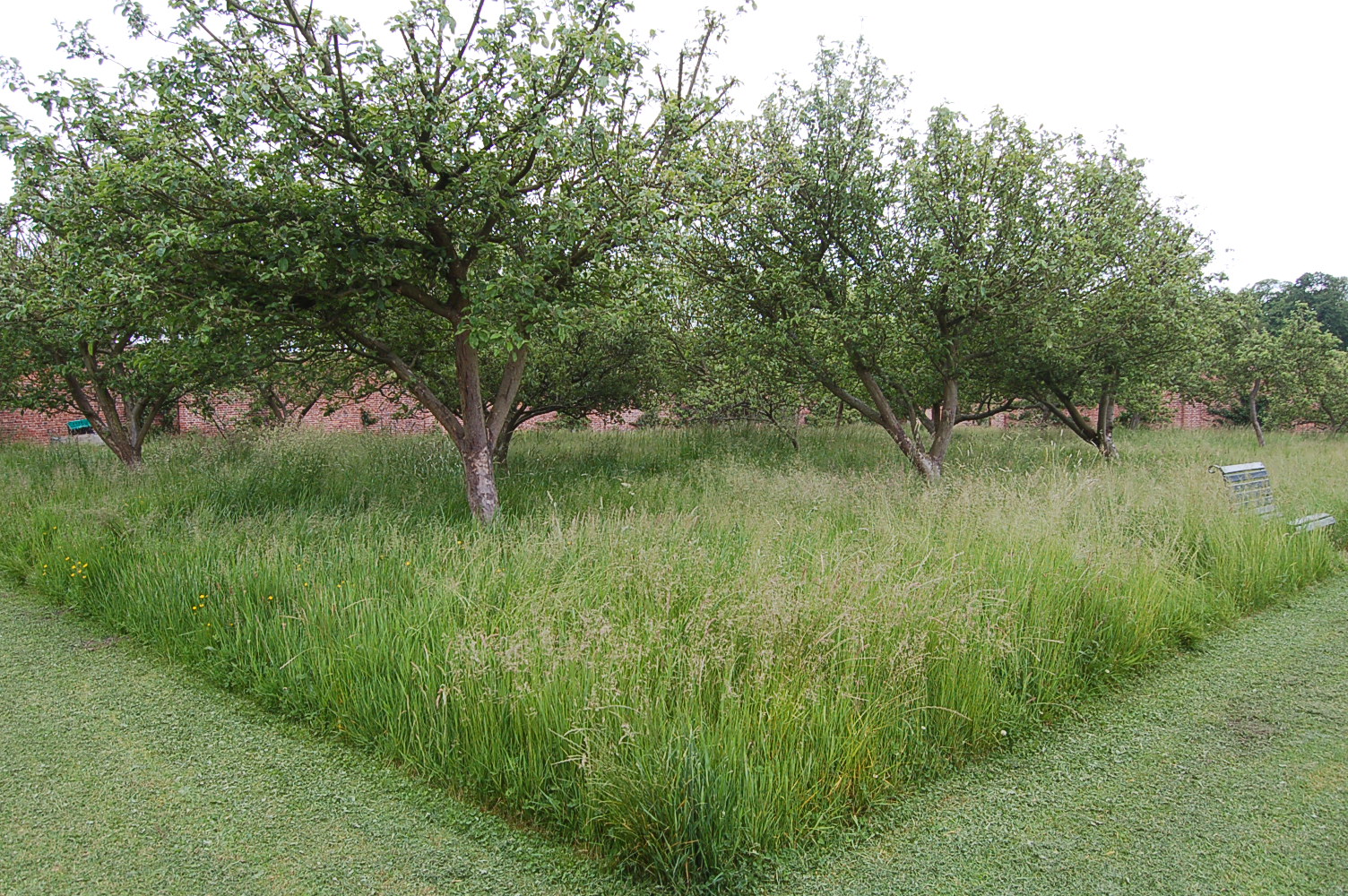
Old fruit trees remain to give a sense of continuity and sit comfortably amongst gently swaying meadows. We were delighted to see a Medlar in flower.

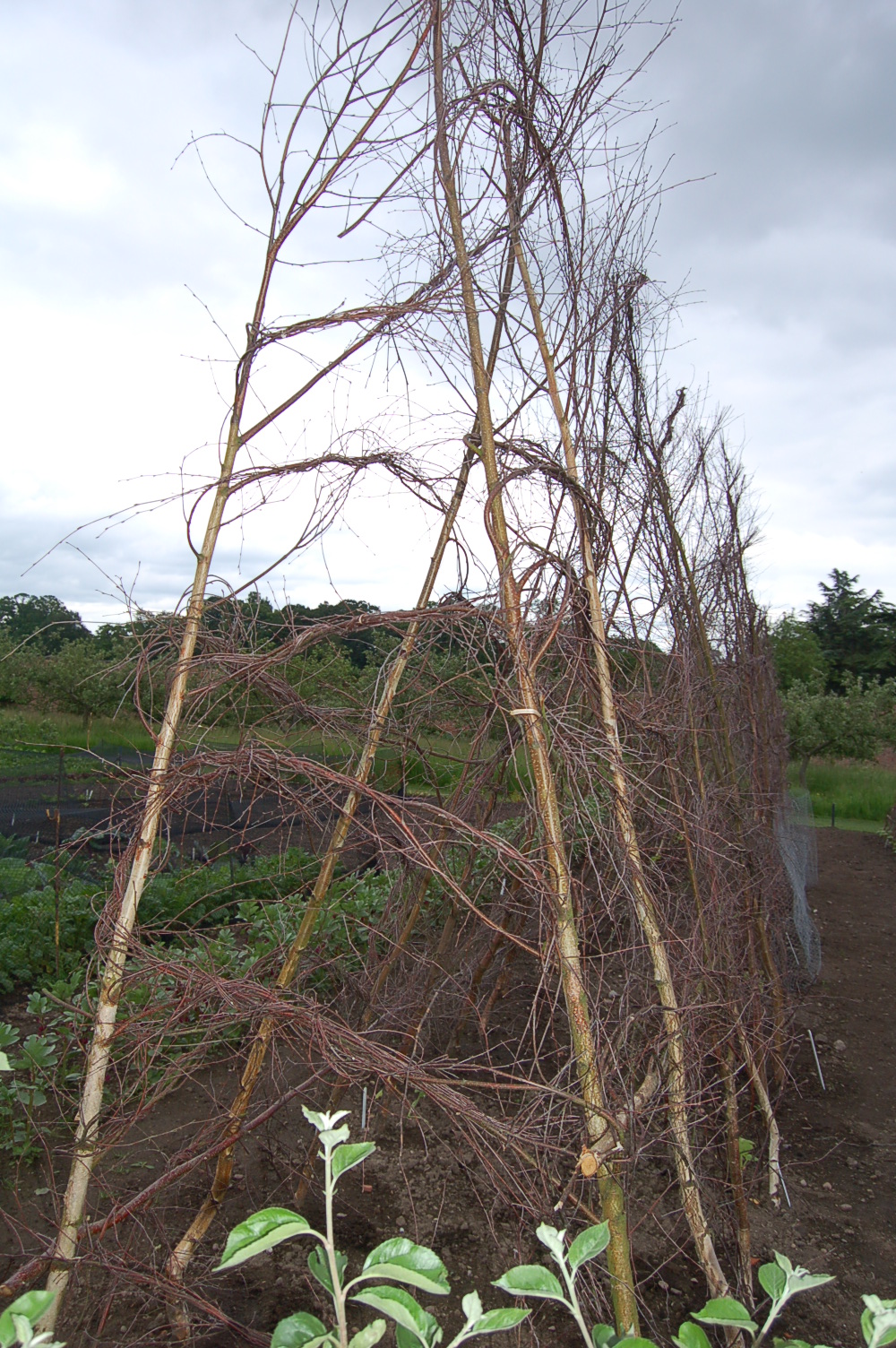
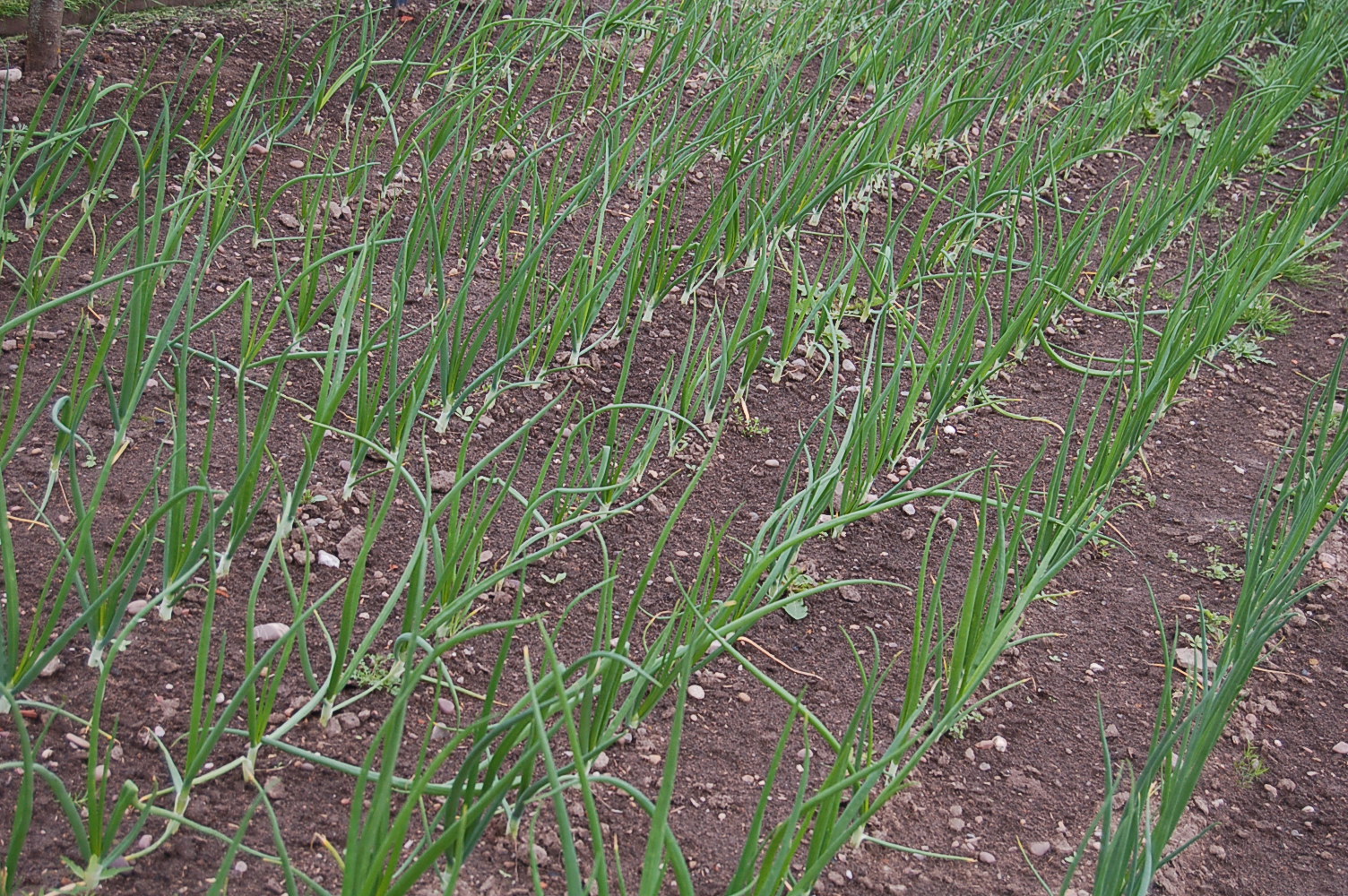
We enjoyed discovering ideas to take home with us as we moved within the vegetable growing areas, such these rustic supports for peas and sweetpeas made from birch prunings. Much of the productive planting was done in neat, long and impressively straight lines.

Being run along totally organic lines the walled garden was well-provided with bird nesting boxes and insect shelters to attract beneficial insects.

As we wandered around we noticed amongst the productive rows of veggies, this beautiful Victorian glass and metal cloche still in regular use.  It performed as well now as it always has done just like the walled garden itself.

As we prepared for our journey back to Shropshire, our helpful little cheery guide waved a small wave and wandered off.

Categories
garden design garden photography garden wildlife gardening hardy perennials ornamental grasses photography poppies Shropshire wildlife

Happy Birthday to My Blog

Greenbenchramblings is one year old today! Yes, I have been rambling away from my old green bench on my allotment for a year to the day. Each time I celebrate a birthday with a nought in it I give myself a challenge. When I was 30 I decided to get up before first light, taking a not so willing family with me, travel to a nearby area of deciduous woodland and await the dawn chorus. It was pure magic! The song of each bird as it awoke joined in the chorus until the wood reverberated with song celebrating the new day. The atmosphere was electric – an unforgettable experience.

When I reached 40 I decided to buy some new walking boots as a stimulus to get out into the beautiful Shropshire countryside more.

At 50 I began studying a garden design course.

A year ago I reached 60 and decided to start my Greenbenchramblings blog, to record my musings and photos related to our garden, our allotment, gardening and wildlife. So Happy Birthday Blog! I have been delighted with the response to it, enjoyed the comments and feel I have met new friends from almost every continent. I share all my gardening visiting, my lottie gardening, the development and maintenance of the garden at home and the walks in the countryside with Jude, also known as The Undergardener or Mrs Greenbenchrambler.

The surprise of the blogging year was when Willow Cottage Gardeners nominated my blog for a Versatile Blogger Award, hence the rather handsome green logo on the top right of my blogs. As a part of this award I have to write a list of 7 things about myself that readers of my blog might not know and suggest 15 blogs for nomination for the award.

So here goes with the 7 things you might not know about me;

1.Forty years ago I had an altercation with a lorry and the lorry came out best. I was put back together and I am now registered “Bionic”.

2,My favourite gardeners are Beth Chatto, Dan Hinckley, Carol Klein and Monty Don.

3.I have had allotments for over 20 years.

4.I have been a fisherman since I was 4 years old. When I retired my ambition was to catch a 30 pound carp. The biggest so far is 29 pound 15 ounces.

5.I talk to my chickens and they talk back.

6.My favourite garden designers are Dan Pearson, Piet Oudolf, Tom Stuart-Smith and Cleve West.

7.If I could choose anywhere in the world to live it would be in the South Shropshire Hills. I live in the South Shropshire Hills!

My 15 nominated blogs;

1. www.lensandpensbysally.wordpress.com

2. www.aerialediblegardening.wordpress.com

3. www.latebloomerbuds.wordpress.com

4. www.fennelandfern.co.uk/blog

5. www.soulsbyfarm.wordpress.com

6. www.gardeninginthelines.wordpress.com

7. www.mytinyplot.wordpress.com

8. www.gettingfreshblog.wordpress.com

9. www.gardeningcanuck.wordpress.com

10. www.100squaremetres.wordpress.com

11. www.pbmgarden.wordpress.com

12. www.arignagardener.wordpress.com

13. www.grandparentsplus2.wordpress.com

14. www.wanderingwoody.wordpress.com

15. www.indiansummerfarm.wordpress.com

As followers of greenbenchramblings know I carry a camera around with me wherever we go and my favourite subjects are plants, especially plant portraits, allotment gardening, and the creatures who live in our gardens, on our allotment and on the plants. It seems apt to finish this One Year On posting with a few pics of these favourite subjects.

Categories
allotments birds community gardening conservation fruit and veg garden photography garden wildlife gardening grow your own hardy perennials meadows natural pest control Shropshire wildlife

A Wander around the Allotments in May

May is a busy month on the allotment, seeds need sowing, seedlings need thinning, weeds need hoeing and early crops reward us with early harvests. And of course our grass paths separating the four areas of the plot need regular mowing.

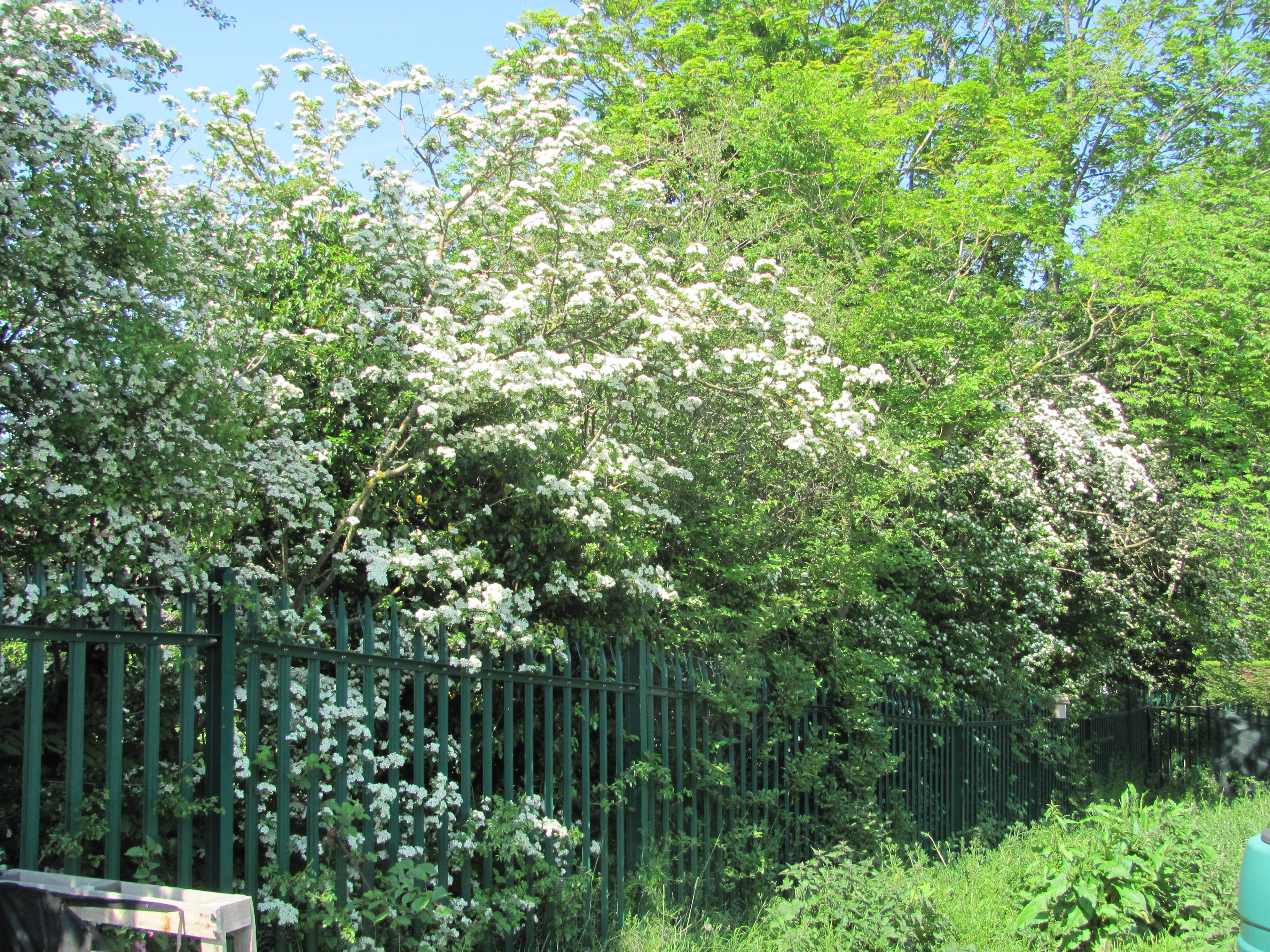
The Hawthorns in native hedges around the site are smelling good and looking good.

The wildlife all around is equally busy, seriously going about the business of breeding with all its inherited trials and tribulations. The weather, predators, prey availability and the search for food for both adults and nests full their young all contrive to make their lives difficult.

We shall begin our May lottie wander on our own plot to see what is going on. The soil is now easily worked so using the hoe to remove seedlings is easy so the plot is looking tidy.

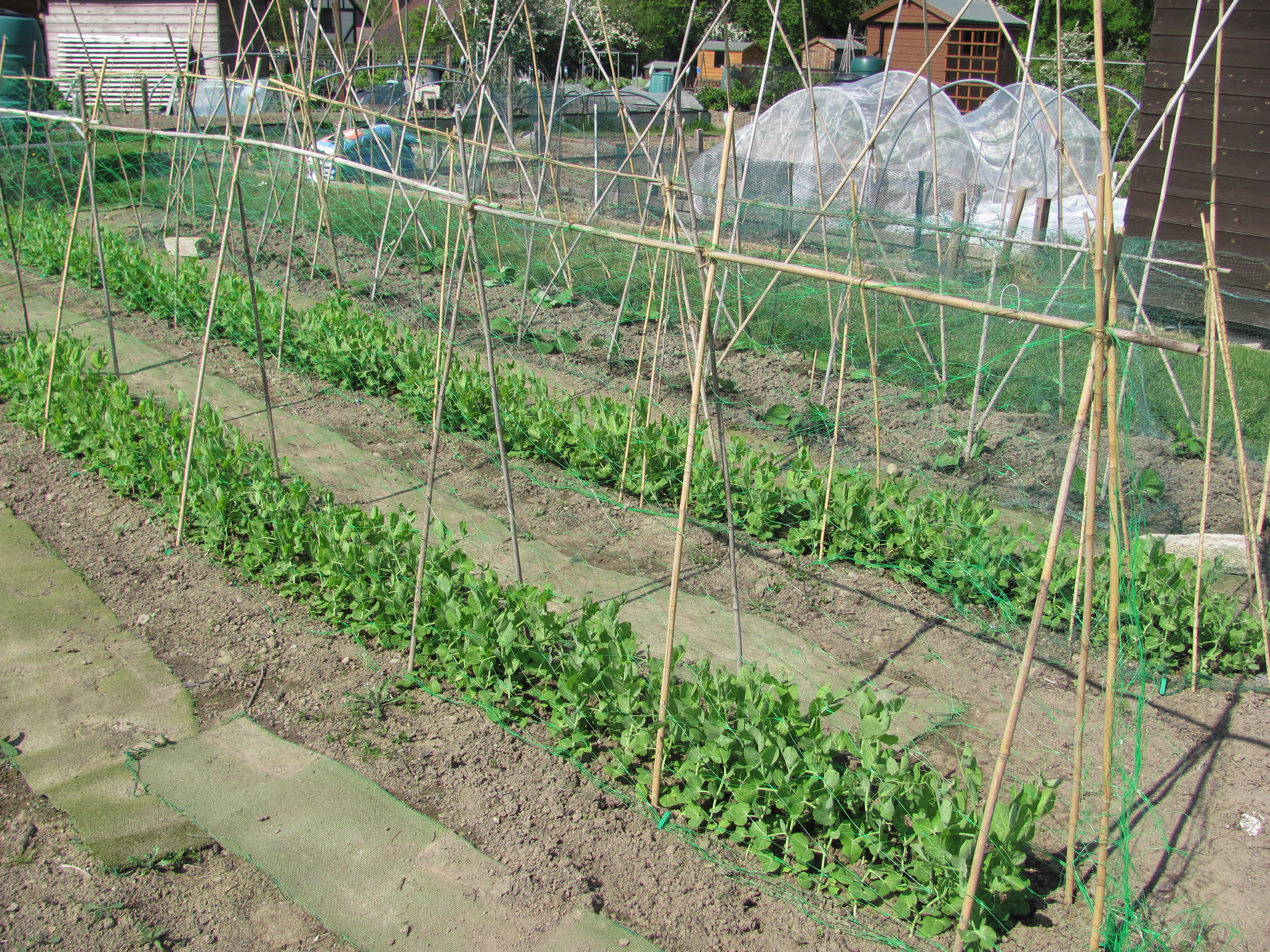
Our brassicas are coming along well underneath their protective cover.
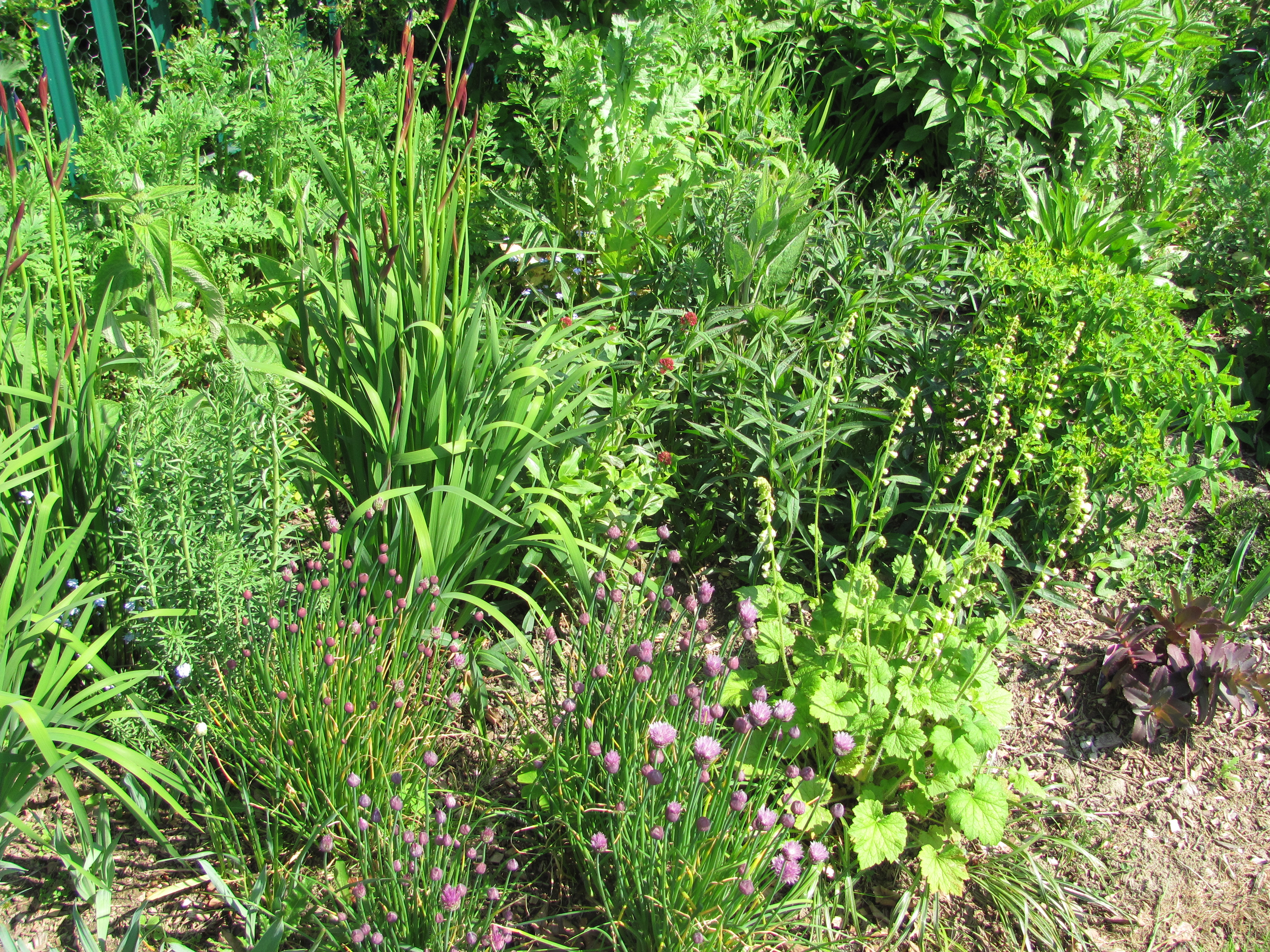
The perennial bug borders are looking good.
Multi-coloured radiccio.

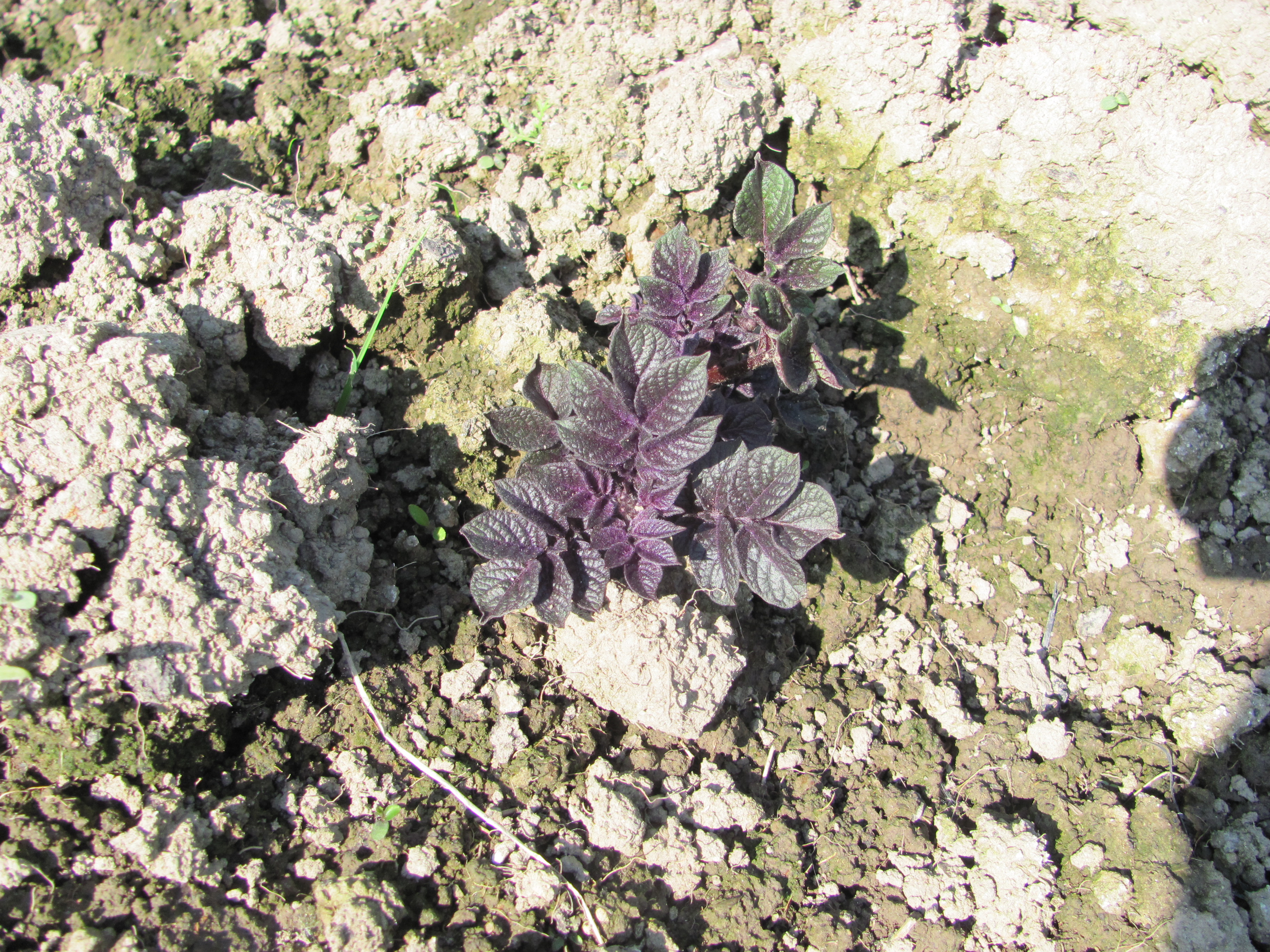
Whenever we are working our plot or helping maintain the green spaces around the site, we are entertained by birds of prey, Buzzards and Kestrels soaring or hovering over our heads and around our feet Robins, Blackbirds, Blue and Great Tits, and Song Thrushes search for food for their young hoping we disturb grubs and bugs with our digging, raking and hoeing. More secretive in their search for fodder for young are the Black Caps, Woodpeckers and Nuthatches. Overhead the hirondelles, (Swallows, Swifts and House Martins), having recently returned from their winter haunts greedily scoop up insects on the wing.Although the weather has been warm and dry for a few days now the end of our plot where the clay comes nearest the surface and the topsoil is very thin, water still saturates the land, making working it impossible. But in this wetness in the ridged soil our Red Duke of York potatoes are pushing their purple tinted foliage out towards the sunshine.

Red Duke of York appearing above the algae tinted soil.
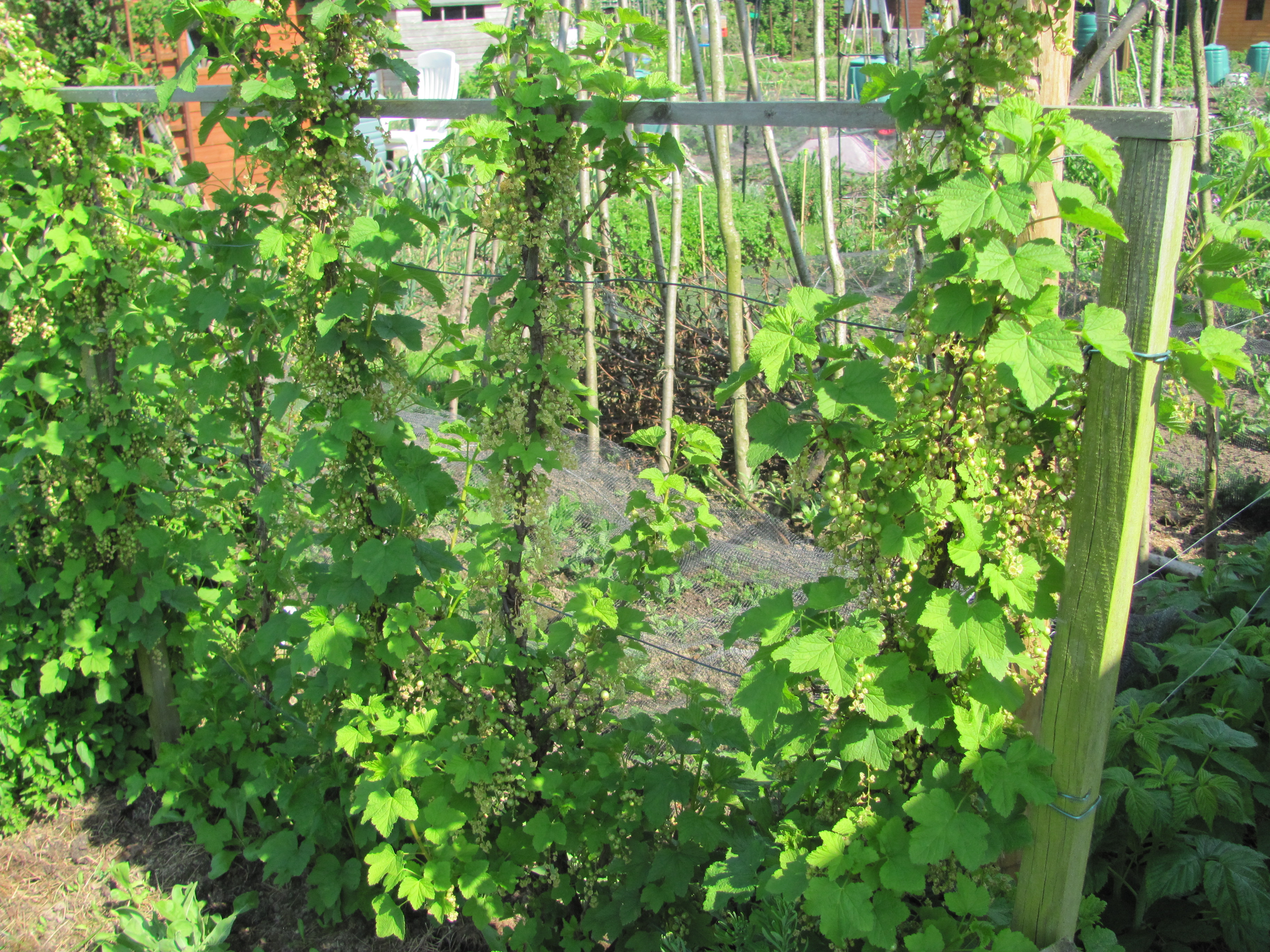
Our cordon Red Currants are flowering heartily and starting to set fruit.

In the orchards and over the meadows wildflowers are blooming alongside naturalised ornamental bulbs, attracting butterflies, the crinkle winged Commas, the Orange Tips with orange tips to their wings and the wonderful ethereal Holly Blues.

Bulbs and Buttercups under the fruit trees in the orchard.
We attract predator insects into the orchards with these insect homes. They are a wildlife friendly pesticide.

The Buddleia Borders are coming to life now and the Spring Garden remains very colourful.

Two plot holders, Phil and Doreen, have created a new bed in a shaded area near their plot and made it accessible for all to enjoy.

Most plots are ready for sowing and planting or partly planted up and sown.

Our May Working Party jobs were decided upon by where the shade was, as it was too hot to work in the full sunshine. We managed to get most of our tasks completed though.

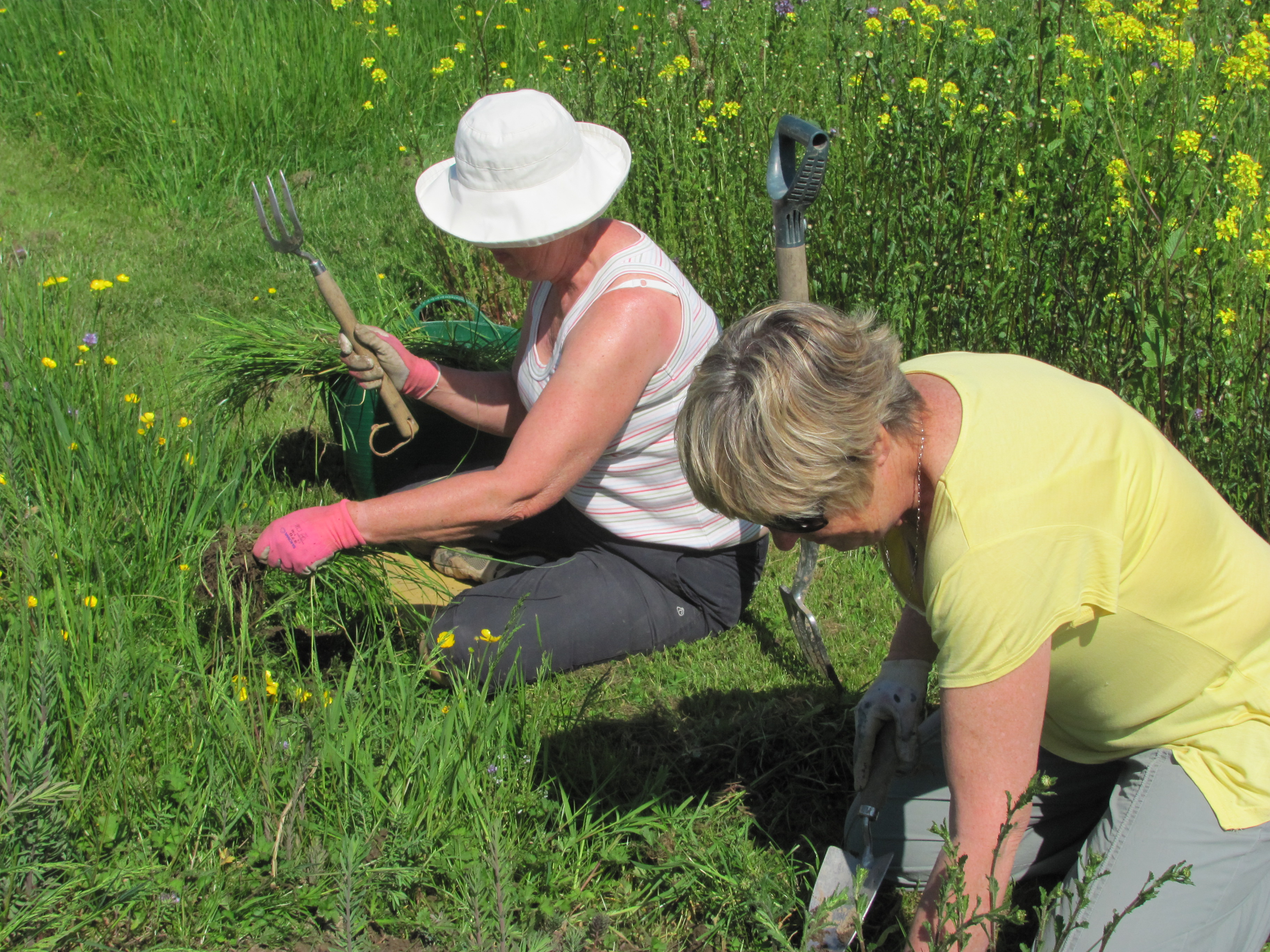
Heads down for weeding the meadows.
Kneeling down on the job attacking those pernicious weeds that creep into the meadows.

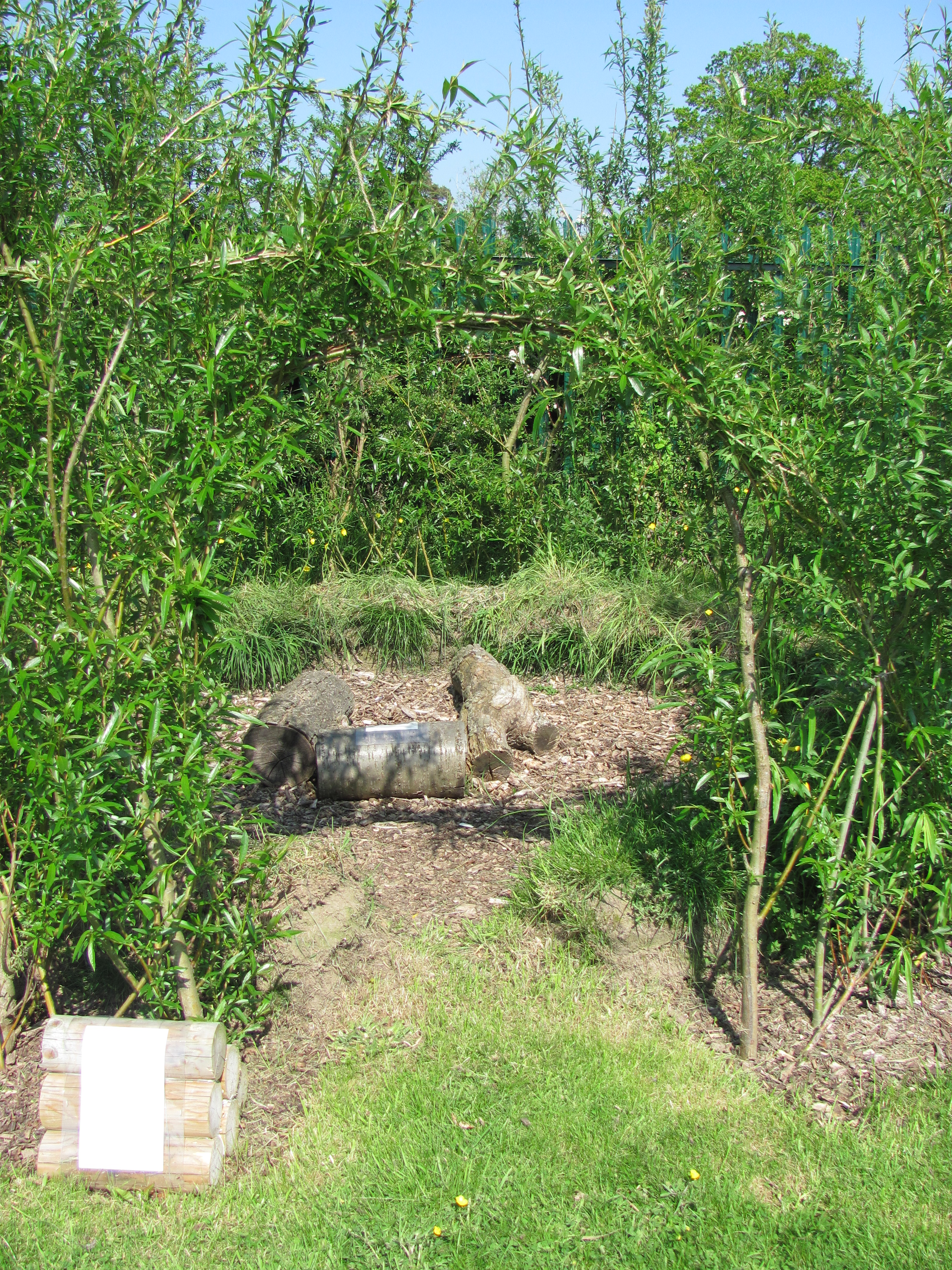
Our Willow Dome has had its doorway and windows woven and neatened up and the sides pruned and woven. It is a favourite feature with children as somewhere to listen to a story, or as a play den, and as adults for somewhere to escape to at coffee time from the heat of the day.

As we have recently launched our site’s Wise Watering Campaign it is heartening to see guttering and butts appearing on several sheds.

This Veggie Life

A Vegetarian | Nature Lifestyle Blog

Rambling in the Garden

.....and nurturing my soul

The Arch City Gardener

Journeys In St. Louis Gardening and Beyond

Garden Dreaming at Châtillon

Consult the genius of the place

Storyshucker

A blog full of humorous and poignant observations.

gardeninacity

Notes from a wildlife-friendly cottage garden

PlayGroundology

...an emerging social science

The Official Blog of British Wildlife

'The most important and informative publication on wildlife of our times' - The Independent. This blog is a member of The UK & Ireland Natural History Bloggers group: www.uknhb.blogspot.com

iGrowHort

Inspire - Cultivate - Grow Native Plants - Restore Landscapes

Bishops Meadow Trust

To create and protect a semi-natural wild space for the people of Farnham to enjoy and experience an array of British wildlife in our town

Gardening with Children

The www.gardeningwithchildren.co.uk Blog

UKbirdingtimeline

birding through the seasons, why birds matter and how to conserve them

NATURE WALKER

with a camera in hand

Jardin

Transform your outdoor space

Eva's space

My allotment, cooking and other interests

Old School Garden

my gardening life through the year

LEANNE COLE

Trying to live a creative life

fromacountrycottage

trying to live as lightly as possible on our beautiful planet

Good Life Gardening

Nature lovers from Leicester living the good life.

mybeautfulthings

Finding the beautiful in the everyday

mawsonmichelle

Michelle's Allotment

In and Out of My Garden

thoughts from and about my garden

Greenhousing

Big plans for a small garden

The Scottish Country Garden

A Walled Country Garden in South East Scotland

The Fruity Chicken

Life at the fruity chicken

willowarchway

Off grid living. Self sufficient. "PERMAGANICS RULE".

St Anns Allotments

Nottingham's Grade 2* Listed Allotments and Community Orchard

Manifest Joy Harvests

a journey in suburban vegetable gardening

Allotmental

The madness of growing your own

Penny's Garden: a harvest beyond my front door

A novel approach to vegetable gardening

arignagardener

Sustainable living in the Irish countryside.

NewEnglandGardenAndThread

Master Gardener, amateur photographer, quilter, NH native, and sometimes SC snowbird

dianajhale

Recent work and work in progress and anything else that interests me

planthoarder

a chaotic cottage gardener

Lens and Pens by Sally

a weekly blog that creates a personal philosophy through photographs and words

Dewdrops and Sunshine

Stories from a sassy and classy Southern farmbelle.

The Pyjama Gardener

Simple Organic Gardening & Seasonal Living

gettin' fresh!

turning dirt into dinner

JOY...

today the world is created anew

Garden Birds

Notes from a Devon garden

ShootAbout

Life Through The Lens

Adapting Pixels

A photography blog showcasing the best photography pictures and videos on the internet

Wildlifegardening's Blog

Just another WordPress.com site

naturestimeline

personal observations from the natural world as the search continues for a new approach to conservation.

LATEBLOOMERBUDS

The Wonders of Life through my Eyes, my Heart, my Soul