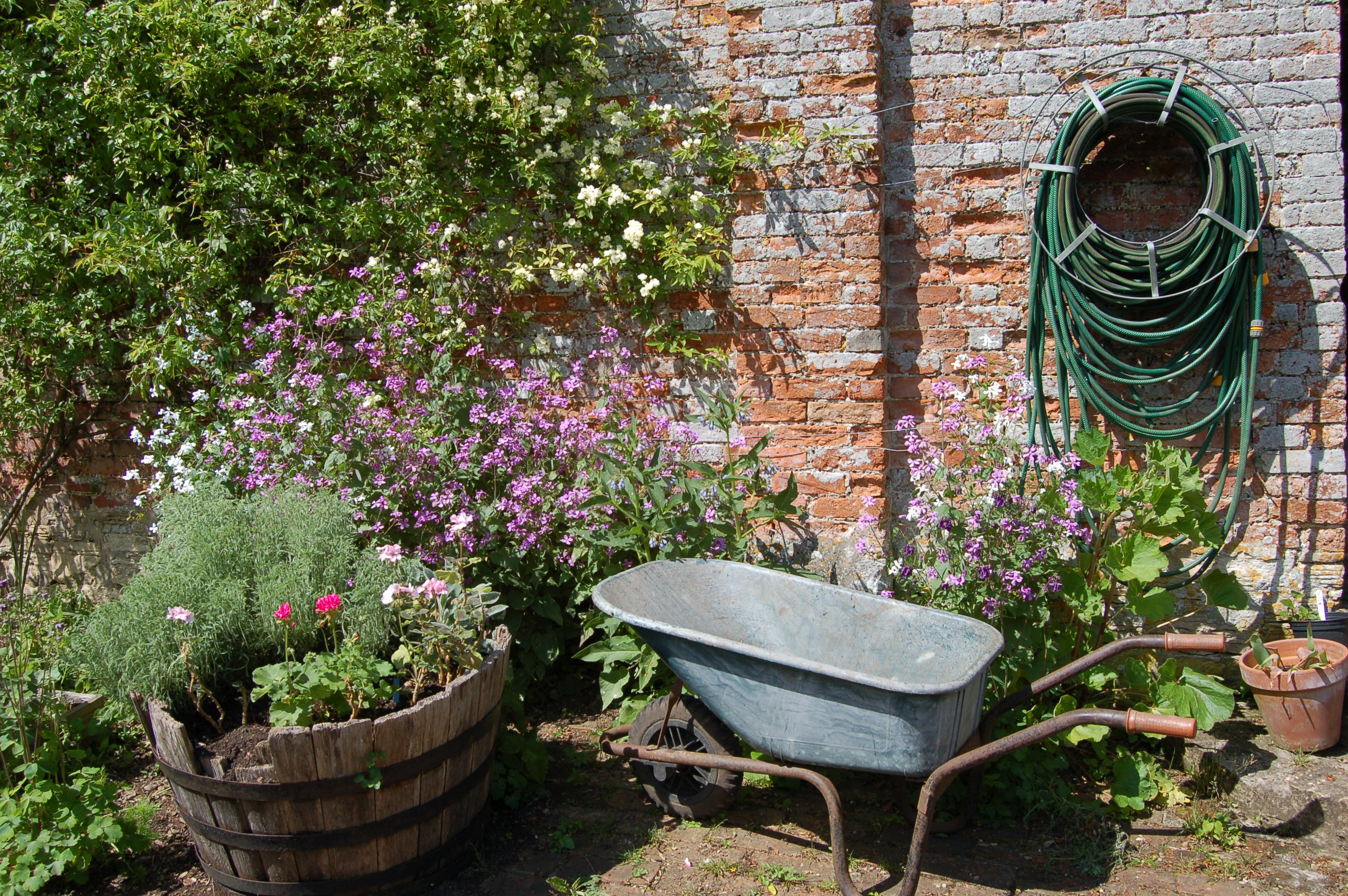
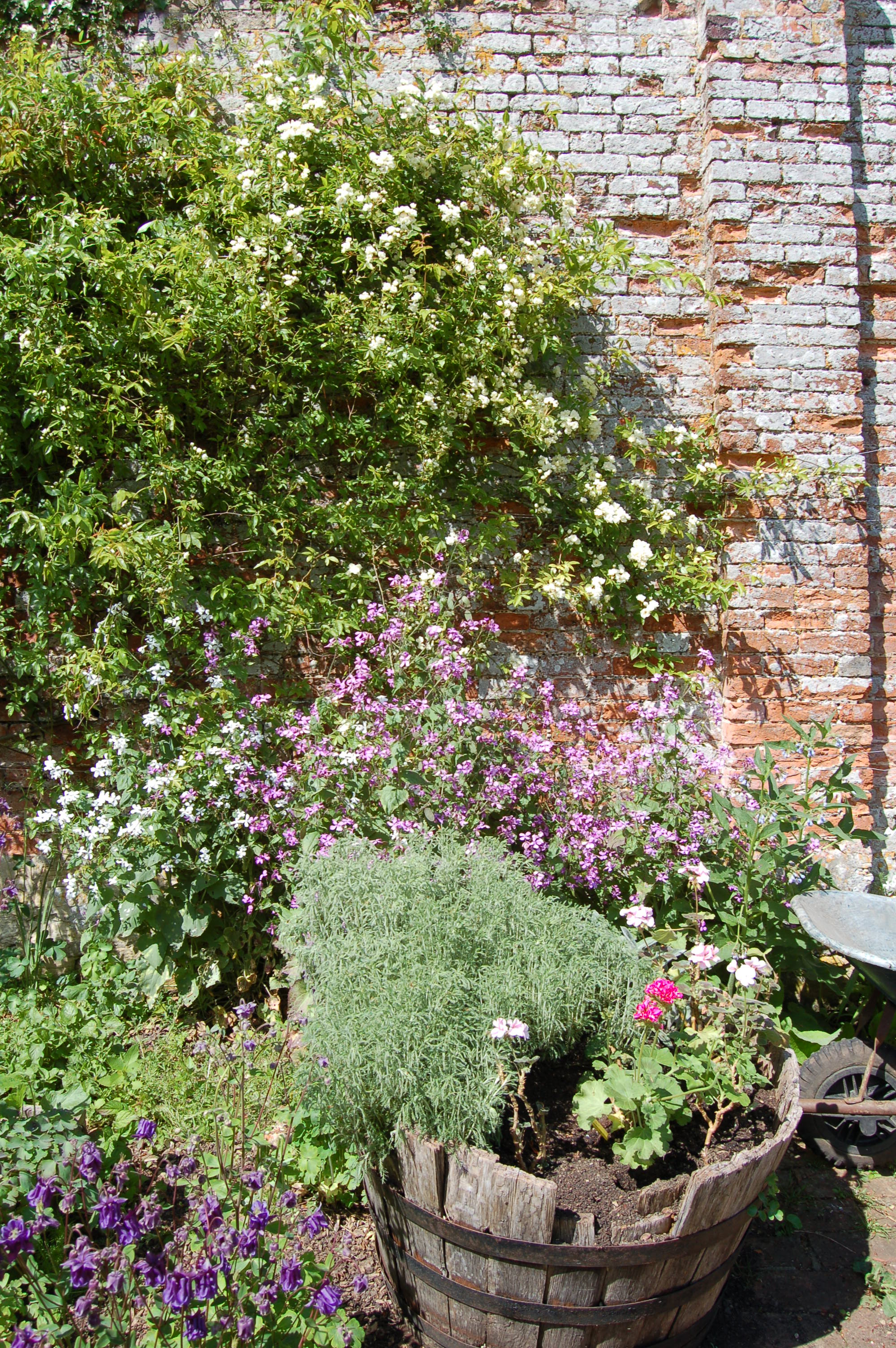
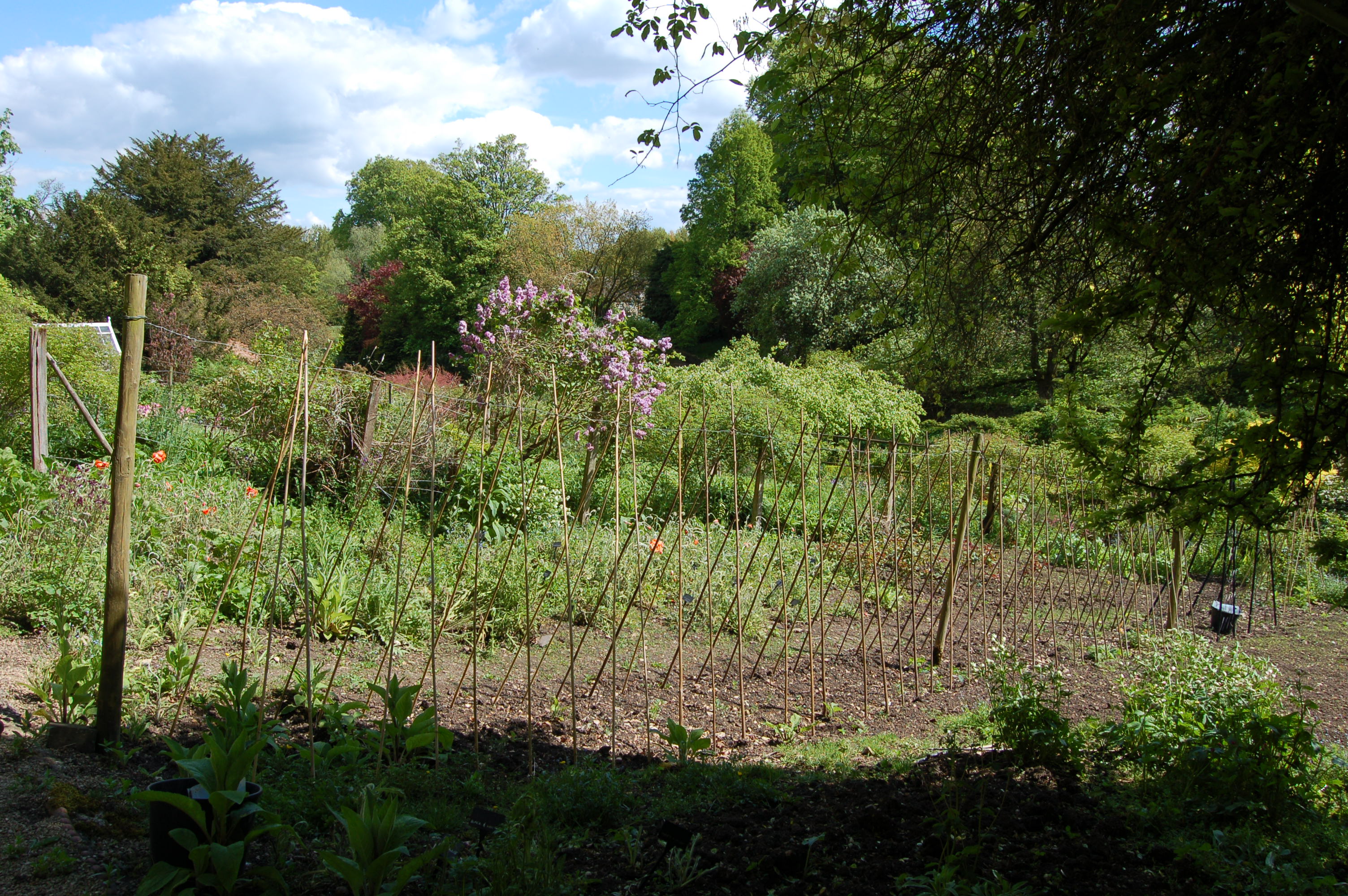
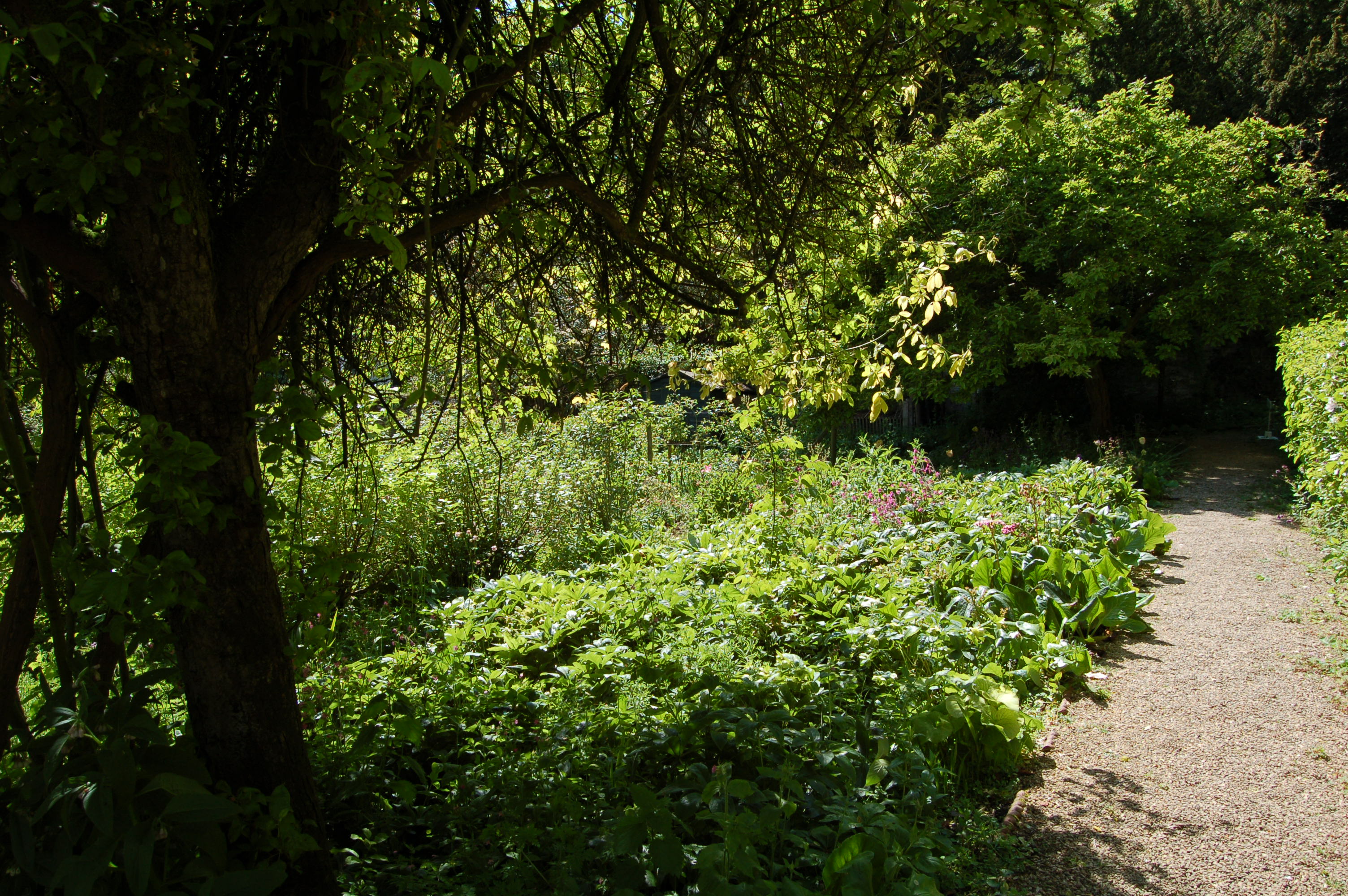
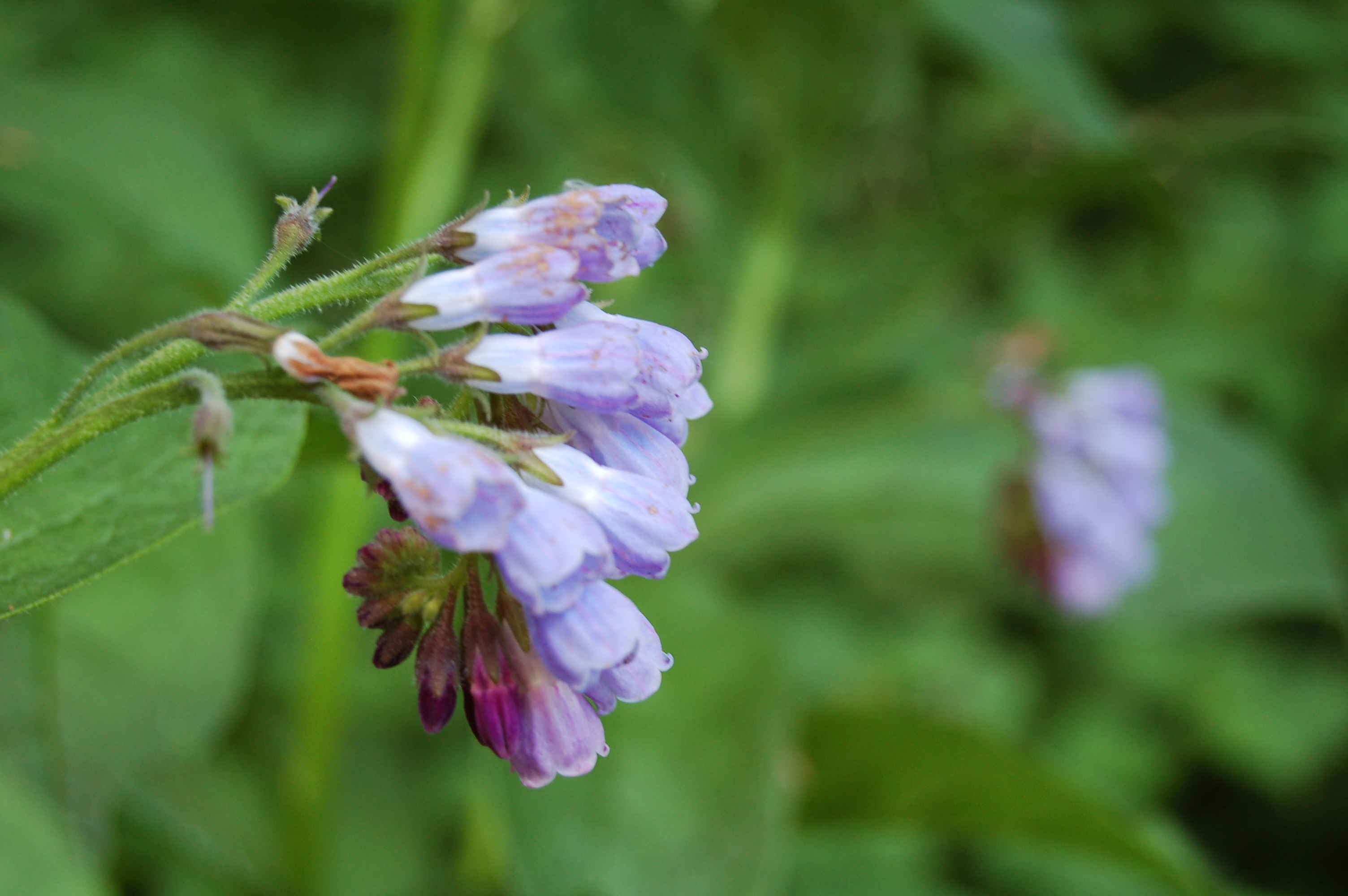
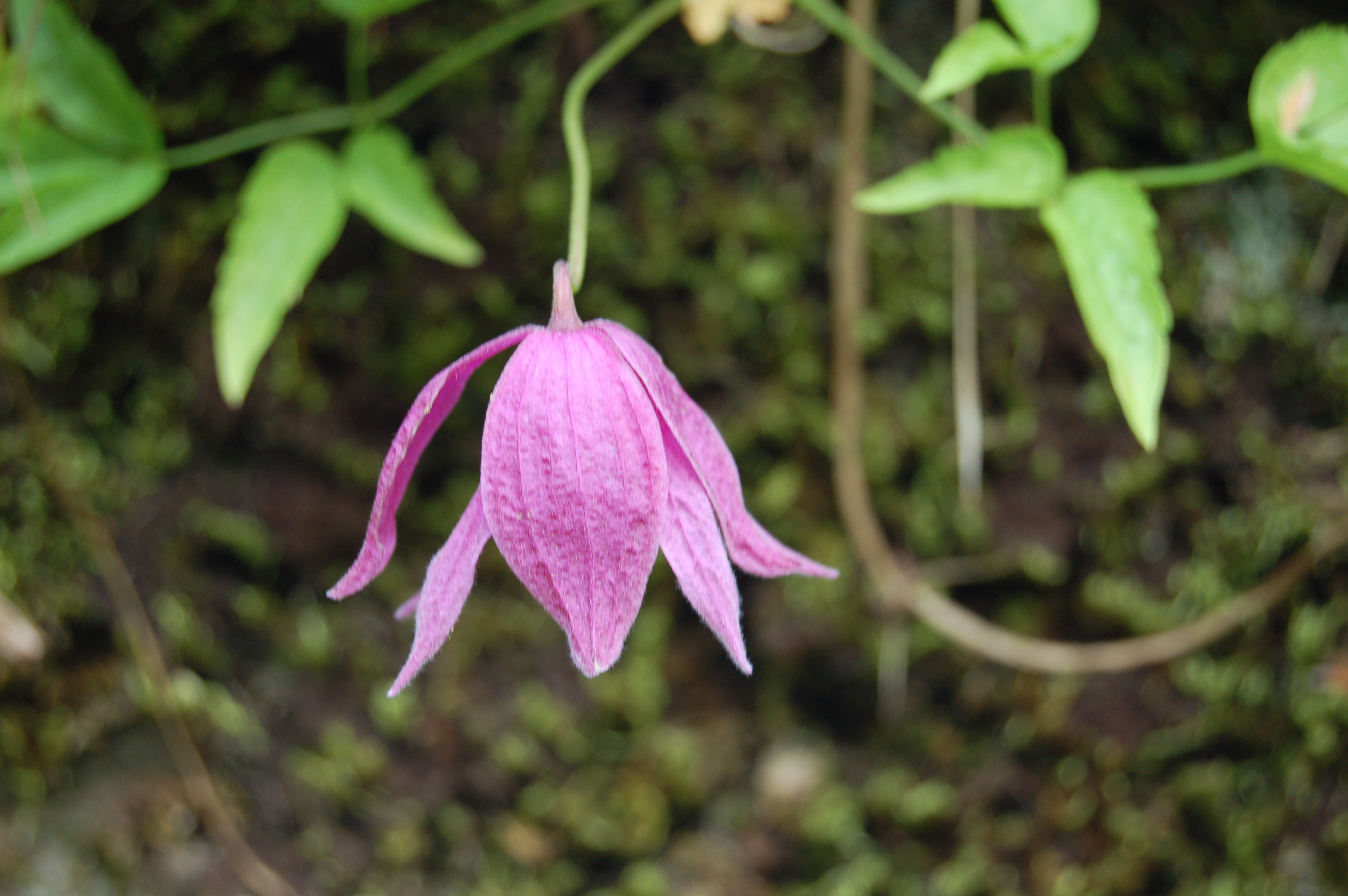
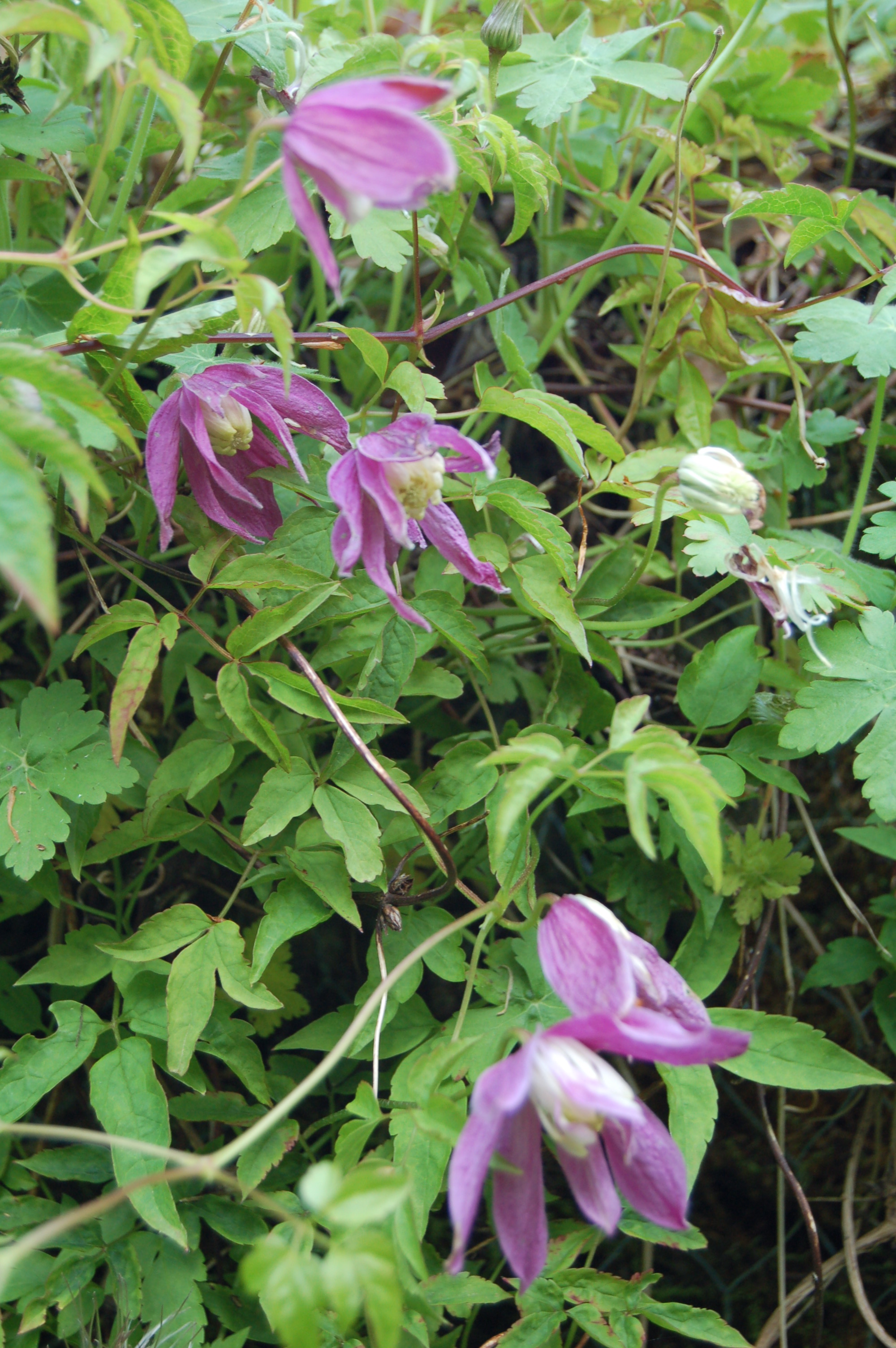
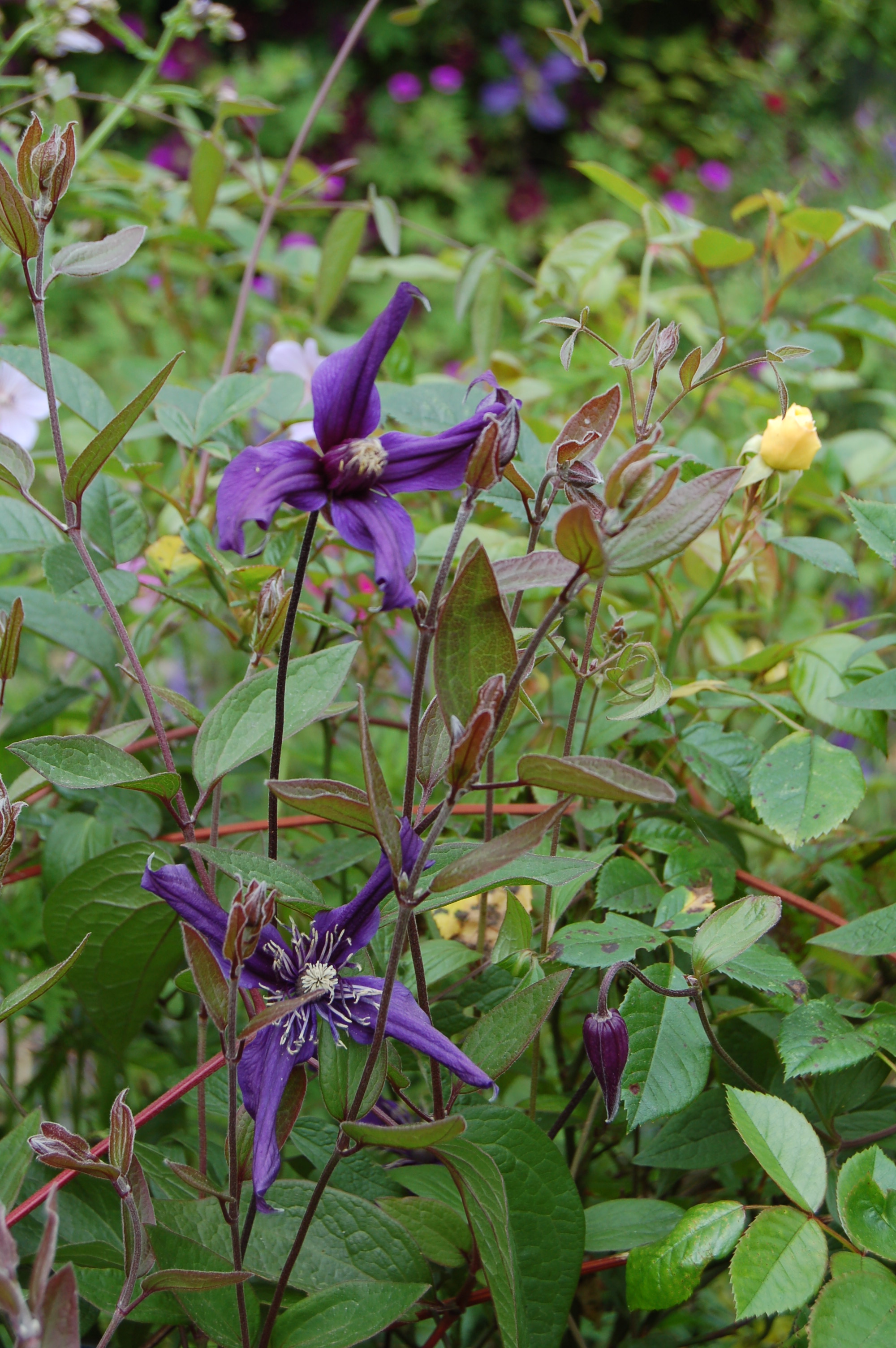
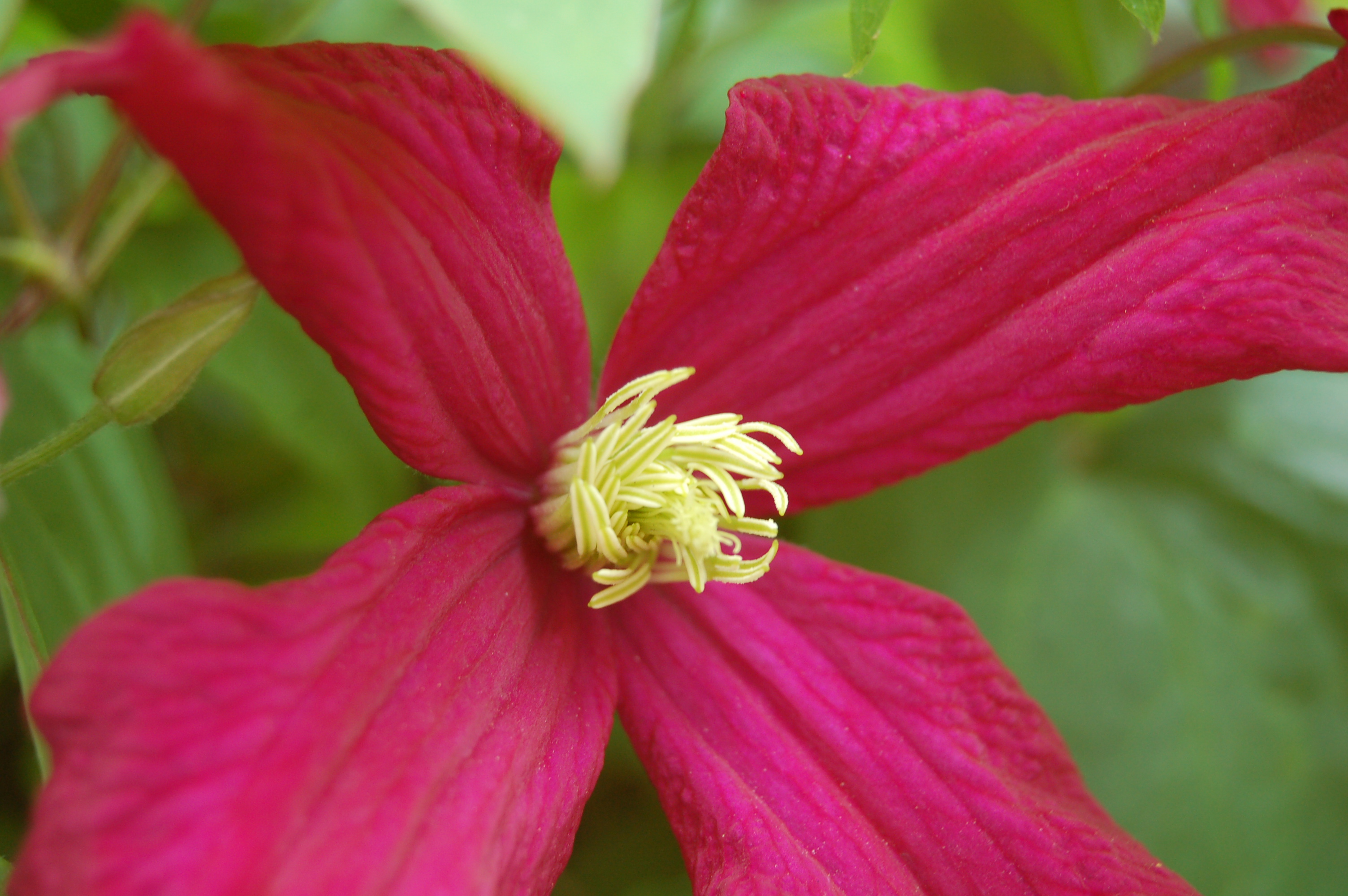
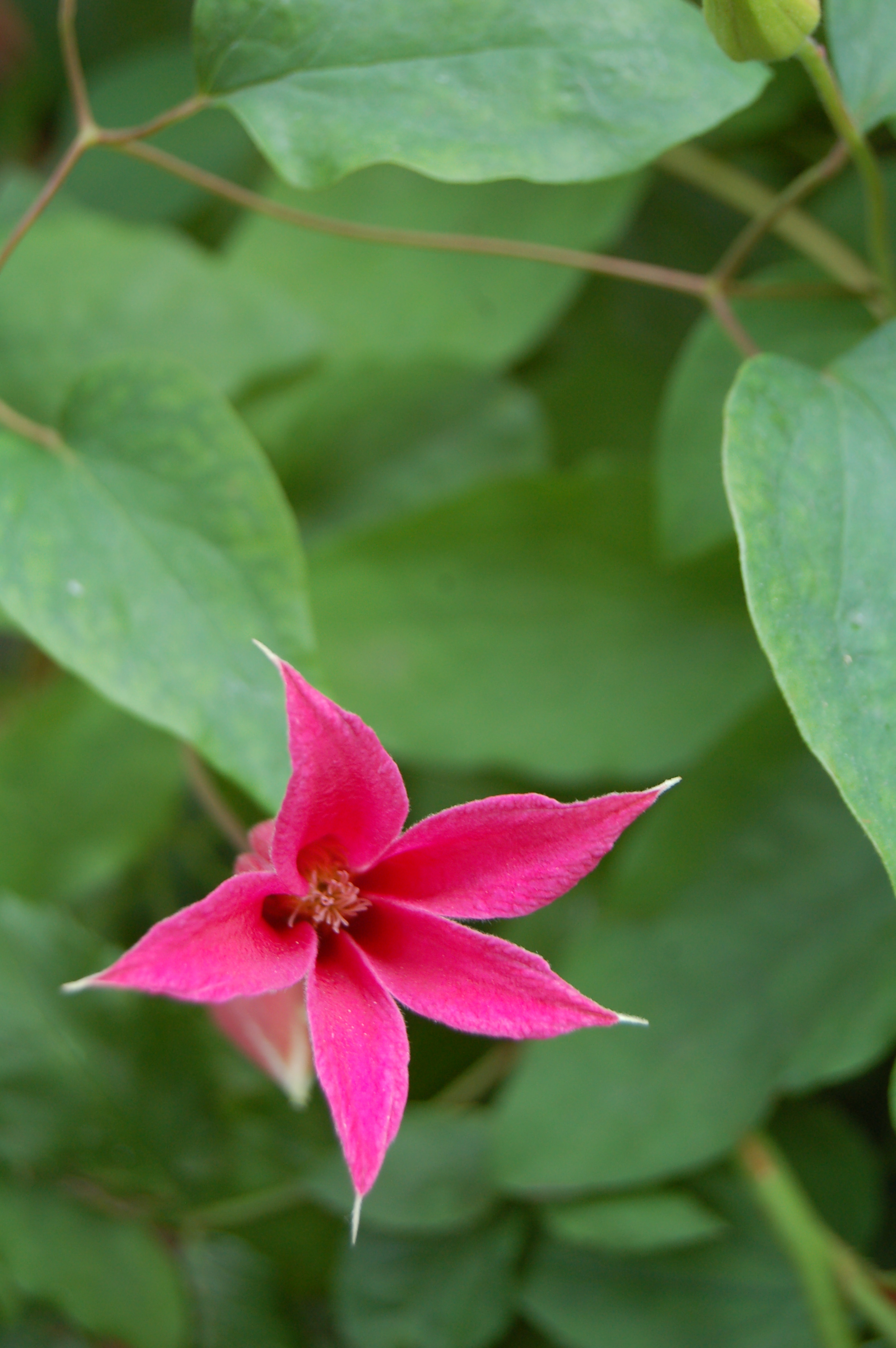
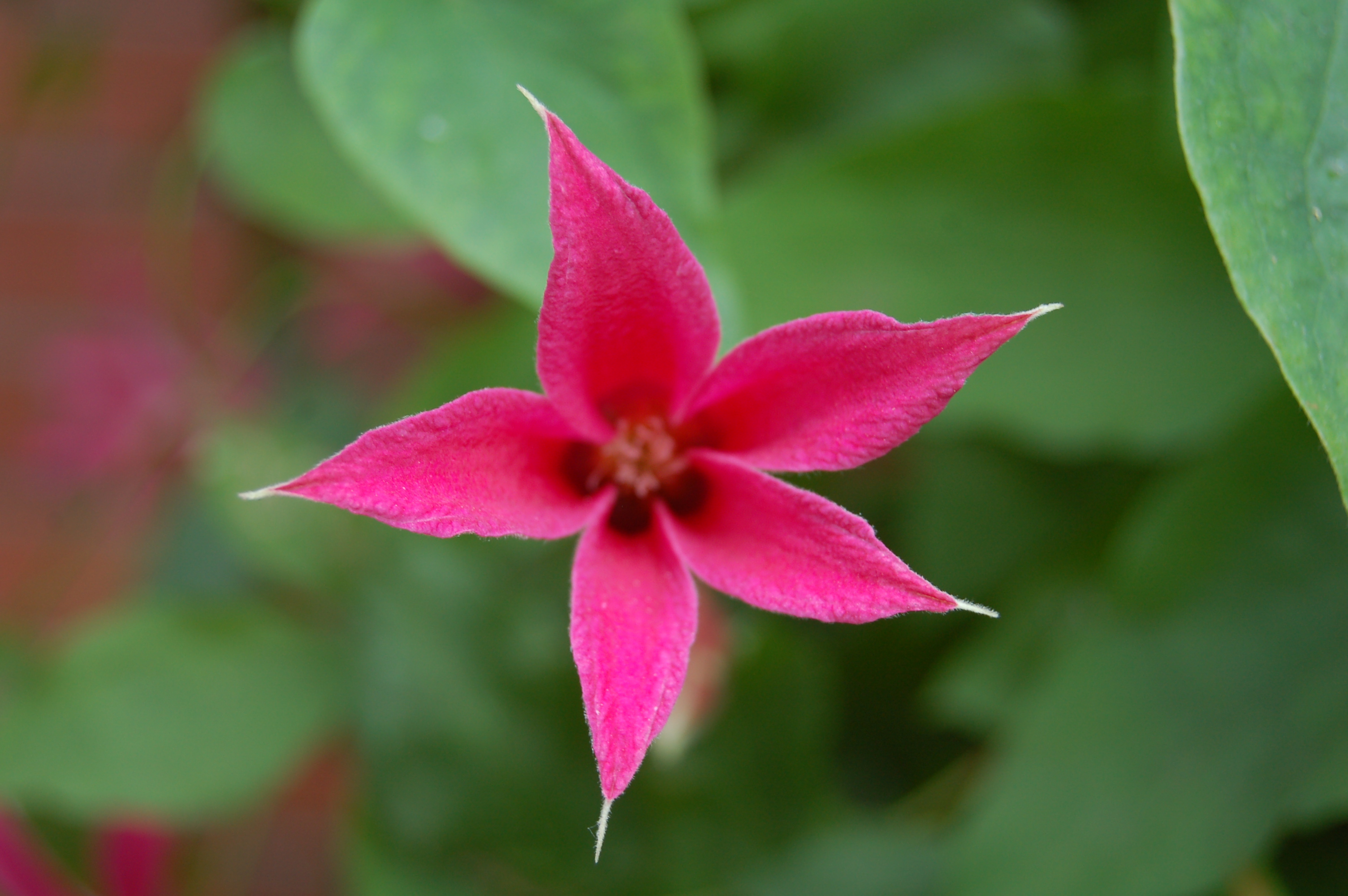
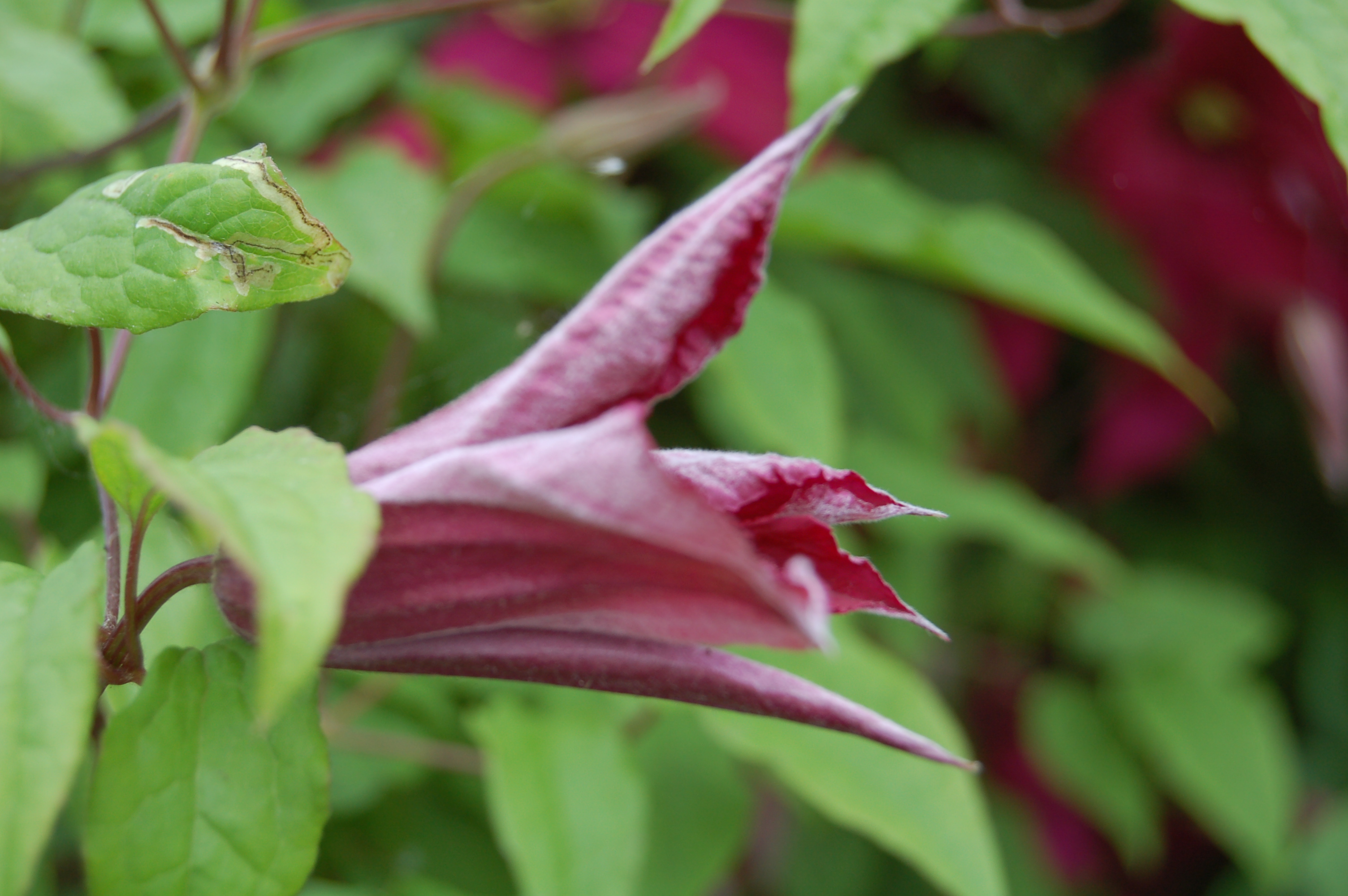
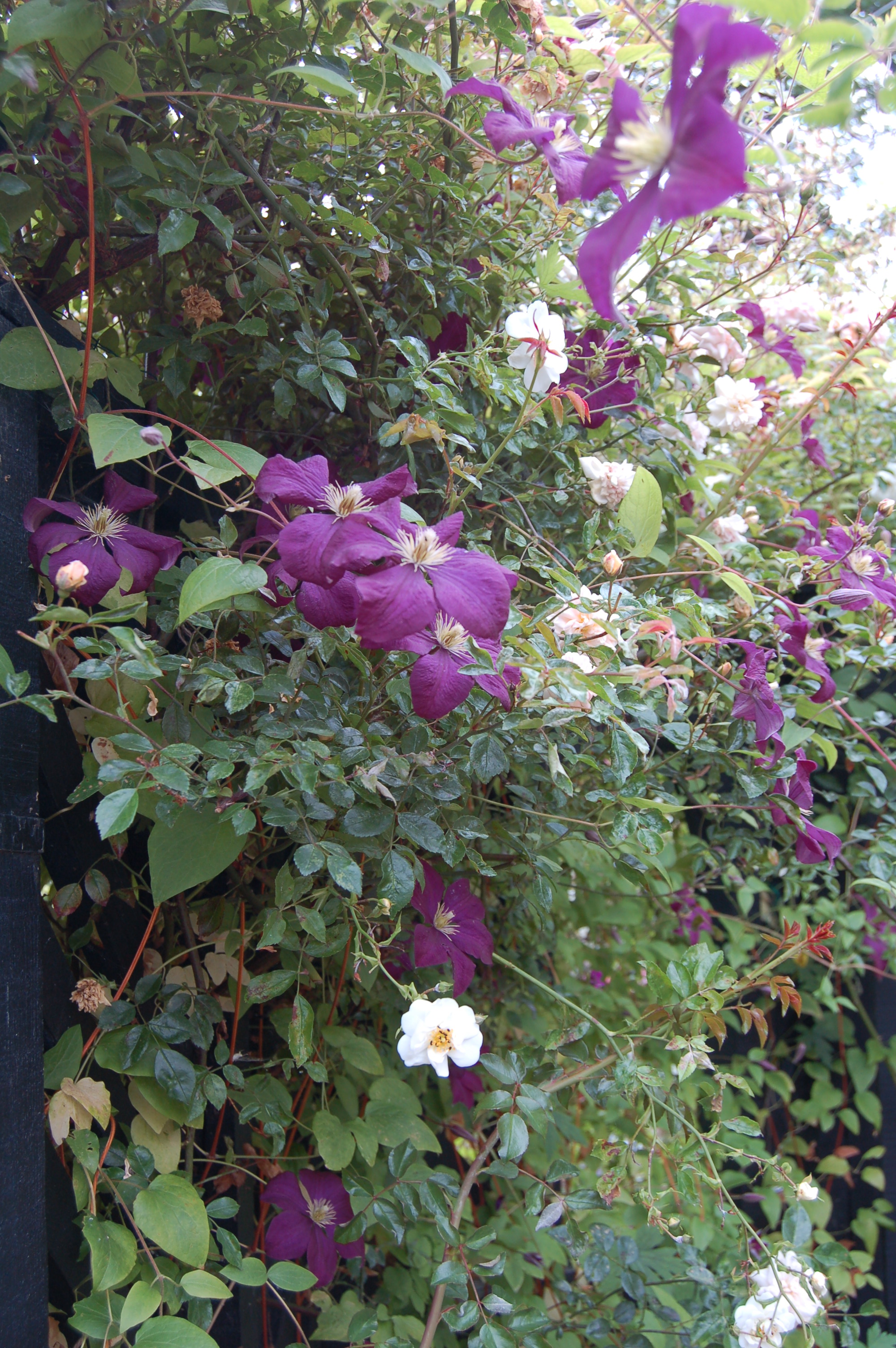
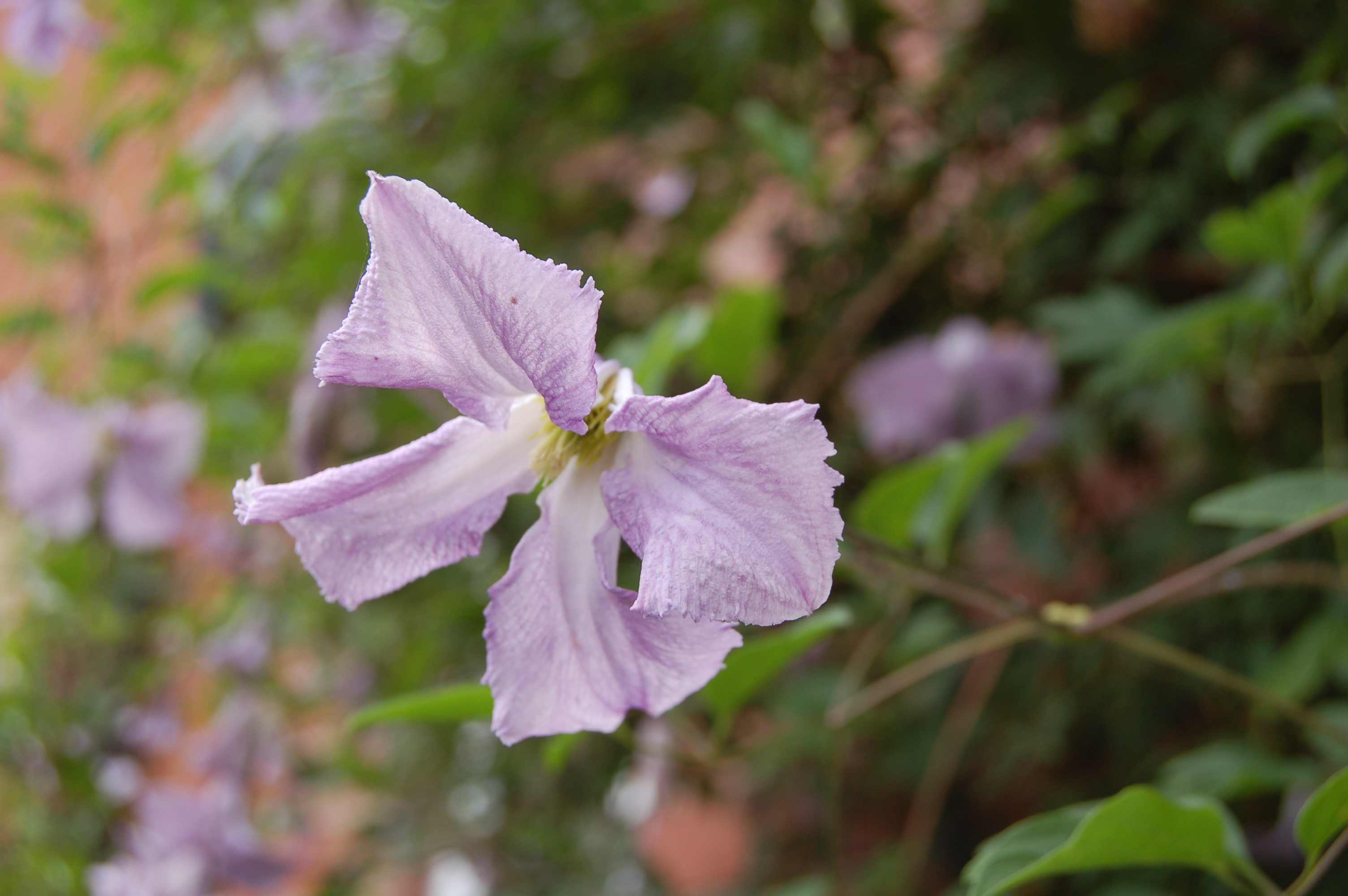
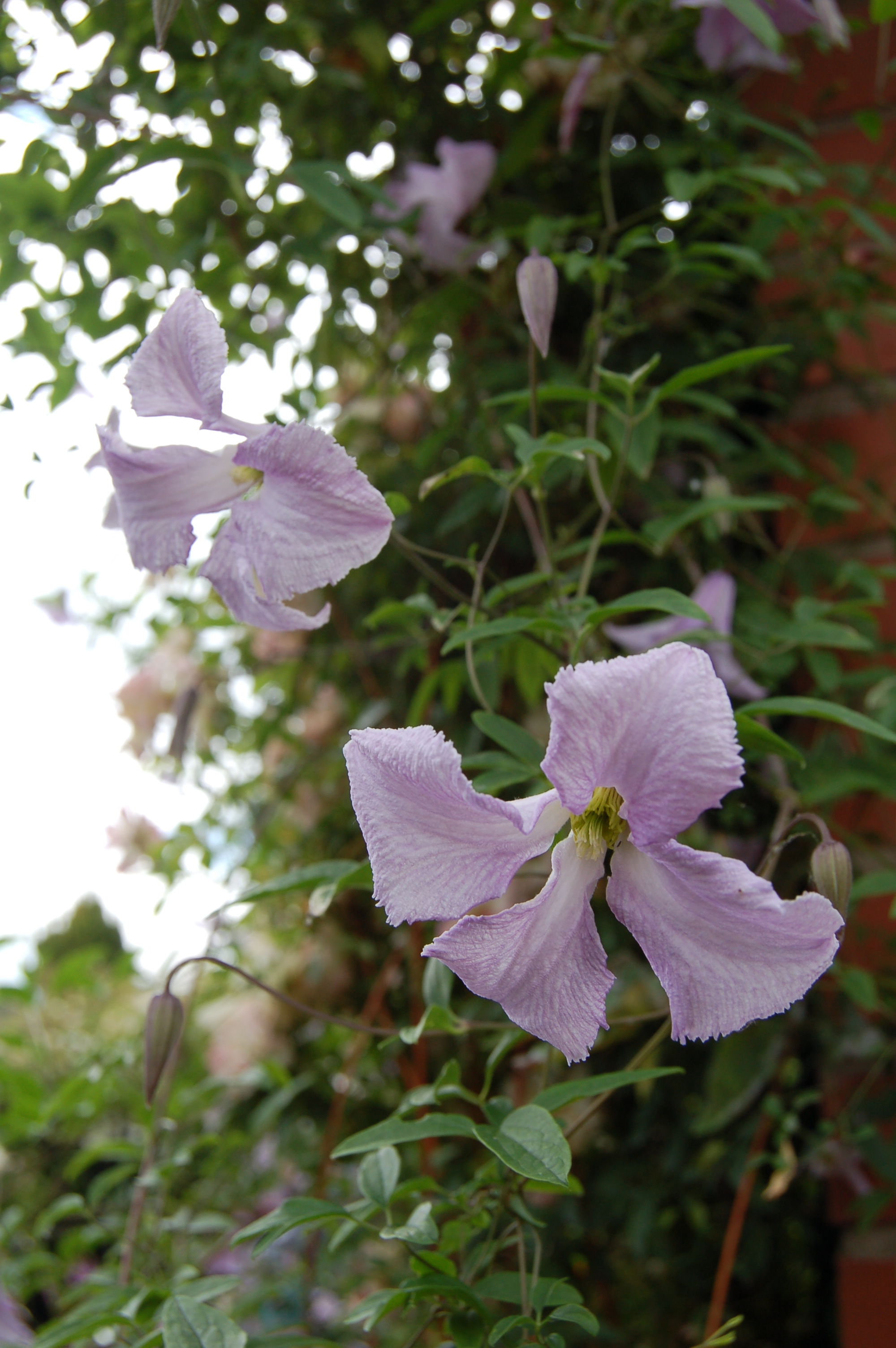
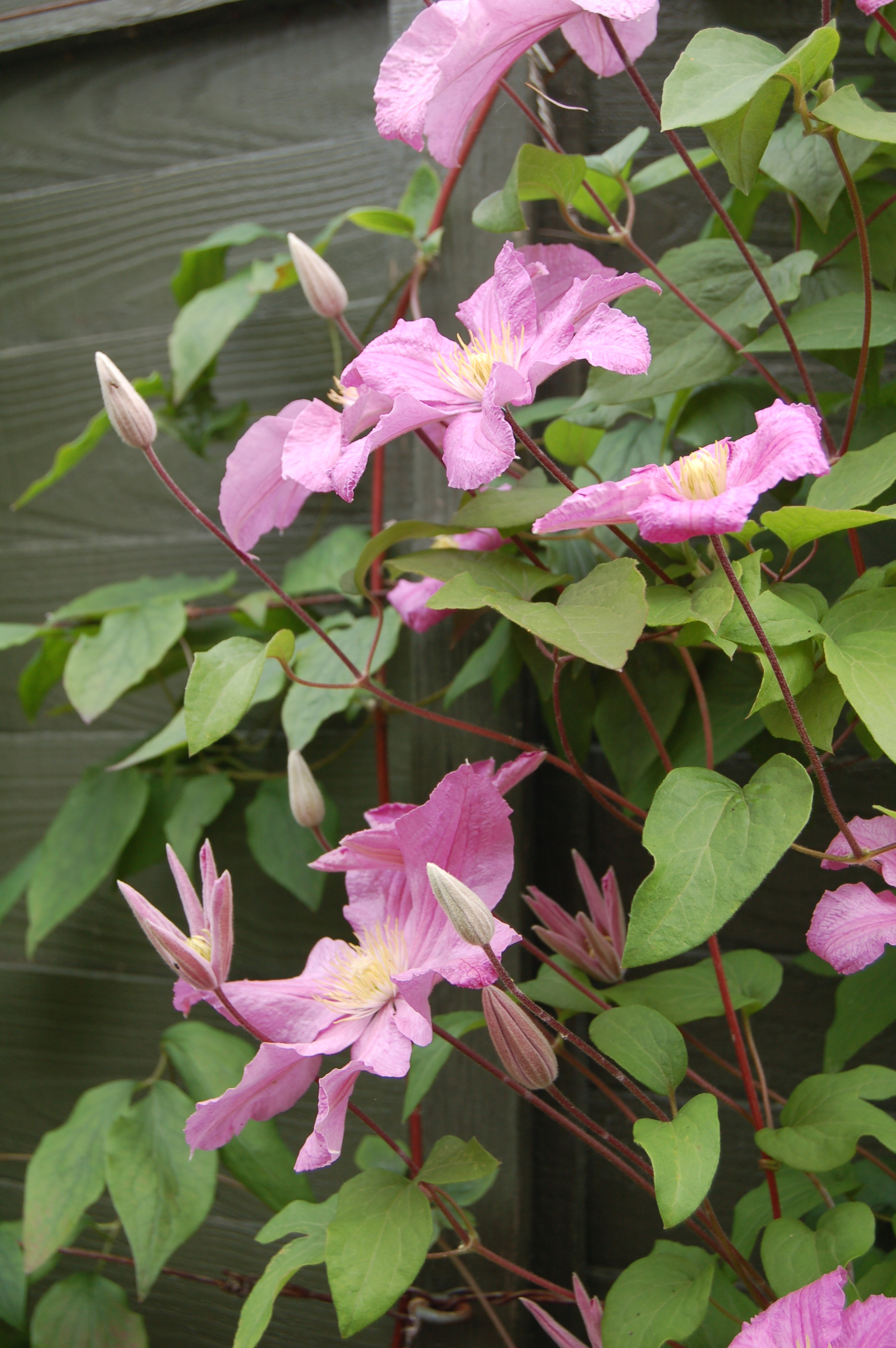
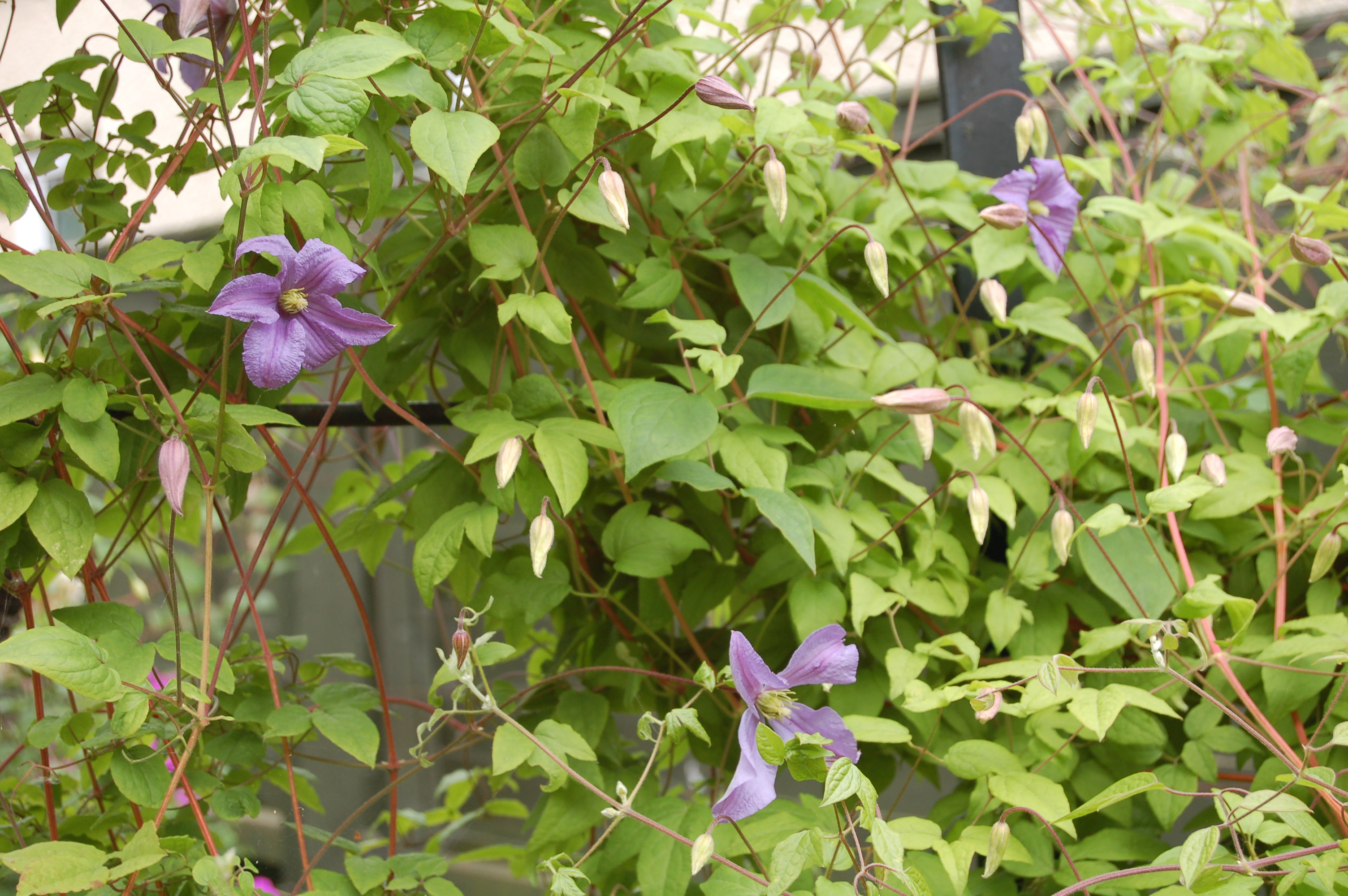
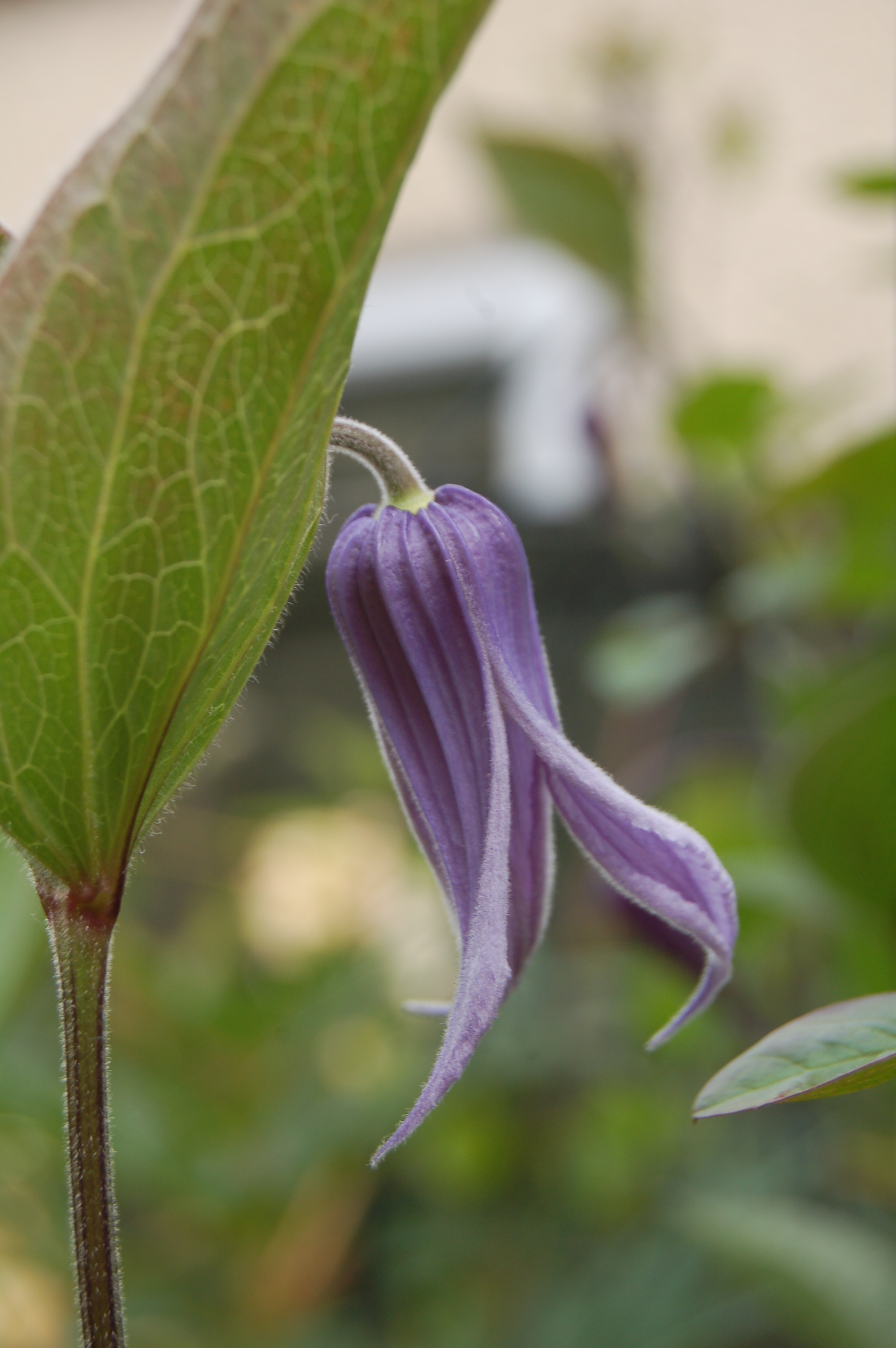
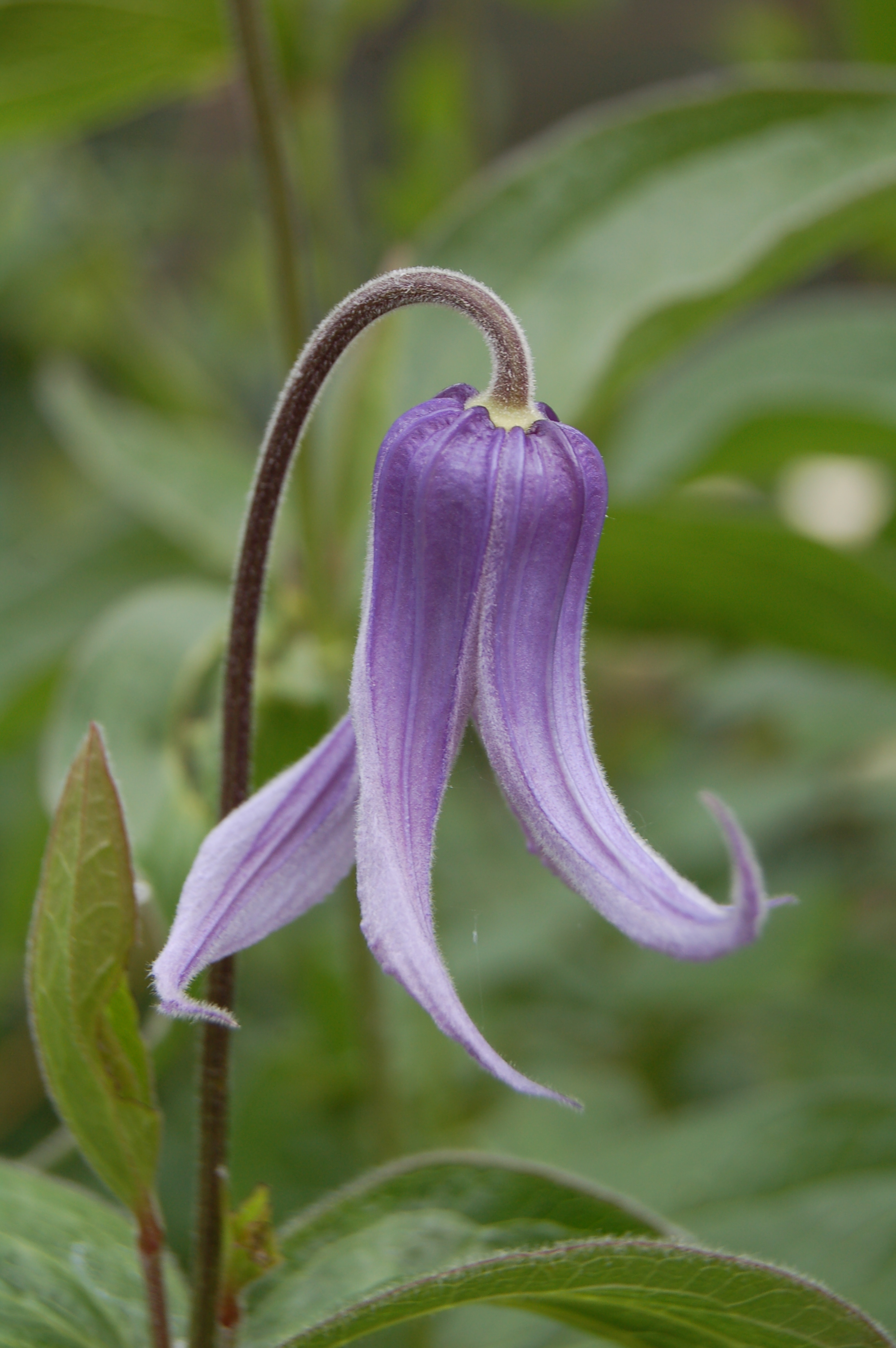
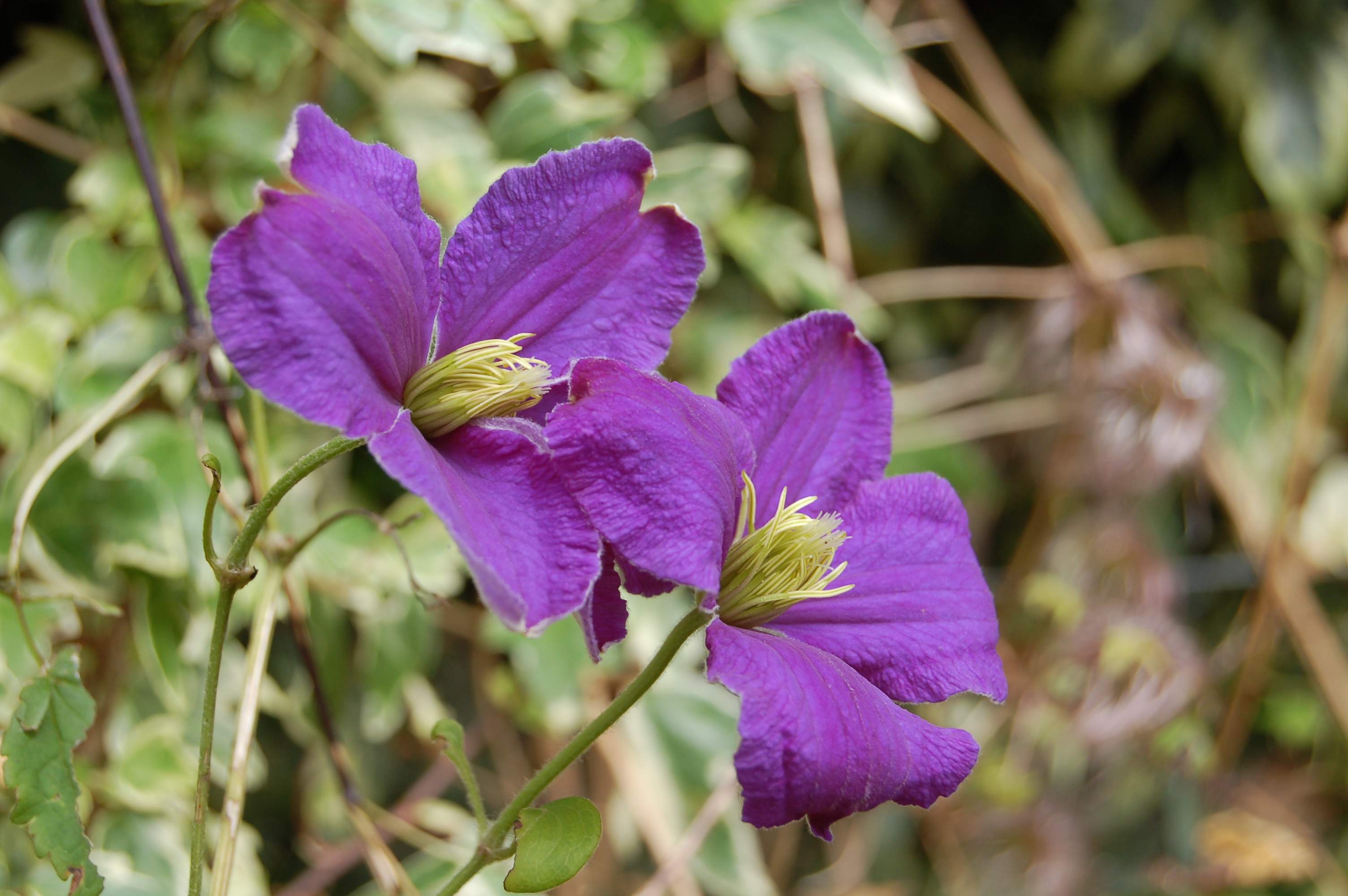
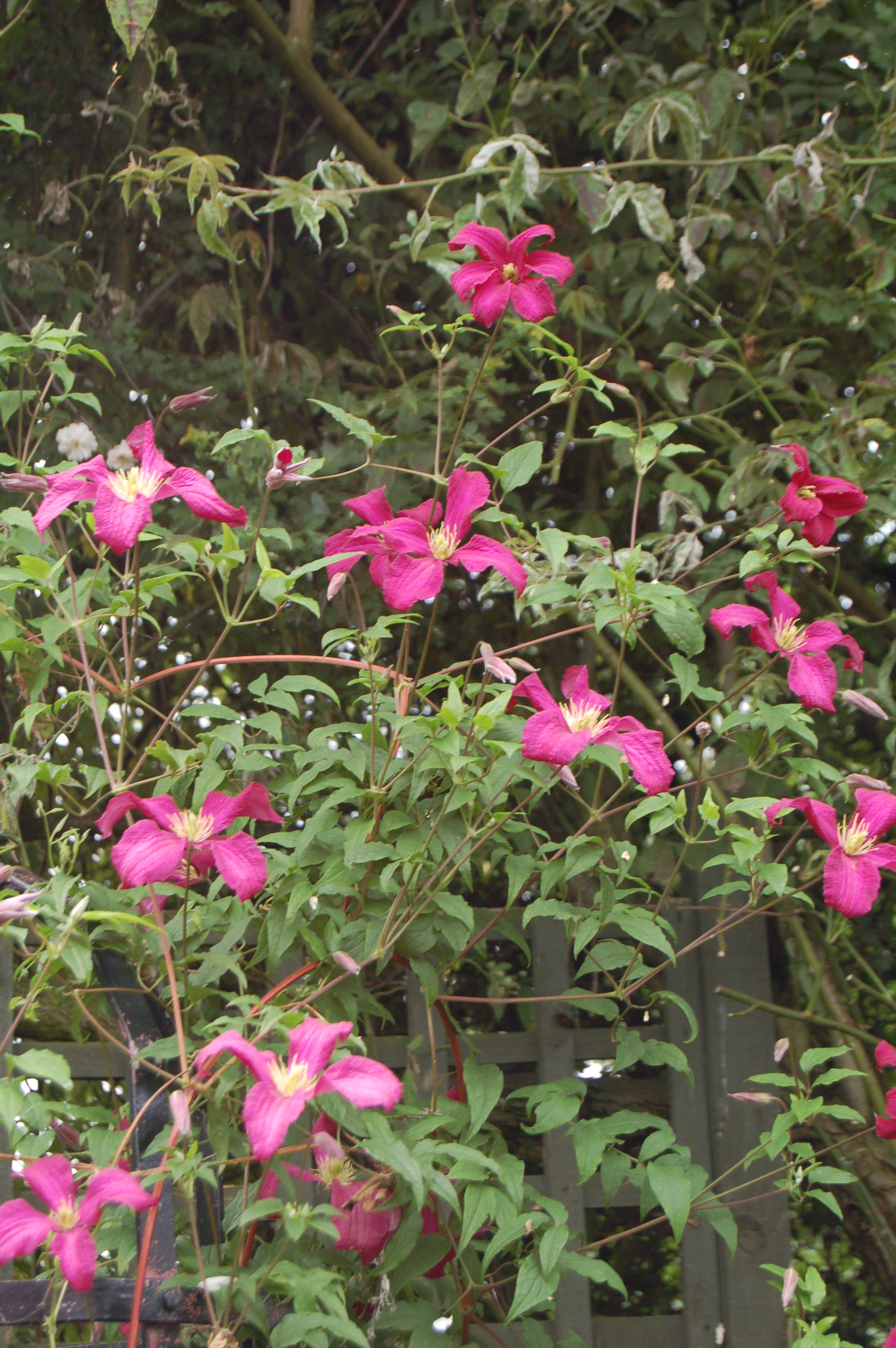
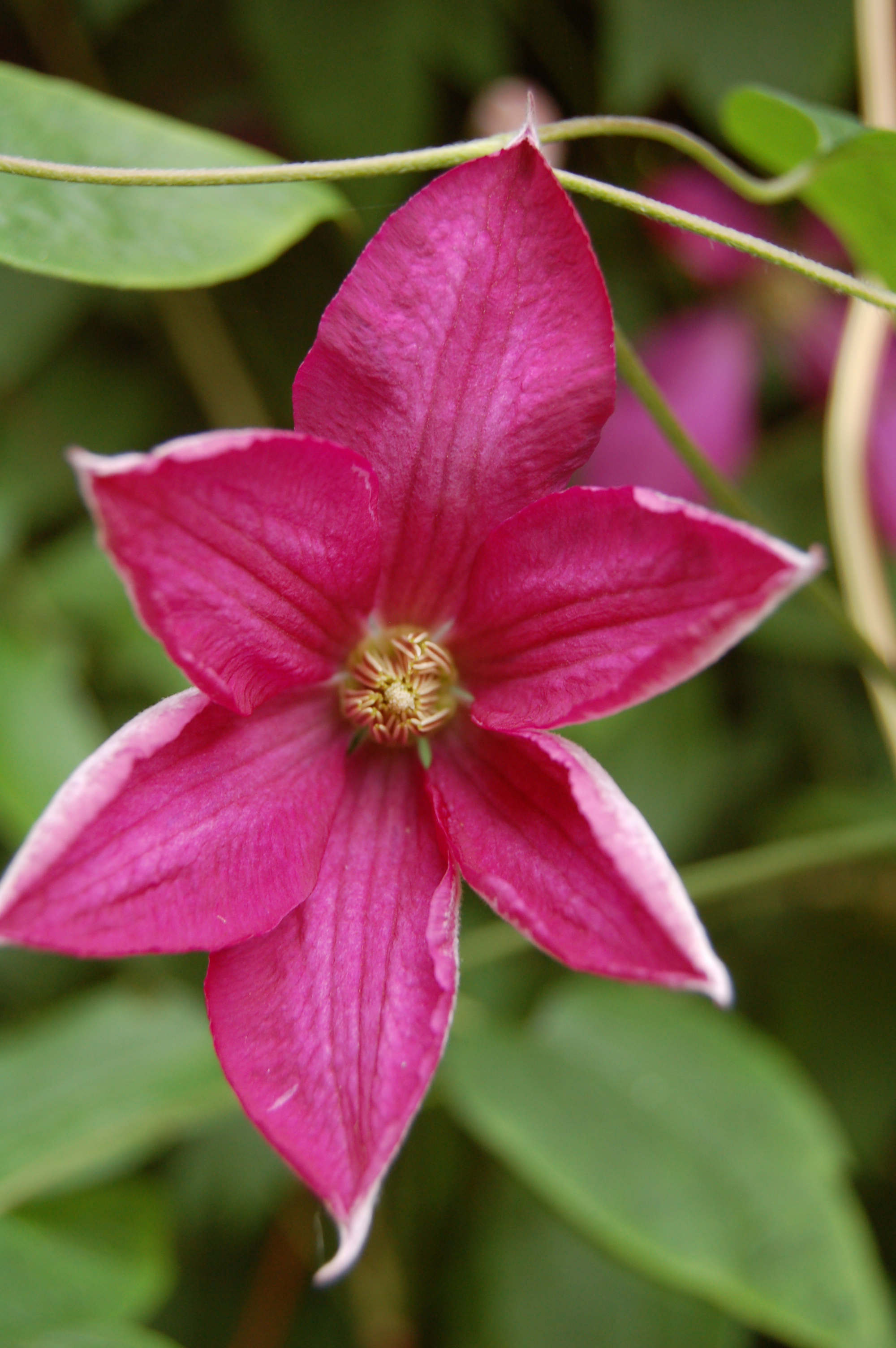
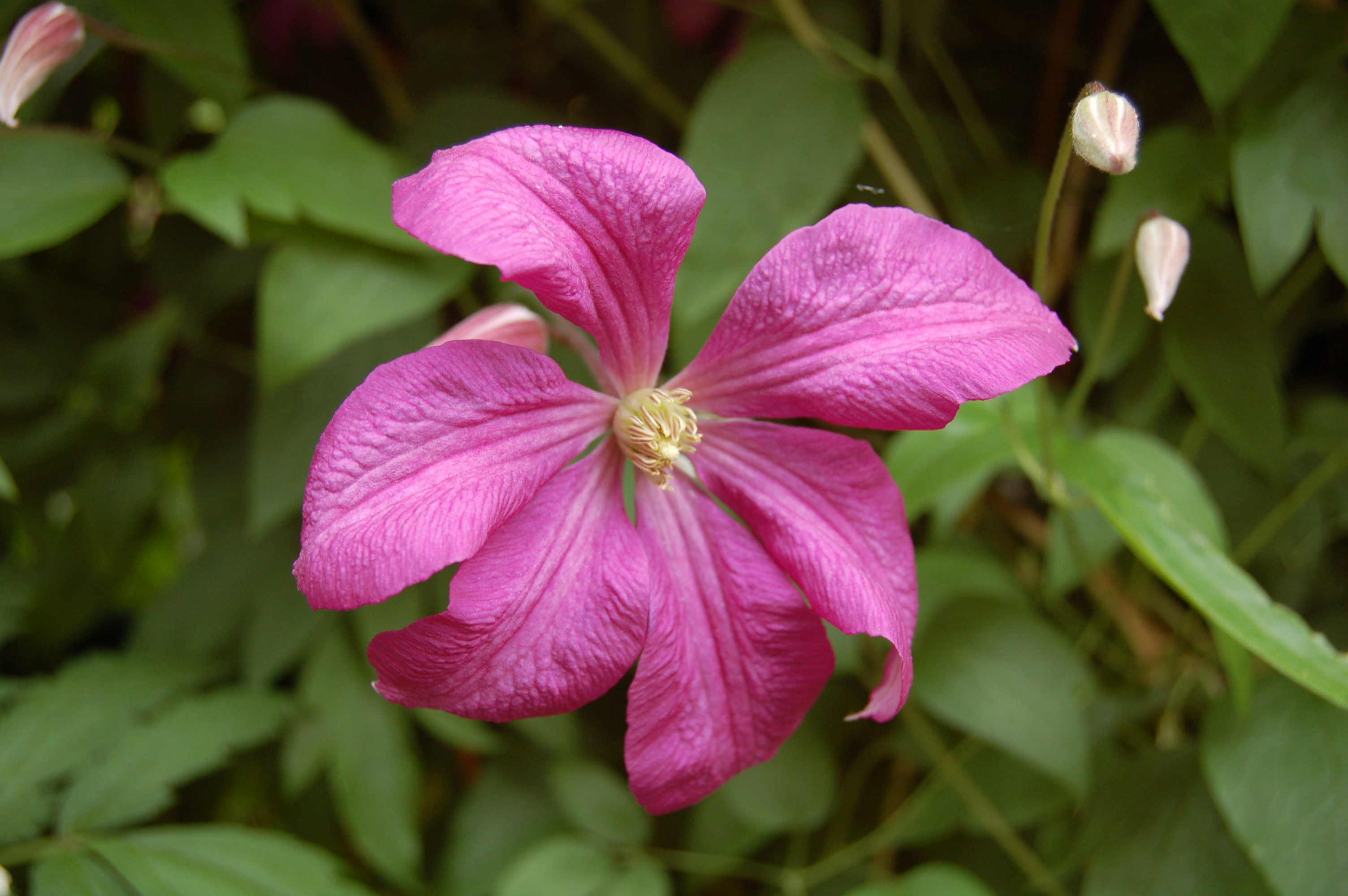
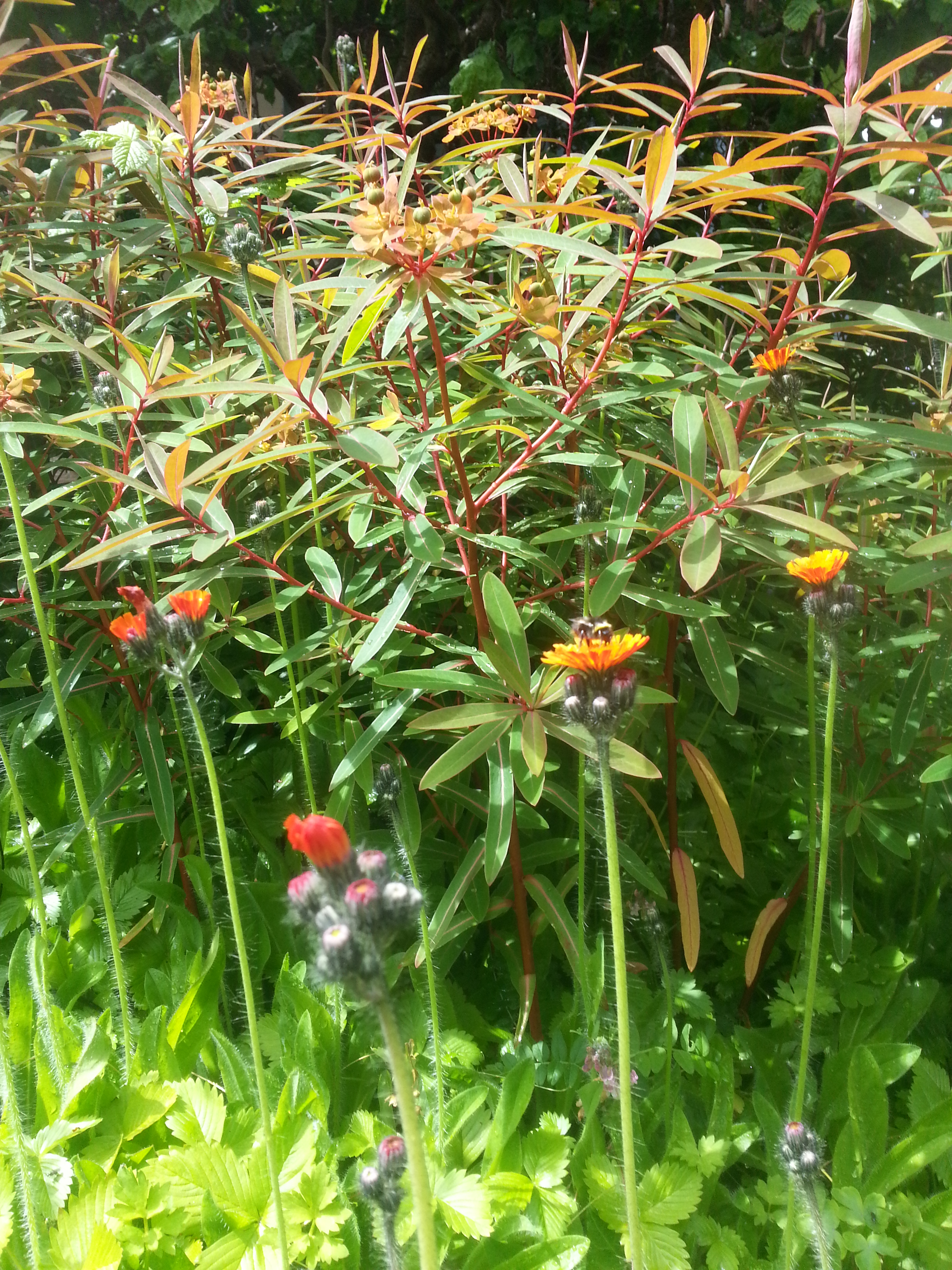
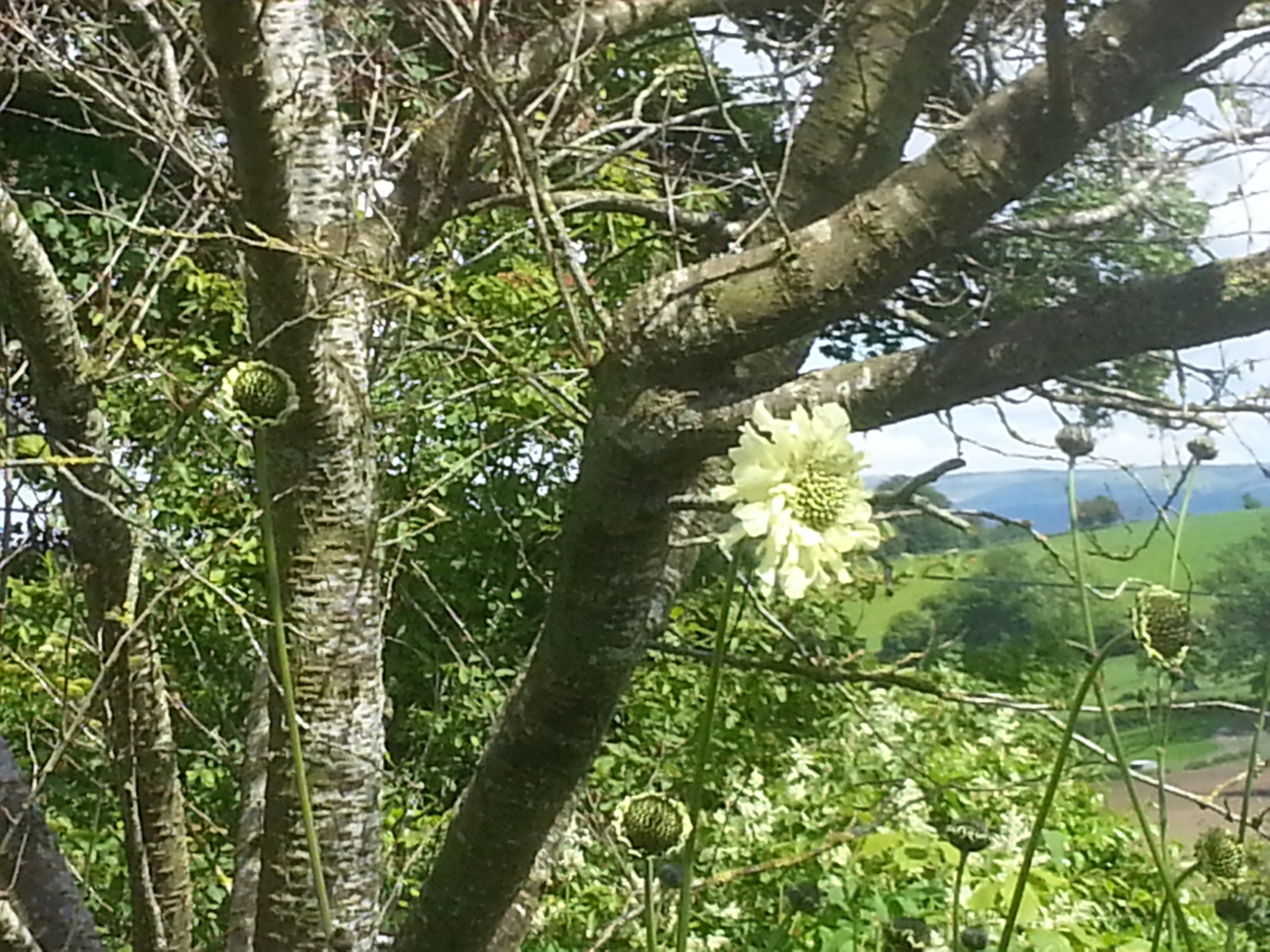
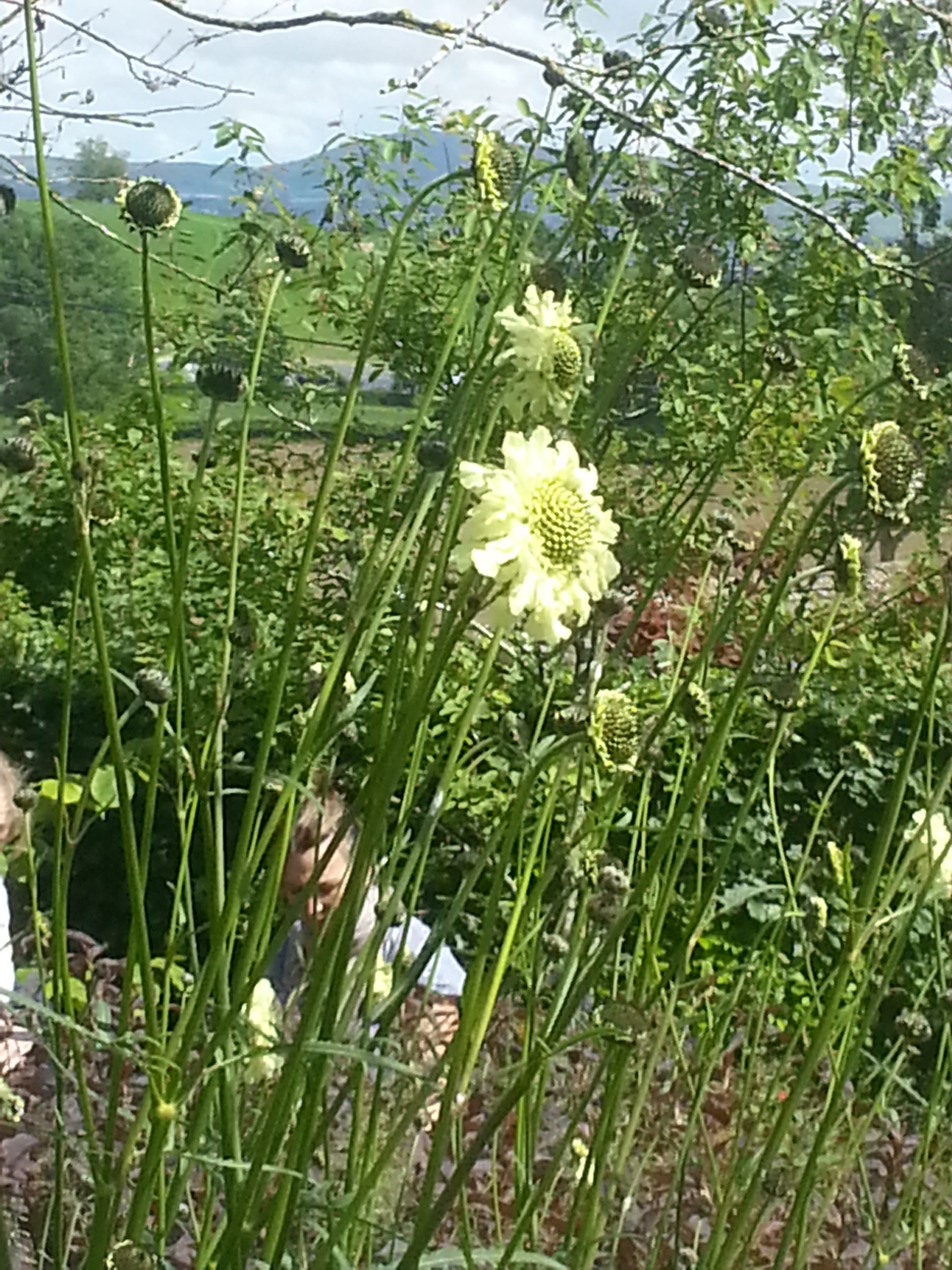
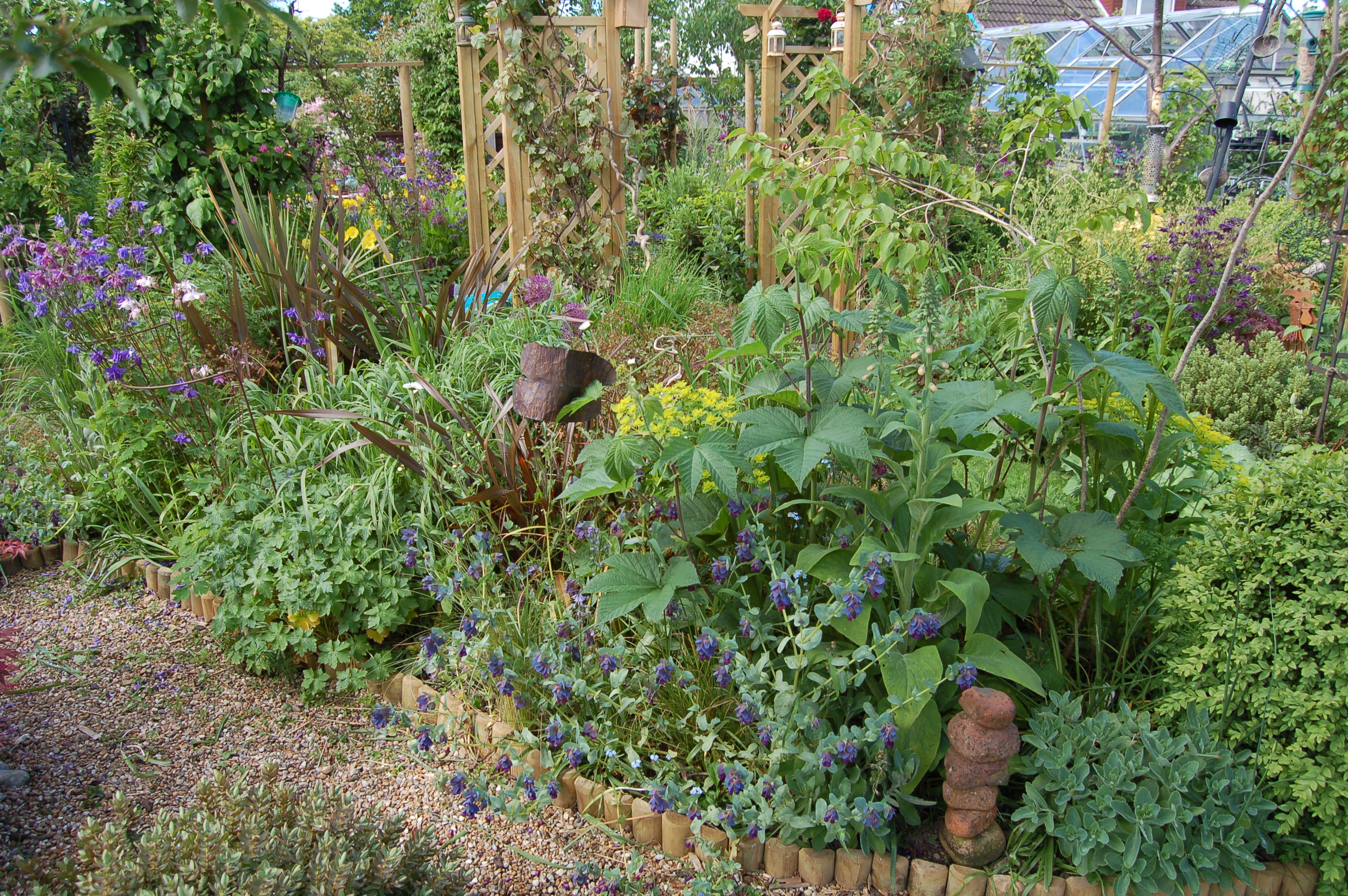
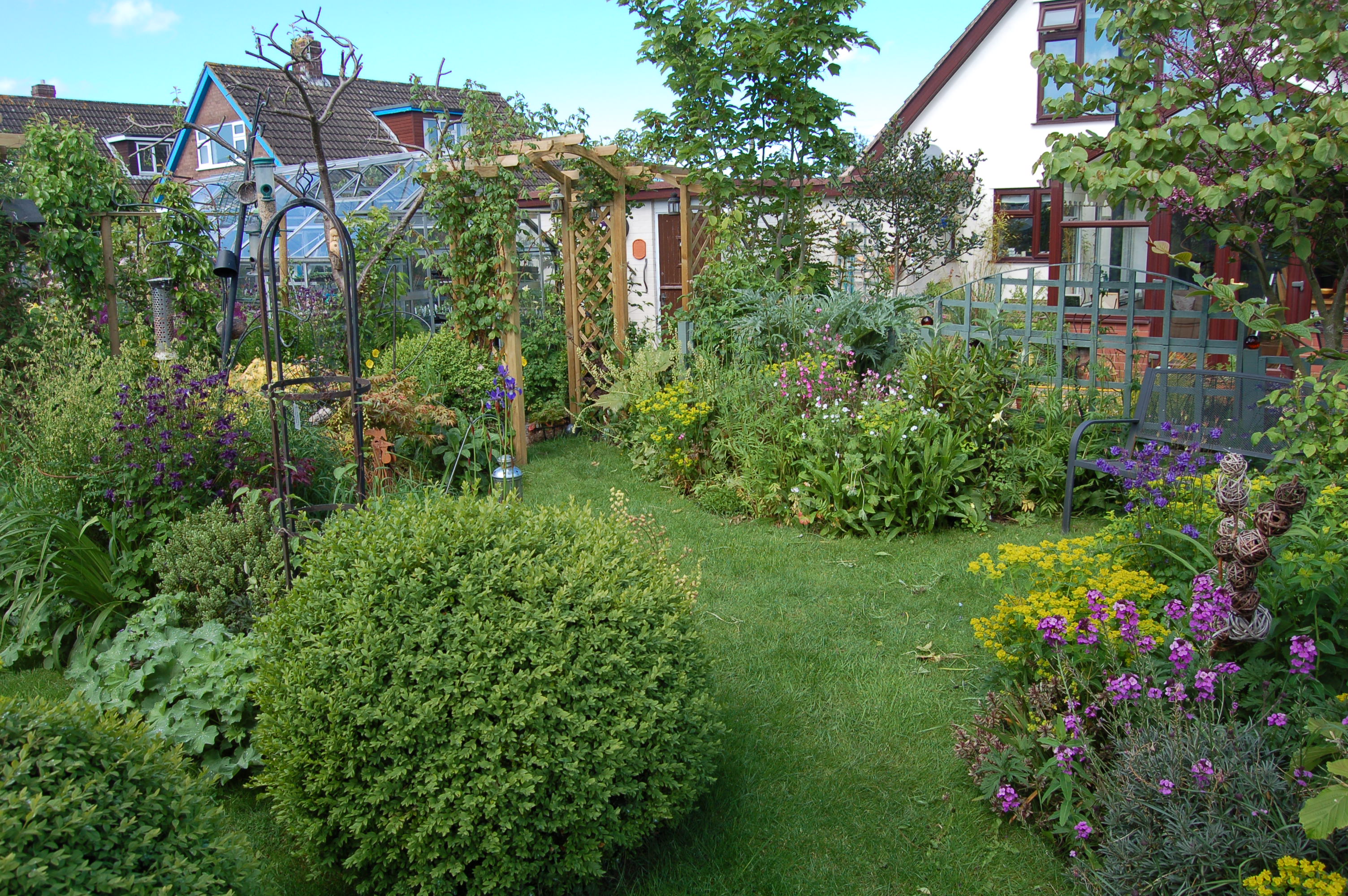
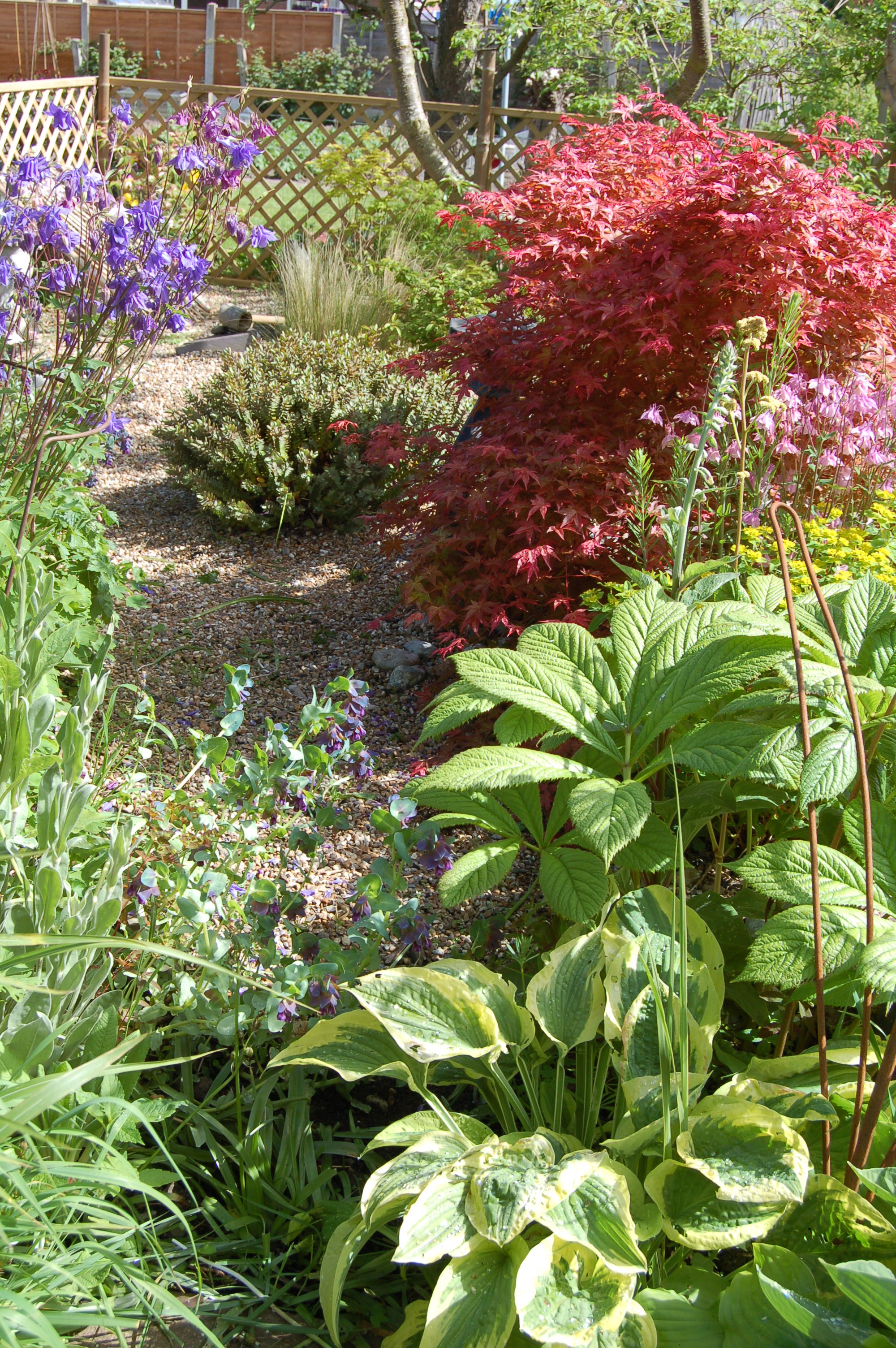
I was seduced once again by the beauty of Clematis when we visited a couple of small village gardens in late late June. The visit was with the Shropshire Group of the Hardy Plant Society. Please enjoy my Clematis Gallery. Thanks to Amy for growing such wonderful clematis.
Category: gardening
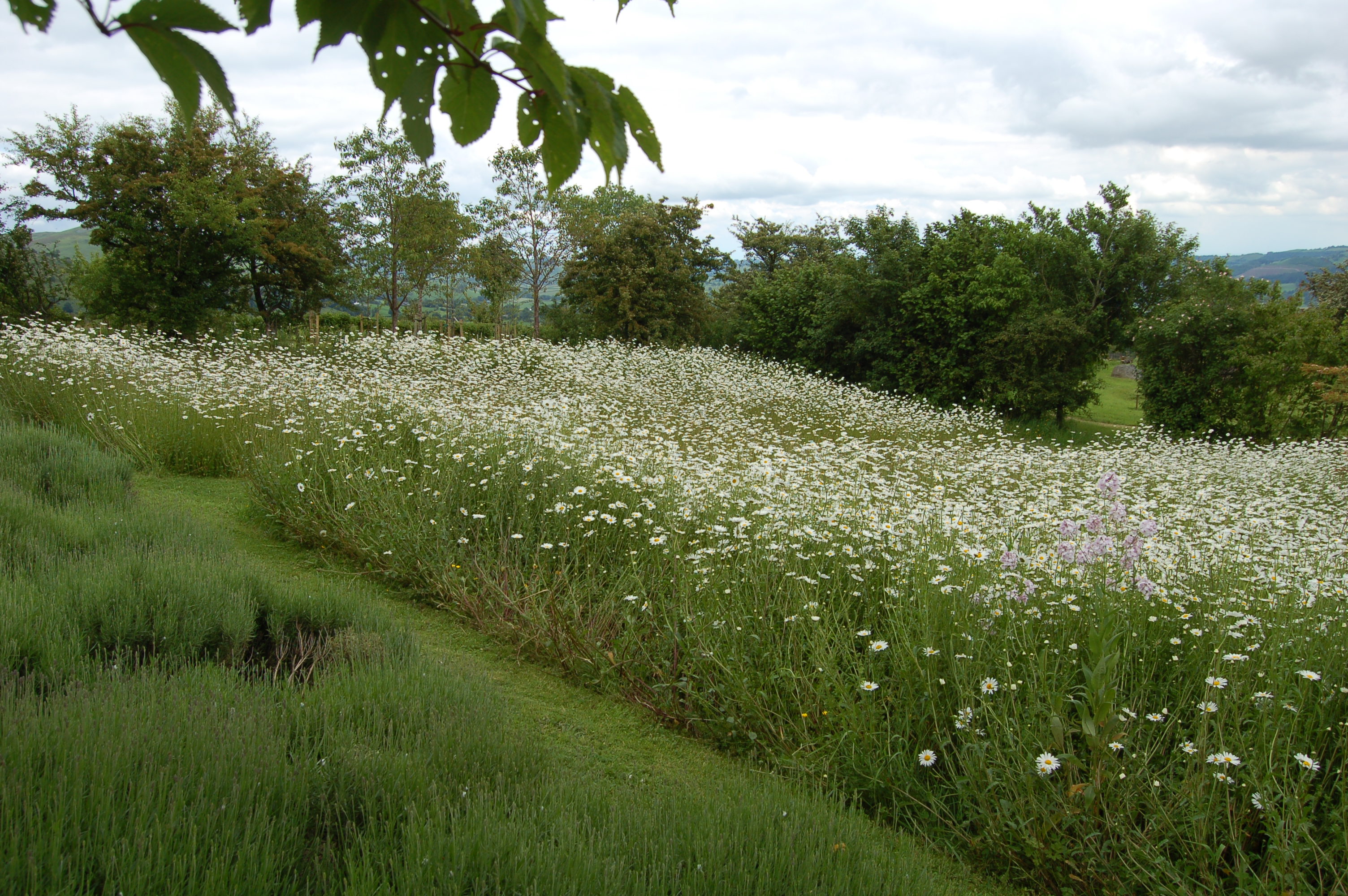
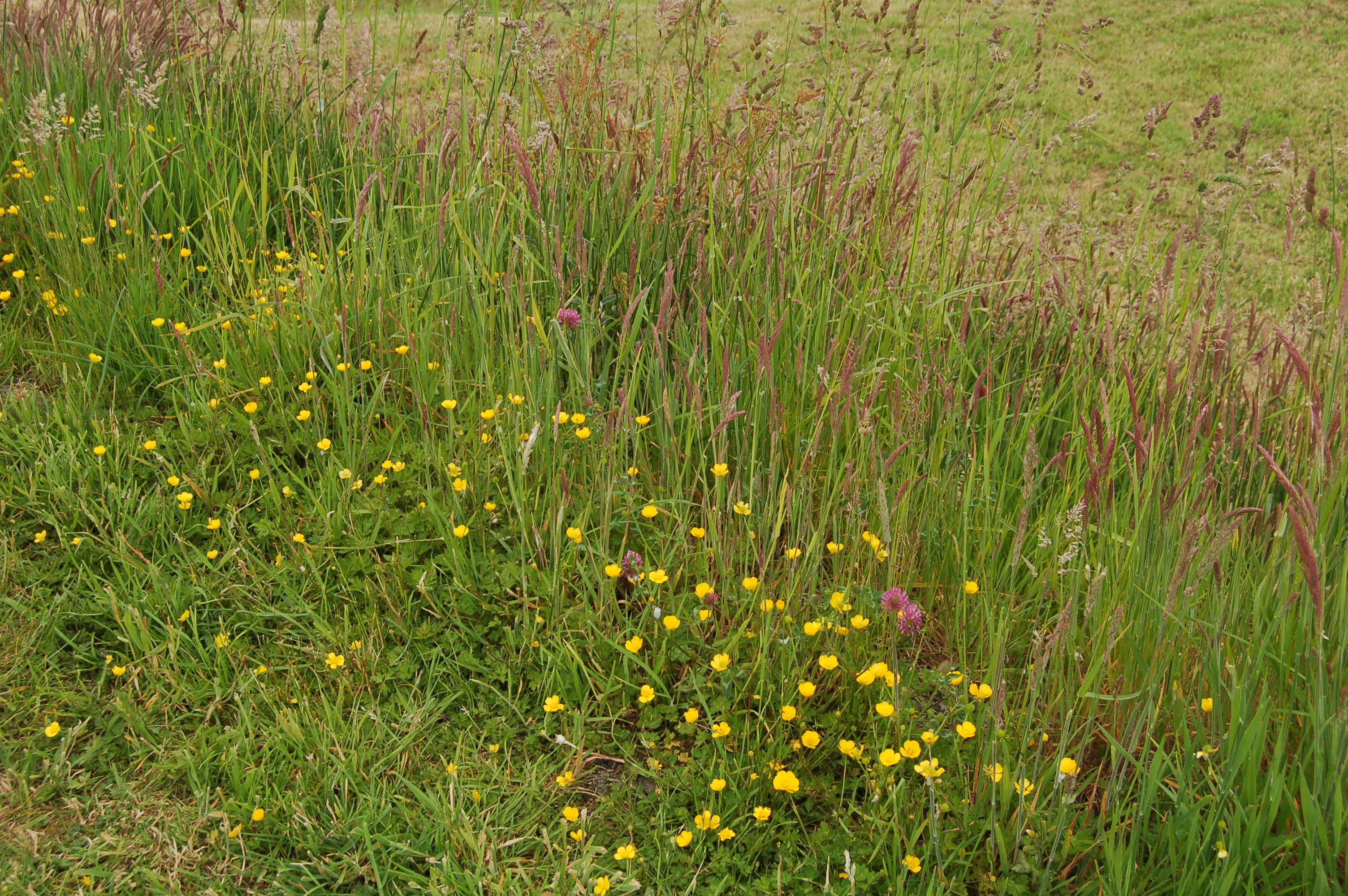
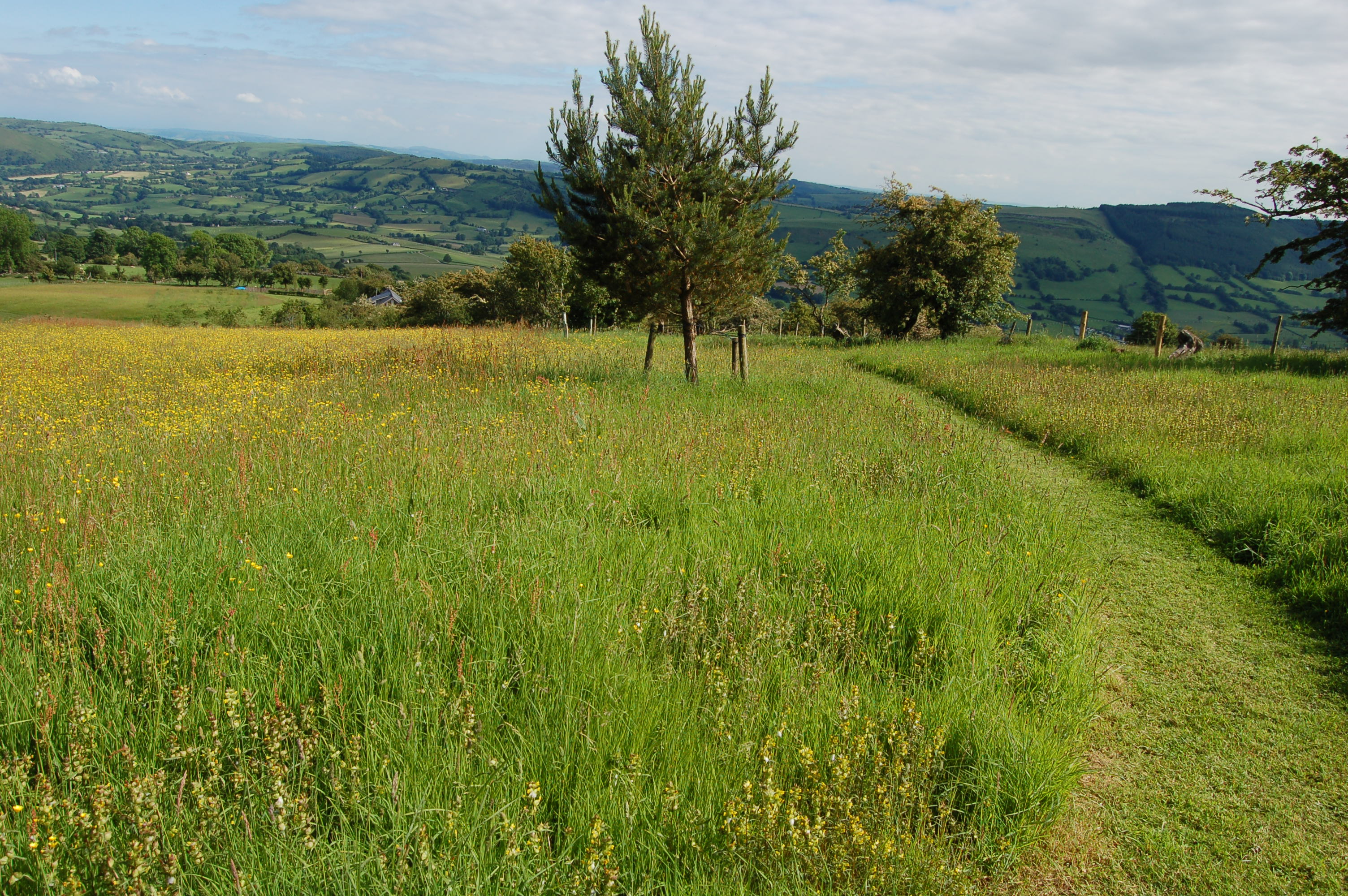
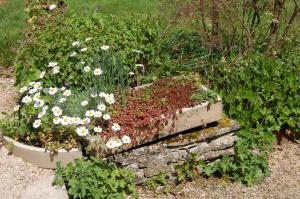
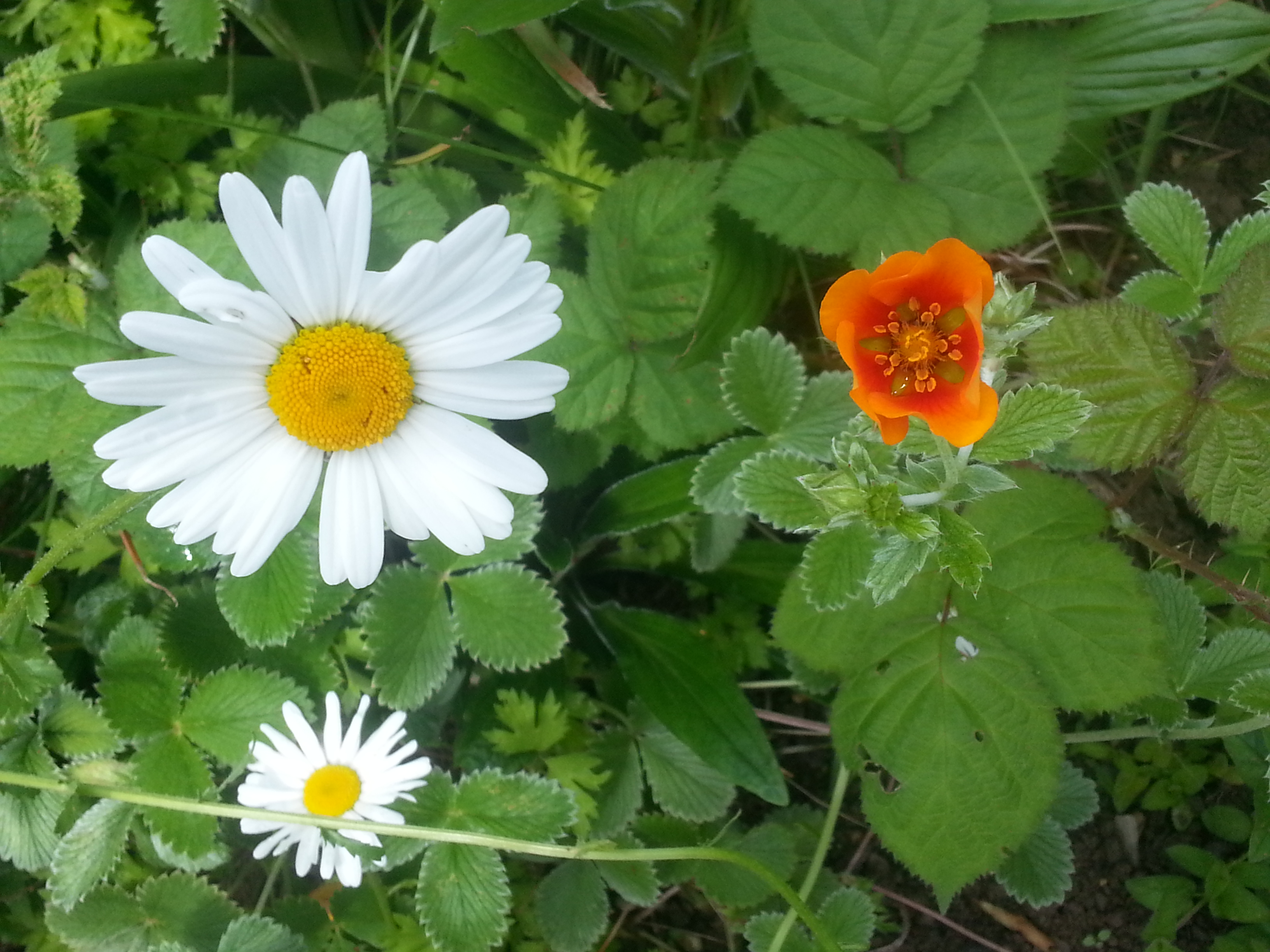
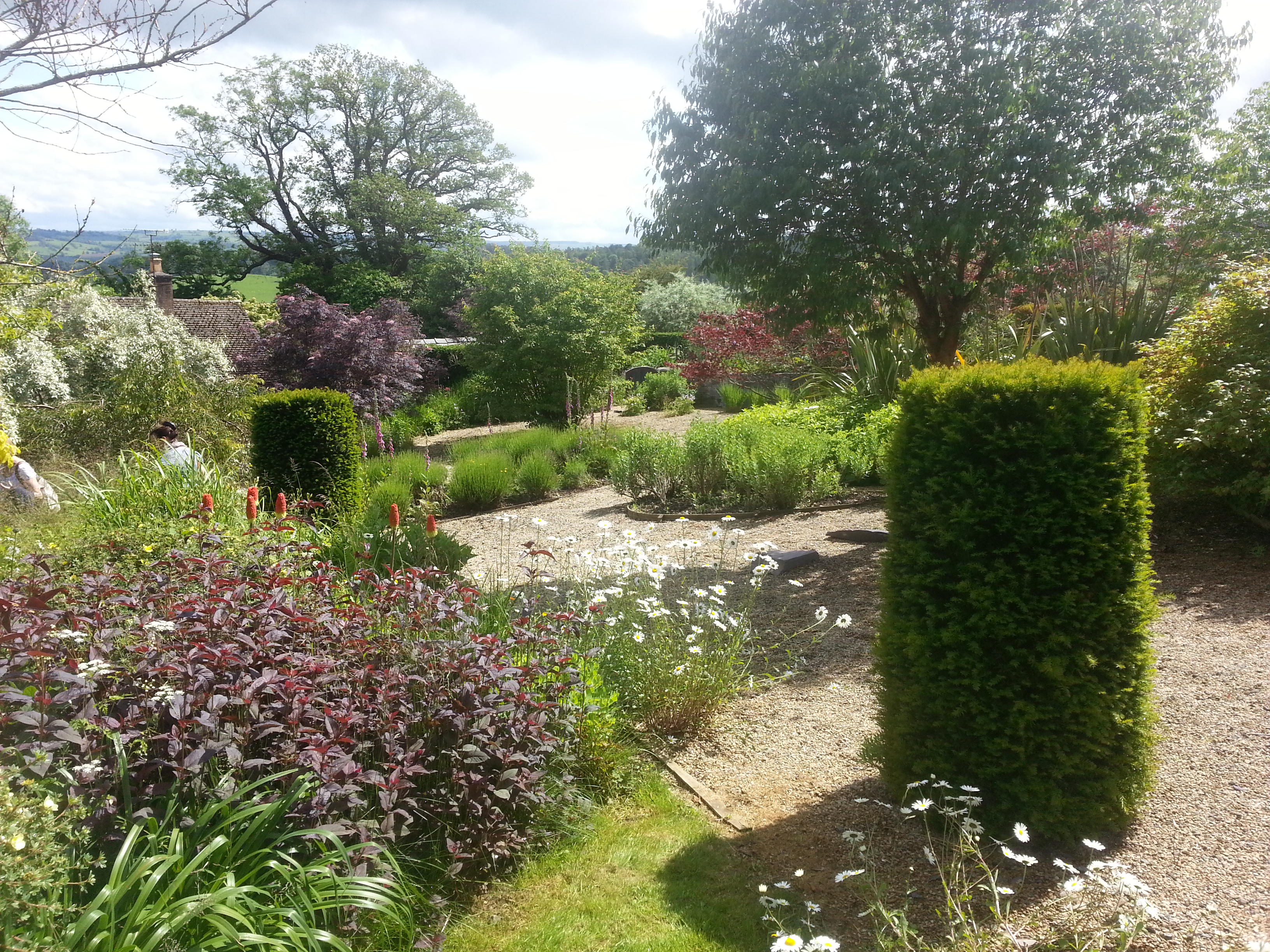
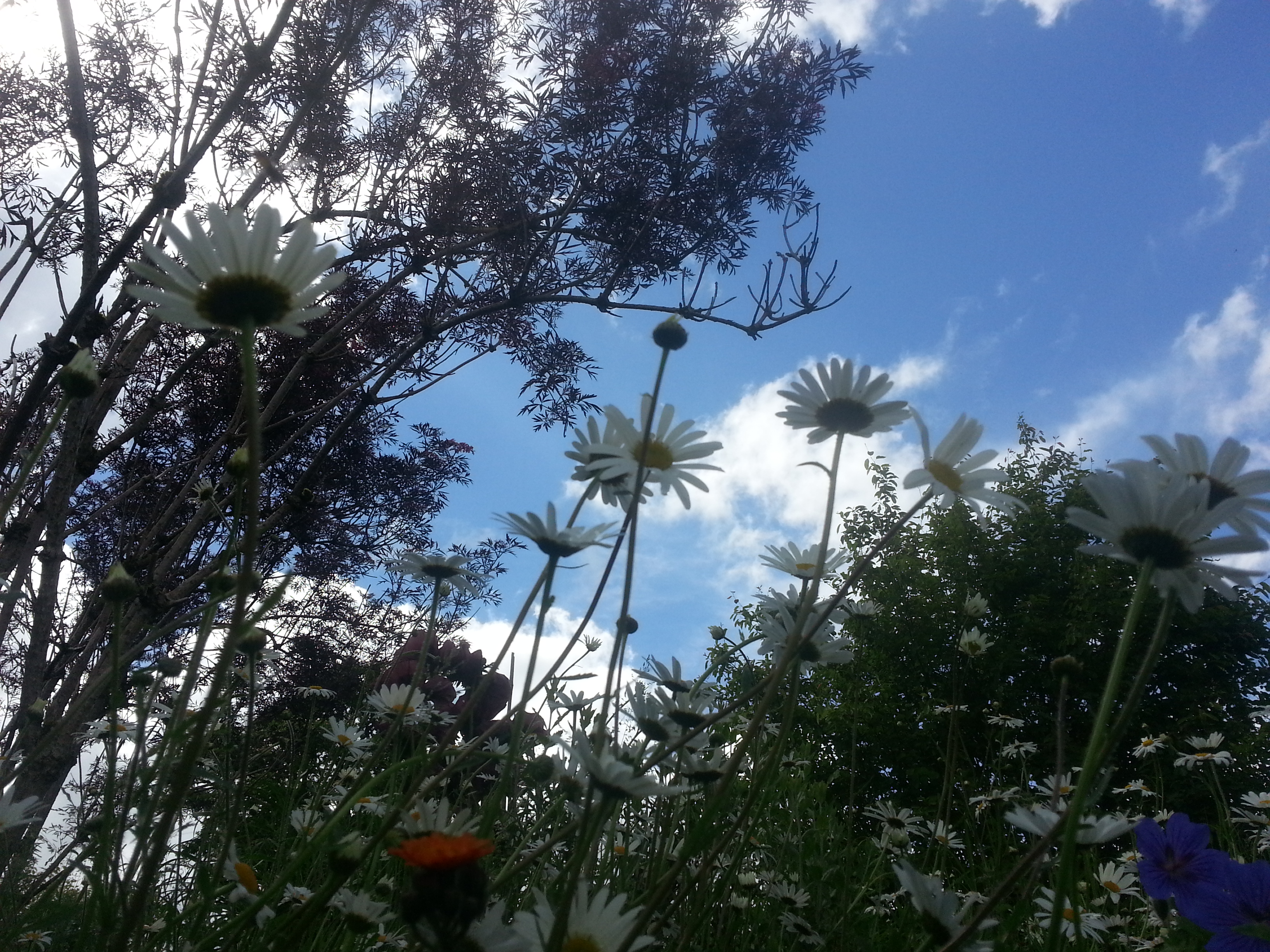
We visited another garden in the countryside of Powis, our neighbouring county. It proved to be very much a garden of two halves. We approached “Cil y Wennol” on foot up a gently sloping curved driveway with trees on both sides dotted around in grass. Closer to the more formal front garden there were interesting land forms with a small meadow facing the sun on an embankment. Moon Daisies shone out almost glaring in the sunshine. As you have gathered from that statement we were experiencing bright sunshine.
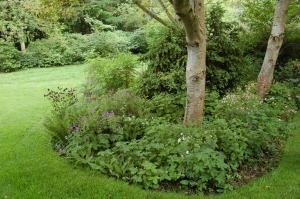
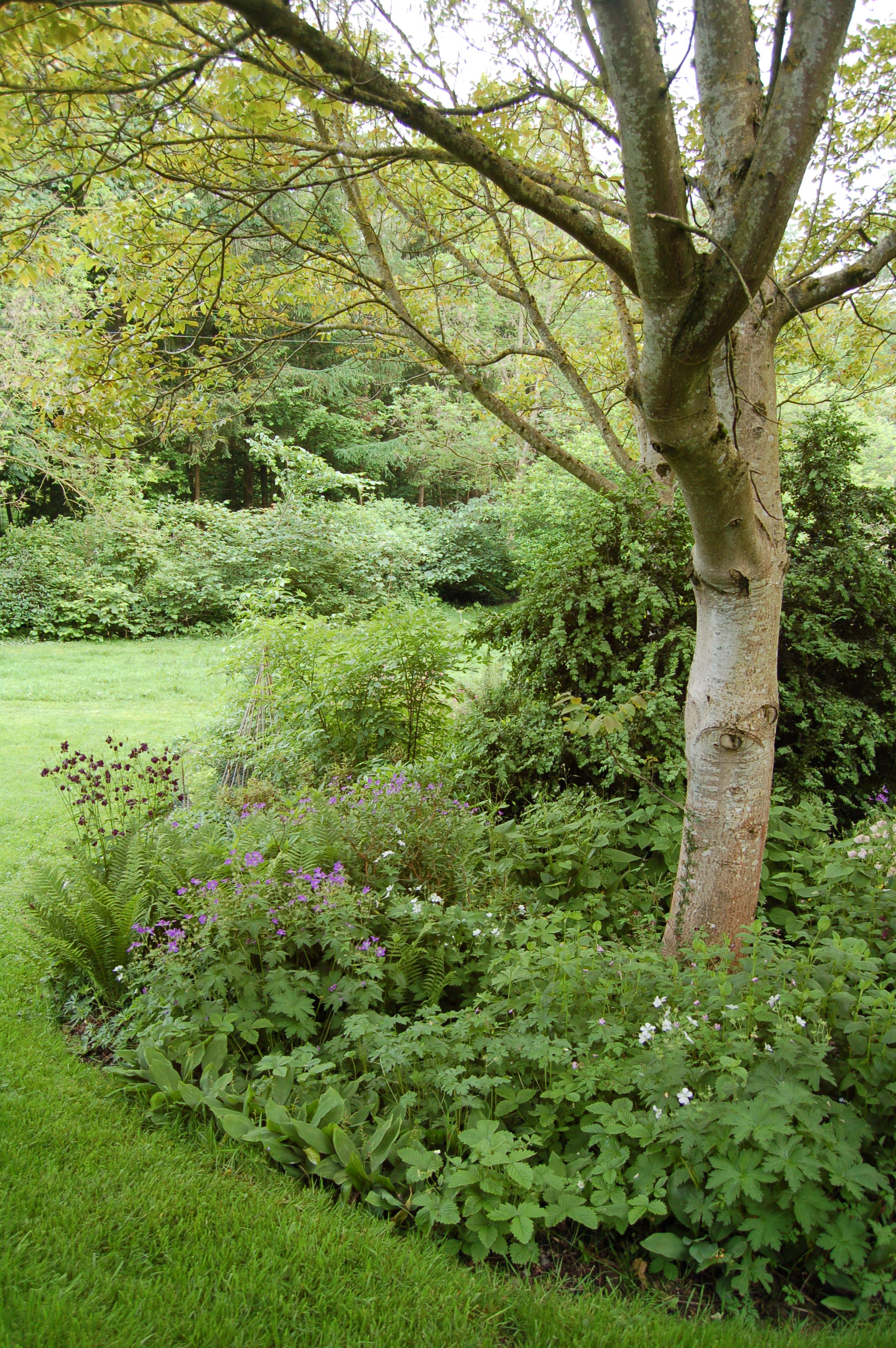
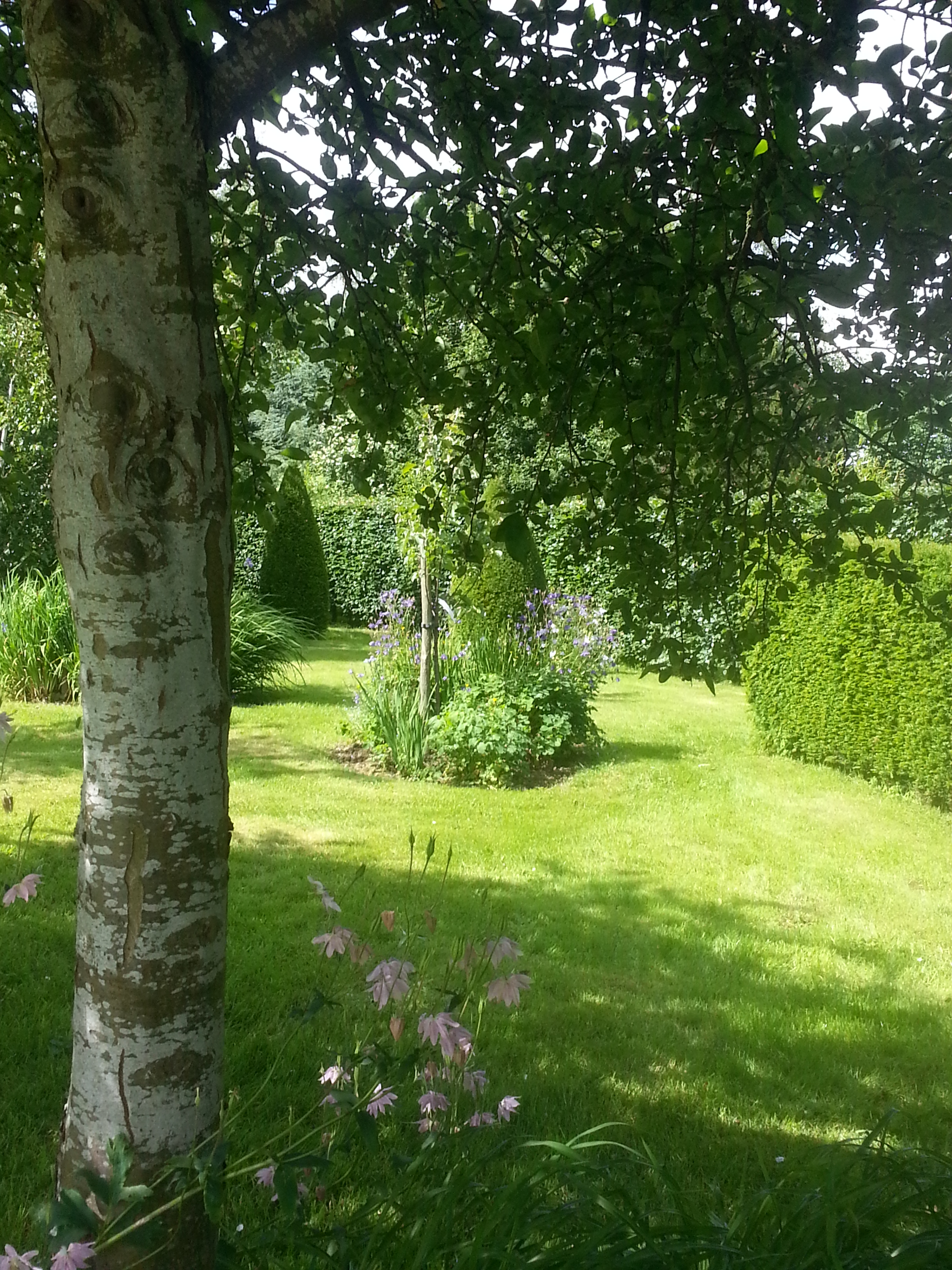
This Betula with its beautifully coloured peeling bark had enticed us up the long drive where we were greeted by this bank of smiling daisies.
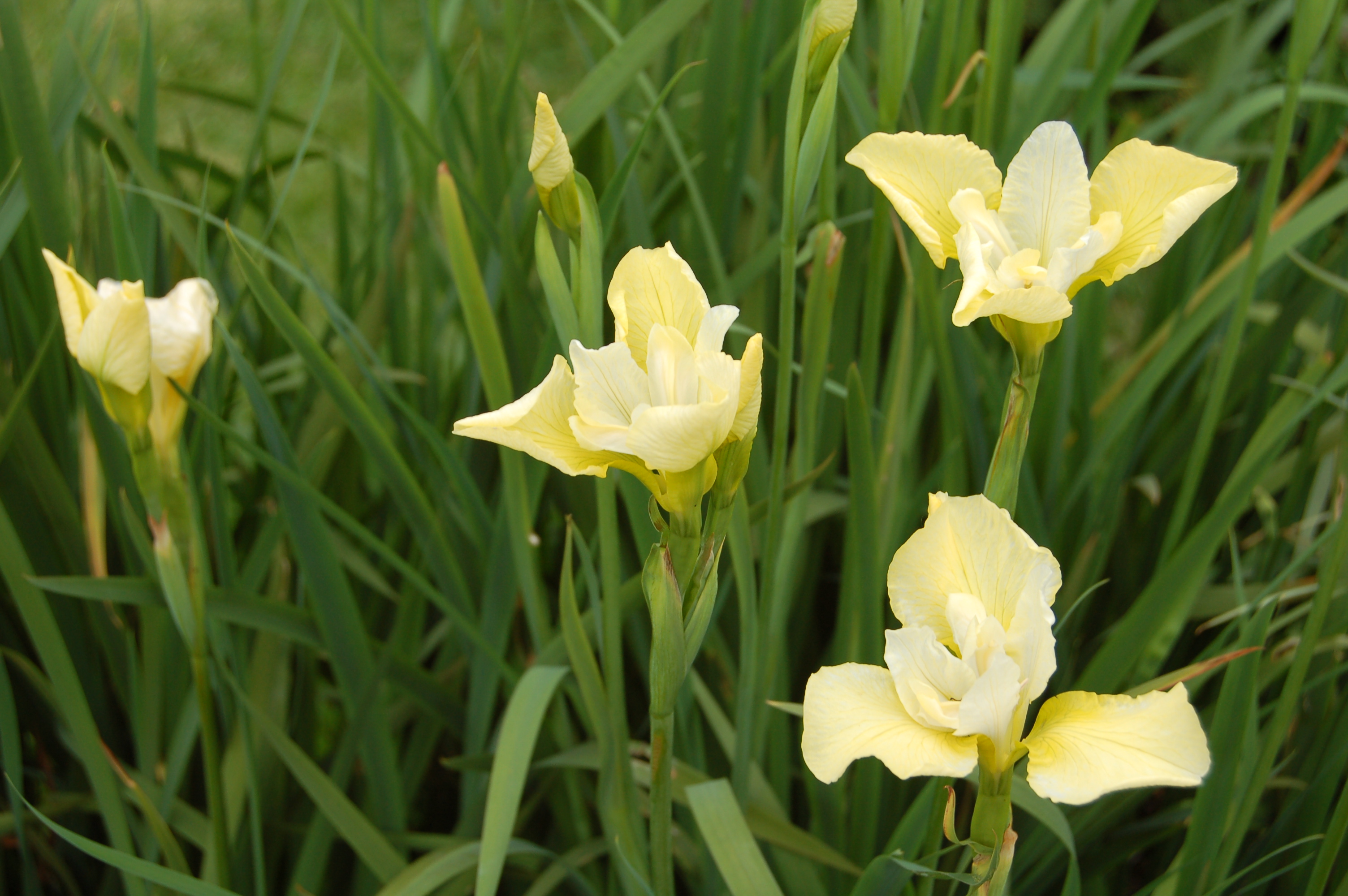
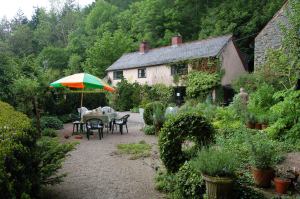
The front garden was a typical cottage style with interesting plants such as Astrantias, Lilies and Irises dotted throughout.
We had now realised that we had visited this garden years ago so we were not surprised by the sudden change in the garden design that greeted us as we entered the back garden. Here the design was much more modern. It was a garden to explore slowly taking advantage of the invitations presented through good design.
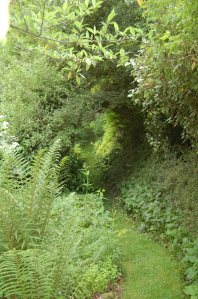
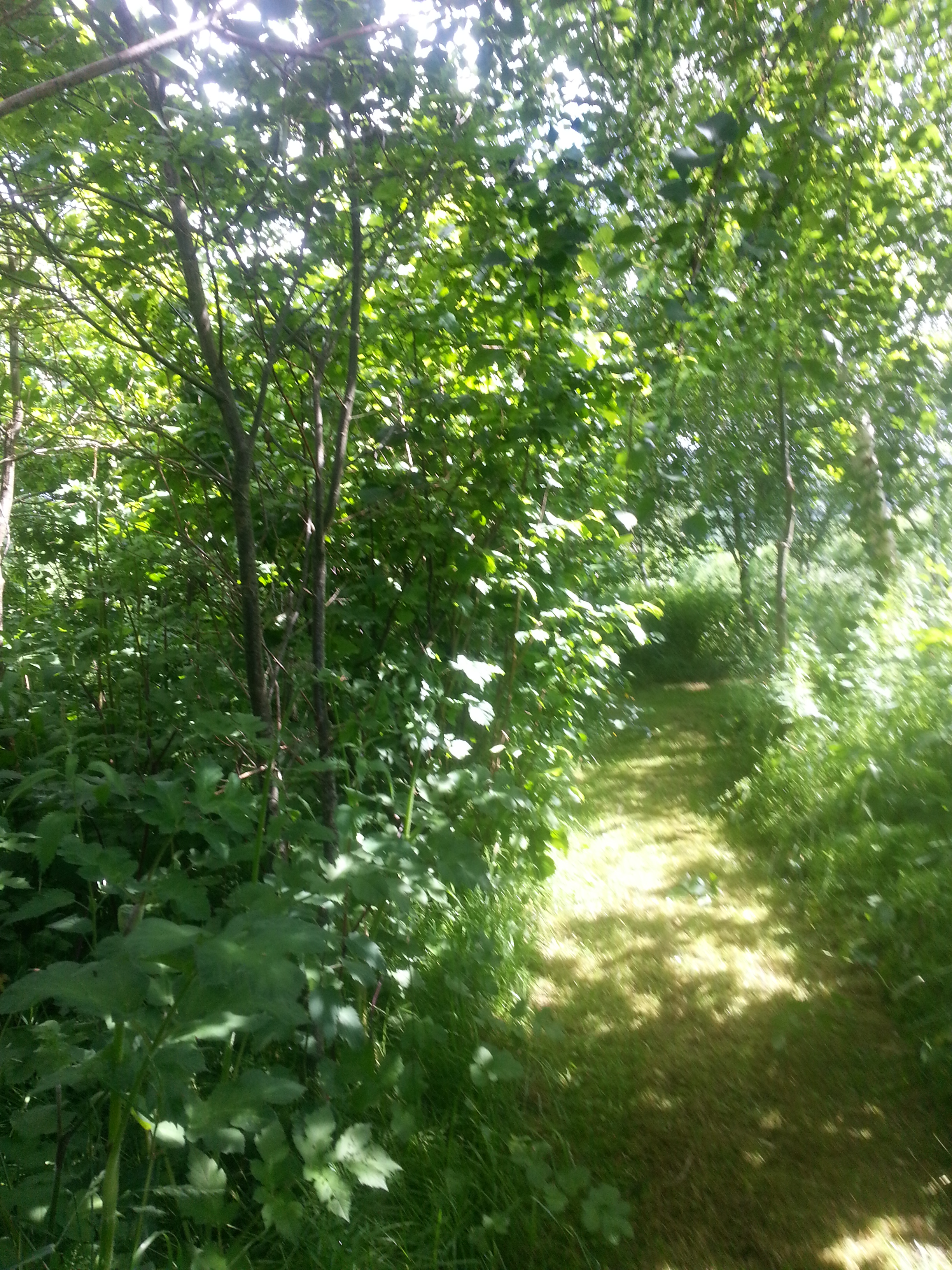
One path invited us into woodland, a relief for a while from the brightness and warmth of the sun. We were impressed by how a beautiful woodland can be created with the commonest of tree species. It proved you don’t have to have rarities to impress. Here the gardeners grew just native Birches, Rowans, Cherries and a few non-natives to add a touch of spice. A lovely atmosphere pervaded this space.
Leaving the woodland we were again presented with several options, different paths to take with different views and different plants.
Closer to the house a gravel area gave a completely different feel. Here were neatly trimmed conifers and Cotinus with their skirts lifted to expose twisted limbs. Soft planting among these features reflected the planting in the nearby borders.

Moving around the side of the property we found another path to take through gap in the hedge where we discovered a swimming pool overlooked by a summerhouse.
We walked from here along a narrow path below a wall with soft planting above, beautifully backlit by the sun.
This was most definitely a garden of many parts beautifully linked with winding paths found through enticing arches and gaps in hedging.
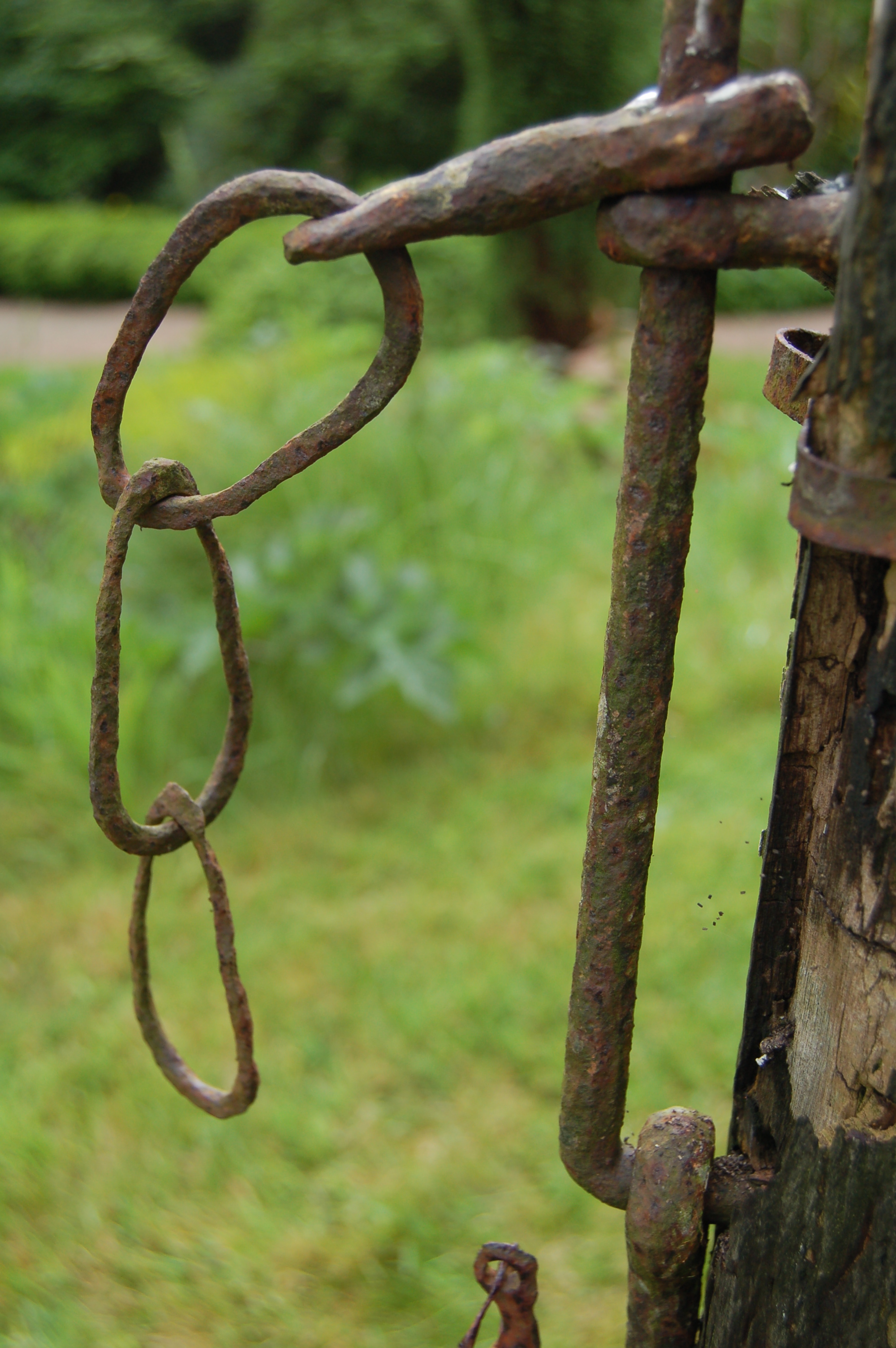
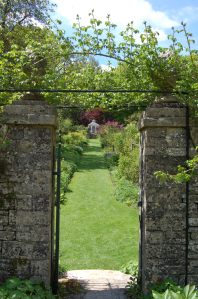
Leaving the garden along the central pathway of the front cottage garden we enjoyed the view behind this wonderful gate. A great garden – it was good to return.

Of course the garden we visited wasn’t really on top of the world, but it certainly felt that way as once more we made our way into the hills of Powys the other side of Welshpool, travelling along narrow single track lanes up steep hills and around sharp bend after sharp bend. It seemed to take ages to get nowhere and the journey did actually take twice as long as we had anticipated. We had to go in Jude’s little car as I had been in hospital the day before having a minor op on my hand so I couldn’t drive. We should have known better and Jude could have driven mine as its more powerful motor wouldn’t have minded the hills so much.
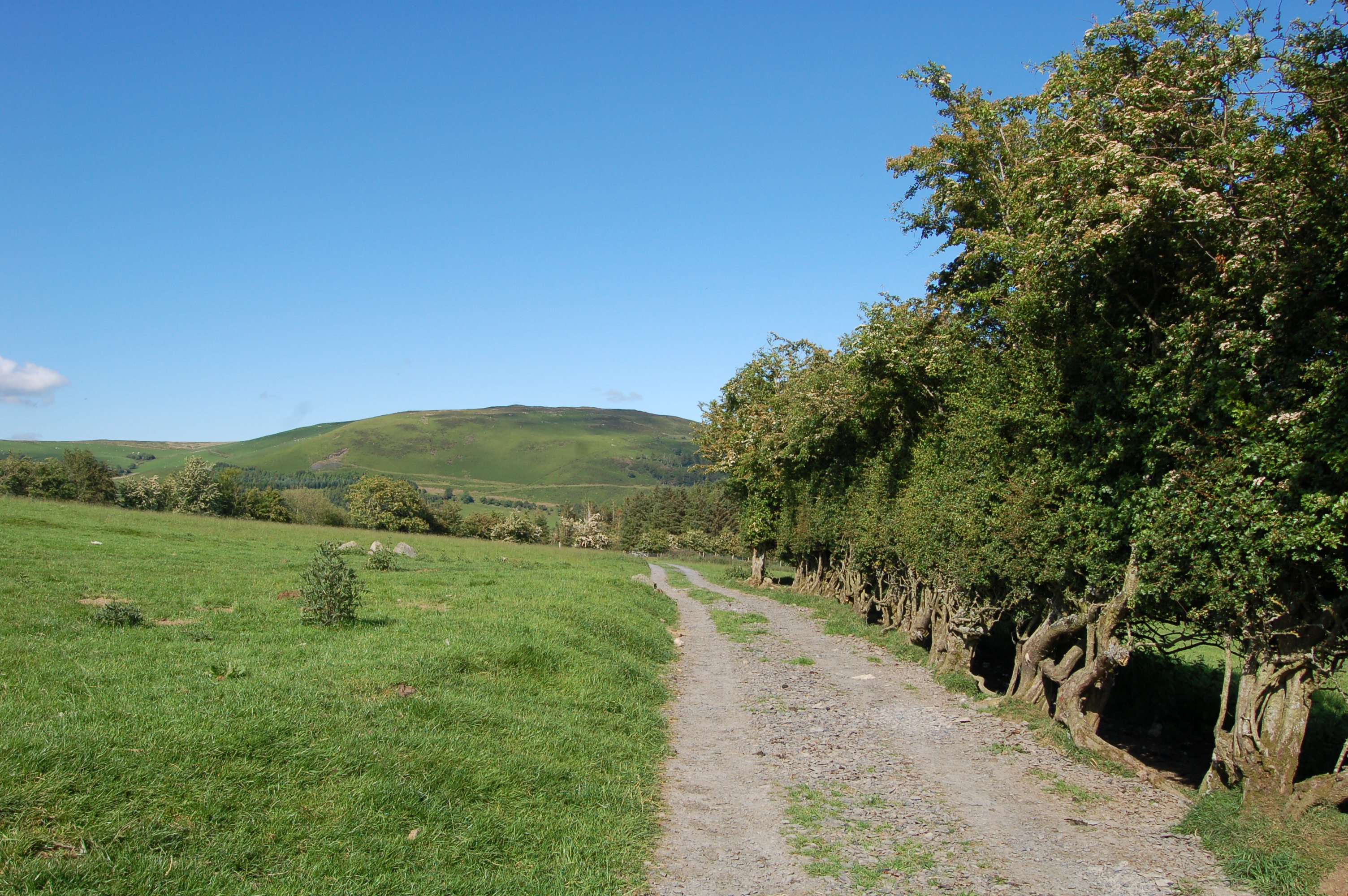
Once we got there however we knew we were in for a treat. Anyone brave enough to tackle the making of a garden in these harsh condition must be a very determined gardener indeed. As we neared our destination we turned up a very narrow lane where the hedges virtually touched the side of the car and we climbed steeply until the lane came to a halt. A gate in the stone wall was open on our right and a sign indicated that this was where we had to park up. On the left another track of rugged slate took us through fields grazed by sheep towards the garden.The gnarled old hedgerow Hawthorns were bowed over and twisted from years of being wind battered on this exposed hillside.
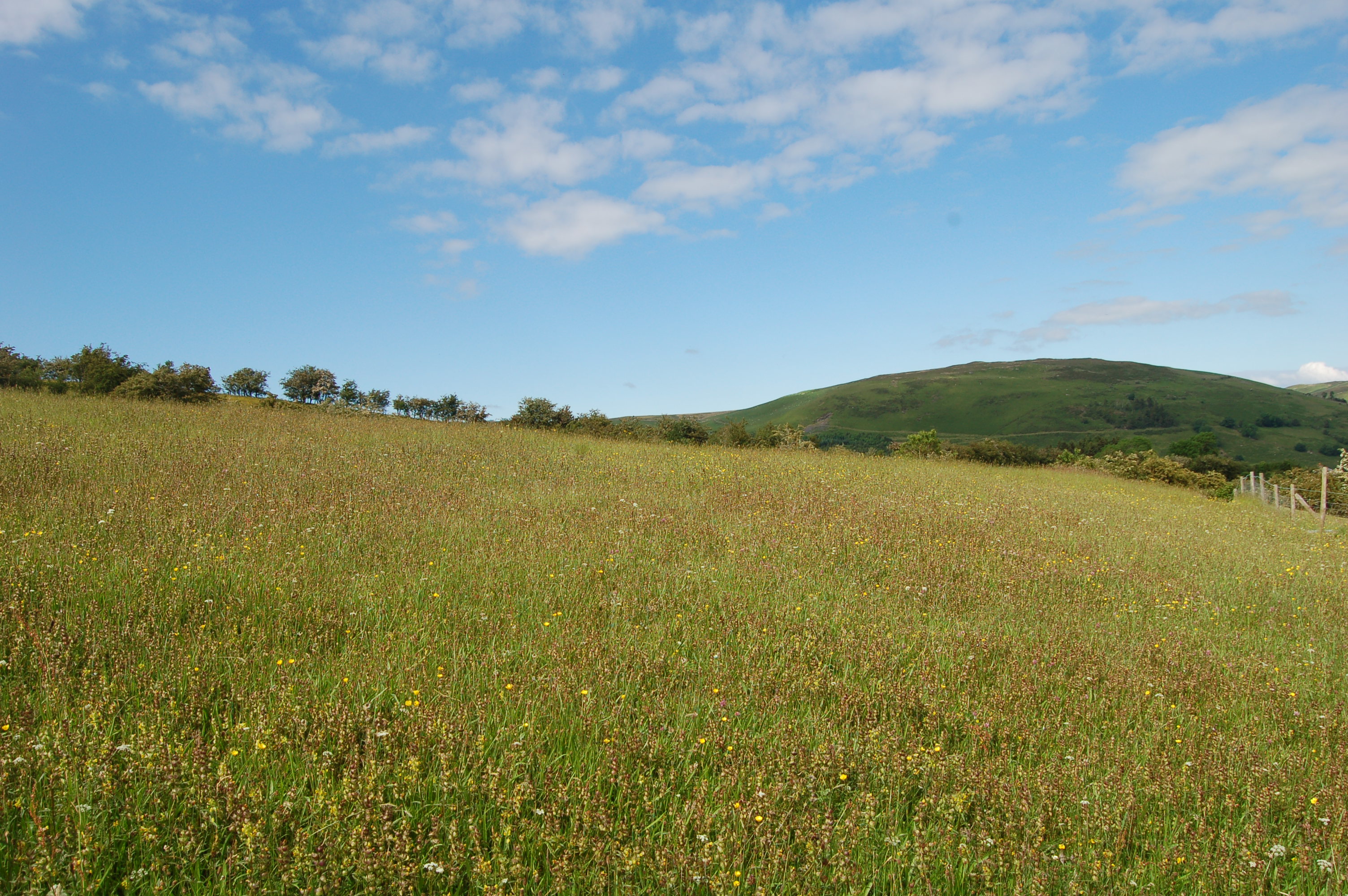
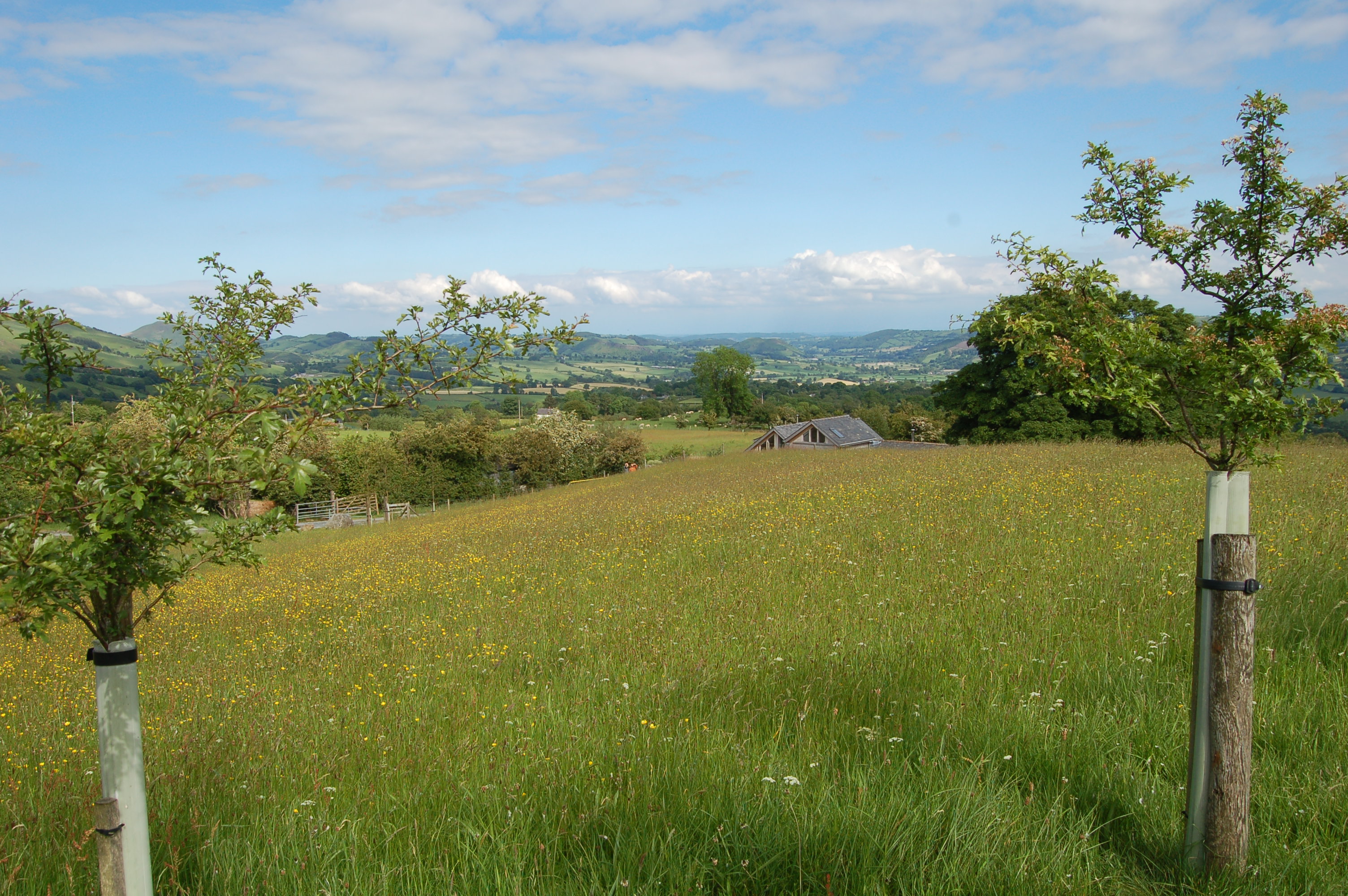
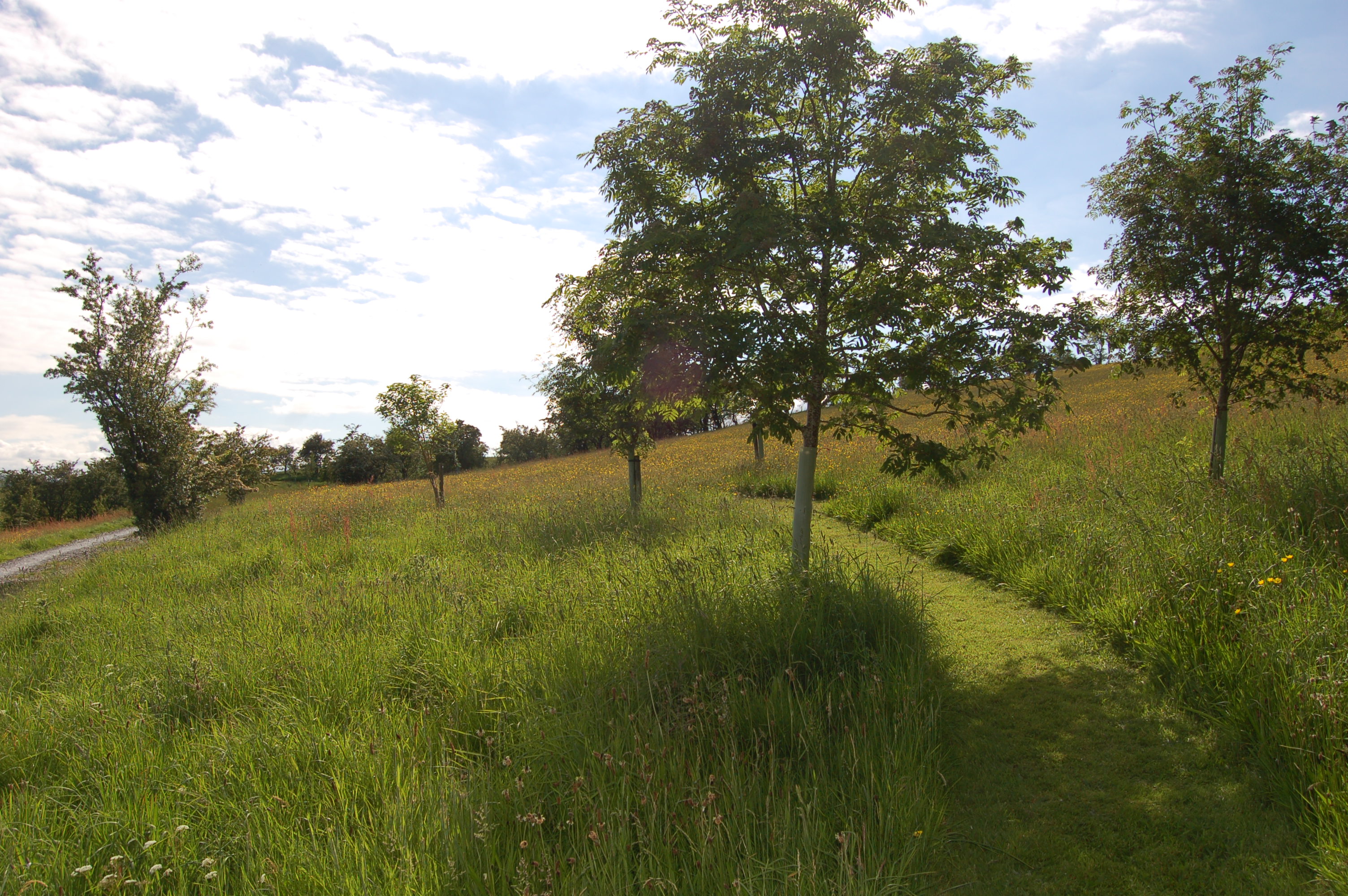
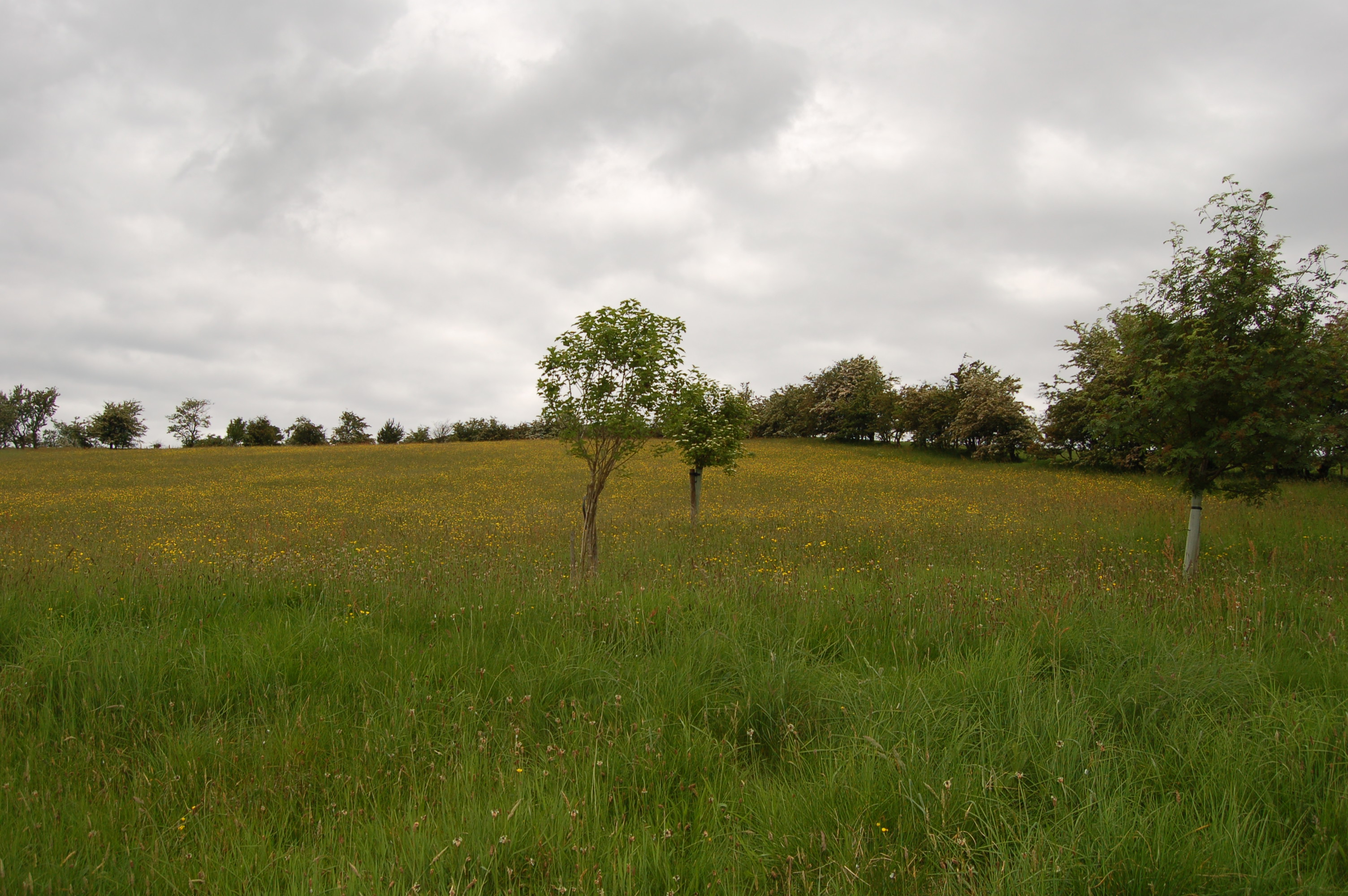
After a steep knee-aching walk across fields we realised we were getting close as the close cropped sheep pastures were replaced by recently planted flower meadows with neatly cut gently winding paths.
After walking the meadow edges we glimpsed the house ahead of us. From this distance it already looked tantalising.
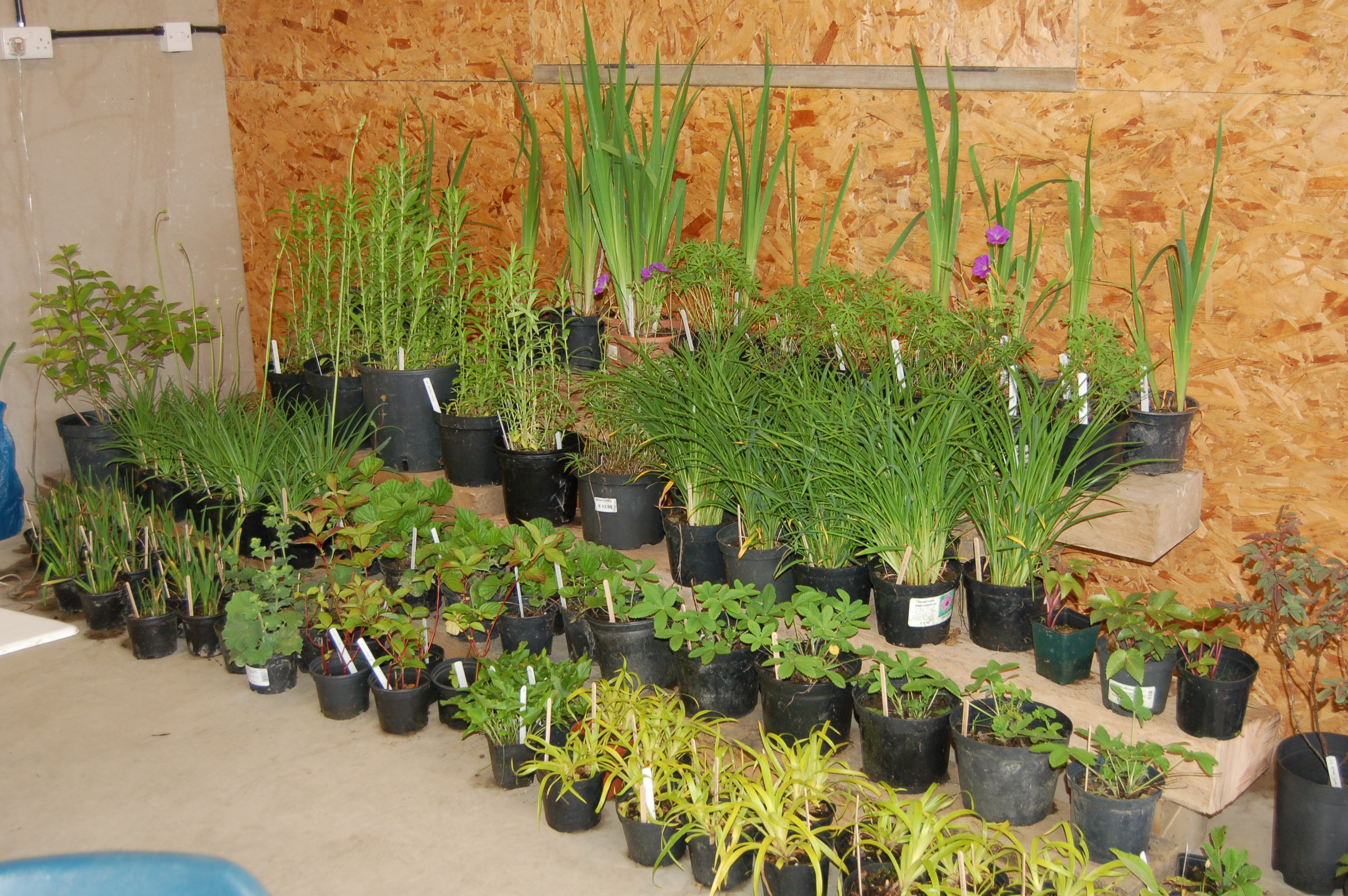
We found it to be a modernised and extended Welsh longhouse with its garden wrapped around it and just as well designed. Coffee and cake were enjoyed in an out building where plants from the garden were for sale. Only a few different plants but very well grown.
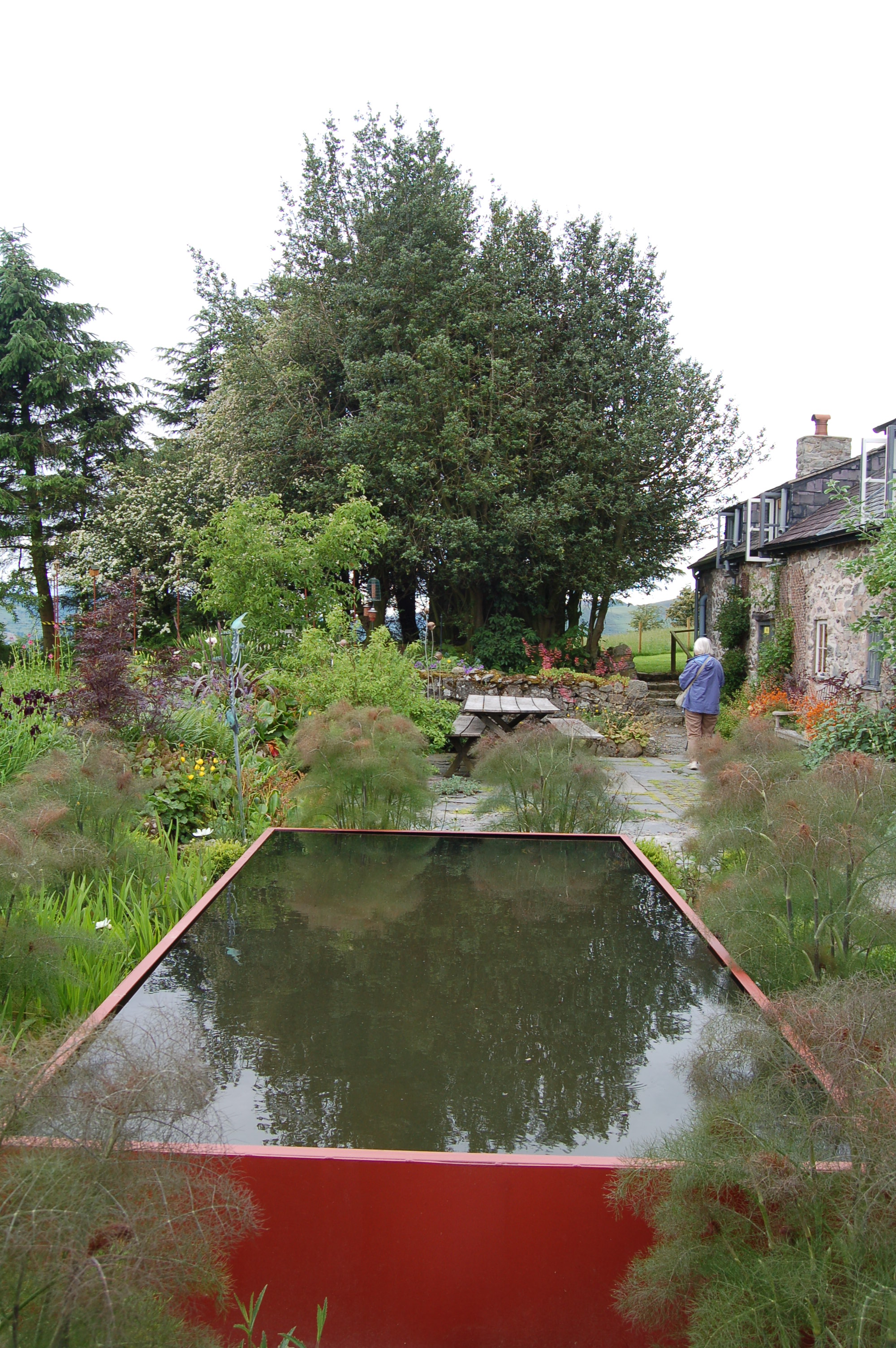
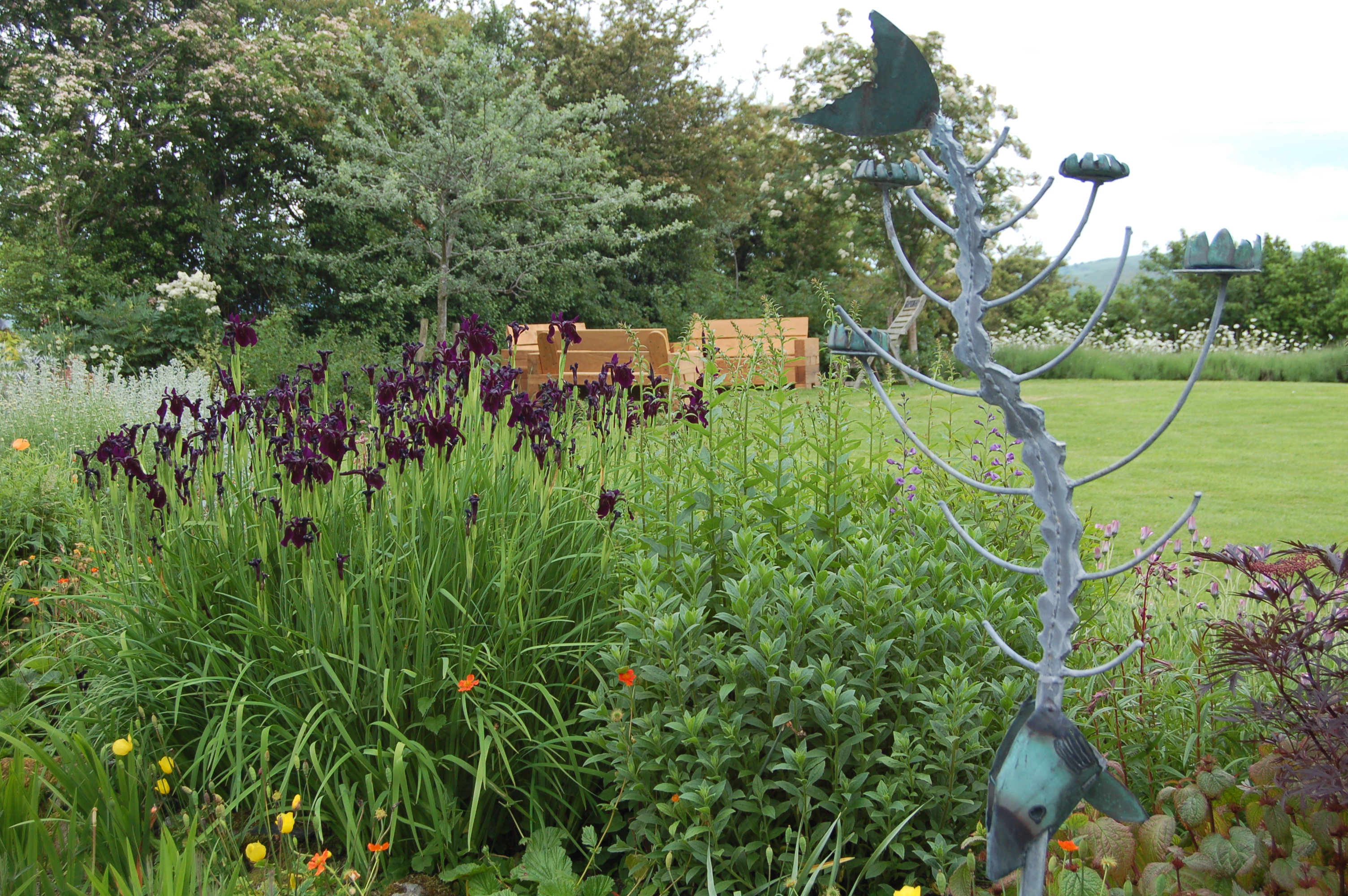
As we started to explore the garden it immediately became obvious that an artist was at work here. The planting with carefully selected combinations of texture and colour and scattered artifacts had the feel and look of the artist’s hand and eye at work.
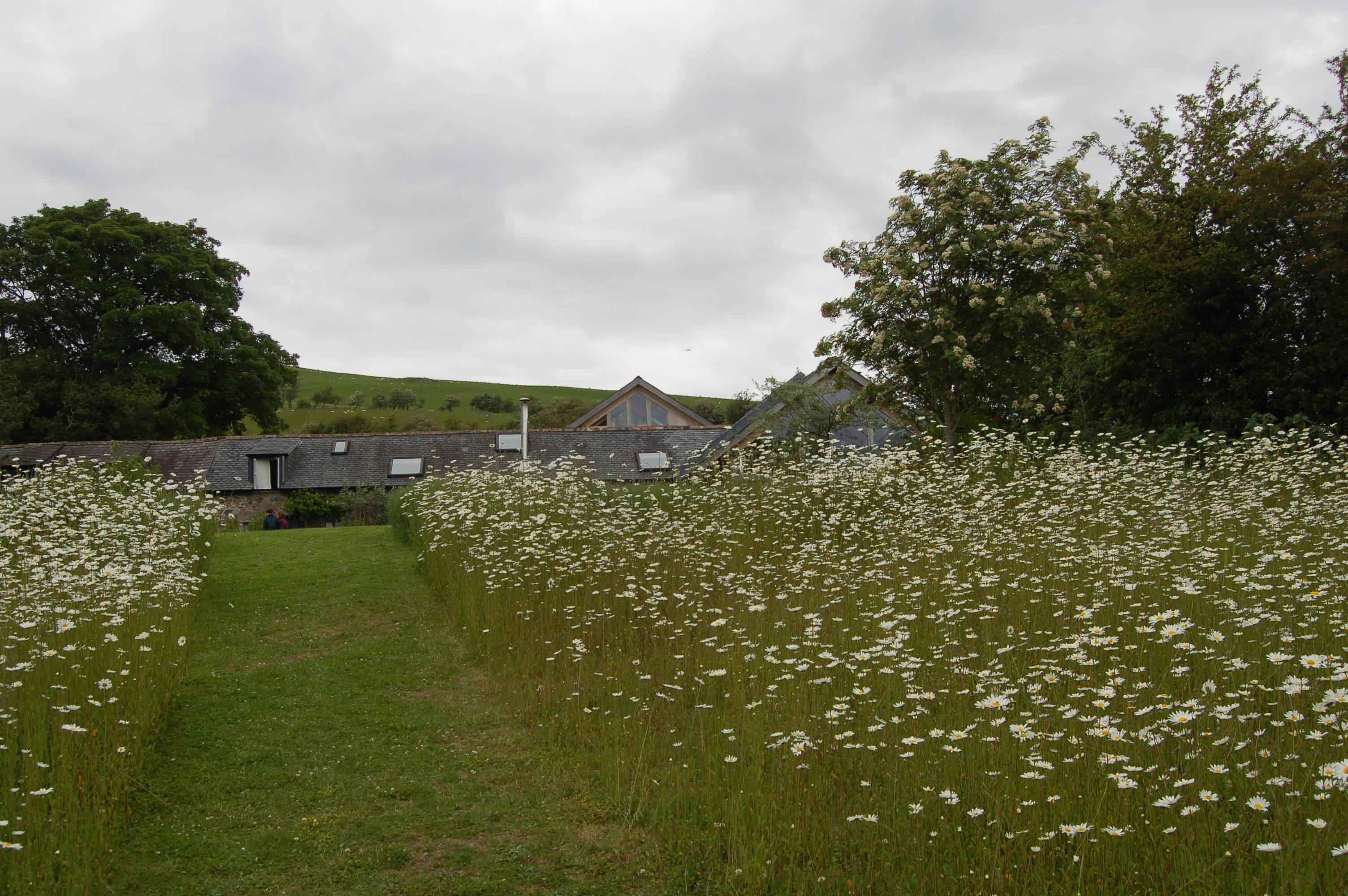
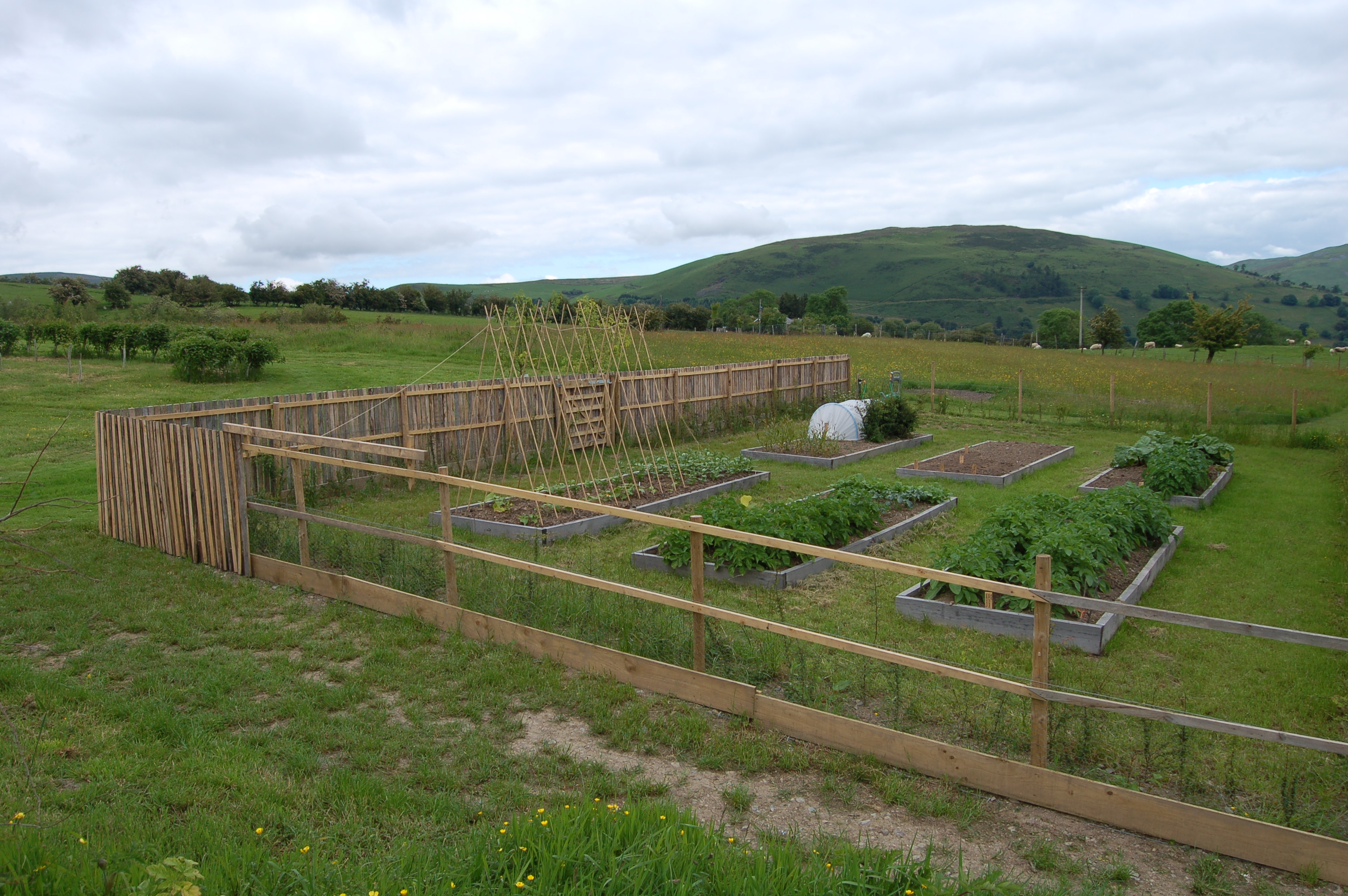
Moving further from the house, closely mown paths enticed us through meadows of white daisies to a curving bench of slate encircling a fire pit and on further to a small but neat productive patch.
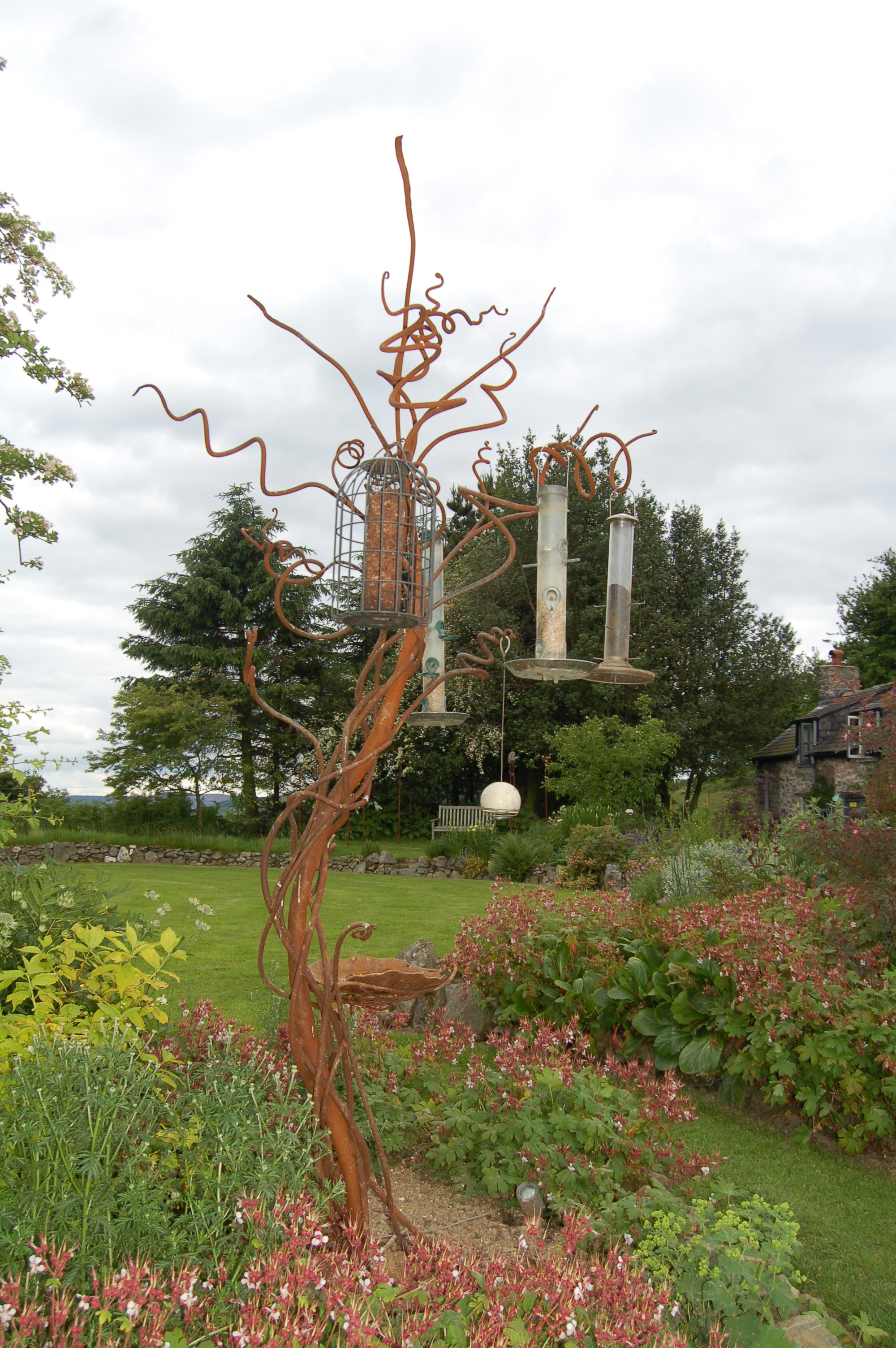
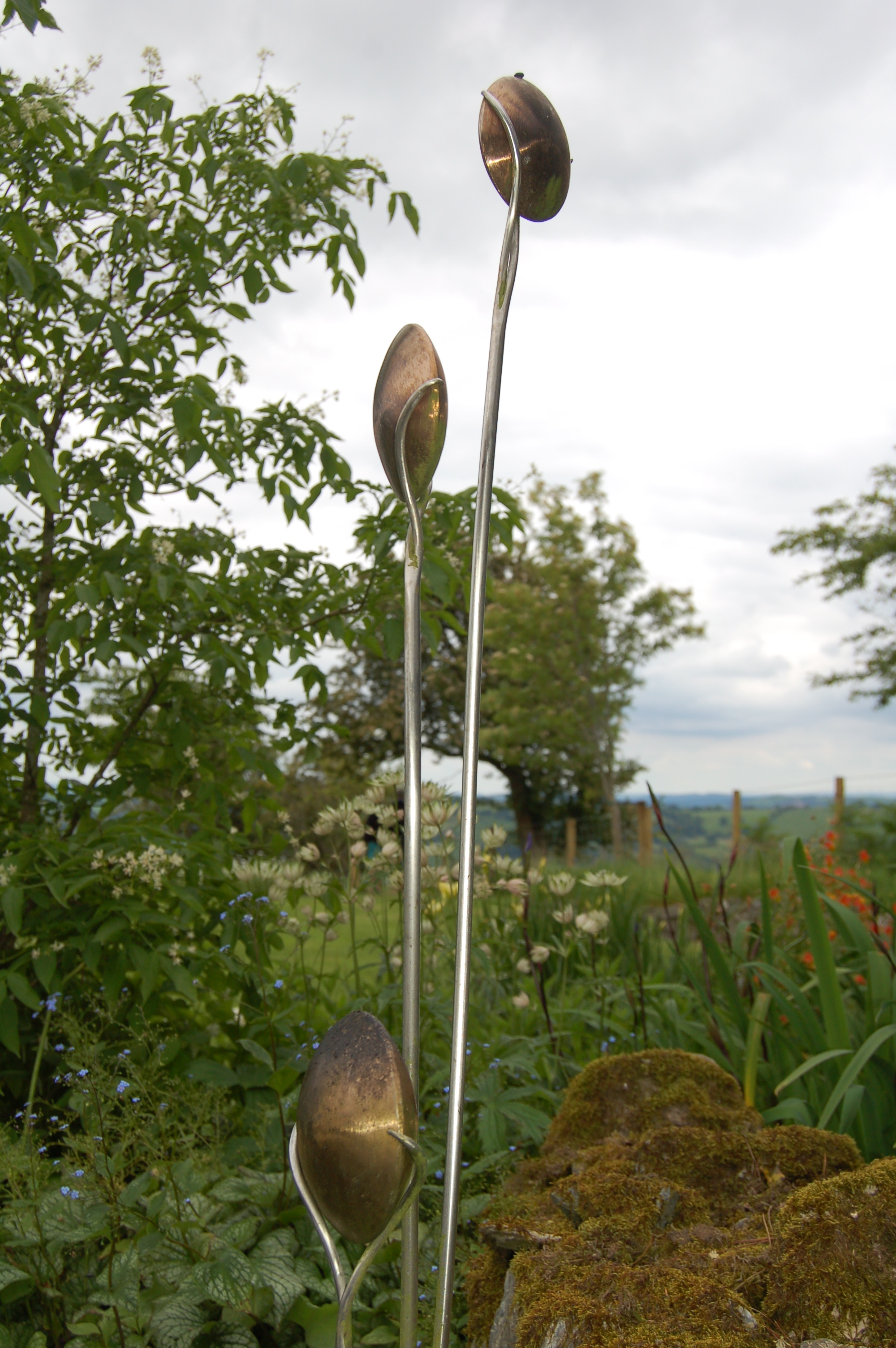
Moving back around winding paths towards a pool in the lower part of the garden we found more borders and this metal sculptural bird feeding station. Beyond every border were distant views of hillsides.


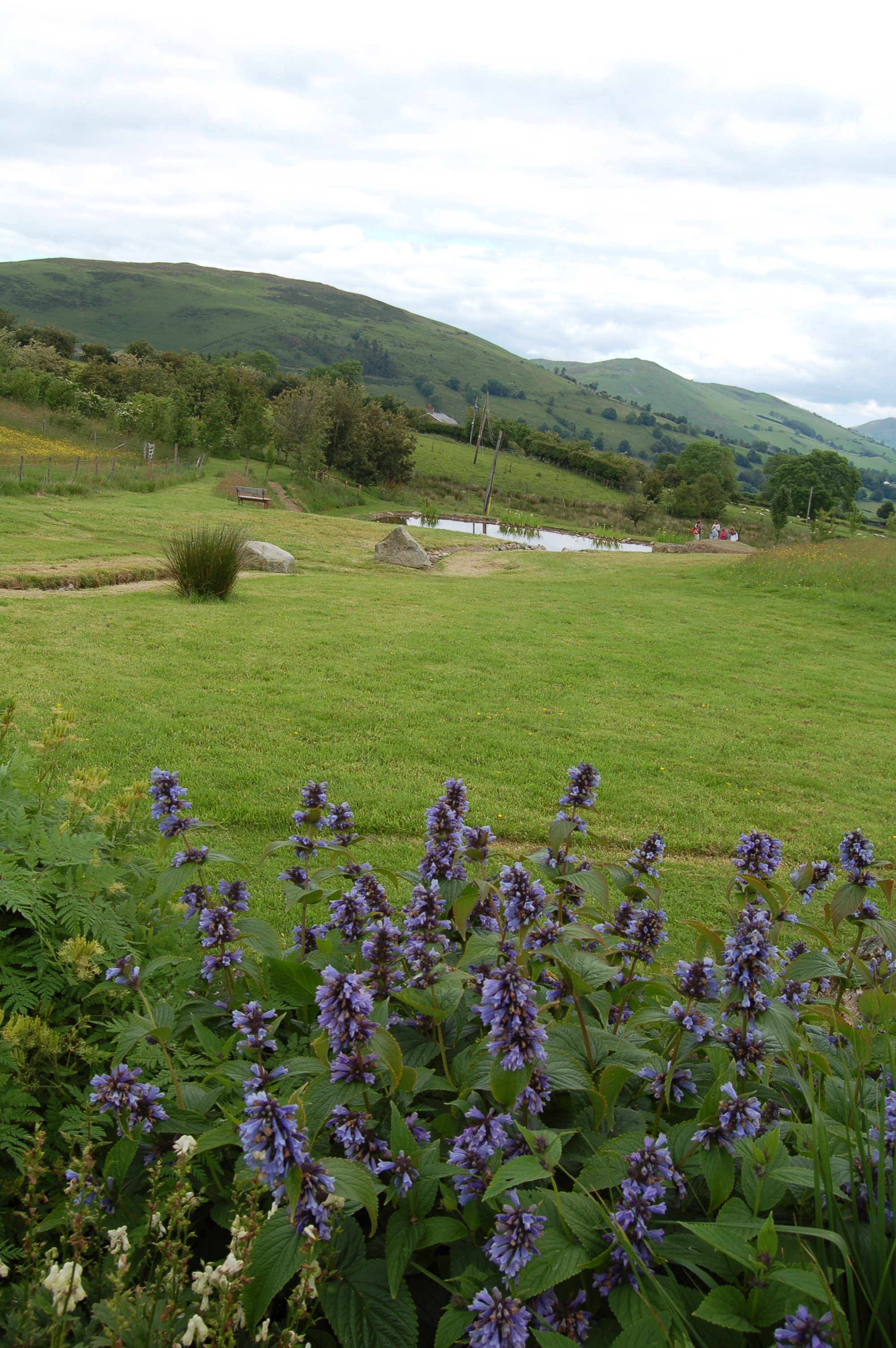
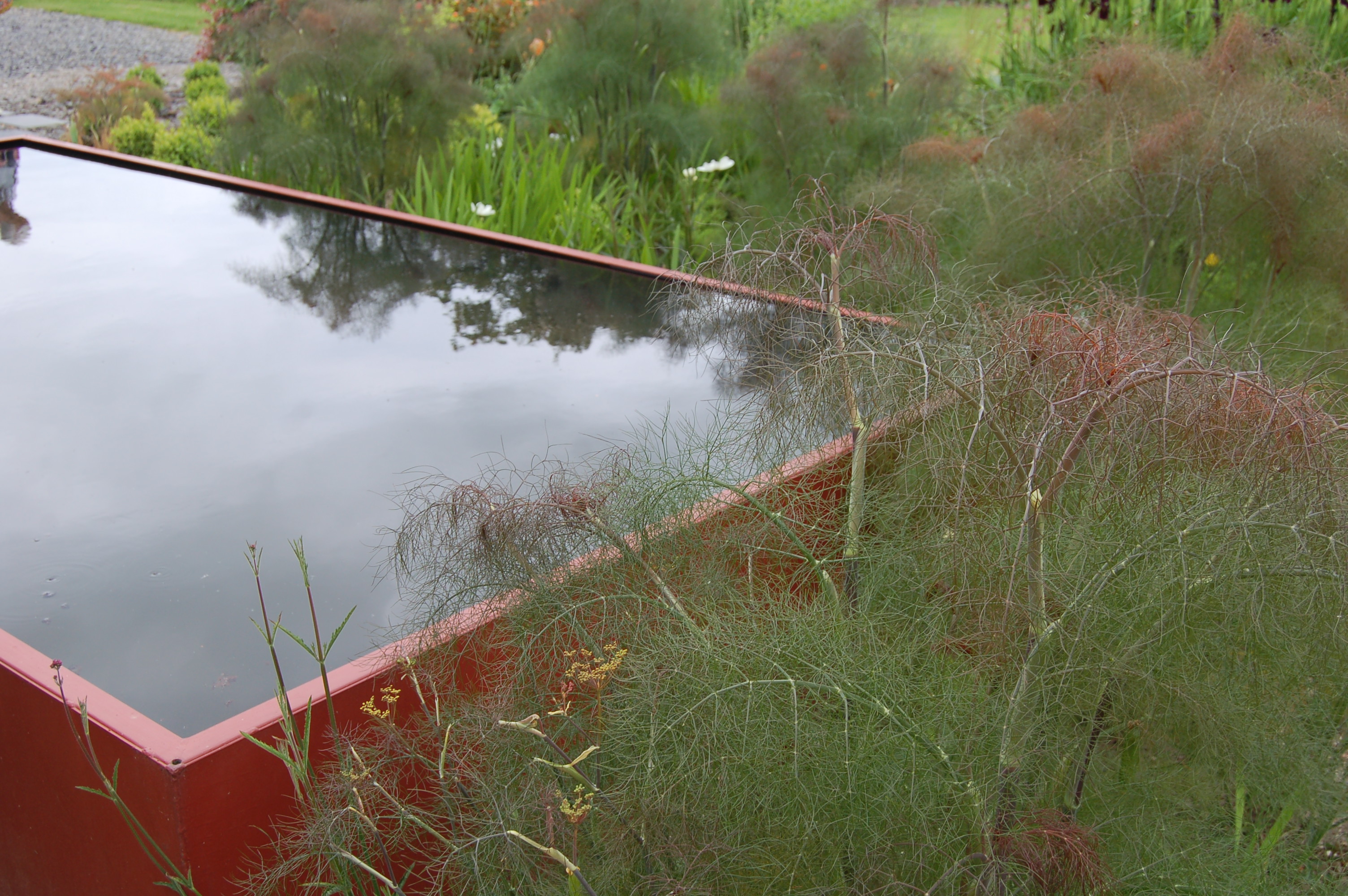
The pool and the stream garden running into it was a new venture and still in the early stages of development. We could see such possibility and vowed to return to see developments.
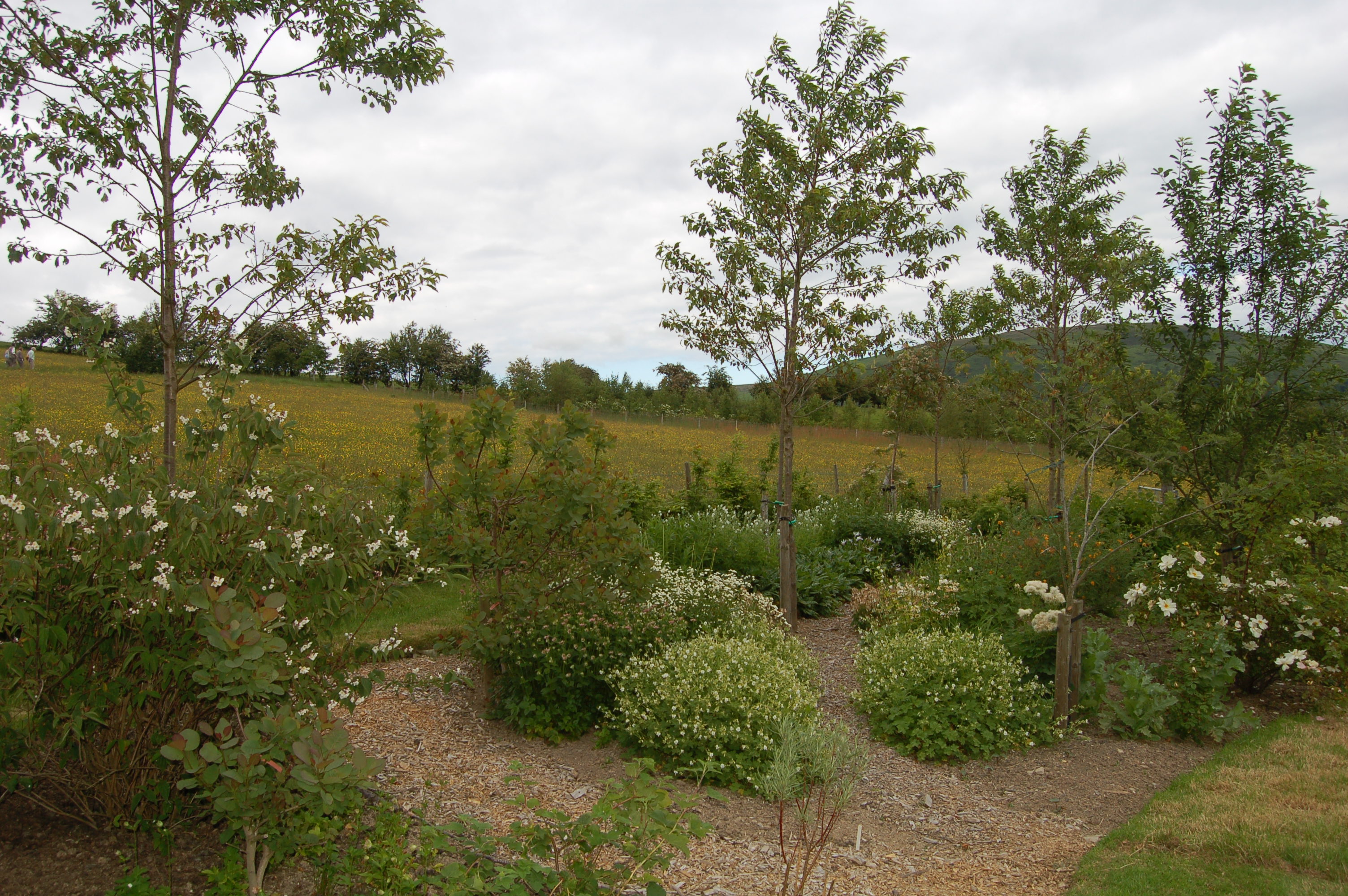
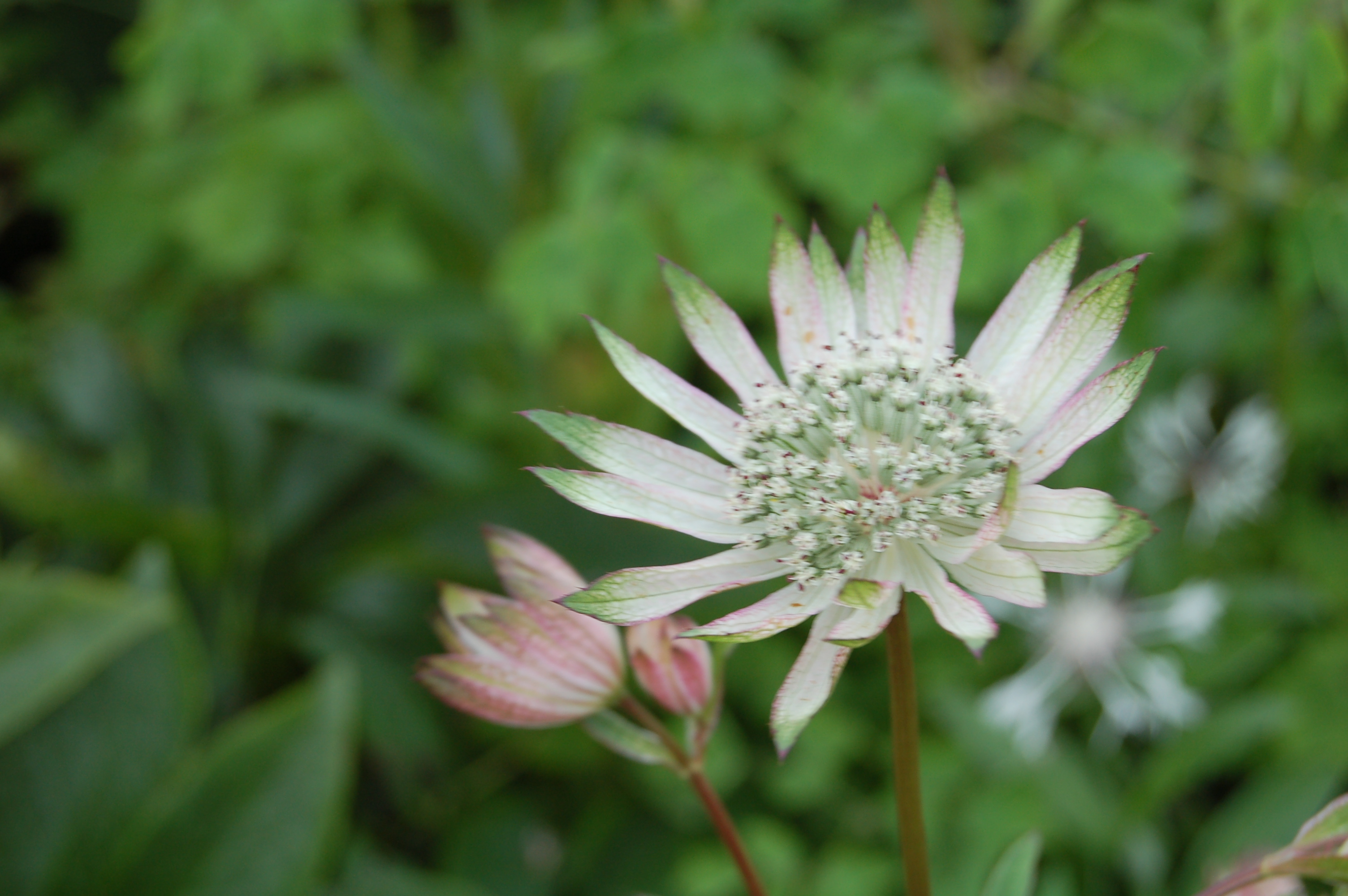
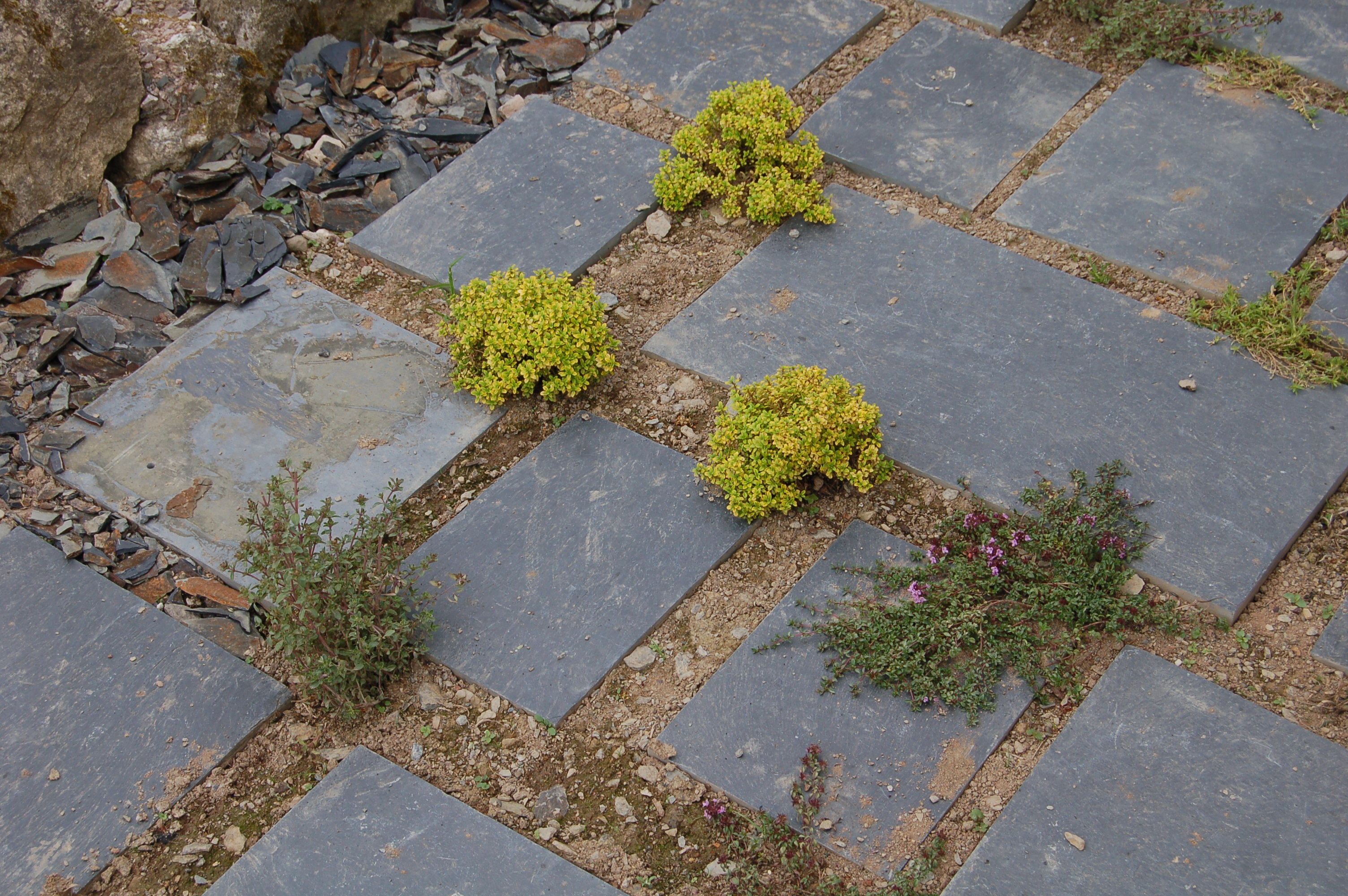
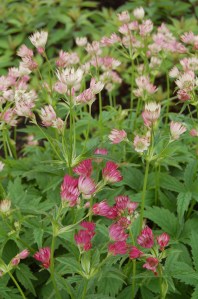
Slate paths through raised beds let us discover further interesting plant combinations. We were impressed in particular by the different Astrantias.
Gardens wrapped around the complex perimeter of the buildings and here more gentle plantings helped root the new building extensions into the land.
As we left the garden behind and anticipated the beauty of the meadows we noticed a green roof under which we must have been seated while enjoying our coffee and cakes. Wandering the close cut grass paths through the meadows was a very gentle way to finish off our visit to this developing garden. We looked forward to returning in the future.
We ventured along narrow winding lanes into the countryside of Powys our neighbouring county across the border into Wales. We were not the only ones out travelling these lanes on a mission on this sunny afternoon. Several members of the Shrewsbury Mini-Group, part of the Shropshire Group of the Hardy Plant Society, were meeting up at a woodland garden and nursery called Tan y Llyn.


The weather was bright. There is no better day to visit a woodland garden than a sunny one as it enhances the contrast between shade and light so well. Even the most ordinary plants such as this Cotoneaster and Yew look so good.
Any flowers in a woodland garden shine out from the shadows.

Dotted around Tan y Llyn are interesting objects and well-composed cameos.


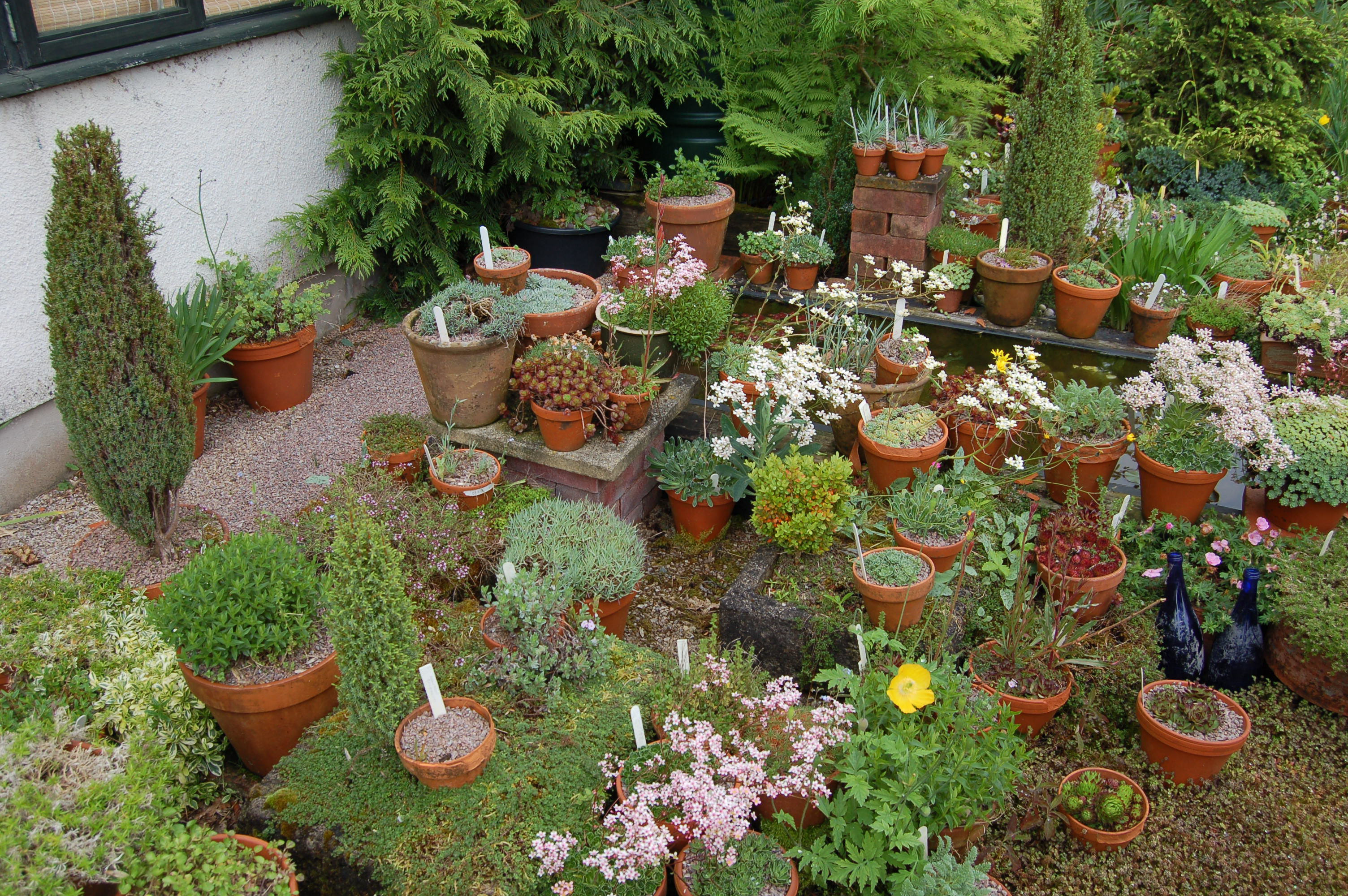
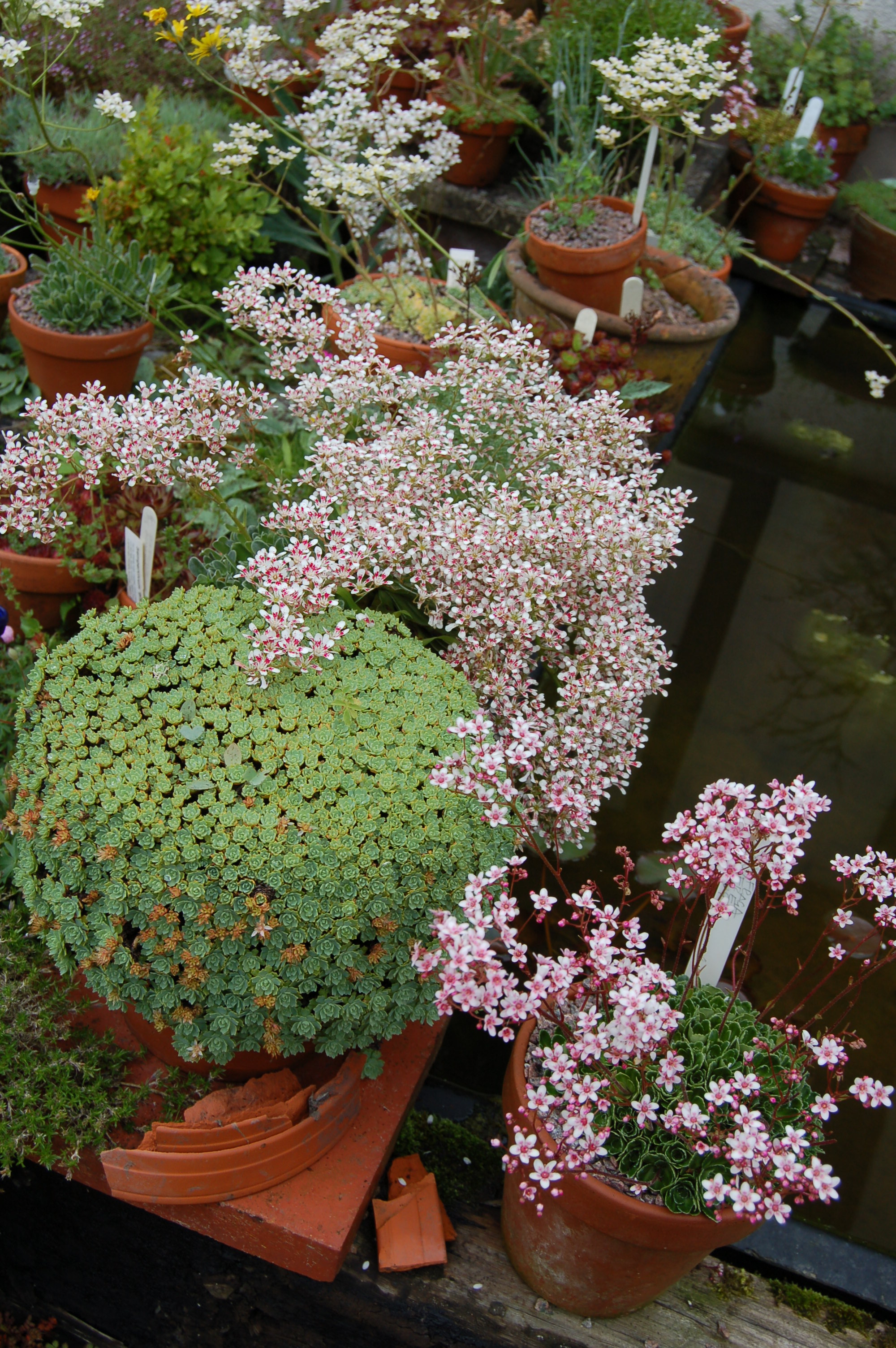
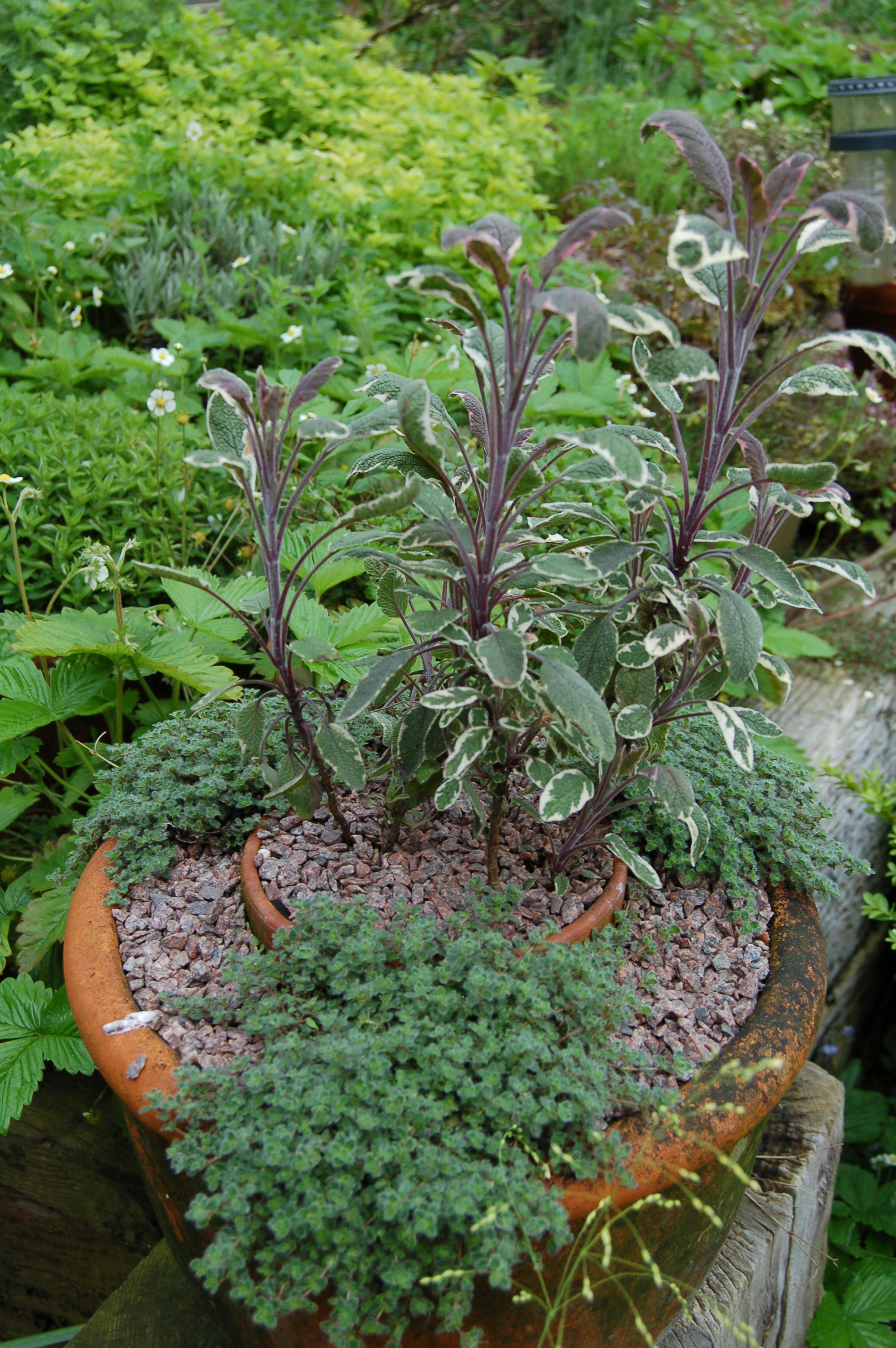
Callum Johnston the garden owner also ran a little nursery specialising in alpines and herbs and he featured many of the plants for sale within a garden around his front door where plants were grown in a selection of pots and containers. They invited close inspection as did the sales benches close by in the shade of deciduous trees.
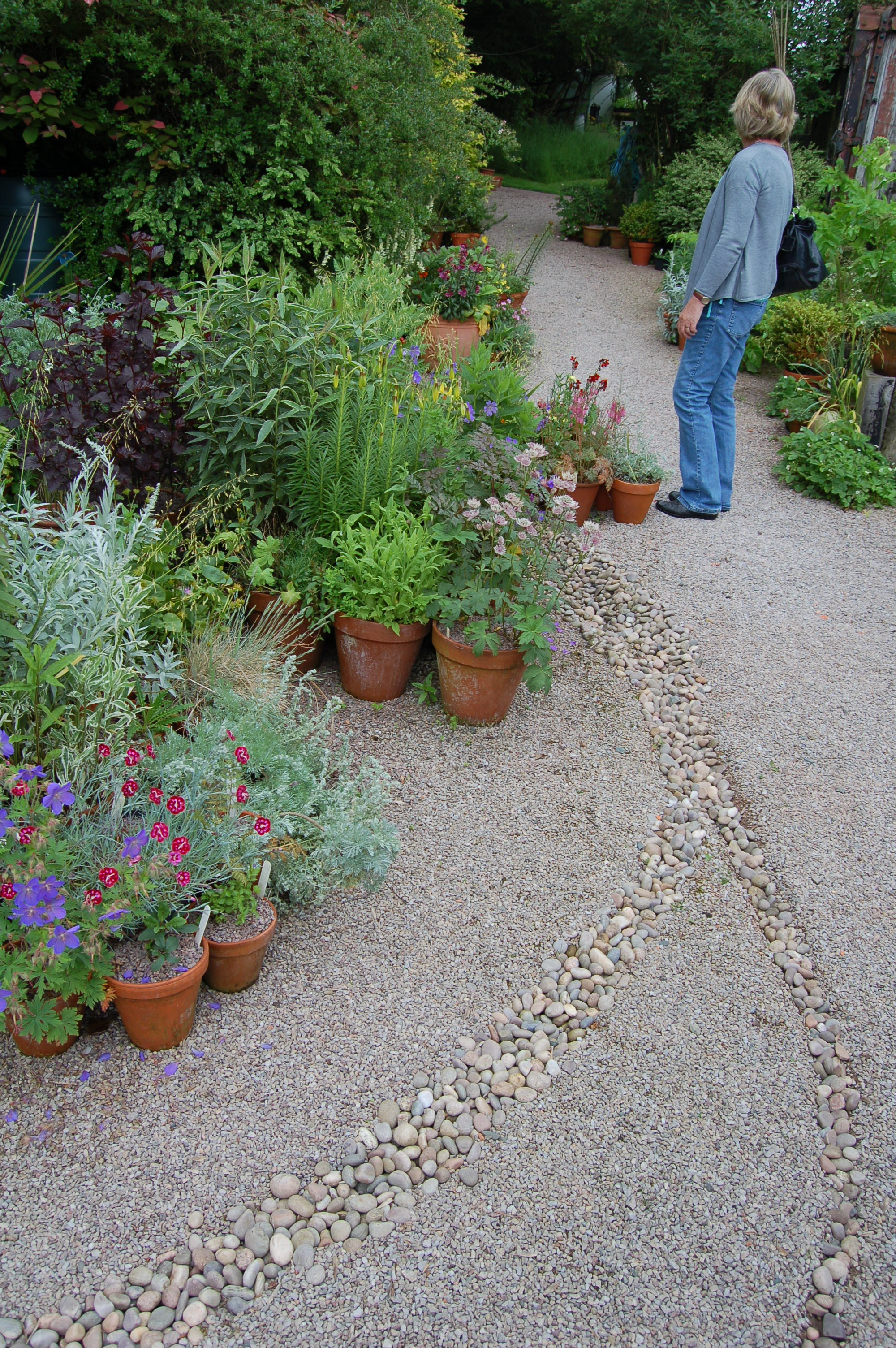
We were particularly drawn to this dry river bed of pebbles winding through the gravel of the driveway near the cottage’s front door. We immediately began to plan where we could try something similar out at home.
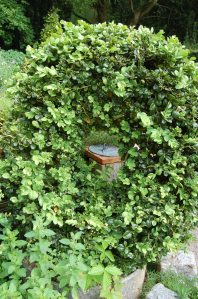
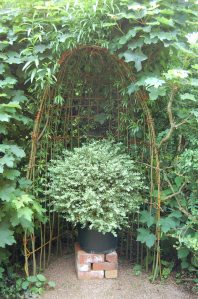
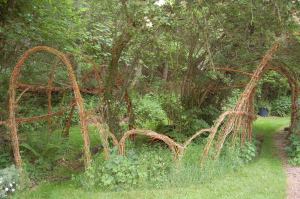
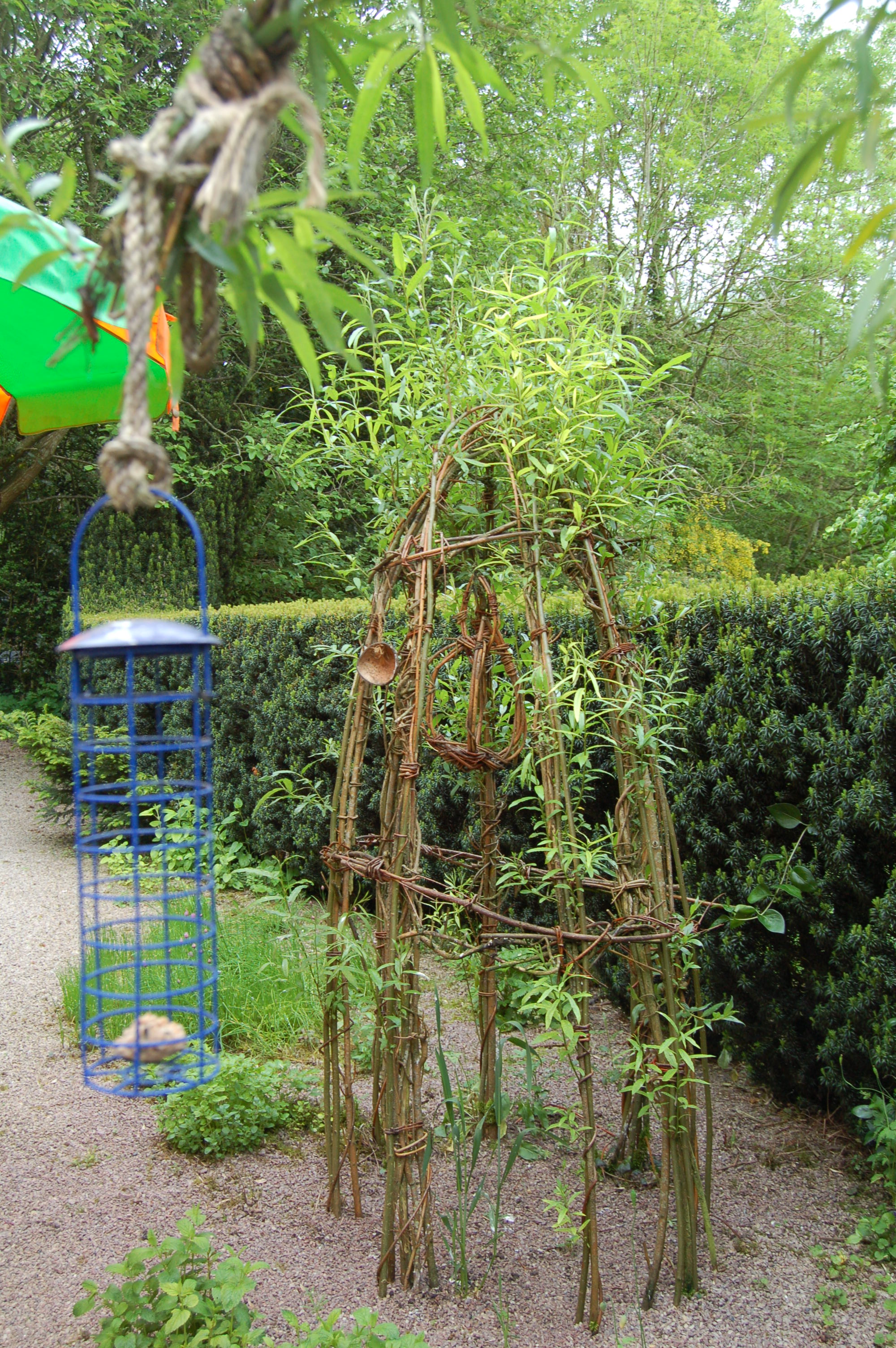
Callum admitted to an obsession – training, twisting and pruning willow into interesting structures. He also obviously loved hedge trimming where on occasion he lets his imagination run riot.


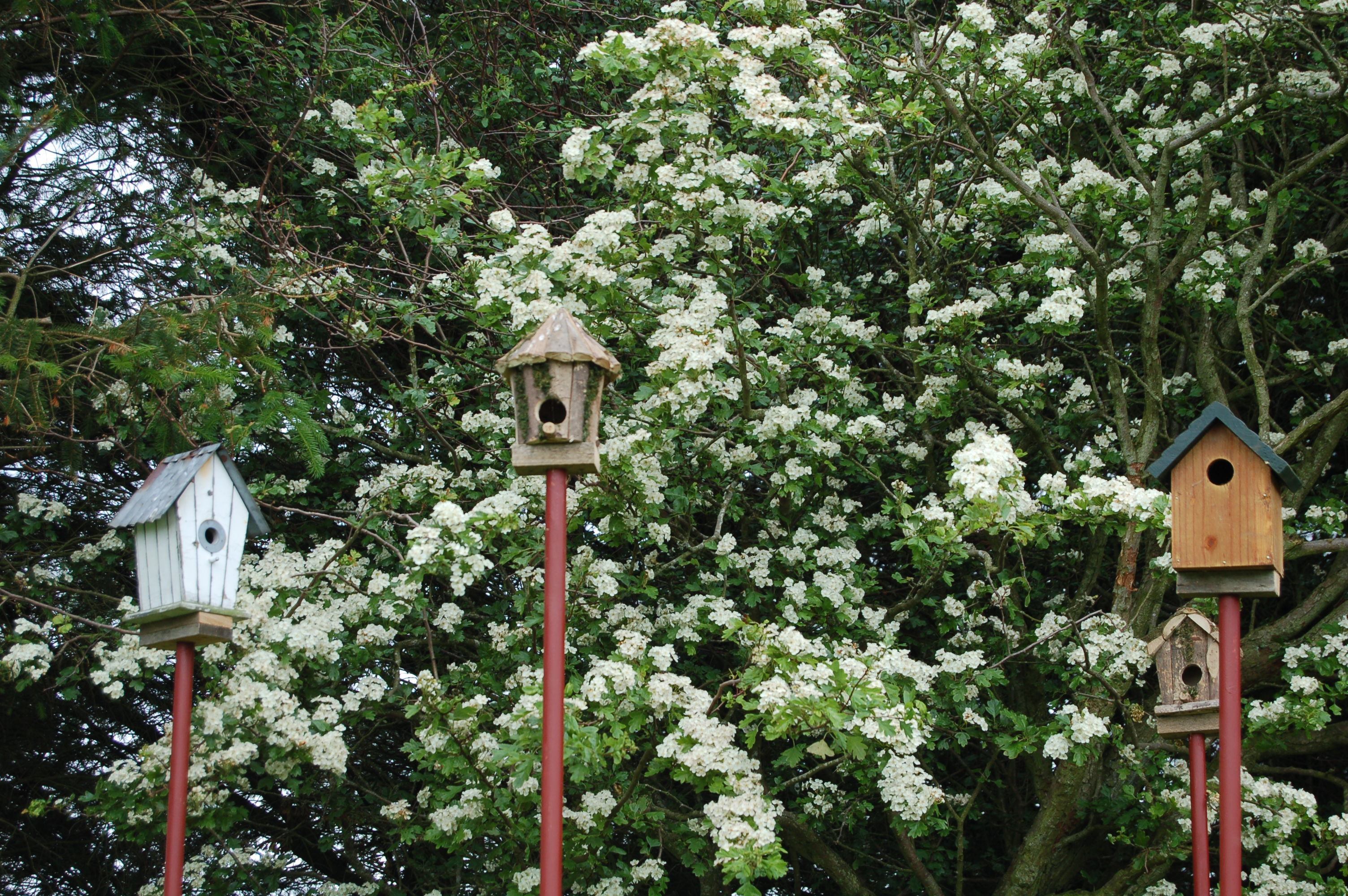
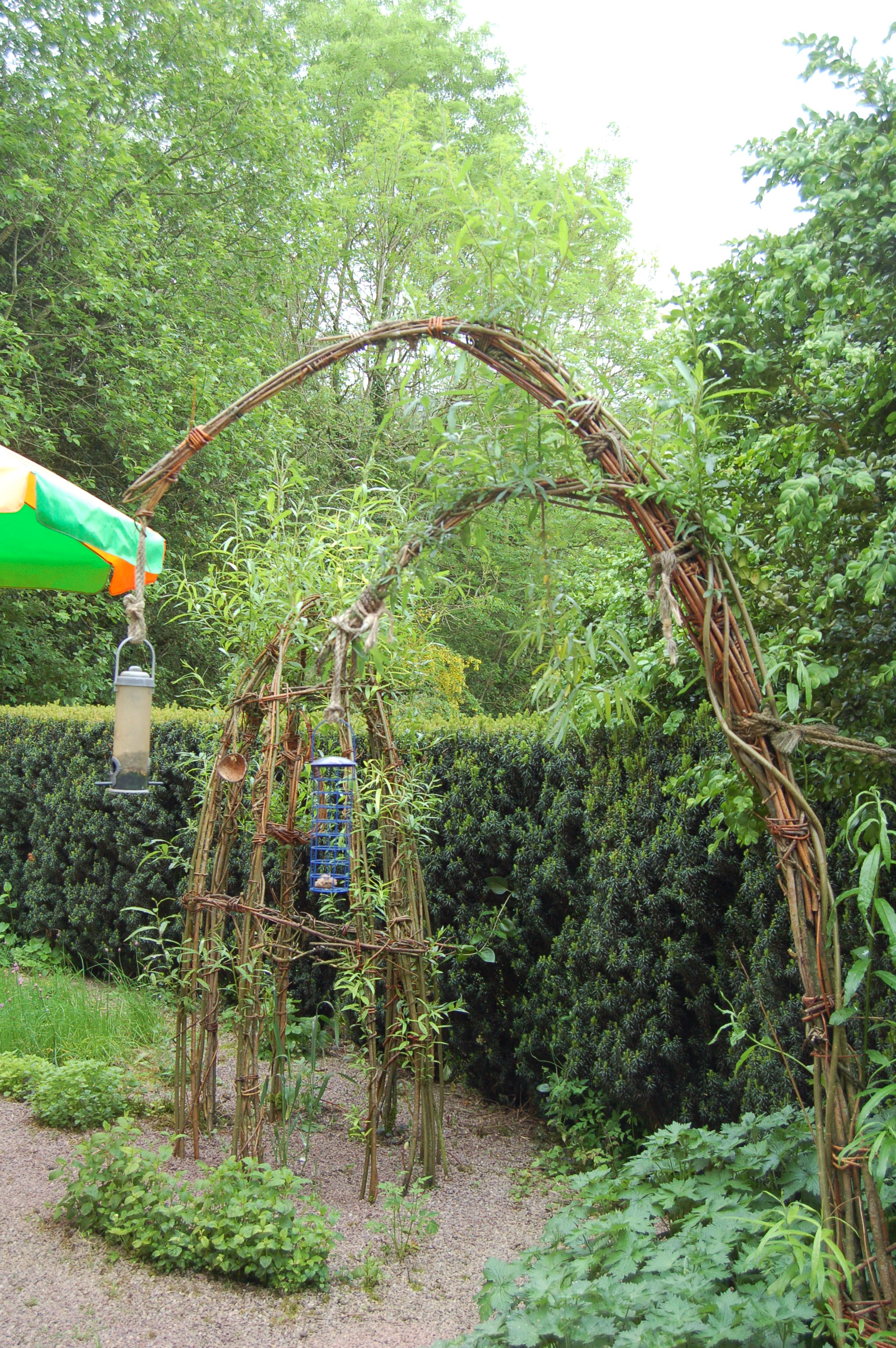
Callum had even trained willows to become bird feeding stations. The birds certainly liked them as did our Hardy Plant friends. Callum and his partner Brenda served us up with cream teas under the shade of trees alongside these feeders so as we reveled in our luxury teas we were entertained by the birds enjoying theirs.
Nearby herbs grew in a terraced border and added their scent and spice to the conducive atmosphere. As with many garden owners who like to share their garden, Callum and Brenda knew how to make us feel comfortable and relaxed.

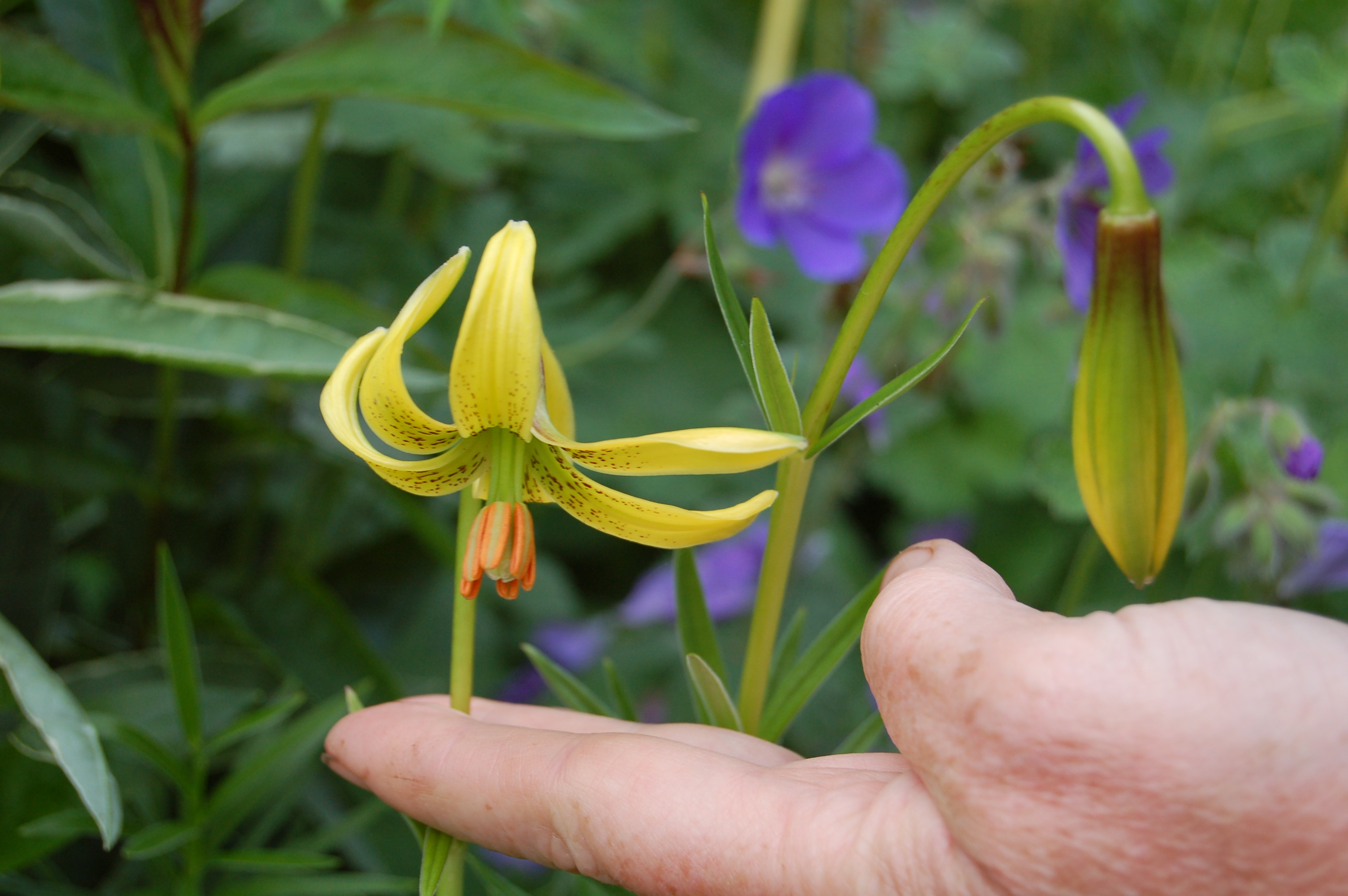
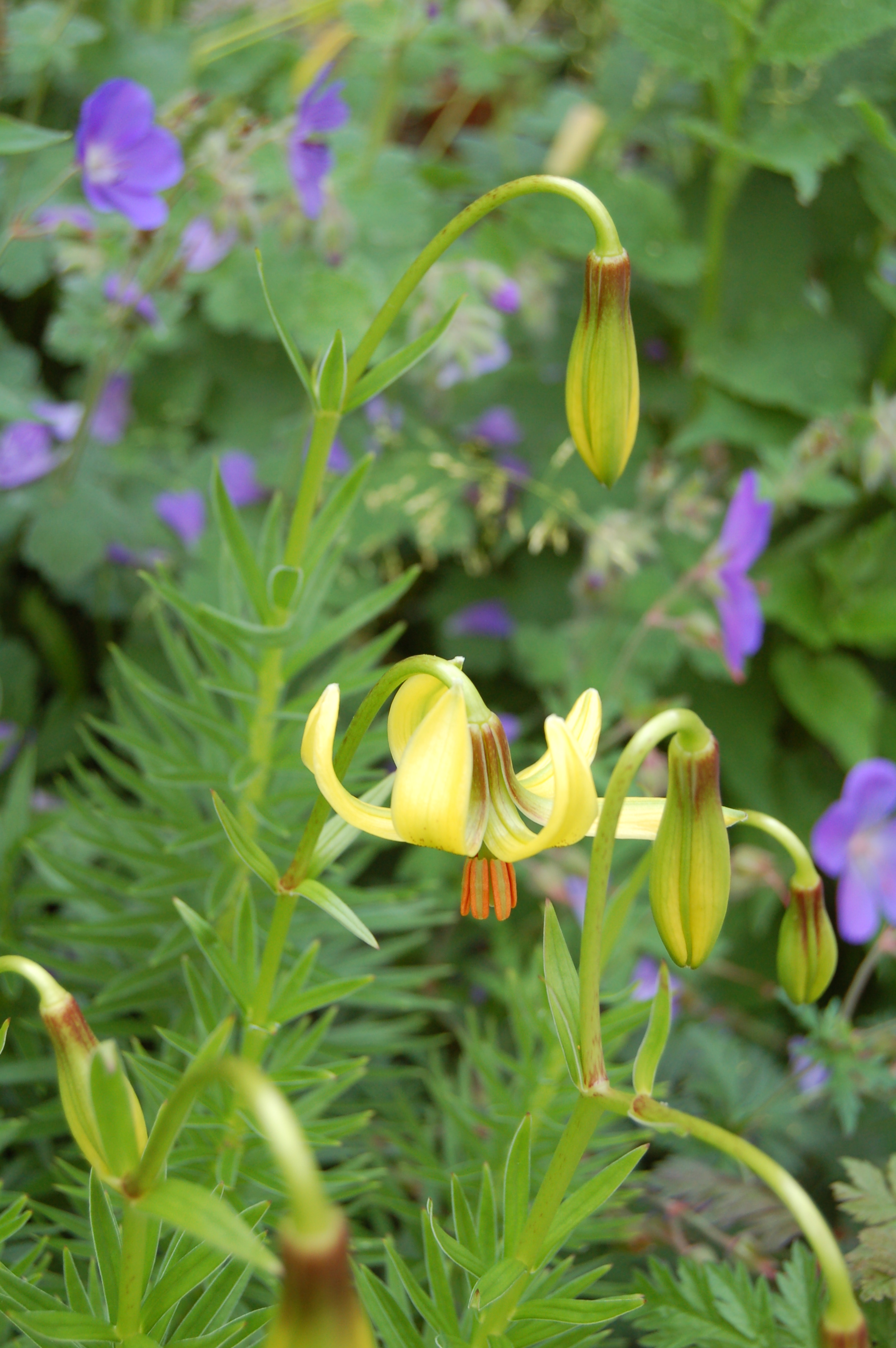
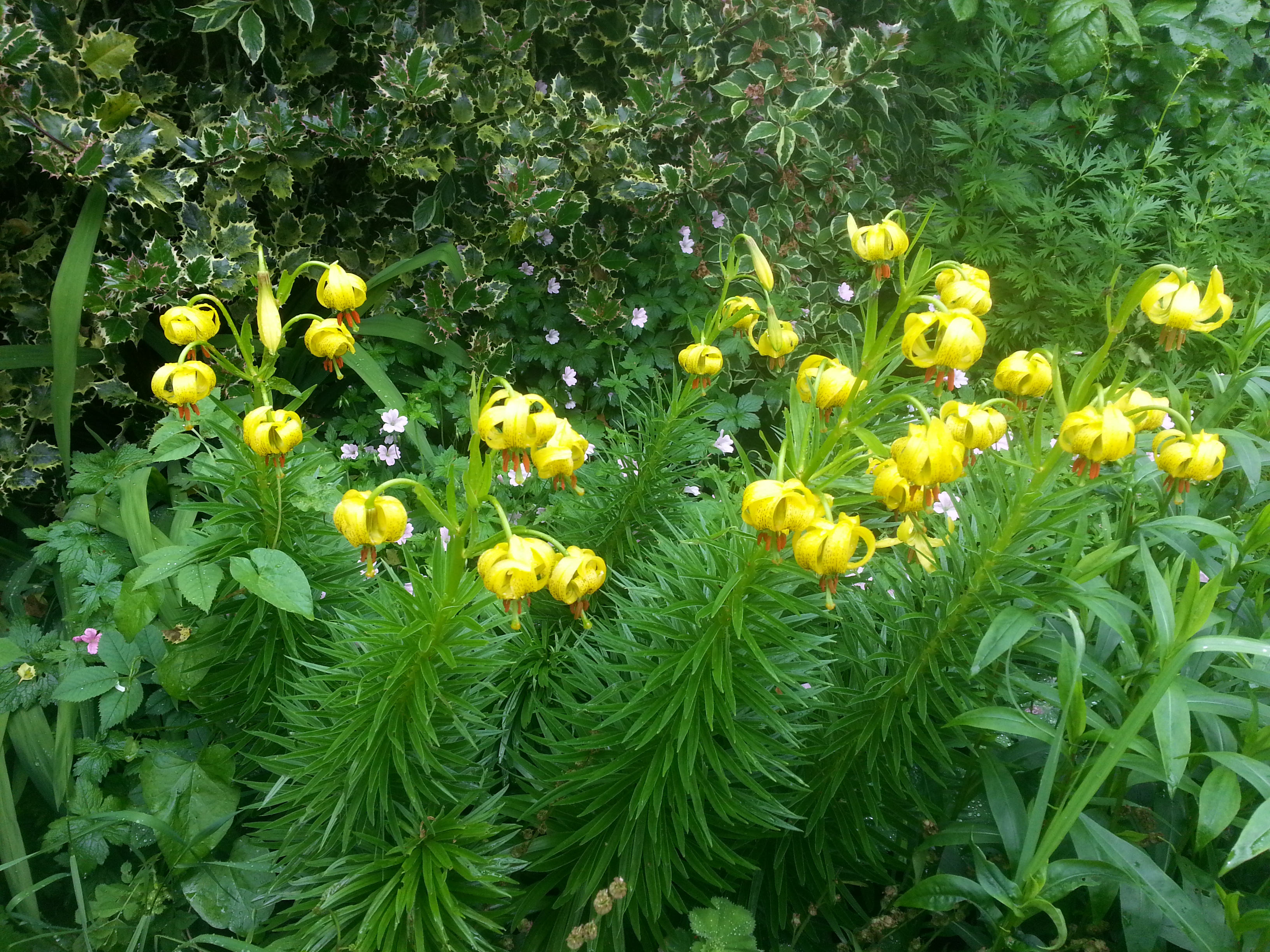
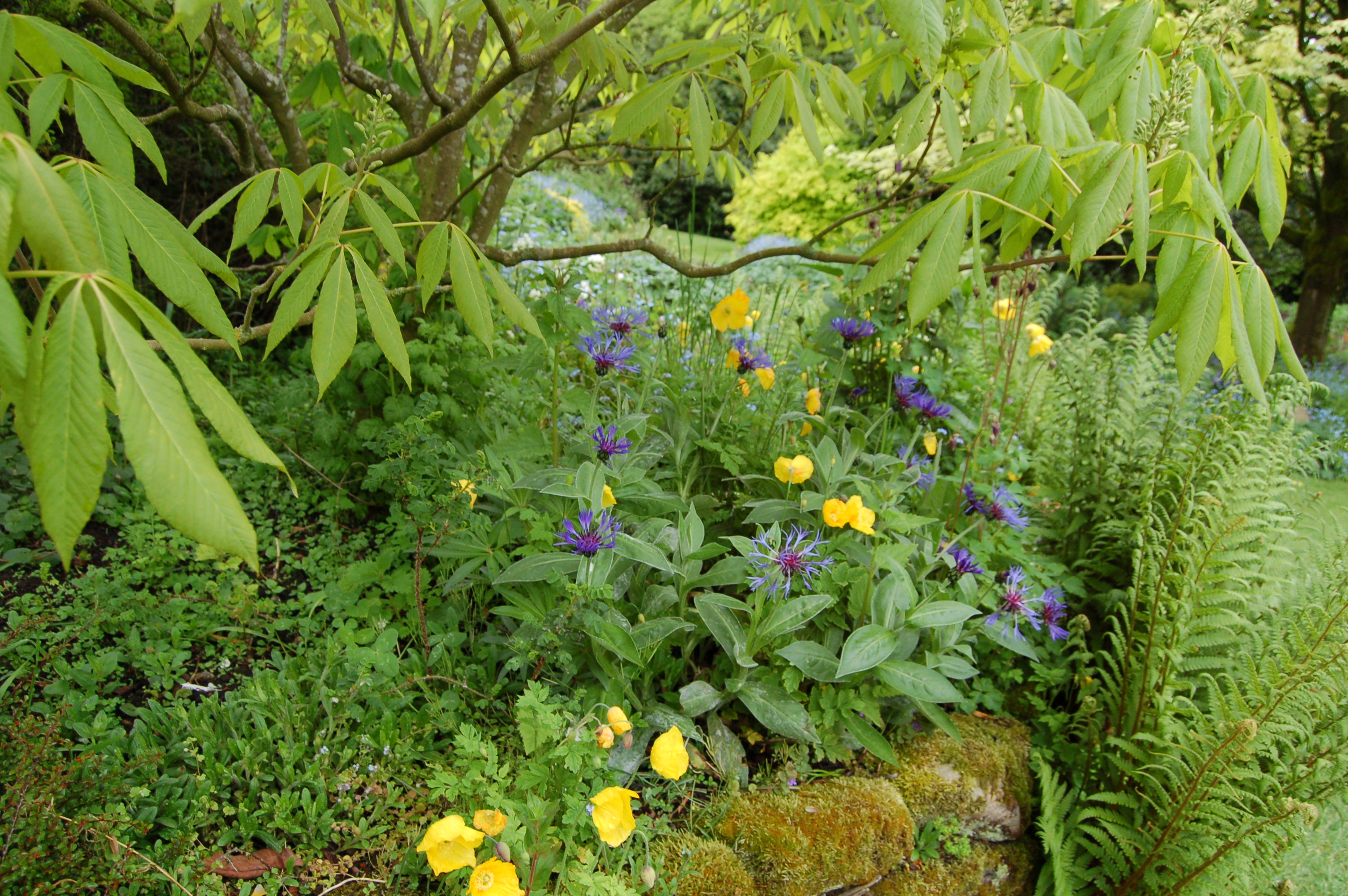
A classic colour combination of yellow and blue attracted us. Closer to we realised that the yellow was provided by this stunning Lily.
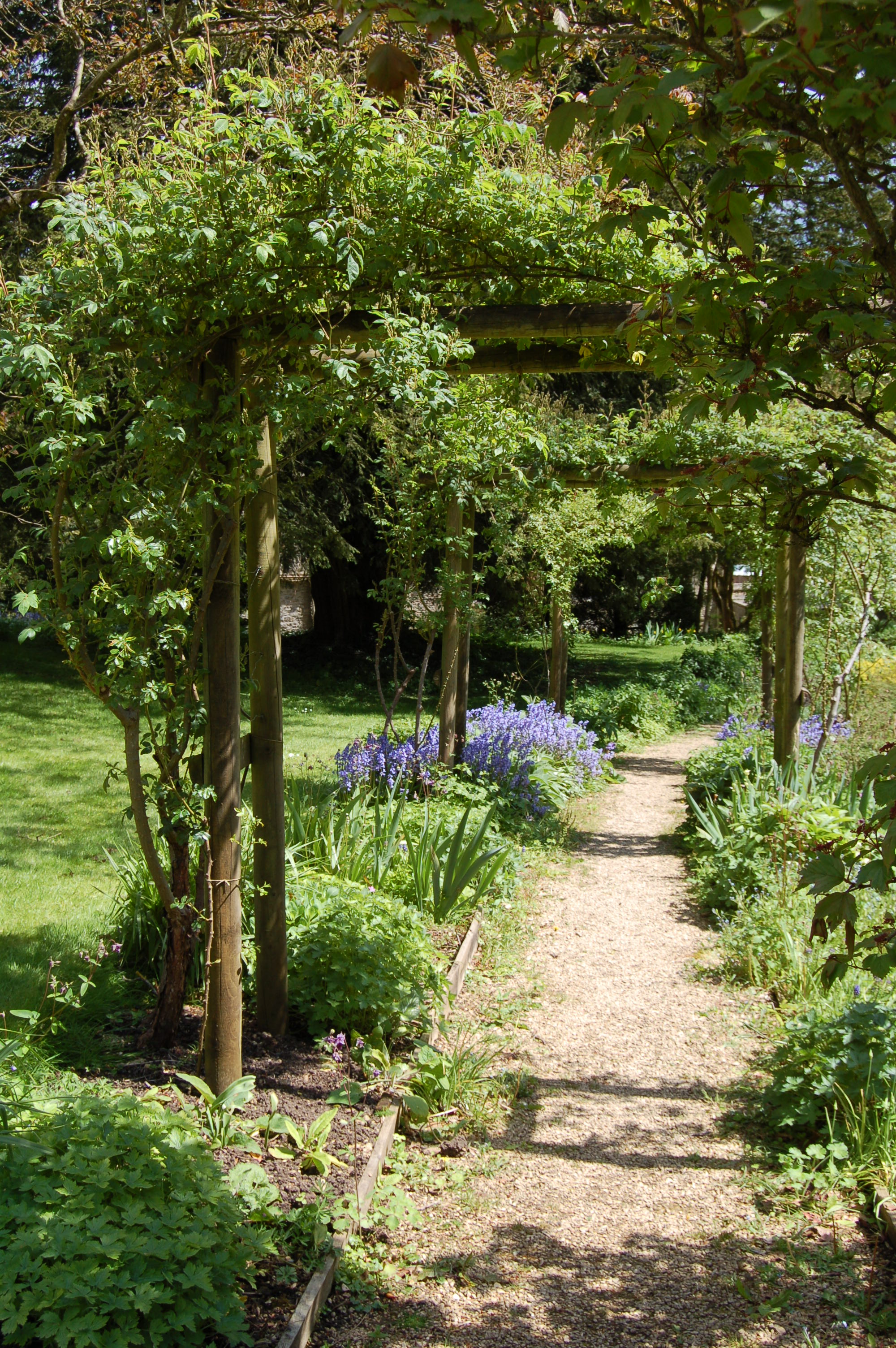
One effective design trick used here was the use of enticing paths and it was very well used.


A final wander around these paths beneath and between the trees was called for after our tea and before we reluctantly left this special place in a wooded Welsh valley.
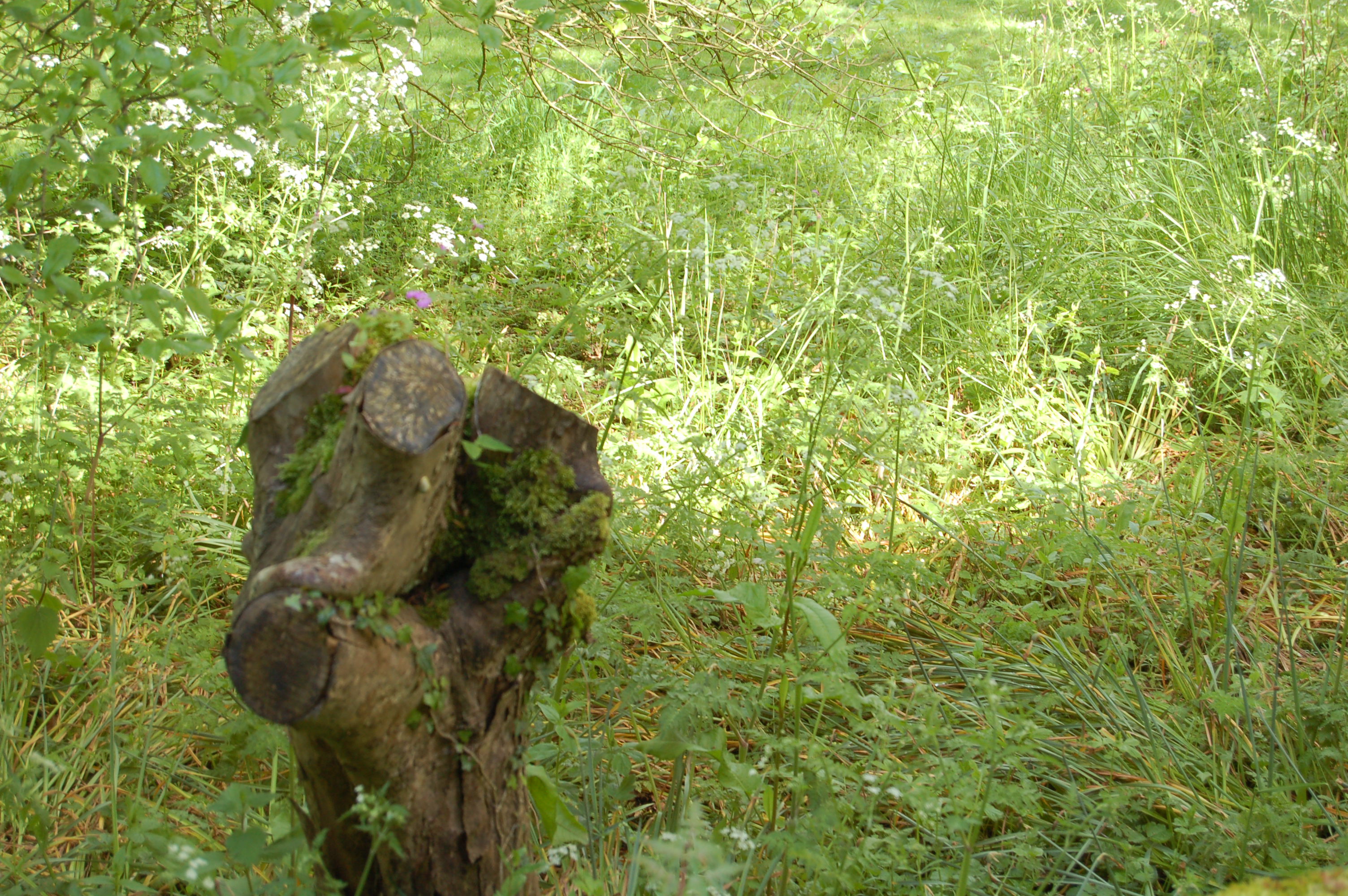
Callum accompanied us down the drive as he thanked us for visiting and for buying lots of plants. They were very good hosts. At the bottom of the drive we made one final discovery, another surprise conjured up by this truly unique garden. Another of Callum’s tricks with his pruners.
A Wonderful Walled Garden – Cerney House
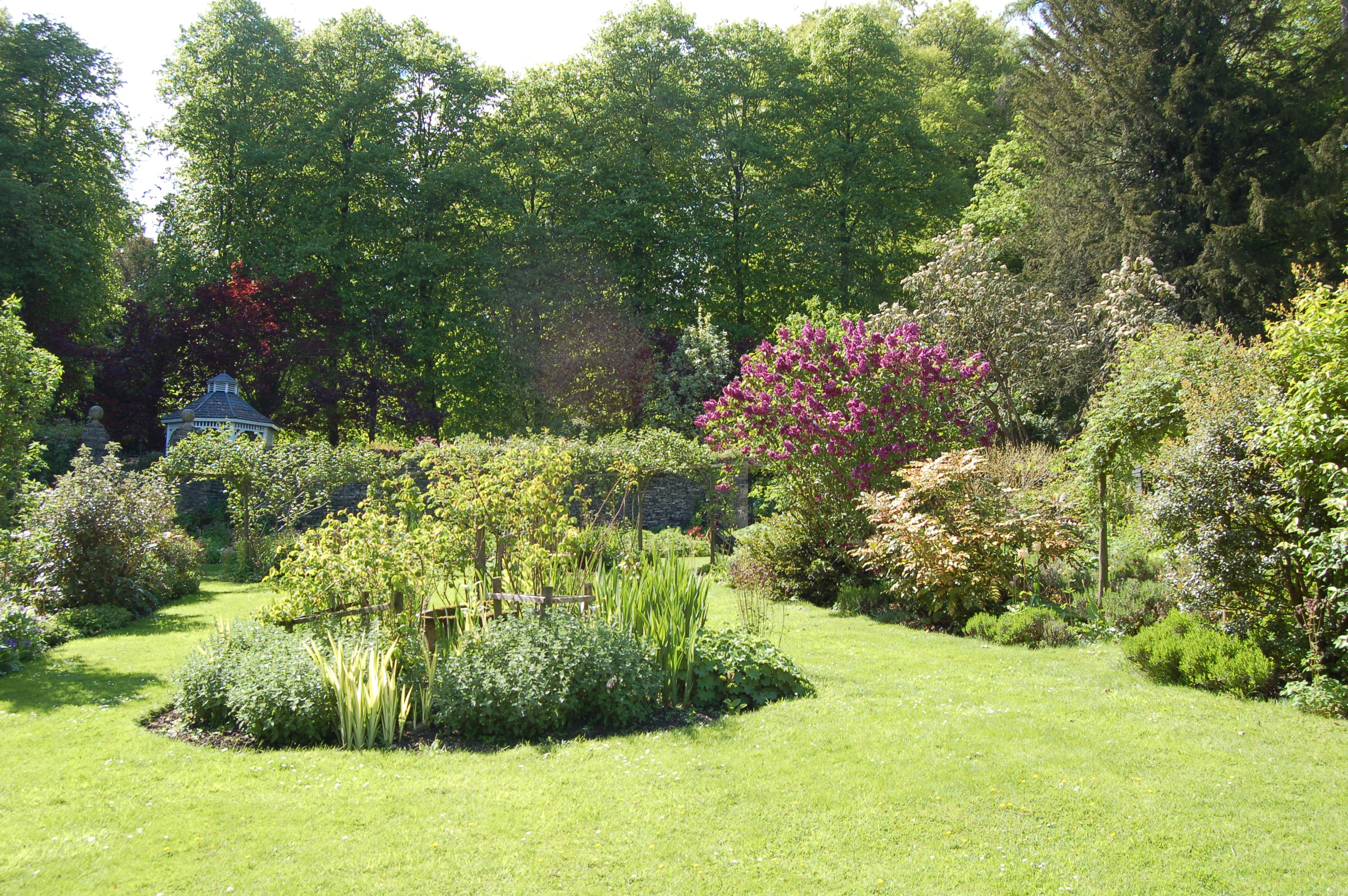
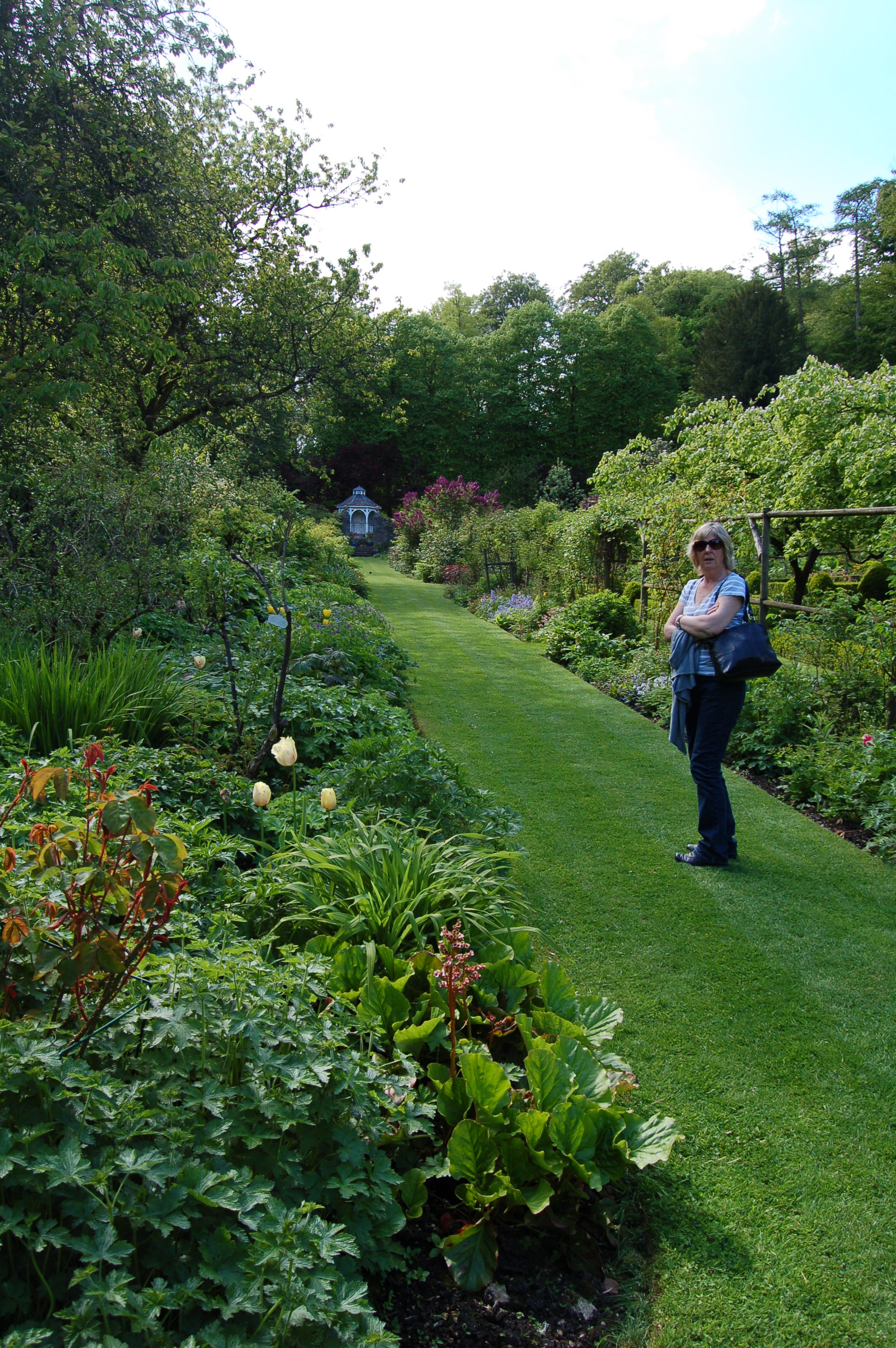
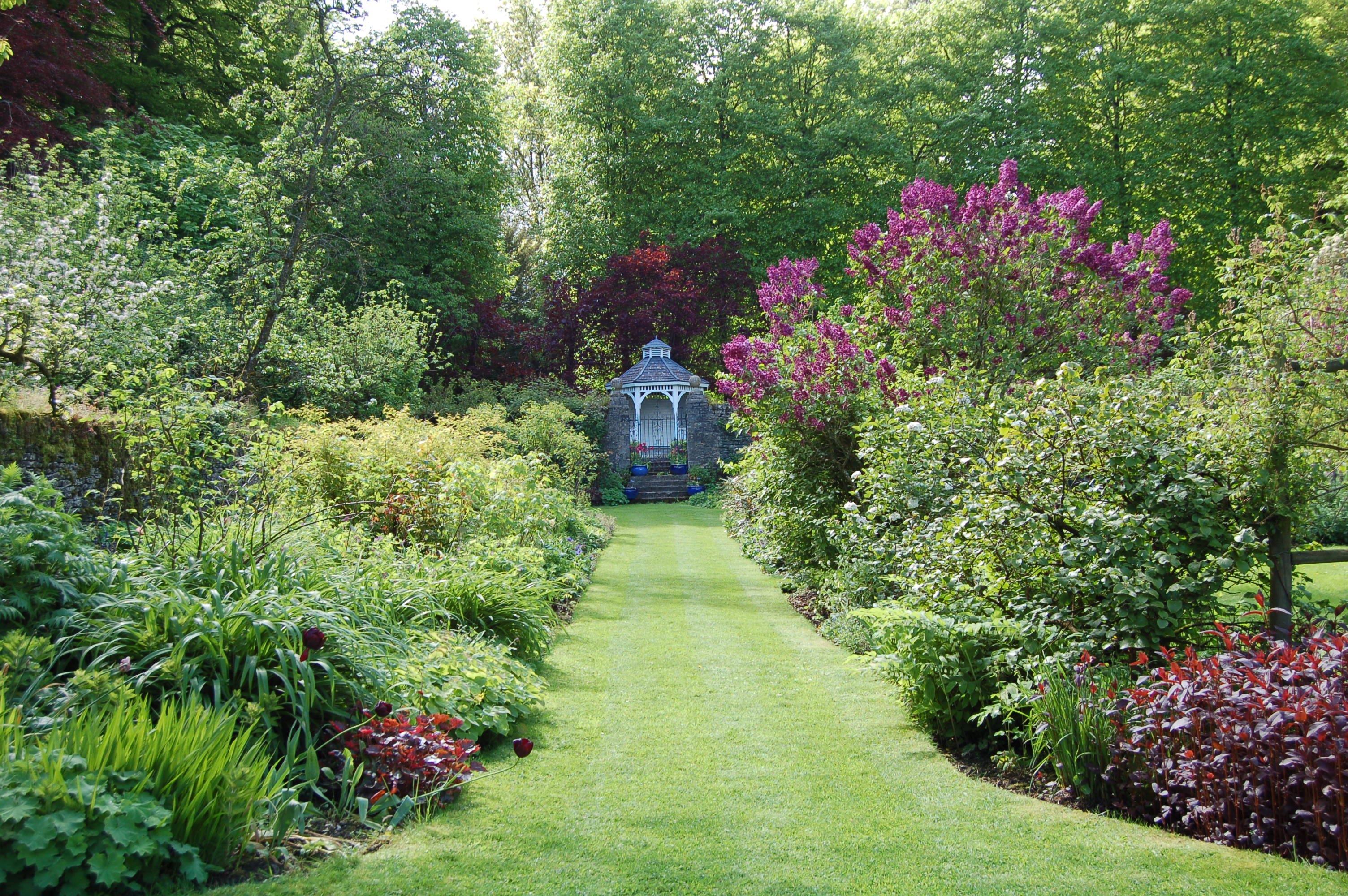
Both Jude and I love walled gardens whether they keep up the tradition of providing the ideal environment for fruit and veg growing or if they house decorative planting within their walls. On an uncharacteristically hot day in May we spent the afternoon in the walled garden at Cerney House on the edge of the Cotswolds between Cheltenham and Cirencester.
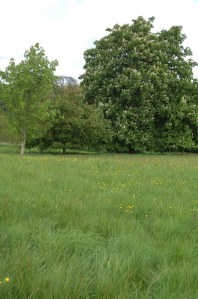
The place for parking the cars was on a freshly mown patch of grass within a huge uncut flowery meadow. This meadow provided a wonderful foreground to the mature trees. We were amused to see these two cars which had obviously been parked up for a few days as the grass had been cut around them. Long grass and flowers lapped at their tyres.


The garden here is on a gentle slope which must have created near perfect conditions for the gardeners to produce fruit and veg. The little gateway into the garden gave a glimpse of what we could look forward to and there were little gems to increase our anticipation.


Now long mixed decorative borders run along the slope and in the top corner soon after entering through the gateway we discovered a tea shop in the old gardeners’ bothy. A great place to start our exploration and refresh ourselves before setting off.


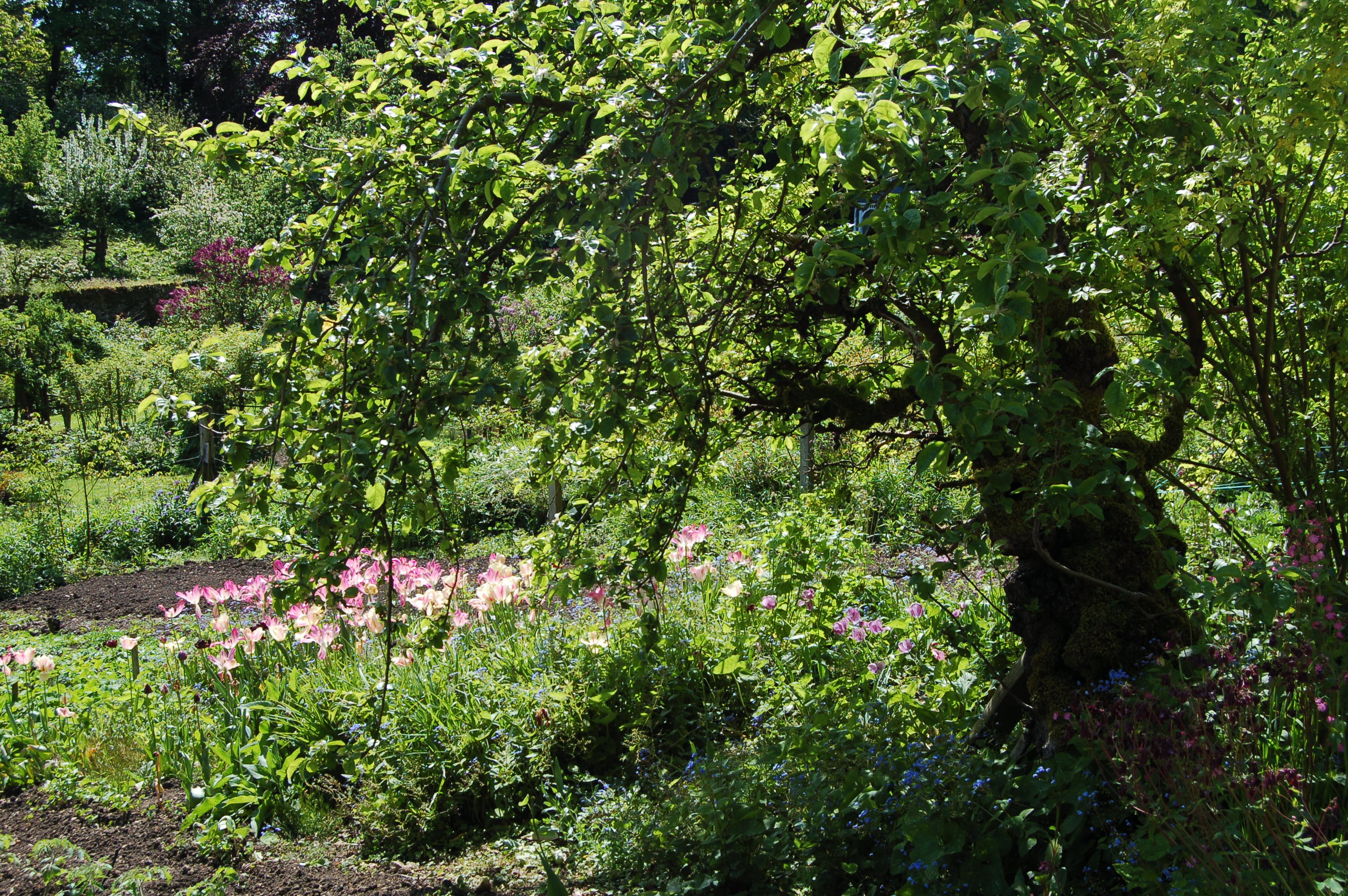
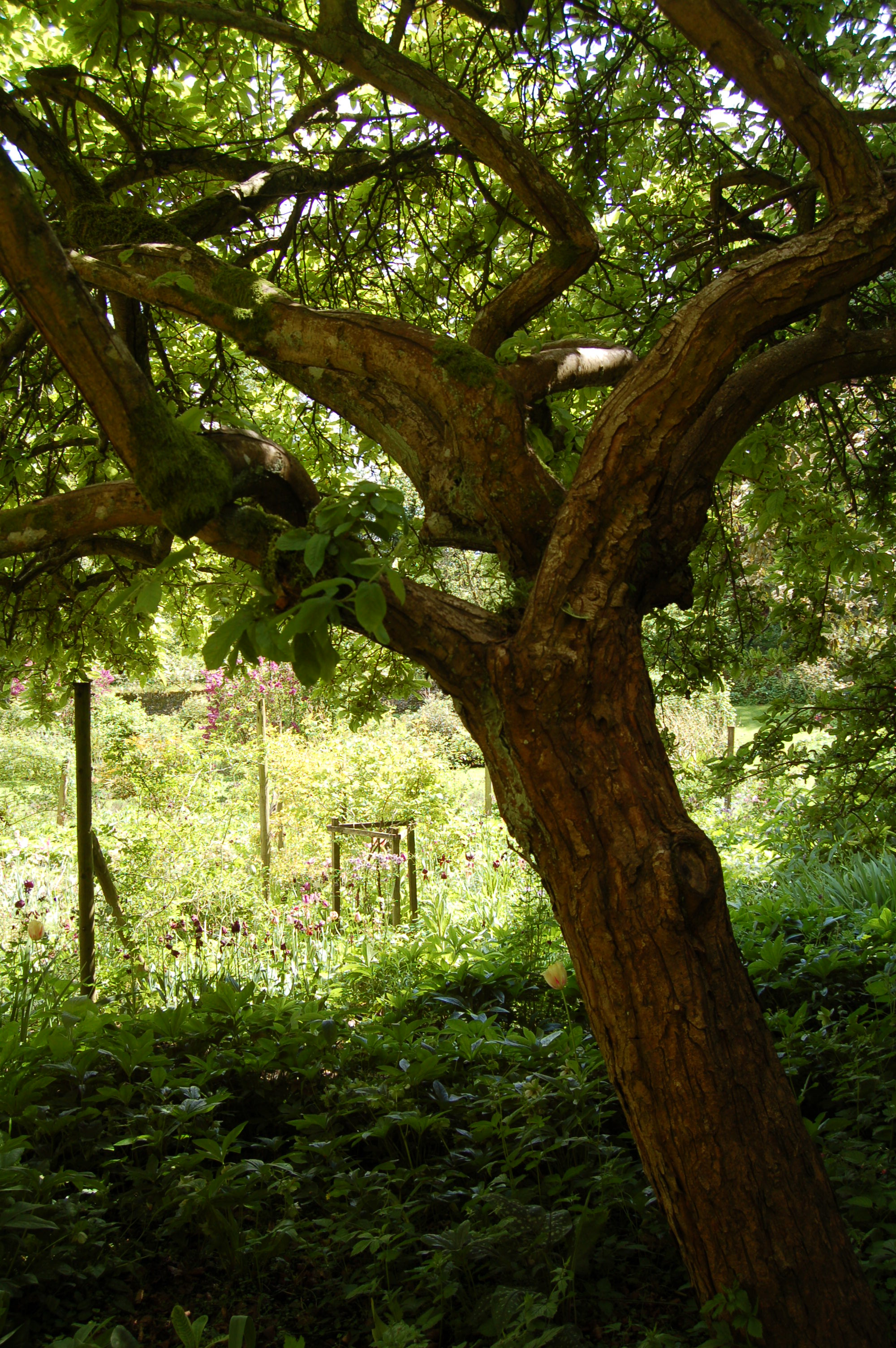
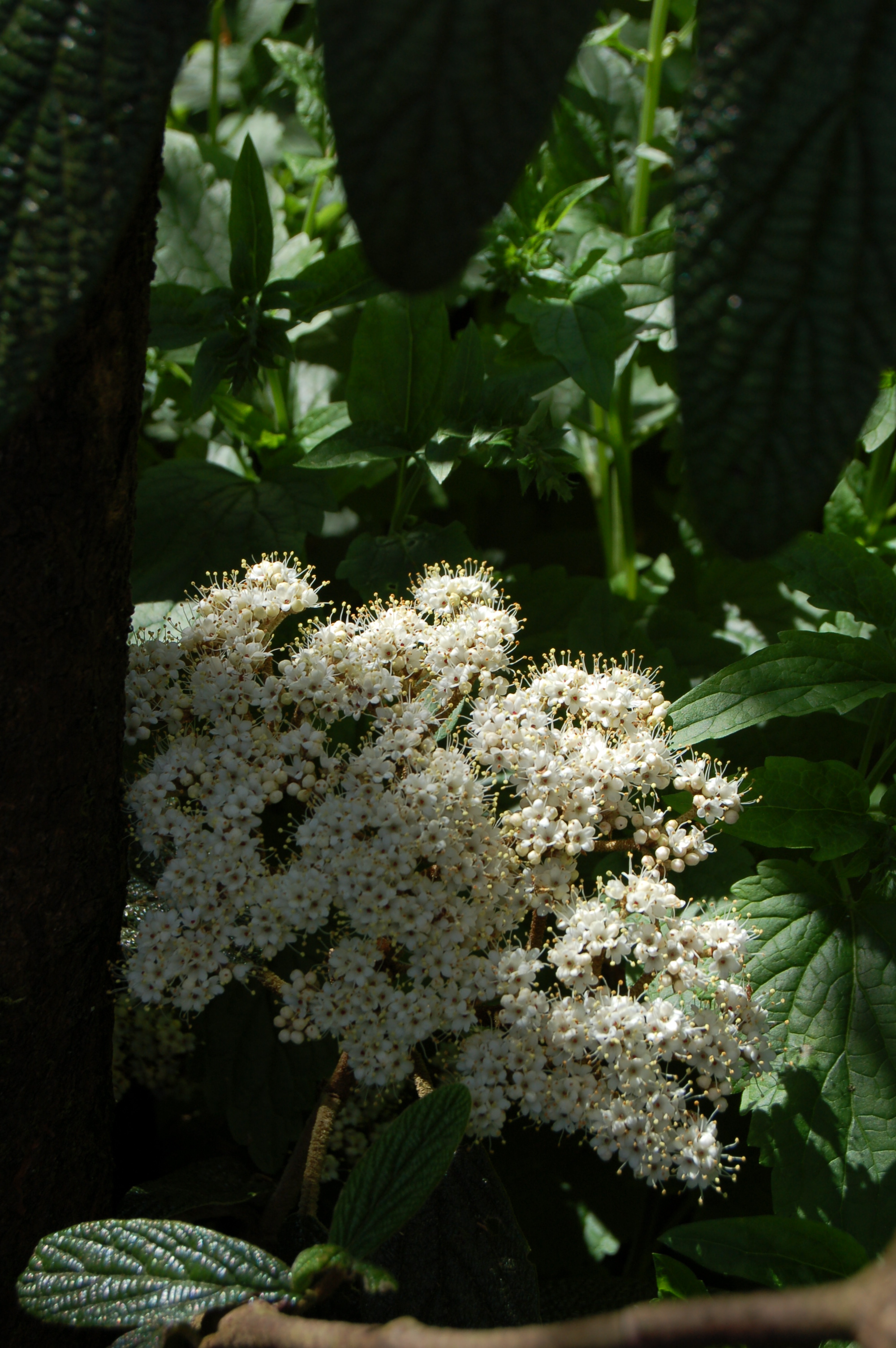
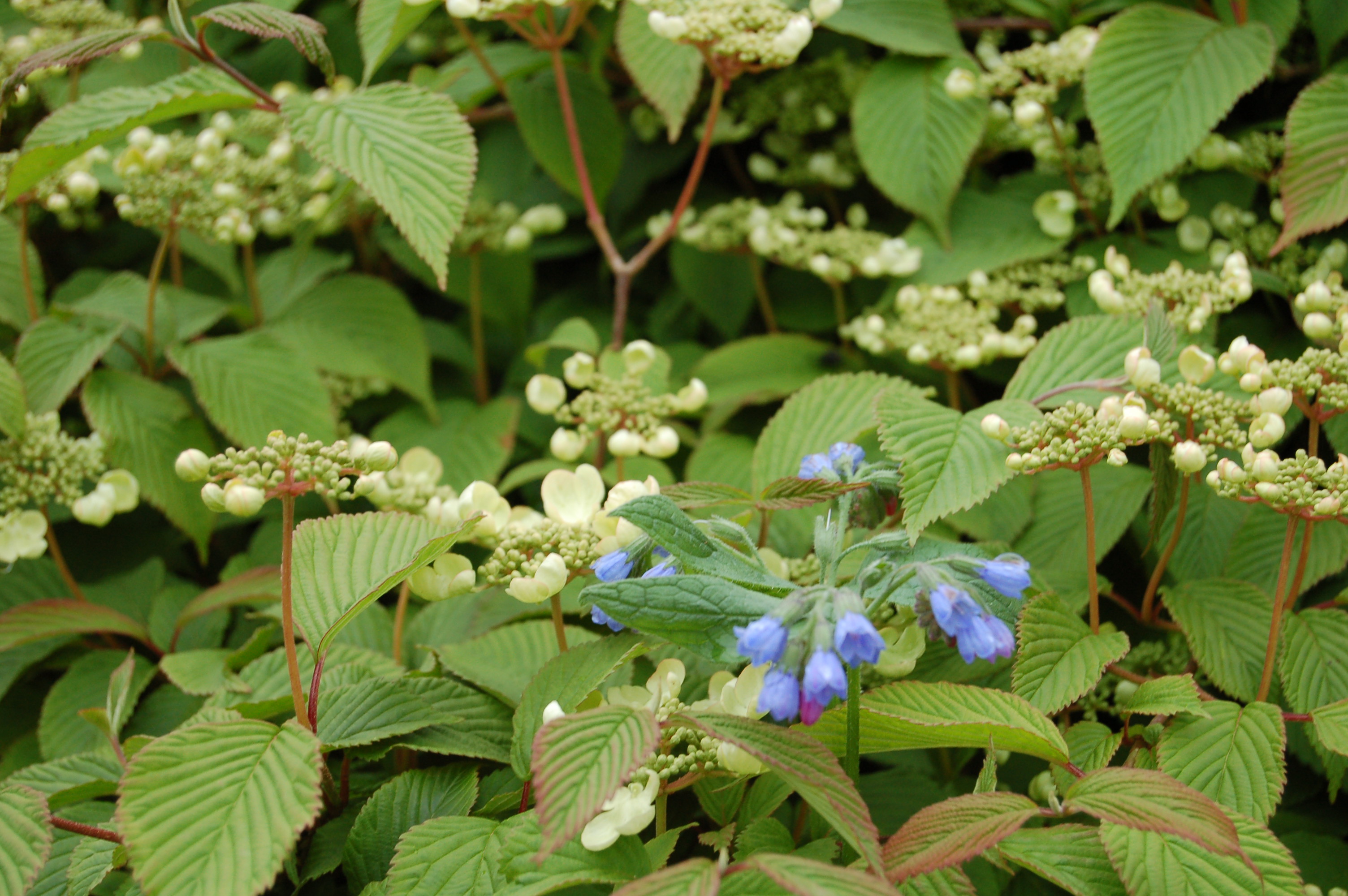
There were some lovely old gnarled fruit trees remaining from the old productive garden days, and a lovely old Viburnum still flowering strongly.


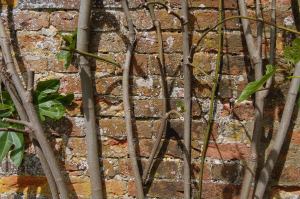
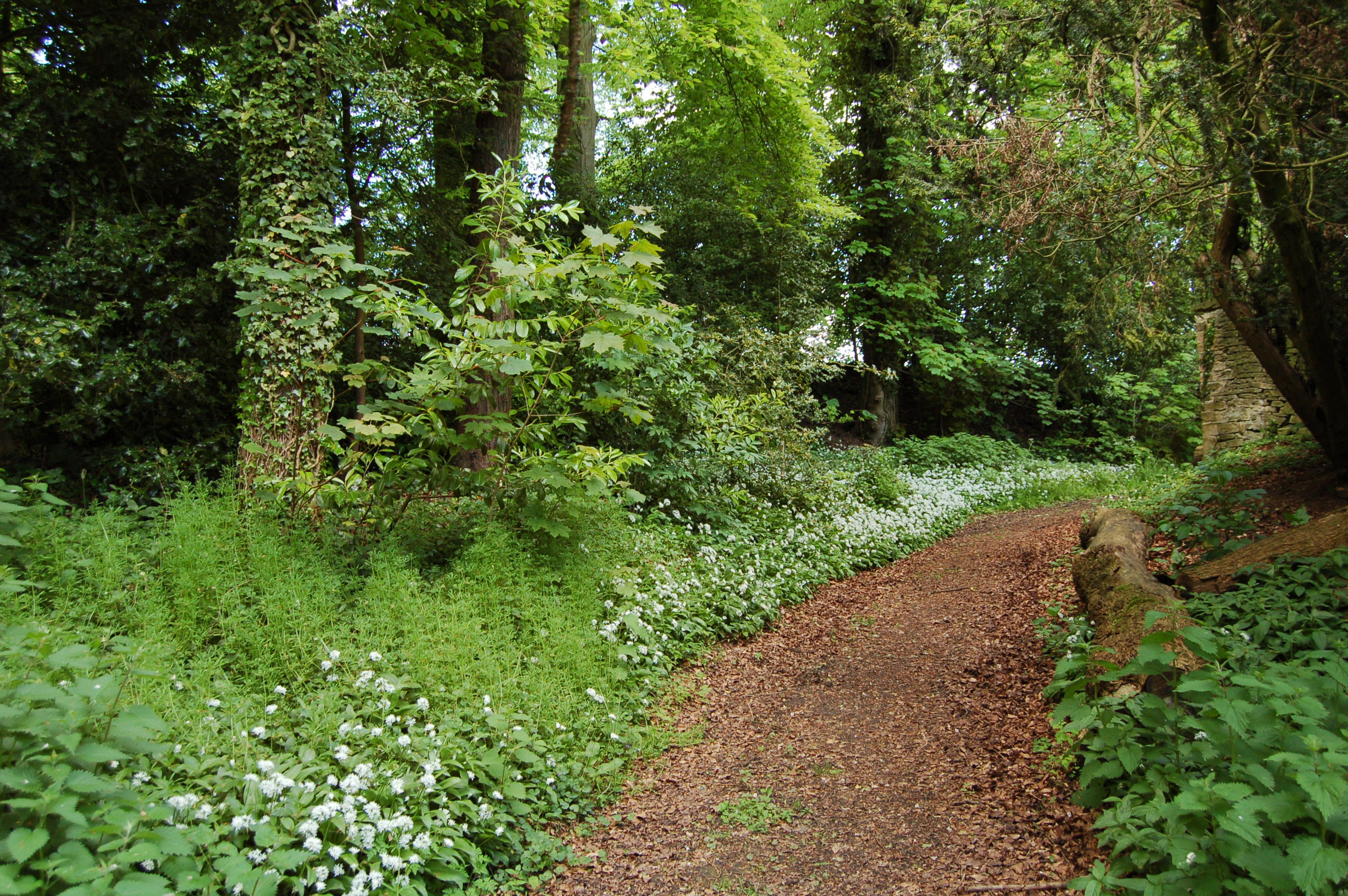
We took a diversion into the edge of the Woodland Garden where the air was scented with Wild Garlic and the ground beneath the trees clothed in a huge variety of Comfreys and Geraniums. The walls here were clothed in Clematis happily rambling along.
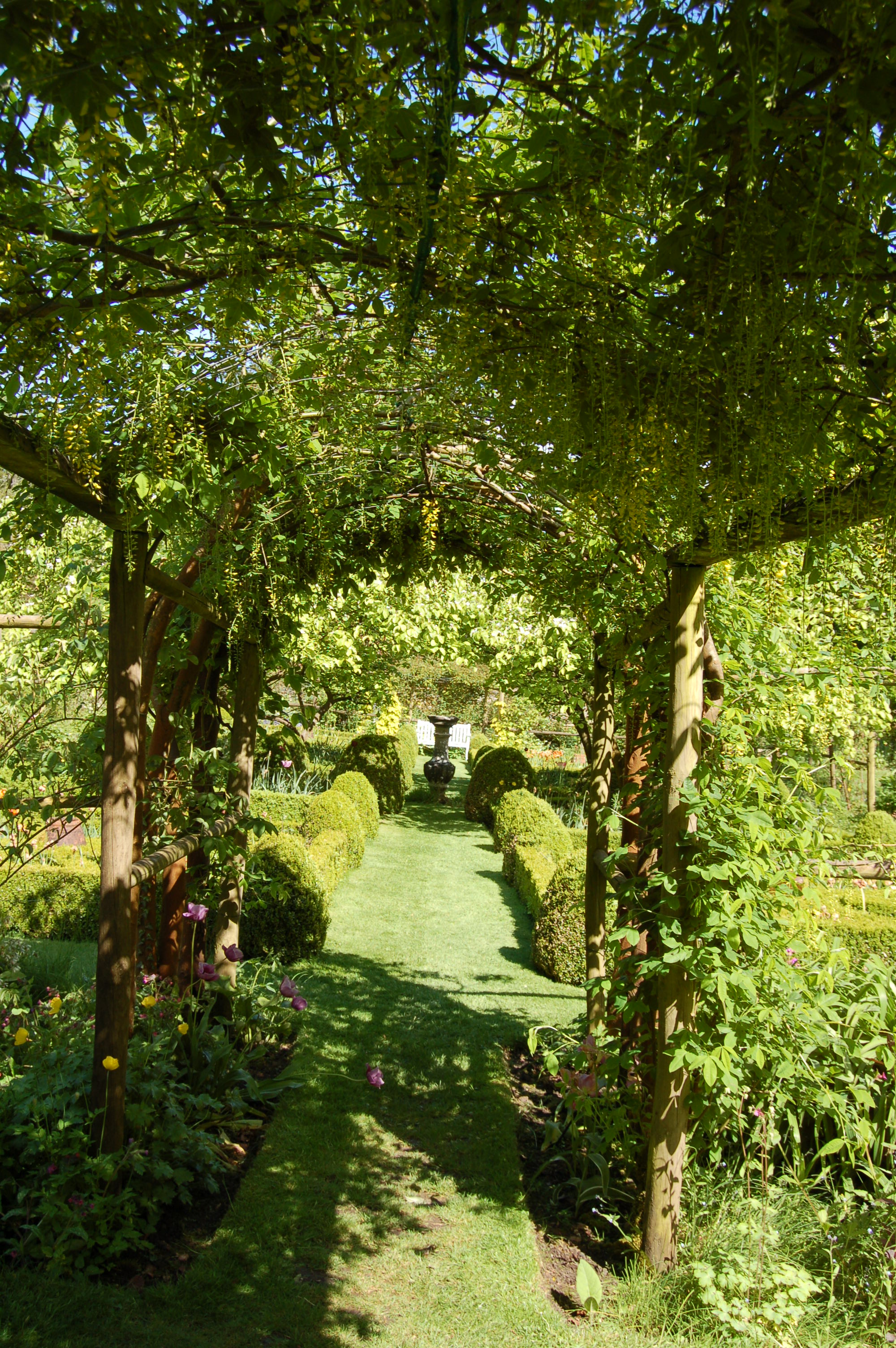
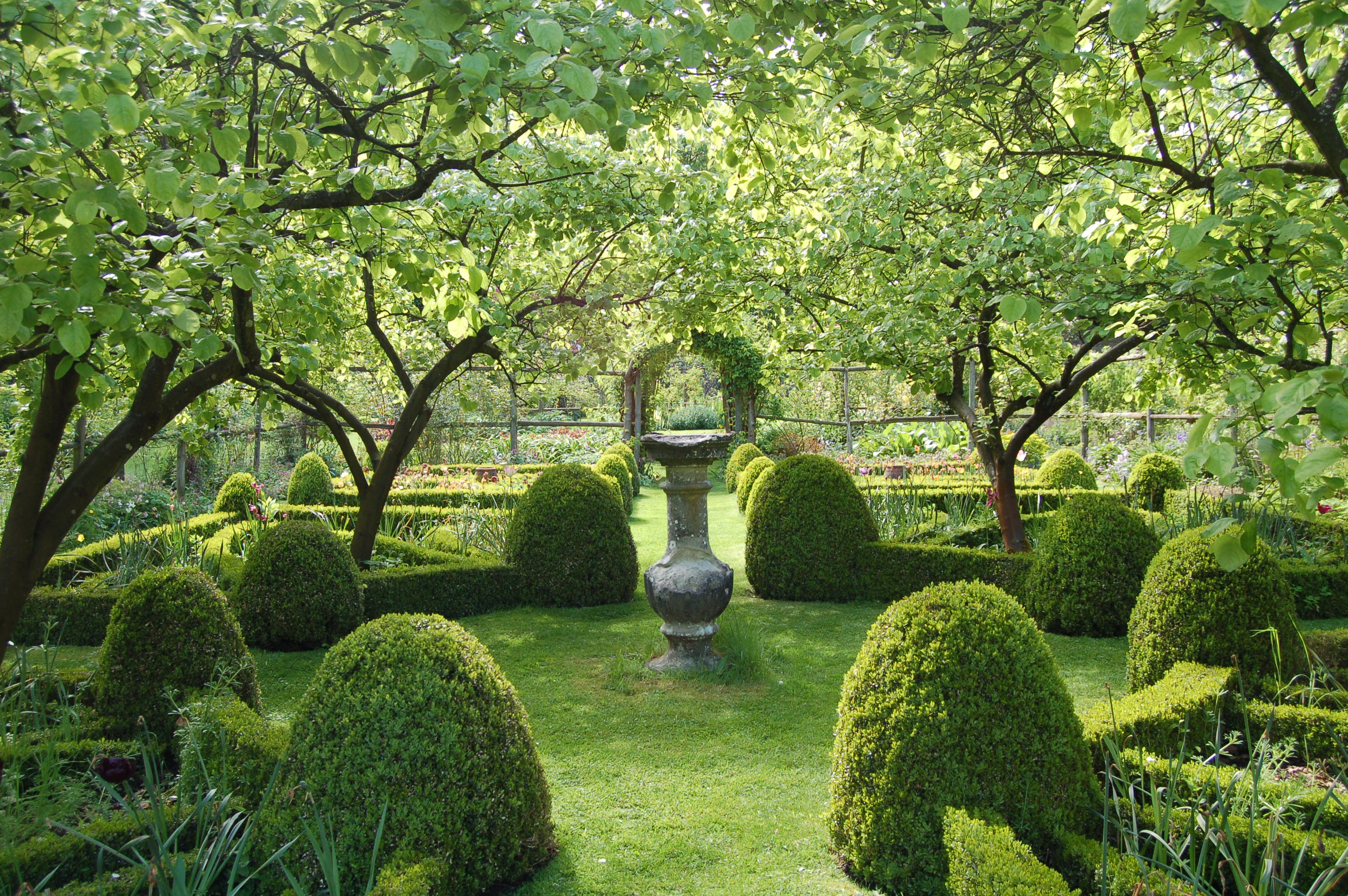
The gardens within the walls were a lovely combination of formal and informal, short smartly cut hedges enclosing frothy perennials.
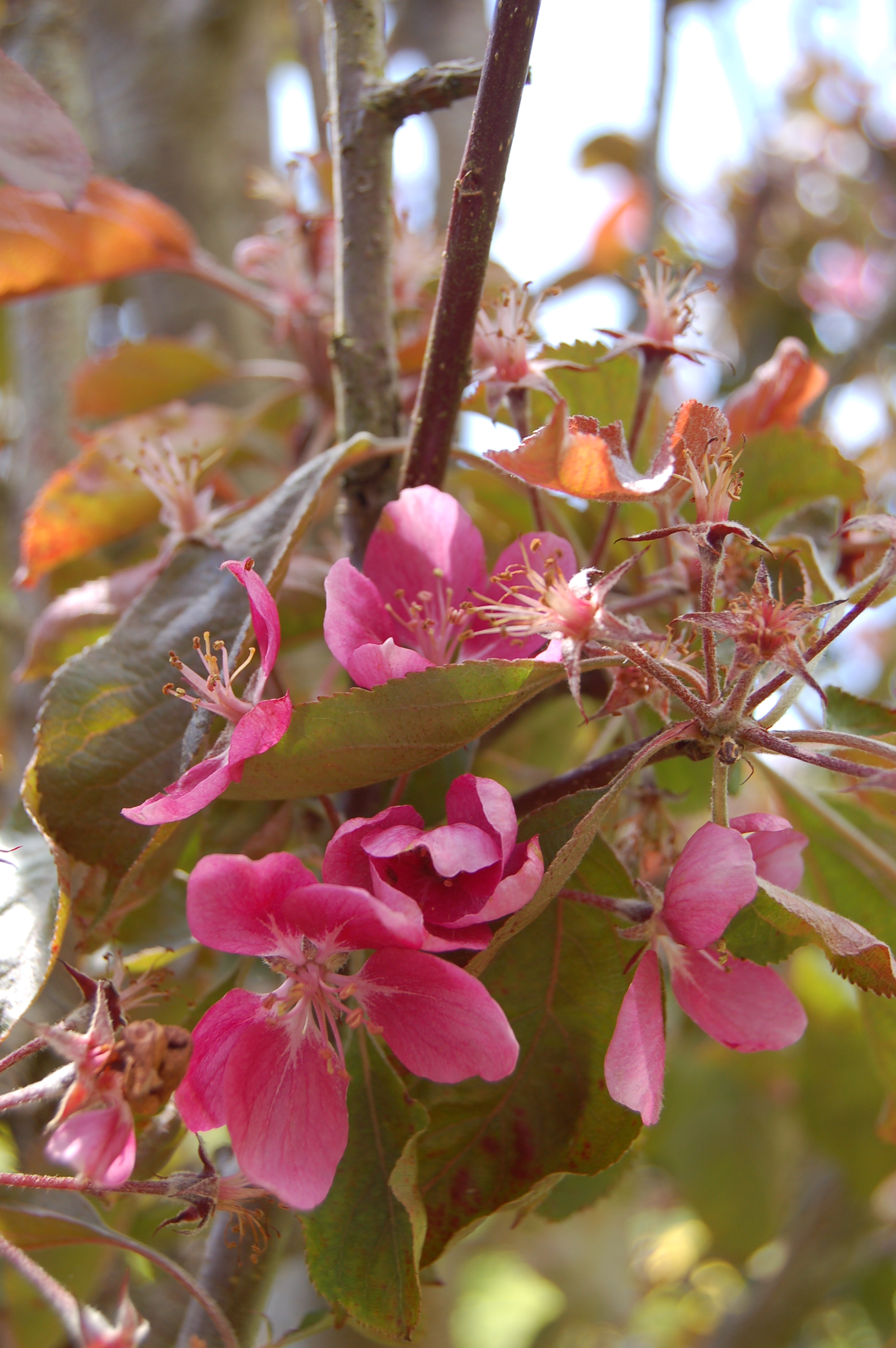
In the centre of a group of four formal beds we enjoyed looking at four old Quinces in flower.


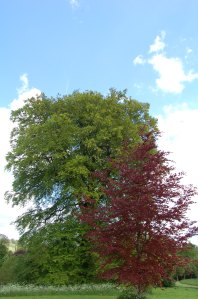
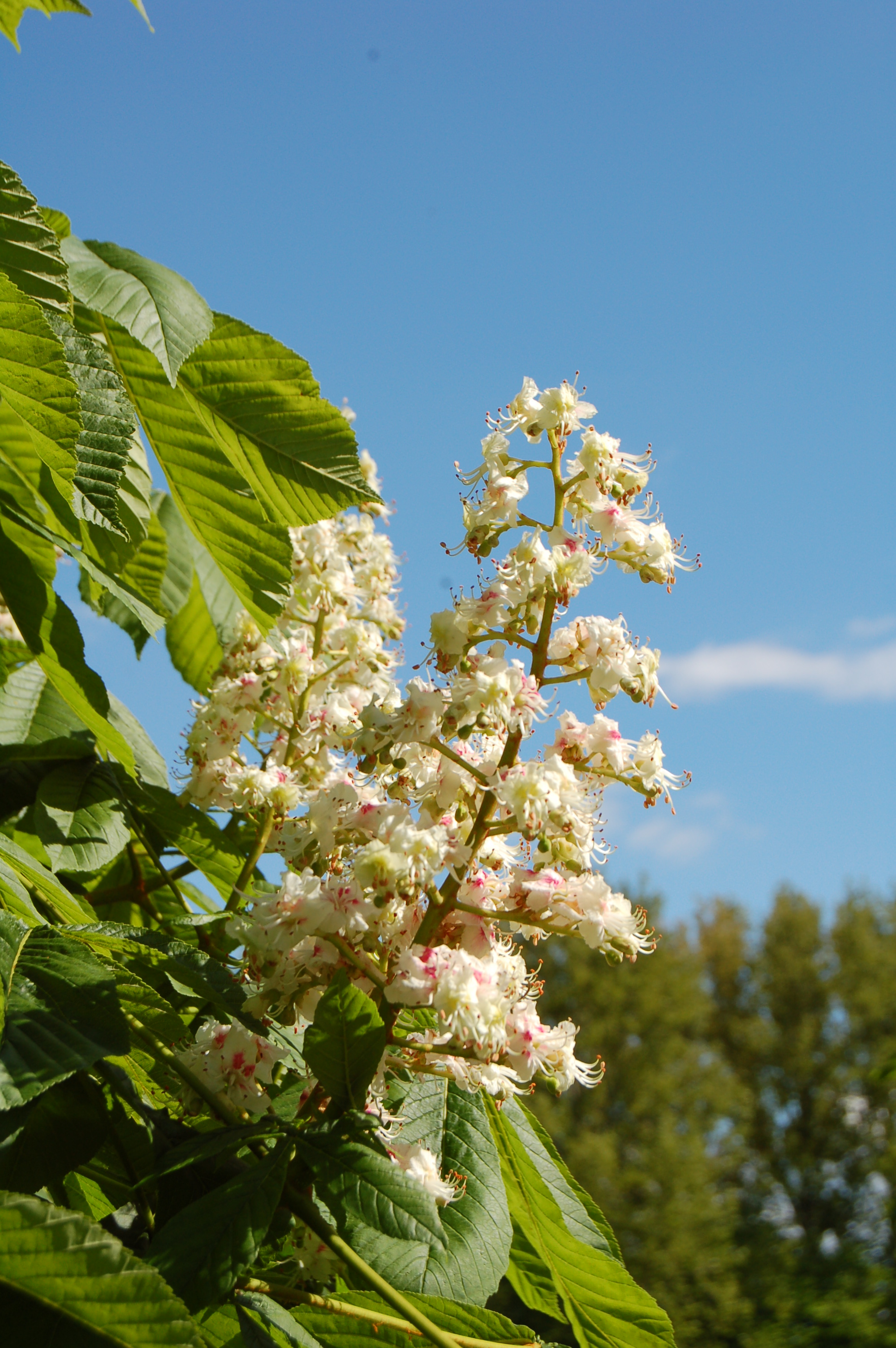
The last view of the garden from the car park as we arrived back after our walk was of groups of mature trees, many of which were Horse Chestnut. I was doubly glad to see them. Firstly because they are my favourite late spring tree with their huge spires of white or pink flowers and secondly because I had just started a post about them.
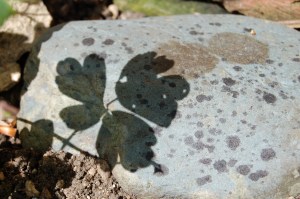
I shall finish with this Aquilegia leaf shadow sharply painted by the sun onto a boulder.

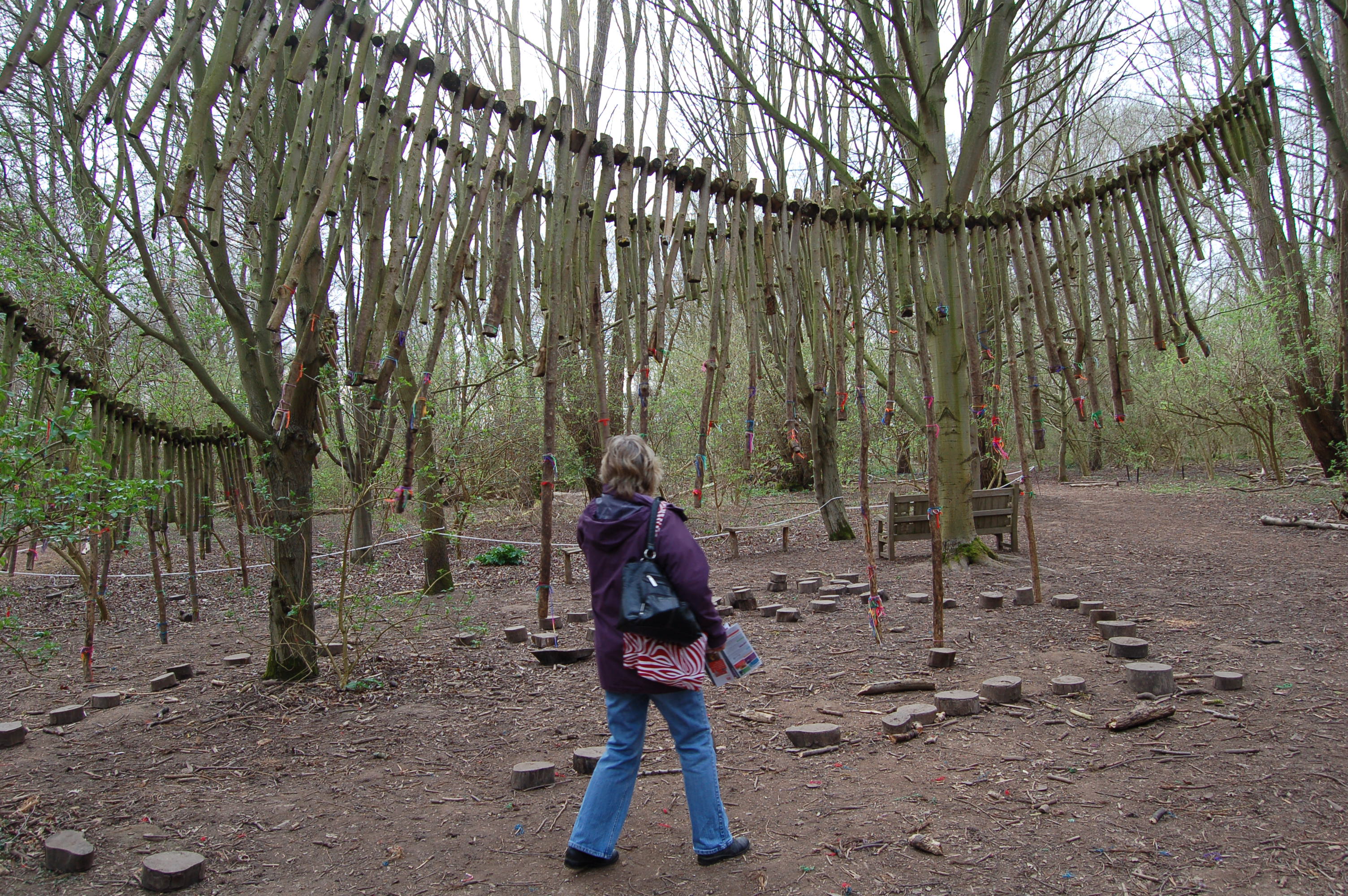
We have created an “Interest Trail” around our allotment community garden, and we see it performing two roles, firstly it guides all our visitors around the site taking in as big a variety of features as possible and secondly it performs as an activity trail for children. It has proved very popular. Whenever we come across a similar trail in large gardens or parks we always have a look to see how the idea has been executed. We visited the National Trust garden, Dunham Abbey, primarily to enjoy the Winter Garden but we discovered that since our last visit a few years ago a couple of the gardeners have created a children’s trail so we could not resist trying it out.
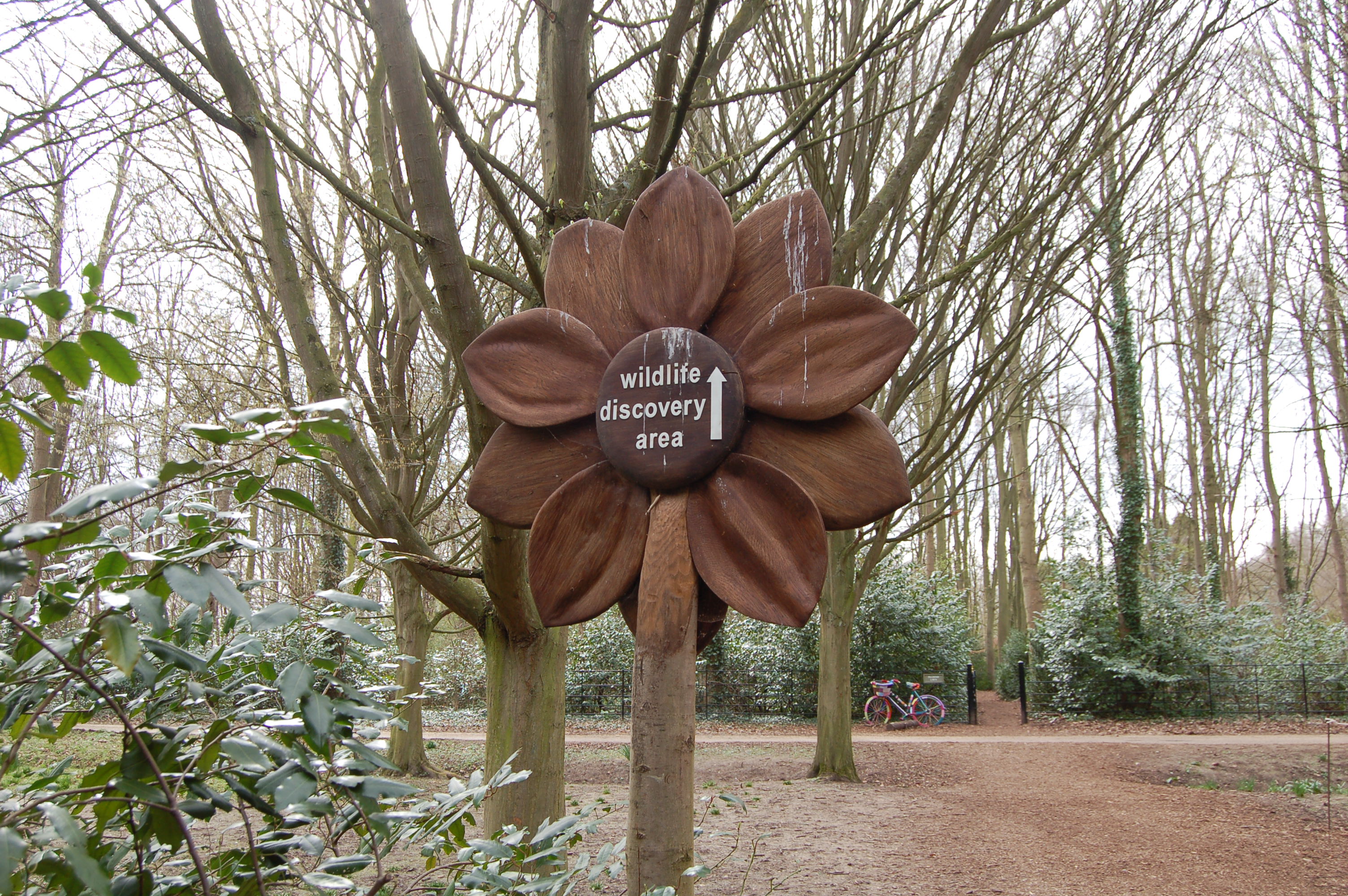
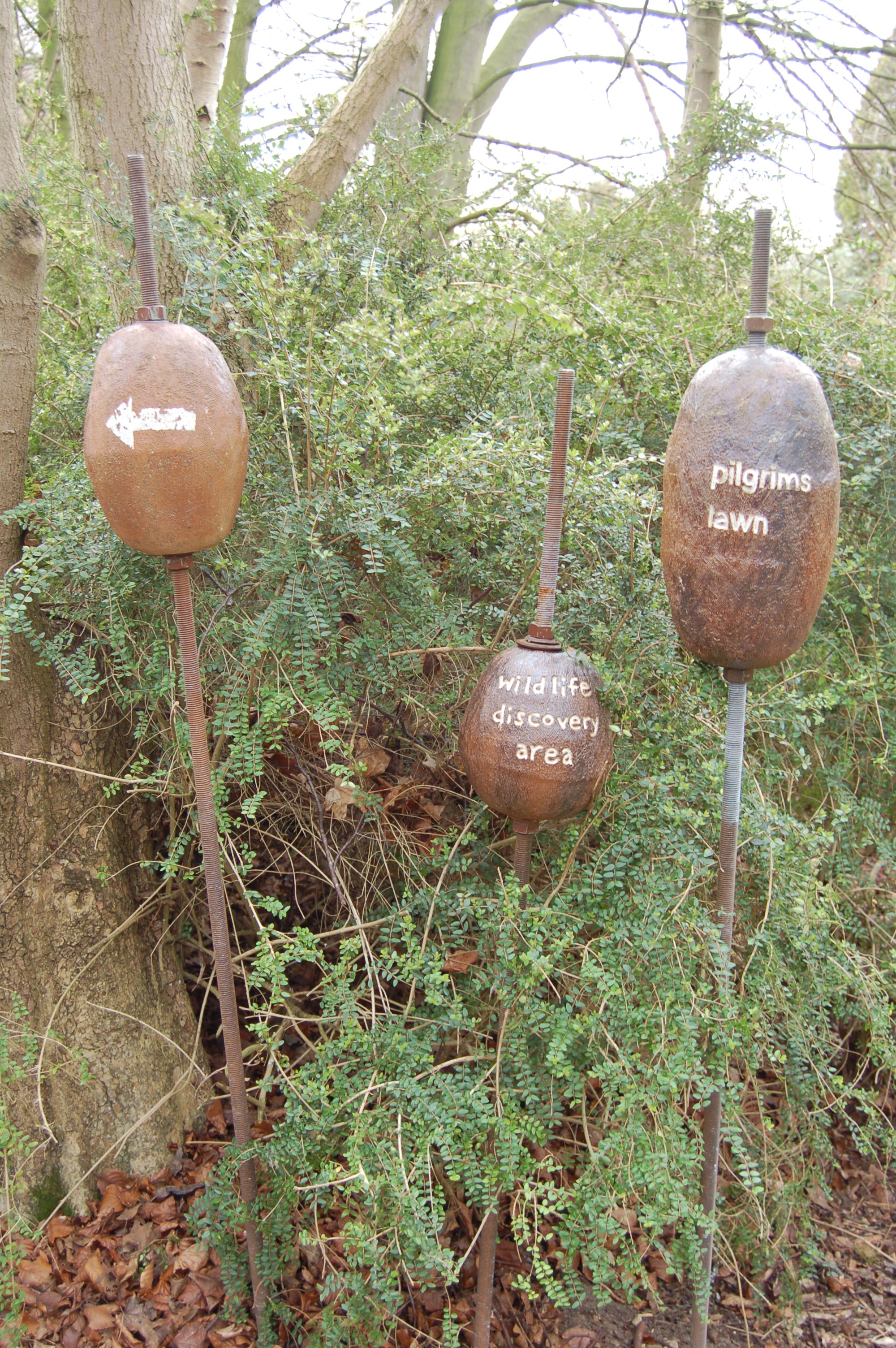
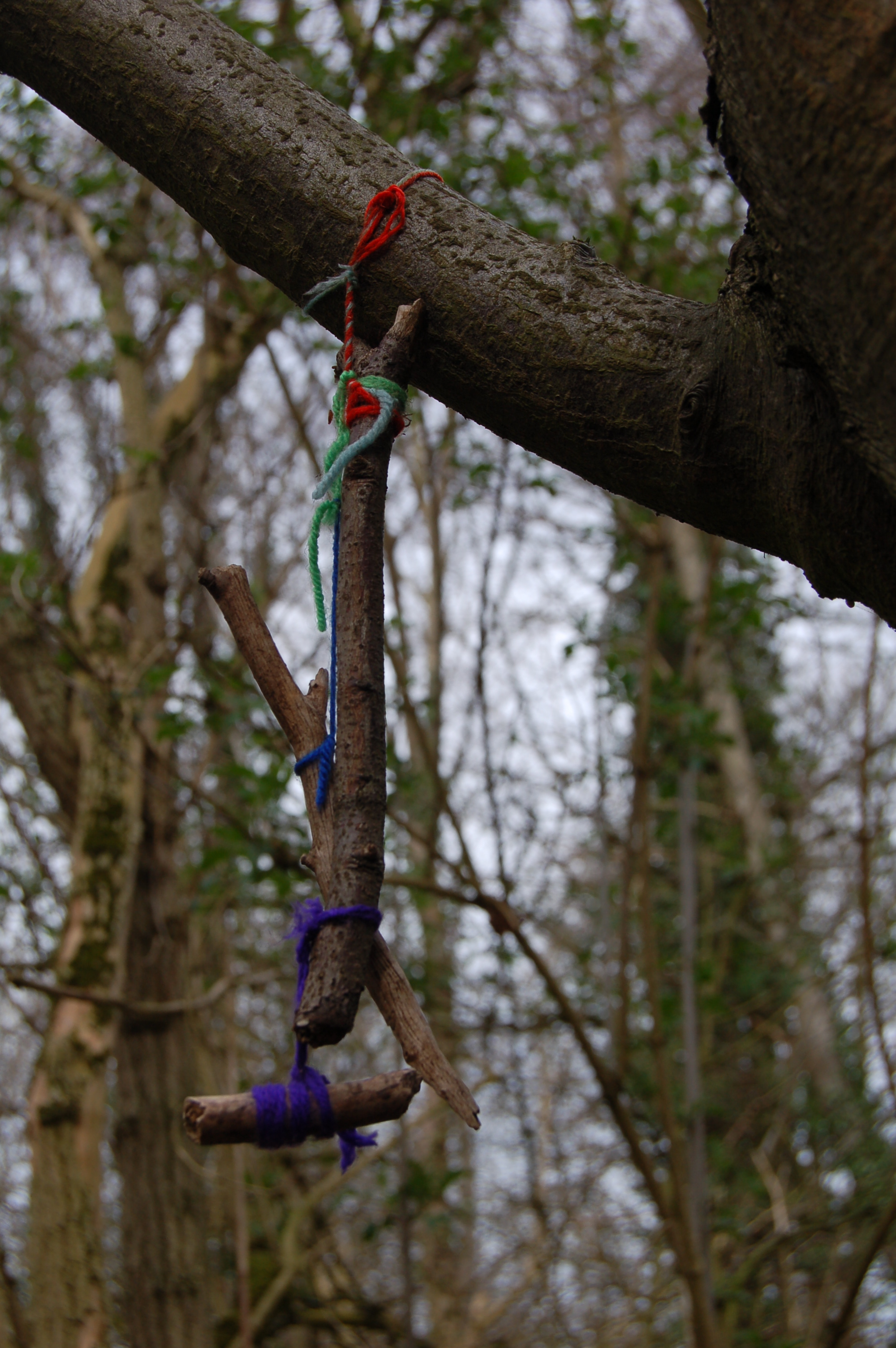
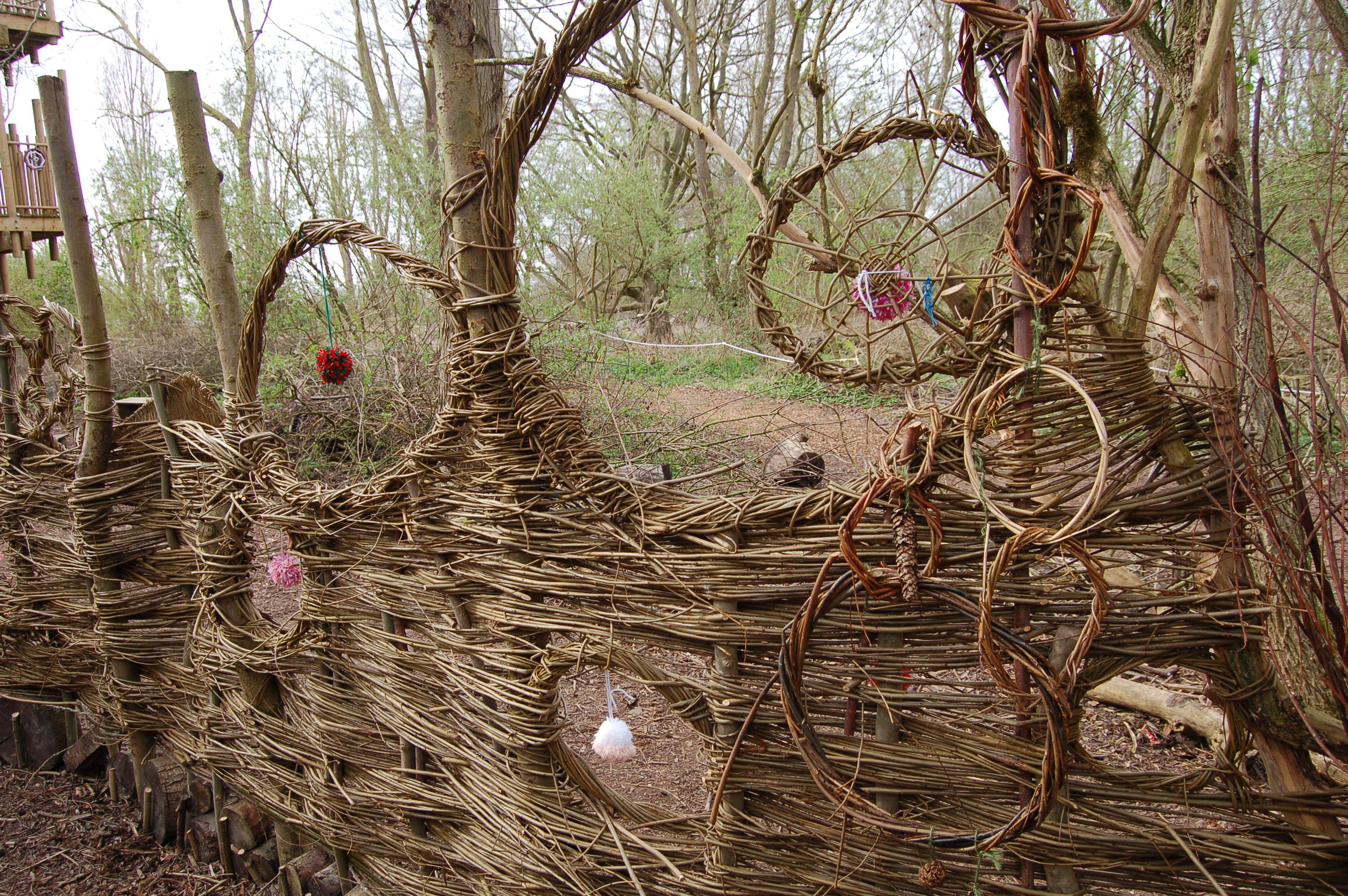
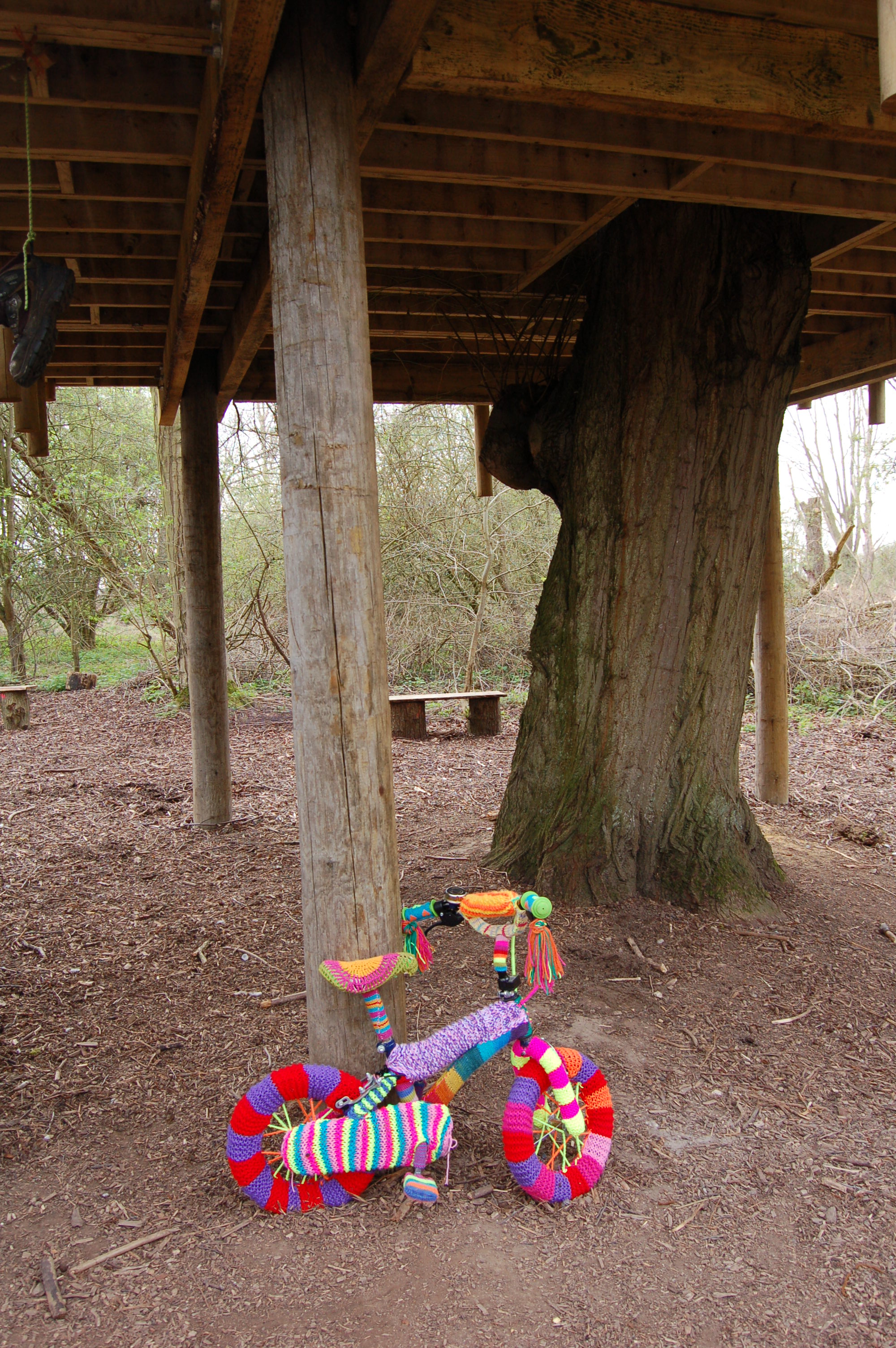
It was wonderful! Come with us and enjoy! We found the sign and below it one of the decorated bikes and then enjoyed a woodland wander before discovering the first of many fun and educational features designed for children.

Any child who is brought here is very lucky indeed! At our allotment we also have features and arrange activities for the children and grandchildren of our members and their friends so we left with many new ideas.
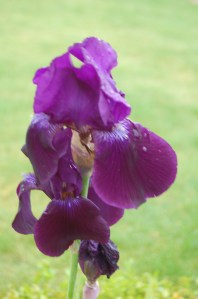
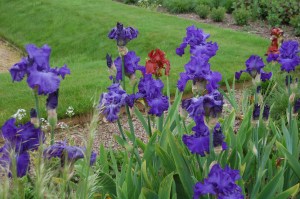
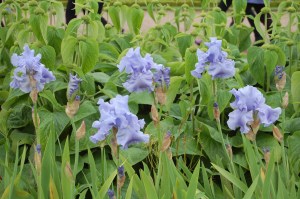
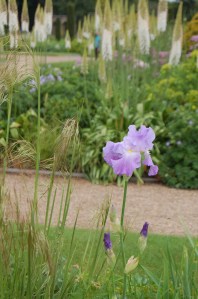
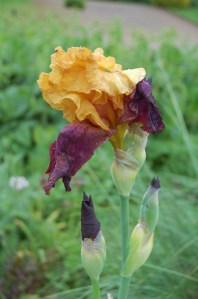
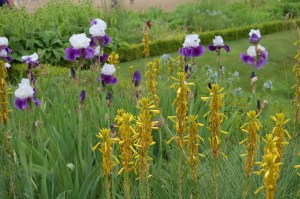
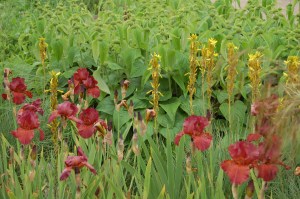
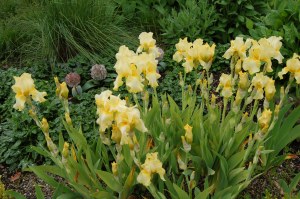
When we made our monthly pilgrimage to the wonderful gardens at Trentham for my “garden for all seasons” posts, we were particularly taken with the variety of irises on show integrated into the borders designed by Tom Stuart-Smith.
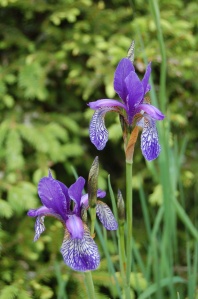
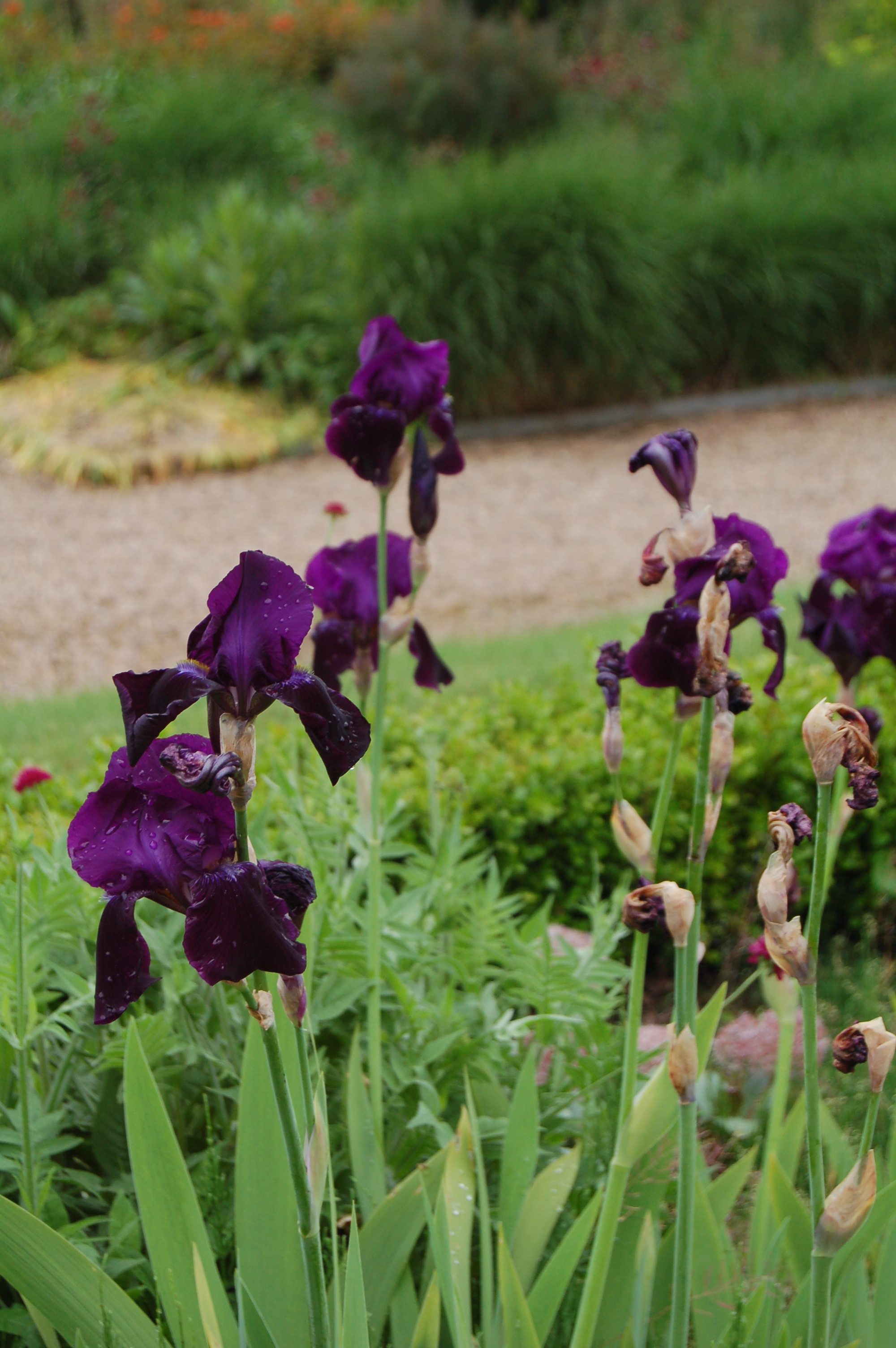
Most were the large flowered exuberant bearded irises but the more delicate demure Iris sibirica were there to be admired too. My first set of pictures are of the blues and purples and all their variations.


Blues and purples combine well with a variety of other colours within the flowers of some irises, with the uprights in a different colour to the falls.
Brown and yellow flowered iris seem to add real depth to mixed plantings in the borders. Some of the browns are very unusual to see in flowers other than iris.


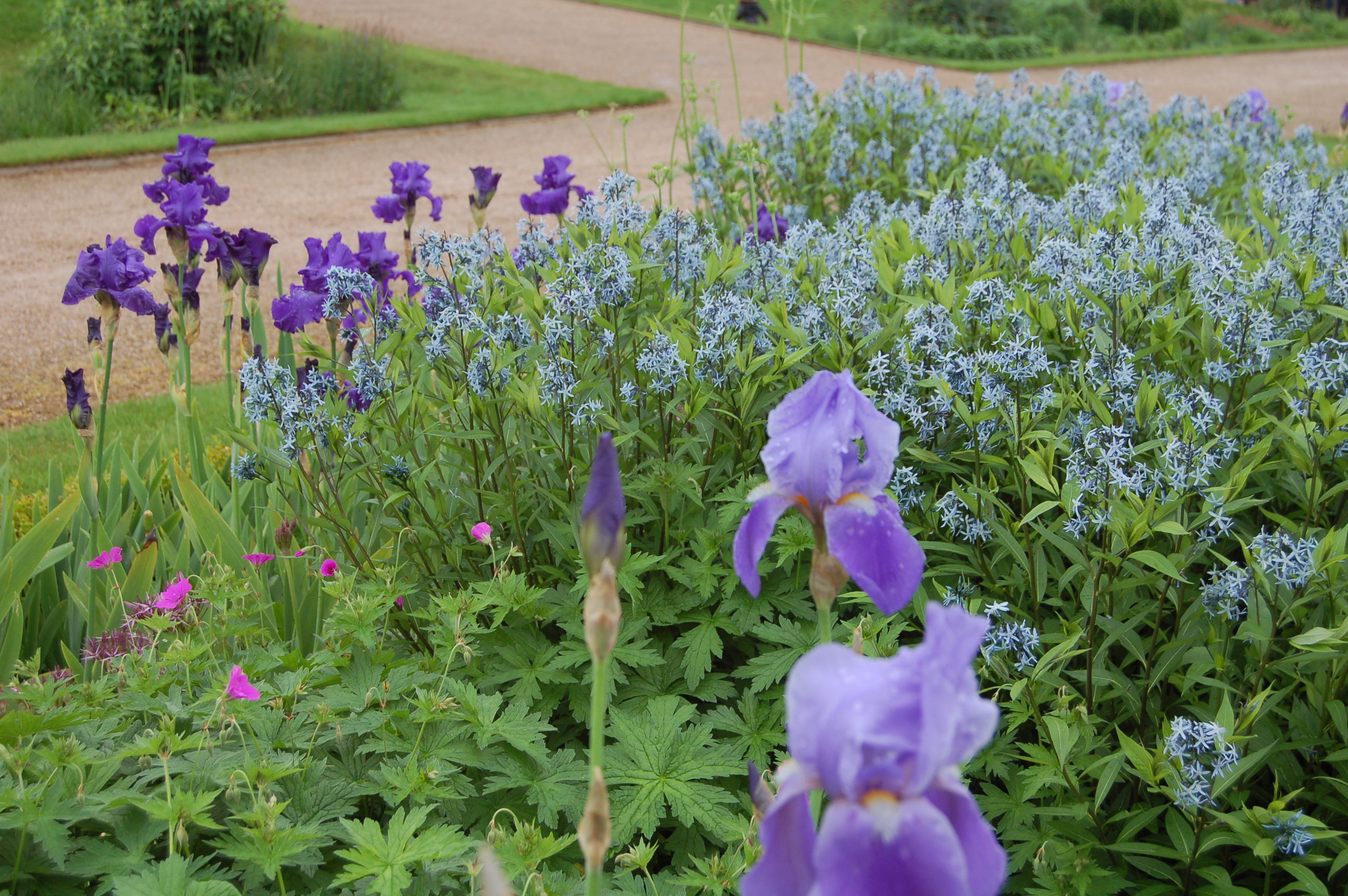
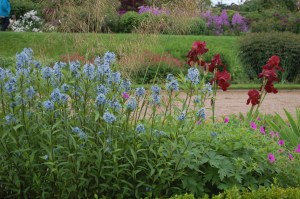
The gardeners here had cleverly matched a clump of brown Irises with the china blue of Amsonias. What a great combination, but not one that springs to mind when designing borders but we shall most certainly remember it for future use.

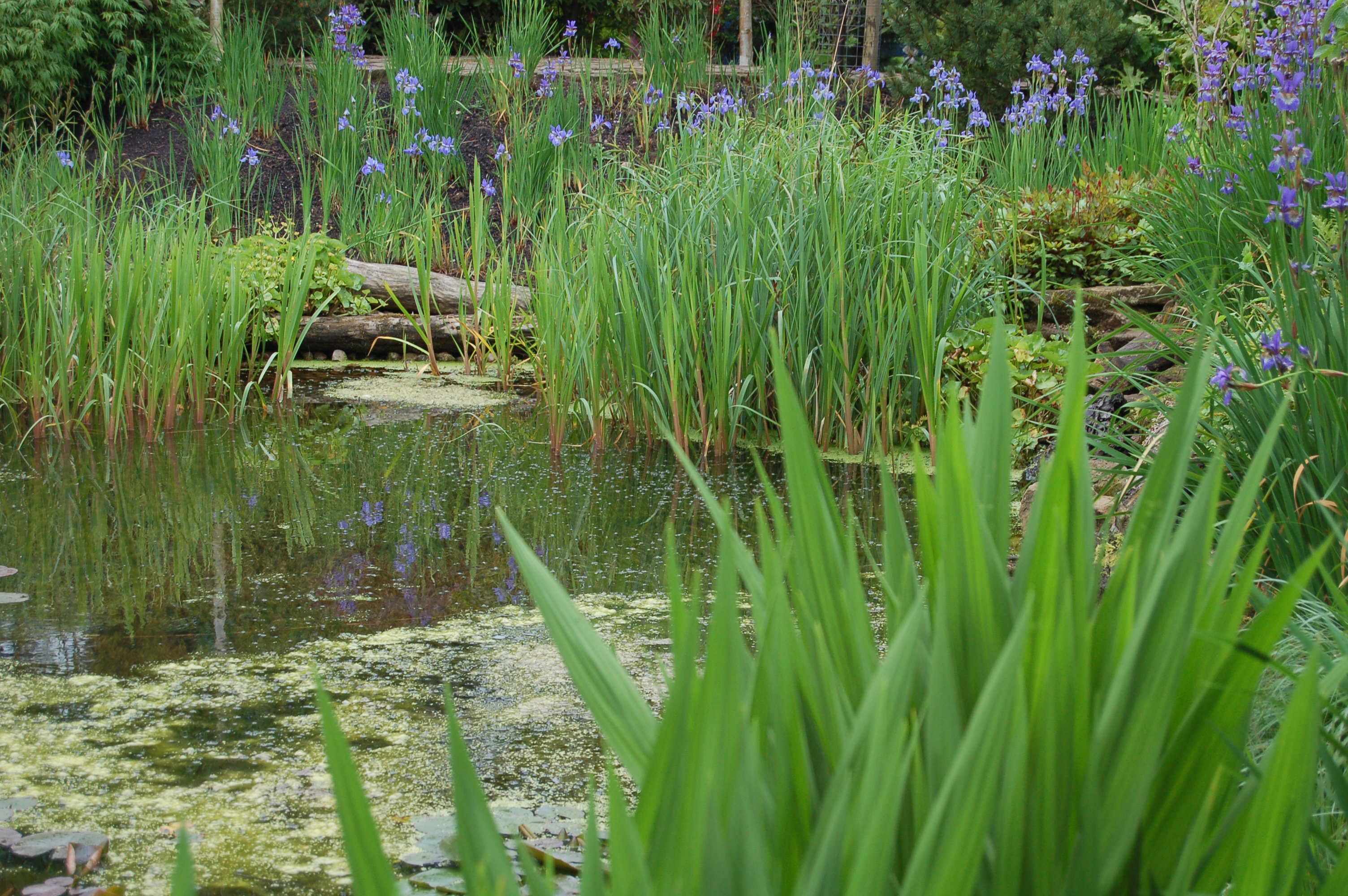
In one of the display gardens, one designed in a Japanese style, Iris sibirica grows in clumps around the edge of a pool. They contrast well with the yellow of the Trollius in the one shot but compliment the glaucous Hosta foliage in the other.
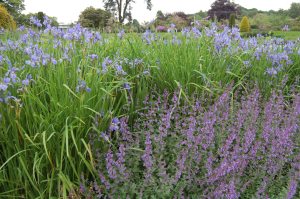
We also found Iris sibirica growing within the Piet Oudolf designed borders working in a subtle combination with a Nepeta.

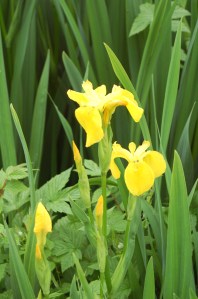
As we were on our way out of the garden we walked along the banks of the lake and discovered this lovely bright stand of our native iris, Yellow Flag. These can stop you in your tracks as well as any produced by plant breeders. They are always good to see and flower for a lot longer than their cultivated cousins. They present a most suitable finale to my tribute to the Irises of Trentham.
A Garden in May – Trentham
Here we are with post number 5 of this series looking at the gardens at Trentham where we are trying to discover if Trentham really is a “garden of all seasons”. For our May visit we were hoping for better weather as rain has greeted us on every other visit. It may seem a bit late to be posting this post but we have been so busy getting our garden ready for our summer visitors and the allotment community gardens ready for our NGS Open Day we are now behind with everything. We are getting behind at being late!
But the day dawned wet yet again.

We were amazed by the number of people around and the queue of visitors waiting to get through the turn styles. The majority of these visitors were young families. Soon we saw clues about what was going on – balloons, bunting and banners. It all pointed to the day being a special one for Trentham Gardens – their 10th birthday since reopening.
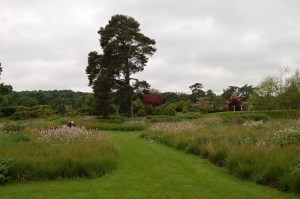
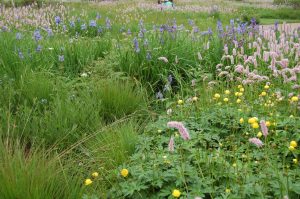
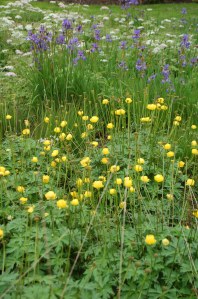
The area called the River of Grasses designed by Piet Oudolf has gained a lot of patches of colour from perennials among the strongly growing grasses. Persicaria bistorta, Amsonia and Trollius were particularly in evidence.


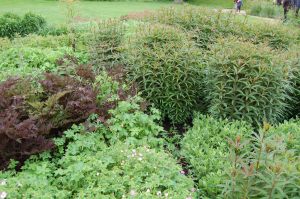
When we moved into the Piet Oudolf prairie borders we noticed that the growth of the herbaceous plants since out last visits was amazing.


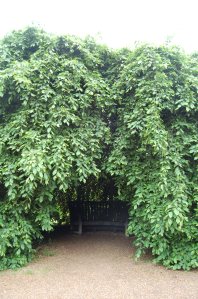
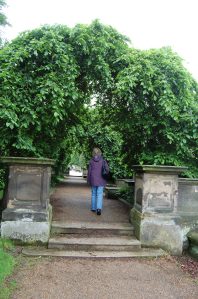
After enjoying the fresh colours in this area we wandered across neatly mown grass towards the Italianate Garden, and on the way we passed the Hornbeam Arbour and through a Hornbeam archway. We found evidence of the newly cut area where seagulls of crocus and snowdrops were earlier in the year (see earlier posts in this series). Now they appear as ghosts in the grass.

In the Italianate Garden the gardeners were planting out large specimens of Cannas with huge incredibly marked and coloured leaves.
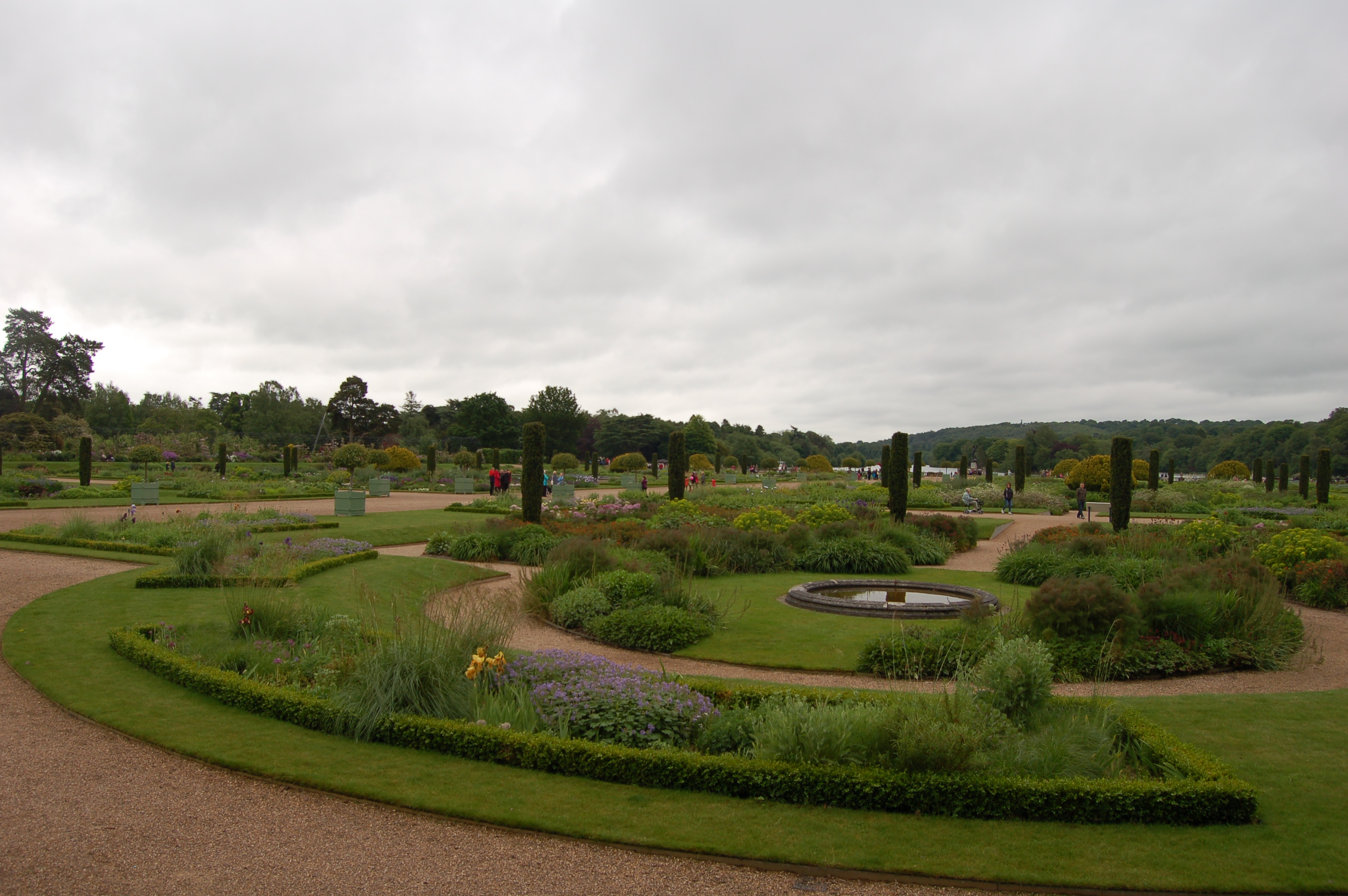
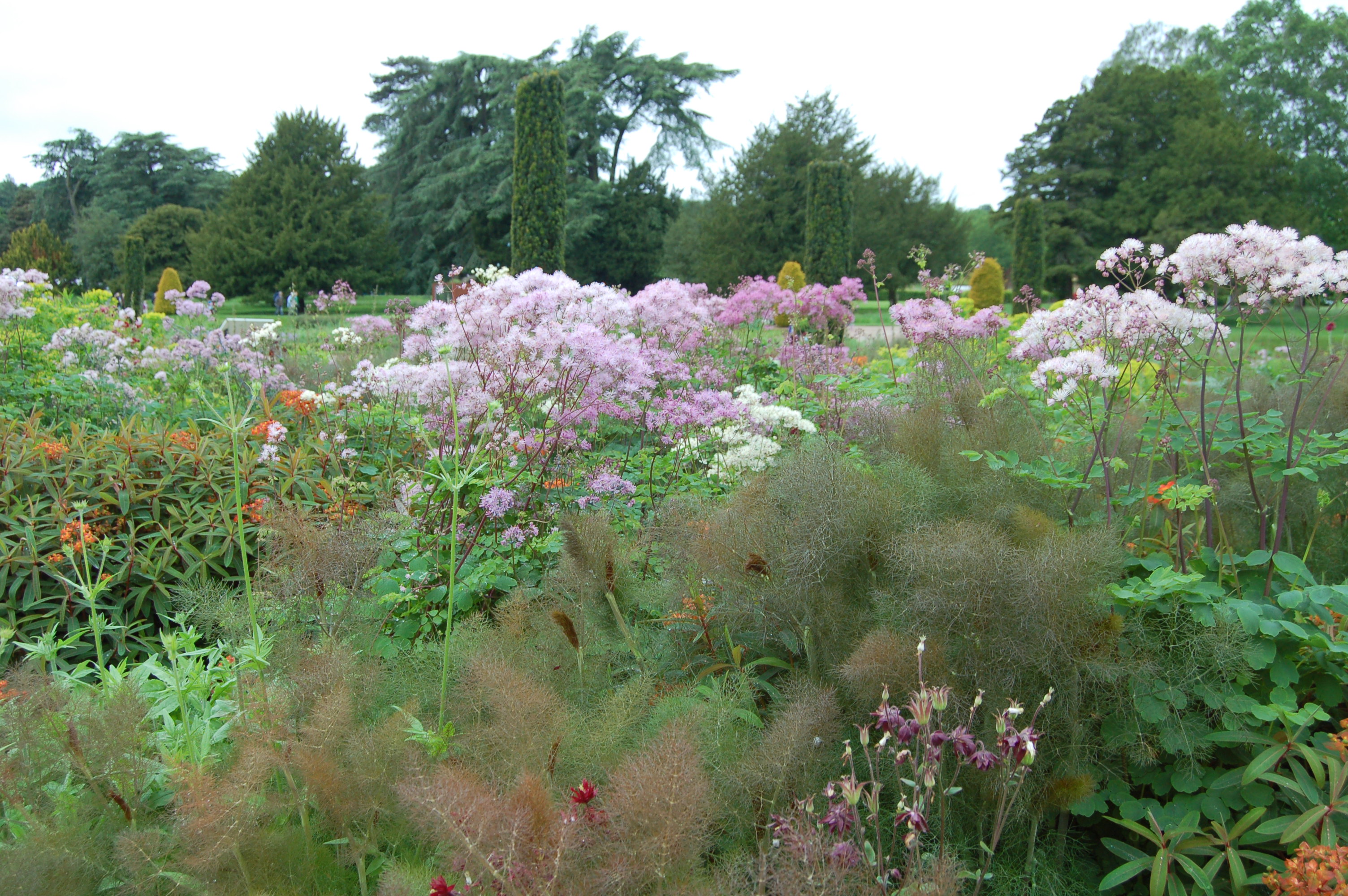
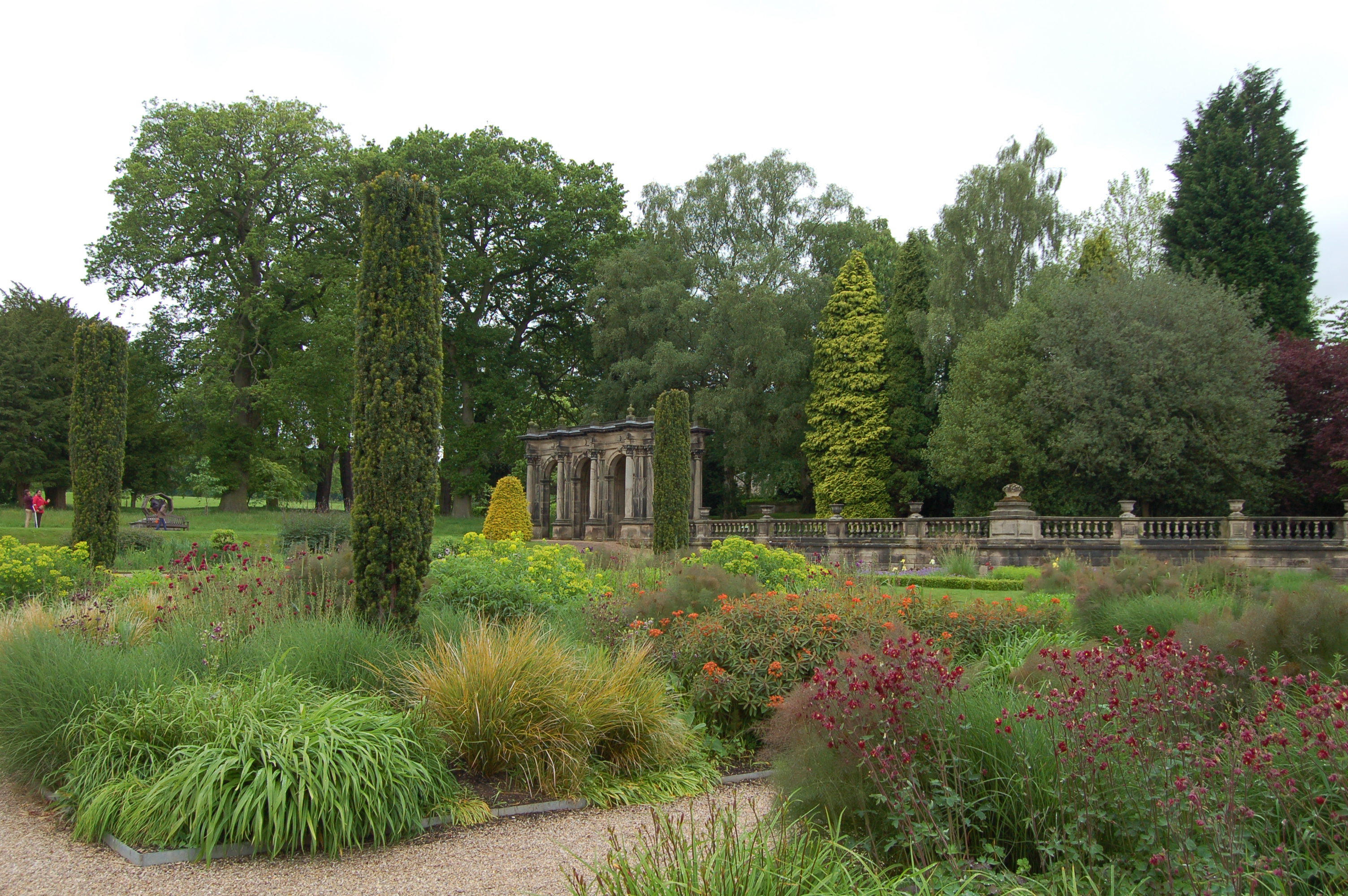
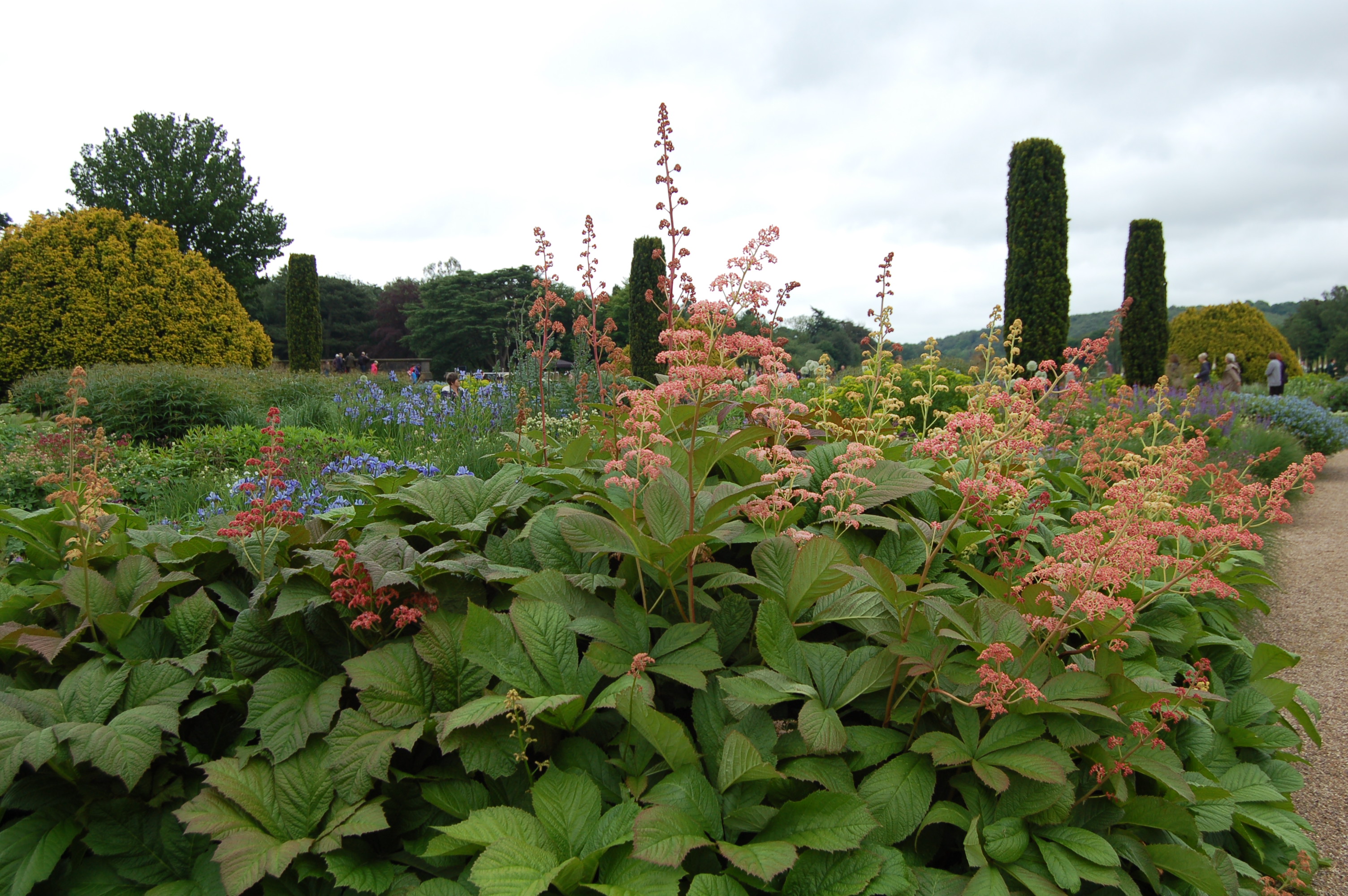
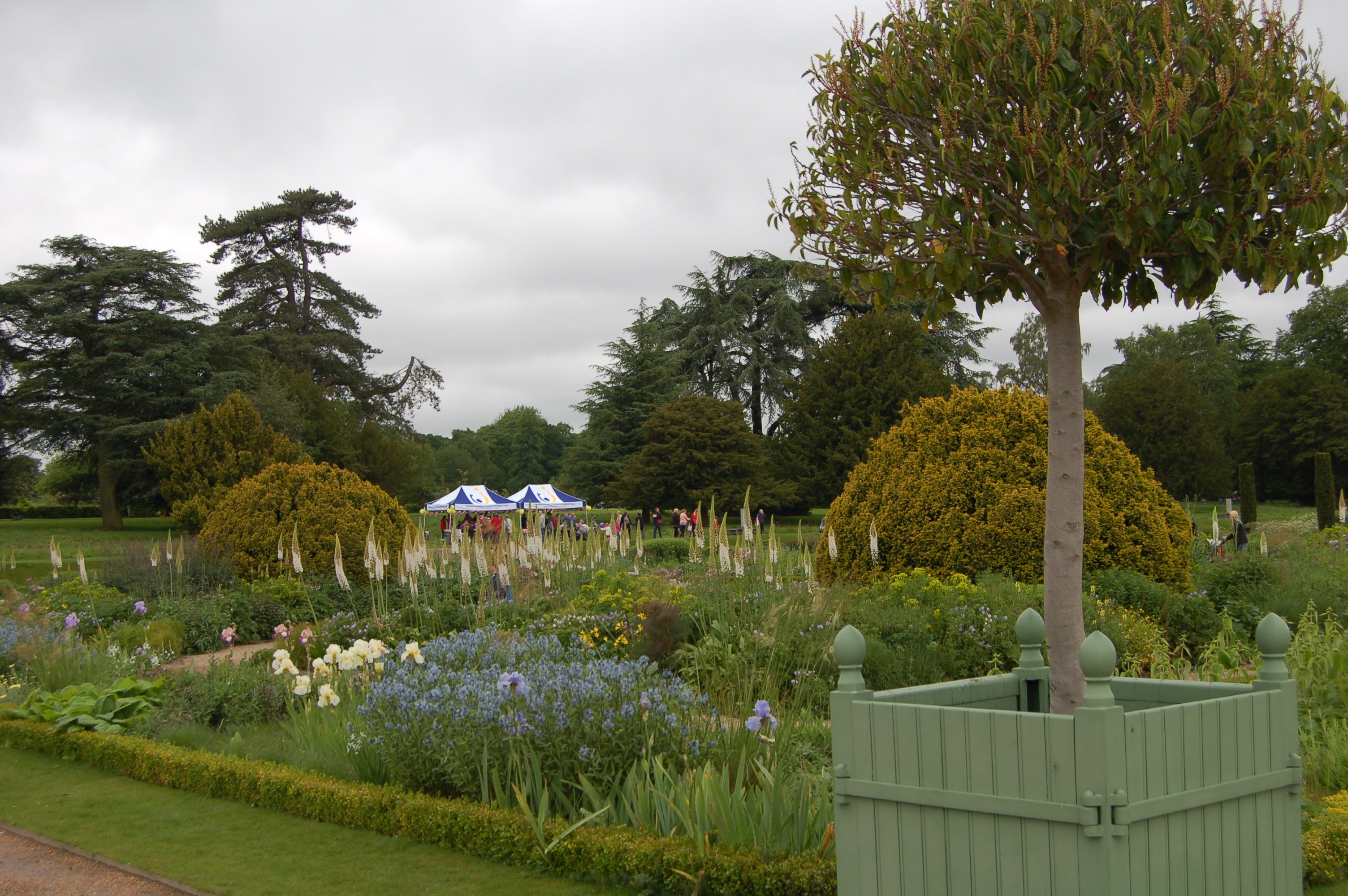
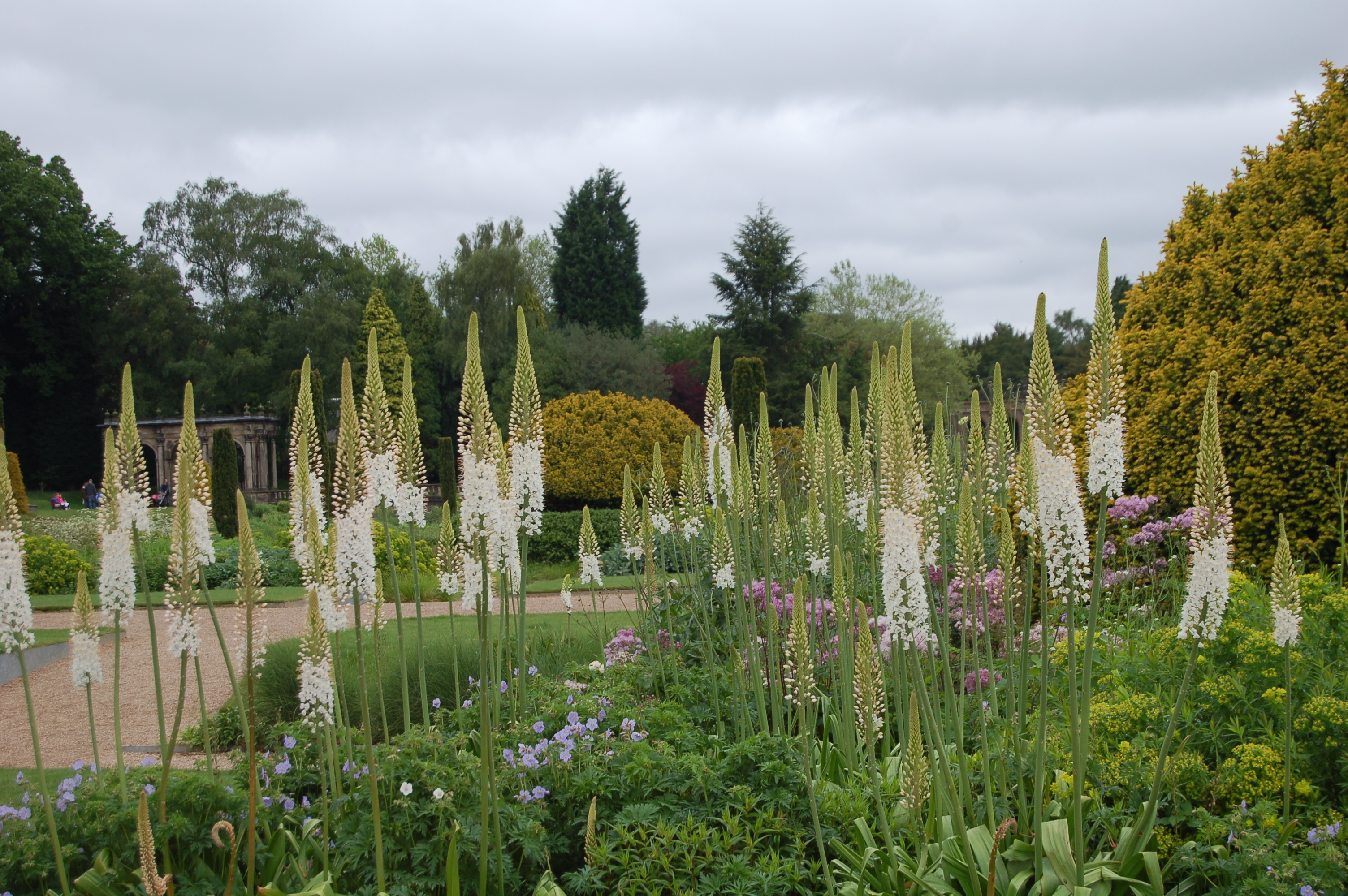
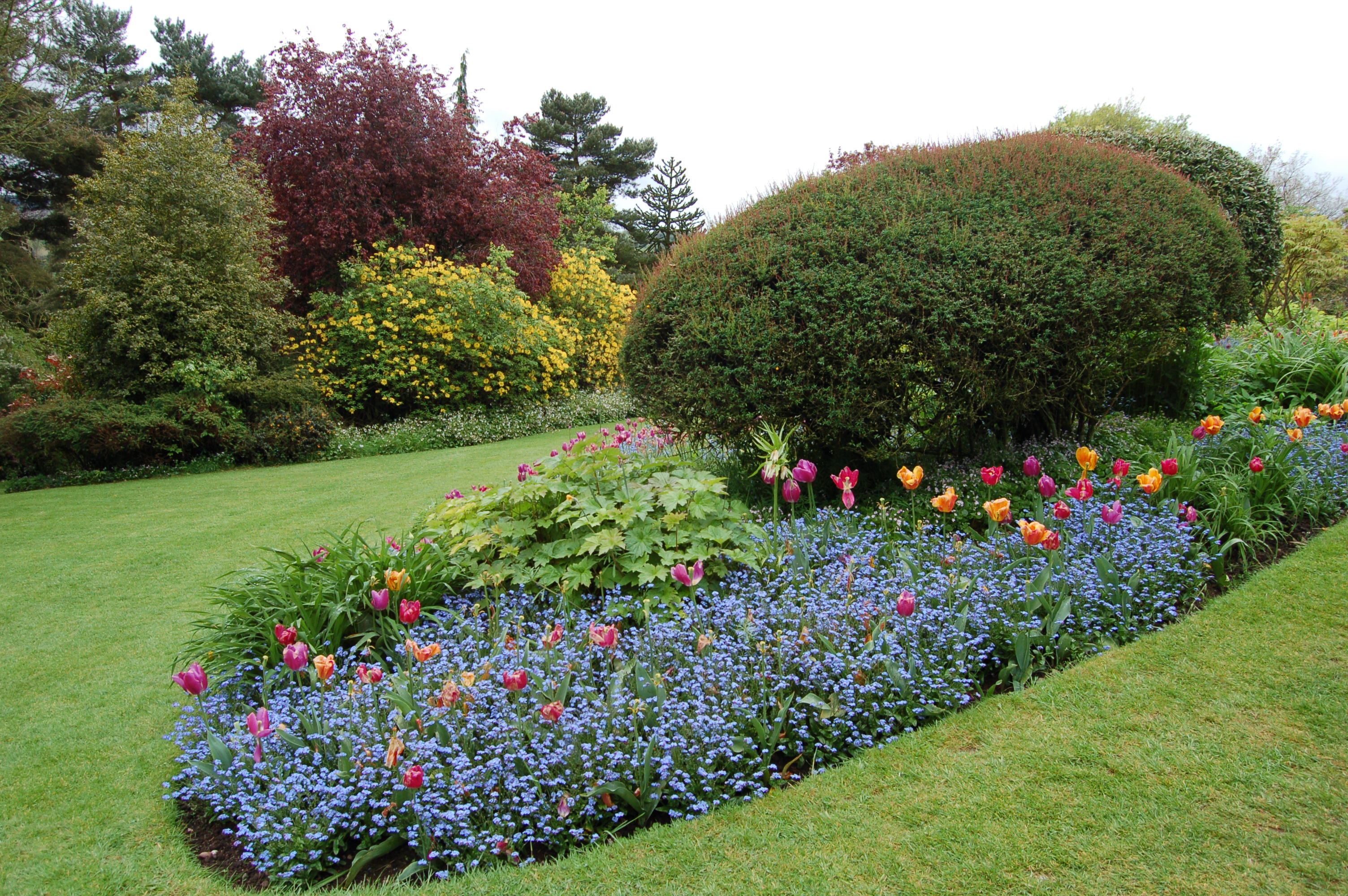
From the Italianate Garden we get our first views of the garden designed by Tom Stuart-Smith, where he imposed modern style herbaceous plantings onto the original Italian Garden. Since last month these borders are showing so much colour and to begin with it is hard to identify what plants are providing all the colour.
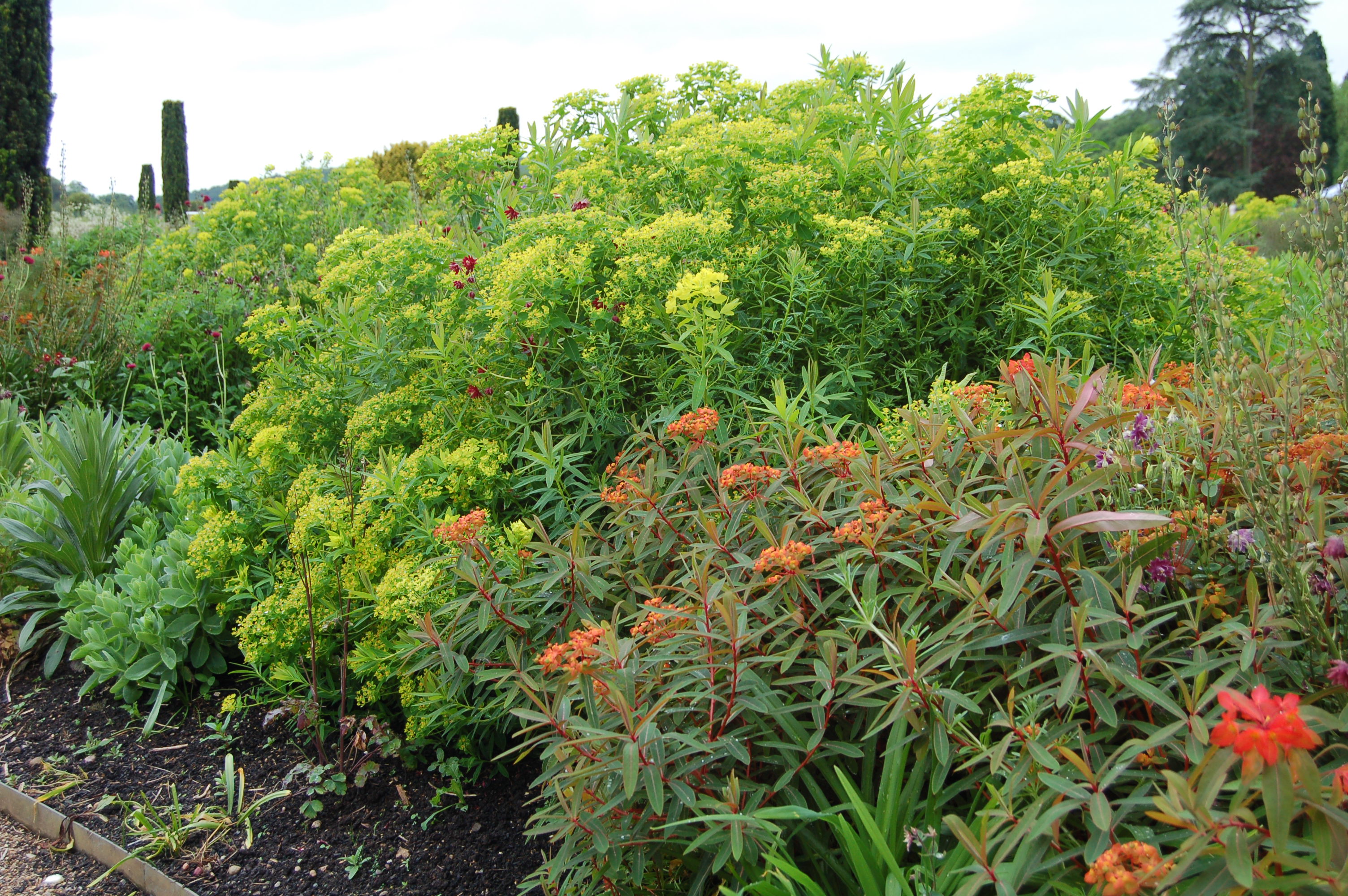
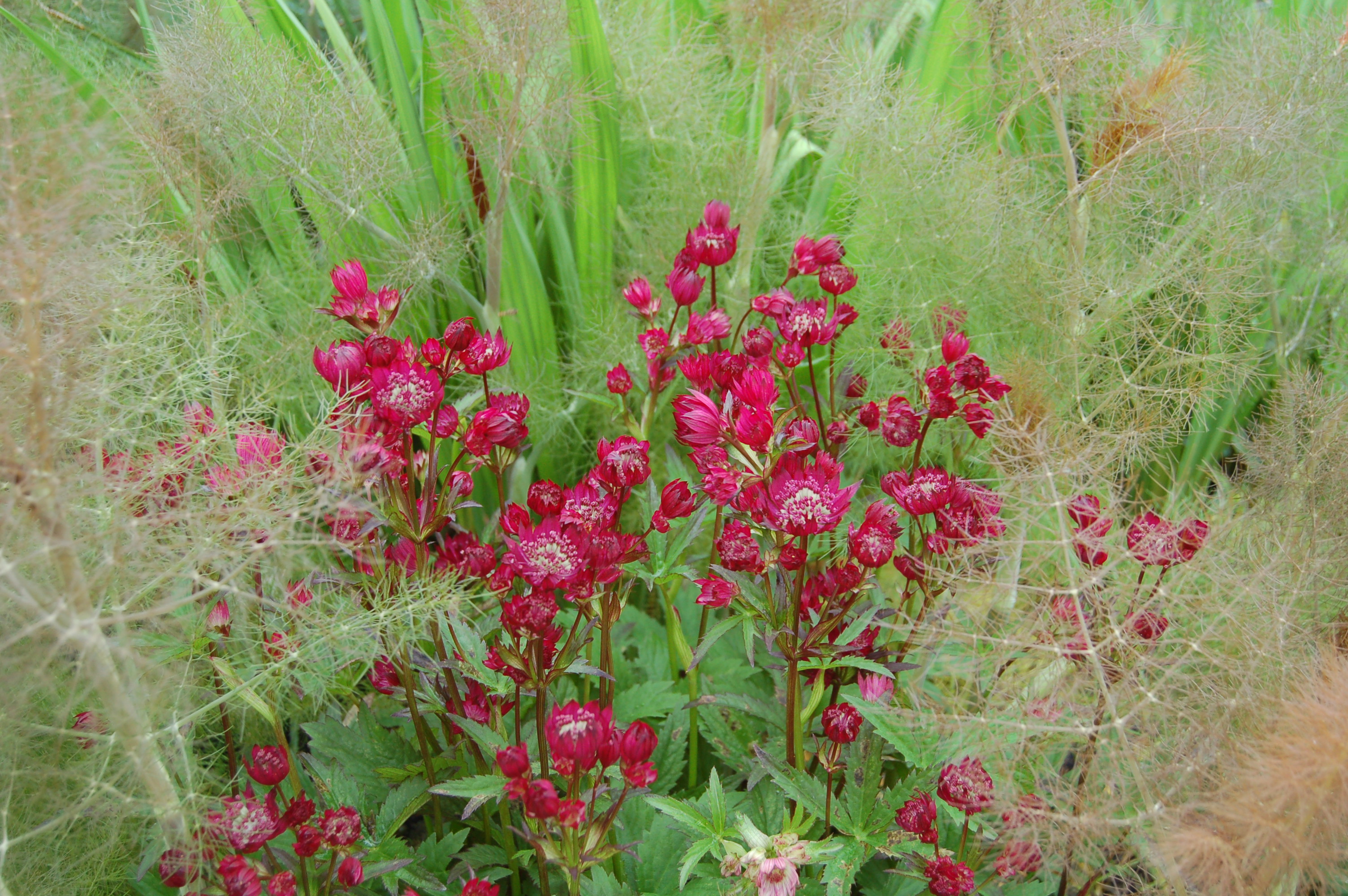
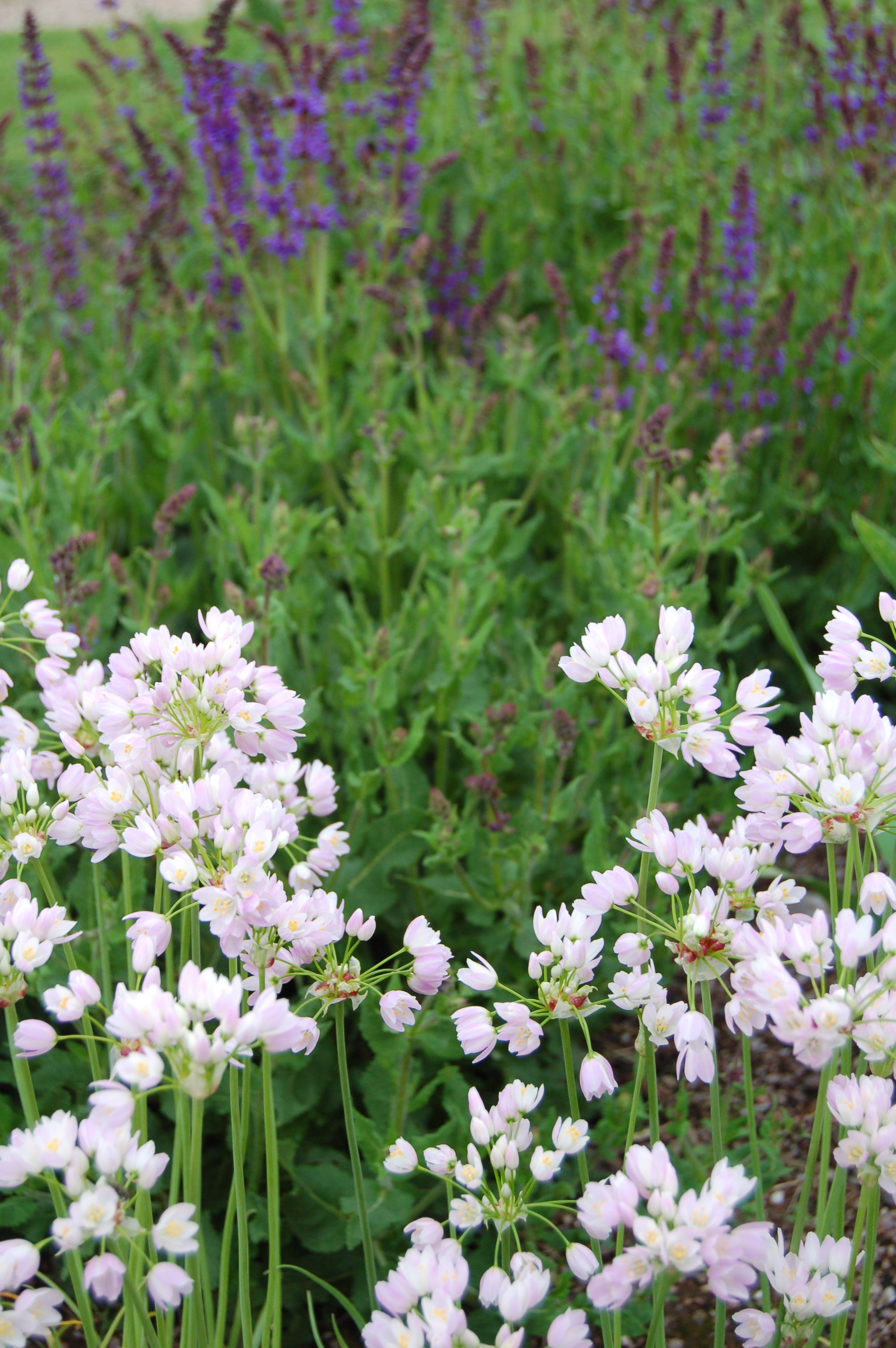
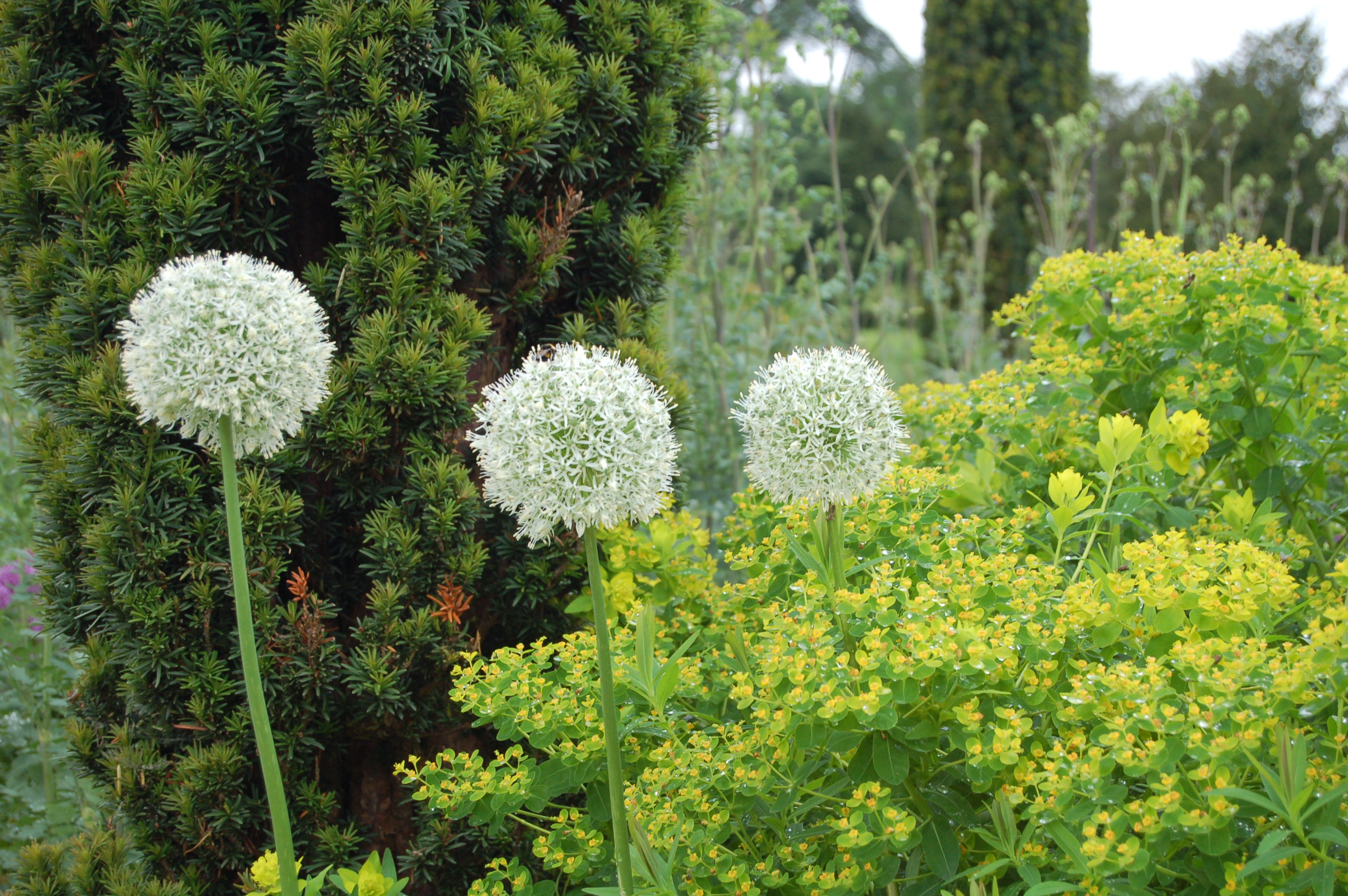
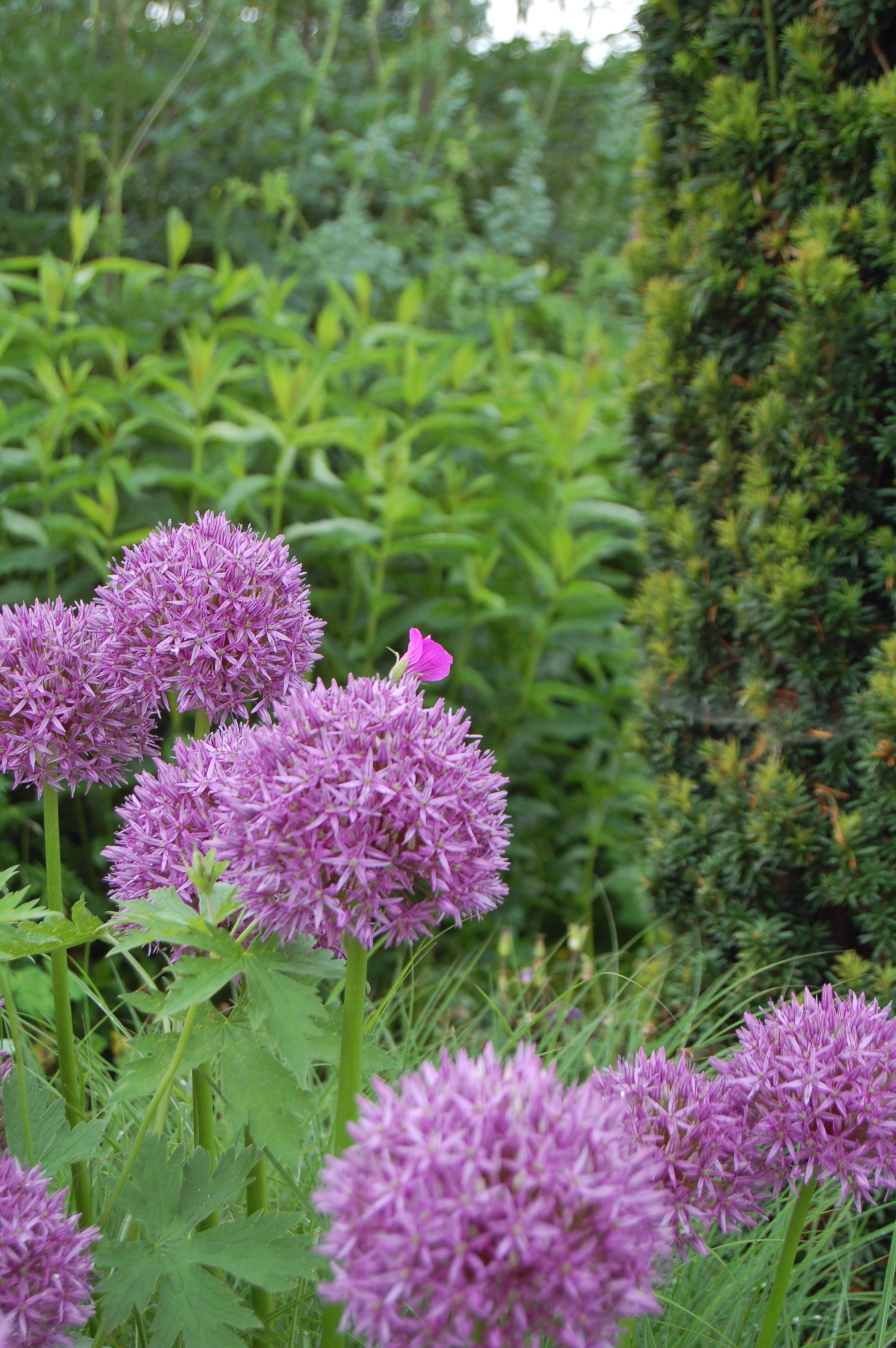
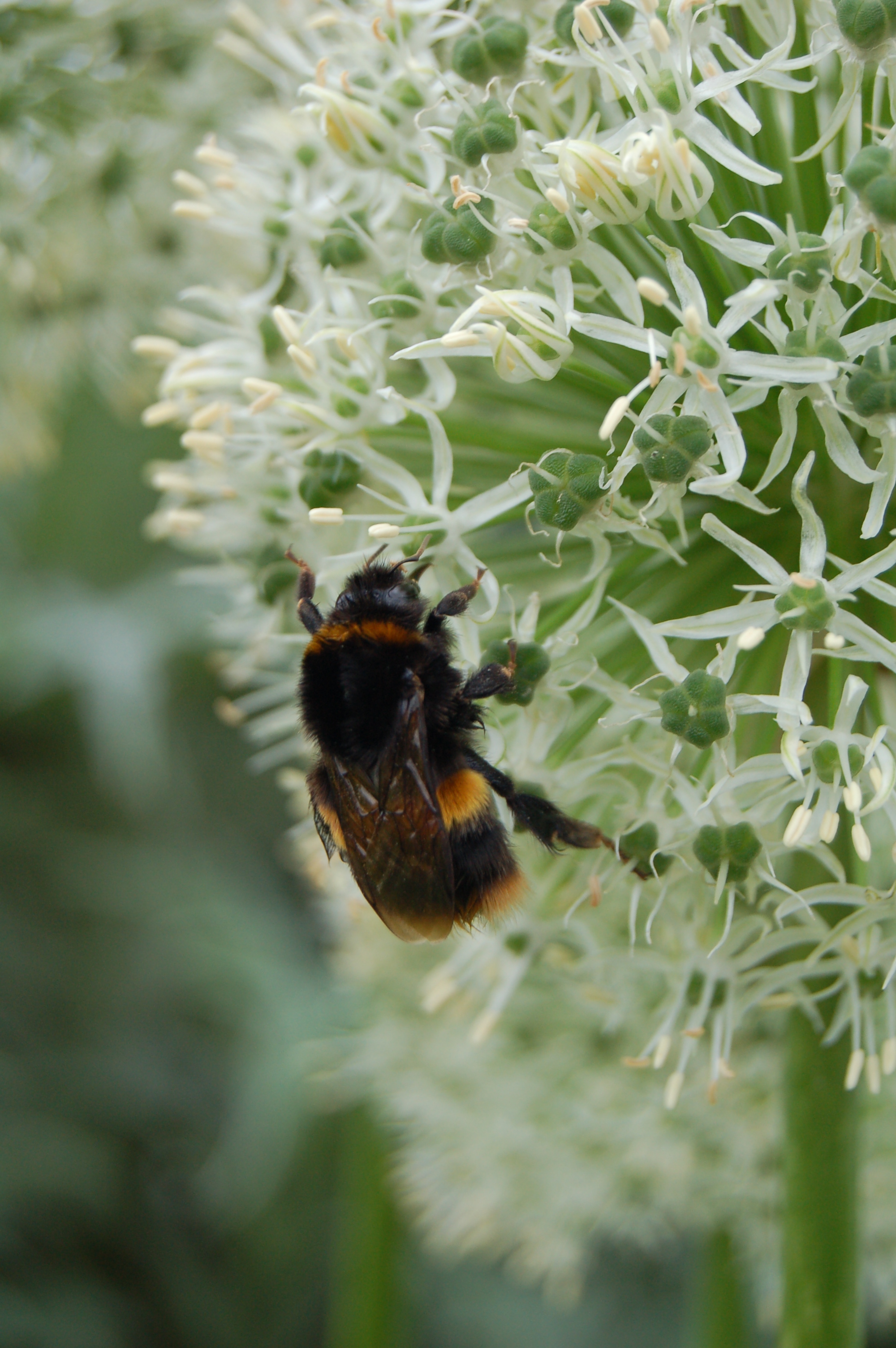
Closer up we found the colour was from Alliums, Euphorbias, Amsonias, Irises, Rogersias and Astrantias. Enjoy a tour of these borders.
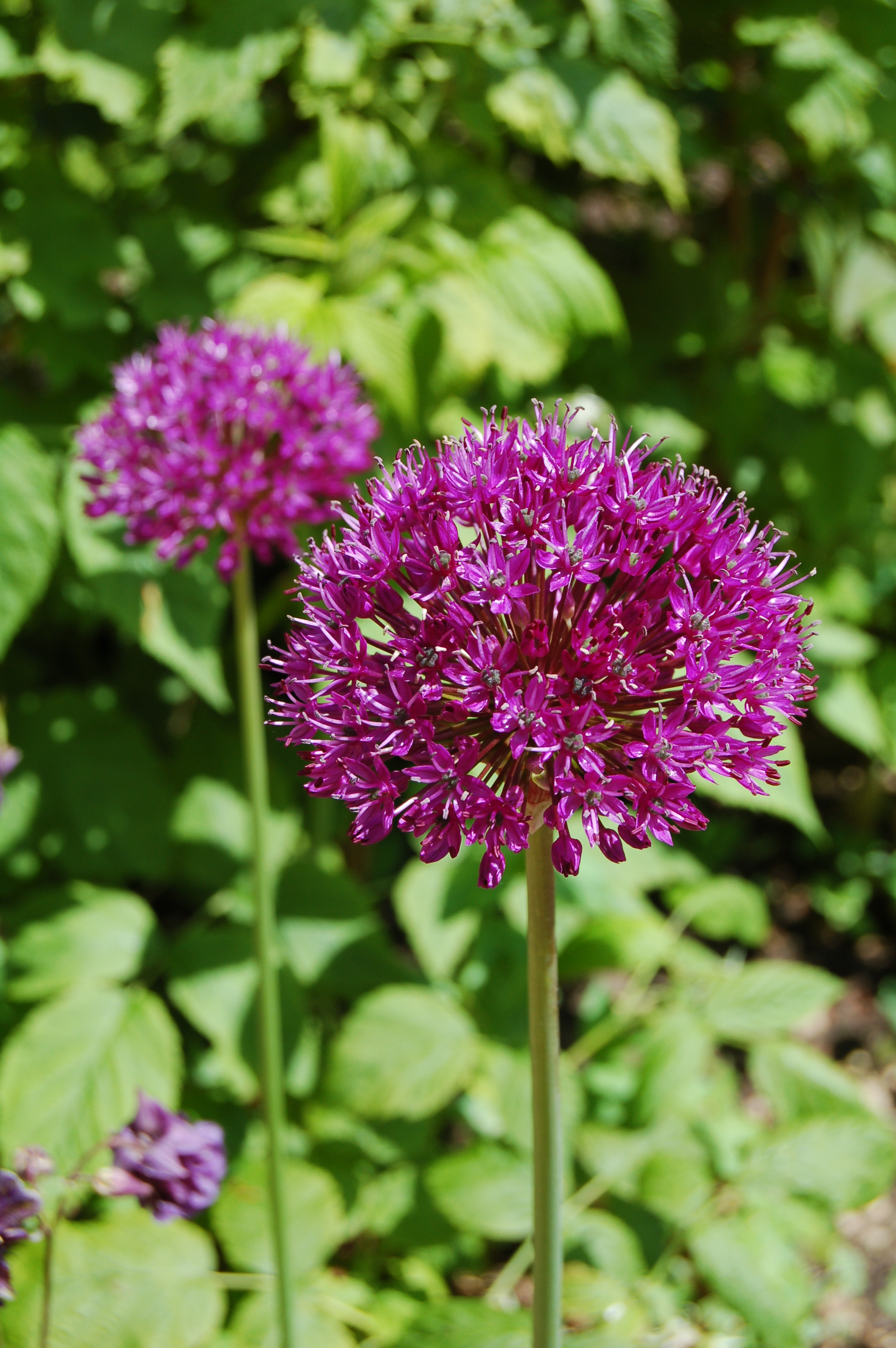
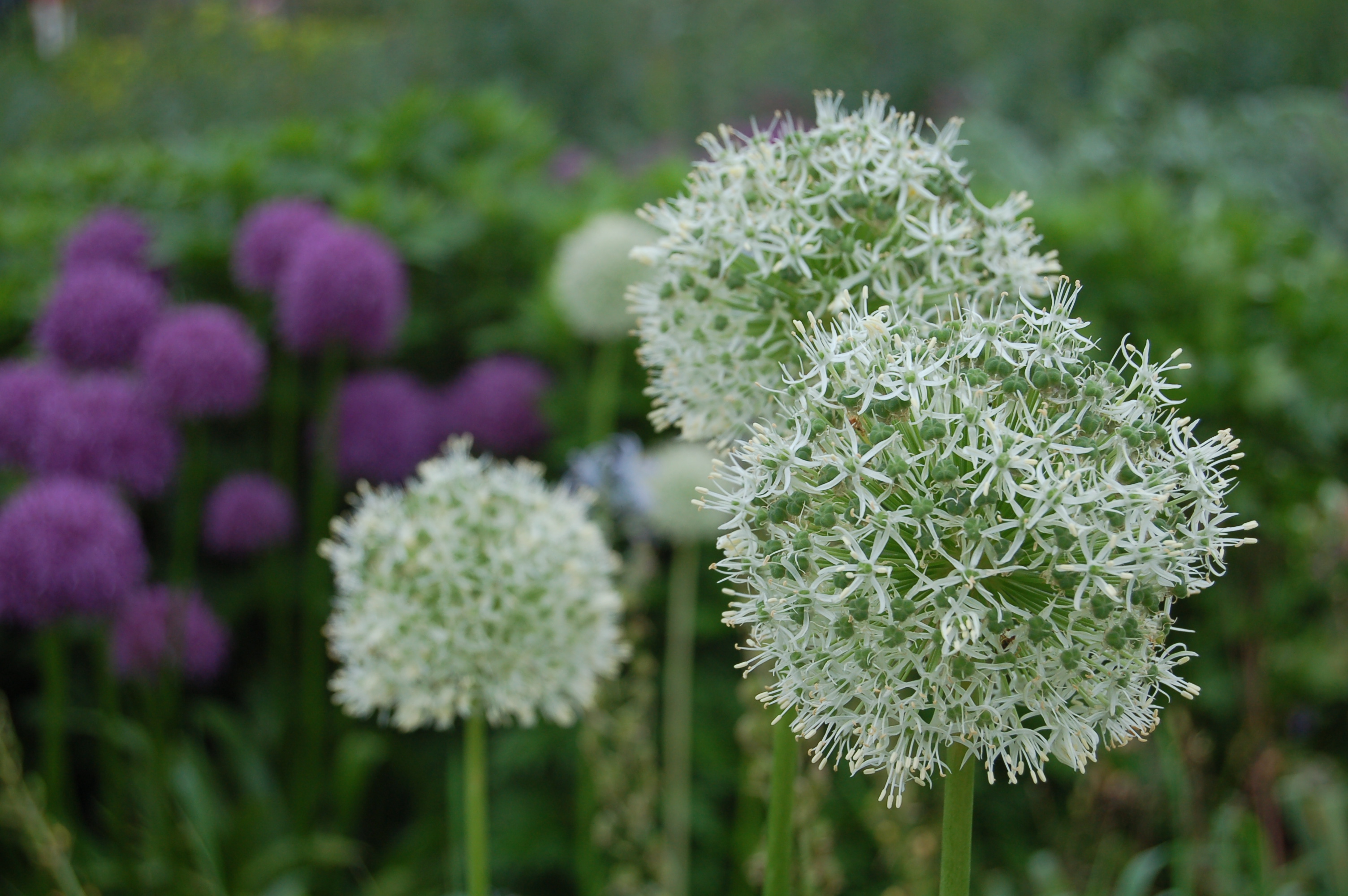
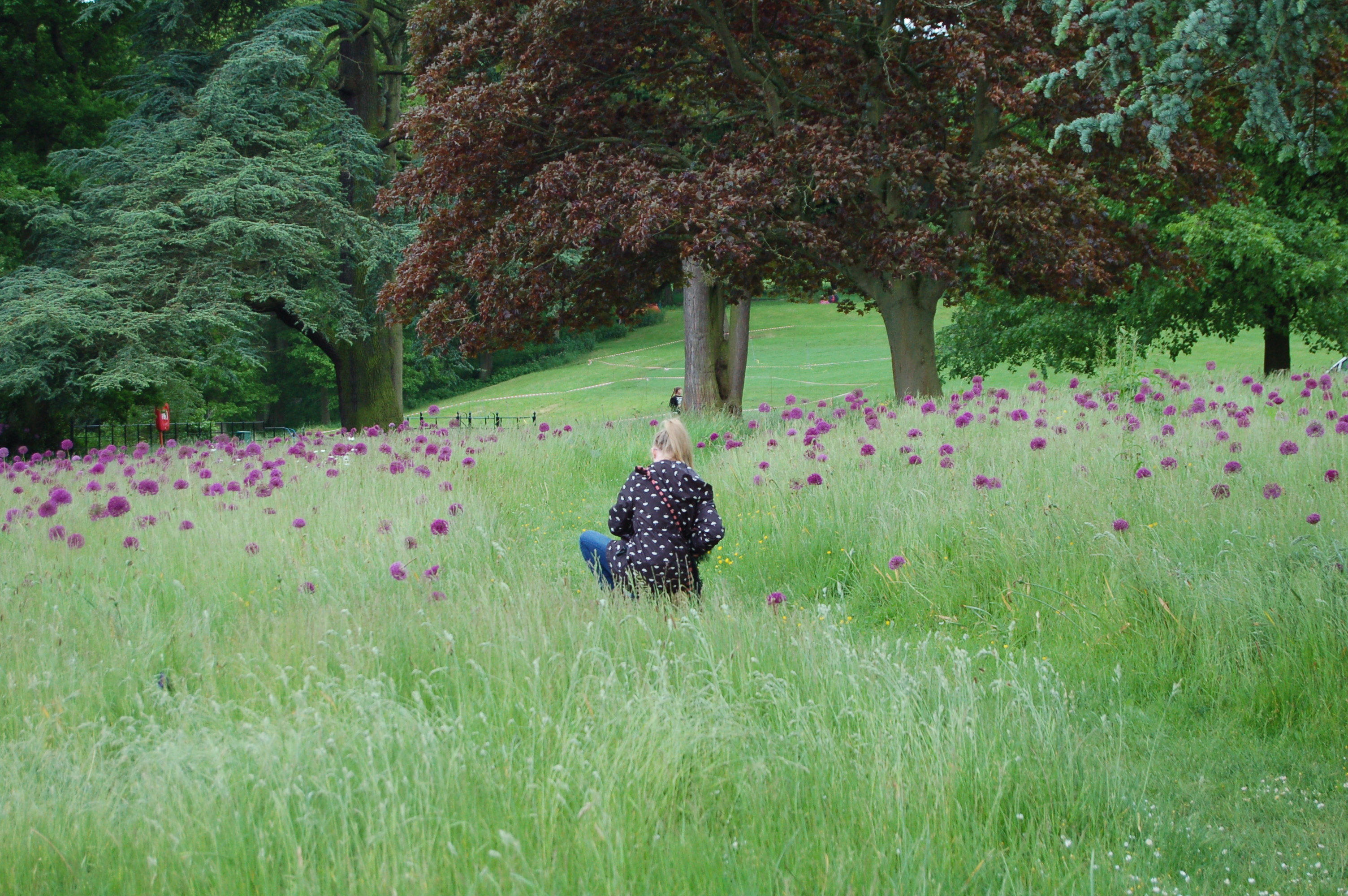
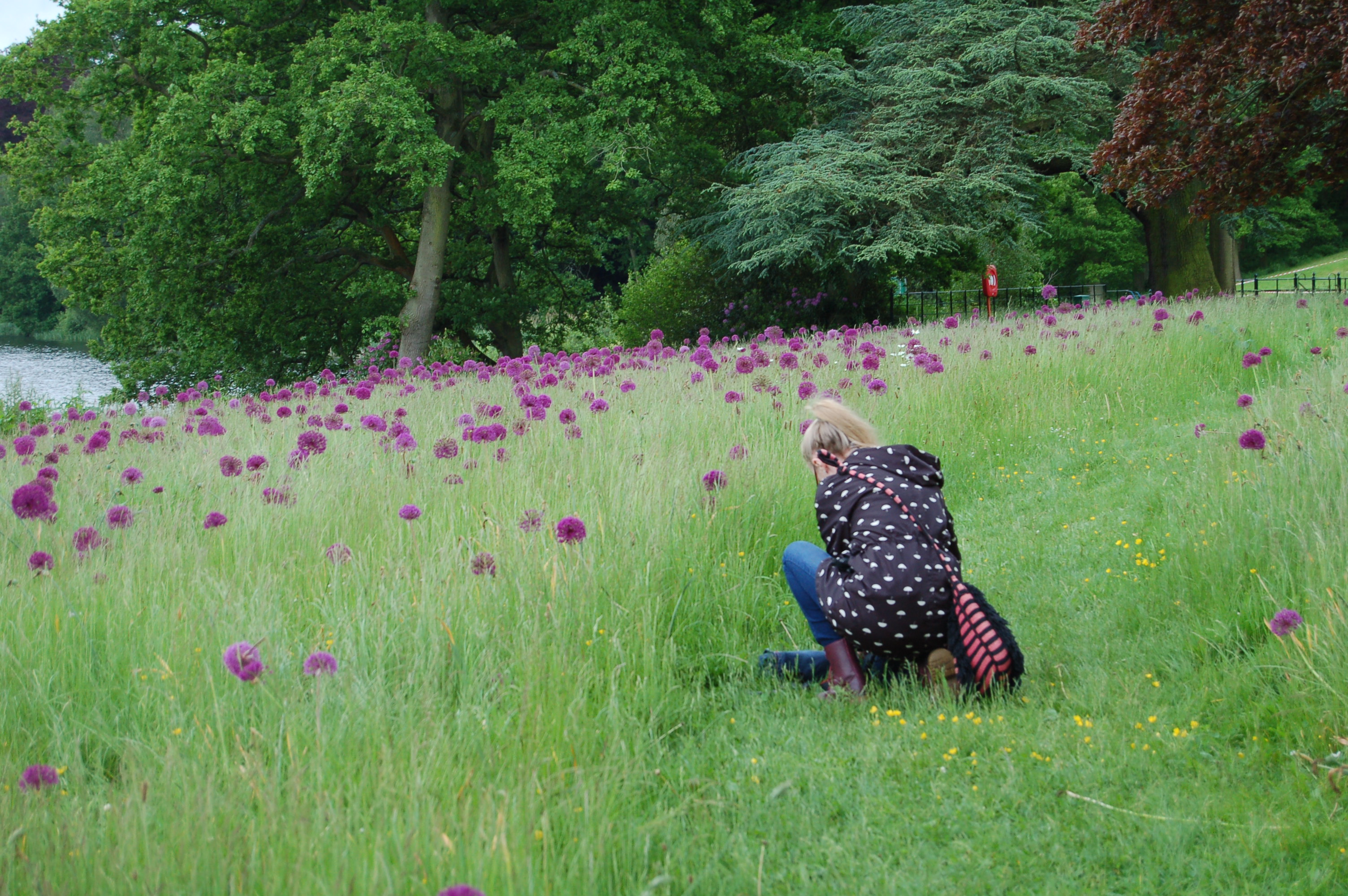
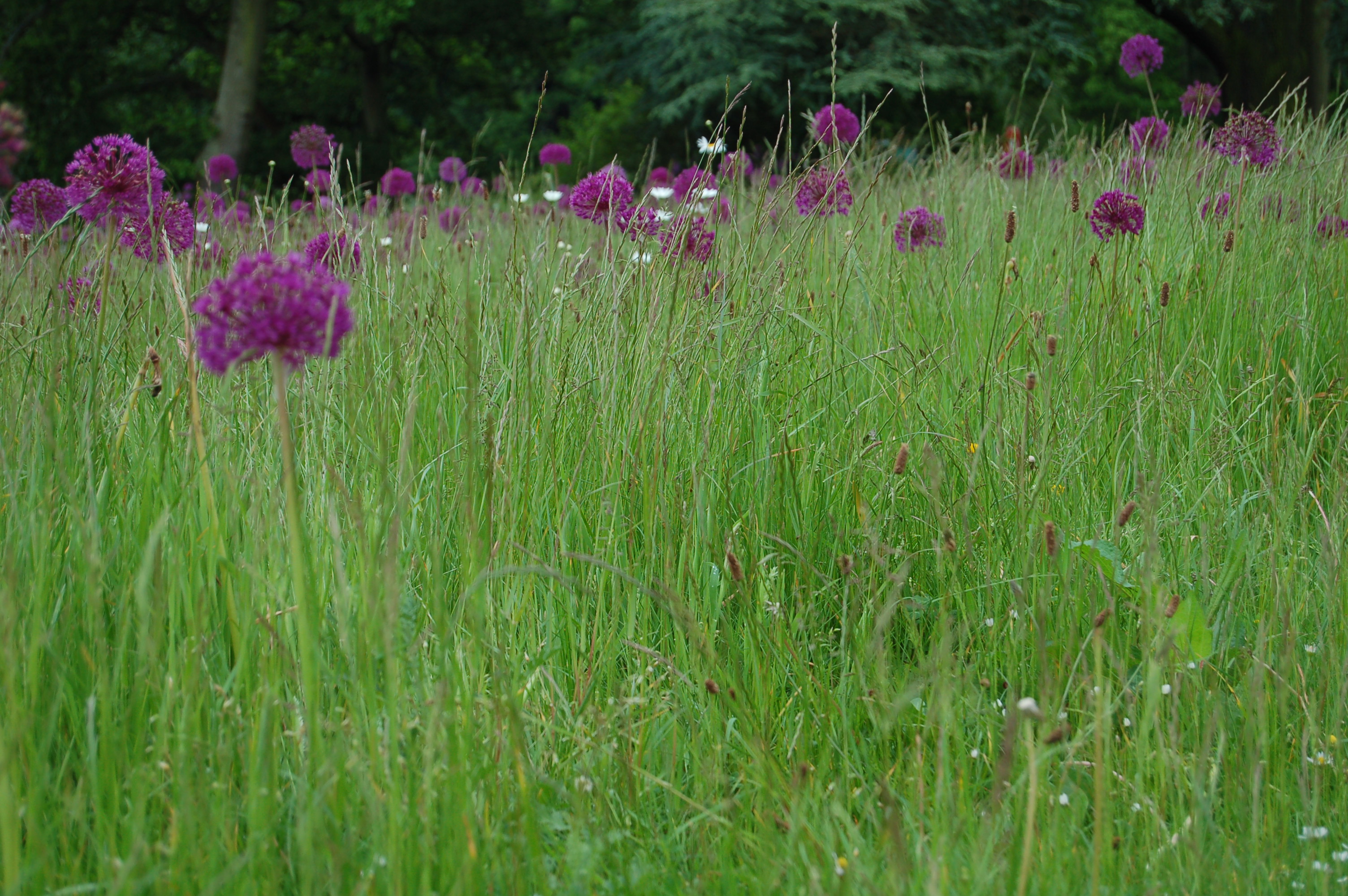
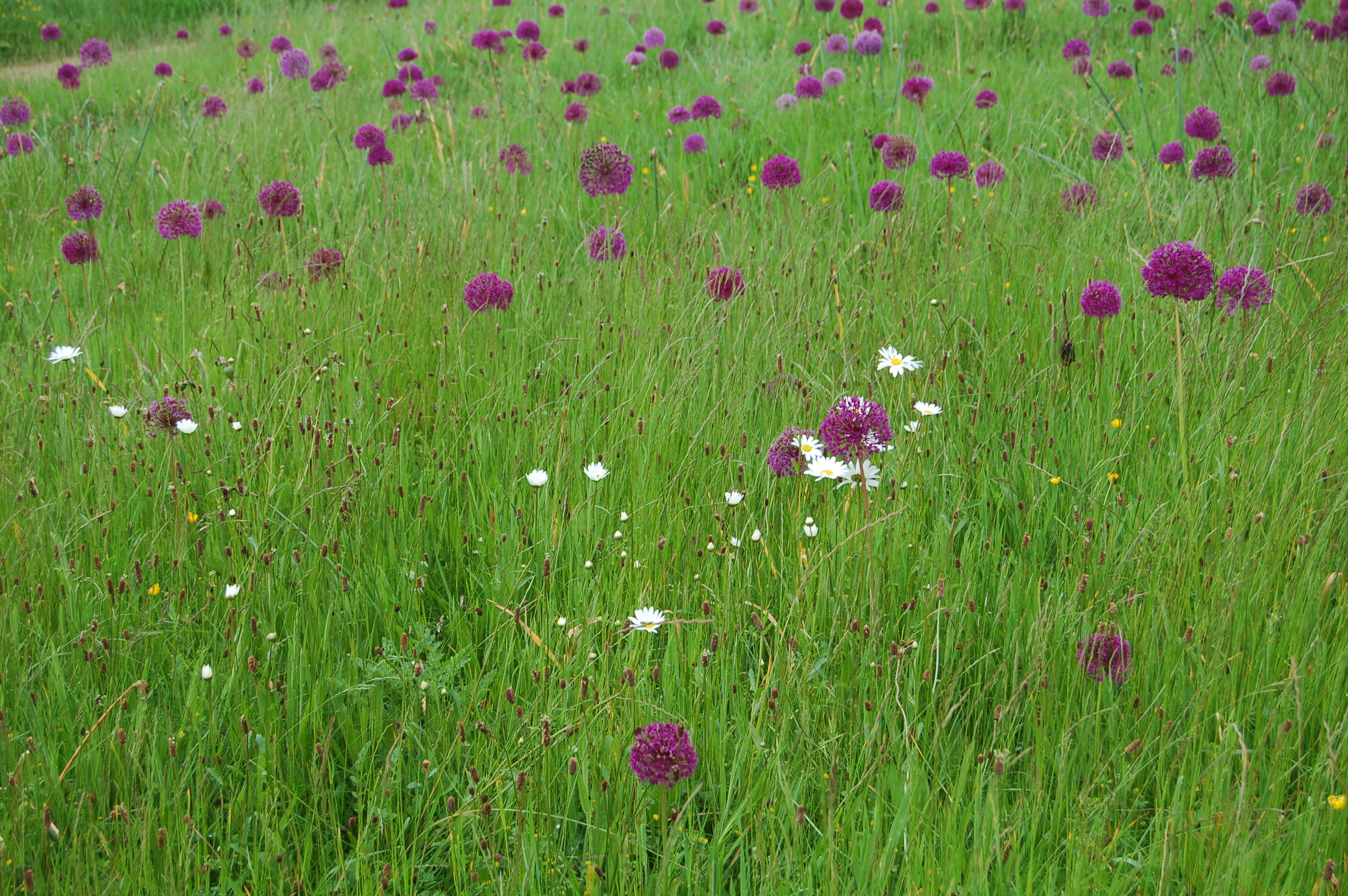
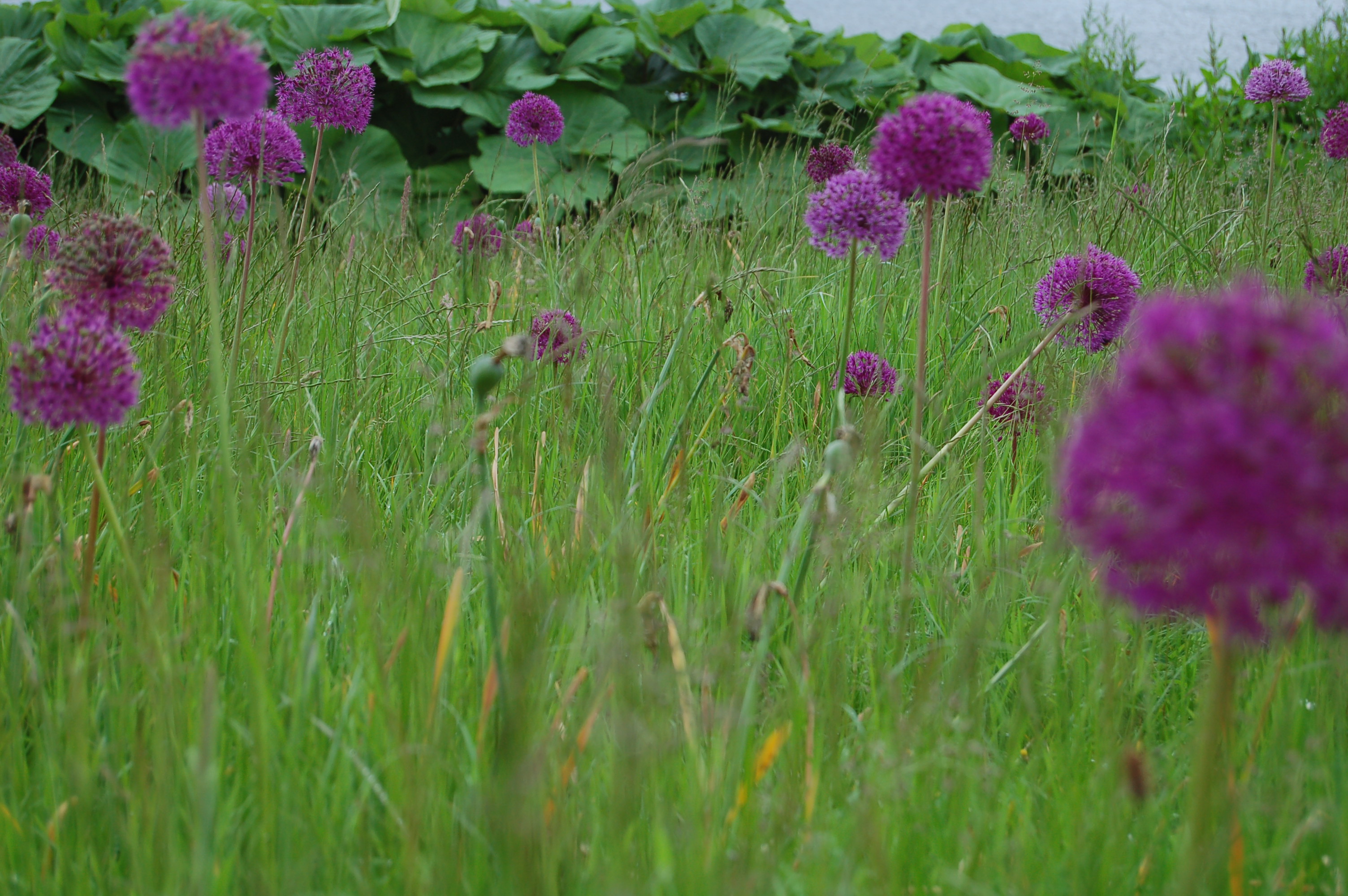
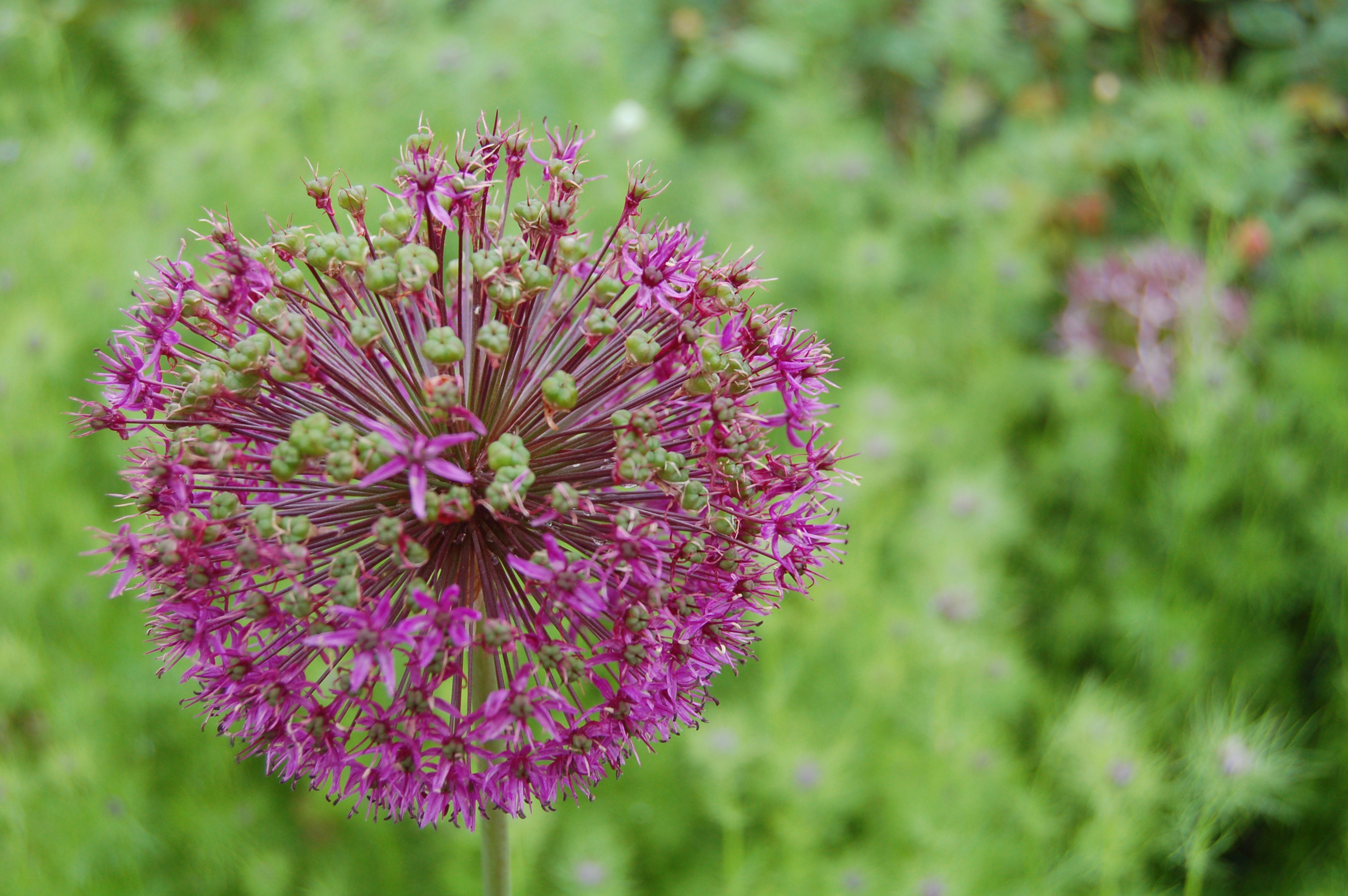
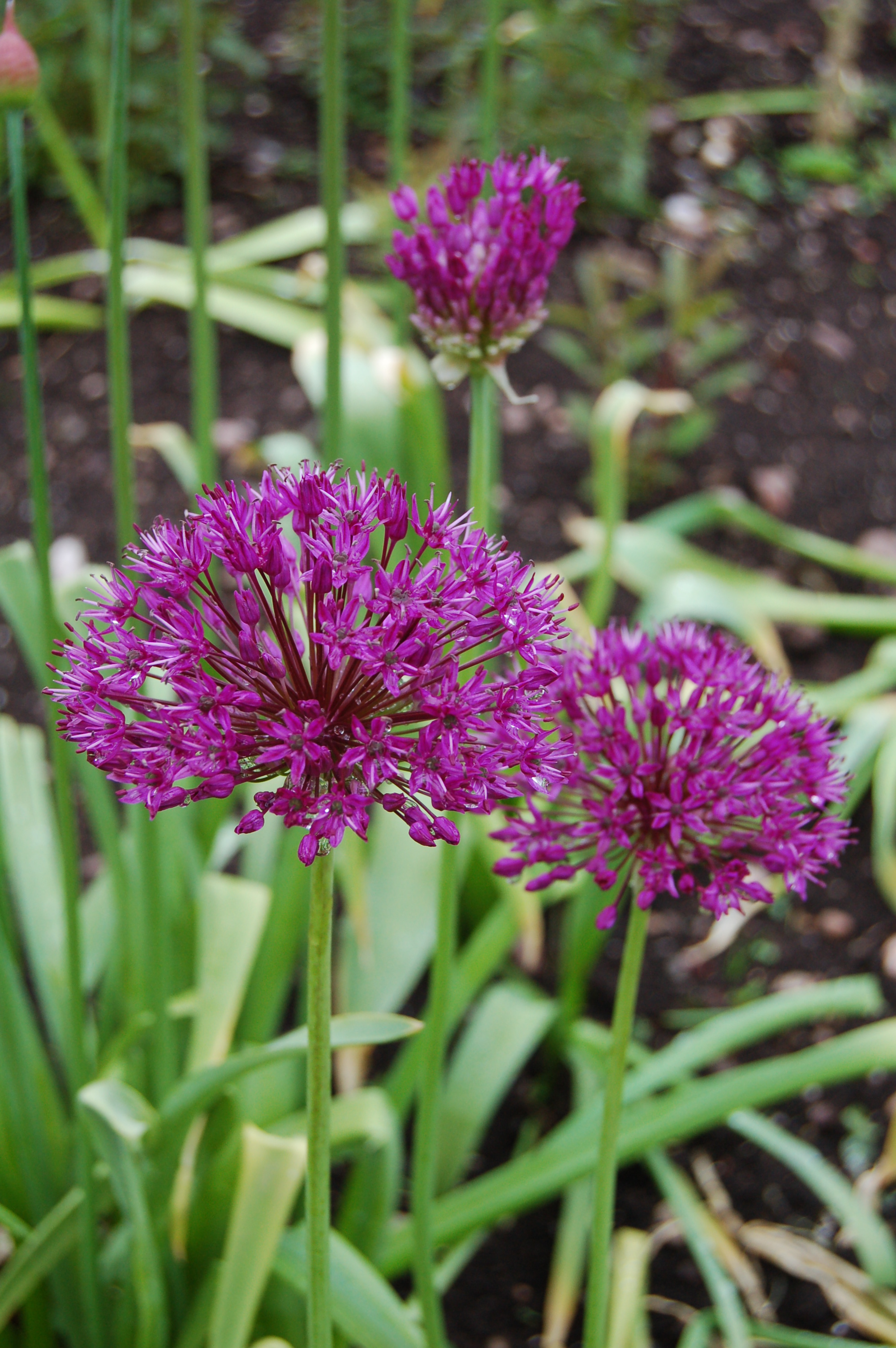
Last time we were here the gardens above the Tom Stuart-Smith borders was yellow with daffodils naturalised in the grassed banks. On this visit the colour was purple and it was provided by hundreds of purple globes of Alliums. A young photographer was snapping away.
A new woven figure has appeared on the grassed banks.
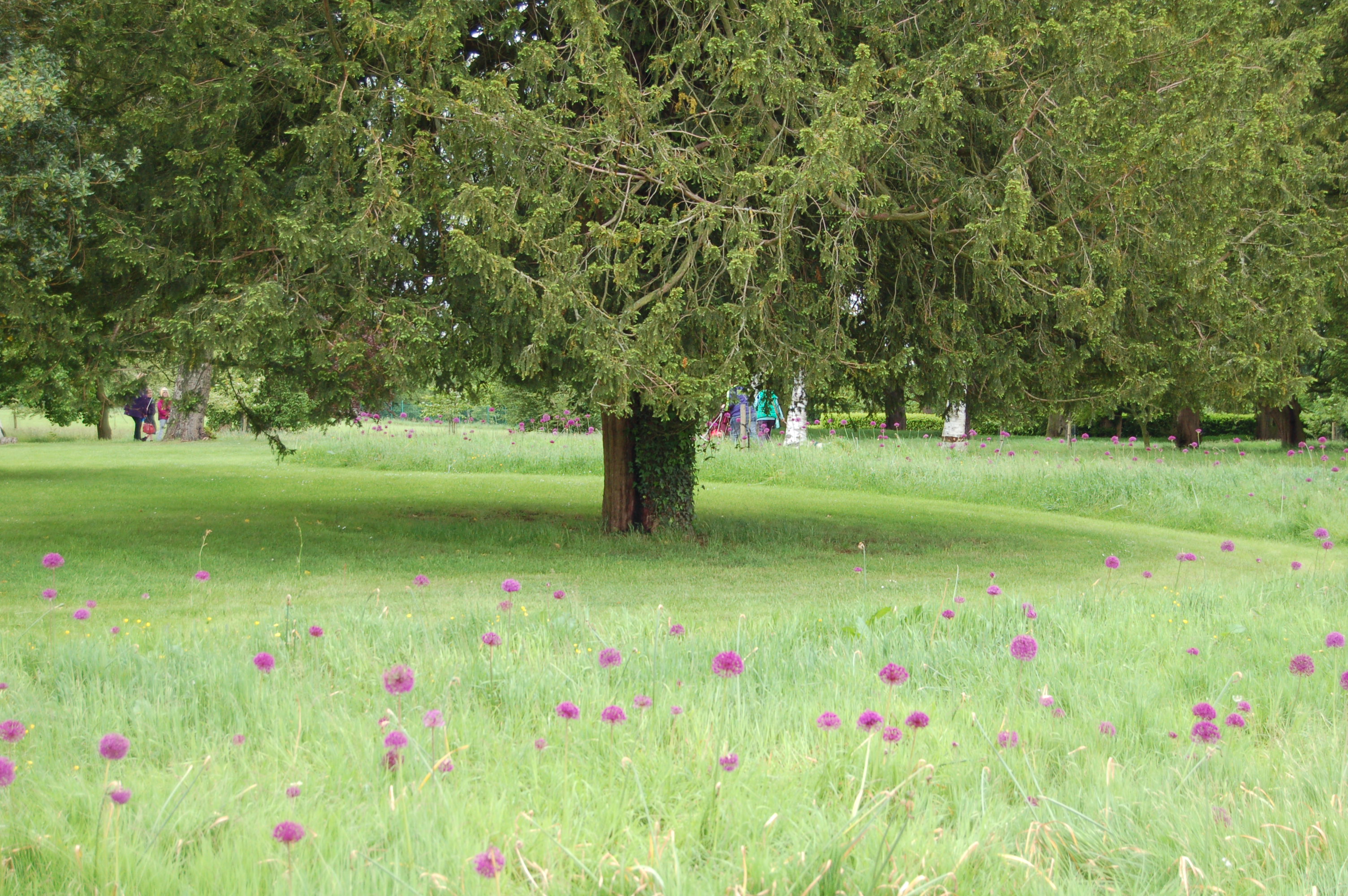
More Alliums were naturalised in the grass beneath the mature trees from the otiginal parkland plantings. They added colour to our walk over to look at the Display Gardens.
Here the newly planted gardens were taking shape.
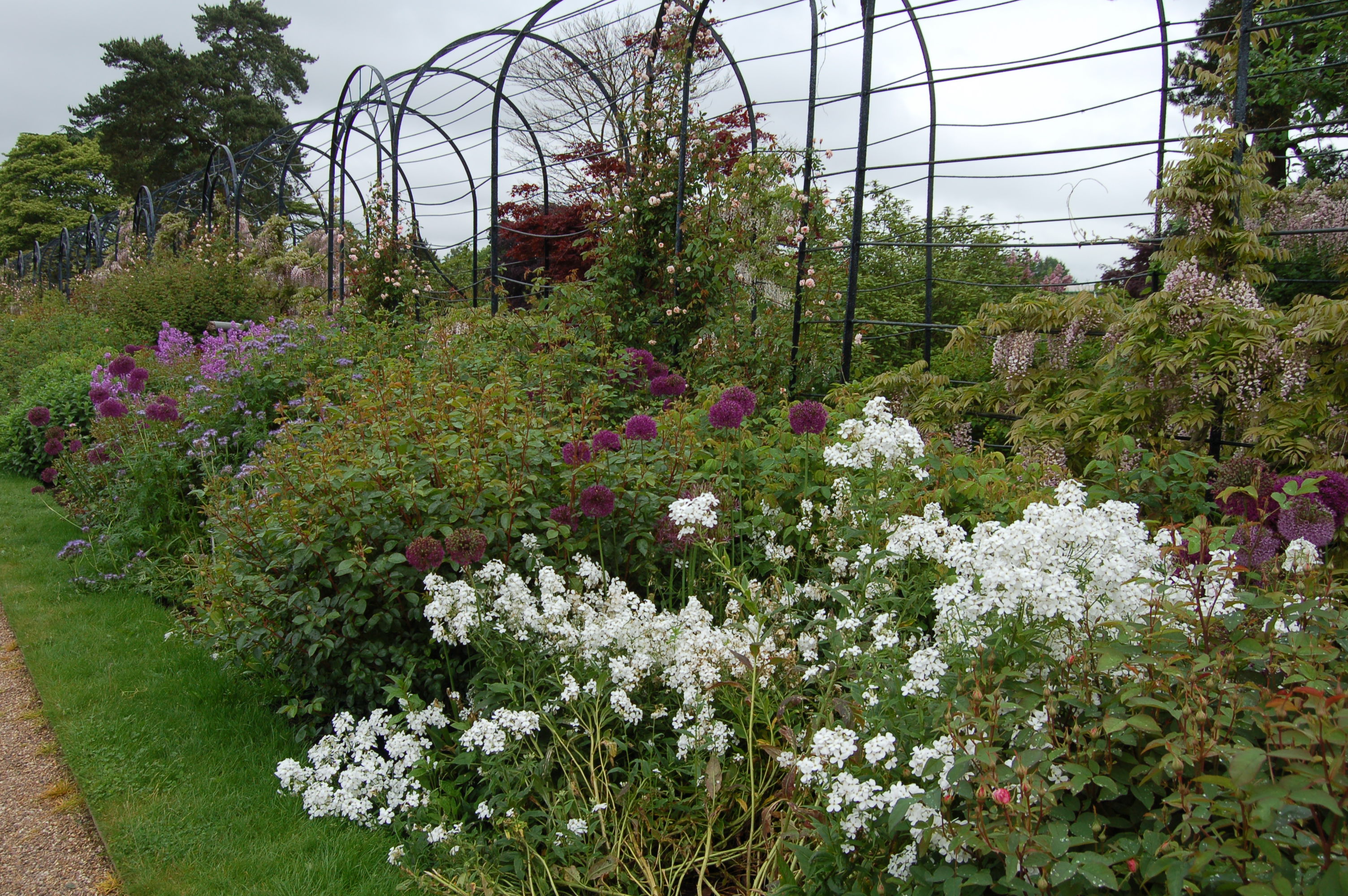
As always our wanderings around the gardens at Trentham finish with a walk along the Rose Walkway. Yet more Alliums grew here in between the roses.
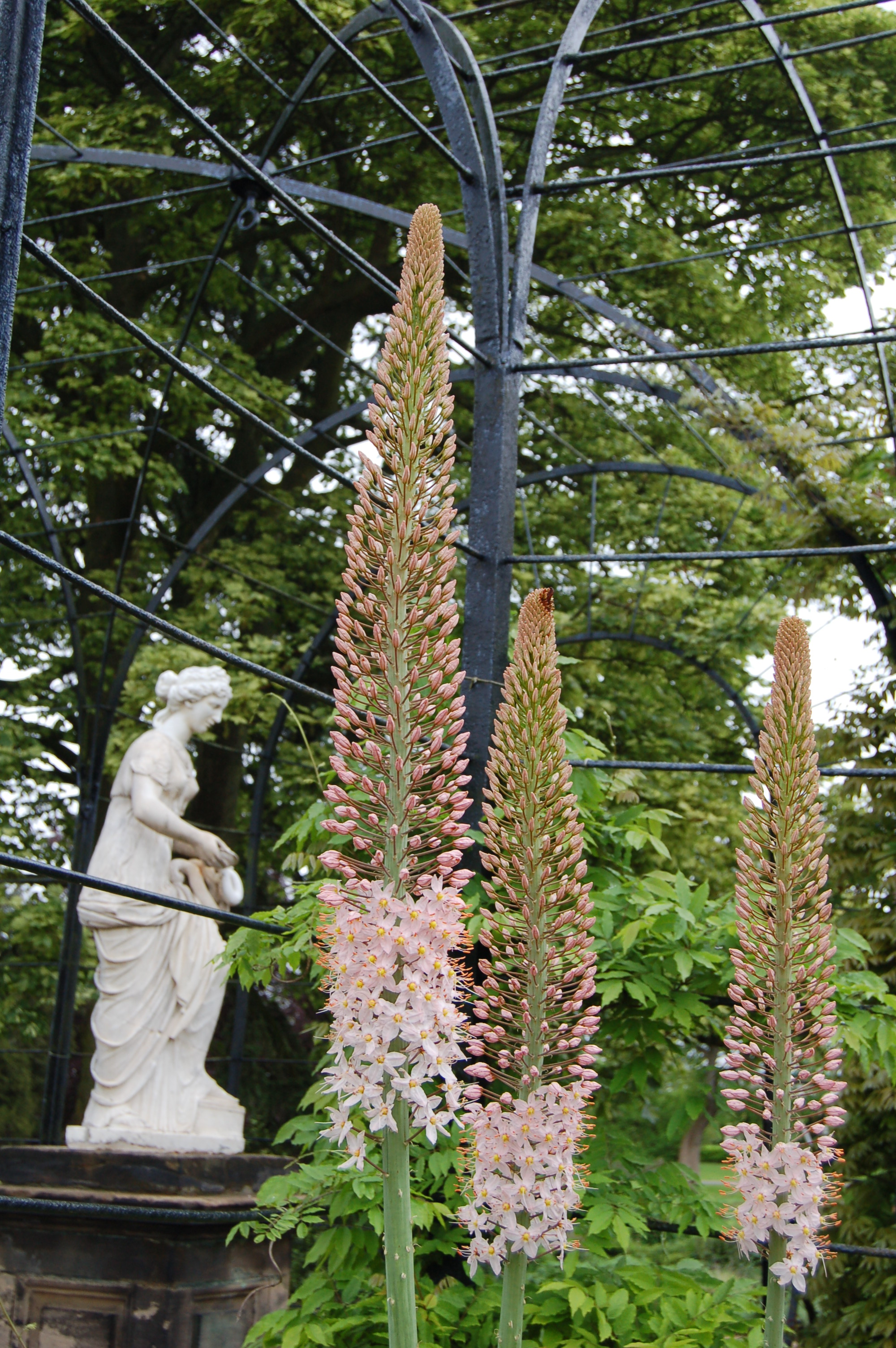
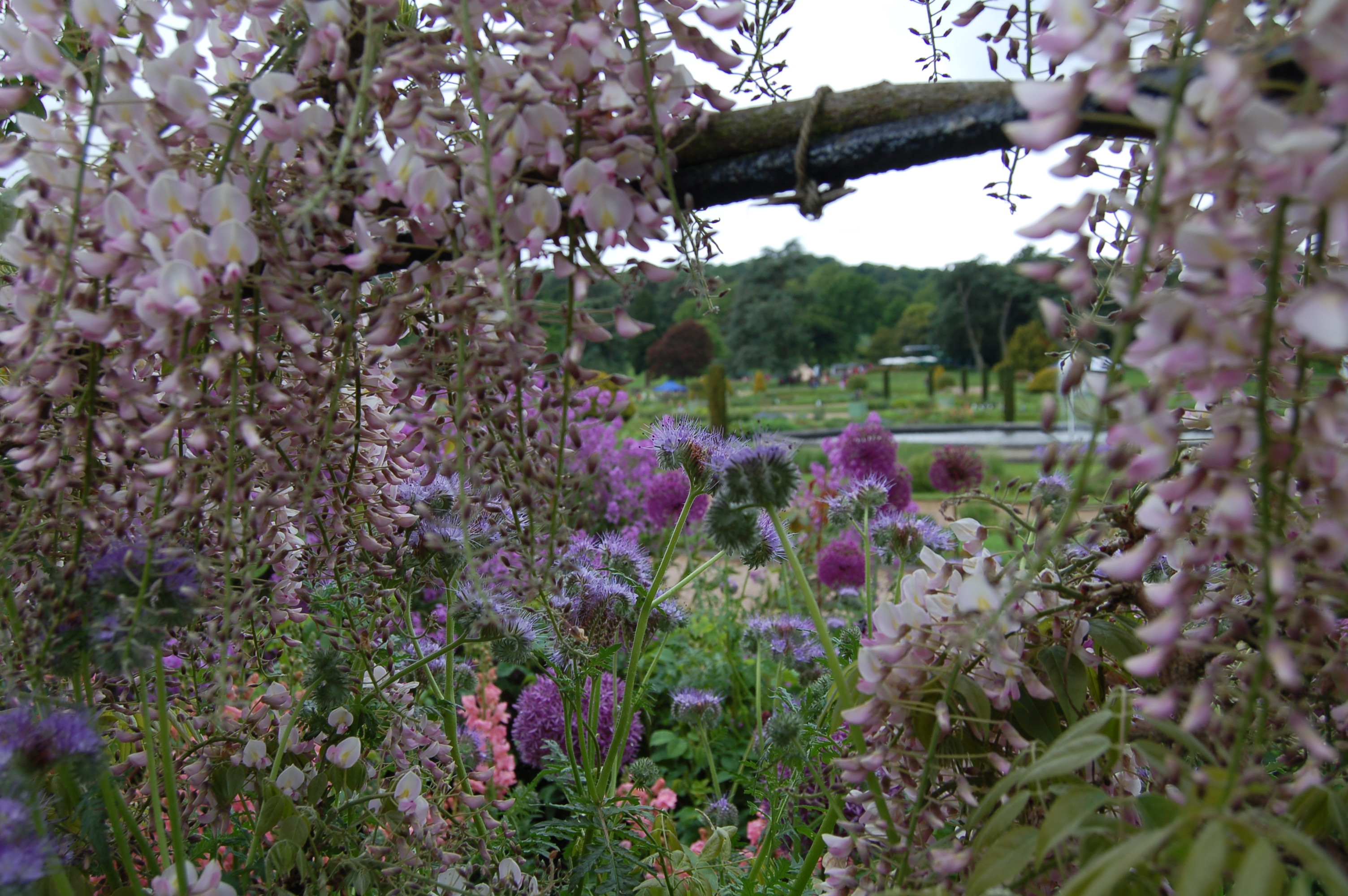
Wisterias were flowering as they climbed over the metalwork and added colour and scent to our walk.
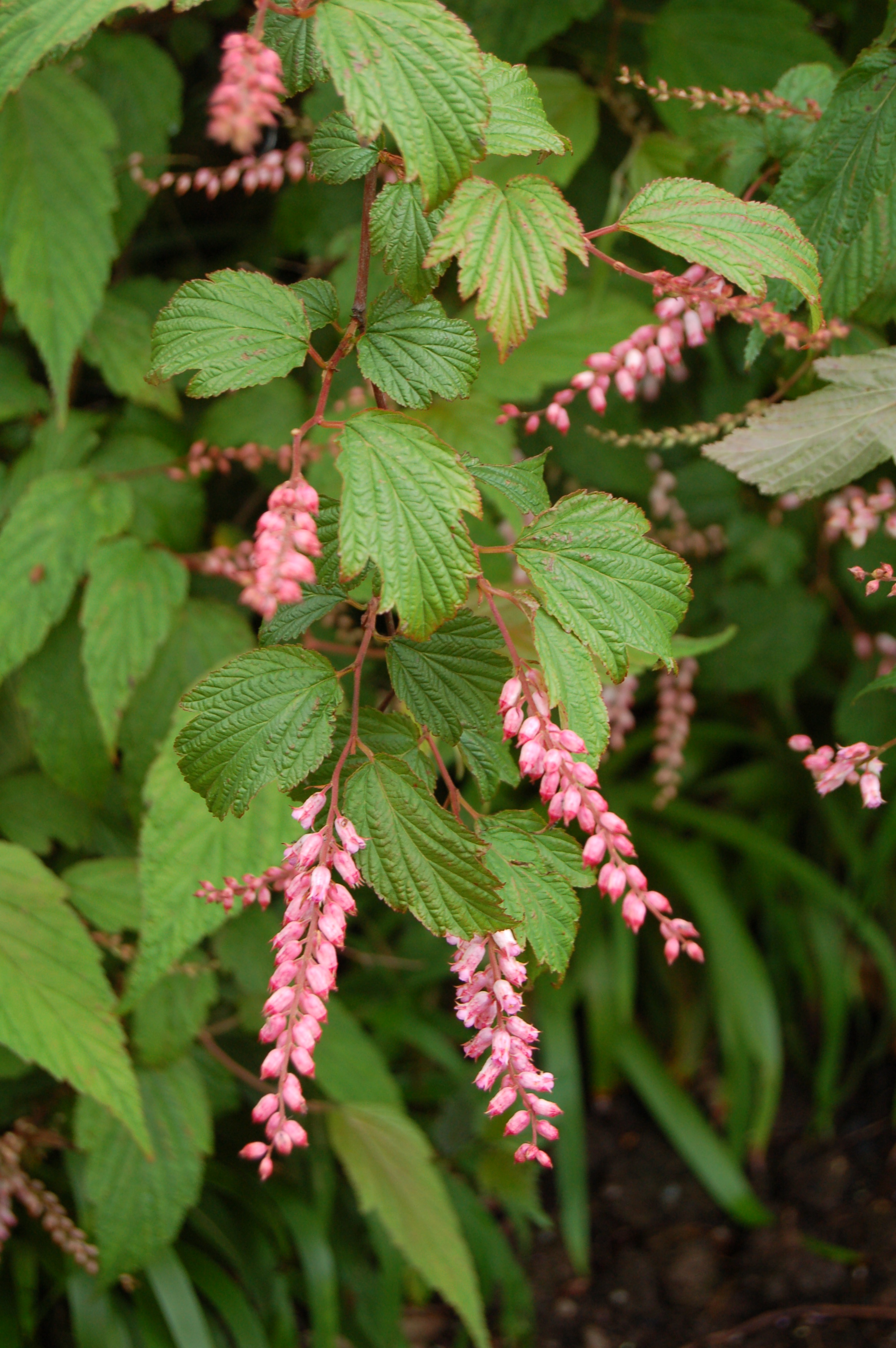
We came across this pink flowered shrub which although we had seen it before we could not remember what it was. It was a beautiful shrub. Any ideas?
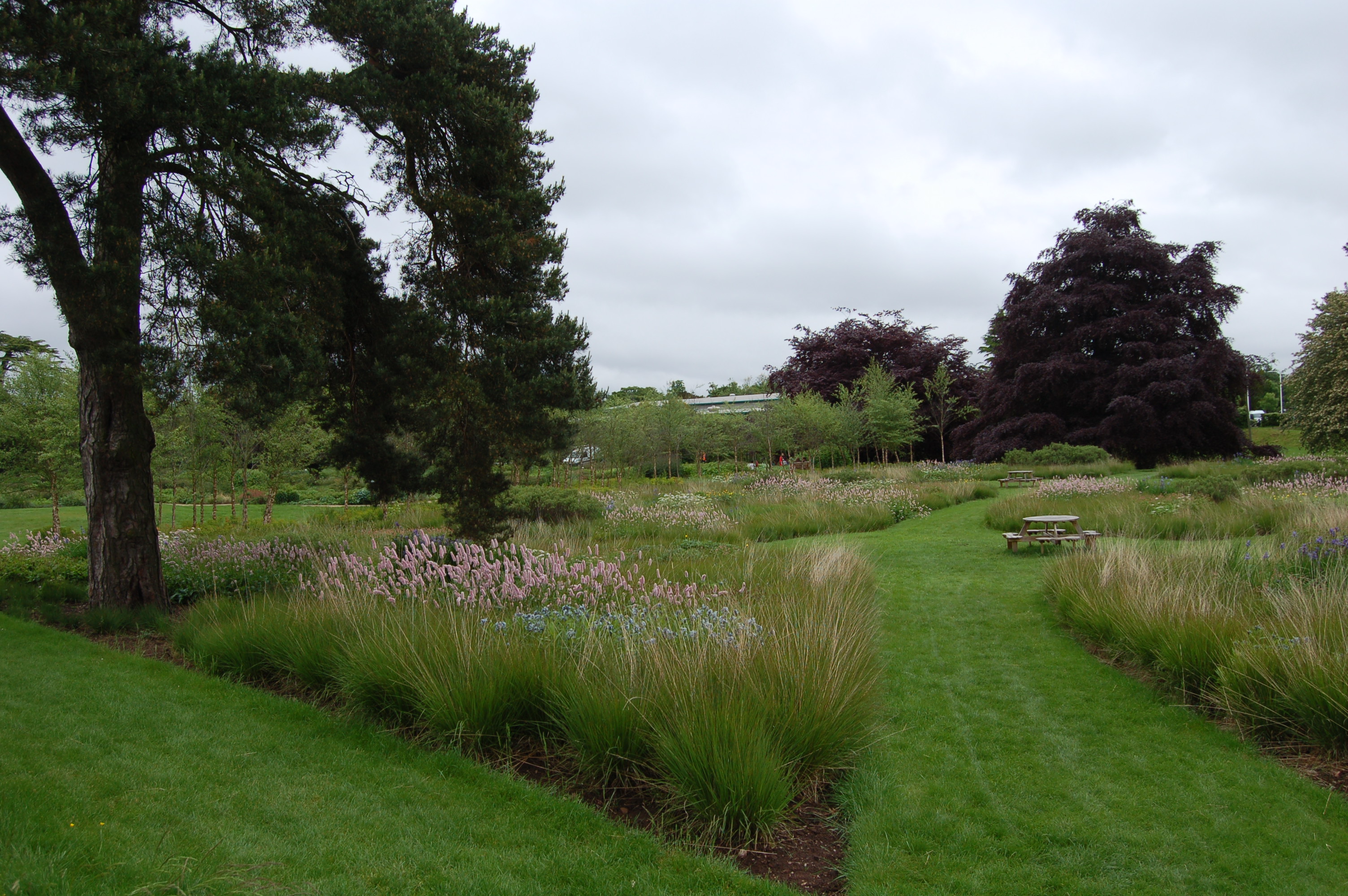
I finish our May wander of this amazing garden with a few views from the rose walk looking over the River of Grasses.
I promised at the end of my post about the wild colours at Dorothy Clive to take a wander with my camera to show the milder coloured side of this lovely garden in late spring. We usually visit this garden in the late summer or early autumn when the mixed borders simply zing! The oranges of Leonotis and Leonorus and the reds of Crocosmia “Lucifer” work in wondefully to give a burst of fiery colours. Annuals mix with perennials and the odd shrub in long sweeping borders. When we had the invitaton to visit in early May we jumped at it, hoping to see a side to the gardens we had not seen before. We turned left by the cottage into the dell full of the outrageous colours of the Rhododendrons and Azaleas as featured in my previous post.

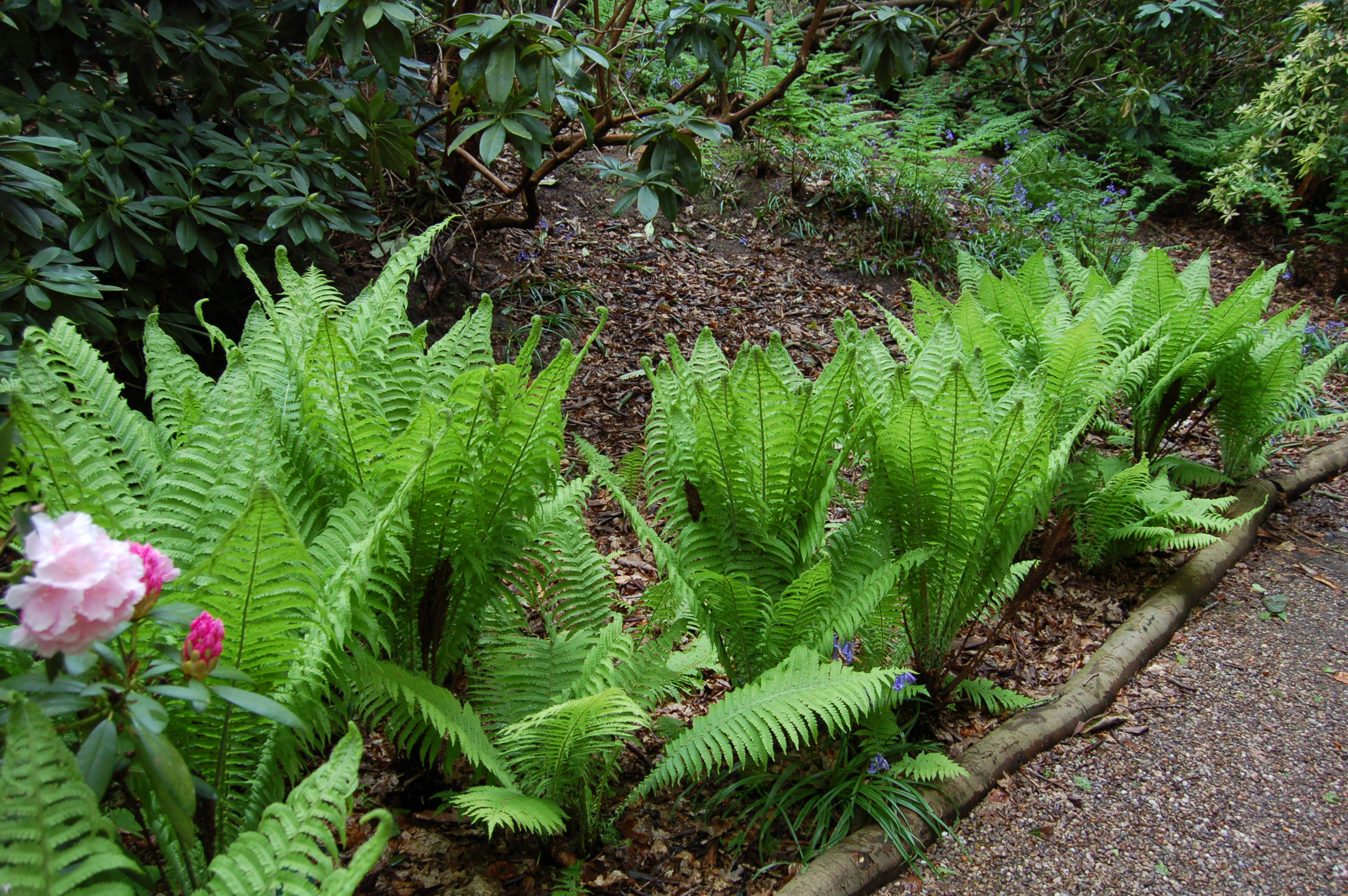
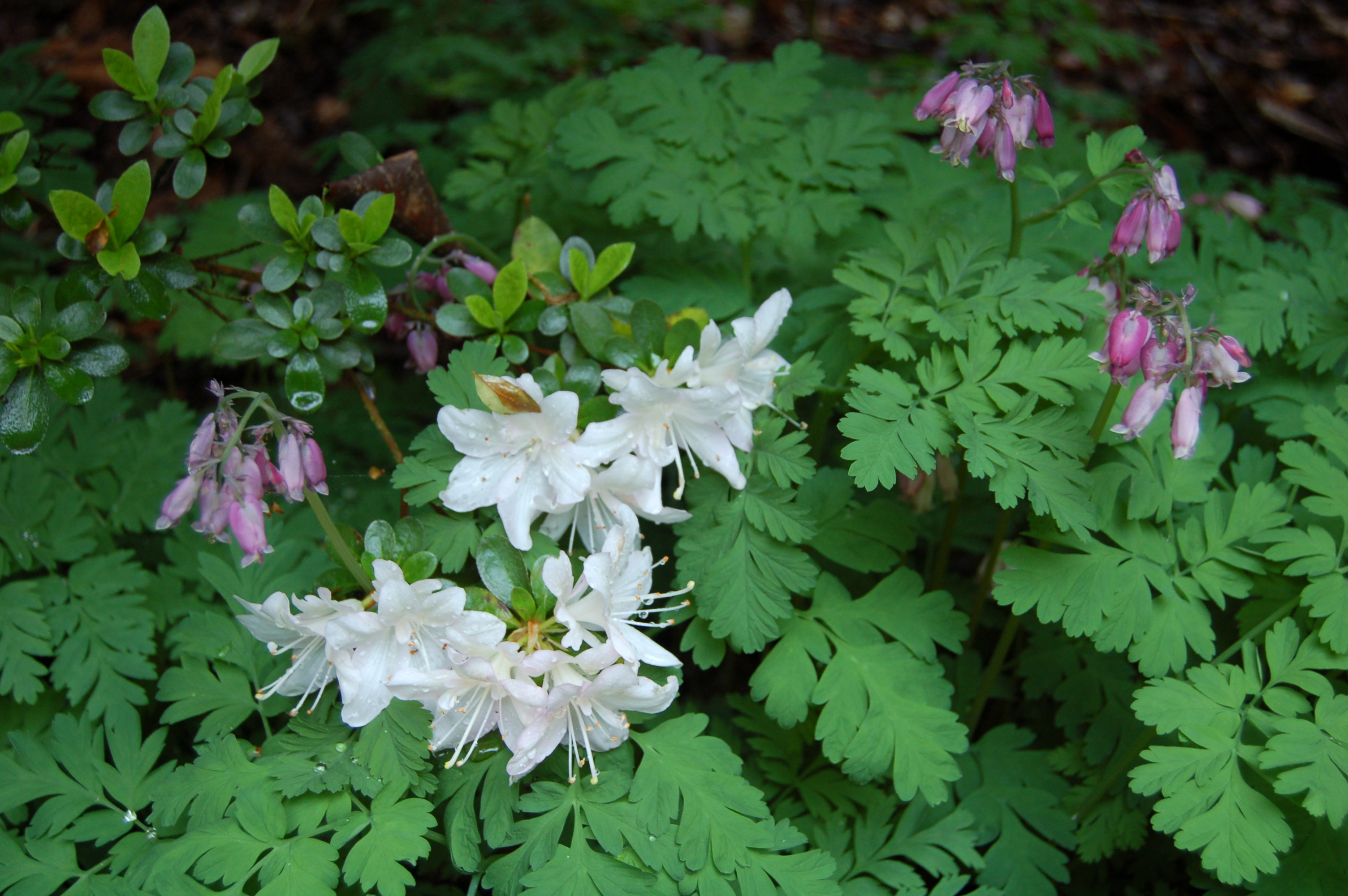
But there was more here than just bright colours, and we soon discovered a rich selection of woodland plants.


As in many gardens over the last few years the gardeners have realised the beauty that lies beneath the floral displays of the Rhododendrons – the sculptural form of their trunks and branches. Clever pruning techniques brings the beauty of their form to the fore.

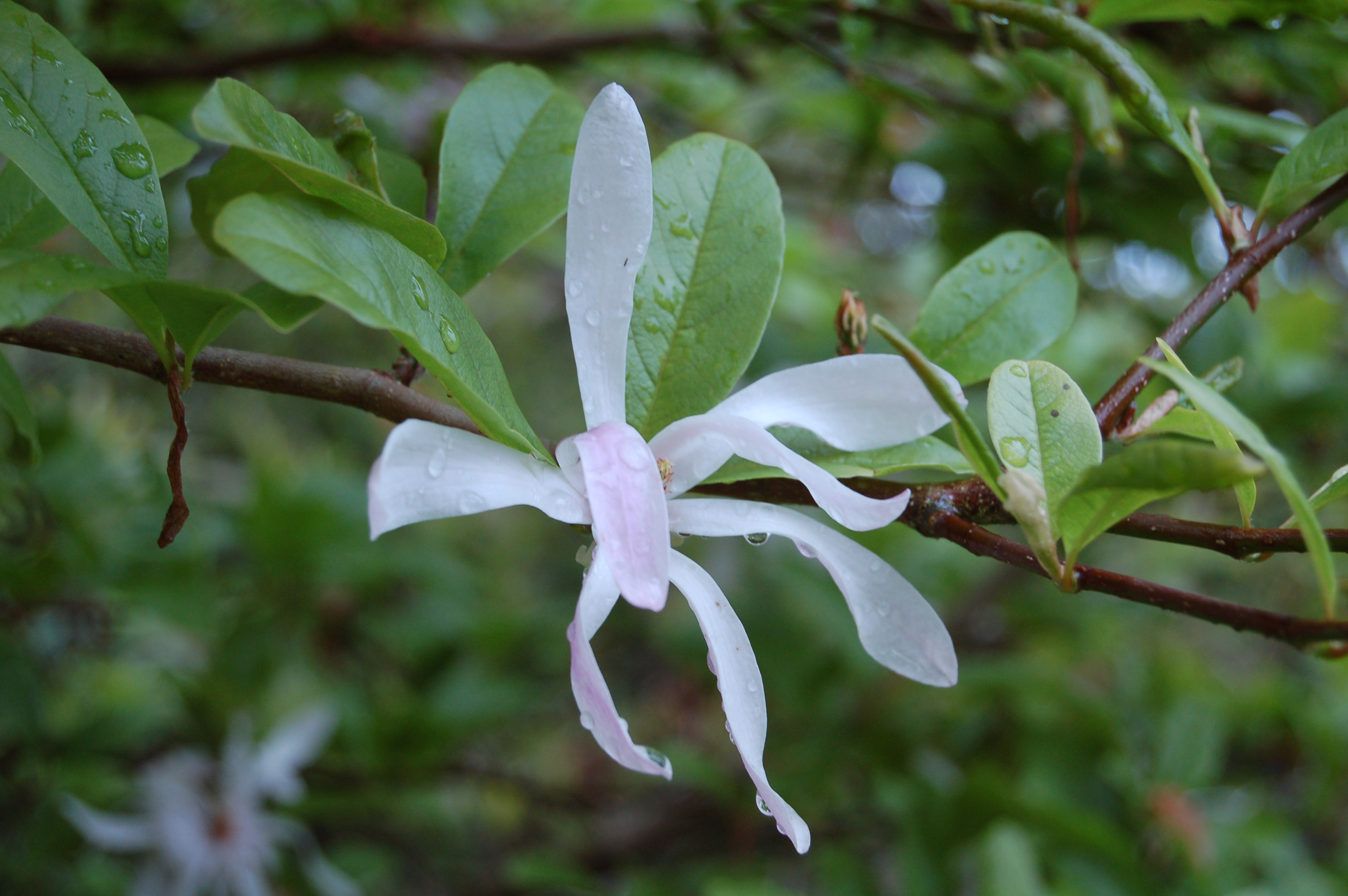
Leaving the dell we wandered the winding paths towards the Laburnum Walk which we were expecting to be in its most glamorous clothes. We found more woodland favourites and more flowering shrubs and small trees. We enjoyed the purity of the white flowered Magnolias.
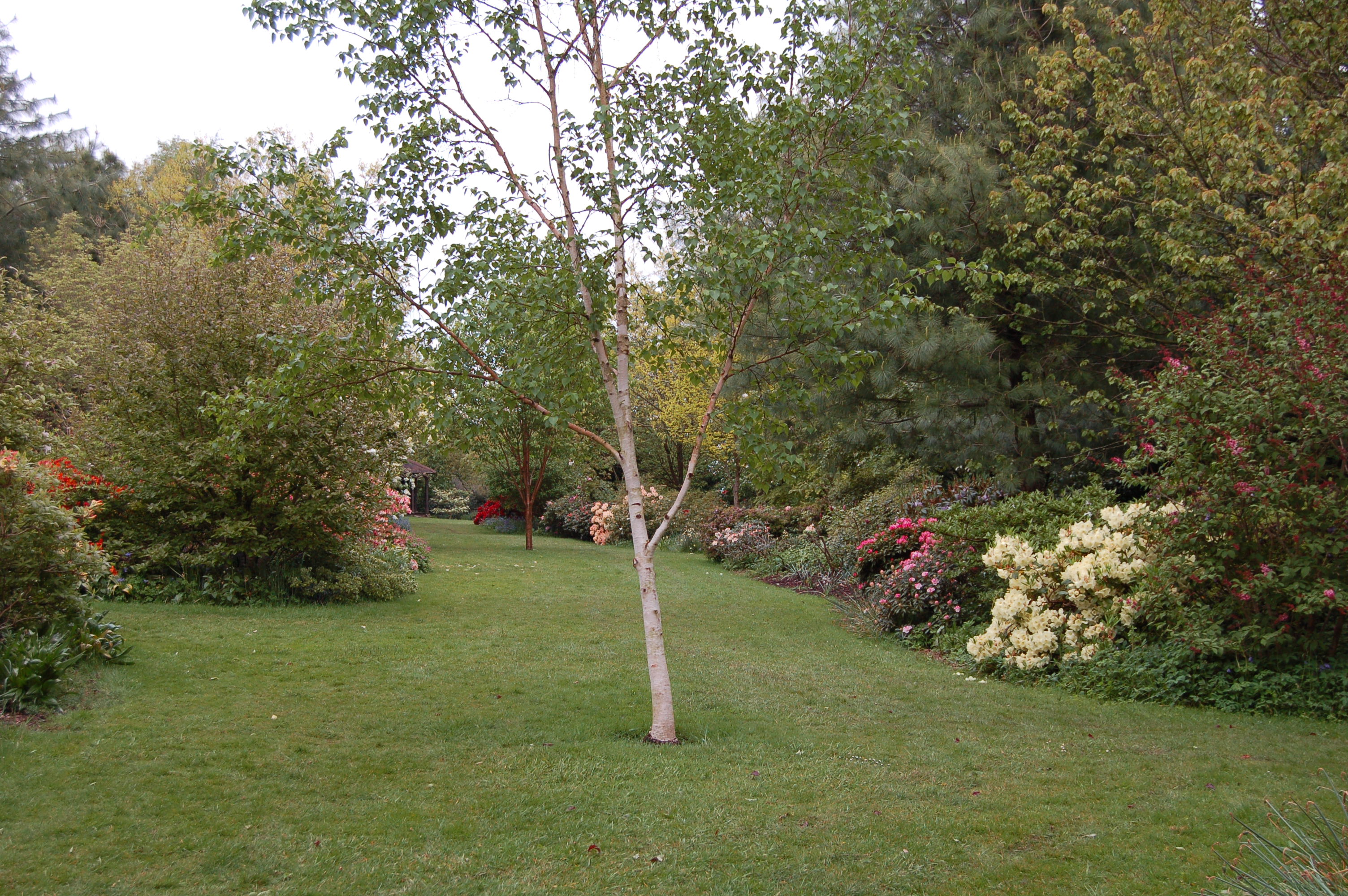
Lovely vistas opened up as we left the more densely planted areas under the mature trees. the mixed borders here had a very gentle feel to them.
The Laburnum Walk was not in flower as much as we had expected but the sun came out after a storm giving added freshness to the light and we enjoyed walking slowly through the tunnel of Laburnums.
Golden Hop climbed among the Laburnums and gentle coloured perennials sat at their feet.
The newest area at Dorothy Clive is the Edible Woodland and this has developed nicely since our last visit.
We managed to quickly walk part of the sloping gardens before the rain came in ferociously and drove us to an early finish to our visit. Hopefully the few photos I managed to take as the rain approached will give some idea of how delightfully planted this part of the garden is.
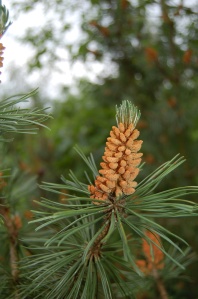
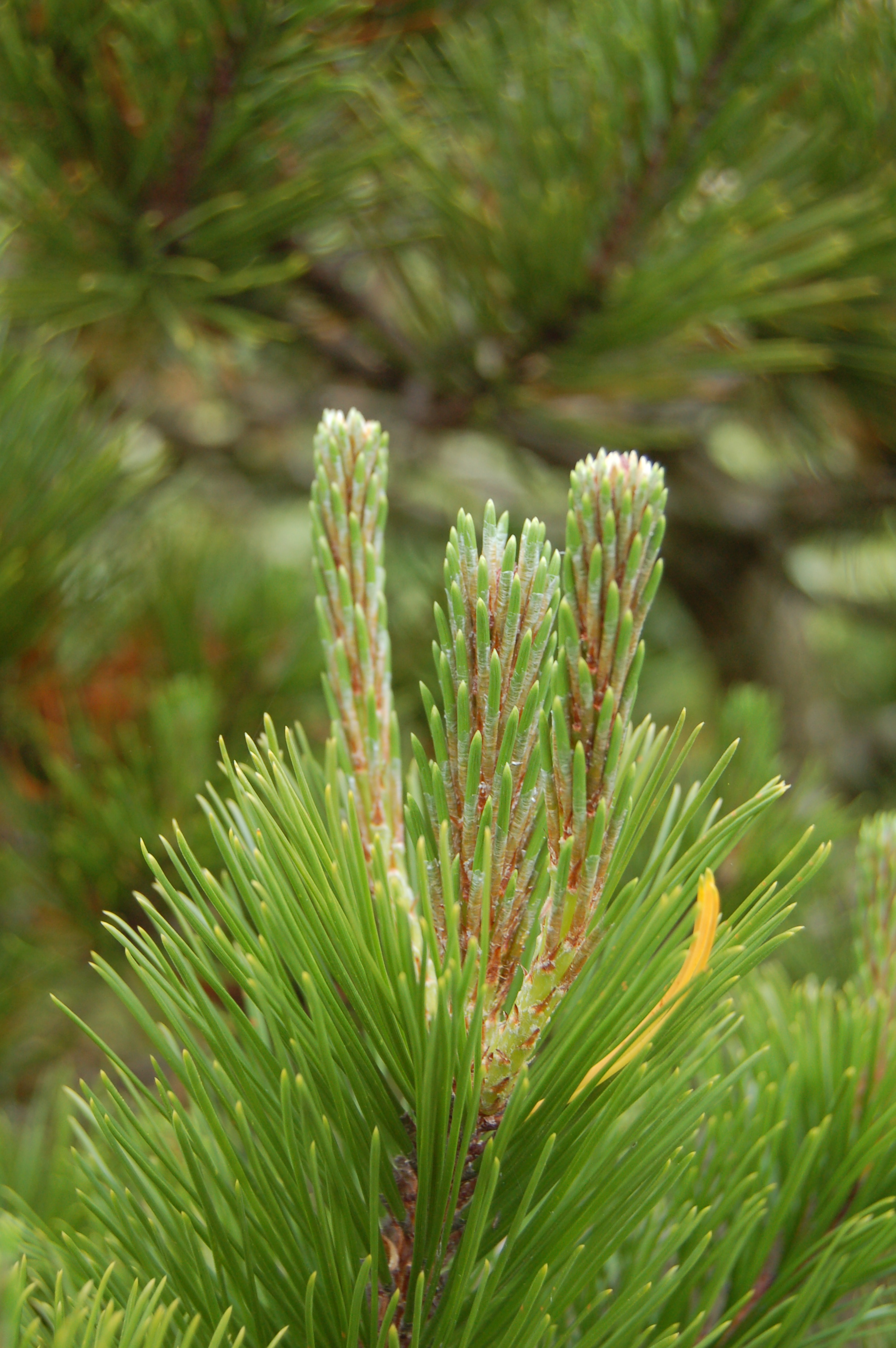
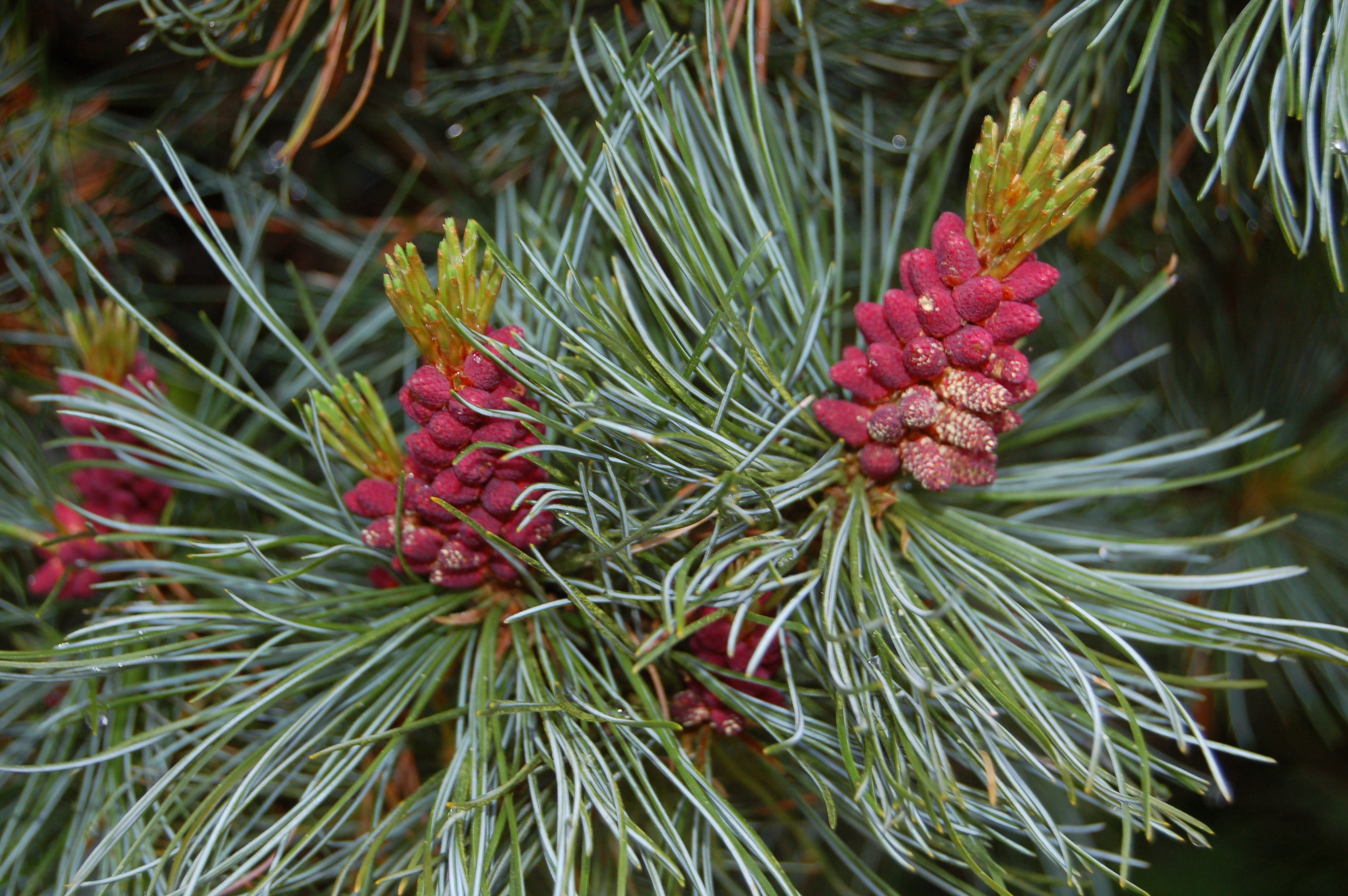
I am not a great conifer fan but the colours of these cones against the glaucous needles looked amazing. I am beginning to enjoy Pines now and appreciate them far more. I am sure we shall be visiting the Dorothy Clive Gardens again before long and then perhaps we can concentrate more on this gently sloping section.
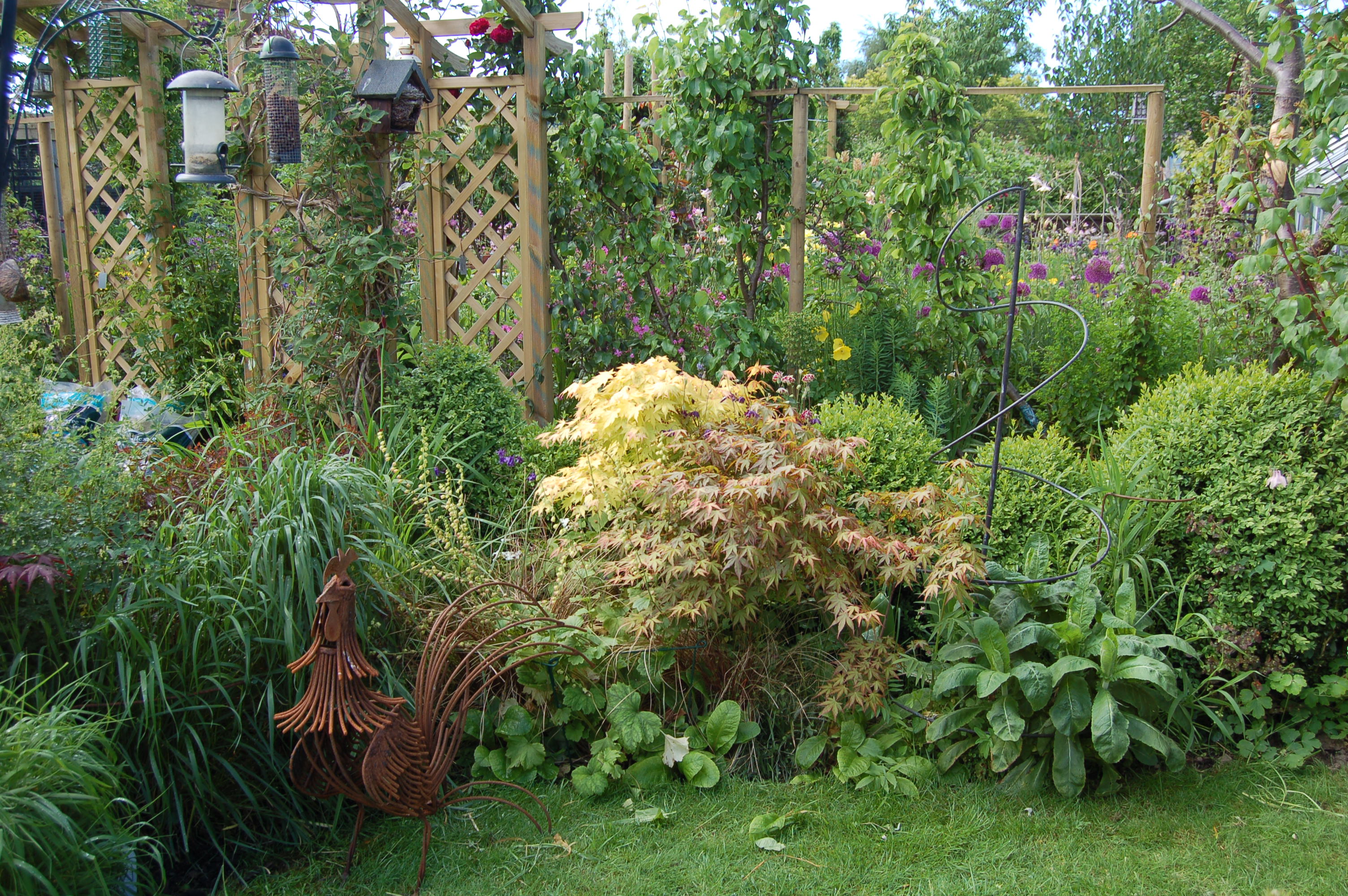
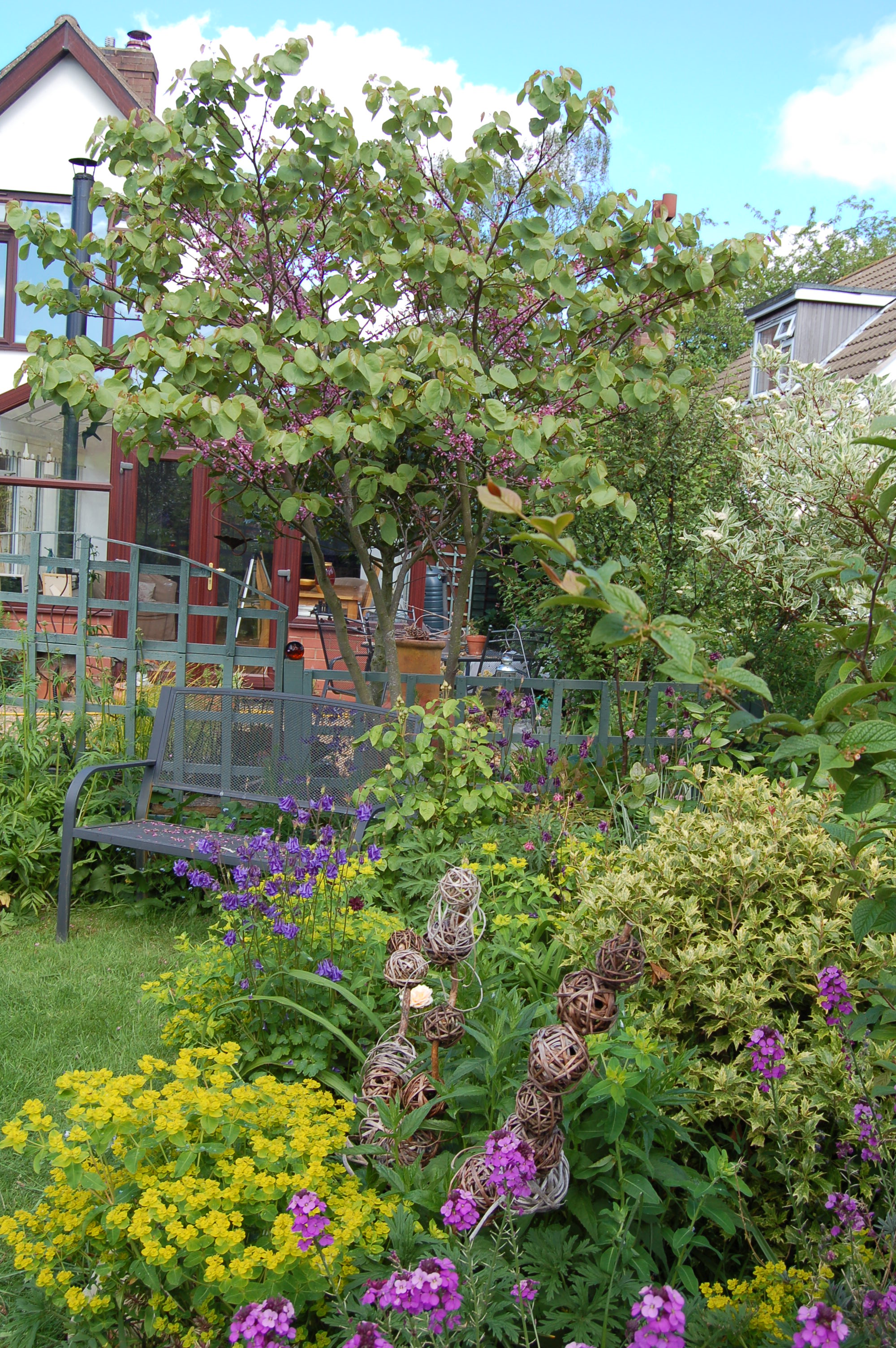
Number four in this series of posts concerning our aim at ensuring that our garden all year round sees me and my trusty Nikon wandering the paths of our garden in the last week of May. so come with me and see what you think. Are we still on track?
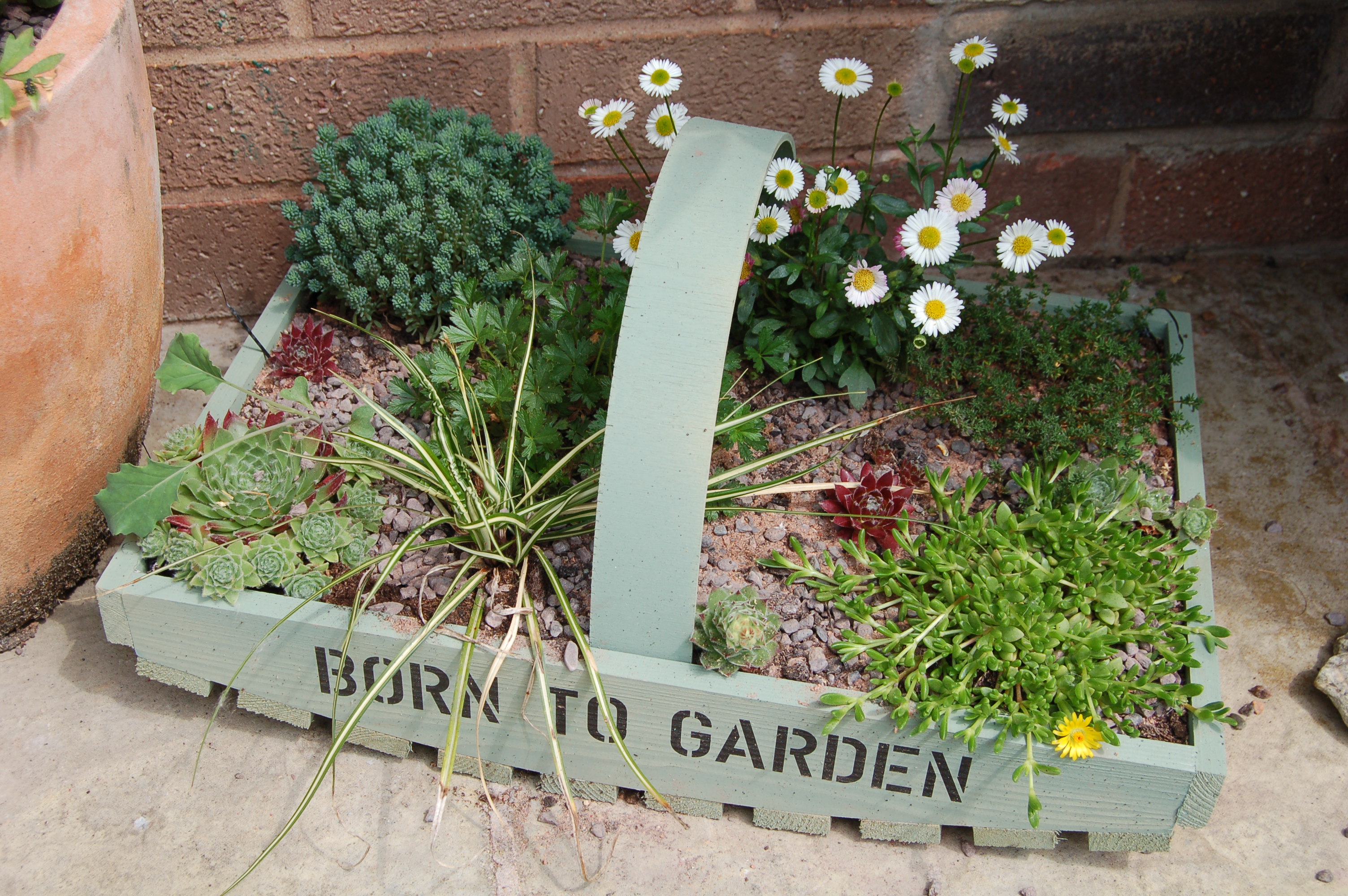
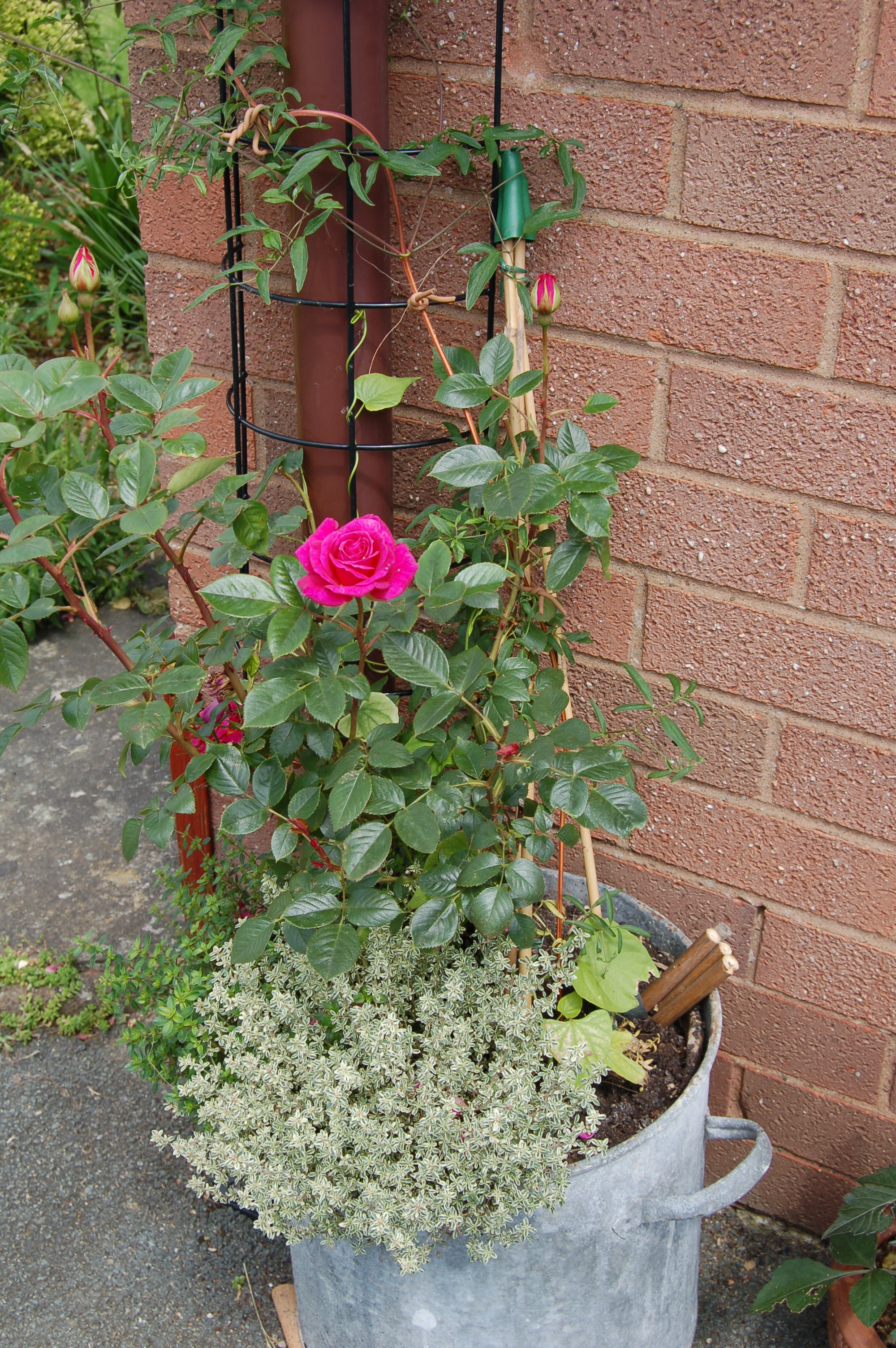
As usual we shall begin our wanderings in the front where right by the front door we find our personalised trug and our climbers growing in the old galvanised container. Opposite the front door the Freda Border is looking full of interest.

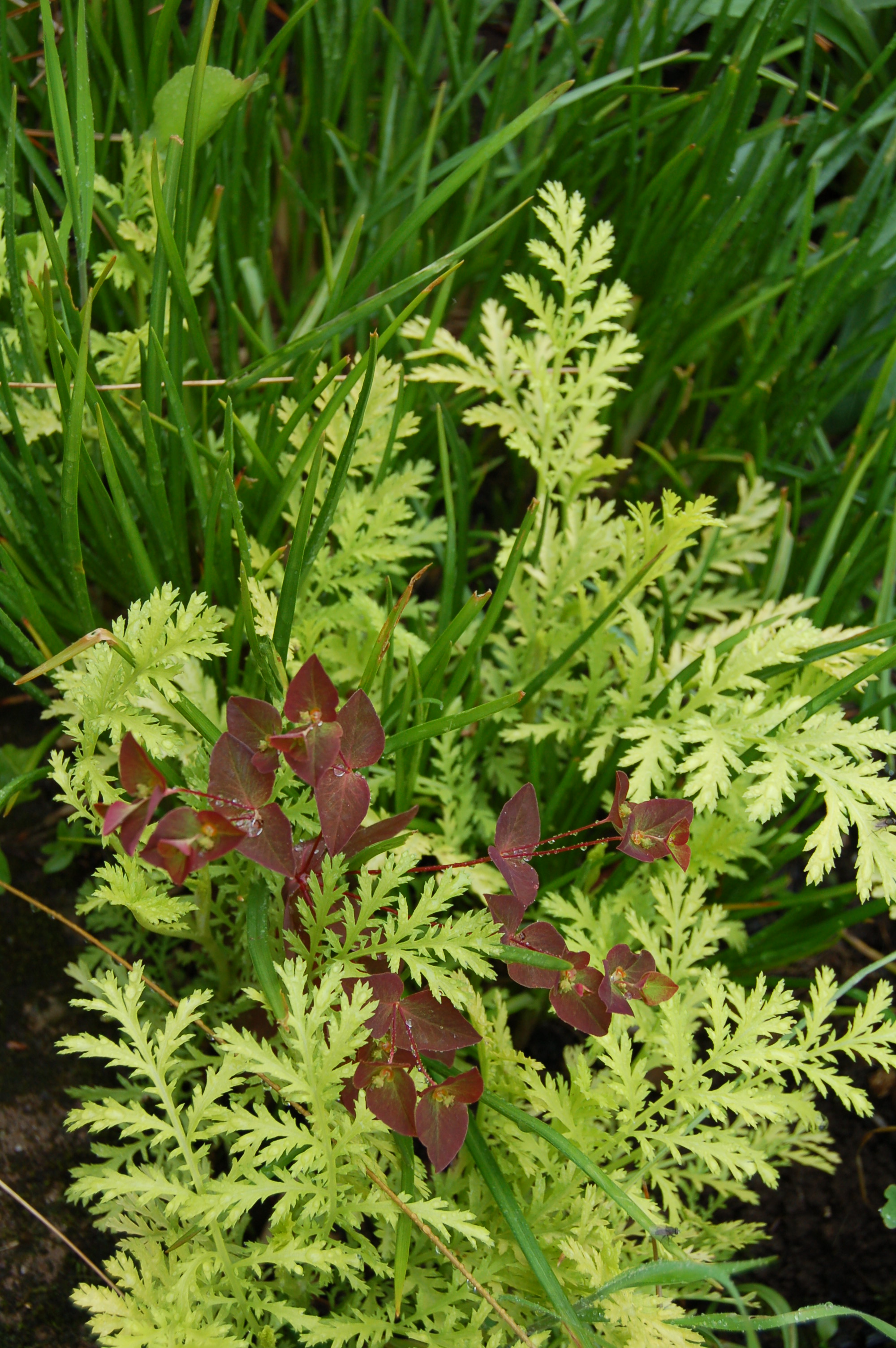
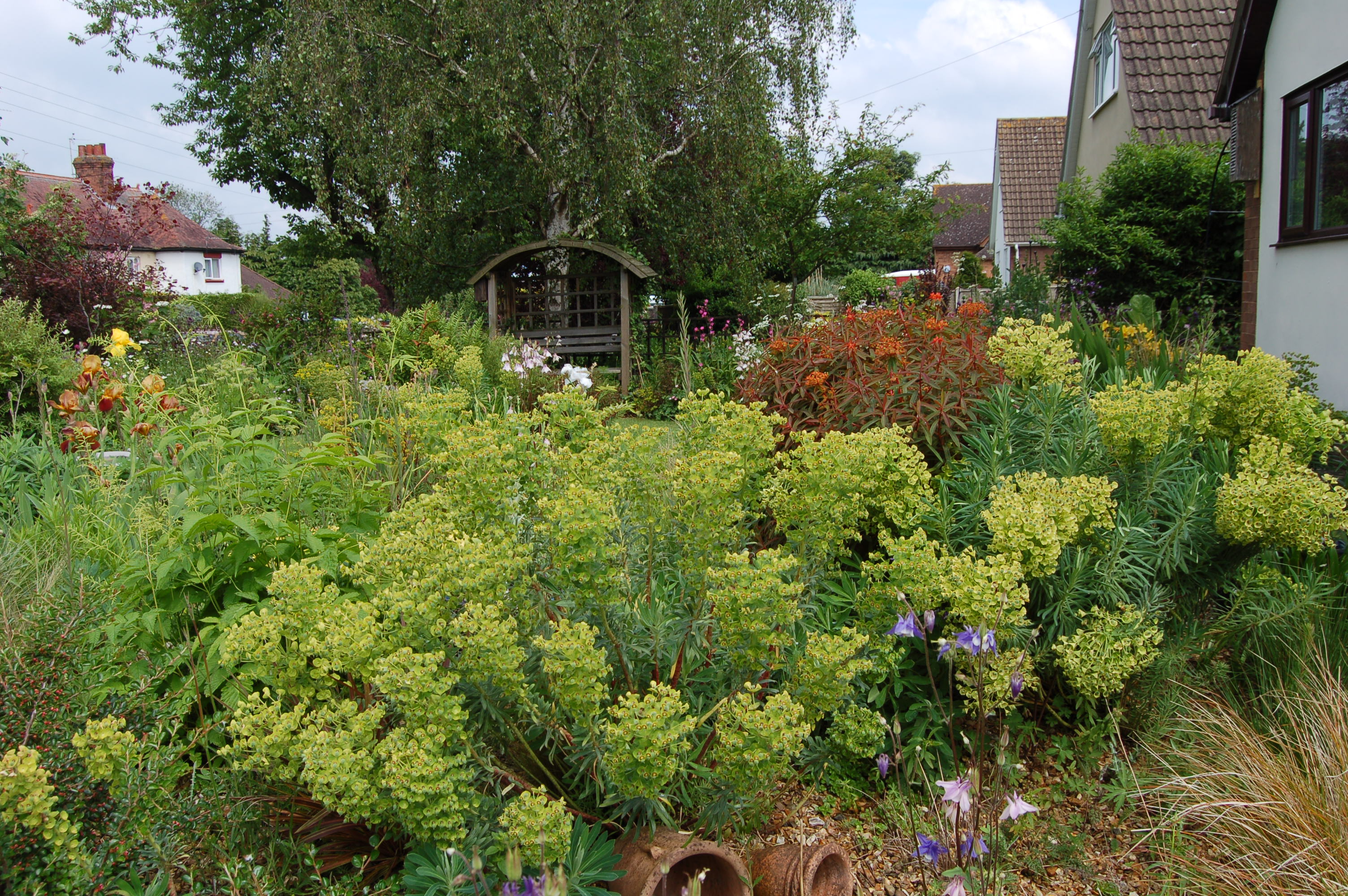
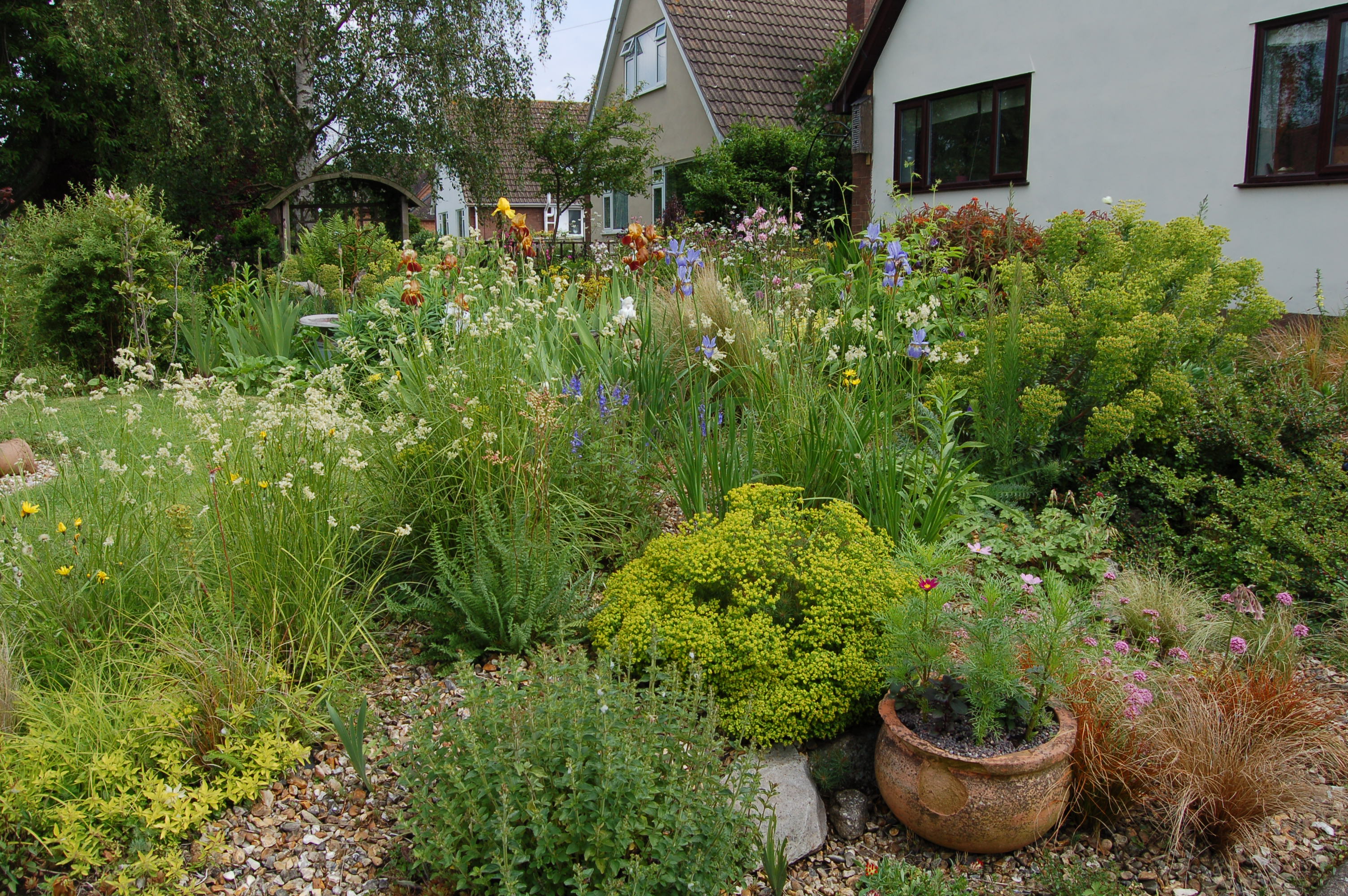
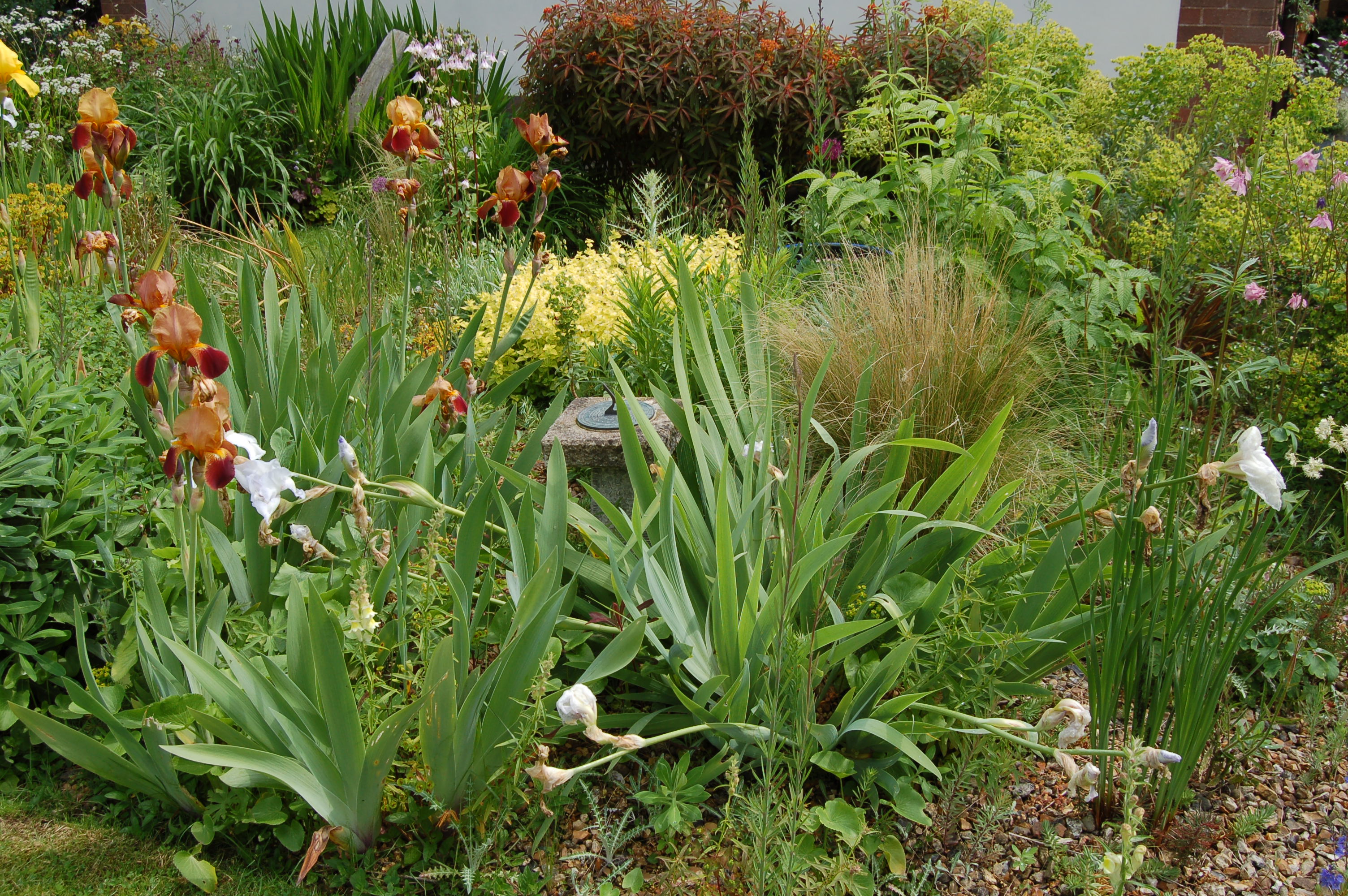
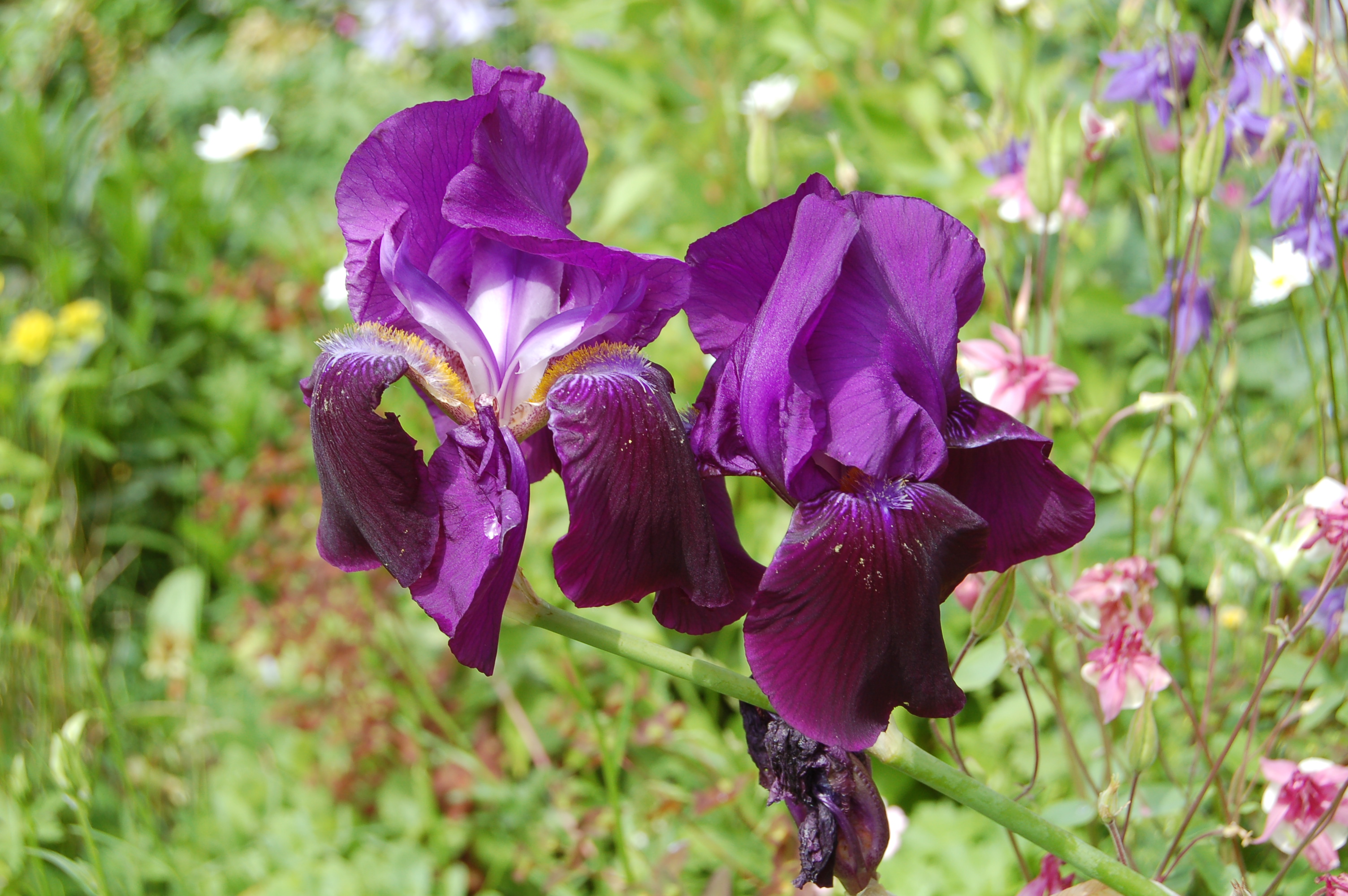
Round the front of the house the Chatto Garden seems full of chartreuse highlighted with brightly coloured Irises.
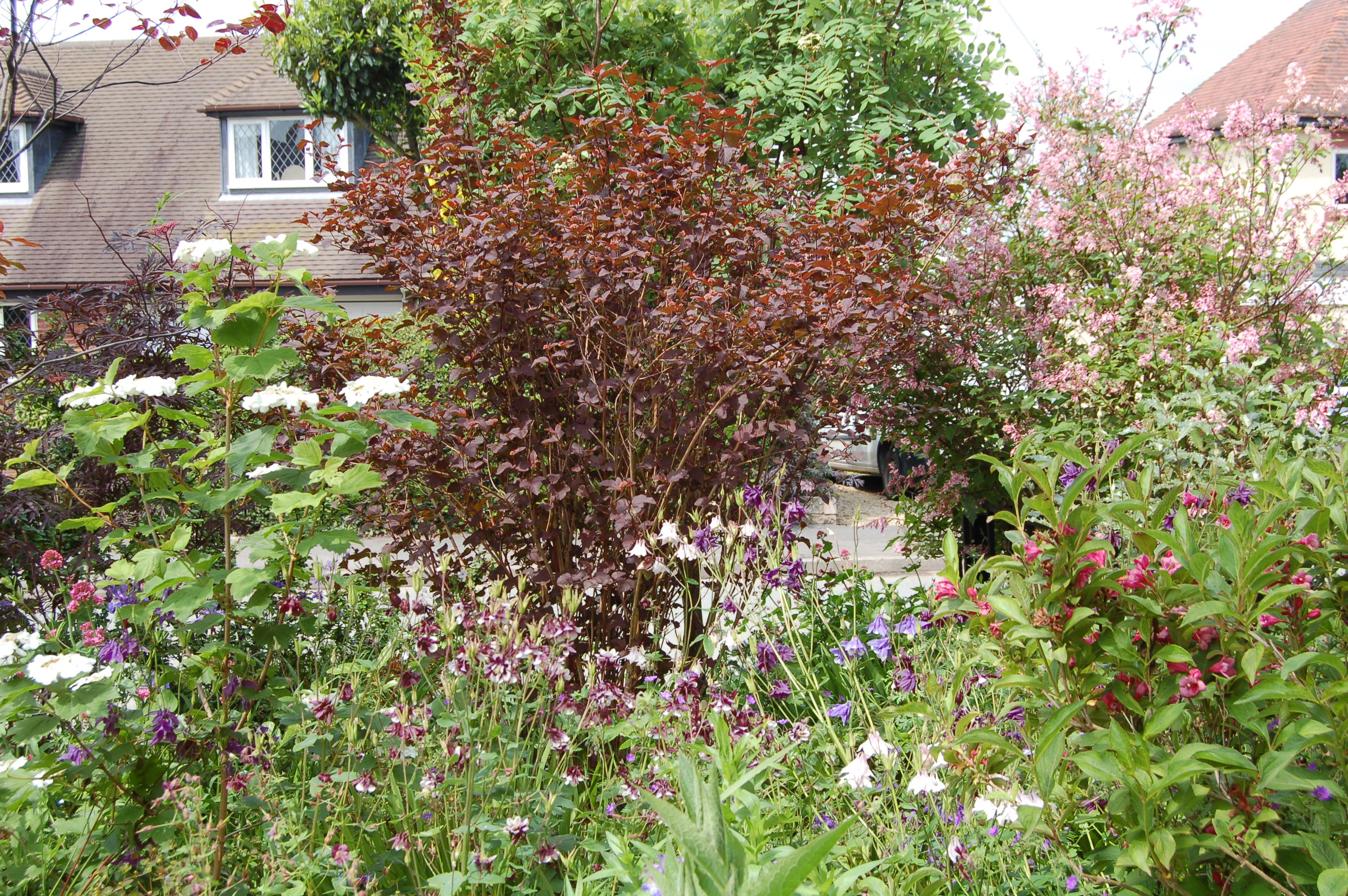
Our mixed borders are full of many different textures, shapes and colours provided by the herbaceous plants and the shrubs.
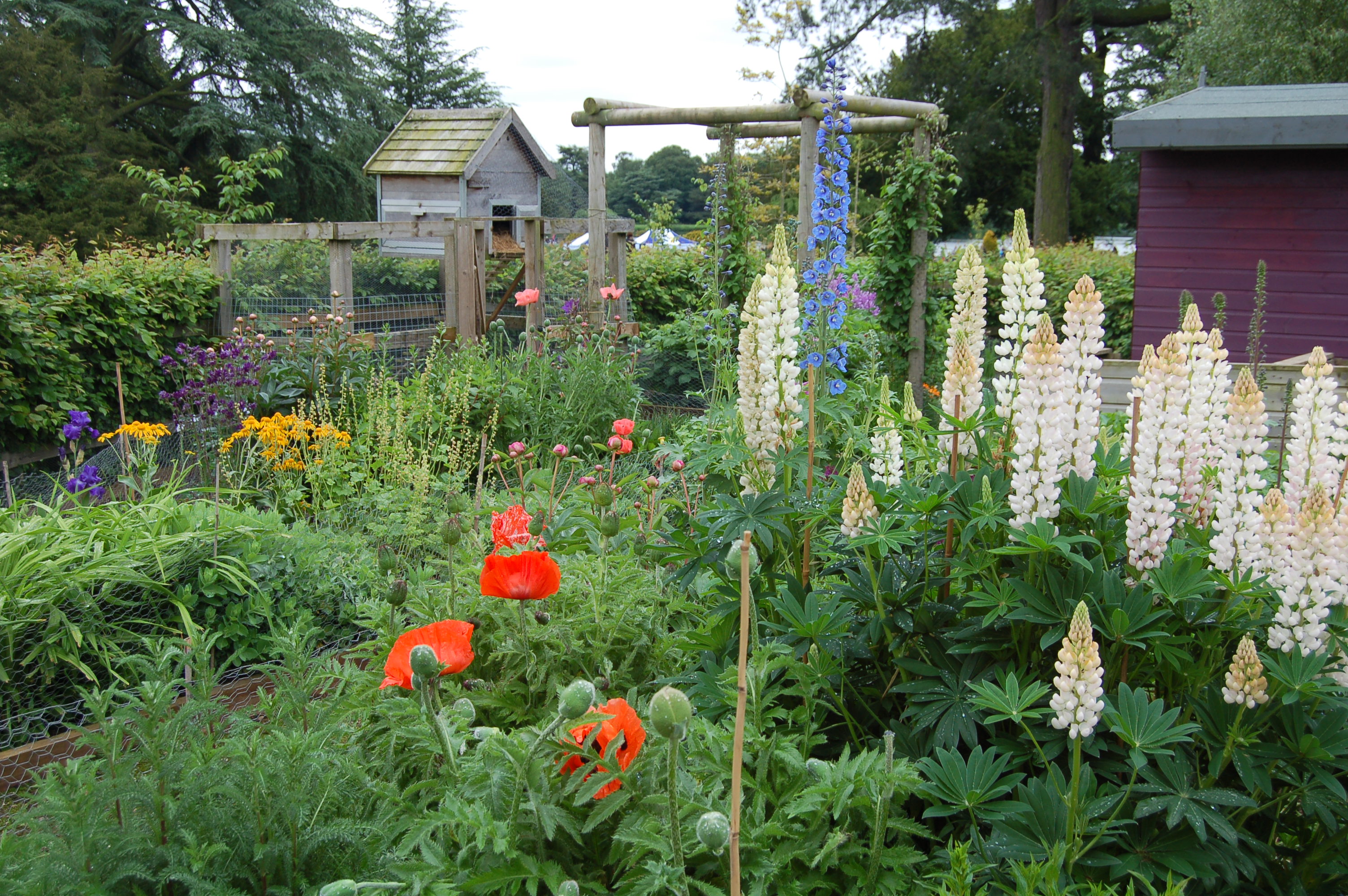
As we move into the back we find our lush colourful planting in the Secret Garden and the Chicken Bed. On a sunny day you need sunglasses to appreciate these areas.
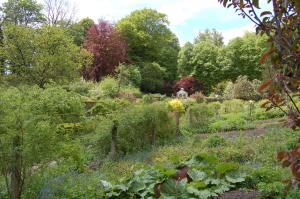
Down by the pool the Japanese Garden is dominated by the Acers but in the Bog Garden the big leaves of the Rheum and Hostas pick up any shaft of sunlight.
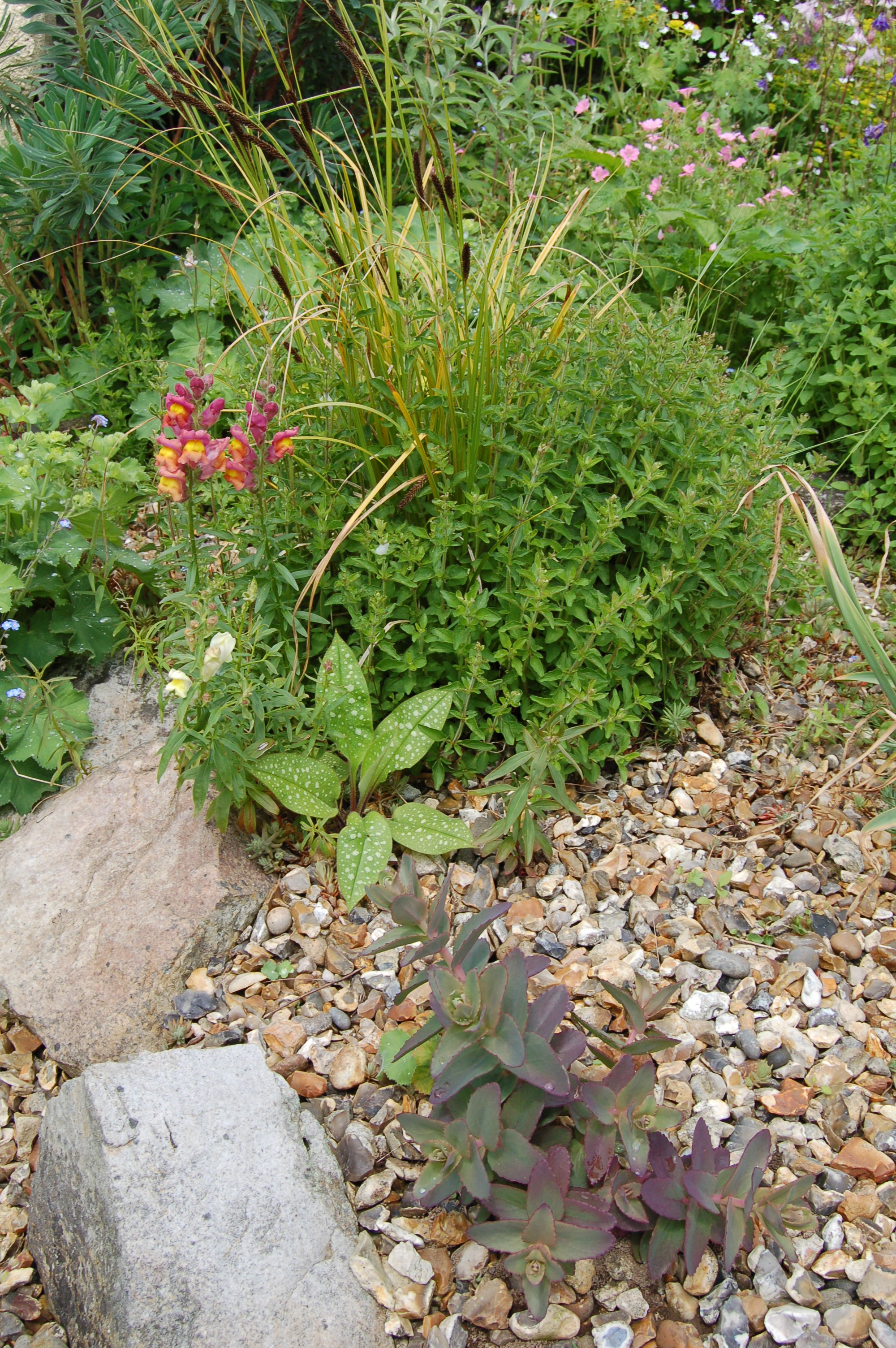
How about this for a self-seeder, an Anthirinum in the deepest pink possible with tiny splashes of yellow and orange growing alongside a red leaved Acer.

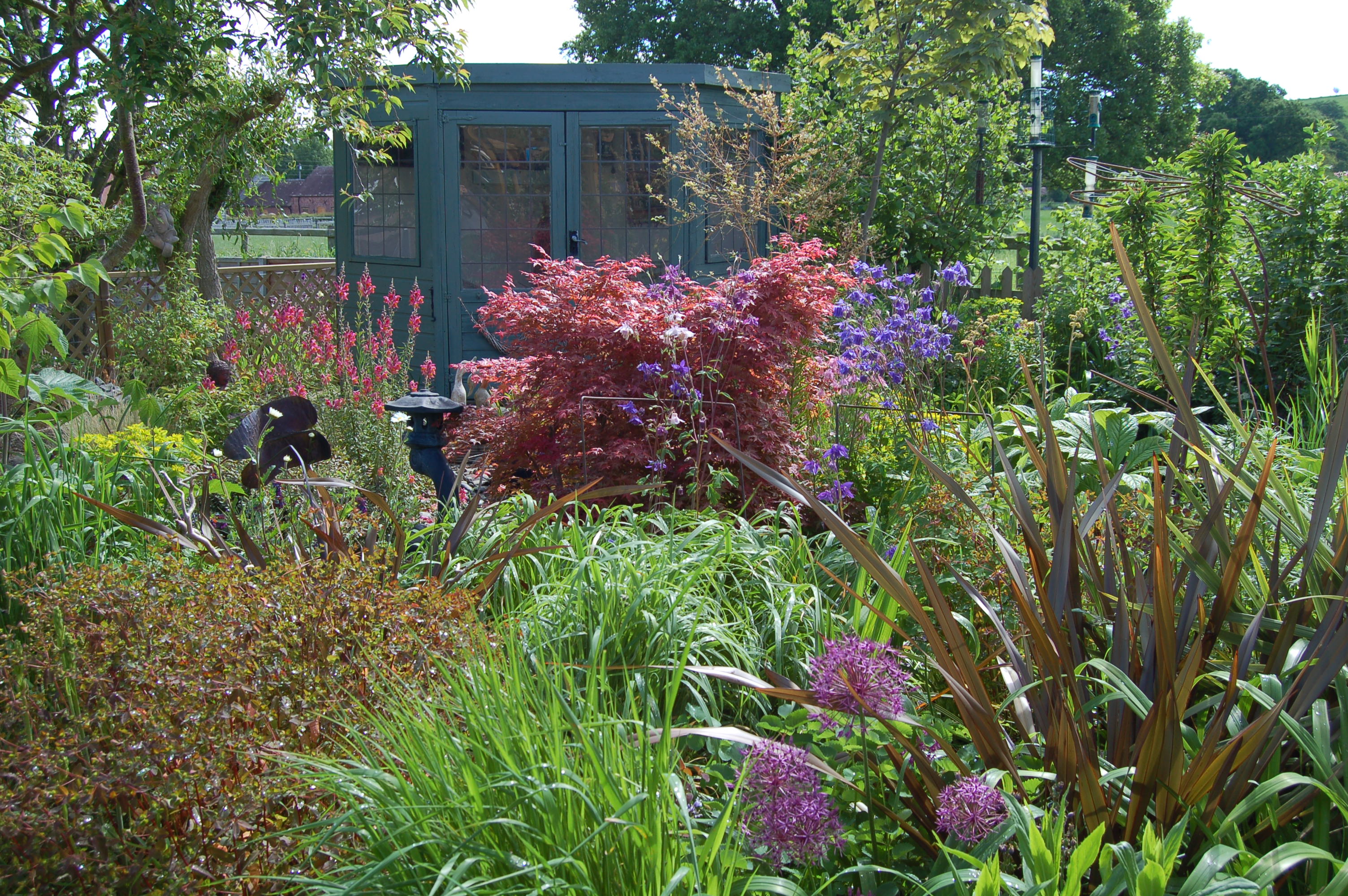
Looking from the Summerhouse the garden looks full of, so is now a lovely place to sit with a coffee and enjoy our hard work.

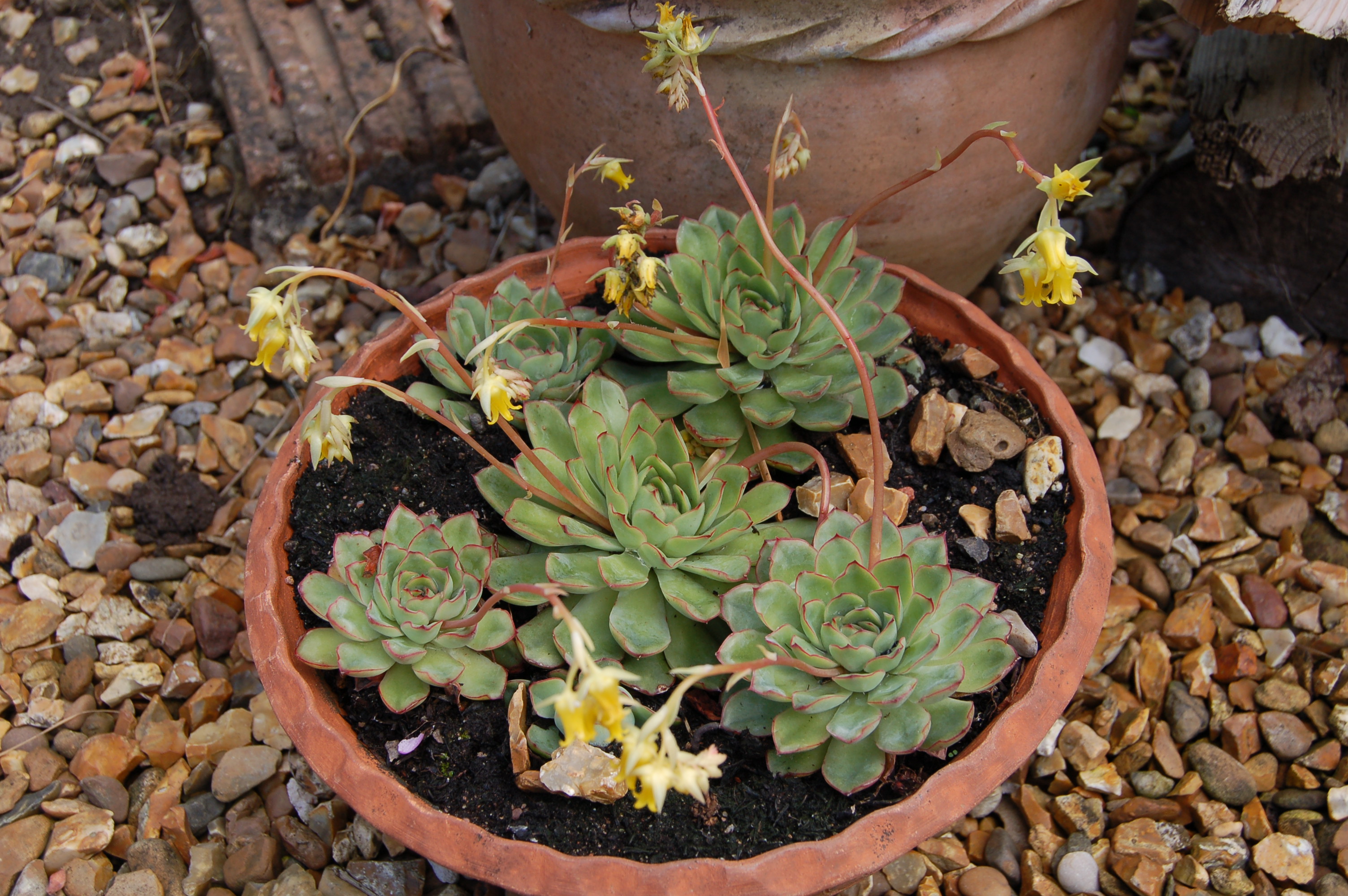
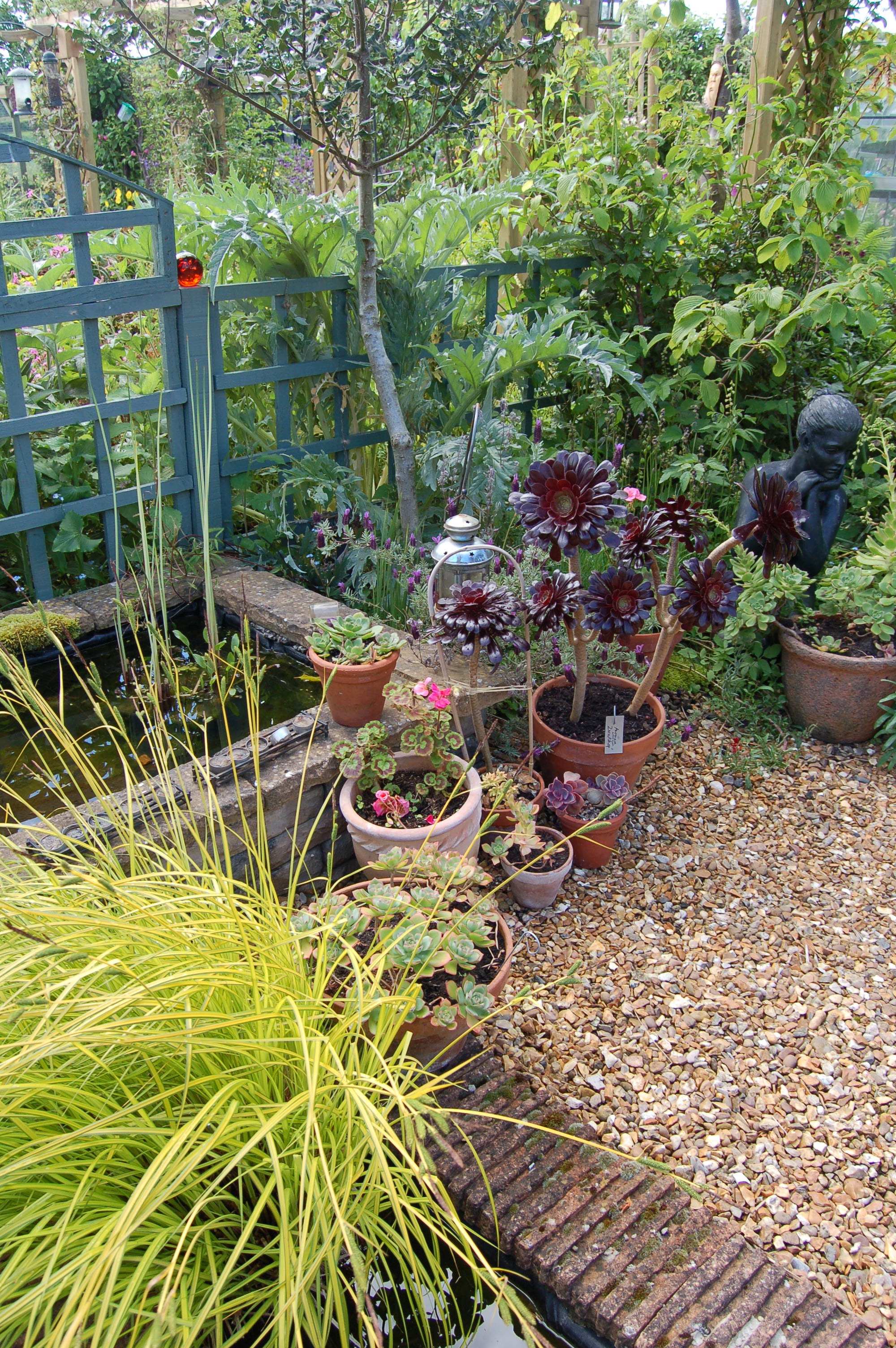
Moving back towards the greenhouse we can take a look at the Crescent Bed and around the Rill Garden. Just look at this little flower hovering above the leaves of the Aeonium.
From the Rill Garden we can see the Seaside Garden which we recently revamped.
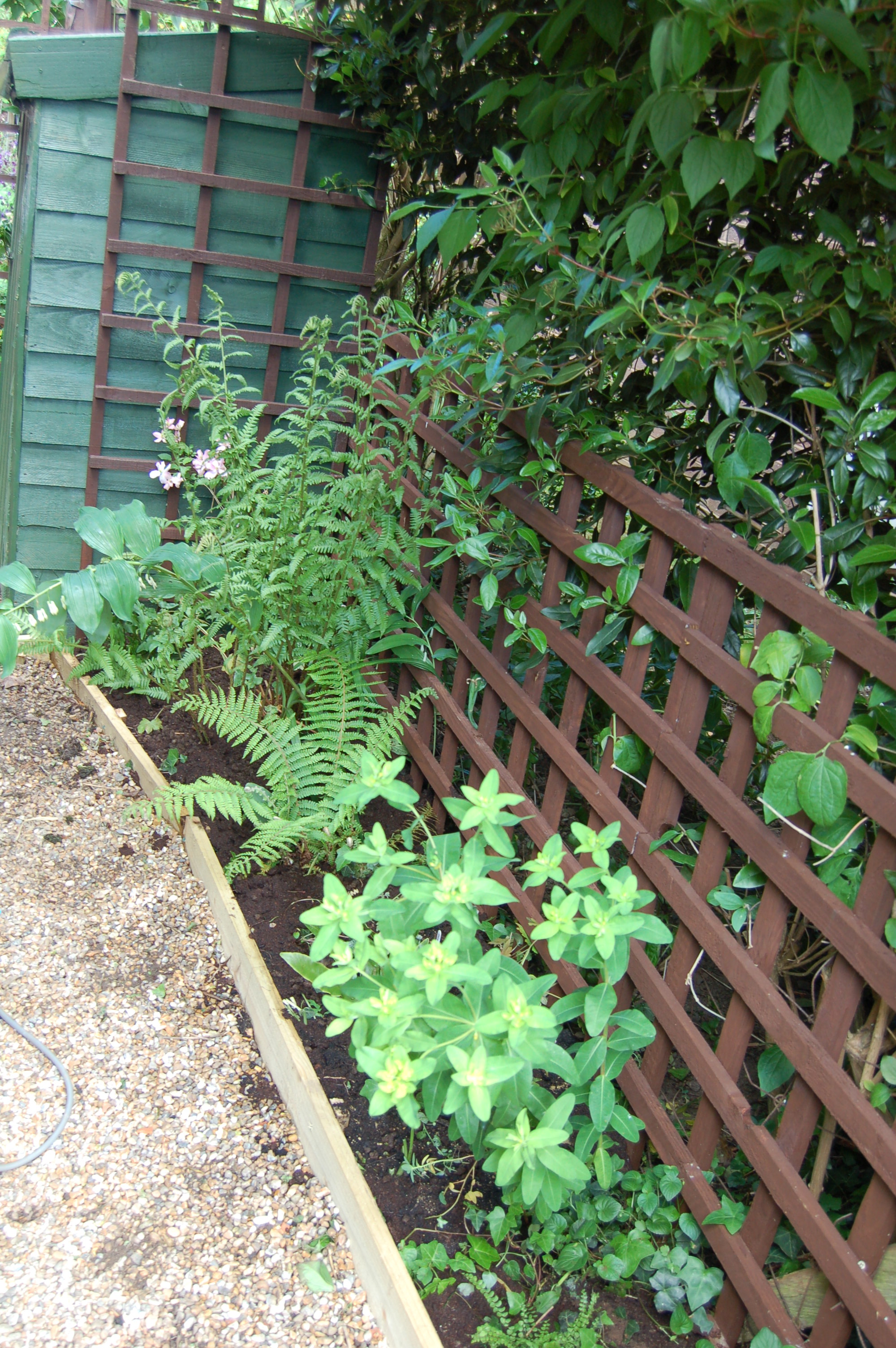
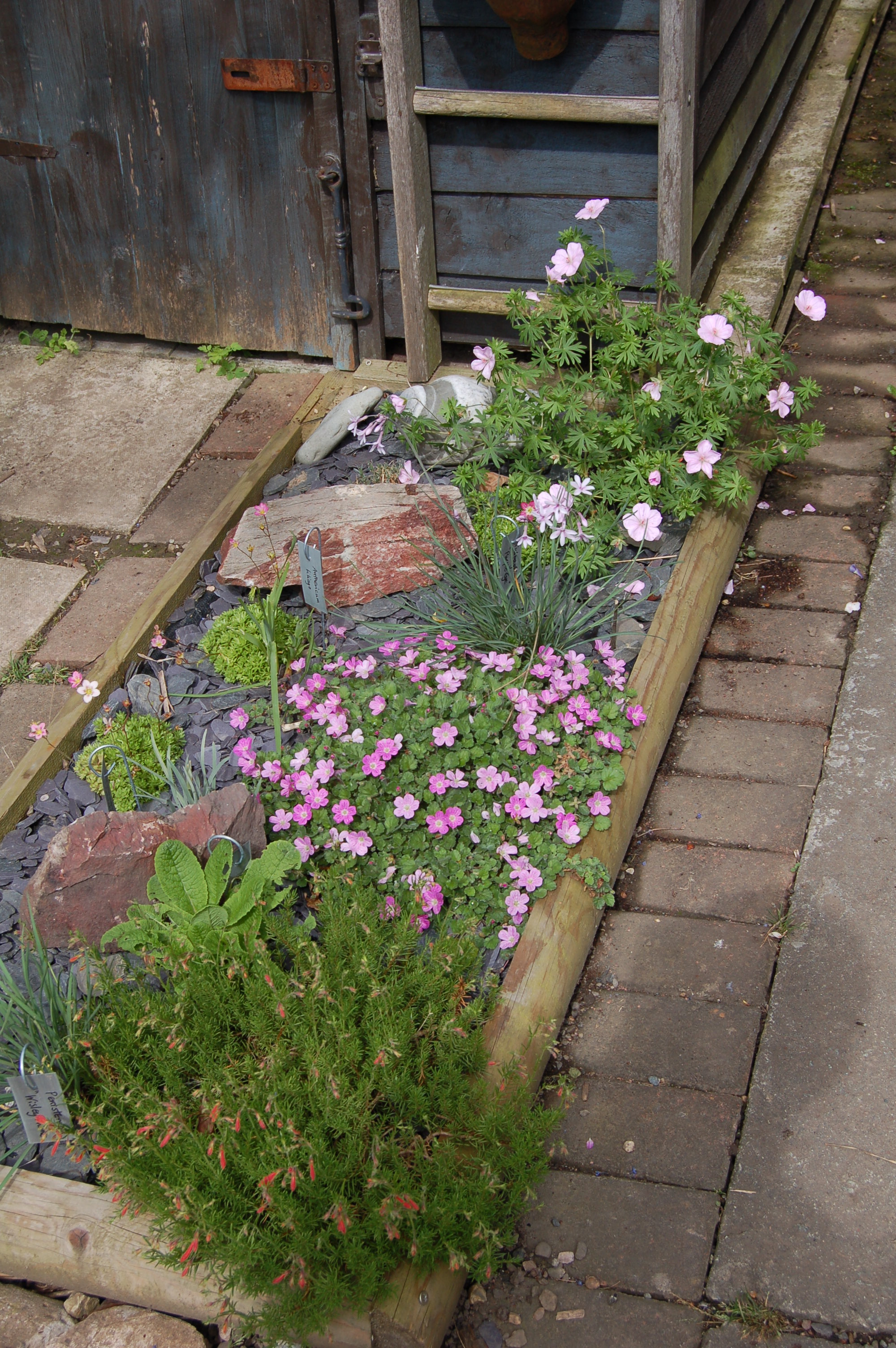
We often miss out the mini-gardens on our wandering blog posts so we shall have a look now at the Fern Border, Shed Slate Garden, the Salad Beds and the Slate Scree Garden.
So there we have it, our garden in early Summer. We hope it is still looking good. The next post in this series will be in mid-Summer when we shall be fast approaching our first ever opening under the National Garden Scheme. Seeing our own garden in the famous Yellow Book certainly makes you look closely at our garden.