Categories
allotments architecture buildings Church architecture community gardening fruit and veg garden design garden photography garden seating gardening gardens gardens open to the public grow your own hardy perennials ornamental trees and shrubs outdoor sculpture sculpture town gardens trees

A Bishop’s Garden

The grounds of a cathedral doesn’t sound the most promising place to find an interesting garden but we had heard good things about the gardens at Wells Cathedral , so when visiting the cathedral itself we just had to have a look.

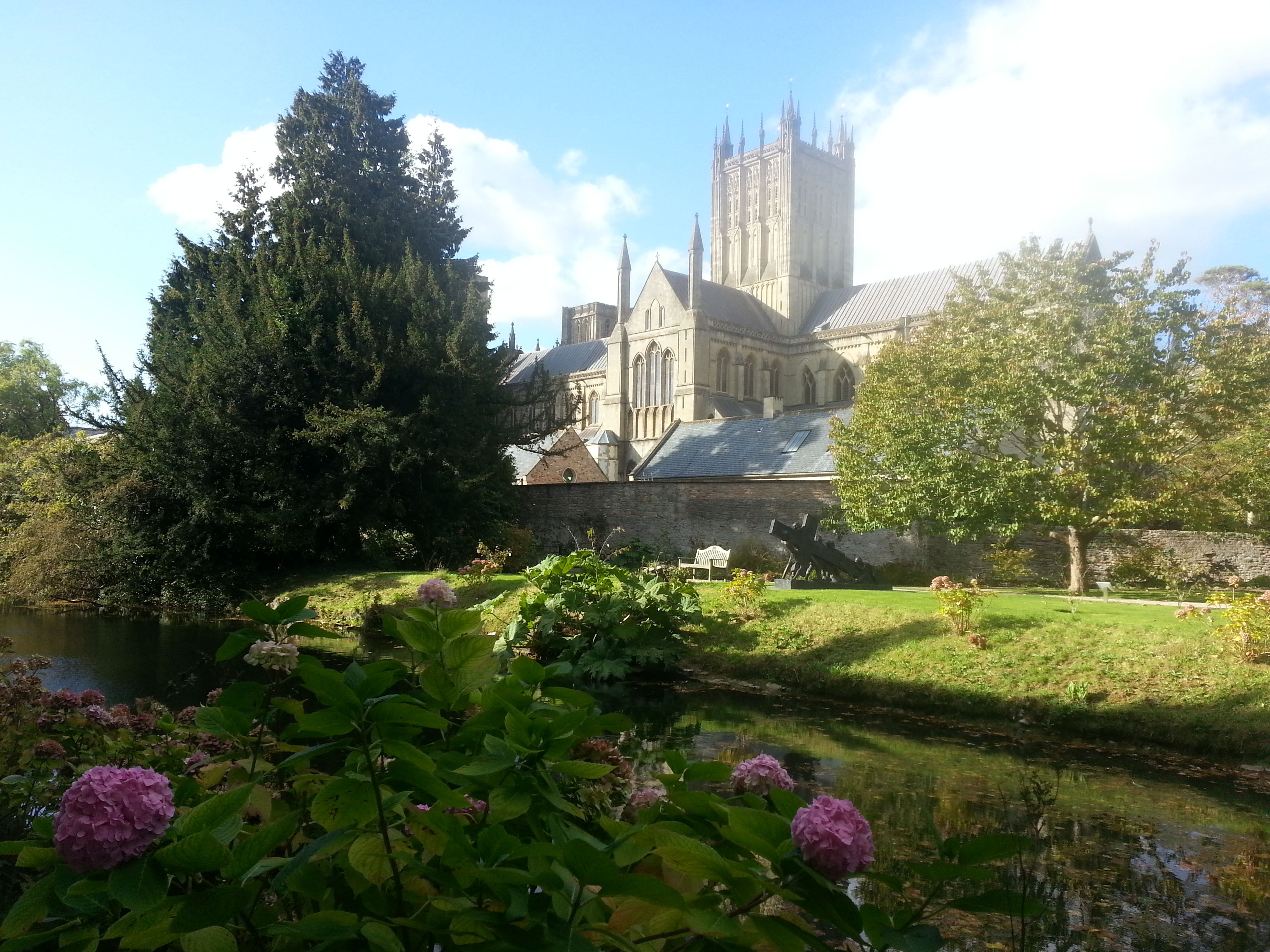
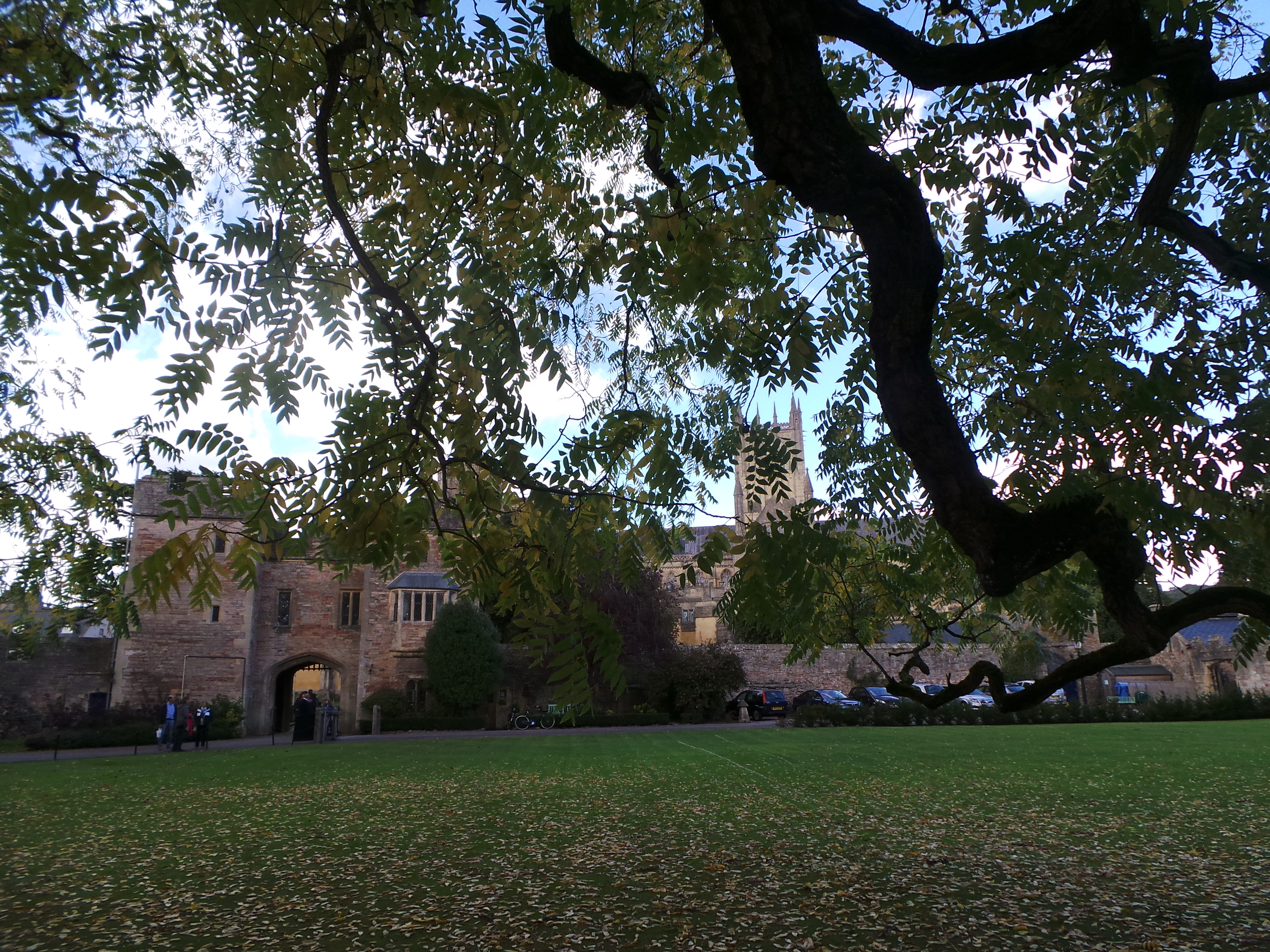
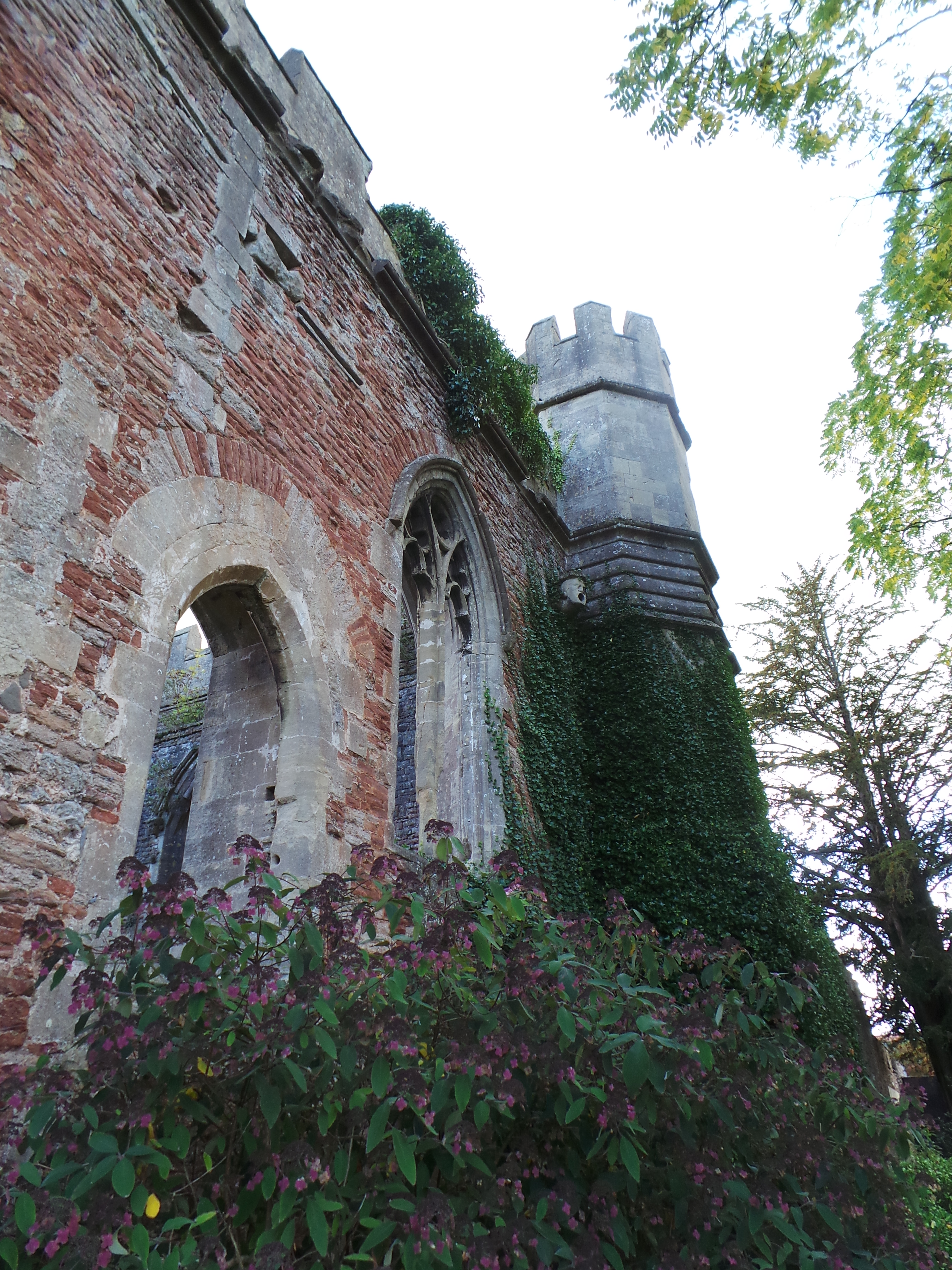
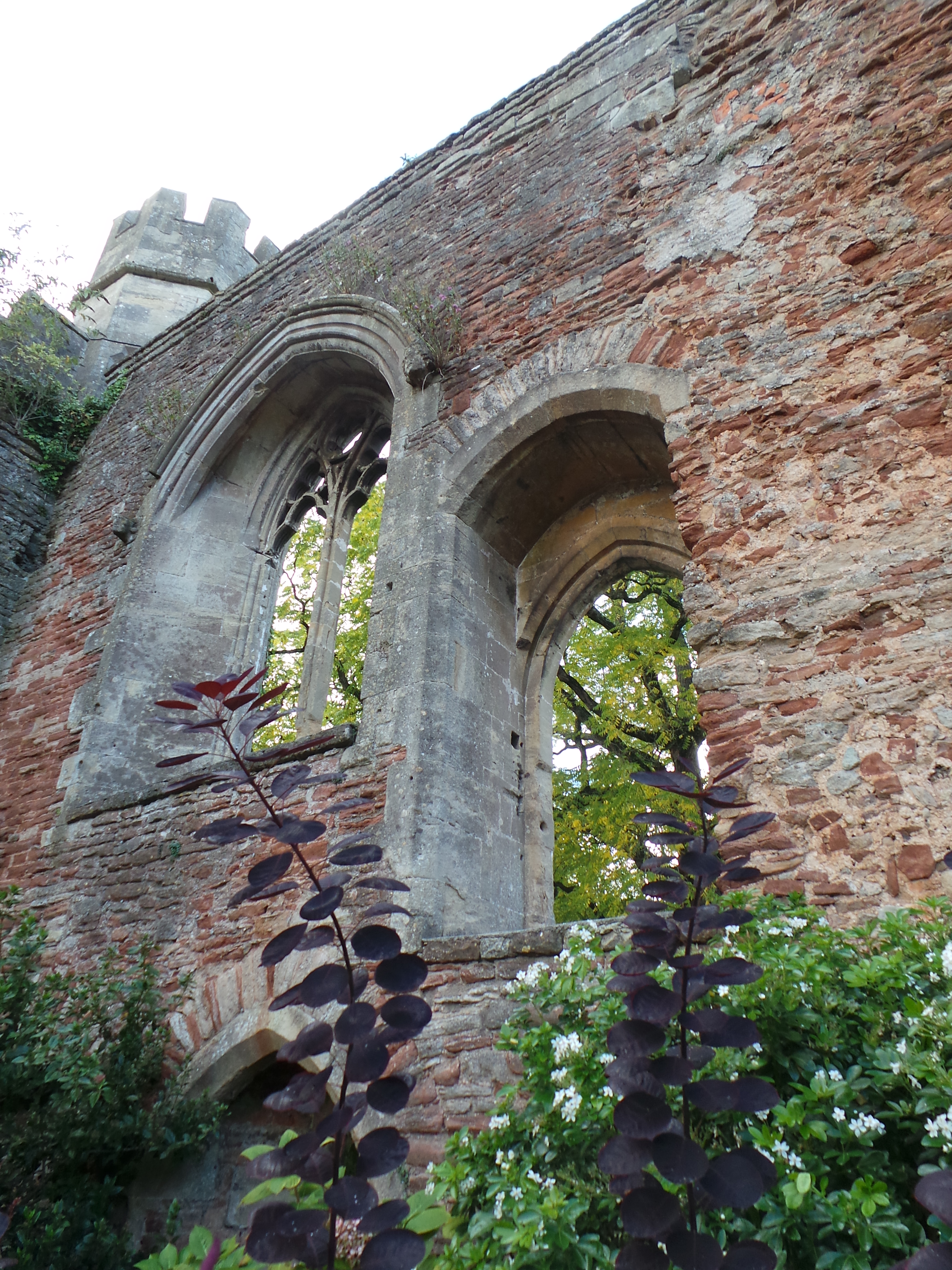
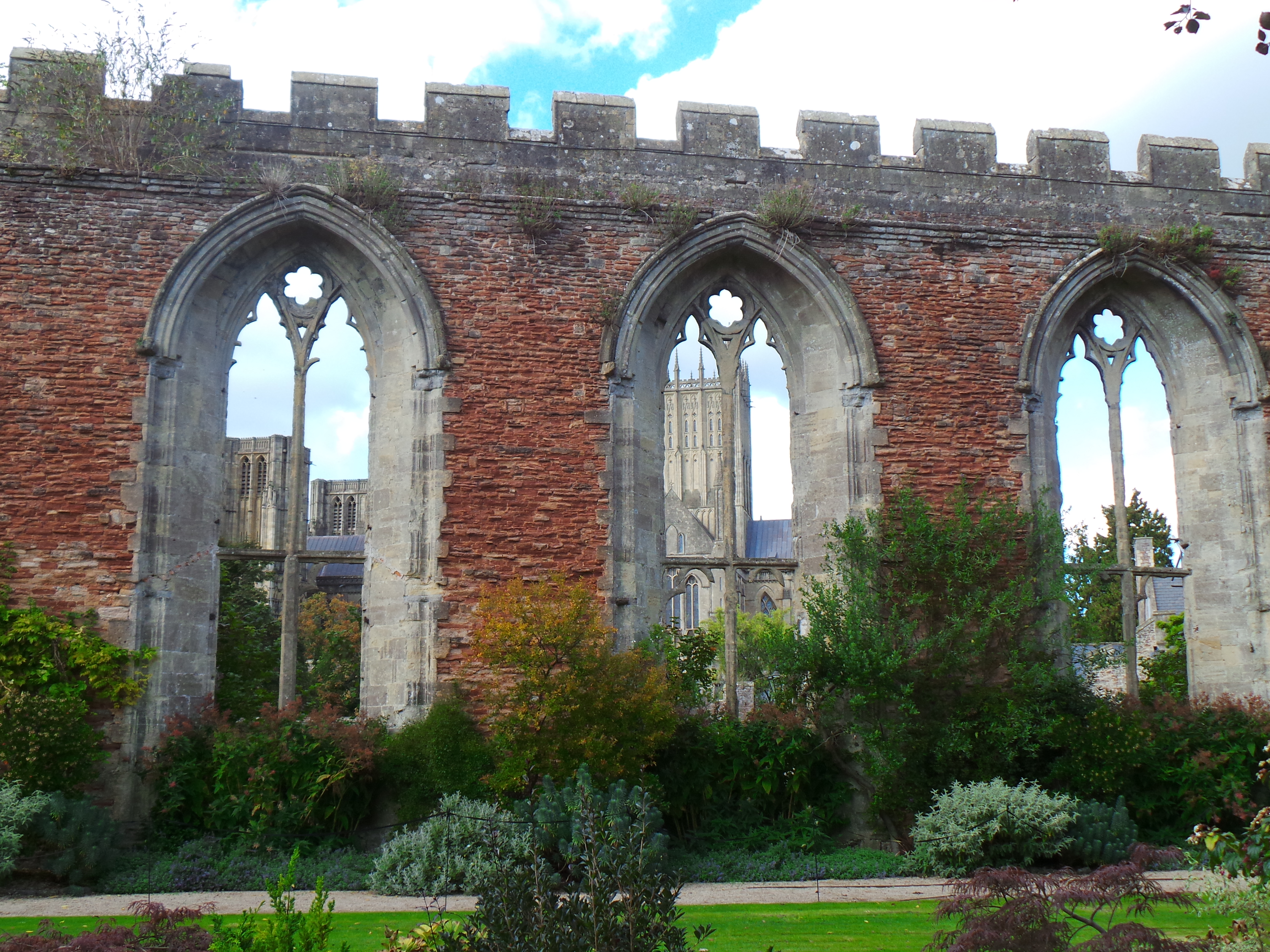
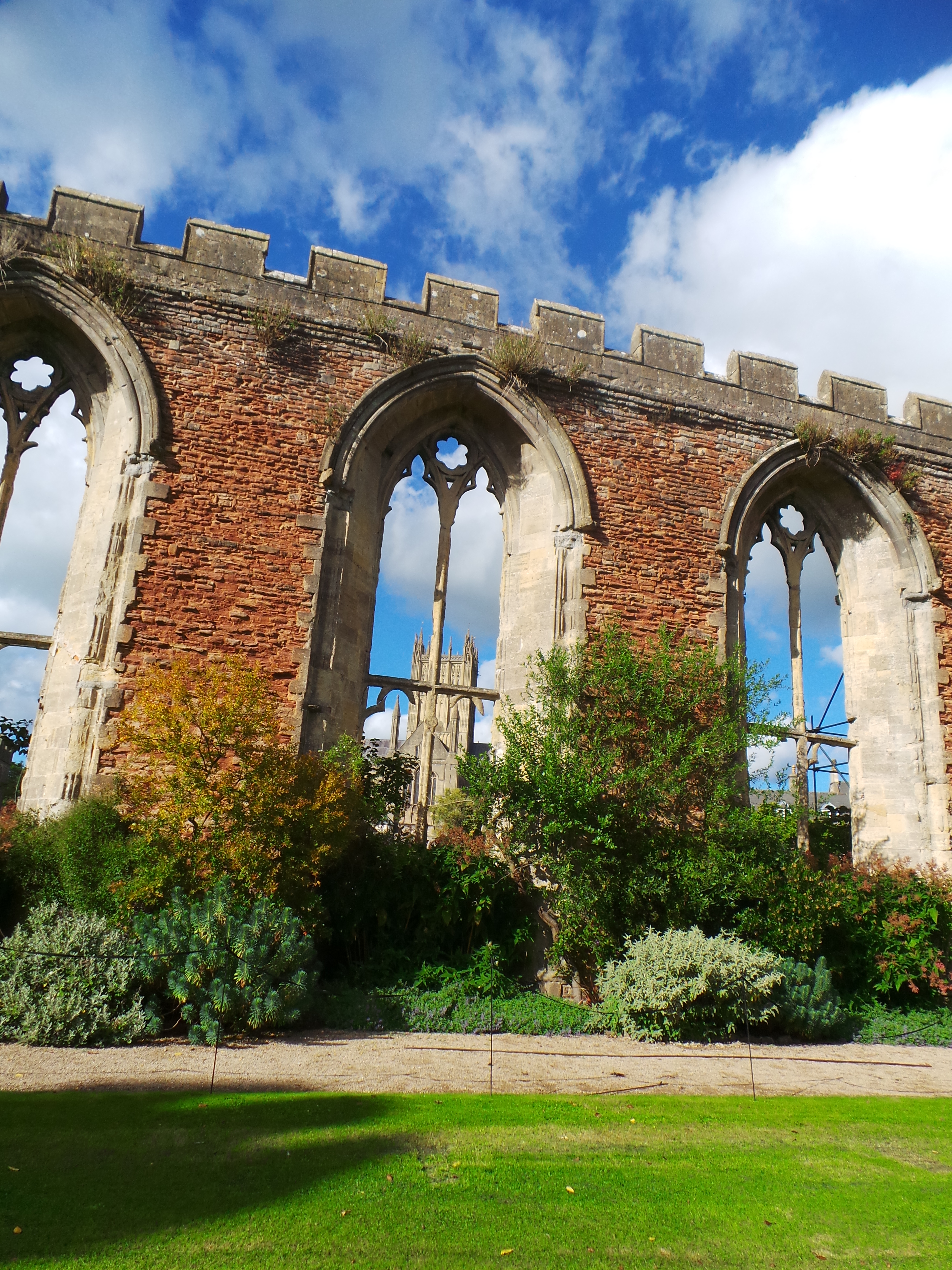
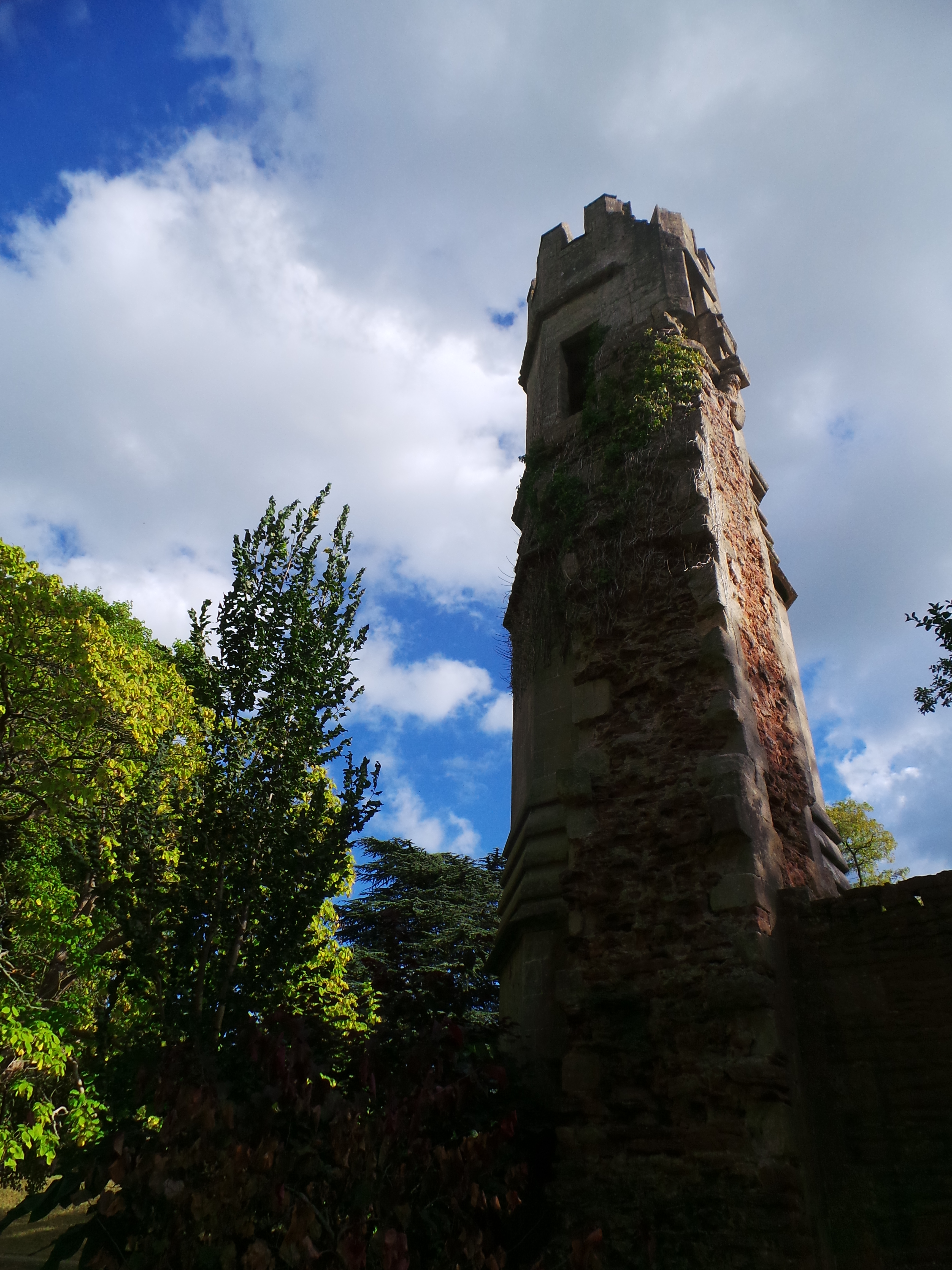
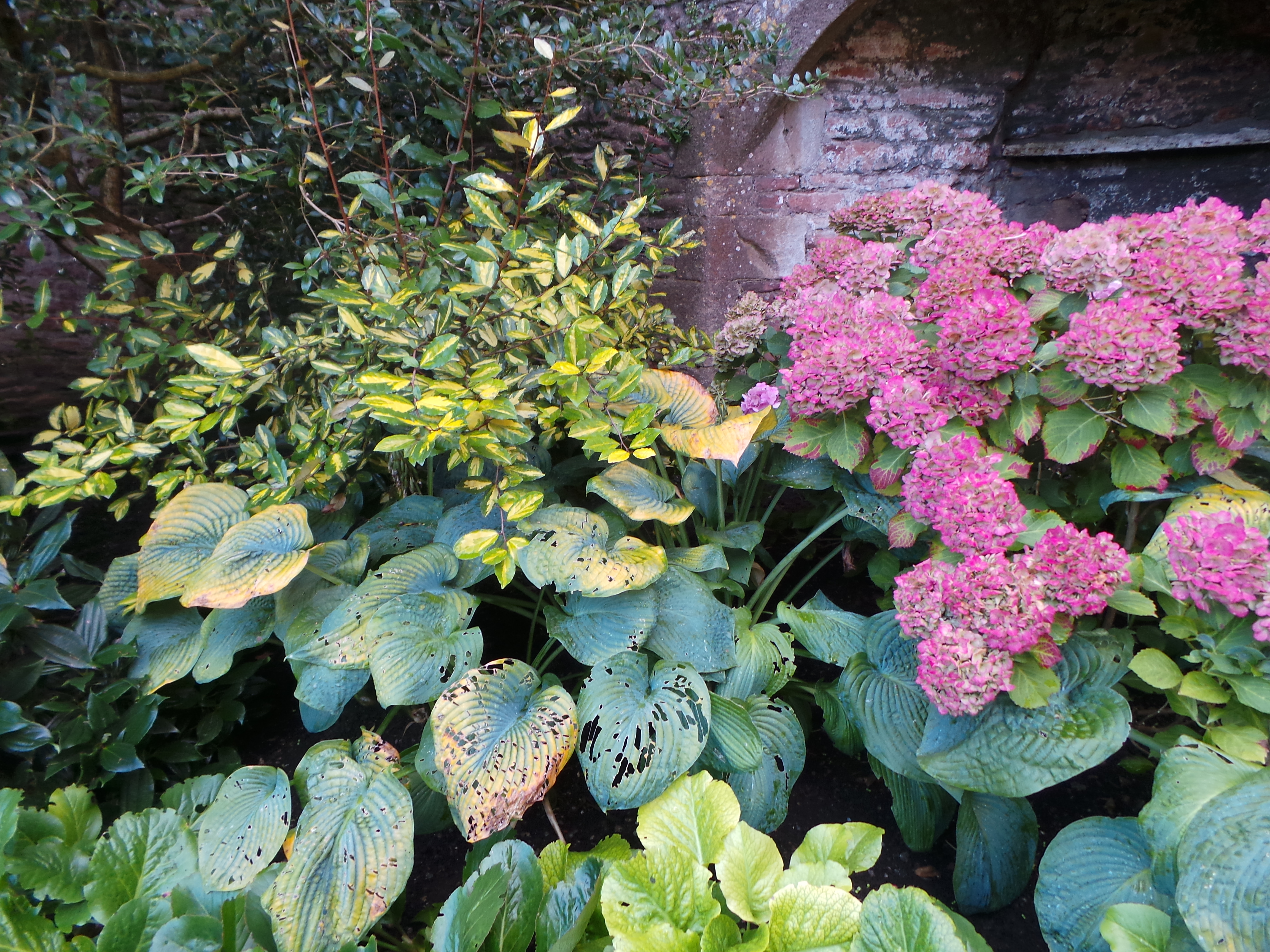
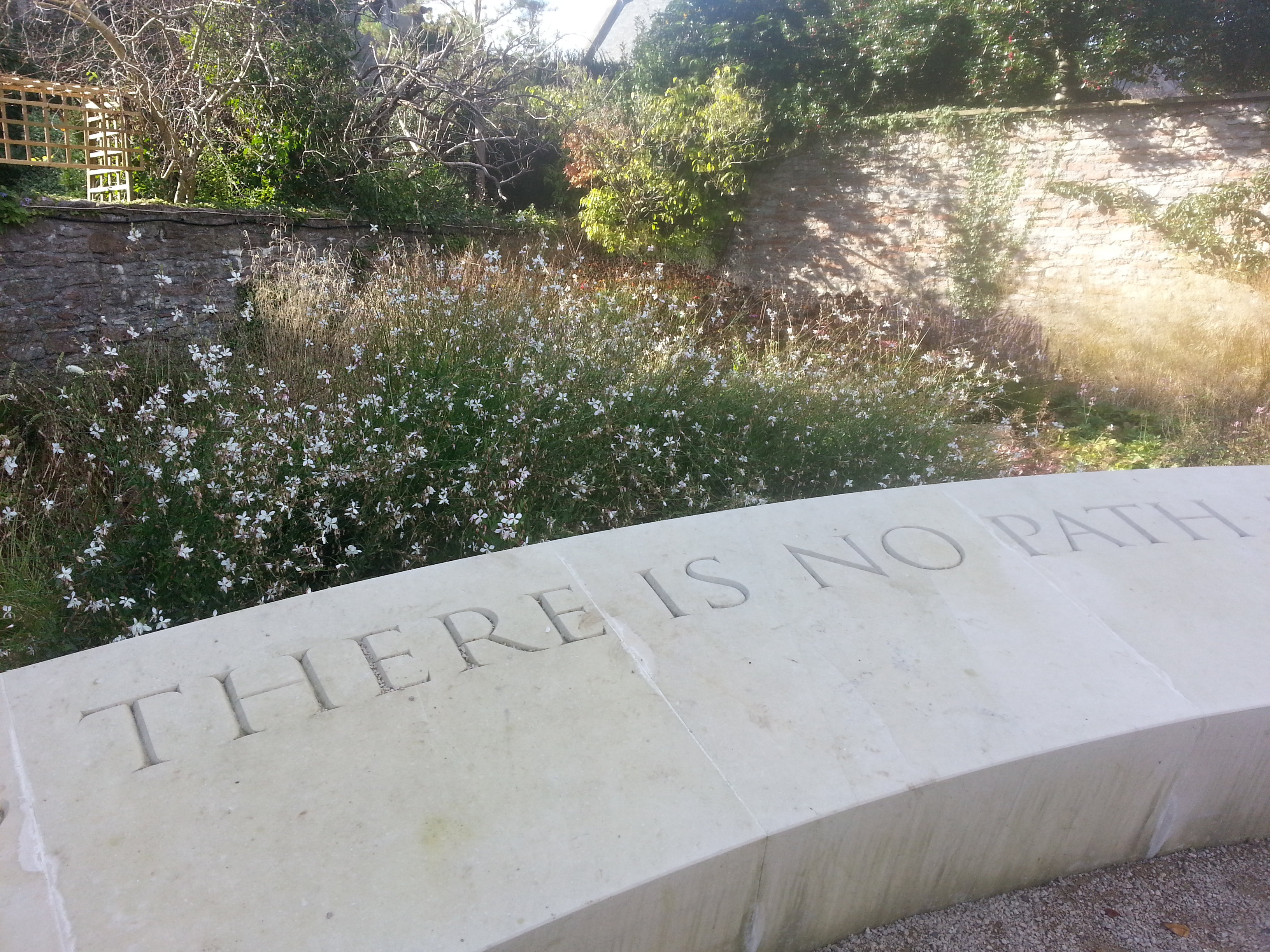
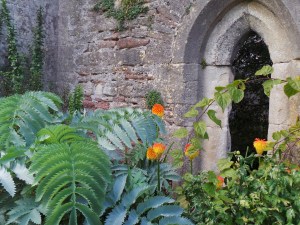
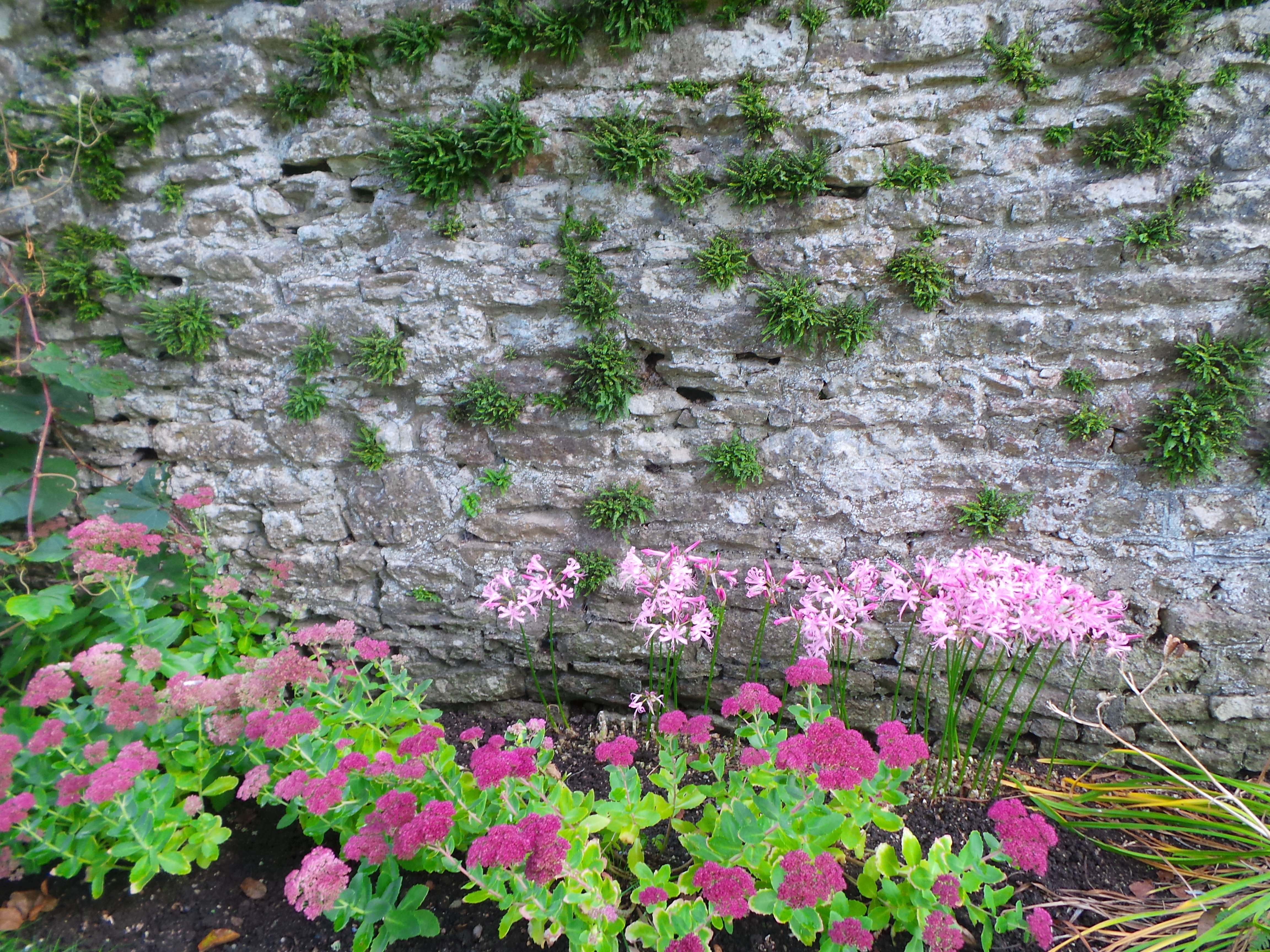
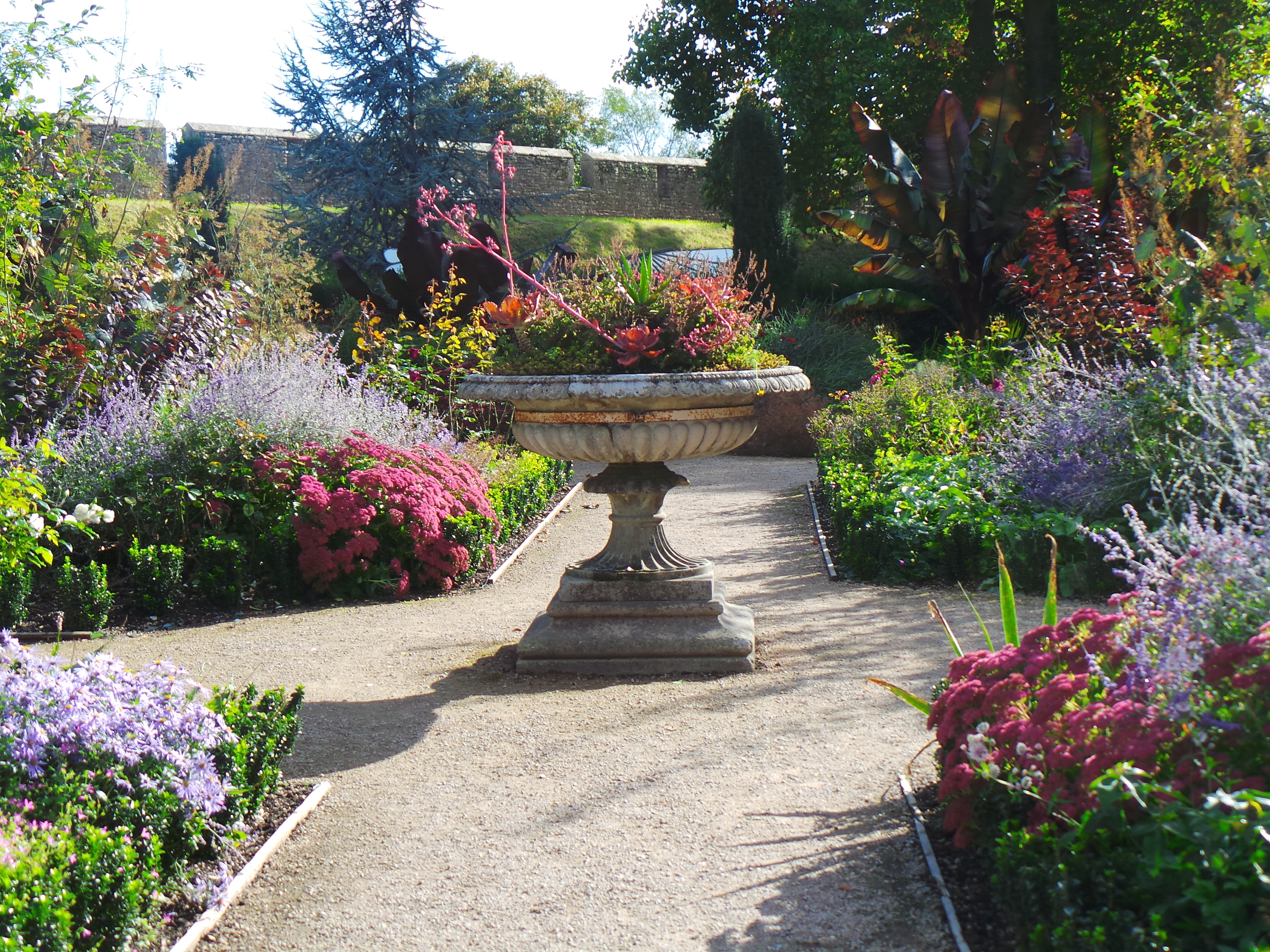
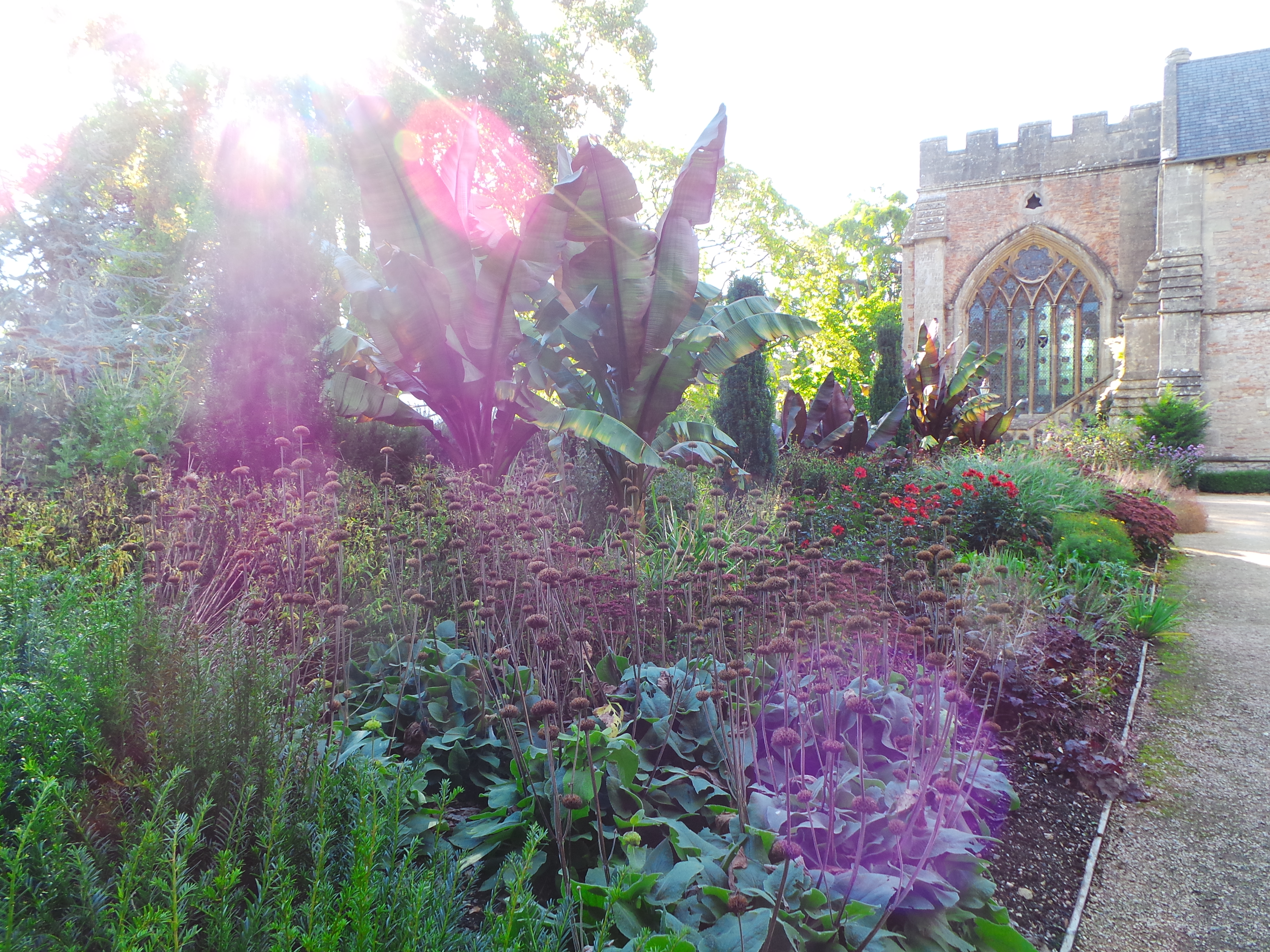
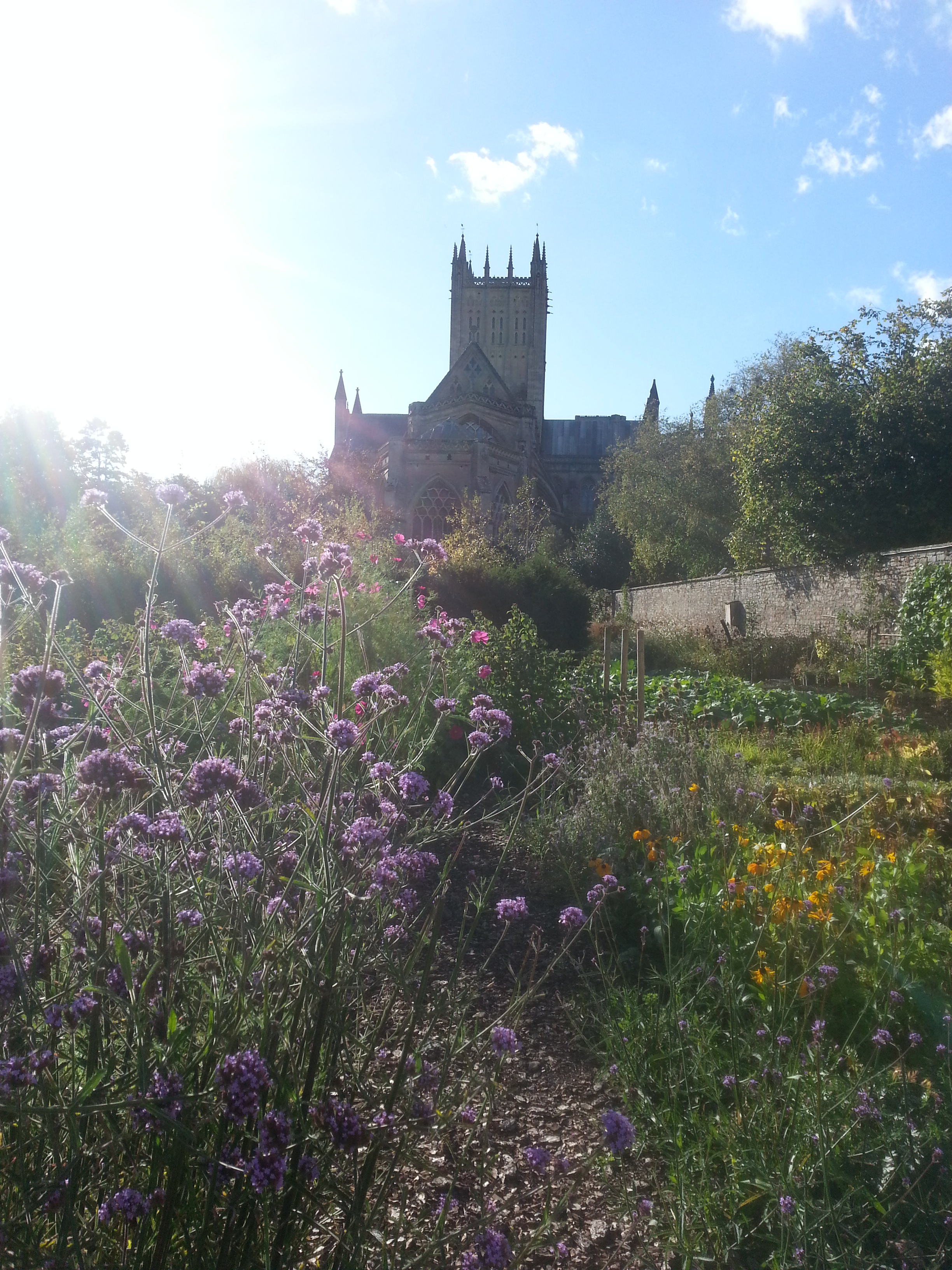
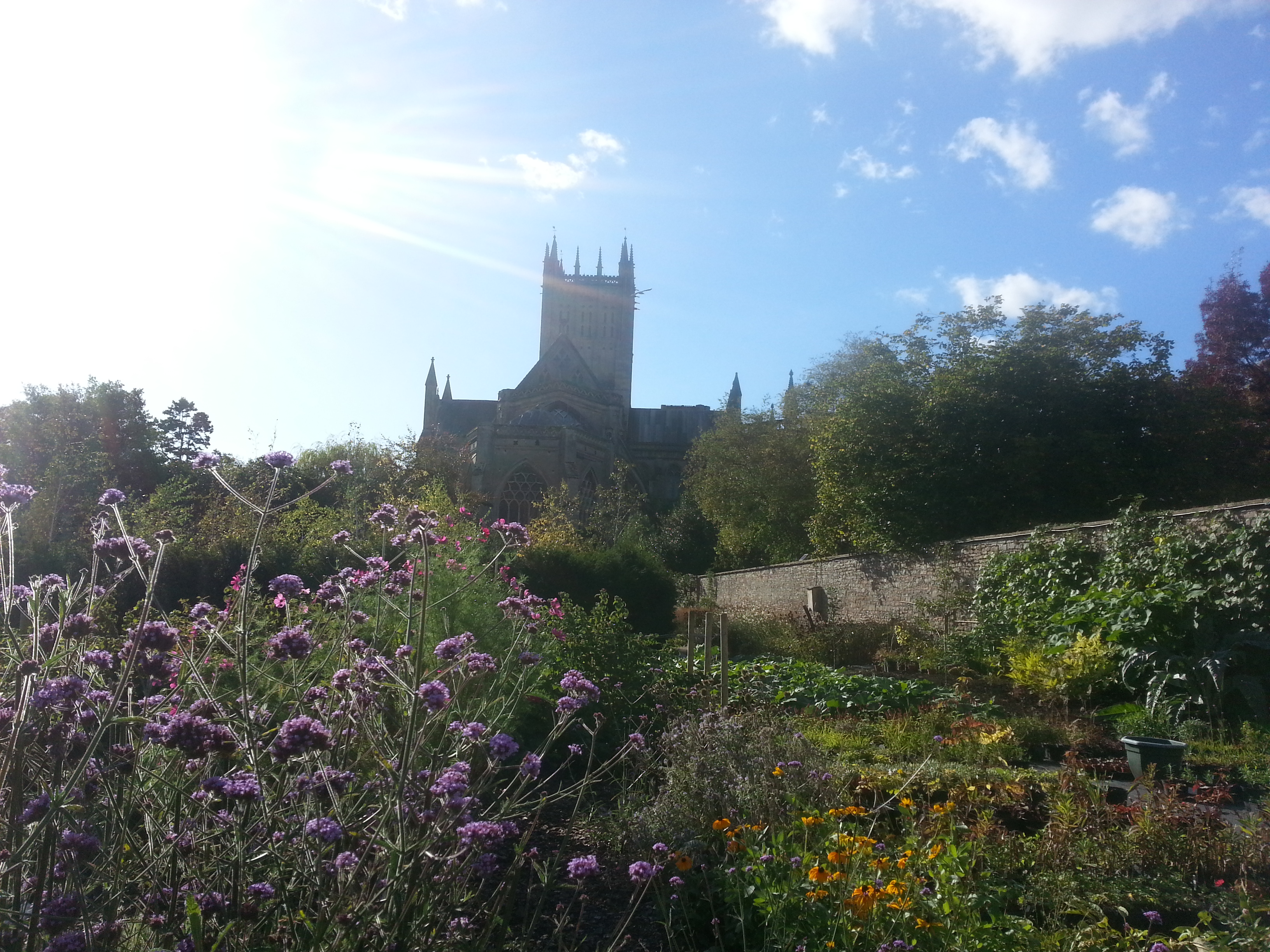
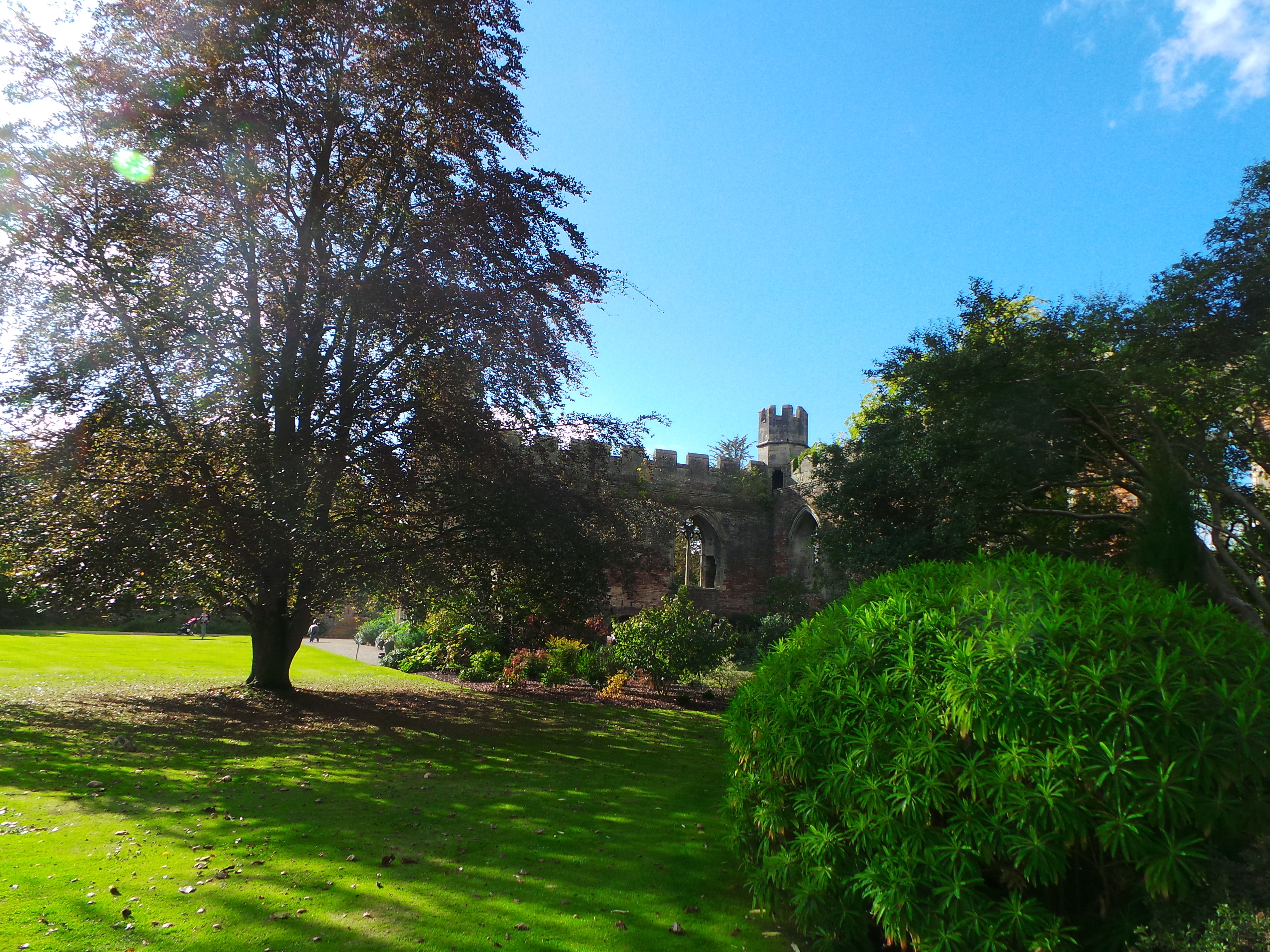
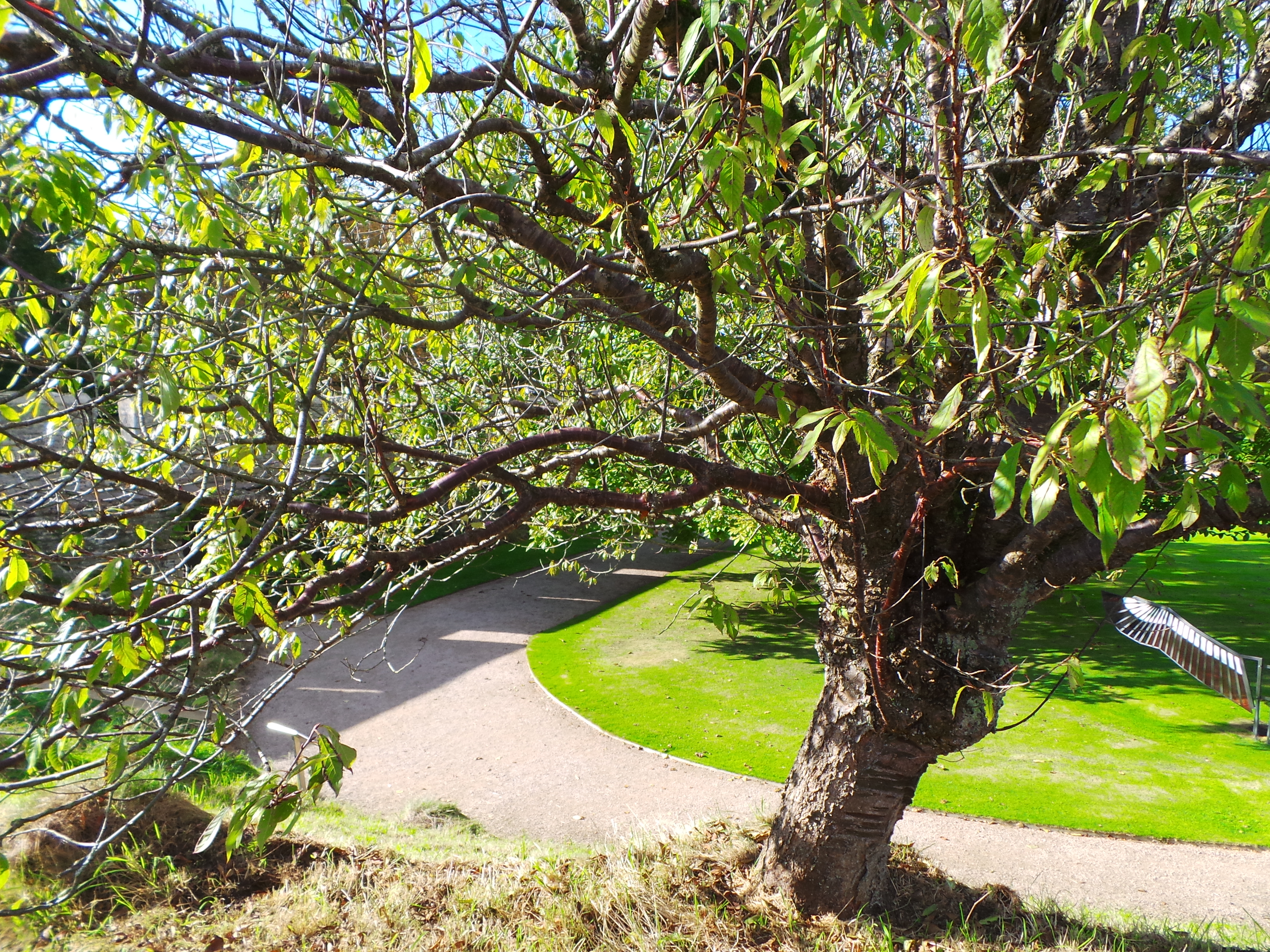
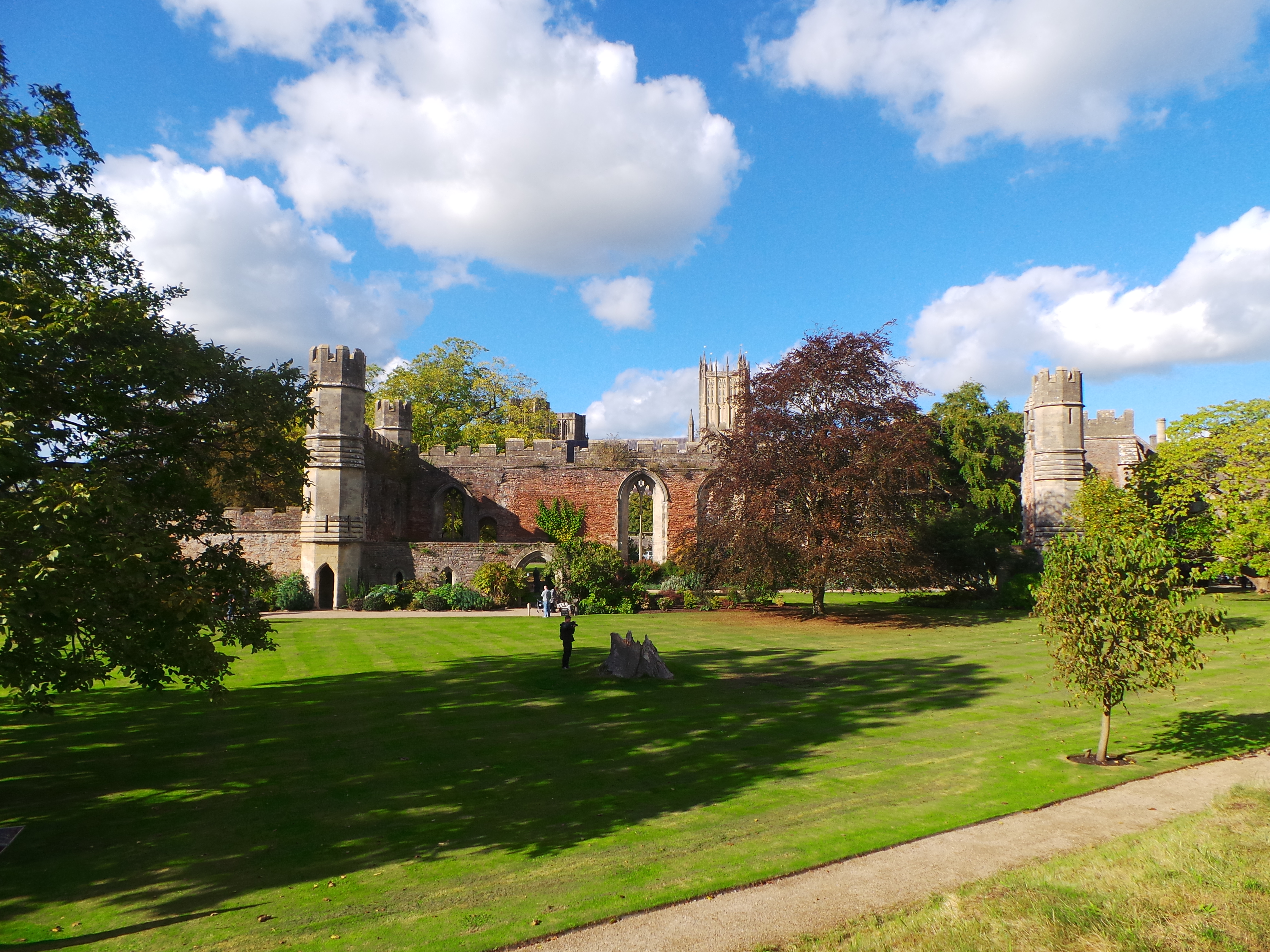
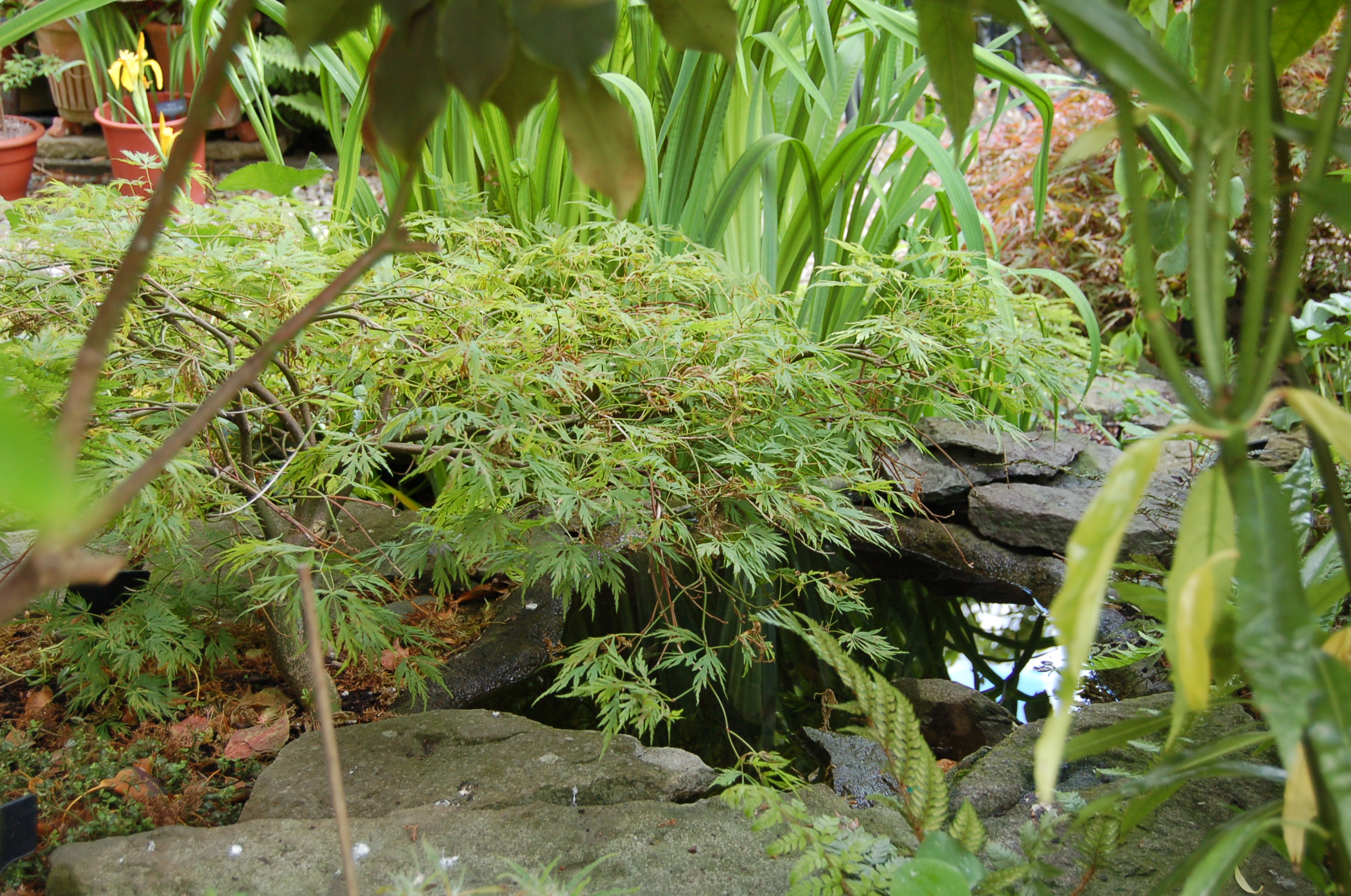
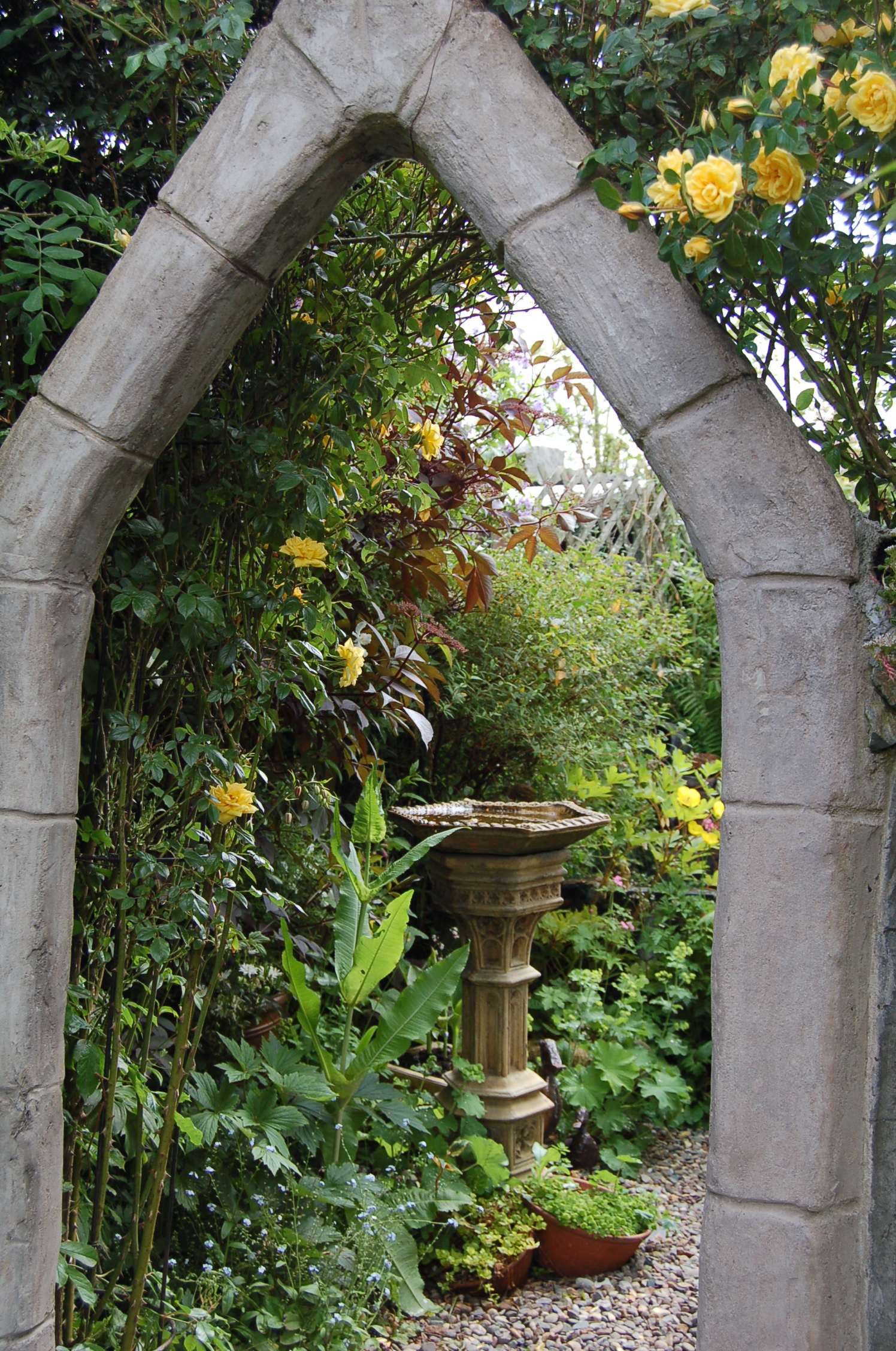
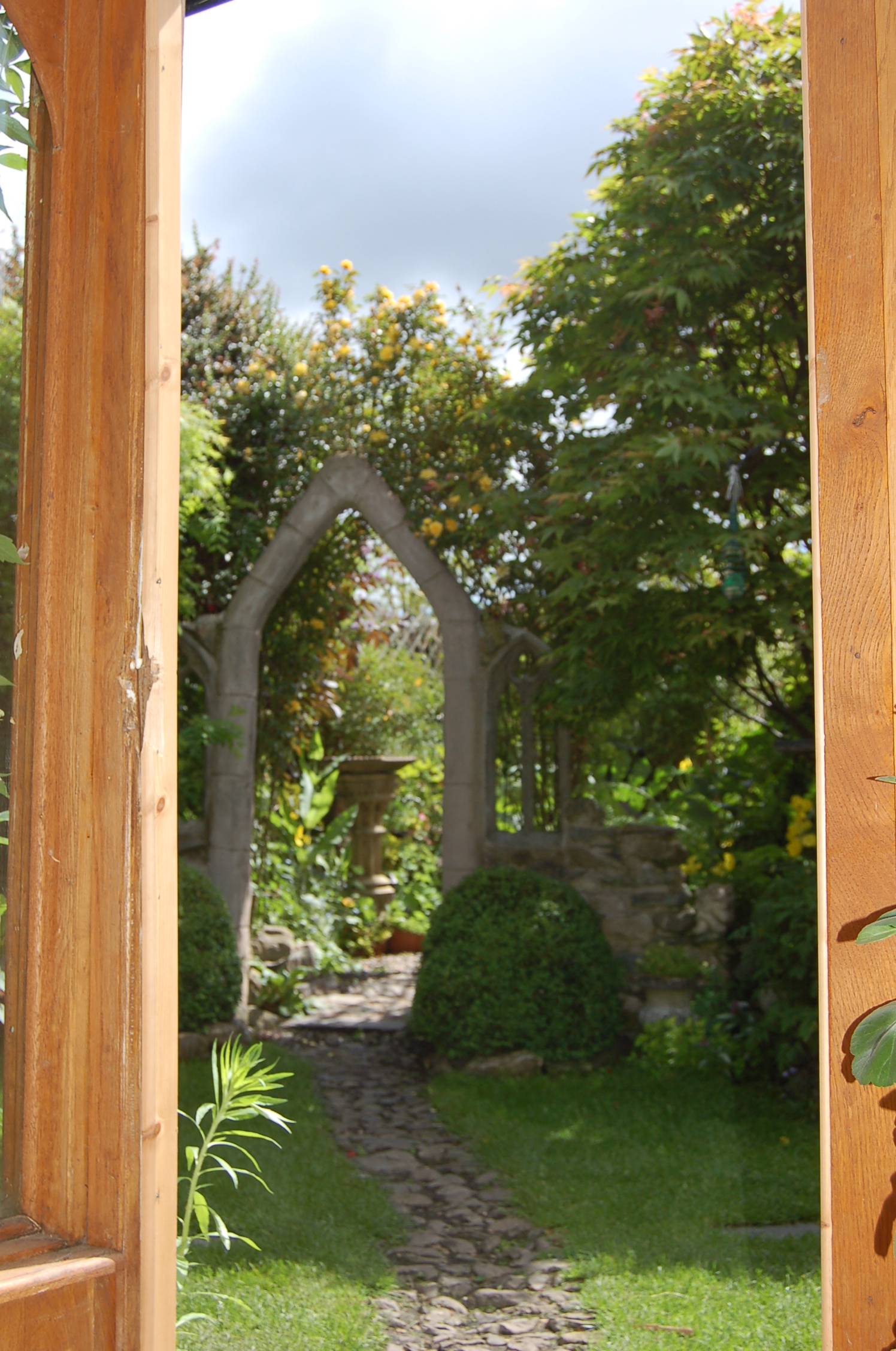
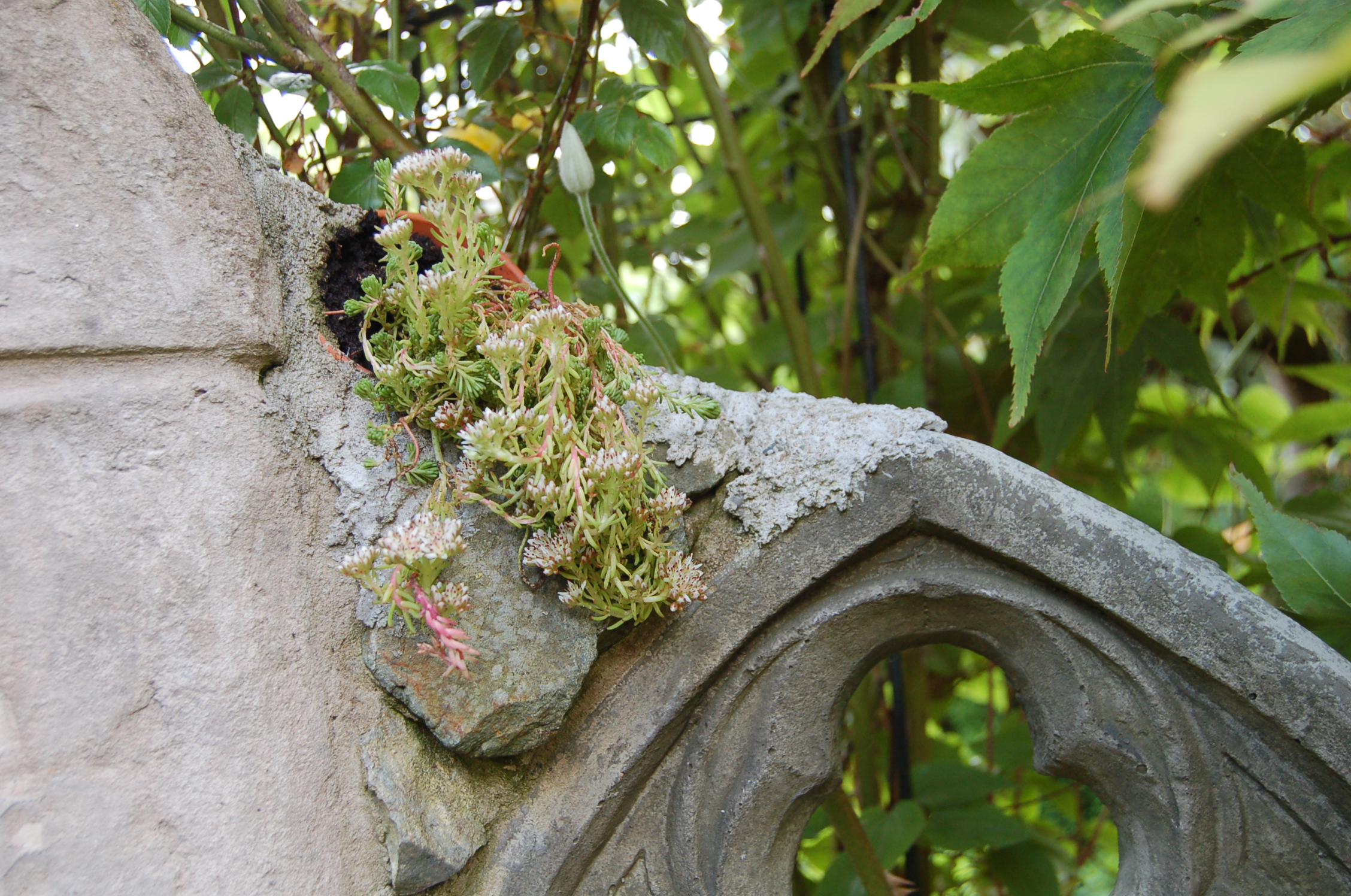
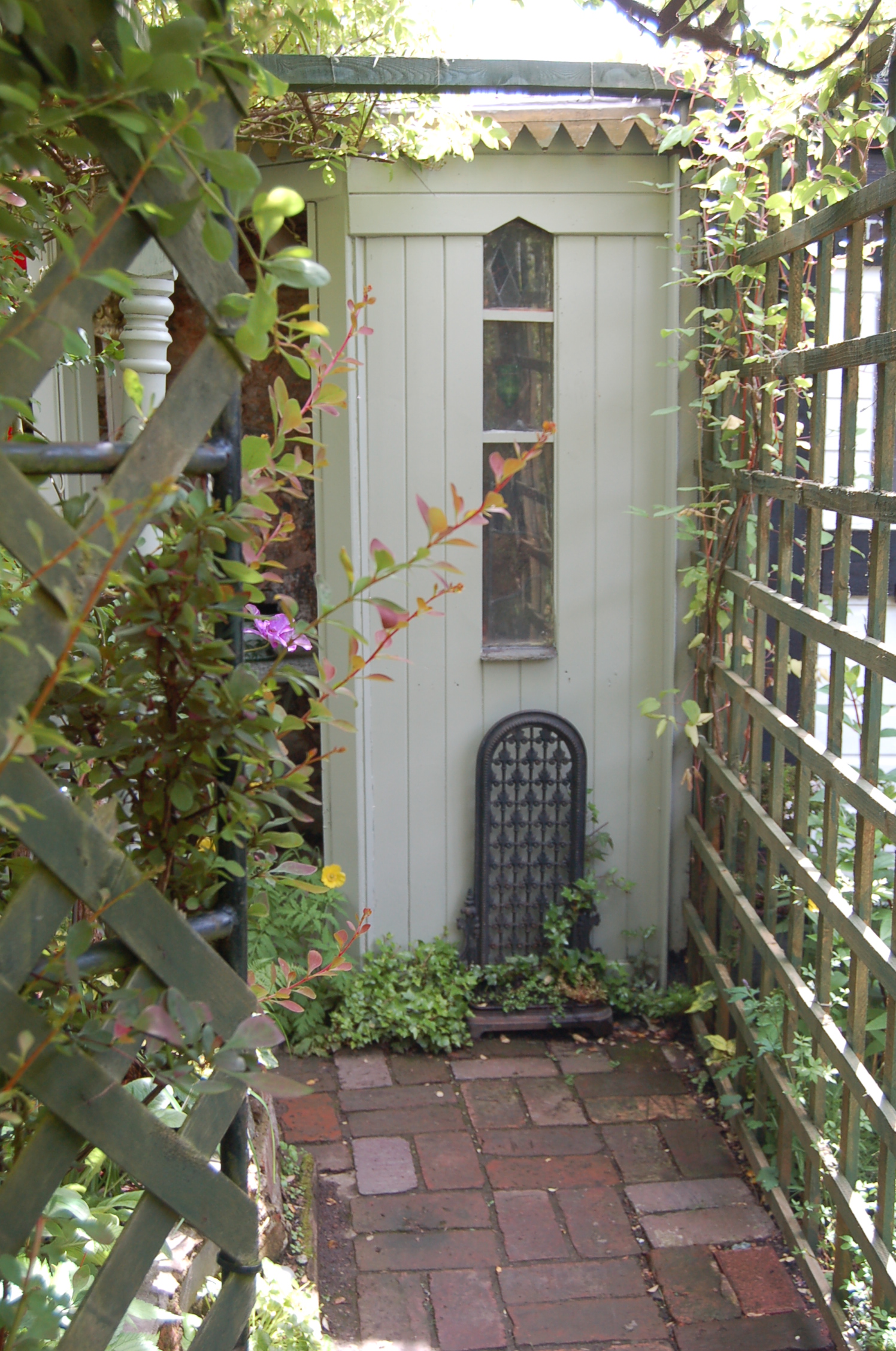
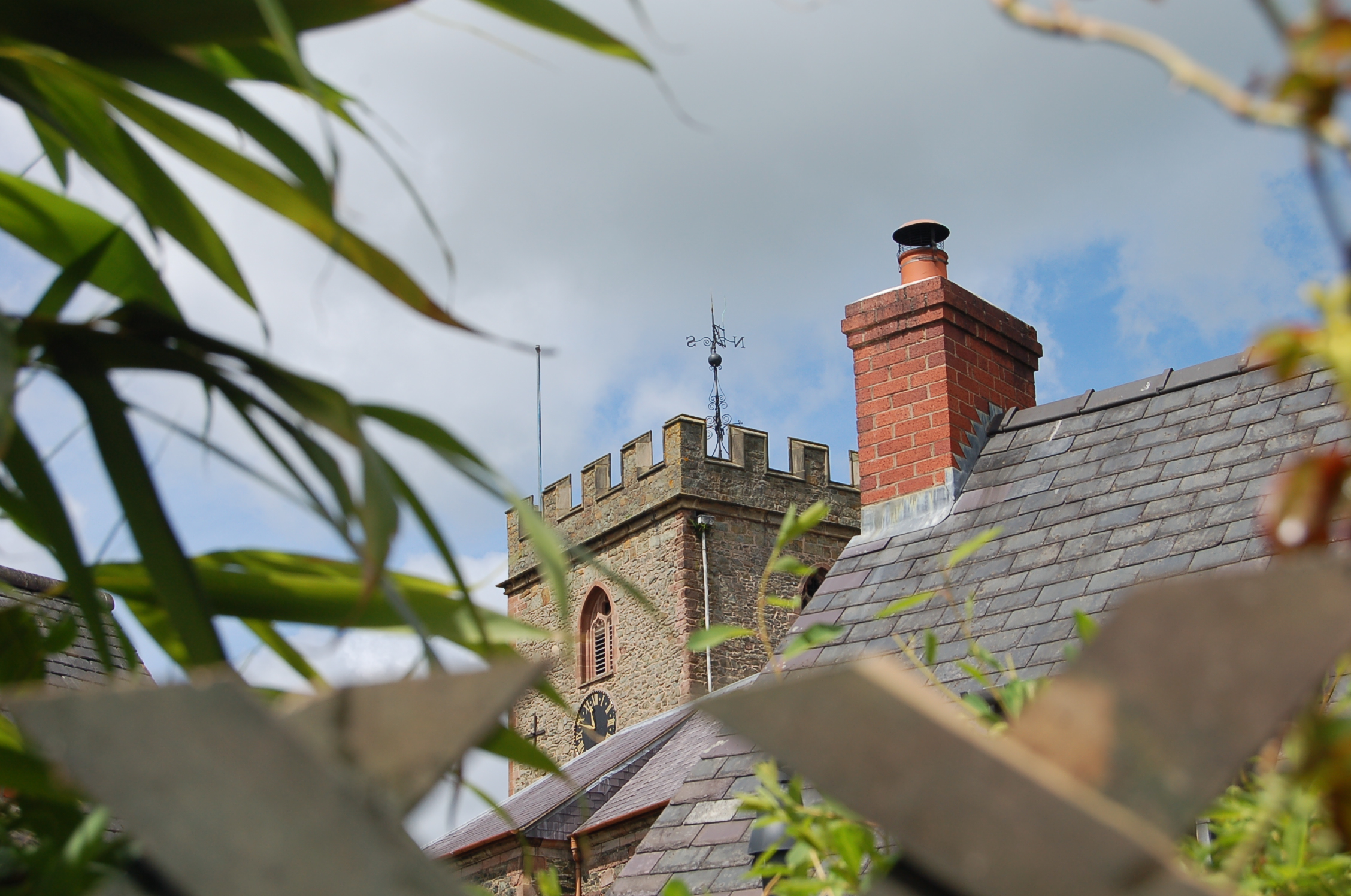
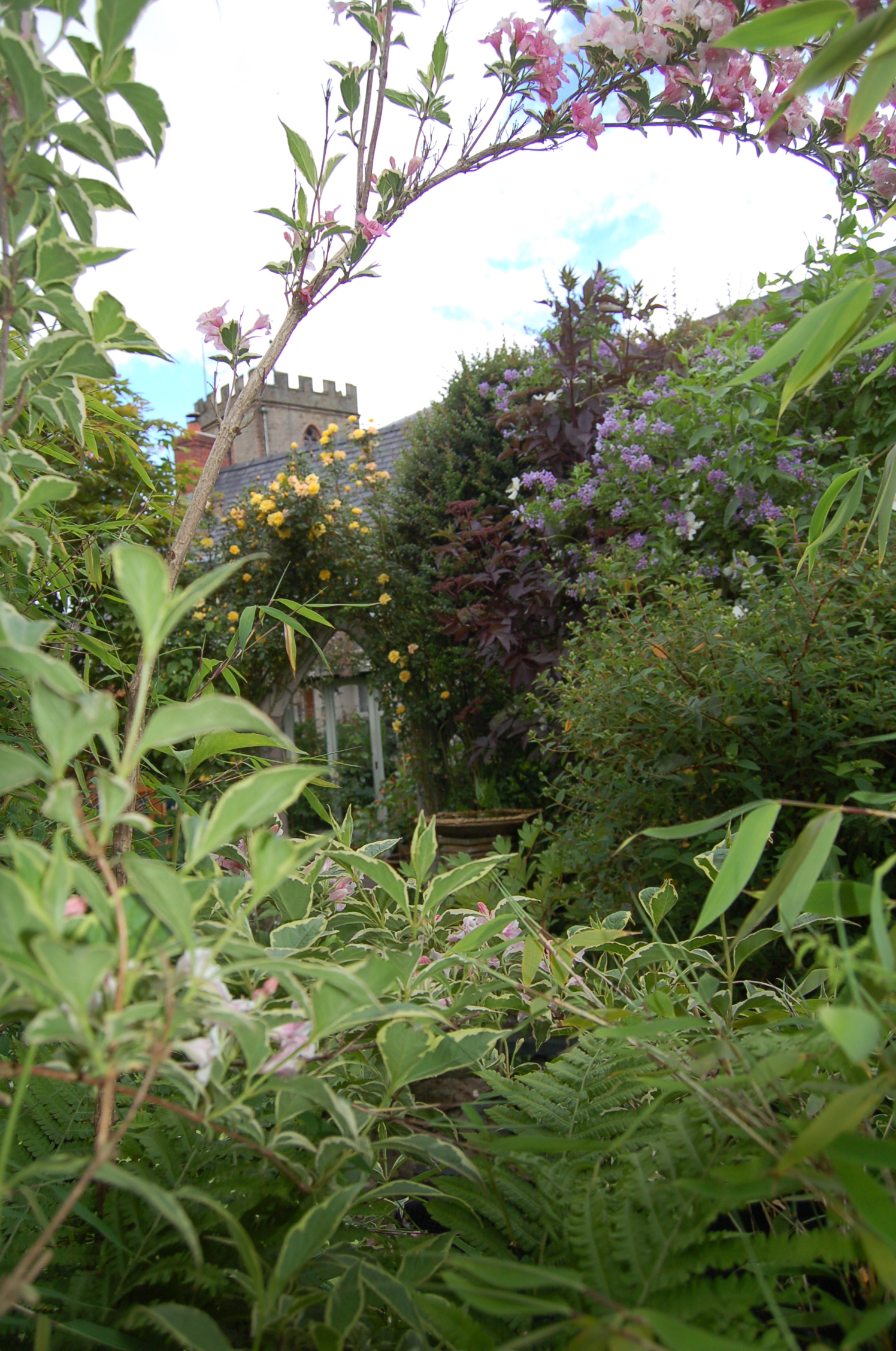
It turned out to be an excellent idea as we found the bishop’s garden to be full of interest and atmosphere. Come for a wander and see if you agree! The garden sits well with the architecture which encloses it or sits within it. At times the plants climb the walls or scramble over ruins. At times the architecture is a backdrop and the colours of the stone and brick act as a great foil for the colour of foliage and flower.

It is a garden of plants and walls.

2014 10 04_5780 2014 10 04_5781 2014 10 04_5548 2014 10 04_5549 2014 10 04_5551 2014 10 04_5782 2014 10 04_5783 2014 10 04_5785 2014 10 04_5796 2014 10 04_57982014 10 04_5800 2014 10 04_5801 2014 10 04_5802

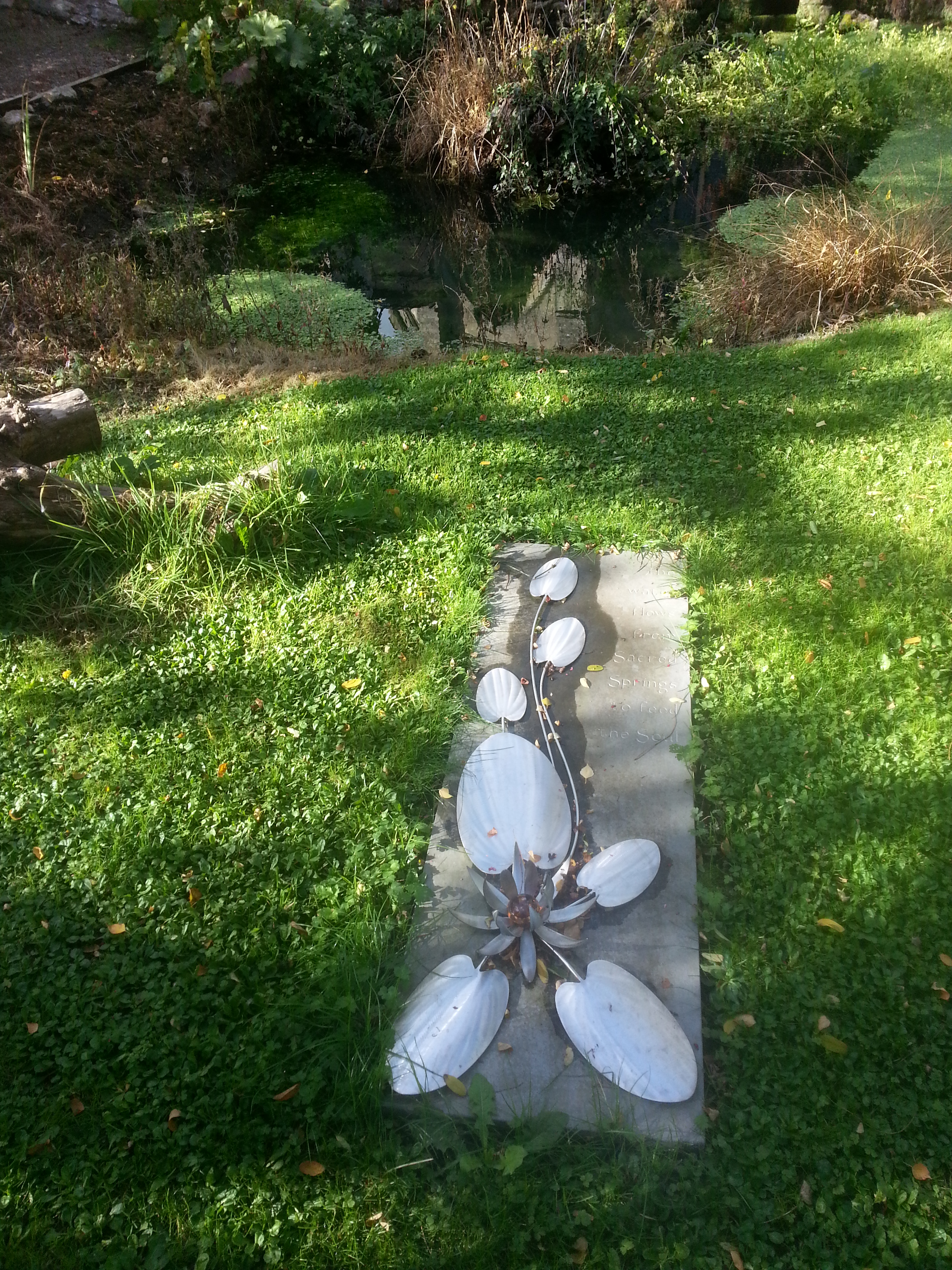
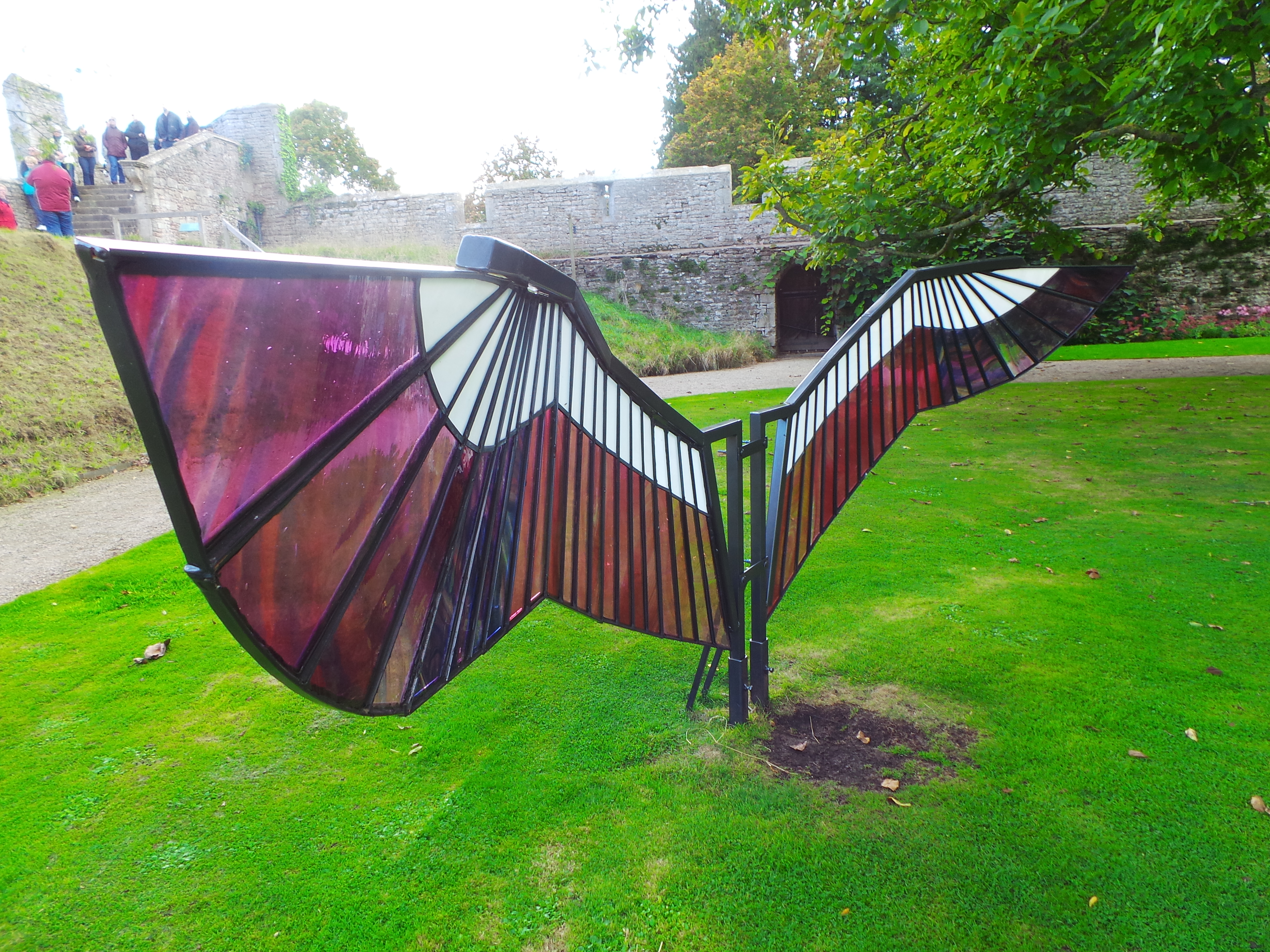
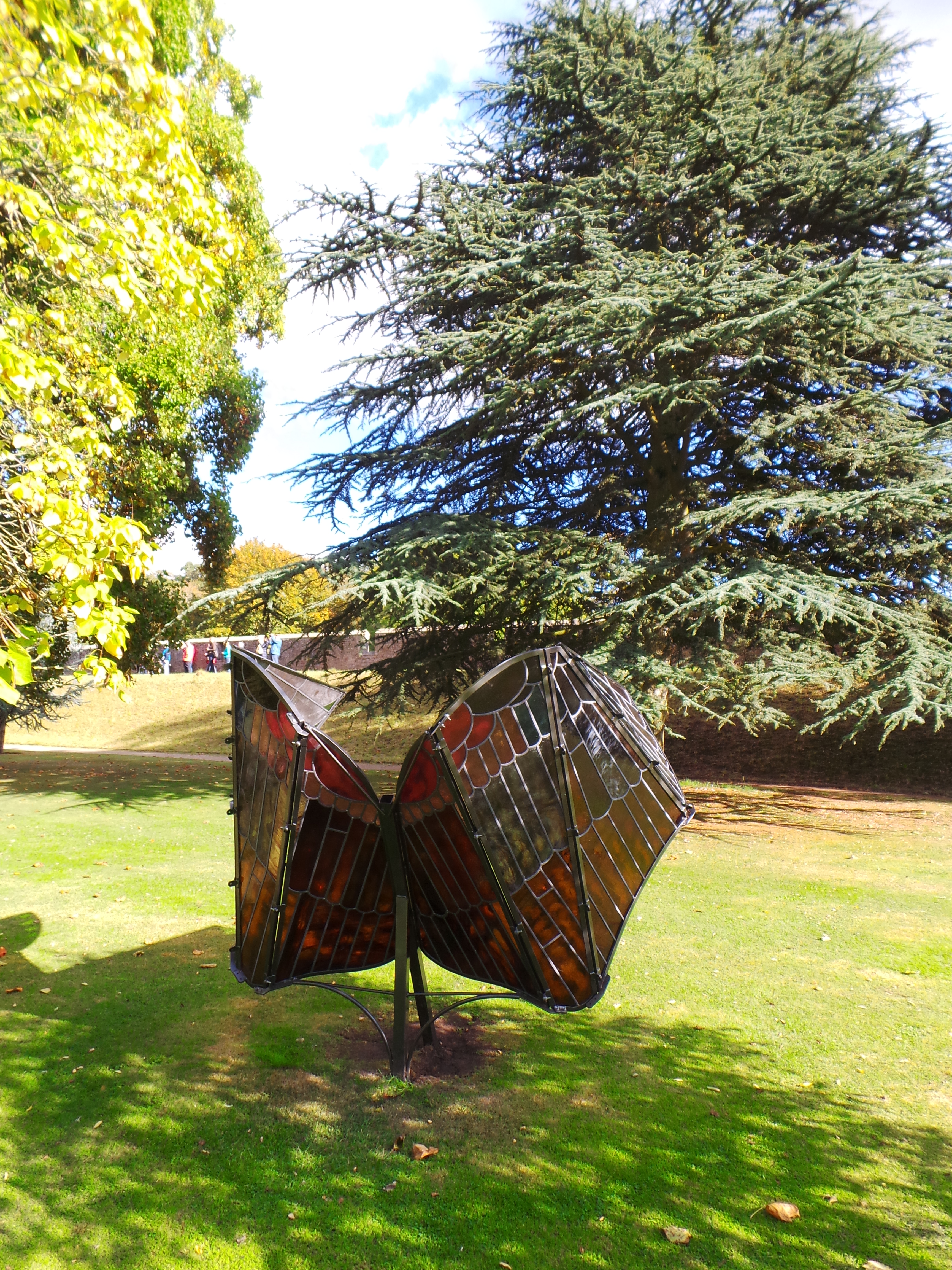
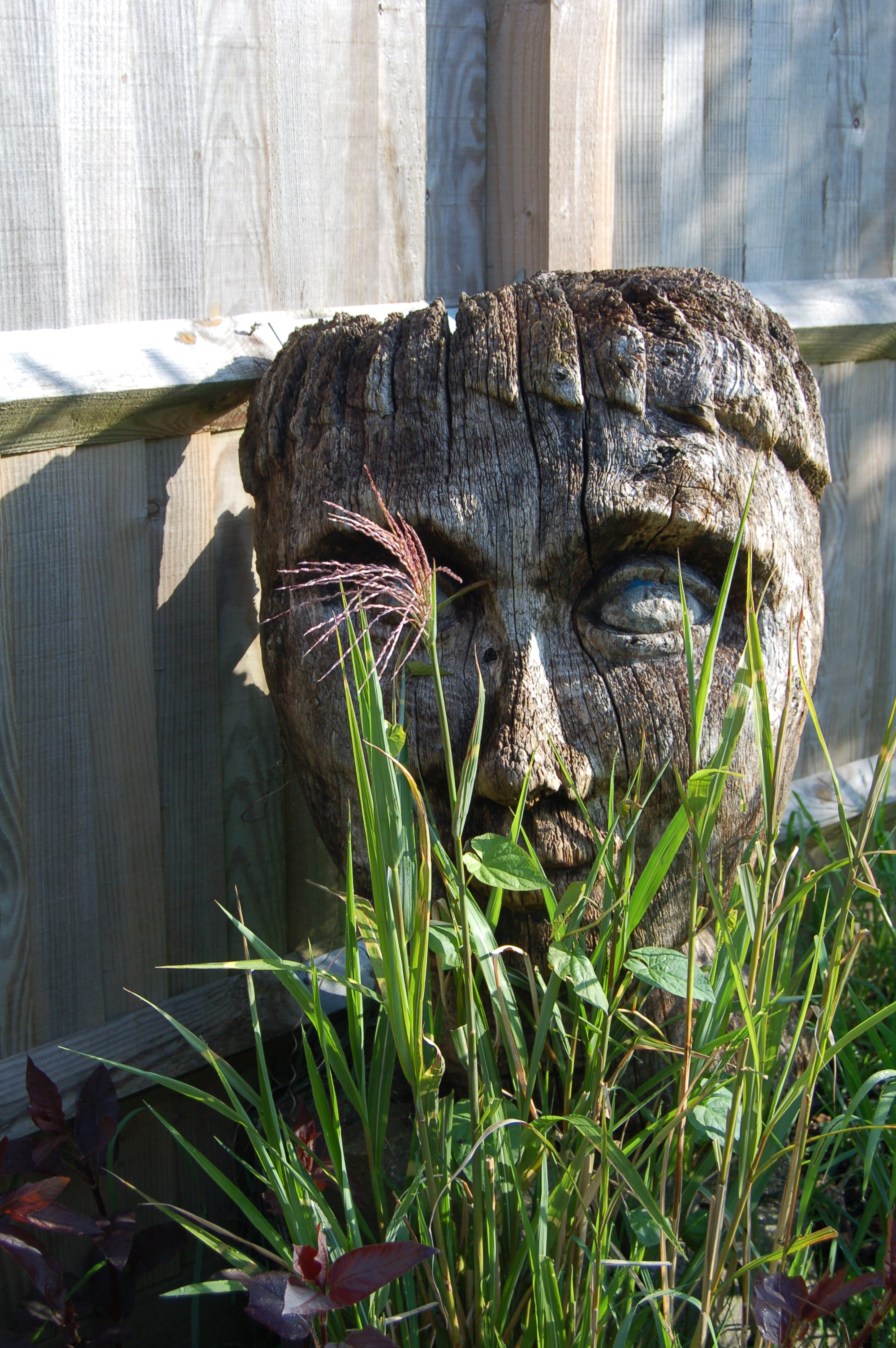
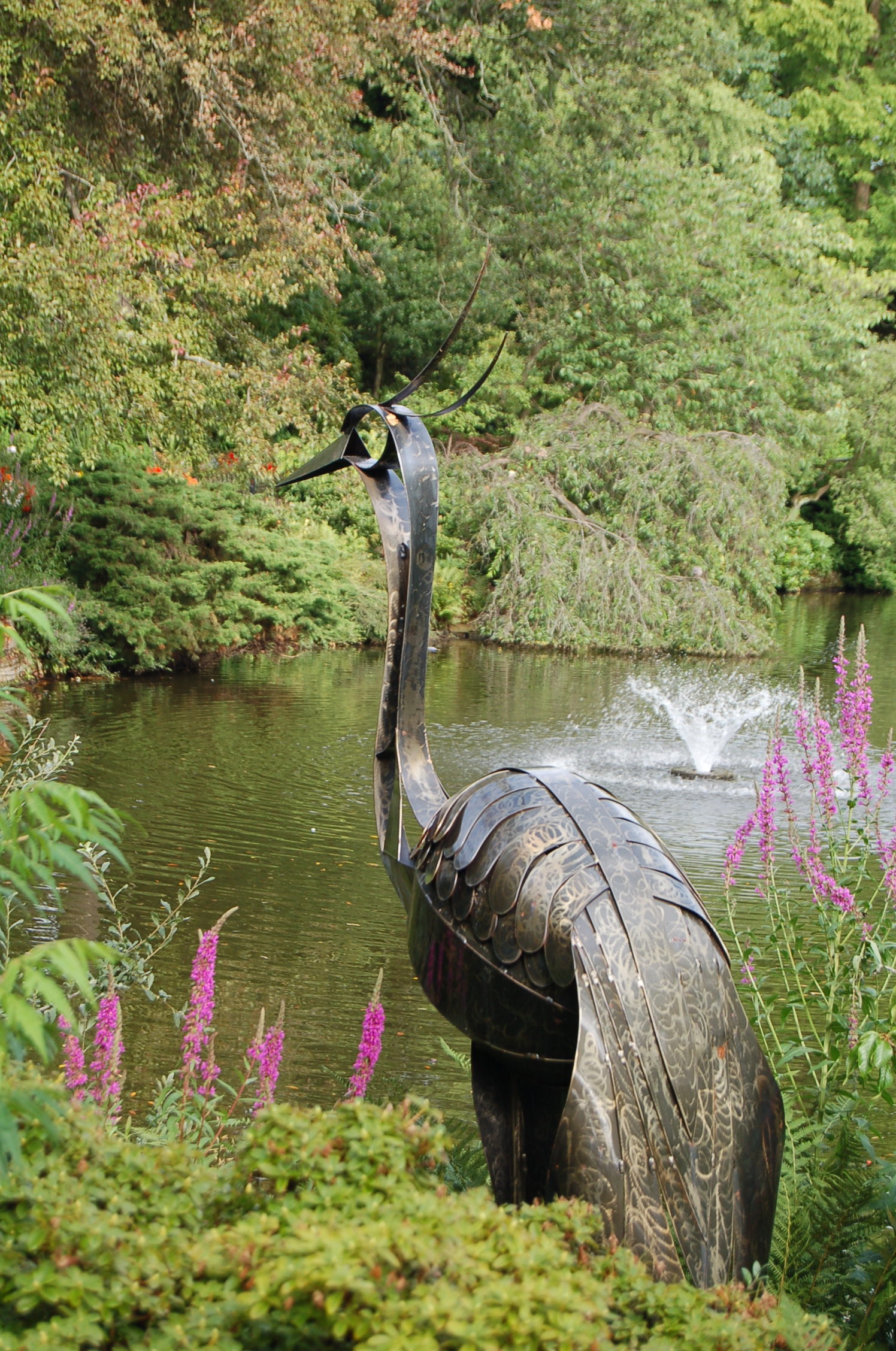
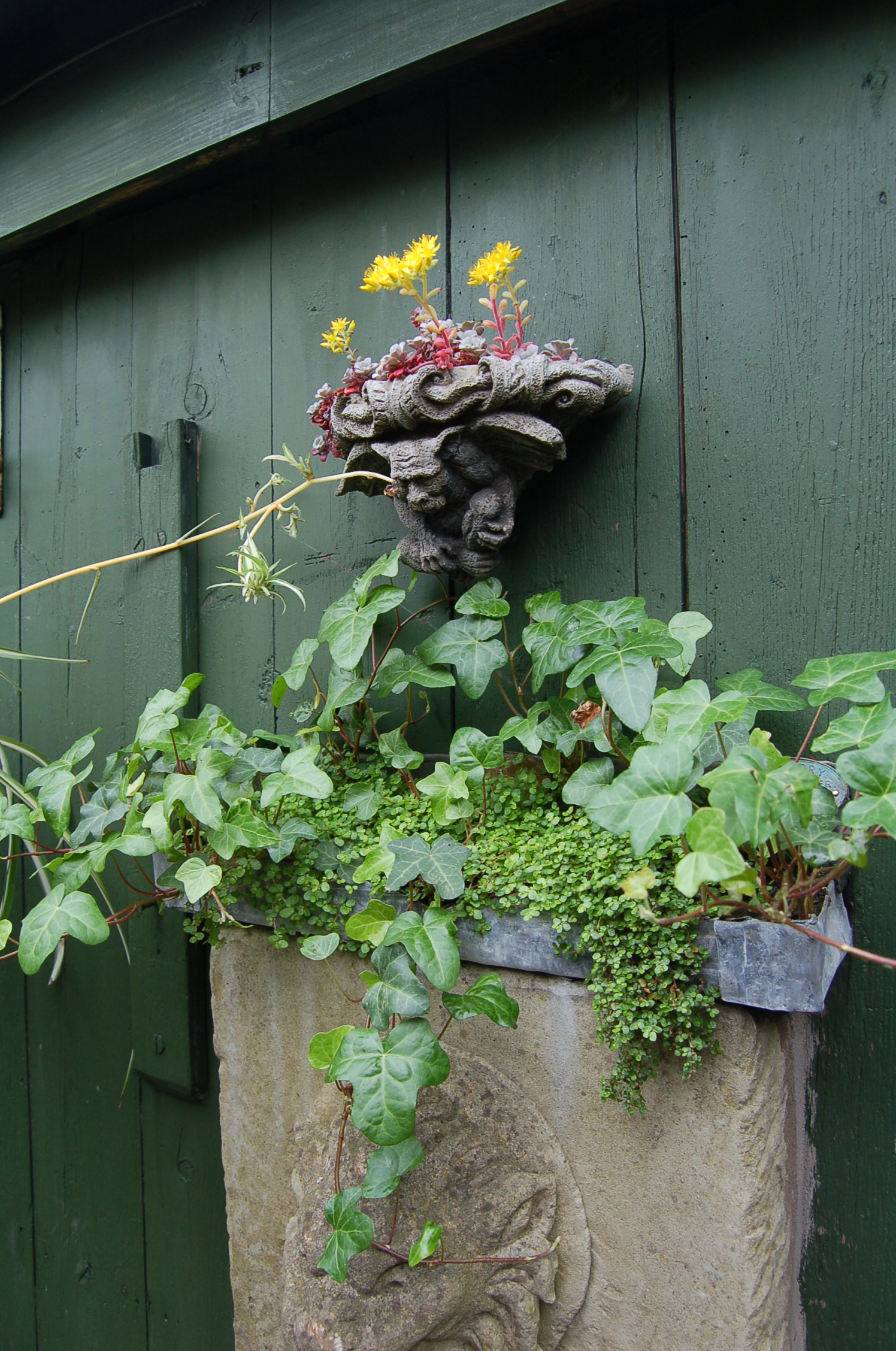
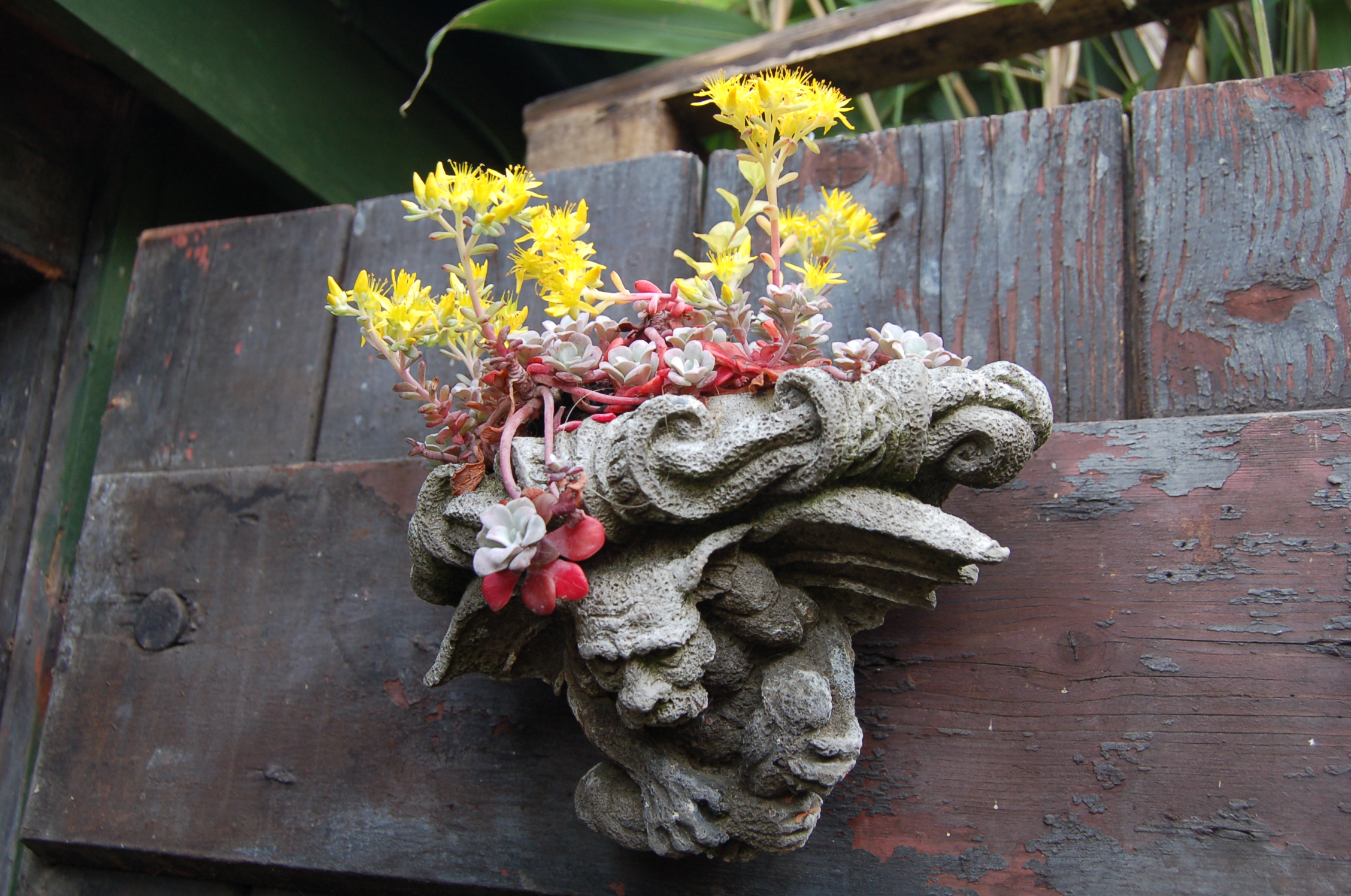
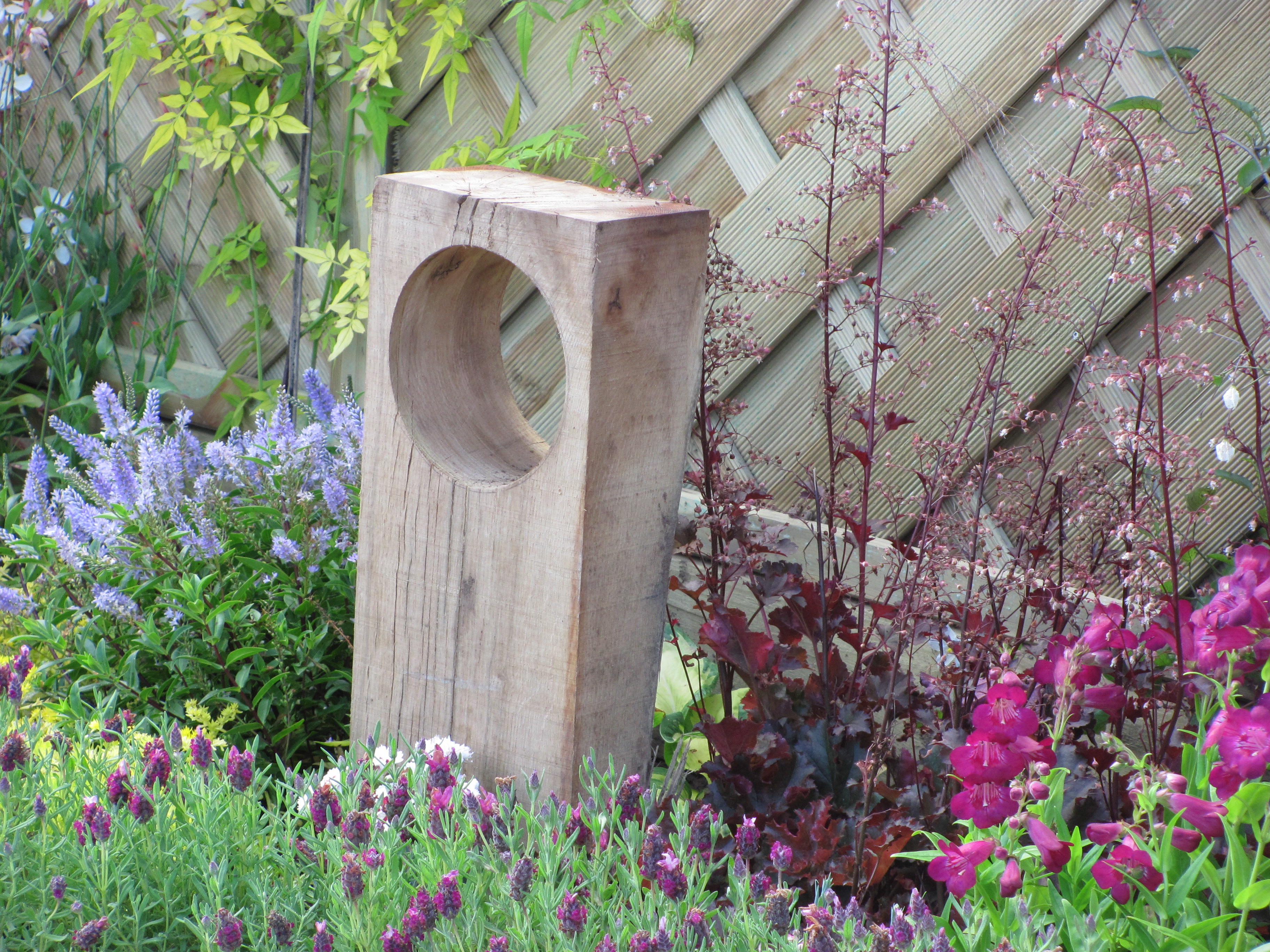
We found sculpture in several styles and from different eras within the garden.

2014 10 04_57872014 10 04_5784 2014 10 04_55502014 10 04_55532014 10 04_5795 2014 10 04_58052014 10 04_5821 2014 10 04_5816

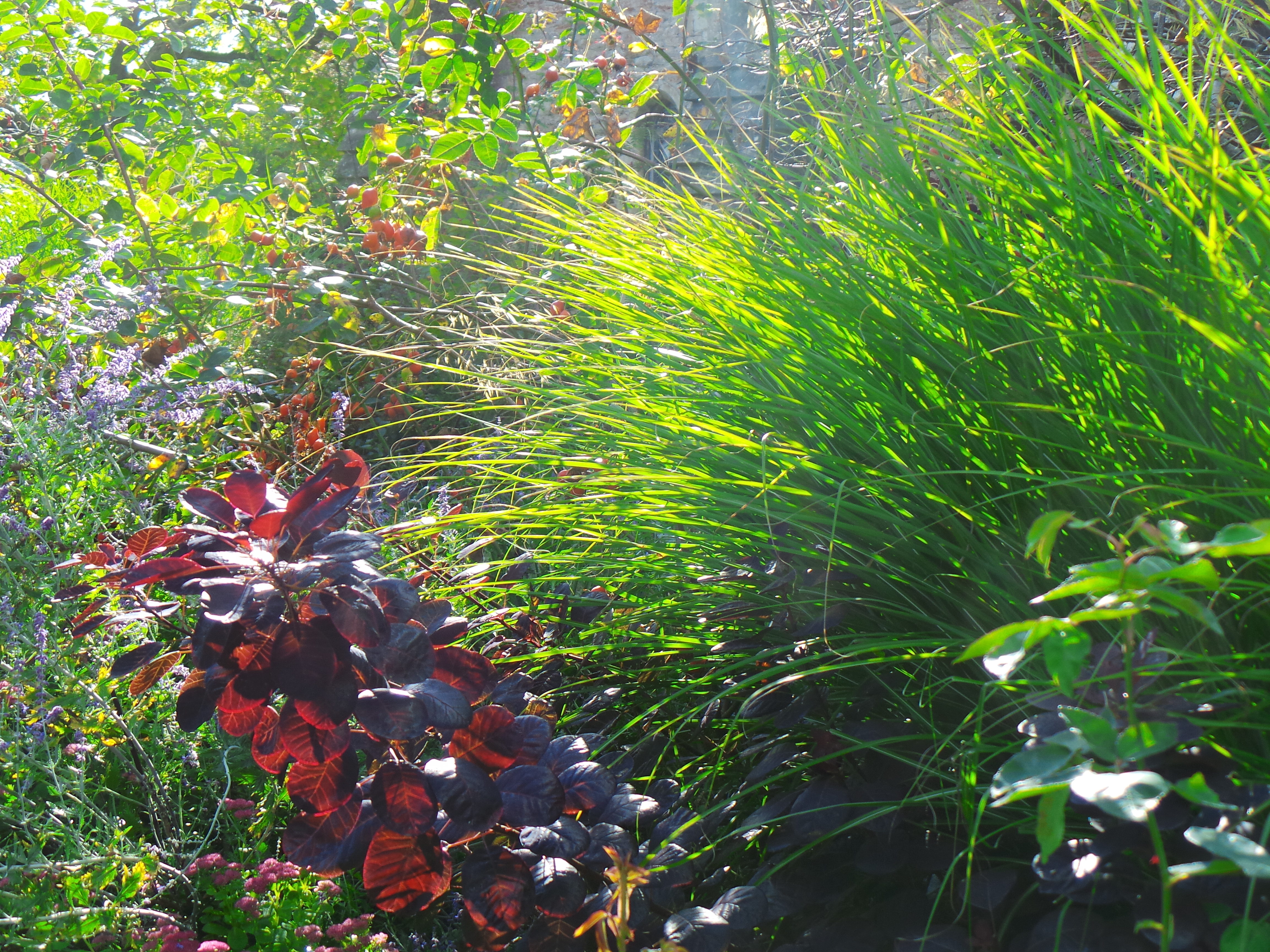
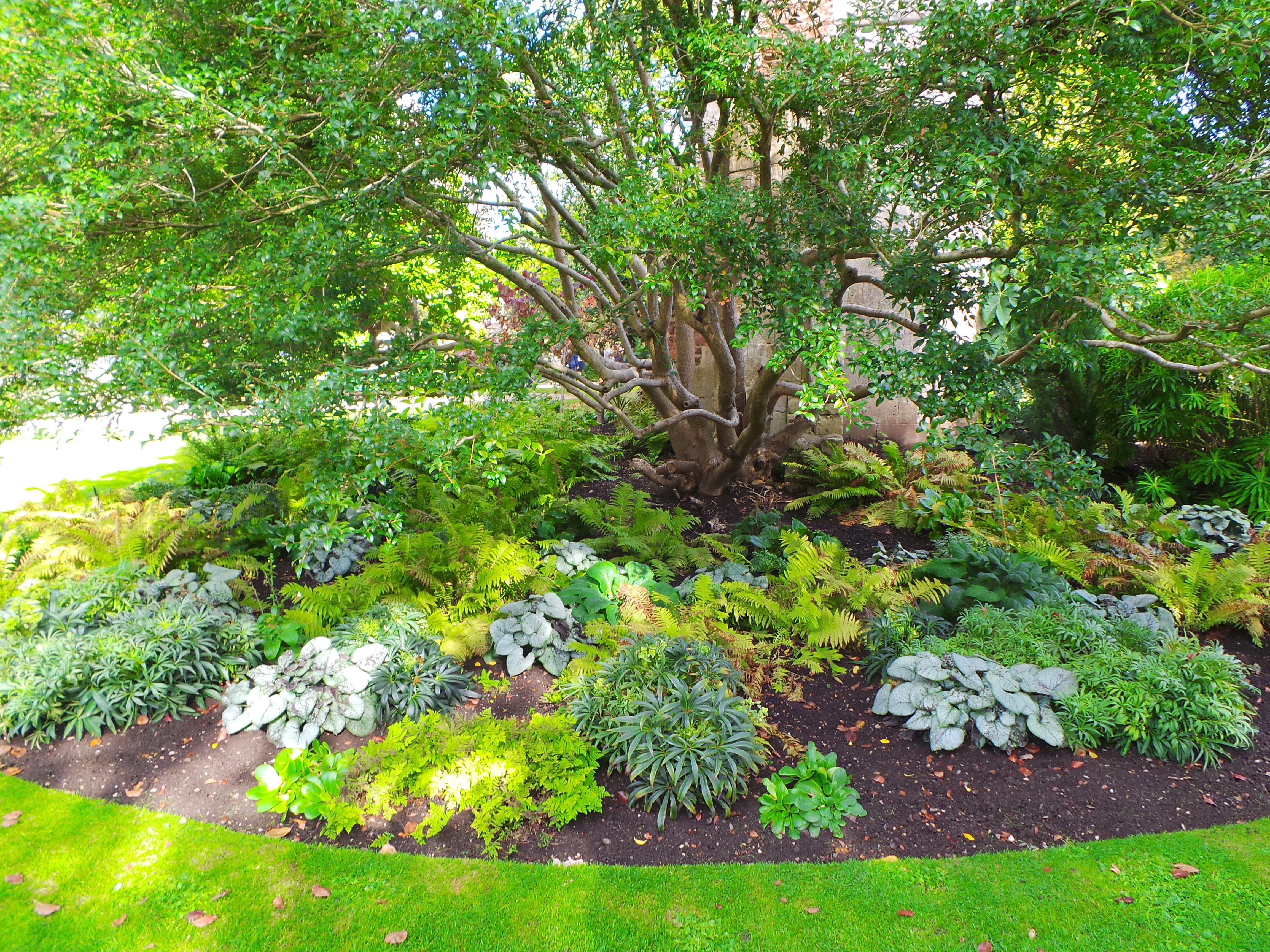
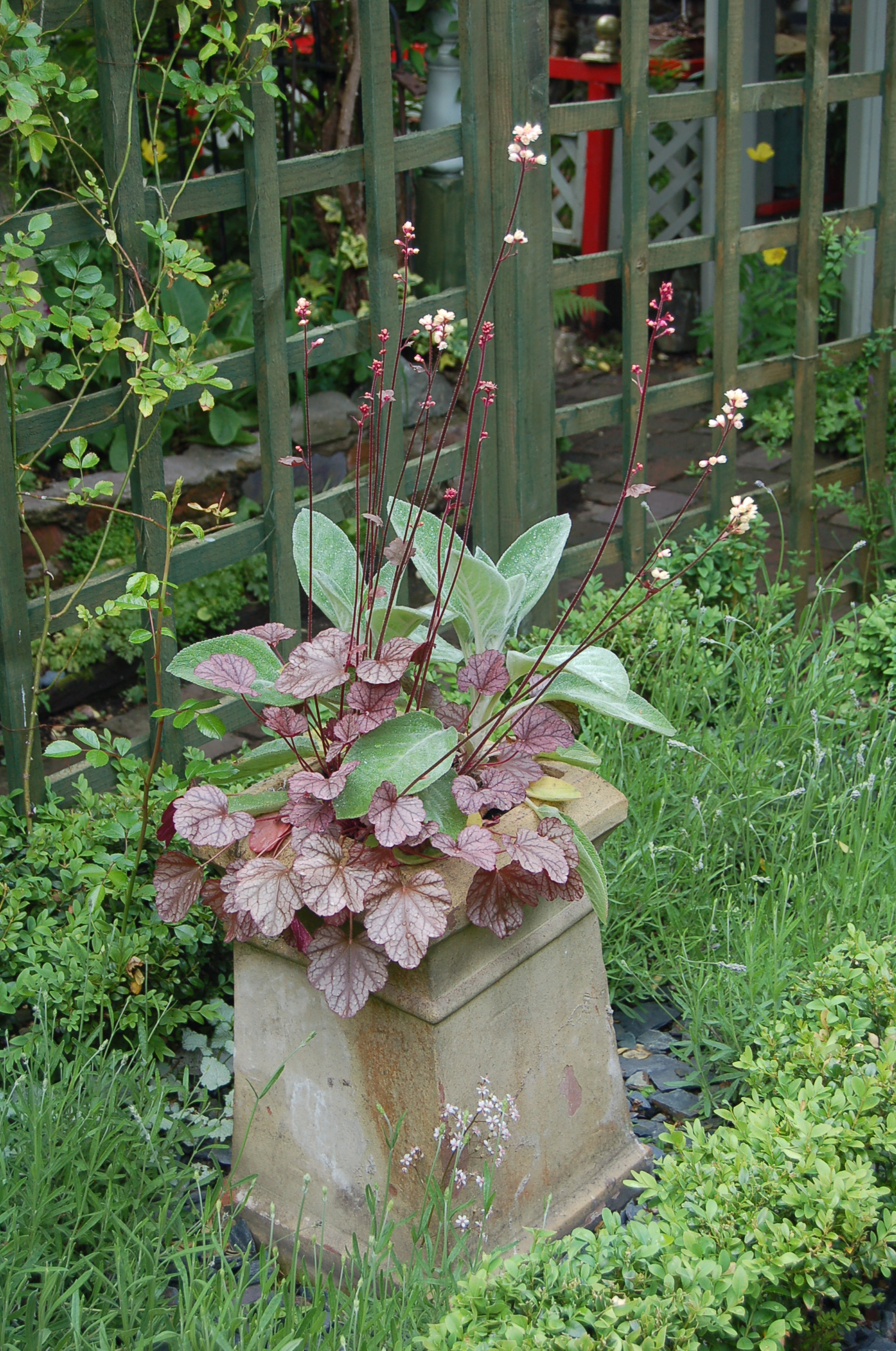
The planting was well thought out with interesting combinations.

2014 10 04_5786 2014 10 04_57882014 10 04_5789 2014 10 04_57902014 10 04_5794 2014 10 04_57932014 10 04_5820 2014 10 04_58182014 10 04_5799

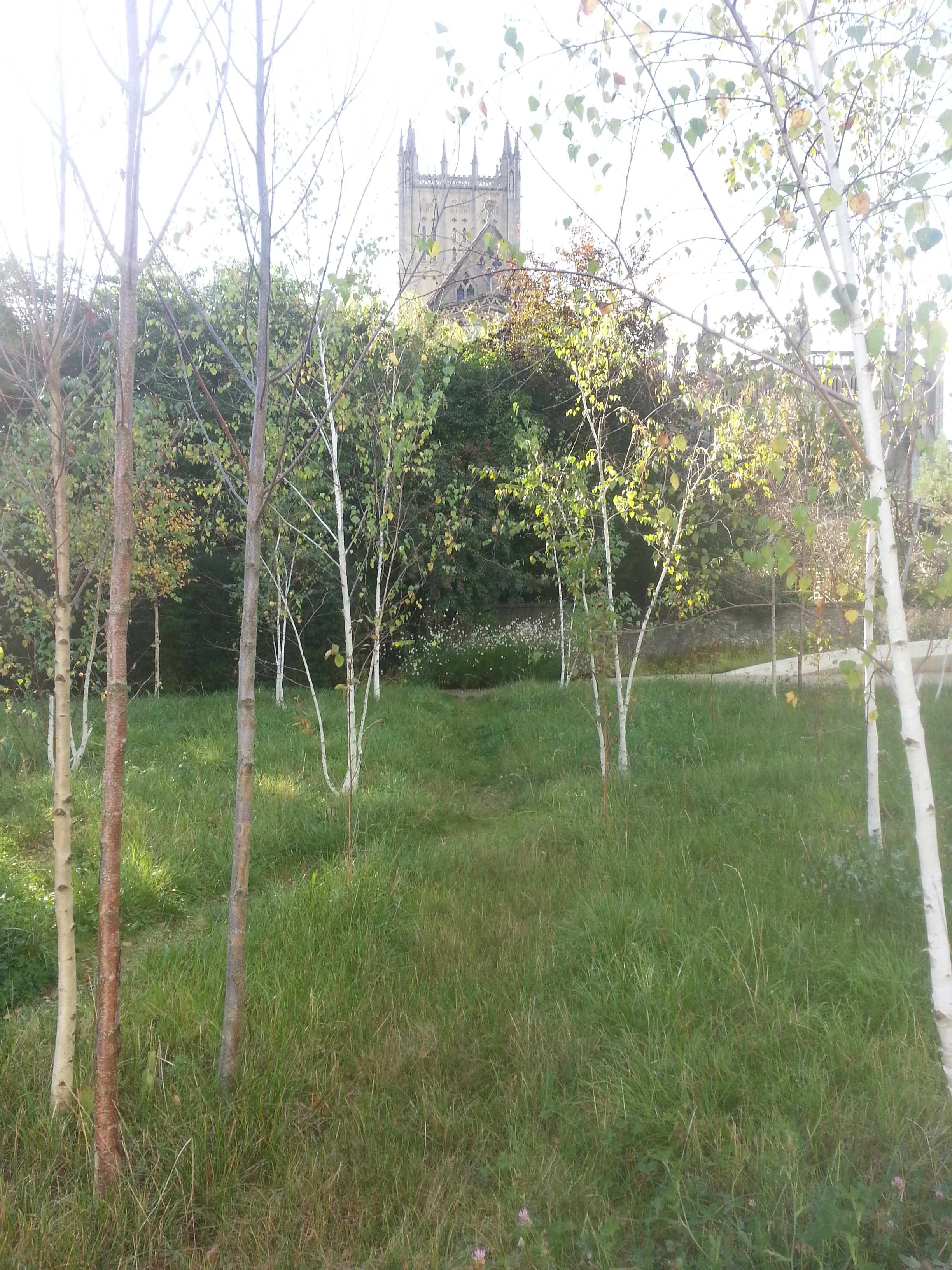
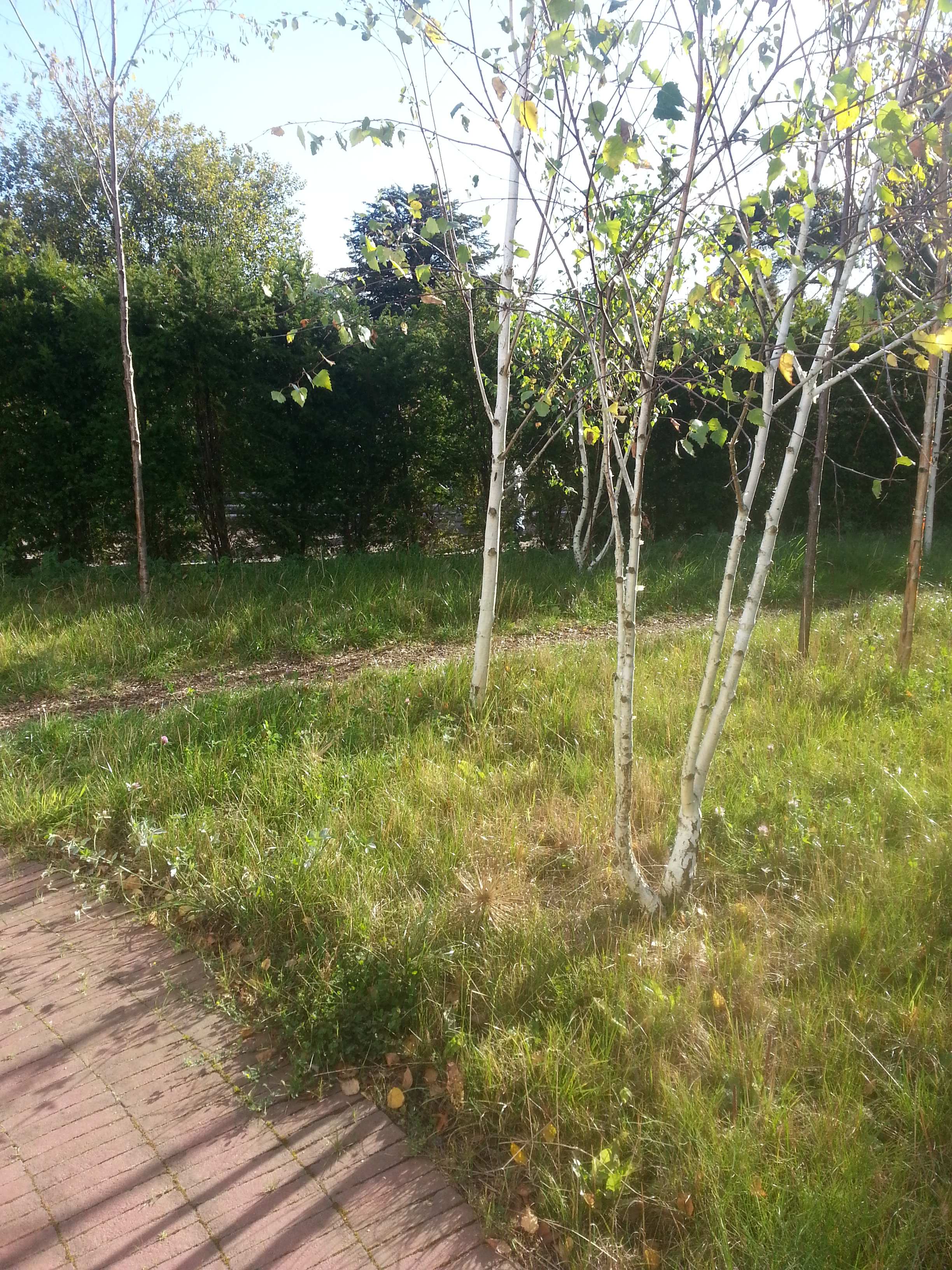
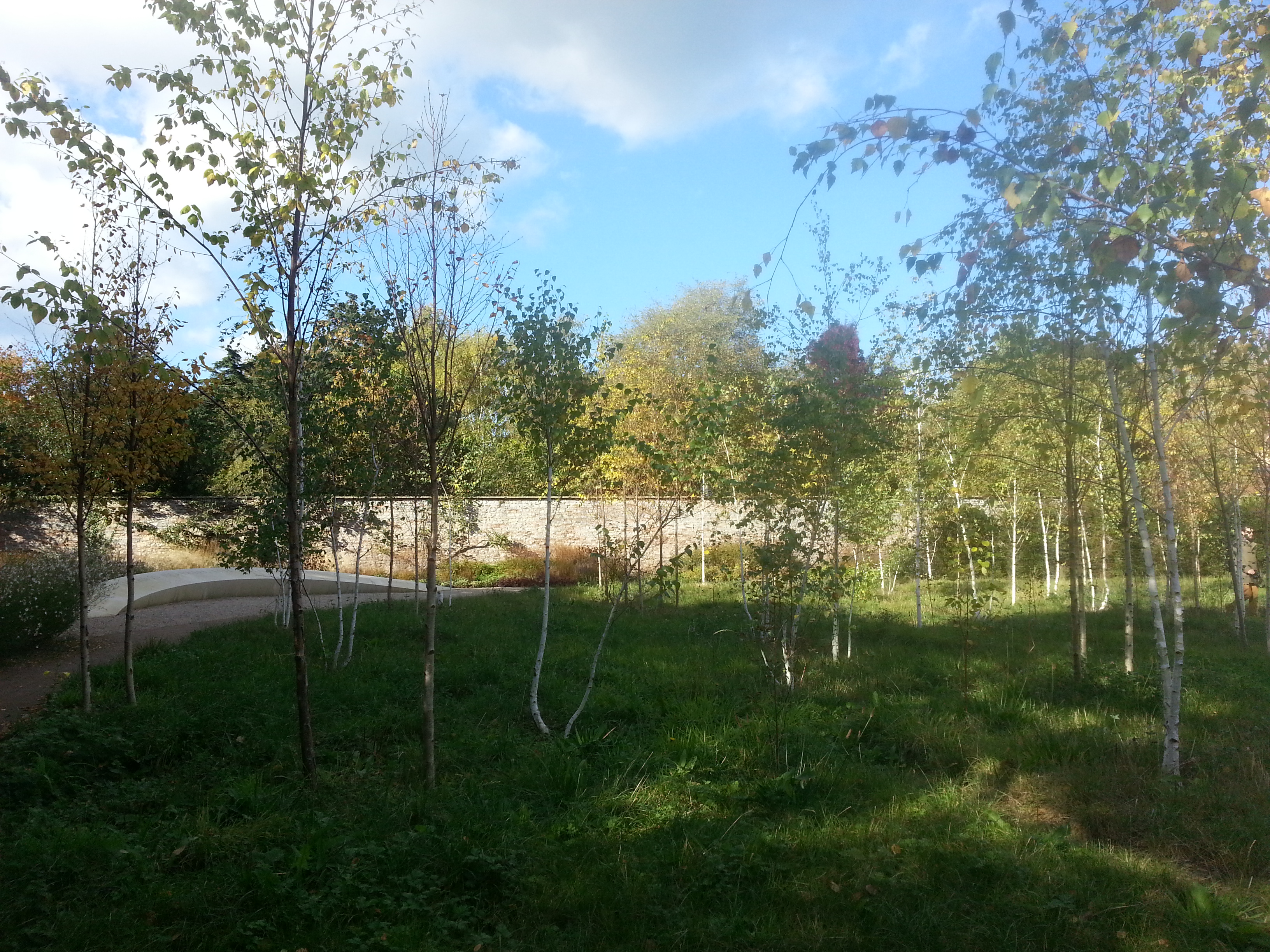
White stemmed Birches bleached in the brightness of the day looked so at home against the white of the stone.

2014 10 04_5555 2014 10 04_55562014 10 04_5552 2014 10 04_5558

Overall the garden design was informal but in an area enclosed by buildings we found a more formally structured garden. In the borders within the formal structure the planting was ebullient and lively.

2014 10 04_5817 2014 10 04_58192014 10 04_5815 2014 10 04_58142014 10 04_5813

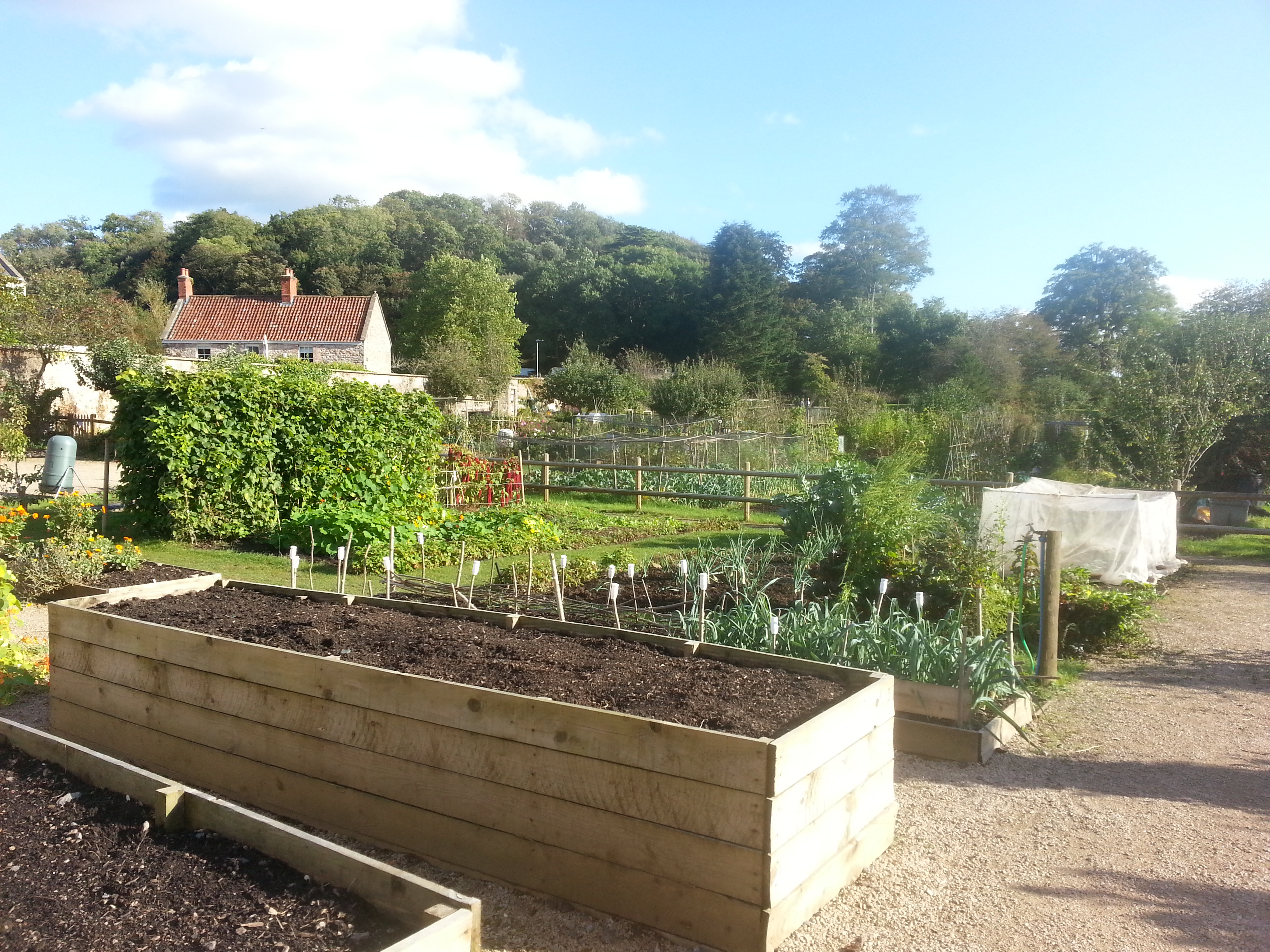
Part of the garden had been given over to the local community to use as a communal garden including allotments.

2014 10 04_5560 2014 10 04_5561 2014 10 04_5562 2014 10 04_5804 2014 10 04_5806 2014 10 04_55662014 10 04_5565 2014 10 04_5564 2014 10 04_5563 2014 10 04_5810

So the discovery of the Bishops Garden proved to be an unexpected treat, a place full of delights, tumbling ruins, rich plantings and sculpture.

2014 10 04_5811 2014 10 04_5804


Categories
colours flowering bulbs garden buildings garden design garden photography garden seating gardening hardy perennials ornamental trees and shrubs outdoor sculpture recycling sculpture spring bulbs spring gardening town gardens trees water in the garden

An Artist’s Back Garden

I often write and share my photos of gardens open to the public, often large and under the auspices of the National Trust or affiliated to the Royal Horticultural Society or smaller and open under the Yellow Book (NGS) scheme. Recently I wrote about a small garden owned by our friend and fellow Hardy Plant Society member Anne, in a post simply called “Anne’s Garden”. I shall be writing more about such gardens in this occasional series of posts of which this is the second.

We spent a few days down in Surrey in April staying in the lovely town of Farnham where my brother, Graham and his wife Vicky live. We re-visited that great garden, Nymans and it was good to see it at a different at a different time of year. We enjoyed a walk on “The Downs” for the first time ever and a walk around the old town of Farnham for the first time in decades.

But breakfast outside on an unusually warm spring morning in Graham and Vicky’s garden made me collect my camera as the light was so good. The sun was low in the sky so lit up the tiniest detail and the gentlest textures. Come with me and look through the lens of my trusty Nikon as we look around this artist’s garden.

One step out of the side door and immediately we have a clue as to what to expect.

2014 04 23_8658 2014 04 23_8661

The first view of the back garden shows how long and thin it is and how beautifully planted, and a look down the garden also finds Jude the Undergardener and my brother Graham enjoying breakfast in the sun.

2014 04 23_8663 2014 04 23_8676

2014 04 23_8734

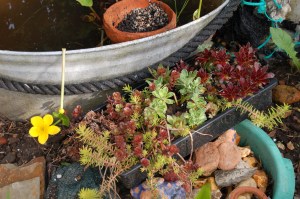
Sculptural pieces are found within the borders and look natural alongside the plants snuggling up to them.

2014 04 23_8665 2014 04 23_8666

Effective plant combinations are a strength of this garden, where foliage plays a key role.

2014 04 23_8667 2014 04 23_8673

2014 04 23_8672  2014 04 23_8674

2014 04 23_8702 2014 04 23_8713

But specimen plants stand out and make you stop for a second closer look.

2014 04 23_8659 2014 04 23_8668

2014 04 23_8670 2014 04 23_8671

2014 04 23_8669 2014 04 23_8681

2014 04 23_8695 2014 04 23_8696

2014 04 23_8710

Containers of all shapes and sizes and made from all sorts of materials add more interest.

2014 04 23_8664 2014 04 23_8677

2014 04 23_8678 2014 04 23_8679

2014 04 23_8700 2014 04 23_8714

2014 04 23_8735

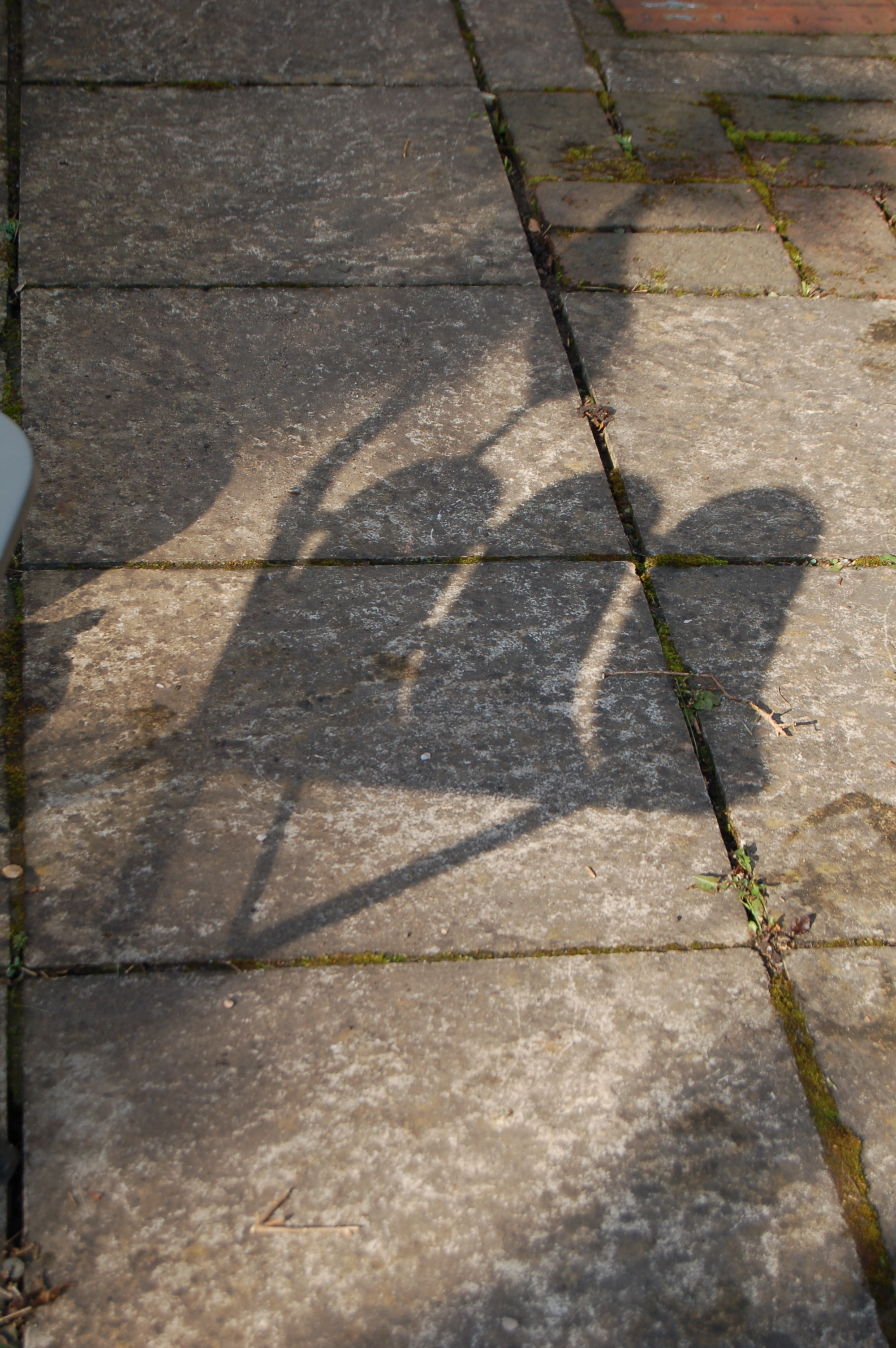
Early morning is definitely the time for shadows.

2014 04 23_8675

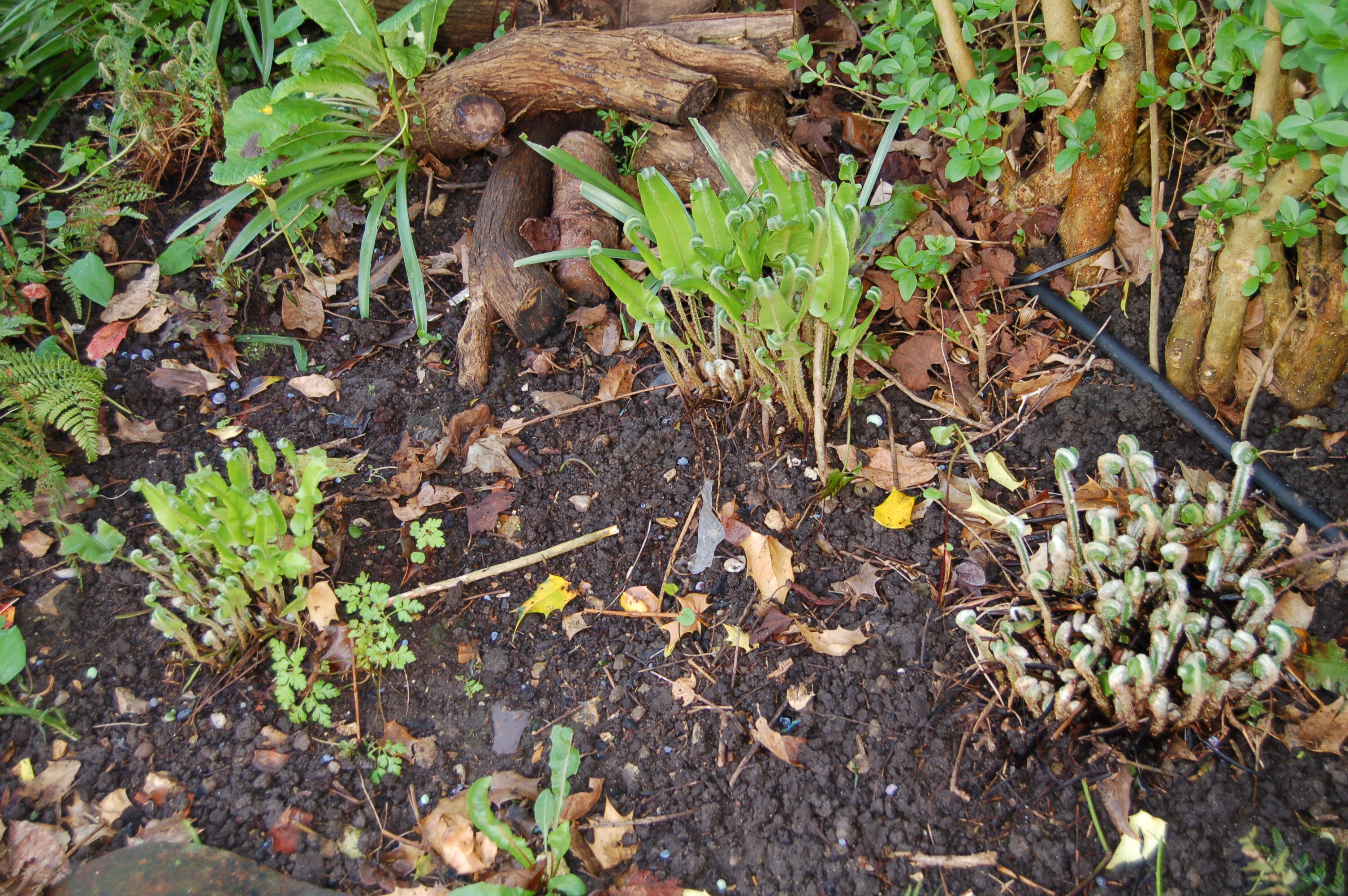
Close to the house the shady border is full of promise with new growth breaking through the soil with the ferns looking particularly dramatic.

2014 04 23_8684 2014 04 23_8685 2014 04 23_8686 2014 04 23_8712

2014 04 23_8737

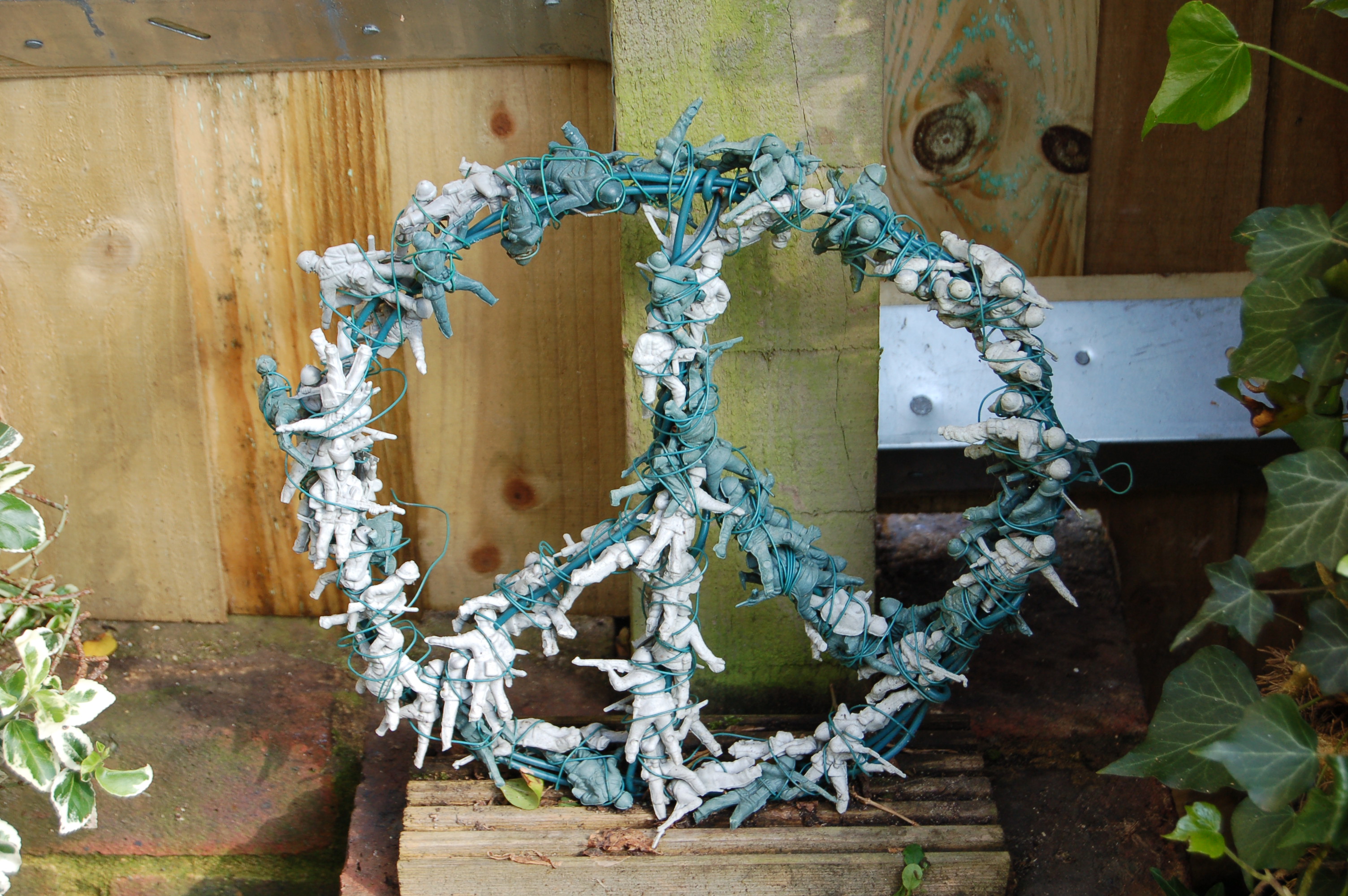
An artist’s garden has to be full of interesting objects and happenings.

2014 04 23_8688 2014 04 23_8690 2014 04 23_8691 2014 04 23_8692    2014 04 23_8697 2014 04 23_8708

2014 04 23_8698 2014 04 23_8699  2014 04 23_8701 2014 04 23_8704

2014 04 23_8706 2014 04 23_8707

2014 04 23_8715 2014 04 23_8736

An artist must have a studio and what better place for it but at the bottom of the garden! Close by is a closely planted group of Mountain Ash, sown by birds – a great feature which I have never seen before. Well done the birds!

2014 04 23_8703 2014 04 23_8723

2014 04 23_8729 2014 04 23_8730

But one thing that no gardener wants in the garden is snails and this garden is full of them! On the plants, climbing the fences, the house walls and even climbing up the window panes. They are everywhere!

2014 04 23_8717 2014 04 23_8716

So we shall finish off this look at Graham and Vicky’s garden with a few shots of the front garden, the last shot showing Graham kindly digging up a plant for us to take home for our own garden.

2014 04 23_8745 2014 04 23_8746  2014 04 23_8747  2014 04 23_8744

The next post in this occasional series about our friends’ gardens will feature a woodland garden of friends Pauline and Derek.

Categories
allotments Britain in Bloom community gardening flower show fruit and veg garden design garden photography gardening gardens open to the public grow your own half-hardy perennials renovation Shrewsbury Shropshire town gardens townscapes

A town riverside walk

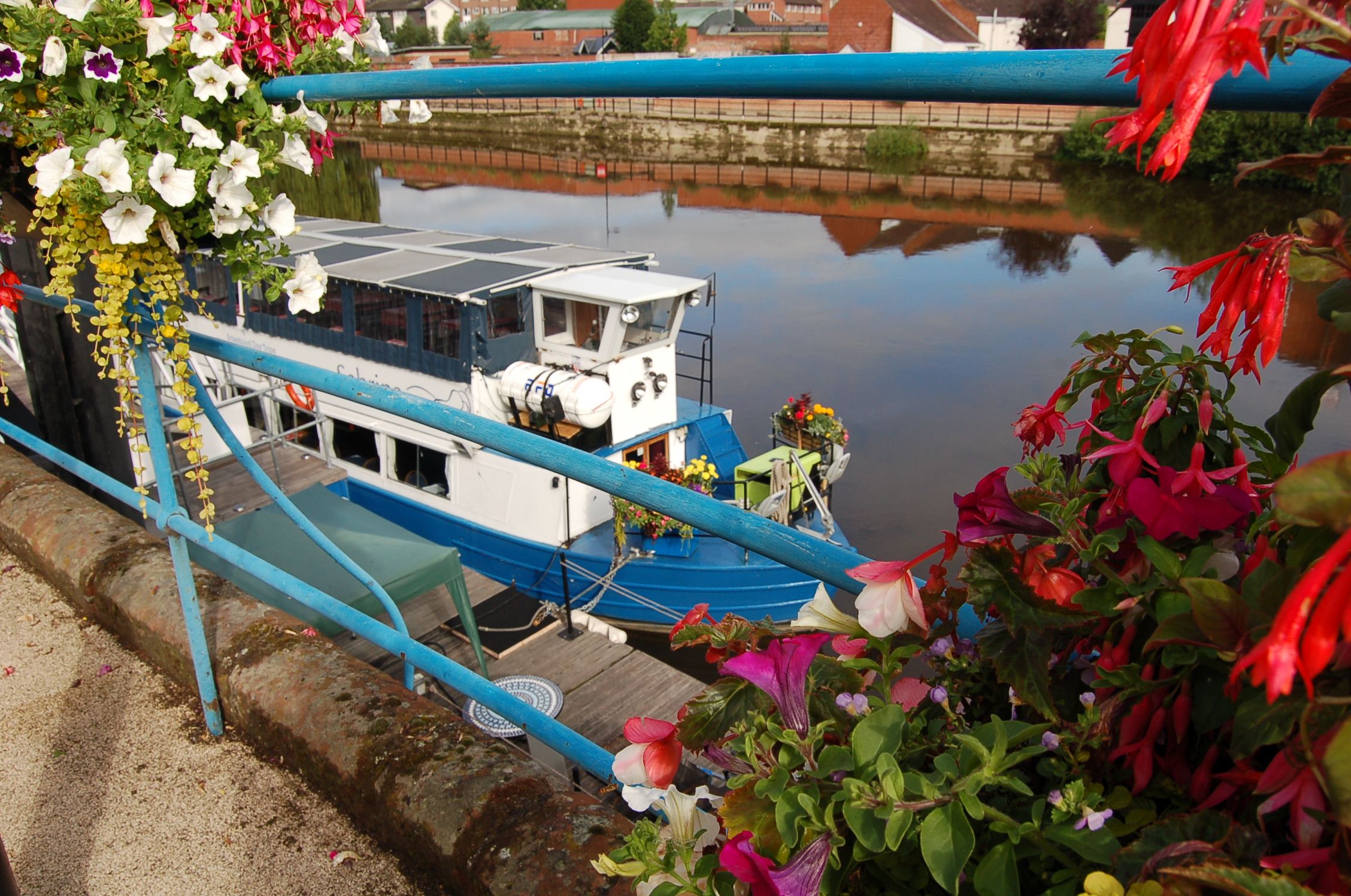
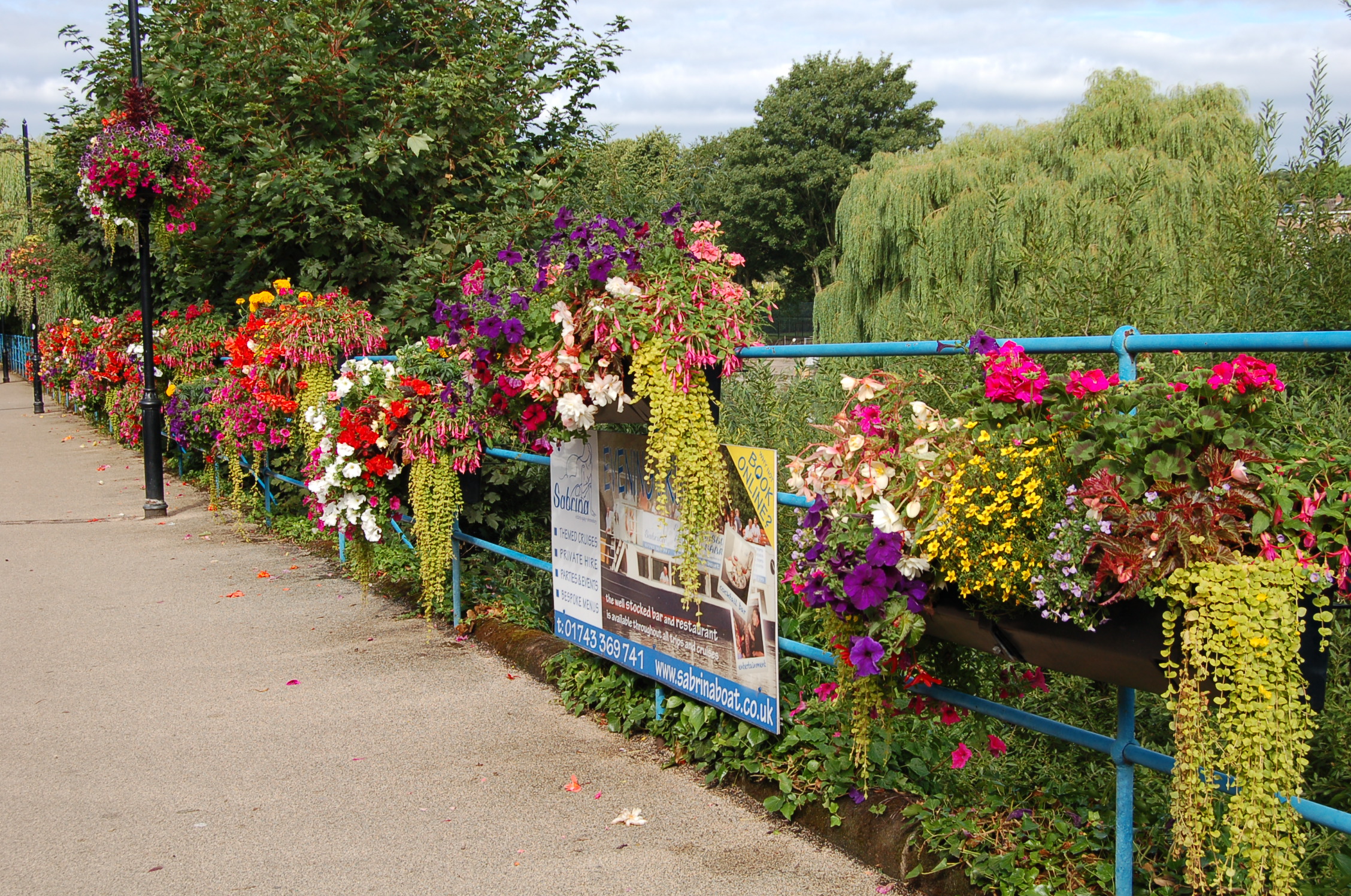
Although we live close to our county town of Shrewsbury we go for months between visits to the banks of the River Severn, in whose loops the town sits snuggly. In the summer the council garnish the river banks with bright coloured plants in all sorts of containers and hanging baskets.

2013 08 07_2411 2013 08 07_2412 2013 08 07_2413 2013 08 07_2414 2013 08 07_2415t

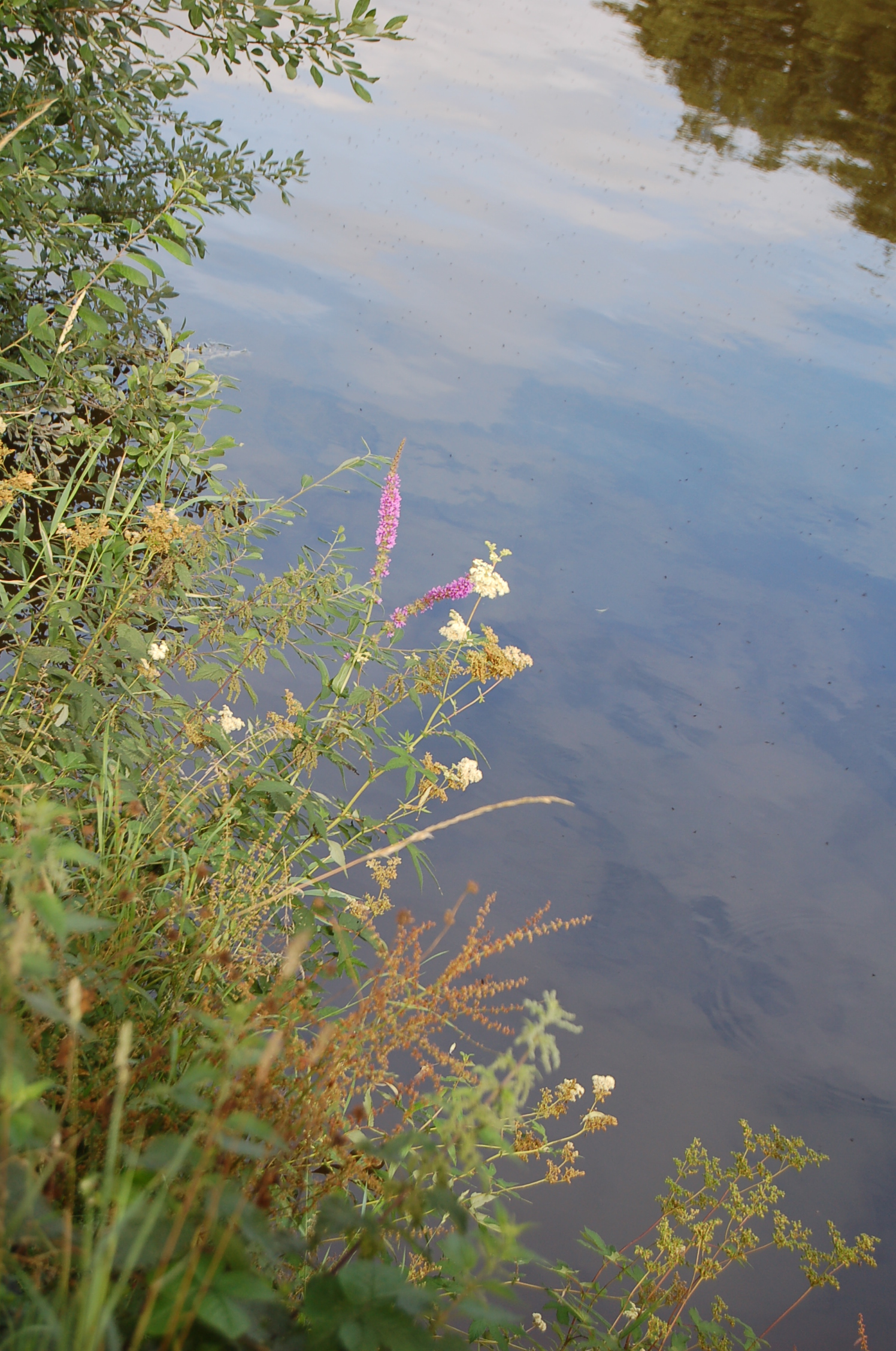
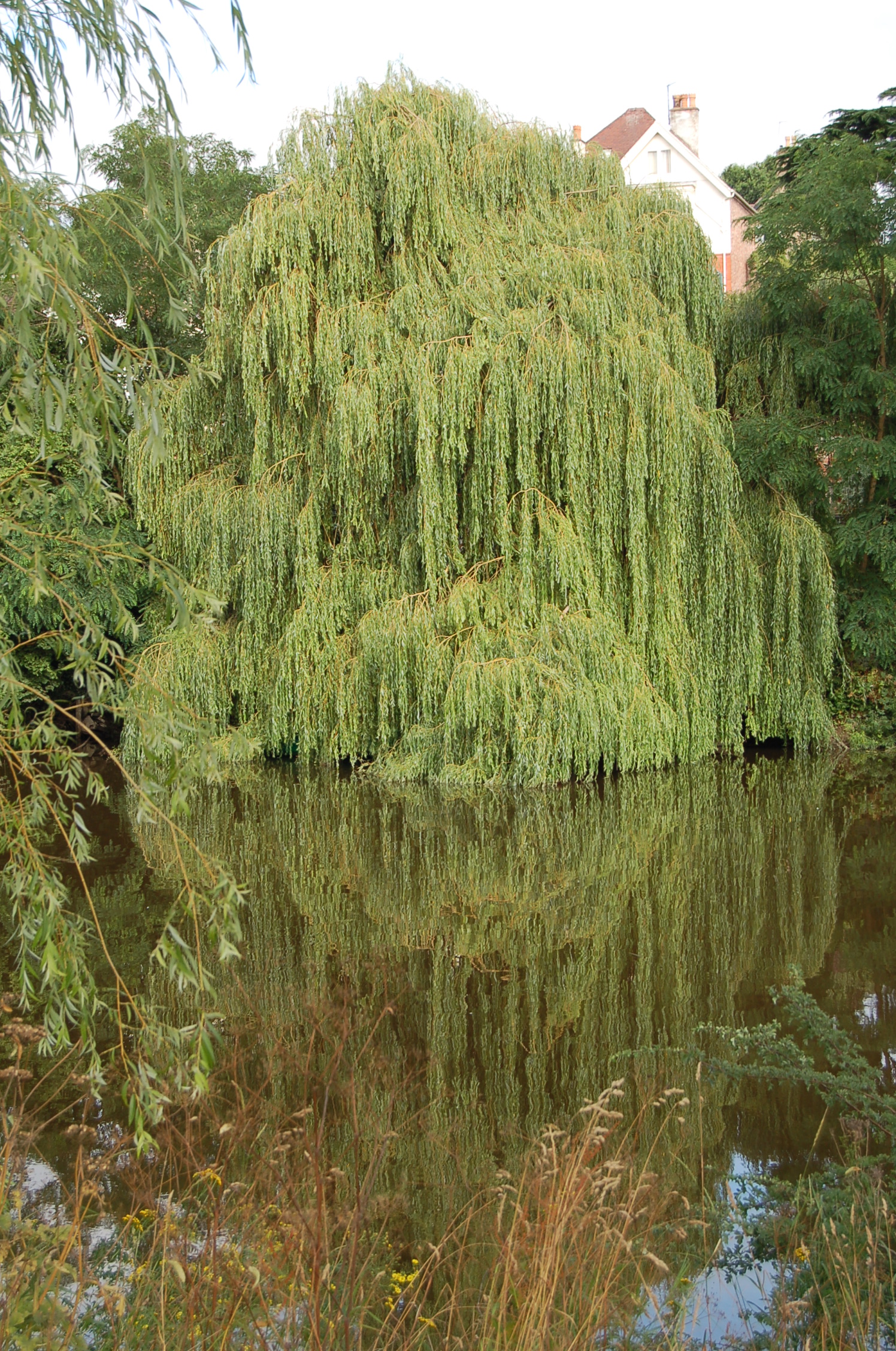
I am not that keen on these brightly coloured bedding annuals but they seem to fit in with their setting so well here. Mother nature herself adds a little subtle planting herself with wild flowers growing close to the water and wonderful waterfalls of reflections.

2013 08 07_2416 2013 08 07_2417 2013 08 07_2418

Our footbridge an old Victorian suspension bridge has recently been completely refurbished and it is looking smart in its new green suit. The builders greatest challenge was to make sure that after the make-over the old bridge retained her sway. As you walk across her she sways from side to side!

2013 08 07_2421

This weekend is time for the famous Shrewsbury Flower Show so when we reached the open parkland spaces alongside the river we found signs of the village of tents and rows of arena seats appearing at a great rate of knots. It seemed to be growing up around us as we walked towards the little sunken garden called The Dingle.We now anticipate our day out at the show on Saturday most eagerly. We hope to go in the afternoon and stay until closing time with the magnificent firework display over the river.

2013 08 07_2420 2013 08 07_2419

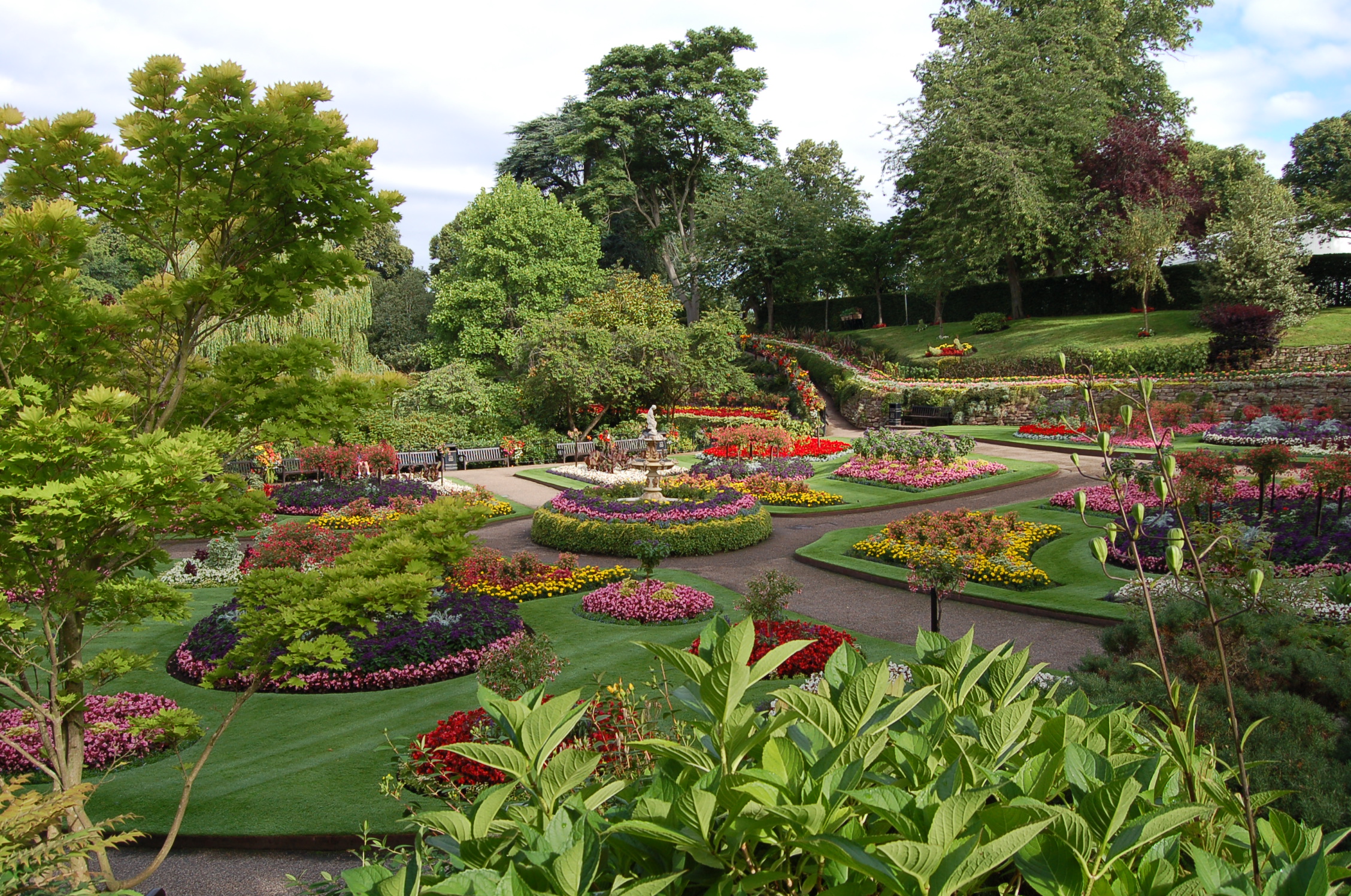
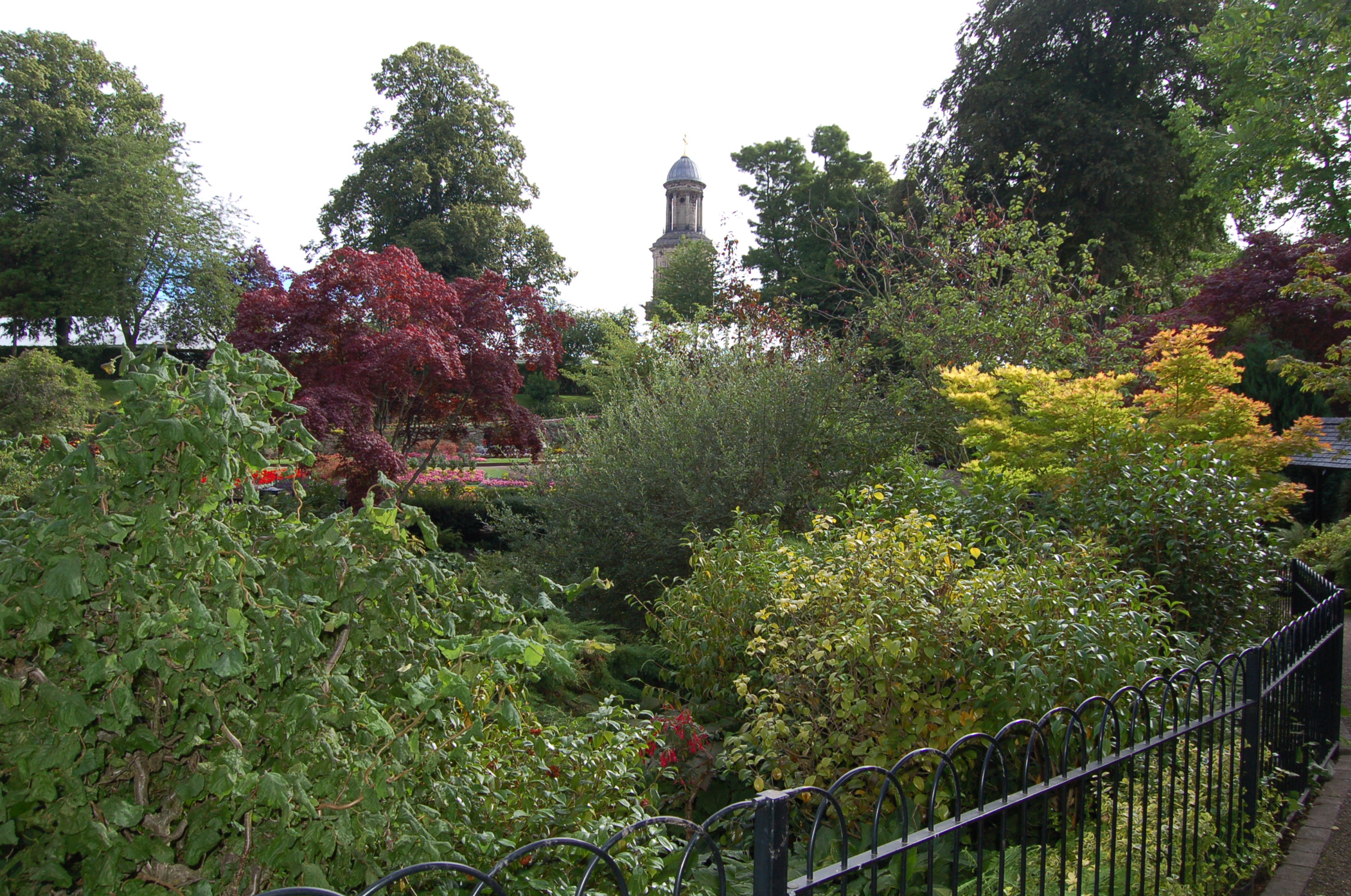
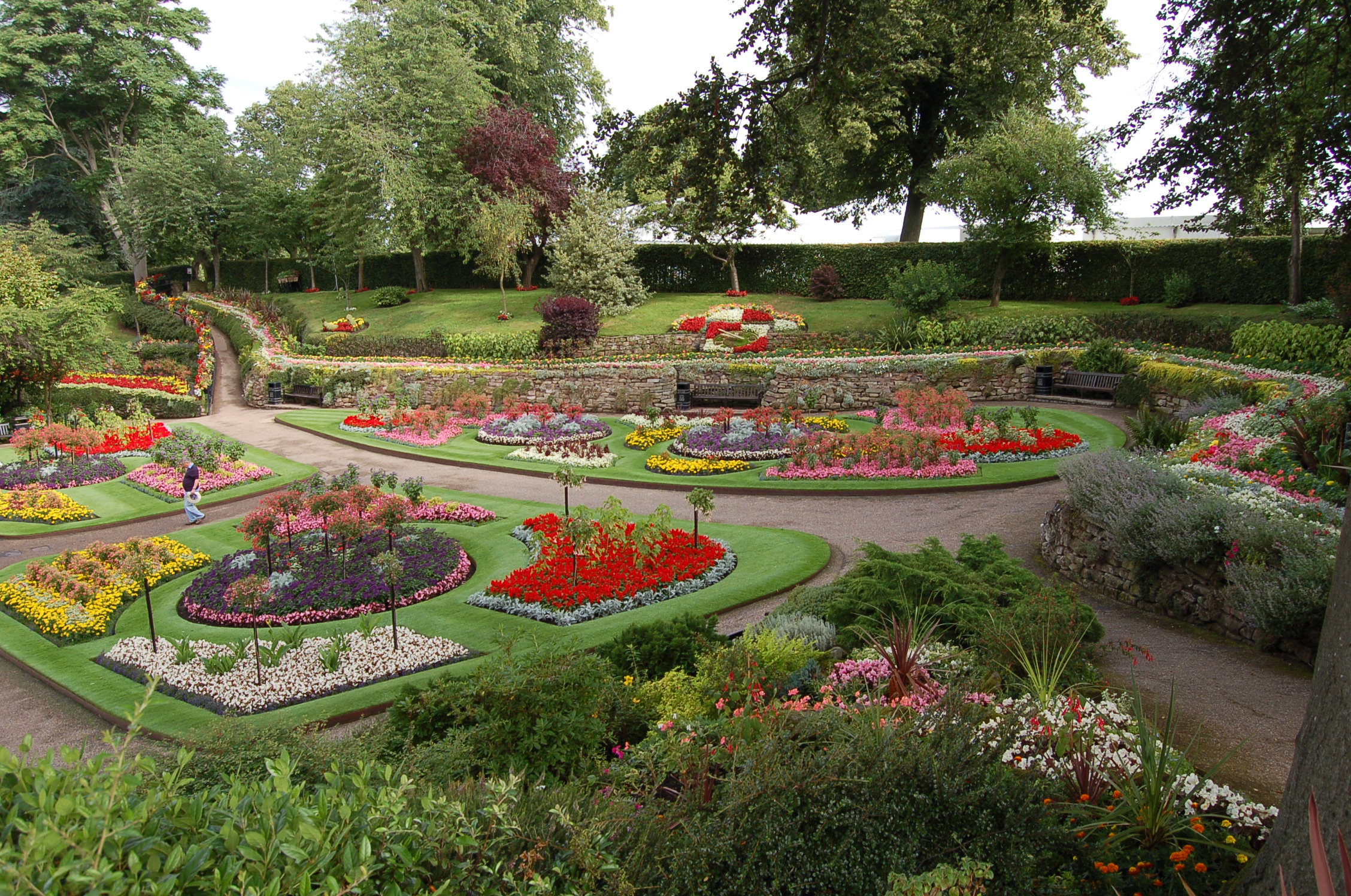
And so to the Dingle herself, which is not my cup of tea at all, but it is enjoyed by thousands every year. It is all a bit garish for my taste, but I do admit that it takes a great deal of skill to create and maintain it. It certainly gives pride to the town. Come on a tour with us and see what you think.

2013 08 07_2422 2013 08 07_2423 2013 08 07_2424 2013 08 07_2425 2013 08 07_2426 2013 08 07_2427 2013 08 07_2428 2013 08 07_2429 2013 08 07_2430 2013 08 07_2431 2013 08 07_2432 2013 08 07_2433 2013 08 07_2434

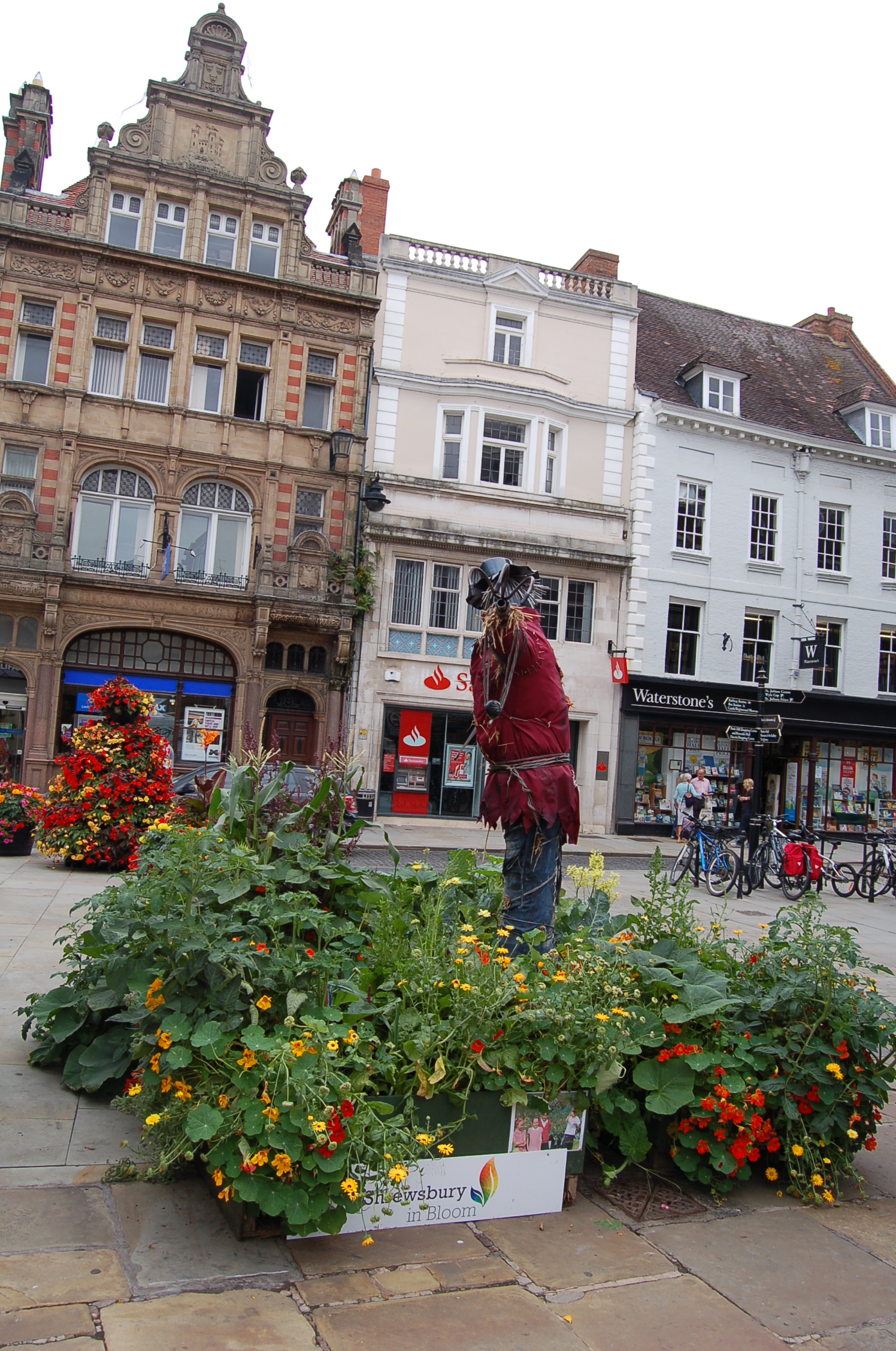
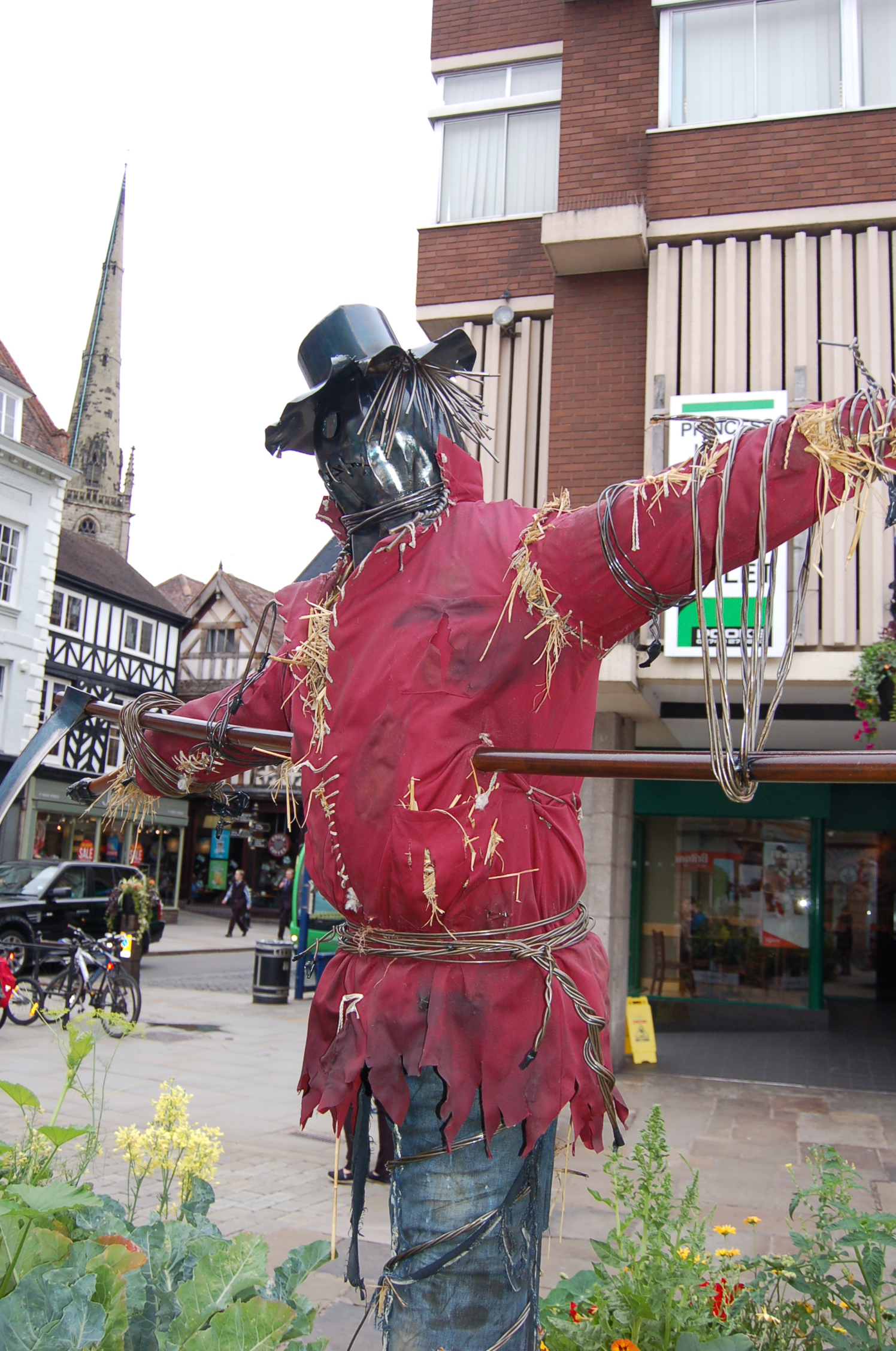
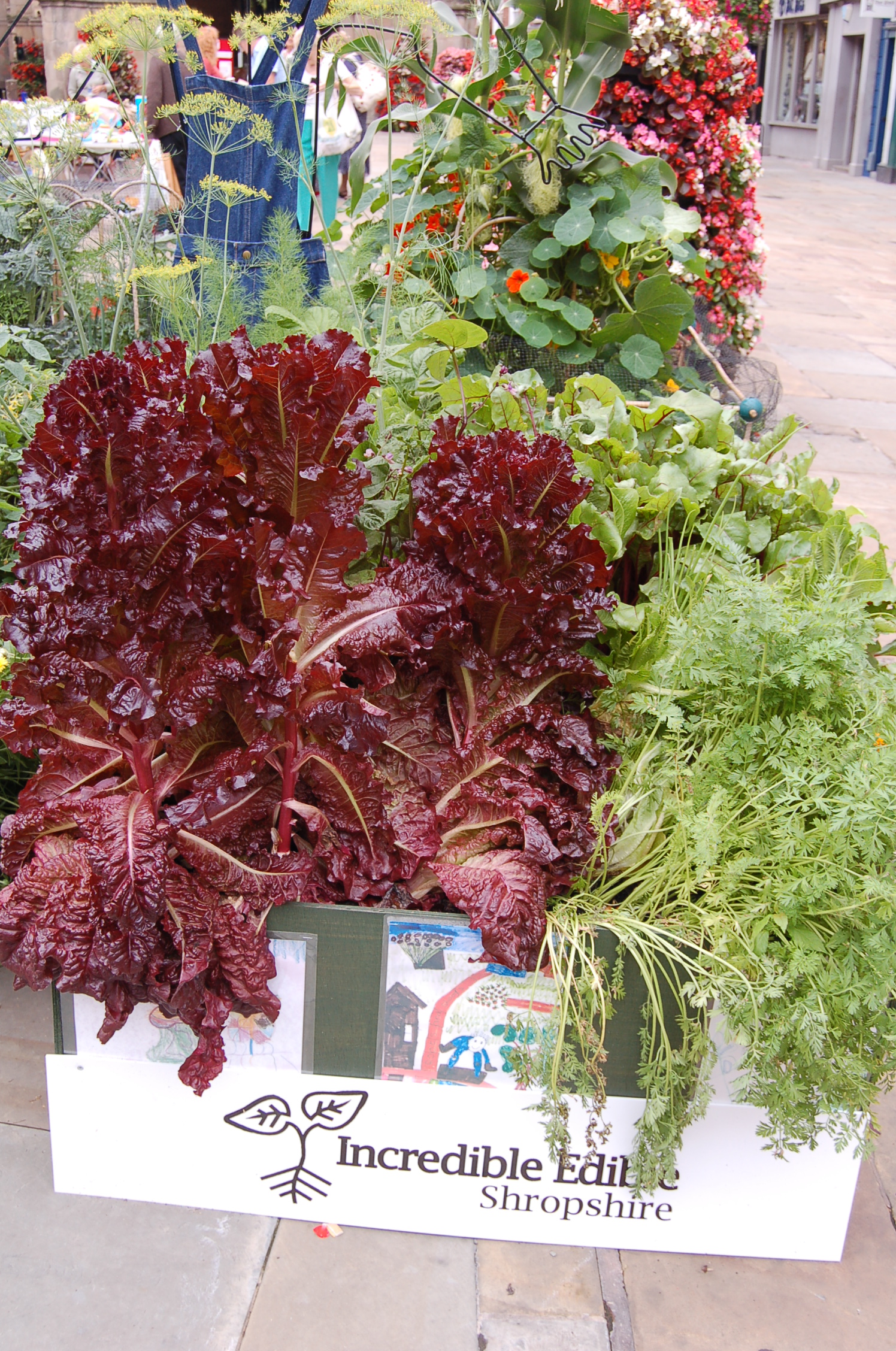
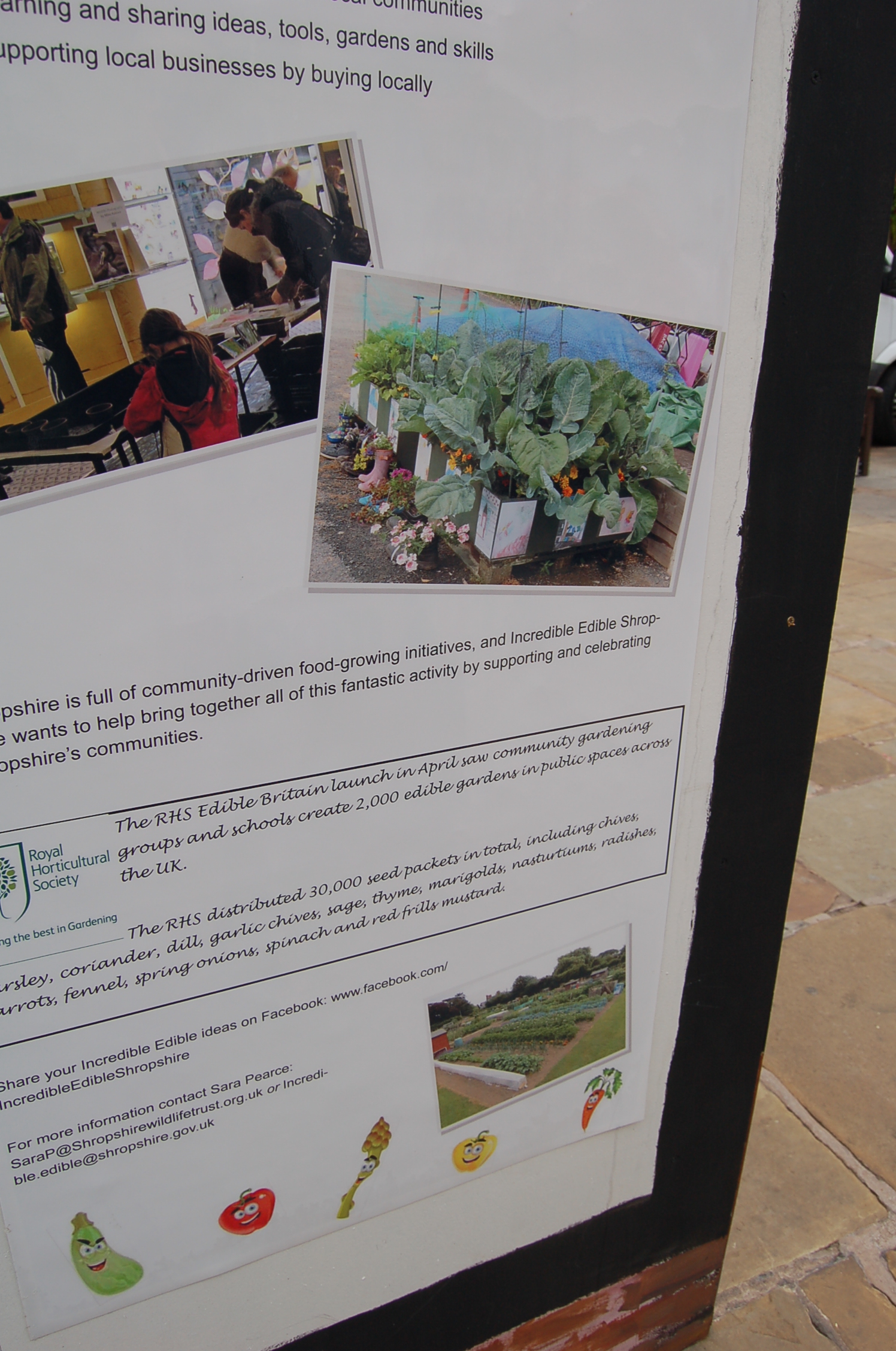
We wandered back into the town centre to have a look at how the town council had decorated the Square as part of their “Britain in Bloom” campaign. All the allotment sites in and around the town had planted up mini-allotments small enough to fit on a pallet and these were collected up and put in the square. Local artists crafted two scarecrows from metal to give an extra dimension.

2013 08 07_2437 2013 08 07_2436 2013 08 07_2435 2013 08 07_2438 2013 08 07_2439 2013 08 07_2440 2013 08 07_2441 2013 08 07_2442 2013 08 07_2444 2013 08 07_2446 2013 08 07_2447

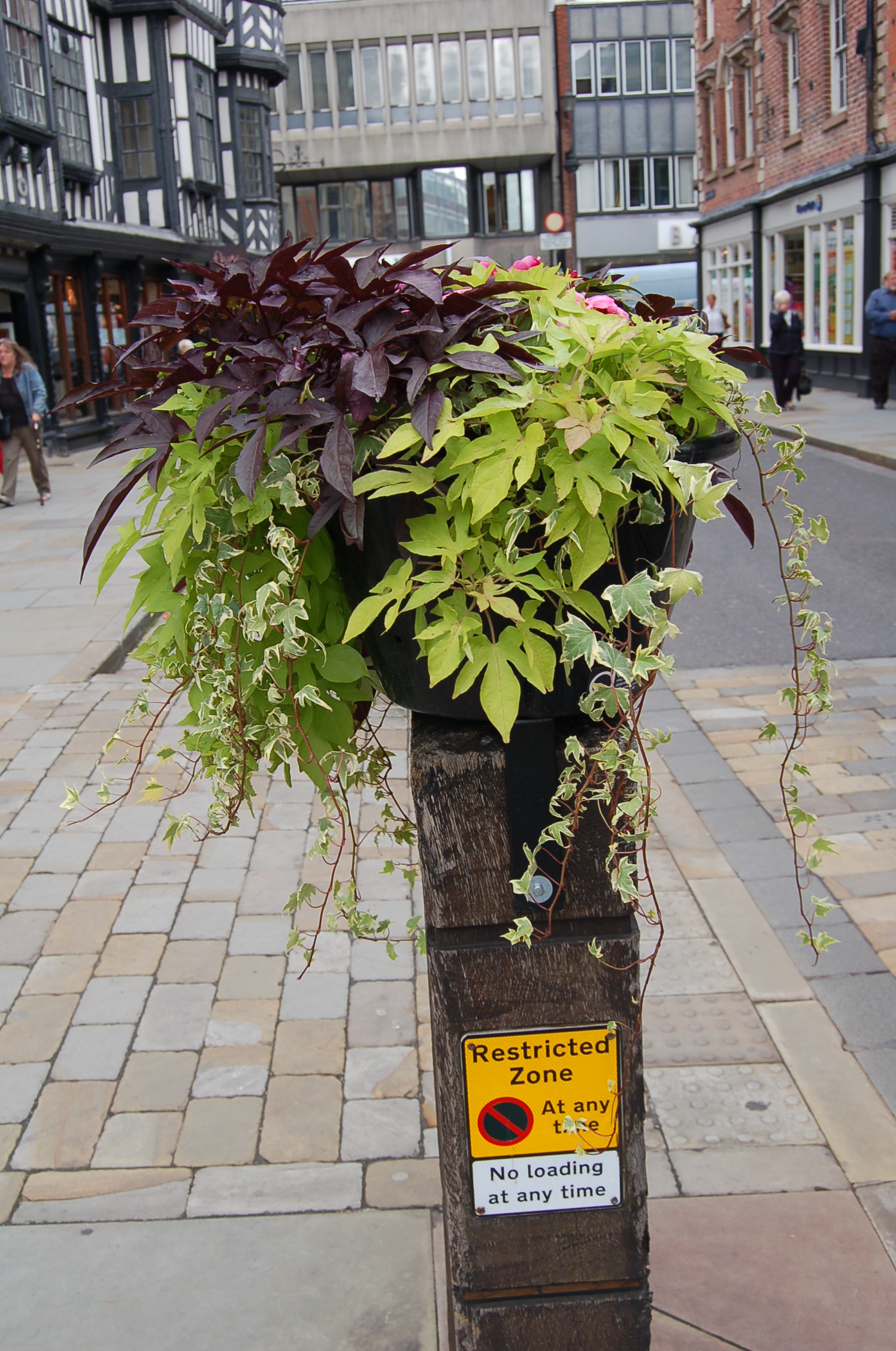
Each post marking loading bays along the High Street had been given a topknot of Ipomaea in two foliage colours. Very subtle and very effective.

2013 08 07_2448

Categories
climbing plants colours garden design garden photography gardening half-hardy perennials hardy perennials Hardy Plant Society HPS ornamental trees and shrubs outdoor sculpture photography Powis roses shrubs town gardens trees

Two Welshpool Town Gardens

June’s Hardy Plant Society garden visit took us to two little town gardens. The first garden was truly tiny and the second slightly less tiny. They were perfect if very different examples of what it is possible to achieve in such small spaces. The secret to them both was wriggly paths leading the eyes and feet around to discover hidden secrets.

2013 06 15_1077

The tiniest of the two had planting at all levels from tiny specimens right by your toes to trees above your head and the borders were full of unusual plants. Little surprises.

2013 06 15_1086 2013 06 15_1082

2013 06 15_1084

The gardeners here even found room for an alpine house, a fruit cage and a couple of little water features.

2013 06 15_1079 2013 06 15_1080

2013 06 15_1081 2013 06 15_1078

2013 06 15_1083

Humour is essential in any garden however small.

2013 06 15_1085

Humour reigned supreme in the second garden we visited that morning. There were interesting arches, grottoes, seating areas all surrounded in lush planting.

2013 06 15_1089 2013 06 15_1088 2013 06 15_1090

Hidden throughout this little patch were containers planted up skilfully to give surprises wherever we turned.

2013 06 15_1097 2013 06 15_1112 2013 06 15_1111 2013 06 15_1113 2013 06 15_1115

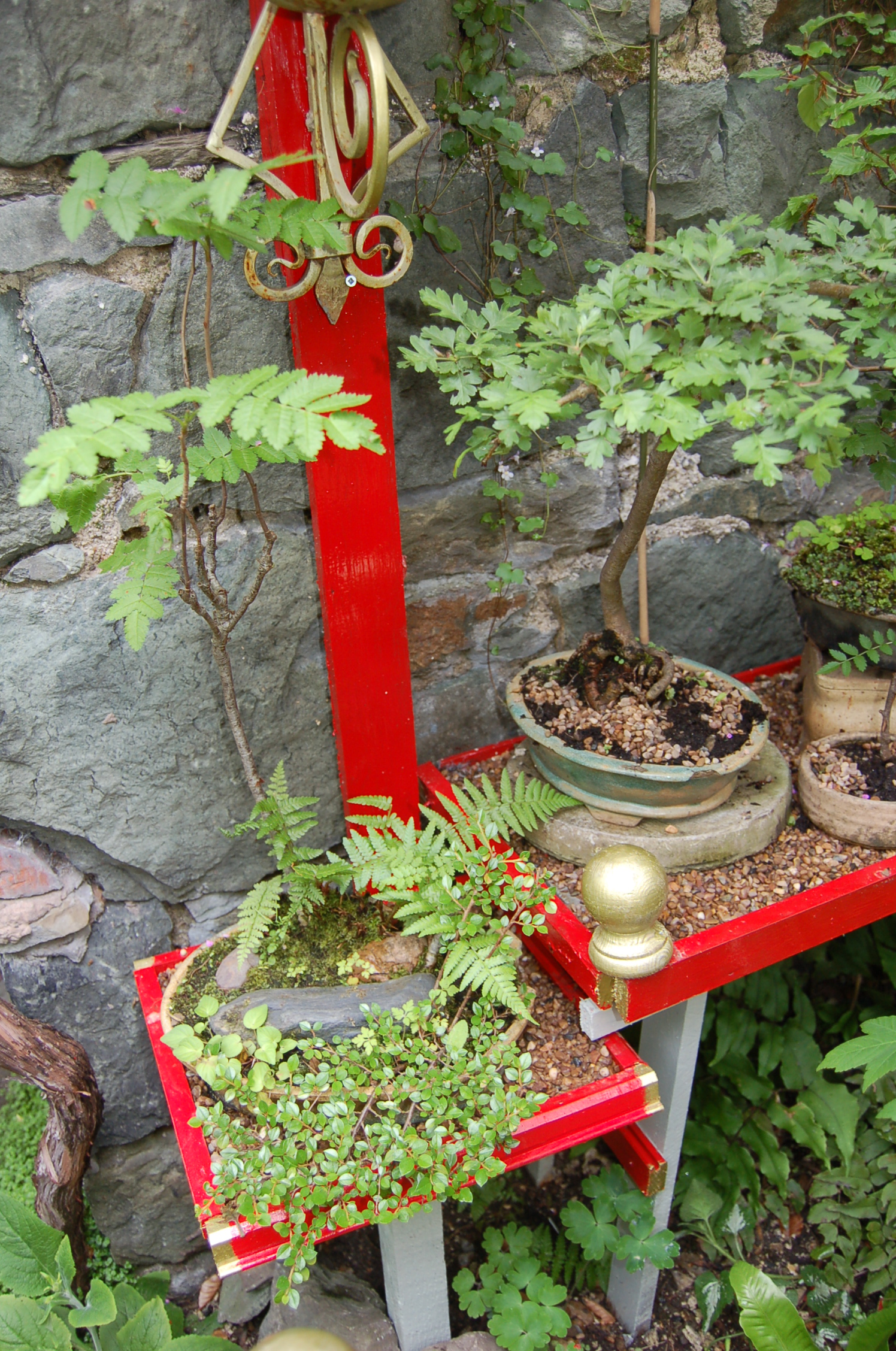
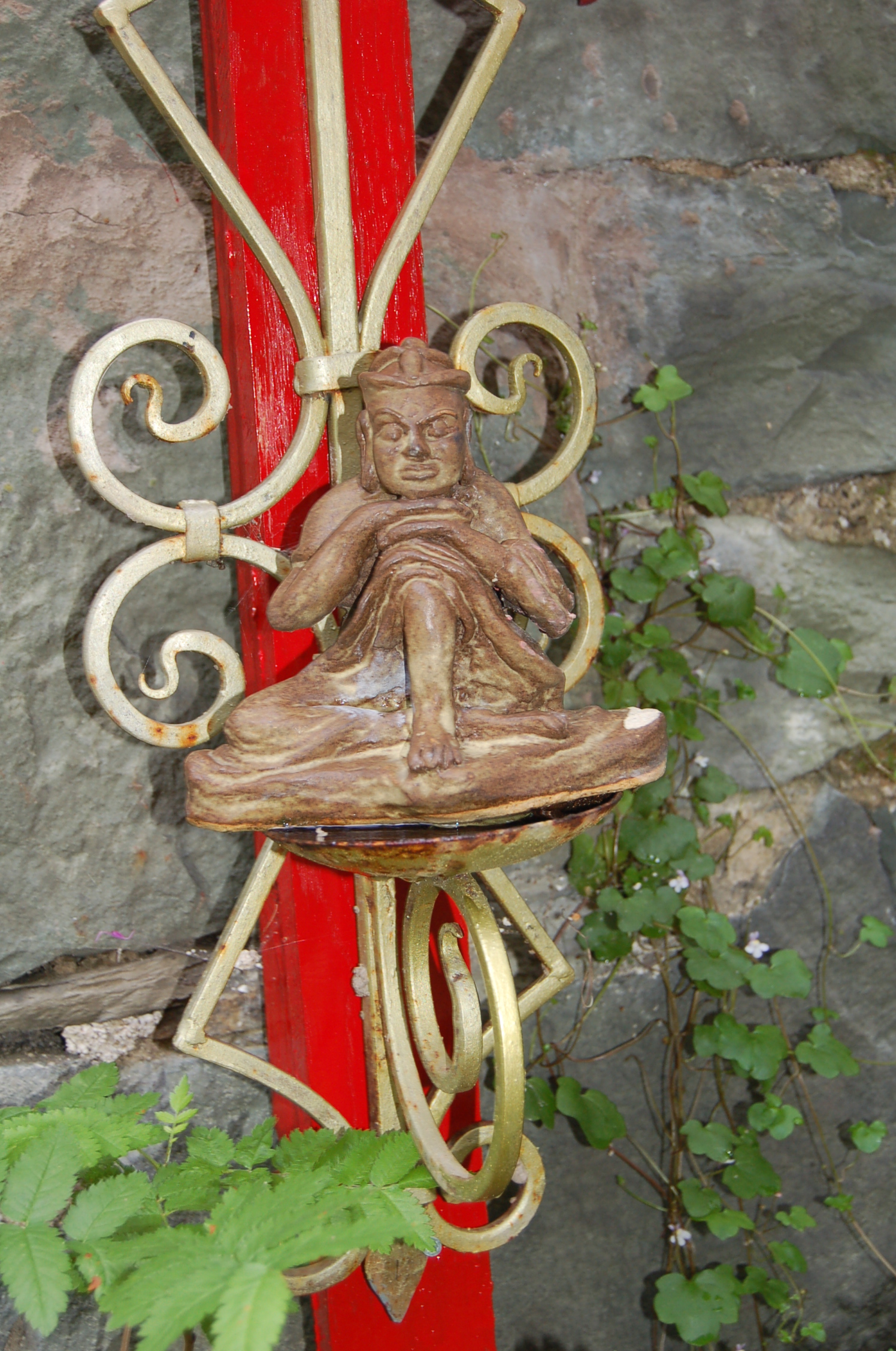
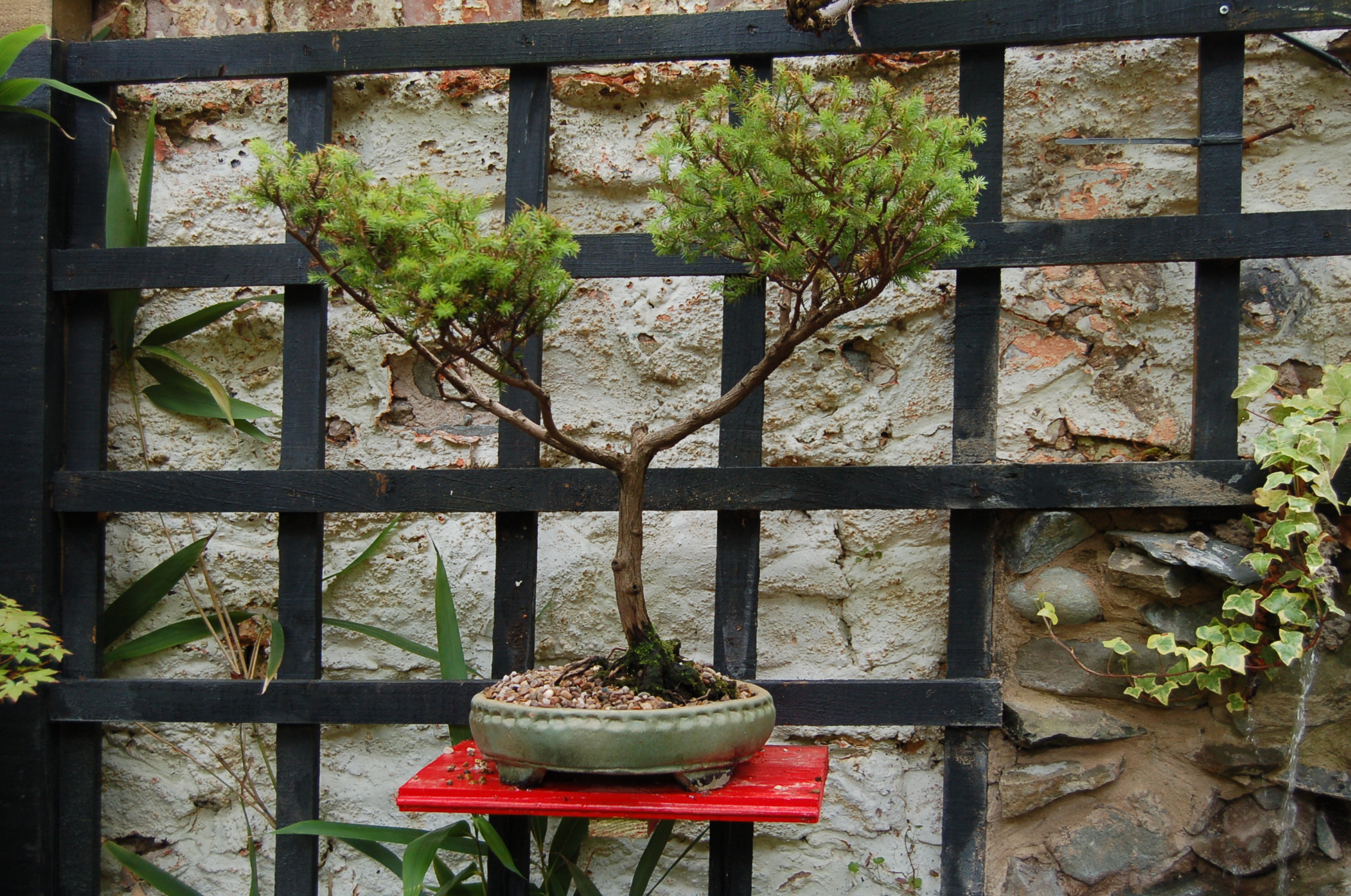
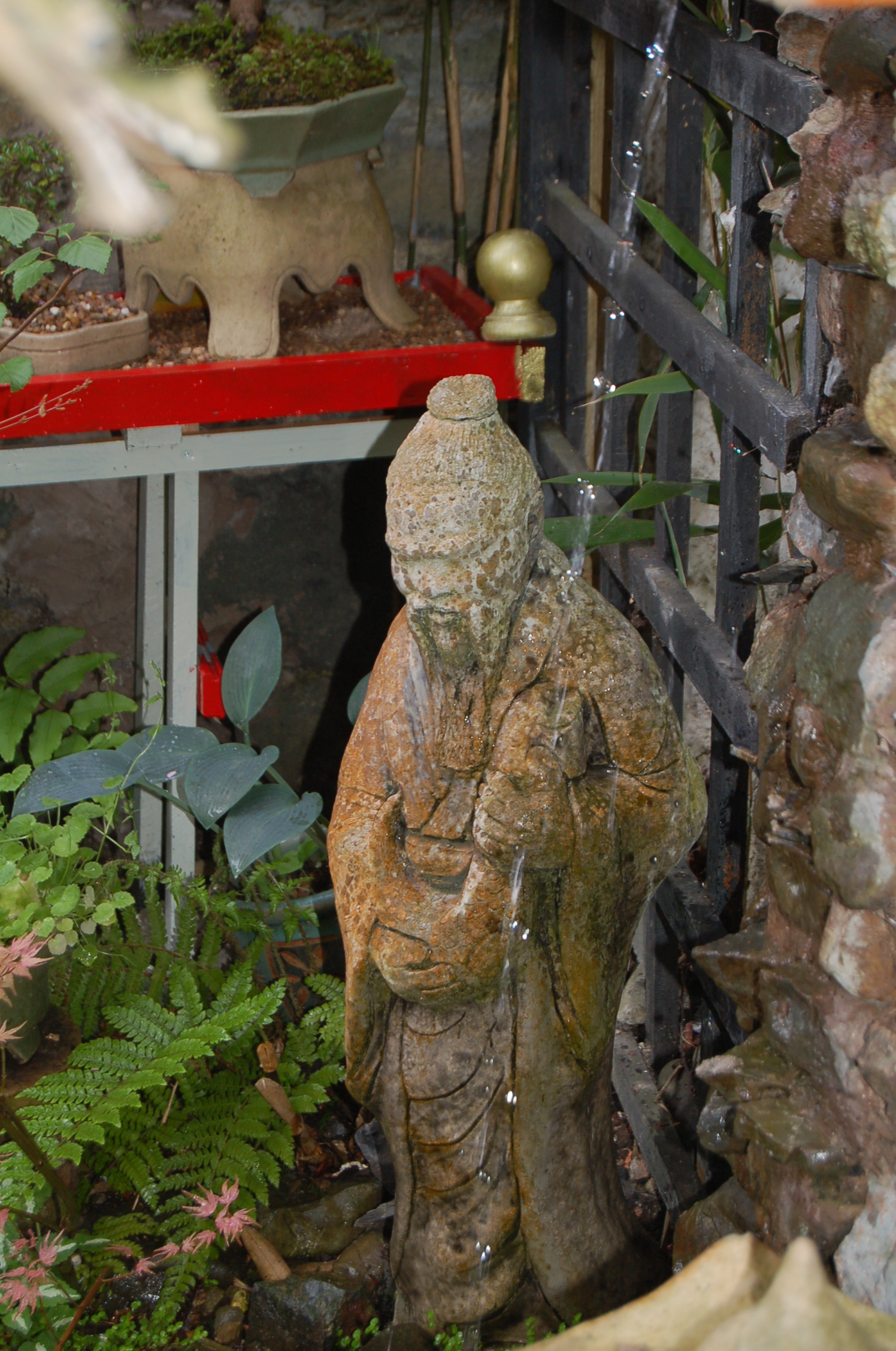
Deep in the heart of this little paradise we came across a cool enclosed garden where we found ourselves in for a real treat – a little glimpse of the Far East.

2013 06 15_1100 2013 06 15_1103 2013 06 15_1104 2013 06 15_1105 2013 06 15_1106 2013 06 15_1101 2013 06 15_1107

This garden was tightly fitted within a group of houses close by the town’s main church and occasionally we caught glimpses of these other buildings through the foliage.

2013 06 15_1116 2013 06 15_1102

Atop one of the many little outbuildings lived a very healthy and happy green roof.

2013 06 15_1114

This was a very special garden – a place to relax and become engulfed in plants. In the afternoon we met again as a group to enjoy a very different garden in a very different setting. We found ourselves out in the open high up on a hillside with big skies above a wide view. This garden features in my next post.

Categories
community gardening garden design garden photography gardening outdoor sculpture photography the sea the seaside the South town gardens

Bexhill-on-Sea – a cold walk by the sea. Go South 2.

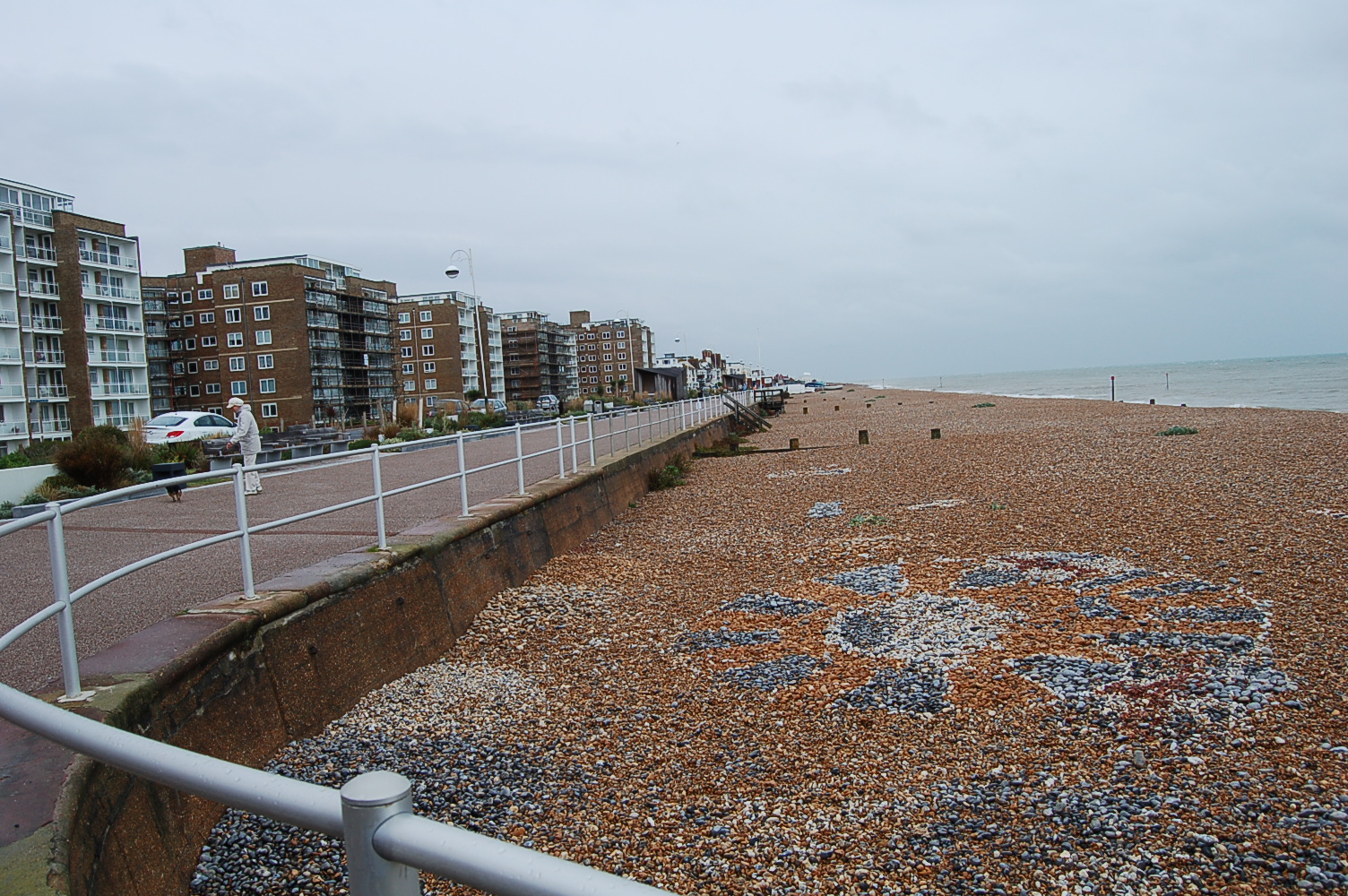
After not visiting the seaside all year we have now done so twice in a week. A few days ago we went up to the north Wales coast and enjoyed a walk along the sea front on a bright warm day. Then we visited the south coast of England and walked along the front at Bexhill-on-Sea. It was cold with icy winds and periodic bouts of heavy rain. How can our weather be so different just days apart? It is a good job we like variety where our weather is concerned and it is a good reason to live in the UK.

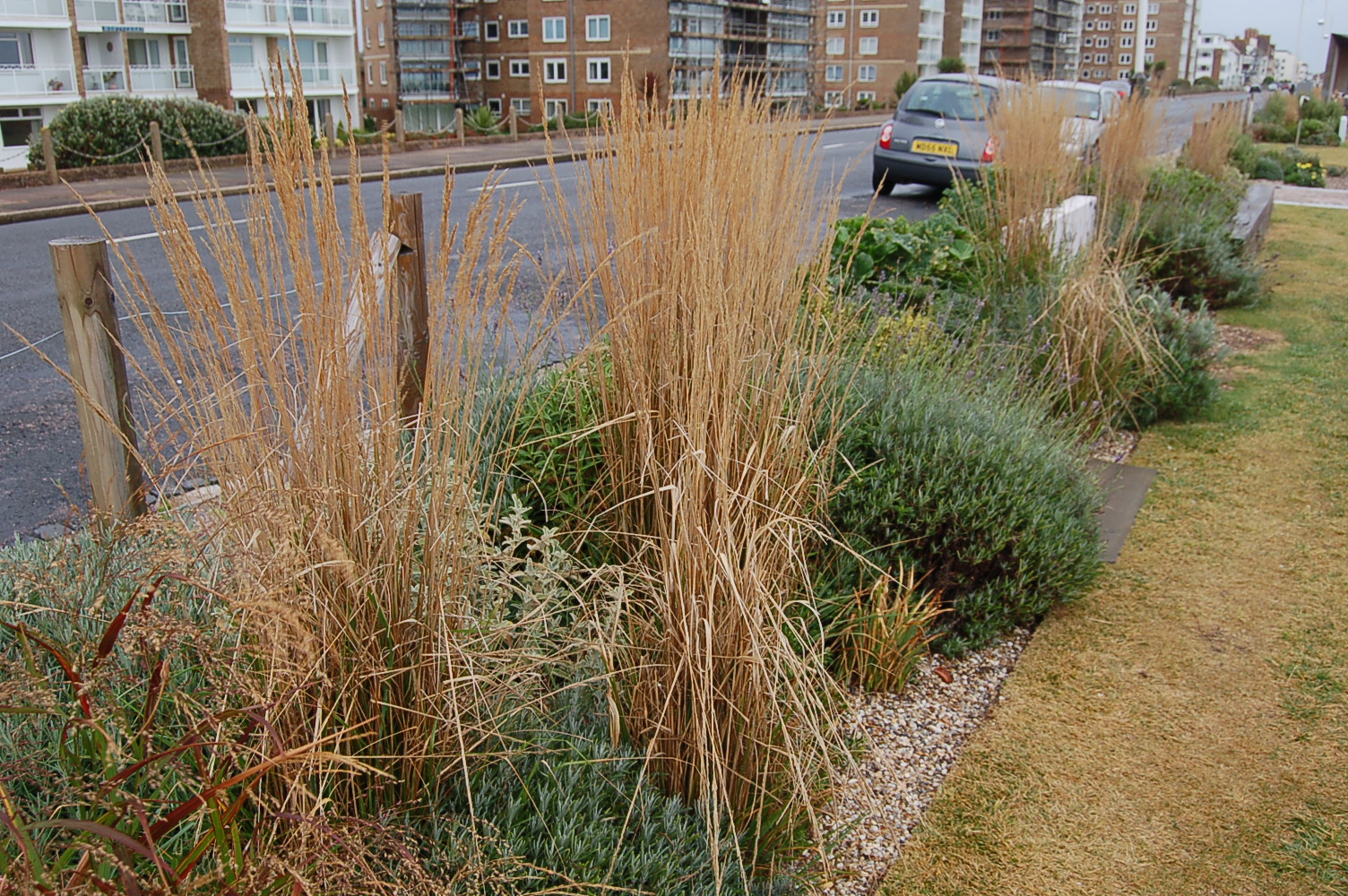
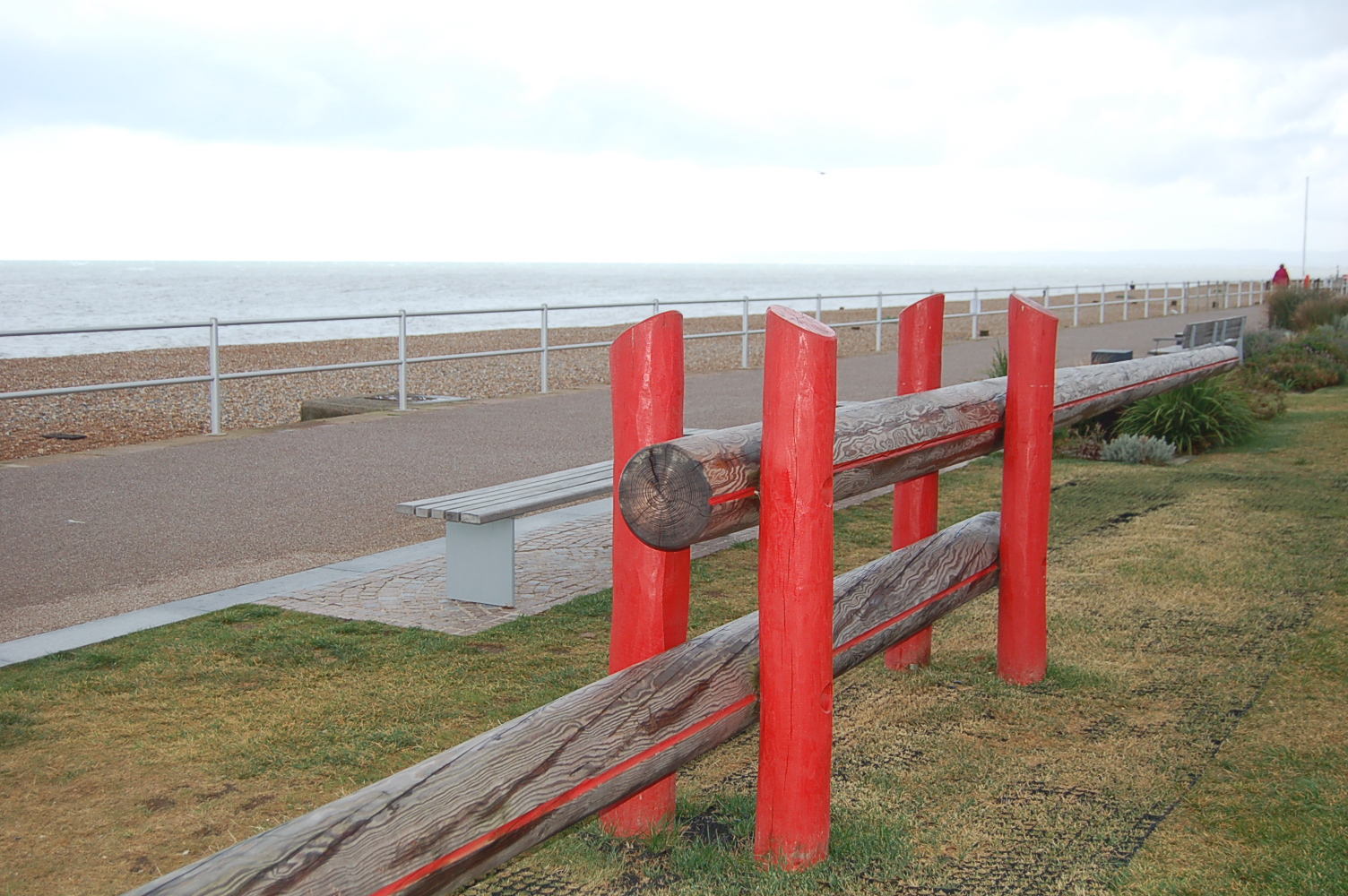
Bexhill looked good even under grey clouds and viewed through downpours. There was such an obvious sense of pride about the place. The seafront has obviously had a facelift recently so it now boasts interesting garden designs where even the seating is interesting. I would imagine a garden designer was involved, resulting in interesting materials being used. Even the “Healthy Heart” fitness trail featured exercise equipment that had almost sculptural qualities and actually enhanced the overall look of the walk along the sea front.

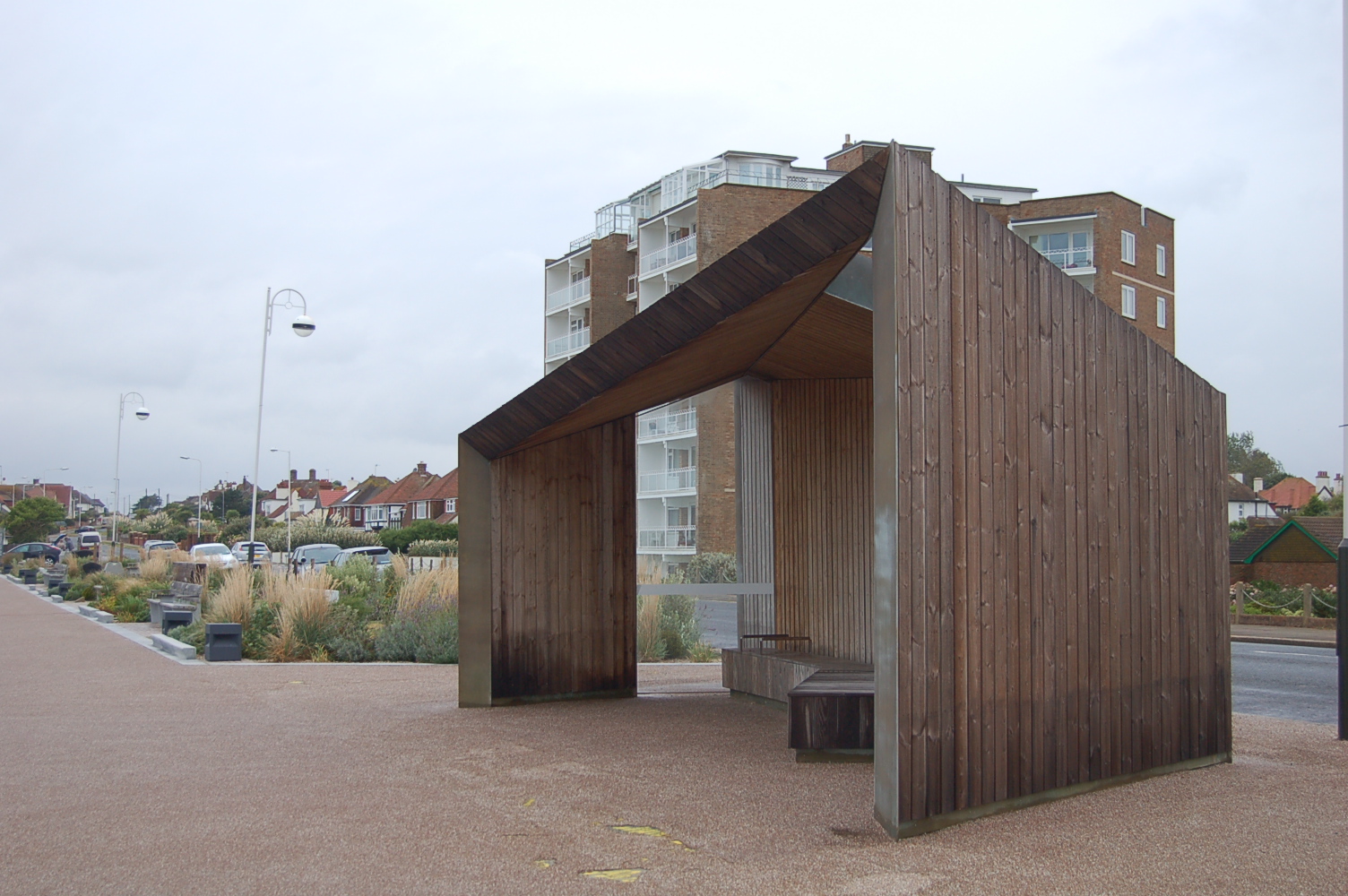
It was good to see new architecture sitting alongside the old, mirroring it or picking up on some of its detailing. There must be strict planning controls here but not so strict that they squash innovative new architecture. The only strange decision of the planners seems to be making sure that all the beach huts, traditionally a medium for lavish colour schemes, are painted white. Strange and somehow disappointing to see them lined up in a row all looking the same.

Bexhill is a town reflecting so many periods and styles of “seaside” architecture. There are fascinating features to be found on buildings all along the front.

As we had approached Bexhill I suddenly remembered that the little town had a place in motor racing history and after racking my brains and wearing out a few cogs and cells in the process, I came up with the thought that the first motor race had taken place here on the sands. Later I was informed by Son-in-Law, Rob that it was the first in Britain and not a world’s first. This old postcard illustrates one of the early race meetings.

It is often the little details that appeal to me when taking photos at the seaside, details of texture, pattern and shape.

Oh no! I nearly finished a seaside post without a picture of boats! So here it is.

Categories
flower show garden design garden photography gardening hardy perennials July ornamental grasses ornamental trees and shrubs outdoor sculpture photography poppies RHS town gardens

Third Visit to the Tatton Park Show

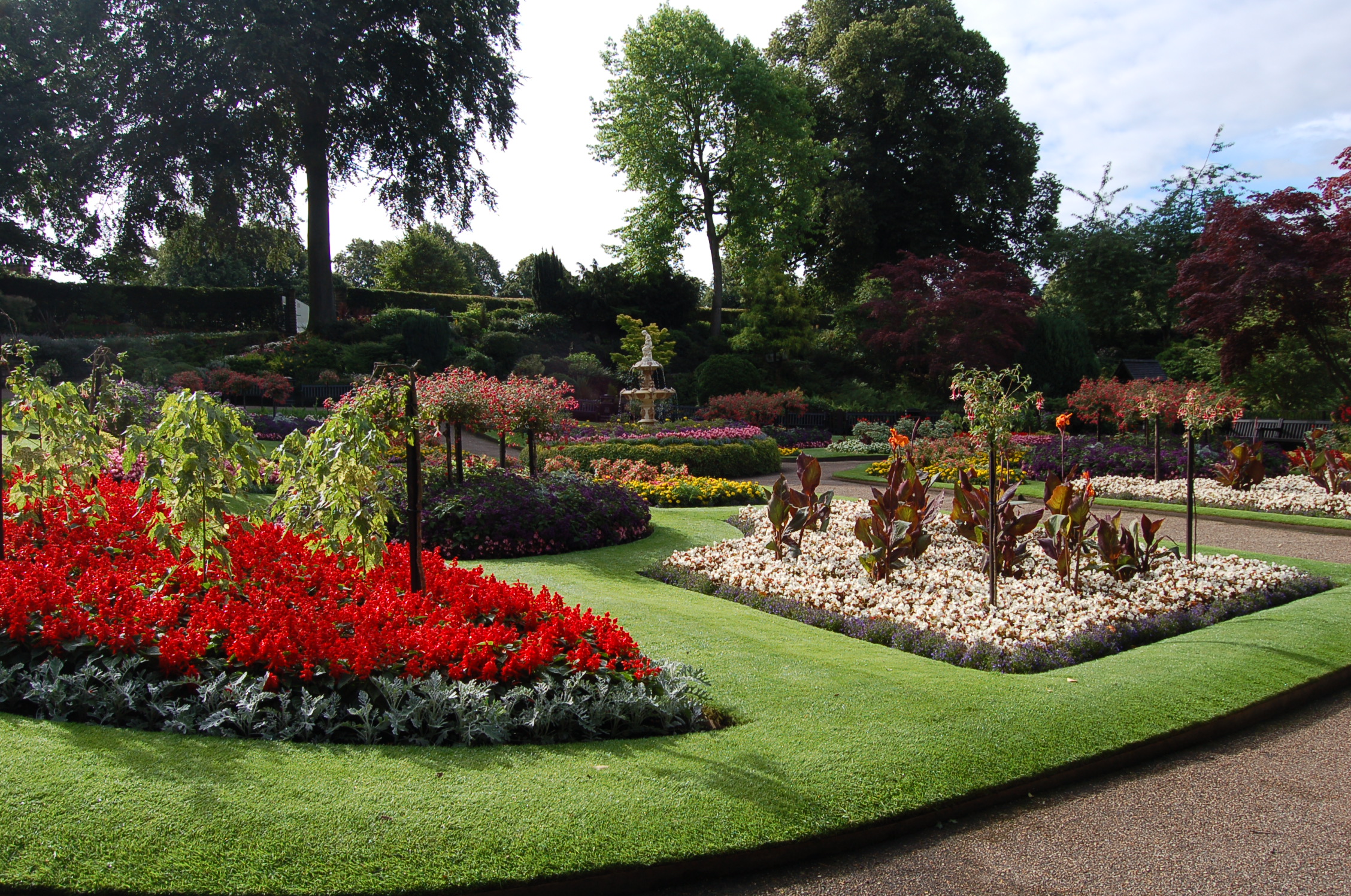
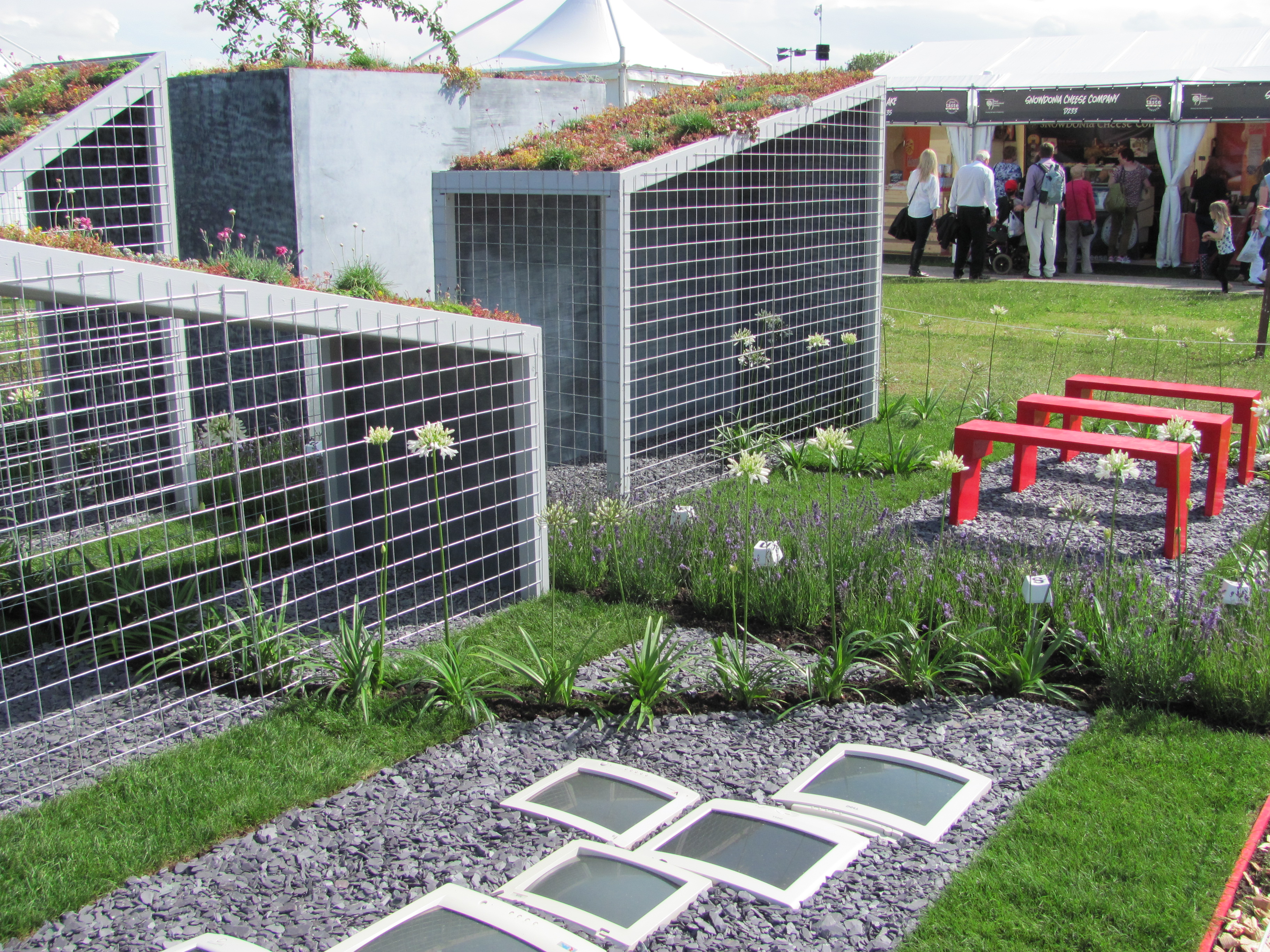
The third and final post about this summer’s RHS Tatton Park Flower Show begins by visiting the Back-to-Back Gardens, the small show gardens with masses of interest and appeals. These gardens are full of ideas for gardeners whatever the size of their gardens with inspiration for planting combinations, furniture and features.

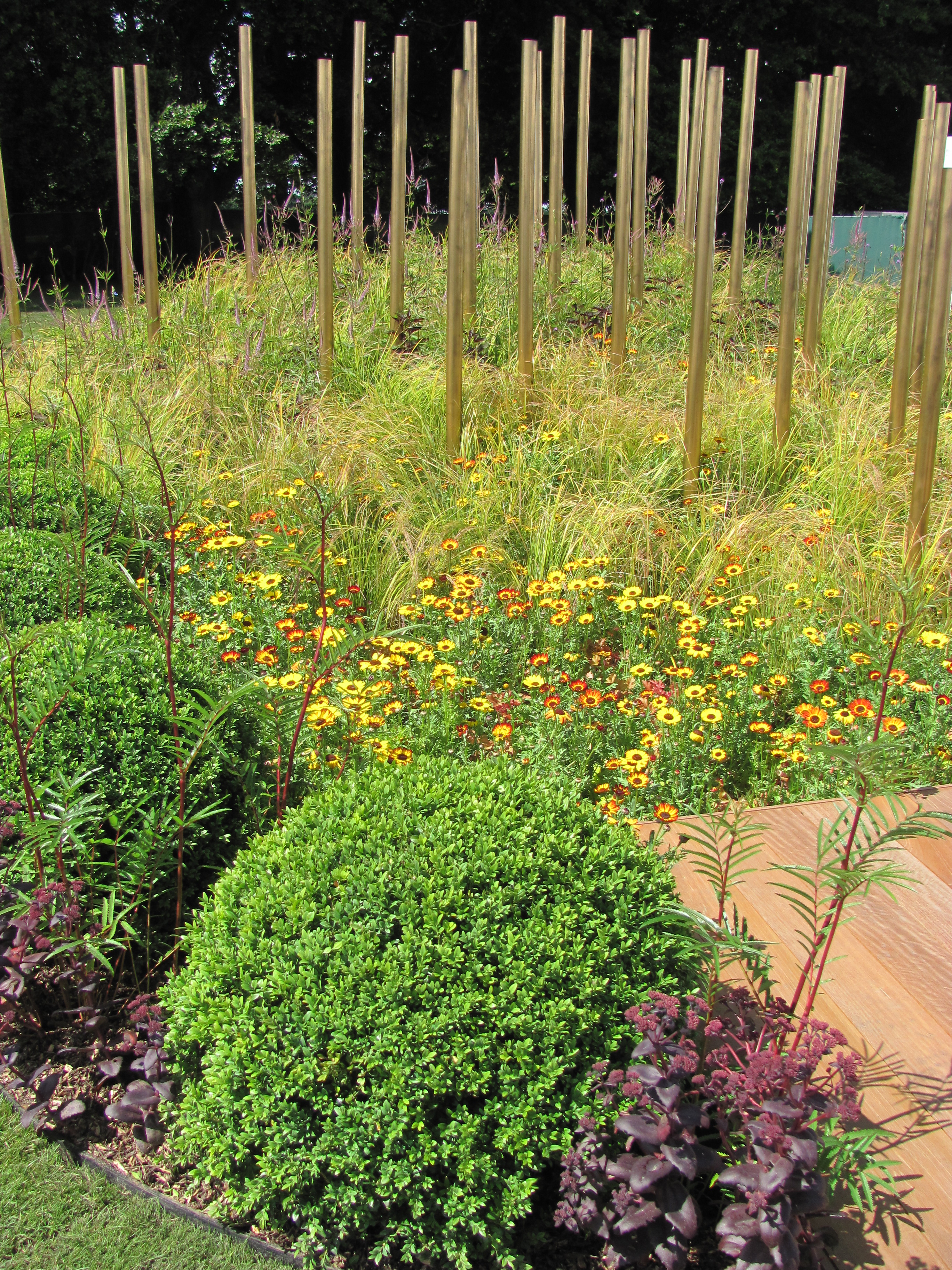
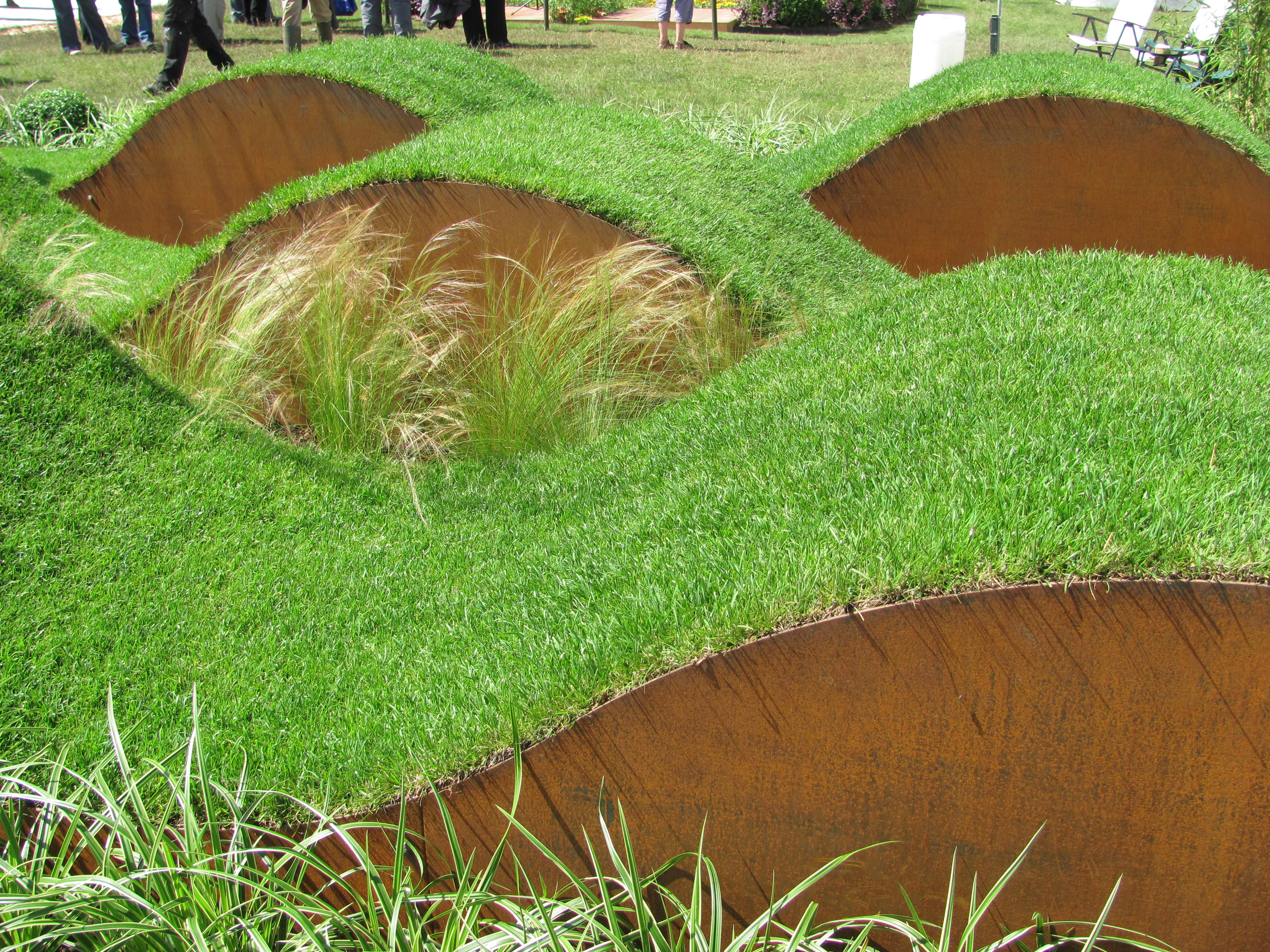
There was a group of small show gardens designed around the theme of “The Orchestra” and these turned out to be our favourites. The garden designers had risen to the challenge and seemed to have really enjoyed creating such imaginative gardens. Each one evoked harmony and rhythm and the rise and fall of a musical piece.

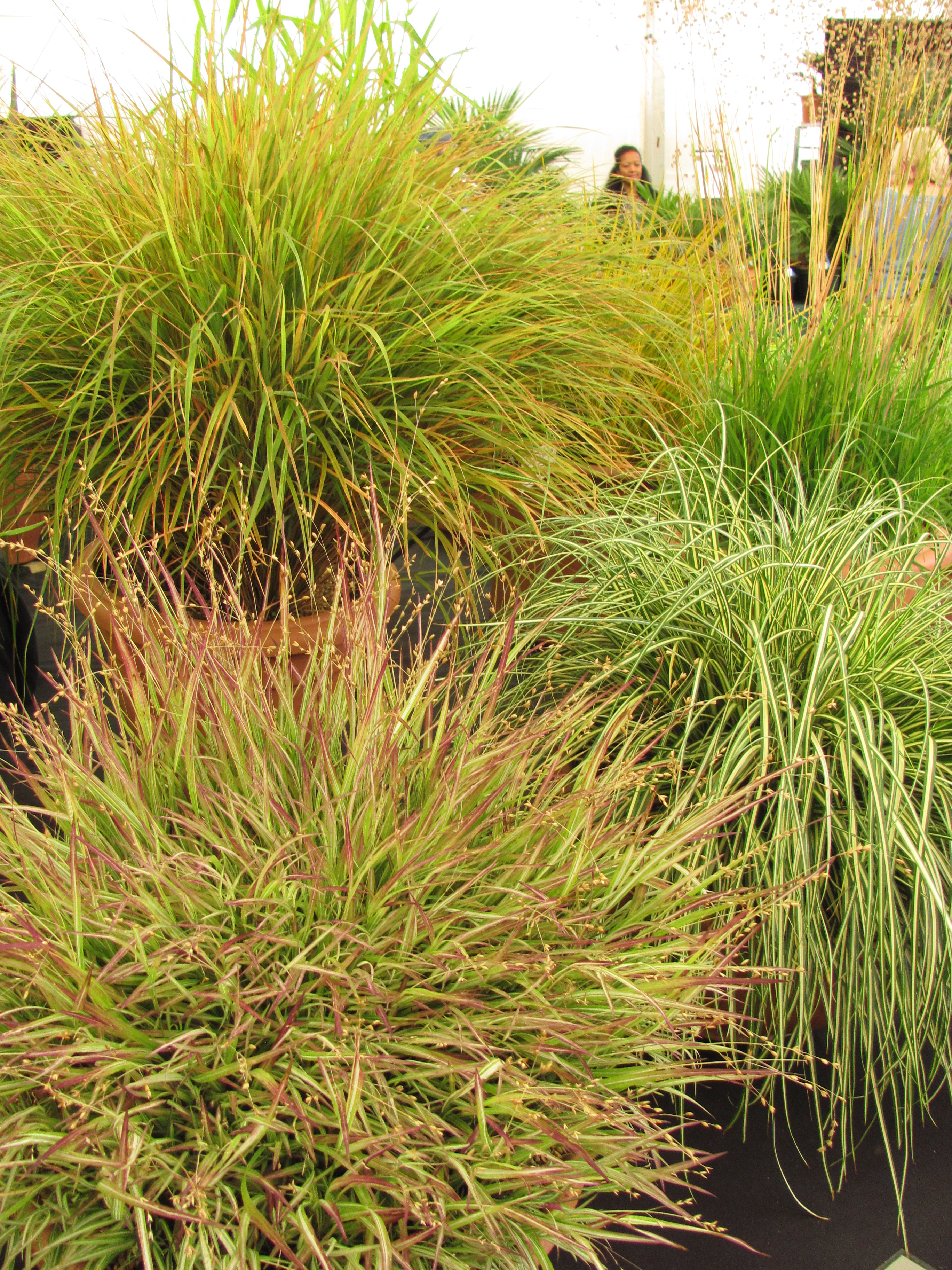
But this garden of rhythmic grass was a true delight to the eye. It was very difficult to fully capture its effect with a camera, but not as difficult as it would be to cut the grass!

In complete contrast to the Orchestra Gardens were the Conceptual Gardens, a set of three designs intended to present ideas, sometimes controversial, and make the viewers think. We do not always appreciate such designs but the trio this year were full of meaning and original design ideas.

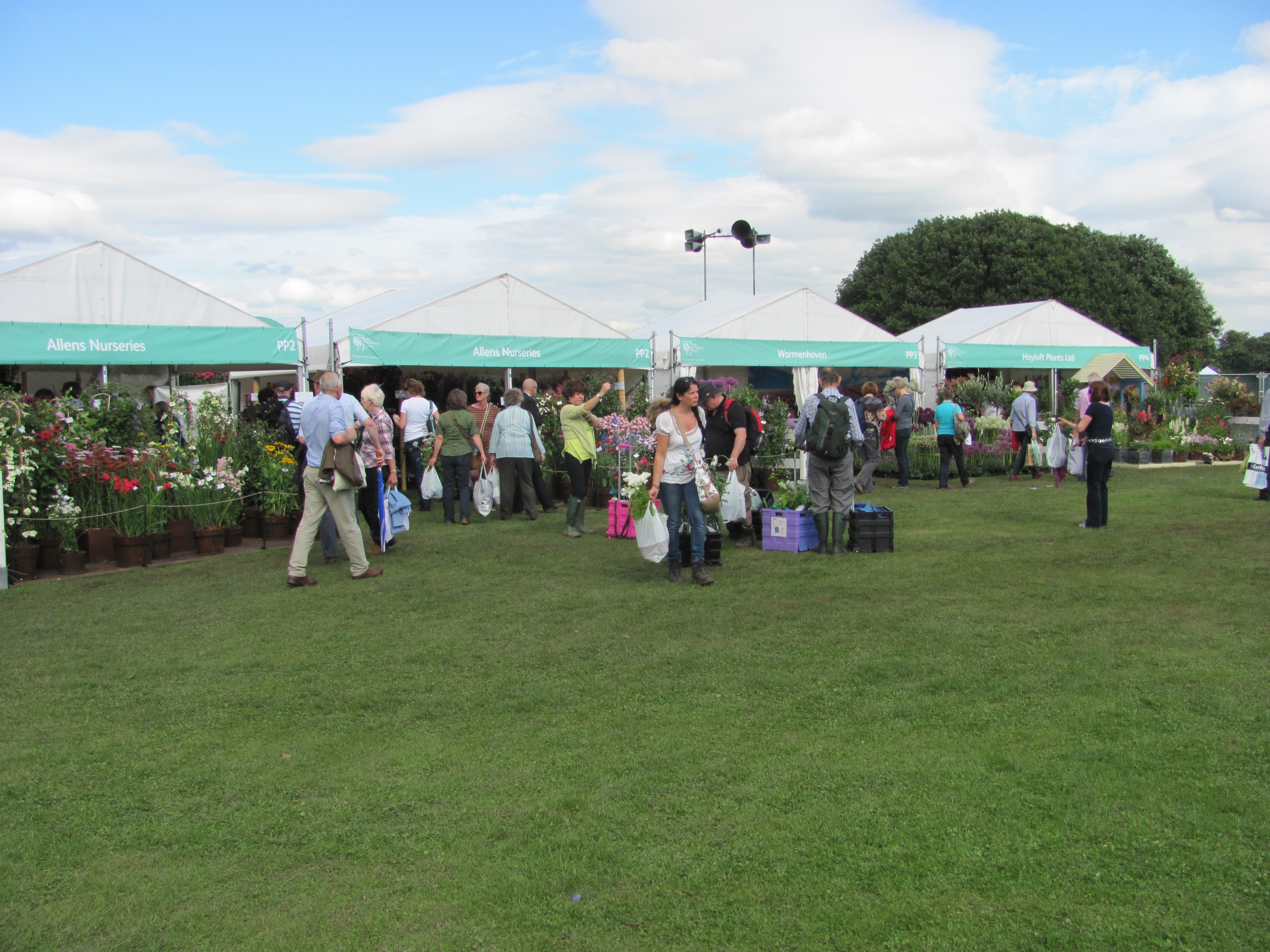
We always enjoy a wander around the nursery stands at these shows and Tatton always attracts a good variety. We only bought one little plants this time though, an Aeonium that sports leaves of deepest, shiny purple almost black, called Logan’s Rock.

But this nursery stand all based on pink was empty. The discerning gardener this year definitely dislikes pink!

Categories
community gardening flower show fruit and veg garden design garden photography gardening grow your own half-hardy perennials hardy perennials July ornamental grasses ornamental trees and shrubs outdoor sculpture photography RHS town gardens

More from the Tatton Park Flower Show

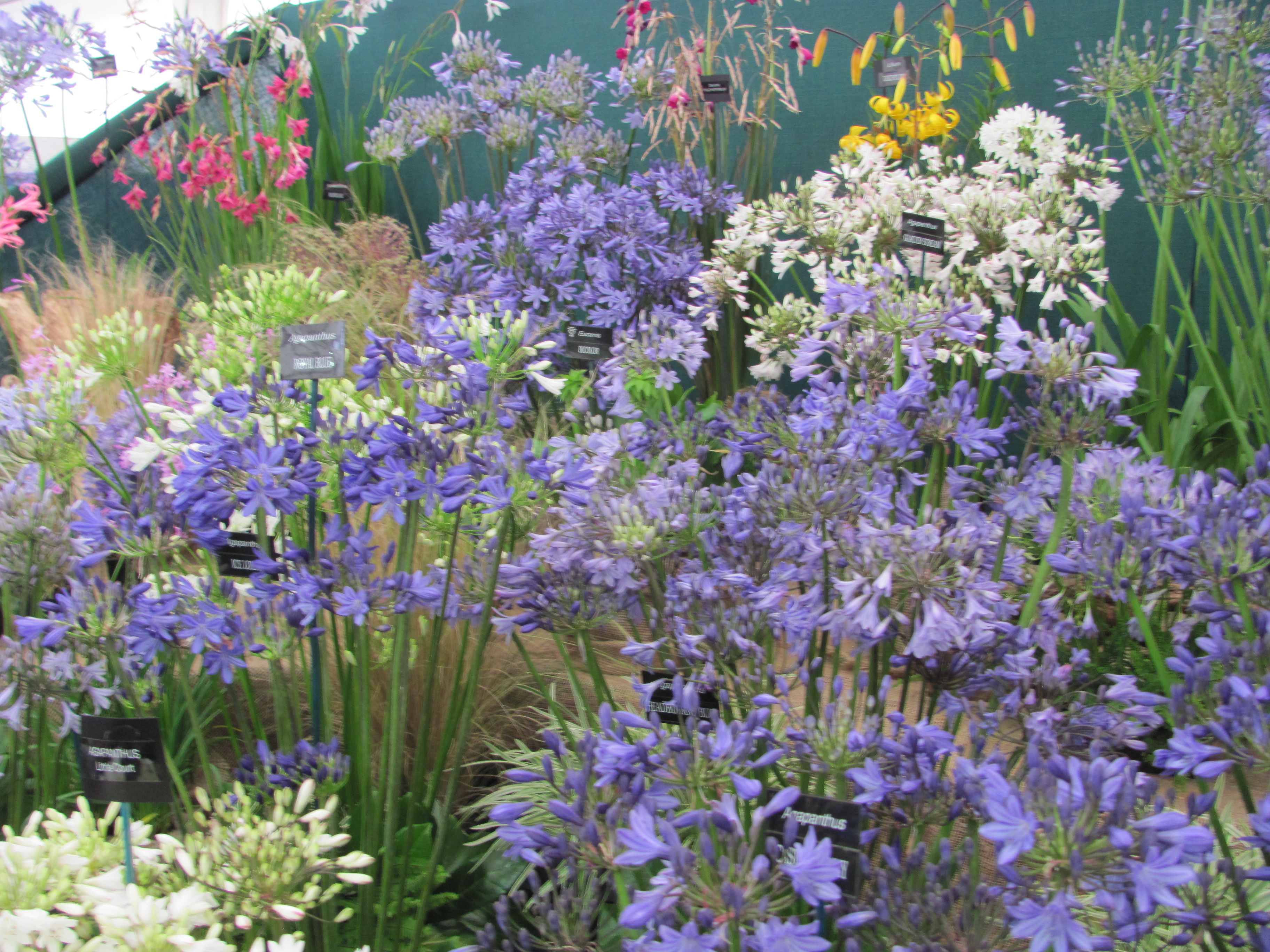
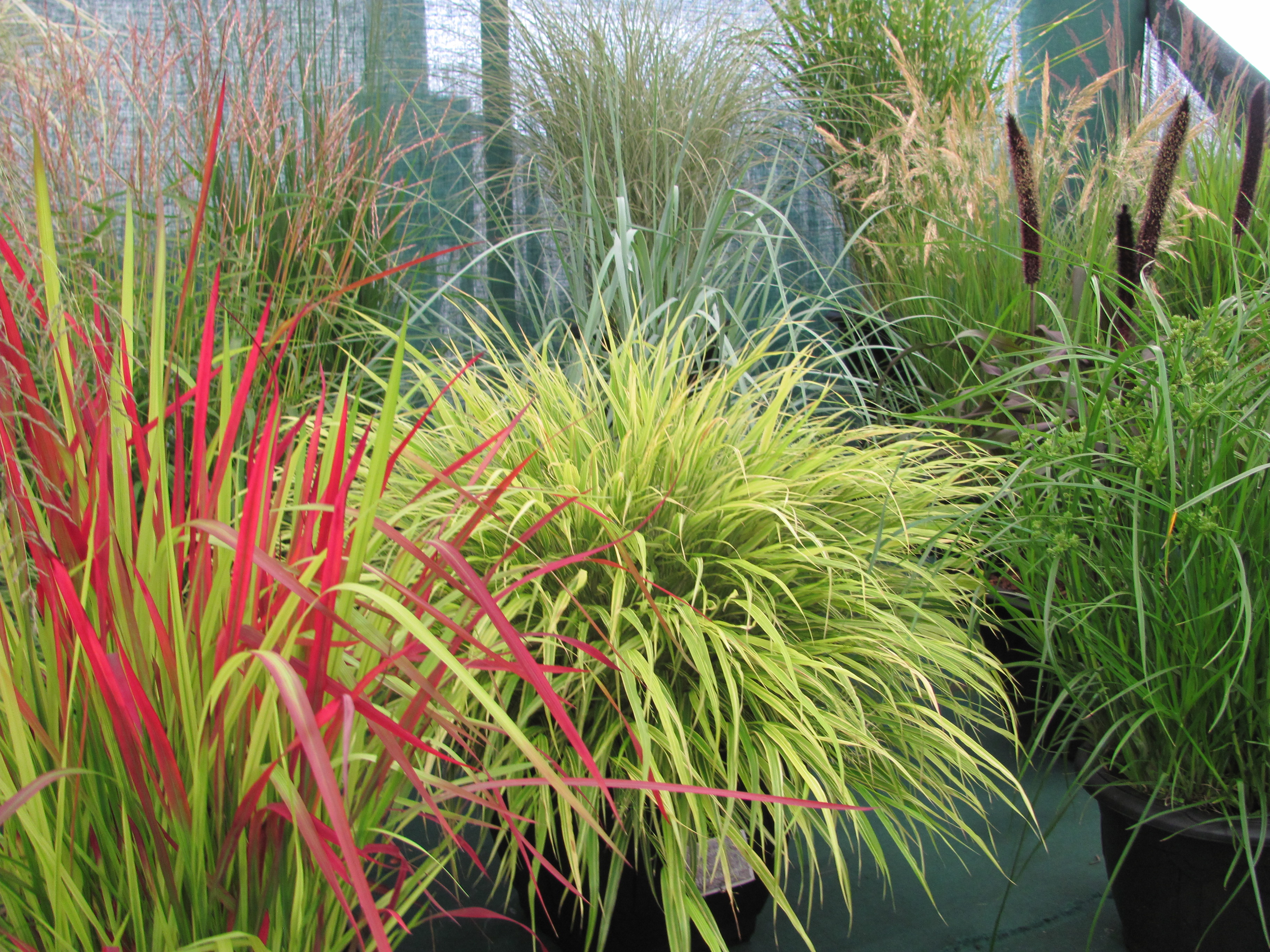
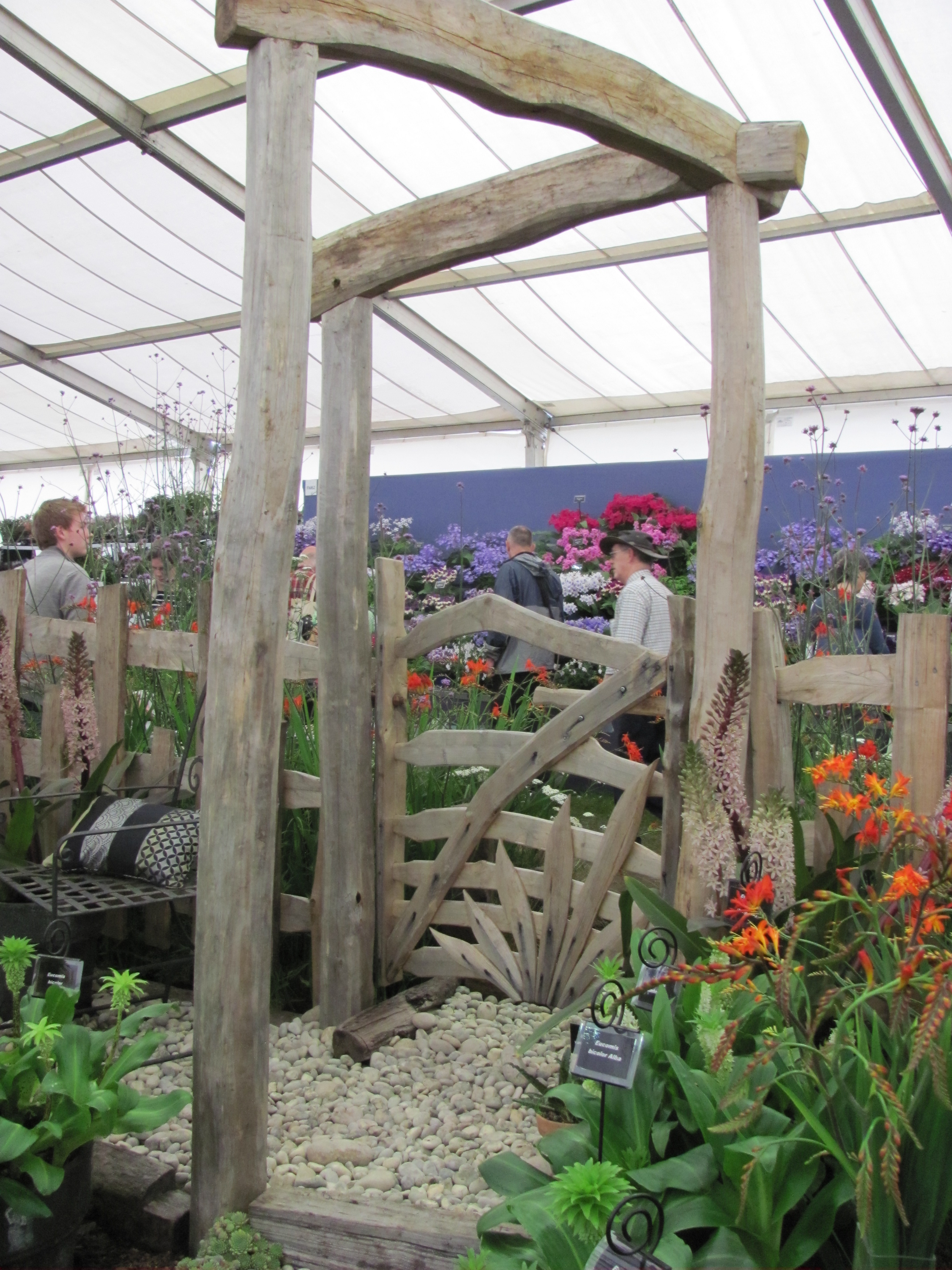
We always enjoy visiting the Floral Marquee at any RHS Show and try to sneak a good look around before they get too crowded. At Tatton Show we just made it as the crowds began to build. It was worth it as there were some wonderful plants to look at some of which were beautifully displayed. As usual our favourites were the grasses.

Within the plants on display there were some effective little details that drew out attention to have a closer look.

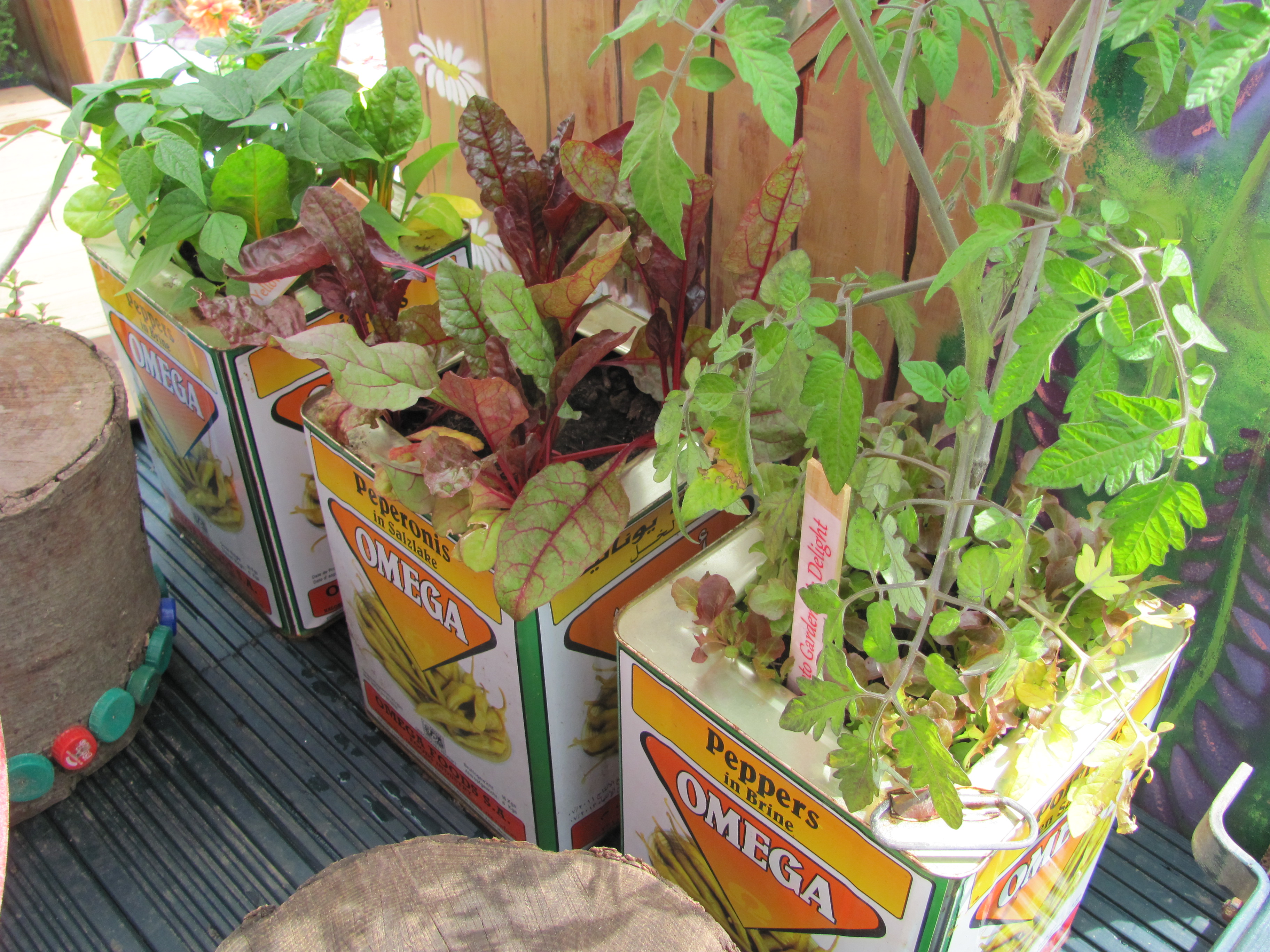
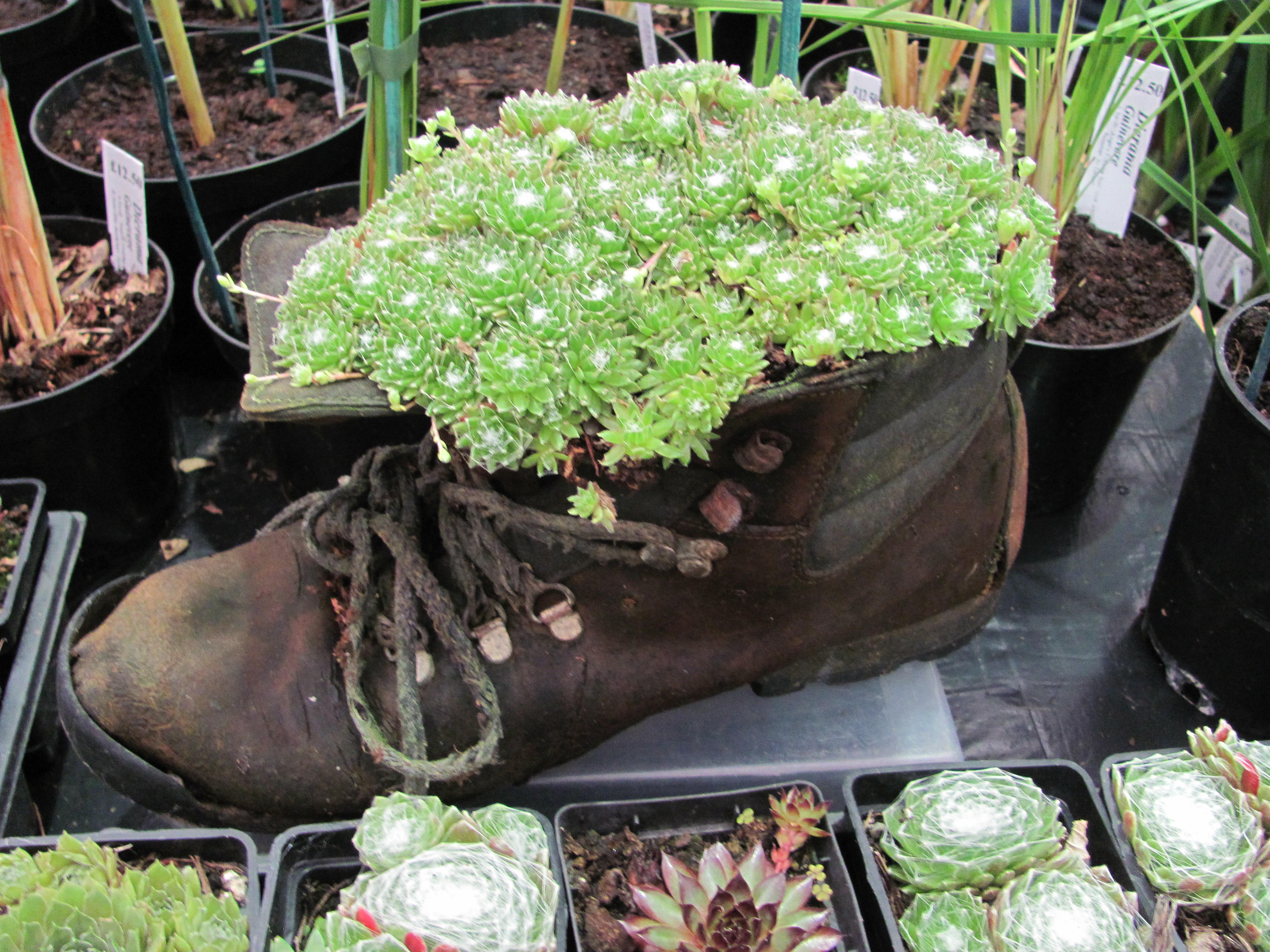
Throughout the showground were unusual containers used as planters from old boots to oil cans.

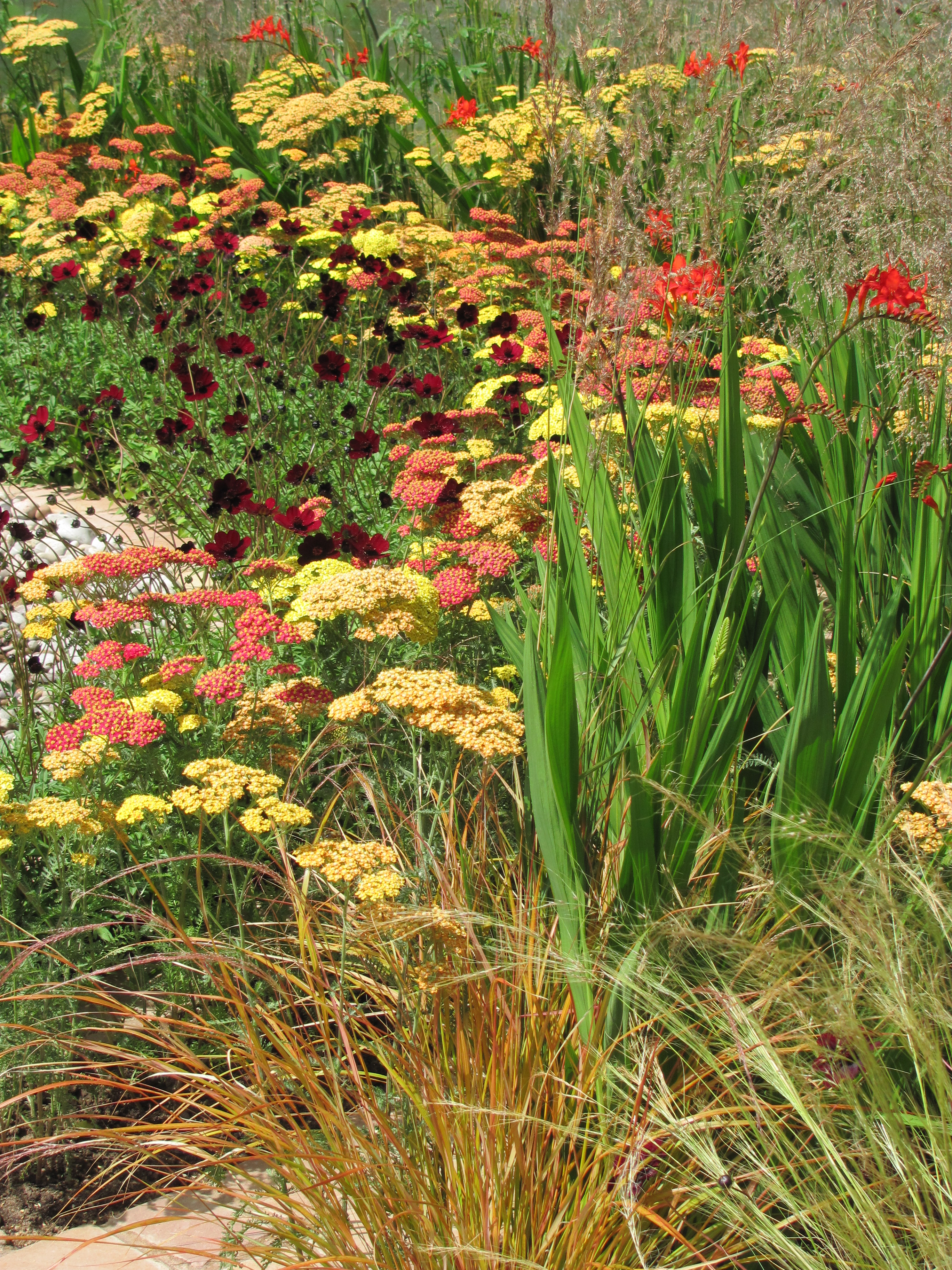
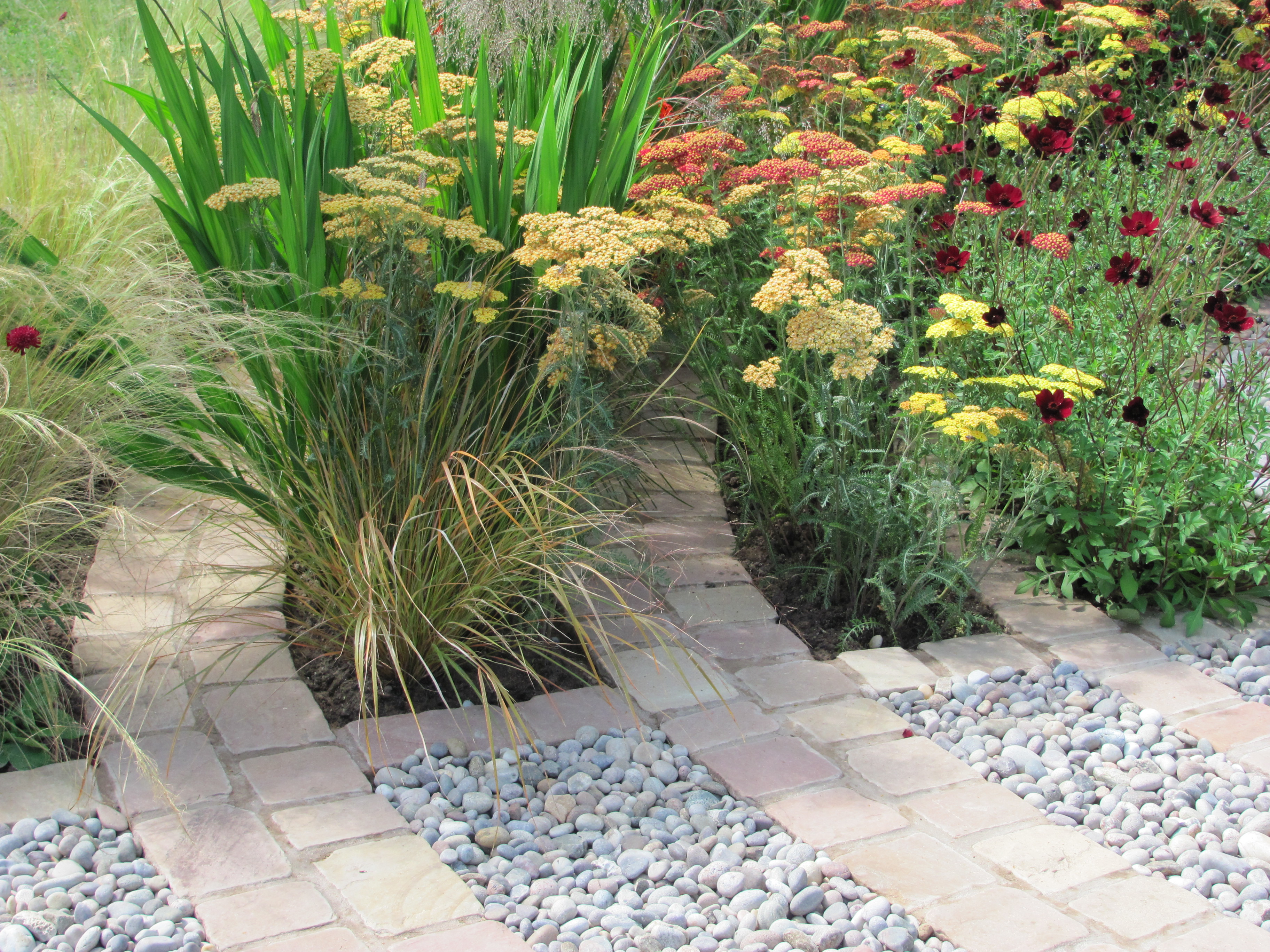
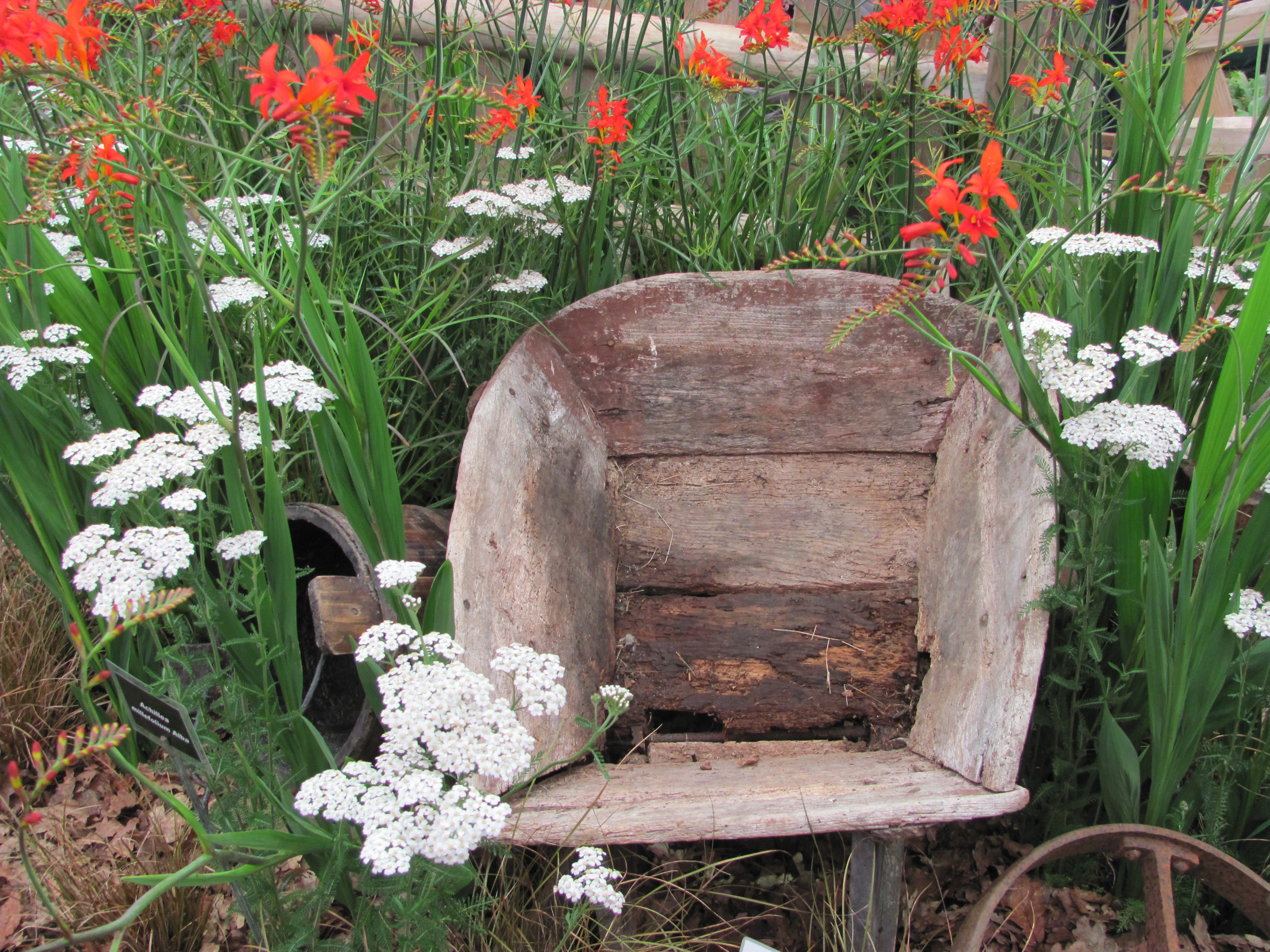
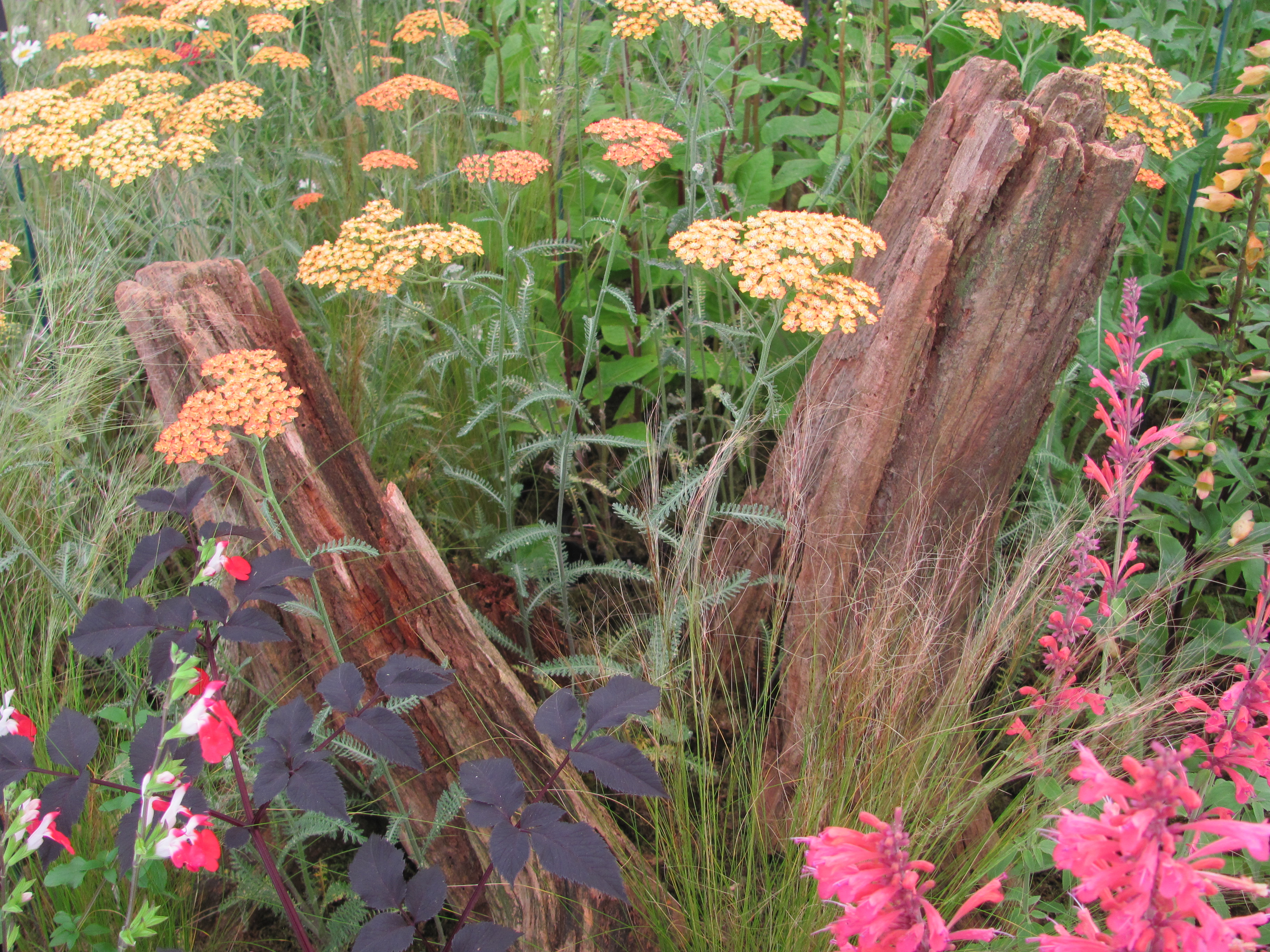
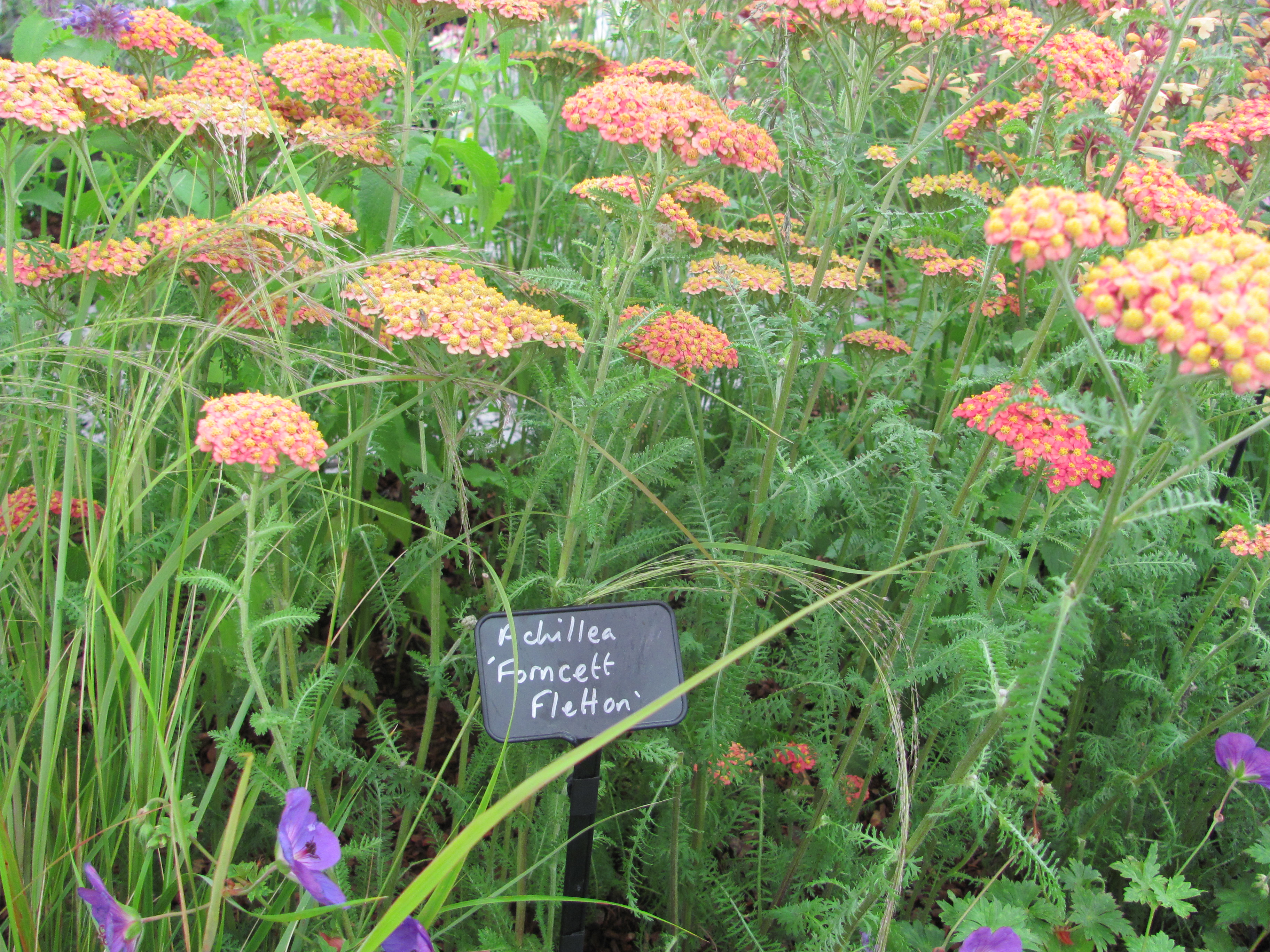
But as always the stars of the show were the plants. the trend in this show was for combining grasses with Achilleas particularly those with cream, russet and orange flowers.

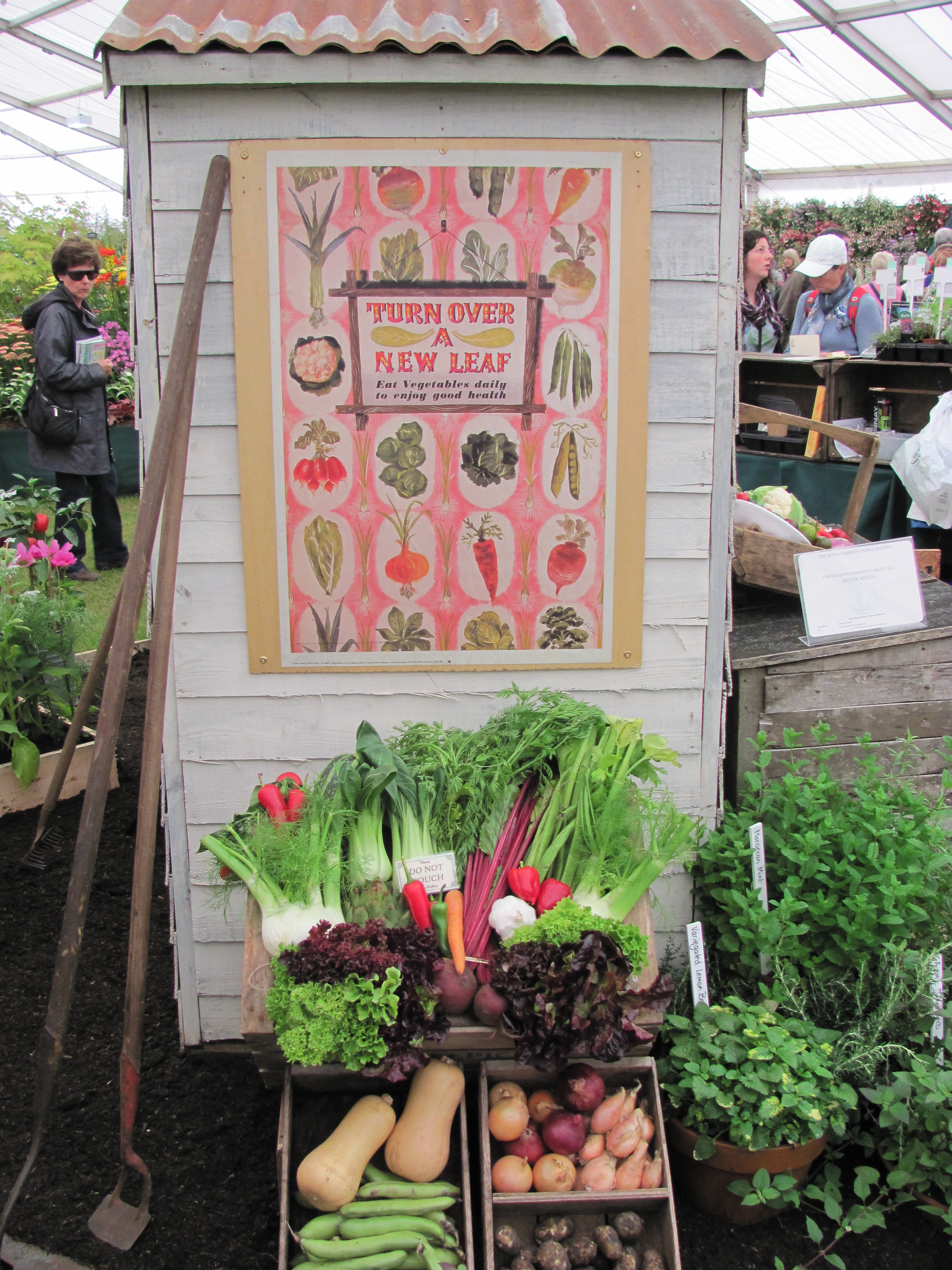
As with all RHS shows in recent years fruit and veggies starred alongside the flowers.

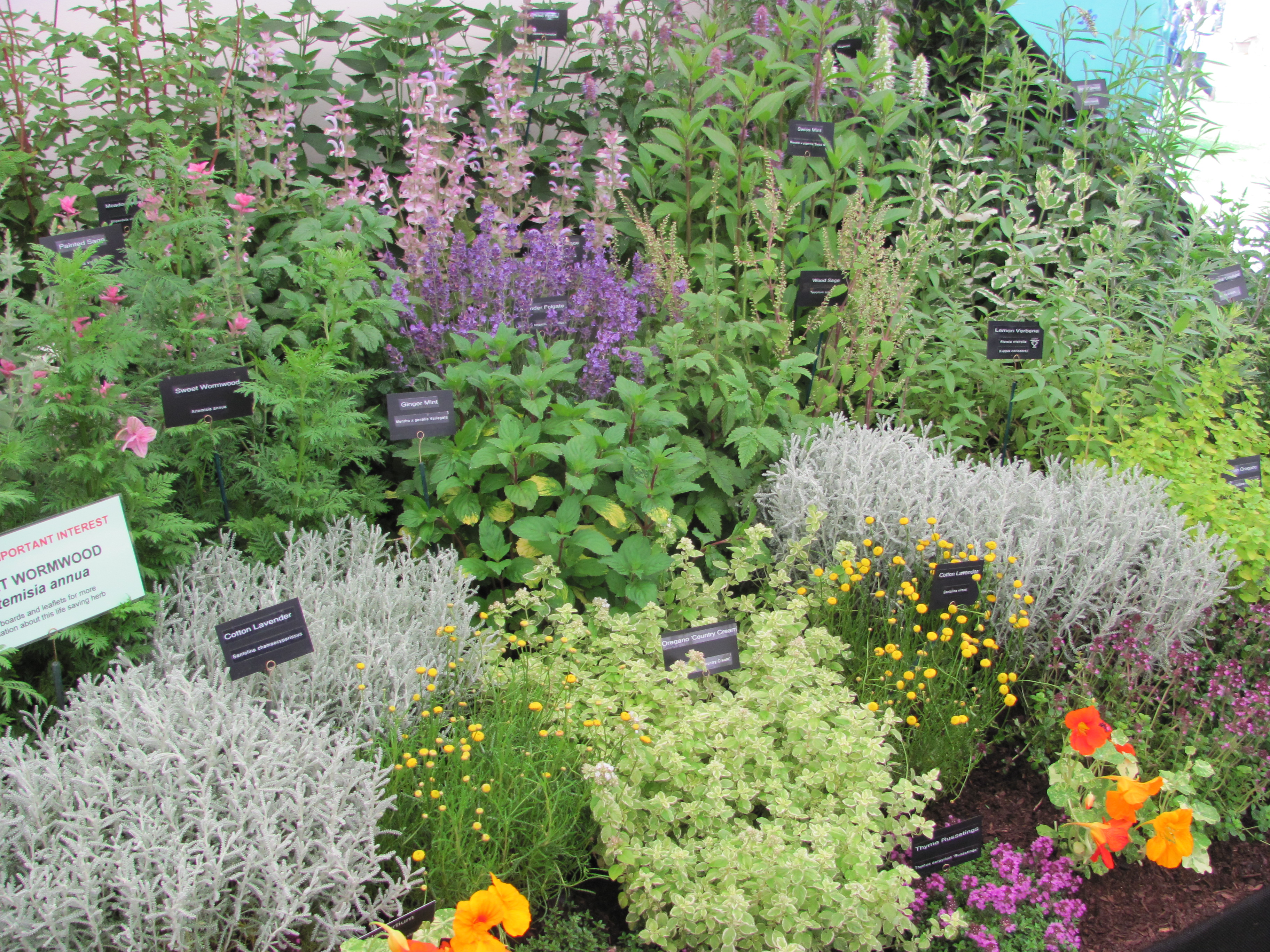
And we mustn’t forget the herbs.

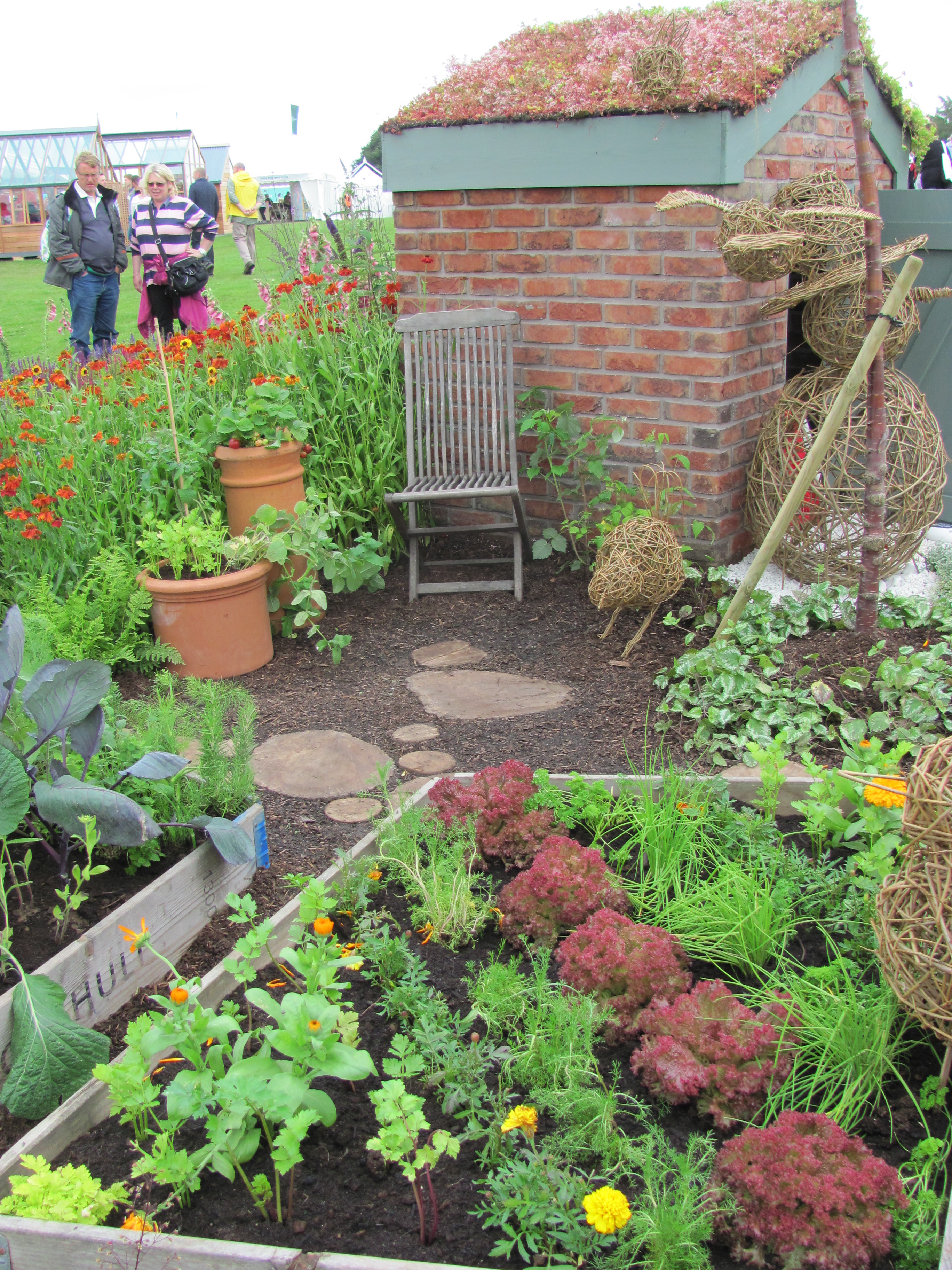
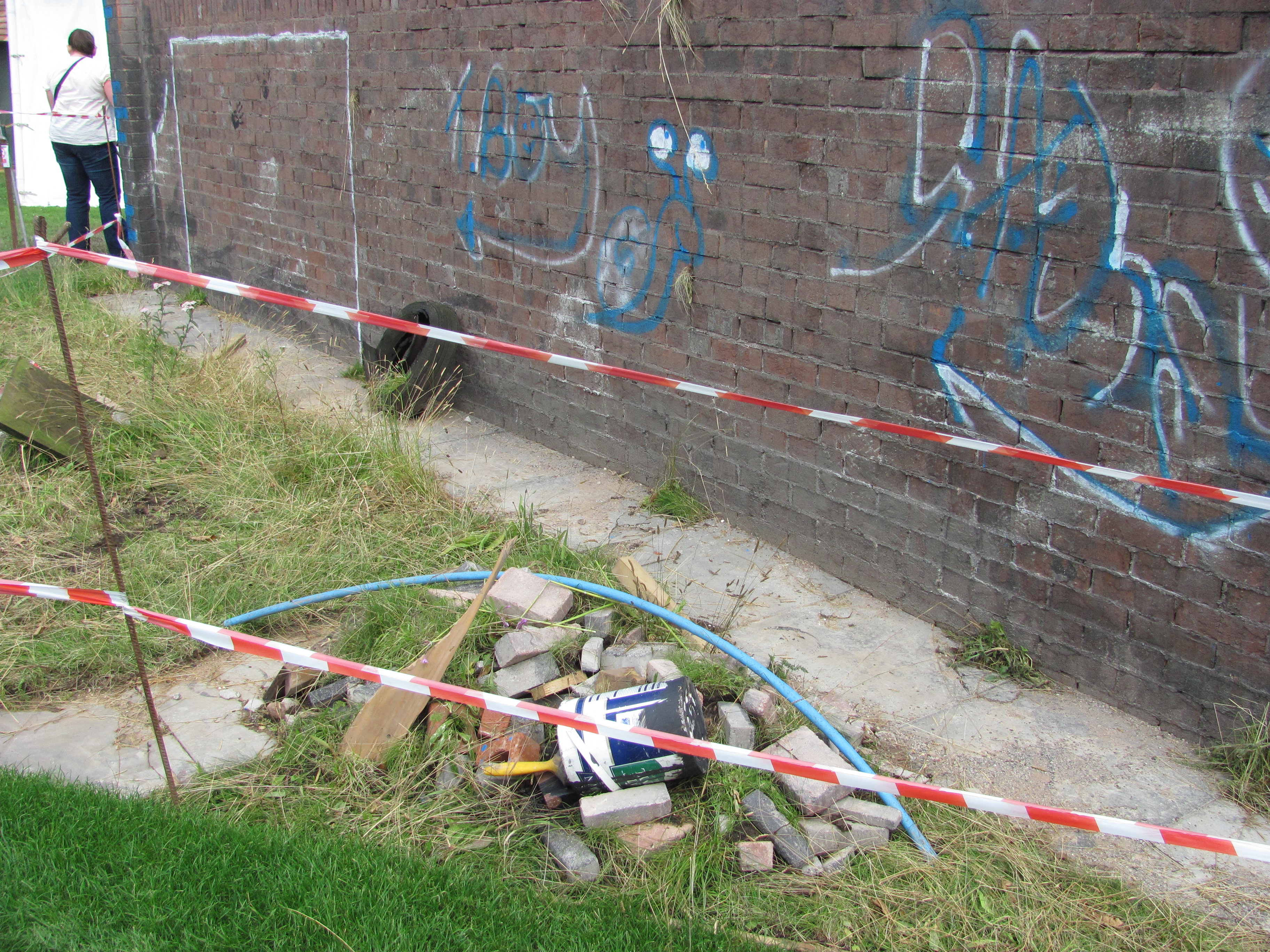
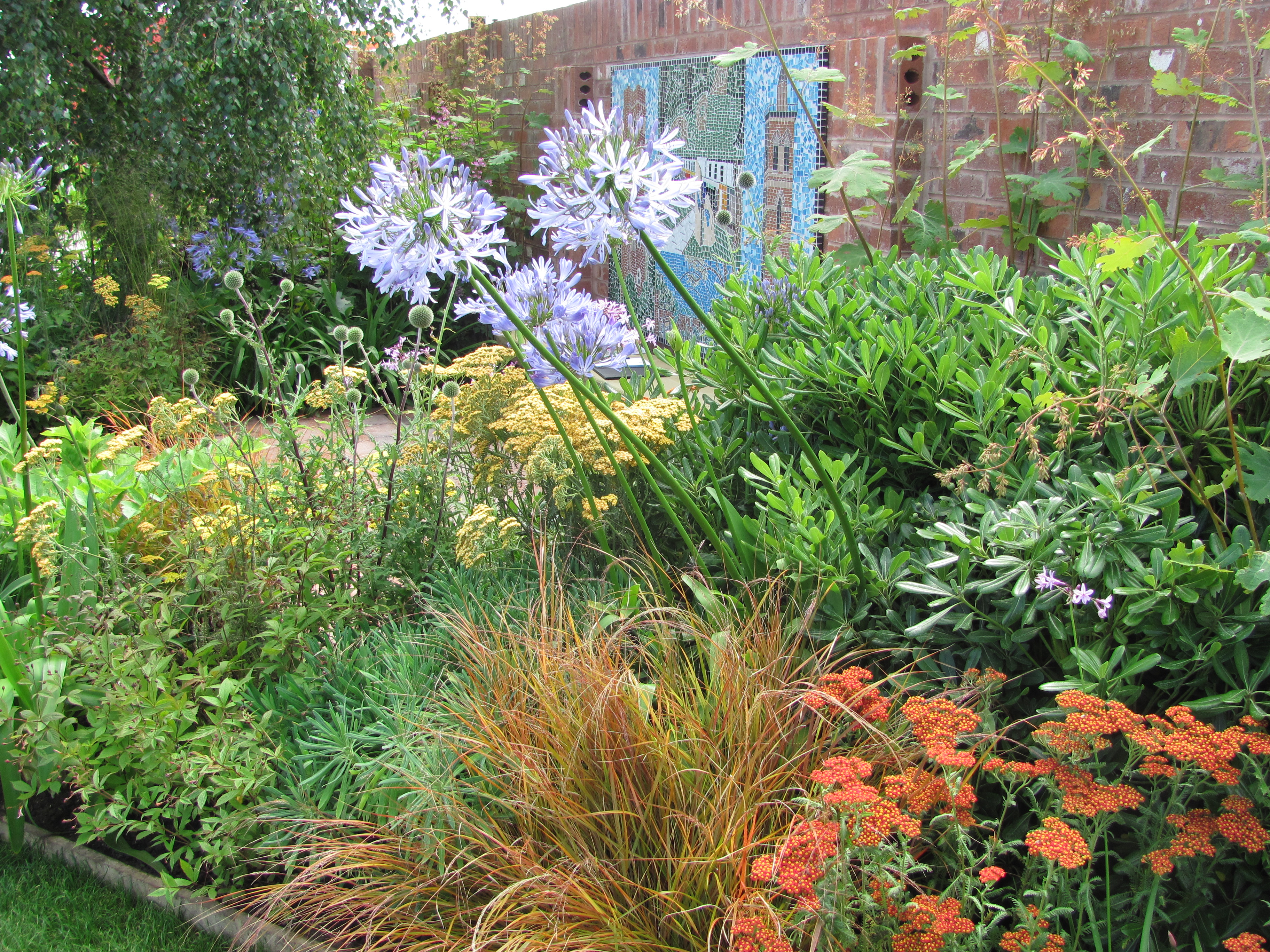
We were interested to see a garden devoted to the importance of community gardens and in particular the RHS “Its Your Neighbourhood” scheme as our allotment site is part of it. The before and after garden was designed by Chris Beardshaw one of the UK’s best garden designers as well as a writer and TV gardener. His garden showed how groups of volunteer gardeners can improve an urban derelict wasteland.

The before ……….

……….. and the after!

In the final report about Tatton Park RHS Show my post will be about the Conceptual Gardens, the Back-to-Back Gardens and the plant sale area.

Categories
garden photography gardening hardy perennials ornamental trees and shrubs photography shrubs town gardens winter gardens

Witch Hazels at Swallow Hayes – a garden visit in January (part two)

A door into the children's den.

And so we continue our gentle cold wander around the wintry splendour of Swallow Hayes …….

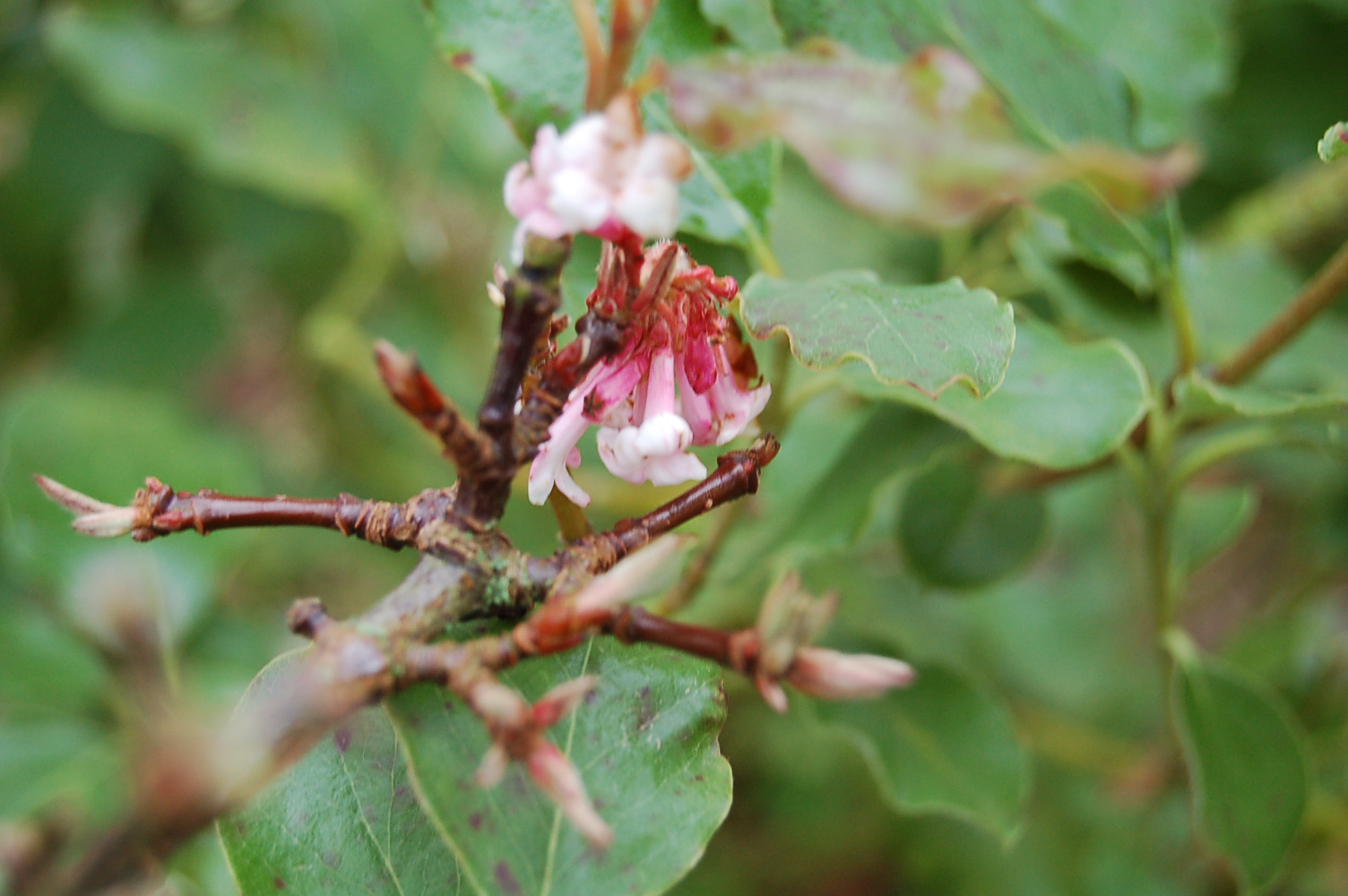
The promise of Viburnum bodnantense flowers.
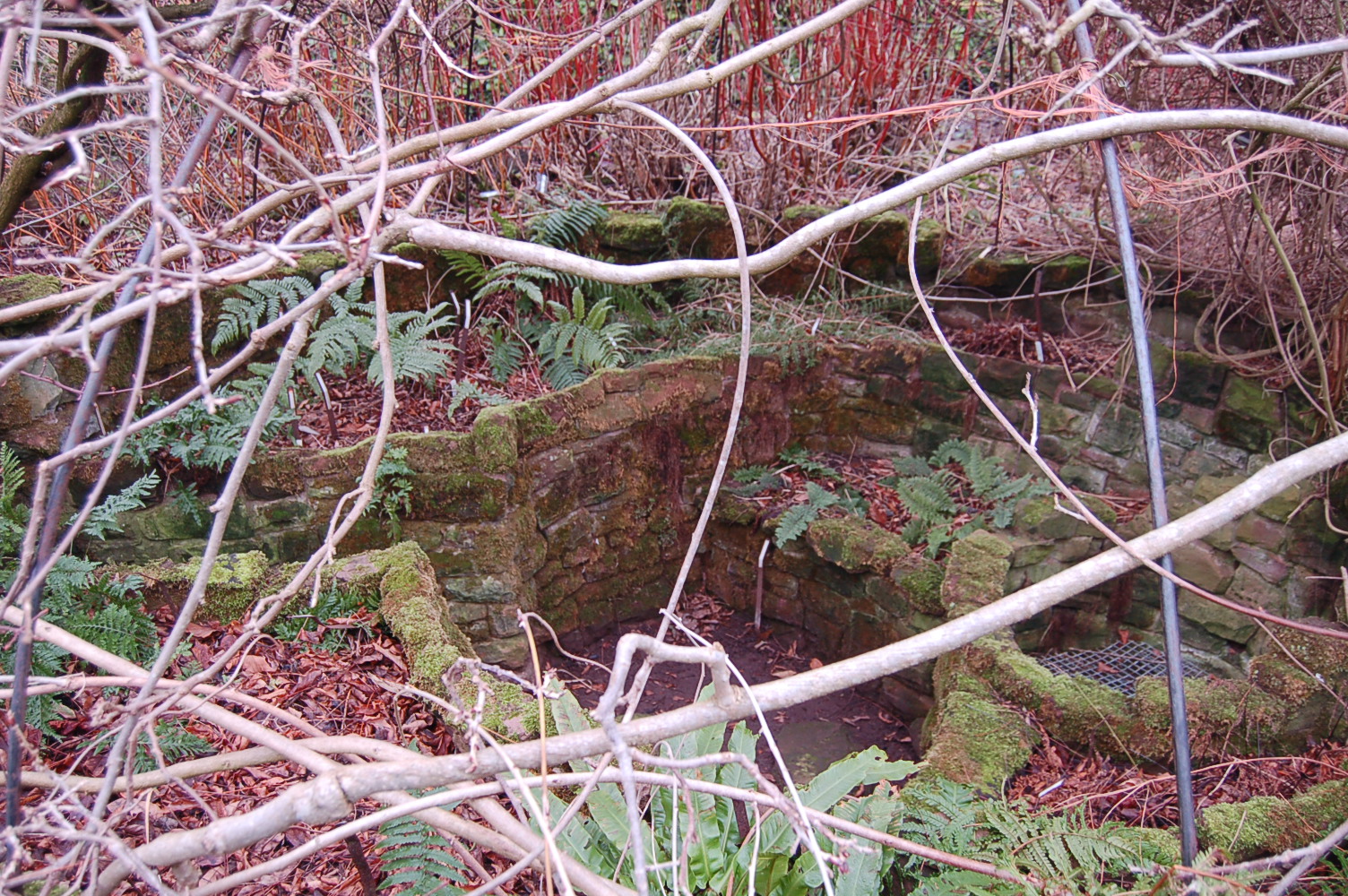
A secret, sunken garden for ferns shaded by a roof of climbers.
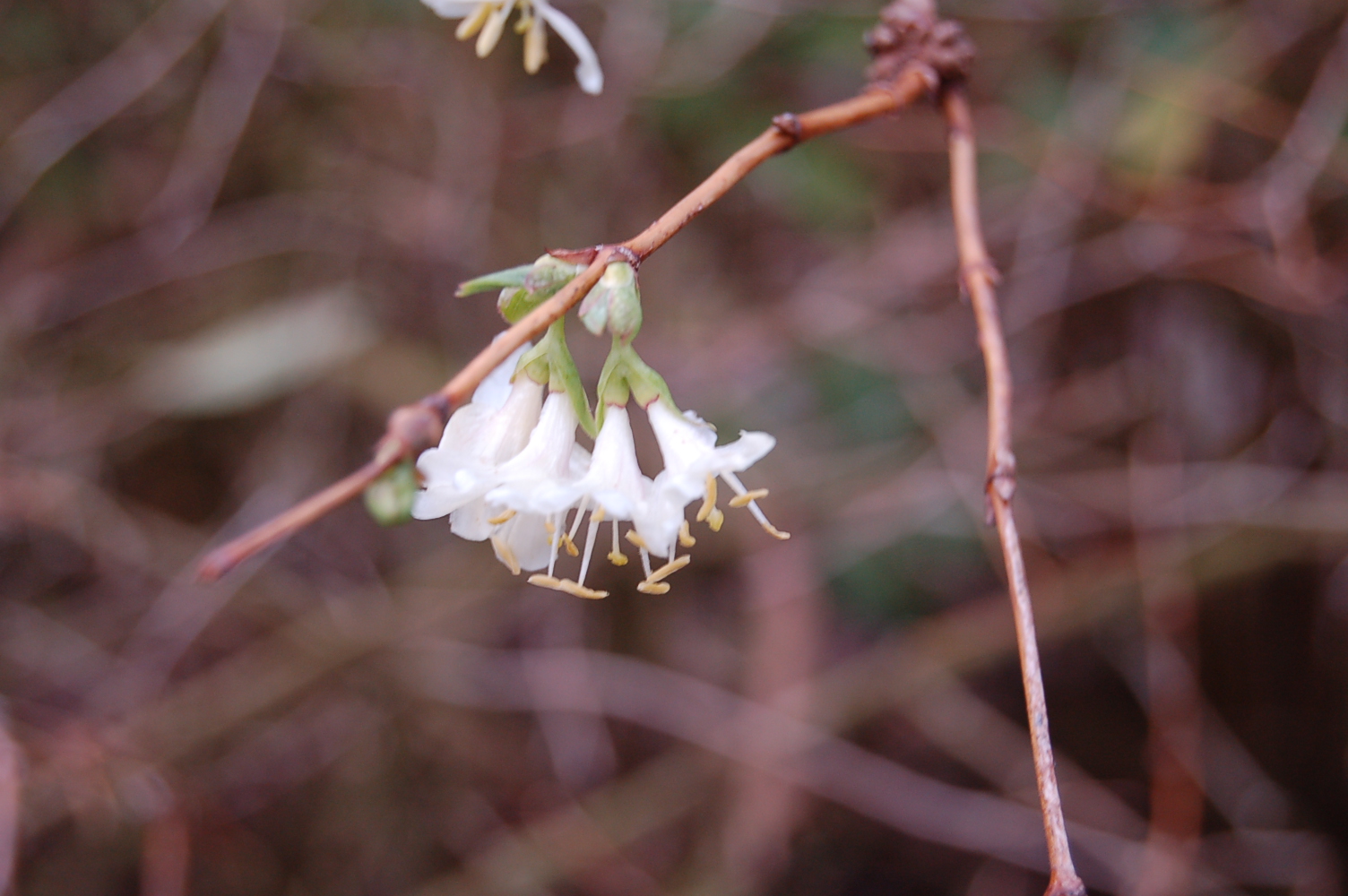
Sweetly scented winter honeysuckle.
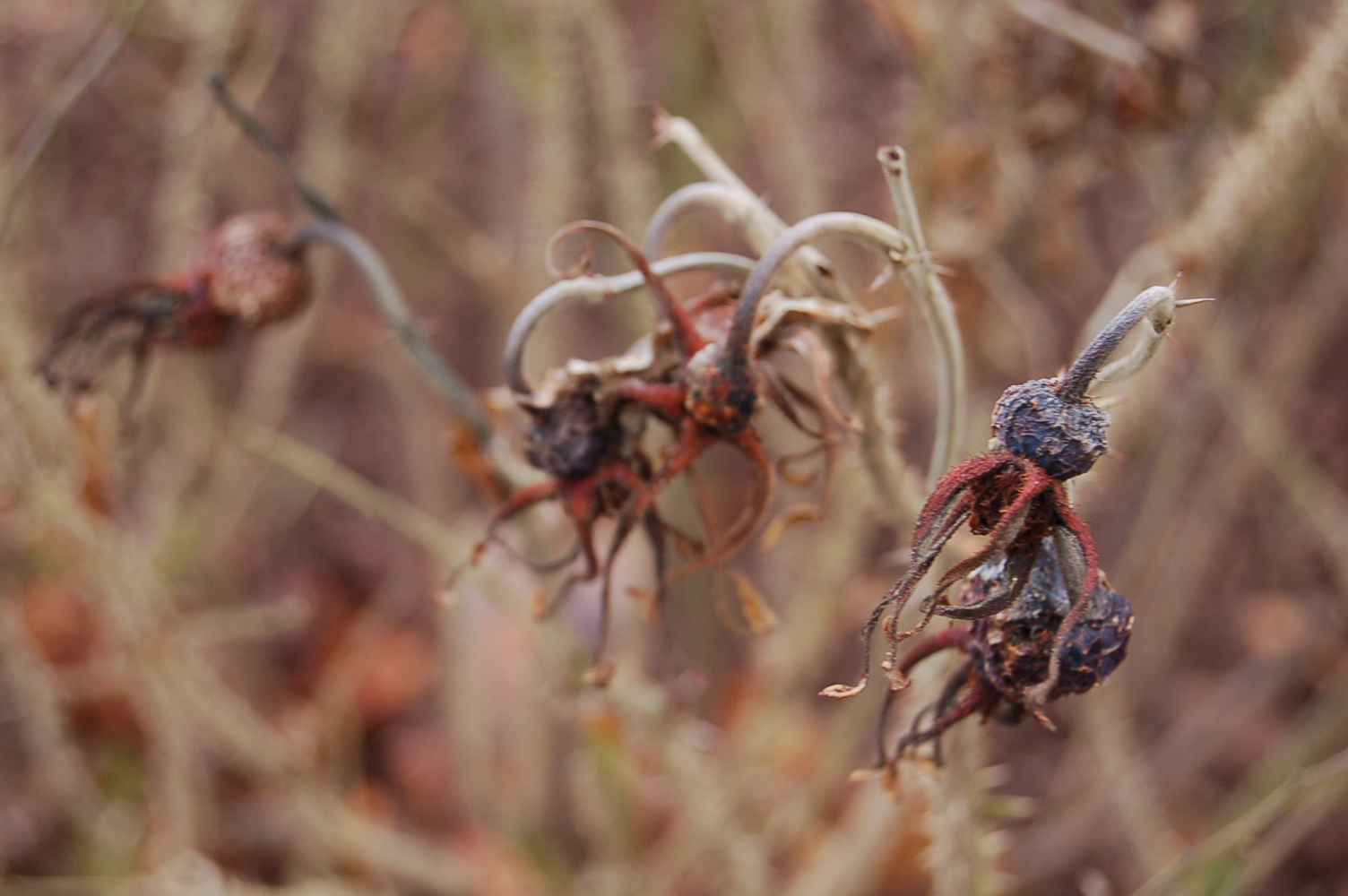
Old rose hips curled and desiccated.
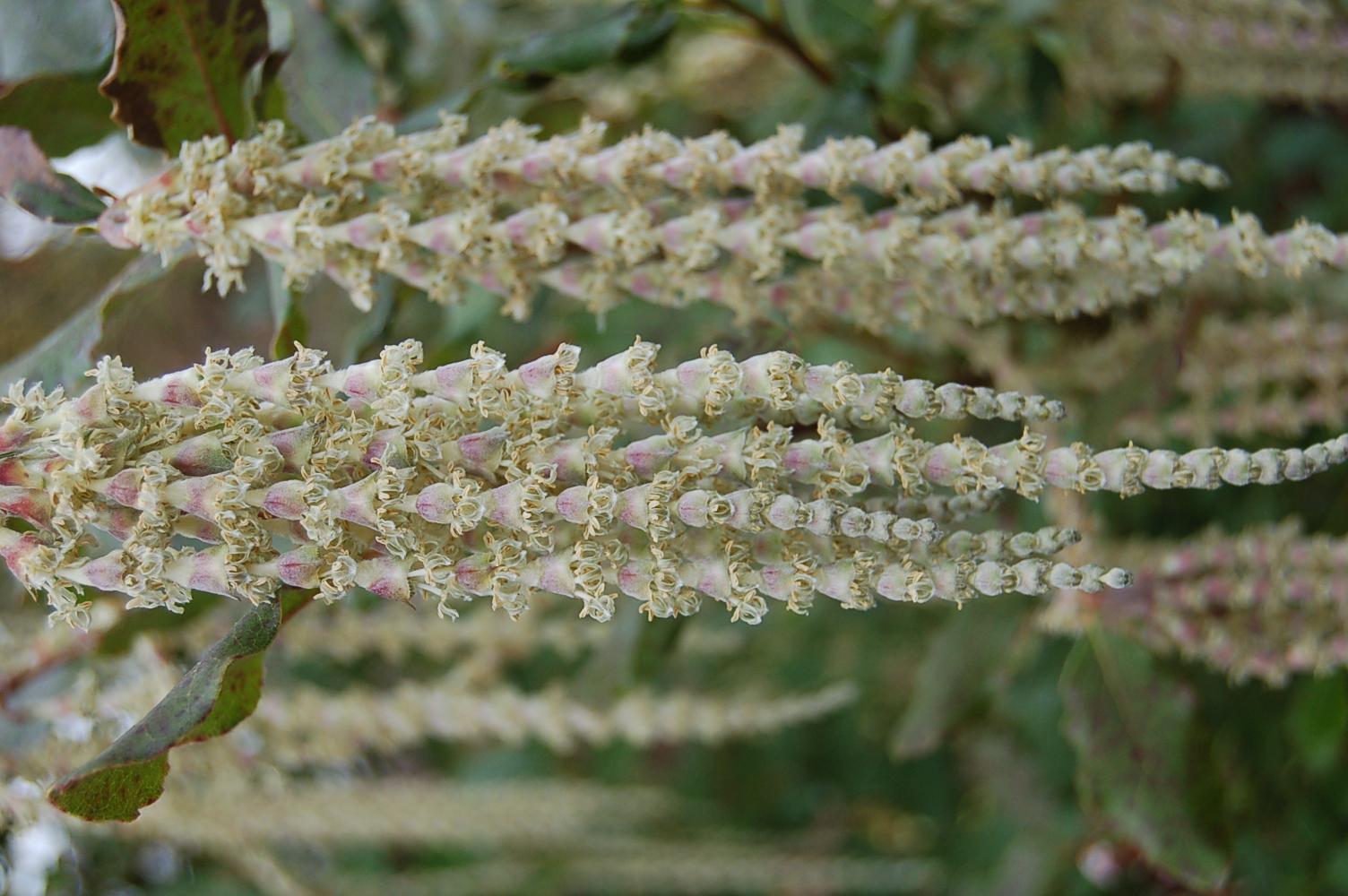
The unusual combination of pale pink and green together in the tassels of Garrya elliptica.
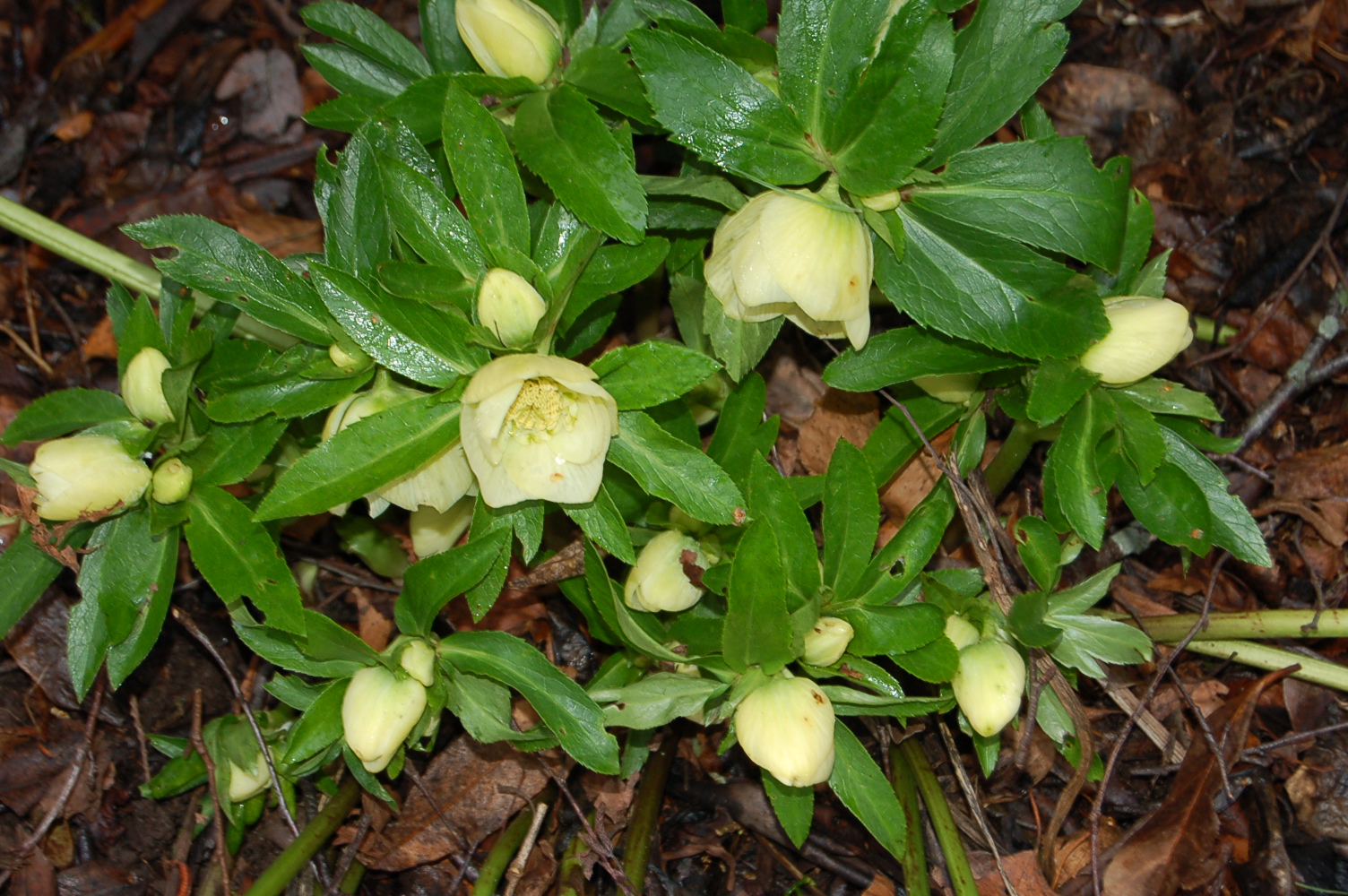
Primrose yellow cup-shaped flowers of a Hellebore.
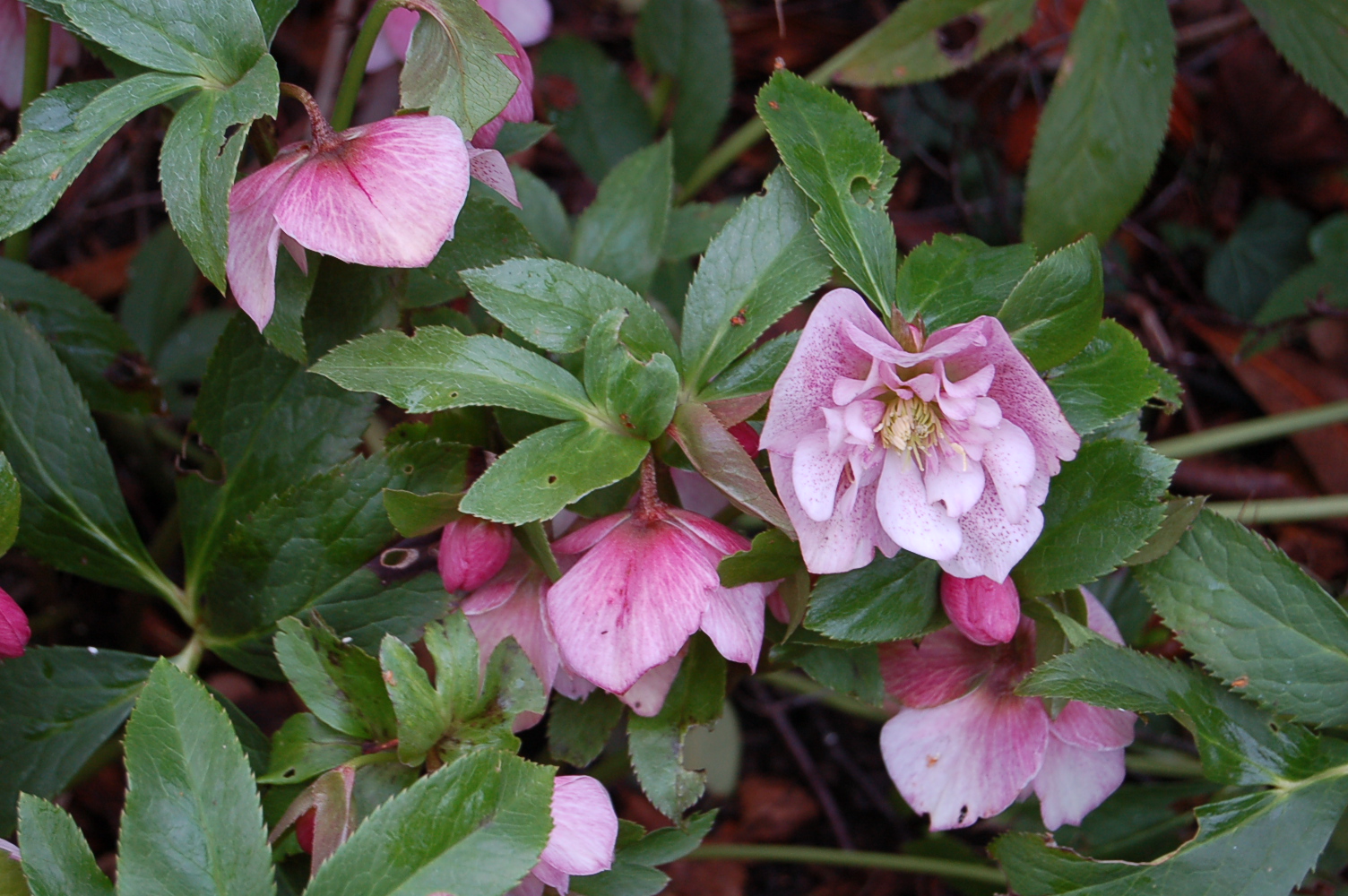
This pink-flowered Hellebore invites you to turn its flowers over for a close look inside.
I am not a fan of Hellebores with double flowers but I was attracted to the colour of this one.
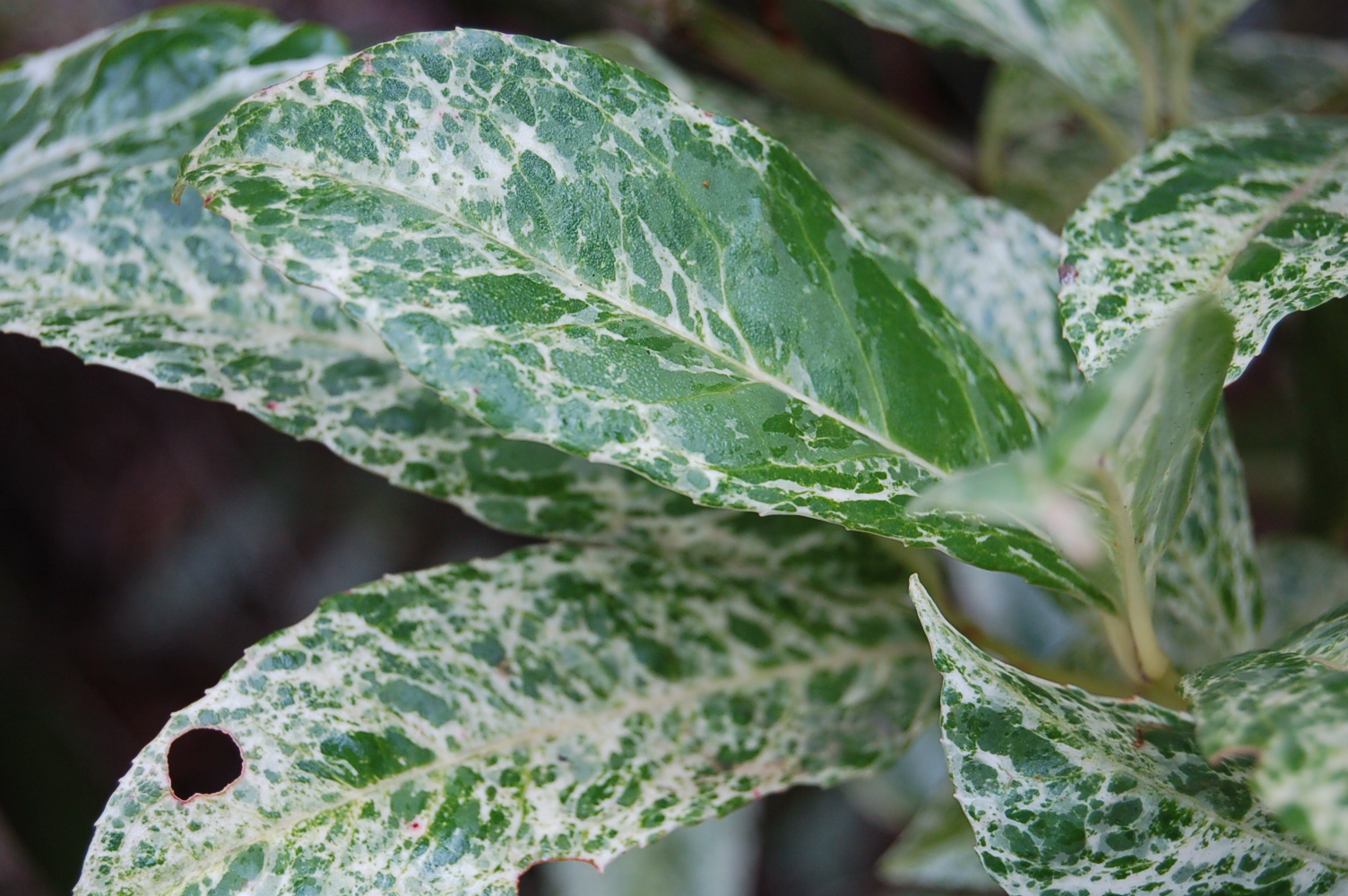
Silvery marbled variegation like a spider's web.
Paint splattered variegation.

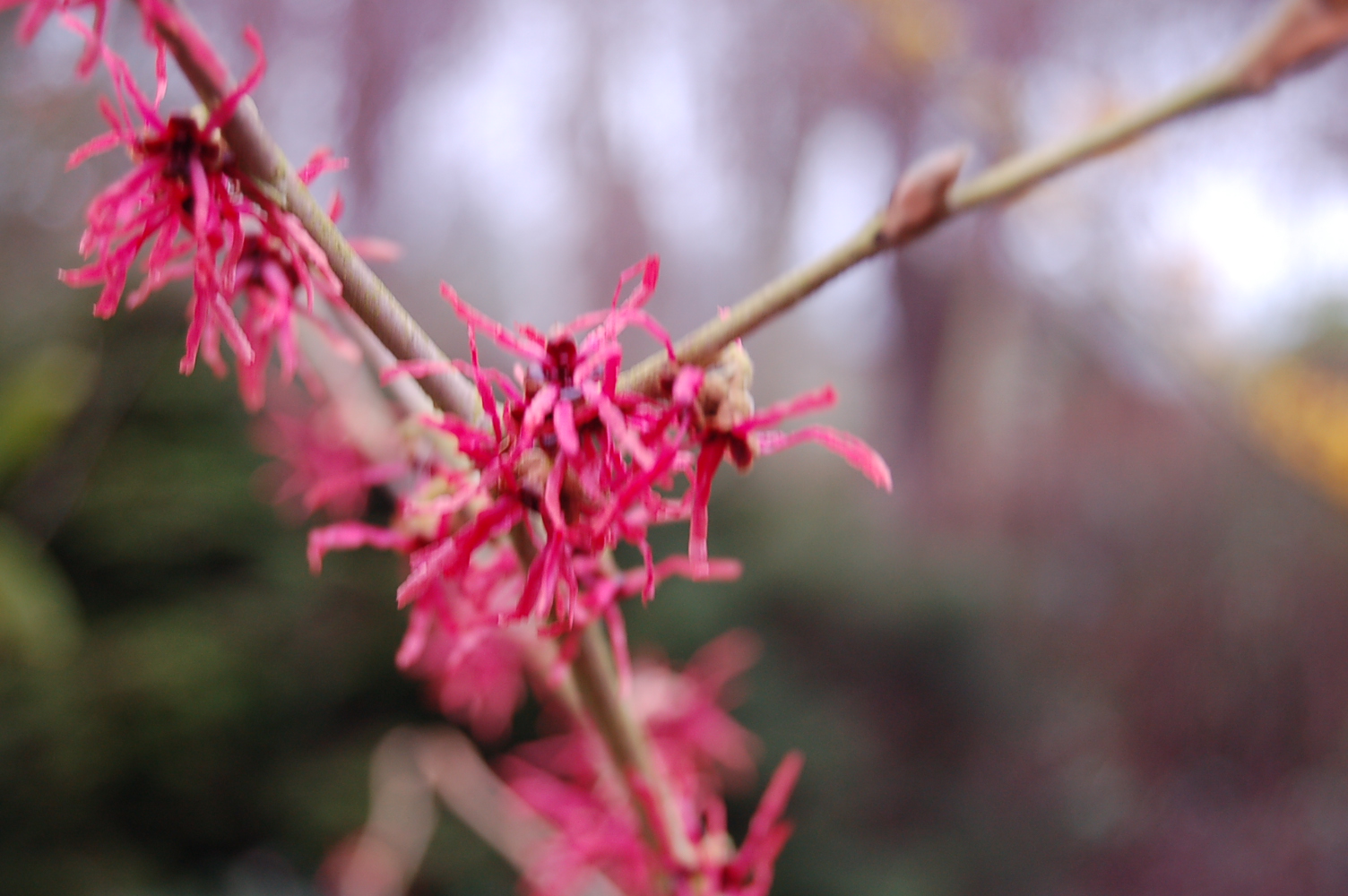
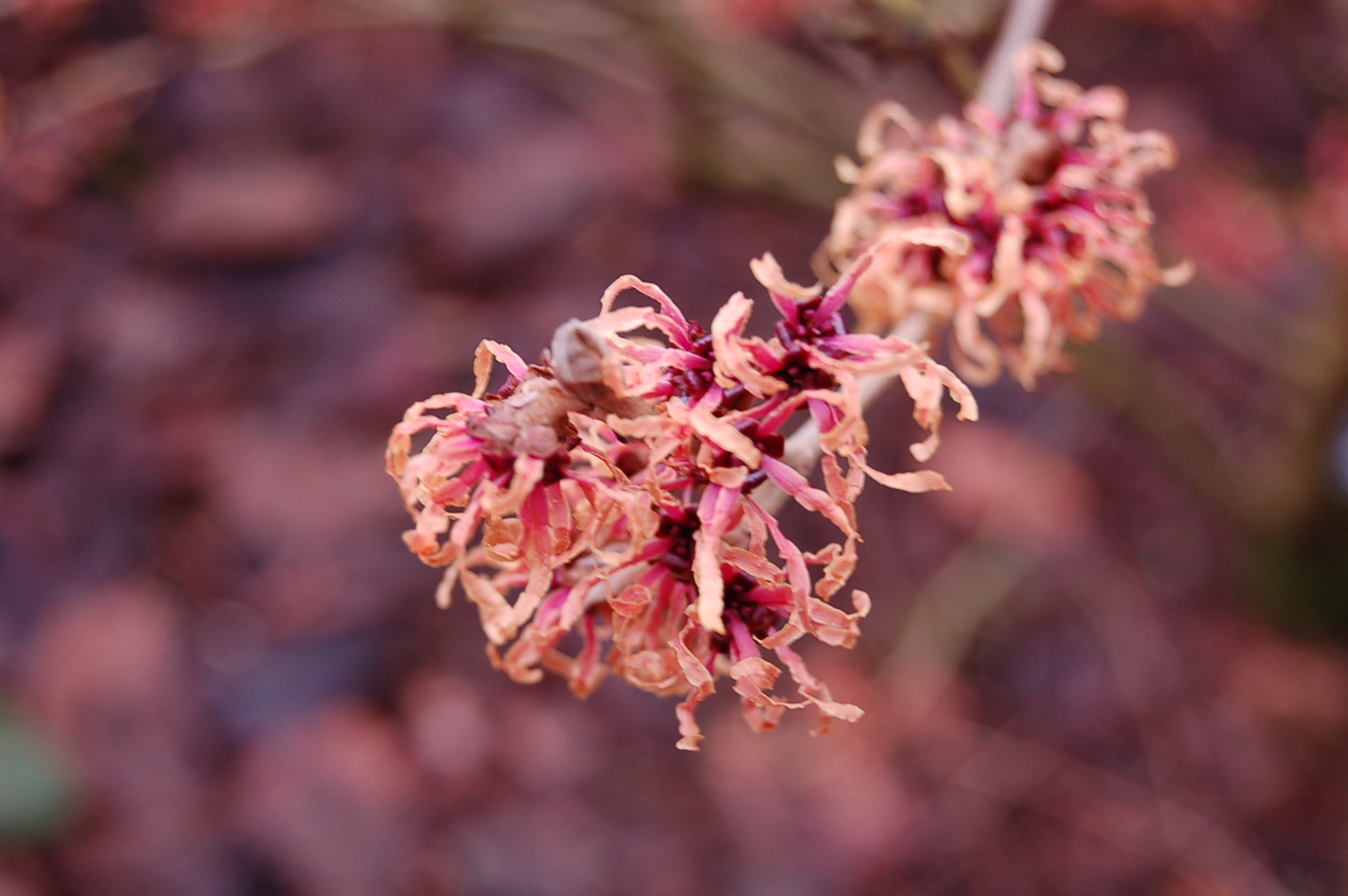
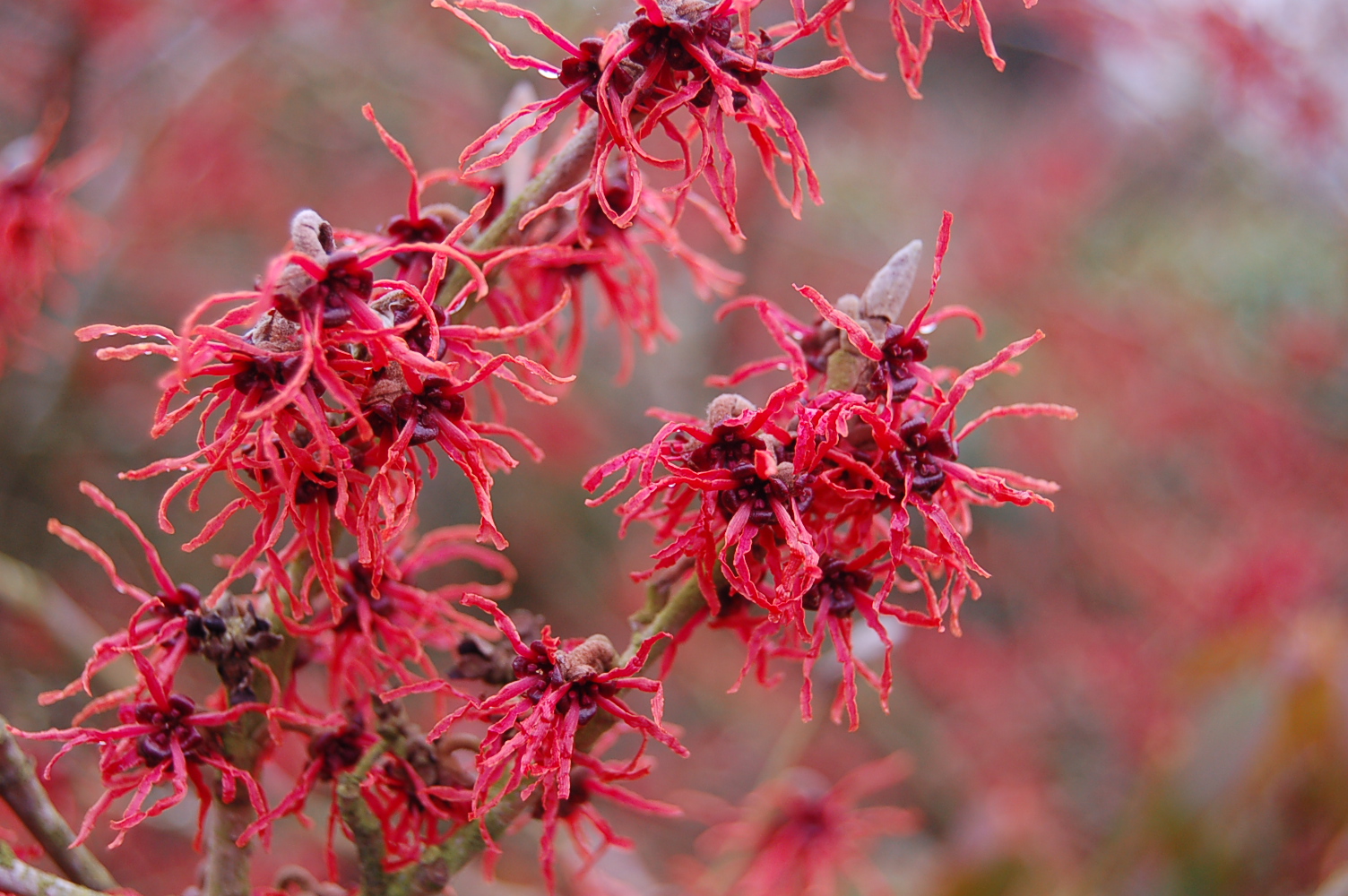
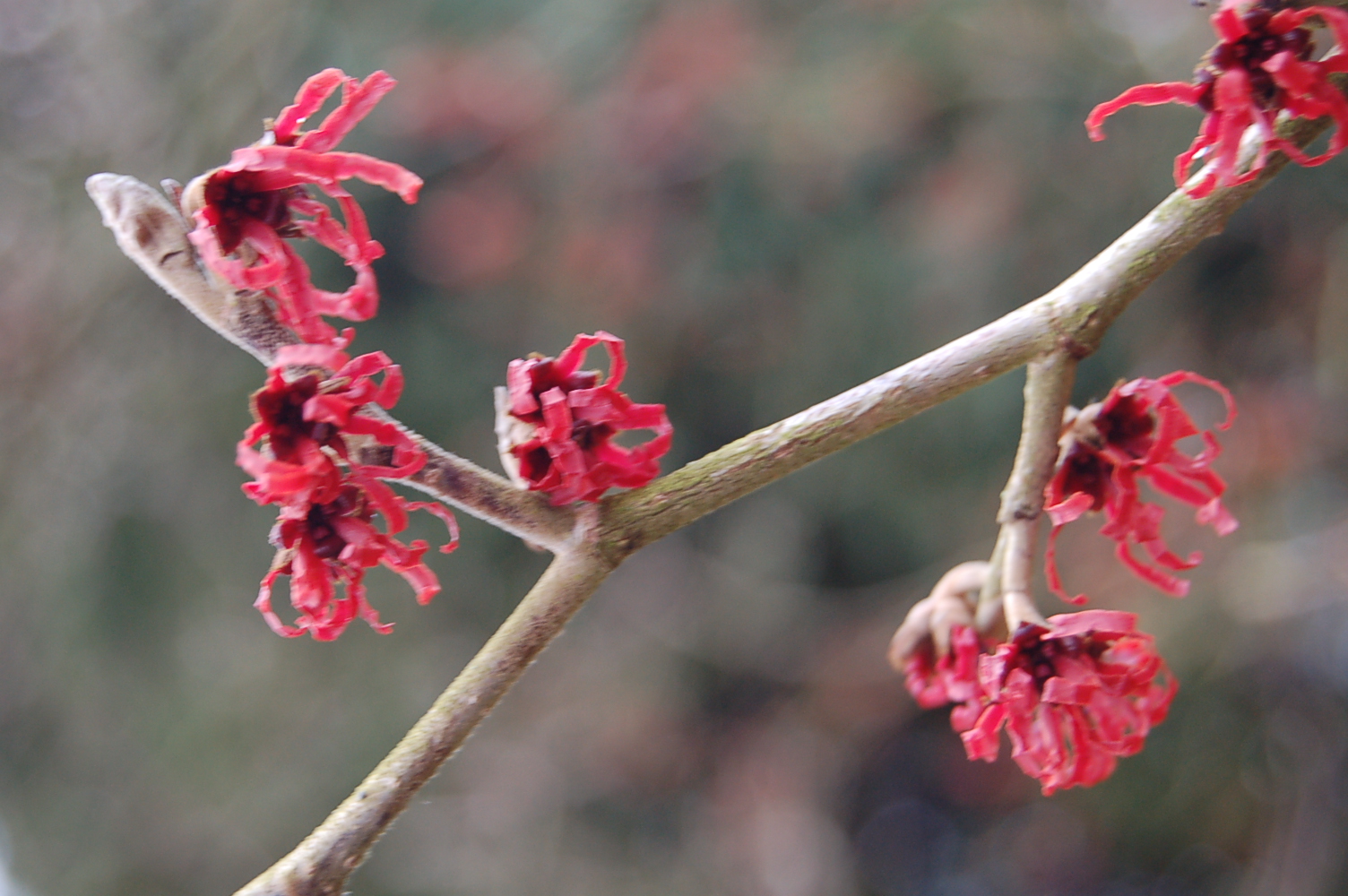
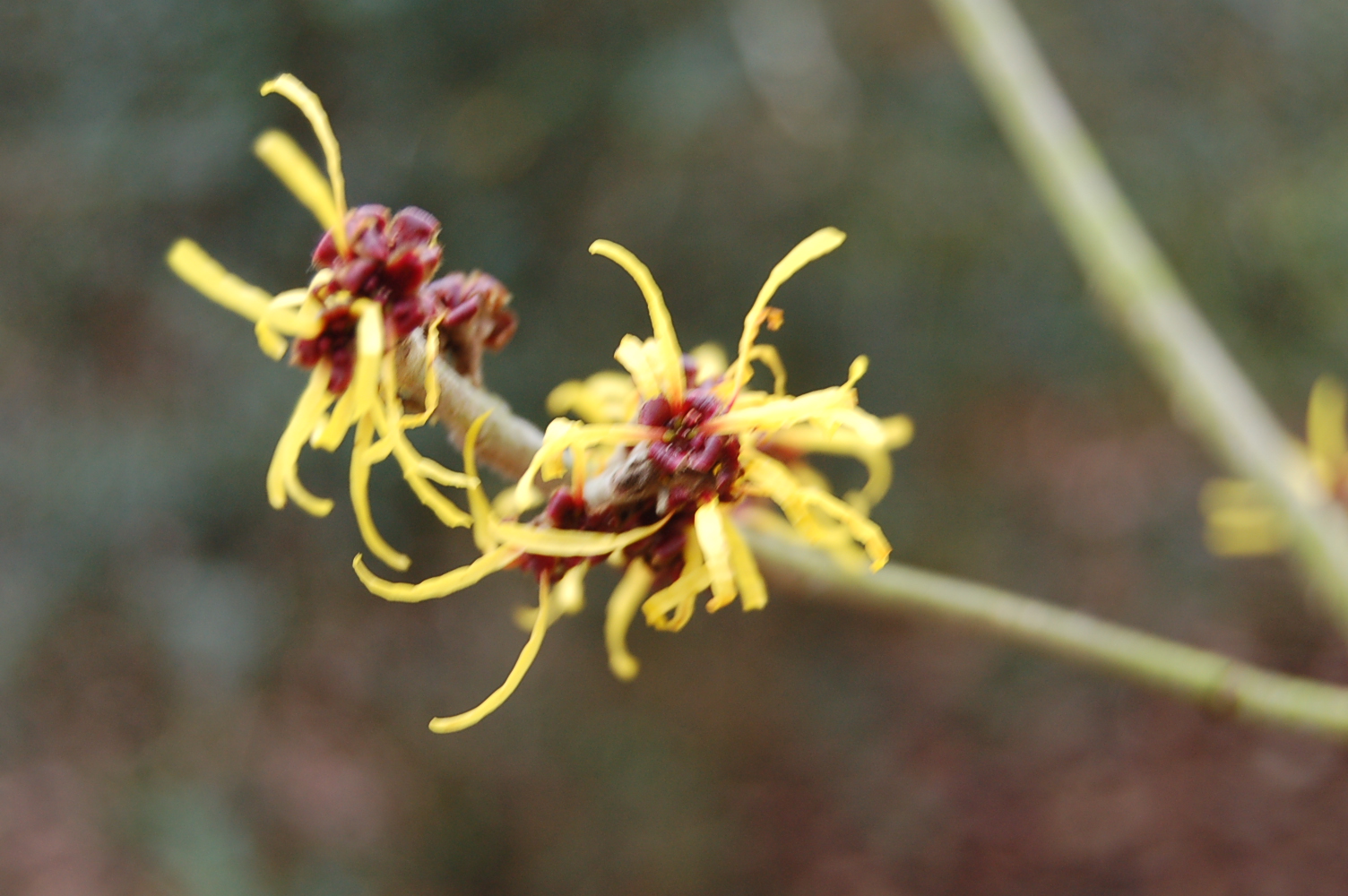
And now to those Witch Hazels! These are not Hazels at all, but related to Parrotias, Fothergillas and of course the Sycopsis we saw in the first Swallow Hayes blog. Their unusually shaped flowers are in every shade of yellow, orange and red and give warming scents in the winter garden. Witch Hazels are well-known for their medicinal properties and are used in aftershave as well as in the treatment of bruises and insect bites. So, beautiful and useful!

The flowers are made up of long, thin strips of petals like curling ribbons or spiders, and appear on bare stems. Several Witch Hazels available to us were bred in Kalmhout in Belgium and the first photo shows one with the unglamorous name of “Kalmhout 999”. Kalmhout is an arboretum in Belgium run by Jelena and Robert de Kelder. Jelena has given her name to my favourite Witch Hazel which you will see in my blog “A Wander around the Garden in February” which I will post in the next few days. Two more of their developments are “Diane”, named after their daughter and “Livia”, named after their granddaughter.

This Witch Hazel matches its colour to its scent, the flowers coloured orange and emitting an aroma of oranges.
The aptly named "Ripe Corn".
"Ripe Corn", "Livia" and "Strawberries and Cream"
Livia
Strawberries and Cream
Orange Peel
Advent
Rubin
Diane
Jermyns Gold
Categories
garden design garden photography gardening ornamental grasses town gardens

The Gardens of Piet Oudolf

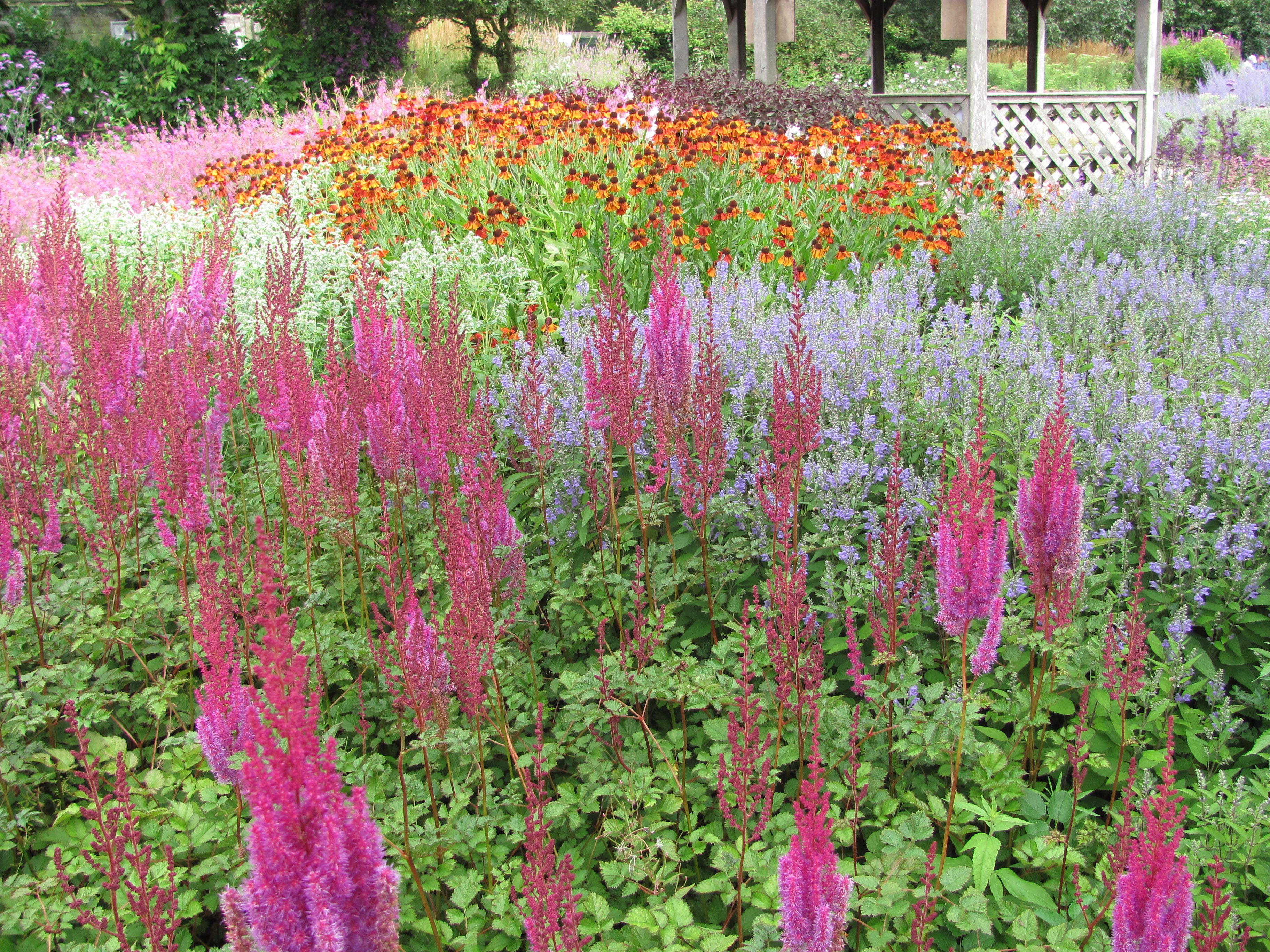
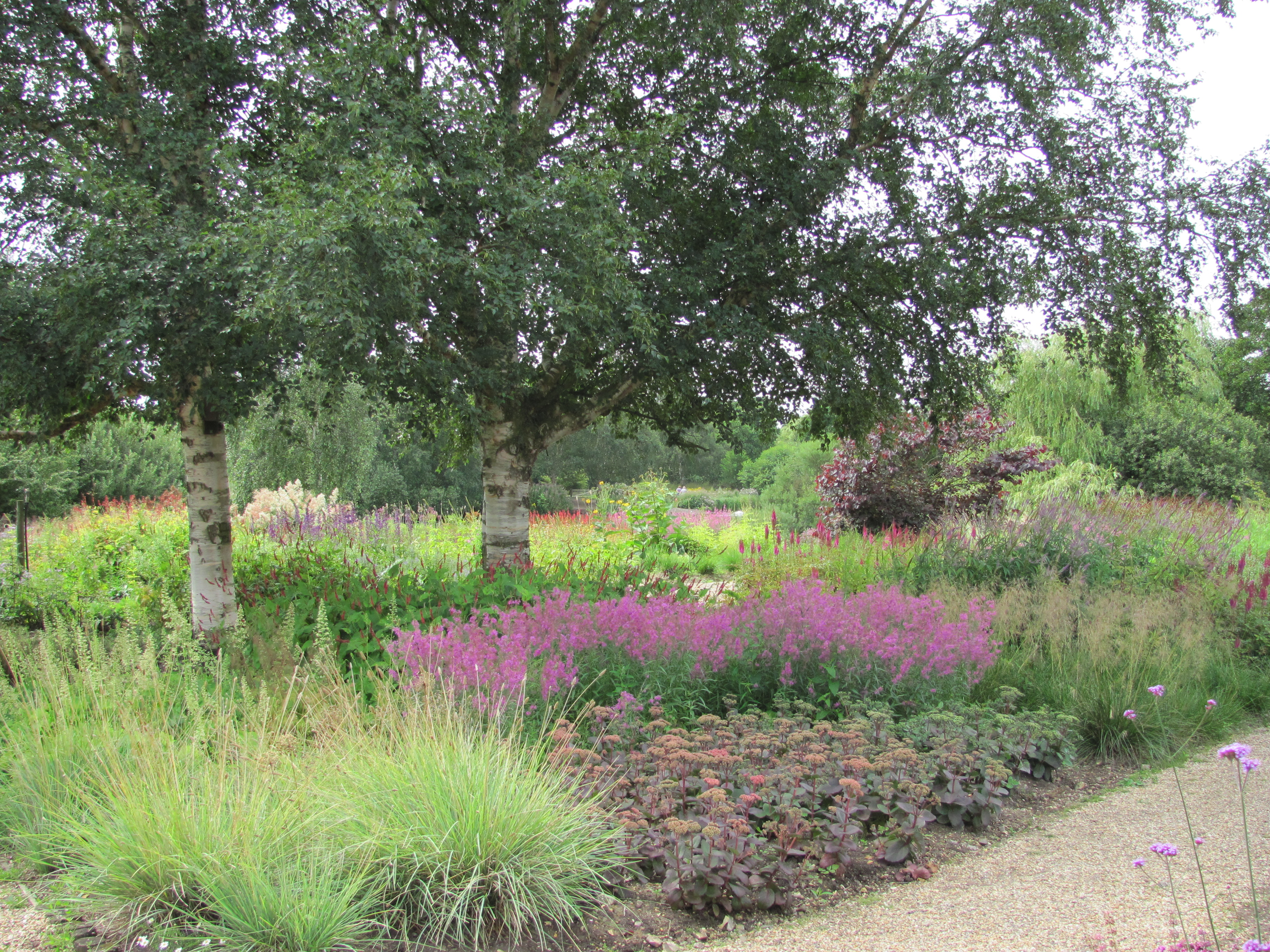
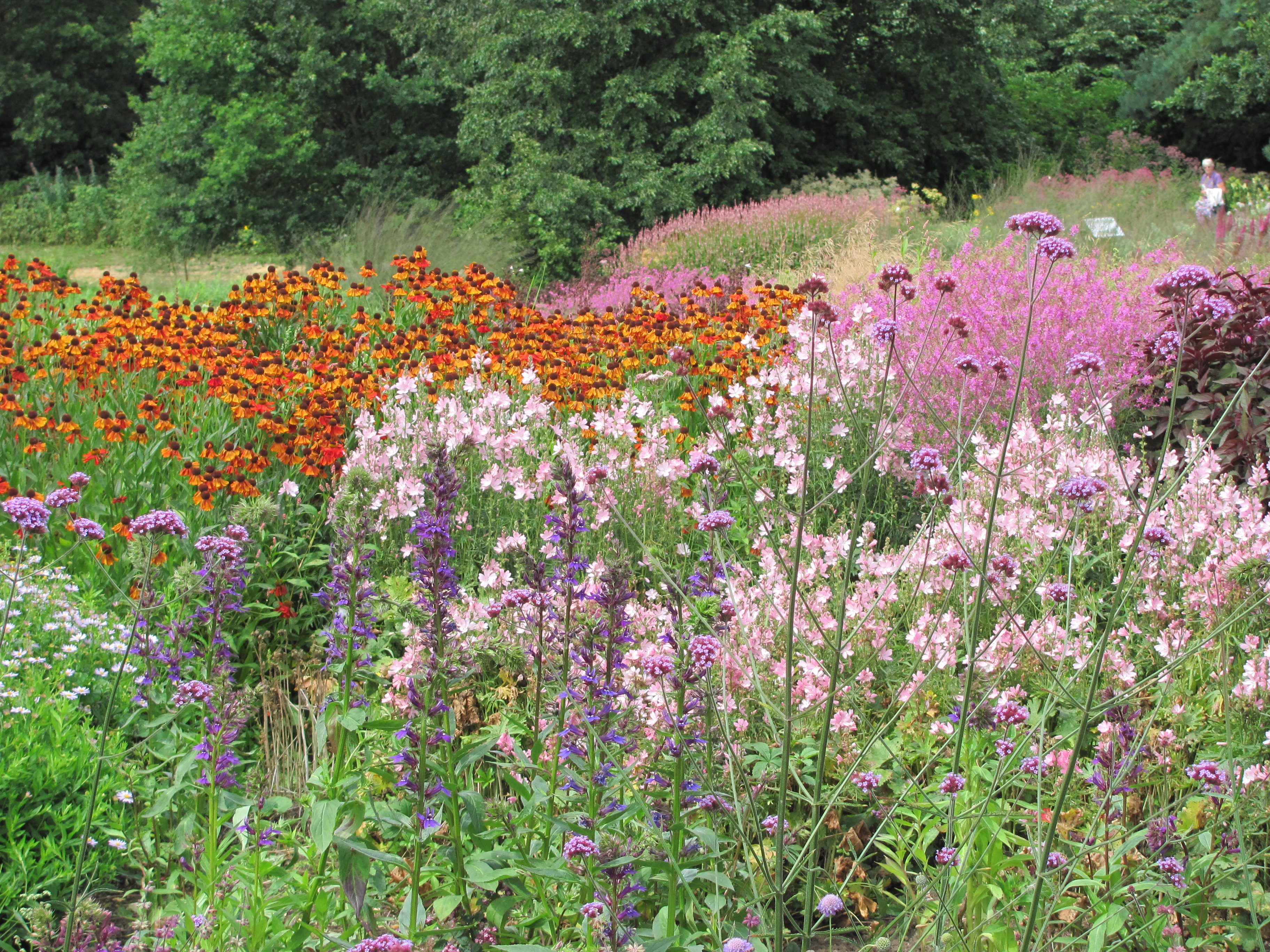
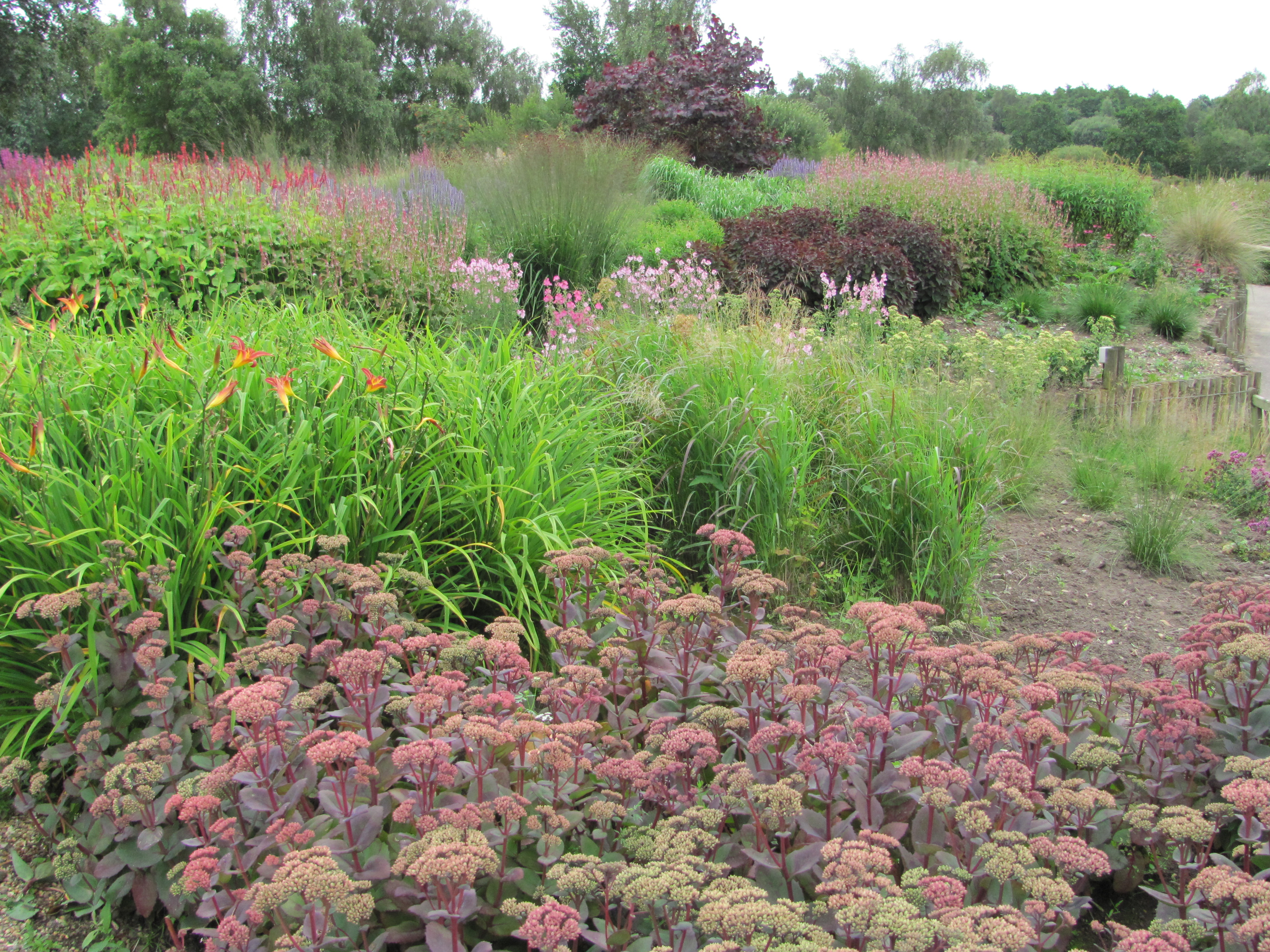
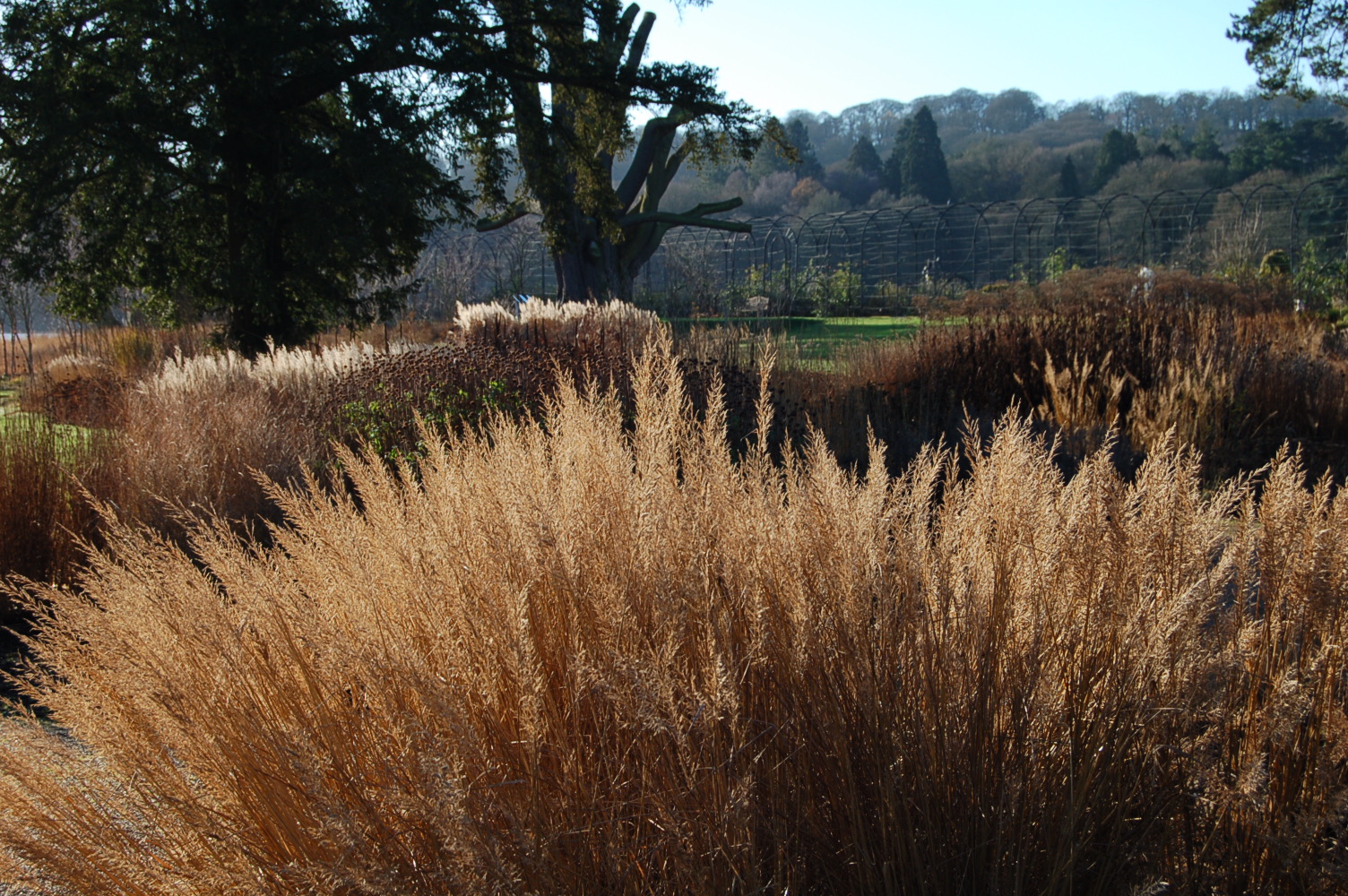
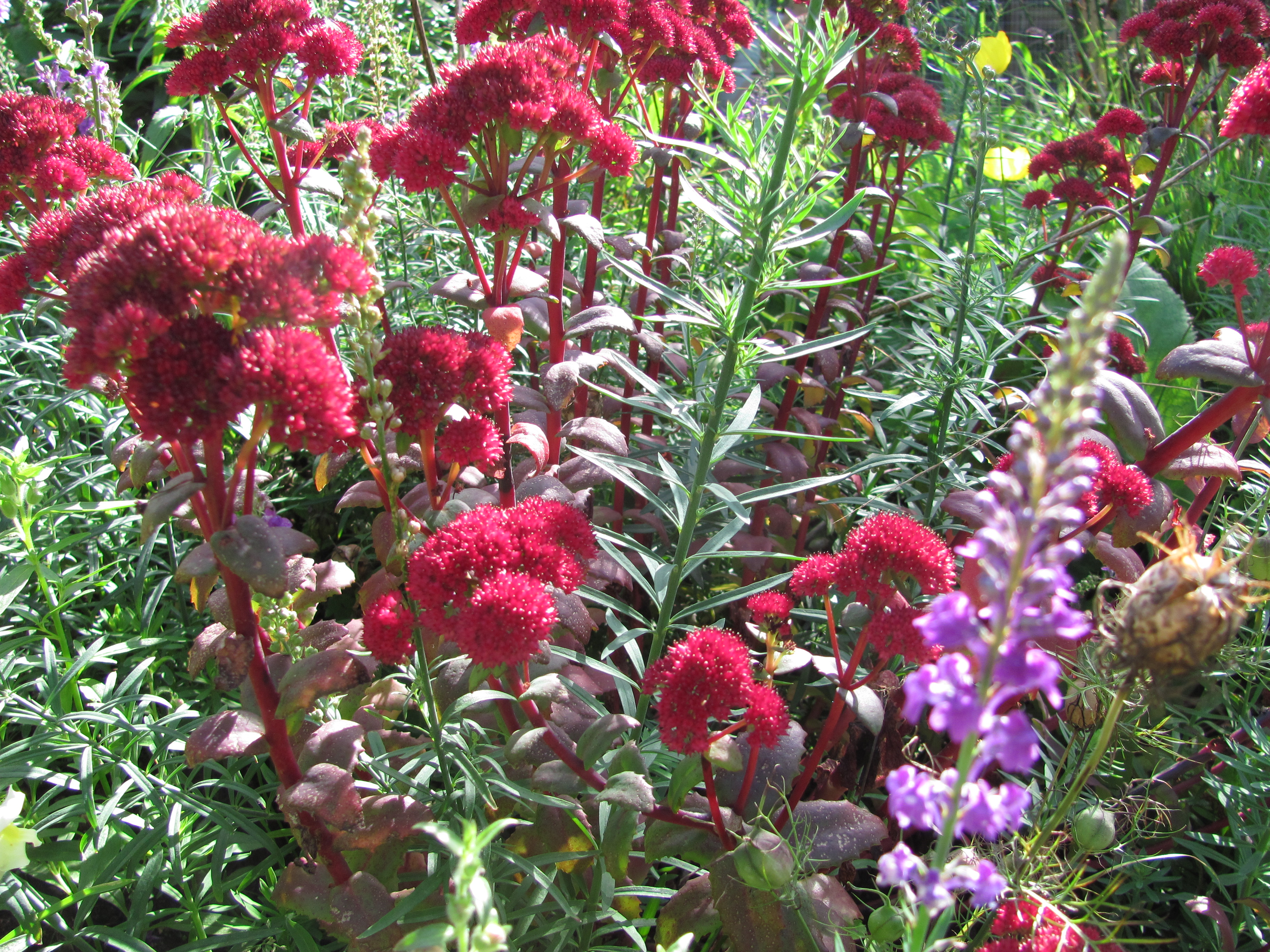
Piet Oudolf has been one of the most influential garden designers in the C21. We have had the pleasure of seeing several examples of his work. The development of our own garden has been influenced by his choice of plants and his plant combination. Our borders now feature far more grasses, achilleas, monardas, alliums, heleniums and sedum and we consider more carefully how good plants can look as they die off during the autumn and how well they stand in the winter.

I wonder why local authorities in the UK have not taken his ideas on board – why do we still see so much Victorian bedding in our parks and other areas of public planting? Shrewsbury, our closest town and the county town of Shropshire, seems to be going backwards with more such backward-looking planting appearing. We often look at the local roundabouts and parks and think how good they could look if more imaginative, “new perennial style” gardening was adopted. Just look at Oudolf’s planting at Wisley, Trentham and Pensthorpe and imagine how well this style would work in public spaces.

We visited Pensthorpe in Norfolk not long after the Piet Oudolf garden had been revamped, and they were looking splendid.

We visited the wonderful gardens at Trentham several times during 2011 and early in 2012. Whenever you visit the gardens by Oudolf are outstanding. Piet Oudolf’s planting here is in two distinct areas with contrasting character and atmosphere. his “Rivers od Grasses” is unlike any planting I have ever experienced. Lush green low-cut paths meander through mass plantings of tall decorative grasses. Children seem to love this area seeing it as an informal maze, a place to explore gently and quietly. This is a wonderful example of how plants and garden design in public places can influence how people feel and move around.

Beyond the River of Grass is an area of perennials and grasses planted “en masse” with winding gravel paths for exploration.

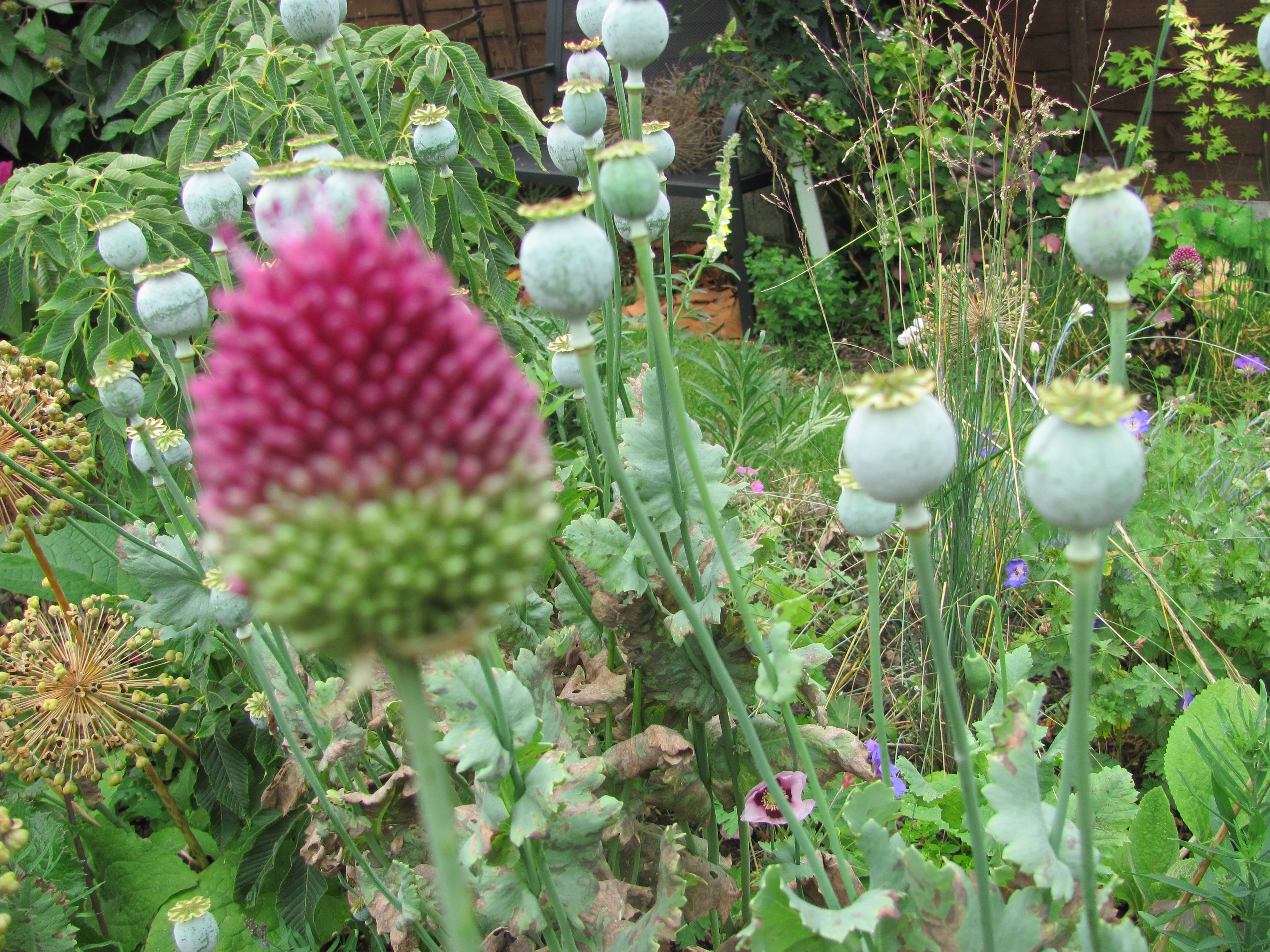
I decided to look back through my photo library for examples of pictures I have taken over the last year or so that show how our own planting has been influenced by the work of Piet Oudolf. Firstly in “The Chicken Garden” in May when the lollipop flowers of allium dominate.

New planting of grasses and sedum in the recently re-vamped “Prairie Garden”.

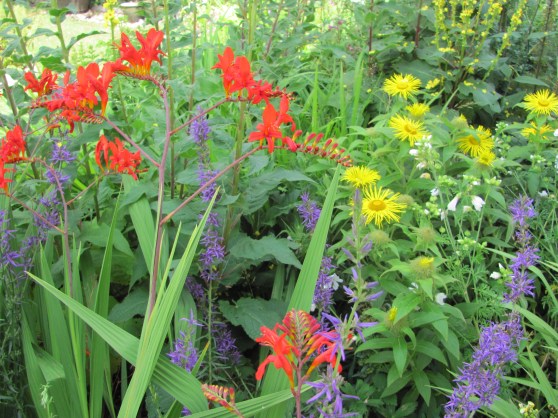
In our “Hot Border” a mass planting of Crocosmia “Lucifer” are interspersed with campanula, verbascum and inula.

Categories
garden photography garden wildlife gardening ornamental trees and shrubs outdoor sculpture roses shrubs town gardens trees wildlife

A small town garden in December.

Earlier this week we spent a few days down in Gloucestershire at my Mother’s home. She has a small town house with a small town garden, about 30ft by 20ft in the back and a token patch in the front. The house is the last in a row on the edge of a small town and the garden boundary is a tall rich hedge of mixed native plants with fields beyond. For centuries this hedge has fed and sheltered wildlife in its hawthorns, ivies, wild roses and the sprawling shawl of brambles. It is home to a rogue buddleja germinated from a seed dropped by a bird and now attracting butterflies, bees  and hoverflies to its scented purple flowers each summer.

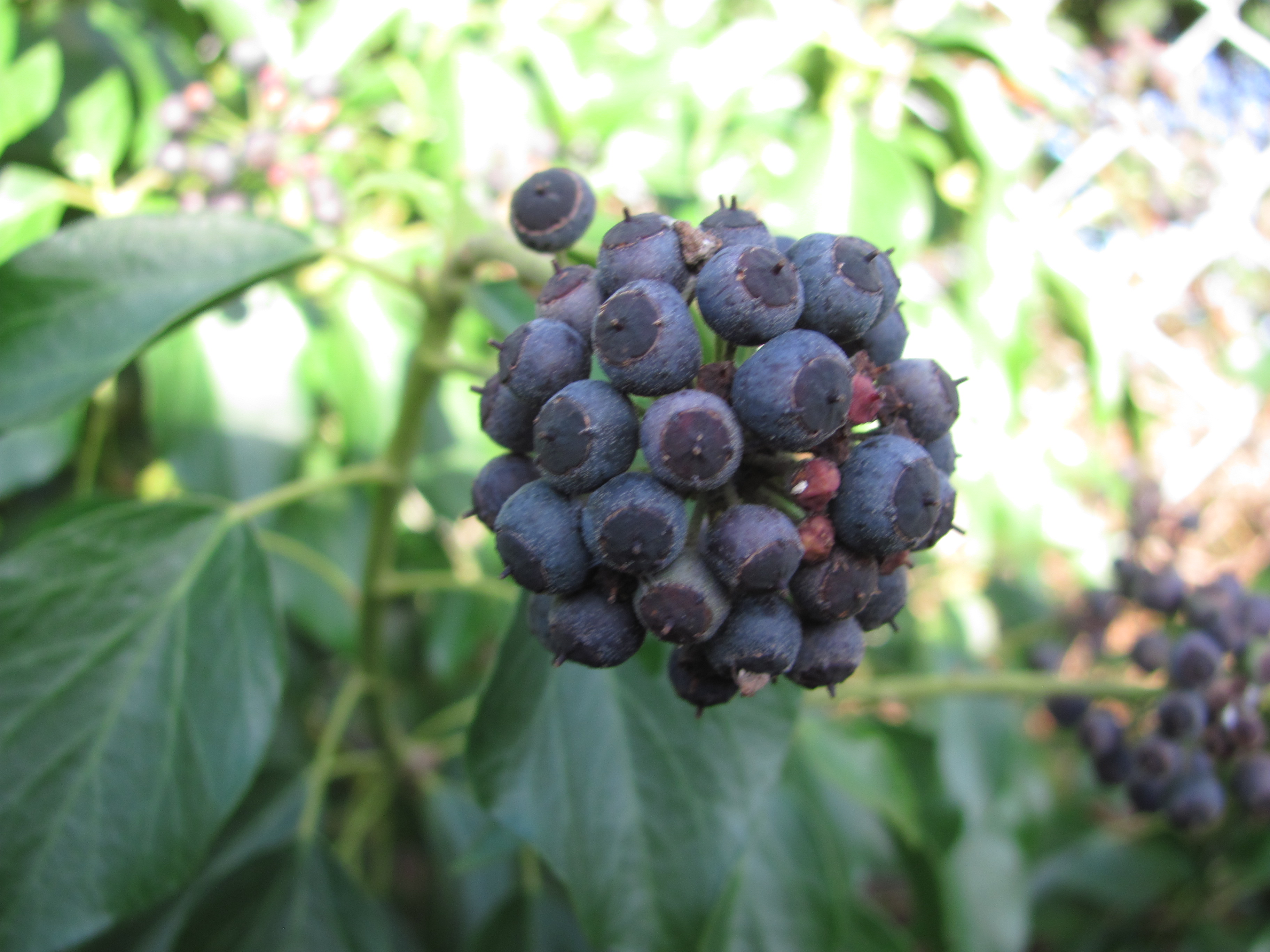
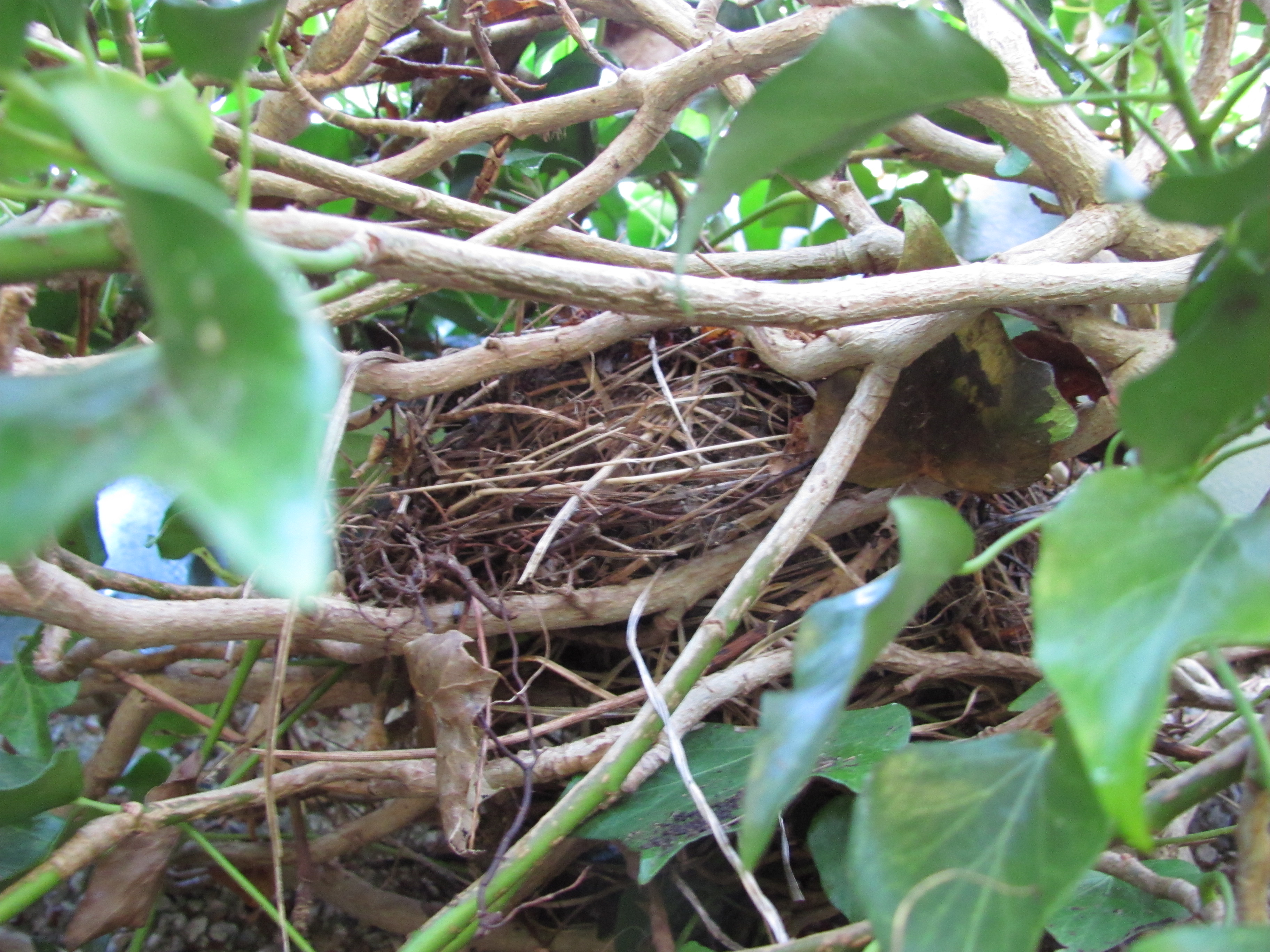
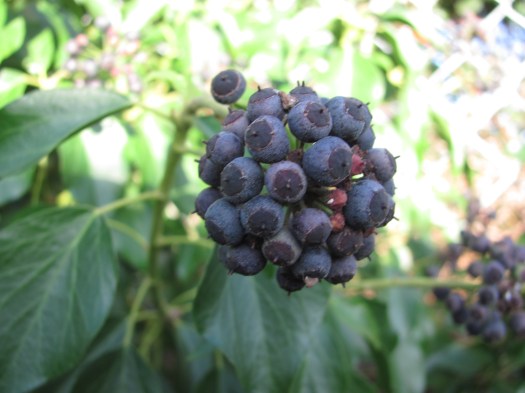
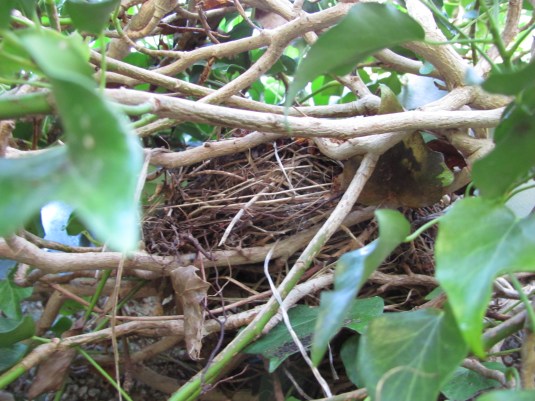
The ivy has spread from the hedge and along the garage wall which forms one side of a little secret garden, a shaded place for tea and cake. This ivy is now full of black berries, food for blackbirds who earlier in the year used its shelter in which to build their nest. It is a warm place for wrens to roost.
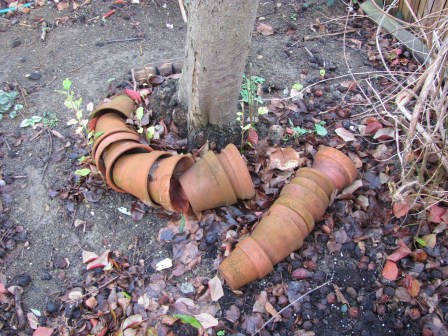
A look out from the front window into the garden shows the skeleton of silver branches of the Cercis Forest Pansy now having lost the last of its red and plum coloured leaves of autumn and a recently neatly pruned climbing rose on the porch wall. A glance at the back shows it to be dominated by a fine specimen of Arbutus unedo, the strawberry tree. There are small dots of colour from remnant flowering of earlier seasons still to be seen, but go out with camera in hand and there is so much more interest. Here the lens sees more than the eye and conjures up a garden full of textures and colours. Old terra-cotta pots spiral beneath the trunk of a malus arranged to add interest when the crab apples have been eaten by blackbirds and migrant thrushes and the yellow, orange and red of October leaves have journeyed to the ground only to be blown away by strong November winds.
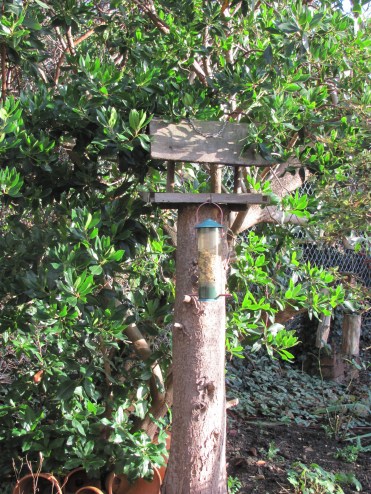
Just as the clay pots were given new life, so the trunk of the conifer, outgrown its space and lopped, has been reborn as the post for a bird table. It is now visited by the birds who ignored its barren foliage when it lived.
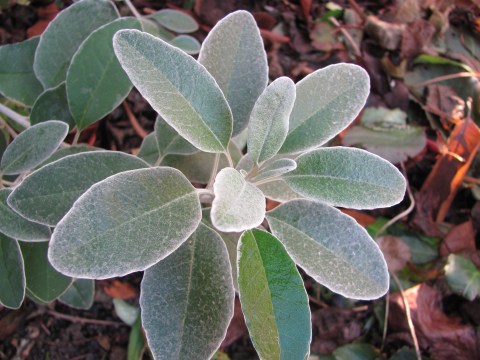
Foliage plays a central role in small gardens in winter, both for colour and texture. Some like the Senecio, now sadly re-christened brachyglotis by the botanists, has both with its leaves surfaced in silver-grey fur.
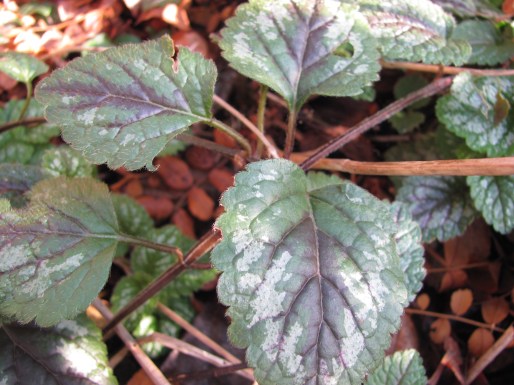
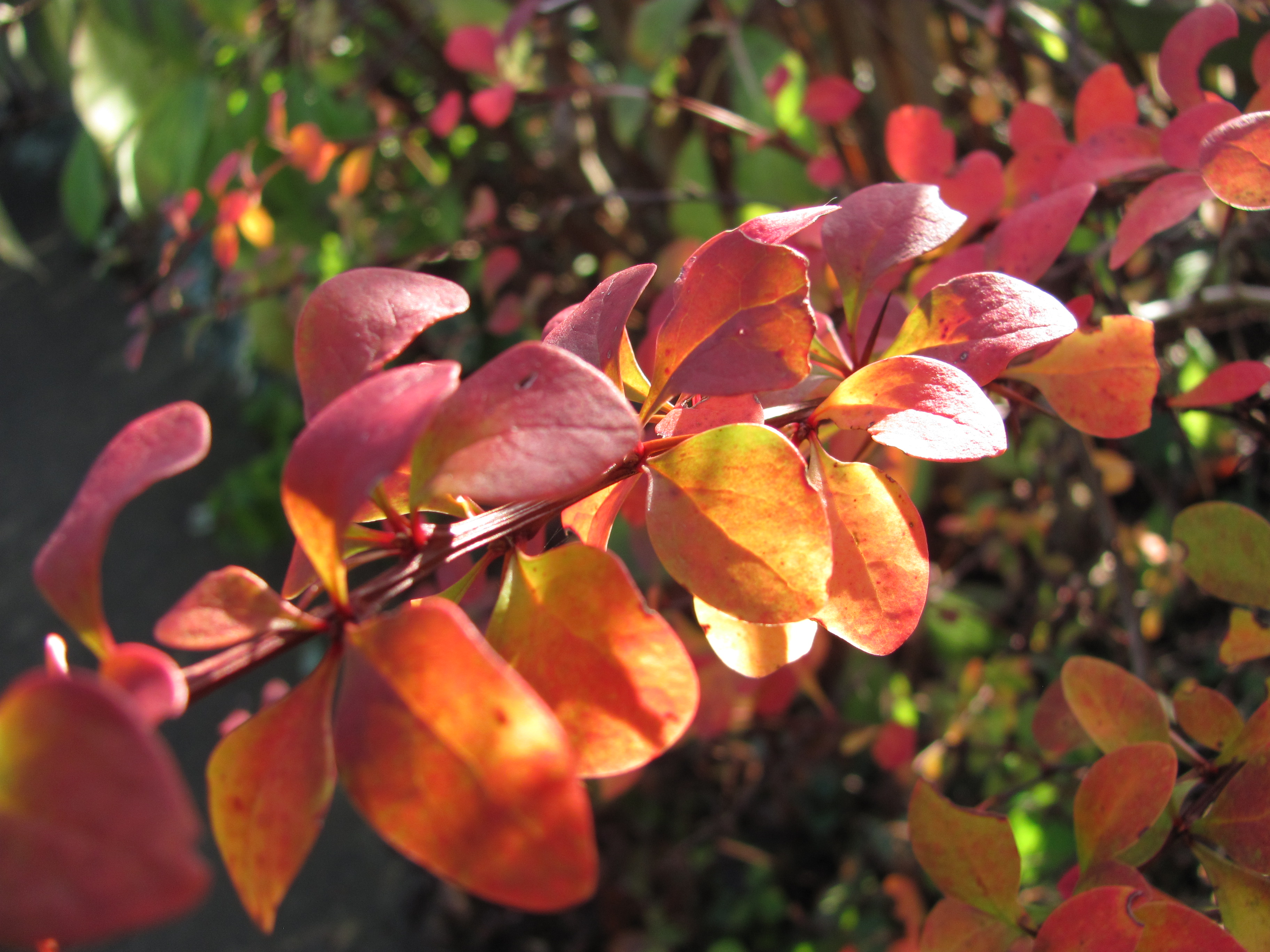
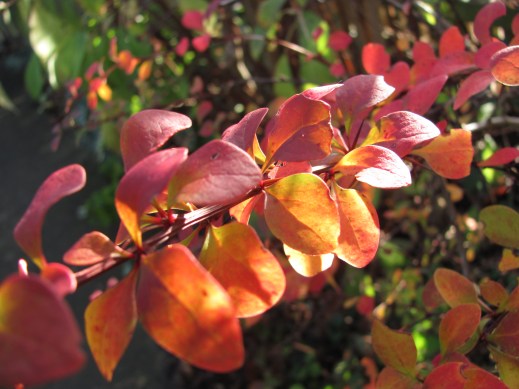
And in sharp contrast  to the delicate senecio, the bristly character of the berberis, purple in summer now turns to the red and orange tones of fire. In the shadow of the house wall a small nettle leaved plant clambers over the ground with its matt dry textured foliage shaded with silver, plum and purple. no artist could have designed these leaves.
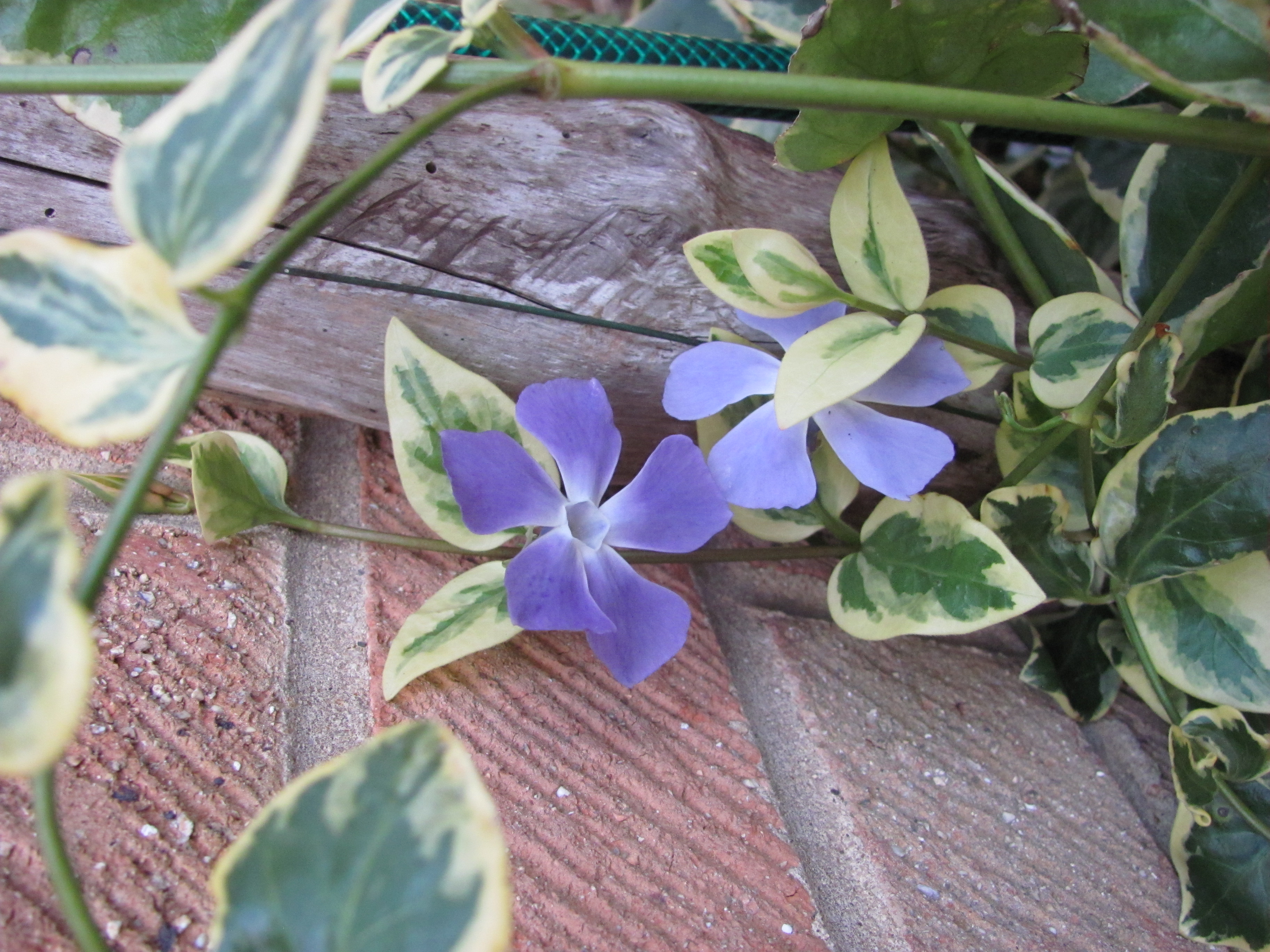
Close by the variegated periwinkle, Vinca major, defies the season and manages two pure blue blooms.

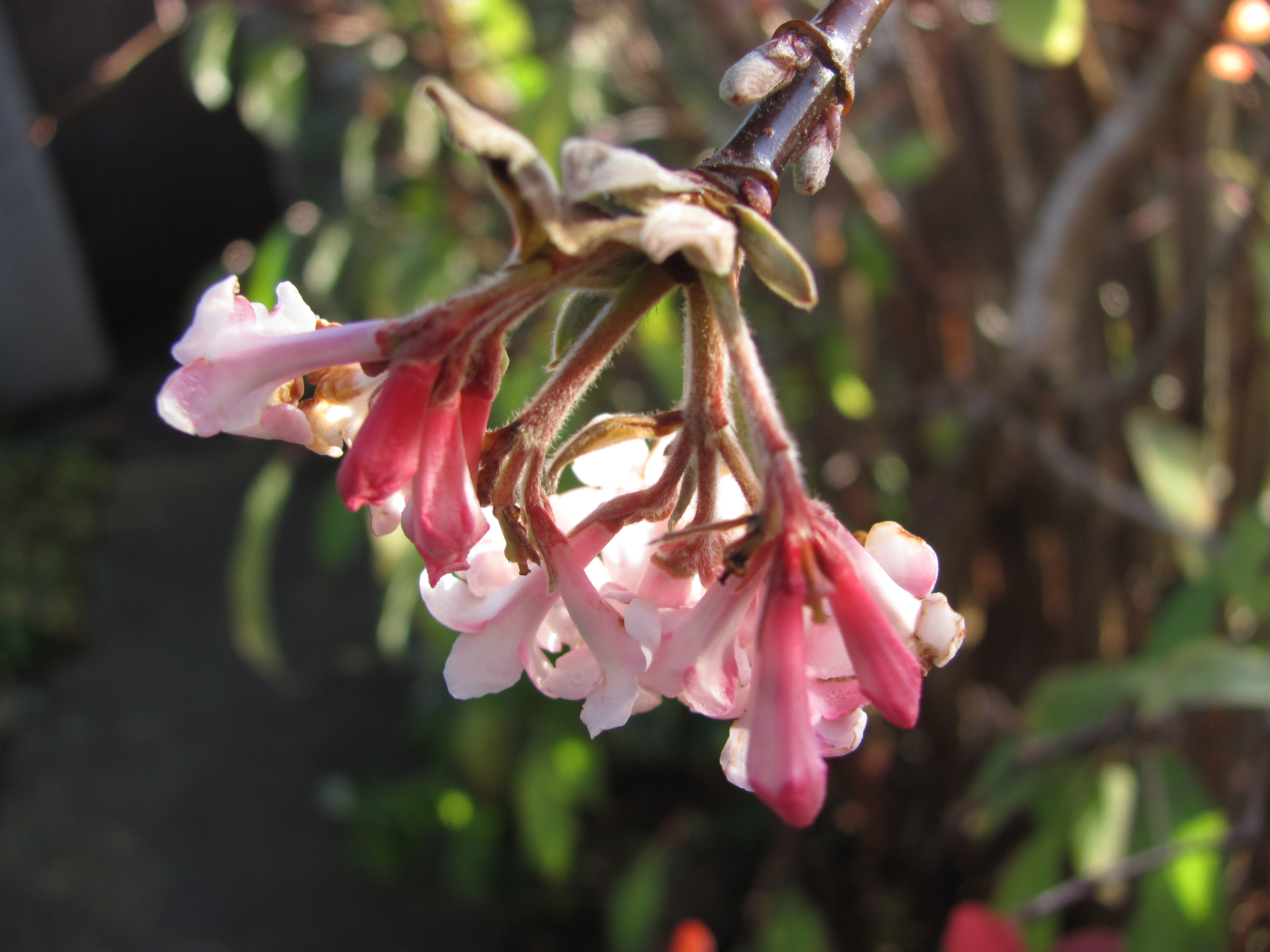
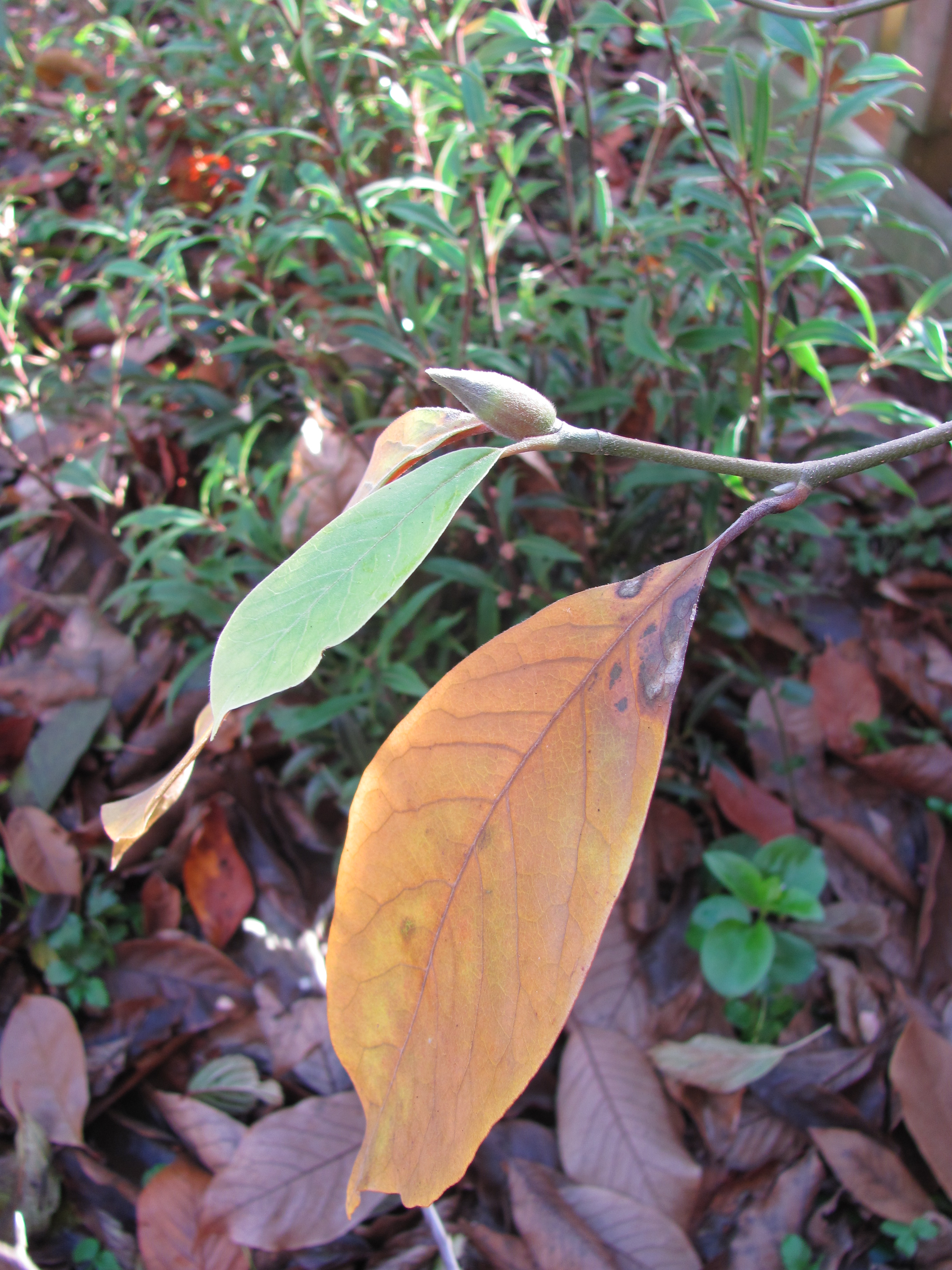
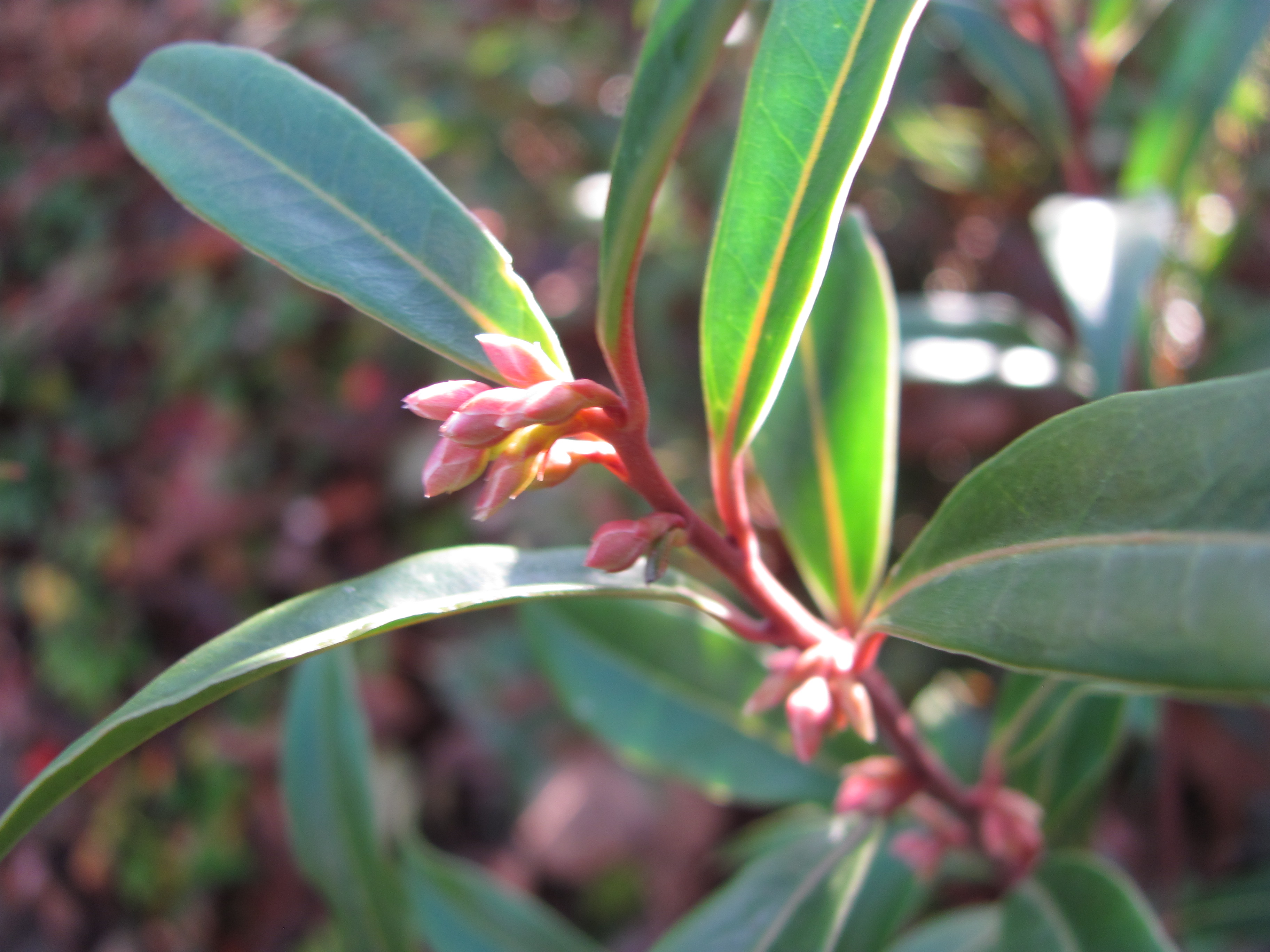
Promises of scent and colour from late winter and early spring flowers are evidence of rapidly changing seasons, the few lonely pink-blushed blooms of Viburnum bodnantense “Dawn” remind us of the profusion there is in waiting, while the soft-furred pointed buds of magnolia hide all its promises of scent and waxy petalled blooms. Sarcococca is an amazing name for a shrub. In the summer it is quite a dull little waxy leaved evergreen but below its branches are hung with tiny buds that will open into little white gems absolutely loaded with a heavy honey scent at the most unlikely time, January and February. Such a treat, and this one is planted alongside the garden path, just where it can treat anyone passing by.

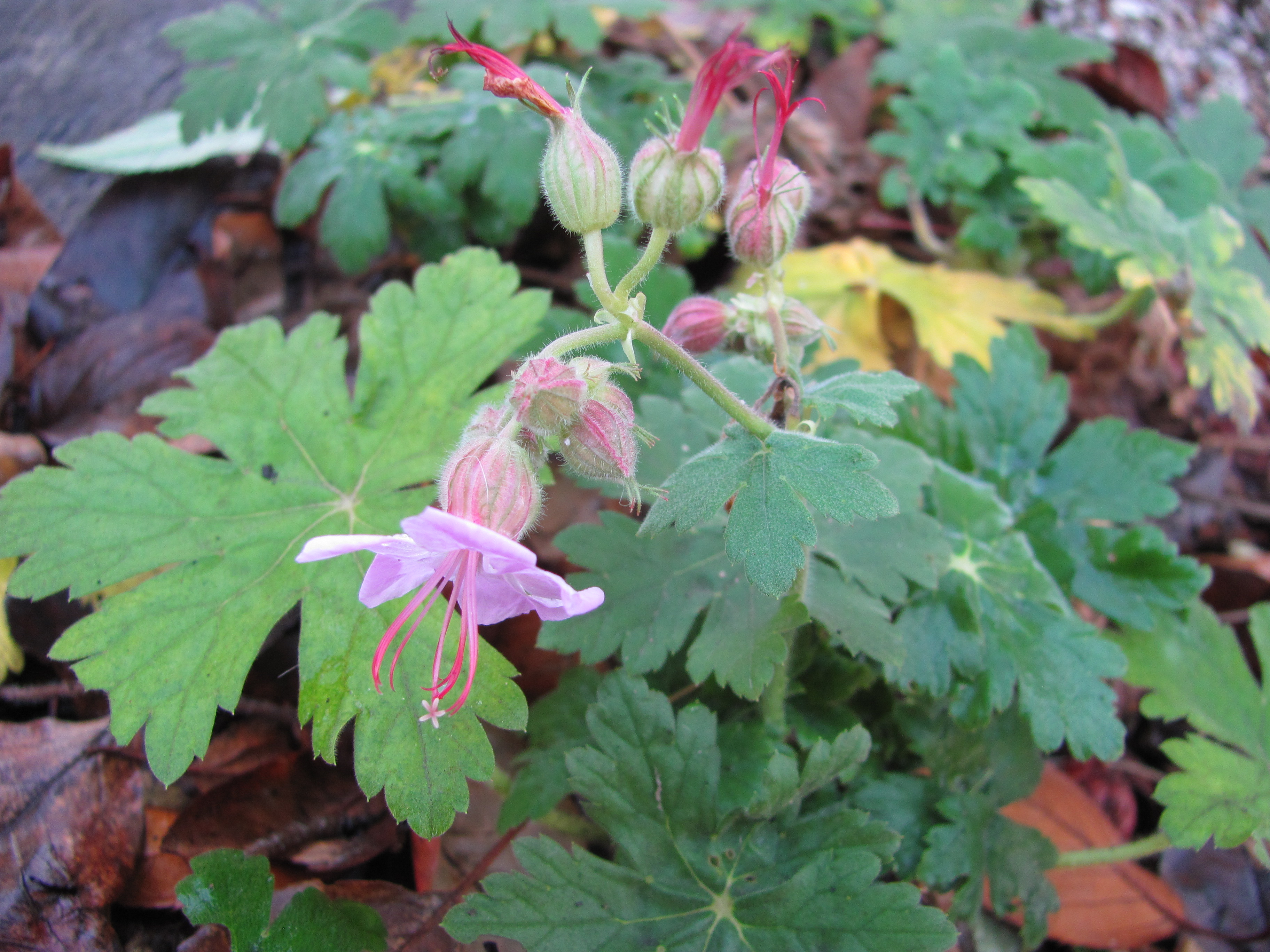
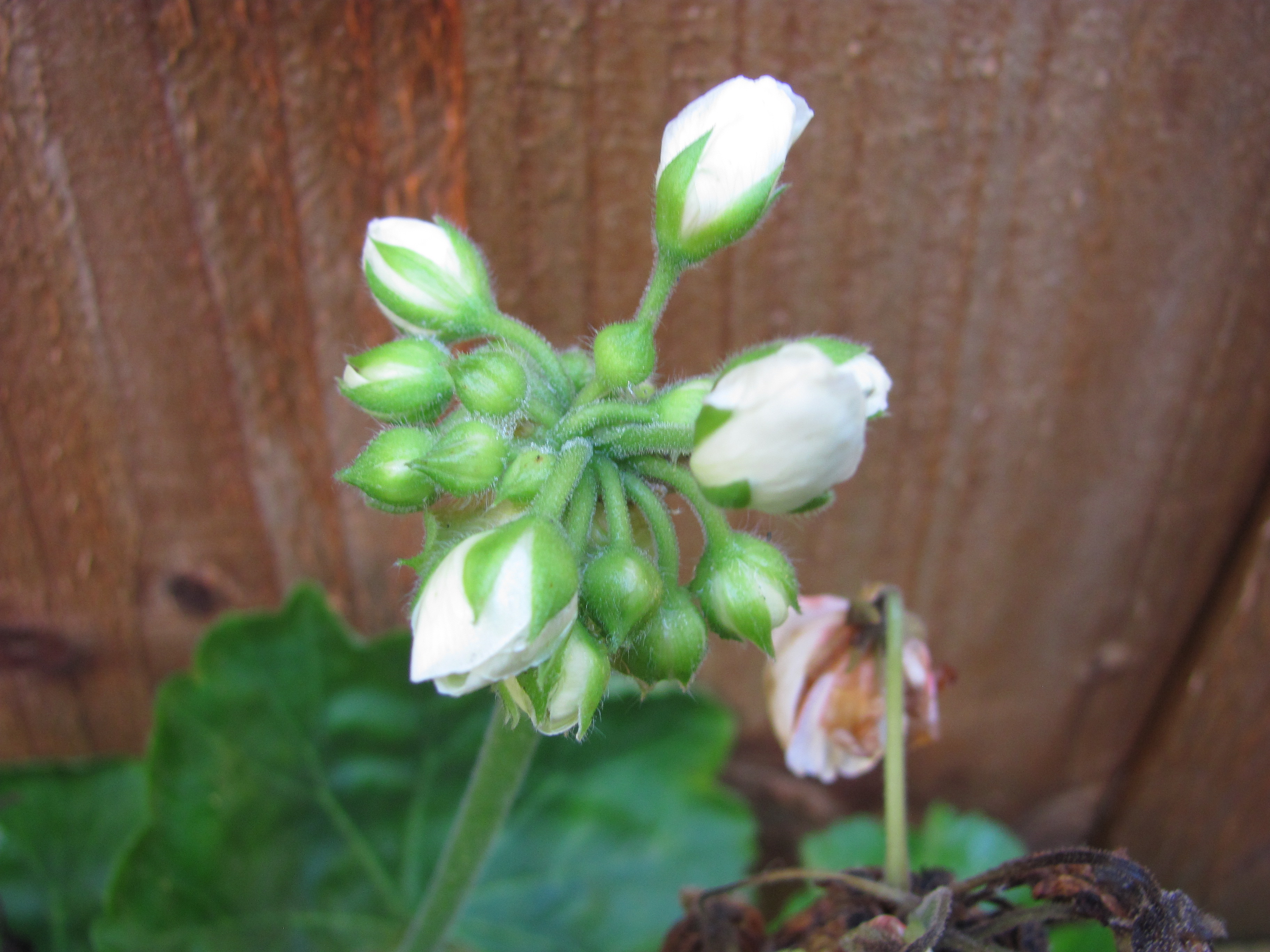
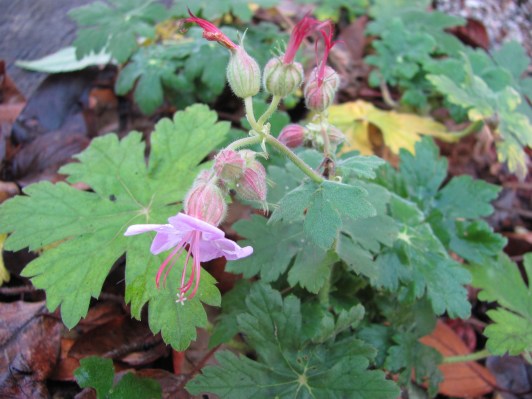
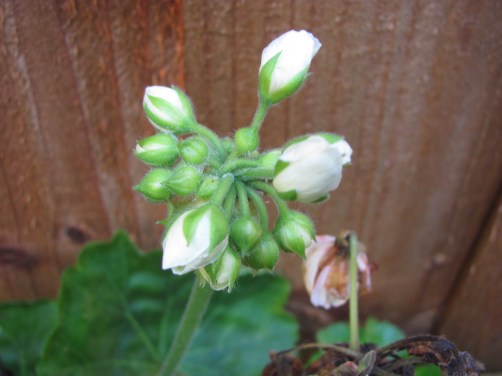
Whereas the buds of the viburnum and the magnolia are promises of future joy, other buds are remnants of the joys of summer. White buds of the annual pelargonium and the palest pink of the hardy geranium are hanging on into the cold weather. True wishful thinkers!
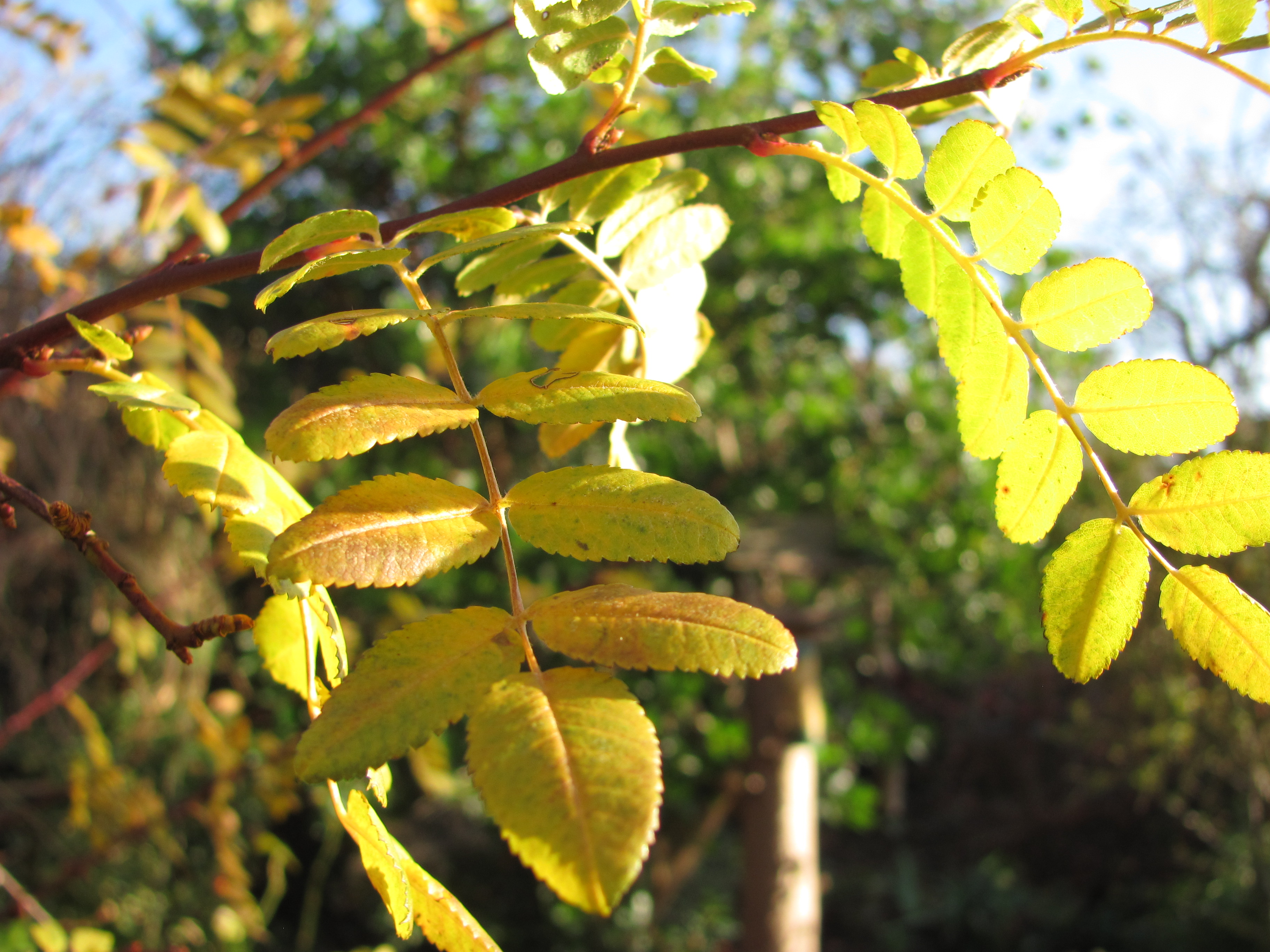
We access the front garden by passing under a rose arch, over which rambles a Canary Rose one of the earliest roses to come into bloom every year. Now its yellowness comes from its leaves glowing in the winter sun. Its foliage causes confusion as several visitors have thought it to be a rowan.

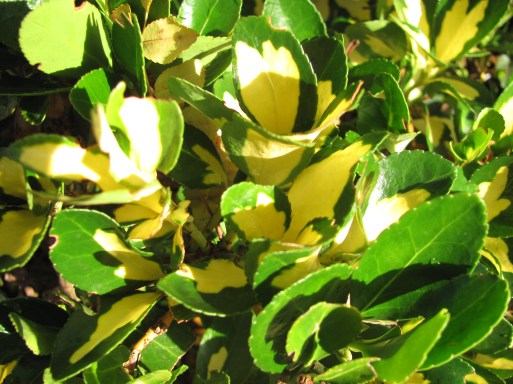
Beneath the arch the yellow of the Canary Rose is precisely reflected in the deep yellow of the richly variegated euonymus.
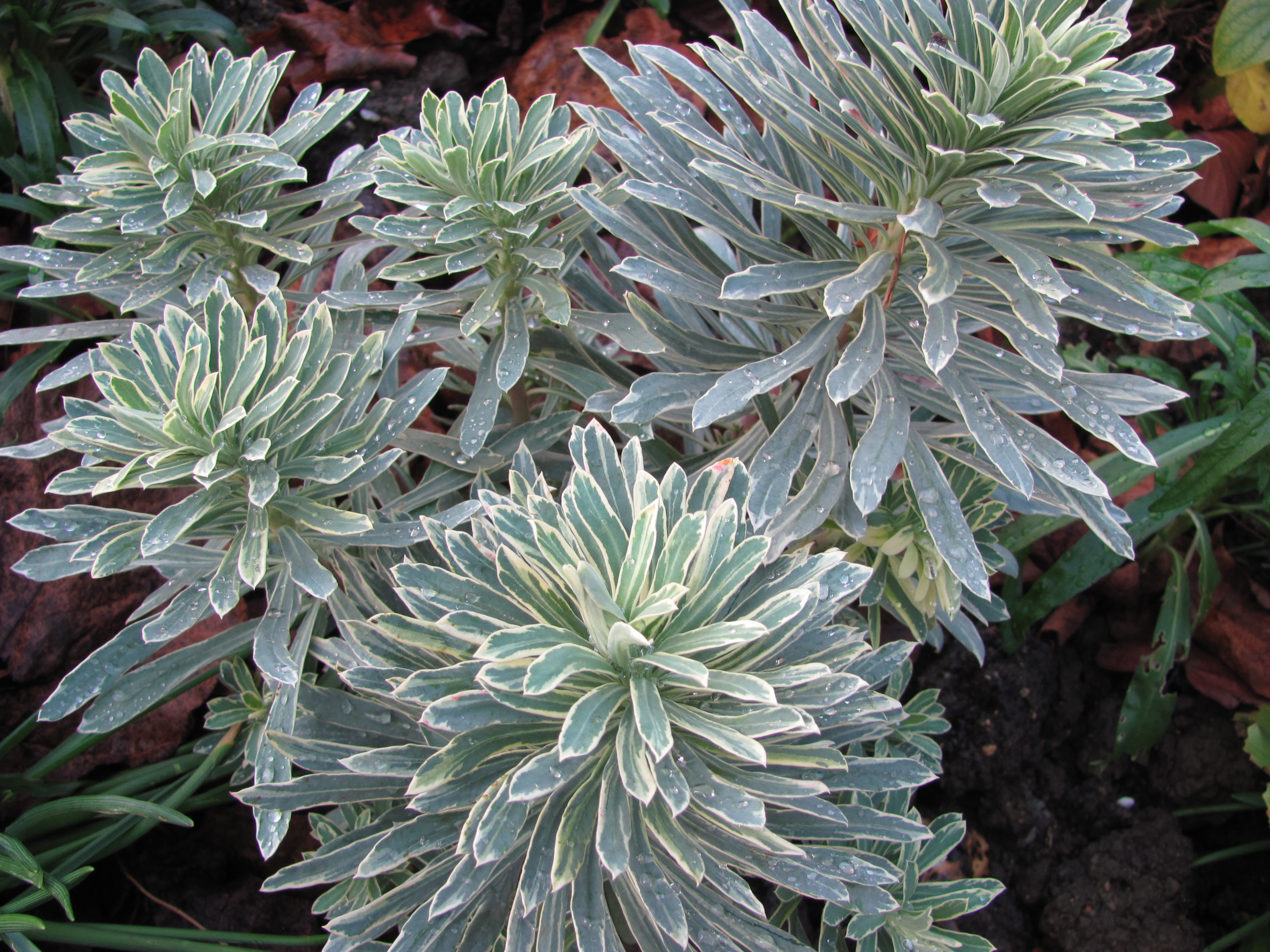
In the front the white, silver and cream variegated euphorbia is far more noticeable than at any other time of year even though it never changes.

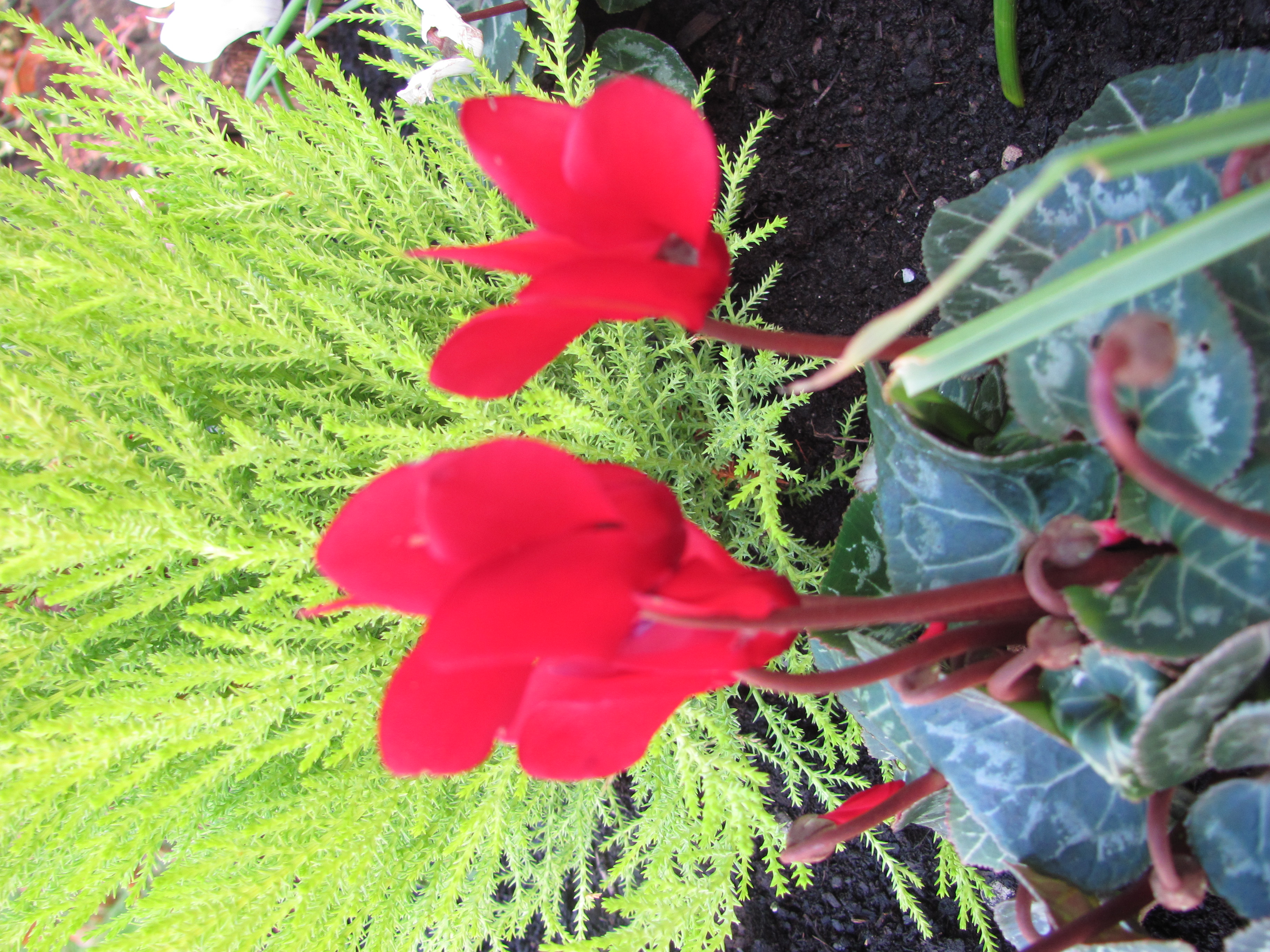
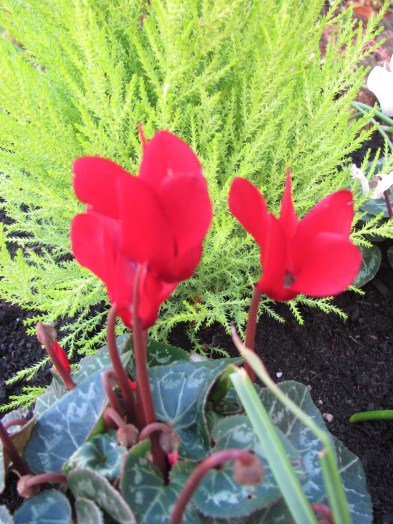
Tubs at the front have been planted to give bursts of colour mostly from cyclamen. Why can I accept such bright colours and clashes in the winter when I would find them undesirable the rest of the year?
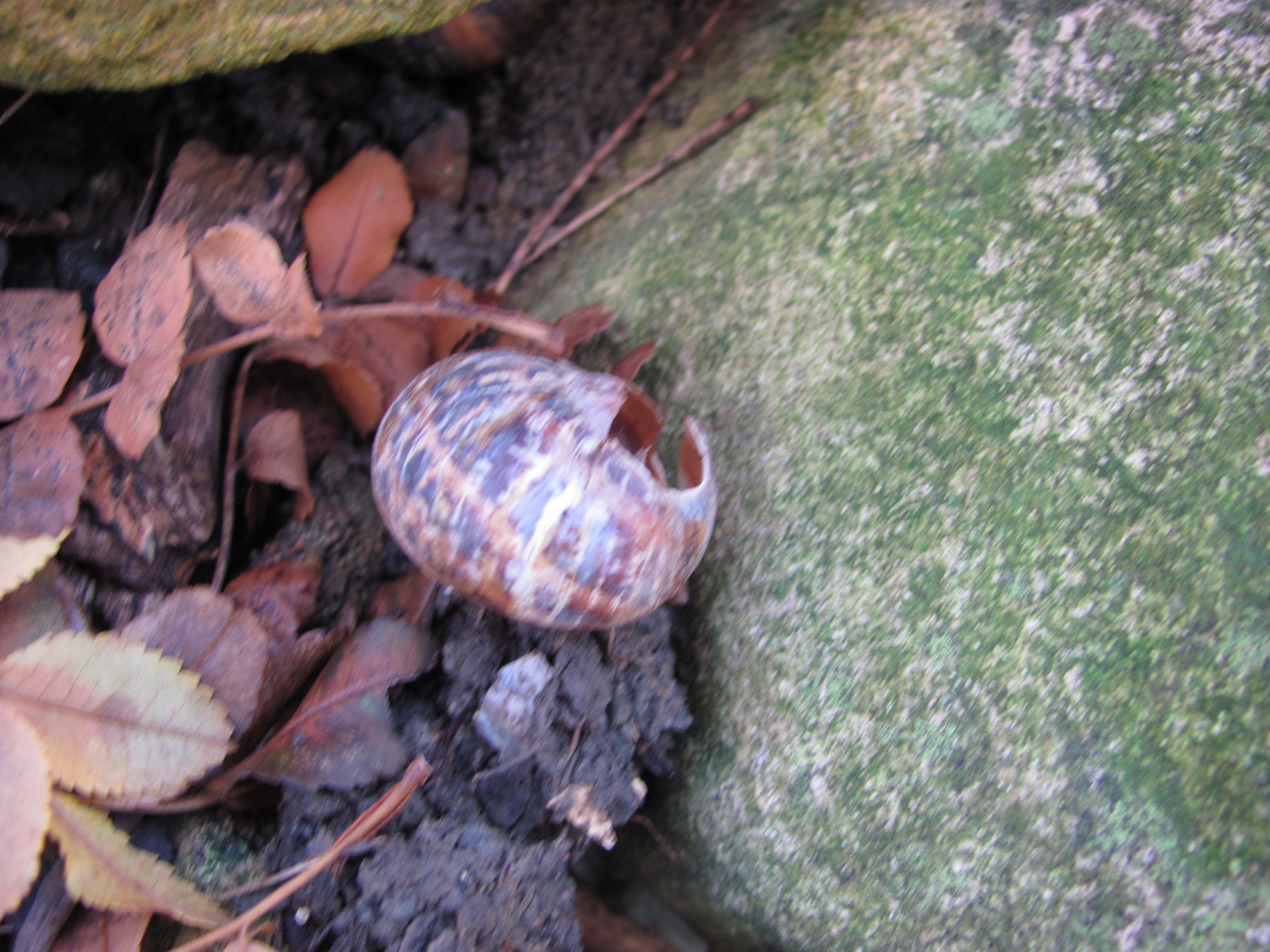
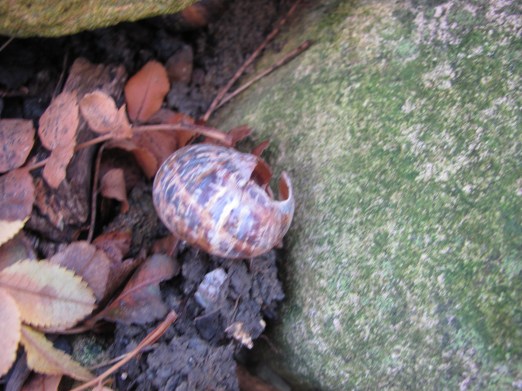
In the short stretch of low dry stone wall, between two levels of garden, I spied this snail-shell, providing just a hint at the many hibernating molluscs hidden in its warmth.
This Veggie Life

A Vegetarian | Nature Lifestyle Blog

Rambling in the Garden

.....and nurturing my soul

The Arch City Gardener

Journeys In St. Louis Gardening and Beyond

Garden Dreaming at Châtillon

Consult the genius of the place

Storyshucker

A blog full of humorous and poignant observations.
gardeninacity

Notes from a wildlife-friendly cottage garden

PlayGroundology

...an emerging social science

The Official Blog of British Wildlife

'The most important and informative publication on wildlife of our times' - The Independent. This blog is a member of The UK & Ireland Natural History Bloggers group: www.uknhb.blogspot.com

iGrowHort

Inspire - Cultivate - Grow Native Plants - Restore Landscapes

Bishops Meadow Trust

To create and protect a semi-natural wild space for the people of Farnham to enjoy and experience an array of British wildlife in our town

Gardening with Children

The www.gardeningwithchildren.co.uk Blog

UKbirdingtimeline

birding through the seasons, why birds matter and how to conserve them

NATURE WALKER

with a camera in hand

Jardin

Transform your outdoor space

Eva's space

My allotment, cooking and other interests

Old School Garden

my gardening life through the year

LEANNE COLE

Trying to live a creative life

fromacountrycottage

trying to live as lightly as possible on our beautiful planet

Good Life Gardening

Nature lovers from Leicester living the good life.

mybeautfulthings

Finding the beautiful in the everyday

mawsonmichelle

Michelle's Allotment

In and Out of My Garden

thoughts from and about my garden

Greenhousing

Big plans for a small garden

The Scottish Country Garden

A Walled Country Garden in South East Scotland

The Fruity Chicken

Life at the fruity chicken

willowarchway

Off grid living. Self sufficient. "PERMAGANICS RULE".

St Anns Allotments

Nottingham's Grade 2* Listed Allotments and Community Orchard

Manifest Joy Harvests

a journey in suburban vegetable gardening

Allotmental

The madness of growing your own

Penny's Garden: a harvest beyond my front door

A novel approach to vegetable gardening

arignagardener

Sustainable living in the Irish countryside.

NewEnglandGardenAndThread

Master Gardener, amateur photographer, quilter, NH native, and sometimes SC snowbird

dianajhale

Recent work and work in progress and anything else that interests me

planthoarder

a chaotic cottage gardener

Lens and Pens by Sally

a weekly blog that creates a personal philosophy through photographs and words

Dewdrops and Sunshine

Stories from a sassy and classy Southern farmbelle.

The Pyjama Gardener

Simple Organic Gardening & Seasonal Living

gettin' fresh!

turning dirt into dinner

JOY...

today the world is created anew

Garden Birds

Notes from a Devon garden

ShootAbout

Life Through The Lens

Adapting Pixels

A photography blog showcasing the best photography pictures and videos on the internet

Wildlifegardening's Blog

Just another WordPress.com site

naturestimeline

personal observations from the natural world as the search continues for a new approach to conservation.

LATEBLOOMERBUDS

The Wonders of Life through my Eyes, my Heart, my Soul