Categories
garden photography gardens open to the public Land Art outdoor sculpture photography the South

David Nash at Kew Gardens – Part 1

Can you have a better day than this? Outdoor sculpture collection with one of the world’s best exponents – David Nash. The only World Heritage Site that is a garden – Kew. And the best company possible – Jude and our four kids (we started off with two but they each gained another).

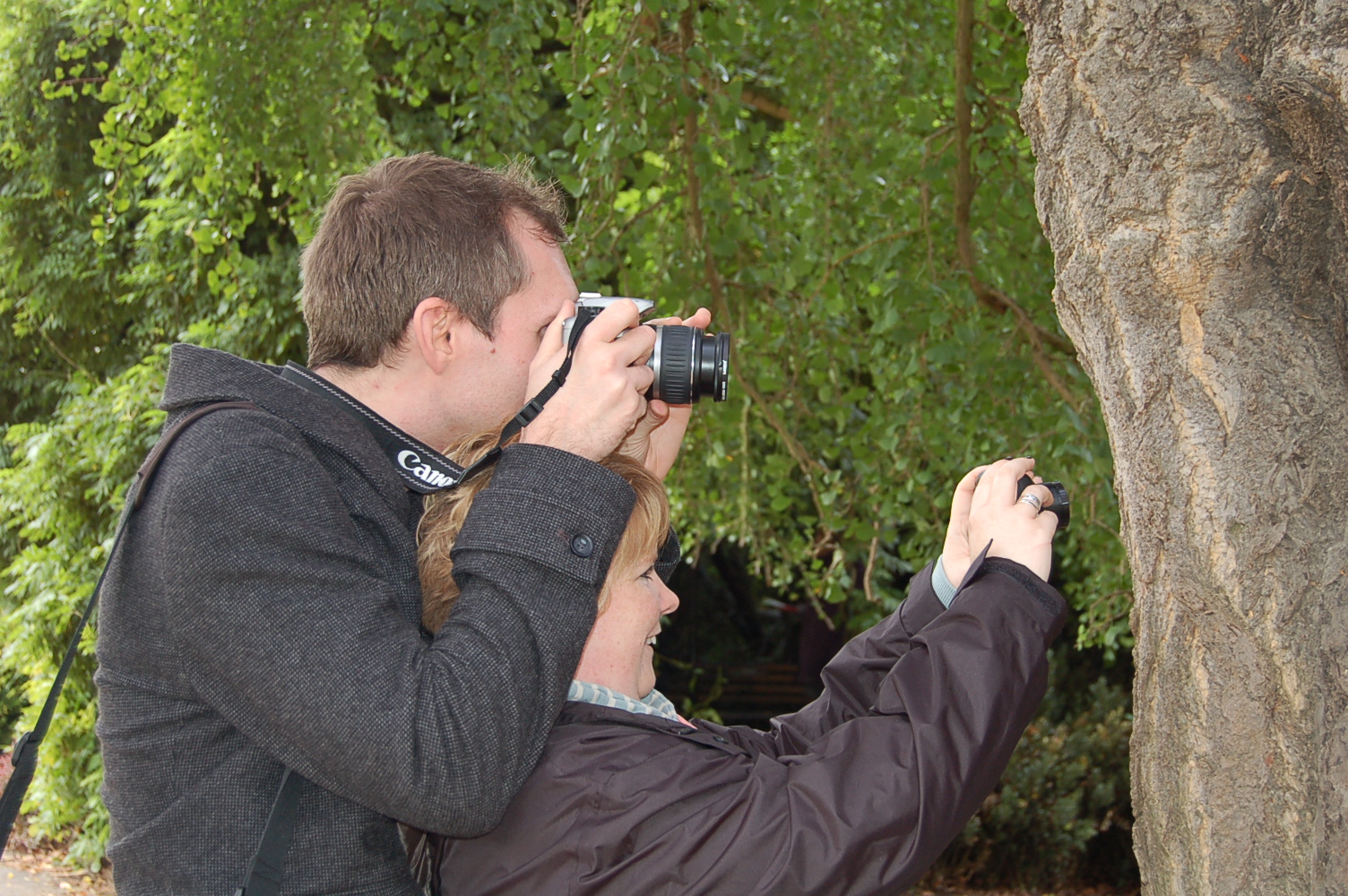
And here they are (well just four of them) taking a break in the Temperate House. Apart from Jude and Sam we are all camera-toters so it is impossible to get a pic of us all together as there is always at least one left somewhere composing their artistic endeavours.

We drove down to London in drizzle and mist – a miserable journey through beautiful countryside we couldn’t see, but after a night’s rest in a comfy hotel room we met our four kids in the White Peaks Cafe just inside the world of Kew. The day was a great improvement over yesterday but as we left the car our ears were subjected to the cacophony of noise made by the parakeets now dominating the parks of the capital. They do not fit here at all. Our native Jays in their subtle outfits of pink and blue were much more in keeping.

Lattes and lemonades safely stored away we followed the Kew App that sent us on the trail of the collection of David Nash pieces. It was over a year since we had seen his retrospective exhibition at the Yorkshire Sculpture Park so we were more than ready to appreciate his work again.

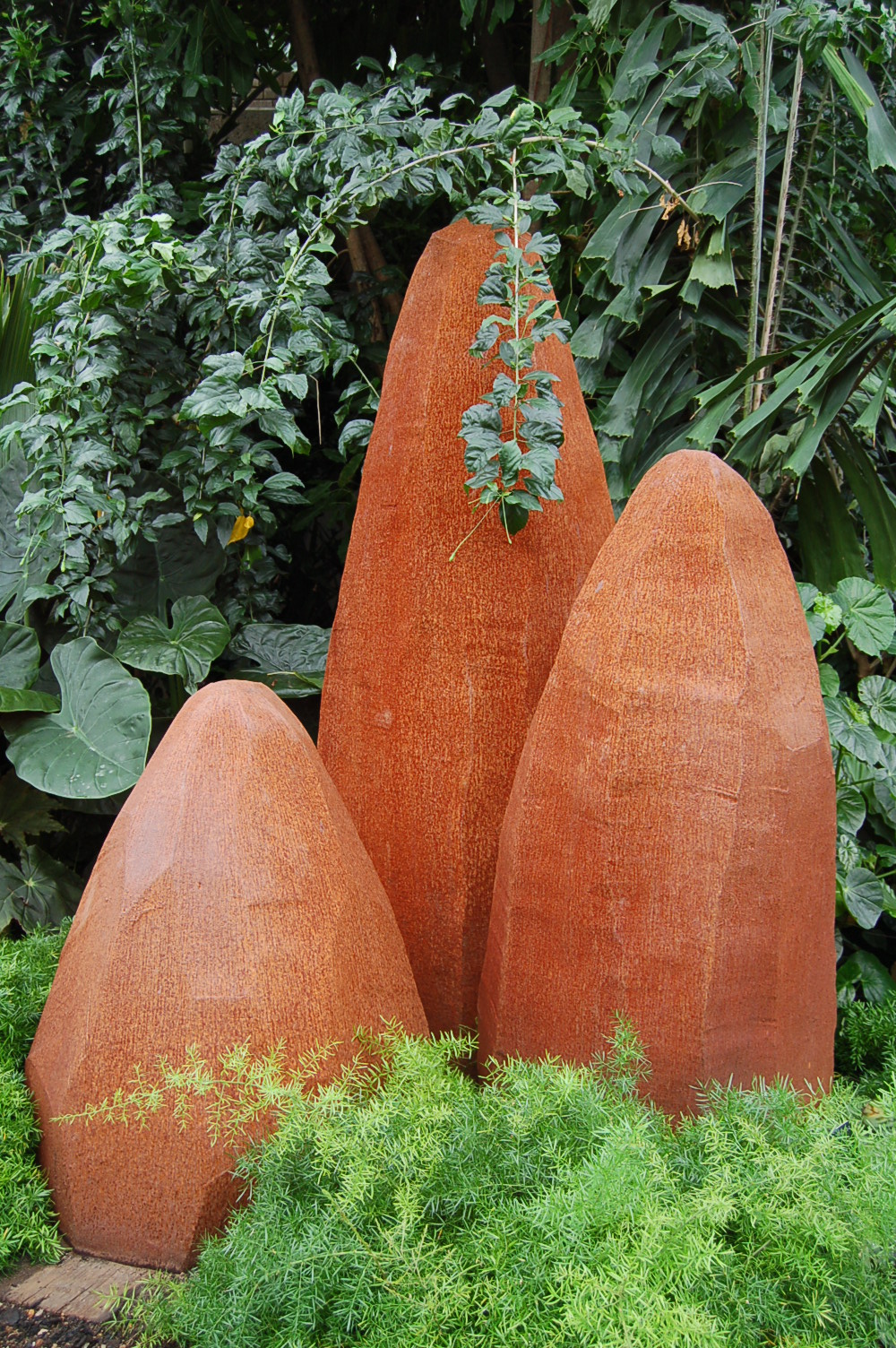
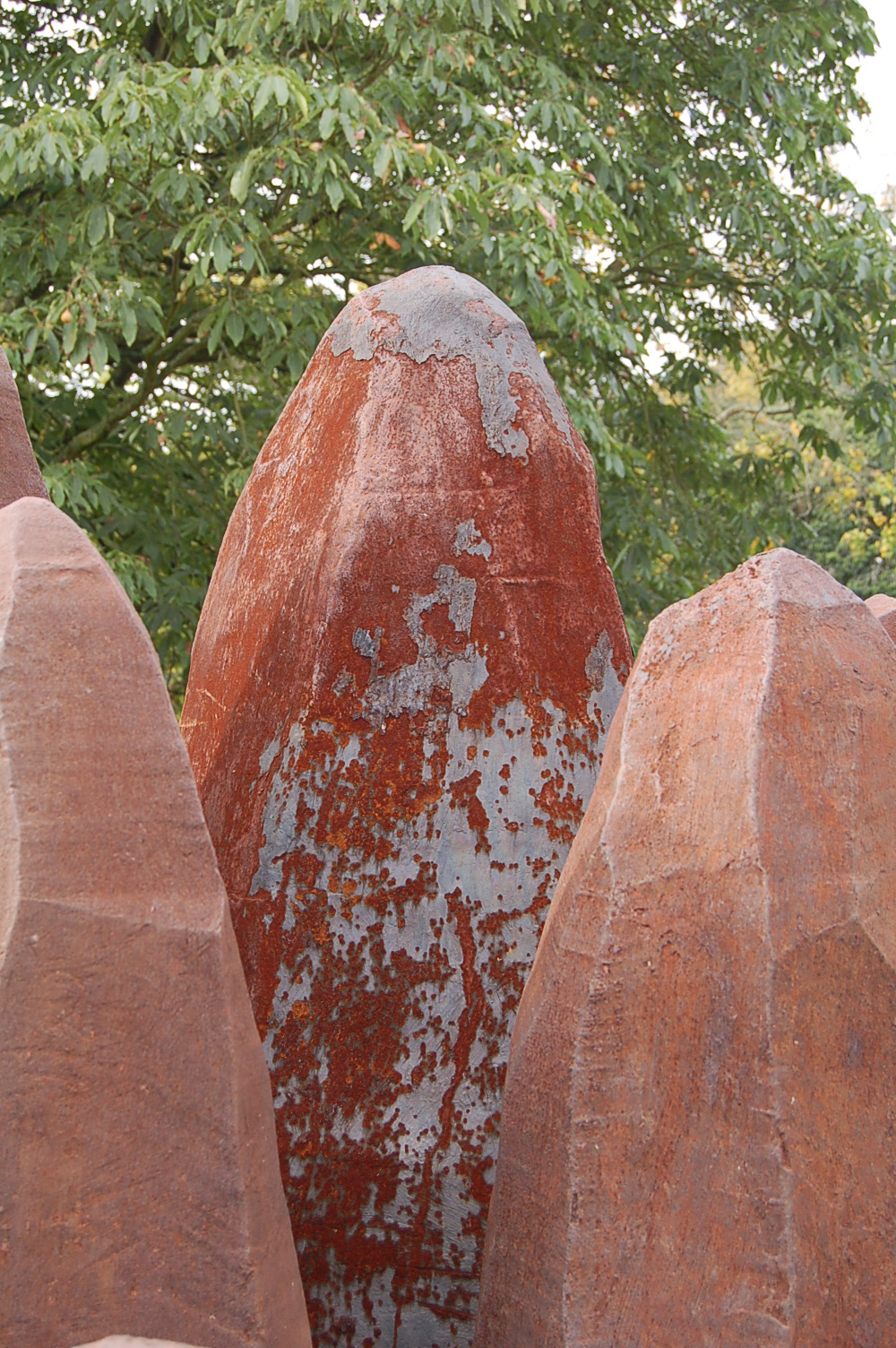
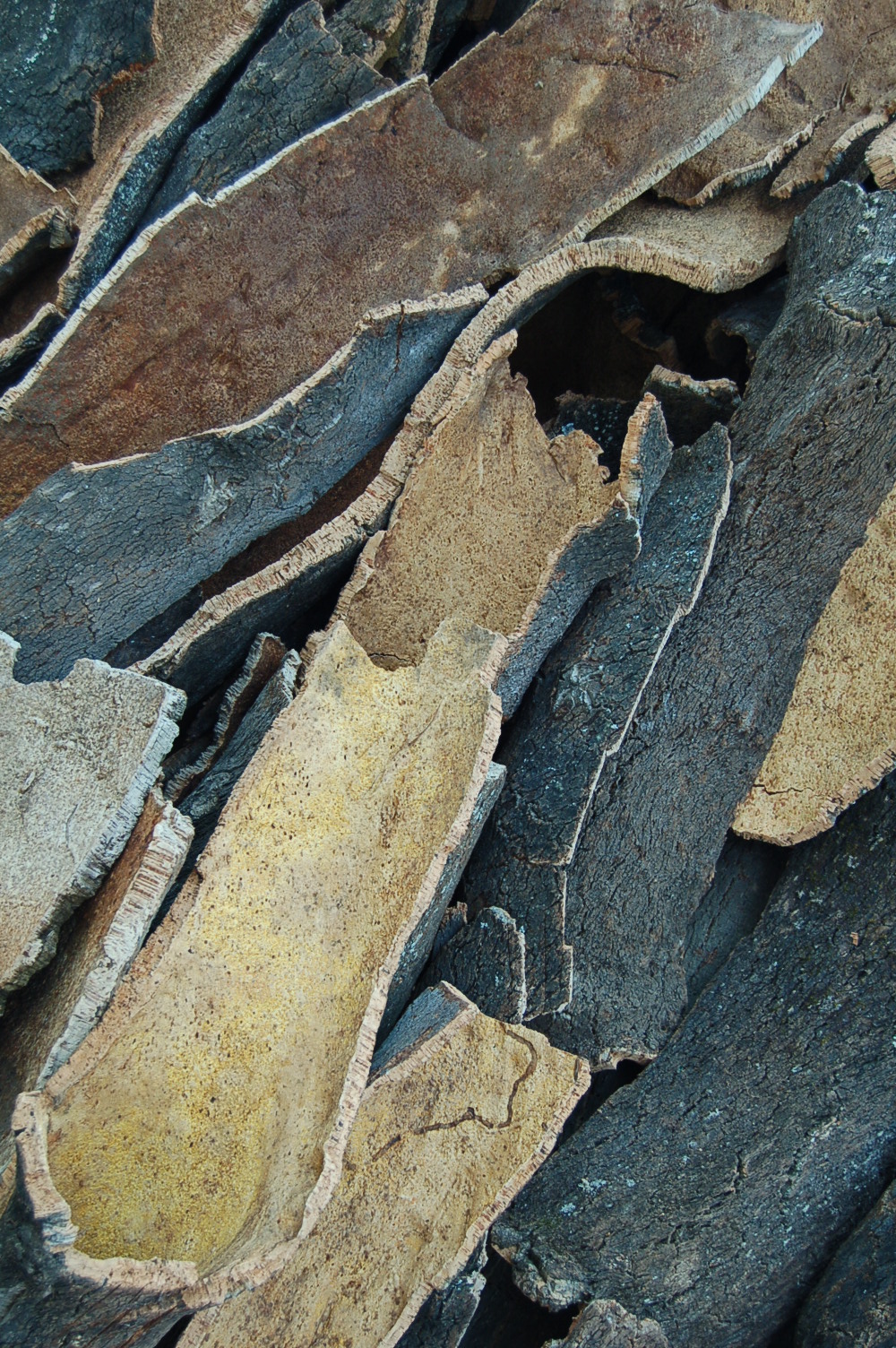
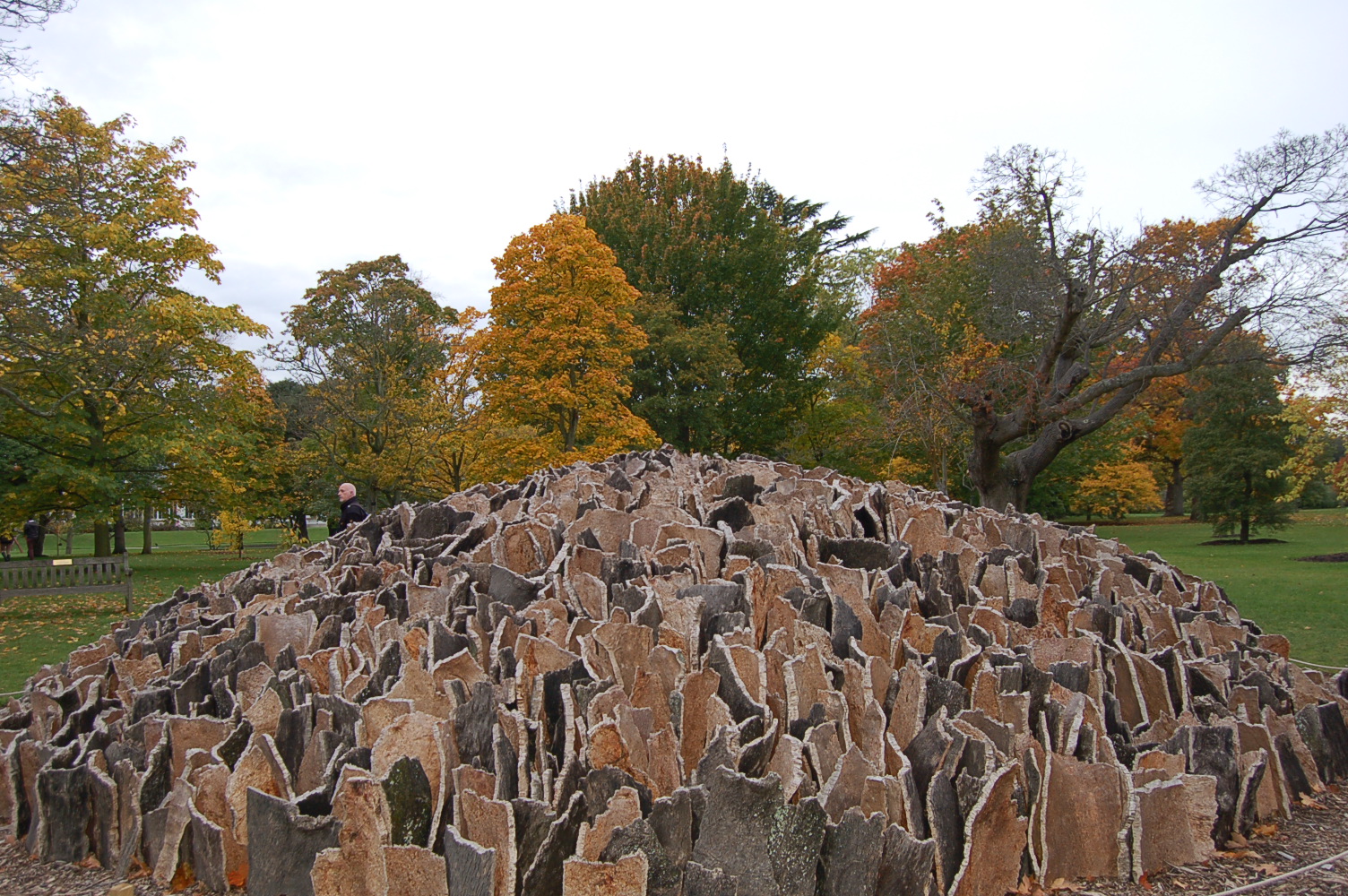
Two of my favourite pieces were created from strips of cork oak bark, a huge cone in the conservatory and a low dome out in the open.

As with much of his work there is beauty in the details.

Suddenly I was presented with a sighting of a wonderful juxtaposition.

So another amazing exhibition of the work of David Nash. I wonder when we shall be treated to his next?

Categories
autumn colours garden photography gardening grasses ornamental trees and shrubs photography trees

Leaves

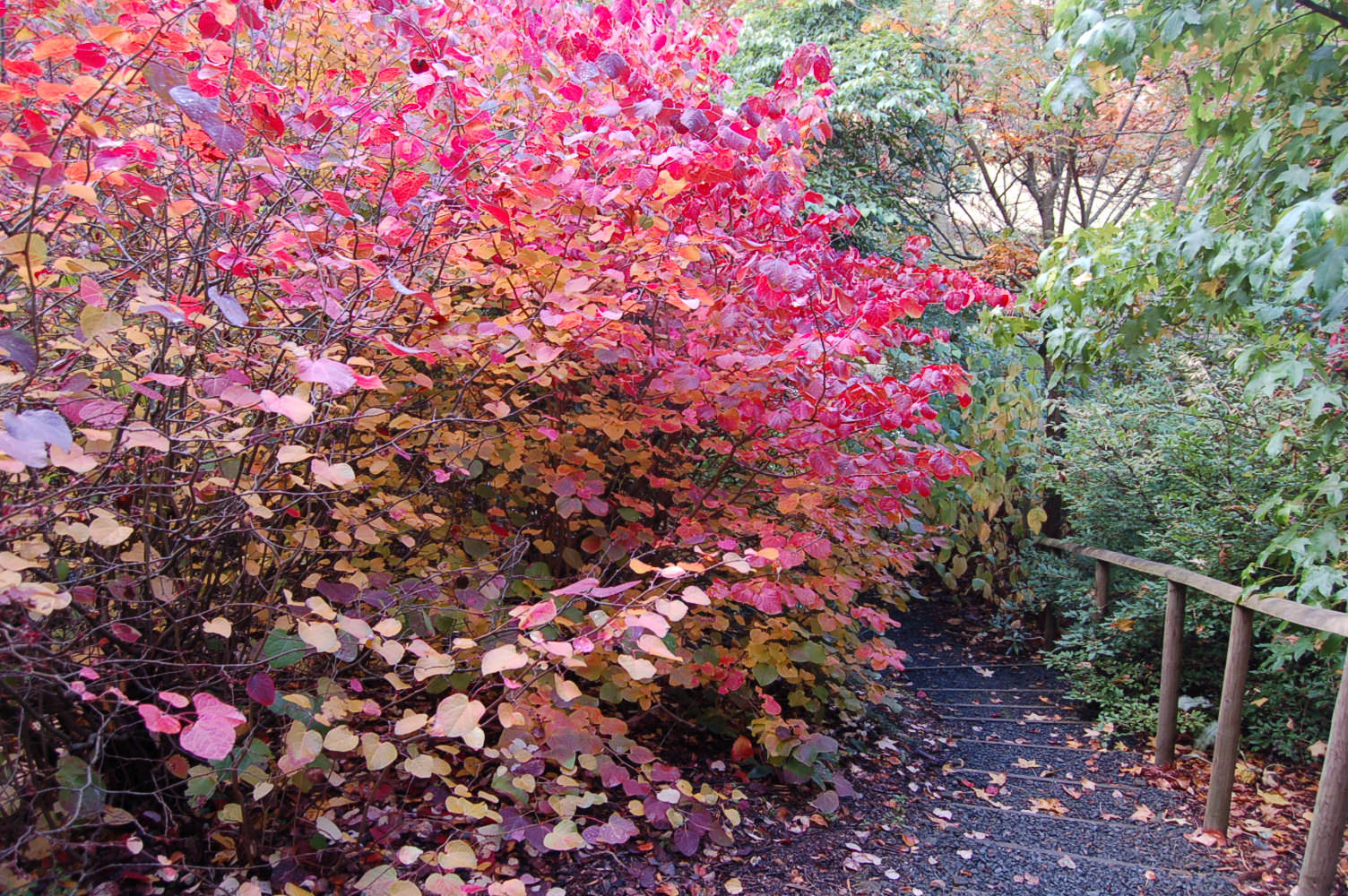
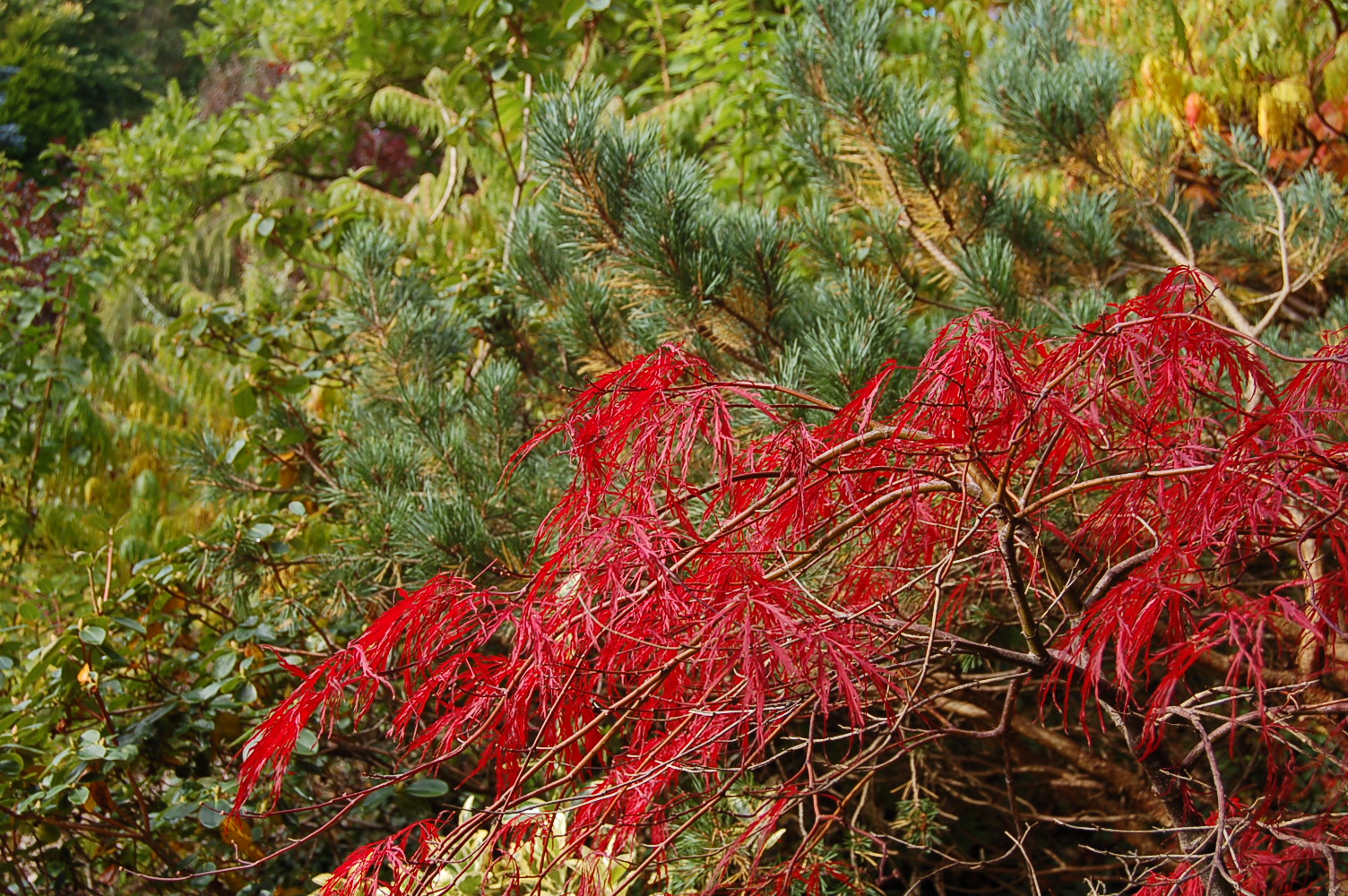
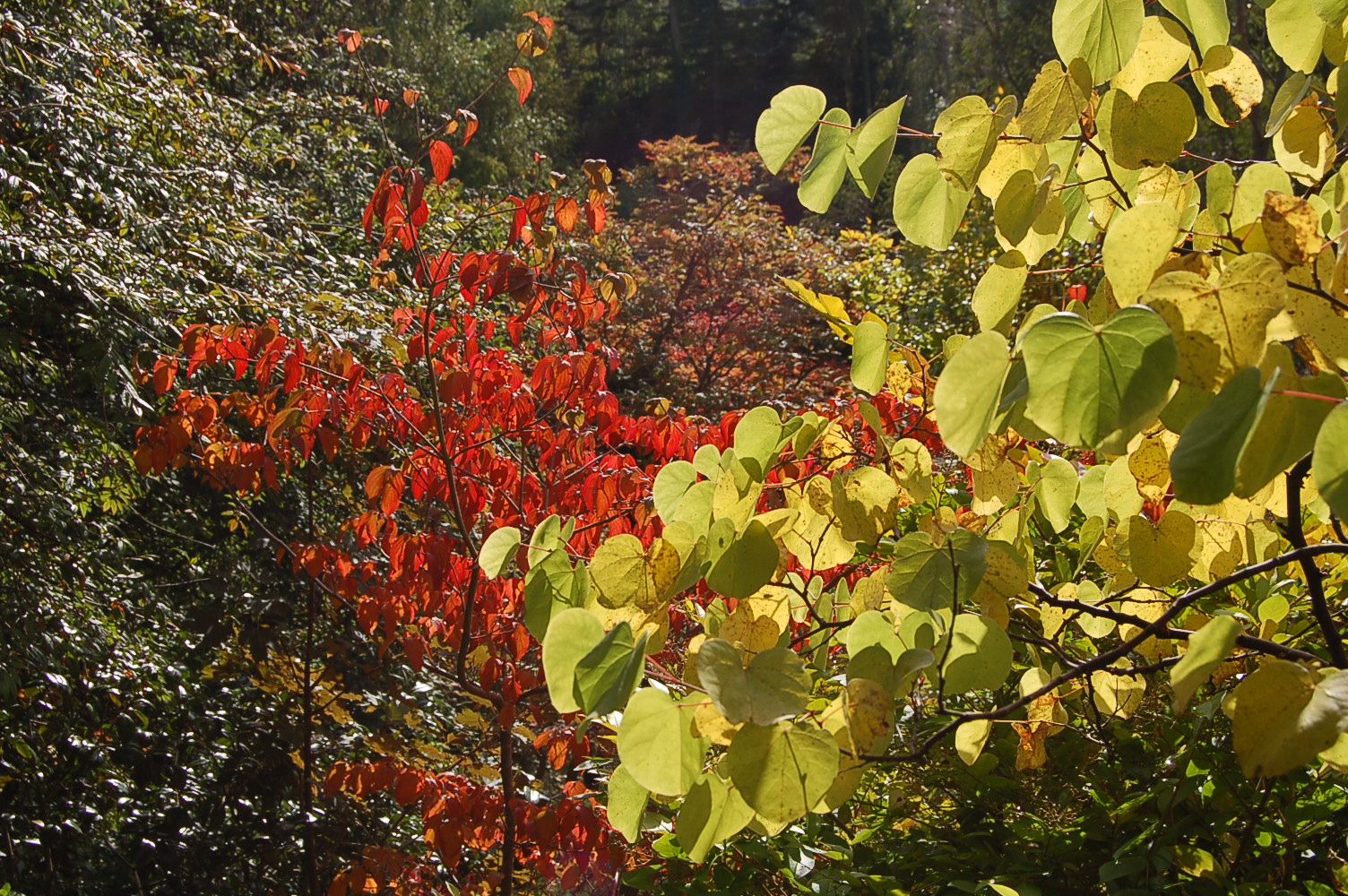
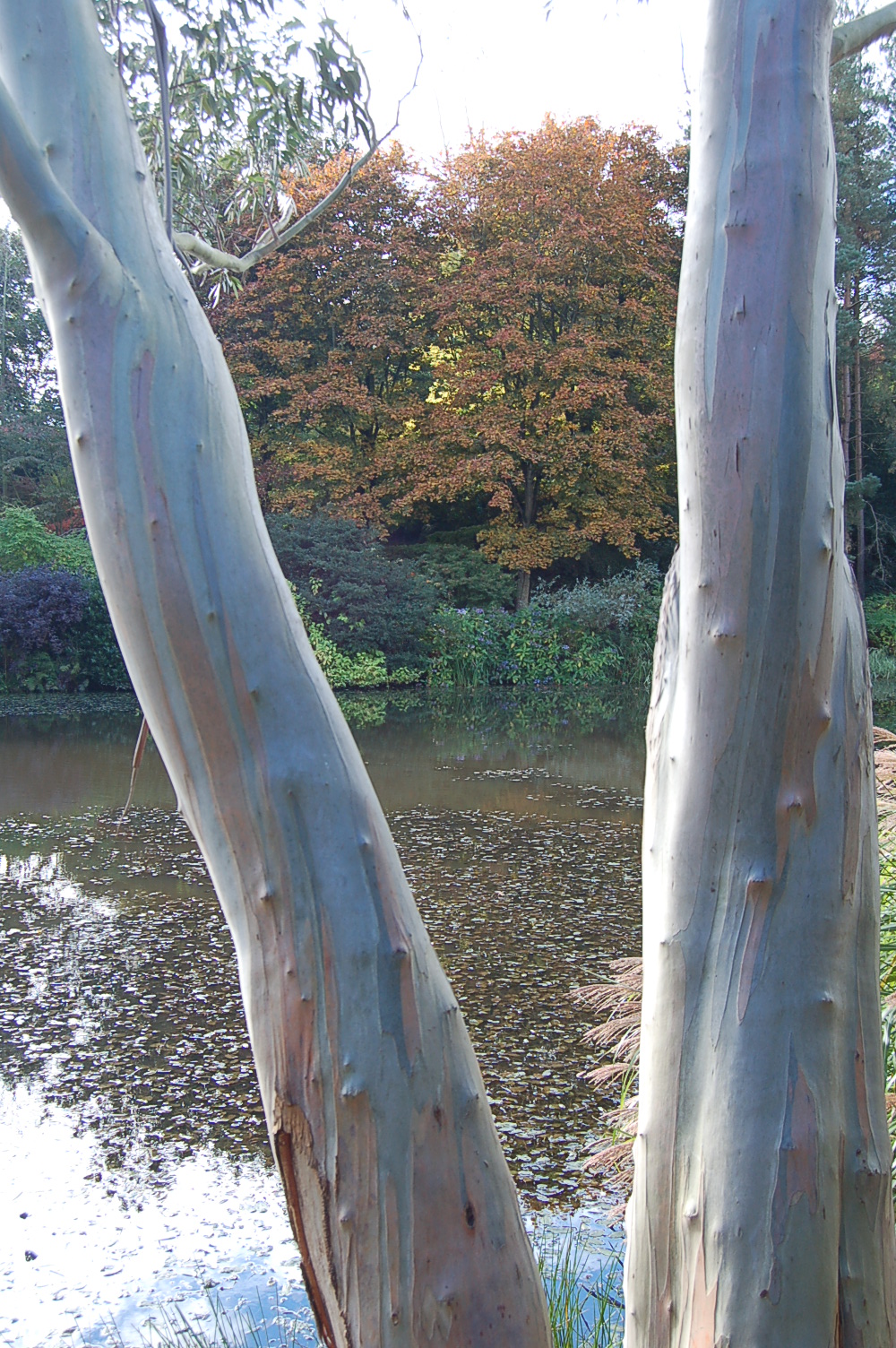
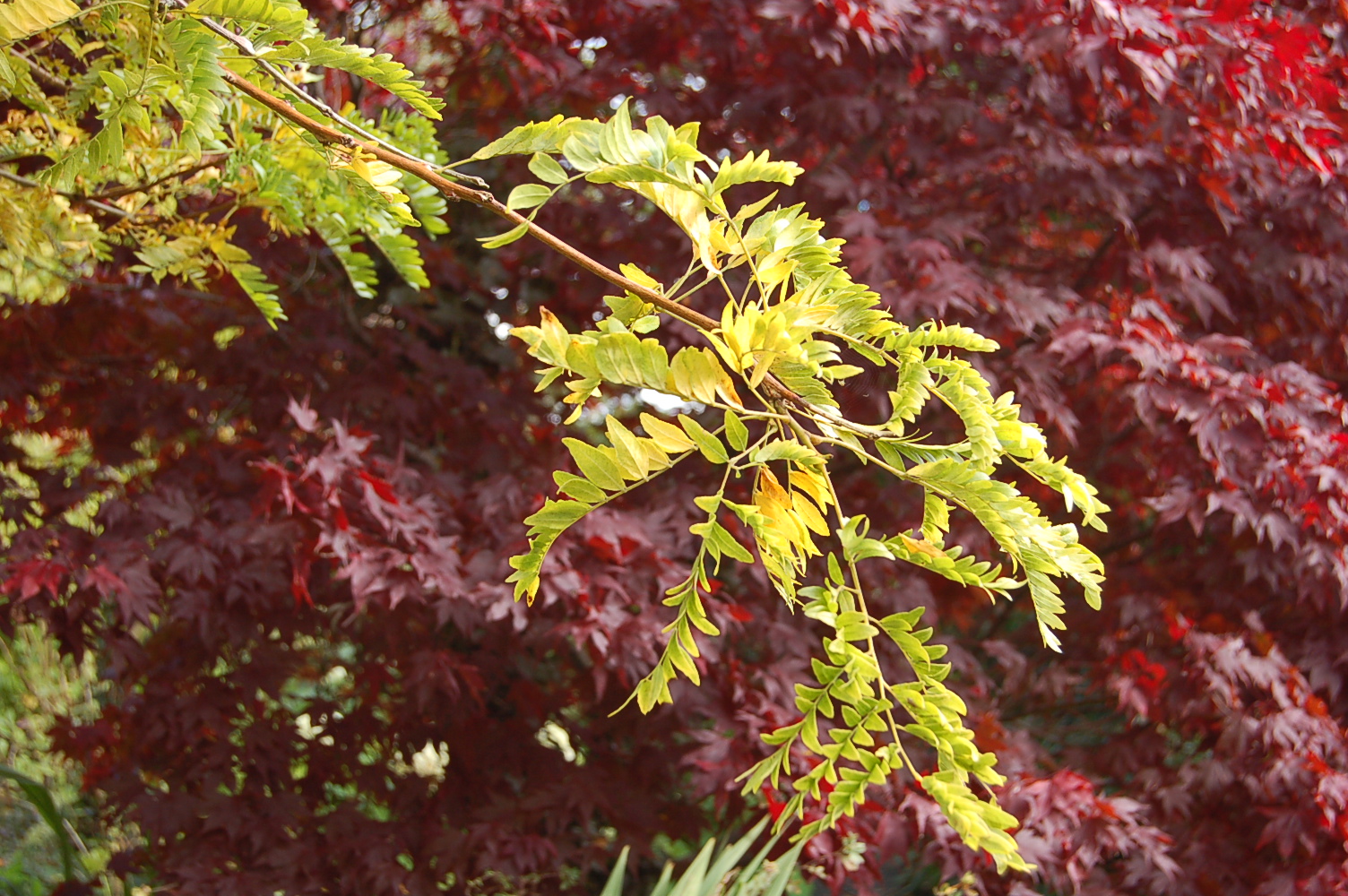
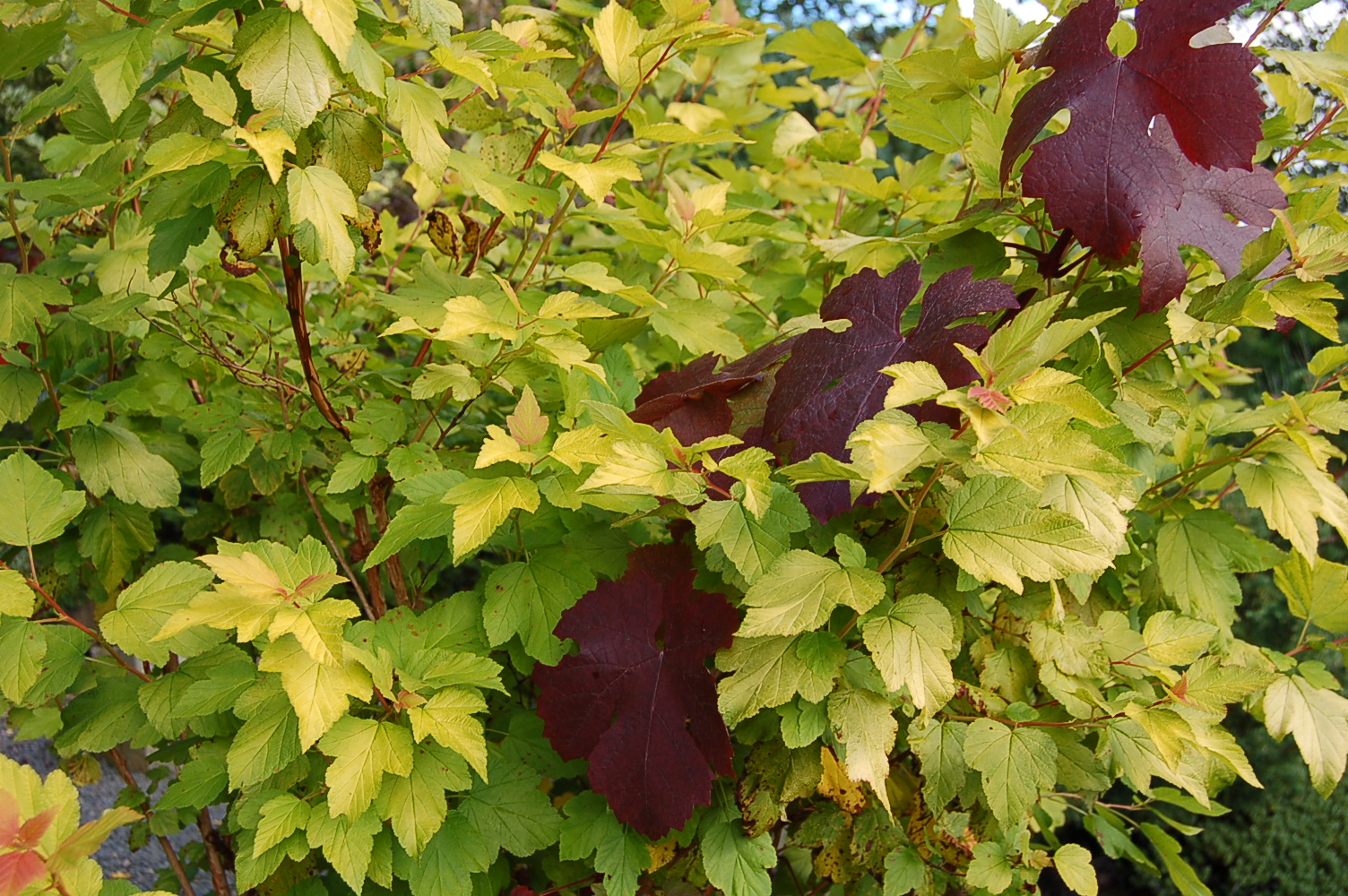
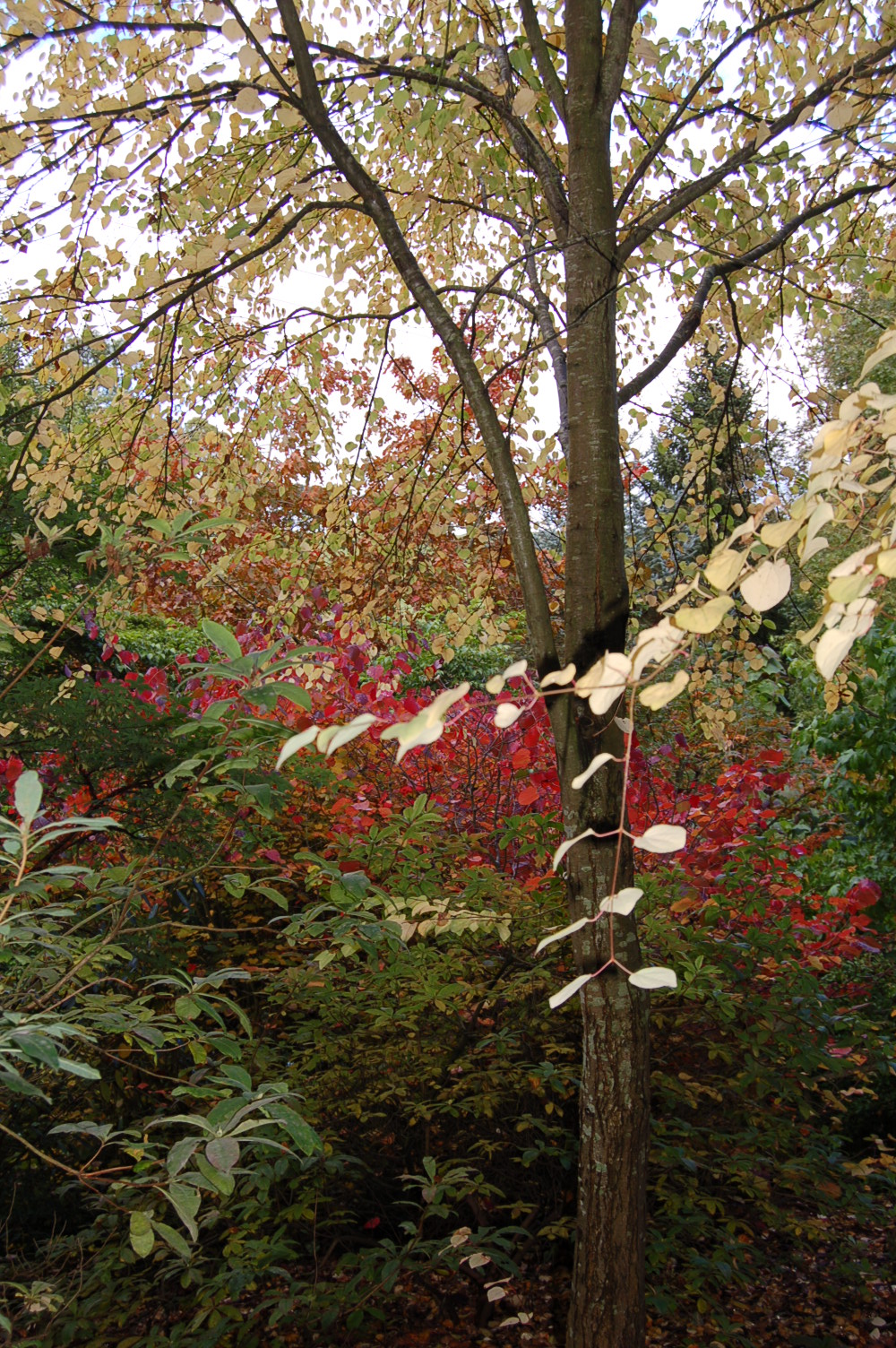
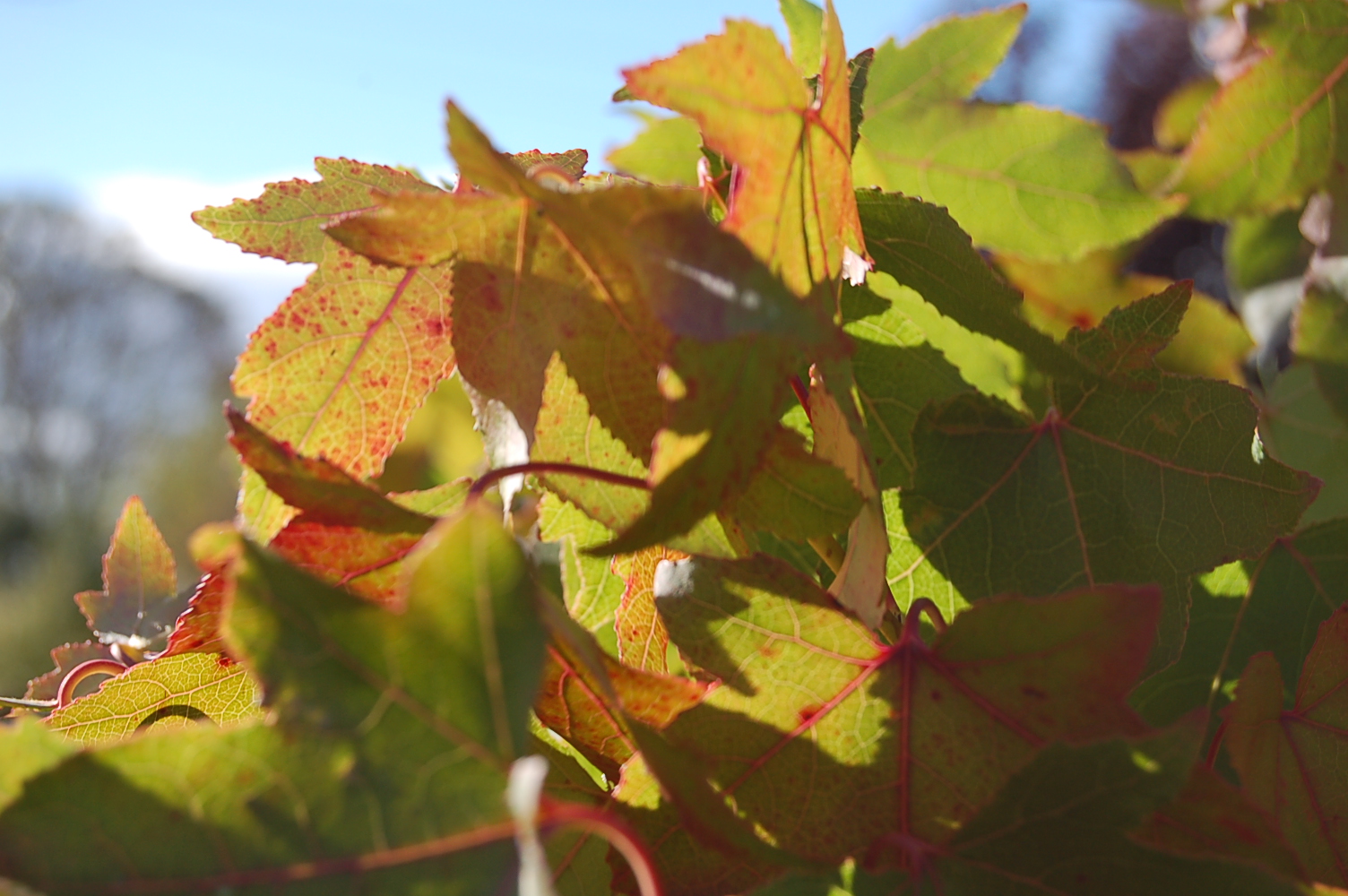
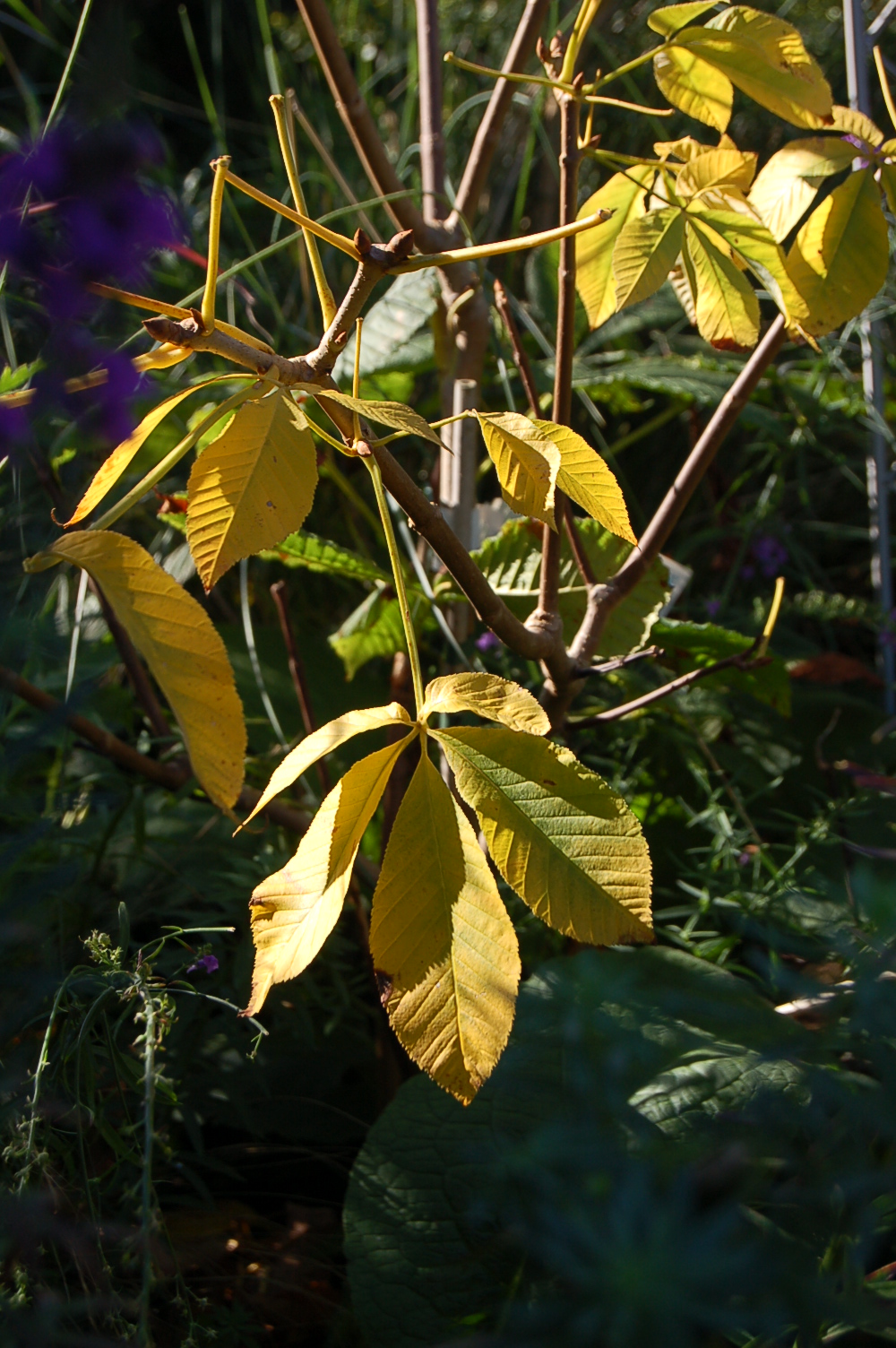
Just for a change we have no words just photographs to enjoy. A few sneak in near the end though!

If only you could smell the leaves below! They are from the tree called Cercidyphilum and they smell so sweet. I think they smell of toffee apples, Jude thinks they smell of candyfloss while others think the scents reminiscent of brittle toffee, burnt sugar, in fact anything sweet and sticky!

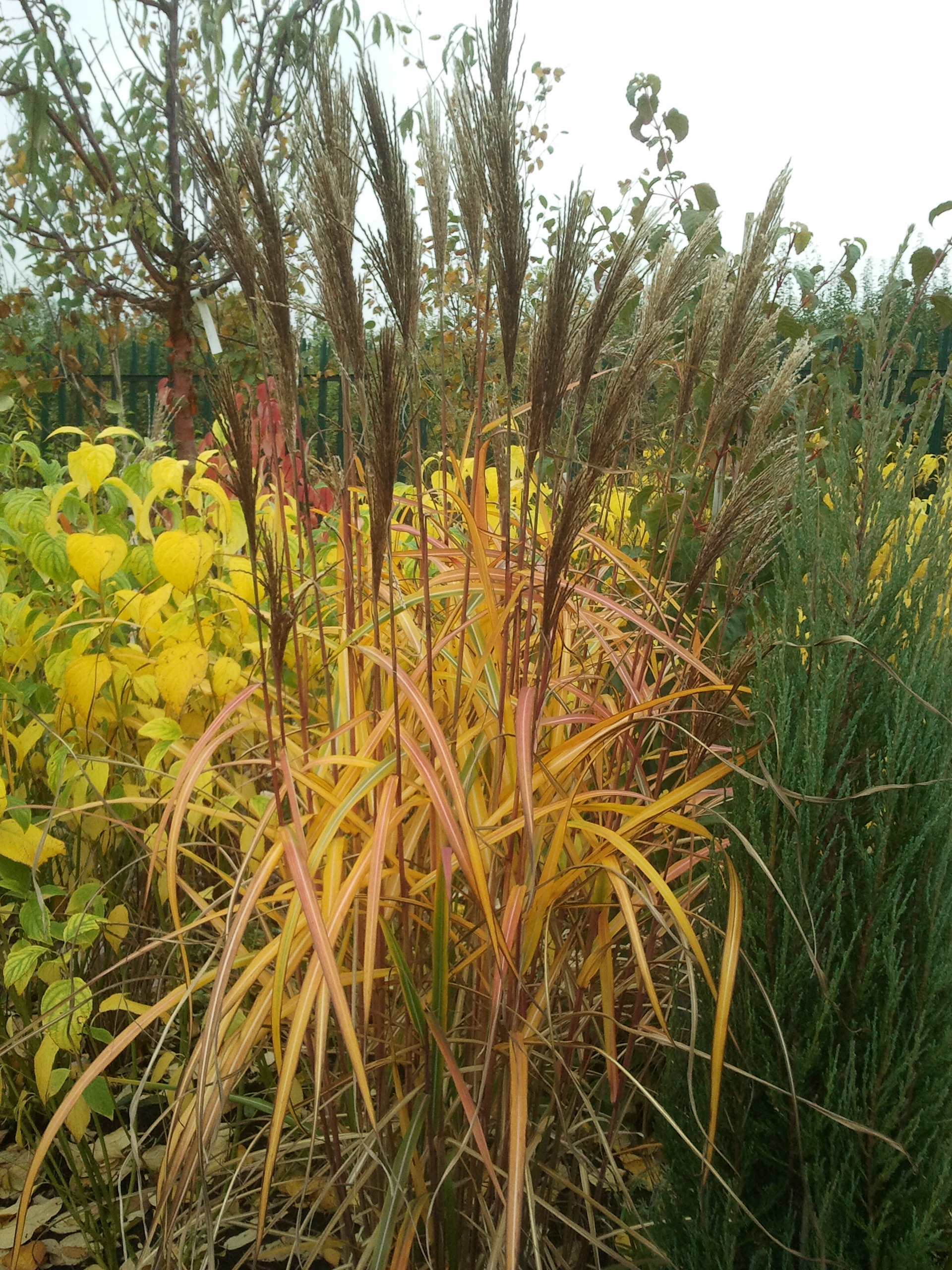
The most underrated plants for autum  leaf colour must be the grasses. They very rarely get a mention in relation to autumn colour, so let’s put it right.

Categories
autumn garden design garden photography gardening hardy perennials ornamental grasses ornamental trees and shrubs photography roses Shropshire

A Wander around our Garden in October

The tenth post in this series of wanders around our garden already! Just two to go! What shall I do for a monthly garden post instead next year? Any ideas for me?

October started off with days of endless heavy rain but after a fortnight it changed to steady drizzle. A bit of sun would be welcome right now.

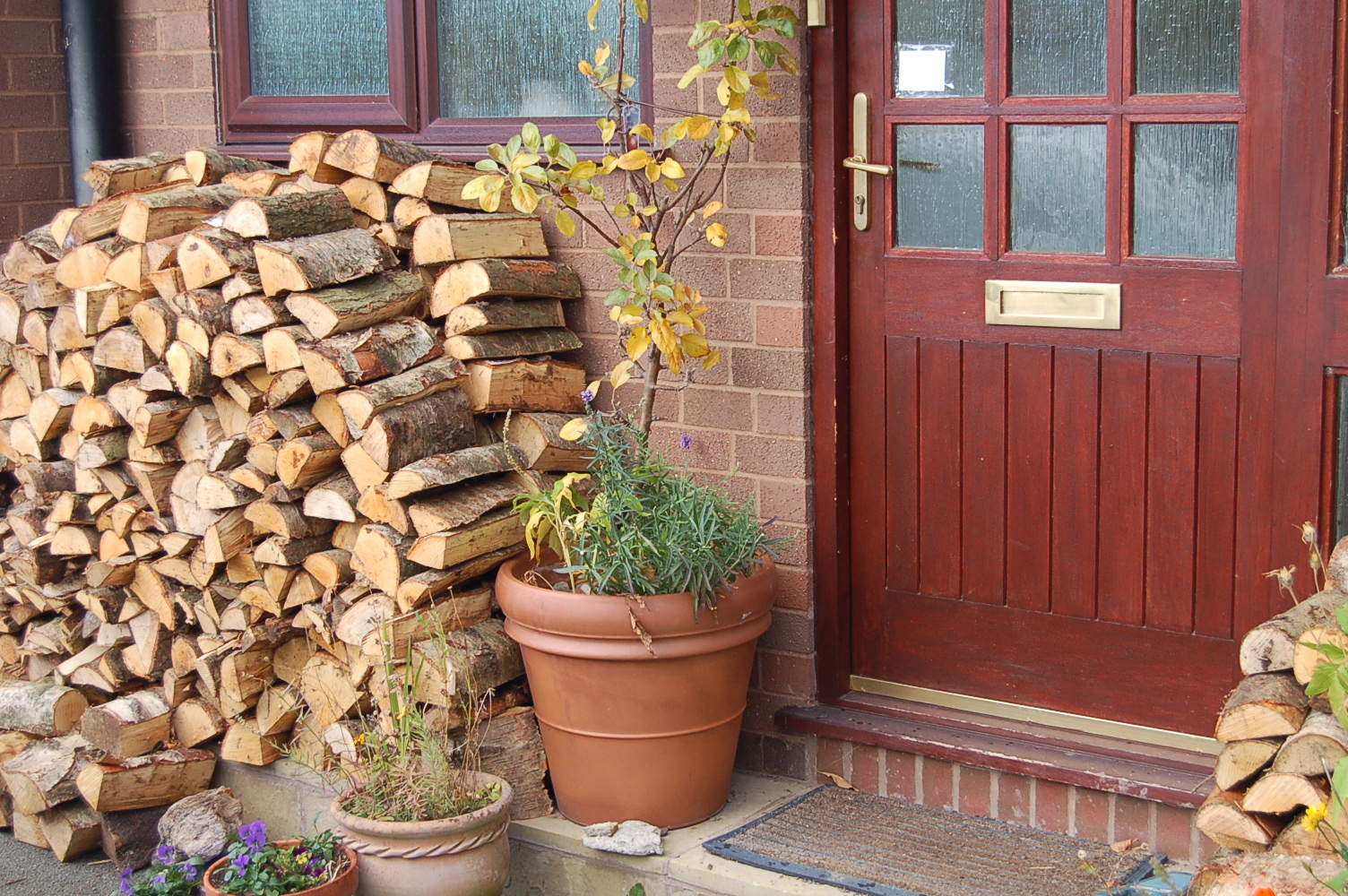
The first frosts have visited us forcing us to bring the Aeoniums, Echeverias and our other tender plants under cover. We shall have to keep them safe in the “bubble wrapped” greenhouse, by giving them virtually no water and removing any dry or damaged foliage and when the temperatures drops below -15 C give them additional snug coverings of fleece and bubble-wrap. Another sign of autumn is the log delivery which was tipped off the back of a truck onto our drive mid-month. We sorted them and stacked them around the front door. The wonderfully evocative woody aroma of oak and birch trees mixes with the sweet scents of the woodland floor. The scents of the season.

We visited the gardens at our favourite nursery yesterday, The Dingle at Welshpool, a superb autumn garden on a sloping hillside leading down to lakes. (Look out for my post in the next week or so) As usual we returned with a few acquisitions – a tiny orange Kniphofia, Cornus canadensis and Clerondendron bungeii.

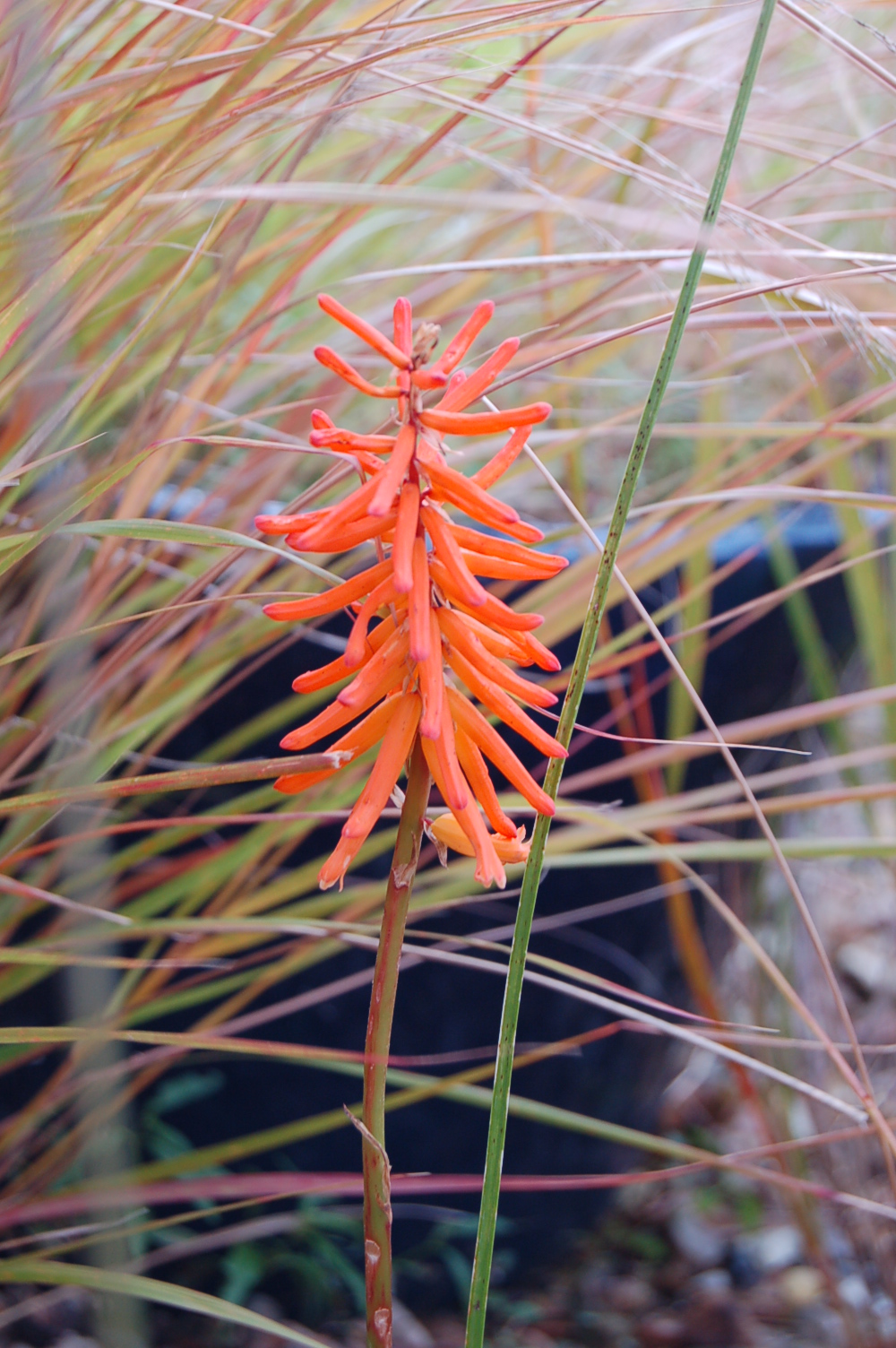
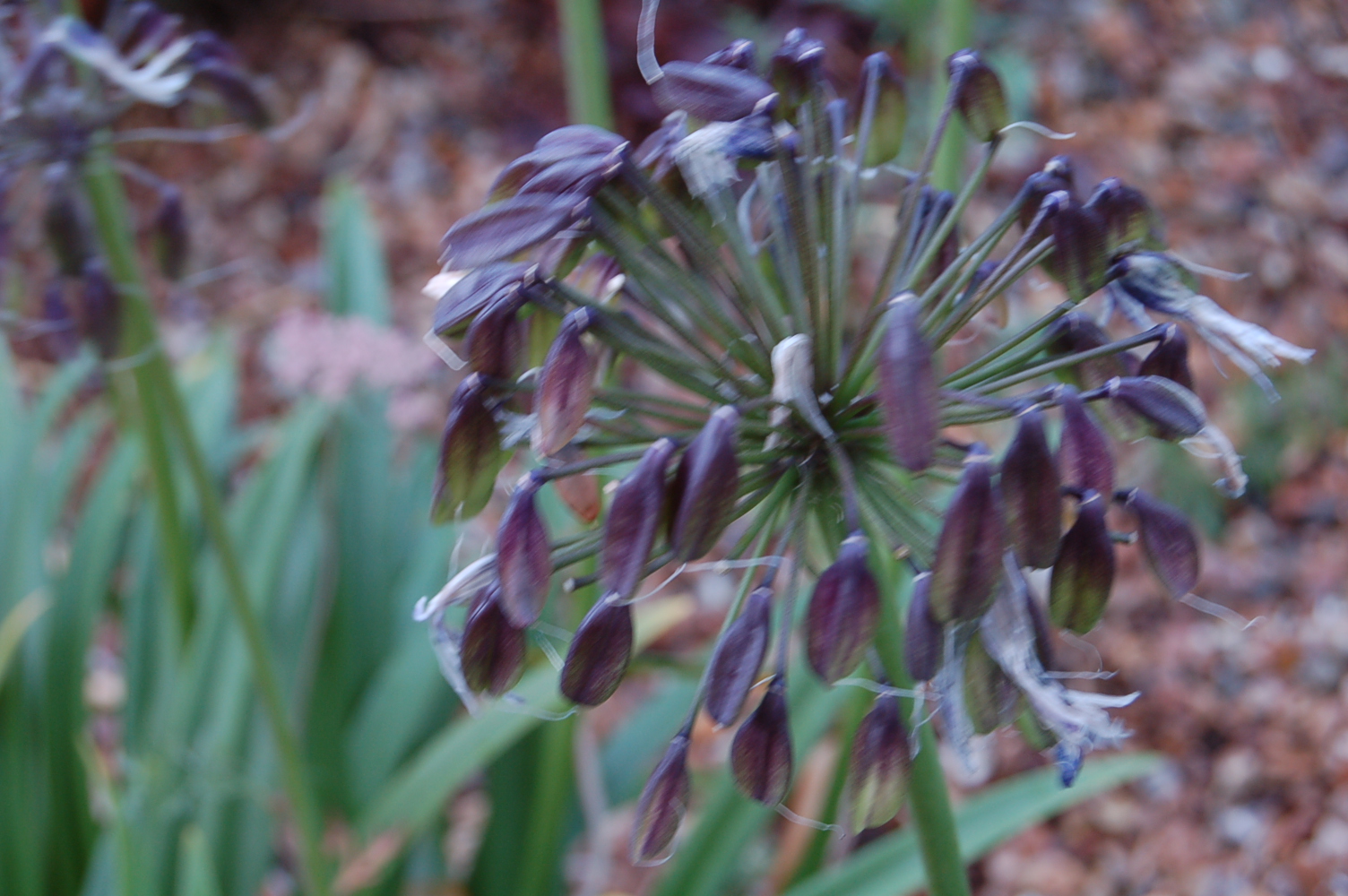
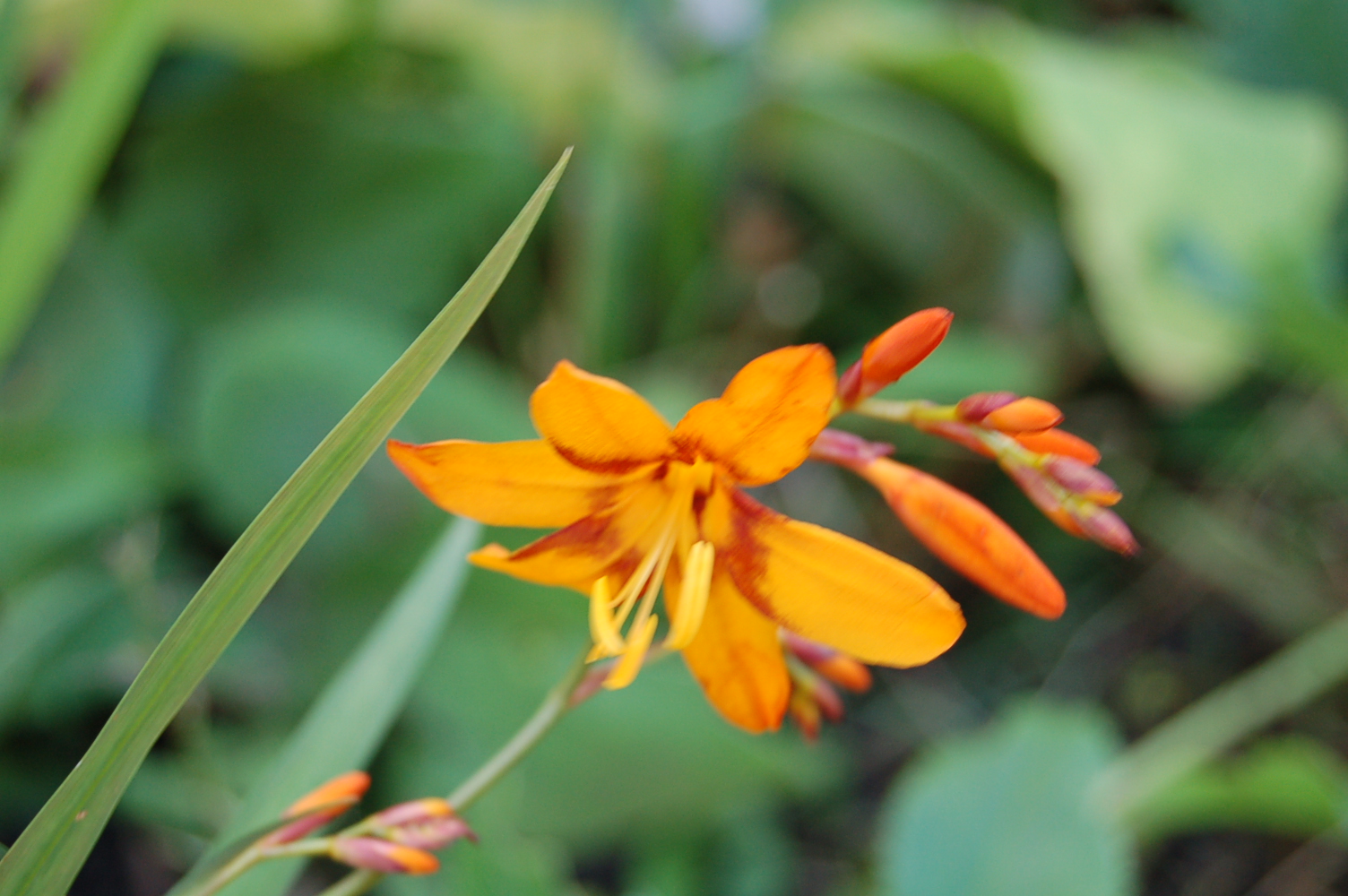
We have planted the Kniphofia with a trio of bronze-leaved grasses and near to our darkest blue Agapanthus. As the “poker” is flowering now, its head of tubular orange flowers glows alongside the Agapanthus’ developing seed heads of blue and pewter.

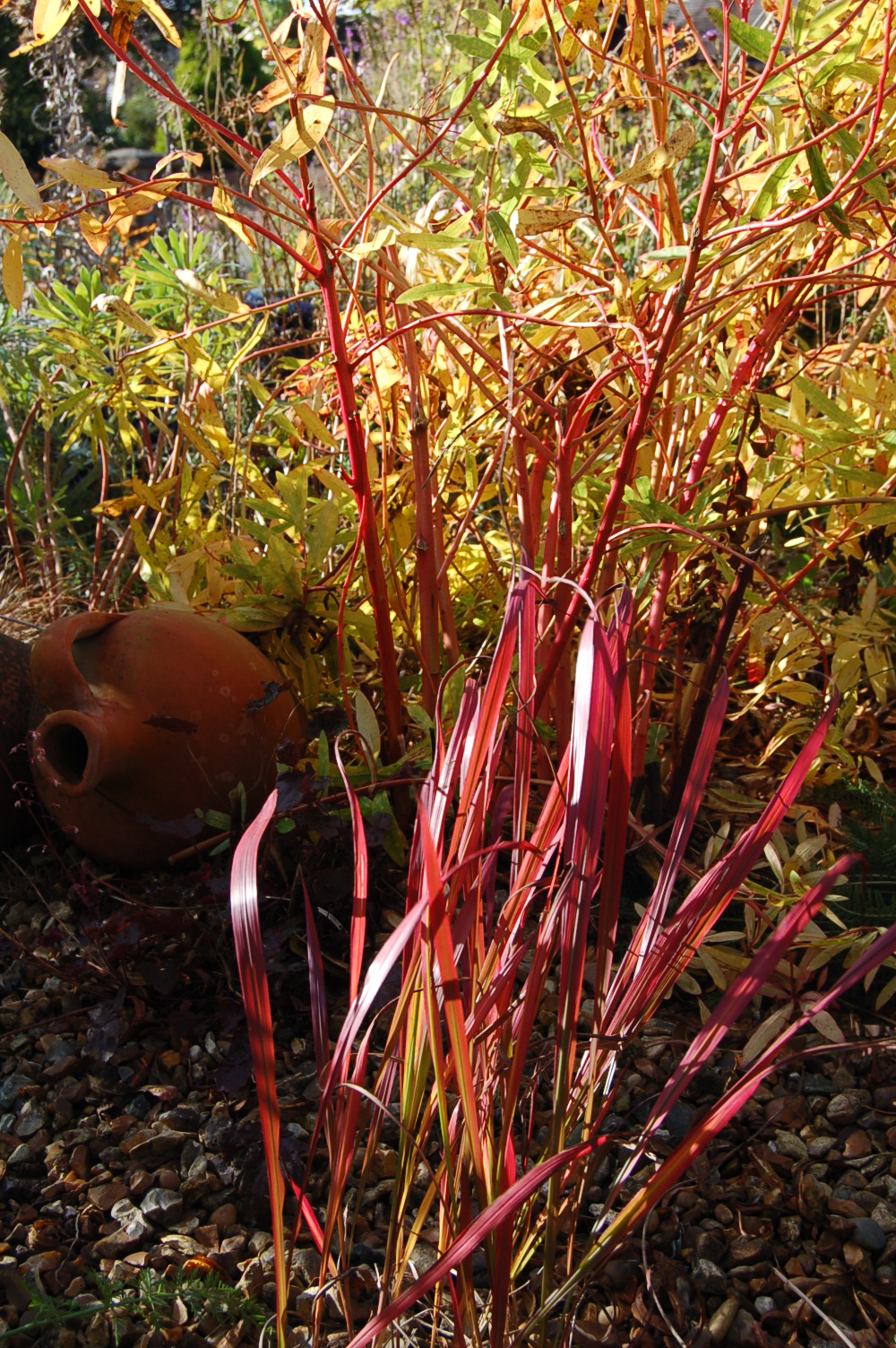
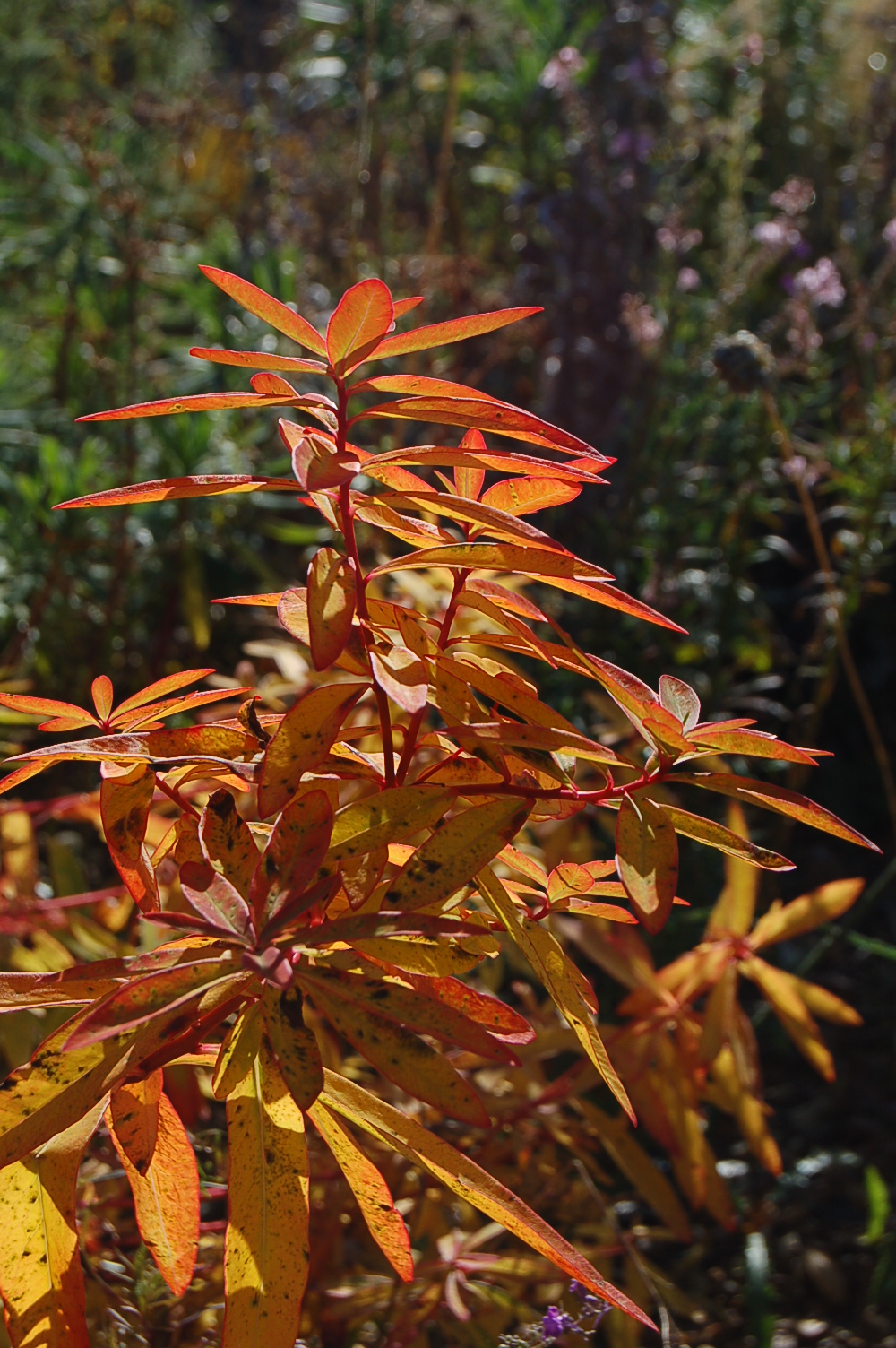
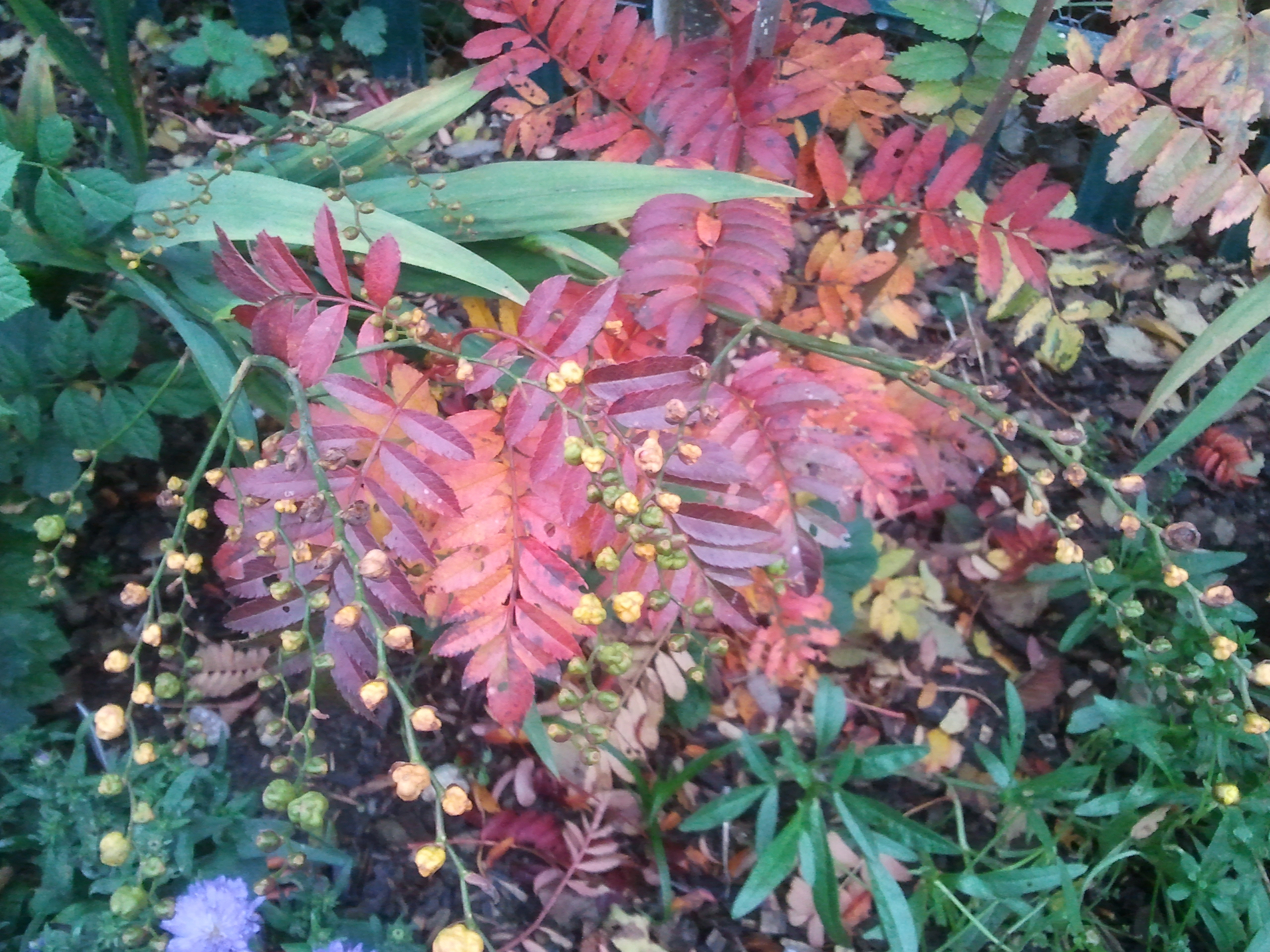
Sometimes autumn hues aren’t just provided by deciduous trees changing the colours of their leaves but by foliage on perennials, grasses and shrubs. Euphorbias are a fine example, as are grasses which have the added bonus of seed heads. Look out for the pic of our Pentstemon Huskers Red which always surprises with its deep red autumn explosions.

But amongst all this red hot foliage we mustn’t lose sight of the flowers that continue to add colour to the garden. There are now fewer so each one is a precious jewel.

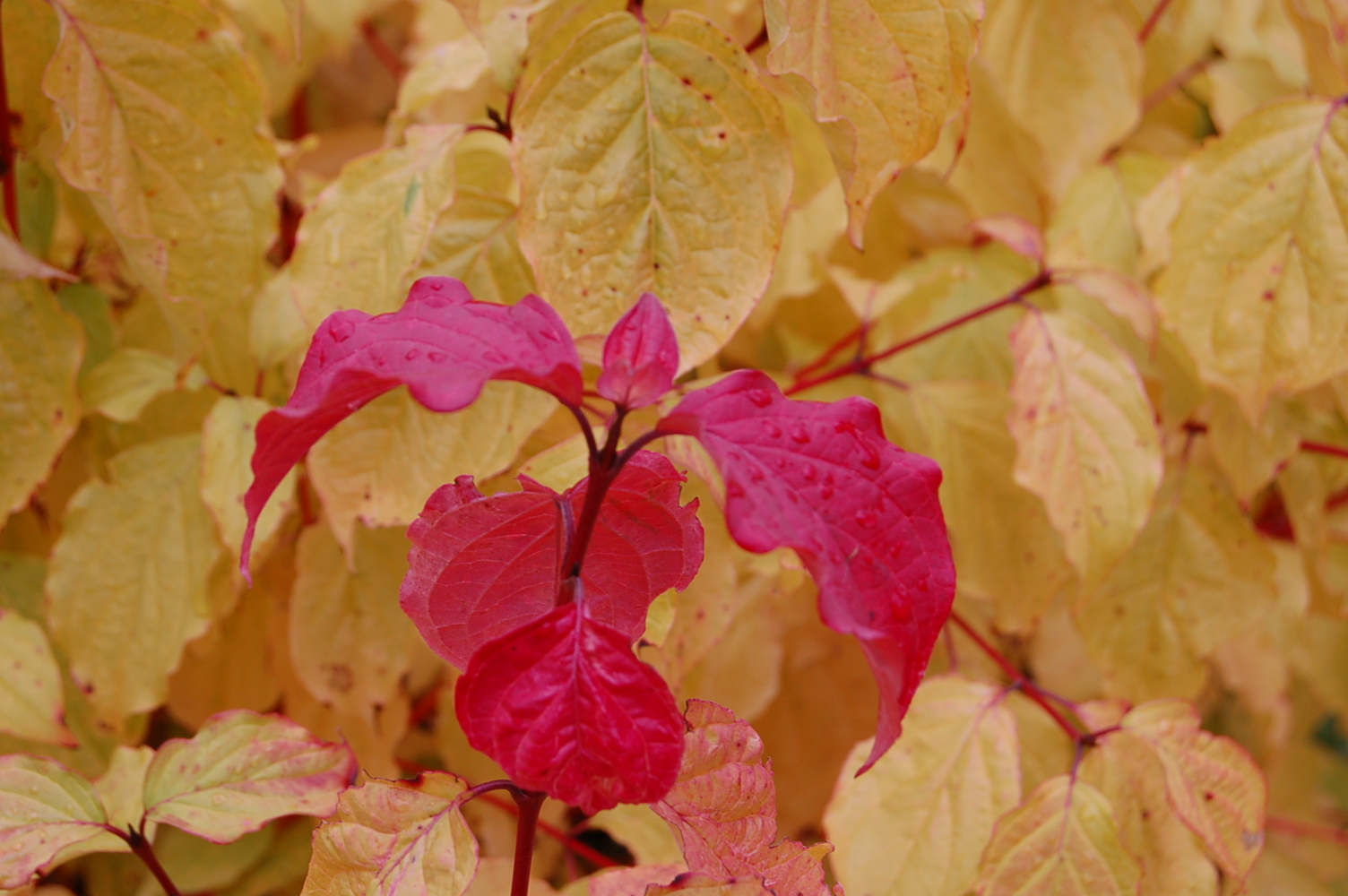
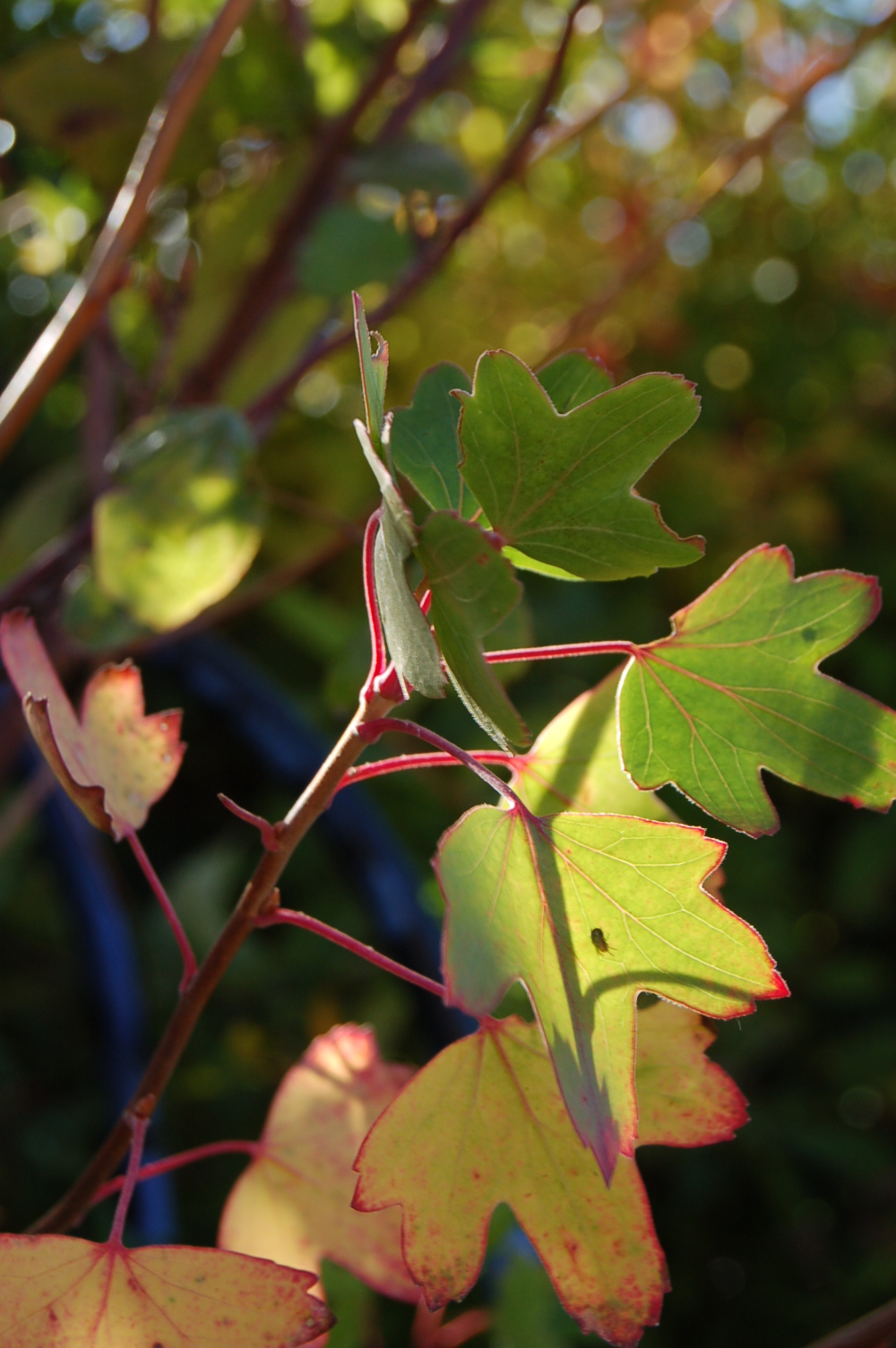
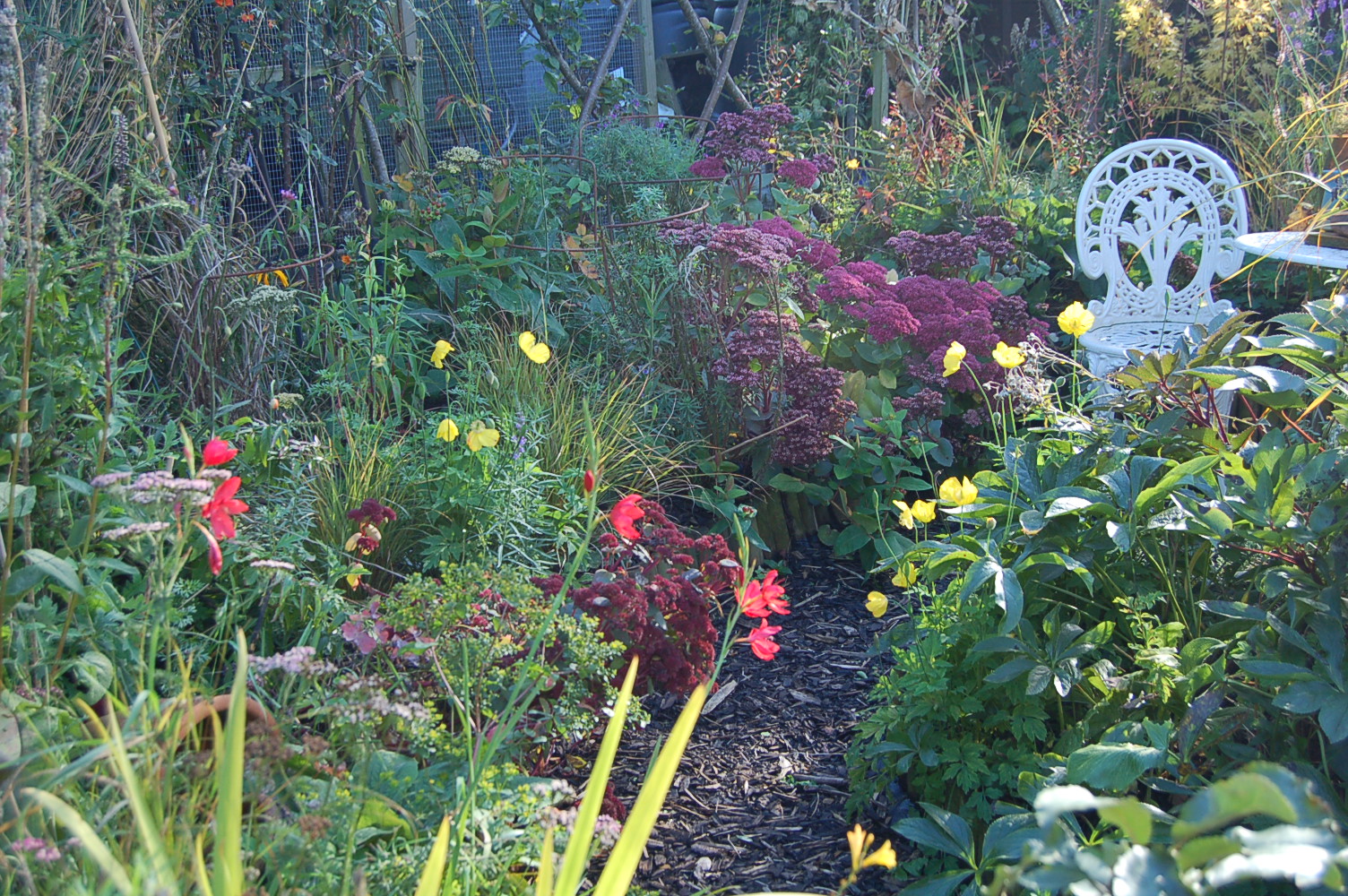
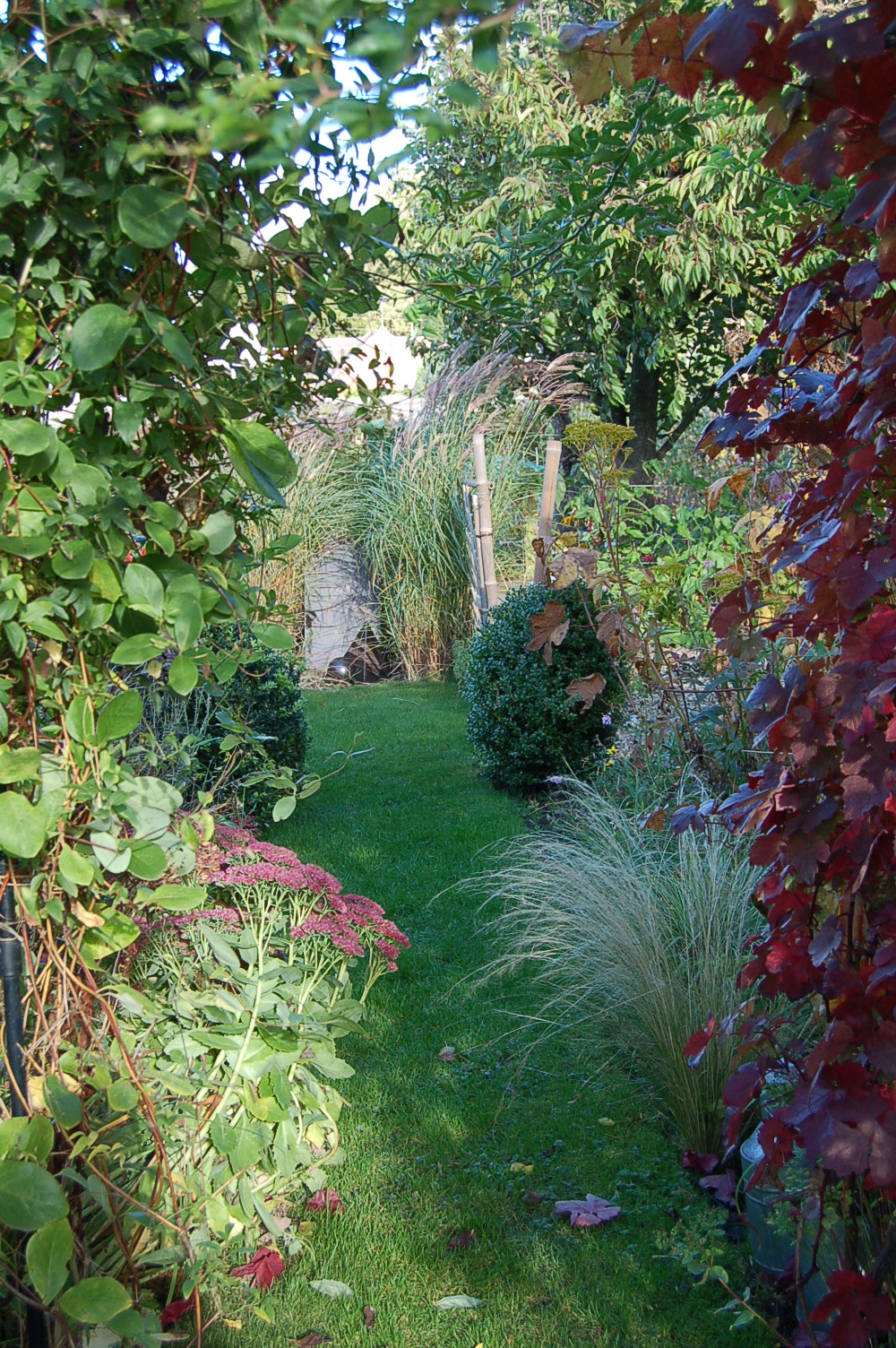
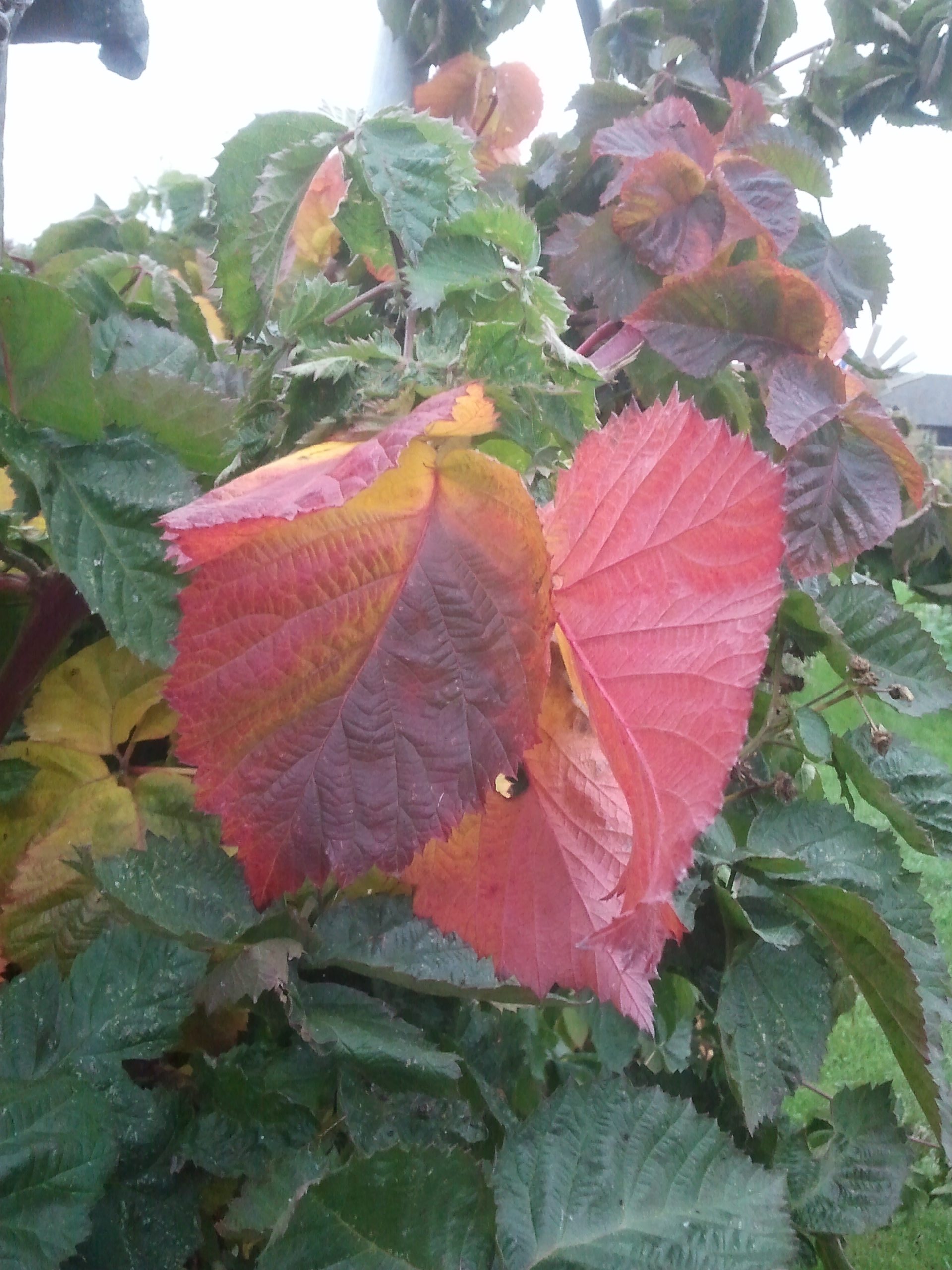
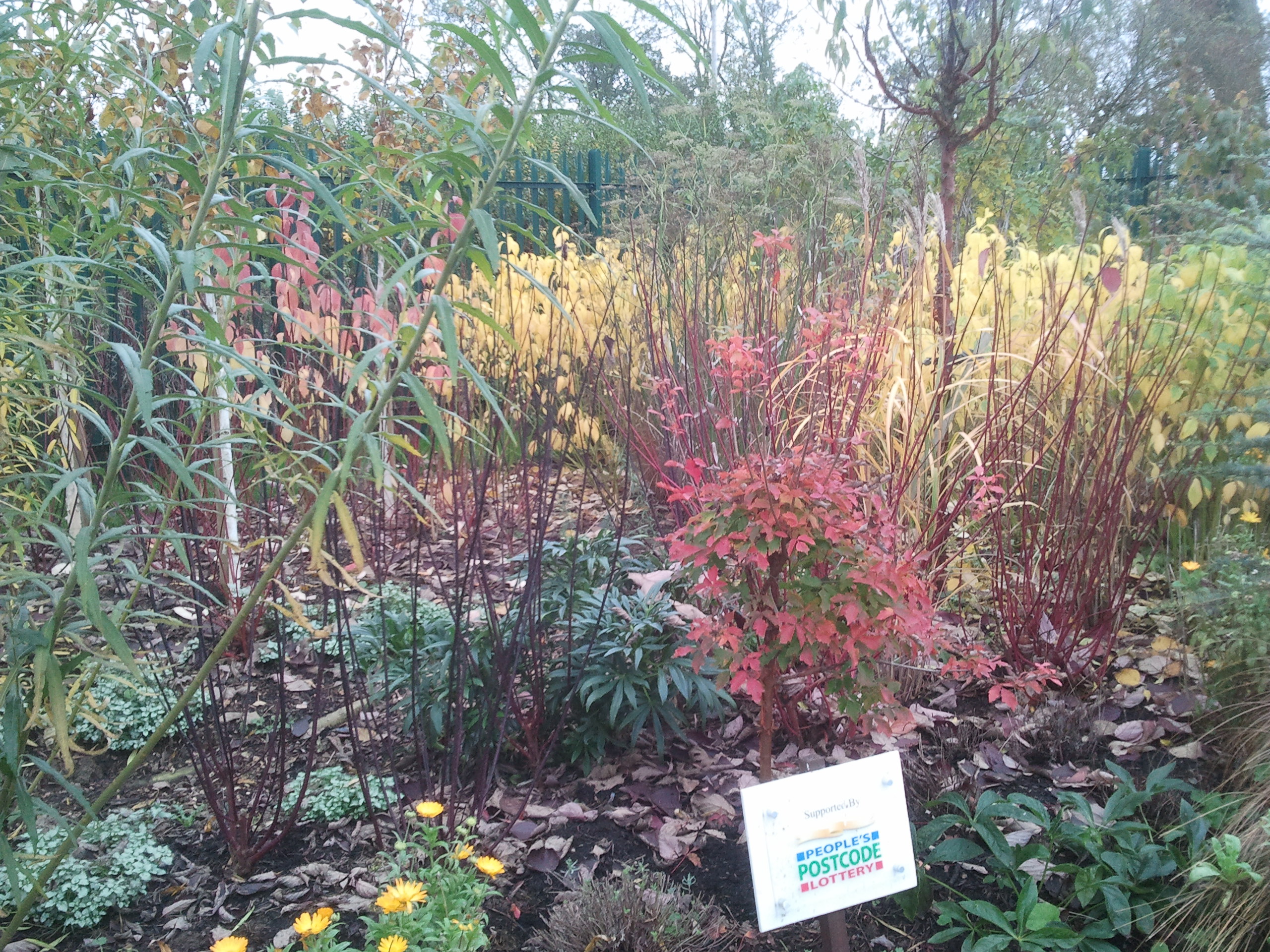
I shall finish off with a few pics of autumn coloured leaves, just what you expect in October! And then take a look at one border and take a walk down just one of our many grass paths.

Categories
allotments autumn community gardening fruit and veg garden photography garden wildlife gardening grow your own hardy perennials Shropshire

A Wander around our Allotments in October

Flooding and its problems have dominated our allotment month. For the third time this year our allotment site has been under water. Rotten potatoes, bark paths washed away, rows of seedlings washed onto other plots and onto pathways and items stored in sheds ruined. This is sadly becoming a regular occurence. We have a meeting with the town council next week so perhaps we can come away with some positive news for the allotment members.

But let’s concentrate on the positives of our lovely site. The people and the plants. This is our friend Sherlie with a monster cabbage!

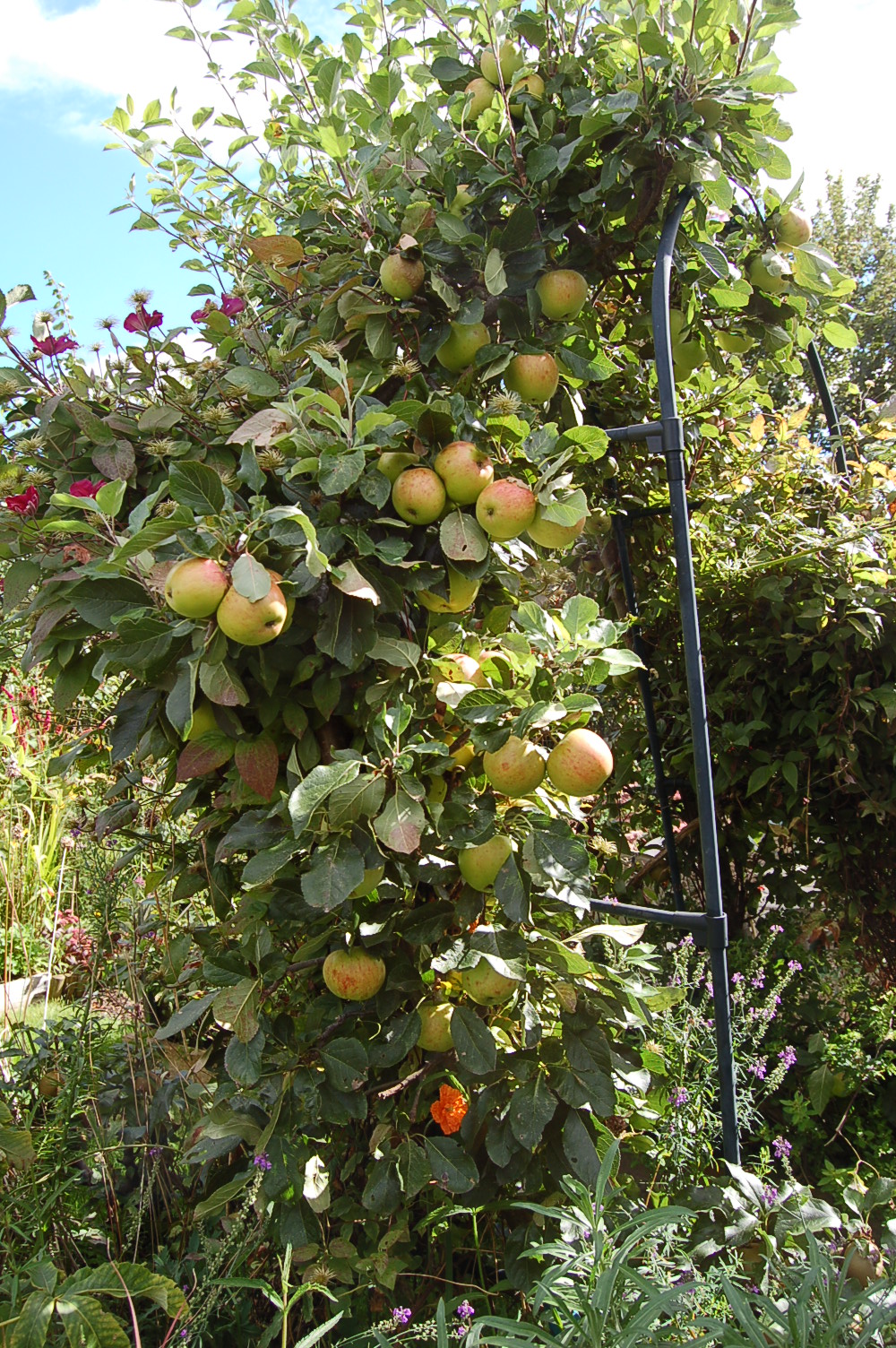
Phil had never grown apples until four years ago when he asked me to help him set up a row of cordon apples and pears and teach him the necessary skills. Now look at what he has achieved this year!

Our wander with camera in hand took us through the Autumn Garden over to our plot and then across to the Winter Garden via the Spring and Summer Gardens.

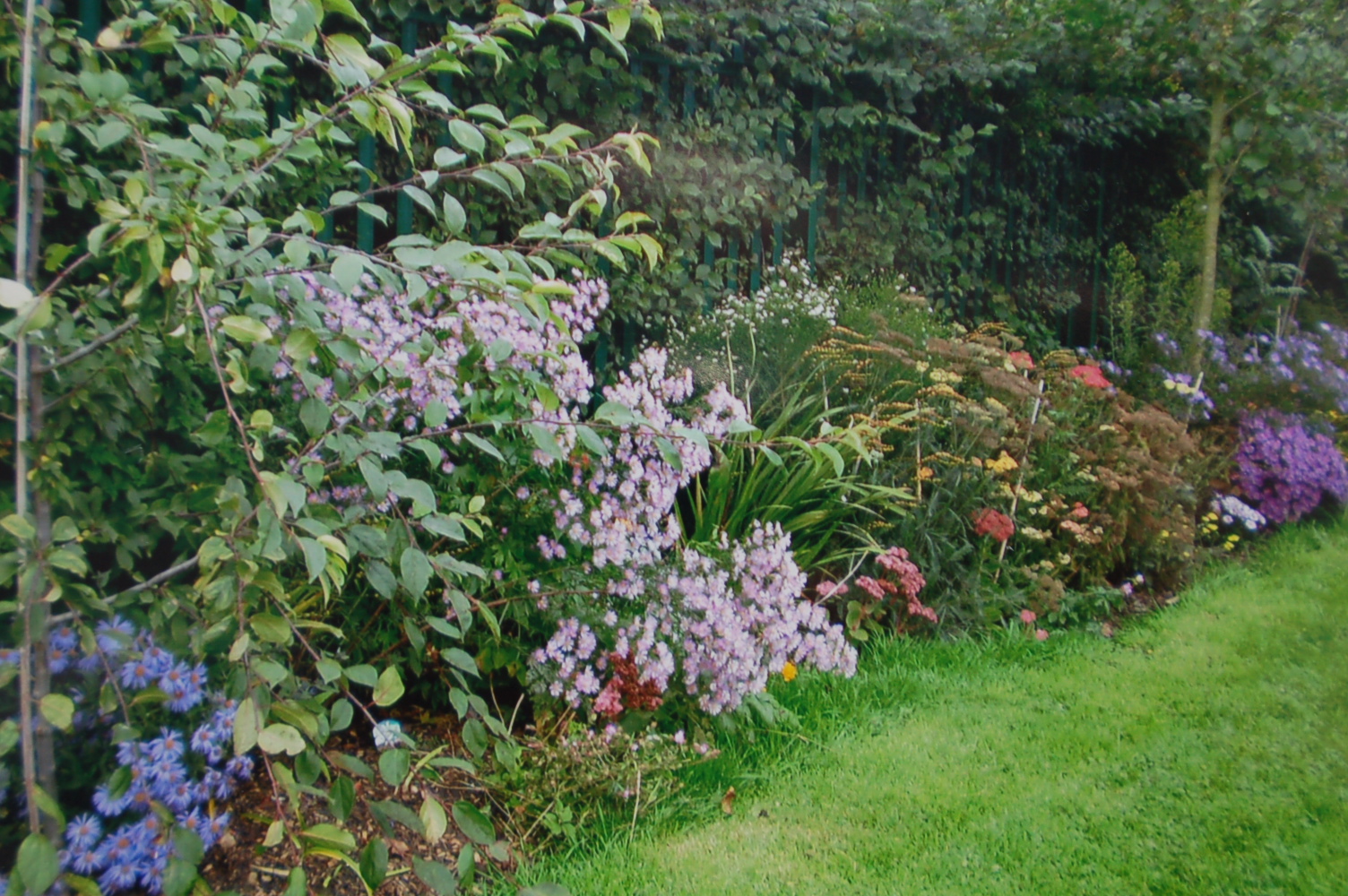
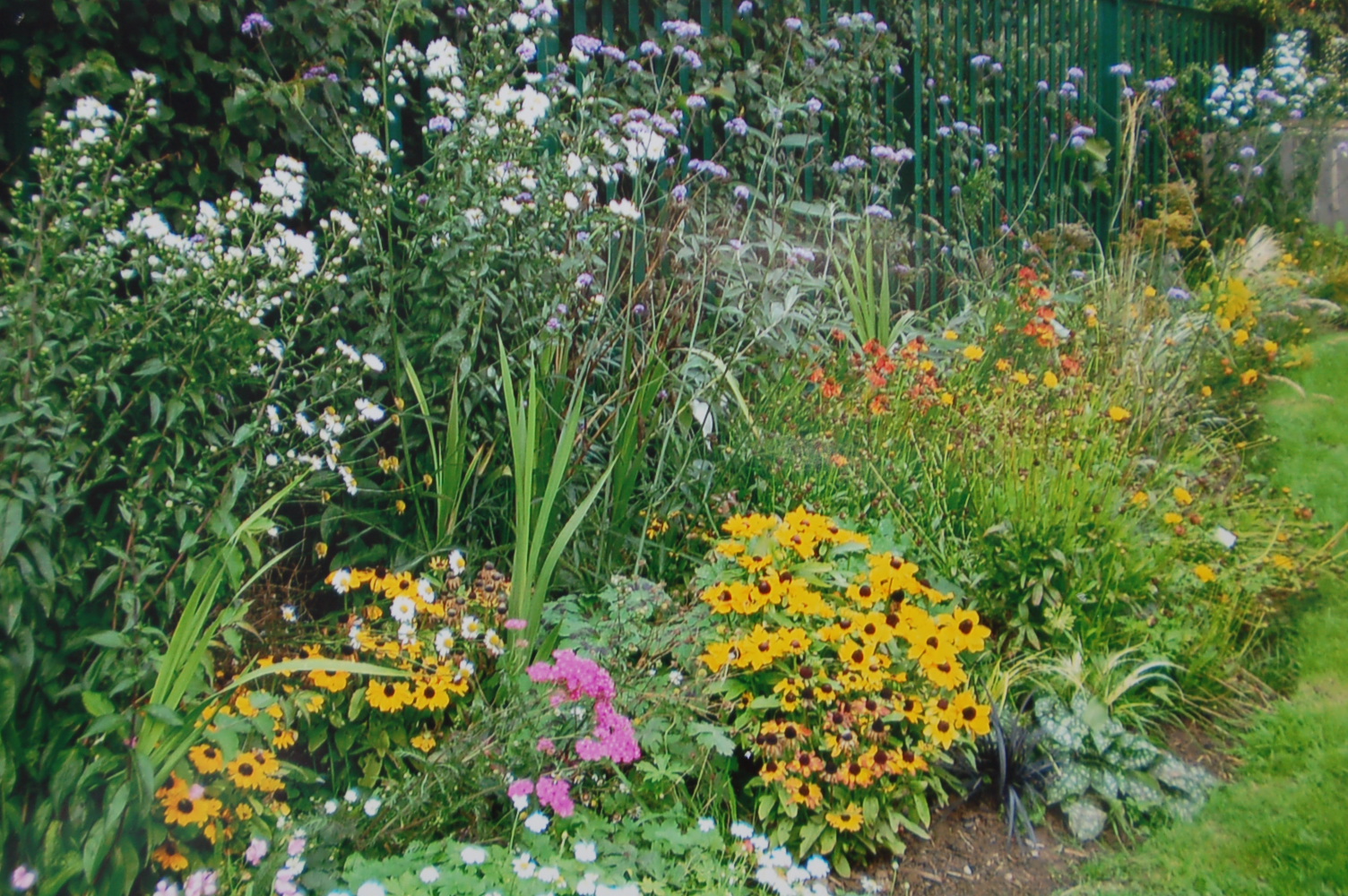
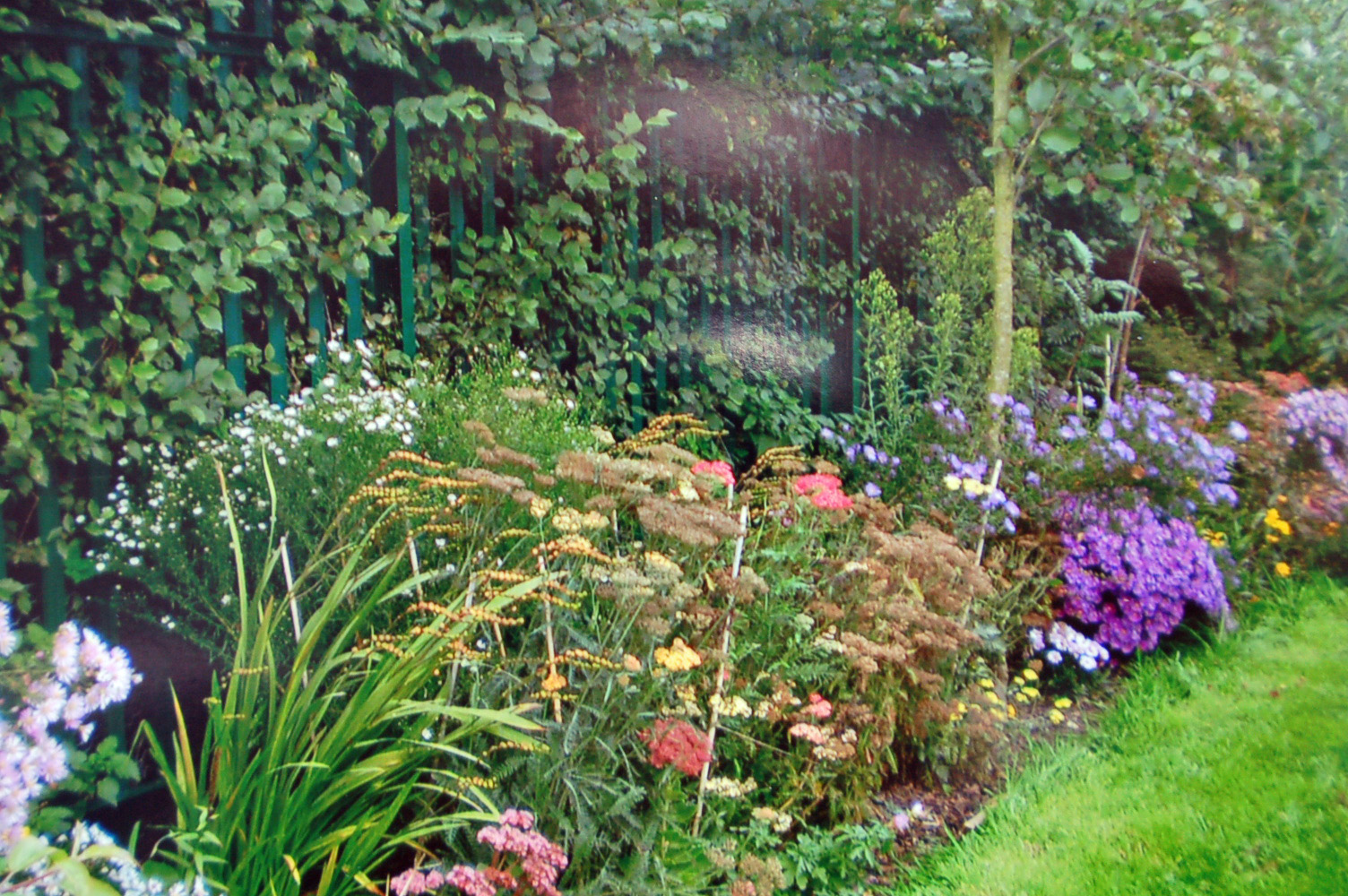
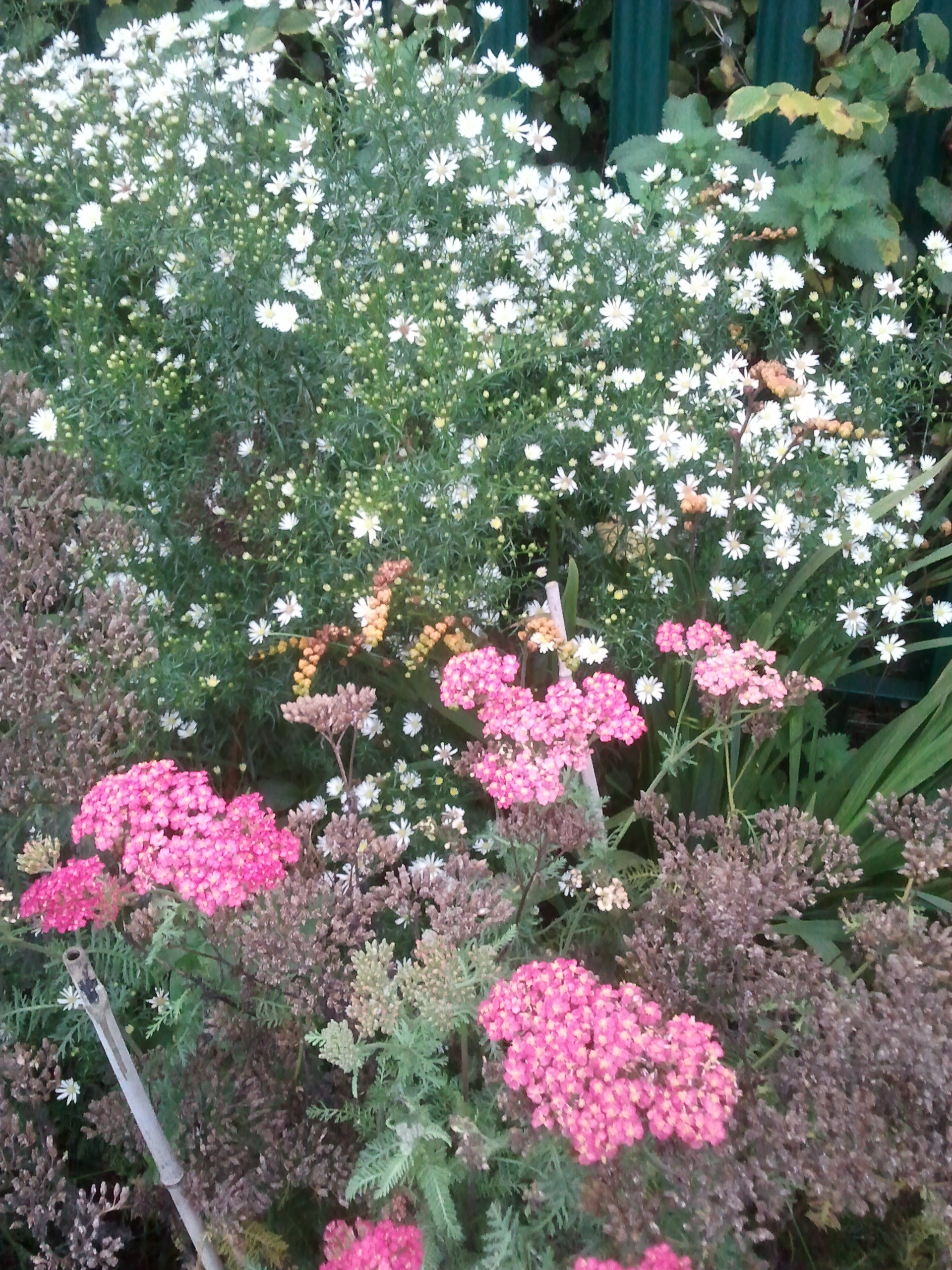
The Autumn Garden, appropriately, is now looking wonderful with late season flowers looking colourful amongst foliage the colour of fire.

Butterflies, bees and hoverflies were flocking to the asters in this garden for the first fortnight this month but as the weather turned colder they rapidly disappeared. Buddlejas flower profusely around the site during the summer attracting beneficial insects and pollinators, but this orange one flowers in the autumn.

We grow a variety of Sorbus trees here and they provide wonderful foils for late flowering perennials.

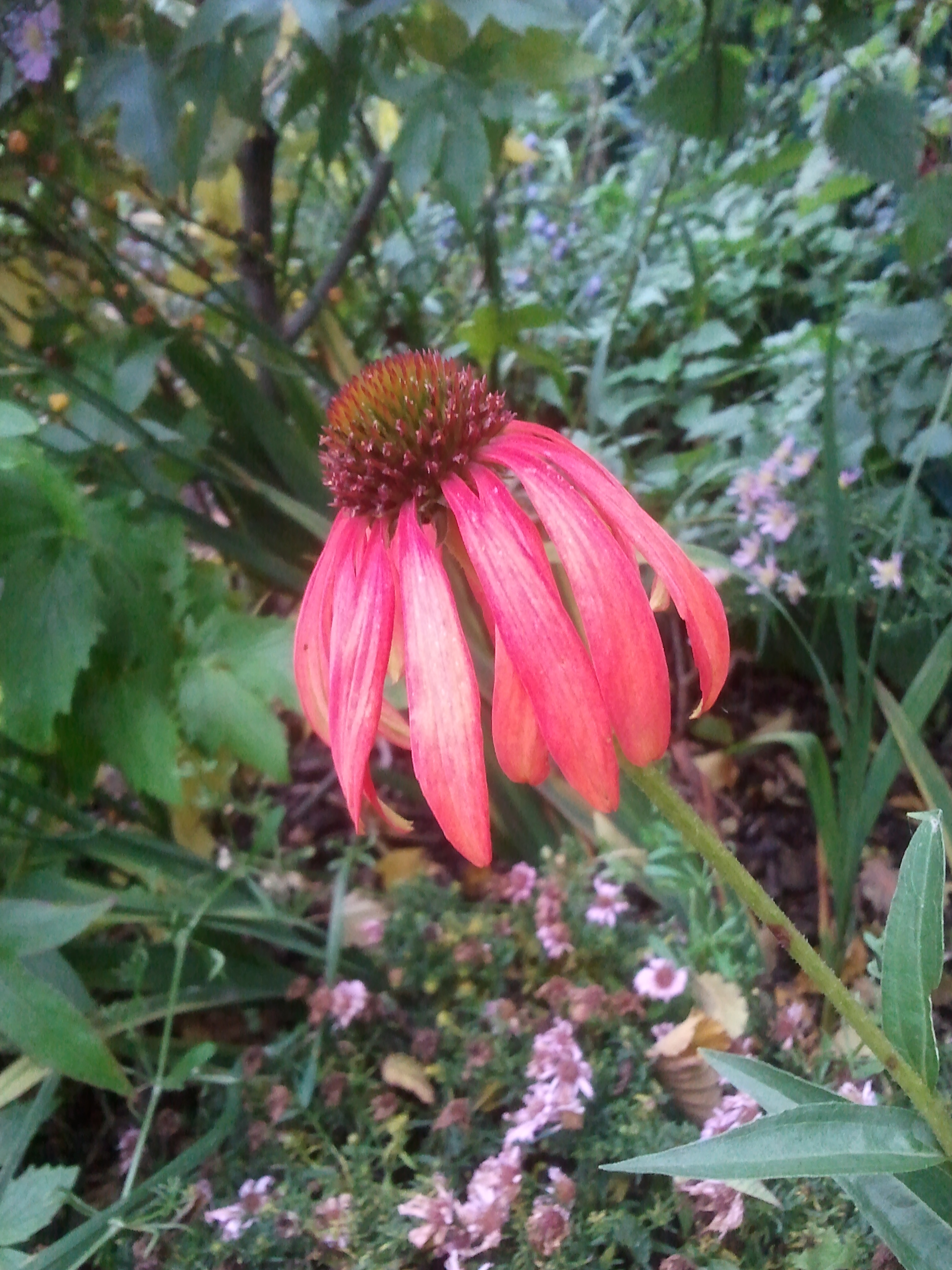
The stars here though have to be the Echinacea.

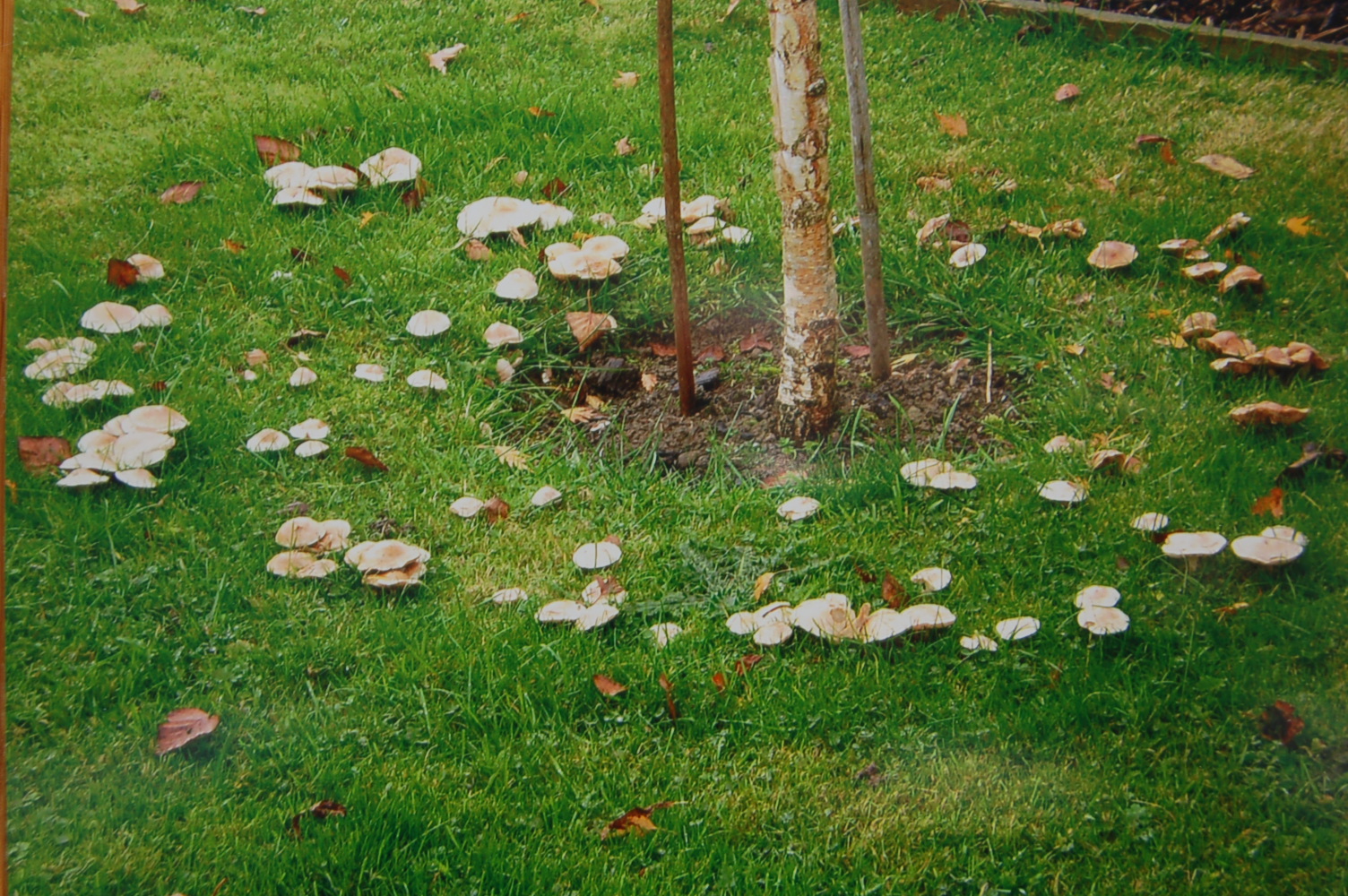
Around the trees in the Birch Grove fairies have been at work. So many plot holders have been taking photos of their handywork.

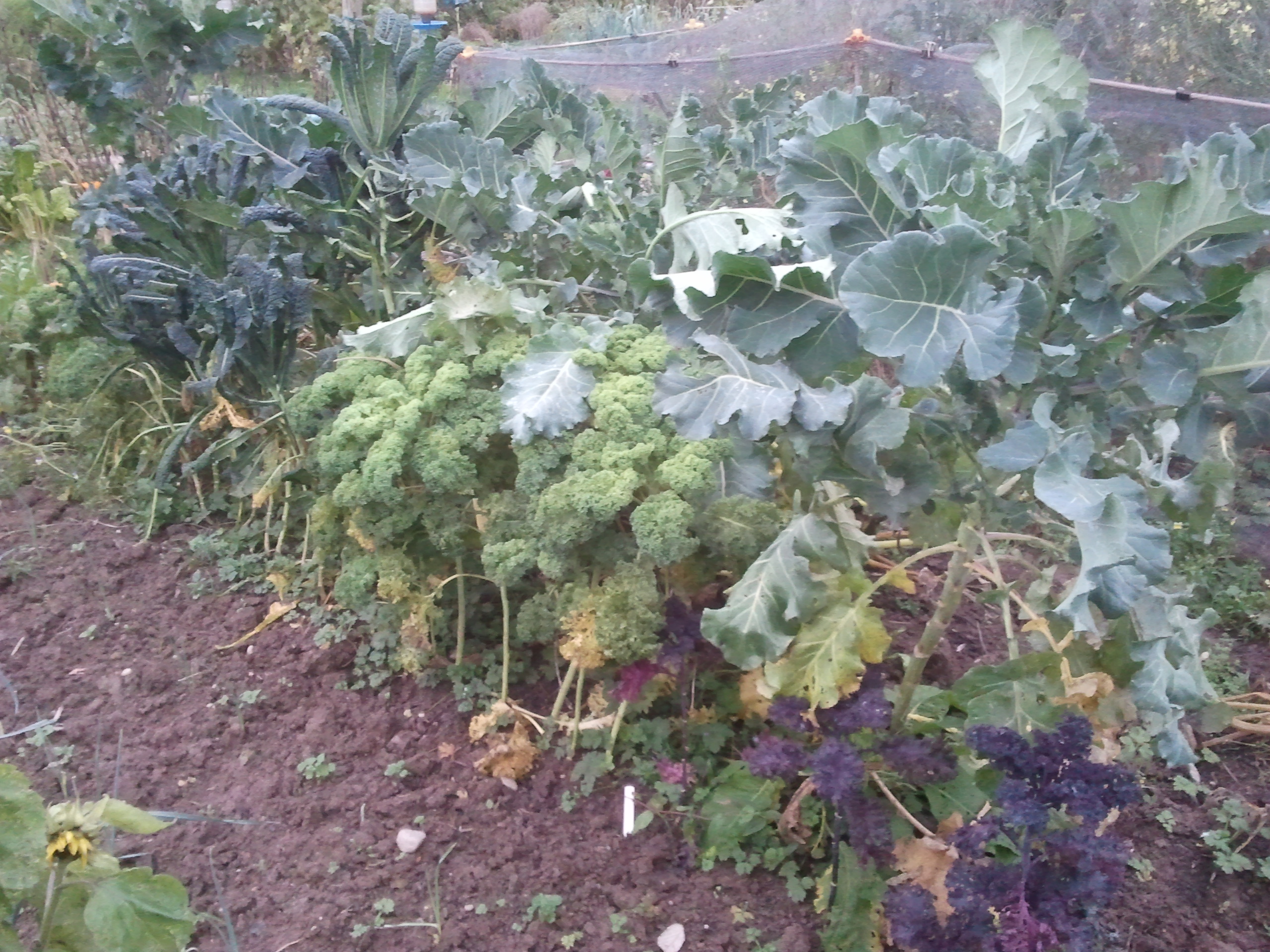
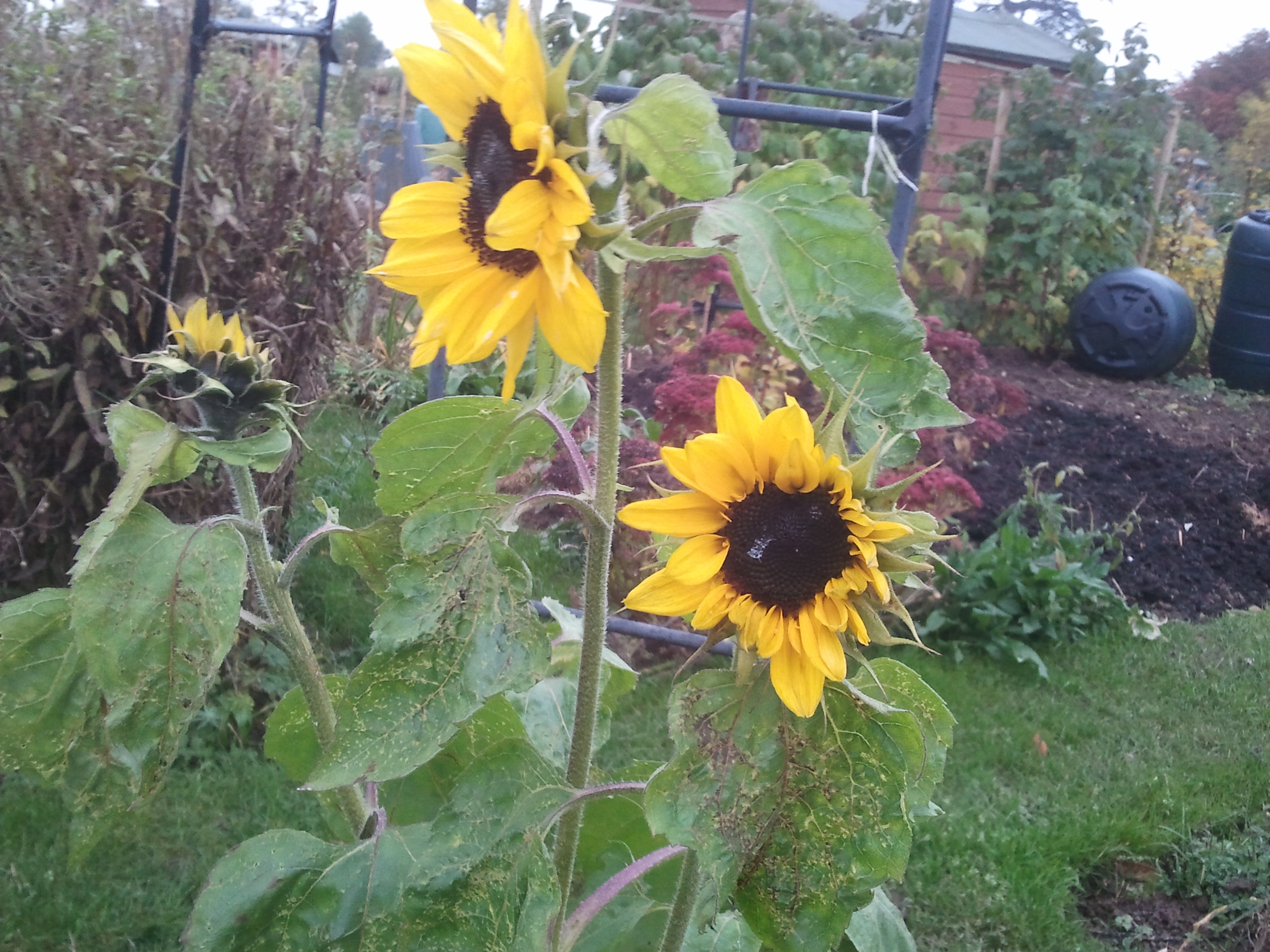
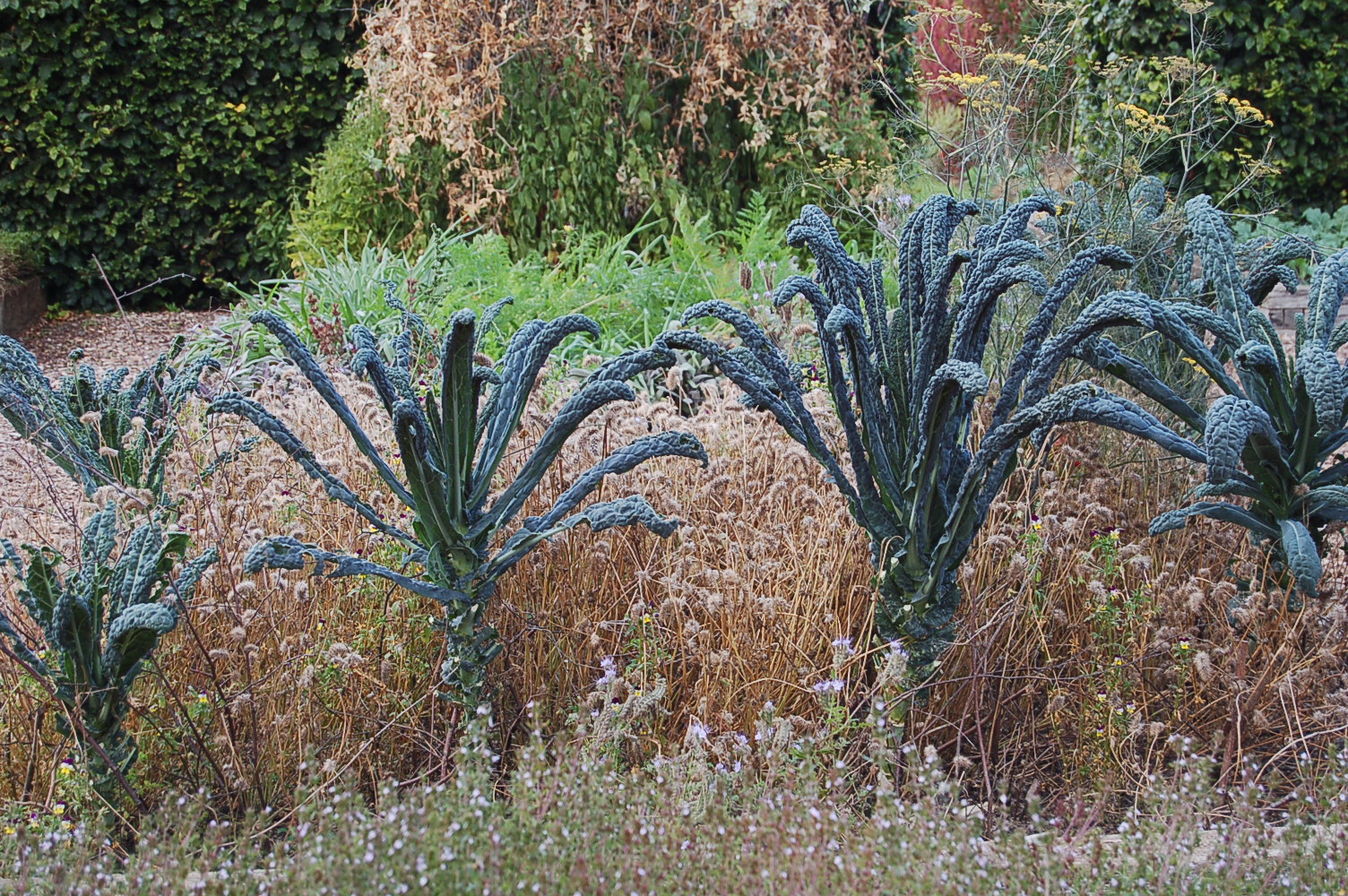
On our own plot we are still picking autumn raspberries. The three varieties of kale we are growing are looking quite colourful as is a sole sunflower – the only sun to be seen up on the lotties at the moment. The day these pics were taken was dark and overcast.

A little bit of extra colour can be found in the leaves of our blackberry bramble.

The crops that we will be harvesting during the winter and early spring are coming along nicely. Leeks, parsnips, carrots and celeriac.

The Winter Garden is an oasis of brightness with most of the colours coming from foliage.

I shall finish my October wander with some great news. Three Bowbrook Allotment Community gardeners were invited to the Mayor’s Award Ceremony earlier in the month. Dave, on the left, received his certificate and cup for the Best Front Garden in Shrewsbury and Sue and Paul collected their award for Best Half Allotment in Shrewsbury. Well done to them!

Categories
photography the sea the seaside the South

Go South 6 – Old Hastings

We all have favourite seaside venues, our favourite sandy beach, favourite, fish and chip cafes, favourite harbour etc. If we were asked we would go for the quietest beaches or the oldest, most interesting harbours. A secret beach on Anglesey, Bamborough or Dungeness would satisfy the first, but there would be a few contenders for the second such as Whitby, Mousehole and the feature of this post – Old Hastings.

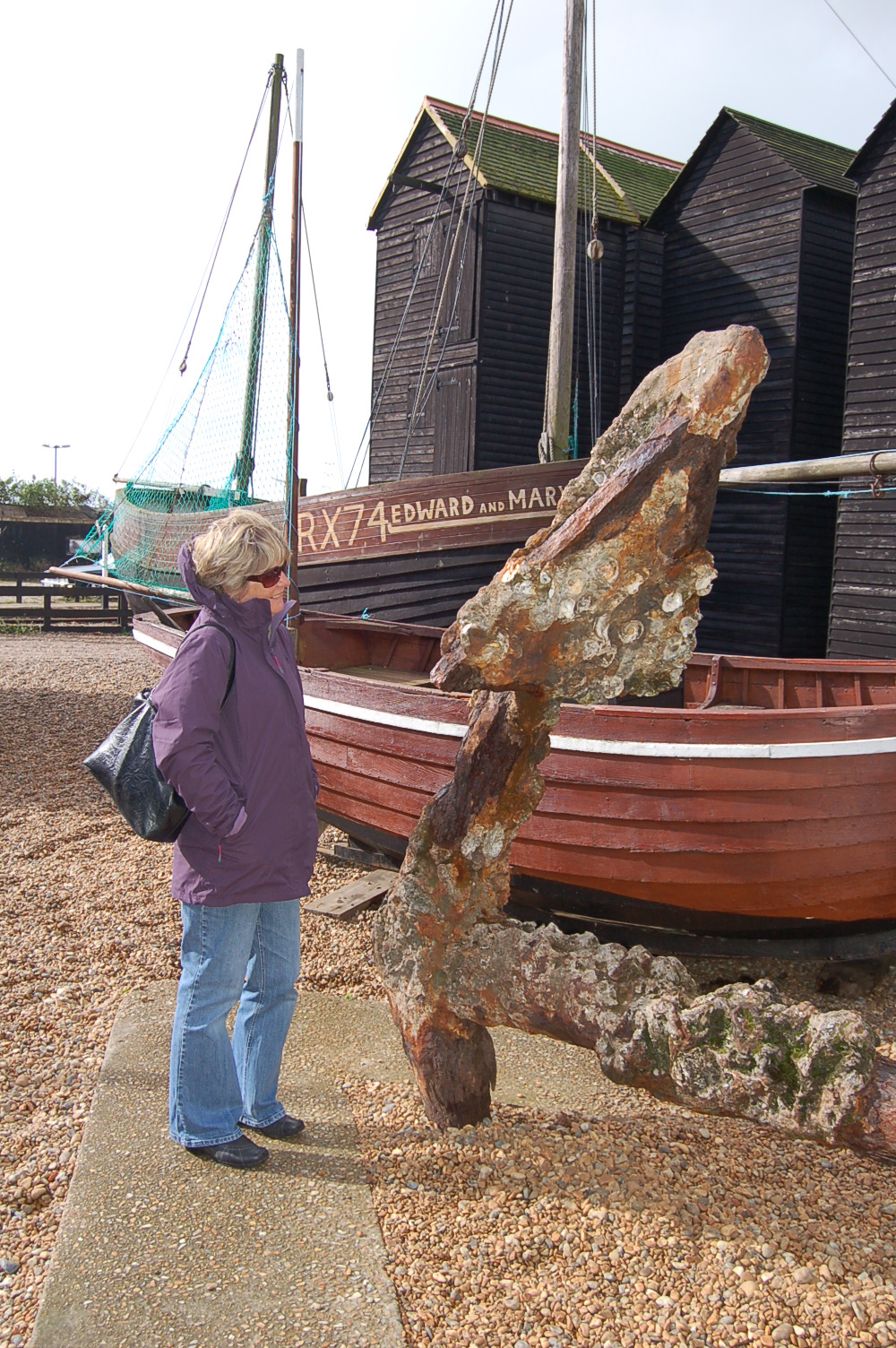
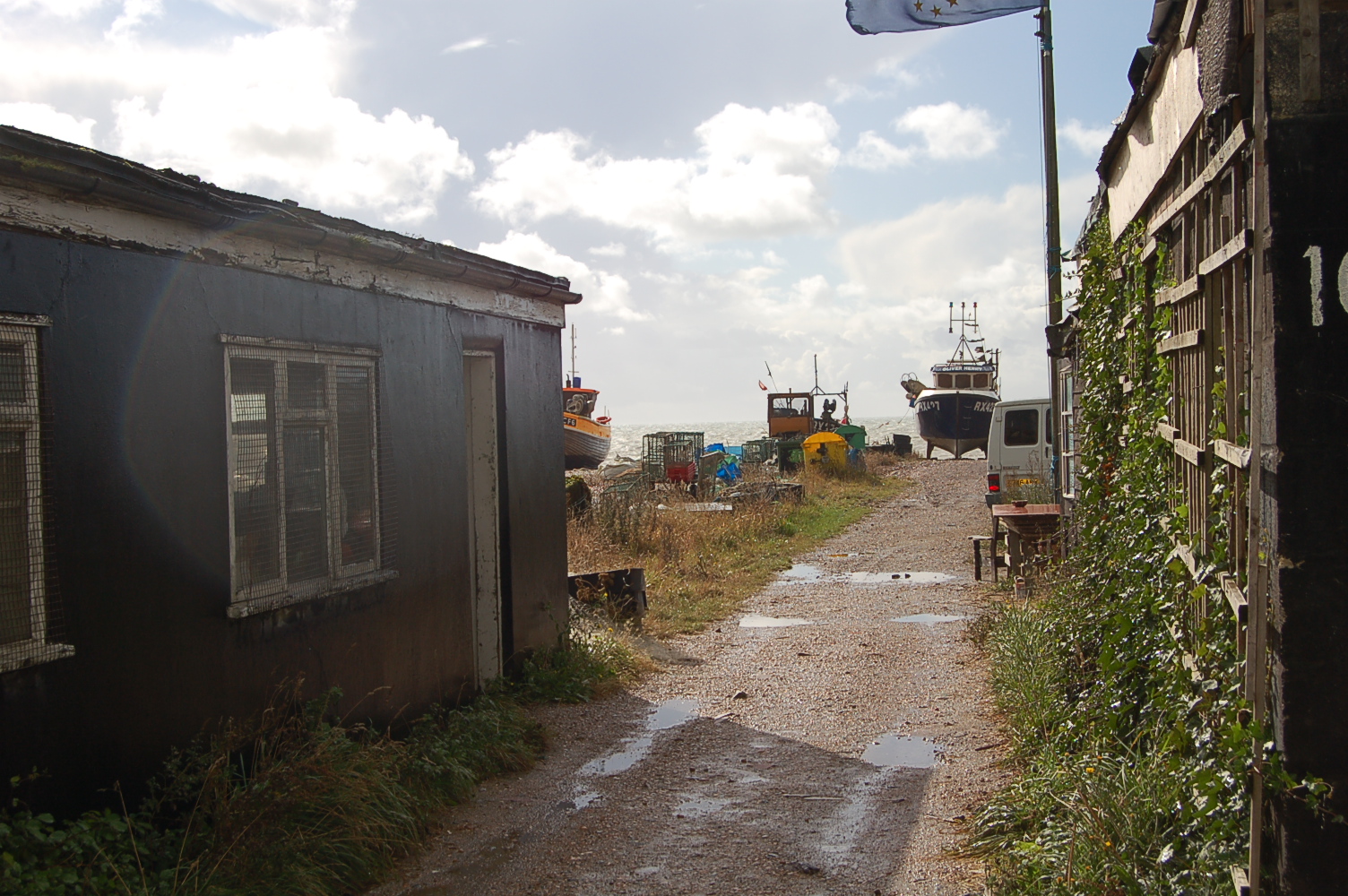
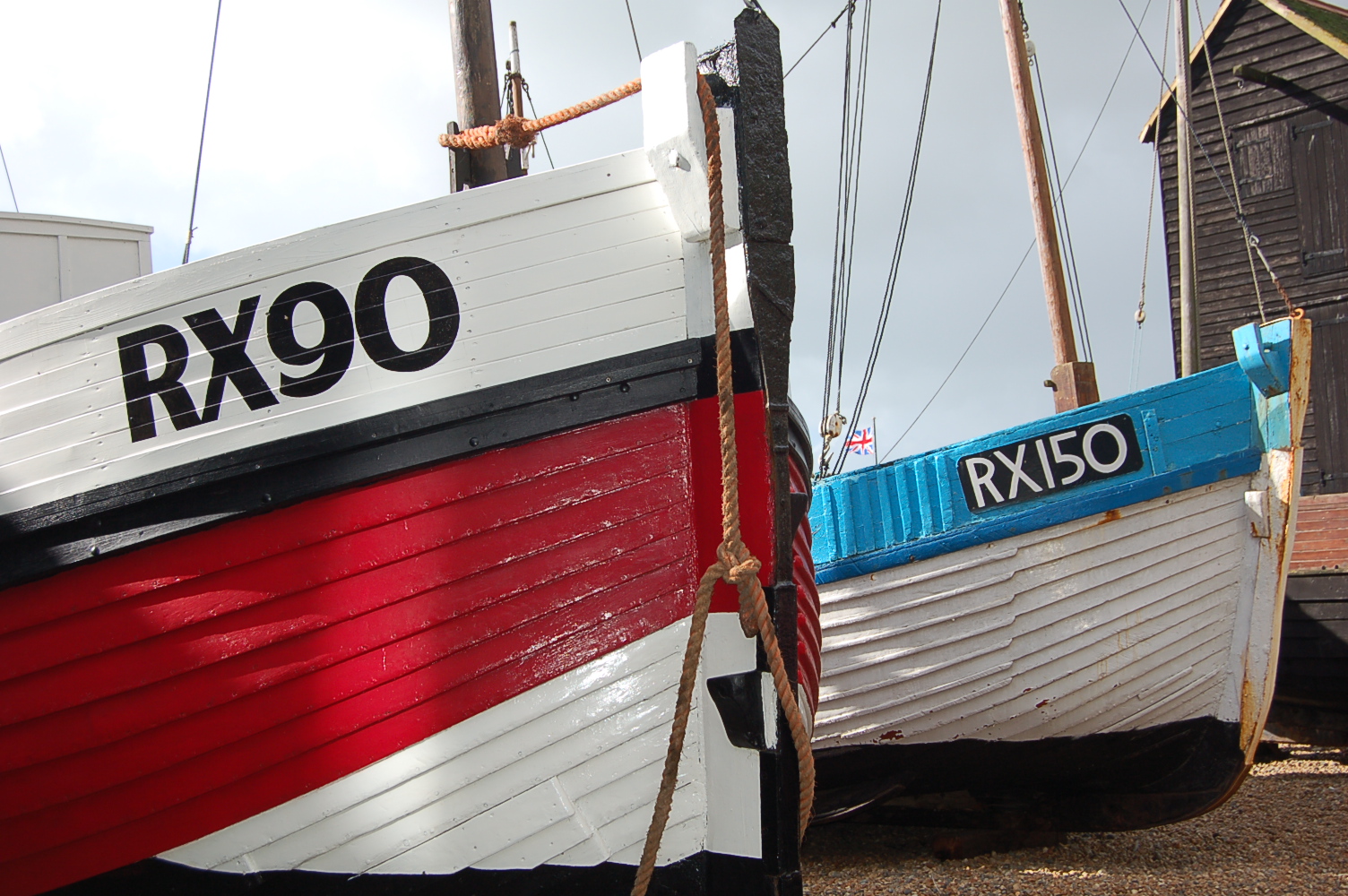
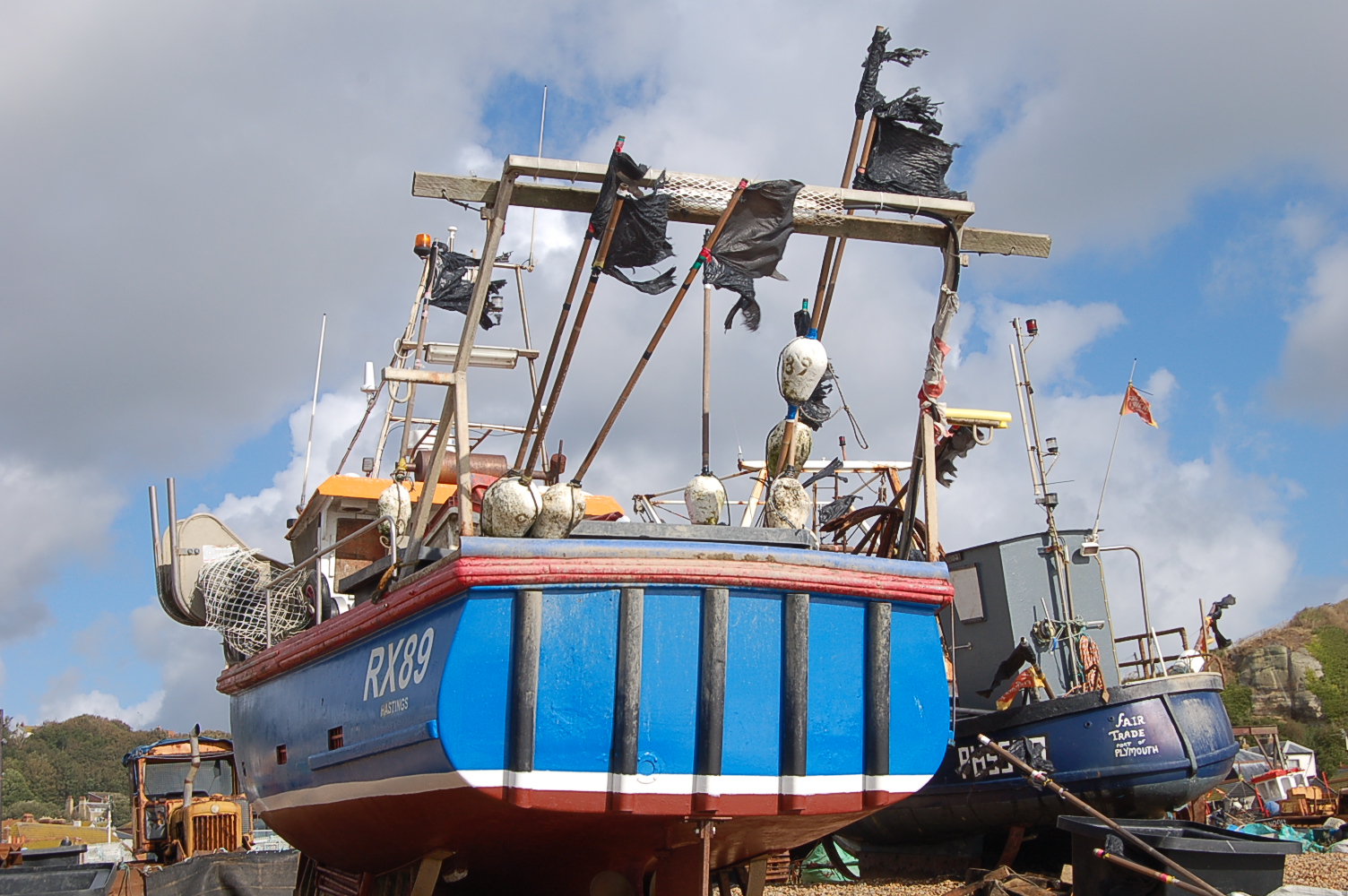
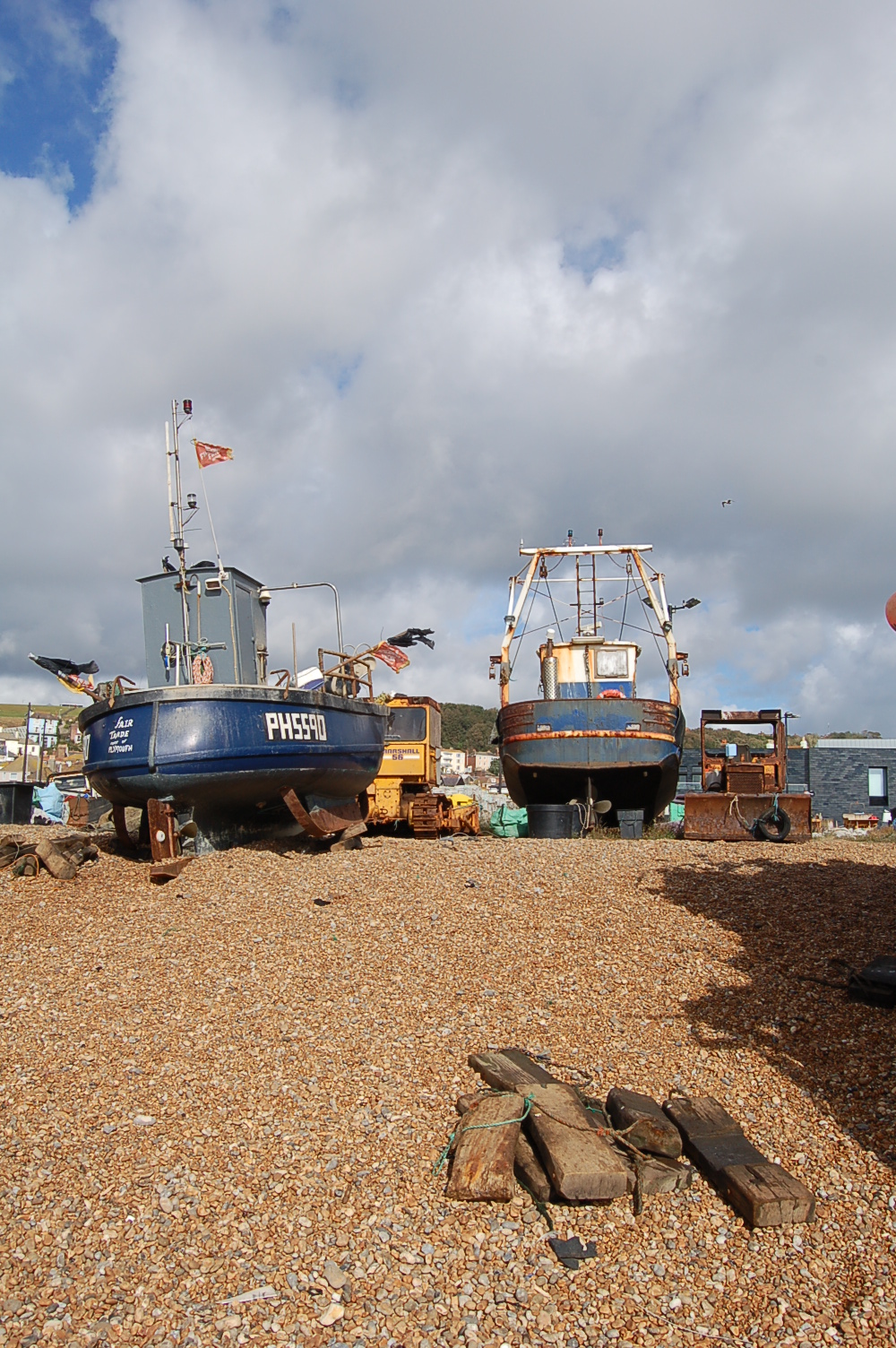
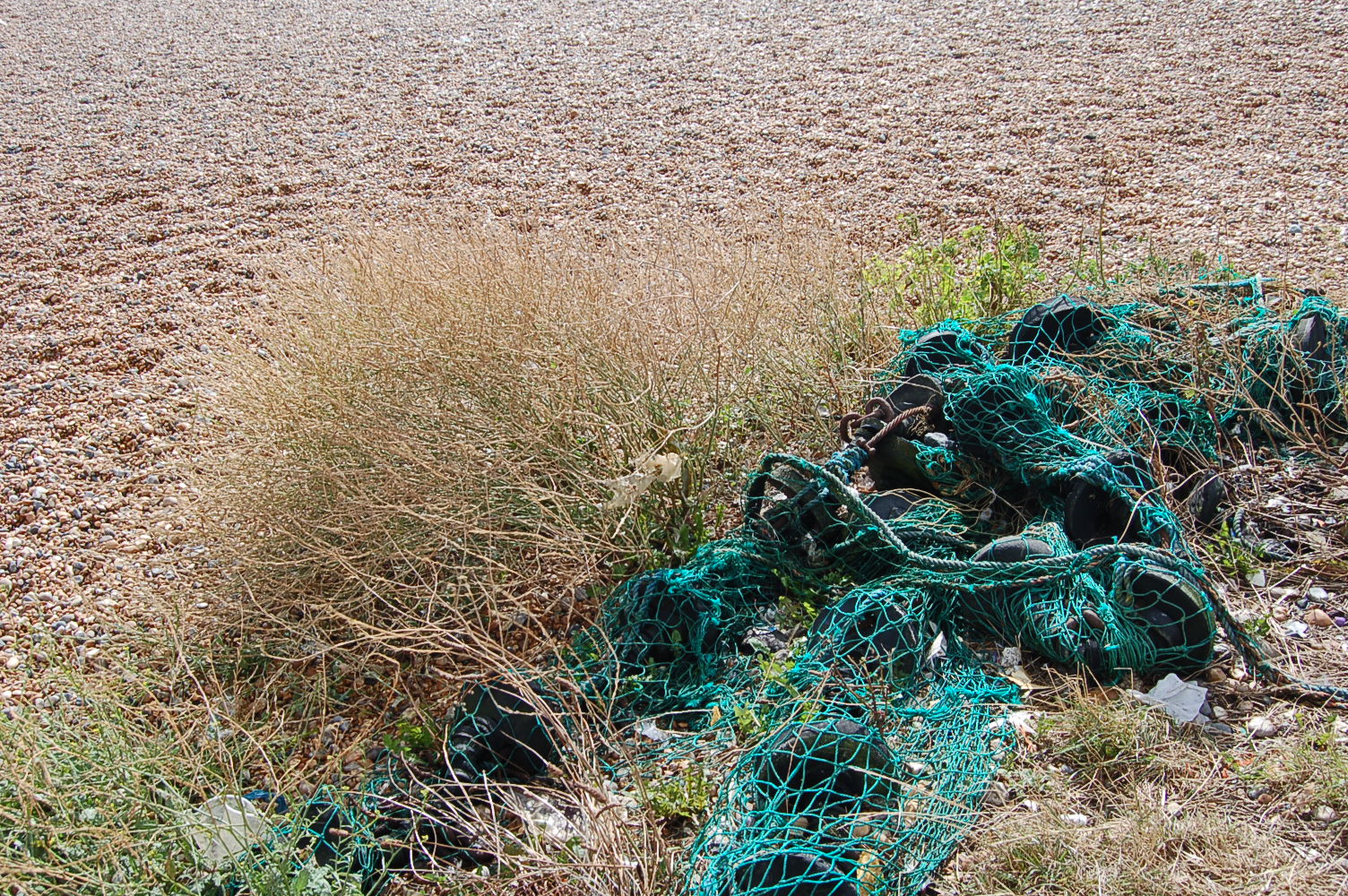
Think of Old Hastings and a picture forms in the mind of a busy beach cluttered with fishing boats and their gear and friendly fishermen who enjoy and even invite visitors to wander around taking photographs. This shingle beach area with its fishing boats and net shops is known as “The Stade”.

We arrived to see and hear a violent noisy sea crashing in waves against the shingle beach and the walls of the harbour. But the sun appeared and this made the occasional shower less bothersome. We began by exploring the “Stades”, wandering in between the “net shops” the tall, black-painted clapper boarded sheds built to dry fishing nets. They have a special beauty and a character all of their own.

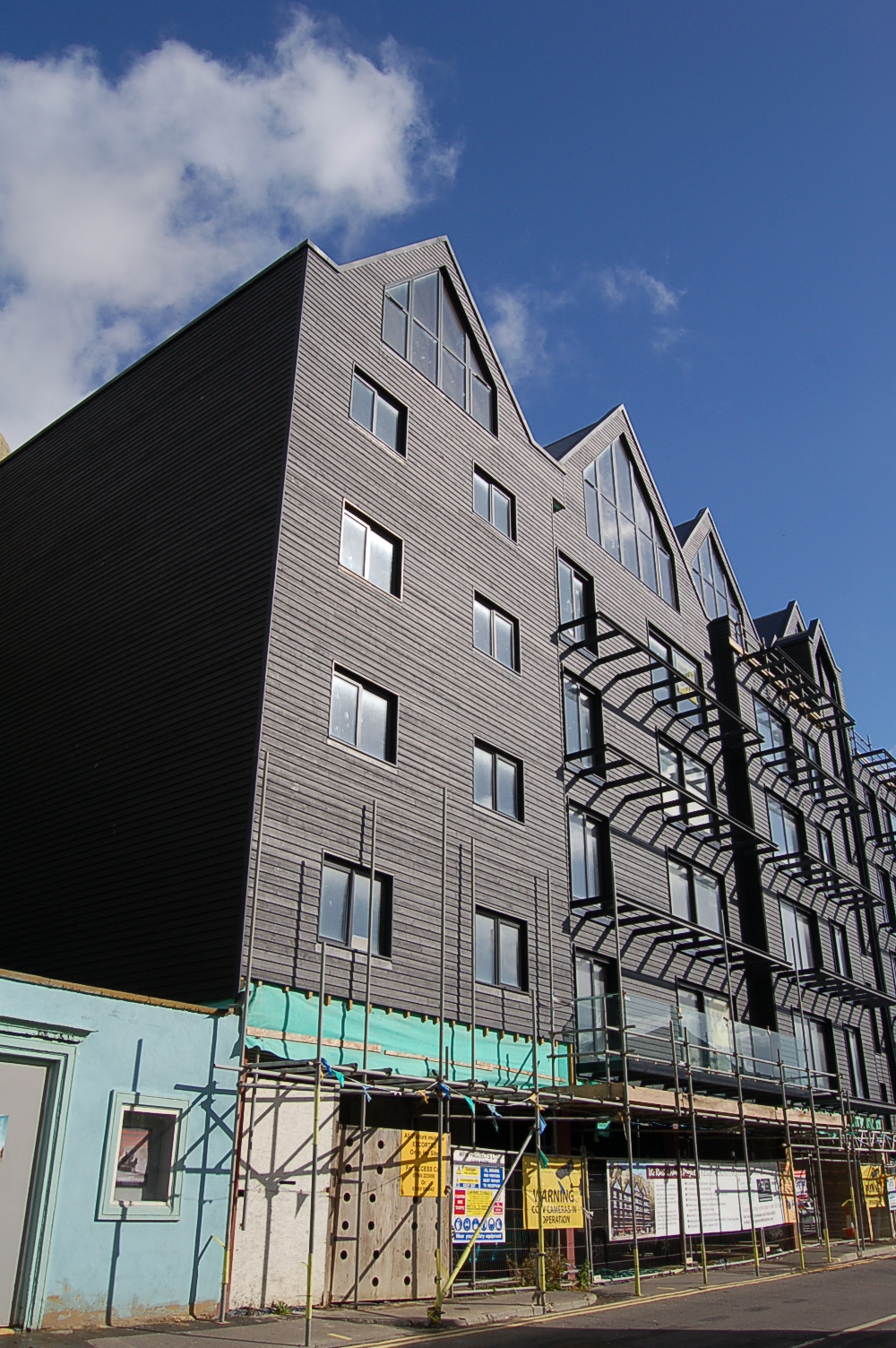
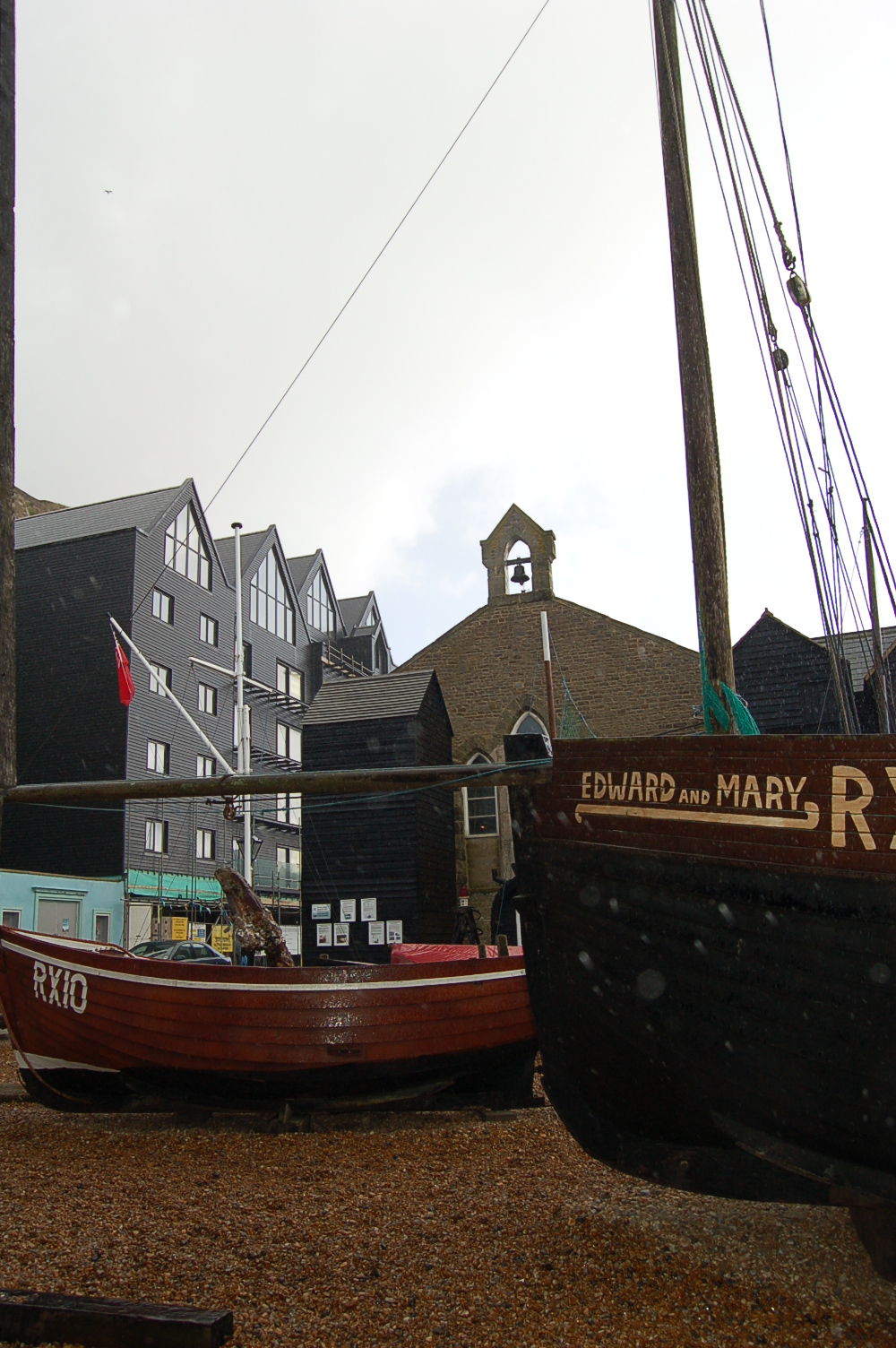
Across the road an imaginative architect and builder had created an apartment block that reflected the Stades’s net shops but looked modern. Most impressive!

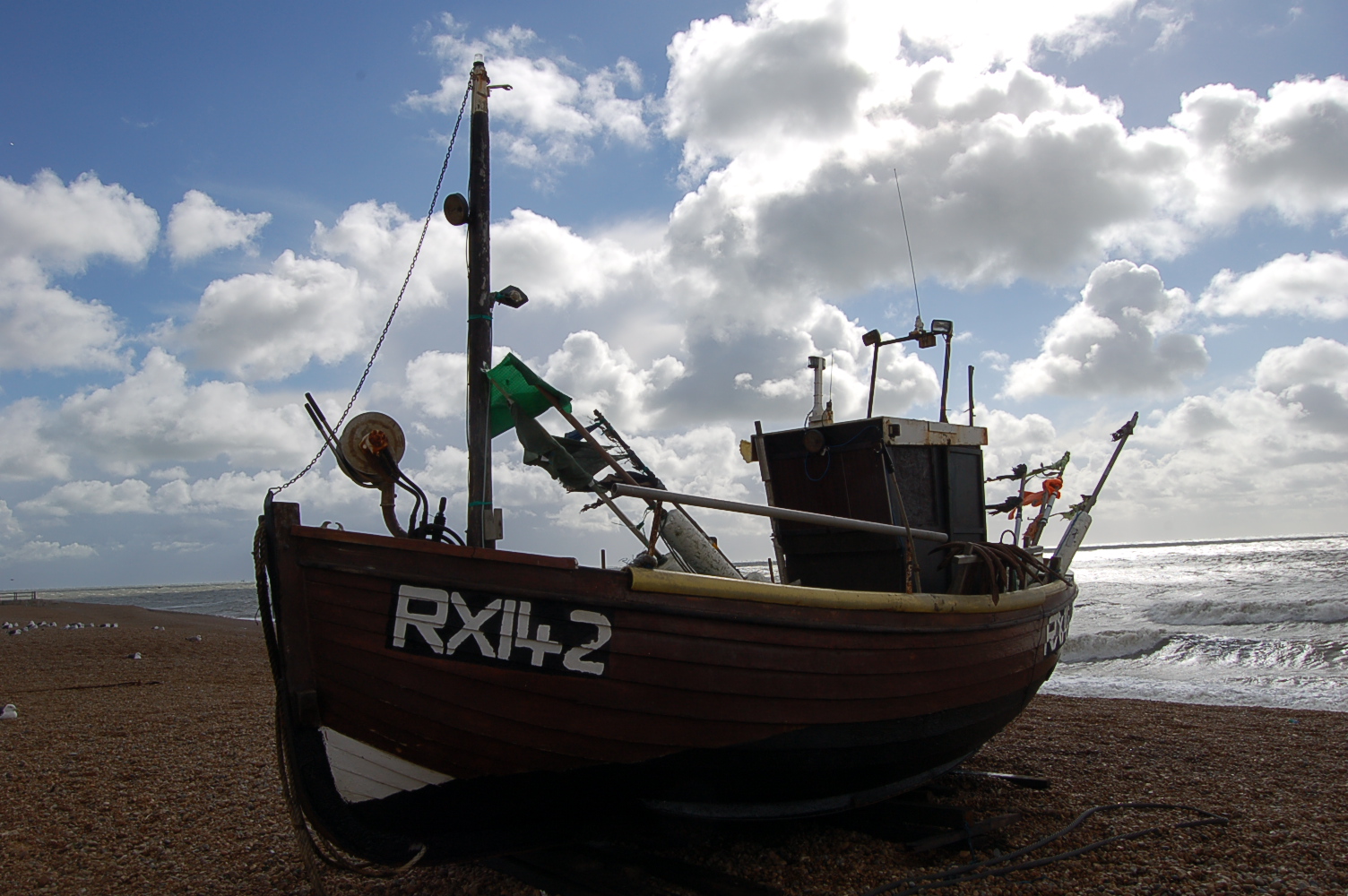
But what is a fishing village without its boats?

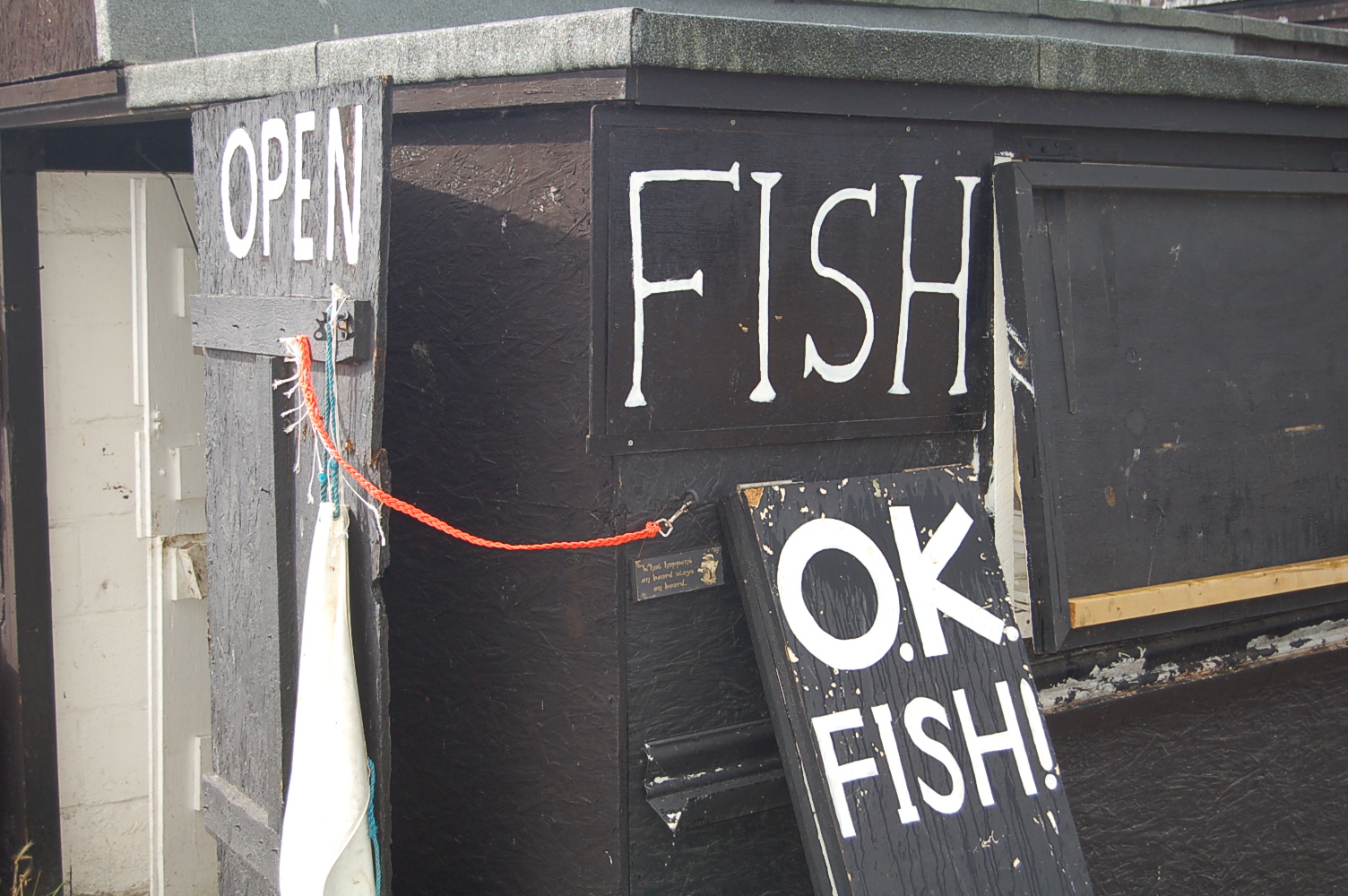
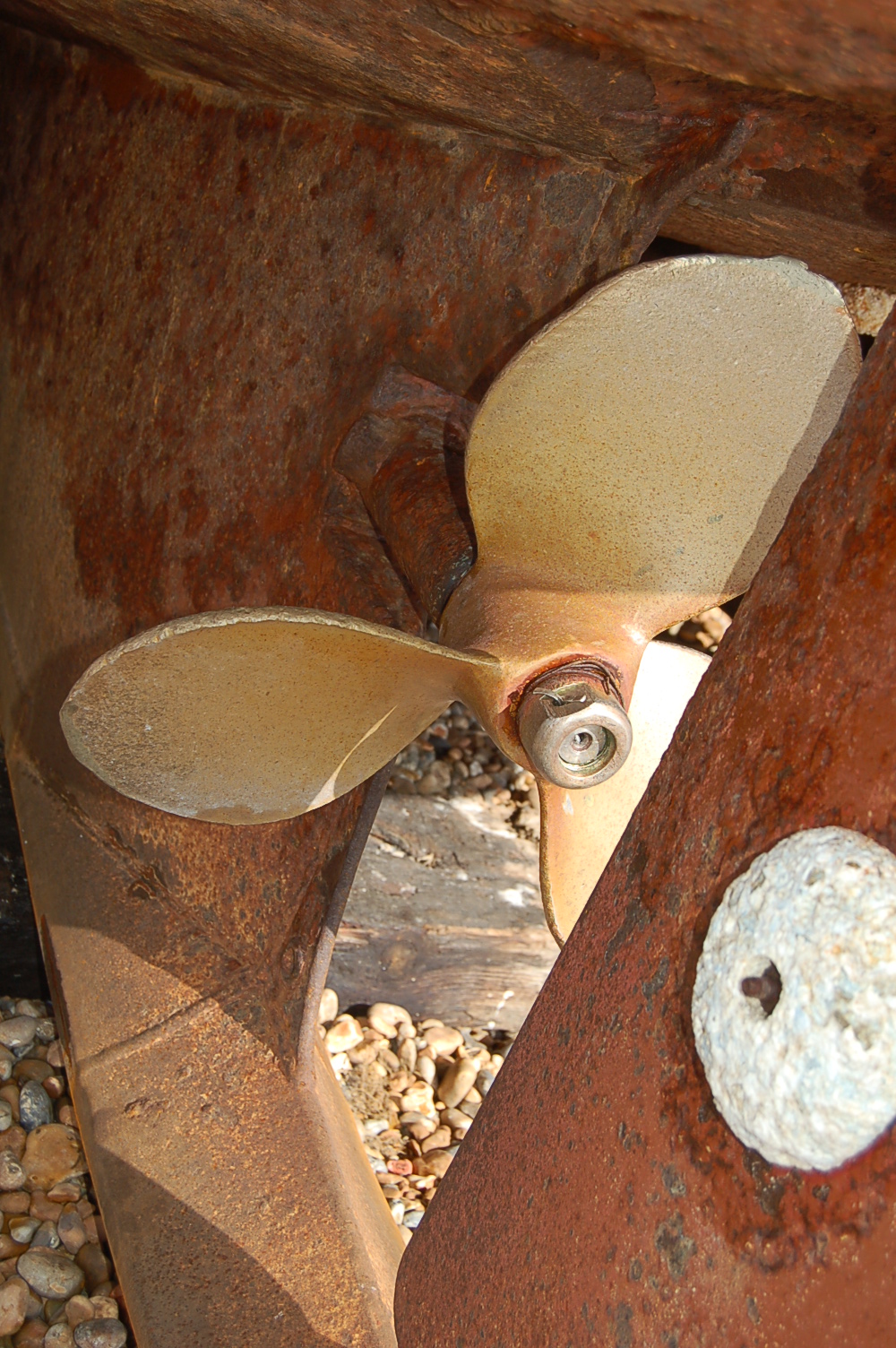
As usual my camera and I were attracted to little details.

Categories
autumn nature reserves photography Shropshire wildlife woodland

Brown Moss – a Shropshire Wildlife Gem

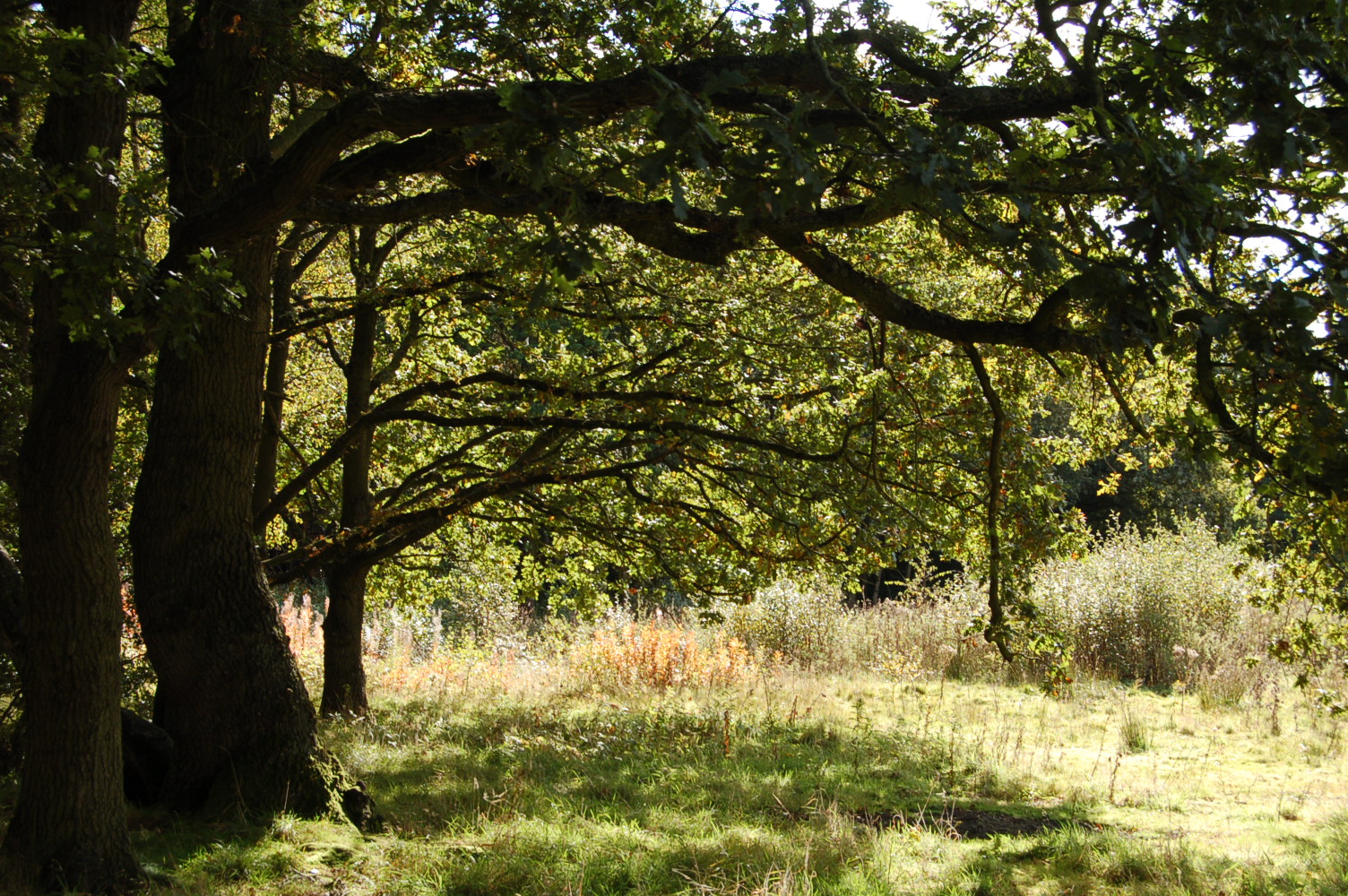
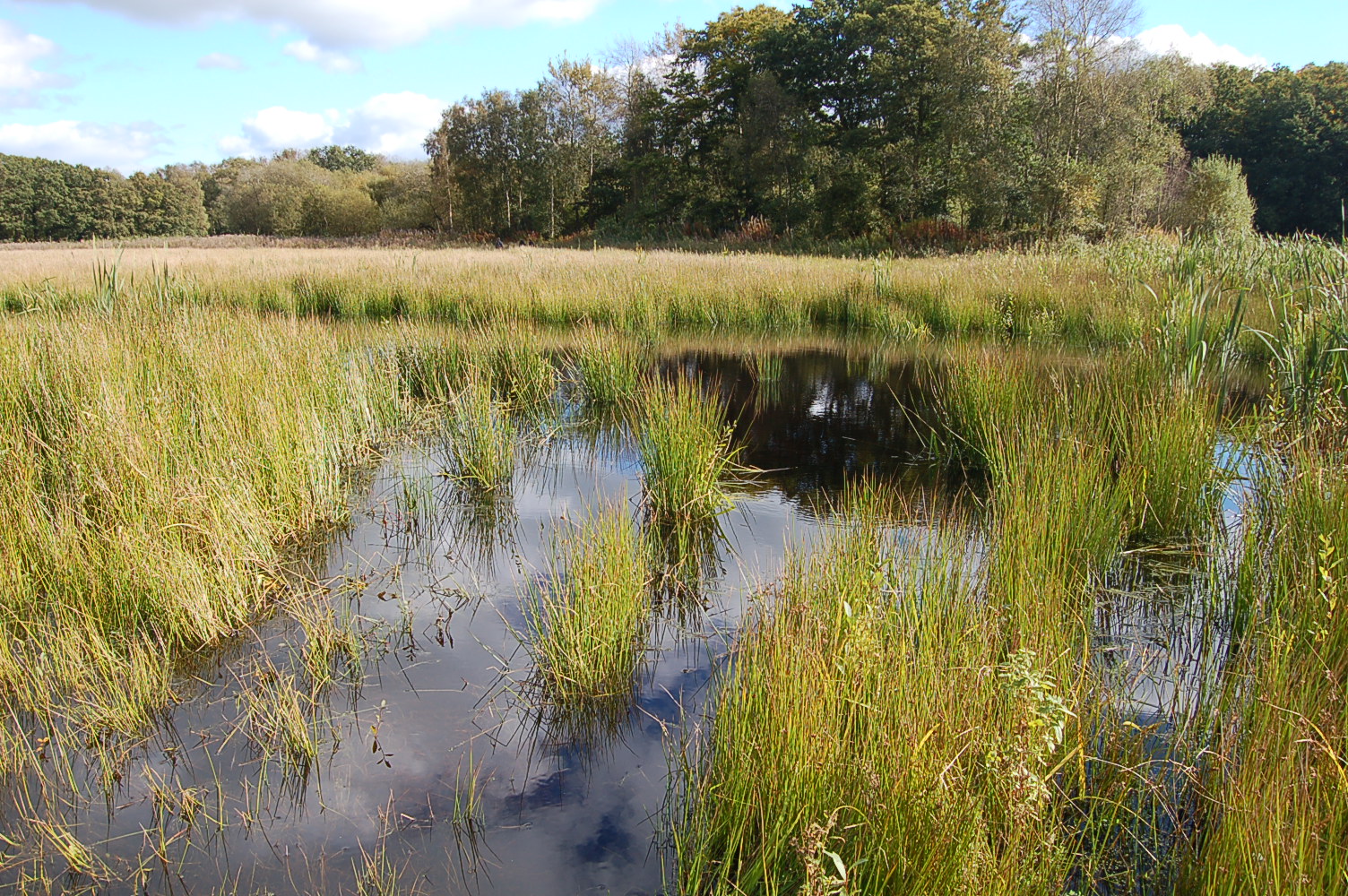
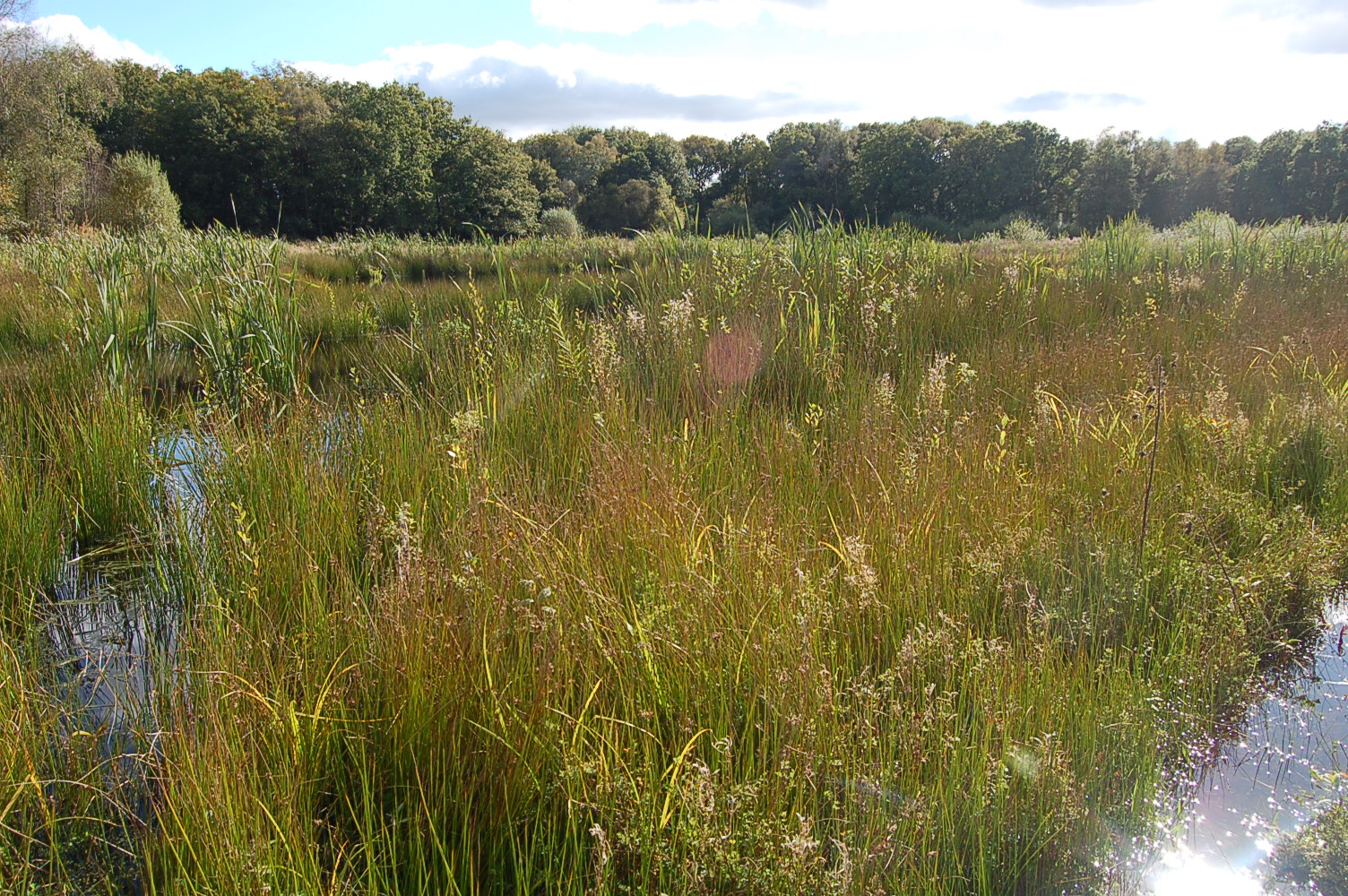
Brown Moss is an area of wet land, shallow pools, reedbeds and marsh surrounded by woodland, part of which contains old coppiced wood. We parked hidden in trees and emerged into the open to see the “moss” in front us. There was less open water than we remember.

Where the woods meet the marshes occasional Silver Birch grow with their white stems glowing in the sunshine now that most of the yellow leaves of autumn have fallen to colour the ground beneath in shades of primrose.

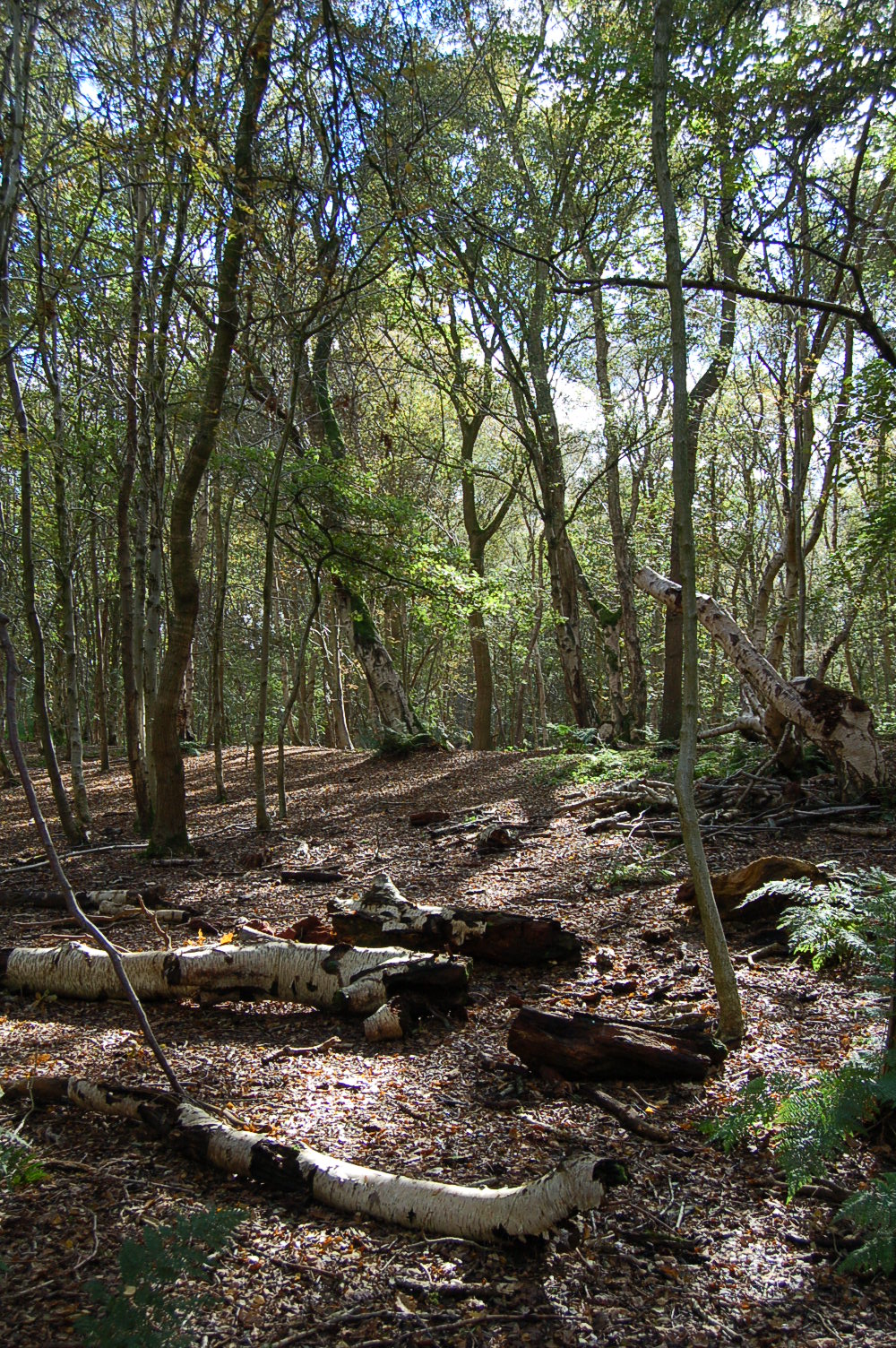
We skirted the marshy area and wandered into the woodland in search of fungi. The woodland here is mixed, some tall specimens with patches of coppiced smaller trees, some deciduous and some evergreen conifers. Jays foraged in the oaks for acorns which they buried in the soft ground between the woods and the pools, hoping to find them in times os severe weather. They were so busy they took little notice of us so we got close enough to enjoy the blues and pinks of their plumage and smile at their strange hopping gait in the long grass.

A pair of slim birches presented a natural portal into the woods, but Jude the Undergardener decided to consult the map – just in case it was Mother Nature playing a trick on us!
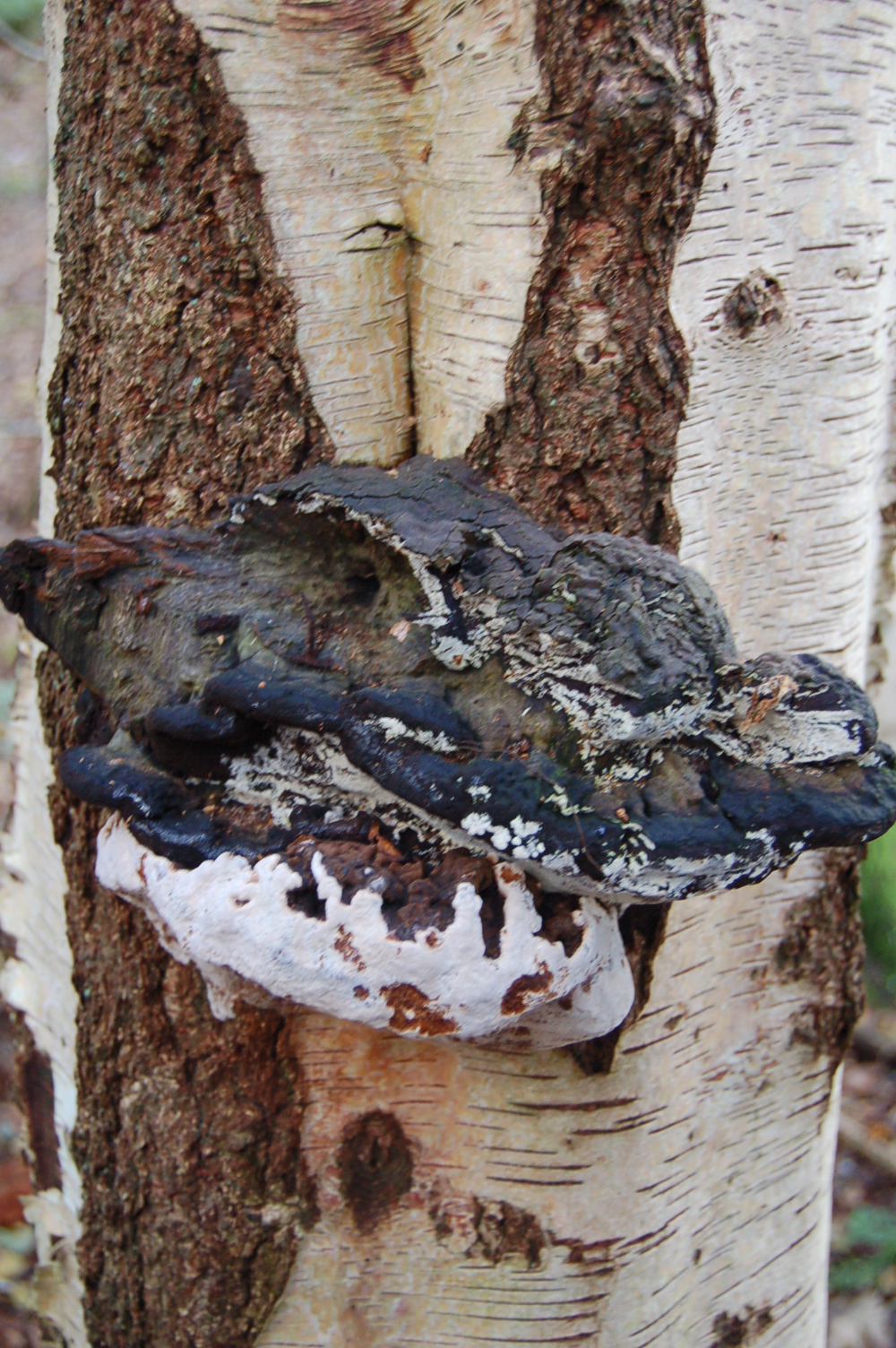
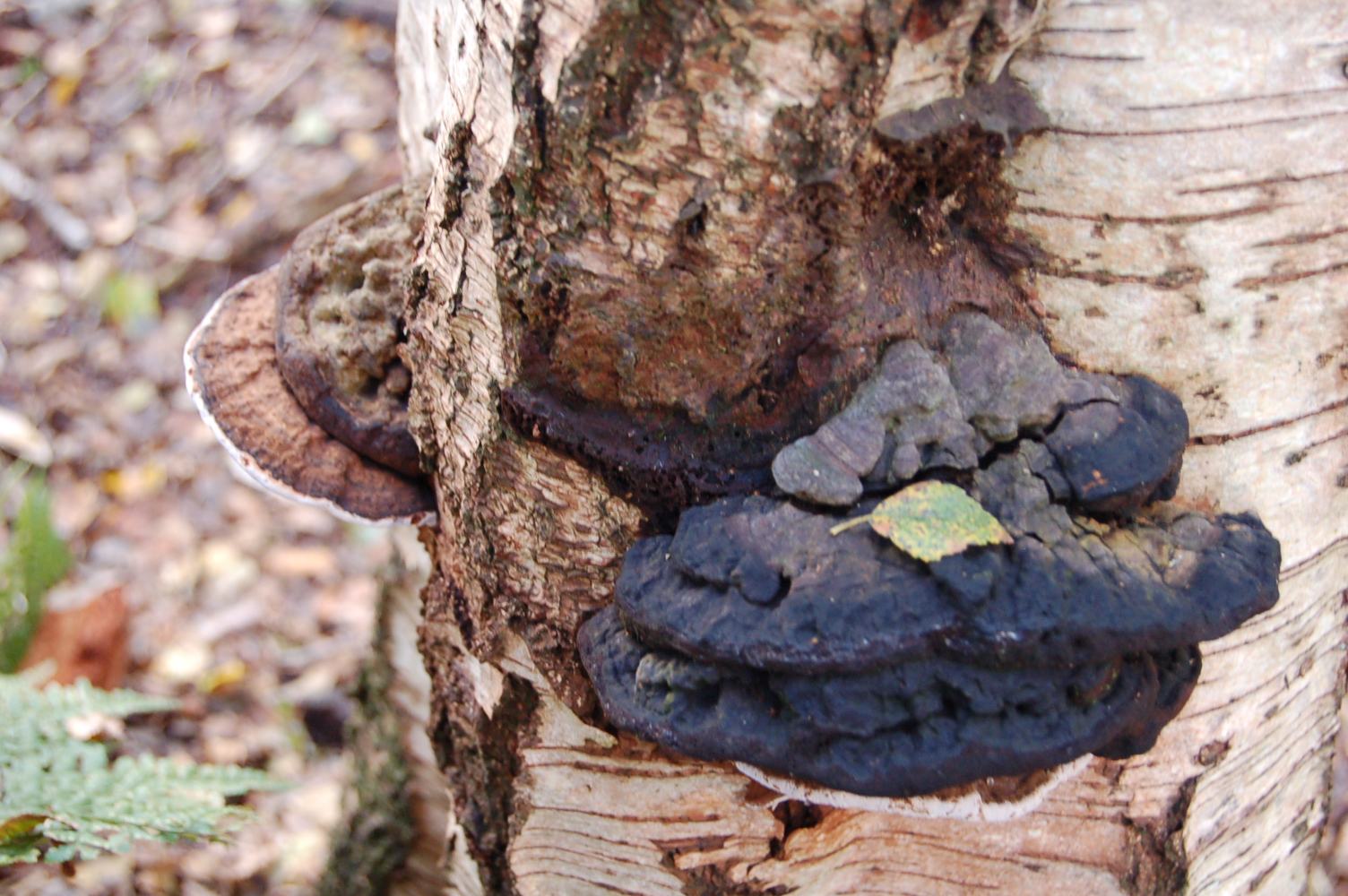
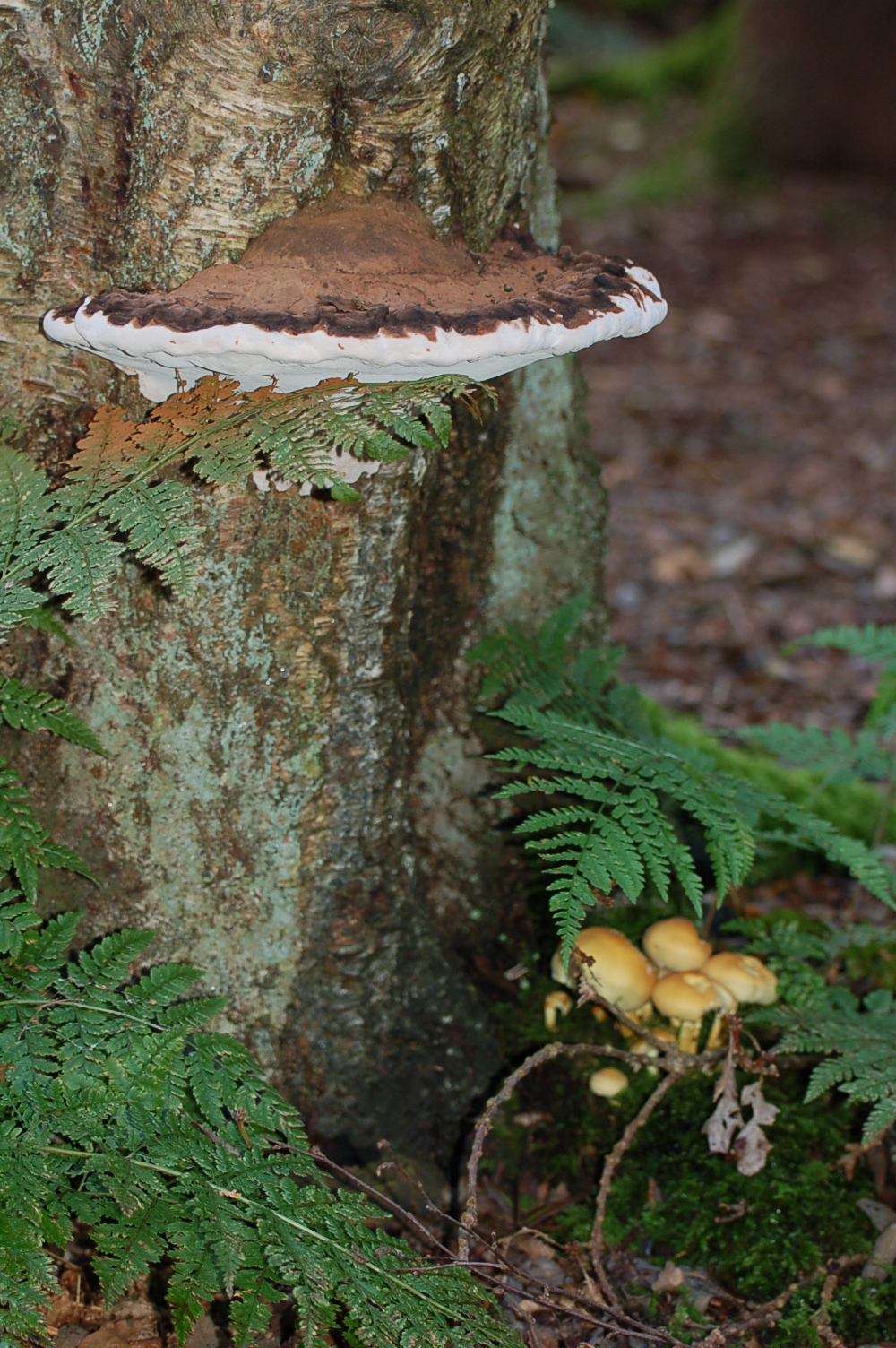
There were fewer fungi to see than expected and we were particularly disappointed not to see any Fly Agaric, but there were bracket fungi and earth ball fungi to find. The brackets are found on the trunks and the balls on the ground below.

We stopped deep in the woodland for a coffee just where we found a fallen birch conveniently providing us with a wooden bench. With the long zoom on my Nikon I scanned the trees above to see what could be seen from this different viewpoint. A tiny white ball of fungus stuck like a table tennis ball high on a tree trunk.

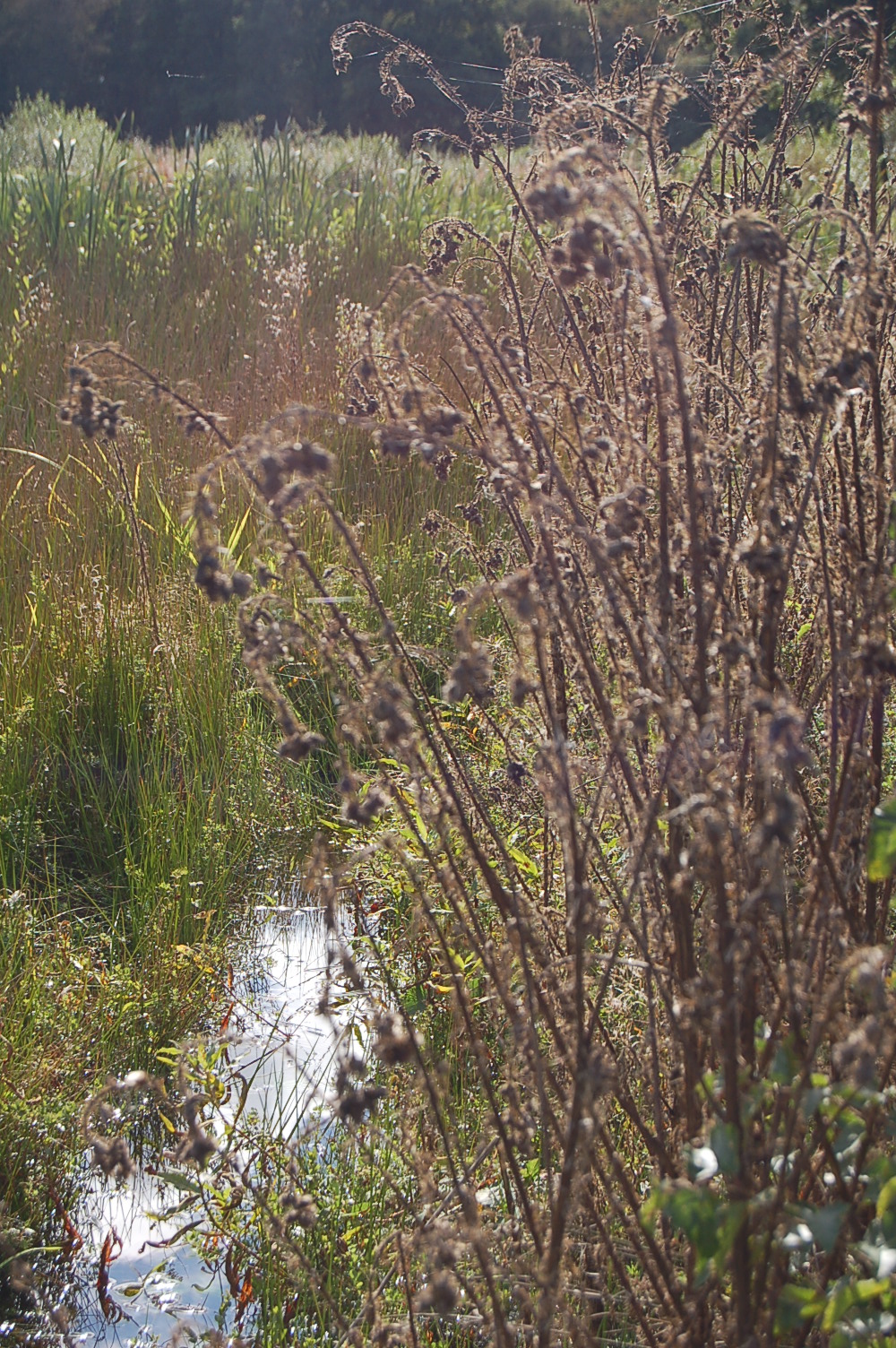
On the edges of the wood the skeletons of the summer’s flowers attracted spiders to make webs and the low light lit them up.

The low lighting continued spotlighting foliage along the edge of the marshlands. We skirted the marshland on soggy paths and occasional boardwalks.

At times the wet areas joined with the woodlands and mystery pools hung in the shadows. The water in the pools was clear but tinted with the russet colours of the underlying soils.

Two finds kept us mystified for a while. The first was these strange black and white colour washes on the sawn end of a felled tree trunk. It appeared to be some sort of fine fungal growth but we remained unsure.

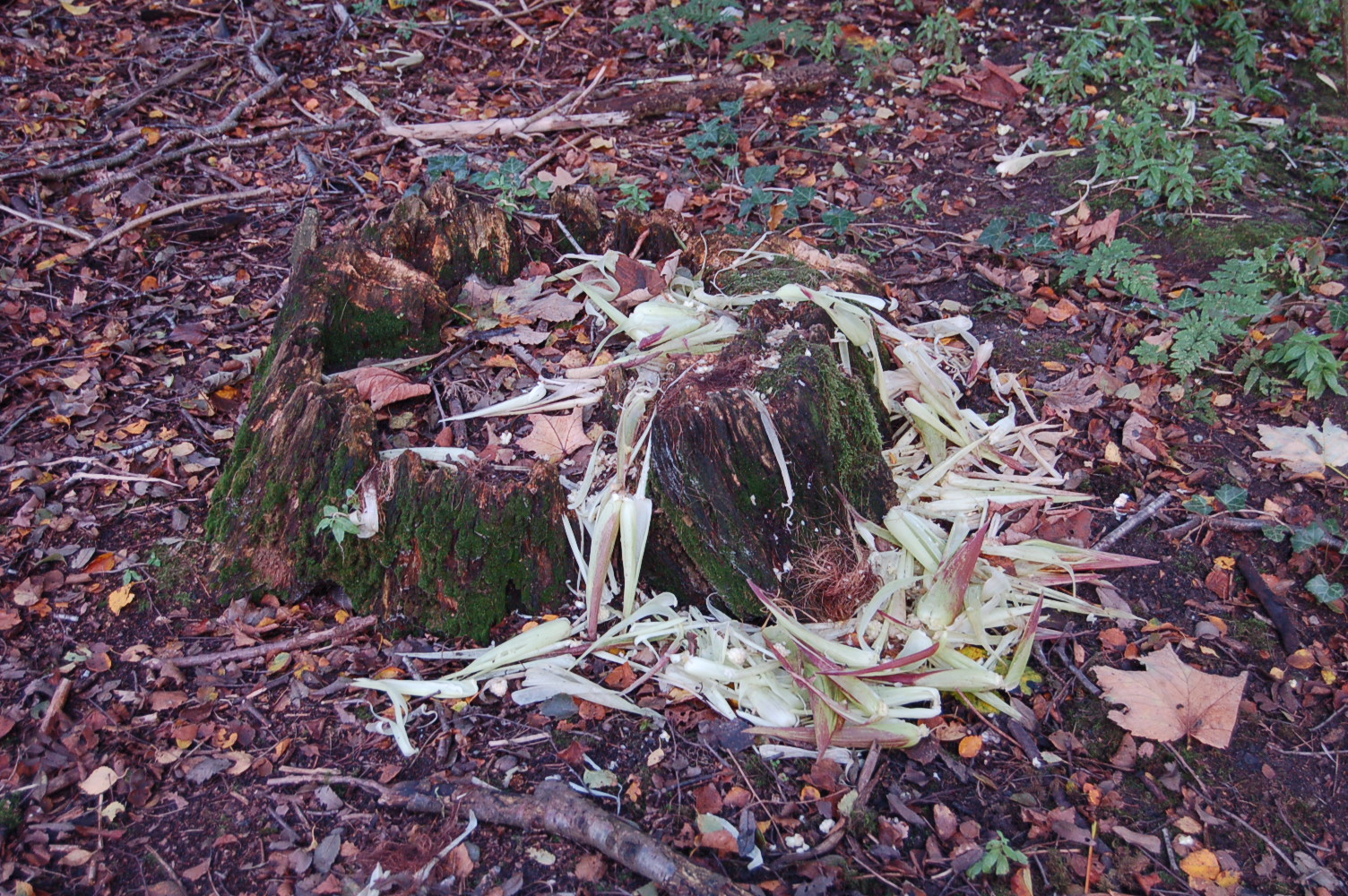
The second mystery was solved after a bit of tracking Sherlock Holmes style with noses to the ground and eyes peeled. The trail began with the spotting of a small pile of outer leaves of maize cobs. We followed them until we found a whole pile around a tree stump. Two clues lead us to the answer. A badgers’ sett in the deeper shade of the trees and on the edge of the wood a field of maize.

Yes! the resident badgers had found themselves a fast food outlet!

Categories
fruit and veg garden design garden photography gardening gardens open to the public grow your own outdoor sculpture photography

The Other Hampton Court – Part 2

Back to the Hampton Court Garden – not the one in London but the one in north Herefordshire.

The structure designed into the gardens here entices us to move on, to follow paths, to enter gateways, to sit and rest and to look at views.

Within the design plants sit  comfortable and happy in their surroundings.

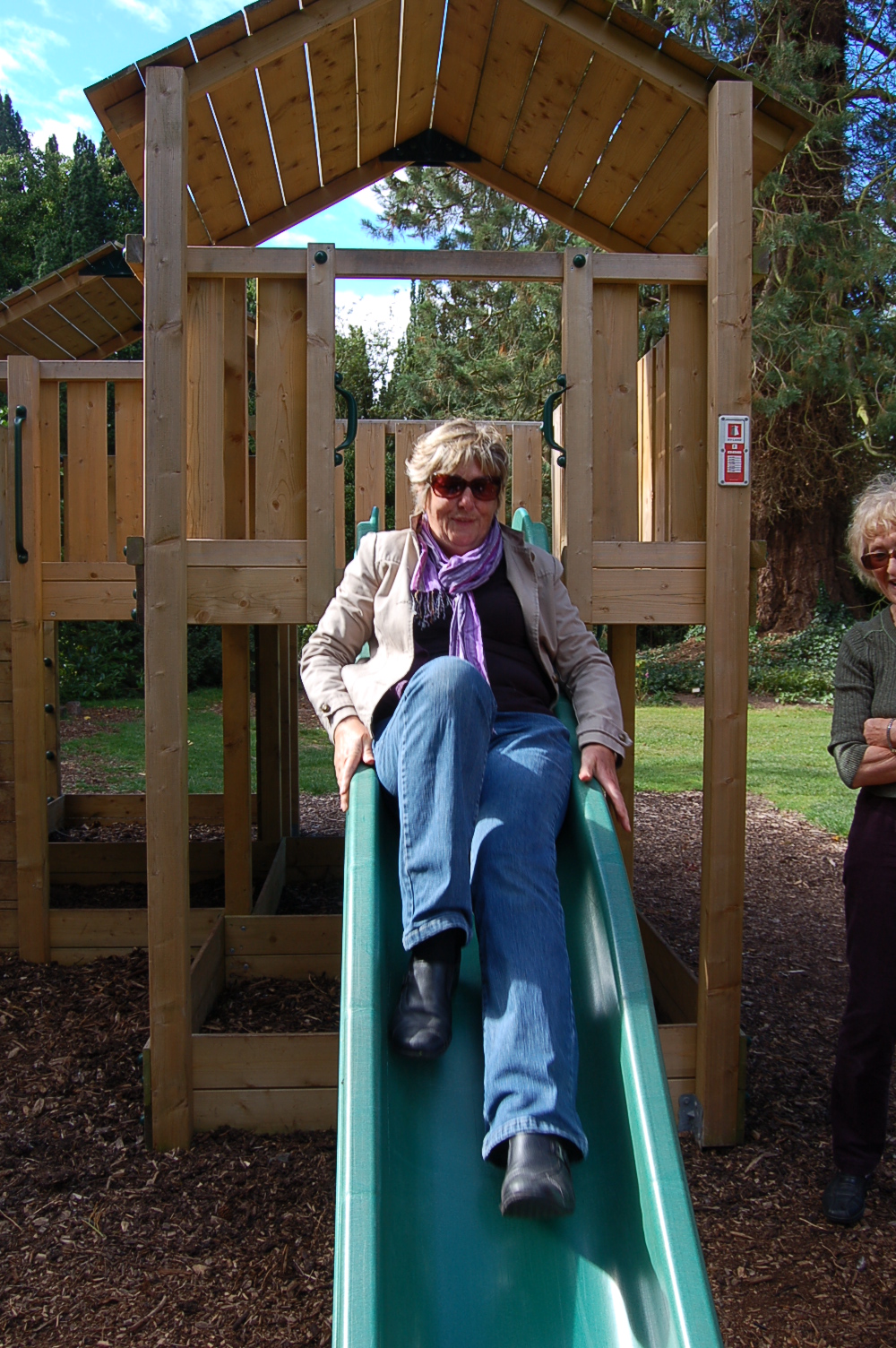
This wonderful garden is also about fun, that essential element that acts as the vehicle for children to become involved with gardens and gardening.

Not just children though – adults need fun in the garden too, especially Jude, the Undergardener.

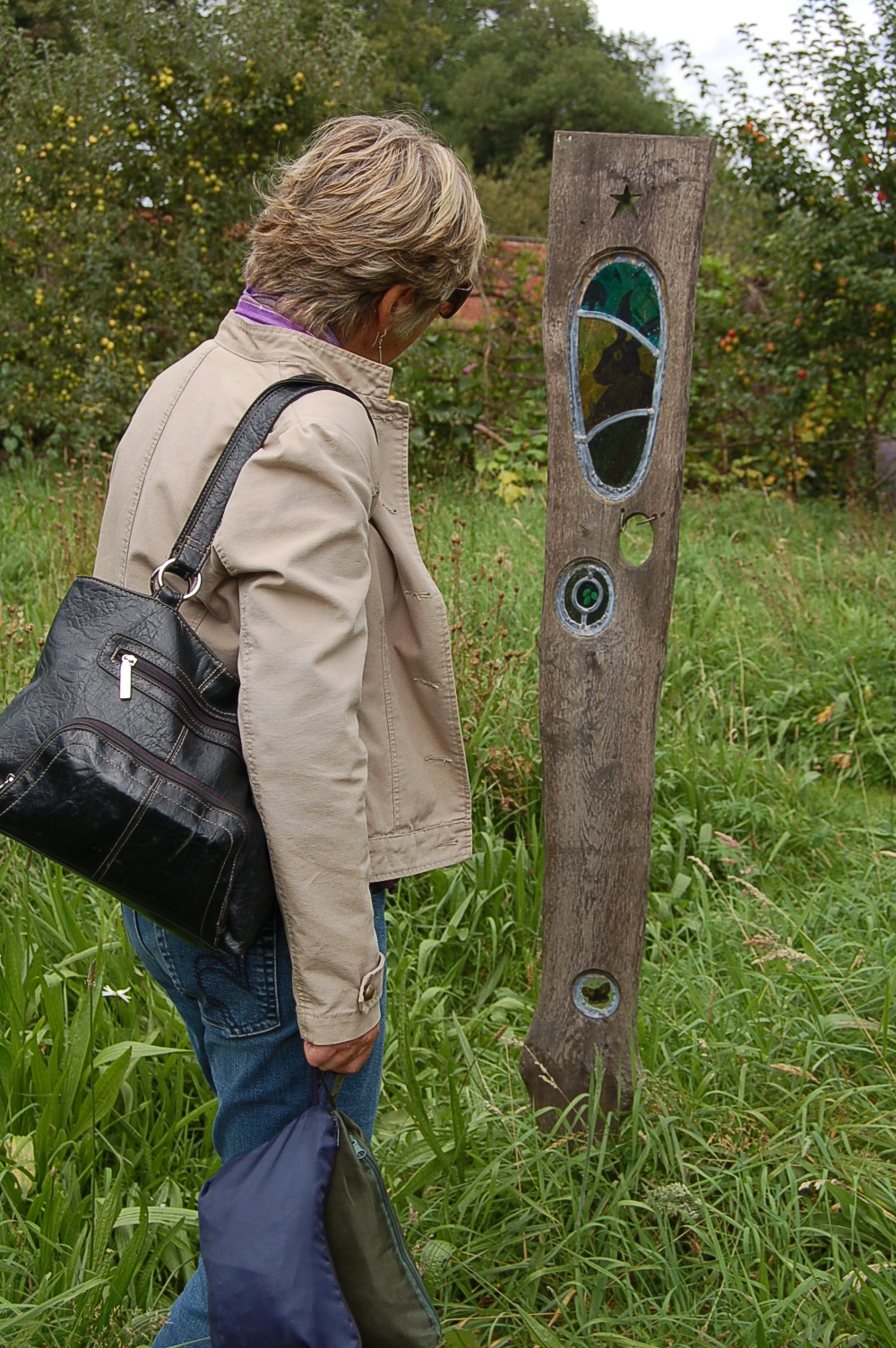
Sculpture is an important feature of Hampton Court and is enjoyed by all ages. This piece features stained glass within a wooden obelisk,

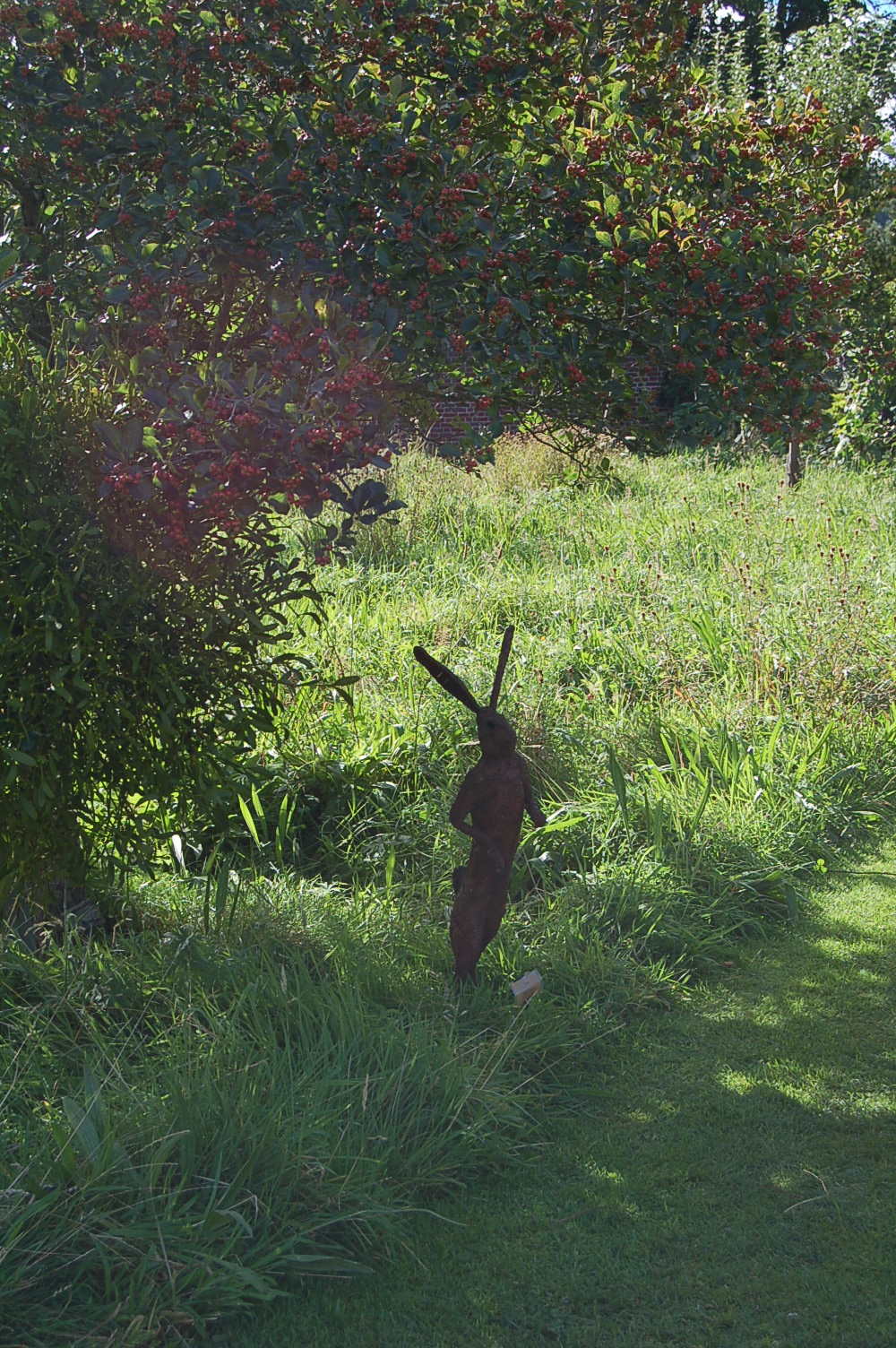
Within the orchard this sculpture of a hare in its rusty finish attracts everyone for its beauty and charm.

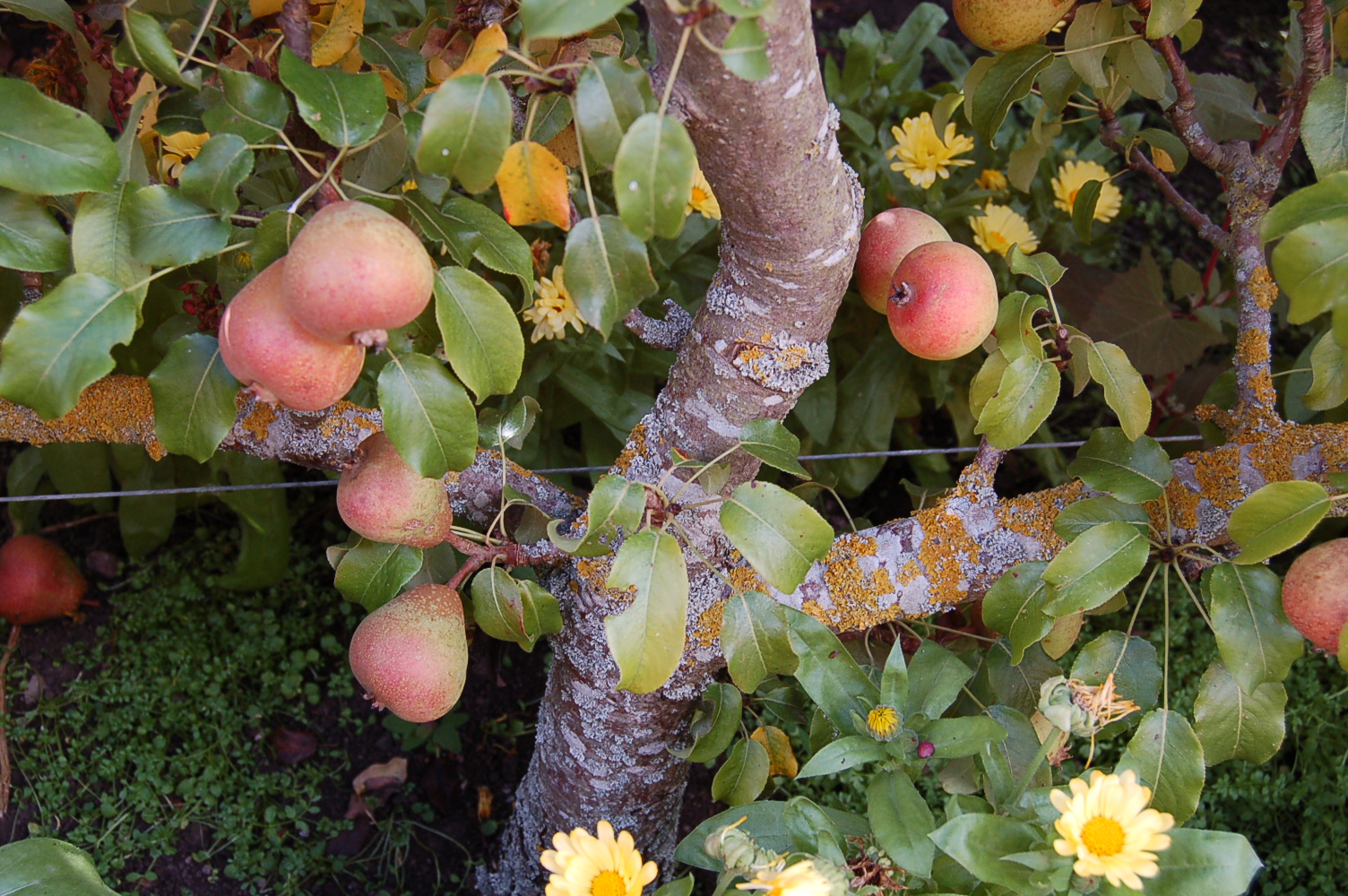
We shall leave Hampton Court in the orchard a collection of heritage fruit trees and meadows, and with a wander around the potager.

And a piece of unintentional outdoor sculpture.

Categories
awards

Thanks for the compliment.

OK we create our blogs because we enjoy writing and taking photos and then enjoy sharing them with others. But it is nice sometimes to get the odd compliment such as a blogging award.

So thanks to Judy of the blog grandparentsplus2 for nominating my blog for the Beautiful Blogger Award. I now need to tell you 7 things about myself you may not know and list my 7 favourite blogs to nominate them for the Beautiful Blogger Award.

1. I read over a hundred books every year which means that over the last decade I have read my way through 1 000 books. It makes my eyes ache just to think about it!

2. I suffer from Noun Aphasia which means that I often forget the names of things. I have previously forgotten what a chair is so-called it “the thing with four legs that we sit on”. I once forgot the name of Goldilocks  so-called her “the girl who lived in the woods with the bears”. It is very frustrating but my family enjoy it.

3. I can’t dig! I have to get Jude, Mrs Greenbench aka The Undergardener, to do it for me. I have no feeling in my right leg so if I dig I simply fall over!

4. I am a great fan of jazz and the blues.

5. I have been an allotment gardener now for over 20 years.

6. I enjoy chutney making with my excess crops.

7. I have a terrible memory! I nearly forgot that one.

My select seven blogs are

1. http://www.dianajhale.wordpress.com

2. http:/www.pbmgarden.wordpress.com

3. http://www.lensandpensbysally.wordpress.com

4. http://www.allotmental.com

5. http://www.thepyjamagardener.wordpress.com

6.http://www.harvestbeyondmyfrontdoor.wordpress.com

7. www.fennelandfern.co.uk

I know that not everyone likes awards but this is an opportunity to suggest a few blogs others might enjoy. Sharing ideas is central to blogging.

Categories
garden design gardening photography the sea the seaside the South

Go South 5 – Dungeness Mystery and Magic

We eventually got to walk along the expanse of shingle at Dungeness. When we tried for the second time the wind had abated but as the evening was approaching the temperature was dropping.

We still appreciated its mystery and magic. Most people who visit Dungeness are fascinated and captured by its unique atmosphere but find it hard to describe or explain. It is not beautiful but it has an attraction.

Old huts once used by fishermen remain scattered thinly along the banks of shingle, as do their sad unused boats.

Silvery blue foliage of sea-kale softens the flinty shingle flatness.

Many fishermen’s homes are still in use but now instead of nets and pots around their doors, cars are parked. The homesteaders no longer tackle the dangers of the seas in search of fish and shellfish but instead tackle morning and evening commuter traffic. Some interesting fishing artifacts however have been salvaged and now grace the homes as decorative features or are integrated with plants and shingle in the sea-shore gardens.

One of the highlights of all our visits to Dungeness, and in fact the main reason for our first visit when we fell for its charms, is to visit the atmospheric and unique garden of the late film director and writer, Derek Jarman. We drove up in anticipation again this year, parked a little way away out of respect for the current owners and I walked across with my  trusty Nikon only to be disappointed. It now seems less cared for and  lacking in atmosphere but nevertheless loaded with memories. The first time we saw the garden when Jarman was still living there, we just could not believe that any garden could evoke such deep emotions and emerge you in its own unique character. Jarman was a one-off when it came to garden design. The garden was a perfect reflection of its environment, the sea, the shingle, its fishing history and its plant life. This was the only garden capable of sending a shiver up the spine!

Sometimes the strange beauty of Dungeness lies in its emptiness and simplicity.

Categories
bird watching birds photography RSPB the sea the seaside the South trees wildlife

Go South 4. Dungeness RSPB Reserve.

Our plans to explore the shingle slopes of Dungeness soon came somewhat adrift. The wind increased to gale force. We decided to defy it and take the walk along the fisherman’s boardwalk across to the water’s edge. This was a stupid idea to say the least – the strongest gusts blew us off the boardwalk. We understood what it was like to be the “tumbleweed” of Dungeness, the dried Sea Kale plants.

We eventually struggled to the end by holding onto each other and making slow progress and tried to walk along the water’s edge. We couldn’t move as every step we moved forward the wind blew us straight back.

We gave up, went back to the car and drove along the coast a little to the RSPB Dungeness Reserve, situated in a more sheltered area. We vowed to return to Dungeness itself when the wind had calmed down.

The reserve was worth a visit so in the end we didn’t mind the diversion. Here was a strange watery landscape where unusual plants grow and unusual birds live and visit.

We particularly loved seeing the Vipers Bugloss in flower with its bright blue petals and strange structure. The dramatic seed heads of the Teasels and Mulleins looked so architectural and strongly structural, and would feed the finches as the cold weather set in.

The harsh environment created distorted trees and bushes twisted and stunted like bonsai creations.

I am forgetting what the RSPB is all about – the birds. Dungeness did not disappoint for despite the extreme winds which kept birds down on the ground we did manage to see a first ever bird, the Great Egret. We are getting used to seeing Little Egrets in the UK wherever there is a large expanse of water but we had never seen its much larger cousin. This was a red-letter day as we saw pairs of both species on the same lagoon.

After an hour walking around the reserve the wind appeared to be calming down so we bravely decided to give Dungeness another try.That will be the theme of the post “Go South 5. The Magic and Mystery of Dungeness”.

This Veggie Life

A Vegetarian | Nature Lifestyle Blog

Rambling in the Garden

.....and nurturing my soul

The Arch City Gardener

Journeys In St. Louis Gardening and Beyond

Garden Dreaming at Châtillon

Consult the genius of the place

Storyshucker

A blog full of humorous and poignant observations.

gardeninacity

Notes from a wildlife-friendly cottage garden

PlayGroundology

...an emerging social science

The Official Blog of British Wildlife

'The most important and informative publication on wildlife of our times' - The Independent. This blog is a member of The UK & Ireland Natural History Bloggers group: www.uknhb.blogspot.com

iGrowHort

Inspire - Cultivate - Grow Native Plants - Restore Landscapes

Bishops Meadow Trust

To create and protect a semi-natural wild space for the people of Farnham to enjoy and experience an array of British wildlife in our town

Gardening with Children

The www.gardeningwithchildren.co.uk Blog

UKbirdingtimeline

birding through the seasons, why birds matter and how to conserve them

NATURE WALKER

with a camera in hand

Jardin

Transform your outdoor space

Eva's space

My allotment, cooking and other interests

Old School Garden

my gardening life through the year

LEANNE COLE

Trying to live a creative life

fromacountrycottage

trying to live as lightly as possible on our beautiful planet

Good Life Gardening

Nature lovers from Leicester living the good life.

mybeautfulthings

Finding the beautiful in the everyday

mawsonmichelle

Michelle's Allotment

In and Out of My Garden

thoughts from and about my garden

Greenhousing

Big plans for a small garden

The Scottish Country Garden

A Walled Country Garden in South East Scotland

The Fruity Chicken

Life at the fruity chicken

willowarchway

Off grid living. Self sufficient. "PERMAGANICS RULE".

St Anns Allotments

Nottingham's Grade 2* Listed Allotments and Community Orchard

Manifest Joy Harvests

a journey in suburban vegetable gardening

Allotmental

The madness of growing your own

Penny's Garden: a harvest beyond my front door

A novel approach to vegetable gardening

arignagardener

Sustainable living in the Irish countryside.

NewEnglandGardenAndThread

Master Gardener, amateur photographer, quilter, NH native, and sometimes SC snowbird

dianajhale

Recent work and work in progress and anything else that interests me

planthoarder

a chaotic cottage gardener

Lens and Pens by Sally

a weekly blog that creates a personal philosophy through photographs and words

Dewdrops and Sunshine

Stories from a sassy and classy Southern farmbelle.

The Pyjama Gardener

Simple Organic Gardening & Seasonal Living

gettin' fresh!

turning dirt into dinner

JOY...

today the world is created anew

Garden Birds

Notes from a Devon garden

ShootAbout

Life Through The Lens

Adapting Pixels

A photography blog showcasing the best photography pictures and videos on the internet

Wildlifegardening's Blog

Just another WordPress.com site

naturestimeline

personal observations from the natural world as the search continues for a new approach to conservation.

LATEBLOOMERBUDS

The Wonders of Life through my Eyes, my Heart, my Soul