Categories
colours conservation countryside gardening landscapes nature reserves ornamental trees and shrubs trees Wildfowl and Wetlands Trust Winter Gardening

The Wonder of Willows – part one

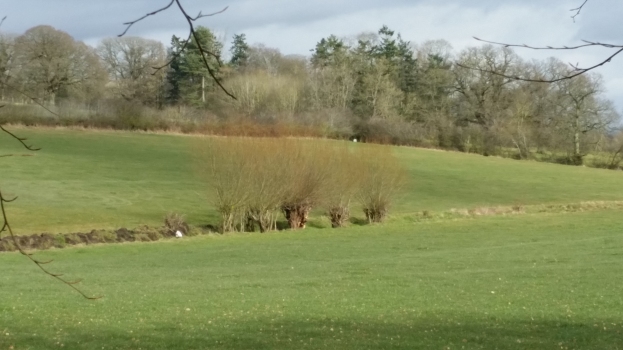
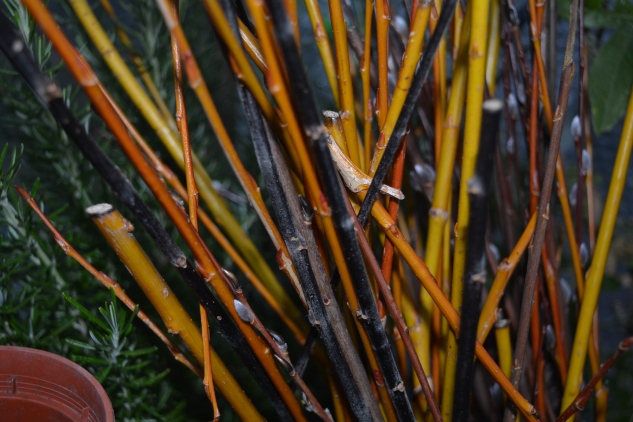
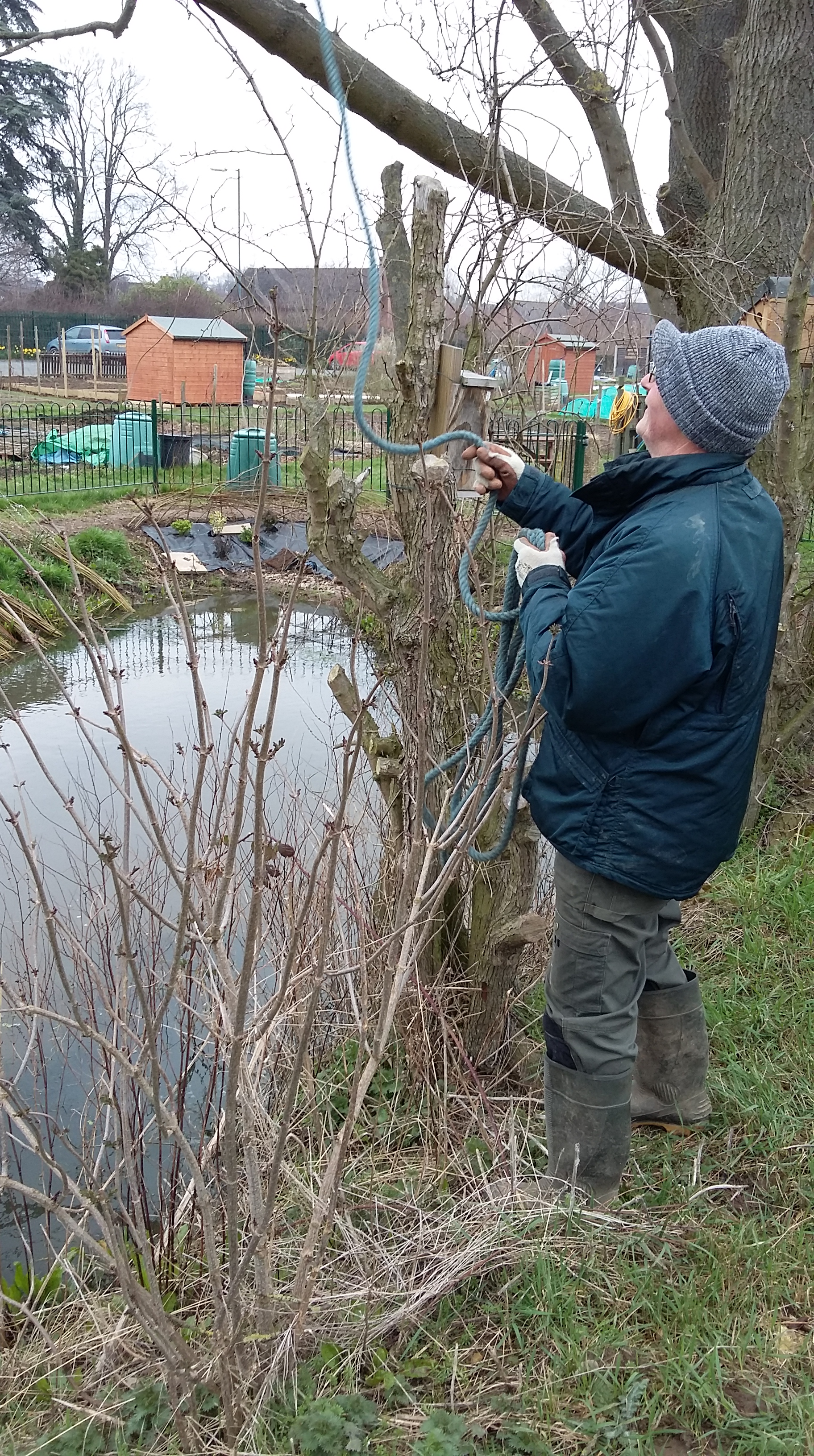
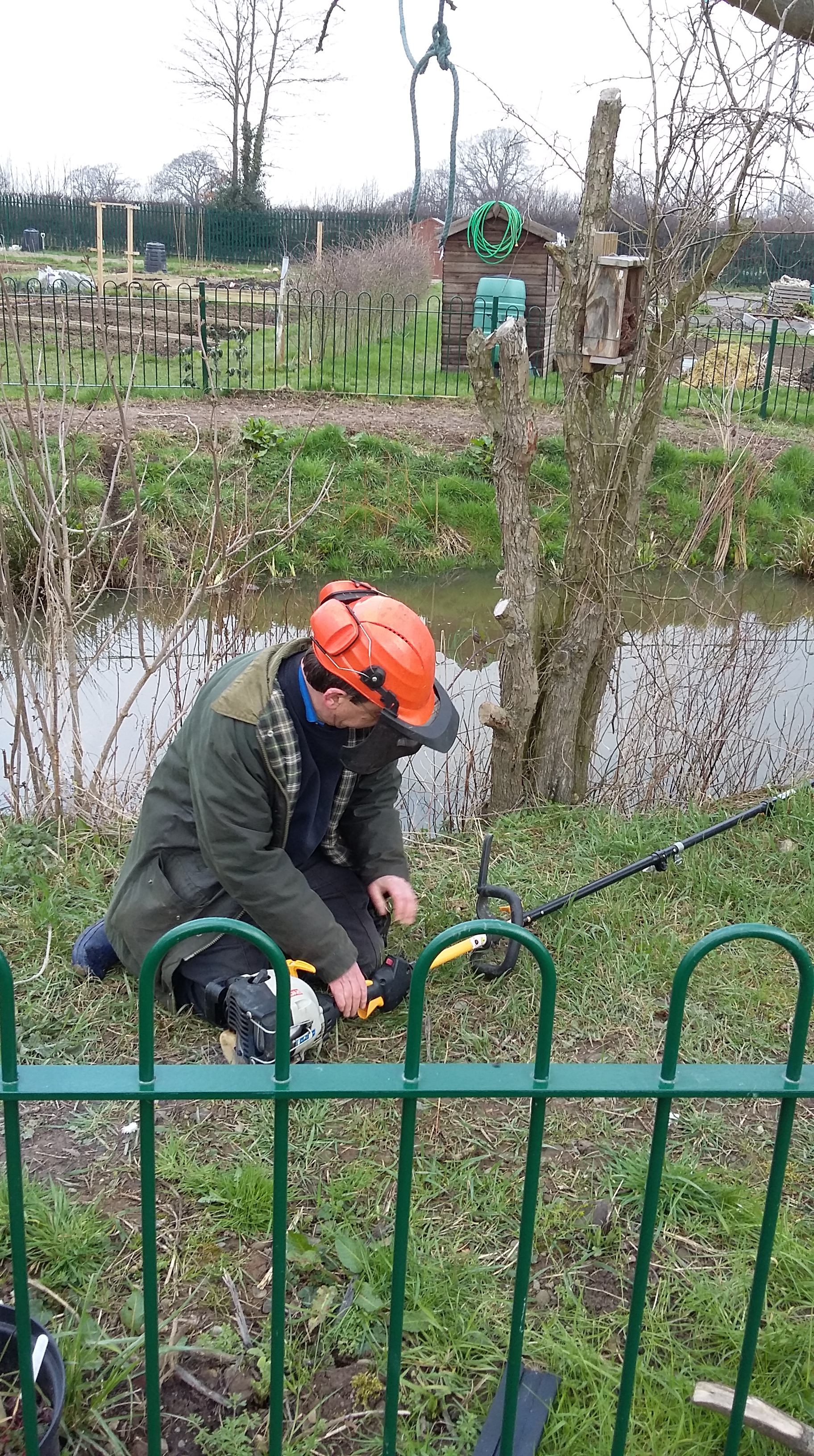
We spent a cold February day at the Wildfowl and Wetland Trust reserve in Gloucestershire, Slimbridge. Work was going on coppicing and pollarding the many willows around the site. It is so good to see this ancient countryside craft still being practised. Many of the willows here at Slimbridge are ancient but there is plenty of planting of willows going on all the time. When the trees have been cut the wands are used around the site. In other parts of the country the willow prunings are used in cottage industries like basket making and hurdle making. Larger pieces are also used as fuel. Willows are so useful but also very beautiful, the branches of no two ever seem the same ranging from greens and yellows to oranges and reds. One in our garden has even got black branches which develop a white bloom on them in the winter, making it a beautiful addition to our garden.
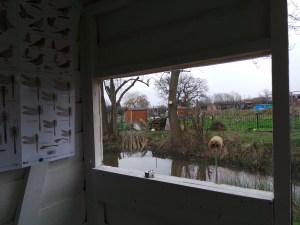
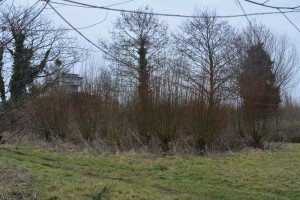
The photo below shows a grove of willows through an observation hatch in a hide.

2015 02 12_9480

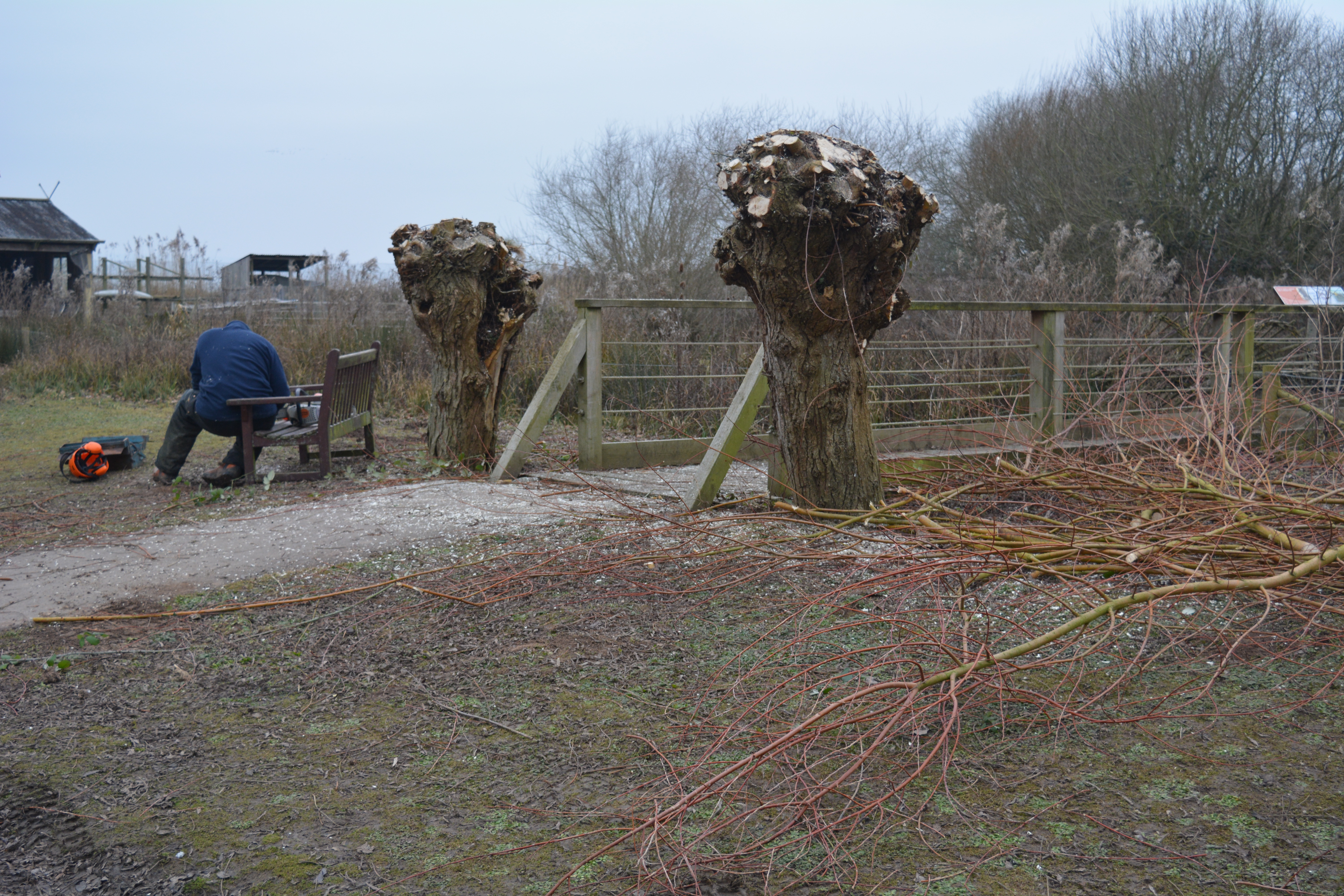
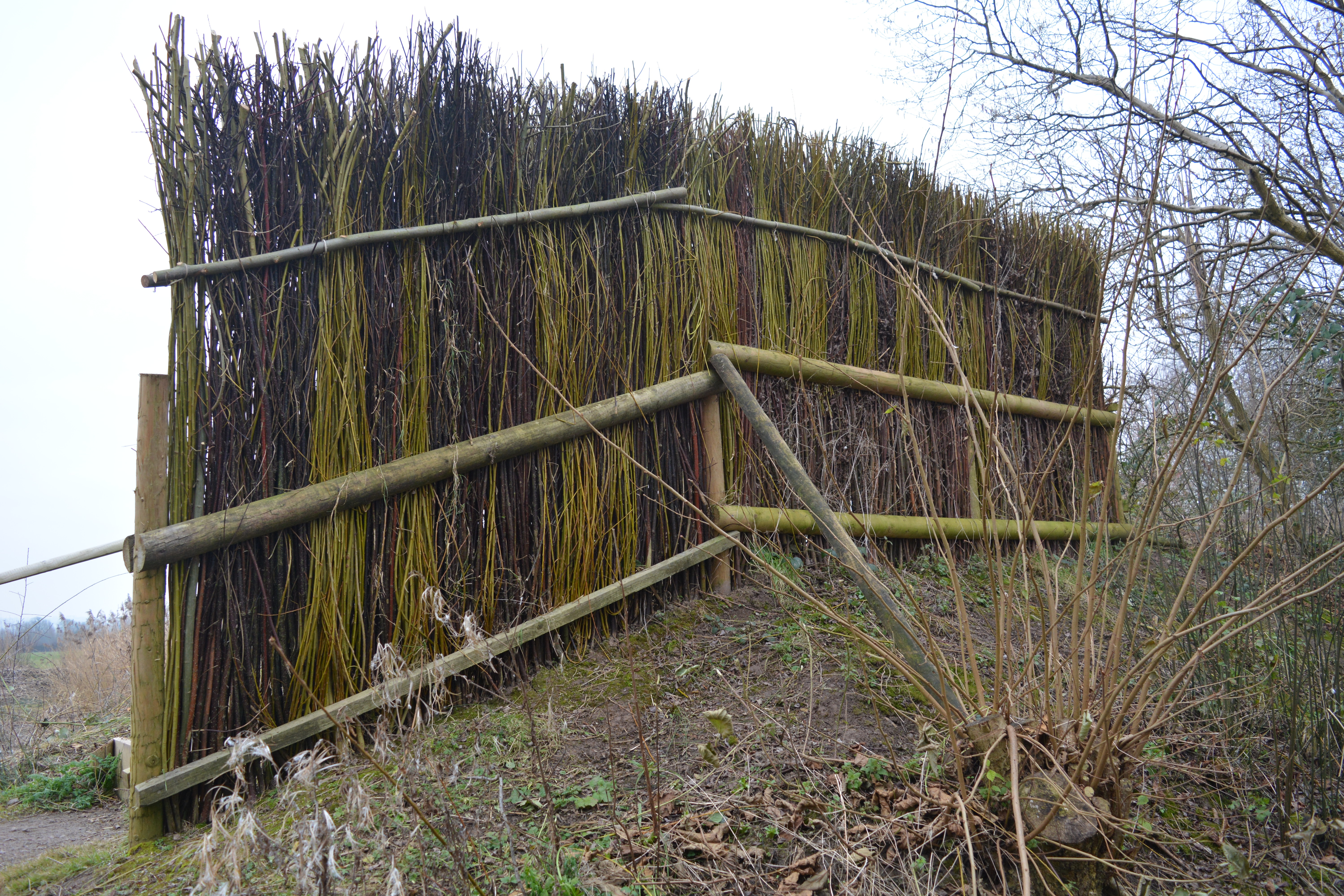
The photo below photo shows a craftsmen head down sharpening his tools and having a break from pollarding these ancient willows. The wands when cut are delivered around the site where they are used to make screens which allow the public to walk around the site without disturbing the wildfowl and waders feeding in the lakes, scrapes and estuarine mud.

2015 02 12_94632015 02 12_9467 2015 02 12_9466

There is evidence of recent coppicing and pollarding at every turn.

2015 02 12_9465

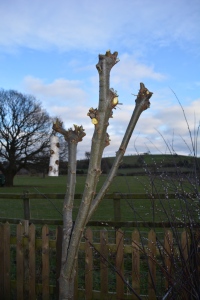
The pair of pictures below show a freshly cut willow and another showing strong regrowth.

2015 02 12_9458 2015 02 12_9451

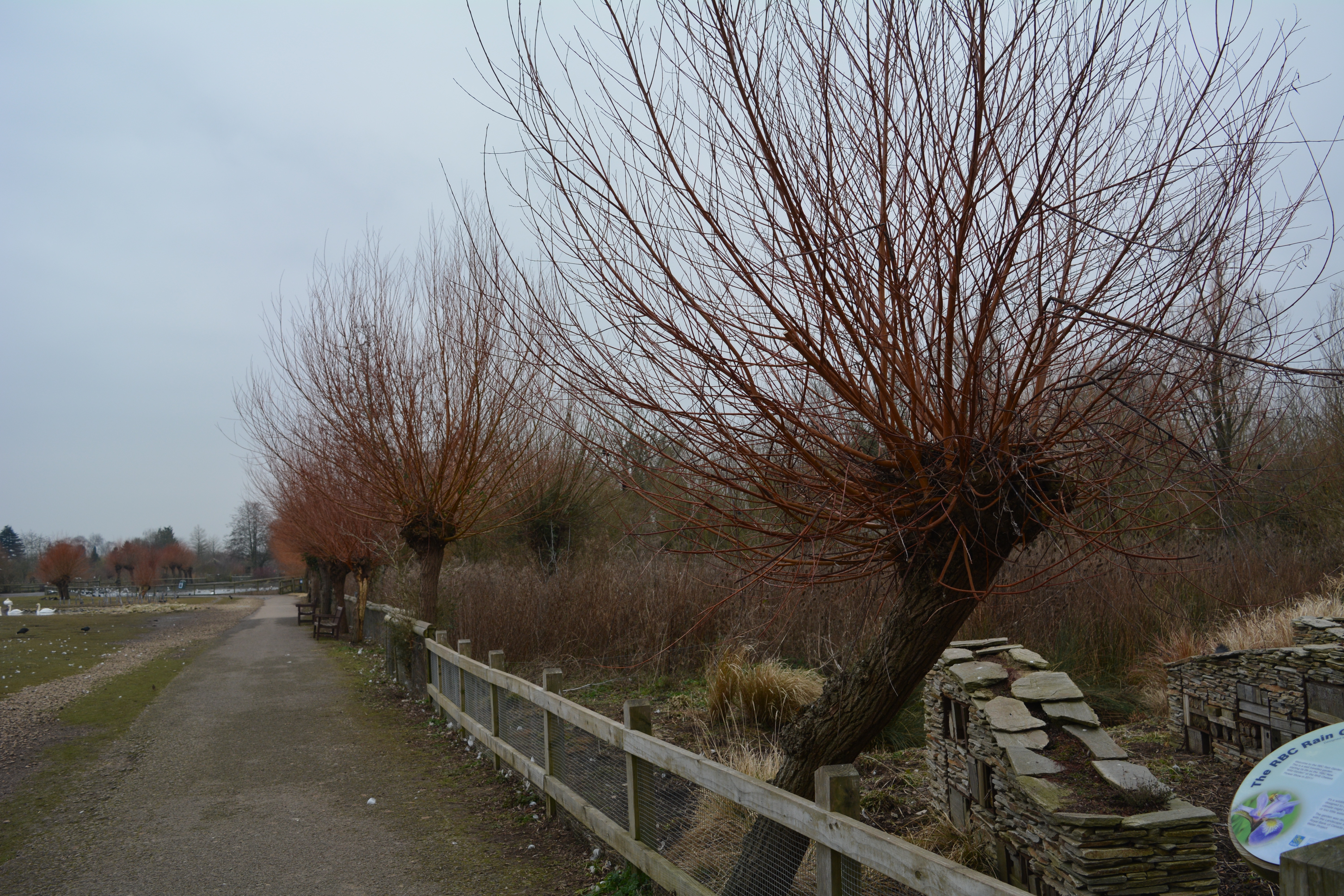
Some of the older willow trees line the main paths and looking close up you can see the gnarled bark. Some are hollowed out so that in extreme case only a tube of trunk remains.

2015 02 12_9438 2015 02 12_9448 2015 02 12_9450 2015 02 12_9455 2015 02 12_9457

Enjoy this little gallery of photos of individual trees.

2015 02 12_9461 2015 02 12_9462 2015 02 12_9464 2015 02 12_9469 2015 02 12_9470

We came across groves of small willows pollarded at about 4 feet high. When freshly cut they look like a busy crowd of people.

2015 02 12_9476

2015 02 12_9472 2015 02 12_9473

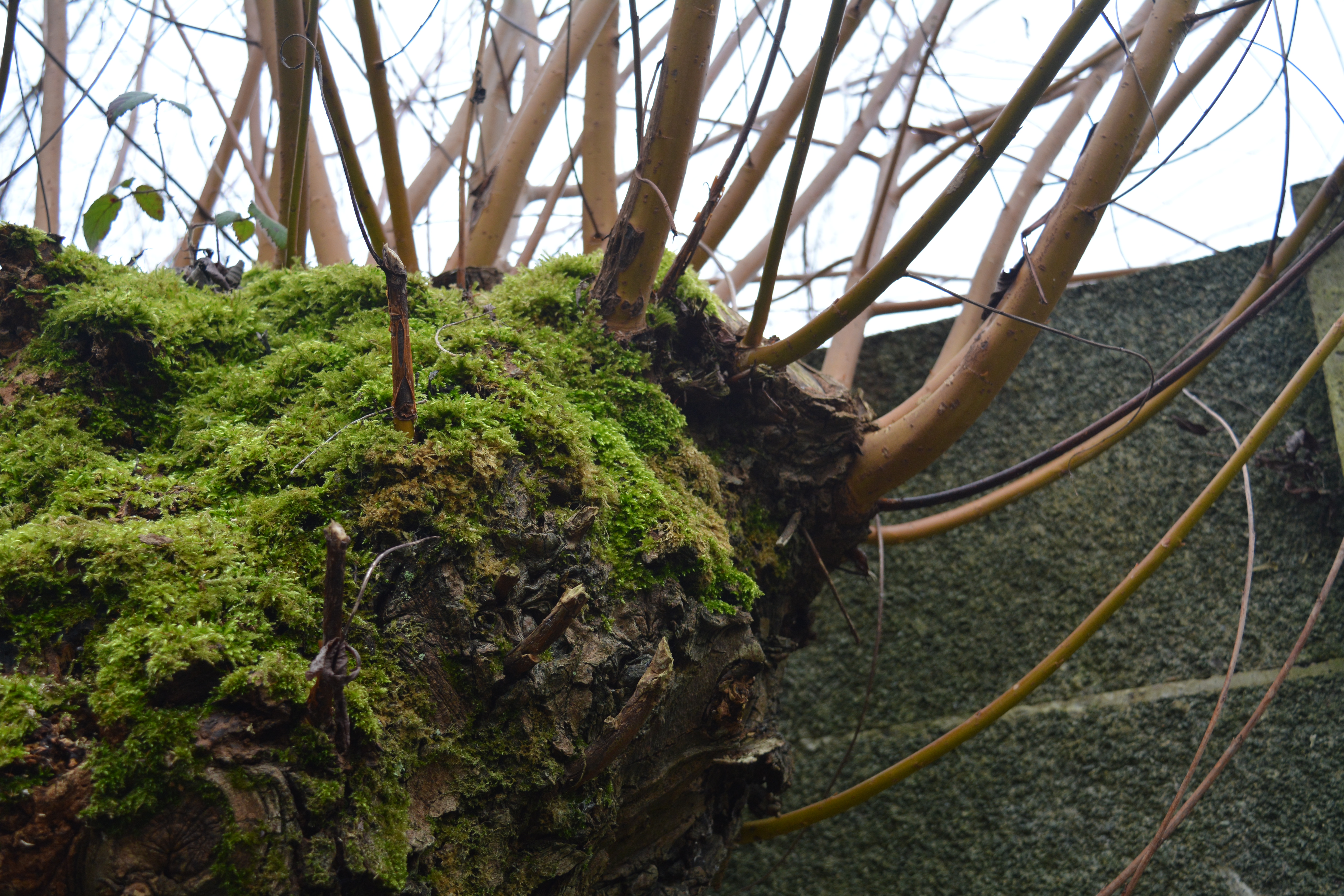
The bowls of ancient willow after years of being subject to regular pollarding create a perfect moist area for mosses to thrive.

2015 02 12_9474 2015 02 12_9475

So there we have it – a brief appreciation of the willows at Slimbridge. They have an important role to play in these wild areas but of course they can also star in our gardens. But, as they say, that is a different story. Soon we will need to pollard and prune the many willows we grow in the community gardens of our allotment site. I shall post a blog celebrating those willows soon.

2015 02 12_9454 2015 02 12_9471

So there we leave Slimbridge with its wonderful willows and look forward to my next post about willows, featuring these versatile trees growing in much smaller places.


Categories
colours flowering bulbs garden photography garden ponds garden pools garden wildlife gardening grasses hardy perennials light light quality ornamental grasses ornamental trees and shrubs recycling Shropshire spring bulbs spring gardening trees wildlife Winter Gardening winter gardens

My Garden Journal – February

Here we are with part two of my post featuring my garden journal, where we can look at what was going on in our garden in February.

2015 03 13_9852_edited-1

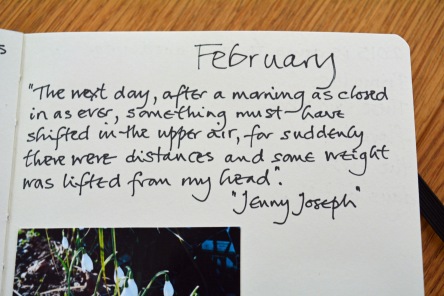
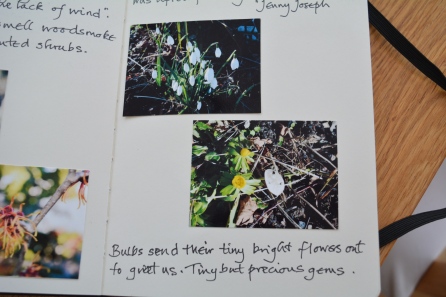
The first entry in my Garden Journal for February shares another quote from Jenny Joseph, “The next day, after a morning as closed in as ever, something must have shifted in the upper air, for suddenly there were distances and some weight was lifted from my head.” The first photos in this month’s journal were of startlingly white Snowdrops. “Bulbs send their tiny bright flowers out to greet us. Tiny but precious gems.” was my accompanying note.

2015 03 13_9853

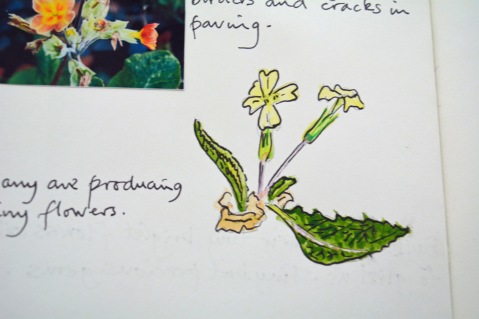
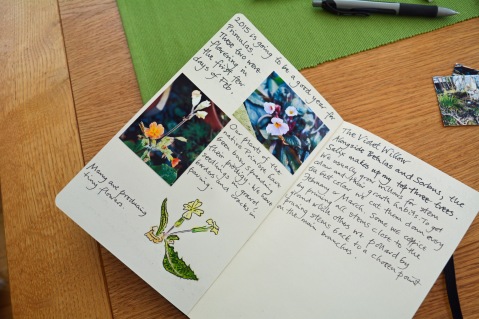
I also featured Primulas this month, “2015 is going to be a good year for Primulas. These two were flowering in the first days of Feb. Our plants of the native Primrose have been busy spreading their prodigy. We have seedlings in the gravel, in borders and in cracks in paving. Many are producing tiny flowers.”

2015 03 13_9855_edited-1

2015 03 13_9854_edited-1

The first day of the new month was spent in the garden and what a wonderful day we had. A bonus day outside in mid-winter is so welcome. We pruned the climbing roses, trimmed down the old growth of perennials to reveal the fresh green shoots eagerly waiting to burst into growth with the onset of Spring. The plant that never fails to impress is the Sedum with its virulent fresh growth waiting thickly at the base of last year’s cut down stumps.

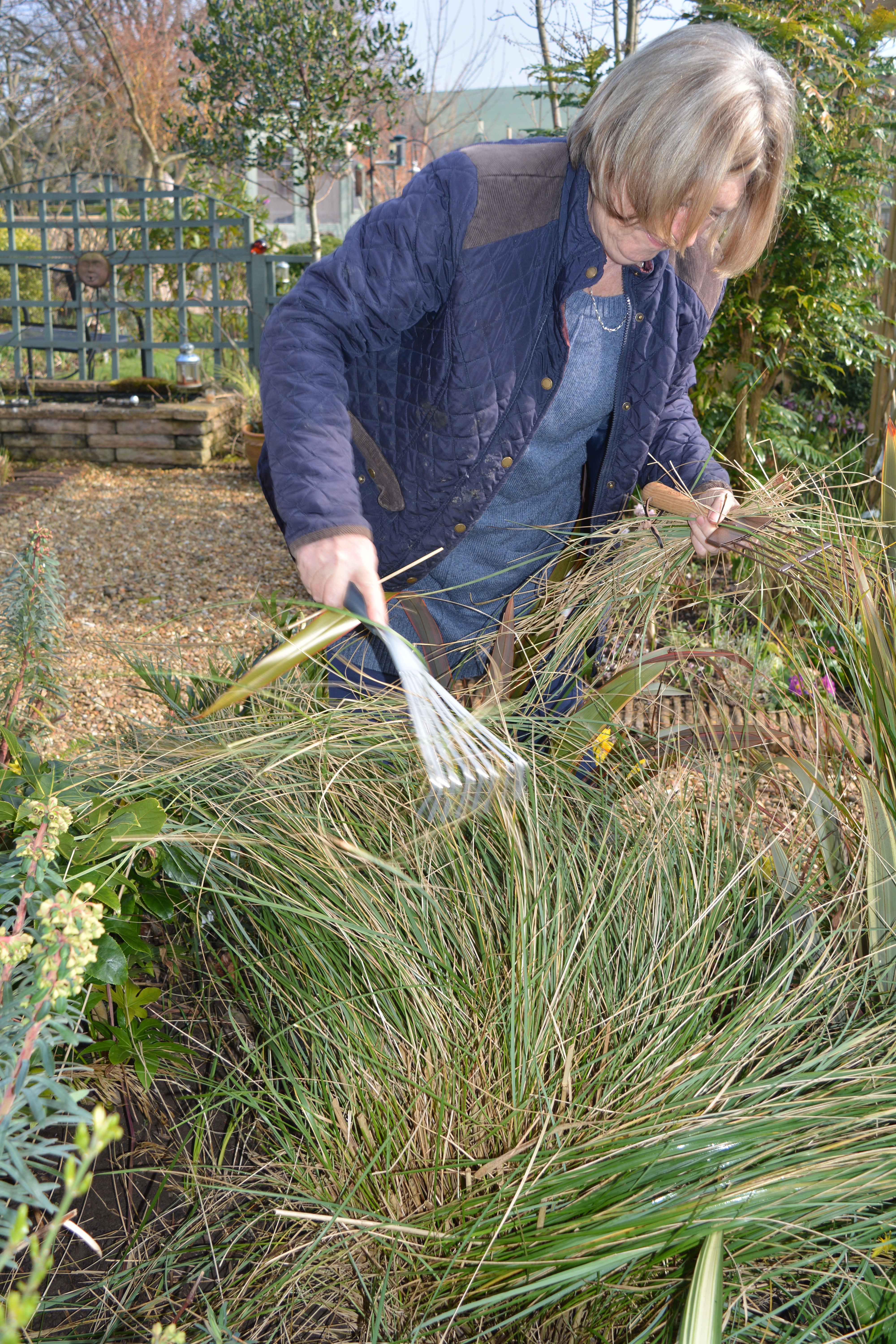
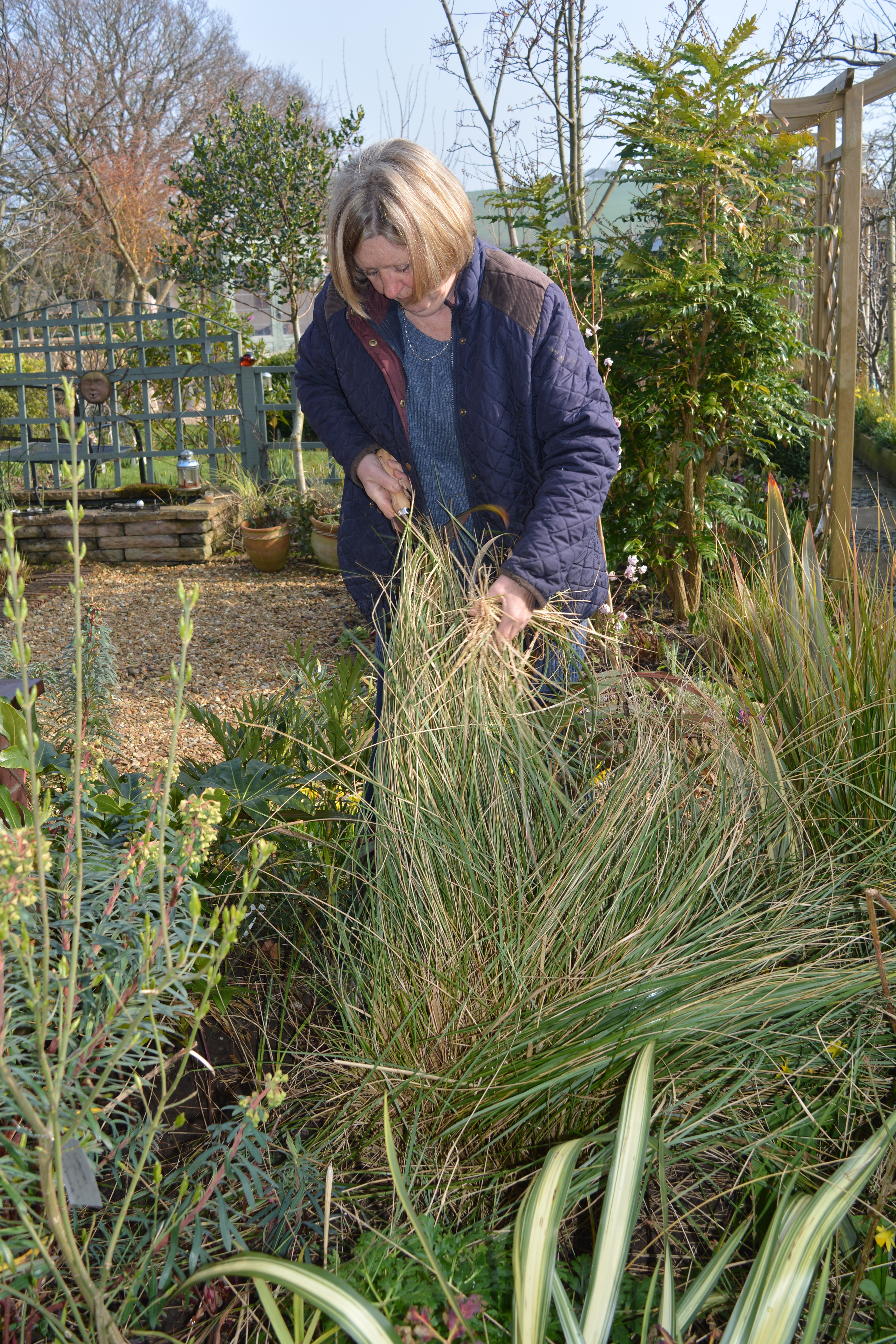
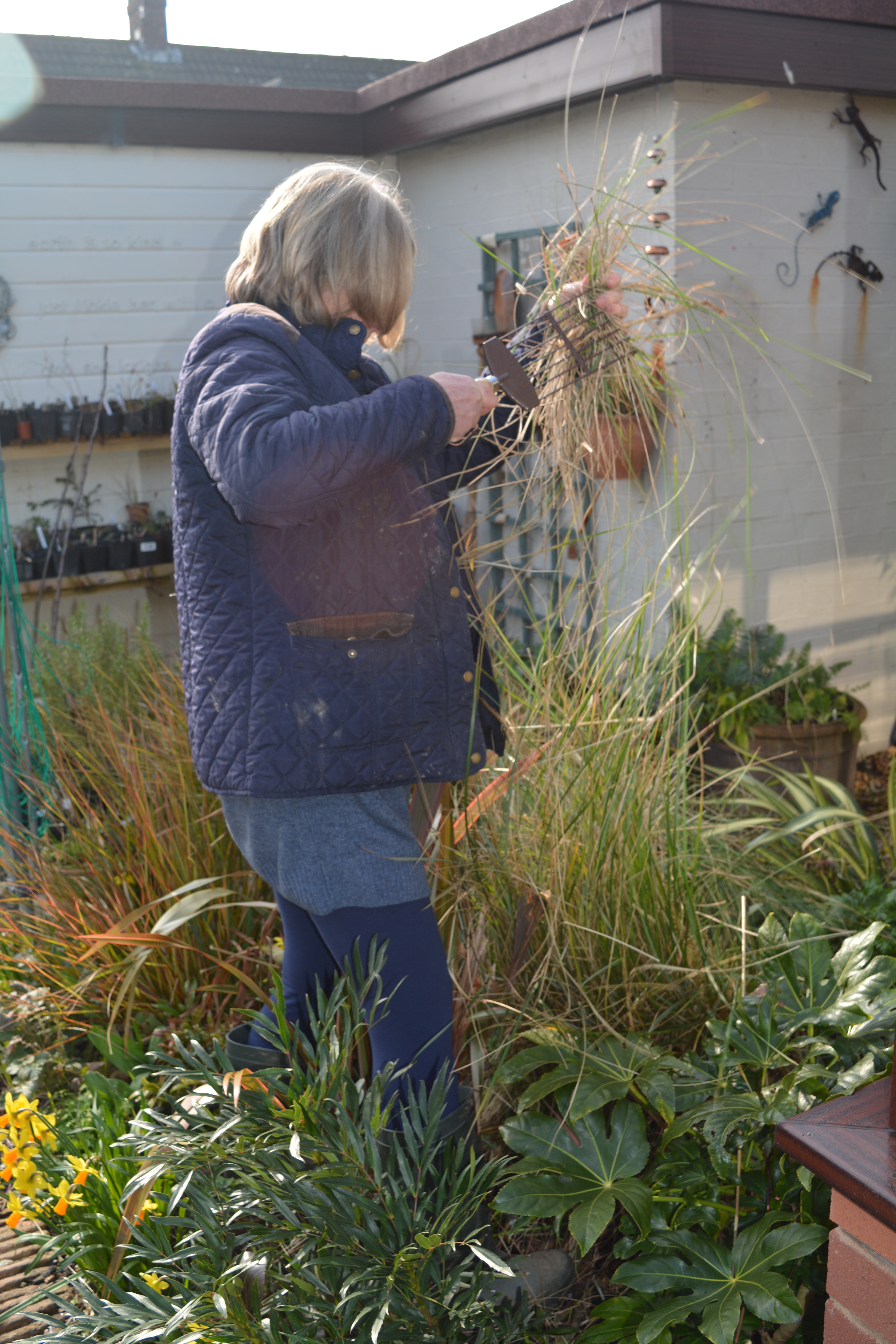
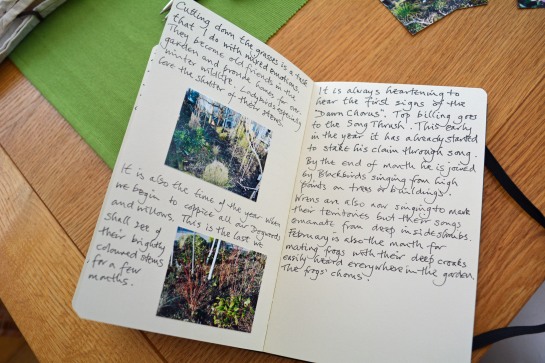
The tall elegant stems of grasses are now cut close to the ground after their winter display. Even the gentlest of breezes has encouraged them to dance, their stems swaying stiffly but gracefully and their seed heads far more fluent in their dances. They will soon be back. In my journal I noted “Cutting down the grasses is a task I do with mixed emotions. They become old friends in the garden and provide homes for over-wintering wildlife. Ladybirds especially love the shelter of their stems.”

2015 03 13_9856_edited-1

We like the month of February, as both Jude the Undergardener and I suffer from S.A.D.(seasonally adjusted disorder)  and mid way through February we can spot a change in the light and literally feel an improvement in light quality and with it an improvement in our mood. I am sure the garden feels the same as all that future growth waits underground to burst forth and all those buds lie waiting on the resting bare branches of the deciduous trees and shrubs.

Birds are showing signs of getting themselves prepared for the rituals of spring that awaits them. Blue Tits are exploring nest boxes already with two boxes already held by two pairs. Collared Doves, those invaders to our shores, entertain us by filling the sky with their acrobatics designed to impress their mates. They fly diagonally backwards into the air!

In my journal I wrote “It is always heartening to hear the first signs of the “Dawn Chorus”. Top billing goes to the Song Thrush. This early in the year it has already started to stake his claim through song. By the end of the month he is joined by Blackbirds singing from high points on trees or buildings. Wrens are also now singing to mark their territories but their songs emanate from deep inside shrubs.”

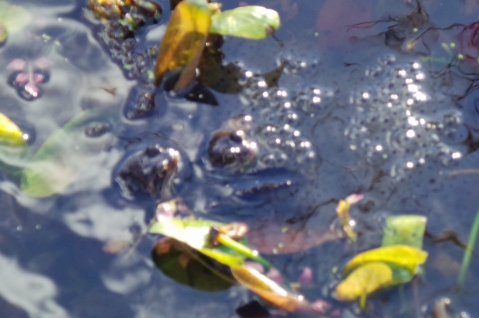
Our attention is drawn to the wildlife pond from mid-February onwards as it is around this time that we start to hear the deep croaks of the male frogs calling the females in to join them in the water. One evening coming in from the garden we made a plan to clear the leaves and any winter debris from the pond the next day before the first frogs arrived. But  they beat us to it for as we went into the garden to do just that a pair of mating frogs was in residence and close by lay a large glob of spawn. Our job became more difficult as we tried not to disturb their nuptials. My journal notes “February is also the month for mating frogs with their deep croaks heard from everywhere in the garden, “The Frogs’ Chorus!” We love frogs in the garden where they act as great pest controllers. Some move into the greenhouse once they leave the pond and work in there for us too. Free labour!

2015 02 28_9789_edited-1

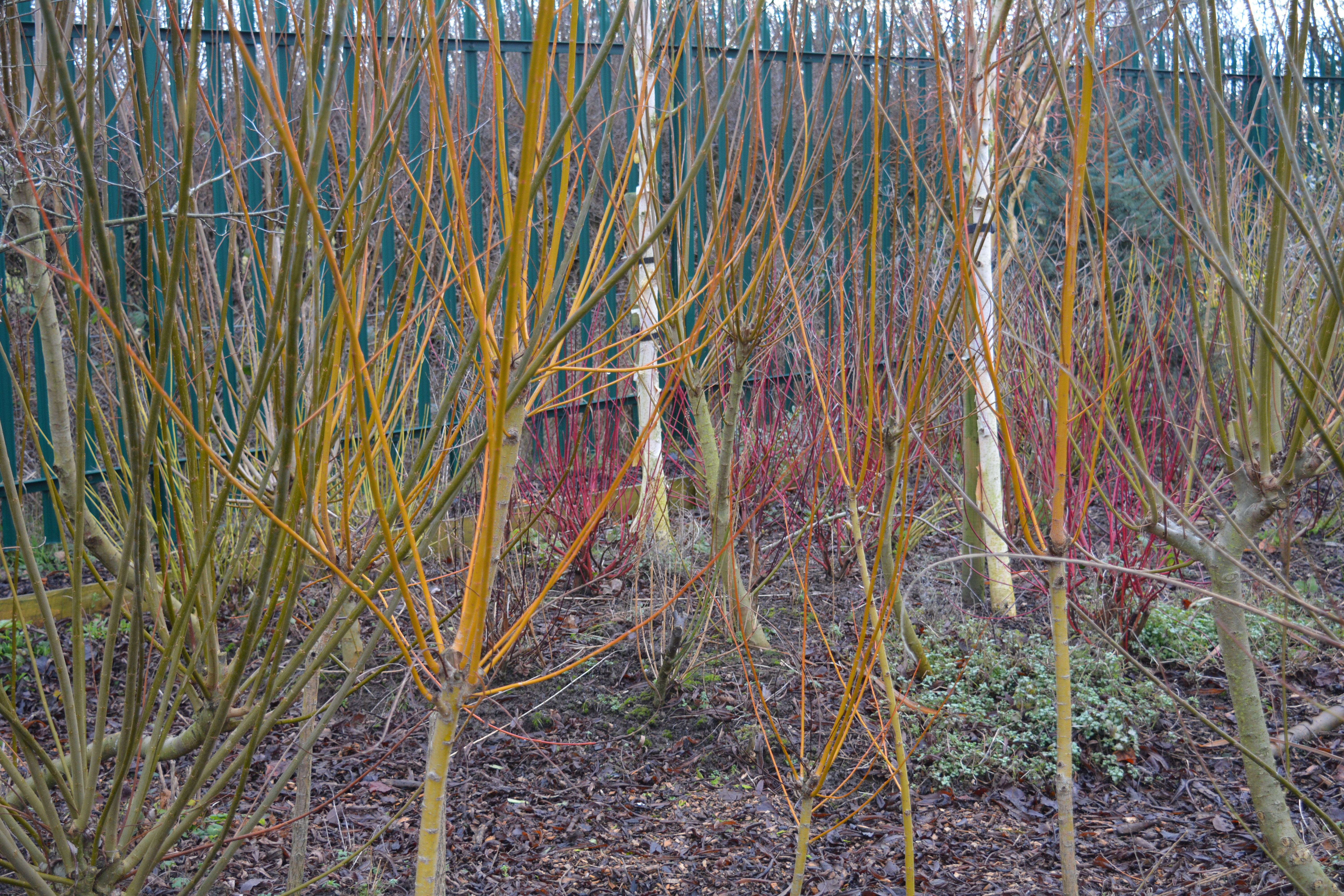
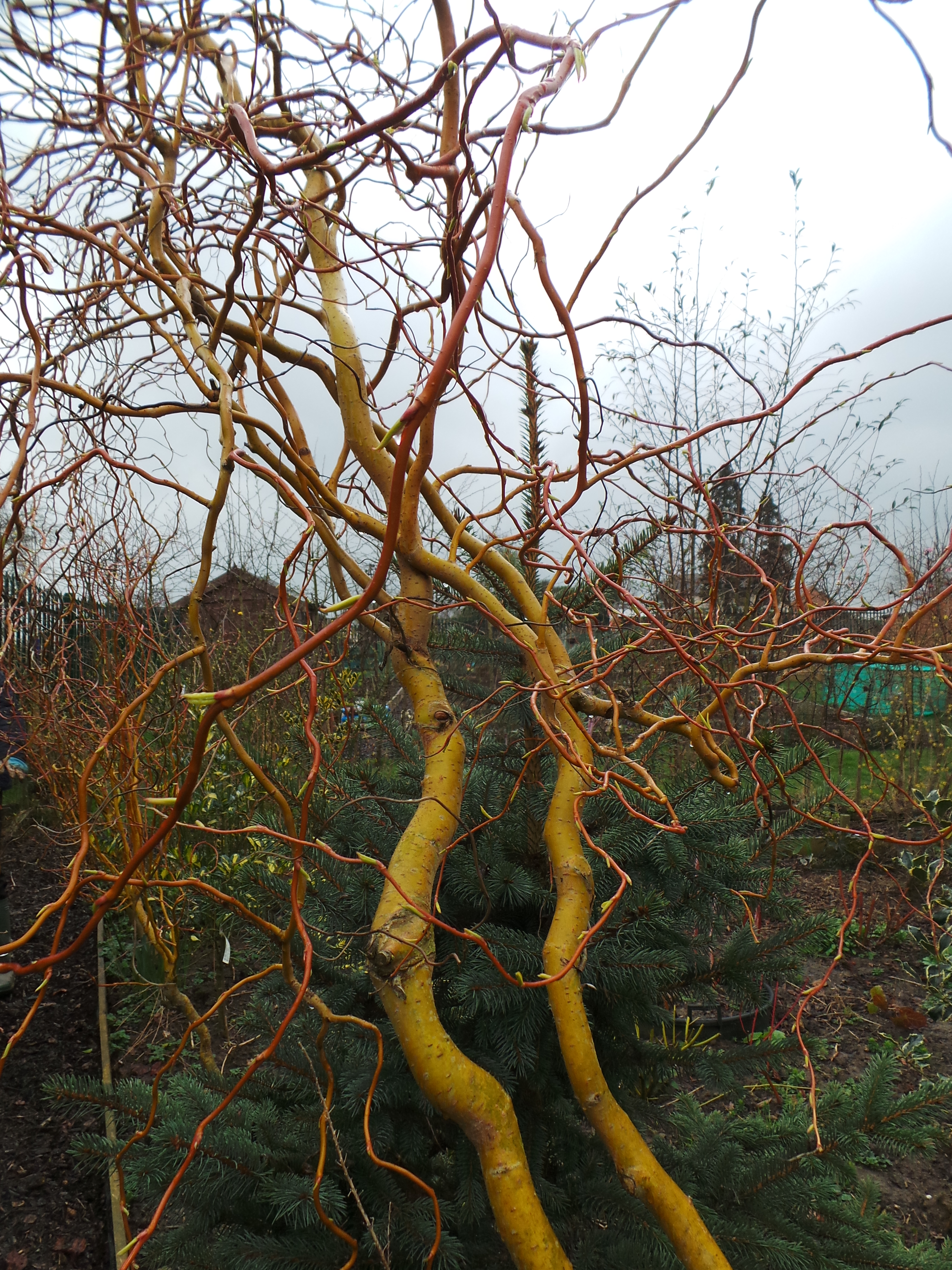
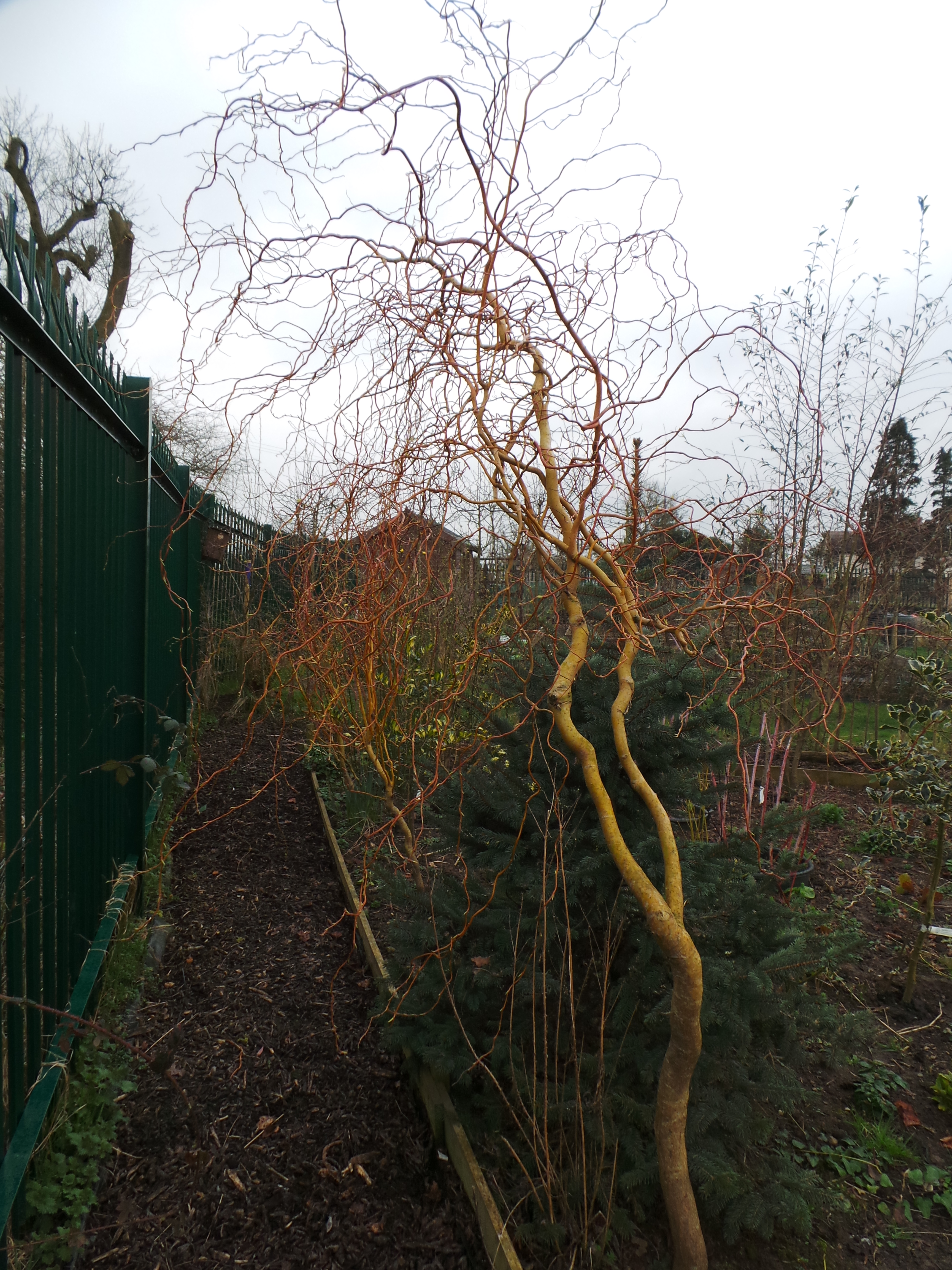
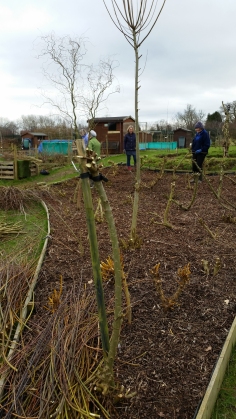
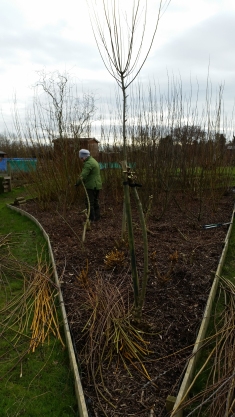
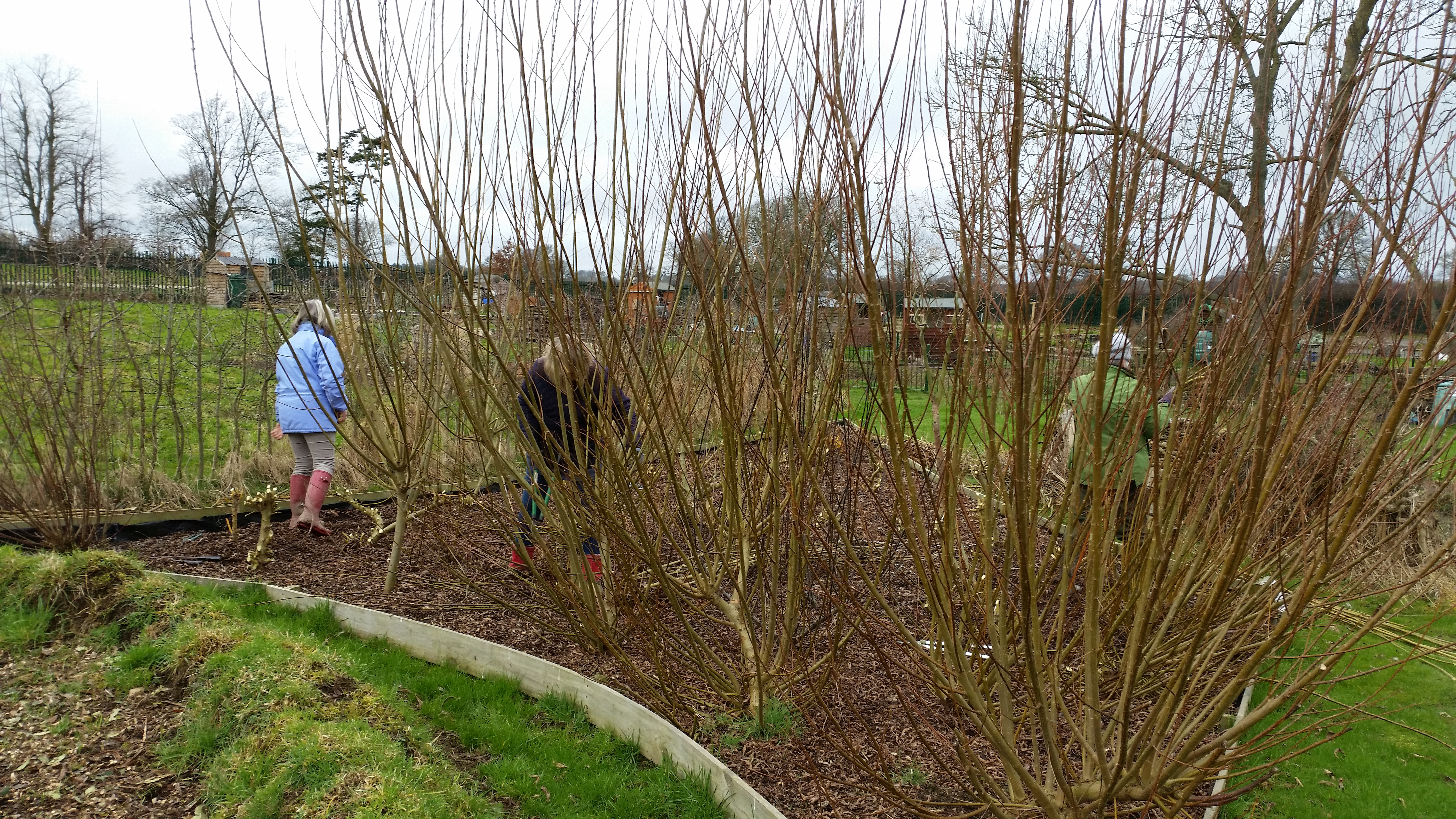
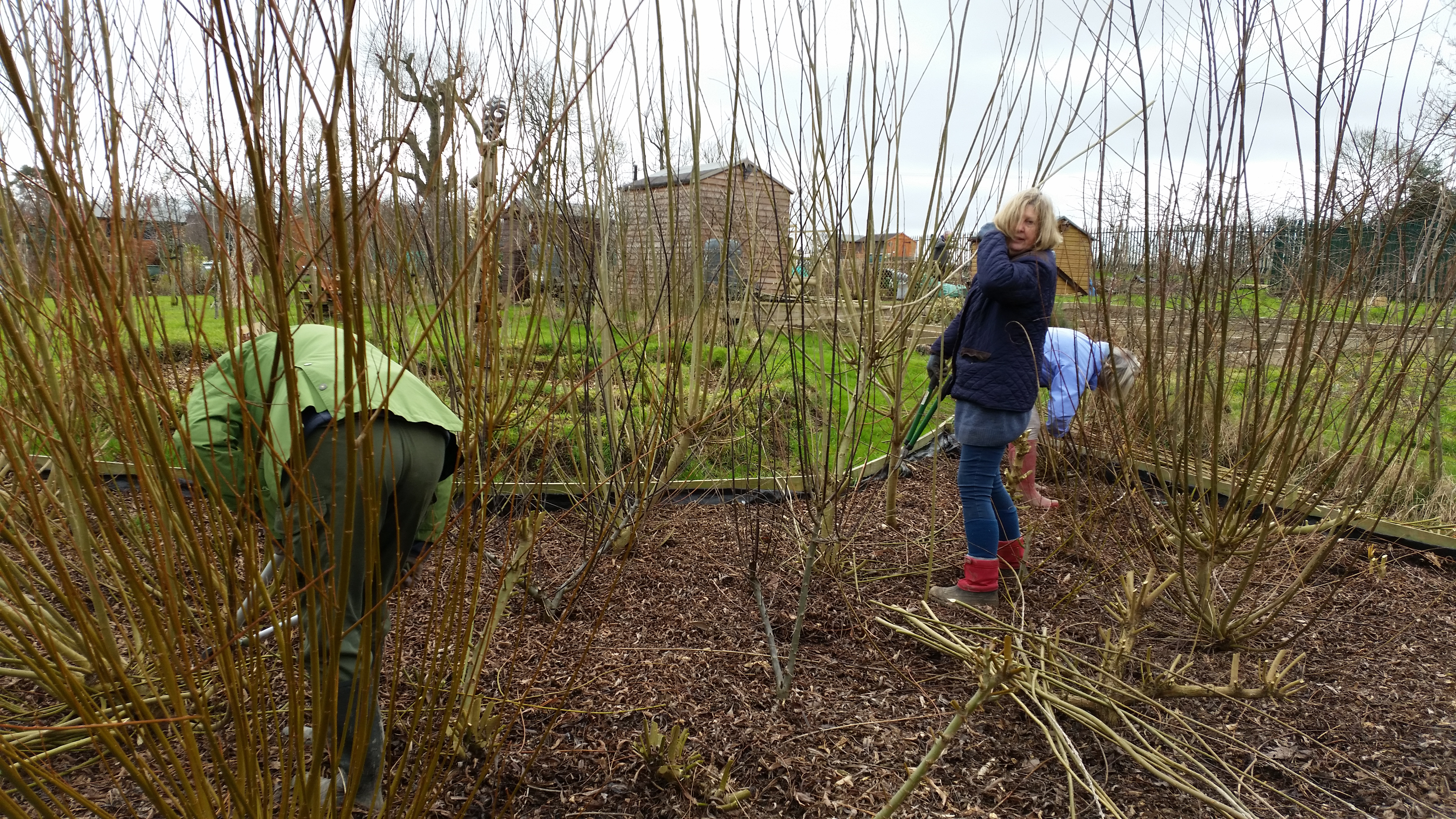
We can still enjoy the coloured stems of Cornus and Salix and the coloured textured trunks of the trees. The Betulas glow white with hints of silver, cream or salmon, while the Prunus serrula shines gold and brown. The brightest of all though must be Cornus “Midwinter Fire”. Late in this month however we begin the task of coppicing and pollarding, hard pruning to give us bright new stems with brighter colours in the year to come. My journal says, “It is also the time of year when we begin to coppice all our Dogwoods and willows. This is the last we shall see of their brightly coloured stems for a few months.” I move on to make special mention of the Violet Willow of which we have a trained multi-stemmed pollarded specimen which holds a great presence in the garden at every time of the year.

The photos below illustrate how its many colours vary with the changing light.

2015 02 17_9597-1 2015 02 17_9596-12015 02 17_9579-1 2015 02 17_9580-1

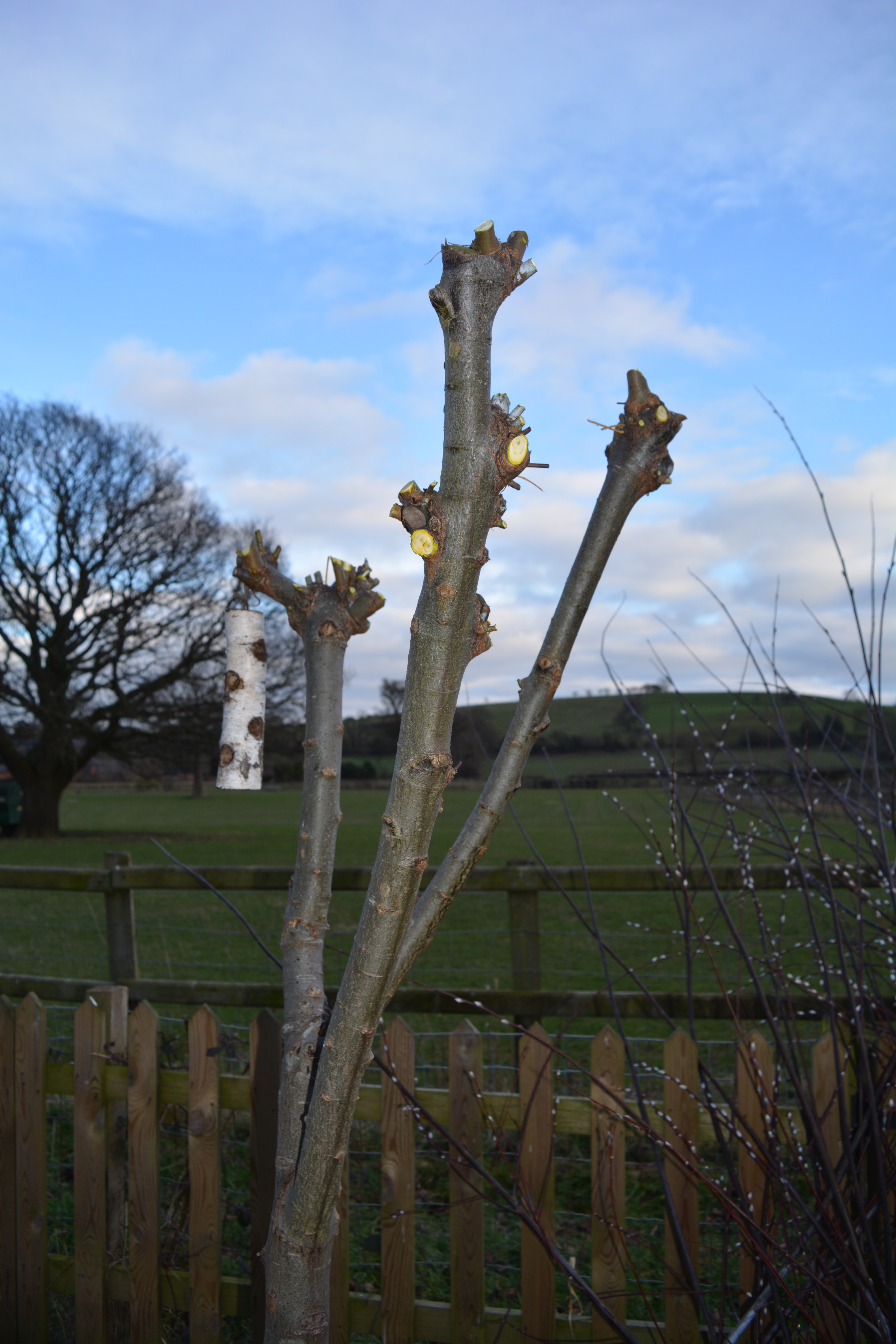
These shots show the before pruning and after pruning images, so you can see how hard we prune them down. We certainly need our strong, sharp loppers for this job.

2015 02 17_9581-1 2015 02 17_9582-1

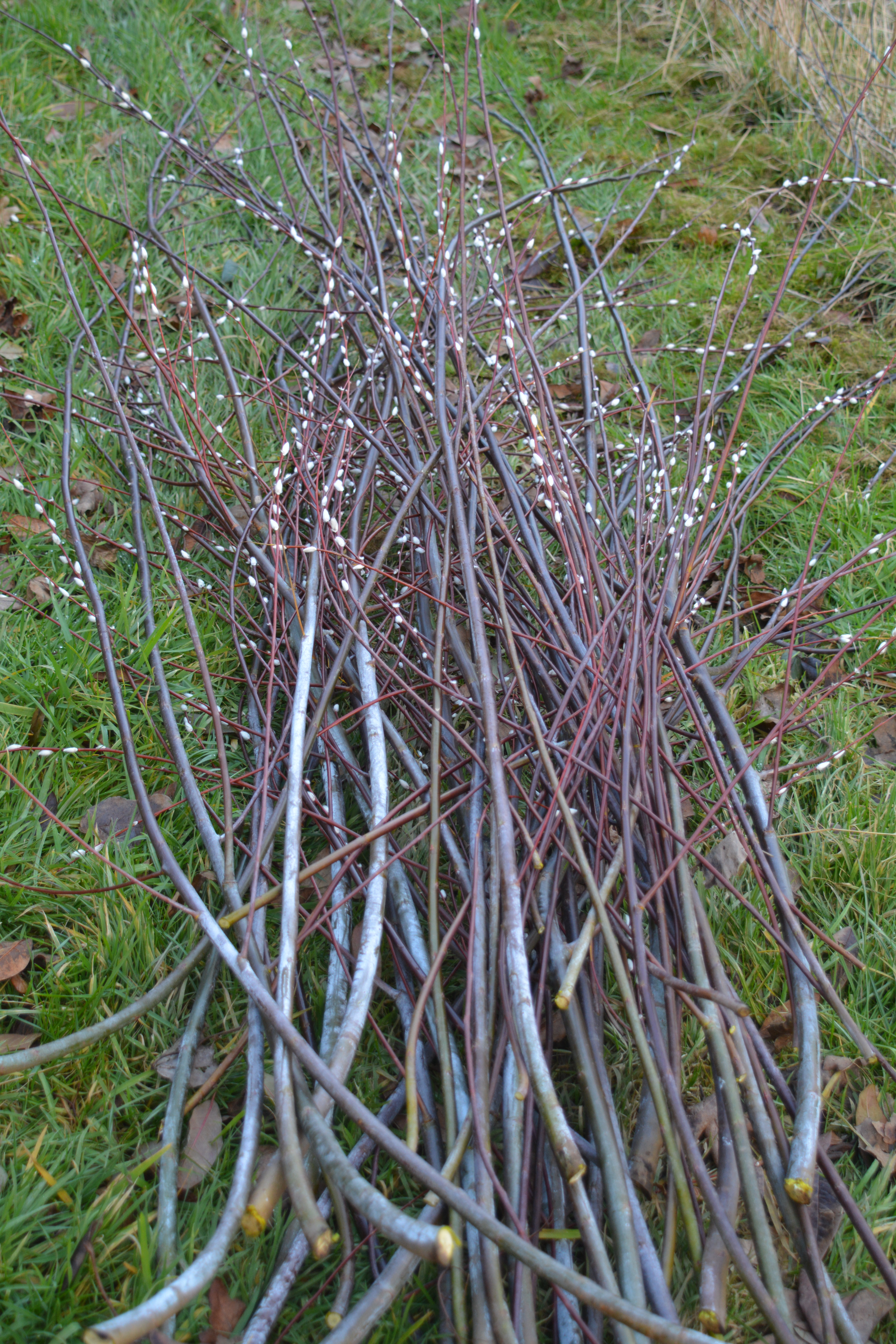
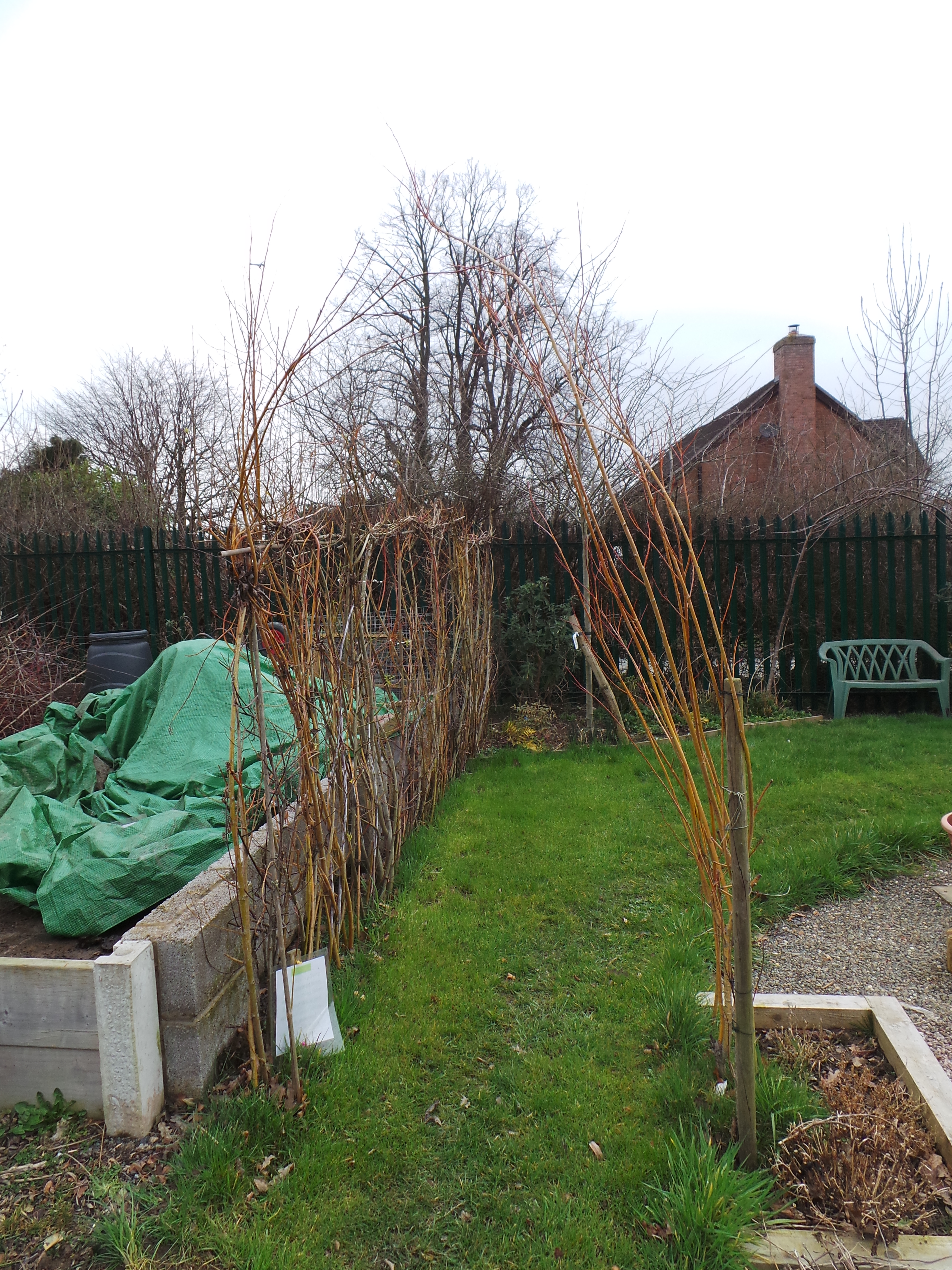
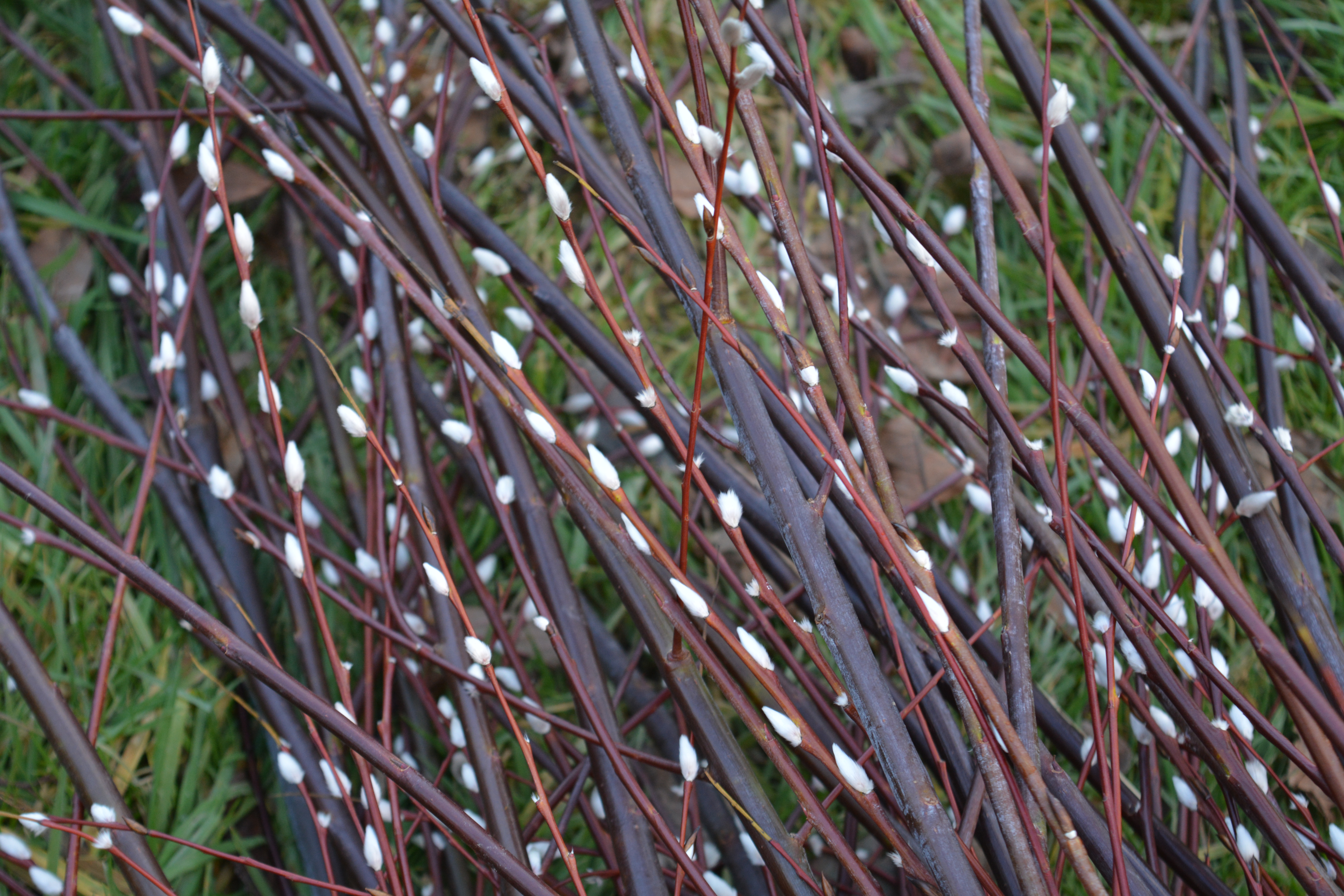
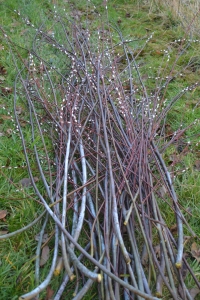
The final pictures illustrate just how much wood is removed and shows the colours of the branches. All this material will be used for making plant supports and will be useful when we make a willow dome for some friends’ garden in a week or so (look out for a post about this). This is a fine example of recycling in action in the garden.

2015 02 17_9585-1 2015 02 17_9584-1

We shall make the next visit to my garden journal in the month of March which we hope is full of the promise of spring.


Categories
colours conservation countryside landscapes meadows nature reserves the seaside the shore Wales

A coastal meadow – Anglesey

On a wet, cold March day it seems a good idea to look back and enjoy some blue sky.

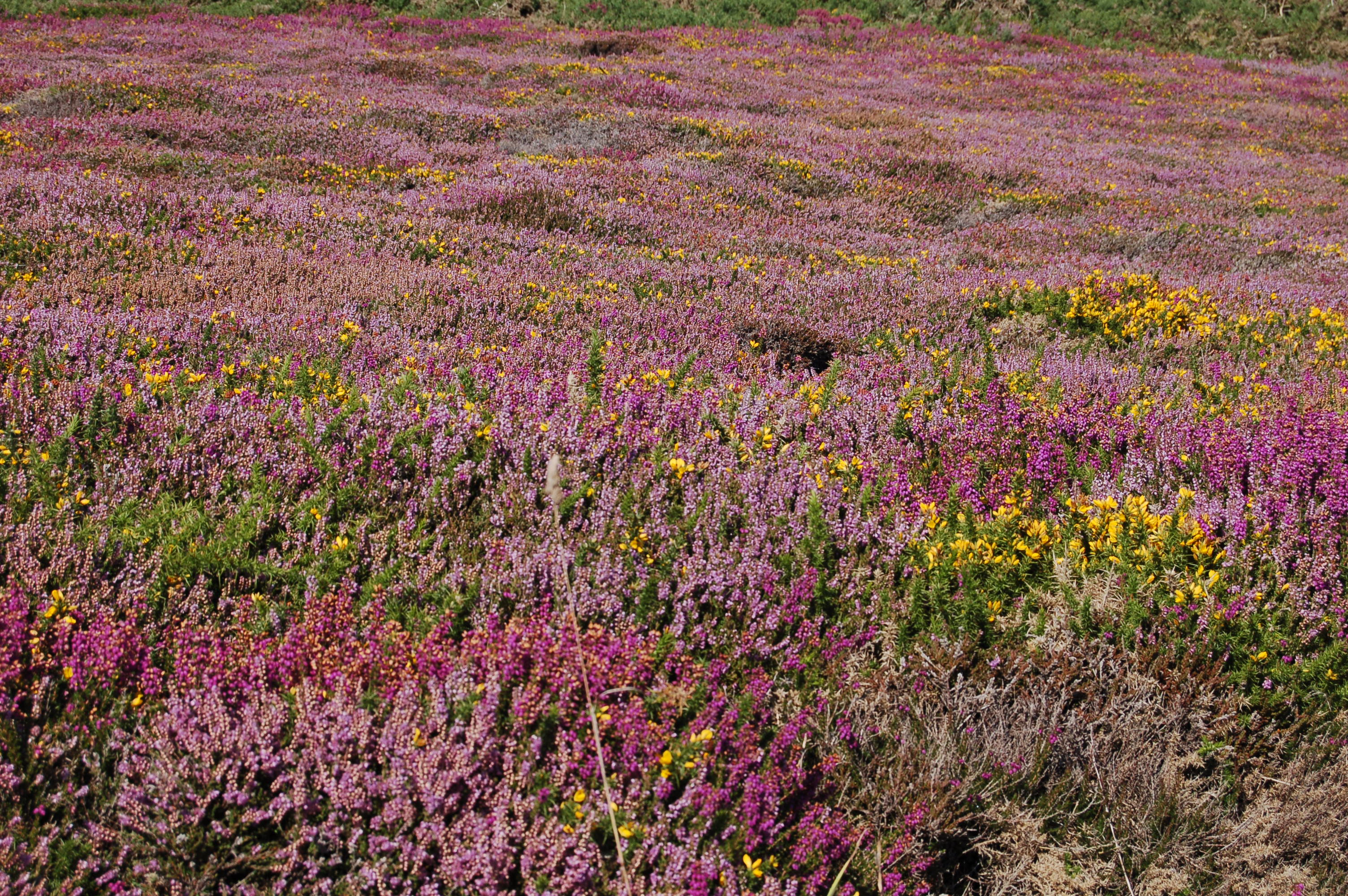
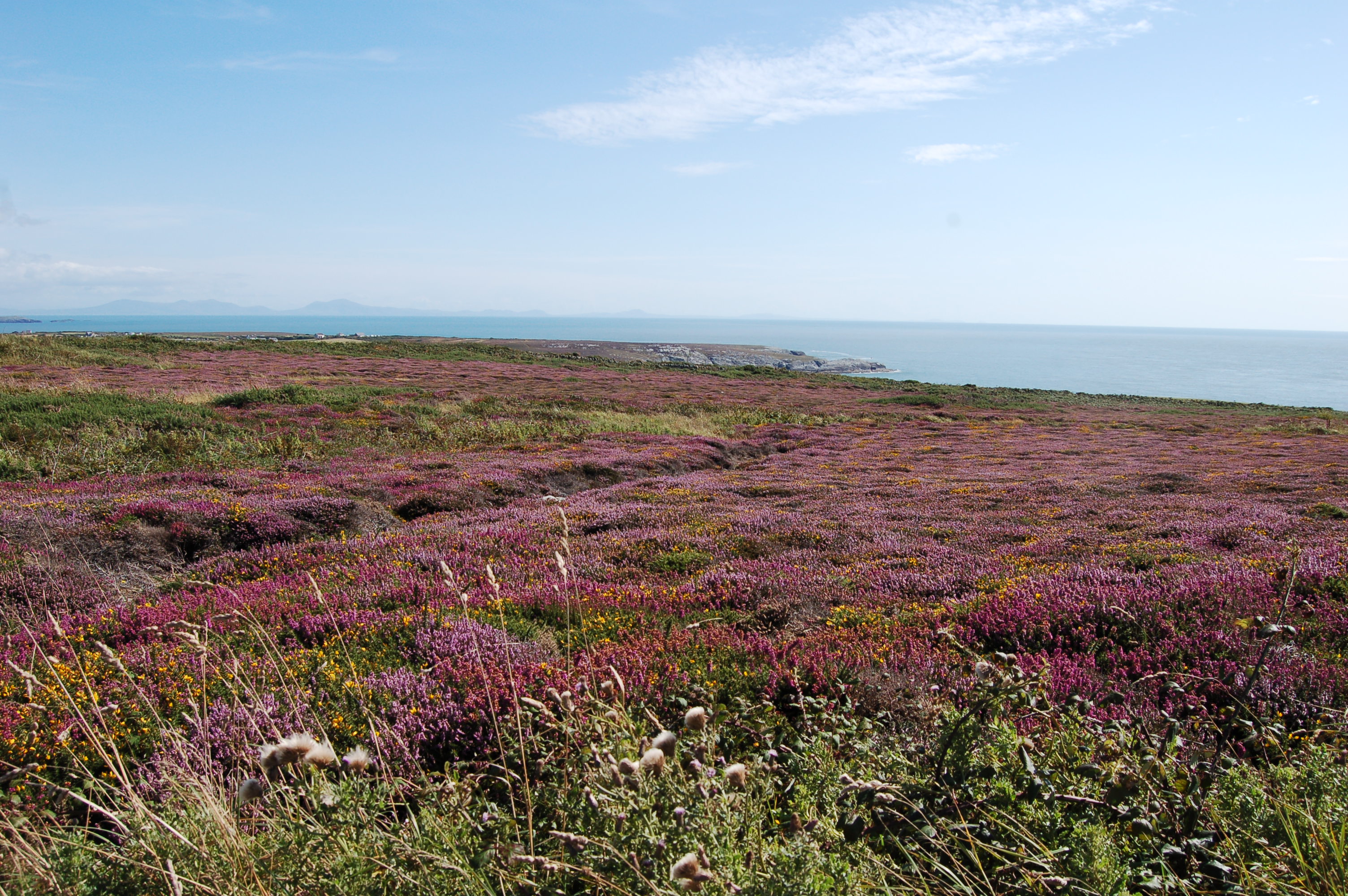
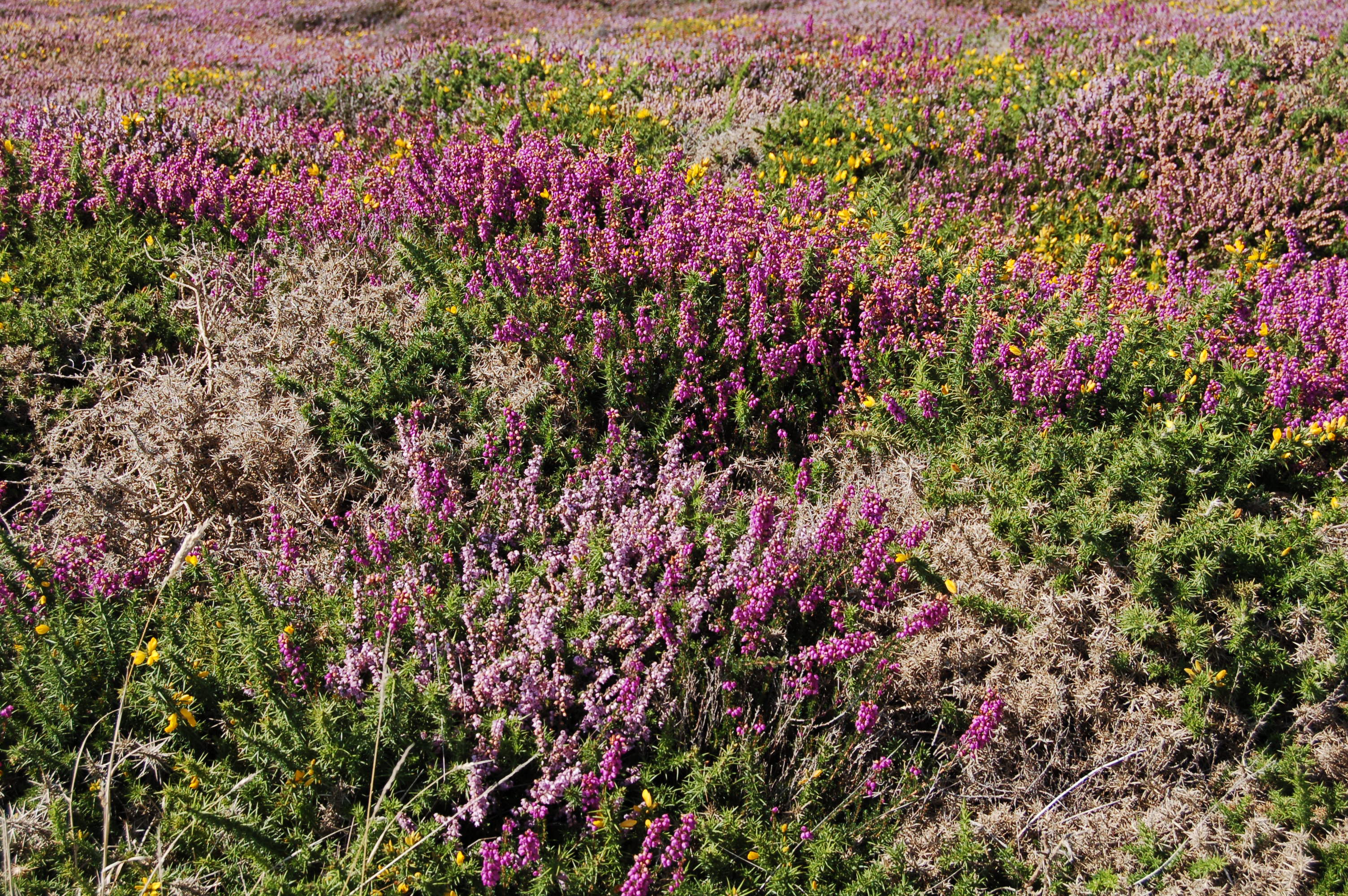
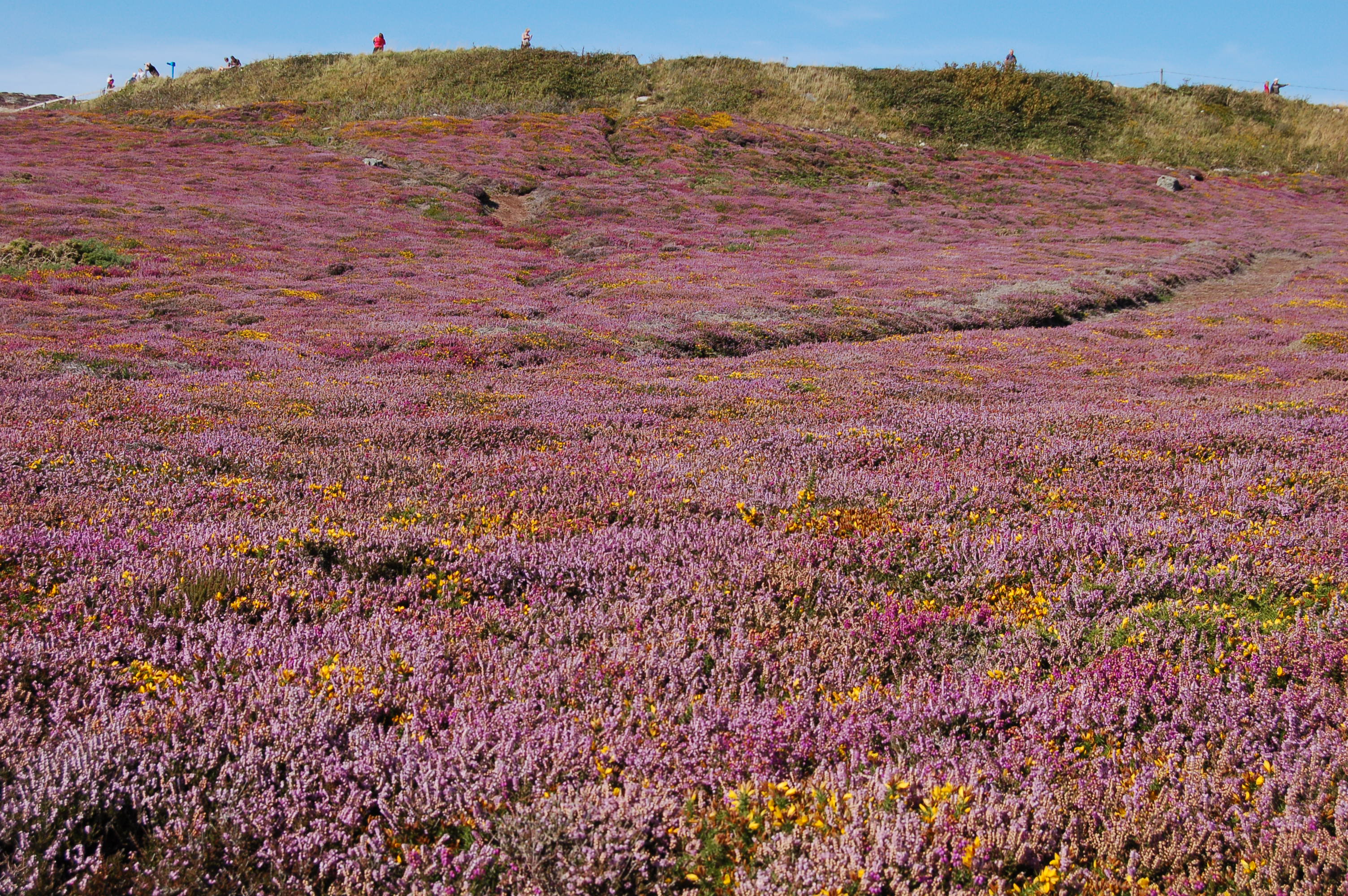
When we spend a few days on Anglesey, an island just off the north coast of Wales we always take a short walk through this colourful acidic meadow. Often it is a good place to see unusual birds such as Chats and Pipits, but on our latest wander along its narrow gravel track it was very quiet. There were no calls from birds, no buzzing from bees and no clicking of grasshoppers or crickets. But the flowers were performing their usual colourful display. As we began our walk we watched a single Chough flying along the horizon in its typically undulating flight. This is a strange bird, jet black like most of the corvids but with bright red legs and a slender curved black bill.

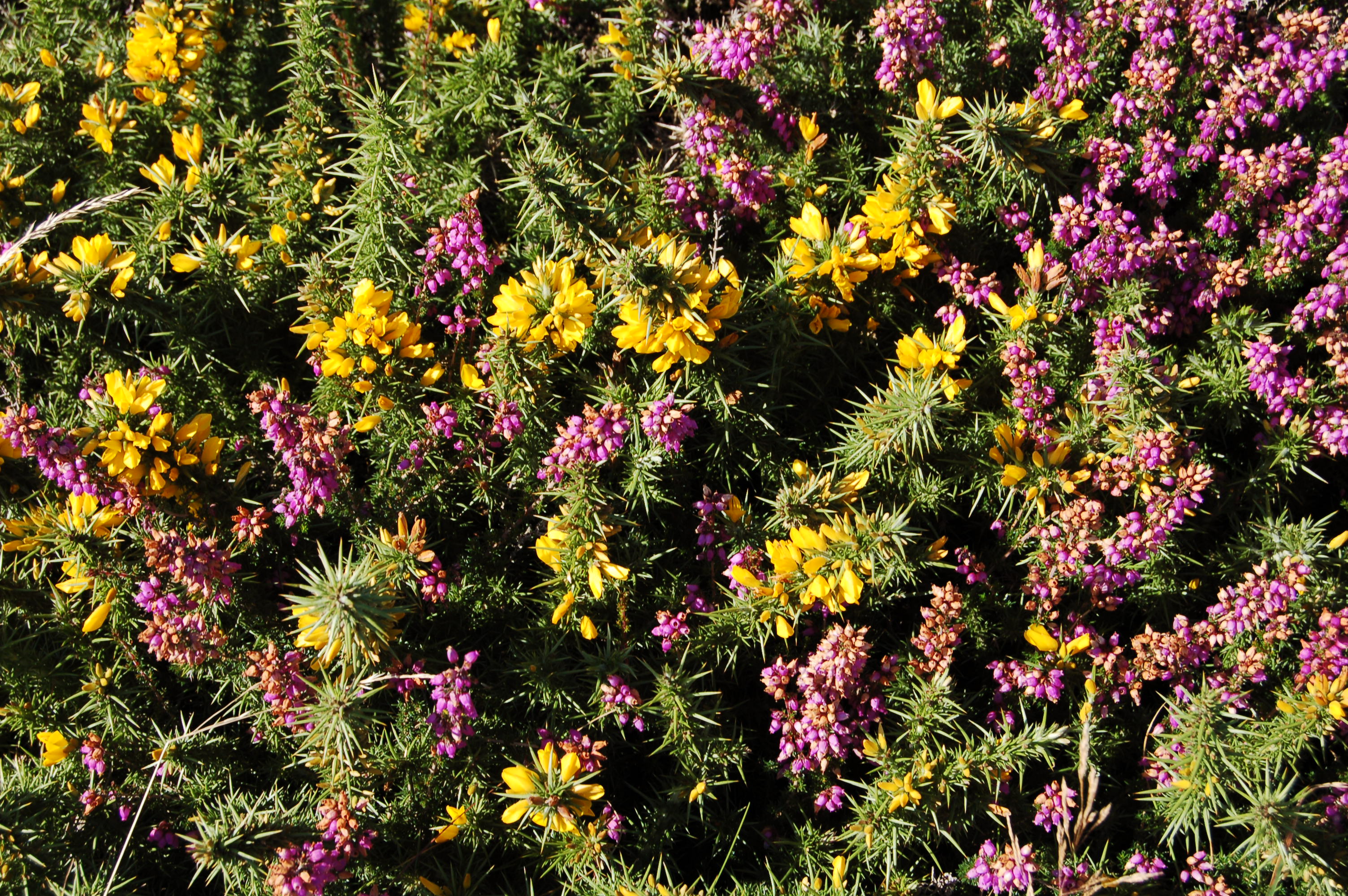
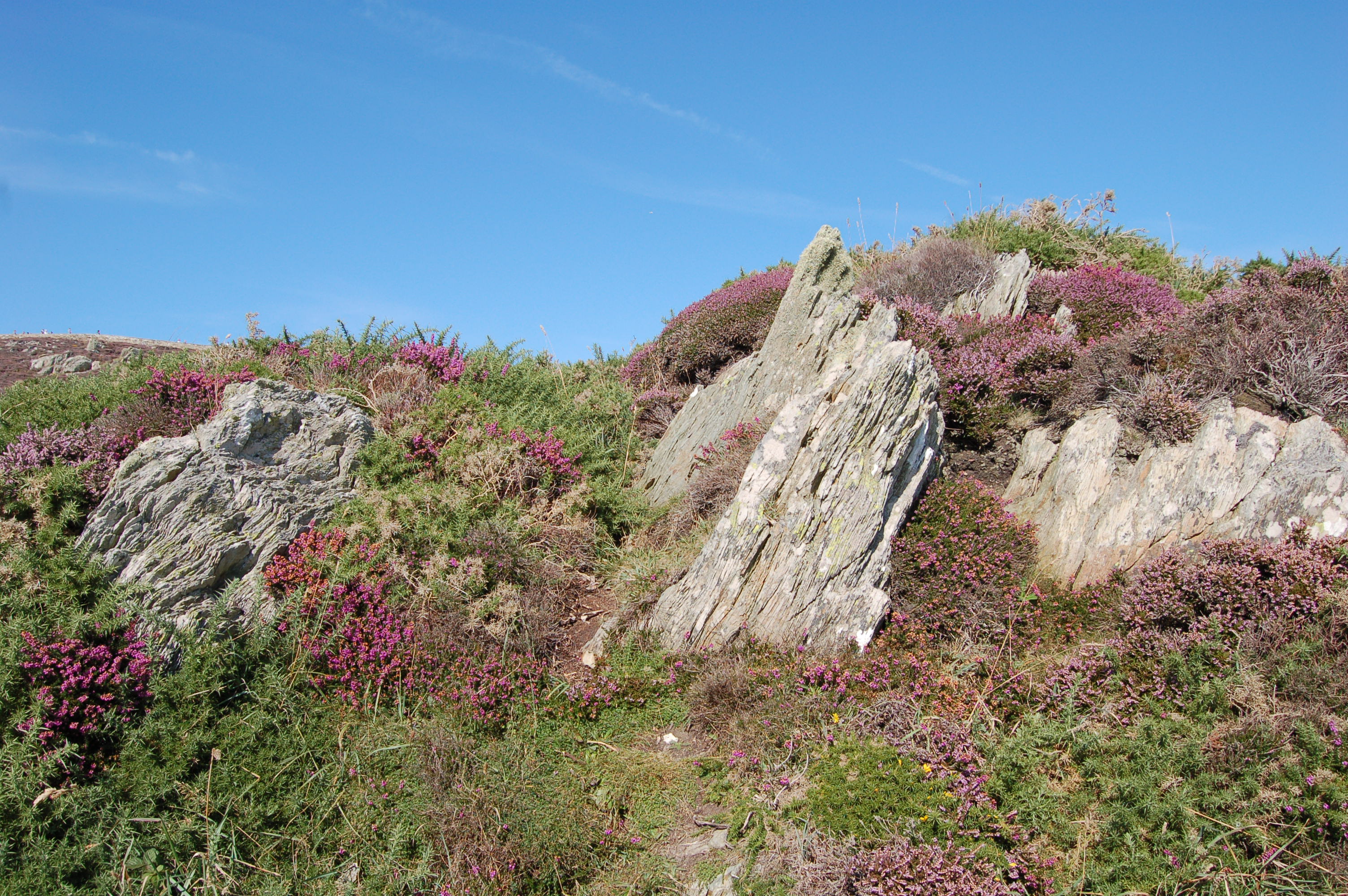
Come for a wander with us and the camera, enjoy the blue sky the sweet scent of gorse flowers and the gently undulating landscape.

2014 08 16_3735 2014 08 16_3736 2014 08 16_3737 2014 08 16_3738 2014 08 16_3739 2014 08 16_3741 2014 08 16_3742 2014 08 16_3743 2014 08 16_3744 2014 08 16_3745

We reached the look out tower where we stopped to look out over the sea which was coloured in constantly changing tones and blends of deep greens and blues with silver sparkles where the sun hit each breaking wave. As we turned to retrace our footsteps we heard the first sounds of Chats and scanning the top branches of the heather or rock outcrops we spotted several Stonechat perched bolt upright constantly calling to each other. Gulls wheeled over our heads as they made for their cliff face ledges.

2014 08 16_3746 2014 08 16_3747 2014 08 16_3748 2014 08 16_3749 2014 08 16_3750

This cliff top walk never fails to impress with its richly coloured meadows and views out over the Irish Sea. We have wandered this track so many times over the years and will keep returning to enjoy it over and over again.

Categories
Church architecture colours flowering bulbs garden photography gardening gardens gardens open to the public irises light light quality ornamental trees and shrubs shrubs spring bulbs The National Trust walled gardens winter gardens

Croft Castle month by month – part two – February

So here we are back at Croft Castle for the second wander in 2015 around the grounds for my February post. We thought we would find that little would have changed since our January visit, but we found plenty to see and really enjoyed our wander. Fresh buds looked ready and waiting to burst into new life when temperatures rise and light values increase. Droplets of rain from a recent shower caught the light where they lay upon the leaves of a Hypericum.

2015 02 21_9601 2015 02 21_9602

In the long mixed border beside the tall walls which enclose the walled garden the first flowers of the year had opened, the delicate blooms of the snowdrops, Galanthus nivalis and a few pink blooms dotted amongst the marbled foliage of the Cyclamen coum.

2015 02 21_9603 2015 02 21_96052015 02 21_9604

Gardeners had recently discovered a cobbled path running diagonally beneath the lawn close to the gateway to the walled garden. We imagined the excitement when the first signs appeared or perhaps the chink of a spade heard as it hit a cobble. When fully excavated no doubt it will join up with the network of cobble path to be found throughout the garden and grounds.

2015 02 21_9606

Inside the walled garden the temperature rose noticeably and we were well protected from the cold of the winter winds. Enjoy this batch of photos showing what we found within the walls.

2015 02 21_9608 2015 02 21_9609 2015 02 21_9610 2015 02 21_96172015 02 21_9626 2015 02 21_96342015 02 21_9625 2015 02 21_9637

The foliage of two different Epimedium plants looked good together, one with its coat of glossy green the other a rich shining bronze.


2015 02 21_9631 2015 02 21_9632


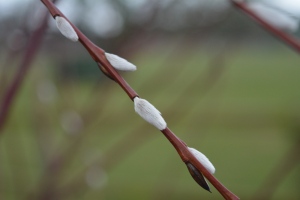
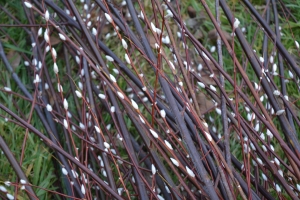
This old willow with branches rambling haphazardly and randomly caught our attention as its silver catkins shone out in its dark corner of the walled garden. Some branches were severely affected by fasciation causing them to be deformed and tightly curled. Others were subject to gall growths caused by gall wasps.


2015 02 21_96182015 02 21_9619 2015 02 21_9620 2015 02 21_9623 2015 02 21_96212015 02 21_9624


The blue gate that had enticed us to pass through it in January was open again, and we diverted easily to see what was happening in the bothy and greenhouses.


2015 02 21_9611 2015 02 21_96122015 02 21_9613 2015 02 21_9614 2015 02 21_9615

Snowdrops found the shelter under every tree within the walls and encircled their trunks in white bracelets.

2015 02 21_9627 2015 02 21_9628 2015 02 21_9629 2015 02 21_9636 2015 02 21_9640 2015 02 21_9641

We left the protection of the walled garden and wandered around the borders closer to the castle. We were amused by the sight of this caterpillar up a tree. He was a part of a children’s trail discovering the delights of Alice in Wonderland.


2015 02 21_9642

2015 02 21_9643 2015 02 21_9644 2015 02 21_9645 2015 02 21_9646 2015 02 21_9647 2015 02 21_9648 2015 02 21_9649 2015 02 21_9650

When we had skirted most of the castle we reached the little church which on our last visit was covered in scaffolding due to being subject to renovation. We were glad to find the builders had left the little building in peace.


2015 02 21_9652 2015 02 21_9651  2015 02 21_9653 2015 02 21_9654 2015 02 21_9655


Little narrow borders feature in the grounds of the church and looked full of promise. For now though we had to be content with the display put on by this wonderfully colourful Euphorbia.

From there we returned to the car park to make our way home. On our next visit to Croft Castle we will hopefully discover many more signs of spring.

2015 02 21_9657

Categories
allotments architecture buildings Church architecture community gardening fruit and veg garden design garden photography garden seating gardening gardens gardens open to the public grow your own hardy perennials ornamental trees and shrubs outdoor sculpture sculpture town gardens trees

A Bishop’s Garden

The grounds of a cathedral doesn’t sound the most promising place to find an interesting garden but we had heard good things about the gardens at Wells Cathedral , so when visiting the cathedral itself we just had to have a look.

It turned out to be an excellent idea as we found the bishop’s garden to be full of interest and atmosphere. Come for a wander and see if you agree! The garden sits well with the architecture which encloses it or sits within it. At times the plants climb the walls or scramble over ruins. At times the architecture is a backdrop and the colours of the stone and brick act as a great foil for the colour of foliage and flower.

It is a garden of plants and walls.

2014 10 04_5780 2014 10 04_5781 2014 10 04_5548 2014 10 04_5549 2014 10 04_5551 2014 10 04_5782 2014 10 04_5783 2014 10 04_5785 2014 10 04_5796 2014 10 04_57982014 10 04_5800 2014 10 04_5801 2014 10 04_5802

We found sculpture in several styles and from different eras within the garden.

2014 10 04_57872014 10 04_5784 2014 10 04_55502014 10 04_55532014 10 04_5795 2014 10 04_58052014 10 04_5821 2014 10 04_5816

The planting was well thought out with interesting combinations.

2014 10 04_5786 2014 10 04_57882014 10 04_5789 2014 10 04_57902014 10 04_5794 2014 10 04_57932014 10 04_5820 2014 10 04_58182014 10 04_5799

White stemmed Birches bleached in the brightness of the day looked so at home against the white of the stone.

2014 10 04_5555 2014 10 04_55562014 10 04_5552 2014 10 04_5558

Overall the garden design was informal but in an area enclosed by buildings we found a more formally structured garden. In the borders within the formal structure the planting was ebullient and lively.

2014 10 04_5817 2014 10 04_58192014 10 04_5815 2014 10 04_58142014 10 04_5813

Part of the garden had been given over to the local community to use as a communal garden including allotments.

2014 10 04_5560 2014 10 04_5561 2014 10 04_5562 2014 10 04_5804 2014 10 04_5806 2014 10 04_55662014 10 04_5565 2014 10 04_5564 2014 10 04_5563 2014 10 04_5810

So the discovery of the Bishops Garden proved to be an unexpected treat, a place full of delights, tumbling ruins, rich plantings and sculpture.

2014 10 04_5811 2014 10 04_5804


Categories
birds garden wildlife gardening log piles natural pest control wildlife Yellow Book Gardens

Wildlife Homes and Green Men

When we opened our garden last August under the auspices of the National Garden Scheme and appeared in its famous Yellow Book we included in our details that we welcomed children. We were aware that few gardens make this obvious so we decided to reverse the trend. We made a few quiz sheets available for them to encourage them to look closely. They were very popular and most youngsters had a go. Some were very determined to find everything on the sheets. Great fun!

One quiz sheet featured our little collection of “green men” which we have scattered around the garden, some of which are hard to find.

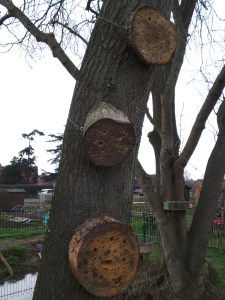
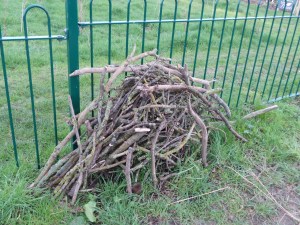
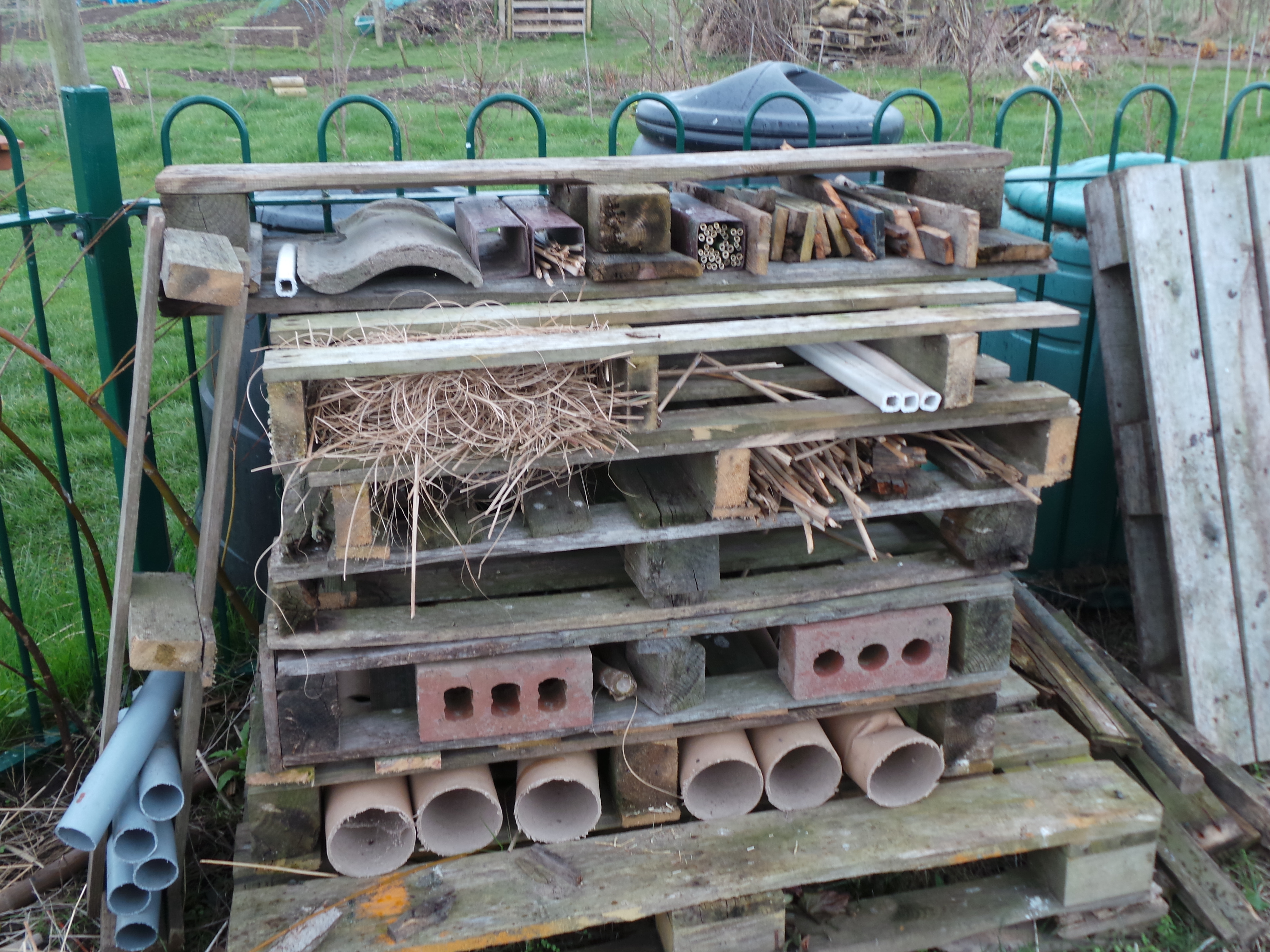
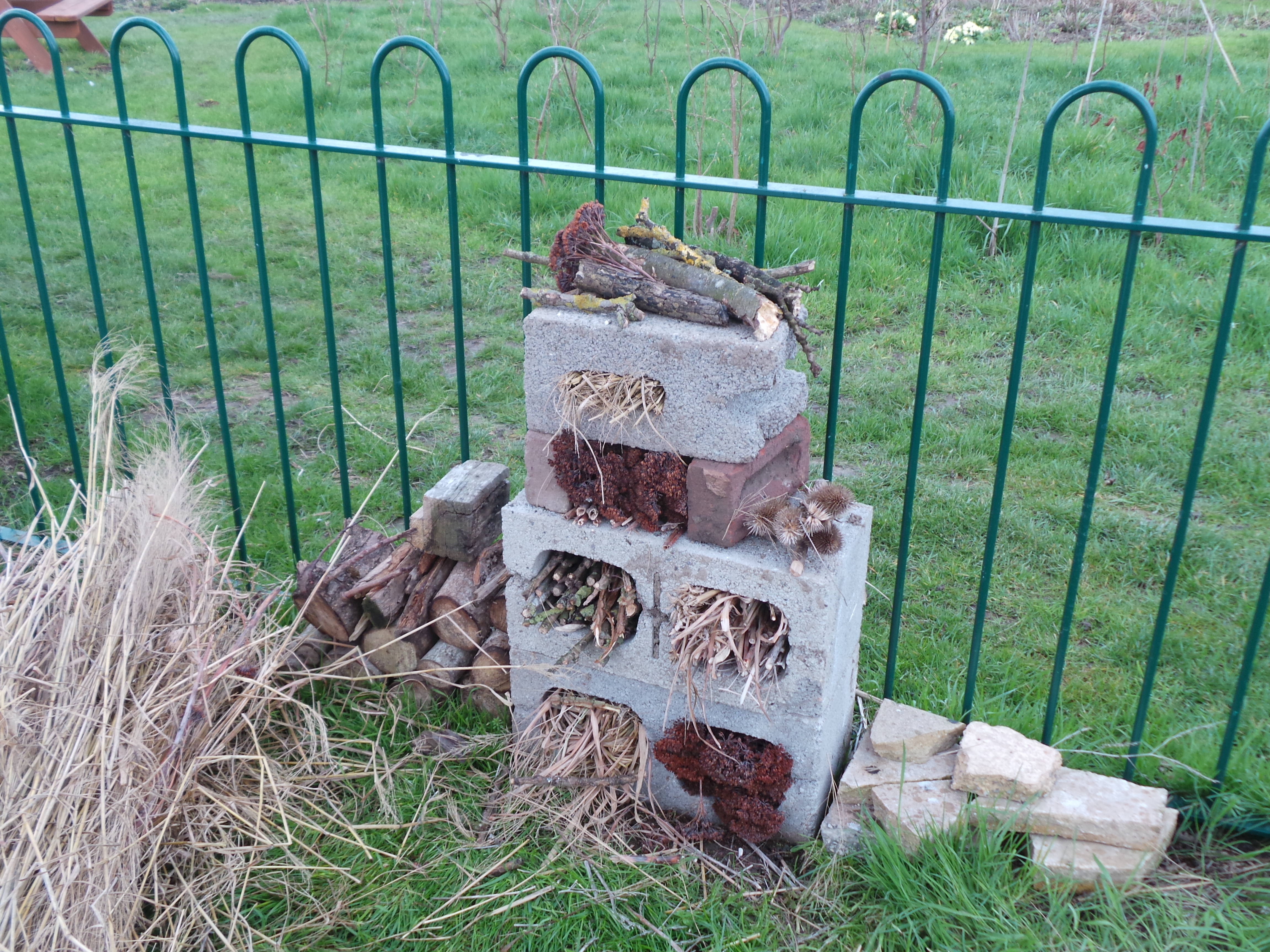
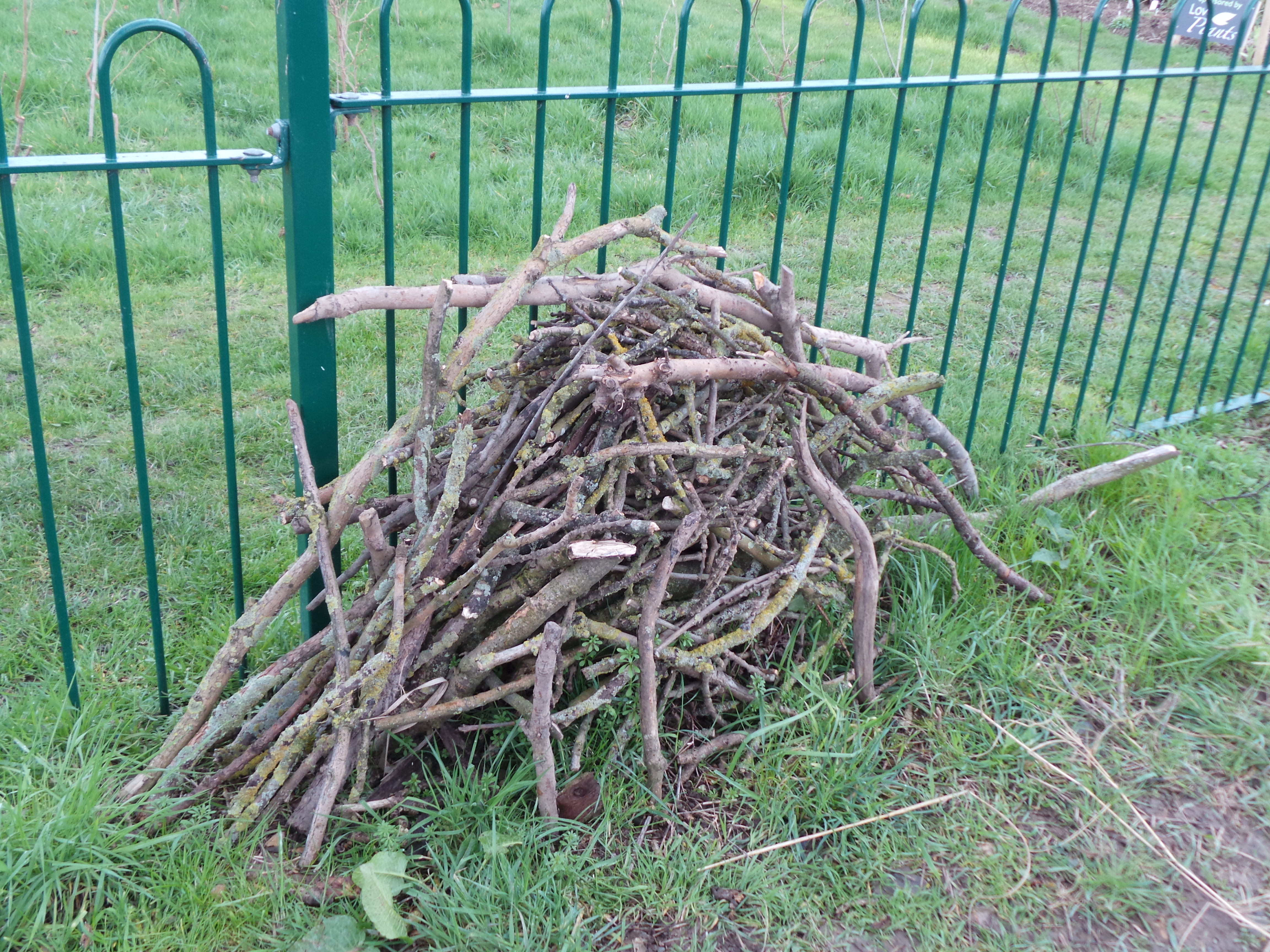
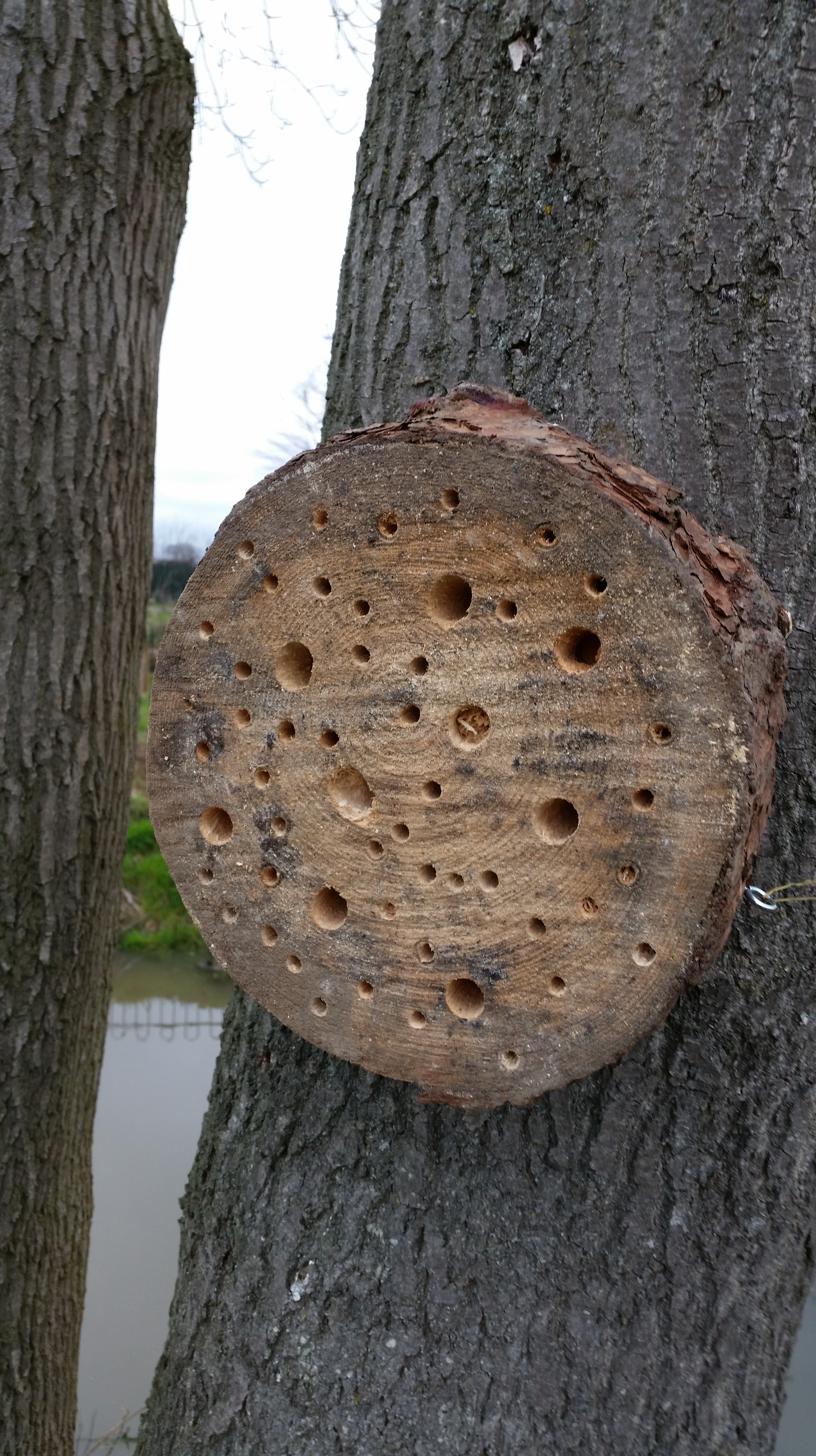
The other invited our children visitors to seek out the large variteies of wildlife homes, shelters and nesting places.

I thought you might like to see the photos of the green men and our wildlife features. Amongst the green men is a definite intruder who lives in our Japanese Garden on the trunk of the Salix flexuosa.

2014 07 31_2248-1

2014 07 31_2249-1 2014 07 31_2250-1 2014 07 31_2251-1 2014 07 31_2252-1 2014 07 31_2247-2

So now to our huge variety of wildlife features all designed and carefully placed to welcome all sorts of creatures, large and small.

Places for our feathered friends to roost and nest ………………

2014 07 31_2230-1 2014 07 31_2242-12014 07 31_2246-1 2014 07 31_2240-1

2014 07 31_2231-1 2014 07 31_2234-1

Places for beetles, invertebrates and amphibians ……………………….

2014 07 31_2229-1 2014 07 31_2235-12014 07 31_2243-1

Places for bees, lacewing and ladybirds ……………..

2014 07 31_2228-1 2014 07 31_2237-1

2014 07 31_2233-1 2014 07 31_2245-12014 07 31_2239-1

Places for all sorts of beneficial creatures – whoever wishes to drop in ……………………

2014 07 31_2232-1 2014 07 31_2238-1 2014 07 31_2241-1

We will have to think up some more quizes for our young visitors later this year.


Categories
architecture buildings Church architecture

Three Cathedrals – Wells Cathedral – Part Two

Welcome back to Wells Cathedral. In part two we will be looking at an amazing staircase and some recent features.

The staircase is wide and gently rising and even more gently curving. They have a design that has elements of modern ideas.

2014 10 04_5721 2014 10 04_5725

Truly modern design exists in the wooden furniture used by the Bishop and his cohorts. Clean lines and pale wood create beautiful sculptural pieces. Fine examples of beauty working with function.

2014 10 04_5761

2014 10 04_5713 2014 10 04_57122014 10 04_5714 2014 10 04_5715


Another modern item is this fabric hanging in delicate shades of blue and purple. Every breeze adds movement and each fold catches the light.

2014 10 04_5748


In contrast let us look at a few of examples of work wrought by ancient craftsmen, in stone, metal and glass.


2014 10 04_5716 2014 10 04_5722 2014 10 04_5723 2014 10 04_5731


At the top of the stairwell we looked at earlier we discovered the Chapter House, a place of quiet and peace. Whenever visitors such as us entered this room they sat and talked quietly to their companions or else just sat alone looking around them. They looked upwards at its complex vaulted ceiling and the striped columns rising to meet it, or read the scripts found on the brass plaques around the walls.

2014 10 04_5727 2014 10 04_5726 2014 10 04_5728 2014 10 04_5729 2014 10 04_5730

We shall finish off this look at the cathedral at Wells with a few shots of its famous archway shaped like a number 8, which is called the Scissors Arch. It is beautiful and as far as I know unique, but there is such a simple reason for being there. It is to prevent the collapse of the central tower.


2014 10 04_5763 2014 10 04_5755


Whilst at Wells we wandered around the Bishops Garden which we enjoyed immensely. Look out for a post about it coming soon.

Categories
architecture buildings Church architecture photography sculpture townscapes

Three Cathedrals – Wells – Part One

Welcome to the next cathedral in my Three Cathedral series of posts.

We visited Wells Cathedral decades ago and we remembered very little of it apart from a wide sweeping stone stairway. So when we returned in the autumn we looked forward to reacquainting ourselves with its architecture. We guessed where the Cathedral would be in the little city of Wells by following the wide street with its market right to its very end. The market stalls almost funneled us towards the cathedral gates. 

2014 10 04_5681 2014 10 04_56822014 10 04_5689

Just before entering the cathedral grounds we came across this beautifully colourful National Trust shop.

2014 10 04_5683 2014 10 04_5684

An open green with specimen trees showed us the way to go.

2014 10 04_5685 2014 10 04_5686  2014 10 04_5688

2014 10 04_5687 2014 10 04_5690

Wells Cathedral is a tall imposing structure designed to dominate the city and its inhabitants.

2014 10 04_5691 2014 10 04_56922014 10 04_5693

A modern entrance had been added in recent years to give visitors a comfortable way in and to preserve the main doorway in. The use of green oak and matching stone ensured that the modern extension fitted beautifully and most sympathetically. the new entrance also carefully led us to a new cafe again designed to match. From every one of its windows we got views to entice us onward to explore.

2014 10 04_5694 2014 10 04_5695 2014 10 04_5696 2014 10 04_5697 2014 10 04_5698 2014 10 04_5699 2014 10 04_5700 2014 10 04_5701

The vaulted ceiling of the cloister walk has been sensitively restored to show its intricate complex web of wooden beams.

2014 10 04_5704 2014 10 04_5703

As well as architecture it is the craftsmanship displayed in our old ecclesiastical buildings that impresses us most. It is good to see them well preserved and carefully, lovingly looked after.

2014 10 04_5702 2014 10 04_57072014 10 04_5709 2014 10 04_5710

Often when exploring church buildings it is possible by looking up, to discover carvings of characters. like this “impish” character below left. He looks like he is plotting his next trick. The wooden carving on the left was high up and hard to see in detail and he was part of an ancient complex clock.

2014 10 04_5711 2014 10 04_57082014 10 04_5705 2014 10 04_5706

Let us finish this first part of two posts about Wells Cathedral by looking at other characters we managed to find hidden here and there throughout the great building.

2014 10 04_5718 2014 10 04_5724 2014 10 04_5732 2014 10 04_5733 2014 10 04_5735 2014 10 04_5738 2014 10 04_5739 2014 10 04_5758

In part two we carry on with our tour and discover an amazing curved staricase and some modern additions.

Categories
countryside landscapes light light quality National Trust photography The National Trust the sea the seaside the shore Wales wildlife

A Stroll along the Pembrokeshire Coastal Path – Part Two

Welcome back after a bit of a rest and we continue along the beautiful coastal footpath towards the headland at St David’s Head. You left us with our goal in sight as we began our way across rougher moorland.

We were walking a stretch of the coastal path in Penbrokeshire which was my challenge for 2014. We set out intending to walk a mile, far more than I should be walking. We found ourselves going further than intended and still had not turned back. I set myself a new extended challenge. To walk the mile to the headland of St David’s Head and back again. I knew I would suffer for days after but I am a stubborn chap.

We carried on, crossing over a crystal clear waters of a tiny mountain stream. We stopped a while to enjoy the sounds of water rippling over rock, a sound that always makes us feel good! Letting our eyes follow the stream’s track to the sea showed light over the water more akin to late afternoon, almost the sort of light that comes shortly before a sunset, but it was still early afternoon.

2014 11 21_7652 2014 11 21_7653 2014 11 21_7654 2014 11 21_7655 2014 11 21_7656 2014 11 21_7657

We followed the narrow and at times wet track along the cliff top, all the time keeping our eye on the headland we were aiming for, but at times it disappeared from view. Bracken and fungi grew in the short grass, close cropped by sheep.


2014 11 21_7658 2014 11 21_7659 2014 11 21_7660 2014 11 21_7661 2014 11 21_7662 2014 11 21_76632014 11 21_7664 2014 11 21_7665

We followed a stream against the downhill direction of its journey, gradually climbing all the time. We were constantly stopped in our tracks by the beauty of the landscapes. Enjoy my photos!


2014 11 21_7666 2014 11 21_7667 2014 11 21_7668 2014 11 21_7669 2014 11 21_7670 2014 11 21_7671 2014 11 21_7672 2014 11 21_7673 2014 11 21_7674 2014 11 21_7675 2014 11 21_7676 2014 11 21_7677 2014 11 21_7678 2014 11 21_7679 2014 11 21_7680 2014 11 21_7681 2014 11 21_7682 2014 11 21_7683

When we reached our destination we enjoyed a good rest, sitting on comfortable and convenient rock outcrops. Coffee, fruit and in my case a good dose of Ventolin helped refresh us. We felt so pleased, so satisfied. We enjoyed the views from this vantage point, where we could appreciate a vast panorama.

2014 11 21_7696

2014 11 21_7684 2014 11 21_76852014 11 21_7690 2014 11 21_7687


The rock faces were painted in lichen and the grass dotted with fungi even in this bleak place.


2014 11 21_7686  2014 11 21_7688 2014 11 21_7689 2014 11 21_7693  2014 11 21_7694 2014 11 21_76952014 11 21_7692

From where we sat we spotted a cairn marking the highest point on the headland. We just had to walk a few hundred yards more. Of course along the way we searched for a stone each to allow ourselves to follow our tradition of placing it on the cairn.

2014 11 21_7698 2014 11 21_7699 2014 11 21_7700 2014 11 21_7701 2014 11 21_7702 2014 11 21_7703


We found returning to our starting point a lot easier following a steady downhill track.

2014 11 21_7706 2014 11 21_7707 2014 11 21_7708 2014 11 21_7709 2014 11 21_7710 2014 11 21_7711

Stonechats followed alongside us as we neared the end of our walk. I managed this one poor photo of one of them.


2014 11 21_7712

Back where we started off from we can look back over the same wall and appreciate just how far we have been. We could see the headland we had aimed for and reached in the misty distance. We felt exhausted but very satisfied.


2014 11 21_7713

Categories
countryside landscapes light light quality National Trust photography The National Trust the sea the seaside the shore Wales

A Stroll along the Pembrokeshire Coastal Path – Part One

Every year I set myself a challenge that defies my disability. Something totally silly if I take my health into consideration! Something I definitely should not be doing! But these challenges are great fun! I love them! Jude accepts my need to do them but worries when we are following these strange desires. Sometimes I have a need to go a bit further than my actual abilities!

For 2014 my challenge was to walk a mile along a stretch of the Pembrokeshire Coastal Path, probably the most beautiful of Britain’s long distance paths. For me a single mile is a long distance walk! I did it in late November and survived! Okay I suffered for a good few days after but boy did it feel good! I had such a feeling of elation when I finished the walk. Anyone else would have to climb Everest to get the same thrill! My consultant was proud of me. He likes my crazy ideas.

2014 11 21_7605 2014 11 21_7606

So come with us on our trek along the windswept coast near St Davids. As we dressed in suitable gear for a walk in the cold and most likely wet weather we noticed these two using the beautiful backdrop to take photos of their stained glass window. No doubt some great shots will appear in their promotional materials.

2014 11 21_7601 2014 11 21_76022014 11 21_7603 2014 11 21_7604


We made our way onto the path by passing through a beautiful stone wall. A sign with wording engraved on slate informed us that the walk to St David’s Head was 1 mile. I hoped to make half way to give us a round trip of 1 mile.

2014 11 21_7609 2014 11 21_7607


2014 11 21_7608


Jude looked ahead and could see just how far away the headland was that I was aiming to reach. She thought I was mad! We soon started finding colour in the tough grasses – wildflowers of coastal habitats. The first was this Armeria, the Sea Thrift. Close by the much brighter coloured Gorse added a bit of sunshine colour.

2014 11 21_7613 2014 11 21_7612  2014 11 21_7617 2014 11 21_7614

This little delicate plant foiled us completely – neither of us could remember what it was.

2014 11 21_7632 2014 11 21_7635

Every rock was painted with Lichen and Mosses. They look just like they have been daubed by an artist. These rocks had fallen from the field boundaries that are specific to this area – stones with soil in the gaps and on top. The soil provides homes for the local flora.

2014 11 21_7620 2014 11 21_7615

2014 11 21_7616 2014 11 21_7621

The light was changing by the minute. We could be in sunshine one minute and then under heavy storm clouds the next. Just see the extremes in the photos below taken within minutes of each other. The temperature varied in the same way – hats and gloves were on and off all the time.

2014 11 21_7618 2014 11 21_7619

What made this walk extra special was that it gave double value. We had views over the inlets and headlands over one shoulder and views of the countryside inland over the other.

2014 11 21_7622 2014 11 21_7623 2014 11 21_7624 2014 11 21_7625 2014 11 21_7626 2014 11 21_7627  2014 11 21_7629 2014 11 21_7630

2014 11 21_7631 2014 11 21_7633 2014 11 21_7634 2014 11 21_7636 2014 11 21_7637 2014 11 21_7638

2014 11 21_7639 2014 11 21_7640

As we passed through a wooden gate the landscape changed and the views opened up. The signs on the gatepost invited us to carry on with our walk but be careful not to fall off the cliffs! We hadn’t been planning to! The National Trust sign informed us that we were on St David’s Head. We realised then that we had already walked further than we had intended. We should have turned back and made our way back but my stubborn nature won over and we decided to carry on perhaps making it to the headland in the far distance. This would give us a total walk of two miles. Far more than I should have been contemplating! We had rugged open moorland to cross to reach the headland itself.


2014 11 21_7643 2014 11 21_7644 2014 11 21_7645 2014 11 21_7646 2014 11 21_7647 2014 11 21_7648


Jude was fascinated by a label hanging over a rock and just had to have a close look. We found it was a marker point on a trail laid out as part of an army training session. We were tempted – just for a moment – to pick it up and take it back to the local barracks to tell them we had found this label. Common sense prevailed however and we resisted the temptation.

2014 11 21_7649 2014 11 21_7650

In the photo below we can see the headland for which we were aiming right on the horizon.


2014 11 21_7651

My legs are aching and pain is creeping up my spine just writing this post and loading the photos so we shall take a break for now and return in Part Two.


thinkinGardens

for people who want more than gardening from gardens

This Veggie Life

A Vegetarian | Nature Lifestyle Blog

Rambling in the Garden

.....and nurturing my soul

The Arch City Gardener

Journeys In St. Louis Gardening and Beyond

Garden Dreaming at Châtillon

Consult the genius of the place

Storyshucker

A blog full of humorous and poignant observations.

gardeninacity

Notes from a wildlife-friendly cottage garden

PlayGroundology

...an emerging social science

The Official Blog of British Wildlife

'The most important and informative publication on wildlife of our times' - The Independent. This blog is a member of The UK & Ireland Natural History Bloggers group: www.uknhb.blogspot.com

iGrowHort

Inspire - Cultivate - Grow Native Plants - Restore Landscapes

Bishops Meadow Trust

To create and protect a semi-natural wild space for the people of Farnham to enjoy and experience an array of British wildlife in our town

Gardening with Children

The www.gardeningwithchildren.co.uk Blog

UKbirdingtimeline

birding through the seasons, why birds matter and how to conserve them

NATURE WALKER

with a camera in hand

Jardin

Transform your outdoor space

Eva's space

My allotment, cooking and other interests

Old School Garden

my gardening life through the year

LEANNE COLE

Trying to live a creative life

fromacountrycottage

trying to live as lightly as possible on our beautiful planet

Good Life Gardening

Nature lovers from Leicester living the good life.

mybeautfulthings

Finding the beautiful in the everyday

mawsonmichelle

Michelle's Allotment

In and Out of My Garden

thoughts from and about my garden

Greenhousing

Big plans for a small garden

The Scottish Country Garden

A Walled Country Garden in South East Scotland

The Fruity Chicken

Life at the fruity chicken

willowarchway

Off grid living. Self sufficient. "PERMAGANICS RULE".

St Anns Allotments

Nottingham's Grade 2* Listed Allotments and Community Orchard

Manifest Joy Harvests

a journey in suburban vegetable gardening

Allotmental

The madness of growing your own

Penny's Garden: a harvest beyond my front door

A novel approach to vegetable gardening

arignagardener

Sustainable living in the Irish countryside.

NewEnglandGardenAndThread

Master Gardener, amateur photographer, quilter, NH native, and sometimes SC snowbird

dianajhale

Recent work and work in progress and anything else that interests me

planthoarder

a chaotic cottage gardener

Lens and Pens by Sally

a weekly blog that creates a personal philosophy through photographs and words

Dewdrops and Sunshine

Stories from a sassy and classy Southern farmbelle.

The Pyjama Gardener

Simple Organic Gardening & Seasonal Living

gettin' fresh!

turning dirt into dinner

JOY...

today the world is created anew

Garden Birds

Notes from a Devon garden

ShootAbout

Life Through The Lens

Adapting Pixels

A photography blog showcasing the best photography pictures and videos on the internet

Wildlifegardening's Blog

Just another WordPress.com site

naturestimeline

personal observations from the natural world as the search continues for a new approach to conservation.