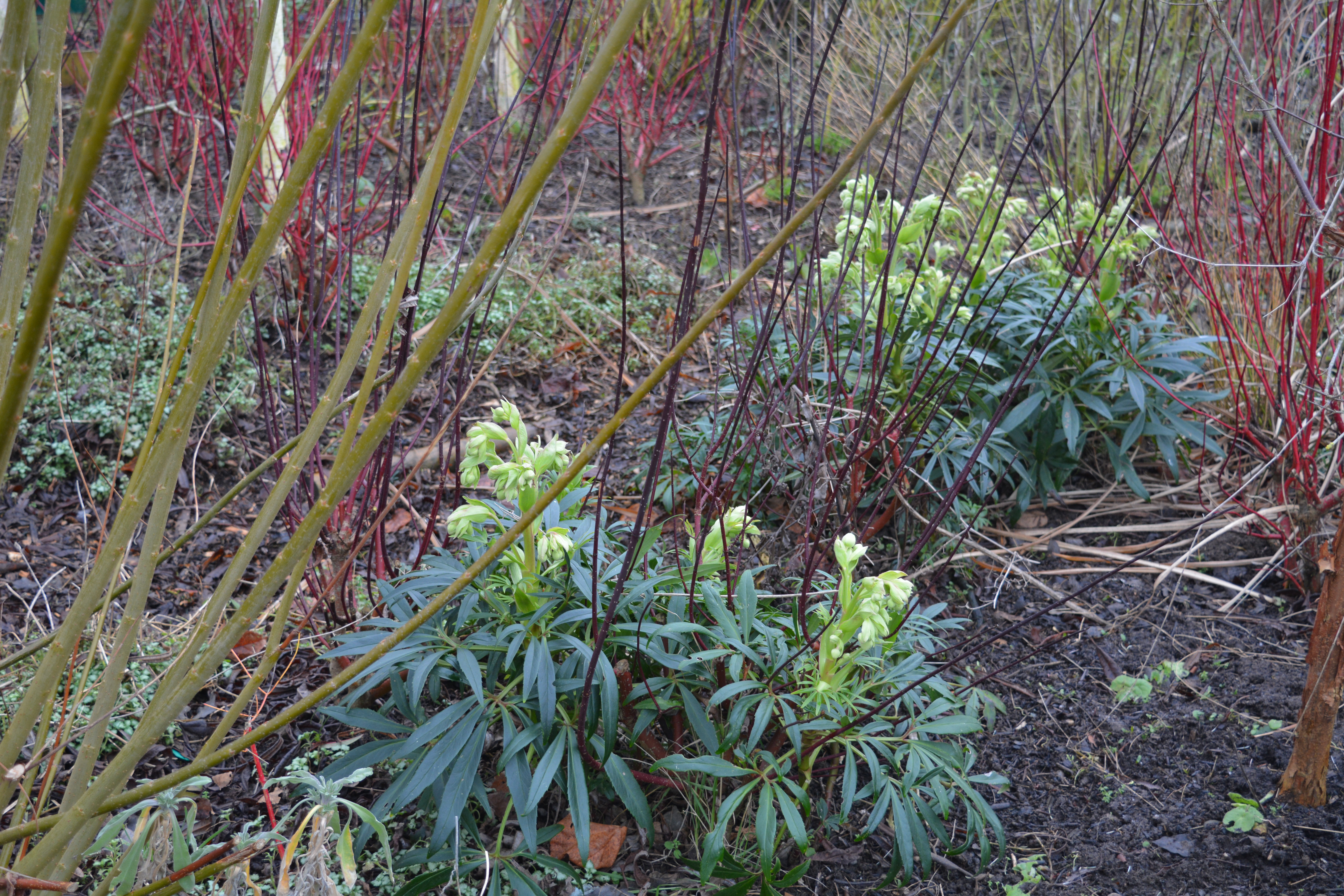
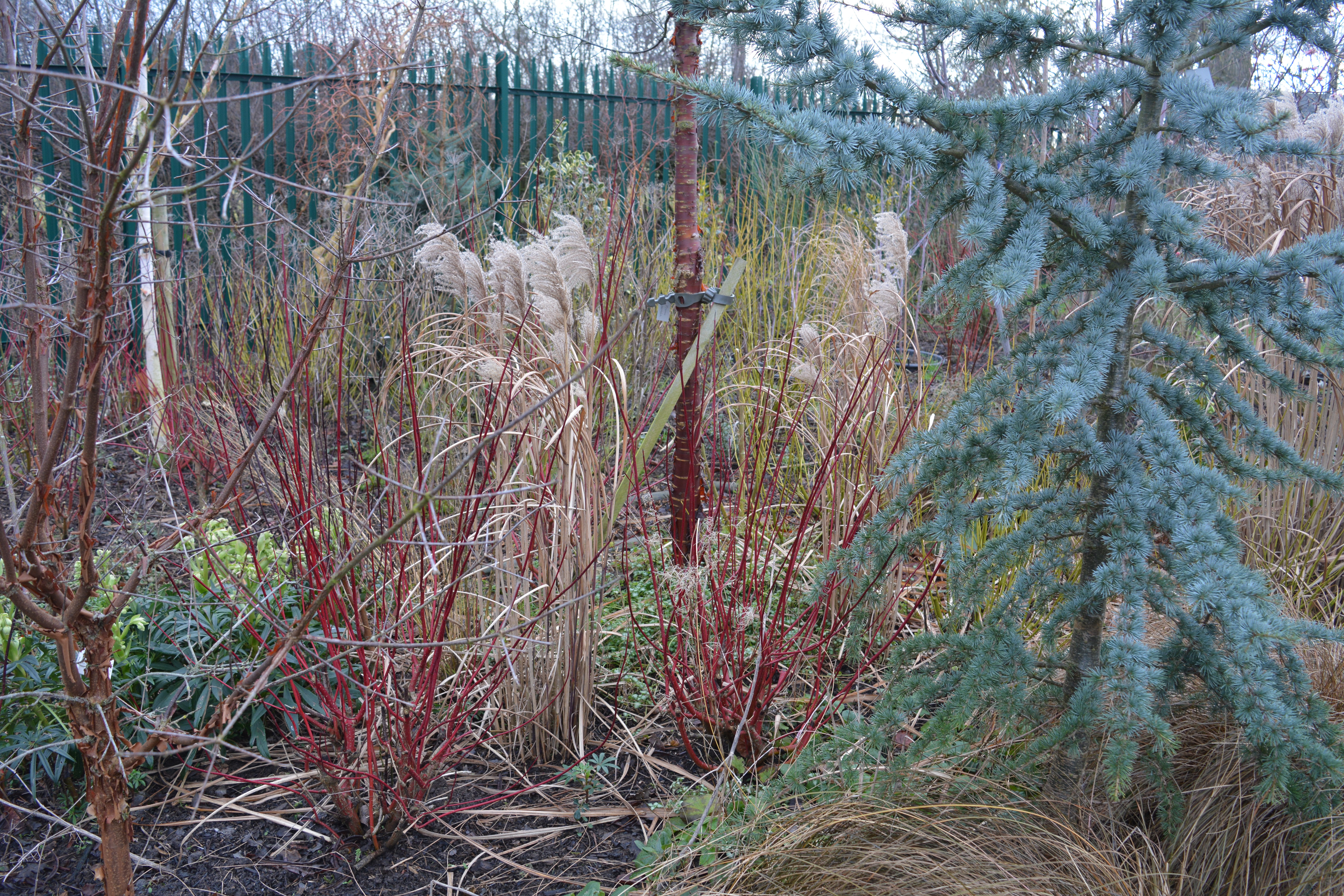
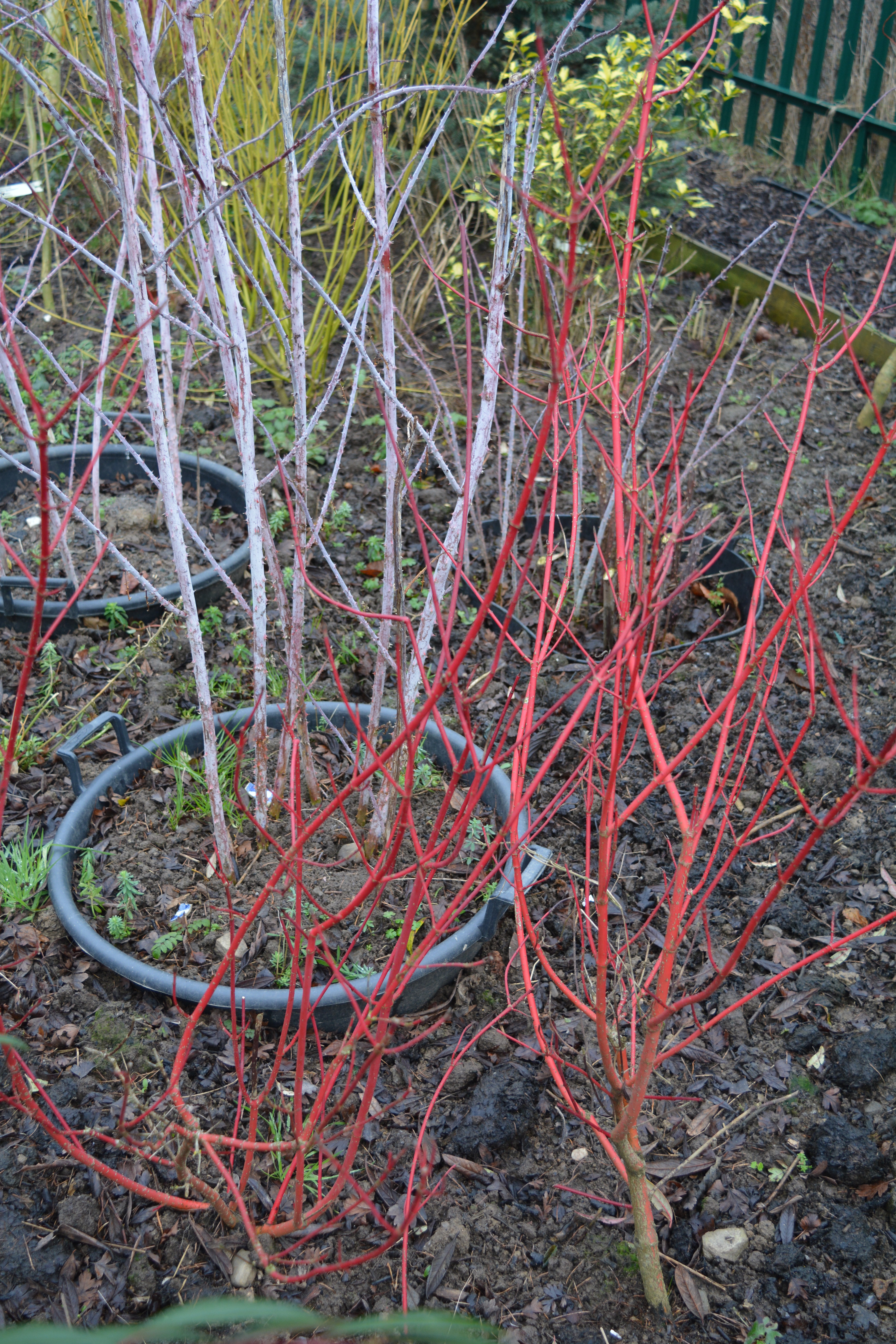
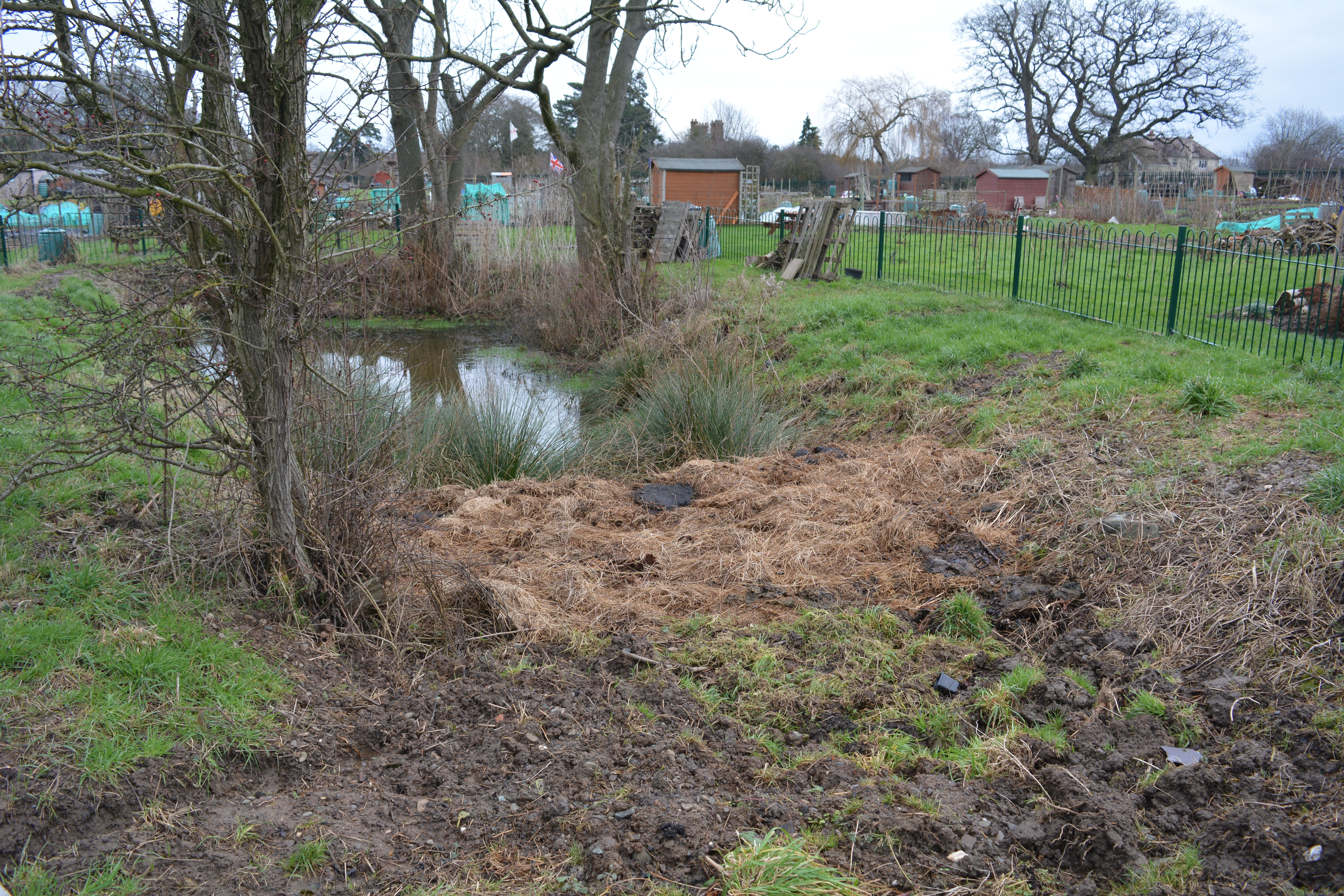
Categories
colours flowering bulbs garden design garden photography gardens grow your own hardy perennials ornamental trees and shrubs spring bulbs spring gardening The National Gardening Scheme" trees Yellow Book Gardens

Yellow Book Gardens 1 – Bury Court Farmhouse

Our first National Garden Scheme’s Yellow Book garden of 2015 was to Bury Court Farmhouse in the Herefordshire village of Wigmore. We always look forward to our visits to other gardens which open to the public under the auspices of the NGS because of course we open for the Yellow Book too. We were particularly keen to see what other gardens looked like in April as our first opening this year is on 16th April.

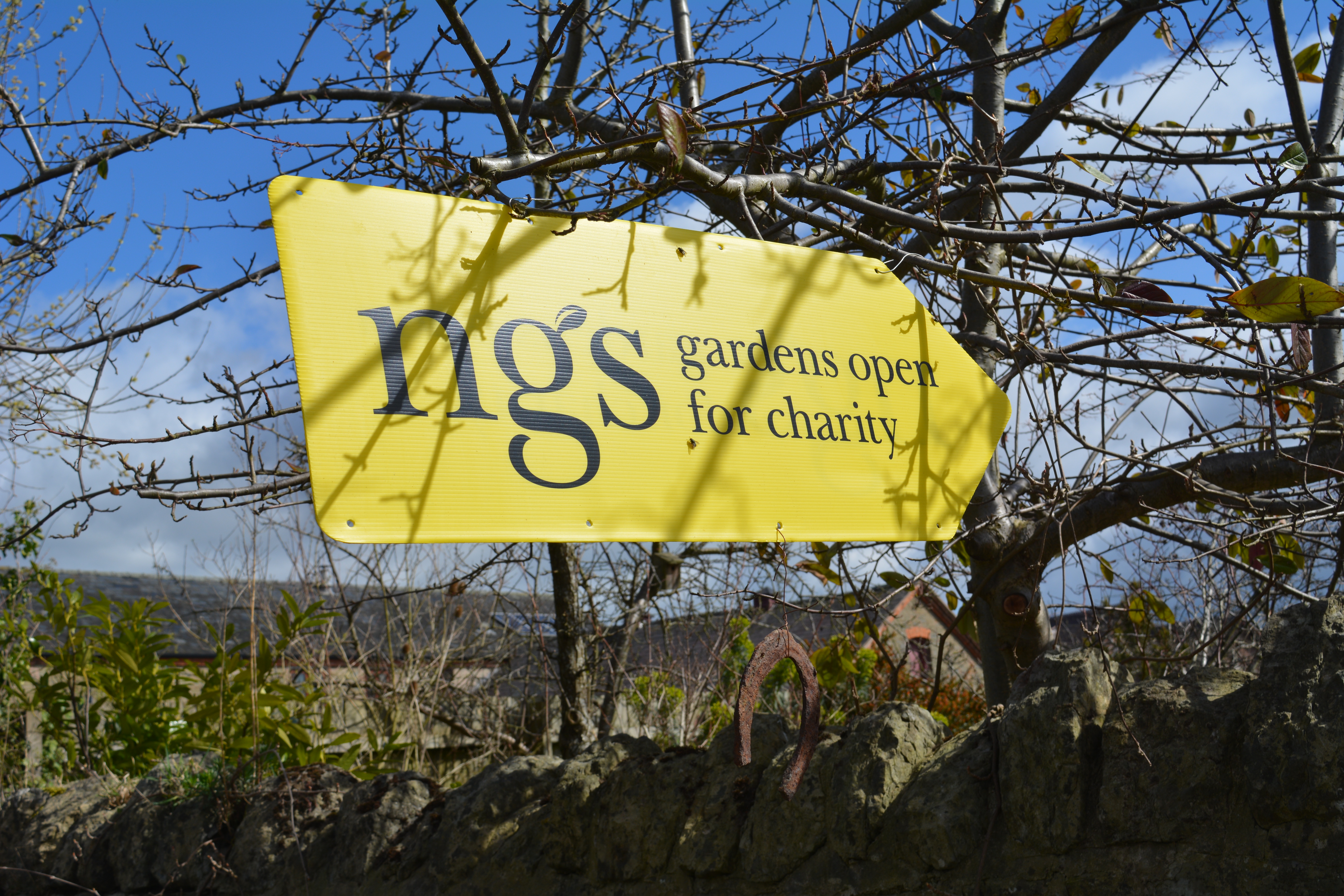
To celebrate our first NGS garden of the year the sun came out and the temperature shot up to 17 degrees way above anything we have so far experienced in 2015. We drove down through the beautiful Shropshire Hills and into Herefordshire a county with such beautiful villages among beautiful countryside. We were directed into a rough grassed car park riddled with muddy puddles. We had to seek out a space for our car among dead farm machinery slowly decaying and being taken over by Mother Nature. A cheerful welcome awaited us at the garden gate. Spot the horse shoe hanging from the NGS sign.

2015 04 05_0370

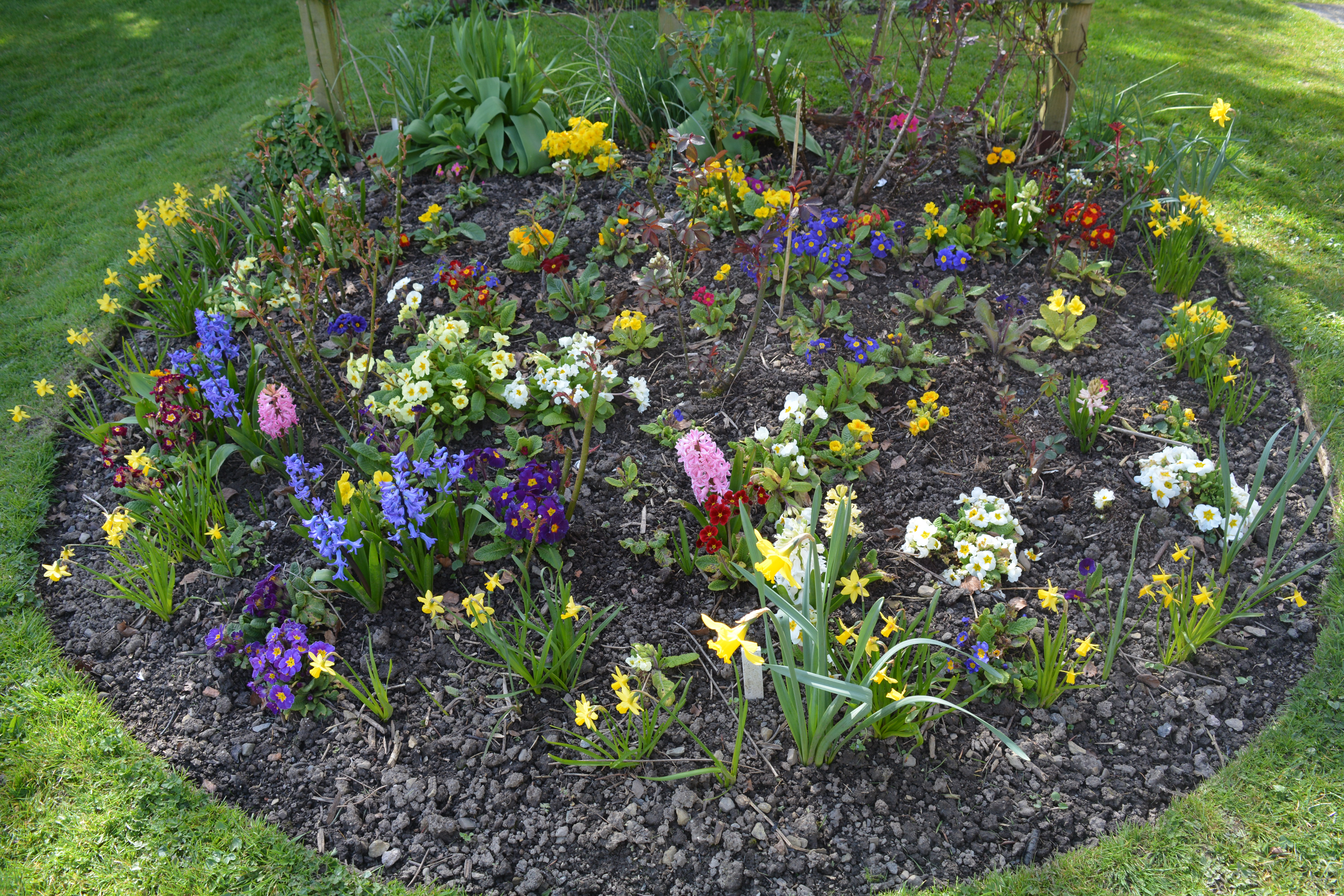
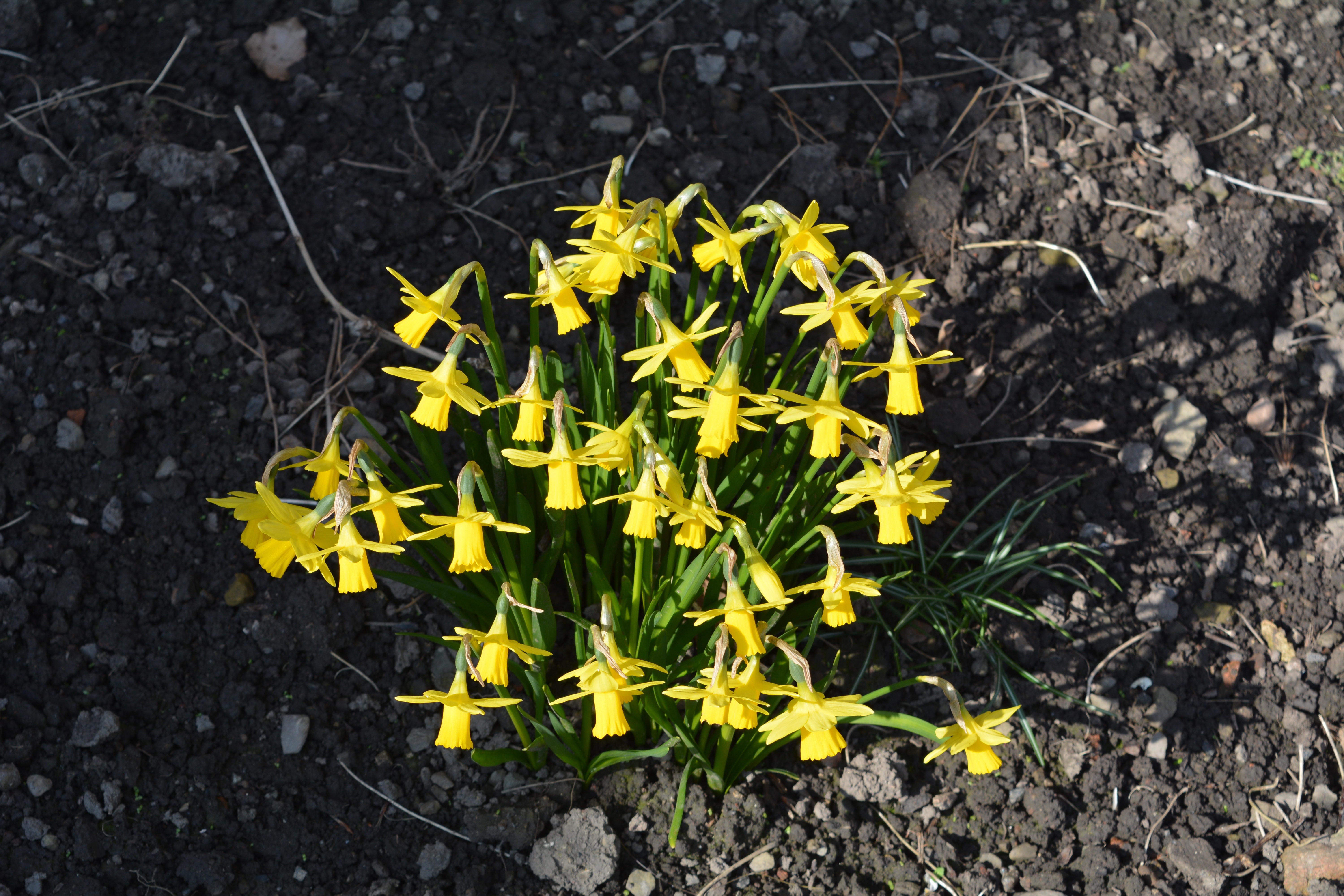
We passed through a five barred gate into a courtyard with narrow borders around its perimeter and a rectangular bed in the centre all planted with cheerful spring bulbs and early flowering perennials and shrubs. Hyacinths, Vincas, Celandines, Doffodils and Tulips.

2015 04 05_0371 2015 04 05_0372 2015 04 05_0373 2015 04 05_0374

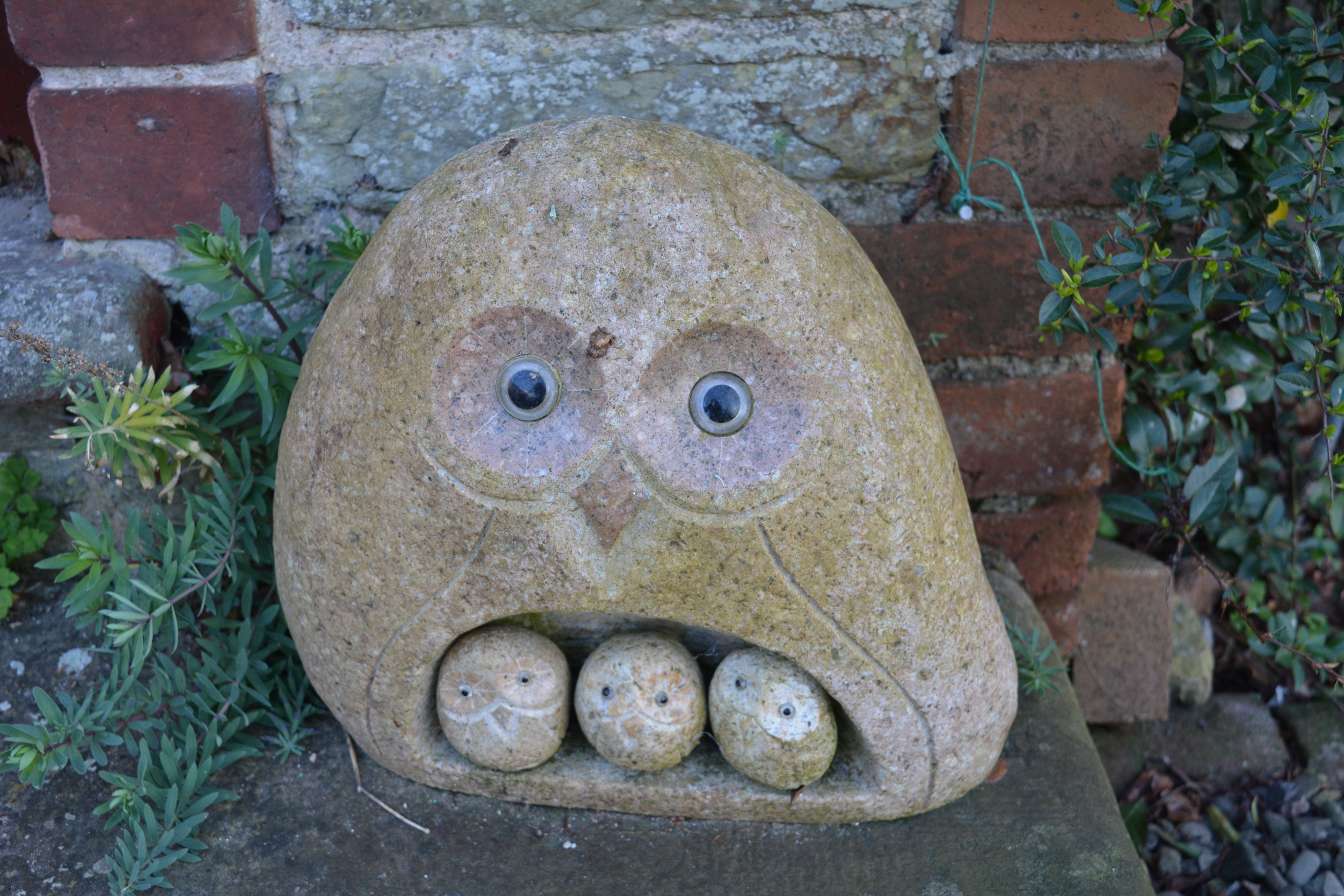
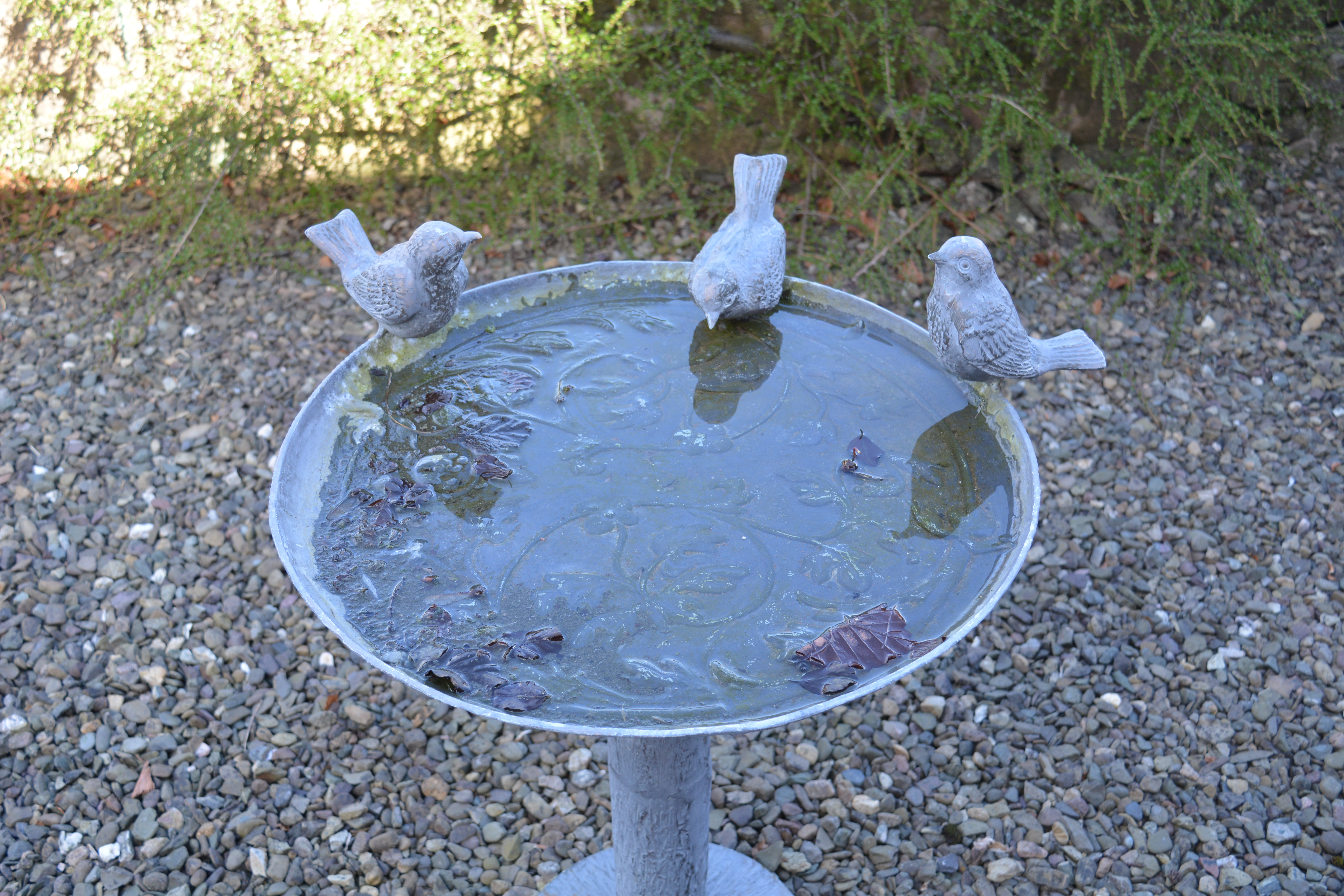
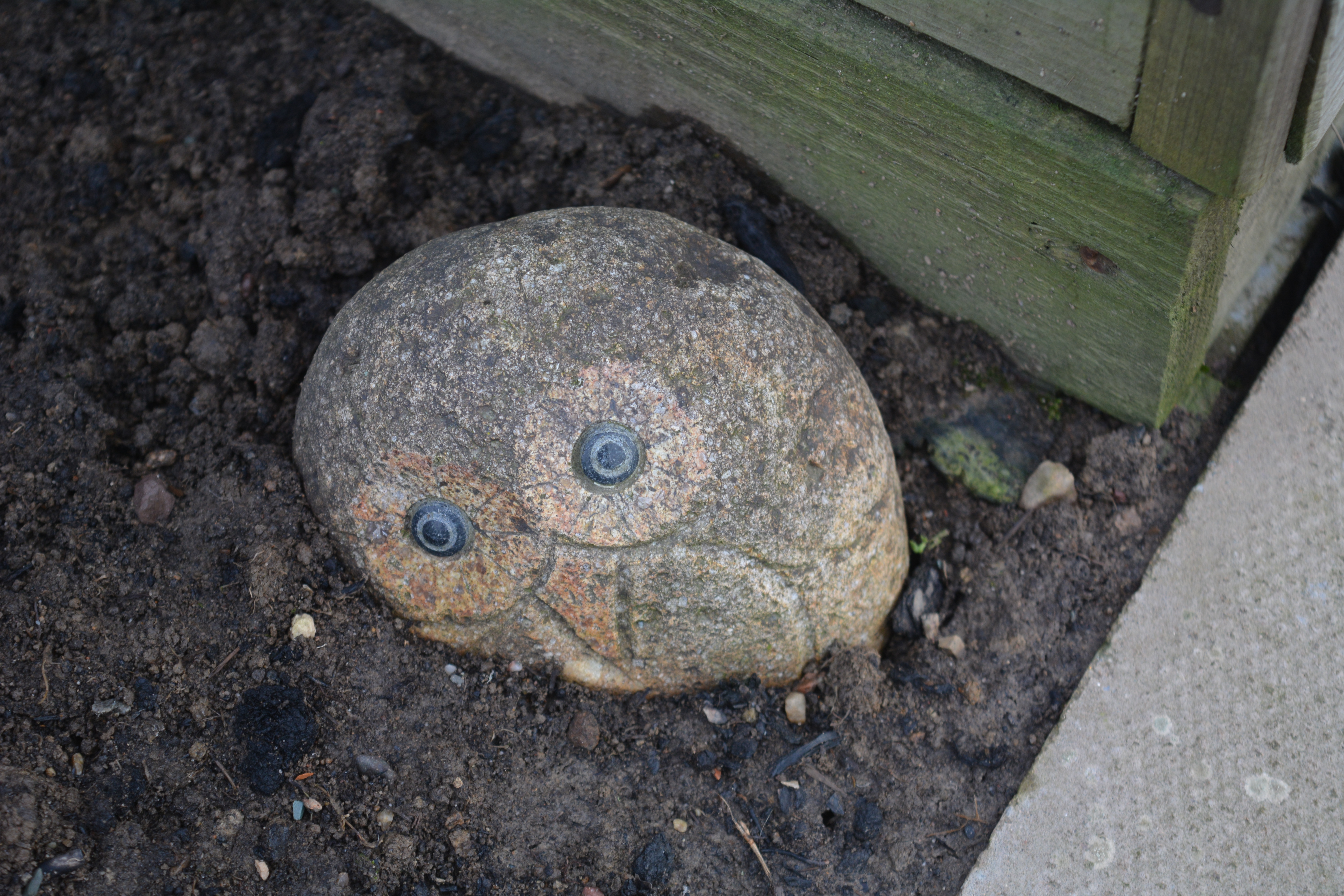
We were amused by the owl family and the bird bath.

2015 04 05_0375 2015 04 05_0376

The garden boasted a small productive patch with leeks and broad beans already growing well and cloches warming up soil for future crops. A lawned area alongside was bordered by a tall hedge which allowed woodland plants to grow in its shade.

2015 04 05_0377 2015 04 05_0378 2015 04 05_0379 2015 04 05_0380 2015 04 05_0381 2015 04 05_0382 2015 04 05_0383

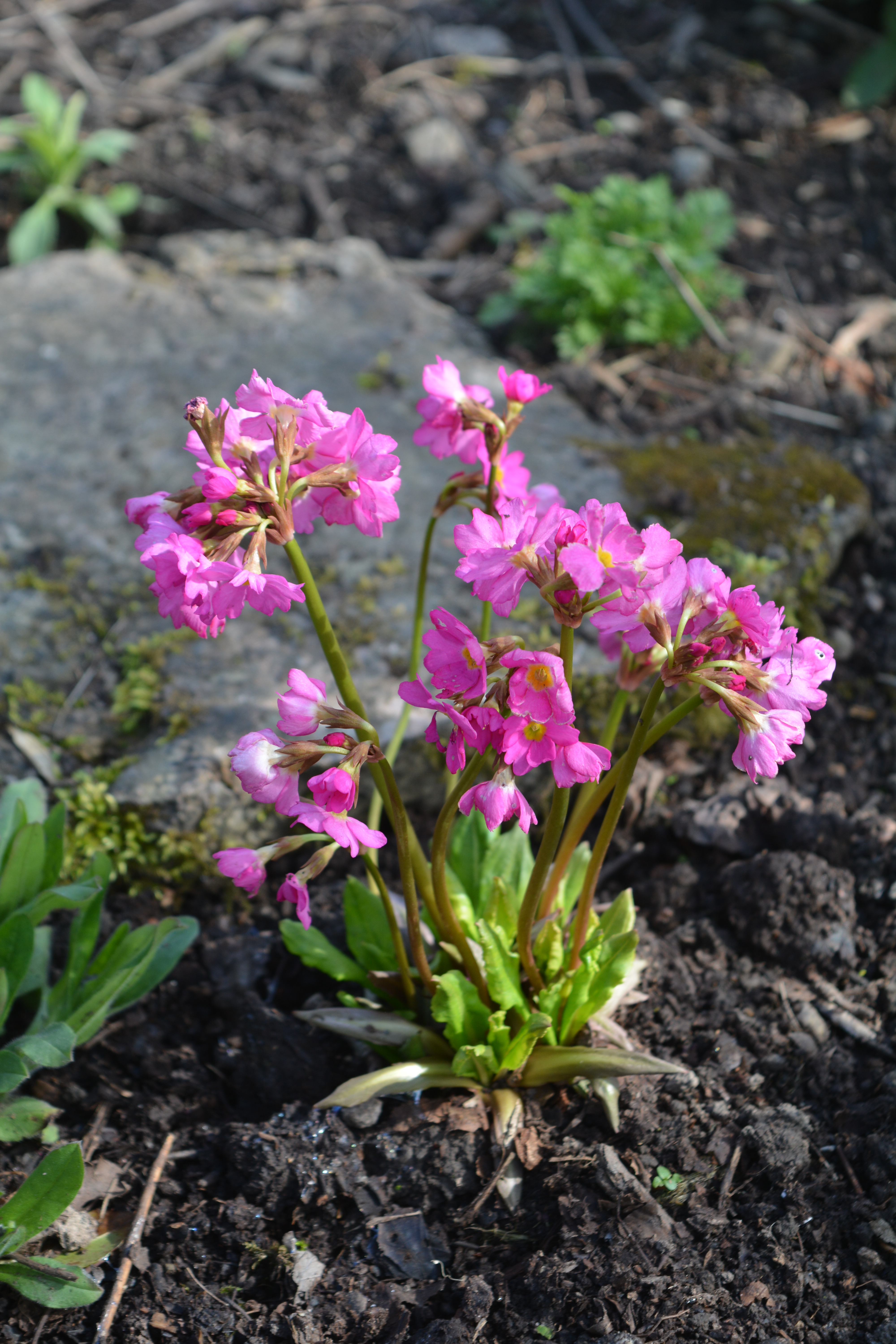
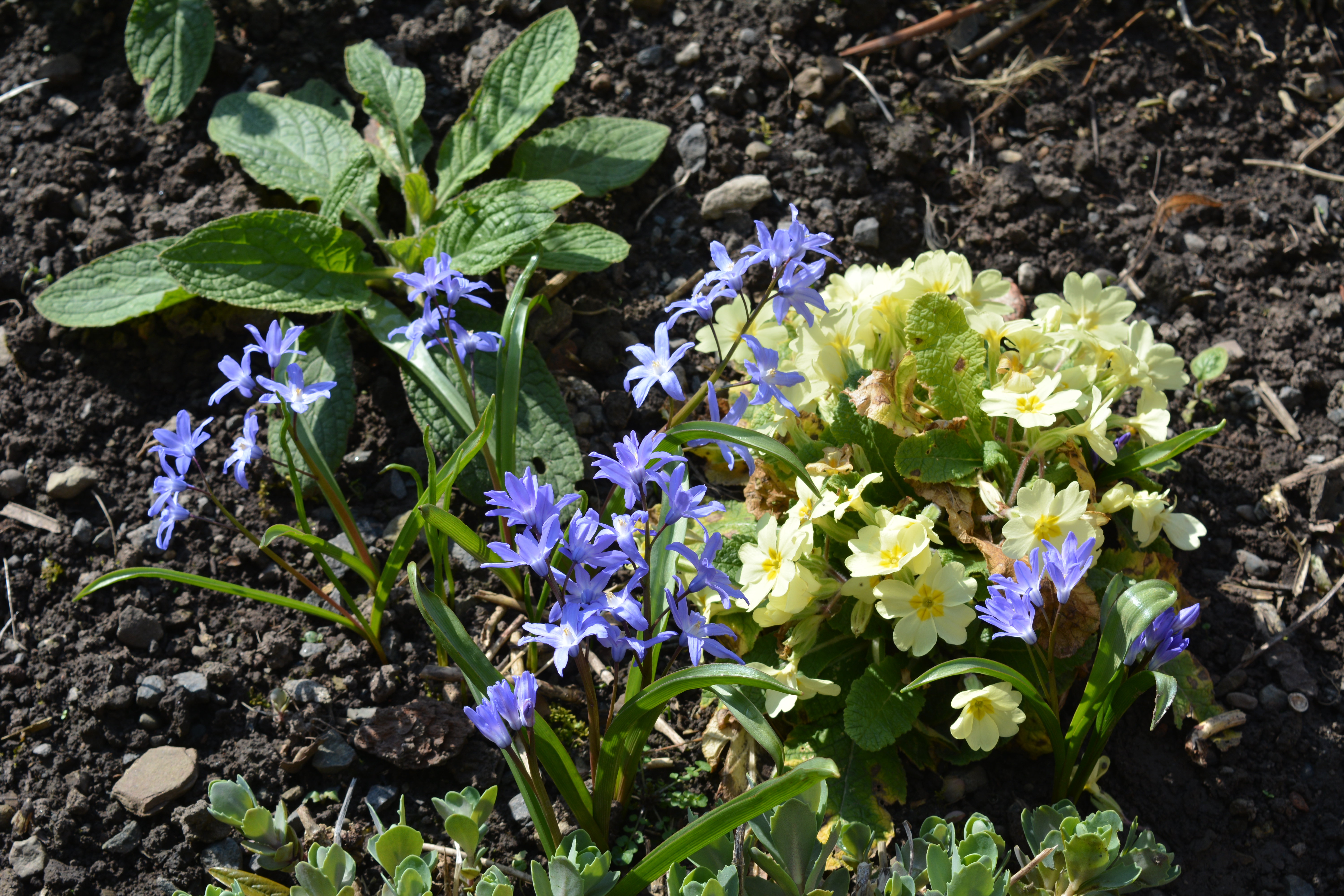
At the front of the house was a large sunny lawn with island beds full of brightly coloured spring flowering plants. Primroses, Primulas and bulbs especially Hyacinths and Narcissi.

2015 04 05_0385 2015 04 05_0386

This beautiful bronze statue of a hare was basking in the sunshine among blue Anemones.

2015 04 05_0387

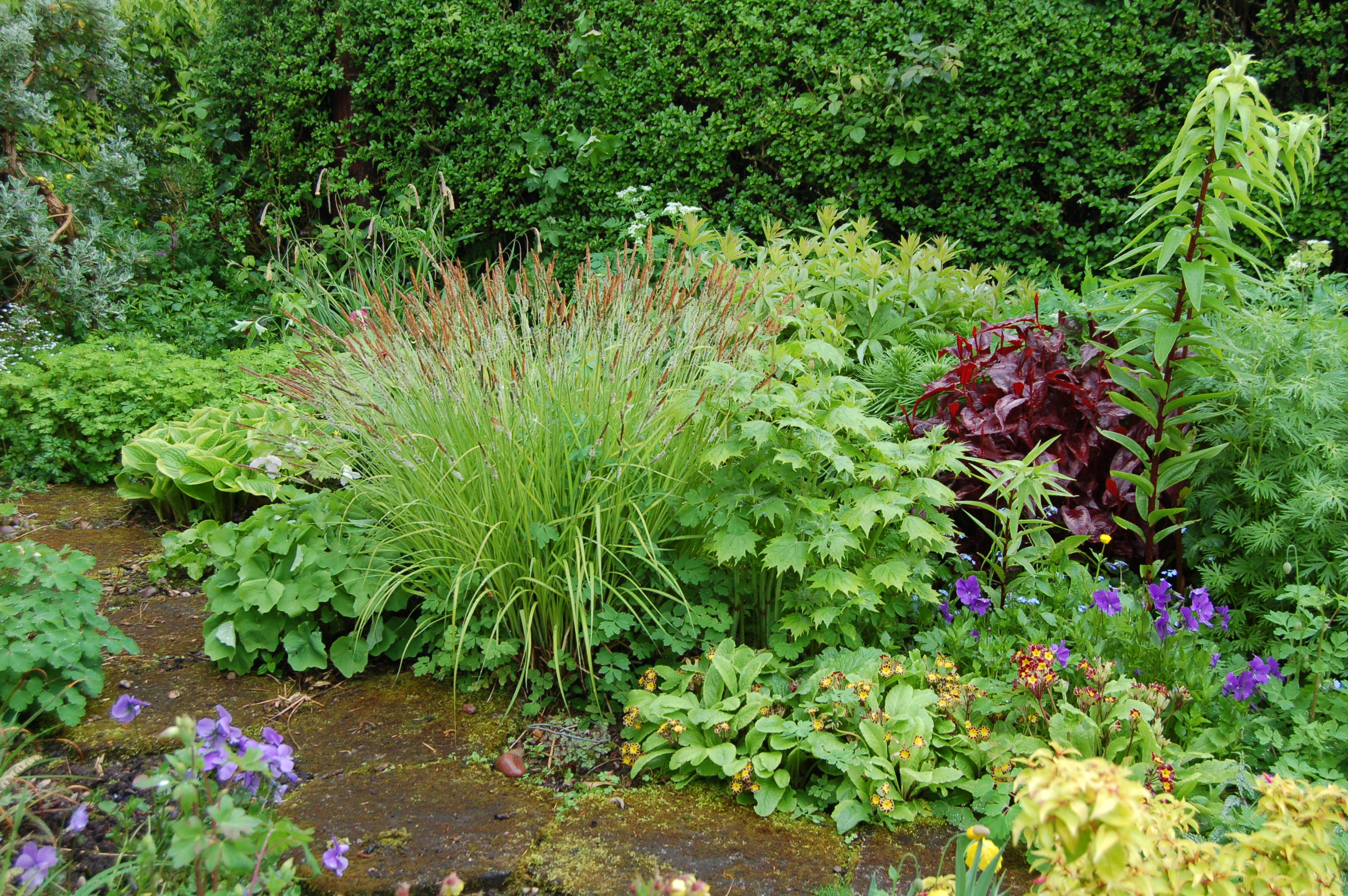
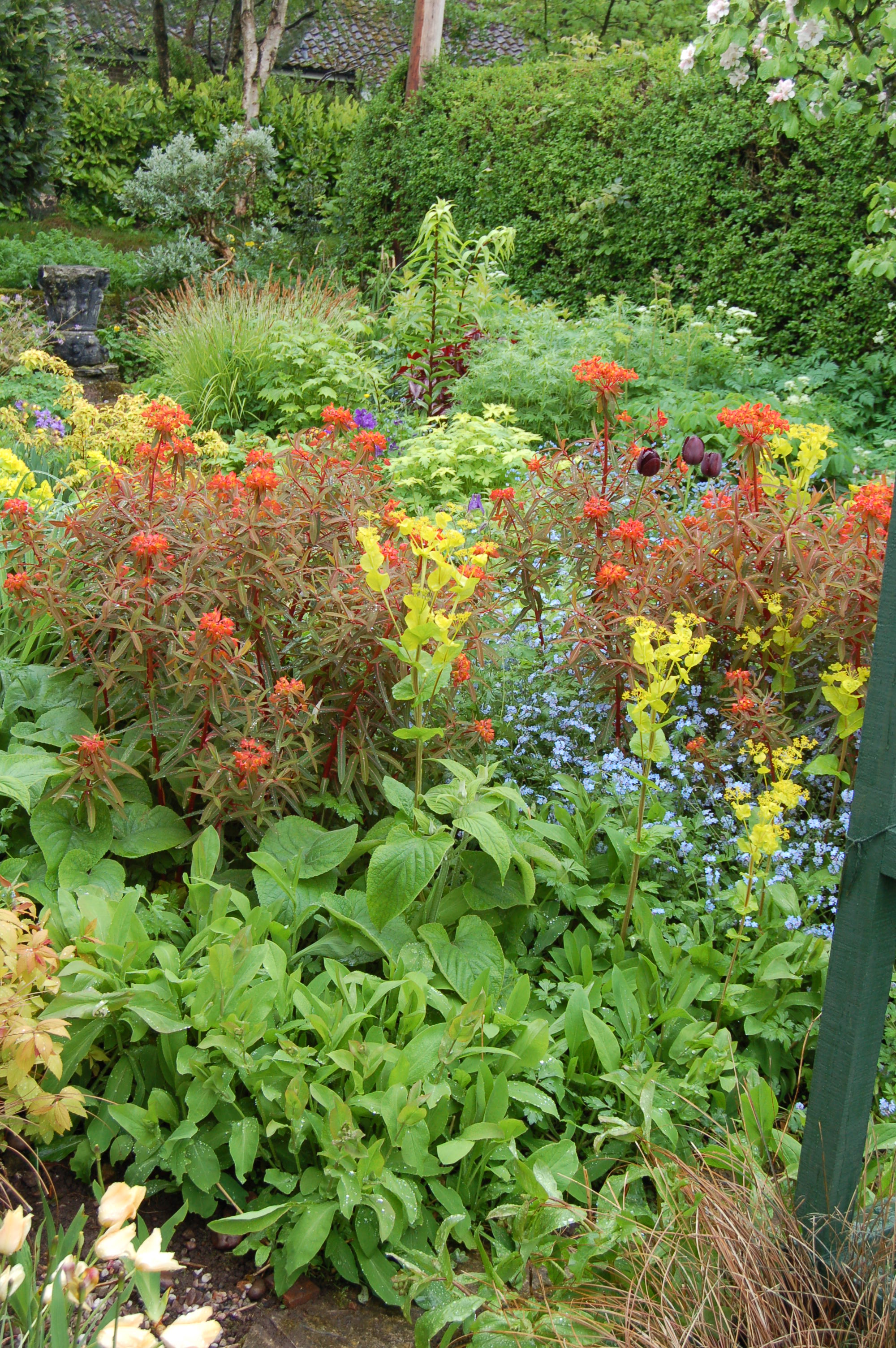
The borders around this sunny lawn were truly mixed borders with herbaceous planting, shrubs and trees giving interest at every level.

2015 04 05_0388 2015 04 05_0389 2015 04 05_0390 2015 04 05_0391 2015 04 05_0395 2015 04 05_0396 2015 04 05_0397 2015 04 05_0400 2015 04 05_0404 2015 04 05_0405 2015 04 05_0406

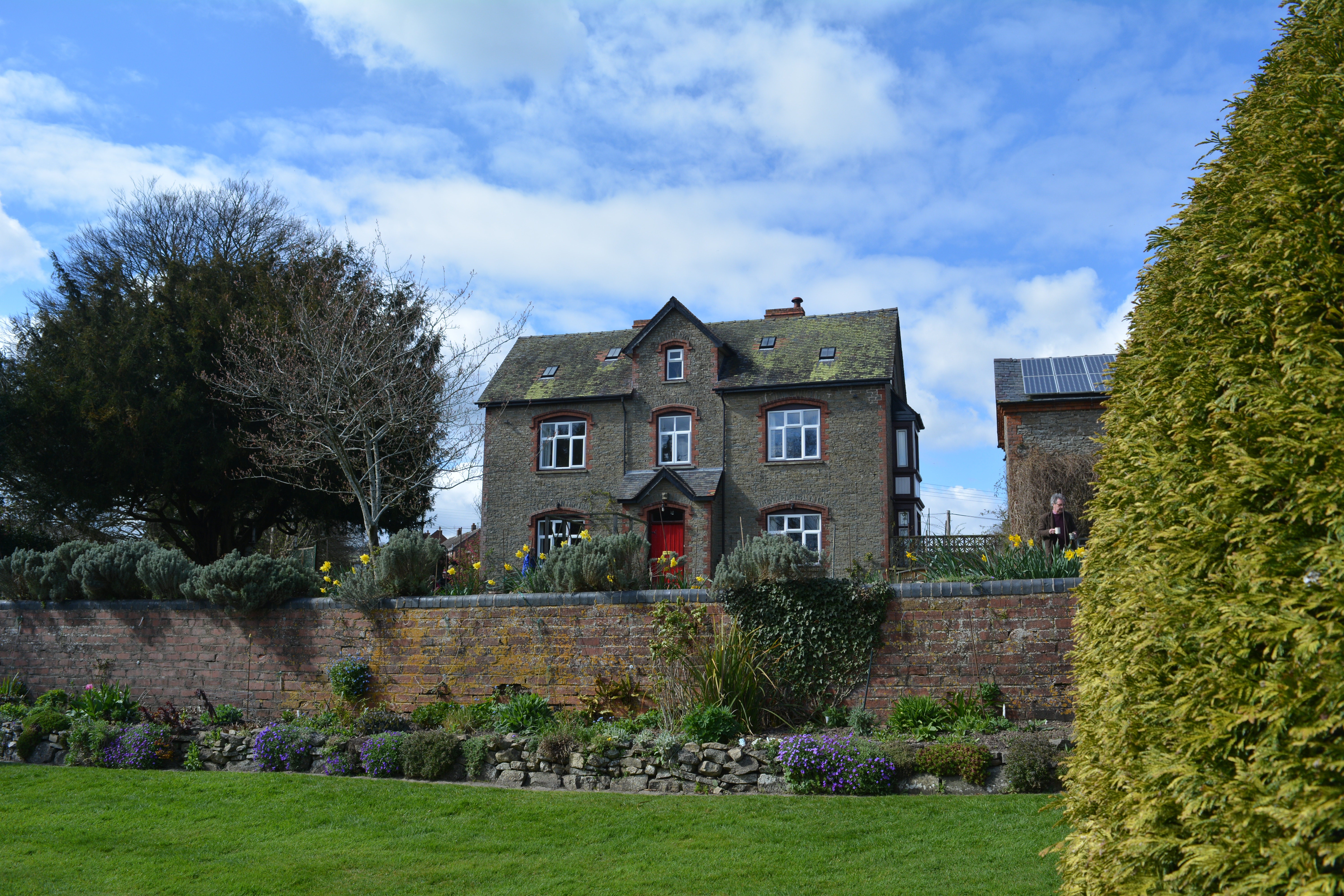
Right in the centre of this lawned area was a clue to the original use of the imposing stone built building in the centre of the garden. It had originally been a farm growing apples to make cider. The photos below show the mill stone that would have been used to crush the cider apples. Ponies were used to pull the stones around a groove.

2015 04 05_0409 2015 04 05_0410  2015 04 05_0412

2015 04 05_0413 2015 04 05_0414 2015 04 05_0415 2015 04 05_0416 2015 04 05_0392_edited-1 2015 04 05_0411

So our first Yellow Book garden of 2015 was certainly worth a visit with its cheerful planting and it served very nice tea and cakes!


Categories
flowering bulbs fruit and veg garden buildings garden wildlife gardening gardens gardens open to the public grow your own hardy perennials National Trust ornamental trees and shrubs spring bulbs spring gardening The National Trust trees

Croft Castle month by month – part three – March

2015 03 25_0152_edited-1

So back we went for the third of our monthly visits to the Herefordshire property of theNational Trust, Croft Castle where we had a wander to see what had changed since our visit in February. As usual we began our tour by checking out that the coffee and cakes were still up to our high expectations! To get there we walked past the parkland which features the ancient Sweet Chestnuts. These old trees were still showing no signs of spring, their buds tightly closed.

2015 03 25_0066 2015 03 25_0068

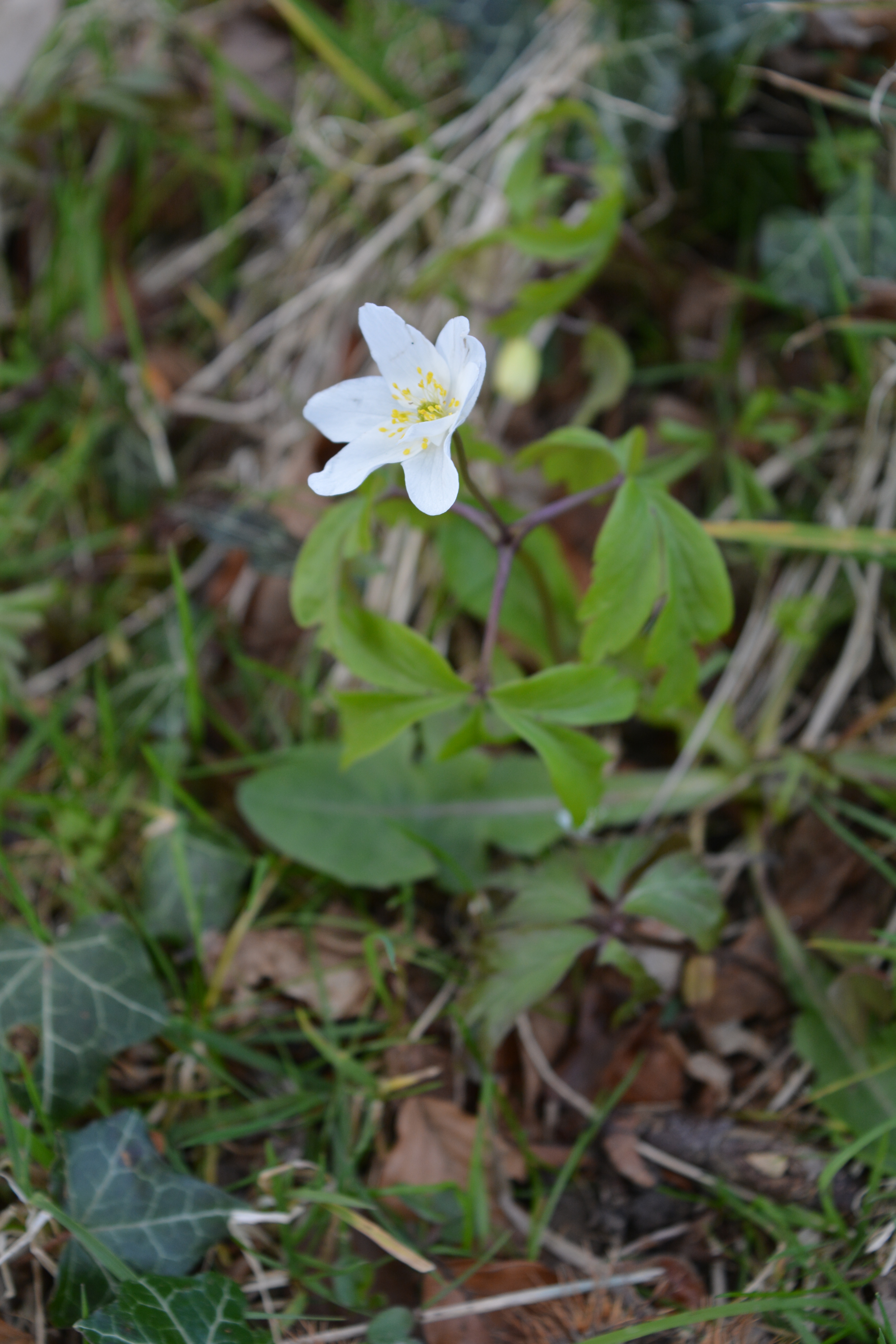
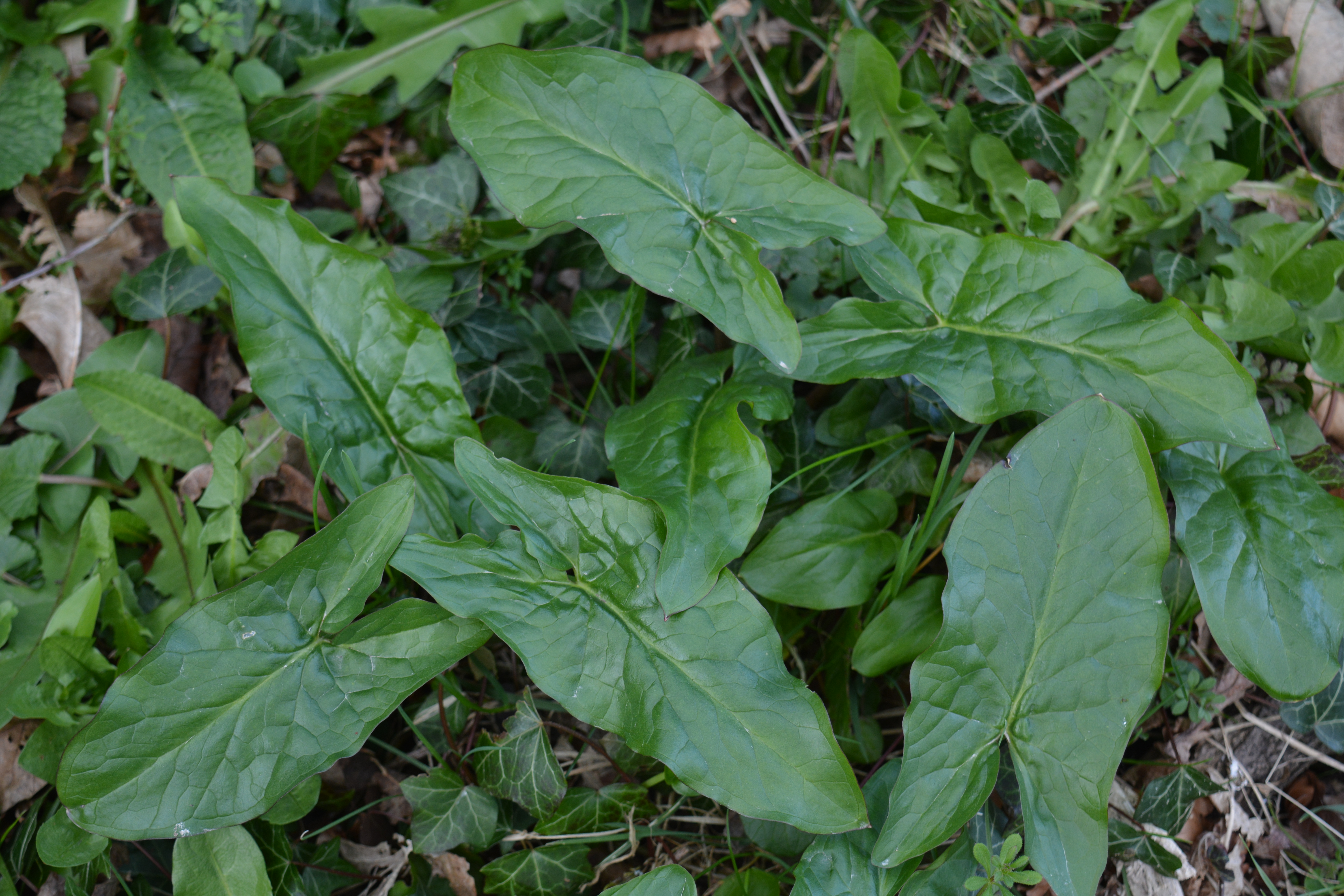
Suitably refreshed we cut through a meadow area on our way to the walled garden, and in that meadow little patches of colour shone out, white Wood Anemones, the purple of Fritilleries and the yellows of Celandines and Dandelions. Amongst these the patterned leaves of Arum Italicum, our native Arum Lily clothed the ground. Fritilleries although dramatic flowers with purple chequerboard patterned petals were remarkably difficult to make out among the grass.

2015 03 25_0071 2015 03 25_0072 2015 03 25_0073 2015 03 25_0074

The long, deep mixed border was showing colour too, mostly primulas and bulbs.

2015 03 25_0077 2015 03 25_0078 2015 03 25_0080 2015 03 25_0081 2015 03 25_0083 2015 03 25_00842015 03 25_0085 2015 03 25_0087 2015 03 25_0089 2015 03 25_0090

We walked quickly along the long border trying to avoid the biting wind and reach the protection of the walled garden. When we caught the first glimpse of the doorway into the walled garden we were amazed to see that the little section of cobbled path the gardeners had recently discovered had now been exposed and restored right across the lawned area.

2015 03 25_0067_edited-1

Passing through the little doorway you can see in the photo below at the right hand end of the wall gave welcome relief. There was no wind within the walls and the temperature was so much warmer. It made the day feel comfortable to wander in so we slowed down and took time to look.

2015 03 25_0091

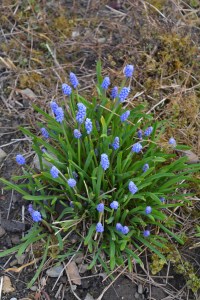
The long border beneath the wall had a scattering of blooms such as these Pulmonaria and Muscari and the buds on a few of the shrubs were beginning to burst. The vineyard however was still deep in its state of hibernation.

2015 03 25_0092 2015 03 25_00932015 03 25_0070_edited-1 2015 03 25_0069_edited-1 2015 03 25_00942015 03 25_0095

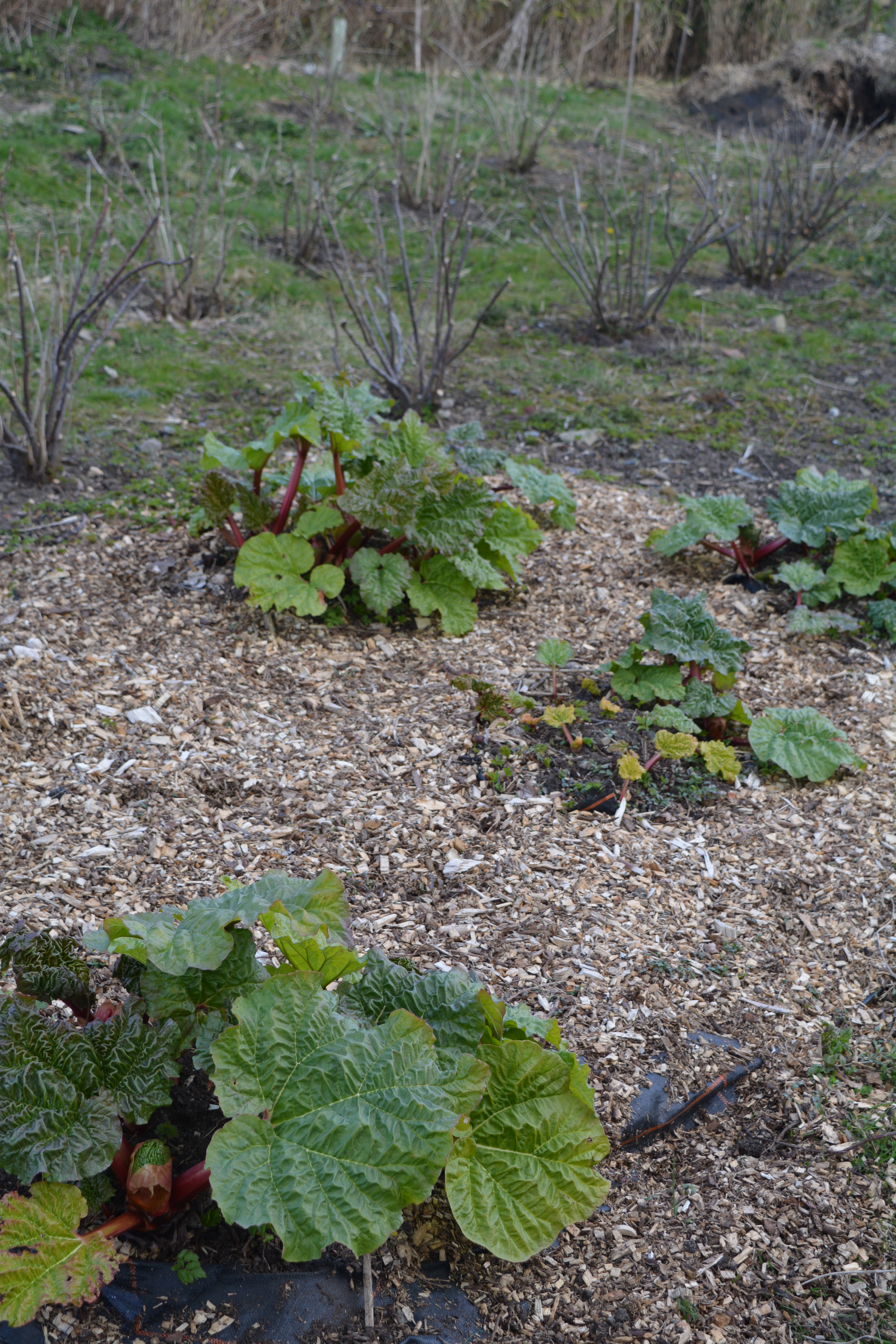
As usual we were tempted to go through the blue gates into the working heart of the walled garden. We discovered a newly created fruit garden and close by a Rhubarb plant waited patiently to take its place.

2015 03 25_0107 2015 03 25_01012015 03 25_0100 2015 03 25_0102

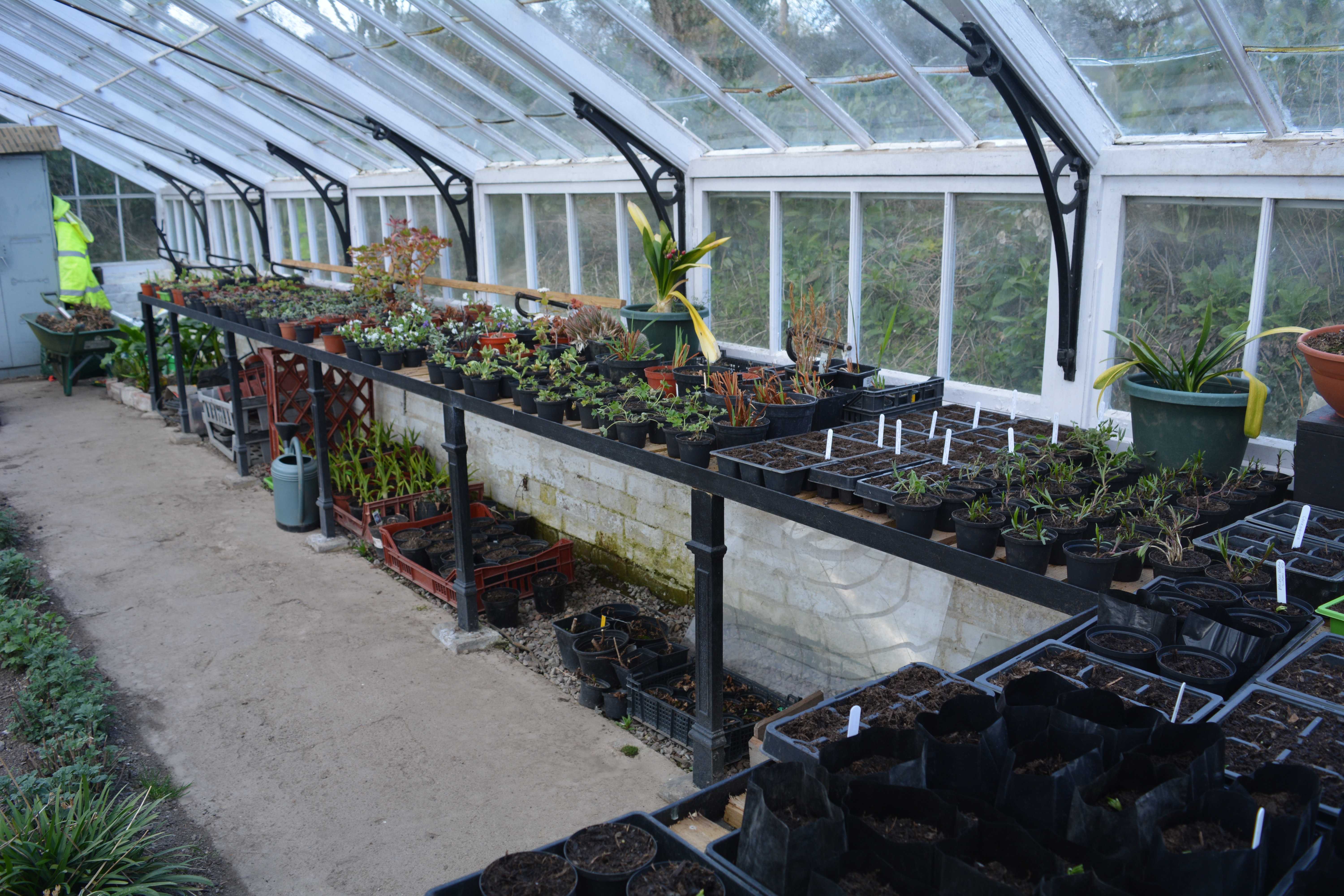
In the greenhouse plants had been potted up ready to be sold later in the season, including this array of Pulmonarias.

2015 03 25_01032015 03 25_0104 2015 03 25_0105

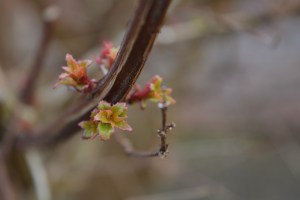
Back out in the main walled garden we found more Rhubarb and this looked well on its way to being ready for harvesting. There were signs of spring everywhere in the protected environment within the wall, fresh greens and reds of newly burst buds on willows and roses.

2015 03 25_0108 2015 03 25_0114 2015 03 25_0115 2015 03 25_0116

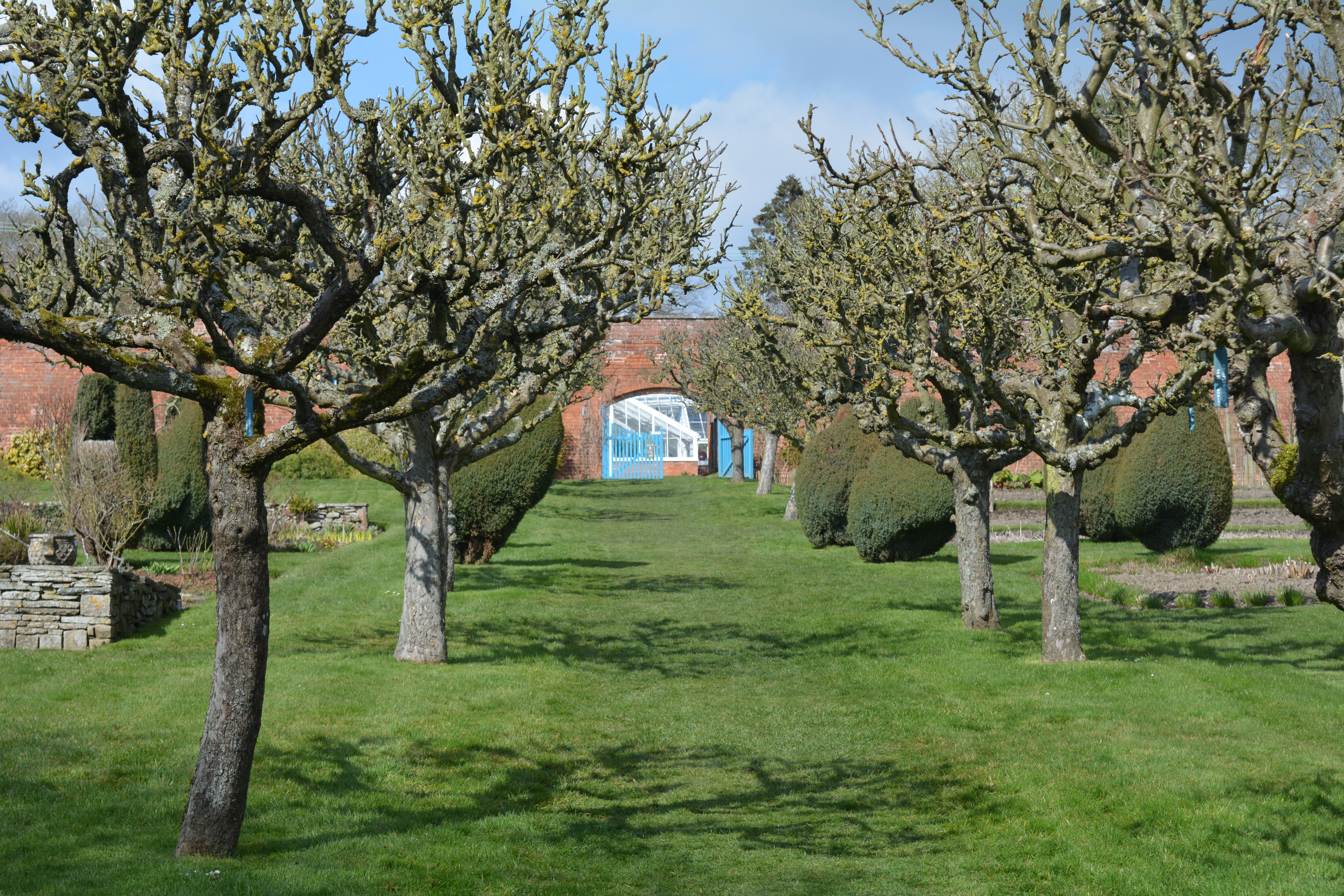
We noticed as we wandered around the comfortable grassed paths that whenever we caught a glimpse of the garden buildings they seemed to be framed by trees and hedges.

2015 03 25_0124 2015 03 25_0125 2015 03 25_0130 2015 03 25_0142

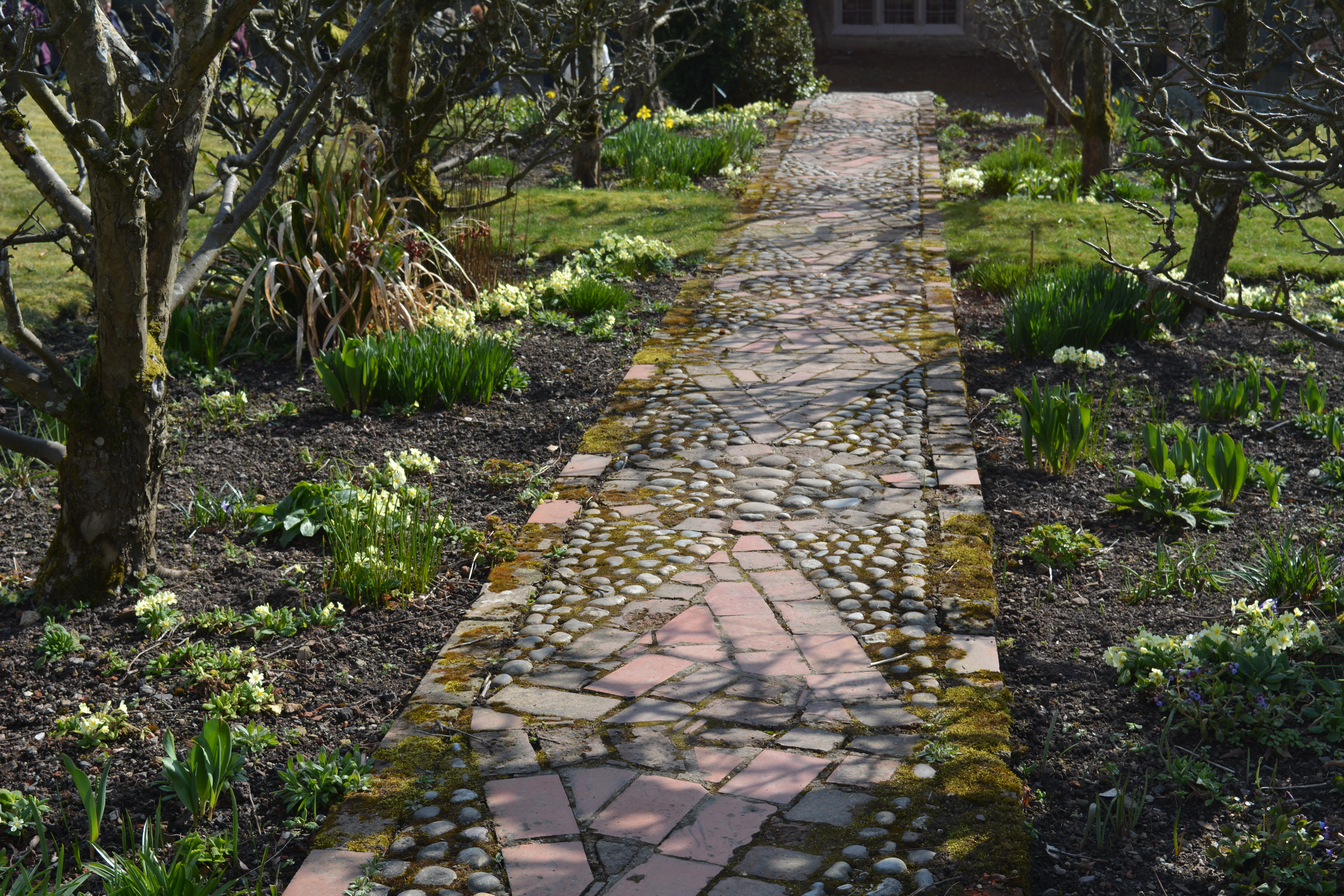
Leaving the walled garden behind we followed cobbled patterned paths beneath old fruit trees underplanted with Primroses and Daffodils.

2015 03 25_0134 2015 03 25_0140 2015 03 25_0141 2015 03 25_0121

The enclosed courtyard garden was full of the contrasting colours of Primroses and Chionodoxa. A cheerful sight!

2015 03 25_0146 2015 03 25_0147

We seemed to be at Croft on a day when many volunteer gardeners were working on site. They seemed to be enjoying their work and their time was punctuated with laughter and chatter.

2015 03 25_0167

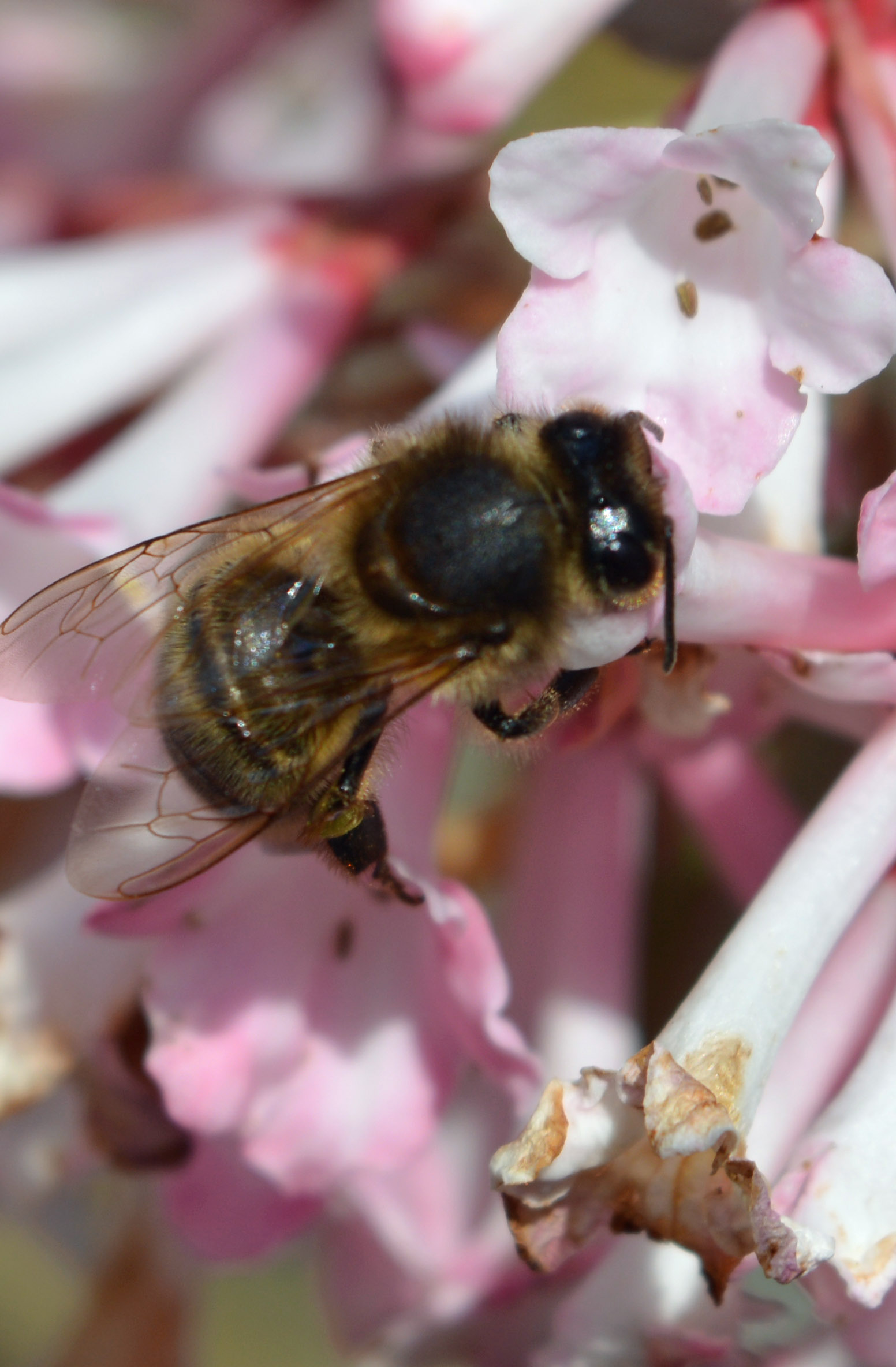
Bees, hoverflies and a few butterflies were out enjoying the early spring sunshine and a little unexpected warmth.

2015 03 25_0157_edited-1

2015 03 25_0162_edited-1 2015 03 25_0161_edited-1 2015 03 25_0160_edited-1 2015 03 25_0159_edited-1 2015 03 25_0158 2015 03 25_0158_edited-1

Our next visit will be in April when we expect to see Spring in full swing.


Categories
Cheshire colours flowering bulbs garden design garden photography gardening gardens gardens open to the public light light quality National Trust ornamental trees and shrubs shrubs spring bulbs The National Trust trees Winter Gardening winter gardens

Winter Wonderland at Dunham Massey – part two

2015 02 27_9737_edited-1

Welcome back to the National Trust property Dunham Massey in Cheshire where earlier this year we enjoyed our annual exploration of their wonderful Winter Gardens. No winter flowering plant can have more presence than Cornus mas, the Cornellian Cherry.

2015 02 27_9725_edited-1

Better known perhaps are the Witch Hazels with their flowers of yellow, orange and red which glow like fire in the slightest brightness of the winter sun.

2015 02 27_9774 2015 02 27_9727_edited-1

Deep inside their brightest of ribbons of petals deep secrets hide, revealed only when the petals fall.

2015 02 27_9775 2015 02 27_97762015 02 27_9777_edited-1

In part one of this two part visit to Dunham Massey I shared with you my love of the biscuits and browns, the last of life from the previous seasons. Now I will share some more beautiful details in close up, using a close-up attachment on my Nikon. It really brings out the importance of structure and the richness hidden in these modest colours.

2015 02 27_9771 2015 02 27_97722015 02 27_9729_edited-1

Amazingly exactly the same colours are there to be found in the bark of a winter garden’s trees.

2015 02 27_9773 2015 02 27_9722_edited-1 2015 02 27_9750_edited-12015 02 27_9723_edited-1

On some old flowerheads from last year, especially the Hydrangeas, the dominant colour is bone white which does look good too!

2015 02 27_9744_edited-12015 02 27_9746_edited-12015 02 27_9745_edited-1 2015 02 27_9747_edited-1

As we wandered around the Winter Garden paths which meander among the borders we kept getting glimpses of a shrub which looked to be still in its Autumn coat. We couldn’t get close enough to see what it was so before leaving we sought it out and discovered it to be a Mahonia of the japonica/bealii type but we were not sure which one and it wasn’t labeled. Below is the photo I took to show its bright “autumn” colours against the intense dark greens of surrounding evergreens.

2015 02 27_9785

Naturally I must finish off this double dose of winter beauty where I began, singing the praises of white barked birches! Singing their praises through the lens of my camera!

2015 02 27_97832015 02 27_9718_edited-1 2015 02 27_97882015 02 27_9780 2015 02 27_97862015 02 27_9715_edited-1


Categories
Cheshire colours flowering bulbs garden design garden photography gardens gardens open to the public irises light light quality National Trust ornamental trees and shrubs shrubs spring bulbs The National Trust trees Winter Gardening winter gardens

Winter Wonderland at Dunham Massey – part one

We are in the habit of visiting the gardens of the National Trust property, Dunham Massey, especially since their Winter Garden has matured. We tend to visit in February. This year we made our annual pilgrimage on a sunny, mild day right at the end of the month.

The new visitors centre of glass and wood gives a fresh new welcome and these beautiful etchings in the glass feature throughout. They set the atmosphere to prepare you for the wonderful winter garden.

2015 02 27_9709

On the walk to the garden we passed this dead tree now cut down and the wood used to create a wildlife habitat. Brilliant idea!

2015 02 27_9710

As soon as we had taken our first steps in the garden we could see what we could expect, with this border of coloured stemmed shrubs, Cornus “Midwinter fire” and Rubus thibeticanus against a background of ilex crenata and a mixture of conifers.

2015 02 27_9711

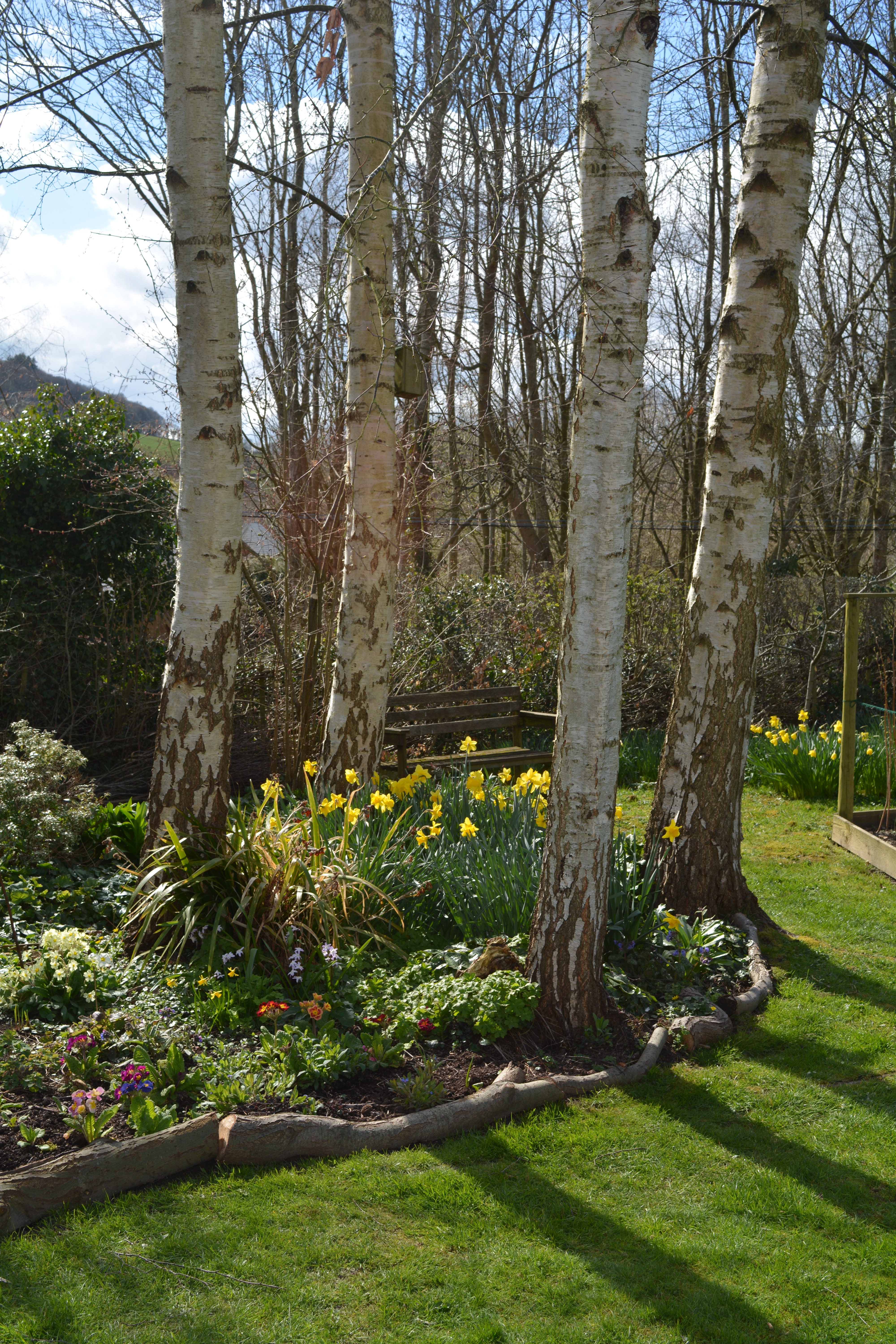
A few paces further on and the large numbers of white stemmed birches, Betula utilis “Dorenbos” appeared like a ghostly forest, with a carpet of Snowdrops adding to the atmosphere. You must know by now how much I love Betulas so you can imagine how planting them on this scale impresses me deeply. They enticed me to try out my new wide angle attachment on the Nikon. Not too sure about the vignetting on this one though!

2015 02 27_97142015 02 27_9713 2015 02 27_9717

There was much more than white coloured plants to look at! And some lovingly selected plant partners.

2015 02 27_9719 2015 02 27_97202015 02 27_9769

Not all the trees here in the winter garden were Birch either, there was plenty of room for others like this Prunus serrula and Acer griseum.

2015 02 27_9751 2015 02 27_9721 2015 02 27_9728

As in any well-designed winter planting coloured stems are very potent, especially Cornus and Salix.

2015 02 27_9734 2015 02 27_9733

But of course there were plenty of flowering plants to give us colour in the gloomiest of months, flowering bulbs, shrubs and even a few perennials.

2015 02 27_9730 2015 02 27_97312015 02 27_9732 2015 02 27_9736

In some areas we  stopped to appreciate the beauty of an individual plant or even a single bloom but in others it was the sheer mass of planting that impressed.

2015 02 27_9740 2015 02 27_9741 2015 02 27_9762 2015 02 27_9770

Other fresh growth provided interest without any colour other than browns and biscuits.

2015 02 27_97382015 02 27_9739 2015 02 27_97482015 02 27_9757

Of course it is more natural to think of these lovely warm biscuits and browns when we consider the growth that was green or brightly coloured last year. And I love these colours when they are a result of decay and age as much as any other colour in the garden. Enjoy this little collage of brown and biscuit!

2015 02 27_97422015 02 27_97492015 02 27_97522015 02 27_97532015 02 27_97542015 02 27_9758


Thinking about winter of course we mustn’t let the berries in their gaudy reds and oranges get missed out.

2015 02 27_9759 2015 02 27_97602015 02 27_9764

Sometimes the beauty was hidden behind a haze. In the pictures below you need to look through the thin mist and the reflective surface of water.


2015 02 27_9761  2015 02 27_9763


Categories
colours flowering bulbs garden photography garden ponds garden pools garden wildlife gardening grasses hardy perennials light light quality ornamental grasses ornamental trees and shrubs recycling Shropshire spring bulbs spring gardening trees wildlife Winter Gardening winter gardens

My Garden Journal – February

Here we are with part two of my post featuring my garden journal, where we can look at what was going on in our garden in February.
2015 03 13_9852_edited-1

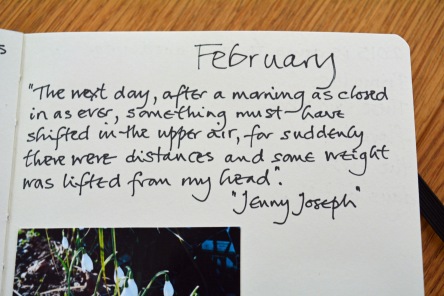
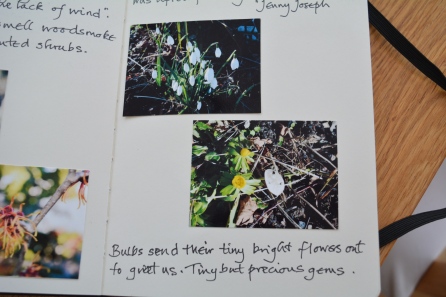
The first entry in my Garden Journal for February shares another quote from Jenny Joseph, “The next day, after a morning as closed in as ever, something must have shifted in the upper air, for suddenly there were distances and some weight was lifted from my head.” The first photos in this month’s journal were of startlingly white Snowdrops. “Bulbs send their tiny bright flowers out to greet us. Tiny but precious gems.” was my accompanying note.
2015 03 13_9853

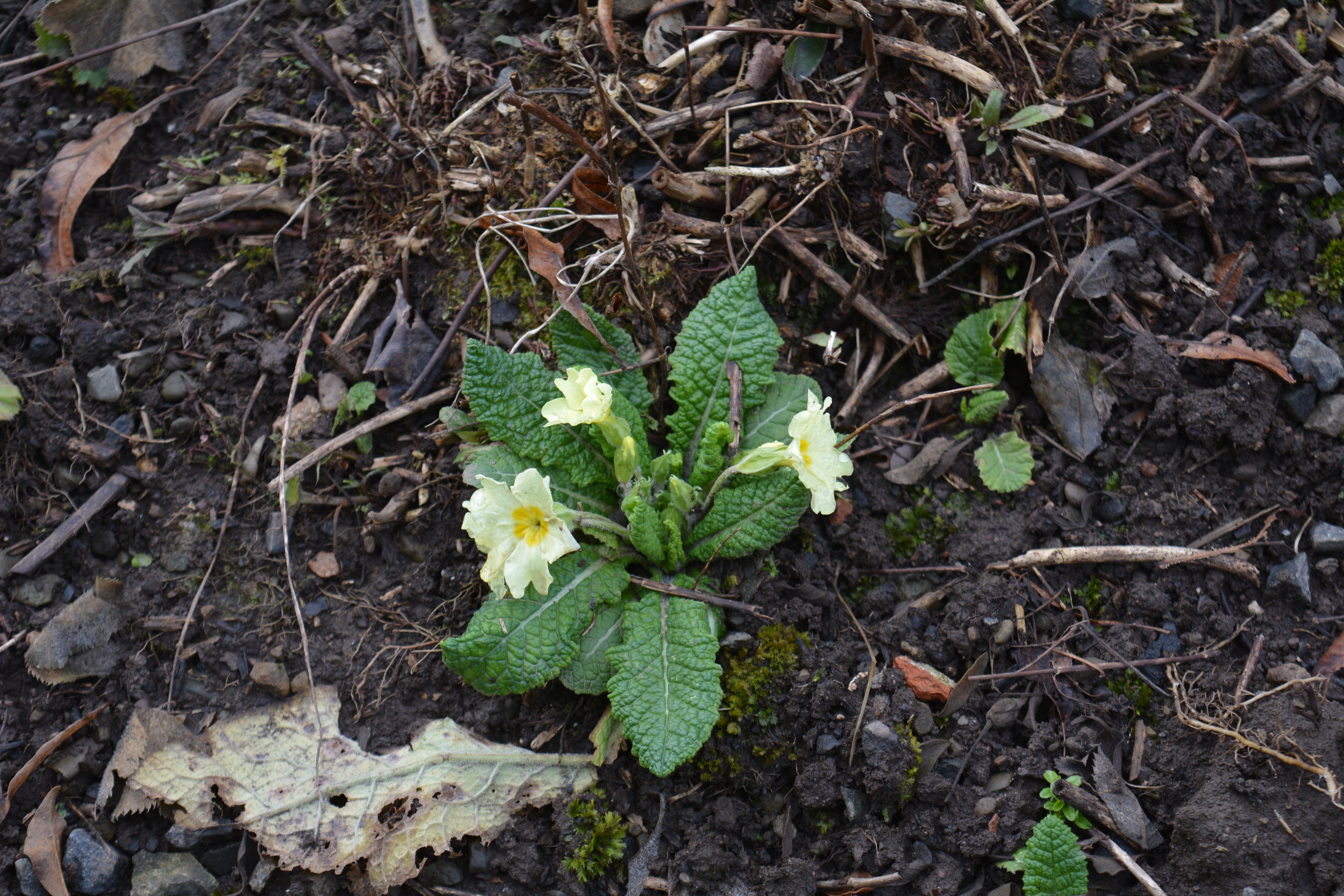
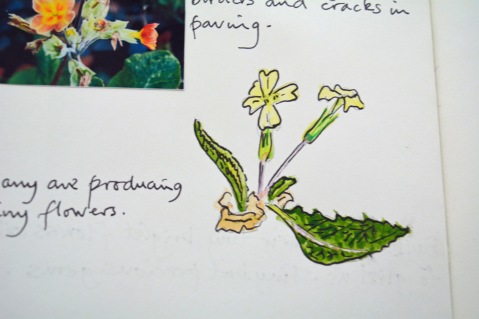
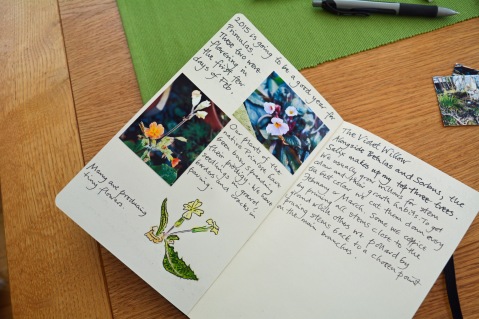
I also featured Primulas this month, “2015 is going to be a good year for Primulas. These two were flowering in the first days of Feb. Our plants of the native Primrose have been busy spreading their prodigy. We have seedlings in the gravel, in borders and in cracks in paving. Many are producing tiny flowers.”
2015 03 13_9855_edited-1

2015 03 13_9854_edited-1

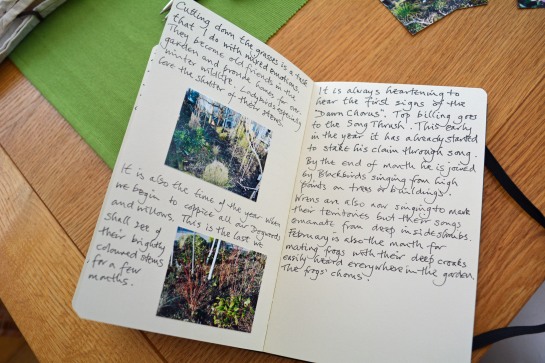
The first day of the new month was spent in the garden and what a wonderful day we had. A bonus day outside in mid-winter is so welcome. We pruned the climbing roses, trimmed down the old growth of perennials to reveal the fresh green shoots eagerly waiting to burst into growth with the onset of Spring. The plant that never fails to impress is the Sedum with its virulent fresh growth waiting thickly at the base of last year’s cut down stumps.

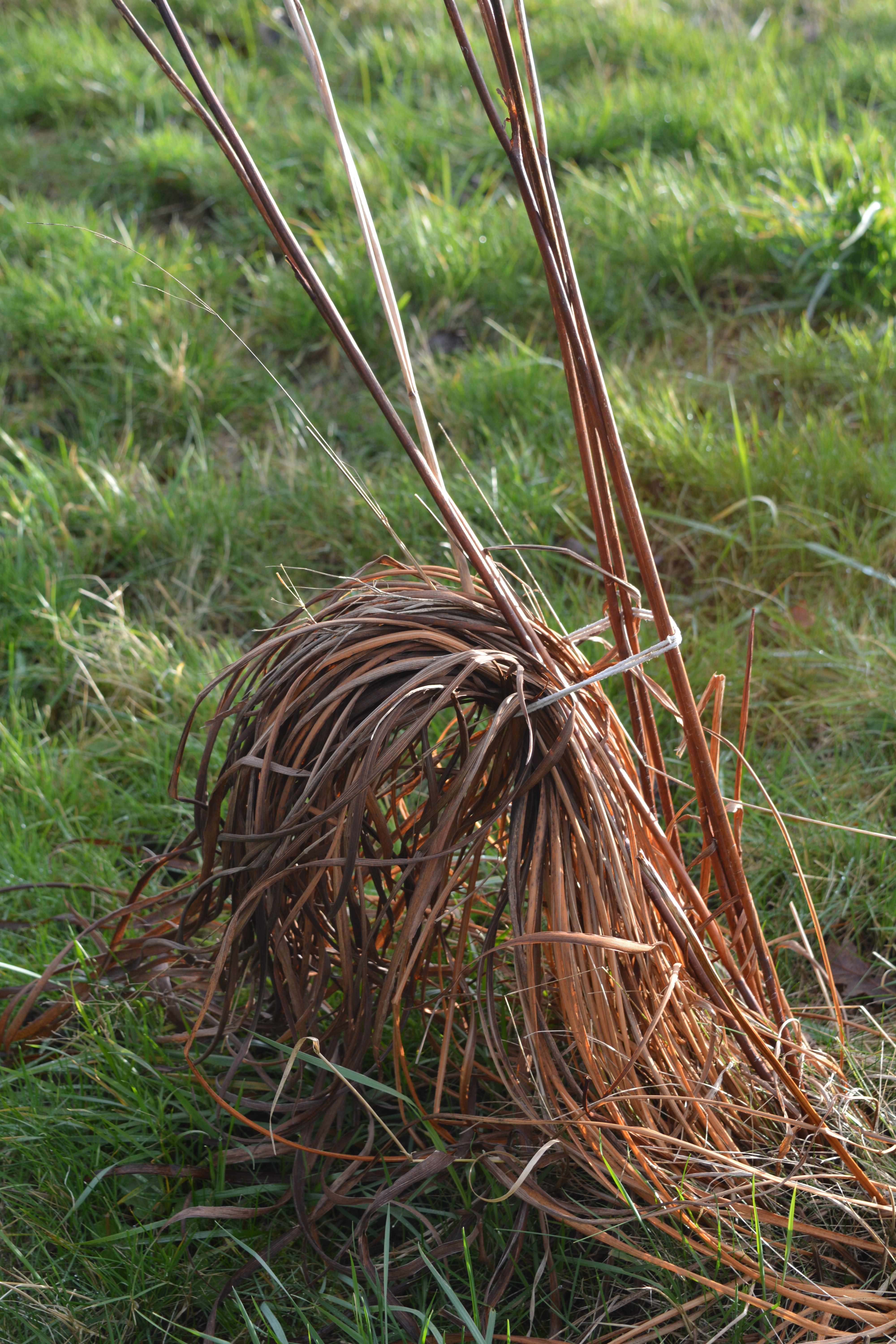
The tall elegant stems of grasses are now cut close to the ground after their winter display. Even the gentlest of breezes has encouraged them to dance, their stems swaying stiffly but gracefully and their seed heads far more fluent in their dances. They will soon be back. In my journal I noted “Cutting down the grasses is a task I do with mixed emotions. They become old friends in the garden and provide homes for over-wintering wildlife. Ladybirds especially love the shelter of their stems.”
2015 03 13_9856_edited-1

We like the month of February, as both Jude the Undergardener and I suffer from S.A.D.(seasonally adjusted disorder)  and mid way through February we can spot a change in the light and literally feel an improvement in light quality and with it an improvement in our mood. I am sure the garden feels the same as all that future growth waits underground to burst forth and all those buds lie waiting on the resting bare branches of the deciduous trees and shrubs.

Birds are showing signs of getting themselves prepared for the rituals of spring that awaits them. Blue Tits are exploring nest boxes already with two boxes already held by two pairs. Collared Doves, those invaders to our shores, entertain us by filling the sky with their acrobatics designed to impress their mates. They fly diagonally backwards into the air!

In my journal I wrote “It is always heartening to hear the first signs of the “Dawn Chorus”. Top billing goes to the Song Thrush. This early in the year it has already started to stake his claim through song. By the end of the month he is joined by Blackbirds singing from high points on trees or buildings. Wrens are also now singing to mark their territories but their songs emanate from deep inside shrubs.”

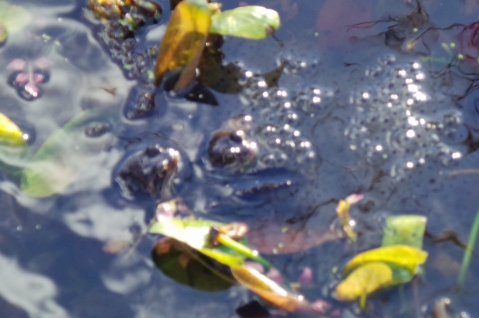
Our attention is drawn to the wildlife pond from mid-February onwards as it is around this time that we start to hear the deep croaks of the male frogs calling the females in to join them in the water. One evening coming in from the garden we made a plan to clear the leaves and any winter debris from the pond the next day before the first frogs arrived. But  they beat us to it for as we went into the garden to do just that a pair of mating frogs was in residence and close by lay a large glob of spawn. Our job became more difficult as we tried not to disturb their nuptials. My journal notes “February is also the month for mating frogs with their deep croaks heard from everywhere in the garden, “The Frogs’ Chorus!” We love frogs in the garden where they act as great pest controllers. Some move into the greenhouse once they leave the pond and work in there for us too. Free labour!
2015 02 28_9789_edited-1

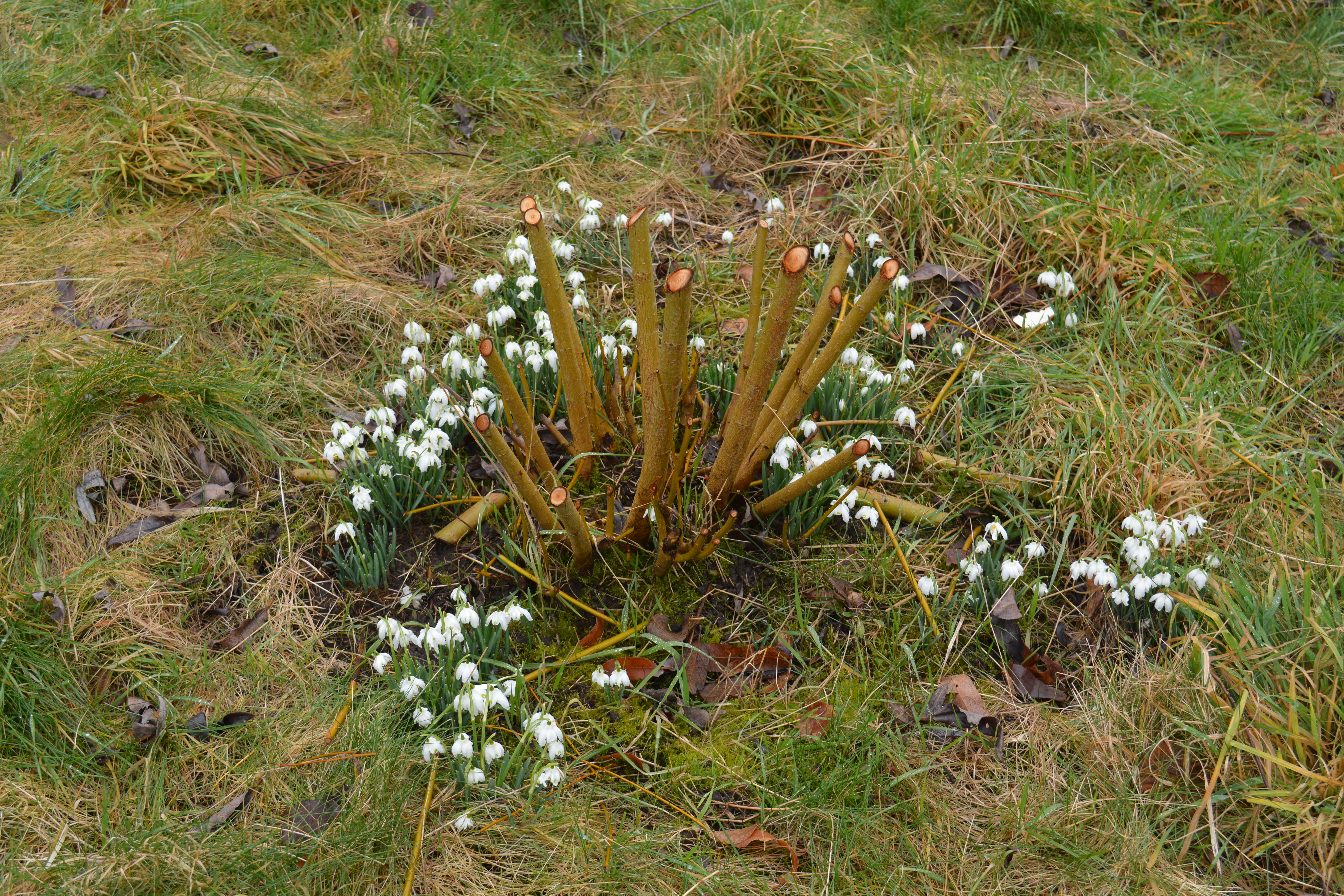
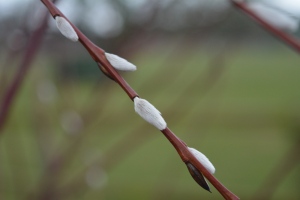
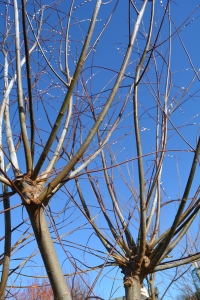
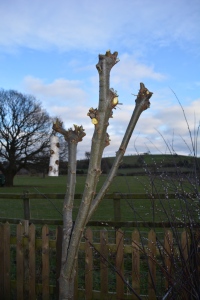
We can still enjoy the coloured stems of Cornus and Salix and the coloured textured trunks of the trees. The Betulas glow white with hints of silver, cream or salmon, while the Prunus serrula shines gold and brown. The brightest of all though must be Cornus “Midwinter Fire”. Late in this month however we begin the task of coppicing and pollarding, hard pruning to give us bright new stems with brighter colours in the year to come. My journal says, “It is also the time of year when we begin to coppice all our Dogwoods and willows. This is the last we shall see of their brightly coloured stems for a few months.” I move on to make special mention of the Violet Willow of which we have a trained multi-stemmed pollarded specimen which holds a great presence in the garden at every time of the year.

The photos below illustrate how its many colours vary with the changing light.
2015 02 17_9597-1 2015 02 17_9596-12015 02 17_9579-1 2015 02 17_9580-1

These shots show the before pruning and after pruning images, so you can see how hard we prune them down. We certainly need our strong, sharp loppers for this job.
2015 02 17_9581-1 2015 02 17_9582-1

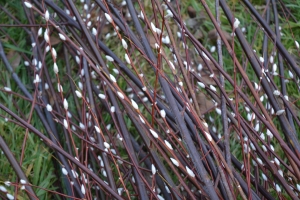
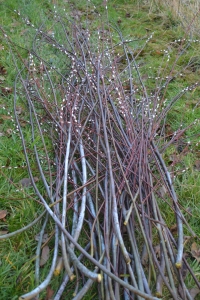
The final pictures illustrate just how much wood is removed and shows the colours of the branches. All this material will be used for making plant supports and will be useful when we make a willow dome for some friends’ garden in a week or so (look out for a post about this). This is a fine example of recycling in action in the garden.
2015 02 17_9585-1 2015 02 17_9584-1

We shall make the next visit to my garden journal in the month of March which we hope is full of the promise of spring.
 

Categories
Church architecture colours flowering bulbs garden photography gardening gardens gardens open to the public irises light light quality ornamental trees and shrubs shrubs spring bulbs The National Trust walled gardens winter gardens

Croft Castle month by month – part two – February

So here we are back at Croft Castle for the second wander in 2015 around the grounds for my February post. We thought we would find that little would have changed since our January visit, but we found plenty to see and really enjoyed our wander. Fresh buds looked ready and waiting to burst into new life when temperatures rise and light values increase. Droplets of rain from a recent shower caught the light where they lay upon the leaves of a Hypericum.

2015 02 21_9601 2015 02 21_9602

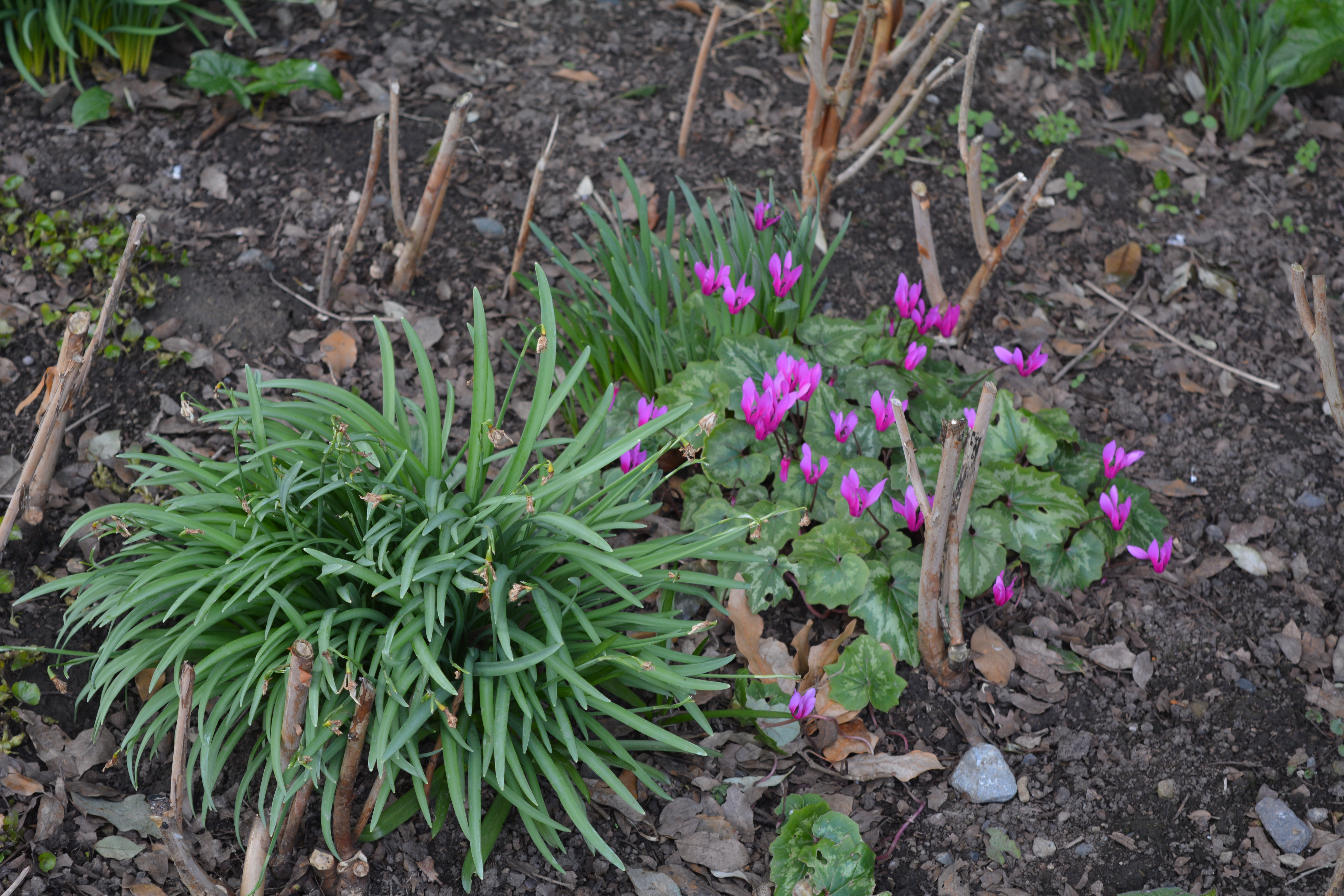
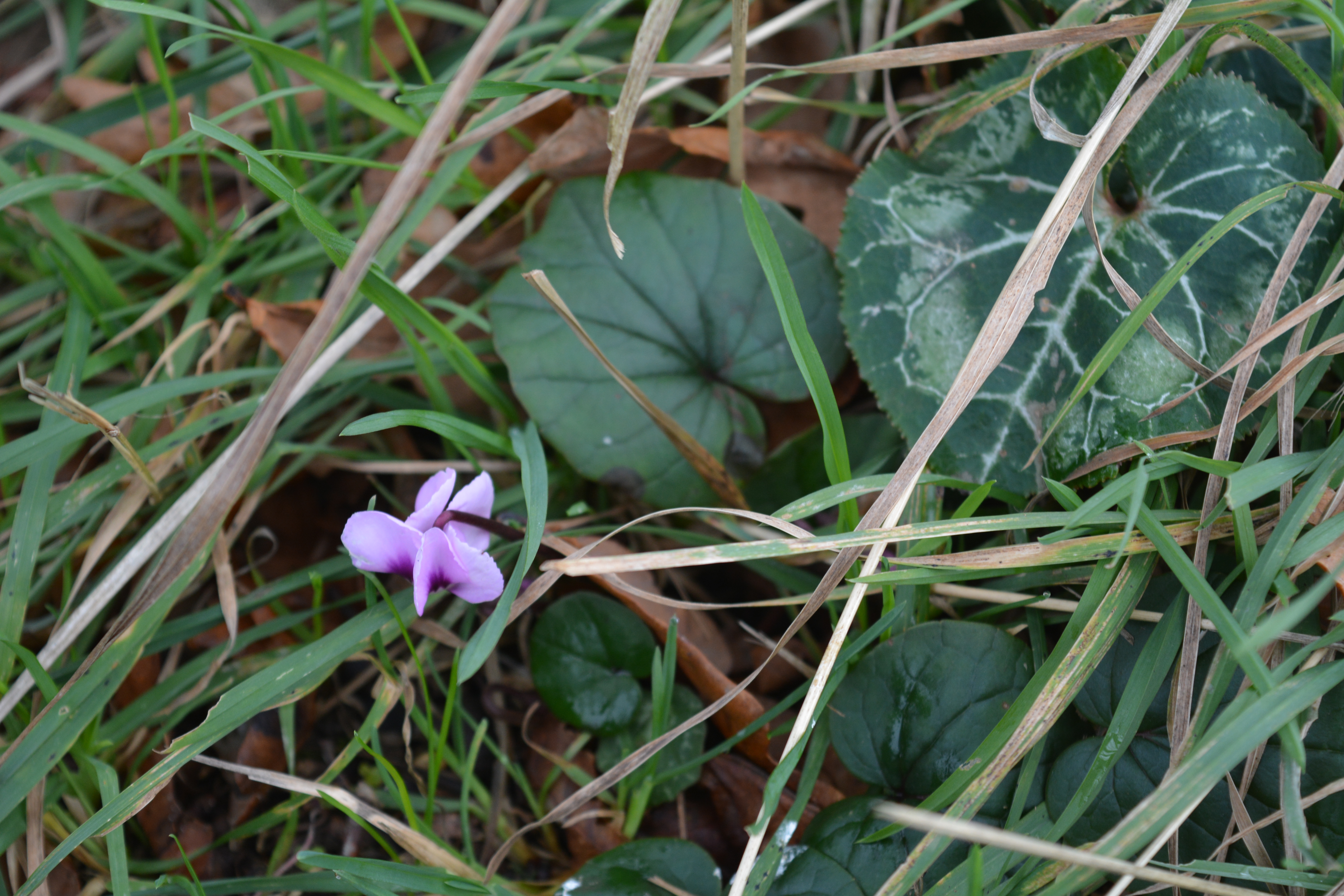
In the long mixed border beside the tall walls which enclose the walled garden the first flowers of the year had opened, the delicate blooms of the snowdrops, Galanthus nivalis and a few pink blooms dotted amongst the marbled foliage of the Cyclamen coum.

2015 02 21_9603 2015 02 21_96052015 02 21_9604

Gardeners had recently discovered a cobbled path running diagonally beneath the lawn close to the gateway to the walled garden. We imagined the excitement when the first signs appeared or perhaps the chink of a spade heard as it hit a cobble. When fully excavated no doubt it will join up with the network of cobble path to be found throughout the garden and grounds.

2015 02 21_9606

Inside the walled garden the temperature rose noticeably and we were well protected from the cold of the winter winds. Enjoy this batch of photos showing what we found within the walls.

2015 02 21_9608 2015 02 21_9609 2015 02 21_9610 2015 02 21_96172015 02 21_9626 2015 02 21_96342015 02 21_9625 2015 02 21_9637

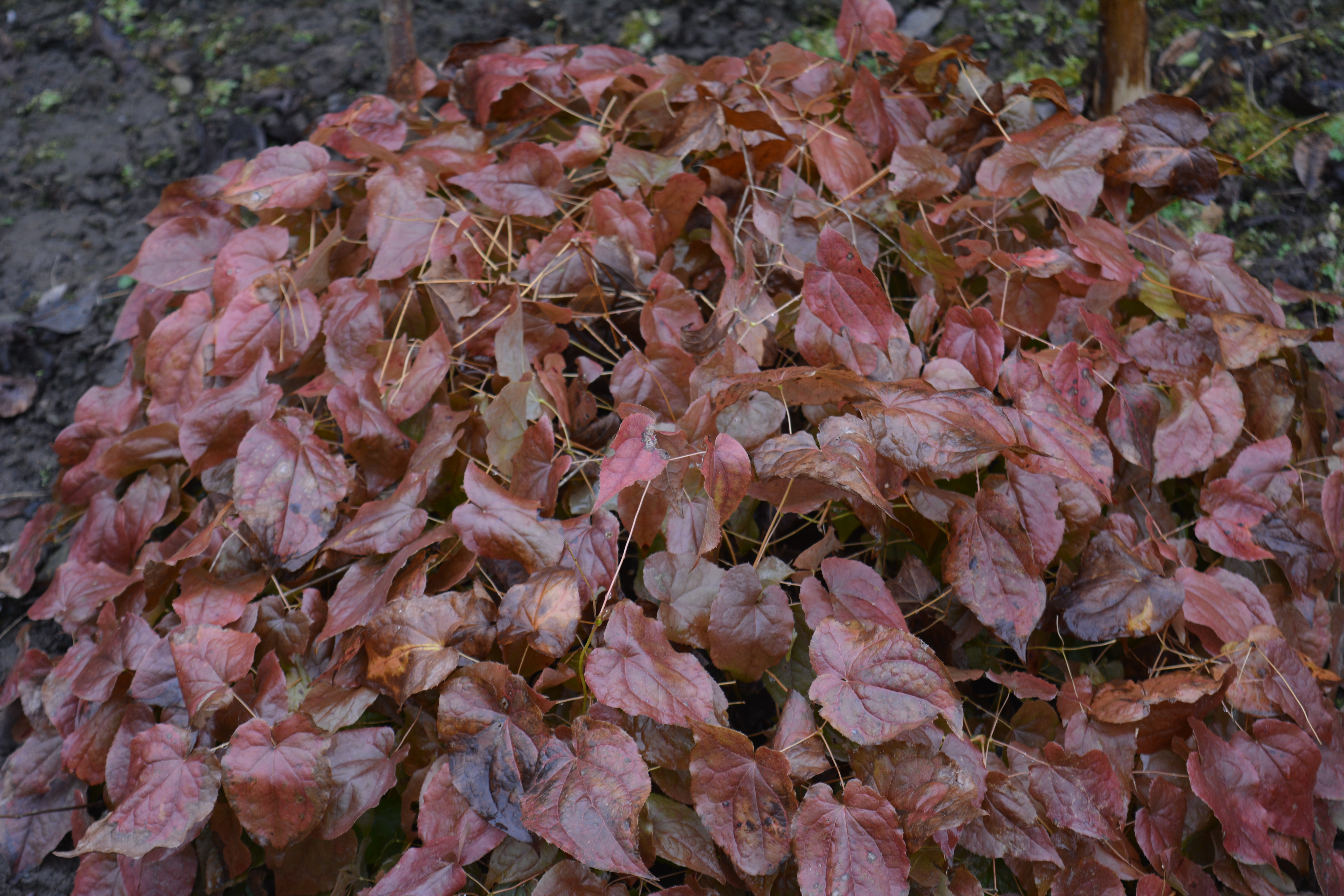
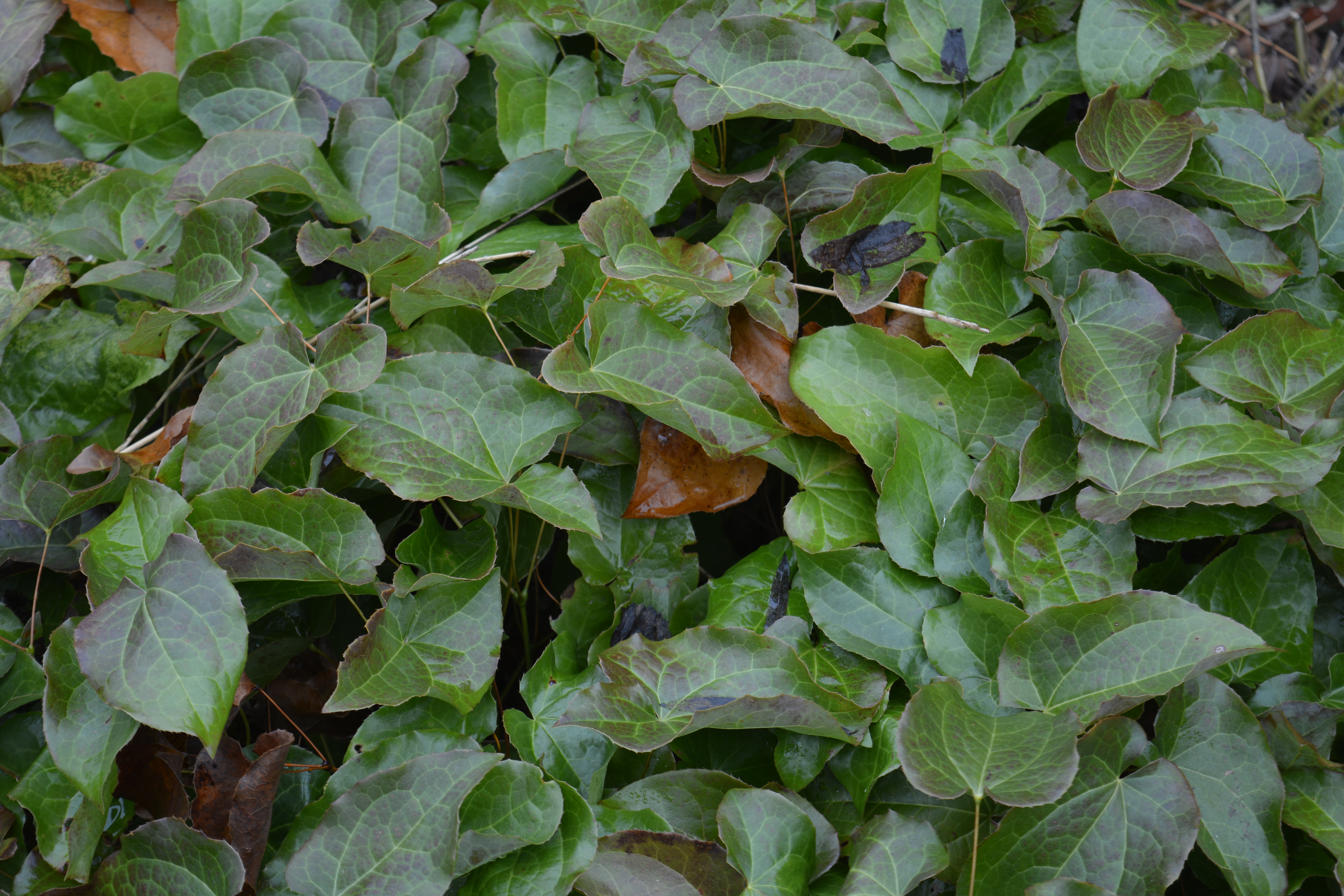
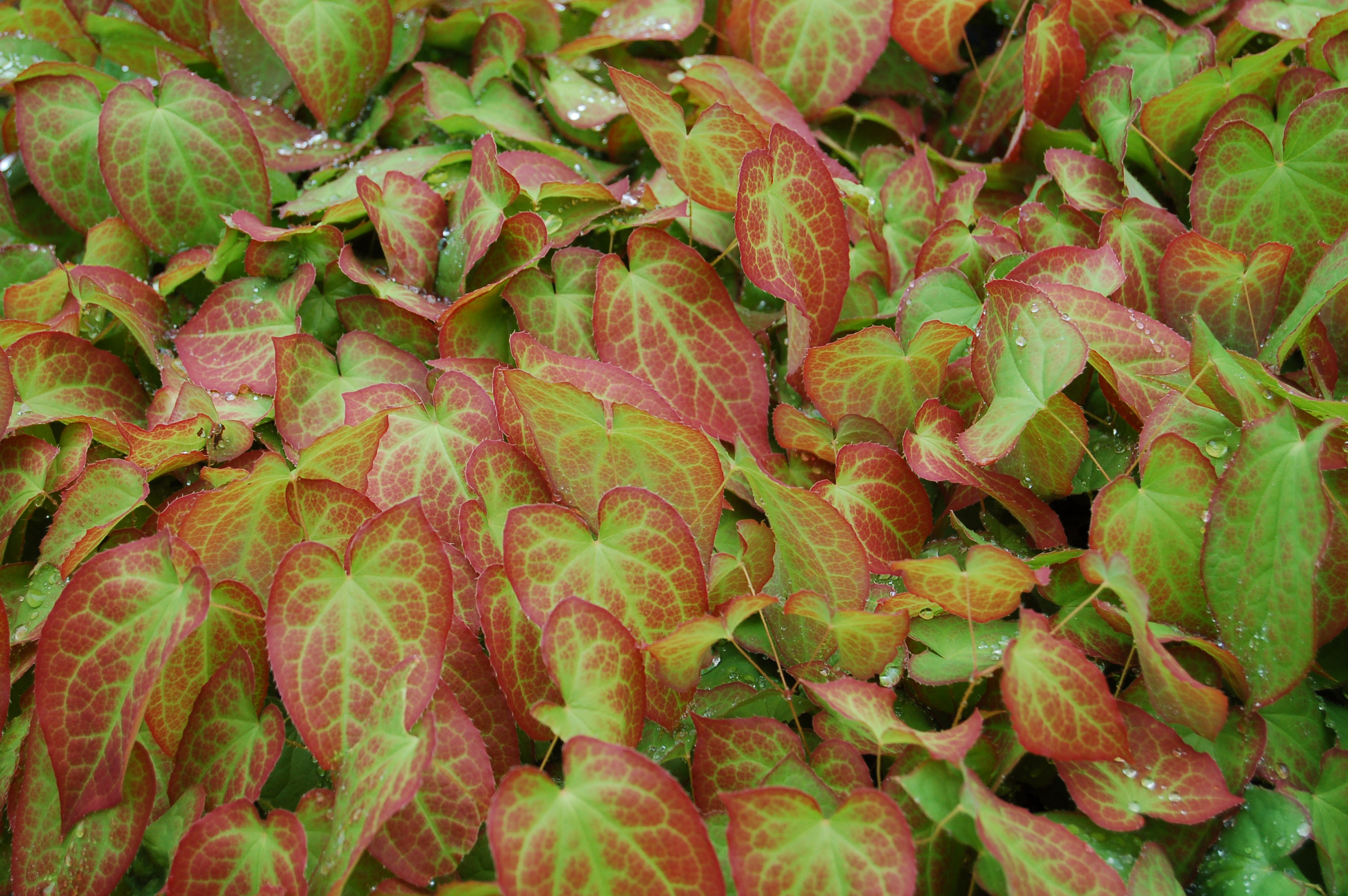
The foliage of two different Epimedium plants looked good together, one with its coat of glossy green the other a rich shining bronze.


2015 02 21_9631 2015 02 21_9632


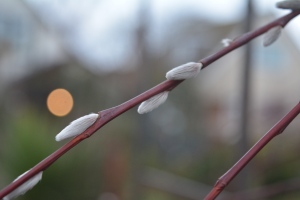
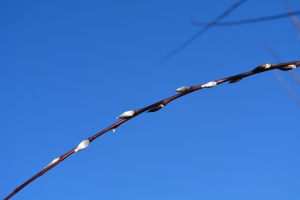
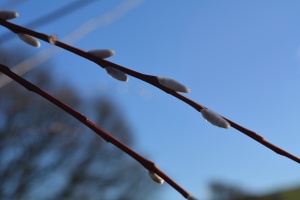
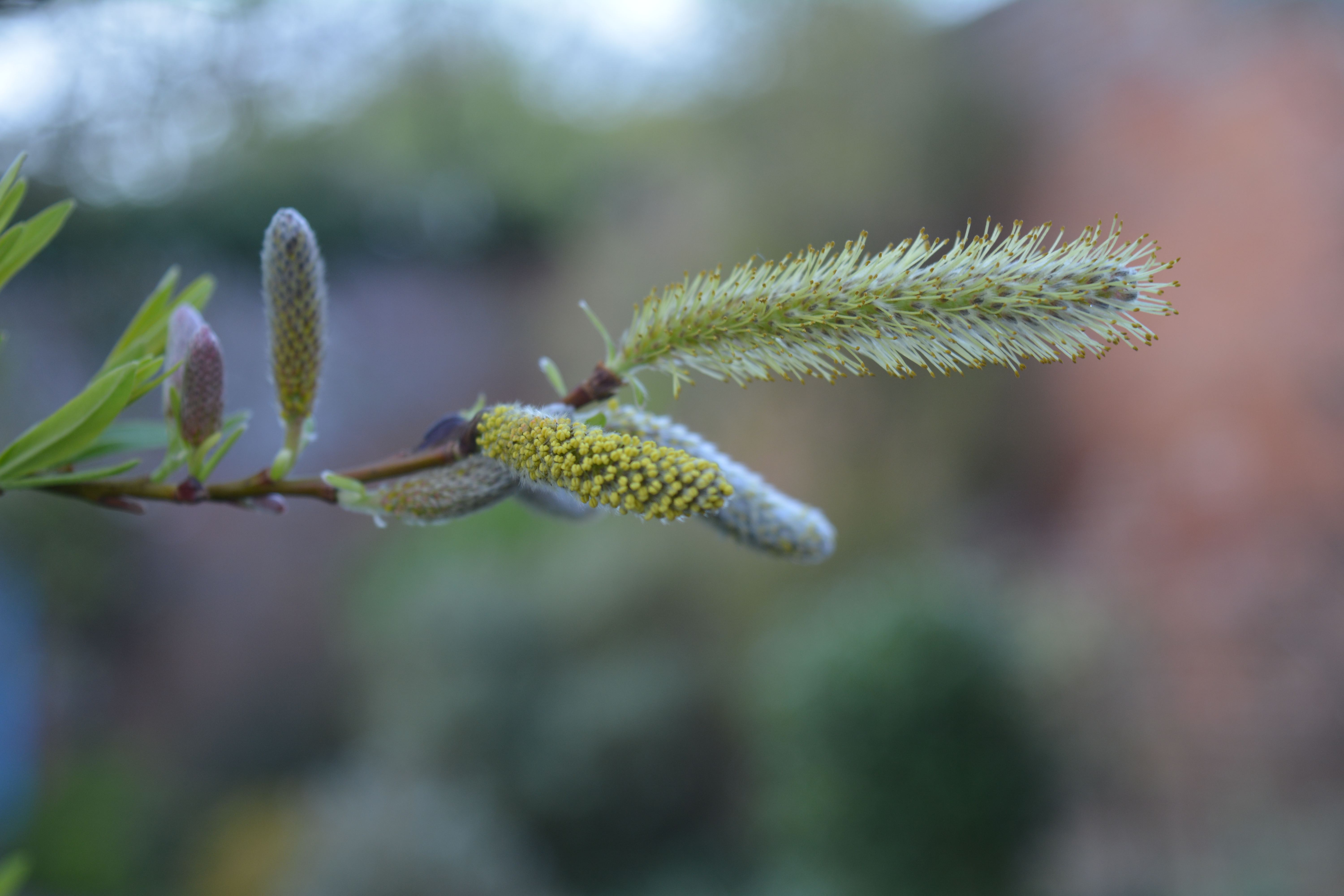
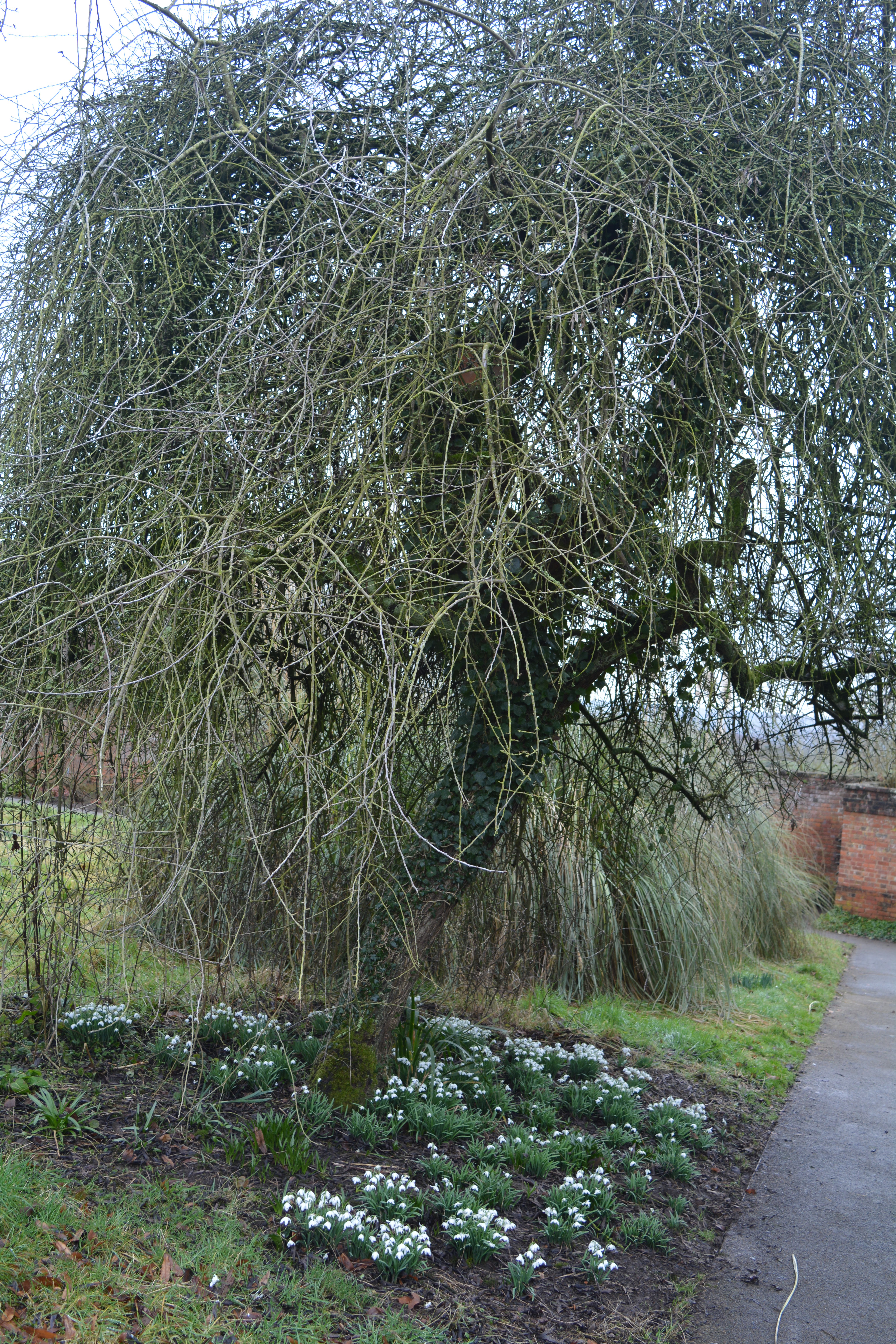
This old willow with branches rambling haphazardly and randomly caught our attention as its silver catkins shone out in its dark corner of the walled garden. Some branches were severely affected by fasciation causing them to be deformed and tightly curled. Others were subject to gall growths caused by gall wasps.


2015 02 21_96182015 02 21_9619 2015 02 21_9620 2015 02 21_9623 2015 02 21_96212015 02 21_9624


The blue gate that had enticed us to pass through it in January was open again, and we diverted easily to see what was happening in the bothy and greenhouses.


2015 02 21_9611 2015 02 21_96122015 02 21_9613 2015 02 21_9614 2015 02 21_9615

Snowdrops found the shelter under every tree within the walls and encircled their trunks in white bracelets.

2015 02 21_9627 2015 02 21_9628 2015 02 21_9629 2015 02 21_9636 2015 02 21_9640 2015 02 21_9641

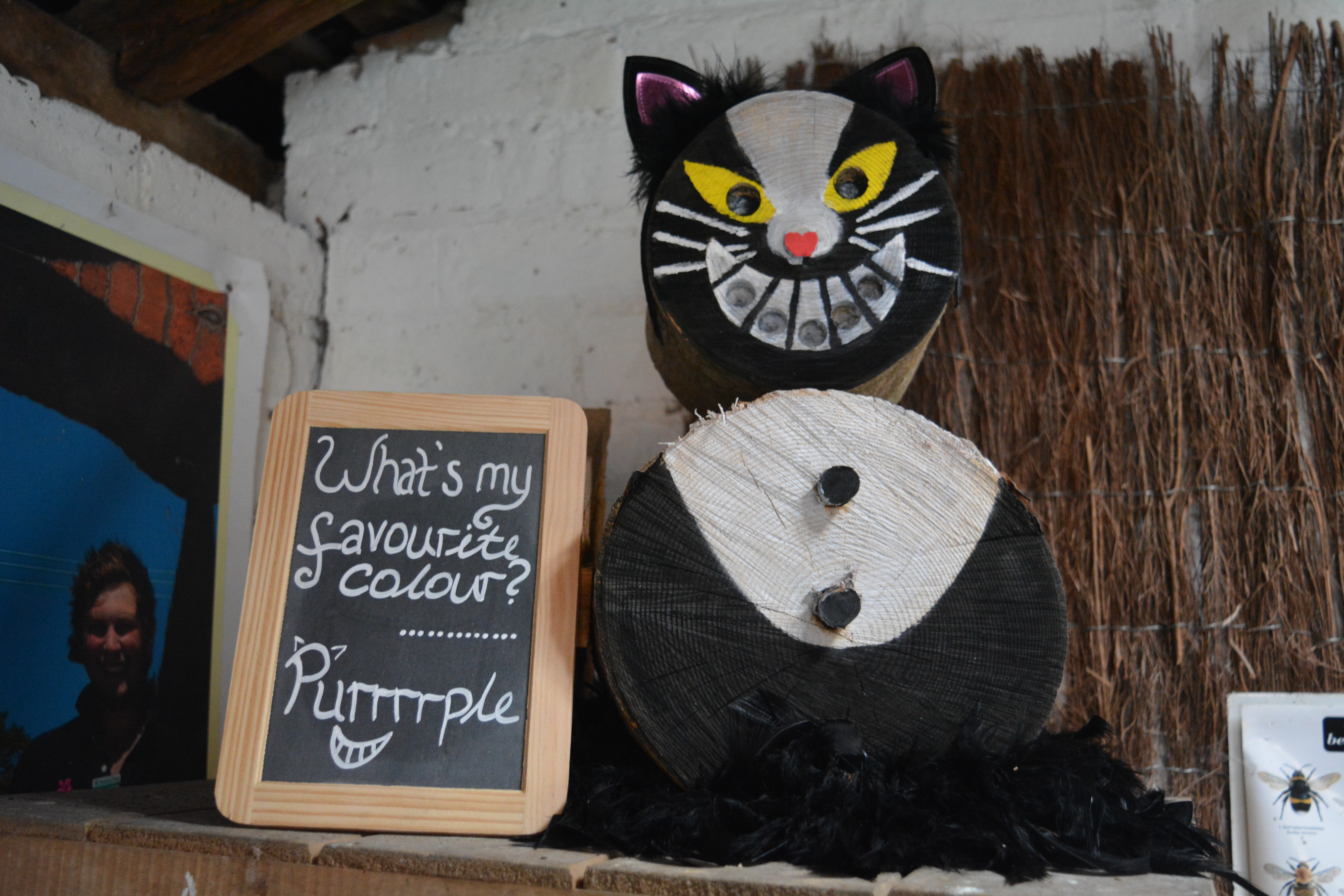
We left the protection of the walled garden and wandered around the borders closer to the castle. We were amused by the sight of this caterpillar up a tree. He was a part of a children’s trail discovering the delights of Alice in Wonderland.


2015 02 21_9642

2015 02 21_9643 2015 02 21_9644 2015 02 21_9645 2015 02 21_9646 2015 02 21_9647 2015 02 21_9648 2015 02 21_9649 2015 02 21_9650

When we had skirted most of the castle we reached the little church which on our last visit was covered in scaffolding due to being subject to renovation. We were glad to find the builders had left the little building in peace.


2015 02 21_9652 2015 02 21_9651  2015 02 21_9653 2015 02 21_9654 2015 02 21_9655


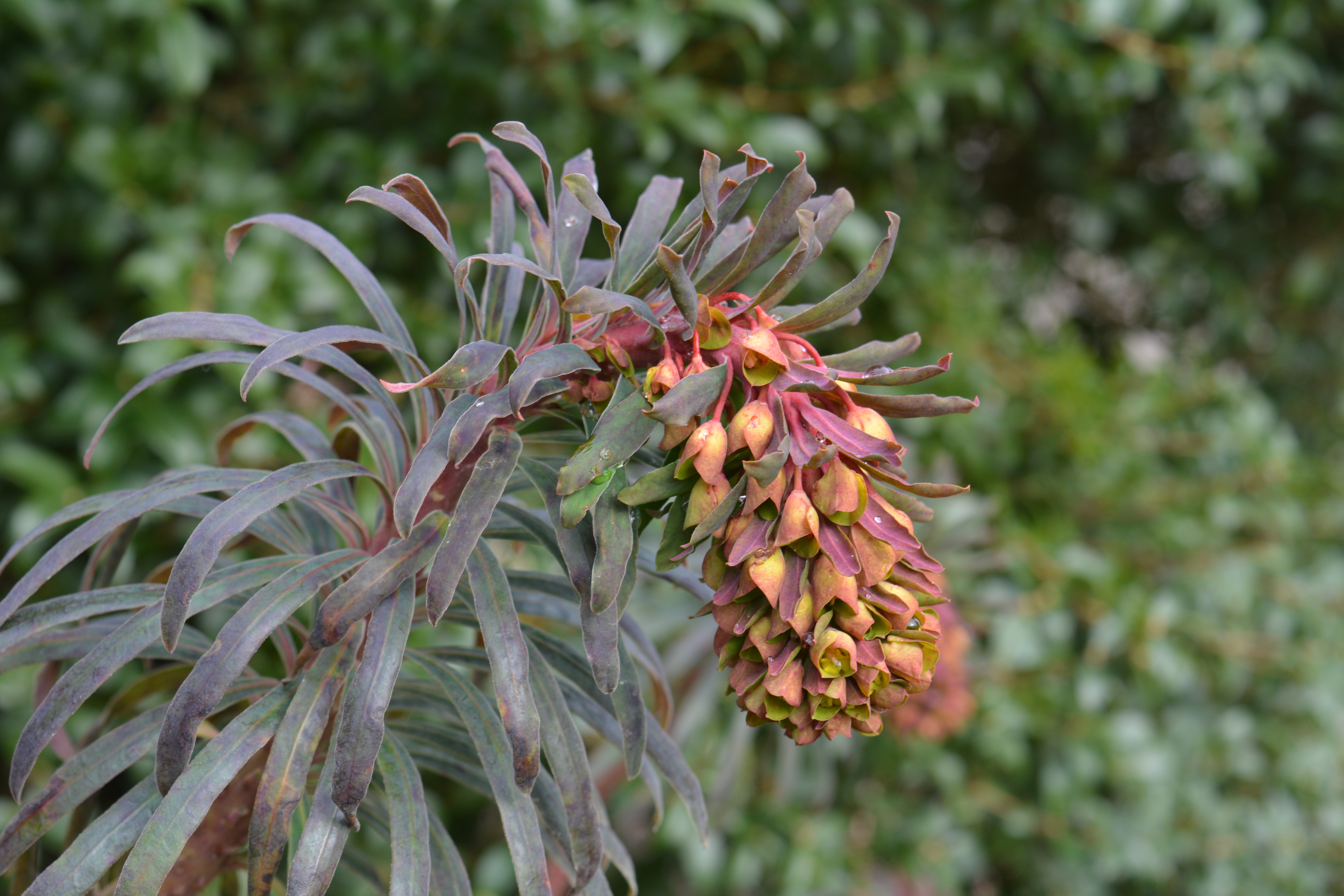
Little narrow borders feature in the grounds of the church and looked full of promise. For now though we had to be content with the display put on by this wonderfully colourful Euphorbia.

From there we returned to the car park to make our way home. On our next visit to Croft Castle we will hopefully discover many more signs of spring.

2015 02 21_9657

Categories
allotments colours community gardening flowering bulbs fruit and veg garden photography gardens irises light light quality meadows NGS ornamental trees and shrubs shrubs spring bulbs Winter Gardening winter gardens

The Allotments at Rest

We took a walk around our allotment site today to see what was going on and check that everything was okay. We had just watched the site on TV as we featured on a BBC2 series called the Great British Garden Revival. I filmed with Dermuid Gavin a feature on wildlife gardening. It was a strange experience seeing our allotment site on the screen but even stranger seeing our own plot being used as an example of a wildlife friendly garden.

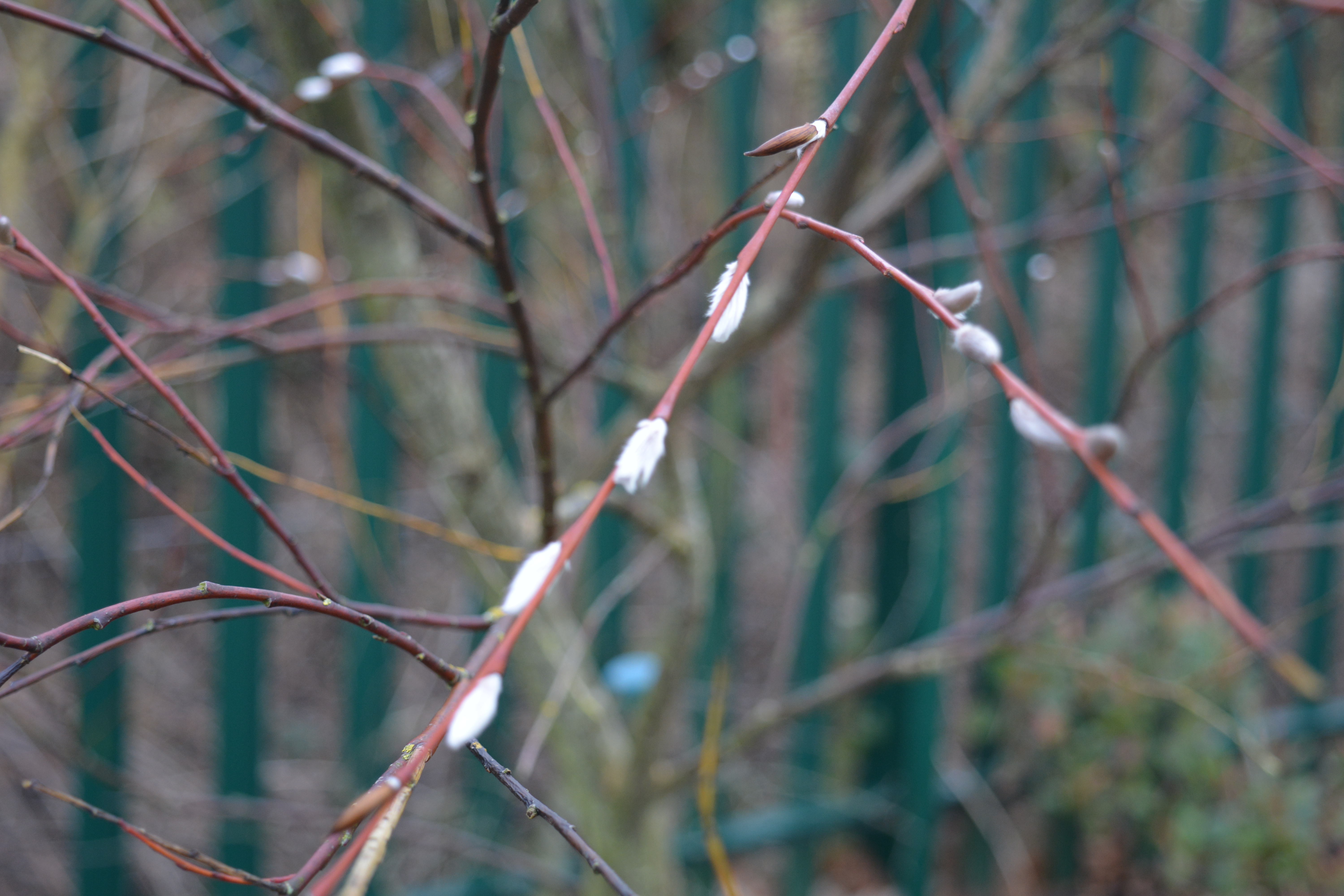
For today’s wander we arrived during a period of sunshine with a clear blue sky over our heads, but by the time we were half way around the clouds had arrived and we were subjected to light but very cold rain. The pure white catkins of the Violet willow in the Spring Garden sit like droplets of rain water after a storm. They are bright enough to be visible from a long way away. They draw attention to themselves very well!

2015 01 18_9332_edited-1

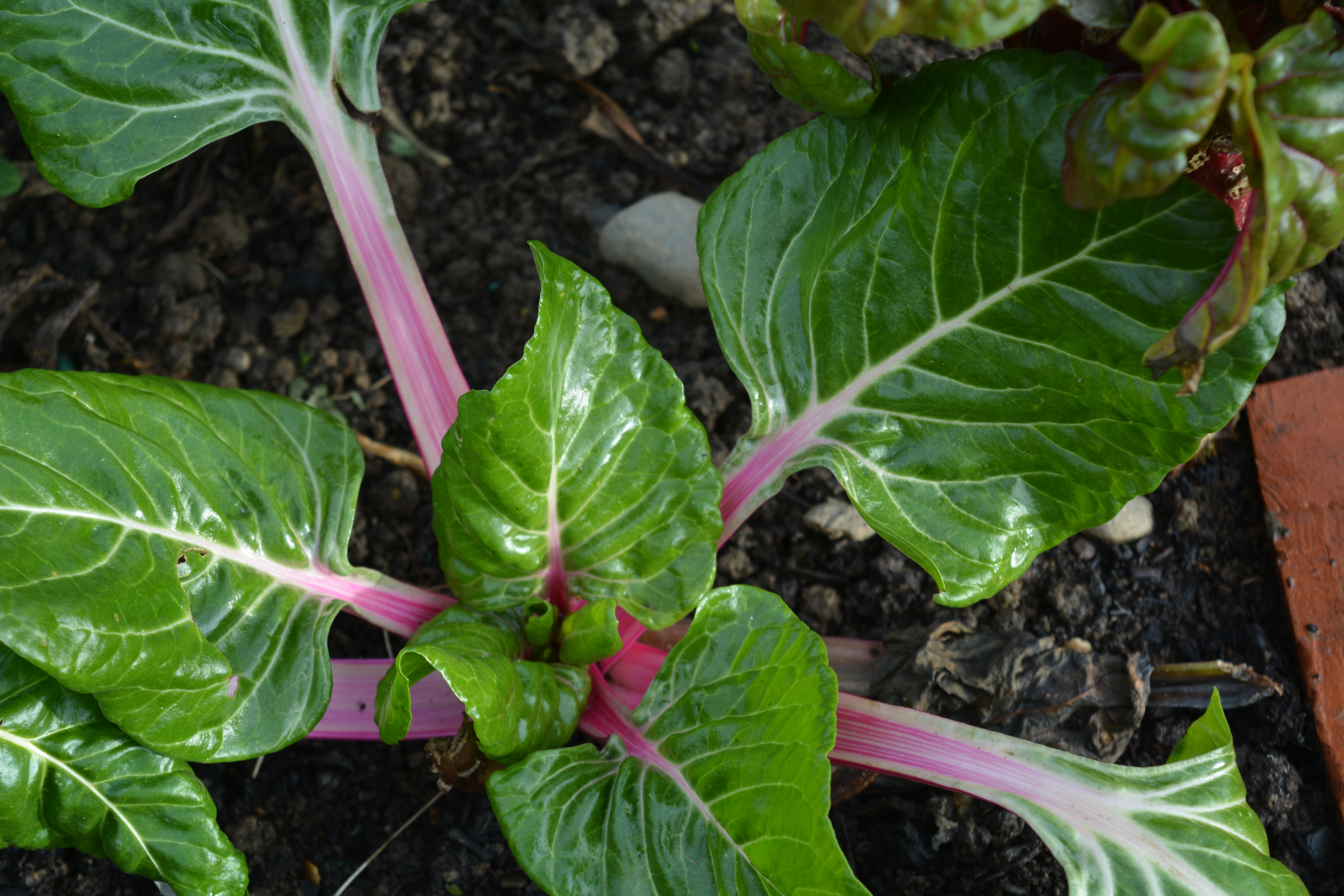
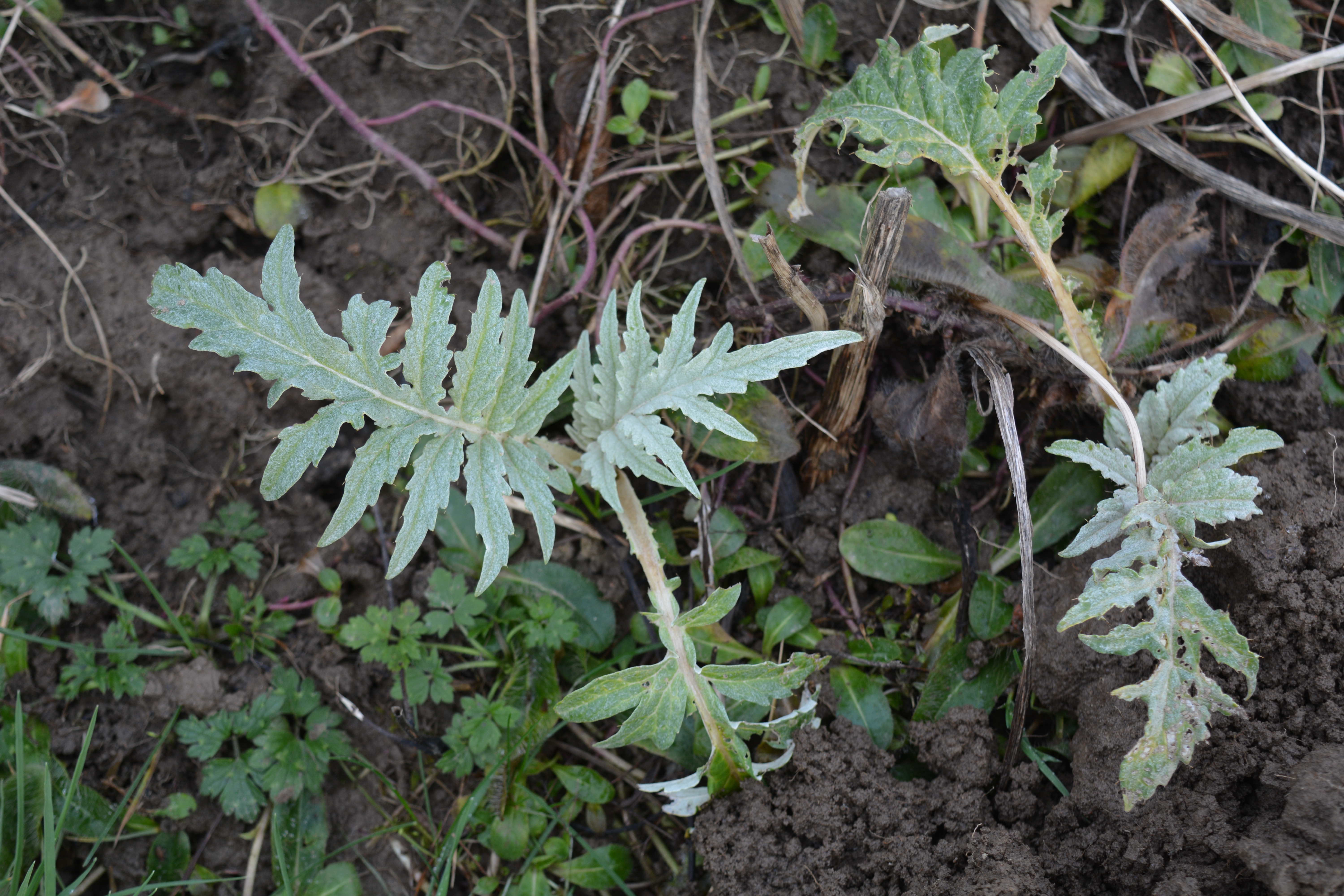
Probably the brightest of winter colours on any veg plot is provided by Swiss Chard especially the cultivar called Bright Lights. Light catches on the textured leaves emphasising their undulating surface. The other crops still in evidence are sprouts that have overwintered and the new fresh foliage of the Globe Artichoke. These leaves now just a few inches long will expand to a massive few feet in length and the plants will reach a good nine or ten feet in height. Their purple, teasel like flowers will delight our pollinators the butterflies, bees and hoverflies and the seed heads that follow will be a magnet to greedy Goldfinches and Linnets in the autumn. Perhaps the strongest pattern of all was found on Tom’s plot, where he has set out all the old clay drainage pipes that he dug up from his plot.

2015 01 18_9312 2015 01 18_9313 2015 01 18_9314 2015 01 18_9330

2015 01 18_9327 2015 01 18_9355

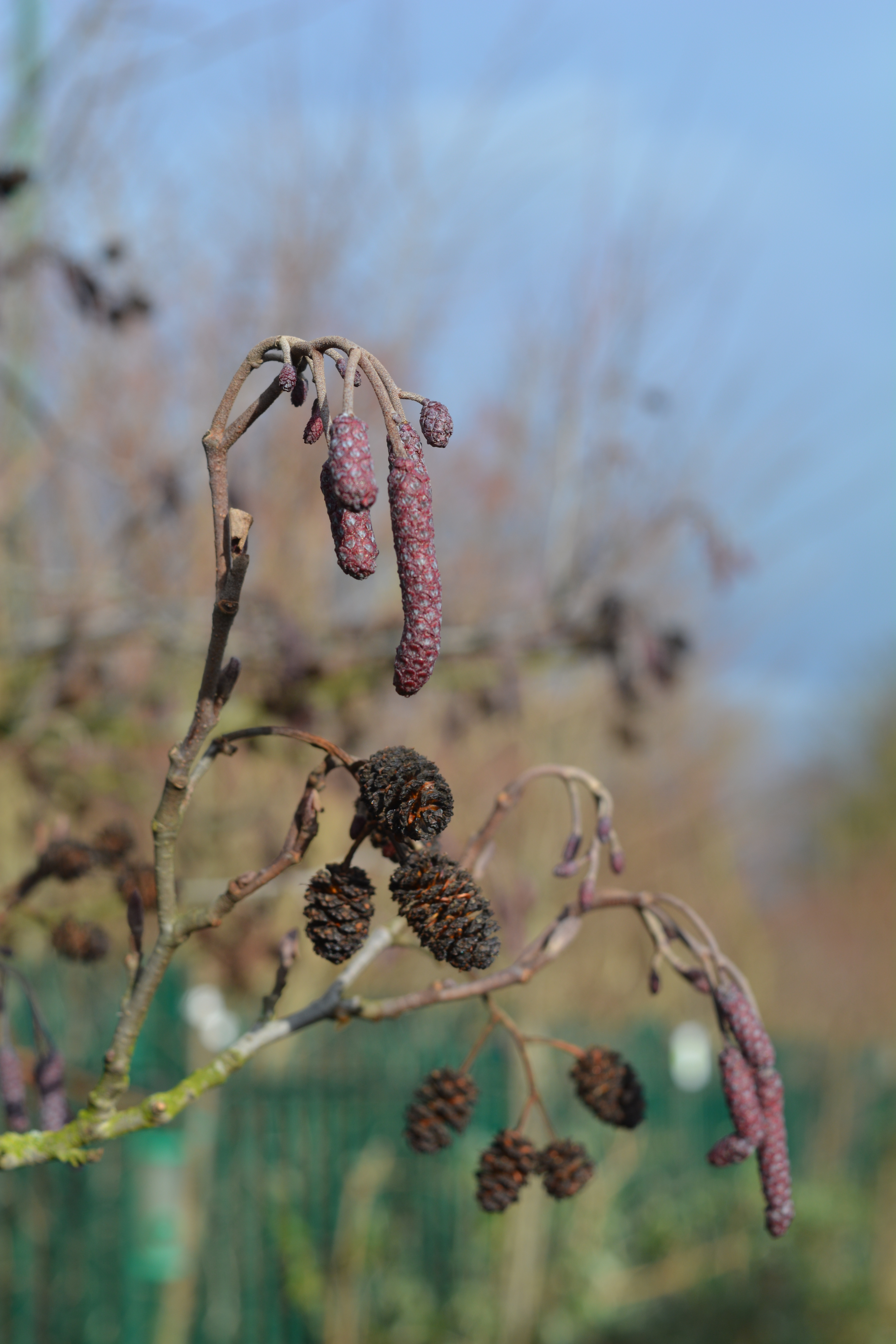
Both the male and female catkins glow purple on the Alders in the Autumn Garden where their neighbours the Buddlejas are showing fresh foliage with their texture like reptilian skin.

2015 01 18_9316 2015 01 18_93152015 01 18_9317

Last year’s plants in the meadows and borders are now skeletons of their former selves. There is a strong structure linked with subtle beauty in these spent seed heads.

2015 01 18_9318 2015 01 18_93222015 01 18_9345 2015 01 18_93482015 01 18_9350_edited-12015 01 18_9319_edited-1 2015 01 18_9320_edited-1

The wildlife shelters sitting in the orchards and meadows hide so many hibernating creatures. They shelter creatures from the winter cold and house anything from the tiniest insects up to amphibians such as frogs, toads and newts, birds like Wrens and Dunnock and mammals including  our confident Weasels. A lost glove adds a splash of colour! In our “Dedge” the bright colours of the various Lichen, yellows, chartreuse and greens, glow however dull the light is.

2015 01 18_9324 2015 01 18_93252015 01 18_9337

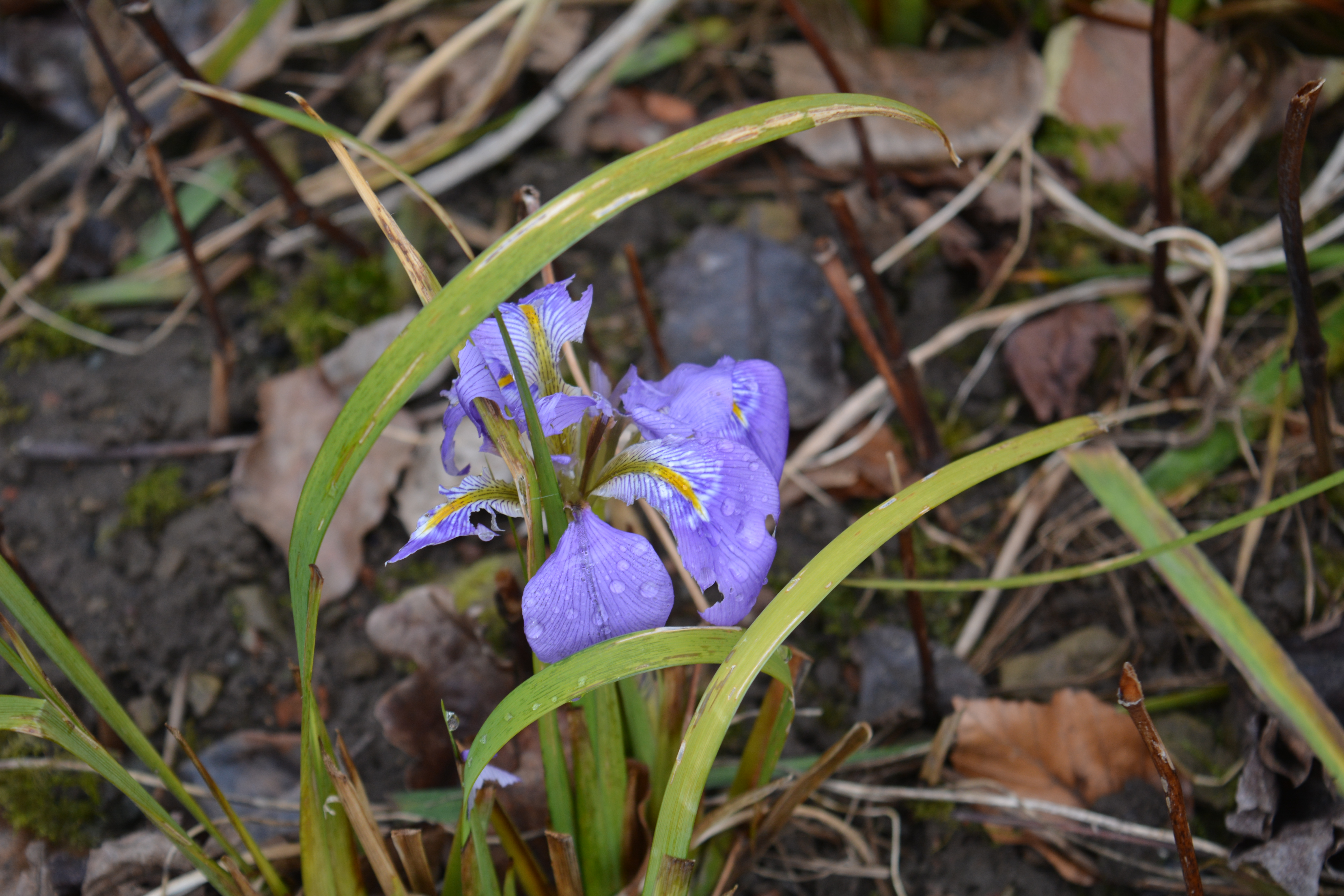
A few spring flowering bulbs are showing spears of green piercing the cold soil. Some are even flowering such as the diminutive Iris reticula and Snowdrops.

2015 01 18_9346 2015 01 18_9323_edited-1

2015 01 18_9334_edited-1 2015 01 18_9336

Variegated foliage always looks good in the winter when the silver or gold stripes, spots or squiggles shine against deep green backgrounds.

2015 01 18_9331 2015 01 18_9335

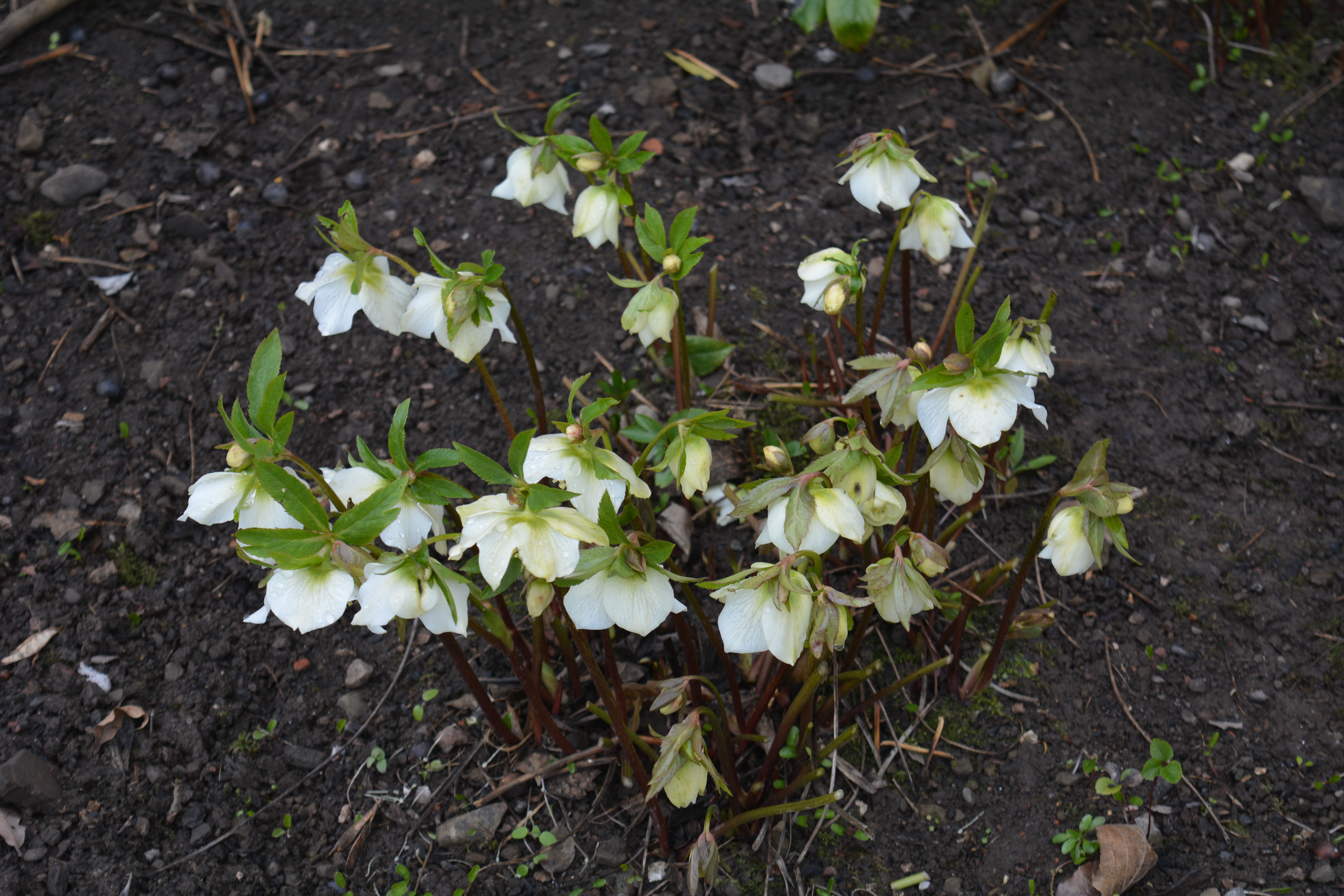
Perhaps it is only right that the most colourful and interesting garden of all at the moment is our Winter Garden. The coloured stems of different forms of Cornus and Salix give us reds, oranges, greens and yellows and even black. The white stemmed Birches are now over 20 feet tall and they dominate this garden. Euphorbias and Hellebores give colour at close to ground level, while the Viburnum bodnantense “Dawn” and Cornus mas provide pink and chartreuse at eye level. Both these shrubs are also powerfully scented.

2015 01 18_9338 2015 01 18_9339 2015 01 18_9340 2015 01 18_9341 2015 01 18_9342 2015 01 18_9343 2015 01 18_9344

Elsewhere the coloured stems of a Salix in our Withy Bed shines gold and the Cornus “Midwinter Fire” glow like flames.

2015 01 18_9347 2015 01 18_9349

Our tour finishes off with a look at this year’s major project, our wildlife pond. We inherited this large farm pond in the summer and are busy tidying up around it in readiness of the work that lies ahead.

2015 01 18_9353 2015 01 18_9352 2015 01 18_9354

This little character is hidden for most of the year under a patch of Chrysanthemums grown for cutting but in winter he appears to cheer us all up.

2015 01 18_9329

I shall finish this post with a couple of bright jewels.

2015 01 18_9326_edited-1 2015 01 18_9333

Categories
flowering bulbs fruit and veg gardening grasses grow your own ornamental grasses spring bulbs trees

Out with the old in with the new!

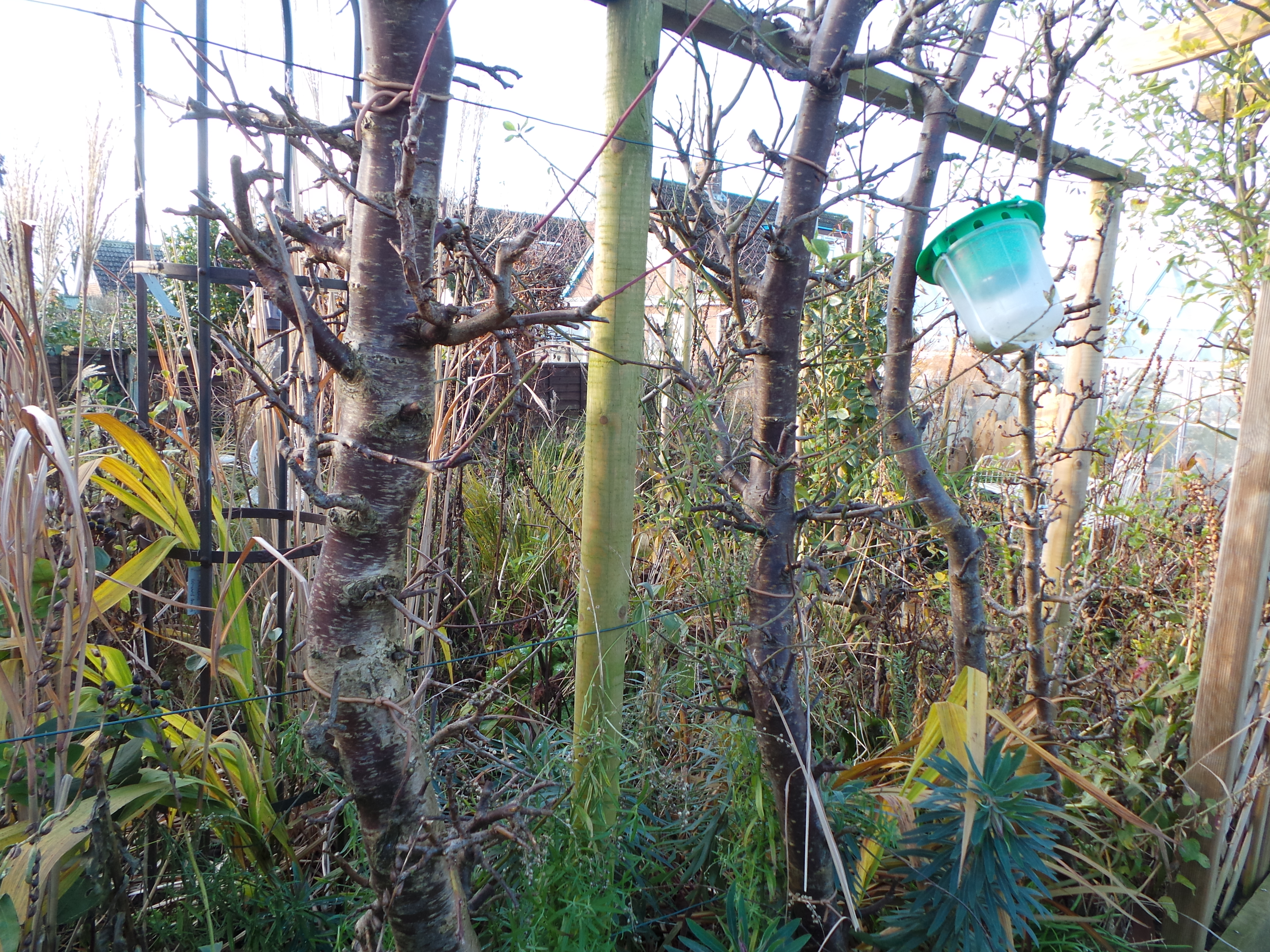
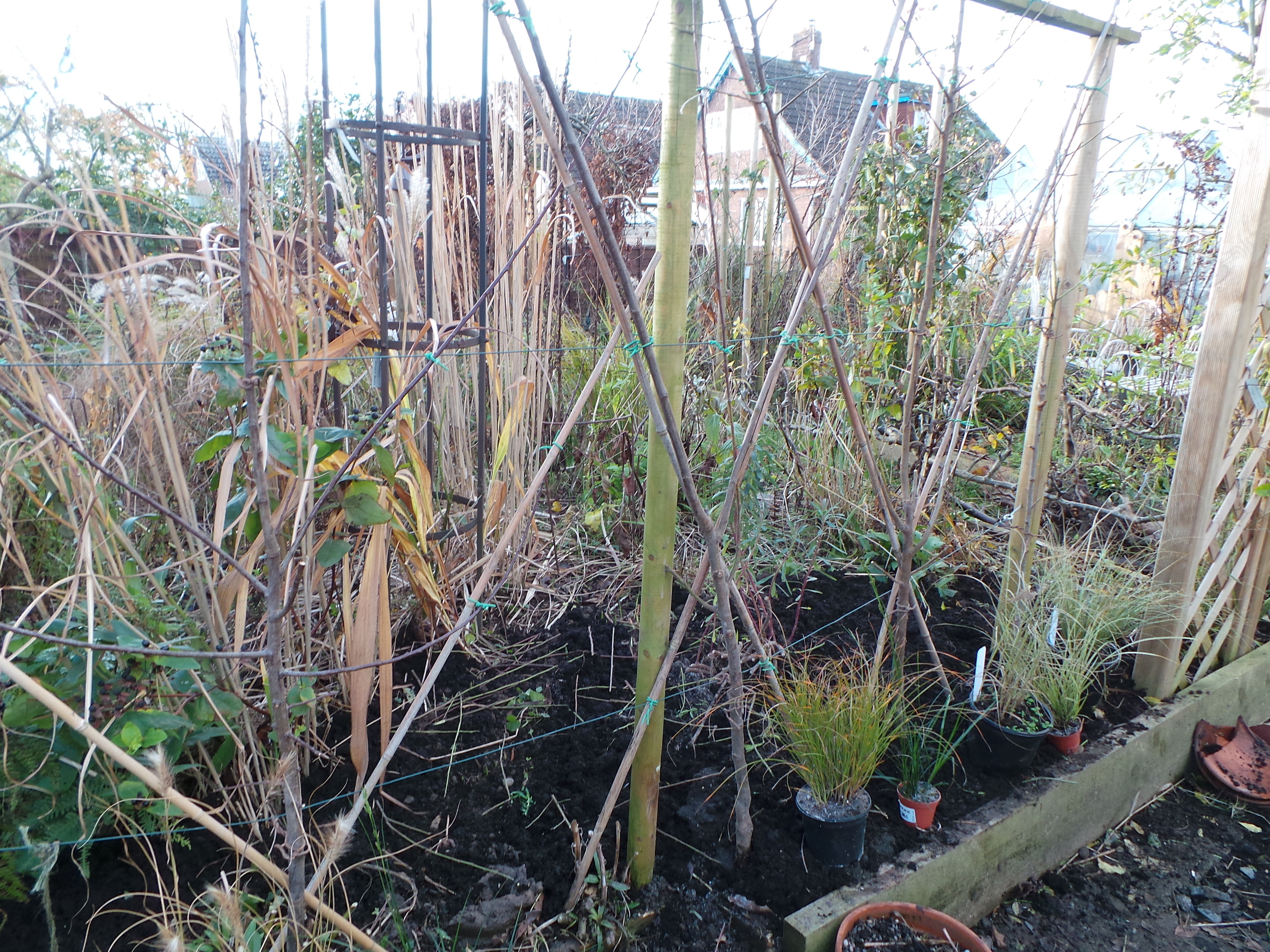
No, this isn’t a New Year post! It is about fruit trees. We have had a row of cordon grown plums along our central path since we first created our garden about ten years ago. They fruited well to start with but in the last few years they have struggled to produce just a handful of plums each or at worst none at all. Hence it was time for out with the old and in with the new.

2014 12 19_8935  2014 12 19_8936

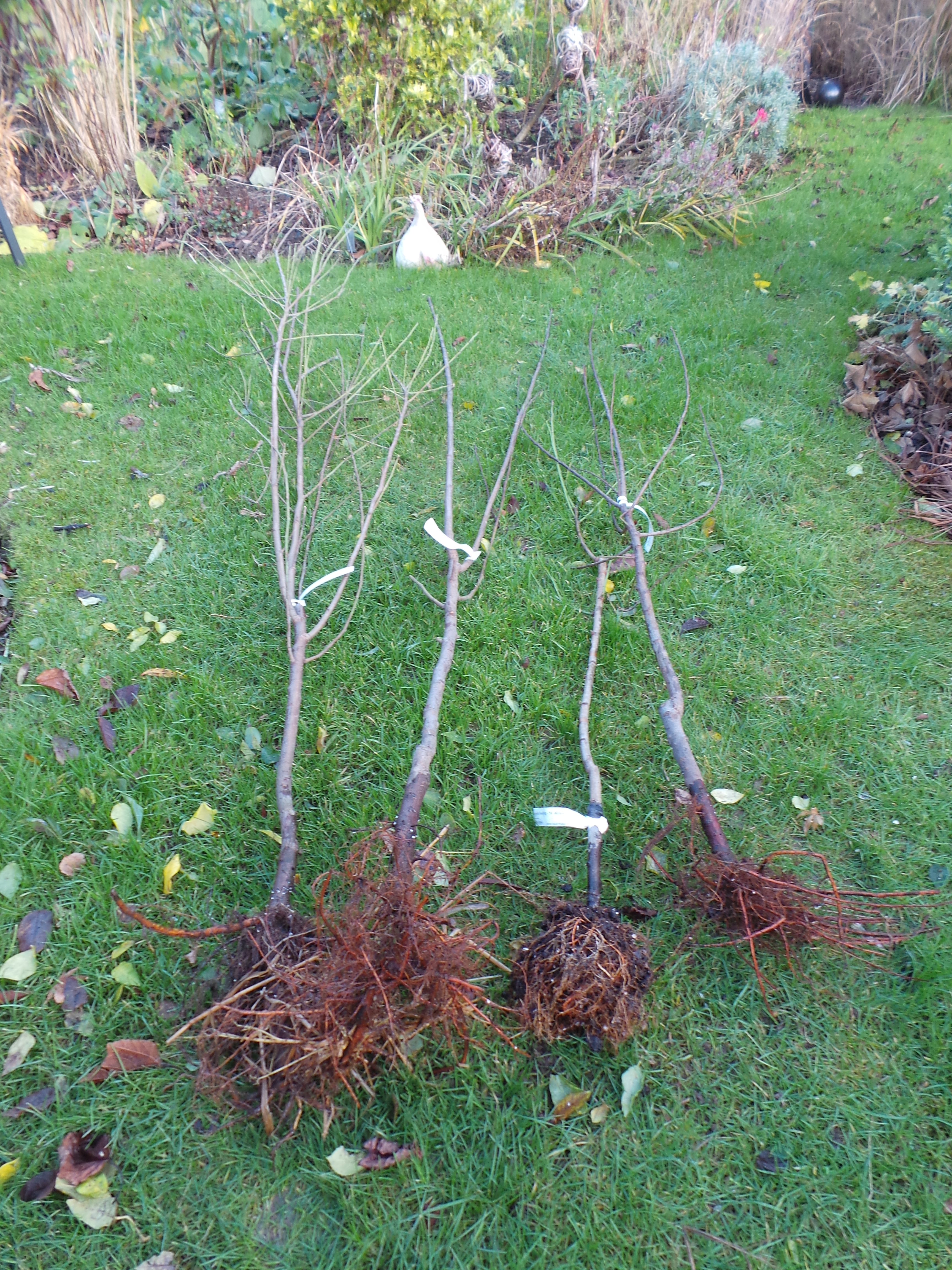
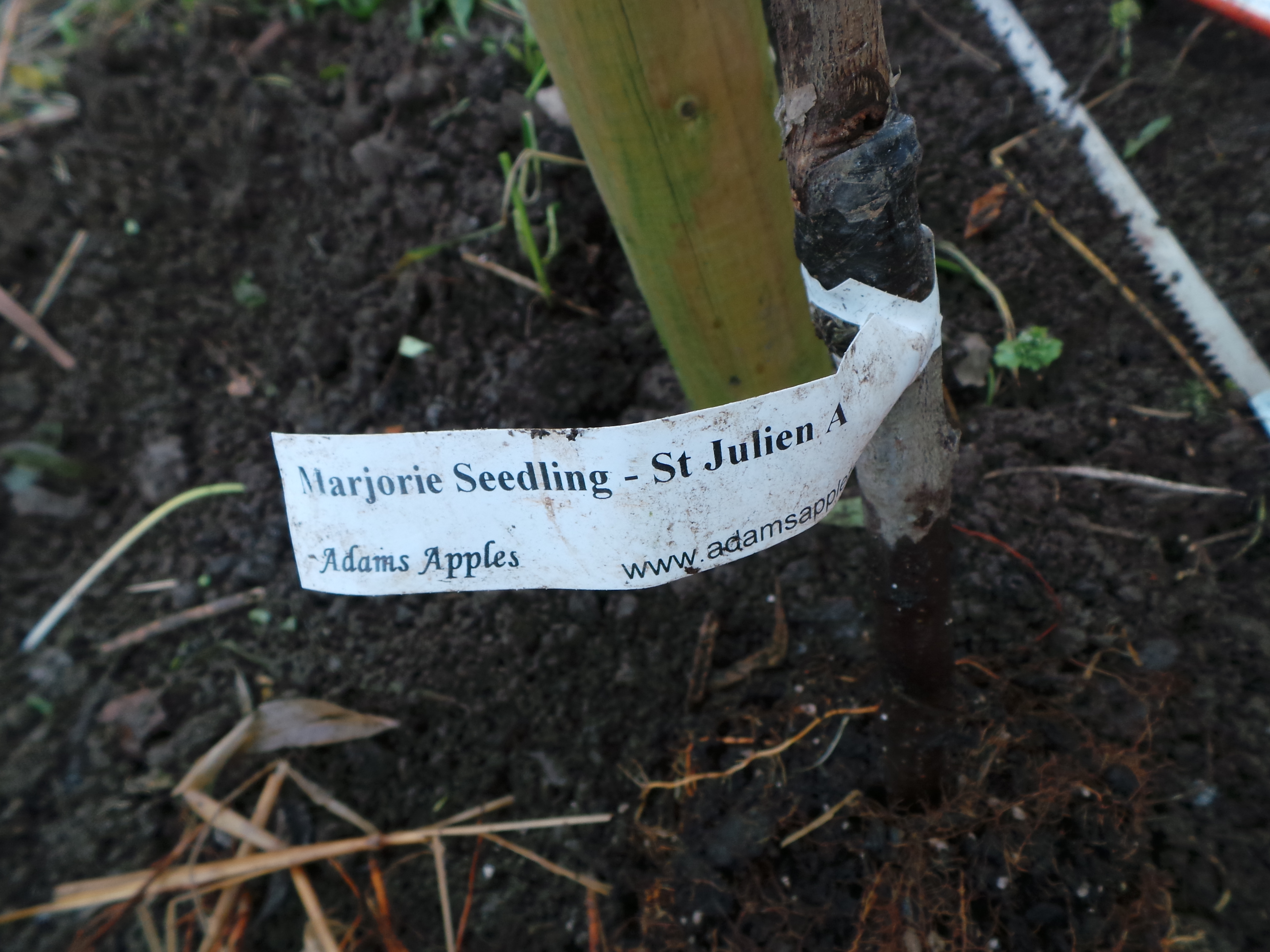
The new trees arrived by courier all the way from Devon bare rooted and packed beautifully in the same way my Father used to receive his plants back in the 1950s. It is amazing how small a package of 4 trees looks. We ordered them from Adam’s Apples also known as Talaton Plants, a firm we have used to purchase all our fruit trees from for home and the allotments for many years now. We have never had a tree fail! As the photo below shows they arrived with top quality root balls. Without a good root ball a tree will not thrive so we were delighted with these.

2014 12 19_8911

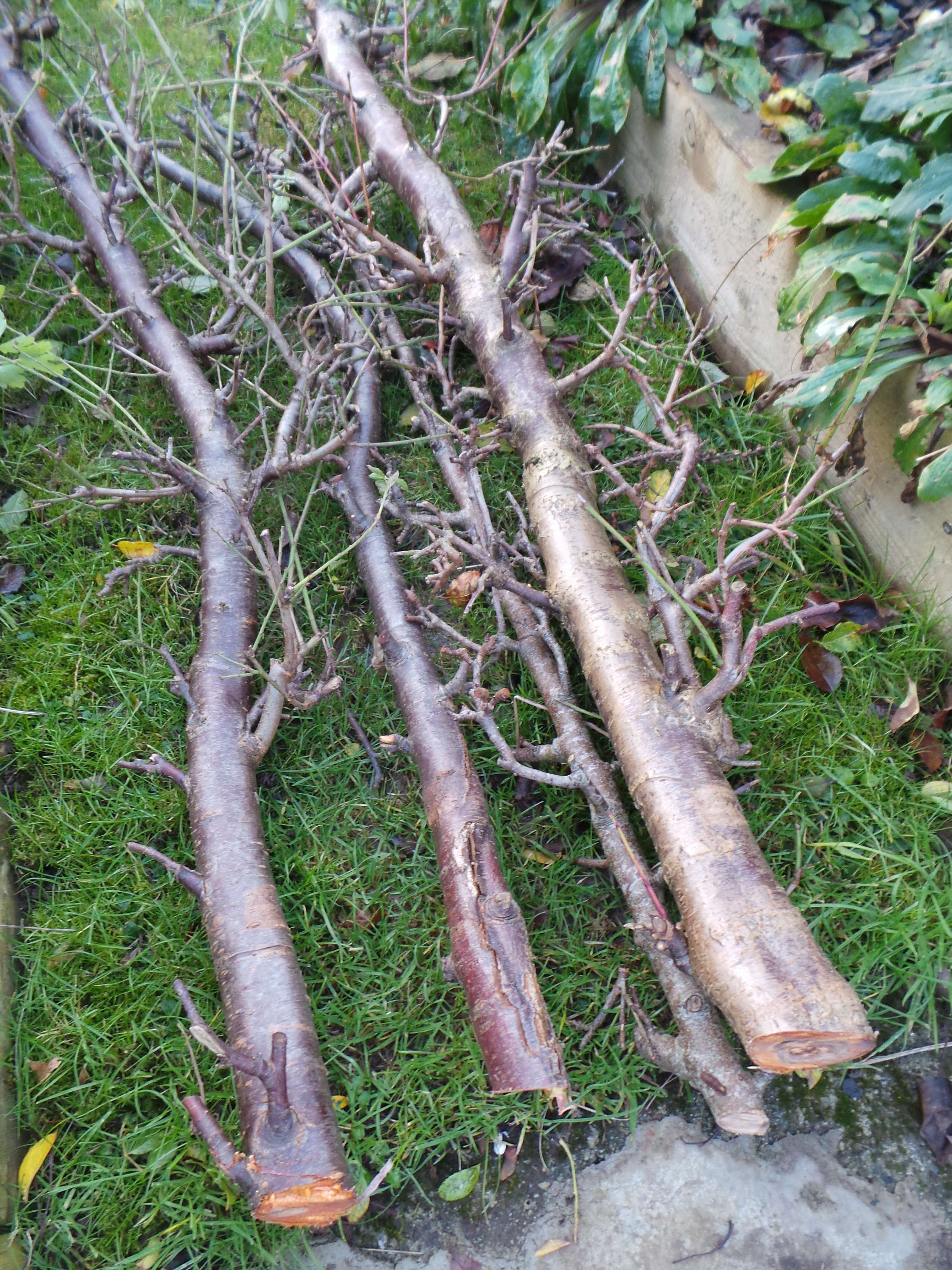
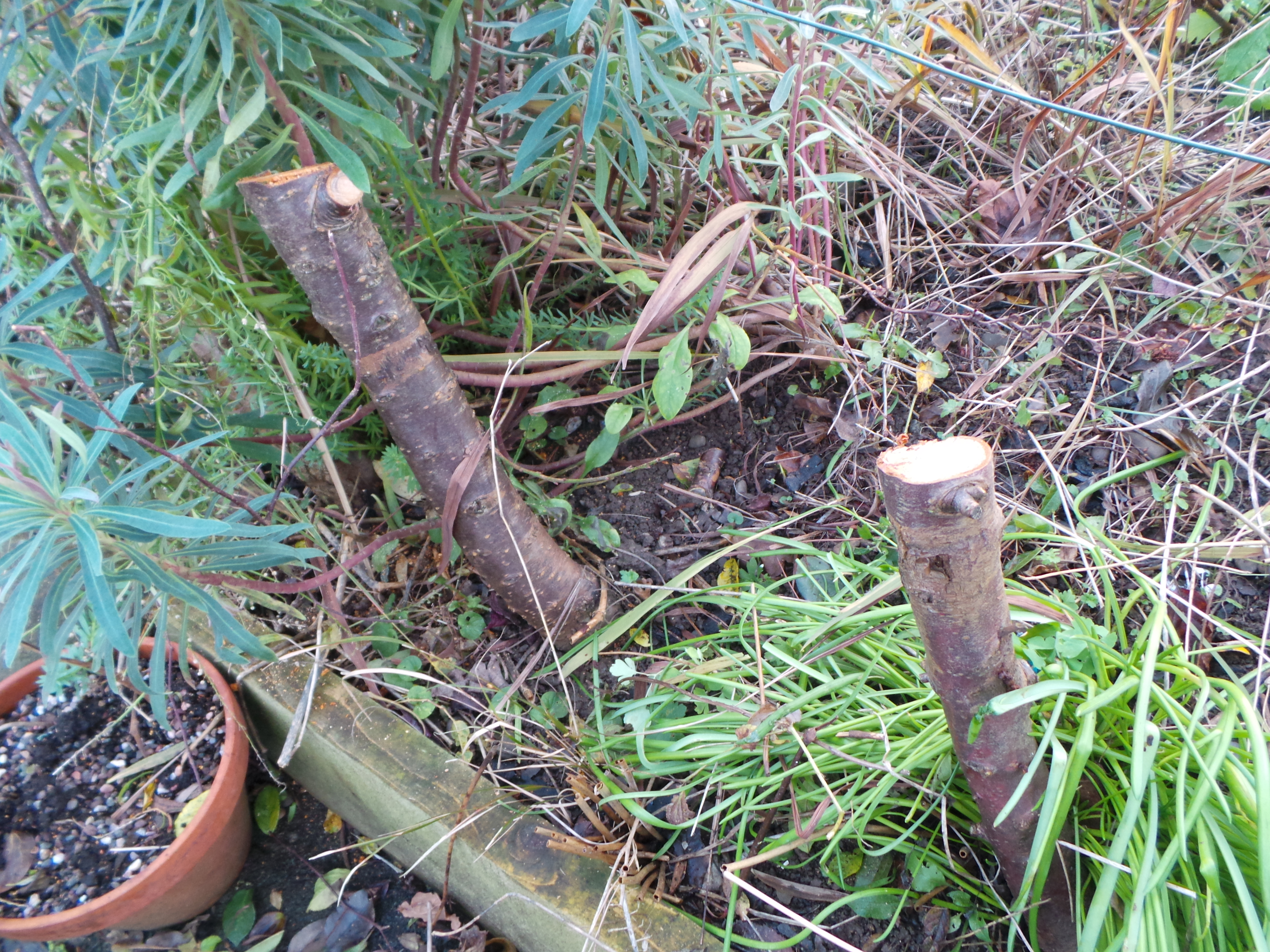
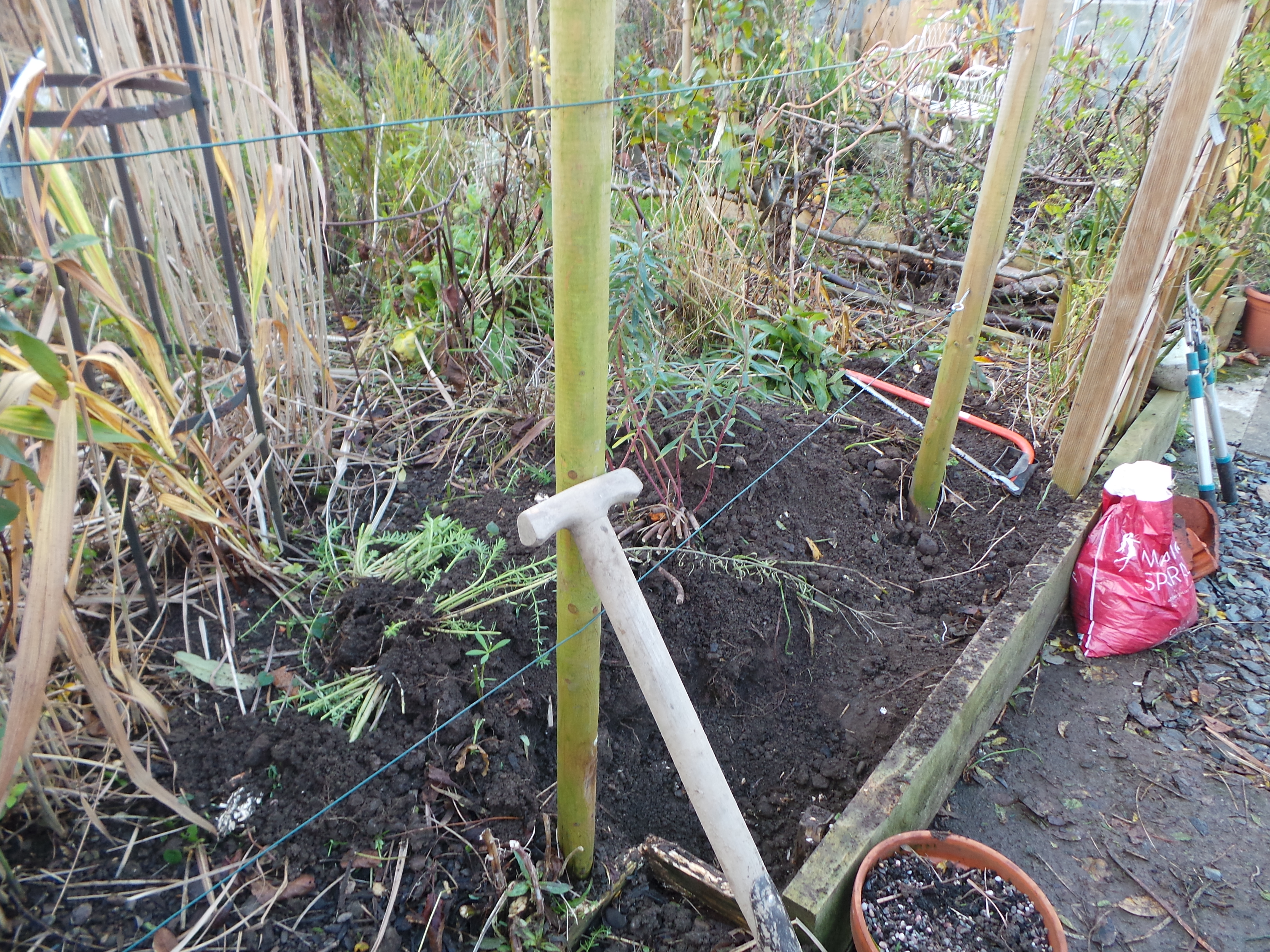
First job was the hardest, getting up the old trees. Luckily the soil was soft and easy to dig. We chopped the trunks down leaving just the right amount to act as a lever.

2014 12 19_8939 2014 12 19_89402014 12 19_8941

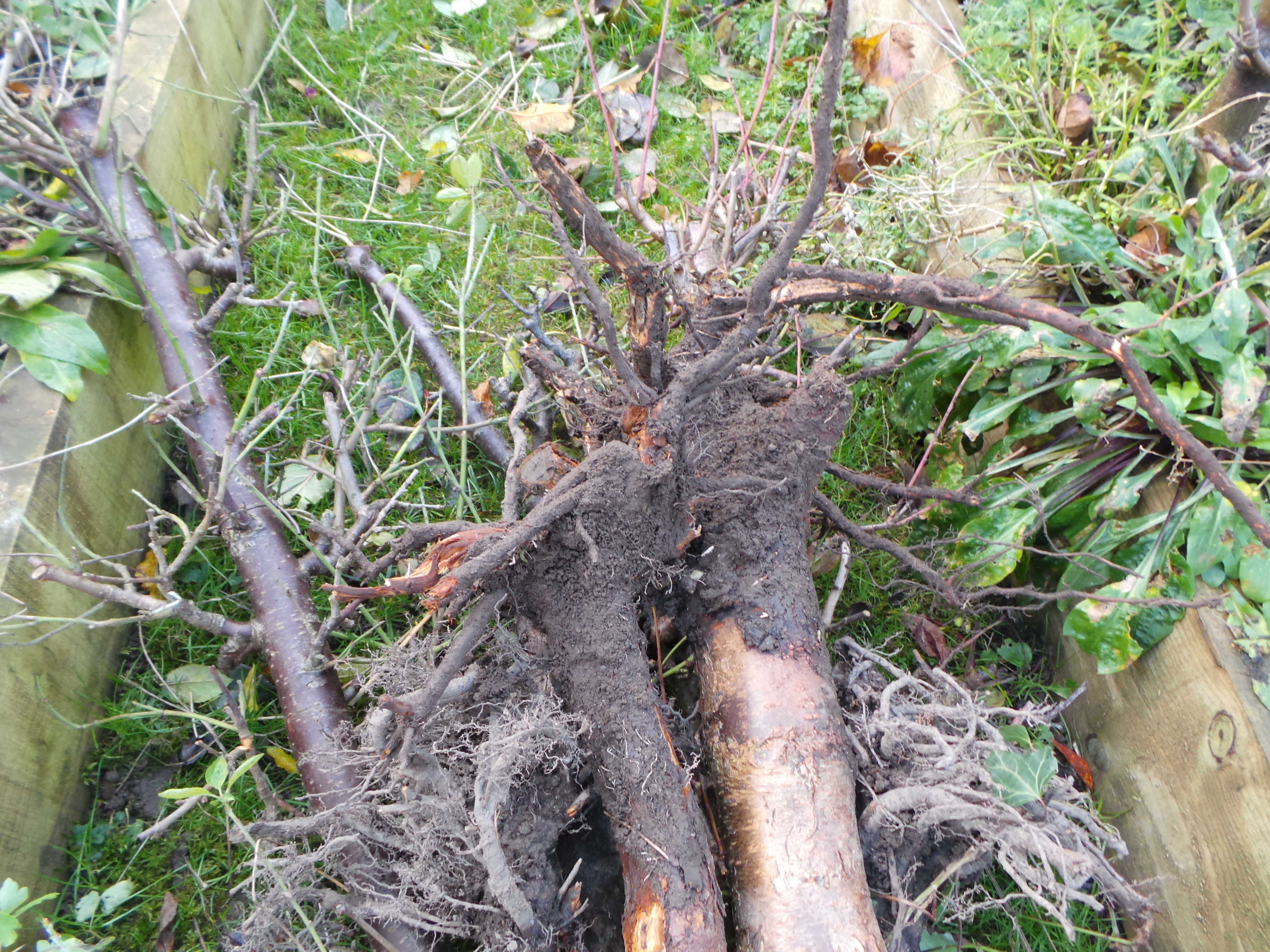
Luckily the task of digging out the roots was not as difficult as anticipated.


2014 12 19_8907 2014 12 19_8908


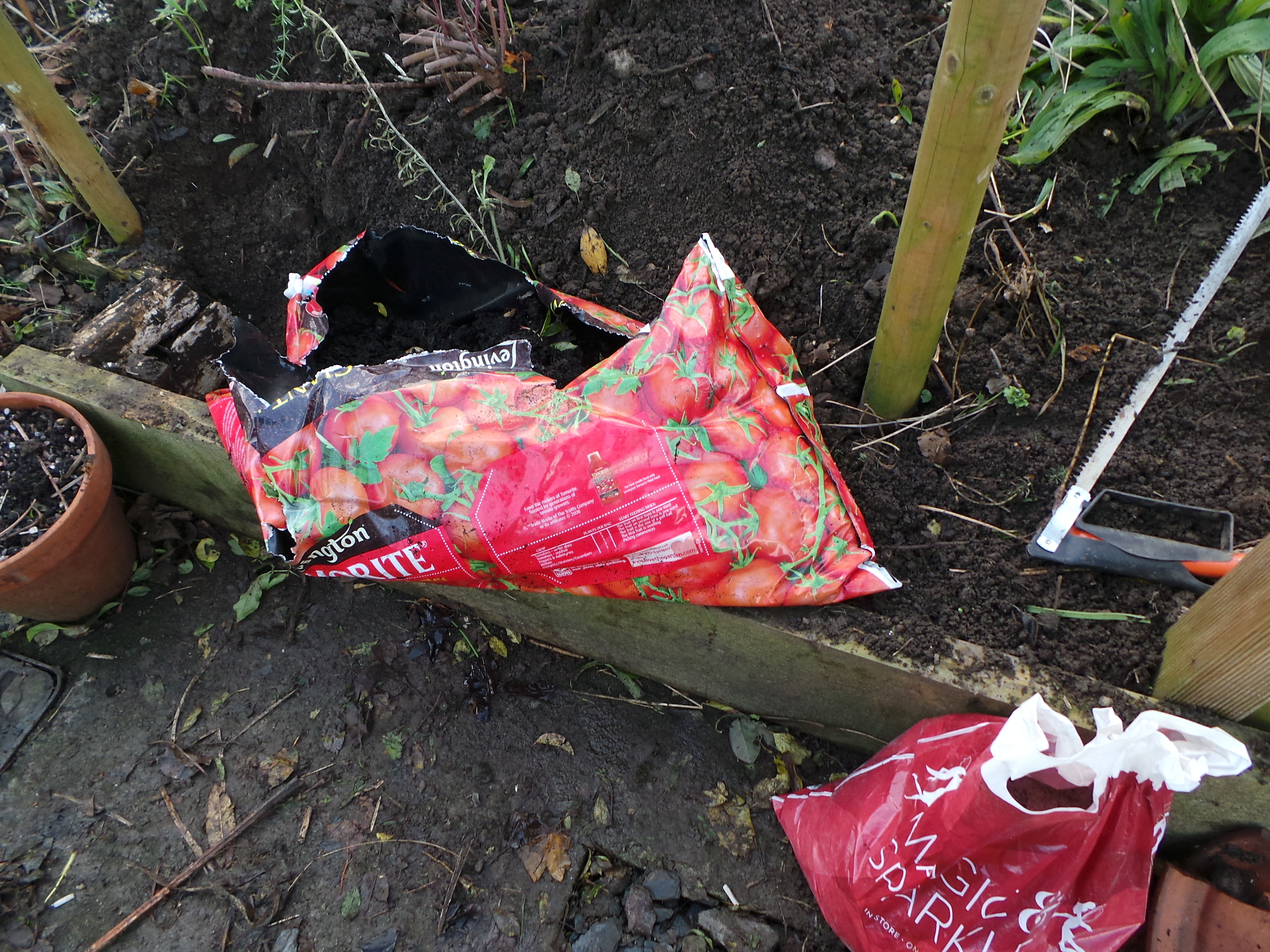
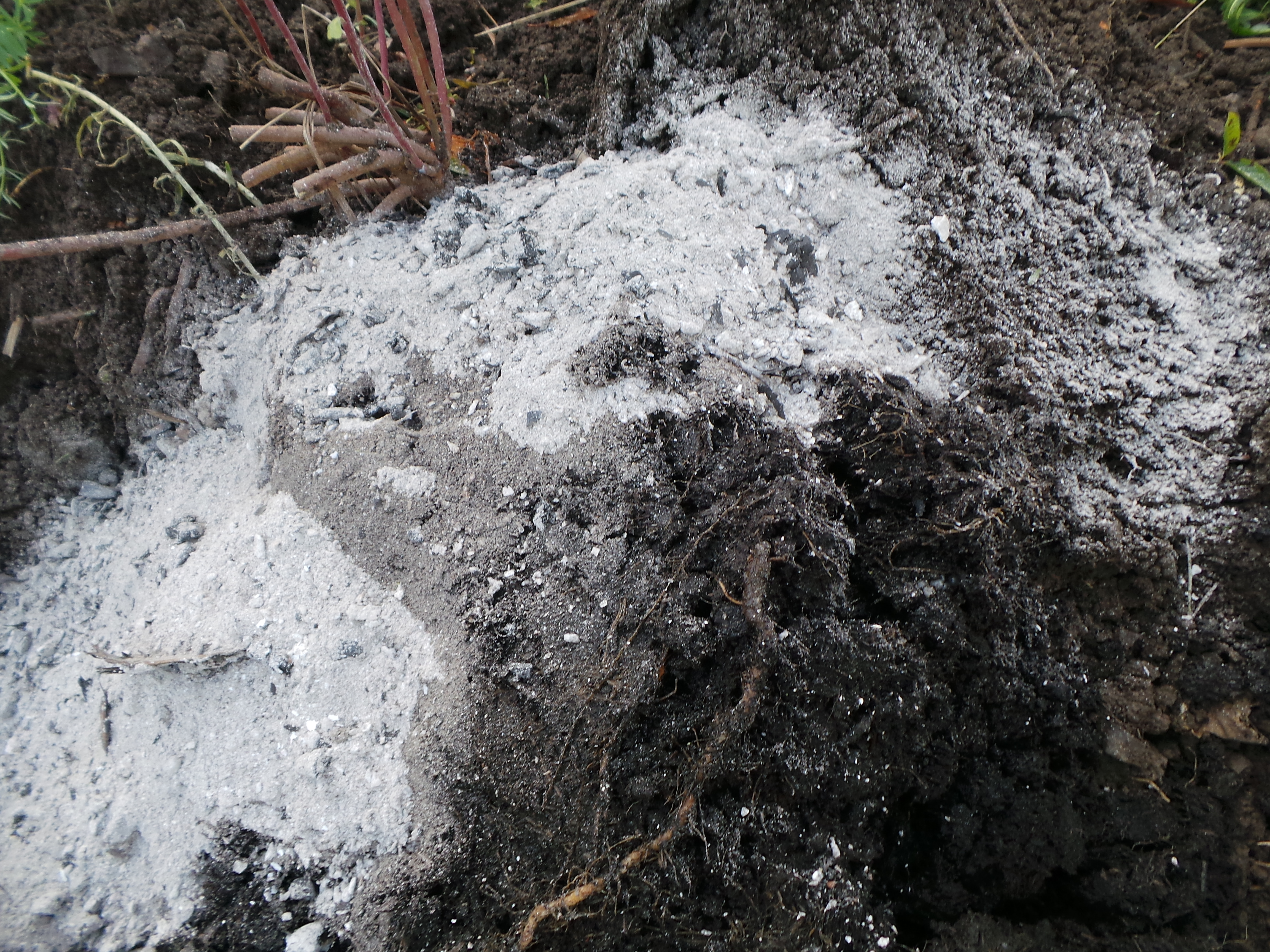
We then improved the soil structure by adding in the compost from the old “growbags”  in which our tomatoes had spent the summer. Then we added some wood ash from our woodburning stove and open fire to encourage blossom and fruit next season.


2014 12 19_8909 2014 12 19_8910

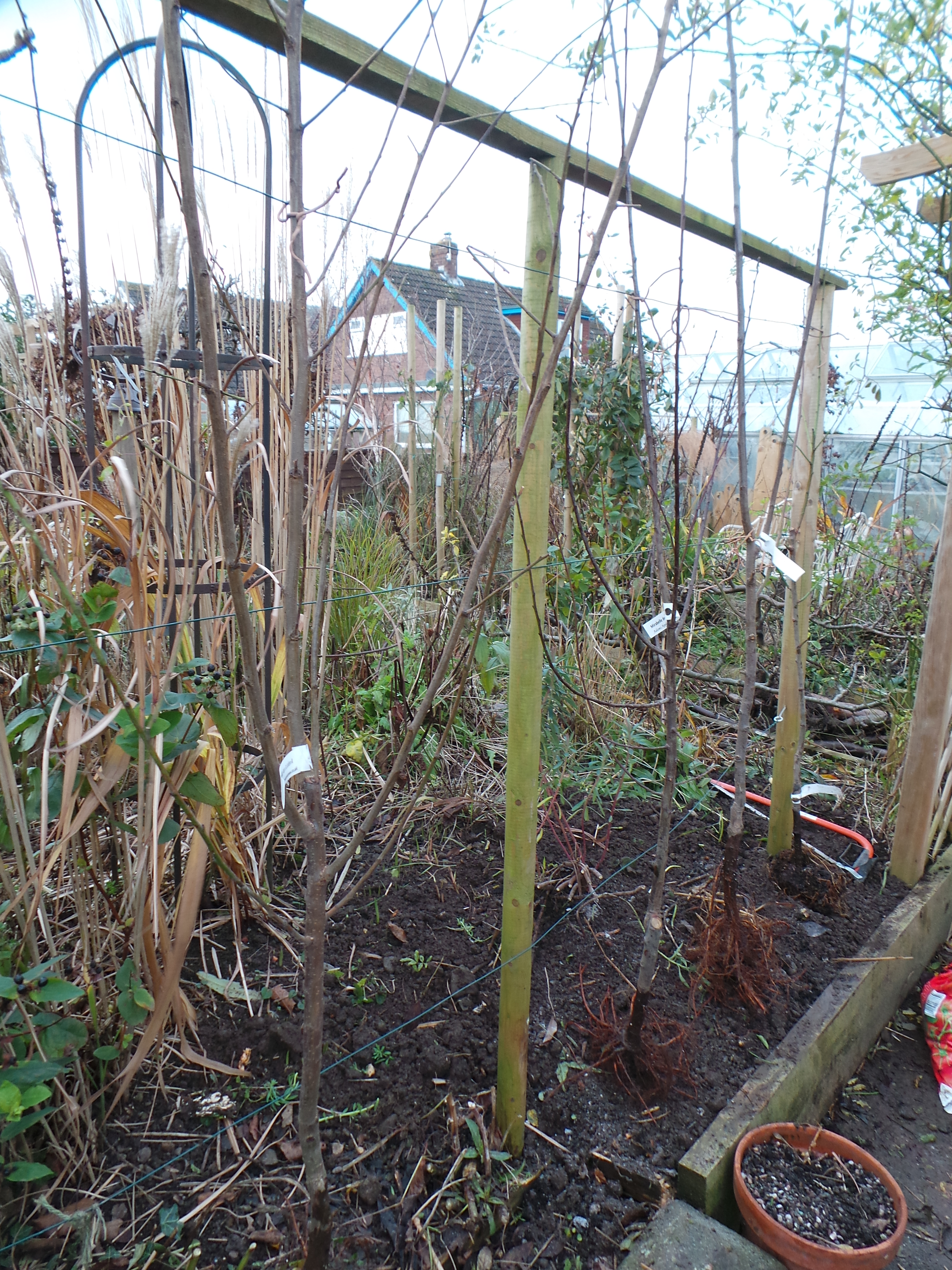
We placed the new trees to check they would look okay and then planted them, adding daffodil bulbs to the planting holes for colour in the spring.

2014 12 19_8916 2014 12 19_8919

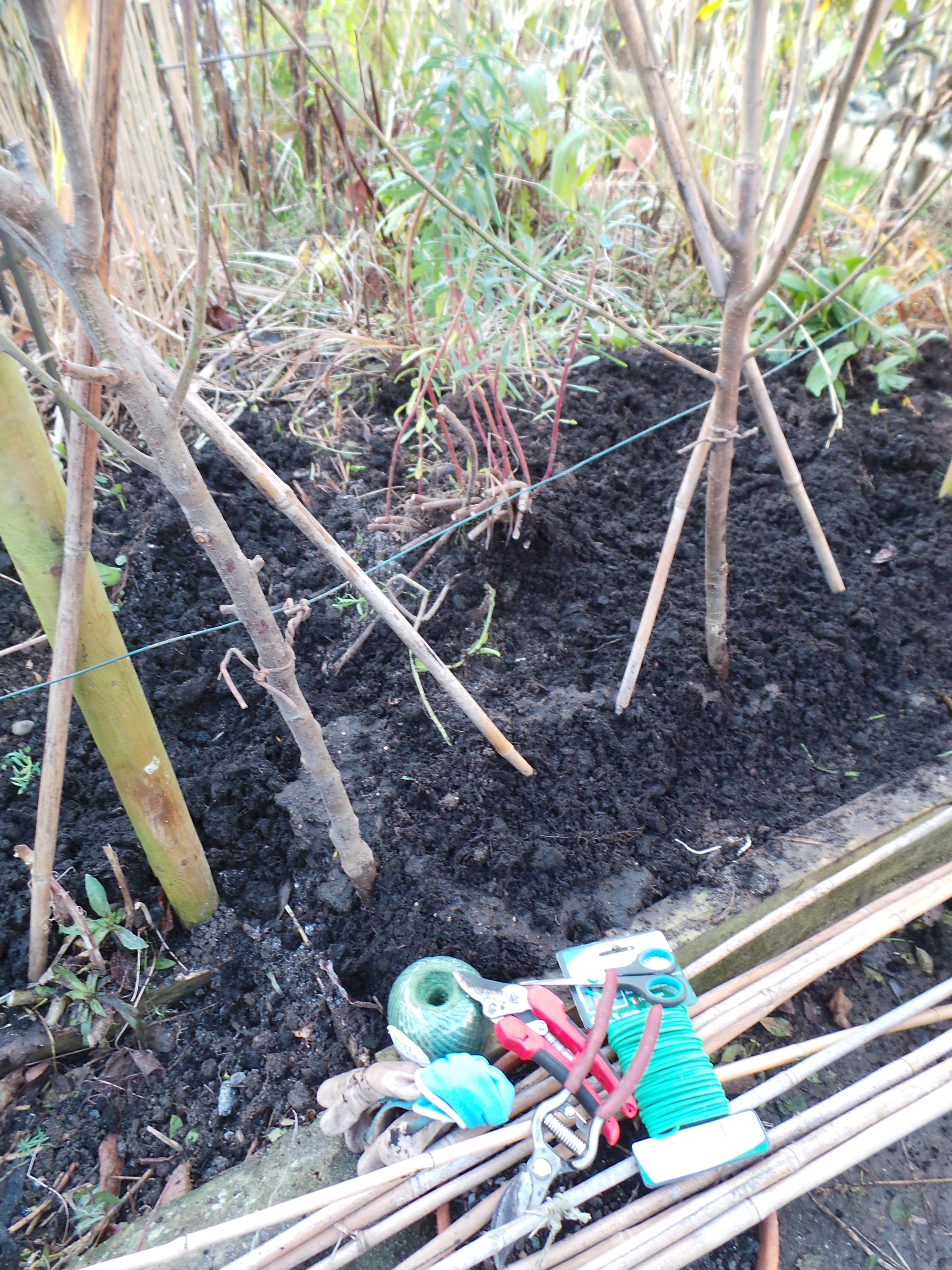
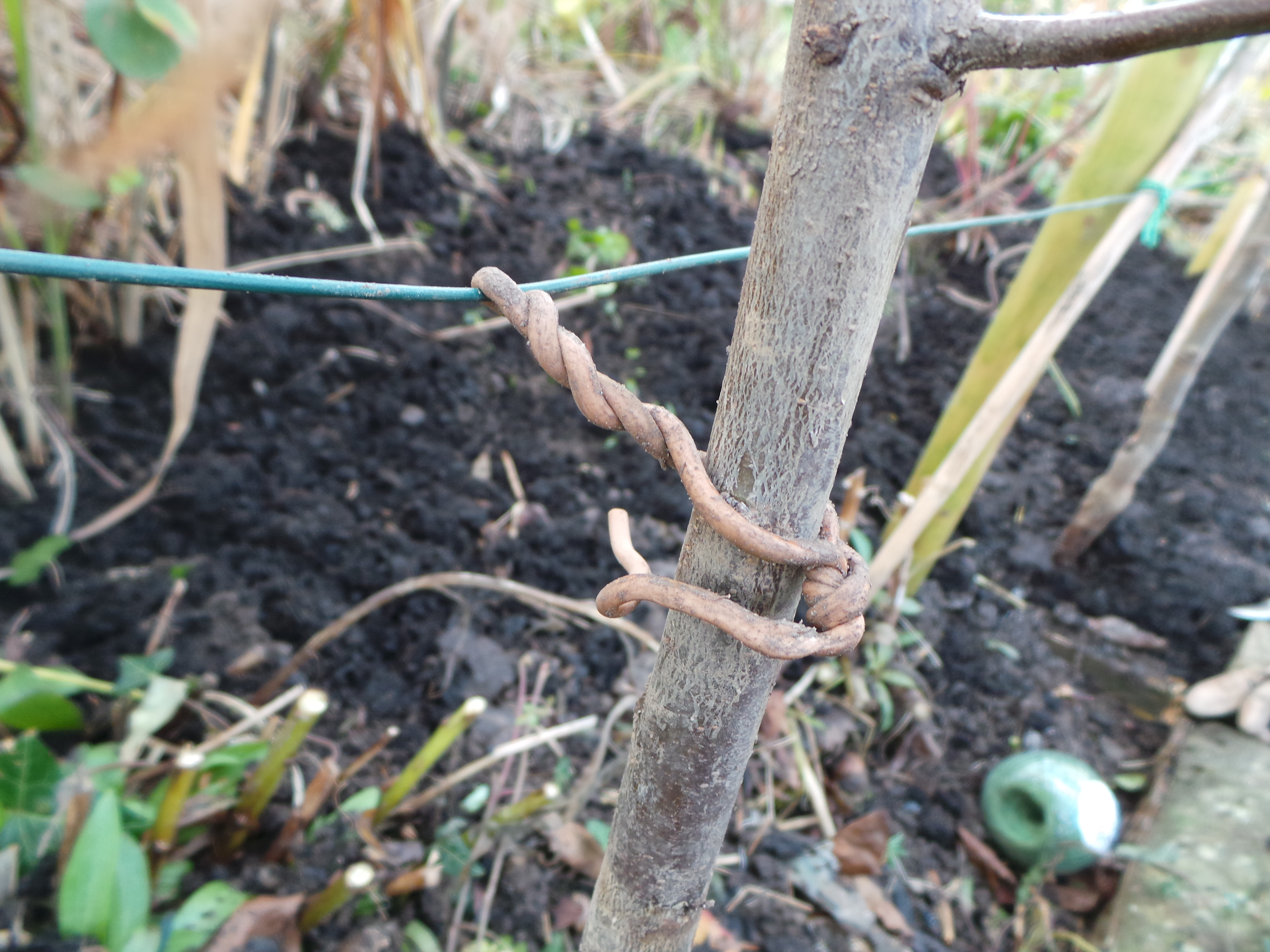
We then tied the new trees to their canes training them into fans. We used soft plastic covered wire to tie them in as this allows us to keep the branches away from the canes and supports.

2014 12 19_8917 2014 12 19_8918

2014 12 19_8920_edited-1 2014 12 19_8919


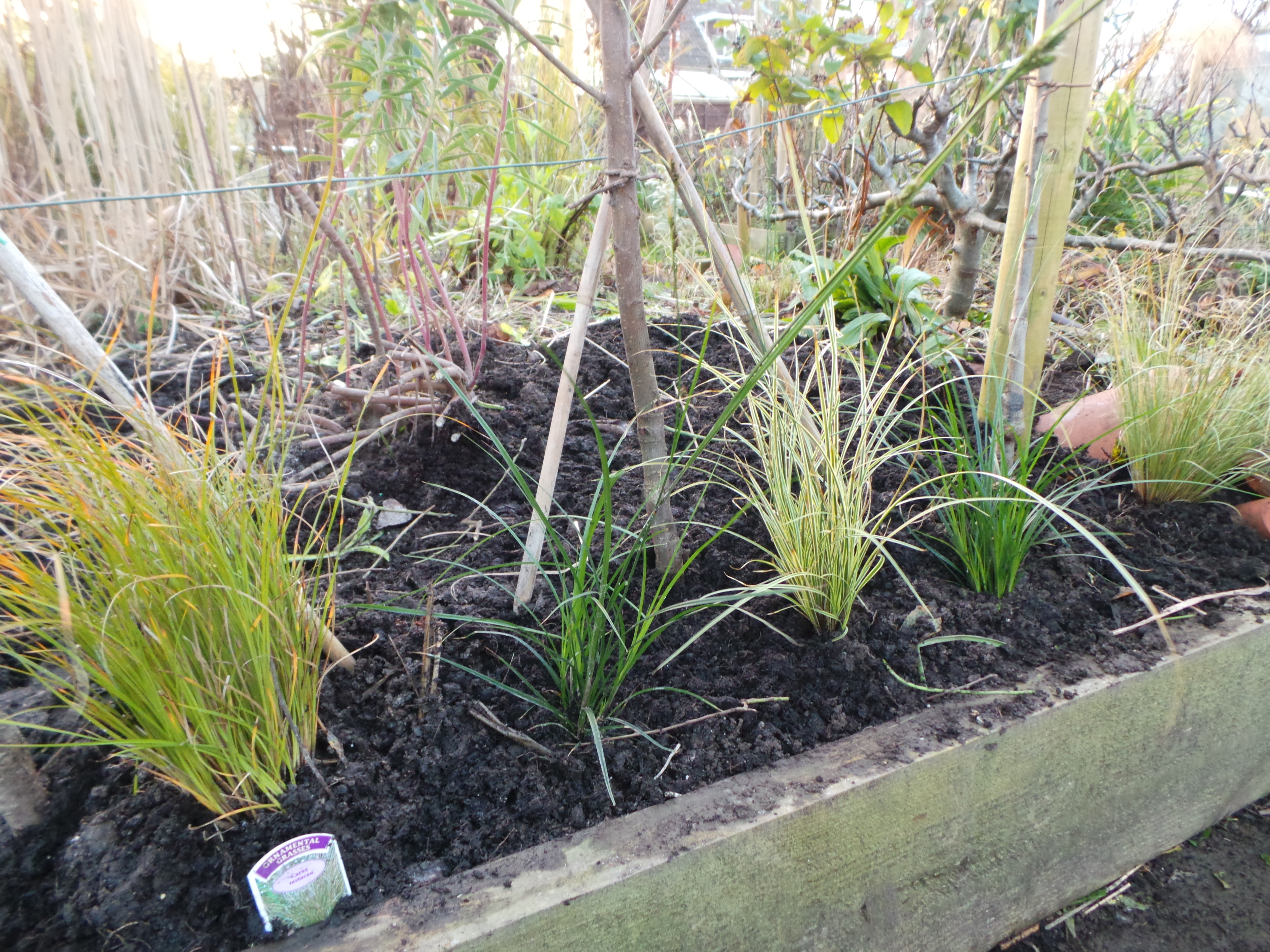
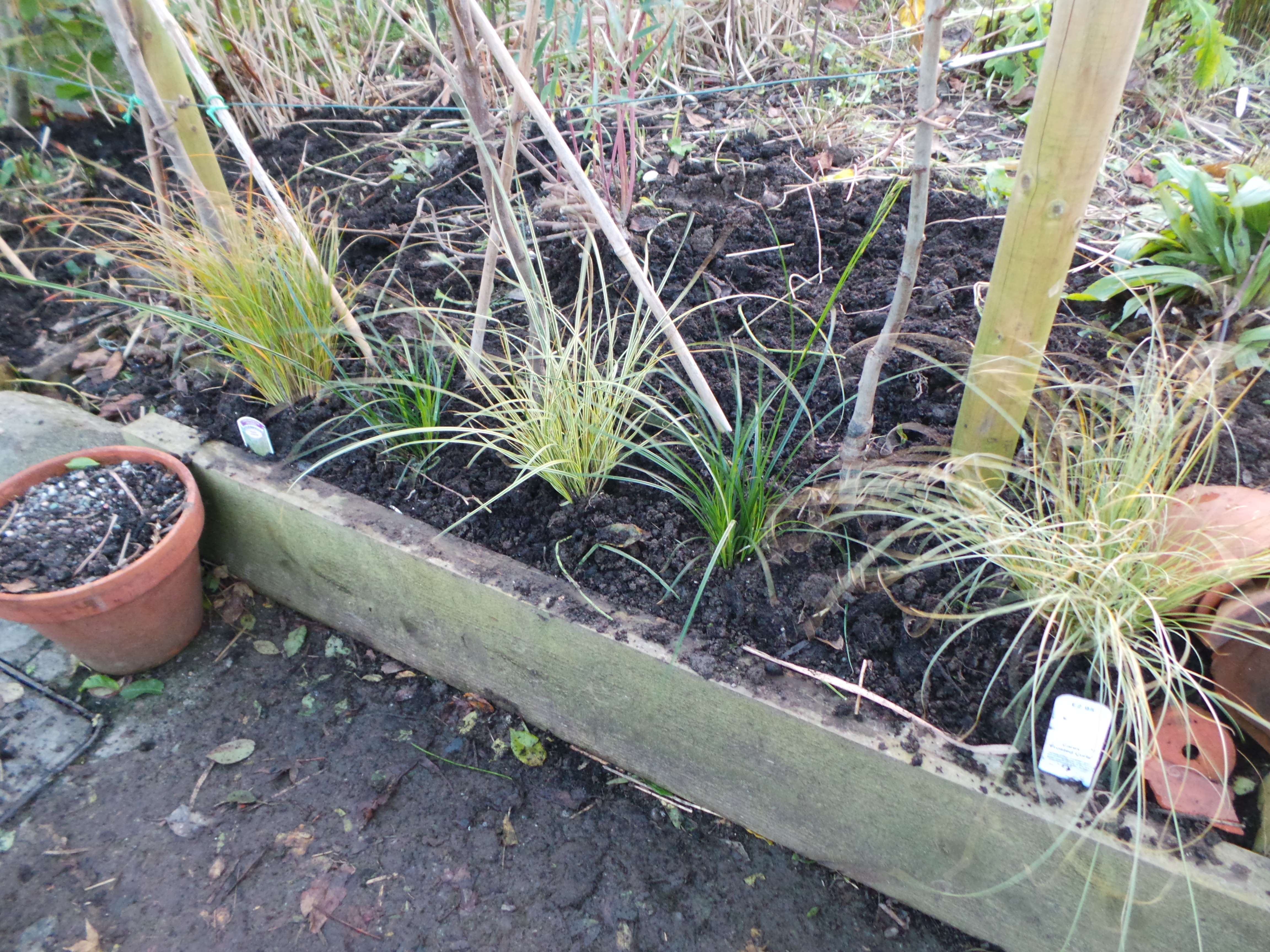
The final touch was to plant small ornamental grasses between the trees to add interest and some ground cover. We chose different varieties of Carex for their different leaf colours and textures, because they stay small and because they are evergreen.

2014 12 19_8921 2014 12 19_8927

2014 12 19_8926

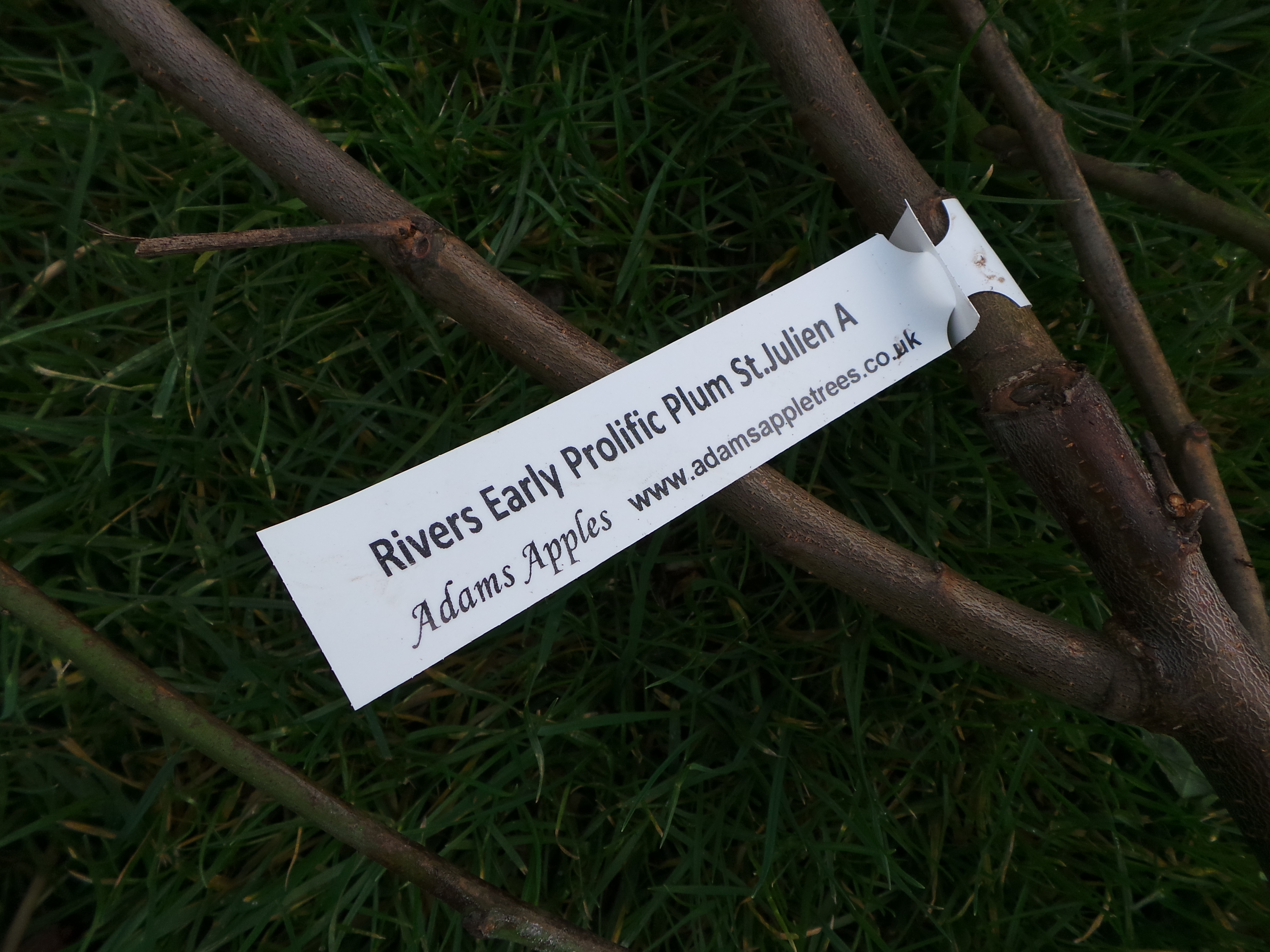
And that was it – job done! If you are wondering which cultivars we chose here are their labels.


2014 12 19_8912 2014 12 19_89132014 12 19_8914 2014 12 19_8915


Categories
colours flowering bulbs fruit and veg garden design garden photography gardening gardens grow your own hardy perennials Hardy Plant Society herbs kitchen gardens light light quality ornamental trees and shrubs shrubs spring bulbs spring gardening Staffordshire trees village gardens woodland

Pauline and Derek’s Woodland Garden

This is the third post in my series of post about gardens of friends. In this post I shall share with you a visit Jude “The Undergardener” and I made with a couple of other Hardy Plant Society friends to the woodland garden of fellow members, Pauline and Derek. It was a wet, dull day when we set out but as we approached the village of Loggerheads things were looking a little more optimistic. Just outside the village we found “Broomside” where Derek greeted us as we got out of the car. Quickly passing through the front garden to get out of the rain gave us clues as to what to expect. We couldn’t wait to see more!

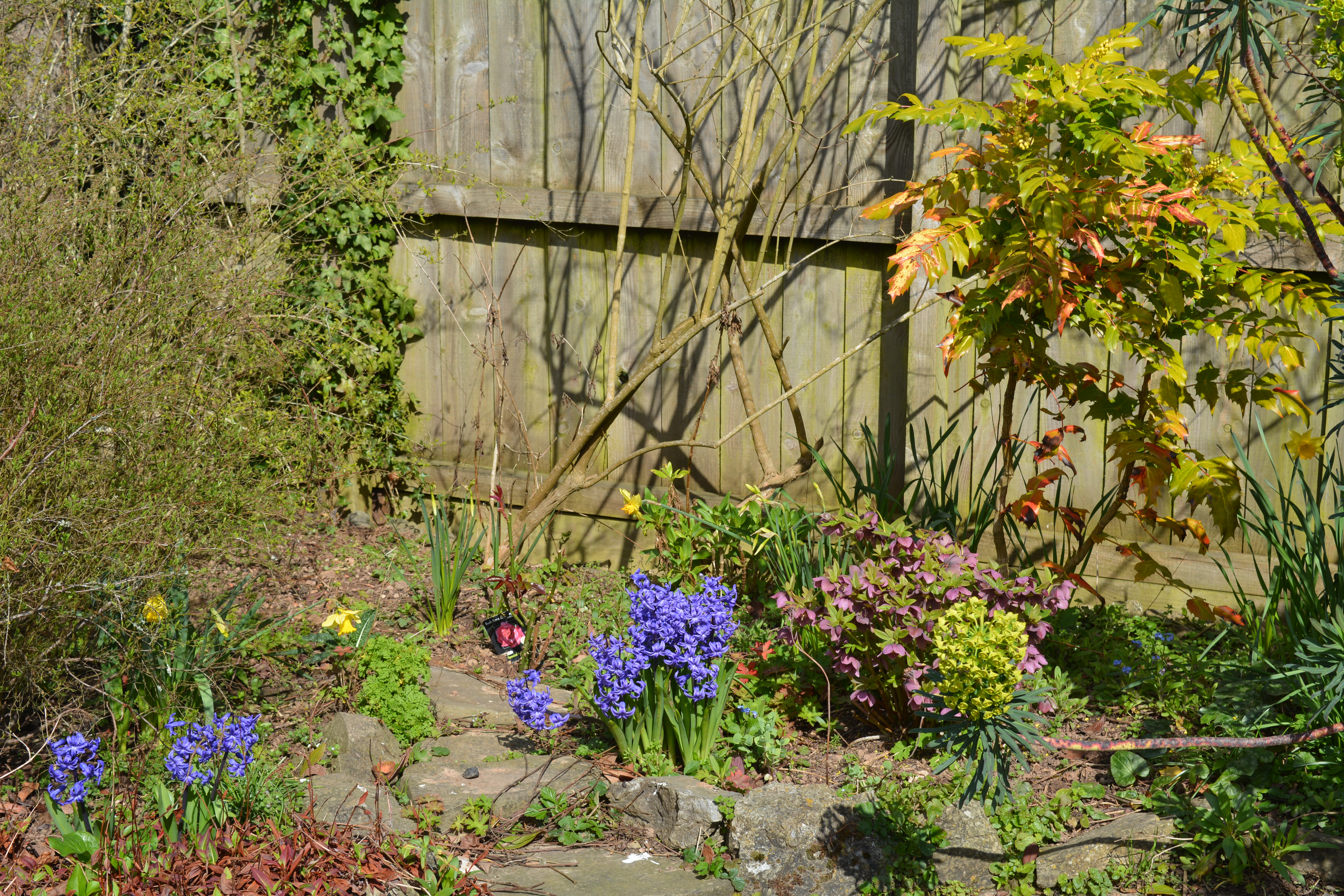
2014 05 08_8962

Pauline had prepared the coffee and tempting biscuits so that took priority. When we were ready for a guided wander the weather turned back to heavy rain so we donned rainwear and carried on regardless. We are after all “Hardy Planters” so mustn’t be put off by the weather, whatever it throws at us.

These general garden views show the richness of its planting and give a hint of the inviting atmosphere.

2014 05 08_8937 2014 05 08_8933

2014 05 08_8935 2014 05 08_8938

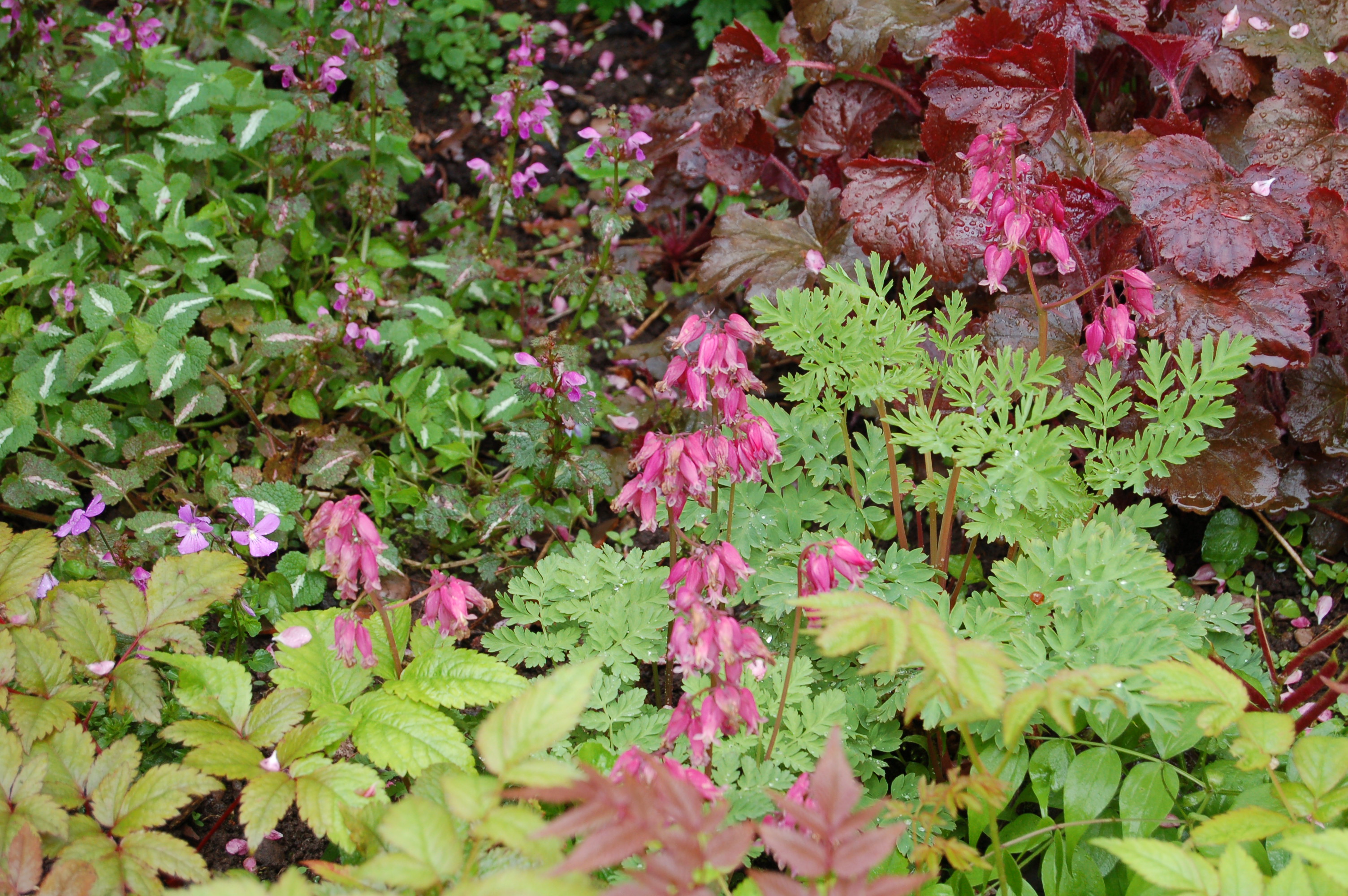
Despite the rain the light was good for photographing foliage plants. With contrast reduced textures were highlighted. Woodlaand plants seem to possess a richness in texture and colour in their foliage.

2014 05 08_8919 2014 05 08_8920 2014 05 08_8921 2014 05 08_8923

2014 05 08_8936 2014 05 08_8949

2014 05 08_8924 2014 05 08_8925

The late spring blossom on the trees and shrubs and the flowers on perennials were still a delight and somehow even more welcome on such a dull day.

2014 05 08_8926 2014 05 08_8927 2014 05 08_8928   2014 05 08_8931

This garden is full of special plants but these three stood out even among such quality planting. Purple cones, purple Trillium flowers and a creamy Paeony.


2014 05 08_8930 2014 05 08_8932

2014 05 08_8934

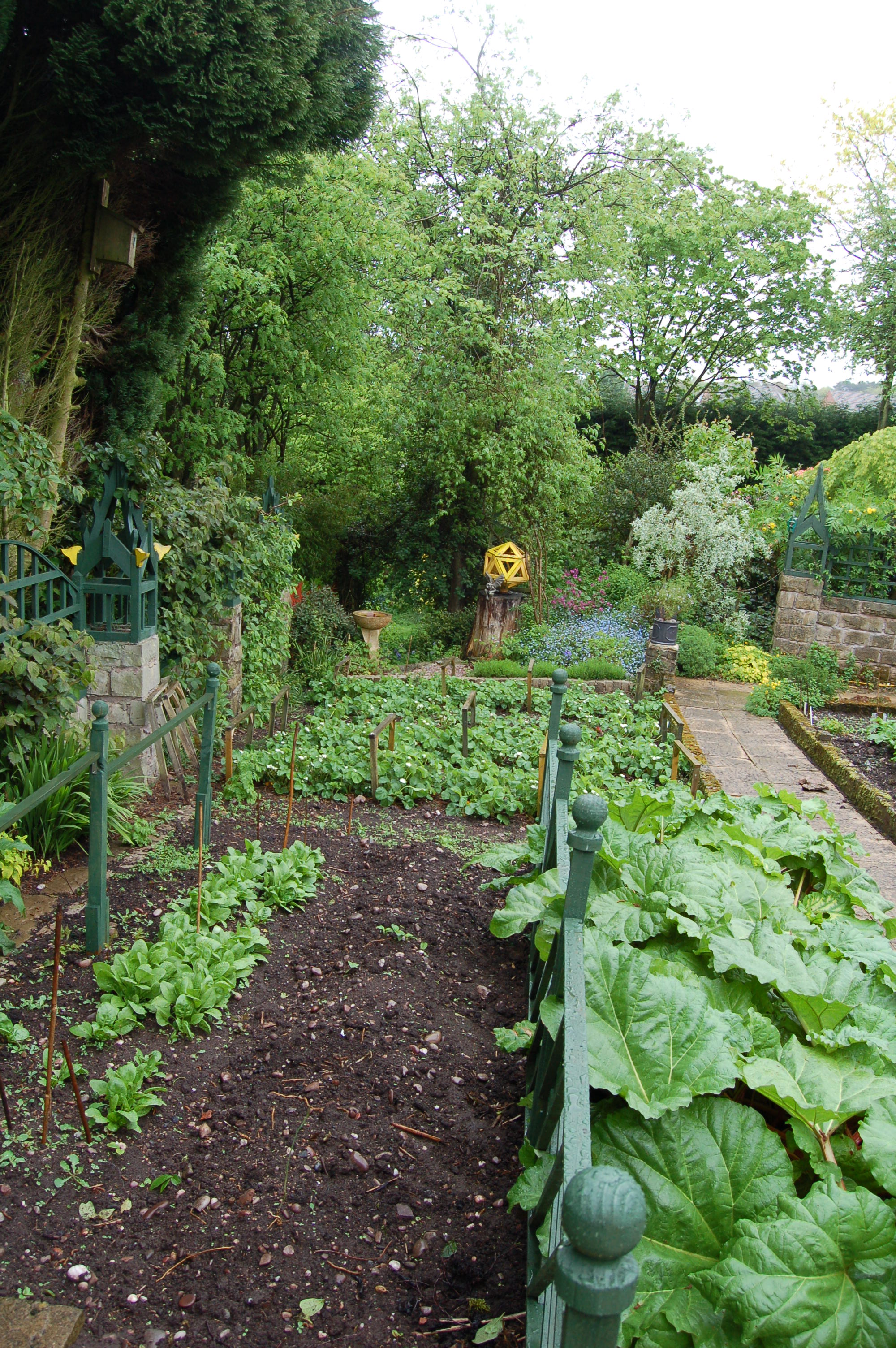
After enjoying the woodland section of the garden we stepped up a few steps, one of which was the root of a tree, to find the veggie patch.

2014 05 08_8939 2014 05 08_8940 2014 05 08_8941 2014 05 08_8942 2014 05 08_8943 2014 05 08_8944

Derek had an impressive collection of mints. We enjoyed their varied scents. This one, with its long slightly glaucous leaves was I think was Mentha buddleifolia, one I had never seen before. Indeed I wasn’t aware of its existence.

2014 05 08_8945

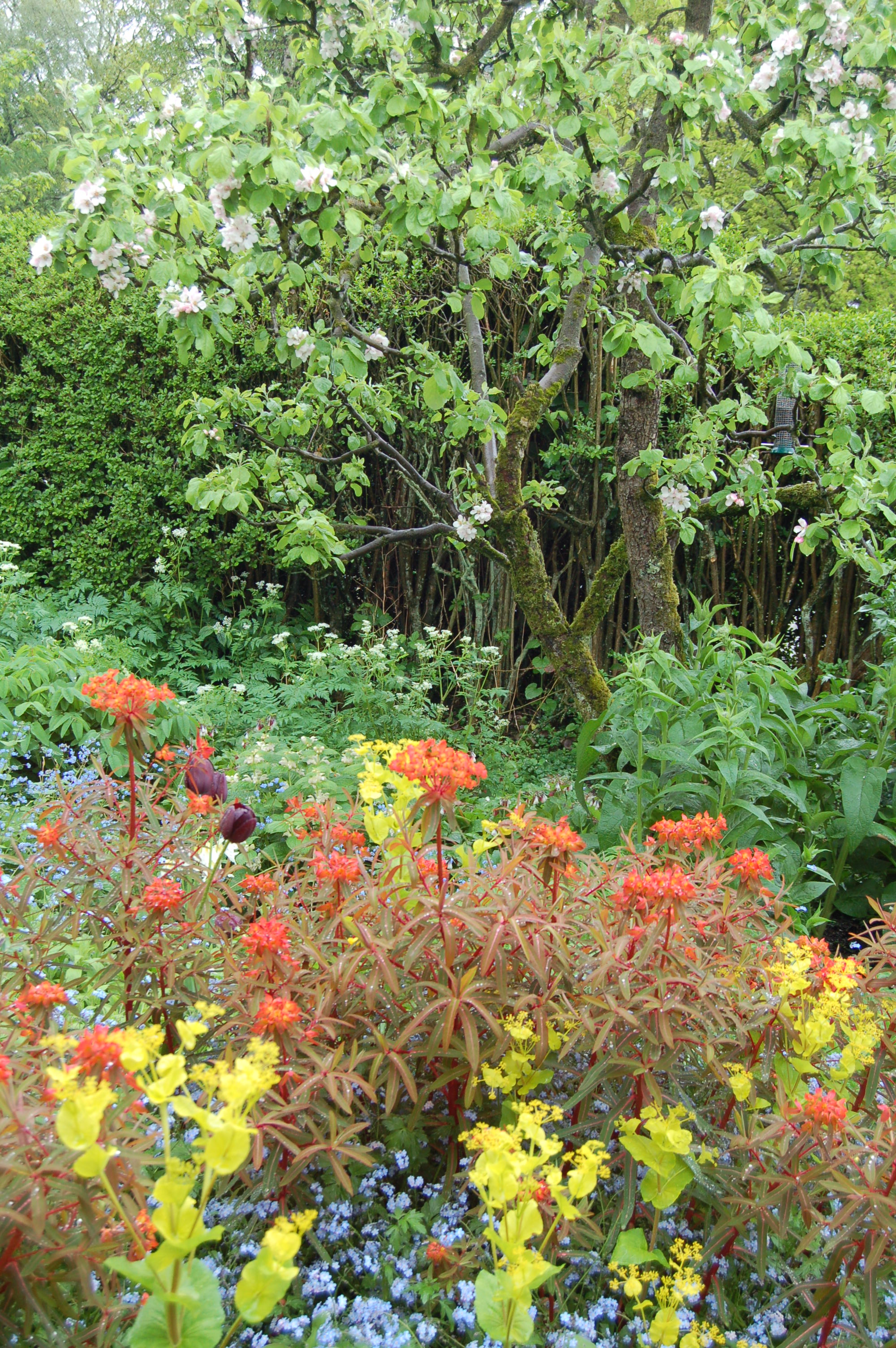
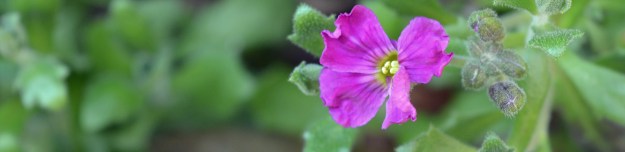
After exploring the paths winding through the vegetable garden we found a colourful mixed border along the side of the house. Here colourful Euphorbias added extra brightness to more rich planting.
2014 05 08_8954  2014 05 08_8961 2014 05 08_8959 2014 05 08_8953 2014 05 08_8955 2014 05 08_8956 2014 05 08_8957 2014 05 08_8952 2014 05 08_8951  2014 05 08_8948

Pauline has discovered a novel, attractive and effective way of labeling her plants. She writes their names on pebbles which are then placed at their base. She also advised us on the best pen to use and gifted one to us. We shall certainly be trying it out!

2014 05 08_8947 2014 05 08_8929

We had a most enjoyable day even better for having defied the elements. It is good to share the gardens of friends and even better when you do so with other friends. Hardy Plant Society members are often a knowledgeable breed  so we can always learn something from them and discover plants new to us. Pauline and Derek’s garden with its woodland atmosphere afforded us a refreshing change after working hard for a few days in our own South facing exposed garden.

Categories
conservation countryside flowering bulbs hedgerows landscapes light meadows nature reserves spring bulbs Wildlife Trusts

A Fritillary Meadow – North Meadow, Cricklade

We have a book at home where we list places we must go to, gardens we must visit and things we must do. A visit to the Fritillary Meadows in Wiltshire has been on our “Places to Visit” list for a few years now but we have been thwarted by the weather and the effect this has on these lovely flowering bulbs. This year we made it.

We drove down to Cricklade in Wiltshire and with great difficulty due to heavy downpours of rain making it hard to see, we found the first signs of where we were aiming for, The Fritillary Tearooms. The tearooms open each year when the Fritallaries are in full bloom and the proceeds go towards boosting the “Cricklade in Bloom” funds. Naturally we had to support them and so enjoyed a warming cup of coffee and a splendid cake before we embarked on our wet walk around the wet meadow. Apologies for the sloping photo of the tea shop but having one leg shorter than the other does sometimes result in strange sloping pics!

2014 04 21_8340 2014 04 21_8229

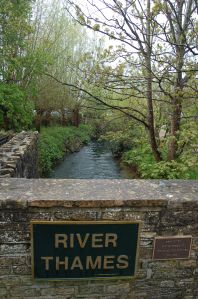
We entered the reserve, called North Meadow, run jointly by English Nature and the Wiltshire Wildlife Trust, via a bridge over the River Churn, one of the two rivers that skirt the wet meadow, the other being the Thames. In front of us lay an old, flower-rich hay meadow situated within the glacial flood plains of the two rivers. The meadow covers a vast area of 108 acres. It is designated a Special Area of Conservation and a Site of Scientific Interest and is an internationally important reserve.

2014 04 21_8314 2014 04 21_8316

2014 04 21_8315 2014 04 21_8230

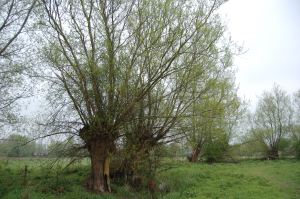
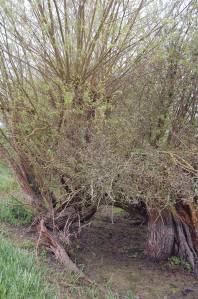
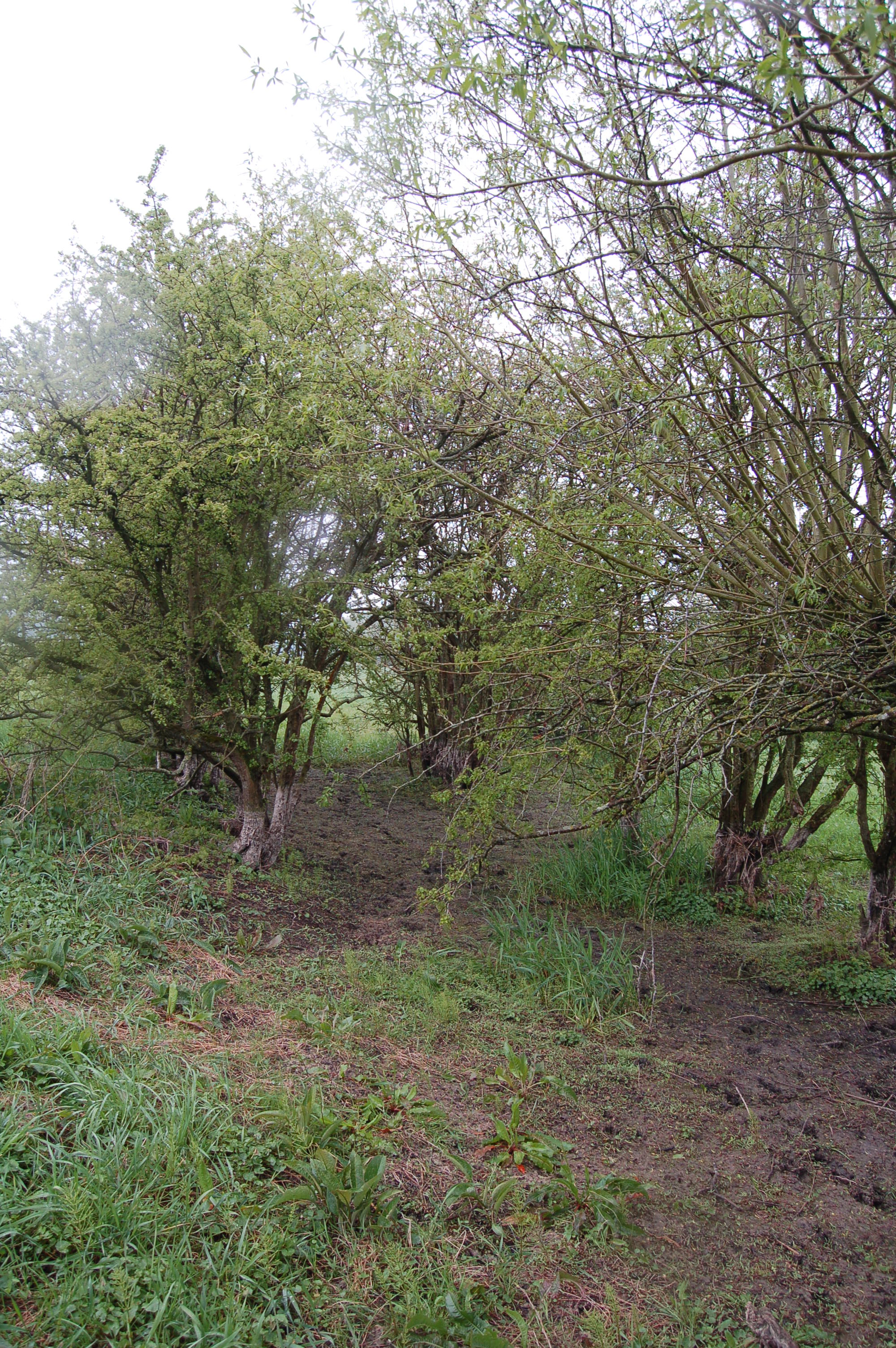
We were never far from one or other river as we walked the reserve margins. It was good to see beautiful ancient pollarded willows much in evidence aligning the banks of both. Seeing these brings back memories of my childhood fishing my local brook “The Carrant” whose banks were lined with them. We hid inside them as many were hollow and loved looking up inside them spotting wildlife mostly spiders and beetles but on special occasions a roosting Tawny Owl. The willows were pollarded which involved pruning them hard back to their main trunks every few years to harvest the stems for basket making and hurdle manufacture.

2014 04 21_8311 2014 04 21_8308

2014 04 21_8414 2014 04 21_8417

2014 04 21_8418 2014 04 21_8379

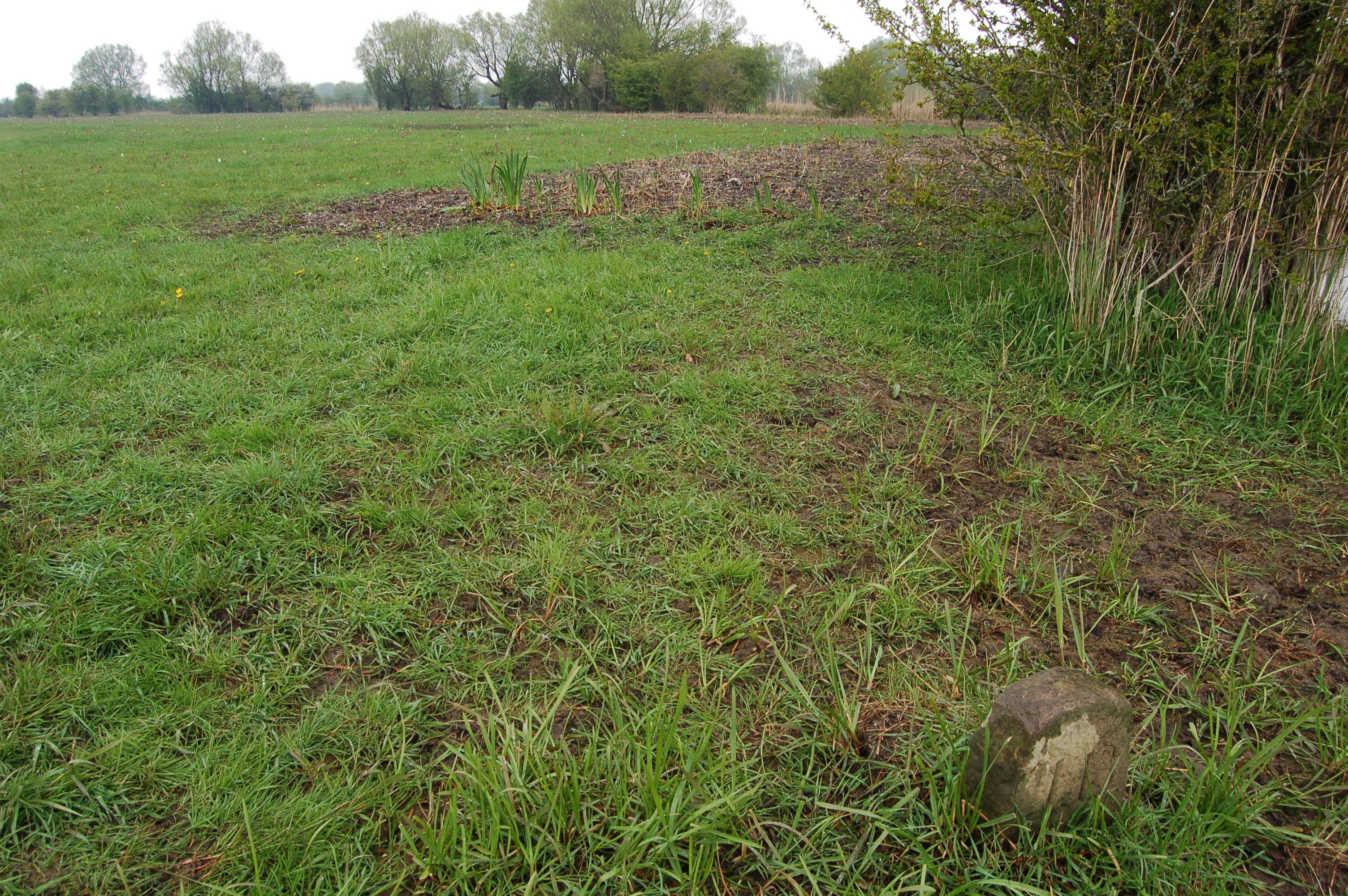
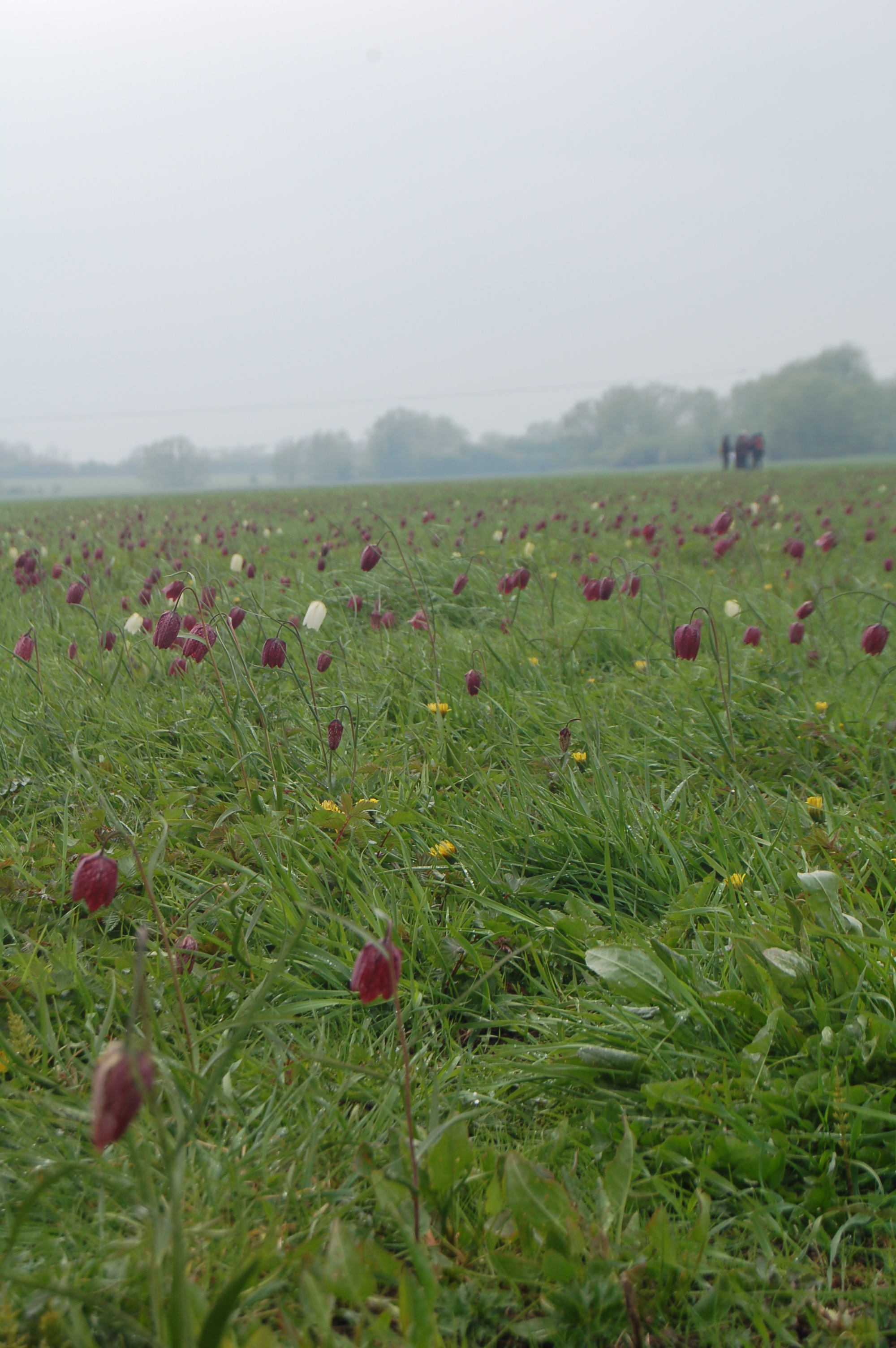
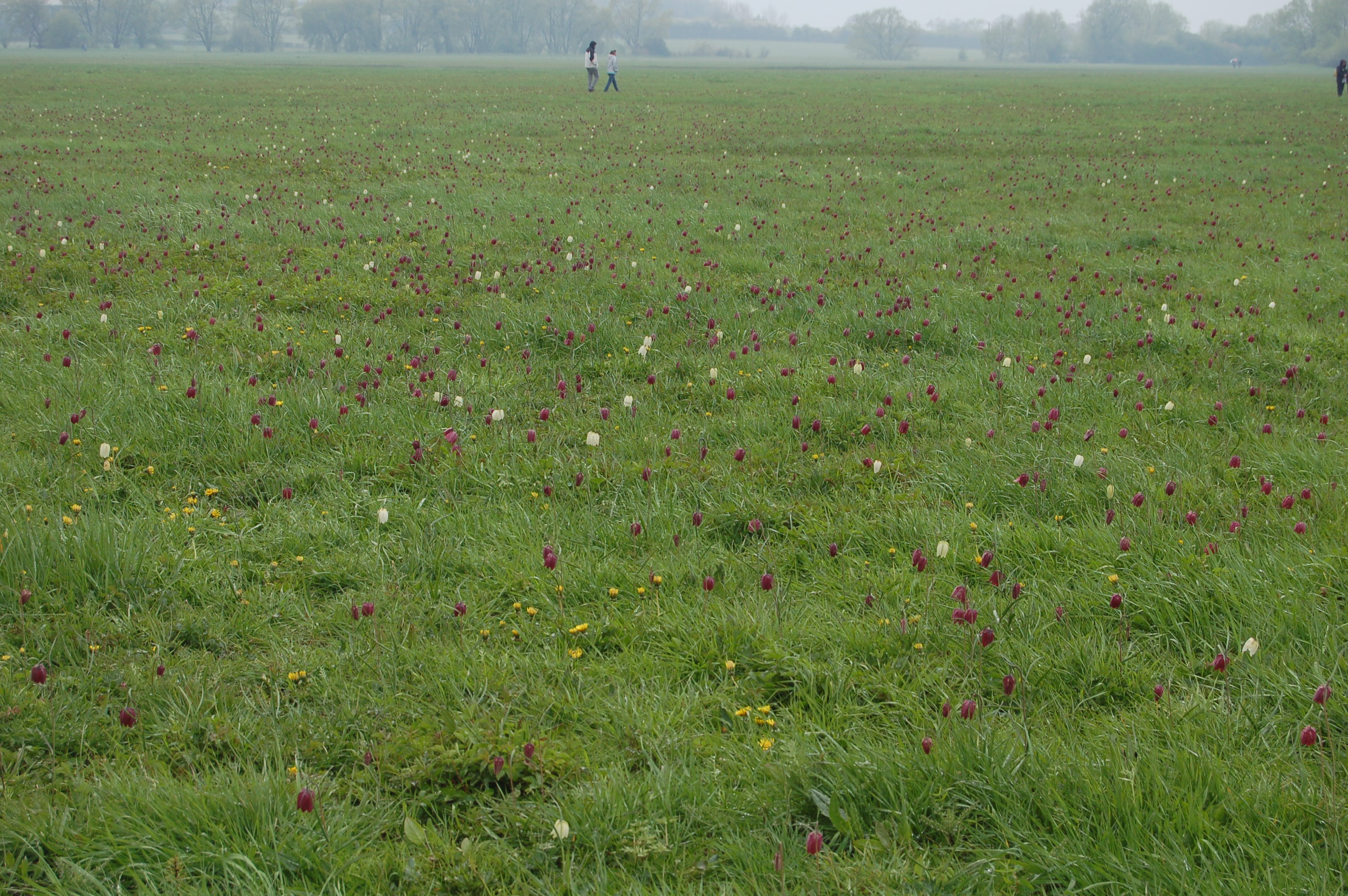
The reserve was one grand immense flat meadow which is flooded for a few months each year creating an unusual habitat for plants and all sorts of wildlife. At first glance we were amazed at the expanse of the meadow but somewhat disappointed at the relatively few numbers of Fritillaries visible. Seeing just one Fritillary is a treat though as it is such an unusual and beautiful flower. It is now sadly a “nationally scarce” plant.

2014 04 21_8232 2014 04 21_8234

Even though the light was very dull we soon spotted more of the little beauties we had waited so long to see and realised that there were far more than we had first thought. We grow Fritillaria meleagris in our spring border at home and in the orchard meadows on the allotment communal gardens but we had never seen them growing in their true wild habitat, the wetland meadows. We wondered just how amazing they must look on a bright day. To begin with we found them in small clumps including the odd white flowers which although lacking the checkerboard patterning have a delicate beauty of their own.

2014 04 21_8231 2014 04 21_8235

2014 04 21_8424

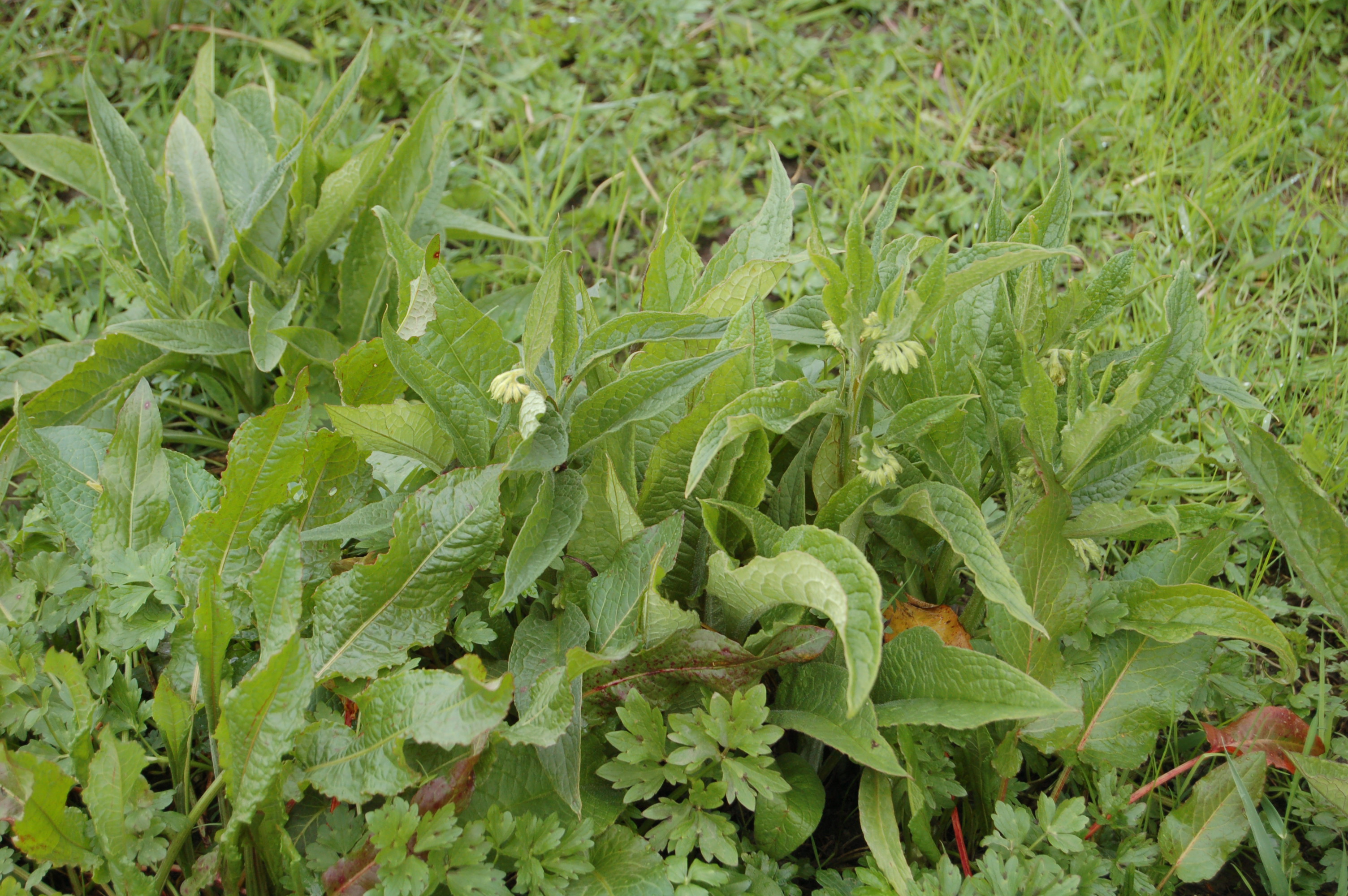
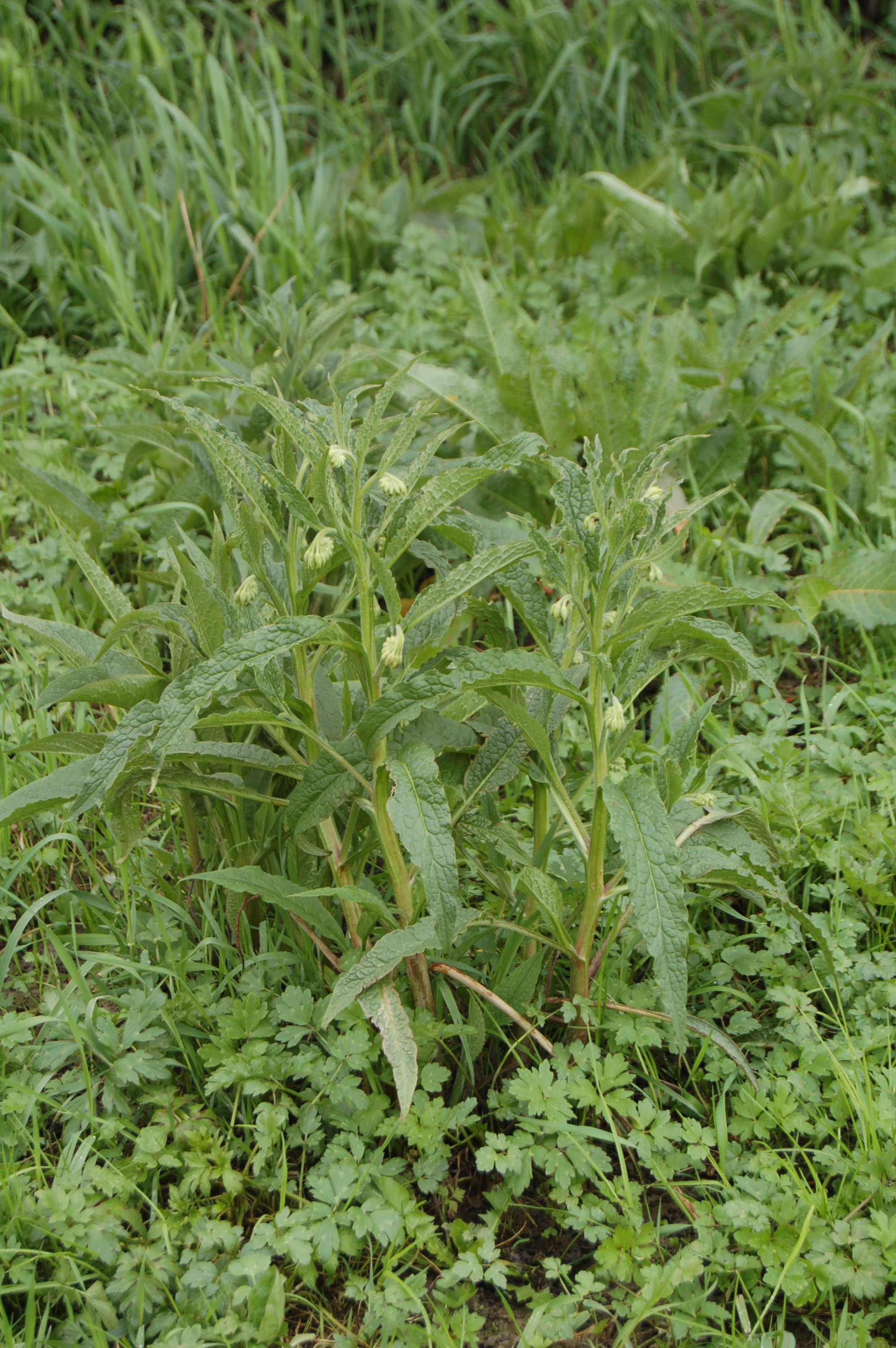
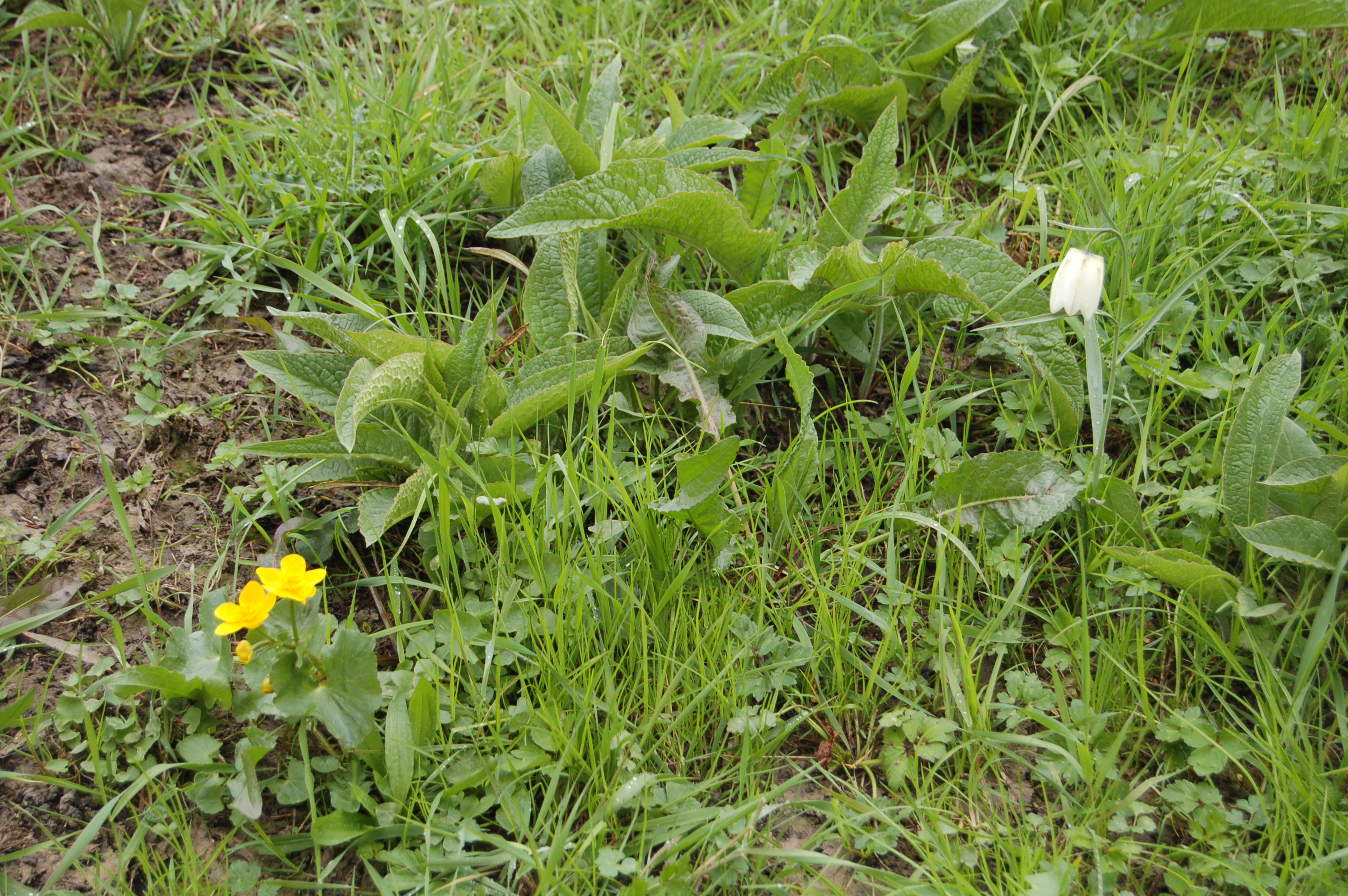
This wetland meadow habitat was home to other site specific species such as Comfrey and Kingcups, Lady’s Smock and Ragged Robin. Lovely old fashioned names for our native wildflowers. To maintain the special requirements of this collection of damp loving plants it is essential that the meadow is managed properly. It has to be grazed, used for hay and flooded for set periods.

2014 04 21_8415 2014 04 21_8416   2014 04 21_8419 2014 04 21_8420  2014 04 21_8422 2014 04 21_8309

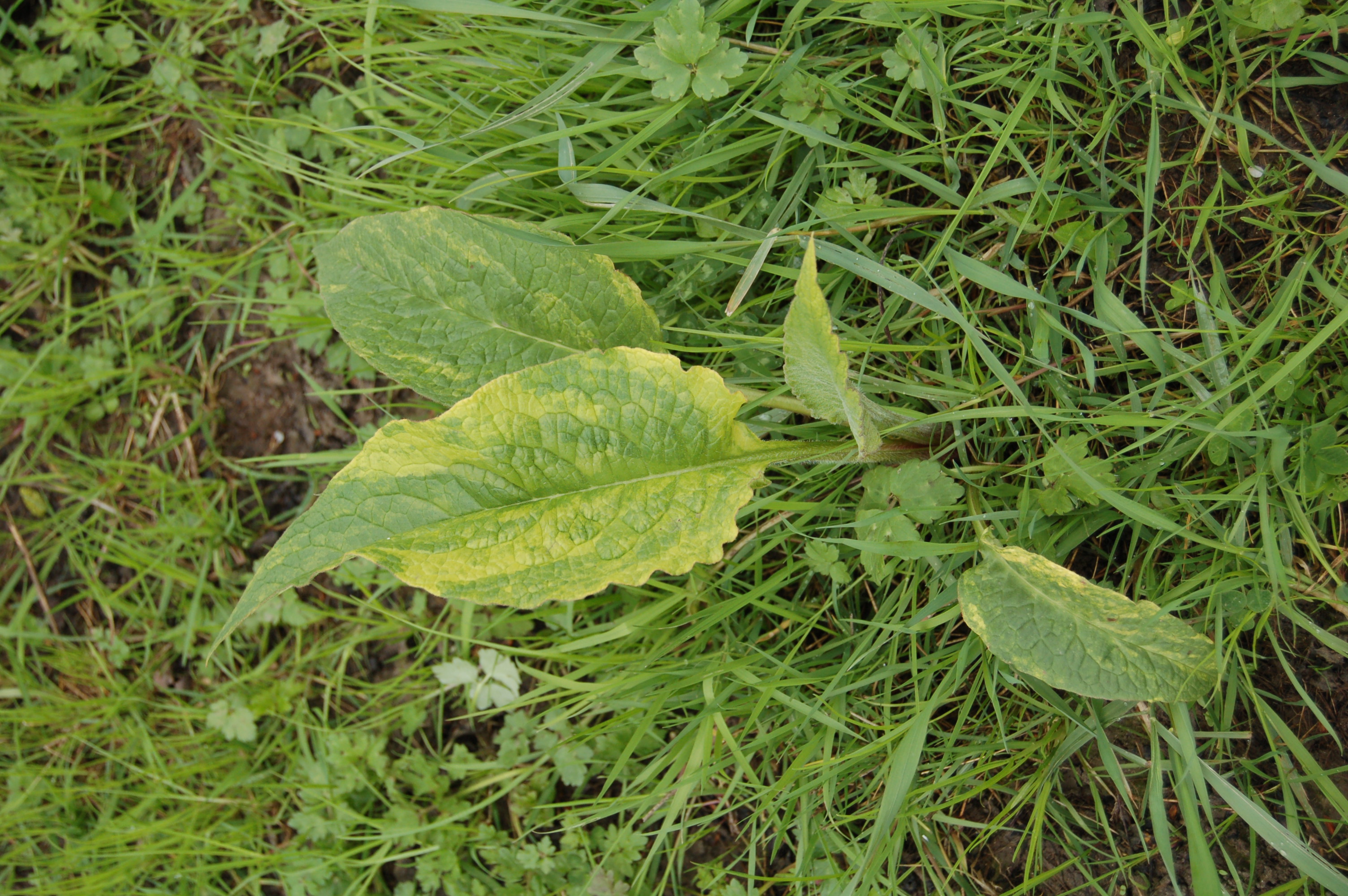
We were surprised to find one comfrey with yellow and green variegated foliage.

2014 04 21_8423

Along the margins of the meadow we stumbled upon these little carved stones, looking like miniature milestones. We later found out that they marked the plots allotted to individual “commoners” for haymaking.

2014 04 21_8313 2014 04 21_8312

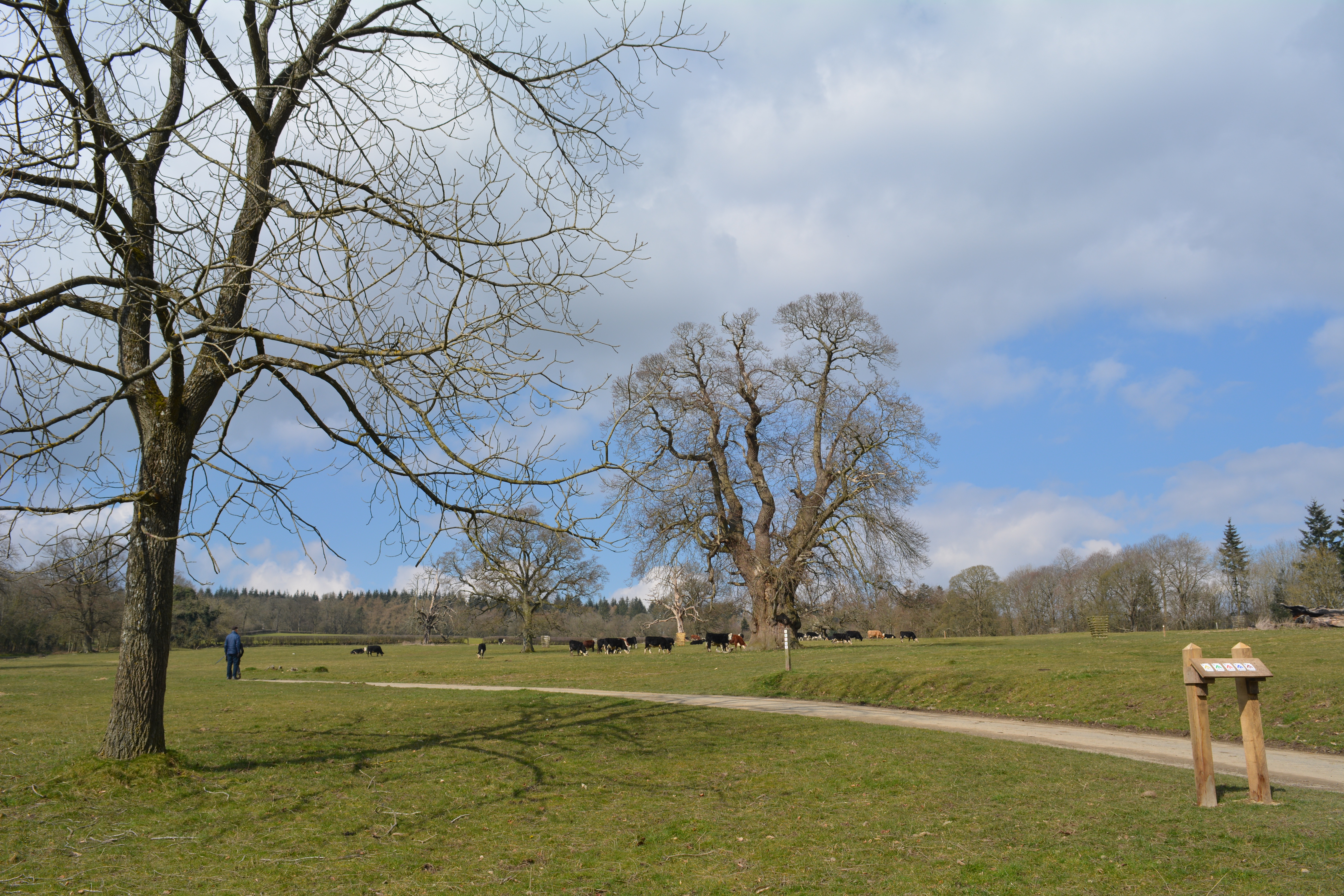
As we reached about two-thirds of the way around the meadow the density of the fritillaries increased markedly and tall reeds grew on its margins.
2014 04 21_8310   2014 04 21_8306

2014 04 21_8396 2014 04 21_8394 2014 04 21_8304 2014 04 21_8303 2014 04 21_8302 2014 04 21_8301 2014 04 21_8389 2014 04 21_8299

2014 04 21_8294 2014 04 21_8293


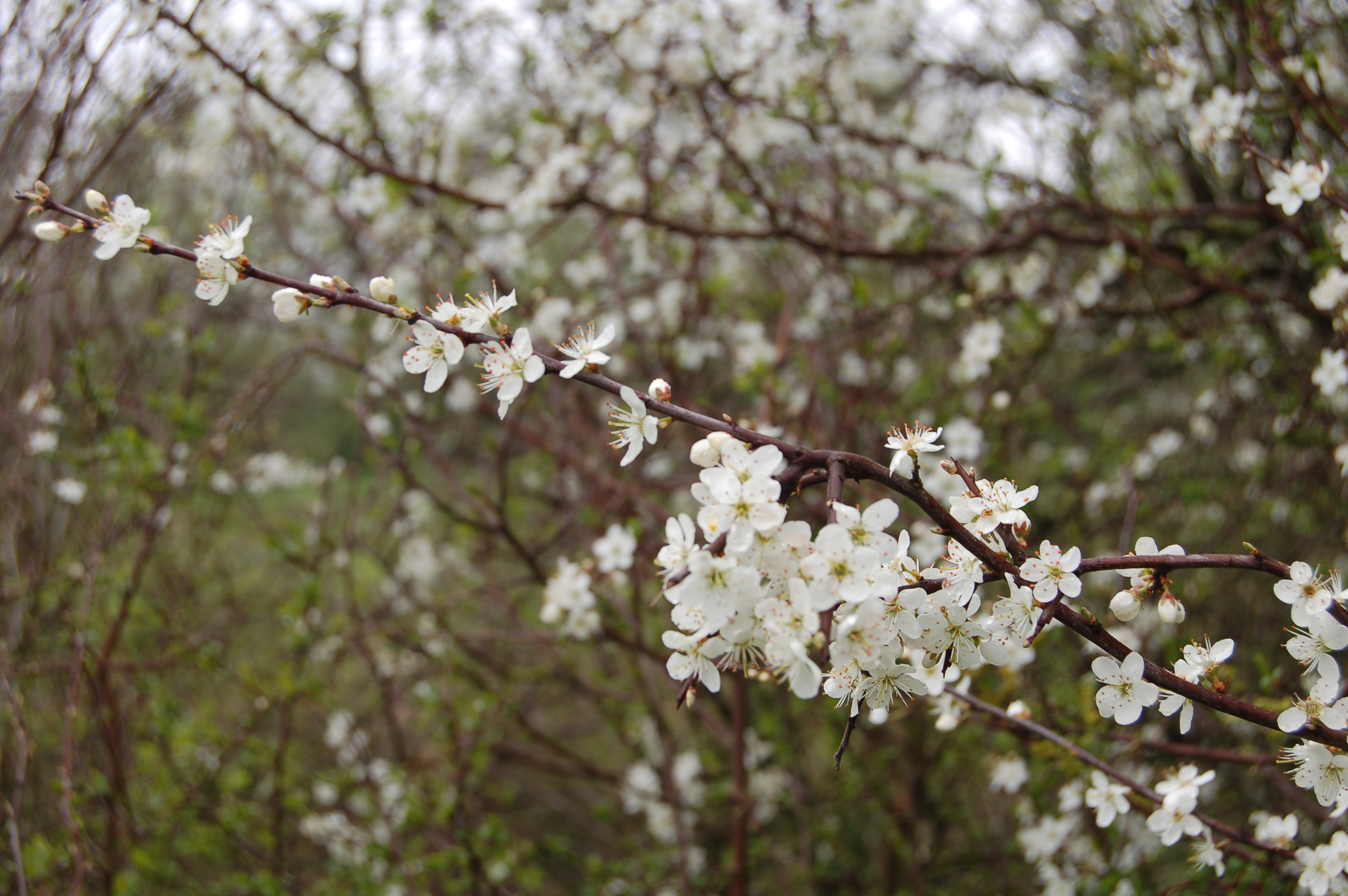
The last part of our wander around this wet meadow was alongside the river once again where Willow and Blackthorn trees grew happily in the damp soils.

2014 04 21_8298 2014 04 21_8297 2014 04 21_8296 2014 04 21_8421

2014 04 21_8295   2014 04 21_8292   2014 04 21_8288 2014 04 21_8465

2014 04 21_8278

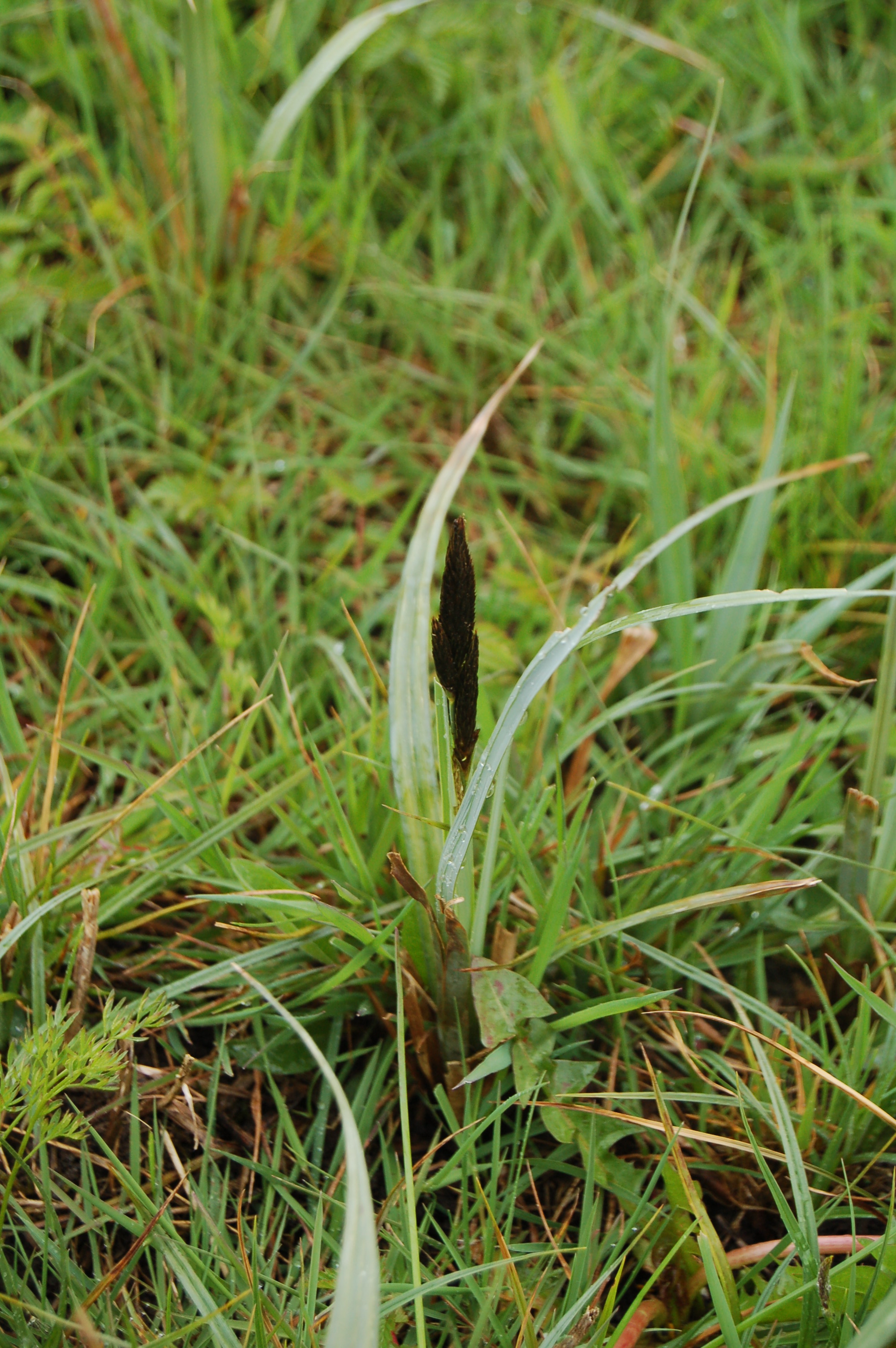
In a very damp patch we came across a clump of this very unusual looking sedge with its jet black flowers thus finishing off our visit to the field of Fritillaries with a mystery as we had no idea what it was.

2014 04 21_8286 2014 04 21_8285

As we left the reserve we just had to stop and admire this old and very unusual toll cottage.

2014 04 21_8495

This Veggie Life

A Vegetarian | Nature Lifestyle Blog

Rambling in the Garden

.....and nurturing my soul

The Arch City Gardener

Journeys In St. Louis Gardening and Beyond

Garden Dreaming at Châtillon

Consult the genius of the place

Storyshucker

A blog full of humorous and poignant observations.

gardeninacity

Notes from a wildlife-friendly cottage garden

PlayGroundology

...an emerging social science

The Official Blog of British Wildlife

'The most important and informative publication on wildlife of our times' - The Independent. This blog is a member of The UK & Ireland Natural History Bloggers group: www.uknhb.blogspot.com

iGrowHort

Inspire - Cultivate - Grow Native Plants - Restore Landscapes

Bishops Meadow Trust

To create and protect a semi-natural wild space for the people of Farnham to enjoy and experience an array of British wildlife in our town

Gardening with Children

The www.gardeningwithchildren.co.uk Blog

UKbirdingtimeline

birding through the seasons, why birds matter and how to conserve them

NATURE WALKER

with a camera in hand

Jardin

Transform your outdoor space

Eva's space

My allotment, cooking and other interests

Old School Garden

my gardening life through the year

LEANNE COLE

Trying to live a creative life

fromacountrycottage

trying to live as lightly as possible on our beautiful planet

Good Life Gardening

Nature lovers from Leicester living the good life.

mybeautfulthings

Finding the beautiful in the everyday

mawsonmichelle

Michelle's Allotment

In and Out of My Garden

thoughts from and about my garden

Greenhousing

Big plans for a small garden

The Scottish Country Garden

A Walled Country Garden in South East Scotland

The Fruity Chicken

Life at the fruity chicken

willowarchway

Off grid living. Self sufficient. "PERMAGANICS RULE".

St Anns Allotments

Nottingham's Grade 2* Listed Allotments and Community Orchard

Manifest Joy Harvests

a journey in suburban vegetable gardening

Allotmental

The madness of growing your own

Penny's Garden: a harvest beyond my front door

A novel approach to vegetable gardening

arignagardener

Sustainable living in the Irish countryside.

NewEnglandGardenAndThread

Master Gardener, amateur photographer, quilter, NH native, and sometimes SC snowbird

dianajhale

Recent work and work in progress and anything else that interests me

planthoarder

a chaotic cottage gardener

Lens and Pens by Sally

a weekly blog that creates a personal philosophy through photographs and words

Dewdrops and Sunshine

Stories from a sassy and classy Southern farmbelle.

The Pyjama Gardener

Simple Organic Gardening & Seasonal Living

gettin' fresh!

turning dirt into dinner

JOY...

today the world is created anew

Garden Birds

Notes from a Devon garden

ShootAbout

Life Through The Lens

Adapting Pixels

A photography blog showcasing the best photography pictures and videos on the internet

Wildlifegardening's Blog

Just another WordPress.com site

naturestimeline

personal observations from the natural world as the search continues for a new approach to conservation.

LATEBLOOMERBUDS

The Wonders of Life through my Eyes, my Heart, my Soul