Categories
garden photography gardens open to the public photography trees

The Survivor – Take One Tree

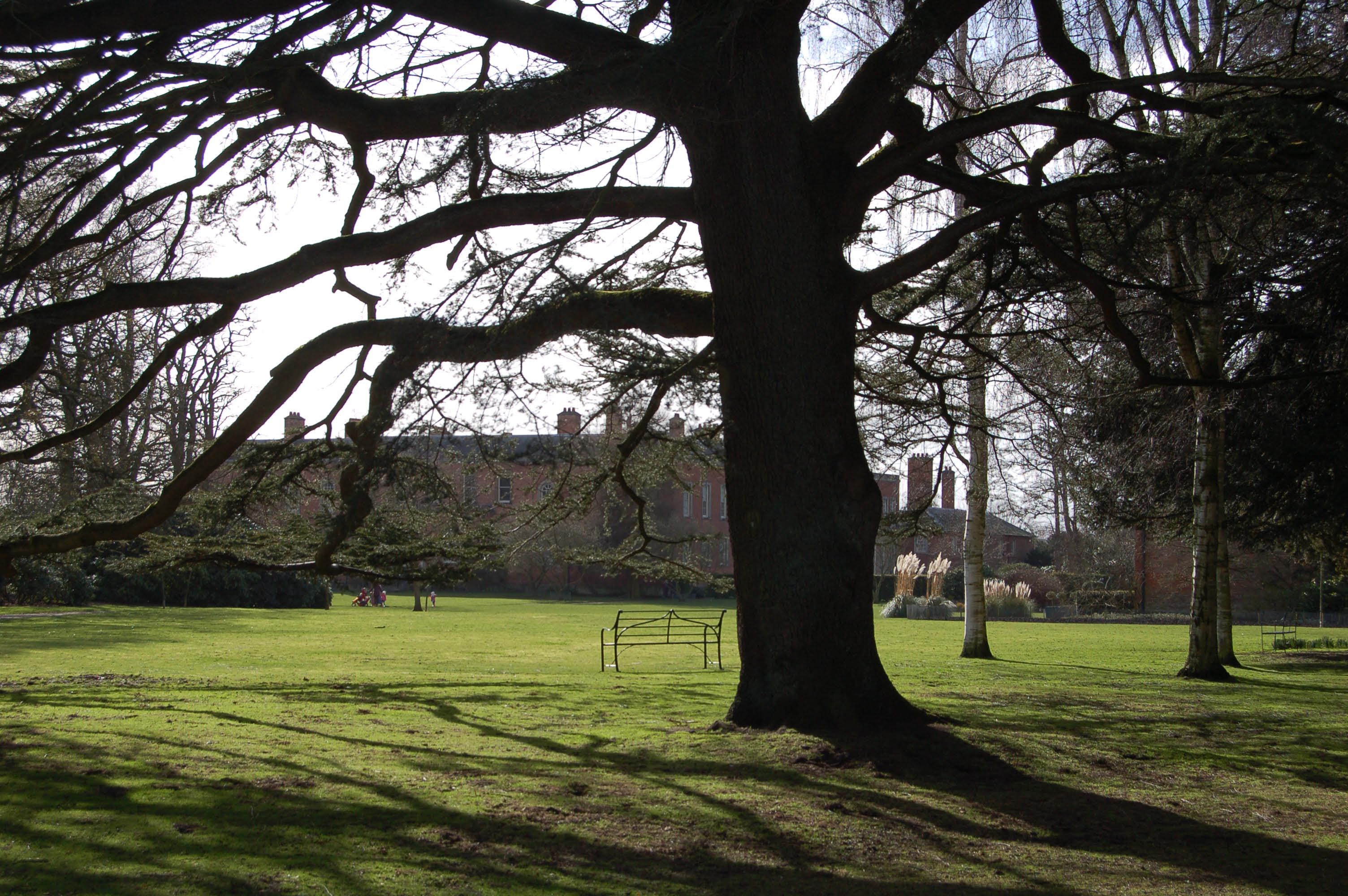
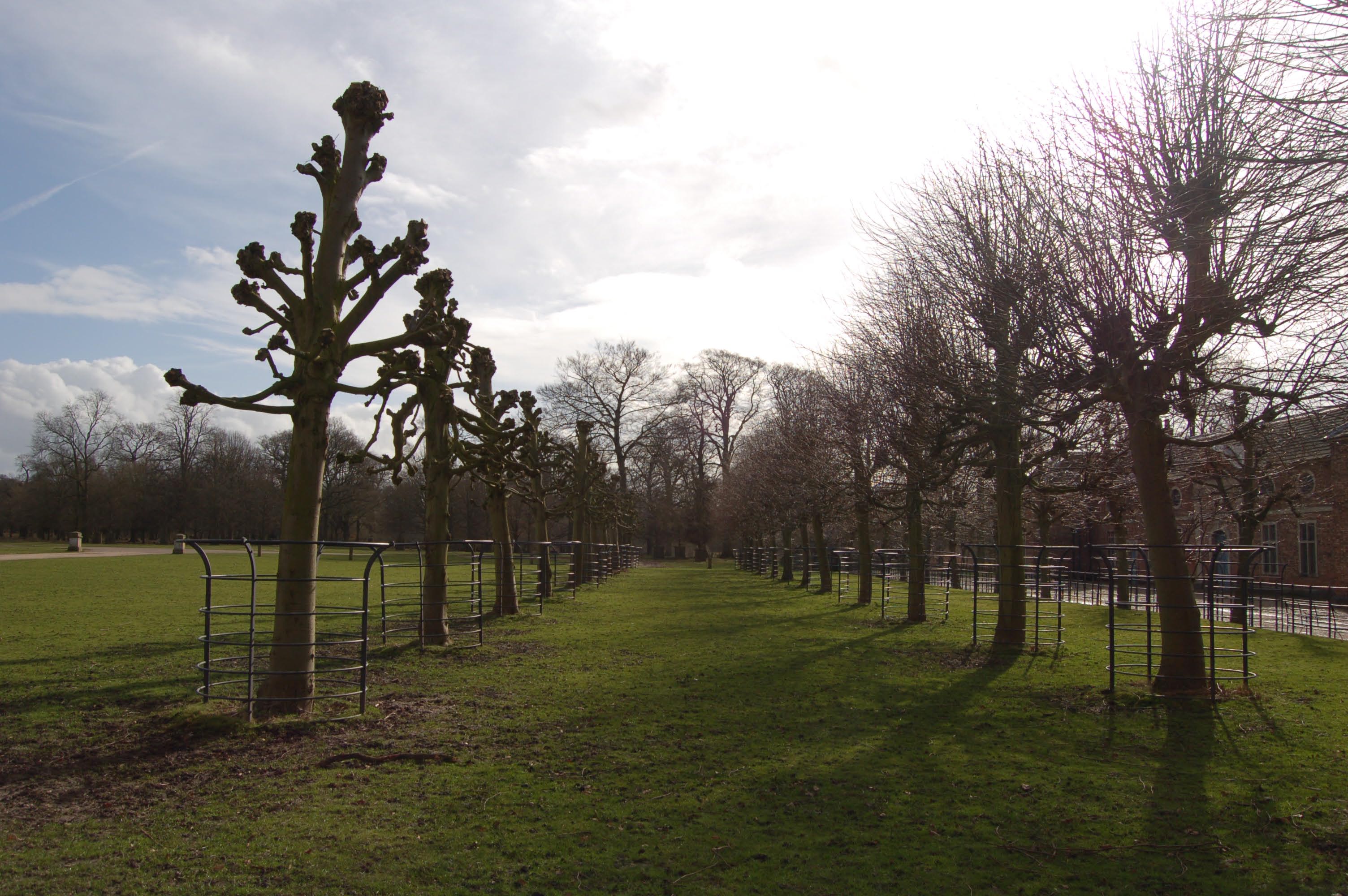
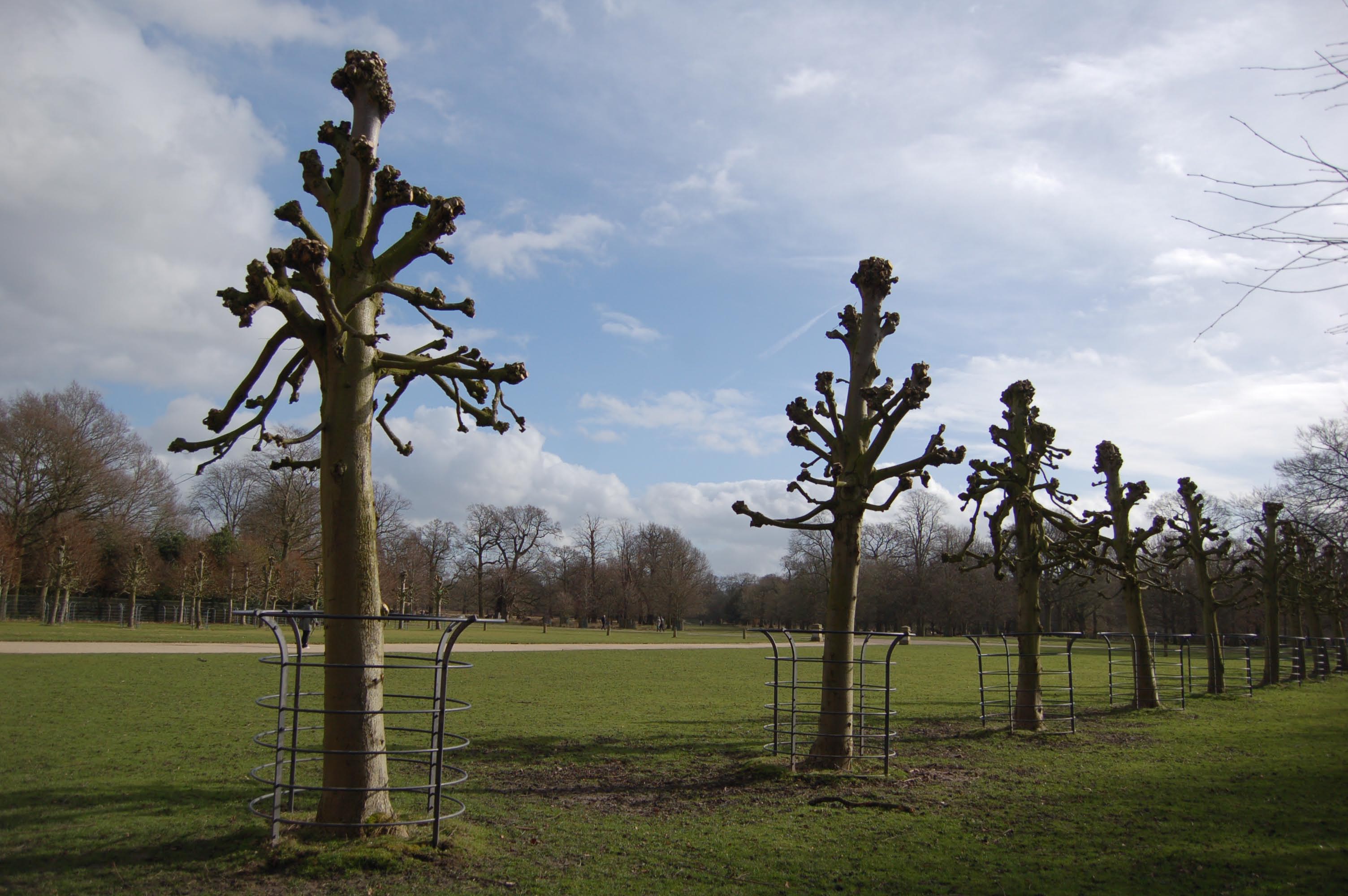
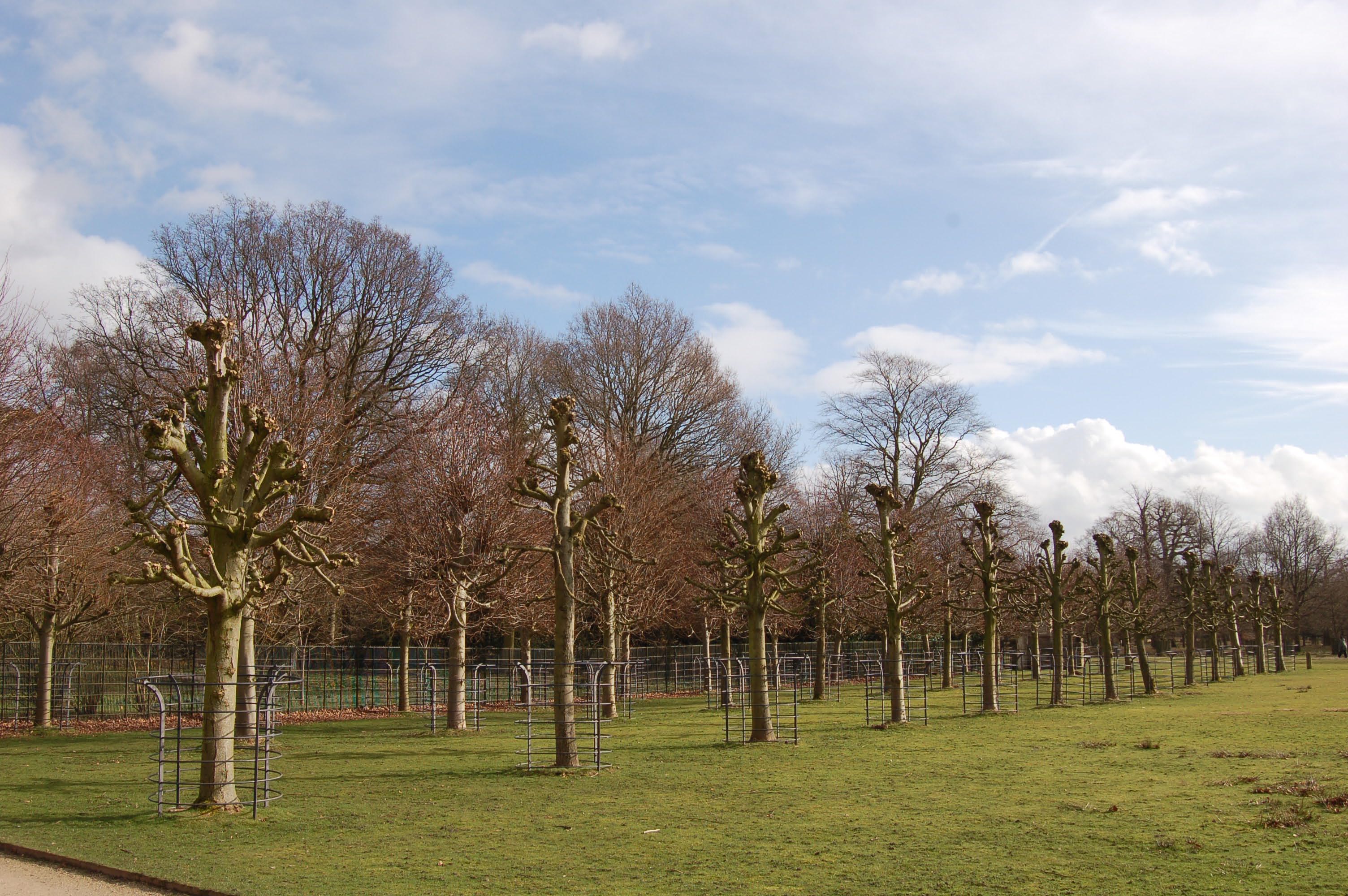
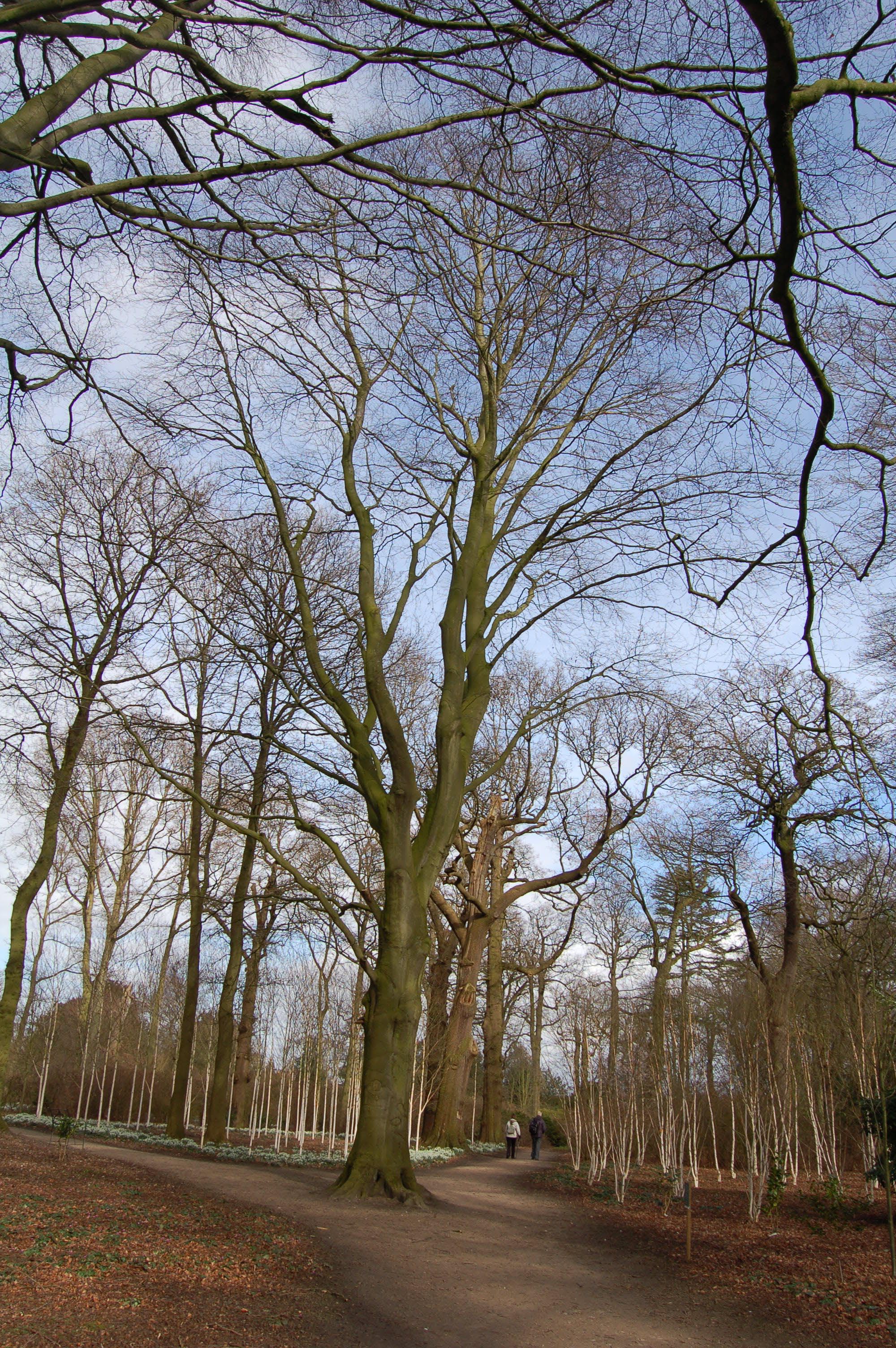
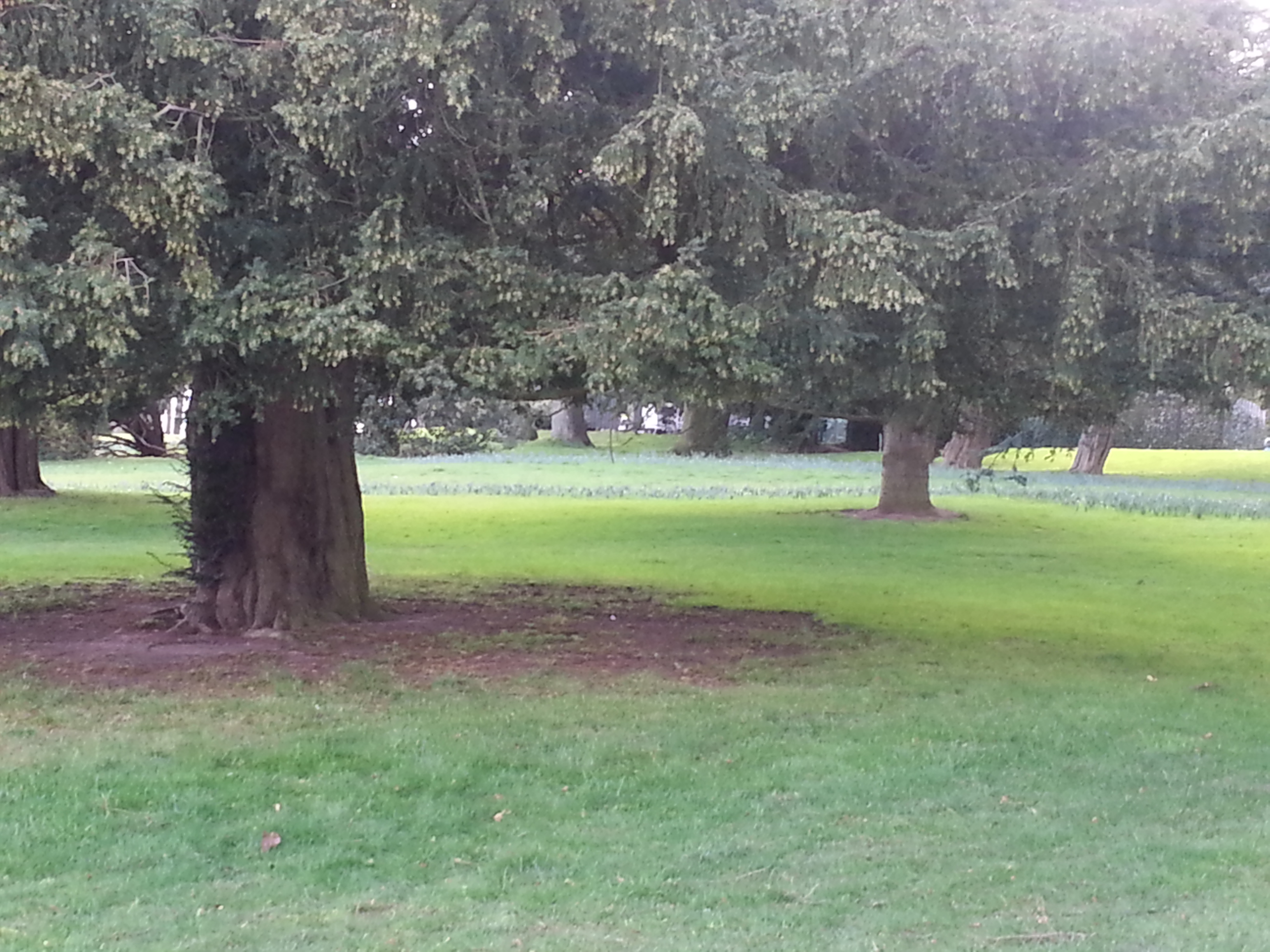
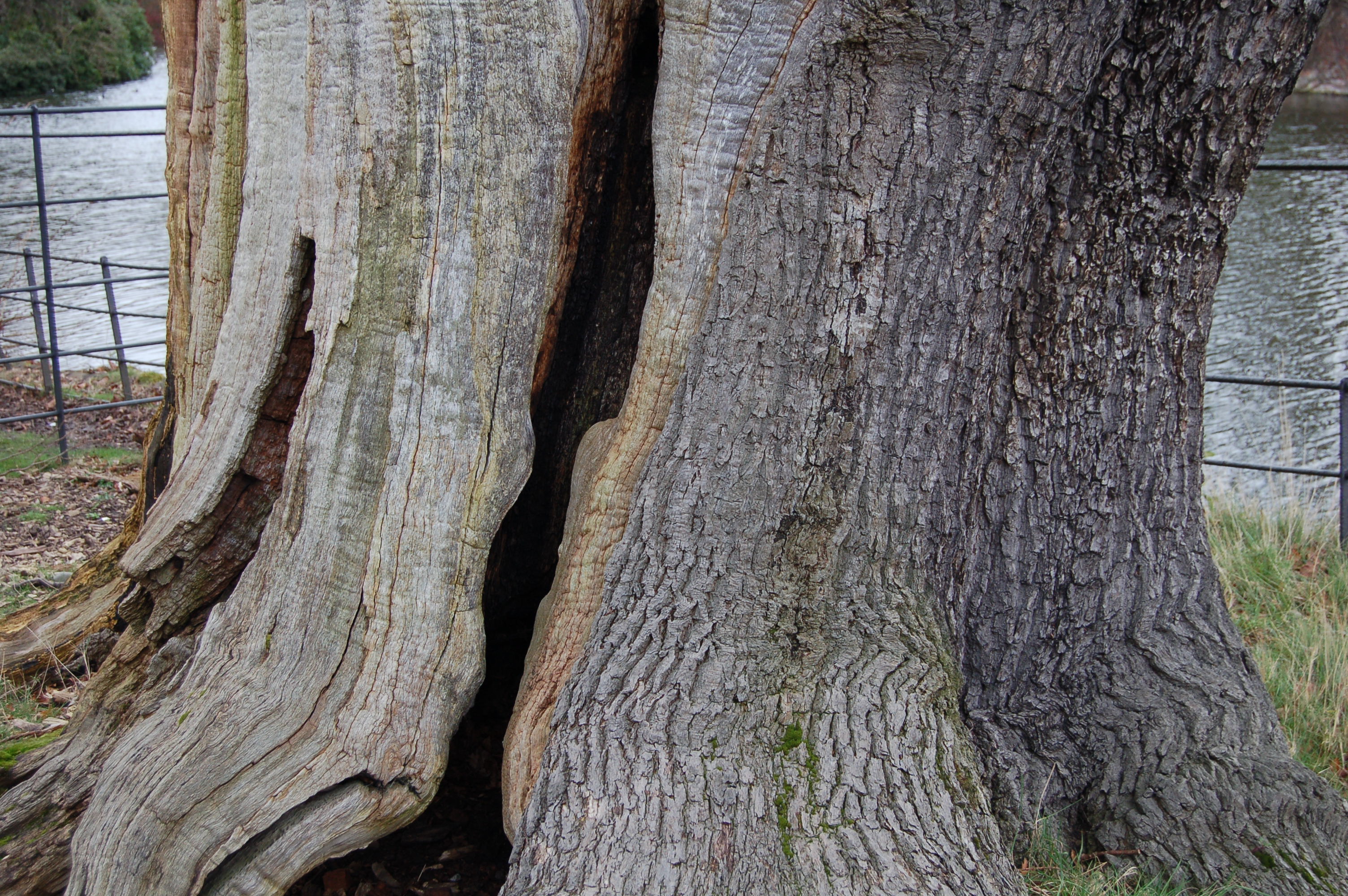
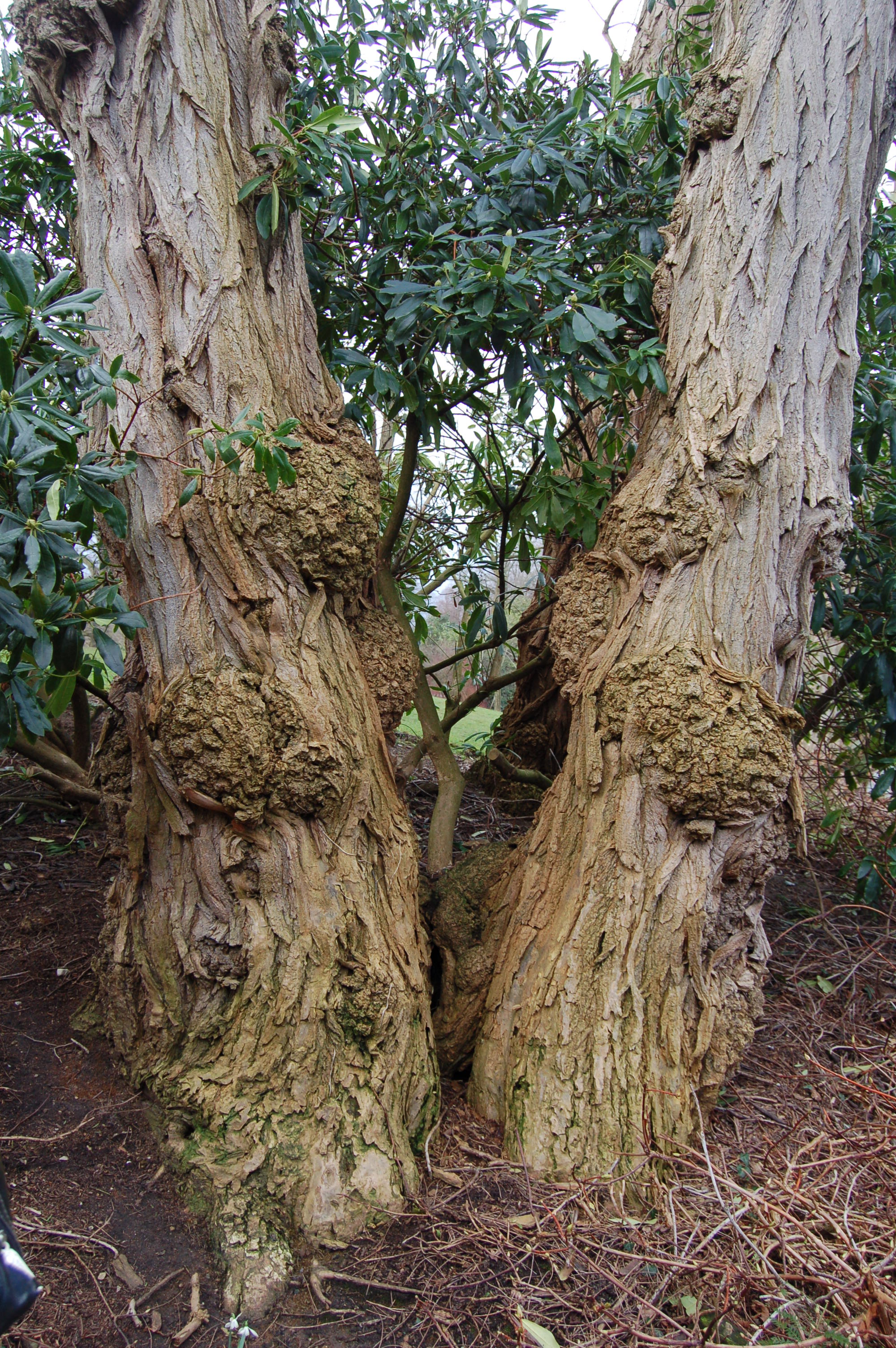
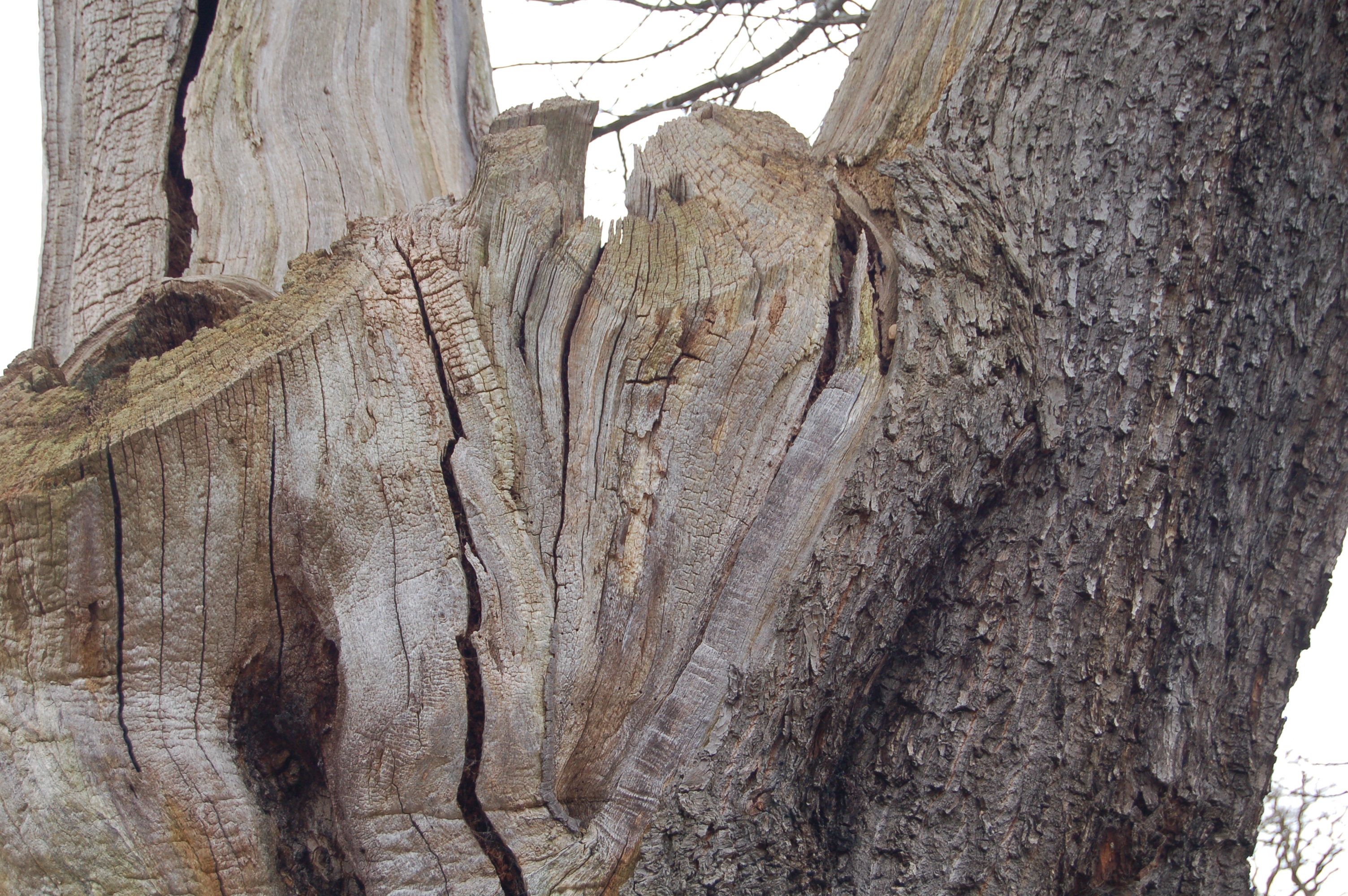
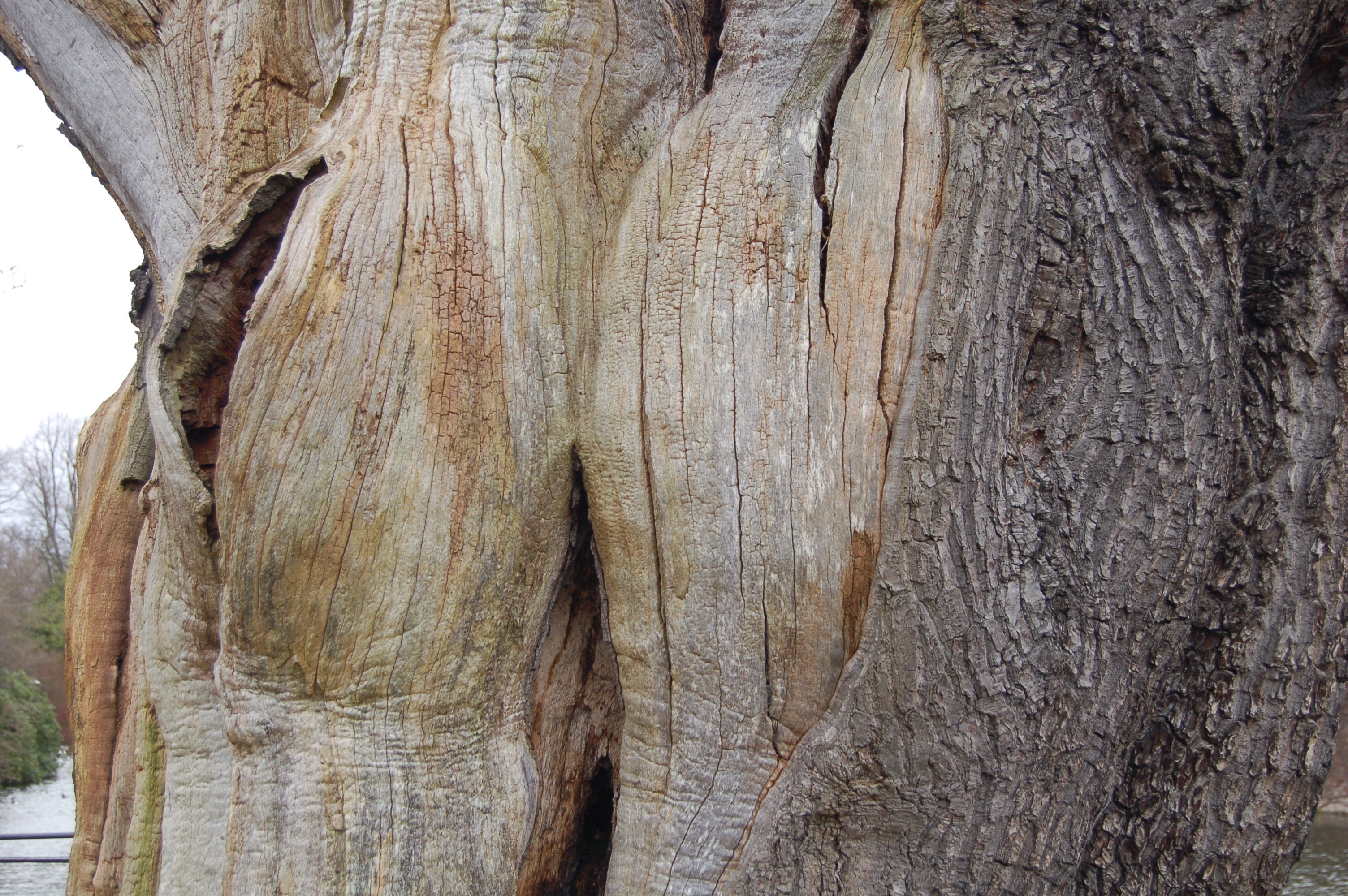
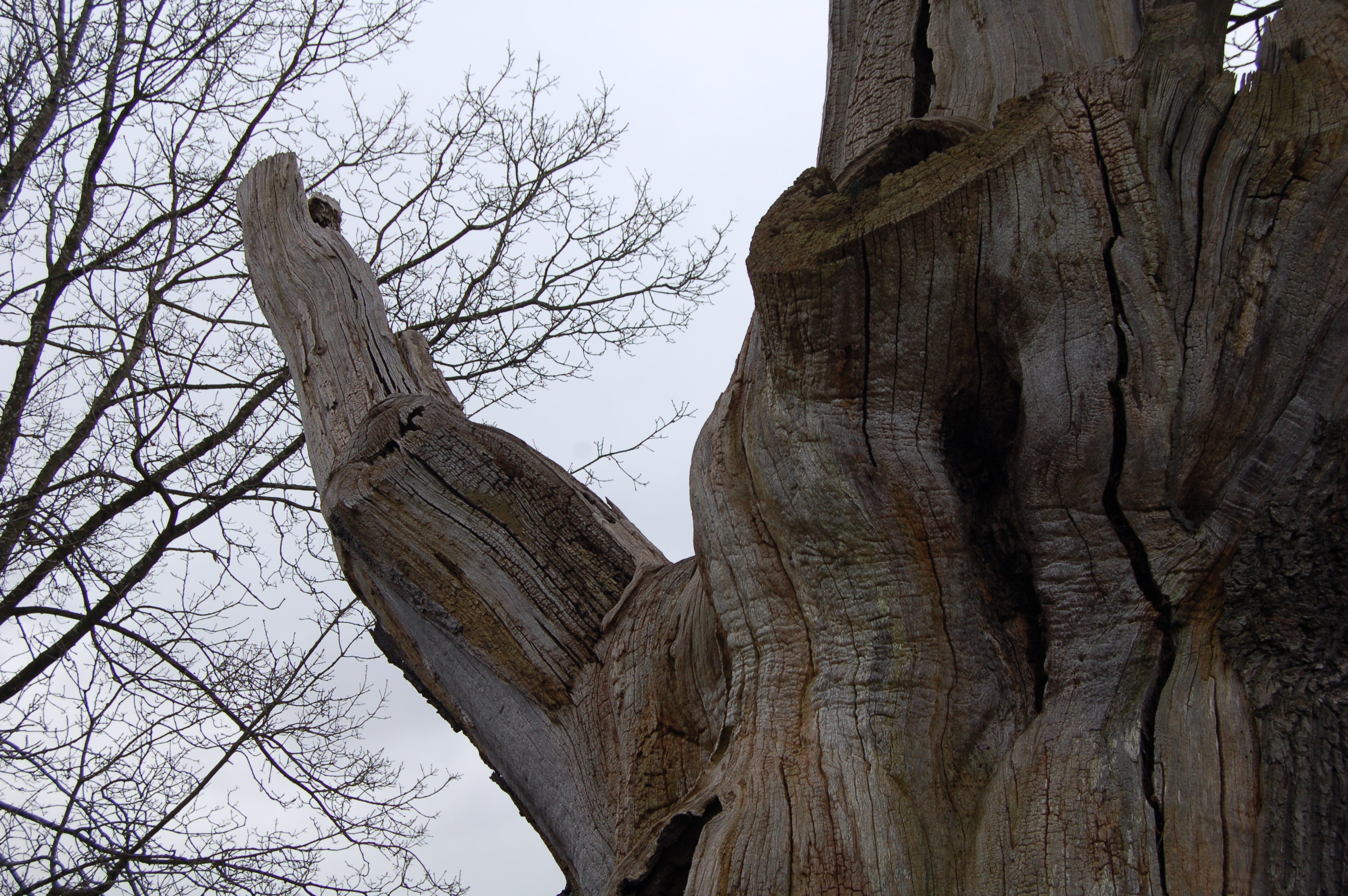
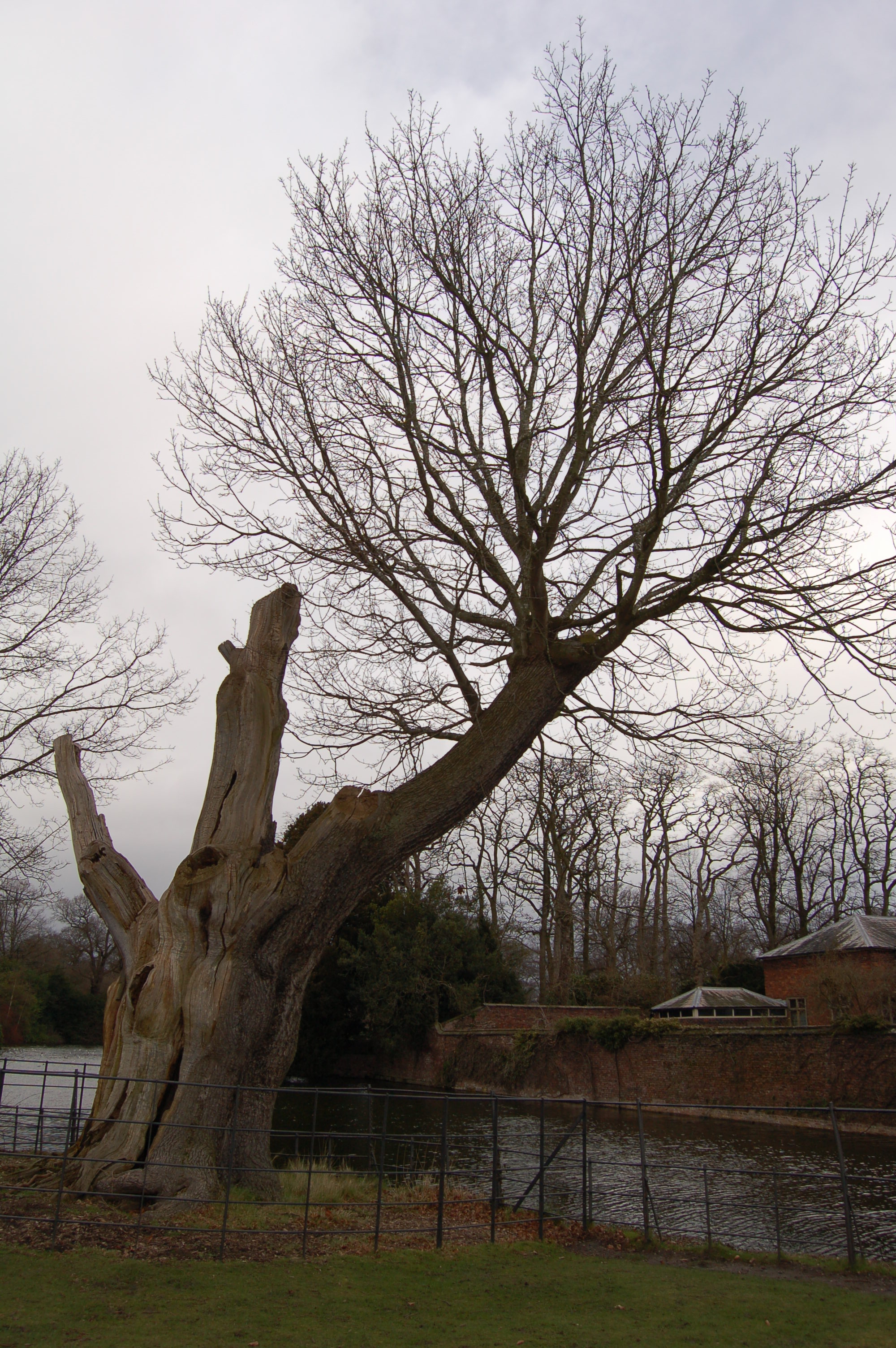
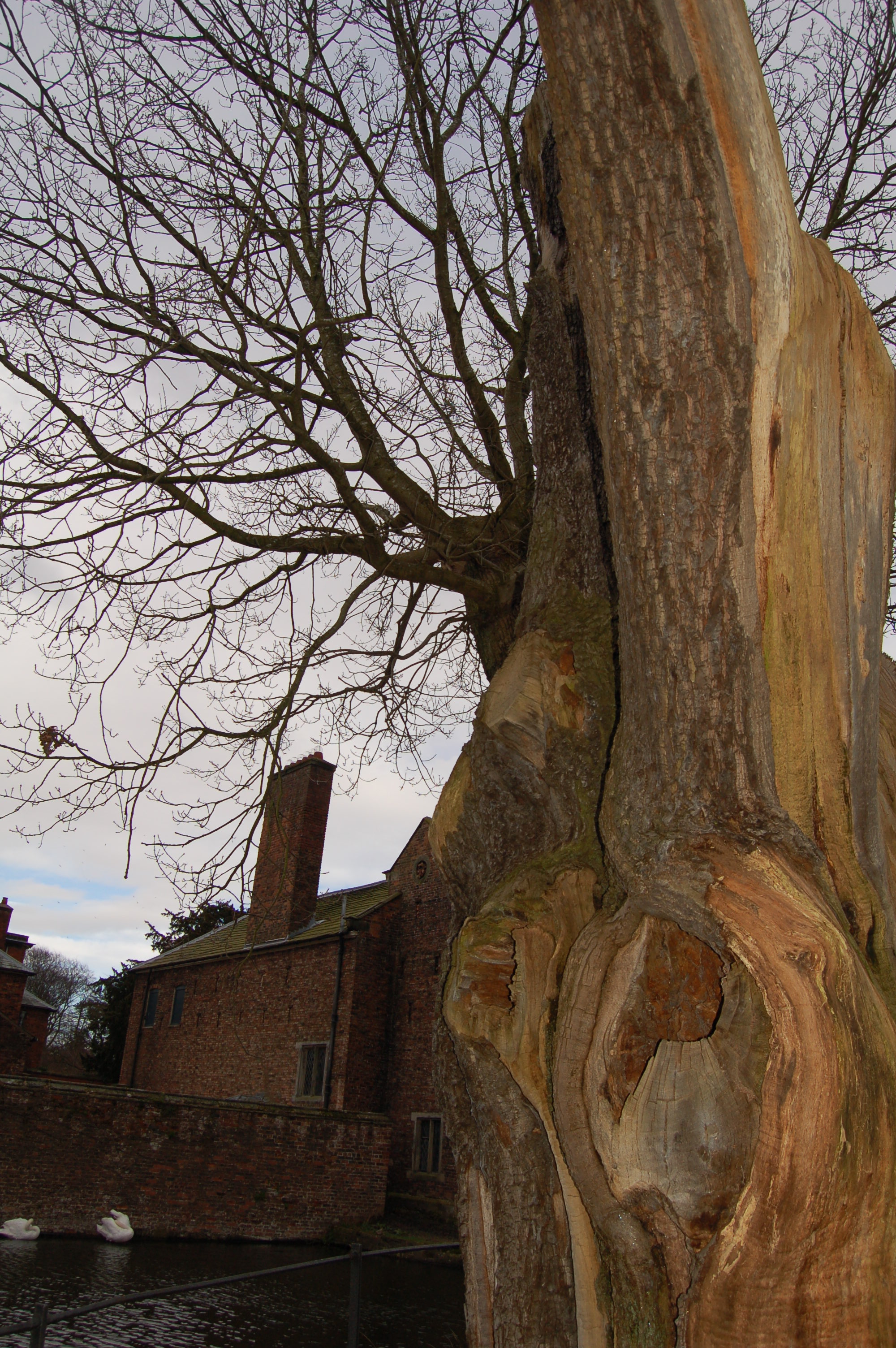
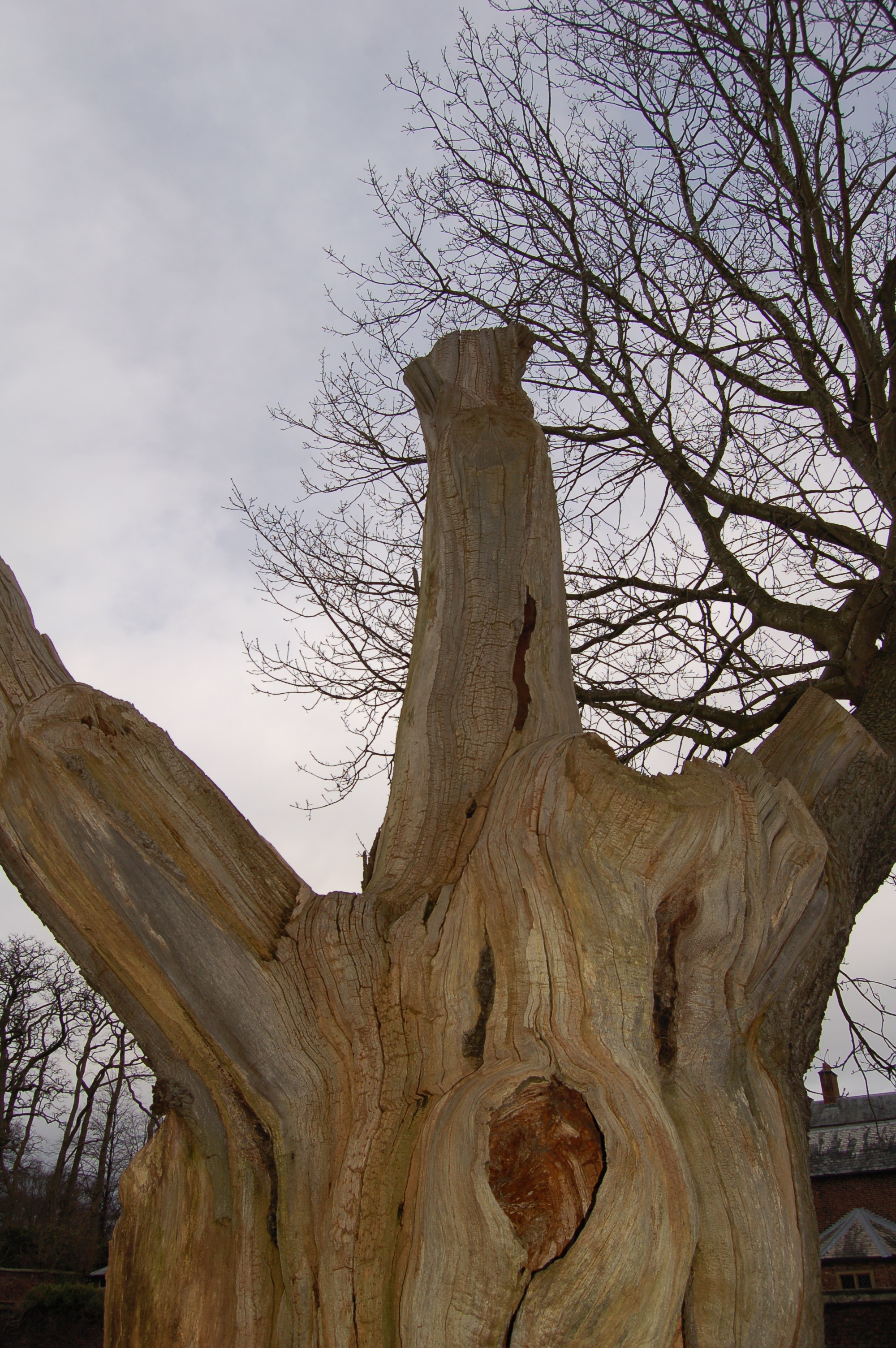
Whilst on a garden visit recently to the National Trust’s Dunham Massey, we came across an ancient tree just about hanging on to life. There was very little left of the main trunk and what was left was hollow and had lost its bark.

2014 02 25_6747  2014 02 25_6741 2014 02 25_6750  2014 02 25_6749  2014 02 25_6751 2014 02 25_6754   2014 02 25_6748

One branch had found enough life there to grow out from one side and produced  healthy looking growth. It gave the impression of  a young tree growing on top of the remains of a dead one.

2014 02 25_6746 2014 02 25_6753 2014 02 25_6752

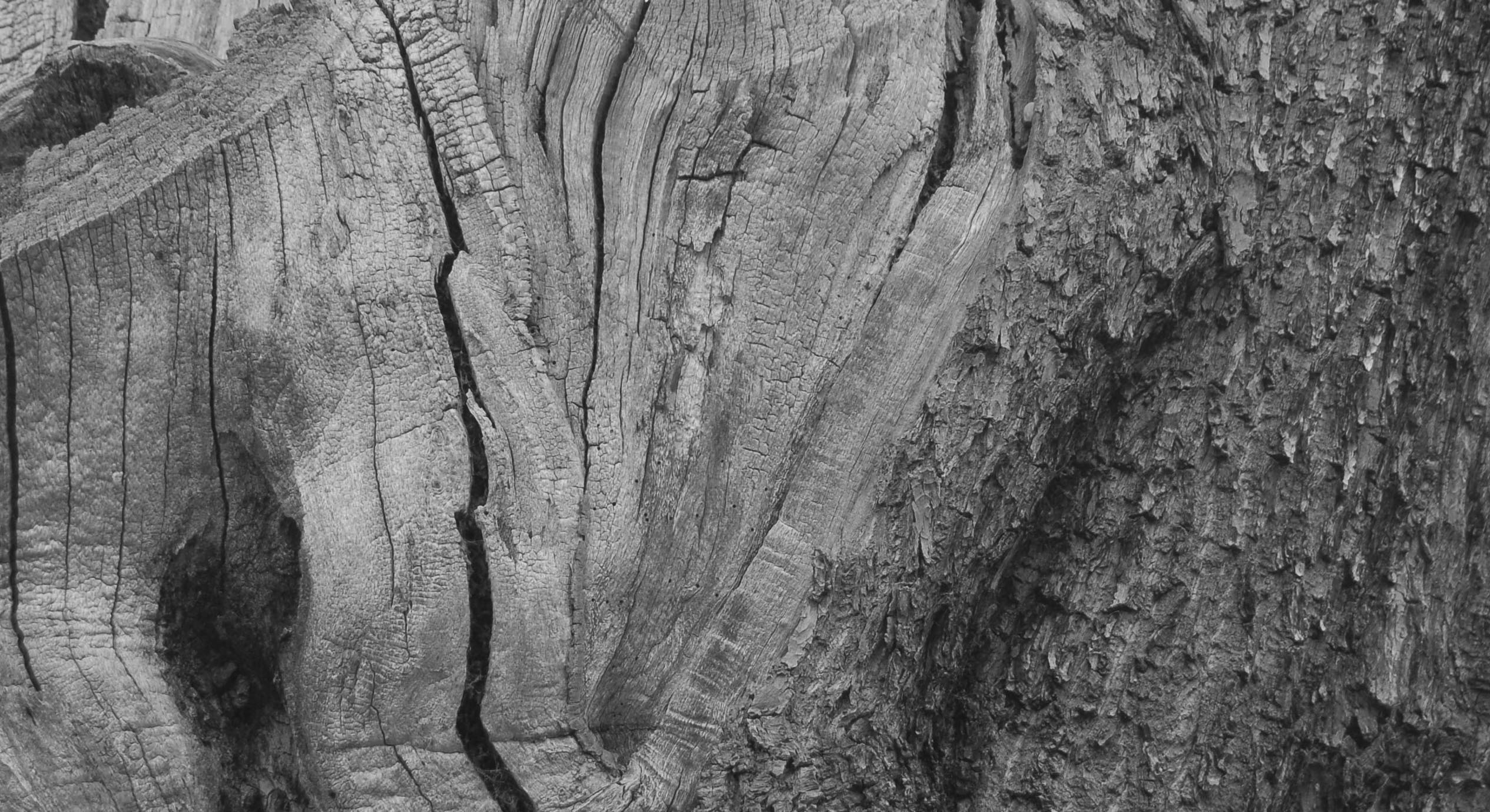
I tried a few of the pics in black and white  to emphasise the textures.

t2014 02 25_6749_edited-1 2014 02 25_6751_edited-1 2014 02 25_6750_edited-1

Categories
garden photography gardening gardens open to the public grasses hardy perennials light light quality ornamental grasses ornamental trees and shrubs roses Winter Gardening winter gardens

A Garden in February – Trentham

As promised we made our promised return to the gardens at Trentham, near Newcastle-under-Lyme in Staffordshire, right on the edge of The Potteries.

The day promised good weather which would make a welcome change. On our last few visits to this garden we had been subjected to rain and often cold winds. For our February exploration the sky was blue and the car’s dashboard read out told us the temperature was 9 degrees. The aim of this return visit and indeed all the following monthly ones was to see how the garden had progressed, how things had changed, which plants were looking good and which ones were the stars.

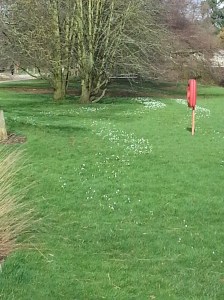
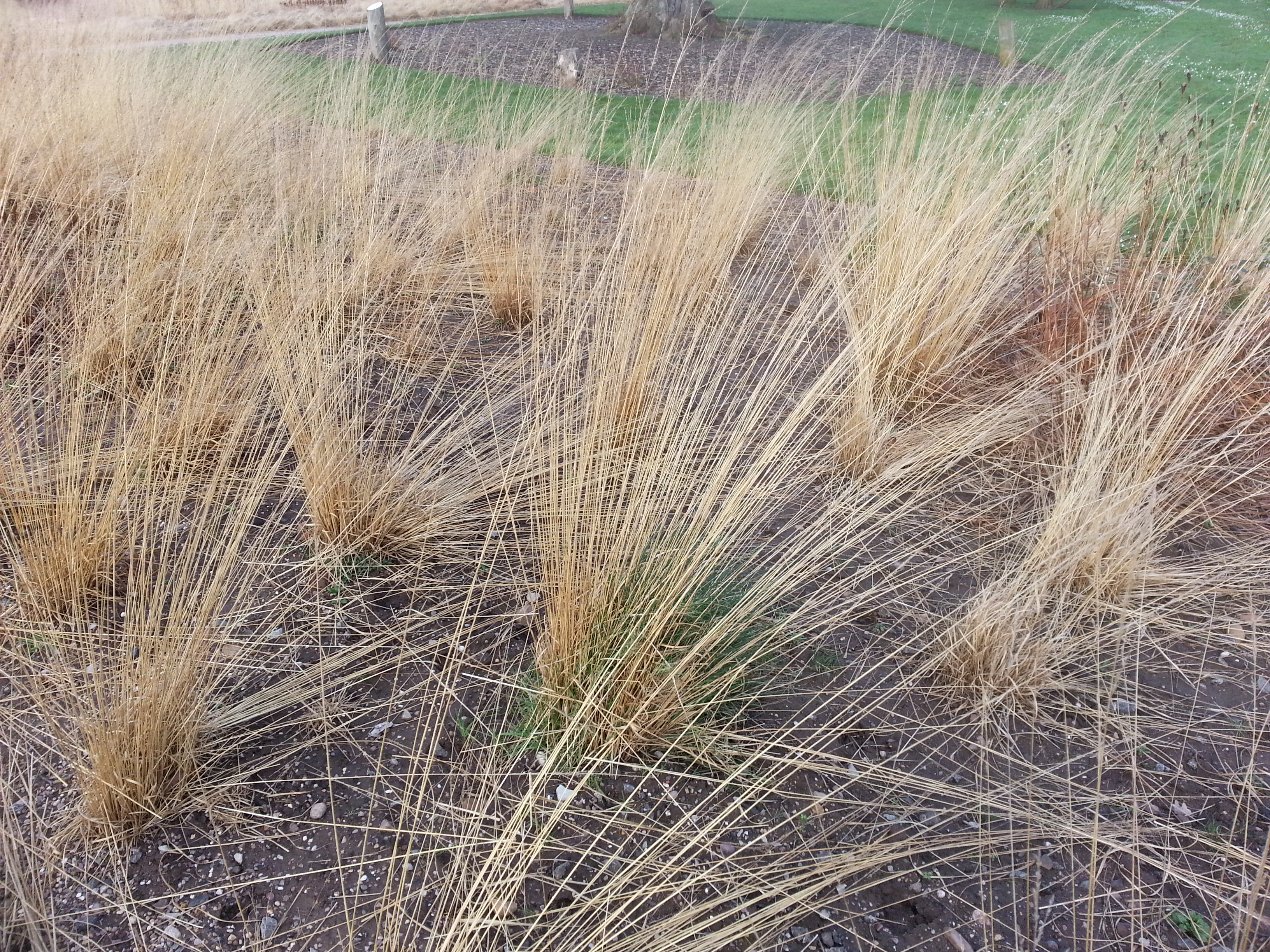
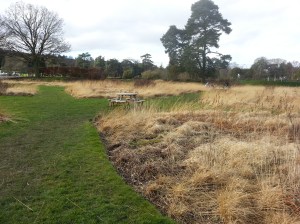
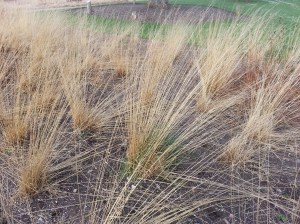
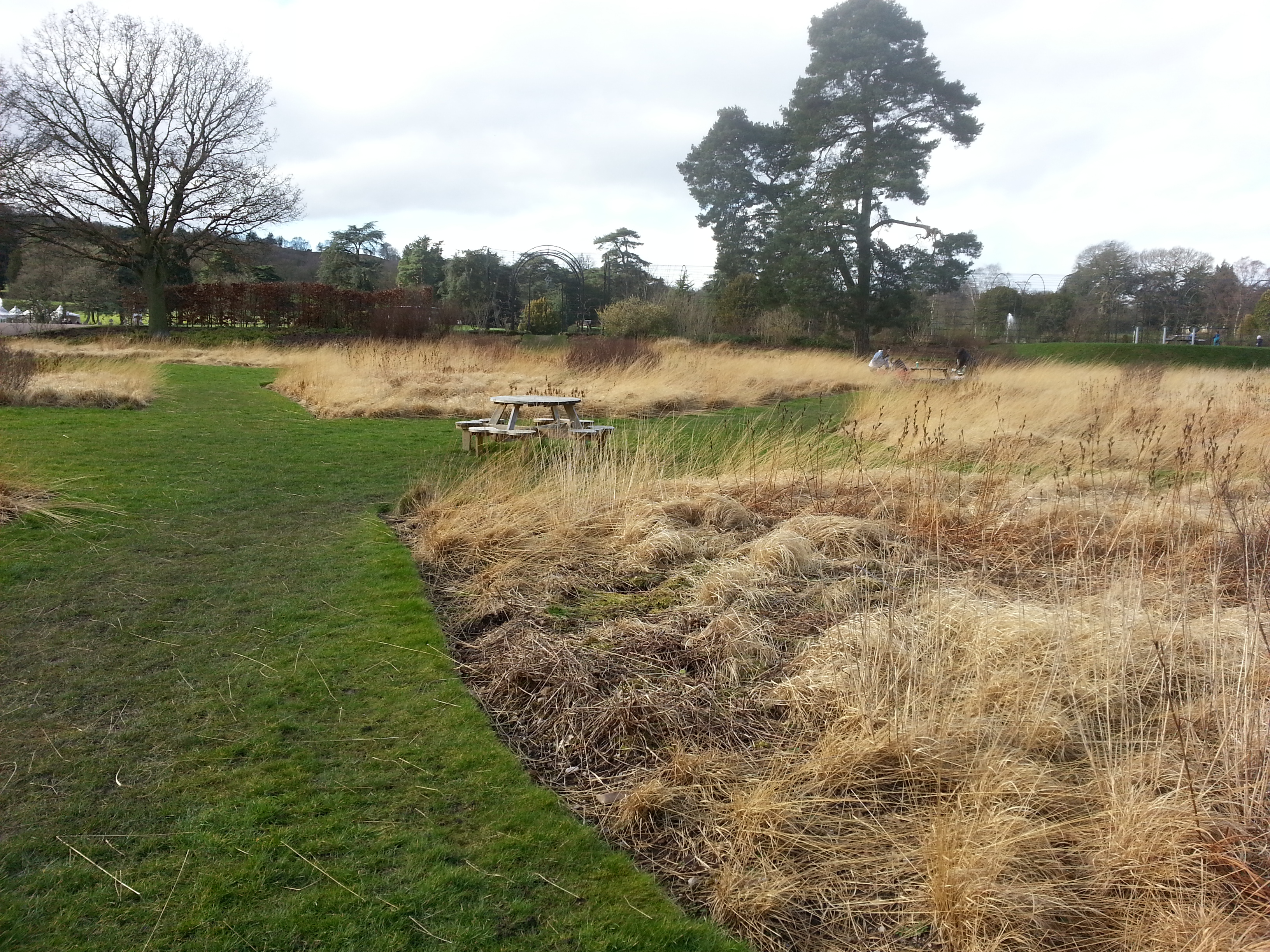
As we passed over the gentle arch of the suspension bridge we could see the “River of Grasses” with the golden stubble of the grasses which had been trimmed down low. In contrast the close mown grass areas along the riverside were bright green decorated with strips of sparkling white snowdrops. I realise the life buoy is a safety requirement and realise it has to be red so that it is easily spotted in an emergency but it is really distracting!
2014 02 20_6498 2014 02 20_6497 2014 02 20_6496

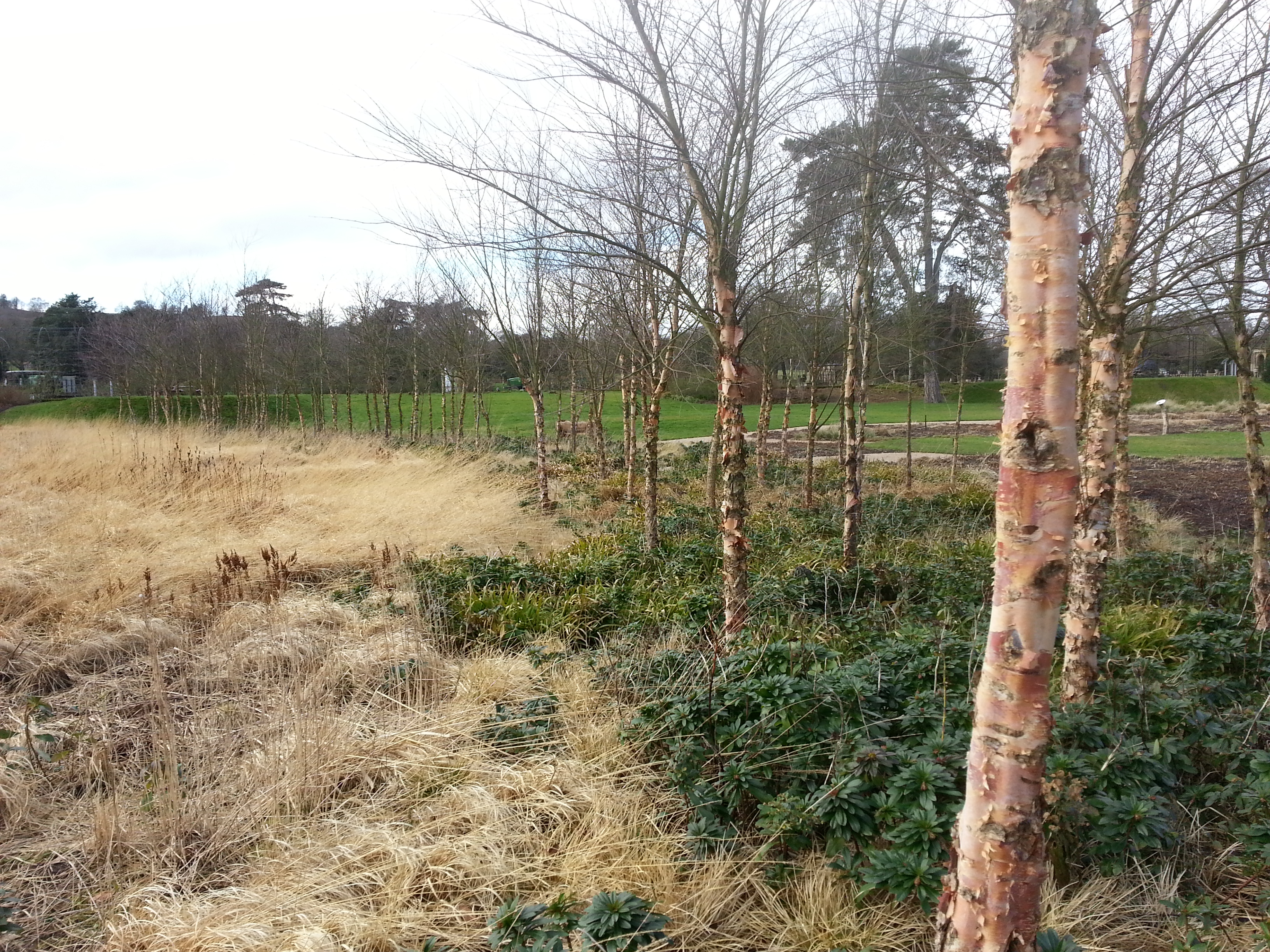
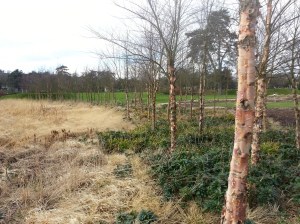
As always the gently curving line of River Birches looked wonderful, with the bark peeling more than when we saw them in January. I liked the meandering line where the dried grass area joins the deep green foliage of the evergreen Euphorbia robbiae with pale green highlights created by their flowering bracts.
2014 02 20_6500

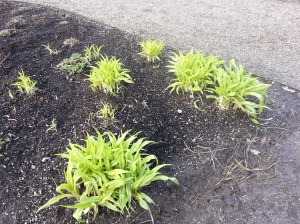
Once beyond the birches the perennial borders designed by Piet Oudolf looked very flat having been trimmed tight to the ground. This was in strong contrast to all the interesting seedheads and stems that decorated it in January. But with the clear view over the area we did spot this lovely wooden seat which we had totally missed in January. The bright green new growth of the Hemerocallis has progressed well since our January visit.

2014 02 20_6501 2014 02 20_6503

2014 02 20_6509 2014 02 20_6502

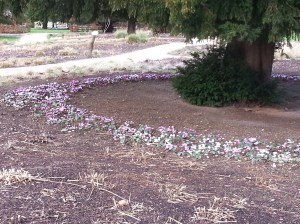
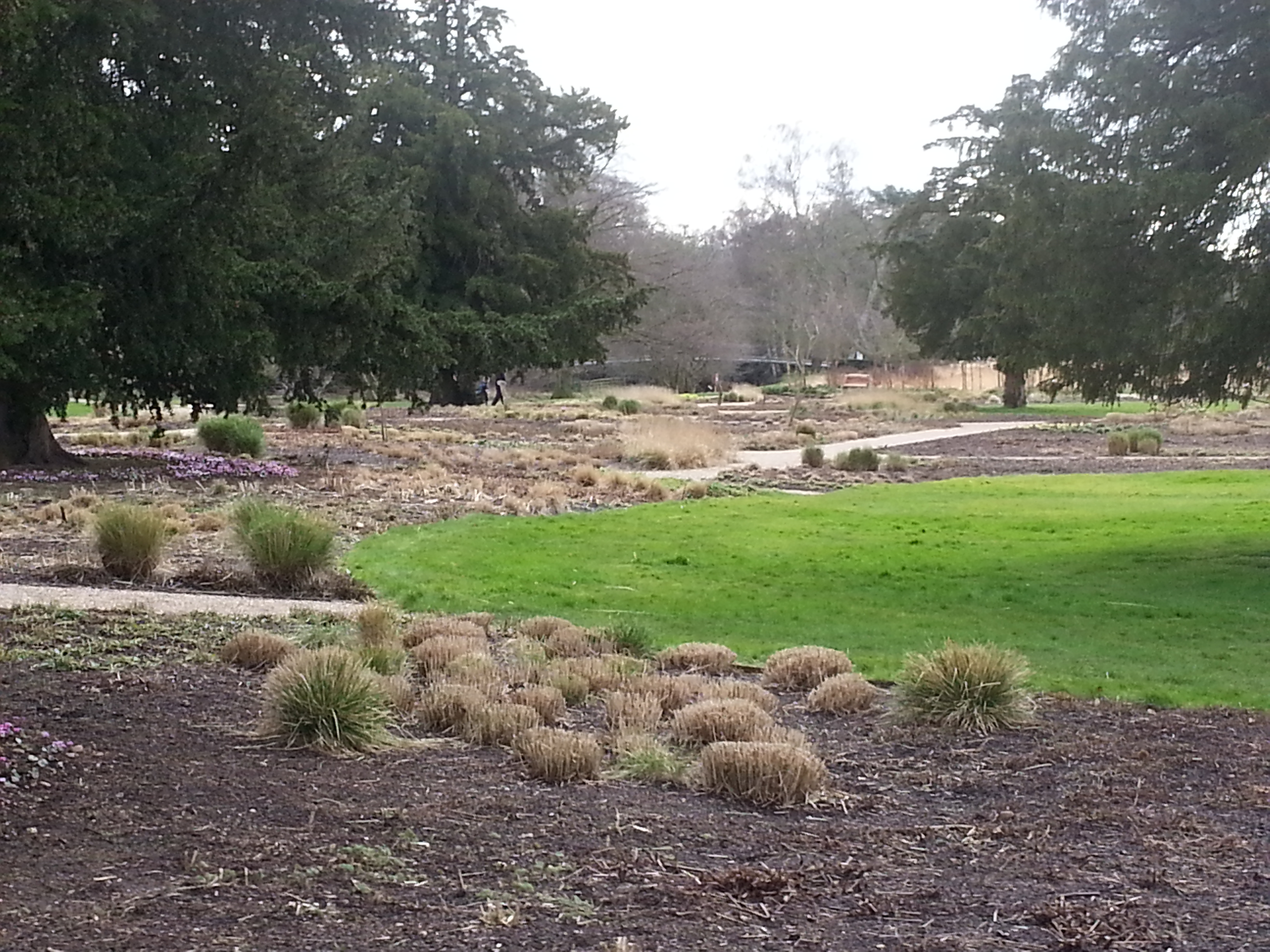
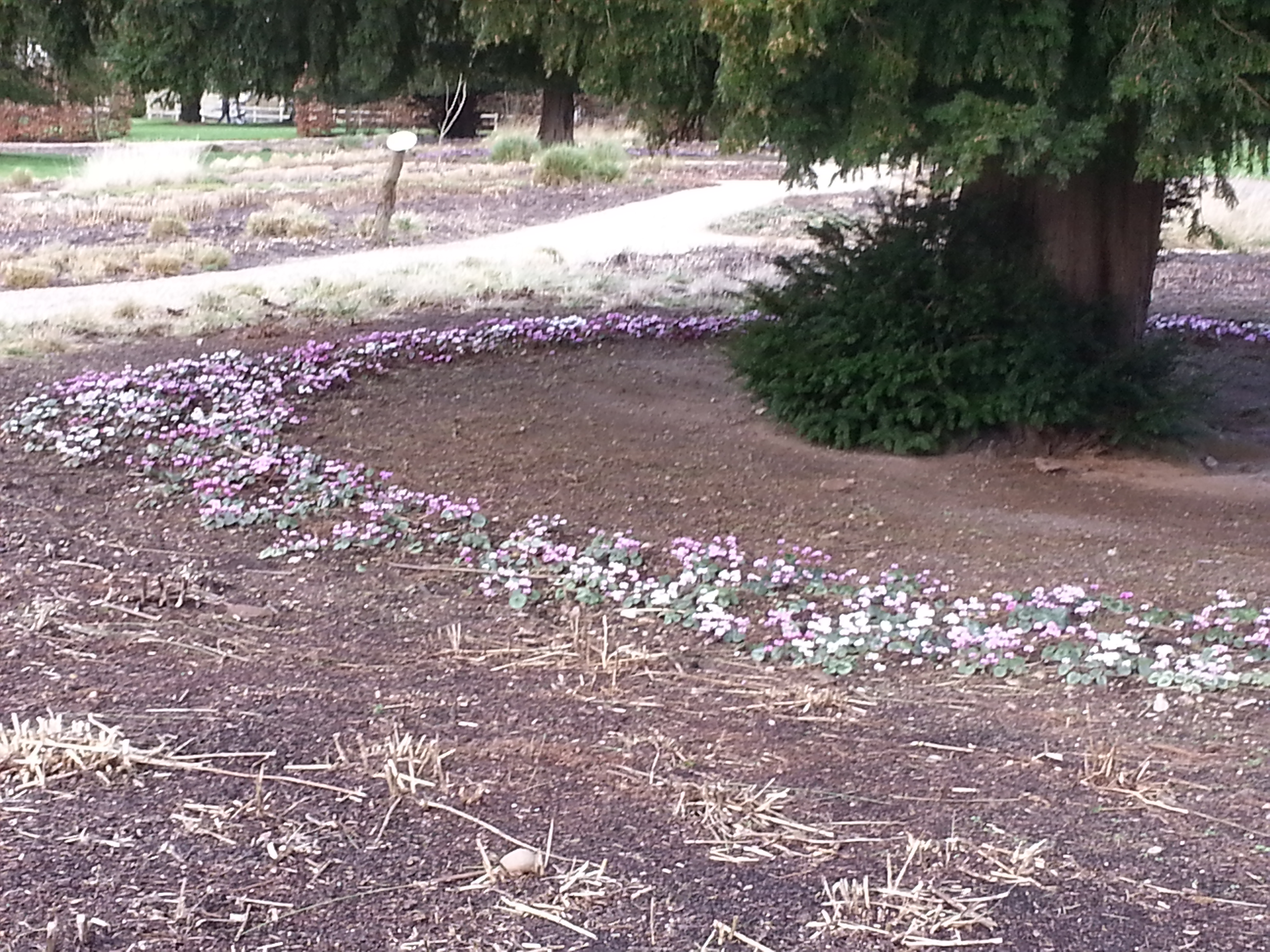
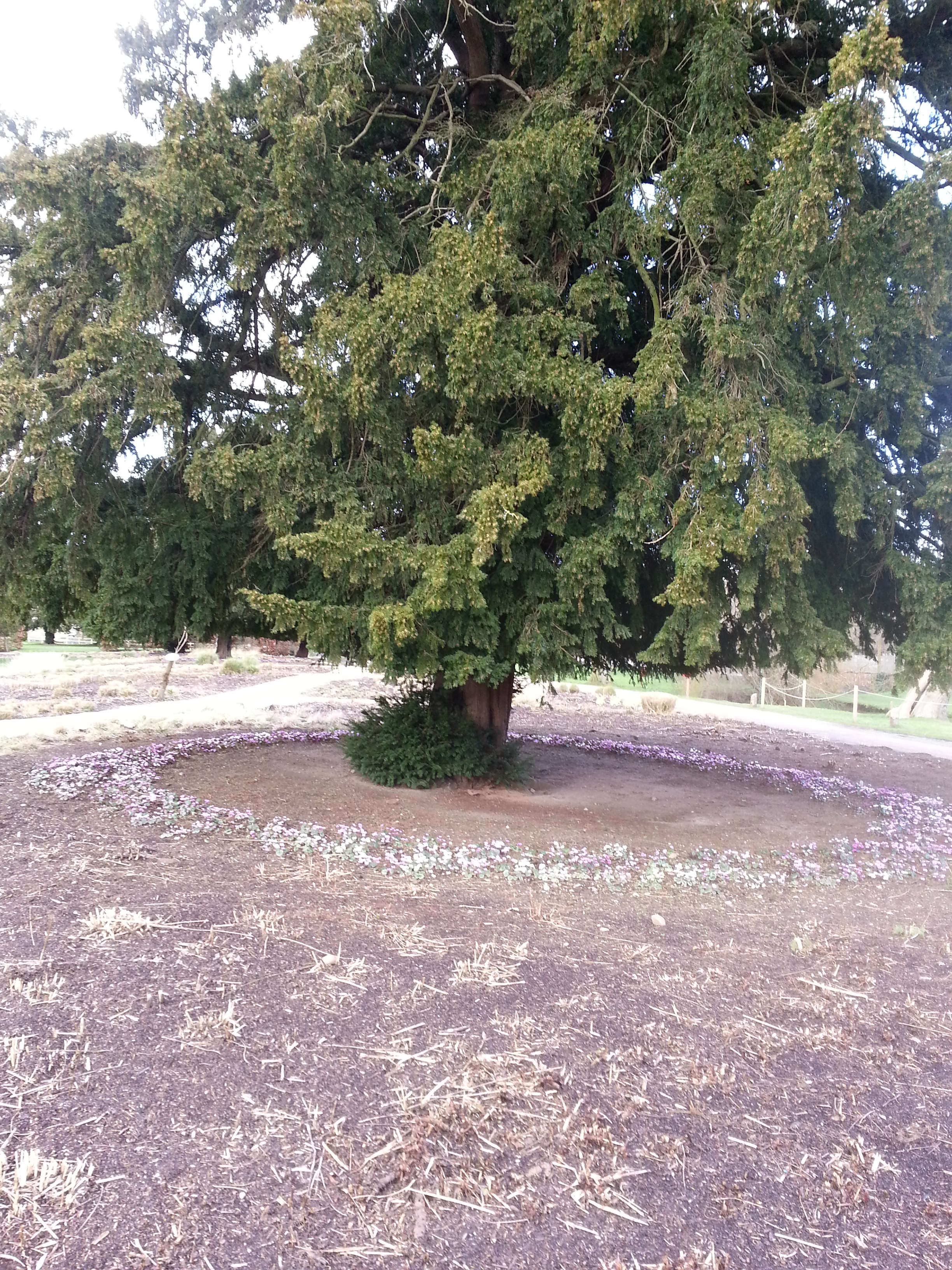
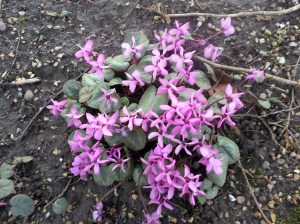
We enjoyed seeing that the rings of cyclamen were still flowering away happily beneath the Yews. They looked good in the sunshine, their colours seeming richer.

2014 02 20_6508   2014 02 20_6506 2014 02 20_6505 2014 02 20_6504

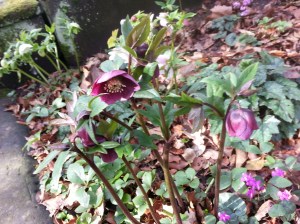
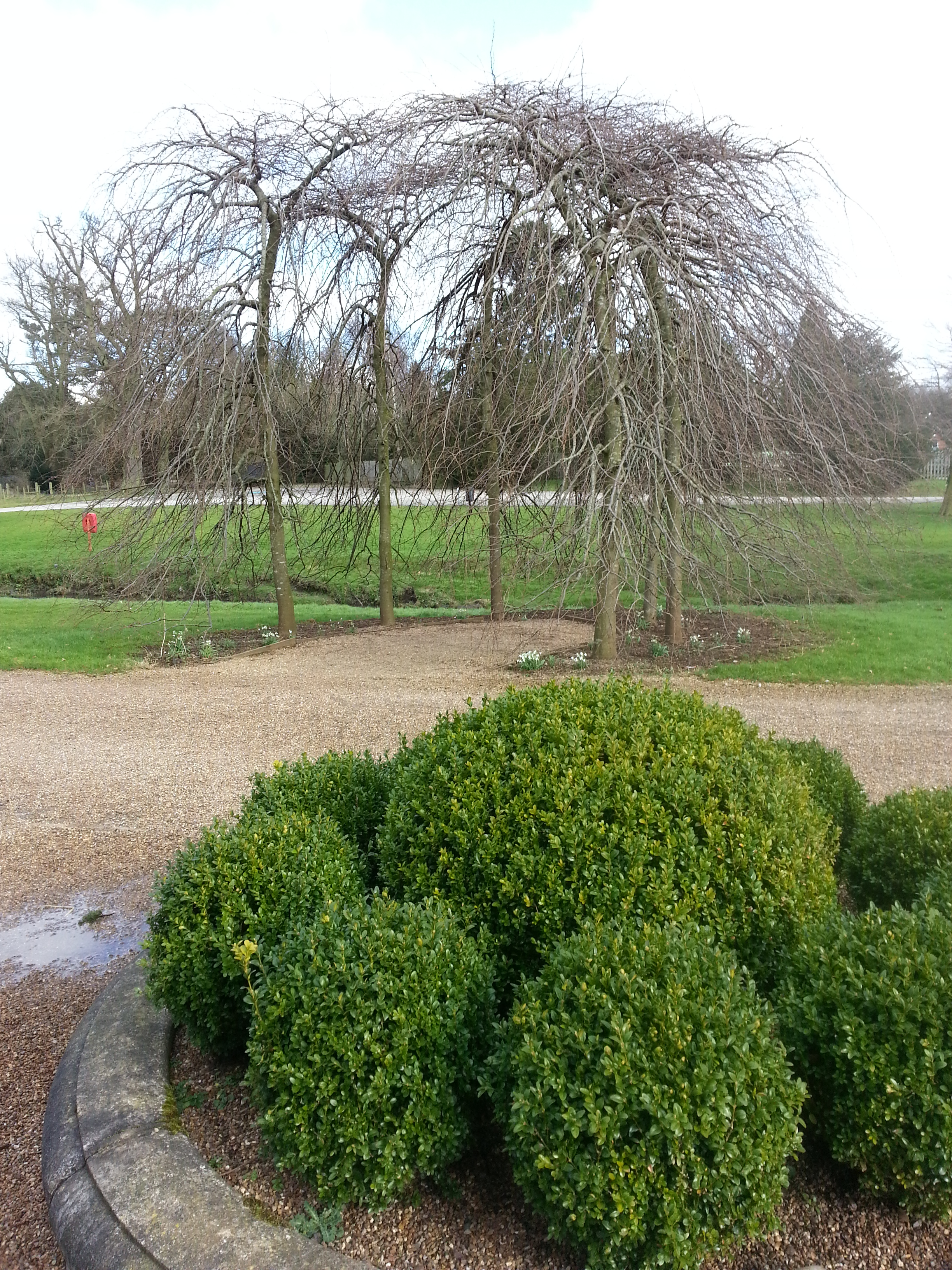
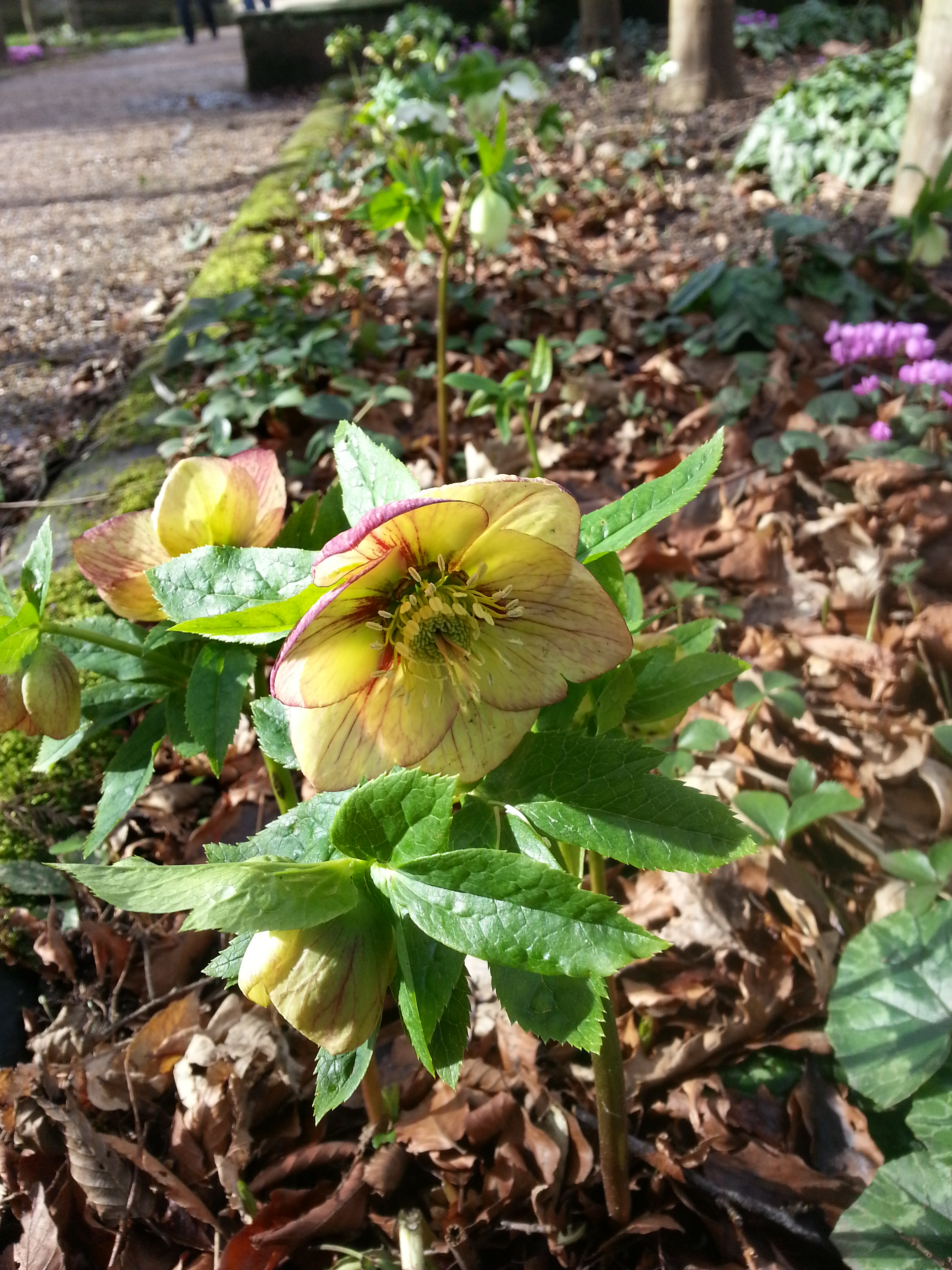
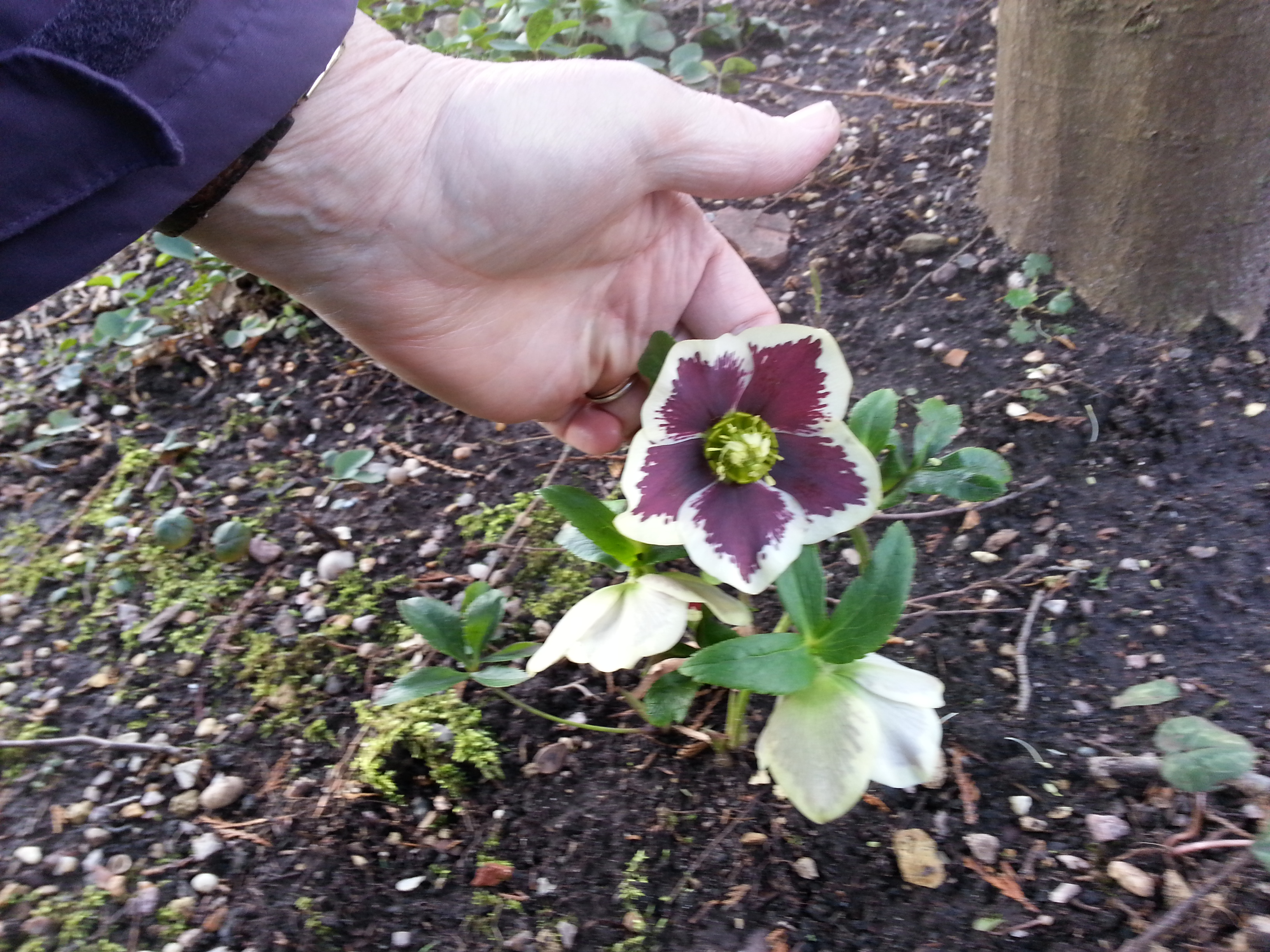
There was little change to be seen at the Hornbeam arbor but we did notice a few white sparkling Snowdrops around the base of their trunks. The trimmed box alongside is most noticeable at this time of year when such green sculptures become one of the stars of the garden. Some other stars of the Trentham gardens on this visit waited for us close by -Hellobores and Cyclamen in full colourful bloom. The Hellebores impressed with more than the colour range however, for they had really proud upright habit. They lit up the shade beneath an allee of Hornbeam.

2014 02 20_6510 2014 02 20_6520 2014 02 20_6515 2014 02 20_6516 2014 02 20_6513 2014 02 20_6517 2014 02 20_6518 2014 02 20_6519 2014 02 20_6521

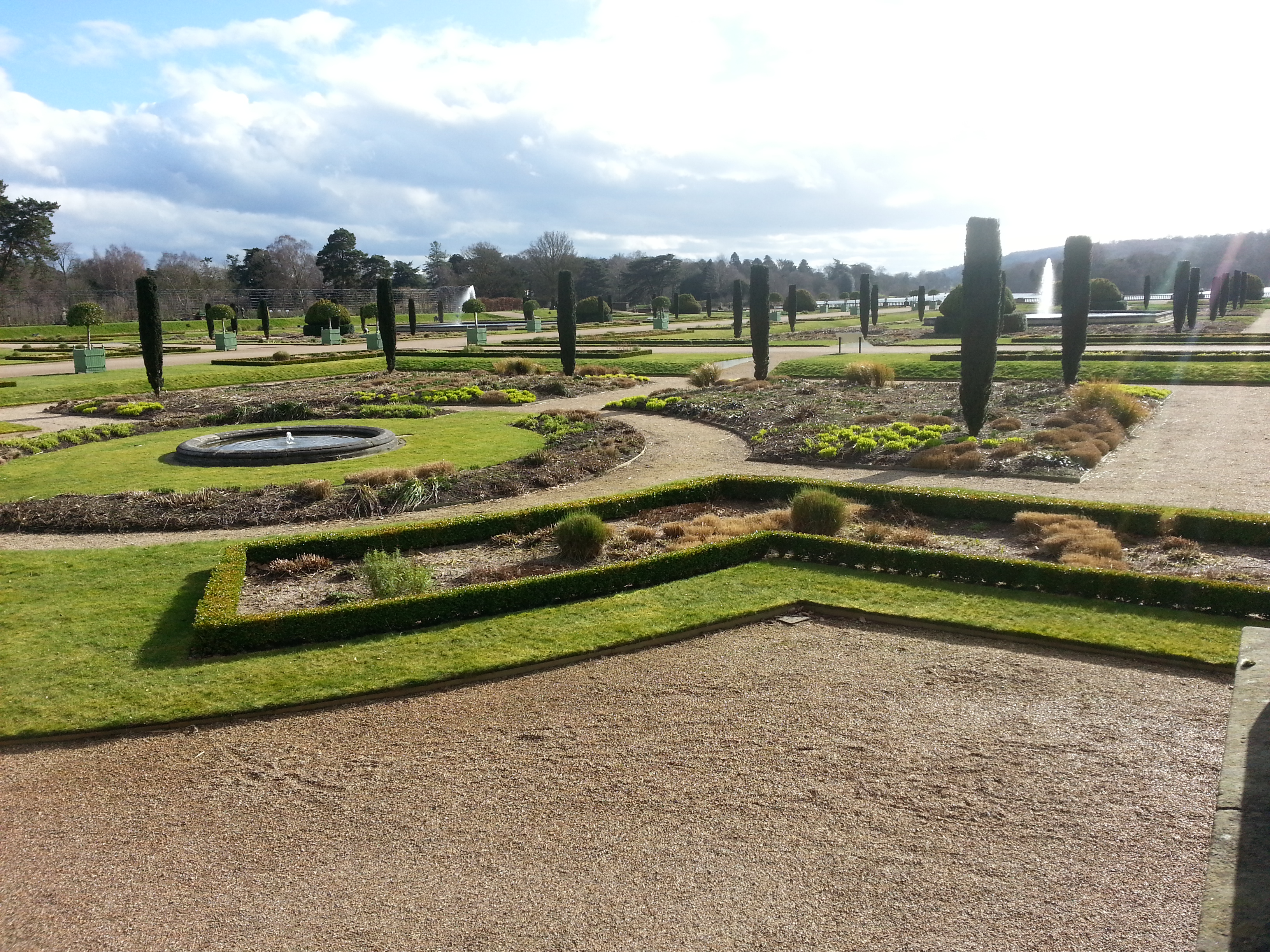
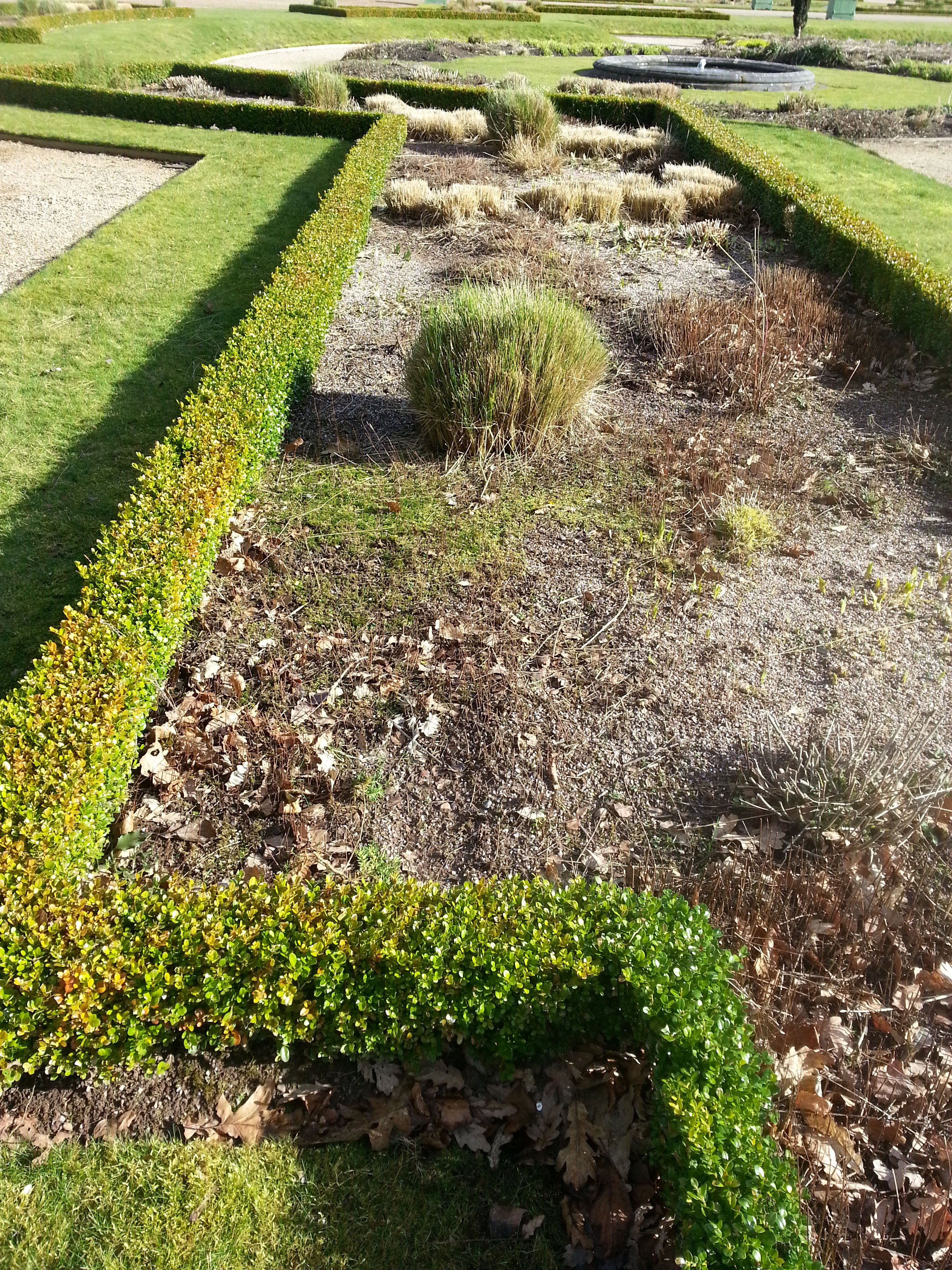
Leaving the Hornbeam allee we entered the old Italian Garden, with its rigidly symmetrical patterns of short cut grass, white chipping and smartly trimmed box edging. The low winter light emphasised this structure. It is not our favourite part of the garden but we always admire the skill taken to keep it looking so neat.

2014 02 20_6522

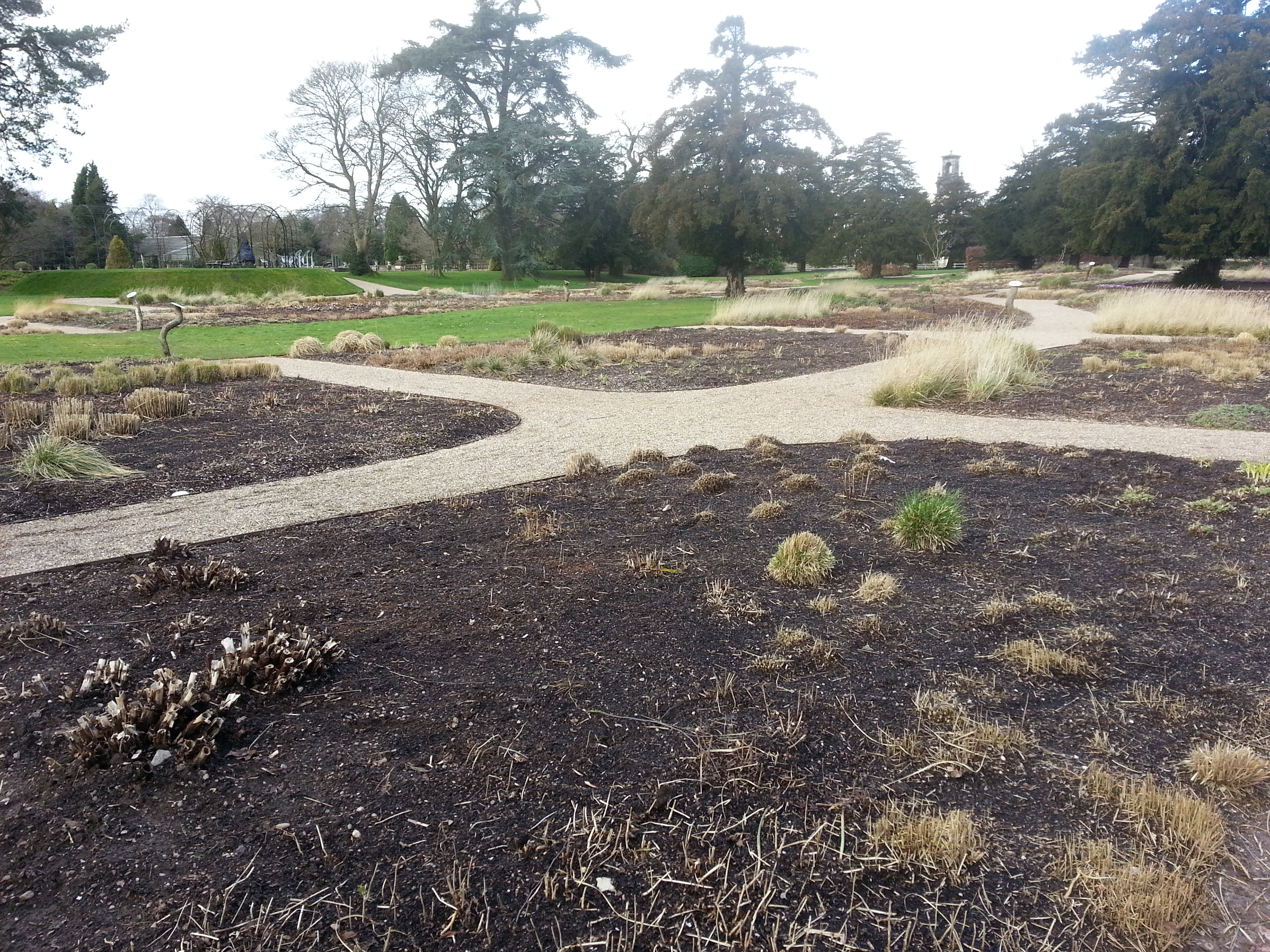
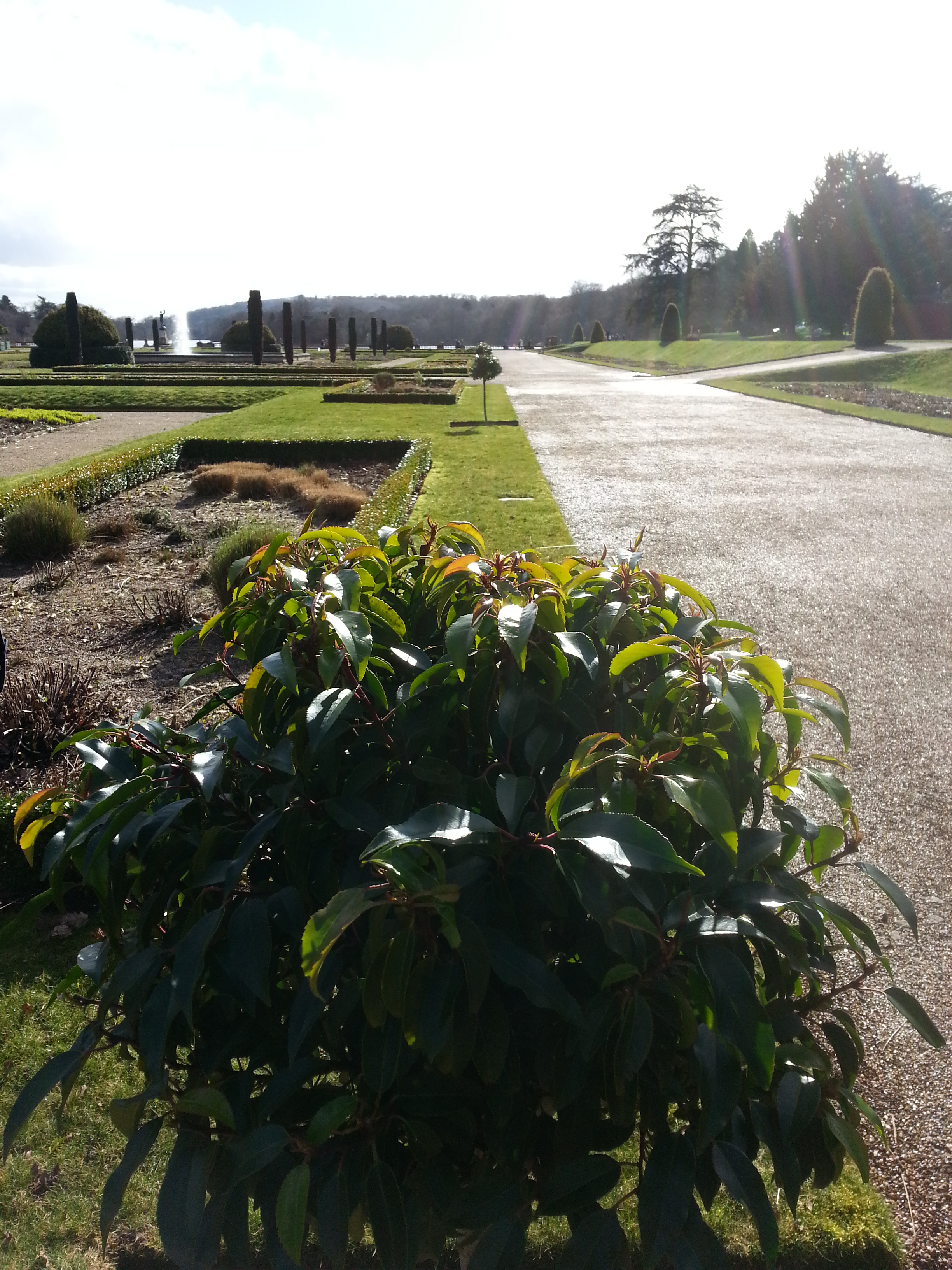
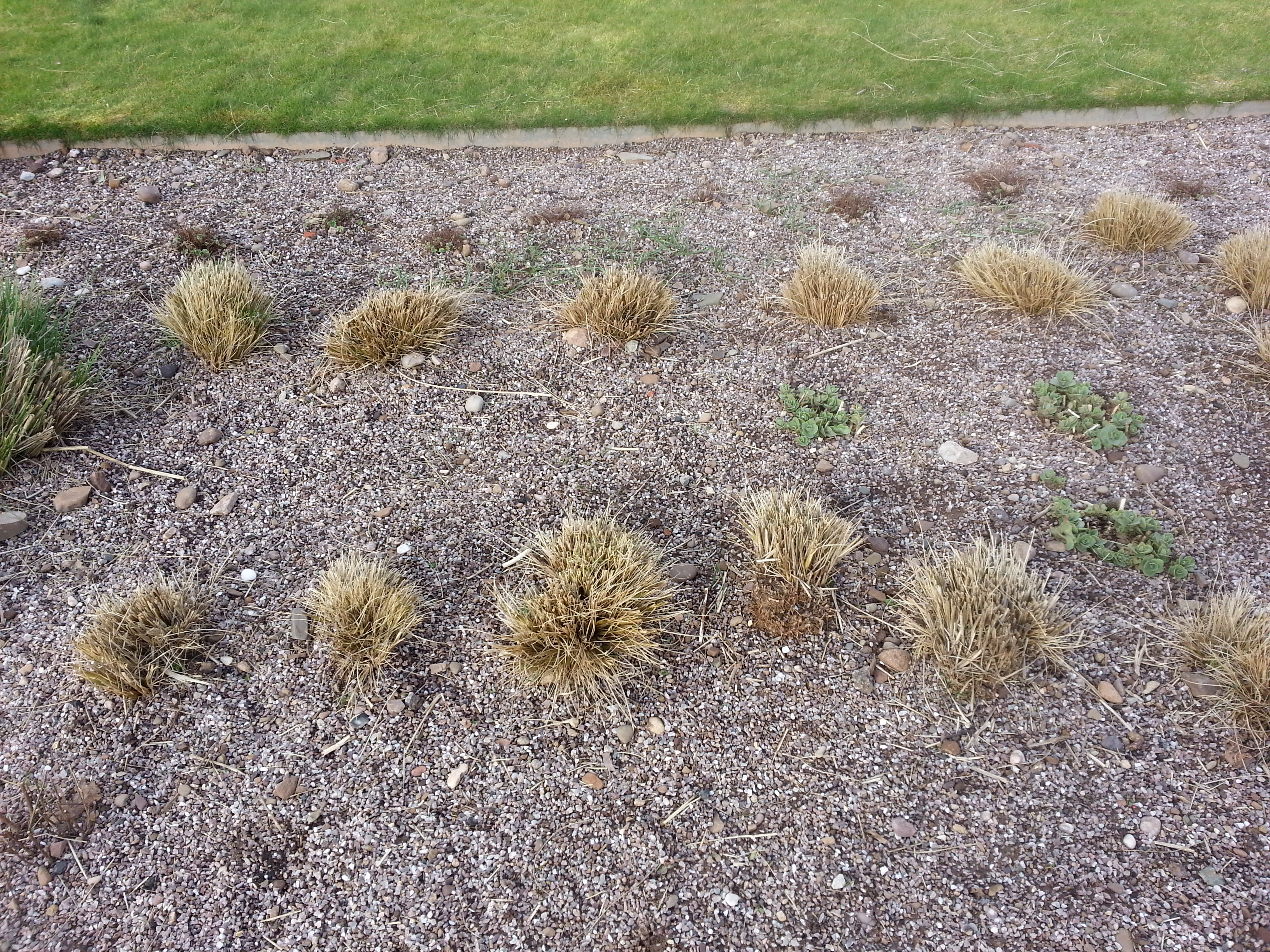
From here we could look out across the huge Italian Garden, re-designed by Tom Stuart-Smith. Since our last visit the perennials and grasses have been neatly and closely cut ready for the new growth that is sitting just below the soil surface ready to burst out.

2014 02 20_6523 2014 02 20_6524 2014 02 20_6525 2014 02 20_6526 2014 02 20_6527 2014 02 20_6529

Then after walking through these borders in waiting, we went off into the parkland where mature trees tower above the grassed slopes. Under the trees sits the coffee shop where we stopped for our statutory break. Some slopes appeared a bluer green than others and we discovered that the leaves here were of daffodils already with flower buds fit to burst.

Near the coffee house are areas for children and it was noticeable how busy they were. When here in January this area was deserted but on this visit there were lots of families with young children. It was the school half term holiday.

2014 02 20_6539 2014 02 20_6540

On the lake the swan sculptures presented sharp silhouettes taking off over the water.

2014 02 20_6538

Over in the display gardens the low bright light made the colours in foliage, flowers, stem and bark look extra bright.

2014 02 20_6541 2014 02 20_6542 2014 02 20_6543 2014 02 20_6547 2014 02 20_6548 2014 02 20_6550 2014 02 20_6551

We returned through the Tom Stuart-Smith gardens and walked along the rose pergola. The gardeners were busy pruning the roses, weeding and freshening up the soil surface.

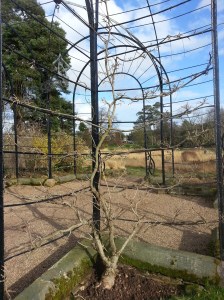
2014 02 20_6566 2014 02 20_6568 2014 02 20_6569 2014 02 20_6571 2014 02 20_6573 2014 02 20_6575

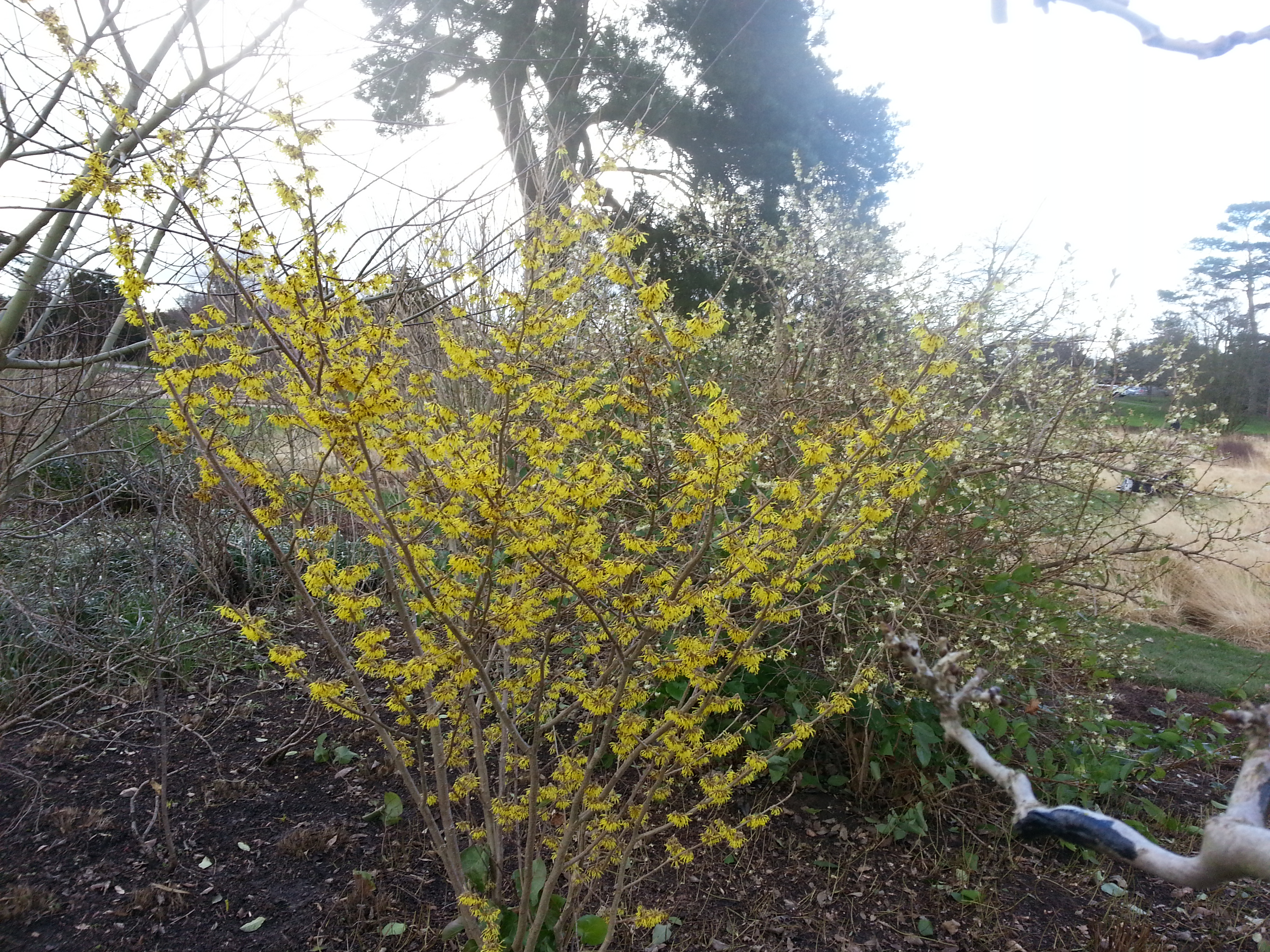
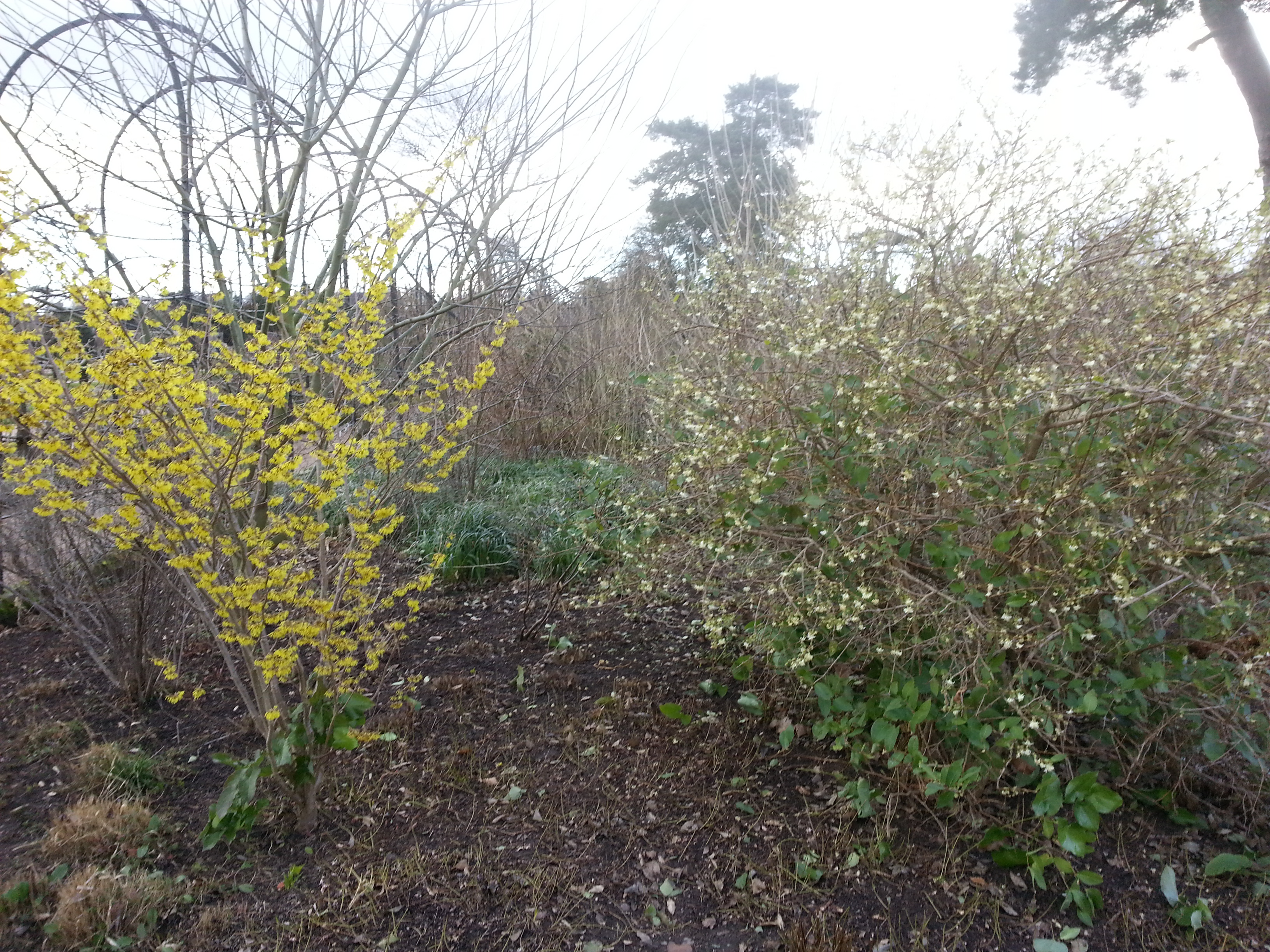
The shrub borders at the end of the rose pergola were showing signs of interesting things happening, the Witch Hazels were shining yellow and the scented but subtle winter flowering honeysuckle sitting along side it looked rather drab. So that finished our February visit to Trentham. The next blog in this monthly series will be in March. Things should be really livening up then.

2014 02 20_6576 2014 02 20_6577

Categories
garden wildlife gardening gardens log piles natural pest control recycling wise watering

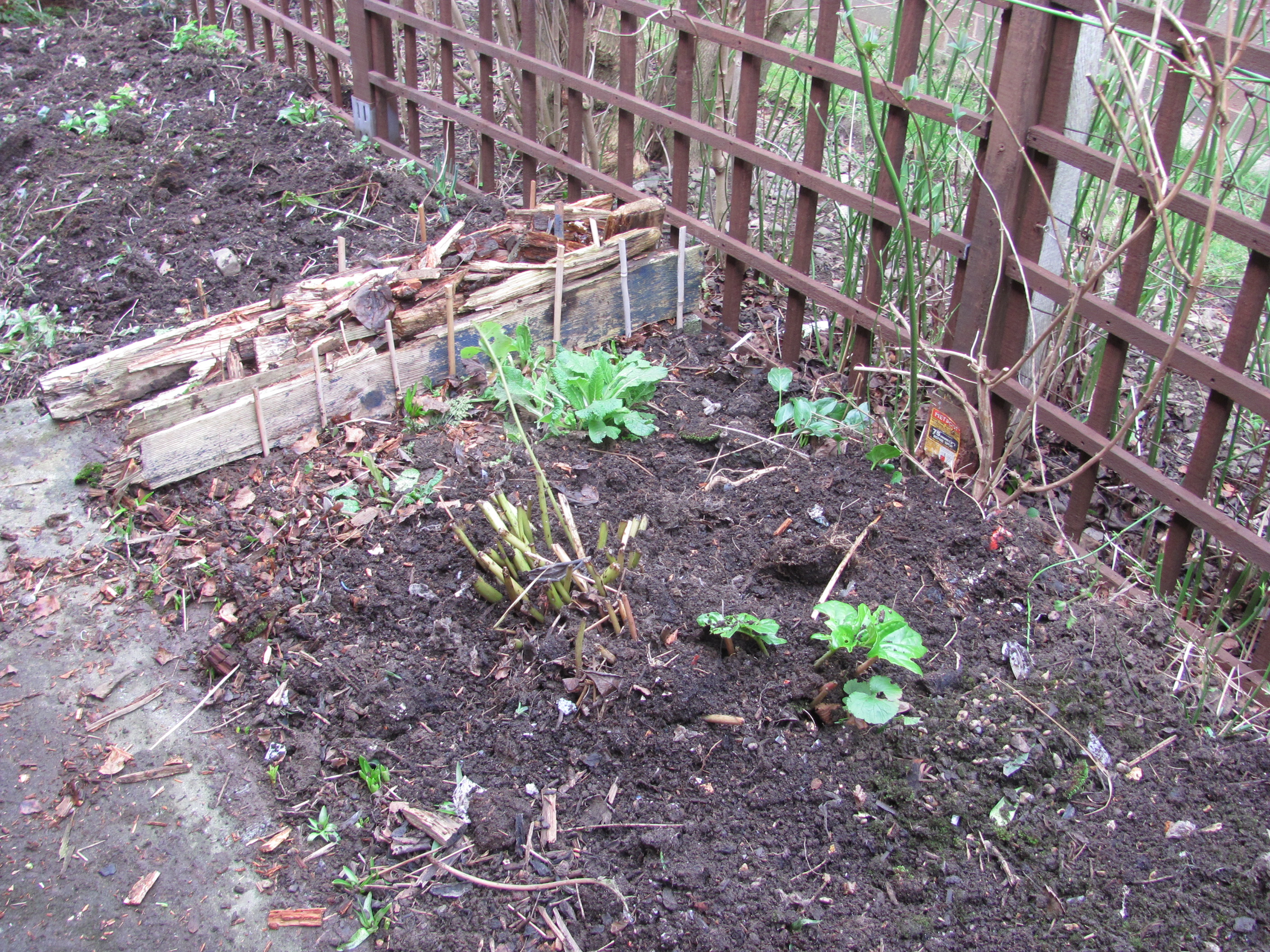
A bit of work on our shade border.

Today we spent a few hours improving the moisture content in the soil in our “Shade Border”. This is the only fully shaded part of our garden so it where we can grow plants that would not appreciate the brightness or warmth of the other sunnier borders. Here we have several Meconopsis Poppies in blue, white and cream, several varieties of Corydalis, some ferns and anemones. The first flowers appear on our  Pulmonarias in blue, pink, red and white soon followed by the tiny blue flowers of Brunnera and the whites and pinks of the uniquely shaped Dicentras. The beautifully cut lace like foliage of various Corydalis provide a perfect foil for their nodding little flowers. These all flower when the deciduous shrubs along the fence are still skeletal. Once the leaves give extra shade overhead the Ferns, Anemones and my favourite nettle the Giant Red Deadnettle, Lamium orvala.

Our worry is that in periods of dry weather the bed gets too dry for these plants and they begin to suffer. We decided the only answer was to use seep hose. It took just an hour to perform this important task which we hope will make these shade-loving plants much happier in the warmer summer months.

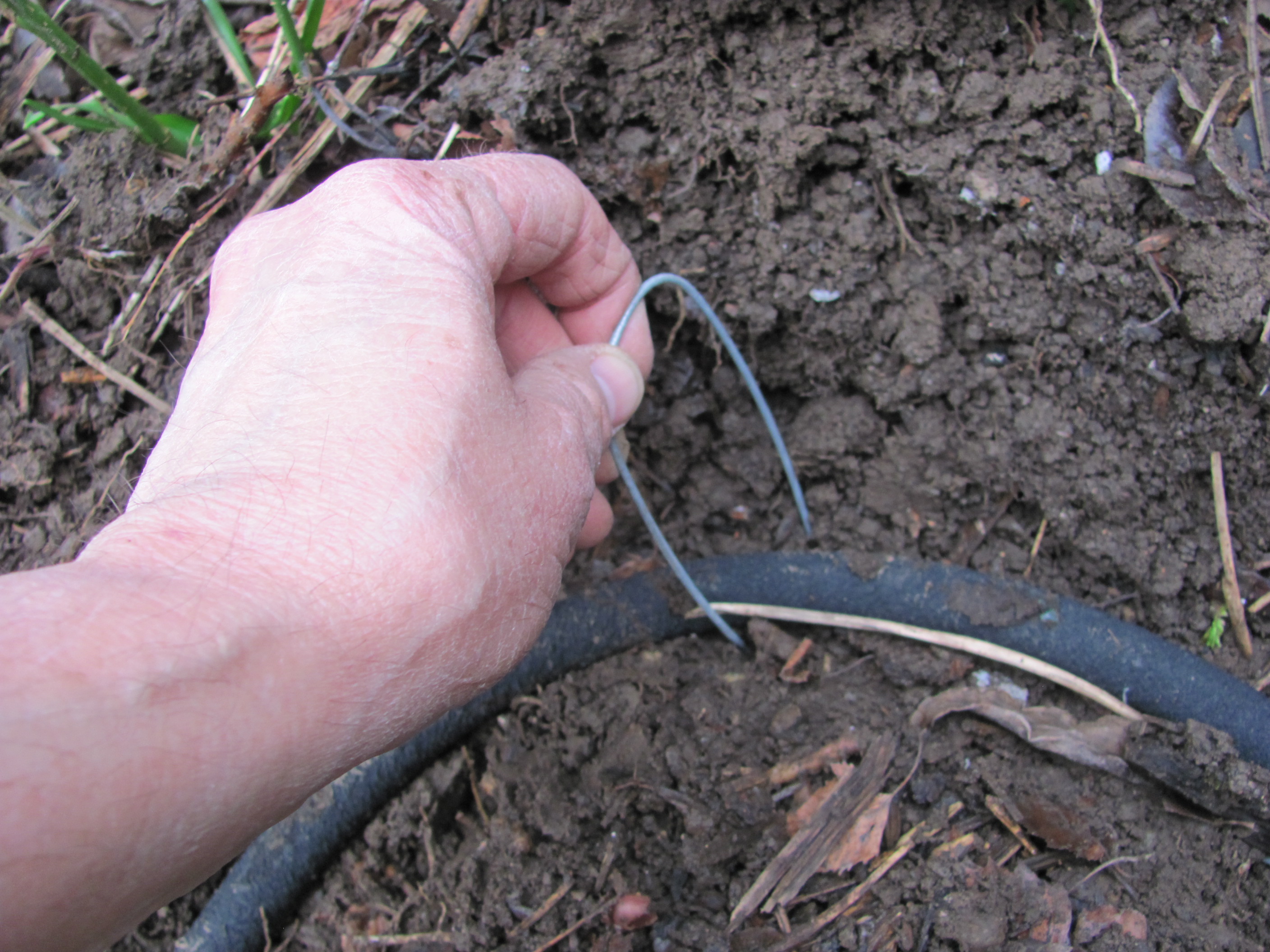
Firstly we cut some tough galvanised wire into 12 inch lengths and bent them into pegs like giant staples. We laid the pipe across the surface of the border in a serpentine pattern, leaving one end exposed where a hose can be attached when needed.

2014 02 20_6614 2014 02 20_6615

We dug out a 3 inch deep trench alongside the hose, placed the hose into the trench and then pegged the hose down with the wire.

2014 02 20_6616 2014 02 20_6617

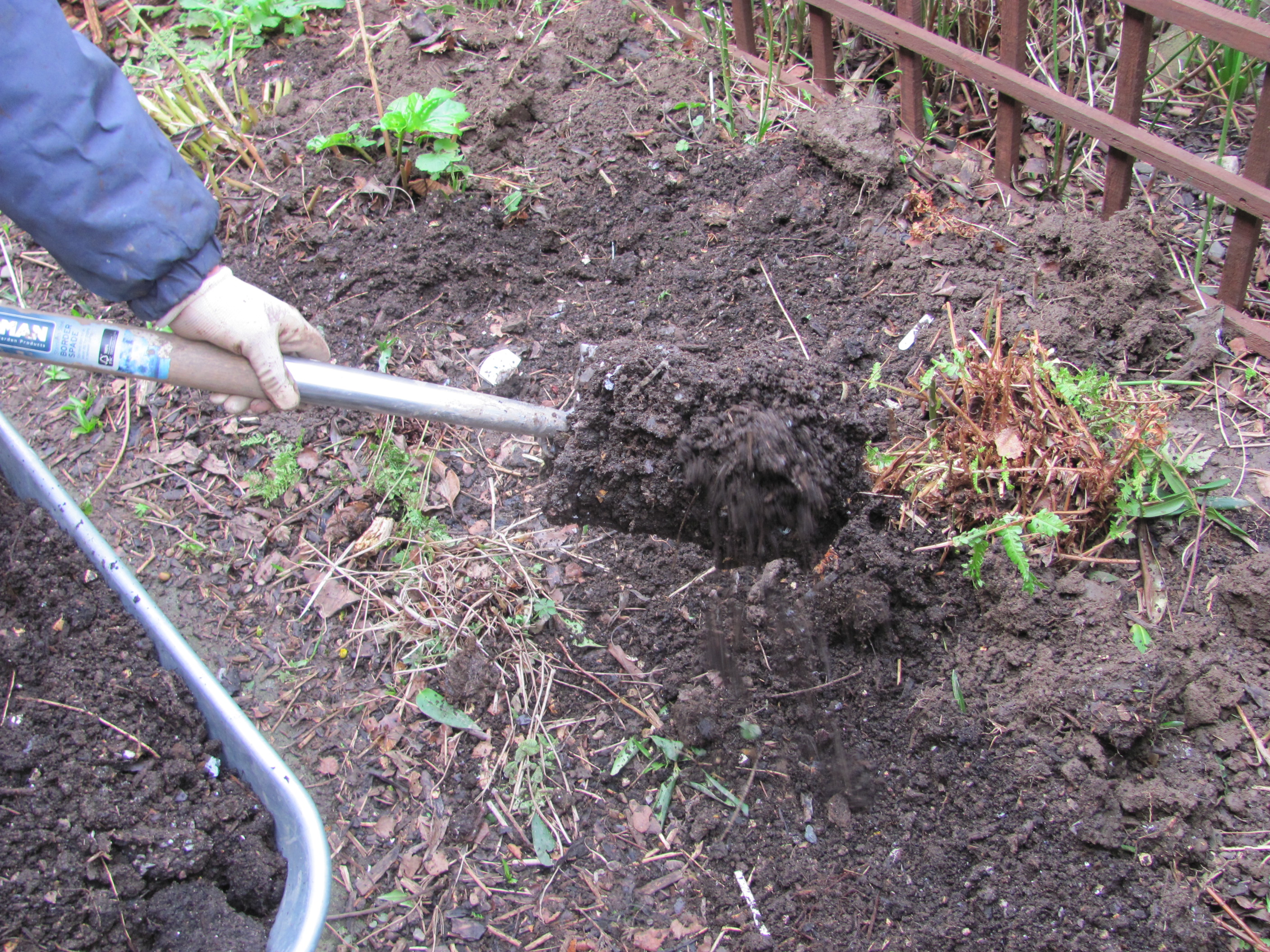
We added a good dose of our “black gold”, rich home made garden compost over the hose and then over the whole area. The compost in the trench will act as a wick for the water from the seep hose which we hope will slowly creep into the compost around the plants.

The final touch was to build a log pile out of rotting wood to attract beetles which are useful predators. They will help look after the plants for us.

2014 02 20_6618 2014 02 20_6619

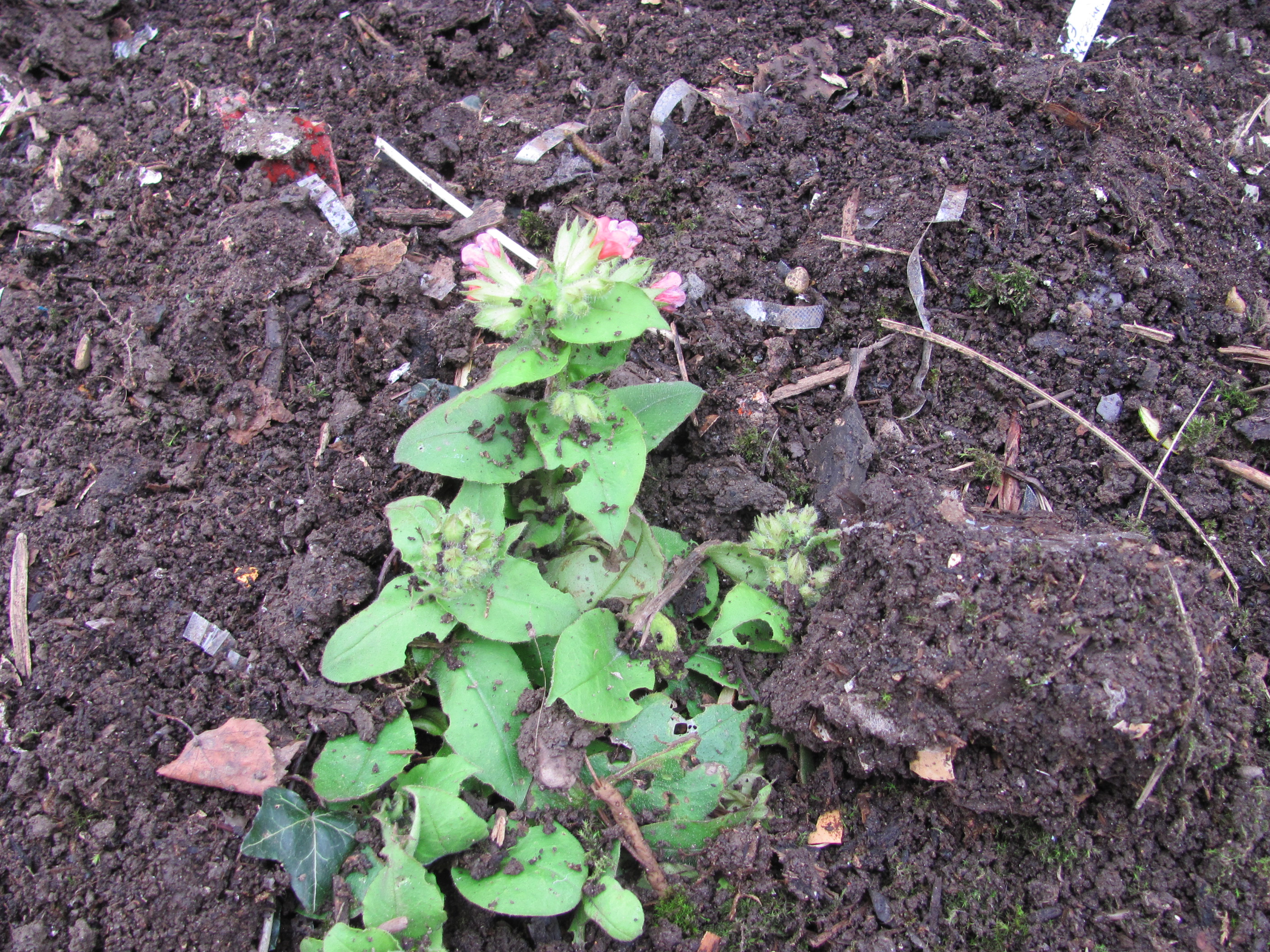
We had to carry this out very carefully as the first sign of flowers had already begun. This red Pulmonaria is the first flower in the shade garden this year.

2014 02 20_6620

Categories
diy garden design gardening roses

Replacing the garden arches at Avocet

We made the mistake when we designed the garden here at Avocet of using metal arches to span our paths and grow plants over. We have 8 arches altogether around the garden with all sorts of climbing plants over them including trained fruit trees. Most of the climbers are purely decorative, different varieties of clematis, rose, honeysuckle and a purple vine so not only do they look good but many are scented to give wafts of their gentle aromas as we pass through the arches. The productive trees are apples, blackberry and cherry.

We soon found out that the windy site here close to the hills of South Shropshire was not the place for metal arches. We get strong winds swirling around the hill behind our house which often distort, break or blow over our plant covered arches. For years we have carefully repaired them and put them back up with the plants mostly intact. This winter we found our garden was attacked by frequent gale force winds and howling storms so we have given up on the metal arches and are slowly replacing them with much more solid wooden constructions.

We began with the arch nearest the bottom of the garden which by the end of January was leaning at an uncomfortable angle so we had to duck to get through it and parts of it had broken off. This arch was clothed with a rose called Goldfinch, a small yellow early flowering variety which flowers profusely every year without fail but it also grows strongly so has to be pruned extremely hard, so hard you feel cruel doing it! On the other side of the path climbs a purple leaved vine which looks amazing when then the sunlight glows through its foliage. It also flowers and fruits some years producing tiny dark purple grapes which are very bitter – even the birds turn their beaks up at them.

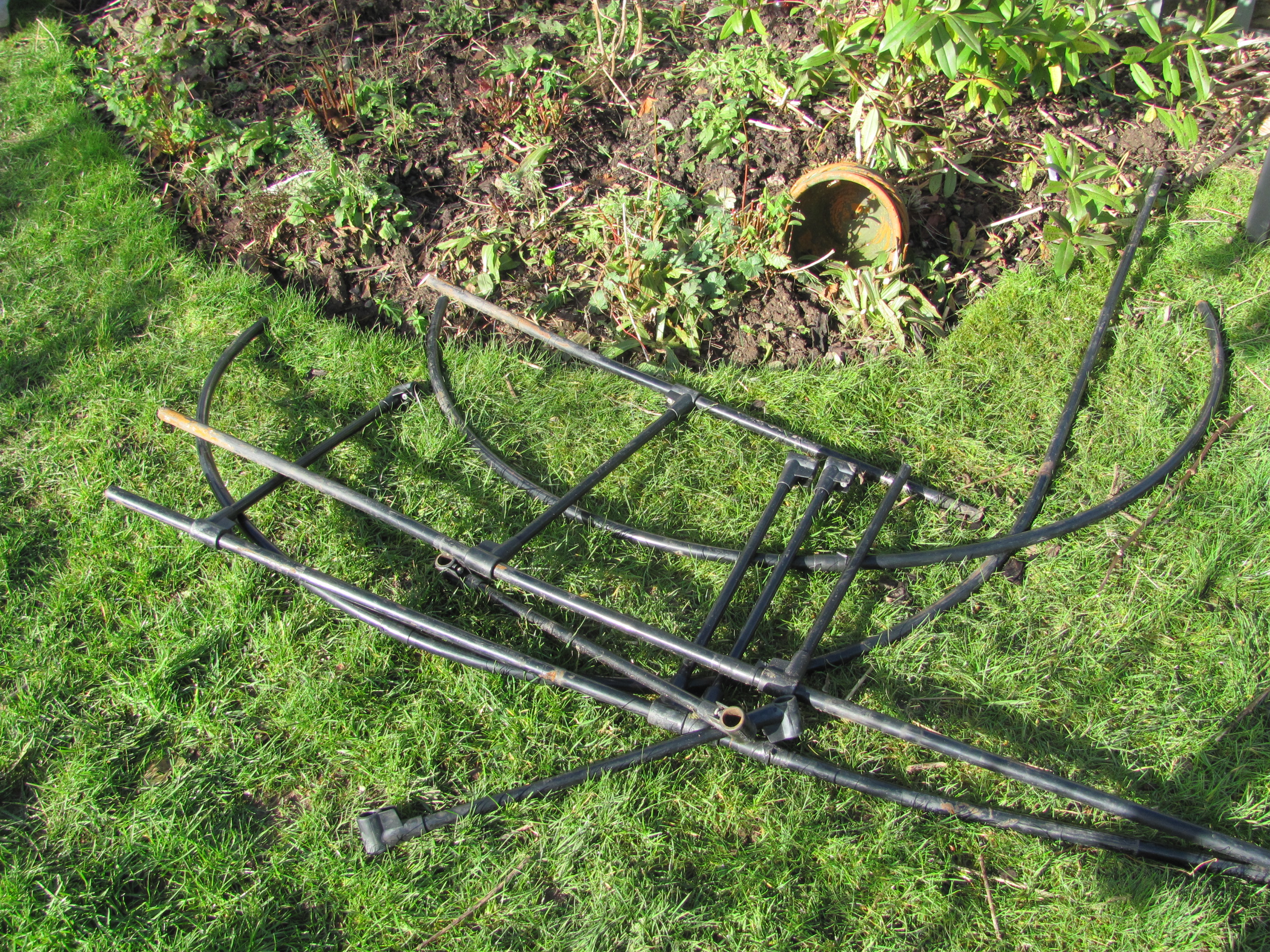
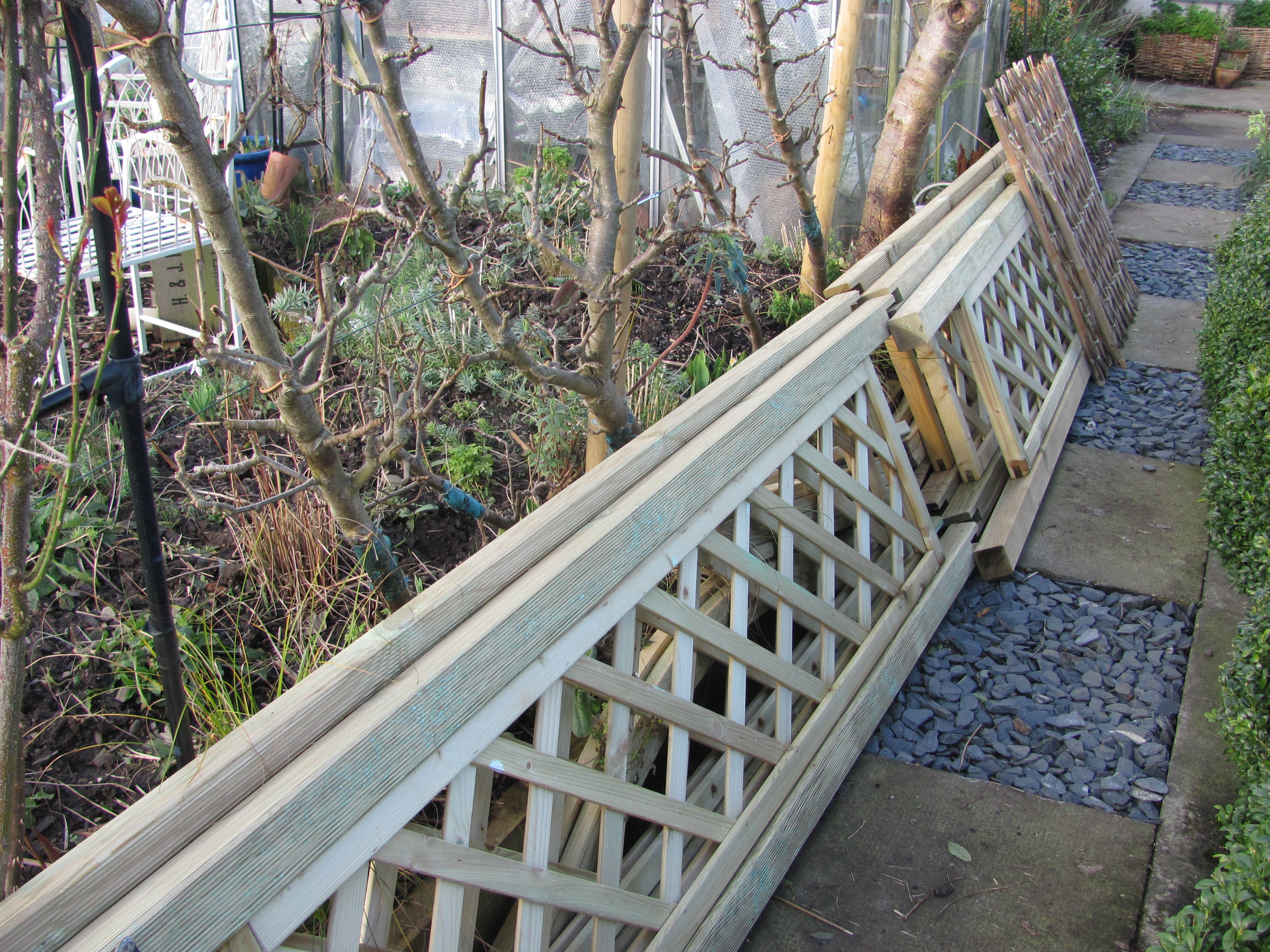
First job was to prune the climbing planting carefully and even more carefully unwind their main stems from the remains of the arch. Then we extricated the arch. It looked a sorry sight lying on our lawn.

2014 02 18_6441

Once pruned the rose hung limply without support until we carefully bent it sideways and tied it onto the wooden support for our cordon plums.

2014 02 18_6440

We had three arches delivered and luckily they came in pieces as they were so heavy. At least we could unpack them and move them to where they were to be put up one piece at a time.

2014 02 18_6450

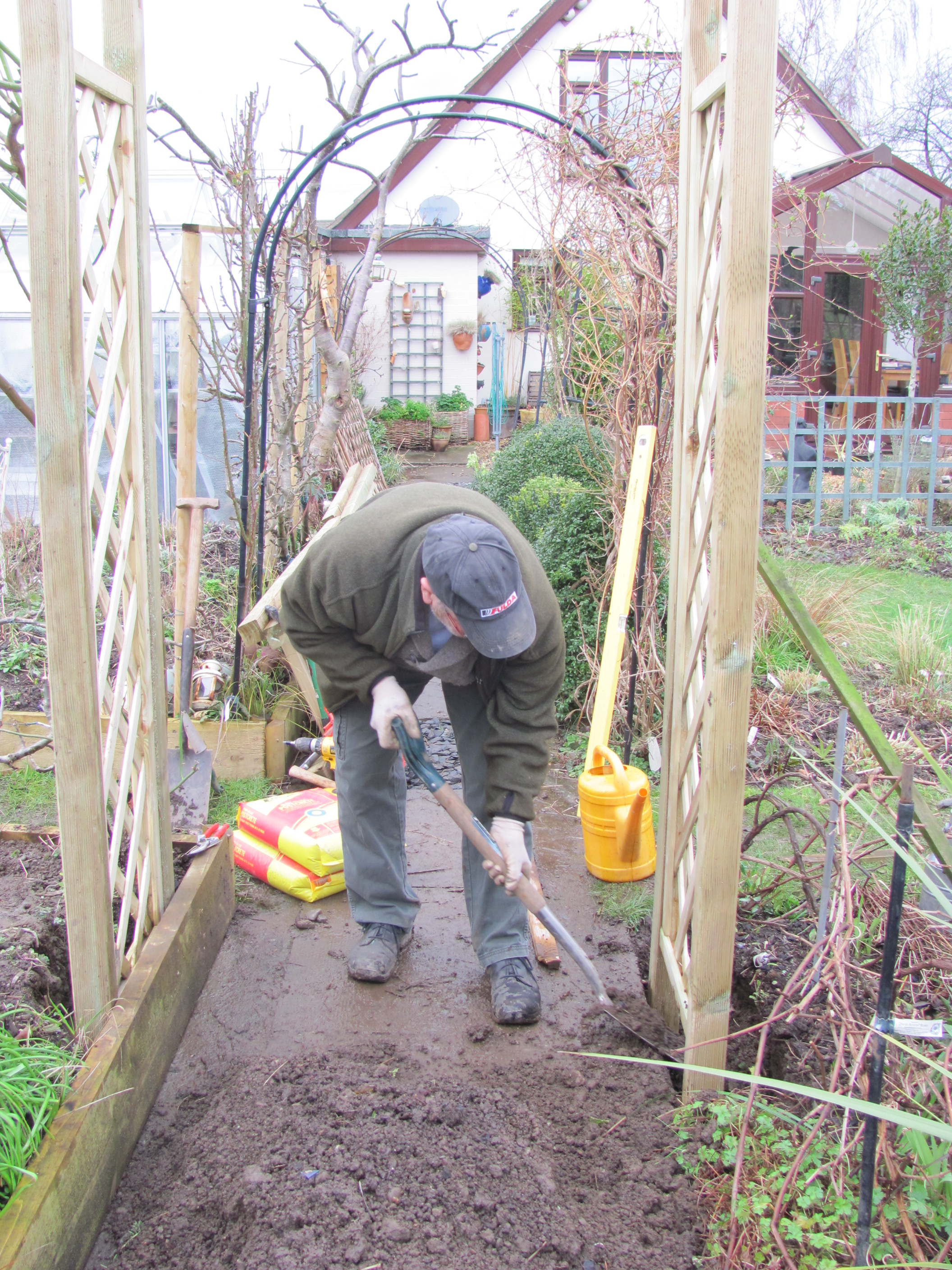
Once the plants were pruned and tied out of the way we could get on with digging out 12 inch deep trenches to fix the uprights into.

2014 02 18_6463 2014 02 18_6435

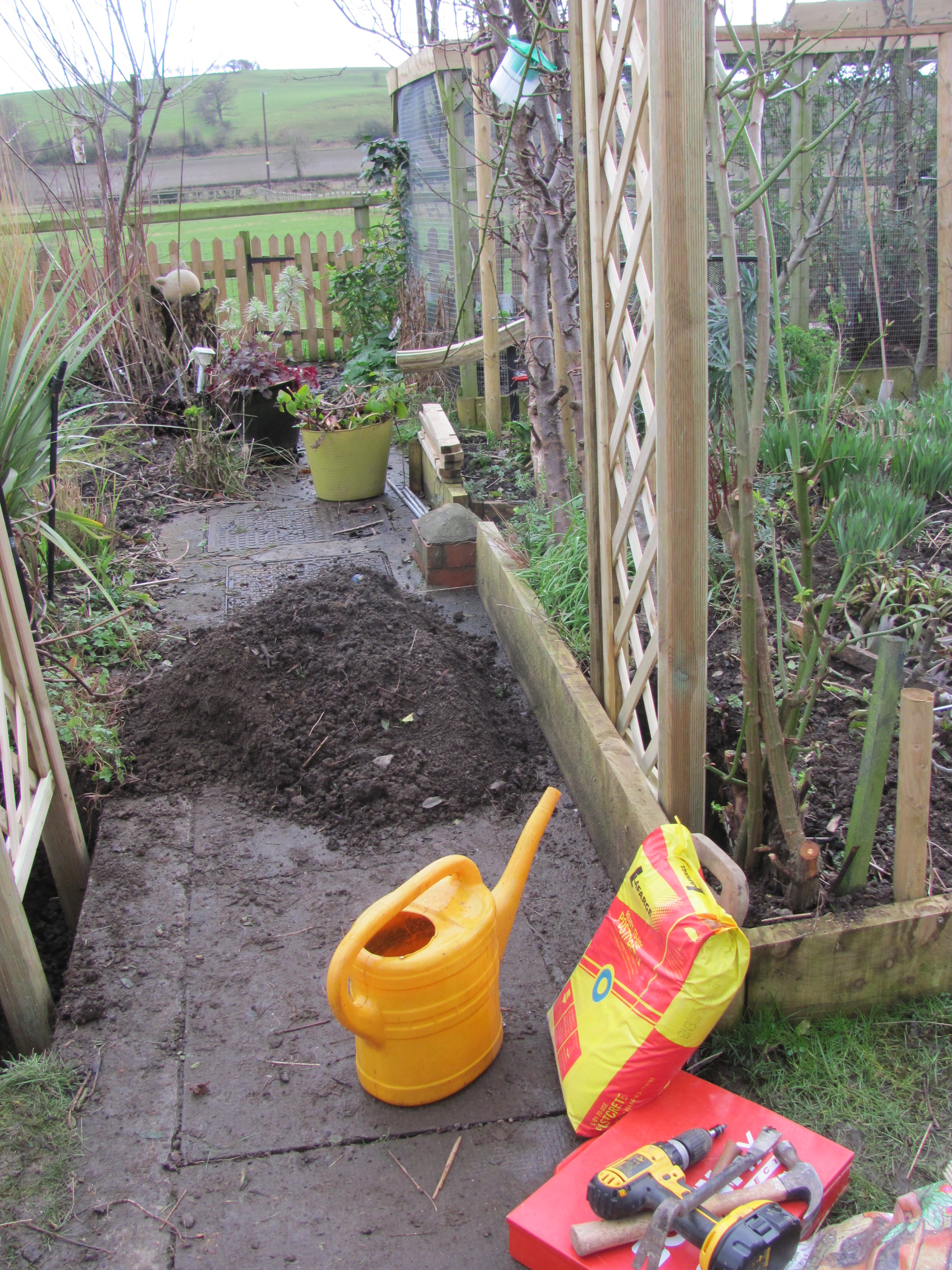
Once the hole was dug out to the correct depth we then spent a while with a metre long spirit level making sure the upright piece was vertical in both planes. We then poured in the post fix concrete mix and left it to dry.

2014 02 18_6436 2014 02 18_6437 2014 02 18_6438

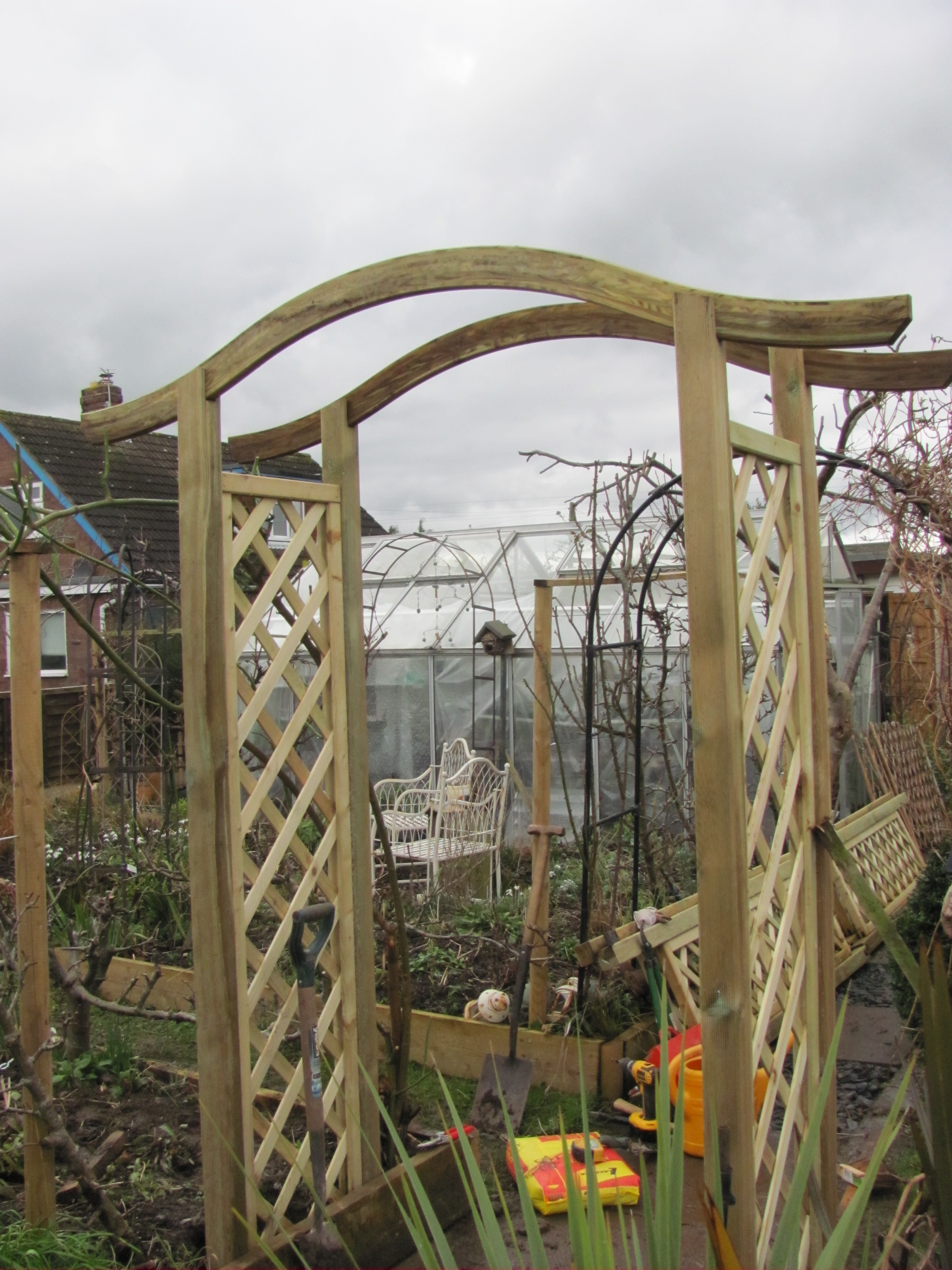
Once the concrete had set we could fit on the top decorative pieces and the job was done. Just the easiest part left – re-tying the climbers back in place. They should now be ready for the spring. Just seven more arches to go!

2014 02 18_6439

Categories
Uncategorized

A Week of Culture – Part 5 – Barbara Hepworth

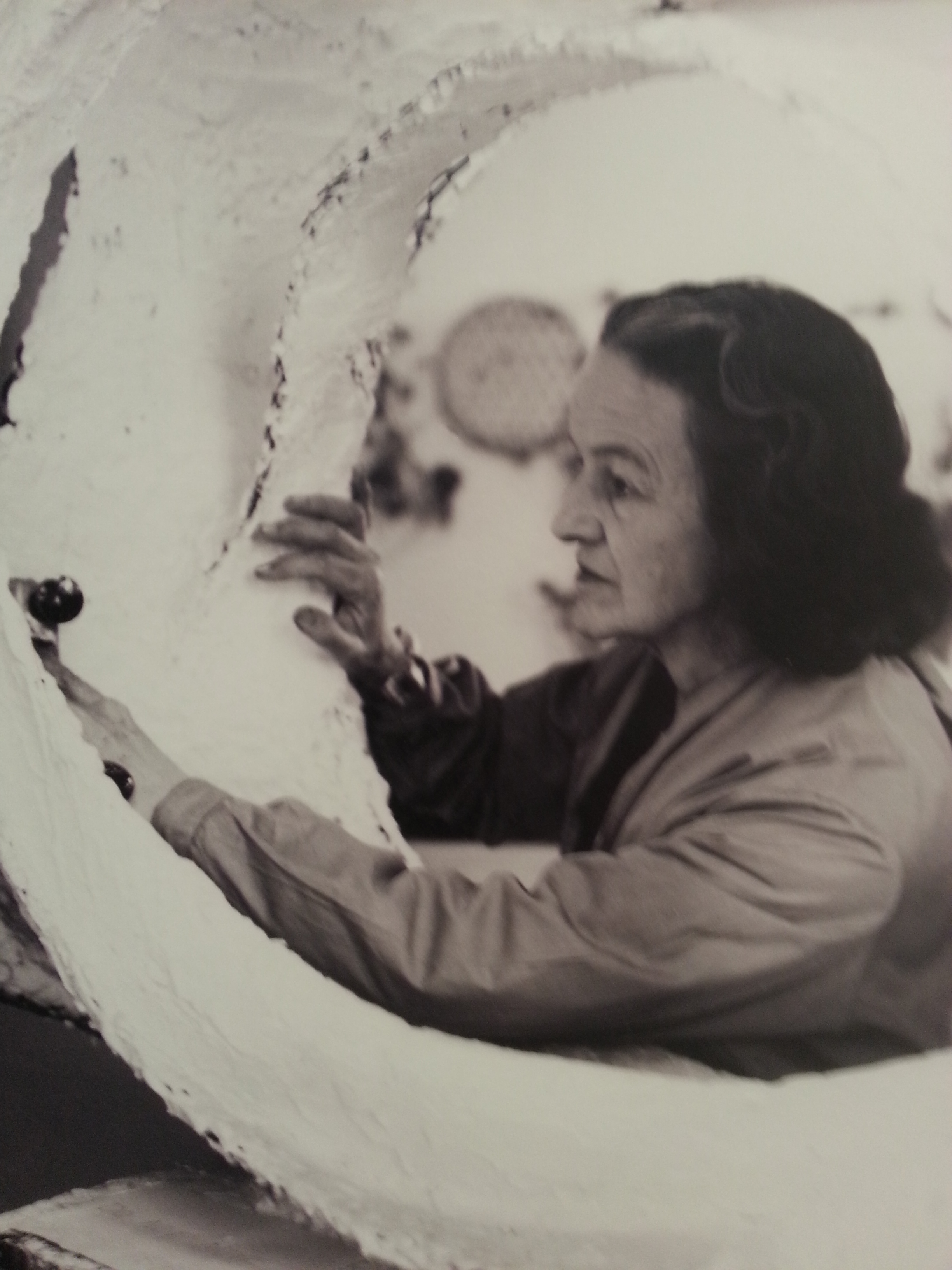
During our week of culture up in Yorkshire we appreciated seeing in real life the work of Barbara hepworth at the Yorkshire Sculpture Park and naturally at the Hepworth Wakefield Gallery. She is probably one of the best three 20th century sculptors in the world, and I must admit one of my favourite of all time. We originally saw some of her pieces in St Ives exhibited in the garden of her Cornish studio where they looked very much at home. Her sculpture is displayed in her gallery and garden at the home she lived in there. This visit was several decades ago so seeing more of her work recently has reminded us that a return visit to St Ives is well overdue.

2014 01 26_6159

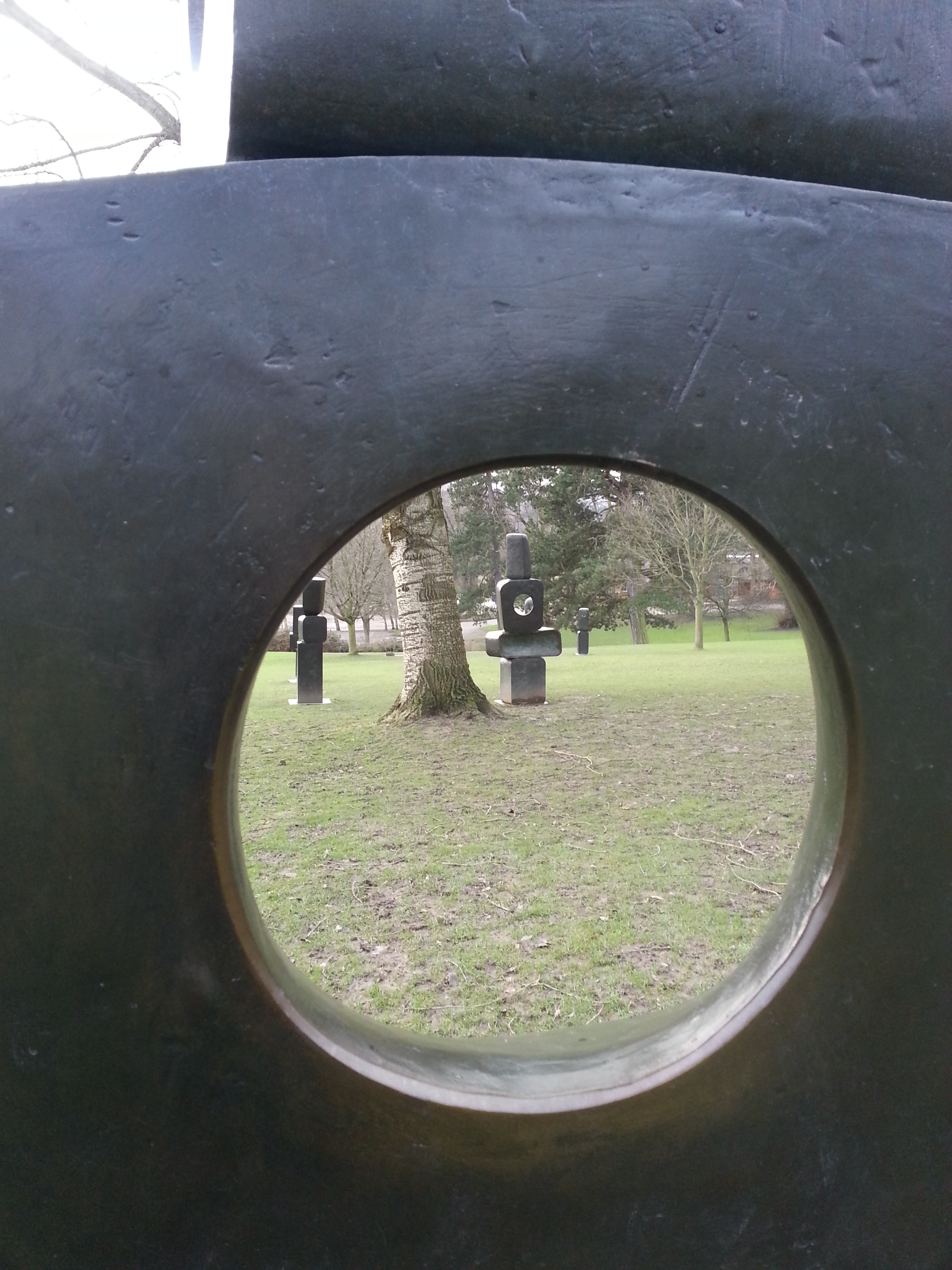
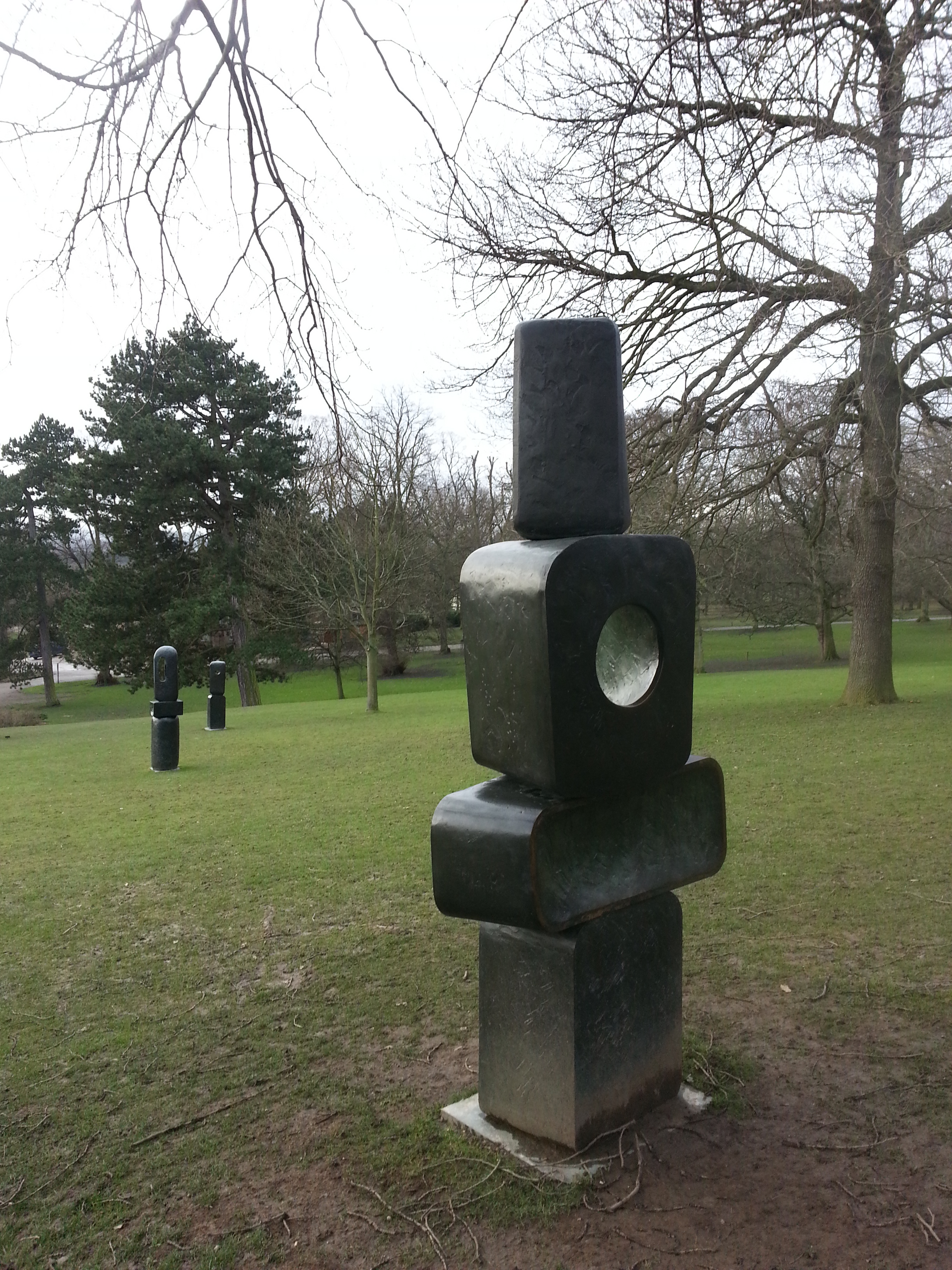
During our week of culture in Yorkshire we enjoyed viewing her work at the sculpture park and at the Hepworth Wakefield Gallery. At the sculpture park we particularly we enjoyed her “Family of Man”. We liked it enough to actually send time looking at the individual pieces in detail, which wasn’t easy to do when the icy wind thrashed at our faces, making our eyes and noses run. Each time I stopped to take a photo I had to dry my eyes in order to see what was going on in the viewfinder.

2014 01 26_6235 2014 01 26_6237 2014 01 26_6236 2014 01 26_6238 2014 01 26_6239 2014 01 26_6240 2014 01 26_6241 2014 01 26_6245 2014 01 26_6246 2014 01 26_6247

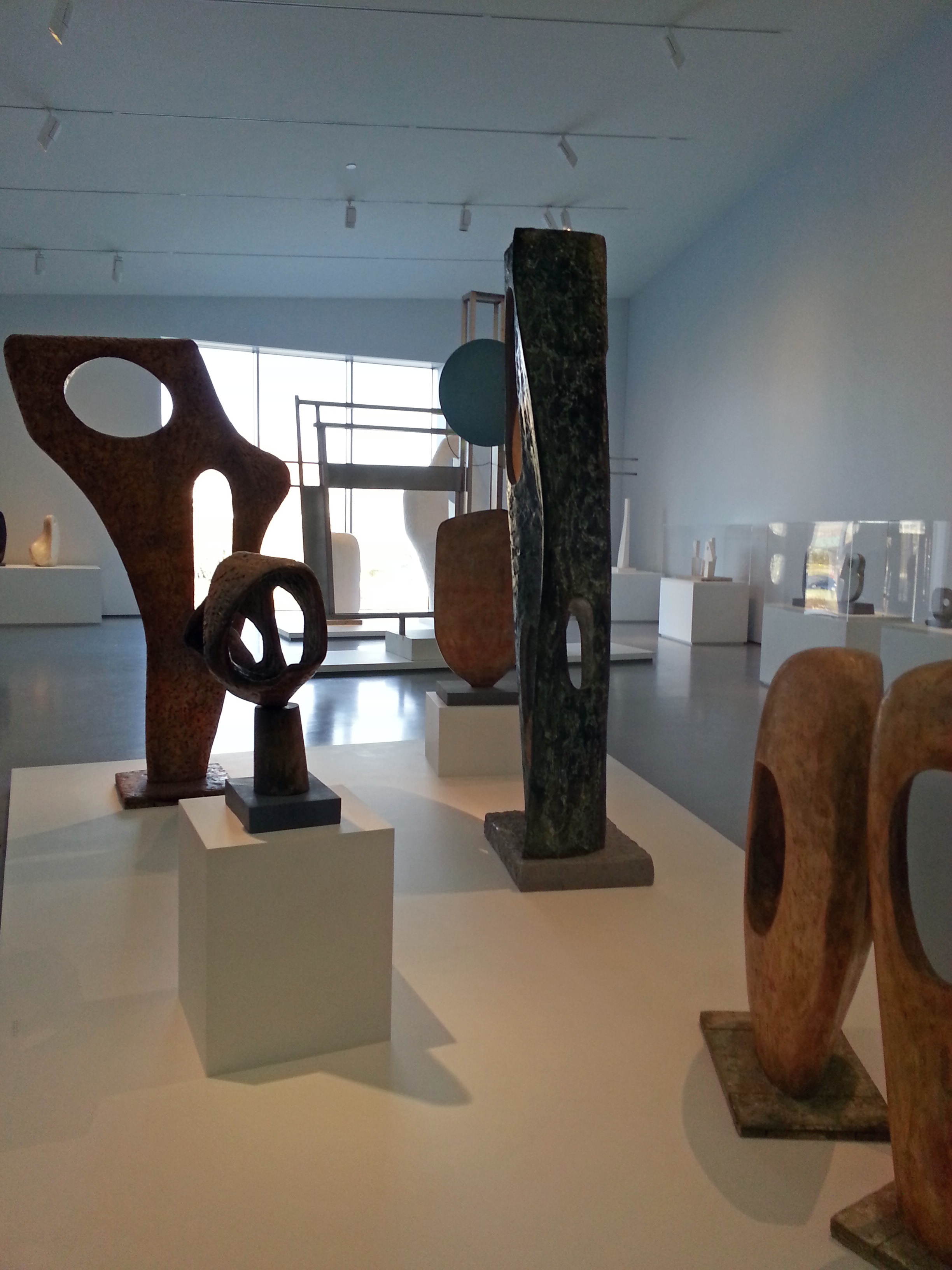
At the Hepworth Wakefield Gallery I relished the opportunity of seeing some of her designs, models and and mock ups of wellknown pieces. A real surprise was a work bench displaying tools that Hepworth actually used to create her masterpieces.

2014 01 26_6162

2014 01 26_6153_edited-1 2014 01 26_6142_edited-1

We even have a couple of repro pieces of Hepworth sculptures in our garden and at the gallery we were enthralled to see the genuine articles and surprised at how large they were when viewed full sized.

2014 01 29_6410_edited-1

Categories
gardening Winter Gardening

A few Winter Beauties

At this time of the year it is the little delicate flowering shrubs that excel, with their gentle colouring and powerful aromas.

I thought I would try drawing and painting a few gems from the February garden with my new iPad. It is going to take quite a bit of getting used to but I am taking the first few steps.

The first three are drawings of Dogwood stems, perennial wallflower Erygeron “Bowles Mauve” and the seed heads of fennel drawn on the app “Drawing”.

2014 02 07_6433_edited-1 2014 02 07_6434 2014 02 07_6432_edited-1

The next two are paintings created using an app called “Brushes” and show Fennel seed heads, With Hazel “Jelena” and Daphne bhuloa “Jacquelin Postill”.

Painting Painting 1

Categories
architecture canals outdoor sculpture Yorkshire

A Week of Culture – Part 4 – The Hepworth Wakefield Gallery

Part Four of our culture week sees us visiting the new Hepworth Wakefield Gallery within the city of Wakefield in Yorkshire. Wakefield has been graced with a new gallery partly dedicated to the work of Barbara Hepworth as it was the city of her birth.

2014 01 26_6119

We had seen photographs of this newly constructed gallery and had wanteded to visit since its opening. The building itself is an imposing grey structure based on slightly irregular cubes and cuboids. A long dramatic walkway over the canal took us over moored barges with their wood fires adding the aroma of burning wood to the misty damp atmosphere.

2014 01 26_6120 2014 01 26_6121

From the walkway we spied this character hanging from a crane in the metal reclamation yard alongside the canal. He is made up of all sorts of scrap materials and from a distance he looks as if he is made of huge sweets – liquorice allsorts.

2014 01 26_6122 2014 01 26_6123

As we got close to the entrance we realised just how vast this gallery is with its grey slabbed sides rising up above us.

2014 01 26_6124   2014 01 26_6127

Inside, the building is equally dramatic with deeper greys and black being the dominant colours in the spaces outside the gallery rooms themselves, which as expected are all of a stark white. The outside surfaces are matt in sharp contrast with the shining interiors.

2014 01 26_6126 2014 01 26_6125

With all these straight lines and monochrome surfaces that constitute the fabric of the buiding the art work on show would need to be good and well displayed to brighten the visitors’ experience along with some comfortable seating on which to sit and appreciate the art works. People also make a difference and we received a warm welcome from the smiling face behind the reception desk.

The first gallery contained a couple of pieces by British sculptor Henry Moore – Reclining Figures. They looked good with plenty of space around them and with bright even lighting. But our warm welcome from the receptionist was somewhat negated by the steward in this room who called across at me “You are not allowed to touch them!” when I was pointing out a particularly nice curved line. Sadly because of this we didn’t stay so I failed to photograph Moore’s work. We put it down to bad training and moved on quickly to the next gallery where a delightful surprise awaited us.

We were taken aback as we were confronted by a crazily overcrowded room set. This was the collection of William Alfred Ismay. At first it looked a jumble of worthless pieces of junk thrown together in what is often put forward by some artists as sculpture. We once saw a garden shed in a gallery  full of old dusty tools looking as if it had been lifted from a vegetable patch and dropped in the gallery – it even had a radio playing. The gallery presented it as an important installation and went on to propound its value as a work of art. We didn’t buy into that and we had a feeling we might be in for a similar experience here. But no! Here was a collection accumulated over decades by a local Wakefield librarian who became an obsessive collector of quality ceramics. His home became filled to the brim with them covering every surface even the table at which he ate his meals, leaving a little gap just big enough for his plate! A close look among the jumble of items led us to discover pieces from potters whose work we recognised. Most of the well-known 20th century potters and ceramists were in fact represented. Wandering around the room set became a voyage of discovery picking out beautiful pieces from amongt the cheap white goods of his era. The pieces were displayed on pieces of Ismay’s furniture and the whole set up was like looking into his house with the walls stripped away.

2014 01 26_6128 2014 01 26_6129 2014 01 26_6130 2014 01 26_6131 2014 01 26_6132

In the gallery where Ismays collection was displayed we were again made to feel uncomfortable. A black line surrounded the display and a sign asked visitors not to step over it. Sadly as we walked around the young room stewards followed our every move keeping a close eye on our feet. This must again reflect their training because when we engaged them in conversation they were very pleasant, knowledgeable and enthusiastic.

The third gallery we entered was spotlighting the work of American artist Dana Schutz. This is the New York based painter’s first UK exhibition. Her large extremely colourful work did not appeal to either myself or Jude as we found them disturbing in an unpleasant way. This gallery though did give them the space needed to appreciate them coupled with excellent lighting. If you were a Schulz fan you would have appreciated how good they looked in this setting. You can see the hard surface of the bench here. It didn’t invite you to sit and peruse the paintings and did nothing to soften the hard lines of the building and whiteness of the room. Comfortable benches which invite the visitor to sit and consider a piece in more depth are sadly lacking throughout the gallery.

2014 01 26_6136

We moved through galleries displaying the work of Albert Wainwright whose work varied a great deal, from simple book and magazine illustrations to landscapes of Northern England and the occasional poster. Photography was not permitted in this room.

We moved on to Galleries 4,5 and 6 where the work of Barbara Hepworth was on show. Her work suited the style of gallery with their huge walls of glass which let the light stream in. The views out of these windows were out over the river towards the city.

2014 01 26_6152_edited-1 2014 01 26_6148_edited-1 2014 01 26_6142_edited-1 2014 01 26_6139_edited-1

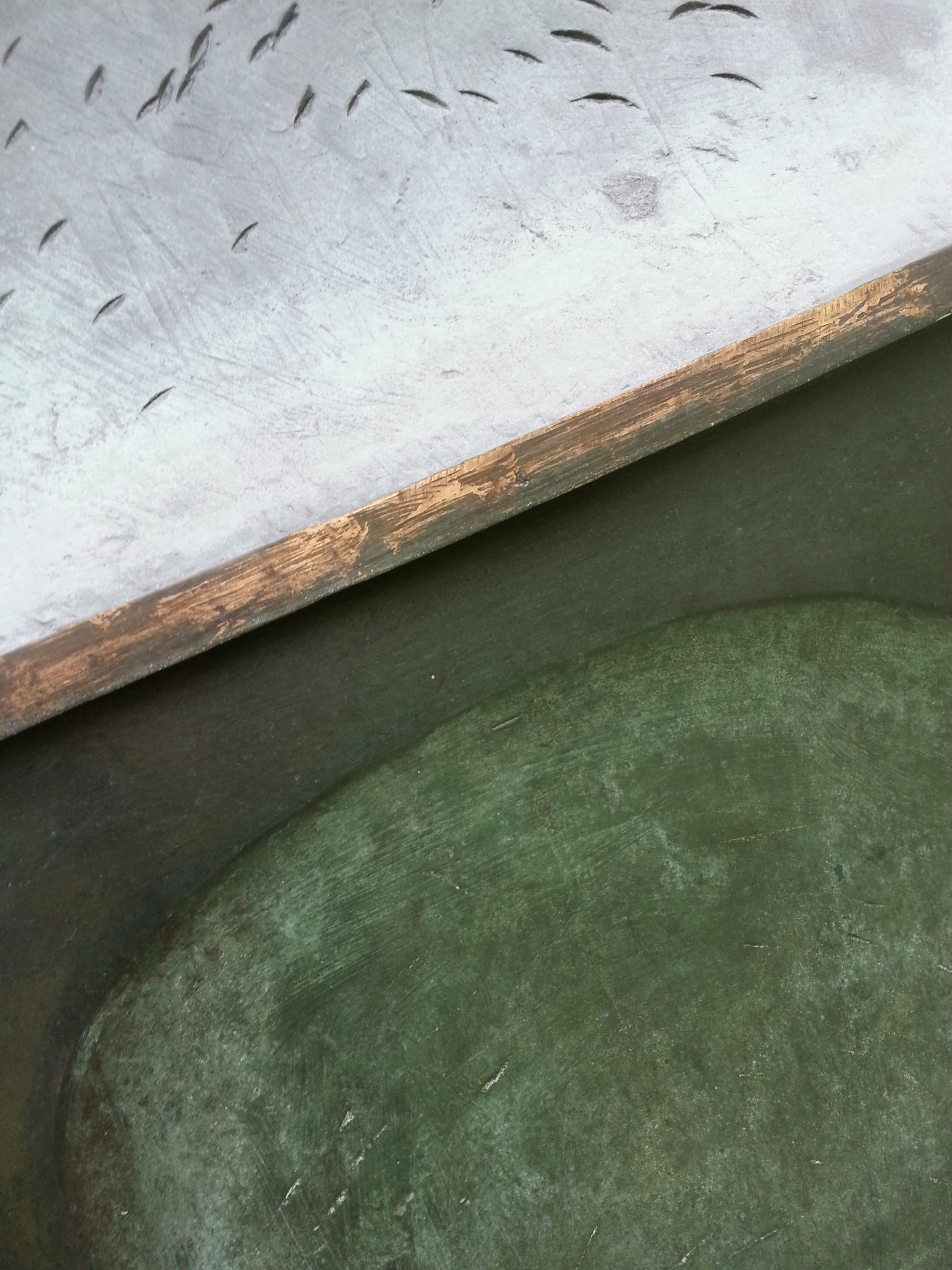
We were pleased to see a full sized prototype of the well known piece “Winged Figure” which was designed to grace the John Lewis store in Oxford Street. We think of Hepworth as being just a sculptor so it was interesting to see some of her 2-D graphic works. It was a great privilege to get really close to this iconic piece and see the variety of textured surfaces.

2014 01 26_6140_edited-1

2014 01 26_6143_edited-1 2014 01 26_6144_edited-1 2014 01 26_6146_edited-1 2014 01 26_6145_edited-1

It was strange to see some of her work in glass cases but I can appreciate that these particular pieces are delicate.

2014 01 26_6156_edited-1 2014 01 26_6157_edited-1

Enjoy this set of photos showing the variety of Hepworth’s work.

2014 01 26_6141_edited-1 2014 01 26_6151_edited-1 2014 01 26_6153_edited-1 2014 01 26_6154_edited-1

If we look at the following set of 5 photos we can see they feature a similar simple circle. The first photo is a close up of the last piece in the set of photos above, then we have a photo of the whole of a different piece of work followed by a close up of it. The final shot looks as if it fits with them but all it is is a shot I took accidentally as I walked through the gallery. I was carrying the phone set on camera mode facing down and inadvertently took a photo of the floor with a circle of an electric socket cover. Strangely in keeping!

2014 01 26_6155_edited-1 2014 01 26_6149_edited-1 2014 01 26_6150_edited-1 2014 01 26_6135_edited-1

We finished our visit by going back outside to look at the rest of the building itself and a few pieces displayed on the grassed areas alongside, including more of the Barbara Hepworth “Family of Man” pieces some of which we had already enjoyed at the sculpture park.

2014 01 26_6163_edited-1 2014 01 26_6164_edited-1 2014 01 26_6165_edited-1 2014 01 26_6168_edited-1 2014 01 26_6169_edited-1    2014 01 26_6185_edited-1

We were also able to view the old mill building, The Calder, which will hold exhibitions in conjunction with the Hepworth Wakefield. These old warehouses present a stark contrast to the modern geometric architecture of the new gallery close by.

2014 01 26_6171_edited-1 2014 01 26_6172_edited-1

So that is two parts of the Yorkshire Sculpture Triangle visited which just leaves the venues in Leeds, The Henry Moore Institute and the Leeds Art Gallery, to discover sometime in the future.

Categories
landscapes outdoor sculpture Yorkshire

A Week of Culture – Part Three – My Favourites at the YSP

For this third post in the Week of culture I promised to share with you some of my favourite  scultptors who have created pieces to display outdoors. Yorkshire Sculpture Park is the ideal setting with its acres of grounds which was an area of parkland associated with a grand house. The sloping hillsides, the lake and woodland areas provide ideal settings for pieces of outdoor sculpture for both pure sculptors and land artists.

On our visit this winter the favourites we enjoyed were Barbara Hepworth, Henry Moore, David Nash and Richard Long.

I shall begin with a piece by Richard Long simply because this is the first time we have ever seen any of his work. Much of his work is based on a line, a walk or circles. He is the best known British land artist famous for his work made while walking. He has been honoured with a CBE for his art, the land art, sculpture, photography and paintings and in 1989 received the Turner Prize. At the sculpture park we had to walk along the shores of the lake through woodlands before we found this piece. The photo was taken on my i Pad so do not do the piece justice. The stone pieces were of red sandstone.

2014 01 26_6358_edited-1 2014 01 26_6356_edited-1 2014 01 26_6355_edited-1 2014 01 26_6354_edited-1 2014 01 26_6353_edited-1

My second artist to feature is David Nash who has a few pieces permanently at Yorkshire Sculpture Park but we have also seen  a massive exhibition of hs work here a few year ago after his year as artist in residence there. Both pieces we saw on this visit are in the woodland with one on the banks of the lake on the shore between the wood and the water.

The first of his works we found was entitled “71 Steps” and it climbed a hillside up through the wooded slope. The first few photos are to set the scene.

2014 01 26_6349_edited-1 2014 01 26_6348_edited-1

2014 01 26_6345_edited-1 2014 01 26_6346_edited-1  2014 01 26_6344_edited-1

Close by we spotted these beautiful pieces of wood and tree sculpted by Mother Nature and reflected in the water. They were flowing out into the lake.

2014 01 26_6350_edited-1 2014 01 26_6351_edited-1

2014 01 26_6352_edited-1

The second of the David Nash pieces was closer to the water’s edge between the trees and the biscuit coloured leaves. Just like the steps the wood had been scorched by burning. Sadly the camera on my i Pad couldn’t cope with the contrasts so the beautiful colour of the dried reeds has burnt out.

2014 01 26_6337_edited-1 2014 01 26_6338_edited-1 2014 01 26_6339_edited-1 2014 01 26_6341_edited-1 2014 01 26_6342_edited-1 2014 01 26_6343_edited-1

On a piece of rough ground close to the lake we came across a builder’s store where old bricks and building stones were being kept whilst work was being completed on an old chapel in the grounds. We couldn’t help but wonder what a good land artist would have created using these pieces! Close by mother Nature had created a piece of her own land art based on a fallen tree.

2014 01 26_6335_edited-1 2014 01 26_6336_edited-1

2014 01 26_6334_edited-1

Barbara Hepworth’s work is well represented here at the sculpture park as her pieces called the “Family of Man” are displayed most sympathetically on a sloping piece of sparcely planted woodland. On the way to find these pieces we passed this interesting sign where the face of our Labour Party leader had been added. Similar photos of faces had been pasted to trees but the weather had got the better of these.

2014 01 26_6234

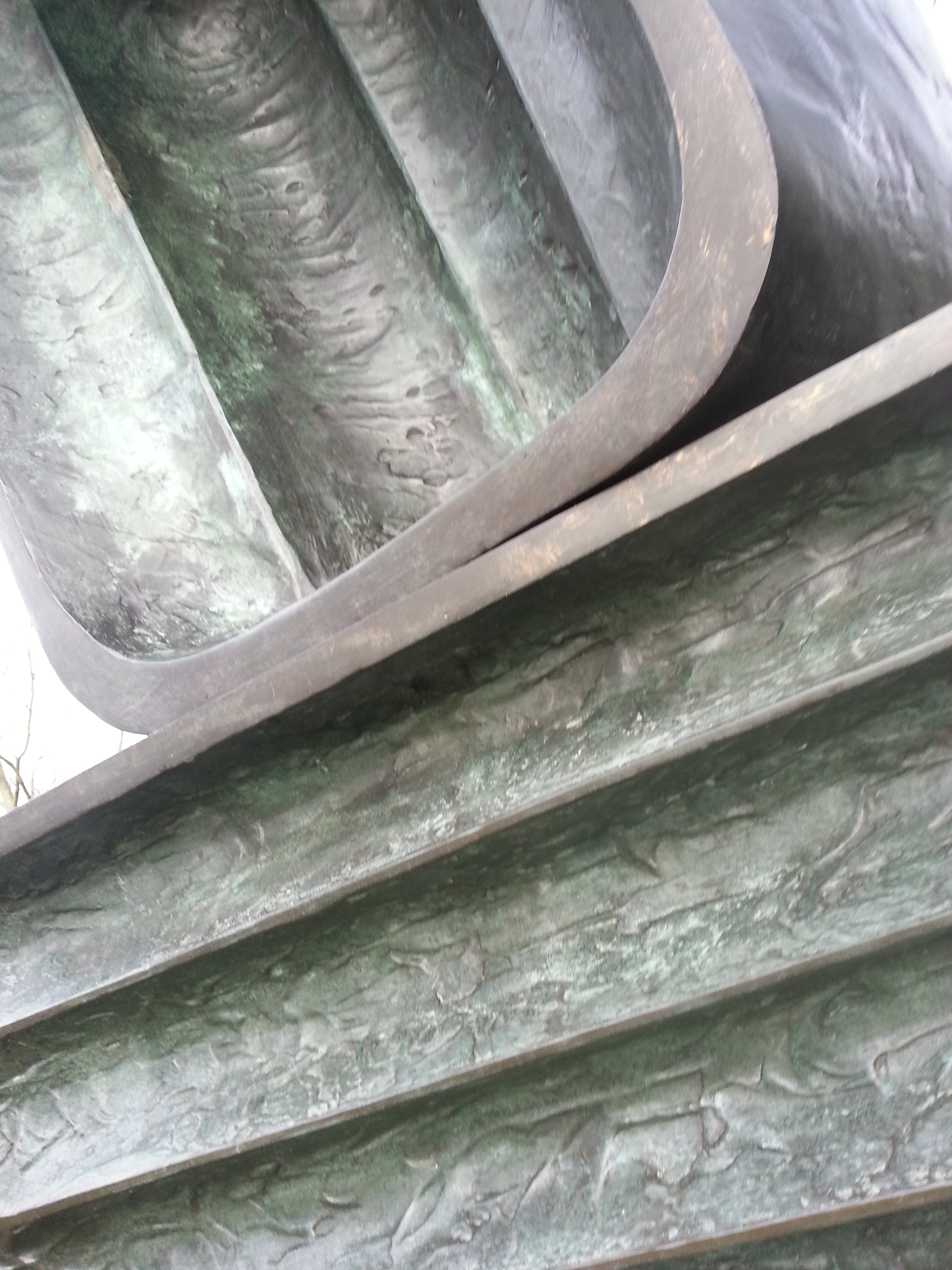
I have included some close up photos of a few of the pieces by Barbara Hepworth to show where the hand of the artist has left her marks. I enjoy studying the texture of any piece of sculpture as it can be as important as the overall shape of the work.

2014 01 26_6237 2014 01 26_6241 2014 01 26_6240 2014 01 26_6239 2014 01 26_6238   2014 01 26_6245 2014 01 26_6246 2014 01 26_6247

The bark of this tree caught my eye as we moved between the Barbara Hepworth pieces. It was the texture that attracted me and the pattern of diamonds sculpted into the bark. Even the carved graffiti seemed to add to the character of the tree, telling a part of its story.

2014 01 26_6243 2014 01 26_6244

2014 01 26_6242

You can see from the photo of Jude below that the weather was not making wandering around the site too easy. The ground beneath our feet was very slippery. This meant that when we came to seek out the work of Henry Moore we found it difficult to get to them as the ground was impossible to walk on due to the steep sloping land where they were situated.

But we can enjoy this one piece.

2014 01 26_6235

2014 01 26_6333 2014 01 26_6332

For part 4 of this week of culture we move on to the Hepworth Wakefield Gallery in the city of Wakefield itself.

Categories
gardens open to the public landscapes outdoor sculpture photography Yorkshire

A Week of Culture – Part 2 – Yorkshire Sculpture Park

At least once a year we go to the Yorkshire Sculpture Park so it was bound to be one of the venues on our cultural holiday. It is always a cold place and often wet and windy. We were bound to have rough weather as we were visiting in January during a particularly wet, windy winter. Thank goodness for the coffee shop which provided us several opportunities to warm back up. We arrived before it opened and became so absorbed in the special nature of this place that we left as the grounds were closing.

The four featured artists in early 2014 are Angie Lewin, Tom Price, Dennis Oppenheim and Awar Kanwatr, but as always there are resident pieces all around. Most of the pieces are sympathetically displayed around the grounds in the open grassland, under trees, alongside the lake and on grassed slopes. There is also a gallery where work can be displayed. It is a stunning building with galleries that provide beautiful display spaces. The first of the photos below show the building from the front whereas the second shows how it fits into the slope of the garden hidden by its green roof. All the lawn here is in fact the roof of the galleries.

2014 01 26_6205 2014 01 26_6206

The original red-bricked wall of the walled garden and its bothy are still here providing unusual display spaces. Alongside the wall we found these “sound benches” part of an exhibition of work by Amar Kanwar, a combination of film and installation.

2014 01 26_6207

2014 01 26_6209 2014 01 26_6208

The Bothy Gallery itself featured some of the work of sculpture Tom Price. Small bronzes are here to enjoy close up and a huge 9 feet tall figure entitled “Network” was to be searched for in the grounds. I found his work fascinating so it was a wonderful experience being so close to his pieces and his subjects are contemporary people worked in the traditional medium of bronze.

2014 01 26_6380 2014 01 26_6382 2014 01 26_6383 2014 01 26_6385 2014 01 26_6386 2014 01 26_6388

We have enjoyed the work of some great artists here in the past, David Nash, Andy Goldsworthy etc and the artist we were primarily focusing on during this visit was Angie Lewin. We usually come here to look at the work of sculptors or land artists but Angie Lewin is an artist and designer who works in watercolours as well as prints using the techniques of a woodcut, lino cut, screen prints and lithography with much of her work being used as book or magazine illustrations. The natural world is her main stimulus especially skeletal seed heads against the sky. I love her work finding it fresh and lively as well as original.  Enjoy this little montage of her work.

2014 01 26_61942014 01 26_61952014 01 26_61992014 01 26_6197

To be given the opportunity to view her sketchbooks was a delight and I was tempted to purchase a book of her work after seeing so many beautiful pieces.

2014 01 26_6196

But of course there was lots more to see, including a few pieces we seek out in the grounds on every visit. Works by Henry Moore, Barbara Hepworth, James Turrell and Antony Gormley.

2014 01 26_6217 2014 01 26_6221 2014 01 26_6237 2014 01 26_6251 2014 01 26_6332 2014 01 26_6338 2014 01 26_6355 2014 01 26_6393 2014 01 26_6374

As we returned to the centre after enjoying our wander around the grounds we discovered another interesting and unexpected piece of work. Every space available is used to provide original and effective display galleries, in this case even a stairway. These little ceramic creatures in a piece called “Infestation” are the work of Anna Collette Hunt and provide great entertainment as you climb the stairs.

2014 01 26_6201 2014 01 26_6204

This day’s cultural visit was to be the first of two days at Wakefield. The following day we went in search of the Hepworth Wakefield Gallery within the city itself. These two venues are two out of the three that make up the “Yorkshire Sculpture Triangle”. After this cultural holiday we will just have the one of the three corners of the triangles left to see, the city of Leeds. This comprises the Leeds Art Gallery and the Henry Moore Institute. We will soon be planning a few more days away to discover what that venue has to offer. To find out more about the triangle of galleries visit ysculpture.co.uk.

To re-visit the Yorkshire Sculpture Park when I share my favourite sculptors with you see my next blog in the “Week of Culture” series of posts.

Categories
architecture gardens gardens open to the public National Trust ornamental trees and shrubs outdoor sculpture recycling The National Trust

A Week of Culture – Part One – Hardwick Hall

We spent a few cold January days up in Derbyshire and Yorkshire for a culture fix. It was extremely cold and occasional rain and hail storms lashed us but we did not give in. We bravely went onward defying whatever the weather threw at us and enjoyed every moment. Day one of our winter adventure found us stopping off in Derbyshire at Hardwick Hall for a spot of architecture appreciation.

Although the day was a memorable one, not all the memories were happy ones as my trusty friend my Nikon DSLR packed up and it did not allow me to focus or use flash so it is now being looked at in the camera hospital at Nikon UK. Fingers crossed for a speedy recovery. Isn’t it devastating when your camera goes awry? So all the pics following are taken on my Samsung Galaxy Phone, which does have a quality camera, thank goodness.

2014 01 26_6255 2014 01 26_6259

2014 01 26_6267 2014 01 26_6271

2014 01 26_6269

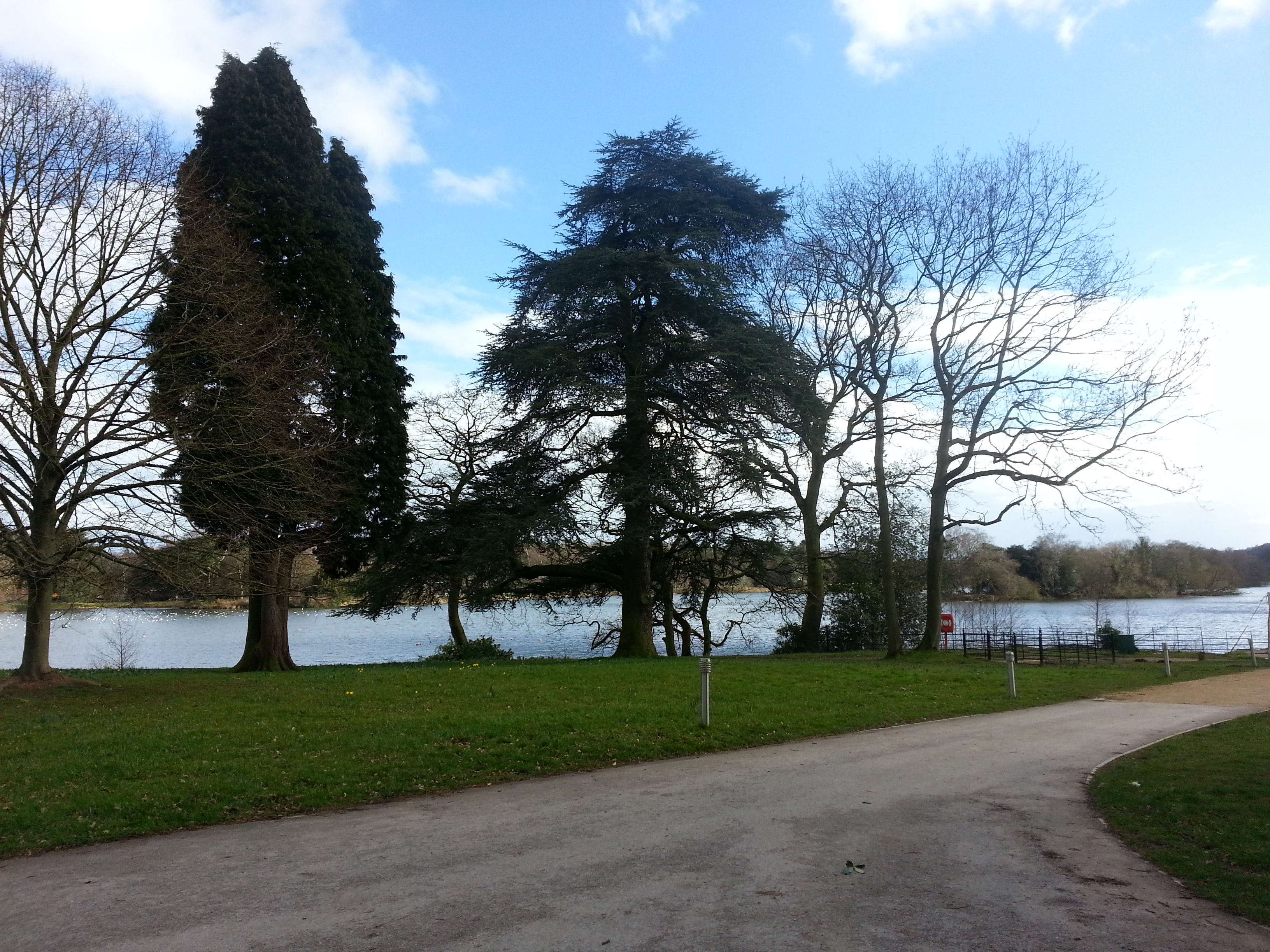
The grounds of Hardwick Hall , now under the auspices of the National Trust, is unusual in having two “big houses”. The newer hall was built in the late 1500’s by Bess of Hardwick, a powerful woman at a time when powerful women were few and far between.  She wanted everyone to now how important she was hence the size of Hardwick. She features her initials all over the building including huge letters along the top of the building The letter E refers  to her name Elizabeth and the S refers to Shrewsbury. She married George Talbot who was the Earl of Shrewsbury at the time making Bess Countess of Shrewsbury. No-one could have visited this place when she was there without knowing how powerful she was.
2014 01 26_6274

From the rear gardens we were able to appreciate close views of the heritage cattle, the Shorthorns.

2014 01 26_6272

The gardens are small but the parklands are impressive and extensive. A range of buildings once stable blocks, workers’ cottages and workshops have been lovingly restored and put to good use as holiday cottages, shop, restaurant etc.

2014 01 26_6315 2014 01 26_6316

Signs of a recent den building activity day for children were in evidence in the grassed area enclosed by the stable block buildings, as were wood sculptures celebrating the skills of the craftsmen who would have helped to maintain the grounds at Hardwick. The carvings were created from trees that had been felled due to disease. Even the tables and chairs in one of the buildings celebrated the work of the estate millers.

2014 01 26_6319 2014 01 26_6320

2014 01 26_6321 2014 01 26_6322

2014 01 26_6323 2014 01 26_6324

We were highly impressed by the “green credentials” of the building revamp and felt it needed celebrating. Well done to the National Trust! As well as excellent insulation there are several innovative ideas in action. Water collected from the roofs is used to flush toilets, solar panels on the roofs pre-heats water to be used in the kitchen, heat generated by the condensers of the fridges and freezers is collected and the boiler is of a bio-mass type.
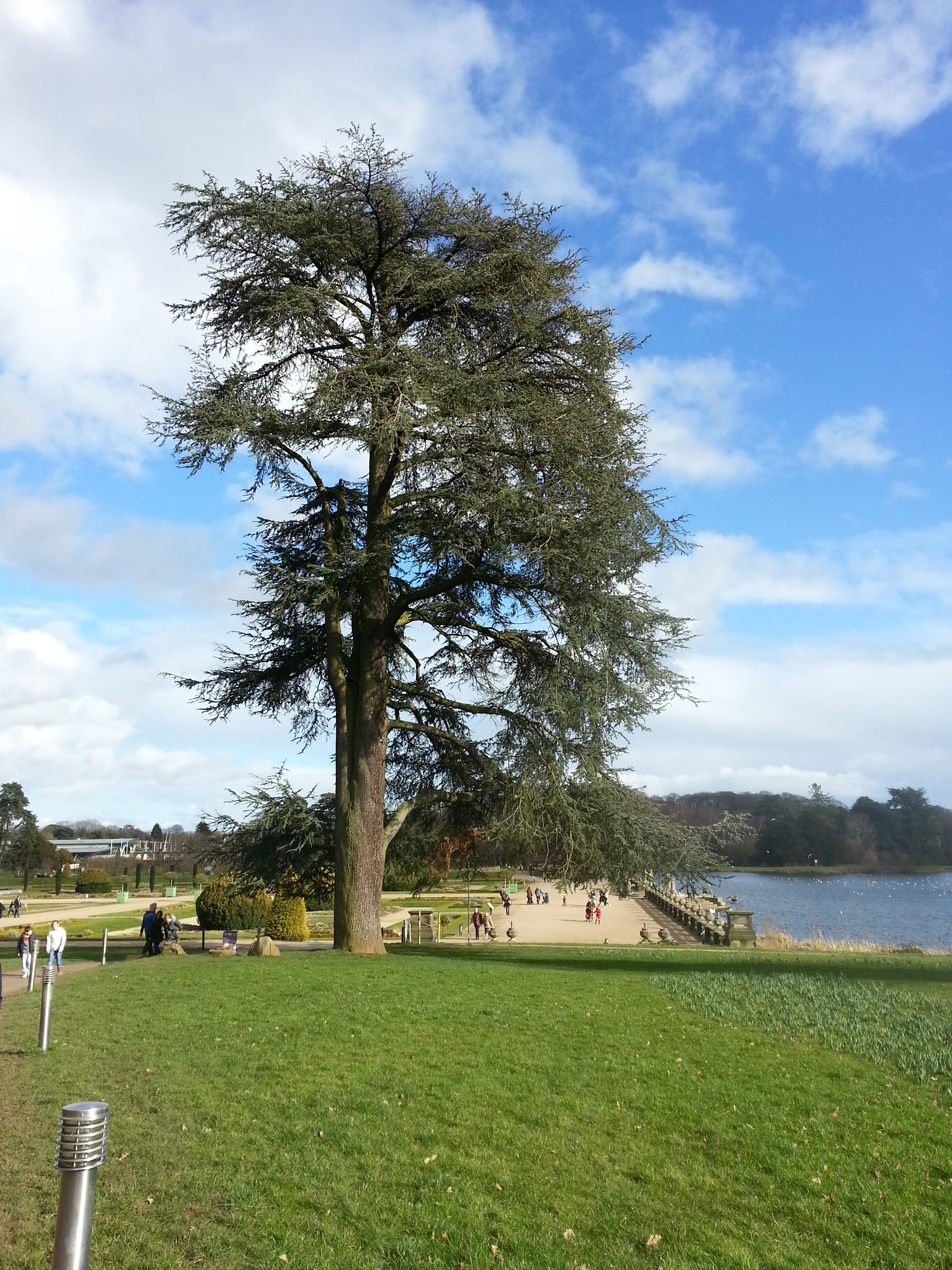
The more formal gardens are enclosed areas snuggly fitted close to the house surrounded by tall hedges so that each area is a surprise to the visitor. Some beautiful coppicing work in “The Nuttery” was evidence of the skilled gardeners here now. The trees here are Hazels, their prunings providing brash stacks for wildlife shelters.

2014 01 26_6257

2014 01 26_6261 2014 01 26_6262 2014 01 26_6264 2014 01 26_6265 2014 01 26_6263 2014 01 26_6266

We discovered some beautifully and skillfully trained and pruned plants, a rose and some Yew which brought a smile to our faces. It was cold day so a smile was most welcome! Just after taking these photos the sky turned black with heavy storm clouds, the temperature dropped, the wind speed increased and we were attacked by a ferocious hail storm. We took shelter in the entrance to the hall where I took these photos some showing the wet glossy paths to illustrate how wet it was.

2014 01 26_6270          2014 01 26_62812014 01 26_6282

2014 01 26_6286 2014 01 26_6287

2014 01 26_6285 2014 01 26_6288

     2014 01 26_6289

After sheltering out the time of the storm we looked for architectural details of the building and discovered these gems.

2014 01 26_6283 2014 01 26_6284

2014 01 26_6293 2014 01 26_6294

2014 01 26_6295

So let us have a look at a few shots of the “new” hall before we explore the old hall.

2014 01 26_6290 2014 01 26_6291 2014 01 26_6292

As we approached the old hall, which was the family home of Bess, our first view was in silhouette. As we moved around the building the detail revealed itself.

2014 01 26_6296 2014 01 26_6297

As we passed through the gateway we came across this piece of stonework. We had no idea what it was but were interested to find another set of Bess’ initials. You can just about see them if you look really carefully.

2014 01 26_6298 2014 01 26_6299

A close up look around the tall walls of the old hall showed how beautiful it must have been. It had a certain beauty even in decay.
2014 01 26_6300    2014 01 26_6304 2014 01 26_6305   2014 01 26_6308  2014 01 26_6310 2014 01 26_6311

We were drawn to the signs of old plaster work hanging on the inside walls.

2014 01 26_6312 2014 01 26_6302

Many old windows and doors had been filled in at various times and this resulted in what appeared as framed textured paintings. Beautiful!

2014 01 26_6309 2014 01 26_6307

2014 01 26_6301 2014 01 26_6306

As we walked away from the old hall I looked back and took this shot of it as the sky cleared and the sun returned.

2014 01 26_6314

As we returned to the car park the sun was setting behind the tall trees alongside the path showing just how long we had been discovering the delights of the old halls at Hardwick. We also came across this stone sculpture based on seeds found in the grounds.

2014 01 26_6330 2014 01 26_6329

We travelled further North and made our way out of Derbyshire into Yorkshire where we stayed a few days in Wakefield. Here we would experience more of our culture fixes.

thinkinGardens

for people who want more than gardening from gardens

This Veggie Life

A Vegetarian | Nature Lifestyle Blog

Rambling in the Garden

.....and nurturing my soul

The Arch City Gardener

Journeys In St. Louis Gardening and Beyond

Garden Dreaming at Châtillon

Consult the genius of the place

Storyshucker

A blog full of humorous and poignant observations.

gardeninacity

Notes from a wildlife-friendly cottage garden

PlayGroundology

...an emerging social science

The Official Blog of British Wildlife

'The most important and informative publication on wildlife of our times' - The Independent. This blog is a member of The UK & Ireland Natural History Bloggers group: www.uknhb.blogspot.com

iGrowHort

Inspire - Cultivate - Grow Native Plants - Restore Landscapes

Bishops Meadow Trust

To create and protect a semi-natural wild space for the people of Farnham to enjoy and experience an array of British wildlife in our town

Gardening with Children

The www.gardeningwithchildren.co.uk Blog

UKbirdingtimeline

birding through the seasons, why birds matter and how to conserve them

NATURE WALKER

with a camera in hand

Jardin

Transform your outdoor space

Eva's space

My allotment, cooking and other interests

Old School Garden

my gardening life through the year

LEANNE COLE

Trying to live a creative life

fromacountrycottage

trying to live as lightly as possible on our beautiful planet

Good Life Gardening

Nature lovers from Leicester living the good life.

mybeautfulthings

Finding the beautiful in the everyday

mawsonmichelle

Michelle's Allotment

In and Out of My Garden

thoughts from and about my garden

Greenhousing

Big plans for a small garden

The Scottish Country Garden

A Walled Country Garden in South East Scotland

The Fruity Chicken

Life at the fruity chicken

willowarchway

Off grid living. Self sufficient. "PERMAGANICS RULE".

St Anns Allotments

Nottingham's Grade 2* Listed Allotments and Community Orchard

Manifest Joy Harvests

a journey in suburban vegetable gardening

Allotmental

The madness of growing your own

Penny's Garden: a harvest beyond my front door

A novel approach to vegetable gardening

arignagardener

Sustainable living in the Irish countryside.

NewEnglandGardenAndThread

Master Gardener, amateur photographer, quilter, NH native, and sometimes SC snowbird

dianajhale

Recent work and work in progress and anything else that interests me

planthoarder

a chaotic cottage gardener

Lens and Pens by Sally

a weekly blog that creates a personal philosophy through photographs and words

Dewdrops and Sunshine

Stories from a sassy and classy Southern farmbelle.

The Pyjama Gardener

Simple Organic Gardening & Seasonal Living

gettin' fresh!

turning dirt into dinner

JOY...

today the world is created anew

Garden Birds

Notes from a Devon garden

ShootAbout

Life Through The Lens

Adapting Pixels

A photography blog showcasing the best photography pictures and videos on the internet

Wildlifegardening's Blog

Just another WordPress.com site

naturestimeline

personal observations from the natural world as the search continues for a new approach to conservation.