Categories
countryside landscapes meadows the sea the seaside the shore Wales

Oh we do like to be beside the seaside – Part Two – The Great Orme

For our second reminder of autumn we return for our next bout of sea air. This time we made our way over more Welsh hills, moors and mountains to the northern stretch of coast. We stopped off in Llandudno for a wander along the pier before taking the driving tour of the Great Orme.

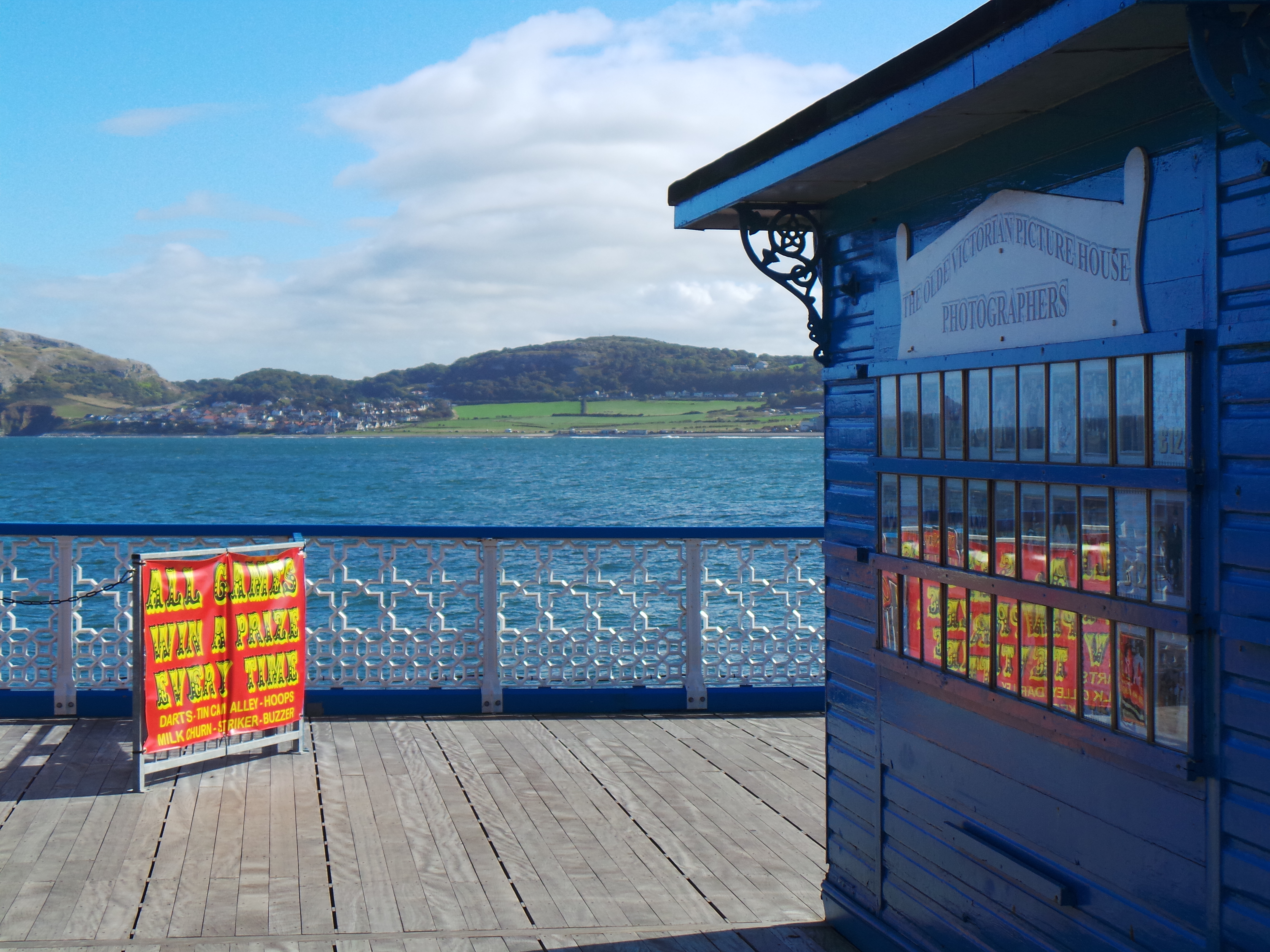
The sky was blue and the sea matched it. The pier seemed all blue too and on this bright day it looked so cheerful. The odd splash of yellow and red added even more drama.

2014 09 27_5266 2014 09 27_52672014 09 27_5269 2014 09 27_5270

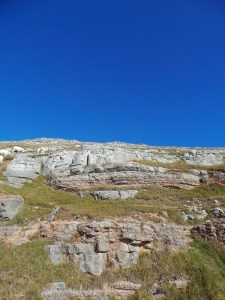
In the next shot you can spot the Great Orme looming in the background, with its strata lines of limestone clearly visible in the bright light. Isn’t it inviting when you spot it there?

2014 09 27_5271 2014 09 27_5272 2014 09 27_5273 2014 09 27_5274 2014 09 27_5275 2014 09 27_5276 2014 09 27_5277 2014 09 27_5278  2014 09 27_5280 2014 09 27_5281

Jude enjoyed the sight and sound of the sea as we reach the end of the pier.

2014 09 27_5279

Having enjoyed our walk out into the sea along the old blue and white pier we went on to start the second part of our day out, a drive around the Great Orme following the toll road.

2014 09 27_5286_edited-1 2014 09 27_52822014 09 27_5304

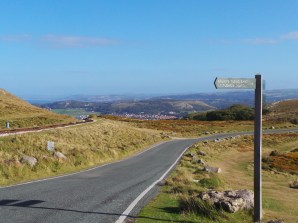
The single track road winds in and out of the inlets and headlands closely  following the line of the coast. The track is enclosed within limestone walls, laid as dry-stone walling.

2014 09 27_5301 2014 09 27_5285_edited-12014 09 27_5283 2014 09 27_5284 2014 09 27_5287 2014 09 27_5288 2014 09 27_5289 2014 09 27_5290

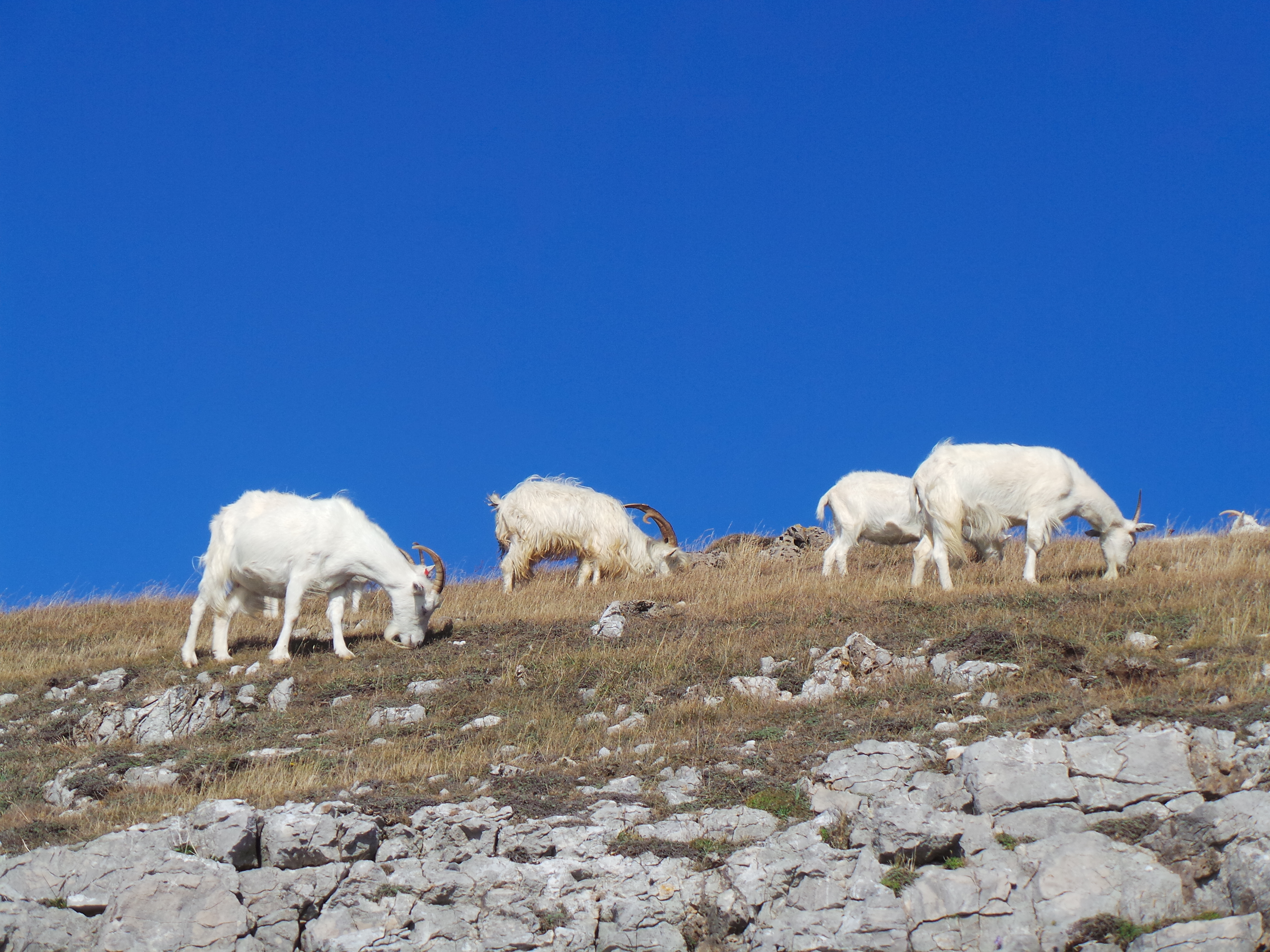
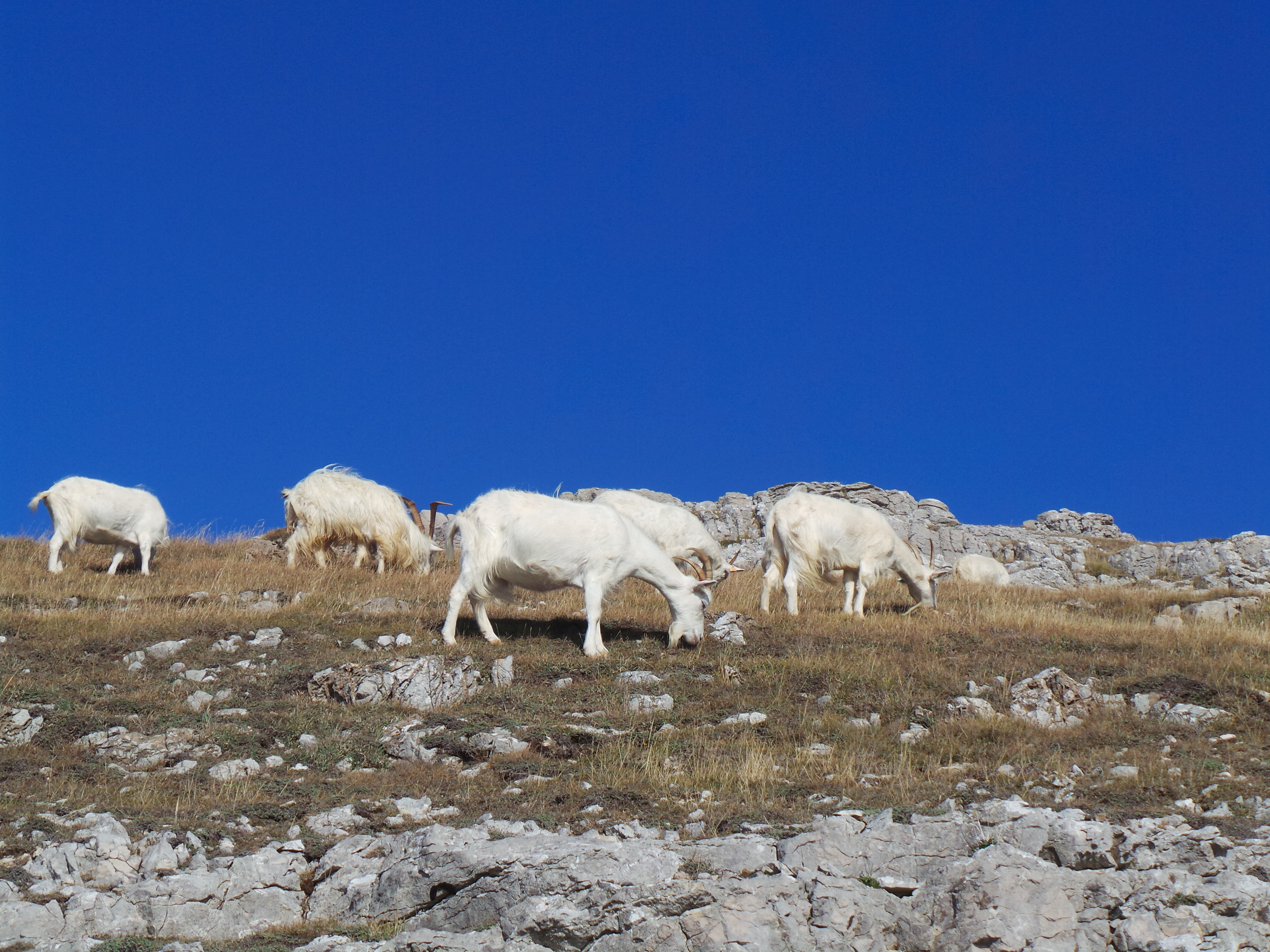
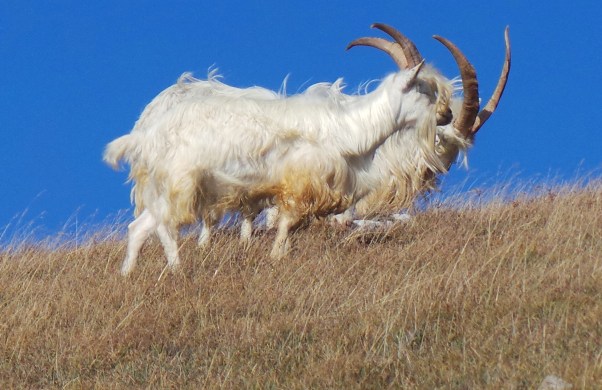
One feature of the Orme is a unique herd of wild white goats. We have driven up to the summit of the Orme and around the edge plenty of times in the past but rarely even caught a glimpse of these strange creatures. This day was our lucky day! Their white coats glowed against the deep blue sky.

2014 09 27_5293 2014 09 27_5294 2014 09 27_5295 2014 09 27_5298 2014 09 27_5299 2014 09 27_5300 2014 09 27_5296_edited-1

We took a diversion to the summit when we were almost all the way around the perimeter road. Our eyes were immediately drawn to this bronze statue of a wild white goat.

2014 09 27_5304 2014 09 27_5302

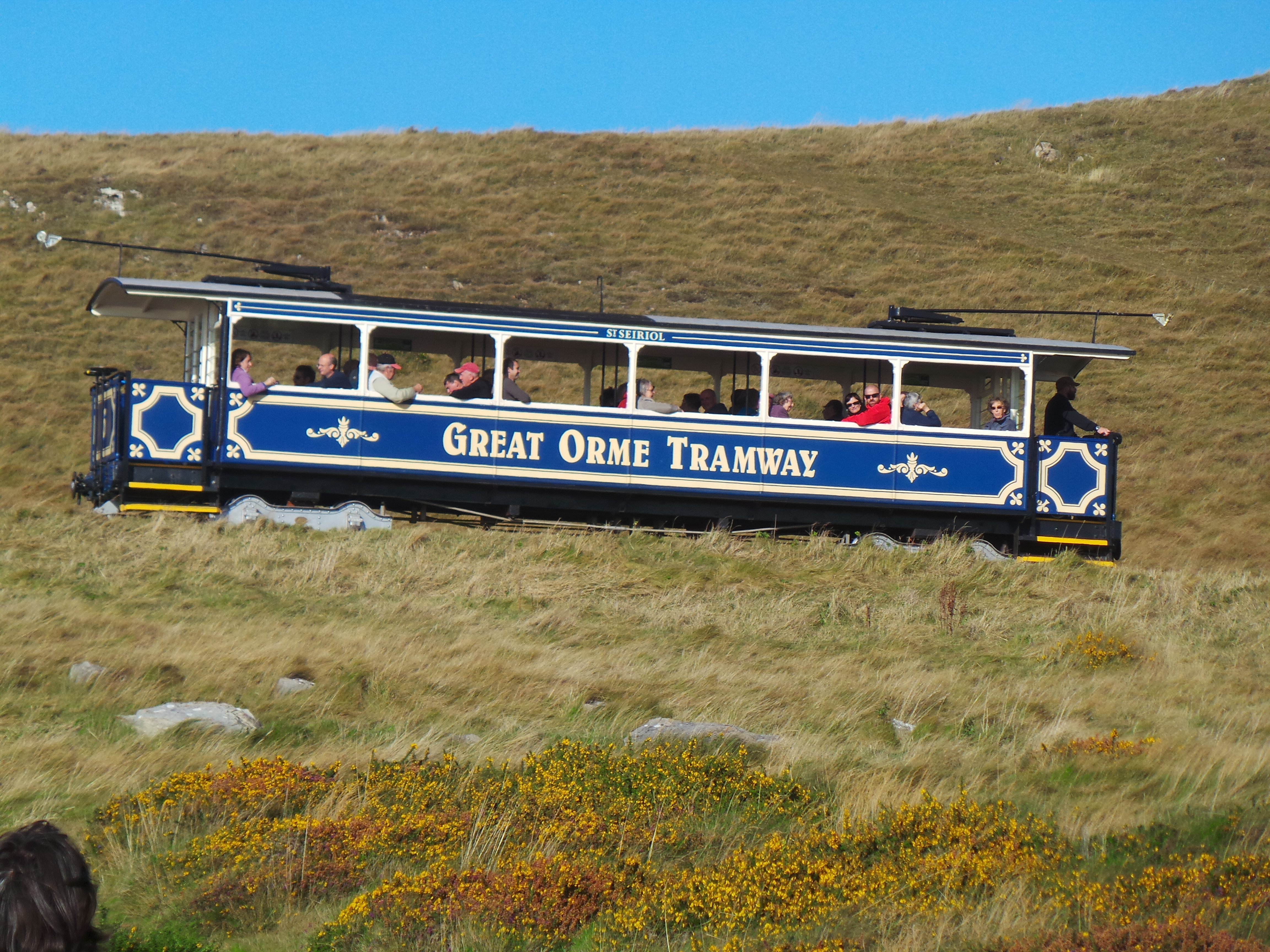
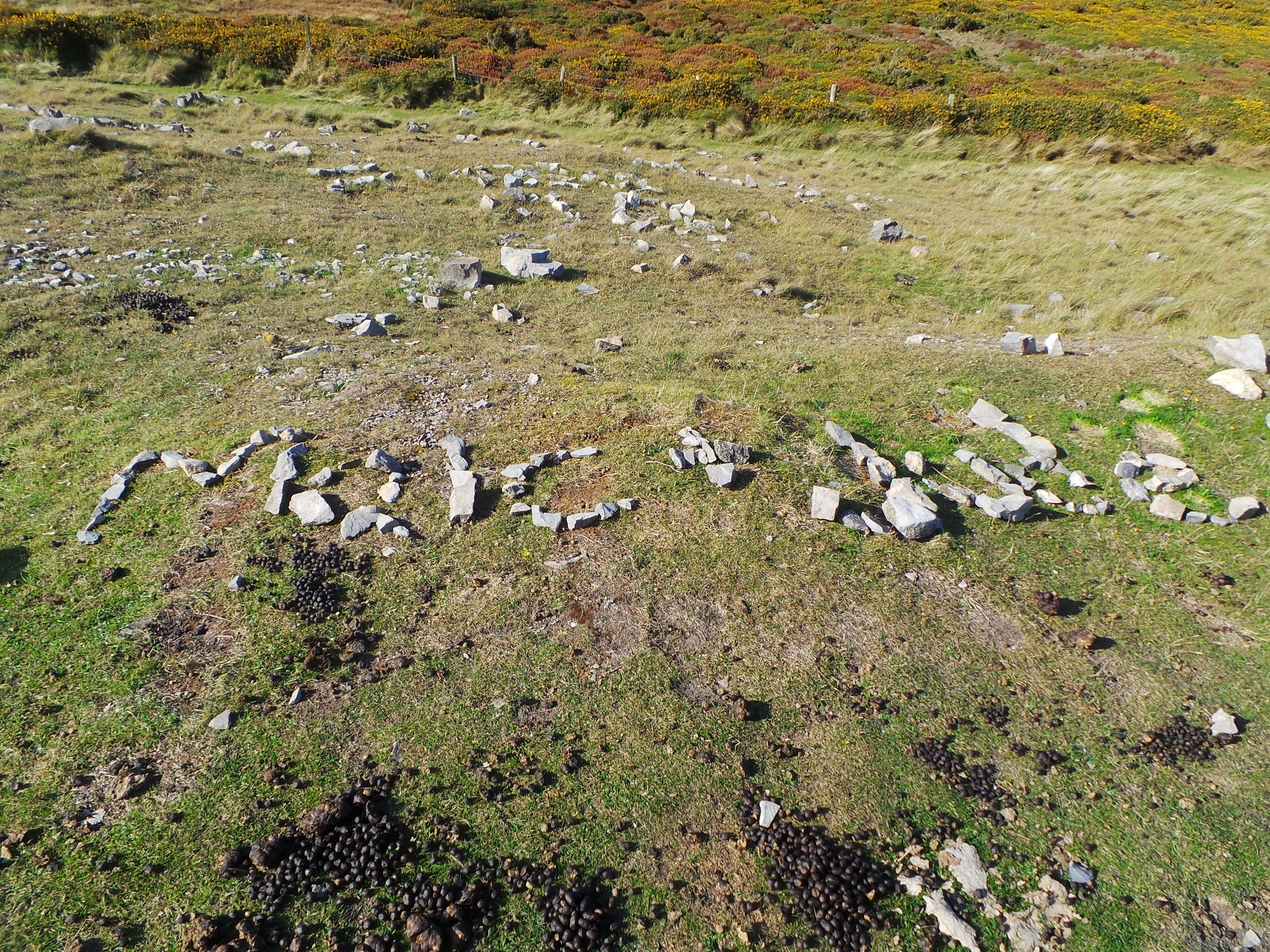
As well as its white goats the Great Orme is known for its ancient mines and its Victorian tram line. While wandering the summit we discovered near the old mine that visitors had used fallen limestone blocks to write their names on the close cropped grass.

2014 09 27_5305 2014 09 27_53072014 09 27_5310 2014 09 27_5308

We just had to have a go!

2014 09 27_5309  2014 09 27_5311

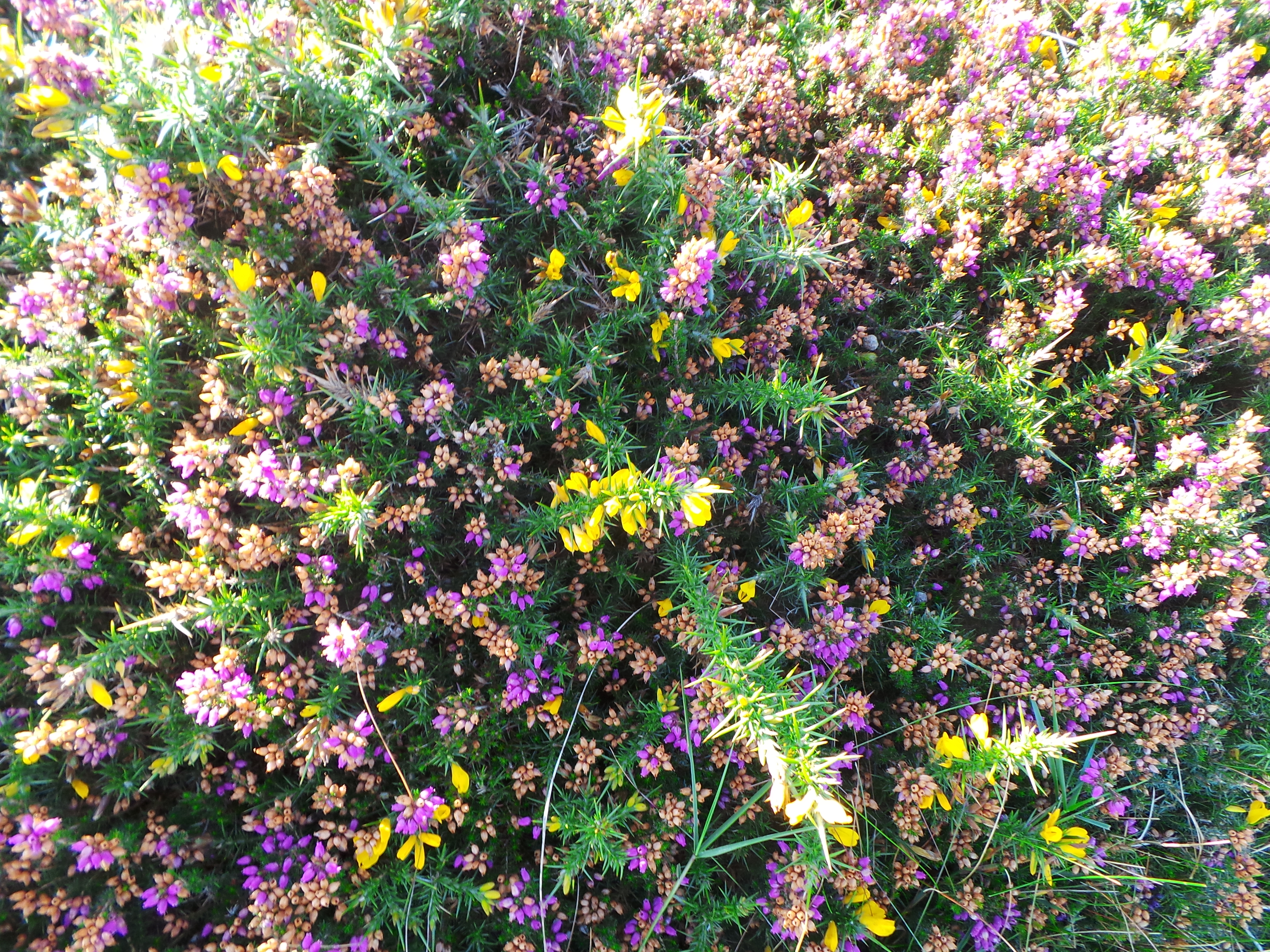
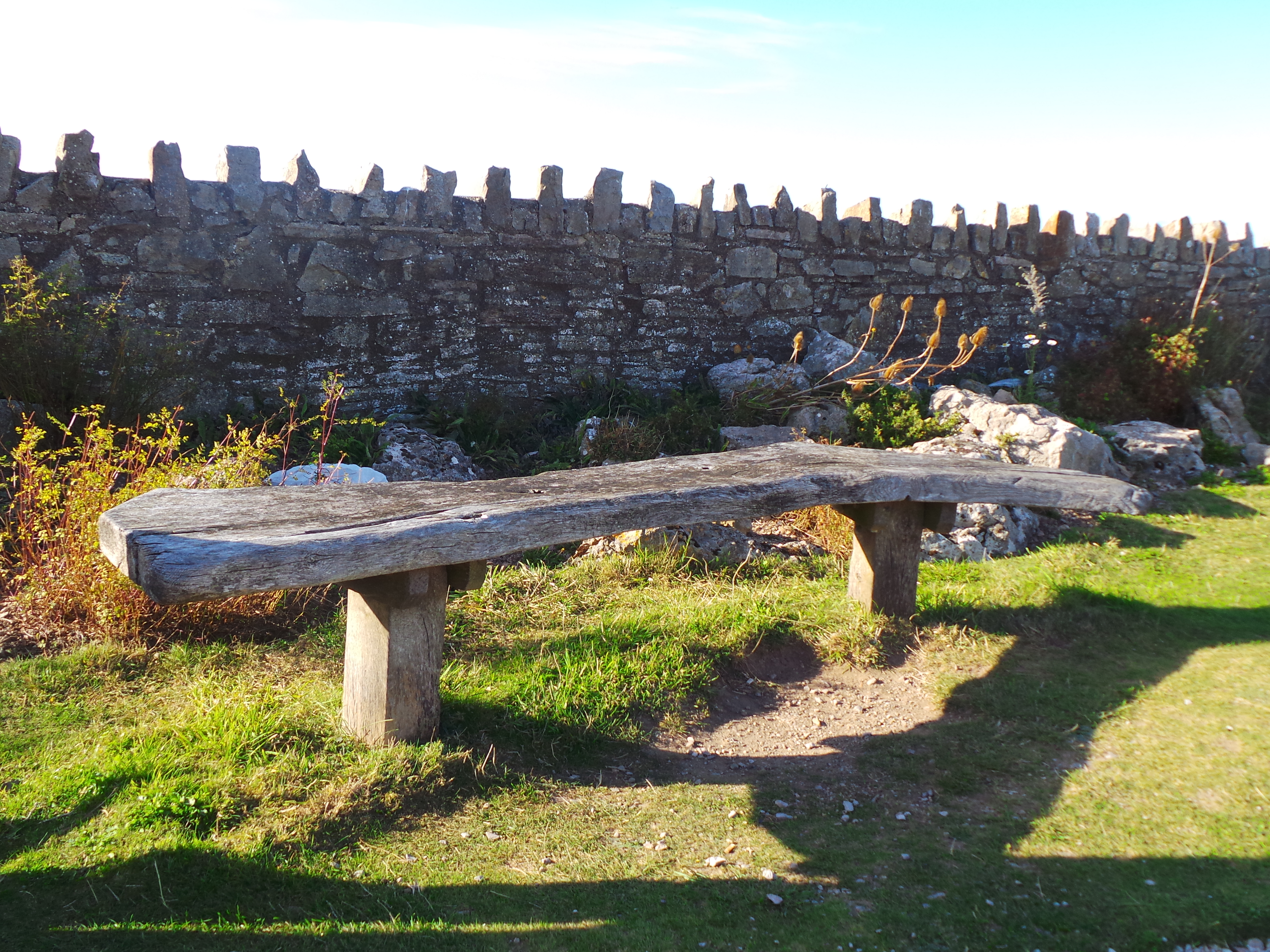
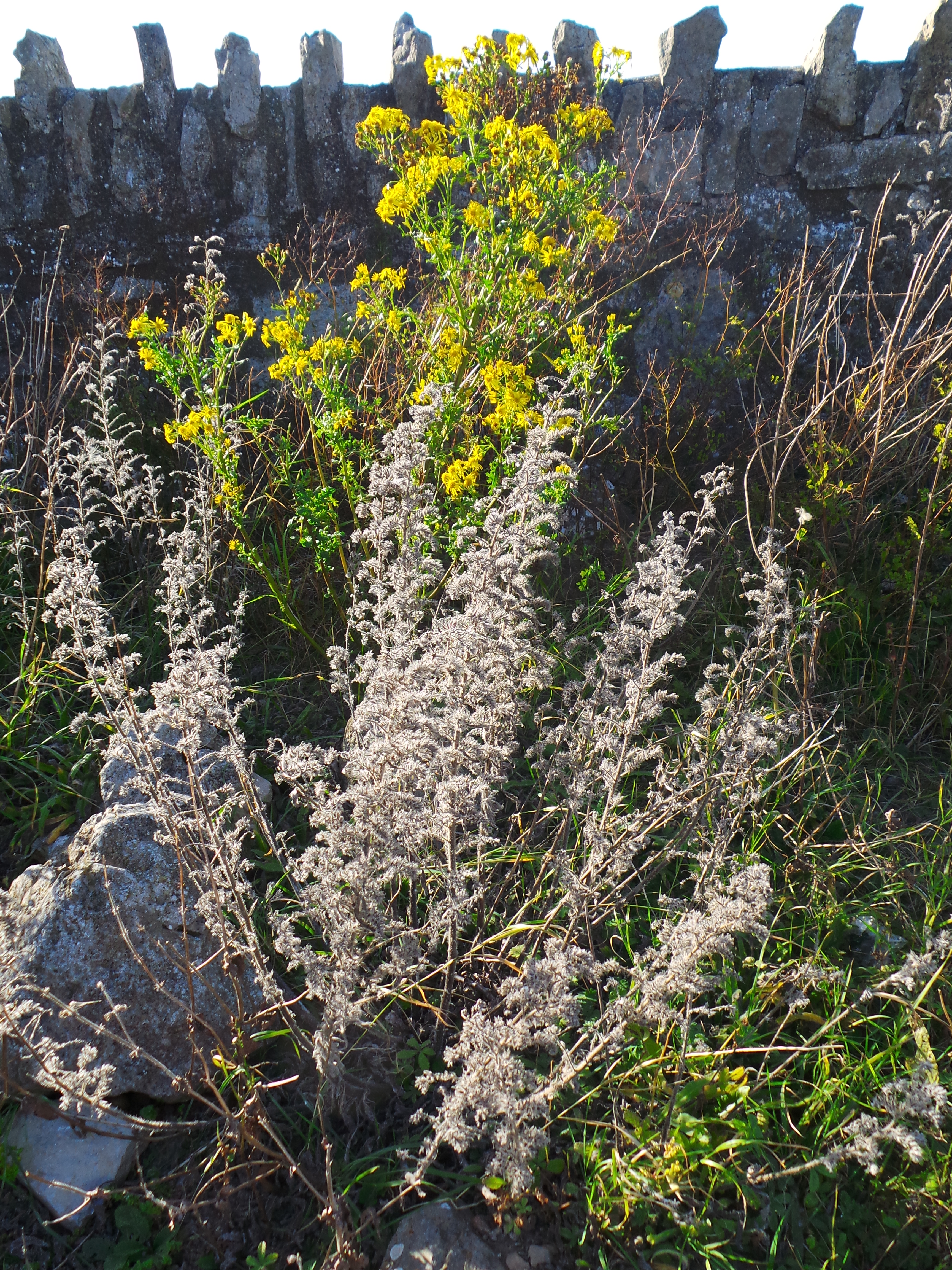
We enjoyed a wander around the summit, discovering a little wildlife garden and wild meadows surrounding the quarry and the tram terminal.

2014 09 27_5315 2014 09 27_5316 2014 09 27_5317 2014 09 27_5318 2014 09 27_5320 2014 09 27_5321  2014 09 27_5319  2014 09 27_5324

We enjoyed wide views across open pastureland on our drive back down into Llandudno.  What a great day out at the seaside!

2014 09 27_5323 2014 09 27_5322


Categories
architecture buildings colours landscapes light light quality the sea the seaside the shore townscapes Wales

Oh we do like to be beside the seaside! – Part One – Newquay

I thought as we are now in early spring and the weather is improving a little it would be a good time to look back to the early autumn when the sky was still blue and the temperatures more comfortable. So let us reminisce and celebrate two days at the seaside.

It was the week of Jude the Undergardener’s birthday so as she loves to be beside the sea, two visits to the coast of Wales were the order of the day.

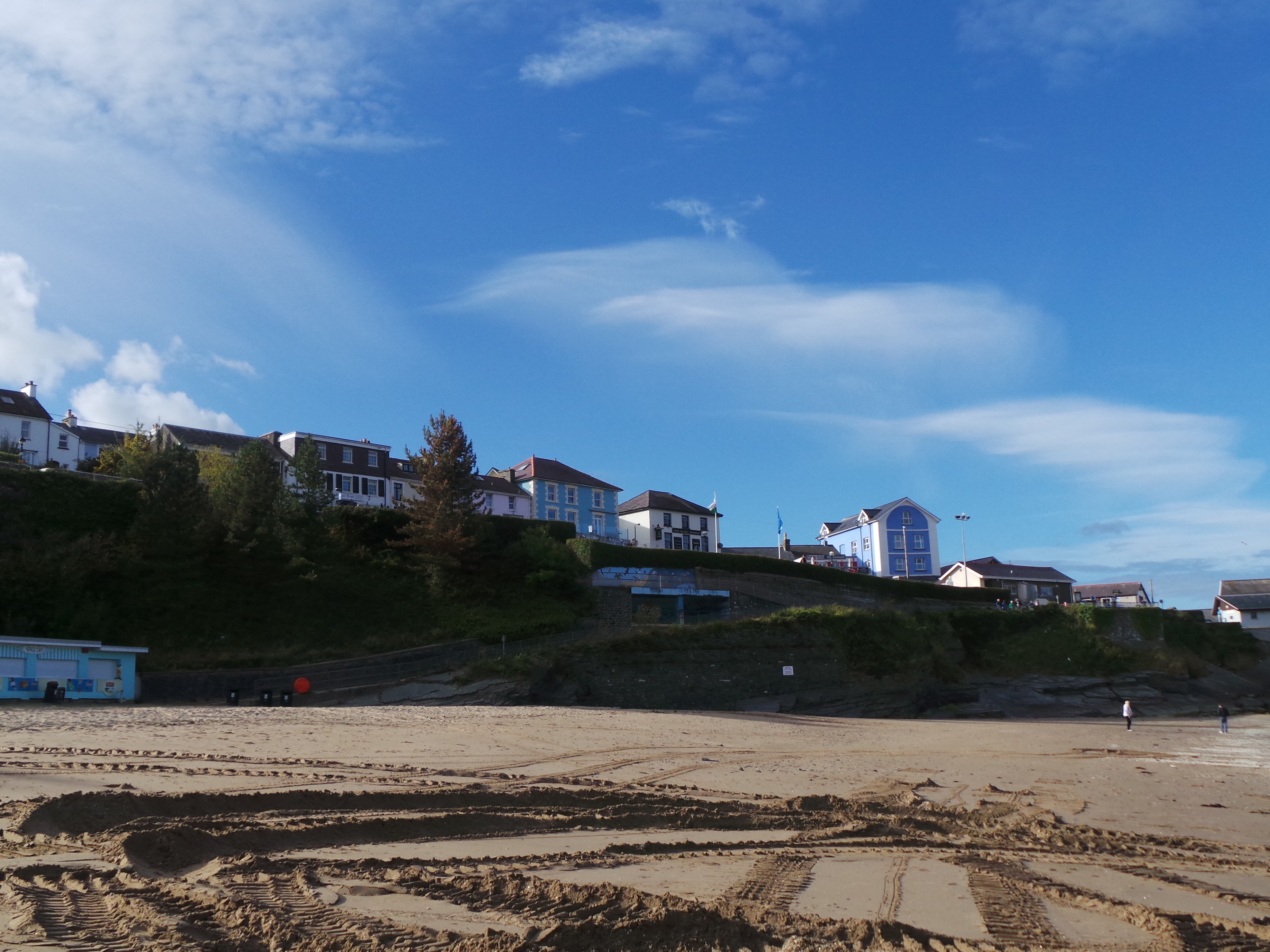
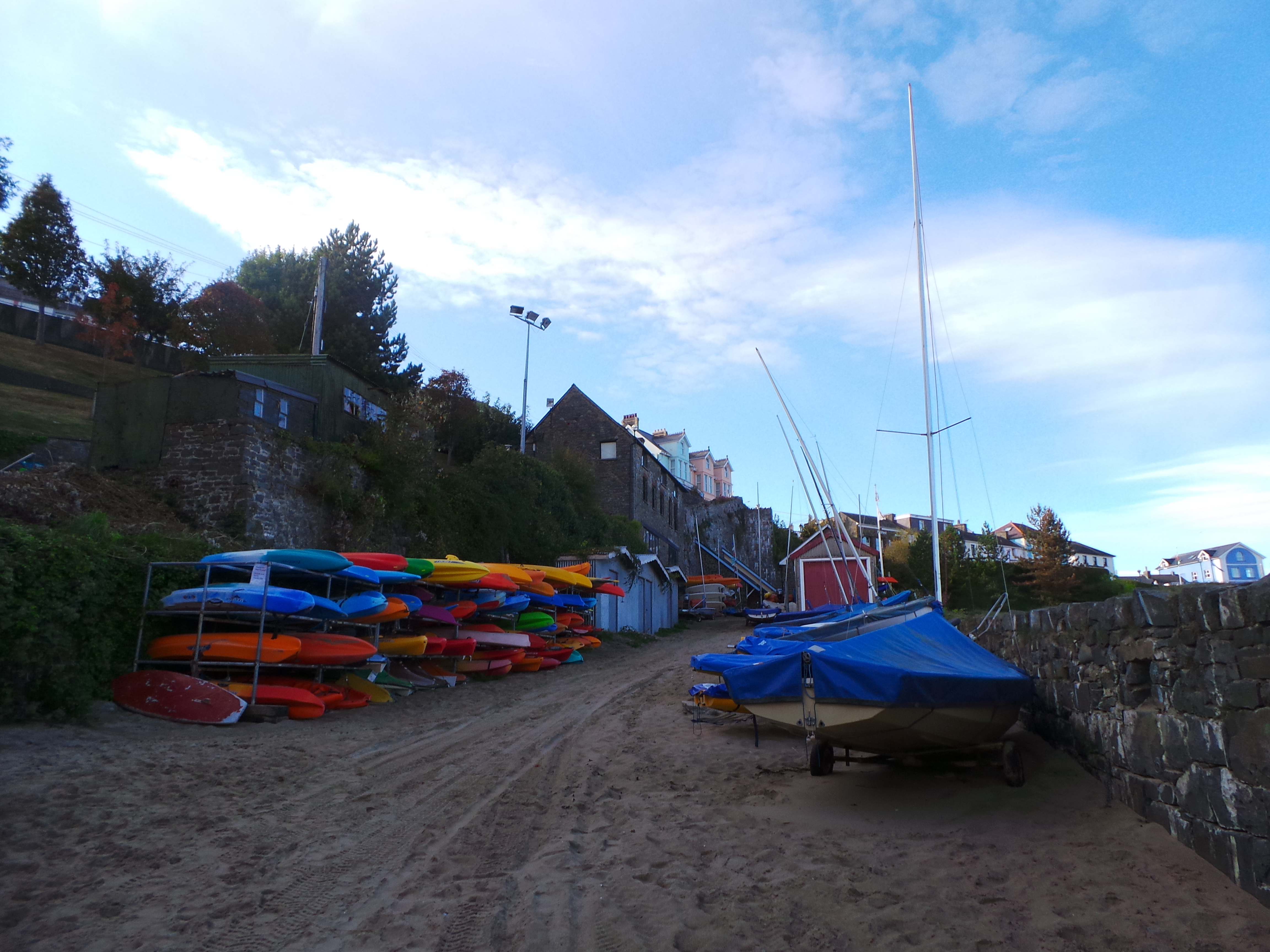
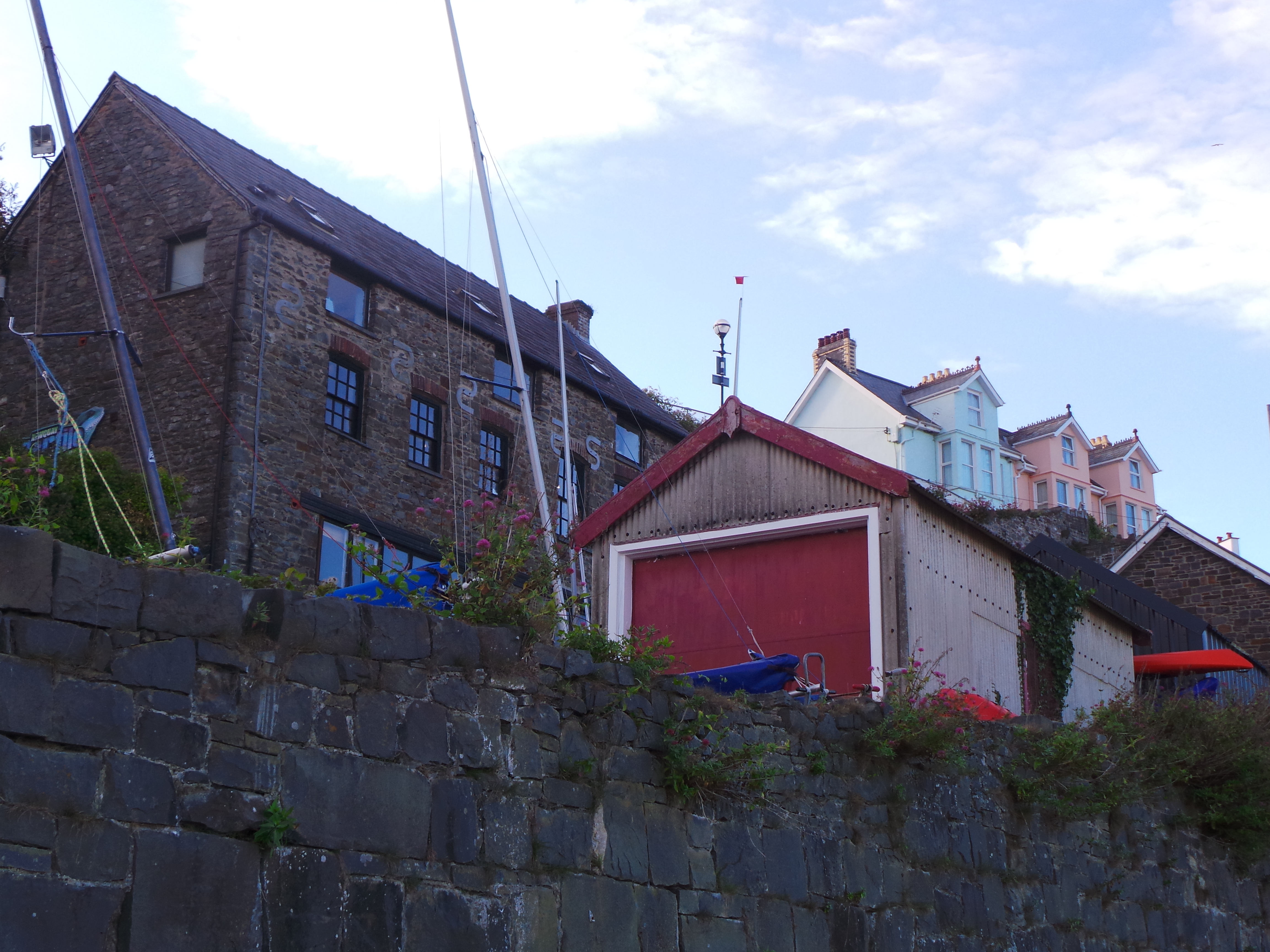
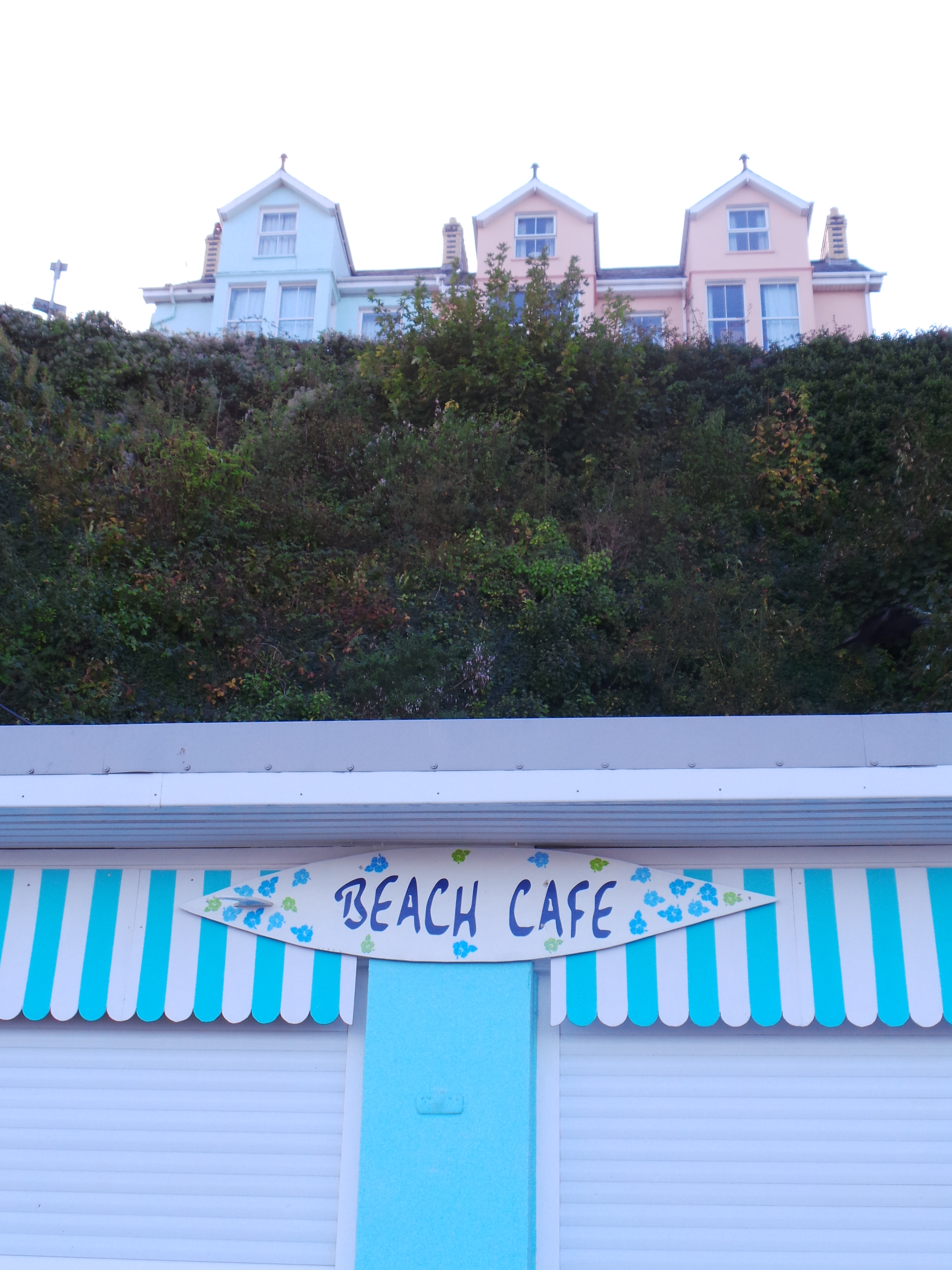
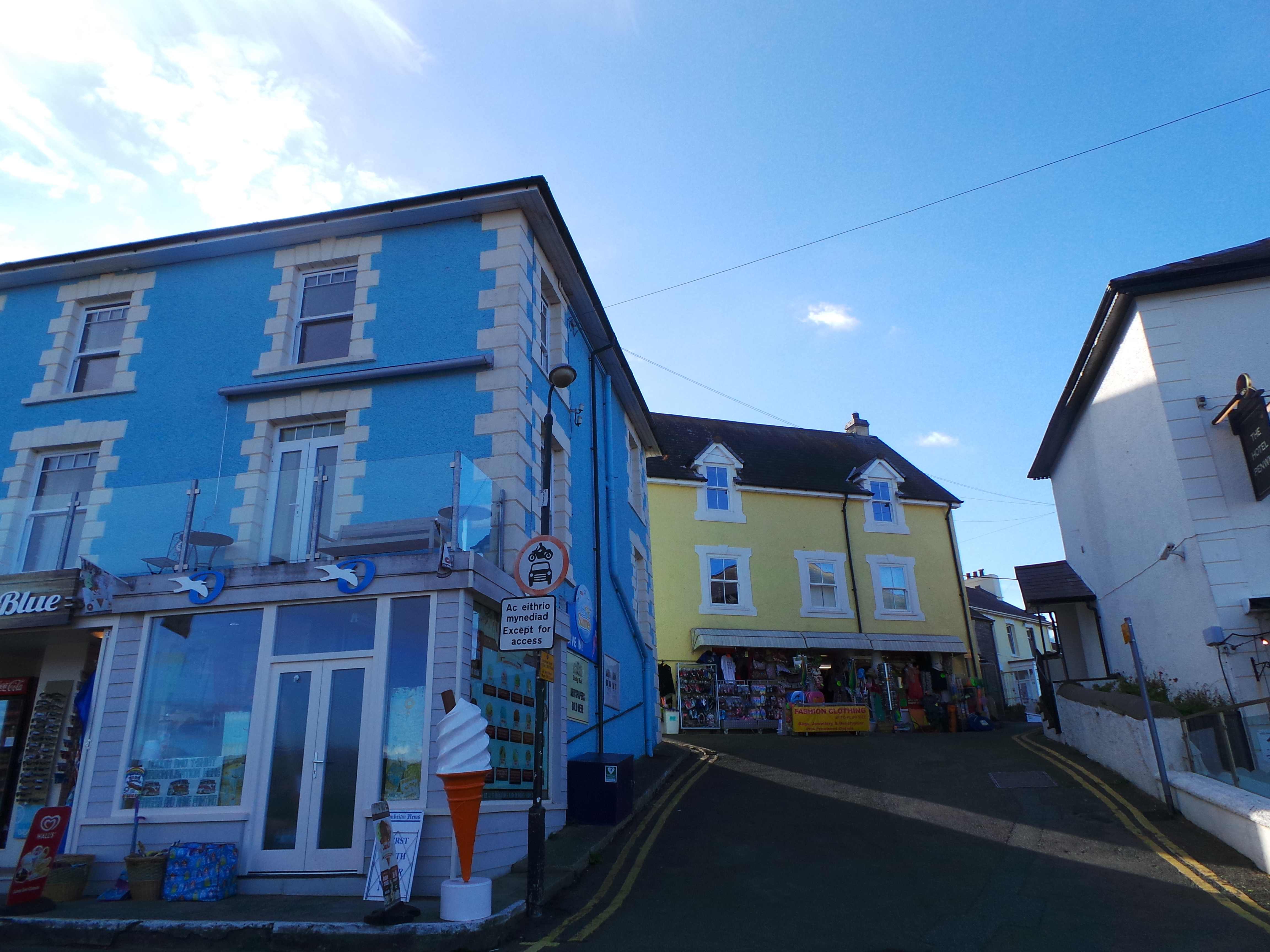
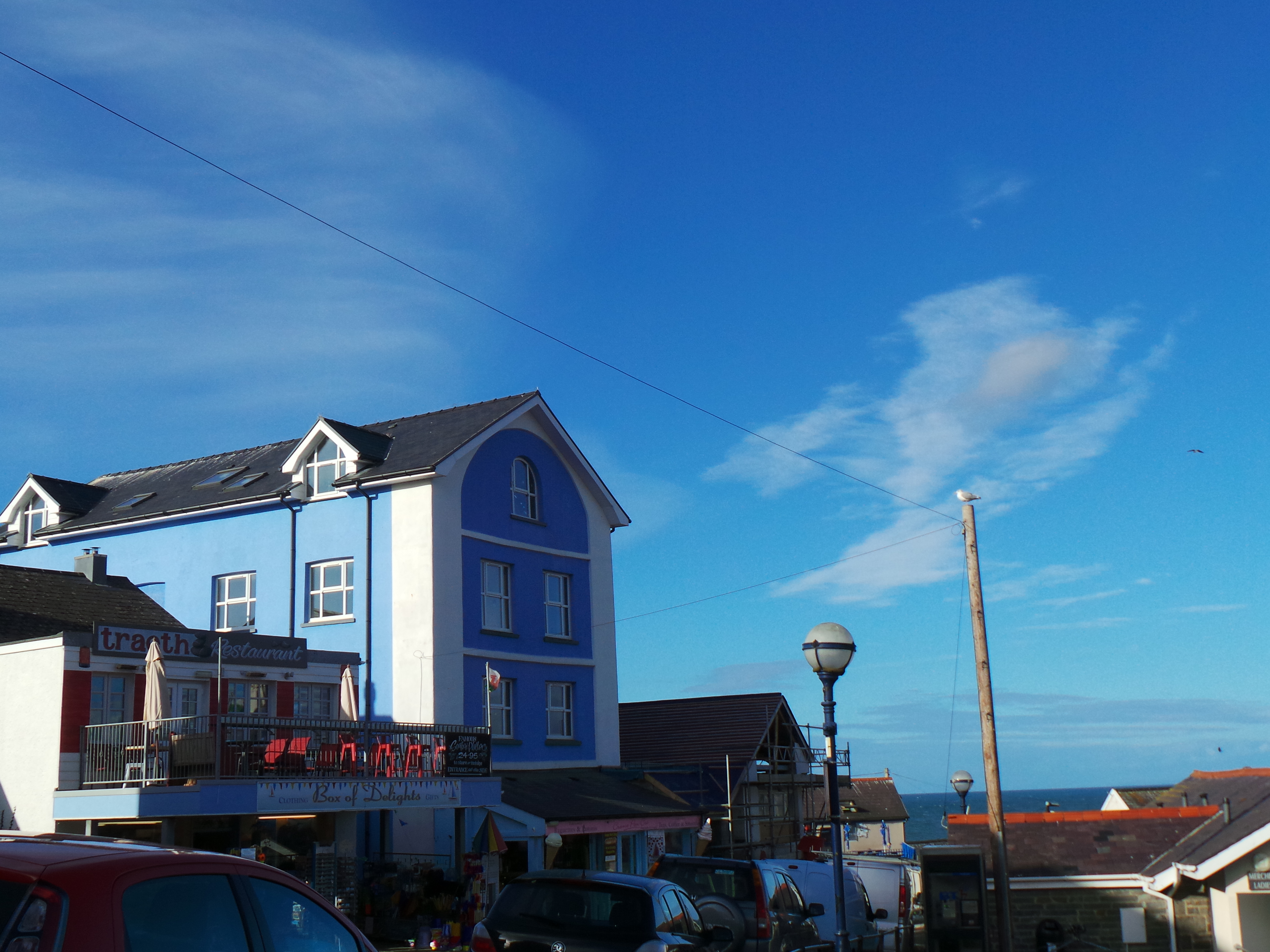
So for our first seaside day we headed off over the mid-Wales mountains towards Aberystwyth and then when we got near the coast we headed southwards to Newquay. Neither of us could ever remember visiting before even though we both holidayed in this part of Wales as children. We were surprised how colourful the village looked when we first saw it. We soon discovered Newquay to have a great sense of pride and a community feel to it.

2014 09 25_5162 2014 09 25_5163 2014 09 25_5164 2014 09 25_5165

After a quick look around the village we wandered down the quay and on the beach.

2014 09 25_5224 2014 09 25_5225 2014 09 25_5167 2014 09 25_5168 2014 09 25_5169 2014 09 25_5171  2014 09 25_5172 2014 09 25_5174

We were mesmerised by this amazing land form, with its domed strata, peeled away in places like the layers of an onion by the powerful erosion forces of the sea.

2014 09 25_5178 2014 09 25_51792014 09 25_5180 2014 09 25_51812014 09 25_5182 2014 09 25_51842014 09 25_5185 2014 09 25_5188 2014 09 25_5189 2014 09 25_5191 2014 09 25_5192 2014 09 25_5193

Whenever we are at the coast we get involved looking at the geology and geomorphology of the cliff, wave cut platforms and all sorts of patterns and forms.

2014 09 25_5194 2014 09 25_5195 2014 09 25_5196 2014 09 25_5197 2014 09 25_5198 2014 09 25_5199 2014 09 25_5200 2014 09 25_5202 2014 09 25_5201 2014 09 25_5203

Enjoy sharing our wander with my camera back around the quayside and back through the village with us.

2014 09 25_5226 2014 09 25_5232 2014 09 25_5231 2014 09 25_5234 2014 09 25_5235 2014 09 25_5236 2014 09 25_5237 2014 09 25_52382014 09 25_5240 2014 09 25_5241 2014 09 25_5239 2014 09 25_5242 2014 09 25_5243 2014 09 25_5244 2014 09 25_5245 2014 09 25_5246 2014 09 25_5247 2014 09 25_52482014 09 25_5249 2014 09 25_5250 2014 09 25_5251 2014 09 25_5252 2014 09 25_5253 2014 09 25_5258

Blue was definitely the colour of the day! What a great day it was too!

2014 09 25_5256 2014 09 25_5257  2014 09 25_5259 2014 09 25_5260 2014 09 25_5261 2014 09 25_5262

Categories
flowering bulbs fruit and veg garden buildings garden wildlife gardening gardens gardens open to the public grow your own hardy perennials National Trust ornamental trees and shrubs spring bulbs spring gardening The National Trust trees

Croft Castle month by month – part three – March

2015 03 25_0152_edited-1

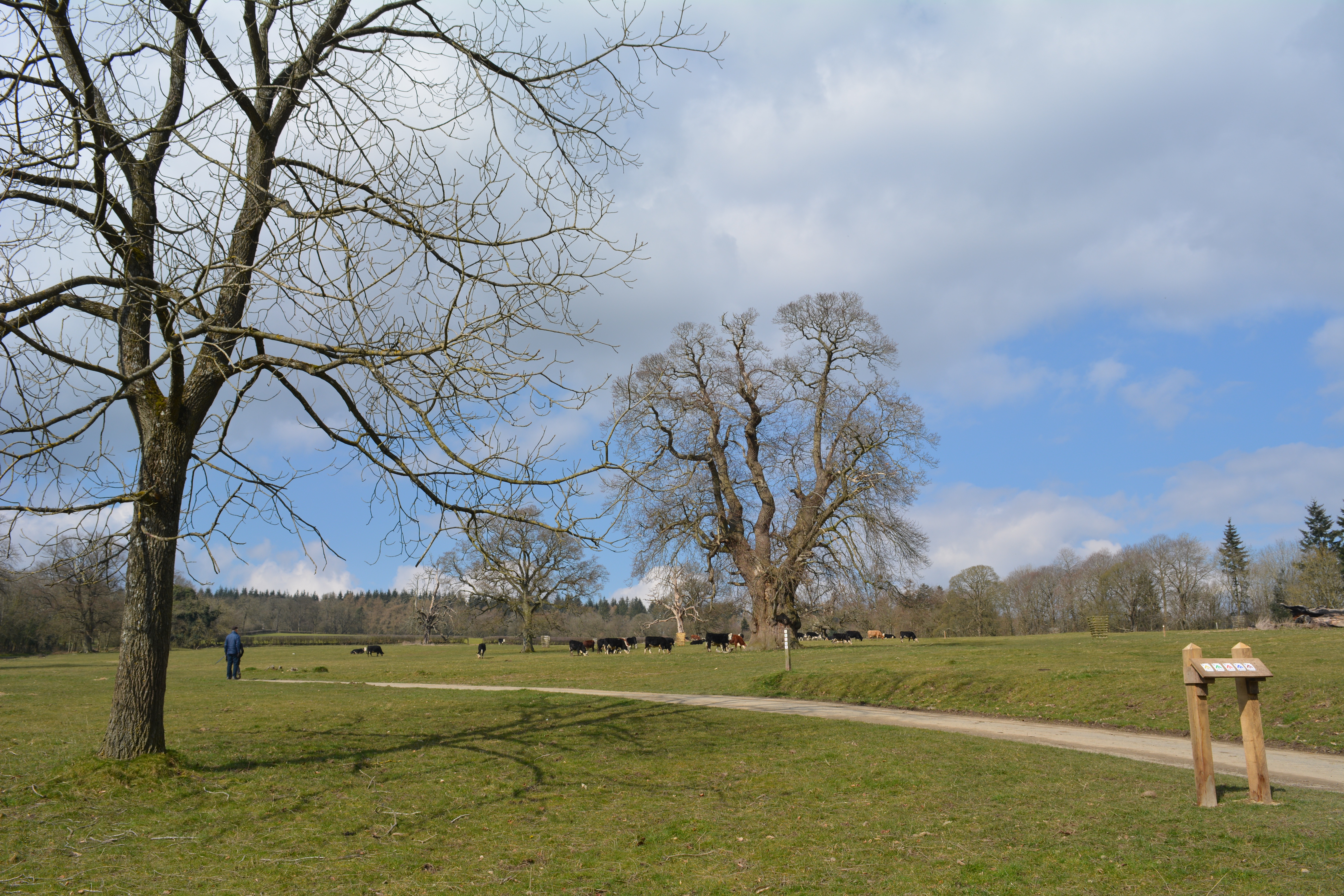
So back we went for the third of our monthly visits to the Herefordshire property of theNational Trust, Croft Castle where we had a wander to see what had changed since our visit in February. As usual we began our tour by checking out that the coffee and cakes were still up to our high expectations! To get there we walked past the parkland which features the ancient Sweet Chestnuts. These old trees were still showing no signs of spring, their buds tightly closed.

2015 03 25_0066 2015 03 25_0068

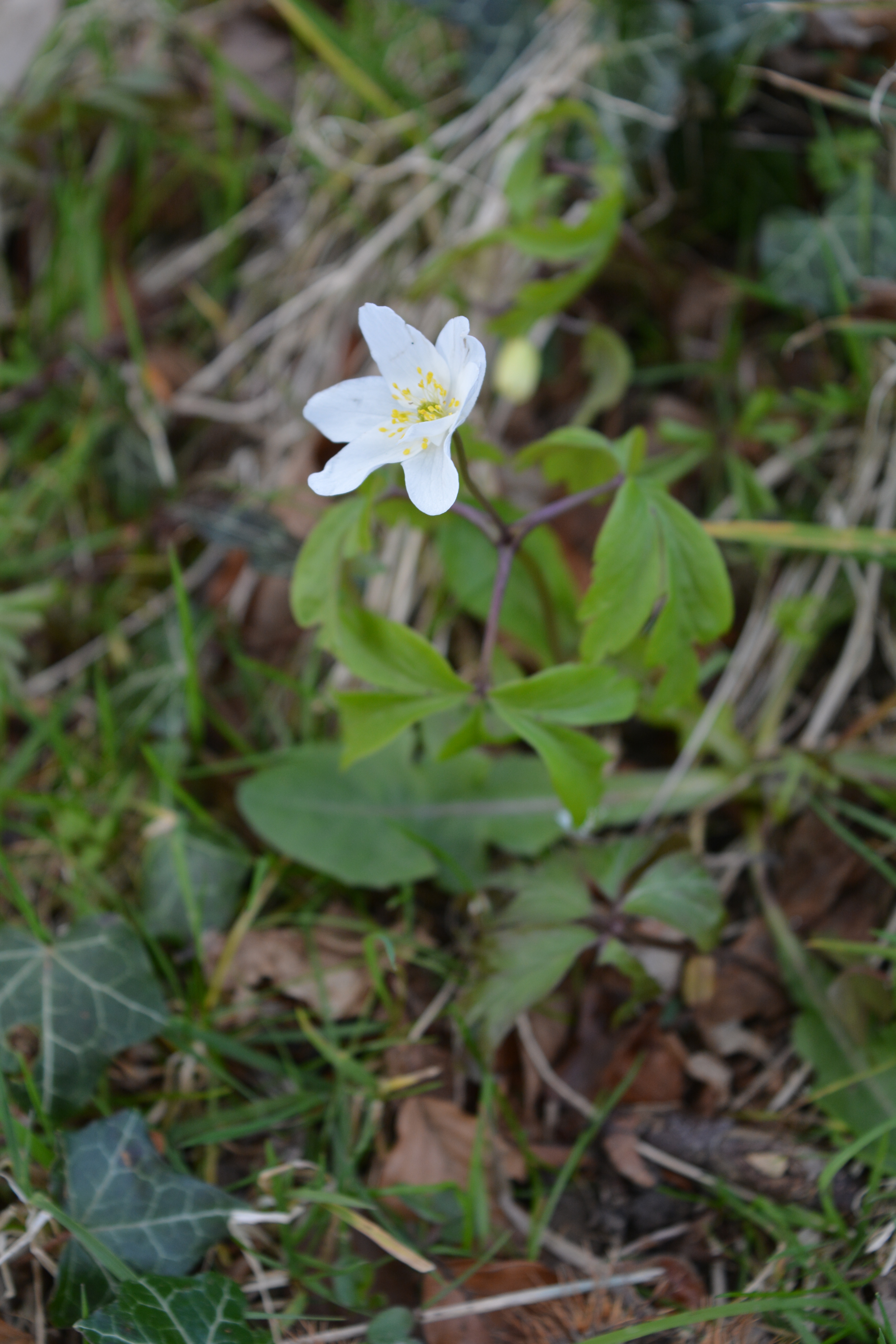
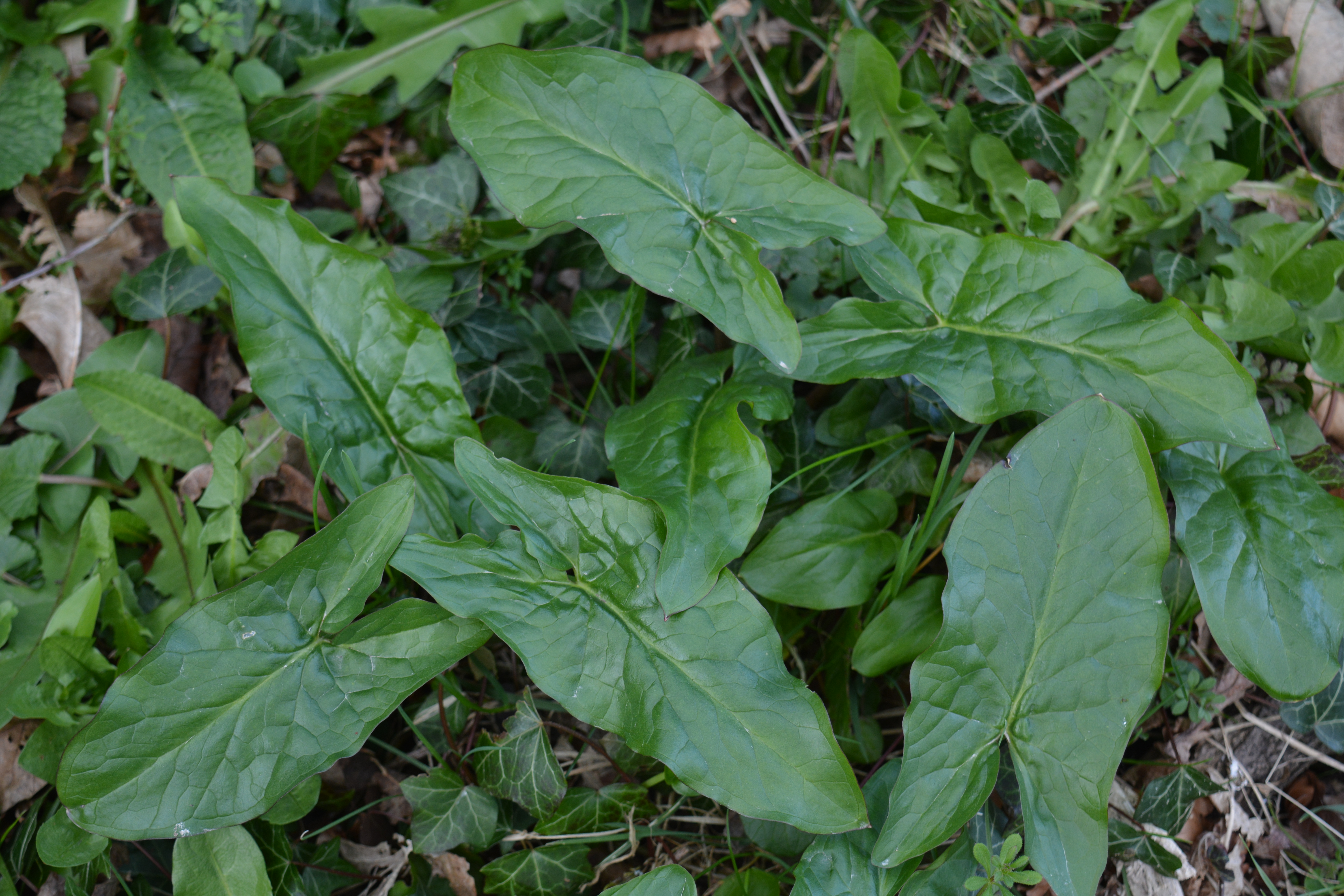
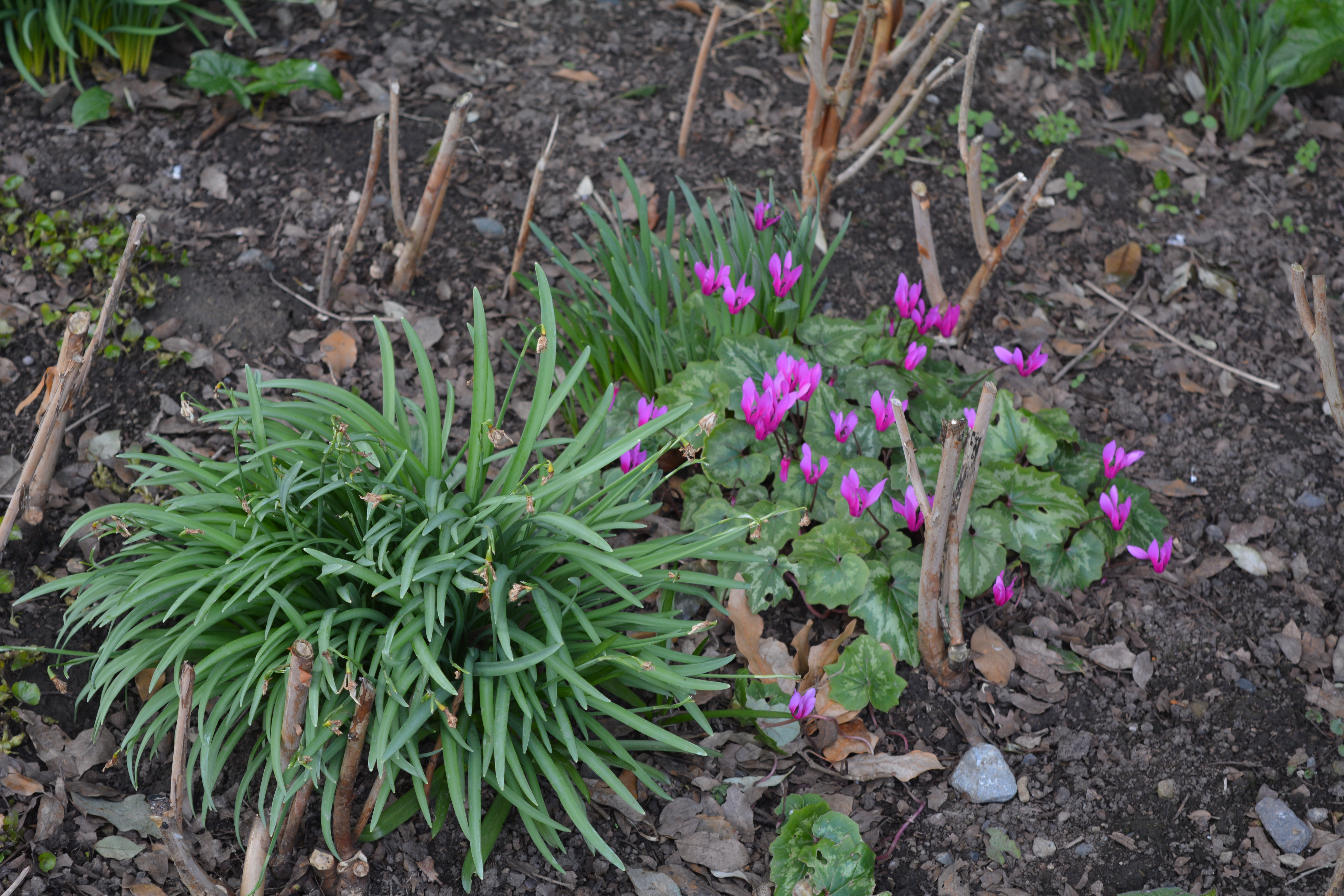
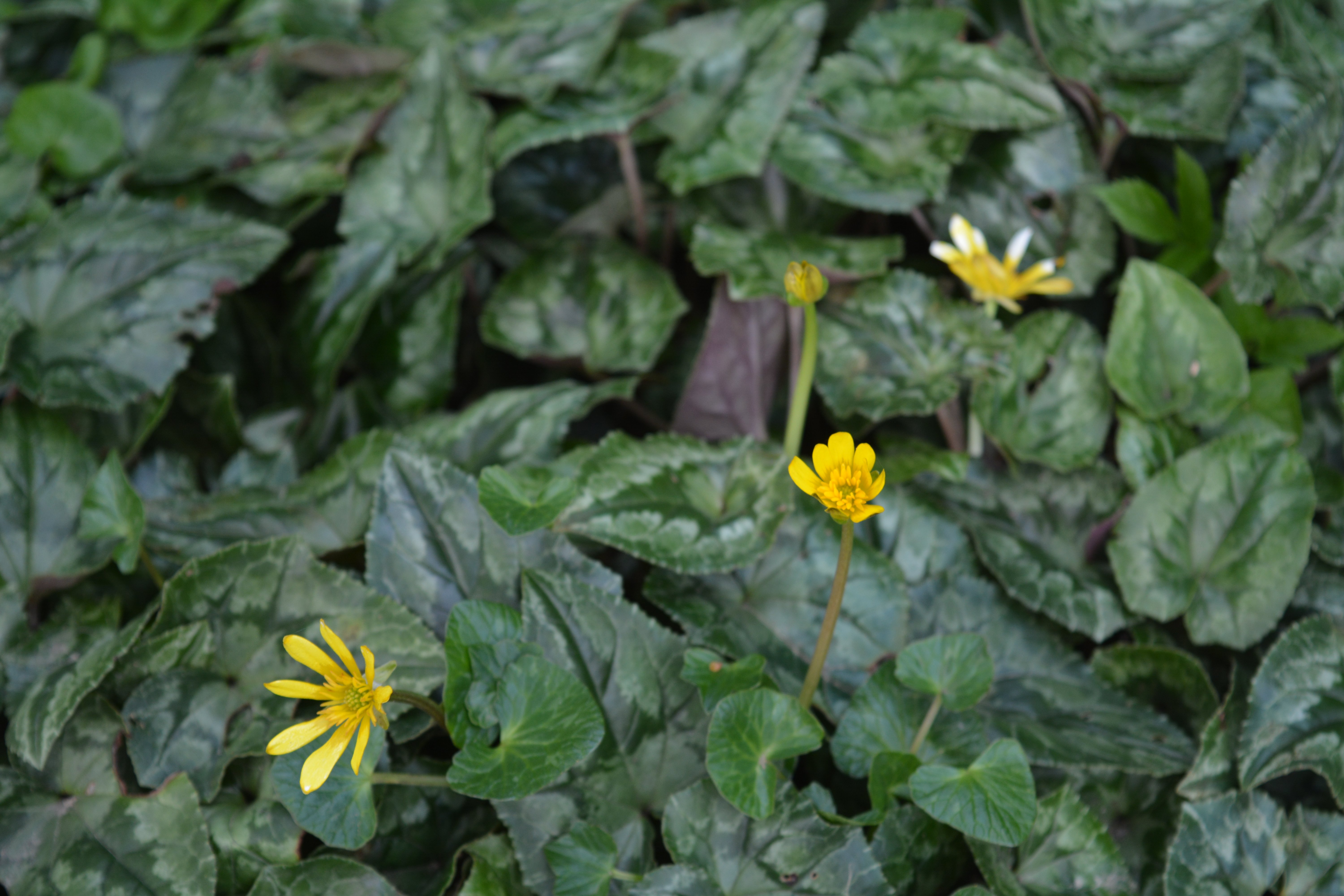
Suitably refreshed we cut through a meadow area on our way to the walled garden, and in that meadow little patches of colour shone out, white Wood Anemones, the purple of Fritilleries and the yellows of Celandines and Dandelions. Amongst these the patterned leaves of Arum Italicum, our native Arum Lily clothed the ground. Fritilleries although dramatic flowers with purple chequerboard patterned petals were remarkably difficult to make out among the grass.

2015 03 25_0071 2015 03 25_0072 2015 03 25_0073 2015 03 25_0074

The long, deep mixed border was showing colour too, mostly primulas and bulbs.

2015 03 25_0077 2015 03 25_0078 2015 03 25_0080 2015 03 25_0081 2015 03 25_0083 2015 03 25_00842015 03 25_0085 2015 03 25_0087 2015 03 25_0089 2015 03 25_0090

We walked quickly along the long border trying to avoid the biting wind and reach the protection of the walled garden. When we caught the first glimpse of the doorway into the walled garden we were amazed to see that the little section of cobbled path the gardeners had recently discovered had now been exposed and restored right across the lawned area.

2015 03 25_0067_edited-1

Passing through the little doorway you can see in the photo below at the right hand end of the wall gave welcome relief. There was no wind within the walls and the temperature was so much warmer. It made the day feel comfortable to wander in so we slowed down and took time to look.

2015 03 25_0091

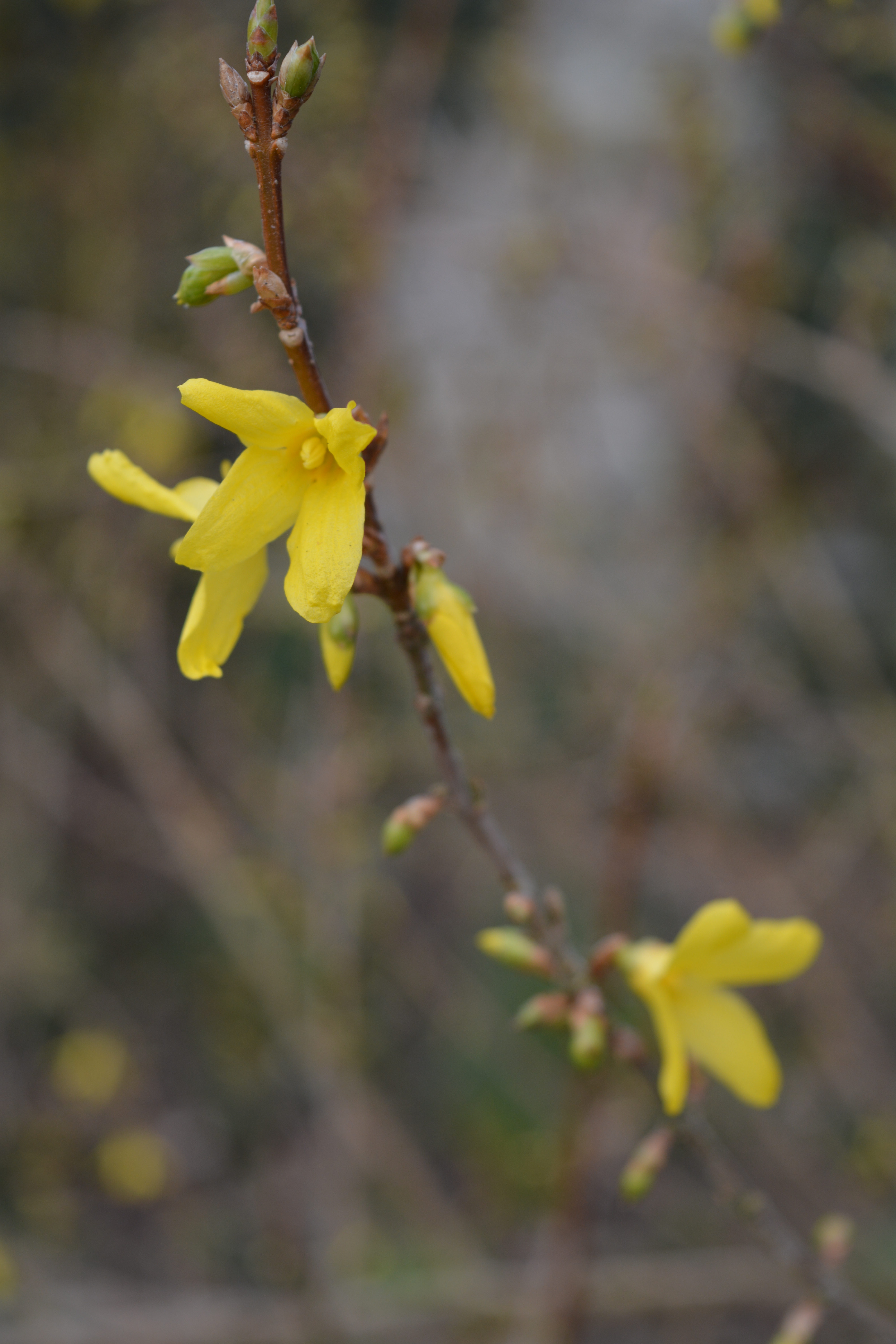
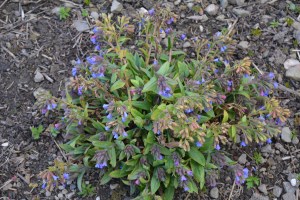
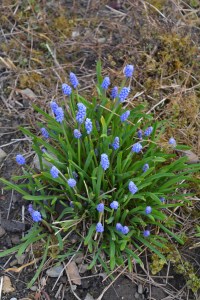
The long border beneath the wall had a scattering of blooms such as these Pulmonaria and Muscari and the buds on a few of the shrubs were beginning to burst. The vineyard however was still deep in its state of hibernation.

2015 03 25_0092 2015 03 25_00932015 03 25_0070_edited-1 2015 03 25_0069_edited-1 2015 03 25_00942015 03 25_0095

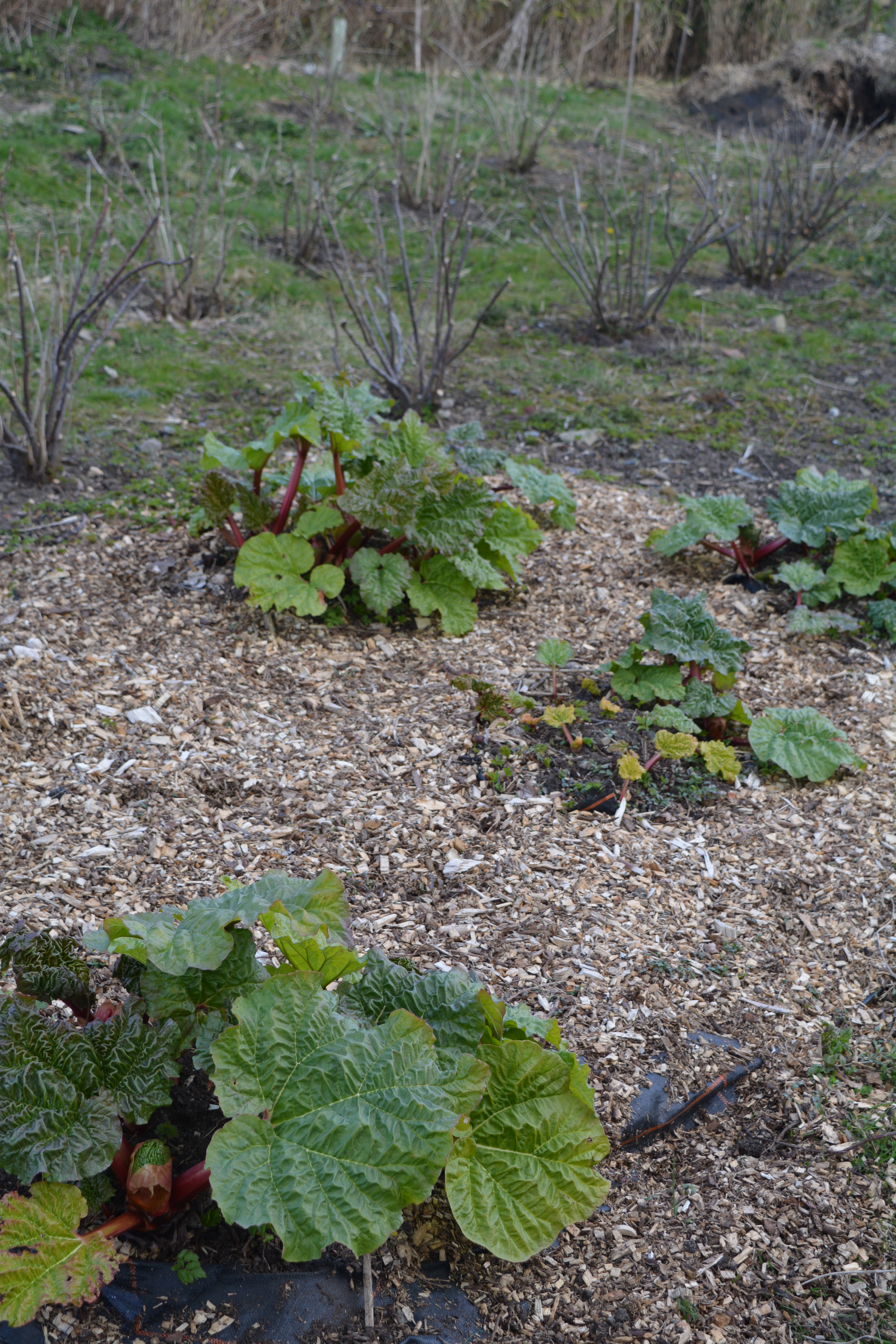
As usual we were tempted to go through the blue gates into the working heart of the walled garden. We discovered a newly created fruit garden and close by a Rhubarb plant waited patiently to take its place.

2015 03 25_0107 2015 03 25_01012015 03 25_0100 2015 03 25_0102

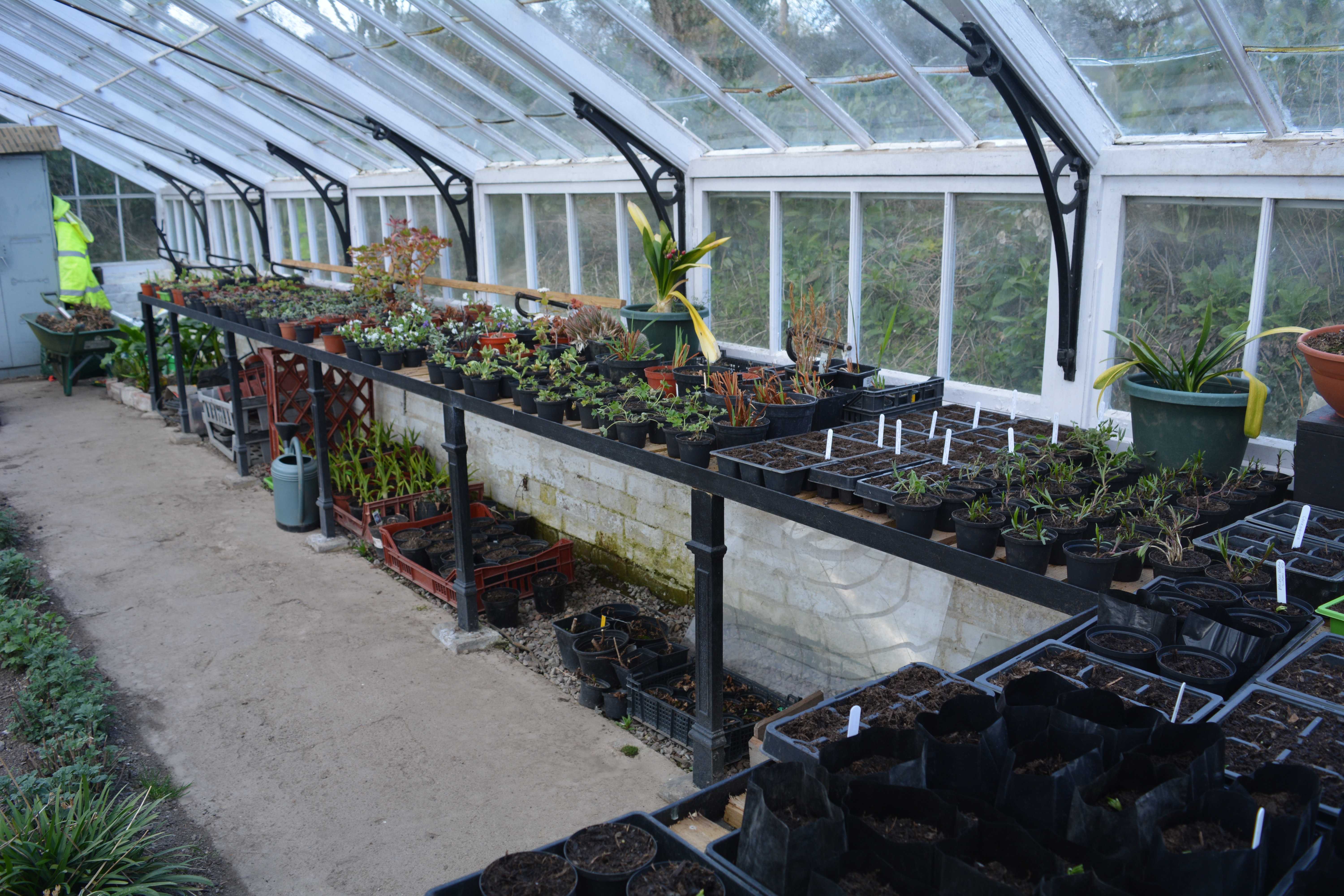
In the greenhouse plants had been potted up ready to be sold later in the season, including this array of Pulmonarias.

2015 03 25_01032015 03 25_0104 2015 03 25_0105

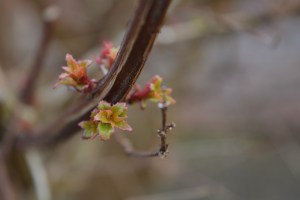
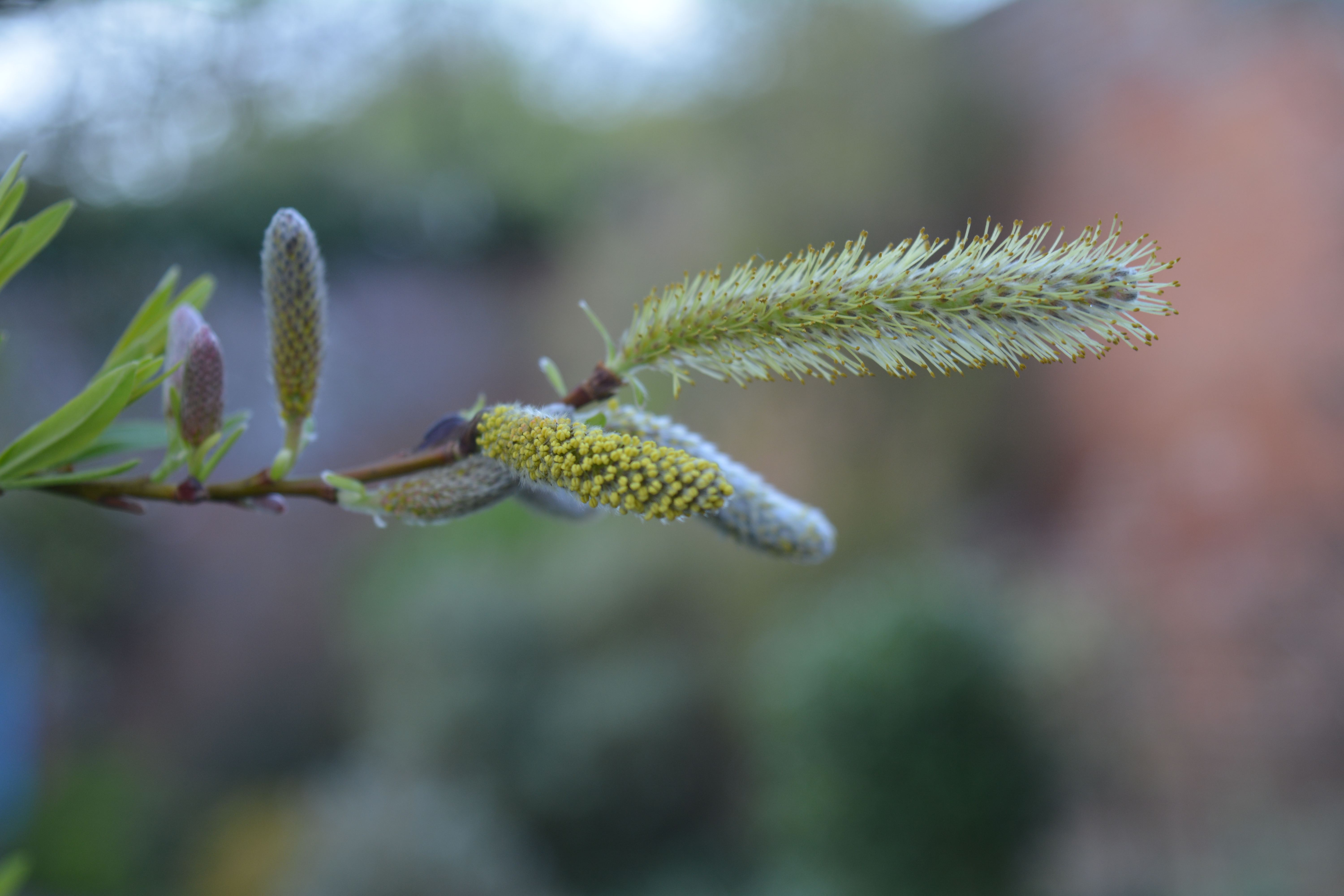
Back out in the main walled garden we found more Rhubarb and this looked well on its way to being ready for harvesting. There were signs of spring everywhere in the protected environment within the wall, fresh greens and reds of newly burst buds on willows and roses.

2015 03 25_0108 2015 03 25_0114 2015 03 25_0115 2015 03 25_0116

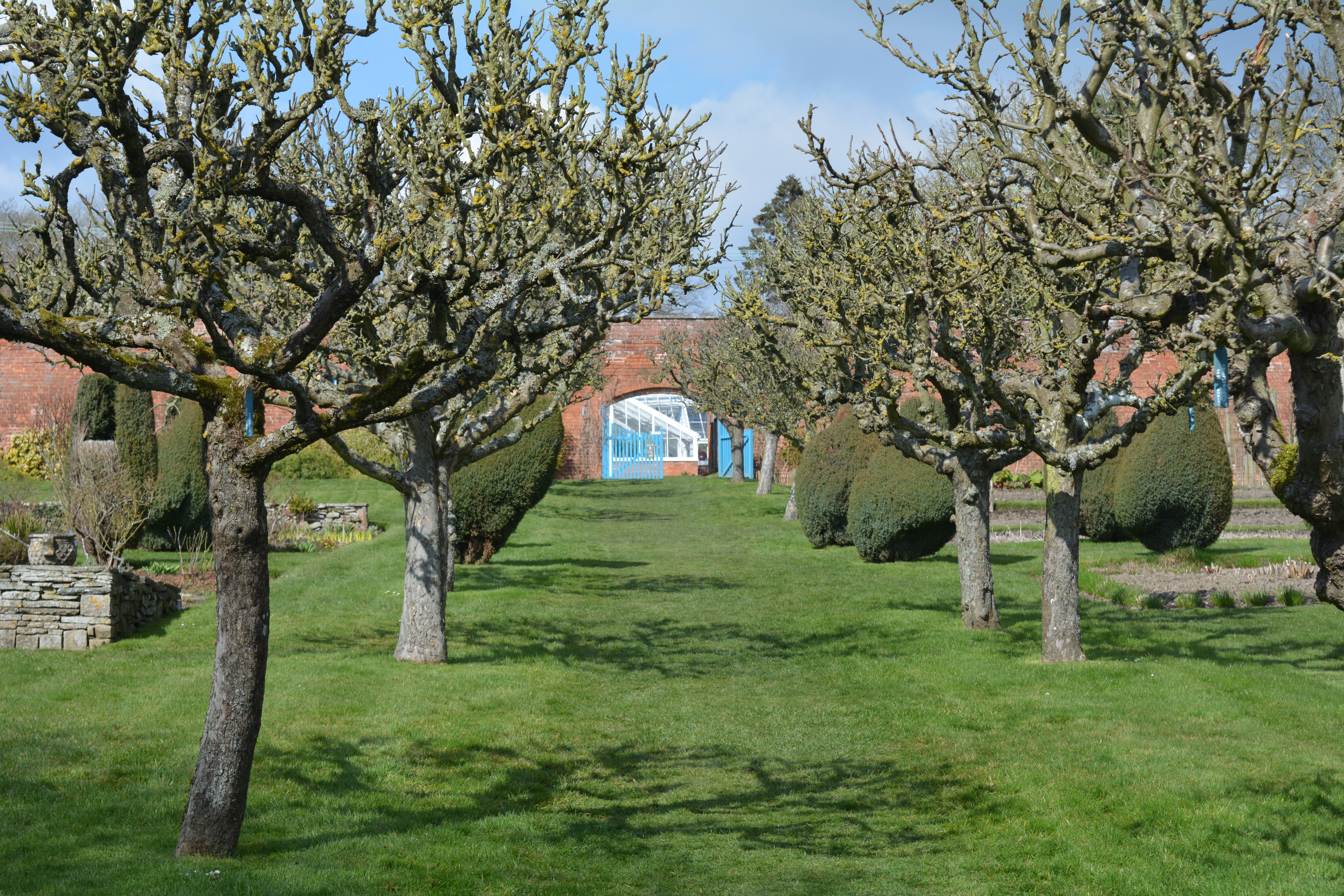
We noticed as we wandered around the comfortable grassed paths that whenever we caught a glimpse of the garden buildings they seemed to be framed by trees and hedges.

2015 03 25_0124 2015 03 25_0125 2015 03 25_0130 2015 03 25_0142

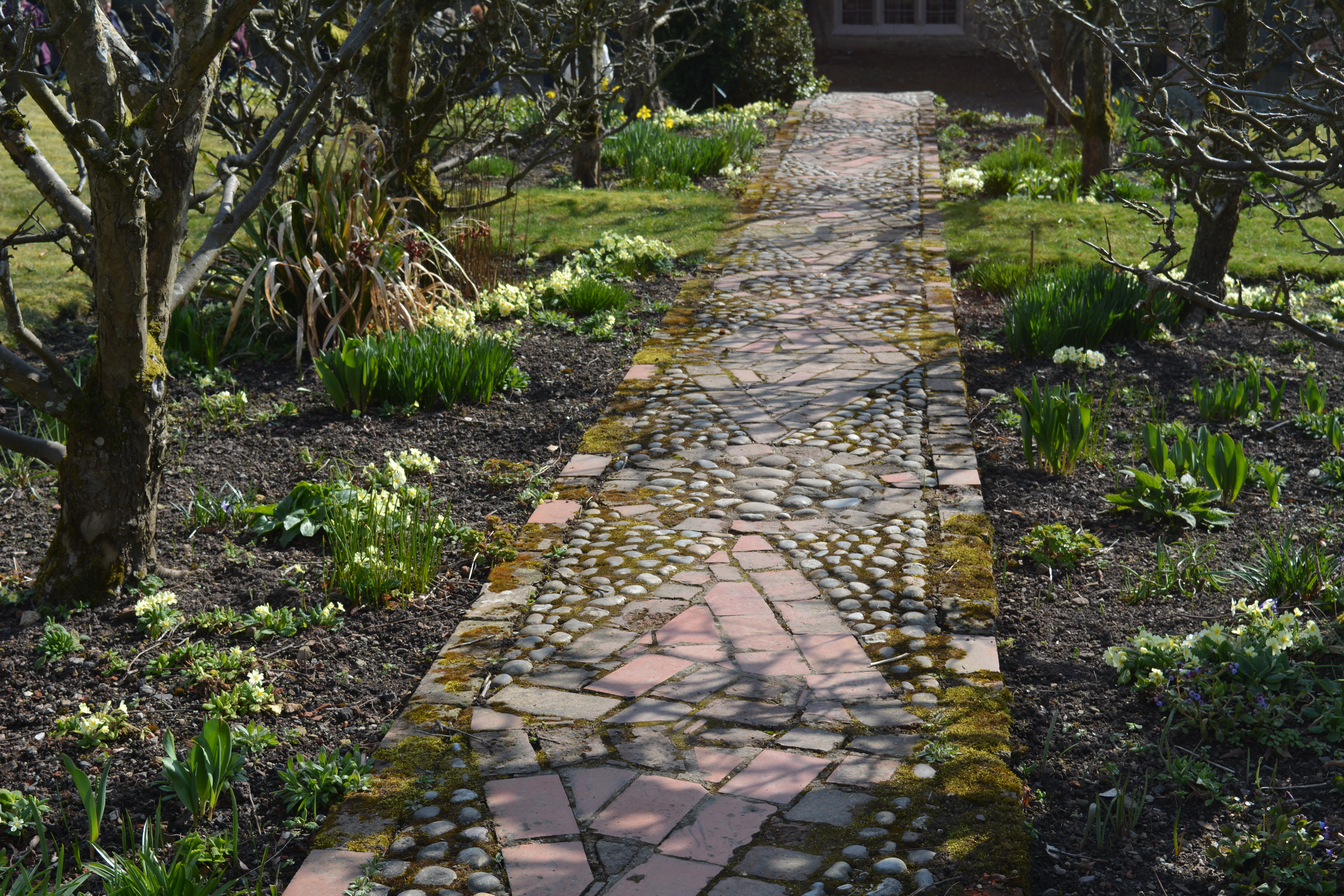
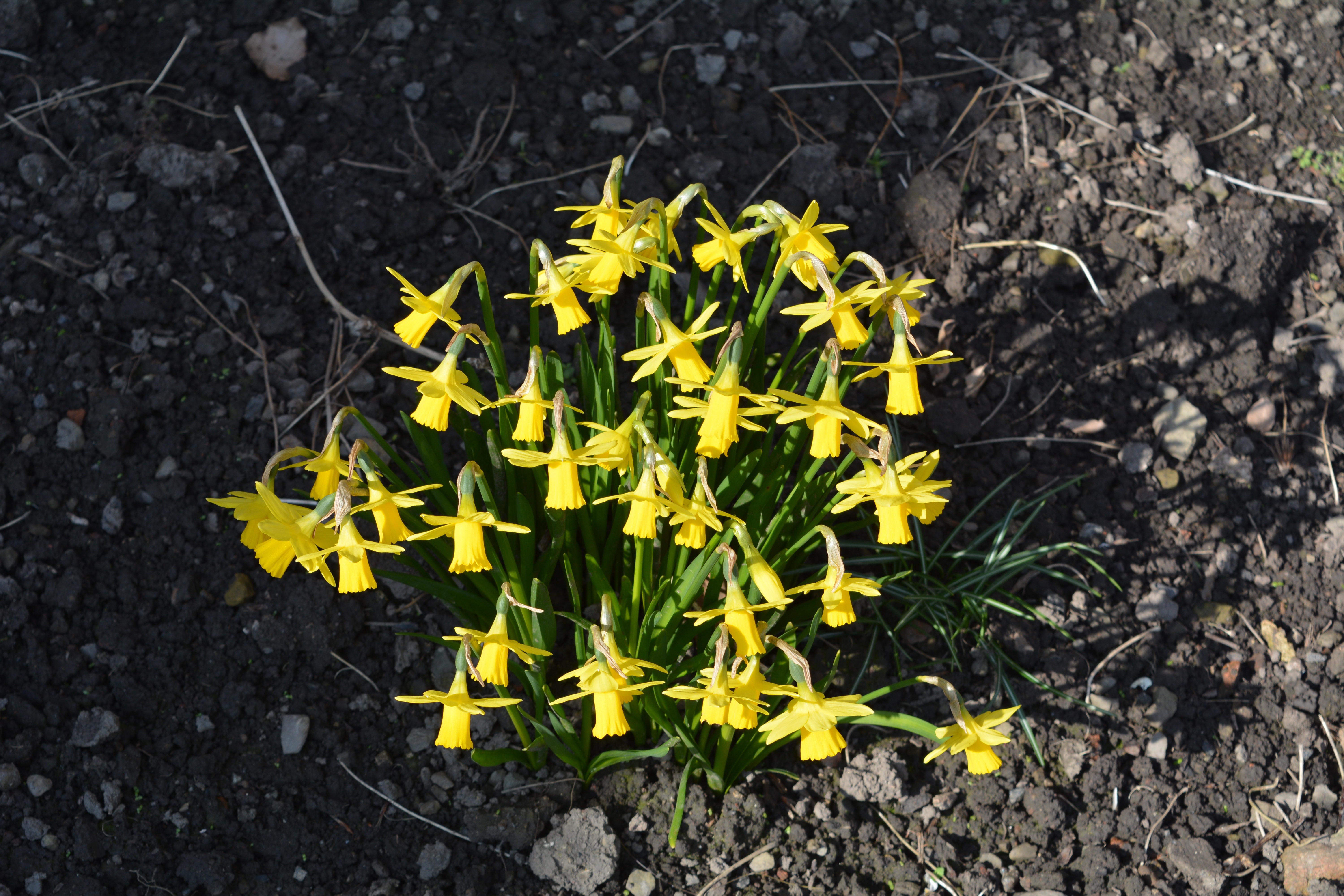
Leaving the walled garden behind we followed cobbled patterned paths beneath old fruit trees underplanted with Primroses and Daffodils.

2015 03 25_0134 2015 03 25_0140 2015 03 25_0141 2015 03 25_0121

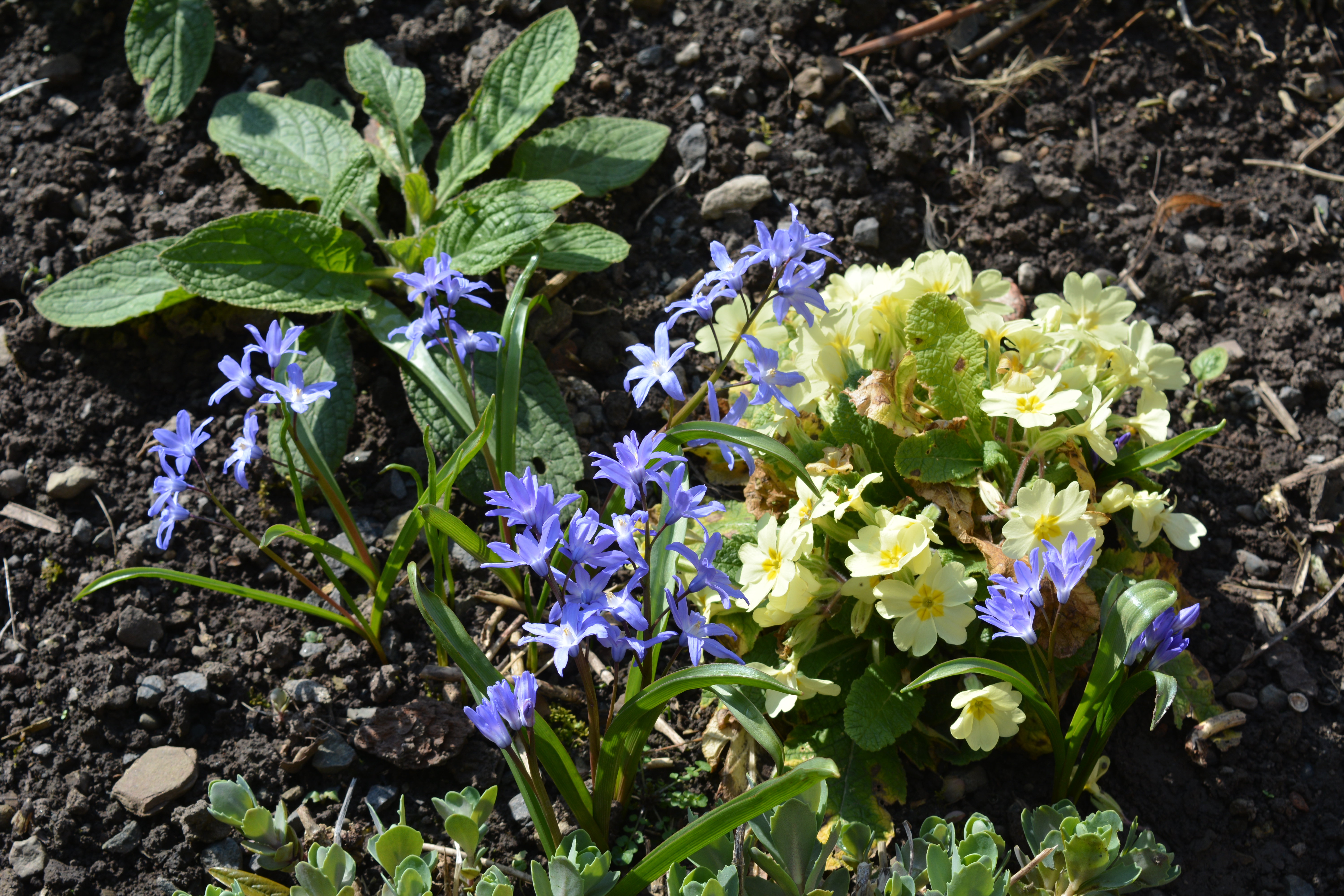
The enclosed courtyard garden was full of the contrasting colours of Primroses and Chionodoxa. A cheerful sight!

2015 03 25_0146 2015 03 25_0147

We seemed to be at Croft on a day when many volunteer gardeners were working on site. They seemed to be enjoying their work and their time was punctuated with laughter and chatter.

2015 03 25_0167

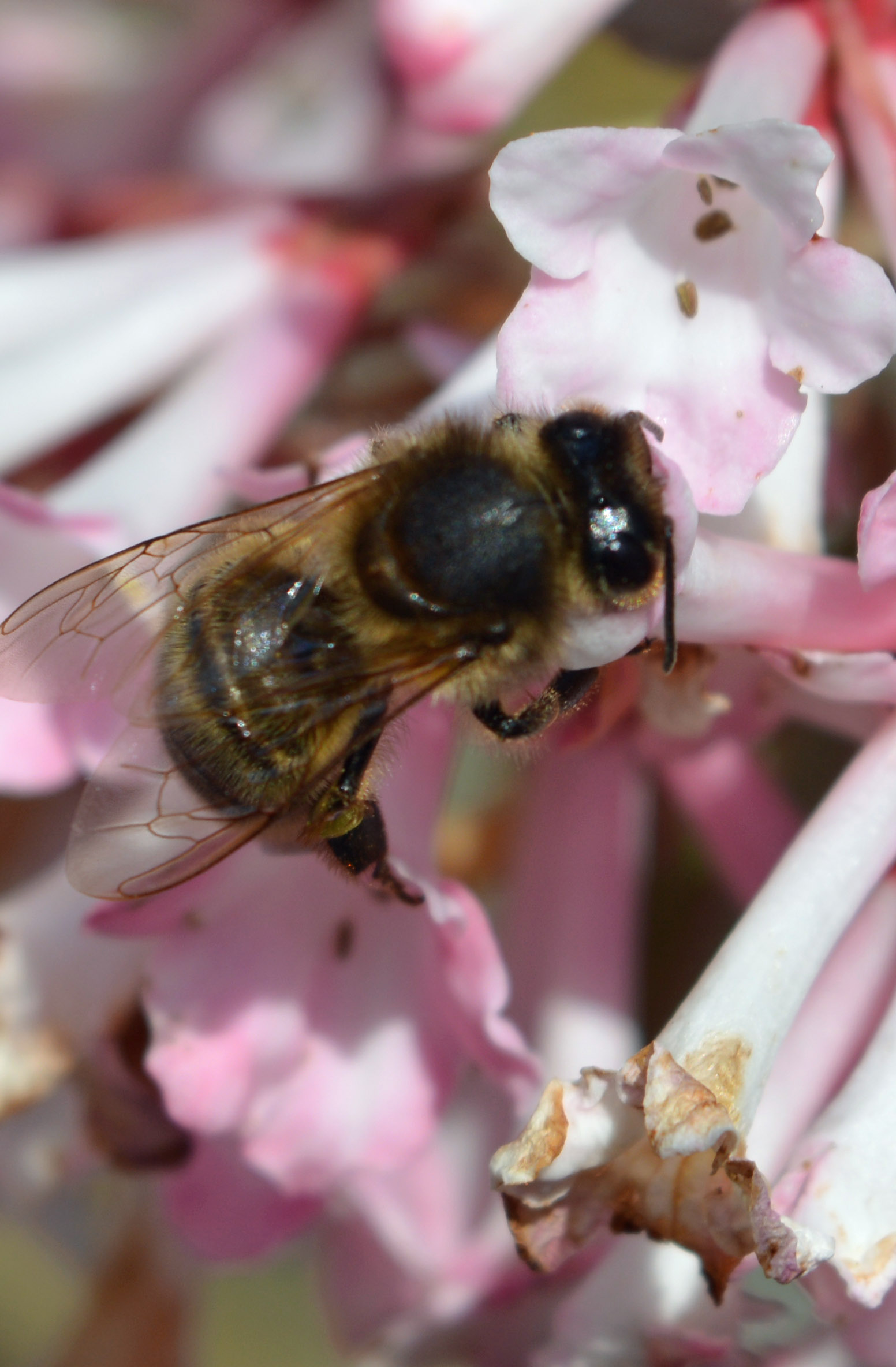
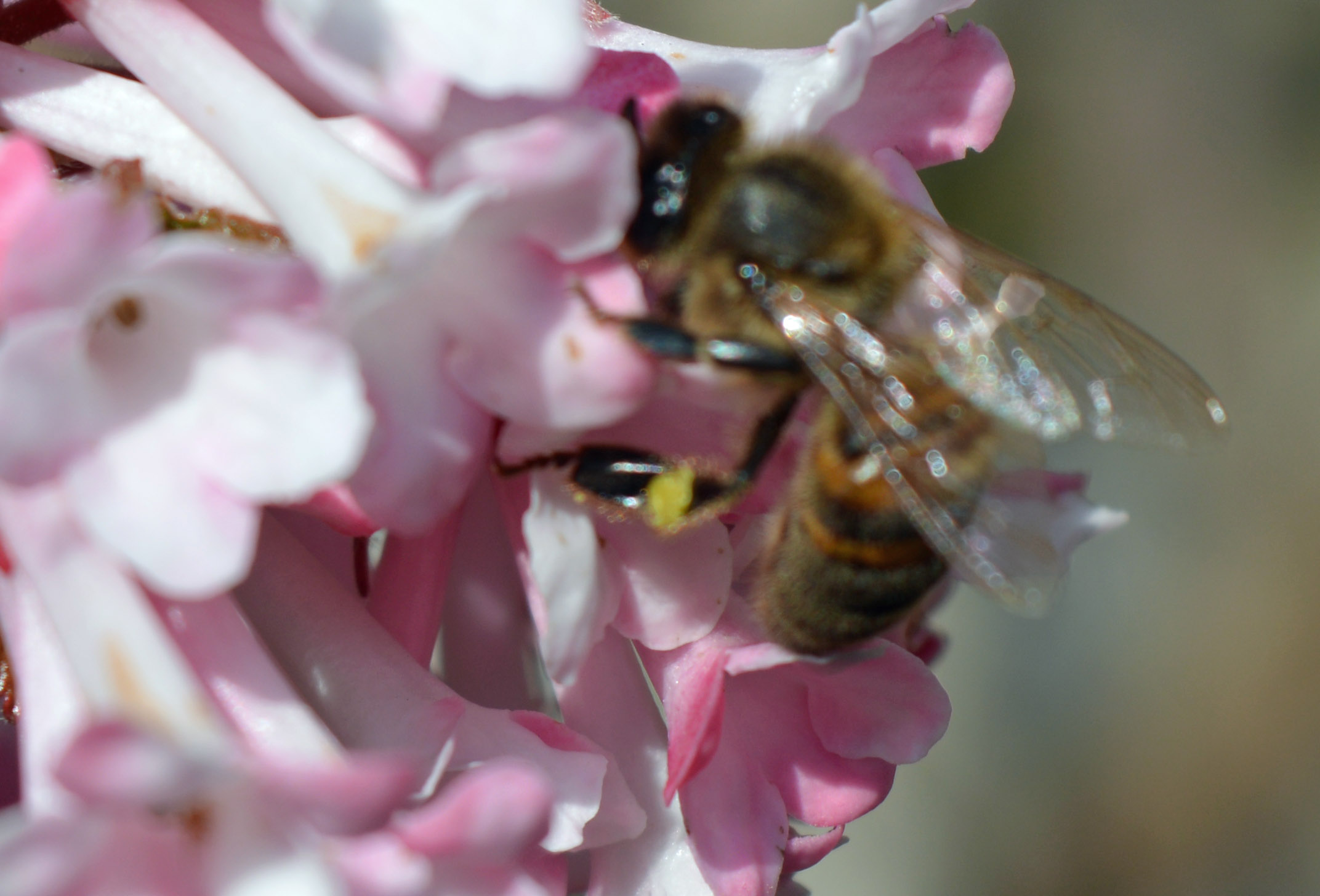
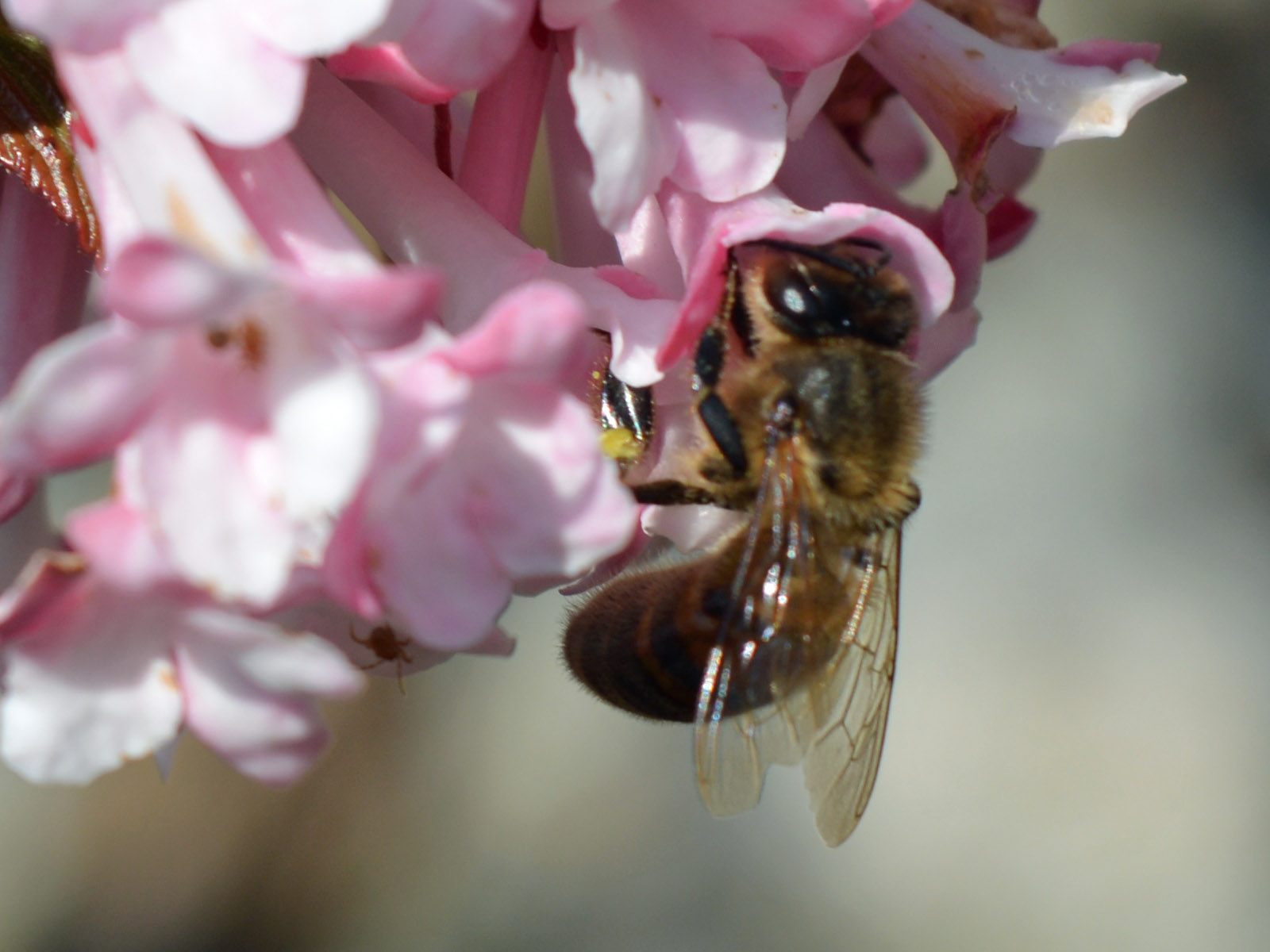
Bees, hoverflies and a few butterflies were out enjoying the early spring sunshine and a little unexpected warmth.

2015 03 25_0157_edited-1

2015 03 25_0162_edited-1 2015 03 25_0161_edited-1 2015 03 25_0160_edited-1 2015 03 25_0159_edited-1 2015 03 25_0158 2015 03 25_0158_edited-1

Our next visit will be in April when we expect to see Spring in full swing.


Categories
Cheshire colours flowering bulbs garden design garden photography gardening gardens gardens open to the public light light quality National Trust ornamental trees and shrubs shrubs spring bulbs The National Trust trees Winter Gardening winter gardens

Winter Wonderland at Dunham Massey – part two

2015 02 27_9737_edited-1

Welcome back to the National Trust property Dunham Massey in Cheshire where earlier this year we enjoyed our annual exploration of their wonderful Winter Gardens. No winter flowering plant can have more presence than Cornus mas, the Cornellian Cherry.

2015 02 27_9725_edited-1

Better known perhaps are the Witch Hazels with their flowers of yellow, orange and red which glow like fire in the slightest brightness of the winter sun.

2015 02 27_9774 2015 02 27_9727_edited-1

Deep inside their brightest of ribbons of petals deep secrets hide, revealed only when the petals fall.

2015 02 27_9775 2015 02 27_97762015 02 27_9777_edited-1

In part one of this two part visit to Dunham Massey I shared with you my love of the biscuits and browns, the last of life from the previous seasons. Now I will share some more beautiful details in close up, using a close-up attachment on my Nikon. It really brings out the importance of structure and the richness hidden in these modest colours.

2015 02 27_9771 2015 02 27_97722015 02 27_9729_edited-1

Amazingly exactly the same colours are there to be found in the bark of a winter garden’s trees.

2015 02 27_9773 2015 02 27_9722_edited-1 2015 02 27_9750_edited-12015 02 27_9723_edited-1

On some old flowerheads from last year, especially the Hydrangeas, the dominant colour is bone white which does look good too!

2015 02 27_9744_edited-12015 02 27_9746_edited-12015 02 27_9745_edited-1 2015 02 27_9747_edited-1

As we wandered around the Winter Garden paths which meander among the borders we kept getting glimpses of a shrub which looked to be still in its Autumn coat. We couldn’t get close enough to see what it was so before leaving we sought it out and discovered it to be a Mahonia of the japonica/bealii type but we were not sure which one and it wasn’t labeled. Below is the photo I took to show its bright “autumn” colours against the intense dark greens of surrounding evergreens.

2015 02 27_9785

Naturally I must finish off this double dose of winter beauty where I began, singing the praises of white barked birches! Singing their praises through the lens of my camera!

2015 02 27_97832015 02 27_9718_edited-1 2015 02 27_97882015 02 27_9780 2015 02 27_97862015 02 27_9715_edited-1


Categories
Cheshire colours flowering bulbs garden design garden photography gardens gardens open to the public irises light light quality National Trust ornamental trees and shrubs shrubs spring bulbs The National Trust trees Winter Gardening winter gardens

Winter Wonderland at Dunham Massey – part one

We are in the habit of visiting the gardens of the National Trust property, Dunham Massey, especially since their Winter Garden has matured. We tend to visit in February. This year we made our annual pilgrimage on a sunny, mild day right at the end of the month.

The new visitors centre of glass and wood gives a fresh new welcome and these beautiful etchings in the glass feature throughout. They set the atmosphere to prepare you for the wonderful winter garden.

2015 02 27_9709

On the walk to the garden we passed this dead tree now cut down and the wood used to create a wildlife habitat. Brilliant idea!

2015 02 27_9710

As soon as we had taken our first steps in the garden we could see what we could expect, with this border of coloured stemmed shrubs, Cornus “Midwinter fire” and Rubus thibeticanus against a background of ilex crenata and a mixture of conifers.

2015 02 27_9711

A few paces further on and the large numbers of white stemmed birches, Betula utilis “Dorenbos” appeared like a ghostly forest, with a carpet of Snowdrops adding to the atmosphere. You must know by now how much I love Betulas so you can imagine how planting them on this scale impresses me deeply. They enticed me to try out my new wide angle attachment on the Nikon. Not too sure about the vignetting on this one though!

2015 02 27_97142015 02 27_9713 2015 02 27_9717

There was much more than white coloured plants to look at! And some lovingly selected plant partners.

2015 02 27_9719 2015 02 27_97202015 02 27_9769

Not all the trees here in the winter garden were Birch either, there was plenty of room for others like this Prunus serrula and Acer griseum.

2015 02 27_9751 2015 02 27_9721 2015 02 27_9728

As in any well-designed winter planting coloured stems are very potent, especially Cornus and Salix.

2015 02 27_9734 2015 02 27_9733

But of course there were plenty of flowering plants to give us colour in the gloomiest of months, flowering bulbs, shrubs and even a few perennials.

2015 02 27_9730 2015 02 27_97312015 02 27_9732 2015 02 27_9736

In some areas we  stopped to appreciate the beauty of an individual plant or even a single bloom but in others it was the sheer mass of planting that impressed.

2015 02 27_9740 2015 02 27_9741 2015 02 27_9762 2015 02 27_9770

Other fresh growth provided interest without any colour other than browns and biscuits.

2015 02 27_97382015 02 27_9739 2015 02 27_97482015 02 27_9757

Of course it is more natural to think of these lovely warm biscuits and browns when we consider the growth that was green or brightly coloured last year. And I love these colours when they are a result of decay and age as much as any other colour in the garden. Enjoy this little collage of brown and biscuit!

2015 02 27_97422015 02 27_97492015 02 27_97522015 02 27_97532015 02 27_97542015 02 27_9758


Thinking about winter of course we mustn’t let the berries in their gaudy reds and oranges get missed out.

2015 02 27_9759 2015 02 27_97602015 02 27_9764

Sometimes the beauty was hidden behind a haze. In the pictures below you need to look through the thin mist and the reflective surface of water.


2015 02 27_9761  2015 02 27_9763


Categories
birds colours flowering bulbs garden wildlife gardening gardens hardy perennials light light quality Shropshire spring gardening

My Garden Journal – March

As we entered the month of March we looked forward to increased temperatures both during the daytime and at night .We thought with luck the danger of frosts would be diminishing, although  this year we have had few to talk of and none deep enough to cause many problems.

So let’s have a look at my Garden Journal for the month of March.

2015 03 29_0276_edited-1

“Early in March we treated ourselves to two new Hellebore hybrids to add to our dozens already adding colour to our borders”

2015 03 04_9795 2015 03 04_9791

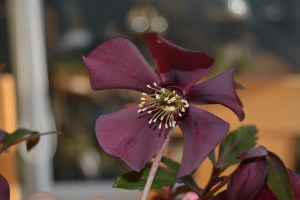
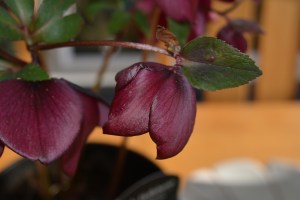
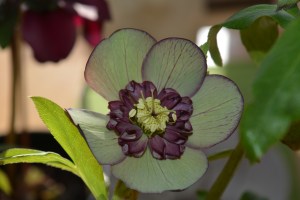
One displays simple single deepest red flowers and the other pale green petals edged with a picotee fringe in deep plum and in the centre a similarly coloured collar of petals. Let’s  look at the simpler one first.

2015 03 04_9799 2015 03 04_98002015 03 04_9797 2015 03 04_9798

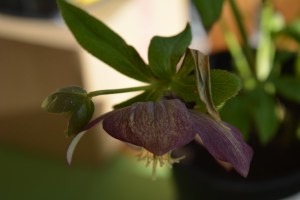
In complete contrast the “colarette” Hellebore shows so much more colour and variation.

2015 03 04_9794 2015 03 04_97962015 03 04_9792 2015 03 04_9793

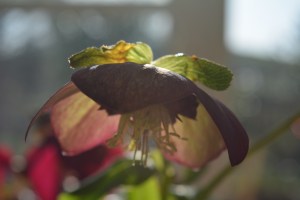
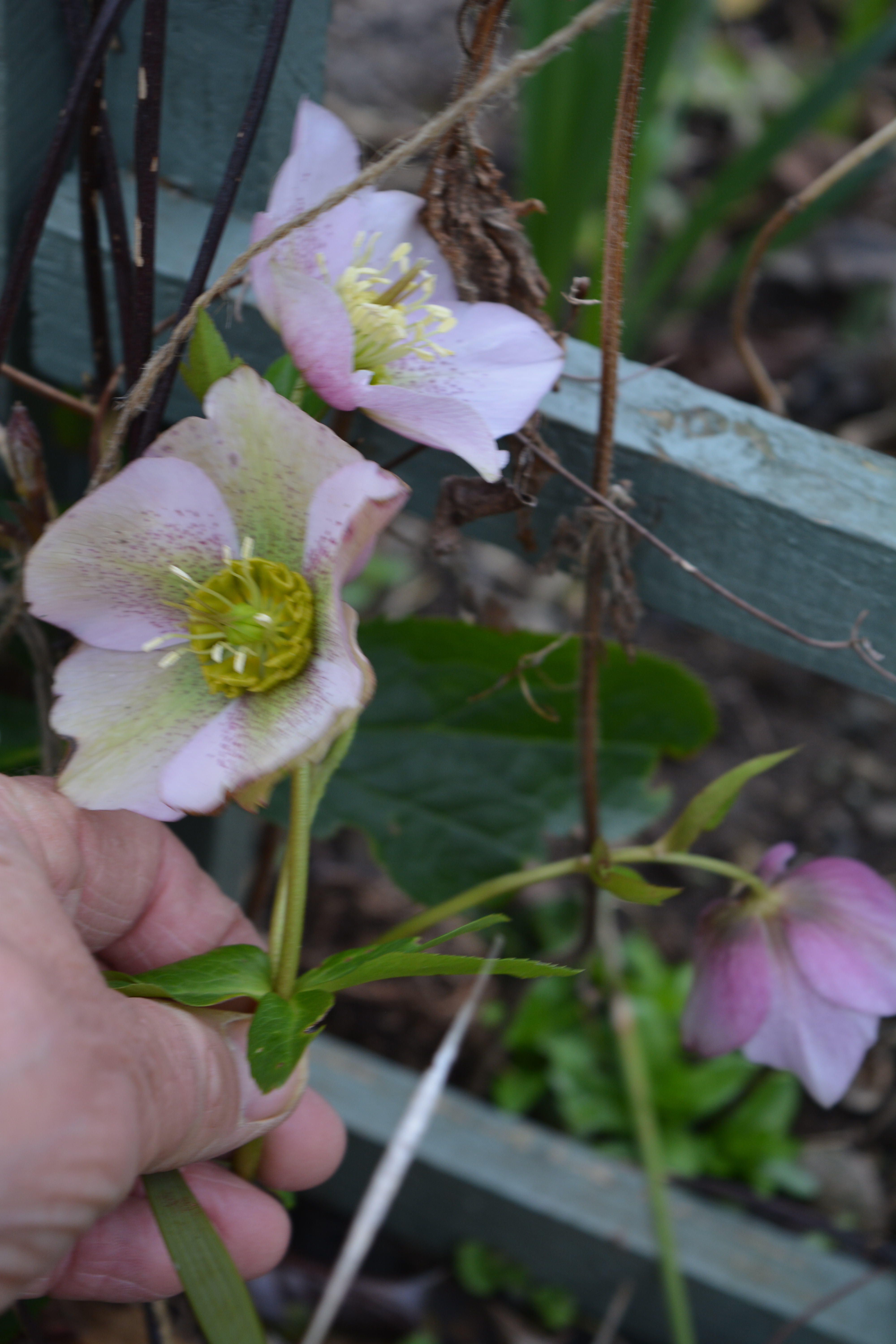
Pleased as we were with our new purchases we were even more pleased to find a chance seedling Hellebore which has sneaked its way into our Rill Garden. The problem is that it has settled in tight into the base of the stone wall of our raised pool. “We were also surprised to discover a beautiful new self-crossed hybrid in the Rill Garden. Each petal is a subtle combination of blush pinks and pale greens, its centre the deepest yellow.” It really needs moving out to replant it where it can be appreciated properly. This photo shows it in its chosen home. We love it for its subtle combination of pink and green with delicate spots, and of course for choosing our garden to grow in. What do you think of it?

2015 03 15_9907

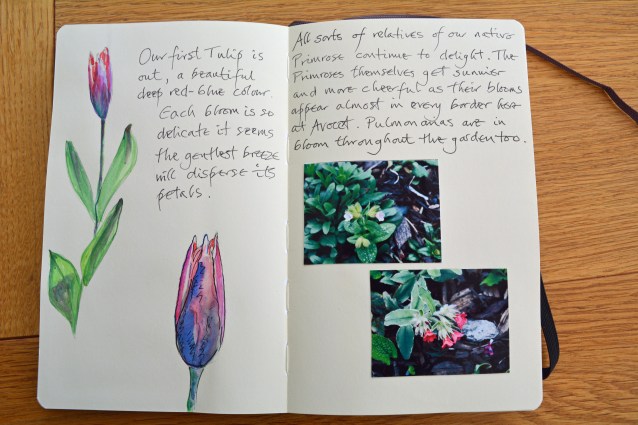
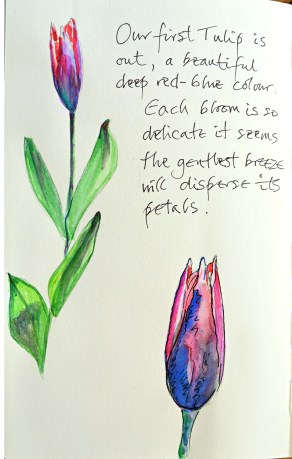
My journal moves on to look at the first tulip of the year, this beautiful species one with such unusual colour combinations within its petals. “Our first tulip is out, a beautiful deep red-blue colour. Each bloom is so delicate it seems the gentlest breeze will disperse its petals.”

2015 03 29_0280_edited-12015 03 29_0277_edited-2   2015 03 29_0278_edited-1

I reveled in the challenge of representing its flower, shaped like the flame of a candle, in watercolours with pen and ink detailing. I had great fun mixing so many tints of blues and reds together and even brought in a touches of green.

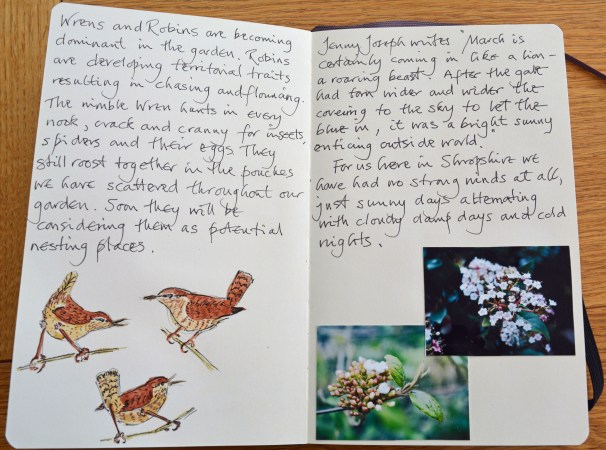
The bird life at Avocet starred next in my journal. “Wrens and Robins are becoming dominant in the garden. Robins are developing territorial traits resulting in chasing and flouncing. The nimble Wren hunts in every nook, crack and cranny for insects, spiders and their eggs. They still roost together in the pouches we have, scattered throughout our garden. Soon they will be considering them as potential nesting places.”  It will be interesting to observe the changes in behaviour and attitudes towards each other when this change of emphasis occurs.

2015 03 29_0281_edited-12015 03 29_0282_edited-1

I quoted a further passage from Jenny Joseph, “March is certainly coming in like a lion – a roaring beast. After the gale had torn wider and wider the covering to the sky to let the blue in, it was a bright sunny enticing outside world.” In my journal I wrote But for us here in Shropshire we have had no strong winds at all, just sunny days alternating with cloudy damp days and cold nights.” But March was to prove these words to be dreadfully premature, for as the month was preparing the way for April to follow in its footsteps we did indeed get gales lasting several days and taking us into April. This strange atypical weather isn’t helping the garden, and definitely not helping us as we prepare for our first opening for the year on 16th April. I noted this in the journal, “This is confusing the garden. It doesn’t know which way to turn. Plants are behind where they should be. Few Tulips or Daffs have displayed their blooms. Leaves on the Acers are showing little inclination to burst from their buds.”

 2015 03 29_0283_edited-1

As my journal closes for March we are preparing for our April opening and we could do with some help from the weather and from Mother Nature herself! We can only wait as spectators and see what April brings with it.

Categories
gardening grasses

Rakes Progress

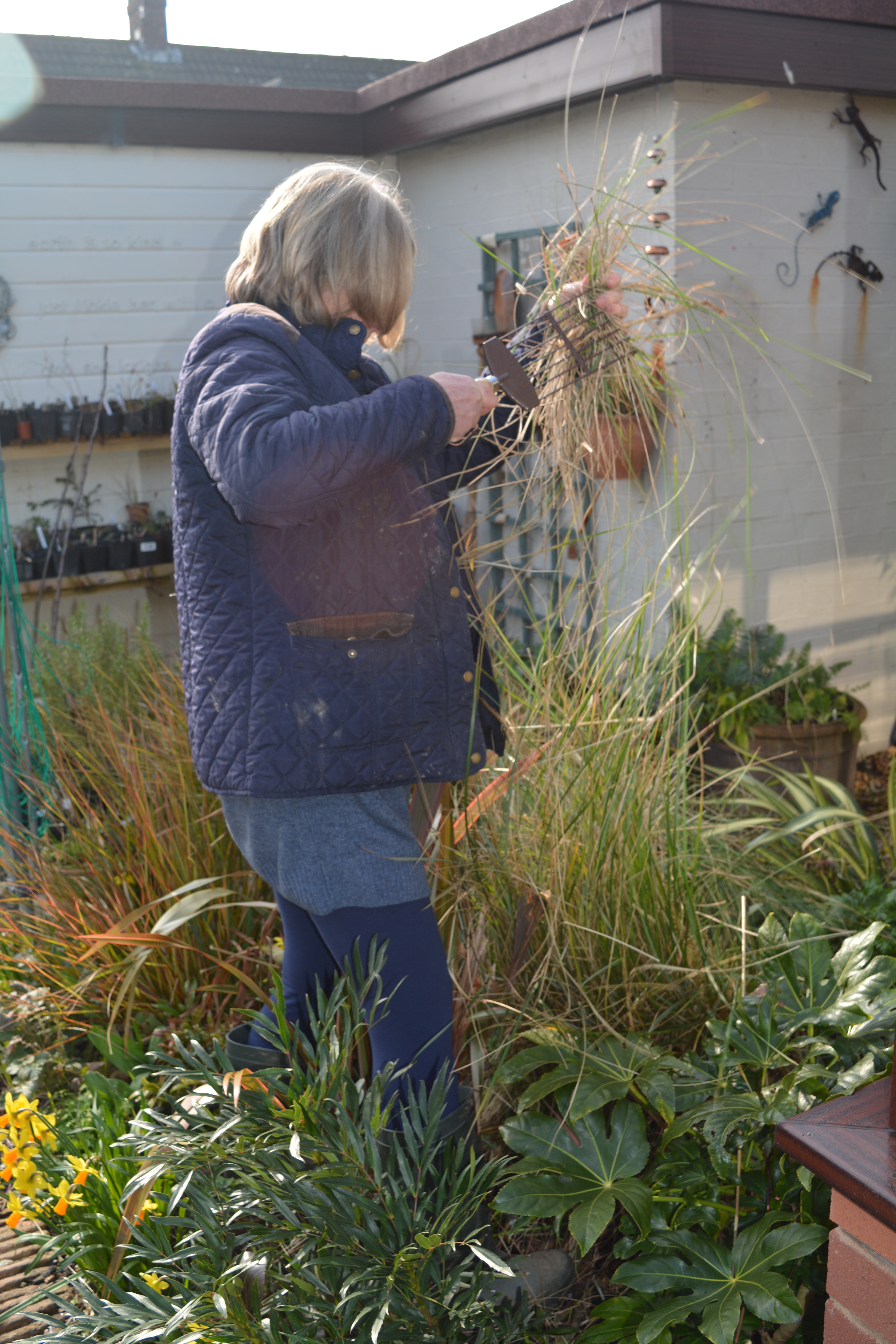
Thought this might be of interest to those gardeners who like us love their grasses. Herbaceous ornamental grasses fall basically into two categories, the first are totally herbaceous and to prune these we simply cut them down close to the ground in early spring being careful not to cut out any extra early fresh growth. The other group the evergreens are more difficult to deal with. They do need some tidying up in early spring in order to remove dead stalks. Books and magazines simply instruct us to comb through the plant with gloved hands but we never feel totally happy with this so we decided to find an alternative.

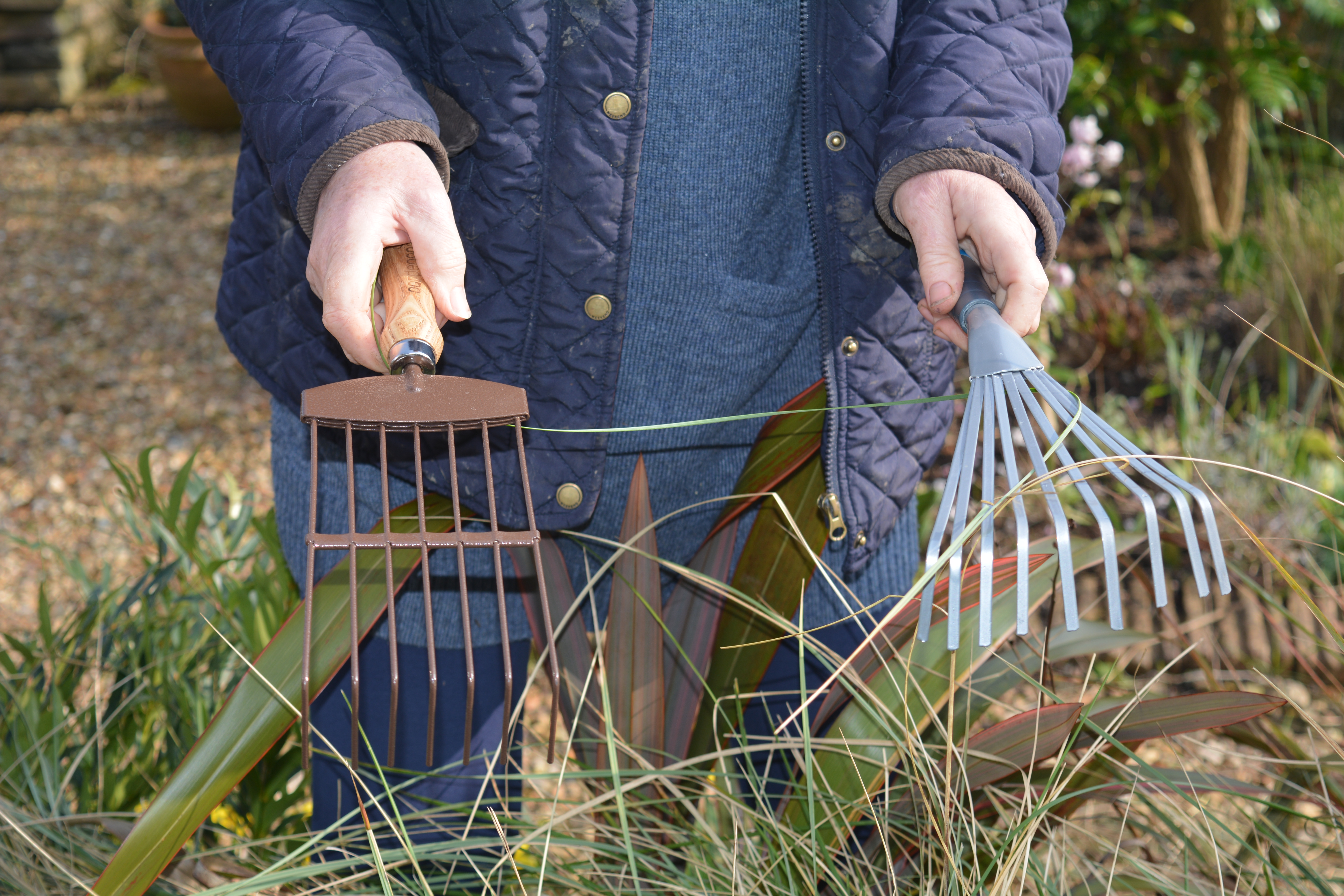
We thought a rake of some sort would be the answer. We tried normal garden rakes and lawn rakes but they were not really satisfactory. We scoured the internet to find something better and found two possibilities, both small rakes. The one on the right of the photo was sold as a “shrub rake” and the left one as a “moss rake”.

2015 03 20_0058

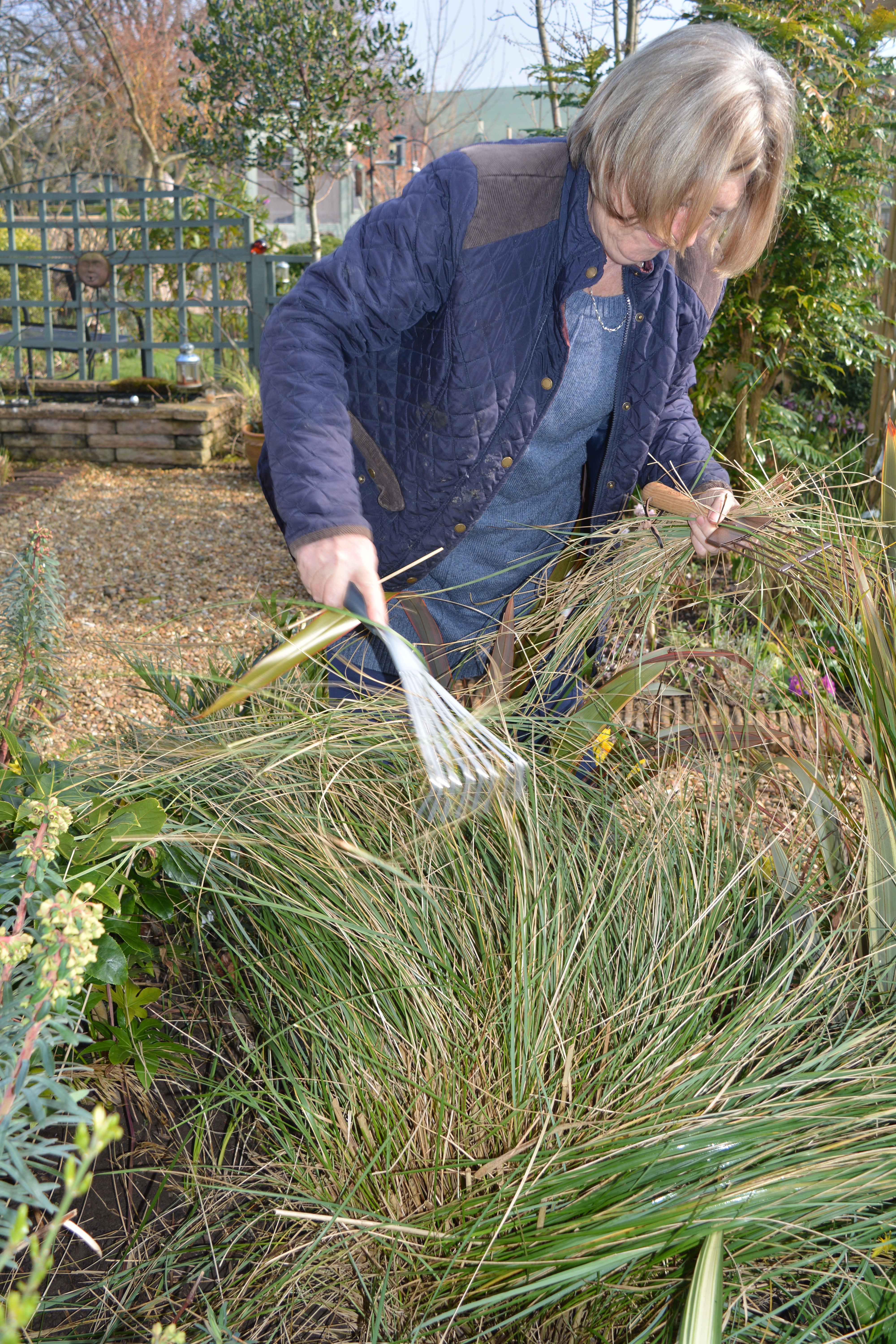
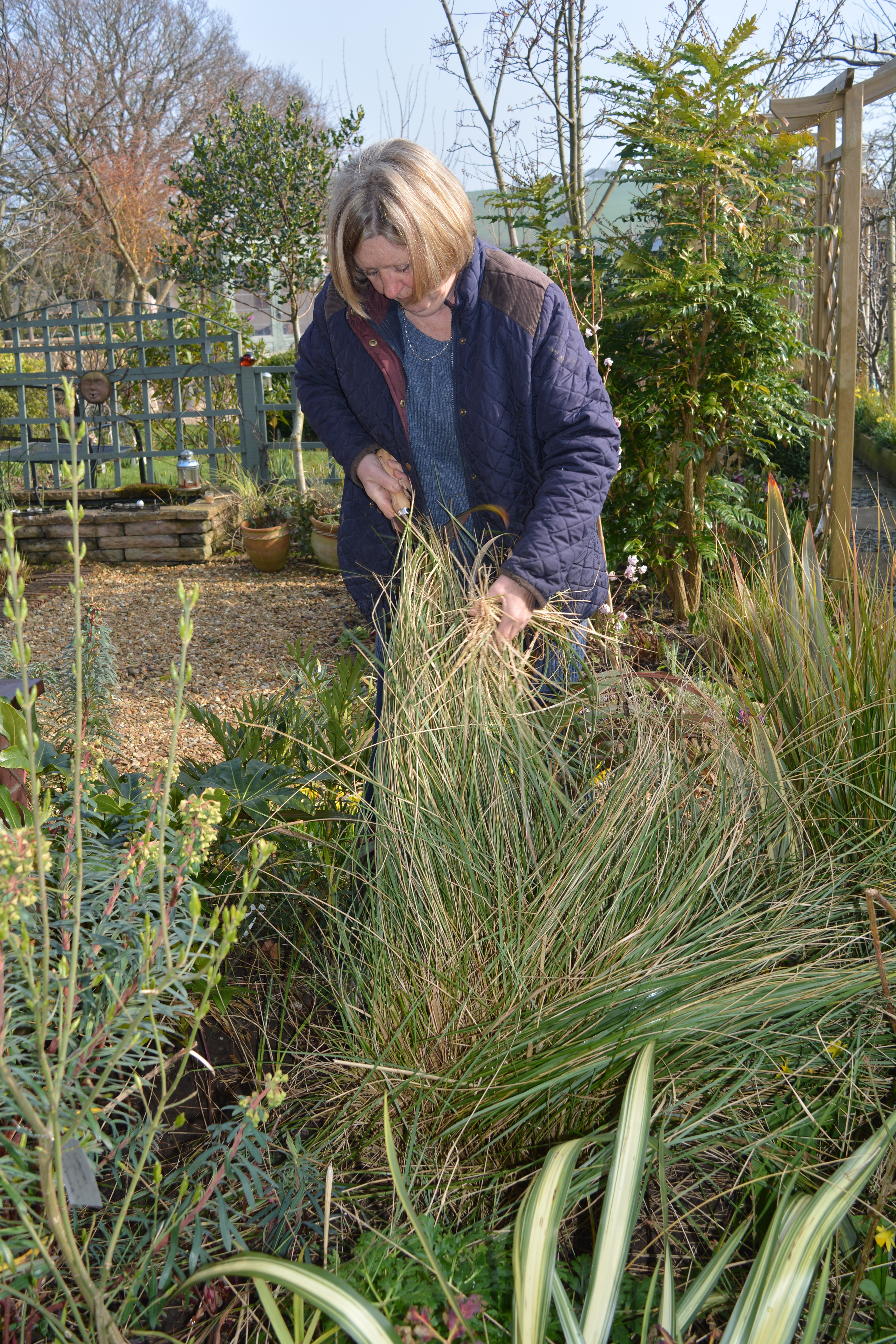
So Jude the Undergardener tried them both on our most difficult grass to keep tidy, Stipa gigantia. This grass tends to drape over its fellow border plants so needs a good tidy up.

2015 03 20_0048 2015 03 20_0039 2015 03 20_0038

So in the end the moss rake won hands down. The photo below shows really well how it out performed its rival. So we have found the answer to our problem. The moss rake worked really well but sadly the shrub rake was a bit of a wash out but it will prove useful in the autumn when we need to clear fallen leaves from the borders.

2015 03 20_0041

Categories
allotments garden buildings recycling

The Wonders of Willow – Even more willow magic!

We enjoyed a day playing with willow recently in the garden of friends Liz and Rich’s new home. They wanted us to build a play feature from willow for their youngsters Ella and Edward. So we arrived amongst the mess of builders’ vans, wheelbarrows encrusted in concrete, and piles of materials stripped out of the old house which is undergoing renovation.

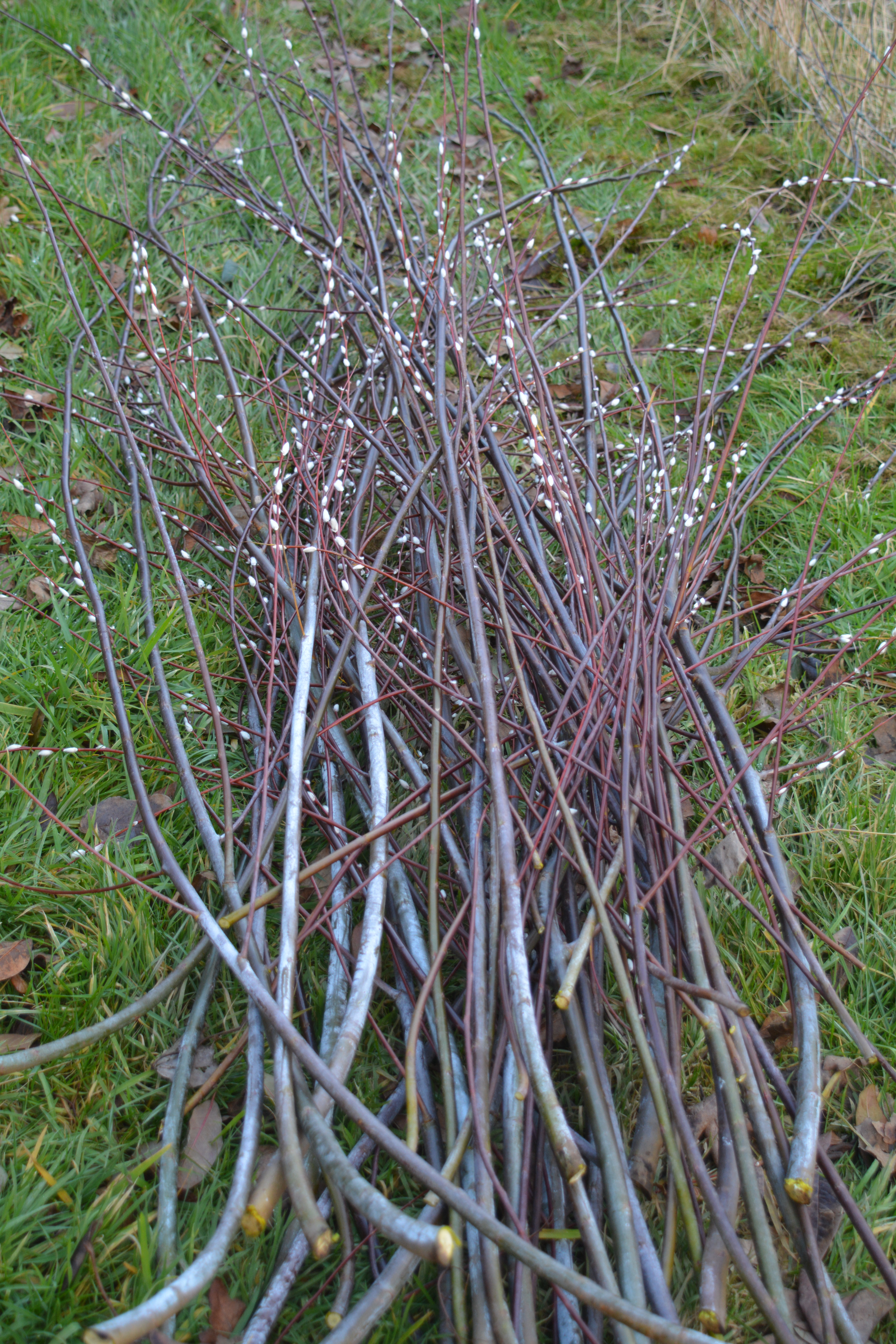
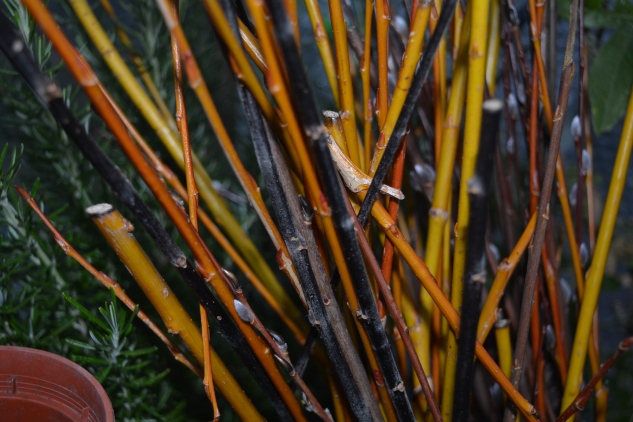
We used some of the prunings from the pollarded Violet Willow in our garden which I shared in my recent post about my garden journal in February, along with lots of different coloured prunings from our allotment community garden which was also featured in an earlier post concerning the magic of willows. We found a suitable spot in the bottom of the garden partly shaded under mature trees and with a good amount of moisture in the soil under a layer of gravel. We collected our tools together, marked out the shape and loosened the top layer of soil.

2015 02 17_9584-1 2015 03 13_9864 2015 03 13_9865

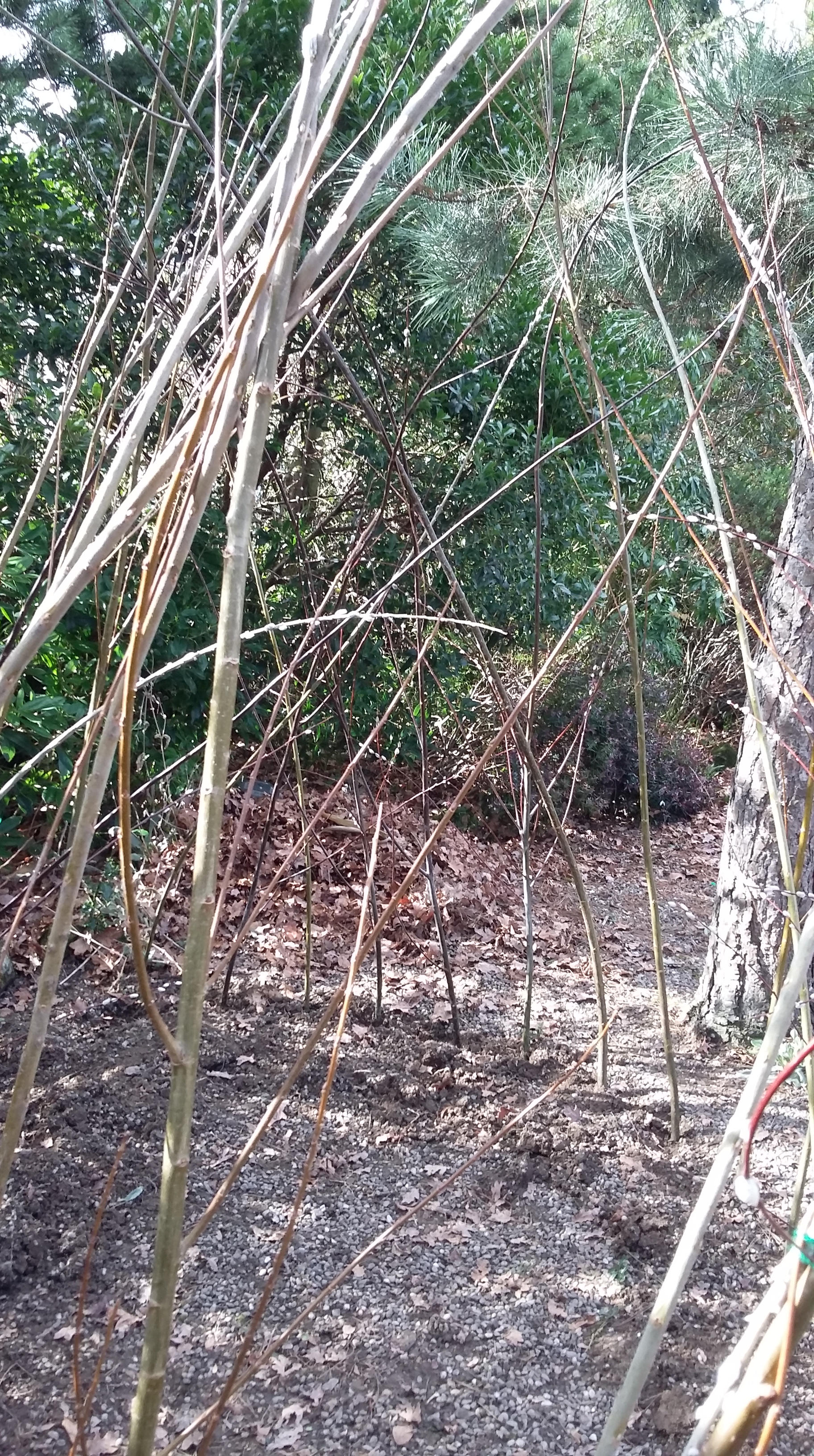
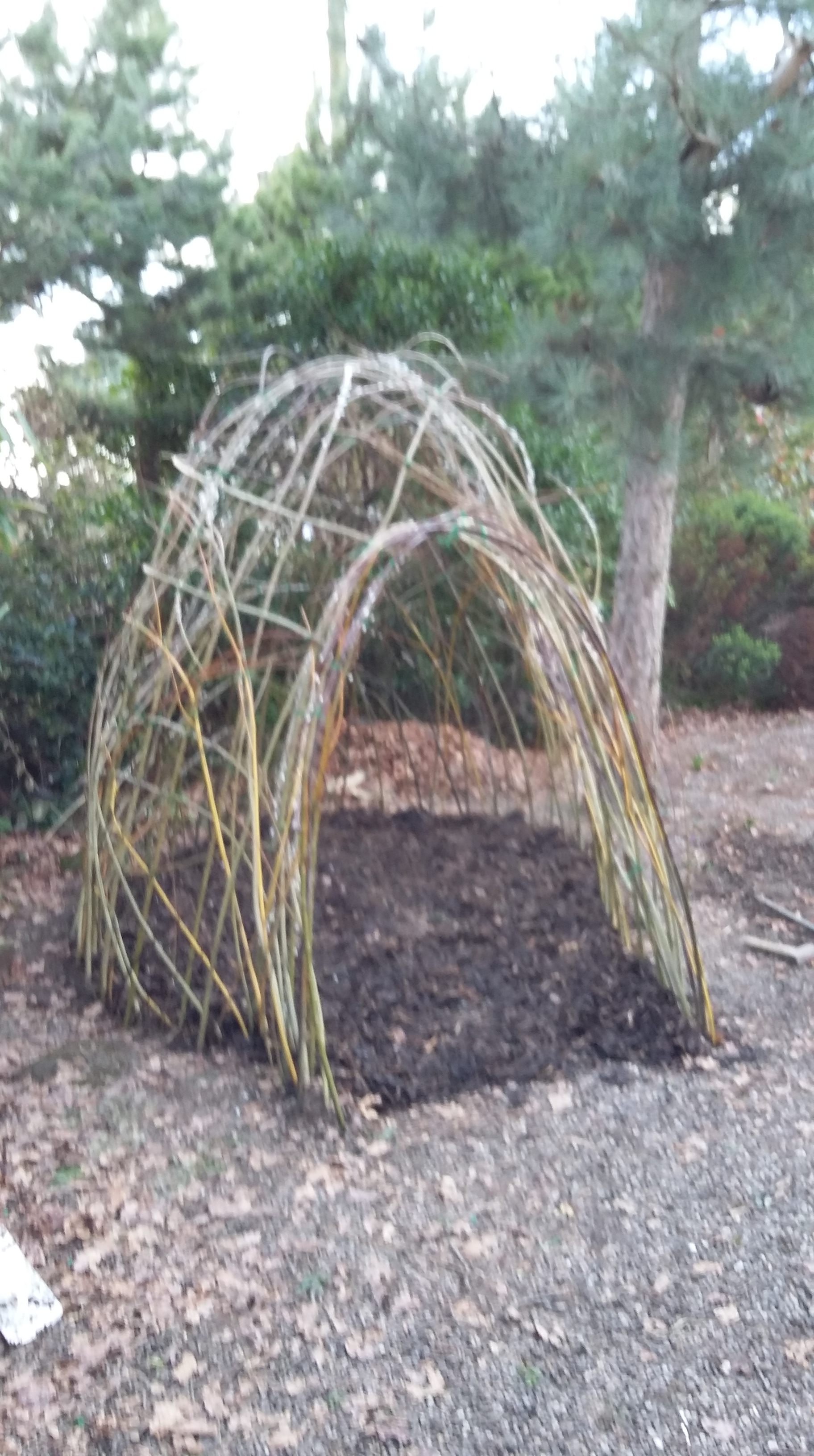
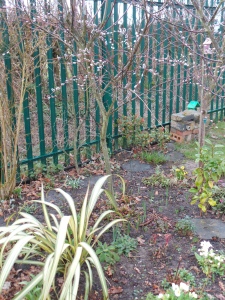
Before we could start placing the willow wands we had to remove the many little seedlings that had found their way into the moist gravel, an ideal seed bed. The first pic below shows just how many we found. They will find a new home at the allotments bartered in exchange for the willow prunings.  There was a good selection with wildlife value including Primroses, Pulmonarias, Arum Lily and seedling Hollies and Cotoneasters. Once clear the willows were put in place but we had to make a hole with an augur to get them in deeply. The shape was soon forming – an igloo of willow.

2015 03 13_9867 2015 03 13_9866  2015 03 13_9868

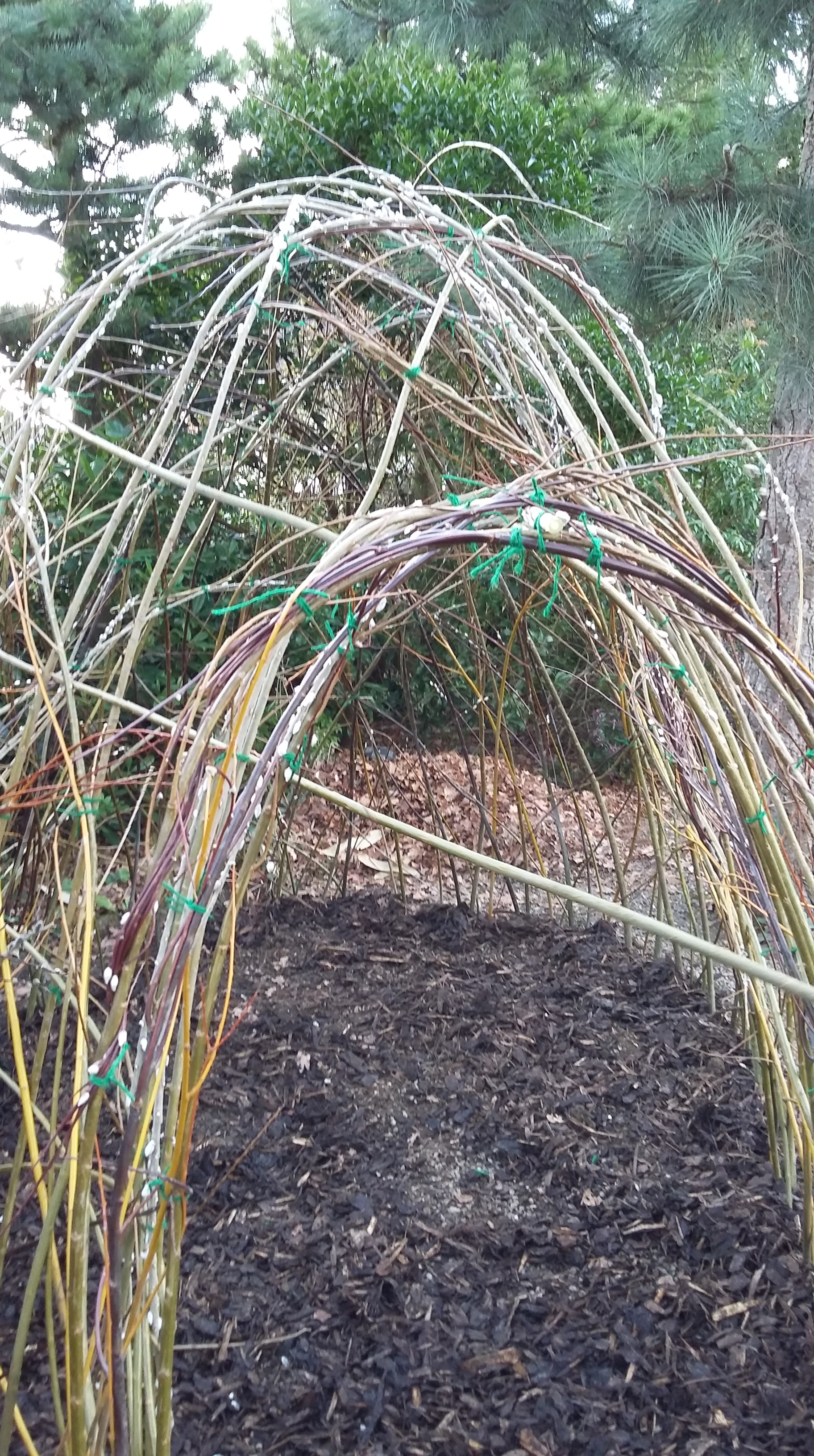
We made a low entry tunnel and then moved on to the main body. The area around the cuttings and the ground inside was mulched with bark chip partly to keep the prunings moist to help rapid rooting but also to make a comfortable play surface.

2015 03 13_9869 2015 03 13_9870 2015 03 13_9871 2015 03 13_9873 2015 03 13_9874 2015 03 13_9875

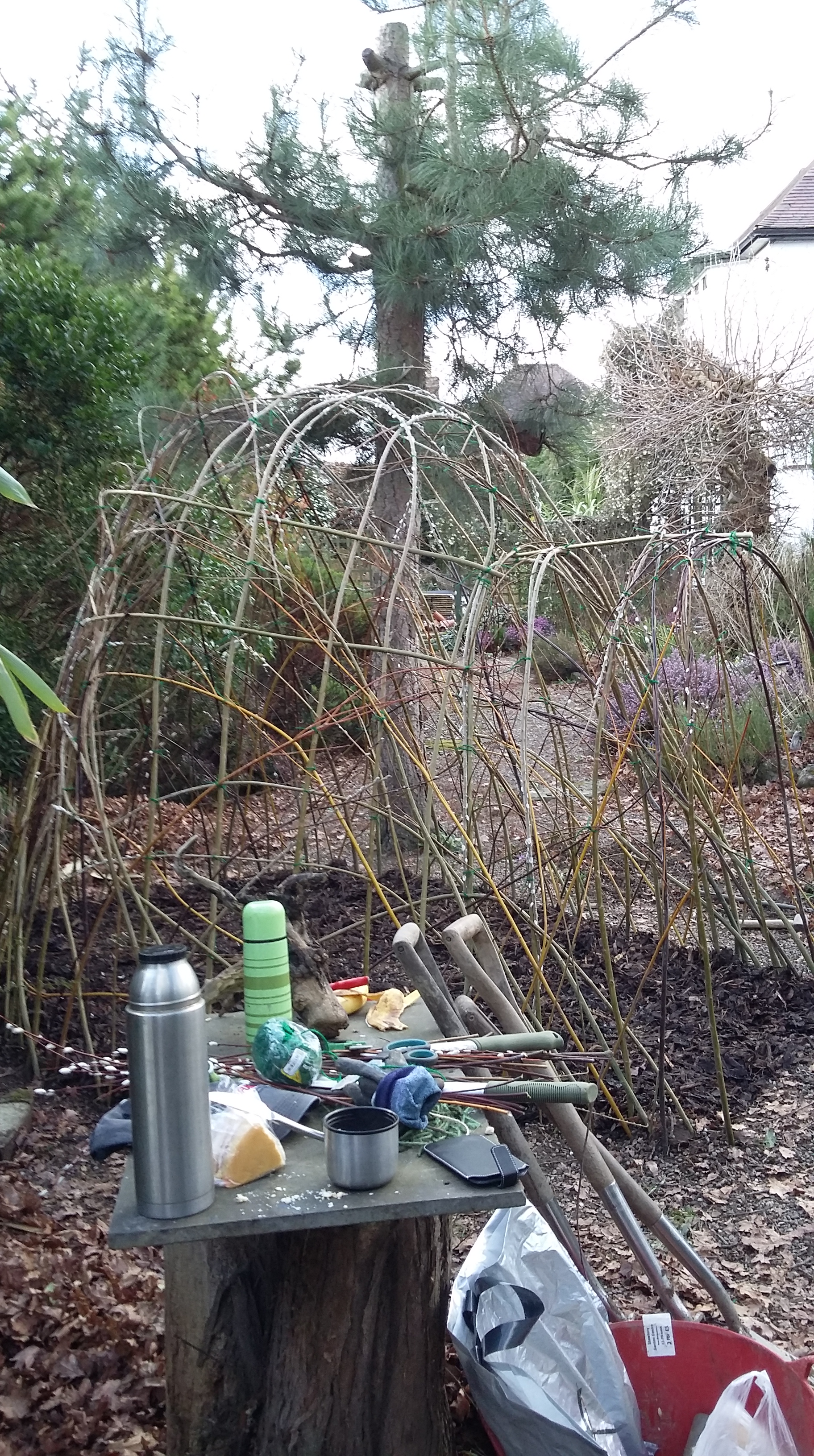
Five hours later it was finished and we had tidied up. We admired our handywork over a last cup of coffee and slice of Victoria Sponge. We reminded Liz to keep it well watered and took our tools back to the car, which was much more empty on our return journey than on our way  there in the morning.

2015 03 13_9877   2015 03 13_98792015 03 13_9878

As the new house is not ready to move into yet we had to wait to see the children’s reaction until Liz brought them over to see it. When they came it was very well received! Liz said the children were so pleased with it that it made an enjoyable day even more worthwhile. Ella soon realised that it would be a good place for playing hide and seek and Edward took his role as an explorer very seriously. Here’s to loads of fun, smiles and shared times with friends for years to come. And of course it is another fine example of recycling in the garden.

2015 03 13_9857 2015 03 20_0037

Categories
allotments colours community gardening gardening ornamental trees and shrubs recycling trees Winter Gardening

The Wonder of Willows – part three

So for the third in my posts about the wonder of willows we move to our allotment community garden site, Bowbrook Allotment Community (www.bowbrookallotments.co.uk)

2015 01 18_9332_edited-1-1

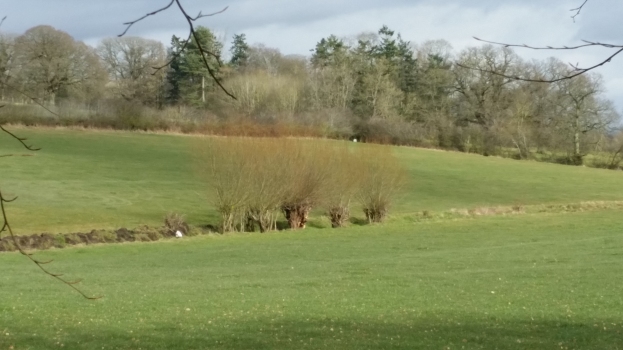
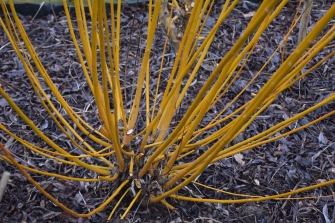
Here we grow many different varieties of Salix, willows with different habits, leaf shapes and in particular coloured bark. but before I move on to look at these I thought I would reminisce a little and cast my mind back to my childhood where willows played an important role. I lived in the vale of the River Severn in Gloucestershire and here, the lowland nature of the farmland meant that ditches had been dug for centuries around field boundaries to help with drainage.These ditches, and indeed every stream and brook was flanked with willows. These were pollarded and regularly harvested to be used by local craftsmen and women, the basket makers, trug makers and hurdle makers amongst them. But to me as a country lad they meant places to search for wildlife, to hide from the fishes I was angling for and in the case of the old giant hollow trunked willows they were dens to hide in. Below is a picture of a little clump of such pollarded willows in Herefordshire we spoted on our journey back from Croft Castle.

2015 02 26_9659

2015 02 26_9658_edited-1

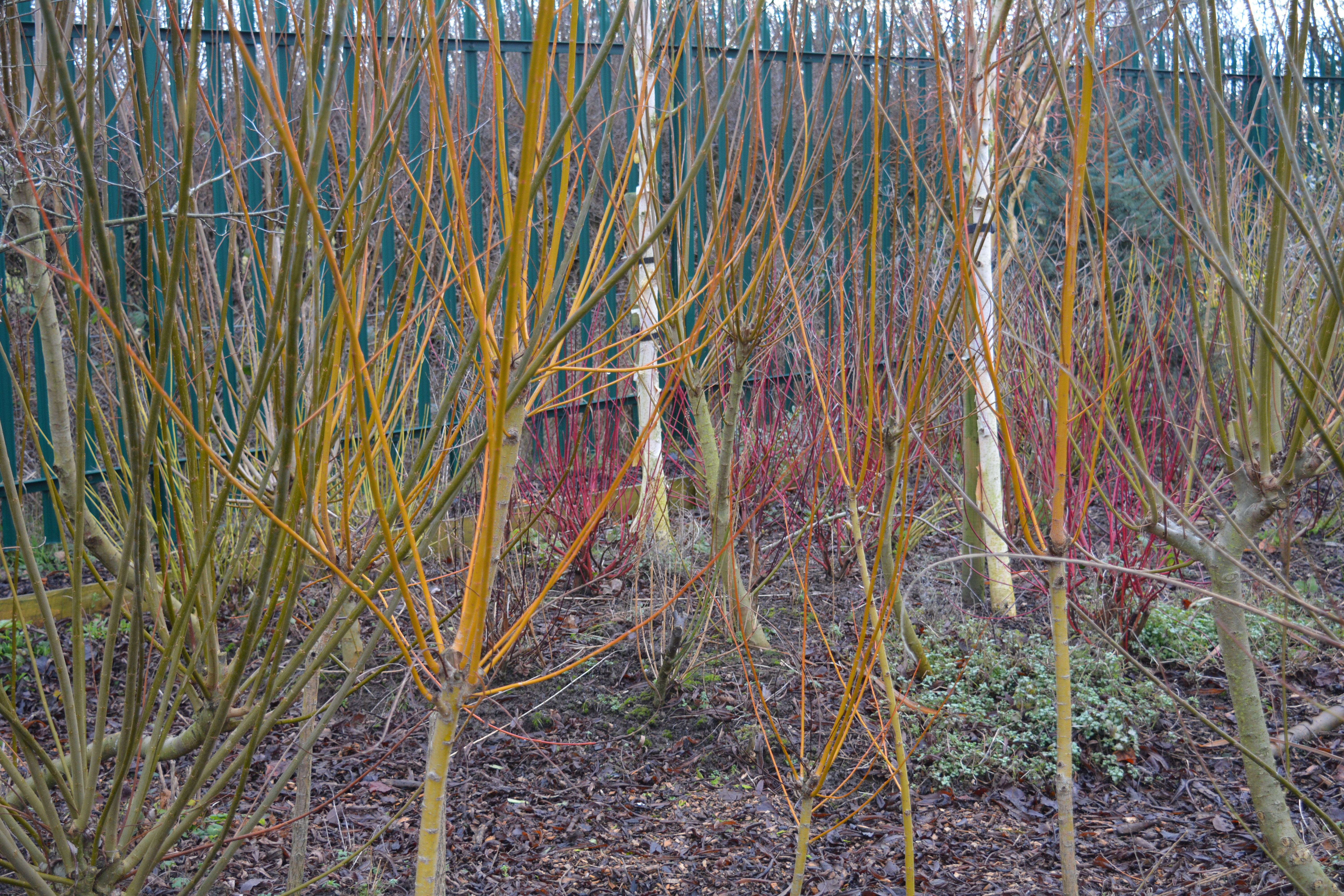
Most of our allotment willows  grow in our Withy Bed designed to help drain a particularly wet patch of land but mostly to provide vivid colours when they are stripped of their leaves in the autumn and winter months. We also grow them to help drain a wet part of our Winter Garden. The photo below was taken looking through the willows towards the white barked Betulas and the coloured stems of the Cornus (Dogwoods). As well as draining this area so effectively they add so much winter structure and colour of their own to the picture. In the second picture of these same willows you can see they have just been subject to their annual haircut.

2015 01 18_9338-12015 03 16_0011

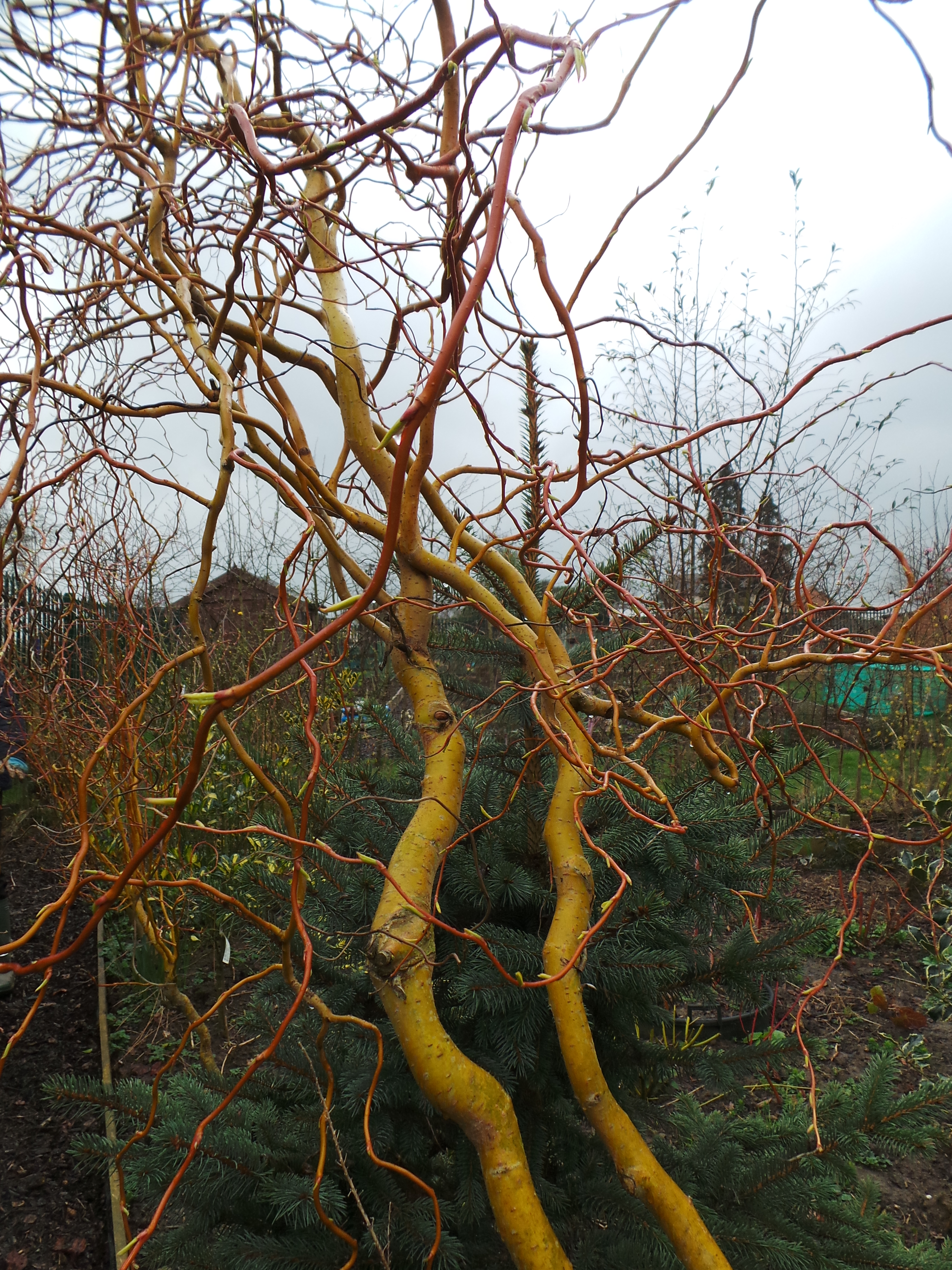
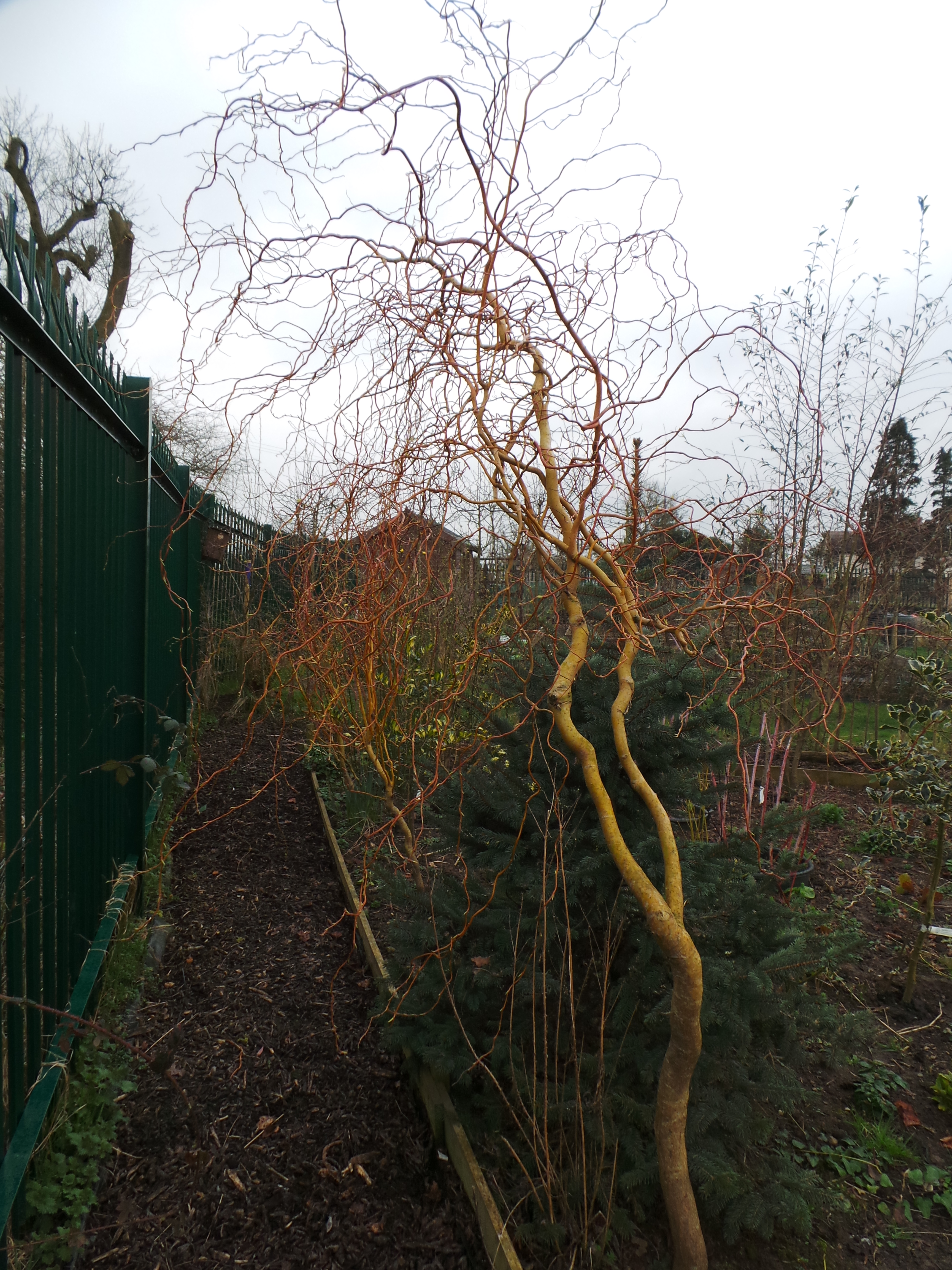
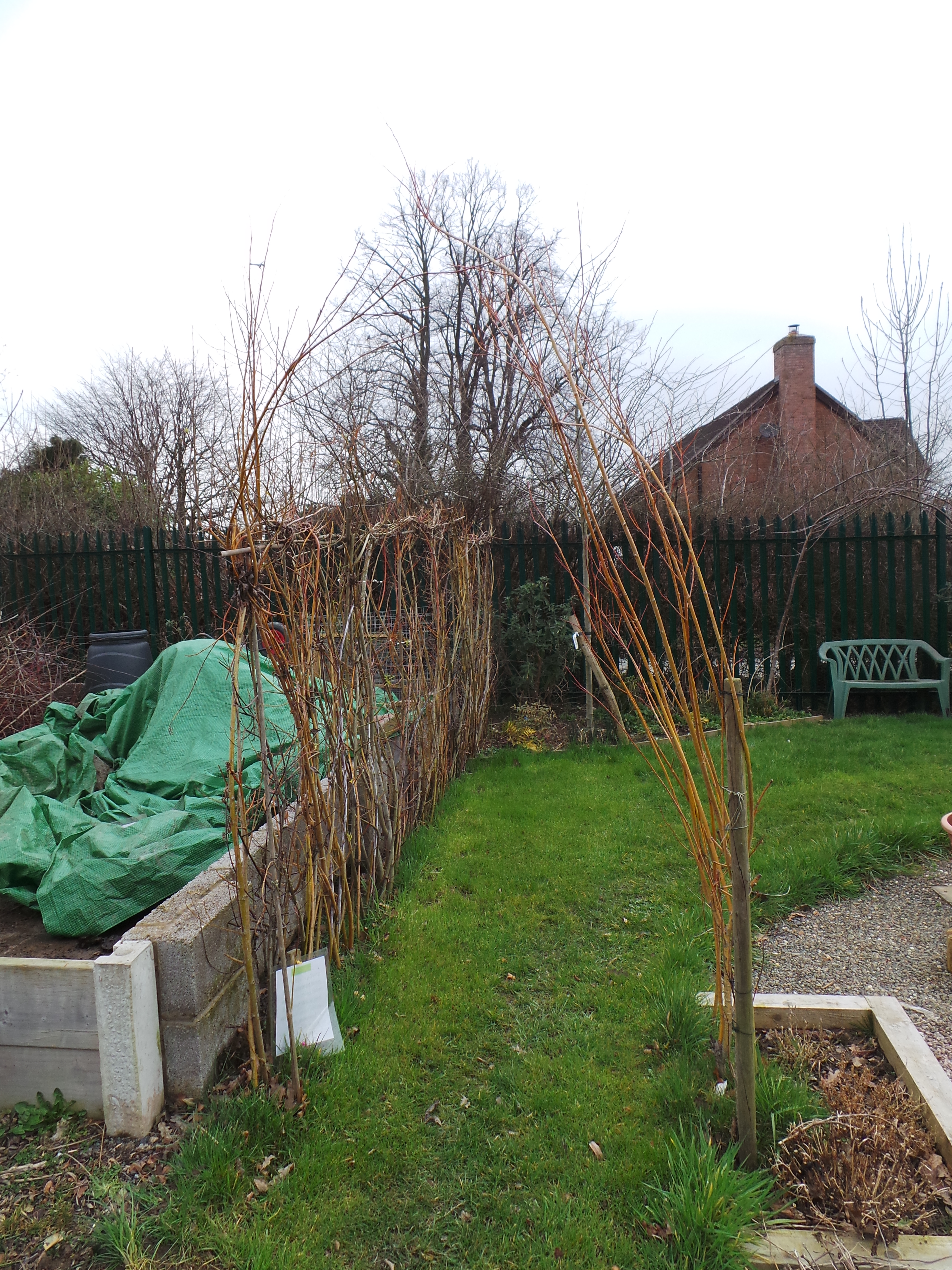
The contorted willow below is one of two being trained up tall to weep over the top of the path behind the Winter Bed to form an archway.

2015 01 18_9343-1 2015 03 16_0024 2015 03 16_0023  2015 03 16_0012

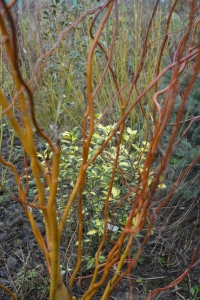
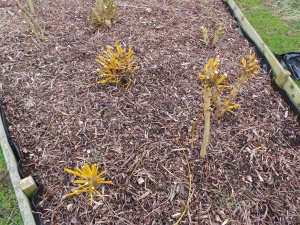
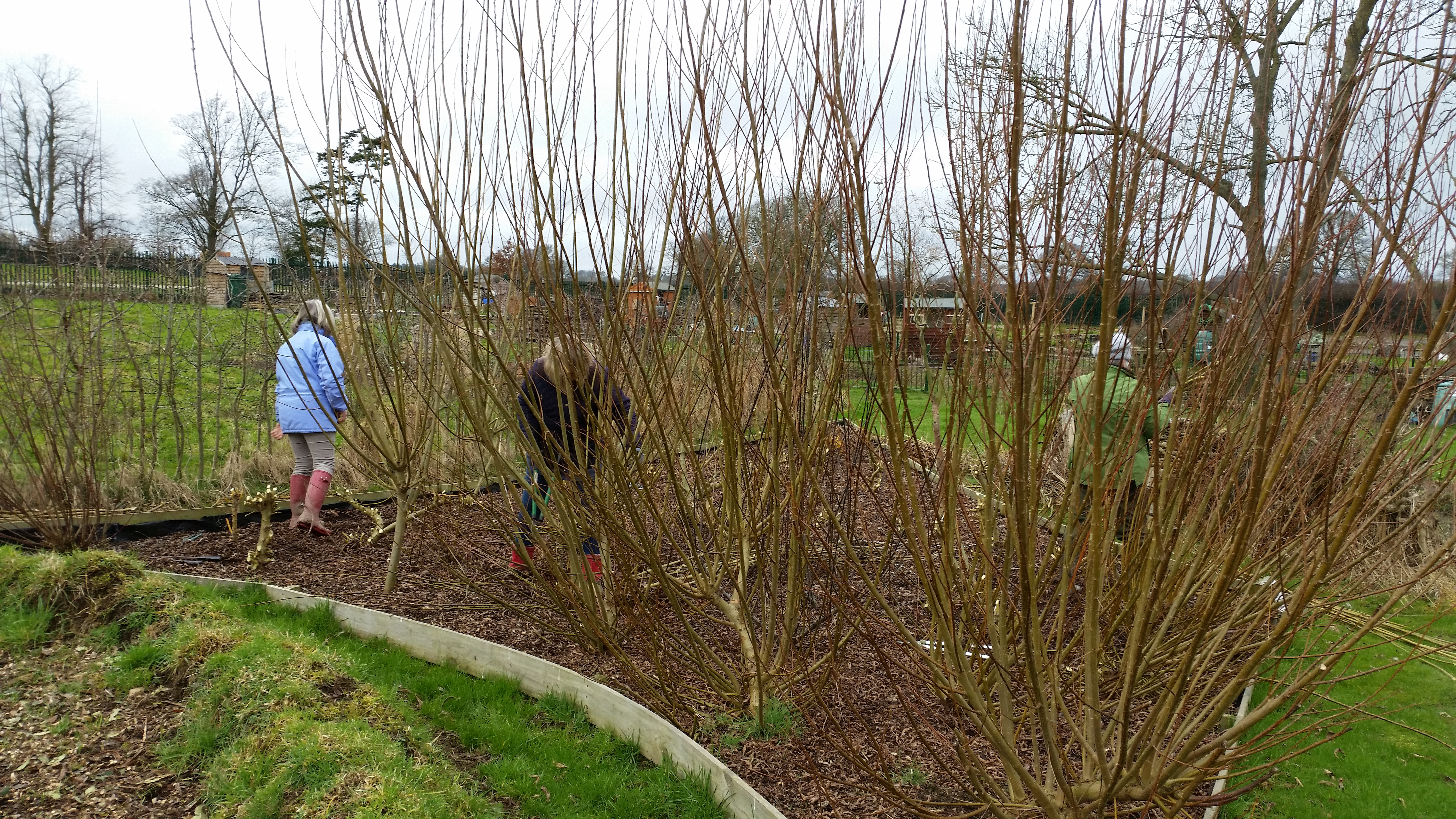
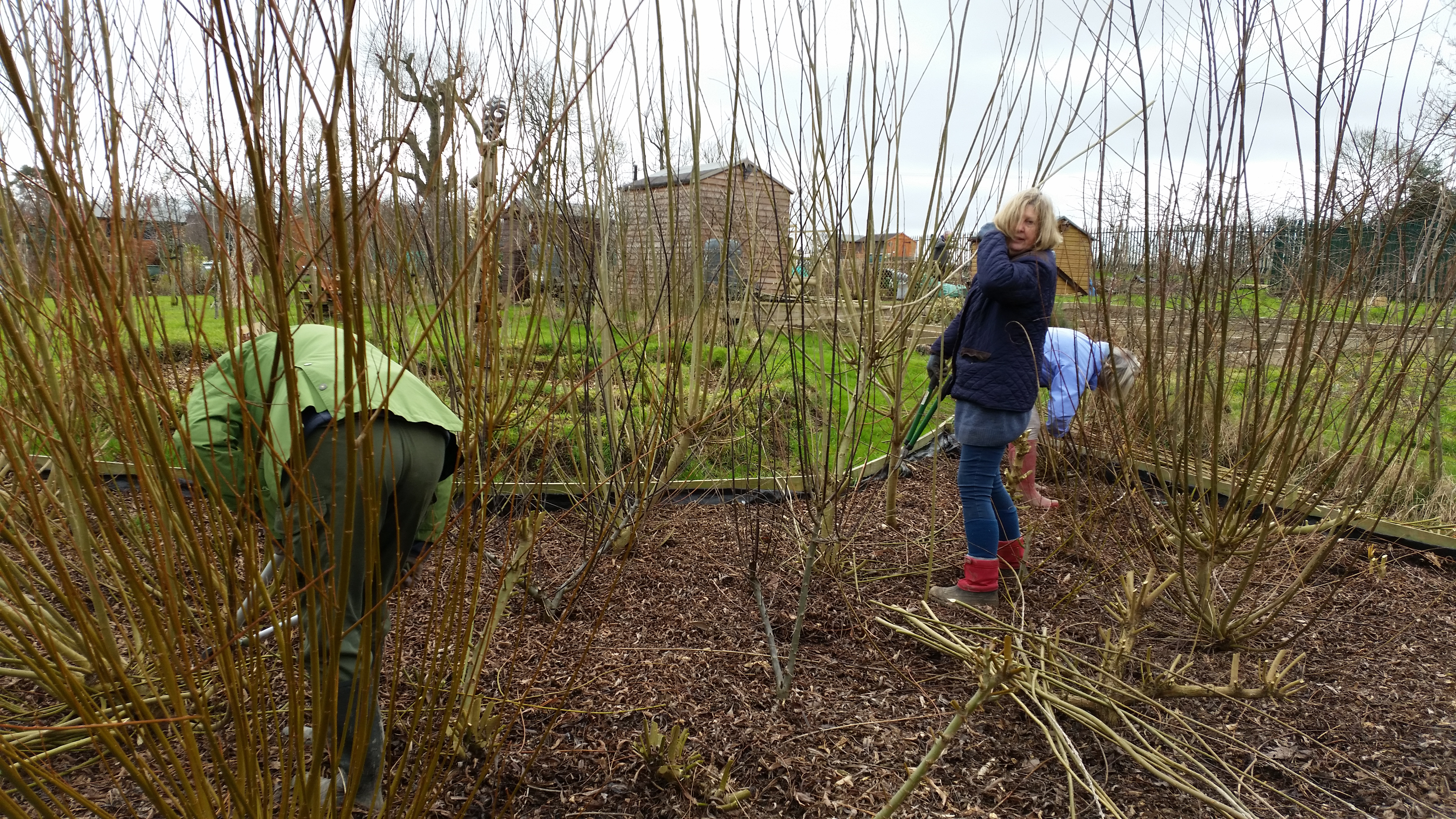
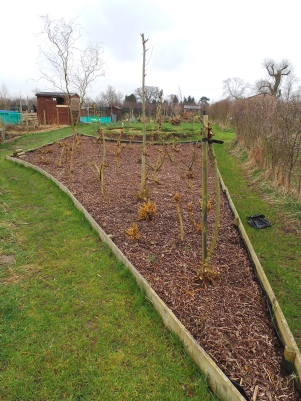
Each spring as the weather gets a little more conducive to outside work a group of us have our work cut out pruning so many willows, some we coppice and others we pollard at different heights. We have about twenty different cultivars here to enable us to achieve the effects that we are after. It takes a small team of volunteers a day’s work to get the task completed, resulting in some aching backs the following day. The first pair of photos shows a pair of before and after shots of one of our yellow stemmed coppiced willows.

2015 01 18_9347-1 2015 03 16_0009

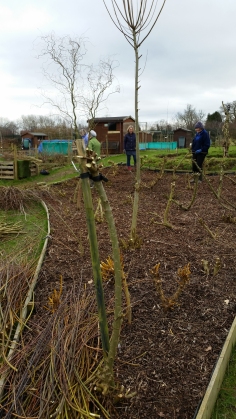
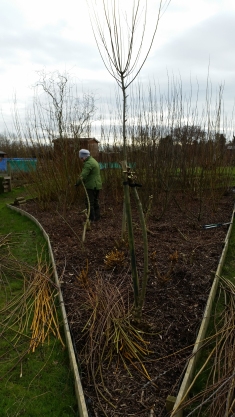
We set off with a wide range of pruners from small secateurs up to hefty loppers and slowly move from one end of the Withy Bed to the other with a good few tea breaks. We find it helpful to be bendy and wriggly to get in among the willows, bending low to the coppiced stools and reaching high to the tallest pollards and every combination in between.

2015 02 26_96652015 02 26_9666 2015 02 26_96602015 02 26_9664 2015 02 26_9663  2015 02 26_96612015 03 16_0010 2015 03 16_0008

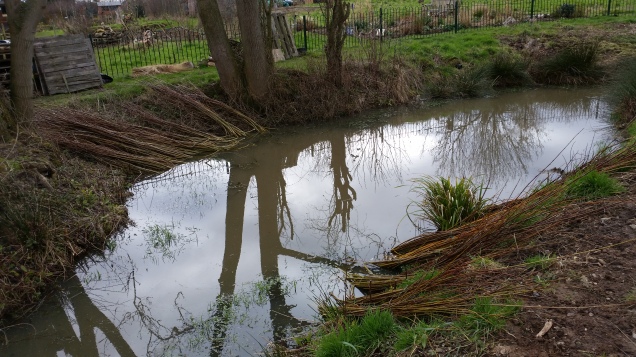
The prunings created when we cut them are used around the site to make structures and to create plant supports. But for this year many have been used while developing our new wildlife pond. The photos below show the prunings being kept fresh by being lain into the pond and illustrate the range of colours available to us.

2015 02 26_96692015 02 17_9600

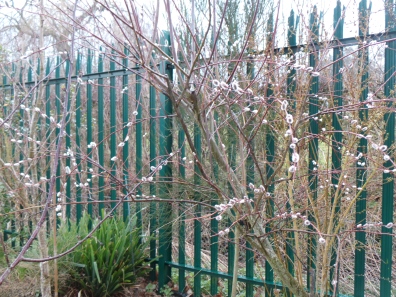
We have Violet Willow growing in the allotment’s Spring Garden which was a cutting off our tree at home and after four years it is a beautiful specimen which has sparkling silver catkins in Spring.

2015 03 16_0020 2015 03 16_0021

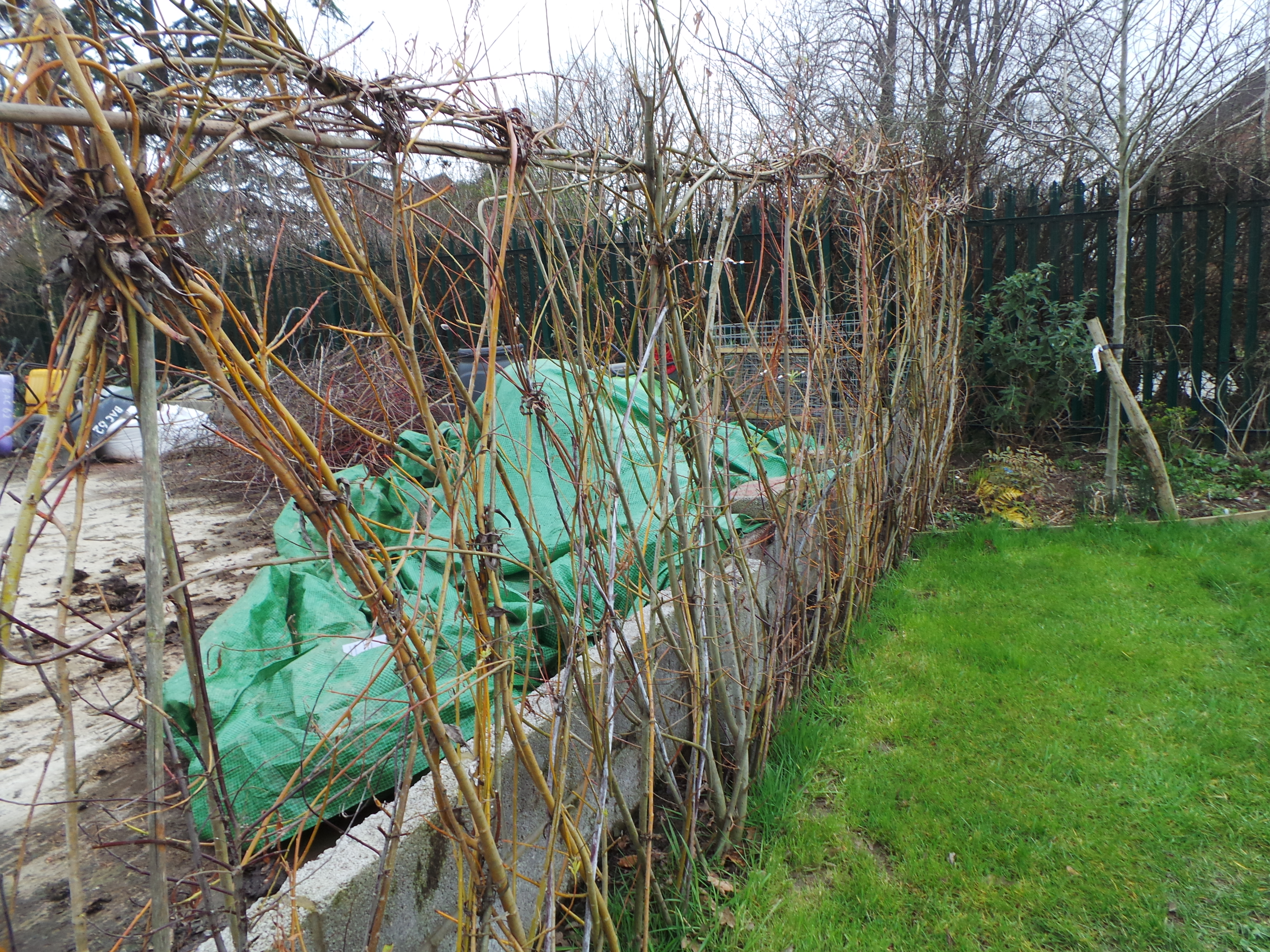
Last year we created a Fedge with the prunings to give us a brightly coloured living willow fence. This acts as a useful windbreak and also hides part of the site’s manure/compost compound. In the winter when I took these pics it doesn’t hide much but the diamond shaped trellice effect shows up.

2015 03 16_9980 2015 03 16_9981 2015 03 16_9982

The final post in this series about willows will show how we have used some prunings from home and from the allotments to create a children’s play feature.


Categories
allotments bird watching birds community gardening conservation diy garden buildings garden ponds garden pools garden wildlife gardening irises log piles natural pest control recycling renovation Shrewsbury Shropshire trees water garden water in the garden wildlife

The wildlife pond and hide at BAC – part two

As promised we make a return visit to see the work we have been doing on the development of our pond and hide at our allotment site, Bowbrook Allotment Community. In this part we shall look at our hide, some tree surgery and our new duck tube.

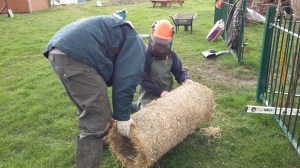
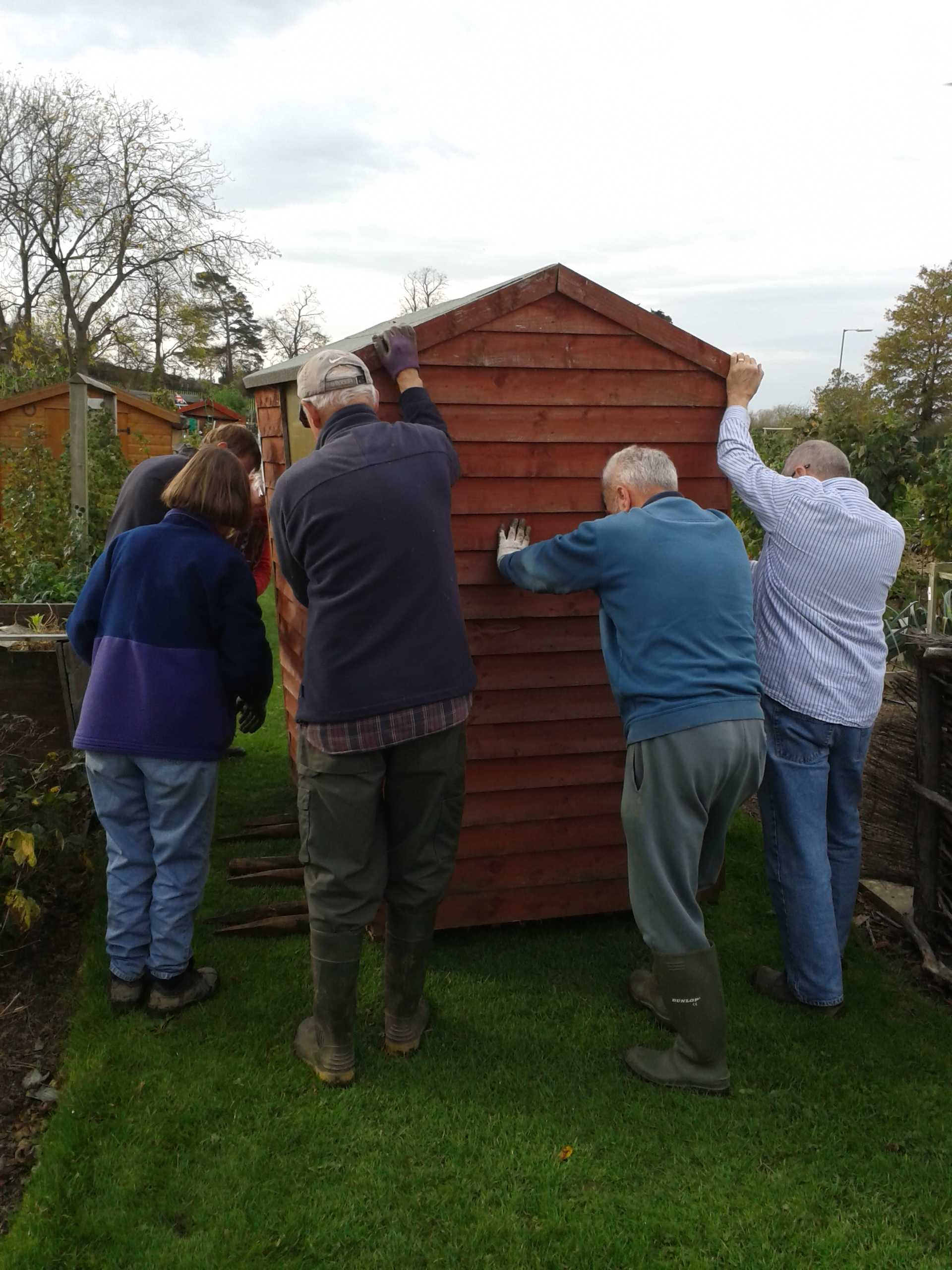
So first let us return to our new hide. If you remember those pictures of us rolling the battered and rather shaky old shed you will be surprised by the photos of it finished. So how about a before and after pair of pics? We made the hide for our allotment youngsters, our Roots and Shoots group, to give them the chance to secretly and quietly watch the life of our pond. With this in mind we set to work on our renovation which took an amazingly large number of volunteer hours.

2014 12 08_8466 2015 03 16_0004

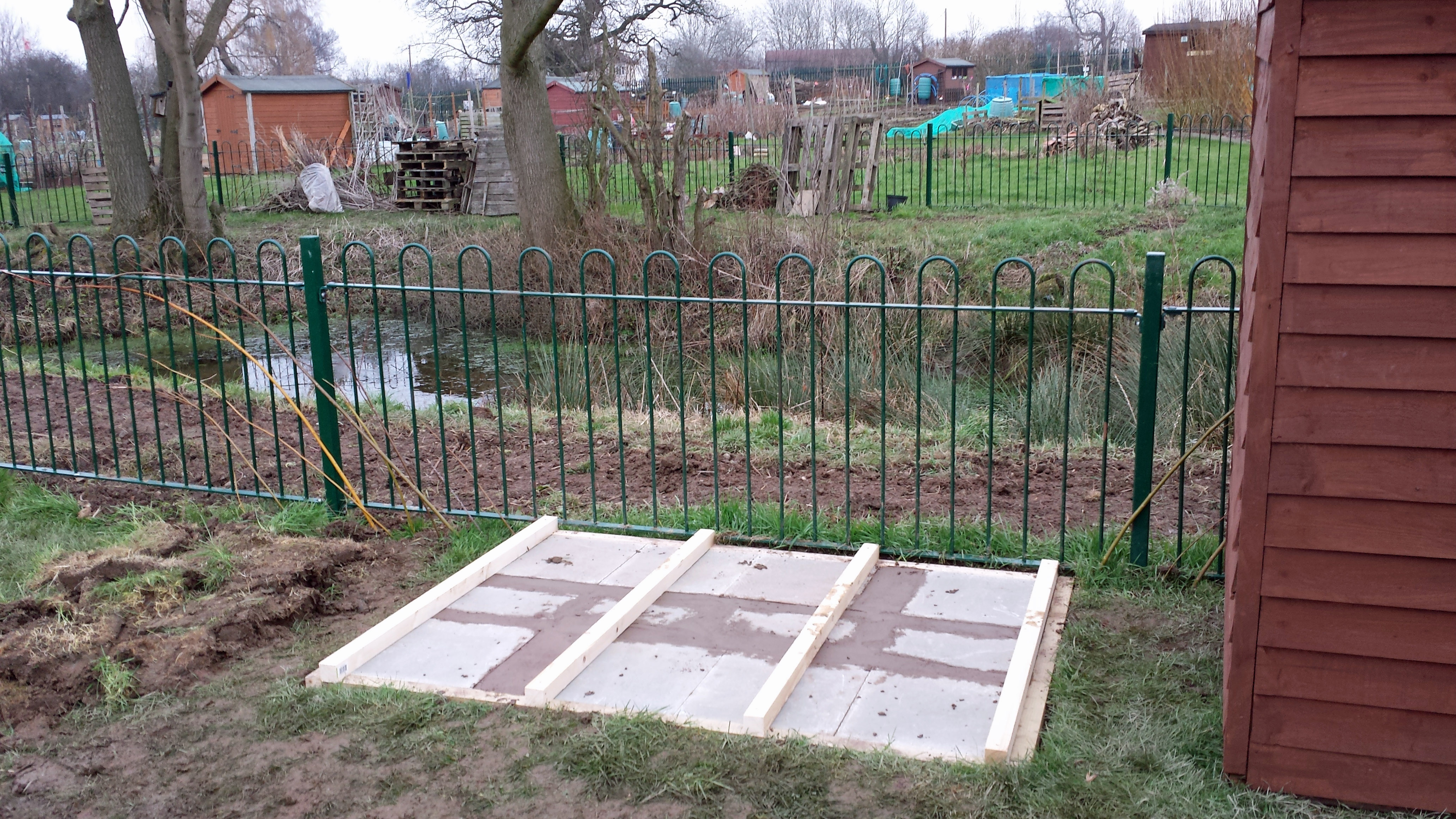
Whenever we go by the pond we can’t help but smile at the transformation! As you can see the old hide was firstly repainted outside by my young apprentice Thomas before we handed it over to two volunteer helpers Sean and his Dad Vince. They are great carpenters so brilliant volunteer helpers to have on board. They put fresh felt on the roof and fabricated a strong framework inside the shed. They made a concrete and slab base and placed the newly strengthen shed on a framework of wooden struts.

20150207_162506-1 sean 3-1

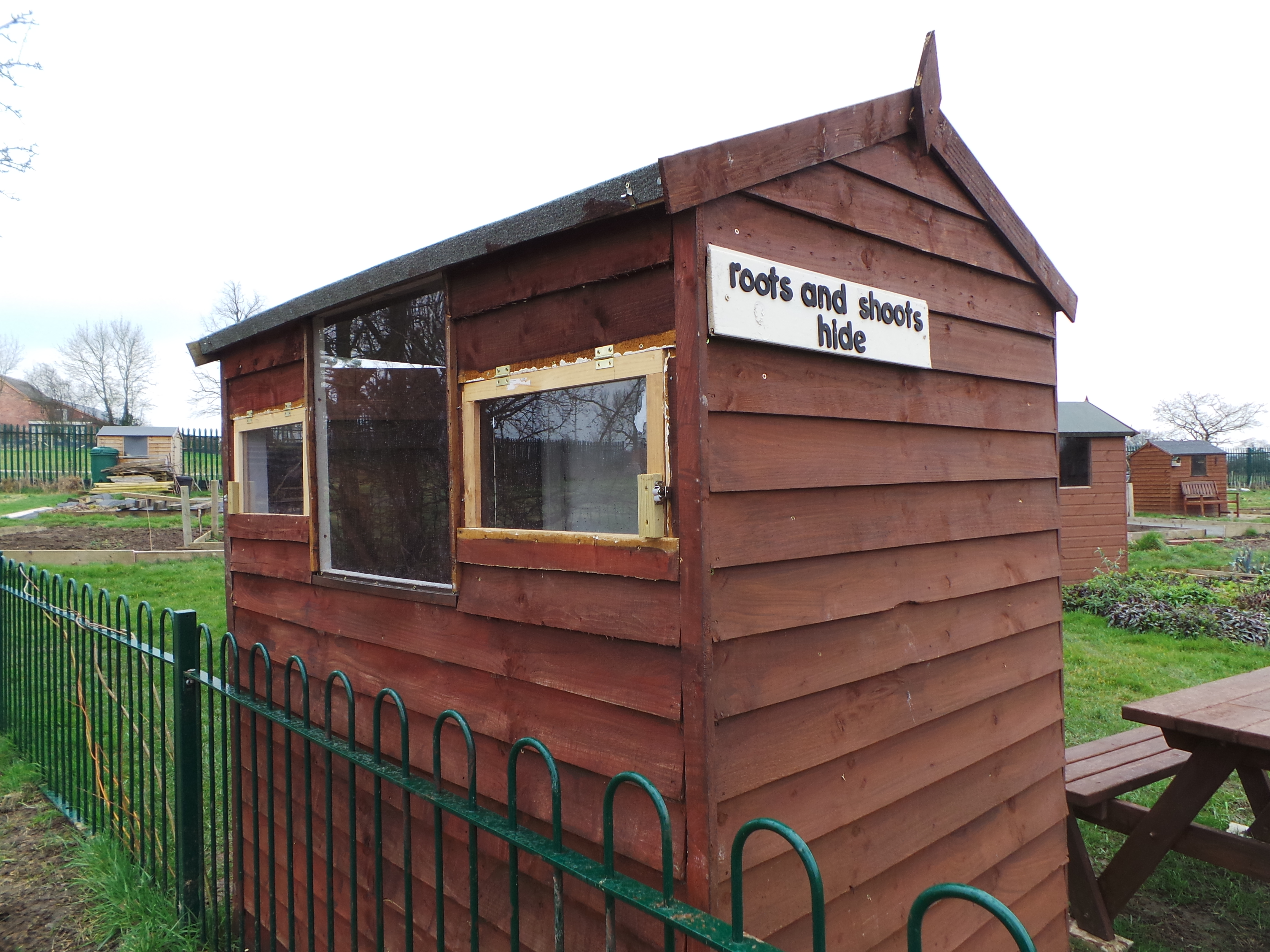
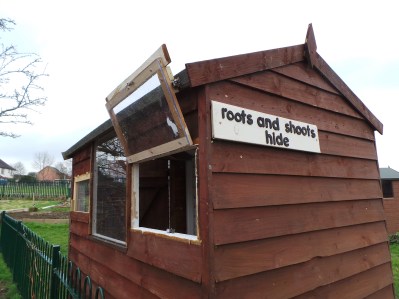
Thomas returned to give the shed another coat of wood preserver and I added a sign I created from wooden letters. It began to look the part from the outside but even more so once the two men added a new sheet of perspex to the window and added two hatches for clear viewing on dry days. These can be seen in the photo below.
2015 03 16_0005

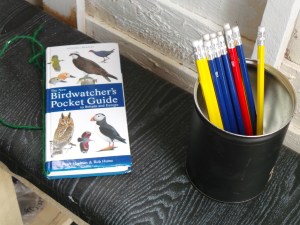
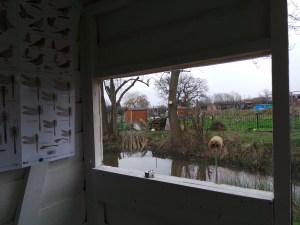
Within a few weeks Sean and Vince with extra help from Sean’s children had put up a noticeboard, made a kneeling bench and shelf for leaning on when the children used the hatches and window. The pictures below show first the bench and secondly the view the children get from the hatch.
2015 03 16_0018 2015 03 16_0016

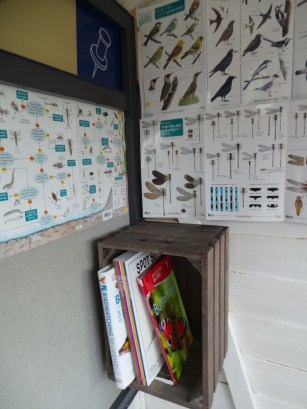
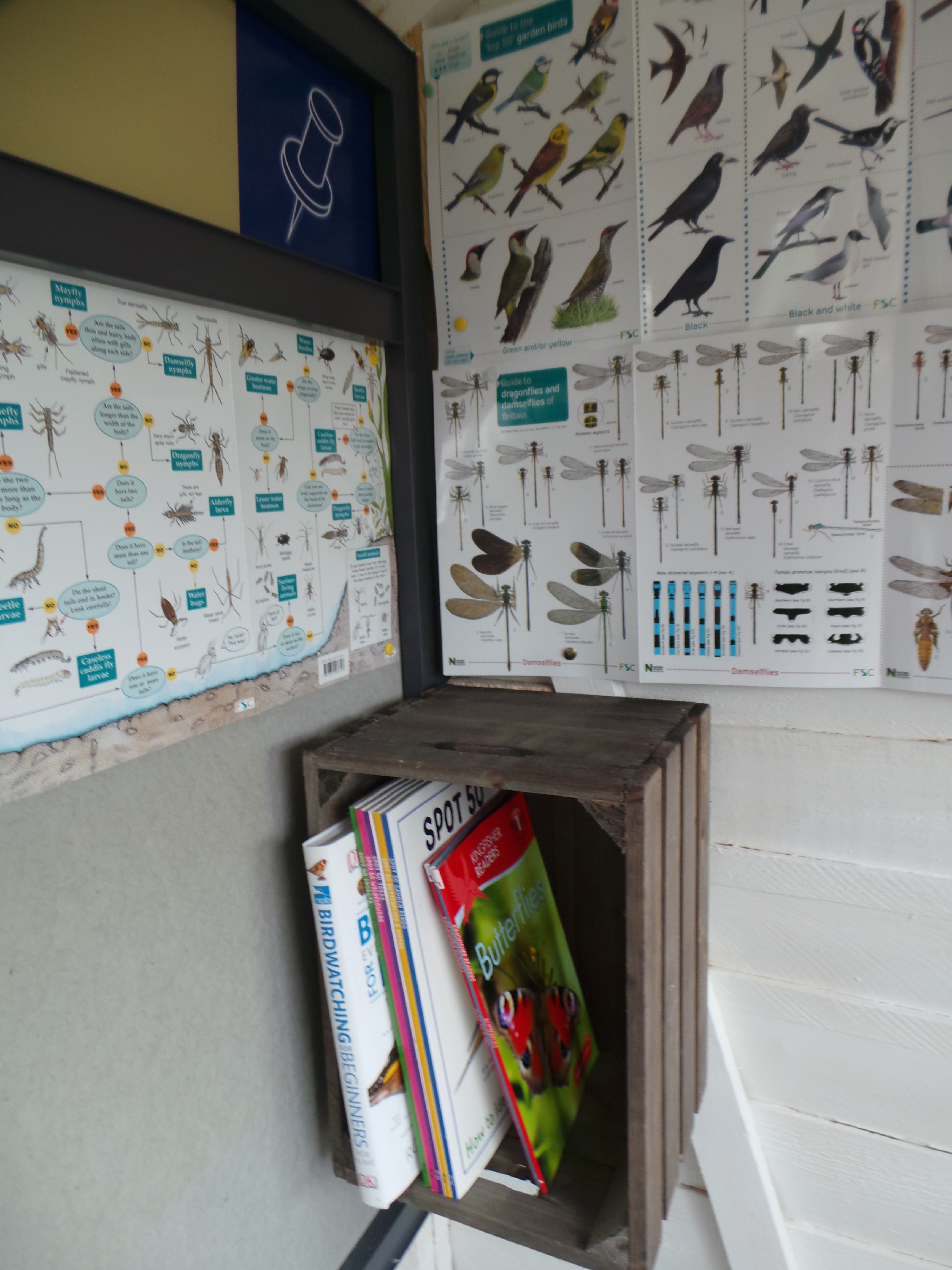
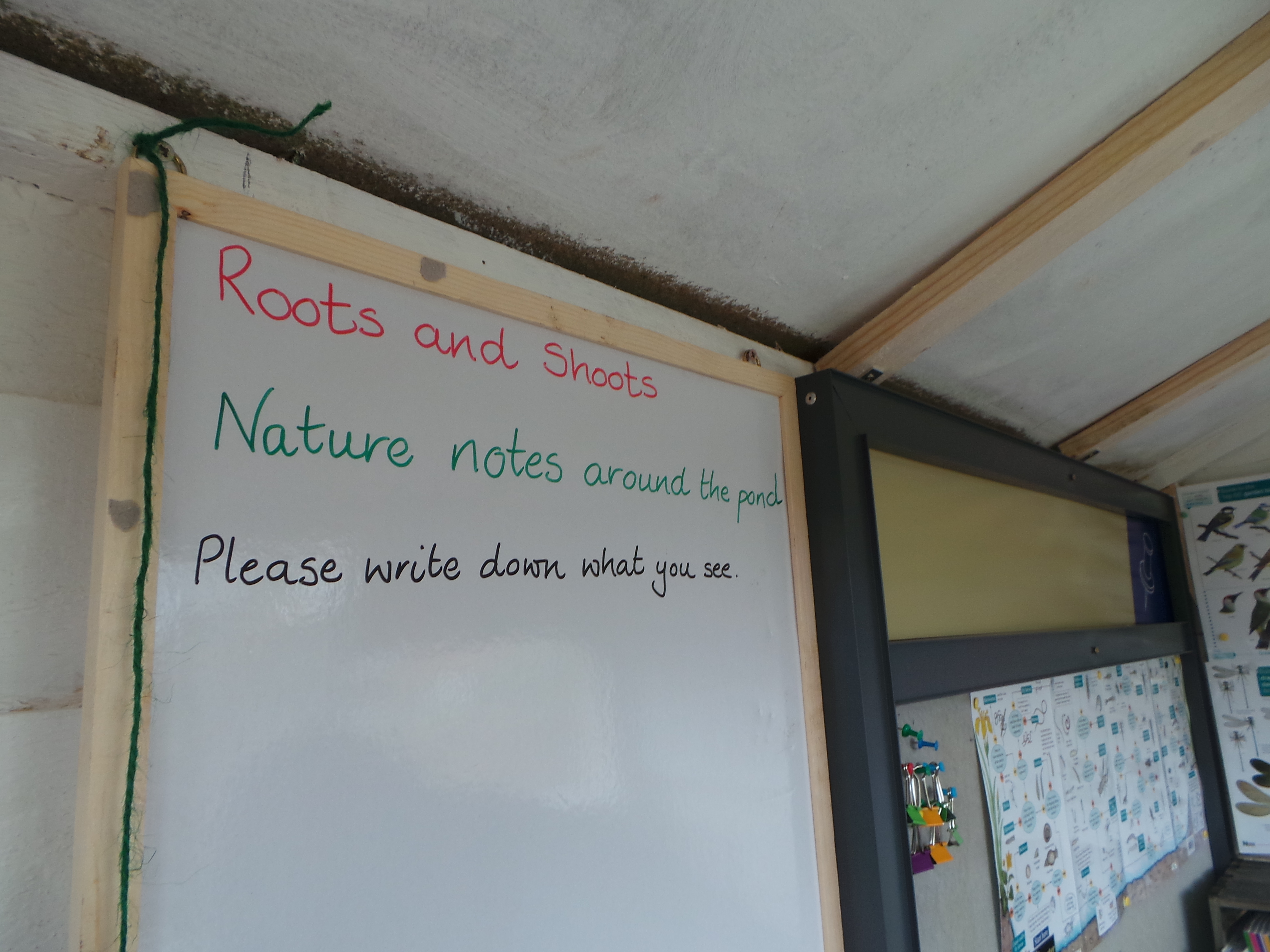
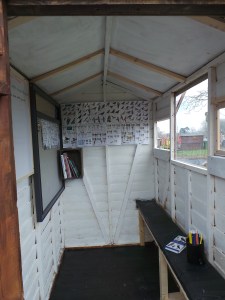
This is the view our Roots and Shoots youngsters will get as they open the hide door. You will see that Jude and I have added identification charts for birds and dragonflies and damselflies and a poster displaying the life on and under the surface of a pond. We also made a little bookcase from a vegetable crate and placed in it some wildlife books for youngsters. We also mounted a whiteboard on which we are inviting the children to note their observations. The final touches are a pair of binoculars a notebook for children to jot down their nature notes.
2015 03 16_0019 2015 03 16_00142015 03 16_0015  2015 03 16_0017

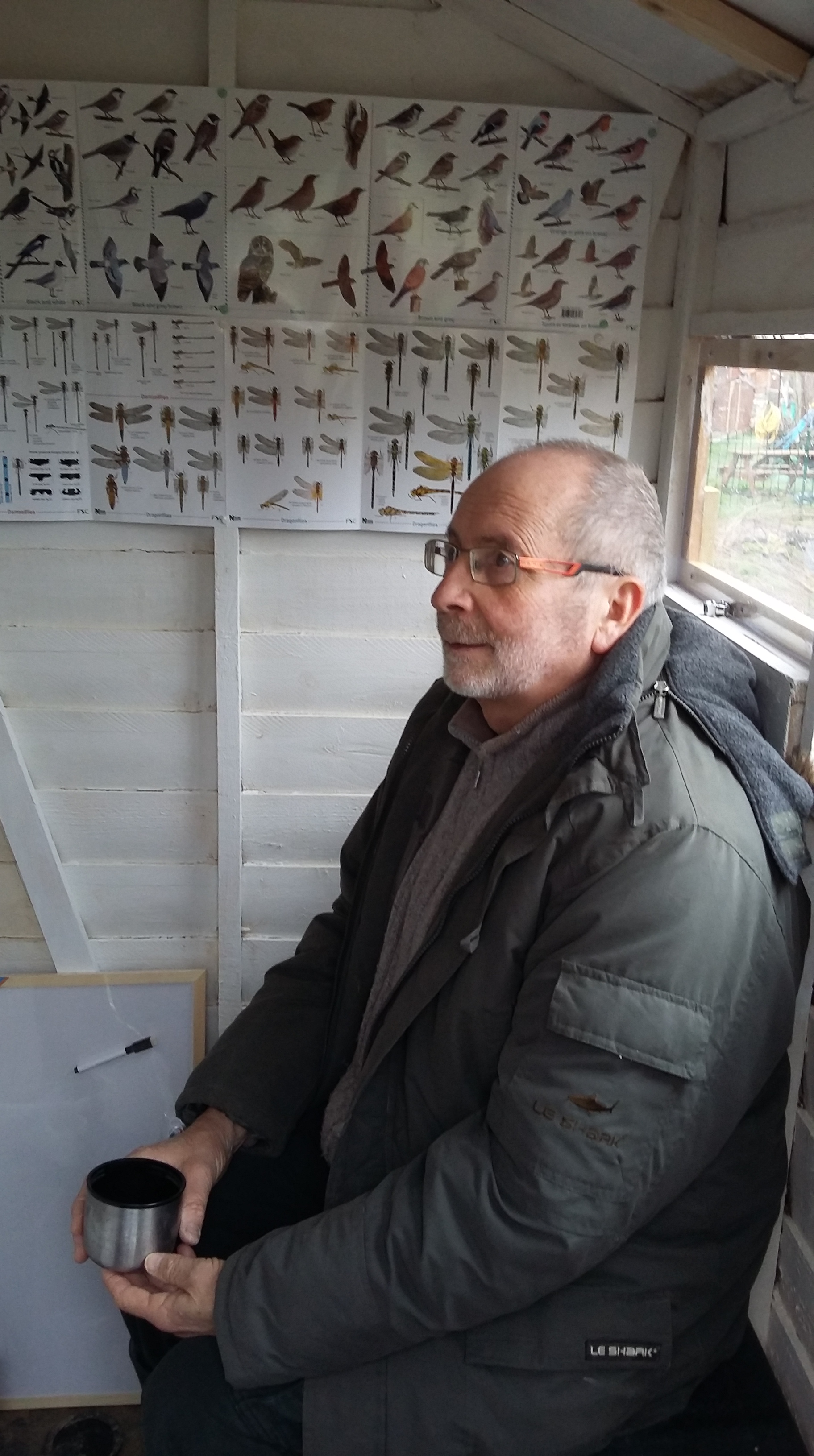
Last job of course was a celebratory cup of coffee perching on the children’s bench and admiring everyone’s handiwork and great efforts.

2015 03 16_9952

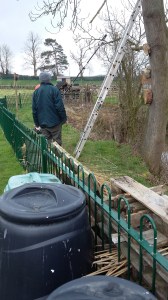
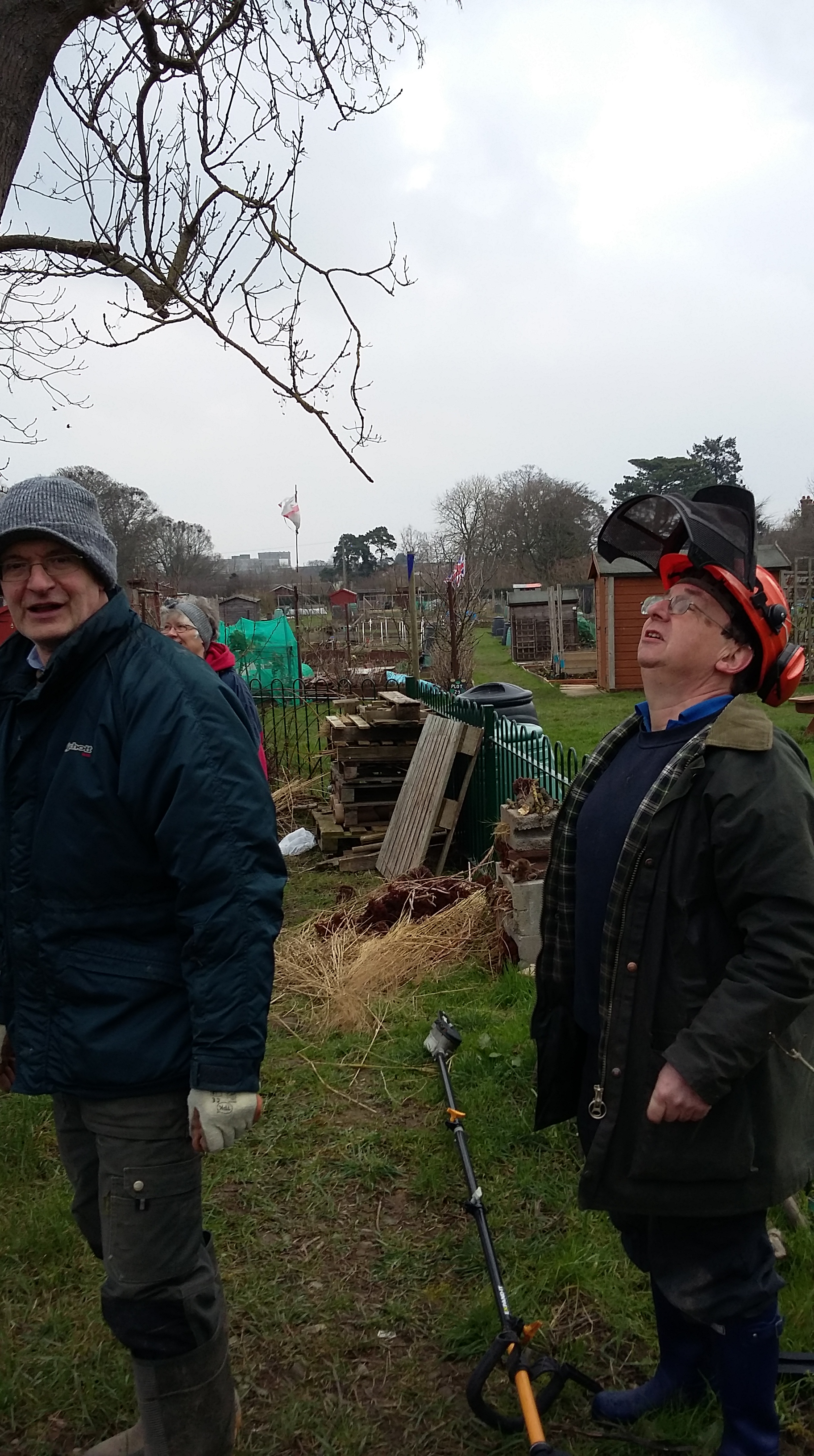
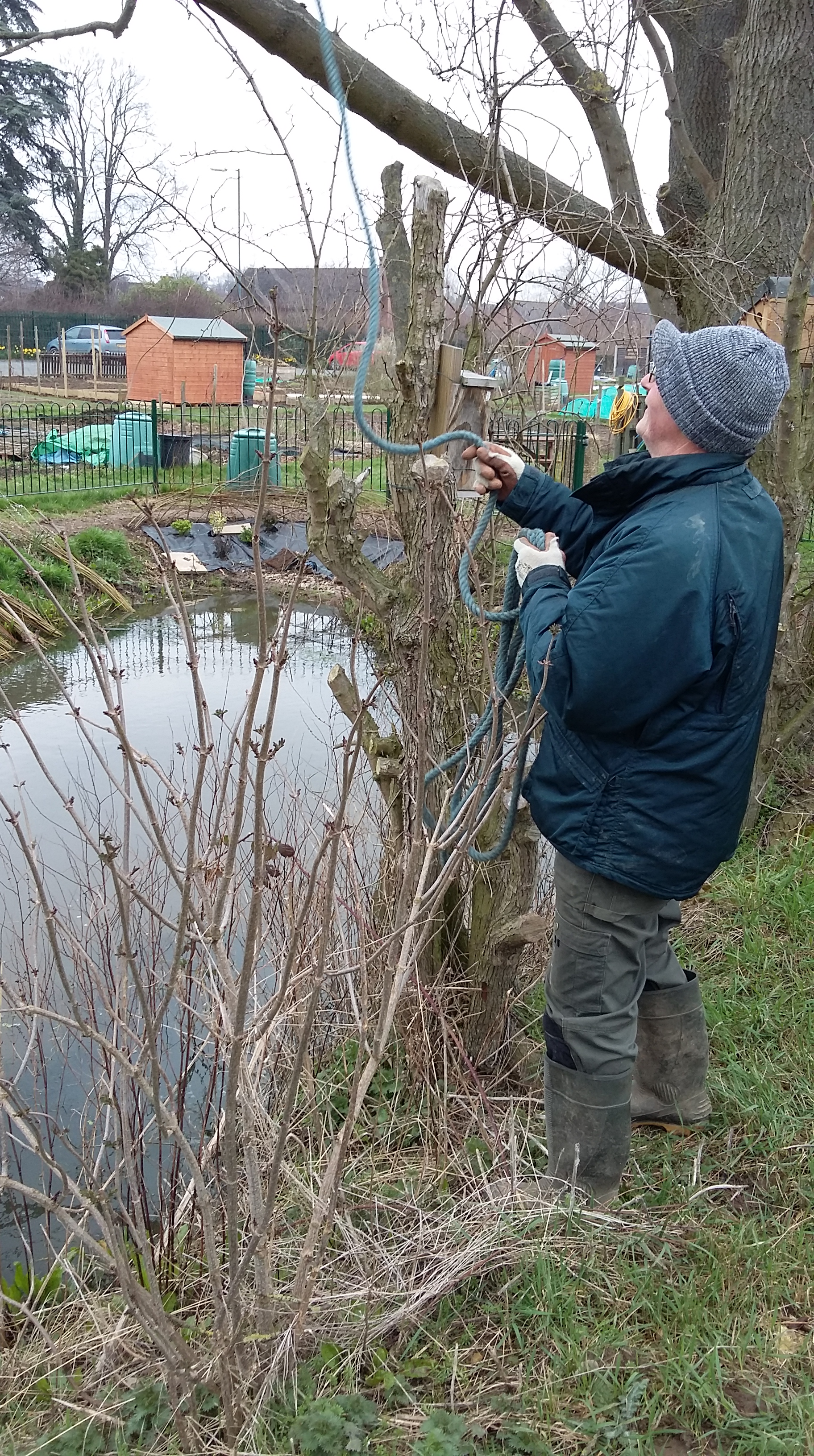
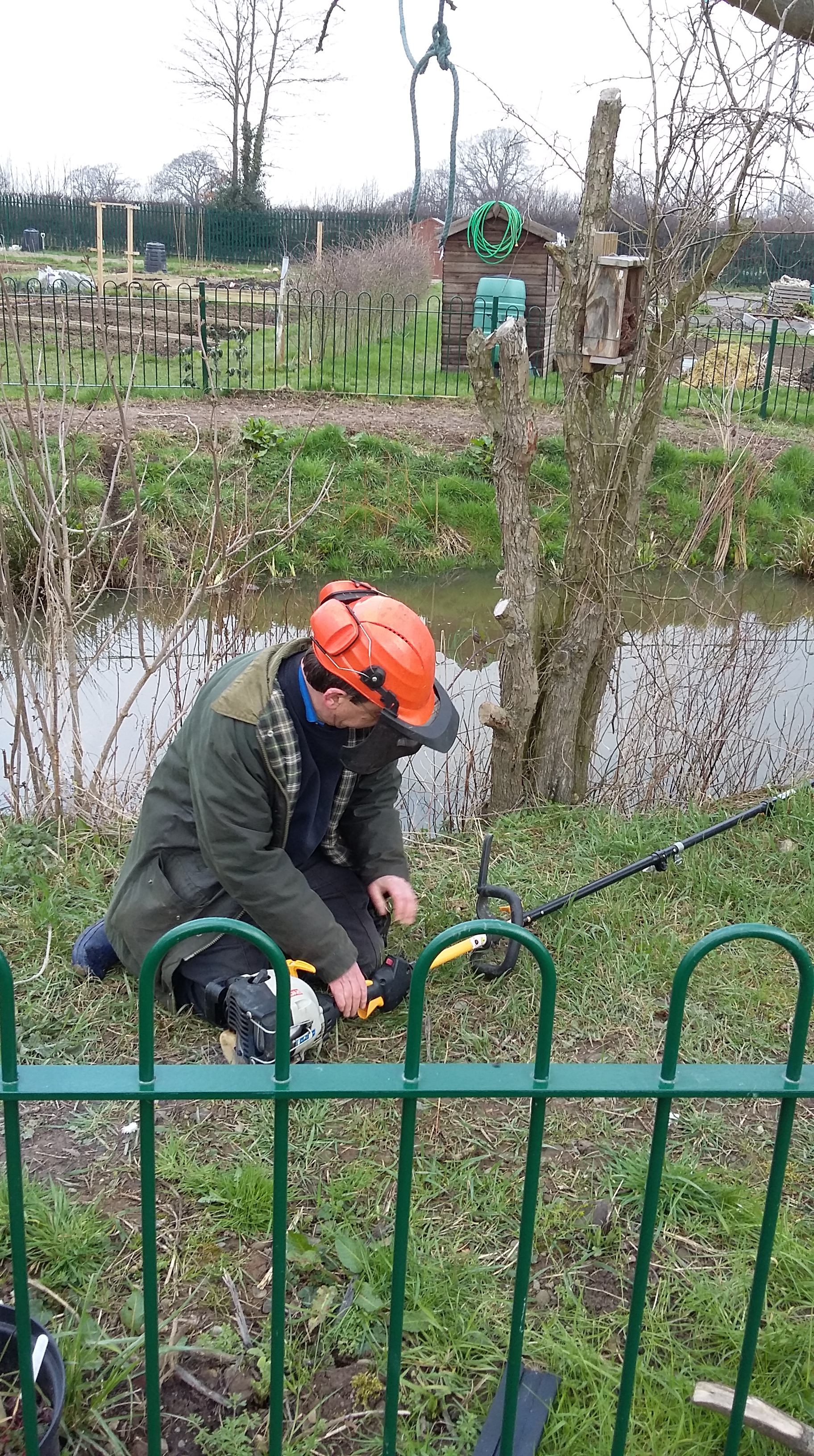
Now let us enjoy a bit of tree surgery carried out so professionally by some more of our volunteers, Pete and Mike. As mentioned in part one we have a few elderly Ash trees around the pond which for safety sake need remedial work. Earlier on we managed to pull down broken branches that had rotted but got tangled in the lower branches as they fell, but this day was a day for the chain saw attachment on our strimmer head to get in the action. One large branch hung right over the pond to the far bank and was slowly splitting so getting lower and lower. The final cut shows the weakness.

2015 03 16_9993

First Mike and Pete looked and stared and studied! They needed a strategy!!

2015 03 16_9925 2015 03 16_9926

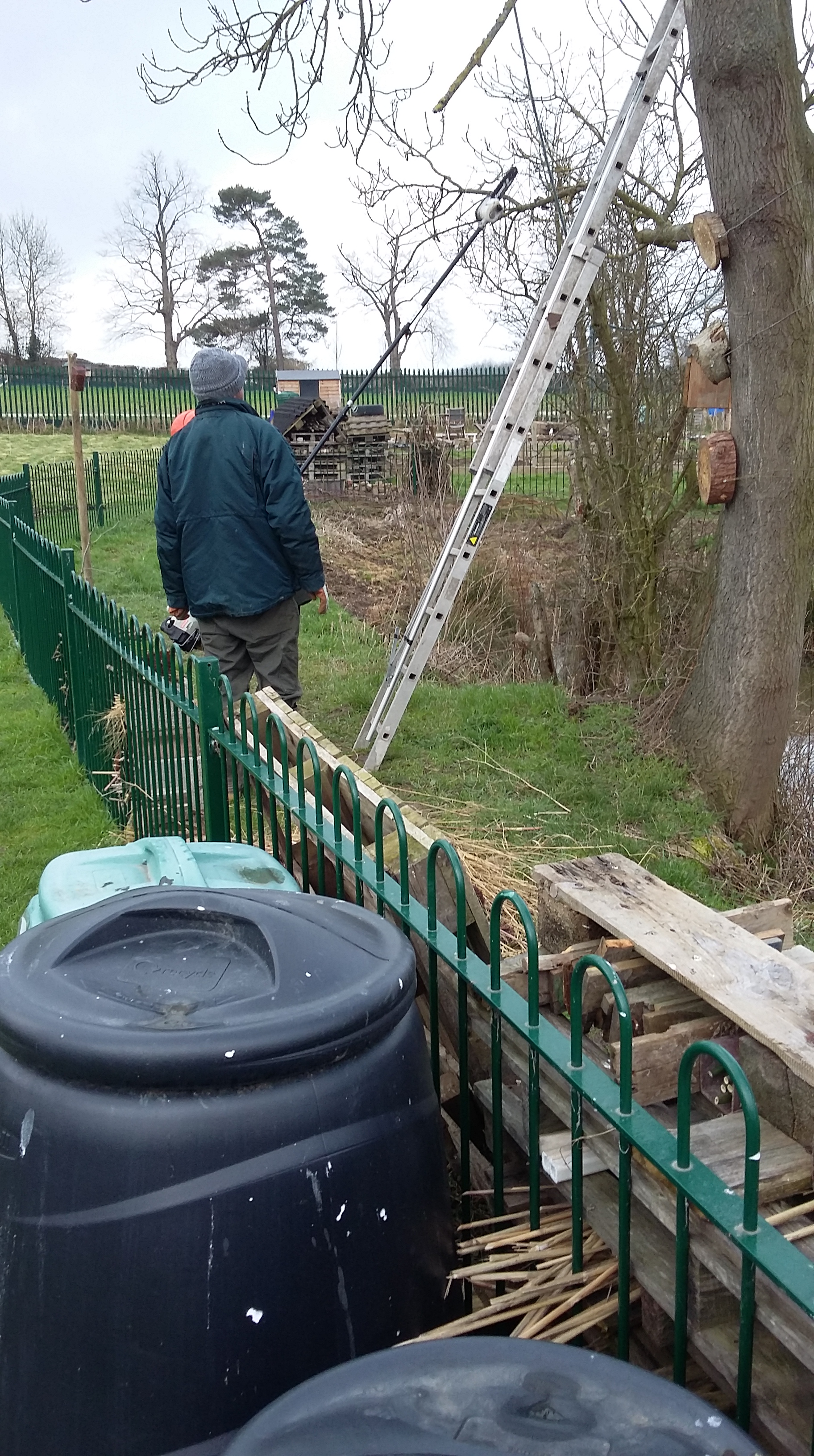
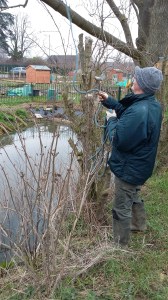
This strategy involved rope thrown up and over a much higher and stronger upper bough, with which they could keep control of the branch once it was sawn through.

2015 03 16_9932 2015 03 16_9928 2015 03 16_9929

Attachment attached and they were off!

2015 03 16_9933 2015 03 16_9934 2015 03 16_9936

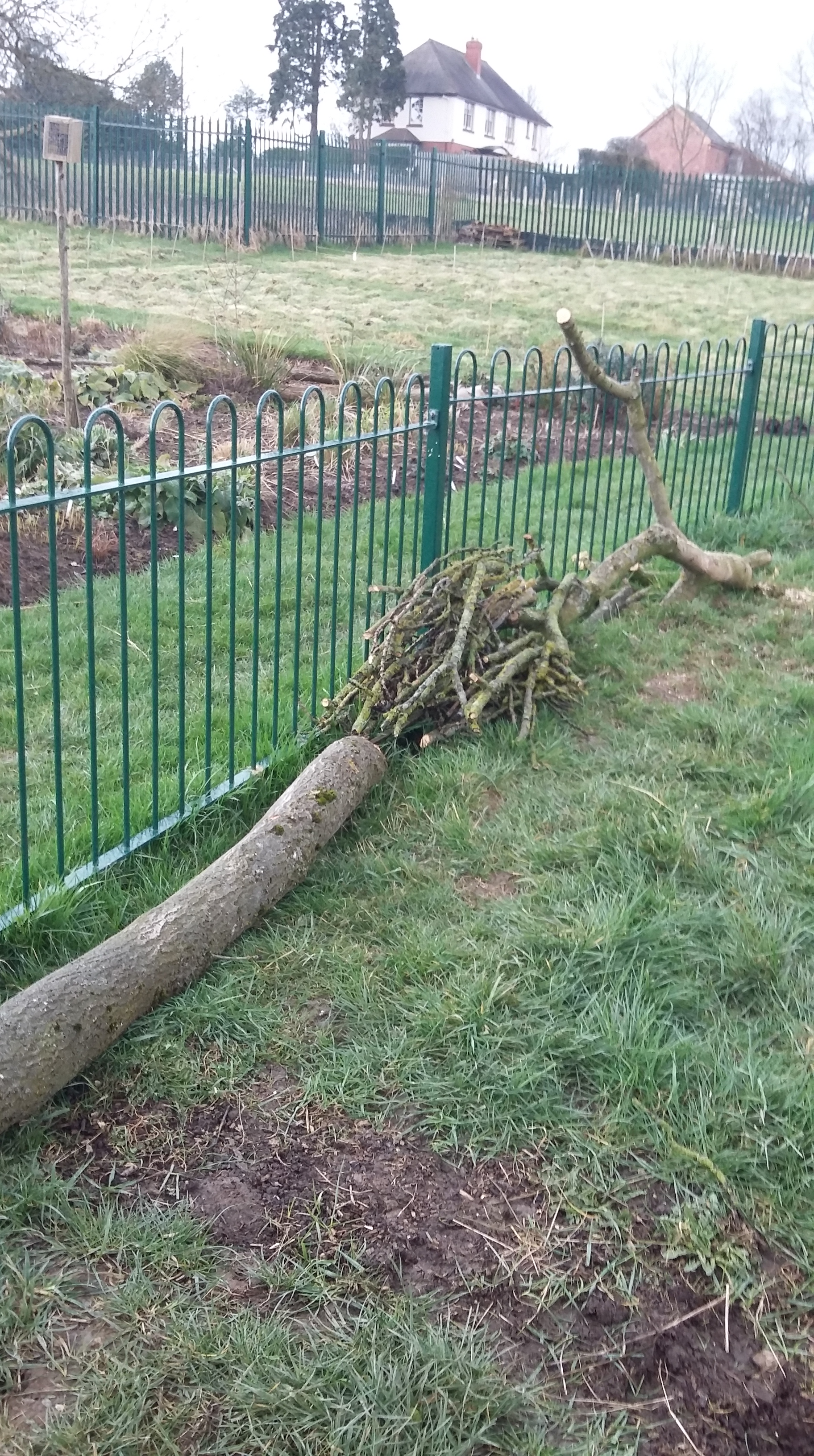
The cut bough hanging obediently could then be pulled in and dealt with on dry land. It will soon be seating for the youngsters, edging for borders and parts of insect homes and log piles and brash heaps to help attract ads shelter wildlife. We discovered an awful lot of rot within the bough so it was great relief to see it down. Trouble is there are a few more going the same way.

2015 03 16_9937 2015 03 16_9938 2015 03 16_9939

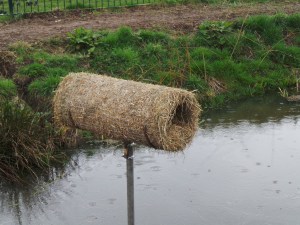
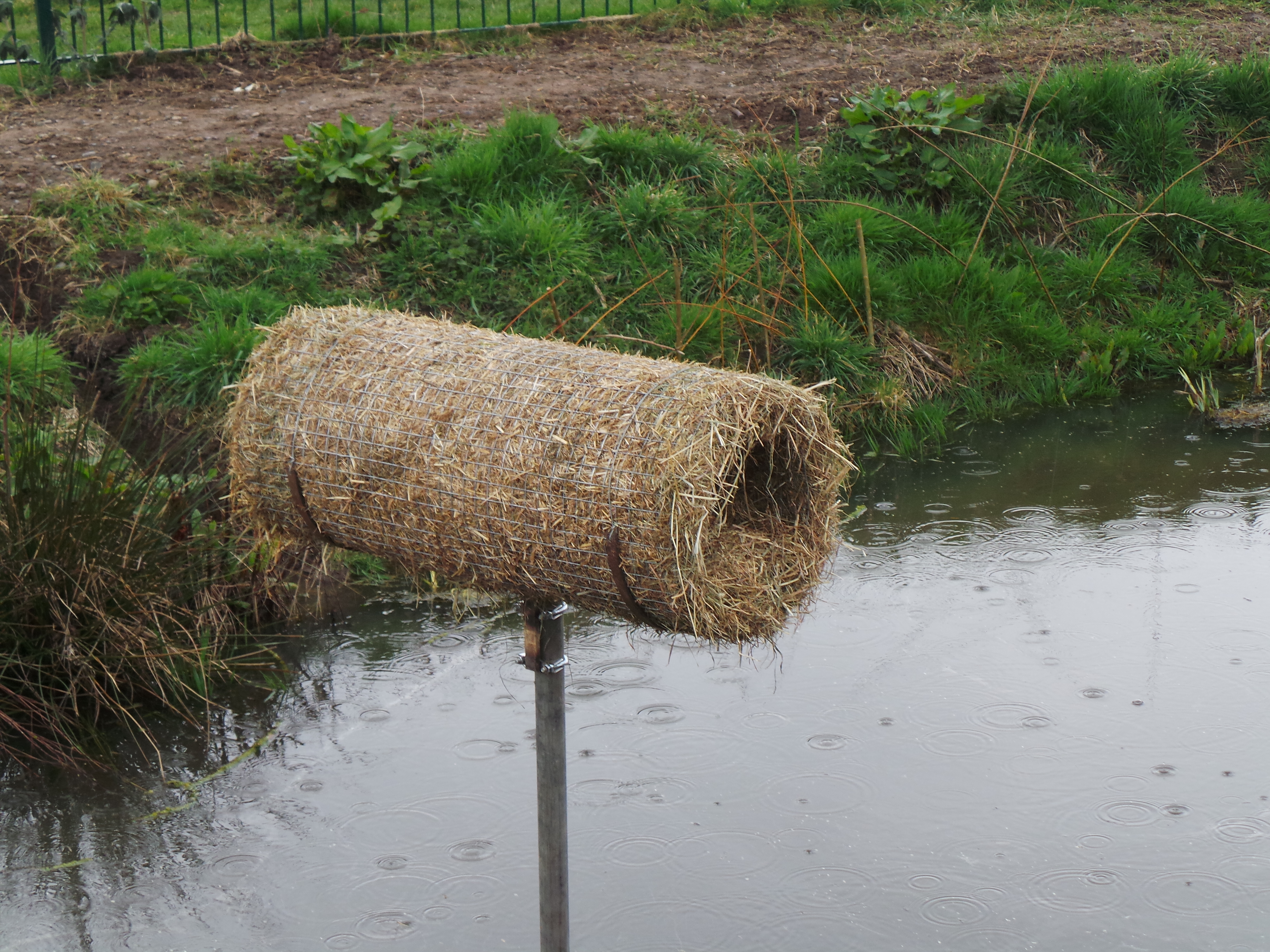
Finally we need to look at our duck tube! The photo below shows why we need one! A pair of Mallards patiently waiting!
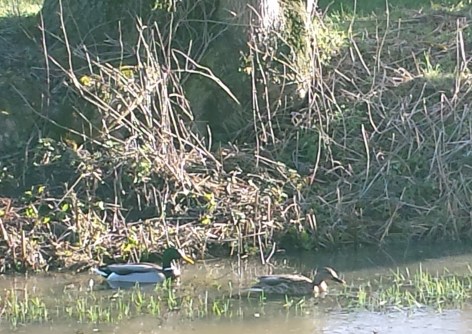
20150217_100524

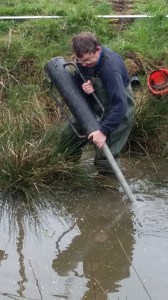
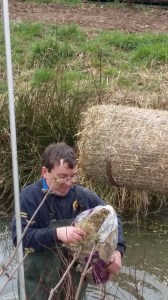
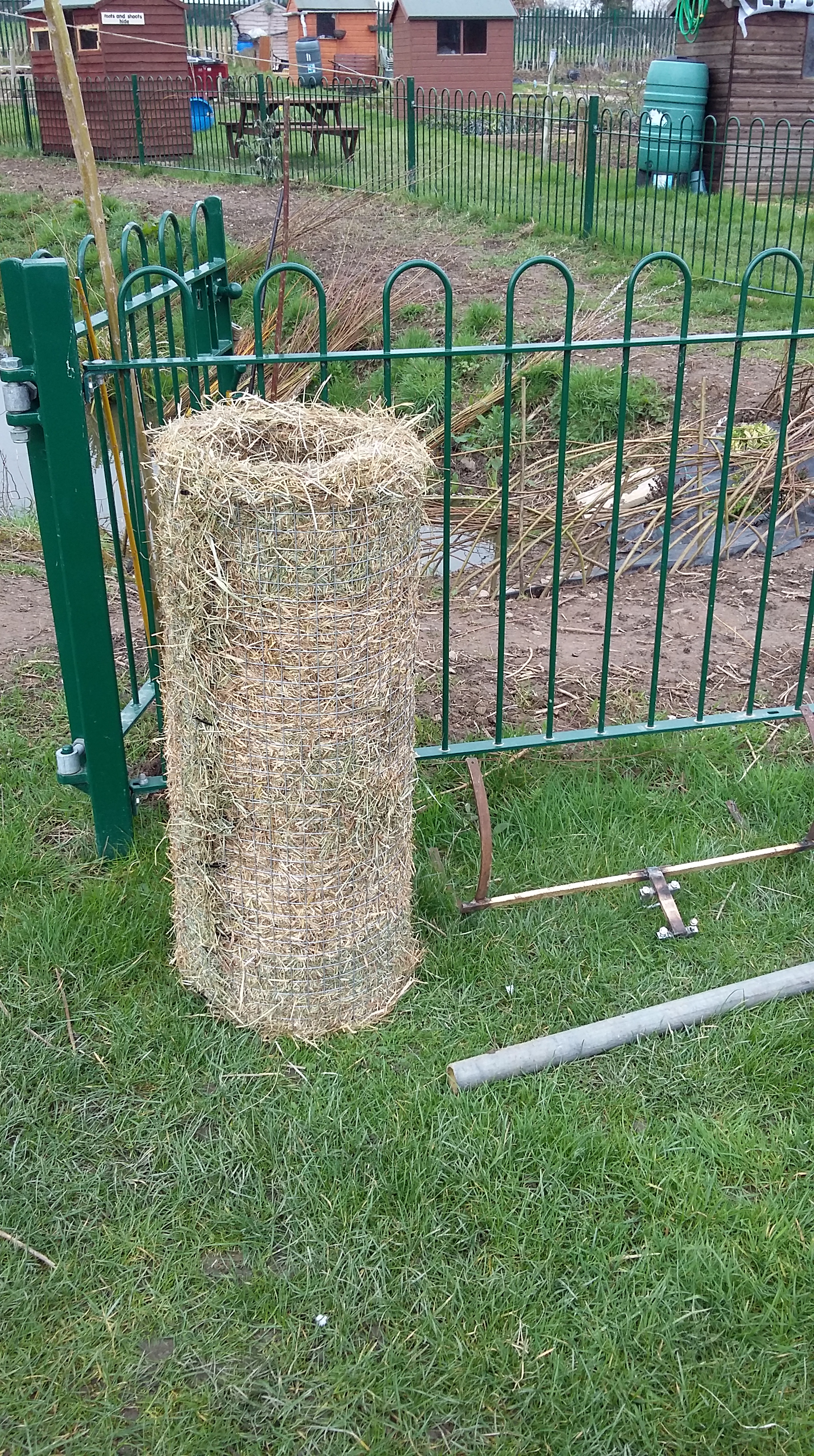
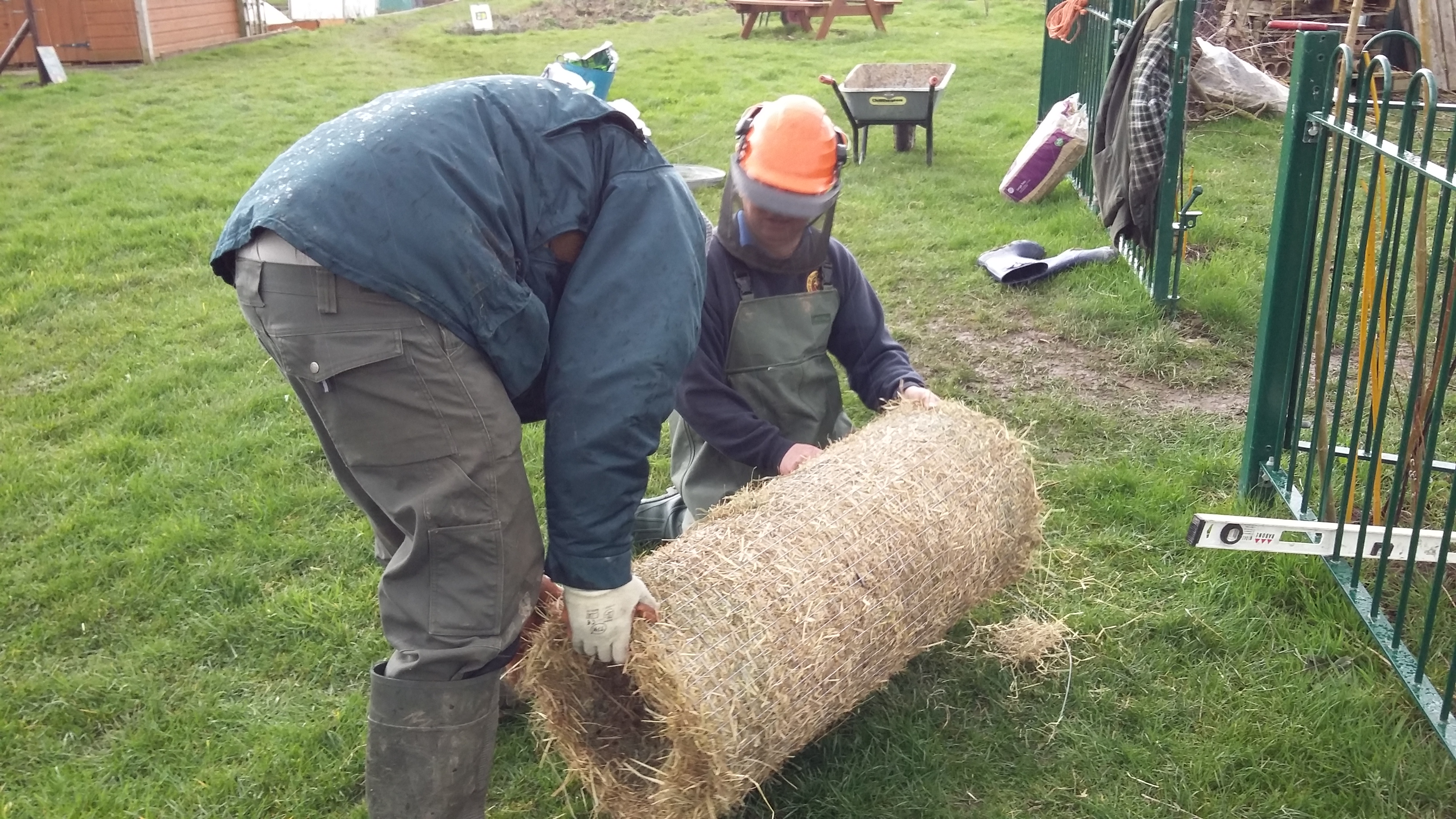
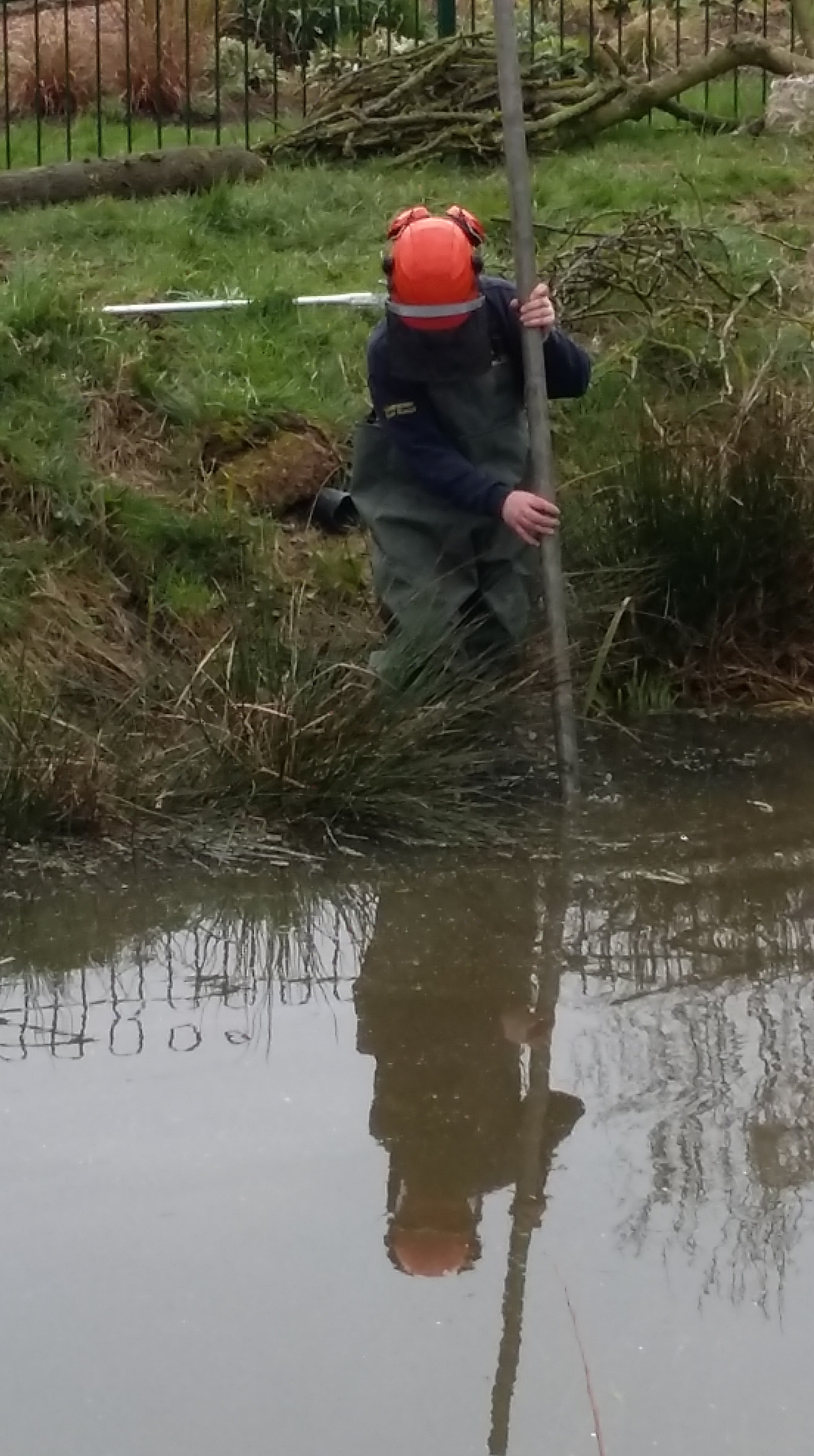
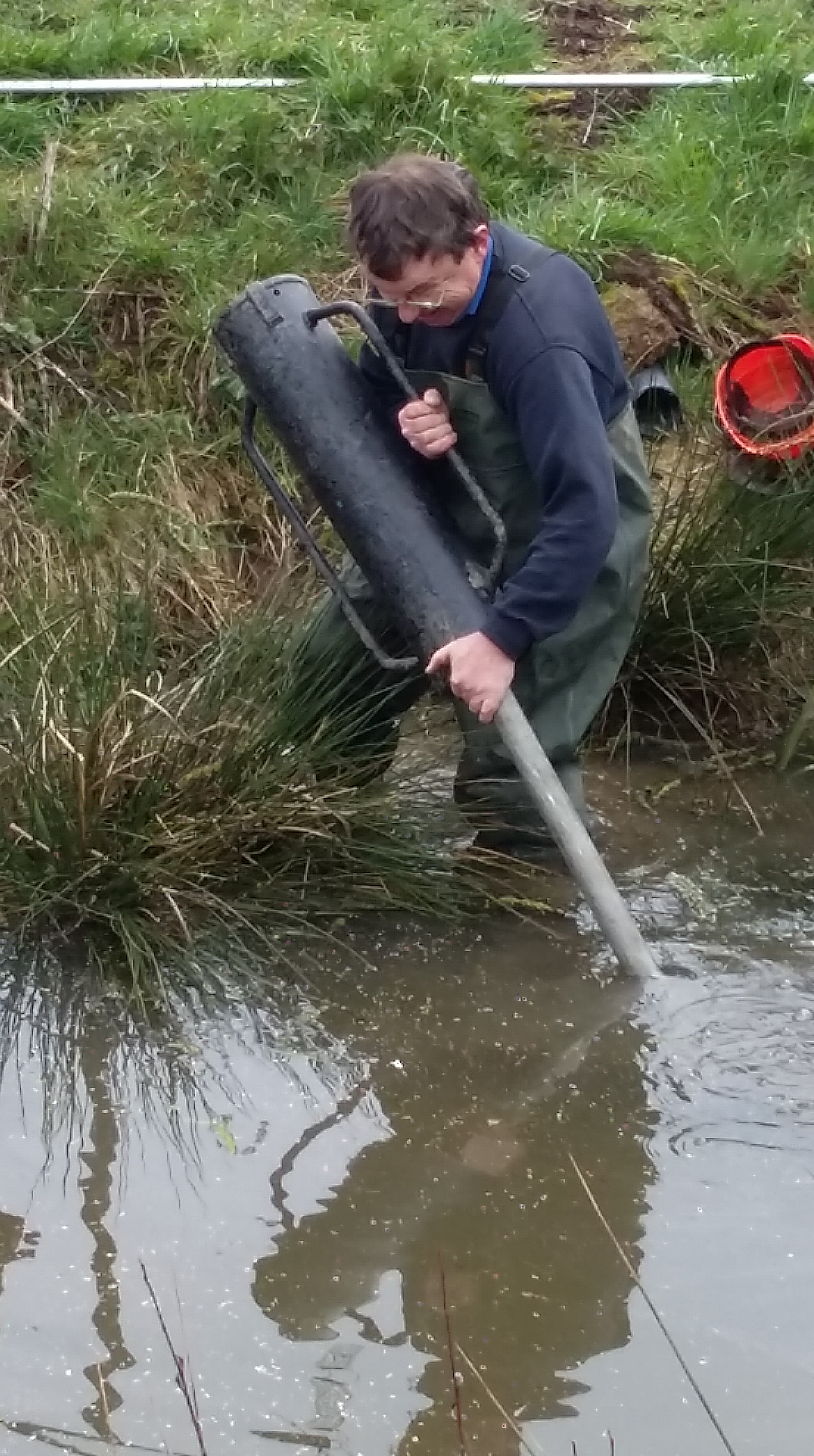
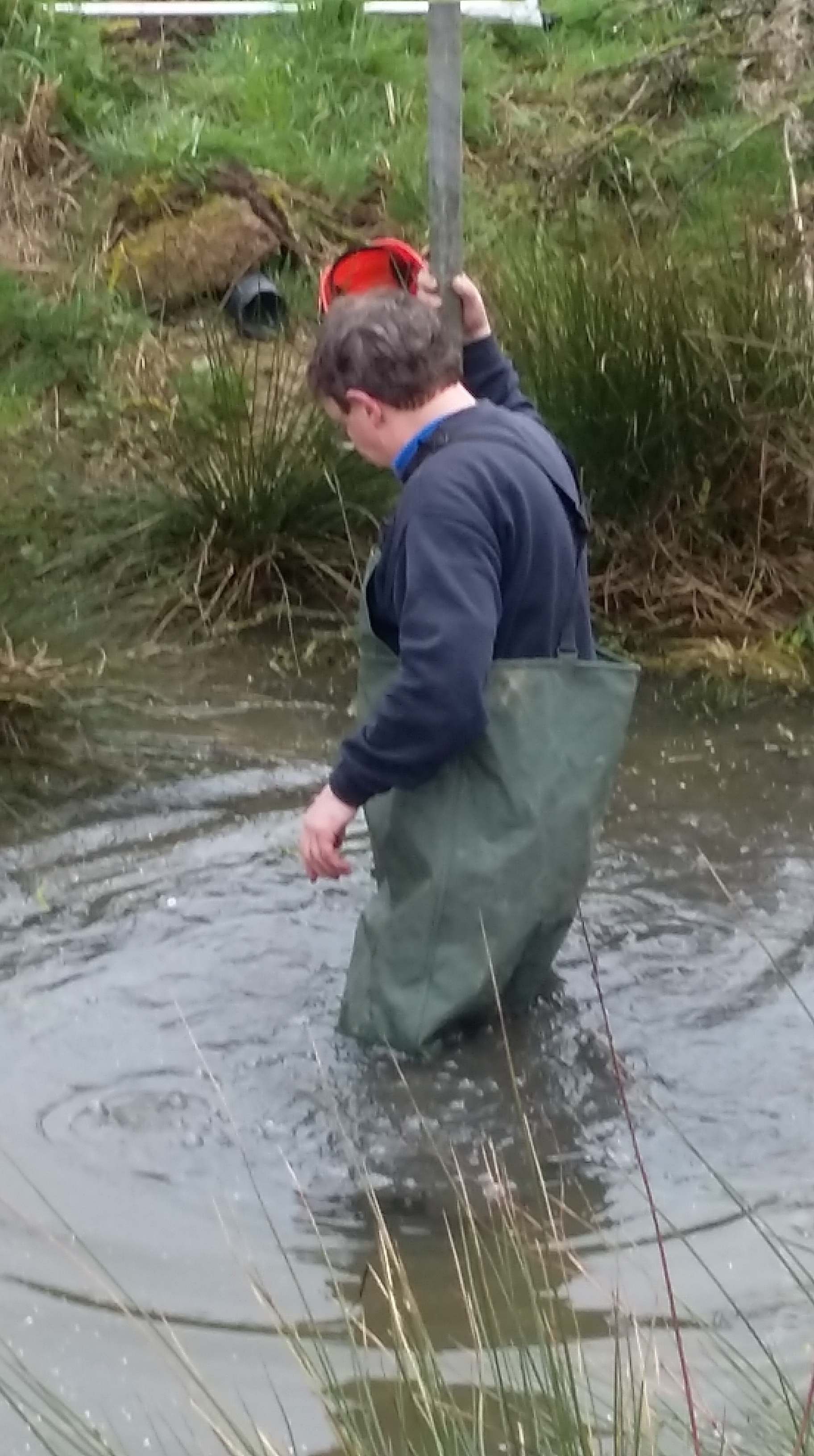
Just follow the picture sequence below and watch Mike’s adventure. Before we made the dam and changed the drainage around it to gain depth for wildlfie the pond was rarely more than 6 inches or so deep!
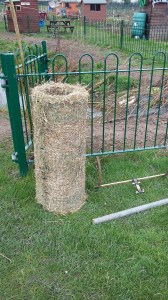
2015 03 16_9930 2015 03 16_9940 2015 03 16_9941  2015 03 16_9944 2015 03 16_9945 2015 03 16_9946 2015 03 16_9947 2015 03 16_9948 2015 03 16_9949 2015 03 16_9950 2015 03 16_9951 2015 03 16_9994

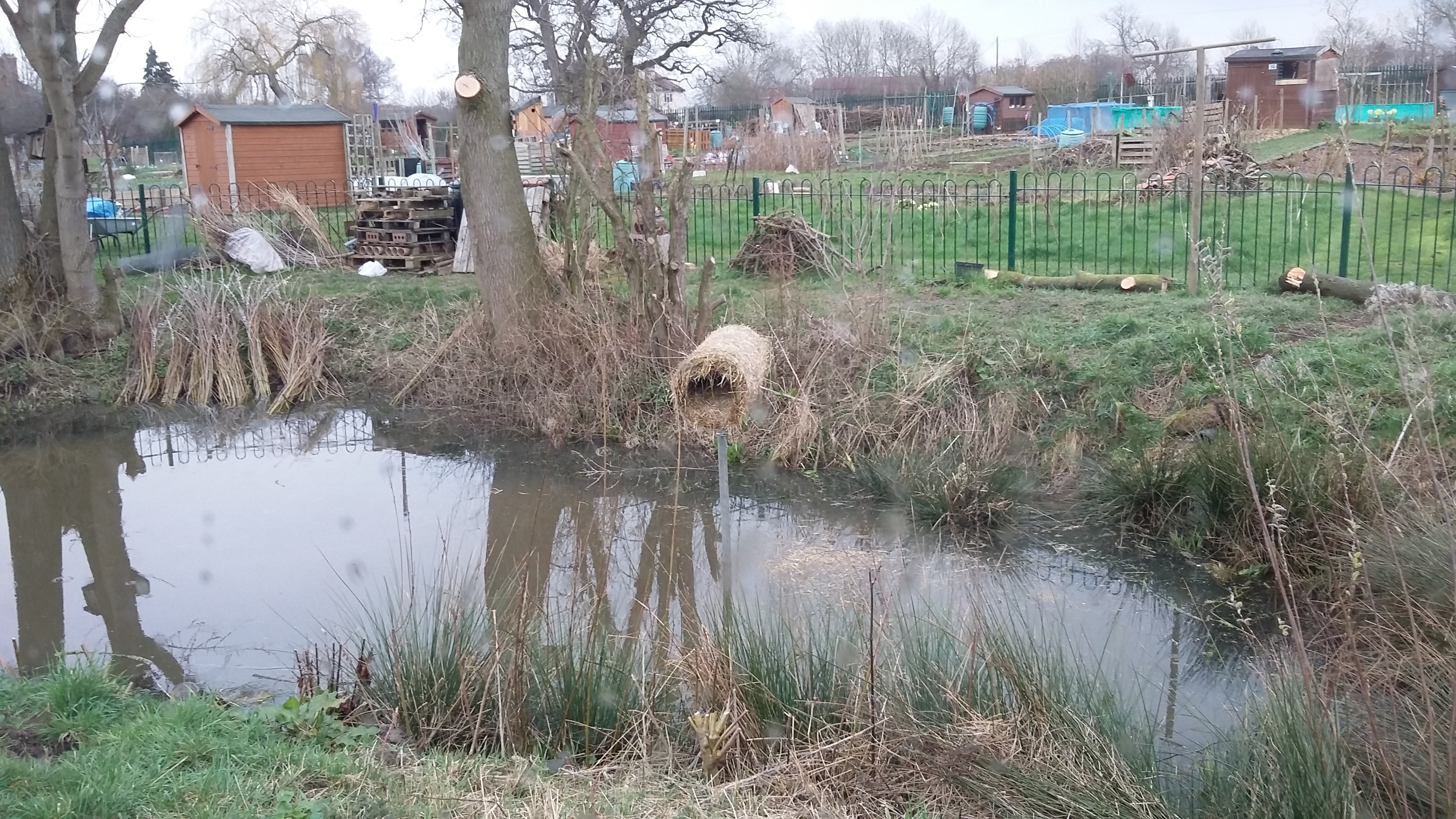
He is a good chap is Mike! What would we do without him? And below the duck tube in pride of place in the pond in a position where the children can watch activity from their new hide. Brilliant!
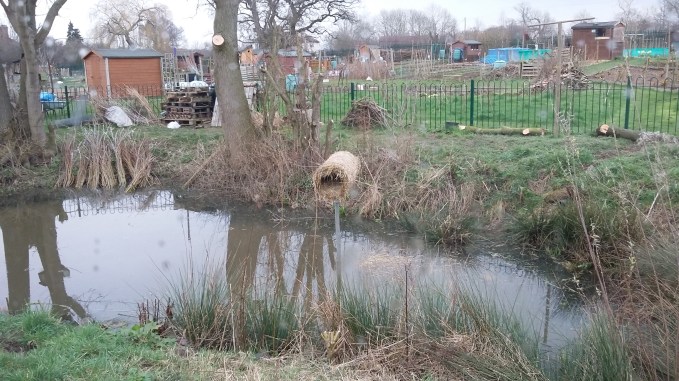
2015 03 16_9954

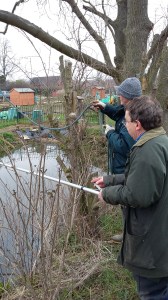
We still have further work on the pond mostly planting but we have a plan for a floating island to give wildlife somewhere to find safety and shade. Pete and Mike have a plan as you might have guessed! But of course that may be the subject of a future post visiting our super wildlife pond! One piece of info I have not mentioned are the dimensions of the area, useful I think to put things in perspective and to emphasise the size of the project. The pool is 22 yards long by 11 yards at its widest point, and the marsh area at the one end is 9 yards by 7 yards at the widest point. Around the pool and marsh between the pond and the fence, the walk around together with the planted areas vary from 3 yards to 5 yards. Quite a size!

This Veggie Life

A Vegetarian | Nature Lifestyle Blog

Rambling in the Garden

.....and nurturing my soul

The Arch City Gardener

Journeys In St. Louis Gardening and Beyond

Garden Dreaming at Châtillon

Consult the genius of the place

Storyshucker

A blog full of humorous and poignant observations.

gardeninacity

Notes from a wildlife-friendly cottage garden

PlayGroundology

...an emerging social science

The Official Blog of British Wildlife

'The most important and informative publication on wildlife of our times' - The Independent. This blog is a member of The UK & Ireland Natural History Bloggers group: www.uknhb.blogspot.com

iGrowHort

Inspire - Cultivate - Grow Native Plants - Restore Landscapes

Bishops Meadow Trust

To create and protect a semi-natural wild space for the people of Farnham to enjoy and experience an array of British wildlife in our town

Gardening with Children

The www.gardeningwithchildren.co.uk Blog

UKbirdingtimeline

birding through the seasons, why birds matter and how to conserve them

NATURE WALKER

with a camera in hand

Jardin

Transform your outdoor space

Eva's space

My allotment, cooking and other interests

Old School Garden

my gardening life through the year

LEANNE COLE

Trying to live a creative life

fromacountrycottage

trying to live as lightly as possible on our beautiful planet

Good Life Gardening

Nature lovers from Leicester living the good life.

mybeautfulthings

Finding the beautiful in the everyday

mawsonmichelle

Michelle's Allotment

In and Out of My Garden

thoughts from and about my garden

Greenhousing

Big plans for a small garden

The Scottish Country Garden

A Walled Country Garden in South East Scotland

The Fruity Chicken

Life at the fruity chicken

willowarchway

Off grid living. Self sufficient. "PERMAGANICS RULE".

St Anns Allotments

Nottingham's Grade 2* Listed Allotments and Community Orchard

Manifest Joy Harvests

a journey in suburban vegetable gardening

Allotmental

The madness of growing your own

Penny's Garden: a harvest beyond my front door

A novel approach to vegetable gardening

arignagardener

Sustainable living in the Irish countryside.

NewEnglandGardenAndThread

Master Gardener, amateur photographer, quilter, NH native, and sometimes SC snowbird

dianajhale

Recent work and work in progress and anything else that interests me

planthoarder

a chaotic cottage gardener

Lens and Pens by Sally

a weekly blog that creates a personal philosophy through photographs and words

Dewdrops and Sunshine

Stories from a sassy and classy Southern farmbelle.

The Pyjama Gardener

Simple Organic Gardening & Seasonal Living

gettin' fresh!

turning dirt into dinner

JOY...

today the world is created anew

Garden Birds

Notes from a Devon garden

ShootAbout

Life Through The Lens

Adapting Pixels

A photography blog showcasing the best photography pictures and videos on the internet

Wildlifegardening's Blog

Just another WordPress.com site

naturestimeline

personal observations from the natural world as the search continues for a new approach to conservation.

LATEBLOOMERBUDS

The Wonders of Life through my Eyes, my Heart, my Soul