Categories
birds fruit and veg garden photography garden ponds garden pools garden wildlife gardens National Trust natural pest control NGS ornamental trees and shrubs Shrewsbury shrubs spring gardening The National Gardening Scheme" water in the garden wildlife Yellow Book Gardens

My Garden Journal – April

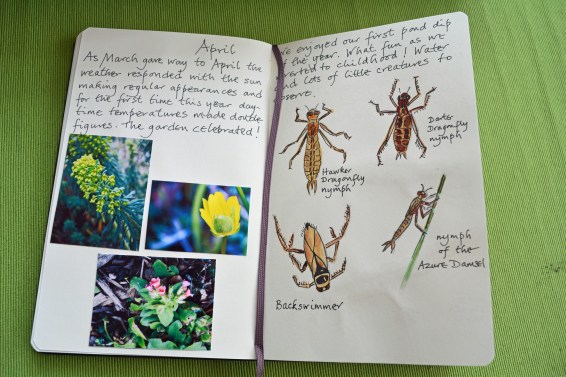
Back to my garden journal where we can see what was interesting me in our garden at Avocet during the month of April. My journal for April begins “As March gave way to April the weather responded with the sun making regular appearances and for the first time this year daytime temperatures made double figures. The garden celebrates!”

It celebrated with bright colours of spring flowers such as Celendines, Pulmonarias and early chartreuse flower s and bracts of Euphorbias.

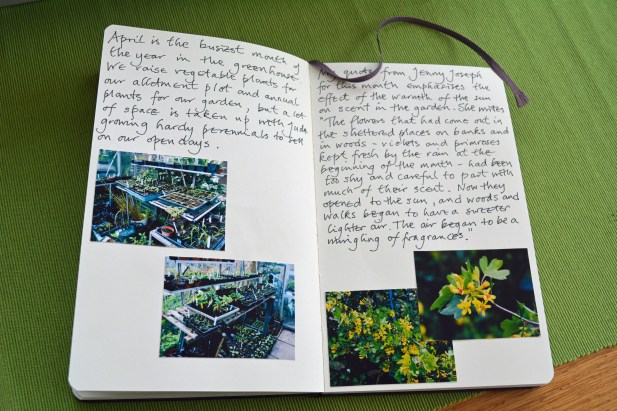
My quote from Jenny Joseph’s book “Led by the Nose – A Garden of Smells” speaks of the delicate scents of the garden and in the countryside that are so important in spring.

The flowers that had come out in the sheltered places on banks and in woods – violets and primroses kept fresh by the rain at the beginning of the month – had been too shy and careful to part with much of their scent. Now they opened to the sun, and woods and walks began to have a lighter sweeter air. The air began to be a mingling of fragrances.”
2015 05 07_1425_edited-1

As the water in the wildlife pond warmed up we thought we would have our first dip with our net to see what wildlife was in evidence beneath the surface. In the journal I wrote “What fun as we reverted to childhood!”We were surprised by just how many different creatures had already stirred into life. I chose to paint the nymphs of Dragonflies and Dameslflies and a Backswimmer. The Damselfly Nymph will hatch out into an Azure Damsel and the two Dragonfly Nymphs into a Hawker Dragonfly and a Darter Dragonfly. They were quite a challenge to paint in their subtle earthy hues.

2015 05 07_1427_edited-1 2015 05 07_1426_edited-1

Continuing on the watery theme on the next page of my garden journal I wrote “Jude gets excited each time she catches a newt when she is on her regular pond maintenance forays. The first this year appeared in early April. Such excitement at Avocet!”  We were so pleased to find so many newts out and about and so active this early in the year. As well as enjoying seeing them using our pond we are even more pleased to know that they are helping us with out pest control out in the borders. They spend much of their time out of water and are partial to slugs. Welcome visitors indeed!

2015 05 07_1428_edited-1

Now these little critters were even more of a challenge to paint than the other pond creatures! Anyway here are the results.

2015 05 07_1430_edited-1

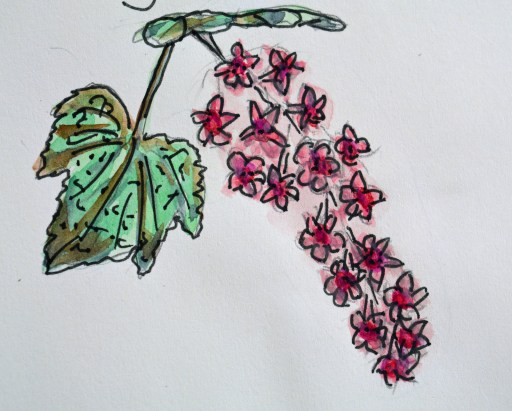
On my next page I wrote, “During Easter Weekend, usually associated with cold and rain, the sky turned the deepest, clearest blue. Temperatures suddenly doubled and the garden buzzed and hummed with the arrival of bees and hoverflies. The most popular of all plants is the flowering currant, Ribes sanguineum.” 
2015 05 07_1429_edited-1

April is the busiest month of the year in the greenhouse. We raise vegetable plants for our allotment plot and annual plants for our garden, but a lot of space is taken up with Jude growing hardy perennials to sell on our open days.
2015 05 07_1431_edited-1 

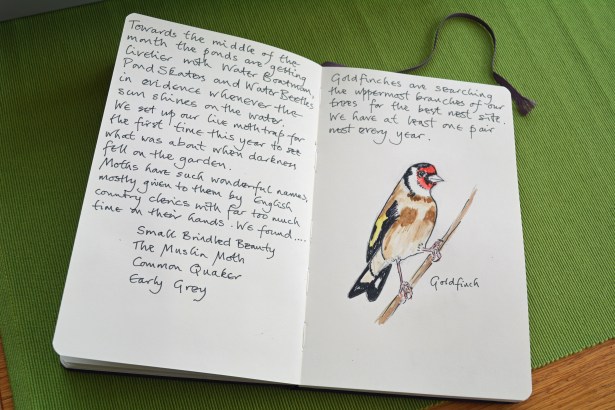
Towards the middle of the month the ponds were getting livelier with Water Boatmen, Pond Skaters and Water Beetles in evidence whenever the sun shone on the water. We set up our live moth trap for the first time this year to see what was about when darkness fell on the garden. Moths have such wonderful names, mostly given to them by English country clerics with far too much time on their hands. We found Small Brindled Beauties, Muslin Moths, Common Quakers and Early Greys.
2015 05 07_1432_edited-1

I next wrote “Goldfinches are searching the uppermost branches of our trees for the best nest site. We have at least one pair nest every year”. I then got out my watercolour paints and pens and attempted a painting of a Goldfinch.

2015 05 07_1433_edited-1

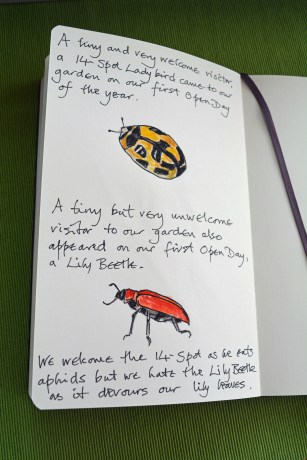
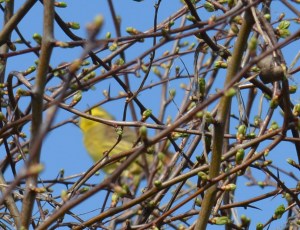
My final page in my journal entries for April featured two colourful beetles which we found in our garden in that month. “A tiny and very welcome visitor, a 14-Spot Ladybird came to our garden on our first Open Day of the year. A tiny but very unwelcome visitor to our garden also appeared on our first Open Day, a Lily Beetle. We welcome the 14-Spot as he eats aphids but we hate the Lily Beetle as it devours our lily leaves.”
 

2015 05 07_1435_edited-1

Categories
birds buildings Church architecture colours countryside landscapes light Shrewsbury Shropshire trees wildlife

Walking the Shrewsbury Battlefield – Part One

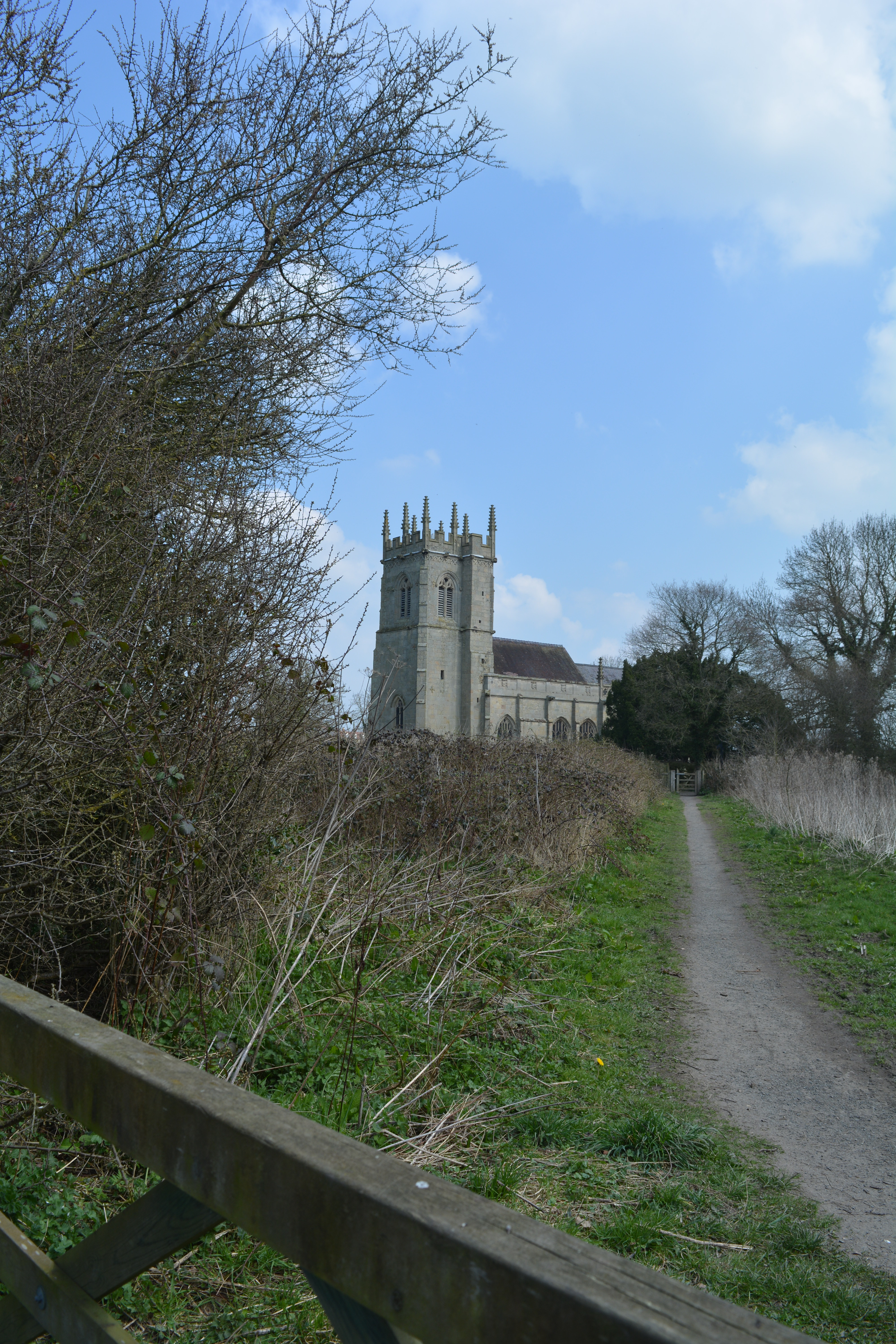
Although we have lived in Shropshire for years it is only now that we have finally visited the site of the famous Battle of Shrewsbury and the Church of St Mary Magdalene built there to commemorate those who died in battle.

There were absolutely no clues that a battle ever took place here as we walked the footpath across the site of the battle, but we enjoyed wandering along the hedgerows with the song of Skylarks high above us and the distinctive call of the first returning migrant warbler, the Chiffchaff. We enjoyed seeing and hearing a Yellow Hammer a scarce farmland bird.

2015 04 09_0516_edited-1

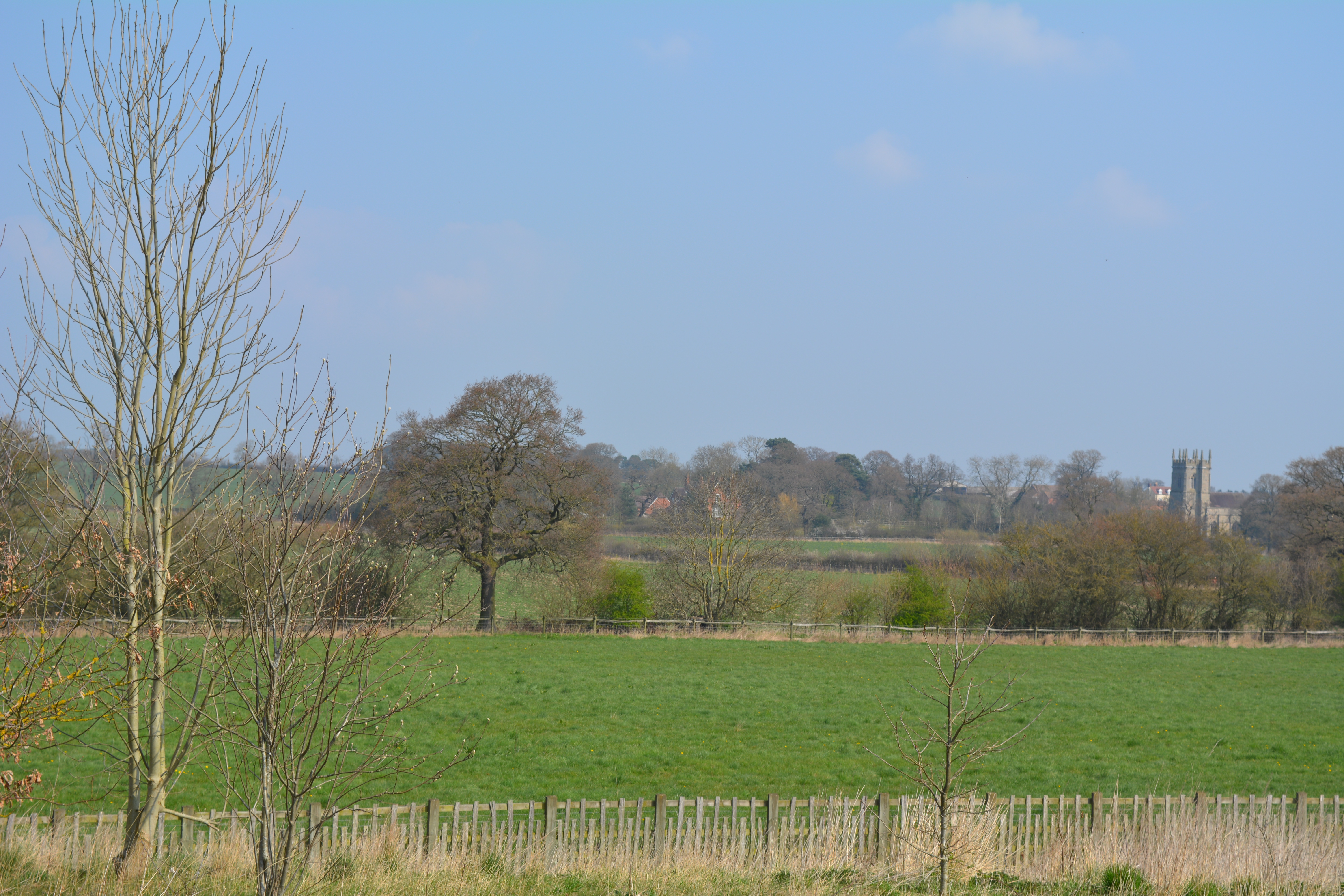
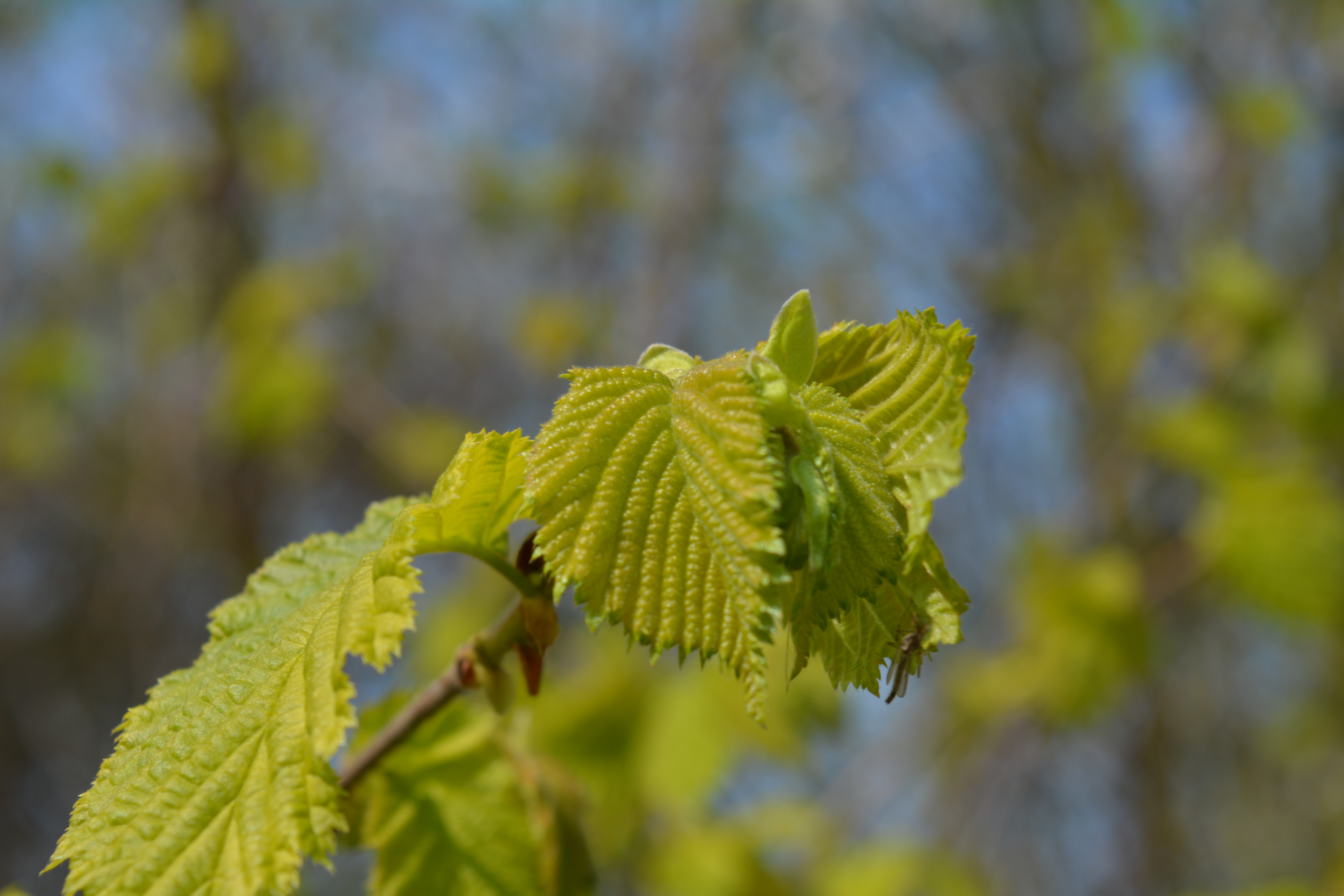
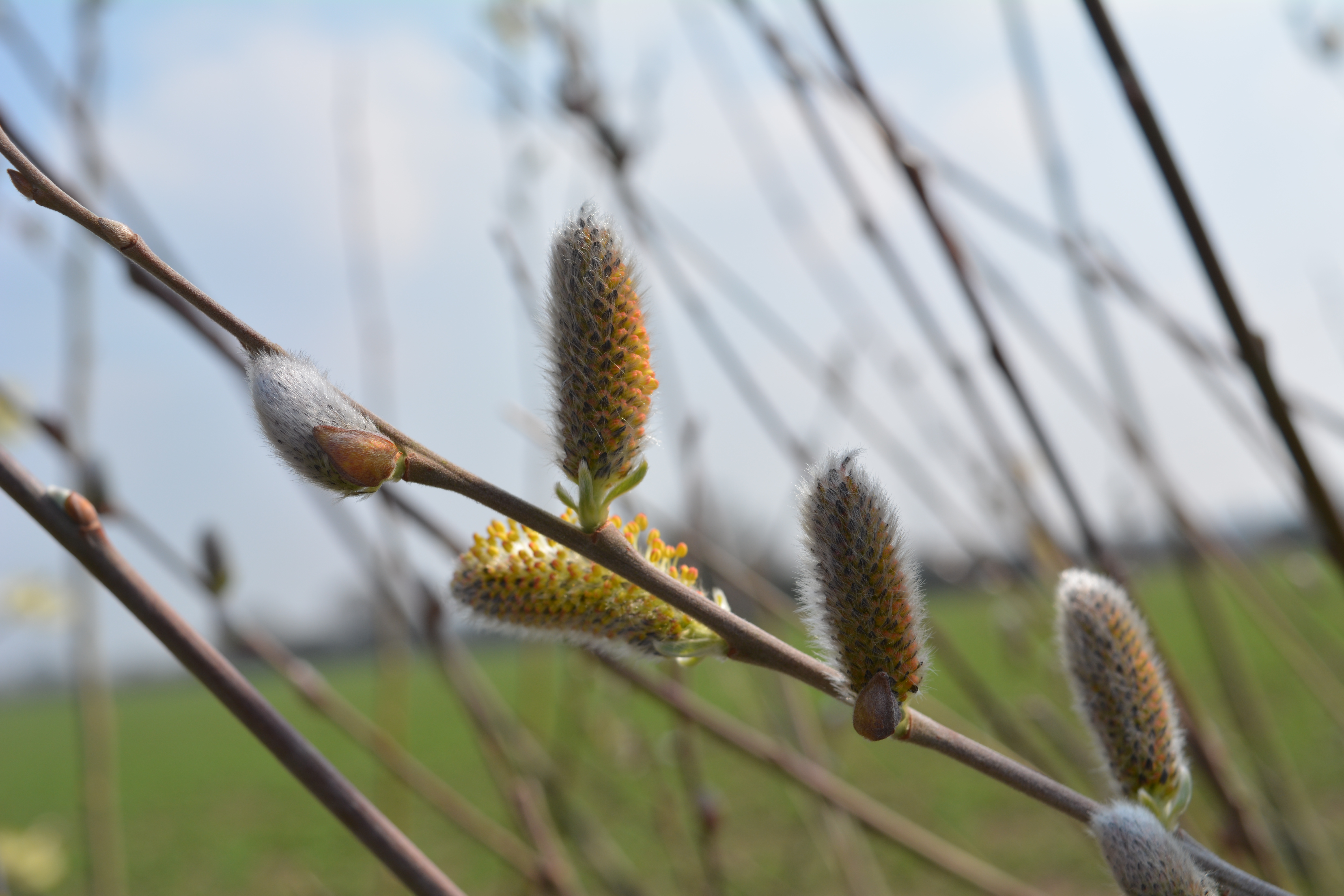
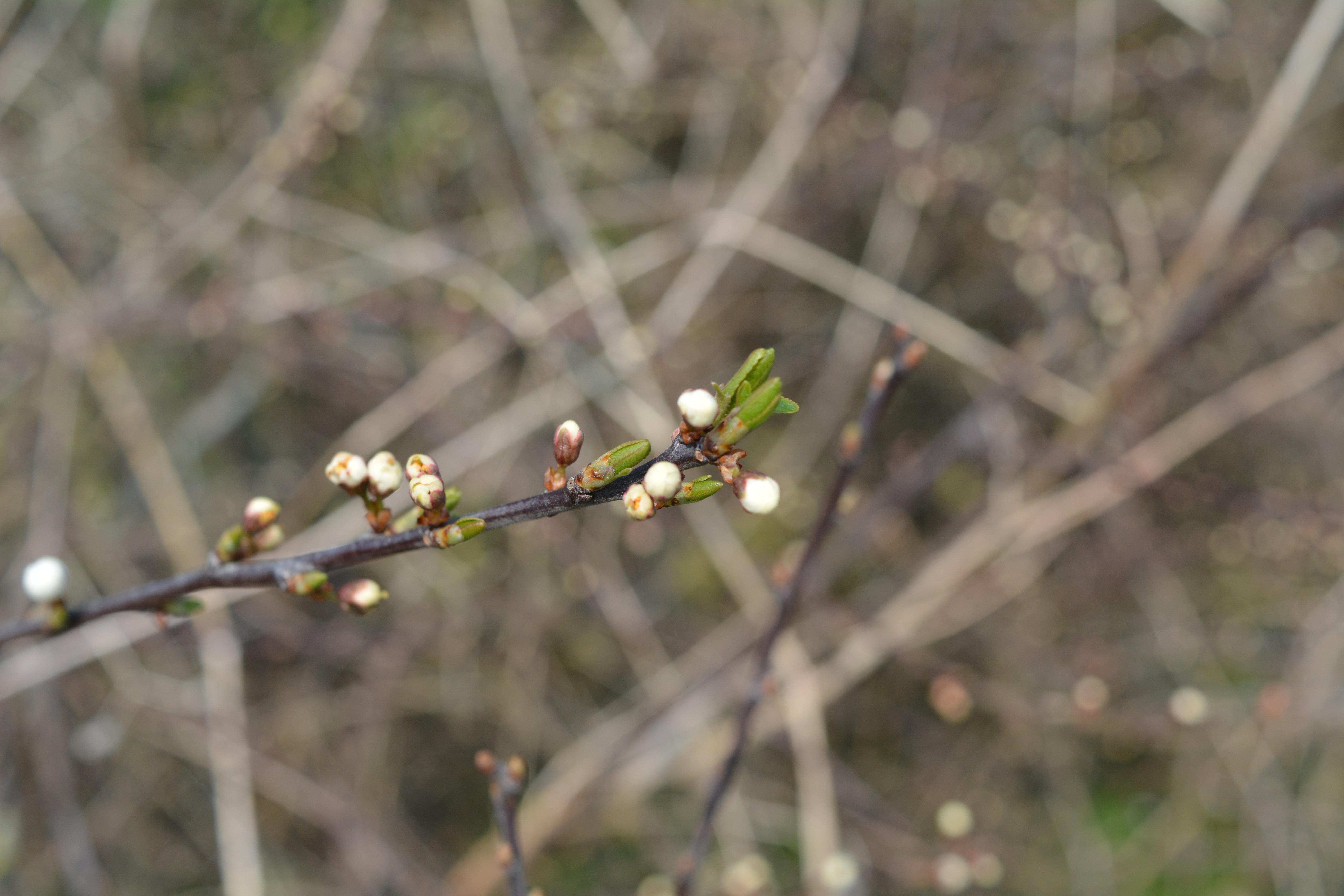
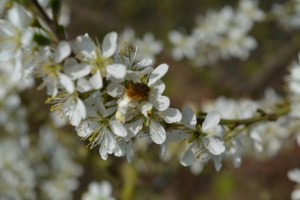
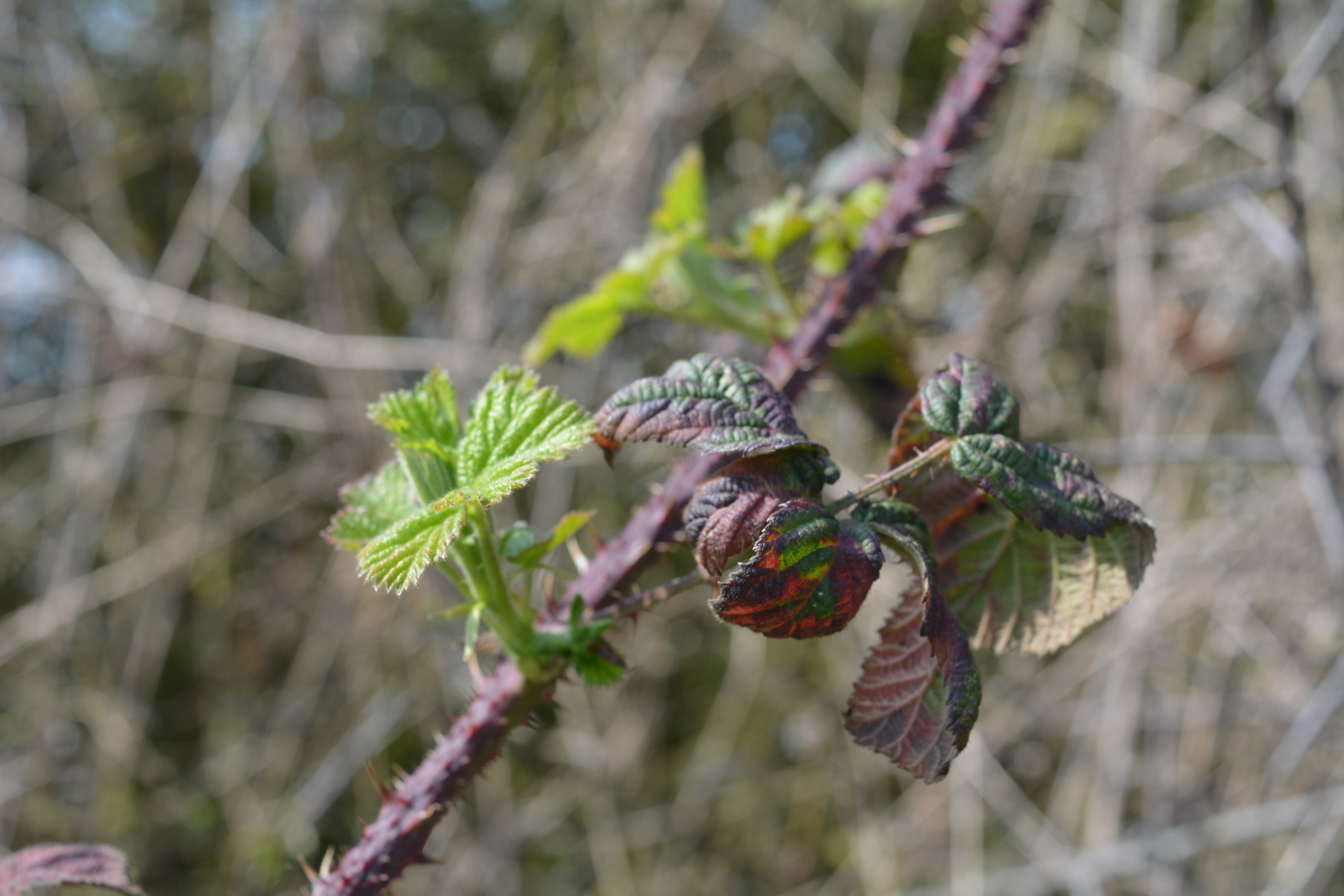
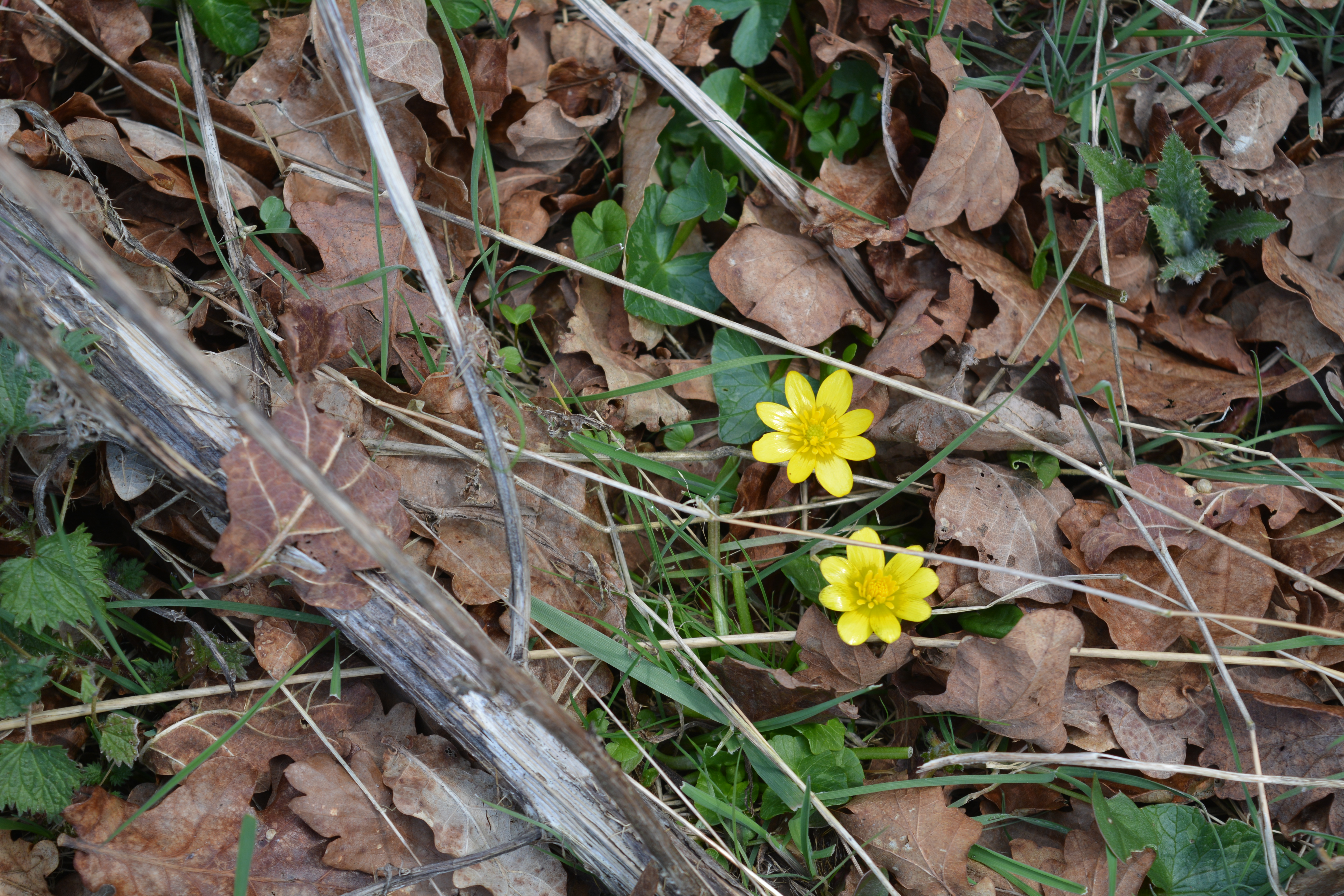
Signs of spring were to be seen every step of the way, freshly bursting buds with the brightest of greens emerging and the earliest of blossoms.

2015 04 09_0510 2015 04 09_0511 2015 04 09_0514 2015 04 09_0529


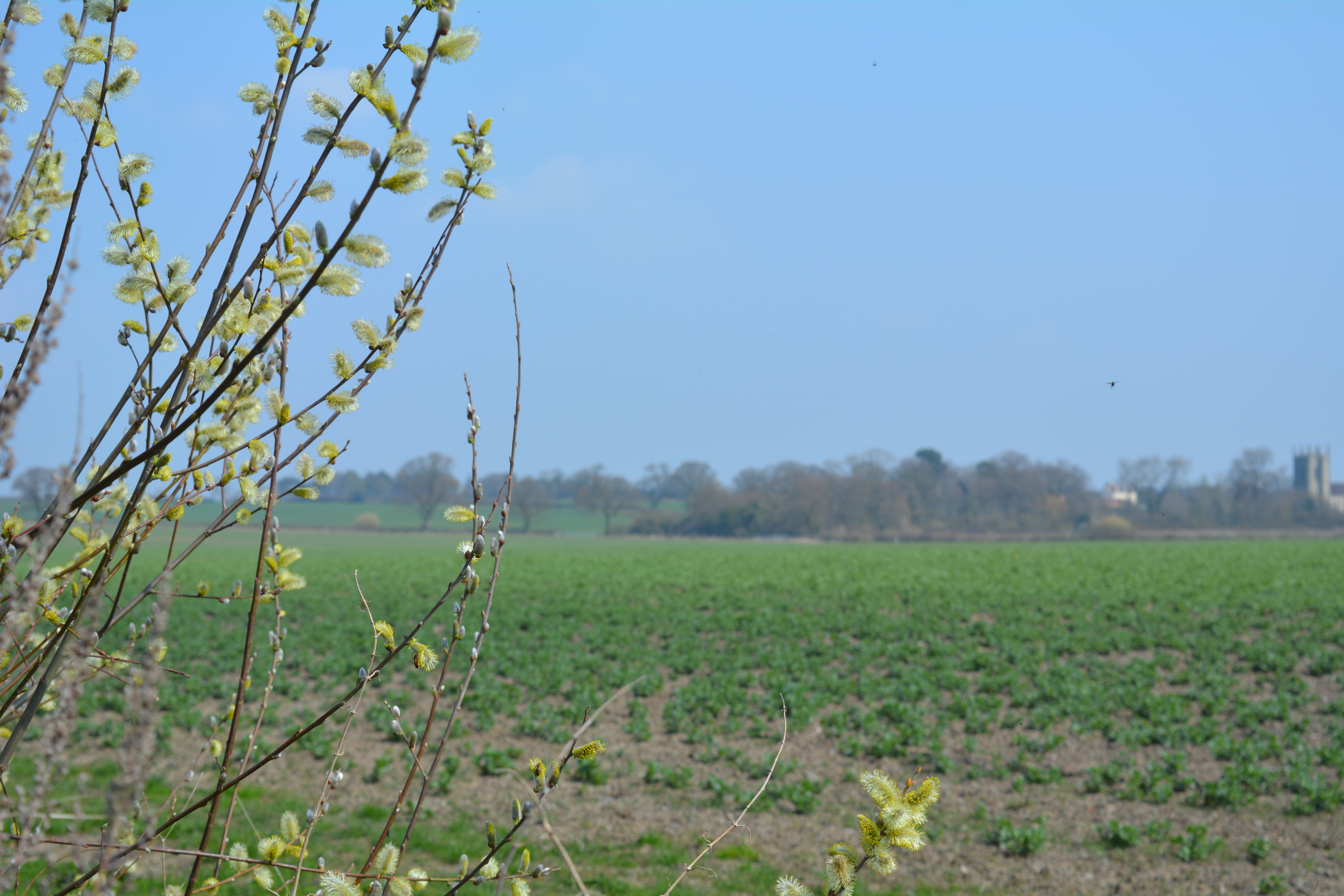
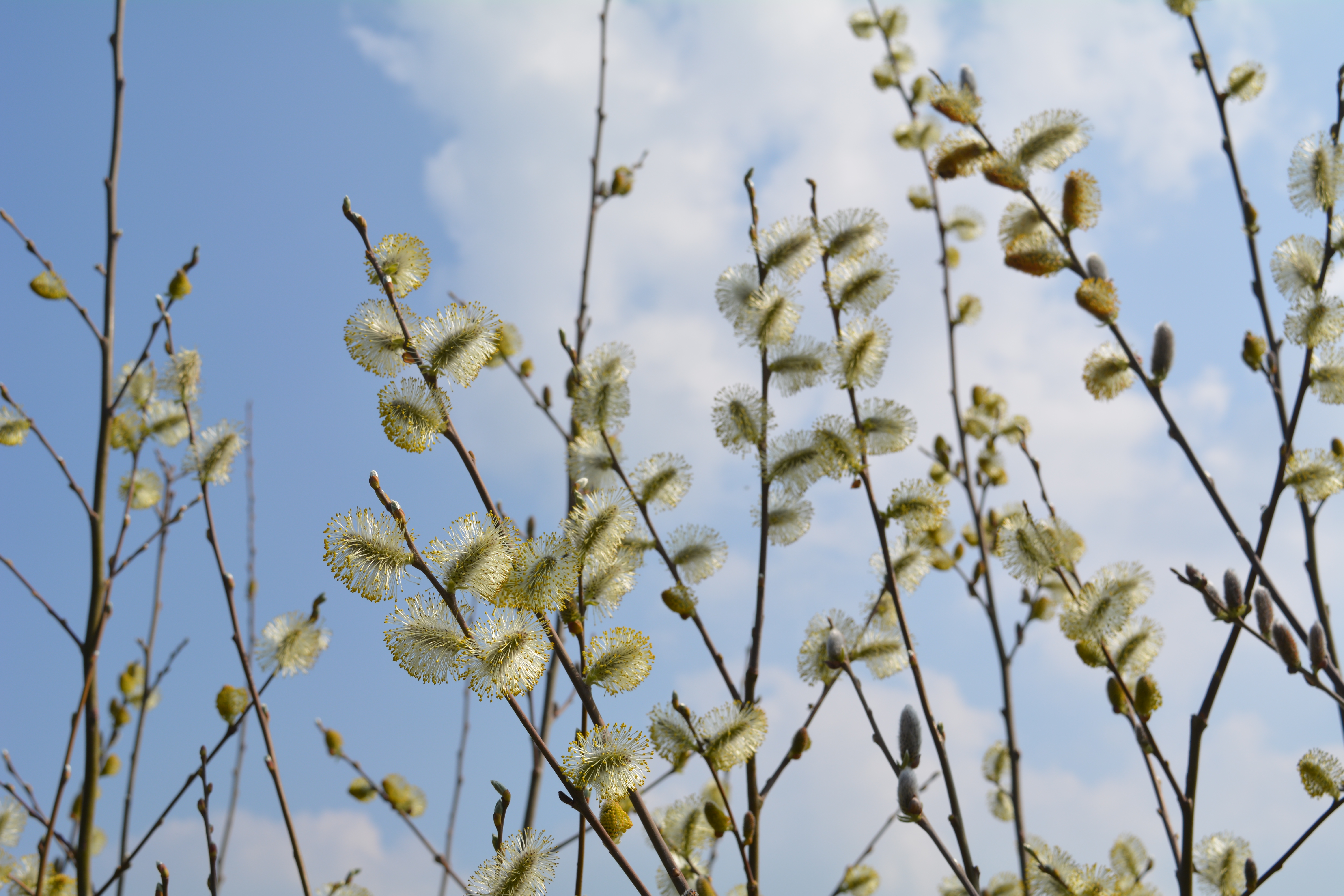
The willows were giving a light show, as the sun shone through their catkins.

2015 04 09_0515 2015 04 09_0518 2015 04 09_0519 2015 04 09_0520  2015 04 09_0531 2015 04 09_05222015 04 09_0563 2015 04 09_05642015 04 09_0523 2015 04 09_0524


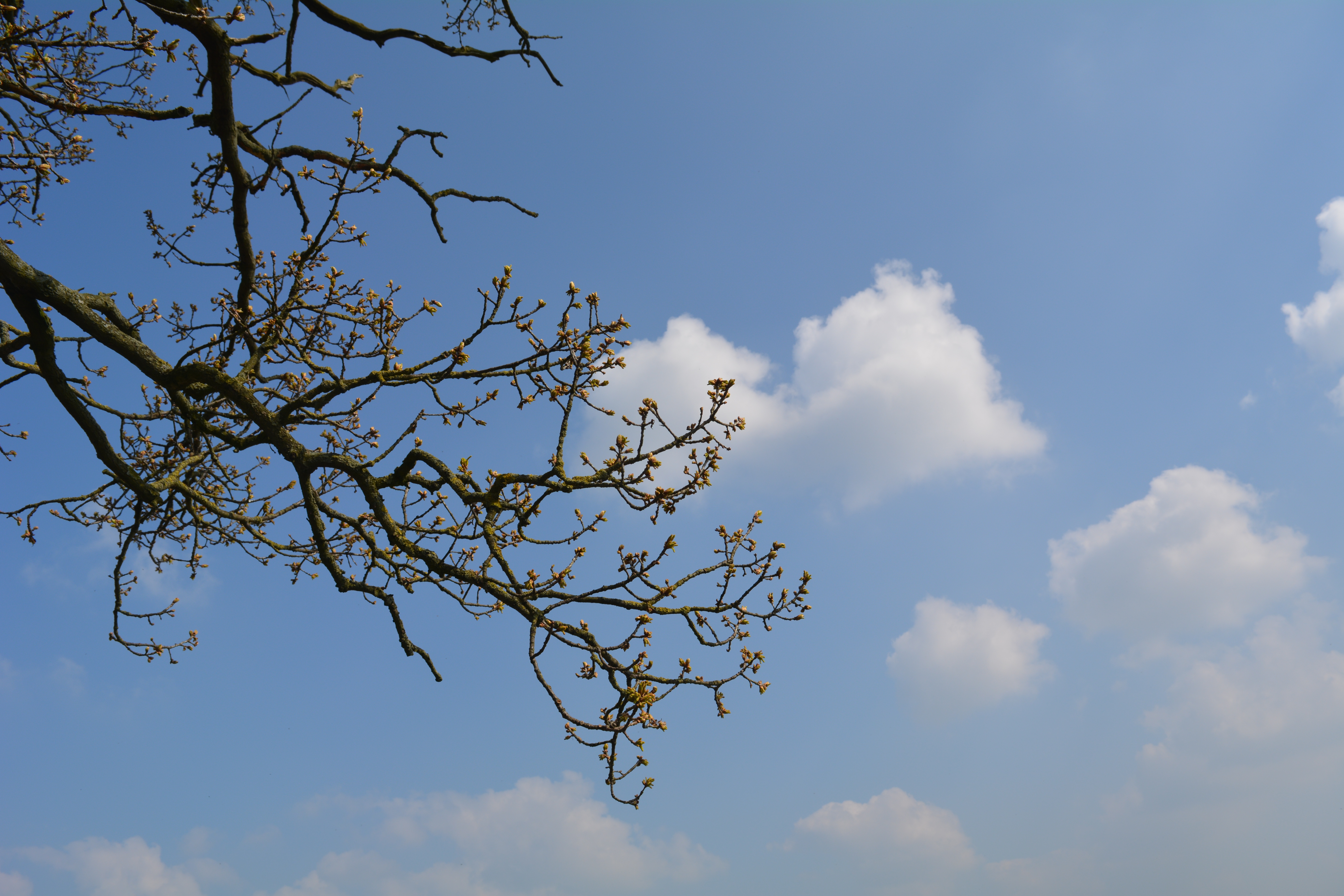
Some trees were still bare skeletons against the blue skies.


2015 04 09_0526 2015 04 09_0527

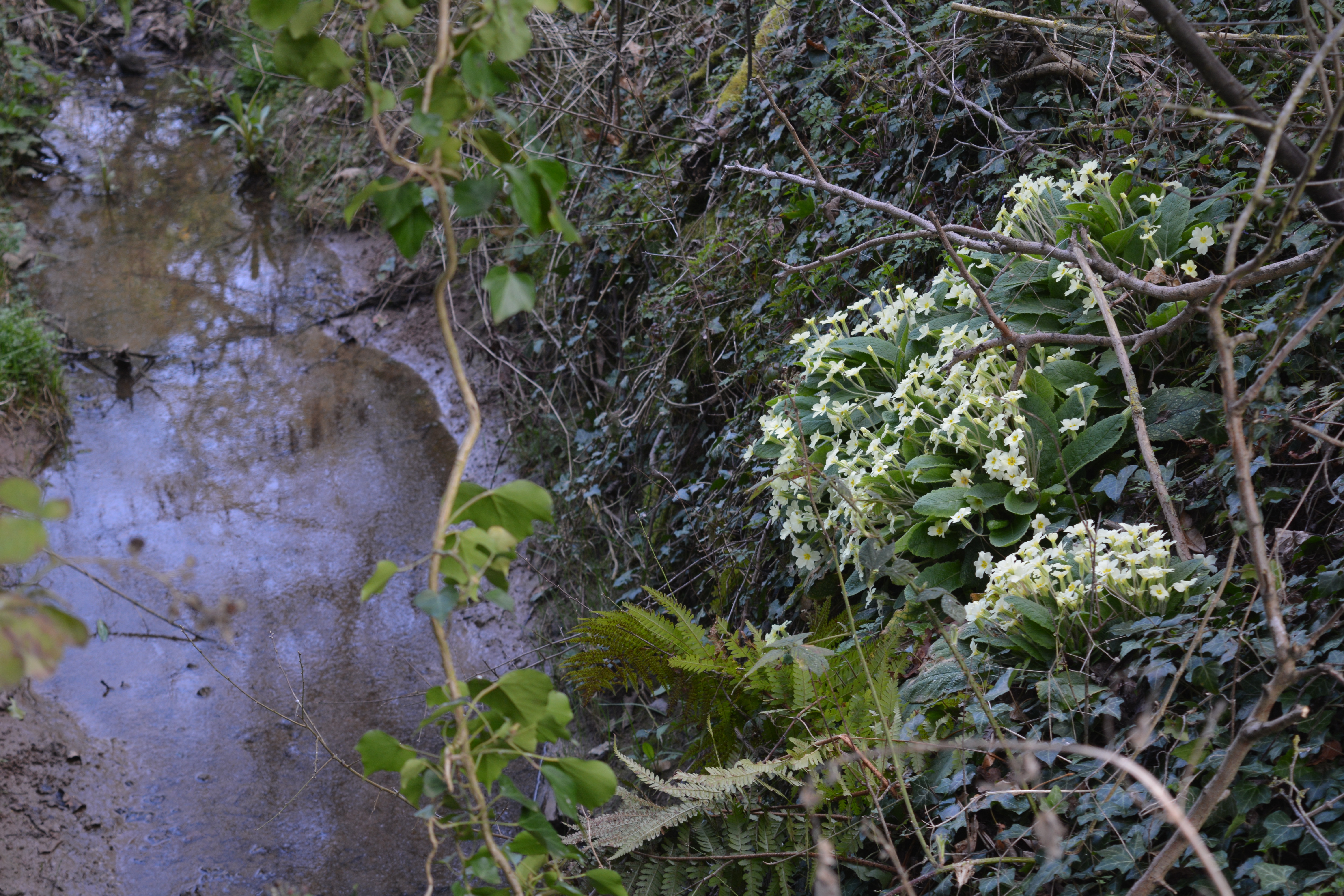
As we approached the scatter of buildings around the church, a shallow stream flowed alongside with banks of water plants coming to life.


2015 04 09_0528  2015 04 09_0530  2015 04 09_0532 2015 04 09_0533

In the woodland around the church we discovered the remaining fish ponds used by the college chaplains.


2015 04 09_0534 2015 04 09_0535


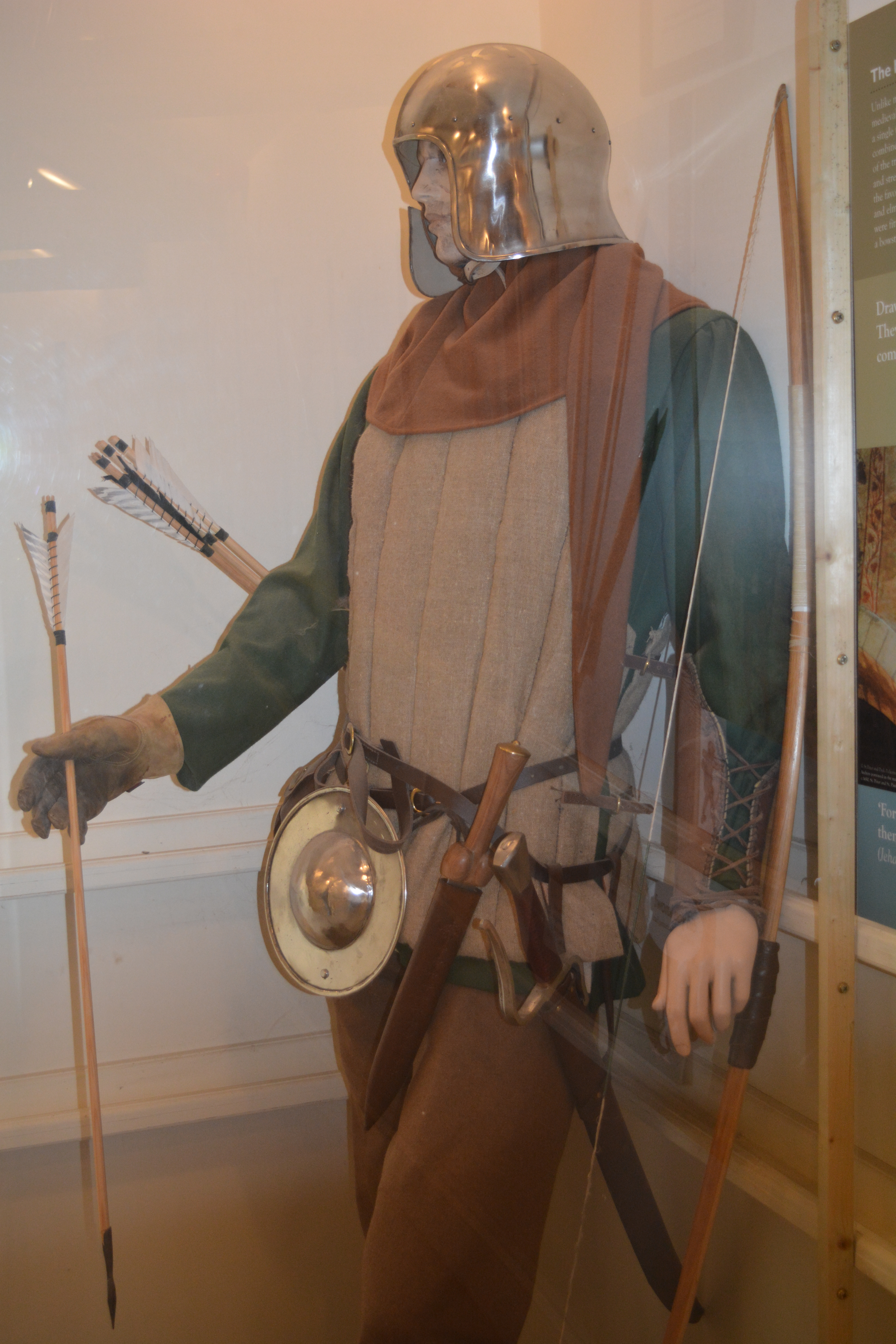
We wandered past the church and made our way to the nearby Battlefield Farm Shop which luckily had a coffee shop! We decided to have a look at the church on the way back when we would be well-refreshed. In converted old farm buildings an exhibition explained all about the Battle of Shrewsbury.

2015 04 09_0537 2015 04 09_05392015 04 09_0538 2015 04 09_0540 2015 04 09_0541


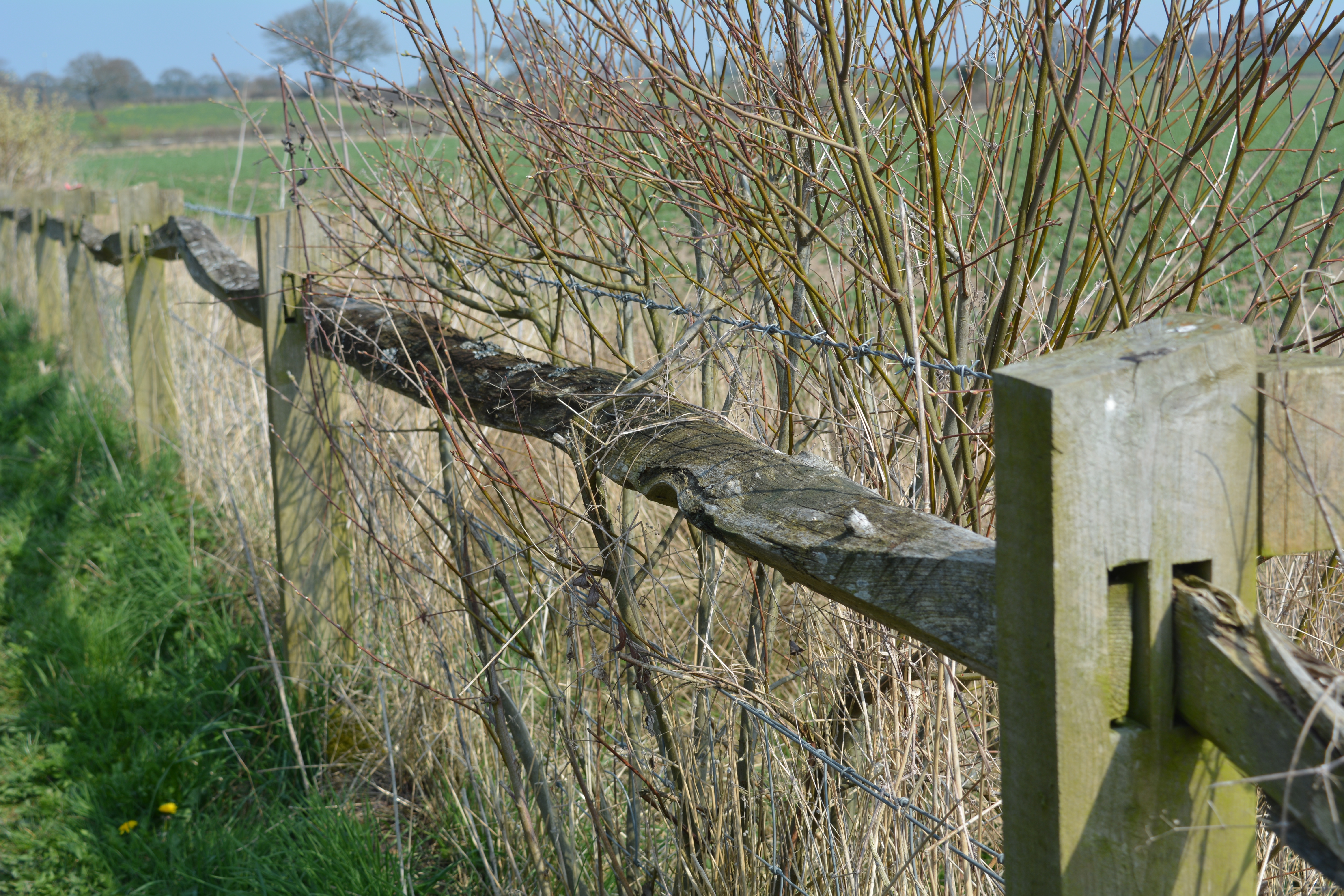
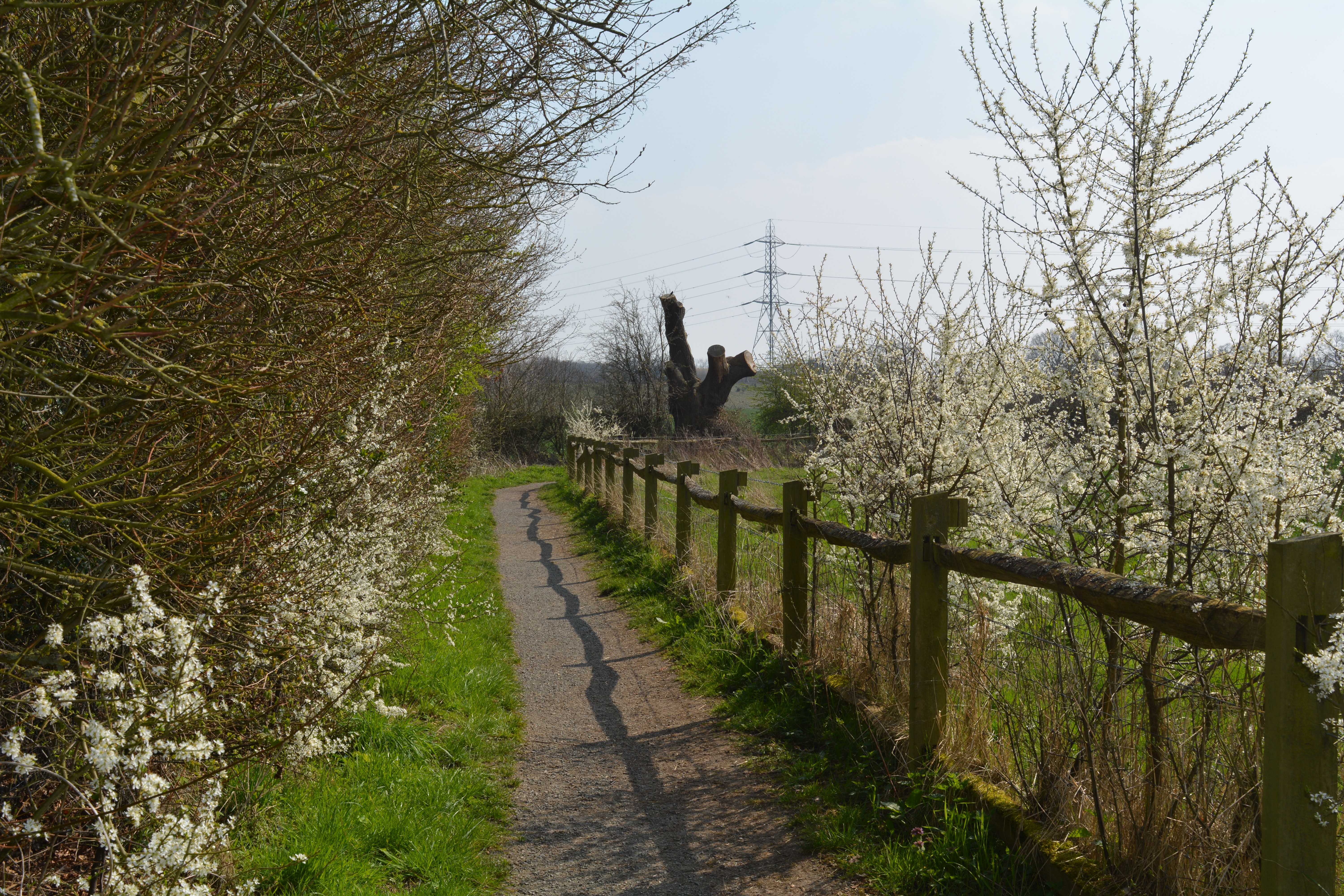
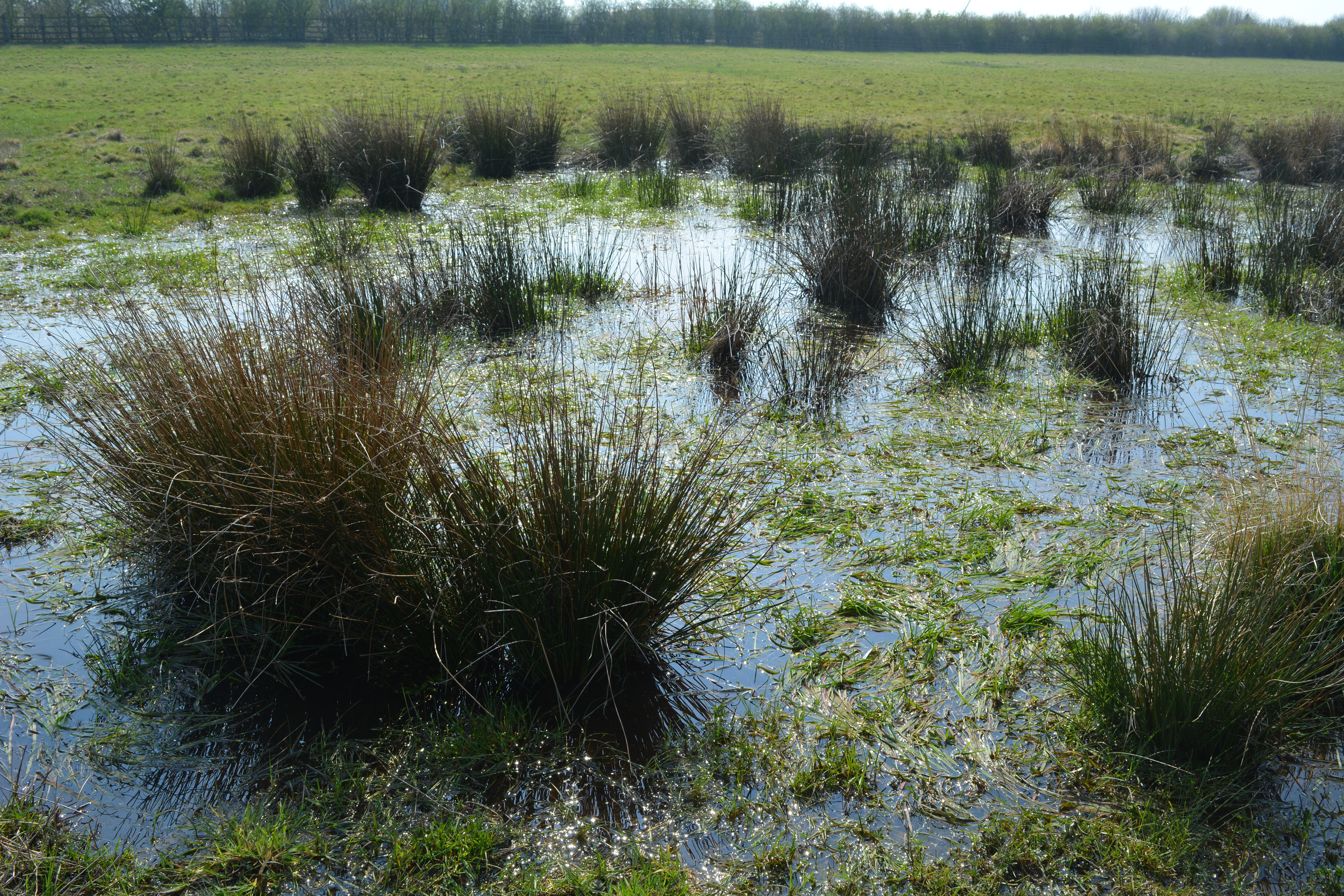
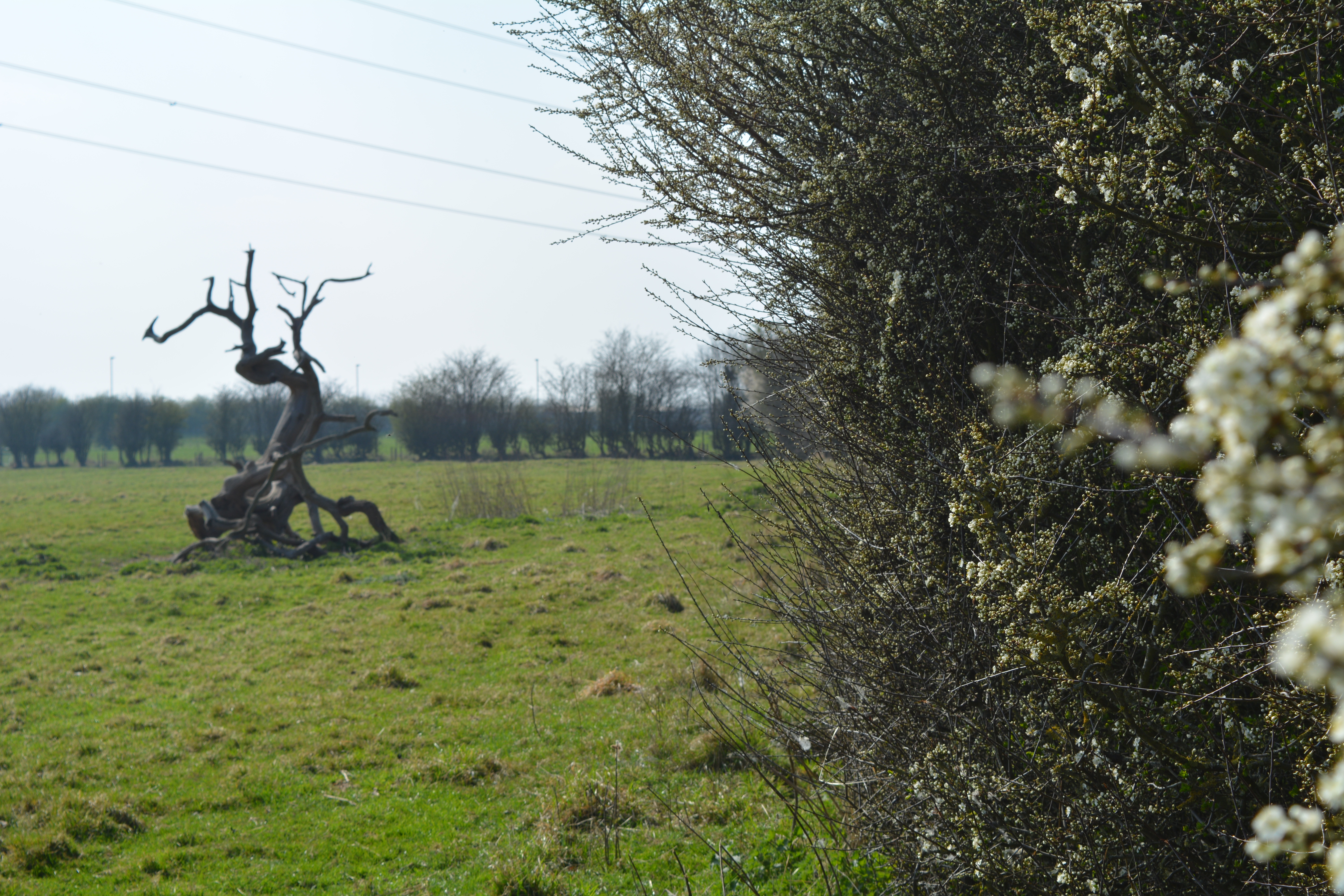
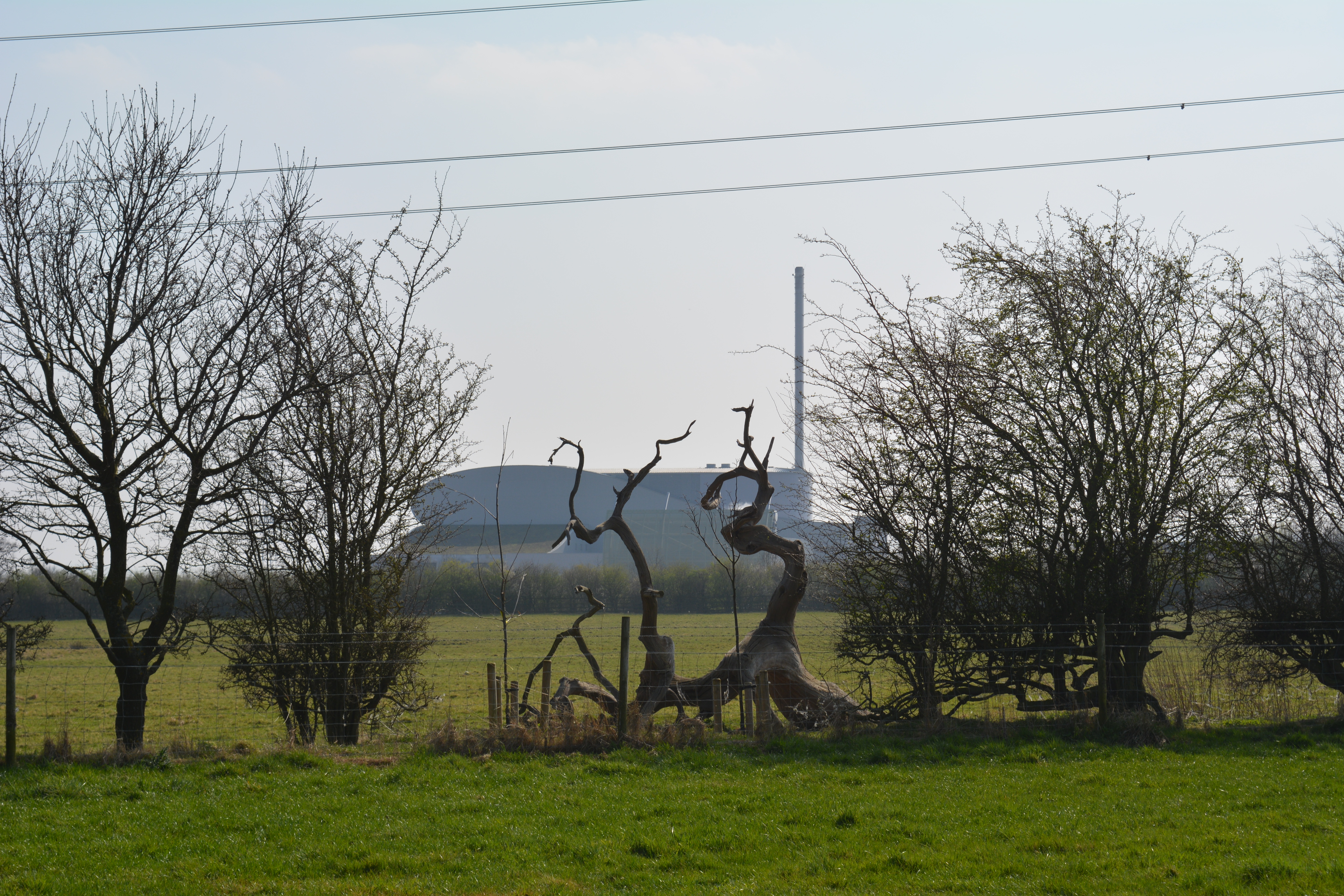
We began our walk back around the battlefield site following a narrow gravel path between a tall hedge and an old chestnut fence. In a field showing signs of ancient ridge and furrows agriculture we spotted a drainage pond rich in vegetation and a old fallen tree with the most amazingly shaped trunk and branches.

2015 04 09_0561 2015 04 09_0565 2015 04 09_0566 2015 04 09_0590 2015 04 09_0591 2015 04 09_0593

In part two of our look at the Shrewsbury Battlefield site we will look at the church and the skeletal tree in more detail.

Categories
birds colours flowering bulbs garden wildlife gardening gardens hardy perennials light light quality Shropshire spring gardening

My Garden Journal – March

As we entered the month of March we looked forward to increased temperatures both during the daytime and at night .We thought with luck the danger of frosts would be diminishing, although  this year we have had few to talk of and none deep enough to cause many problems.

So let’s have a look at my Garden Journal for the month of March.

2015 03 29_0276_edited-1

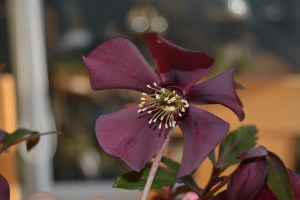
“Early in March we treated ourselves to two new Hellebore hybrids to add to our dozens already adding colour to our borders”

2015 03 04_9795 2015 03 04_9791

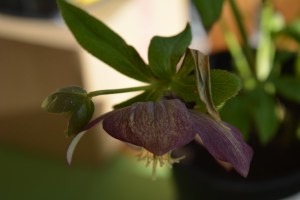
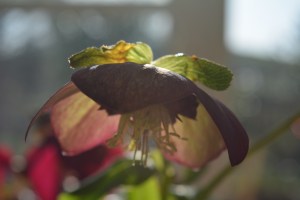
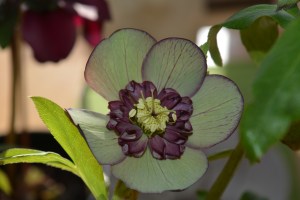
One displays simple single deepest red flowers and the other pale green petals edged with a picotee fringe in deep plum and in the centre a similarly coloured collar of petals. Let’s  look at the simpler one first.

2015 03 04_9799 2015 03 04_98002015 03 04_9797 2015 03 04_9798

In complete contrast the “colarette” Hellebore shows so much more colour and variation.

2015 03 04_9794 2015 03 04_97962015 03 04_9792 2015 03 04_9793

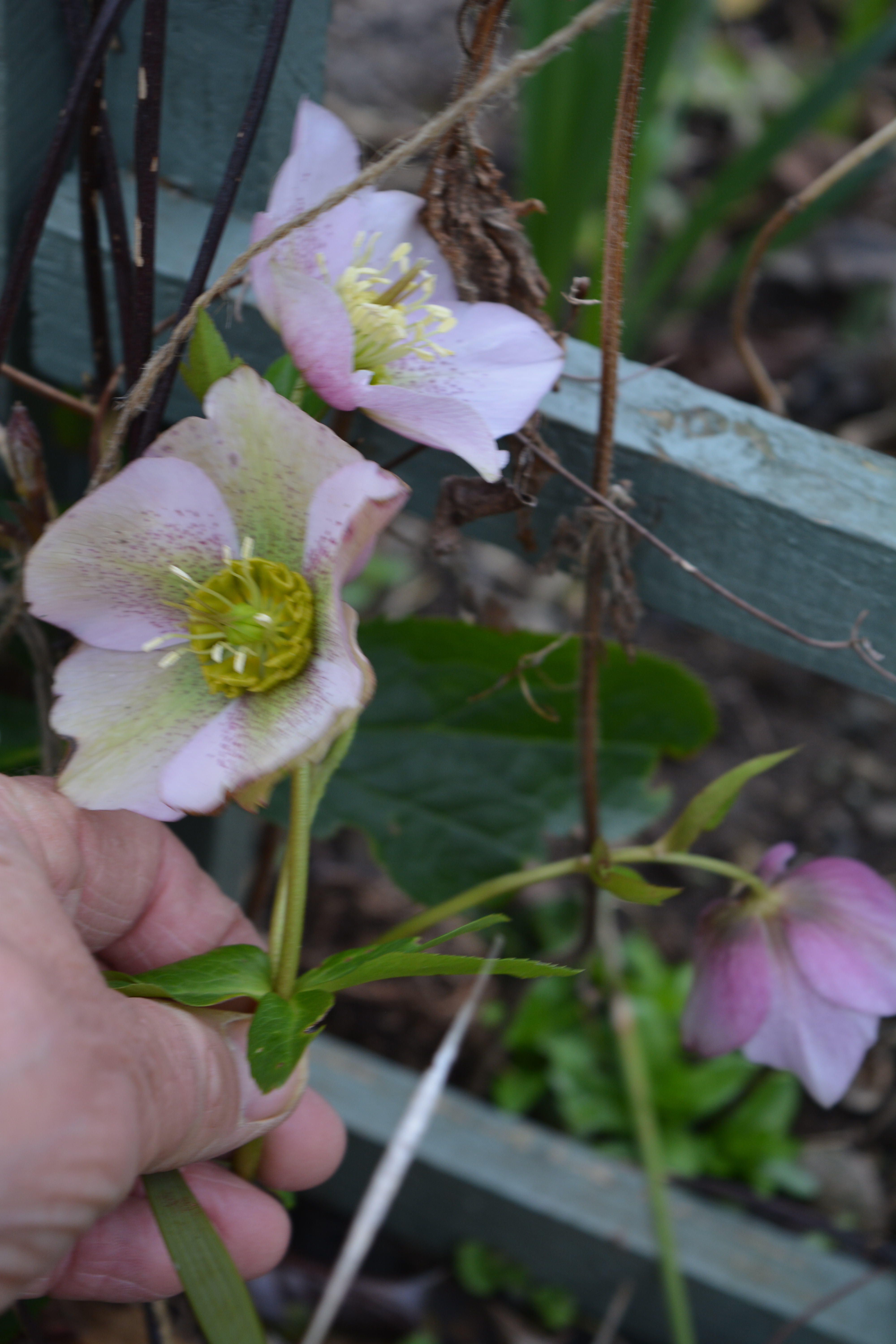
Pleased as we were with our new purchases we were even more pleased to find a chance seedling Hellebore which has sneaked its way into our Rill Garden. The problem is that it has settled in tight into the base of the stone wall of our raised pool. “We were also surprised to discover a beautiful new self-crossed hybrid in the Rill Garden. Each petal is a subtle combination of blush pinks and pale greens, its centre the deepest yellow.” It really needs moving out to replant it where it can be appreciated properly. This photo shows it in its chosen home. We love it for its subtle combination of pink and green with delicate spots, and of course for choosing our garden to grow in. What do you think of it?

2015 03 15_9907

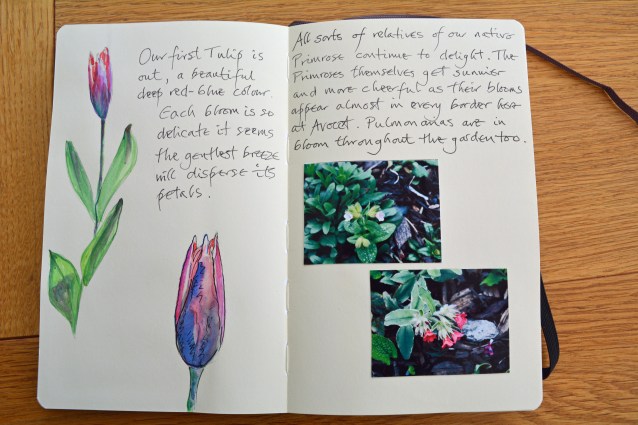
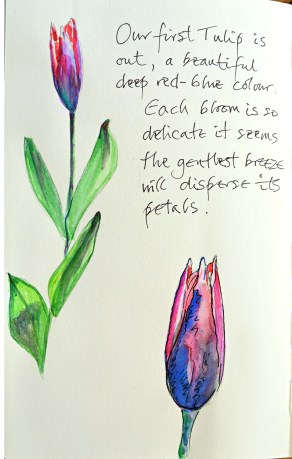
My journal moves on to look at the first tulip of the year, this beautiful species one with such unusual colour combinations within its petals. “Our first tulip is out, a beautiful deep red-blue colour. Each bloom is so delicate it seems the gentlest breeze will disperse its petals.”

2015 03 29_0280_edited-12015 03 29_0277_edited-2   2015 03 29_0278_edited-1

I reveled in the challenge of representing its flower, shaped like the flame of a candle, in watercolours with pen and ink detailing. I had great fun mixing so many tints of blues and reds together and even brought in a touches of green.

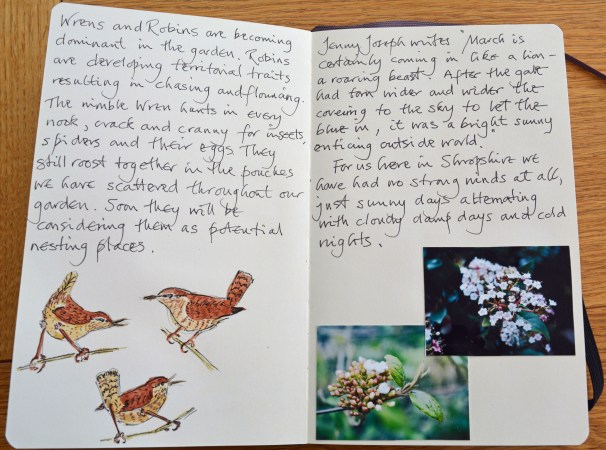
The bird life at Avocet starred next in my journal. “Wrens and Robins are becoming dominant in the garden. Robins are developing territorial traits resulting in chasing and flouncing. The nimble Wren hunts in every nook, crack and cranny for insects, spiders and their eggs. They still roost together in the pouches we have, scattered throughout our garden. Soon they will be considering them as potential nesting places.”  It will be interesting to observe the changes in behaviour and attitudes towards each other when this change of emphasis occurs.

2015 03 29_0281_edited-12015 03 29_0282_edited-1

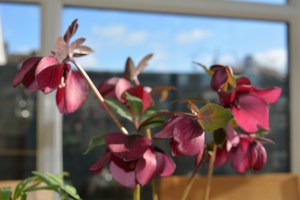
I quoted a further passage from Jenny Joseph, “March is certainly coming in like a lion – a roaring beast. After the gale had torn wider and wider the covering to the sky to let the blue in, it was a bright sunny enticing outside world.” In my journal I wrote But for us here in Shropshire we have had no strong winds at all, just sunny days alternating with cloudy damp days and cold nights.” But March was to prove these words to be dreadfully premature, for as the month was preparing the way for April to follow in its footsteps we did indeed get gales lasting several days and taking us into April. This strange atypical weather isn’t helping the garden, and definitely not helping us as we prepare for our first opening for the year on 16th April. I noted this in the journal, “This is confusing the garden. It doesn’t know which way to turn. Plants are behind where they should be. Few Tulips or Daffs have displayed their blooms. Leaves on the Acers are showing little inclination to burst from their buds.”
 2015 03 29_0283_edited-1

As my journal closes for March we are preparing for our April opening and we could do with some help from the weather and from Mother Nature herself! We can only wait as spectators and see what April brings with it.

Categories
allotments bird watching birds community gardening conservation diy garden buildings garden ponds garden pools garden wildlife gardening irises log piles natural pest control recycling renovation Shrewsbury Shropshire trees water garden water in the garden wildlife

The wildlife pond and hide at BAC – part two

As promised we make a return visit to see the work we have been doing on the development of our pond and hide at our allotment site, Bowbrook Allotment Community. In this part we shall look at our hide, some tree surgery and our new duck tube.

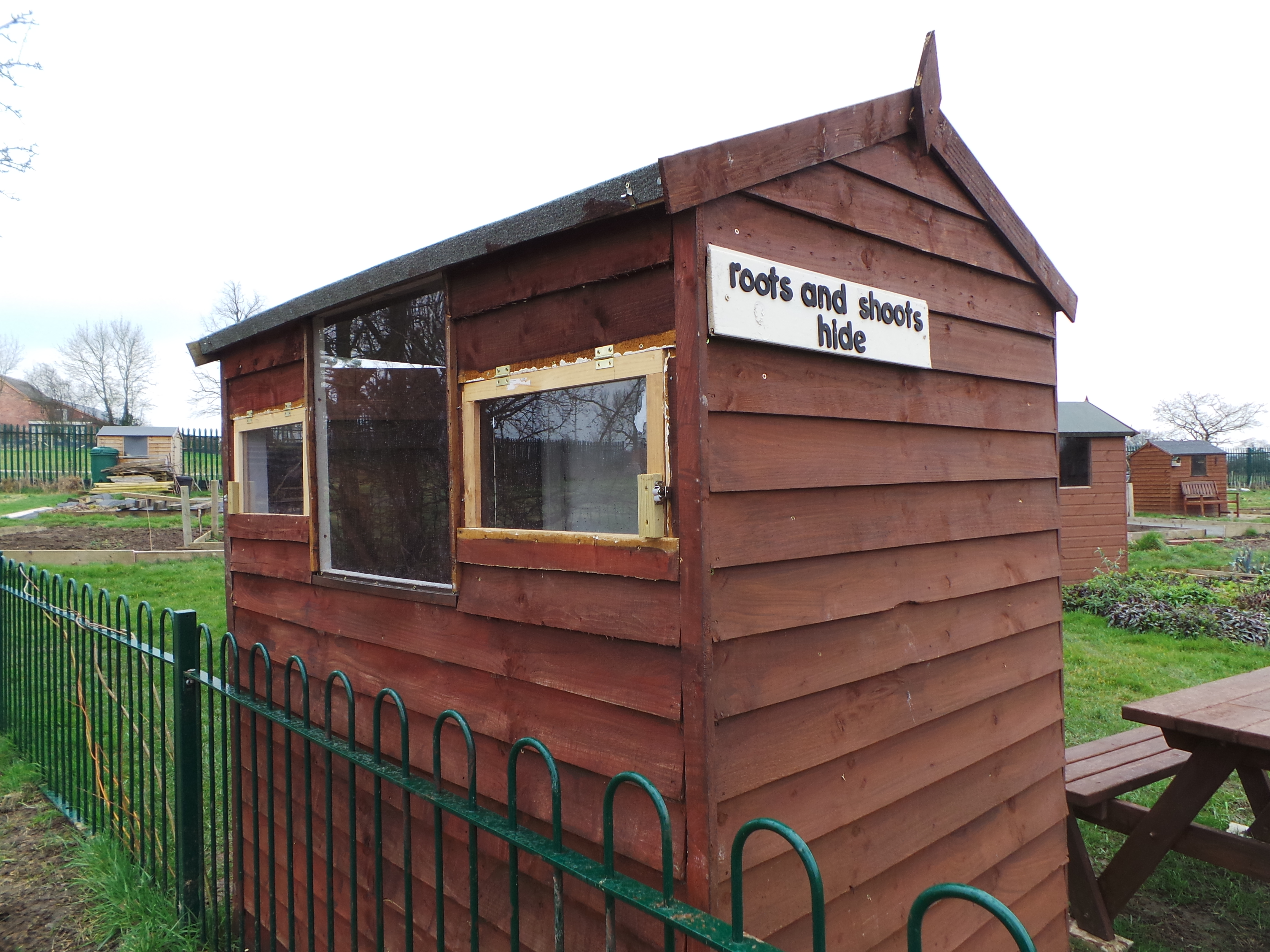
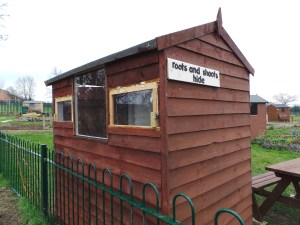
So first let us return to our new hide. If you remember those pictures of us rolling the battered and rather shaky old shed you will be surprised by the photos of it finished. So how about a before and after pair of pics? We made the hide for our allotment youngsters, our Roots and Shoots group, to give them the chance to secretly and quietly watch the life of our pond. With this in mind we set to work on our renovation which took an amazingly large number of volunteer hours.

2014 12 08_8466 2015 03 16_0004

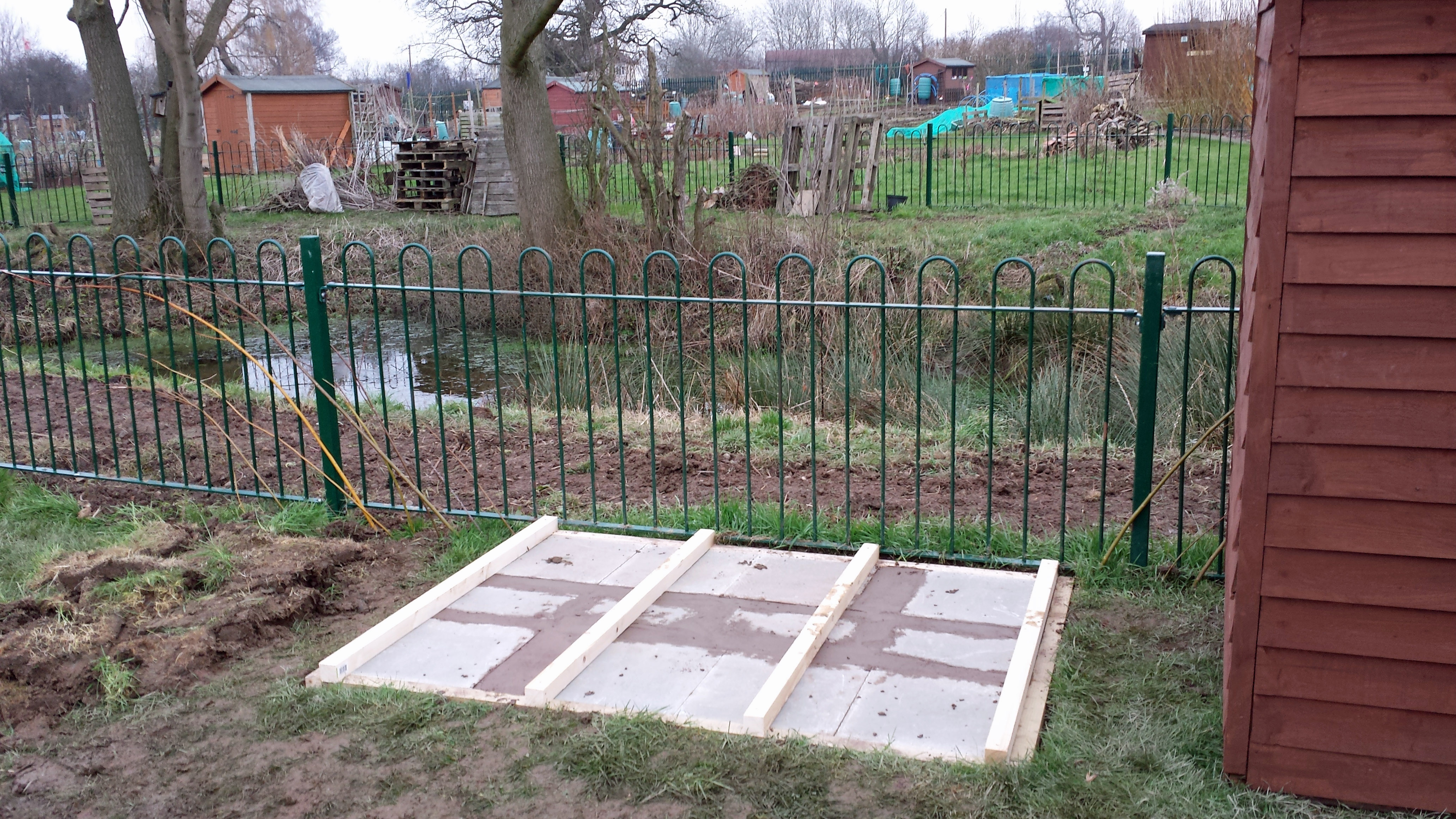
Whenever we go by the pond we can’t help but smile at the transformation! As you can see the old hide was firstly repainted outside by my young apprentice Thomas before we handed it over to two volunteer helpers Sean and his Dad Vince. They are great carpenters so brilliant volunteer helpers to have on board. They put fresh felt on the roof and fabricated a strong framework inside the shed. They made a concrete and slab base and placed the newly strengthen shed on a framework of wooden struts.

20150207_162506-1 sean 3-1

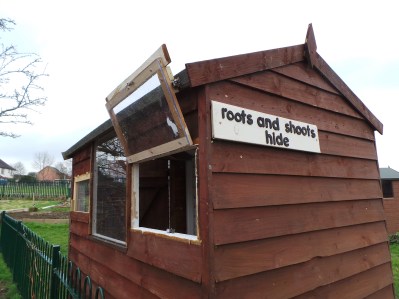
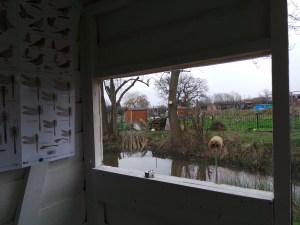
Thomas returned to give the shed another coat of wood preserver and I added a sign I created from wooden letters. It began to look the part from the outside but even more so once the two men added a new sheet of perspex to the window and added two hatches for clear viewing on dry days. These can be seen in the photo below.

2015 03 16_0005

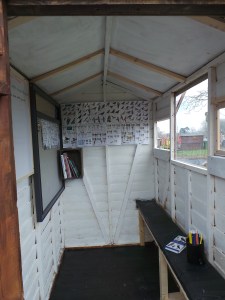
Within a few weeks Sean and Vince with extra help from Sean’s children had put up a noticeboard, made a kneeling bench and shelf for leaning on when the children used the hatches and window. The pictures below show first the bench and secondly the view the children get from the hatch.

2015 03 16_0018 2015 03 16_0016

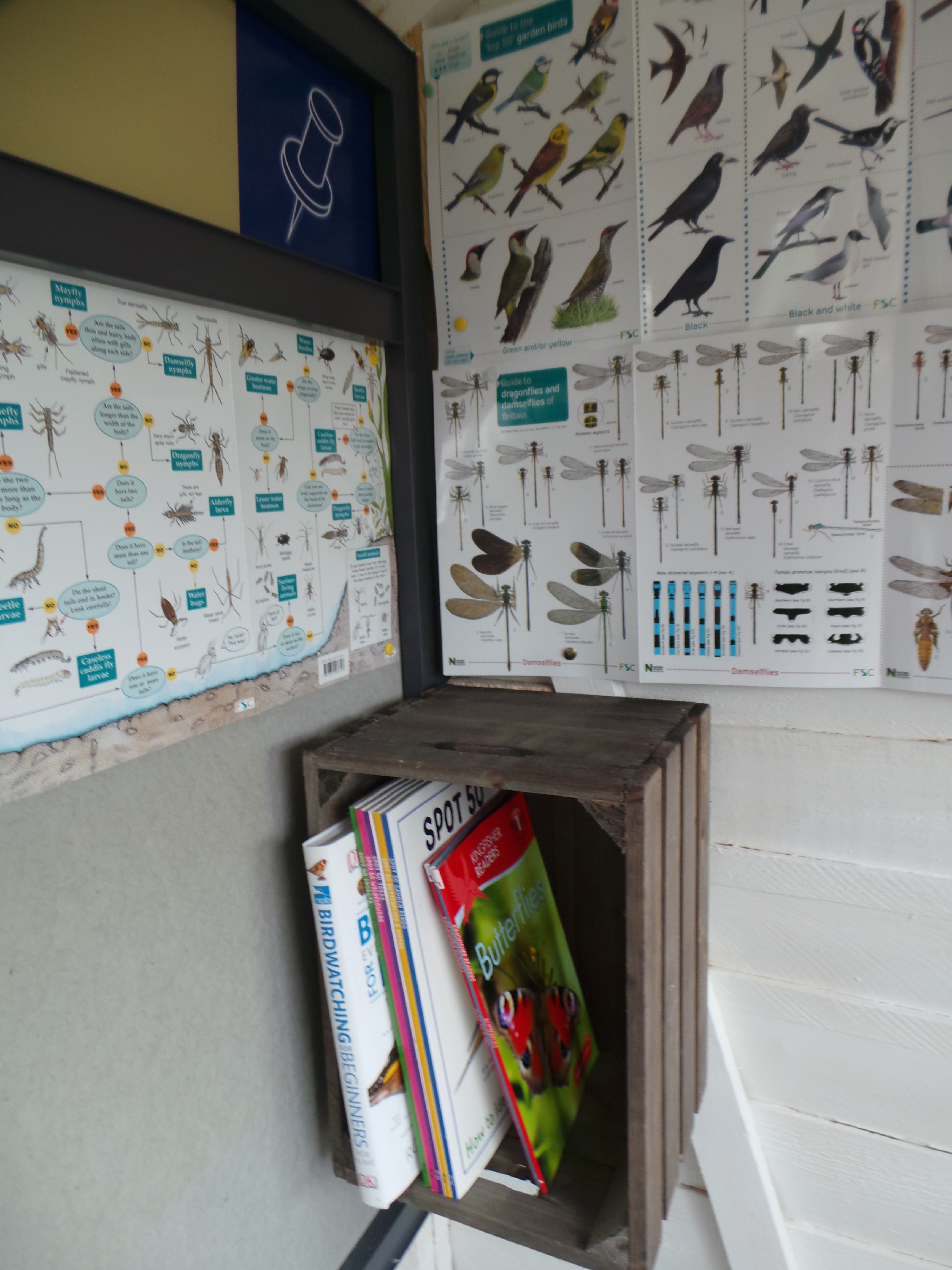
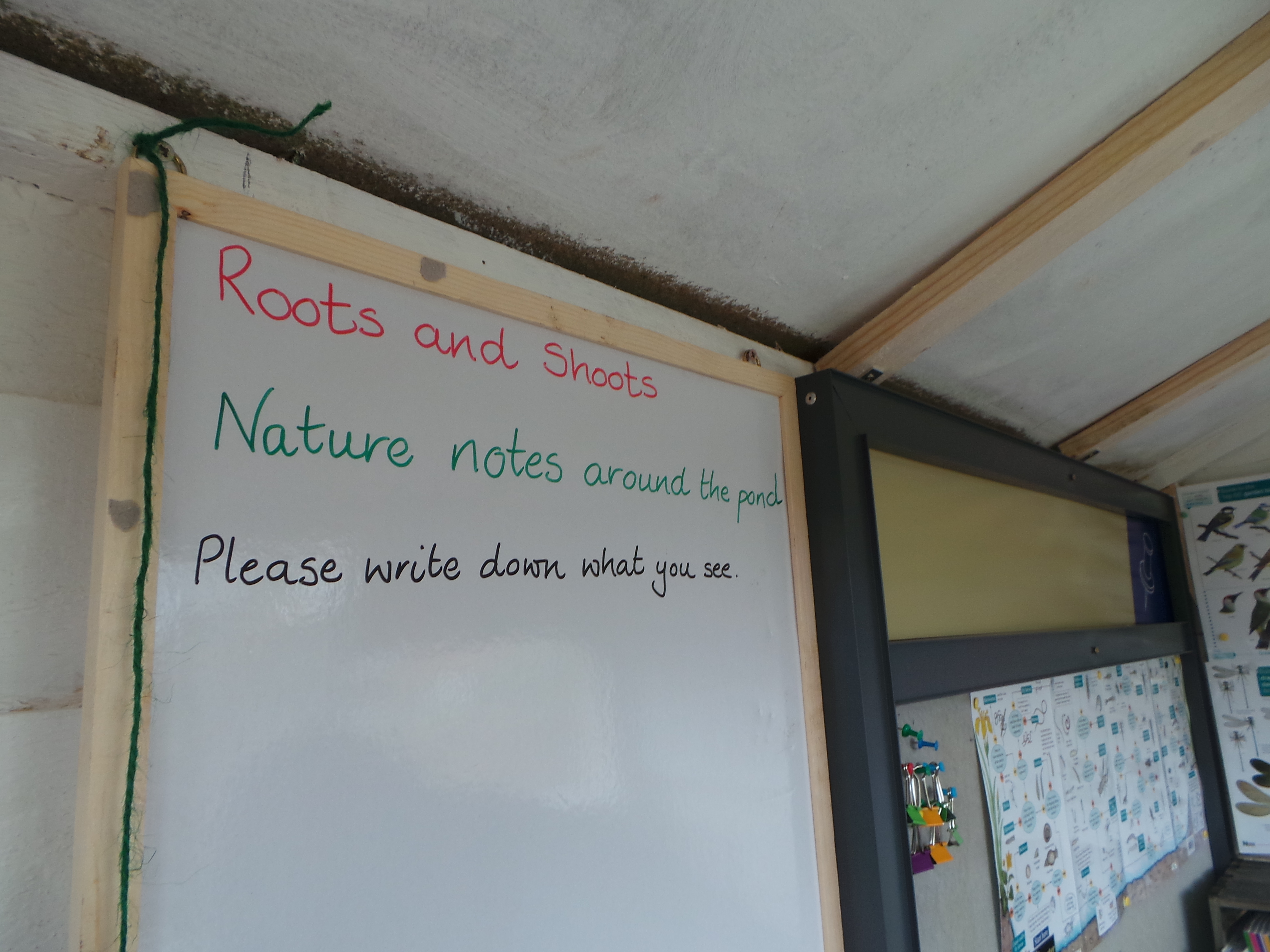
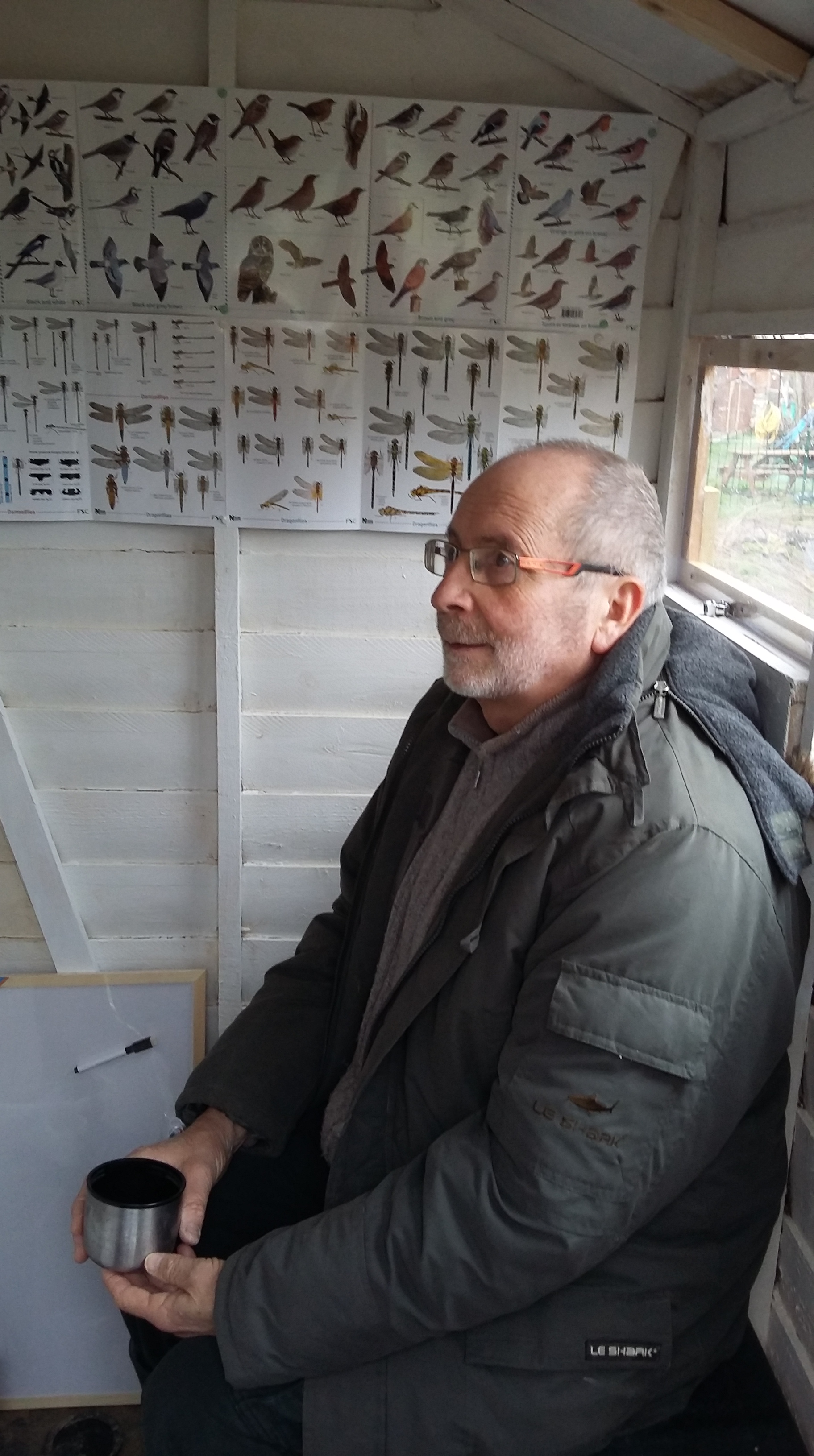
This is the view our Roots and Shoots youngsters will get as they open the hide door. You will see that Jude and I have added identification charts for birds and dragonflies and damselflies and a poster displaying the life on and under the surface of a pond. We also made a little bookcase from a vegetable crate and placed in it some wildlife books for youngsters. We also mounted a whiteboard on which we are inviting the children to note their observations. The final touches are a pair of binoculars a notebook for children to jot down their nature notes.

2015 03 16_0019 2015 03 16_00142015 03 16_0015  2015 03 16_0017

Last job of course was a celebratory cup of coffee perching on the children’s bench and admiring everyone’s handiwork and great efforts.

2015 03 16_9952

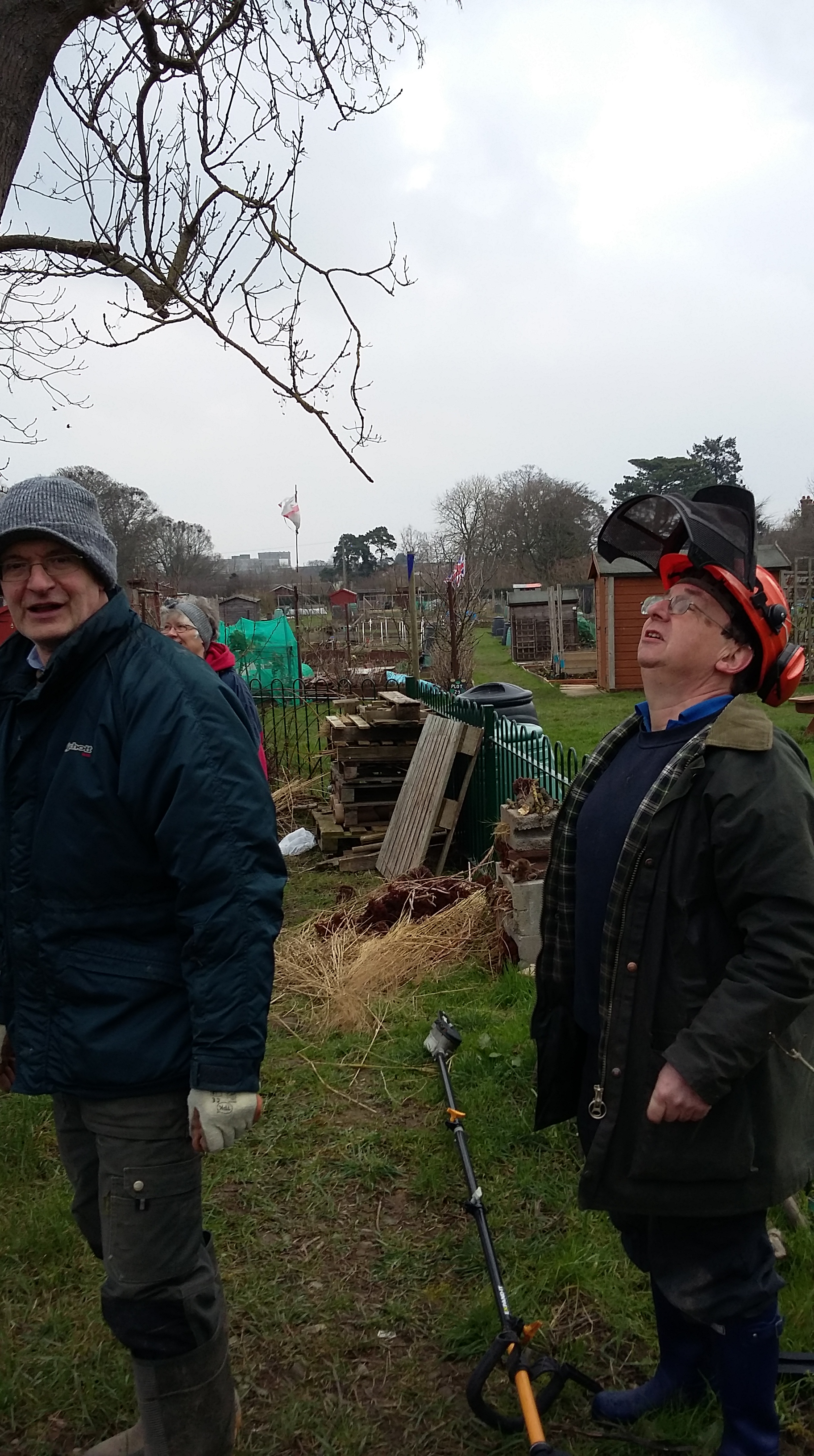
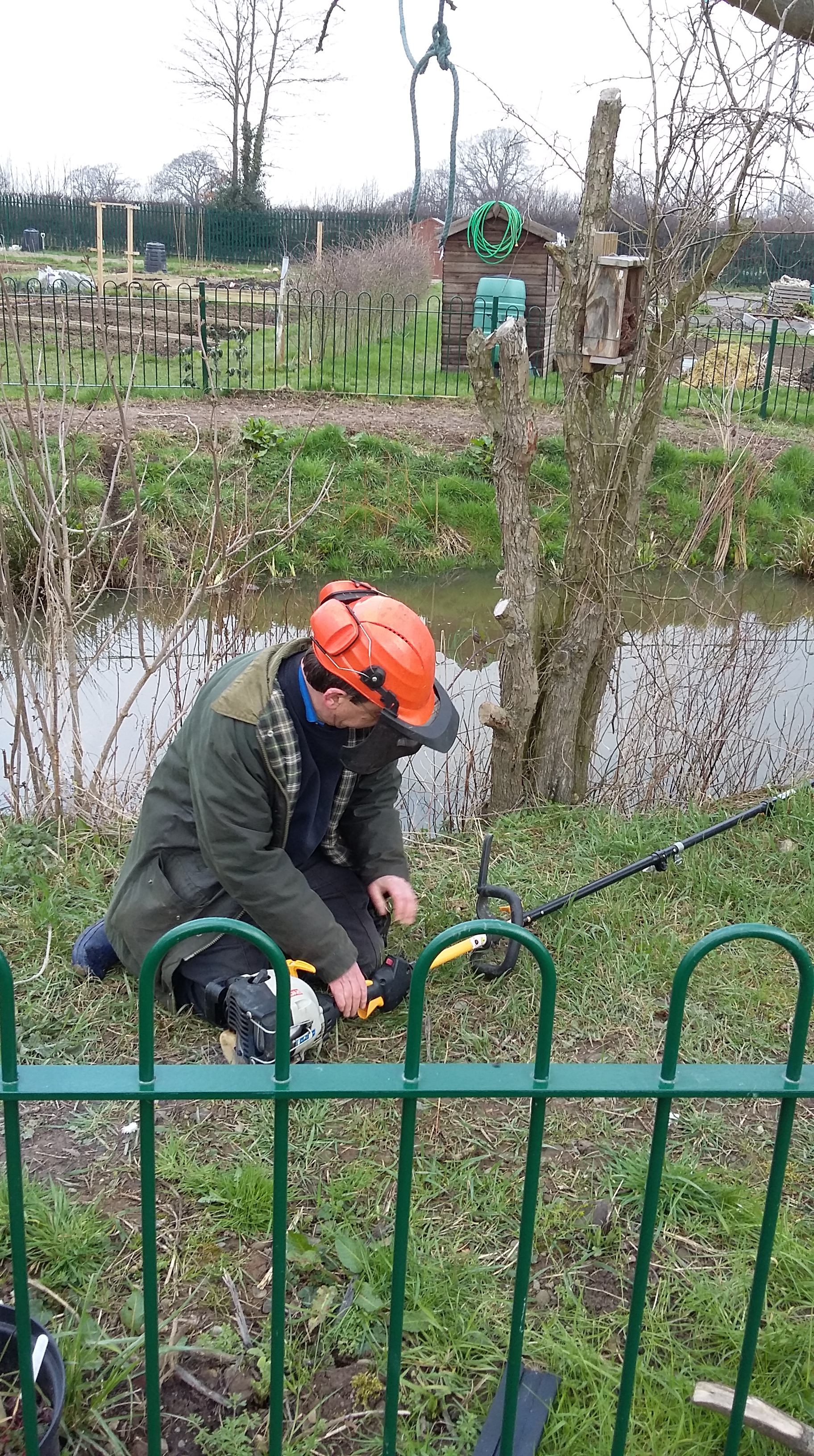
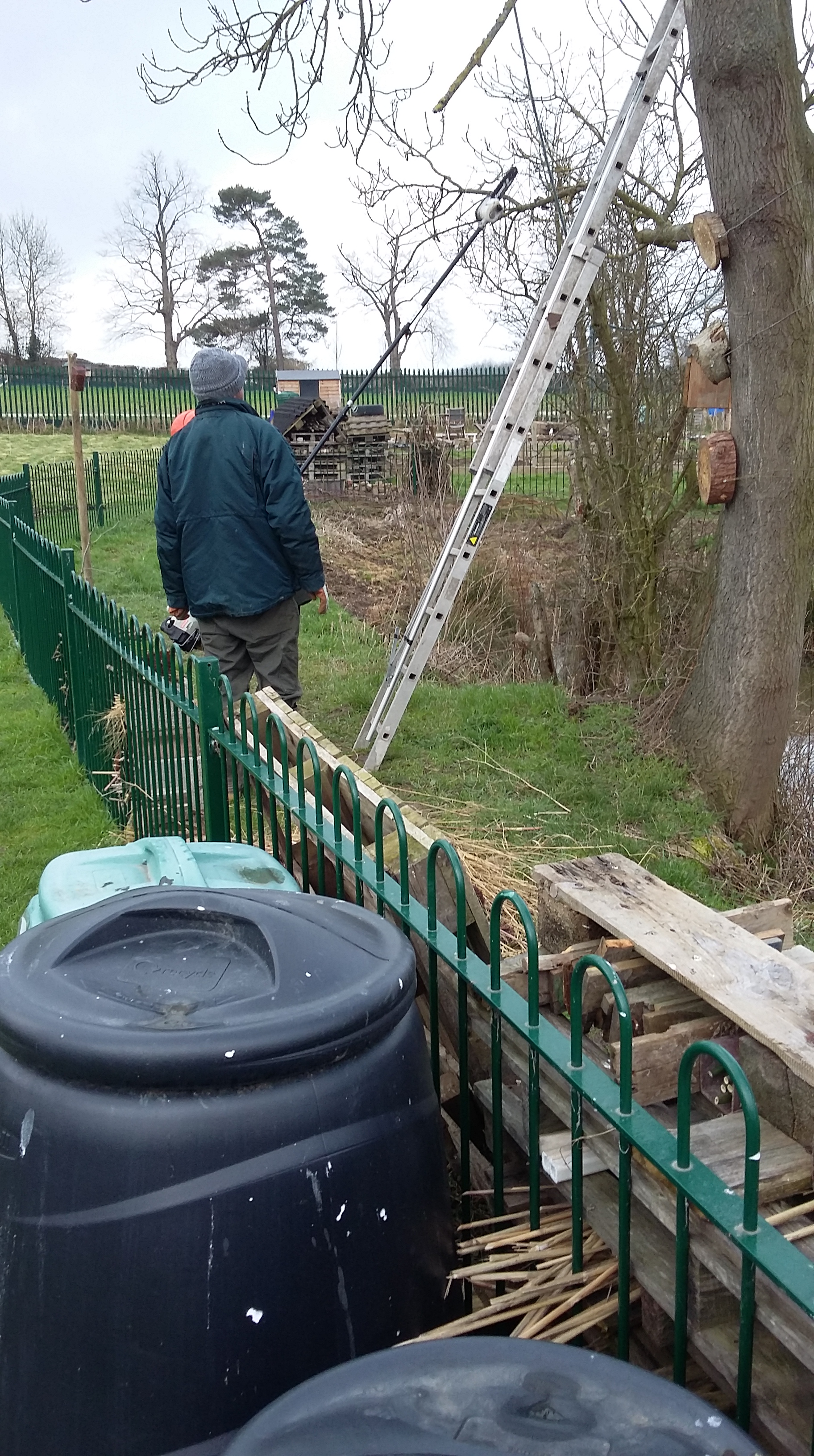
Now let us enjoy a bit of tree surgery carried out so professionally by some more of our volunteers, Pete and Mike. As mentioned in part one we have a few elderly Ash trees around the pond which for safety sake need remedial work. Earlier on we managed to pull down broken branches that had rotted but got tangled in the lower branches as they fell, but this day was a day for the chain saw attachment on our strimmer head to get in the action. One large branch hung right over the pond to the far bank and was slowly splitting so getting lower and lower. The final cut shows the weakness.

2015 03 16_9993

First Mike and Pete looked and stared and studied! They needed a strategy!!

2015 03 16_9925 2015 03 16_9926

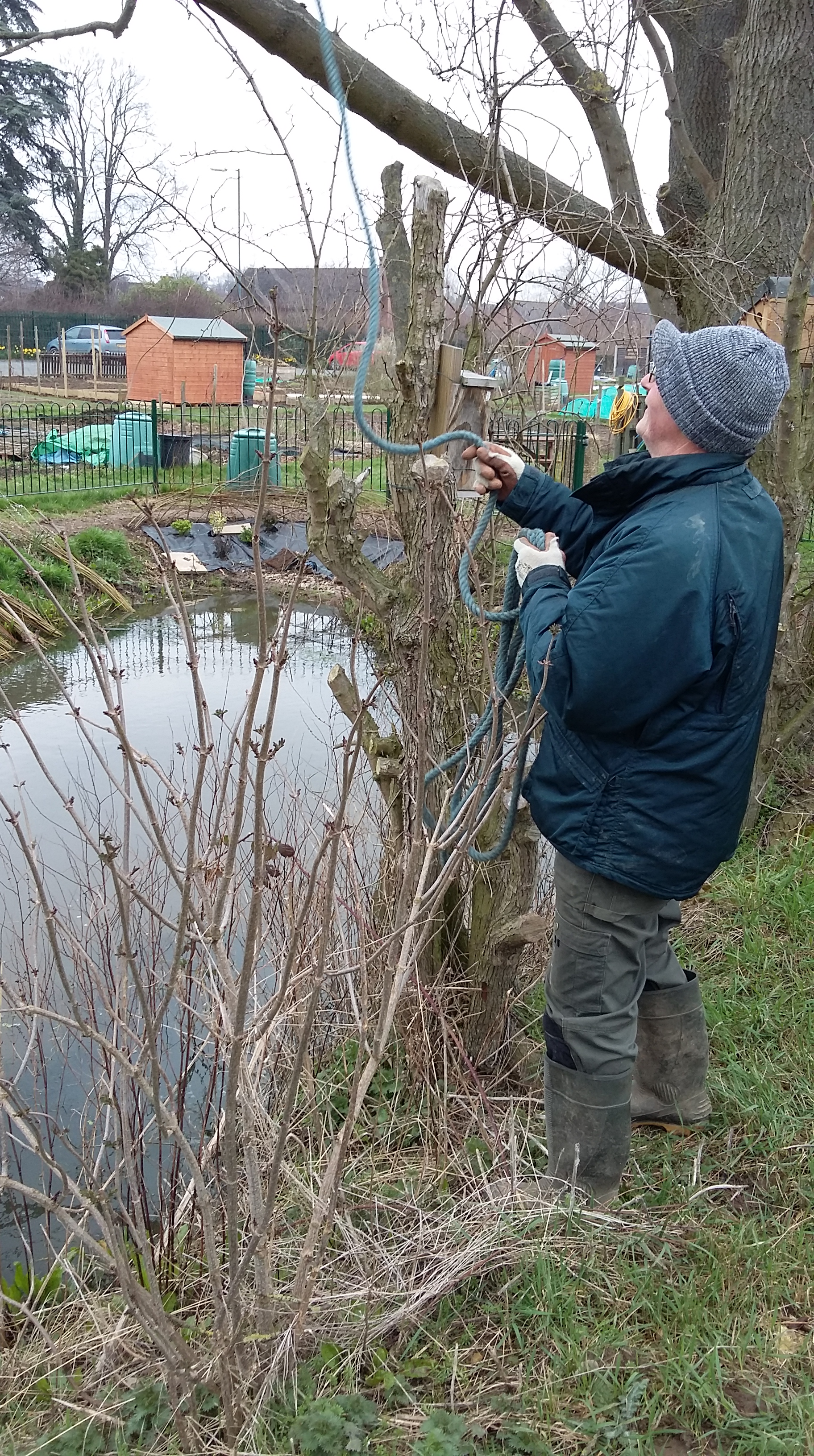
This strategy involved rope thrown up and over a much higher and stronger upper bough, with which they could keep control of the branch once it was sawn through.

2015 03 16_9932 2015 03 16_9928 2015 03 16_9929

Attachment attached and they were off!

2015 03 16_9933 2015 03 16_9934 2015 03 16_9936

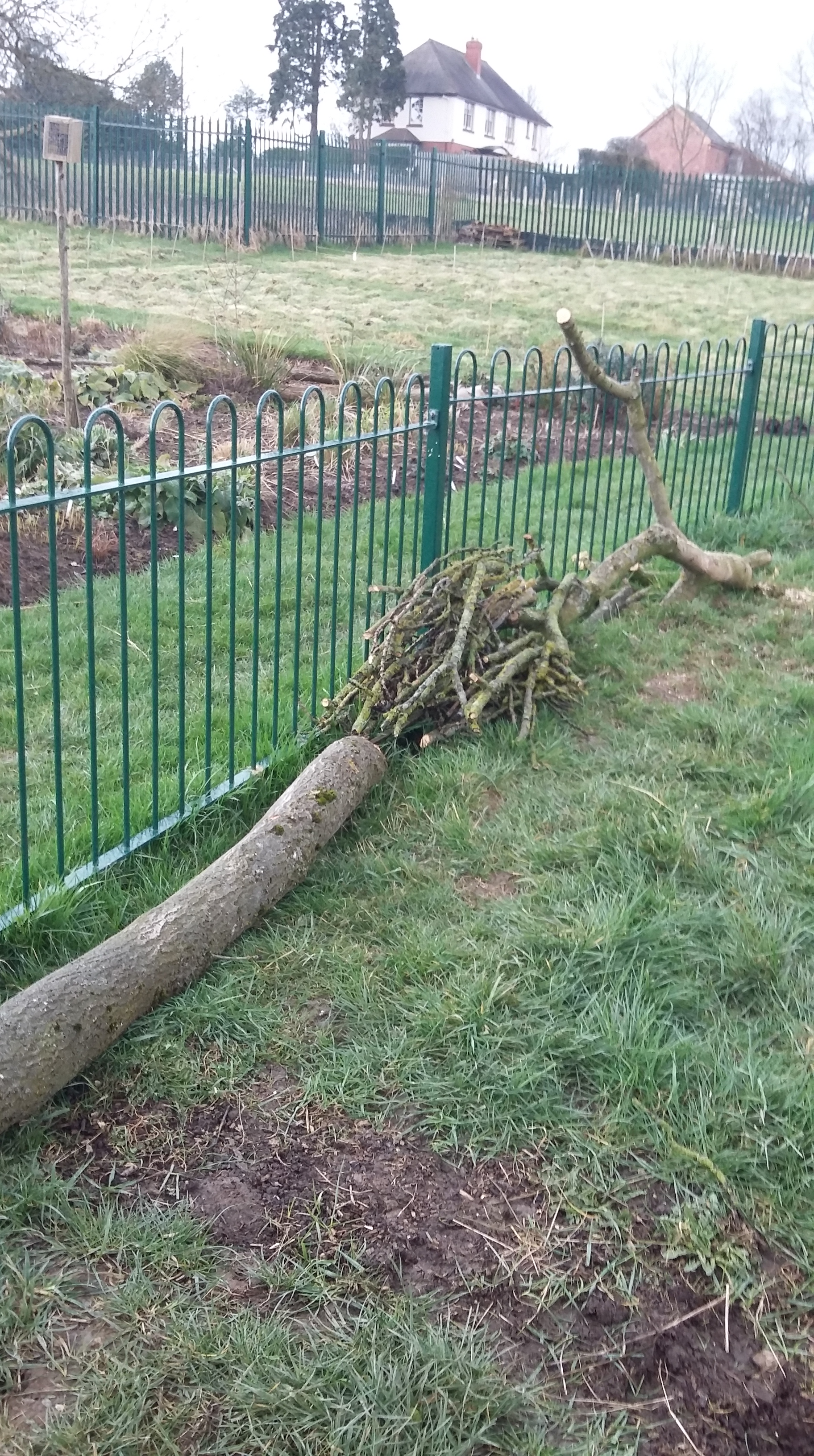
The cut bough hanging obediently could then be pulled in and dealt with on dry land. It will soon be seating for the youngsters, edging for borders and parts of insect homes and log piles and brash heaps to help attract ads shelter wildlife. We discovered an awful lot of rot within the bough so it was great relief to see it down. Trouble is there are a few more going the same way.

2015 03 16_9937 2015 03 16_9938 2015 03 16_9939

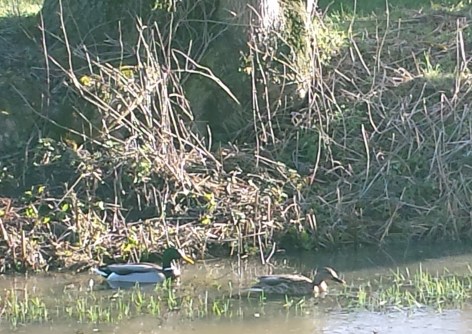
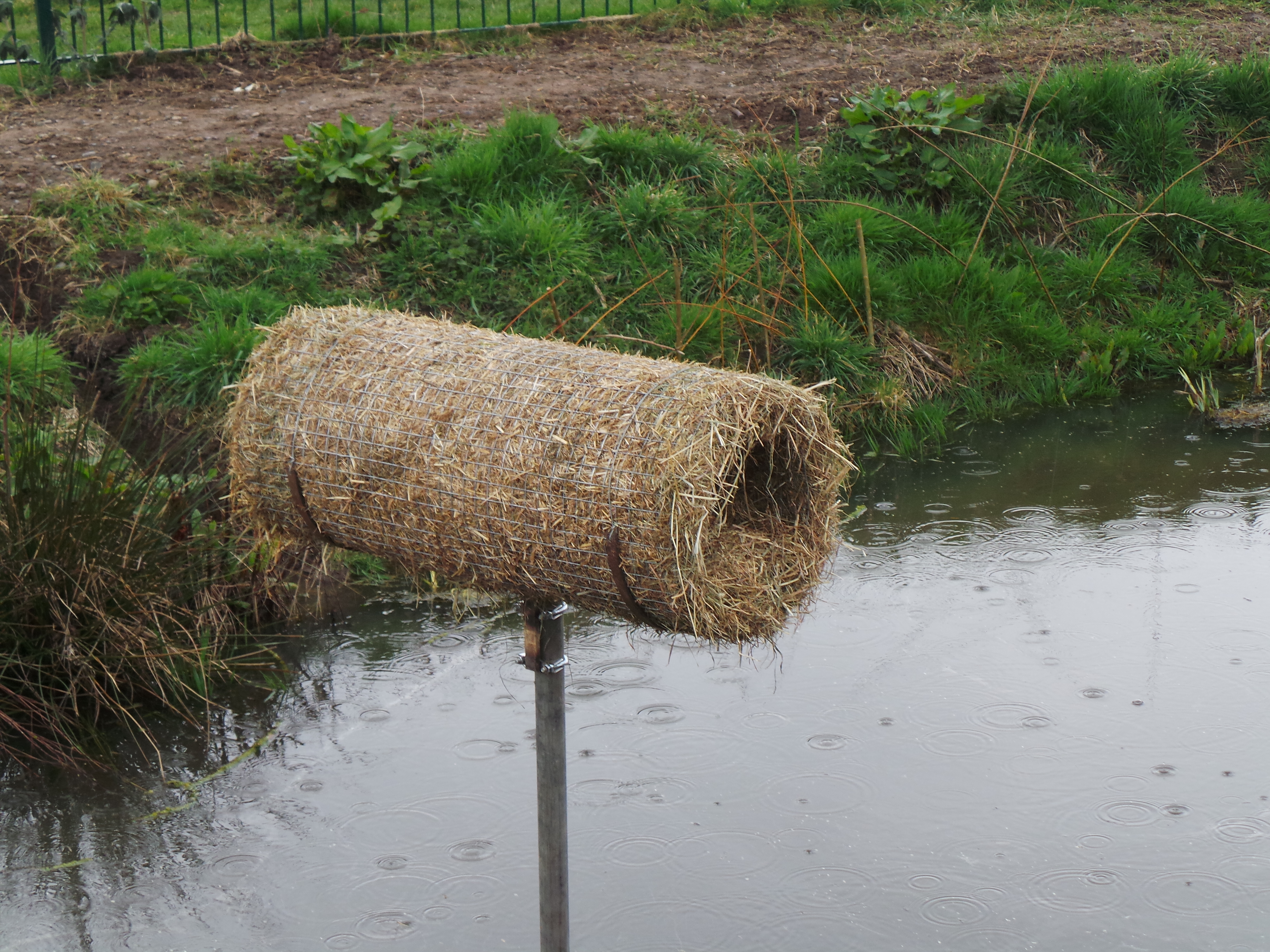
Finally we need to look at our duck tube! The photo below shows why we need one! A pair of Mallards patiently waiting!

20150217_100524

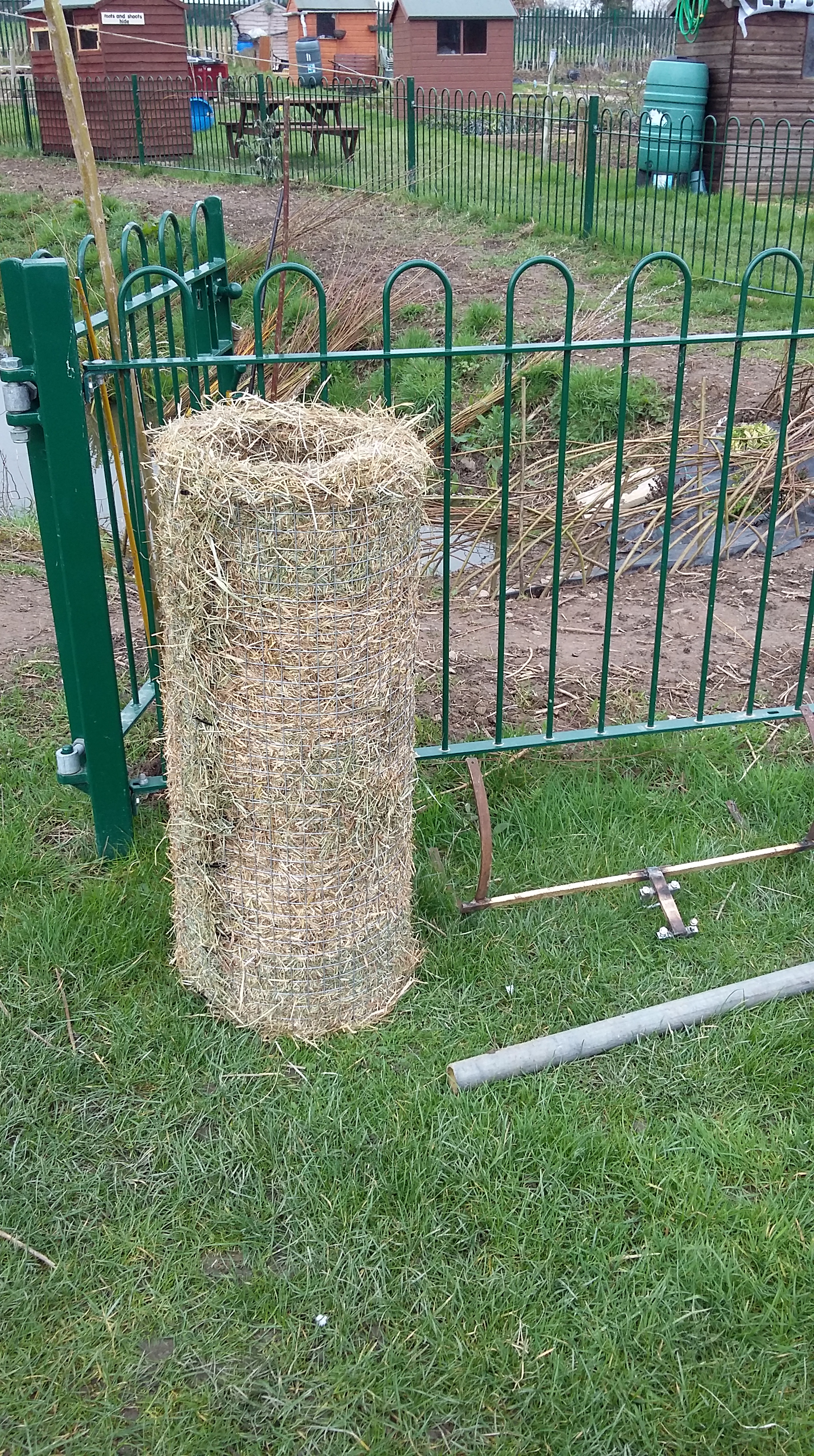
Just follow the picture sequence below and watch Mike’s adventure. Before we made the dam and changed the drainage around it to gain depth for wildlfie the pond was rarely more than 6 inches or so deep!

2015 03 16_9930 2015 03 16_9940 2015 03 16_9941  2015 03 16_9944 2015 03 16_9945 2015 03 16_9946 2015 03 16_9947 2015 03 16_9948 2015 03 16_9949 2015 03 16_9950 2015 03 16_9951 2015 03 16_9994

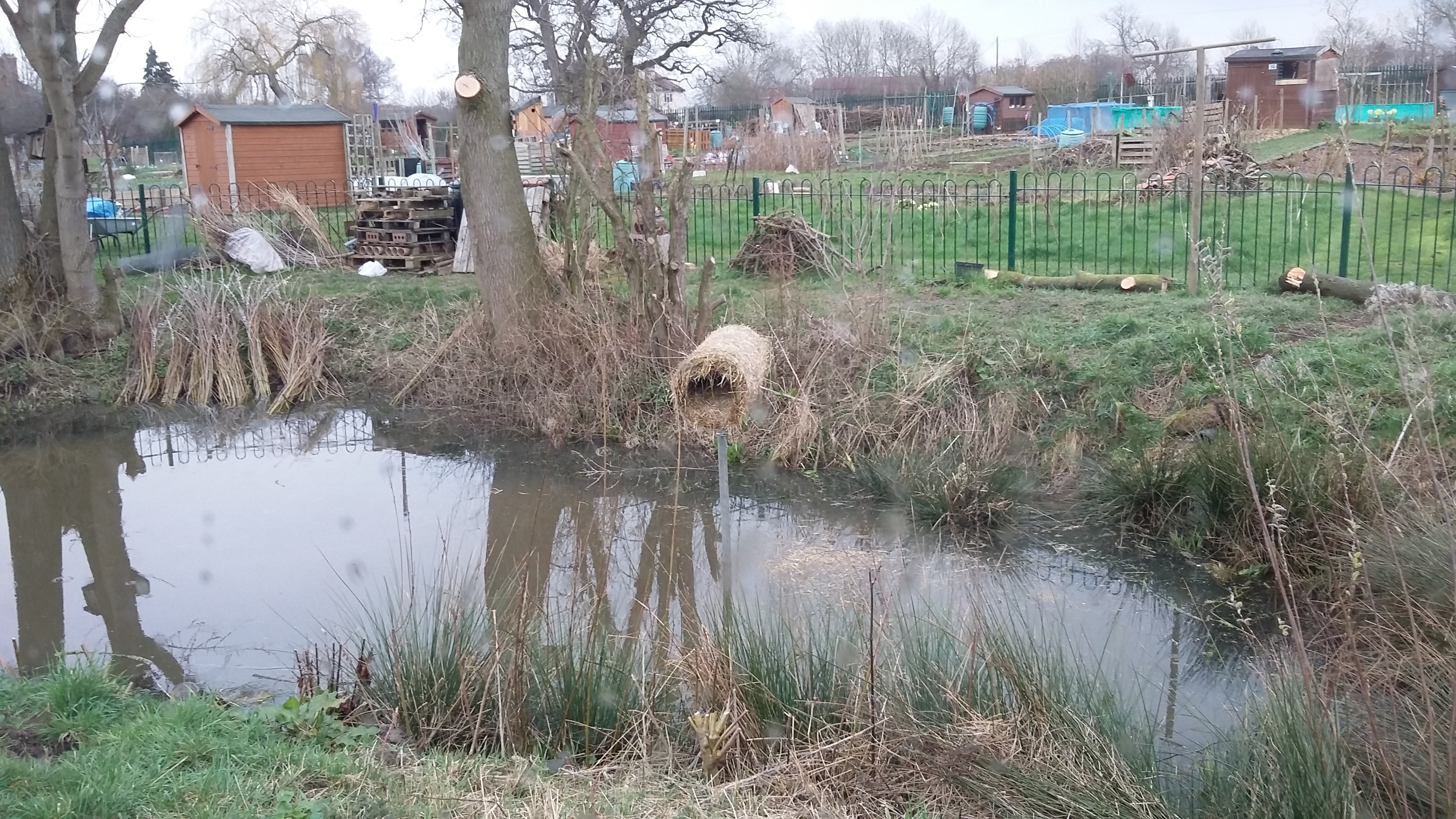
He is a good chap is Mike! What would we do without him? And below the duck tube in pride of place in the pond in a position where the children can watch activity from their new hide. Brilliant!

2015 03 16_9954

We still have further work on the pond mostly planting but we have a plan for a floating island to give wildlife somewhere to find safety and shade. Pete and Mike have a plan as you might have guessed! But of course that may be the subject of a future post visiting our super wildlife pond! One piece of info I have not mentioned are the dimensions of the area, useful I think to put things in perspective and to emphasise the size of the project. The pool is 22 yards long by 11 yards at its widest point, and the marsh area at the one end is 9 yards by 7 yards at the widest point. Around the pool and marsh between the pond and the fence, the walk around together with the planted areas vary from 3 yards to 5 yards. Quite a size!

Categories
allotments bird watching birds community gardening conservation diy garden buildings garden photography garden ponds garden pools garden wildlife gardening gardens irises log piles natural pest control recycling renovation Shropshire trees

The wildlife pond and hide at BAC – part one

When Bowbrook Allotment Community first opened we had a old farm pond on our boundary fence but it was fenced off and we had no access to it. After a few years though as the site was extended on the pond side it was integrated into our gardens and the town council put a low security fence around it with a lockable gate. We then had to wait for it to be released into our care which finally happened early in the winter of 2014. This is the story of what we have done to it so far and about our plans for its future.

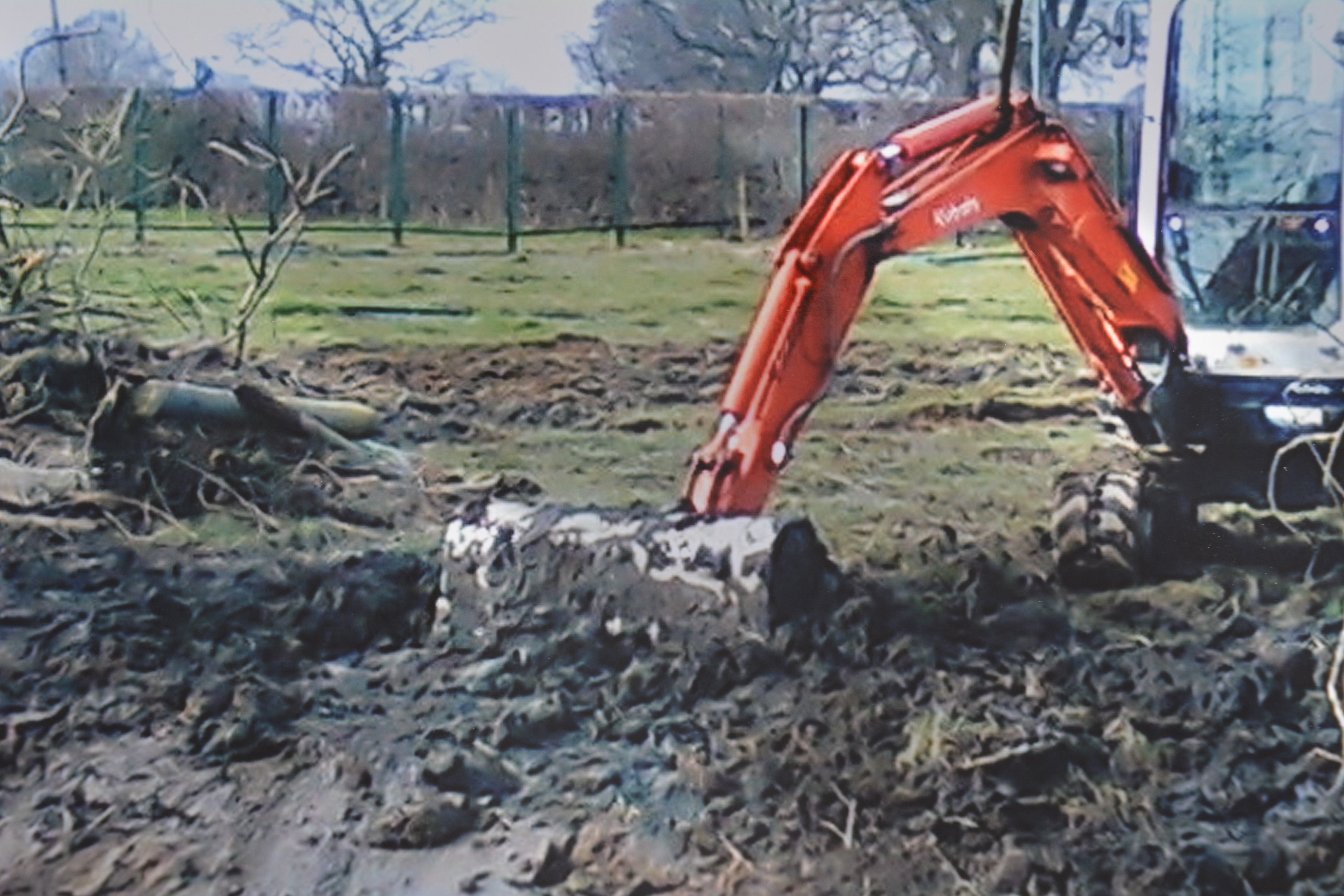
Diggers came in and scooped out all sorts of rubbish thrown into the pond by the farmer over the years, rusted coils of barbed wire, rotting fence posts, old metal fences, branches and boughs of trees. The old puddled clay layer was exposed and smoothed off. The aroma was disgusting! Sadly there was little sign of plant or animal life in the pond. At least all this disturbance didn’t upset the wildlife, the birds soon returned to the trees.

2015 03 04_9790

As a community garden determined to increase the biodiversity in our 6 acres there was no question that it would become a wildlife pond. To begin with we had to recontour the area between the pond itself and the fence to make passage around it easier and safer. It was hard graft and took a lot of volunteer hours to get it done.This will enable us to keep a path mown all the way around the pond for maintenance and enjoyment. But first we must rotavate the pathway to prepare it for grass seed sowing as soon as the weather allows.

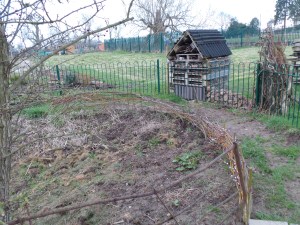
You can see from the group of photos below the area we have to work with and the work we have done so far, the lopping of the trees, the path leveling and the preparation of the bog garden. The pond itself is about 20 x 10 metres and the marshy patch about 8 x 7 metres so pretty impressive! And then there is a margin area varying in width between just over a metre to about 4 metres. W have set ourselves a mammoth task! But we have allowed ourselves a year to get it right. So far things are moving along much more quickly than anticipated as opportunities have come our way.

2015 01 18_9352-1

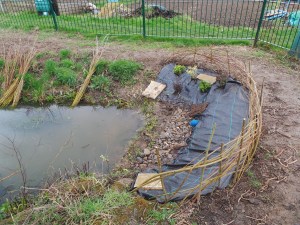
The next photo shows the bog area at the end of the pond where the drainage pipes from adjacent farm land brought the water into the pond. This was a steep sided marsh area with a tiny stream meadering through it. We have piped the water below the area now and re-contoured the sides to make it safer. This area will be planted with native and other wildlife attracting plants such as King Cup, Liatris, Yellow Flag and Flowering Rush.

2015 01 18_9353-1

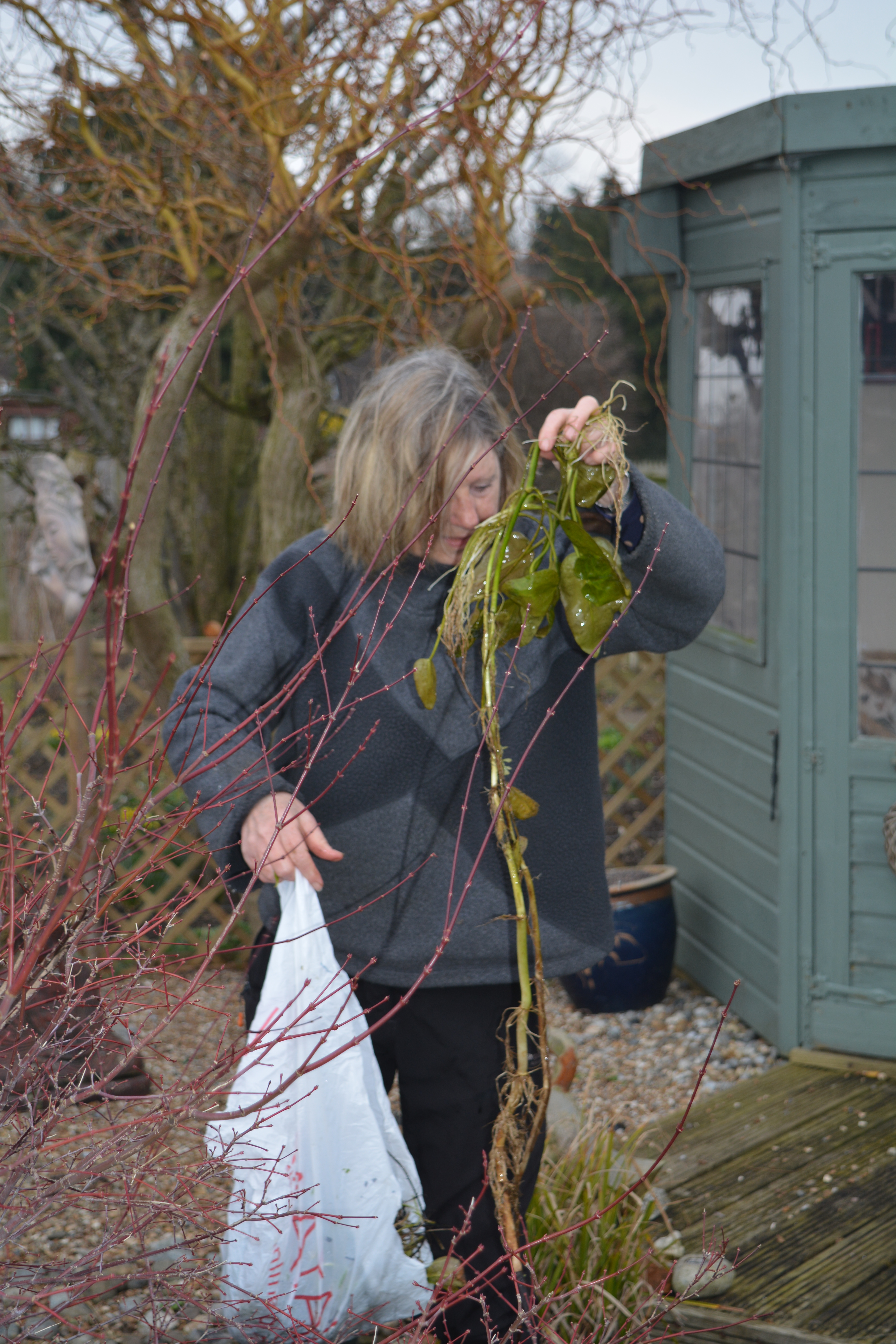
We have recently started the planting and will soon be adding far more. Some we will get as donations from our members and neighbours but others we will get from local nurseries once they have got their stocks out. So far we have planted different sorts of Irises, Water Mint, Water Forget-me-Not, Bog Beans and oxygenators. The first pair of pics shows Jude collecting plants from our pond at home and the second pair shows Sherlie planting some in the new pond.

2015 03 17_0035 2015 03 17_0034

2015 03 16_9942 2015 03 16_0007

Several mature Ash trees surround the pond so some surgery was required to let more light in and help plants grow healthily. The bough below was slowly collapsing right over the water across to the far bank so caused us great concern. We had to cut it before it fell! We need to look after the health and safety of our members. I shall show this work in part two.

2015 03 16_9993

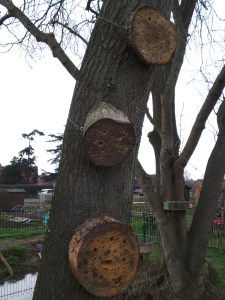
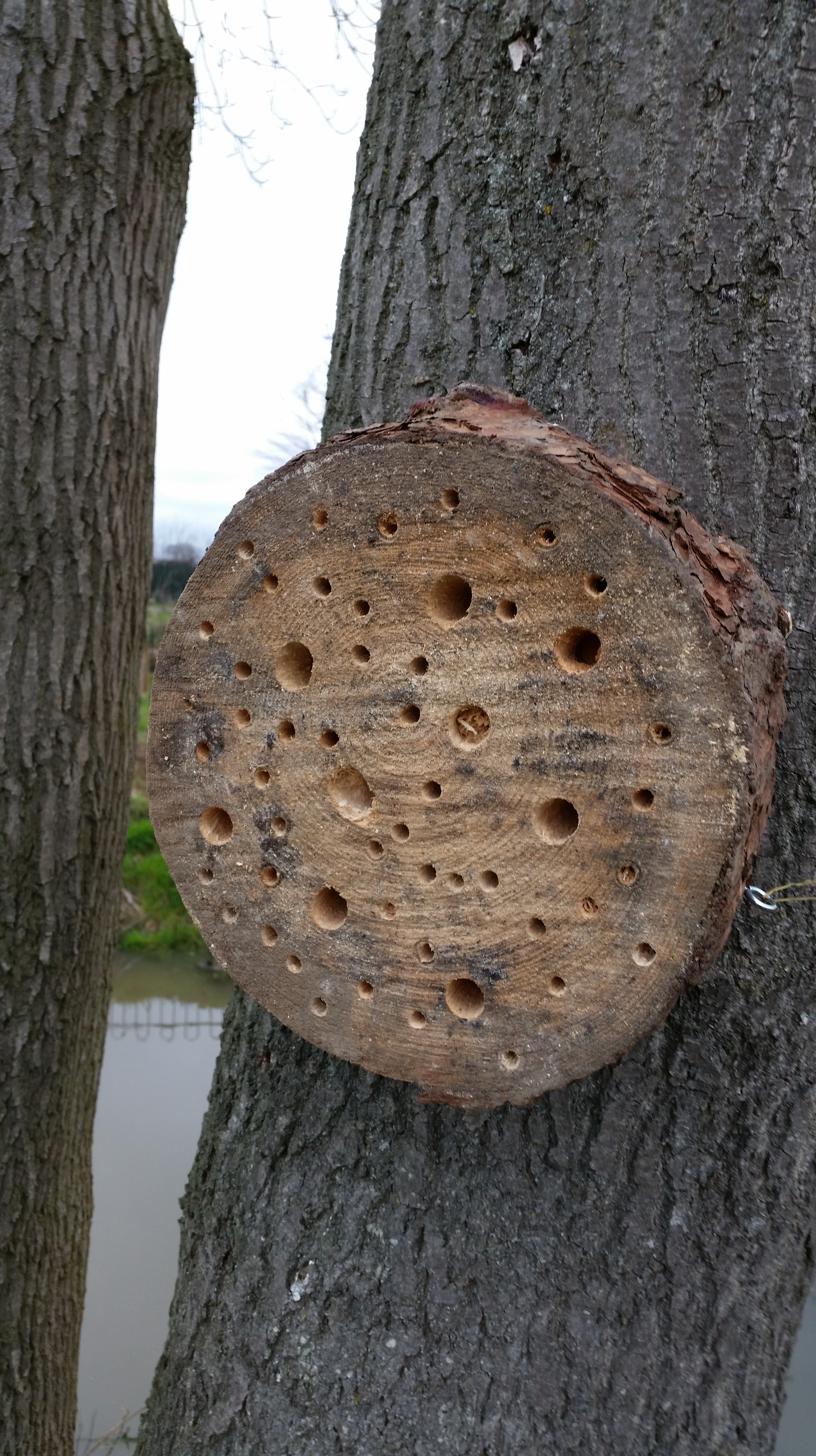
We have put up nest boxes, created a bird feeding station and are creating lots of mini-beast and amphibian habitats. Several are up in the group of Ashes that border one end of the pond.

2015 02 26_9670 2015 03 16_9991 2015 03 16_99852015 03 16_99862015 03 16_9995

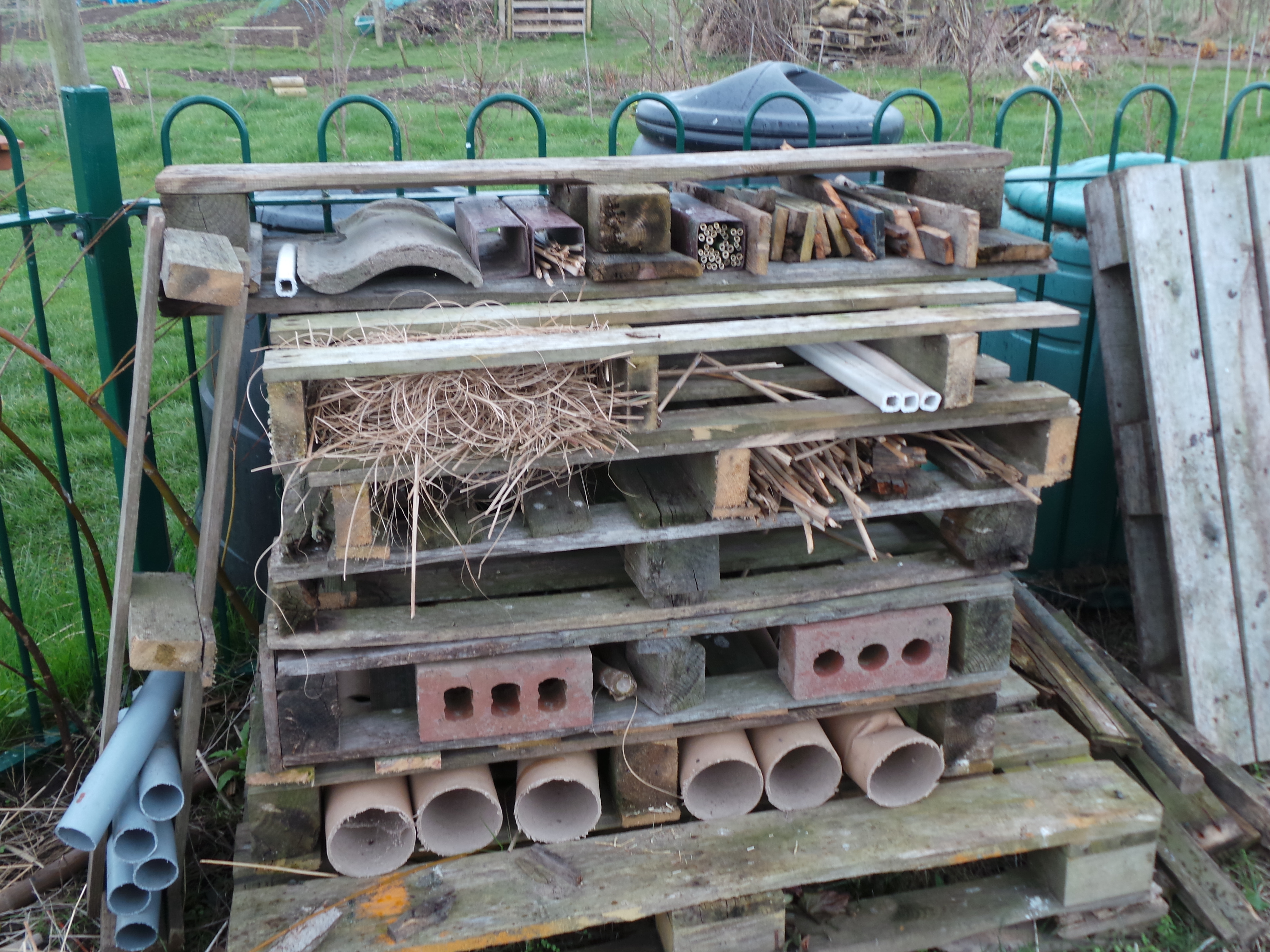
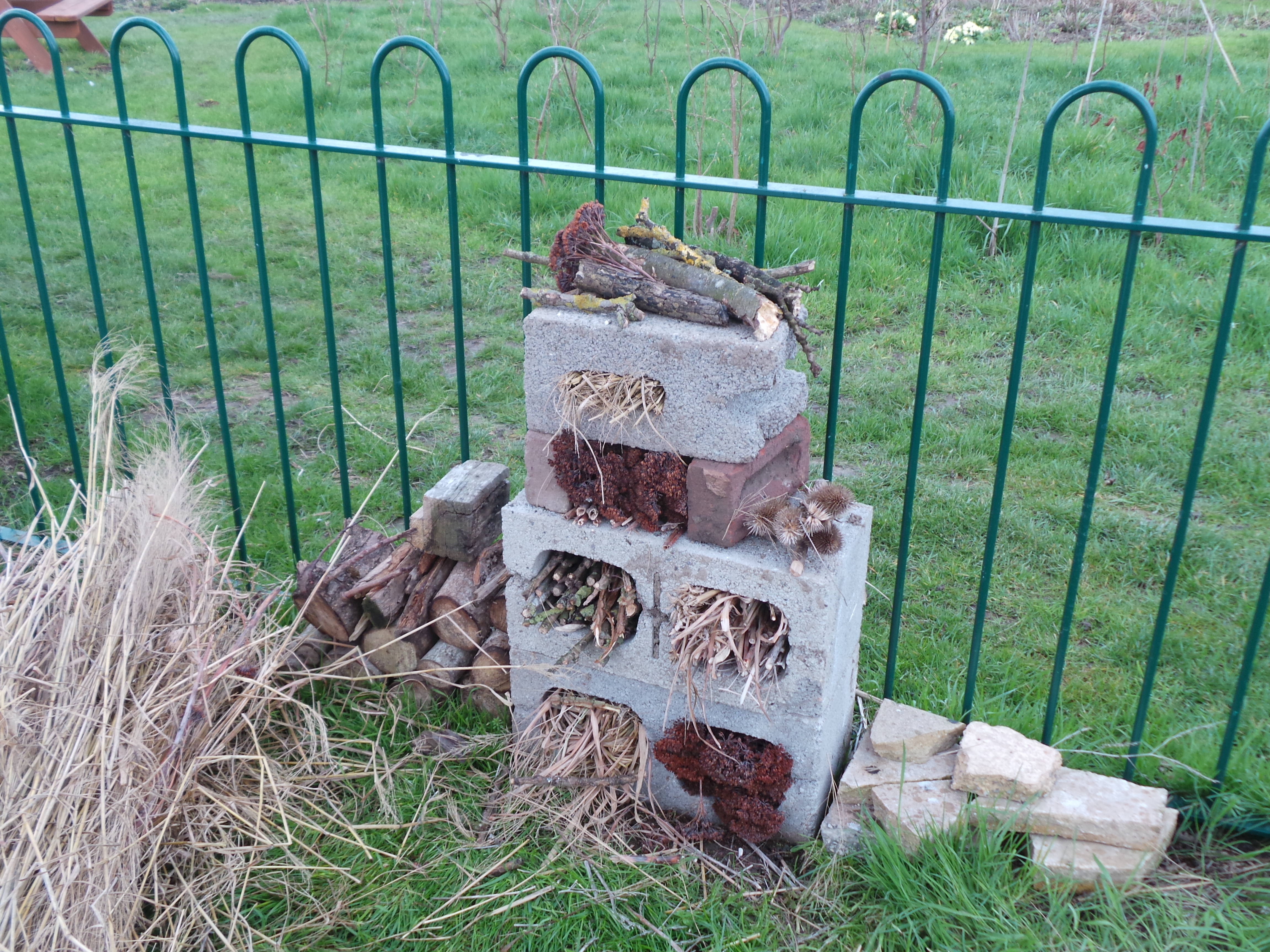
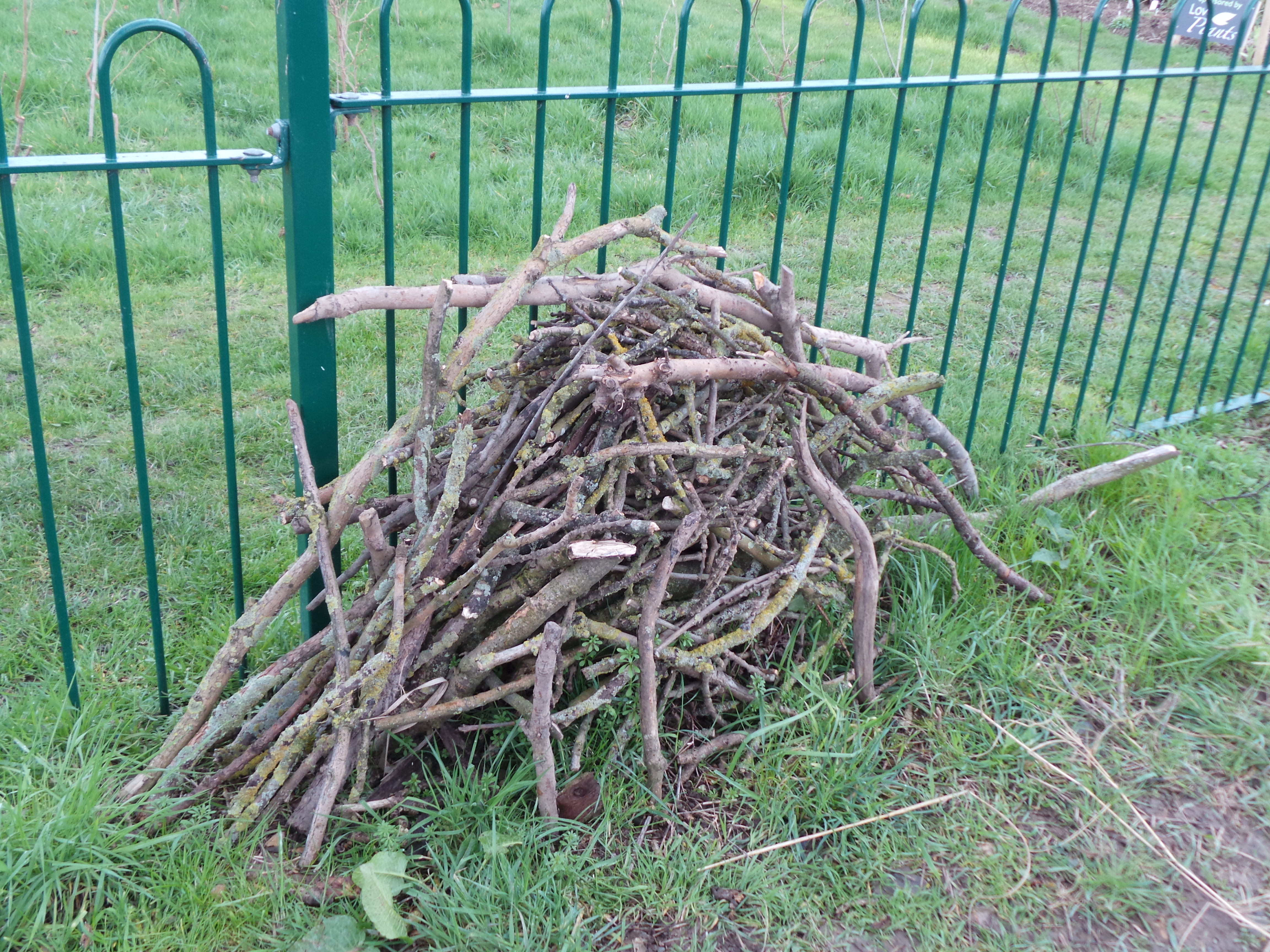
We have created extra wildlife habitats and shelters along the perimeter fence creating them from recycled items and natural materials. 2015 03 16_99872015 03 16_9988 2015 03 16_9989          Probably one of the most exciting elements of the whole project has been the creation of a bird hide for the children to use. This began as a battered old shed donated to us by a plot holder and transformed into a rather fine hide complete with a noticeboard for recording,some identification charts and a small library of identification books. Two plotholders, Sean and his dad Vince volunteered to carry out the conversion and soon other family members joined in. The finished hide was way beyond our expectations as they managed to fit a kneeling bench down the one side to enable children to look through the hatches they had constructed. For wet days when the hatches need to stay closed they added a perspex window. All this from my very simple plans and drawings!

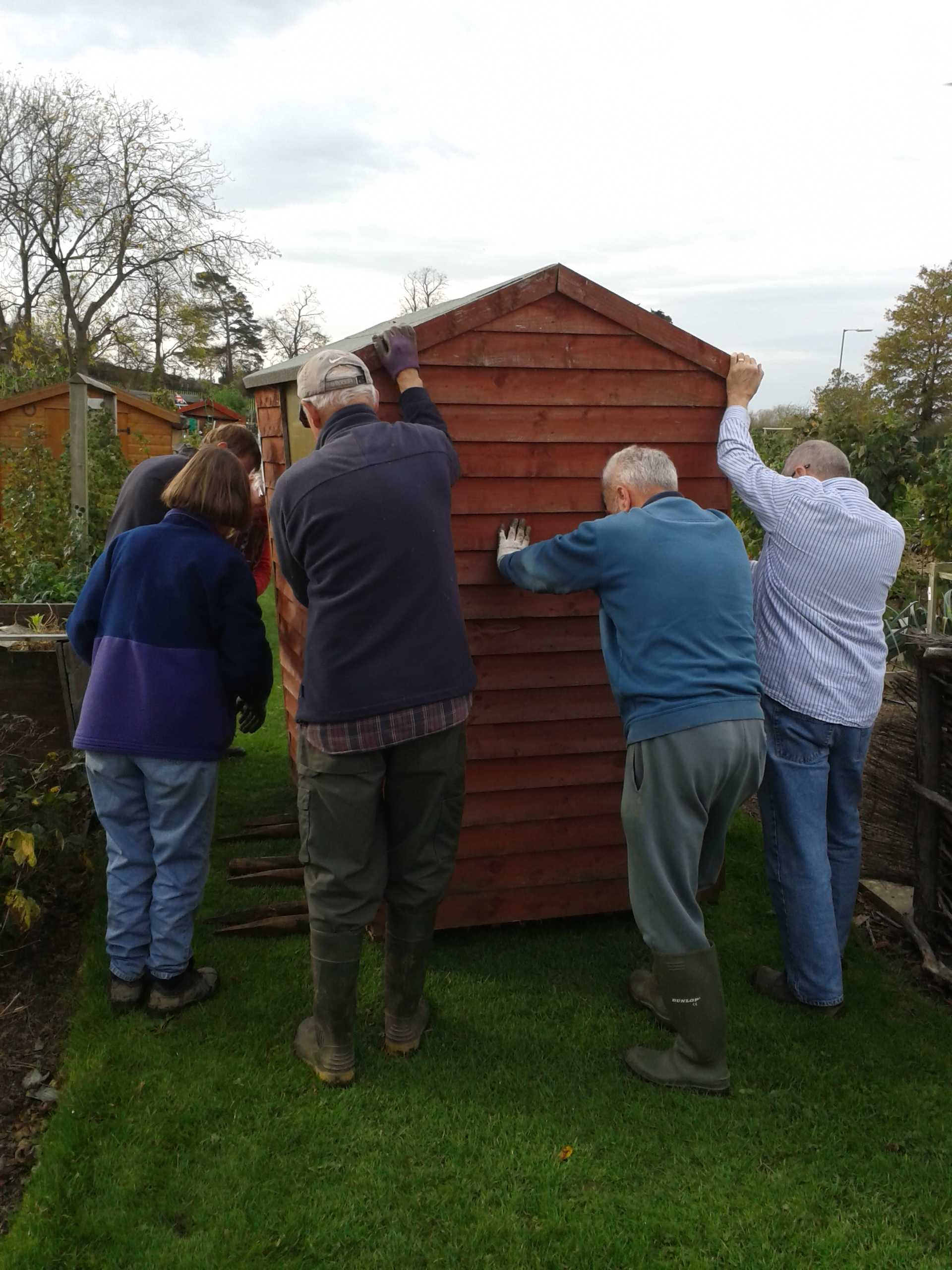
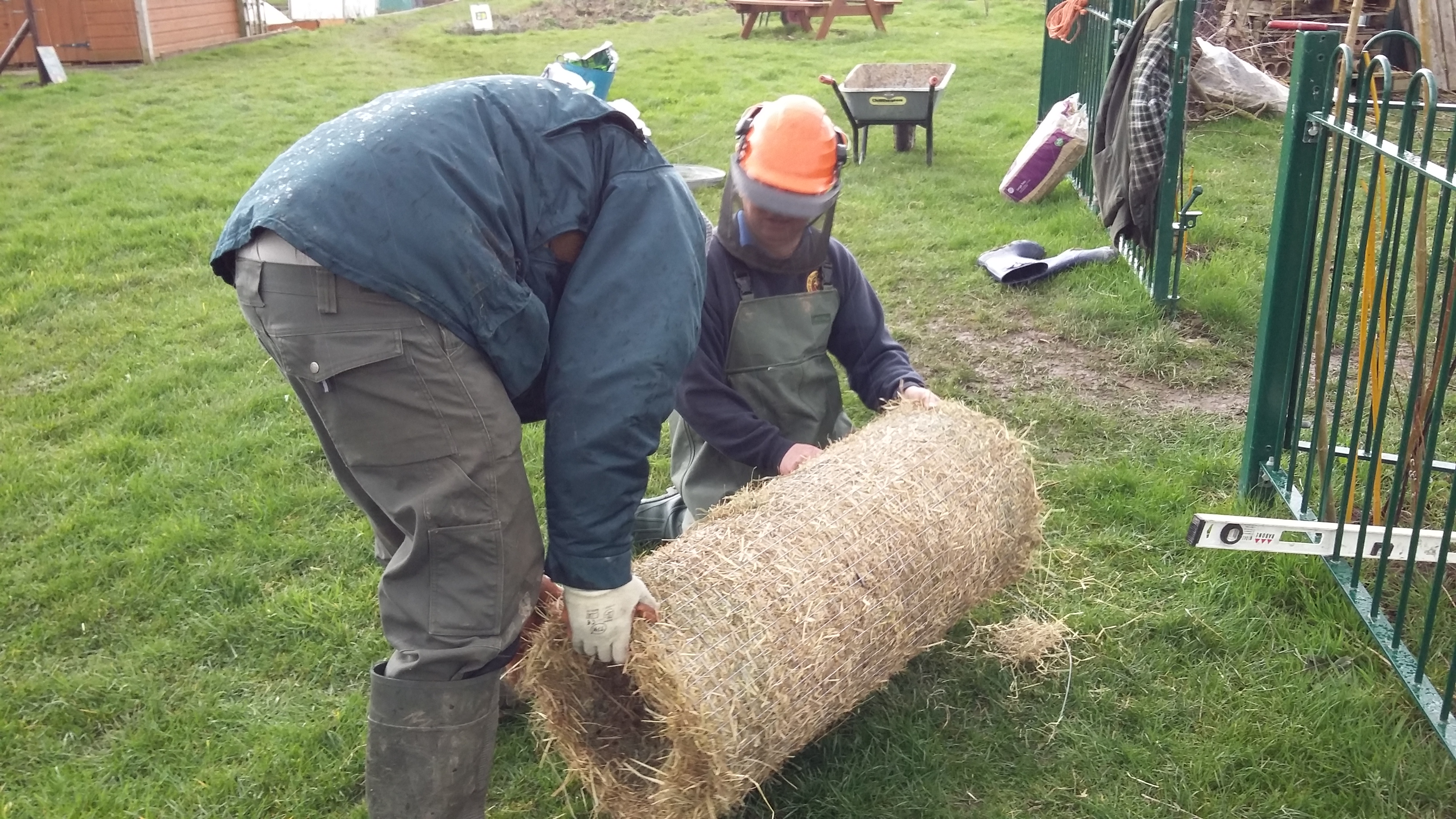
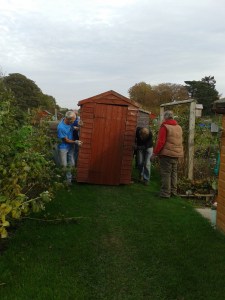
Here we are moving the old shed from one side of the site to the other in true Roman style, rolling it along on round stakes. It proved a great adventure as it kept trying to change shape and the door constantly flew open.

2014 12 08_8466 2014 12 08_8468

And here is the shed now transformed into a hide, just like the ugly duckling turning into a swan. The rest of the story of how the transformation came about will be in part two.

2015 03 16_0004  2015 03 16_0005

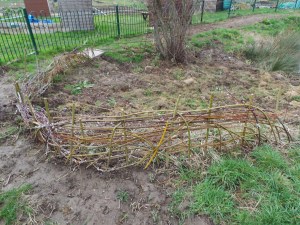
Wherever the pathway gets close to the bank we have planted a low boundary hedge from willows harvested on site and have woven whips of different coloured willows from the brightest yellow to the darkest black  through it. Similarly at the outlet end where water drains to prevent flooding, we have a steep area bank which we have given a similar low willow fence and we are slowly planting up the slopes with small ground covering shrubs that also attract bees, butterflies and hoverflies.

2015 03 16_9998 2015 03 16_00022015 03 16_0000 2015 03 16_9983


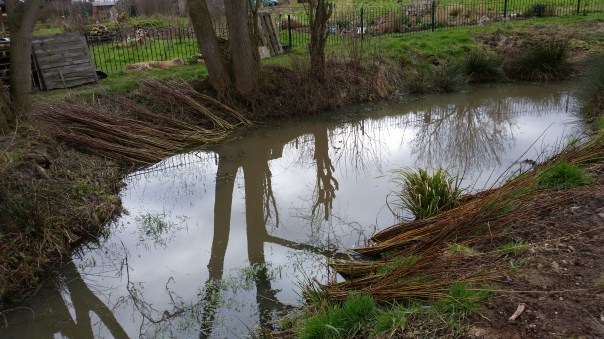
We stored the willow prunings we had after coppicing and pollarding our “Withy Bed”. The photo shows these awaiting action and illustrate just how many colours of willow we have to play with

2015 02 26_9667 2015 02 26_96682015 02 26_9669

A recent job was to make barley straw pouches to drop in the water to help keep down the growth of algae and blanket weed – a good organic solution. Look closely at the picture below to see if you can spot one.

2015 03 09_9802

We know there are some critters who are looking forward to us finishing or at least being somewhere near a livable place for them. the resident group of Weasels, our Mallard families and the site’s frogs. We must pamper to their needs as they entertain us and do much of our pest controlling.

2014 11 28_7933 2014 12 08_85932015 02 28_9789_edited-1 20150207_141312

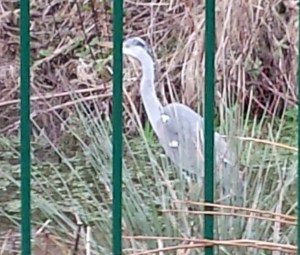
The bird in the fourth of the above photos though arrived amid mixed feelings from us all. Our Grey Heron is most definitely a handsome bird but he is a threat to our fish. We have a small population of native Rudd in the pond brought in as eggs on the feet of the ducks. Sadly until we get some plant cover for them to seek refuge beneath they will soon be wiped out by the Heron. The photo was taken on a member’s mobile phone through our green fence.

In part two we will look at details of how the hide ended up, some of our tree surgery work and the adventures we had putting in our duck tube.


Categories
birds garden wildlife gardening log piles natural pest control wildlife Yellow Book Gardens

Wildlife Homes and Green Men

When we opened our garden last August under the auspices of the National Garden Scheme and appeared in its famous Yellow Book we included in our details that we welcomed children. We were aware that few gardens make this obvious so we decided to reverse the trend. We made a few quiz sheets available for them to encourage them to look closely. They were very popular and most youngsters had a go. Some were very determined to find everything on the sheets. Great fun!

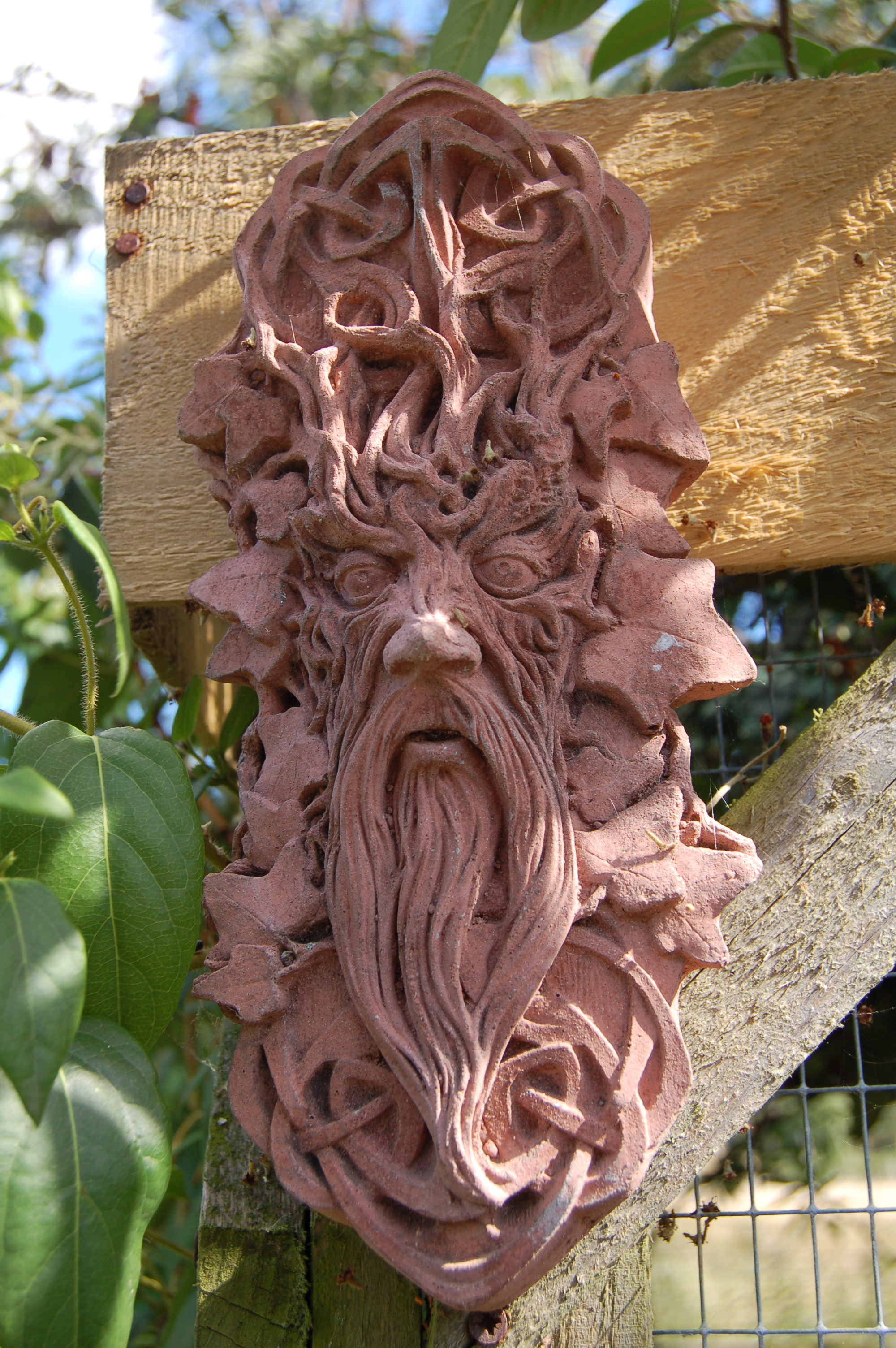
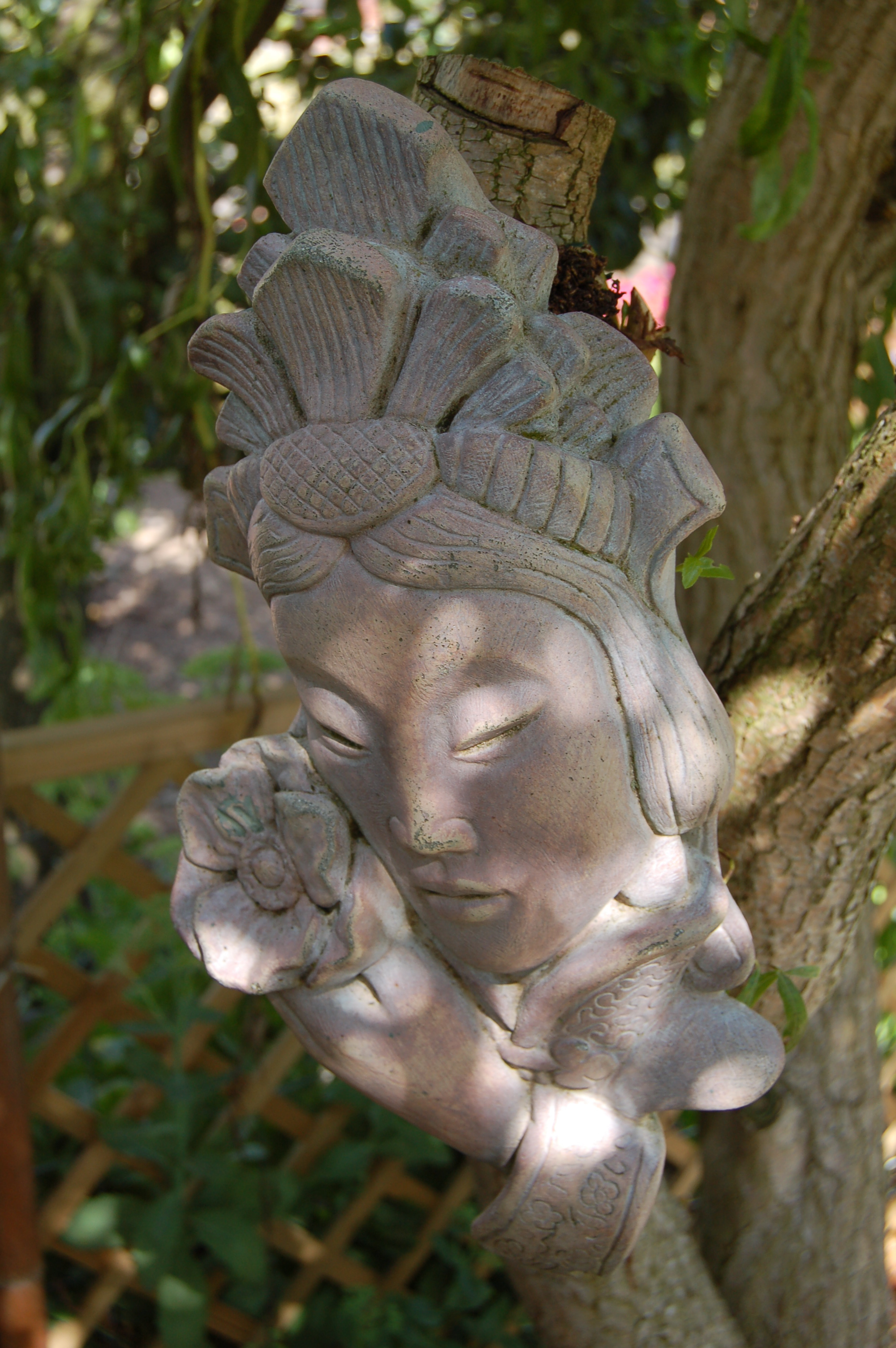
One quiz sheet featured our little collection of “green men” which we have scattered around the garden, some of which are hard to find.

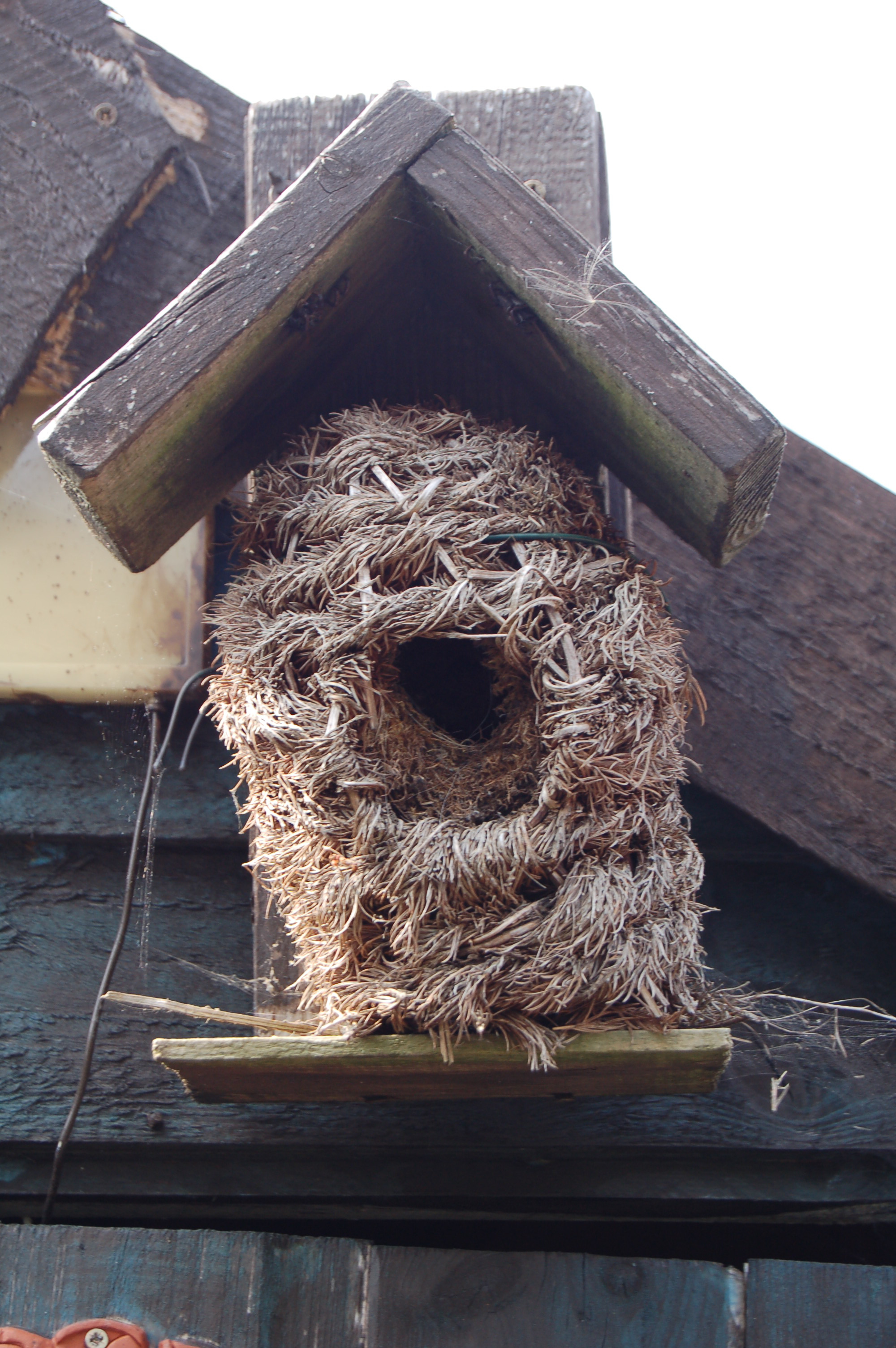
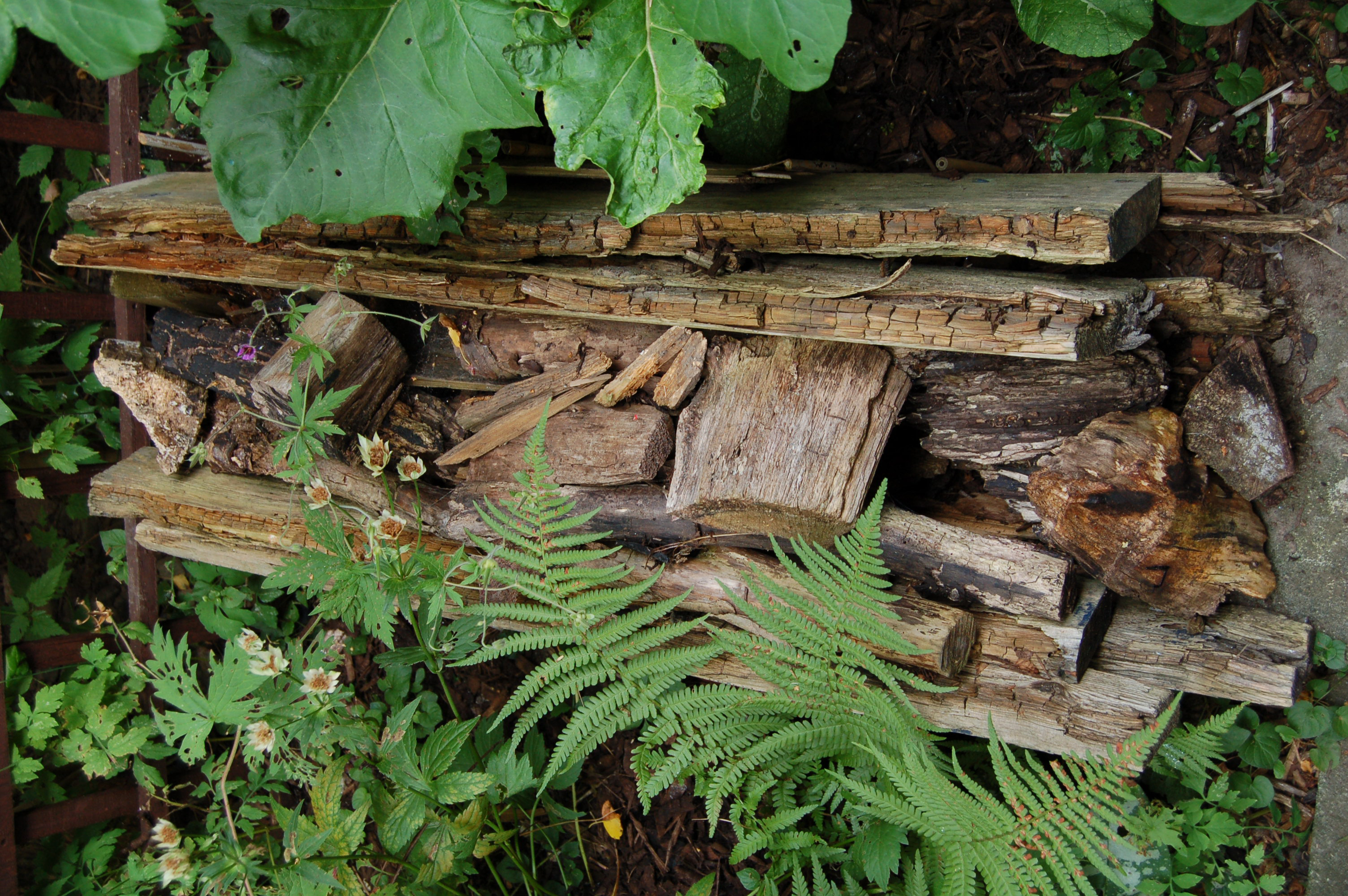
The other invited our children visitors to seek out the large variteies of wildlife homes, shelters and nesting places.

I thought you might like to see the photos of the green men and our wildlife features. Amongst the green men is a definite intruder who lives in our Japanese Garden on the trunk of the Salix flexuosa.

2014 07 31_2248-1

2014 07 31_2249-1 2014 07 31_2250-1 2014 07 31_2251-1 2014 07 31_2252-1 2014 07 31_2247-2

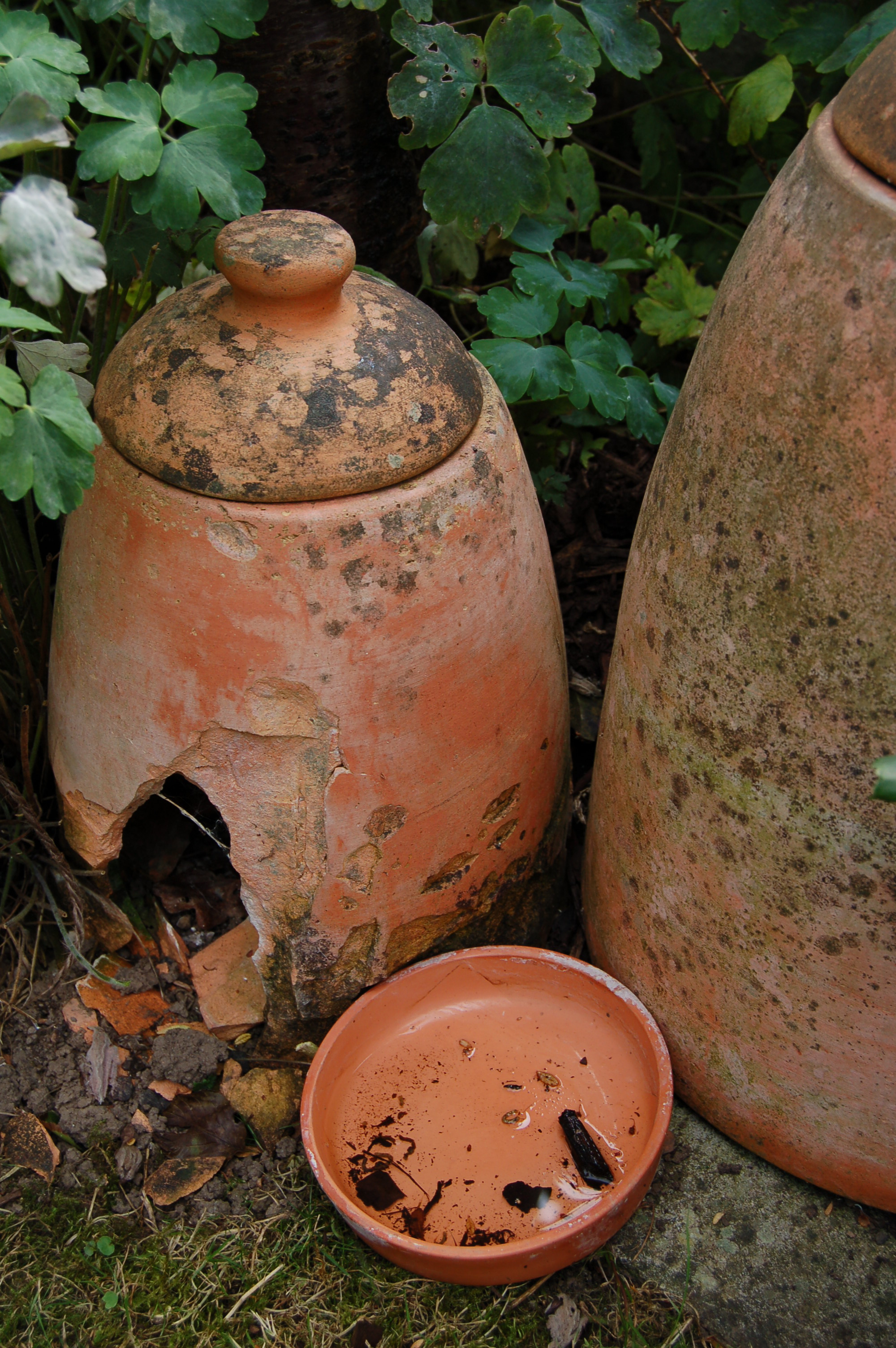
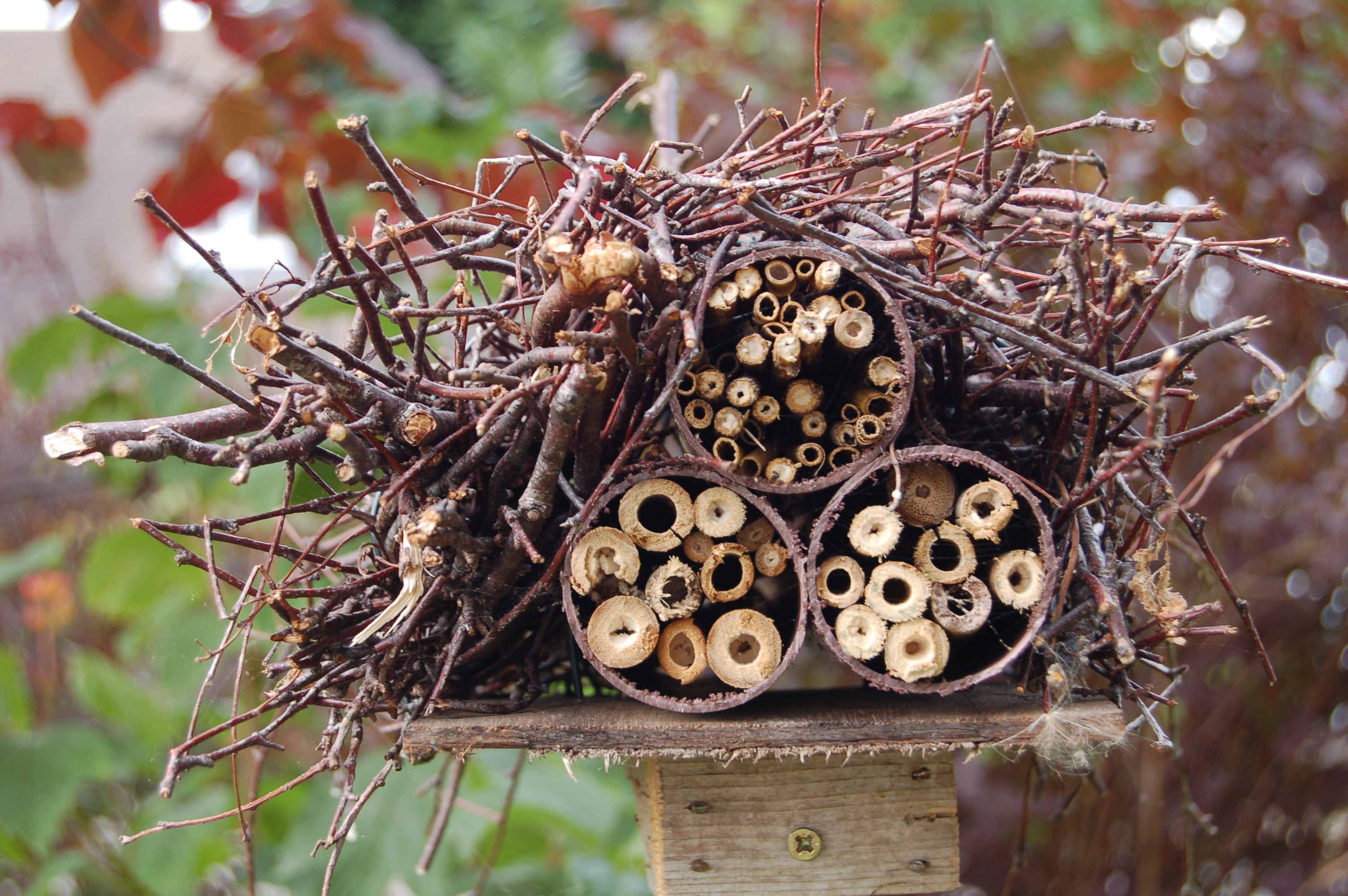
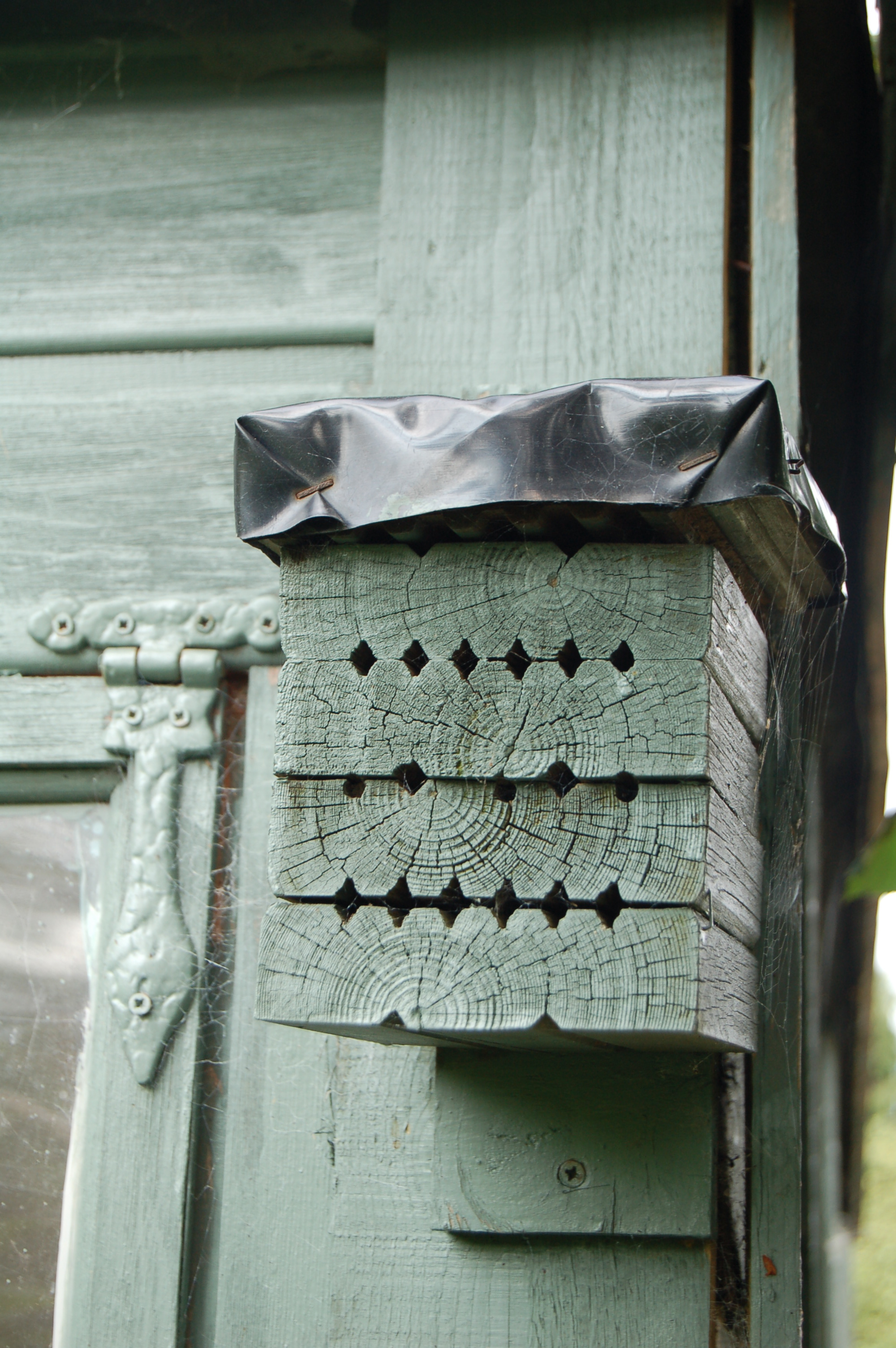
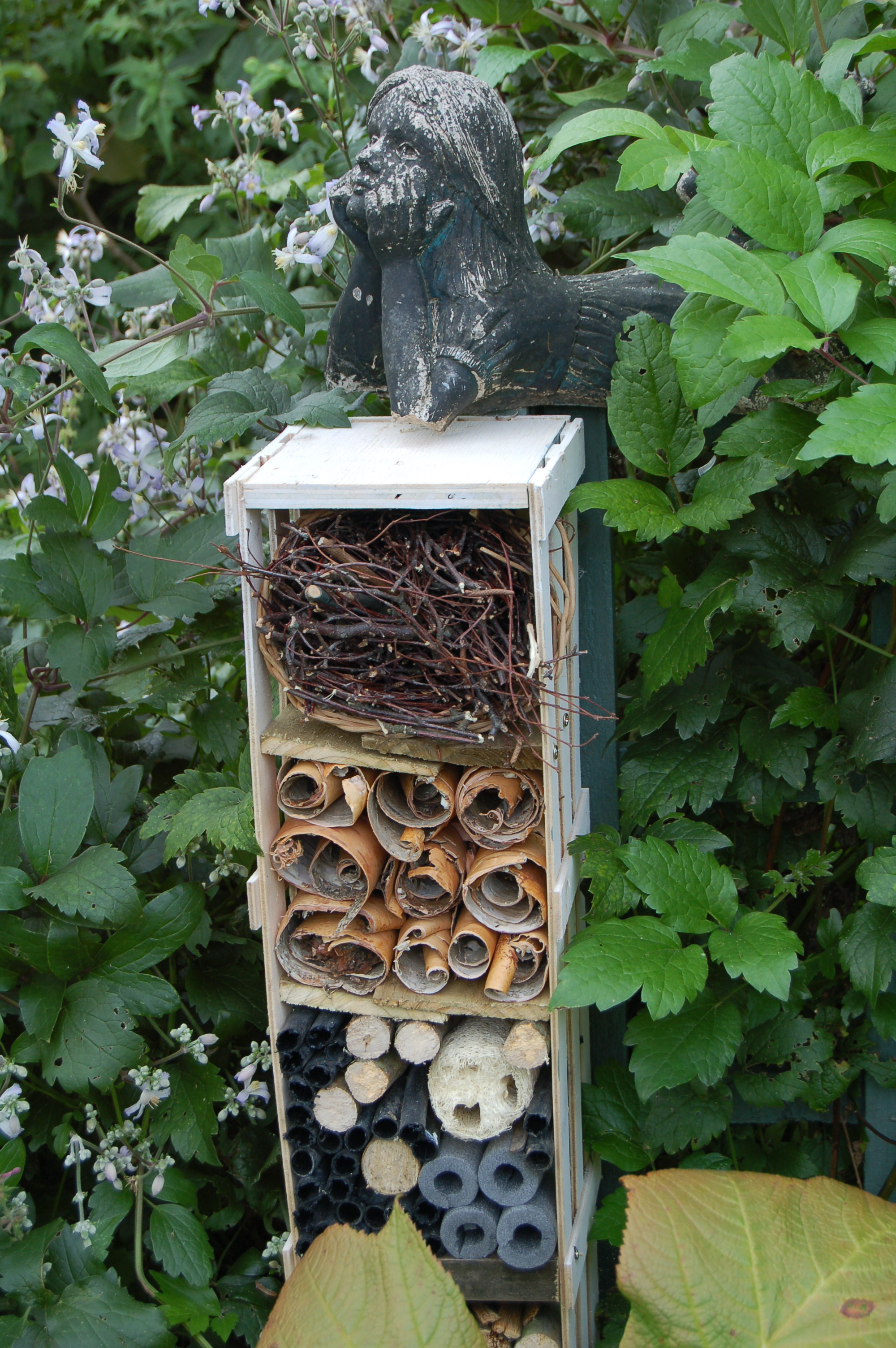
So now to our huge variety of wildlife features all designed and carefully placed to welcome all sorts of creatures, large and small.

Places for our feathered friends to roost and nest ………………

2014 07 31_2230-1 2014 07 31_2242-12014 07 31_2246-1 2014 07 31_2240-1

2014 07 31_2231-1 2014 07 31_2234-1

Places for beetles, invertebrates and amphibians ……………………….

2014 07 31_2229-1 2014 07 31_2235-12014 07 31_2243-1

Places for bees, lacewing and ladybirds ……………..

2014 07 31_2228-1 2014 07 31_2237-1

2014 07 31_2233-1 2014 07 31_2245-12014 07 31_2239-1

Places for all sorts of beneficial creatures – whoever wishes to drop in ……………………

2014 07 31_2232-1 2014 07 31_2238-1 2014 07 31_2241-1

We will have to think up some more quizes for our young visitors later this year.


Categories
birds garden photography garden wildlife gardening ornamental trees and shrubs shrubs Winter Gardening winter gardens

My Garden Journal – January

As promised I am creating a garden journal throughout the year to celebrate our garden and this is the first post looking at January. I am writing and painting in my personalised “Moleskine” notebook, a special gift from our daughter and son-in-law, and as the first photo shows it has been embossed with the name of my blog. A beautiful and most luxurious book which feels a pleasure to handle and an honour to write in and a delight to create drawings and paintings in.

2015 02 04_9357 2015 02 04_9358_edited-1

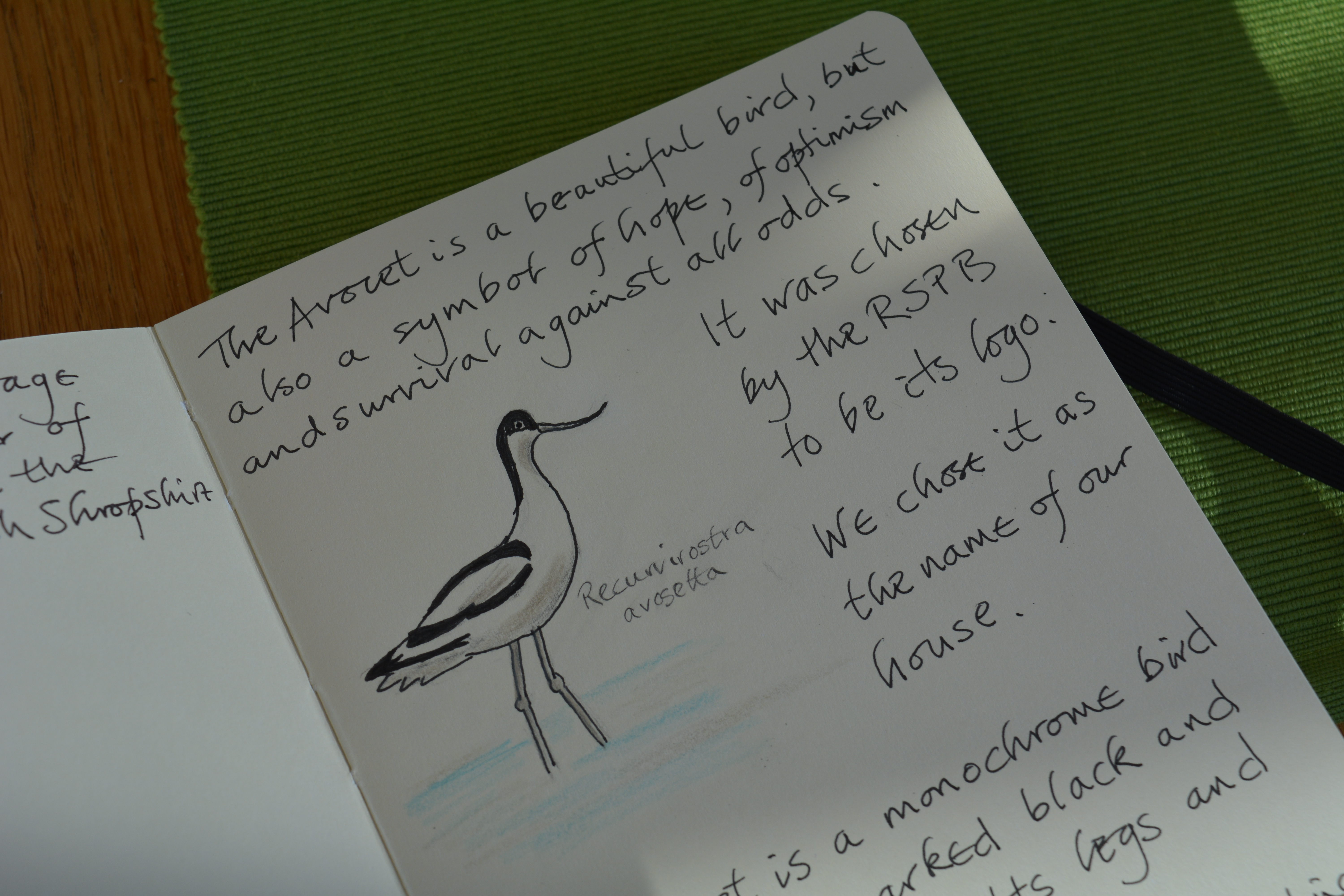
Early on in my journal I have written about the Avocet, the beautiful wader after whom we name our house and made an attempt at a drawing of one.

2015 02 04_9359

2015 02 04_9361_edited-1 2015 02 04_9360_edited-1

I wrote about the scented shrubs that keep us company in the January garden.

2015 02 04_9364_edited-1

Daphne bhuloa “Jacqueline Postil” and Sarcococca confusa.

2015 02 04_9381 2015 02 04_9380

Cornus mas, the Cornelian Cherry and our two Hamamelis “Diane” and “Jelena”.

2015 02 04_9382 2015 02 04_9376 2015 02 04_9375

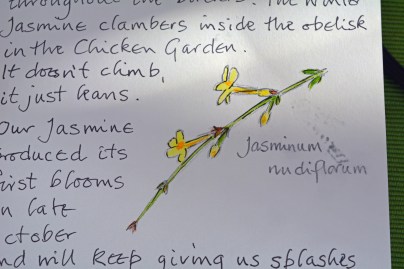
I moved on to write about our Winter Flowering Jasmine and once again got out the watercolours.

2015 02 04_9362_edited-1

2015 02 04_9363_edited-1

We enjoyed a couple of magic moments involving birds of prey in January and I recorded them in my journal.

2015 02 08_9433_edited-1

What a pleasure to have a Merlin in the garden and a Marsh Harrier flying over – I don’t expect that will happen too often!

Enjoy reading a few pages ……

2015 02 08_9434

2015 02 08_9435


Well, that is it for my January journal. February is here already so my journal is gaining new pages, which will feature in my next Garden journal post.


Categories
birds buildings fruit and veg garden buildings garden design garden photography garden wildlife gardening gardens gardens open to the public grow your own hardy perennials irises kitchen gardens light National Trust ornamental trees and shrubs The National Trust walled gardens walled kitchen gardens Winter Gardening winter gardens

Croft Castle Month by Month – January

Welcome to the first post in my series of monthly posts looking at a local garden. Throughout 2014 we traveled northward through the Shropshire Plains into neighbouring county Staffordshire in order to visit Trentham Gardens.

Throughout 2015 we will travel south to Croft Castle just into our neighbouring county of Herefordshire. We live at the northern tip of the Shropshire Hills, with the welcome sign just three-quarters of a mile away. In order to get to Croft we have to go southward through this range of hills, one of the most beautiful upland areas in the UK. We will enjoy our journeys!

At the entrance building a “Tramper” scooter acted as an effective sign. As we wandered towards the garden we enjoyed views of some of the estate’s ancient trees. These old massive Sweet Chestnuts are hundreds of years old and each year another dies. Luckily new ones have been planted as replacements. A natural mulch of leaves and nut casts are snuggled at their feet.

2015 01 01_9072 2015 01 01_9075 2015 01 01_9078

2015 01 01_9074 2015 01 01_9076

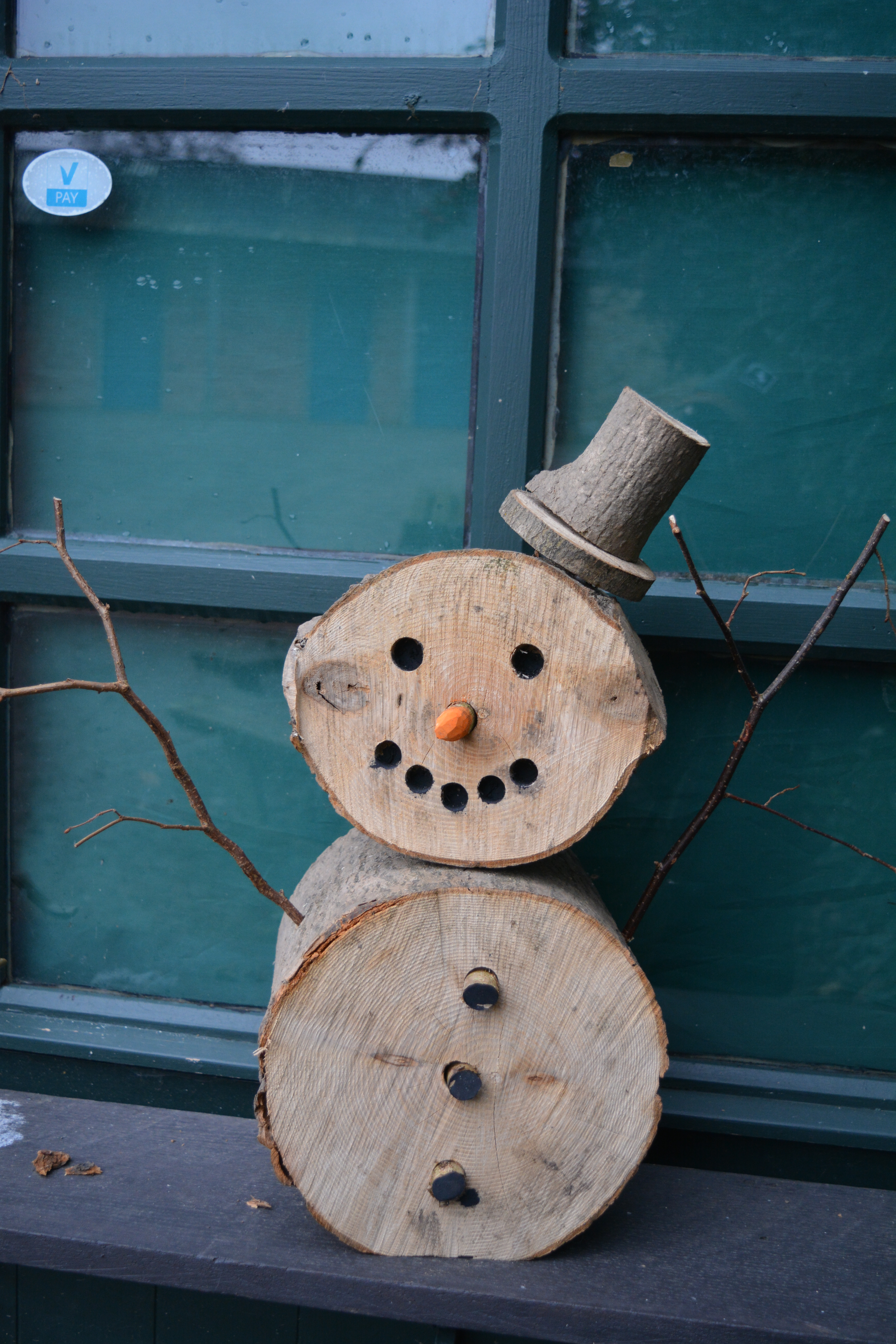
We soon met a much smaller and younger character, placed to help celebrate wintertime. We were to find many more of his friends. Currently there is an evening event on here based on light and these trees were part of it. We vowed to visit one evening!

2015 01 01_9081 2015 01 01_9083

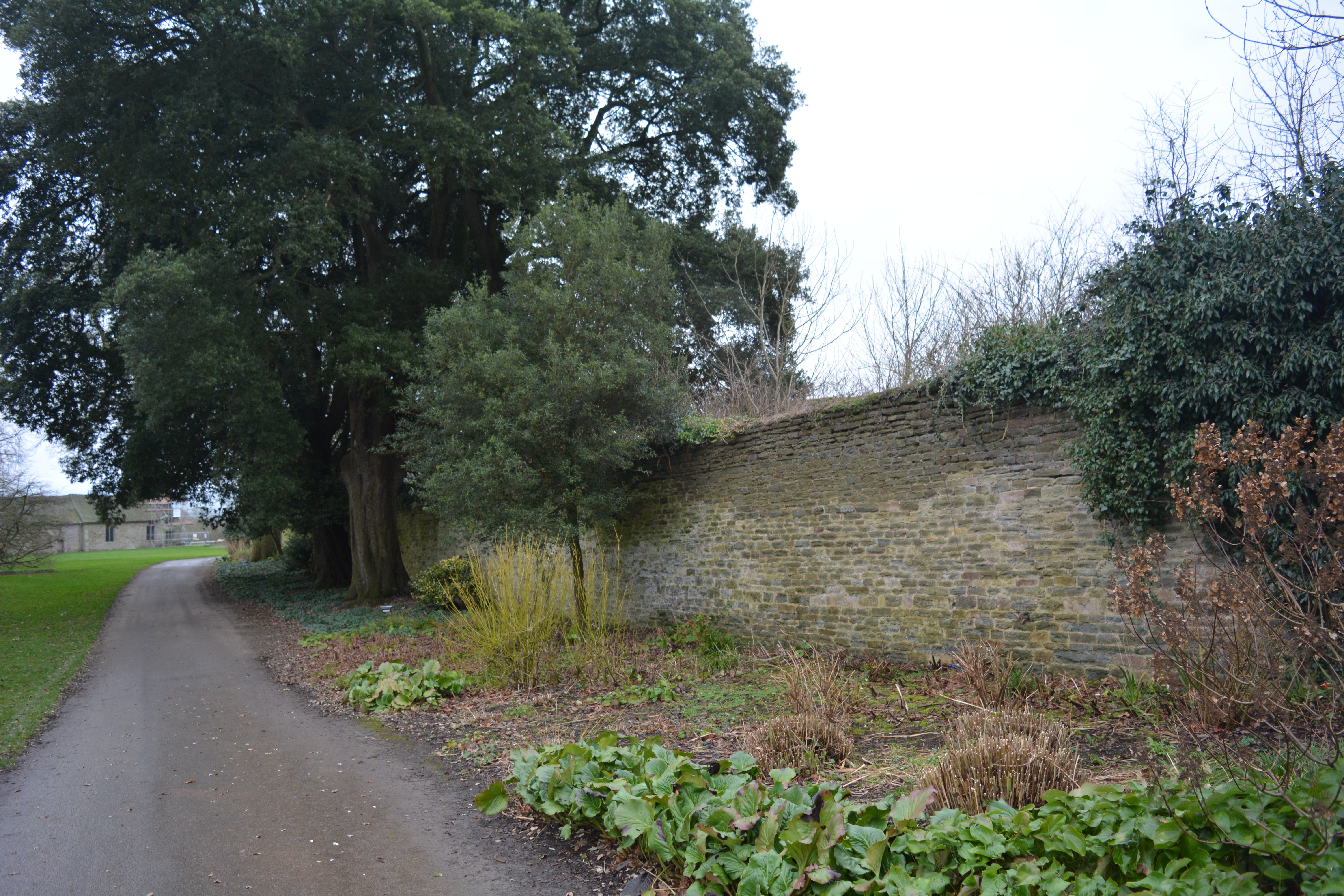
We were soon on our way to the walled garden, our favourite part of Croft. To get there we followed a long mixed border abutting a tall stone wall. There was not much to see here in January but it looked full of promise. But we found character number two and three both smiling away just like their colleague we met earlier.

2015 01 01_9080 2015 01 01_90852015 01 01_9084 2015 01 01_9088

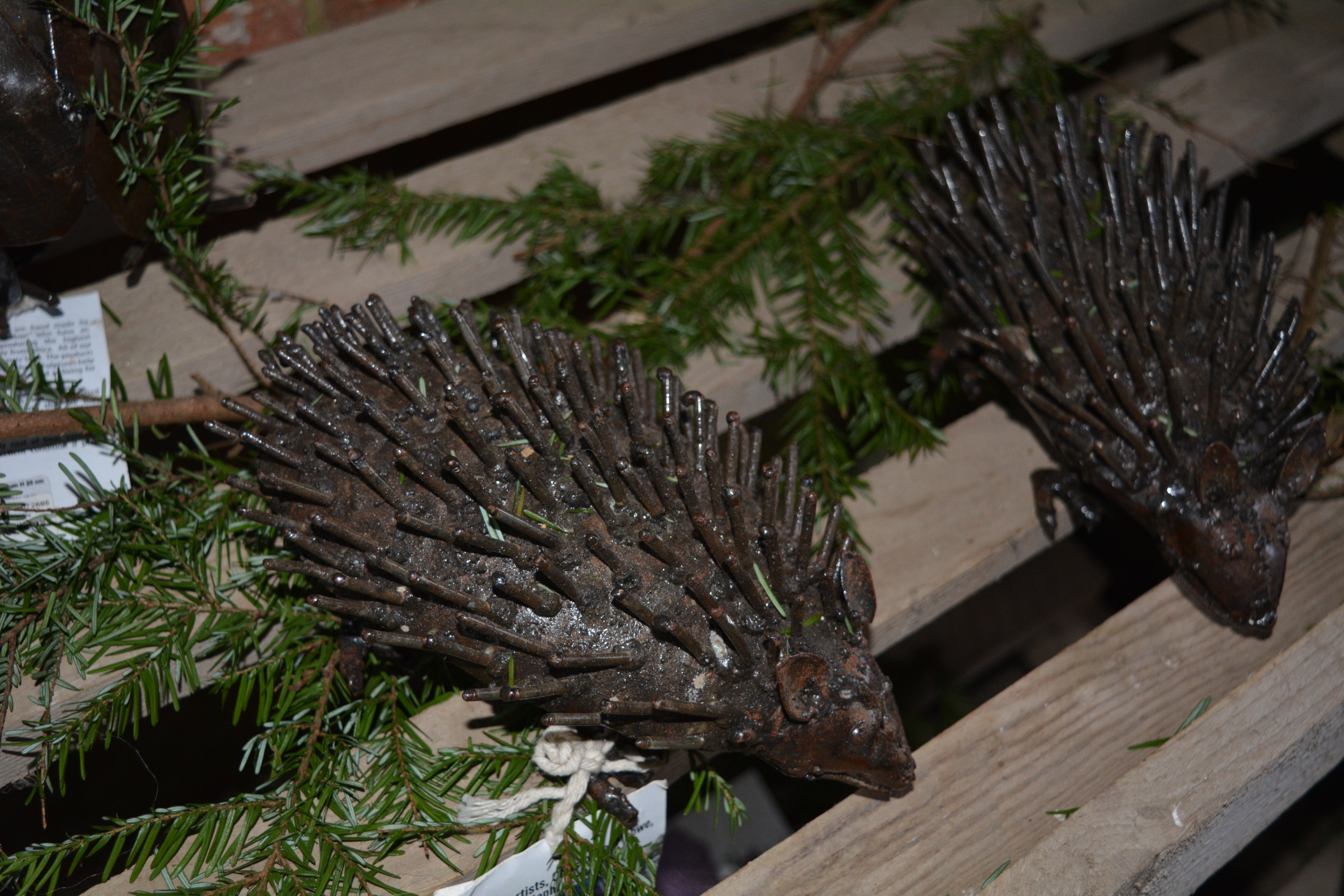
The shop, not open in the winter, is housed in an ancient barn and on shelves at its entrance these hedgehogs caught our eyes. More interesting characters!

2015 01 01_9089 2015 01 01_9090

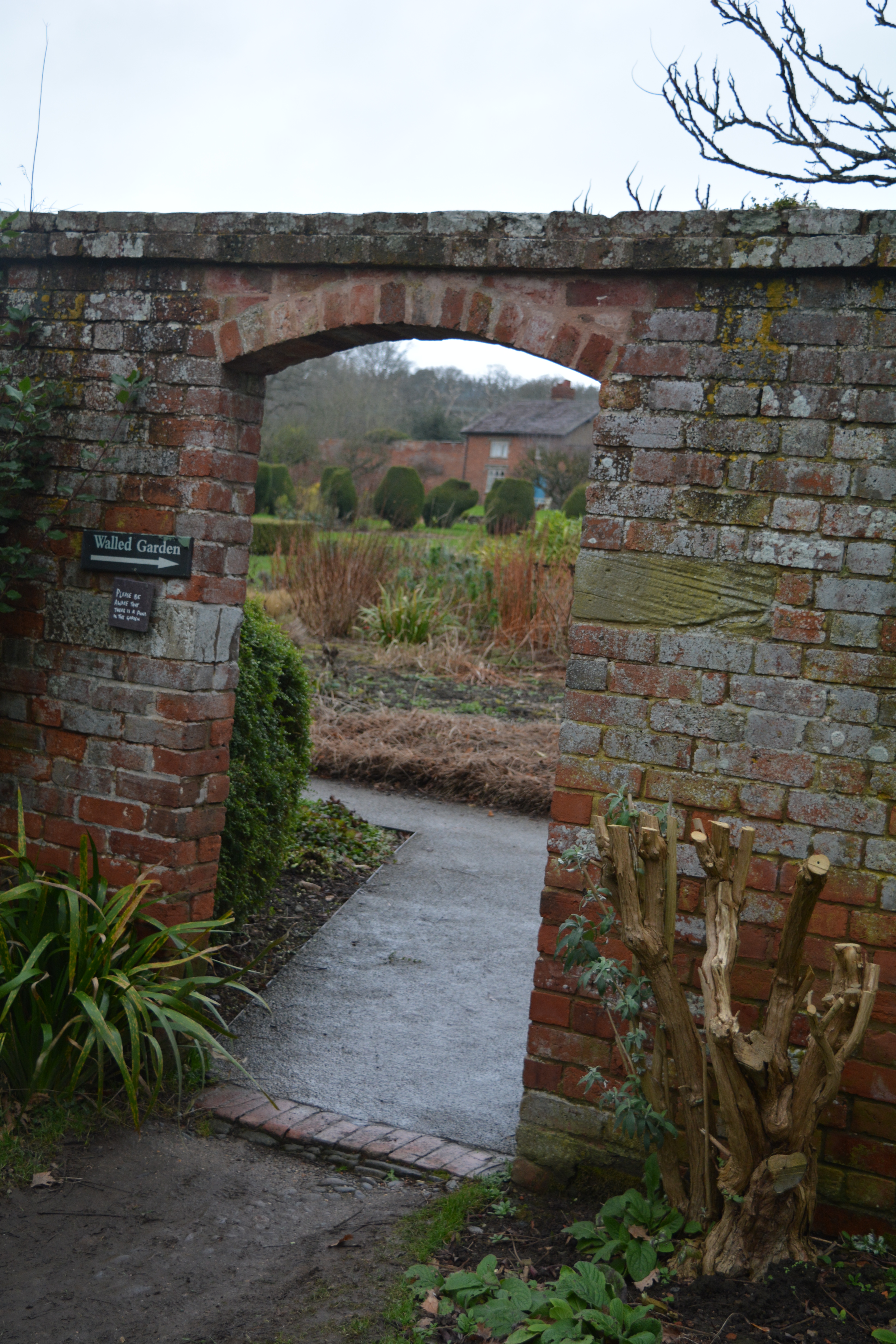
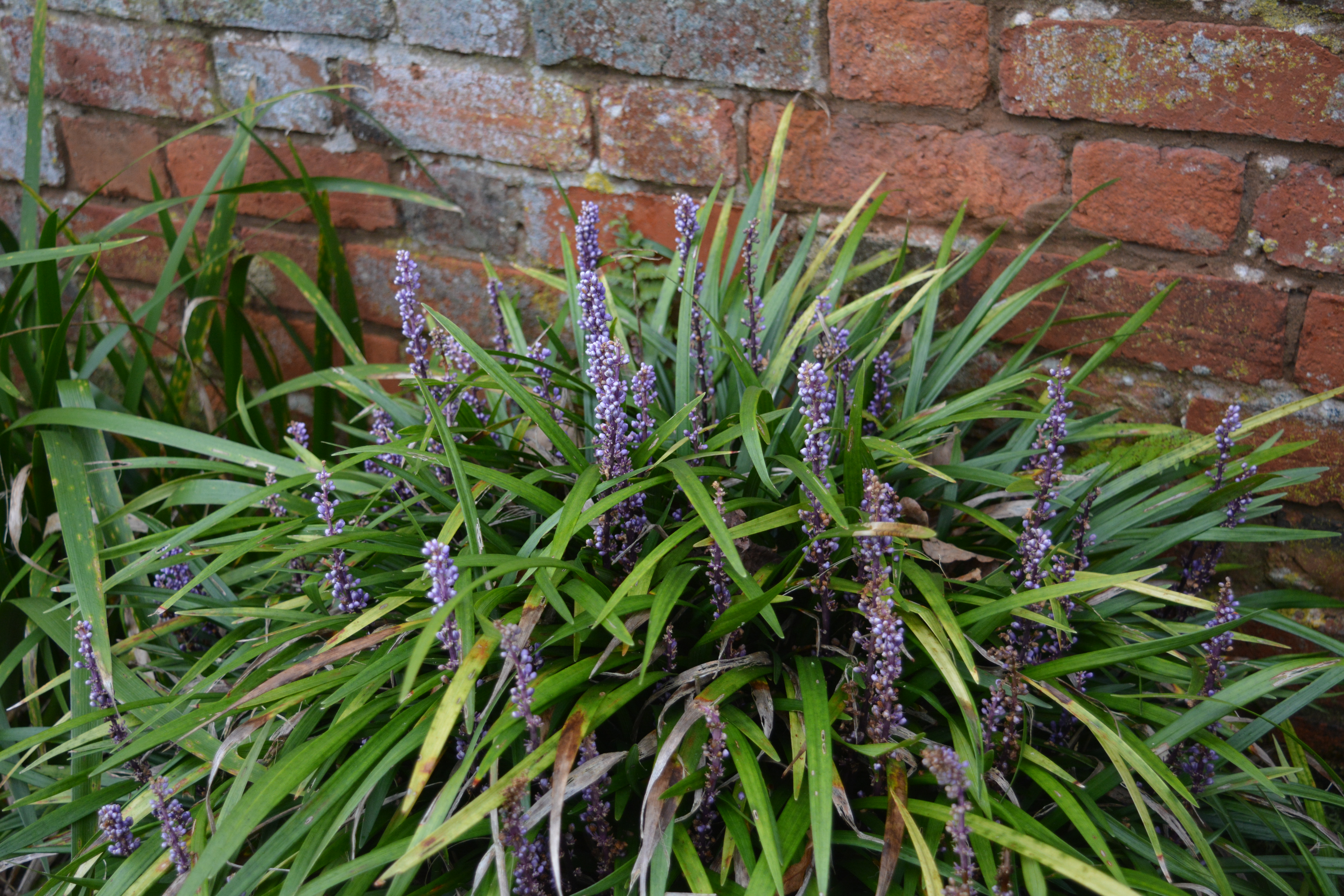
A gap in the brick wall enticed us into the walled garden. We always enter with great anticipation, perhaps more so on this visit as we had never visited in the winter before. Either side of the doorway there was signs of colour in the narrow borders. The colours of the berries of an Iris, the mauve flowers of Liriope muscari and the silver of the long thin catkins of Garrya eliptica.

2015 01 01_9091 2015 01 01_90922015 01 01_9093 2015 01 01_9094

From the open doorway views of the walled garden opened up in front of us. We soon espied different types of trained fruit and clumps of textured perennials in the borders.

2015 01 01_9095 2015 01 01_9096

The textured foliage was provided by silver narrow foliage of Santolinas and in strong contrast the thin strap-like leaves of the Black Grass, Ophiopogon. This is not a grass at all but in reality a Lily!

2015 01 01_9099  2015 01 01_9100

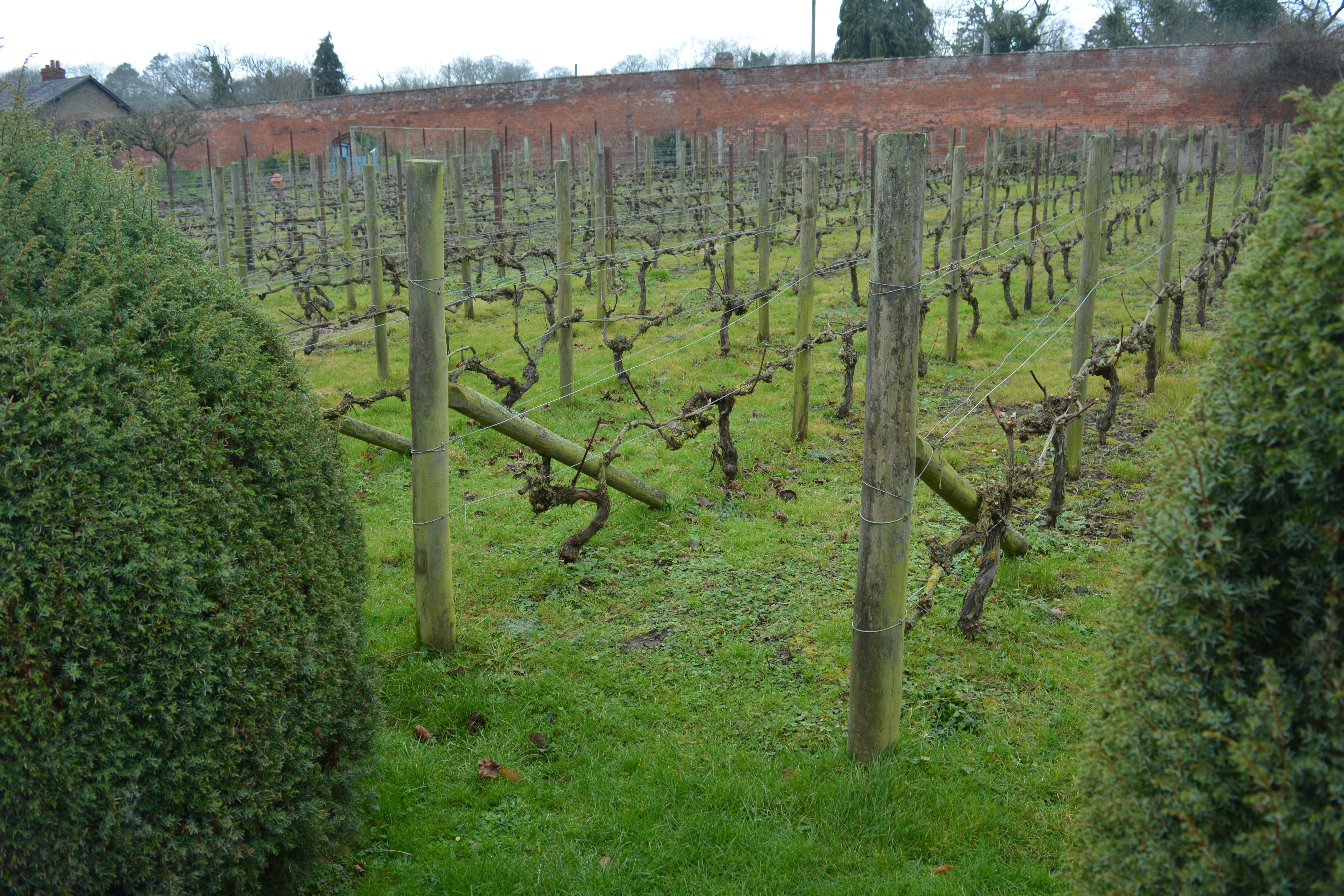
There were two very contrasting sorts of trained fruit. Ancient beautifully sculpted apples and a much newer array of grape vines, also beautifully trained. It was so good to see the skills of fruit training created at two very different periods of time.

2015 01 01_9098 2015 01 01_9101 2015 01 01_9105

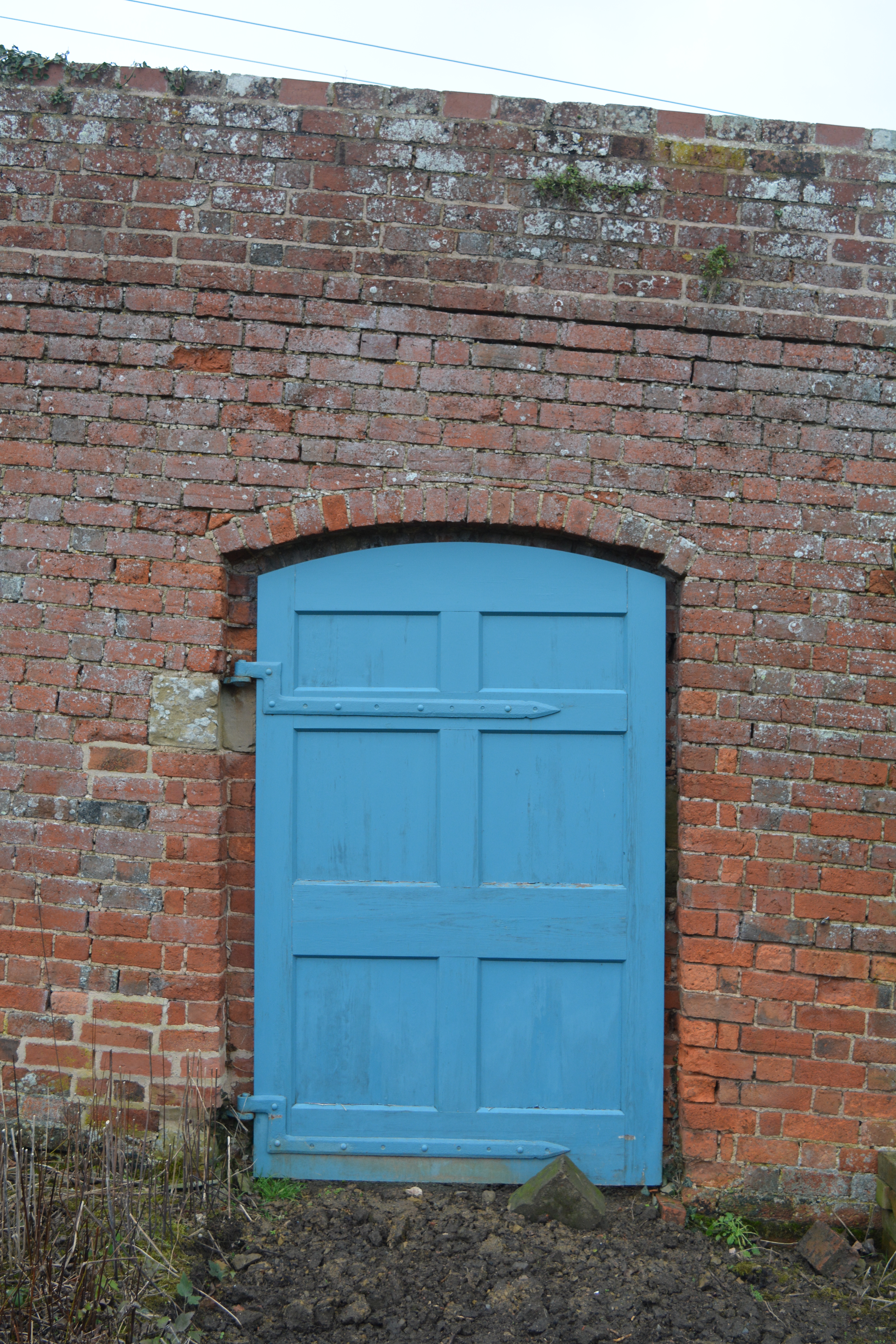
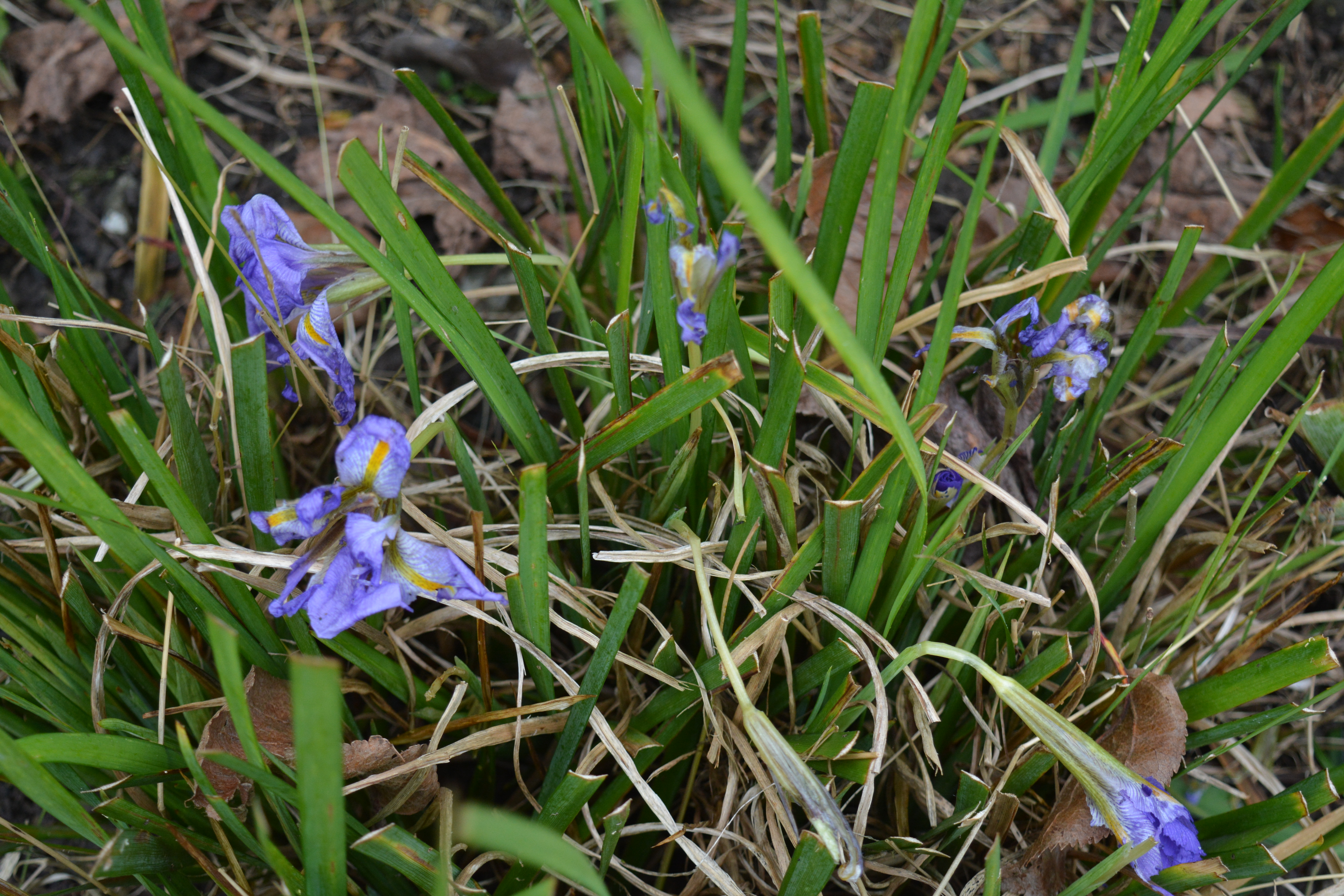
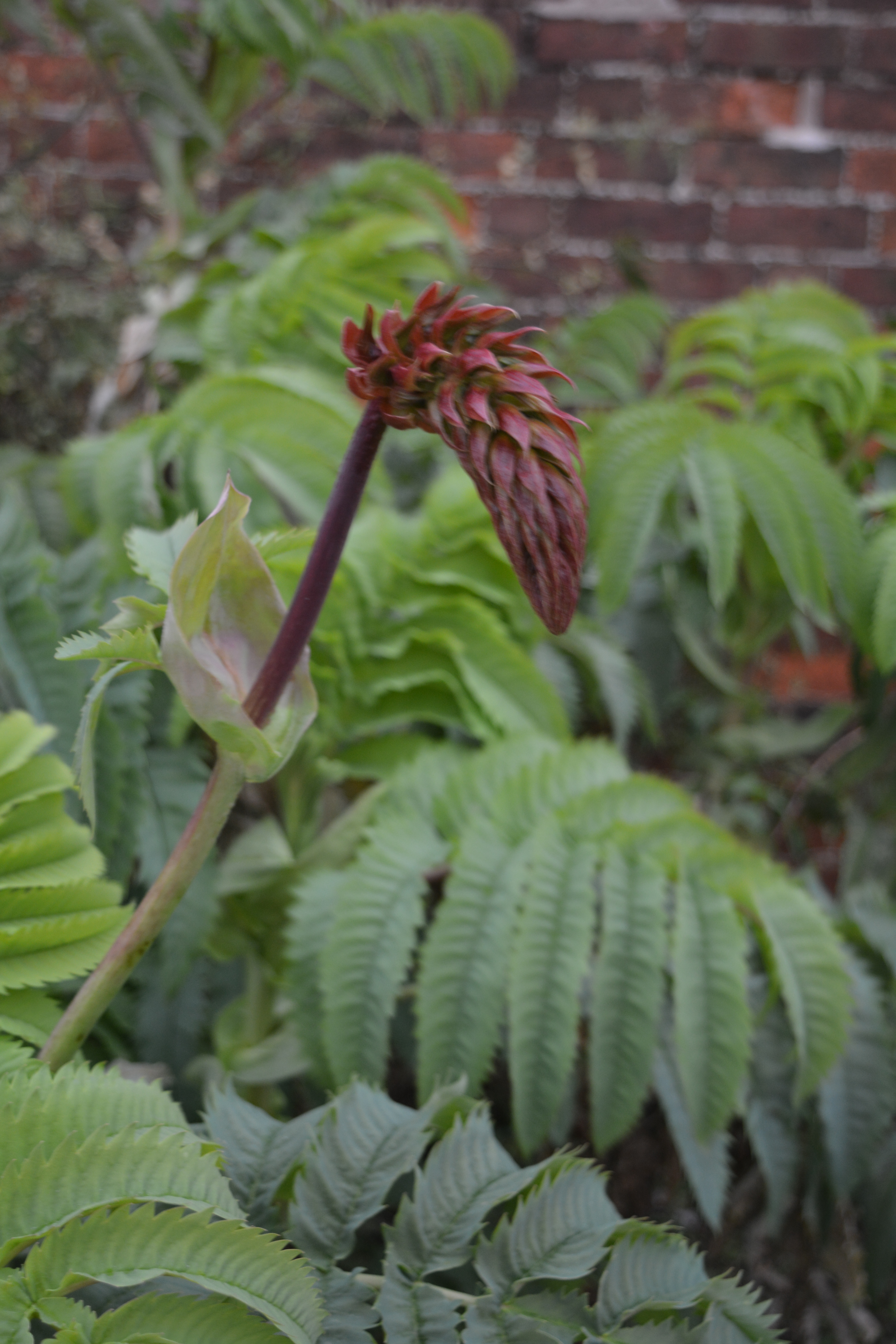
What made this walled garden extra good for productive gardening was the fact that it was on a slope encouraging the sun to warm up the soil to its maximum. Even in early January the difference in temperature was noticeable. We could feel the change as we entered and exited the walled area. The photo of the door in the wall illustrates the slope and shows how steep it is.  The plants also illustrate the effects of the walls protective powers. An Iris was in flower and a Melianthus was in bud. Arum italicum “Marmoratum” was in full marbled leaf.

2015 01 01_9102 2015 01 01_9103 2015 01 01_9104 2015 01 01_9107

When we were half way along the second edge of the walled garden we reached the gateway leading out of the garden which in the past had been clearly marked “private – keep out” so we were pleased to discover that it has been opened up for us to explore. Jude was soon on her way through! We had always longed to get a close up look at the old greenhouse range.

2015 01 01_9108

We will leave you here for now as we disappear behind the beautiful, unusually shaped blue gate where we found out what new treats were in store for us before we returned to the walled garden. See part two where we discover what was going on behind the blue gate as well as in the rest of the walled garden. We also wander around the rest of the gardens at Croft.

Categories
autumn bird watching birds garden wildlife wildlife

Late Arrivals

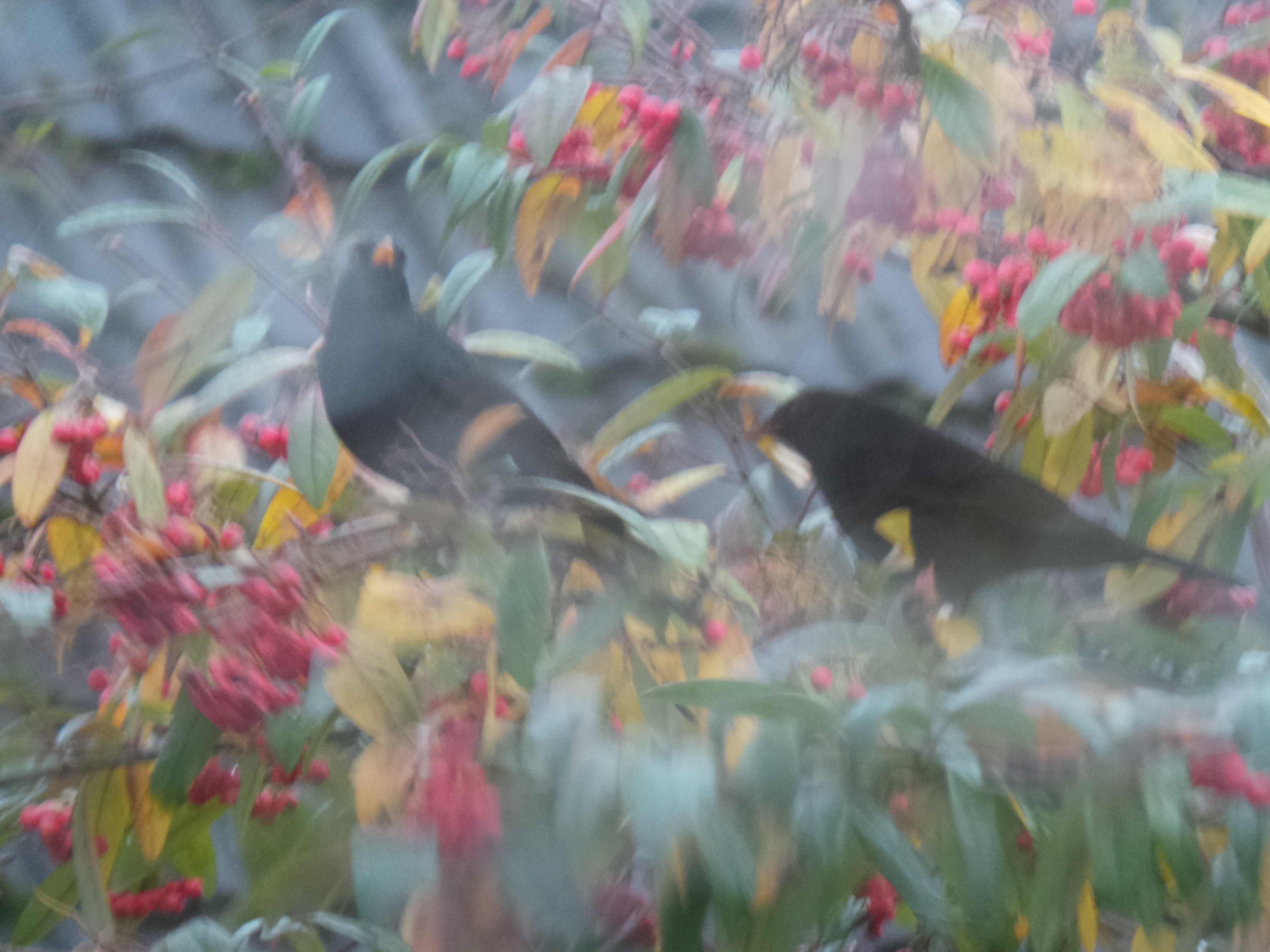
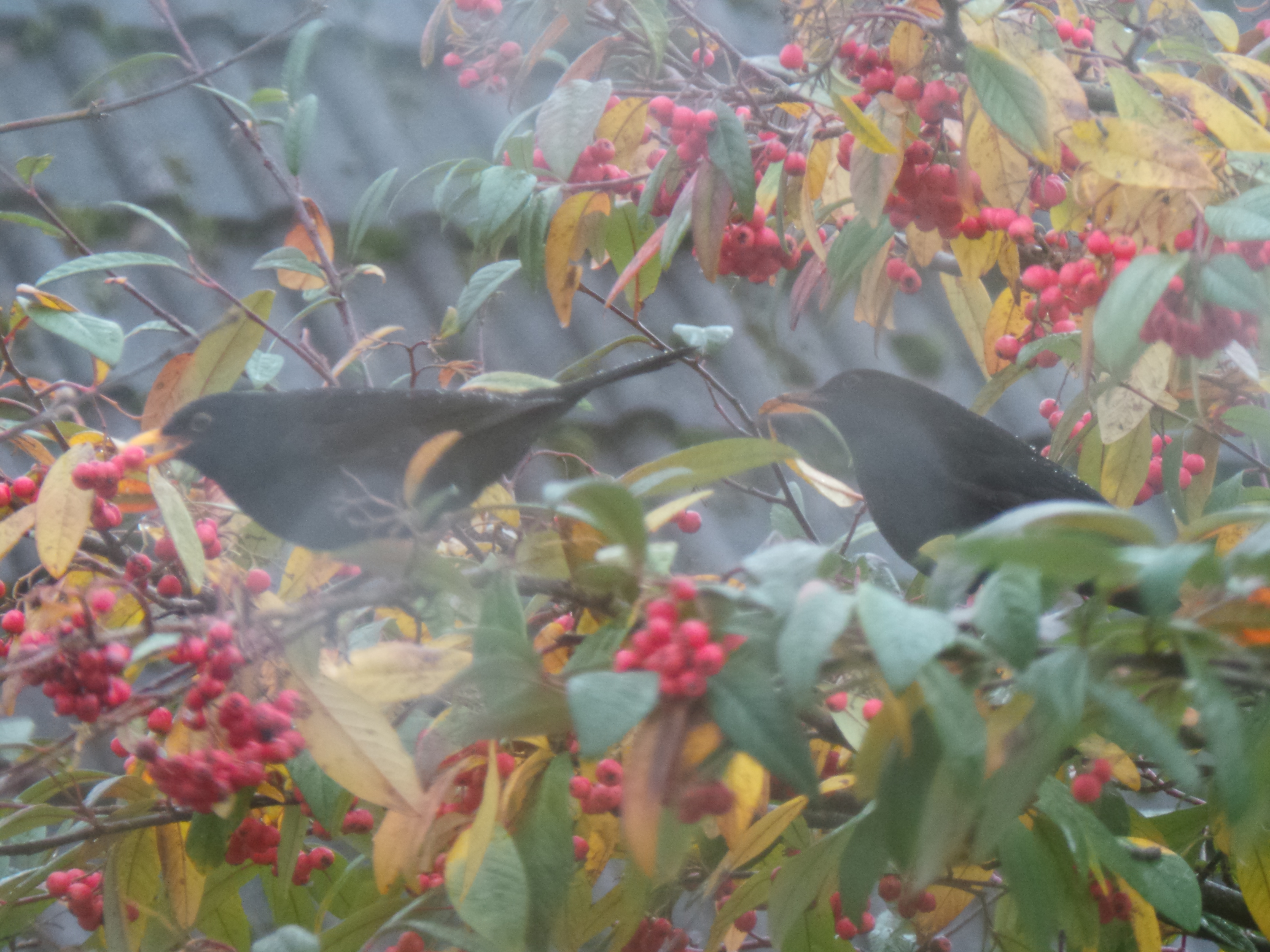
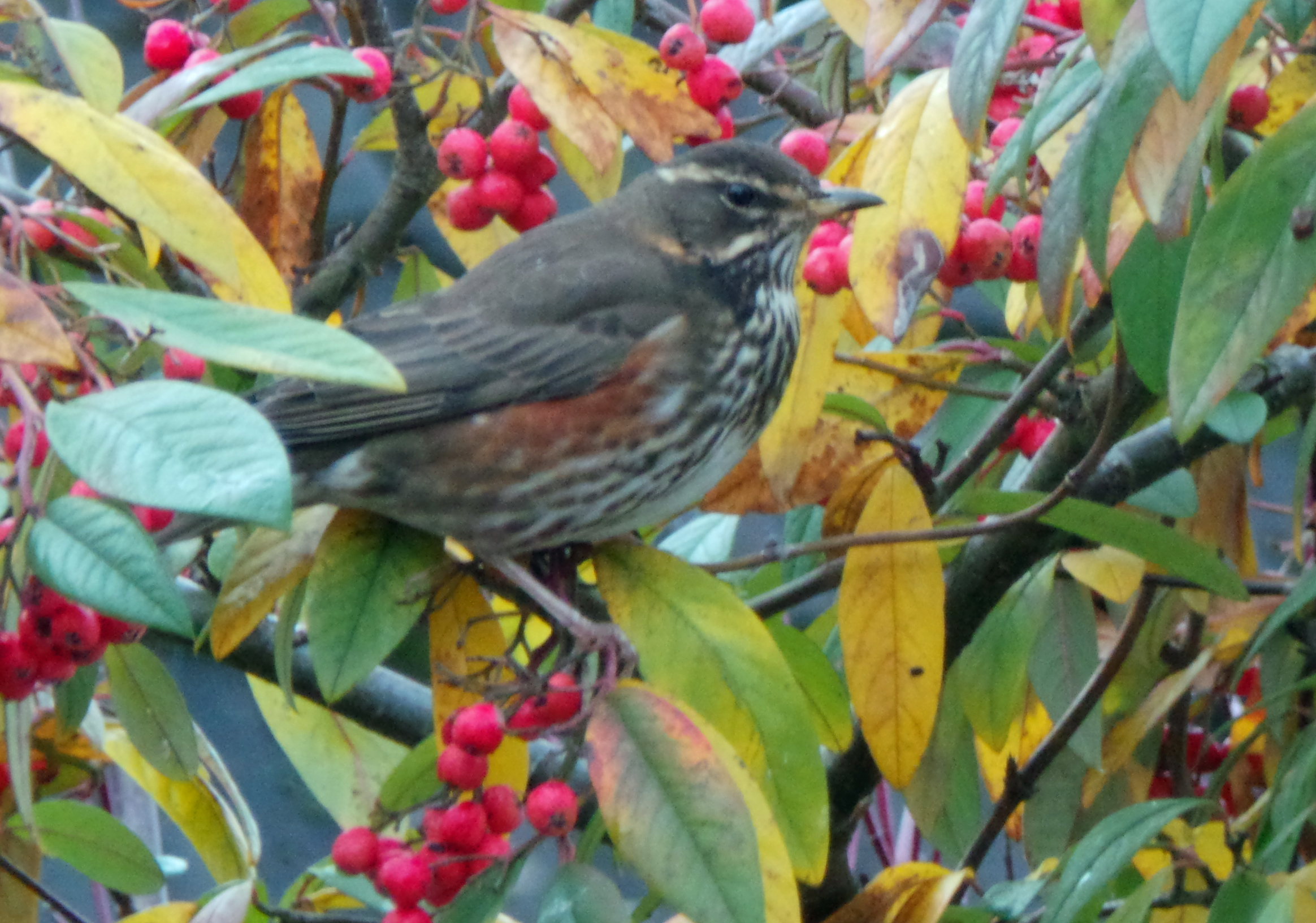
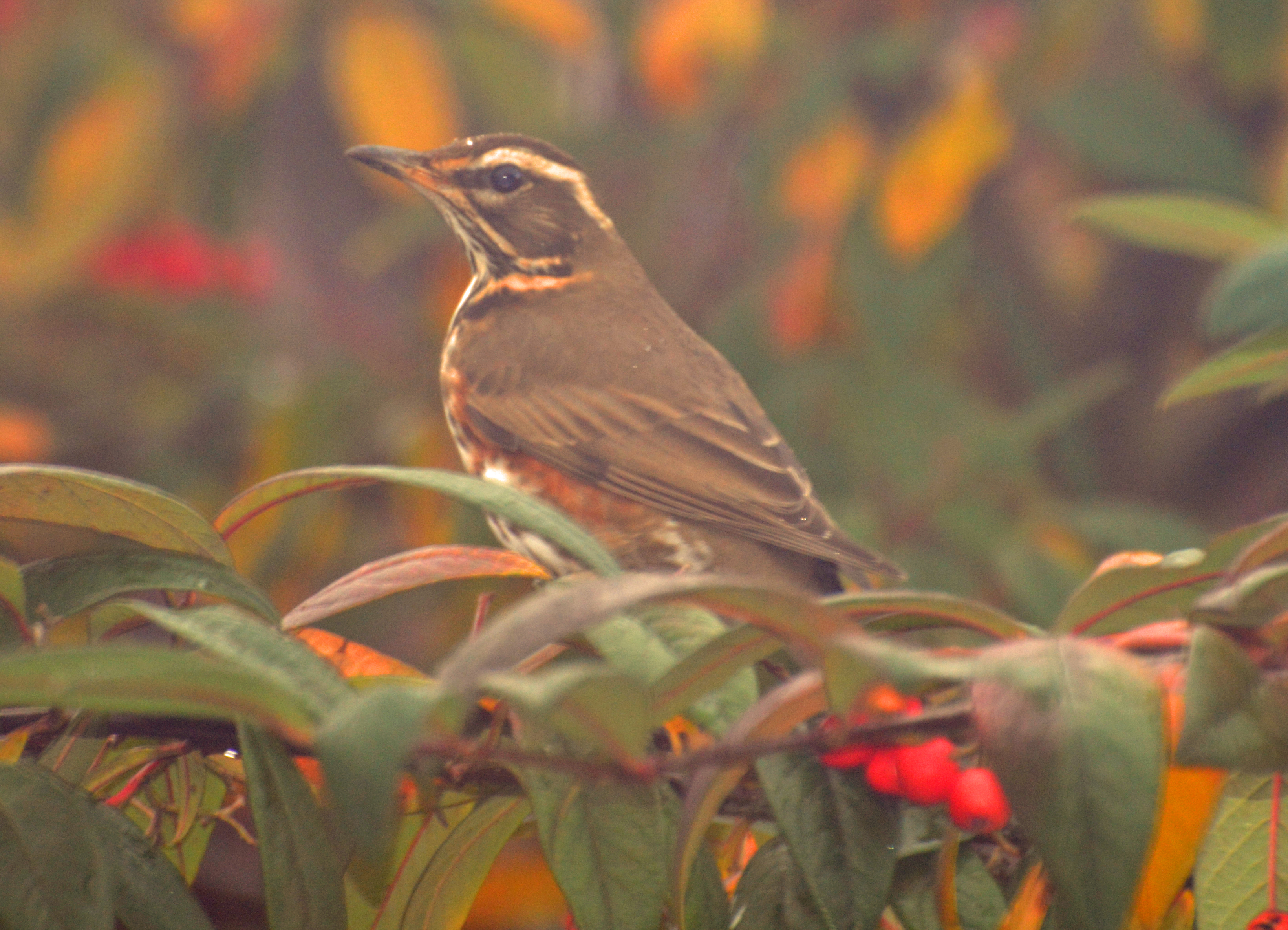
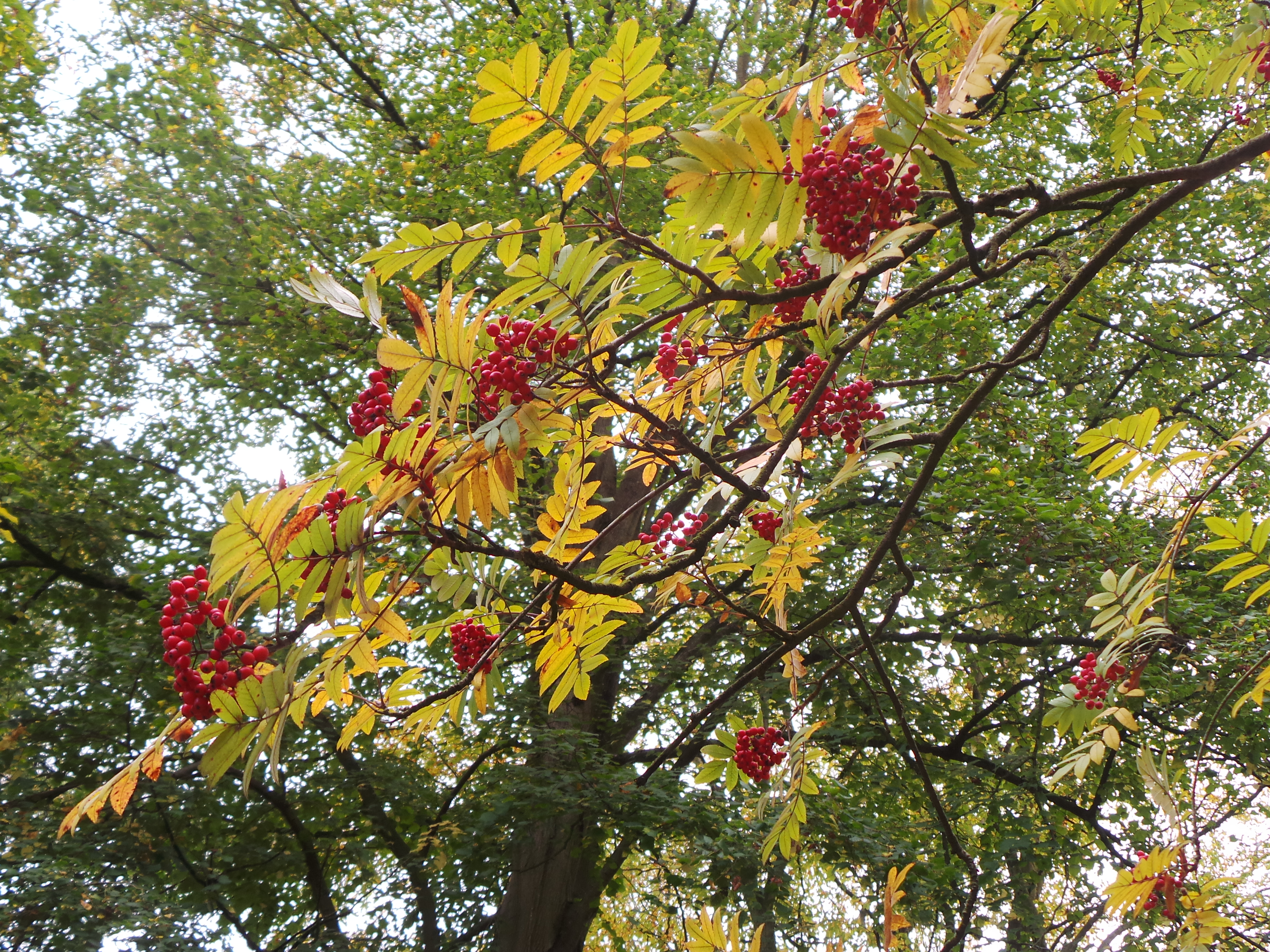
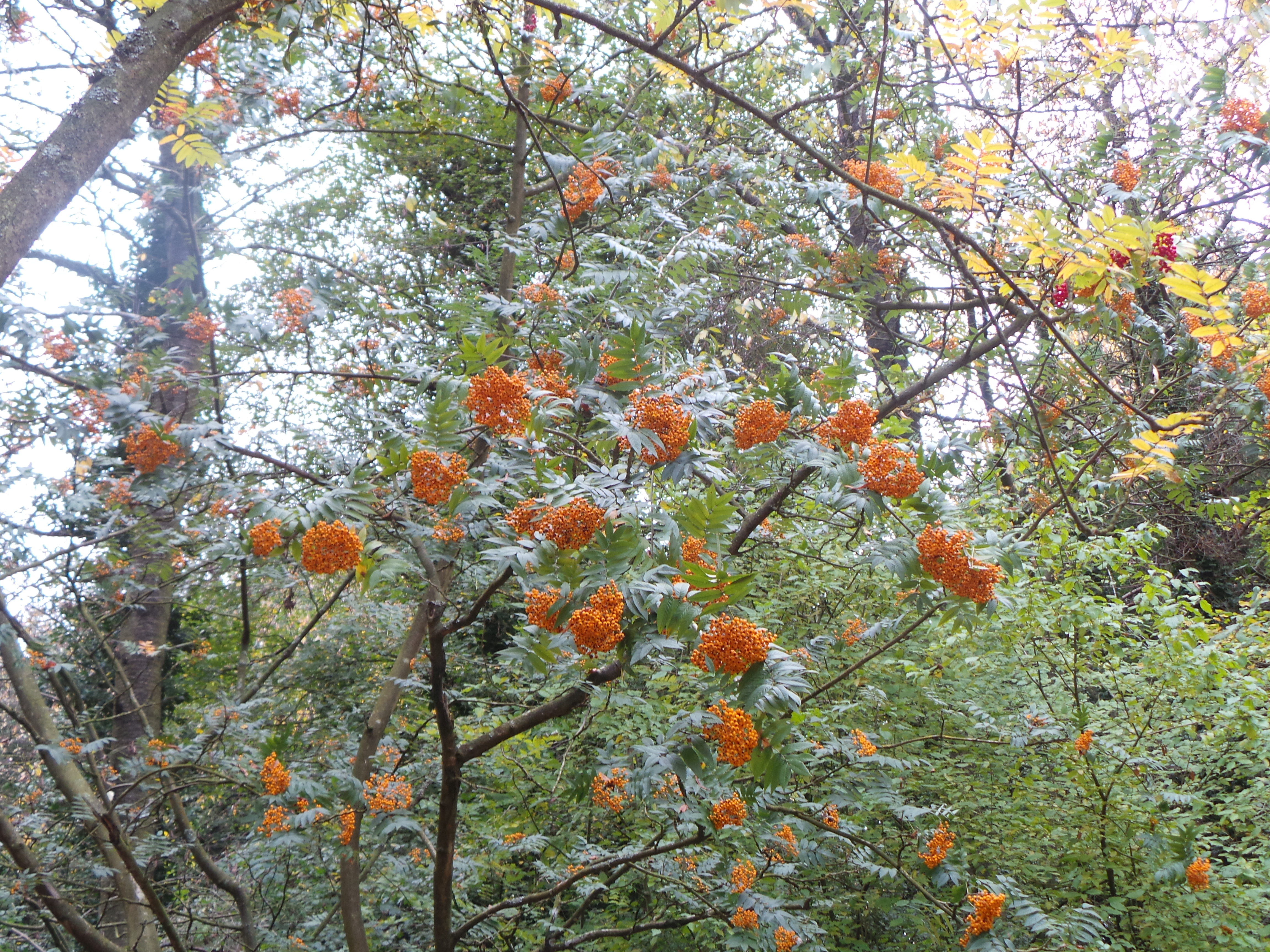
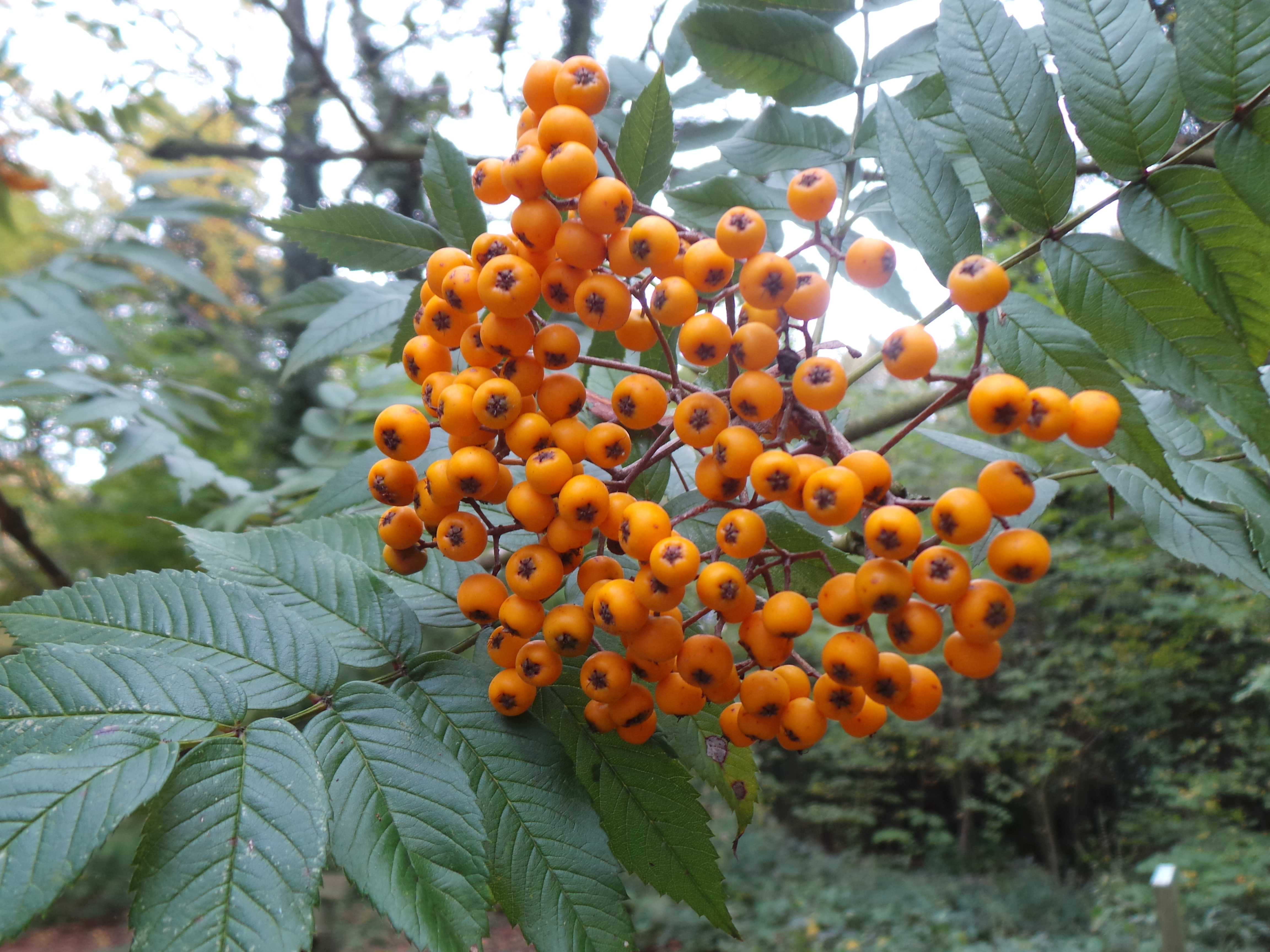
Our winter visiting Redwings arrived the latest ever this year. These migrant thrushes usually arrive late October and into November sweeping in in huge noisy flocks. They are very obvious arrivals but this year they have been more stealthy. They just crept in during December with the first appearing in our garden on December 11th. One or two Redwings at a time dropped in to lunch on the berries we grow for them, the Cotoneasters, Crab Apples and Sorbus. They soon discovered that one problem with arriving at the restaurant late is that some of the items on the menu have all gone. The resident Mistle Thrushes moving in from the woods had already indulged on the Sorbus berries and our Blackbird population had made inroads into the crop of “Butterball” Crab Apples and started dining on the Cotoneaster bushes. You can see from these photos that they were taken during heavy rain! It didn’t stop the birds from feeding though!

2014 12 12_8747 2014 12 12_8748

One male Redwing seems to dominate, being larger and sporting much brighter markings. His eye stripes are striking and his speckled chest is covered in the blackest and biggest streaks and spots. He is featured in the final two photos of the set below.

2014 12 12_8750_edited-1 2014 12 12_8749 2014 12 12_8749_edited-1

2014 12 11_8720_edited-1 2014 12 11_8725_edited-1


One thing we noticed as the berries started getting in short supply was that some House Sparrows mixed in with the Blackbirds and Redwings to gorge on the berries.


2014 12 12_8741 2014 12 12_8742_edited-1


We still haven’t seen any Fieldfares this winter. These winter migrant thrushes usually arrive with the Redwings. There will certainly be few berries left for them when they do come!

Categories
arboreta autumn autumn colours birds colours light quality ornamental trees and shrubs trees woodland woodlands

Queenswood Arboretum – Part 1 – the Acers

Late October heralds arboretum visiting time. Last year we visited Bodenham and Arley which we take a trip to most years but we also traveled a little further afield into Cheshire to the Jodrell Bank Arboretum and the National Memorial Arboretum in Staffordshire. Over the last five years we have also taken trips to Westonbirt in Gloucestershire, Bluebell Arboretum in Derbyshire.

But there is one closer to us, in fact just an hour away across into Herefordshire, which we have never visited but were reminded of  as we watched Carol Klein visit it on the Gardeners World TV programme. So we made up our mind that our first arboretum visit this autumn would be to Queenswood Country Park and Arboretum. It was worth the wait! Come with us as we explore its delights on a dull overcast day occasionally dampened with bouts of drizzle.

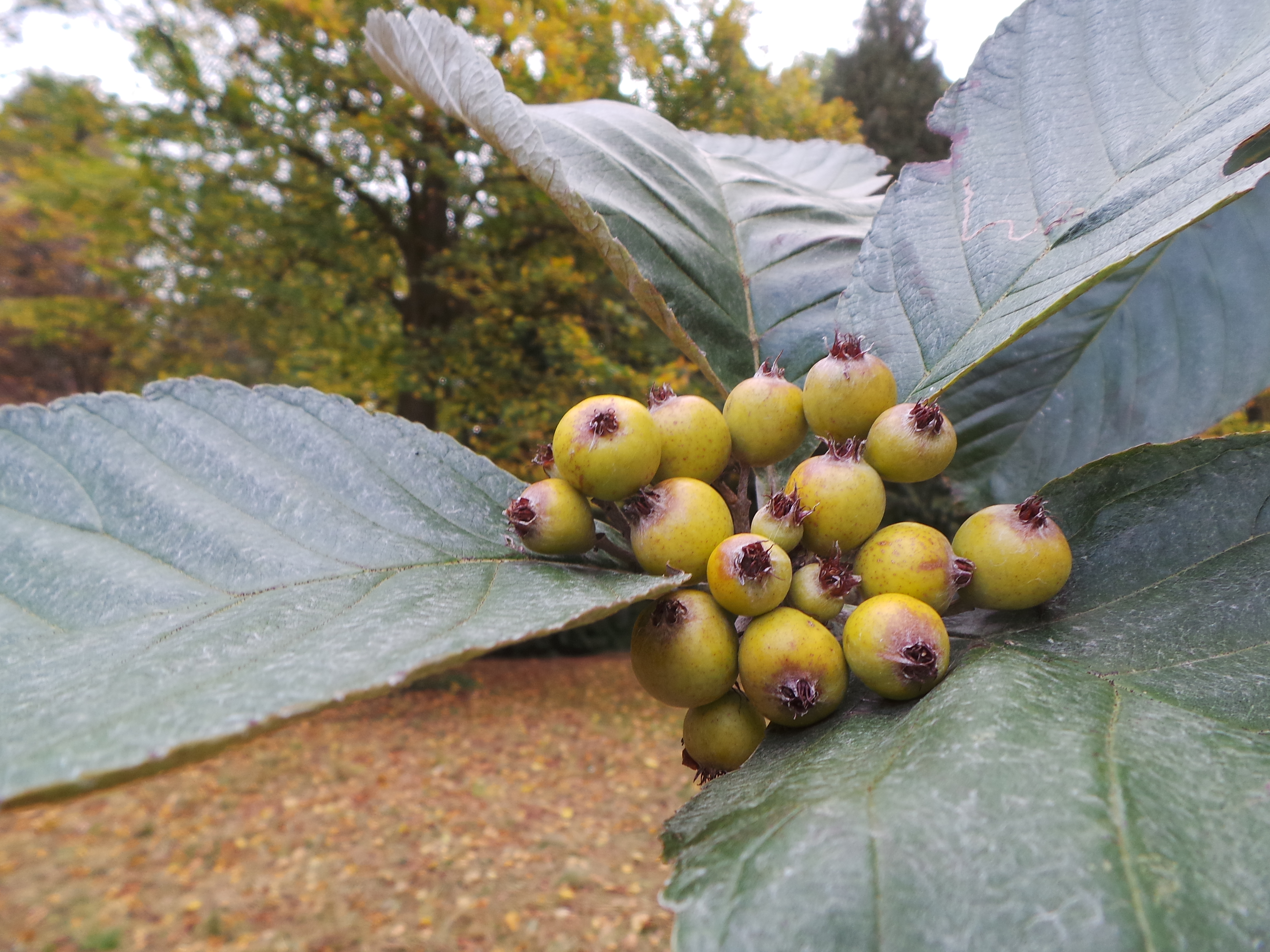
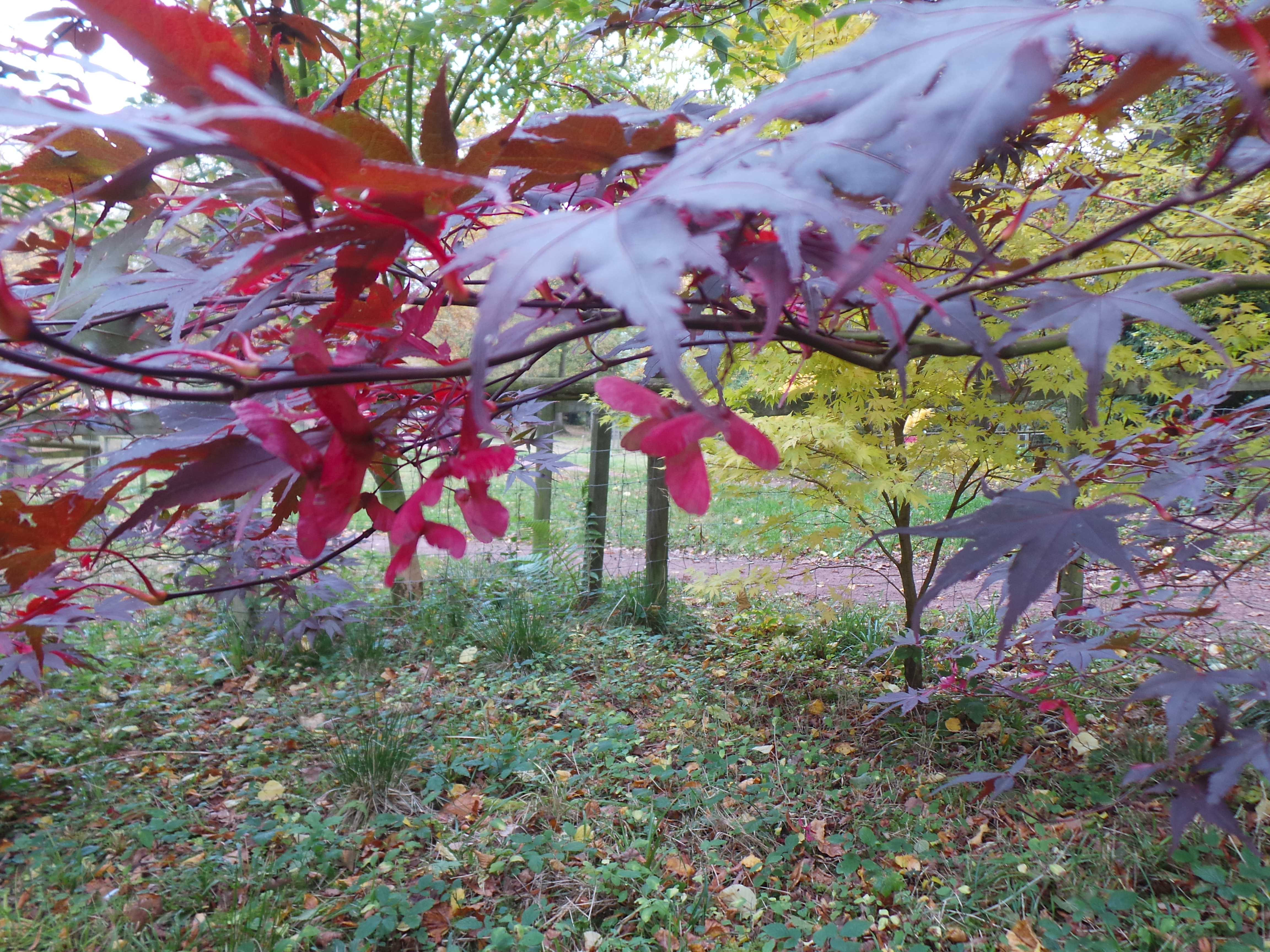
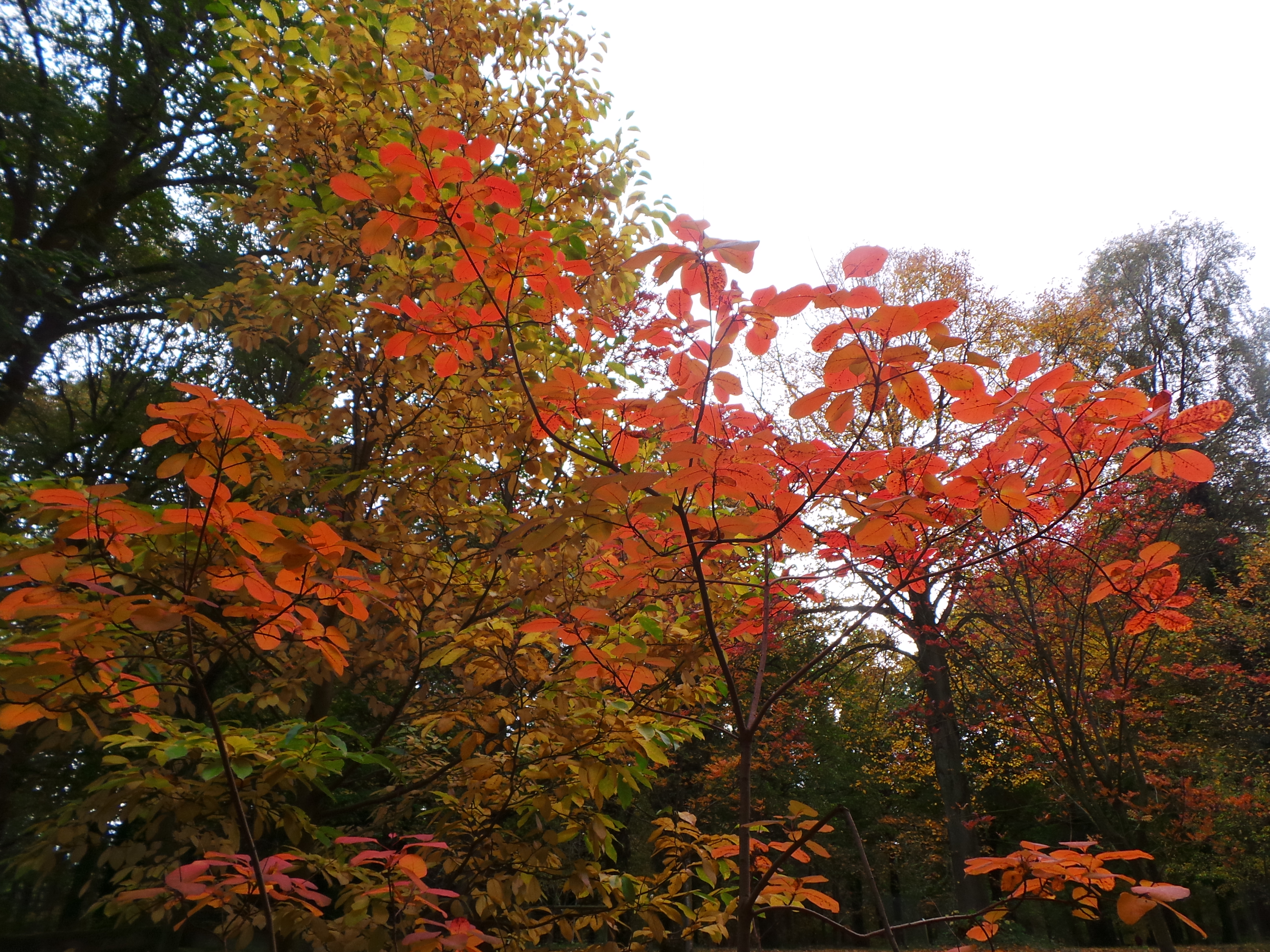
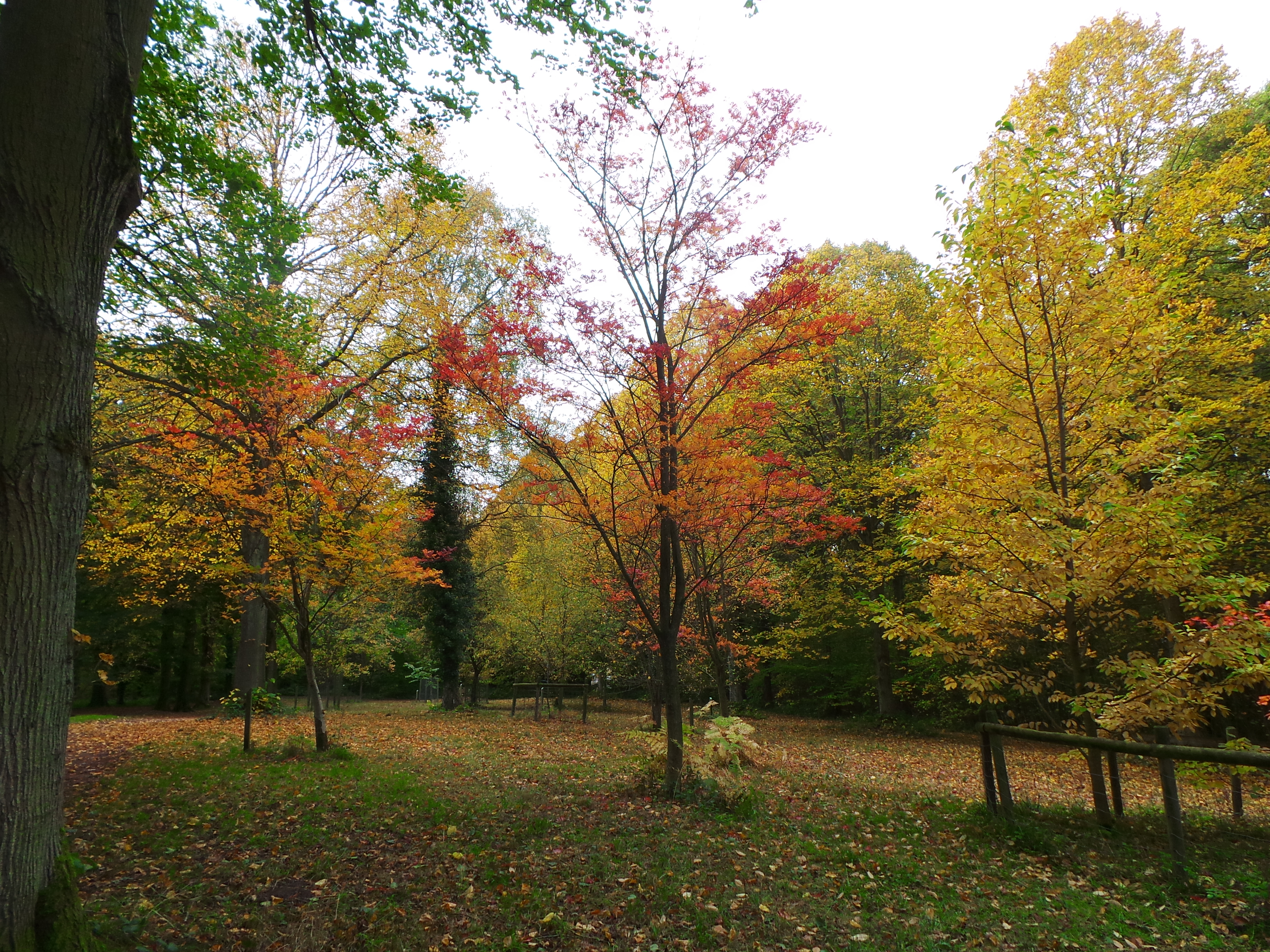
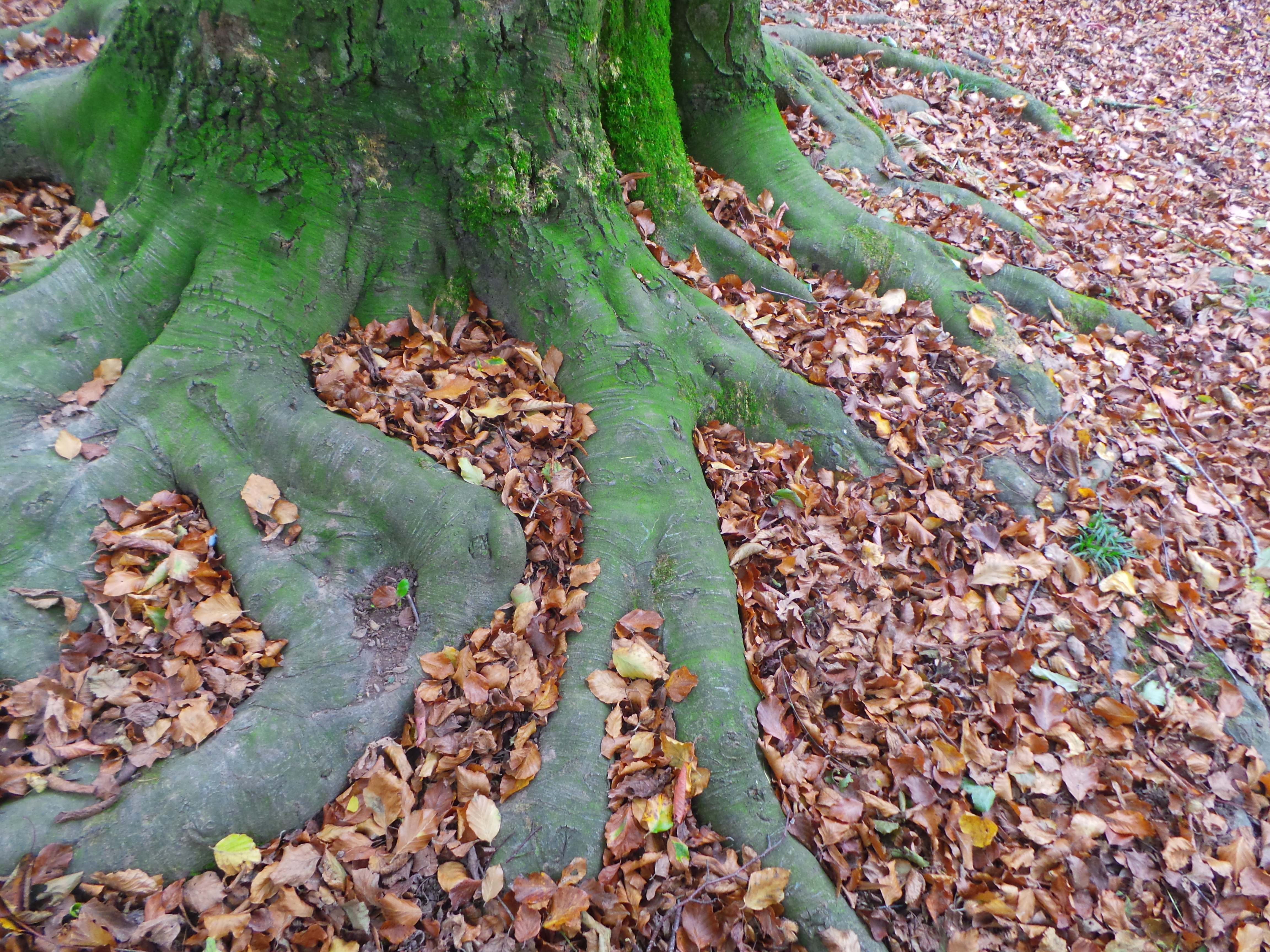
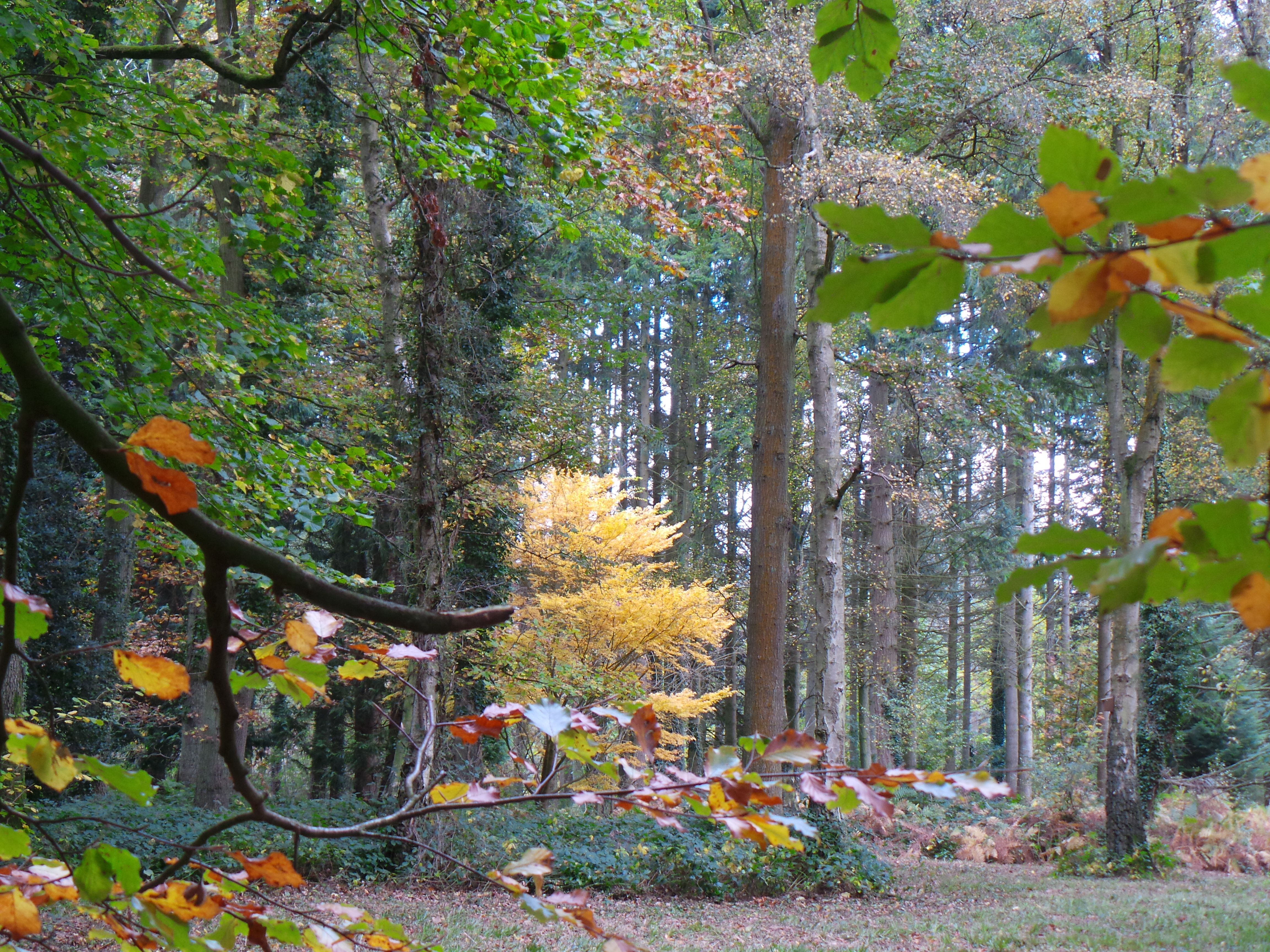
We left the car park to follow Lime Avenue which would take us to the Autumn Garden which promised us a painter’s pallet of Acers. There is something special about the gentle scent of woodlands in autumn, comforting and warming, but this was interrupted by the more aggressive unpleasant odour of foxes whose tracks crossed ours periodically as we climbed the gentle slope below the huge limes towering above us. We diverted often! There were interesting trees grabbing our attention every few yards, making progress slow. Tree silhouettes, bark textures, leaf colours, leaf shapes – all there to distract and attract.

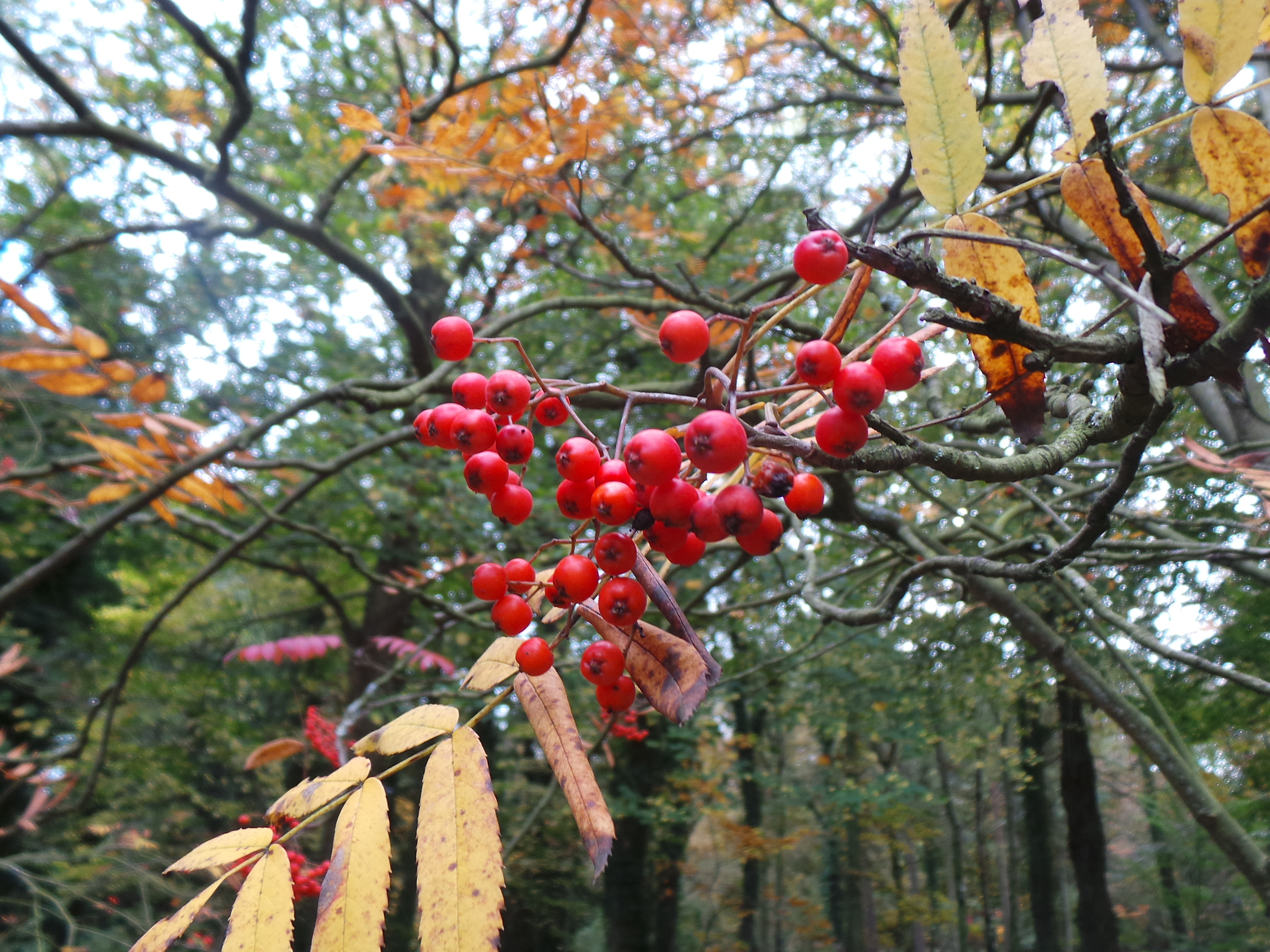
The trees had plenty of autumnal features to attract and distract tree lovers such as Jude the Undergardener and I. Berries, peeling bark, silvered leaves, brightly coloured leaves, black branch silhouettes ……………….

2014 10 23_6107 2014 10 23_6114

2014 10 23_6110 2014 10 23_6109 2014 10 23_6108 2014 10 23_6111 2014 10 23_6113 2014 10 23_6112 2014 10 23_6115

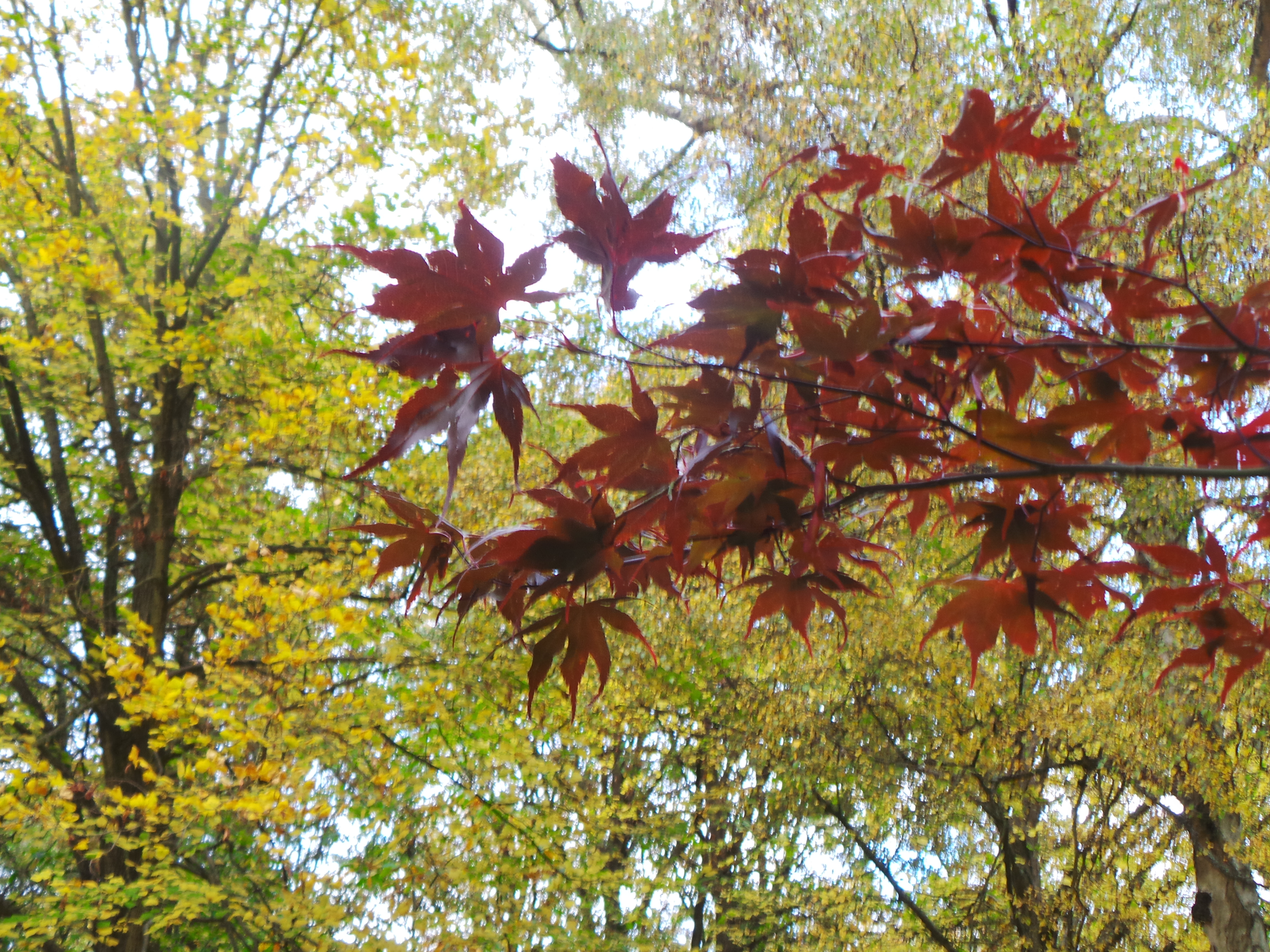
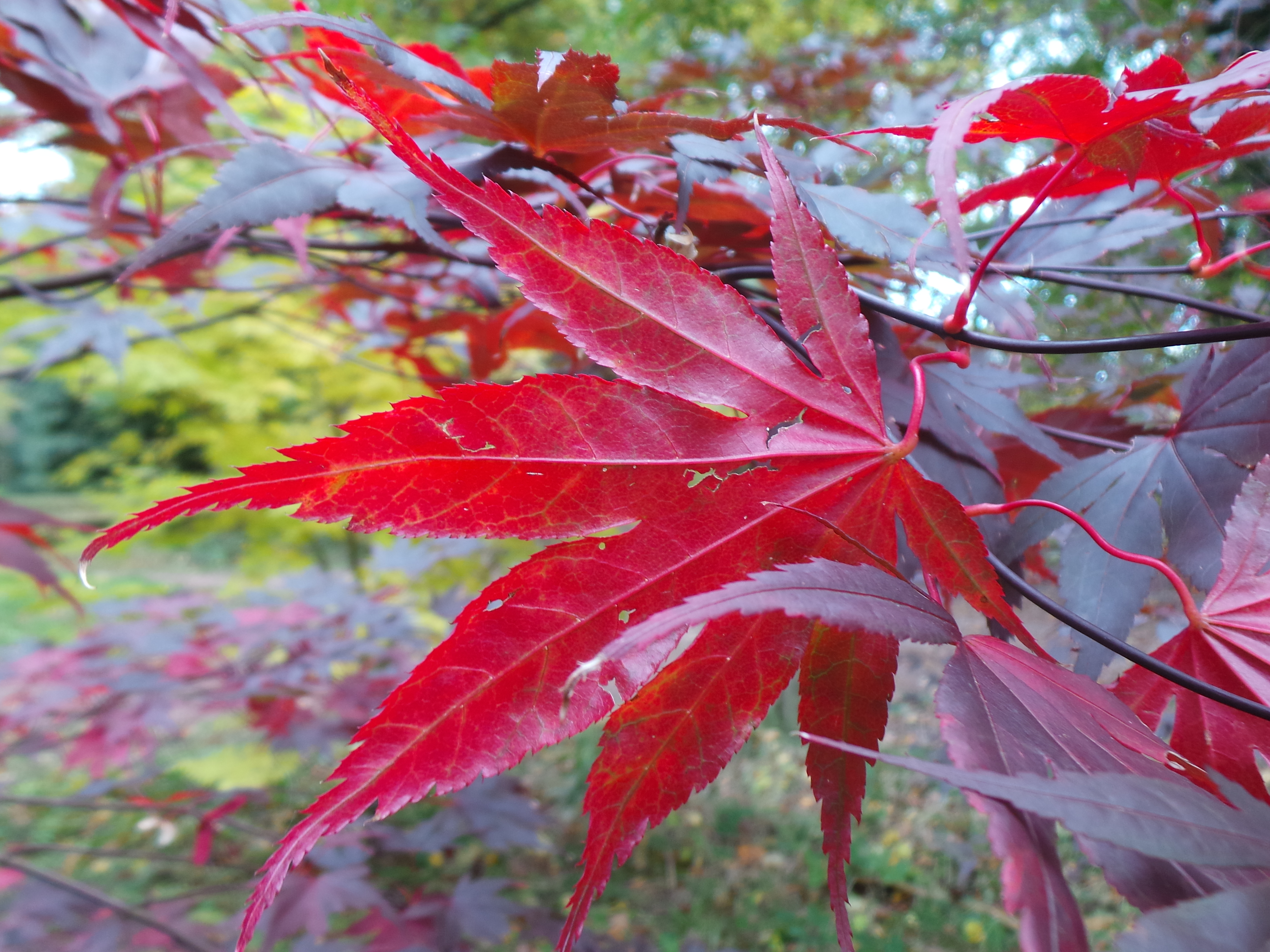
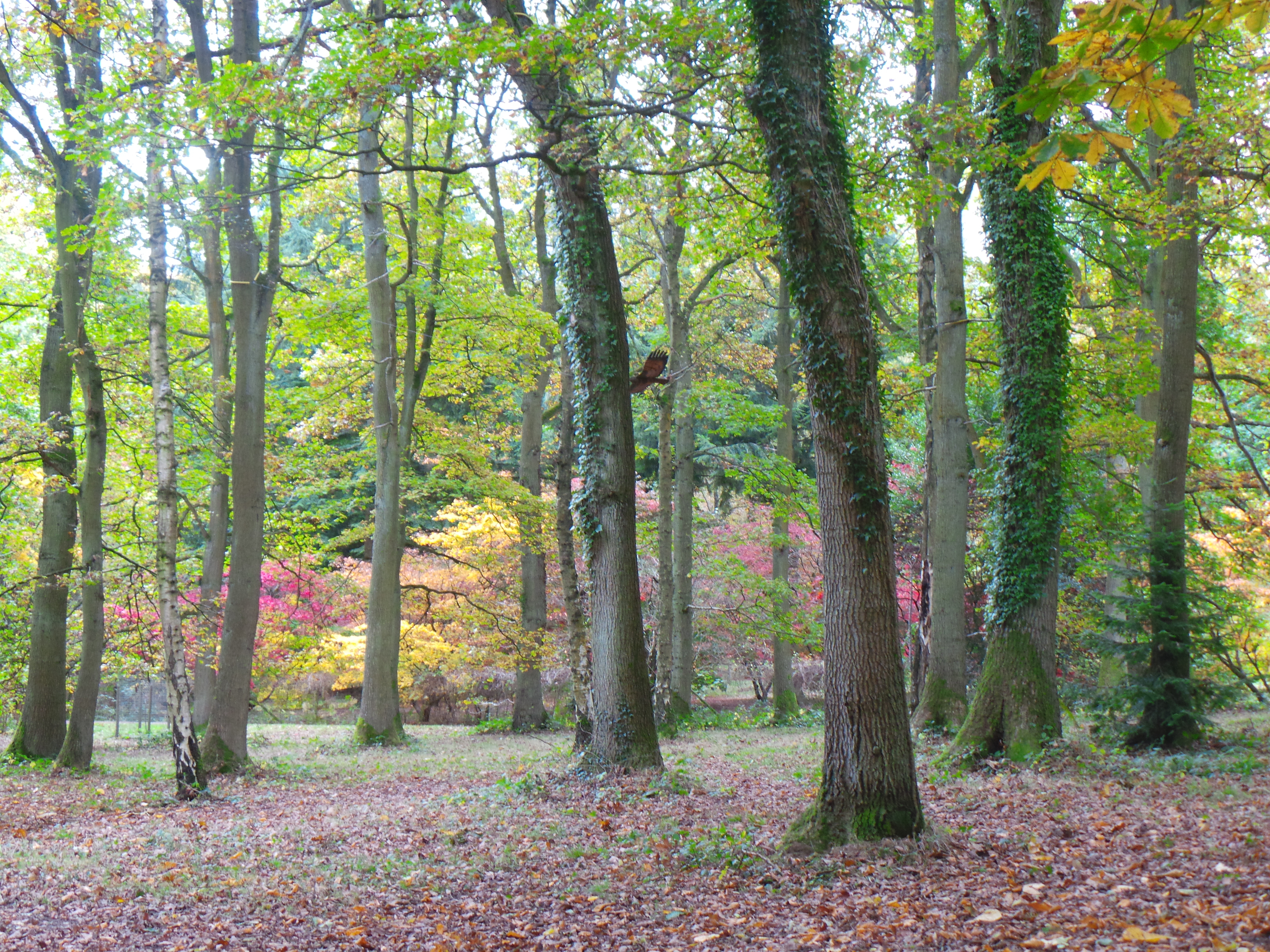
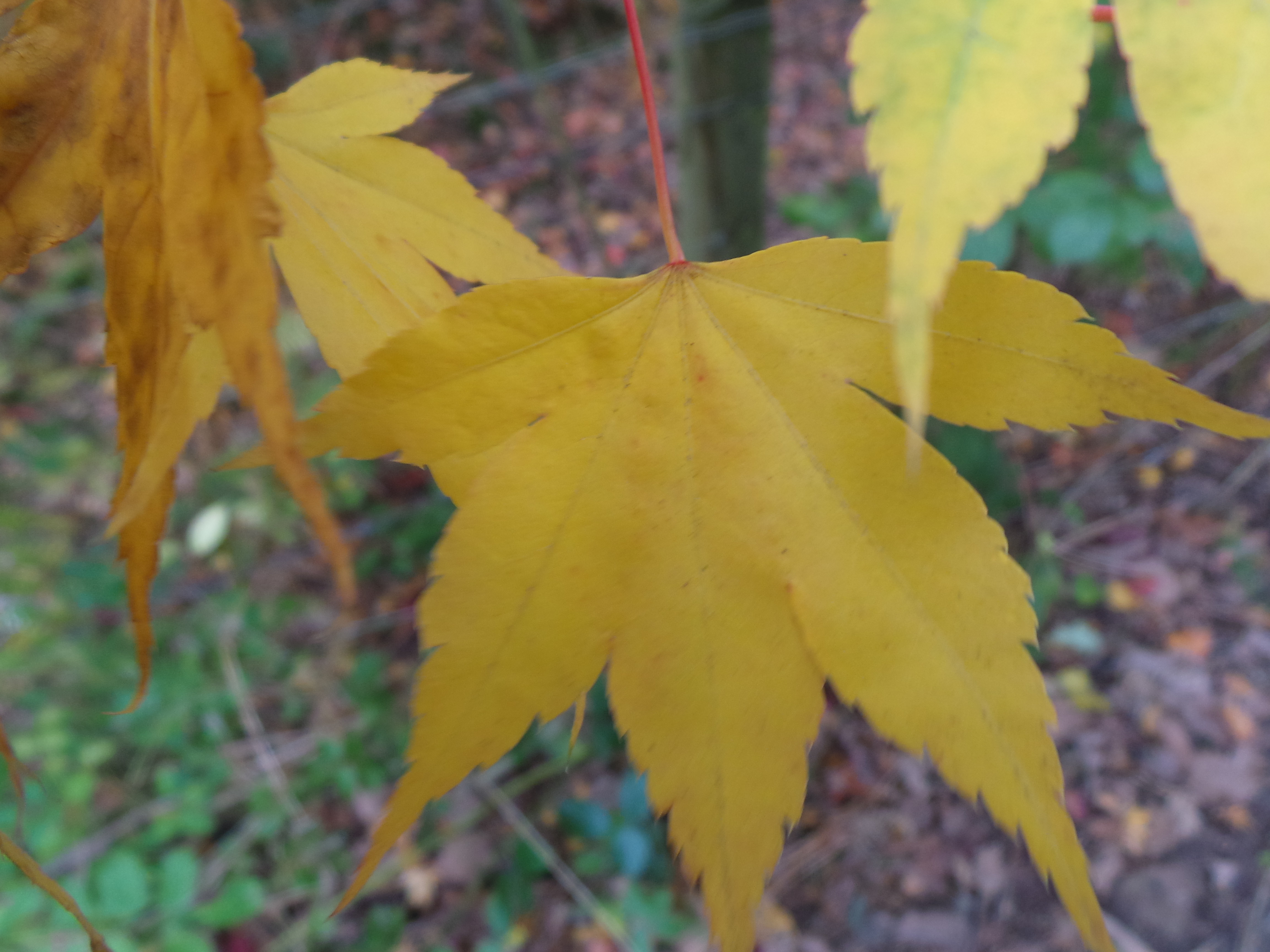
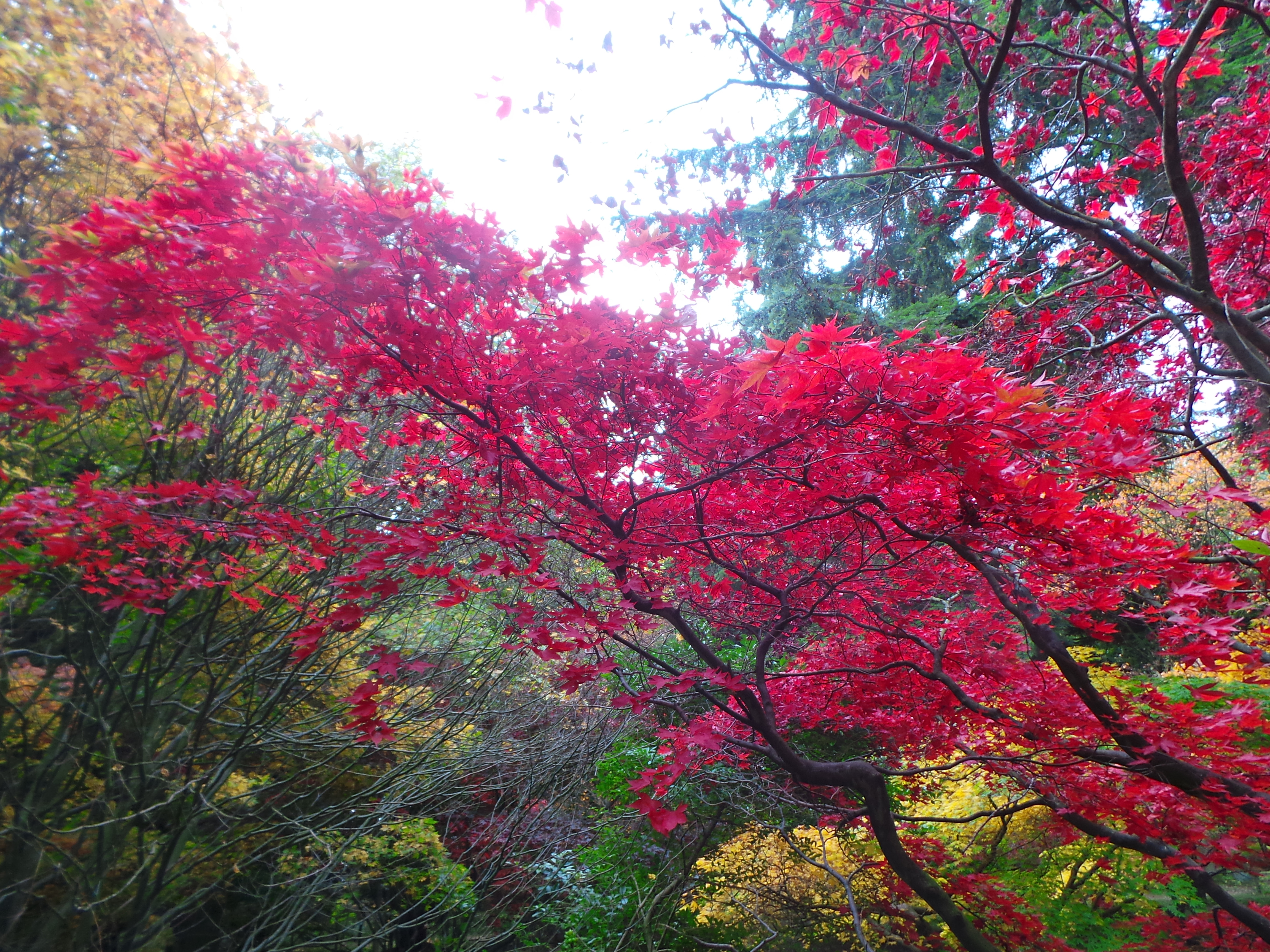
When we reached the area called the “Autumn Garden” we were blown away by the collection of Acers with their striped barks, their red and yellow leaves and their sculptural trunks curling away below their leaf canopy. Part way through the Autumn Garden we found this plaque on the “Dendrology Stone” which was presented to Queenswood Arboretum in 1981 by the International Dendrology Society recognising the quality of its young trees, layout and public access. There only 19 arboretum worldwide which have received this award. This emphasises just how important this 47 acres of country park actually is.

2014 10 23_6209 2014 10 23_6163

2014 10 23_6116 2014 10 23_6117 2014 10 23_6118

But there was far more to see here with trees and shrubs to discover around every corner.

2014 10 23_6120 2014 10 23_6119 2014 10 23_6125 2014 10 23_6124 2014 10 23_6123 2014 10 23_6122 2014 10 23_6121 2014 10 23_61262014 10 23_6127 2014 10 23_6128 2014 10 23_6129 2014 10 23_6130 2014 10 23_6131 2014 10 23_6132 2014 10 23_6133 2014 10 23_6134

But let us enjoy a journey around the delights of the Acers before we get distracted further.

2014 10 23_6136 2014 10 23_6137 2014 10 23_6138 2014 10 23_6139 2014 10 23_6142 2014 10 23_6141 2014 10 23_6140 2014 10 23_6143 2014 10 23_6144 2014 10 23_6145 2014 10 23_6147 2014 10 23_6146 2014 10 23_6150 2014 10 23_6149

We enjoyed a well deserved coffee break on one of the many benches we found within the glade of Acers with a wonderful view. We sat to enjoy our coffee and listened to the Woodpeckers and Nuthatches in the tree canopy. Jays entertained us collecting up acorns, beech mast and sweet chestnuts. This is the view from the seat we chose to take our coffee break sat on. How good is that!

2014 10 23_6119

In part two we shall be seeking out an old orchard and the “Reader’s Seat”.


This Veggie Life

A Vegetarian | Nature Lifestyle Blog

Rambling in the Garden

.....and nurturing my soul

The Arch City Gardener

Journeys In St. Louis Gardening and Beyond

Garden Dreaming at Châtillon

Consult the genius of the place

Storyshucker

A blog full of humorous and poignant observations.

gardeninacity

Notes from a wildlife-friendly cottage garden

PlayGroundology

...an emerging social science

The Official Blog of British Wildlife

'The most important and informative publication on wildlife of our times' - The Independent. This blog is a member of The UK & Ireland Natural History Bloggers group: www.uknhb.blogspot.com

iGrowHort

Inspire - Cultivate - Grow Native Plants - Restore Landscapes

Bishops Meadow Trust

To create and protect a semi-natural wild space for the people of Farnham to enjoy and experience an array of British wildlife in our town

Gardening with Children

The www.gardeningwithchildren.co.uk Blog

UKbirdingtimeline

birding through the seasons, why birds matter and how to conserve them

NATURE WALKER

with a camera in hand

Jardin

Transform your outdoor space

Eva's space

My allotment, cooking and other interests

Old School Garden

my gardening life through the year

LEANNE COLE

Trying to live a creative life

fromacountrycottage

trying to live as lightly as possible on our beautiful planet

Good Life Gardening

Nature lovers from Leicester living the good life.

mybeautfulthings

Finding the beautiful in the everyday

mawsonmichelle

Michelle's Allotment

In and Out of My Garden

thoughts from and about my garden

Greenhousing

Big plans for a small garden

The Scottish Country Garden

A Walled Country Garden in South East Scotland

The Fruity Chicken

Life at the fruity chicken

willowarchway

Off grid living. Self sufficient. "PERMAGANICS RULE".

St Anns Allotments

Nottingham's Grade 2* Listed Allotments and Community Orchard

Manifest Joy Harvests

a journey in suburban vegetable gardening

Allotmental

The madness of growing your own

Penny's Garden: a harvest beyond my front door

A novel approach to vegetable gardening

arignagardener

Sustainable living in the Irish countryside.

NewEnglandGardenAndThread

Master Gardener, amateur photographer, quilter, NH native, and sometimes SC snowbird

dianajhale

Recent work and work in progress and anything else that interests me

planthoarder

a chaotic cottage gardener

Lens and Pens by Sally

a weekly blog that creates a personal philosophy through photographs and words

Dewdrops and Sunshine

Stories from a sassy and classy Southern farmbelle.

The Pyjama Gardener

Simple Organic Gardening & Seasonal Living

gettin' fresh!

turning dirt into dinner

JOY...

today the world is created anew

Garden Birds

Notes from a Devon garden

ShootAbout

Life Through The Lens

Adapting Pixels

A photography blog showcasing the best photography pictures and videos on the internet

Wildlifegardening's Blog

Just another WordPress.com site

naturestimeline

personal observations from the natural world as the search continues for a new approach to conservation.

LATEBLOOMERBUDS

The Wonders of Life through my Eyes, my Heart, my Soul