Categories
Cheshire colours garden design garden photography gardening gardens gardens open to the public Hardy Plant Society HPS light light quality ornamental trees and shrubs photography shrubs spring gardening

Wild Colours at the Dorothy Clive Garden

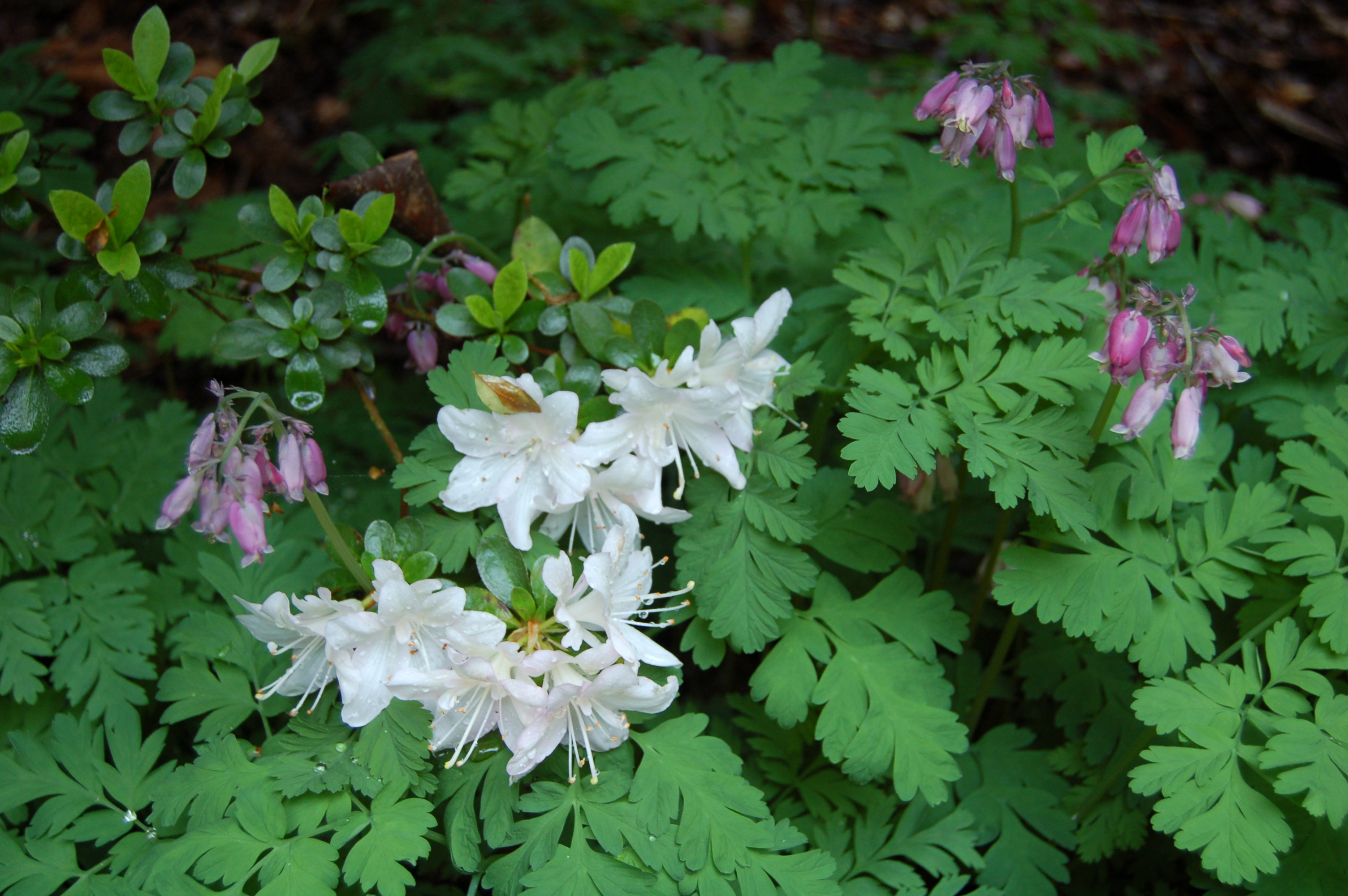
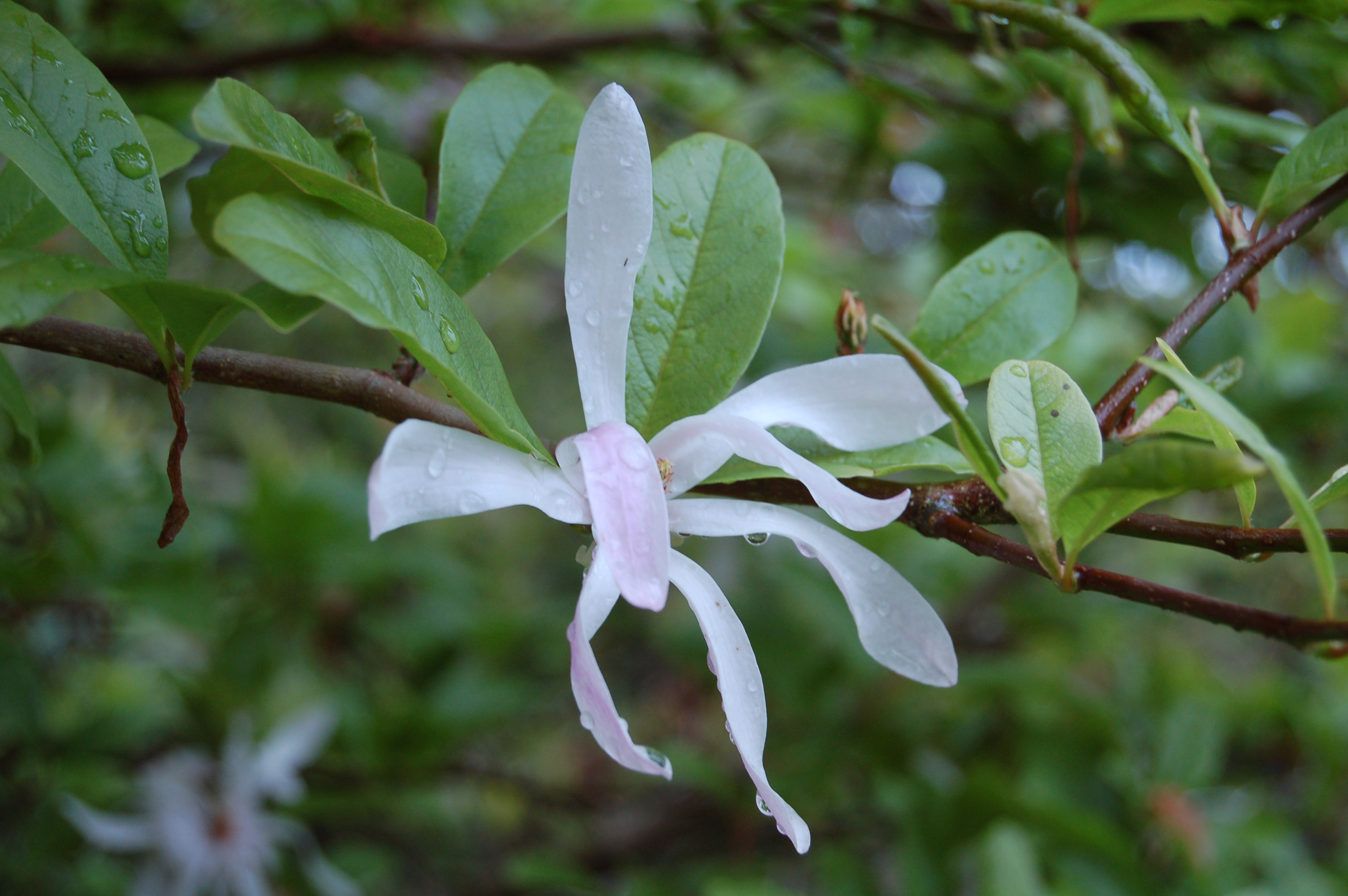
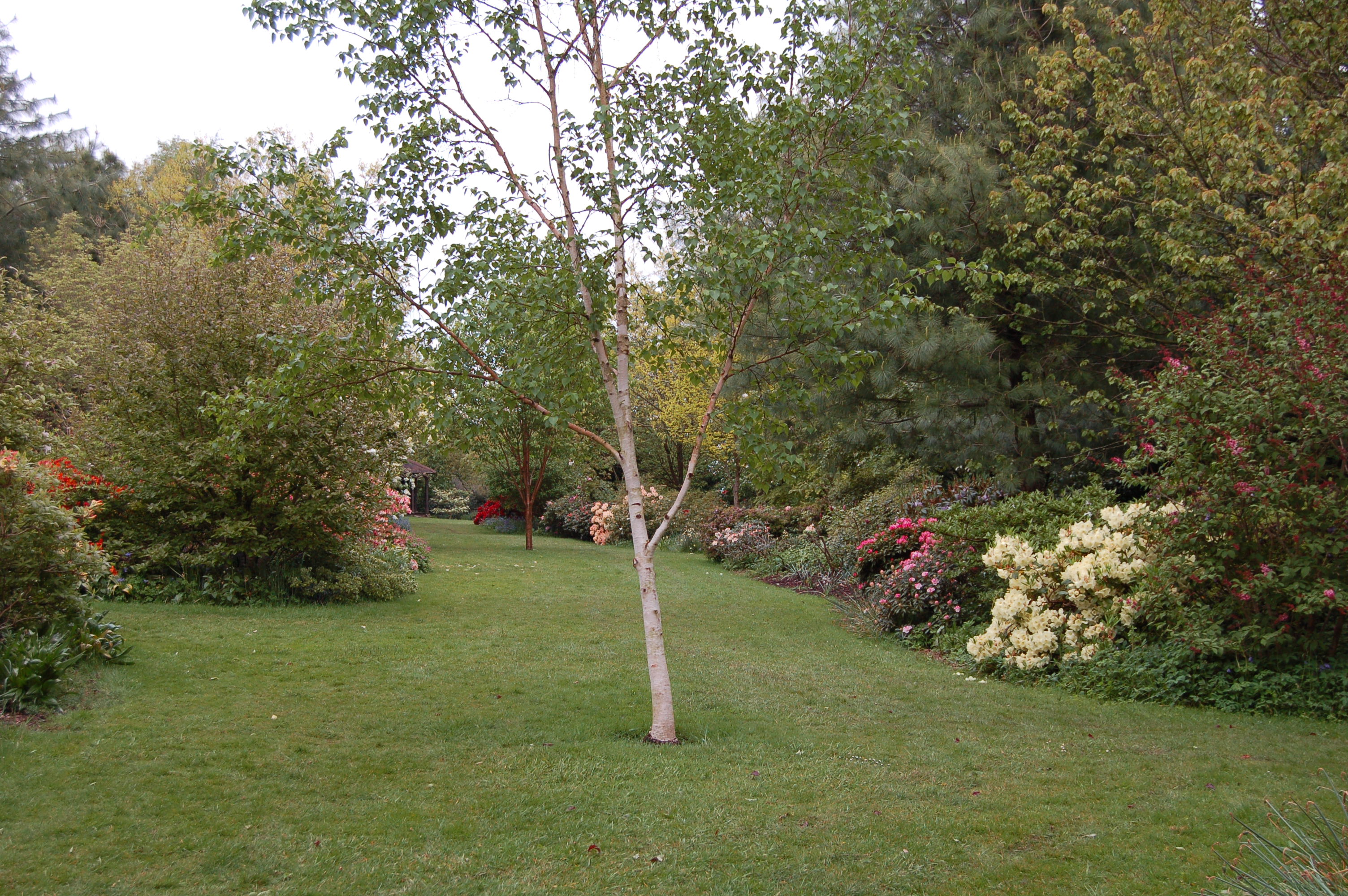
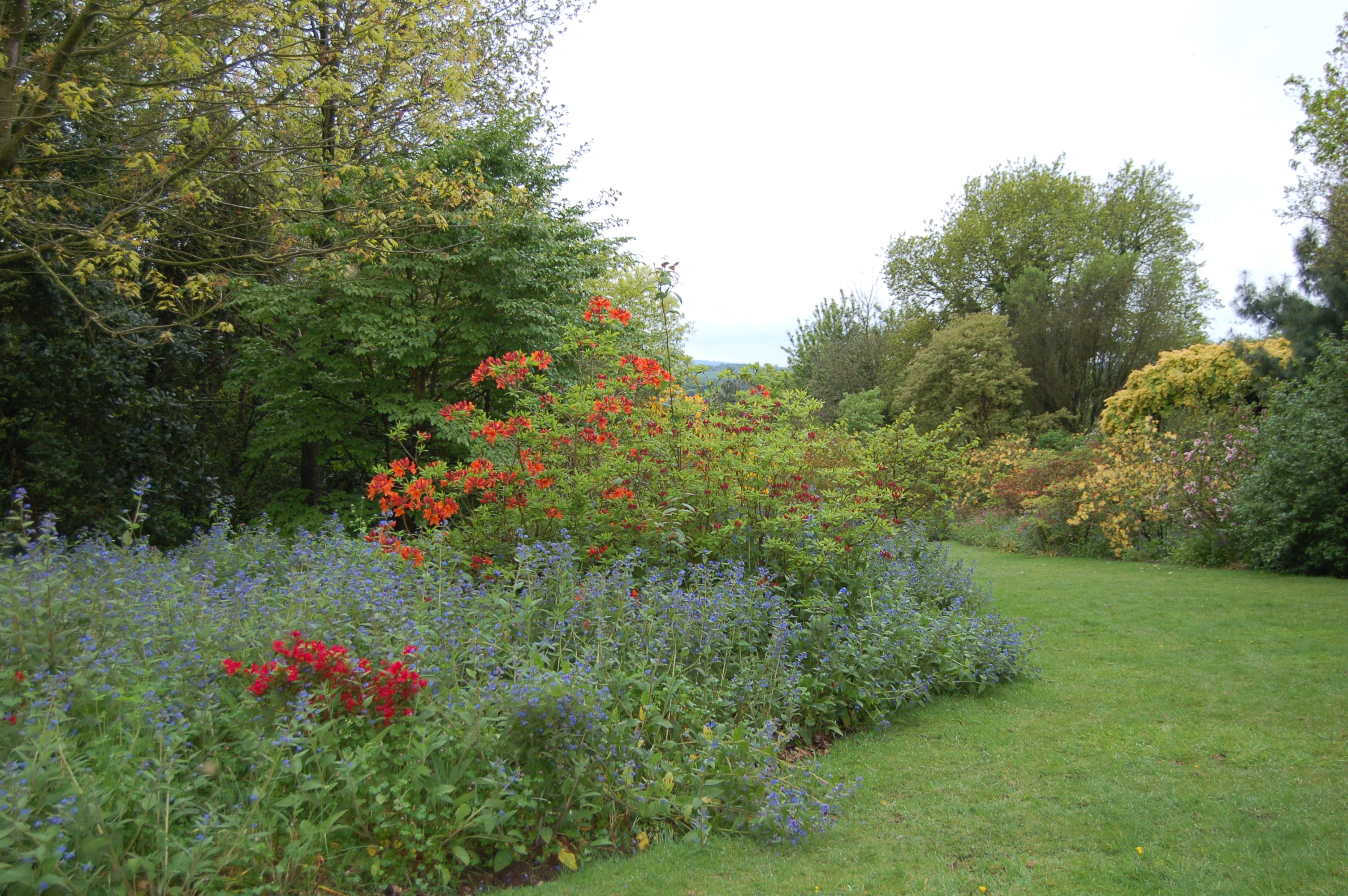
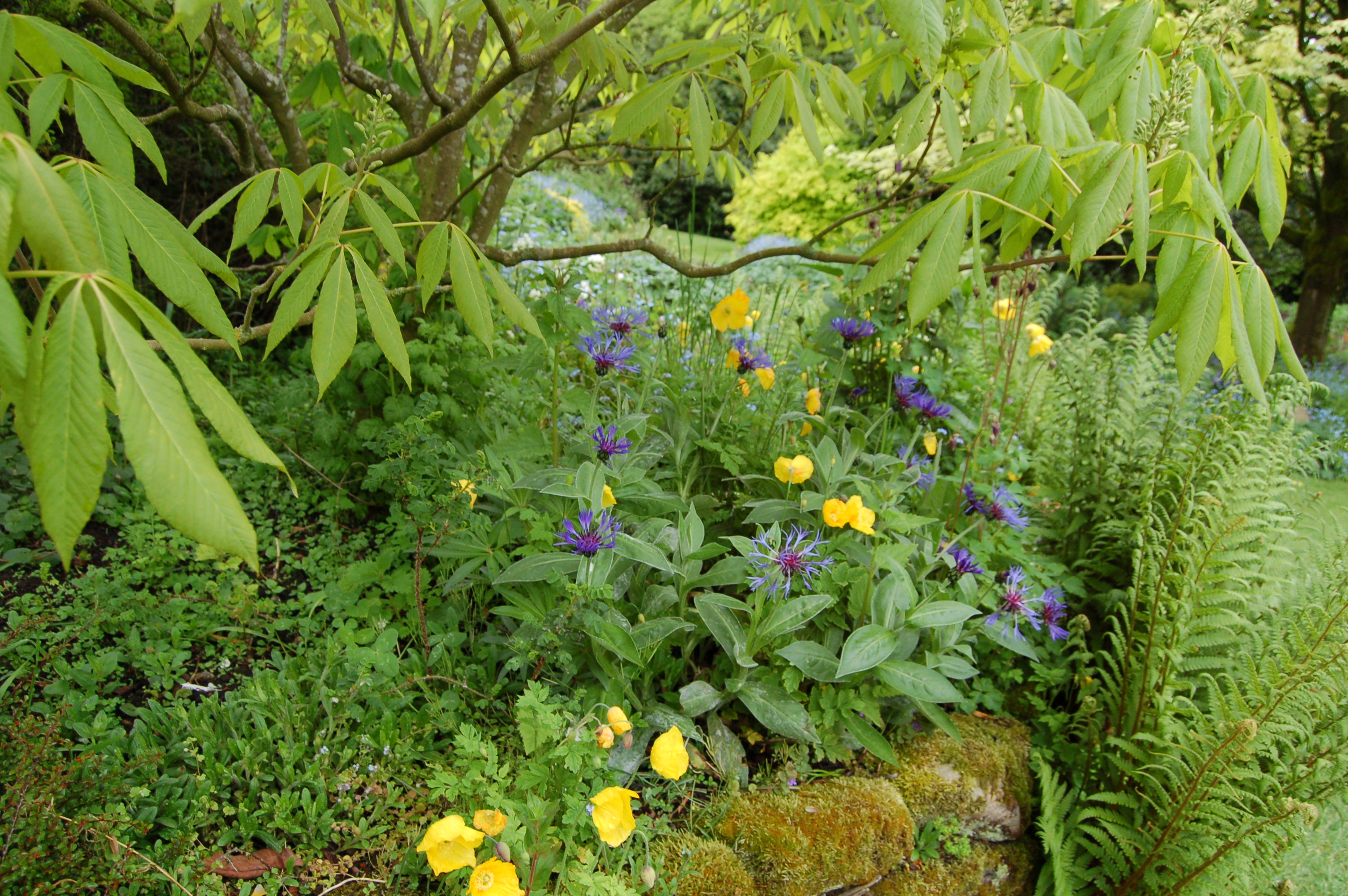
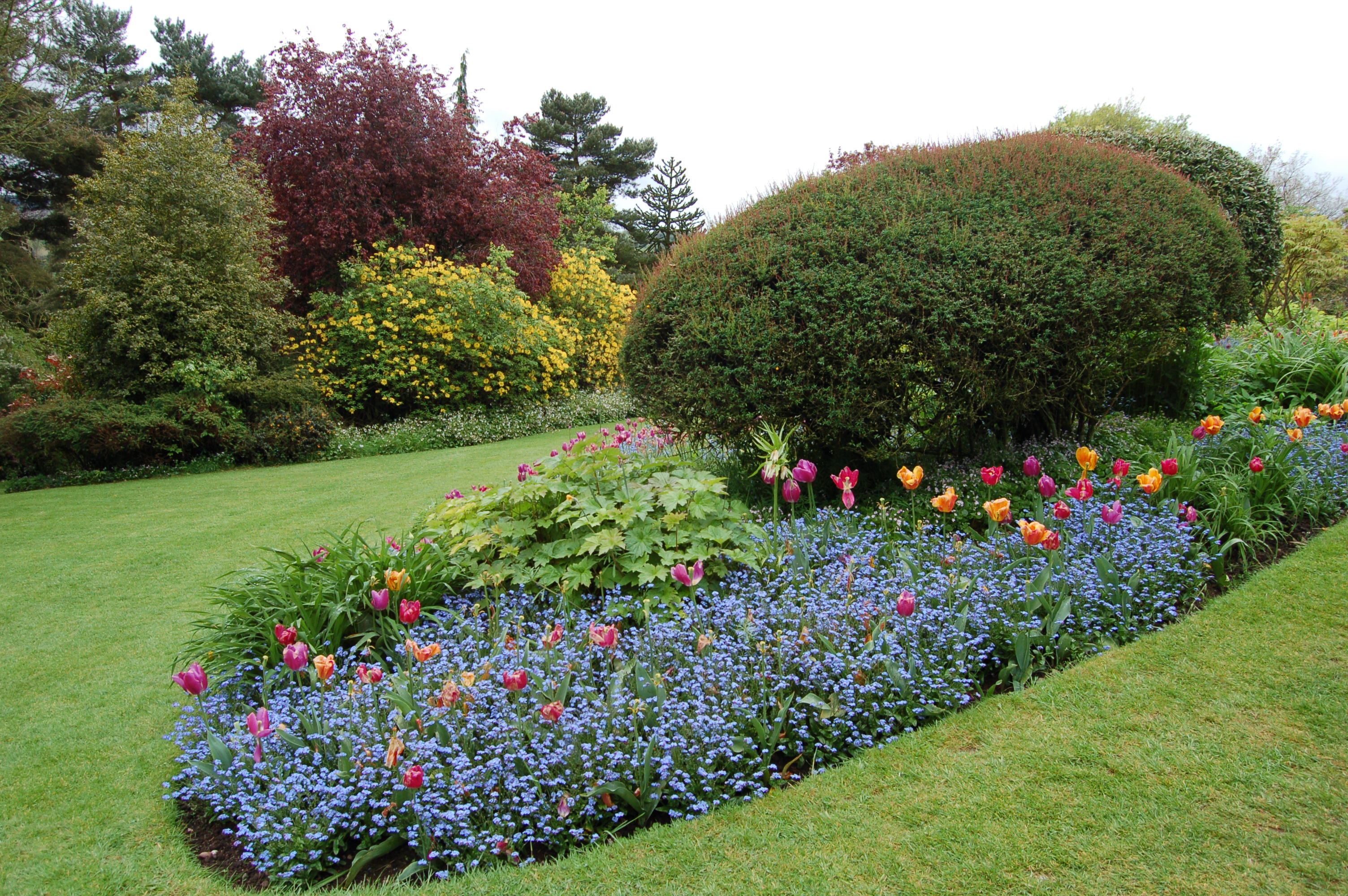
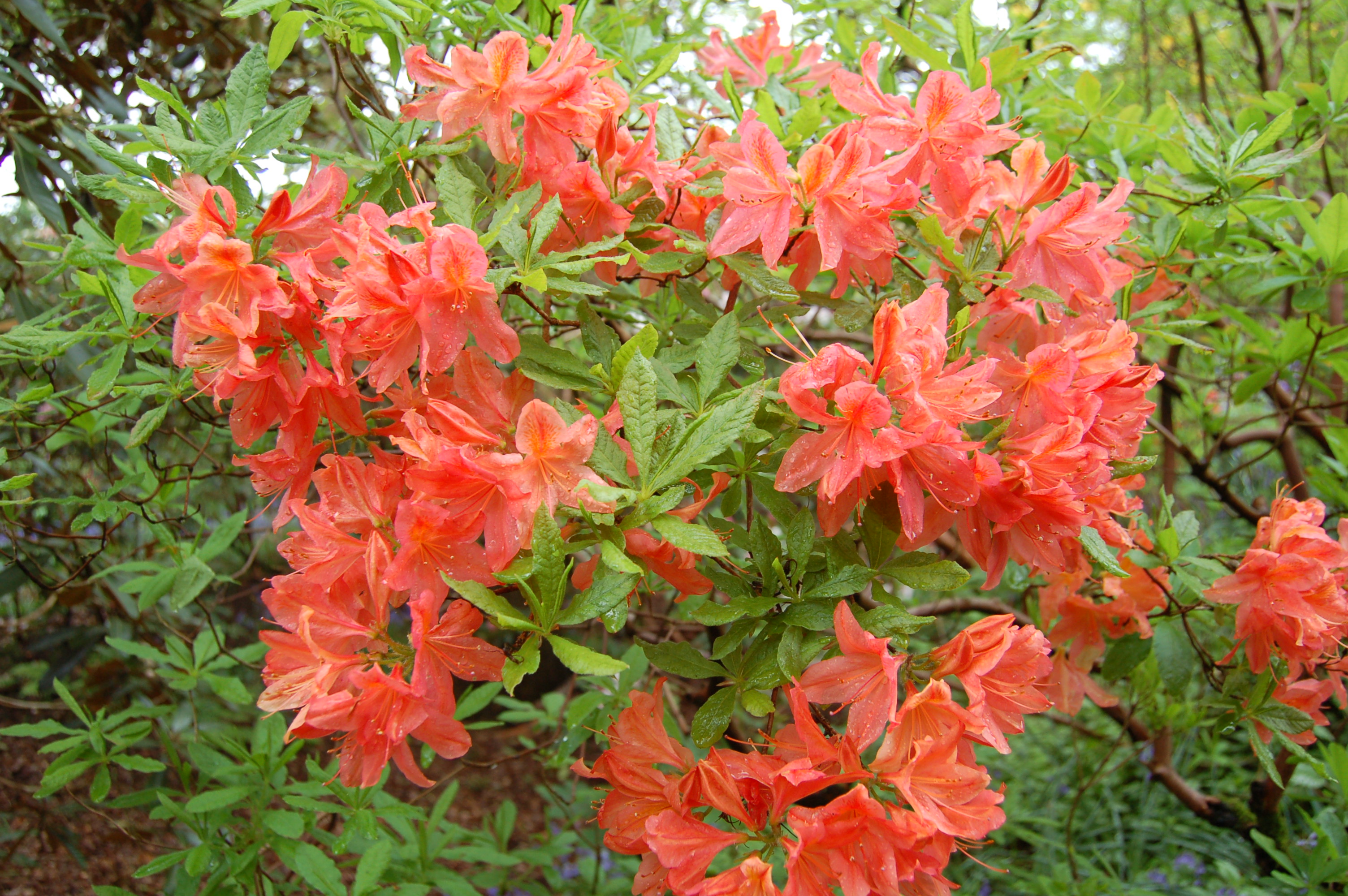
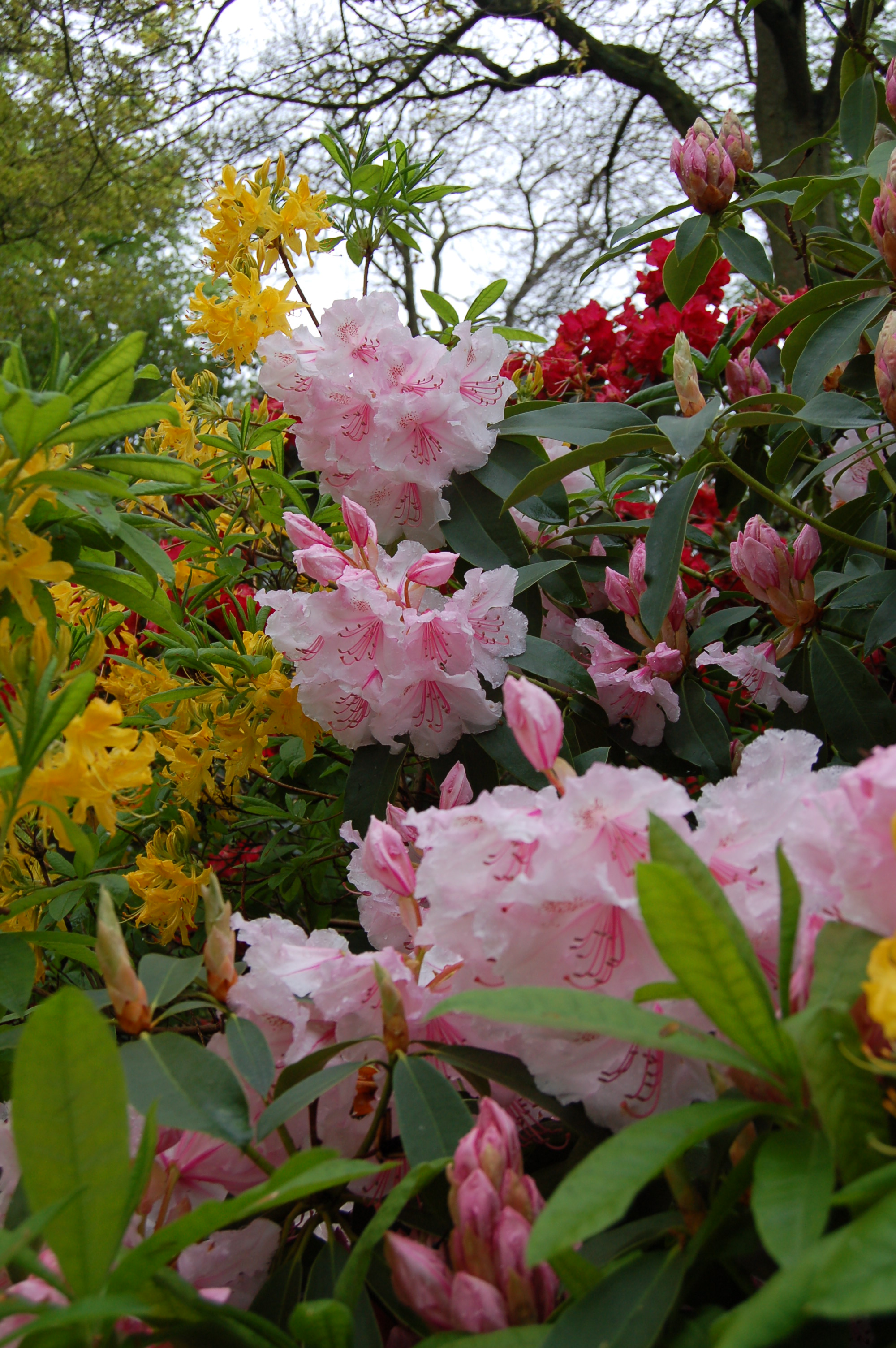
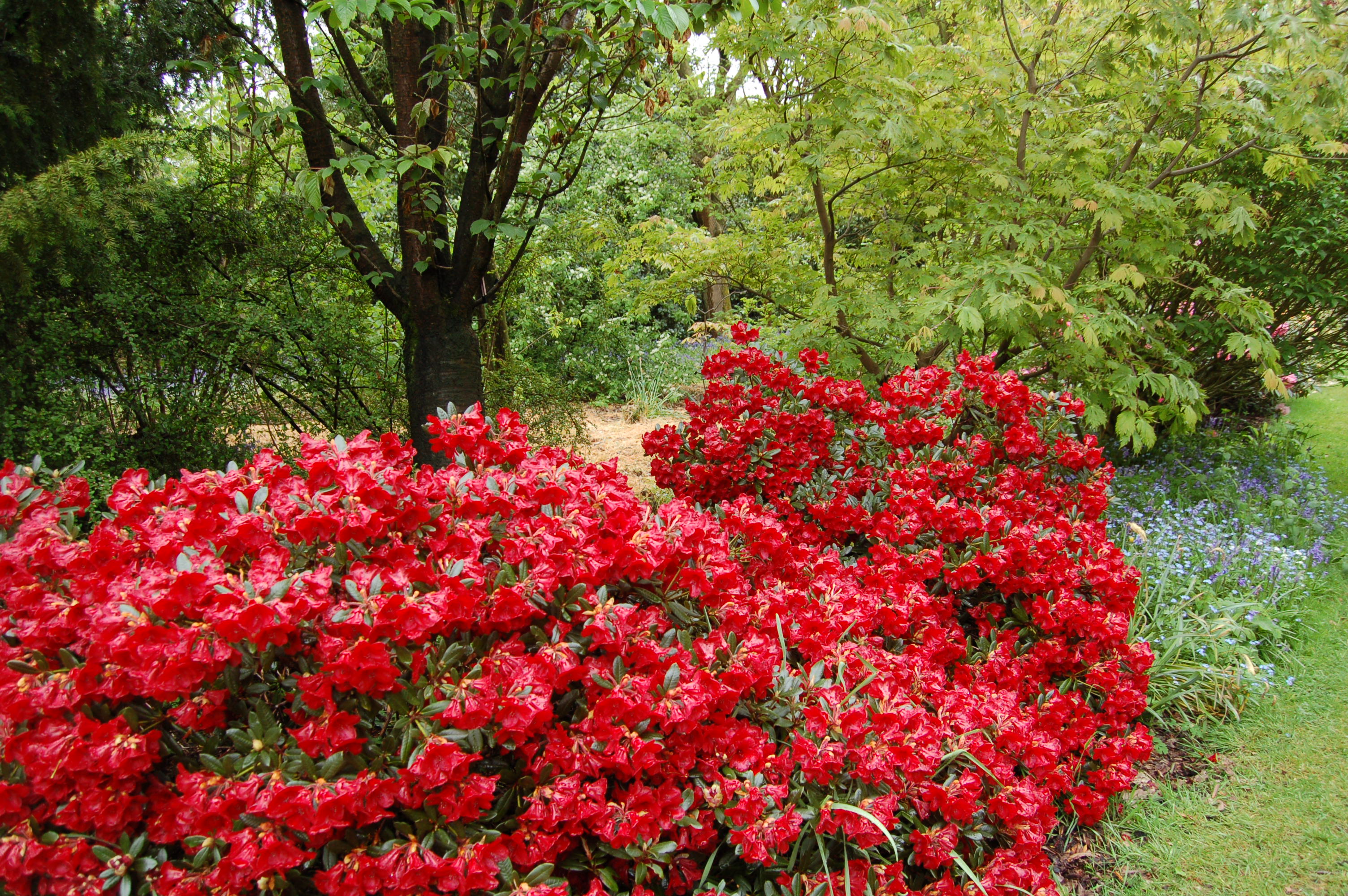
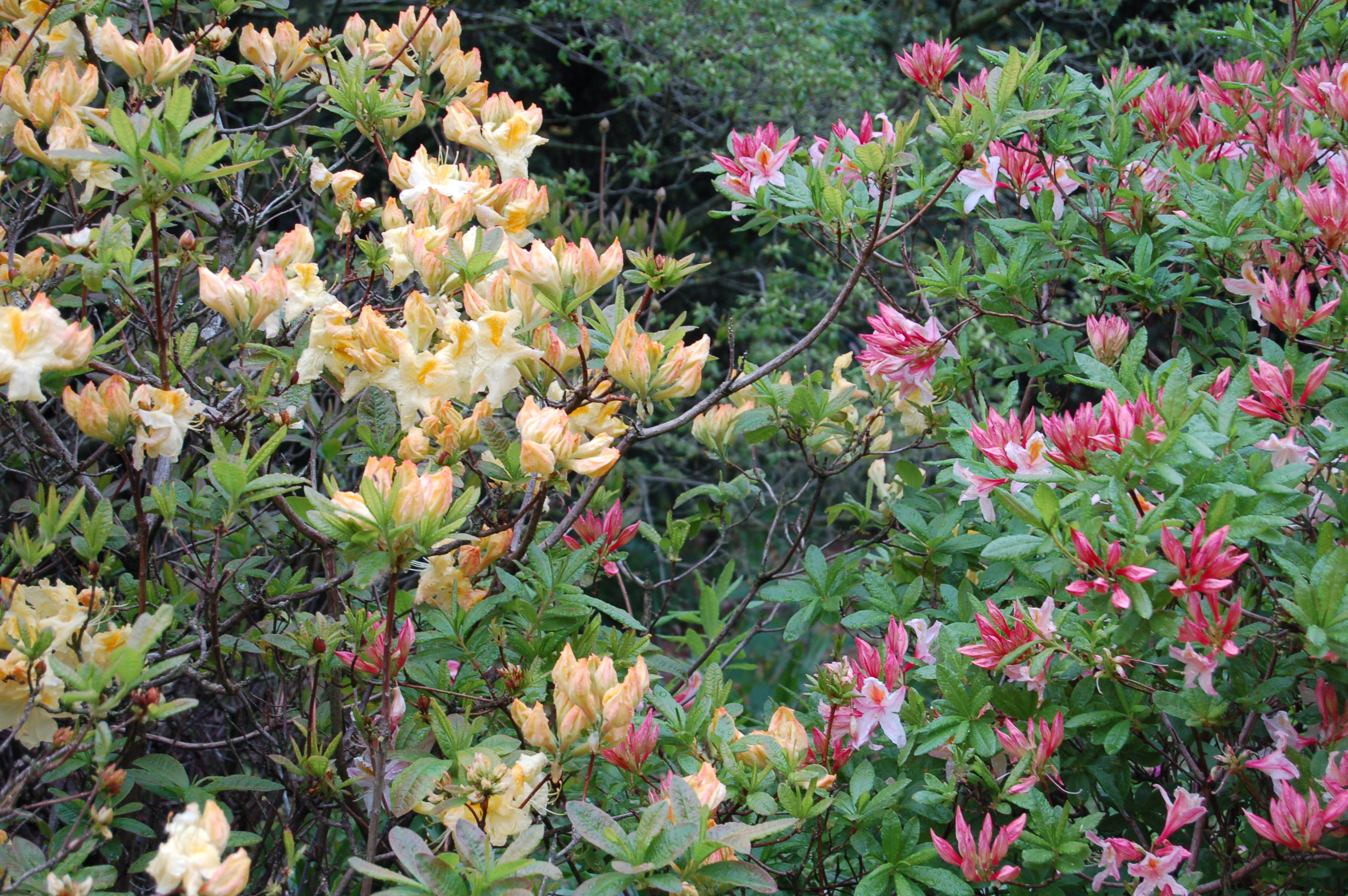
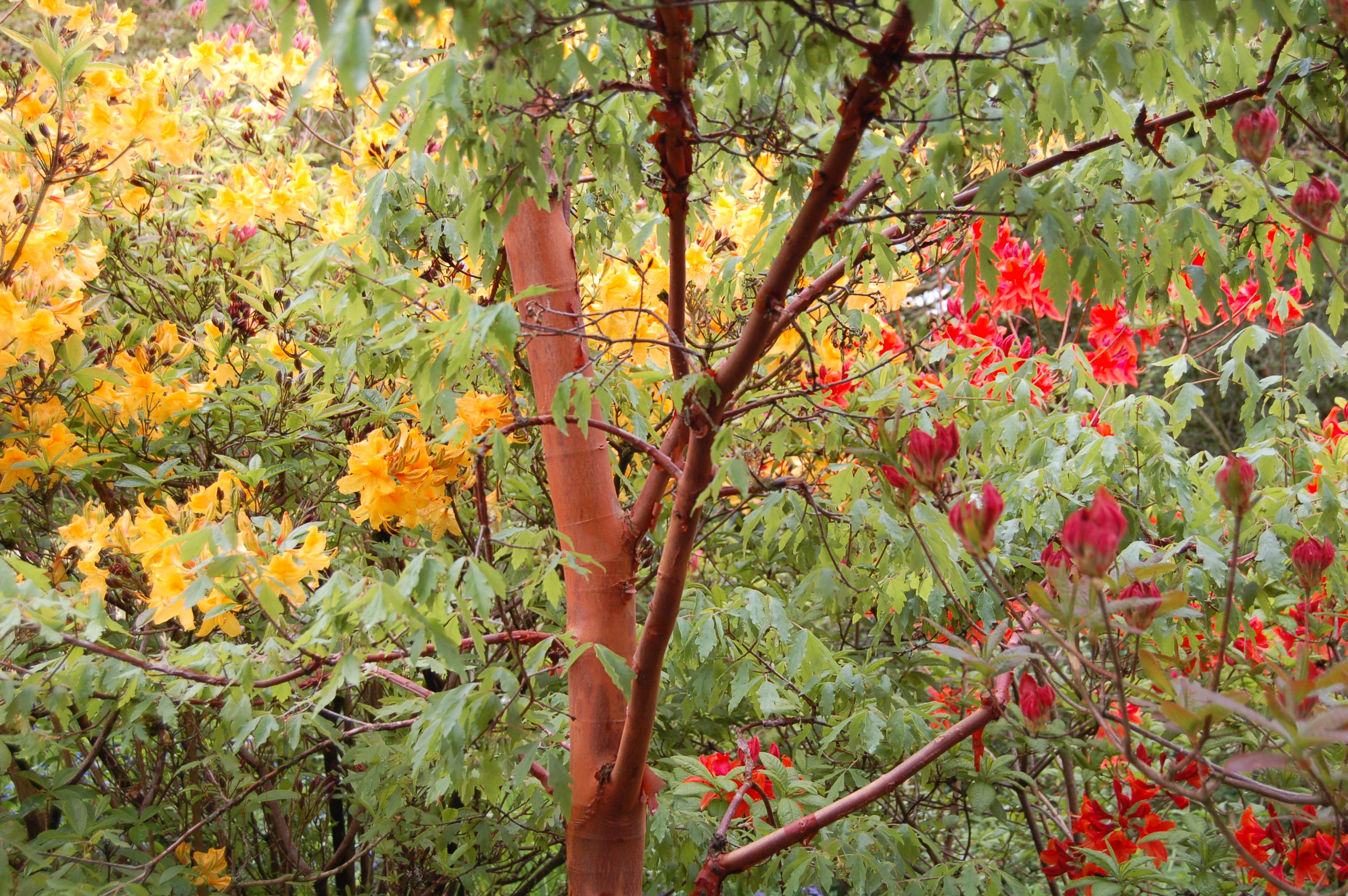
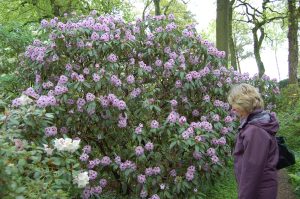
We visited the Dorothy Clive Garden recently with a few fellow Hardy Plant members. This garden is famous for its spring planting in the section called The Dingle – Rhododendrons and Azaleas in the wildest colour combination possible. These aren’t our favourite shrubs but we do enjoy going to this garden to see them once in a while.

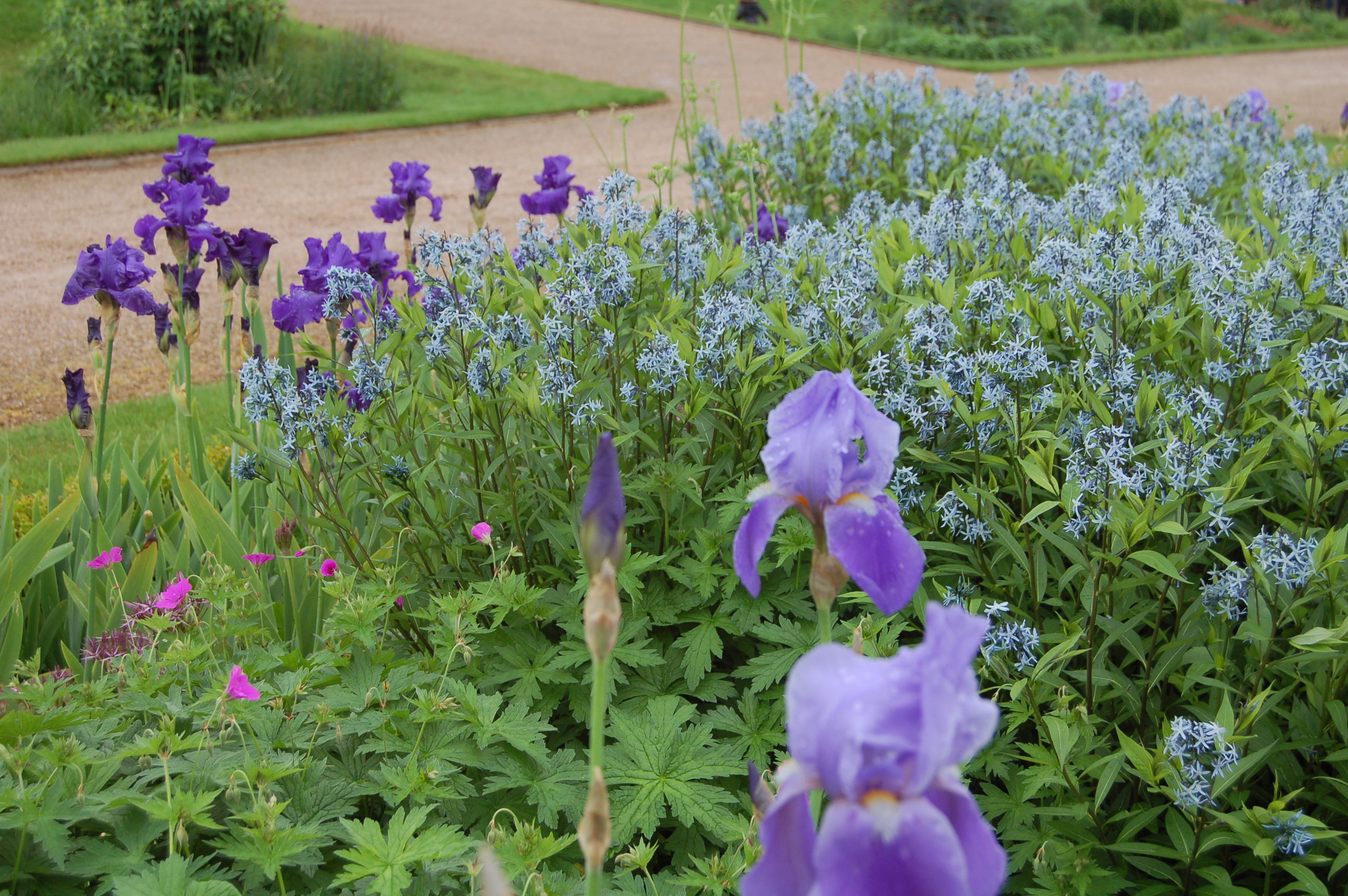
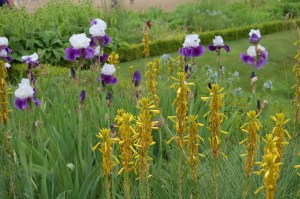
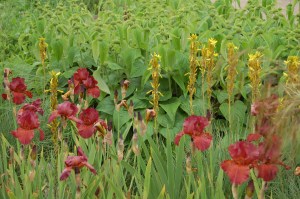
Just look at these pics! From the moment we arrived at the cottage the borders on either side of the doorway were alive with colour.

2014 05 08_8963 2014 05 08_8970 2014 05 08_8969   2014 05 08_8973 2014 05 08_8974 2014 05 08_8975 2014 05 08_8977 2014 05 08_8978 2014 05 08_8980 2014 05 08_8981 2014 05 08_8987 2014 05 08_8989 2014 05 08_8990 2014 05 08_8991 2014 05 08_8992 2014 05 08_8993 2014 05 08_8996 2014 05 08_8999  2014 05 08_9002 2014 05 08_9007 2014 05 08_9005  2014 05 08_9011


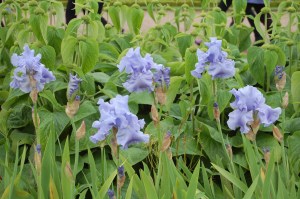
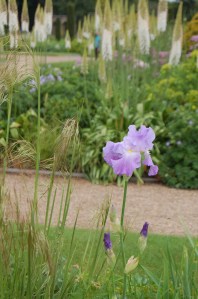
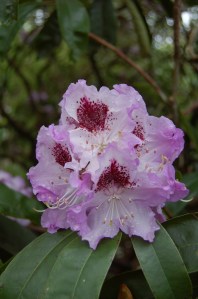
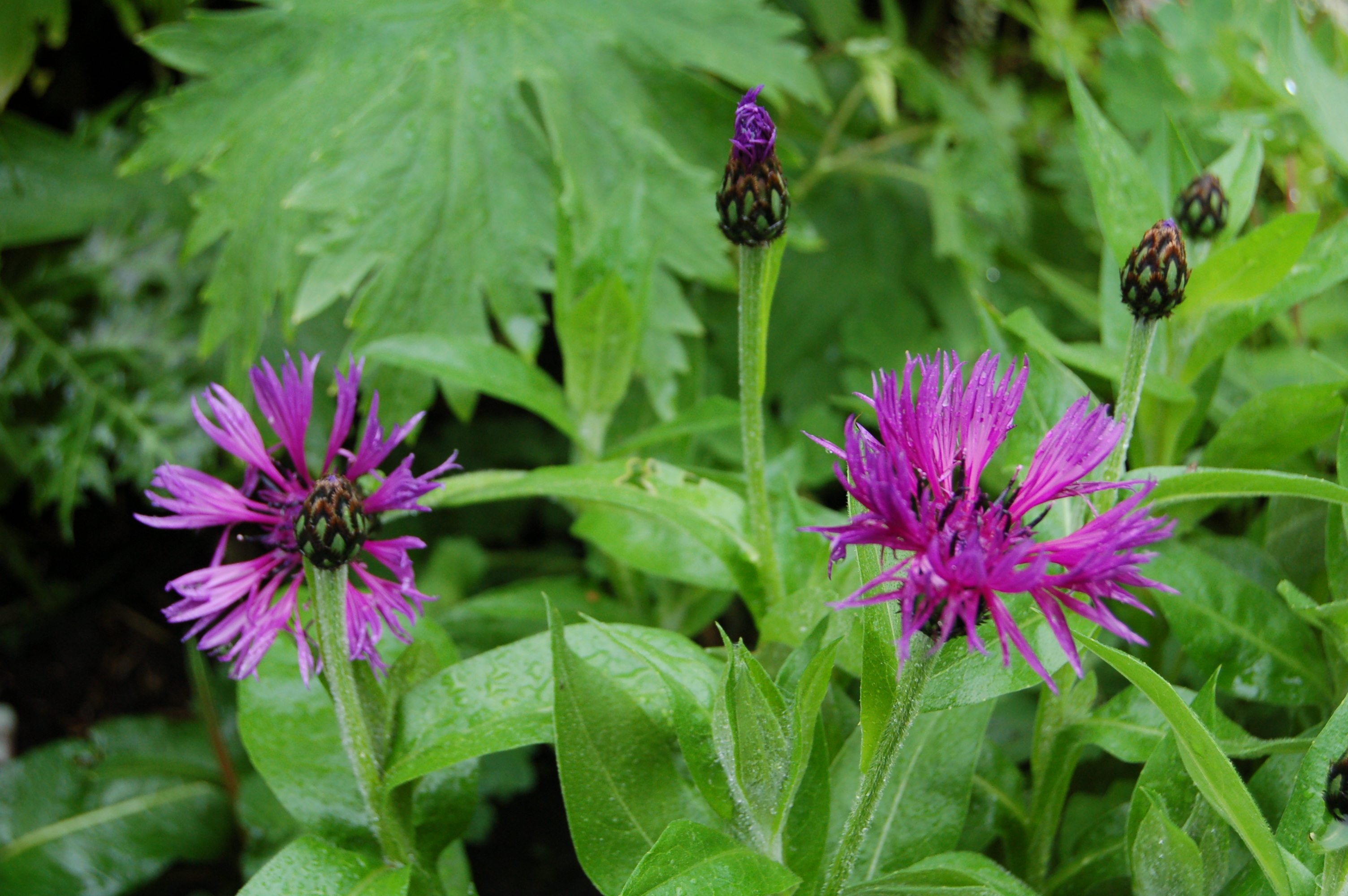
I know I said we are not the biggest fans of these flowers but Jude the Undergardener was impressed with this one. She was impressed by the gentle colours and contrasting spots.

2014 05 08_8971 2014 05 08_8972

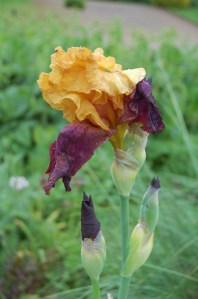
I however was taken with this bright orange beauty! Certainly nothing subtle here – I simply love orange in the garden and this flower and bud is so rich.

2014 05 08_9009 2014 05 08_9000

In the next post I shall look at the rest of the garden where things are a little calmer and kinder to the eye.

Categories
colours flowering bulbs fruit and veg garden design garden photography gardening gardens grow your own hardy perennials Hardy Plant Society herbs kitchen gardens light light quality ornamental trees and shrubs shrubs spring bulbs spring gardening Staffordshire trees village gardens woodland

Pauline and Derek’s Woodland Garden

This is the third post in my series of post about gardens of friends. In this post I shall share with you a visit Jude “The Undergardener” and I made with a couple of other Hardy Plant Society friends to the woodland garden of fellow members, Pauline and Derek. It was a wet, dull day when we set out but as we approached the village of Loggerheads things were looking a little more optimistic. Just outside the village we found “Broomside” where Derek greeted us as we got out of the car. Quickly passing through the front garden to get out of the rain gave us clues as to what to expect. We couldn’t wait to see more!

2014 05 08_8962

Pauline had prepared the coffee and tempting biscuits so that took priority. When we were ready for a guided wander the weather turned back to heavy rain so we donned rainwear and carried on regardless. We are after all “Hardy Planters” so mustn’t be put off by the weather, whatever it throws at us.

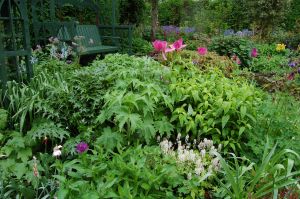
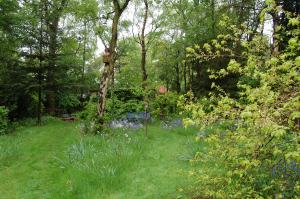
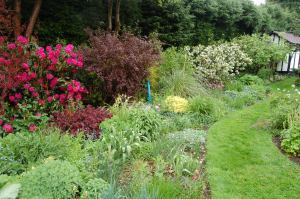
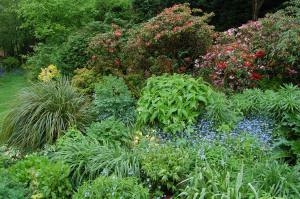
These general garden views show the richness of its planting and give a hint of the inviting atmosphere.

2014 05 08_8937 2014 05 08_8933

2014 05 08_8935 2014 05 08_8938

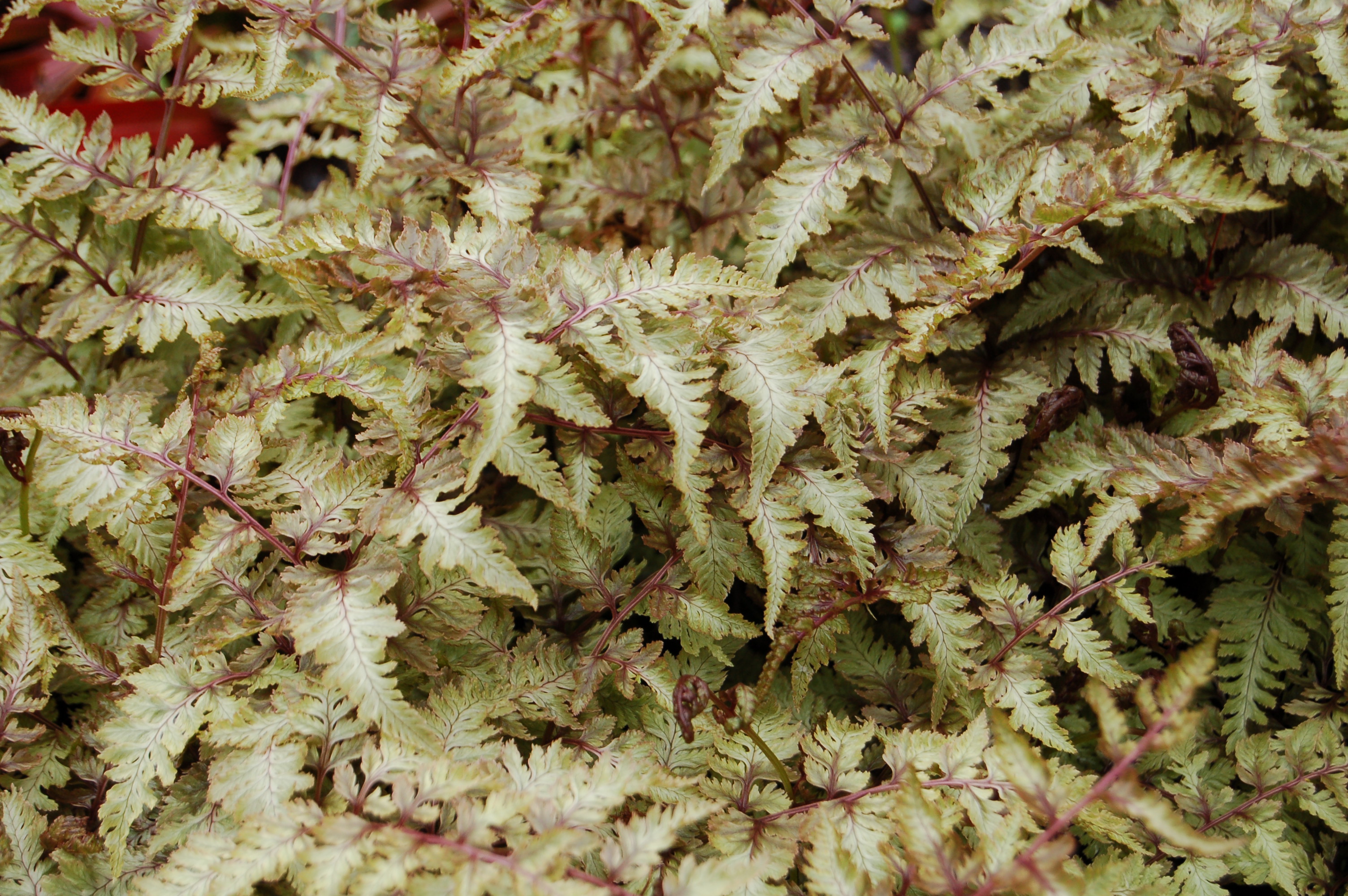
Despite the rain the light was good for photographing foliage plants. With contrast reduced textures were highlighted. Woodlaand plants seem to possess a richness in texture and colour in their foliage.

2014 05 08_8919 2014 05 08_8920 2014 05 08_8921 2014 05 08_8923

2014 05 08_8936 2014 05 08_8949

2014 05 08_8924 2014 05 08_8925

The late spring blossom on the trees and shrubs and the flowers on perennials were still a delight and somehow even more welcome on such a dull day.

2014 05 08_8926 2014 05 08_8927 2014 05 08_8928   2014 05 08_8931

This garden is full of special plants but these three stood out even among such quality planting. Purple cones, purple Trillium flowers and a creamy Paeony.


2014 05 08_8930 2014 05 08_8932

2014 05 08_8934

After enjoying the woodland section of the garden we stepped up a few steps, one of which was the root of a tree, to find the veggie patch.

2014 05 08_8939 2014 05 08_8940 2014 05 08_8941 2014 05 08_8942 2014 05 08_8943 2014 05 08_8944

Derek had an impressive collection of mints. We enjoyed their varied scents. This one, with its long slightly glaucous leaves was I think was Mentha buddleifolia, one I had never seen before. Indeed I wasn’t aware of its existence.

2014 05 08_8945

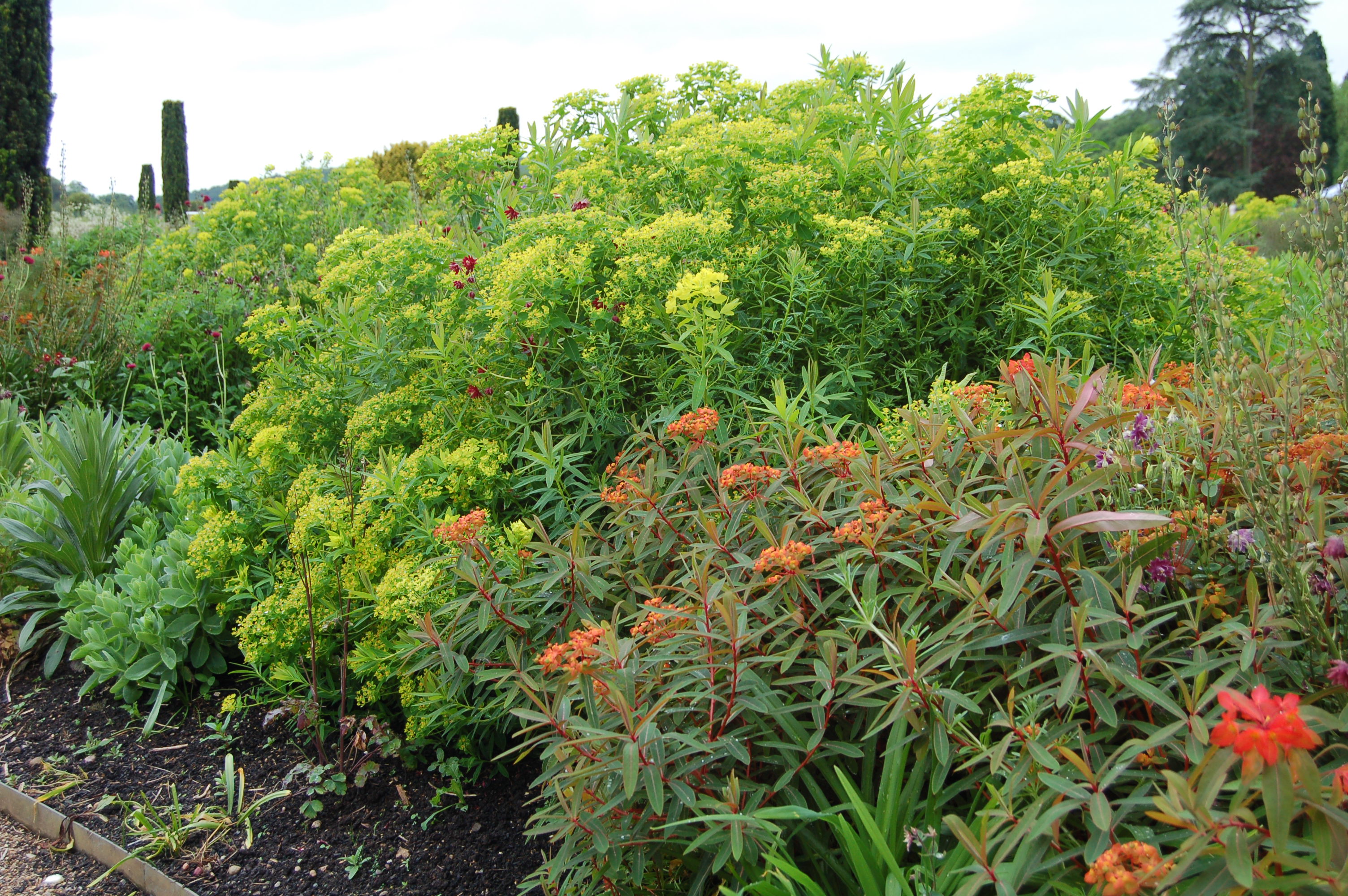
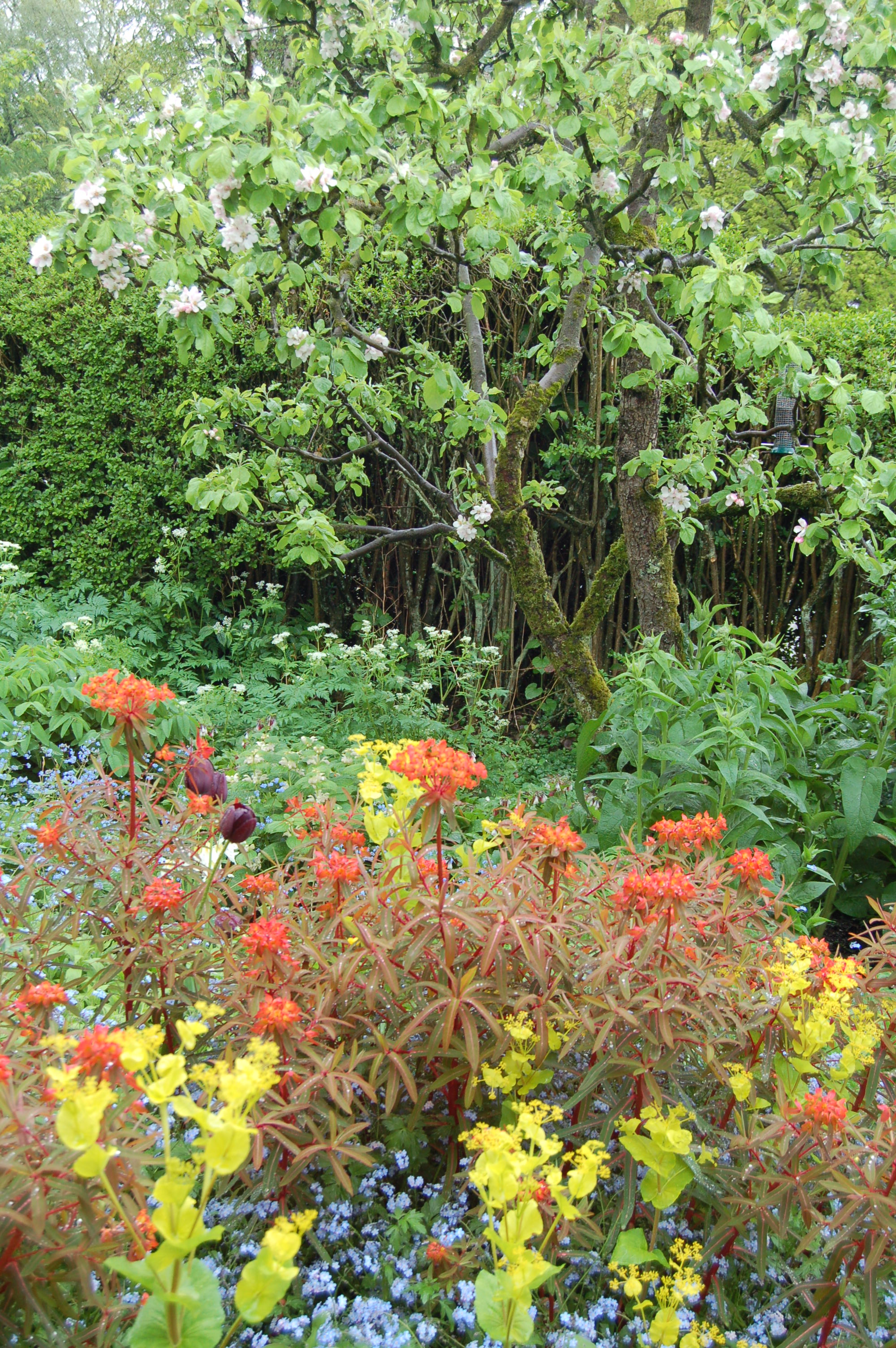
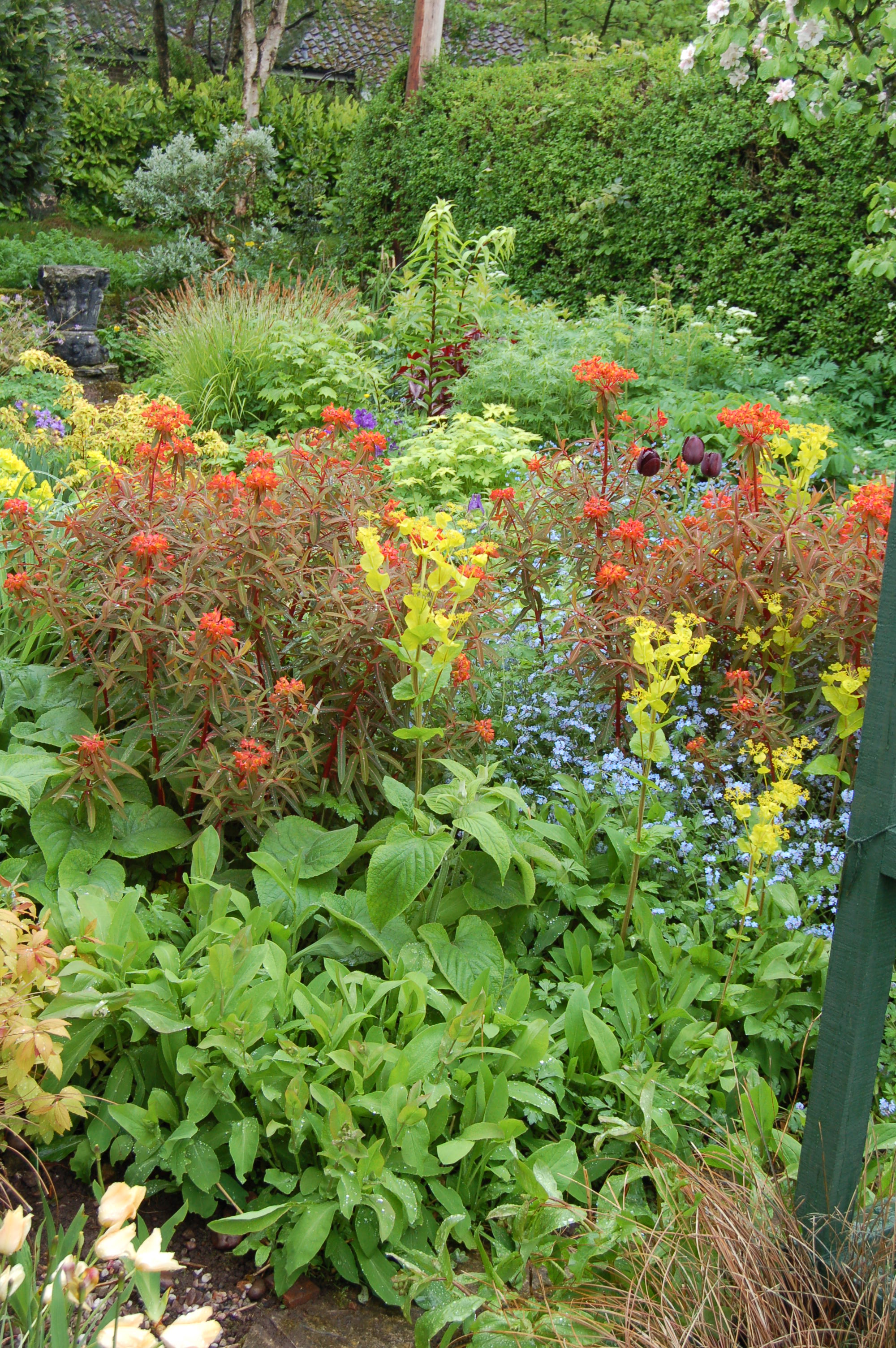
After exploring the paths winding through the vegetable garden we found a colourful mixed border along the side of the house. Here colourful Euphorbias added extra brightness to more rich planting.

2014 05 08_8954  2014 05 08_8961 2014 05 08_8959 2014 05 08_8953 2014 05 08_8955 2014 05 08_8956 2014 05 08_8957 2014 05 08_8952 2014 05 08_8951  2014 05 08_8948

Pauline has discovered a novel, attractive and effective way of labeling her plants. She writes their names on pebbles which are then placed at their base. She also advised us on the best pen to use and gifted one to us. We shall certainly be trying it out!

2014 05 08_8947 2014 05 08_8929

We had a most enjoyable day even better for having defied the elements. It is good to share the gardens of friends and even better when you do so with other friends. Hardy Plant Society members are often a knowledgeable breed  so we can always learn something from them and discover plants new to us. Pauline and Derek’s garden with its woodland atmosphere afforded us a refreshing change after working hard for a few days in our own South facing exposed garden.

Categories
colours garden photography gardens gardens open to the public Land Art outdoor sculpture recycling sculpture

Decorated Bicycle Bits in a Garden?

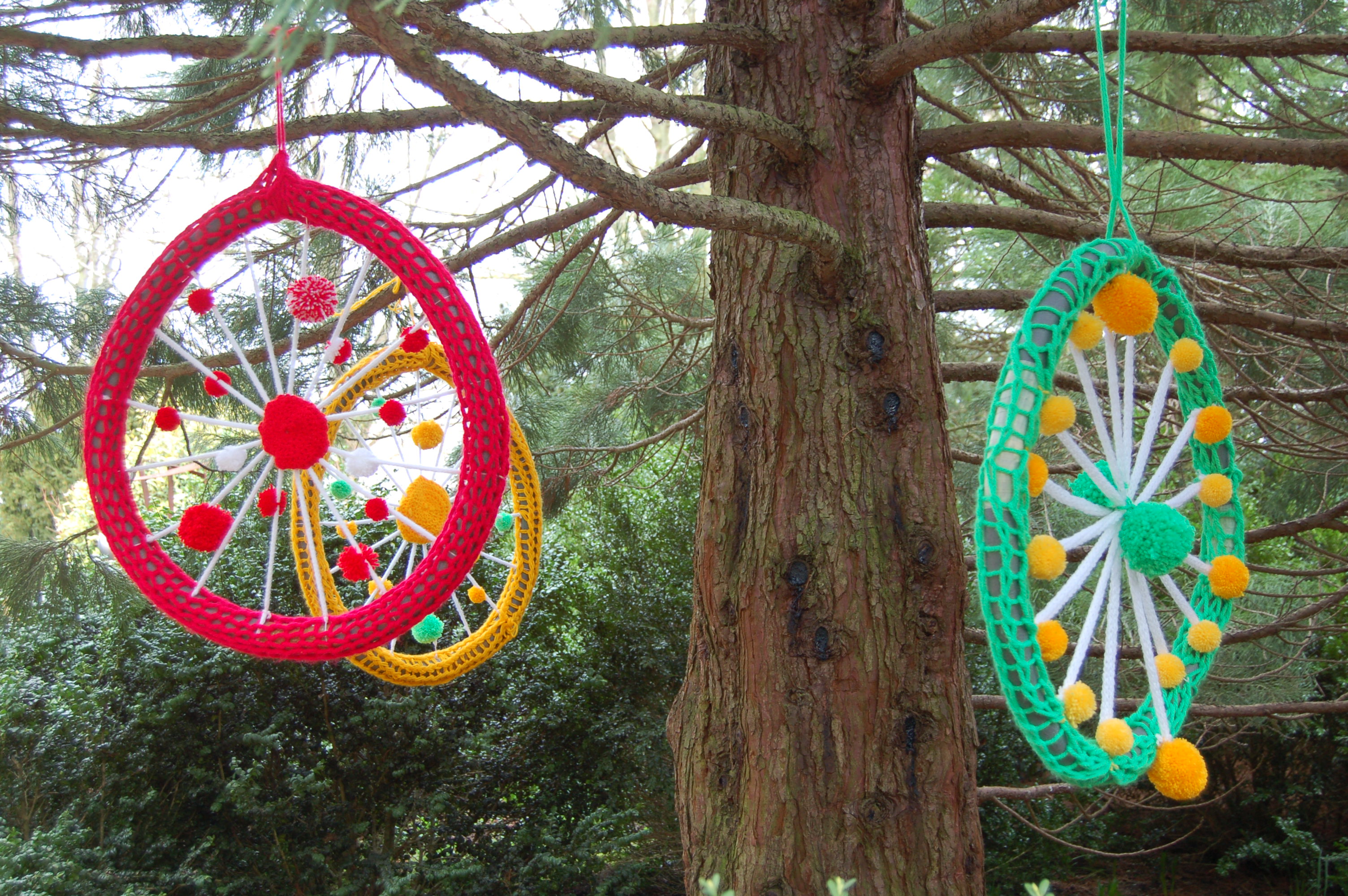
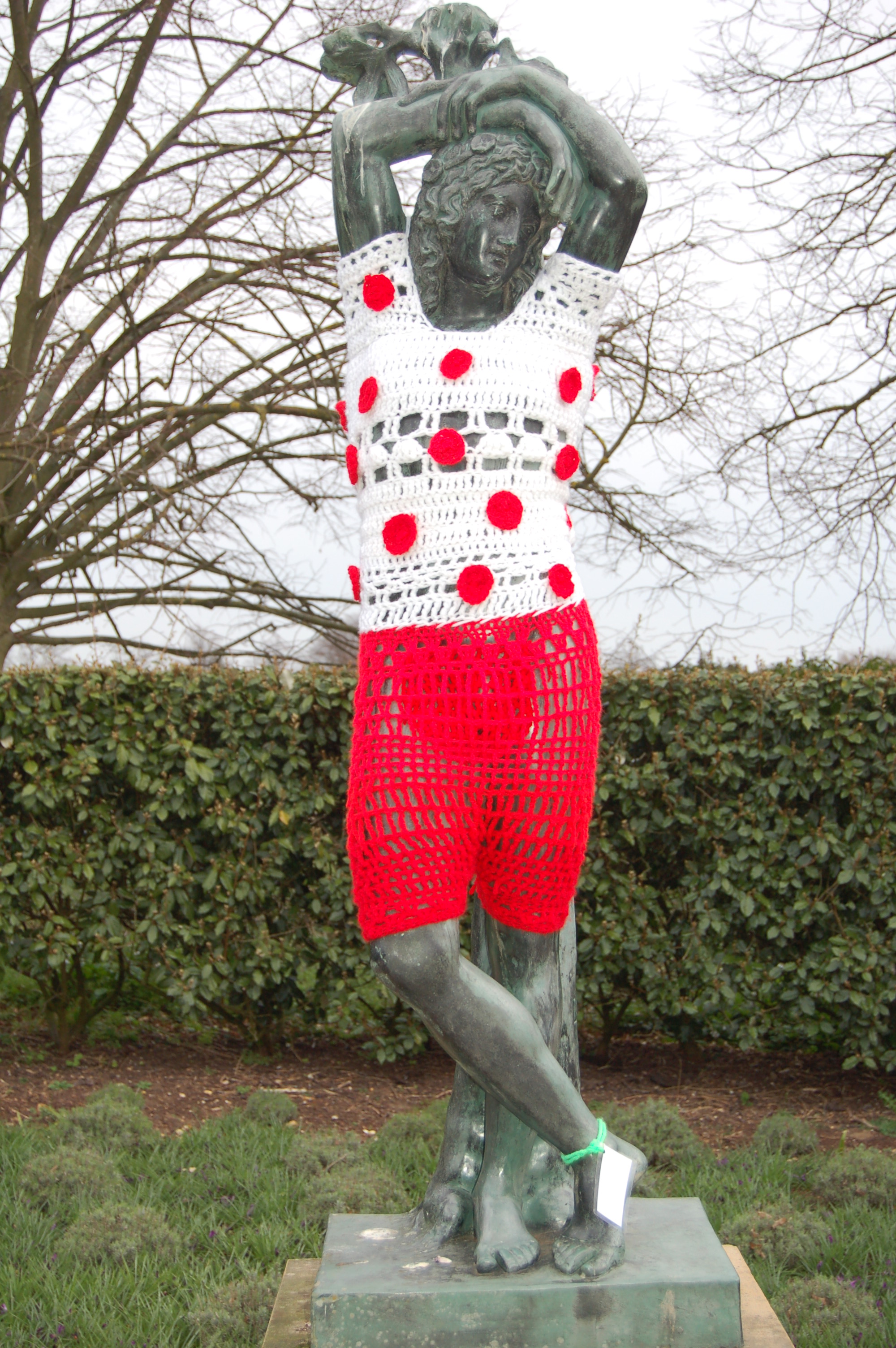
Yes, you have read the title correctly. This post is about decorated bits of bicycles in a garden. These are no ordinary bikes, these are decorated bikes or sometimes just decorated bicycle wheels. We were surprised by the sight of the first of these decorated bikes when we came across it in the grounds of Anglesey Abbey.

We discovered that they were there to celebrate an anniversary of cycling in Cambridge. Each bike or parts of bikes were decorated by knitters!

Just share our enjoyment of discovering them by looking at my photos.

2014 03 20_7364 2014 03 20_7365 2014 03 20_7366 2014 03 20_7384 2014 03 20_7397 2014 03 20_7429

Categories
conservation countryside flowering bulbs hedgerows landscapes light meadows nature reserves spring bulbs Wildlife Trusts

A Fritillary Meadow – North Meadow, Cricklade

We have a book at home where we list places we must go to, gardens we must visit and things we must do. A visit to the Fritillary Meadows in Wiltshire has been on our “Places to Visit” list for a few years now but we have been thwarted by the weather and the effect this has on these lovely flowering bulbs. This year we made it.

We drove down to Cricklade in Wiltshire and with great difficulty due to heavy downpours of rain making it hard to see, we found the first signs of where we were aiming for, The Fritillary Tearooms. The tearooms open each year when the Fritallaries are in full bloom and the proceeds go towards boosting the “Cricklade in Bloom” funds. Naturally we had to support them and so enjoyed a warming cup of coffee and a splendid cake before we embarked on our wet walk around the wet meadow. Apologies for the sloping photo of the tea shop but having one leg shorter than the other does sometimes result in strange sloping pics!

2014 04 21_8340 2014 04 21_8229

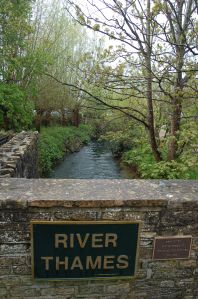
We entered the reserve, called North Meadow, run jointly by English Nature and the Wiltshire Wildlife Trust, via a bridge over the River Churn, one of the two rivers that skirt the wet meadow, the other being the Thames. In front of us lay an old, flower-rich hay meadow situated within the glacial flood plains of the two rivers. The meadow covers a vast area of 108 acres. It is designated a Special Area of Conservation and a Site of Scientific Interest and is an internationally important reserve.

2014 04 21_8314 2014 04 21_8316

2014 04 21_8315 2014 04 21_8230

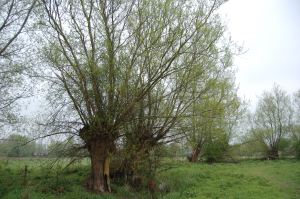
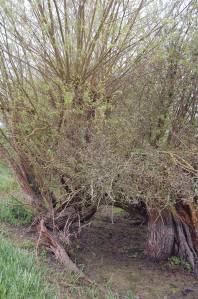
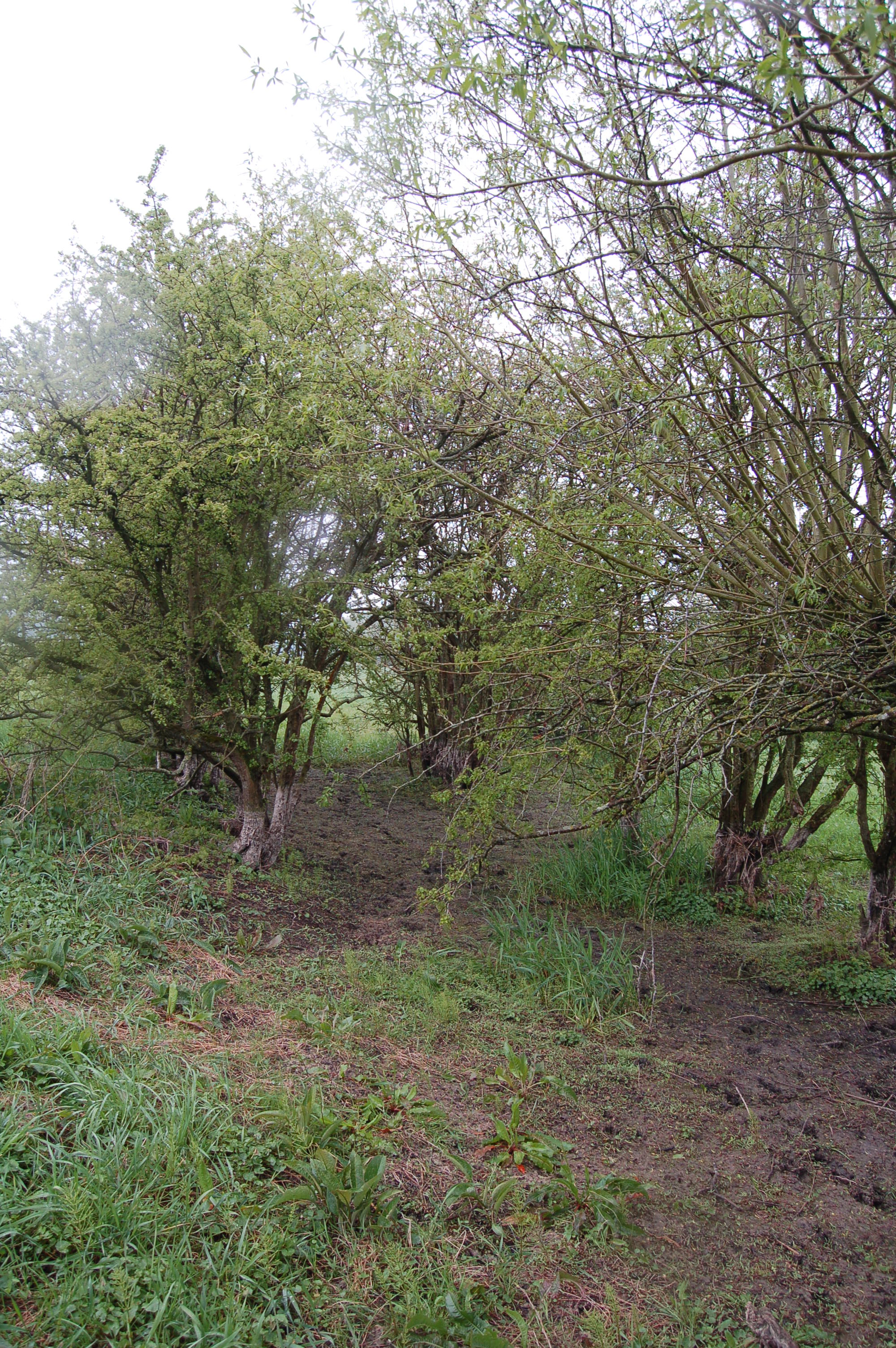
We were never far from one or other river as we walked the reserve margins. It was good to see beautiful ancient pollarded willows much in evidence aligning the banks of both. Seeing these brings back memories of my childhood fishing my local brook “The Carrant” whose banks were lined with them. We hid inside them as many were hollow and loved looking up inside them spotting wildlife mostly spiders and beetles but on special occasions a roosting Tawny Owl. The willows were pollarded which involved pruning them hard back to their main trunks every few years to harvest the stems for basket making and hurdle manufacture.

2014 04 21_8311 2014 04 21_8308

2014 04 21_8414 2014 04 21_8417

2014 04 21_8418 2014 04 21_8379

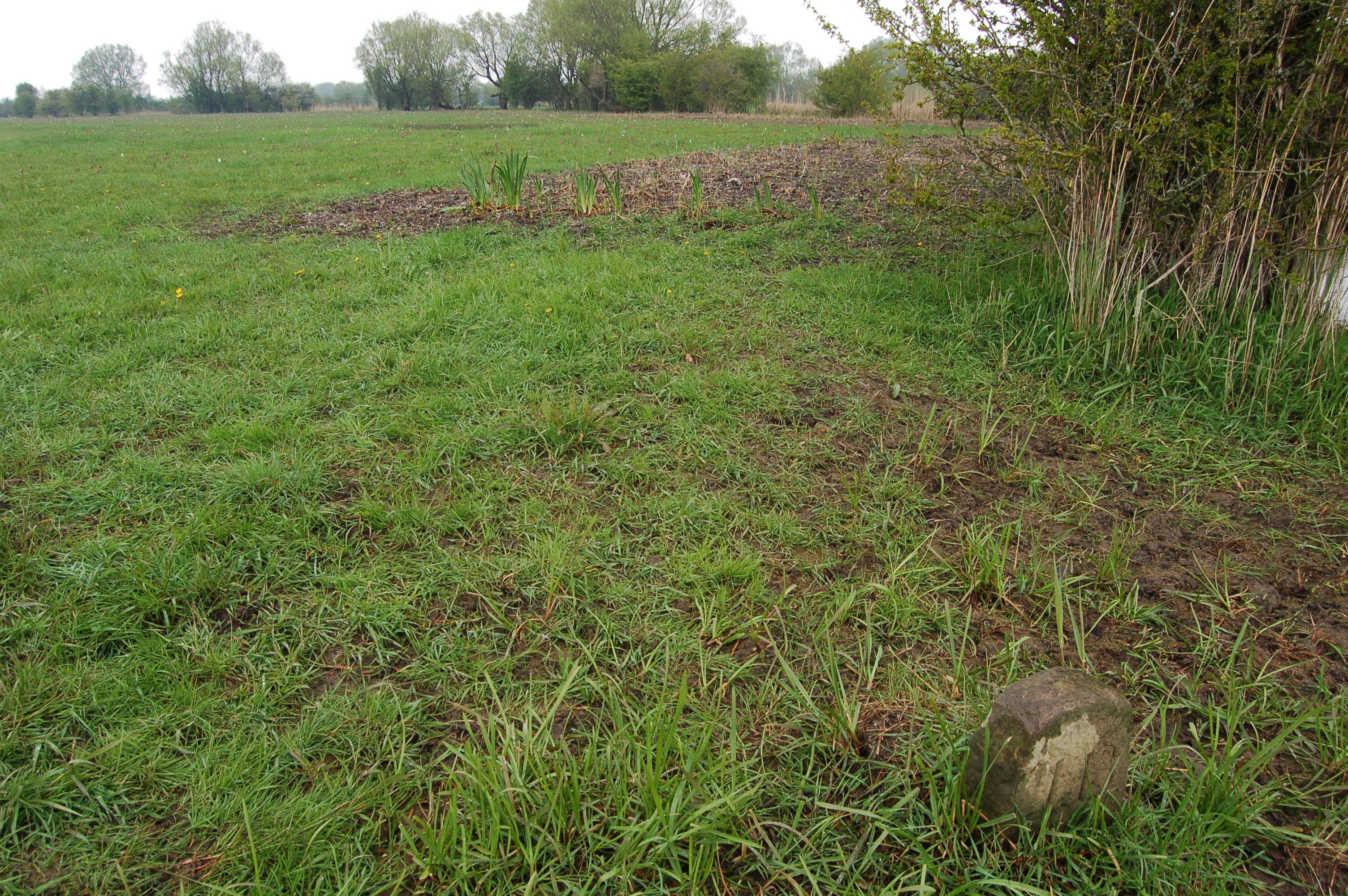
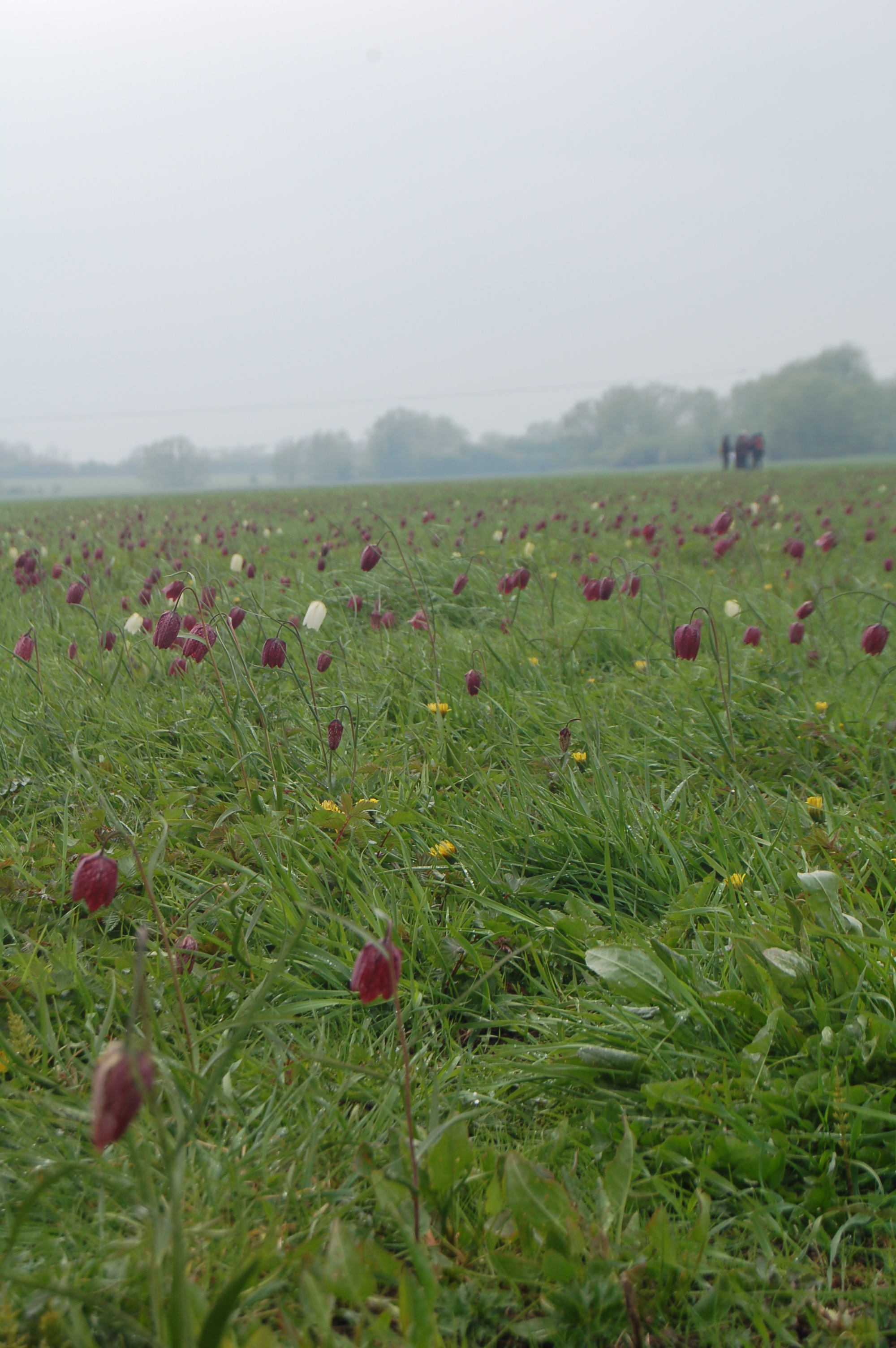
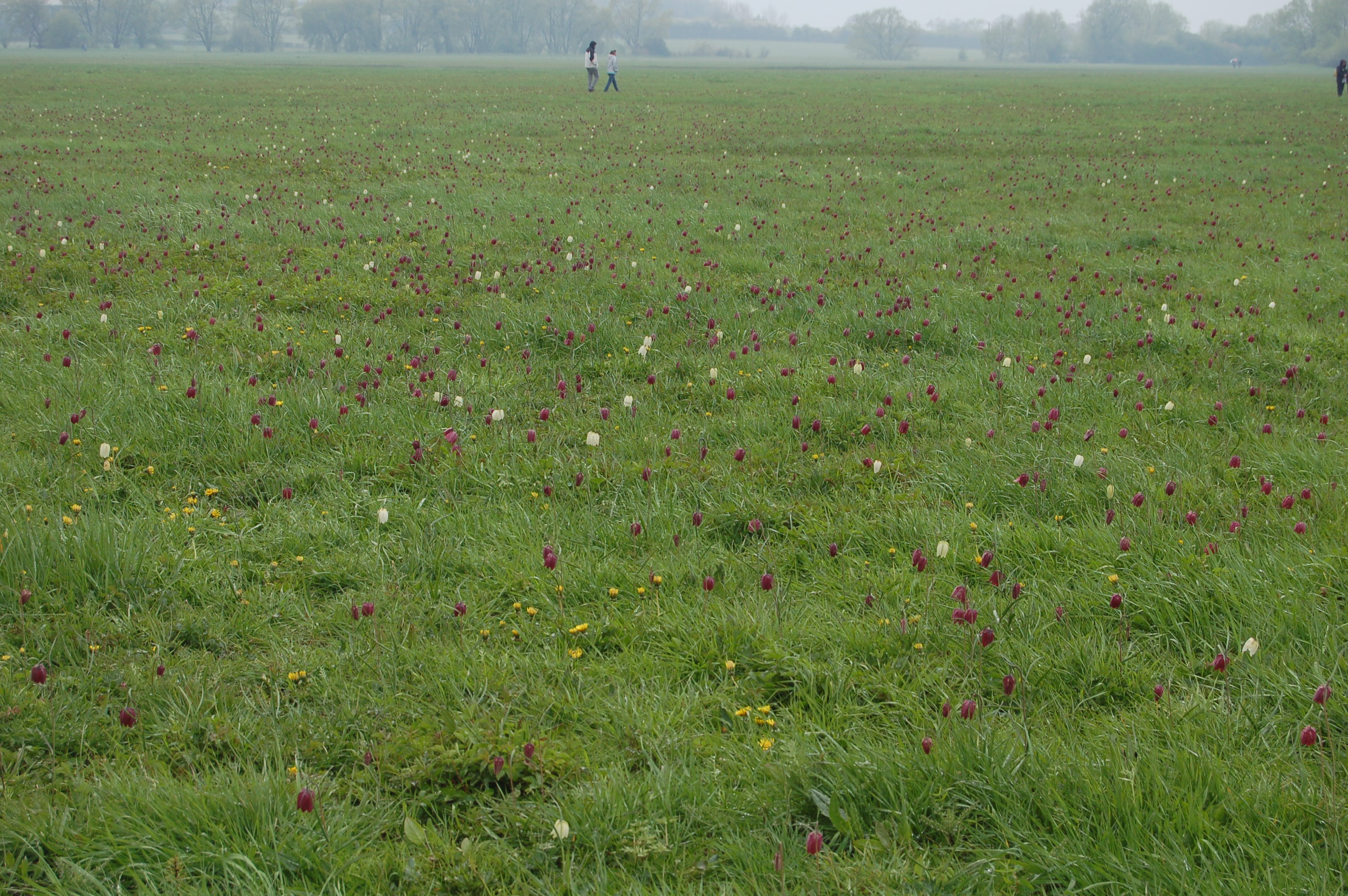
The reserve was one grand immense flat meadow which is flooded for a few months each year creating an unusual habitat for plants and all sorts of wildlife. At first glance we were amazed at the expanse of the meadow but somewhat disappointed at the relatively few numbers of Fritillaries visible. Seeing just one Fritillary is a treat though as it is such an unusual and beautiful flower. It is now sadly a “nationally scarce” plant.

2014 04 21_8232 2014 04 21_8234

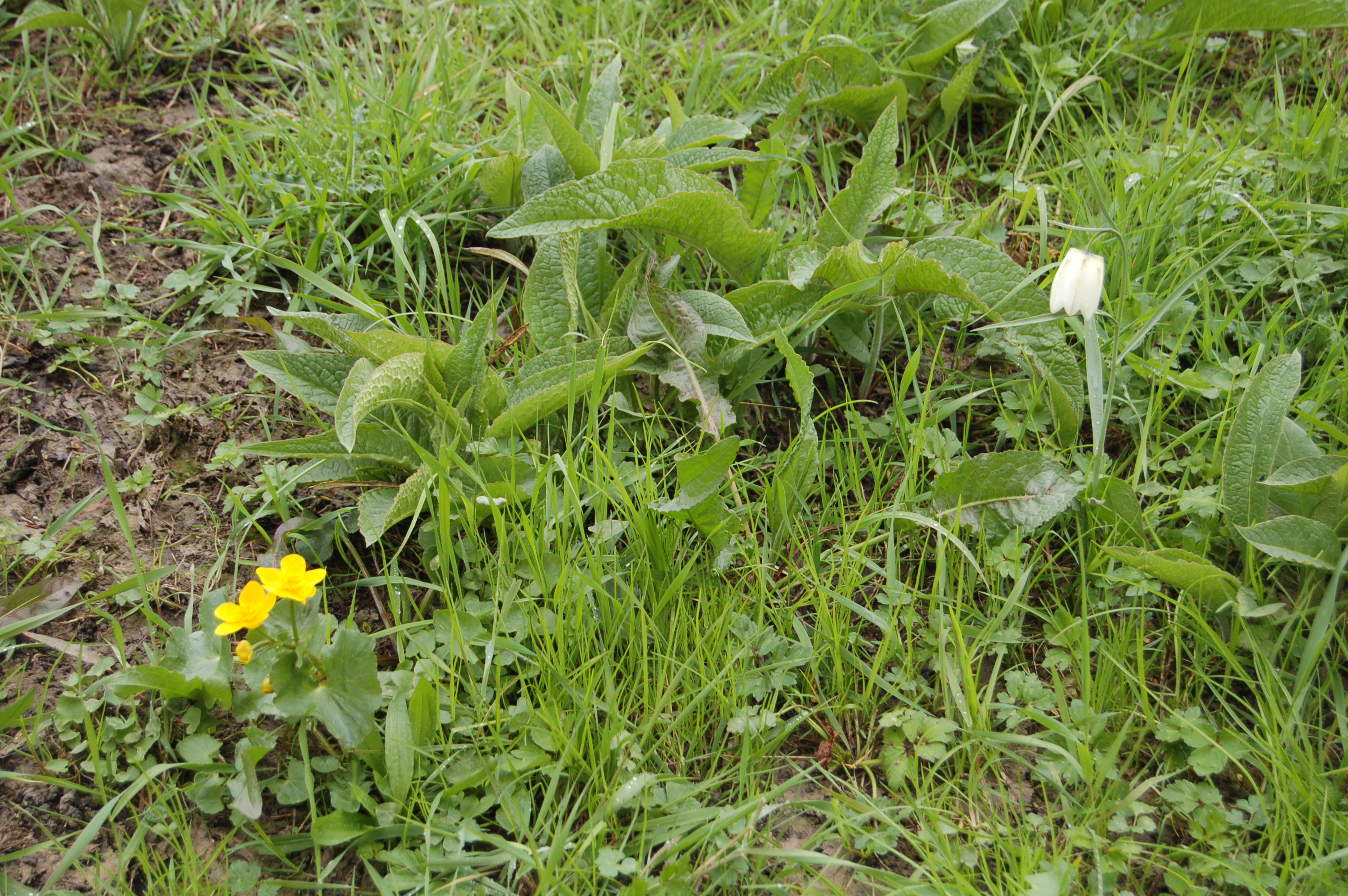
Even though the light was very dull we soon spotted more of the little beauties we had waited so long to see and realised that there were far more than we had first thought. We grow Fritillaria meleagris in our spring border at home and in the orchard meadows on the allotment communal gardens but we had never seen them growing in their true wild habitat, the wetland meadows. We wondered just how amazing they must look on a bright day. To begin with we found them in small clumps including the odd white flowers which although lacking the checkerboard patterning have a delicate beauty of their own.

2014 04 21_8231 2014 04 21_8235

2014 04 21_8424

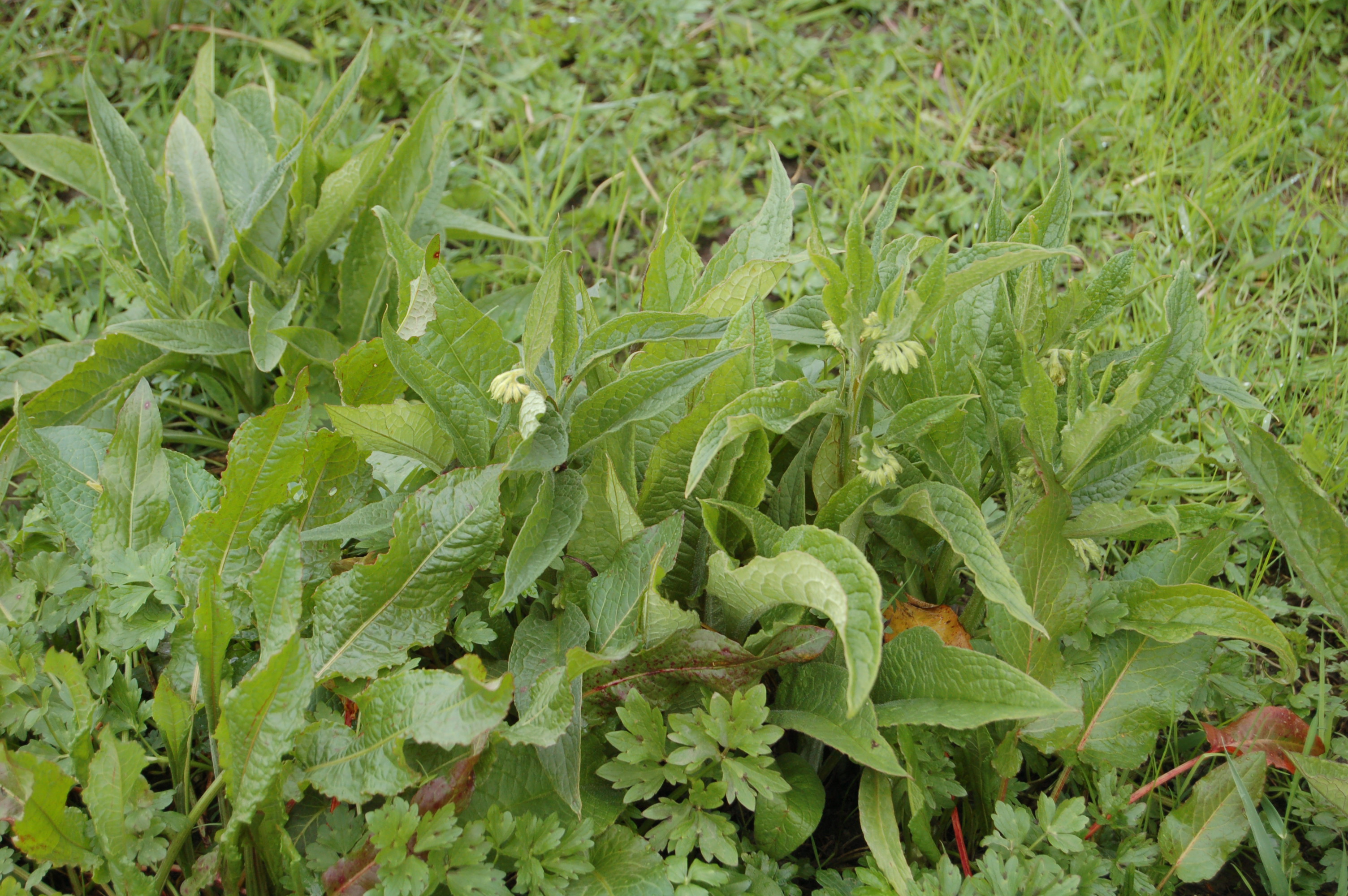
This wetland meadow habitat was home to other site specific species such as Comfrey and Kingcups, Lady’s Smock and Ragged Robin. Lovely old fashioned names for our native wildflowers. To maintain the special requirements of this collection of damp loving plants it is essential that the meadow is managed properly. It has to be grazed, used for hay and flooded for set periods.

2014 04 21_8415 2014 04 21_8416   2014 04 21_8419 2014 04 21_8420  2014 04 21_8422 2014 04 21_8309

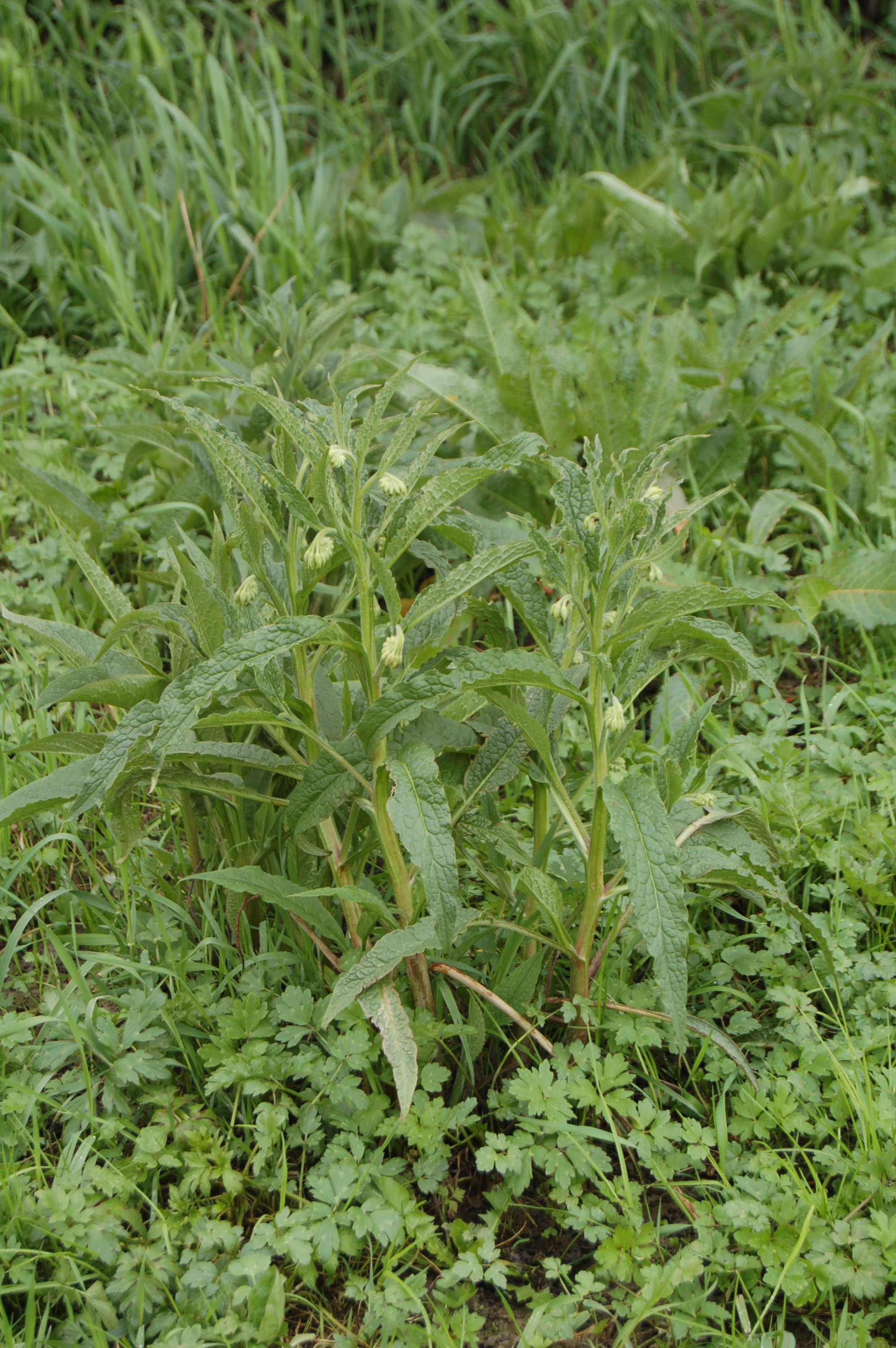
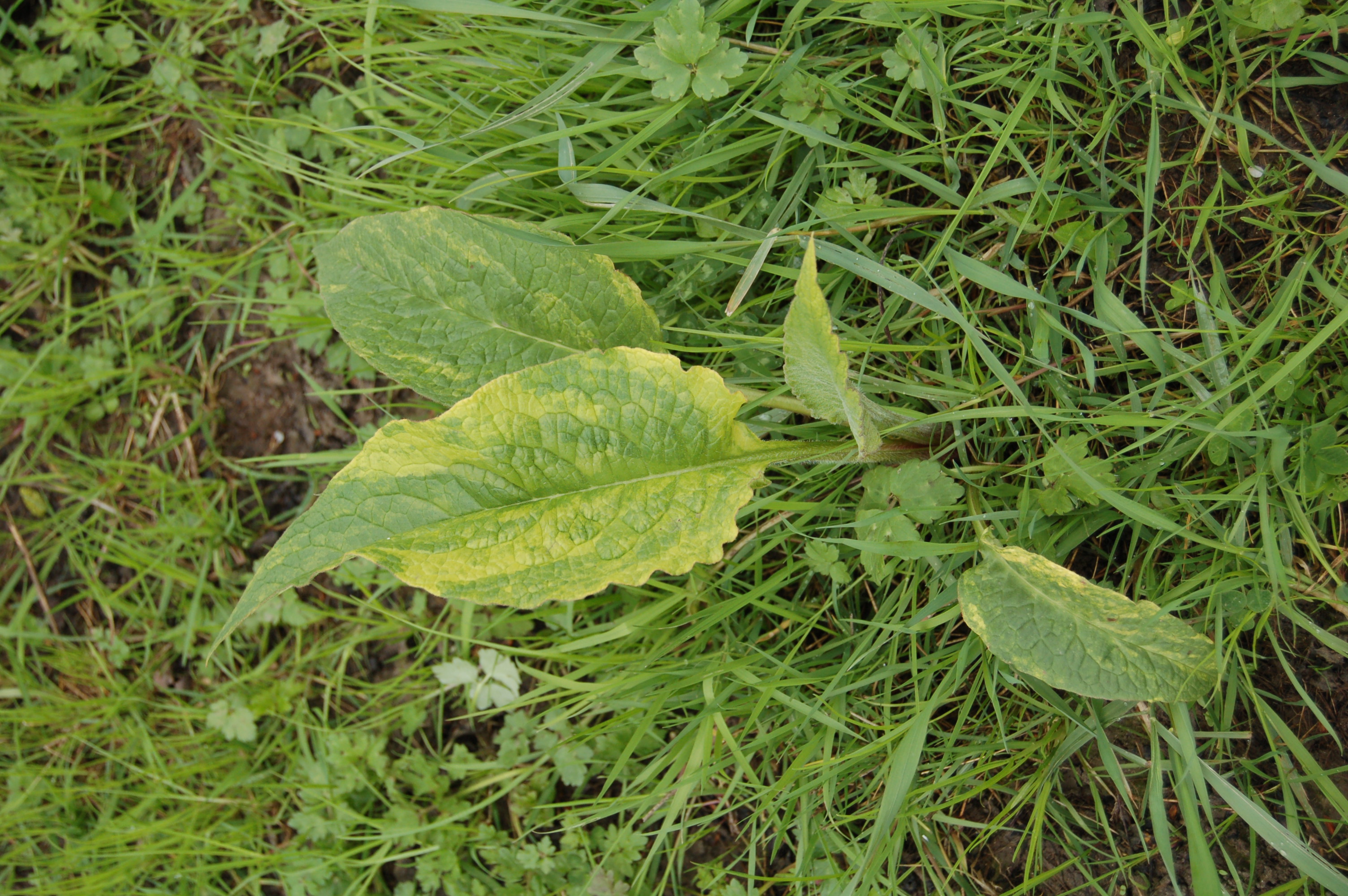
We were surprised to find one comfrey with yellow and green variegated foliage.

2014 04 21_8423

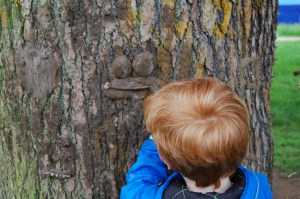
Along the margins of the meadow we stumbled upon these little carved stones, looking like miniature milestones. We later found out that they marked the plots allotted to individual “commoners” for haymaking.

2014 04 21_8313 2014 04 21_8312

As we reached about two-thirds of the way around the meadow the density of the fritillaries increased markedly and tall reeds grew on its margins.

2014 04 21_8310   2014 04 21_8306

2014 04 21_8396 2014 04 21_8394 2014 04 21_8304 2014 04 21_8303 2014 04 21_8302 2014 04 21_8301 2014 04 21_8389 2014 04 21_8299

2014 04 21_8294 2014 04 21_8293


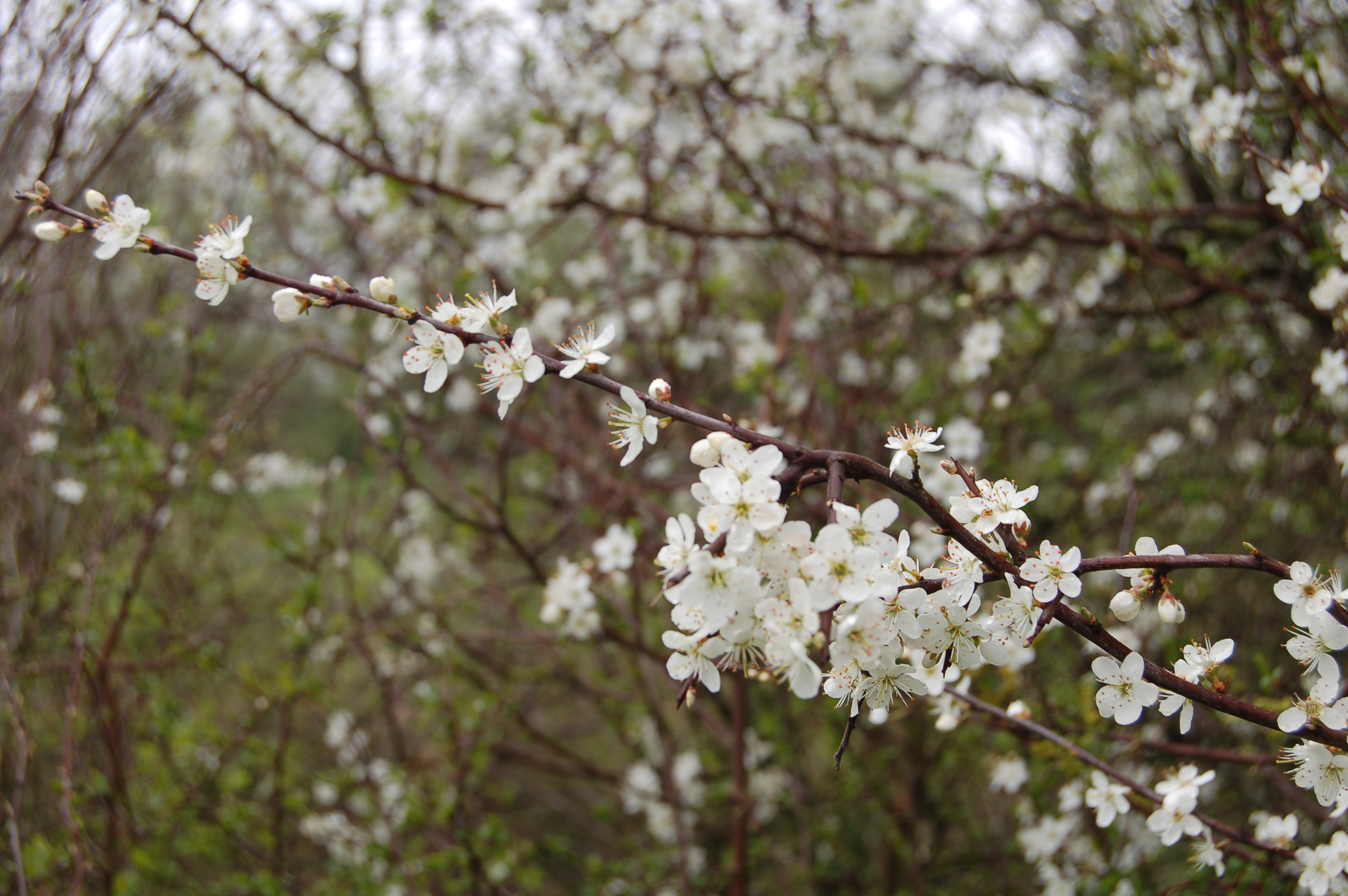
The last part of our wander around this wet meadow was alongside the river once again where Willow and Blackthorn trees grew happily in the damp soils.

2014 04 21_8298 2014 04 21_8297 2014 04 21_8296 2014 04 21_8421

2014 04 21_8295   2014 04 21_8292   2014 04 21_8288 2014 04 21_8465

2014 04 21_8278

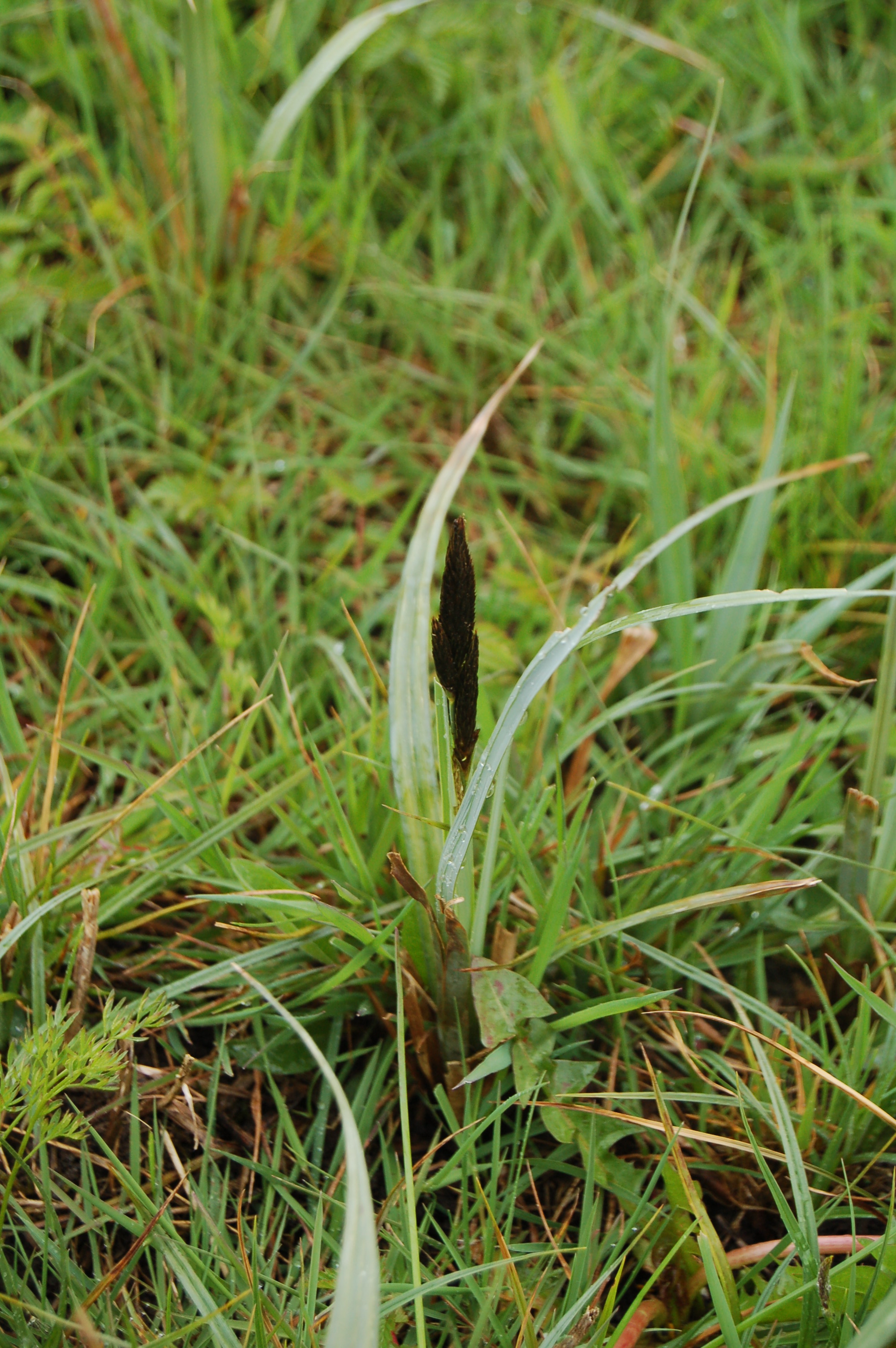
In a very damp patch we came across a clump of this very unusual looking sedge with its jet black flowers thus finishing off our visit to the field of Fritillaries with a mystery as we had no idea what it was.

2014 04 21_8286 2014 04 21_8285

As we left the reserve we just had to stop and admire this old and very unusual toll cottage.

2014 04 21_8495

Categories
birds countryside hedgerows landscapes nature reserves swallows trees wildlife woodland woodlands

Up on the Downs – a wander on chalk uplands.

We have wanted to take a walk on the “Downs” for a while now and we have it written in our “to do” book. However whilst visiting my brother, Graham and his wife Vicky in Farnham  we took the opportunity to make a half hour drive  which led us to the car park at the start of a gentle walk along Old Winchester Hill. The panoramic views gave an added incentive to get going despite a cold, biting wind.

2014 04 22_85542014 04 22_85552014 04 22_8556

Although it is still relatively early in the year we had expectations of seeing site specific plants and birds. We were not to be disappointed.

Lady’s Bedstraw, White Deadnettle and Cowslip were probably the most frequently occurring flowering plants.

2014 04 22_8557 2014 04 22_8558 2014 04 22_8559 2014 04 22_8560

2014 04 22_8562

It was good to see one of our native Euphorbias growing along the woodland margins. This Wood Spurge looked so similar to some we grow in our Plealey garden.

2014 04 22_8561 2014 04 22_8564

As we reached the end of the ridge the path changed direction and we walked along a track between woodland and open fields. The woodland birdlife was in full song with summer migrant Warblers joining the resident Robins and Dunnocks. Above our heads Swallows called constantly. Over the farmland the song of Skylarks and the calls of Lapwing, two of our ground nesting birds, was carried on the wind for us to enjoy. We were really surprised to see large areas of very mature yew trees growing within areas of the usual deciduous trees, as we do not see them growing like this at home in Shropshire. They formed dark patches on the hillsides. We ventured underneath them and all of us found them decidedly spooky as they cut out all sound and much of the light leaving us in gloom. Beneath them nothing ventured to grow, apart from one lone, brave Elder seedling.It is no wonder that they feature strongly in ancient myths and folklore.
2014 04 22_8566 2014 04 22_8567


2014 04 22_8568 2014 04 22_8569

When we stopped for our coffee break on the only bench on the walk we were soon joined by a small flock of very inquisitive rare breed Herdwick Sheep, the sort I think that Beatrix Potter helped to save from extinction up on her Lake District farm.

2014 04 22_8575 2014 04 22_8576

Beyond the sheep the views were stunning and far-reaching.

2014 04 22_8577 2014 04 22_8573

After our coffee break, with a slice of cake as well of course for added energy, we walked through the ancient hill fort with its Bronze Age burial mounds. It is amazing how interesting mounds of earth can be!

2014 04 22_8578 2014 04 22_8579 2014 04 22_8580

I shall finish off with one last view of this unique downland landscape and one of the wildflowers growing right alongside the track. We have waited a long time for our first walk on the Downs. It was worth the wait.

2014 04 22_8581 2014 04 22_8582

Categories
colours flowering bulbs garden buildings garden design garden photography garden seating gardening hardy perennials ornamental trees and shrubs outdoor sculpture recycling sculpture spring bulbs spring gardening town gardens trees water in the garden

An Artist’s Back Garden

I often write and share my photos of gardens open to the public, often large and under the auspices of the National Trust or affiliated to the Royal Horticultural Society or smaller and open under the Yellow Book (NGS) scheme. Recently I wrote about a small garden owned by our friend and fellow Hardy Plant Society member Anne, in a post simply called “Anne’s Garden”. I shall be writing more about such gardens in this occasional series of posts of which this is the second.

We spent a few days down in Surrey in April staying in the lovely town of Farnham where my brother, Graham and his wife Vicky live. We re-visited that great garden, Nymans and it was good to see it at a different at a different time of year. We enjoyed a walk on “The Downs” for the first time ever and a walk around the old town of Farnham for the first time in decades.

But breakfast outside on an unusually warm spring morning in Graham and Vicky’s garden made me collect my camera as the light was so good. The sun was low in the sky so lit up the tiniest detail and the gentlest textures. Come with me and look through the lens of my trusty Nikon as we look around this artist’s garden.

One step out of the side door and immediately we have a clue as to what to expect.

2014 04 23_8658 2014 04 23_8661

The first view of the back garden shows how long and thin it is and how beautifully planted, and a look down the garden also finds Jude the Undergardener and my brother Graham enjoying breakfast in the sun.

2014 04 23_8663 2014 04 23_8676

2014 04 23_8734

Sculptural pieces are found within the borders and look natural alongside the plants snuggling up to them.

2014 04 23_8665 2014 04 23_8666

Effective plant combinations are a strength of this garden, where foliage plays a key role.

2014 04 23_8667 2014 04 23_8673

2014 04 23_8672  2014 04 23_8674

2014 04 23_8702 2014 04 23_8713

But specimen plants stand out and make you stop for a second closer look.

2014 04 23_8659 2014 04 23_8668

2014 04 23_8670 2014 04 23_8671

2014 04 23_8669 2014 04 23_8681

2014 04 23_8695 2014 04 23_8696

2014 04 23_8710

Containers of all shapes and sizes and made from all sorts of materials add more interest.

2014 04 23_8664 2014 04 23_8677

2014 04 23_8678 2014 04 23_8679

2014 04 23_8700 2014 04 23_8714

2014 04 23_8735

Early morning is definitely the time for shadows.

2014 04 23_8675

Close to the house the shady border is full of promise with new growth breaking through the soil with the ferns looking particularly dramatic.

2014 04 23_8684 2014 04 23_8685 2014 04 23_8686 2014 04 23_8712

2014 04 23_8737

An artist’s garden has to be full of interesting objects and happenings.

2014 04 23_8688 2014 04 23_8690 2014 04 23_8691 2014 04 23_8692    2014 04 23_8697 2014 04 23_8708

2014 04 23_8698 2014 04 23_8699  2014 04 23_8701 2014 04 23_8704

2014 04 23_8706 2014 04 23_8707

2014 04 23_8715 2014 04 23_8736

An artist must have a studio and what better place for it but at the bottom of the garden! Close by is a closely planted group of Mountain Ash, sown by birds – a great feature which I have never seen before. Well done the birds!

2014 04 23_8703 2014 04 23_8723

2014 04 23_8729 2014 04 23_8730

But one thing that no gardener wants in the garden is snails and this garden is full of them! On the plants, climbing the fences, the house walls and even climbing up the window panes. They are everywhere!

2014 04 23_8717 2014 04 23_8716

So we shall finish off this look at Graham and Vicky’s garden with a few shots of the front garden, the last shot showing Graham kindly digging up a plant for us to take home for our own garden.

2014 04 23_8745 2014 04 23_8746  2014 04 23_8747  2014 04 23_8744

The next post in this occasional series about our friends’ gardens will feature a woodland garden of friends Pauline and Derek.

Categories
colours flowering bulbs garden design garden photography garden ponds garden pools garden seating gardening gardens hardy perennials irises light quality ornamental grasses ornamental trees and shrubs poppies Shropshire shrubs spring bulbs spring gardening succulents water garden water in the garden

Aiming for a year round garden – late spring.

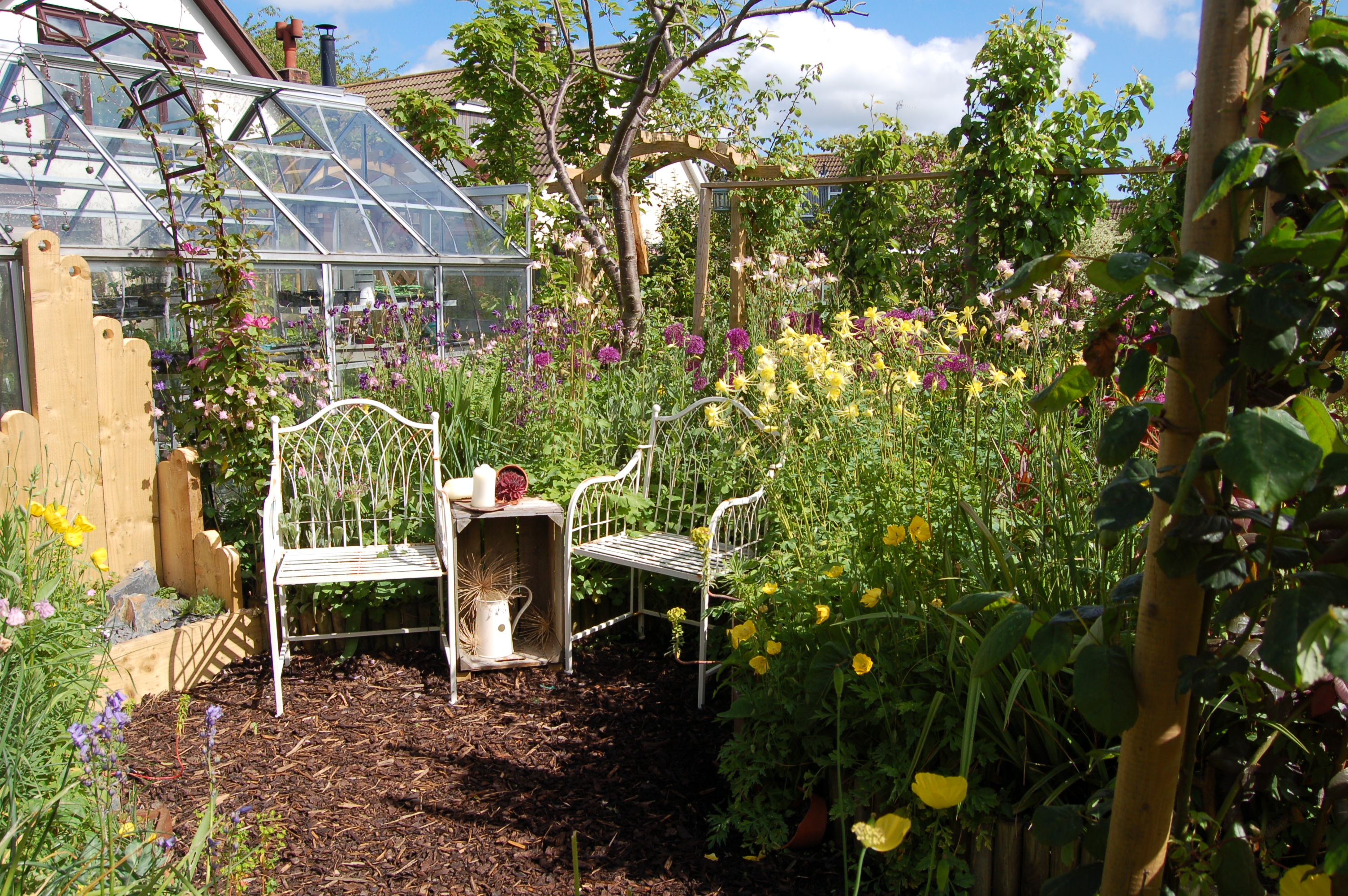
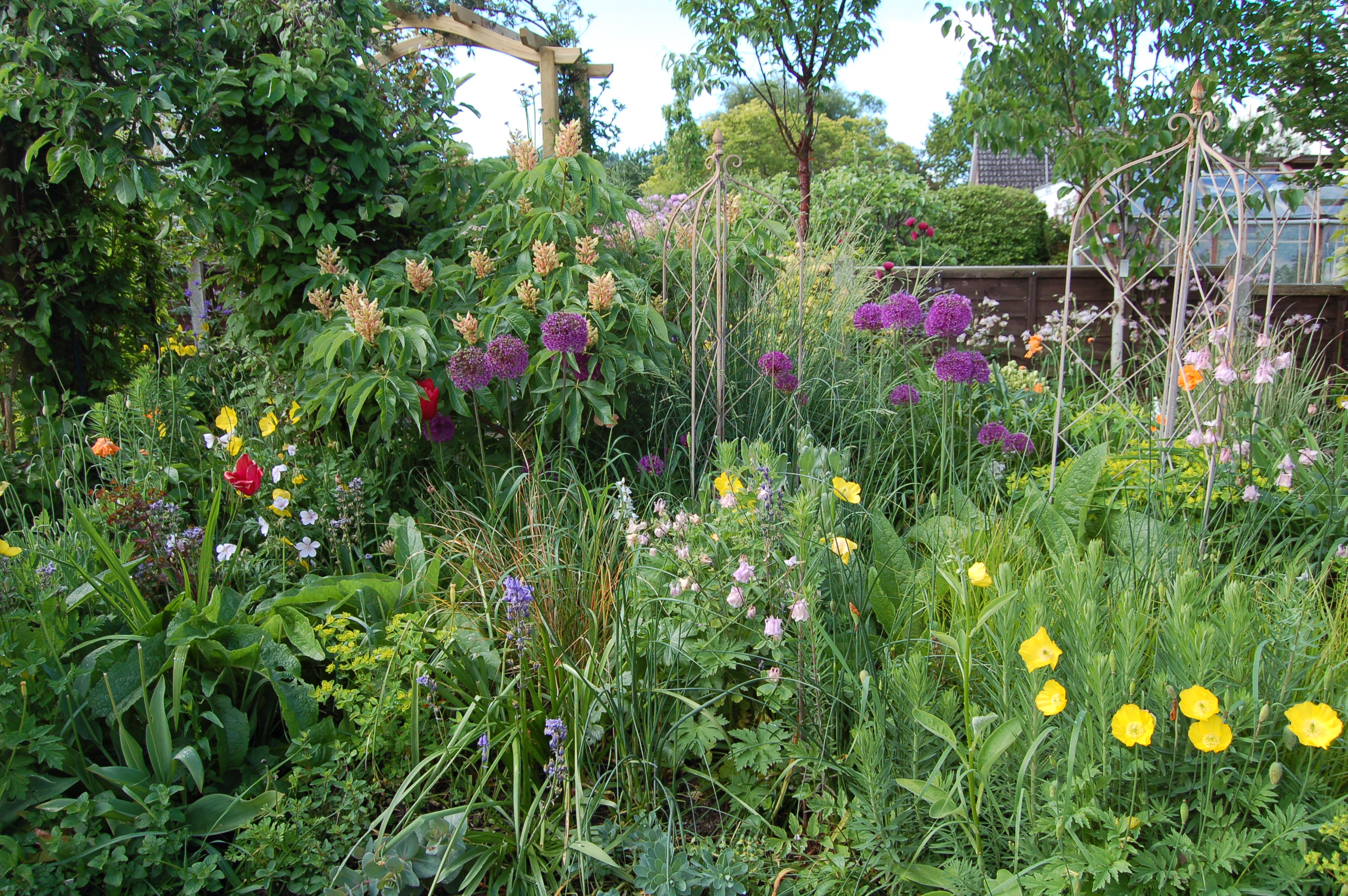
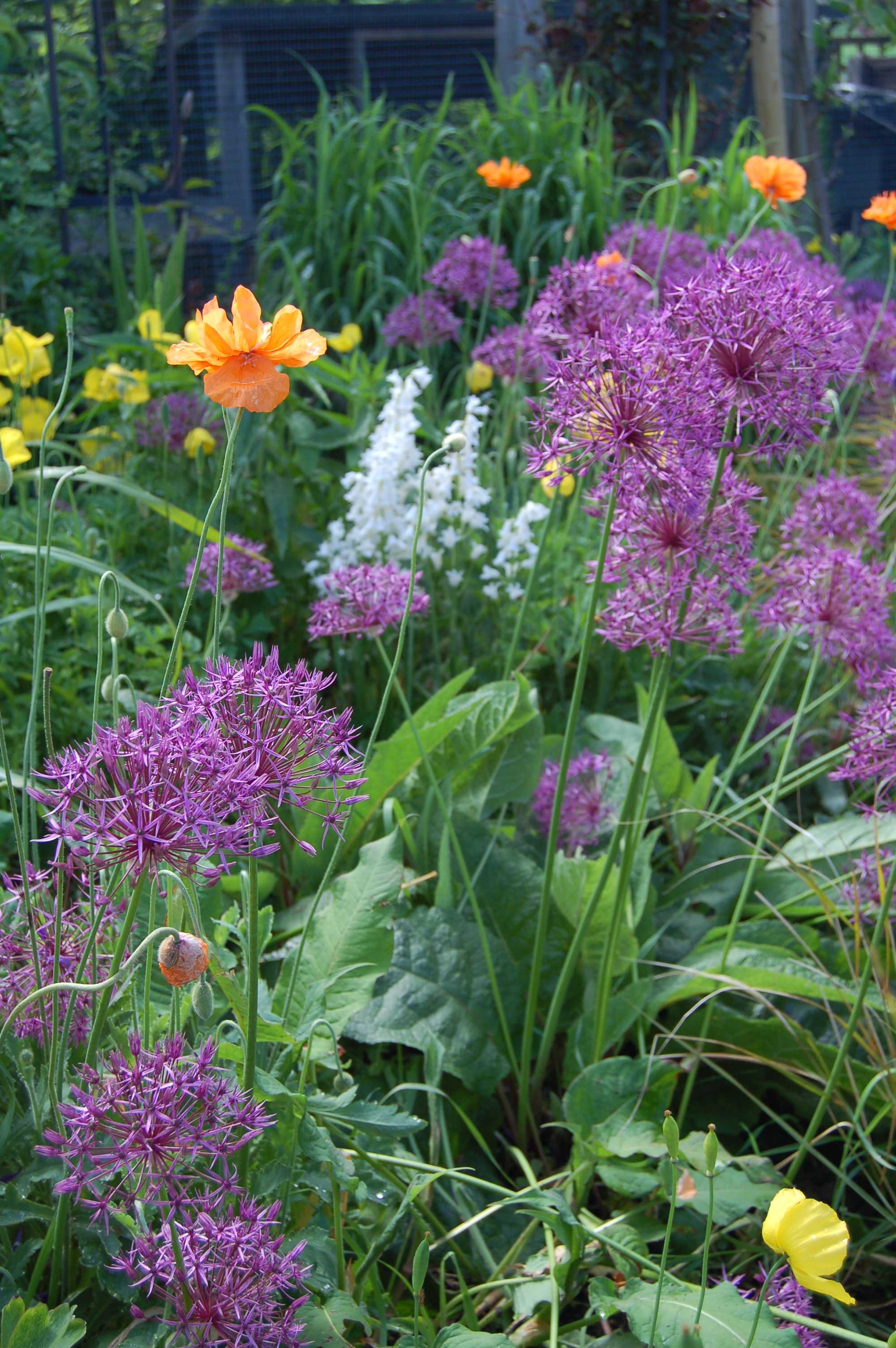
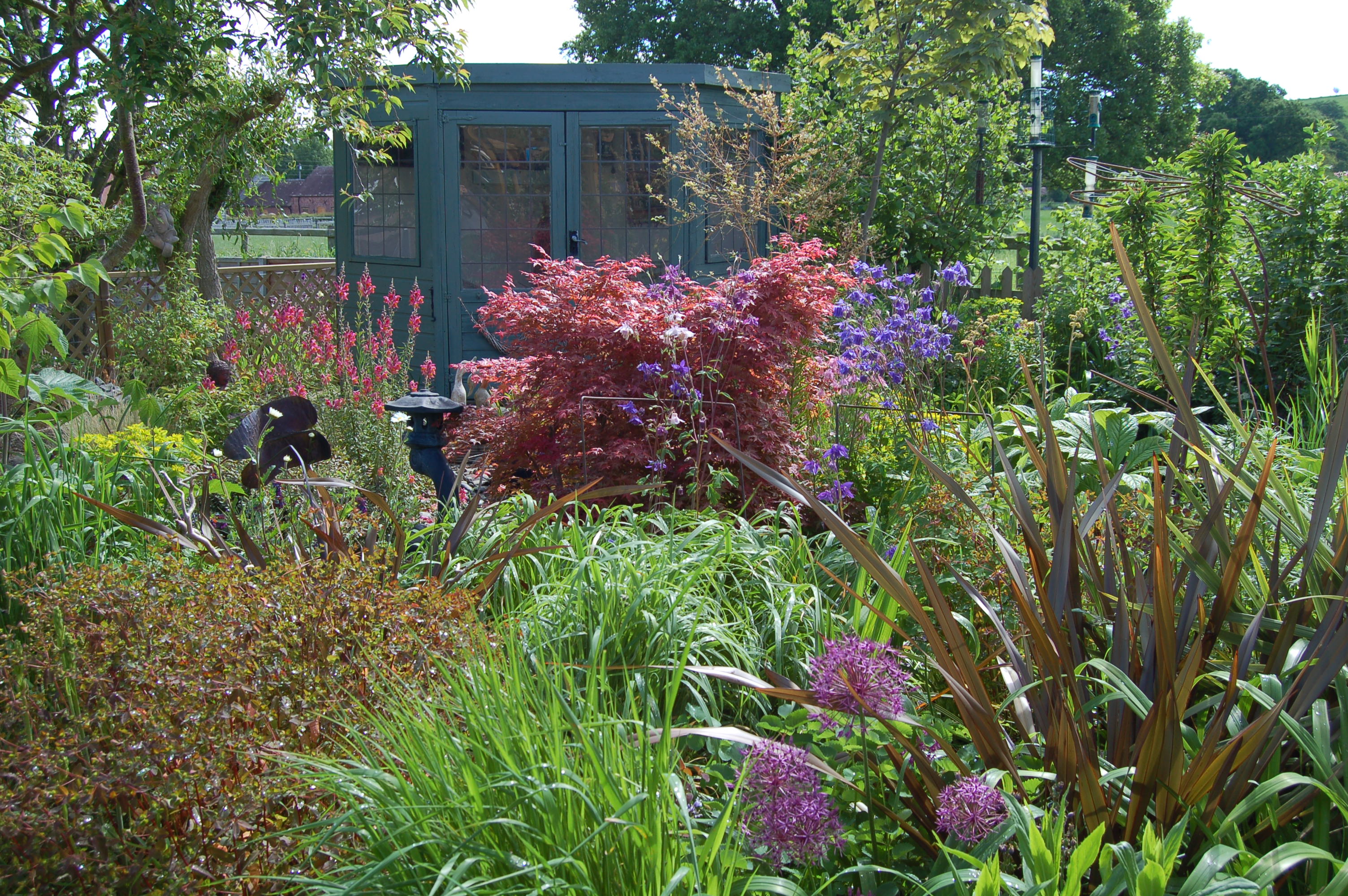
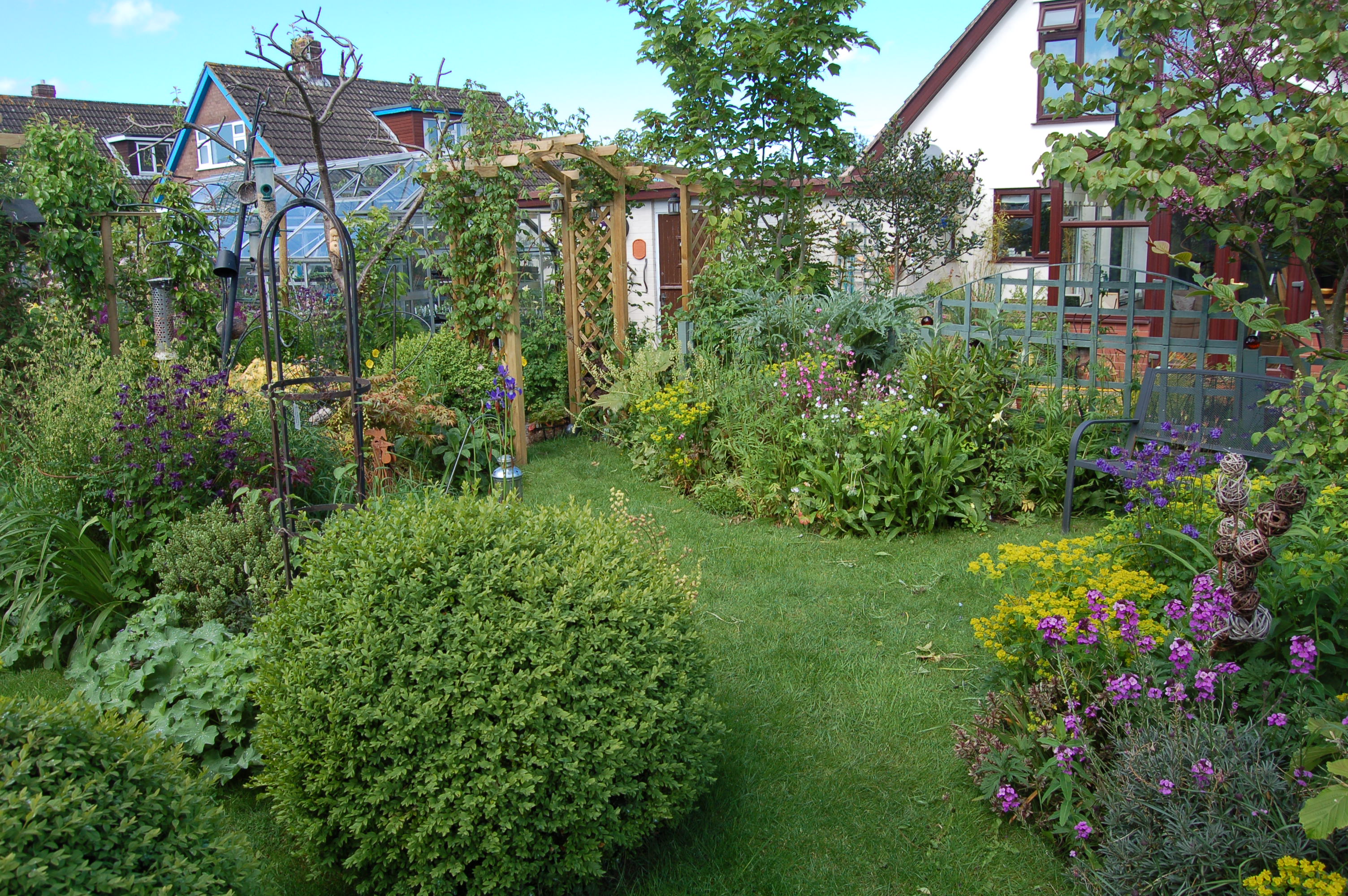
It is only a few weeks since I published my post looking at our garden in early spring, but it is time for another look to see how we are doing where our aim of trying to establish a year round garden is concerned. It is amazing how much has changed in that time.

Come for awalk with me and my camera!

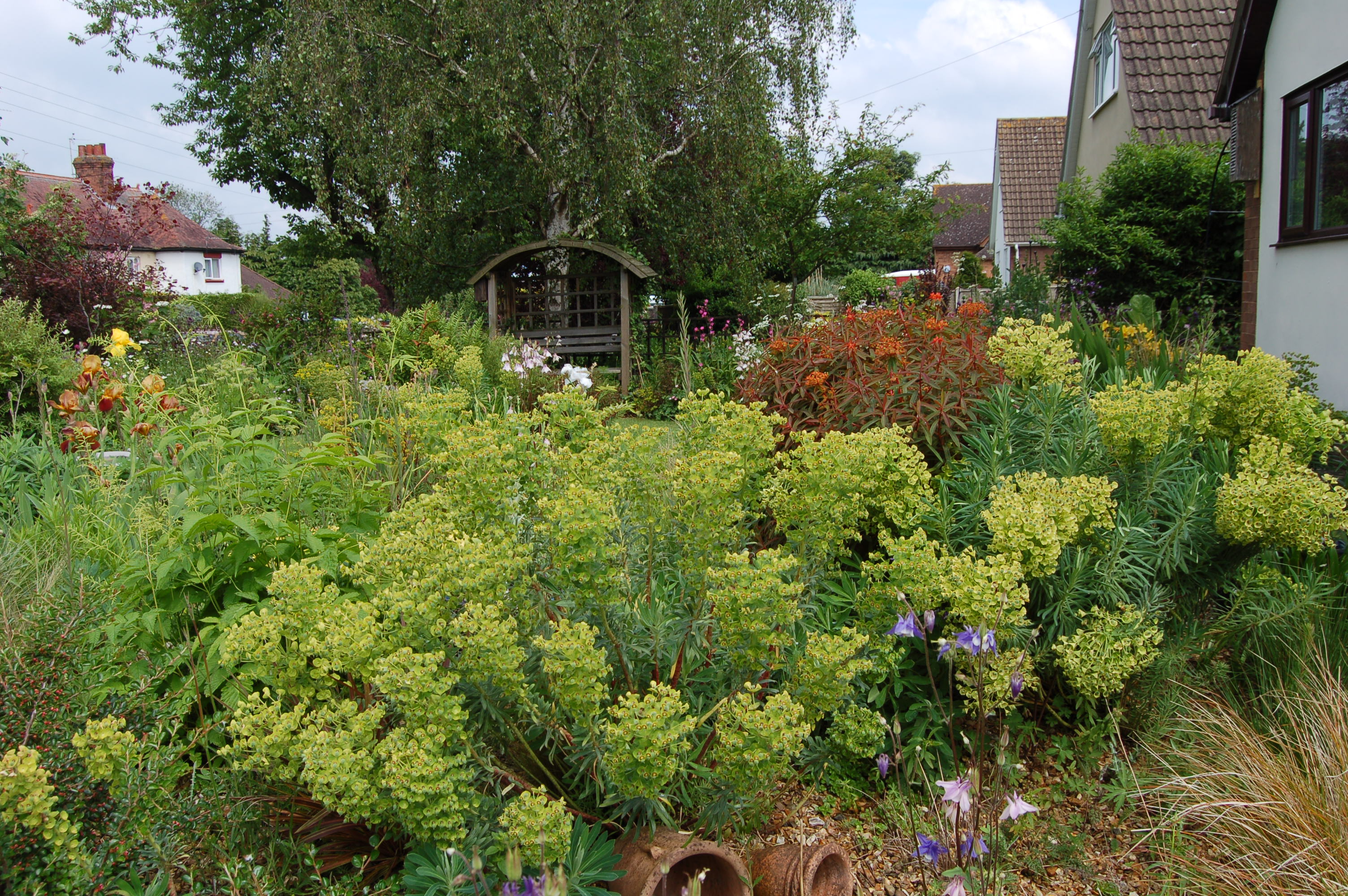
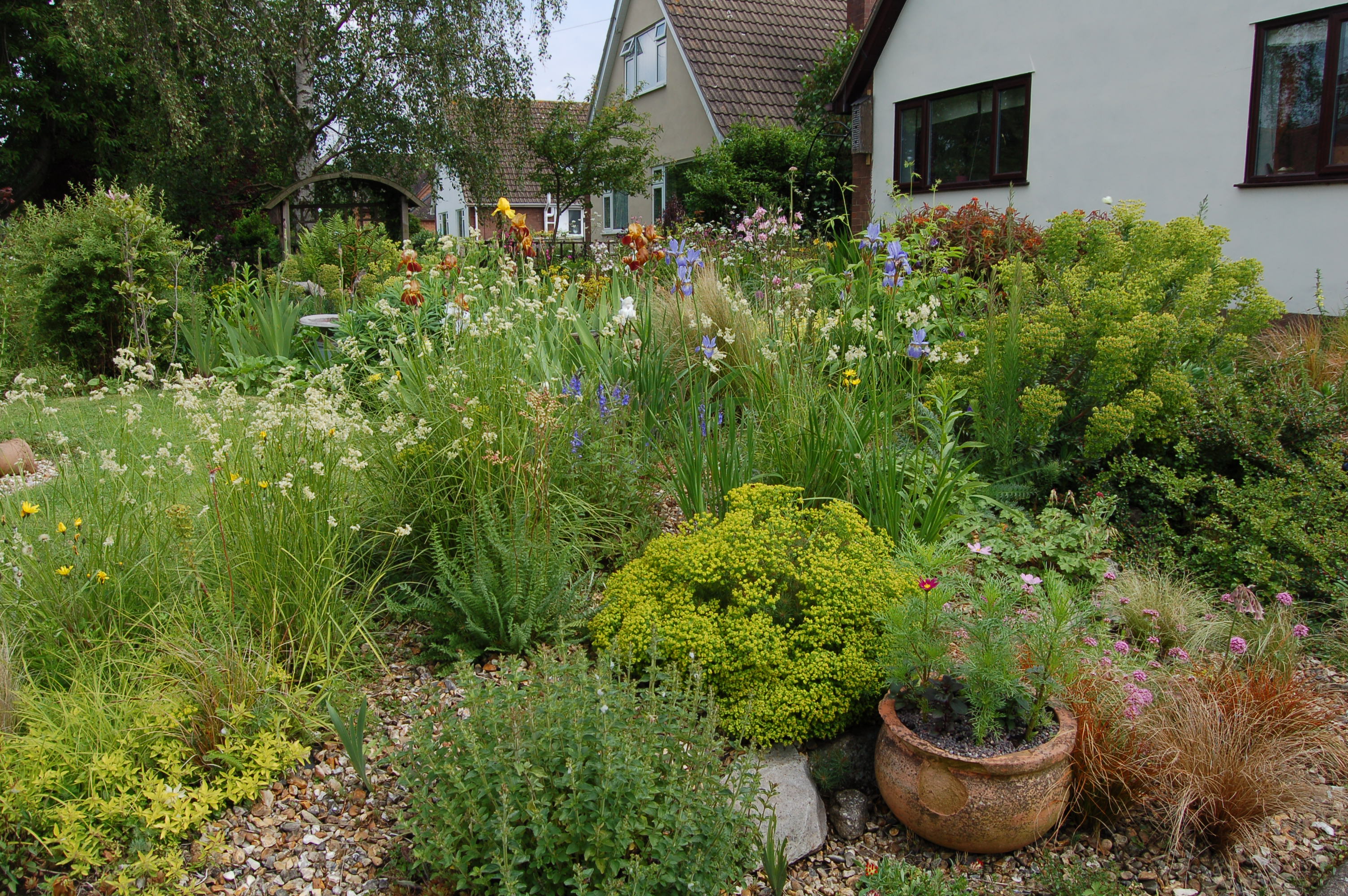
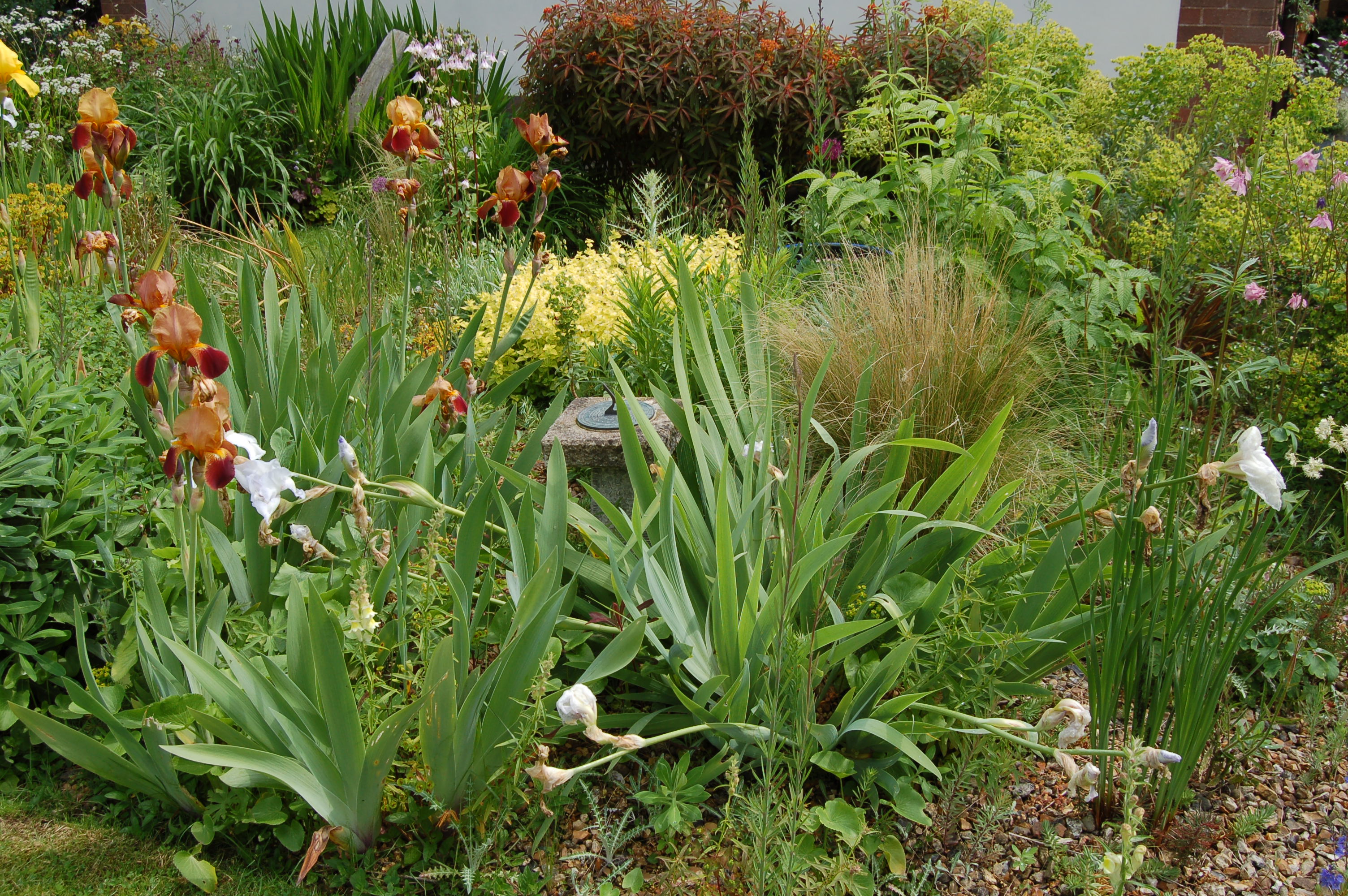
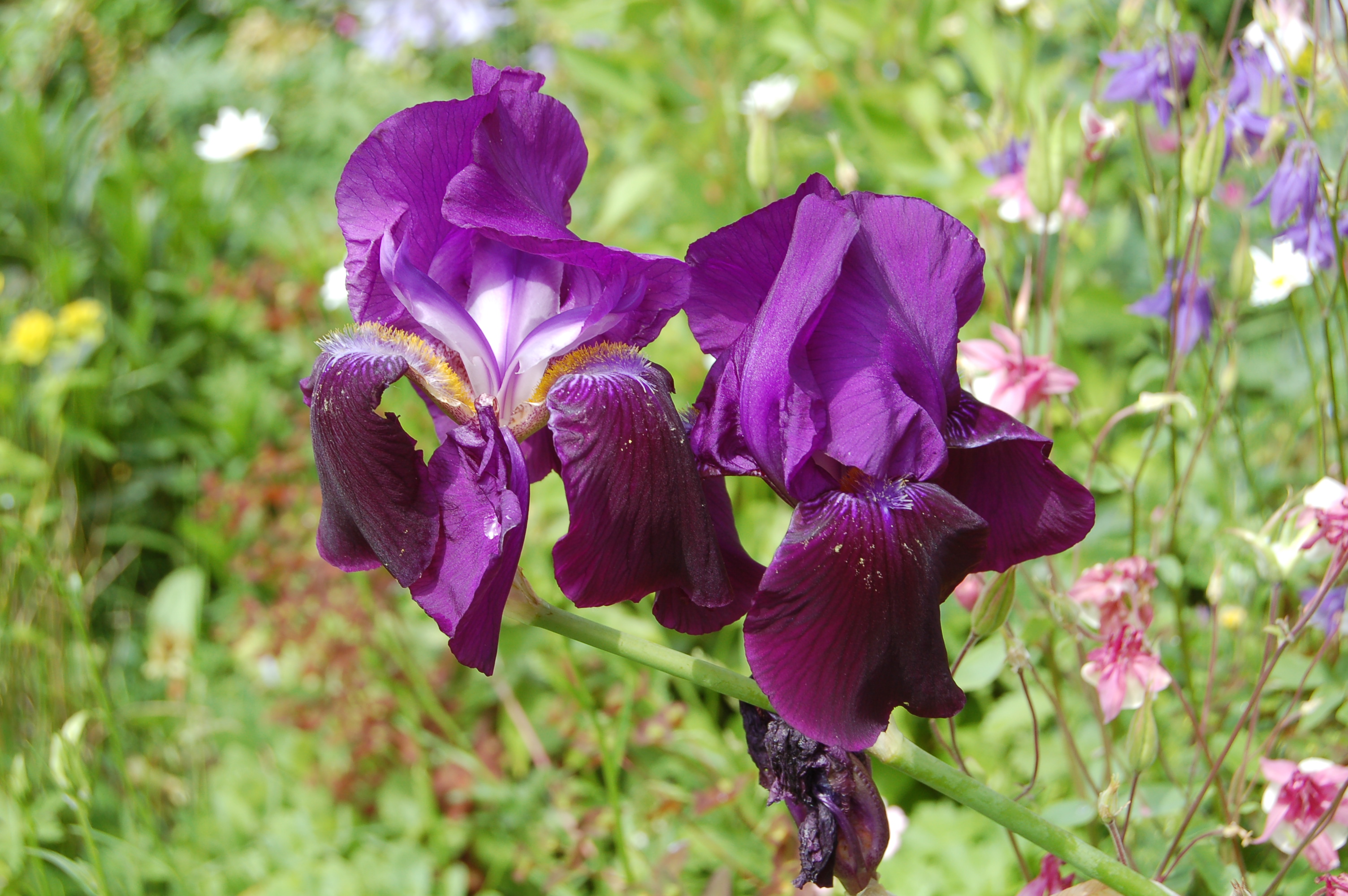
Let us start in the front garden with a look at our gravel garden, The Beth Chatto Border, where we find the brightest of colours radiating from various Euphorbias. In sharp contrast a near black Iris crysophagres has flowers of the darkest indigo.

2014 05 03_8852 2014 05 03_8853

2014 05 03_8854 2014 05 03_8858

2014 05 03_8859

2014 05 03_8860 2014 05 03_8866

In the other borders in the front garden the last of the spring bulbs mingle with the earliest of the herbaceous perennials.

2014 05 03_8855 2014 05 03_8856

2014 05 03_8857 2014 05 03_8864

2014 05 03_8868 2014 05 03_8861

2014 05 03_8862 2014 05 03_8865

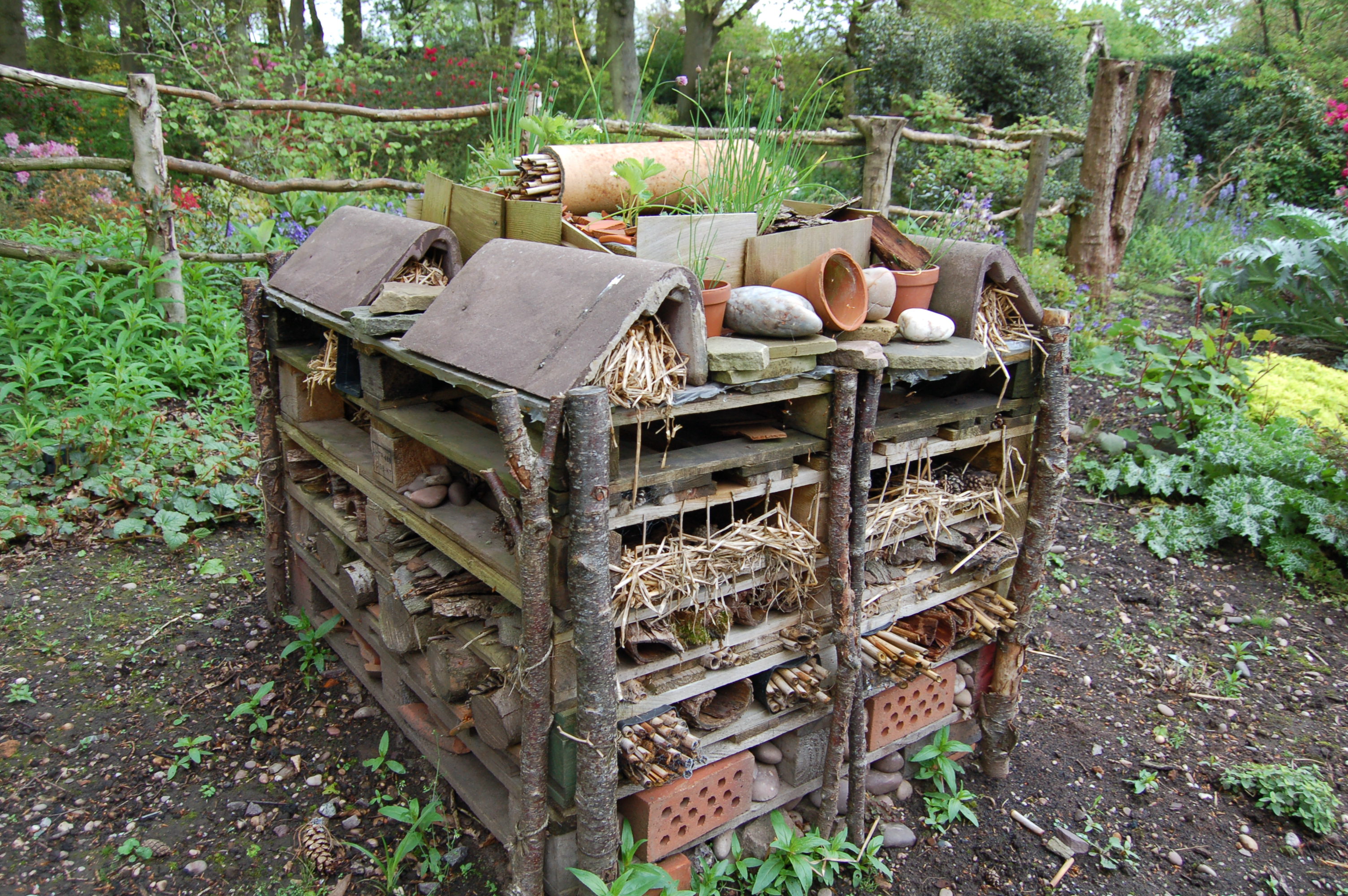
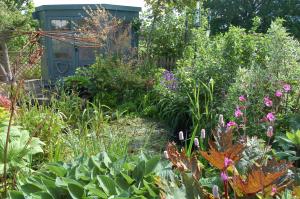
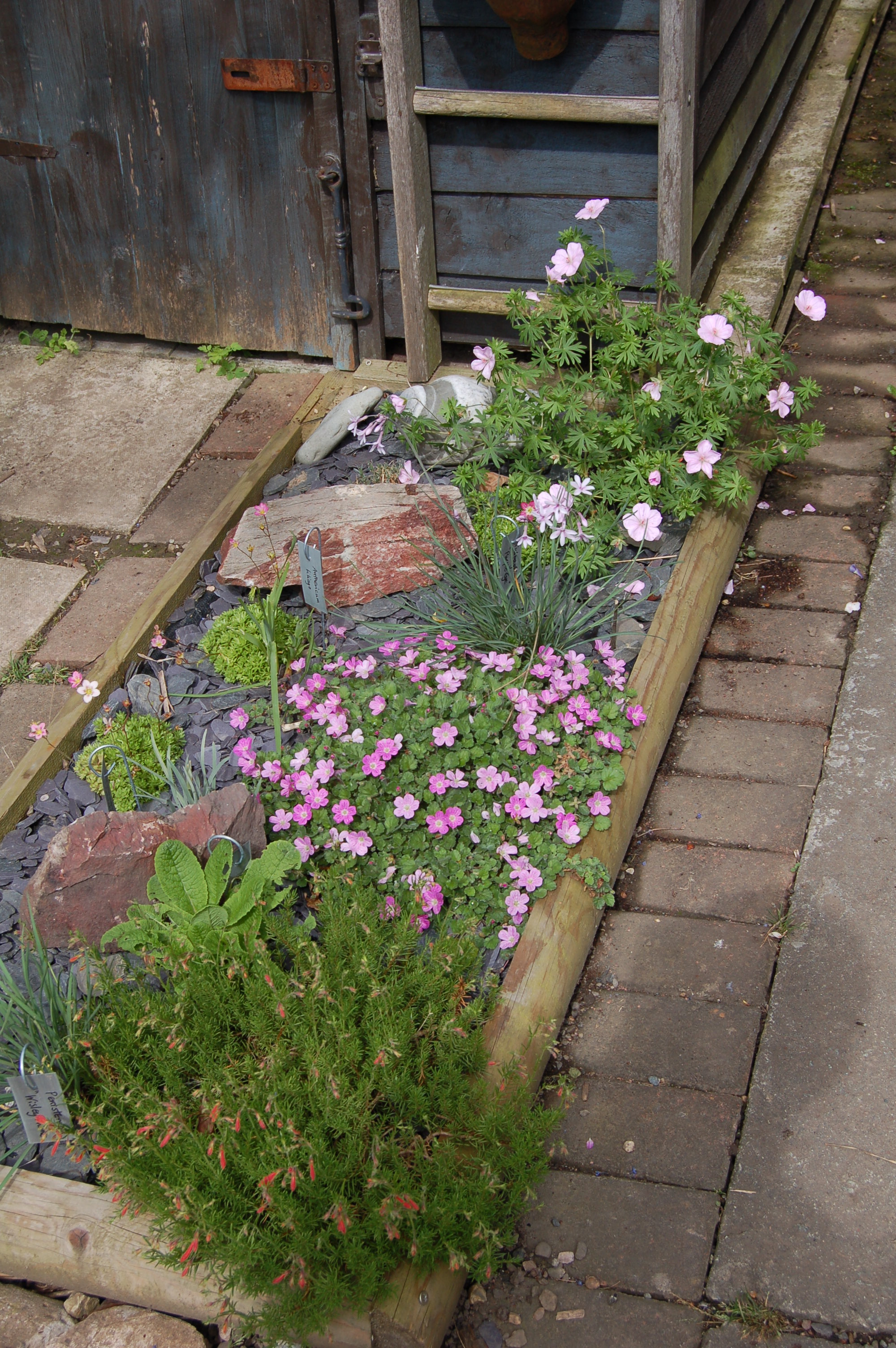
The Shed Bed also rings with the colour of Euphorbia and the newly revamped water feature gives a gentle bubbling sound for us to enjoy. This water feature is created from metal objects we dug up when we first made the garden and we have now planted miniature Hostas and different varieties of Tricyrtis around it. The view down the path to the chickens is framed by the richest of blues of the Ceanothus. The little slate border by the shed is displaying the first flower on our Tulbaghias along with the tiny pink blooms of the Erodium. In the insect hotel a pair of Dunnock have built their nest just a few inches above the ground and about 6 inches from the path.

2014 05 03_8845 2014 05 03_8878

2014 05 03_8879 2014 05 03_8846

2014 05 03_8848 2014 05 03_8847

The Freda Border is full of every shade of green punctuated by the pale blue of the Camassias. Nearby in the alpine troughs and crates the Saxifragas flower like myriads of tiny red gems.

2014 05 03_8849 2014 05 03_8850 2014 05 03_8851

On the opposite side of the house the Shade Garden, the only part of the garden which is shaded, looks lush and lively.

2014 05 03_8869 2014 05 03_8870 2014 05 03_8871 2014 05 03_8872 2014 05 03_8874

Moving along from the Shade Garden towards the back garden we wander through the Seaside Garden and into the Rill Garden.

2014 05 03_8875 2014 05 03_8876 2014 05 03_8877

From the Rill Garden we can take the central path past the greenhouse, where Jude aka Mrs Greenbench or The Undergardener, is busy tending her hundreds of seedling veggies, annuals and perennials. It is a very productive place!

2014 05 03_8880 2014 05 03_8881 2014 05 03_8882 2014 05 03_8883  2014 05 03_8885 2014 05 03_8886

Turning left just past the greenhouse the borders surrounding our small lawned area are bursting with late spring colour and fresh growth.

2014 05 03_8887 2014 05 03_8888


2014 05 03_8889 2014 05 03_8891 2014 05 03_8892 2014 05 03_8893

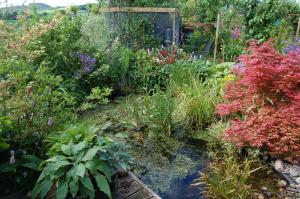
Just off this lawned area we enter the Japanese Garden with its pool which is an essential element of any oriental garden but here it doubles up as a wildlife pool.

2014 05 03_8894 2014 05 03_8895 2014 05 03_8896 2014 05 03_8897

We can wander along a gravel path back towards the central pathway and along the way we can look at the Prairie Garden on our right and the Bog Garden on our left.

2014 05 03_8898 2014 05 03_8900

In the Bog Garden foliage predominates with Hostas, Ligularias and Rheum purpureum. One flower worth a close up look is this stunning Primula which sadly we don’t know the name of.

2014 05 03_8899 2014 05 03_8901

A glance over our shoulder gives us the chance to look back over the pool towards the Summerhouse.

2014 05 03_8903

On the opposite side of the central pathway we find the Chicken Garden and the Secret Garden both now still full of colour from spring bulbs but bursting with the burgeoning growth of the herbaceous perennials.

2014 05 03_8904 2014 05 03_8906 2014 05 03_8907 2014 05 03_8908 2014 05 03_8902

2014 05 03_8909 2014 05 03_8910 2014 05 03_8911 2014 05 03_8912

Wandering back along the path towards the shed we can appreciate close up the beauty and complexity of the Camassia flowers.

2014 05 03_8913 2014 05 03_8914 2014 05 03_8915

Our little Slate Garden is colourful now with Auriculas and Primulas in full bloom.

2014 05 03_8917

So there we have it –  a gentle wander around our garden in early May. It all looks very different now just a few weeks after my early Spring post. The next post in this series will be in early Summer when I guess we can look forward to even bigger changes. I shall finish this post with a photo of the Ceanothus that kept getting blown out of the ground root and all during the gales of Winter. But just look at it now! It illustrates just how resilient plants are. It has a sweet scent that welcomes us whenever we go to the shed to pick up the tools we need in the garden each day. Sadly I am not sure I like it when it flowers so heavily.

2014 05 03_8918

Categories
flowering bulbs garden design garden designers garden photography gardening gardens gardens open to the public grasses hardy perennials Italian style gardens meadows ornamental grasses ornamental trees and shrubs Piet Oudolf spring bulbs spring gardening Staffordshire Tom Stuart-Smith trees

A Garden in April – Trentham

So here we are on our April visit to the gardens at Trentham, already the fourth in this series of posts looking at Trentham Gardens throughout the year.

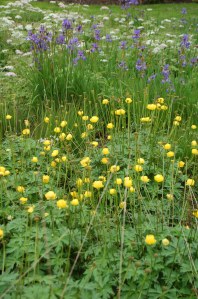
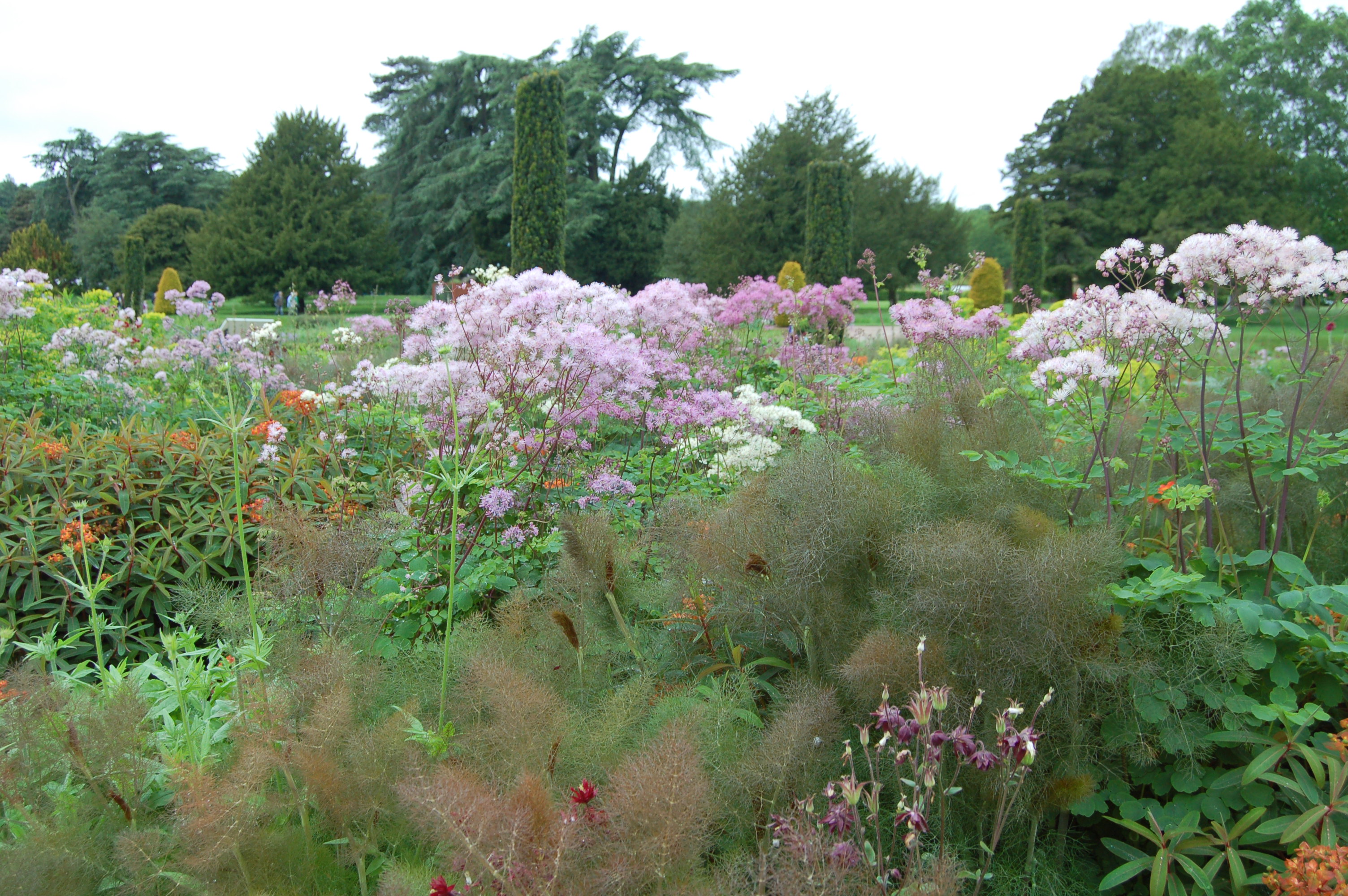
We immediately notice that the fresh growth of Spring is well underway. The grasses in the River of Grasses are no longer brown and dead but putting on strong bright green growth. The herbaceous growth huddled in the grasses is looking vigorous with Trollius adding splashes of gold. Euphorbias look vibrant under the river of birches. Leaf buds are bursting on all the deciduous trees.

2014 04 29_8789 2014 04 29_8788 2014 04 29_8790 2014 04 29_8791 2014 04 29_8792 2014 04 29_8793 2014 04 29_8794


As we move into Piet Oudolf’s perennial prairie plantings some plants are well into growth where others have barely started. Thalictrum and Amsonias are looking particularly vibrant.

2014 04 29_8795 2014 04 29_8796 2014 04 29_8797 2014 04 29_8798 2014 04 29_8799 2014 04 29_8801 2014 04 29_8802 2014 04 29_8803 2014 04 29_8804 2014 04 29_8800

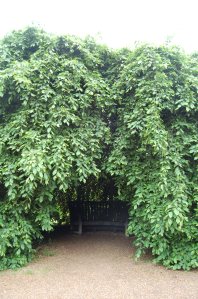
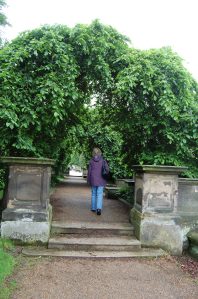
Leaving the Prairie area we immediately notice that the Hornbeam arbor has grown vigorously and is now looking like a big shaggy sheep. The bench is a great place to get a shaded, secret, quiet moment. The arbor looks like it could get up and walk away!

2014 04 29_8805


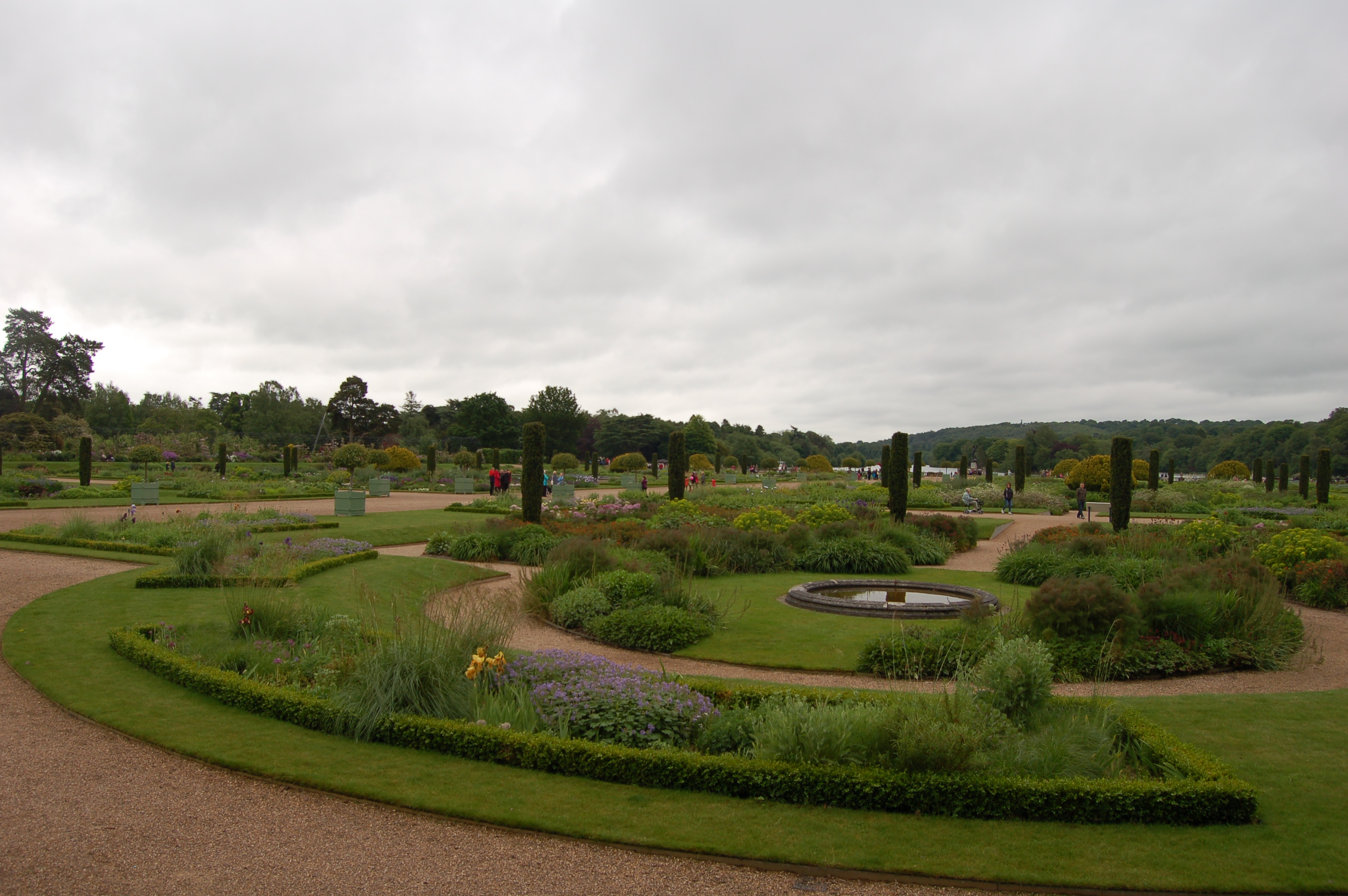
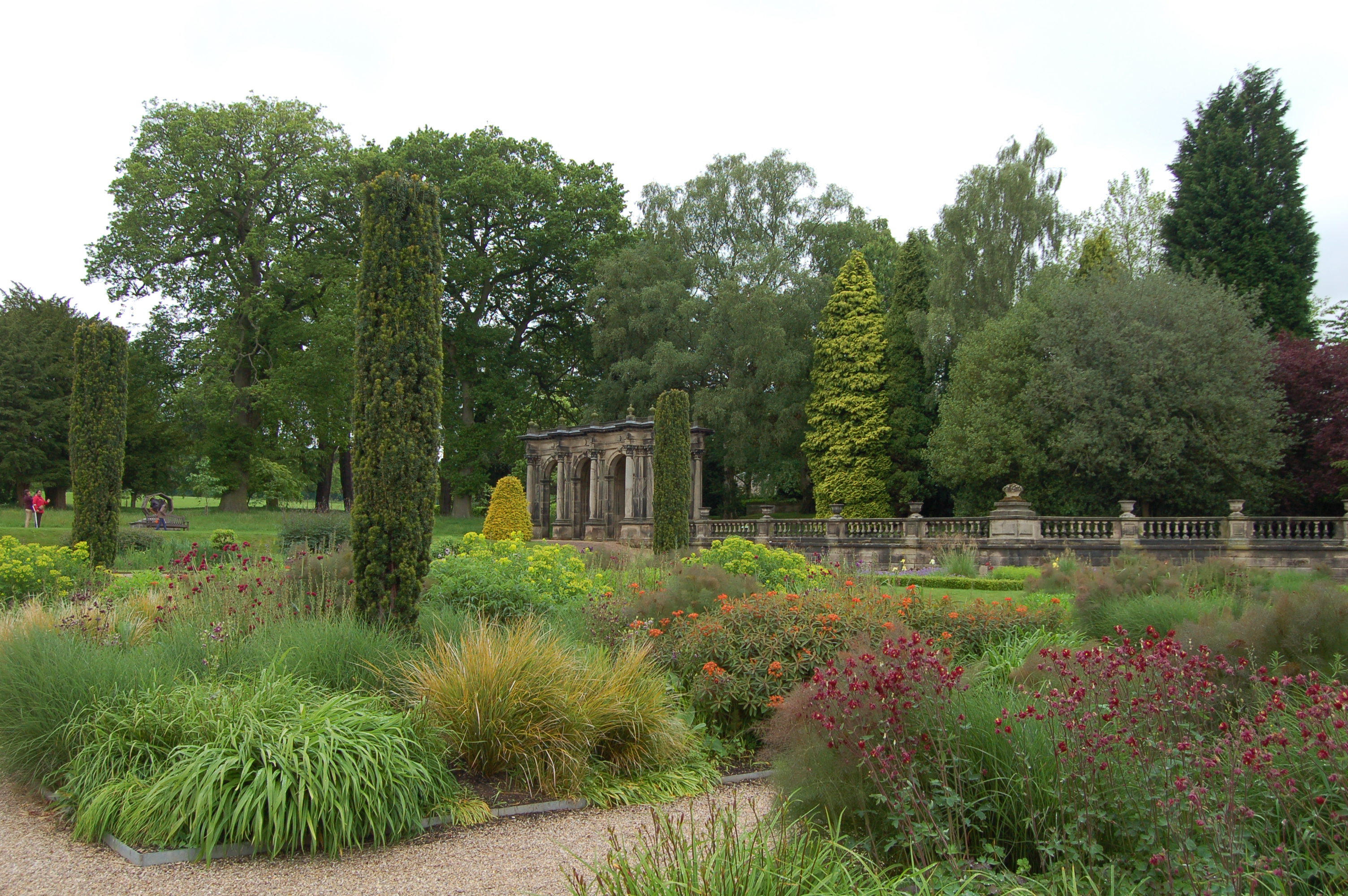
As you may remember from our earlier visits we move through grassed areas with shrub borders towards the Italian Garden, passing through an avenue of Hornbeam on the way. The tulips in this part of the garden are nothing short of startling! We are not sure at all of some of the colour combinations but they are definitely cheerful.

2014 04 29_8806 2014 04 29_8807 2014 04 29_8808 2014 04 29_8809 2014 04 29_8810 2014 04 29_8811 2014 04 29_8812

From here we take our usual look over Tom Stuart-Smith’s garden where bursts of colour mostly oranges and blues greet us. When we get closer we realise they are the colour is provided by Camassias and various Euphorbias.

2014 04 29_8813 2014 04 29_8814 2014 04 29_8815 2014 04 29_8816 2014 04 29_8817 2014 04 29_8818 2014 04 29_8819 2014 04 29_8820

Let us now have a closer look at some of the individual plants of interest.

Firstly the strange Primula like flowers of Dalmera peltata looking like pink lollypops on tall sticks. The flowers come before there is any sign of the leaves and the flower stem appears out of the rizomes which sit right on the surface of the soil. The leaves when they do appear are equally dramatic – big circular leaves held right off the ground.

2014 04 29_8821 2014 04 29_8822 2014 04 29_8823 2014 04 29_8825

The flower shoots of Eremurus robustus, the Fox Tail Lily are appearing at the base of the whorl of leaves. These were the mystery leaves in last month’s visit. The grey-pink blooms of the Giant Red Deadnettle, Lamium orvala wrap themselves right up the stems between the leaf clusters.

2014 04 29_8826 2014 04 29_8827

The yellow pea flowers of  the Thermopsis montana, variously known as False Lupin, Golden Pea, Revonpapu and so on,  are just freshly out and blend nicely with the silvery green leaves.

2014 04 29_8828

As we leave the Tom Stuart-Smith gardens we notice, as we follow the gravel pathway to the display gardens, that the daffodils in colour on our last visit are still presenting a haze of yellow.

2014 04 29_8829


2014 04 29_8830 2014 04 29_8831

2014 04 29_8832 2014 04 29_8833 2014 04 29_8834 2014 04 29_8835 2014 04 29_8836 2014 04 29_8837

On our return journey through the garden we notice the newly emerging flower bud of this Allium, sitting like a table tennis ball in the centre of the three leaves. The fresh leaves on a deciduous tree stand out in sharp contrast to the dullness of its evergreen companion even in dull light.

2014 04 29_8838 2014 04 29_8839

Tulips adorn the Rose Walk where the roses are budding strongly. From here we can look back on the team of gardeners beavering away heads down in their waterproof jackets.

2014 04 29_8840 2014 04 29_8841

Looking through the rose pergola we can see the green growth in the River of Grasses. Alongside this path Corydalis is flowering at ground level whereas at a higher level the red leaves of the Acer manage to look cheerful in the rain.

2014 04 29_8842 2014 04 29_8843 2014 04 29_8844

So we leave Trentham in the rain yet again and look forward to our May visit when maybe we will see a little sunshine and a blue sky!

Categories
colours flowering bulbs garden design garden photography gardening gardens grasses hardy perennials ornamental grasses ornamental trees and shrubs spring bulbs The National Trust trees Winter Gardening winter gardens

Three Winter Gardens – Part Three – Anglesey Abbey

This, the third in my series of three posts looking at winter gardens, sees us at the most well known of all winter gardens, Anglesey Abbey.

2014 03 20_7479

Situated near Cambridge within the larger gardens and grounds of this National Trust property the winter garden here is often considered to be the best of all and a big influence on all others that follow. We shall look at further aspects of the gardens at Anglesey Abbey in future posts.

We visited the winter garden at Anglesey Abbey many years ago the first year it was open to the public so it was like meeting an old friend but one who has changed a lot in the intervening years.

2014 03 20_7376

This set of gates welcomed us as we arrived at the start of the winter plantings.

2014 03 20_7367 2014 03 20_7368 2014 03 20_7369

We soon met the friends we had seen in our other two winter gardens, the dogwoods, rubus and willows grown for their stem colour underplanted with hellebores and ivies. There was some wonderful pruning techniques on display here too.

2014 03 20_7370 2014 03 20_7372

2014 03 20_7371  2014 03 20_7373  2014 03 20_7375 2014 03 17_7274

2014 03 20_7378 2014 03 20_7379

2014 03 20_7390

Grasses featured strongly with their wonderful warm colours and strong structural shapes.

2014 03 20_7377 2014 03 20_7374

We were once again interested to see which plants the gardeners from Anglesey Abbey used as ground cover to help reduce weed growth. Various low growing grasses teamed up with Arum and Bergenias to perform this role.

2014 03 20_7380 2014 03 20_7381 2014 03 20_7382 2014 03 20_7383 2014 03 20_7384 2014 03 20_7385

All these plants acting out their roles as ground covering plants encouraged us to look down as we were seeking ideas for our allotment Winter Garden, but we were struck also by specimens higher up.

The Viburnum pictured below didn’t just look good it smelled sweetly too. The Pulmonaria has not just flowers of two colours but unusual foliage to catch the eye.

2014 03 20_7387 2014 03 20_7388


The fresh foliage of the Cercis had leaves of a delicate bronze which was a strong contrast to the much more brash reds of the Photinia “Red Robin”.

2014 03 20_7389  2014 03 20_7393

The white bark of the trunks of Betula utilis although now used in every winter garden still deserve to be centre stage. Here at Anglesey Abbey some had been “dressed” in bright colours for added humour.

2014 03 20_7408 2014 03 20_7412

2014 03 20_7410 2014 03 20_7409

This golden stemmed ash is rarely seen in gardens but in the winter its black pyramidal buds strongly contrast with the golden stems. It is one of those plants that are simply too big for the average garden but when space allows it can be really attractive.

2014 03 20_7402

I have concentrated so far on the attributes of individual plants but we need to see how they fit in to the whole to fully appreciate their impact and the atmosphere of this amazing winter garden.

2014 03 20_7391 2014 03 20_7392  2014 03 20_7394 2014 03 20_7395 2014 03 20_7398 2014 03 20_7399 2014 03 20_7400 2014 03 20_7401

2014 03 20_7407  2014 03 20_7405 2014 03 20_7404 2014 03 20_7403

We entered the winter borders through interesting sculptural gates and we left through another. A quick look over the shoulder gave us a final chance to appreciate this brilliant garden.

So there we leave the series of three posts concerning winter gardens. Although Dunham Massey is the newcomer it looked good against the other two, but in the end it has to be said that the “original” winter garden at Anglesey Abbey remains my firm favourite.

2014 03 20_7413 2014 03 20_7406


Categories
colours garden design gardening ornamental trees and shrubs shrubs spring gardening trees village gardens

Fresh Foliage – our Acers

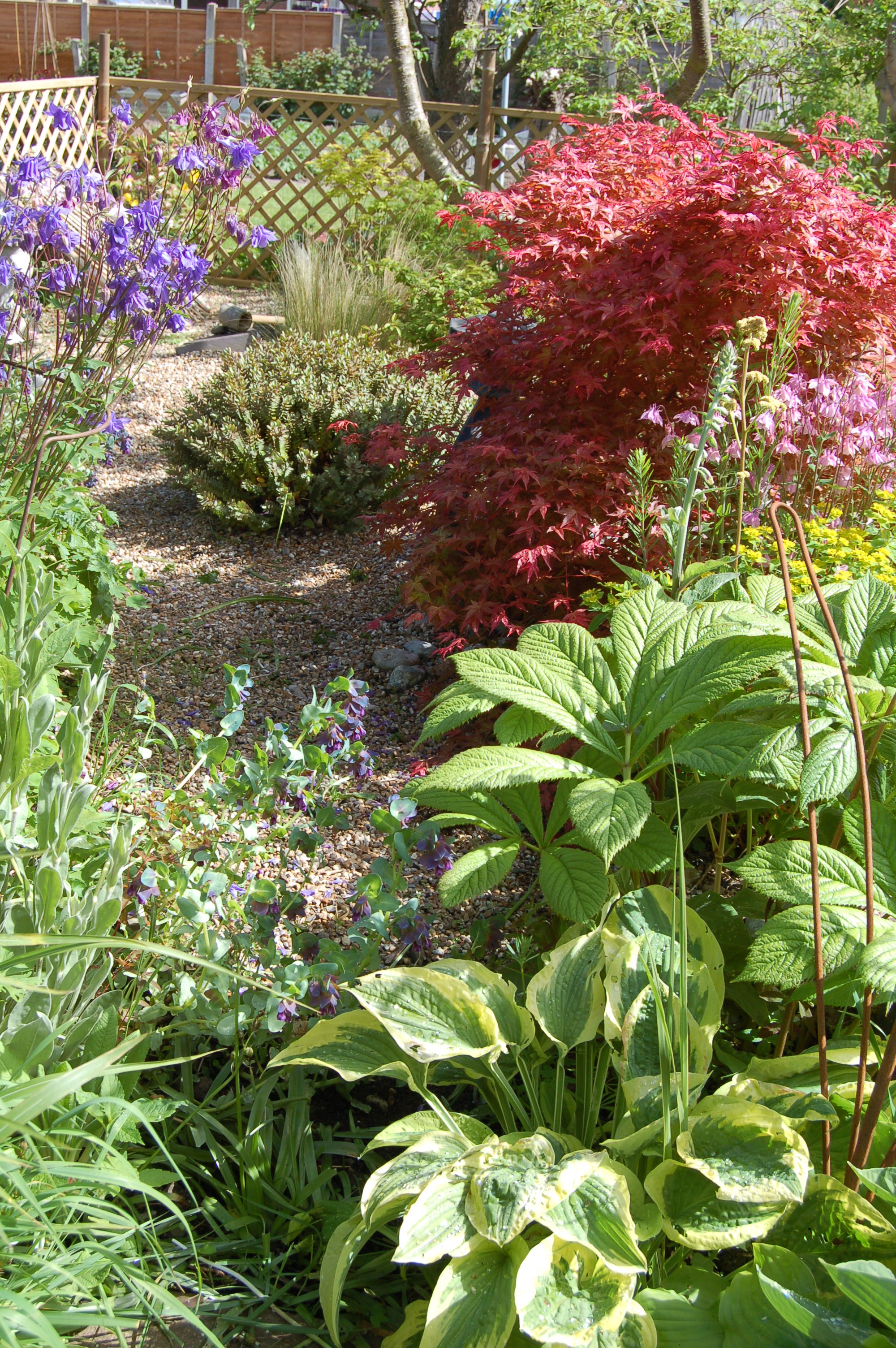
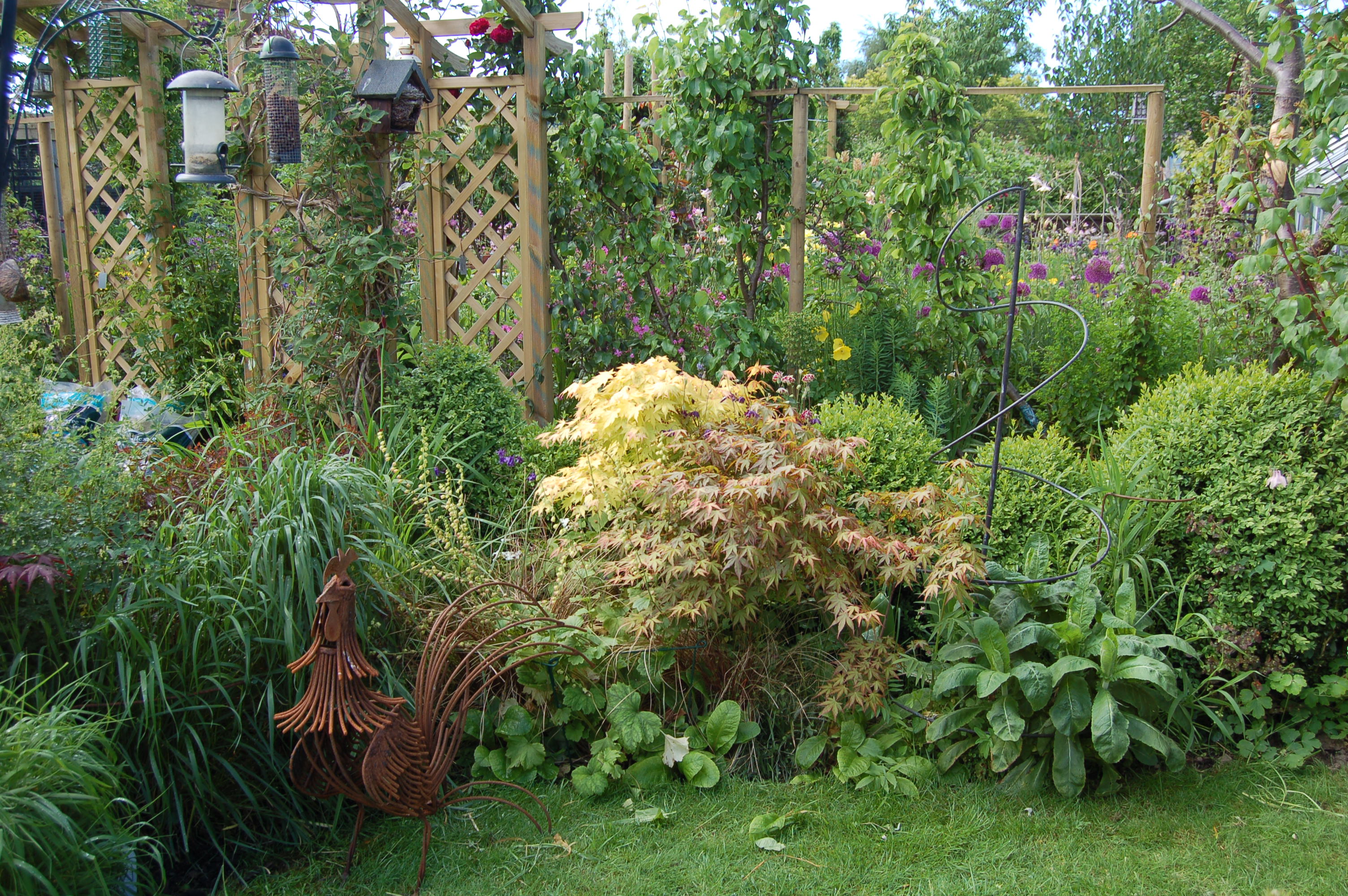
Over the last few years w have been gradually adding a selection of Japanese Acers to different areas of our garden to add year round foliage interest but with an emphasis on the spring and autumn seasons.

We already had a few different acers only one of which was a Japanese variety. The largest is a beautiful snake bark maple which looks over our Rill Garden and is a great all year round tree absolutely full of interest and it always receives admiration from any visitors to the garden.

In mid April when I took these photos the flowers were just forming and the leaves just unfurling. The while pencil thin lines show up clearly on the smooth green bark.

2014 04 18_8185 2014 04 18_8186

I took a mid-morning stroll around our garden with camera in hand to record what our Japanese Acers were up to. It is amazing how they are all at different stages of opening their foliage, with some almost fully out and others still in bud with only a hint of activity from within. Please come with me and enjoy what my camera saw. When I had finished my wander I realised just how many acers we had planted over the last few years, which was far more than I thought.

2014 04 18_8187 2014 04 18_8188 2014 04 18_8189 2014 04 18_8190 2014 04 18_8191 2014 04 18_8193 2014 04 18_8192 2014 04 18_8196

2014 04 18_8197 2014 04 18_8198 2014 04 18_8199 2014 04 18_8200 2014 04 18_8201 2014 04 18_8202 2014 04 18_8203 2014 04 18_8204

2014 04 18_8206 2014 04 18_8207 2014 04 18_8205 2014 04 18_8208 2014 04 18_8209 2014 04 18_8211 2014 04 18_8210 2014 04 18_8212 2014 04 18_8213 2014 04 18_8214 2014 04 18_8215 2014 04 18_8216

This Veggie Life

A Vegetarian | Nature Lifestyle Blog

Rambling in the Garden

.....and nurturing my soul

The Arch City Gardener

Journeys In St. Louis Gardening and Beyond

Garden Dreaming at Châtillon

Consult the genius of the place

Storyshucker

A blog full of humorous and poignant observations.

gardeninacity

Notes from a wildlife-friendly cottage garden

PlayGroundology

...an emerging social science

The Official Blog of British Wildlife

'The most important and informative publication on wildlife of our times' - The Independent. This blog is a member of The UK & Ireland Natural History Bloggers group: www.uknhb.blogspot.com

iGrowHort

Inspire - Cultivate - Grow Native Plants - Restore Landscapes

Bishops Meadow Trust

To create and protect a semi-natural wild space for the people of Farnham to enjoy and experience an array of British wildlife in our town

Gardening with Children

The www.gardeningwithchildren.co.uk Blog

UKbirdingtimeline

birding through the seasons, why birds matter and how to conserve them

NATURE WALKER

with a camera in hand

Jardin

Transform your outdoor space

Eva's space

My allotment, cooking and other interests

Old School Garden

my gardening life through the year

LEANNE COLE

Trying to live a creative life

fromacountrycottage

trying to live as lightly as possible on our beautiful planet

Good Life Gardening

Nature lovers from Leicester living the good life.

mybeautfulthings

Finding the beautiful in the everyday

mawsonmichelle

Michelle's Allotment

In and Out of My Garden

thoughts from and about my garden

Greenhousing

Big plans for a small garden

The Scottish Country Garden

A Walled Country Garden in South East Scotland

The Fruity Chicken

Life at the fruity chicken

willowarchway

Off grid living. Self sufficient. "PERMAGANICS RULE".

St Anns Allotments

Nottingham's Grade 2* Listed Allotments and Community Orchard

Manifest Joy Harvests

a journey in suburban vegetable gardening

Allotmental

The madness of growing your own

Penny's Garden: a harvest beyond my front door

A novel approach to vegetable gardening

arignagardener

Sustainable living in the Irish countryside.

NewEnglandGardenAndThread

Master Gardener, amateur photographer, quilter, NH native, and sometimes SC snowbird

dianajhale

Recent work and work in progress and anything else that interests me

planthoarder

a chaotic cottage gardener

Lens and Pens by Sally

a weekly blog that creates a personal philosophy through photographs and words

Dewdrops and Sunshine

Stories from a sassy and classy Southern farmbelle.

The Pyjama Gardener

Simple Organic Gardening & Seasonal Living

gettin' fresh!

turning dirt into dinner

JOY...

today the world is created anew

Garden Birds

Notes from a Devon garden

ShootAbout

Life Through The Lens

Adapting Pixels

A photography blog showcasing the best photography pictures and videos on the internet

Wildlifegardening's Blog

Just another WordPress.com site

naturestimeline

personal observations from the natural world as the search continues for a new approach to conservation.

LATEBLOOMERBUDS

The Wonders of Life through my Eyes, my Heart, my Soul